344 Days?
I believe there is only one way the Jaredites could have left the area of the Tower of Babel in about 2200 BC and then arrived on the Promised Land of North America. On the Pacific Ocean. We read Ether 6:11 which says, “And thus they were driven forth, three hundred and forty and four days upon the water.” This is the biggest key about the travel route of the Jaredites. Ask yourself where could the Jaredite barges be “driven forth” for 344 days on today’s oceans? Even though the map below is not concise in its dimensions, the travel of Lehi took about 5 or 6 months and the trip for the Jaredites took about one year, (for the 2nd set of barges only). Yes there were at least two separate sets of barges spoken about in Ether Chapter 2. The second barges likely left China or Japan and sailed on the “great deep” for about 1 year.
This information is a summary mainly about the ships being able to be built south of the Tower of Babel near Kuwait, then travel on the “many waters” from the Persian Gulf and other waters up to China or Japan. I go into further detail of the entire voyage below. 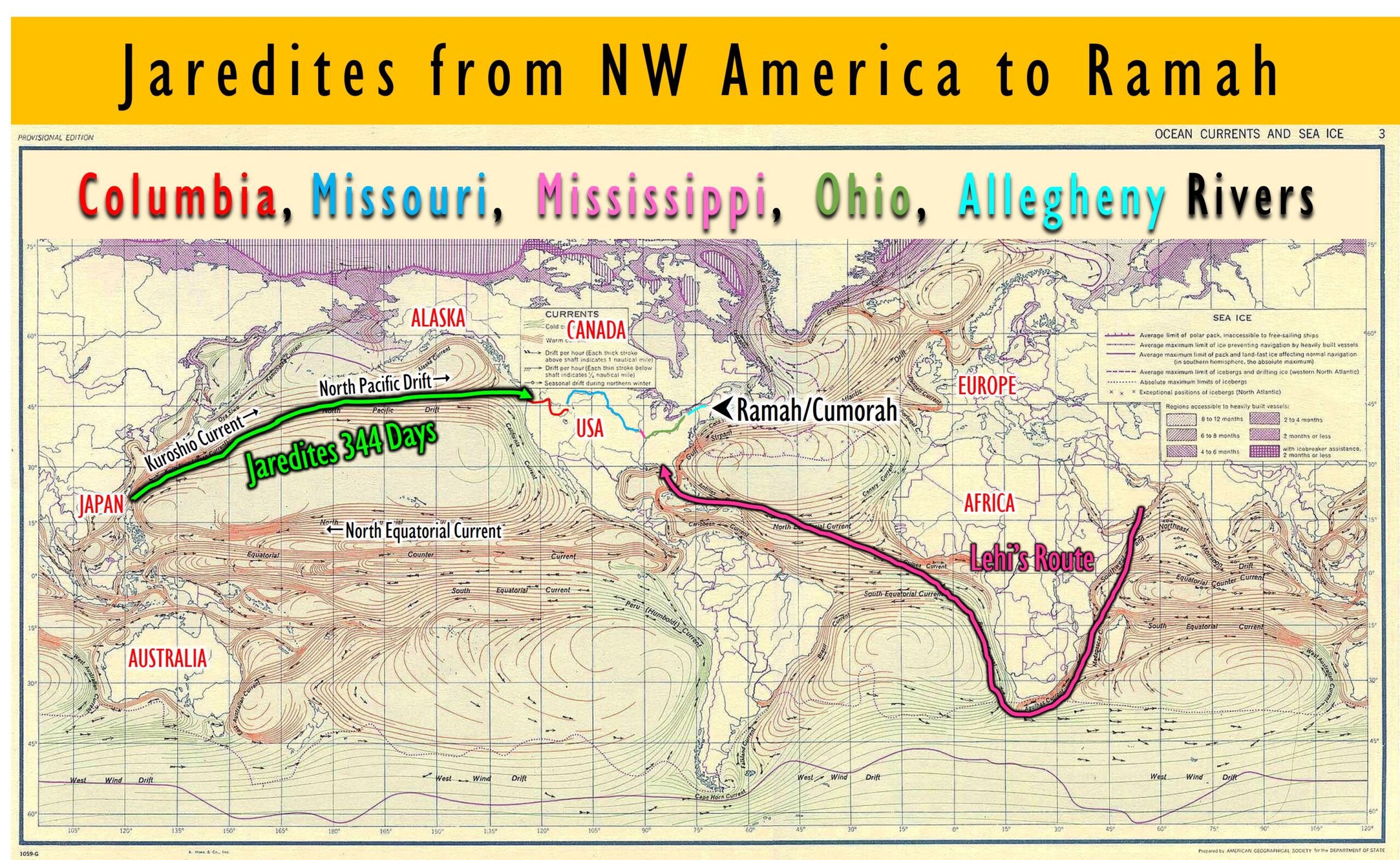
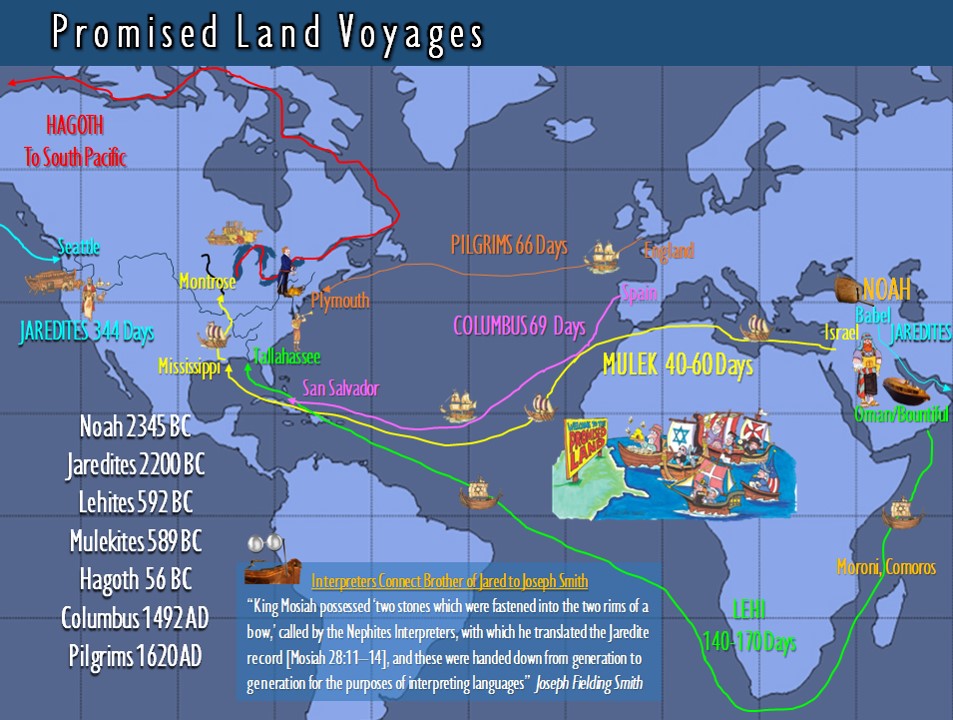
As you see on the map below, travel on the Atlantic took Columbus about 69 days from Spain to the Bahamas. It took Philip Beale 40+ days to sail his Phoenicia ship from Tunisia to Miami on his voyage in 2020. It only took the Pilgrims 66 days from southern England to Plymouth Rock. It would also take Lehi about 140 to 170 days to sail from Oman to Florida according to British Sea Captain Philip Beale. If Nephi left Oman and traveled east towards India and landing in Guatemala or Chile , Captain Beal said it would take at least 18 months to arrive and the ship would land but the people would be dead as there wouldn’t be enough food and water aboard.
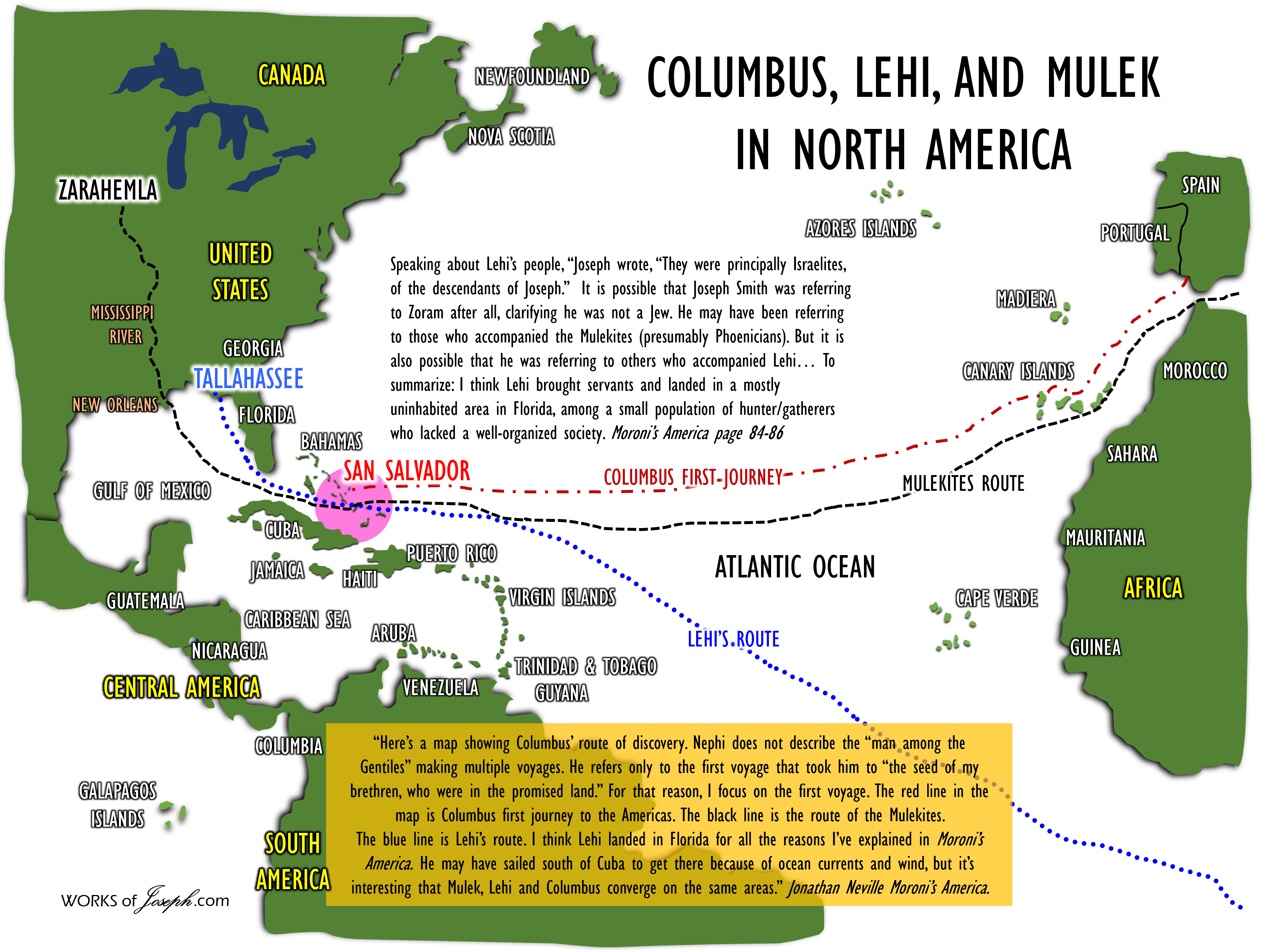
Notice below in the pink circle, a key location where Columbus, Nephi and Mulek likely intersected in their voyages to America.
Near Kuwait- Jaredites Build their First Set of Barges
I believe the Jaredites traveled on foot from the Tower of Babel area (Bagdad, Iraq) about 400 miles south to *near Kuwait, and built their first set of barges and crossed “many waters” beginning in the Persian Gulf. I will share with you historical evidence to show ancient ships were built near Kuwait in Eridu, and Uruk all near Ur of the Chaldees where Abraham came from.
More information about Eridu being the first civilization in the Old World comes from Armstrong Institute of Biblical Archaeology quoted below.
Bible’s First City
“Genesis 4 follows the account of the “fall” of man and his expulsion from the Garden of Eden (a Hebrew term cognate with “paradise,” and actually matching quite well, in a sense, with the language of the king list: “After the kingship descended from heaven, the kingship was in Eridu”). The first part of the chapter describes the birth of Cain and Abel, the former’s murder of the latter, and the banishment of Cain’s family eastward from Eden, to the “land of Nod” (Nod meaning “wandering”)…
Bible’s First City—Built by Whom, or for Whom?
A cursory reading of the passage would seem to imply that Cain built the city, and named it “Enoch” after his firstborn son. Of course, it is entirely possible that Eridu could have borne a different name right at the beginning of its founding. But there is more nuance contained in this passage that appears to align well with even the name of the city Eridu.
That’s because the city name Eridu is actually a good fit with the name of Enoch’s son, Irad/Erad (the last letter u in “Eridu” representing a fairly standard additional suffix). It could theoretically be possible to read the Hebrew of the verse in the following manner: “And Cain knew his wife; and she conceived, and bore Enoch; and he [Enoch, rather than Cain] builded a city, and called the name of the city after the name of his (Enoch’s) son. And unto Enoch was born Irad …” (Genesis 4:16-18). But there is an additional angle to this that may not necessarily imply a re-reading…
Armstrong Institute of Biblical Archaeology https://armstronginstitute.org/886-eridu-the-bibles-first-city-and-the-family-of-cain-archaeological-parallels-to-the-biblical-account
Reed Boats in Kuwait
“Reed boats and rafts, along with dugout canoes and other rafts, are among the oldest known types of boats. Often used as traditional fishing boats, they are still used in a few places around the world, though they have generally been replaced with planked boats. Reed boats can be distinguished from reed rafts, since reed boats are usually waterproofed with some form of tar.[1] As well as boats and rafts, small floating islands have also been constructed from reeds.
The earliest discovered remains from a reed boat are 7000 years old, found in Kuwait. Reed boats are depicted in early petroglyphs and were common in ancient Egypt. A well-known example from the Book of Exodus is the ark of bulrushes in which the baby Moses was set afloat.” Wikipedia
After sailing through the Persian Gulf, they continued through the Gulf of Oman, Arabian Sea, Laccadive Sea, Bay of Bengal, Gulf of Thailand, South China Sea and perhaps the Philippine Sea. (Many Waters). They plausibly arrived in either Japan, Taiwan, or near Shanghai, China. From there, in about 4 years at Morianccumer (Japan, China, or Taiwan), they built their 2nd set of barges (“build, after the manner of which ye have hitherto built.”Ether 2:16), to sail to the Promised Land.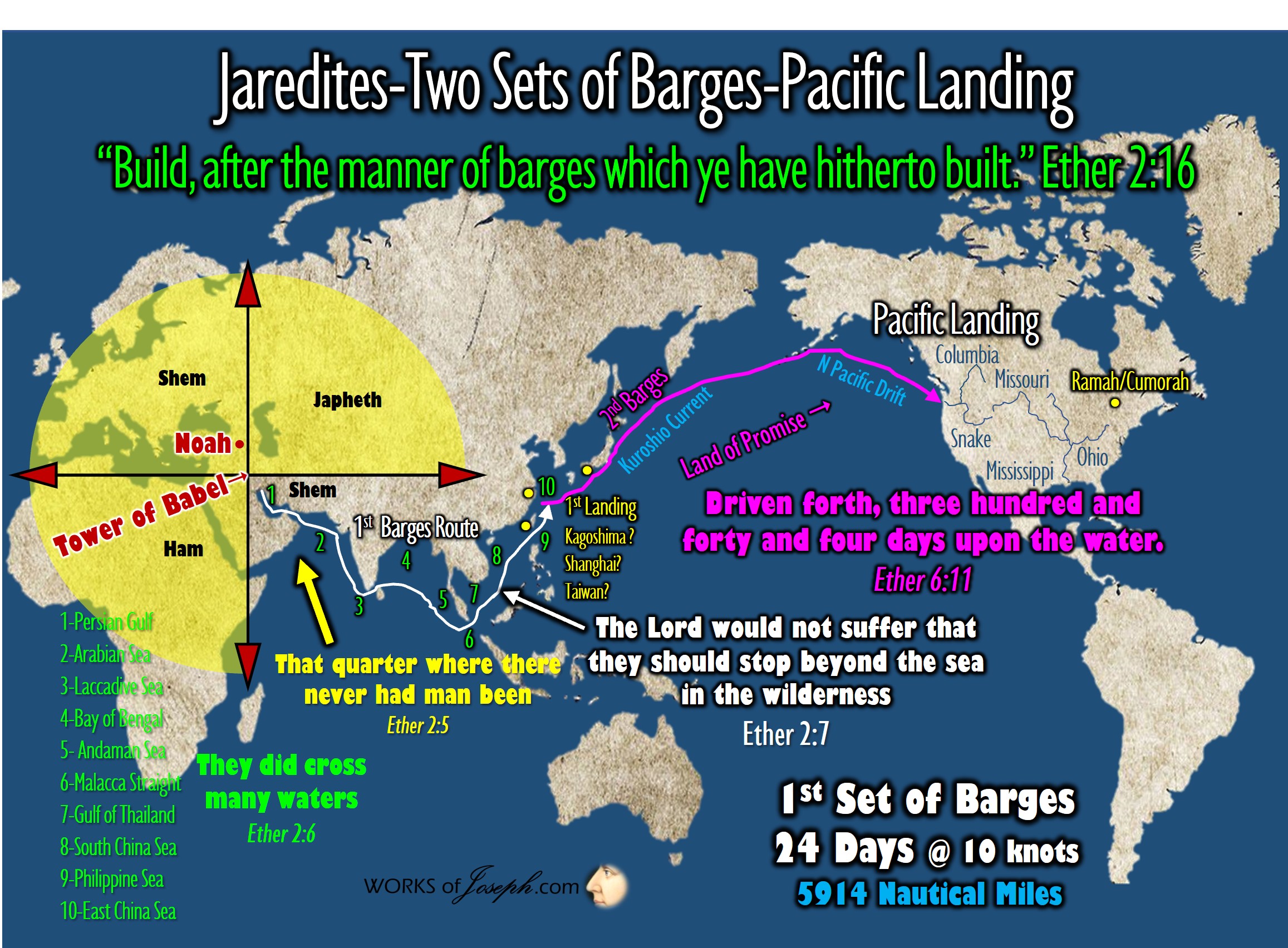
Many Waters vs. Great Deep
There is a big distinction of the 1st and 2nd sets of barges as the waters were very different. The 1st barges sailed over the Many Waters, not oceans but bays, gulfs, inlets, and seas. The 2nd set of barges were built smaller and tighter and so they could sail on the top of the water and below in the Ocean, specifically the huge Pacific Ocean.
We read Ether here: “For behold, ye shall be as a in the midst of the sea; for the mountain waves shall dash upon you. Nevertheless, I will bring you up again out of the depths of the sea; for the have gone forth of my mouth, and also the and the floods have I sent forth.
And behold, I prepare you against these things; for ye cannot cross this great deep save I prepare you against the waves of the sea, and the winds which have gone forth, and the floods which shall come. Therefore what will ye that I should prepare for you that ye may have light when ye are swallowed up in the depths of the sea?” Ether 2:24-25
The smaller, tighter and more buoyant barges would likely have followed the ocean flow of the Kuroshio Current (NE) to the North Pacific Drift, (East) right into the State of Washington or Oregon, or southern Canada. Remember it is likely the Jaredites consisted of the lineage of Ham, Shem, and Japeth. After arriving near Seattle, they could have again broken up into groups where possibly Ham could have traveled from the Northwest USA to California and Mesoamerica. (The Olmecs lived near Mexico in 1500 BC). A Shem group as the Priesthood lineage may have traveled to the Land of Ramah where the Lord had the Nephites live as well. Yes the Brother of Jared had the Priesthood in my opinion and was a Hebrew through Shem and Eber. Also know that there were many tribes that came over the years to Canada, USA and Mexico who were not Jaredites at all. They likely spread out all over the North and South American Continents.
The Adena Culture (we believe this is likely a Jaredite time frame, but it doesn’t have to be), lived near Ohio, as the Jaredites and Adena may be related). After arriving near Seattle, Jaredites could easily have over many years, taken the Columbia River to the Snake and then the Missouri and Ohio rivers, to migrate through the Heartland of North America to New York and the Hill Cumorah or Ramah. To see a complete blog and details visit here.
*Ancient Ships near Kuwait/Eridu
“Eridu is located on a natural hill in a basin approximately 15 miles long and 20 feet deep, which is separated from the Euphrates by a sandstone ridge called the Hazem.(See map below) This basin, the As Sulaybiyat Depression (formerly: Khor en-Nejeif), becomes a seasonal lake (Arabic: Sebkha) during the rainy season from November to April. During this period, it is filled by the discharge of the Wadi Khanega. Adjacent to eastern edge of the seasonal lake are the Hammar Marshes.
In the 3rd Millennium BC a canal, Id-edin-Eriduga (NUN)ki “the canal of the Eridug plain”, connected Eridu to the Euphrates river, which later shifted its course. The path of the canal is marked by several low tells with 2nd Millennium BC surface pottery and later burials. The site contains 8 mounds:
Mound 1 – Abū Šahrain, 580 meters x 540 meters in area NW to WE, 25 meters in height, Enki Temple, Ur III Ziggurat (É-u₆-nir) Sacred Area, Early Dynastic plano-convex bricks found, Ubaid Period cemetery
Mound 2 – 350 meters x 350 meters in area, 4.3 meters in height, 1 kilometer N of Abū Šahrain, Early Dynastic Palace, remnants of city wall built with plano-convex bricks
Mound 3 – 300 × 150 meters in area, 2.5 meters high, 2.2 kilometers SSW of Abū Šahrain, Isin-Larsa pottery found
Mound 4 – 600 × 300 meters in area, 2.5 kilometers SW of Abū Šahrain, Kassite pottery found
Mound 5 – 500 × 300 meters in area, 3 meters high, 1.5 kilometers SE of Abū Šahrain, Neo-Babylonian and Achaemenid periods
Mound 6 – 300 × 200 meters in area, 2 meters high, 2.5 kilometers SW of Abū Šahrain
Mound 7 – 400 × 200 meters in area, 1.5 meters high, 3 kilometers E of Abū Šahrai
Mound 8 – Usalla, flat area, 8 kilometers NW of Abū Šahrain, Hajj Mohammed and later Ubaid… 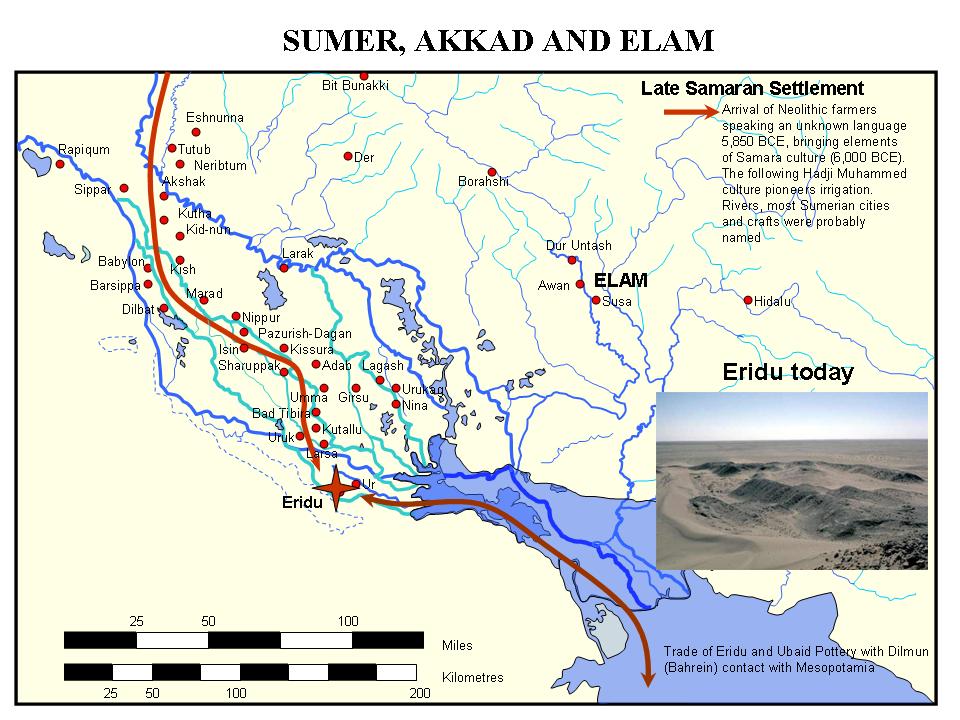
Ziggurat at Eridu
The site (see map above) was initially excavated by John George Taylor, the British Vice-counsel at Basra, in 1855. Among the finds were inscribed bricks enabling the identification of the site as Eridu. Excavation on the main tell next occurred by R. Campbell Thompson from April 10 until May 8 in 1918, and H. R. Hall from April 21 until May 8 in 1919, who also conducted a survey in the area around the tell. An interesting find by Hall was a piece of manufactured blue glass which he dated to c. 2000 BC. The blue color was achieved with cobalt, long before this technique emerged in Egypt.
This lump of glass is currently dated to the twenty-first century BC or even earlier, and is considered as perhaps the earliest such glass object in the world in the History of glass. It was produced during the Akkadian Empire or the early Ur III period.
Ancient Mesopotamian Ships
*“Excavation there (Eridu near Ur of the Chaldees) resumed from 1946 to 1949 under Fuad Safar and Seton Lloyd of the Iraqi Directorate General of Antiquities and Heritage. Among the finds were a Ubaid period terracotta boat model, complete with a socket amidship for a mast and hole for stays and rudder, bevel-rimmed bowls, and a “lizard type” figurine like those found in a sounding under the Royal Cemetery of Ur. Soundings in the cemetery showed it to have about 1000 graves, all from the end of the Ubaid period (Temple levels VI and VII). They found a sequence of 17 Ubaid Period superseding temples and an Ubaid Period graveyard with 1000 graves of mud-brick boxes oriented to the southeast. The temple began as a 2 meter by 3 meter mud brick square with a niche. At Level XI it was rebuilt and eventually reached its final tripartite form in Level VI. In Ur III times a 300 square meter platform was constructed as a base for a ziggurat. These archaeological investigations showed that, according to A. Leo Oppenheim, “eventually the entire south lapsed into stagnation, abandoning the political initiative to the rulers of the northern cities”, probably as a result of increasing salinity produced by continuous irrigation, and the city was abandoned in 600 BC. In 1990 the site was visited by A. M. T. Moore who found two areas of surface pottery kilns not noted by the earlier excavators.” Wikipedia
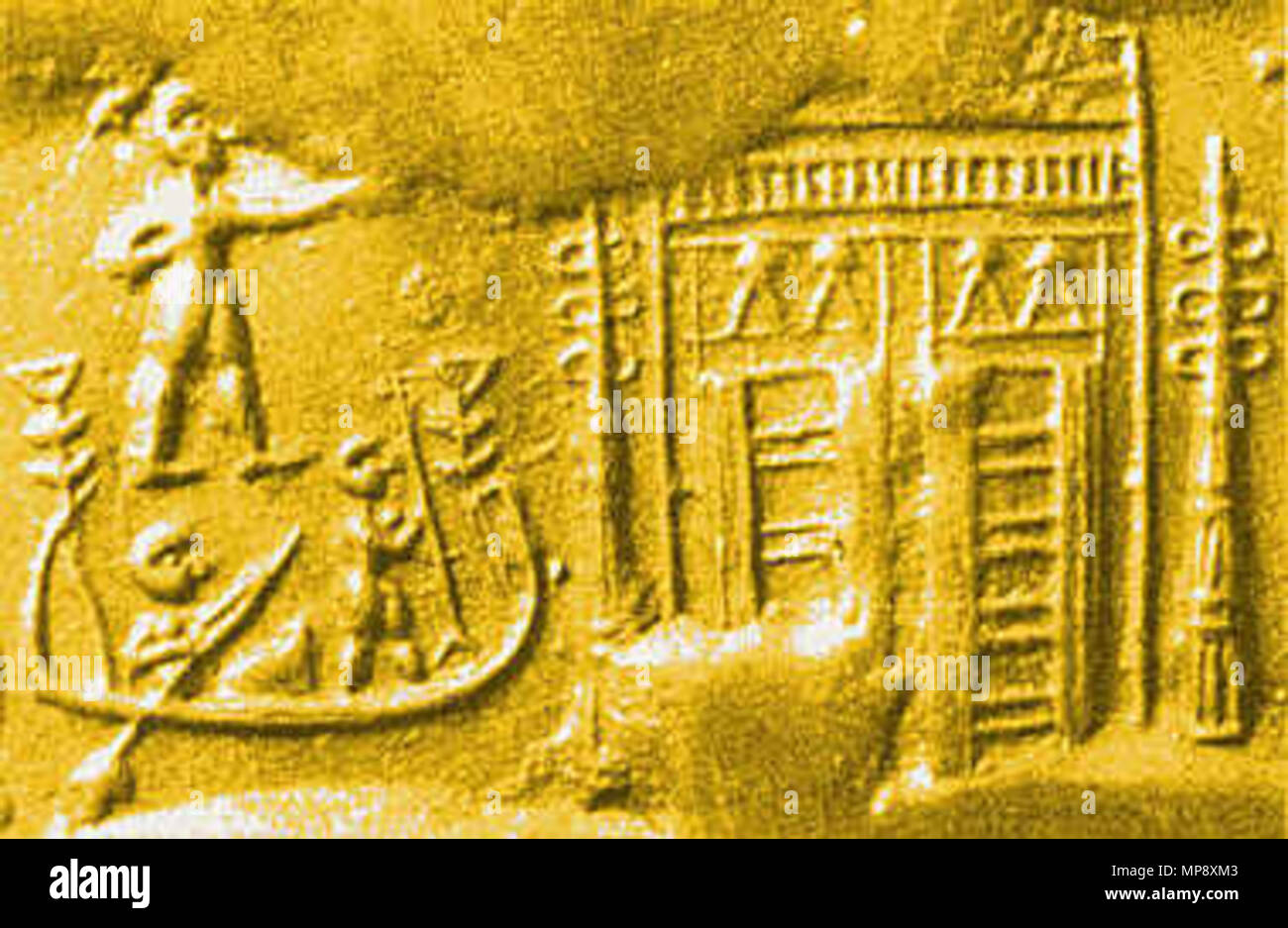
Hugh Nibley said, “The oldest accounts of the ark of Noah, the Sumerian ones, describe it as a ‘magur boat,’ peaked at the ends, completely covered but for a door, without sails, and completely covered by the waters from time to time, as men and animals rode safe within. But the remarkable thing about Jared’s boats was their illumination by stones which shone in the dark because they had been touched by the finger of the Lord (Ether 3:6, 6:3).
“The Rabbis tell of a mysterious Zohar that illuminated the ark, but for further instruction we must go to much older sources: the Pyrophilus is traced back to the Jalakanta stone of India, which shines in the dark and enables its owner to pass unharmed beneath the waters; this in turn has been traced back through classical and Oriental sources to the Gilgamesh Epic, where Alexander’s wonderful Pyrophilus stone turns up as the Plant of Life in the possession of the Babylonian Noah.
“A large number of ancient traditions, first brought together in the present century, justify one in assuming some sort of legendary shining stones in the ark of Noah. Whether or not there is any historical reality behind it, the fact is that we now know, from sources completely inaccessible to the world of Joseph Smith, that such a tradition actually did exist in very ancient times. It is nothing to laugh at after all.” (The Prophetic Book of Mormon, p. 244)
https://www.gospeldoctrine.com/book-mormon/ether/ether-6 (Ether 3:6, 6:3).
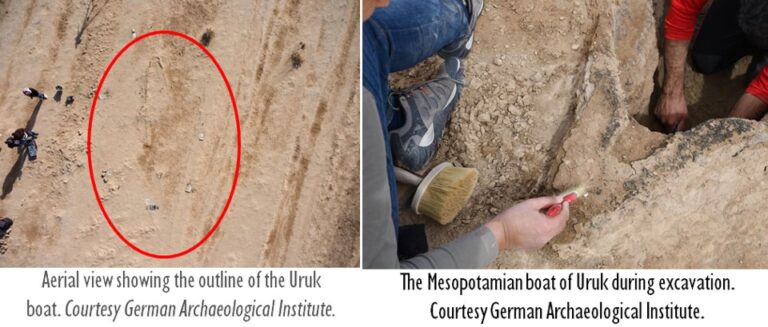
Uncovering a 4,000-Year-Old Mesopotamian Ancient boat uncovered from the ruins of Uruk (Just North of Ur)
“With archaeologists returning to Iraq, many finds are coming to light, including a 4,000-year-old Mesopotamian boat from the ancient Sumerian city of Uruk. According to a press release by the German Archaeological Institute, the boat was discovered largely intact by a joint German-Iraqi team. The Mesopotamian boat was constructed out of organic materials covered in bitumen, a substance made from crude oil and commonly used for waterproofing across Mesopotamia. This construction technique is similar to that used in the building of Noah’s ark (Genesis 6:14). Since the boat’s burial, however, the organic material has completely decomposed, leaving behind only the outer bitumen cover, which served to preserve the boat’s original shape and size.” Source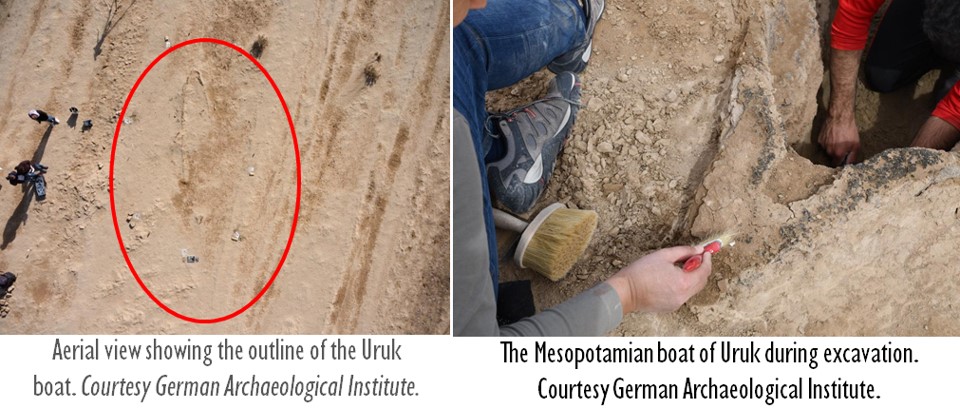
E-abzu temple of Eridu
Excavation there resumed from 1946 to 1949 under Fuad Safar and Seton Lloyd of the Iraqi Directorate General of Antiquities and Heritage. Among the finds were a Ubaid period terracotta boat model, complete with a socket amidship for a mast and hole for stays and rudder, bevel-rimmed bowls, and a “lizard type” figurine like those found in a sounding under the Royal Cemetery of Ur. Soundings in the cemetery showed it to have about 1000 graves, all from the end of the Ubaid period (Temple levels VI and VII).[19][20][21][22][23] They found a sequence of 17 Ubaid Period superseding temples and an Ubaid Period graveyard with 1000 graves of mud-brick boxes oriented to the southeast. The temple began as a 2 meter by 3 meter mud brick square with a niche. At Level XI it was rebuilt and eventually reached its final tripartite form in Level VI. In Ur III times a 300 square meter platform was constructed as a base for a ziggurat.[24] These archaeological investigations showed that, according to A. Leo Oppenheim, “eventually the entire south lapsed into stagnation, abandoning the political initiative to the rulers of the northern cities”, probably as a result of increasing salinity produced by continuous irrigation, and the city was abandoned in 600 BC.[25] In 1990 the site was visited by A. M. T. Moore who found two areas of surface pottery kilns not noted by the earlier excavators.[26]” Wikipedia
An additional quote from Hugh Nibley is as follows: “Truly remarkable is the statement in Ether that the submarine nature of Jared’s ships made them ‘like unto the ark of Noah,’ since that aspect of the ark, perhaps its most characteristic, is not specifically mentioned in the Bible, and has led to great confusion among Bible illustrators, ancient, medieval, and modern…They lead us directly to the most puzzling problem of all-that of the illumination of the ark, for while the window is called a zohar (more properly tsohar), i.e., shiner or illuminator…in a boat equipped to go under water other sources for both [light and ventilation] would have to be found, and it is in the lighting department that the Jewish sources are most specific. For the Rabbis do not settle for the zohar-the lighter of the Ark-as being simply a window: for some of them it was rather a miraculous light-giving stone…Rabbi Akiba ben Kahmana, for example, says it was a skylight, while Rabbi Levi said it was a precious stone. He quotes R. Phineas as saying that ‘during the whole twelve months that Noah was in the Ark he did not require the light of the sun by day or the moon by night, but he had a polished gem which he hung up; when it was dim he knew that it was day, and when it shone he knew it was night.'” (A Book of Mormon Treasury, p. 140)
The Miracle of Ocean and Flow of the Seas
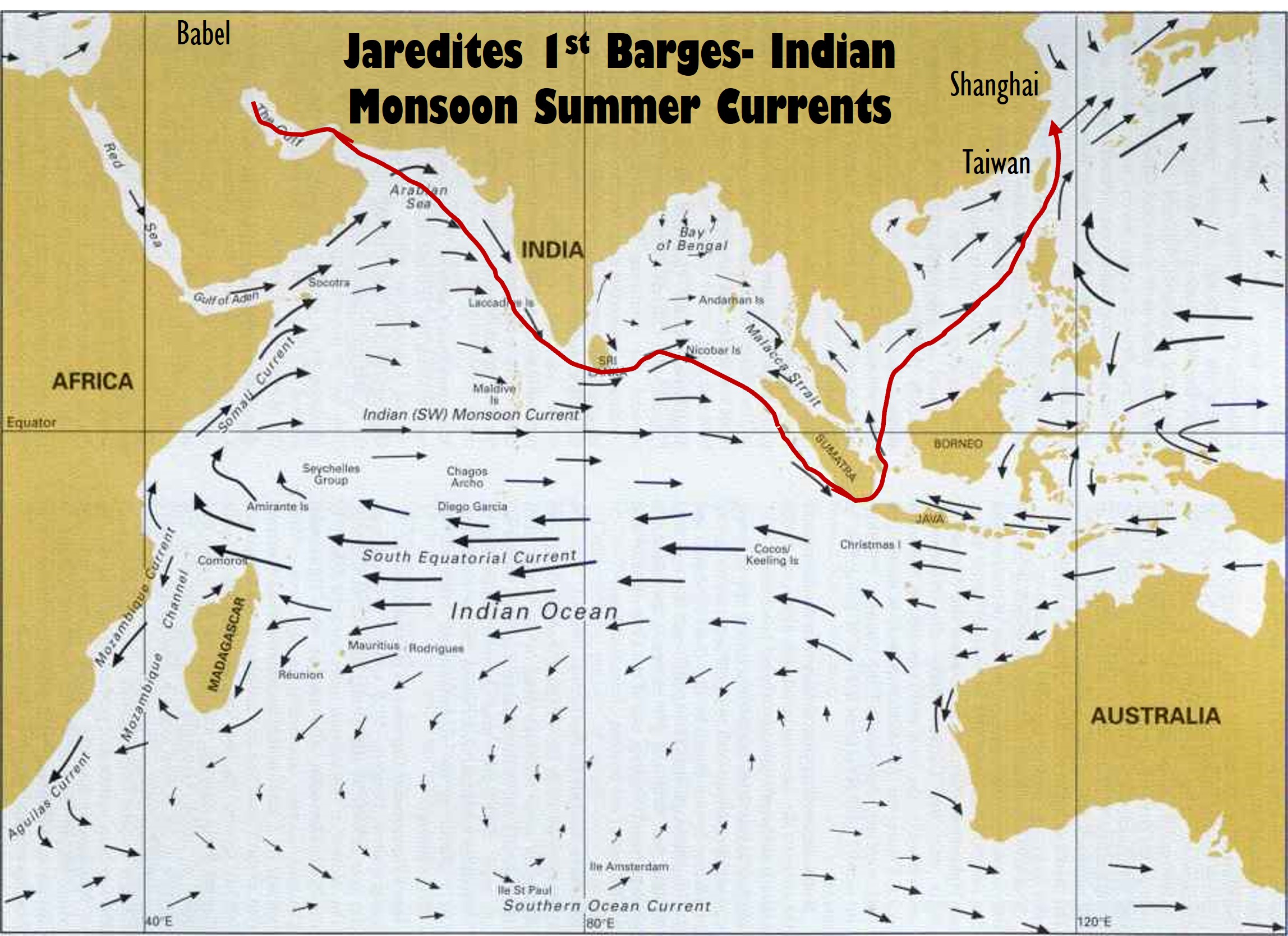
Notice above, the Monsoon Summer flows exactly as the Jaredites would have needed to travel from the Persian Gulf to China. However at the map below notice on the Lehi’s voyage the currents flow the opposite direction from Sept to Nov near Oman to take him to Florida.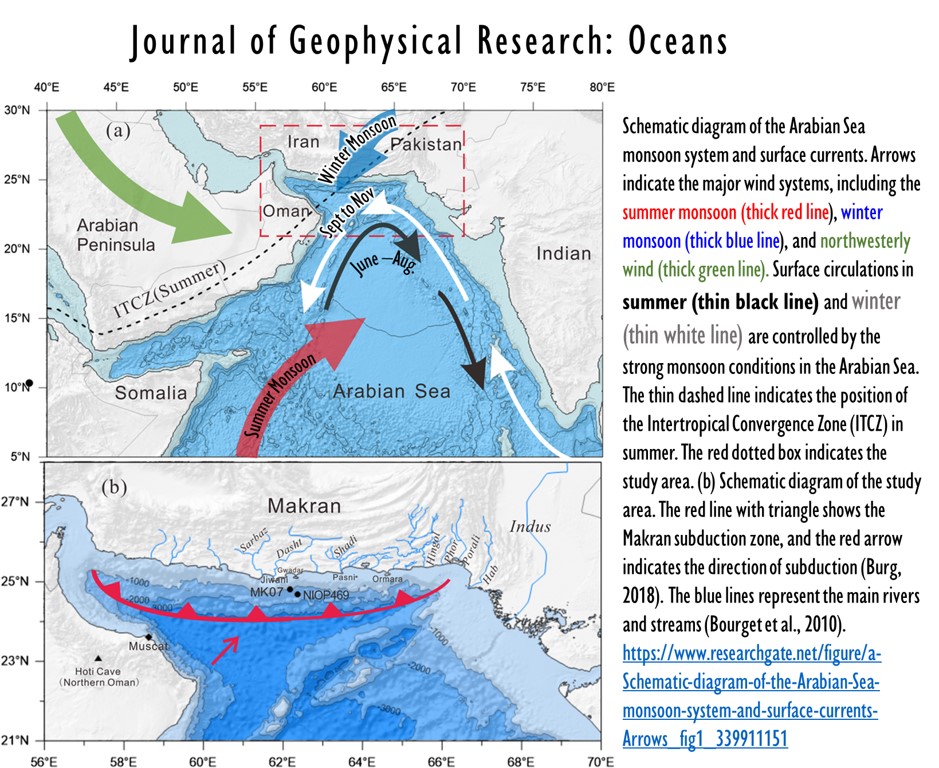
See detailed blog here: https://bookofmormonevidence.org/jaredites-2-sets-of-barges/ and a podcast video here: https://bookofmormonevidence.org/jaredites/