Joseph Smith said, “I have, by the aid of the Urim and Thummim, seen those martyrs. They were honest, devoted followers of Christ, according to the light they possessed. They will be saved.” Hyrum L. Andrus, They Knew the Prophet, pg. 83
“The Nephite prophet Abinadi holds a singular place in the Book of Mormon. He is the first Nephite of whom we have record to die as a martyr.” Robert J. Matthews

Additional Urim and Thummim Usage
1- How many revelations were given in the Doctrine and Covenants using a seer stone? Zero. How many revelations were given using the Urim and Thummim? At least 8 sections (Sections 3, 6, 7, 11, 14, 15, 16, and 17).
Dates of Revelations by Joseph Smith while using the Urim and Thummim
- Section 3– Harmony, Pennsylvania, July 1828, relating to the loss of 116 pages “In July 1828, the heavenly messenger returned the Urim and Thummim (which had been taken in consequence of Joseph “having wearied the Lord in asking for the privilege of letting Martin Harris take the writings”). Joseph then received the revelation now recorded in Doctrine and Covenants 3 through the Urim and Thummim.” Larry E. Morris, “The Conversion of Oliver Cowdery,” in Days Never to Be Forgotten: Oliver Cowdery, ed. Alexander L. Baugh (Provo, UT: Religious Studies Center, Brigham Young University, 2009), 15–49.
- Section 6– Harmony, Pennsylvania, April 1829, Oliver Cowdery began his labors as scribe
- Section 7- Revelation given to Joseph Smith the Prophet and Oliver Cowdery, at Harmony, Pennsylvania, April 1829, The revelation is a translated version of the record made on parchment by John.
- Section 11– Revelation given through Joseph Smith the Prophet to his brother Hyrum Smith, at Harmony, Pennsylvania, May 1829.
- Section 14– Revelation given through Joseph Smith the Prophet to David Whitmer, at Fayette, New York, June 1829.
- Section 15- Revelation given through Joseph Smith the Prophet to John Whitmer, at Fayette, New York, June 1829
- Section 16- Revelation given through Joseph Smith the Prophet to Peter Whitmer Jr., at Fayette, New York, June 1829
- Section 17- Revelation given through Joseph Smith the Prophet to Oliver Cowdery, David Whitmer, and Martin Harris, at Fayette, New York, June 1829.
2- “While translating the Book of Mormon, Joseph Smith and Oliver Cowdery found they held different views on the meaning of a passage in the Bible. They “mutually agreed to settle” the question “by the Urim and [Thummim].” As a result, Joseph received a revelation giving the translation of an account by the ancient disciple John, [D&C 7] written on parchment but lost to history. This early experience seeking revelation that illuminated the text of a Bible passage was an important precedent. About a year later, during the summer of 1830, Joseph and Oliver received by revelation an account of visions experienced by Moses but not found in the Bible. This revelation marked the beginning of Joseph Smith’s efforts to prepare an inspired revision or translation of the Bible. For the next three years, Joseph worked on his “new translation of the Bible” with Oliver Cowdery, Sidney Rigdon, and other scribes, considering the project a “branch of [his] calling” as a prophet of God.” https://www.churchofjesuschrist.org/study/history/topics/joseph-smith-translation-of-the-bible?lang=eng
3- Joseph Smith Translation (JST). “A revision or translation of the King James Version of the Bible begun by the Prophet Joseph Smith in June 1830. He was divinely commissioned to make the translation and regarded it as “a branch of his calling” as a prophet. Although the major portion of the work was completed by July 1833, he continued to make modifications while preparing a manuscript for the press until his death in 1844, and it is possible that some additional modifications would have been made had he lived to publish the entire work. Some parts of the translation were published during his lifetime.” https://www.churchofjesuschrist.org/study/scriptures/bd/joseph-smith-translation?lang=eng
4- “Dec. 27, 1841: I met with the Twelve at Brother Joseph’s. He conversed with us in a familiar manner on a variety of subjects, and explained to us the Urim and Thummim which he found with the plates, called in the Book of Mormon the Interpreters. He said that every man who lived on the earth was entitled to a seer stone, [Not a Urim and Thummim, editor’s note] and should have one, but they are kept from them in consequence of their wickedness, and most of those who do find one make an evil use of it; he showed us his seer stone.” (Brigham Young, Mill. Star 26:118)
5- The Prophet Joseph Smith was not the only individual in this dispensation to use the Urim and Thummim and to receive revelations from God. Heber C. Kimball testified that Brigham Young also used these sacred instruments. “The question is asked many times, “Has brother Brigham got the Urim and Thummim?” Yes, he has got everything; everything that is necessary for him to receive the will and mind of God to this people. Do I know it? Yes, I know all about it; and what more do you want? That is true, gentlemen; I am one of his witnesses in the last days, and to bear testimony of the truth of “Mormonism.”” (Heber C. Kimball, J.D. 2:111 Quote from August 13, 1853)
5- Urim and Thummim used to Translate the Bible. “In this respect the testimony of Lorenzo Brown about the preparation the Prophet made for his translation of the Bible may be instructive. He records the Prophet as saying: “After I got through translating the Book of Mormon, I took up the Bible to read with the Urim and Thummim. I read the first chapter of Genesis and I saw the things as they were done. I turned over the next and the next, and the whole passed before me like a grand panorama; and so on chapter after chapter until I read the whole of it. I saw it all!” (as cited in Matthews, Plainer Translation, 25).” The Process of Translating the Book of Mormon Joseph Fielding McConkie (Professor of Ancient Scripture, BYU) Craig J. Ostler (Assistant Professor of Church History and Doctrine, BYU)
6- Translation of Foxe’s Book of Martyrs. “While looking over our copy of a large English Book of Martyrs, he (Josoeph Smith) expressed sympathy for the Christian martyrs and a hope for their salvation. He asked to borrow the book, promising to return it when he should meet us again in Missouri.
On returning it he said, ‘I have, by the aid of the Urim and Thummim, seen those martyrs. They were honest, devoted followers of Christ, according to the light they possessed. They will be saved.’” Hyrum L. Andrus, They Knew the Prophet, pg. 83
Abinadi: The Prophet and Martyr
Robert J. Matthews
“The Nephite prophet Abinadi holds a singular place in the Book of Mormon. He is the first Nephite of whom we have record to die as a martyr. His doctrinal teachings are some of the most valuable in the Book of Mormon, clarifying the purpose of the law of Moses, identifying who the Redeemer would be, and declaring some facts about the Resurrection not previously mentioned in the Book of Mormon. He was capable of exquisitely colorful language sparked with fiery metaphor, yet at times was plain-spoken to the point of bluntness.
 Abinadi confronted the wicked establishment—in the person of king Noah and his priests—single-handedly. The record gives no hint of any other prophet being present with whom he could share the burden of his ministry. So far as we know, he converted but one man; yet that one man, Alma, became the progenitor of a posterity that kept the sacred records and served the Nephites as their ecclesiastical leaders (and sometimes their political leaders) for the remainder of their history, a period of well over 400 years. (This is seen in the lineage of Alma1, Alma2, Helaman2, Shiblon, Helaman3, Nephi2, Nephi3, Amos1, Amos2 and Ammoron. We do not know if Mormon was also a descendant of Alma, since the abridged record that we have does not give Mormon’s lineage, other than to say he was a descendant of Lehi [3 Nephi 5:20] and of Nephi [Mormon 1:5].) Abinadi’s history and teachings were preserved in the writings of his one convert, Alma, and Alma’s posterity kept the records down to the time of the prophet Mormon, thus making the remainder of the Book of Mormon possible. Abinadi’s ministry influenced the entire second half of Nephite history. Because Abinadi’s story is in the Book of Mormon, it has already influenced millions of readers in this dispensation and will yet influence billions more…
 In this paper I will deal with two general subjects. First, I will discuss the historical and circumstantial record of the man Abinadi—his life, ministry, and death. Second, I will discuss his doctrinal teachings. As we review these things, I invite you to think of the prophet Mormon, at the end of his nation’s struggles in the fourth century AD, searching what must have been by that time a wagonload of the large plates of Nephi and selecting those things of greatest worth to include in his abridged and summarized record. Mormon was not a freelance writer, but was called of God to prepare a record of his people. He was divinely appointed to be the editor and compiler of a sacred record that would deliver a specific message. We can be grateful that he was inspired to include the story and the teachings of the prophet Abinadi. The Book of Mormon would lack continuity, and a major part of its message would be missing, without the Abinadi portion.

Several times in Mosiah 11 the point is made that the bad example of the leaders led the people into wrong-doing (vv 2, 6–7, 15, 19). Pointing out this cause-and-effect relationship is a major contribution of the story: people have a tendency to follow their leaders, and corrupt leaders corrupt the whole kingdom.” Abinadi: The Prophet and Martyr Robert J. Matthews
Editor’s Note: As you read the sins of the leaders below, think of the government today and its leaders. Think about the greedy business people and those who seek out riches daily and compare these sins in the Book of Mormon to those sins we see and hear about today. This sins of today seem even more horrific than those listed. I know the Lord is not pleased.
As defined in the record, the people’s catalog of sins included the following (Mosiah 11:1–19):
1. having many wives and concubines
2. doing all manner of wickedness
3. levying heavy taxes, with which they supported their opulence and luxury
4. consecrating priests who were lifted up in pride
5. being lazy
6. worshiping idols
7. enjoying whoredoms
8. speaking lying and vain words
9. placing their hearts upon riches
10. spending their time in riotous living
11. becoming winebibbers
12. boasting of their own strength
13. delighting in the shedding of blood
As noted earlier, these were at first the sins of only Noah and his priests, but the iniquity spread until it became general among the people.” Abinadi: The Prophet and Martyr Robert J. Matthews
Interesting Note about BOMC (Why do they lookdown at Heartlanders?)

Side note about Abinadi: Book of Mormon Central (BOMC) prides itself in highlighting evidence for the Book of Mormon found in both North America and Central America to show they are being neutral by including North American evidence. They do this by sharing an article about Abinadi and him being tortured using faggots. BOMC claims that the North American Indians used this method as well as the Mesoamericans. BOMC sites the following quote and reference for proof of this; “More recent work by Mark Wright and Kerry Hull, however, documents the practice among the ancient Maya in pre-Columbian times. Wright and Hull also show that the practice was widespread among Native American cultures in both Mesoamerica and throughout North America.6“ If you visit here reference 6 as noted it says, “Mark Wright and Kerry Hull, “Ethnohistorical Sources and the Death of Abinadi,” unpublished manuscript in our possession.” So BOMC’s proof of faggots used by North American Indians is in an UNPUBLISHED MANUSCRIPT IN POSSESSION OF THEMSELVES? How convenient! I love much of the work from BOMC but their opinion on being neutral about geography is not correct. They only want to appear neutral because that is what the Church’s official position is. The odd thing about this idea of using faggots, the only other thing BOMC says comes from North America information about Barley, which doesn’t come from Mesoamerica. In Book of Mormon Central’s own words they say “While the connection between Mesoamerica and Barley is not made, it would seem odd that trade of “principal crops” would take place without the trade of barley. Whether the trade came from Mesoamerica to Arizona, or the other way around, it would make sense that barley was part of the crop trade between the cultures. Why make a trade of major crops and not trade barley? They very well may have. But, because of the moisture content and acidity of the soil in Mesoamerica, it may be difficult to find “little barley” in archaeological digs in Central America.” Tyler Livingston “Barley and the Book of Mormon New Evidence”
BOMC Continues, “Our policy is to utilize the most reliable academic scholarship on the Book of Mormon and follow the evidence wherever it might lead. Our process in selecting and highlighting Book of Mormon evidence is based on the following principles:
- “In our hierarchy of evidence, the text itself is primary because it is closest to the divine.”
- “If profound and compelling location-specific insights shed light on the text, we highlight these regardless of their geographic provenience.”
- “We favor authors with credentials in their areas of interest.”
- “We favor formally published works from reputable presses.”
As explained in BOMC’s statement on geographical neutrality, “We welcome good work from any geographic persuasion that is responsive to these principles.” BOMC
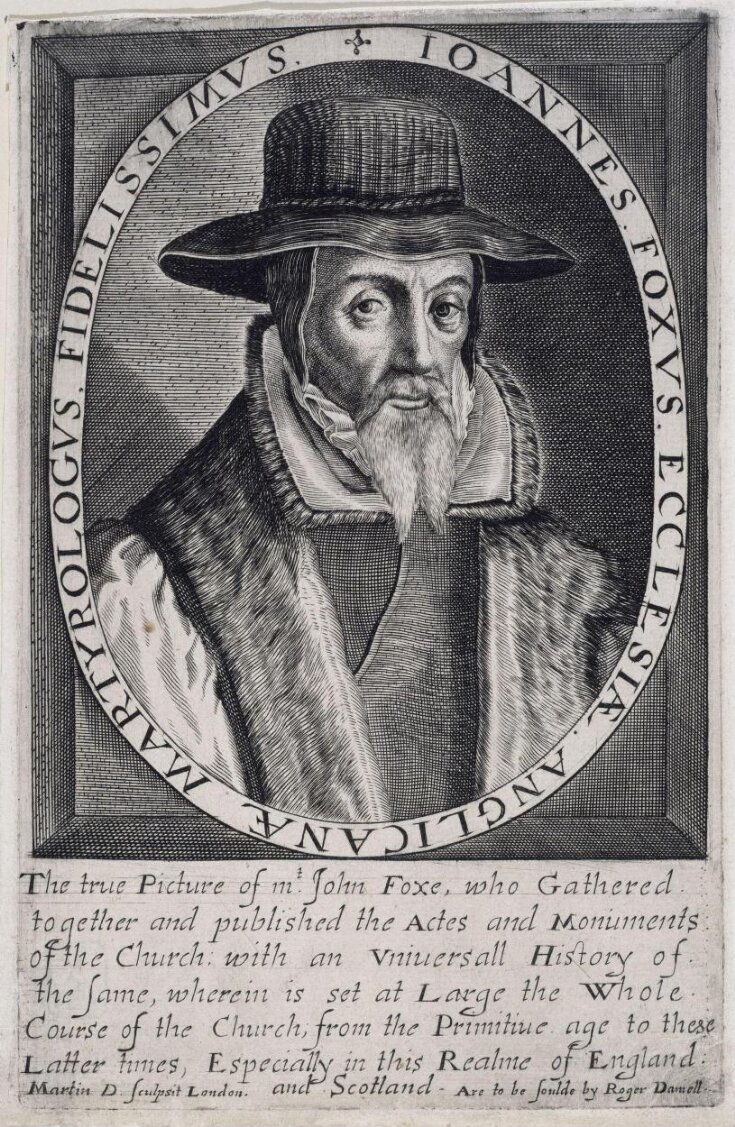
Foxe’s Book of Martyrs
The Book of Martyrs, by John Foxe, documents the persecution and suffering endured by faithful men and women from the 1st to early 16th centuries for their faith in Jesus Christ. Commonly known as Foxe’s Book of Martyrs, one fuller title is Actes and Monuments of these Latter and Perillous Days, Touching Matters of the Church.
Teach your children the true history of the lives, sufferings, and triumphant deaths of the early Christian martyrs. May it never be said that the blood of the saints has been spilled in vain and their testimonies forgotten. “And they overcame him by the blood of the lamb, and by the word of their testimony; and they loved not their lives unto the death” (Revelation 12:11). Thanks to Joseph Smith foundation for most of this information. See them here
Edward Stevenson
Taken from They Knew the Prophet
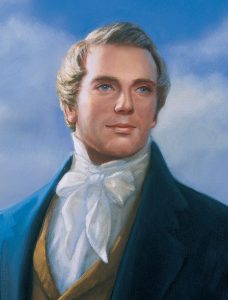
During the fall of 1834, the Prophet Joseph Smith paid a visit to the home of Edward Stevenson, a faithful member of the Church who would later become a prominent missionary and one of the seven presidents of the Seventy. While there he noticed a copy of Foxe’s Book of Martyrs by the sixteenth-century English cleric John Foxe. Brother Stevenson recorded the Prophet’s remarks in reference to Christian martyrs massacred during the Dark Ages:

“While looking over our copy of a large English Book of Martyrs, he expressed sympathy for the Christian martyrs and a hope for their salvation. He asked to borrow the book, promising to return it when he should meet us again in Missouri.
On returning it he said, ‘I have, by the aid of the Urim and Thummim, seen those martyrs. They were honest, devoted followers of Christ, according to the light they possessed. They will be saved.’” Hyrum L. Andrus, They Knew the Prophet, pg. 83
What did Joseph Smith see? Who were these martyrs?
The Reformation was the fuel for the colonization of America and a study of this period brings a deeper appreciation for scripture. To understand this era of persecution, is to appreciate why the Lord established a government of liberty in America. To comprehend this era of “rebirth” in civilization through sacred scripture is to envision how Christians in the 21st century can rebuild a broken world and fragmented society. To remember the Reformation is to remember the captivity and deliverance of our fathers. (Alma 36:2, 29, 29:11-12, 60:20)
Foxe’s Book of Martyrs

- Boston, Lincolnshire, England – Birthplace
- 1516 – Born
- 1832 – Published
- Author: John Foxe
- PDF (26.7 M)
Summary
Teach your children the true history of the lives, sufferings, and triumphant deaths of the early Christian martyrs. May it never be said that the blood of the saints has been spilled in vain and their testimonies forgotten. “And they overcame him by the blood of the lamb, and by the word of their testimony; and they loved not their lives unto the death” (Revelation 12:11).
CHAPTER I
History of Christian Martyrs to the First General Persecutions
Under Nero
Christ our Savior, in the Gospel of St. Matthew, hearing the confession of Simon Peter, who, first of all other, openly acknowledged Him to be the Son of God, and perceiving the secret hand of His Father therein, called him (alluding to his name) a rock, upon which rock He would build His Church so strong that the gates of hell should not prevail against it. In which words three things are to be noted: First, that Christ will have a Church in this world. Secondly, that the same Church should mightily be impugned, not only by the world, but also by the uttermost strength and powers of all hell. And, thirdly, that the same Church, notwithstanding the uttermost of the devil and all his malice, should continue.

Which prophecy of Christ we see wonderfully to be verified, insomuch that the whole course of the Church to this day may seem nothing else but a verifying of the said prophecy. First, that Christ hath set up a Church, needeth no declaration. Secondly, what force of princes, kings, monarchs, governors, and rulers of this world, with their subjects, publicly and privately, with all their strength and cunning, have bent themselves against this Church! And, thirdly, how the said Church, all this notwithstanding, hath yet endured and holden its own! What storms and tempests it hath overpast, wondrous it is to behold: for the more evident declaration whereof, I have addressed this present history, to the end, first, that the wonderful works of God in His Church might appear to His glory; also that, the continuance and proceedings of the Church, from time to time, being set forth, more knowledge and experience may redound thereby, to the profit of the reader and edification of Christian faith.
As it is not our business to enlarge upon our Savior’s history, either before or after His crucifixion, we shall only find it necessary to remind our readers of the discomfiture of the Jews by His subsequent resurrection. Although one apostle had betrayed Him; although another had denied Him, under the solemn sanction of an oath; and although the rest had forsaken Him, unless we may except “the disciple who was known unto the high-priest”; the history of His resurrection gave a new direction to all their hearts, and, after the mission of the Holy Spirit, imparted new confidence to their minds. The powers with which they were endued emboldened them to proclaim His name, to the confusion of the Jewish rulers, and the astonishment of Gentile proselytes.
I. St. Stephen

St. Stephen suffered the next in order. His death was occasioned by the faithful manner in which he preached the Gospel to the betrayers and murderers of Christ. To such a degree of madness were they excited, that they cast him out of the city and stoned him to death. The time when he suffered is generally supposed to have been at the passover which succeeded to that of our Lord’s crucifixion, and to the era of his ascension, in the following spring.
Upon this a great persecution was raised against all who professed their belief in Christ as the Messiah, or as a prophet. We are immediately told by St. Luke, that “there was a great persecution against the church which was at Jerusalem;” and that “they were all scattered abroad throughout the regions of Judaea and Samaria, except the apostles.”
About two thousand Christians, with Nicanor, one of the seven deacons, suffered martyrdom during the “persecution that arose about Stephen.”
II. James the Great
The next martyr we meet with, according to St. Luke, in the History of the Apostles’ Acts, was James the son of Zebedee, the elder brother of John, and a relative of our Lord; for his mother Salome was cousin-german to the Virgin Mary. It was not until ten years after the death of Stephen that the second martyrdom took place; for no sooner had Herod Agrippa been appointed governor of Judea, than, with a view to ingratiate himself with them, he raised a sharp persecution against the Christians, and determined to make an effectual blow, by striking at their leaders. The account given us by an eminent primitive writer, Clemens Alexandrinus, ought not to be overlooked; that, as James was led to the place of martyrdom, his accuser was brought to repent of his conduct by the apostle’s extraordinary courage and undauntedness, and fell down at his feet to request his pardon, professing himself a Christian, and resolving that James should not receive the crown of martyrdom alone. Hence they were both beheaded at the same time. Thus did the first apostolic martyr cheerfully and resolutely receive that cup, which he had told our Savior he was ready to drink. Timon and Parmenas suffered martyrdom about the same time; the one at Philippi, and the other in Macedonia. These events took place A.D. 44.
III. Philip
Was born at Bethsaida, in Galilee and was first called by the name of “disciple.” He labored diligently in Upper Asia, and suffered martyrdom at Heliopolis, in Phrygia. He was scourged, thrown into prison, and afterwards crucified, A.D. 54.
IV. Matthew
 Whose occupation was that of a toll-gatherer, was born at Nazareth. He wrote his gospel in Hebrew, which was afterwards translated into Greek by James the Less. The scene of his labors was Parthia, and Ethiopia, in which latter country he suffered martyrdom, being slain with a halberd in the city of Nadabah, A.D. 60.
V. James the Less
Is supposed by some to have been the brother of our Lord, by a former wife of Joseph. This is very doubtful, and accords too much with the Catholic superstition, that Mary never had any other children except our Savior. He was elected to the oversight of the churches of Jerusalem; and was the author of the Epistle ascribed to James in the sacred canon. At the age of ninety-four he was beat and stoned by the Jews; and finally had his brains dashed out with a fuller’s club.
VI. Matthias
Of whom less is known than of most of the other disciples, was elected to fill the vacant place of Judas. He was stoned at Jerusalem and then beheaded.
VII. Andrew
Was the brother of Peter. He preached the gospel to many Asiatic nations; but on his arrival at Edessa he was taken and crucified on a cross, the two ends of which were fixed transversely in the ground. Hence the derivation of the term, St. Andrew’s Cross.
 VIII. St. Mark
Was born of Jewish parents of the tribe of Levi. He is supposed to have been converted to Christianity by Peter, whom he served as an amanuensis, and under whose inspection he wrote his Gospel in the Greek language. Mark was dragged to pieces by the people of Alexandria, at the great solemnity of Serapis their idol, ending his life under their merciless hands.
IX. Peter
Among many other saints, the blessed apostle Peter was condemned to death, and crucified, as some do write, at Rome; albeit some others, and not without cause, do doubt thereof. Hegesippus saith that Nero sought matter against Peter to put him to death; which, when the people perceived, they entreated Peter with much ado that he would fly the city. Peter, through their importunity at length persuaded, prepared himself to avoid. But, coming to the gate, he saw the Lord Christ come to meet him, to whom he, worshipping, said, “Lord, whither dost Thou go?” To whom He answered and said, “I am come again to be crucified.” By this, Peter, perceiving his suffering to be understood, returned into the city. Jerome saith that he was crucified, his head being down and his feet upward, himself so requiring, because he was (he said) unworthy to be crucified after the same form and manner as the Lord was.
 Illustration from a 1583 edition of Foxe’s Book of Martyrs, showing Papists torturing Protestants, in this case by scraping their bodies with shells.
X. Paul
Paul, the apostle, who before was called Saul, after his great travail and unspeakable labors in promoting the Gospel of Christ, suffered also in this first persecution under Nero. Abdias, declareth that under his execution Nero sent two of his esquires, Ferega and Parthemius, to bring him word of his death. They, coming to Paul instructing the people, desired him to pray for them, that they might believe; who told them that shortly after they should believe and be baptised at His sepulcher. This done, the soldiers came and led him out of the city to the place of execution, where he, after his prayers made, gave his neck to the sword.
XI. Jude
The brother of James, was commonly called Thaddeus. He was crucified at Edessa, A.D. 72.
 XII. Bartholomew
Preached in several countries, and having translated the Gospel of Matthew into the language of India, he propagated it in that country. He was at length cruelly beaten and then crucified by the impatient idolaters.
XIII. Thomas
Called Didymus, preached the Gospel in Parthia and India, where exciting the rage of the pagan priests, he was martyred by being thrust through with a spear.
 XIV. Luke
The evangelist, was the author of the Gospel which goes under his name. He travelled with Paul through various countries, and is supposed to have been hanged on an olive tree, by the idolatrous priests of Greece.
XV. Simon
Surnamed Zelotes, preached the Gospel in Mauritania, Africa, and even in Britain, in which latter country he was crucified, A.D. 74.
XVI. John
 The “beloved disciple,” was brother to James the Great. The churches of Smyrna, Pergamos, Sardis, Philadelphia, Laodicea, and Thyatira, were founded by him. From Ephesus he was ordered to be sent to Rome, where it is affirmed he was cast into a cauldron of boiling oil. He escaped by miracle, without injury. Domitian afterwards banished him to the Isle of Patmos, where he wrote the Book of Revelation. Nerva, the successor of Domitian, recalled him. He was the only apostle who escaped a violent death.
 XVII. Barnabas
Was of Cyprus, but of Jewish descent, his death is supposed to have taken place about A.D. 73.
And yet, notwithstanding all these continual persecutions and horrible punishments, the Church daily increased, deeply rooted in the doctrine of the apostles and of men apostolical, and watered plentously with the blood of saints.