Hopewell/Nephite Archaeology
I was very pleased when our wonderful friend and associate Leslie Rees showed me this article. I am so thankful there are great researchers out there, so we can share together these amazing historical events.
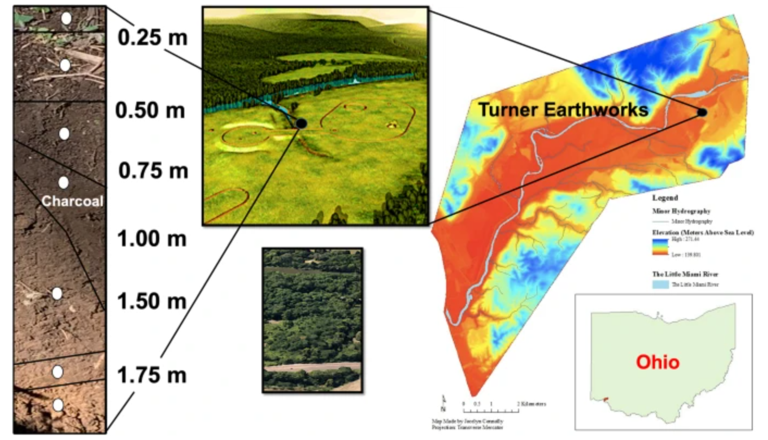
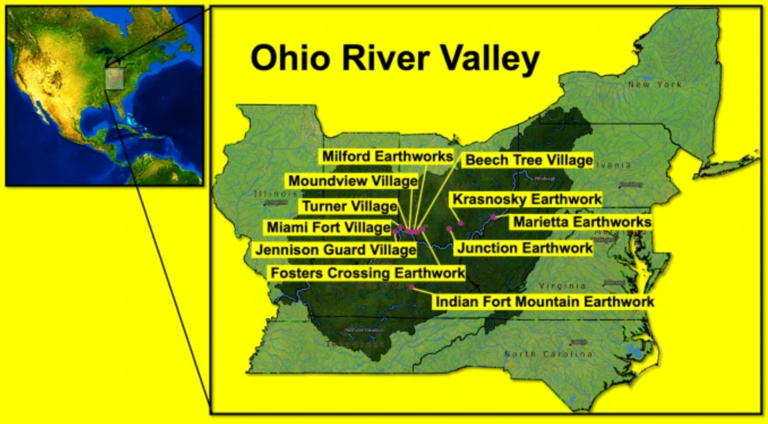
Researchers from the University of Cincinnati have found evidence of a cosmic cataclysm 1,500 years that may be responsible for the downfall of the Hopewell Culture, they say occurred between the years of 252-383 AD, at 11 Hopewell archaeological sites in three states stretching across the Ohio River Valley in the United States.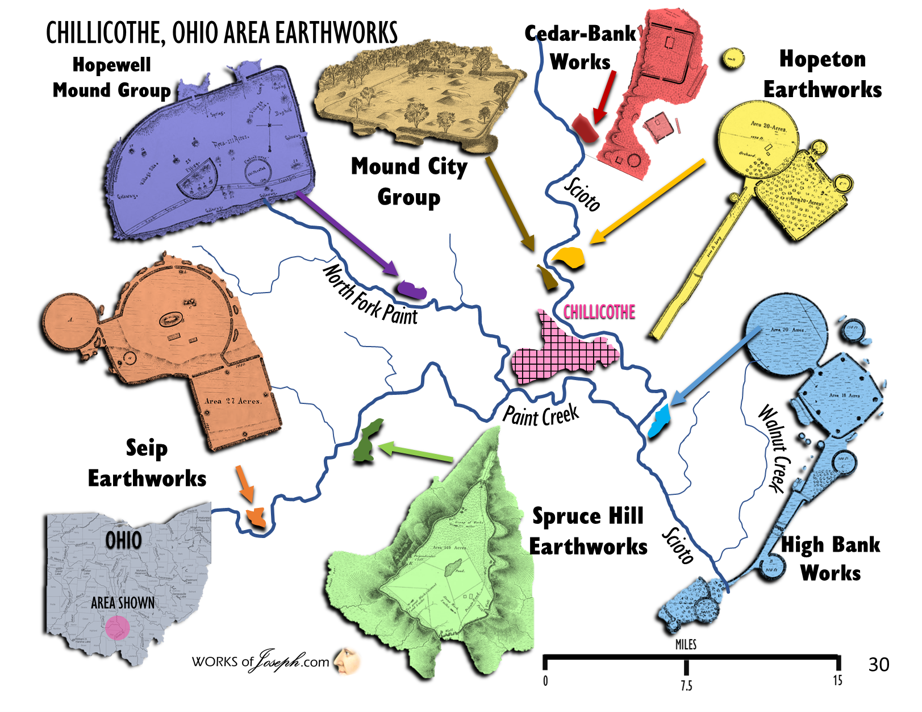
What is a Cosmic Cataclysm?
Did these ancient cities suffer the wrath of God or a cosmic cataclysm?
“…current model of galaxy formation, the Hierarchical Merger model of galaxy formation, which supports, and is heavily reliant on the existence of Galactic Interactions, collisions, and “cannibalism”, thus these components of different ages and movement patterns are from different galaxies.
In this model, galaxies are believed to grow by ingesting smaller, dwarf galaxies and the regions of dark matter that envelop them. In the process, some of these dwarf galaxies are shredded by the gravitational forces when they move too close to the center of the “host” galaxy’s enormous halo. This, in turn, leaves star-streams behind, as relics of the original event and these star-trails are of the many pieces of evidence for this theory.” Source
Since this Cosmic Cataclysm is spoken of as destroying the Hopewell culture, I believe we must consider this event, as we believe the Hopewell Culture is the same as the Nephite Culture, and this cosmic event happened to correspond with the end of the Nephite and Hopewell Civilization in the United States of America. What a cool event or as many non-believers would say, OH, just a coincidence! Yeah right? The Lord provides these clues to look at seriously without dismissing them outright, as we study and pray about their truthfulness.
Hopewell Knew Astronomical Events
“Certain aspects of their geometry seem to indicate that the Hopewell Culture was keenly aware of long-range astronomical events. For example, throughout the year, the location of the moonrise changes.
During the annual moonrise cycle, the point where the moon rises on the horizon cycles through being either north or south of due east. However, once every 18 years, the moon will rise at a point further north than at any other time during this 18 year cycle. The Hopewell Earthworks are so constructed that obvious sight lines running directly through the center of these massive works, is in a direct line with the moonrise on this 18 year cycle.” Source
Validating Beginning and End of Hopewell Culture
“Over many thousands of years, the people who eventually settled into the Ohio Valley developed a unique civilization. Between AD 1 and 400, Ohio’s Indigenous people created monumental earthen architecture that incorporated in its design and construction a deep knowledge of geometry and astronomy.
The finest extant examples of this architecture are the Great Circle and Octagon Earthworks at Newark, the Fort Ancient Earthworks near Lebanon, and five of the earthworks that make up Hopewell Culture National Historical Park in Chillicothe.” Source
National Geographic said, “The Hopewell Interaction Sphere was centered around mysterious burial mounds in what is today southern Ohio. The Hopewell tradition, an affiliation of many Native American tribes, flourished from around 200 BCE to 500 CE.” Source
“When did the Hopewell start and end? Hopewell culture, notable ancient Indian culture of the east-central area of North America. It flourished from about 200 bce to 500 ce chiefly in what is now southern Ohio, with related groups in Michigan, Wisconsin, Indiana, Illinois, Iowa, Kansas, Pennsylvania, and New York.” Source
“What purpose this served is not known for certainty. It does however, shed additional light on what many thought to be a primitive culture, showing it is now precisely the opposite. The remaining earthworks today are more than just piles of dirt, but a reminder that their creators were highly ordered and precise.” Source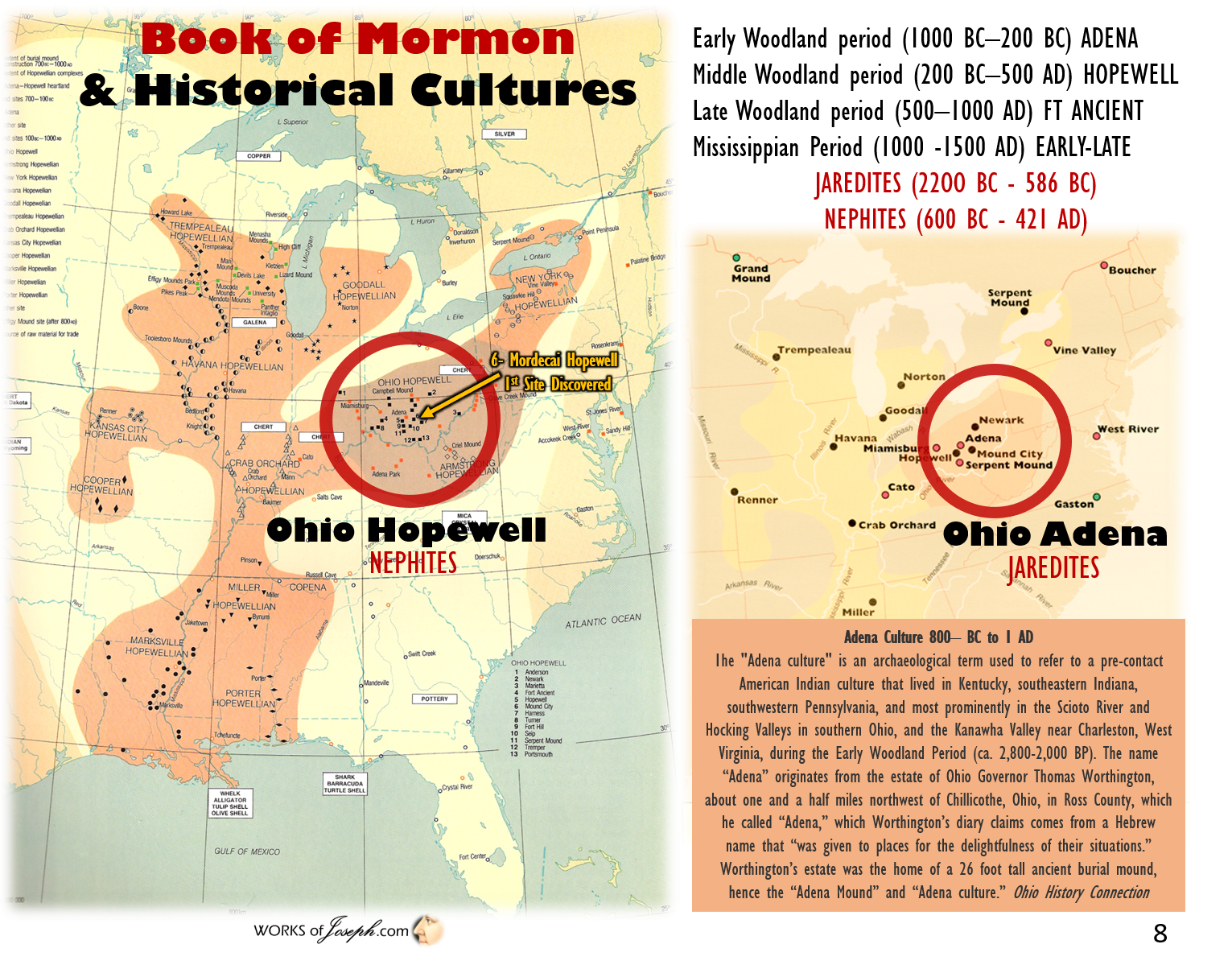
Book of Mormon Timeline During the Cosmic Cataclysm
of 252-383 AD
As you read from the Book of Mormon below, think of the timing of the events therein, compared with the time dating of the Cosmic Cataclysm. While the Nephites were becoming more wicked, what better incident to help them wakeup than a Cosmic Cataclysm. Between this event and the prayers of our battle tested and faithful Moroni, you would have thought the Nephites may have repented. But no! I am sure in many ways the Lord allows natural events from the earth and sky to occur that may assist the people of the Lord to repent and come back to Him, just as this Comet may have done?
4 Nephi 1- 231 AD
35 And now it came to pass in this year, yea, in the two hundred and thirty and first year, there was a great division among the people.
36 And it came to pass that in this year there arose a people who were called the Nephites, and they were true believers in Christ; and among them there were those who were called by the Lamanites—Jacobites, and Josephites, and Zoramites;
37 Therefore the true believers in Christ, and the true worshipers of Christ, (among whom were the three disciples of Jesus who should tarry) were called Nephites, and Jacobites, and Josephites, and Zoramites.
38 And it came to pass that they who rejected the gospel were called Lamanites, and Lemuelites, and Ishmaelites; and they did not dwindle in unbelief, but they did wilfully rebel against the gospel of Christ; and they did teach their children that they should not believe, even as their fathers, from the beginning, did dwindle.
39 And it was because of the wickedness and abomination of their fathers, even as it was in the beginning. And they were taught to hate the children of God, even as the Lamanites were taught to hate the children of Nephi from the beginning.
244 AD
40 And it came to pass that two hundred and forty and four years had passed away, and thus were the affairs of the people. And the more wicked part of the people did wax strong, and became exceedingly more numerous than were the people of God.
250-260 AD
41 And they did still continue to build up churches unto themselves, and adorn them with all manner of precious things. And thus did two hundred and fifty years pass away, and also two hundred and sixty years.
42 And it came to pass that the wicked part of the people began again to build up the secret oaths and combinations of Gadianton.
43 And also the people who were called the people of Nephi began to be proud in their hearts, because of their exceeding riches, and become vain like unto their brethren, the Lamanites.
44 And from this time the disciples began to sorrow for the sins of the world.
300 AD
45 And it came to pass that when three hundred years had passed away, both the people of Nephi and the Lamanites had become exceedingly wicked one like unto another.
46 And it came to pass that the robbers of Gadianton did spread over all the face of the land; and there were none that were righteous save it were the disciples of Jesus. And gold and silver did they lay up in store in abundance, and did traffic in all manner of traffic.
305 AD
47 And it came to pass that after three hundred and five years had passed away, (and the people did still remain in wickedness) Amos died; and his brother, Ammaron, did keep the record in his stead.
320 AD
48 And it came to pass that when three hundred and twenty years had passed away, Ammaron, being constrained by the Holy Ghost, did hide up the records which were sacred—yea, even all the sacred records which had been handed down from generation to generation, which were sacred—even until the three hundred and twentieth year from the coming of Christ.
49 And he did hide them up unto the Lord, that they might come again unto the remnant of the house of Jacob, according to the prophecies and the promises of the Lord. And thus is the end of the record of Ammaron.” 4 Nephi 1:35-49
Mormon 6- 384 AD
4 And it came to pass that we did march forth to the land of Cumorah, and we did pitch our tents around about the hill Cumorah; and it was in a land of many waters, rivers, and fountains; and here we had hope to gain advantage over the Lamanites.
5 And when three hundred and eighty and four years had passed away, we had gathered in all the remainder of our people unto the land of Cumorah.
385 AD
15 …yea, even all my people, save it were those twenty and four who were with me, and also a few who had escaped into the south countries, and a few who had deserted over unto the Lamanites, had fallen; and their flesh, and bones, and blood lay upon the face of the earth, being left by the hands of those who slew them to molder upon the land, and to crumble and to return to their mother earth.
16 And my soul was rent with anguish, because of the slain of my people, and I cried:
17 O ye fair ones, how could ye have departed from the ways of the Lord! O ye fair ones, how could ye have rejected that Jesus, who stood with open arms to receive you!
18 Behold, if ye had not done this, ye would not have fallen. But behold, ye are fallen, and I mourn your loss.” Mormon 6:15-18
The parallels are amazing. We know the book of Mormon is true and so it makes sense that we will find true data that backs it up. Of course our testimony is most critical, but these secondary evidences are so exciting to experience.
The Hopewell airburst event,1699-1567 years ago 252-383 CE
Abstract
Meteorites, Fe and Si-rich microspherules, positive Ir and Pt anomalies, and burned charcoal-rich Hopewell habitation surfaces demonstrate that a cosmic airburst event occurred over the Ohio River valley during the late Holocene. A comet-shaped earthwork was constructed near the airburst epicenter. Twenty-nine radiocarbon ages establish that the event occurred between 252 and 383 CE, a time when 69 near-Earth comets were documented. While Hopewell people survived the catastrophic event, it likely contributed to their cultural decline. The Hopewell airburst event expands our understanding of the frequency and impact of cataclysmic cosmic events on complex human societies.
Introduction
Direct positive evidence of catastrophic cosmic airburst and impact events have been found in the Western Hemisphere at the Cretaceous and Tertiary (KT) boundary ~ 65 million years ago and at the Younger Dryas (YD) boundary ~ 12,800 years ago1,2. Both of these events are associated with global mass extinctions and they occurred befre humans culturally evolved into complex, sedentary, agricultural-based societies. The recent discovery of two Holocene cosmic impact events in Argentina (~ 6000 B.P. and ~ 3000 B.P.), and one in Jordan (~ 3,700 B.P.), suggests that these natural catastrophes are far more common than previously suspected3,4. Between 1,800 and 1431 years ago (220 and 589 CE), Chinese astronomers documented 69 near-Earth comets (< 1.3 au and a period of revolution < 200 years), including Haley’s, which came within 0.09 au of earth in 374 CE (1646 B.P.)5. At this time, human communities and the resources they needed for survival were at a heightened risk of being destroyed by a comet airburst event. https://www.nature.com/articles/s41598-022-05758-y

Cosmic Cataclysm may have caused downfall of the Hopewell Culture
Researchers from the University of Cincinnati have found evidence of a cosmic cataclysm 1,500 years that may be responsible for the downfall of the Hopewell Culture.
The Hopewell Culture was a widely dispersed set of pre-Columbian Native American populations connected by a common network of trade routes from 100 BC to AD 500 in the Middle Woodland period.
The researchers found evidence of a cosmic airburst at 11 Hopewell archaeological sites in three states stretching across the Ohio River Valley in the United States, which rained debris down into the Earth’s atmosphere creating a fiery explosion around 1,500 years ago based on radiocarbon and typological dating.
The airburst affected an area bigger than New Jersey, setting fires across 9,200 square miles between the years AD 252 and 383. This coincides with a period when 69 near-Earth comets were observed and documented by Chinese astronomers and witnessed by Native Americans as told through their oral histories.
The study, published in the Nature journal Scientific Reports found an unusually high concentration and diversity of meteorites at Hopewell sites compared to other time periods. The meteorite fragments were identified from the tell-tale concentrations of iridium and platinum they contained. They also found a charcoal layer that suggests the area was exposed to fire and extreme heat.
In his lab, lead author Kenneth Tankersley, a professor of anthropology in UC’s College of Arts and Sciences, held up a container of tiny micrometeorites collected at the sites. A variety of meteorites, including stony meteorites called pallasites, were found at Hopewell sites.
“These micrometeorites have a chemical fingerprint. Cosmic events like asteroids and comet airbursts leave behind high quantities of a rare element known as platinum,” Tankersley said. “The problem is platinum also occurs in volcanic eruptions. So we also look for another rare element found in non-terrestrial events such as meteorite impact craters — iridium. And we found a spike in both, iridium and platinum.”
The Hopewell people collected the meteorites and forged malleable metal from them into flat sheets used in jewellery and musical instruments called pan flutes.
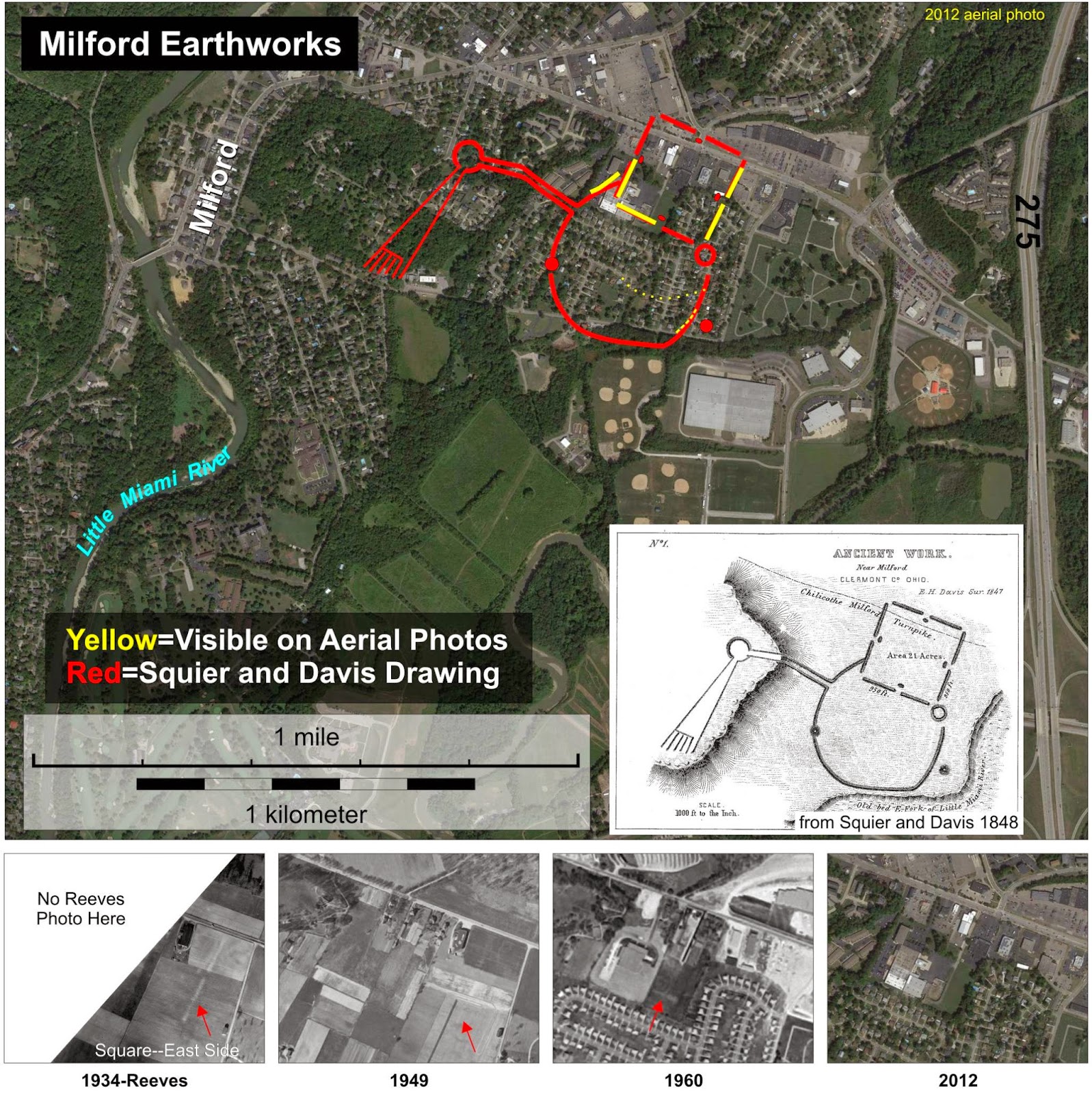
Beyond the physical evidence are cultural clues left behind in the masterworks and oral histories of the Hopewell. A comet-shaped mound was constructed near the epicenter of the airburst at a Hopewell site called the Milford Earthworks.” Scientific Reports volume 12, Article number: 1706 (2022)
Source
Milford Earthworks
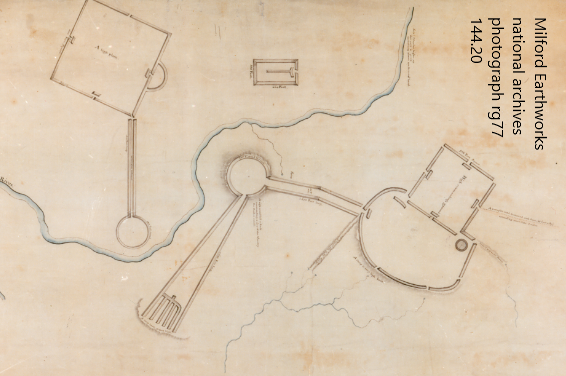
William Lytle’s Drawing prior to 1803. William Lytle was the founder of Williamsburg Oh and the Father of Clermont County Ohio he surveyed most of the County for the Virginia Military in order to provision land for Virginian Revolutionary War Veterans. As he surveyed the land he found several Earthworks of which he drew the illustration seen here. William Lytle became wealthy moved to Cincinnati and founded Cincinnati Medical College, now the University of Cincinnati. Milford Earthworks was published in, Observations on the Climate in Different Parts of America by Hugh Williamson, Published 1811 in England.
PLATE XXXIV. No. 1.ANCIENT WORK, CLERMONT COUNTY, OHIO.
The work here presented is situated near the western border of Clermont county, Ohio, about one mile east from the town of Milford, which is built near the junction of the East fork with the Little Miami river. It occupies the third terrace, which is here broad and fertile, and consists of those constantly recurring figures, the square and the circle. The plan will give a correct idea of its outline. In its form and combination, it closely resembles some of the more remarkable structures of the Scioto valley, and was doubtless erected for a common purpose with them. It has, however, one novel and interesting feature. The parallels which lead off from the large irregular circle extend upon an isolated hill to the left, which is elevated perhaps fifty feet above the plain, where they end in a small circle, not more than three hundred feet in diameter. From this circle diverging lines extend to the south-west, terminating in a maze of walls unlike any others which have yet fallen under notice. A portion of the parallels and the diverging lines just mentioned are much reduced, and when the crops are on the ground, are hardly traceable.
From the hill an extensive prospect is afforded, bringing in view the sites of several large groups of works in the vicinity. It has been suggested that the structures upon the hill were devoted to rites analogous to those attending the primitive hill or grove worship of the East.
An inspection of this work shows clearly that the irregularity of the great circle is due to the nature of the ground, and that the terrace bank bordering the old bed of the East fork existed at the period of the construction of the work. The river now flows a considerable distance to the southward.” Source
Scientific Reports continues, “Various Algonquin and Iroquoian tribes, descendants of the Hopewell, spoke of a calamity that befell the Earth, said Tankersley, who is Native American.
“What’s fascinating is that many different tribes have similar stories of the event,” he said.
“The Miami tell of a horned serpent that flew across the sky and dropped rocks onto the land before plummeting into the river. When you see a comet going through the air, it would look like a large snake,” he said.
“The Shawnee refer to a ‘sky panther’ that had the power to tear down forest. The Ottawa talk of a day when the sun fell from the sky. And when a comet hits the thermosphere, it would have exploded like a nuclear bomb.”
And the Wyandot recount a dark cloud that rolled across the sky and was destroyed by a fiery dart, Tankersley said.
“That’s a lot like the description the Russians gave for Tunguska,” he said of a comet airburst documented over Siberia in 1908 that levelled 830 square miles of forest and shattered windows hundreds of miles away.
“Witnesses reported seeing a fireball, a bluish light nearly as bright as the sun, moving across the sky. A flash and sound similar to artillery fire was said to follow it. A powerful shockwave broke windows hundreds of miles away and knocked people off their feet,” according to a story in EarthSky.
UC biology professor and co-author David Lentz said people who survived the airburst and its fires would have gazed upon a devastated landscape.
“It looks like this event was very injurious to agriculture. People didn’t have good ways to store corn for a long period of time. Losing a crop or two would have caused widespread suffering,” Lentz said.
And if the airburst levelled forests like the one in Russia, native people would have lost nut trees such as walnut and hickory that provided a good winter source of food.
“When your corn crop fails, you can usually rely on a tree crop. But if they’re all destroyed, it would have been incredibly disruptive,” Lentz said.
UC’s Advanced Materials Characterisation Centre conducted scanning electron microscopy and energy dispersive spectrometry of the sediment samples. Inductively coupled plasma mass spectrometry was employed at the University of Georgia’s Centre for Applied Isotope Studies. The U.S. Geological Survey provided stable carbon isotope analysis.
Despite what scientists know, there is still much they do not, Lentz said.
“It’s hard to know exactly what happened. We only have a few points of light in the darkness,” he said. “But we have this area of high heat that would have been catastrophic for people in that area and beyond.”
Now researchers are studying pollen trapped in layers of sediment to see how the comet airburst might have changed the botanical landscape of the Ohio River Valley.
Co-author Steven Meyers, a UC geology alumnus, said their discovery might lead to more interest in how cosmic events affected prehistoric people around the world.
“Science is just a progress report,” Meyers said. “It’s not the end. We’re always somewhere in the middle. As time goes on, more things will be found.” Find out more