Debunking Critics
There seems to be quite a few critics of the restored Church of Jesus Christ of Latter-day Saints lately focused against Brigham Young. There is the Denver Snuffers, Doctrine of Christ Church and many others.
 Why all of this commotion? I believe it may be a new fad to go after Brigham Young as there are very few new criticisms about our dear Prophet Joseph Smith. Critics have failed for nearly 200 years with any credible evidence against the fruit of Joseph Smith, which is of course the truth of the Book of Mormon and the other amazing truths he has provided for us. Critics seem to be saying, if we can’t take down Joseph, then we better work against the number two guy, Brigham Young. This subject seems critical to many of those who love Joseph Smith and the Book of Mormon, but they aren’t a part of today’s Church of Jesus Christ of Latter-day Saints. I love these people, but I also pray for them, as they would likely say the same thing about me, as we all have our own biases.
Many of these critics claim that Joseph Smith never practiced polygamy, but it all started with Brigham Young which is not correct in my opinion. This is how the name of Brigham continues to get smeared. There is a huge difference between what the world calls “polygamy” and what it actually is. A great friend and defender of the Church and its doctrine, Kimberley Smith said, “Joseph Smith taught and practiced Celestial Plural Marriage which can be only entered into by Revelation and by the one who holds the sealing keys. Both Joseph Smith and Hyrum Smith both spoke out against “unauthorized polygamy” even Brigham Young was excommunicating men in Nauvoo who married women not given to them through the one who held the keys.” Kimberly Watson Smith
Brigham Young Deniers
“Millions of faithful Mormons are entirely oblivious to the dramatic gulf between the scriptures, revelations and teachings of the founder Joseph Smith, and the replacement religion created through Brigham Young.” Denver Snuffer, Christian Apostacy
Transfiguration Witnesses
 “I knew then and also know now that Joseph was a true prophet of God, and that the mantle of Joseph fell on Brigham Young who was his legal successor. We all thought Joseph had come back to us! I was present at the meeting when this took place and heard with my own ears and saw with my own eyes. We all thought Joseph had come back to us although we knew he was in his grave. I was standing by the temple talking to Brother Woodruff and he pointed out a spot to me on the opposit[e] side of the river about a mile and a half above Montrose, and said there would be a city and a temple built there and the place would be called Zarahemla. I was at Nauvoo when the temple was finished and dedicated. I went up into the tower and wrote my name there. As I understand, the wicked have burned that temple to the ground and it is all destroyed like the Jerusalem temple. But I expect to see that temple re-erected and the one built on the opposite side of the river to match.” Pioneer Saint Edward Phillips Journal
“The day is Thursday, August 8, 1844. Six weeks to the day have passed since the martyrdom of the Prophet Joseph Smith on June 27, 1844. The majority of the Twelve Apostles have recently returned from missions and some are still stunned and disheartened by the loss of their Prophet. Upon their arrival they find “Sidney Rigdon busy among the Saints, trying to establish his claim to the presidency of the Church.” According to a report issued by the Times and Seasons:
[A] special meeting of the Church of Jesus Christ of Latter Day Saints, convened at the stand in the city of Nauvoo, President Brigham Young, called the audience to order, and arranged the several quorums according to their standing, and the rules of the church. The meeting had been previously called, as stated, to choose a guardian, or trustee for said church.
Opinions differ, either Sidney Rigdon, former First Counselor in the First Presidency, or the Quorum of the Twelve with Brigham Young at their head. The audience is divided as the polished and eloquent Sidney Rigdon commences his message. The old gentleman is charismatic and the arguments are compelling to some of the flock.
 Brigham Young, a man fiercely loyal to the Prophet Joseph Smith, current President of the Twelve and later to become known as the “Lion of the Lord”, takes the stand. Suddenly, the people arise “en-masse to their feet astonished.” One eyewitness later remembered, “it appeared that Joseph had returned and was speaking to the people.” As Brigham Young commences speaking, hundreds in the audience believe “in every possible degree it [is] Joseph’s voice, and his person, in look, attitude, dress and appearance [it is] Joseph himself, personified”. William Hyde later remembers:
[Brigham Young] then called upon the saints to know if they would receive the Twelve and let them stand in their place as the First Presidency of the Church in the absense of Joseph. The vote was unanimous in the affirmative. On this day it was plainly manifest that the mantle of Joseph had rested upon President Young.” James F. Stoddard IV and Aaron R. Halsell. More Witnesses Here from the Joseph Smith Foundation
Not one dissenting hand was raised at the conference to sustain Brigham Young, yet thousands today are leaving the Church believing that Brigham Young was not the Prophet or Joseph’s legal successor. The transfiguration of Brigham Young is a key assertion in a continuing debate. If the Lord miraculously transfigured Brigham Young’s appearance, then Brigham Young was divinely sanctioned as Joseph Smith’s successor. If this transfiguration never took place, the very foundations of our LDS faith and history are weakened. I believe the many eyewitnesses and their testimonies that Brigham was Joseph’s successor and was a Prophet of God.
DEBUNKING CRITICS’ ATTACK ON THE TRANSFIGURATION
By Kimberly Watson Smith, Joseph Smith Foundation

“Critics of the Church always attack the Transfiguration of Brigham Young so they can destroy faith and testimony in the authority and the Priesthood of the Church.
These attacks and arguments against the historical documentation of the Transfiguration are neither original nor honest.
Today I want to address the oft-repeated and yet failed argument: “there are no contemporary records of the Transfiguration so it must be folklore or false memory” or worst some even go as far as accusing the Saints of lying.
I invite you to come and reason with me using plain common sense and sound logic.
Let’s begin.
- The Transfiguration of Brigham Young is the most documented event in Church History. We currently have access to 141 accounts of the event. The number of individuals who recorded the event totals to 125. Sixty-one of these are first-hand documents, including personal journals, autobiographies and direct testimonies chronicled in Church publications. The remaining 63 are biographical works by family members or historical compilations.
- The Charts pictured below display how many eyewitnesses wrote of their mantle experience each year following 1844.
If these eyewitness reports were the result of an invented story, we could expect the Saints to begin jotting down their accounts when the idea was allegedly first noised abroad. The testimonies would have been recorded in a condensed period of time.
Two things to consider about that
—there is no specific timeframe for a spike in the accounts.
—there is no central location for the supposed “myth” to develop
Witnesses recorded their testimonies from various locations: some still living in Nauvoo, some throughout Utah ranging from the northern to the southernmost tip, some into Idaho and the Arizona territories, and some locales as remote as the island of Tubuai.
Any expert in analyzing witness testimony would tell you that it would be IMPOSSIBLE to have a consistent story with that many people and spread over continents for that length of time if it were just a “myth” or “folk lore”
That is why trained historians all accept the Transfiguration of Brigham Young despite limited contemporaneous accounts.
It is also important to point out that non-contemporary record ≠ false record.
- Detractors dismiss the role the Holy Ghost plays. This is something that the spiritually blind cannot understand. The Spirit of the Lord leaves an impression on a person far more indelible than any other agent. One of the gifts of the Spirit is the gift of memory and the consistency with which these early Saints and pioneers recorded their memories suggest they were far more influenced by the gift than we can possibly ever realize. Joseph Smith himself knew how powerful the Spirit was that caused people to remember what he said. He received the revelation contained in 1831 and without ever having written it down could recall it word for word in 1843.
- Condemning the Saints for not writing spiritual experiences as they were happening or even years later is wrong and is an unrealistic expectation. The same arguments used against the transfiguration accounts can be used against the First Vision accounts and in fact they are!

How we judge others is how we will be judged by the Lord. If you judge a group of Saints for waiting to record their histories and spiritual experiences instead of as they transpired, you will judged just as harshly by the Lord for your own delayed or lack of record keeping of your life.
There are many many reasons why records were recorded much later.
The Saints were suffering immense persecution while constantly being drive out of their homes and having to rebuild over and over again to
Many were too traumatized at the time to think of writing anything down. Thousands of people were in attendance at that incredible meeting, and many (not all) experienced the transfiguration of Brigham young into Joseph Smith. Not all wrote down their experiences, because of many variables. But many DID write their experiences when they had time to write. The remarkable thing is that ALL the varied experiences were almost exactly the same. In the mouth of two or three witnesses shall the truth of a thing be established. There are hundreds of testimonies that this transfiguration actually took place. These are eyewitness accounts, and shouldn’t be dismissed or discredited.
Many records did not survive the trek west and so people had to re-record their experiences later. I am sure that getting to a barren desert wasteland and having to build homes and plant food for survival made record keeping a lot more difficult!” Kimberly Watson Smith.
*** Graph courtesy of the Joseph Smith Foundation
More information below about the succession crisis of 1844 which is a great article that explains the circumstances of this dark time in the History of the Church, and how Brigham Young valiantly followed the Lord.
When did Brigham Young hear about the Death of Joseph and Hyrum?
Six Days in August: Brigham Young and the Succession Crisis of 1844 Ronald W. Walker https://rsc.byu.edu/firm-foundation/six-days-august-brigham-young-succession-crisis-1844
“Brigham Young had no idea events would turn so badly when he left Nauvoo on May 21 [1844]. From Nauvoo, he took a side trip to Kirtland, Ohio, where Mormonism had first really begun to mold him. Kirtland was also the place where he began his friendship with Joseph Smith, which became the lodestone for the rest of Young’s life. Young visited the old sites in Kirtland and preached in the temple, trying to breathe new life into the old disciples who had let the Church go on without them. He found them “dead and cold to the things of God…
“In the next day or two, Young heard other rumors about the deaths of the Smiths, which he again dismissed. [42] Traveling with Orson Pratt, Young went on Church business to out-of-the-way Peterborough, New Hampshire, a few miles north of the Massachusetts border. His sermon there suggested that he might be coming to grips that some of these awful rumors. “The death of one or a dozen could not destroy the priesthood,” he told the local Saints, “nor hinder the work of the Lord from spreading throughout all nations.” [43]
Brigham Hears of the Prophets Death, 19 Days Later
 The ambiguity ended on July 16. Young and Pratt were leaning back in their chairs at Brother Bement’s house in Peterborough when a letter arrived from Nauvoo telling of the killings. Later in the day, Elder Woodruff’s letter with the same news arrived. “I felt then as I never felt bef[ore],” Young later said. There were no tears but an awful, paralyzing headache. “My head felt as tho my head [would] crack.” His thoughts went everywhere. Had Joseph and Hyrum taken the keys or the authority of the Church with them?
At last, his despair lifted “like a clap,” he said. The answer came to him like revelation: “The keys of the kingdom [are] here.” He brought his hand to his knee to make the point. [44] He later confessed that the idea of assuming Joseph’s office had never occurred to him. [45] It had been an interesting psychological study, resisting reality until he could resist it no longer—followed by an emotional and religious outburst of feeling.
There was another meaning to Young’s revelation. It showed that the Church’s procedures for succession were by no means clear, even to the leading Apostle. Young, of course, had been present during those almost daily private council meetings with Smith earlier in the year. During these councils, Smith had laid out the endowment or temple rituals step-by-step, the capstone of his revelation. He concluded with what should have been a portentous warning: “Brethren, the Lord bids me hasten the work in which we are engaged. . . . Some important scene is near to take place. It may be that my enemies will kill me, and in case they should, and the keys and power which rest on me not be imparted to you, they will be lost from the Earth.” Joseph and Hyrum Smith then anointed the Apostles and other men who were present in the room, after which Joseph paced before them and dramatically pushed back upon his shoulders the collar of the coat he was wearing. “I roll the burden and responsibility of leading this church off from my shoulders on to yours,” he said. “Now, round up your shoulders and stand under it like men; for the Lord is going to let me rest a while.” [46]
The “Last Charge”
This event, now known in Church history as the “last charge,” was memorialized by several of the men who were present, but perhaps most significantly by an unpublished and unsigned statement that currently resides in the Church History Library. “Joseph Smith did declare that he had conferred upon the Twelve every key and every power that he ever held himself before God,” the statement said. “This our testimony we expect to meet in a coming day when all parties will know that we have told the truth and have not lied, so help us God.” [47] For Young, the last charge was a final act in a series of events. “Joseph more than one score of times told . . . [the apostles] both in private and in public, that he rolled the Kingdom on to their shoulders,” Young would later say. [48] Joseph’s conferral of authority included priesthood keys of authority but also a fullness of the endowment ritual, “everything necessary for the salvation of man.” [49]
Young and a majority of the other Apostles had been present during these occasions and heard Joseph’s words. But their hopes and wishes, like those of Jesus’ disciples before Calvary, did not permit them to accept the last charge at face value. Only the actual killings, months later, made Joseph Smith’s warning clear. [50]
But Young’s religious experience at Peterborough was more certain, especially as the days wore on and he continued to feel religiously prompted. He was convinced that he, as President of the Twelve, had authority to lead the Church, or to at least name Joseph’s successor. He also believed that at some point a new First Presidency of three men would be required, though he was willing to let that issue rest for the moment. [51] And he hoped that a general assembly of the Saints would give its approval to the succession. One of Joseph’s revelations declared such a gathering to be the highest authority in the Church—the collective inspiration of leaders and members (D&C 107:32). [52]
The day after hearing of the Smith brothers’ deaths, Young hurried from Peterborough to Boston. That night he shared a room with Elder Woodruff at Sister Voice’s home. Young slept in the bed while Woodruff, who was grieving the Prophet’s death, slept in a large chair and did his best to shield his convulsive tears. [53] Young’s grief, in contrast, was clear-eyed and determined. On July 18, he held a council with the Apostles who could be quickly gathered together in the East. The result was a letter that the Church’s eastern newspaper, the Prophet, soon published. The Apostles told Church leaders to head quickly to Nauvoo for the general council. [54] That evening Young briefly preached. He tried to cheer the local Saints: “When God sends a man to do a work all the devils in hell cannot kill him untill he gets through his work. So with Joseph[.] He prepared all things[,] gave the keys to men on the earth[,] and said[,] I may be soon taken from you.” [55] He was already using the last charge as a text.
Deciding the Succession
On Wednesday, August 7—the fifth day of the succession crisis—the Apostles spent much of the day huddled in conference at John Taylor’s house. They held two meetings early in the day. It was the first time that a legal quorum of seven or more Apostles gathered since Carthage—and they actually had not met since months before that because of their missions. Richards had been the Saints’ “principal counselor” during the previous five anxious weeks, answering “calls and inquiries” by the hundreds. [56] Before the others returned, he had been the only healthy Apostle in Nauvoo. He knew the Church’s business as well as anyone in the city and had a reputation for good judgment and good works.
 People may have deferred to Richards for another reason. Less than two weeks after the killings, Richards, in the course of his usual correspondence, signed one preacher’s license as “Clerk and acting President.” Other preaching licenses reportedly had a still more interesting signature. An entry in the historical record of these licenses explained, “From the murder of President Joseph Smith to this Date [September 2, 1844] licenses were signed ‘Twelve Apostles, President.’” This last piece of evidence was confirmed by the Church’s official chronological history. [57] Since these materials were written weeks and even years after the succession controversy and may represent a later view of events, they require some skepticism. On the other hand, they may also suggest that Richards, early on, was asserting the leadership claims of a united Quorum of the Twelve and some people were accepting them.
It is unfortunate that someone who attended the meetings held on Wednesday did not leave a record of the issues discussed. These two meetings had to be among the most important during the succession crisis. For one thing, the newly arrived Apostles had to be brought up to date. There had been difficulties in Nauvoo from the first week of the murders. “The greatest danger that now threatens us is dissensions and strifes amongst the Church,” William Clayton had written on July 6. Clayton reported that the Saints were discussing four or five possible successors to Smith in his twin offices as Church President and trustee-in-trust. [58] Clayton regrettably did not identify these men, though they may have included Rigdon and Young, as well as William Marks and Samuel Smith, another of the Smith brothers.
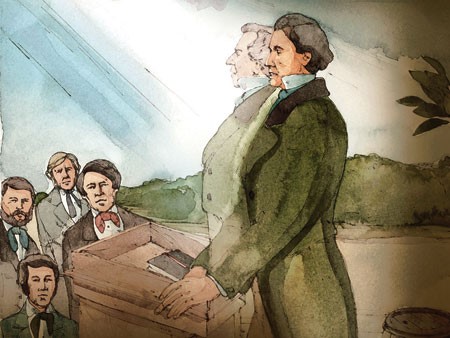
The office of trustee-in-trust, which managed the Church’s property, posed a serious problem. Someone had to receive property and pay the bills for the temple, which meant an immediate appointment. More explosive was the conduct of Emma Smith, the Prophet’s widow, who was determined that the family’s property should not be swallowed by the Church’s claims—Joseph had mixed personal and official accounts and many of his debts were unresolved. Emma opposed the stopgap idea of having Clayton serve until the Apostles returned, and during July repeatedly inserted herself into the trustee-in-trust issue. [59] Her feelings were deep. She accused such opponents as Richards of not treating her “right” and warned if they should “trample upon her,” she would “look to herself”—lawyers were obviously on her mind. By the middle of July, she threatened that she “would do the church all the injury” she could if a new trustee-in-trust were appointed without her approval. Her choice, apparently, was Marks, whose views on Church policy and doctrine more closely agreed with her own. Clayton, in the middle of controversy, despaired. Bills were coming due, and Lucy Mack Smith, the Prophet’s mother, was also restive. [60] Clayton felt that a public disturbance over Smith’s estate and the trustee would bring clamoring creditors and a costly settlement. With proper management, however, there was enough “to pay the debts and plenty left for other uses.” [61]
There were other topics that the Twelve must have discussed in their Wednesday meetings. Some were crucial to the future of Mormonism. Did the Smith family have a special claim to the Church’s leadership? For several months Joseph and Hyrum Smith had been acting closely together, and Hyrum, as the Church’s Assistant President and Patriarch, had the authority to carry on had he survived Carthage. [62] The Old Testament and the Book of Mormon were full of examples of prophetic primogeniture—passing a prophet’s mantle of leadership to a son or perhaps to a family member. For the moment, this question of family succession was not pressing. Joseph Smith’s brother, Samuel Smith, had died on July 30, and Joseph Smith’s sons were young. Another brother, William Smith, was erratic, and no one saw him as a serious candidate.
New Doctrines and Practices Argued
There were underground issues, too. Historian Ronald K. Esplin has argued that Nauvoo in early 1844 had been a city of secrets. During the several years before his death, Joseph Smith had introduced a breathtaking array of new doctrines and practices: “The plurality of gods, new temple ordinances, new theocratic practices, and even plural marriage.” This “Nauvoo ‘package’” was known unevenly among the Saints, according to Esplin. The result were insider Saints who possessed a “private gnosis,” while the majority of Church members were either unaware or not fully informed. [63]
In addition to new doctrines, Smith had also created three new organizations. The first was the Female Relief Society. This organization was publicly known and open to the women living in Nauvoo, though most of its members were drawn from the city’s leading women. The two other organizations were semisecret. The Council of Fifty sought to redress past wrongs, increase the Church’s political influence, and expand Mormonism’s borders into the American West. The Council of Fifty also was a contingency plan for the last days when earthly governments would fall at Christ’s Second Coming and a new religious and political order would be necessary. While some historians have suggested that this new council was not much more than a symbol, the weight of inconclusive evidence suggests that Joseph Smith was serious about his political outreach. His 1844 political campaign and the later Mormon settlement in the Great Basin were not speculative patterns or decorations. [64]
 The second semisecret group was Joseph Smith’s prayer circle. Known in furtive references in diaries and minutes as the “Holy Order,” the “Quorum of the Anointed,” the “First Quorum,” or still more often as the “Quorum” or “Council,” this group was making Church decisions in July along with Richards. [65] He was a member of the group and influenced many of its decisions, but not without some tension and hurt feelings along the way. [66]
Like the Council of Fifty, the Quorum of the Anointed began in 1842 and two years later was meeting weekly and sometimes daily. [67] Members were the first initiates of the empowering “ancient order of things,” or the endowment, that later was introduced in the Nauvoo Temple. By the summer of 1844, membership was limited to about sixty-five specially devoted men and women. These anointed members met in special priesthood robes, discussed the matters of the kingdom, and offered special prayers. Their July devotions were fervent. According to Brigham Young, a few of the select group met twice “every day . . . to offer up the signs and pray to our heavenly father to deliver his people.” It had been the “cord which bound the people together.” [68] Some of their soulful petitions were pleas to return the Apostles back to the city. [69]
Many of Smith’s new teachings went against the grain of commonplace or sectarian Christian tradition—and the views of conservative Saints. But within this circle, the Prophet felt at ease. [70] “Brother Joseph feels as well as I Ever see him,” wrote Heber C. Kimball to Parley P. Pratt in 1842. “One reason is he has got a Small company, that he feels safe in thare ha[n]ds. And that is not all, he can open his bosom to[o] and feel him Self safe.” [71] The groups who knew of Smith’s advanced teaching were the Twelve Apostles, the Council of Fifty, and the Anointed Quorum, as well some of the officers of the Relief Society. Sometimes their meetings merged into a single assembly—an informal fusion of the three or four groups—and as a result there were disorderly lines of authority. The March 1844 meeting in which Smith gave his last charge almost certainly was such an example. On that occasion, there had been an assembly of about sixty men—probably a meeting of the Council of Fifty and the Twelve Apostles with others. [72] Altogether, there were probably no more than one hundred such select disciples in Nauvoo, and perhaps only one member in twenty knew about them. [73] But these few members held in their bosom knowledge of the explosive ideas of plural marriage and the temporal kingdom. [74]
Understandably, Smith’s last agenda had little space on the public stage. But privately it gave context to the events surrounding the succession. The succession of 1844 was not simply about appointing a man or group of men to lead the Church. Rather, it was about what kind of Church would survive. When Marks was being pushed for the position of trustee-in-trust, Bishop Whitney objected. He remembered Marks’s past association with William Law and Emma Smith, both of whom had a recent history of opposing Joseph Smith and the Twelve. “If Marks is appointed Trustee our spiritual blessings will be destroyed inasmuch as he is not favorable to the most important matters,” Whitney told Clayton, referring to the temple ordinances. Moreover, Whitney believed the office of trustee was inseparably tied to the Presidency. One office entailed the other, and that combination put Joseph Smith’s last teachings in jeopardy. Whitney favored the appointment of Samuel Smith before Samuel died. [75]
As the events leading to Joseph Smith’s death closed in on Joseph in June, he seemed to retreat from some of his advanced teachings. According to D. Michael Quinn, immediately before he went to Carthage, Smith turned his back on polygamy, the endowment, and the Council of Fifty. [76] Whether the retreat was meant to be temporary or permanent, or whether the steps were expedient or heartfelt, the most likely conclusion was that Smith was stabilizing Nauvoo while privately holding firmly to his teachings. His closest disciples accepted this view. But the possibility of a turnabout gave comfort to Emma Smith and Marks during the succession crisis. A rumor circulated through Nauvoo on August 7 claiming that Rigdon had cemented his alliance with Marks by offering him the office of Patriarch, while Rigdon would become the Church’s President. [77] Emma Smith could be expected to lend her quiet support. Still more likely, these people never worked out an agenda of offices or goals. They were united vaguely by their lack of belief in Joseph Smith’s last teachings and probably never organized themselves into a formal group or opposition.
The Apostles concluded their meetings on August 7 with a decision: a general assembly would be convened within the week on Tuesday, August 13, at 10:00 a.m. They intended to put forward their claims and follow it with a formal, ratifying vote. [78] For the Apostles, there was no turning back. Most had accepted plural marriage at great emotional and psychological cost. Their days of fervent councils with the founding Prophet were at odds with a pre-Nauvoo program and a pre-Nauvoo Church. The idea of Joseph Smith conducting a fallen ministry was out of the question.
The Apostles made two other decisions. They wanted a semipublic airing of Rigdon’s claims and scheduled a meeting at Navuoo’s still uncompleted Seventies Hall later in the day. Rigdon would have the opportunity of speaking before the Church’s local and general leaders. The Apostles also agreed to meet the following morning, August 8, for another private meeting.
Minutes and reports of the 4:00 p.m. meeting at the Seventies Hall are incomplete, but it is possible to reconstruct what took place. Rigdon once more put forward his claims and gave more detail about the vision he revealed earlier about putting the Church in order. It was not an “open vision,” he explained, but a stirring that had come to his mind—a continuation of what Joseph Smith and he had experienced in their vision revealing the three degrees of heaven. [79] His future calling, Rigdon said, was to build up the Church for Joseph, because all future blessings must come through Joseph. He was again asserting his position as Joseph Smith’s councilor and spokesman. Elder Wilford Woodruff probably spoke for his fellow Apostles with a curt dismissal. “A long story,” Woodruff said, and a “second class vision.” [80]
William Clayton, who attended the meeting, said that Brigham Young concluded with a few blunt sentences that had his characteristic sting. He did not care who led the Church, he told the Church leaders; even old Ann Lee would do if that was the mind of God. (Ann Lee had helped found the Believers in Christ’s Second Appearing, or Shakers, a century before.) But on the question of who would manage the succession, there was no compromise. Young alone held “the keys and the means of knowing the mind of God,” he said. [81] On these grounds, Young did not accept Rigdon’s claims.
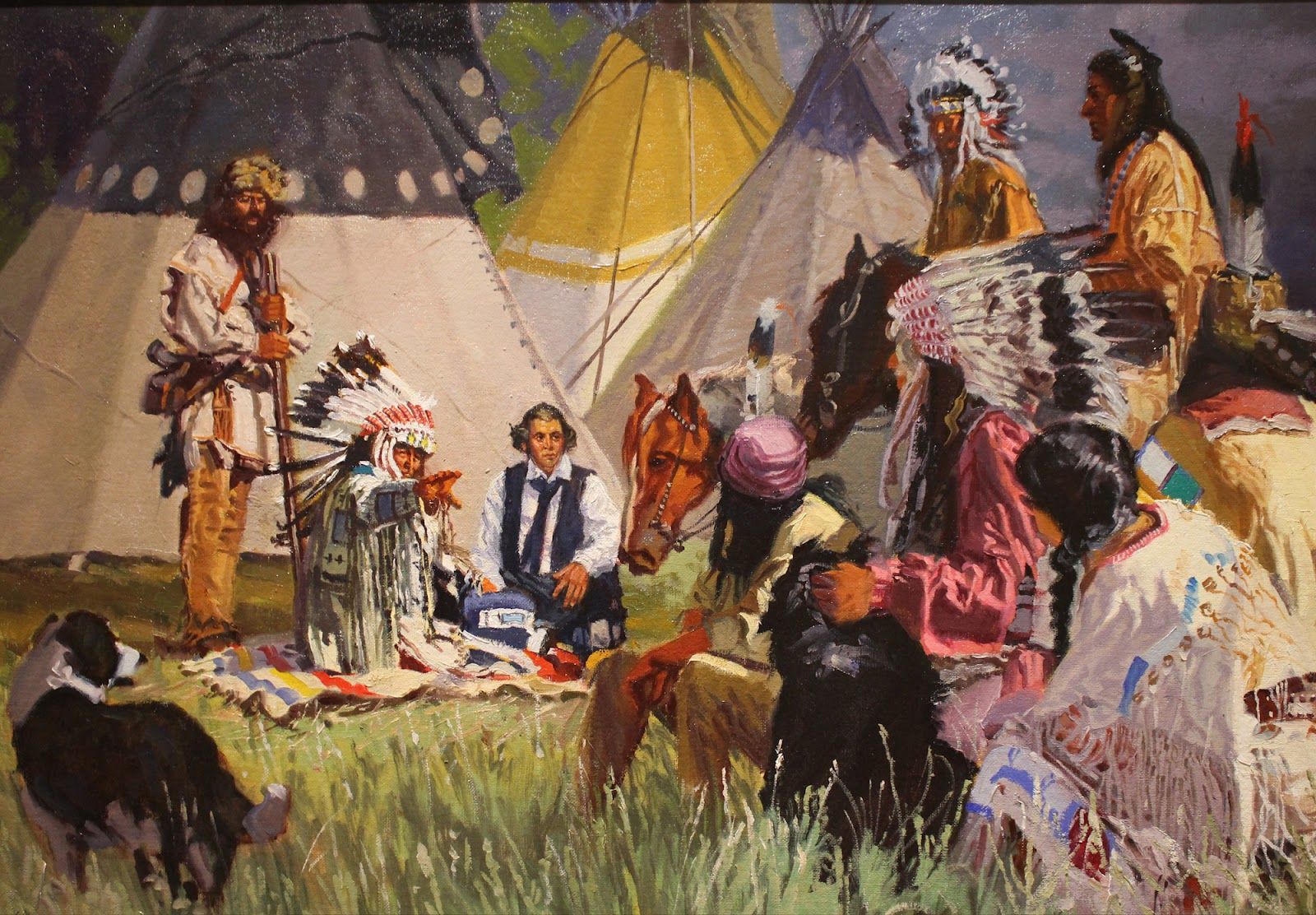
Young’s claim was extraordinary. During the last years of Joseph Smith’s life, Smith had increasingly turned to Young. He was the first to receive his full endowment, and Smith later allowed him to perform the endowment ceremonies in his absence. Young was given many other prominent duties as he became one of Smith’s closest colaborers. [82] But the last charge had not singled Young out—Smith had spoken expansively about most members of the Twelve and some members of the Council of Fifty having the full blessings of the endowment or patriarchal power. Still more important, Smith recognized the Apostles’ special priesthood authority, and one of his revelations described the Twelve (along with other quorums) as forming a group “equal in authority and power” to the First Presidency (D&C 187:24). But this revelation described the Apostles’ collective power and said nothing about their president being a special revelator. Nor did Young use this revelation as a source for his authority. The one thing that seemed to give Young assurance in the early days of August was his Peterborough experience, though he did not say a word about it.”
The complete article is here: https://rsc.byu.edu/firm-foundation/six-days-august-brigham-young-succession-crisis-1844