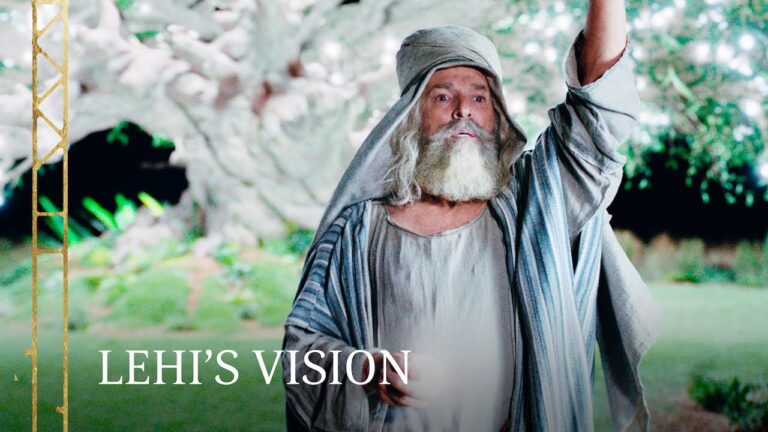
As I think of the Prophet Joseph Smith translating the plates I am imagining the many things on his mind as he translates. What does “by the spirit and power of God” mean? I don’t think Joseph is reading some English words from a rock in a hat. I think he is “translating” meaning as the dictionary says, “the rendering of something into another language or into one’s own from another language.” Dictionary.com
I think this is an interesting definition of translation. “Translation has been used by humans for centuries, beginning after the appearance of written literature. Modern-day translators use sophisticated tools and technologies to accomplish their work, and rely heavily on software applications to simplify and streamline their tasks.” GALA
I would replace the words sophisticated tools, technologies, and software application to mean by the “gift and power of god”. In other words something very difficult to do or almost impossible to do without God’s help.
I don’t think some angel or the Lord were providing the English words to make it easy for Joseph. I believe the Lord tells us to use all our resources and try our best and after we have done all we can and feel we can’t go further, then and only then will the Lord step in. I don’t believe the Lord uses magic, ever!
My main point for this blog is to show that the surroundings where Joseph Smith lived and translated possibly influenced Joseph to help him translate. As Jonathan Neville explains it, Joseph used the information in his own “personal metal bank account” to explain what he saw on the plates. The surroundings of Joseph obviously assisted him to see things around him that helped explain translation. Especially when Joseph described what Lehi or Nephi saw during the dream of the tree of life. In other words what did Joseph see around him that made Lehi’s dream more familiar as he translated. How could Joseph put into words the amazing tree of life vision without being able to visualize the lakes, trees, streams, and wilderness that surrounded Joseph.
OVERVIEW:
“The Book of Mormon’s opening book of 1 Nephi presents a dream/vision in which prophets describe a detailed scene involving a narrow path with an iron rod, leading to the tree of life laden with the most desirable fruit. A river that is both good and bad flows alongside, on the other side of which is seen a large, high building filled with the proud people of the world. The scene is fraught with physical and spiritual peril. All of these elements are met efficiently and conspicuously in a scenario that Joseph Smith experienced in and around Rochester, New York, at the specific time when he dictated this text. In the Book of Mormon vision of the iron rod and the tree of life, Nephi’s father Lehi “. . . beheld, on the other side of the river of water, a great and spacious building; and it stood as it were in the air, high above the earth. And it was filled with people, both old and young, both male and female; and their manner of dress was exceedingly fine; and they were in the attitude of mocking and pointing their fingers towards those who had come at and were partaking of the fruit.” l Nephi 8:26-27.” Rick Grunder Page 1367
In the Book of Mormon dream of the iron rod beside the narrow path leading to the tree of life, Nephi’s father Lehi was led through “a dark and dreary wilderness.” The dismal passage continued “for the space of many hours” until Lehi “began to pray unto the Lord that he would have mercy on me . . .” (1 Nephi 8:4, 8). Joseph Smith dictated that vision text while he lived at the Whitmer farm in Fayette, Seneca County, New York; see MP 350 (Reynolds Arcade) for discussion. The Whitmers, like all farmers in that vicinity, were acutely aware of the vast Cayuga or Montezuma Marshes nearby . . .

“By 1790,” explained local historian John W. Wells, “thousands of settlers” could be seen migrating westward to vast tracts of land opened for farming and development in central and western New York. Of three principal migration routes, the most important was the “Great Genesee Road . . . extended to Buffalo by 1800, and for 30 years until the completion of the Erie Canal . . . the main artery of traffic across the state.” (Wells, 2). On this “cleared track about 30 feet wide,” Lucy Mack Smith and her boys drove their team and wagon to Palmyra in the eighteen-teens. Along the way, they experienced something no traveler could forget: the longest bridge in America, more than a mile in length, set on pilings across the shallow northern end of the “one major obstacle on this natural route to the Genesee country. This was Cayuga Lake. To the north of the lake extended the dread Montezuma marshes and other treacherous and pestilent swamps nearly to the shores of Lake Ontario.” (Wells, 2; see map further below)

Photograph by Rick Grunder, attended by several thousand flies on June 14, 2005.
“Moscheto Point,” observed Horatio Gates Spafford wryly in 1824, “at the mouth of the Owasco Outlet, on the N. boundary of Mentz, is well named.” The town of Mentz then included the village of Montezuma which is seen in the map above. Spafford’s description continued with an unusual observation which deserves at least passing notice in the context of Lehi’s dream . . .
—There is a very large hollow Buttonwood Tree, in this town, in which ‘Elder Smith, preached’ to 35 persons, at a time, and says the tree could have held 15 more: he says its circumference, 3 feet from the ground, is 33 feet; and a Correspondent informs me it measures ‘more than 17 feet diameter.'”
[Spafford, 314, emphasis in the original] Spafford knew of only one tree in the entire state which was slightly larger.
The giant buttonwood (sycamore) he described near the marshes did not likely bear white fruit like that of Lehi’s tree, but it dramatized two elements of relevance here: first, the prominence of trees in the minds of early settlers of New York State at the time, and second, the association of such a noticeable tree with spiritual protection – the faithful believers worshipping in the shelter of the massive trunk. If this connection seems tangential, it is at least as notable as one Book of Mormon defender’s efforts to connect the dream of Lehi with ancient Egyptian precedents which praised this very kind of tree in the Book of the Dead (“Hail, sycamore tree of the goddess Nut. Grant thou to me of the water and the air which are in thee.” Quoted in Griggs, 273).
The general geography near the Whitmer farm presents yet another element of Lehi’s dream: a mental image of emerging (while hiking or while riding on the Erie Canal) from a dismal wasteland onto spacious, open fields. Mentz, with its giant tree, lay on the eastern edge of the marshes, in Cayuga County, and boasted 8,642 acres of improved land worked by 673 farmers who owned 2,746 head of cattle, 500 horses, 6,079 sheep, and produced nearly 28,000 yards of cloth (Spafford, 314; published 1824). 1036 Mormon Parallels: A Bibliographic Source © 2014 Rick Grunder

“In the Book of Mormon vision of the iron rod and the tree of life, Nephi’s father Lehi “. . . beheld, on the other side of the river of water, a great and spacious building; and it stood as it were in the air, high above the earth. And it was filled with people, both old and young, both male and female; and their mannerof dress was exceedingly fine; and they were in the attitude of mocking andpointing their fingers towards those who had come at and were partaking of thefruit.” l Nephi 8:26-27.
What images might Joseph Smith have seen in his mind while dictating these words? How might he have related to the iron rod dream? Elements of this story include:
– darkness and feelings of desperation (1 Nephi 8:4, 7-8, 23; 12:17)
– a dark and dreary wasteland (1 Nephi 8:7)
– a large and spacious field (1 Nephi 8:9)
– a tree with desirable fruit of unsurpassed sweetness and whiteness (1 Nephi 8:10-11)
– a river of water (1 Nephi 8:13); a “fountain of filthy water . . . yea, even the river . . .” (1 Nephi 12:16); “a great and a terrible gulf” which divides the people in the building from the righteous who are seeking the tree of life (1 Nephi 12:18); equated with the river of water, representing filthiness, “an awful gulf, which separated the wicked from the tree of life, and also from the saints of God.” (1 Nephi 15:27-28); even a representation of hell itself (1 Nephi 15:29).
– a rod of iron extending along the bank of the river (1 Nephi 8:19); defined as “the word of God” (1 Nephi 15:24)
– “a strait and narrow path which came along by the rod of iron” (1 Nephi 8:20)
– “numberless concourses of people, many of whom were pressing forward, that they might obtain the path . . .” (1 Nephi 8:21)
– mists of darkness (1 Nephi 8:23)
– “a great and spacious building” “on the other side of the river,” which “stood as it were in the air, high above the earth . . . filled with people, both old and young, both male and female; and their manner of dress was exceedingly fine; and they were in the attitude of mocking and pointing their fingers . . .” (1 Nephi 8:26-27); defined as “the pride of the world” (1 Nephi 11:36) and “vain imaginations and the pride of the children of men” (1 Nephi 12:18)
– ridiculed persons who “fell away into forbidden paths and were lost.” (1 Nephi 8:28)
– “other multitudes feeling their way towards that great and spacious building.”
(1 Nephi 8:31)
– a great multitude that entered “that strange building” and “did point the finger of scorn at me and those that were partaking of the fruit . . .” (1 Nephi 8:33)
– many people who “were drowned in the depths of the fountain . . .” (1 Nephi 8:32)
– many people “wandering in strange roads.” (1 Nephi 8:32)
– “broad roads” into which people were led, to their moral destruction (1 Nephi 12:17)”
From Page 1368 Mormon Parallels: A Bibliographic Source © 2014 Rick Grunder
IN THE LATE 1820s, the cheapest and least bone-jarring way to travel across New York State was by the Erie Canal. It was the wonder of the age, built at tremendous cost. Among the most challenging obstacles to its construction in the region around Palmyra had been the Cayuga or Montezuma Marshes north of Fayette, and the formidable Genesee River which runs through the heart of Rochester. The marshes cost health and lives, while the aqueduct by which boats could cross the Genesee required large, costly stone slabs anchored deep into the river bed…
People sometimes drowned in the canal, falling not only from the boats, but from the narrow towpath or the numerous bridges that crossed this inland waterway: The canal . . . was respectfully regarded as a place of danger, or even death. . . . Although the water was shallow at most points, there were reports of even the boatmen themselves drowning as they fell into the canal or the canal basins. Boats caught fire, they sank, and men and horses drowned with them. Children playing near the canal were often accidentally drowned. . . . Sometimes, too, bodies were discovered in the canal, their identities unknown, their deaths unexplained. [Shaw, 223. The ironic term “casual drowning” was applied to such incidents in some coroners’ reports of the time (telephone interview with Lysbeth Hoffman, Carlton Town Historian, Orleans County, New York, March 1, 2006)] Thomas Woodcock described how a young lady’s head was crushed when she failed to duck as the boat passed beneath a typically low bridge (Woodcock, 9). Joseph Smith’s mother was acutely aware of these dangers, and she chastised careless mothers for being neglectful on the boats in the spring of 1831, As for instance at a time when passing under a bridge if children were on deck they would be thrown over board or bruised in such a manner as was terrible to think of . . . Sisters said I God has given you children to be a blessing to you and it is your duty to take care of them to keep them out of every possible danger and in such a place as this especially to have them always by your side . . . [1844-45 manuscript, in Lucy Mack Smith 2001, 516]
THE PATH AND THE ROD
As a boat approached civilization, passengers’ pulses quickened. It is naturally exciting for a villager to arrive in the heart of a bustling, growing city. The entry into downtown Rochester was just such an event. Like Lehi in his dream, the canal rider found himself moving slowly alongside the river of water, parallel to the Genesee River, the canal feeder channel, and mill canals . . .

Looking ahead eagerly, passengers saw factories and flour mills on all sides,
promising an accelerated pace of life. A traveler arriving from Palmyra would see that the canal was about to swing left and cross the Genesee on a magnificent aqueduct massively constructed to withstand floods and flotsam. The towpath, meanwhile, had become so narrow that horses had to be hitched one in front of the other (Shaw, 202).
As canal became bridge, there appeared something of crucial significance to our Mormon parallel scene . . .

The 1825 engraving above shows how the iron rod could indeed mean the difference between life and death . . .

arches, for example, were fifty feet wide (Bernstein, 271). “. . . [W]e are lost in
wonder,” wrote a friend of John Quincy Adams to another correspondent in
1826, “to see boats and horses, with men on them, passing at such a vast height
above the surface of a bold river.

View ca. 1913 during unusually high water, looking east (showing the second, wider aqueduct finished in 1842 a few feet upriver, south of the original site). From the Albert R. Stone Negative Collection, Rochester Museum & Science Center, Rochester, New York; used with permission. Note
the similar railing and the precarious narrowness even of the expanded towpath, to the inner side of which was water in the summer, and a potential fall of several feet to a stone base in the winter.
“What meaneth the rod of iron which our father saw . . . ? And I said unto them that it was the word of God; and whoso . . . would hold fast unto it, they would never perish . . .” 1 Nephi 15:23-24, To appreciate the fearsome power of this scene, the image above can be viewed clearly at greater than 100% on most computer monitors.

And I beheld a rod of iron, and it extended along the bank of the river, and led to the tree by which I stood. And I also beheld a strait and narrow path, which came along by the rod of iron, even to the tree by which I stood; and it also led by the head of the fountain, unto a large and spacious field, as if it had been a world. And I saw numberless concourses of people, many of whom were pressing forward, that they might obtain the path . . . [1 Nephi 8:19-21]
That is precisely how the scene must have appeared to our passengers at this point, as suggested by an 1888-94 photograph reproduced above, showing the similarly-designed but larger second aqueduct of 1842 (“. . . more massive in every respect.” McKelvey 1979, 55. Photograph from the Collection of the Rochester Public Library Local History Division; used with permission.)
The context is irresistible. In the dream, what begin as a nature scene and field suddenly become a worldly scene and field; just as with the setting illustrated above. It is at this very point, when Lehi perceives the path and the rod, that he also notices the concourses of people and the great and spacious building. The sensations described there are what the country traveler experienced in this approach to downtown Rochester, New York. “The streets,” wrote a British visitor to Rochester, even in 1820, “which are spacious, present a succession of well-furnished shops; and the bustle which continually pervades them gives the whole place an air of activity and commerce.” (John Howison, Sketches of Upper Canada . . . [Edinburgh, 1822, second ed.], quoted in Upstate Travels, 137)

THE FOUNTAIN OF FILTHY WATER
We have seen the narrow path, the rod, the river and some of its dangers.
Delicious fruit is in abundance, both on trees and in the market over the river. Discarded fruit by the wagonloads even floats down the river itself. We have our first glimpse of the pride of the world in Rochester, New York, and have seen the many alluring roads and byways available there. Now to continue the narrative. Far more ominous than the upper rapids of the Genesee were the main falls, a few blocks north, downriver beyond the aqueduct:

THE DREAM OF THE IRON ROD DOES NOT OCCUR IN A “DESERT.”
That word is never used. Nephi’s terms are “wilderness” and “waste,” which Joseph Smith knew so well. As late as 1842, Joseph would refer to “the wilderness of Fayette, Seneca county [New York]” immediately adjacent to the Whitmer cabin, and to”the wilderness between Harmony, Susquehanna county, and Colesville, Broome county, on the Susquehanna river . . . [Pennsylvania and New York, respectively]” (D&C 128:20). These are green, green places indeed. At the front ofJoseph Smith’s own Bible was a picture of “Hagar in the Wilderness,” portraying young Ishmael strangely dying of thirst in a verdant setting with a broad stream flowing luxuriantly nearby…

Published in New York State in the 1820s, this was a picture of a “wilderness” as Joseph Smith would have understood it. Through eight years of wandering through Arabia, accordingly, up to the point where Lehi’s family arrives at a lush location which they call “Bountiful” (1 Nephi 17:4-5), there is no mention of dust, heat, wind, sand (except that of the sea), sun (except the glory of a heavenly being in a vision), horses, or camels – and certainly no tribes (other than “the twelve tribes of Israel”), caravans, robbers (unless Nephi’s brother, so accused by Laban) or thieves. ILLUSTRATION ABOVE: Frontispiece placed in many copies (including the one later owned by Joseph Smith) of H. & E. Phinney’s Stereotype Edition of The Holy Bible, Containing the Old and New Testaments . . . (Cooperstown, New York, 1828; MP 52)…
Joseph Smith never saw a desert. The sinners in his story drown “in the depths of the fountain” (1 Nephi 8:32). Compare the drying streams of Arabia to New York’s endless mists and flow! In arid Utah, one points to the Provo “River.” Here in Joseph Smith country, we would call such a thing a “creek.” The Genesee, so impressive in the illustrations above, is a nice river to New Yorkers, but an expected part of geography – almost ordinary when compared to the St. Lawrence River, to Niagara Falls, or the Hudson.
Joseph’s familiar “land of Cumorah” was “a land of many waters, rivers, and
fountains” (Mormon 6:4). The topography of a genuine, much more extreme
Arabian desert never crossed the consciousness of most Americans of that era. In the Book of Mormon description of wandering through the wilderness of Arabia, there is but one allusion to “thirst,” and that is in conjunction with affliction, hunger and fatigue (1 Nephi 16:35). When the eighteenth-century Moravian missionary David Zeisburger journeyed through the moist, fertile district which would one day include the Whitmer farm, he called it a “wilderness” – even “the Dry Desert” – when he failed to find ready drinking water for just a few hours (Willers, 7)…

Go back and read the Book of Mormon dream text once again. The rod of iron extends along the bank of the river (1 Nephi 8:19). A longer (verse 20), narrow path comes “along by the rod of iron,” and both lead to the tree. The “rod” is clearly a railing that protects people from straying off the narrow path as it approaches the river, and into destruction – including drowning in the depths of the fountain – a precise Erie Canal model. The people who proceed safely seek the path first. Then, to keep from losing the path when a “mist of darkness” arises, they catch “hold of the end of the rod of iron” and cling to it as they walk along (1 Nephi 8:22-24). Again, this is a railing, and it only coincides with that part of the path that is closest alongside the full river (examine verse 20 carefully). Other multitudes have the same experience, grabbing onto the railing at the point where it first begins, and then holding on for dear life . . .” 1388 Mormon Parallels: A Bibliographic Source © 2014 Rick Grunder