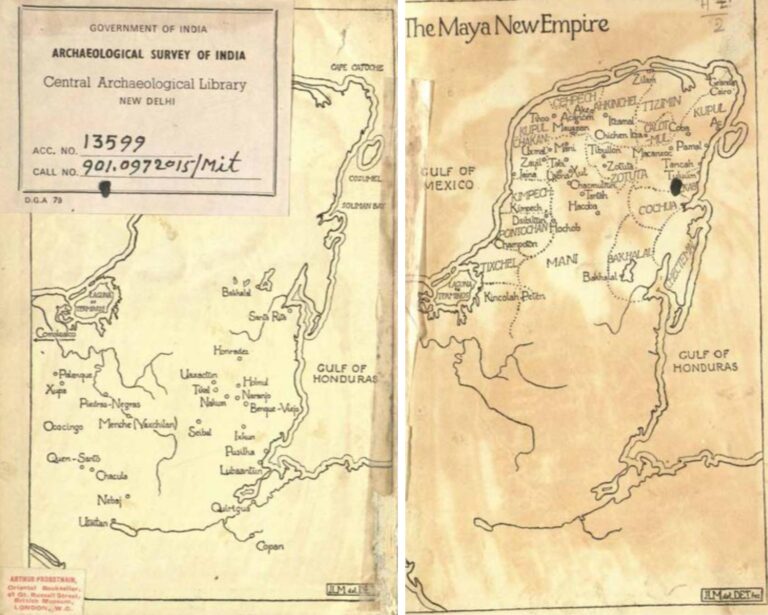
Before we answer the question about how the Maya Civilization of Mexico links to Ancient India, let’s ask another related question. Were the Mayans & Aztecs Scattered by the Gentiles? The simple answer is No! However the Native American Lamanite in the USA was SMITTEN and SCATTERED during the “Trail of Tears.”
Mayans from Cambodia and India. Not Scattered by the Gentiles
“In the book The Conquest of the Maya by J. Leslie Mitchell, he explains that the basis of the old Maya empire was not of the work of the ancestors of the present day Maya, but was an import from the same foreigners that built the palaces and temples of the Chams and Khmers in Cambodia, and the temples in Java.
“The Mayan people, also known as technicians, were no doubt named as such because of being connected with this person named Maya or Mayasura and Maya Danava. They were a part of his clan or tribe. They had fallen away from the Vedic way of life and were sent or escaped to the region of Central America. They also carried with them much of the science of astronomy and navigation for which this Mayasura was known…
“South American pyramids are of course related to Egyptian pyramids. If the Mayans have much in common with the Egyptians, then they must share a common origin… Dr. Ganapati Sthapati of Chennai, a foremost expert on Vastu shatra, the ancient Hindu architecture, has visited the Mayan structures in Central America and found many similarities between the design and construction methods of the Mayans and that of the ancient Hindus.” Mayan Origins in Ancient Southern India Posted by Bhaktivedanta Ashram
Smitten and Scattered
We believe the Lamanites and Jews (who were one in the same mixed race), were smitten and scattered for their unbelief. The Jews have been scattered all over the world. The Native Americans were pushed and scattered to lands west of the Mississippi. Who has smitten and scattered these groups? The Gentiles or the Europeans and others who were non-Jewish.
“Which is my word to the Gentile, that soon it may go to the Jew, of whom the Lamanites are a remnant, that they may believe the gospel, and look not for a Messiah to come who has already come.” D&C 19:27
“And then shall the remnant of our seed know concerning us, how that we came out from Jerusalem, and that they are descendants of the Jews.” 2 Nephi 30:4
We also know that Lehi was a direct descendant of Manasseh and the daughters of Ishmael were Ephraimites. Further we understand the people of Mulek to be from the tribe of Judah, and the Mulekites and Nephites combined together into a mixed race. We also believe the Jaredites were of possibly a mixture of Ham, Shem and Japheth. We do understand the Jaredites had the Priesthood. “These promises of God to the Jaredites contain the essential elements of the everlasting covenant detailed later to Father Abraham and to every covenant people. These elements include priesthood, posterity, and a land of inheritance” Bruce McConkie, A New Witness 505
Can you see the great mixture of people at Hill Cumorah? The most important thing was to know that the seed of Lehi was left at that hill. The Lamanites had a mixture of Joseph and Judah and they remained in North America previous to Columbus.
“And it came to pass that I beheld many multitudes of the Gentiles upon the land of promise, and I beheld the wrath of God, that it was upon the seed of my brethren, and they were scattered before the Gentiles and were smitten.” (1 Nephi 13:14)
Hugh Nibley Quotes about the Book of Mormon in North America
“Though such piles as the great pyramid-temple of Chichén Itzá yield to few buildings in the world in beauty of proportion and grandeur of conception, there is something disturbing about most of these overpowering ruins. Writers describing them through the years have ever confessed to feelings of sadness and oppression as they contemplate the moldy magnificence—the futility of it all: “They have all gone away from the house on the hill,” and today we don’t even know who they were.
 The great monuments do not represent what the Nephites stood for; rather, they stand for what their descendants, “mixed with the blood of their brethren,” descended to. But seen in the newer and wider perspective of comparative religious studies, they suggest to us not only the vanity of mankind and the futility of man’s unaided efforts, but also something nobler; the constant search of men to recapture a time when the powers of heaven were truly at the disposal of a righteous people.” Ancient Temples: What Do They Signify? By Hugh Nibley September 1972
“If my insistent harping on central Asia annoys you, let me remind you again that the book of Ether gives us no choice. It never lets us forget that what the Jaredite kings did was a conscious imitation and unbroken continuation of the ways of “the ancients,” of “them of old” on the other side of the water. This, incidentally, is another indication that we are not to regard the Jaredite migration as taking place immediately after the flood, for the fall of the tower saw the destruction of an ancient and established order. The Jaredites left their homeland driving great herds of cattle before them in the immemorial Asiatic manner, and even if they had never been nomads before, they certainly lived the life of the steppes during those many years before they set sail (Ether 3:3), and when they embarked, they crammed all they could of their beasts into their small boats, “flocks and herds” and other beasts (Ether 6:4), and upon reaching the New World continued to cultivate “all manner of cattle, of oxen, and cows, and of sheep” just as their ancestors had in the old country (Ether 9:18). Now you know, how the Nephites could have had sheep in North America brought to this land by the Jaredites. The Nephites could continue practicing the Law of Moses in the land of The New Jerusalem.” (2 Nephi 25:24 Mosiah 2:3) Hugh Nibley from Lehi in the Desert; The Great Open Spaces
Sheep, Rams, Bullocks, Doves, Wine and Goats are not found in Mesoamerica dating to the Book of Mormon timeline. There exists all those animals, grain, and wine found in North America during 600 BC to 400 AD.
Maya Civilization of Mexico. Baffling Links with Ancient India
Ancient India and Mayan civilization | HINDUISM AND SANATAN DHARMA (pparihar.com)
By Anand Sharma
The archaeological remains of ancient Maya civilization of Mexico are lying scattered in the parts of Yucatan, Campeche, Tabasco and eastern half of Chiapas as well as in the territory of Quintana Roo of the republic of Mexico. Covering an area of about 125,000 square miles, its traces are to be found in the western section of Honduras Republic, Peten and adjacent highlands of Guatemala and practically in the whole of Honduras.
Admiral Christopher Columbus mistakenly called the New World inhabitants as Indians. Although he corrected himself subsequently, the natives of Americas continued to be called ‘Indians’. During the course of his third journey, Columbus came into contact with ‘Maya’ people.
Many theories have been advanced by scholars to explain the origins of these American Indians and if there were any links between the ancient civilizations of the Old World and the New World. There are historians who believe that the American civilizations were purely native in origin and also those who maintain the theory of Asians crossing over through Bering Strait via Alaska and reaching the American continent some 12,000 – 15,000 years ago. (The editor of this blog doesn’t believe in the Bering theory). However, the antiquity of American Indians remains shrouded in the veil of mystery. In spite of a great deal of investigations, explorations and deep study by scholars and innumerable historians during the last many centuries, what we know about pre-Columbus America is very little in comparison to what we do not know. To quote Glyn Daniel from his book ‘The First Civilizations’, “within 15 years, between 1519 to 1533, the Western world discovered and brutally destroyed three civilizations – the Aztecs of Mexico, Maya of Yuacatan and Guatemala and Inca of Peru.”
The unique elaboration of the Mayan civilization has been a challenge to the imagination of explorers and students of history. The Mayans had attained the highest maturity in art, craft, sculpture and hieroglyphs. Innumerable theories exist about these ancient people. Their magnificent achievements in social, economic, political and religious fields, their calendar and hieroglyphic writings, reasons of the sudden collapse of their classic culture everywhere in Mesoamerica, the reality of ‘Kulkulkan Quetzal-Coatl’ myth are some of the riddles of Mexican history challenging modern research. The ‘19th century’ Indians spent thousands of years in building their magnificent monuments and Mayapan, Palenque, Copan, Tikal, Kaminalijuyu and Piedras Negras were the centers where Mayan culture flourished in splendour. How and why these places were deserted in the past is still a mystery. Although modern scientists have achieved significant success in deciphering Maya calendar system, none has been able to decipher their hieroglyphic system of writing.
The possibility of links of these people with Old World civilizations and particularly with ancient India is not acceptable to many historians. However, there are those who hold a different view. Eminent scholar-writers like Mackenzie, Hewitt, Tod, Pococke and Mrs. Nuttal have collected plenty of data to show that ancient American civilizations were influenced by Old World civilizations. We have to remember that the post-Columbus history of America for 300 years was the story of ruthless destruction and fanatics like Bishop Diego da Landa burnt a huge bonfire of valuable documents and nothing but the three codices of ‘Chilam Balam’ could survive the holocaust.

There are two specific archaeological discoveries pertaining to 761 AD, about which most Mexican historians are silent, that attract our attention as possible links of Maya civilization to ancient India. The first one is a wall panel (Panel No. 3 of Temple 0-13, at Piedras Negras, Guatemala; reproduced as Plate 69, page 343 of ‘The Ancient Maya’ by S.G. Morley) belonging to the Later Classic Stage of Mexican history, associated with the peaking of Maya architecture and sculpture. Mexican historians have not given any interpretation of this panel. It appears that the scene depicted in the panel relates to the great Indian epic ‘Ramayana’. It shows a king sitting on the throne and one maidservant with two children standing on the right side of the throne. A guard stands behind the three. On the other side of the king, three important personages are standing whereas the vassal chiefs and important feudatories are sitting in front of the throne. The king on the throne is believed to be Suryavanshi Ram with his three illustrious brothers standing by his side. The two little children are his two sons with a maid and a guard behind them. Amongst the three persons on the right, two are engaged in a discussion whereas the third one, apparently Lakshman, is standing with a bold, brave and confident demeanor which was characteristic of him. The above panel is a beautiful piece of sculpture and an evidence of great Mayan heritage, their artistic taste and superior creative ability and, above all, an archaeological evidence to prove India’s link with Mexico in the 8th century at least.
The artistic design and postures of the figures carved can be compared to those found at Ajanta and Ellora caves in India. This interpretation, however, remains only a plausible one till the hieroglyphics and frescoes surrounding the wall panel are deciphered.

Another archaeological discovery at the same place i.e. Piedras Negras, Guatemala, is a stone stela (No. 12, Plate No. 18, page 61 of ‘The Ancient Maya’ by S.G. Morley). A mythological scene has been carved in this stela, depicting the architectural and artistic maturity of the Maya people of the Classic Stage (594 – 889 AD).
There is a beautiful image of a deity with eight hands (ashtabhuja). The art style is discernibly Indian as in no other religion of the world deities of this type were worshipped. It may be mentioned that the ruling dynasty of Mexico at the time of the conquest by Spaniards was ‘Aztec’ or Ashtak (Eight). The evidence in the form of such images leaves little doubt about the presence of Indian culture amongst the ancient Mexicans. The stela pertains to the period of more than eight centuries before Columbus set foot on the soil of the so-called New World.
The place where these pieces have been discovered – Piedras Negras – appears to be a distorted form of ‘Priyadarsh Nagraj’ in Sanskrit, as has been the case with so many words distorted by European pronunciation.
These stone sculptures are adornments of a Mayan temple and depict some popular mythology prevalent amongst the people of the time. Both human sacrifice and idolatry were much in practice amongst Maya people. Morley has given a detailed and vivid account of Maya culture and society in his book ‘The Ancient Maya’, profusely quoting Bishop Diego de Landa.
Bishop Landa states that Maya people “…had a very great number of idols and temples which were magnificent in their own fashion and besides the community temples, the lords, priests and leading men also had oratories and idols in their houses where they made their prayers and offerings in private”. Not only of gods but idols of even animals and insects were prepared by Maya people, who believed in immortality of soul and afterlife. This definitely smacks of an Indian connection.
More serious efforts to connect the ancient American civilizations with those of ancient India have to be made. The Trans-Pacific contacts of the people of south-east Asia with the people of ancient America have been established beyond doubt. It is also a well-proven fact of history that Indians of ancient times were great seafarers. In pre-Mahabharata era as well as in the subsequent period, the kings of southern India possessed large fleets used for trade with the Arabian and European countries where Indian merchandise was much in demand. India’s links with south-east Asia and other far-off islands of the Pacific Ocean are an established fact of history. The conquest of Malaya by Rajendra Chola, the story of Buddhagupta the Great Sailor (Mahanavik), the religious expeditions of Indians to preach the gospel of Buddhism in the distant lands of Cambodia, Annam, Bali, Java, Sumatra, Borneo, Japan, Korea, Mongolia and China are proofs of the impact of Indian culture.
A remarkable feature of the Indian culture has been that colonial domination was never identified with economic exploitation. The Buddhist Jatakas (folk tales) narrate many stories relating to maritime adventures and daring sea journeys which establish that such activities were an essential part of Indian life at that time.
The author is a historian settled in Vienna.