The Heartland Versus Mesoamerica
Part 2: The Heartland “Pins” in the Map
by Brant A. Gardner | Apr 23, 2025 | 66 comments
The Heartland versus Mesoamerica — Part 2: The Heartland “Pins” in the Map
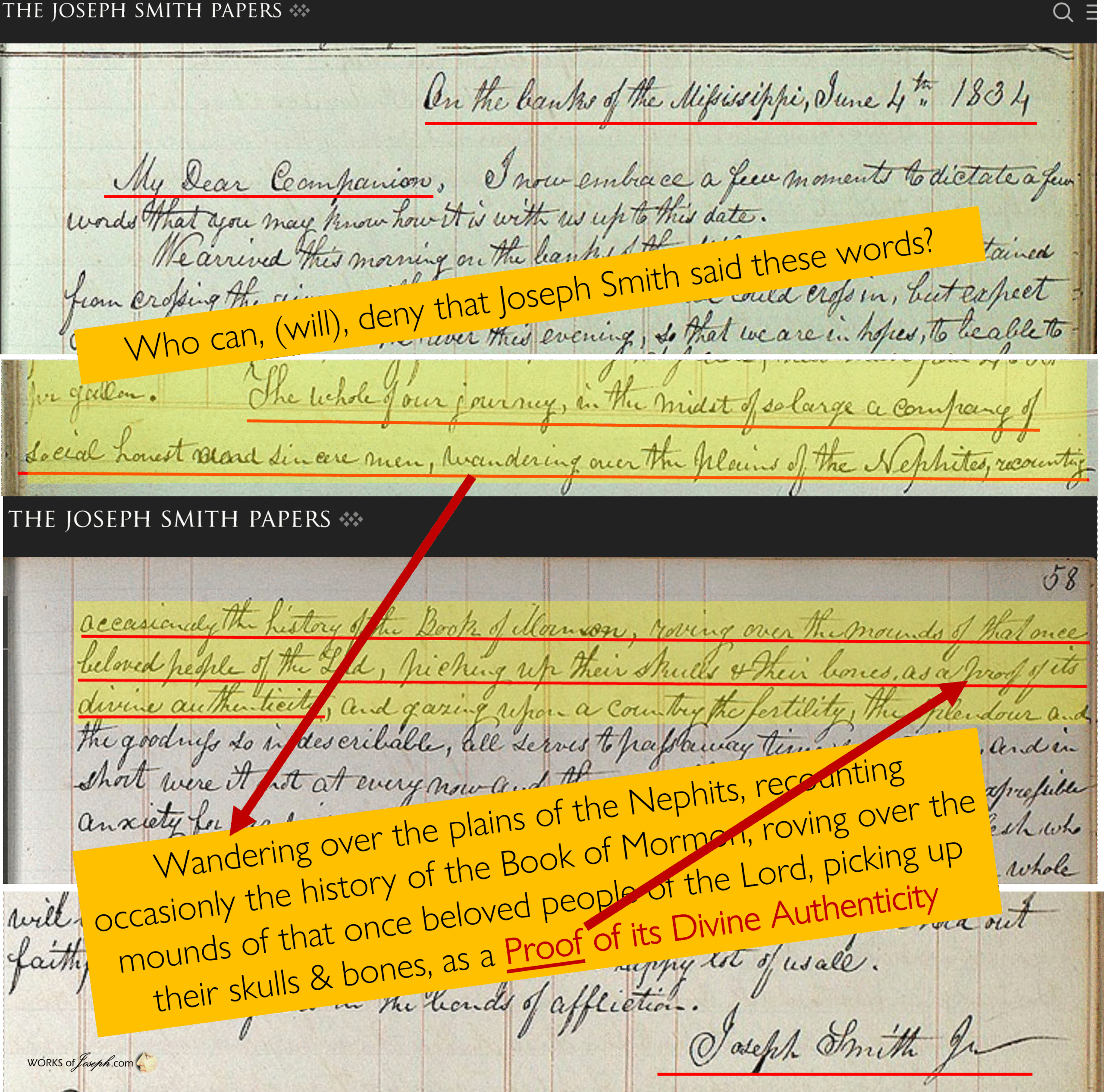
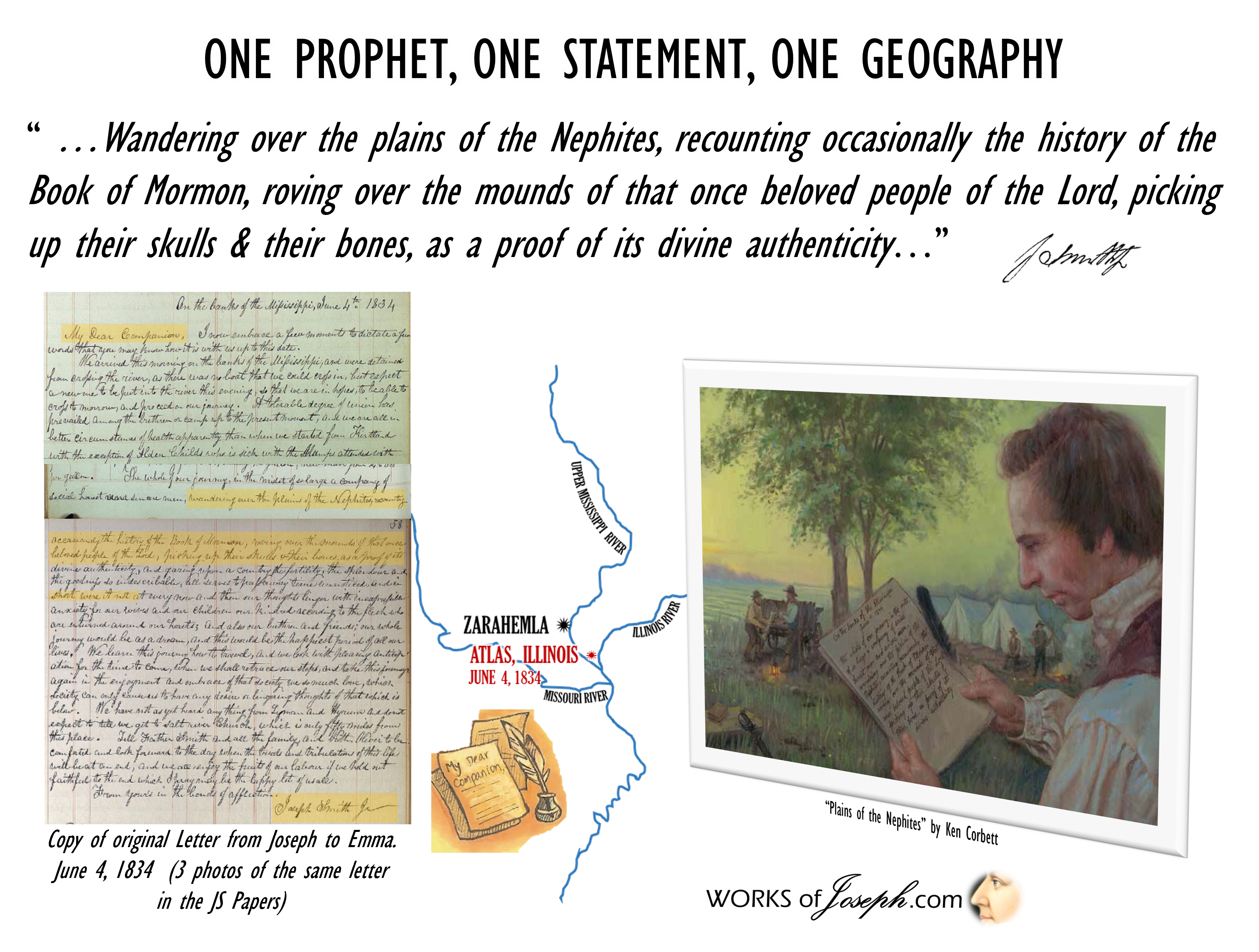
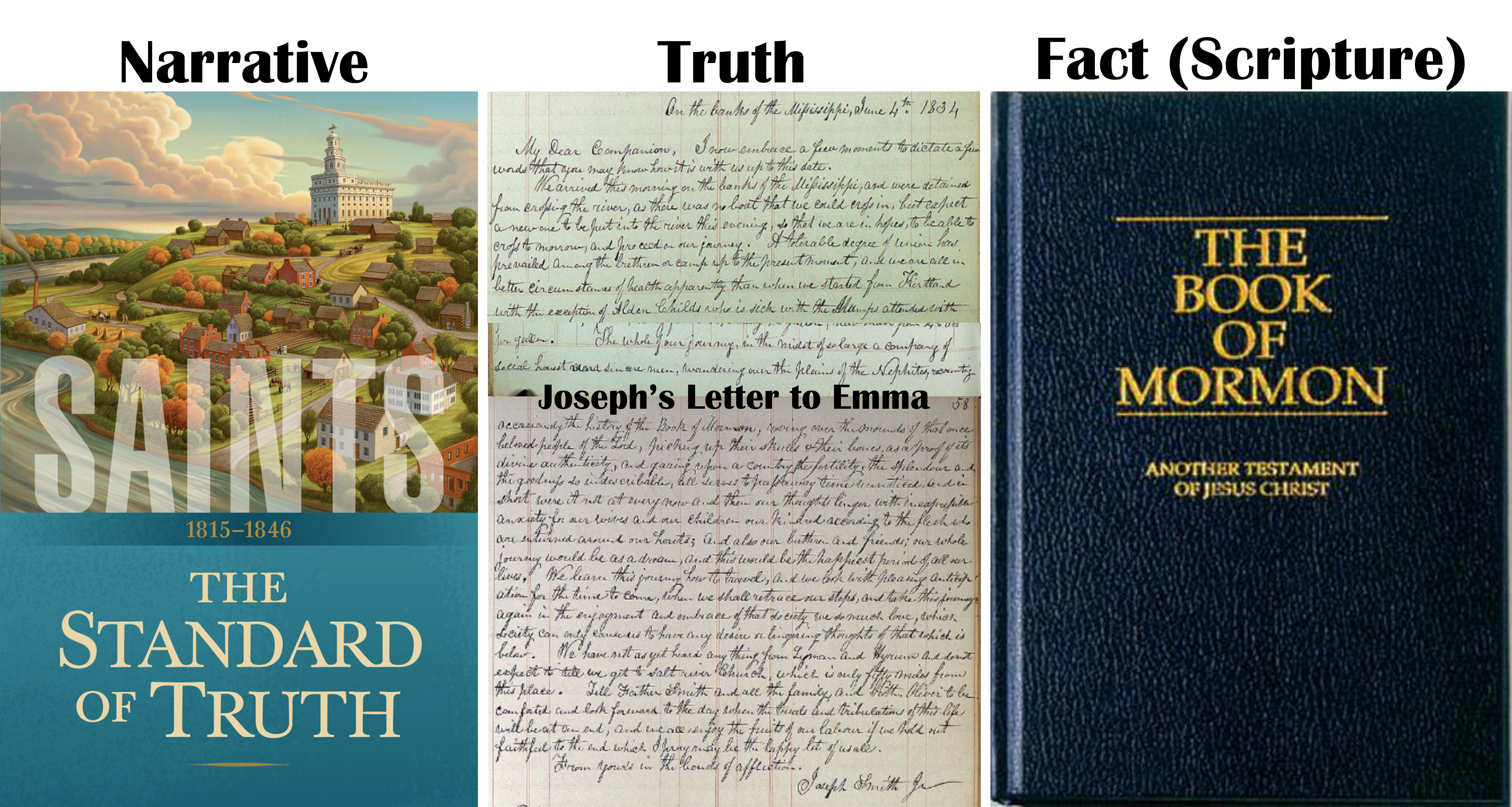
I believe one of the most important non-doctrinal quotes of Joseph Smith is in the JSP, in a letter to Emma during Zion’s camp while beside the Mississippi River and near Atlas, Illinois in 1834 saying, “Wandering over the plains of the Nephites, recounting occasionally the history of the Book of Mormon, roving over the mounds of that once beloved people of the Lord, picking up their skulls & their bones, as a proof of its divine authenticity” JS, Letter, [Pike Co., IL], to Emma Smith, Kirtland Township, Geauga Co., OH, 4 June 1834. Retained copy, [between ca. June and ca. Oct. 1839], in JS Letterbook 2, pp. 56–59; handwriting of James Mulholland; JS Collection, CHL. For more complete source information, see the source note for JS Letterbook 2.
In my strong opinion, Joseph knew the Plains of the Nephites were in the Heartland of North America. Moroni appeared to Joseph Smith and taught him over 20 different times. Why do many Mesoamericanists not believe this quote?
Anthropologist, Gardner
“Brant A. Gardner did his undergraduate work at Brigham Young University. He received a Master’s in Anthropology from the State University of New York at Albany, specializing in Mesoamerican ethnohistory. He is an executive editor for Interpreter: A Journal of Latter-day Saint Faith and Scholarship.” You can read Mr Gardners Part one post here: https://interpreterfoundation.org/blog-the-heartland-versus-mesoamerica-part-1/
This blog from part 2 comments begins below with some dialogue from a guest named “A Reader”. You will see a dialogue between Mr Gardner, myself and others. I ask you as a reader to decide for yourself what you believe about Cumorah. I would love your feedback at [email protected].
Blog Titled, The Heartland Versus Mesoamerica Part 2: The Heartland “Pins” in the Map
A Reader on April 25, 2025 at 9:08 am
Heartlanders are not covering themselves in intellectual glory here. Good at proof texting. Not so good at understanding history, let alone historiography.
Reply
Rian Nelson
Rian Nelson on April 25, 2025 at 11:29 am
Heartlanders seem to love to rely more on Scripture, Modern Prophets opinions and Joseph Smith’s statements rather than looking at historians drive to be correct intellectually. You may not agree with Joseph’s letter to Emma in 1834 as I ask why not? Joseph Smith said while on Zion’s Camp in 1834 in Illinois on the banks of the Mississippi River near Atlas, Illinois saying, “The whole of our journey, in the midst of so large a company of social honest and sincere men, wandering over the plains of the Nephites, recounting occasionally the history of the Book of Mormon, roving over the mounds of that once beloved people of the Lord, picking up their skulls & their bones, as a proof of its divine authenticity…” Joseph Smith Papers Letter to Emma Smith, 4 June 1834 Page 56. I wouldn’t think Joseph would lie to his wife. So the letter was not in Joseph’s handwriting? What’s the point? Joseph lied to a scribe to make up a story for his wife? Common sense tells us the Book of Mormon began in the area of the USA. I also believe a Prophet and Apostles witness, not historians. We are all entitled to our own opinions but I trust the following references about where the BofM Nephites began living in America, not the Americas. Elder Perry said, “The United States is the promised land foretold in the Book of Mormon—a place where divine guidance directed inspired men to create the conditions necessary for the Restoration of the gospel of Jesus Christ.” Elder L. Tom Perry Ensign Dec. 2012. Also, Gordon B. Hinckley said, “I should like to say a few words about America…. No land is without its beauty, no people without their virtues, and I hope that you who come from elsewhere will pardon my saying a few words concerning my own native land, America. I know that she has problems. We have heard so much of them for so long. But surely this is a good land, a choice land, a chosen land. To me it is a miracle, a creation of the Almighty….” Gordon B. Hinckley, Let Not Your Heart Be Troubled 1974. And, President Monson said, “The Lord gave a divine promise to the ancient inhabitants of this favored country (the United States): ‘Behold, this is a choice land, and whatsoever nation shall possess it shall be free from bondage, and from captivity, and from all other nations under heaven, if they will but serve the God of the land, who is Jesus Christ” (Ether 2:12). Our Heavenly Father inspired the leaders of…the United States of America, that they might together, under His direction, having been raised up by God for the purpose, establish the Constitution of this country and…Bill of Rights, that by the year of our Lord 1805 [there would be] a climate where our Heavenly Father could send into this period of mortality a choice spirit who would be known as Joseph Smith, Jr.” Teachings of Thomas S. Monson by Thomas S. Monson 2011. I have over 100 more witnesses of Prophets and Apostles speaking about the area of the USA as the beginning of the Lehite civilization after Jerusalem, if you want me to share with you? A serious scholar would do more in consideration of faith based statements, rather than unprovable thought and research.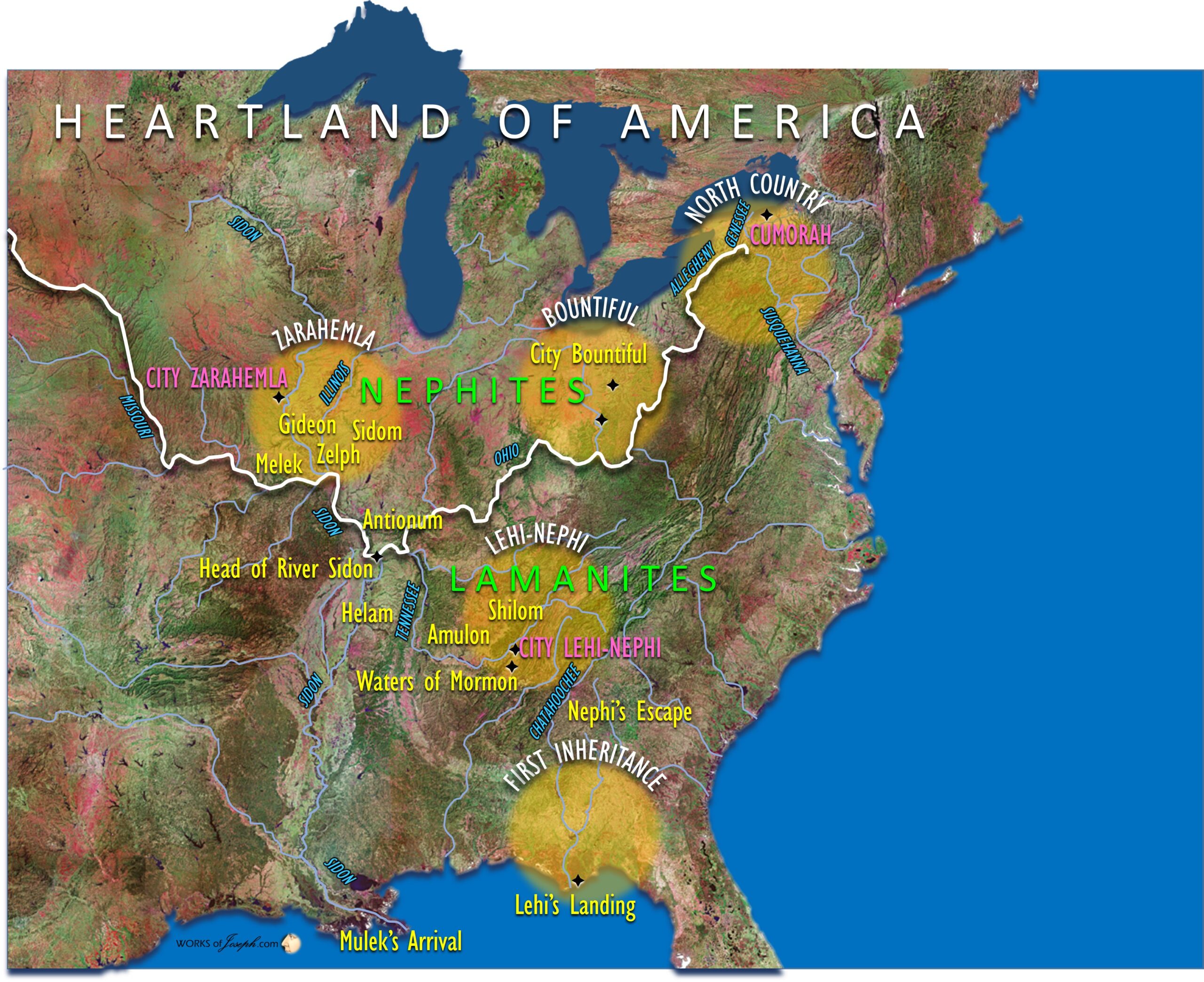
Reply
Brant A. Gardner on April 25, 2025 at 12:10 pm
“Heartlanders seem to love to rely more on Scripture, Modern Prophets opinions and Joseph Smith’s statements rather than looking at historians drive to be correct intellectually.” Ironically, the modern prophets (the Twelve and the First Presidency) agree with the historians on topics that the Heartlanders insist must be correct based on the way they read history. That means that not only are they against listening to the historians, but they really aren’t that interested in the modern prophets.
That leaves scripture, which can often be interpreted in many ways. Indeed, there are those who accept scripture who do not read it the way the Heartlanders do.
As for Joseph Smith’s statements–well, that is history, isn’t it? Doesn’t that mean that we are back to whether the historians who examine all of the evidence and have support of the modern Church might be worth listening to?
Reply
Rian Nelson
Rian Nelson on April 25, 2025 at 1:15 pm
You are missing the importance of using faith in Joseph Smith’s statement, more than the intellect of a historian trying to decide if it meets his bias or not. Joseph’s statement is a huge part of my secondary evidence of truth of the Book of Mormon just as the Hill Cumorah in NY is. Secondary evidence means as Elder Holland said, “But it should be noted that truly rock-ribbed faith and uncompromised conviction comes with its most complete power when it engages our head as well as our heart…Truth borne by the Holy Spirit comes with, in effect, two manifestations, two witnesses if you will—the force of fact as well as the force of feeling…
Reply
Brant A. Gardner on April 25, 2025 at 1:53 pm
OK. But which of Joseph’s statements? Should we take the earliest statements where he calls the hill pretty much anything except Cumorah, or the later statements that use the common term to describe earlier events? Historians tell us that the early statements are the most important. Please refer to the blog post again where it is explained that since Cumorah wasn’t used early, the historians were not allowed to use it in Saints. Remember also that Saints was reviewed by at least some of the First Presidency and the Twelve. As one of the historians noted when I heard him speaking about the process, “President Nelson reads the footnotes!”
Since the highest authorities of the Church support the reading that Joseph didn’t use Cumorah early, both historians and the Church authorities agree and therefore disagree with the way you have read the historical documents. Are you suggesting that you have either the training or the ecclesiastical authority to contradict those two sources?
Reply
mm
Allen Wyatt on April 25, 2025 at 2:05 pm
Rian said: Heartlanders seem to love to rely more on Scripture, Modern Prophets opinions and Joseph Smith’s statements rather than looking at historians drive to be correct intellectually.
Allen says: This is exactly what I was referring to in a different comment, yesterday, to Glen. I said that it “makes me wince when I see the ‘uninitiated’ dismiss, mock, demean, or impute evil motives to academics because (1) they are academics or (2) they hold opinions different from their own.” In his view, the Heartlanders have pure motives (they “rely more on Scripture, Modern Prophets opinions, and Joseph Smith’s statements”) and the historians have suspect motives (they “drive to be correct intellectually”). Such characterizations make me wince; Rian imputes motives to historians as if he can read their minds and judge their souls.
Rian said: I wouldn’t think Joseph would lie to his wife. … Joseph lied to a scribe to make up a story for his wife?
Allen says: And here is another case of imputing motives. Any human can lie or they can be mistaken. The difference is knowledge and motive. Rian doesn’t believe that Joseph would lie, and neither do I. But I do believe he could be mistaken. Perhaps Rian does not. A false dichotomy is presented when one believes that Joseph can only tell truth or lie. Such black and white thinking is shallow and naieve.
Rian says: Common sense tells us the Book of Mormon began in the area of the USA.
Allen says: Actually, common sense doesn’t tell us that at all. Nephi tells us where it started–in Jerusalem. Once the Lehites landed in the New World, we have very little verifiable information as to where things took place, except that they took place somewhere in the New World.
Rian says: A serious scholar would do more in consideration of faith based statements, rather than unprovable thought and research.
Allen says: Another false dichotomy, presented to denigrate those with which Rian disagrees.
Reply
Rian Nelson
Rian Nelson on April 25, 2025 at 4:30 pm
I think most historians are great and believing Saints, just like I try to be. I would simply like to know if you believe what Joseph said in the letter to Emma. Was Joseph wandering over the Plains of the Nephites while he was in Illinois? I believe the letter.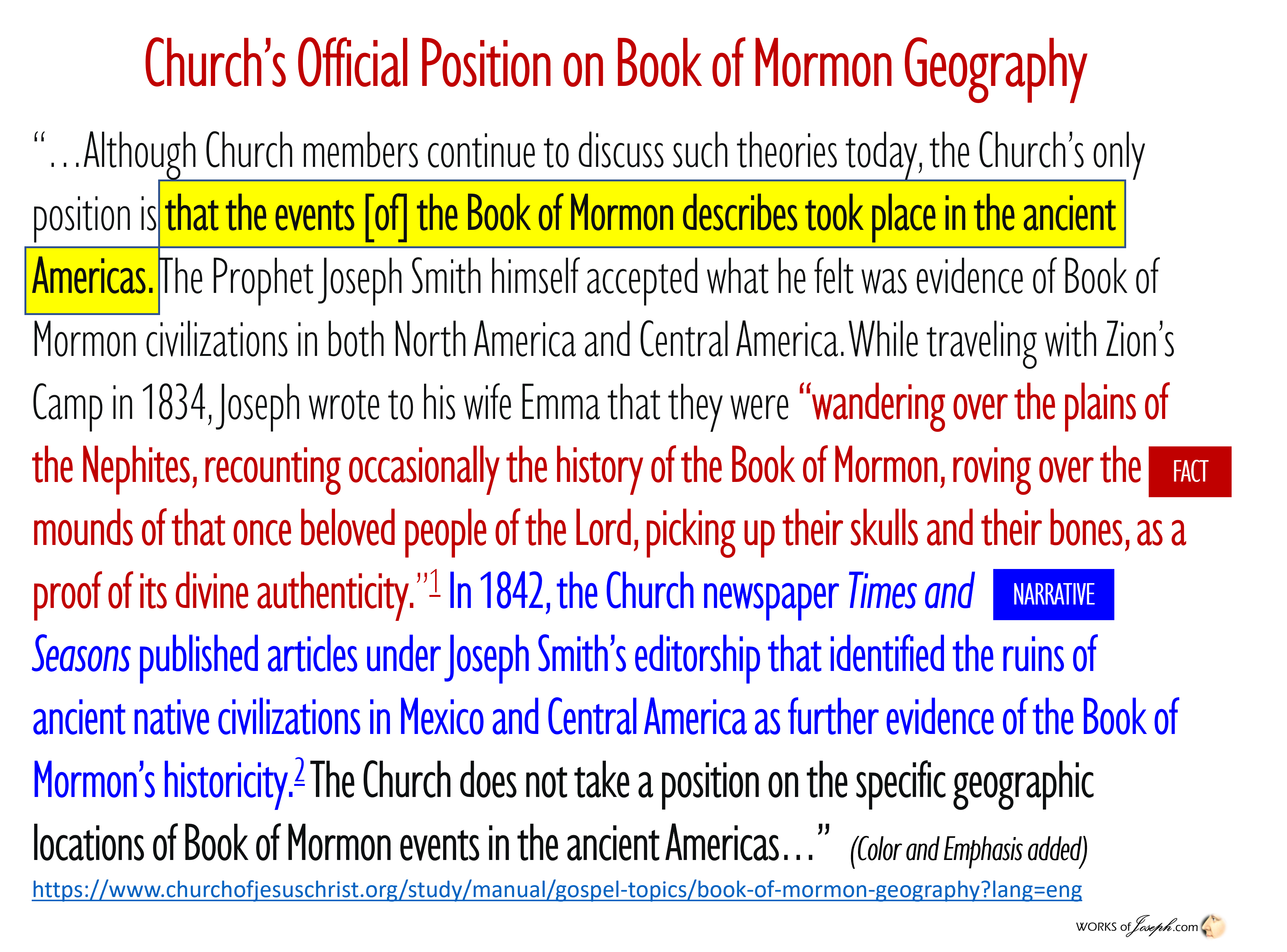 Reply
Reply
mm
Allen Wyatt on April 25, 2025 at 4:46 pm
There is that dichotomous thinking again.
Do I believe Joseph believed he was “wandering over the plains of the Nephites?” Yes, I do. But I suspect that means something different to me than it does to you.
Just because Joseph said that’s what he was doing doesn’t mean it was what he was really doing. In other words, he could be making an assumption and, therefore, be mistaken. (Not lying, mind you, but mistaken.) Prophets are allowed to be mistaken. If they weren’t, the Doctrine and Covenants would not be replete with instances of Joseph being called on the carpet by the Lord.
Remember that a prophet is only a prophet when he is acting as such (Joseph Smith, History of the Church, 5:265). Was Joseph acting as a prophet when he wrote the letter to Emma, or was he acting as a husband, recounting his travels?
You seem to believe he was, in the letter, acting as a prophet, sharing revealed knowledge about the history of the land over which he traveled. Do you have such evidence in this case?
You present, once again, a false dichotomy when you ask “I wouldn’t think Joseph would lie to his wife.” I don’t think he would, either. But “lying” is not the only other option, is it?
Reply
Gerald Smith
Gerald Smith on April 25, 2025 at 6:07 pm
When it comes to such “throw away statements” like traversing the Nephite plains , interpretation becomes a matter of belief for some, rather than the strictness required by professional historians. There’s a reason scholarly journals review articles and books thoroughly before publication. Not perfect, but of higher quality generally than that coming from the untrained eye.
Theodore Brandley
Theodore Brandley on April 25, 2025 at 7:09 pm
Brother Wyatt,
As you know, Joseph Smith spent many hours conversing with Moroni on the hill where the plates were buried. As you also know, he would come home from those meetings and tell his family about much of the Nephite culture; their manner of dress, and the animals they rode etc. (Lucy Smith)
What evidence do you have that convinces you that Joseph Smith was mistaken when he later wrote to his wife that he was on the “plains of the Nephites.”
mm
Allen Wyatt on April 26, 2025 at 7:31 am
The same evidence that you have that he was making a definitive, revelatory statement concerning the location of the Nephites. In other words, none.
I said Joseph could be mistaken in this instance. Unless you have evidence he was acting as a prophet, providing declarative statements concerning Book of Mormon locations, then I feel very comfortable in sticking with could.
Theodre Brandley
Theodre Brandley on April 26, 2025 at 8:42 am
With all due respect, Joseph didn’t need to be speaking as a propjet to get it right. He had spent many hours conversing one-on-one with a leader of the Nephites. The context of his letter was about the bones of the Nephites they found, and his making his definitive statesmen about the location does not appear to be an opinion.
mm
Allen Wyatt on April 26, 2025 at 9:33 am
Your conclusion is based on assumption of what “must be,” not on evidence. And, I’m fine with that. Both of us (as I keep saying) can look at the same data and come to different conclusions. See Gerald Smith’s comment earlier in this thread. It applies.
Theodore Brandley
Theodore Brandley on April 26, 2025 at 8:47 am
Please excuse the typo. I am 86 with macular degeneration.
Theodore Brandley
Theodore Brandley on April 26, 2025 at 10:31 am
It would take good evidence to doubt Joseph’s word on this. And a you mentioned, there is none.
mm
Allen Wyatt on April 26, 2025 at 11:15 am
I like what you did there–point out the lack of evidence for someone with whom you disagree while failing to recognize the paucity of evidence for your own position. Perhaps this is an academic variation on motes and beams. Tricky, that.
Rian Nelson
Rian Nelson on April 26, 2025 at 12:06 pm
Brother Wyatt, you said, “Just because Joseph said that’s what he was doing doesn’t mean it was what he was really doing. In other words, he could be making an assumption and, therefore, be mistaken. (Not lying, mind you, but mistaken.)”
So as a scholar or intellectual or just a guy, you are deciding or trying to figure out what Joseph was really doing or saying? What would you say Joseph was doing or saying then? Making an assumption, being mistaken or just not lying? Or was he doing something else you have decided by your analysis?
When Joseph said, “roving over the mounds of that once beloved people of the Lord, picking up their skulls & their bones as a proof of its (BofM’s) divine authenticity” (parenthesis added). Was Joseph just assuming or could he have been mistaken or just not lying? Please tell me your hypothesis.
Of course I can’t know what was in the mind of Joseph Smith, but I do know I take the vast majority of his words as truth because I believe Joseph was an honest man whether he was acting as a prophet or as a husband. By the way how do you know Joseph was acting as a husband and not an inspired head of his home when he wrote that letter?
Sure the letter was not doctrine for the church, but could it have been personal revelation from Joseph to help Emma in understanding the very sacred mission Joseph was on, as he was on the exact paths of those righteous Nephites. Possibly Emma’s faith grew stronger knowing her husband was living on the same space as the Nephites of old. Please let me know any other statements from Joseph where you know whether he was actually acting as a prophet or not. I hope I don’t come across as disrespecting you as I don’t. I just don’t understand your reasoning and desire to discombobulate Joseph’s thinking or his words. I suggest you take Joseph’s words as an honest man who is even inspired when not acting as a prophet in my opinion.
In conclusion, Allen says: “I believe, again, that we don’t have enough evidence to make a firm declaration. He could have been acting as a husband, as an inspired head of home, as a leader of his group, or as a prophet. We just don’t know, and therefore the existing evidence (for this singular statement) is open to interpretation in any number of ways. None of those interpretations does violence to the mantle that Joseph held, though some of the interpretations may do violence to positions held by Heartlanders.”
Rian Nelson April 26, 207 pm
Thank you Mr. Allen for your dialogue. This is my last statement. I say the letter to Emma from Joseph is enough evidence itself to make a firm declaration for myself. I say I do know by personal revelation. Mr. Allen you may say that the letter is open to interpretation, and “therefore the existing evidence (for this singular statement) is open to interpretation in any number of ways”, may be true. But to many common sense guys like myself, Joseph was wandering over the Plains of the Nephites in the same area that the ancient Nephites roamed, not in Mesoamerica. Am I biased, yes. I’m not looking for “evidence” that we will never find as to Joseph’s understanding, so let’s let the statement speak for itself.
Joseph’s understanding in my opinion is that The Plains of the Nephites were definitely in Illinois and Indiana where he was at the time of writing of his letter in 1834. Joseph Knew by his own words. I don’t feel as you say Mr. Allen, “some of the interpretations may do violence to positions held by Heartlanders”, but if a heartlander does violence with these words he is wrong and should be held accountable.
Rian said: So as a scholar or intellectual or just a guy, you are deciding or trying to figure out what Joseph was really doing or saying?
Allen says: I’m just a guy. I do not consider myself a scholar or intellectual. I do consider myself as someone who has read much more about Church history than most people, though that does not make me special in any way.
Rian said: What would you say Joseph was doing or saying then? Making an assumption, being mistaken or just not lying? Or was he doing something else you have decided by your analysis?
Allen says: I say that we don’t have enough information to know what Joseph was saying. I cannot read his mind anymore than you can, so I cannot come to a firm conclusion one way or the other. And, I am fine with ambiguity (not knowing) when it comes to this particular statement of Joseph’s.
Rian said: Of course I can’t know what was in the mind of Joseph Smith, but I do know I take the vast majority of his words as truth because I believe Joseph was an honest man…
Allen says: I believe him to be an honest man, as well. Tell me, though, can honest men make mistakes? Since Joseph said he made mistakes, since the Lord confirms in the Doctrine and Covenants that Joseph makes mistakes, since Emma said that Joseph made mistakes, is it remotely possible, in your mind, that Joseph made a mistake in this one instance?
If such a consideration is not even remotely possible, in this one instance, than there are two possibilities. Either you view everything that Joseph says as inerrant (I’m not saying you believe this, just that it is one possibility), or you cannot allow the possibility of mistake in this instance because doing so would fly in the face of other conclusions you may have made.
Rian said: By the way how do you know Joseph was acting as a husband and not an inspired head of his home when he wrote that letter?
Allen says: I believe, again, that we don’t have enough evidence to make a firm declaration. He could have been acting as a husband, as an inspired head of home, as a leader of his group, or as a prophet. We just don’t know, and therefore the existing evidence (for this singular statement) is open to interpretation in any number of ways. None of those interpretations does violence to the mantle that Joseph held, though some of the interpretations may do violence to positions held by Heartlanders.
Rian said: Sure the letter was not doctrine for the church…
Allen says: Thank you for saying that. Many people treat the statement as doctrinal in nature, however. It is good you don’t recognize it as such.
Rian said: …but could it have been personal revelation from Joseph to help Emma in understanding the very sacred mission Joseph was on, as he was on the exact paths of those righteous Nephites. Possibly Emma’s faith grew stronger knowing her husband was living on the same space as the Nephites of old.
Allen says: Sure. Any of this is possible for the exact reason I stated–that the existing evidence can be interpreted in any number of ways.
Rian said: Please let me know any other statements from Joseph where you know whether he was actually acting as a prophet or not.
Allen says: Toward what end? I don’t view this as a zero-sum game when it comes to prophets. Even Joseph. I view him as God’s called and ordained prophet of the Restoration. Such a calling does not relieve him of the fallible nature of humanity. Had I lived in those days, I would have followed him to the ends of the earth, and I will defend his calling to any in these latter days.
Rian said: I hope I dont come across as disrespecting you as I don’t. I just don’t understand your reasoning and desire to discombobulate Joseph’s thinking or his words.
Allen says: I appreciate that, and I hope my reasoning is a bit clearer.
Rian said: I suggest you take Joseph’s words as an honest man who is even inspired when not acting as a prophet in my opinion.
Allen says: Thank you for the suggestion; it is one I agree with. As I have stated, I do view Joseph as an honest man. Further, I view him as inspired. I view all of God’s prophets (including the 15 we sustain today) as honest, inspired men. I have spent the majority of my life defending them, and will continue to do so.