What Really Caused The Mayan Civilization To Collapse?
https://www.worldatlas.com/ancient-world/what-really-caused-the-mayan-civilization-to-collapse.html
The Rise And Fall Of The Maya

The Mayan people are significantly older than their empire. Historians think that the Mayans could trace their history in Mesoamerica as far back as 1500 BC. These early Maya would have been tribal people who settled in small farming and fishing villages along the coast of the Gulf of Mexico. The early Maya would have lived alongside the first great Mesoamerican civilization, the Olmecs, and likely inherited large aspects of their culture and identity from these people over the centuries by coming into regular contact with them through trade.
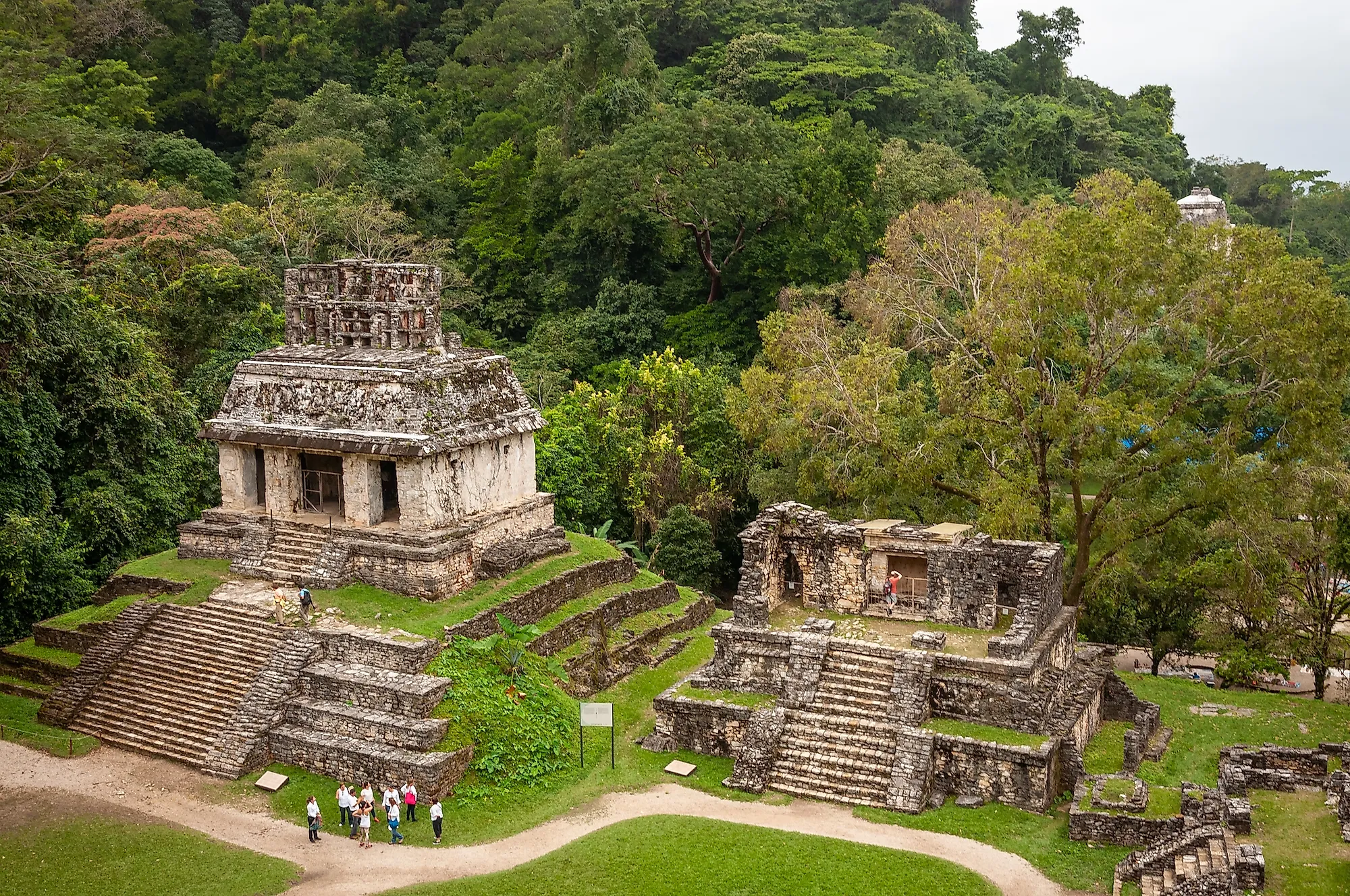
By 200 AD, the Maya began to build their famous stone plazas and pyramid complexes. Large towns and cities started to form around these plazas. These large urban settlements would host somewhere between 5,000 – 50,000 people, depending on their size. In total, more than 40 cities were under the control of the Maya during their height of power between 250 AD and 900 AD.
By the beginning of the 9th century, the Mayan civilization began to mysteriously collapse. One by one, each of the great cities that had been built throughout Central America was slowly abandoned and fell into disrepair. No one is sure what caused this great calamity, but there are several leading theories as to what might have happened.
Environmental Factors

One of the leading theories that explains the downfall of the Maya is a series of compounding environmental disasters. The first environmental issue that the Mayans might have encountered was a combination of deforestation and soil degradation. The Mayans were expert farmers, but huge swathes of rainforest needed to be cut down and removed to make space for large farms. While this might have had great success in earlier centuries, as the same land was used repeatedly to grow food, the soil fertility started to worsen and could have led to major shortages.
There is also strong evidence from climate scientists suggesting a large drought around the same time as the Mayan collapse. A lack of rainfall would have only made any kind of man-made disaster worse. This would also explain why large cities were abandoned. Perhaps some starving inhabitants wandered into the countryside desperately trying to find food.
Sociopolitical Factors
Another leading theory about what could have led to the Mayan downfall is increased armed conflict with its many neighbors. Even though the Mayans were outstanding city planners and artists, they were not shy about bloodshed. The Mayans would often wage war against the various city-states that lived outside the empire’s borders. These wars would have usually been fought over land and resources; however, the Maya were infamous for conducting slave raids against the largely defenseless tribal people who lived near them.

Most of these enslaved people would be brought back to complete backbreaking manual labor on farms and other agricultural projects. But this was not always the case. A certain amount of these captives would be brought back as human sacrifices for Mayan religious ceremonies. They would be ritualistically killed as a way to appease the Mayan gods. It was thought that the Mayan gods needed the blood of humans, in particular, to remain satisfied. If a drought was taking place and crops were failing, chances are more sacrifices would be needed to appease the gods. This would then lead to more conflict with neighbors.
As you can imagine, the cities and nations that neighboured the Mayans were not in short supply of reasons to hate them. If a large enough war broke out, it could have destabilized the region. There is enough archaeological evidence that also points to a large decrease in trade during this period, something that could indicate a large and destructive war. The Mayan economy was heavily reliant on trade, and a collapse of trade routes would have led to total economic disaster for many Mayans.
Cultural And Ideological Factors

It was believed in Mayan culture that their religious and political leaders had a special connection to the gods. If the Mayan people needed more rain for failing crops, they would use their king or head priest as a vessel to communicate with the god or gods to give them what they needed.
In a time of political strife like the one we know was taking place at the time, it is likely many Mayans would have lost faith in their religious and political institutions. Especially considering how many sacrifices would have been made at the time in hopes of ending a drought. As the food shortages continued, there is no doubt that many commoners would have lost trust in their leader’s abilities to look after them properly. This would have only led to further political instability and chaos. Riots, revolts, and usurpers to the thrones of various Mayan cities would not have been out of the question.
Overextension And Resource Depletion

The Mayans were the unquestioned power in Central America for centuries. With almost no one to stand in their way, the Mayans expanded quickly during their height. But much like other empires in history, sometimes fast and sudden expansion can lead to overextension. This could have opened up certain cities to be taken by outside forces or for entire regions of the empire to fall into enemy hands. Even though the Mayan military was far weak, they would have likely not had the workforce to adequately patrol their long borders and stop various incursions and raids from taking place.
It is also theorized that as various Mayan industries grew, the resources needed to maintain them began to dwindle. For example, the Maya needed large quantities of wood to keep up with the demand for burnt lime. Burnt lime was a crucial material used for plaster and mortar for both small homes and large pyramids and palaces. As cities expanded and needed more burnt lime, more trees needed to be cut down, which only exacerbated the environmental issues that were being caused by deforestation.
Modern-Day Comparisons

It is not hard to draw many comparisons to the collapse of the Maya and the problems we are now facing in the modern world. We are certainly amid our unique environmental disasters and a long list of political unrest and uncertainty. Many national economies are heading toward or already in the middle of a recession, and it remains unclear as to when this downward trend will turn around.
While it is very popular to make links to societies that have long since risen, peaked, and fallen and then conclude that modern societies are on the same path, it is not exactly fair to do so. The Mayan civilization lasted for thousands of years, and some Mayan cities even survived until the Spanish Conquests in the 1500s. Mayan history is so vast and storied that just about any nation on earth could accurately draw comparisons to the Mayans and themselves and claim to be experiencing the “exact” same phenomena.
Summary
The Mayan collapse was likely caused by a series of political, religious, environmental, military, and economic factors. It is usually not just one disaster that takes down a robust civilization but rather a bunch of disasters happening simultaneously. Was there one particular issue that broke the camel’s back? We might never know. However, new information is always being discovered about the Maya and their collapse. Historians and archeologists could be just one big find away from cracking the mystery surrounding this period once and for all.
https://www.worldatlas.com/ancient-world/what-really-caused-the-mayan-civilization-to-collapse.html
Native Americans Labor Unwillingly Under Mayans’ in North America?

We read in the Annotated Book of Mormon by David Hocking and Rod Meldrum on page 541 the following, “THAT the Algonquian, Iroquoian and Siouan immigrants were mound builders is readily proven. It may well be doubted whether the mounds were built by the voluntary effort of a free people. Monuments of such magnitude in all ages and in various parts of the world almost without exception representing the handiwork of peoples who labored unwillingly and under compulsion … It would therefore seem evident that either the invading immigrants must have conquered people of a more primitive type whom they found already in possession of the country and reduced them to a state of servitude, or else that they came as imperial colonists, divided into two classes, namely, soldiers and serfs” – Thoburn, J. B., “Prehistoric Migrations,” Proceedings of the Oklahoma Academy of Science, Vol. 6 [2014], 372-378.