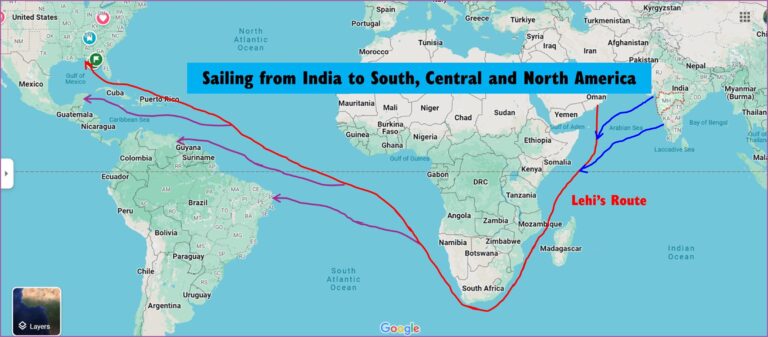
Hugh Nibley Quotes about the Book of Mormon in North America
“Though such piles as the great pyramid-temple of Chichén Itzá yield to few buildings in the world in beauty of proportion and grandeur of conception, there is something disturbing about most of these overpowering ruins. Writers describing them through the years have ever confessed to feelings of sadness and oppression as they contemplate the moldy magnificence—the futility of it all: “They have all gone away from the house on the hill,” and today we don’t even know who they were.
The great monuments do not represent what the Nephites stood for; rather, they stand for what their descendants, “mixed with the blood of their brethren,” descended to. But seen in the newer and wider perspective of comparative religious studies, they suggest to us not only the vanity of mankind and the futility of man’s unaided efforts, but also something nobler; the constant search of men to recapture a time when the powers of heaven were truly at the disposal of a righteous people.” Ancient Temples: What Do They Signify? By Hugh Nibley September 1972
“If my insistent harping on central Asia annoys you, let me remind you again that the book of Ether gives us no choice. It never lets us forget that what the Jaredite kings did was a conscious imitation and unbroken continuation of the ways of “the ancients,” of “them of old” on the other side of the water. This, incidentally, is another indication that we are not to regard the Jaredite migration as taking place immediately after the flood, for the fall of the tower saw the destruction of an ancient and established order. The Jaredites left their homeland driving great herds of cattle before them in the immemorial Asiatic manner, and even if they had never been nomads before, they certainly lived the life of the steppes during those many years before they set sail (Ether 3:3), and when they embarked, they crammed all they could of their beasts into their small boats, “flocks and herds” and other beasts (Ether 6:4), and upon reaching the New World continued to cultivate “all manner of cattle, of oxen, and cows, and of sheep” just as their ancestors had in the old country (Ether 9:18). Now you know, how the Nephites could have had sheep in North America brought to this land by the Jaredites. The Nephites could continue practicing the Law of Moses in the land of The New Jerusalem.” (2 Nephi 25:24 Mosiah 2:3) Hugh Nibley from Lehi in the Desert; The Great Open Spaces
Sheep, Rams, Bullocks, Doves, Wine and Goats are not found in Mesoamerica dating to the Book of Mormon timeline. There exists all those animals, grain, and wine found in North America during 600 BC to 400 AD.
A Part Hindu, Part Seminole Man Confirms the Hindu Origin of the Amerindians!
Something happened recently that I know will interest you. Therefore, I have included few of the E-Mails I have been having lately with a fascinating person.
On March 8, 2003, the following gentleman, a descendant of Hindus and Amerindians,
asked me to help him clarify the Hindu ancestry of his Amerindian ancestors. Having been raised among the Seminoles, he has been seeing the “curry and rice” aspect of the Indians since his childhood. He even tells me that “Kentucky” is a Sanskrit word! As you shall see, some of the information handed down to him by word of mouth was very, very accurate.
Greetings Mr. Matlock,
Congratulations on your excellent and unique research on the ancient Hindu connection with Native America. My name is Govind Sanyal, and I am a product of the two cultures. My father came from Calcutta to the U.S. in 1916 and married a Seminole. I would like to know more about this ancient connection. My mother is a descendant of a band of Seminoles that originated from the Yamassees and Tuskigi who had intermarried with I believe some of the early Moorish/Portuguese families i.e. the surname Sena is found among some of my Factor Ancestors. Sena is a Sephardic name of Portuguese Moorish origin.
My third great grandmother was Issabella Mora, a Pardo Minorcan refugee from St. Augutine, FL. dob ca. 1783, who had married John Reed, a mixed blood Creek Indian trader employed by the Turnbulls. I was told that the Yamassee Indians and the Moors were descendants of the Phoenicians and Carthaginians…I would appreciate any comment that clarifies my family’s history.
Thank you. G.Sanyal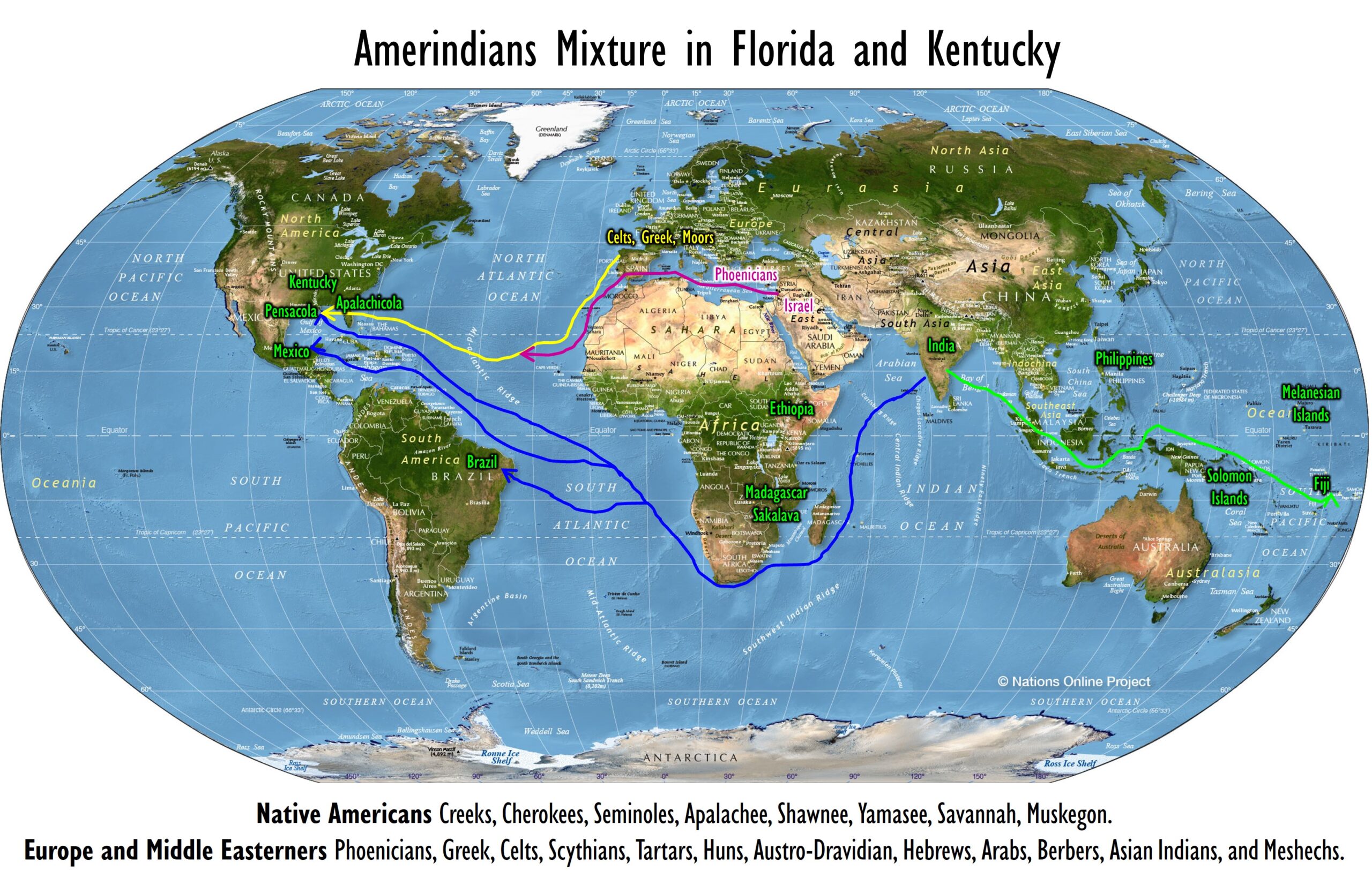
ANSWER:
Dear Mr. Sanyal,
I really enjoyed getting this information for you. Not only was it easy to find, but I didn’t have to do any guesswork. All the information I’m sending you is valid. It pleases me to be able to help our American Indians find out about their Old World origins.
For now, I am going to deal only with the Muskokis (Creeks), Seminoles, Yamasees, and Apalachees in this letter. Nearly all the tribes and many place names in Southeastern United States have Hindu names.
The YAMASEES are the Phoenicians and the Jews
The YAMASEES: Yama was a name of the Asvin Brothers or the Eastern Hebrews (Panis and Yuddhis). “Hebrew” derives from “Khyber” or “Kubera”, an ancient Yadava group who left the Khyber Mountains and migrated to what are now Rajasthan and Gujarat. Later, they mastered the art of shipbuilding and sailing, becoming the founders of all world civilizations. The Hindus say that all this happened about 30,000 years ago. Pani = “International Trader.” Yuddhi = “Conqueror; Warrior”. Many millenniums afterwards, the ancient partnership disintegrated. We know them now as the Phoenicians and the Jews. Yamasee derives from the Sanskrit Yameza, meaning “Having Yama as ruler.” Yama was the ancient Hindu God of Death, but he was also the Regent of the South. For this reason, we know that your Yamasee ancestors were from Southwestern India or Sri Lanka. They spoke a Dravidian dialect.
Apalazis were the Founders of the Mound-Building Cultures
The APALACHEES. They derived their name from Palaza, a name of ancient Maghada, a powerful Yadava kingdom in what is now today’s state of Bihar. When the Palazis came to America, they came with the intention of staying. Therefore, they became the Apalizis (Ex-Palazis). Without a doubt, these “Apalazis” were the founders of the mound-building cultures, for in other parts of the world they built the Egyptian pyramids, became the founding fathers of Greek civilization, and the like.
The 17th century scholar, Edward Pococke, wrote in his book India in Greece:
“Pelasa, the ancient name for the province of Bihar….Pelaska is a derivative form of Pelasa, whence the Greek ‘Pelasgos’…
“I have ascertained the existence of Pelasgian tribes; not as vagrant gypsies, but firmly settled as powerful nations, at a period for the most part prior to our historical knowledge of Greece…there was a time when the Pelasgians, then perhaps more widely spread than any other people of Europe, extended from the Po and the Arno, almost to the Bosphorus…The Celts were the descendants of the Pelasgians.” (p. 31.)
“So vast were their settlements, and so firmly rooted were the very names of the kingdoms, the nomenclature of the tribes – nay, the religious systems of the oldest forms of society – that I do not scruple to assert that the successive map of Spain, Italy, Greece, Asia Minor, Persia, and India may be read like the chart of an emigrant.” (p. 32.)
YAT’SIMINOLI (“Free People” or Seminoles)
The YAT’SIMINOLI (“Free People” or Seminoles). Evidently, they were also the “Free People” back in India, for there they were called Yat’Samanala. Yat = “Moving; Traveling.” Sama = “Happy; Prosperous.” Nala = “A branch of the Yamas or Ashvin Brothers (Phoenicians and Jews).
Phoenician Slave Caste of Meshechs.
The MUSKOKIS (Creeks). These were the Phoenician slave caste of Meshechs. In ancient times, they were the terror of the world. They were an especially wild tribe of mongoloid Scythians or Tartars. We Westerners also know them as the Hunas or Huns.The Hindus called them Maheshakas, Rakshasas, Pisacas, and Hunas. When these Meshechs made life impossible for the civilized people of India, Kubera banished them to Sri Lanka. Life in Sri Lanka did nothing to sweeten their collective disposition. Therefore, Kubera packed them in airships and sea-going vessels, taking them to America (Patala).
Austro-Dravidian Cherokee Misclassified them as Negro
My guess is that the peaceful Yat’Siminoli, Apalachees, and Yamasees could not stand up to them in the New World. They probably said to themselves, “If we can’t beat them, we’ll join them.”
Greetings Mr. Matlock, thank you for the information, I appreciate it. Your designation of the Yamassee as most probable a Dravidian group is more than likely correct, especially when you consider the phenotypical characteristics as described by Woodward’s Reminiscences of the Creek, or Muscogee Indians by Thomas S. Woodward, 1859, p130, as having dark skins, coarse hair, thick lips, and flat feet. Wm.H.Gilbert further embellishes the point when he describes that among the olive and/or copper skin Cherokees that there is a group that is as dark as burnt coffee with projecting eyebrow bridges and hairy foreheads which become recessive with age. This description is typical of your Austro-Dravidian type which is the prototype of many of your Adivasis or Indic tribes of the Deccan. Many of the early Europeans when seeing these people often misclassified them as Negro or of African descent.
Yamassee are connected to the Apalachicola
The Yamassee according to John Swanton’s published work on the N.A. Indians were the ancient inhabitants of the Cherokee Mts. We must also consider that the Yamassee were also called Tamathli or Altamaha Yamassee signifying people of the higher ground. The Chiaha are said to be related to the Yamassee and both are connected or are kin to the Apalachicola.
Yama as the God of the South correlate to the Savannah/Shawnee
Under Tomochachi the Yamasse were called Yamacraw/Yamacaw. The ancient name for the Yamassee is Yamakashappa.(By the way my paternal ancestry descend from the Bengali Kashyappa Brahmins).
Your association of the prefix Yama(see) to the Hindu God of Death is significant because this clan were the messengers and/or scribes (Tali), who often communicated with the spirit world through the ancient calumet, sacred ashes, sabia stones and often in colonial times “became the mouths” or interpreters of the Spanish. Yama as the God of the South would correlate to the Shawano/Savannah/Shawnee whom the Yamassee had an ancient relationship with.
Seminole came from the Spanish word Cimarron meaning Wild Men
Seminole according to traditional Native American history came from the Spanish word cimarron meaning wild men or those that had strayed and as you put it traveled. The Hitchitti and Muscogee speaking Indians could not pronounce an “r” so it was pronounced as an “l” thus we get Seminole. Yamassee in Muscogee (Creek) translates to the English as to be tamed like an animal or to be gentle as an animal.
Oconee Creeks and the Yamassee
There was a war between the Oconee Creeks and the Yamassee ca. 1740 at Tallahassee where the last battle between the two tribes took place, the Oconee had destroyed the Yamassee warriors and married the Yamassee maidens creating the Seminole band.
Hassee was the Supreme Sun deity to the Yamassee. Tali was their sacred stone. Manneyto is the Good Spirit and Opitchi-Manneyto is the evil spirit. Hotala Manneyto I believe is the Master Breath or Wind God. I apologize for the scantiness of this tradition. As you most likely know the Yamasse were declared slaves by the S.C. colonial government and the Creeks became their slave catchers. The Yamassees found refuge among the Seminole and intermarried with them, producing an amalgam culture.
Please do let me know me what your definitions are of Apalachicola and Taskigi. Again I want to thank you for the information, it most appreciated.
Cola in Sanskrit, means “Coast”. Apalachee-Cola means “The Coast of the ex-Palazas”. The Palazas were the Builders of the Ancient World.
Govinda, until you mentioned the name Apalacheecola to me, I didn’t even know where it was located. Later on tonight, I went to the map and saw that it was in the swamp lands in Southern Florida, and on the Atlantic coast. This immediately brought to mind, Pensacola, Florida, in the Gulf.
As long as we keep the Indo-Phoenicians in mind, including India in the picture, we don’t have to guess any longer. All we have to do is associate the name we are looking for with its function. “Cola” in Sanskrit, means “Coast“. Therefore, Apalachee-Cola means “The coast of the ex-Palazas. The Palazas were the builders of the ancient world. They built Egypt, the foundations of Greek culture, and every other culture on earth. They had to have been the mound builders. In that swampy area, they built huge mounds to build their first cities.
I read a book once, by the grandfather of an ex-president of Mexico, López de Portillo, in which he discussed the custom of the Indians of his home state of Nayarit (notice that this is the name of a place in India and of a Hindu leadership caste), built mounds or pyramids on which to build their homes. Much of Nayarit is a flood plain. He said in his book that he thinks this how the Amerindian custom of building pyramids started.
Being master builders, the Apalachee probably built the first mound cultures in Apalachee-cola, the first place they began to inhabit after their arrival from India. It wouldn’t surprise me a bit to find important archeological relics in the area if the Atlantic hurricanes haven’t destroyed them.
Since you are a Floridan, the next question is this: What importance does Apalachee-cola have for your people? Find out all you can.
Panisha-Cola, or Coast of the Lord, Panis or Phoenicians.
Now for Pensacola. Pensacola is a great port. It has a gigantic, safe harbor. Therefore, it doesn’t take much guesswork to intuit that its original name was Panisha-Cola, or the coast of the Lord Panis or Phoenicians. Again, as I say, the name goes with the game. No guesswork required. The Apalazis were builders. They built the type of edifices that could survive in the Florida swamps. The Panis were seamen and traders. Their natural place to settle first would have been in Pensacola.
We are piecing together information of great historical importance for not only the American Indians, but also for all the citizens of our great country. Govinda, you are a godsend to me. For a long time, I have been wanting to enlist the help of a Hindu having an intimate knowledge of our Amerindians. I got a bonus when you came along. Not only are you an educated Hindu, but you are also part Seminole. That’s an unbeatable combination. I’m afraid that the non-diffusionists are in for a big disappointment!
Sincerely, Gene D. Matlock
Summary
Mixing in Florida and Kentucky- Amerindians
Native Americans
Creeks, Cherokees, Seminoles, Apalachee, Shawnee, Yamasee, Savannah, Muskegons
Middle Easterners
Phoenicians, Greek, Celts, Scythians, Tartars, Huns, Austro-Dravidian, Hebrews, Arabs, Berbers, Asian Indians, and Meshechs.
- Kentucky is a Sanskrit word
- Yamassee Indians and the Moors (Muslim Arabs and Berbers) were descendants of the Phoenicians and Carthiginians
- Muskokis (Creeks), Seminoles, Yamasees, and Apalachees tribes in Southeastern United States have Hindu names.
The YAMASEES are the Phoenicians and the Hebrews. Yamasee ancestors were from Southwestern India or Sri Lanka. - “Apalazis” were the founders of the mound-building cultures, and they built the Egyptian pyramids, as the founding fathers of Greek civilization
- The Celts were the descendants of the Pelasgians
- YAT’SIMINOLI (“Free People” or Seminoles). Evidently, they were also the “Free People” back in India, for there they were called Yat’Samanala. Yat = “Moving; Traveling.” Sama = “Happy; Prosperous.” Nala = “A branch of the Yamas or Ashvin Brothers (Phoenicians and Hebrews).
- The MUSKOKIS (Creeks). These were the Phoenician slave caste of Meshechs. In ancient times, they were the terror of the world. They were an especially wild tribe of mongoloid Scythians or Tartars. We Westerners also know them as the Hunas or Huns.
- Copper Skin Cherokees that there is a group that is as dark as burnt coffee with projecting eyebrow bridges and hairy foreheads which become recessive with age. This description is typical of your Austro-Dravidian type which is the prototype of many of your Adivasis or Indic tribes of the Deccan. Many of the early Europeans when seeing these people often misclassified them as Negro or of African descent.
- Yama as the God of the South would correlate to the Shawano/Savannah/Shawnee whom the Yamassee had an ancient relationship with.
- Seminole: Yamassee warriors and married the Yamassee maidens creating the Seminole band.
- Cola in Sanskrit, means “Coast”. Apalachee-Cola means “The Coast of the ex-Palazas”. The Palazas were the Builders of the Ancient World.
- Apalachee probably built the first mound cultures in Apalachee-cola, the first place after their arrival from India.
- Pensacola is a great port. It has a gigantic, safe harbor. Its original name was Panisha-Cola, or the coast of the Lord Panis or Phoenicians.