Hill Cumorah is not a typical hill, but is defined as a drumlin.
“Drumlin, oval or elongated hill believed to have been formed by the streamlined movement of glacial ice sheets across rock debris, or till. The name is derived from the Gaelic word druim (“rounded hill,” or “mound”) and first appeared in 1833.” Britannica.com
Below, W.W. Phelps calls Cumorah an “artificial” hill. What would he mean by the name, artificial hill? One that is obviously different than a typical dirt hill, or rock hill as we usually think? In other words typical hills naturally formed would have natural caves within. The Hill Cumorah was not a typical hill such as we normally understand, ie. mountain, or mount etc. Hill Cumorah was a drumlin which many people don’t know the difference between that and a typical hill. Webster’s current dictionary says, “Definition of drumlin: an elongate or oval hill of glacial drift… First Known Use of drumlin 1812, in the meaning defined above.” So a drumlin was formed from glacial drift unlike many hills we usually think of.
Because of W.W. Phelps quote below, I assume the Mesoamerican theorists who are looking for the Hill Cumorah somewhere in Mesoamerica, are looking only at drumlins with a man made cave inside and not any typical hills or mountains or mounts?
ARTIFI’CIAL, adjective
1. Made or contrived by art, or by human skill and labor, in opposition to natural; as artificial heat or light; an artificial magnet. 2. Feigned, fictitious; not genuine or natural; as artificial tears. 3. Contrived with skill or art. 4. Cultivated; not indigenous; not being of spontaneous growth; as artificial grasses.
Register NOW for our 3rd Virtual Conference Over 700 Videos to watch right now.
Over 60 brand new videos to see beginning April 9th, 2021
Two Hill Cumorah’s?
The majority of Mesoamerican theorists believe that Moroni deposited the gold plates in a hill, in NY, but not necessarily the Hill Cumorah in New York as we call it. These same theorists also believe the final battles of the Nephites and Lamanites to be somewhere in Mesoamerica. In other words they believe there are two Hill Cumorah’s which is why we call it the M2C Theory. I don’t agree with this perspective. You can read about their views here:
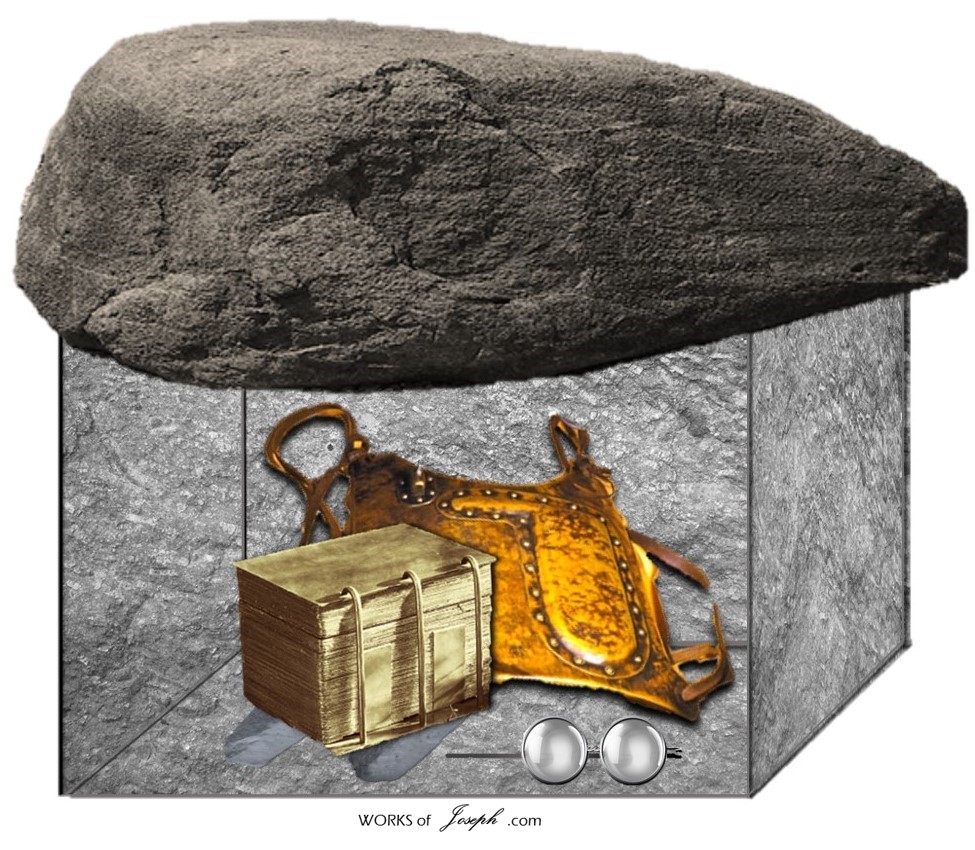
In Ether 15:11 Moroni says that the same hill that the Jaredites were destroyed was called Ramah, and was the same hill that Mormon hid the plates. It makes sense that all the plates were buried in the man made cave or depository in the Hill Cumorah, and not in Moroni’s man made stone box that held the set of plates Joseph translated.
We believe there are two repositories in Cumorah for all the records. Both man made. First, the *Cave at Cumorah spoken of by Heber C. Kimball, Brigham Young and many others. Secondly, the stone box where Joseph Smith found the plates that were sealed with the Urim and Thummim and the Jaredite Breastplate.
*Quote about the Cave at Cumorah
“Brother Mills mentioned in his song, that crossing the Plains with hand-carts was one of the greatest events that ever transpired in this Church. I will admit that it is an important event, successfully testing another method for gathering Israel, but its importance is small in comparison with the visitation of the angel of God to the Prophet Joseph, and with the reception of the sacred records from the hand of Moroni at the hill Cumorah. How does it compare with the vision that Joseph and others had, when they went into a cave in the hill Cumorah, and saw more records than ten men could carry? There were books piled up on tables, book upon book. Those records this people will yet have, if they accept the Book of Mormon and observe it’s precepts, and keep the commandments.” Heber C. Kimball Journal of Discourses, 4:105, September 28, 1856
“The Hill Cumorah is situated in western New York. . . . It is distinguished as the great battlefield on which, and near which, two powerful nations were concentrated with all their forces, men, women and children, and fought till hundreds of thousands on both sides were hewn down, and left to molder upon the ground. . . . The Hill Cumorah is remarkable also as being the hill on which and around which, a still more ancient nation perished, called Jaredites. . . . Millions fought millions, until the Hill Ramah, and the land round about, was soaked with blood.” 1866 Orson Pratt Millennial Star 28 (16 June 1866)
“The hill Cumorah, with the surrounding vicinity, is distinguished as the great battlefield on which, and near which, two powerful nations were concentrated with all their forces. Men, women and children fought till hundreds of thousands on both sides were hewn down, and left to molder upon the ground. . . . “These new plates were given to Moroni to finish the history. And all the ancient plates, Mormon deposited in Cumorah, about three hundred and eighty-four years after Christ. When Moroni, about thirty-six years after, made the deposit of the book entrusted to him, he was, without doubt, inspired to select a department of the hill separate from the great depository of the numerous volumes hid up by his father. The particular place in the hill where Moroni secreted the book, was revealed, by the angel, to the prophet Joseph Smith, to whom the volume was delivered in September, A.D. 1827. But the grand repository of all the numerous records of the ancient nations of the western continent, was located in another department of the hill, and it’s contents under the charge of holy angels, until the day should come for them to be transferred to the sacred temple of Zion.” 1866 Orson Pratt Millennial Star (28 (27): 417)
“In relation to these records, Orson Pratt commented in 1873: “But will these things be brought to light? Yes. The records, now slumbering in the hill Cumorah, will be brought forth by the power of God, to fulfil the words of our text, that ‘the knowledge of God shall cover the earth, as the waters cover the deep.'” (Orson Pratt, May 18, 1873, in Journal of Discourses 16:57)
Mormon 6: Chapter 6 Notes
The Nephites gather to the land of Cumorah for the final battles—Mormon hides the sacred records in the hill Cumorah—The Lamanites are victorious, and the Nephite nation is destroyed—Hundreds of thousands are slain with the sword. About A.D. 385.
Ether Chapter 15 Notes
Millions of the Jaredites are slain in battle—Shiz and Coriantumr assemble all the people to mortal combat—The Spirit of the Lord ceases to strive with them—The Jaredite nation is utterly destroyed—Only Coriantumr remains.
Ether 15:11 “And it came to pass that the army of Coriantumr did pitch their tents by the hill Ramah; and it was that same hill where my father Mormon did hide up the records unto the Lord, which were sacred.”
LETTER NO. 12 W.W. Phelps to Oliver Cowdery
I want to drop an idea or two about Cumorah. Yes, Cumorah which must become as famous among the latter-day saints, as Sinai was among the former day saints. — The law of the Lord, by the hand of Moses, was received upon Sinai, for the benefit of Israel, before they entered the goodly land of Canaan, and before they were scattered and driven among ail nations; and the fulness of the everlasting gospel, the history of the first settlers of America; even the book of Mormon, preparatory to gathering Israel from their long dispersion, came from Cumorah: Glorious spot! — sacred depository! out of thee came the glad tidings which will rejoice thousands! Israel must be restored to mercy; a holy people raised up unto God to possess the promised land, to bring the present unto the Lord of hosts, even to Mount Zion, as Isaiah foretold more than three thousand years ago.
Cumorah, the artificial hill of north America, is well calculated to stand in this generation, as a monument of marvelous works and wonders. Around that mount died millions of the Jaredites; yea, there ended one of the greatest nations of this earth. In that day, her inhabitants spread from sea to sea, and enjoyed national greatness and glory, nearly fifteen hundred years. — That people forsook the Lord and died in wickedness. There, too, fell the Nephites, after they had forgotten the Lord that bought them. There slept the records of age after age, for hundreds of years, even until the time of the Lord: —
“An angel came down from the regions of glory
“And told that a record was hid in Cumorah,
“Containing the fulness of Jesus’s gospel,
“And also the cov’nant to gather his people.”
“There began the church of Christ in 1830; yea, there the stone cut out of the mountain without hands, as foretold by Daniel, commenced rolling to fill the earth, and may it continue, in a moral sense, in dreadful splendor, till it fills the whole, and wickedness is ended. So much for the Hill Cumorah…”
As ever,
W.W. PHELPS.
To Oliver Cowdery.
LATTER DAY SAINTS’ MESSENGER AND ADVOCATE Vol. II No. 2 KIRTLAND, OHIO, Nov 1835 Page 221
Below is a photograph from a good friend of mine who worked for the Church Video Department. It shows the appearance of a cave in the Hill Cumorah that was about 15 feet square. The cave was empty> On the sides of the walls were stacked stones and there were some stones attached seemingly as shelves coming out from the stacked stones, which would mean the cave would have been man made.
In the first picture below, is the approximate location at Hill Cumorah that the hole was located with the red arrow. The second picture of the hole or cave was immediately covered by a thick plate of steel and covered by dirt by Church personnel once the hole was discovered.
I want to mention that as you read this blog or any information I share, I am hopeful that it will help you develop the desire to study and research and pray on your own. The purpose of life is to learn and gain knowledge of truth. One mans truth is another mans speculation. I am thankful everyday to learn new things about the Lord and His world of creation.
Many Historian and Archaeologists date many bones and artifacts based on time frames that are different than what seem to be reasonable today. Especially after reading the hard work of Dean Sessions and his book found at UniversalModel.com. Instead of coming over the land bridge as is very popular with scientists who have no better theory, we believe it very likely that the Jaredites brought the appropriate mammoths, cureloms, elephants or cumoms along with bees and other animals on the eight barges. In that token, Lehi may have brought similar baby mastodons or elephants from the Old World. The old story that almost everything came over the Bering Strait just doesn’t seem to be an option any more.
The more we learn about the Gospel and research about the Jaredites and Nephites, the more we understand the Lord is in control of “all things” and bringing the proper animals to the New World seems a very likely answer. We know Lehi must have brought the sheep, oxen, doves, goats, wheat, barley, and grapes to the United States to practice the Law of Moses. It is also another sign of the United States being the Land described in the Book of Mormon, as the previously listed animals, plants and fruits that were essential to practice the Law of Moses are no where to be found in Mesoamerica during the time of the Nephites. Every one of these necessary plants and animals are found in the United States during Nephite times.
Do we hear of Dinosaurs in the Bible?
“Many have collected dinosaur remains all over and they have no lingering doubt concerning their reality. Thousands of specimens have been found and excavated. However, simply because we acknowledge the existence of dinosaurs does not mean we must accept that it took millions of years for their appearance/disappearance. Many people see the dinosaur bones, but feel there is no direct Biblical supporting evidence for their creation. I think the existence of dinosaurs is very plausible and even supported in the Bible. The word “Dinosaur” does not even appear in the KJV of the Bible and that makes perfect sense. Because In 1842, the English naturalist Sir Richard Owen coined the term Dinosauria, derived from the Greek deinos, meaning “fearfully great,” and sauros, meaning “lizard.”
Purchase Here
“Gen 1:24-25 “And God said, Let the earth bring forth the living creature after his kind, cattle, and creeping thing, and beast of the earth after his kind: and it was so. And God made the beast of the earth after his kind, and cattle after their kind, and every thing that creepeth upon the earth after his kind: and God saw that it was good.”
Among the beasts of the Earth, there were animals of all sizes, great and small, including those we know today as dinosaurs. We know they were here because we see their remains, but where did they go? Intermittent extinction of animals is ongoing, but the greatest mass-extinction event to occur on the Earth, the global, Universal Flood, witnessed the sudden end of 75% of all land species, including plants and animals, and 95% of all marine species. When this transpired about 4,400 years ago, tens, even hundreds-of-millions of animals perished, most obliterated by the forces of the great Deluge, but some remains survived because of a very unique, perfectly balanced environment of heat, pressure, water, and ocean chemistry, known as a hypretherm. Those fossil remains show us that the continents were all once connected, that all dinosaurs died in a flood environment (worldwide, all dinosaur fossils are found in flood sediment), and that the extinction event happened in the springtime. In fact, fossilization of dead animals is not happening today; it only happened during the Great Flood.” Russ Barlow, Editor of the Universal Model, New Millennial Science.
Pennsylvania’s Elephant Petroglyph on the Allegheny River
Written by Tom Anderton. Originally published in Ancient American magazine issue #83.
A rock shelter near Van, Pennsylvania known as “Rainbow Rock” features the carvings of snakes, a human figure, apparent bird tracks and dots, as described by The PennsylvaniaArchaeologist (Vol. 42, No. 3, September 1972). While these images are common visual components of petroglyphs found across North America, the elephant depicted inside a rectangle on the face of a large stone standing near “Rainbow Rock” is not.
James L. Swauger, an expert in prehistoric rock art with more than seventy published reports dealing primarily with petroglyphs in the Ohio Valley, examined the elephant portrayal. “It is obvious at this time that the figure was carved recently by persons using metal tools, and that it has no relationship to the undoubted American Indian petroglyphs of the site,” he concluded in “The Bunola Head, A Forgery”, for The Pennsylvania Archeologist, Vol. 30, No. 2, Gettysburg. “Leo T. Sarnaki Carnegie Museum Photographer, concurred in this opinion, as did the half dozen others with whom I visited this site.”
While Swauger and company are correct in pointing out that pre-Columbian Indians used stone tools, their assumption that the Rainbow Rock pachyderm must be, ipso facto, a modern fake, because it was carved with a metal utensil, is only an assumption. Large numbers of ancient arrowheads, spear-points and related items of hardened copper have been found especially in Upper Michigan since the early 19th Century. They comprise a great body of physical evidence on behalf of metal tools used by the prehistoric residents of our continent. Of course, Swauger was far more disturbed by the representation of an elephant, a creature mainstream academics such as himself insist was totally unknown to the pre-modern inhabitants of North America.
But the Pennsylvania petroglyph is hardly the only such image found in the state. In 1872, a farm boy working his fields near Doylestown, Pennsylvania, accidentally plowed up a five-inch-long stone covered with strange symbols on one side. On the other was “a scene which could only be interpreted as a pictographic account of an Indian encounter with a mammoth” as described in a 1972 NEARA Newsletter article (7:16-18) by Richard L. Greene. The Lenape Stone, named “after a local branch of the Delaware Indians,” was investigated and deemed authentic by Buck County Historical Society spokesman, Henry C. Mercer.
At least half a dozen Wisconsin effigy mounds shaped into the unmistakable configuration of elephants were personally studied and documented during the late 1800s by the professional surveyor, T.S. Lewis, whose life’s work is preserved on microfilm at the Minnesota Historical Society Museum, in Saint Paul.
In their hasty dismissal of the Rainbow Rock elephant petroglyph as “a forgery”, conventional archaeologists may have yet again condemned a possibly valuable insight into North American prehistory. The price of such high-handed neglect is often destruction, a case in point being northwest Pennsylvania’s so-called “Indian God Rock”
Found in Venango County, some eight miles form the city of Franklin, a flat sandstone surface twenty-two feet high and fourteen feet wide is positioned at a fifty-degree angle to the east bank of the Allegheny River, not far from its confluence with French Creek. The site was covered with profuse rock art when first described by the French explorer, Blenville De Celoron, in 1749. Although he did not copy the inscriptions, they were still in tact more than one hundred years later, as confirmed by the famous antiquarian, Henry Schoolcraft, in his 1853 publication, Indian Antiquities.
John Witherspoon (February 5, 1723 – November 15, 1794) was a Scottish American Presbyterian minister and a Founding Father of the United States. Witherspoon embraced the concepts of Scottish common sense realism, and while president of the College of New Jersey (1768–1794; now Princeton University), became an influential figure in the development of the United States’ national character. Politically active, Witherspoon was a delegate from New Jersey to the Second Continental Congress and a signatory to the July 4, 1776, Declaration of Independence. He was the only active clergyman and the only college president to sign the Declaration. Later, he signed the Articles of Confederation and supported ratification of the Constitution. In 1789 he was convening moderator of the First General Assembly of the Presbyterian Church in the United States of America. Wikipedia
This Day in Presbyterian History
Daily devotional readings in Scripture, the Westminster Standards, & Presbyterian history.
May 17 : John Witherspoon Brings Politics Into the Pulpit
By David T Myers. This Day in Presbyterian History: John Witherspoon Brings Politics into the Pulpit
“In our last historical devotional, we saw how the Confession of Faith cautioned synods and council from making pronouncements on political matters. In this devotional, we see a Presbyterian minister enter the pulpit of a Presbyterian congregation in Princeton, New Jersey on May 17, 1776 to bring politics into the pulpit. That Presbyterian minister was John Witherspoon, the president of the College of New Jersey.
The timing is interesting. Battles up north around Boston have already been fought. In about three weeks, John Witherspoon will affix his signature to the Declaration of Independence. As he enters the pulpit of the Presbyterian Church, he is going to speak on “The Dominion of Providence over the Passions of Men. A SERMON preached at Princeton, on the 17th of May, 1776 BEING the General Fast appointed by the CONGRESS through the UNITED COLONIES. To which is added, An Address to the Natives of Scotland residing in America.” And you thought your pastor had long sermon titles!
Witherspoon in taking politics in the pulpit in essence is going to preach on God’s providence, how that God guides and governs and directs and controls all things, from the greatest to the least. He further uses the appointment of a fast from Congress to proclaim this message at this time. Let me quote one paragraph from it.
“You are all witnesses, that this is the first time of my introducing any political subject into the pulpit. At this season, however, it is not only lawful, but necessary; and I willingly embrace the opportunity of declaring my opinion without any hesitation, that the cause in which America is now in arms, is the cause of justice, of liberty, and of human nature. So far as we have hitherto proceeded, I am satisfied that the confederacy of the colonies, has not been the effect of pride, resentment, or sedition, but of a deep and general conviction, that our civil and religious liberties, and consequently, in a great measure, the temporal and eternal happiness of us and our posterity, depended on the issue. There is not a single instance in history, in which civil liberty was lost, and religious liberty preserved entire. If, therefore, we yield up our temporal property, we at the same time deliver the conscience into bondage.”
Click to Subscribe!
With words like this, no wonder that a speaker in England’s Parliament declared that “Cousin American has run away with a Presbyterian parson.” And that Presbyterian parson was none other than John Witherspoon. He closed his sermon with the following words, “God grant, that in America true religion and civil liberty may be inseparable, and that the unjust attempts to destroy the one, may, in the issue, tend to the support and establishment of both.”This Day in Presbyterian History
I Love Our Country
I repeat as John Witherspoon so properly said, “God grant, that in America true religion and civil liberty may be inseparable, and that the unjust attempts to destroy the one, may, in the issue, tend to the support and establishment of both.”
I love our Country and the blessed Constitution that the Lord Himself wrote. D&C 101:77-80. Ever since I saw President Trump begin to keep his promises from his primary campaign, I have always supported him and the good things he does for our country. I admire his tenacity in trying to right the wrongs done against him and our country. He has tried to put America first so we can be a strong nation and remain the leader of the world as was promised by the Lord. Trump is far from perfect but he does what he says for the benefit of the American People. Does he have an ego? Sure!
We as Americans are not better than other people, but the Children of Joseph were promised this land as long as we live righteously. Sadly the fate of the Jaredites and Nephites on this land are a precursor to our fate if we don’t repent.
I am afraid our religion and civil liberties are now far apart. Our Country is in turmoil especially with this new Presidency. I do pray for Biden and the government, but it seems almost hopeless at this point. Our freedoms are being eroded and the dictates of government have become an unrighteous stress on the people of the world.
“And so four great civic standards for the faithful Saints are, first, the Constitution ordained by God through wise men; second, the scriptures, particularly the Book of Mormon; third, the inspired counsel of the prophets, especially the living president, and fourth, the guidance of the Holy Spirit.“ Ezra Taft Benson
Joseph and Hyrum’s trust did not run to the arm of flesh, but to God and correct eternal principles. “I am the greatest advocate of the Constitution of the United States there is on the earth,” said the Prophet Joseph Smith. (DHC, vol. 6, p. 56.)
The warning of President Joseph Fielding Smith is most timely: “Now I tell you it is time the people of the United States were waking up with the understanding that if they don’t save the Constitution from the dangers that threaten it, we will have a change of government.” (Conference Report, April 1950, p. 159.)
What are we doing to save our freedoms? What can we do? I saw a video this morning that broke my heart and really opened up my eyes to becoming a greater advocate of righteousness in our government. Please watch this video and do as this typical lady asks. Fight for what is right!
This Day in Presbyterian History continued. “Words to Live By: We as American citizens have no right to pray for any kind of temporal prosperity without the necessity as Christian Americans to pray for spiritual revival in our blessed land. The two ends must go together.
Through the Scriptures: Psalms 10 – 111
Through the Standards: Ingredients of repentance in the catechisms
WLC 76 — “What is repentance unto life? A. Repentance unto life is a saving grace, wrought in the heart of a sinner by the Spirit and word of God, out of the sight and sense, not only of the danger, but also the filthiness and odiousness of his sins, and upon the apprehension of God’s mercy in Christ to such as are penitent, he so grieves for and hates his sins, as that he turns from them all to God, purposing and endeavouring constantly to walk with him in all the ways of new obedience.”
WSC 87 — “What is repentance unto life? A. Repentance unto life is a saving grace, whereby a sinner, out of a true sense of his sin, and apprehension of the mercy of God in Christ, does, with grief and hatred of his sin, turn from it unto God, with full purpose of, and endeavor after, new obedience.”https://thisday.pcahistory.org/2012/05/may-17-john-witherspoon-brings-politics-into-the-pulpit/
Many archaeologists have long determined that the Poverty Point site in Louisiana was probably the oldest Native American Mound Site. Below is information about the Bilbo Mound that is lesser known near Savannah Georgia that may be even older than Poverty Point. Along with the additional article below about the ancient use of copper in Georgia, this makes me consider the possible voyage of the Jaredites with an additional possibility.
Some researchers believe that the Jaredites may have come from the Near East and traveled the Atlantic and arrived up the St Lawrence River near the Great Lakes. Some believe the Jaredites traveled on foot east from the Tower of Babel across Asia and traveled the Pacific arriving at the Columbia River. With the information dating Louisiana and Georgia as places of the oldest North American known civilizations, I am beginning to consider that the Jaredites may have taken the same route to North America as Lehi near Tallahassee Florida, and/or Mulek up the Mississippi River locating near Montrose, Iowa. I believe information is so ancient as to not be very accurate in determining the correct route of the Jaredites, but it is very interesting to speculate on the plausibility of each location. (See two maps at the end of this blog that show one Jaredite voyage by way of the Atlantic and another one by way of the Pacific).
I share some things about the Georgia/Tennessee area based on many years of research that may be significant as a location of the Nephites. The area of northern Georgia is an amazing area for possible Nephite locations. Near Helen, Georgia and the source of the Hiawasee and Chattahoochee Rivers is what I call Nephi’s Valley. From the mouth of the Apalachicola River where is found 600 BC artifacts, is a possible landing place for Lehi. Nephi would have left the Florida area by way of the Chattahoochee River up to the area called Unicoi Gap, Georgia. By taking the source of the Hiwassee River, Nephi could have traveled up that River which connects to the Tennessee River with an easy stopping place near Chattanooga, Tennessee where I feel is a good possible location for the first Nephite Temple. The eastern hills of eastern Tennessee is rich with gold, silver, and copper where Nephi could have made swords. This area of northern Georgia and eastern Tennessee is the location of the great Cherokee Indians. The area of Chattanooga is close to hundreds of beautiful springs in northern Georgia where a location for the Waters of Mormon is possible. If you have questions, please ask. I acknowledge much of this geography is plausible based on archaeology, geology and other factors. (See map of Unicoi Gap, Georgia for possible Nephite locations at the end of this blog).
A Light on Fort Mountain
That prehistoric Georgia may have been inhabited for 17,000 years, throughout the Paleoindian, Archaic, and Woodland periods is evidenced by sites along the Macon plateau at the fall-line. Archaic period pottery found in a mound at Stallings Island near Augusta is the oldest yet to be confirmed in North America, ALTHOUGH the base of another mound near Savannah’s Irene site, known as the Bilbo Mound may be even older – it’s been dated at 3,540 B.C. If this is correct, the culture represented by this Savannah site may well be the OLDEST in North America, preceding ALL others.
Achievements credited to the “Neolithic Revolution,” of the Early Farmers from this period include more substantial dwellings and permanent settlements, decorative symbolic pottery (Swift Creek & Weeden Island – Middle/Late Woodland), limited agricultural advancements, and the use of the bow and arrow. They also participated in the broader Adena, Hopewellian and FortAncient trading cultures.
Along the Etowah River southwest of Cartersville, Georgia in Bartow County, the Leake Mounds site contains the remains of a prehistoric occupation that lasted from approximately 300 B.C. until 650 A.D. A major center during the Middle Woodland period, it figured prominently in the interaction among peoples throughout the Southeastern and the Midwestern United States.Swift Creek pottery has been discovered throughout a major portion of Georgia as well as portions of surrounding states. The Leake site is at the northernmost edge of its distribution.
Tamachichi, Creek Delegation & British Trustees at Westminister Palace – painting by the artist William Verelst (1734)
Architect/historian/author Richard Thornton said, “The Uchee, Apalache and Itsate all told early British settlers that the first place <their ancestors> lived when they arrived in their current homeland was the general vicinity of Savannah. High King Chikili told the settlers that ‘our first emperor is buried in a mound near Savannah’.” (The Bilbo Mound)
McQueen Site 2500 BC Copper Early metal use and crematory practices in the American Southeast
Long-distance exchange of copper objects during the Archaic Period (ca. 8000-3000 cal B.P.) is a bellwether of emergent social complexity in the Eastern Woodlands. Originating from the Great Lakes, the Canadian Maritimes, and the Appalachian Mountains, Archaic-age copper is found in significant amounts as far south as Tennessee and in isolated pockets at major trade centers in Louisiana but is absent from most of the southeastern United States. Here we report the discovery of a copper band found with the cremated remains of at least seven individuals buried in the direct center of a Late Archaic shell ring located in coastal Georgia. Late Archaic shell rings are massive circular middens thought to be constructed, in part, during large-scale ritual gatherings and feasting events. The exotic copper and cremated remains are unique in coastal South Carolina and Georgia where Archaic-age cremations are conspicuously absent and no other Archaic copper objects have been reported. Elemental data produced through laser ablation inductively coupled plasma mass spectrometry shows the copper originated from the Great Lakes, effectively extending Archaic copper exchange almost 1,000 km beyond its traditional boundaries. Similarities in mortuary practices and the presence of copper originating from the Great Lakes reveal the presence of long-distance exchange relations spanning vast portions of the eastern United States and suggest an unexpected level of societal complexity at shell ring localities. These findings are consistent with the hypothesis that elite actors solidified their positions through ritual gatherings and the long-distance exchange of exotic objects during the Archaic.
Significance Chemical sourcing of a Late Archaic (ca. 4100–3980 cal B.P.) copper artifact reveals extensive trade networks linking the coastal southeastern United States with the Great Lakes. Found alongside the cremated remains of at least seven individuals and in the direct center of a plaza defined by a circular shell midden, the copper artifact demonstrates the existence of long-distance networks that transmitted both objects and mortuary practices. In contrast with models that assume coastal hunter-gatherer-fishers typically lived in small, simple societies, we propose that trading for and utilizing copper is evidence of emergent hierarchical social organization during the Archaic and the likelihood that power was gained and displayed during large-scale gatherings and ceremonial events.
Fig. 1. Locations of raw copper sources, selected archaeological sites, and selected Late Archaic shell rings. (1) Isle Royale; (2) Michipicoten; (3) Keweenaw; (4) Snake River; (5) Trout River; (6) Cap d’Or; (7) Cornwall; (8), Adams County; (9) Ducktown; (10) Fanning County; (11) Oglethorpe County; (12) Indian Knoll; (13) Poverty Point.
In summary, the McQueen site contains the remains of at least seven people who died on or near St. Catherines Island during the Late Archaic Period. The first to be interred was probably a young female adult who suffered an injury that became infected. Her body was cremated, and the remains were buried at the center of the McQueen Shell Ring. At some point not long thereafter, six other individuals died and were cremated and interred. They may have been interred in one or more events. The interred people had suffered some minor ailments during their lives, including evidence that at least one individual suffered an injury. Their remains were interred at the center of a shell ring, along with faunal remains, especially from fish and deer, and lithic, ceramic, and copper artifacts. Analysis of zooarchaeological materials is ongoing, but along with the more common taxa mentioned above, preliminary results include the identification of animals rarely encountered in Late Archaic deposits, such as pygmy sperm whale (Kogia breviceps) and eagle ray (Myliobatidae), as well as high proportions of bird and alligator remains (65).
Discussion/Conclusion The discovery of a Late Archaic-age cremation with associated mortuary items, including copper objects made from materials originating from the Great Lakes, contradicts interpretations that characterize shell ring residents as simple, provincial groups, largely disconnected from their more interior neighbors. These interpretations often rely on outdated models that suggest maritime economies are inherently poor and not stable enough to provide for societal expansion, diversification, or complexity (40). Instead, our findings are consistent with hypotheses that characterize ring residents as both living in social groups that included emergent elites (51) and participating in long-distance trade. Prior research suggests that aspiring elites could have utilized marine and terrestrial resources, including tree nuts, to host large-scale gatherings during the winter months (37). These gatherings likely included the mass consumption of shellfish that were then piled, perhaps to display the relative status of individuals or groups. We suggest that long-distance exchange played a key role in helping aspiring elites attain, display, and share social capital. The copper object originating from the Great Lakes is likely part of larger pattern in which ring residents participated in long-distance exchange networks trading raw materials and objects. Considering that a copper object was emplaced alongside cremated human and nonhuman remains, we propose that long-distance exchange practices were intertwined with ritual events. It is likely that emergent elites used both exotic items and ceremonies to elevate their positions within the broader political landscape. To this point, it is important to note that the placement of the copper band among the cremated remains of at least seven individuals, some of whom may have died violently, suggests that this object was purposefully taken out of circulation, likely during a very visible event in which human bodies were burned, pulverized, and then emplaced in the ring center. We know little about who these individuals were, why they were buried together, and why they were interred in the ring center along with the copper object and other potent items, including a whale vertebra. Perhaps these individuals were exalted members of the community and were given a high-status burial to reflect their position(s) in life. It is equally possible that these individuals were murdered by ring residents for political, social, or religious reasons, and their burial in the ring center had motives other than honoring the lives of the interred. It is also possible this group died an abnormal death, perhaps caused by disease or accident, and their burial was an act designed to alleviate the suffering of the dead or to protect the living from similar calamity.
Fig. 2. (A) St. Catherines Island with the location of McQueen Shell Ring. (B) Excavation units at McQueen; the center block is outlined. (C) Plan view of burial pit. (D) Profile of burial pit.
Calibrations were done in OxCal version 4.2.3 (https://c14.arch.ox.ac.uk/) using the IntCal13 and Marine13 curves (67). ND, no data; VPDB, Vienna Pee Dee Belemnite (international reference standard for carbon isotopes). *University of California, Irvine does not report δ13C, as all results have been corrected for isotopic fractionation according to the conventions offered in ref. 68, with δ13C values measured on prepared graphite using the AMS. These can differ from δ13C of the original material if fractionation occurred during sample graphitization or the AMS measurement and therefore are not presented.
Below is a very interesting video about the McQueen Shell site in Georgia where ancient 2,500 BC Copper from the Great Lakes was found.
The Jaredites could have come from the Atlantic Ocean or the Pacific Ocean!
“The Jaredites left from “the great tower at the time the Lord confounded the language of the people.” This was presumably the tower of Babel, located in what is now Iraq, near Bagdad. The group consisted of Jared and his brother and their families, with “some others and their families” (Ether 1:33). The Lord led them “down into the valley which is northward,” a valley named Nimrod, from where they would be led “into a land which is choice above all the lands of the earth” (Ether 1:42).
They traveled in the wilderness, “yeah, into that quarter where there never had man been.” They built barges to cross many waters, and eventually came “even to that great sea which divideth the lands” (Ether 2:5, 6, 13), where they dwelt in tents for four years.
The description is so vague they could have gone just about anywhere. The phrase “great sea which divideth the lands” has been interpreted to mean the Atlantic Ocean (on the premise that the continents were separated in the days of Peleg and the Atlantic therefore divided the lands) as well as the Pacific Ocean (on the premise that before the continents were separated, only one large sea separated east from west).
If they crossed the Atlantic (map above), the Jaredites could have come up the St. Lawrence Seaway to reach what became the land of Desolation around the Great Lakes.
If they crossed the Pacific (map below), the Jaredites could have landed on the west coast and spread throughout the land until a portion of them reached the Great Lakes area. This is the scenario I find most persuasive, although I think the text and the data are equivocal on this point.” Moroni’s America Jonathan Neville.
I find it difficult to ignore the symbolism of the sheepskin, especially in North America. Starting in the days of Adam, [Missouri] men were required to offer a blood sacrifice to God—an unblemished, first-born male animal, which of course, was symbolic of the sacrifice of the coming Christ. Then Jesus fulfilled this law and ended the need for blood sacrifice: And ye shall offer up unto me no more the shedding of blood; yea, your sacrifices and your burnt offerings shall be done away. . . . And ye shall offer for a sacrifice unto me a broken heart and a contrite spirit. And whoso cometh unto me with a broken heart and a contrite spirit, him will I baptize with fire and with the Holy Ghost. (3 Nephi 9:19–20). For Christ is the Lamb of God, and the Good Shepherd.
Annotated Book of Mormon by David Hocking and Rod Meldrum Page 533 Purchase Today!
Adam and Eve- Garments of Sacrificed Lambs
“Shamed by their nakedness after the Fall, they tried unsuccessfully to cover their shame with garments of their own devising, aprons made of fig leaves (Gen. 3:7). God made them coats of skins,” which involved the sacrifice of life – something they could never forget— “and clothed them” with redemptive garments that covered their shame and allowed them to come into his presence with fear (Gen. 3:21).
After Adam and Eve had partaken of the fruit of the tree of knowledge of good and evil, after they had blood flowing in their veins, after all things in the world of which they were a part had become subject to death, the God of Heaven taught them the law of sacrifice. This law required the death –by the shedding of blood – of two lambs whose skins were then placed on Adam and Eve. Those special garments were worn by them when they went out into the lone and dreary world. The garments constituted a constant reminder of the protection they would enjoy (through the shed blood of the Lamb, even the Son of God) from all the effects of the Fall.”(Joseph Fielding McConkie and Craig J. Ostler, Revelations of the Restoration, [Salt Lake City: Deseret Book, 2000], 223)
“and they were naked, save it were a skin which was girded about their loins…” (Alma 43:20)
“And it came to pass that they did come up to battle; and it was in the sixth month; and behold, great and terrible was the day that they did come up to battle; and they were girded about after the manner of robbers; and they had a lamb-skin about their loins, and they were dyed in blood, and their heads were shorn, and they had head-plates upon them; and great and terrible was the appearance of the armies of Giddianhi, because of their armor, and because of their being dyed in blood (3 Nephi 4:7).
It’s interesting that the robbers had lamb-skin. The Nephites hadn’t left their animals, and the robbers were accustomed to living by plunder, so where did the lamb-skin come from? The logical inference is that they had saved lamb skin from previous raids, possibly for clothing in the winter. Of course, this means the Nephites kept lambs in their herds, which is to be expected since they observed the law of Moses.
Although they “had a lamb-skin about their loins,” the robbers also wore armor. The text says they came to battle in the sixth month, which the Jewish calendar would put in August or September.
The Nephites fought the robbers with a “great and terrible” slaughter, “insomuch that there never was known so great a slaughter among all the people of Lehi since he left Jerusalem” (3 Nephi 4:11). The Nephites chased the robbers to the borders of the wilderness.” Moroni’s America page 216
If I was a Gaddianton and wanted to destroy the Nephites I would cause a greater pain than physical. I would hit them at the very core of their belief system. For example if an Anti-Mormon desecrated my Sacred Garment, or repeatedly said the name of Deity in vain, that would be more difficult for my spirit to feel and thus hurt me even more than physical pain.
We understand how sacred the Lamb is in the Jewish tradition, and the shedding of blood on the cross, and a symbolic apron given to Adam? I believe the Gaddiantons are using those sacred symbols as disrespect to the Nephites trying to arouse the Nephites even more to hate them and fight them. The Gaddiantons are ridiculing and mocking and being sacrilegious with those things that are very sacred to the Nephites.
Annotated Book of Mormon by David Hocking and Rod Meldrum Page 533
On a side note, we know there were no sheep or goats in Central America, during the time of the Nephites, so with the sheep being such a sacred symbol during the Law of Moses, would the Lord offer substitution for another animal such as the caribou or llama? (Why do I mention a Caribou? Because Mesoamericanists do). I don’t think so. The Nephites lived in the North American Land of the Book of Mormon. The Lord wouldn’t guide Lehi to a land that doesn’t have sheep, goats, oxen, and doves, would He?
About sheep in Central America, I quote from The Interpreter a Mesoameriica blog by Daniel Sorensen. “A second challenge for Bible translators has to do with translating animal names in the Biblical languages into target languages. In some languages this poses fewer difficulties, but in others this can pose interesting challenges. As an example from the New Testament, Jesus is said to have been moved with compassion on the multitude because “they fainted, and were scattered abroad, as sheep having no shepherd” (Matthew 9:36). A Greenlandic translation made in 1744 renders sheep as “small animals which are nearly like caribous.” Inge Kleivan explains that, The comparison may at first sight appear astonishing, but in fact Poul Egede [the 1744 translator] has chosen the animal which is nearest to the sheep in size, appearance, and behavior if he wanted to compare the sheep with an animal which the Greenlanders knew. There were only the following land animals in West Greenland: hares, foxes, caribous, and polar bears. The comparison is, however, unsatisfactory at a very important point, because the caribous are not tame animals and the pastoral culture which pervades the Bible was quite unknown to the Greenlanders.33” Source
These caribou can substitute for a Lamb?
Editors note: Wow, no sheep; the most sacred emblem as a representative of Christ himself, and all Mesoamerica has is a caribou? Oh no, that’s in Greenland which is North America correct? Here is another opinion from Book of Mormon Central.
Mesoamerica Opinion: “Possible that the translated word “lamb” refers to a similar animal found in the New World”
“While the fierce appearance of the warriors would have been frightening, it may have been the lamb-skins and their being dyed in blood that was the most disturbing.2 Early in the Book of Mormon, the Lamanites were known to shave their heads and dress only in a skin about their loins,3 yet this scripture uniquely identifies the army as wearing a lamb-skin, possibly a new choice in garment that was particularly appalling to the Nephites. Perhaps the Gadianton robbers had girded themselves with a “lamb-skin” and had dyed themselves in blood as a visual mockery of the sacrificial Lamb of God.” (Good idea but Mesoamerica doesn’t have sheep right?
Editors note: Why not substitute llamas for sheep? “The camel, the hare, the llama, the rock badger, and the pig. These are the animals that possess only one of the two criteria required in order to be acceptable as food in the Law of Moses. “The llama is indeed a ruminant [chews the cud] whose hoofs are not cloven.” Food Regulation in Biblical Law A Paper Submitted in Satisfaction of the Written Work Requirement of Harvard Law School By Wendy Ann Wilkenfeld
BOMC continues, “The terms “lamb” and “sheep” appear in the Book of Mormon text over a hundred times, used most often in religious metaphors, such as with the phrase “Lamb of God.” 4While there is some evidence of sheep in the Americas, 5it is also possible that the translated word “lamb” refers to a similar animal found in the New World. 6 Whether the Nephites had sheep in the New World, or whether the word “lamb” refers to a different animal, the usage of “lamb” in the Book of Mormon is more often connected with Jesus Christ than it is to a specific species of livestock. 7
(Note 5 from Book of Mormon Central quote above) For evidence of “sheep” in the New World, see Wade E. Miller, Science and the Book of Mormon: Cureloms, Cumoms, Horse and More (Laguna Niguel, CA: KCT & Associates, 2010), 43–48. Wade E. Miller and Matthew Roper, “Animals in the Book of Mormon: Challenges and Perspectives,” Interpreter Blog, April 21, 2014; For evidence of the remains of a young domestic sheep in western New York, see William A. Ritchie, The Archeology of New York State (Garden City, NY: Natural History Press, 1969), 242–243
Editors note:As you can see from the Note 5 above, Book of Mormon Central uses a reference book about New York Archaeologist William A. Ritchie to verify that Mesoamerica had sheep. They are making things up and claiming sheep in New York proves there were sheep in Mesoamerica.
How does this above list of ancient animals in NY validate ancient sheep in Mesoamerica?
Kipp Island NY. Ceramic Dates 310 AD
Kipp Island, Hunters Home, and the Point Peninsula Tradition
The Kipp Island and Hunters Home sites are both located north of the Finger Lakes region of Central New York State. Most of the Kipp Island site has been destroyed by canal work, adjacent marsh drainage, damming, highway construction and many years of collectors digs (Ritchie 1944, 1965; Ritchie & Funk 1973). Accordingly, Ritchies excavations in 1963 were concentrated on the southern remnant of the island, where he discovered some habitation features and a cemetery respectively attributed to the Kipp Island and Hunter’s Home phases of the Point Peninsula cultural tradition. These cultural identifications were made on typological grounds and were supported by two radiocarbon dates of A.D. 610±100 and A.D. 895±100, both derived from charcoal found in hearth features (Ritchie & Funk 1973:155). Earlier occupations dating from the Middlesex and Squakie Hill phases were also identified on the site but were absent from the area excavated by Ritchie.
The Hunters Home site, discovered and partly dug by an amateur archaeologist, was later visited by Ritchie who opened a 268 square foot trench in a nearby refuse midden (Ritchie 1965: 258). The site also contains some pits and burials but there is no radiocarbon date for this site. Unfortunately, as was the case with Kipp Island, Ritchie does not say much about excavation procedures, stratigraphy, and exact provenience of the artifacts discovered at Hunters Home.
BOMC continues,”Since the Nephites practiced the Law of Moses, they would presumably have preferred to have an animal equivalent 8 to a lamb in order to perform sacrificial ordinances at the temple. 9 Thus, when 3 Nephi 4:7 describes the skin as a “lamb-skin,” it may be a reference to the New World equivalent of a sacrificial lamb. 10 In fighting the armies of the Nephites, Gadianton robbers’ slaughtering and wearing the skins of an animal of holy sacrifice would certainly have been a jarring image for the Nephites.
Fierce Gaddianton Warriors not in Lamb Skin in Mesoamerica.
The shock-factor of the lamb-skin is heightened when put in the context of Mesoamerican intimidation tactics. The donning of animal pelts was intended to create a fearful spectacle, 11 so it may have been unexpected for the Gadianton robbers to appear in the skins of a non-aggressive herbivore—like a lamb. Brant Gardner explained, “Mesoamericans were well known to wear animal skins, though the animal would typically be a ferocious jaguar, not a peaceful ‘lamb.’”12
While this unusual choice of a lamb (or a similar animal) may not have been terrifying for surrounding Mesoamerican cultures, the blood-stained pelt of an innocent lamb was clearly “great and terrible” (3 Nephi 4:7) to the temple-oriented Nephites. 13 If the objective of the Gadianton Robbers was to stun and terrify the armies of the Nephites, the sacrilege of a slaughtered sacred symbol would surely accomplish just that.” Book of Mormon Central Why Did the Gadianton Robbers Wear a Lamb Skin? Post contributed by BMC Team September 20, 2016 KnoWhy #191
3 Nephi 4:7 And it came to pass that they did come up to battle; and it was in the sixth month; and behold, great and terrible was the day that they did come up to battle! And they were girded about after the manner of robbers: and they had a lamb-skin about their loins, and they were dyed in blood, and their heads were shorn, and they had head-plates upon them; and great and terrible was the appearance of the armies of Giddianhi because of their armor, and because of their being dyed in blood!
“The Nephites observed the Law of Moses by sacrificing lambs during Passover. The Lamanites possibly mocked the Nephites and their religion by wearing a lamb-skin about their loins “dyed with blood…” (3 Nephi 4:7). The Lamanites might have killed Nephite lambs, then wore and displayed the lamb-skin as an act of defiance and sacrilege to the Law of Moses during battles with the Nephites” – Amberli Nelson.
THE LAMBSKIN APRON
SHORT TALK BULLETIN – Vol.V November, 1927 No.11 by: Unknown
In Masonic symbolism the Lambskin Apron holds precedence. It is the initial gift of Freemasonry to a candidate, and at the end of life’s pilgrimage it is reverently placed on his mortal remains and buried with his body in the grave.
Above all other symbols, the Lambskin Apron is the distinguishing badge of a Mason. It is celebrated in poetry and prose and has been the subject of much fanciful speculation. Some Masonic writers have contended that initiation is analogous to birth, or our advent from prenatal darkness into the light of human fellowship, moral truth and spiritual faith. Much ancient lore has been adduced in an effort to show that the Lambskin Apron typifies regeneration, or a new life, and this thought of resurrection may be the cause of its internment with the body of a deceased brother. At least it will serve until a better reason is advanced for this peculiar custom in the Masonic burial service. The association of the lamb with redemption and being born again is expressed by John, the Apocalyptic Seer, who had a vision on the Isle of Patmos, and beheld the purified and redeemed “Of All Nations, Kindreds, People and Tongues.” Of them it was said, “These are they which came out of great tribulation and have washed their robes and made them white in the blood of the Lamb.”…
As a badge of honor, the Lambskin Apron spells out integrity, honesty of purpose, probity of character, and soundness of moral principle. Source
Behold, I will put a fleece of wool in the floor; and if the dew be on the fleece only, and it be dry upon all the earth beside, then shall I know that thou wilt save Israel by mine hand, as thou hast said. (Judges 6:37)
Did the Lord Reject the Fig Leaf Apron?
Q. Why do Mormons wear aprons in the Temple, which represent the fig leaves worn by Adam and Eve in the Garden of Eden, when it is obvious that God rejected the apron of fig leaves?
A. (by Michael W. Fordham) Latter-day Saints view the temple as a sacred place, and as such, we don’t discuss many things about the temple ordinances outside of the temple. There are things that the Lord deems as sacred. The teachings of the Lord to the eleven Apostles after His resurrection and before His ascension could be considered one example (see Acts 1:3). I make this point only to demonstrate why I won’t be going into any lengthy discussion on the Temple ceremonies, per se.
Additionally, everything about the temple is symbolic, from the architecture to the ordinances performed within. Remembering this symbolic perspective is important, not unlike the parables Jesus taught, as you consider my answer to your question.
Your question is based upon an assumption that is never mentioned in the scriptures. The Bible never says that God rejected the fig leaf aprons Adam and Eve wore. Let’s examine what actually took place in the Garden of Eden.
And the serpent said unto the woman, Ye shall not surely die: For God doth know that in the day ye eat thereof, then your eyes shall be opened, and ye shall be as gods, knowing good and evil. (Genesis 3:4-5)
Notice that Satan told Eve that their “eyes shall be opened,” giving reference to knowledge, not eyesight. This means that Adam and Eve now had knowledge. The Lord has used the symbolic use of our eyes and ears in reference to foolishness and rebelliousness. They had eaten of the “tree of knowledge of good and evil”, thus they became knowledgeable about the difference between good and evil.
And the LORD God said, Behold, the man is become as one of us, to know good and evil. (Genesis 3:22)
This symbolic teaching is not unique to the Adam and Eve account (see Ezekiel 12:2, Matthew 13:15-16). After both Adam and Eve had partaken of the fruit of the Tree of Knowledge of Good and Evil, indeed, both of their eyes were opened.
And the eyes of them both were opened, and they knew that they were naked; and they sewed fig leaves together, and made themselves aprons. (Genesis 3:7)
They understood that it was not good to be naked all the time. There is a difference between the ideas that Adam and Eve “saw” their nakedness and that they “knew” their nakedness was not necessarily good, at all times and that modesty was to play a part in their lives.
Adam and Eve then hid when they heard the voice of the Lord and only came out, when asked by the Lord,
And they heard the voice of the LORD God walking in the garden in the cool of the day: and Adam and his wife hid themselves from the presence of the LORD God amongst the trees of the garden. And the LORD God called unto Adam, and said unto him, Where art thou? And he said, I heard thy voice in the garden, and I was afraid, because I was naked; and I hid myself. (Genesis 3:8-10)
Journal of Book of Mormon Studies Volume 6 | Number 2 Article 7 7-31-1997 Matthew B. Brown Brigham Young University
This perspective may help explain the warning given by the Lord to his disciples to beware of “false prophets which come to you in sheep’s clothing” (Matthew 7:15). In Zechariah 13:4 we learn that false prophets were in the habit of dressing in the same distinctive vestments worn by the true prophets in order to deceive the people with their message. This is also reminiscent of 2 Corinthians 11:13-14, where we learn that false prophets somehow “transform” themselves to be like the Lord’s apostles just as “Satan himself is transformed into an angel of light” (emphasis added). Curiously enough, Joseph Smith taught that one of the ploys Satan uses to deceive others into thinking that he is an “angel of light” is ‘ that he wears “holy garb. “65 This leads us directly back to the circumstances surrounding 3 Nephi 4:7 and a possible explanation for why the lambskin apparel is mentioned there.
Notes: 65– He, 4:573. “These evil ‘angels’ use deception as their main tool of destruction. They simulate all that is good. . . . Sometimes they may come as angels of light, in borrowed or stolen raiment. Always they fail to reveal themselves as they are.” John A. Widtsoe, Evidences and Reconciliations (Salt Lake City: Bookcraft, 1960), 108-9.
66– Daniel C. Peterson, “The Gadianton Robbers as Guerrilla Warriors,” 146, and “Notes on Gadianton Masonry,” 204, 212, both in Warfare in the Book of Mormon. 67– Victor Ludlow, “Secret Covenant Teachings of Men and the Devil in Helaman through 3 Nephi 8,” The Book of Mormon: Helaman through 3 Nephi 8, According to Thy Word, ed. Monte S. Nyman and Charles D. Tate Jr.
Wolves in Sheep’s Clothing Thirteen years after the Book of Mormon’s final mention of the leather apparel (see 3 Nephi 4:7), the Lord personally warned his followers to beware of false prophets who would approach them in “sheep’s clothing” (3 Nephi 14:15). This could be seen both as metaphorical language and as an identifying characteristic of the Nephite’s enemy. Alma 43:20 mentions that some among the Nephite’s enemy were accustomed to wearing “a skin which was girded about their loins.” A few verses earlier we learn that the enemy consisted of dissenters, apostates, and “descendants of the priests of Noah” (Alma 43: 13). Daniel Peterson has noted several times that the Gadianton robbers should be viewed as “a n alternative religious option within Nephite society. “66 In the beginning of this paper, I proposed that the Nephite temple priests may have worn the priestly robes prescribed for use among the ancient Israelites. If so, it is conceivable that the “descendants of the priests of Noah” may have introduced this sacred clothing among members of the secret combinations because they wanted to make a claim for legitimate priestly power. Indeed, there is evidence within the Book of Mormon itself that members of the secret combinations were blasphemous imitators of the holy order of God.67 And since the objectives of priestcraft and the secret combinations were one and the same (to get gain) it is proposed that this is the context in which the lambskin apparel of 3 Nephi 4:7 can best be understood. The following ideas should serve to illustrate this point.
Priestcraft:” get gain and praise of the world” (2 Nephi 26:29); “riches and honor” (Alma 1: 16) Secret Combinations: “get gain” (Moses 5:31; Helaman 6: 17); “kingdoms and great glory” (Ether 8:9)One more correlation should be pointed out here. The apron was an emblem of power in several ancient cultures, but in Israel it could represent the power to speak rightfully in the name of God (prophet), to administer legally his saving ordinances (priest), and to reign lawfully in his stead (king). The express purpose of those who joined the secret combinations was for them to obtain power (see Helaman 2:8; Ether 8: 14-19, 22-23; 11: 15). What could have been a more meaningful symbol for them than an emblem which for long ages past had represented the very thing for which they sought?
“In Mormon 1: 18-19 a connection is made between the secret combinations and thepractice of magic. In Moses 5:30-31 and 49 a connection is also made between secret combinations and the strange title Master Mahan. Anti-Mormon critics have long claimed that Master Mahan is a thinly veiled variation of Master Mason, which is the designation for the third degree of initiation within Freemasonry. They believe that the presence of this title in LDS scripture clearly demonstrates that Joseph Smith plagiarized Masonic material for his creative ventures. Footnote d for Moses 5:31, however, offers several possible meanings for Mahan based on its etymological root.70 Of the choices offered I personally feel that “destroyer” is the most probable one. My reasoning for this is that the Hebrew word maha means “destroy, “71 and the addition of an n would make the word a noun.72 Hence, maha(n) = destroy(er). Destruction is one of the attributes applied to Satan in the scriptures (see John 8:44; 1 Corinthians 5:5; Hebrews 2:14; 1 Peter 5:8), and he has been identified as the destroyer in latter-day revelation.73 In Moses 5:29-31 we read that it was after Cain had bound himself to Satan with a secret oath, accompanied by the threat of destruction if he revealed this action, that he obtained the title Mahan. It would appear that he obtained this title because he had been taught how to become a destroyer himself. It is of interest to note that in certain ancient cultures Satan was known by the name Mahoun and those who swore their allegiance to him acquired that name for themselves.74
74 John Jamieson, An Etymological Dictionary of the Scottish Language, rev. ed. (Paisley, Scotland: Gardner, 1879), 3:205; see also the various references in D. Michael Quinn, Early Mormonism and the Magic World View (Salt Lake City: Signature Books, 1987), 167 n. 4.
The symbolism ascribed by Masons to their white lambskin apron is that it represents innocence. But even this idea is not original to Freemasonry. Some Masonic researchers have come to he conclusion that the white apron’s meaning was derived directly from the white garment given to the ancient Christians when they were initiated into a state of innocence at baptism (see Revelation 3:5}.77 This concept goes much farther back among the Israelites. When the high priest entered the holy of holies on the Day of Atonement, each element of his vesture consisted of unadorned white linen (see Leviticus 16:4). This clothing signified that on that sacred day the nation was reborn and became innocent before the Lord (see Revelation 19:8). The various symbols that decorate Masonic aprons are also not original to Freemasonry, but came about through a long process of assimilation and evolution.78 It should be noted that some of the symbols found on Masonic aprons are identical to those found on Greek Orthodox liturgical aprons.79
79 The Greek Orthodox aprons were inherited from the Coptic monks. Both were made of leather. For illustrations see Sherrard, Athos-The Holy Mountain, 57, 123, 127, 129, 131; Norwich and Sitwell, Mount Athos, 28, 66, 69.
And the man said, The woman whom thou gavest to be with me, she gave me of the tree, and I did eat. And the LORD God said unto the woman, What is this that thou hast done? And the woman said, The serpent beguiled me, and I did eat. (Genesis 3:12-13)
Because of their transgression, Adam and Eve were cast out of the Garden of Eden. “Therefore the LORD God sent him forth from the garden of Eden, to till the ground from whence he was taken.” (Genesis 3:23) Adam and Eve did not have to work in the Garden of Eden in order to survive, for food was provided already. However, outside of the Garden of Eden, life would be very different. “Thorns also and thistles shall it bring forth to thee; and thou shalt eat the herb of the field” (Genesis 3:18).
There was no condemnation of the aprons Adam and Eve wore while in the Garden of Eden, only a chastisement and grave consequences for eating of the forbidden fruit. In actuality, the Lord demonstrated his agreement with the covering of their nakedness. That agreement along with the result of now having to live in a different world, with harsh conditions as compared to life in the garden, the Lord gave them something BETTER to clothe themselves with. “Unto Adam also and to his wife did the LORD God make coats of skins, and clothed them.” (Genesis 3:21)
The objective of the aprons of fig leaves was to cover their nakedness, in modesty. It was the best Adam and Eve could come up with, given the circumstances. Had the Lord rejected this modesty, He would have taken the aprons and left Adam and Eve in their nakedness. The coat of skins was provided after the instruction of the Lord of what they would now have to endure. A coat of skins was much more practical and protective from the elements, thorns and thistles outside of the garden than were fig leaves. God did not reject, but gave them something better with which to live in their new conditions.
As I mentioned before, there is symbolism in everything about the temple, this includes the clothing worn there as well. Since your question concerns the apron, let’s discuss that from a Biblical perspective. Let’s examine the word “aprons” which Adam and Eve wore and the symbology behind it. The Hebrew word from which “aprons” was translated was:
chagowr {khag-ore’} or chagor {khag-ore’} and (feminine) chagowrah {khag-o-raw’} or chagorah {khag-o-raw’} Hebrew: personal noun masculine Possible Definitions: 1) girdle, belt 2) girdle, loin-covering, belt, loin-cloth, armour (Strongs’ 2290, see also Theological Wordbook of the Old Testament, 640a, 640c)
The “apron,” or “girdle” worn by Adam and Eve was most likely a loincloth type covering (much like you see Tarzan wearing) made from leaves. As a loincloth style garment, it served as a “shield” against immodesty.
In addition to being a symbol of modesty, the girdle is also a symbol of righteousness to the Lord. “And righteousness shall be the girdle of his loins, and faithfulness the girdle of his reins.” (Isaiah 11:5) The Lord has even commanded some to wear an apron, or girdle.
THUS saith the LORD unto me, Go and get thee a linen girdle, and put it upon thy loins, and put it not in water. So I got a girdle according to the word of the LORD, and put it on my loins. (Jeremiah 13:1-2)
Evidently, even the Lord wears a girdle apron (or will in the future) as part of His holy garments.
Saying, I am Alpha and Omega, the first and the last: and, What thou seest, write in a book, and send it unto the seven churches which are in Asia; unto Ephesus, and unto Smyrna, and unto Pergamos, and unto Thyatira, and unto Sardis, and unto Philadelphia, and unto Laodicea. And I turned to see the voice that spake with me. And being turned, I saw seven golden candlesticks; And in the midst of the seven candlesticks one like unto the Son of man, clothed with a garment down to the foot, and girt about the paps with a golden girdle. (Revelation 1:11-13)
This doesn’t sound like a rejection to me.
Besides being a symbol for modesty and righteousness for the Lord, there is yet another symbol for the girdle (apron). It has to do with Priesthood authority. The book of Exodus is very detailed about the dress of “holy garments” for those in authority, and the girdle was part of that.
…and they shall make holy garments for Aaron thy brother, and his sons, that he may minister unto me in the priest’s office. And they shall take gold, and blue, and purple, and scarlet, and fine linen. And they shall make the ephod of gold, of blue, and of purple, of scarlet, and fine twined linen, with cunning work. It shall have the two shoulderpieces thereof joined at the two edges thereof; and so it shall be joined together. And the curious girdle of the ephod, which is upon it, shall be of the same, according to the work thereof; even of gold, of blue, and purple, and scarlet, and fine twined linen. (Exodus 28:4-8)
The apron, or girdle, is a symbol of righteousness to the Lord, and of Priesthood authority. The Lord never condemned the wearing of fig leaf aprons. Rather, it is a Biblical symbol of Priesthood Authority, righteousness to the Lord, and the creation of man by God, not to mention the clear representation of the symbolism referring to modesty. I hope this answers your question.
One key to understanding a symbol is that it often resembles the thing it stands for. For example, the bread and water of the sacrament represent the body and blood of the Savior—in that order. It would make no sense to have bread represent the Savior’s blood or to have water represent the Savior’s body. Bread, like flesh, is solid; water, like blood, is liquid.
Another example is the decoration embroidered on the clothing of the high priest in the Old Testament: “They made upon the hems of the [high priest’s] robe pomegranates of blue, and purple, and scarlet” (Exodus 39:24). Have you ever eaten a pomegranate? If so, you know that it is full of seeds. So the pomegranate can be seen as a symbol of fertility, of posterity. In addition, the juice of the pomegranate is red, suggesting blood, or life: “The life of all flesh is the blood thereof” (Leviticus 17:14).
After Adam and Eve partook of the forbidden fruit, “they knew that they were naked; and they sewed fig leaves together, and made themselves aprons” (Genesis 3:7). What color are fig leaves?Green, which symbolizes life and growth. Figs also contain hundreds of tiny seeds, so the fig, like the pomegranate, can represent fertility and posterity. In addition, it was only after the Fall that Adam and Eve were able to have children. As Eve said, “Were it not for our transgression we never should have had seed” (Moses 5:9–11) 5 Tips to Better Understand Temple Symbols by Jack M. Lyon
Breechclout Fact Sheet
Breechclout Fact 1: The Native Indian breechclouts were basic one-piece articles of clothing that covered the loins of the wearer
Red Color Symbolizes war, blood, strength, energy, power and success in war paint. Red clays containing oxides of iron, roots, berries, barks and beets. The Lachnanthes plant commonly known as redroot native to eastern North America Redroot and also used as red war paint. When the root is crushed it “bleeds” a reddish dye. Bloodroot plants are also used to produce red war paint. Red was predominately used for painting because of its availability. https://www.warpaths2peacepipes.com/native-american-culture/war-paint.htm
Mesoamericans Looking Hard for Sheep in Mesoamerica, try their Best to Substitute Sheep for Any Animal. See their Comments Below.
There are 26 occurrences of the word “sheep” in the Book of Mormon. Of those, only Ether 9:18 refer to an actual animal being physically present in a Book of Mormon scene. The other uses of the word “sheep” are used metaphorically when referring to ministry or to Jesus Christ. See for example 1 Nephi 22:25; Mosiah 14:6–7; Alma 5:37–38; Helaman 15:13; 3 Nephi 15:17. The word “lamb” occurs 76 times in the Book of Mormon, and is most often used metaphorically as a title for Jesus Christ. See for example Nephi’s vision in 1 Nephi 11–14, which uses the titles “the Lamb” and “Lamb of God” 39 times; also 2 Nephi 31:4–6; 2 Nephi 33:14; Alma 7:14; Mormon 9:2–6. The idea of garments being washed white through the “blood of the Lamb” is found in Alma 13:11; Alma 34:36; Ether 13:10–11. Other references to lambs would have appeared on the Brass Plates, as they are quotations of Old Testament passages (2 Nephi 15:17 [cf. Isaiah 5:17]; 2 Nephi 21:6 [cf. Isaiah 11:6]; 2 Nephi 30:12 [cf. Isaiah 11:6]; Mosiah 14:7 [cf. Isaiah 53:7]. 3 Nephi 28:22 and 4 Nephi 1:33 both refer to a “suckling lamb,” not as a title for Jesus Christ, but still in a metaphorical sense to describe the experience of the Three Nephites in a den of beasts. The phrase “suckling lamb” may be an allusion to 1 Samuel 7:9, where the phrase also occurs.
5.For evidence of “sheep” in the New World, see Wade E. Miller, Science and the Book of Mormon: Cureloms, Cumoms, Horse and More (Laguna Niguel, CA: KCT & Associates, 2010), 43–48. Wade E. Miller and Matthew Roper, “Animals in the Book of Mormon: Challenges and Perspectives,” Interpreter Blog, April 21, 2014; For evidence of the remains of a young domestic sheep in western New York, see William A. Ritchie, The Archeology of New York State (Garden City, NY: Natural History Press, 1969), 242–243.
6.The presence of the word “lamb” in the Book of Mormon may be an example of loan-shifting. For a further treatment of loan-shifting and possible explanations for the presence of post-Columbian animals in the Book of Mormon, see Book of Mormon Central, “Why are Horses Mentioned in the Book of Mormon? (Enos 1:21)” KnoWhy 75 (April 11, 2016). While the Book of Mormon frequently mentions “flocks” and “herds”, these flocks are not identified as flocks of sheep. For a discussion on the nature of “flocks and herds” in the Book of Mormon, see Brant A. Gardner, Second Witness: Analytical and Contextual Commentary on the Book of Mormon, 6 vols. (Salt Lake City, UT: Greg Kofford Books, 2007), 2:92–96. The most common example of this misconception is the story of Ammon at the waters of Sebus, guarding King Lamoni’s flocks of “sheep.” While the text never specifies what kind of animals Ammon was to protect, the flock’s susceptibility to scattering may strongly suggest that they were not sheep. See Gardner, Second Witness, 4:174–276.
VISIT TO THE LAND AND HILL CUMORAH GEORGE Q. CANNON – EDITOR.JULY 5, 1873.
“We had proceeded a little over a mile on the road when the driver of the carriage pointed out a hill to us on our left, which he said was “Mormon Hill.” We supposed that by this he meant Cumorah. Though in its general appearance it resembled the descriptions we had had of Cumorah, yet we were somewhat disappointed in its size, as it was not so high a hill as many others which we saw in the neighborhood. In fact, as we rode along, we saw several hills which we thought more like what we imagined Cumorah to be than the one pointed out to us. We rode on for probably two miles farther, conversing but very little and each absorbed in his own reflections, when we saw, immediately in front of us. a hill that rose suddenly, almost precipitously, from the plain. Brother Brigham, Jun., remarked when we saw it: “There is a hill which agrees in appearance with my idea of Cumorah.“
In this opinion the Editor coincided. The driver, hearing our remarks, turned to us and said: “Yes, this is Gold Bible Hill.” We then learned that Cumorah was known through the country by the name of “Gold Bible Hill.” We asked him what he meant by calling the other, which he had pointed out to us, “‘Mormon Hill.” He replied that there was a cave in that hill which the “Mormons” had dug and some of them had lived in it, so the people said; and, therefore, it was known by that name. Close at the foot of Cumorah there is a comfortable firm house…
Purchase Now!
This was the hill Ramah of the Jaredites, and it is probable, that, in this vicinity, Coriantumr and Shiz, with the people whom they led, fought their last battle. For this great battle they were four years preparing, gathering the people together from all parts of the land, and arming men and women, and even children. The battle lasted eight days, and the result was the complete extermination of the Jaredite nation, none being left but the prophet Ether — who warned the nation of the fate that awaited it unless the people repented, and who lived to record the fulfilment of his own warnings and predictions — and Coriantumr who succeeded in slaying his mortal enemy, Shiz. It is probable that the prophet Ether, when he emerged from his hiding-place to view the destruction of his race, which he had been inspired to foretell, had ascended this hilland from its summit had gazed with profound grief upon the thousands of slain which lay scattered unburiedupon the surface of the earth around. He and Coriantumr alone of all that mighty race which had flourished for upwards of fifteen hundred years, were left. Who can imagine the feelings which he must have had on such an occasion? From the summit of this hill, doubtless, Mormon and his great son Moroni had also witnessed the gathering of the hosts of the Nephites and the dusky and myriad legions of their deadly enemies, the Lamanites. Around this hill they had marshaled their forces — their twenty- three divisions of ten thousand men each, commanded by the most skillful of their generals; all to be swept away, except Mormon and Moroni and twenty-two others, in one day’s battle, by the fierce and relentless foe whom God permitted to execute his threatened judgment I stealthily perhaps, for fear of exciting the attention of the Lamanites, Mormon and Moroni and their companions may have ascended this hill and gazed on the dreadful scene around them. What a picture of desolation and woe must have met their sight! How deep must have been their anguish at thus witnessing the destruction of the fair ones of their nation! No wonder they cried out in anguish, and mourned with pathetic lamentations the rebellion against God which had brought this terrible destruction upon them. Mormon’s feelings must have been very peculiar. At fifteen years of age chosen to be the commander-in-chief of the armies of his nation, he had fought battle after battle until now, at seventy-four years of age, he witnessed the complete blotting out of what had been the most favored people on the earth. His reflections must have been peculiarly painful, because he knew that had they listened to him he could have saved them. It was herethat he hid the abridgmentwhich he made of the records, and which is now known by his name, and it was here, thirty-six years after this tremendous battle, that his son Moroni also hid his abridgment of the Book of Ether and the record which he had made from which we learn the fate of his father Mormon and his other companion?, that sixteen years after the battle of Cumorah Mormon and all the Nephites except Moroni had been killed by the Lamanites. It was to this spot that about fourteen hundred years after these events, Joseph Smith, the prophet, was led by Moroni in person and here the records, engraved on plates, were committed to him for translation. Who could tread this ground and reflect upon these mighty events, and not be filled with indescribable emotion ? We were literally surrounded by the graves of two of the mightiest nations which had ever flourished on the earth. We stood in the centre of their burial place. They had rebelled against God, they had slain His prophets, disregarded His warnings and arrayed themselves against Him. His promise and covenant concerning this land are: “that whatsoever nation shall possess it, shall serve God, or they shall be swept off when the fullness of His wrath shall come upon them. And the fullness of His wrath, cometh upon them when they are ripened in iniquity; for behold, this is a land which is choice above all other lands ; wherefore he that doth possess it shall serve God, or shall be swept off; for it is the everlasting decree of God.” VISIT TO THE LAND AND HILL CUORAH GEORCE O. CANNON – – EDITOR. SATURDAY, JULY 5, 1873. https://archive.org/stream/juvenileinstruct814geor/juvenileinstruct814geor_djvu.txt
Mormon Hill is not Hill Cumorah!
George Q. Cannon’s Confirmations about Cumorah, this hill, Ramah, Gold Bible Hill and more.
This sounds like the only and only Hill in upstate New York doesn’t it? It is!
Gold bible Hill
Cumorah
The hill Ramah
Coriantumr had ascended this hill
From its summit thousands were slain which lay scattered unburied
From the summit of this hill,
And around this hill
May have ascended this hill and gazed on the dreadful scene around them
He witnessed the complete blotting out of what had been the most favored people on the earth
It was here that he hid the abridgment
It was here…that his son Moroni also hid his abridgment of the Book of Ether
It was to this spot… Joseph Smith, the prophet, was led by Moroni in person and here the records, engraved on plates, were committed
We stood in the centre of their burial place
His promise and covenant concerning this land are: “that whatsoever nation shall possess it, shall serve God,
this is a land which is choice above all other lands
In the Book of Mormon based on our most plausible research, would place Virginia as the southern part of what is called the East Wilderness. (See Alma 50 and map below). It makes sense as the area when Moroni in 73 BC was pushing the Lamanites back towards the east and further down to the south to the Ohio River and beyond, which is the Land Nephi. The Book of Mormon says,
“And the land of Nephi did run in a straight course from the east sea (Atlantic) to the west. (Anywhere west from the East Wilderness to a river. See colored lines below) And it came to pass that when Moroni had driven all the Lamanites out of the east wilderness (New York and Pennsylvania), which was north of the lands of their own possessions, he caused that the inhabitants who were in the land of Zarahemla and in the land round about should go forth into the east wilderness, even to the borders by the seashore, and possess the land. And he also placed armies on the south, (VA, MD, PENN) in the borders of their possessions, and caused them to erect fortifications that they might secure their armies and their people from the hands of their enemies. And thus he cut off all the strongholds of the Lamanites in the east wilderness, yea, and also on the west, fortifying the line between the Nephites and the Lamanites, (Ohio River) between the land of Zarahemla and the land of Nephi, from the west sea, (Mississippi) running by the head of the river Sidon (Confluence of the Mississippi and Ohio Rivers) —the Nephites possessing all the land northward, yea, even all the land which was northward of the land Bountiful, according to their pleasure.” Alma 50:8-11
“Modern graveyards are seen as sacred spaces and eternal resting places, but the Native American dead in Virginia have not been allowed to rest in peace. With a few exceptions, their graves are unknown and unprotected from modern disturbance.
Looters seeking artifacts and amateur archeologists have scattered bones as they excavated burials. Professional archeologists have, in the past, removed skeletons and grave goods for study. The remains have been stockpiled in museums and storage vaults of government agencies. In may places across Virginia, there is little more than local lore that graves were found at a location. For example, the Northern Virginia Regional Park Authority (now NOVA Parks) once published a brochure about “Prehistoric Indians” at Potomac Overlook Regional Park that noted at the Donaldson archeologic site (44AR3):1Two Indian burials were also reportedly found nearby by farmers in the mid-1800’s.
Algonquian tribes on the Coastal Plain buried the bones of chiefs in temples Source: Learn NC, Peoples of the Coastal Plain
Finding Native American graves is not easy. No Native American graves were permanently marked using granite headstones inscribed with names and dates of birth and death. Grave markers, if any were placed, have rotted or blended into the natural landscape.
All Native American cultures were disrupted and displaced from their traditional lands through the Contact Period. Memories of sacred locations were lost, or suppressed to limit intentional disturbance by colonial settlers. A few burial temples and mounds were identified by early colonists and later settlers, and nearly all were destroyed. Calculating the number of Native American graves in Virginia requires some speculative math.
Population statistics for Native Americans since the initial occupation of Virginia are conjectural, but people have been living and dying in Virginia for perhaps 15,000-20,000 years. Adoption of agriculture 3,000 years ago increased the food supply and led to the last surge in population. The largest number of people in Virginia before arrival of the Europeans may have been after 1200CE (Common Era), after corn became the primary agricultural crop.
When the English arrived at Jamestown, there may have been 15,000 people in Tsenacomoco, the territory controlled by Powhatan. A total of 50,000 people may have been living in all of what is now Virginia, including Tsenacomoco.2
If average life expectancy (including child mortality) was 25 years, then approximately 1,000-3,000 people died each year for 300-500 years after the commitment to corn. That death rate, plus all the deaths during the Paleo-Indian, Archaic, and Early/Middle Woodland periods, could result in over 1,000,000 Native American gravesites in Virginia.
Where are they?
Customs for burying the dead must have changed over time, but human societies traditionally have placed the bones of most of the dead into the ground with some sort of ritual process. It is unlikely that the constantly-migrating hunting bands in the Paleo-Indian and Archaic periods carried a corpse far from wherever a person died. Burial sites must be scattered across the state, on whatever ridges and in whatever valleys where someone died.
It is theoretically possible that dead bodies were not buried, but left at the spot or cast into the woods/rivers. It is more likely that some of those killed during warfare and raids were left to decay on the surface of the ground. Even without a burial ceremony, the sites of battles where family members died, would have been significant in ancient times. The final resting places for those bodies would have significance in modern times too, if we knew those locations.”
The Lamanites are defeated in a tremendous battle in Alma 28, which parallels the paragraph above. “And the bodies of many thousands are laid low in the earth, while the bodies of many thousands are moldering in heaps upon the face of the earth; yea, and many thousands are mourning for the loss of their kindred, because they have reason to fear, according to the promises of the Lord, that they are consigned to a state of endless wo.” Alma 28:11
Native American Burial Sites in Virginia continues, “The number of known Native American burial sites is only a tiny percentage the total burials that occurred prior to the arrival of Europeans. All graves of the original Virginians, those who died in the Paleo-Indian periods, are lost to history. We have found stone artifacts and small pieces of charcoal from their fires, but no bones of Paleo-Indians in Virginia. In all of North America, only one grave associated with Clovis artifacts has been discovered.3
There are only a few grave sites that may date back to the Archaic Period. Since colonization started in 1607, cultural disruption of historic tribes has been equally effective in erasing knowledge of where more-recent Woodland Period gravesites are located.
With two major exceptions – burial mounds and mortuary caves – a Native American burial in Virginia will not be obvious to the casual observer, a surveyor marking parcel boundaries, or a bulldozer operator excavating flat spaces for construction.
Even less obvious will be sites with cremated remains. In Georgia, archeologists have discovered a site with seven cremated individuals who were buried more than 3,500 years ago. The practice of cremation may have been brought from the Great Lakes region, together with copper that was found with the cremains.4
Decay of human bodies in acidic soils over time has removed most physical evidence. Unique prestige goods made of long-lasting stone might have been be buried with spiritual, military, and political leaders, but hunting and gathering societies traveled light.
All crystals, spearpoints, and other items had to be carried between campsites. Hunters and gatherers in the Paleo-Indian and Archaic periods carried few prestige goods that might be placed in a grave. Within the ground, bones and organic artifacts, such as leather/fiber bags containing pearls, shells, feathers and wooden talismans, have decayed away in naturally-acidic soils.
The worldly goods of the living were limited. Even after the development of agriculture in the Woodland Period and the arrival of Europeans, Native Americans had no closets in their houses. The amount of “stuff” in Native American society was far less than is common today; there were no racks of shoes and handbags for different types of events, and no garages filled with clutter.
There were no fancy caskets either. The body or bones of a well-respected person might be wrapped in a deerskin, bear robe, or reed mat, but it appears that was not done for the common people. Graves for all who died must have been pretty simple.
In an “egalitarian” society, grave goods and mortuary practices would be would common for all. In a “ranked” society, with social stratification distinguishing elites from commoners, burials of the chiefs and priests may be distinctly different from everyone else. In the Paleo-Indian Period, the common struggle for survival may have minimized differences between leaders and followers within families, microbands, and even larger macroband gatherings. In the Archaic Period, ranked societies may have formed and burial practices may have reflected the status of the person when they died.
Archeologists and anthropologists look for distinctions in burials to determine if prehistoric societies were egalitarian or stratified with separate social classes Source: Texas Beyond History, Life and Death at Mitchell Ridge
Knowledge of the location of the graves of nearly all Paleo-Indian and Archaic leaders, and of the hunters and gatherers they led, has been lost over time. The simple gravesites of hunters and gatherers do not stand out as distinctive, obvious features in the landscape.
Since the start of the Woodland Period around 3,000 years ago, people clustered together in towns for at least part of the year. Corn-intensive agriculture since 1200CE led to larger settlements, with longer periods of occupation. As those towns developed 800 years ago, the places where people lived were more concentrated. Similarly, the places where people died were more concentrated.
Though we do not have a complete understanding of pre-historic practices associated with death, it is reasonable to assume that those who died during that time of the year would have been buried nearby. There should be more graves near prehistoric Native American towns. Today, construction of any new road, house, or other modern development near a pre-historic town could disturb the remains of skeletons as well as the ceramic sherds, stone points, and postmolds still in the ground.
It was rare for archeologists to search in advance for such graves until the 1966 National Historic Preservation Act (NHPA), the 1970 National Environmental Policy Act (NEPA), and the 1979 Archaeological Resources Protection Act (ARPA) required Federally-funded projects to assess potential impacts on archeological resources. Some graves were spotted in occasional “salvage archeology” projects, but protection of Native American gravesites was not a fundamental consideration before ground was disturbed for modern construction.
Once government agencies developed Cultural Resources Management programs, impacts on the buried remains of pre-historic sites were finally assessed on publicly-funded projects before construction destroyed any remaining evidence. Archeological studies for privately-funded projects remain rare, but on occasion city/county officials may require an archeological assessment as a condition of rezoning a parcel of land.
A proposal to widen I-81 triggered an assessment of archeological resources on the Norfolk Southern rail line far to the east. Source: Virginia Department of Transportation, “I-81 Corridor Improvement Study,” Historic Properties Technical Report (Figure 1-1)
On the Coastal Plain, the bones of elite Werowances and priests (and perhaps commoners) were collected after flesh decayed and then buried in ossuary mounds. John Smith visited one site with such secondary burials, the home of the Patawomeck, in 1608. Early archeological investigations there, prior to World War II, identified five ossuaries.5
John Smith saw traditional burial practices and estuaries at Indian Point in 1608 Source: ESRI, ArcGIS Online
Smith reported that after death of a “king,” the internal organs were removed and the body placed on elevated rails (hurdles). After the flesh rotted away or was removed by birds, the skeleton was collected, wrapped in a reed mat, and preserved in a temple with carvings to the sacred spirits (Okee):6Their bodies are first bowelled, then dried upon hurdles till they be very dry, and so about the most of their joints and neck they hang bracelets, or chains of copper, pearl, and such like, as they use to wear, their inwards they stuffed with copper beads, hatchets, and such trash. Then lapped they them very carefully in white skins, and so roll them in mats for their winding sheets. And in the Tombe which is an arch made of mats, they lay them orderly. What remaineth of this kind of wealth their Kings have, they set at their feet in baskets. These Temples and bodies are kept by their Priests.
One key burial site was Powhatan’s primary temple site, Uttamusack, in what today is King William County. The three, 60-foot long temples were destroyed in the Anglo-Powhatan wars, but the location still has meaning. Dominion Energy agreed to purchase the site in 2017 and donate Uttamusack to the Pamunkey tribe, as part of the mitigation required to get Federal approval to construct new high-voltage transmission lines across the James River at Skiffes Creek.7
The bodies of commoners may have been included in some ossuaries, but John Smith reports they were treated differently:8For their ordinary burials, they dig a deep hole in the earth with sharp stakes, and the corpse being lapped in skins and mats with their jewels, they lay them upon sticks in the ground, and so cover them with earth. The burial ended, the women being painted all their faces with black coal and oil, do sit twenty-four houres in the houses mourning and lamenting by turnes, with such yelling and howling, as may expresse their great passions.
Many Native American burial sites were looted in raids by the first English colonists at Jamestown. Modern archeologists have identified a few burial sites, but nearly all places where Native Americans were buried have been covered over with farms, roads, and houses. There may be undisturbed grave sites underwater, covered as sea level has risen further after the Paleo-Indians first arrived.
In Florida, an 8,000 year old site has been found where the water in the Gulf of Mexico is now 21 feet deep. The Manasota Key Offshore site, the first offshore burial discovered in North or South America, was a freshwater pond nine feet above sea level when first used for burials. That “mortuary pond” used for 1,000 years.9
A major road in Henrico County carries the name “Quioccasin,” thought to be the term used to designate a temple or meeting place. In 2016 the Henrico County school board renamed “Harry F. Byrd Middle School” to “Quioccasin Middle School.” Renaming the school after a Native American term had a special significance because Byrd had been a strong supporter of segregation between whites and other races, but no quioccasins have been preserved in Virginia.10
It is possible any house within any subdivision in Tidewater may have been constructed on top of a site where Native Americans were buried, but the residents will be unaware of that heritage. In at least two locations, however, housing projects led to discovery, excavation, and reburial of Native American graves.
Native American burials were identified through excavations at Great Neck Source: Virginia Department of Historic Resources, Native American Settlement at Great Neck (Figure 16)
Passage of the 1990 Native American Graves Protection and Repatriation Act (NAGPRA) added a new layer of protection for Native American burials. Federal agencies now must to consult with Native Americans before initiating projects that might disturb archeological sites.
Federal agencies and museums also had to inventory human remains obtained from federal or tribal land, determine if a cultural affiliation could be identified with an existing tribe recognized by the Bureau of Indian Affairs, and offer to repatriate items. By 2016, remains of over 57,000 individuals had been identified in museums and Federal collections.11
Around the time of the passage of the 1990 Native American Graves Protection and Repatriation Act, a real estate developer near Williamsburg transformed the site of the main town of the Paspahegh into The Governor’s Land at Two Rivers. The developer hired the James River Institute for Archaeology to research the site from 1988 to 1991. At times, archeologists worked just ahead of the construction equipment as they documented postholes and excavated artifacts. Graves were discovered, and 18 Native American remains with associated artifacts were reburied next to the golf course in 1993.12
In the 1970’s-1980’s, graves from the Chesapeake tribe were excavated as houses were built on Great Neck on Pungo Ridge, west of Broad Bay in Virginia Beach. The burials may have marked the location of the town of Chesepiooc, center of the Chesapeake tribe.
John Smith documented the Chesapeake tribe’s presence in what today is Virginia Beach Source: Library of Congress, Virginia (by John Smith, 1624)
Powhatan exterminated the Chesapeake tribe about the time when the English arrived, based on a prophecy regarding threats of enemies in the east. The remains discovered during construction of the houses could have been from the “original” Chesapeakes destroyed by Powhatan. It is possible that some burials might be from the people Powatan sent to occupy the region.
No modern version of the Chesapeake Tribe exists. The Chesapeake tribe was disrupted by colonization and the first two Anglo-Powhatan wars, and they abandoned the area before 1635. In 1997, the Nansemond tribe arranged for the Virginia Department of Historic Resources to rebury the remains of 64 Native Americans at First Landing State Park.13
64 members of the Chesapeake tribe were reburied at First Landing State Park in 1997
When the National Park Service published a Native American Graves Protection and Repatriation Act report of the remains, it noted:14no relationship of shared group identity can be reasonably traced between these Native American human remains and associated funerary objects and a Federally recognized Indian tribe. However, officials of the Virginia Department of Historic Resources have determined that a relationship of shared group identity can be reasonably traced between these Native American human remains and associated funerary objects and the Nansemond Tribal Association, a non-Federally recognized Indian group.
The chief of the Chickahominy Indians Eastern Division estimated that there were bones of 2,000 Native Americans from Virginia in the collections of the Smithsonian Institution. He proposed creating a memorial park for re-interring them, and future burials that were discovered and excavated. There would have been no distinction between tribes in the proposed memorial. The idea for a pan-tribal memorial site never moved past the idea stage. Under the Native American Graves Protection and Repatriation Act, remains will be delivered to the tribe with the closest cultural affiliation.15
Until 2016, no tribe in Virginia was officially recognized, but Federal agencies may choose to consult with non-recognized groups. Researchers at Werowocomoco have been careful to invite all Virginia tribes to engage in the planning for archeological studies and future opening as a unit of the National Park Service, to invite representatives from Native American communities to visit the site, and to provide updates regarding activities and discoveries.
The Pamunkey, Chickahominy, Mattaponi, Nansemond, Rappahannock, and Upper Mattaponi formed the Virginia Indian Advisory Board for guiding activities at Werowocomoco. The board adopted a fundamental policy regarding excavations:16The Virginia Indian community recommends that every effort should be made to avoid disturbing gravesites and human remains. If disturbed, the remains should be reburied in the same or approximate location or as close to the original location as possible without risking future disturbance.
Federal agencies also invite recognized tribes from outside the state boundaries to be consulting parties, using the Section 106 process of the National Historic Preservation Act to reach consensus on appropriate actions and mitigation. In 2017, when the US Army Corps of Engineers considered issuing a “dredge and fill” permit under Section 404 of the Clean Water Act for The Meadows shopping center at Abingdon, it invited all three recognized Cherokee tribes – the Eastern Band of the Cherokee Indians based in North Carolina, plus the Cherokee Nation and United Keetoowah Band of Cherokee Indians based in Oklahoma.17
The Virginia Indian Advisory Board will shape what happens next, if Native American burials are uncovered at Werowocomoco Source: Werowocomoco Research Project, Werowocomoco: A Powhatan Place of Power
Conspiracy Fact A conspiracy that is proven by disclosed documents and visual evidence, thus becomes undeniable.
“And so four great civic standards for the faithful Saints are, first, the Constitution ordained by God through wise men; second, the scriptures, particularly the Book of Mormon; third, the inspired counsel of the prophets, especially the living president, and fourth, the guidance of the Holy Spirit.“
Civic Standards for the Faithful Saints
By Ezra Taft Benson 1972
“My beloved brothers and sisters, seen and unseen—and we are all brothers and sisters, children of the same Father in the spirit—humbly and gratefully I stand before you on this anniversary date of the organization of the restored church of Jesus Christ, 142 years ago. I love a general conference of the Church, except this particular part, and yet I rejoice in the opportunity to bear testimony to this, the greatest work in all the world.
Last fall I was invited by Baron von Blomberg, president of the United Religions Organization, to represent the Church as a guest of the king of Persia at the twenty-five hundredth anniversary of the founding of the Persian Empire by Cyrus the Great. Advised by the First Presidency to accept the invitation, I left immediately following the October conference to join with representatives of twenty-seven world religions, some fifty monarchs, and other notables at this historic celebration in Iran.
King Cyrus lived more than five hundred years before Christ and figured in prophecies of the Old Testament mentioned in 2 Chronicles and the book of Ezra, and by the prophets Ezekiel, Isaiah, and Daniel. The Bible states how “the Lord stirred up the spirit of Cyrus, King of Persia.” (2 Chr. 36:22.) Cyrus restored certain political and social rights to the captive Hebrews, gave them permission to return to Jerusalem, and directed that Jehovah’s temple should be rebuilt.
Parley P. Pratt, in describing the Prophet Joseph Smith, said that he had “the boldness, courage, temperance, perseverance and generosity of a Cyrus.” (Autobiography of Parley Parker Pratt [Deseret Book Company, 1938], p. 46.)
President Wilford Woodruff said:
“Now I have thought many times that some of those ancient kings that were raised up, had in some respects more regard for the carrying out of some of these principles and laws, than even the Latter-day Saints have in our day. I will take as an ensample Cyrus. … To trace the life of Cyrus from his birth to his death, whether he knew it or not, it looked as though he lived by inspiration in all his movements. He began with that temperance and virtue which would sustain any Christian country or any Christian king. … Many of these principles followed him, and I have thought many of them were worthy, in many respects, the attention of men who have the Gospel of Jesus Christ.” (Journal of Discourses, vol. 22, p. 207.)
God, the Father of us all, uses the men of the earth, especially good men, to accomplish his purposes. It has been true in the past, it is true today, it will be true in the future.
“Perhaps the Lord needs such men on the outside of His Church to help it along,” said the late Elder Orson F. Whitney of the Quorum of the Twelve. “They are among its auxiliaries, and can do more good for the cause where the Lord has placed them, than anywhere else. … Hence, some are drawn into the fold and receive a testimony of the truth; while others remain unconverted … the beauties and glories of the gospel being veiled temporarily from their view, for a wise purpose. The Lord will open their eyes in His own due time. God is using more than one people for the accomplishment of His great and marvelous work. The Latter-day Saints cannot do it all. It is too vast, too arduous for any one people. … We have no quarrel with the Gentiles. They are our partners in a certain sense.” (Conference Report, April 1928, p. 59.)
This would certainly have been true of Colonel Thomas L. Kane, a true friend of the Saints in their dire need. It was true of General Doniphan, who, when ordered by his superior to shoot Joseph Smith, said: “It is cold blooded murder. I will not obey your order. … and if you execute these men, I will hold you responsible before an earthly tribunal, so help me God.” (Joseph Fielding Smith, Essentials in Church History, p. 241.)
We honor these partners because their devotion to correct principles overshadowed their devotion to popularity, party, or personalities.
We honor our founding fathers of this republic for the same reason. God raised up these patriotic partners to perform their mission, and he called them “wise men.” (See D&C 101:80.) The First Presidency acknowledged that wisdom when they gave us the guideline a few years ago of supporting political candidates “who are truly dedicated to the Constitution in the tradition of our Founding Fathers.” (Deseret News, November 2, 1964.) That tradition has been summarized in the book The American Tradition by Clarence Carson.
The Lord said that “the children of this world are in their generation wiser than the children of light.” (Luke 16:8.) Our wise founders seemed to understand, better than most of us, our own scripture, which states that “it is the nature and disposition of almost all men, as soon as they get a little authority … they will immediately begin to exercise unrighteous dominion.” (D&C 121:39.)
To help prevent this, the founders knew that our elected leaders should be bound by certain fixed principles. Said Thomas Jefferson: “In questions of power then, let no more be heard of confidence in man but bind him down from mischief by the chains of the Constitution.”
These wise founders, our patriotic partners, seemed to appreciate more than most of us the blessings of the boundaries that the Lord set within the Constitution, for he said, “And as pertaining to law of man, whatsoever is more or less than this, cometh of evil.” (D&C 98:7.)
In God the founders trusted, and in his Constitution—not in the arm of flesh. “O Lord,” said Nephi, “I have trusted in thee, and I will trust in thee forever. I will not put my trust in the arm of flesh; … cursed is he that putteth his trust in man or maketh flesh his arm.” (2 Ne. 4:34.)
President J. Reuben Clark, Jr., put it well when he said:
“God provided that in this land of liberty, our political allegiance shall run not to individuals, that is, to government officials, no matter how great or how small they may be. Under His plan our allegiance and the only allegiance we owe as citizens or denizens of the United States, runs to our inspired Constitution which God himself set up. So runs the oath of office of those who participate in government. A certain loyalty we do owe to the office which a man holds, but even here we owe just by reason of our citizenship, no loyalty to the man himself. In other countries it is to the individual that allegiance runs. This principle of allegiance to the Constitution is basic to our freedom. It is one of the great principles that distinguishes this ‘land of liberty’ from other countries.” (Improvement Era, July 1940, p. 444.)
“Patriotism,” said Theodore Roosevelt, “means to stand by the country. It does not mean to stand by the President or any other public official save exactly to the degree in which he himself stands by the country. …
“Every man,” said President Roosevelt, “who parrots the cry of ‘stand by the President’ without adding the proviso ‘so far as he serves the Republic’ takes an attitude as essentially unmanly as that of any Stuart royalist who championed the doctrine that the King could do no wrong. No self-respecting and intelligent free man could take such an attitude.” (Theodore Roosevelt, Works, vol. 21, pp. 316, 321.) And yet as Latter-day Saints we should pray for our civic leaders and encourage them in righteousness.
“… to vote for wicked men, it would be sin,” said Hyrum Smith. (Documentary History of the Church, vol. 6, p. 323.)
And the Prophet Joseph Smith said, “… let the people of the whole Union, like the inflexible Romans, whenever they find a promise made by a candidate that is not practiced as an officer, hurl the miserable sycophant from his exaltation. …” (DHC, vol. 6, p. 207.)
Joseph and Hyrum’s trust did not run to the arm of flesh, but to God and correct eternal principles. “I am the greatest advocate of the Constitution of the United States there is on the earth,” said the Prophet Joseph Smith. (DHC, vol. 6, p. 56.)
The warning of President Joseph Fielding Smith is most timely: “Now I tell you it is time the people of the United States were waking up with the understanding that if they don’t save the Constitution from the dangers that threaten it, we will have a change of government.” (Conference Report, April 1950, p. 159.)
Another guideline given by the First Presidency was “to support good and conscientious candidates, of either party, who are aware of the great dangers” facing the free world. (Deseret News, November 2, 1964.)
Fortunately we have materials to help us face these threatening dangers in the writings of President David O. McKay and other church leaders. Some other fine sources by LDS authors attempting to awaken and inform us of our duty are: Prophets, Principles, and National Survival (Jerreld L. Newquist), Many Are Called But Few Are Chosen (H. Verlan Andersen), and The Elders of Israel and the Constitution (Jerome Horowitz).
But the greatest handbook for freedom in this fight against evil is the Book of Mormon.
This leads me to the second great civic standard for the Saints. For in addition to our inspired Constitution, we have the scriptures.
Joseph Smith said that the Book of Mormon was the “keystone of our religion” and the “most correct” book on earth. (DHC, vol. 6, p. 56.) This most correct book on earth states that the downfall of two great American civilizations came as a result of secret conspiracies whose desire was to overthrow the freedom of the people. “And they have caused the destruction of this people of whom I am now speaking,” says Moroni, “and also the destruction of the people of Nephi.” (Ether 8:21.)
Now undoubtedly Moroni could have pointed out many factors that led to the destruction of the people, but notice how he singled out the secret combinations, just as the Church today could point out many threats to peace, prosperity, and the spread of God’s work, but it has singled out the greatest threat as the godless conspiracy. There is no conspiracy theory in the Book of Mormon —it is a conspiracy fact.
“And along this line I would highly recommend to you a new book entitled None Dare Call It Conspiracy by Gary Allen” This quote is in the video above but has been removed in this written article.
Then Moroni speaks to us in this day and says, “Wherefore, the Lord commandeth you, when ye shall see these things come among you that ye shall awake to a sense of your awful situation, because of this secret combination which shall be among you” (Ether 8:14.)
The Book of Mormon further warns that “whatsoever nation shall uphold such secret combinations, to get power and gain, until they shall spread over the nation, behold they shall be destroyed. …” (Ether 8:22.)
This scripture should alert us to what is ahead unless we repent, because there is no question but that as people of the free world, we are increasingly upholding many of the evils of the adversary today. By court edict godless conspirators can run for government office, teach in our schools, hold office in labor unions, work in our defense plants, serve in our merchant marines, etc. As a nation, we are helping to underwrite many evil revolutionaries in our country.
Now we are assured that the Church will remain on the earth until the Lord comes again—but at what price? The Saints in the early days were assured that Zion would be established in Jackson County, but look at what their unfaithfulness cost them in bloodshed and delay.
President Clark warned us that “we stand in danger of losing our liberties, and that once lost, only blood will bring them back; and once lost, we of this church will, in order to keep the Church going forward, have more sacrifices to make and more persecutions to endure than we have yet known. …” (CR, April 1944, p. 116.) And he stated that if the conspiracy “comes here it will probably come in its full vigor and there will be a lot of vacant places among those who guide and direct, not only this government, but also this Church of ours.” (CR, April 1952.)
Now the third great civic standard for the Saints is the inspired word of the prophets—particularly the living president, God’s mouthpiece on the earth today. Keep your eye on the captain and judge the words of all lesser authority by his inspired counsel.
The story is told how Brigham Young, driving through a community, saw a man building a house and simply told him to double the thickness of his walls. Accepting President Young as a prophet, the man changed his plans and doubled the walls. Shortly afterward a flood came through that town, resulting in much destruction, but this man’s walls stood. While putting the roof on his house, he was heard singing, “We thank thee, O God, for a prophet!”
Joseph Smith taught “that a prophet was a prophet only when he was acting as such.” (DHC, vol. 5, p. 265.)
Suppose a leader of the Church were to tell you that you were supporting the wrong side of a particular issue. Some might immediately resist this leader and his counsel or ignore it, but I would suggest that you first apply the fourth great civic standard for the faithful Saints. That standard is to live for, to get, and then to follow the promptings of the Holy Spirit.
Said Brigham Young: “I am more afraid that this people have so much confidence in their leaders that they will not inquire for themselves of God whether they are led by Him. … Let every man and woman know, by the whisperings of the Spirit of God to themselves, whether their leaders are walking in the path the Lord dictates, or not.” (JD, vol. 9, p. 150.)
A number of years ago, because of a statement that appeared to represent the policy of the Church, a faithful member feared he was supporting the wrong candidate for public office. Humbly he took the matter up with the Lord. Through the Spirit of the Lord he gained the conviction of the course he should follow, and he dropped his support of this particular candidate.
This good brother, by fervent prayer, got the answer that in time proved to be the right course.
We urge all men to read the Book of Mormon and then ask God if it is true. And the promise is sure that they may know of its truthfulness through the Holy Ghost, “and by the power of the Holy Ghost [men] may know the truth of all things.” (Moro. 10:5.)
We need the constant guidance of that Spirit. We live in an age of deceit. “O my people,” said Isaiah in the Book of Mormon, “they who lead thee cause thee to err and destroy the way of thy paths.” (2 Ne. 13:12.) Even within the Church we have been warned that “the ravening wolves are amongst us, from our own membership, and they, more than any others, are clothed in sheep’s clothing, because they wear the habiliments of the priesthood.” (J. Reuben Clark, Jr., CR, April 1949, p. 163.)
The Lord holds us accountable if we are not wise and are deceived. “For they that are wise,” he said, “and have received the truth, and have taken the Holy Spirit for their guide, and have not been deceived—verily I say unto you, they shall not be hewn down and cast into the fire, but shall abide the day.” (D&C 45:57.)
And so four great civic standards for the faithful Saints are, first, the Constitution ordained by God through wise men; second, the scriptures, particularly the Book of Mormon; third, the inspired counsel of the prophets, especially the living president, and fourth, the guidance of the Holy Spirit.
God bless us all that we may use these standards and by so doing bless ourselves, our families, our community, our nation, and the world, I humbly pray, as I bear my witness to the truth of this great latter-day work, in the name of Jesus Christ. Amen” Civic Standards for the Faithful Saints 1972 Ezra Taft Benson
Moroni says, “The Oaths Which Were Given by Them of Old”
12 And Jared said unto him: I will give her unto you, if ye will bring unto me the head of my father, the king.
13 And it came to pass that Akish gathered in unto the house of Jared all his kinsfolk, and said unto them: Will ye swear unto me that ye will be faithful unto me in the thing which I shall desire of you?
14 And it came to pass that they all sware unto him, by the God of heaven, and also by the heavens, and also by the earth, and by their heads, that whoso should vary from the assistance which Akish desired should lose his head; and whoso should divulge whatsoever thing Akish made known unto them, the same should lose his life.
15 And it came to pass that thus they did agree with Akish. And Akish did administer unto them the oaths which were given by them of old who also sought power, which had been handed down even from Cain, who was a murderer from the beginning.
16 And they were kept up by the power of the devil to administer these oaths unto the people, to keep them in darkness, to help such as sought power to gain power, and to murder, and to plunder, and to lie, and to commit all manner of wickedness and whoredoms.
17 And it was the daughter of Jared who put it into his heart to search up these things of old; and Jared put it into the heart of Akish; wherefore, Akish administered it unto his kindred and friends, leading them away by fair promises to do whatsoever thing he desired.
18 And it came to pass that they formed a secret combination, even as they of old; which combination is most abominable and wicked above all, in the sight of God;
19 For the Lord worketh not in secret combinations, neither doth he will that man should shed blood, but in all things hath forbidden it, from the beginning of man.
20 And now I, Moroni, do not write the manner of their oaths and combinations, for it hath been made known unto me that they are had among all people, and they are had among the Lamanites.
21 And they have caused the adestruction of this people of whom I am now speaking, and also the destruction of the people of Nephi.
22 And whatsoever nation shall uphold such secret combinations, to get power and gain, until they shall spread over the nation, behold, they shall be destroyed; for the Lord will not suffer that the blood of his saints, which shall be shed by them, shall always cry unto him from the ground for vengeance upon them and yet he avenge them not.
23 Wherefore, O ye Gentiles, it is wisdom in God that these things should be shown unto you, that thereby ye may repent of your sins, and suffer not that these murderous combinations shall get above you, which are built up to get power and gain—and the work, yea, even the work of destruction come upon you, yea, even the sword of the justice of the Eternal God shall fall upon you, to your overthrow and destruction if ye shall suffer these things to be.
24 Wherefore, the Lord commandeth you, when ye shall see these things come among you that ye shall awake to a sense of your awful situation, because of this secret combination which shall be among you; or wo be unto it, because of the blood of them who have been slain; for they cry from the dust for vengeance upon it, and also upon those who built it up.
25 For it cometh to pass that whoso buildeth it up seeketh to overthrow the freedom of all lands, nations, and countries; and it bringeth to pass the destruction of all people, for it is built up by the devil, who is the father of all lies; even that same liar who beguiled our first parents, yea, even that same liar who hath caused man to commit murder from the beginning; who hath chardened the hearts of men that they have murdered the prophets, and stoned them, and cast them out from the beginning.
26 Wherefore, I, Moroni, am commanded to write these things that evil may be done away, and that the time may come that Satan may have no power upon the hearts of the children of men, but that they may be persuaded to do good continually, that they may come unto the fountain of all righteousness and be saved.” Ether 8: 12-26
None Dare Call It Conspiracy by Gary Allen
“And along this line I would highly recommend to you a new book entitled None Dare Call It Conspiracy by Gary Allen” Ezra Taft Benson
“I wish that every citizen of every country in the free world and every slave behind the Iron Curtain might read this book.” Ezra Taft Benson — Former Secretary of Agriculture
I have never been a conspiracy theorist but now as Elder Benson said, I am a Conspiracy Factual person. The Book of Mormon is Conspiracy Fact and so am I. Sometimes we need to go out on a lumb a share information that is not regularly known. That is how I learn. I have been a faithful member of the Church of Jesus Christ of Latter-day Saints my entire life and I remain a member in good standing today Feb 1, 2021. This Gospel of Jesus Christ is my ROCK. I know for a FACT that this gospel is the only true church on the earth and that Christ died for my sins and was resurrected which my my free gift from Him to all.
I believe today there are too many in the world that are being lulled away into carnal security and many in the Church have no idea the control Satan has in the hearts of this nation. Will Christ win, of course, but it is bad how our world is behaving. I pray hard for good men and women to step forwad in this government of ours. If it isn’t Trump it will be someone like him.
Again as J. Reuben Clark warned us that “we stand in danger of losing our liberties, and that once lost, only blood will bring them back; and once lost, we of this church will, in order to keep the Church going forward, have more sacrifices to make and more persecutions to endure than we have yet known. …” (CR, April 1944, p. 116.) And he stated that if the conspiracy “comes here it will probably come in its full vigor and there will be a lot of vacant places among those who guide and direct, not only this government, but also this Church of ours.” (CR, April 1952.)
I believe Joseph Smith used the Urim and Thummim and by the power of the Lord translated the Book of Mormon. Even though I believe Joseph had a seer stone or two, I don’t believe he used them to translate the plates. In this article I show you many quotes from church leaders that say Joseph could have used various methods to translate including using a seer stone or the Urim and Thummim or both, and as it is said, if we pray with real intent we can know the truth of all things. I just feel the Urim and Thummim was prepared by the Lord during the time of the Brother of Jared and sealed up for Joseph to find with the plates. That’s why I feel strongly that Joseph used the Urim and Thummim to translate.
Joseph was not a money digger as they like to say and he was and is a Prophet of the Lord today. Much of the information about the translation process is written by people who didn’t have the best of intentions towards Joseph. (David Whitmer, Martin Harris etc). The story of being a money digger and only using a seer stone was started by Eber D. Howe in his book called Mormonism Unveiled in 1834, and I surely don’t take much stock in that anti-mormon book.New Come Follow Me Podcast Here
Aas you see in this blog I have quoted many of our current Prophets and Apostles who have said Joseph could have used the Urim and Thummim and/or a seer stone to translate. (See Elder Uchtdorf and Pres Nelson etc). I know that both methods are a possibility but you must each form your own witness based on prayer and personal revelation just as I must. I love and support the Prophets and Apostles as they will not lead us astray.”
Russell M Nelson
“I will proceed to do a marvellous work among this people, even a marvellous work and a wonder.” (Isa. 29:14.)
The Hebrew text of the Old Testament from which that phrase was translated uses the word pele, meaning “miracle.” Thus one could also accurately interpret “a marvellous work and a wonder” as a “miraculous miracle.”
Truly, this latter-day work is precisely that. Think of the short time Joseph took to translate the Book of Mormon. Working from April to June of 1828, Joseph translated the 116 pages that Martin Harris later lost. Joseph began translating again on Tuesday, April 7, 1829, with Oliver Cowdery as scribe. The manuscript was completed eighty-five days later, on June 30 of that year. Of course, not all of that time was spent working on the translation. The Prophet and his scribes also took time to eat, to sleep, to seek employment, to receive the Aaronic and Melchizedek priesthoods, to make at least one (and possibly two) trips to Colesville thirty miles away, to receive and record thirteen revelations that are now sections of the Doctrine and Covenants, to move from Harmony to Fayette, to acquire the Book of Mormon copyright, and to begin making arrangements for the publication of the Book of Mormon. Conservatively estimated, this left sixty-five or fewer working days on which the prophet and his scribes translated this book, which contains 531 pages in its current edition. (See John W. Welch, Ensign, Jan. 1988, pp. 46–47.) That calculates to an average of eight pages per day. Consider this when you translate a book, or as you schedule your own reading of the Book of Mormon.
As Oliver Cowdery testified a few years later: “These were days never to be forgotten—to sit under the sound of a voice dictated by the inspiration of heaven, awakened the utmost gratitude of this bosom! Day after day I continued, uninterrupted, to write from his mouth, as he translated … the history or record called ‘The Book of Mormon.’” (JS—H 1:71)
Editor’s Note: The following is the complete quote found in our scriptures after JSH 1:75 with an asterisk. * Oliver Cowdery describes these events thus: “These were days never to be forgotten—to sit under the sound of a voice dictated by the inspiration of heaven, awakened the utmost gratitude of this bosom! Day after day I continued, uninterrupted, to write from his mouth, as he translated with the Urim and Thummim, or, as the Nephites would have said, ‘Interpreters,’ the history or record called ‘The Book of Mormon.’ (Urim and Thummim and Interpreters here mean to me, the spectacles and the breastplate not a single seer stone).
Elder Nelson Continues, “The details of this miraculous method of translation are still not fully known. Yet we do have a few precious insights. David Whitmer wrote:
“Joseph Smith would put the seer stone into a hat, and put his face in the hat, drawing it closely around his face to exclude the light; and in the darkness the spiritual light would shine. A piece of something resembling parchment would appear, and on that appeared the writing. One character at a time would appear, and under it was the interpretation in English. Brother Joseph would read off the English to Oliver Cowdery, who was his principal scribe, and when it was written down and repeated to Brother Joseph to see if it was correct, then it would disappear, and another character with the interpretation would appear. Thus the Book of Mormon was translated by the gift and power of God, and not by any power of man.” (David Whitmer, An Address to All Believers in Christ, Richmond, Mo.: n.p., 1887, p. 12.)
Emma Smith, who acted as an earlier scribe for Joseph, gave this account in 1856:
“When my husband was translating the Book of Mormon, I wrote a part of it, as he dictated each sentence, word for word, and when he came to proper names he could not pronounce, or long words, he spelled them out, and while I was writing them, if I made any mistake in spelling, he would stop me and correct my spelling although it was impossible for him to see how I was writing them down at the time. Even the word Sarah he could not pronounce at first, but had to spell it, and I would pronounce it for him.
“When he stopped for any purpose at any time he would, when he commenced again, begin where he left off without any hesitation, and one time while he was translating he stopped suddenly, pale as a sheet, and said, ‘Emma, did Jerusalem have walls around it?’ When I answered, ‘Yes,’ he replied, ‘Oh! [I didn’t know.] I was afraid I had been deceived.’ He had such a limited knowledge of history at that time that he did not even know that Jerusalem was surrounded by walls.” (Edmund C. Briggs, “A Visit to Nauvoo in 1856,” Journal of History, Jan. 1916, p. 454.)
On another occasion, Emma Smith recorded:
“The plates often lay on the table without any attempt at concealment, wrapped in a small linen tablecloth, which I had given him to fold them in. I once felt of the plates as they thus lay on the table, tracing their outline and shape. They seemed to be pliable like thick paper, and would rustle with a metallic sound when the edges were moved by the thumb, as one does sometimes thumb the edges of a book.” (“Last Testimony of Sister Emma,” Saints’ Herald, 1 Oct. 1879, p. 290; spelling modernized.)
Although the Prophet would polish his skills over the years, Emma acknowledged that Joseph possessed only rudimentary literacy at the time he translated the gold plates:
“Joseph Smith … could neither write nor dictate a coherent and well-worded letter; let alone dictating a book like the Book of Mormon. And, though I was an active participant in the scenes that transpired, it is marvelous to me, ‘a marvel and a wonder,’ as much so as to any one else.” (Ibid.) A Treasured Testament By Elder Russell M. Nelson Of the Quorum of the Twelve Apostles
Elder Nelson quotes David Whitmer, Emma Smith, and Edmund Briggs above which very well could be accurate but they are all second and third hand quotes. I however feel the Words of Joseph Smith and the words of Oliver Cowdery who were first hand accounts ring most true to my heart as I have followed the council of Elder Benson below.
Ezra Taft Benson
“Suppose a leader of the Church were to tell you that you were supporting the wrong side of a particular issue. Some might immediately resist this leader and his counsel or ignore it, but I would suggest that you first apply the fourth great civic standardfor the faithful Saints. That standard is to live for, to get, and then to follow the promptings of the Holy Spirit.
Said Brigham Young: “I am more afraid that this people have so much confidence in their leaders that they will not inquire for themselves of God whether they are led by Him. … Let every man and woman know, by the whisperings of the Spirit of God to themselves, whether their leaders are walking in the path the Lord dictates, or not.” (JD, vol. 9, p. 150.)”
Witnesses of Joseph Smith
“With the records was found a curious instrument, which the ancients called “Urim and Thummim,” which consisted of two transparent stones set in the rims of a bow fastened to a breastplate. Through the medium of the Urim and Thummim I translated the record by the gift and power of God.” Joseph Smith Wentworth Letter
He said there was a book deposited, written upon gold plates, giving an account of the former inhabitants of this continent, and the source from whence they sprang. He also said that the fulness of the everlasting Gospel was contained in it, as delivered by the Savior to the ancient inhabitants;
There Indeed by Clark Kelley Price
Also, that there were two stones in silver bows—and these stones, fastened to a breastplate, constituted what is called the Urim and Thummim—deposited with the plates; and the possession and use of these stones were what constituted “seers” in ancient or former times; and that God had prepared them for the purpose of translating the book. …
Again, he told me, that when I got those plates of which he had spoken—for the time that they should be obtained was not yet fulfilled—I should not show them to any person; neither the breastplate with the Urim and Thummim; only to those to whom I should be commanded to show them; if I did I should be destroyed. While he was conversing with me about the plates, the vision was opened to my mind that I could see the place where the plates were deposited, and that so clearly and distinctly that I knew the place again when I visited it. Joseph Smith—History in the Pearl of Great Price or History of the Church, 1:2–79.
Joseph Fielding Smith Address 1944 Oliver Cowdery’s Return
“This testimony written while Oliver Cowdery was out of the Church is now in my keeping. It is a letter in his own handwriting. In October, 1848, he made his way from Tiffin, Ohio, his residence, to Kanesville, Iowa, to take up again his association with the Latter-day Saints. At a conference held there, October 21st, 1848, presided over by elder Orson Hyde, Oliver Cowdery asked for the privilege of speaking, and he said:
Oliver Cowdery’s Return
Friends and Brethren: My name is Cowdery, Oliver Cowdery. In the early history of this Church, I stood identified with her, and one in her councils. True it is that the gifts and callings of God are without repentance; not because I was better than the rest of mankind was I called, to fulfill the purposes of God. He called me to a high and holy calling. I wrote with my own pen, the entire Book of Mormon (save a few pages) as it fell from the lips of the Prophet Joseph Smith, as he translated it by the gift and power of God, by means of the Urim and Thummim, or, as it is called by the book, “holy interpreters.” I beheld with my eyes, and handled with my hands, the gold plates from which it was translated. I also saw with my eyes and handled with my hands the “holy interpreters.” The book is true. Sidney Rigdon did not write it; Mr. Spaulding did not write it; I wrote it myself as it fell from the lips of the Prophet. It contains the everlasting gospel, and came forth to the children of men in fulfillment of the revelations of John, where he says he saw an angel come with the everlasting gospel to preach to every nation, kindred, tongue and people. It contains principles of salvation; and if you, my hearers, will walk by its light and obey its precepts, you will be saved with an everlasting salvation in the kingdom of God on high. Brother Hyde has just said that it is very important that we keep and walk in the true channel, in order to avoid the sand-bars. The Holy Priesthood is here. I was present with Joseph when an holy angel from God came down from heaven and conferred on us, or restored, the Lesser or Aaronic Priesthood, and said to us at the same time, that it should remain upon the earth while the earth stands. I was also present with Joseph when the higher, or Melchizedek Priesthood was conferred by holy angels from on high. This Priesthood we then conferred on each other, by the will and commandment of God. This Priesthood, as was then declared, is also to remain upon the earth until the last remnant of time. This holy Priesthood or authority, we then conferred upon many, and it is just as good and valid as though God had done it in person. I laid my hands upon that man, yes, I laid my right hand upon his head (pointing to Elder Hyde) and he holds that Priesthood now. He was also called through me, by the prayer of faith, an apostle of Jesus Christ.
One month later in November, 1848, at another meeting Oliver Cowdery said:
Brethren, for a number of years I have been separated from you. I now desire to come back. I wish to come humbly and to be one in your midst. I seek no station. I only wish to be identified with you. I am out of the Church. I am not a member of the Church, but I wish to become a member of it. I wish to come in at the door. I know the door. I have not come here to seek precedence. I come humbly and throw myself upon the decisions of this body, knowing, as I do, that its decisions are right, and should be obeyed.
His request was granted and he was baptized and again was received in full fellowship in the Church, and in this fellowship, he continued to witness to the day of his death.” Joseph Fielding Smith, Restoration of all things, Chapter 12, A TESTIMONY AGAINST THE WORLD Address delivered Sunday, August 20, 1944
In the October 1834 Messenger and Advocate [the Church newspaper in Kirtland, Ohio], Oliver Cowdery wrote: “These were days never to be forgotten to sit under the sound of a voice dictated by the inspiration of heaven, awakened the utmost gratitude of this bosom! Day after day I continued, uninterrupted, to write from his mouth, as he translated, with the Urim and Thummim, or, as the Nephites would have said, ‘Interpreters,’ the history or record called ‘The Book of Mormon’” (Messenger and Advocate, 1:14; Also known as Letter I Oliver Cowdery to William W. Phelps, 7 September 1834).
Joseph Fielding McConkie/Craig J. Ostler
Craig J. Ostler Professor of Church History and Doctrine BYU
“Explanations as to how the Book of Mormon was translated have become the source of considerable speculation and misinformation. There appears to be little interest on the part of some writers to distinguish between what might be called historical prattle and competent testimony. For instance, scripture, statements by the Prophet himself, and the collaborative testimony of Oliver Cowdery the only firsthand sources we have on the matter are not, among some, accorded the same attention or credence as things said by secondhand witnesses who in thought and spirit were clearly out of harmony with the Prophet and the Church. See my complete blog here:
Joseph Fielding McConkie Professor of Ancient Scripture (BYU)
The matter of how the Book of Mormon was translated has been of considerable interest and discussion virtually from the time the book became public. This is illustrated in an exchange that took place between the Prophet and his brother Hyrum in a conference of the Church held 25 October On that occasion Hyrum said “that he thought best that the information of the coming forth of the book of Mormon be related by Joseph himself to the Elders present that all might know for themselves.” In response, Joseph Smith said that “it was not intended to tell the world all the particulars of the coming forth of the book of Mormon, & also said that it was not expedient for him to relate these things &c” (Cannon and Cook, Far West Record, 23).
Yet, it was not intended that we be entirely ignorant of the process of translation; otherwise, the revelation recorded in Doctrine and Covenants 9 would not have been included in a compilation of revelations intended for the eyes of the entire world. There are principles involved here of which every faithful Latter- day Saint ought to be a competent witness. There are also counterfeit notions about how the Book of Mormon was translated that enhance neither our understanding of how revelation is received nor our appreciation for the labor and faith involved so that we might have the Book of Mormon.” “The Process of Translating the Book of Mormon” 2000 by Joseph Fielding McConkie (Professor of Ancient Scripture, BYU) and Craig J. Ostler (Assistant Professor of Church History and Doctrine, BYU)
Dieter F. Uchtdorf
“Not long ago, the Church published photos and background information on seer stones. People have asked me, “Do you really believe that Joseph Smith translated with seer stones? How would something like this be possible?” And I answer, “Yes! That is exactly what I believe.”This was done as Joseph said: by the gift and power of God.”
The Church’s recent “Book of Mormon Translation” essay makes these statements after having discussed the Urim and Thummim:
Elder Dieter F. Uchtdorf
“The other instrument, which Joseph Smith discovered in the ground years before he retrieved the gold plates, was a small oval stone, or “seer stone.” As a young man during the 1820s, Joseph Smith, like others in his day, used a seer stone to look for lost objects and buried treasure. As Joseph grew to understand his prophetic calling, he learned that he could use this stone for the higher purpose of translating scripture.
“Apparently for convenience, Joseph often translated with the single seer stone rather than the two stones bound together to form the interpreters. These two instruments—the interpreters and the seer stone—were apparently interchangeable and worked in much the same way such that, in the course of time, Joseph Smith and his associates often used the term “Urim and Thummim” to refer to the single stone as well as the interpreters. In ancient times, Israelite priests used the Urim and Thummim to assist in receiving divine communications. Although commentators differ on the nature of the instrument, several ancient sources state that the instrument involved stones that lit up or were divinely illumined. Latter-day Saints later understood the term “Urim and Thummim” to refer exclusively to the interpreters. Joseph Smith and others, however, seem to have understood the term more as a descriptive category of instruments for obtaining divine revelations and less as the name of a specific instrument.” Dieter Uchtdorf Facebook page on June 21, 2016
Works of Joseph.com My Website and Opinion
I believe Joseph Smith used the Urim and Thummim and by the power of the Lord translated the Book of Mormon. Even though I believe Joseph had a seer stone or two, I don’t believe he necessarily used them to translate the plates.
I love Elder Uchtdorf’s comparison with seer stones and cell phones. I know the Lord can use any object He desires to share revelation with Prophets. I believe what Elder Uchtdorf’s wrote above is not necessary doctrine, but his words are very important about the translation that will have a great deal to do with my learning as I pray to know more.
Like I have said many times, if the Prophets and Apostles tell me it is doctrine that the main Book of Mormon Events happened in Mesoamerica, or if they tell me that at one time Adam was an ape, or that only a seer stone was used to translate the Book of Mormon, or that Joseph Smith never looked at the plates but he just read the words off of a rock, or that Noah’s flood was not real, I would have a very hard time believing it, but with much prayer I would follow the Living Prophet Russell M. Nelson who speaks the truth to us.
Book called, JOSEPH SMITH’S SEER STONES
This book by Mackay and Hubbard lays out a very thorough history of the seer stone narrative. The problem I have with the book, is they put too much emphasis on the second and third hand witnesses and not enough emphasis on Joseph and Oliver who are first hand witnesses. After reading this book I felt even stronger that the Urim and Thummim was the way Joseph translated the Book of Mormon. It doesn’t matter to me what opinion people take on this matter.
JOSEPH SMITH’S SEER STONES INTRODUCTION, MORMON PARADIGM SHIFTS, MICHAEL HUBBARD MACKAY SEER STONES IN THE LITERATURE
Below is an abbreviated version of the book titled Joseph Smith’s Seer Stones.
“It’s amazing that information can be so close yet so far away. But one could argue that these books, popular as they were, were not readily accessible to the worldwide Church. Let me just drive this point home with several examples more available to Latter-day Saints. In September 1974, the Friend magazine stated, “Joseph also used an egg-shaped, brown rock for translating called a seer stone.” Just three years later, Professor Richard Lloyd Anderson described the translation process and mentioned seer stones nearly ten times in the September 1977 Ensign. By June 1993, Elder Russell M. Nelson addressed the translation process in his article “A Treasured Testament” in the July issue of the Ensign (Portions seen above). And in 1994, the Church’s Ensign mentioned the seer stones again in “Highlights in the Prophet’s Life.” In January 1997, Elder Neal A. Maxwell delivered a message similar to Professor Anderson’s, including the testimonies of both Martin Harris and David Whitmer. Within the last five years, the Joseph Smith Papers Project has published numerous full accounts of the translation process and the history of Joseph Smith’s seer stones, including the introduction to Documents, Volume One; the introduction to Revelations and Translations, Volume 3; and the Gospel Topics essay on the translation of the Book of Mormon. Many Latter-day Saint scholars have mentioned the translation of the Book of Mormon and Joseph Smith’s seer stones. From Religious Education at Brigham Young University, Susan Easton Black, Joseph Fielding McConkie, Craig Ostler, Larry Porter, Richard Anderson, Alex Baugh, Andrew Hedges, and Gerrit Dirkmaat have all mentioned seer stones, some of whom have researched and written about them prolifically. Other Latter-day Saint scholars have also written about seer stones in their own research about the Book of Mormon. These include Richard Lyman Bushman, Terryl L. Givens, Leonard Arrington, Reid L. Neilson, Richard E. Turley Jr., Brant Gardner, Steven C. Harper, and especially John W. Welch and Royal Skousen.
This amount of documentation seems daunting and perhaps even befuddling. With so many Latter-day Saint scholars acknowledging and studying Joseph Smith’s use of seer stones, it is clear that the Church has not been hiding this information. And yet, as with many historically specific topics, without direct references provided in Church teaching materials and curriculum, the average Latter-day Saint would not necessarily encounter the seer stones in the course of his or her devotional study. This point is especially true in the context of a global Church—while many of these resources are available in English, the miraculous (and rapid!) growth of the Church across the world and the resulting urgent need for translation of even the most basic materials such as scriptures, manuals, and magazines makes it understandable how many members could have missed out on previous discussions of the seer stones. That is why the latest appearance of the topic in the October 2015 Ensign (and Liahona) was so important: it underscores how, even while keeping a sacred relic private, the Church continues to be open about the miraculous process of the translation of the Book of Mormon.
… With the variety of literature available on the topic of seer stones, one might wonder if we have chosen to forget or refused to understand. Ironically, the early Saints saw the seer stones differently than we do today. The witnesses of the translation process described Joseph Smith’s use of seer stones as a method of assuring that the Book of Mormon came from God..” MORMON PARADIGM SHIFTS, MICHAEL HUBBARD MACKAY SEER STONES (Added italics color and capitalization)
The Process of Translation
Joseph himself did not elaborate about the process of translation, but Oliver, David, and Emma provided some additional information. Oliver said: “These were days never to be forgotten—to sit under the sound of a voice dictated by the inspiration of heaven, awakened the utmost gratitude of this bosom! Day after day I continued, uninterrupted, to write from [Joseph’s] mouth, as he translated with the Urim and Thummim, or, as the Nephites would have said, ‘Interpreters,’ the history or record called ‘The Book of Mormon’” (Joseph Smith—History 1:71, note*)
“The “interpreters” used by Joseph during the translation process included the “two stones in silver bows” that were deposited by Moroni with the plates (see Joseph Smith—History 1:35.) In addition to these two seer stones, Joseph used at least one other seer stone that the Lord had provided.7″ The Translation of the Book of Mormon: A Marvel and a Wonder By Elder LeGrand R. Curtis Jr. General Authority Seventy and Church Historian and RecorderEnsign 2020
Editor’s note: I believe the quote of JSH above in red text. I’m not sure if I fully agree with the quote above in purple. As the quote under the title above says, “Joseph himself did not elaborate about the process of translation“.
The Urim and Thummim was Returned to Joseph
Many scholars I have mentioned above say that the Urim and Thummi was never returned to Joseph and that is why he used a single seer stone. The Urim and Thummim was returned to Joseph Smith. The quotes below are important.
“During this period Joseph made a short visit to his parents in Manchester, New York, and then returned again to Pennsylvania. “Immediately after my return home,” he recounted, “I was walking out a little distance, when, behold, the former heavenly messenger appeared and handed to me the Urim and Thummim again for it had been taken from me in consequence of my having wearied the Lord in asking for the privilege of letting Martin Harris take the writings, which he lost by transgression and I inquired of the Lord through it, and obtained the following [section 3]” (Smith, History of the Church, 1:21-22).
“Through the medium of the Urim and Thummim I translated the record by the gift and power of God” Joseph Smith- HC4:537
“On the 22 of September I had the joy and satisfaction of again receiving the record Urim and Thummim; and have commenced translating again, and Emma writes for me; but the angel said that the Lord would send me a scribe, and <I> trust his promise will be verified. The angel He also seemed pleased with me, when he gave me back the Urim and Thummim; and he told me that the Lord loved me, for my faithfulness and humility.” https://www.josephsmithpapers.org/paper-summary/lucy-mack-smith-history-1844-1845/145 and History of Joseph Smith, p. 135 and quoted in “Thou Art Still Chosen” By Keith W. Perkins
John H. Gilbert Typesetter
Portrait of John H. Gilbert, typositor for the Book of Mormon. Gilbert was twenty-six when he set the type for the translation; he paragraphed, capitalized, punctuated, and corrected spelling as well.
“On the question of how the Book of Mormon was produced, a useful item shows up in the June 1, 1881, issue of the Saints’ Herald. The newspaper reported the efforts of William H. Kelley to interview people who lived in Palmyra. Kelley interviewed John H. Gilbert, who set the type for the Book of Mormon.
“I would know that manuscript today if I should see it. The most of it was in Oliver Cowdery’s handwriting. Some in Joseph’s wife’s; a small part though. Hyrum Smith always brought the manuscript to the office; he would have it under his coat, and all buttoned up as carefully as though it was so much gold. He said at the time it was translated from plates by the power of God, and they were very particular about it. We had a great deal of trouble with it. It was not punctuated at all. They did not know anything about punctuation, and we had to do that ourselves.”
Well, did you change any part of it when you were setting the type? “No, sir; we never changed it at all.”
Why did you not change it and correct it? “Because they would not allow us to; they were very particular about that. We never changed it in the least. Oh, well; there might have been one or two words that I changed the spelling of; I believe I did change the spelling of one, and perhaps two, but no more.”*
Did you set all of the type, or did some one help you? “I did the whole of it myself, and helped to read the proof, too; there was no one who worked at that but myself.
Did you ever see one of the first copies? I have one here that was never bound. Mr. Grandin, the printer, gave it to me. If you ever saw a Book of Mormon you will see that they changed it afterwards.”
They did! Well, let us see your copy; that is a good point,. How is it changed now? “I will show you,” (bringing out his copy). “Here on the title page it says,” (reading) “‘Joseph Smith, Jr., author and proprietor.’ Afterwards, in getting out other editions they left that out, and only claimed that Joseph Smith translated it.”
Well, did they claim anything else than that he was the translator when they brought the manuscript to you? “Oh, no; they claimed that he was translating it by means of some instruments he got at the same time he did the plates, and the Lord helped him.”
Gilbert remembered that Joseph translated with the instrument that came with the plates. This was not the seer stone that Joseph found in a well years earlier.” Jonathan Neville, A Man that can Translate 2020
As quoted from Hugh B. Brown, (BYU Speech 4 Oct 1955), “Any man in claiming (to be a prophet) would be a dignified man with a dignified message. No table jumping, no whisperings from the dead, no clairvoyance but an intelligent statement of truth”. Joseph Smith fits all qualifications particularly his method of translation using the Urium & Thummim.
Urim & Thummim Handed from the Brother of Jared to Mosiah to Joseph Smith. Not two stones in a hat.
Mosiah Translating the Jaredite Stone
“The Prophet Joseph Smith used the same Urim and Thummim that was “given to the brother of Jared upon the mount, when he talked with the Lord face to face” (D&C 17:1). President Joseph Fielding Smith wrote a brief history regarding the Urim and Thummim: “King Mosiah possessed ‘two stones which were fastened into the two rims of a bow,’ called by the Nephites Interpreters, with which he translated the Jaredite record [Mosiah 28:11–14], and these were handed down from generation to generation for the purposes of interpreting languages. How Mosiah came into possession of these two stones or Urim and Thummim the record does not tell us, more than to say that it was a ‘gift from God’ [Mosiah 21:28]. Mosiah had this gift or Urim and Thummim before the people of Limhi discovered the record of Ether. They may have been received when the ‘large stone’ was brought to Mosiah with engravings upon it, which he interpreted by the ‘gift and power of God’ [Omni 1:20–21]. They may have been given to him, or to some other prophet before his day, just as the Brother of Jared received them—from the Lord. “That the Urim and Thummim, or two stones, given to the Brother of Jared were those in the possession of Mosiah appears evident from Book of Mormon teachings. The Brother of Jared was commanded to seal up his writings of the vision he had when Christ appeared to him, so that they could not be read by his people. … The Urim and Thummim were also sealed up so that they could not be used for the purpose of interpreting those sacred writings of this vision, until such time as the Lord should grant to man to interpret them. When they were to be revealed, they were to be interpreted by the aid of the same Urim and Thummim [Ether 3:21–28]. …“Joseph Smith received with the breastplate and the plates of the Book of Mormon, the Urim and Thummim, which were hid up by Moroni to come forth in the last days as a means by which the ancient record might be translated, which Urim and Thummim were given to the Brother of Jared [D&C 17:1]” (Doctrines of Salvation, 3:223–25). https://www.churchofjesuschrist.org/study/manual/book-of-mormon-student-manual/chapter-50-ether-1-5?lang=eng
“I attended sessions of meetings for the institute teachers, held in the assembly room on the fourth floor of the Church Office Building. I cannot say that I was very greatly edified. Too much philosophy of a worldly nature does not seem to mix well with the fundamentals of the gospel. In my opinion many of our teachers employed in the church school system have absorbed too much of the paganism of the world and have accepted too readily the views of uninspired educators without regard for the revealed word of the Lord. What to do about it I do not know. It is a problem for the Presidency to consider. It is a very apparent fact that we have traveled far and wide in the past 20 years [since his father’s death]. What the future will bring I do not know. But if we drift as far afield from fundamental things in the next 20 years, what will be left of the foundation laid by the Prophet Joseph Smith? It is easy for one who observes to see how the apostasy came about in the Primitive Church of Jesus Christ. Are we not traveling the same road? The more I see of educated men—I mean those who are trained in the doctrines and philosophies now taught in the world, the less regard I have for them. Modern theories which are so popular today just do not harmonize with the gospel as revealed to the prophets, and it would be amusing if it were not a tragedy to see how some of our educated brethren attempt to harmonize the theories of men with the revealed word of the Lord. Thank the Lord, there is still some faith left and some members who still cherish the word of the Lord and accept the prophets. Surely the world is ripening rapidly for the destruction, and Satan has power and dominion over his own. If any are saved surely the Lord must soon come and have power over his Saints and reign in their midst, and execute ‘judgment upon Idumea, or the world.”
Joseph Fielding Smith The Life of Joseph Fielding Smith 212. Deseret Book Co., 1972
“It makes no difference what is written or what anyone has said, if what has been said is in conflict with what the Lord has revealed, we can set it aside. My words, and the teaching of any other member of the Church, high or low, if they do not square with the revelations, we need not accept them. Let us have this matter clear. We have accepted the four standard works as the measuring yardsticks, or balances, by which we measure every man’s doctrine. You cannot accept the books written by the authorities of the Church as standards in doctrine, only in so far as they accord with the revealed word in the standard works. If Joseph Fielding Smith writes something which is out of harmony with the revelations, then every member of the Church is duty bound to reject it. If he writes that which is in perfect harmony with the revealed word of the Lord, then it should be accepted.” (Joseph Fielding Smith, Doctrines of Salvation, 3 vols., edited by Bruce R. McConkie [Salt Lake City: Bookcraft, 1954-1956], 3: 203.)
William Smith’s Amazing Description
William Smith’s description: “A silver bow ran over one stone, under the other, around [sic] over that one and under the first in the shape of a horizontal figure 8…[T]hey were much too large for Joseph and he could only see through one at a time using sometimes one and sometimes the other.” These stones, he continued, “were attached to the breastplate by a rod which was fastened at the outer shoulde[r] edge of the breastplate and to the edge of the silver bow.” (Tyrell Givens, By the Hand of Mormon, p.22)
Another account from William Smith: “Among other things we inquired minutely about the Urim and Thummim and the breastplate. We asked him what was meant by the expression “two rims of a bow,” which held the former. He said a double silver bow was twisted into the shape of the figure eight, and the two stones were placed literally between the two rims of a bow. At one end was attached a rod which was connected with the outer edge of the right shoulder of the breast-plate. By pressing the head a little forward, the rod held the Urim and Thummim before the eyes much like a pair of spectacles. A pocket was prepared in the breastplate on the left side, immediately over the heart. When not in use the Urim and Thummim was placed in this pocket, the rod being of just the right length to allow it to be so deposited. This instrument could, however, be detached from the breastplate and his brother said Joseph often wore it detached when away from home, but always used it in connection with the breastplate when receiving official communications,and usually so when translating as it permitted him to have both hands free to hold the plates.” (J. W. Peterson in The Rod of Iron I:3 (February 1924), 6—7.)
Lucy Mack Smith Description:
“On the morning of September 22, after Joseph had returned from the hill, he placed the article [the Nephite interpreters] of which he spoke into my hands, and, upon examination, I found that it consisted of two smooth three-cornered diamonds set in glass, and the glasses were set in silver bows, which were connected with each other in much the same way as old fashioned spectacles. . . . He [Joseph Smith] handed me the breastplate spoken of in his history. It was wrapped in a thin muslin handkerchief, so thin that I could feel its proportions without any difficulty. It was concave on one side and convex on the other, and extended from the neck downwards, as far as the center of the stomach of a man of extraordinary size. It had four straps of the same material, for the purpose of fastening it to the breast.” (History of Joseph Smith by His Mother Lucy Mack Smith)
I wonder how big some of those Jaredites actually were? It validates the many historical records about huge skeletons such as Zelph and similar to the example displayed in the Annotated Book of Mormon below.
Annotated Book of Mormon by David Hocking and Rod Meldrum page 460 Purchase Now!
In the 1800s, many discoveries of very large skeletal remains were found in burial mounds of North America. The skeletons were described as reaching upwards of seven to eight feet in length, with a lower frequency of discoveries spanning up to nine feet in length, all having very large skulls and gigantic lower jawbones.Historians often detailed these remains in early local records, such as the following from Cass County, Michigan:“It was a mound about thirteen feet high….the diameter of its base was about fifty feet…Portions of the skeletons were in a good state of preservation. The femur, or thigh bone,of one of the males, which Dr. Bonine has now in his possession, is of great size and indicates that its owner must have been at least seven feet in height” – Alfred Matthews, History of Cass County, Michigan [1882].” Annotated Book of Mormon page 460
This is a long but very interesting and thorough deliberation about the Jaredites, their customs, beliefs, successes and failings. Jennice Curlee has done a very inspired version of events that I know you will learn much from as I did. She and I may have a few different ideas of potential places and events, but we have the same belief that the Promised Land of The Book of Mormon is indeed found in the United States of America.
“Almost 4 years ago now I was in my yearly re-read of the Book of Mormon and had reached the Book of Ether. I groaned within myself and said “I don’t like the Book of Ether, with all those people/family killing each other.” But something magical happened, after dozens of years of reading that book, I began to have insights that surprised me. As I read I wrote notes and doubled back to re-check this or that verse. After a few days, I got excited and began typing up my feelings. Within three weeks I had written what I just sent to you. I just was amazed, and I said to myself, “what is this all about? It’s not like they are in our back yard or something!” Then came a personal revelation: THEY are in our backyard in Nauvoo . . . . the 15 large, never discovered, undisturbed mounds in the creek bottoms behind the house ARE Jaredites! Since then Wayne May has confirmed that. I gave this Jaredite essay to Wayne in person 4 years ago. It is long, but I KNOW I did not write this by myself. The insights are directly from the Lord, so I know them to be true.”
…”As I was getting ready for bed, I had many thoughts about the years I had spent reading about Mesoamerica supposedly being where the Book of Mormon happened, although I never doubted that there was just one Hill Cumorah. I was sort of muttering to myself and to God at the same time, saying that I didn’t like this feeling of my “head being messed with”. Then very quickly and emphatically a voice came into my mind saying “You were always into archaeology and history, and wanted to go to Central America, but I put you in the MIDDLE of it here!!”. From the bathroom I called out to Wilson, “It’s True”! Once the Spirit answers, the discussion is over. It was the same voice that spoke when I knew the Restored Gospel was true. Was this the main reason we felt pulled to move to Nauvoo after all?”
The above quote is from a great friend Jeni Curlee. She and her husband Wilson purchased land in Nauvoo, Illinois with 15 ancient Mounds located on the property and have been restoring , preserving, and loving this land to benefit the world and especially lovers of the Book of Mormon. Their story on my blog is called by Jeni, LIVING AMONG THE MOUNDS- Ten Years of Care-taking sacred Nephite/Hopewell Mounds and how it dramatically changed our lives.Jennice Curlee
Deliberations and Perceptions on the Jaredites in North America
By Jennice Curlee, Feb 2017 Edited July, 2017 Maps and Minor Edits by Rian Nelson
This is a summary that may appear redundant, but many fascinating nuggets will emerge as you read.
In the approximate 1500 years of the Jaredite history, they could have spread throughout what is now United States, parts of Eastern Canada and Mexico. What we call the culture of “Olmecs” in Eastern Mexico also fits the timeline of the Jaredites, as do the “Adena” in Eastern United States and Canada. Their mounds and artifacts are found as far west as the Mississippi. Their nation began when the Lord dispersed the people from the tower of Babel.
Jared and his brother, along with their families and many friends were blessed when they were told they would be led to a promised land, which was after the waters from the flood had receded, and the one large continent had been divided into various continents. It appears the book of Ether only deals with the rulers & people who remained in the area where they they first settled around the Great Lakes. Evidence of that begins soon after they arrived in the promised land (Ether: 6-7). Almost immediately it says their kings ruled from the Land of Moron.
Jaredites land in North America by Brook Malia Mann
Orihah Rules
Before Jared and his brother died, they advised their people not to be ruled by kings because they would be brought into captivity if they were ruled by a wicked king. But they insisted they wanted a king. The last son of Jared; Orihah consented to rule. Though he was a good king, it was not long before a wicked king ruled. During those times, prophets would come among them to warn them to repent or pestilence or war would come and they would be wiped off the land. Towards the end of the Book of Ether, prophets had warned them that another people would come to replace them in the Promised Land if they did not turn to the Lord. It was repeated when the prophet Ether gave King Coriantumr, a personal prophesy & in part he said that if he repented he would keep his kingdom, but if not, they would be wiped off & another people would replace them and he would live to see them.
King Orihah had 23 sons, but in his old age he had son named Kib and it was Kib who became the next king. Kib had a son named Corihor who rebelled against his father when he was 32 years old and Corihor went and dwelt in the land of Nehor where he raised many fair sons and daughters and also drew away many people (Ether 7:4-6). After he had drawn away many people from his father Kib, he gathered together an army and went over to the Land of Moron where his father the King dwelt and he took his father captive. It says that the Land of Moron was near the land which was called by the Nephites “Desolation”. From then on the land of Moron is often mentioned in the Book of Ether as the place where the King dwells. The land of desolation is also mentioned in the abridgement by Moroni as a place that the Jaredites frequented. Moron is always associated with the Land of Desolation and the Land of Bountiful of Nephite times.
Land Moron
Very early in the Jaredite history we learn of several place names that are all located near the “Narrow neck” of land, which is near the land northward, near the Land of Nehor, & near the Land of Moron (where the kings dwelt, including Coriantumr, the final king). All of which leads us to believe that the Jaredites entered the Promised land northward, because they were not in the land very long before these place names show up. In Ether 7:9 it says a son of Kib (Shule) born in captivity to his father in his old age, took his followers back to the Land of Nehor and gave battle to his brother Corihor, and restored his father Kib to this throne in the Land of Moron. After that Kib gave the kingdom (in Moron) back to Shule. Corihor repented and gave his part of the kingdom back to his brother Shule. Years later (Chapter 7:16-20) a son of Corihor (Noah) rebelled against Shule AND his father Corihor and drew away part of the people to fight against Shule. He gained back the part of the kingdom (Nehor) of his first inheritance. Not being content with that victory, Noah came to battle with Shule again and took him captive back to Moron. But sons of Shule crept into Noah’s house and killed him; putting their father Shule back on his own throne in his own Kingdom (Moron). Then there continued to be two kingdoms; the Kingdom of Shule (Moron) and the Kingdom of Cohor, a son of Noah (the land Nehor). It is possible the Land Nehor still existed when the Mulekites/Nephites came, as there were those who believed as the Nehors did. Jaredites pg 2
Editor’s Note: Etymology MORON could come from the West Semitic root mrʾ, “lord, master,” with attenuation of the aleph, as in mrn, “our lord,” in Hatrean texts (DNWSI 684). It is possible that this is the gentilic of the Jaredite GNMORON (see immediately above) (JAT). Nibley also pointed out the connection, giving the meaning “belonging to Moron” or “of Moron” to the name MORONI (LID, 244). Also possible is EGYPTIANmrny, “my beloved” or mr.n.i, “I was beloved” (RFS). Book of Mormon Onomasticon
We have established that from the point in time that the Jaredites landed in the Promised Land, it was not far or long before they were living near the Land of Moron, as that is where the first king ruled, he being a son of Jared. There is sufficient evidence to show that the Land of Moron is between our present day Lake Huron, or between Lake Michigan and Lake Erie.
Also, just shortly before the first king is chosen, Jared and his brother did a census or count of their people and in Ether 6:19-22, it describes the process and gives the number of sons both Jared and his brother had and how the people desired a king. It also says just before that census, that the people began to spread out and till the land. How far they spread out can only be guessed at, but from the head count given of the sons alone, there could have been several hundred people, given we do not not know how long-lived the people of that time were or how many children their friends had. We know they were a large and mighty people as to the strength of men, and we find in the Old Testament (a number of generations after the flood) that people in Abraham’s time would live past the age of 100, so we can start there.
As for the line of kings, we know Shule was the 3rd king, and his son Omer ruled after him, and Omer beget Jared who rebelled against his father and wanted to overthrow him. He made a real mess of things and pulled Akish into the mix to kill his father. Akish introduced the ancient secret oaths to his followers and at this point in the narrative/abridgement, Moroni gives his warning to us readers that if we allow those secret combinations to come upon us in these last days, wo be unto us!
But back to the history of the kings and the places they ruled from. King Omer found favor from the Lord and was warned in a dream to escape before Akish could kill him. Ether 9: 1-3 explains that Omer and his family traveled many days and “came over and passed by the hill of Shim and came over by the place where the Nephites were destroyed and thence eastward till they came to a place called ‘Ablom’, by the seashore, and there pitched his tent”, and also his sons and daughters save it were Jared and his family. Back in the Land of Moron, Jared gave Akish his daughter to wife, where he then ruled as king.
Akish soon wanted to be king and so he administered the “secret oaths” to his followers and they murdered Jared as he sat upon his throne (wish we could find that “throne” in Moron that so many sat upon). Akish continued his evil ways and locked up a son he was jealous of until he died, after which another son, Nimrah was angry at his father for what he had done to his brother. Nimrah got up some followers and went to find the real king, Omer, and dwelt there with the people of Omer. Meanwhile back in Moron, different factions had developed. Akish fought against his own sons who were following the “secret oaths”, and continued on in war until nearly all the people of “the kingdom” were destroyed except 30 souls, and those who had fled to Omer. Thus it was that Omer was restored again to the land of his inheritance (Moron). He ruled in righteousness and in his old age he begat Emer and Emer became king and ruled in righteousness as well. Emer ruled for 62 years and the Lord healed the land and they became exceedly rich. When Emer became old he anointed his son Coriantum to reign in his stead. Emer lived 4 more years in peace and he even saw the “Son of Righteousness” before he died. Emer ruled in righteousness and built many “mighty cities” in the land. So now we see there have been 6 rightful heirs who became kings, who all served in righteousness, all descendants of Jared who came from the tower. There were sons and other usurper’s who battled against the kings from time to time, but with the help of the Lord the rightful kings were restored. We also have seen that they all lived near the Great Lakesnear their land of inheritance (Land of Moron), including Omer who traveled many days to pass by the hill Shim (See Map Below) where the Nephites were destroyed (Cumorah land).
Hill Shim seems logical across the one-mile valley west of Cumorah that Oliver Cowdery spoke about in Letter VII
According to Ether 9:24-25, Coriantum lived 142 years, and his son Com reigned 49 years and he begat Heth. We don’t know how old Com was when he became king, but we see how long-lived some of the kings could have been. Heth became a wicked king and introduced the “secret plans of old” again and he killed his father Com. Now we come to a section of time that gives us interesting geography/places.
Under the wicked king Heth (8th king), prophets came into the land to cry repentance and to warn that there would come a famine in the land if they did not turn to the Lord. The people threw them out and left some to die of starvation in “pits”, and they did “all these things according to the commandment of the king Heth”. Then a great “dearth came upon the land and the inhabitants began to be destroyed exceedingly fast because of the dearth, for there was no rain upon the face of the earth”. Ether 9:31-35. “And there came forth poisonous serpents also upon the face of the land and did poison many people.
And it came to pass that their flocks began to flee before the poisonous serpents, towards the land southward, which was called by the Nephites Zarahemla.” There were many who did perish by the way ( flocks), nevertheless there were some which fled unto the land southward.” The scriptures go on to say that the Lord did cause the serpents to cease pursuing them and the did “hedge” up the way so that people could not follow the flocks or they would get bitten and die. It says that the people did follow the beasts and did eat up their carcasses as they fell. And then when the people knew they would all die they began to repent and cried unto the Lord. I think this all refers to the people north of the serpents, & that is where they were eating the dying beasts, or their carcasses. It was only some of the flocks who had escaped to the south and not the people. When they had humbled themselves enough the Lord sent the rain and there began to be “fruit in the north countries and in all the countries round about”.
Notice in the top right of the map above, the three possible necks of land identified. I have a slightly different idea than what Jeni Curlee says. Please evaluate on your own. As Wayne May says, “We report, you decide”
Good and Evil Kings
From this, one would think that this all happened in a short period of time, but in following along with the scriptures in Ether 10, we read that the wicked king Heth died during the famine and his son Shez began to build up “again a broken people”, He was the 9th king and he did serve in righteousness and lived to an old age. However Shez’s son Riplakish ruled in wickedness for many years and put many burdens and taxes on the people and threw them in prison if they did not pay. After ruling for 42 years there was a rebellion against him (finally!) headed by a descendant of Riplakish named Morianton. After many years and many battles Morianton succeeded in gaining power over the land and he established himself as king. He ruled justly with the people and brought peace to the land, but he himself was not a righteous man for he had many wives and concubines. He was the 10th king still in the family line of Jared. During his reign he built up many cities and the people became rich. The 11th king was Morianton’s son Kim, who also did not reign in righteousness. After that there was a series of kings and their sons: Levi, Corom, Kish and Lib. Lib was the 15th king, and he ruled in righteousness. Lib stands out in this narrative because the scriptures say “and in the days of Lib the poisonous serpents were destroyed”. We don’t know how long each of the kings ruled, but the time line from Heth (the 8th) to Lib (the 15th) the poisonous serpents had stopped the migration from the north country to the south.
Ether 10:19-20 tells some interesting facts that I would like to give my opinion about, based on the facts that are given to us in the scriptures. (19). . . “and in the days of Lib the poisonous serpents were destroyed. Wherefore they did go into the land southward, to hunt food for the people of the land, for the land was covered with the animals of the forest. And Lib also himself became a great hunter”. (20) “And they built a great city by thenarrow neck of landby the place that the sea divides the land”.
There are three places that qualify for what the Book of Mormon speaks of as “narrow neck of land” or narrow passage in another reference. One is where Detroit is located today, two is by Niagara Falls and the third is near the bottom of Lake Michigan and then east to Ft. Wayne, Indiana.
The Algonquin Indian language interprets the word Niagara as meaning “neck”. However, we are of the opinion that the narrow neck and the narrow pass can be different places. I originally wrote this article feeling that it is where the city of Detroit, Michigan is located. If my thinking was correct, looking at all the clues, we could be able to determine where the Land of Moron was located; “where the kings dwelt”, where the king’s land of inheritance was, and where they were living when Jared and his brother counted their people and advised them not to be ruled by kings, and where the Brother of Jared and Jared died and were buried. However, just after I printed up my first article (a matter of just days afterwards), I learned from Wayne May and Ryan Fisher that in earlier centuries from present, there was a large body of water that was an extension of our present day Lake Erie. It was called the “Great Black Swamp” at the time that it was finally drained in the 1880’s. It extended to our present day Fort Wayne, Indiana. Looking at the map, and understanding that Lake Michigan was also larger and longer, it creates a narrow passage of land that is basically passable in a day or so by walking or less if riding an animal. I have added a map of Wayne’s drawing as well as information on the Great Black Swamp. This information adds to our storehouse of facts and scripture references about the “narrow neck/pass”. I have also included page of seven scriptures from the Book of Mormon that speak of this pass. It appears Mormon included those many references to give us a good clue to the geography of Bof M.
Then recently we listened to Cal Christensen, our friend and fellow thinker about Bof M geography, how he had researched pre-historic Illinois River boundaries, and came up with a theory that the “West Sea South” spoken of in the B of M, is a broader version of our present day Illinois River. Since Lake Michigan drains into the Illinois River, it was much wider at the mouth, looking like an extension of the Lake and then flowed down to meet the Mississippi, where it was called the West Sea South, just above where St. Louis is, and not far from Cahokia.
In Ether 10:20, Moroni tells us that the Jaredite rulers built a great city by the narrow neck of land by the place where the sea divides the land. A larger Lake Michigan with a larger Illinois River running into the Mississippi River definitely describes the sea that divides the land (Eastern U.S. From Western U.S).
That opened my mind to another possibility of where Alma 63:5 speaks of Hagoth building an exceedingly large ship on the borders of the land Bountiful by the land Desolation & launched it forth into the West Sea, by the narrow neck which led into the land Northward. He described in detail where it was, so as not to confuse it with any other part of the West Sea, such as north by Lake Huron or Lake Superior (which were all larger and connected at the top and may have been considered one sea), or south by the Illinois River. He is telling us that he launched his ship between a larger Lake Michigan, (perhaps by South Bend) and launched it by the narrow neck which led into the land Northward. He tells us further it was on the borders of the Land Bountiful by the land Desolation, which further pin-points Desolation as the land Northward and runs Southward, or as the Nephites called it “Zarahemla”. So as of July 2017, I am on record as saying I feel the land of Moron and the great city the Jaredites built was closer to the south of Lake Michigan and that is where the borders of Desolation, Zarahemla and Bountiful all met. Land of Moron would be in today’s Michigan between Lakes Huron and Michigan, but where is the City of Moron & the King’s throne?
There are some broad clues when King Omer took his people to escape from Kish and they passed by the Hill Shim which was the same place where the Nephites were destroyed (Ether 9:3). We are also told by Mormon that the Hill Shim is where Ammaron hid up the records that Mormon was expected to protect. And further we know that the Hill Ramah where the final destruction of the Jaredites is the same as the hill Cumorah where the Nephites were destroyed. From that we know common geography between the Nephites and the Jaredites. But now we have identified more common geography because of the scriptures talking about the Land of Moron and the land southward because of the poisonous serpents that hedged up the way between the land northward and the land southward. The flocks began to flee to the land southward, which was called by the Nephites “Zarahemla”.
We see by looking at a map of North America and more particularly the Great Lakes Area, that the narrow passage of land between Lake Erie and Lake Michigan is positioned going northeast or southwest at an angle, so that the flocks and/or people headed south would be headed exactly towards today’s Indiana and Illinois or in other words: the Land of Zarahemla. If by chance they were going through the narrow neck or passage at Niagara, they would have been headed in the direction of southeast or northwest, which would go southeast into upper New York or Pennsylvania . . . no way Zarahemla. So the Land of Moron is somewhere straddling the passage of land between the two lakes, but we do not know how wide or how long that passage would have been in the days of the Jaredites. But there are some clues.
Alma 22:32 says there was a small neck of land that took 1 ½ days for a Nephite to cross. Why did he mention how long it took for a Nephite to cross as if it were different than when the Jaredites crossed it. My take is that this area between two lakes was once much smaller during the Jaredite times, because the lakes themselves were larger in earlier times because of the rate of the water receding after the flood. By Nephite time the lakes were smaller and the land mass between two lakes would be larger, thus meaning it took the Nephites longer than it had the Jaredites. Perhaps the land was not only a shorter distance across, but at it’s narrowest place it could have “hedged up the way” by the poisonous serpents. But why would the serpents be there anyway? Again, our thoughts: The serpents only appeared after the “dearth” began. What if the area between the two lakes was still marshy in places and a wonderful habitat for snakes. When the rain stopped and the lakes continued to recede, perhaps the serpents swarmed into the marsh land that had become enlarged due to the receding shore line. Maybe the serpents were not really pursuing the flocks and the people, but their numbers increased on land so that there was no way to avoid them and their hatches; and perhaps because of the drought their natural prey was reduced and they became more aggressive.
Whatever the distance across the pass, it became so dangerous that the people were no longer willing to take the chance. The flocks that had previously grazed that lush land moved ahead of the serpents as fast as possible, and their owners rushed after them, some dying along with their flocks. The drought lasted quite awhile, at least long enough for the king Heth to die during the famine and his son Shez left to the work of “to build up a broken people”. Just that phrase alone gives us the clue that there were not many people left as they had died by the poisonous serpents or by the famine. Why did the serpents stay there for so many years after the drought was over? Maybe they adapted to the new environment and multiplied for awhile. In any case, Ether 10:19-21, says it was in the reign of King Lib, 7 kings after Heth, that the Poisonous serpents were destroyed and the people began to go into the land southward again to hunt food for the people, “for the land was covered with animals of the forest”. It appears that the years of drought and living in a limited area, they had hunted out most of the game. Did they devise a way to destroy the serpents out of desperation? How? By burning dry marsh? Was the north land getting barren of trees & animals & people needed room? “ The whole face of the land was covered with inhabitants.”
Then the scriptures say that they “built a great city by the narrow neck of land, by the place where the sea divides the land”. So if we are right, then at some point in the future, perhaps after Christ’s second coming, we should be able to find evidence of “a mighty city” by the narrow neck of land. There is not room to build a mighty city where Niagara Falls is, so a good choice is either where Detroit is, or near South Bend, Indiana or somewhere north of the pass. Because of the new information about the “Great Black Swamp” and evidence of Lake Erie extending much longer; a narrow pass could have existed between Lake Michigan and Lake Erie. They built this great city after the serpents were destroyed and the area between the two lakes was widened as the water further receded. Throughout the Book of Mormon there are many references to the land northward and the land southward, so the Jaredites building the mighty city may have been making a statement of their progress. Besides building the mighty city, Ether 10: 22-29 talks about how industrious they became once they could move into the land southward. After explaining all they were able to accomplish. Verse 28 says “And never could be a people more blessed than were they, and more prospered by the hand of the Lord. And they were in a land that was choice above all lands, for the Lord had spoken it”.
Prosperity/Wickedness Cycle
But then began the cycle of prosperity and wickedness that also plagued the Nephites when they came. After Lib’s righteous reign, his son Hearthom became king for 24 years before some “unnamed” person took it from him. He lived out the remainder of his days in captivity, as did his descendants for 5 more generations, or sons and grandsons. When the fifth one, Com, was born in captivity, he somehow was able to draw away one half of the kingdom and went to battle against the then “usurper king Amgid”, and was finally able to get all of the kingdom again for his family (Jared’s line). Here I am assuming that the seat of “the kingdom” still remained in “Moron”, and there is no evidence that it was moved to another area, as will be shown shortly when Coriantumr becomes the last king.
Com is Blessed
However, during Com’s reign, robbers began to adopt the “old plans” after the “manner of the ancients” who sought to destroy the kingdom. Although Com fought against them, “he did not prevail”. But Com was still the ruler even though wickedness was prevailing. During this time Ether 11: 1-4 tells us that prophets came among the people but they were rejected and they fled to Com for protection from the people who had tried to destroy them. Obviously Com was a very righteous man/ruler because “they prophesied unto Com many things, and he was blessed in all the remainder of his days. And he lived to a good old age and begat Shiblom who reigned in his stead”. But then a brother of Shiblom rose up in rebellion and he caused that the prophets should be put to death. Thus became many upheavals in the days of Shiblom; wars, famine and pestilences; “insomuch that there was great destruction in the land”, until finally the people began to see that the prophets were right and they began to repent, and in-as-much as they did the Lord did show mercy. During this time Shiblom was killed and his brother Seth was taken into captivity. Seth’s son Ahah began to reign and he did so in wickedness.
23 Rulers
Now we have had 23 rulers, if I have counted right. Ahah is still in the direct line of “Jared”, even though he is the son of Seth, Shiblom’s brother. The 24th ruler is Ethen, “being a descendant of Seth” and he also ruled in wickedness. In Ethen’s day the prophets came again to cry repentance and to tell the people that “the Lord would utterly destroy them from off the face of the earth” (Ether 11:12-13). But the people hardened their hearts . . “and the prophets mourned and withdrew themselves from the people”.
WickedKing Moron
Ethen’s son Moron (like the Land of Moron where the kings dwelt) became the 25th king and he also ruled in wickedness. From now on things will be getting very interesting indeed because the last king Coriantumr will soon be on the scene. Ether 11:15 says that during the days of Moron “there arose a rebellion among the people BECAUSE of that secret combination which was built up to get power and gain:AND there arose a MIGHTY MAN among them (secret society) in iniquity, and gave battle unto Moron in which he did overthrow the half of the kingdom and he did maintain the half of the kingdom for many years”. We assume that the description given of mighty man refers to huge physical statue.
But it then tells us that it came to pass that Moron did overthrow this mighty man, and gains all his Kingdom back again. BUT in Ether 11:17, we see that it came to pass that ANOTHER MIGHTY MAN arose, AND HE was a descendant of the BROTHER of JARED! Until now, there had not been a descendant of the brother of Jared as a king, not that is mentioned in the scriptures, and for Ether (and Moroni) to put this fact into the scriptures now and at no other time, must mean something important. Also, why does Ether (and Moroni) put into the record that there was a mighty man just before THIS mighty man? Ether 11:18, “And it came to pass that he (MightyMan: descendant of the brother of Jared) did overthrow Moron and obtain the kingdom, wherefore Moron dwelt in captivity all the remainder of his days, and he begat Coriantor”. Coriantor could have been the 26th king . . but now we have someone else as king who is from the brother of Jared’s line instead of Jared’s.
I think that the second mighty man is actually chosen of the Lord to de-throne Moron because both the first mighty man (secret combination) and Moron are wicked. The Lord knew that the winding up scenes of the Jaredites was approaching and he was trying to rid their nation of the secret combinations to give them another chance. “There arose a rebellion among the people because of the secret combination” Moron was no match for this secret society since he was ruling in wickedness himself. Again,we are never told who he is, but the next king mentioned is Coriantumr and he fights against the secret combination. Either the second mighty man was Coriantumr or it was his father who may have ruled for a short time before his very capable, trained son was given the Kingdom. He is their best, last hope to save the nation of Jaredites from extinction. He is a man who “studied” in the art of war and all the cunning of the world. Because the abridgement of the record uses the least possible words to document the events, that sentence about Coriantumr speaks volumes in showing us that he knew the ways of his enemies and the cunning ways of the world, therefore he knew how they thought and could not be manipulated or fooled. He also knew how to strategize for battle. He was toughened and determined. He may have been the exact person for the position he was called to do. The more I think about it, the more sure I feel that he arose at that time for a reason.
More important information here to relate: Ether 11:20-21: “In the days of Coriantor (Ether’s father in captivity) there also came many prophets and prophesied of great and marvelous things, and cried repentance unto the people, and except they should repent, the Lord God would execute judgment against them to their utter destruction; and that the Lord God would SEND or BRING FORTH ANOTHER PEOPLE TO POSSESS the land, by His power, AFTER THE MANNER by which he brought their fathers”. I had not previously noticed that this exact prophecy had been given to the Jaredite people (at least the ones who were living in the Great Lakes Area (if there were other colonies of Jaredites elsewhere we do not know). The last king of the Jaredites, Coriantumr is about to come on the scene, and then he will be given this prophecy in a VERY PERSONAL way from Ether himself and it will give even more detail about himself. Continuing: Ether 11:22-23: “And they did reject all the words of the prophets, because of their ‘Secret Society’ and wicked abominations (22). And it came to pass that Coriantor begat ETHER, and he died, having dwelt in captivity all his days” (23).
I am amazed and stunned that in all my years of reading the Book of Mormon and especially the Book of Ether (at least once year for 50 years) I NEVER saw the obvious, that Ether would have been the 27th king in the line of kings since Jared. When he was born, his father was in captivity under the usurper king who does not have a name BUT he was a MIGHTY MAN, and who was a descendant of the brother of Jared. So now we know that the rightful heir to the throne was Ether himself, who then becomes one of the mightiest prophets, and the last prophet in the entire Jaredite nation.
We do not know how long Jared and his brother lived before they died, but we know there were 27 kings (including Coriantumr). Some lived long lives and others were killed while on the throne after only a few years. It is interesting to imagine just how many years the Jaredites lived on this continent. Archeologists say the Adena (Jaredite) race were here at least 3000 years ago.I think they came over within 200 years of Noah’s flood, or about 2200 BC. Just saying! Another fascinating item is that when the prophets were telling the people during the time of Coriantor (Ether’s father) that God would bring forth ANOTHER PEOPLE to this land, He (God) was in the process of bringing them at the time the prophecy was given, because we see that Ether AND Coriantumr were about to be born if they had not been born already.
Ether 12:1-2 tell a HUGE STORY! “And it came to pass that the days of Ether were in the days of Coriantumr, and Coriantumr was the king over all the land. And Ether was a prophet of the Lord, wherefore Ether came forth in the days of Coriantumr, and began to prophesy unto the people. .” At this point in the scripture, Moroni uses the entire 12th chapter speaking of the doctrine of Christ, through verse 41. Moroni continues speaking in Chapter 13, until verse 13 about what Ether taught the people.
I hope to show there was an unusual relationship between Ether and King Coriantumr. I feel Coriantumr was older than Ether by a few years as the above scripture says “the days of Ether were in the days of Coriantumr”, suggesting he came on the scene while Coriantumr was already the king.
Ether 13:13-14: . . . . “but great and marvelous were the prophecies of Ether, but they esteemed him as naught, and cast him out; and he hid himself in the cavity of a rock by day, and by night he went forth viewing the things which should come upon the people (13). And as he dwelt in the cavity of a rock he made the remainder of this record, viewing the destruction which came upon the people, by night” (14).
[Editors Note: This shows it possible for 37 years after the last battle at Cumorah, Moroni could have kept alive near Cumorah in the cavity of a rock the entire 37 years while hunting occasionally for food].
Looking at what else we know about Ether, we remember that he was born in captivity to his father the rightful King, Coriantor. What it means to be in captivity is a mystery, because all through the Book of Ether many kings are taken into captivity, but still raise their families in those conditions and often the sons of those kings rise up to take the kingdom back for their fathers. So there is a degree of freedom associated with captivity, or at least for their families. In Ether’s case, his father died while in captivity. We also come to the conclusion that almost always the captivity seems to be where the king lives, or in the “Land of Moron”, because usually when they take the kingdom back, they are right there.
From what I am gathering, Ether lived in the Land of Moron. We do not know how old he might have been when his father died, but obviously he was free to come and go. In other situations, some of the sons of king’s rose up to take the kingdom back and reigned when their father’s died, but in Ether’s case, he did not do that and became a prophet and served the Lord in that capacity instead. It does not tell us if his father was righteous or not, but his grandfather Moron was wicked. I tend to think Coriantor was good and gave that example to his son Ether. Also, during Coriantor’s day, Prophets came among the people and prophesied “of great and marvelous things” and that “the Lord God would bring forth another people to possess the land by his power after the manner by which he brought their fathers” (does this mean by the same ocean current to the same landing place, or the same kind of boats?). Ether must have heard the prophets and identified with them and gained his testimony of the workings of the Lord in his life.
Coriantumr
Lets look closely at who Coriantumr was, and why of all the kings, there is so much written about him by Ether, but perhaps it was because Ether knew him personally instead of writing of someone in history. I feel he was not a wicked king, although he did have something to repent of.
It is obvious that he was a man of war. Ether 13:16: “And now Coriantumr, having studied himself in all the arts of war and all cunning of the world, wherefore he gave battle unto them who sought to destroy him”.
[Editor’s note: Coriantumr must have been strong physically and mentally as Moroni, but not as spiritual?]
Through the centuries, through all the scriptures, many good men have been men of war. King Benjamin himself fought for his people. King David in the Old Testament was a man of war. Captain Moroni, Helaman, etc. To be clearer, we need to go back to Ether: 13:14-17: “And it came to pass in that same year in which he was cast out from among the people, there began to be a great war among the people for there were many who rose up who were mighty men and sought to destroy Coriantumr by the SECRET PLANS of wickedness, of which hath been spoken”. Se we know that Coriantumr was NOT a part of the secret combinations, but he fought against them. I wonder if there is any spiritual connection between the fact that the same year that Ether “was cast out from among the people” that there became a great war because of the secret combinations. Seems that if we turn from God we reap the whirlwind. But it goes on to say: “But he (Coriantumr) repented not, neither his fair sons nor daughters, . . . . .and in fine, there were none of the fair sons and daughters upon the face of the whole earth (their land) who repented of their sins”. He arose in the days of Moron and overthrew him and gained the Kingdom. Ether does not give the name of the mighty man but then the very next king who is mentioned is Coriantumr. There is another earlier example of the name not being given when Shiblom is the king & his brother rebelled against him and becomes king. There is no name given for his brother until later when it says Shiblom was slain and “Seth” was brought into captivity for the rest of his days. It assumes that we know “Seth” is the brother. I feel this is a like situation.
Review
To review what we know: The prophet Ether was a descendant of Jared and would have been in line to have been the 27th king of the Jaredites. He was born in captivity, but since the record always documented the lineage of the kings even if they were born in captivity, as they often were; they must have been respected for that lineage or the record would not have been kept of who they were. Ether had the right to try to take back the throne for his family line (by force of course), but it is apparent that he chose to follow the Lord and somehow had spiritual teachings to know the will and mind of the Lord. It is most likely he listened to the prophets who came forth in his father, Coriantor’s day, and more than likely he was young enough to have a softened and submissive heart that was easily molded to God’s word. As was stated in the previous page, the scriptures say “the days of Ether were in the days of Coriantumr”, giving rise to the thought that Coriantumr was already king when Ether stepped forward to speak in the name of the Lord. Imagine how it must have been for Ether as he first came among the people after having been raised in a royal lineage, being next in line to be a king, but boldly declaring that the people needed to repent. Moroni says that “great and marvelous were the prophecies of Ether but the people esteemed him not.” Did they not esteem him because they knew who he was, as the son of the last rightful king who died in captivity and therefore mocked him, or was it because they were so wicked they would not have listened to ANY prophet? Ether fled and hid in the cavity of a rock and watched by night what the people were up to. Many of the people who cast him out were followers of the secret combinations in the land. We also know the scriptures say that while Ether lived in the cavity of a rock that he finished the record of the Jaredite history. It is apparent that he was already writing or abridging the history before he fled and he would have had all the information about the Jaredite history because he came from the royal family of kings through Jared and as such he had access to those records. He would have been the natural pick to make an abrigement of 1500 or more years, much like Mormon of the Nephite records.
Many hundreds of years later Moroni took Ether’s abridgement and translated it into his own language through inspiration. We will see however, that the last words Ether wrote were not while he hid in the cavity of a rock, because by the time he wrote those last words it was 12 years later and he had left that area near Moron and followed the people in battles.
To review what we know about Coriantumr: a descendant of the brother of Jared, was the son of the second mighty man who took away the kingdom from the rightful king, Moron. Even if he were the mighty man himself and not his son, it would not change the fact that Coriantumr knew Ether and his family and knew their status as the family of kings through Jared. Even if Ether was younger than Coriantumr by a few years, the two of them would know their relationship to each other. As we go along it will be shown that Coriantumr also ruled from Moron as had the 26 kings before him, thus Ether was living there too. The first Mighty Man who rose up was from inside the secret society. About the second Mighty Man, it only says there arose ANOTHER mighty man and he was a descendant of the Brother of Jared. We know almost immediately that Coriantumr fought against the Secret Society that was already entrenched in the land, and would make a formidable leader to go against the Secret Society. It does say that he had something to repent of but the Lord gave him several chances to do so, and at the end Coriantumr did try to repent and stop the fighting with Shiz, when he remembered the prophecies of Ether and he sorrowed.
As we look at those final years (12 years from the first year Ether hid in a cavity to the last battle), there must have been a reason the Lord chose Coriantumr to be the LAST of his people (besides Ether), because Ether prophesied that if he repented the Lord would give him his kingdom, (so the Lord acknowledged the kingdom as Coriantumr’s). He was their last best hope to defeat the secret combinations and if he didn’t repent there was too much evil in the land to justify saving them. They would all be destroyed, even all his household, and he only would live to see another people who would come to possess the land for their inheritance, and he would receive burial by them. (Mulekites or People of Zarahemla). My feeling is that the Lord chose Coriantumr to be the one to bridge the two civilizations and we would have that record of how they overlapped. It was God’s plan and that is why the word of the Lord came to Ether that Coriantumr would not die by the sword.
Coriantumr’s Chance to Repent
Ether 13: 18-24 : “Wherefore it came to pass that in the first year that Ether dwelt in the cavity of a rock, there were many people who were slain by the sword of those ‘secret combinations’ fighting against Coriantumr that they might obtain the kingdom (18). And it came to pass that the sons of Coriantumr fought much and bled much (19). And in the second year the word of the Lord came to Ether, that he should go and ‘prophesy unto Coriantumr’ that if he would repent, and all his household, the Lord would give unto him ‘his kingdom’ and spare the people (20). Otherwise they should be destroyed, and all his household save it were himself. And he should only live to see the fulfilling of the prophecies which had been spoken concerning another people receiving the land for their inheritance; and Coriantumr should receive a burial by them; and every soul should be destroyed save it were Coriantumr (21). And it came to pass that Coriantumr repented not, neither his household, neither the people; and they sought to kill Ether, but he fled from before them and hid again in the cavity of the rock (22). And it came to pass that there arose up Shared, and he also gave battle unto Coriantumr, and he did beat him, insomuch that in the third year he did bring him into captivity (23). And the sons of Coriantumr in the fourth year, did beat Shared, and did obtain the kingdom again unto their father” (24)
The verses above begin counting the years from the time Ether first prophesied to the people, fled and hid in a cavity and shows that Coriantumr was old enough to have sons fighting in battle, and that this begins a series of him being captured, and/or wounded. It also appears to this point the battles were all happening locally, near the land of Moron where the seat of the kingdom was. The continuing verses show how they began moving away (eastward) during their battles. At this point, Ether would have left the cavity of the rock after four years, to follow and record the outcome of the battles. Coriantumr was captured for one year, and then wounded and out of the battles for two more years as happened next.
Coriantumr’s Repeated Battles for many years
Ether 13:27-31: And it came to pass that Coriantumr was exceeding angry with Shared (for capturing him) and he went against him with his armies to battle; and they did meet in great anger; and they did meet in the valley of Gilgal; and the battle became exceedingly sore (27). And it came to pass that Shared fought against him for the space of three days. And it came to pass the Coriantumr beat him, and did pursue him until he came to the plains of Heslon (28). And it came to pass that Shared gave him battle again upon the plains; and behold, he did beat Coriantumr, and drove him back again to the valley of Gilgal (29). And Coriantumr gave Shared battle again in the valley of Gilgal, in which he beat Shared and slew him (30). And Shared wounded Coriantumr in his thigh, that he did not go to battle again for the space of two years, in the which time all the people upon the face of the land were shedding blood, and there was none to restrain them” (31).
We now add two years (total of six) to our time line, in which Coriantumr was healing from his wounds. We also see during his absence, no one could restrain the fighting. Notice they fought back and forth between the valley of Gilgal and the plains of Heslon, which seem to be away from the area of Moron.
Editor’s Note: We know when Joseph Smith said “Plains of the Nephites” he was in Illinois. Could Coriantumr have gone that far away from Moron to maybe the Ohio area? The plains Joseph speaks of were probably over the same territory that Zion’s Camp traveled from Ohio to Iowa?
Ether 14:3-8: “And now after the space of two years, and after the death of Shared, behold there arose the brother of Shared, and he gave battle unto Coriantumr, in which Coriantumr did beat him and did pursue him to the wilderness of Akish (3). And it came to pass that the brother of Shared did give battle unto him in the wilderness of Akish; and the battle became exceedingly sore, and thousands fell by the sword (4). And it came to pass that Coriantumr did lay siege to the wilderness; and the brother of Shared did march forth out of the wilderness by night; and slew a part of the army of Coriantumr , as they were drunken (5). And he came forth to the land of MORON and did place himself upon the throne of Coriantumr (6). And it came to pass that Coriantumr dwelt with his army in the wilderness for the space of two years, in which he did receive great strength to his army (7). Now the brother of Shared, whose name was Gilead, also received great strength to his armies because of the secret combinations” (8).
Important facts mentioned are: 1) Eight years total since Ether first prophesied and hid himself, and four years since the battles have been outside of Moron, as Coriantumr and what was left of his army dwelt in the wilderness of Akish for two years while they added strength to their numbers. 2) after 6 verses it finally gives the name of the brother of Shared as Gilead (like the earlier person named Seth, and like not giving the name of the ‘Mighty Man’ and the next king is Coriantumr, one must carefully watch for who is who). 3) The wilderness of Akish may have been named for an earlier usurper of the throne who introduced the secret oaths of old to the people. 4) The brother of Shared (Gilead) did go forth to the land of Moron and did place himself upon the throne of Coriantumr; 5) they were definitely fighting beyond the land of Moron for Gilead to go BACK there, 6) There was a definite “throne” in Moron that had been there since the very first kings, so the seat of government had never changed in all the 1500 or more years of Jaredite history. 7) Shared and Gilead were definitely part of the secret combinations that Coriantumr was fighting against.
[Editor’s Note: could this seat of government be the Ohio area where the Nephites called the area, the Land of Bountiful in the Nephite times?]
Ether 14:9-12: “And it came to pass that his high priest murdered him (Gilead) as he sat upon his throne (9). And it came to pass that one of the secret combinations murdered him (the high priest?) in a secret pass (password?), and obtained for himself the kingdom; and his name was Lib; and Lib was a man of great stature, more than any other man among all the people (10). And it came to pass in the first year of Lib, Coriantumr came up unto the land of Moron and gave battle unto Lib (11). And it came to pass that he fought with Lib, in which Lib did smite upon his arm that he was wounded; nevertheless the army of Coriantumr did press forward upon Lib, that he fled to the borders upon the seashore” (12).
Shiz
Looks like Coriantumr got enough reinforcements to go back up to Moron and reclaim his throne and then to begin to put Lib and his men on the run. We know that they are continuing to go eastward in their battles and they are somewhere along the borders of the seashore. I now think that the last verse is talking about the northern shores of what Lake Erie was at that time. The Great Black Swamp was what remained of a much larger Lake Erie that extended SW into northern Ohio and Indiana. A map of this is above. The lakes were all larger in those days. Evidence of that has been documented by geologists & archeologists so those places would be more inland today. The two armies fought between seashore and plains & Coriantumr kills Lib (who had the greatest stature in the land, which says something about the endurance of Coriantumr, since he has been wounded a few times already and will endure more severe wounds). After the next few verses in Chapter 14, we meet the last foe of Coriantumr in the person of Lib’s brother, Shiz. Verse 17-18 say: “Now the name of the brother of Lib was called Shiz. And it came to pass that Shiz pursued after Coriantumr, and he did overthrow many cities, and he did slay both women and children, and did burn the cities (17). And there went up a fear a Shiz throughout all the land; yea, a cry went forth throughout the land – Who can stand before the army of Shiz? Behold, he sweepeth the earth before him” (18).
The scriptures tell us that “so swift and speedy was the war that there was none left to bury the dead, but they did march forth from the shedding of blood to the shedding of blood, leaving the bodies of both men, women and children strewed upon the face of the land . . . . and the scent thereof went forth upon all the face of the land, wherefore the people became troubled by day and by night, because of the scent thereof. Nevertheless Shiz did not cease to pursue Coriantumr, for he had sworn to avenge himself upon Coriantumr of the blood of his brother, who had been slain, and the word of the Lord which came to Ether that Coriantumr should not fall by the sword.”(Ether 14:22-24). “And it came to pass that Shiz did pursue Coriantumr eastward, even to the borders of the seashore, and there he gave battle unto Shiz for the space of three days”(verse 26).
The armies of Shiz and Coriantumr camped in various valleys, would do battle and then pursued again, while all the people would flock to either Shiz’s side or to the side of Coriantumr, but no one was left alive unless they joined one or the other. No matter how bad it seemed for Coriantumr, the word of the Lord had come to Ether that Coriantumr would not die by the sword, even though he was severely wounded a number of times already. But to add yet another wound, we read in Ether 14:30: “And it came to pass that Shiz smote upon Coriantumr that he gave him many deep wounds; and Coriantumr, having lost his blood, fainted, and was carried away as though he was dead”.
Final Chapter of Ether
In the final chapter of Ether, almost all the verses are full of potent information. To summarize: When Coriantumr recovered from his wounds, he began to remember the words which Ether had spoken unto him. He saw that there had already been slain nearly 2 million of his people: men, women and children; and he began to sorrow in his heart. He began to repent of the evil he had done, all in the name of fighting against the secret combinations, which he thought was justified. But he saw that all the prophecies had been fulfilled and he mourned & refused to be comforted. He wrote an epistle to Shiz to say he would give him the kingdom if the fighting would stop, for the sake of the lives of the people. But the offer was rejected by Shiz because the condition was that Coriantumr would have to let Shiz kill him. Nevertheless, the people on both sides still were angry and kept fighting anyway and Coriantumr’s side was losing, so they fled again until the got to the waters of Ripliancum, which meant “large to exceed all”. This is in reference to present day Lake Ontario, and given the earlier times the Lake was even larger than now and there were and are many other bodies of water close by known today was the “Finger Lake” region. The day after they camped there, they went to battle again and it was “exceedingly sore”. Coriantumr was wounded yet again and he fainted for loss of blood. But the armies of Coriantumr pressed on against Shiz so that Shiz’ armies fled and they pitched their tents southward from the waters in a place called by them “Ogath”. Coriantumr’s army pitched their tents by the hill “Ramah”, which is where the Nephites also fought their last battles and where Mormon hid up the records in the hill Cumorah, it being the same hill.
Ether 15:12-14: “And it came to pass that they did gather together all the people upon all the face of the land, who had not been slain, save it was Ether. And it came to pass that Ether did behold all the doings of the people, and he beheld that the people who were for Coriantumr were gathered together to the army of Coriantumr, and the people who were for Shiz were gathered together to the army of Shiz. Wherefore they were for the space of four years gathering together the people that they might get all who were upon the face of the land, and they might receive all the strength which it was possible that they could receive” (included men, women and children, old and young, all armed for war). Four more years added to our previous eight totals 12 years since Ether first hid in the cavity, and 8 years that he followed the battles and the doings of the people, recording all of it. Strange to think of the parallels between the Jaredites and the Nephite battles to extinction. Not only did they camp and fight their final battles in the same place, but Mormon had an agreement with the Lamanites that he also had four years to gather forces together and to built defenses,
When they went to battle again after those 4 years of gathering people and making preparations, they would fight all day and at night“ they would rend the air with their cries and their howlings, and their mournings, for the loss of their people”. This happened after two days of terrible battle.
Ether 15:19: “And it came to pass that Coriantumr wrote again an epistle unto Shiz, desiring that he would not come again to battle, but that he would take the kingdom, and spare the lives of the people. But the spirit of the Lord had ceased striving with the people; for they were given up unto the hardness of their hearts.” Thus followed 6 more days of similar battles, with the people crying all night and sleeping on their swords, then fighting again the next day. Then came to the final two days when there were 32 people of Shiz and 27 people of Coriantumr left. All together this final slaughter lasted eight days.
Ether 15:26-27: “And it came to pass that they ate and slept and prepared for death on the morrow. And they were large and mighty men as to the strength of men. And it came to pass that they fought for the space of three hours and they fainted for the loss of blood.
After they rested until they could walk, Coriantumr and his men were going to flee for their lives, but Shiz would not let that be as he has sworn he would kill Coriantumr. So they all fought again till everyone was killed excepted Shiz and Coriantumr, and Shiz had fainted with the loss of blood. So Coriantumr rested on his sword for a little and then “smote off the head of Shiz” Then Coriantumr fell to the earth and fainted as if he were dead. Those were the last words we hear about Coriantumr in the Book of Ether, but we know it was NOT THE END for him yet. Ether himself, who must have carried his belongings and the record he was keeping with him all those 8 years while he followed the people in battle, wrote a few more words in his record after he surveyed the final battle scene.
Ether 15: 33-34: (Moroni tells us) “And the Lord spake unto Ether, and said unto him: Go forth. And he went forth, and beheld that the words of the Lord had all been fulfilled; and he finished his record; (and the hundreth part I have not written), and he hid them in the manner that the people of Limhi did find them. Now the last words which are written by Ether are these: Whether the Lord will that I be translated, or that I suffer the will of the Lord in the flesh, it mattereth not, if it so be that I am saved in the Kingdom of God.
The rest of the story is found in two places in the scriptures. The Book of Omni, written between the years 279-130 BC, by 5 different authors (short histories) gives the account of Mosiah who took the people of Nephi out of the Land of Nephi and were lead away from their enemies the Lamanites, to a land called Zarahemla. The people of Zarahemla were the people called Mulekites, and their leader at that time was named Zarahemla. They were the people who the Prophet Ether told Coriantumr would be given the land of promise in their stead and that he would be given burial by them.
The account given in Omni and in Mosiah describe the Nephite’s relationship with the Mulekites, and how Mosiah was chosen to be the king over both peoples (Nephites and Mulekites). After the Mulekites learned the Nephite language, they brought a large stone to Mosiah to translate. That stone told the story of Coriantumr, and it must have been engraved by Coriantumr himself. But the history of the Jaredite nation itself written by Ether and was left for the people of Limhi to find, was translated a while later when 24 plates of gold were discovered and then translated into what we know as the Book of Ether, which we have just been quoting from these last 14 pages. The stone which Mosiah translated by the gift and power of God, told of Coriantumr and the slain of his people. “And Coriantumr was discovered by the people of Zarahemla; and he dwelt with them for the space of nine moons. And it also spoke a few words about his father’s. And his first parents came out from the tower, at the time the Lord confounded the language of the people; and the severity of the Lord fell upon them according to his judgments, which are just; and their bones lay scattered in the land northward.”
Some of the following is speculation but balanced with what the scriptures say and what is plausible.
Archeologists call the civilization that matches the time line of the Jaredites in North America by the name of “Adena’. Various timelines are given for the conical mounds and earthworks that date back to 2000 BC if not older. When we search the record for where these places are, as I stated on page one of this narrative, they range from the East Coast to the Mississippi River and to the Gulf Coast where a few earthworks have been found dating that far back. The Book of Ether gives the history of the Jaredites only where Ether lived, the Land of Moron, and the genealogy of the ruling families. We have established that the people he wrote about were all living around the Great Lakes of North America, and those particular people, who were in the millions, all died within a couple of hundred miles from where they had lived for possibly 2000 years before their final battle.
But what about the evidence of other Jaredite or “Adena” people living in much of North America and parts of Mexico, known as the “Olmecs”? I think they kept their own records, in their own system of keeping records and at this point we depend on further findings to know more. But we do know they were mound builders, and being they were a people of large stature (giants to us), their mounds were much larger than the later Mulekites and Nephites, & they were conical. Where is the evidence of these other colonies of Jaredites? In those final years of battle, did couriers search out these other cities and plead with them to join the fight? Did some of them stay behind & marry in with later Mulekites, Lamanites or Nephites?
When Coriantumr lay as if he were dead on the last battle field, did Ether find him and help him to heal up (obviously Ether knew he was alive or he would not put it in his record)? Coriantumr was very strong or he could not have survived as many as 5 almost fatal battle wounds and still go back into battle. It is just speculation, but it took him up to 2 years to heal up on two different occasions, so it may have taken him that long to heal again after Ether found him. Moroni says he didn’t even write a hundredth part of Ether’s record, so there is no way of knowing what it might have said about what Ether and Coriantumr dealt with after that battle, but I think they were bound together from the start to the finish.
I like to think it was during those years of healing physically that Coriantumr began healing spiritually, under Ether’s tutelage. I also like to think that during that time Coriantumr found the stone that he began engraving his history on. Because of the millions of bodies laying upon the open earth for many miles in every direction, I think the stench would have driven both Ether and Coriantumr back towards the Land of Moron. Some of the horrible battles started close to Moron, so they would have to travel several hundred miles west to get away from the stench as it lessened over time.
[Editor’s Note: Ether and Coriantumr could also have floated down the Ohio river to Illinois which is classified as the Land Zarahemla and that is where Coriantumr was found. Remember if he had a large stone, he probably would not be carrying it, but rather bringing it by boat all the way from Cumorah area to Illinois. Ether could have died on the trip so Coriantumr was alone when the Mulekites found him.]
Coriantumr was given the Personal message from God through Ether that basically it was all or nothing. It was the final count down for when a new civilization was about to come to their shores. Either he could repent and set his own house in order, thereby being able to rid the land of the secret combinations with the Lord’s help, or the land would be totally cleansed, himself and his household included. Coriantumr could live among them as a righteous people if they repented, or the land would have a reset and start anew. This land is a covenant land, and their first fathers knew that when they were brought here. Now, two descendants of Jared and the brother of Jared were set to play their parts to redeem the land or to cleanse it; to finish what had been started. This so reminds me of where we are now in our own time, in the world and in our own country; this “promised land”. We have been given another chance to rid ourselves of the corruption the secret combinations have infiltrated us with, by turning to God in prayer and morality, to regain what has been lost of our freedom, which have been severely undermined.
We have been warned by Moroni as he translated the Book of Ether. He saw our time and the parallels of our own destruction with those of the Jaredites and the Nephites and hoped we would be wiser. He had seen what those secret combinations had done within his own culture, and now he was reading how it destroyed the Jaredite civilization and he knew what it would require to fight it. Do we have a Coriantumr among us? We need someone who knows the ways of the enemy to pre-empt them.
“Wherefore, oh ye gentiles, it is wisdom in God that these things should be shown unto you, that thereby ye may repent of your sins, and suffer not these murderous combinations should get above you, which are built up to get power and gain. And the work, yea even the work of destruction come upon you, yea even the sword of justice of the Eternal God shall fall upon you, to your overthrow and destruction if ye shall suffer these things to be”. “Wherefore, the Lord commandeth you, when ye shall see these things come among you that ye shall awake to a sense of your awful situation, because of this secret combination which shall be among you, or wo be unto it, because of the blood of them who have been slain; for they cry from the dust for vengeance upon it, and also upon those who built it up”. (Ether 8:23-24).
No record is available to us at this time that gives us a hint about how long Coriantumr lived before the people of Mulek “discovered” him. The scriptures say that “he only would live to see the fulfilling of the prophecies which had been spoken concerning another people receiving the land for their inheritance and he should receive a burial by them.” Actually it does not say that he would be the “only one”, it says that “he only would live to see the fulfilling . .” etc.
Mulek down the St Lawrence?
One thing we would know for certain, when the people of Mulek came *down the St. Lawrence Seawaythey would not have stayed in that area any longer than they had to because of all the death and stench that would have lingered for years, and we know that for them to have “discovered” him it would have been only a short time after the final battles, no matter where they would have found him. They would not have lingered anymore than Coriantumr would have, neither would Ether have stayed there. No one could have tolerated the smell or the scene of death that was pervasive everywhere. Coriantumr would never have stayed with them for nine moons in that environment. They connected somewhere further inland, and it may have been close to the land of Moron as they traveled a route that we do not know of, to their final land of Zarahemla. When they “discovered” Coriantumr, did he know of the area the Mulekites would call “Zarahemla” from previous travels and actually direct them there? How did they determine the land of Zarahemla would be their permanent home unless someone told them it would be a desirable place? The Lord certainly would have guided them, but so often he does the guiding by others or uses other circumstances to bring about his purposes.
I feel he traveled with them to what was later known as “Zarahemla” and that is why they had the stone with them there on the Mississippi River, or River Sidon as it was known then. How big would the stone have to be to have Coriantumr’s own history on it? If the 24 tablets had ALL of the Jaredite history, would this stone have been of a manageable size to have been carried with the travelers until they got to the Land of Zarahemla, or did Coriantumr engrave on it during the 9 moons he was with them? Was the ancient, pure language that the Jaredites spoke from the tower, the same language that Ether made his record with? Was that language still close enough to the Mulekite language when they first came from Jerusalem, that they could understand Coriantumr? That was approximately 400 years before Mosiah found the Mulekites and before their language had been corrupted by having no records of their own to learn from. What we do know, is that the stone was with the people of Zarahemla on the banks of the Sidon River when Mosiah discovered them. What became of it? Was it buried in the earthquakes that happened during the time of Jesus Christ’s crucifixion?
The stone had to have been engraved by Coriantumr himself, because only he was left to record his own history and the slain of his people. He may well have started writing his history before the Mulekites found him, but he finished it in Zarahemla. He himself could have also put the words “and their bones lay scattered in the land northward”. It is obvious he wrote “northward” because he was not living in that land when he wrote it on the stone. He was southward in the land Zarahemla. He was given burial by the Mulekites in the land of Zarahemla. We feel he was buried along the Mississippi (Sidon) River. (Editor’s Note: This is why I think the Mulekites came up the Mississippi river to Zarahemla not by way of the St Lawrence River See * below). But the mystery: since the Mulekites did not keep a written language, and Coriantumr could not have recorded his own death or say that he lived with them 9 moons and received burial by them, who wrote that? The answer to me is that the Mulekites, like all Native Americans through thousands of years, kept an oral history, and one person was appointed to learn that history verbatim, and teach his successor. I think when the stone was brought to Mosiah to be translated, the Mulekites themselves shared that bit of information, and maybe also the fact that “their bones lay scattered in the land northward”. Or were there other colonies of Jaredites who lived along the Mississippi River (Sidon) who did not join the last fight in the Eastern lands? Perhaps only the nation of Jaredites in the East joined the battles, and it was their nation that was destroyed. Did the Mulekites intermarry with some of those Jaredites, and did one of them write the final words about Coriantumr’s death?
By the time Coriantumr died he was more than likely mellowed by age, his body worn out by repeated near fatal wounds and hard exertion, and more than likely bad nutrition. He would have been through the repentance process and had a clearer picture of what and why it all happened. One thing for sure, like Noah’s flood cleansed the earth to be re-populated in righteousness, Coriantumr was the instrument of God to cleanse the Promised Land of the secret combinations for the newly arriving Mulekites and Nephites. It could have ended differently, if Coriantumr had come to himself and repented sooner, but God knew the end from the beginning.
Think what you may, I feel that God uses who and how He will. On that final battlefield, Ether found the still living Coriantumr, as he knew he would, because the word of the Lord had come to Ether before that, saying that Coriantumr would not die by the sword.
Descendants of Jared and the Brother of Jared
These two men stood together upon that scene of death, called of God for two different purposes. One was a descendant of the Brother of Jared; the other a descendant of Jared, bringing to pass what God had told their ancestors to begin with those thousands of years ago; that this was a covenant land, and all who the Lord brought here would serve the Lord or be wiped off. These two men were linked together from the beginning to the end. I feel that noble, long-suffering Ether helped Coriantumr to his feet and on his way to sanity and healing, and to God. I think Coriantumr’s basic nature was good; that he felt keenly about protecting his people from the secret combinations that had corrupted his land. I think he was powerfully strong and fit to have endured the kind of physical beating he put himself through. I think he let pride, anger and violence get the best of him. I think he paid the price and repented. I like to think Coriantumr is happy now.
*Mulekites- From St Lawrence Seaway or the Mississippi River? You decide.
Could the Mulekites come from Jerusalem through the St Lawrence Seaway and then settled in Montrose Iowa which we call Zarahemla? Yes! Some of us believe however that they may have come from Jerusalem the same way Lehi got here. Lehi landed near Apalachicola, FL and Mulek arrived at the mouth of the Mississippi River and then continued up river and was stopped at the Des Moines River rapids near Keokuk, Iowa.
The main scripture I like is Omni 1:15-16 to verify the Mississippi route which says, “Behold, it came to pass that Mosiah discovered that the people of Zarahemla came out from Jerusalem at the time that Zedekiah, king of Judah, was carried away captive into Babylon. And they journeyed in the wilderness, and were brought by the hand of the Lord across the great waters, into the land where Mosiah discovered them; and they had dwelt there from that time forth.”
In other words the Mulekites stayed at the same place that they landed when Mosiah discovered them. (Straight route from the Mississippi River to Iowa). Through the St Lawrence seaway and then through the Great Lakes and Lake Erie they would have to land near Detroit, MI and then walk by foot or take a new route of rivers from Detroit to Iowa approximately 500 miles away.
If the Mulekites came by way of the St Lawrence then the Great Lakes through Lake Michigan and landed in Chicago, they still would have to walk about 270 miles to Iowa.
“And they gave an account of one Coriantumr, and the slain of his people. And Coriantumr was discovered by the people of Zarahemla; and he dwelt with them for the space of nine moons.” Omni 1:21
The people of Zarahemla (Mulekites) could have picked up Coriantumr near Hill Cumorah or the Lake Ontario as some believe, or the people of Zarahemla could have picked up Coriantumr where he traveled to. In other words, Coriantumr didn’t die and may have taken a few months to heal up. When he was healed he could have taken the Allegheny River to the connecting Ohio river which runs all the way to the Head of Sidon, (Where the Ohio and Mississippi meet), where anyone from the Land of Zarahemla (Illinois, Missouri, Iowa) could have found him.
You decide. I like the Mississippi route. Rian Nelson See Blog Here
“The medicinal values of this plant are unquestionable. The Mass Spec/Gas Chromatography results place it as the topmost potent essential oil in the world. Cursory Areal Correspondence Analysis show the plant geographic distribution in the US is strongly correlated with the Hopewell geographic distribution.
Something most of you do not know is that I also found other plants growing on the berm of great medicinal value, and one was known for the medicinal value of its roots just as Alma describes. This plant was growing among the Spotted Bee Balm. We also found a species of close relationship growing in the Jerusalem area that was used by the people of the area probably back to the time of Lehi, so Lehi and his family would have quickly recognized its value when they found it first in Florida where the plant follows the Hopewell trail.
Tall upright stems are topped by unusual and dramatic tufted lavender-pink flower bracts surrounding creamy yellow leopard-spotted blooms from June to August. These highly adaptable plants grow to two feet in height and their long-lasting blooms are greatly attractive to bees, hummingbirds and many butterflies. Highest level of the chemical “Thymol” in all the mints. It can be used for a variety of medicinal purposes, usually being external. Plants prefer moderately moist but well-drained soil in full sun but will tolerate poor soils, some shade and a reasonable amount of drought once established.
The plant has been studied for is ability to protect people during times of bacterial and viral biological warfare. We found it to have 56 compounds and it is MUCH more effective in controlling antibiotic resistant bacterial strains when used as a whole essential oil as opposed to isolated compounds such as just the thymol or the carvacrol, which are its two most abundant compounds. So, synthesized thymol or carvacrol are much less effective for disease control. The synergistic effects of the 56 combined compounds are what makes it much more effective.
I have attached the white paper that Dana Young, Wayne May and I wrote on the plant. In this white paper we discussion many facts about the plant and tell you about the most common compounds in the plant, but we do not know that some of the less abundant compounds are not very important to the effectiveness of the plant – the Hopewell and Native Americans certainly knew of this plants importance.” Kevin Price PhD.
Bee Balm belongs to the mint family. Also known as Horsemint, it is a flowering scented herb that is native to the United States. If you brush, crush or cut the plant, a refreshing lemony citrus fragrance is released. It attracts all types of pollinators; honeybees, bumblebees, miner bees, plasterer bees, butterflies and hummingbirds! The leaves and flowers of Bee Balm are used in a tea commonly known as Oswego tea, drunk by several Native American tribes. From the Lakota to the Ojibwa to the Navajo, many tribes used this plant for fevers, colds, coughs, nausea, digestion, and acne. Today it is commonly used to help treat digestive & upper respiratory tract issues.
Below is our Newest Page (360) in our Annotated Book of Mormon (Not Printed Yet)
To those interested in other medicinally valuable plants found growing among the Spotted Bee Balm, I took pictures of all the major plants growing on the Zarahemla temple site and attached pictures of two other plants growing on the same mound and among the Spotted Bee Balm.
Alma 46:40 “And there were some who died with fevers, which at some seasons of the year were very frequent in the land—but not so much so with fevers, because of the excellent qualities of the many plants and roots which God had prepared to remove the cause of diseases, to which men were subject by the nature of the climate” (I added the bold type to emphasis points)
Notice that the disease that caused fever was seasonal. Malaria was very common in the US and it is estimated that over 1 million of the soldiers in the US Civil War had malaria. It was no eradicated from the US until the 1950s. DDT was used for its eradication. As a kid I remember planes flying over my home town of Green River, Utah spraying DDT to kill mosquitoes.
In addition to the fever, other plants were used for their medicinal values. It is possible that two other plants were Flower Spurge and Common Evening Primrose shown in the pictures from the Zarahemla temple site. Notice it is mostly the Flowering Spurge roots that are used.
FLOWERING SPURGE (Euphorbia corollata) related to Baby’s breath (white flowered plant)
Part used – rootstock
Medicinal use of Wild Spurge [Flowering spurge]:
The dried root is an excellent purgative [laxative], though it sometimes causes vomiting, it opens the body when other more violent purgatives fail to move it. The plant has irritating and uncertain qualities and so is seldom used in herbal medicine. A tea made from the leaves is used in the treatment of diabetes. An infusion of the bruised roots has been taken in the treatment of urinary diseases. The juice of the plant has been rubbed on the skin as a treatment for sores, eruptions etc., especially on children’s heads. A decoction of the plant, mixed with other herbs (these are not specified) has been used in the treatment of cancer.
COMMON EVENING PRIMROSE (Oenothera biennis) Yellow flowers
Medicinal use of Evening Primrose:
The bark and the leaves are astringent and sedative. They have proved of use in the treatment of gastrointestinal disorders of a functional origin, whooping cough and asthma. A syrup made from the flowers is also an effective treatment for whooping cough. The bark is stripped from the flowering stem and dried for later use, the leaves are also harvested and dried at this time. Evening primrose oil has become a well-known food supplement since the 1980″s. Research suggests that the oil is potentially very valuable in the treatment of multiple sclerosis, premenstrual tension, hyperactivity etc. It is also taken internally in the treatment of eczema, acne, brittle nails, rheumatoid arthritis and alcohol-related liver damage. Regular consumption of the oil helps to reduce blood cholesterol levels and lower the blood pressure. The seed is a good source of gamma-linolenic acid, an unsaturated fatty acid which assists the production of hormone-like substances. This process is commonly blocked in the body, causing disorders that affect the uterine muscles, nervous system and metabolism. The poulticed root is applied to piles and bruises. A tea made from the roots is used in the treatment of obesity and bowel pains.
Kevin Price, PhD Biogeography (Plant Ecology) Presentation: Rapidly Emerging Technologies for Archaeological Site Surveys and Virtual Reality 3D Modeling: Looking for the Great City of Zarahemla Watch Hereor Subscribe Here
Dr. Kevin Price grew up in the small town of Green River, Utah (watermelon country). He served as a missionary for two years in the California, Anaheim mission under the leadership of Elder Rex C. Reeves. He attended Rick’s College (now BYU-Idaho), then transferred to BYU in Provo where he met his wife, Melinda and was married in the Salt Lake Temple. He has two daughters; Kaylie is director of marketing for a company in Wisconsin and Julia is in her last semester at BYU in the School of Business. Kevin severed in his Kansas ward as the High Priest’s Group Leader, Gospel Doctrine Instructor and Secretary to the Young Men’s program. He now serves as the Emergency Preparedness Coordinator.
He did his Bachelor’s and Master’s degrees at BYU in Rangeland Ecology and Ph.D. at the University of Utah in Geography specializing in biogeography (plant ecology), remote sensing and geographic information systems (GIS) (or computerized mapping and analysis). He was a professor for 3 years at Utah State University, 19 years at the University of Kansas and 6 years at Kansas State University. He has conducted research throughout the world and has been the Keynote or Invited speaker on drone applications in agriculture and natural resource management throughout the world at over 100 conferences. He served as a scientific advisor to NASA, NOAA and a former US Secretary of State.
Kevin is currently the Chief Emerging Technologies Officer for Air Data Solutions with offices throughout the US. He analyzes drone and airplane acquired imagery including natural color, color infrared, thermal and LiDAR.
Christmas, the holiday commemorating the birth of Jesus Christ, is celebrated by a majority of Christians on December 25 in the Gregorian calendar. But early Christians did not celebrate his birth, and no one knows on which date Jesus was actually born (some scholars believe that the actual date was in the early spring, placing it closer to Easter, the holiday commemorating his Resurrection). Encyclopædia Britannica, Inc.
April 6th
President Gordon B. Hinckley said, “In ancient times Christmas, commemorating the birth of the Christ child, was celebrated at this solstice season [on December 25]. Men had no knowledge of the time of His birth, and so they came to bond the celebration of Christmas with the celebration of the return of the sun. While we now know through revelation the time of the Savior’s birth, we observe the 25th of December with the rest of the Christian world.”
“As to the season of the year in which Christ was born, there is among the learned as great a diversity of opinion as that relating to the year itself. It is claimed by many Biblical scholars that December 25th, the day celebrated in Christendom as Christmas, cannot be the correct date. We believe April 6th to be the birthday of Jesus Christ as indicated in a revelation of the present dispensation already cited [D&C 20:1], in which that day is made without qualification the completion of the one thousand eight hundred and thirtieth year since the coming of the Lord in the flesh. This acceptance is admittedly based on faith in modern revelation, and in no wise is set forth as the result of chronological research or analysis. We believe that Jesus Christ was born in Bethlehem of Judea, April 6, B.C. 1.” James A. Talmage
Customs of the People are Vain:
Many of today’s celebrations of Christ have been adopted and ridiculed by evil people and pagans. Obviously there is the greater good we look upon for Easter and Christmas. For example here is a pagan tradition that has been held over from the Bible.
In Jeremiah we are warned not to worship and decorate trees. Jeremiah 10:1-5 says, “Hear ye the word which the Lord speaketh unto you, O house of Israel: Thus saith the Lord, Learn not the way of the heathen, and be not dismayed at the signs of heaven; for the heathen are dismayed at them. For the customs of the people are vain: for one cutteth a tree out of the forest, the work of the hands of the workman, with the axe. They deck it with silver and with gold; they fasten it with nails and with hammers, that it move not. They are upright as the palm tree, but speak not: they must needs be borne, because they cannot go. Be not afraid of them; for they cannot do evil, neither also is it in them to do good.”
What is a Puritan?
So who, then, were the Puritans? While the Separatists believed that the only way to live according to Biblical precepts was to leave the Church of England entirely, the Puritans thought they could reform the church from within. Sometimes called non-separating Puritans, this less radical group shared a lot in common with the Separatists, particularly a form of worship and self-organization called “the congregational way.”
Ship building was particularly important in the Massachusetts Bay Colony with its emphasis on fishing and whaling
In a congregational church, there is no prayer book, no formal creeds or belief statements, and the head of the church isn’t a Pope or the King, but Jesus Christ as revealed in the scriptures. Sabbath worship doesn’t include sermons and preaching, but extemporaneous “testifying” by the Holy Spirit. As an organizing principle, congregational churches are bound together by a “covenant” and make decisions democratically, including the selection of religious leaders.
Puritan leader John Winthrop
The biggest difference between the Separatists and the Puritans is that the Puritans believed they could live out the congregational way in their local churches without abandoning the larger Church of England…
The Puritans ultimately decided to journey to the New World, too, but not for the same reasons as the Separatists. The Puritans, who already had some money, saw a favorable investment opportunity by owning land in America. And somewhat paradoxically, the Puritans also believed that by being far away from England, they could create the ideal English church.
“[The Puritan leader] John Winthrop talks about creating a church that will be a light to the nations,” says Oman. “The Pilgrims never really expressed that desire.”
When the Puritans settled the Massachusetts Bay Colony in 1630, they arrived in 17 ships carrying more than 1,000 passengers. They came with money and resources and divinely ordained arrogance. Just 10 years later, the Massachusetts Bay Colony was a Puritan stronghold of 20,000, while humble Plymouth was home to just 2,600 Pilgrims. Plymouth was fully swallowed up by Mass Bay just a few decades later.” What’s the Difference Between Puritans and Pilgrims? by DAVE ROOSSee my blog titled PURITANS & PILGRIMS- SAME PEOPLE? Here
“Ebenezer Scrooge and the Grinch had nothing on the 17th-century Puritans, who actually banned the public celebration of Christmas in the Massachusetts Bay Colony for an entire generation.
The pious Puritans who sailed from England in 1630 to found the Massachusetts Bay Colony brought with them something that might seem surprising for a group of devout Christians—contempt for Christmas. In a reversal of modern practices, the Puritans kept their shops and schools open and churches closed on Christmas, a holiday that some disparaged as “Foolstide.”
A Puritan governor disrupting Christmas celebrations.
After the Puritans in England overthrew King Charles I in 1647, among their first items of business after chopping off the monarch’s head was to ban Christmas. Parliament decreed that December 25 should instead be a day of “fasting and humiliation” for Englishmen to account for their sins. The Puritans of New England eventually followed the lead of those in old England, and in 1659 the General Court of the Massachusetts Bay Colony made it a criminal offense to publicly celebrate the holiday and declared that “whosoever shall be found observing any such day as Christmas or the like, either by forbearing of labor, feasting, or any other way” was subject to a 5-shilling fine.
Why did the Puritans loathe Christmas? Stephen Nissenbaum, author of The Battle for Christmas, says it was partly because of theology and partly because of the rowdy celebrations that marked the holiday in the 1600s.
Editor’s Note: While most of us celebrate Christmas with the joy and happiness of our Savior coming down in flesh and blood, many of us just use it as time off work, or a day to get presents, or a time other than to worship our Savior. The Puritans felt some of the same feelings. I propose we all use EVERY day as a special day to celebrate the Savior’s birth, death, and resurrection, so daily we are thankful for life itself because of Jesus Christ.
History.com continues saying, “In their strict interpretation of the Bible, the Puritans noted that there was no scriptural basis for commemorating Christmas. “The Puritans tried to run a society in which legislation would not violate anything that the Bible said, and nowhere in the Bible is there a mention of celebrating the Nativity,” Nissenbaum says. The Puritans noted that scriptures did not mention a season, let alone a single day, that marked the birth of Jesus.
Increase Mather
Even worse for the Puritans were the pagan roots of Christmas. Not until the fourth century A.D. did the church in Rome ordain the celebration of the Nativity on December 25, and that was done by co-opting existing pagan celebrations such as Saturnalia, an ancient Roman holiday of lights marked with drinking and feasting that coincided with the winter solstice. The noted Puritan minister Increase Mather wrote that Christmas occurred on December 25 not because “Christ was born in that month, but because the heathens’ Saturnalia was at that time kept in Rome, and they were willing to have those pagan holidays metamorphosed into Christian [ones].” According to Nissenbaum, “Puritans believed Christmas was basically just a pagan custom that the Catholics took over without any biblical basis for it. The holiday had everything to do with the time of year, the solstice and Saturnalia and nothing to do with Christianity.”
The pagan-like way in which Christmas was celebrated troubled the Puritans even more than the underlying theology. “Men dishonor Christ more in the 12 days of Christmas than in all the 12 months besides,” wrote 16th-century clergyman Hugh Latimer. Christmas in the 1600s was hardly a silent night, let alone a holy one. More befitting a rowdy spring break than a sacred occasion, Christmas revelers used the holiday as an excuse to feast, drink, gamble on dice and card games and engage in licentious behavior.
Trick or Treating??
In a Yuletide twist on trick-or-treating, men dressed as women, and vice versa, and went door-to-door demanding food or money in return for carols or Christmas wishes. “Bands of mostly young people and apprentices would go house to house and demand that the doors of prosperous people be open to them,” Nissenbaum says. “They felt they had a right to enter the houses of the wealthy and demand their high-quality food and drink—not meager handouts, but the stuff prosperous people would serve to their own families.” Those who failed to comply could be greeted with vandalism or violence.
Even after public commemoration of Christmas was once again legal in England following the restoration of the monarchy in 1660, the Yuletideban remained firmly on the books in Massachusetts for an entire generation. Although outlawed in public, the celebration of Christmas endured in private homes, particularly in the fishing towns further afield from the center of Puritan power in Boston that Nissenbaum writes were “notorious for irreligion, heavy drinking and loose sexual activity.”
In his research, Nissenbaum found no records of any prosecutions under the 1659 law. “This was not the secret police going after everybody,” he says. “It’s clear from the wording of the ban that the Puritans weren’t really concerned with celebrating the holiday in a quiet way privately. It was for preventing disorders.”
The prohibition of public Christmas celebrations was unique to Massachusetts, and under the reign of King Charles II political pressure from the motherland steadily increased for the colony’s Puritan leaders to relax their intolerant laws or risk losing their royal charter. In 1681, the Massachusetts Bay Colony reluctantly repealed its most odious laws, including the ban on Christmas.
In the early 17th century, England began acting on its imperial ambitions by chartering business organizations called joint-stock companies, which undertook the actual work and expense of spreading England and its institutions around the world.
Hostility toward the public celebration of Christmas, however, remained in Massachusetts for years to come. When newly appointed royal governor Sir Edmund Andros attended Christmas Day religious services at Boston’s Town House in 1686, he prayed and sang hymns while flanked by Redcoats guarding against possible violent protests. Until well into the 1800s, businesses and schools in Massachusetts remained open on December 25 while many churches stayed closed. Not until 1856 did Christmas—along with Washington’s Birthday and the Fourth of July—finally become a public holiday in Massachusetts. History.com UPDATED:DEC 21, 2020 ORIGINAL:DEC 22, 2015
“Let me therefore beg of thee not to trust to the opinion of any man concerning these things, for so it is great odds but thou shalt be deceived… but search the scriptures thyself .” Sir Isaac Newton
“Newton saw two major flaws in the Christian doctrine of the Trinity: it was unsupported from the scriptures and it was illogical.” Michael White, Isaac Newton: The Last Sorcerer (Reading, MA: Addison-Wesley, 1997), 152.
“Apostasy was to begin by corrupting the truth about the relation of the Son to the Father in putting them equal.” Sir Isaac Newton
“For the prophets and apostles have foretold that as Israel often revolted and brake the covenant, and upon repentance renewed it, so there should be a falling away among the Christians, soon after the days of the Apostles, and that in the latter days God would destroy the impenitent revolters, and make a new covenant with his people. And the giving ear to the prophets is a fundamental character of the true church.” Isaac Newton, The Prophecies of Daniel and the Apocalypse, (Hyderabad, India: Printland Publishers, 1998) being a reprint of Observations on the Prophecies of Daniel and the Apocalypse of St. John, (London: Darby & Browne, 1733).
A Brief Survey of Sir Isaac Newton’s Views on Religion
Steven E. Jones, “A Brief Survey of Sir Isaac Newton’s Views on Religion,” in Converging Paths to Truth, ed. Michael D. Rhodes and J. Ward Moody (Provo, UT: Religious Studies Center, Brigham Young University; Salt Lake City: Deseret Book, Salt Lake City, 2011), 61–78.
“Newton was certainly one of the greatest scientists who ever lived. He laid out the three laws of motion in his extraordinary Principia Mathematica. He discovered the law of universal gravitation, the famous inverse-distance-squared law. He wrote much about light and optics after performing his own original experiments on light. He invented calculus. He rejected the authority of the Greek philosopher Aristotle and promoted experiment-based science.
But it is not commonly known that Newton was also a devout Christian who wrote extensively about Christianity. We learn from his writings that he deeply studied the Bible along with writings of early Christian leaders. Notably, Newton concluded that the dogma of a Triune god was false doctrine and therefore refused ordination in the Anglican Church, a most unpopular decision that almost cost him his position at Cambridge University. Newton also believed that a general apostasy from Christ’s doctrines occurred early on in the history of the Christian church, and he wrote that a restoration of the Lord’s church would come at some future time.
Although none of Newton’s religious writings were published during his lifetime, after his death in 1727, John Conduitt, executor of Newton’s will, [1] published some of his theological manuscripts. Eventually the remainder came forth when the manuscripts were auctioned off in 1936. [2] In this paper we will examine some of Newton’s copious writings on religion.
Introductory Thought Experiment
Let us consider a quick thought experiment to get us thinking along Newtonian lines. Imagine a puck held by a string on a central peg so that it travels in a circular path on a “frictionless” air table like those used in air hockey games.
Suddenly, at point P at the bottom the string breaks. Approximately which way will the puck go—path number 1, 2, 3, or 4? When I have put this question to groups of people, the answers have included 1, 2, 3, and 4, with many not being at all sure what will happen.
But we do not do science by voting. We perform an experiment. And when we actually perform the experiment, we find that the moving puck follows path 2. It does not travel outward or continue in a circle.
Newton generalized the results of many such experiments in his famous three Laws of Motion. Newton’s first law of motion can be expressed this way: An object at rest tends to stay at rest, and an object in motion tends to stay in motion with the same speed and in the same direction unless acted upon by an unbalanced force. Initially the hockey puck was constrained by the unbalanced force of the string to move in a circle. However, at the moment the string broke, it was moving in the direction of 2, and Newton’s first law says that it will continue moving in that direction; this result has been confirmed by numerous actual experiments.
Experiments, careful observations, and measurements form the basis of the scientific method, and anyone can use it, Mormon or Muslim, Baptist or Buddhist. The scientific method works in repeatable fashion, independent of one’s beliefs. Repeatability is the core strength of the scientific method.
During the Middle Ages, people would often answer questions by an appeal to authority. They would use the Latin term ipse dixit, “he himself said it,” meaning that some recognized authority—Aristotle, Ptolemy, or one of the church fathers such as Augustine or Thomas Aquinas—had said it. This appeal to authority was the end of the discussion for many. Newton, however, rejected this appeal to authority and instead advocated the use of experiments and careful observations to find out what is true, which is the basis of the modern scientific method. [3] Aristotle maintained that the motion of the sun, moon, stars, and planets was circular. [4] However, Johannes Kepler, using the careful observations by Tycho Brahe, showed that they were in fact elliptical and derived equations that described their motion. A hundred years later, Newton showed that these elliptical orbits were the result of the gravitational force of the sun that could accurately be calculated using his famous law of gravity: Every point mass attracts every other point mass by a force pointing along the line intersecting both points. The force is directly proportional to the product of the two masses and inversely proportional to the square of the distance between the point masses—in equation form: F = G((m1m2)/(r²)).
We have important issues today that are of general concern for society. For example, is global warming real? Is it man-caused or the result of natural fluctuations in temperature? We can get the answer by repeated, careful experiments, observations, and measurements rather than by dogmatic or political statements.
A true scientist requires analysis based on experiments and observational evidence—it is not a matter of popular opinion or what some authority figure states. Questions important to society can be addressed by the scientific method, using experiments, then published in refereed journals. This system of review by knowledgeable peers was worked out during Newton’s lifetime by the British Royal Academy of Sciences. It is generally considered a major step in a nascent field of science when results are finally published in established peer-reviewed venues and journals. The scientific method has served us well for about 350 years.
Newton in Historical Context
The following time line places Newton in historical context with other notables.
Aristotle and Plato lived about four hundred years before Christ and their impact on Western culture has been considerable. Newton was certainly heavily influenced by Jesus Christ and the early Christian writers, for he quoted them abundantly in his writings. He took exception with some of the later Christian writers, after about AD 200. Copernicus, Tycho Brahe, Kepler, and Galileo appeared on the scene just before Newton and paved the way for his research. Newton was born on the same day in 1642 that Galileo passed away, and he used many of Galileo’s findings in developing his famous laws of motion. Isaac Newton died in 1727.
A Meshing of Science and Faith in God
Newton was both a scientist and a believer in God. He wrote Optics, a study of light. In this scientific treatise, he paused to ask: “Whence is it that Nature doth nothing in vain? And whence arises all that order and beauty which we see in the world? . . . Was the eye contrived without skill in optics? And the ear without knowledge of sounds?” [5] Then, in case the reader is not getting his point, he states plainly: “Does it not appear from phenomena that there is a Being incorporeal, living, intelligent, omnipresent, who in infinite space . . . sees the things themselves intimately, and thoroughly perceives them, and comprehends them wholly.”[6]
In his famous Principia, Newton wrote: “This Being governs all things, not as the soul of the world, but as Lord over all. . . . The Supreme God is a Being eternal, infinite, absolutely perfect . . . and from his true dominion it follows that the true God is a living, intelligent, and powerful Being. . . . He is not eternity and infinity, but eternal and infinite; he is not duration or space, but he endures and is present.” [7]
Newton also wrote, “When I wrote my treatise about our system I had an eye upon such principles as might work with considering men for the belief of a Deity; and nothing can rejoice me more than to find it useful for that purpose.” [8] In other words, Newton hoped his scientific writings would lead people to think about and believe in God.
“In human affairs the father of a family or house is frequently taken for the common father of a kindred: here the whole creation is considered as one kindred or family so named from God, the common father of all.” [9] Thus, for Newton, there was a natural meshing of science and belief in God.
In the Book of Mormon, Alma speaks of performing an individual “experiment” (he uses the same term later used by Newton) in order to learn about religious principles:
Awake and arouse your faculties, even to an experiment upon my words, and exercise a particle of faith. . . .
Now, we will compare the word unto a seed. Now, if ye give place that a seed may be planted in your heart, behold, if it be a true seed, or a good seed, if ye do not cast it out by your unbelief, that ye will resist the Spirit of the Lord, behold, it will begin to swell within your breasts; and when you feel these swelling motions, ye will begin to say within yourselves—It must needs be that this is a good seed, or that the word is good, for it beginneth to enlarge my soul; yea, it beginneth to enlighten my understanding, yea, it beginneth to be delicious to me. . . .
And now, behold, because ye have tried the experiment, and planted the seed, and it swelleth and sprouteth, and beginneth to grow, ye must needs know that the seed is good. (Alma 32: 28, 33)
Now compare this advice of Alma regarding an experiment on the word of God with this advice from Newton regarding the scriptures:
Let me therefore beg of thee not to trust to the opinion of any man concerning these things, for so it is great odds but thou shalt be deceived. Much less oughtest thou to rely upon the judgment of the multitude, for so thou shalt certainly be deceived. But search the scriptures thyself and that by frequent reading and constant meditation upon what thou readest, and earnest prayer to God to enlighten thine understanding if thou desirest to find the truth. Which if thou shalt at length attain thou wilt value above all other treasures in the world by reason of the assurance and vigour it will add to thy faith, and steady satisfaction to thy mind which he only can know how to estimate who shall experience it. [10]
It seems evident that Newton is sharing his own experience of studying the scriptures and the assurance and satisfaction the word of God brought to him, just as Alma shared his experience based on planting the word of God in his heart.
Newton’s Key to Correctly Understanding Scripture
With the foundation that Newton had obtained by reading the Bible and earnest meditation and prayer, how did he proceed to resolve other questions about religion? There were so many differing interpretations of scripture—how could one make progress in finding out the meaning intended in the Bible? Newton answers: “The first Principles of the Christian religion are founded, not on disputable conclusions, opinions, or conjectures, or on human sanctions, but on the express words of Christ and his Apostles; and we are to hold fast the form of sound words. 2 Tim. 1:13. And further, it is not enough that a proposition be true or in the express words of scripture: it must also appear to have been taught in the days of the Apostles.”[11] And again: “The first Principles of the Christian religion depend not on disputable conclusions. . . . Every truth, every sentence in scripture is not a fundamental article. It must be delivered in the express words of the first teachers, and appear to have been an article taught from the beginning.”[12] So here is Newton’s approach for understanding the Bible—read the “express words of scripture” and what was “taught in the days of the Apostles.”
At Cambridge University, where Newton studied, he had the writings of Ignatius, Irenaeus, Polycarp, and others of the earliest Christian writings, and he read their words in the original Latin and Greek. He quoted frequently from them and made a distinction between doctrines taught by those who lived during or soon after the Apostles and doctrines that appeared later in history.[13]
In 1661, Newton was admitted to Trinity College in Cambridge, England. [14] At that time, the college’s teachings were based largely on the teachings of Aristotle and other philosophers, but Newton preferred to study the experimentalists Galileo, Copernicus, and Kepler, and he came to challenge Aristotle’s teachings. [15] Shortly after he obtained his degree in April 1665, Newton left the university and for the next two years, during the pandemic known as the Great Plague, applied himself to the study of optics, gravitation, and mathematics at his mother’s home in Woolsthorpe, England. [16]
Newton returned to Cambridge in 1667 to continue his studies and obtain a Master of Arts degree, which he obtained the following year. [17] In 1669, he was named to the Lucasian Professorship of Mathematics, an elevated position at Trinity College in the Cambridge University system. [18] Already, at age twenty-six, his talents and contributions were recognized. In Newton’s day, any fellow of Cambridge or Oxford had to be an ordained priest in the Anglican Church. [19] When he accepted the position, Newton promised to take holy orders in the near future but kept postponing it for several years because his personal beliefs were in disagreement with Anglican doctrine.[20] However, the pressure to take holy orders increased, and Newton considered giving up his position rather than be ordained.[21] In March 1675 he applied to King Charles for a special dispensation, and to everyone’s surprise, within a month the king granted that the Lucasian Professor and all subsequent holders of the chair be exempt from holy orders. [22] Newton had expected a fight and had spent the preceding four years in preparation for it by immersing himself in the scriptures and other ancient texts including the earliest Christian writers. [23] He filled his notebooks with scriptural quotes, from both the Old and New Testament as well as from the earliest Christian writers. [24]
Newton on the Nature of the Godhead
Just how did Newton apply his scientific approach in his religious studies? A prime example comes from his studies of the nature of God, which he based on the scriptures combined with the teachings of the early writers of the Christian church. Newton saw two major flaws in the Christian doctrine of the Trinity:it was unsupported from the scriptures and it was illogical. [25] Newton used scriptural passages to demonstrate that the Trinitarian doctrine was incorrect, and that the scriptures instead taught that the Father, the Son, and the Holy Ghost are separate and distinct beings, three members of the Godhead. For example, the Son confessed that the Father was greater than him [26] and called him his God. [27] The Son also acknowledged the original prescience of all future things to be in the Father only. [28] Newton especially took exception to the Athanasian Creed, which was the first creed in which the equality of the three persons of the Trinity was explicitly stated. It is now generally accepted by scholars that Athanasius was not its author and that it most likely dates from the late fifth or even early sixth century AD—at least one hundred years after Athanasius. [29] The text of the Athanasian Creed follows:
Whosover will be saved, before all things it is necessary that he hold the Catholic Faith. Which Faith except everyone do keep whole and undefiled, without doubt he shall perish everlastingly. . . . The Father Uncreate, the Son Uncreate, and the Holy Ghost Uncreate. The Father Incomprehensible, the Son Incomprehensible, and the Holy Ghost Incomprehensible. The Father Eternal, the Son Eternal, and the Holy Ghost Eternal and yet they are not Three Eternals but One Eternal. As also there are not Three Uncreated, nor Three Incomprehensibles, but One Uncreated, and One Uncomprehensible. . . . So there is one Father, not three Fathers; one Son, not three Sons; one Holy Ghost, not three Holy Ghosts. And in this Trinity none is afore or after Other, None is greater or less than Another, but the whole Three Persons are Co-eternal together, and co-equal. So that in all things, as is aforesaid, the Unity in Trinity and the Trinity in Unity is to be worshipped. He therefore that will be saved, must thus think of the Trinity. [30]
For Newton this was simply not logical. He wrote, “Let them make good sense of it who are able; for my part, I can make none.” [31]
Newton Rejects 1 John 5:7
Newton wrote a long article about the passage found in 1 John 5:7 in the King James Version, which indeed sounds a bit like the Athanasian Creed: “For there are three that bear record in heaven, the Father, the Word, and the Holy Ghost; and these three are one” (1 John 5:7). Not satisfied with this passage, Newton went back and read the text of the Vulgate as well as the original Greek. He showed that the words “in heaven, the Father, the Word, and the Holy Ghost; and these three are one” did not appear in the original Greek manuscripts. He wrote that the phrase “was neither in the ancient Versions nor in the Greek but was wholly unknown to the first churches, is most certain by an argument hinted above; namely that in all that vehement, universal, and lasting controversy about the Trinity in Jerome’s time, and both before and long enough after it, this text of the Three in Heaven was never thought of. It is now in everybody’s mouth and accounted the main text for the business [of supporting the Trinitarian dogma].” [32]Newton concluded, based on early texts of the Bible, that 1 John 5:7 was a later addition. He also wrote, “That apostasy was to begin by corrupting the truth about the relation of the Son to the Father in putting them equal.” [33]
Scholars today agree that 1 John 5:7 is indeed spurious based on the same arguments that Newton used. The passage is not found in any early Greek manuscript, and it is not quoted by Greek Fathers, who, if they had known it, would certainly have used it in the Trinitarian controversies of the fourth century AD. [34]
Newton’s Views of a General Apostasy
Newton concluded a lengthy treatise on the Book of Revelation by saying: “If you now compare all with the Apocalyptic Visions, and particularly with the flight of the woman into the wilderness and the reign of the whore of Babylon, they will very much illustrate one another: for these visions are as plain as if it had been expressly said, that the true Church shall disappear, and in her stead an idolatrous church reign in the world.” [35]It is interesting to compare this with Doctrine and Covenants 86, where the Lord explains the meaning of the parable of the wheat and the tares:
Verily, thus saith the Lord unto you my servants, concerning the parable of the wheat and the tares:
Behold, verily I say, the field was the world, and the apostles were the sowers of the seed; And after they have fallen asleep the great persecutor of the church, the apostate, the whore, even Babylon, that maketh all nations to drink of her cup, in whose hearts the enemy, even Satan, sitteth to reign—behold he soweth the tares; wherefore, the tares choke the wheat and drive the church into the wilderness. (D&C 86:1–3)
Newton insisted that this was a “general Apostacy,” [36] and used such scriptures as 1 Timothy 1 and 2 [37] and in particular 2 Thessalonians 2:3, which Newton translates as: “The day of the Lord shall not come except the Apostacy come first & that man of sin be revealed the Son of perdition.” [38] These, of course, are scriptures the Latter-day Saints also use to support the idea of a general apostasy.
Newton also remarked:
Now though the unity of the Church depended upon the unity of the faith and therefore the rule of faith was unalterable, yet before the end of the second century some of the Latin churches in opposition to heretics began to add new articles to it. And after they had, by adding some articles in the language of the scriptures, made precedents for creating to themselves a creed-making authority: they began to add articles in other language than that of the scripture till they lost the primitive Apostolic rule of faith, and by the loss of it brought all into confusion. [39]
On his deathbed, Newton openly disclosed his rejection of apostate Christianity by refusing to accept the last rites of the Anglican Church. [40]
Newton Predicts a Restoration of the True Gospel
Newton’s study of the scriptures brought him to the conclusion that just as there had been a falling away, there would also be a restoration of the true church of Jesus Christ. He quoted Malachi 3 and other scriptures in his commentary that are standard scriptural passages used by Latter-day Saints in discussing the restoration:
Behold I will send my messenger & he shall prepare the way before me & the Lord whom ye seek shall suddenly come to his temple—But who may abide the day of his coming? & who shall stand when he appeareth. Malachi 3.1, 2. [41]
And there appeared unto them Moses & Elias & they were talking with Jesus—And (the disciples) asked him saying why say the Scribes that Elias must first come And he answered & told them Elias verily cometh first & restoreth all things. . . . Mark 9.4, 11[–]13. . . . Jesus said unto them (his disciples) Elias shall first come & restore all things. . . . Matth 17.11. [42]
Whom the heaven must receive until the times of restitution of all things which God hath spoken by the mouth of all his holy prophets since the world began. Acts 3.21. [43]
I will lay the Land most desolate & the pomp of her strength shall cease, & the Mountains (i.e. Cities) of Israel shall be desolate. Ezek 33.28. [44]
Jerusalem shall become heaps, & the Mountain of the house as the high-places of the Forest: But in the last days it shall come to pass that the Mountain of the house of the Lord shall be established in the top of the Mountains & it shall be exalted above the hills &c i.e. above all other temples. Mica 3.12. [45]
So in Dan 2 The new Jerusalem extending its dominion over the earth is represented by a great mountain which filled the whole Earth. [46]
Newton found multiple examples throughout history of reformations by God:
The worship which is due to this God we are to give to no other nor to ascribe anything absurd or contradictious to his nature or actions lest we be found to blaspheme him or to deny him or to make a step towards atheism or irreligion. . . . For as often as mankind has swerved from them, God has made a reformation. When the sons of Adam erred and the thoughts of their heart became evil continually, God selected Noah to people a new world. And when the posterity of Noah transgressed and began to invoke dead men, God selected Abraham and his posterity. And when they transgressed in Egypt God reformed them by Moses. And when they relapsed to idolatry and immorality, God sent Prophets to reform them and punished them by the Babylonian captivity. And when they that returned from captivity, mixed human inventions with the law of Moses under the name of traditions, and laid the stress of religion not upon the acts of the mind, but upon outward acts and ceremonies, God sent Christ to reform them. And when the nation received him not, God called the Gentiles. And now the Gentiles have corrupted themselves, we may expect that God in due time will make a new reformation. And in all the reformations of religion hitherto made, the religion in respect of God and our neighbor is one and the same religion . . . so that this is the oldest religion in the world.[47]
Newton argued that it was the same religion that was restored from time to time by God because men deviated from this true religion. He concluded: “So then the mystery of this restitution of all things is to be found in all the Prophets: which makes me wonder with great admiration that so few Christians of our age can find it there.” [48]
Conclusion
Newton died on March 20, 1727, and was buried in Westminster Abby on April 4. His coffin was carried by “the Lord High Chancellor, the Dukes of Montrose and Roxborough, and the Earls of Pembroke, Sussex and Macclesfield.” [49] Other great scientists buried near him include James Clerk Maxwell and Michael Faraday.
Isaac Newton was one of the world’s greatest scientists. He utilized his great genius and powers of reasoning to produce his famous scientific discoveries including his laws of motion, the law of universal gravitation, studies in optics, and the invention of calculus. But he was also a devout Christian, and he brought this same intellectual genius to bear in his analysis of Christianity, and he based his beliefs on his own studies of the Bible along with the earliest Christian writers. Based on his studies he rejected the doctrine of the Trinity and proved that it was unbiblical. He also concluded from that there had been an apostasy from the true Church of Christ, and that at some future time there would be a restoration.”
Notes
The author acknowledges Professor Michael D. Rhodes for a careful reading of this paper and numerous useful suggestions.
[1] Michael White, Isaac Newton: The Last Sorcerer (Reading, MA: Addison-Wesley, 1997), 360. [2] White, Isaac Newton, 346. [3] Isaac Newton, The Mathematical Principles of Natural Philosophy, trans. Andrew Motte (Berkley University of California Press, 1946), Rule 4 in Book III, 400. [4] Aristotle, On the Heavens, 1.9. [5] Isaac Newton, Opticks, 4th ed. (London: William Innys, 1730), 344; spelling and punctuation modernized. [6] Isaac Newton, Opticks, 345; spelling and punctuation modernized. [7] Isaac Newton, Principia, ed. Stephen Hawking (Philadelphia: Running Press, 2002), 426–27. [8] Isaac Newton, Original letter from Isaac Newton to Richard Bentley, 189.R.4.47, ff. 4A-5, Trinity College Library, Cambridge, UK; found on the Newton Project website: http://www.newtonproject.sussex.ac.uk/view/texts/normalized/ THEM00254; spelling and punctuation modernized. [9] Isaac Newton, Two Notable Corruptions of Scripture (part 4: ff. 70–83), ms. 361(4), f. 94, New College Library, Oxford, http://www.newtonproject.sussex.ac.uk/view/texts/normalized/THEM00263; spelling and punctuation modernized. [10] Isaac Newton, Untitled Treatise on Revelation (section 1.1), Yahuda Ms. 1.1, 1r–2r. Jewish National and University Library, Jerusalem, http://www.newtonproject.sussex.ac.uk/view/texts/normalized/THEM00135; spelling and punctuation modernized. [11] Isaac Newton, Irenicum, Keynes Ms. 3, King’s College, Cambridge, 13, http://www.newtonproject.sussex.ac.uk/view/texts/normalized/THEM00003; spelling and punctuation modernized, emphasis added. [12] Newton, Irenicum, 25; spelling and punctuation modernized, emphasis added. [13] For example, see Isaac Newton, Drafts on the History of the Church (Section 6), Yahuda Ms. 15.6, National Library of Israel, Jerusalem, http://www.newtonproject.sussex.ac.uk/view/texts/normalized/THEM00223; Isaac Newton, Paradoxical Questions concerning the morals & actions of Athanasius & his followers, William Andrews Clark Memorial Library, Los Angeles, http://www.newtonproject.sussex.ac.uk/view/texts/normalized/THEM00117. [14] White, Isaac Newton, 46, 55. [15] White, Isaac Newton, 53. [16] White, Isaac Newton, 58. [17] White, Isaac Newton, 94–95. [18] White, Isaac Newton, 103. [19] White, Isaac Newton, 150. [20] White, Isaac Newton, 150. [21] White, Isaac Newton, 150. [22] White, Isaac Newton, 151. [23] White, Isaac Newton, 151–52. [24] See footnotes 8–10. [25] White, Isaac Newton, 152. [26]Drafts on the history of the Church (Section 3), Yahuda Ms. 15.3, 47v., National Library of Israel, Jerusalem, http://www.newtonproject.sussex.ac.uk/view/texts/normalized/THEM00220. [27] Isaac Newton, Drafts on the history of the Church(Section 7), Yahuda Ms. 15.7, 154r, National Library of Israel, Jerusalem, http://www.newtonproject.sussex.ac.uk/view/texts/normalized/THEM00237. [28] Isaac Newton, Drafts on the history of the Church(Section 3), Yahuda Ms. 15.3, 66r. [29] Frederick W. Norris, “Athanasian Creed,” in Encyclopedia of Early Christianity, 2nd ed., ed. Everett Fergusen (New York: Garland, 1997); Michael O’Carroll, “Athanasian Creed,” in Trinitas (Wilmington, DE: Michael Glazier, 1987); Concordia Triglotta (St. Louis: Concordia Publishing House, 1921), 13. [30] Charles G. Herbermann and others, eds., The Catholic Encyclopedia (New York: The Universal Knowledge Foundation, 1907), s.v. Athanasian Creed. [31] Isaac Newton, Two Notable Corruptions of the Scriptures (part 1: ff. 1–41), ms. 361(4). [32] Isaac Newton, Two Notable Corruptions of Scripture (part 1: ff. 1–41), ms 361(4), f. 7. [33] Isaac Newton, Untitled Treatise on Revelation (section 1.4), Yahuda Ms. 1.4, 158r, Jewish National and University Library, Jerusalem, http://www.newtonproject.sussex.ac.uk/view/texts/normalized/THEM00182; spelling modernized. [34] Bruce M. Metzger, A Textual Commentary on the Greek New Testament, 2nd ed. (Stuttgart: German Bible Society, 1994), 647–49. [35] Isaac Newton, Untitled Treatise on Revelation (section 1.2), Yahuda Ms. 1.2, 27v, National Library of Israel, Jerusalem, http://www.newtonproject.sussex.ac.uk/view/texts/normalized/THEM00137; spelling and punctuation modernized. [36] Isaac Newton, Untitled Treatise on Revelation (section 1.2), Yahuda Ms. 1.2, 24r. [37] Isaac Newton, Untitled Treatise on Revelation (section 1.2), Yahuda Ms. 1.2, 24r. [38] Isaac Newton, Untitled Treatise on Revelation (section 1.2), Yahuda Ms. 1.2, 24v. [39] Isaac Newton, Drafts on the history of the Church (Section 5), Yahuda Ms. 15.5, 92v, Jewish National and University Library, Jerusalem, http://www.newtonproject.sussex.ac.uk/view/texts/normalized/THEM00222; spelling and punctuation modernized. [40] White, Isaac Newton, 360 [41] Isaac Newton, Prophesies concerning Christs 2d coming,ASC Ms. N47 HER, James White Library, Andrews University, Berrien Springs, Michigan, USA, 8, http://www.newtonproject.sussex.ac.uk/view/texts/normalized/THEM00088; spelling modernized [42] Isaac Newton, Prophesies concerning Christs 2d coming, ASC Ms. N47 HER; spelling modernized. [43] Isaac Newton, Prophesies concerning Christs 2d coming, ASC Ms. N47 HER; spelling modernized. [44] Isaac Newton, Untitled Treatise on Revelation (section 1.1a), Yahuda Ms. 1.1a, 3v, Jewish National and University Library, Jerusalem, http://www.newtonproject.sussex.ac.uk/view/texts/normalized/THEM00136. [45] Isaac Newton, Untitled Treatise on Revelation (section 1.1a), Yahuda Ms. 1.1a, 4r; spelling modernized. [46] Isaac Newton, Untitled Treatise on Revelation (section 1.1a), Yahuda Ms. 1.1a, 3r; spelling modernized. [47] Isaac Newton, Irenicum, 35; spelling and punctuation modernized. [48] Yahuda MS 6, folio 12, cited in Frank E. Manuel, The Religion of Isaac Newton (Oxford: Clarendon, 1974), 126.[49] White, Isaac Newton, 360.
“So Newton appeared to believe that there were intermediary divine beings in the universe between us and the “Supreme being,” or something like that. We have to keep in mind what a radical cosmic shift it was to go from the Ptolemaic system to the Copernican and Newtonian ones: the universe became massively larger. In radical monotheism there could only be one God, so He was simply moved to the top of this much larger universe, even though this universe was not described anywhere in the Bible. Andrew Michael Ramsay reported, “We must accept the opinion of Sir Isaac Newton and other theologians, that several books on the creation by pre-Mosaic Patriarchs have been lost, and that Genesis is only a very brief summary of these.”[5] With this new universe, Newton seemed to feel that information was missing from the Bible.
Newton and Joseph Smith had a lot of similar ideas about God
Joseph Smith, not worried about adhering to orthodoxy and radical monotheism, said similar things.[6]“
[5] Quoted in D. P. Walker, The Ancient Theology: Studies in Christian Platonism from the Fifteenth to the Eighteenth Century (Ithaca: Cornell University Press, 1972), 243. Newton’s Chronology of Ancient Kingdom’s Amended, (1728) sought to understand the religion of Noah “partly maintained by the Jews, but debased elsewhere into paganism.” Paul Kleber Monod, Solomon’s Secret Arts: The Occult in the Age of Enlightenment (New Haven: Yale University Press, 2013), 165.
[6] Newton had a number of other ideas similar to Smith’s including their views on the Trinity. See Thomas C. Pfizenmaier, The Trinitarian Theology of Dr. Samuel Clarke (1675-1729): Context, Sources, and Controversy (Leiden: Brill, 1997).
Sir Isaac Newton, the author of classical physics and a devout Christian, interpreted the Book of Daniel, providing insights which are still profound today.
Sir Isaac Newton, upon whose work nearly all of classical physics is built, was a deeply religious Christian, who saw the hand of God in all things. To him, all of the great laws of physics which he discovered, were the laws of God that testify of his design. He would have been appalled to know that centuries later, atheists would be claiming that he had really discovered self-existent laws, which explain the universe so well that God is no longer needed in the equation.
Newton wrote an entire book interpreting the prophecies of the Biblical books of Daniel and the Revelation of John (also called “The Apocalypse”). His insights vary in several respects from the “standard” modern Christian interpretations, and his perspicacity might well be vindicated as the rest of these prophecies are yet fulfilled. Besides his immense intellect, he provides a huge contribution which few can supply even today. He had a wealth of knowledge of ancient history, obtained by reading mountains of documents in the original Greek, Latin and Hebrew, in which he saw many of those prophecies literally fulfilled long after they had been revealed. To him, it was a proof of the foreknowledge of God, which was his purpose in writing the book.
His work, Observations on the Prophecies of Daniel and the Apocalypse of St. John, published in 1733 (six years after his death and the year after George Washington’s birth), has recently been reprinted.[1] This article is essentially a review of that book, focusing especially on the new contributions he made to the study of the first two visions of Daniel, in identifying exactly what kingdoms of the world are indicated.
Figure 2. The Ten Nations born of the Roman Empire. By John Pratt.com
Notice on the map (above) how neatly the Rhine and Danube Rivers divide the continent of Europe into two pieces. These rivers today still form large parts of the borders between countries. As stated above, the Roman Empire only extended to the Danube. The ten nations which Newton identified are the ten with names in underlined italics on the map in Figure 2. All ten are south of the Danube and west of Greece, in the area of the Western Roman Empire.
The exact date of the Fall of Rome may be important for understanding this vision, especially because three of the nations were said to have been subsequently uprooted. The nations really seemed to play “musical chairs” during the centuries after Rome fell. That is, they not only did not combine into one big empire, they also did not stay in one place. They each grabbed up what they could of the empire, and then had wars to try to hold onto what they had. So the map in Figure 2 is only a “snapshot” of the empire in AD 425 when nations were still on the move.
Newton’s Contributions
Without going through a detailed analysis of all that Newton said, let me summarize what appear to be his main contributions to the subject.
The five visions of Daniel and the Book of Revelation are to be read as one coherent set using the same imagery.
Each vision adds more details to the earlier, so that the final picture can be pieced together like a jigsaw puzzle.
Each horn is an entire kingdom, as well as at least one principal king, such as Nebuchadnezzar of Babylon or Alexander of Greece.
Each of the four beasts represents non-overlapping countries which endure until the Ancient of Days comes in judgment.
Divine imagery uses fixed rules, so any true understanding must involve a self-consistent interpretation derived from a set of precepts. He derived the laws of physics believing God follows set laws, and he assumes the revelations from God also follow set laws.
Some of the revelations may find a dual fulfillment in both the first and second coming of Jesus Christ.
The three and a half times of the little horn of the fourth beast are to be reckoned as 1,260 years, rather than three and a half years (1,260 days), the more common modern interpretation.
There is one more huge point which Newton contributed which to me is worth an entire article on its own. It is his understanding of the most precise prophecy of the timing of the first coming of the Messiah. Next month’s article will show how Newton provided the key to understanding Daniel’s prophecy of the seventy weeks (Dan. 9:24-27) in a manner so precise that it should silence all critics. Source: and complete article.
First Radiocarbon Date Connects to Zarahemla – West Bank of Sidon River (Mississippi River) Clamshell Found in Field on West Bank of Sidon River
Clamshell from Fire in Zarahemla at about the Time of Arrival of Mosiah and the People of Nephi. Artifact Connects to Zarahemla’s Timeline : 225 BC +/- 30Today the Vilnius Radiocarbon Laboratory released the first date for connecting a specific object to a specific time in Zarahemla. The place is clear. The time is clear. The radiocarbon date indicates that there was a clambake in an ancient fire at about the time when Mosiah and the people of Nephi arrived in Zarahemla.The clamshell came from a fire pit located by the SENSYS MX V3 scanning and tested for a time just before the arrival of Mosiah and his people to Zarahemla. The radiocarbon date is 225 BC +/- 30 years. The scientific results are clear and unambiguous. The half-life of the carbon-14 isotope is the clock that connected the clamshell from the ancient fires to the City of Zarahemla.Last week radiocarbon from the clamshell accelerated to speeds that were a few percentage points less than the speed of light. At that high speed, the radiocarbon separated by weight from stable carbon atoms. After the separation, the radiocarbon landed on a target where the isotopes were counted one at a time. Field Notes Showing Location of Clamshell in Ancient Fire.Presentation of Carbon-14 Date on Standardized Charts Developed by Oxford University. The ratio of radiocarbon-14 isotopes to stable carbon-12 atoms allowed scientists to determine the dates for the ancient charcoal within a time limit of 30 years. The dates take into account the variation of the sun’s radioactivity. Oxford University provides the standards for these calibrations. For more than 70 years, scientists have used the rate at which radiocarbon isotopes decay to determine the dates of things that come from the ground. Radiocarbon dating makes it possible to place artifacts in their proper place with respect to time.
Our understanding of particular circumstances dramatically improves when we position events on a timeline. In November 2020 the SENSYS MV X3 located 1,000’s of ancient fire pits in Montrose, Iowa’s cornfields.
We know for sure that these fires were burning before European settlement. We know that the density of the fire pits confirms the habitation of a large population. Because the magnetic scans’ coordinates are on digital maps within one-quarter-inch grids, we precisely determined where to drill to find the charcoal from the ancient pits. We made SENSYS scans in November 2020, and we dug 3.5-inch cores in December 2020. We found charcoal 36″ below the surface of the field. We found and recorded hundreds of charcoal pieces in our field notes. In other words, in an area of 100’s of acres, we can go back to the very square inch where we found the charcoal.
We have an exact place from which the evidence came. Today Vilnius Radiocarbon Laboratory released the radiocarbon date of the clamshell that we took from a field near the River Sidon. The laboratory results are placed on grids of time and place. We are sending more samples and more results will be forthcoming in the coming weeks.
There are thousands of ancient fire pits and tens of thousands of samples of ancient artifacts. We have only begun this exciting discovery of the Lost City of Zarahemla. There is no new revelation in this inquiry. We used modern science to determine the dates of charcoal that ancient people left in their fire pits. Radioactive carbon-14 has kept time for more than 2,500 years. Senior scientists used the best practices that are widely used in other laboratories around the world. More information will be forthcoming from the laboratory.
As the scripture says, “this land should be kept as yet from the knowledge of other nations; for behold, many nations would overrun the land, that there would be no place for an inheritance.” 2 Nephi 1:8. This is why the Vikings and others were not allowed to remain upon the land. After Columbus thousands of explorers came. See here for a huge list of them:
It doesn’t mean no one could come to this land, but no one that the Lord designated would be allowed and come and stay in the Promised land as His people. Because of this we would expect a smaller group that Lehi would greet (See my Blog Here), not a huge contingent of people like in Central and South America. I can’t imagine how Nephi could be a King amongst just a few of Lehi’s people, if there was a large contingency of natives on the land previously. This large group of existing people wouldn’t allow Nephi or any other small group to over-take them.
Lehi’s Landing
“I think the text shows Lehi’s colony landing in the promised land in Florida, planting their own seeds, finding animals and ore in the wilderness, all while completely unimpeded by any existing civilization. (1 Ne. 18:23-5). I think Lehi’s observation that “this land should be kept as yet from the knowledge of other nations” was accurate; i.e., that there were no “other nations” in the promised land where they landed, “for behold, many nations would overrun the land, that there would be no place for an inheritance” (2 Nephi 1:8). I do think think there were some indigenous people who went with Nephi when he fled (2 Nephi 5:6), but I infer they were unorganized hunter/gatherers that did not qualify as any sort of “nation” and were impressed by the Jewish immigrants’ technology, language, etc.
In my view, it is difficult enough to believe that Lehi’s family, a relative handful of immigrants from a distant culture speaking a different language, could have arrived and started planting crops on unclaimed land in Mesoamerica, encountering no resistance, but it is even more difficult to believe Lehi’s descendants could have managed to rule as kings and chief judges over even a part of a Mayan civilization, and that in the midst of this Mayan civilization, King Mosiah could have escaped with the Nephites into the wilderness and found a much larger group of illiterate people (the people of Zarahemla) who possessed exactly one engraven stone.
Now that we are learning from LiDAR that the Mayan civilization was even larger, more densely populated, and more sophisticated than we previously realized, the Book of Mormon seems even less plausible in that setting. IOW, the grander the Mayan civilization, the less likely it is that Lehi landed anywhere near that civilization.
Mulekites- From St Lawrence Seaway or the Mississippi River? You decide.
Could the Mulekites come from Jerusalem through the St Lawrence Seaway and then settled in Montrose Iowa which we call Zarahemla? Yes! Some of us believe however that they may have come from Jerusalem the same way Lehi got here. Lehi landed near Apalachicola, FL and Mulek arrived at the mouth of the Mississippi River and then continued up river and was stopped at the Des Moines River rapids near Keokuk, Iowa.
The main scripture I like is Omni 1:15-16 to verify the Mississippi route which says, “Behold, it came to pass that Mosiah discovered that the people of Zarahemla came out from Jerusalem at the time that Zedekiah, king of Judah, was carried away captive into Babylon. And they journeyed in the wilderness, and were brought by the hand of the Lord across the great waters, into the land where Mosiah discovered them; and they had dwelt there from that time forth.”
In other words the Mulekites stayed at the same place that they landed when Mosiah discovered them. (Straight route from the Mississippi River to Iowa). Through the St Lawrence seaway and then through the Great Lakes and Lake Erie they would have to land near Detroit, MI and then walk by foot or take a new route of rivers from Detroit to Iowa approximately 500 miles away.
If the Mulekites came by way of the St Lawrence then the Great Lakes through Lake Michigan and landed in Chicago, they still would have to walk about 270 miles to Iowa.
“And they gave an account of one Coriantumr, and the slain of his people. And Coriantumr was discovered by the people of Zarahemla; and he dwelt with them for the space of nine moons.” Omni 1:21
The people of Zarahemla (Mulekites) could have picked up Coriantumr near Hill Cumorah or the Lake Ontario as some believe, or the people of Zarahemla could have picked up Coriantumr where he traveled to. In other words, Coriantumr didn’t die and may have taken a few months to heal up. When he was healed he could have taken the Allegheny River to the connecting Ohio river which runs all the way to the Head of Sidon, (Where the Ohio and Mississippi meet), where anyone from the Land of Zarahemla (Illinois, Missouri, Iowa) could have found him.
You decide. I like the Mississippi route.
Lehi left Jerusalem which is about 30 degree longitude and arriving near Apalachicola, FLA which is also near 30 degrees longitude. “It Makes Sense”
I have some great friends from Texas named Frank and Jennifer Brown. They were kind enough to find some great information below and send it to me, which contributed to the purpose for this blog today. Thanks so much.
THE ABORIGINES OF AMERICA by Charles Morris
“[The preceding pages have been devoted to the history of the relations between the inhabitants of the Eastern and Western Continents, and to the various statements that indicate a possible knowledge of, and voyages to, America in the era before Columbus. To complete this preliminary survey a brief account of what is known of the American aborigines in this early era is necessary.
In relation to this period of American history there exists an abundance of literary material, comprising researches into the languages, race- conditions, customs, antiquities, traditions, and manuscript annals of the tribes and nations of the aborigines. None of this material is historical in the full sense of the term, though much of it may be considered as indirectly so.
The editor of this work, however, has been unable to meet with any general statement in a form sufficiently condensed to yield a brief yet comprehensive review of the whole subject. He has, therefore, himself prepared a paper which may serve imperfectly to fill this vacancy, and to complete the examination of the history of America prior to Columbus.]” Charles Morris THE ABORIGINES OF AMERICA.
Editor’s Note: This information was written as non Historical by Mr. Morris. However at that time he knew nothing about the Book of Mormon. We are blessed with the Book of Mormon which validates much of the Historical context of Mr. Morris’ information.
We as members of the Church of Jesus Christ of Latter-day Saints understand the peopling of the earth as shared by books of God and by Prophets and Apostles. Before discussing from the people from Adam to Peleg on the huge one continent we used to live on, we will discuss the Adena (Jaredites) and the (Hopewell) who live in North America after the worldwide flood of Noah, below at the title of Hartman Rector Jr.
Joseph and the Saints Passed through the Adena and Hopewell Land in North America
“Zion’s Camp started in Kirtland, Ohio and ended in Independence, Missouri. The Camp traveled areas occupied by both the Hopewell (see p. 535) and Adena (see p. 452) cultures.” Annotated Book of Mormon ZION’S CAMP AND THE “PLAINS OF THE NEPHITES” Illustration by Rod L Meldrum
Adena
“The Adena culture existed from 1500 BC to 300 AD, in a time known as the Early Woodland period. The Adena culture refers to what were probably a number of related Native American societies sharing a burial complex and ceremonial system. The Adena lived in an area including parts of present-day Ohio, Indiana, West Virginia, Kentucky, New York, Pennsylvania and Maryland. Their culture parallels the time frame of the Jaredites.
Hopewell
The Nephite Culture of the Book of Mormon from 600 BC to 400 AD, has so many amazing similarities to the Hopewell Culture in the United States. Many archaeologists, scientists and historians who aren’t members of the Church of Jesus Christ of Latter-day Saints, know and believe the history of the Hopewell Culture and verify the dating which parallels the Book of Mormon. See my blog here about a fantastic article I referenced of a discussion between Archaeologist of Ohio William Mills in 1917 with James E. Talmadge showing the parallel of the Hopewell and the Nephite Civilizations.
This talk by Elder Rector will possibly be the most important thing you read if you had no knowledge that the New World of North America is really the Old World where life began. Did you know that Noah’s Ark was built and sailed from North America? An additional article you need to read is called “A Promised Land” by Elder Jeffrey R Holland Here
Hartman Rector Jr
THIS LAND IS CHOICE I thrill when I see the flag. I hope you do, too. It stands for the USA. This is a land choice above all other lands. We have revelation on the subject. There’s nothing like the USA anywhere. There never has been, and I presume there never will be. The Lord has made that comment in respect to this earth. There are those who feel that we in the Western Hemisphere are the New World but, of course, we aren’t the New World at all this is where it all began; thus the USA is really the “Old World.”
It was on this continent, near the center of this continent (in fact, very near Missouri, which is the center of this continent), that the Garden of Eden was located.Life didn’t start off over in what they call the “cradle of civilization” or today’s Holy Land. No, it started in the central part of the United States. That’s where Adam and Eve were cast out of the garden. They moved out to earn their bread by the sweat of their brows. Also it was there that Cain slew Abel.It was there that Noah built an ark, in the middle of a continent like the United States. No wonder they thought he was a little bit “strange,” to say the least. It was there that he and his wife and his three sons and their wives embarked on the ark and floated for many, many days. The ark finally came to rest on top of Mount Ararat. They came down out of the ark, and civilization supposedly started from there. But that was the second start. Civilization had already started here.
The Book of Mormon says that, when the waters receded off of this land, it became a land choice above all other lands—a land of promise to those who would obey the God of this land, who is Jesus Christ. If the people would not obey the God of this land, then they would be swept off (see Ether 2:7–12). That has happened at least three times previously as far as we know. It happened in Noah’s time, certainly. It happened again to the Jaredite civilization. It happened again in the Nephite civilization, which included the Mulekites. It may have happened at other times. We’re not sure. We don’t have all the records that deal with this land, but what records we do have are consistent. The warning to us in this day and time is that unless we live these commandments, unless we serve the God of this land, we too can be swept from this land. I don’t believe that will happen again because this people, the Lord’s people, the Latter-day Saints, are going to keep the commandments of God. If they don’t, they will no longer be Latter-day Saints.
It’s important that we know where our salvation is. We know that if we want to remain free we have to remain firm—firm in living obedient to these commandments. This nation has been established primarily to preach the gospel. That’s really the only purpose in it. Nations such as this are not established just to enjoy prosperity and ease in living, though we have that; but if we let this be our object and design, the nation will not remain free. A call to be God’s nation is a call to service, a call to give of ourselves, to reach out as we have been doing since the day the USA really became a nation.
Early in our history there were those who were friendly to us because we were struggling. It seems that tyranny has always been more organized than freedom. Freedom is more precious than any of the gifts for which you may be tempted to give it up. Sometimes we’re tempted to give it up for ease or for personal convenience, but we dare not. Someone has said that anyone can sympathize with a friend’s suffering, but it requires a really fine nature to sympathize with a friend’s success. The USA has been very successful, and some who were our friends while we were struggling are no longer such fast friends. They find things to criticize about us. I presume that we deserve it, but there’s still no nation like this one, which has been set up to reach out to people and to lift people. That’s what we’ve done.
SPREADING THE GOSPEL FROM THE USA I’m proud of the USA because it has provided the means to establish and carry forth the gospel. It took a Constitution that was put together by men whom the Lord raised up for that very purpose. He says that he did:
Therefore, it is not right that any man should be in bondage one to another.
And for this purpose have I established the Constitution of this land, by the hands of wise men whom I raised up unto this very purpose and redeemed the land by the shedding of blood. [D&C 101:79–80]
It seems always to be part of the Lord’s economy that choice lands must be redeemed by the shedding of blood. This is a pattern the Lord has always followed.” Hartman Rector Jr.r., was a member of the First Quorum of the Seventy of The Church of Jesus Christ of Latter-day Saints when this fireside address was given at Brigham Young University on 30 June 1974.
Important Note
Most of the aborigines spoken about in Mr. Morris’ “Aborigines of America” probably consisted of the two later cultures in North America; the Fort Ancient Culture which was a mix of the Hopewell and Mayans, and the Mississippian Culture a mixture of Hopewellian only cultures. The Historic culture are those Natives discovered after Columbus.
In about 900-1000 AD the Mayan Culture suddenly collapsed in Central America and most of them came into North America by way of California and Texas or through the Gulf of Mexico where they had a straight river run up the Mississippi river to St Louis MO. Many of you have heard of Cahokia Mounds in St. Louis. It is the largest Native American site found in North America. Cahokia is not a Hopewell era site but a Mississippian era site so it has nothing to do with the Nephites or Lamanites since their era ended in 421 AD.
Historians say that between about 500 AD and 800 AD there was almost no Native activity or pottery found in eastern USA. Cultures ended very suddenly as we know from the final battle at Cumorah. Historians have no clue what happened.
The Mayans subdued the Hopewellian cultures and forced them to make huge ceremonial mounds for the Mayans for almost 300 years. Many Indian chiefs have told Wayne May that these “Snake People”, Mayans from the south forced the “Lamanites in slave labor. In about 1100 AD or so the Mayans went back to Central America with many Hopewellian and mixed race people. Thuse the blood of the Nephites was spread all around the western USA and South and Central America. See Blog Here and also Here
Fort Ancient Culture 900 AD to 1300 AD Mississippian Culture 1000 AD to 1600 AD Historic Native American Culture 1500 AD to 1800 AD
The Great Republic by the Master Historians Continued.
Charles Morris THE ABORIGINES OF AMERICA continues saying, “On the discovery and exploration of America it was found to be everywhere inhabited, from the north polar region to the extreme south, by peoples differing in degree of culture from abject savagery to a low stage of civilization. Though at first all these peoples were looked upon as members of a single race, later research has rendered this questionable, marked diversities in ethnological character having been perceived. In language a greater unity appears, philologists generally holding that the American languages all belong to one family of human speech, though the dialects differ widely in character and in degree of development. The American languages approach in type those of northern Asia, though not very closely. The same may be said of the American features. Yet if the Americans and Mongolians were originally of the same race, as seems not improbable, their separation must have taken place at a remote period, to judge from the diversities which now exist between them.
The aboriginal inhabitants of the United States, when first discovered, differed very considerably in political and social condition. Those of the north were in a state of savagery or low barbarism.The southern Indians were much more advanced politically, while the Natchez people of the lower Mississippi possessed a well-organized despotic monarchy, widely different in character from the institutions of the free tribes of the north.In Mexico existed a powerful civilized empire, despotic in character, possessed of many historical traditions, and having an extensive literature, which was nearly all destroyed by the Spanish conquerors.
In this region were two distinct linguistic races, the Nahuas of Mexico and the Mayas of the more southern region. To the latter are due the re- markable architectural remains of Yucatan and Guatemala. In South America was also discovered an extensive civilized empire, of a highly-marked despotic type, — the Inca empire of Peru. This rather low form of civilization extended far to the north and south in the district west of the Andes, while the remainder of South America was occupied by savage tribes, some of them exceedingly debased in condition.
Of late years it has been made evident, through diversified archaeological discoveries, that at some epoch, perhaps not very remote, the whole region of the Mississippi Valley was the seat of a semi-civilized population, probably somewhat closely approaching in customs and condition the inhabitants of the Gulf States when first seen by the Spanish and French explorers. This people had utterly vanished from the region of the northern United States at the earliest date of the advent of the whites, and perhaps many centuries before that era ; yet the whole region of their former residence is so abundantly covered with their weapons, utensils, ornaments, and architectural remains, that we are not only positively assured of their former existence, but are enabled also to form many conjectures as to their probable history. (Jaredites?)
What are here spoken of as architectural remains consist principally of earth mounds, of considerable diversity in character and appearance, and some of them of enormous dimensions. There is in this fact alone nothing of peculiar interest. Earth mounds, generally sepulchral in purpose, exist widely throughout the older continents. But the American mounds are remarkable for their excessive numbers, their peculiarities of construction, their occasional great size, and the diversity of their probable purpose. They are found abundantly over the whole region from the Rocky Mountains to the Alleghenies, and from the Great Lakes to the Gulf, and to some small extent beyond these limits.In the State of Ohio alone there are said to be more than ten thousand mounds, with perhaps fifteen hundred defensive works and enclosures. About five thousand of them are said to exist within a radius of fifty miles from the mouth of the Illinois River, in the State of Illinois.
In the South they are equally abundant. The Gulf States are full of them. From Florida to Texas they everywhere exist, of the greatest diversity in size and shape. Smaller examples occur beyond the limits of the region above outlined, though in much less abundance. These mounds are usually from six to thirty feet high and forty to one hundred in diameter, though some are much larger. To the vanished race to whose labors they are due has been given the name of the “ Mound-Builders.”
Many of these structures were evidently erected for defensive purposes, and they constitute an extensive system of earthworks on the hills and river-bluffs, indicating a considerable population in the valleys below. Other works are remarkably regular earthworks on the valley levels, forming enclosures in various geometrical patterns, which comprise circles, squares, and other figures. The purpose of these peculiar enclosures is unknown, though it was probably connected with religious observances. Of the smaller mounds, some are supposed to have been used as altars ; but the most numerous class are the burial- mounds, in which skeletons have often been found. In Wisconsin, and to some extent elsewhere, are found mounds rudely imitating the shape of animals. But the most extraordinary of these erections, from their great size and the enormous degree of labor which they indicate, are the so-called “ temple mounds,” of which the one at Cahokia, Illinois, measures seven hundred by five hundred feet at base and ninety feet in perpendicular height. It was probably the seat of a temple. Many similar mounds, though none so large as this, exist in the Gulf States.
The mounds contain very numerous relics of the arts of their builders, these consisting of various articles of pottery, stone pipes of highly-skillful construction, in imitation of animal forms, stone implements in great variety, ornaments of beaten copper, pearls, plates of mica, fragments of woven fabrics, and other articles, indicative of much industry and a considerable advance in the simpler arts.
Whether the semi-civilization of this people developed in the region in which their remains are found, or is due to the northward movement of a civilized people from the south, cannot be decided. That they were a numerous agricultural people, under the control of a despotic government, and of strong religious superstitions, seems evident from the vast labors which they performed and the religious purpose of the greatest of these works. There is abundant reason to believe that they were in hostile relations with tribes of savages, perhaps the original inhabitants of the country, to the northward and eastward. Against the assaults of these the earthworks were built. These assaults were finally successful. The “ Mound-Builders ” were conquered, and either annihilated or, more probably, driven south. It is highly improbable that they constituted a single empire, or a series of extensive governments. We may more safely consider them as a congeries of strong tribal organizations, probably to some extent mutually hostile, who were weakened by intestine wars and conquered piecemeal by their numerous and persistent savage foes.
Before considering the political and other relations of the northern Indians, some reference may be made to the architectural remains of the other aborigines of America. Remarkable ruins exist in the mountain-region of the west, in parts of Colorado, New Mexico, Utah, Arizona, and northern Mexico. Principal among these are the Pueblo buildings, huge communistic structures, of several stories in height, and some of them capable of shelter.” The Great Republic by the Master Historians .. by Morris, Charles, 1833-1922Page 29-33Thanks again to Frank and Jennifer Brown for sharing this article with me. Below is the link to find this book. https://archive.org/details/greatrepublicbym01morr/page/30/mode/2up
Adena and Hopewell of North America
Find More Information
You can discover more information about the connection between the Hopewell, Nephites, and Jews in Ohio in the my book, Moroni’s America-Land Bountiful Edition seen below. This 60 Map Bountiful Edition is available in a great package below.
Heartland Map Package: Moroni’s America-Maps Edition 150 Pages, AND Moroni’s America-Land Bountiful Edition 60 Maps. 210 Total Maps, PLUS receive the All-New 20″ x 30″ Folding Travel Map. Buy ALL THREE and Save 18% here.
In the midst of all this government turmoil and pandemic, our mission as members of The Church of Jesus Christ of Latter-day Saints has not changed. We must serve the Lord our God with all our heart. Christ’s mission hasn’t changed which says, “For behold, this is my work and my glory—to bring to pass the immortality and eternal life of man.” Moses 1:39
We make a covenant with the Lord to obey His commandments and in return we receive Freedom, Protection, a Posterity, and a blessed country called the United States of America. The Book of Mormon Covenant Land is the United States of AmericaRead Rod Meldrum’s The Scriptural Basis for Book of Mormon Geography
Book of Mormon Prophets and Covenants
The Lord covenanted with Enos to bring forth the Book of Mormon to the Lamanites. “And I, Enos, knew it would be according to the covenant which he had made; wherefore my soul did rest.” (Enos 1:17).
“…King Benjamin thought it was expedient, after having finished speaking to the people, that he should take the names of all those who had entered into a covenant with God to keep his commandments. Mosiah 6:1
Captain Moroni said …”whosoever will maintain this title [Title of Liberty] upon the land, let them come forth in the strength of the Lord, and enter into a covenant that they will maintain their rights, and their religion, that the Lord God may bless them.” Alma 46:20
Nephi said… ”we have obtained a land of promise, a land which is choice above all other lands; a land which the Lord God hath covenanted with me should be a land for the inheritance of my seed. Yea, the Lord hath covenanted this land unto me, and to my children forever, and also all those who should be led out of other countries by the hand of the Lord. 2 Nephi 1:5
The Lord has said …”repent and remember the new covenant, even the Book of Mormon…” D&C 84:57 “…I, the Lord, will make known unto you what I will that ye shall do from this time until the next conference, which shall be held in Missouri, upon the land which I will consecrate unto my people, which are a remnant of Jacob, and those who are heirs according to the covenant.” D&C 52:2
“And this shall be my covenant with you, ye shall have it for the land of your inheritance, and for the inheritance of your children forever, while the earth shall stand, and ye shall possess it again in eternity, no more to pass away.” D&C 38:20
Mosiah 12:32 “And now since the coming of Ammon, king Limhi had also entered into a covenant with God, and also many of his people, to serve him and keep his commandments.”
Even the Puritans who came from Holland to England and then to America made covenants with God. The Book of Mormon speaks of the Pilgrims and Puritans who landed in 1620 at Plymouth, MA.
“17 And I beheld that their mother Gentiles were gathered together upon the waters, and upon the land also, to battle against them. 18 And I beheld that the power of God was with them, and also that the wrath of God was upon all those that were gathered together against them to battle. 19 And I, Nephi, beheld that the Gentiles that had gone out of captivity were delivered by the power of God out of the hands of all other nations.” 1 Nephi 13:17-19
Annotated Book of Mormon by David Hocking and Rod Meldrum page 22 Buy Now
“When the Pilgrims came to America, they landed in unchartered territory, in present-day Massachusetts. Realizing they were outside England’s chartered bounds, some non-Pilgrims or “strangers” on board the Mayflower talked of leaving the group and venturing out on their own. But the Pilgrims had selected every man on the trip according to his particular skills. They depended on one another for survival. So, while aboard the Mayflower vessel, they made an unprecedented decision to draft and sign their own charter. The “Mayflower Compact,” as it became known, was a written agreement or covenant among themselves under God to stick together, create a civil body, and enact just laws in their new colony of Plymouth. The contract was signed on November 11, 1620, by all heads of households, Pilgrims and non-Pilgrims alike.
With their Mayflower Compact, the Pilgrims applied the principle of covenants to found their new colony of Plymouth in America. A covenant is a voluntary, moral agreement or pact between two or more free and consenting parties, usually for a religious or civil purpose. The Pilgrims derived this idea from the Bible—which tells the story of the ancient Israelites in the Old Testament and the early Christians in the New Testament. Covenants are the means by which God often relates with humans and how humans may effectively relate with one another. They are found in the Bible, for example, in Genesis, Exodus, Matthew, and Hebrews.
Moses Descends from Mount Sinai with the Ten Commandments by Ferdinand Bol, 1662 In the Old Testament, for example, God covenants with Moses and the Israelites. The Israelites receive from God at Mount Sinai the terms of this covenant to be God’s people. These terms—the Ten Commandments—are found in Exodus 20 and 34.
The Pilgrims had, for a long time, practiced covenants in their churches, and they applied this principle when creating their first civil covenant, the Mayflower Compact, in America.” American Heritage Education
Mayflower Compact
In the name of God, Amen. We, whose names are underwritten, the Loyal Subjects of our dread Sovereign Lord King James, by the Grace of God, of Great Britain, France, and Ireland, King, defender of the Faith, etc.:
Having undertaken, for the Glory of God, and advancements of the Christian faith, and the honor of our King and Country, a voyage to plant the first colony in the Northern parts of Virginia; do by these presents, solemnly and mutually, in the presence of God, and one another; covenant and combine ourselves together into a civil body politic; for our better ordering, and preservation and furtherance of the ends aforesaid; and by virtue hereof to enact, constitute, and frame, such just and equal laws, ordinances, acts, constitutions, and offices, from time to time, as shall be thought most meet and convenient for the general good of the colony; unto which we promise all due submission and obedience.
In witness whereof we have hereunto subscribed our names at Cape Cod the 11th of November, in the year of the reign of our Sovereign Lord King James, of England, France, and Ireland, the eighteenth, and of Scotland the fifty-fourth, 1620.
The Fog That Saved An Army
Scanned from the plate facing page 123 in Geo. P. Hays’ volume, The Presbyterians (1892).
John Witherspoon’s The Dominion of Providence Over the Passions of Men caused a great stir when it was first preached in Princeton and published in Philadelphia in 1776, about a month before he was elected to the Continental Congress on June 22. He reminds his auditors that the sermon is his first address on political matters from the pulpit: ministers of the Gospel have more important business to attend to than secular crises, but, of course, liberty is more than a merely secular matter.
“Incredibly, yet again, circumstances – fate, luck, Providence, the hand of God, as would be said so often – intervened.” – Historian David McCullough from his book 1776.
Most Americans are not aware of how precarious the situation was at times for the American Continental Army during the Revolutionary War. I wrote about one such time during the Battle of Trenton December 1776: The Month That Saved America. Four months before the Battle of Trenton, the Continental and British armies met in the Battle of Brooklyn, or what is also called the Battle of Long Island or the Battle of Brooklyn Heights, in one of the largest battles of the Revolutionary War. The fate of the American Revolution and the future of our planet were forever changed by what transpired.
After the British abandoned Boston in March 1776, their next campaign was in New York. Their plan was to isolate New York and New England from the rest of the colonies. A large British force of approximately 32,000 soldiers opposed about 19,000 soldiers of the Continental Army. After the British force landed on Stanton Island, General George Washington moved much of his army across the East River from Lower Manhattan to defend Brooklyn.
A map of the battle
On August 27, 1776, the British attacked Brooklyn on three fronts. The British attacked American forces directly on two fronts, but sent a force of about 10,000 men through a little used pass and outflanked the Americans. Caught off guard and outnumbered, only a series of fortuitous events saved the American Revolution.
First, a small group of 400 soldiers from Maryland were able to fight and save the army from a complete rout. This allowed a larger group of Americans to retreat to Brooklyn Heights and avoid capture. Rather than press their advantage, British General William Howe ordered his men to stop the attack and instead dig trenches around the Continental Army. He expected the Americans to surrender. He also expected British ships to sail around and cut off the Americans from their only line of retreat across the river to Manhattan. But the ships never came. Why? Because there was not enough wind to get them there.
Washington had the night to secretly get 9,000 men to safety and keep his army intact. He ordered every available boat to be taken and used to get his army across the East River. Working throughout the rainy night, the oarsmen in the boats crossed the river multiple times to deliver soldiers across to the other side. The only problem was that as the sun rose, there was still a large part of the Continental Army left in Brooklyn. These men likely would have been killed or captured if they did not cross the river, losses the Americans could not afford.
But the final fortune would smile down on the Americans from Above. A heavy fog settled over the area and the rest of the Continental Army was able to conceal their movements from the British. As the fog lifted, the British were left in amazement as the Continental Army was gone.
The British went on to capture New York on September 15, 1776, but they did so without destroying the Continental Army. The Revolutionary War would continue and with it ultimate American victory. Without a few hundred soldiers, a lack of wind and some heavy fog, there may have never been a United States of America. Source
On the first day of spring, a look back at a heavy fog, a propitious hurricane and a sound-sucking heat that changed the course of the American Revolution , the War of 1812 and the Battle of Gettysburg.
But sometimes, weird weather can be a boon, particularly when it comes to the existence of one United States of America. Here are three times when the movements of the heavens helped Americans here on earth.This isn’t really what the secret evacuation of Brooklyn on Aug. 30, 1776, looked like, because that torch would have been seen by British troops and foiled the plot. (Library of Congress/Library of Congress) The fog of (Revolutionary) war.
On the face of it, it may not look like America was “saved” during the Battle of Long Island; Gen. George Washington and the Continental Army he commanded lost badly. They were outnumbered by the British 2 to 1. One-fifth of Washington’s force had been lost to death, injury or capture. And on the evening of Aug. 29, 1776, they were pinned down in Brooklyn between the East River and the British army.
Though rain had ruined Washington’s earliest military pursuits, on this night, Mother Nature did him a solid — in the form of liquid and gas. First, rain slowed down the British advance. That gave Washington time to plot an escape. As the sun went down, Washington gathered every boat available to the shore and began to — very quietly — evacuate his men across the shore. As Ron Chernow describes in “Washington: A Life,” cloth was wrapped around oars to mute their sound, and winds miraculously shifted so sailboats could silently glide across the river. Washington ordered campfires to stay lit all night to trick British guards into thinking they hadn’t moved.
[The plot to assassinate George Washington — and how it was foiled] But they still weren’t fast enough to beat the sun, which, in these pre-daylight-saving years, rose at about 5:20 a.m. Dozens of men were still waiting to leave, including Washington, when a glorious fog rolled in. It was so thick, one soldier reported, that you couldn’t see more than 20 feet away. That was all the Americans needed to evacuate the rest of their troops. Washington was the last one to board a boat to safety, and he and his army were free to fight another day.
“Say, do you smell rain?” (Library of Congress/Library of Congress) The singeing of Washington Frequently, when an invading army captures a city, they occupy it. (For example, when Washington’s troops evacuated New York, the British occupied it for seven years.) But not so when the British invaded Washington during the War of 1812.
Why? The weather, probably. Sure, when the British invaded on Aug, 24, 1814, they set the Capitol building on fire — which at the time housed not only Congress, but the Supreme Court and the Library of Congress. Then they set the White House alight, famously sending first lady Dolley Madison running (though not with a painting in hand, as you may have heard).
[Canada didn’t burn the White House. And Dolley Madison needs a fact check, too.] The next morning, with the previous day’s fires still smoldering, British troops continued their arson. And that’s when a severe thunderstorm, possibly a hurricane, came barreling in. A pounding rain put all the fires out. Wind sent debris flying, killing several British soldiers. Then a tornado touched down in the middle of Constitution Avenue, sending cannons into the air, which landed right on top of them.
Terrified British troops regrouped on Capitol Hill and decided to bail. The wind and rain continued, and as they headed for their damaged ships to sail away, a British admiral exclaimed to a resident: “Great God, Madam! Is this the kind of storm to which you are accustomed in this infernal country?”
Some historians say the British never intended to occupy the city, only to raze it; others disagree. In any case, they were in and out in 26 hours, and the incident soon became known as “the storm that saved Washington.”Two children play by a cannon on Little Round Top Hill on Nov. 18, 2013. (Michel du Cille/The Washington Post) Longstreet’s silent charge
Heading into the Battle of Gettysburg in July 1863, Confederate Gen. Robert E. Lee was aiming for a decisive win, one so big it would drive the Union to seek peace terms. Among Lost Cause apologists, Lt. Gen. James Longstreet is the villain whose dawdling foiled that plan.
Battle of Gettysburg
But, according to one theory, a bizarre phenomenon known as an “acoustic shadow” may have played a bigger role in the defeat.As the summer heat bore down on the second day of fighting, Lee ordered Longstreet to attack Union troops at Cemetery Hill and take the virtually empty Little Round Top. Lt. Gen. Richard S. Ewell’s men were to make a show of force opposite them to split the Union troops and draw them away from the hill. Ewell was to begin his action at the sound of Longstreet’s artillery barrage.
Yes, Longstreet did take a long time to gather his men before attacking in the late afternoon. But, according to physicist and military expert Charles D. Ross, “for a long time after Longstreet had begun his attack, Ewell heard nothing and hence did not move his troops.” When the fighting that day was over, Longstreet’s men were narrowly defeated, and the Union had yet another high tactical advantage.
[Her image had been buried near a Civil War battlefield for 100 years. Then I found her.] So why didn’t Ewell hear Longstreet’s barrage? According to Ross, Ewell was likely in the middle of an acoustic shadow, an atmospheric phenomenon caused by a combination of geography, heat and wind by which sound is “stopped” from traveling in one direction, even while it travels perfectly well in others.
The hillsides of Gettysburg are just the sort of place where acoustic shadows can develop. “More importantly, the hot temperatures near the ground probably caused a dramatic upward refraction of sound waves,” wrote Ross.The next day, when Maj. Gen. George Pickett went on his doomed charge, his men were cut down by Union troops positioned perfectly on Little Round Top, the very place Longstreet had barely lost. From then on, the Union had the upper hand in the Civil War.
Because of this and other acoustic shadows during the war, Ross wrote, “One might even go so far as to say the acoustical shadows determined the course of the entire war.”Read more RetropolisThe truth about Confederate Gen. Robert E. Lee: He wasn’t very good at his job.
The worst Fourth of July George Washington ever had — and how it led to a new nation The rise, set and rise of daylight saving time.
1776: Witherspoon, Dominion of Providence over the Passions of Men (Sermon)
“Religion began to revive, nothing contributed more to facilitate its reception and increase its progress than the violence of its persecutors.”
In all after ages, in conformity to this, the deepest laid contrivances of the prince of darkness, have turned out to the confusion of their author; and I know not, but considering his malice and pride, this perpetual disappointment, and the superiority of divine wisdom, may be one great source of his suffering and torment. The cross hath still been the banner of truth, under which it hath been carried through the world. Persecution has been but as the furnace to the gold, to purge it of its dross, to manifest its purity, and increase its lustre. It was taken notice of very early, that the blood of the martyrs was the seed of christianity; the more abundantly it was shed, the more plentifully did the harvest grow.
So certain has this appeared, that the most violent infidels, both of early and later ages, have endeavored to account for it, and have observed that there is a spirit of obstinacy in man which inclines him to resist violence, and that severity doth but increase opposition, be the cause what it will. They suppose that persecution is equally proper to propagate truth and error. This though in part true, will by no means generally hold. Such an apprehension, however, gave occasion to a glorious triumph of divine providence of an opposite kind, which I must shortly relate to you. One of the Roman emperors, Julian, surnamed the apostate, perceiving how impossible it was to suppress the gospel by violence, endeavored to extinguish it by neglect and scorn. He left the Christians unmolested for sometime, but gave all manner of encouragement to those of opposite principles, and particularly to the Jews, out of hatred to the Christians; and that he might bring public disgrace upon the Galileans, as he affected to stile them, he encouraged the Jews to rebuild the temple of Jerusalem, and visibly refute the prophecy of Christ, that it should lie under perpetual desolation. But this profane attempt was so signally frustrated, that it served, as much as any one circumstance, to spread the glory of our Redeemer, and establish the faith of his saints. It is affirmed by some ancient authors, particularly by Ammianus Marcellinus, a heathen historian, that fire came out of the earth and consumed the workmen when laying the foundation. But in whatever way it was prevented, it is beyond all controversy, from the concurring testimony of heathens and Christians, that little or no progress was ever made in it, and that in a short time, it was entirely defeated.
It is proper here to observe, that at the time of the reformation, when religion began to revive, nothing contributed more to facilitate its reception and increase its progress than the violence of its persecutors. Their cruelty and the patience of the sufferers, naturally disposed men to examine and weigh the cause to which they adhered with so much constancy and resolution. At the same time also, when they were persecuted in one city, they fled to another, and carried the discoveries of popish fraud to every part of the world. It was by some of those who were persecuted in Germany, that the light of the reformation was brought so early into Britain.
The power of divine providence appears with the most distinguished lustre, when small and inconsiderable circumstances, and sometimes, the weather and seasons, have defeated the most formidable armaments, and frustrated the best concerted expeditions. Near two hundred years ago, the monarchy of Spain was in the height of its power and glory, and determined to crush the interest of the reformation. They sent out a powerful armament against Britain, giving it ostentatiously, and in my opinion profanely, the name of the Invincible Armada. But it pleased God so entirely to discomfit it by tempests, that a small part of it returned home, though no British force had been opposed to it at all.
We have a remarkable instance of the influence of small circumstances in providence in the English history. The two most remarkable persons in the civil wars, had earnestly desired to withdraw themselves from the contentions of the times, Mr. Hampden and Oliver Cromwell. They had actually taken their passage in a ship for New England, when by an arbitrary order of council they were compelled to remain at home. The consequence of this was, that one of them was the soul of the republican opposition to monarchical usurpation during the civil wars, and the other in the course of that contest, was the great instrument in bringing the tyrant to the block.
The only other historical remark I am to make, is, that the violent persecution which many eminent Christians met with in England from their brethren, who called themselves Protestants, drove them in great numbers to a distant part of the world, where the light of the gospel and true religion were unknown. Some of the American settlements, particularly those in New-England, were chiefly made by them; and as they carried the knowledge of Christ to the dark places of the earth, so they continue themselves in as great a degree of purity, of faith, and strictness of practice, or rather a greater, than is to be found in any protestant church now in the world. Does not the wrath of man in this instance praise God? Was not the accuser of the brethren, who stirs up their enemies, thus taken in his own craftiness, and his kingdom shaken by the very means which he employed to establish it.*https://oll.libertyfund.org/page/1776-witherspoon-dominion-of-providence-over-the-passions-of-men-sermon
Very Important
For those of you who usually endure to the end of some of my long blogs, I want to ask you a few things to ponder about.
Why did I choose the title Covenants and Miracles as the title of this blog? Consider what I have spoken about the past few blogs and you will know.
Miracles happen of course whenever the Lord wants. They can happen to the old and the young, the bond and the free, the black and white, and for anyone else and at any time.
A covenant made with God is a spiritually binding agreement between whoever makes the Covenant and the Lord. If I make a Covenant with God it doesn’t give me a greater chance of having or seeing a miracle does it? Just being a child of God gives me a possibility of a miracle. Birth itself is a miracle, correct?
Should we seek for miracles? Do we need miracles to make us happy? Did Laman and Lemuel see miracles? Did it improve their lives? You see if we seek for miracles, we are wrong. If we pray for miracles in times of need they may or may not happen. Either way we thank the Lord and pray we learn from our challenge.
Hopefully… We have make a Covenant with God at Baptism We made a Covenant with God by Endowment We made a Covenant with God during our Sealing
Did we make a covenant with our Country? These questions I ask are not meant to be answered by me, but by yourselves.
I just want you to THINK!
What is happening in the Covenant Nation of the United States? Is Satan winning today? What are we doing to prevent an evil overthrow?
Did you know worshippers of Baal are alive and thriving today? You don’t see the evilest but it is all around us. We must keep our Covenants and not expect a miracle. Why dont each of us become the miracle or create our own miracle?
We didn’t need a miracle to receive these covenants, but we may have had a few miracles along the way as a blessing. Covenants and miracles can come together or not at all.
Less than 20% of our Founding Fathers fought for our freedom and yet 100% of the people were blessed with freedom, that is a Miracle with no covenant. How blessed may we be when we make a Covenant with God and never expect a miracle? A miracle or two may still come but it is not necessary for miracles, but it is necessary to make Covenant with God.
May the United States Constitution be restored to its original glory. May the evil find punishment and the righteous prevail. May we keep our Covenants with God and praise Him when we get our Constitution back. I don’t believe the Lord will come for a 2nd time until we wise up to keeping our covenants in a newly restored world wide constitution of hope.
May we then give thanks to God and spend the rest of our lives in sharing the miracle of the Book of Mormon with the world, and especially with the newly liberated world after our Constitution is restored.
Keep Praying, God is with us all.
If you read this complete blog, thank you. Please email me privately with your comments at [email protected]. I just may share something with you. I love you and I pray for our Constitution and for all citizens of the world.
“We believe in absolute truth, including the existence of God and the right and wrong established by His commandments… We also know that evil exists and that some things are simply, seriously, and everlastingly wrong.” Dallin H. Oaks
Now is the time to search and find truth. Information is coming from all directions. Satan is working overtime to deceive us and his minions are spreading lies everywhere. We shouldn’t tolerate a wrong decision or behavior. Support our Constitution of Truth and don’t tolerate the evil spoken of about our Country. Our Country is being blessed and the good guys will win as the Lord is in control.
“Tolerance or respect is on one side of the coin, but truth is always on the other.” Dallin H. Oaks
“The face of sin today often wears the mask of tolerance. Do not be deceived; behind that facade is heartache, unhappiness, and pain.” Thomas S. Monson
“The word tolerance does not stand alone. It requires an object and a response to qualify it as a virtue. … Tolerance is often demanded but seldom returned. Beware of the word tolerance. It is a very unstable virtue.” Boyd K Packer
“We are not required to respect and tolerate wrong behavior.” Dallin H. Oaks
“Kindness in the communication but firmness in the truth.” Dallin H. Oaks
“Profanity, cohabitation, and Sabbath breaking—and many others, we should not be tolerant with ourselves. Dallin H. Oaks
The Lord is in charge. All we need to do is turn to Him. If you are feeling peace, humility, love, and patience, then you have the Lord’s spirit with you. If you don’t maintain this faith and peace during this world wide crisis that will happen in the next few days you may be deceived.
Is seems we have tolerated evil for a long time. Of course there is a righteous way of tolerating and also an evil way. This blog is about the proper way to know truth and be tolerant for a righteous cause. To be tolerant is to be patient.
“Knowing this, that the trying of your faith worketh patience. But let patience have her perfect work, that ye may be perfect and entire, wanting nothing.” James 1:2-3
“Nevertheless the Lord seeth fit to chasten his people; yea, he trieth their patience and their faith.” Mosiah 23:21
“We must cultivate tolerance and appreciation and respect one another.” Tolerance isn’t smugness. It doesn’t “put up” with what others do or how they behave. To have tolerance for someone who is different from us means to show them respect, and to allow them to be who they are, just as we hope they will permit us to be who we are without judging or condemning us for our choices about what to believe and how to live our lives.” Gordon B. Hinckley Quoted by LDS Living
Basis for Tolerance
To begin, it may be helpful to understand something of the roots, the purpose, and the command underlying tolerance. Tolerance is rooted in the reality that all are the offspring of God (see Acts 17:29). President Howard W. Hunter explained that understanding the universal fatherhood of God, His concern for each of us, and our relationship to each other “is a message of life and love that strikes squarely against all stifling traditions based on race, language, economic or political standing, educational rank, or cultural background.”[2] Elder Russell M. Nelson adds that comprehension of our divine relation to God and man “inspires desire to build bridges of cooperation instead of walls of segregation.”[3]
Tolerance fulfills a vital role in the plan of happiness. Elder John A. Widtsoe explains, “Among the principles of beauty and power which make up the Gospel, none is more conducive to peace than the Mormon doctrine of tolerance. We are taught to give due respect to the opinions and mode of life of our fellow beings.”[4] In a world of diversity and individual agency, the practical intent of tolerance is to avoid conflict and promote peace. Where deep differences remain, tolerance provides a meaningful degree of societal harmony. ” Defining and Teaching Tolerance Eric-Jon K. Marlowe
The existence and nature of truth is one of the fundamental questions of mortal life. Jesus told the Roman governor Pilate that He came into the world to “bear witness unto the truth.” That unbeliever responded, “What is truth?” (John 18:37–38). Earlier the Savior had declared, “I am the way, the truth, and the life” (John 14:6). In modern revelation, He declared, “Truth is knowledge of things as they are, and as they were, and as they are to come” (D&C 93:24).
We believe in absolute truth, including the existence of God and the right and wrong established by His commandments. We know that the existence of God and the existence of absolute truth are fundamental to life on this earth, whether they are believed in or not. We also know that evil exists and that some things are simply, seriously, and everlastingly wrong.
Shocking reports of large-scale thievery and lying in civilized societies suggest a moral vacuum in which many have little sense of right and wrong. Widespread rioting, pillaging, and cheating have caused many to wonder whether we are losing the moral foundation Western countries have received from their Judeo-Christian heritage.1
It is well to worry about our moral foundation. We live in a world where more and more persons of influence are teaching and acting out a belief that there is no absolute right and wrong—that all authority and all rules of behavior are man-made choices that can prevail over the commandments of God. Many even question whether there is a God.
The philosophy of moral relativism, which holds that each person is free to choose for him or herself what is right and wrong, is becoming the unofficial creed for many in the United States and other Western nations. At the extreme level, evil acts that used to be localized and covered up like a boil are now legalized and paraded like a banner. Persuaded by this philosophy, many of the rising generation are caught up in self-serving pleasures, pornography, dishonesty, foul language, revealing attire, pagan painting and piercing of body parts, and degrading sexual indulgence.
Many religious leaders teach the existence of God as the ultimate lawgiver, by whose command certain behavior is absolutely right and true and other behavior is absolutely wrong and untrue.2Bible and Book of Mormon prophets foresaw this time, when men would be “lovers of pleasures more than lovers of God” (2 Timothy 3:4) and, indeed, when men would deny God (see Jude 1:4; 2 Nephi 28:5; Moroni 7:17; D&C 29:22).
In this troubled circumstance, we who believe in God and the corollary truth of absolute right and wrong have the challenge of living in a godless and increasingly amoral world. In this circumstance, all of us—especially the rising generation—have a duty to stand up and speak out to affirm that God exists and that there are absolute truths that His commandments establish.
Many teachers in schools, colleges, and universities are teaching and practicing relative morality. This is shaping the attitudes of many young people who are taking their places as the teachers of our children and the shapers of public attitudes through the media and popular entertainment. This philosophy of moral relativism denies what millions of believing Christians, Jews, and Muslims consider fundamental, and this denial creates serious problems for all of us. What believers should do about this introduces the second of my twin subjects, tolerance.
Tolerance is defined as a friendly and fair attitude toward unfamiliar or different opinions and practices or toward the persons who hold or practice them. As modern transportation and communication have brought all of us into closer proximity to different peoples and different ideas, we have greater need for tolerance.
This greater exposure to diversity both enriches our lives and complicates them. We are enriched by associations with different peoples, which remind us of the wonderful diversity of the children of God. But diversity in cultures and values also challenges us to identify what can be embraced as consistent with our gospel culture and values and what cannot be. In this way, diversity increases the potential for conflict and requires us to be more thoughtful about the nature of tolerance. What is tolerance, when does it apply, and when does it not apply?
These are harder questions for those who affirm the existence of God and absolute truth than for those who believe in moral relativism. The weaker one’s belief in God and the fewer one’s moral absolutes, the fewer the occasions when the ideas or practices of others will confront one with the challenge to be tolerant. For example, an atheist has no need to decide what kinds and occasions of profanity or blasphemy can be tolerated and what kinds should be confronted. Persons who don’t believe in God or in absolute truth in moral matters can see themselves as the most tolerant of persons. For them, almost anything goes. This belief system can tolerate almost any behavior and almost any person. Unfortunately, some who believe in moral relativism seem to have difficulty tolerating those who insist that there is a God who should be respected and that there are certain moral absolutes that should be observed.
Three Absolute Truths
So what does tolerance mean to us and other believers, and what are our special challenges in applying it? I begin with three absolute truths. I express them as an Apostle of the Lord Jesus Christ, but I believe that most of these ideas are shared by believers generally.
First, all persons are brothers and sisters under God, taught within their various religions to love and do good to one another. President Gordon B. Hinckley (1910–2008) expressed this idea for Latter-day Saints: “Each of us [from various religious denominations] believes in the fatherhood of God, although we may differ in our interpretations of Him. Each of us is part of a great family, the human family, sons and daughters of God, and therefore brothers and sisters. We must work harder to build mutual respect, an attitude of forbearance, with tolerance one for another regardless of the doctrines and philosophies which we may espouse.”3
Note that President Hinckley spoke of mutual respect as well as tolerance. Living together with mutual respect for one another’s differences is a challenge in today’s world. However—and here I express a secondabsolute truth—this living with differences is what the gospel of Jesus Christ teaches us we must do.
The kingdom of God is like leaven, Jesus taught (see Matthew 13:33). Leaven—yeast—is hidden away in the larger mass until the whole is leavened, which means raised by its influence. Our Savior also taught that His followers will have tribulation in the world (see John 16:33), that their numbers and dominions will be small (see 1 Nephi 14:12), and that they will be hated because they are not of the world (see John 17:14). But that is our role. We are called to live with other children of God who do not share our faith or our values and who do not have the covenant obligations we have assumed. We are to be in the world but not of the world.
Because followers of Jesus Christ are commanded to be leaven, we must seek tolerance from those who hate us for not being of the world. As part of this, we will sometimes need to challenge laws that would impair our freedom to practice our faith, doing so in reliance on our constitutional rights to the free exercise of religion. The big concern is “the ability of people of all faiths to work out their relationship with God and one another without the government looking over their shoulder.”4 That is why we need understanding and support when we must contend for religious freedom.
We must also practice tolerance and respect toward others. As the Apostle Paul taught, Christians should “follow after the things which make for peace” (Romans 14:19) and, as much as possible, “live peaceably with all men” (Romans 12:18). Consequently, we should be alert to honor the good we should see in all people and in many opinions and practices that differ from our own. As the Book of Mormon teaches:
“All things which are good cometh of God; …
“… wherefore, every thing which inviteth and enticeth to do good, and to love God, and to serve him, is inspired of God.
“Wherefore, take heed … that ye do not judge … that which is good and of God to be of the devil” (Moroni 7:12–14).
That approach to differences will yield tolerance and also respect toward us.
Our tolerance and respect for others and their beliefs does not cause us to abandon our commitment to the truths we understand and the covenants we have made. That is a third absolute truth. We are cast as combatants in the war between truth and error. There is no middle ground. We must stand up for truth, even while we practice tolerance and respect for beliefs and ideas different from our own and for the people who hold them.
Tolerance for Behavior
While we must practice tolerance and respect for others and their beliefs, including their right to explain and advocate their positions, we are not required to respect and tolerate wrong behavior.Our duty to truth requires us to seek relief from behavior that is wrong. This is easy with extreme behaviors that most believers and nonbelievers recognize as wrong or unacceptable.
As to less-extreme behaviors, where even believers disagree on whether they are wrong, the nature and extent of what we should tolerate is much more difficult to define. Thus, a thoughtful Latter-day Saint woman wrote me about her concern that “the world’s definition of ‘tolerance’ seems to be increasingly used in relation to tolerating wicked lifestyles.” She asked how the Lord would define tolerance.5
President Boyd K. Packer, President of the Quorum of the Twelve Apostles, has said: “The word tolerance does not stand alone. It requires an object and a response to qualify it as a virtue. … Tolerance is often demanded but seldom returned. Beware of the word tolerance. It is a very unstable virtue.”6
This inspired caution reminds us that for persons who believe in absolute truth, tolerance for behavior is like a two-sided coin. Tolerance or respect is on one side of the coin, but truth is always on the other. You cannot possess or use the coin of tolerance without being conscious of both sides.
Our Savior applied this principle. When He faced the woman taken in adultery, Jesus spoke the comforting words of tolerance: “Neither do I condemn thee.” Then, as He sent her away, He spoke the commanding words of truth: “Go, and sin no more” (John 8:11). We should all be edified and strengthened by this example of speaking both tolerance and truth: kindness in the communication but firmness in the truth.
Another thoughtful Latter-day Saint wrote: “I often hear the name of the Lord taken in vain, and I also have acquaintances who tell me that they are living with their boyfriends. I have found that observance of the Sabbath is almost obsolete. How can I keep my covenant to stand as a witness and not offend these people?”7
I begin with our personal conduct. In applying the sometimes-competing demands of truth and tolerance to these three behaviors—profanity, cohabitation, and Sabbath breaking—and many others, we should not be tolerant with ourselves. We should be ruled by the demands of truth. We should be strong in keeping the commandments and our covenants, and we should repent and improve when we fall short.
President Thomas S. Monson has taught: “The face of sin today often wears the mask of tolerance. Do not be deceived; behind that facade is heartache, unhappiness, and pain. … If your so-called friends urge you to do anything you know to be wrong, you be the one to make a stand for right, even if you stand alone.”8
Similarly, with our children and others whom we have a duty to teach, our duty to truth is paramount. Of course, teaching efforts bear fruit only through the agency of others, so our teaching must always be done with love, patience, and persuasion.
I turn now to the obligations of truth and tolerance in our personal relations with associates who use profanity in our presence, live with a partner out of wedlock, or do not observe the Sabbath day appropriately.
Our obligation to tolerance means that none of these behaviors—or others we consider deviations from the truth—should ever cause us to react with hateful communications or unkind actions. But our obligation to truth has its own set of requirements and its own set of blessings. When we “speak every man truth with his neighbour” and when we “[speak] the truth in love” (Ephesians 4:15, 25), we are acting as servants of the Lord Jesus Christ, doing His work. Angels will stand with us, and He will send His Holy Spirit to guide us.
In this sensitive matter we should first consider whether—or the extent to which—we should communicate to our associates what we know to be true about their behavior. In most cases this decision can depend on how directly we are personally affected by it.
Profanity consistently used in our presence is an appropriate cause for us to communicate the fact that this is offensive to us. Profanity used out of our presence by nonbelievers probably would not be an occasion for us to confront the offenders.
Cohabitation we know to be a serious sin, in which Latter-day Saints must not engage. When practiced by those around us, it can be private behavior or something we are asked to condone, sponsor, or facilitate. In the balance between truth and tolerance, tolerance can be dominant where the behavior does not involve us personally. But if the cohabitation does involve us personally, we should be governed by our duty to truth. For example, it is one thing to ignore serious sins when they are private; it is quite another thing to be asked to sponsor or implicitly endorse them, such as by housing them in our own homes.
On Sabbath observance, we should perhaps explain our belief that our observance of the Sabbath, including our partaking of the sacrament, restores us spiritually and makes us better people for the rest of the week. Then, to other believers, we might express appreciation for the fact that we share common ground on what is most vital: each of us believes in God and in the existence of absolute truth, even though we differ in our definitions of those fundamentals. Beyond that, we should remember the Savior’s teaching that we should avoid contention (see 3 Nephi 11:29–30) and that our example and our preaching should “be the warning voice, every man to his neighbor, in mildness and in meekness” (D&C 38:41).
In all of this we should not presume to judge our neighbors or associates on the ultimate effect of their behaviors. That judgment is the Lord’s, not ours.
Principles in the Public Square
When believers enter the public square to try to influence the making or the administration of laws motivated by their beliefs, they should apply some different principles.
First, they must seek the inspiration of the Lord to be selective and wise in choosing which true principles they seek to promote by law or executive action. Generally, they should refrain from seeking laws or administrative action to facilitate beliefs that are distinctive to believers, such as the enforcement of acts of worship, even by implication. Believers can be less cautious in seeking government action that would serve principles broader than merely facilitating the practice of their beliefs, such as laws concerning public health, safety, and morals.
Believers can and must seek laws that will preserve religious freedom. Along with the ascendancy of moral relativism, the United States and other nations are experiencing a disturbing reduction in overall public esteem for religion. Once an accepted part of American life, religion is now suspect in the minds of many. Some influential voices even question the extent to which our constitutions should protect the free exercise of religion, including the right to practice and preach religious principles.
This is a vital matter on which we who believe in a Supreme Being who has established absolute right and wrong in human behavior must unite to insist on our time-honored rights to exercise our religion, to vote our consciences on public issues, and to participate in elections and debates in the public square and the halls of justice. We must stand shoulder to shoulder with other believers to preserve and strengthen the freedom to advocate and practice our religious beliefs, whatever they are. For this purpose we must walk together on the same path in order to secure our freedom to pursue our separate ways when that is necessary according to our separate beliefs.
Second, when believers promote their positions in the public square, they should always be tolerant of the opinions and positions of those who do not share their beliefs. Believers must always speak with love and show patience, understanding, and compassion toward their adversaries. Christian believers are under command to love their neighbors (see Luke 10:27) and to forgive (see Matthew 18:21–35). They should also remember the Savior’s teaching to “bless them that curse [them], do good to them that hate [them], and pray for them which despitefully use [them], and persecute [them]” (Matthew 5:44).
Third, believers should not be deterred by the familiar charge that they are trying to legislate morality. Many areas of the law are based on Judeo-Christian morality and have been for centuries. Western civilization is based on morality and cannot exist without it. As the second U.S. president, John Adams, declared: “Our Constitution was made only for a moral and religious people. It is wholly inadequate to the government of any other.”9
Fourth, believers should not shrink from seeking laws to maintain public conditions or policies that assist them in practicing the requirements of their faith where those conditions or policies are also favorable to the public health, safety, or morals. For example, even though religious beliefs are behind many criminal laws and some family laws, such laws have a long-standing history of appropriateness in democratic societies. But where believers are in the majority, they should always be sensitive to the views of the minority.
Finally, the spirit of our balance of truth and tolerance is applied in these words of President Hinckley: “Let us reach out to those in our community who are not of our faith. Let us be good neighbors, kind and generous and gracious. Let us be involved in good community causes. There may be situations where, with serious moral issues involved, we cannot bend on matters of principle. But in such instances we can politely disagree without being disagreeable. We can acknowledge the sincerity of those whose positions we cannot accept. We can speak of principles rather than personalities.”10
Watchman on the Tower
The Bible teaches that one of the functions of a prophet is to be a “watchman” to warn Israel (see Ezekiel 3:17; 33:7). In revelation the Lord added this counsel for modern Zion: “Set … a watchman upon the tower,” who will “[see] the enemy while he [is] yet afar off” and give warning to save the vineyard “from the hands of the destroyer” (D&C 101:45, 54).
I speak as one of those watchmen. I assure you that my message is true. I proclaim my knowledge that God lives! I testify that Jesus Christ is the Son of God, crucified for the sins of the world, and that He reaches out to each of us with the timeless invitation to receive His peace by learning of Him and walking in His way (see D&C 19:23).
Tolerance for behavior is like a two-sided coin. Tolerance or respect is on one side of the coin, but truth is always on the other.
We must stand up for truth, even while we practice tolerance and respect for beliefs and ideas different from our own.
Because followers of Jesus Christ are to be in the world but not of the world, we must seek tolerance from those who hate us for not being of the world.
As the Apostle Paul taught, Christians should “follow after the things which make for peace” and, as much as possible, “live peaceably with all men.”
While we must practice tolerance and respect for others and their beliefs, including their right to explain and advocate their positions, we are not required to respect and tolerate wrong behavior.
We should all be edified and strengthened by the Savior’s example of speaking both tolerance and truth: kindness in the communication but firmness in the truth.
We must stand shoulder to shoulder with other believers to preserve and strengthen the freedom to advocate and practice our religious beliefs.
If you want an education in Native Americans and Book of Mormon archaeology you want to talk with Wayne May. For over 45 years he has been studying, documenting, searching, and digging thousands of artifacts all over North America. I recently asked him about his opinion on the most likely Native Americans today who would have been the original Nephites and Lamanites of the Book of Mormon. I sure appreciate what he shared with me.
A Short view on the Native Americans Today by Wayne N. May (just my opinion)
Lamanites (Laman and Lemuel descendants) will mix with Woodland Natives shortly after their arrival. “They went Native” according to the Nephites. [The Woodland period, lasting from about 3,000 BC to 1000 AD, is an archaeological classification of Native American cultures of North America prior to European contact].
The largest manifestation of this group today in my opinion is the Algonquian people which consist of many different tribal names.
Over the centuries the Lamanite group and Nephite group will mix spreading in the DNA of the two. We do not have DNA for this group prior to the final mixing which would come much later when final conflict would begin about 322AD. Two new groups will be added to the Lamanite and Nephite DNA pool, namely; Lenape (Delaware) and the Menge (Iroquois), see “The Lenape and Their Legends of the Walam Olum“. Info Here
For sure [DNA Groups] A,B,C and D will be introduced at this time, however, there are DNA markers that we are unaware of at this time within the Lamanite and Nephite groups. For example, many Cherokee have markers that are not A,B,C or D at all. Markers J and Y show up, very suggestive of non-mediterranean people. The many of the Cherokee have no A,B,C or D. Yet, the Cherokee were at one time members with the Iroquois and lived in present day New York State. But, something happened and the Cherokee were removed from New York and moved to Georgia and Tennessee where they were found historically.
The Cherokee have almost every Jewish custom and festival of the Old Testament. One suggestion, the Zoramites stayed together as a tribal group throughout most of the Book of Mormon timeline, but at the end when the Nephites needed them the most, they switched sides and joined with the Lamanites. Thus the Zoramites stayed intact after [the] Cumorah fight was over for the Nephites. And I believe [Zoramites] stayed with the Menge (Iroquois) in present day New York until they as a group fell out of favor with the Menge and were kicked out of the Cumorah area.
I believe the Zoramites become the mainstay for the Cherokee Tribes of all five Civilized Nations. And yet each of these five Tribes will have their own stories of who came and from what direction after the Cumorah conflict was over until the first contact with Europeans. (Read about the Cherokee/Hebrew connections: “Out of the Flame: Cherokee beliefs & Practices” by James Adair) Among the Cherokee Elders who practice the old way, you will find they too have sacred markings upon their under garments like we do.
Today many of the Elders in any tribe will tell two stories of their migration. One from the East and one from the West. Round eyes versus slanted eyes. That all natives migrated here from the West is a White-man story which they do not accept. They know their own history, we just don’t accept it.
Ojibwa (Algonquian) have great history saved. You can read all of it as it was preserved by William Warren titled “History of the Ojibway Nation”. When reading this you will recognize that they line up with the Mulekites very well. Also, somewhat confusing at first is their connection to the Late Archaic people which will match in my opinion the Jaredites. Eastern sea crossing, sailing into the St. Lawrence River on 8 turtle boats, settling all around the Great Lakes and they just happen to have the 2nd highest concentration of X2a DNA that is found in Israel today.
Purchase Today Rediscovering the Book of Mormon Remnant through DNA by Rod Meldrum (Book)
With the Mulekite group picking up Coriantumr and having him for 9 months, they would have learned much about their new promised land. I am convinced also that all the Jaredites did not perish at 600 BC Cumorah fight. Small colonies existed all across present day USA and the Mulekite group mixed with them during their 400 year existence before Mosiah and the Nephite group arrive at Zarahemla (eastern Iowa). The archaeological record in the earth will support this. Also, the Ojibway book has an account of the Cumorah battle like no other.
Mi’kmaq
The Mi’kmaq Nation is a member of the Wabanaki Confederacy that controlled northern New England and the Canadian Maritimes and of the algonquian Language group. The Mi’kmaq’s are original natives of the Nova Scotia/New Brunswick region. They also settled in locations in Quebec, Newfoundland, and Maine. They have a written language that has been ignored by academics. It was so good as pictograph symbols that the Jesuits in the late 1600’s wrote a Catholic Seminary book using the Mi’kmaq symbols. The Mi’kmaq symbols are traceable to Egypt and in use their 2000 BC. What are Egyptian symbols doing in Eastern USA and Canada before Columbus? The Mi’kmaq have the highest concentration of X2a DNA in North America that matches Israel.
Could this be where Hagoth set sail from never to be seen again in Book of Mormon history? Perhaps if this was the place of departure, many chose to stay, thus we have a huge grouping of potential Nephite DNA in the Mi’kmaq.
All the Native Americans have a story that speaks of Jesus Christ. It will be given in a dozen ways but a strand of commonality winds its way through all, so as to connect them with The Christ.
Here is my favortie story from the Book of Mormon concerning Hagoth. It is written by a dear friend of mine, a non-member, who reads the Book of Mormon and treats it as the history it is. Author is ___________?
Hagoth
Whether readers regard it as fact or fiction, The Book of Mormon nevertheless offers more than a few passages relevant to the pre-Columbian history of our continent.
A remarkable case in point appears in its longest chapter, known as “The Book of Alma”, a prophet and chief judge of the Nephites. These were transatlantic visitors from the Near East, who allegedly settled in North America, beginning around the turn of the 7th Century B.C. The Book of Alma jumps six hundred fifty-five years ahead to Zarahemla, a large city located on the west bank of the Mississippi River, in eastern Iowa (where, in fact, trace elements of a large-scale settlement are being found), 175 miles southeast of Des Moines, as described by Edwin G. Goble and Ancient American Publisher, Wayne May, in their 2002 title, This Land: Zarahemla and the Nephite Nation (available from Ancient American Bookstore).
“And it came to pass,” states the Book of Alma, “that Hagoth, he being an exceedingly curious man, therefore he went forth and built him an exceedingly large ship, on the borders of the Land Bountiful, by the Land Desolation, and launched it forth into the west sea, by the narrow neck which led into the land northward. And behold, there were many of the Nephites who did enter therein and did sail forth with much provisions, and also many women and children; and they took their course northward.
“And thus ended the thirty and seventh year. And in the thirty and eighth year, this man built other ships. And the first ship did also return, and many more people did enter into it; and they also took much provisions, and set out again to the land northward. And it came to pass that they were never heard of more. And we suppose that they were drowned in the depths of the sea. And it came to pass that one other ship also did sail forth; and whither she did go we know not” (Alma 63:5-8).
While skeptics may dismiss the entire Book of Mormon as nothing more than the fabrication of an uneducated young man, these few lines cannot help but attract the attention of cultural diffusionists, whatever they might think of Joseph Smith. For example, the Book’s hero, Hagoth, finds his ancestral counterpart precisely in that same area of the ancient Old World, where the Nephites were said to have originated. An Ammonite seal, inscribed sometime between the 8th and 6th Centuries B.C., bears the male name Hgt, pronounced “Hagoth” https://clearldsdoctrine.neocities.org/ltltbom/supp/namesinthebookofmormon.html.
Editor’s Reference in Green Box
Hagoth— Brief Summary: “One Book of Mormon critic argued that Joseph Smith derived the name Hagoth from the name of the biblical prophet Haggai. Indeed, the names may be related, but a closer parallel is the biblical Haggith (see 2 Samuel 3:4; 1 Kings 1:5, etc.), which may have been vocalized Hagoth anciently. All three names derive from a root referring to a pilgrimage to attend religious festivals. The name Hagoth is attested in the form Hgt on an Ammonite seal inscribed sometime in the eighth through the sixth centuries BC36 (The Ammonites, neighbors of the Israelites and descendants of Abraham’s nephew Lot, wrote and spoke the same language as the Israelites.)” [1]Source FairMormon
Wayne’s Friend continues saying, “Residing east of the Jordan River, Israel’s Ammonite neighbors spoke a Semitic language derived from earlier Canaanite, as did Hebrew. They were, however, Gentiles. Since the inscribed seal was discovered during a 1949 archaeological dig between the torrent valleys of Arnon and Jabbok, in present- day Jordan, one hundred five years after Smith died, no one, including him, could have possibly guessed that “Hagoth” was, in fact, the ancient appellation for a Near Eastern man. The odds that Smith could have coincidentally invented such a perfectly appropriate name, unknown as it was to modern scholars at the time he transcribed the Book of Alma, are nothing short of astronomical. We can likely conclude, then, that he was indeed referencing historically authentic source materials describing a Semitic-speaking figure living in the American Middle West, around 55 A.D.
Hagoth is next described in the Book of Alma as “an exceedingly curious man”. In his “Questions and Answers, Hagoth’s Lost Ships”, LDS researcher, W. Vincent Coon, notes that the scriptural use of the term “curious” may mean “accomplished with skill and ingenuity”, and does not necessarily imply an inclination for adventure.
Hagoth, the Book of Alma continues, constructed “an exceedingly large ship”, then “launched it forth into the West Sea”, credibly identified by May with Lake Michigan. Hagoth’s ship passed “by the narrow neck, which led into the land northward,” an apt description of the three-and-one-half-mile-wide Straits of Mackinac connecting Lake Huron at the northernmost point of Lake Michigan.
We further read that “there were many of the Nephites who did enter therein [Hagoth’s “exceedingly large ship”] and did sail forth with much provisions, and also many women and children; and they took their course northward … this man built other ships. And the first ship did also return, and many more people did enter into it; and they also took much provisions, and set out again to the land northward.”
Here is revealed the cause for Hagoth’s appearance in the Book of Mormon, largely concerned, as it is, with prolonged, major engagements fought between Nephites and Native Americans, together with population dislocation generated by these severe, far-ranging conflicts: His capacious vessels were constructed to facilitate mass-migrations of civilians from the Lower Mississippi Valley, which was rapidly becoming a very dangerous war zone. They were relocated to a safe haven far away in the northeast, from which they would never return, because the military situation, as The Book of Mormon affirms, went from bad to worse for the Nephites.
Fifty-four hundred men sailed on each cruise, along with their wives and children (Alma 63.7). Thus, the total complement of refugee passengers aboard, speculatively averaging three children per family, amounted to around 27,000 persons. Today’s largest ocean liner, the 226,963-ton, 1,188-foot-long Harmony of the Seas, has a maximum carrying capacity of 8,880 individuals. The figure cited in the Book of Alma is, therefore, self-evidently incorrect, in so far as it is impossibly associated with the voyage of single ship. We may only surmise that something has been lost in translation from the transcribed source materials, as suggested by The Book of Mormon author himself. After complaining that the plates upon which the account was inscribed were unsuitable for his people’s own language, he states, “if we could have written in Hebrew, behold, ye would have no imperfections in our record” (Book of Mormon 9:33), such as Hagoth’s unmanageable, 27,000 passengers.
As such, they may have originally traveled not aboard a single ship, but in a fleet of large vessels sailing together as component units of a single exodus operation toward a common destination. In any case, his last transports “were never heard of more. And we suppose that they were drowned in the depths of the sea. And it came to pass that one other ship also did sail forth; and whither she did go, we know not” — at least as far as the writer of the Book of Alma could have known. Hagoth’s other vessels never returned to Zarahemla, or at least to the southern shores of Lake Michigan’s Western Sea south, not because they were sunk; rather, they successfully delivered their human cargo out of harm’s way, north of the Upper Great Lakes and beyond, where they were re-settled. (Mi’kmaq country).
This conclusion is not baseles supposition. In his 2015 lecture (“Hagoth, Builder of Ships, Master Seaman”, DVD available. May pointed out that several genetic surveys of indigenous tribes across the Middle Western and Western states discovered the presence of mitochondrial (matrilinear) DNA X2a markers signifying an ancient Near Eastern genetic legacy of one to four percent in various Amer-Indian population groups. That ratio suddenly mushrooms to as high as fifty or sixty percent among the Miꞌkmaq, natives inhabiting Canada’s Atlantic Provinces and the northeastern region of Maine. Interestingly, their written language, dating back to pre-contact times, bears a striking resemblance to the Anthon Transcript. Named after Charles Anthon, a well-known classical scholar at Missouri’s Columbia College, during the first half of the 19th Century, the original “Transcript” he examined was allegedly the sole, surviving specimen of Nephite writing.
Wayne May concludes from the high and unique concentration of ancient Near Eastern genetic evidence among the Miꞌkmaq, their traditional use of an Anthon Transcript form of written language, and residency along the Atlantic approaches of the St. Lawrence River, plus their prodigious boat-building and seafaring skills, that this indigenous people are the descendants of Hagoth’s Nephite refugees. His ships carried them northward across the West Sea of Lake Michigan, through the Straits of Mackinac, into Lake Huron and the St. James River, which was far larger and more navigable some two thousand years ago than it has since become, according to hydrological studies. Traveling the St. James into the St. Lawrence, the tens of thousands of originally displaced persons finally settled in the Atlantic regions of Canada and Maine, becoming, over subsequent centuries among today’s 170,000 Miꞌkmaq.
If his interpretive melding of their very existence with The Book of Alma and modern genetics is correct, it preserves the account of an internal, mass-migration that shaped the pre-Columbian history of our continent.
According to The Church of Jesus Christ of Latter-day Saints, there is no official Church doctrine on this issue. Individual members are free to believe as they wish concerning this matter. (Some believe that He was married; and others believe that He wasn’t. Personally I believe Christ was married and here is why:
Celestial Marriage
“Therefore, if a man marry him a wife in the world, and he marry her not by me nor by my word, and he covenant with her so long as he is in the world and she with him, their covenant and marriage are not of force when they are dead, and when they are out of the world; therefore, they are not bound by any law when they are out of the world.” D&C 132:15
“And I will establish my covenant between me and thee and thy seed after thee in their generations for an everlasting covenant, to be a God unto thee, and to thy seed after thee.” Genesis 17:7
Accusations
“Since eternal marriage is one of the ordinances required to achieve exaltation, many Latter-day Saints do indeed believe that Jesus Christ was married. The question is: What is it about Jesus being married that would make Him less of our Lord and Savior? Yet, Latter-day Saints are accused of not being Christian because of such beliefs.
William Phipps, Professor of Religion and Philosophy at Davis and Elkins College in West Virginia, wrote an article and a book declaring his belief that the Lord Jesus Christ was married.[1] Are all Presbyterians not Christians on account of Reverend Phipps’ beliefs, or do different standards exist for Evangelicals than for those “Satanic cultists,” the “Mormons?” Perhaps those who make such accusations would counter that it is just Phipps who is not a Christian, on account of his belief that Jesus Christ was married. But again, why would they damn all Latter-day Saints because some Latter-day Saints believe something that is not official LDS doctrine?” FairMormon
I have heard all my life that Christ was probably married according to wonderful parents. It just didn’t seem like if our ultimate goal in life is to be like Christ and we are expected to be married and have a posterity, that I am sure Christ was married and also had children. It’s part of that Faith I have been blessed with.
I have also been asked, if I was to die and then become ressurrected, who is the first person I would love to visit first? That is obviously my eternal companion Stacy. That is why the story of Mary Magdalen has always made sense to me. I think we make the complicated way too difficult. I can’t answer this question for you but I feel very comfortable with my belief that Christ was married.
I have a very good friend who is related to both Brigham Young and to Joseph Fielding Smith by marriage who said this to me. “There were three women, not men who went to the sepulcher to anoint Christ’s nude body with spices and oil. In Jewish law, only one’s wife or wives could see one’s naked body. Christ had children.” Good Friend
This statement also makes sense to me. I would love for one of my readers to verify the information about only a wife in Jewish law to see her husband nude. It sounds like a very interesting investigation.
The Reality of the Resurrection By Richard D. Draper
The Empty Tomb
Only two facts connected with the Resurrection are common to all four Gospel narratives: that the tomb was empty and that Mary Magdalene was either the first or among the first to see it. Matthew writes that before Mary and “the other Mary” had reached the tomb near dawn, an angel descended in glory, frightening the guards into immobility, and rolled back the stone. The angel remained there until the women arrived; then he reassured them: “He is not here: for he is risen, as he said. Come, see the place where the Lord lay.
“And go quickly, and tell his disciples that he is risen from the dead; and, behold, he goeth before you into Galilee; there shall ye see him: lo, I have told you” (Matt. 28:1–7).
The Gospel of Mark adds more information. He identifies the other Mary as the mother of James and notes the presence of another woman, Salome. Finding the tomb open, the women entered and were afraid upon seeing “a young man sitting on the right side, clothed in a long white garment” (Mark 16:1–5). He reassured them, saying, “Be not affrighted: Ye seek Jesus of Nazareth, which was crucified: he is risen; he is not here: behold the place where they laid him…
Luke’s account notes that three women—Mary Magdalene, Mary the mother of James, and Joanna (probably Salome)—along with others went to the tomb early Sunday morning to finish the burial procedures. Finding the tomb open, they went inside and saw “two men [standing] by them in shining garments” (Luke 24:3–4). The frightened women were quickly reassured with the words “Why seek ye the living among the dead?
Not only were women the first to enjoy the angelic witness to the Lord’s resurrection, but also they were the first to see the risen Lord. Mary of Magdala was the first such witness (see Mark 16:9–10; John 20:1). Drawn back to the tomb, she stood near it for a time, weeping. Then, looking inside the tomb, she saw two angels, likely the same two she had seen earlier and who had testified to the other women.
But Mary did not recognize the angels as divine. When they inquired why she wept, she expressed her fears and, before they could respond, left. At this point the Savior appeared to her. Initially she did not recognize him; but upon his saying her name, “she turned herself, and saith unto him, Rabboni; which is to say, Master. https://www.churchofjesuschrist.org/study/ensign/1994/04/the-reality-of-the-resurrection?lang=eng
I believe it is very likely that Christ was married to these three women and maybe others. No one knows for sure, but it sure feels right.
Letter from Joseph Fielding Smith
This letter was sent to me by a friend today.
Joseph Fielding Smith Signature from the Internet Below
My good friend was sent the above letter that has been circulating on the internet that was sent to him. What a wonderful letter this is. It sounds like Joseph Fielding Smith believed Christ was married if this letter is accurate. I looked on the internet to verify signatures of Joseph Fielding Smith and it looks legitimate.
I love President Smith’s letter. (In 1963 he would have been the President of the Quorum of the Twelve). I especially loved the last thing Pres Smith wrote in his own handwriting that he answered President Seith saying,
*Mosiah 15: 10-12 Please read your Book of Mormon! **Yes! “But do not preach it! The Savior advised us not to cast pearls before swine.”Signed: Joseph Fielding Smith
(See what my good friend said about this answer from Pres Smith below).
My Good Friend Again!
My same good friend who’s wife is the granddaughter of Joseph Fielding Smith sent the above letter to me and then in an email he said, “I forwarded this letter to my wife who knew President Joseph Fielding Smith because her father would take his children to visit his grandfather and so she has pictures sitting on Joseph Fielding Smith’s lap and with the family. After reading the attached letter she told me a funny story.
Notice in President Smith’s response, he asked the letter writer to Please read the Book of Mormon. I believe he answered the person’s question anyway, because he knew it was not easy to answer their questions from the scriptures without knowing a lot about Jewish customs, etc.
During an Elder’s Quorum meeting, a question came up that none of the [E]elders could answer, so they asked my father-in-law to write his grandfather and ask him the answer. When he got President Smith’s response it said something to the effect – “I will answer your question this time, but in the future, read your scriptures.” So, even President Smith’s grandson received the same admonition from his grandfather [as is contained in the letter above].
When my father-in-law died, we received many of the books from his personal library and many were signed by Joseph Fielding Smith.
Joseph Field[ing] Smith was direct and could be abrasive, but as I grow older and see where the soft touch is taking us, I admire him more and more.
I do not know where my FB friend got this letter and he might not reveal his source, but I suspect it is a letter than has been circulated among many. I think that by not preaching it, he meant to not put it in our missionary lessons.” Good Friend
My Friends the Stoddard’s have an excellent website full of answers, books, and DVD’s, and I appreciate all they do for me and the Savior. Please pray for James Sr, he can really use it right now.
“The legendary search for the Holy Grail has resonated with millions for centuries! What is the Holy Grail, and why is this legendary symbol important to the lives of Joseph Smith and the Son of God? Was Jesus Christ married and did He have children? Discover your own heritage in a way you may have never imagined!” James and Hannah StoddardWatch the Trailer below:
Prophetic Statements From Joseph Smith Foundation Website Below.
Brigham Young
The Scripture says that He, the Lord, came walking in the Temple, with His train; [Isaiah 6:1] I do not know who they were, unless His wives and children; but at any rate they filled the Temple, and how many there were who could not get into the Temple I cannot say. This is the account given by Isaiah, whether he told the truth or not I leave everybody to judge for himself. 1
George Q. Cannon
The Lord has hid the chosen seed in this way (among the poor and humble). There are in this audience descendants of the old Twelve Apostles, and–shall I say it? Yes, descendants of the Son of God Himself. He has seed among us; the Apostles and the Prophets have; and their seed will be known after a while, for the Lord will reveal their genealogy. 2
Heber C. Kimball
Are you ever going to be prepared to see God, Jesus Christ, His angels, or comprehend His servants, unless you take a faithful and prayerful course? Did you actually know Joseph Smith? No. Do you know brother Brigham? No. Do you know brother Heber? No, you do not. Do you know the Twelve? You do not, if you did, you would begin to know God, and learn that those men who are chosen to direct and counsel you are near kindred to God and to Jesus Christ, for the keys, power, and authority of the kingdom of God are in that lineage. I speak of these things with a view to arouse your feelings and your faithfulness towards God the Father, and His Son Jesus Christ, that you may pray and be humble, and penitent. 3
“Heber taught, as did a few other Mormons of his day, that Christ was married—indeed that Christ was married to both Mary and Martha and that the famous wedding of Cana was in reality Christ’s own wedding. In his own mind Heber was not only a follower of Christ, but a literal descendant. In his last public sermon, two months before his death, he said, “You do not know who Heber C. Kimball is, or you would do better.” If one can accept the possibility of Christ’s marriage, then such a descent is possible.” 4
Orson Hyde
“[Quoted John 2] Gentlemen, that is as plain as the translators, or different councils over this Scripture, dare allow it to go to the world, but the thing is there; it is told; Jesus was the bridegroom at the marriage of Cana of Galilee, and he told them what to do.
Now there was actually a marriage; and if Jesus was not the bridegroom on that occasion, please tell who was. If any man can show this, and prove that it was not the Savior of the world, then I will acknowledge I am in error. We say it was Jesus Christ who was married, to be brought into the relation whereby he could see his seed, before he was crucified. “Has he indeed passed by the nature of angels, and taken upon himself the seed of Abraham, to die without leaving a seed to bear his name on the earth?” No. But when the secret is fully out, the seed of the blessed shall be gathered in, in the last days; and he who has not the blood of Abraham flowing in his veins, who has not one particle of the Savior’s in him, I am afraid is a stereotyped Gentile, who will be left out and not be gathered in the last days; for I tell you it is the chosen of God, the seed of the blessed, that shall be gathered. I do not despise to be called a son of Abraham, if he had a dozen wives; or to be called a brother, a son, a child of the Savior, if he had Mary, and Martha, and several others, as wives; and though he did cast seven devils out of one of them, it is all the same to me.
Well, then, he shall see his seed, and who shall declare his generation, for he was cut off from the earth? I shall say here, that before the Savior died, he looked upon his own natural children, as we look upon ours; he saw his seed, and immediately afterwards he was cut off from the earth; but who shall declare his generation? They had no father to hold them in honorable remembrance; they passed into the shades of obscurity, never to be exposed to mortal eye as the seed of the blessed one. For no doubt had they been exposed to the eye of the world, those infants might have shared the same fate as the children in Jerusalem in the days of Herod, when all the children were ordered to be slain under such an age, with the hopes of slaying the infant Savior. They might have suffered by the hand of the assassin, as the sons of many kings have done who were heirs apparent to the thrones of their fathers.
History is replete with circumstances of neck-or-nothing politicians dyeing their hands in the blood of those who stood in their way to the throne or to power.
That seed has had its influence upon the chosen of God in the last days. The same spirit inspires them that inspires their father, who bled and died upon the cross after the manner of the flesh.5
I discover that some of the Eastern papers represent me as a great blasphemer, because I said, in my lecture on Marriage, at our last Conference, that Jesus Christ was married at Cana of Galilee, that Mary, Martha, and others were his wives, and that he begat children. All that I have to say in reply to that charge is this—they worship a Savior that is too pure and holy to fulfil the commands of his Father. I worship one that is just pure and holy enough “to fulfil all righteousness;” not only the righteous law of baptism, but the still more righteous and important law “to multiply and replenish the earth.”Startle not at this! For even the Father himself honored that law by coming down to Mary, without a natural body, and begetting a son; and if Jesus begat children, he only “did that which he had seen his Father do.” 6
It will be borne in mind that once on a time, there was a marriage in Cana of Galilee; and on a careful reading of that transaction, it will be discovered that no less a person than Jesus Christ was married on that occasion. If he was never married, his intimacy with Mary and Martha, and the other Mary also whom Jesus loved, must have been highly unbecoming and improper to say the best of it.
Editor’s note: The above quote validates what my good friend said about the three women who first saw Christ.
Orson Hyde continues, “I will venture to say that if Jesus Christ were now to pass through the most pious countries in Christendom with a train of women, such as used to follow him, fondling about him, combing his hair, anointing him with precious ointment, washing his feet with tears, and wiping them with the hair of their heads and unmarried, or even married, he would be mobbed, tarred, and feathered, and rode, not on an ass, but on a rail. What did the old Prophet mean when he said (speaking of Christ), “He shall see his seed, prolong his days, &c.” Did Jesus consider it necessary to fulfil every righteous command or requirement of his Father? He most certainly did. This be witnessed by submitting to baptism under the hands of John. “Thus it becometh us to fulfil all righteousness,” said he. Was it God’s commandment to man, in the beginning, to multiply and replenish the earth? None can deny this, neither that it was a righteous command; for upon an obedience to this, depended the perpetuity of our race. Did Christ come to destroy the law or the Prophets, or to fulfil them? He came to fulfil. Did he multiply, and did he see his seed? Did he honor his Father’s law by complying with it, or did he not? Others may do as they like, but I will not charge our Savior with neglect or transgression in this or any other duty.
At this doctrine the longfaced hypocrite and the sanctimonious bigot will probably cry, blasphemy! Horrid perversion of God’s word! Wicked wretch! He is not fit to live! &c., &c. But the wise and reflecting will consider, read, and pray. If God be not our Father, grandfather, or great grandfather, or some kind of a father in reality, in deed and in truth, why are we taught to say, “Our Father who art in heaven?” How much so ever of holy horror this doctrine may excite in persons not impregnated with the blood of Christ, and whose minds are consequently dark and benighted, it may excite still more when they are told that if none of the natural blood of Christ flows in their veins, they are not the chosen or elect of God. Object not, therefore too strongly against the marriage of Christ, but remember that in the last days, secret and hidden things must come to light, and that your life also (which is the blood) is hid with Christ in God. 7
Wilford Woodruff
“Sunday I Attended the Sabbath School Conference …. Joseph F. Smith spoke one hour & 25 minutes. He spoke upon the Marriage in Cana at Galilee. He taught Jesus was the Bridgegroom and Mary & Martha the brides. He also referred to Luke 10 ch. 38 to 42 verse, Also John 11 ch. 2 & 5 vers John 12 Ch 3d vers, John 20 8 to 18. Joseph Smith spoke upon these passages to show that Mary & Martha manifested much closer relationship than merely a believer which looks consister. He did not think that Jesus who decended through Poligamous families from Abraham down & who fulfilled all the Law even baptism by immersion would have lived and died without being married.” 8
What does old Celsus say, who was a physician in the first century, whose medical works are esteemed very highly at the present time. His works on theology were burned with fire by the Catholics, they were so shocked at what they called their impiety. Celsus was a heathen philosopher; and what does he say upon the subject of Christ and his Apostles, and their belief? He says, “The grand reason why the Gentiles and philosophers of his school persecuted Jesus Christ, was, because he had so many wives; there were Elizabeth, and Mary, and a host of others that followed him.” After Jesus went from the stage of action, the Apostles followed the example of their master. For instance, John the beloved disciple, writes in his second Epistle, “Unto the elect lady and her children, whom I love in the truth.” Again, he says, “Having many things to write unto you (or communicate), I would not write with paper and ink: but I trust to come unto you, and speak face to face, that our joy may be full.” Again—“The children of thy elect sister greet thee.” This ancient philosopher says they were both John’s wives. Paul says, “Mine answer to them that do examine me is this … Have we not power to lead about a sister, a wife, as well as other apostles, and as the brethren of the Lord, and Cephas.” He, according to Celsus, had a numerous train of wives. The grand reason of the burst of public sentiment in anathemas upon Christ and his disciples, causing his crucifixion, was evidently based upon polygamy, according to the testimony of the philosophers who rose in that age. A belief in the doctrine of a plurality of wives caused the persecution of Jesus and his followers. We might almost think they were “Mormons.” 9
Scripture
D&C 113:1-6
Who is the Stem of Jesse spoken of in the 1st, 2d, 3d, 4th, and 5th verses of the 11th chapter of Isaiah? Verily thus saith the Lord: It is Christ. What is the rod spoken of in the first verse of the 11th chapter of Isaiah, that should come of the Stem of Jesse? Behold, thus saith the Lord: It is a servant in the hands of Christ, who is partly a descendant of Jesse as well as of Ephraim, or of the house of Joseph, on whom there is laid much power. What is the root of Jesse spoken of in the 10th verse of the 11th chapter? Behold, thus saith the Lord, it is a descendant of Jesse, as well as of Joseph, unto whom rightly belongs the priesthood, and the keys of the kingdom, for an ensign, and for the gathering of my people in the last days.
Brigham Young, “Gathering the Poor—Religion a Science“, Journal of Discourses, vol. 13, pp. 300-309, November 13, 1870.
President George Q. Cannon, Solemn Assembly in SLC Temple, 2 July 1899, Meeting Notes, Utah State Historical Society, p. 376
Heber C. Kimball, “Obedience Produces Confidence, Etc.“, Journal of Discourses, vol. 4, pp. 247-252, March 1, 1857.
Biography of Apostle Heber C. Kimball, p. 275
Orson Hyde, “The Marriage Relations”, Journal of Discourses, vol. 2, pp. 75-87, October 6th, 1854.
Orson Hyde, “The Judgments of God on the United States—The Saints and the World”, Journal of Discourses, vol. 2, pp. 202-211, March 18th, 1855.
Orson Hyde, “Man the Head of Woman, Etc.“, Journal of Discourses, vol. 4, pp. 257-263, .
The Prophet Wilford Woodruff wrote in his journal on July 22, 1883
Jedediah M. Grant, “Uniformity“, Journal of Discourses, vol. 1, pp. 341-349, August 7, 1853.
“In the opinion of the writer, the Prophet used no seer stone in translating the Book of Mormon, neither did he translate in the manner described by David Whitmer and Martin Harris.” By DR. FRANCIS W. KIRKHAM THE IMPROVEMENT ERA, OCTOBER, 1939
“King Mosiah possessed ‘two stones which were fastened into the two rims of a bow,’ called by the Nephites Interpreters” Doctrines of Salvation, 3:223 (Full Quote at the End)
The Lord provided the Urim and Thummim, which is the large breastplate and the clear spectacles, in the same stone box as the Gold Plates. These are the exact two stones that were touched by the finger of the Lord for the Brother of Jared. The Lord touched 16 stones to guide the barges, (Ether 3:1), but few people understand the Lord touched two additional special stones (Ether 3:23), meant for Joseph Smith to use in 1827.
Other seer stones may have been found by Joseph in a hole or a well but that individual seer stone was not in the stone box which makes sense that the Lord only gave to Joseph that which was necessary for translating.
Note: The name Urim and Thummim is never used in the Book of Mormon, only in the Old Testament and the D&C. In the Book of Mormon, they were called “Interpreters”.
You will be inspired by the witness of a man of God who loved the Book of Mormon. Francis W. Kirkham said, “The Prophet declared in October, 1831, that no one knew the manner of the translation, neither was “it expedient for him to relate these things.” Kirkham spoke about David Whitmer and Martin Harris’ description of translation as, “The statements of both of these men are to be explained by the eagerness of old age“. I trust the word of Joseph Smith and Oliver Cowdery above any others about the true method of translation. Below are their quotes.
Two True Quotes of Proper Translation
-1- “In the Wentworth Letter, the Prophet wrote: “With the records was found a curious instrument, which the ancients called “Urim and Thummim,” which consisted of two transparent stones set in the rim of a bow fastened to a breast plate. Through the medium of the Urim and Thummim I translated the record by the gift and power of God” (History of the Church, 4:537).
-2- In the October 1834 Messenger and Advocate [the Church newspaper in Kirtland, Ohio], Oliver Cowdery wrote: “These were days never to be forgotten to sit under the sound of a voice dictated by the inspiration of heaven, awakened the utmost gratitude of this bosom! Day after day I continued, uninterrupted, to write from his mouth, as he translated, with the Urim and Thummim, or, as the Nephites would have said, ‘Interpreters,’ the history or record called ‘The Book of Mormon’” (Messenger and Advocate, 1:14; Also known as Letter I Oliver Cowdery to William W. Phelps, 7 September 1834).
“Francis W. Kirkham occupies a special place among those who have taken pen in hand to write of the Book of Mormon. At a time when others lacked either the opportunity or the inclination to do so, he set out to gather many early documents related to the coming forth of the Book of Mormon—source materials that were still available but in jeopardy of loss or deterioration. He analyzed these sources and compiled them into a work that has had a lasting impact on our understanding of this book of scripture.” By Keith W. Perkins ChurchofJesusChrist.org
“Francis Washington Kirkham (January 6, 1877 – September 14, 1972)[1] was a prominent educator and the author of New Witness For Christ in America: Evidence of Divine Power in the “Coming Forth” of the Book of Mormon, one of the earliest book-length defenses of the authenticity of the Book of Mormon.
Kirkham studied business under James E. Talmage at age 15. He later attended Brigham Young Academy (BYA) and then served a three-year mission for the LDS Church in New Zealand. At the end of his mission, Kirkham wrote a grammar to help new missionaries learn the Māori language. After his mission, Kirkham completed his studies at BYA, graduating in 1904 as the valedictorian.[2]
Francis Kirkham & Martha Alzina Robison
In 1901 Kirkham married Martha Alzina Robison in the Salt Lake Temple. He then worked as a business man in Canada for about three years. After this, he went to the University of Michigan where he earned his bachelor’s degree. Kirkham then taught at Brigham Young University (BYU), which had formerly been BYA, for two years. He next entered law school at the University of Utah, where he was in the law school’s first graduating class. Kirkham pursued graduate studies at Stanford University and then earned his Ph.D. from the University of California, Berkeley.
Kirkham served as president of LDS Business College, head of vocational education for the state of Utah, and superintendent of Granite School District. While in the last position he wrote the book Educating All the Children of All the People. This gained him national attention and led to his appointment as head of the New York City-based National Child Welfare Association.
It was while working from New York that Kirkham did his studies on the Book of Mormon. This was a result of being able to access the newspapers from western New York and north-east Ohio in the time of Joseph Smith. In 1937, Kirkham published a compilation of these works as Source Material on the Book of Mormon. This material also was the main basis for his seminal work, A New Witness For Christ in America. The main argument of this book is built around using contemporary sources to dispute the main non-divine theories on the origin of the Book of Mormon.” From Wikipedia
A New Witness for the Book of Mormon by Francis W. Kirkham
“Near the time of the setting of the sun, Sabbath evening, April 5th, 1829, my natural eyes for the first time beheld this brother. He then resided in Harmony, Susquehanna County, Pennsylvania. On Monday, the 6th, I assisted him in arranging some business of a temporal nature and on Tuesday, the 7th, commenced to write the Book of Mormon. These days were never to be forgotten — to sit under the sound of a voice dictated by the inspiration of heaven, awakened the utmost gratitude of this bosom. Day after day I continued, uninterrupted, to write from his mouth as he translated with the Urim and Thummim, or, as the Nephites would have said, “interpreters,” the history or record called the “Book of Mormon.”
Further on in his narrative Mr. Cowdery, with the apparent Elders,
10 Priests, and 10 Teachers were in conference at the home of Brother Sirenes
Burnett, at Orange, Cuyahoga County, Ohio (October 25, 1831 ). In the minutes
of this conference the following appears (Far West Record, p. 16):
Brother Hyrum Smith said, “That he thought best that
the information of the coming forth of the Book of Mormon be related by Joseph
himself, to the Elders present, that all might know for themselves.”
Brother Joseph Smith, Jr., said “That it was not intended to tell the world all the particulars of the coming forth of the Book of Mormon,” and also said, “that it was not expedient for him to relate these things, etc.” A careful reading of the writings of the Prophet including his messages and sermons fails to reveal any further information regarding the manner of the translation of the Book of Mormon,
Explanations have been advanced by students to explain the
diction, form, and construction of the language of the book. Reasons for the appearance
of quotations from the King James’ Bible in the Book of Mormon have also been
given.
Here it is emphasized that the only information left us by the Prophet Joseph Smith and Oliver Cowdery, his scribe, may be stated in a sentence. “Joseph Smith translated the Book of Mormon by the gift and power of God with the aid of the Urim and Thummim from gold plates entrusted to him by Moroni, who being dead was raised again therefrom.”
Final Word on the Translation from Francis W. Kirkham
“Both David Whitmer and Martin Harris knew positively that they had been shown the plates by Moroni and had so declared since the time of the experience, but the Prophet declared in October, 1831, that no one knew the manner of the translation, neither was “it expedient for him to relate these things.” ( See quotation above. ) When both these men were past eighty years of age, and about fifty years after the event, they undertook to describe the manner of translation, which Elder Brigham H. Roberts has clearly shown is not in harmony with the manner indicated in Section 8 of the Doctrine and Covenants. (See New Witness for God, Vol. II, pages 106- 133 by B. H. Roberts.) Moreover, they refer to the use of a seer stone by the Prophet. But no publication during his life contains such a statement.
A neighbor, Willard Chase, asserted Joseph stole a “singularly appearing stone” which he had found in 1822 when Joseph and his brother Alvin were employed by him in digging a well. “Joseph put it into his hat and then his face into the top of his hat . . . alleging that he could see in it.” — Mormonism Unveiled, Anti-Mormon Book. Eber D. Howe, 1834.
This is an attempt to explain the alleged power of Joseph Smith to translate the plates by a person who denounced him as a fraud and an ignorant deceiver.
In the opinion of the writer, the Prophet used no seer stone in translating the Book of Mormon, neither did he translate in the manner described by David Whitmer and Martin Harris. The statements of both of these men are to be explained by the eagerness of old age to call upon a fading and uncertain memory for the details of events which still remained real and objective to them.” By DR. FRANCIS W. KIRKHAM THE IMPROVEMENT ERA, OCTOBER, 1939
Additional Evidence that Joseph Used the Urim and Thummim only, to translate.
“The Prophet Joseph Smith used the same Urim and Thummim that was “given to the brother of Jared upon the mount, when he talked with the Lord face to face” (D&C 17:1). President Joseph Fielding Smith wrote a brief history regarding the Urim and Thummim: “King Mosiah possessed ‘two stones which were fastened into the two rims of a bow,’ called by the Nephites Interpreters, with which he translated the Jaredite record [Mosiah 28:11–14], and these were handed down from generation to generation for the purposes of interpreting languages. How Mosiah came into possession of these two stones or Urim and Thummim the record does not tell us, more than to say that it was a ‘gift from God’ [Mosiah 21:28]. Mosiah had this gift or Urim and Thummim before the people of Limhi discovered the record of Ether. They may have been received when the ‘large stone’ was brought to Mosiah with engravings upon it, which he interpreted by the ‘gift and power of God’ [Omni 1:20–21]. They may have been given to him, or to some other prophet before his day, just as the Brother of Jared received them—from the Lord. “That the Urim and Thummim, or two stones, given to the Brother of Jared were those in the possession of Mosiah appears evident from Book of Mormon teachings. The Brother of Jared was commanded to seal up his writings of the vision he had when Christ appeared to him, so that they could not be read by his people. … The Urim and Thummim were also sealed up so that they could not be used for the purpose of interpreting those sacred writings of this vision, until such time as the Lord should grant to man to interpret them. When they were to be revealed, they were to be interpreted by the aid of the same Urim and Thummim [Ether 3:21–28]. …“Joseph Smith received with the breastplate and the plates of the Book of Mormon, the Urim and Thummim, which were hid up by Moroni to come forth in the last days as a means by which the ancient record might be translated, which Urim and Thummim were given to the Brother of Jared [D&C 17:1]” (Doctrines of Salvation, 3:223–25).
“The manner in which the plates were deposited: First, a hole of sufficient depth, (how deep I know not) was dug. At the bottom of this was laid a stone of suitable size, the upper surface being smooth. At each edge was placed a large quantity of cement, and into this cement, at the four edges of this stone, were placed, erect, four others, their bottom edges resting in the cement at the outer edges of the first stone. The four-last named, when placed erect, formed a box, the corners, or where the edges of the four came in contact, were also cemented so firmly that the moisture from without was prevented from entering. It is to be observed, also, that the inner surface of the four erect, or side stones was smoothe. This box was sufficiently large to admit a breast-plate, such as was used by the ancients to defend the chest, &c. from the arrows and weapons of their enemy. From the bottom of the box, or from the breast-plate, arose three small pillars composed of the same description of cement used on the edges; and upon these three pillars was placed the record of the children of Joseph, and of a people who left the tower far, far before the days of Joseph… I must not forget to say that this box, containing the record was covered with another stone, the bottom surface being flat and the upper, crowning. But those three pillars were not so lengthy as to cause the plates and the crowning stone to come in contact. I have now given you, according to my promise, the manner in which this record was deposited; though when it was first visited by our brother, in 1823, a part of the crowning stone was visible above the surface while the edges were concealed by the soil and grass, from which circumstances you will see, that however deep this box might have been placed by Moroni at first, the time had been sufficient to wear the earth so that it was easily discovered when once directed, and yet not enough to make a perceivable difference to the passer-by.” Oliver Cowdery, “Letter VIII,” October 1835
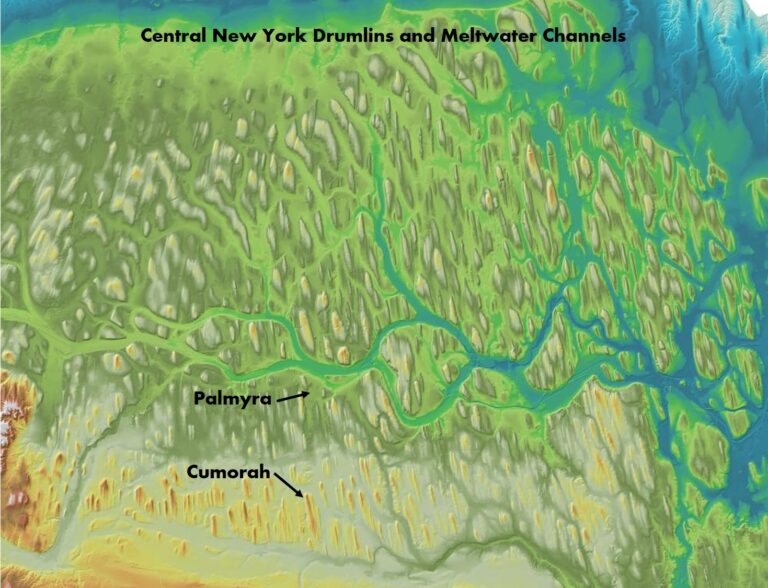
 “Drumlin, oval or elongated hill believed to have been formed by the streamlined movement of glacial ice sheets across rock debris, or till. The name is derived from the Gaelic word druim (“rounded hill,” or “mound”) and first appeared in 1833.” Britannica.com
 The majority of Mesoamerican theorists believe that Moroni deposited the gold plates in a hill, in NY, but not necessarily the Hill Cumorah in New York as we call it. These same theorists also believe the final battles of the Nephites and Lamanites to be somewhere in Mesoamerica. In other words they believe there are two Hill Cumorah’s which is why we call it the M2C Theory. I don’t agree with this perspective. You can read about their views here:


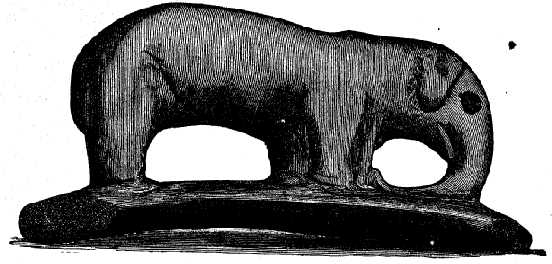



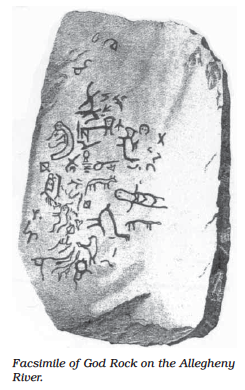

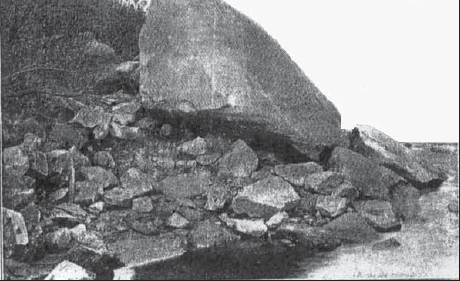

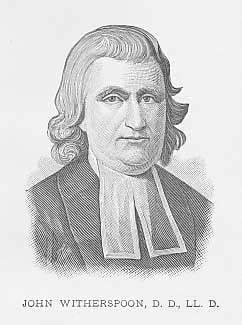
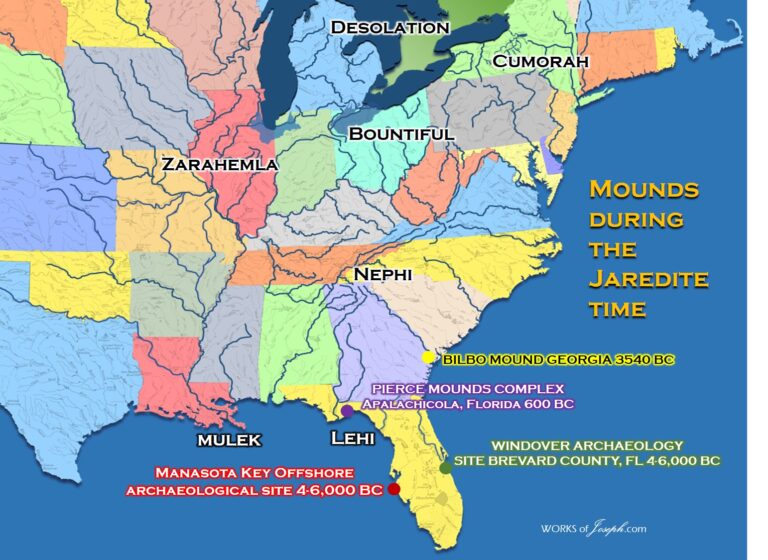








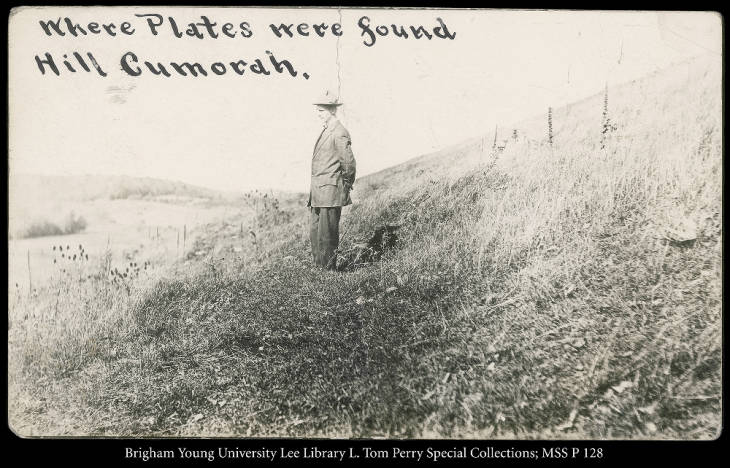
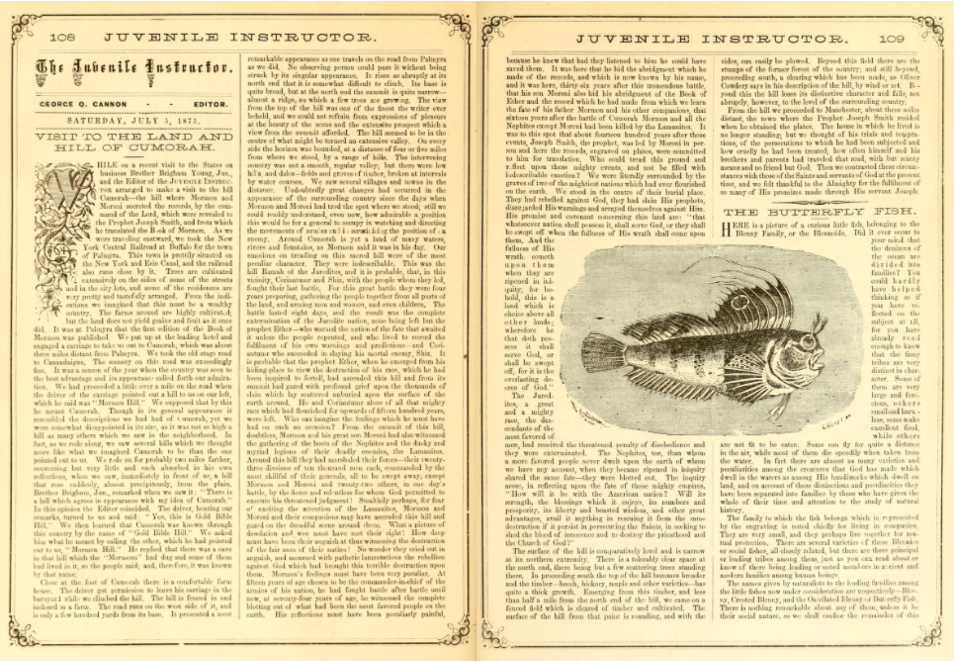 “We had proceeded a little over a mile on the road when the driver of the carriage pointed out a hill to us on our left, which he said was “Mormon Hill.” We supposed that by this he meant Cumorah. Though in its general appearance it resembled the descriptions we had had of Cumorah, yet we were somewhat disappointed in its size, as it was not so high a hill as many others which we saw in the neighborhood. In fact, as we rode along, we saw several hills which we thought more like what we imagined Cumorah to be than the one pointed out to us. We rode on for probably two miles farther, conversing but very little and each absorbed in his own reflections, when we saw, immediately in front of us. a hill that rose suddenly, almost precipitously, from the plain. Brother Brigham, Jun., remarked when we saw it: “There is a hill which agrees in appearance with my idea of Cumorah.“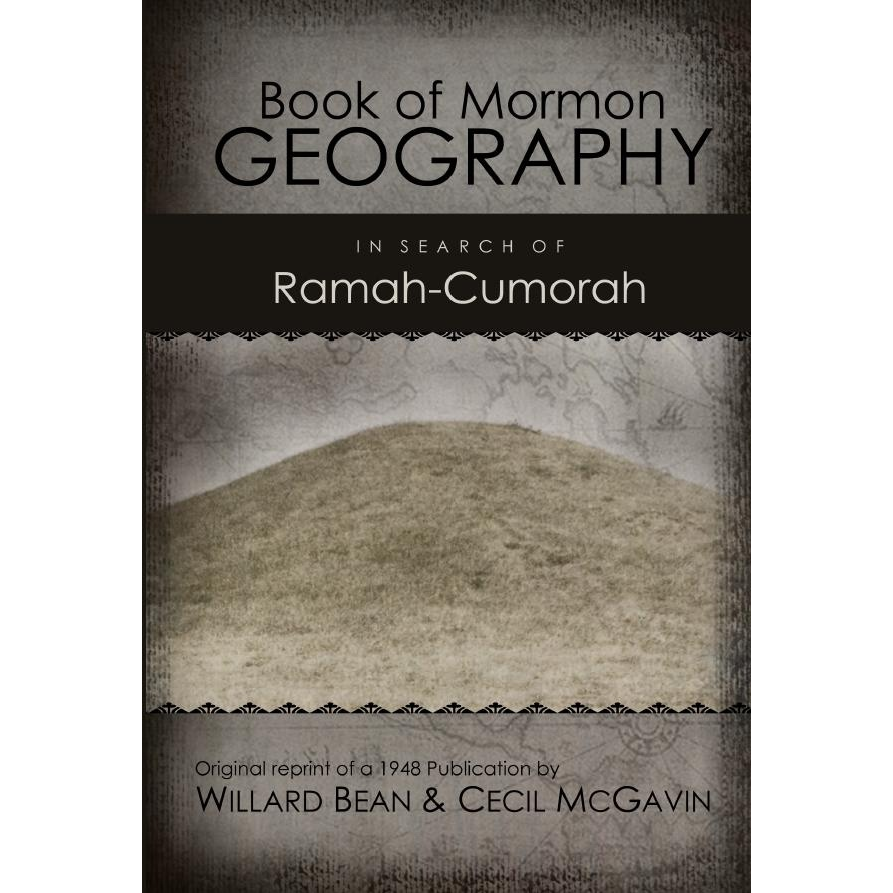
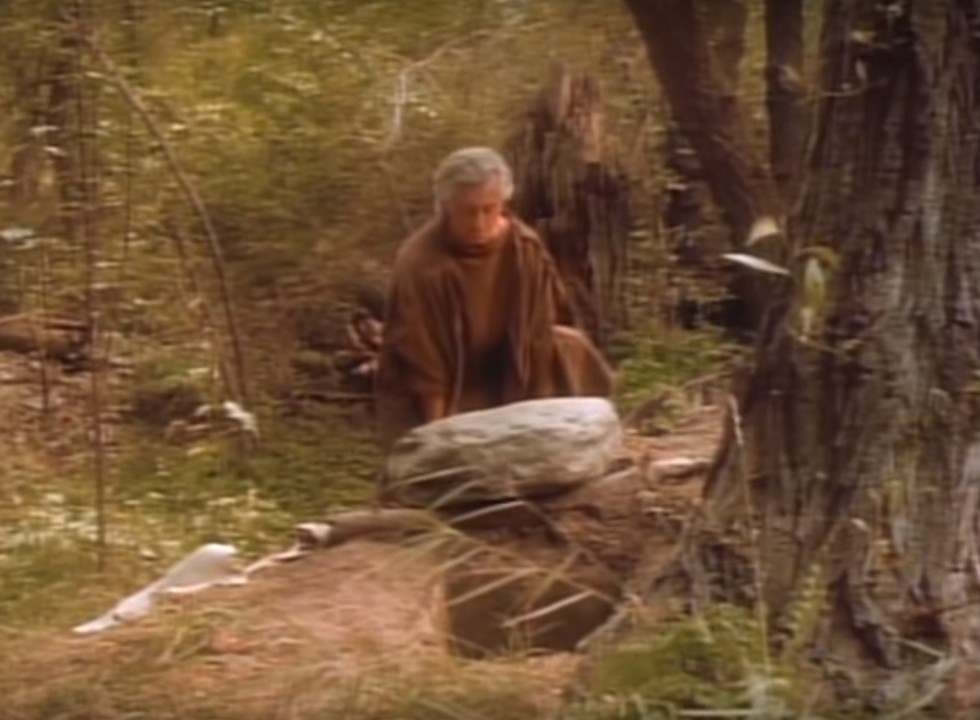
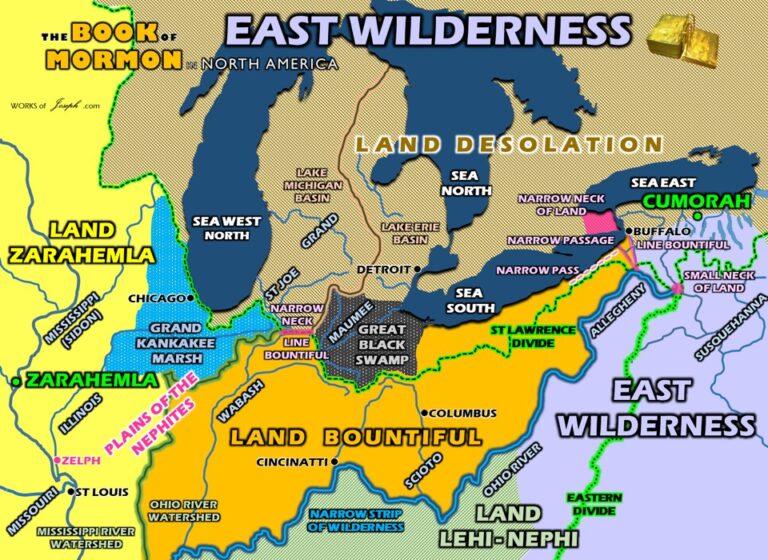


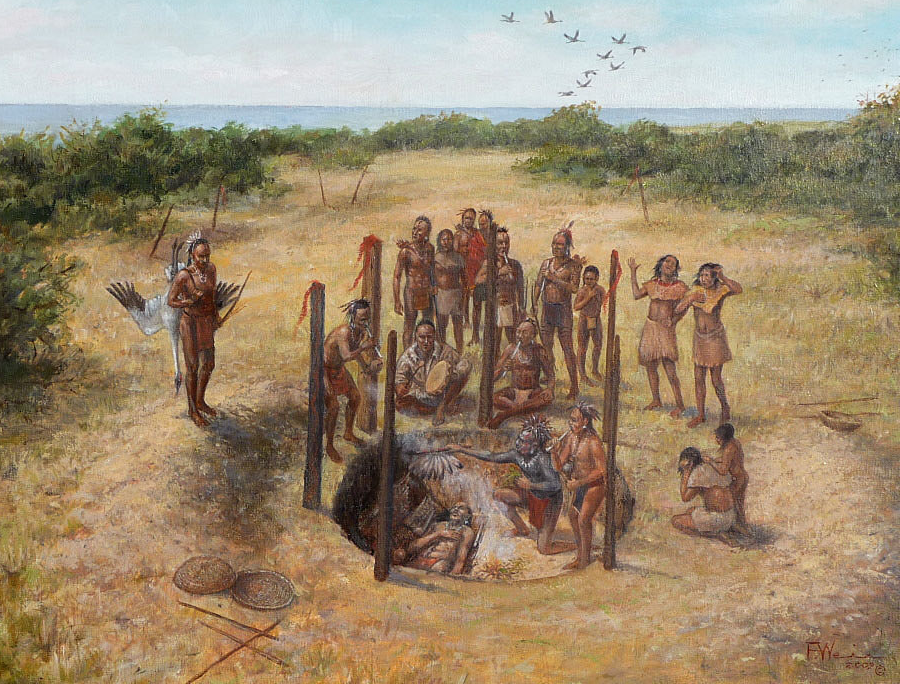





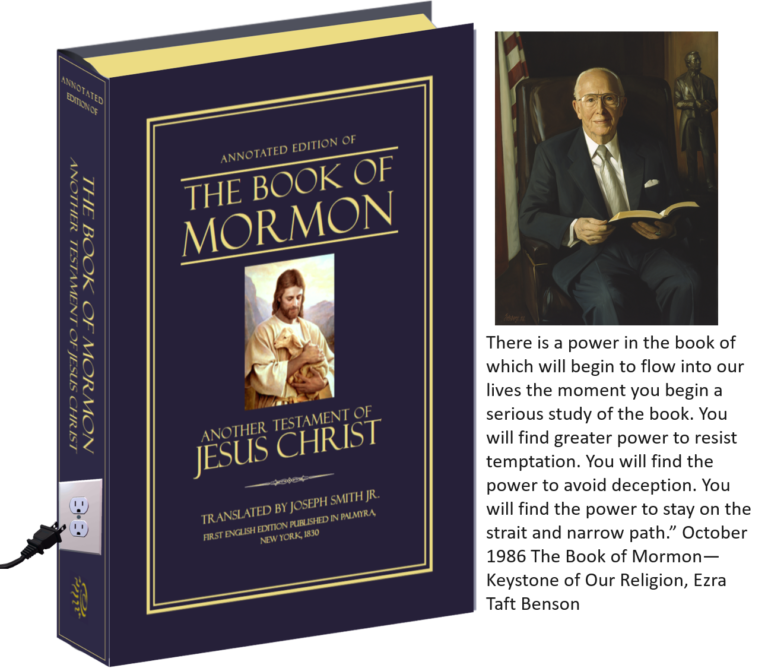


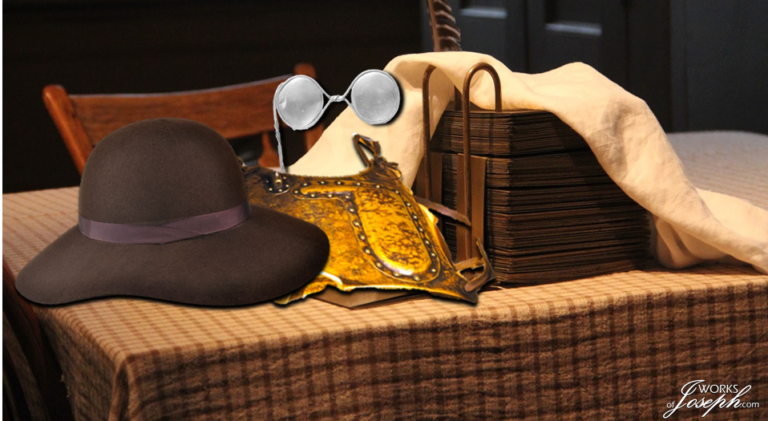




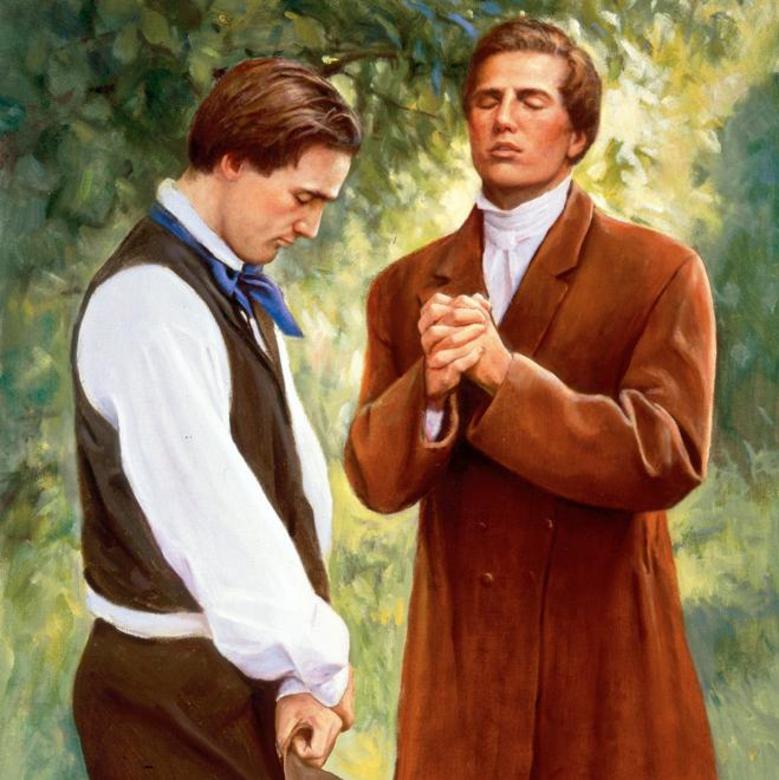 In the October 1834 Messenger and Advocate [the Church newspaper in Kirtland, Ohio], Oliver Cowdery wrote: “These were days never to be forgotten to sit under the sound of a voice dictated by the inspiration of heaven, awakened the utmost gratitude of this bosom! Day after day I continued, uninterrupted, to write from his mouth, as he translated, with the Urim and Thummim, or, as the Nephites would have said, ‘Interpreters,’ the history or record called ‘The Book of Mormon’” (Messenger and Advocate, 1:14; Also known as


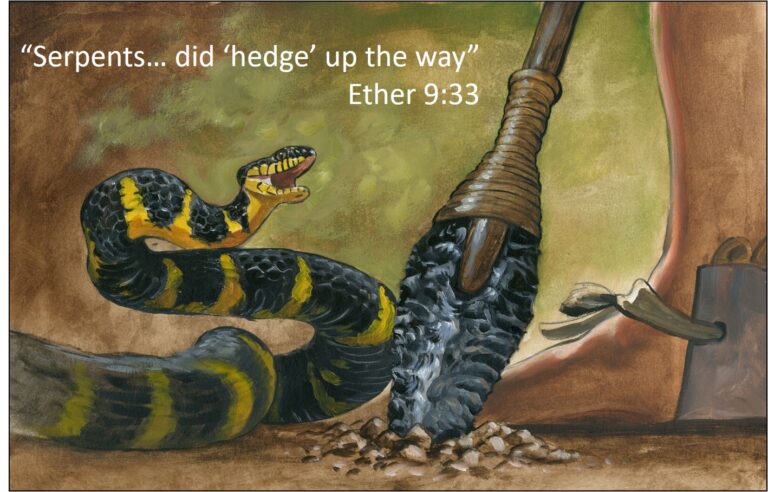


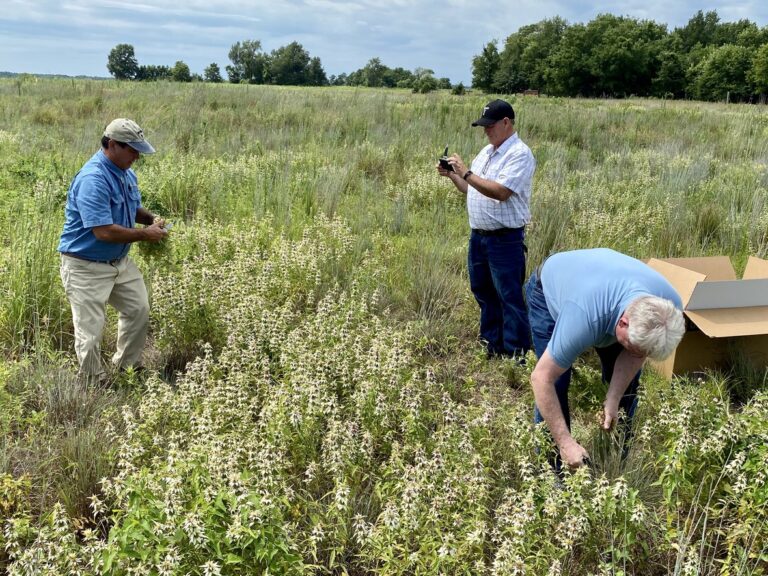


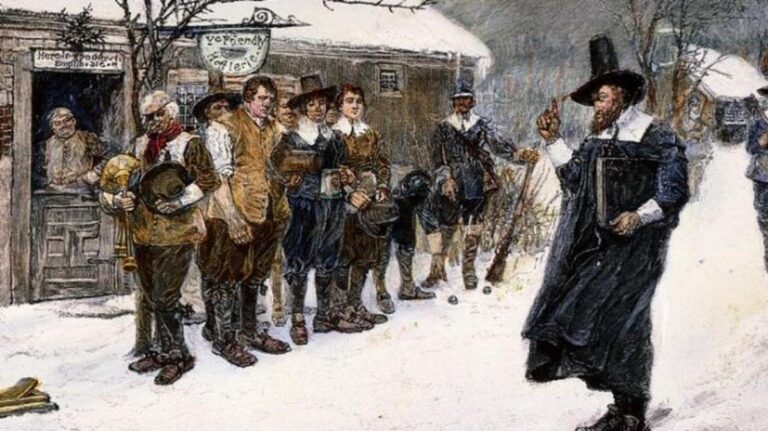

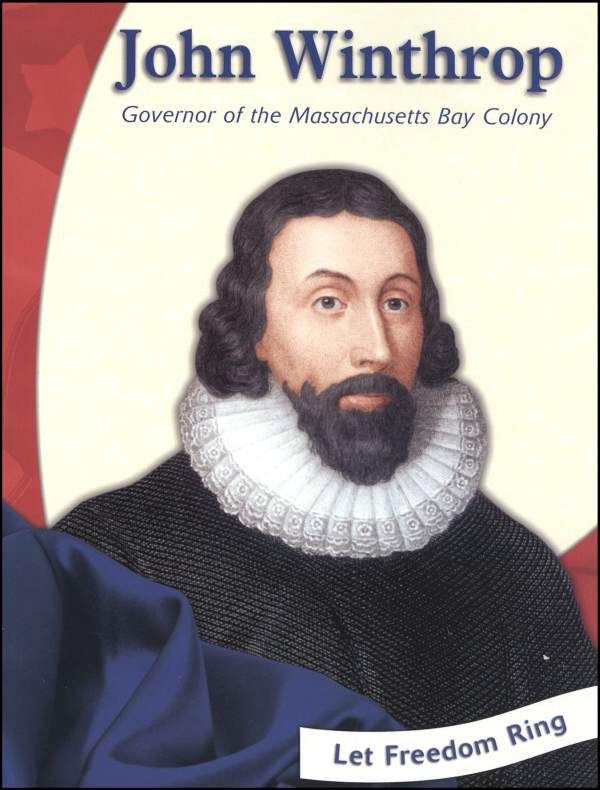






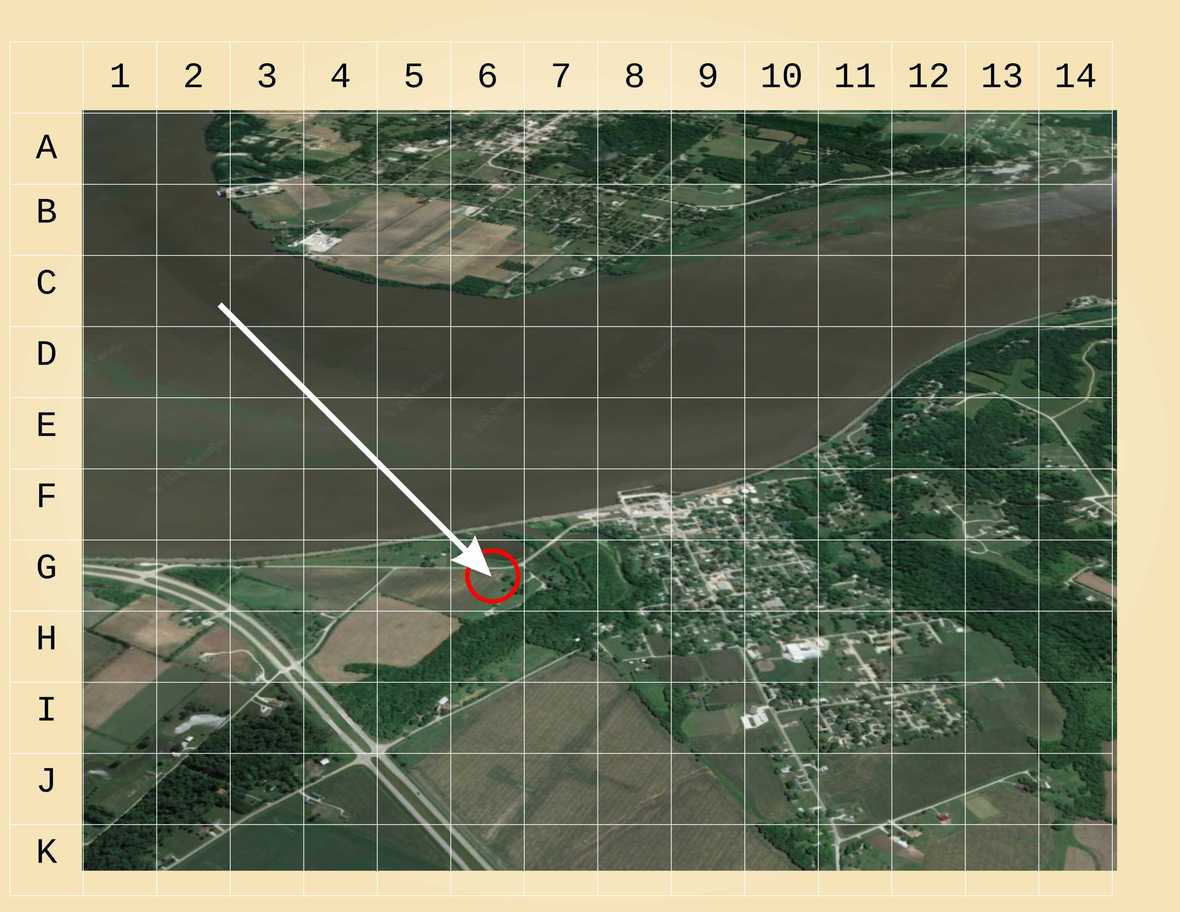
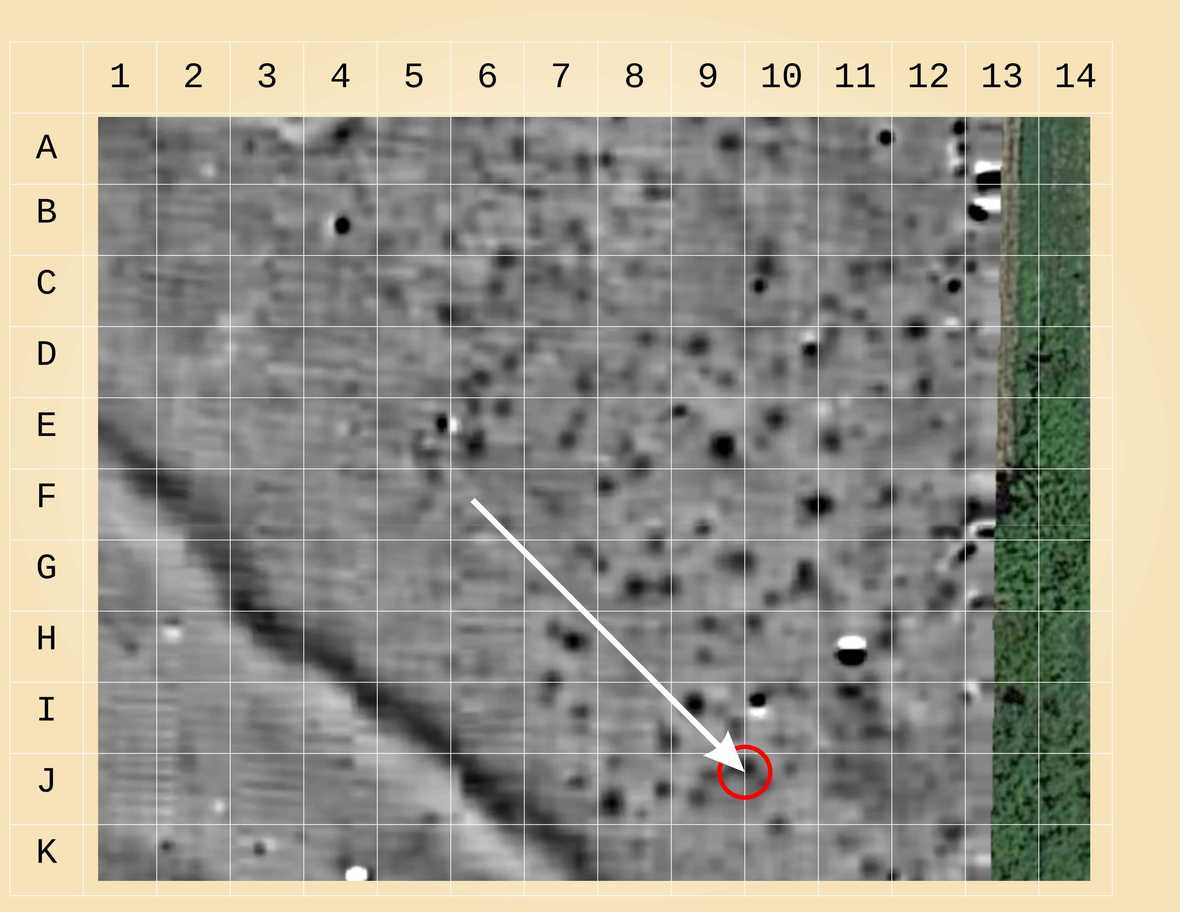
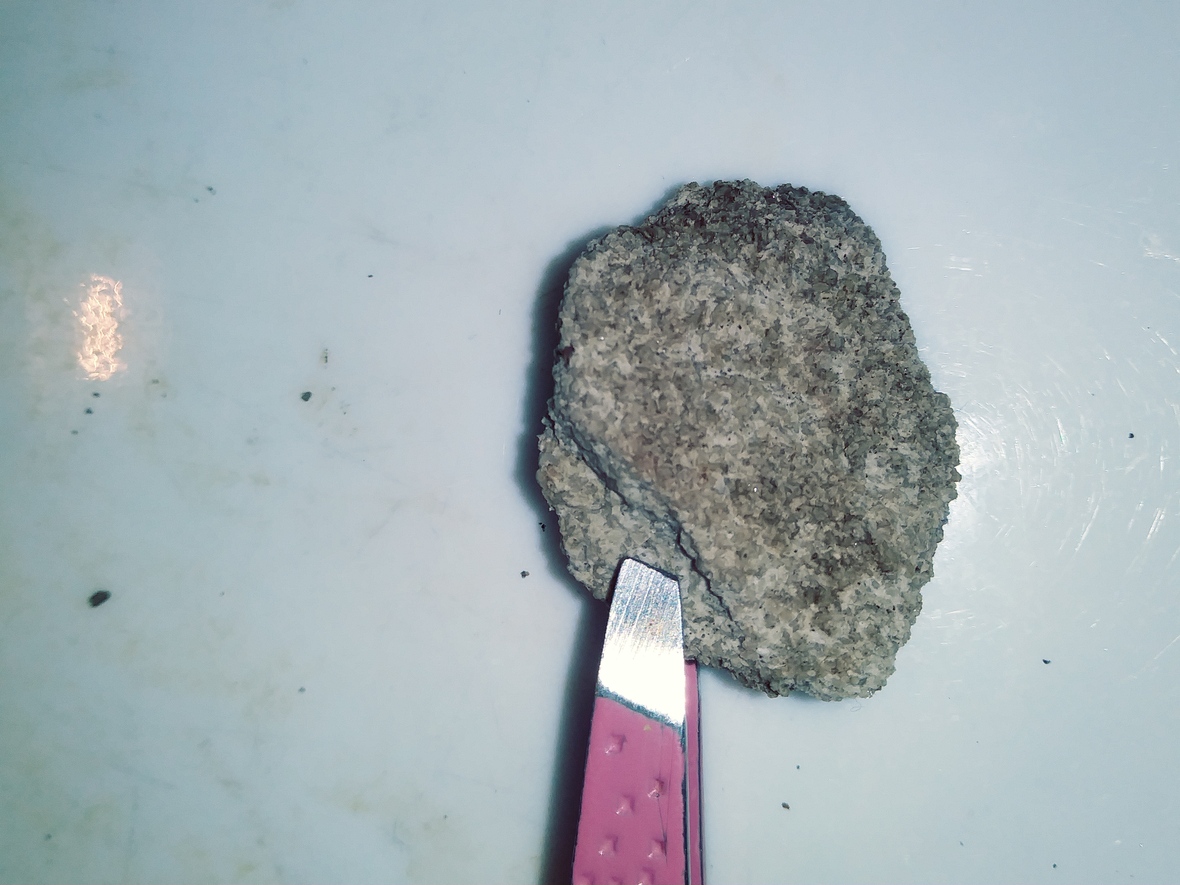 Clamshell from Fire in Zarahemla at about the Time of Arrival of Mosiah and the People of Nephi. Artifact Connects to Zarahemla’s Timeline : 225 BC +/- 30Today the Vilnius Radiocarbon Laboratory released the first date for connecting a specific object to a specific time in Zarahemla. The place is clear. The time is clear. The radiocarbon date indicates that there was a clambake in an ancient fire at about the time when Mosiah and the people of Nephi arrived in Zarahemla.The clamshell came from a fire pit located by the SENSYS MX V3 scanning and tested for a time just before the arrival of Mosiah and his people to Zarahemla. The radiocarbon date is 225 BC +/- 30 years. The scientific results are clear and unambiguous. The half-life of the carbon-14 isotope is the clock that connected the clamshell from the ancient fires to the City of Zarahemla.Last week radiocarbon from the clamshell accelerated to speeds that were a few percentage points less than the speed of light. At that high speed, the radiocarbon separated by weight from stable carbon atoms. After the separation, the radiocarbon landed on a target where the isotopes were counted one at a time.
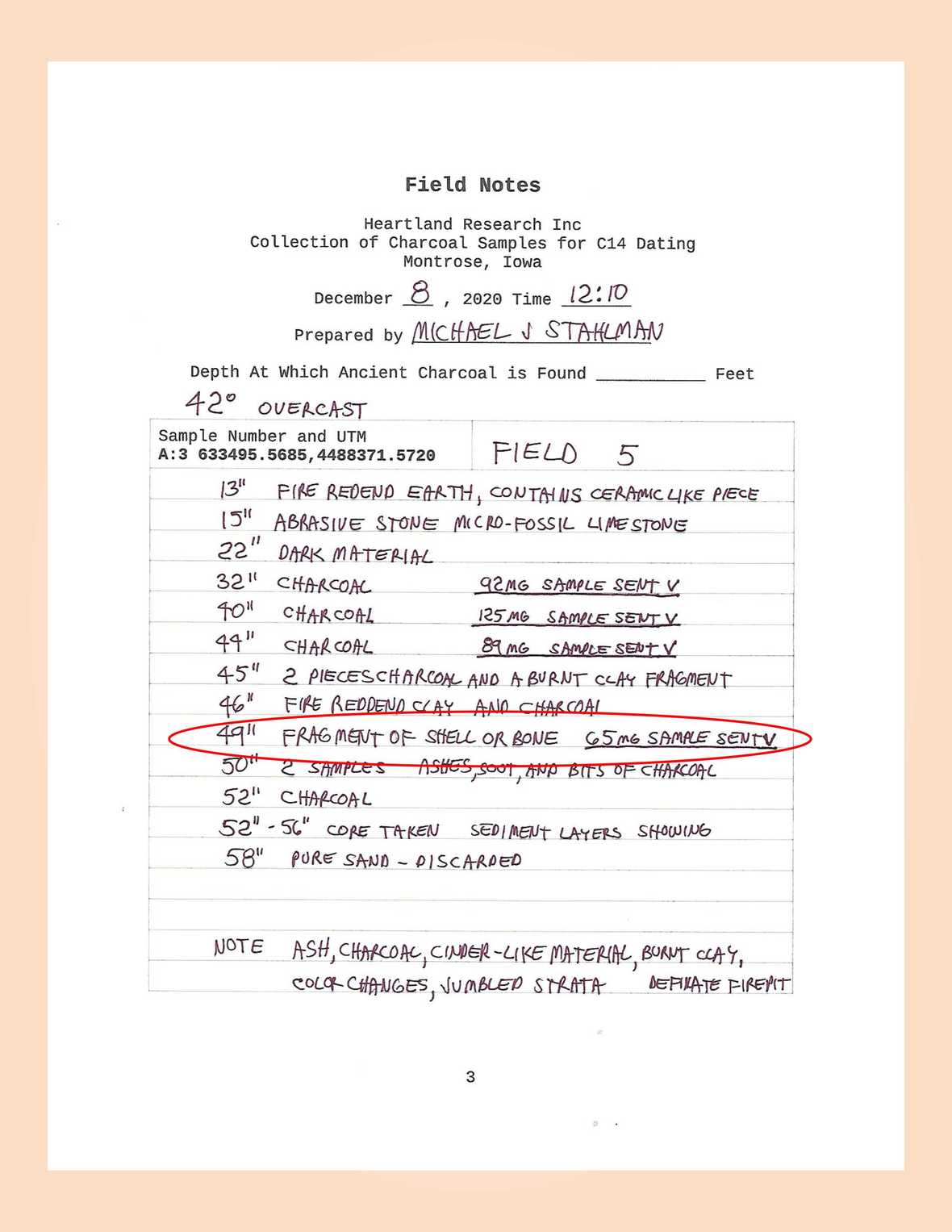 Field Notes Showing Location of Clamshell in Ancient Fire.
 Presentation of Carbon-14 Date on Standardized Charts Developed by Oxford University. The ratio of radiocarbon-14 isotopes to stable carbon-12 atoms allowed scientists to determine the dates for the ancient charcoal within a time limit of 30 years. The dates take into account the variation of the sun’s radioactivity. Oxford University provides the standards for these calibrations. For more than 70 years, scientists have used the rate at which radiocarbon isotopes decay to determine the dates of things that come from the ground. Radiocarbon dating makes it possible to place artifacts in their proper place with respect to time.
 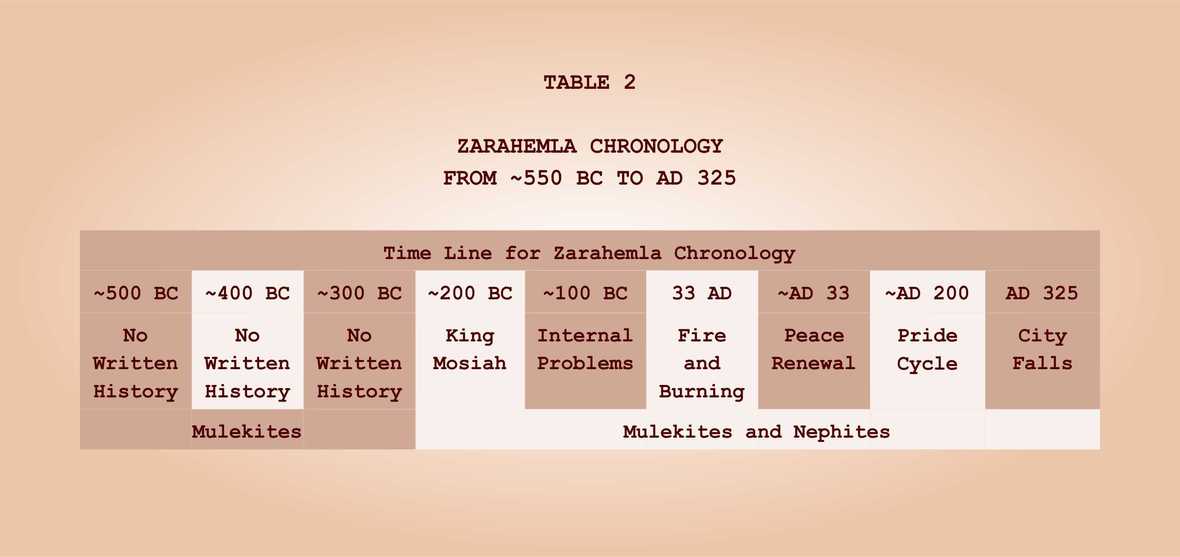 Zarahemla Chronology
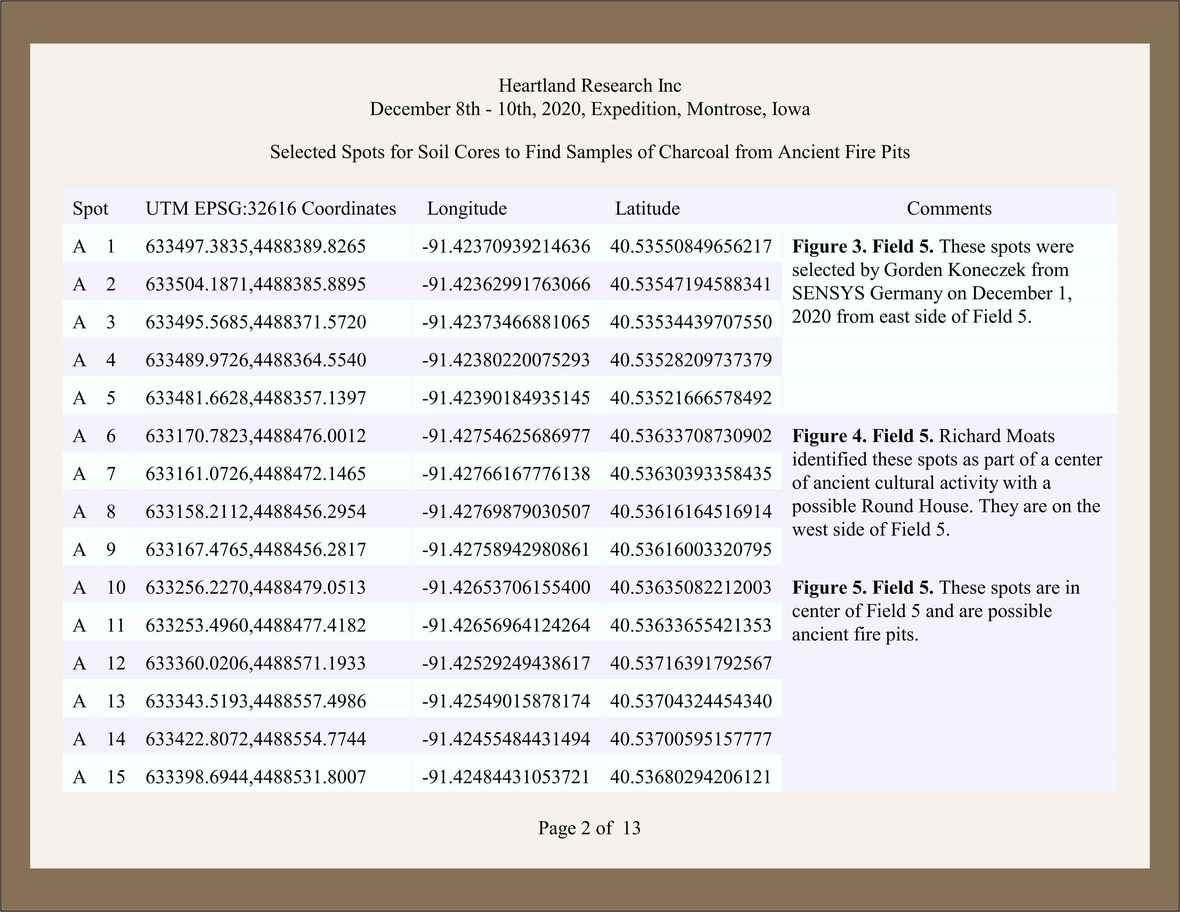 Ancient Charcoal from Montrose