Rod Meldrum recently sat down with David Allan as they created a podcast to be aired in a few weeks. [Look for it here] David will be sharing additional information about the Book of Mormon during the Come Follow Me 2020 program. David is a wonderful man who loves the Lord. He has traveled all over the world and shared his testimony with many, including this Russian Scientist we speak about below.
Nikolay Koshelyaevsky
National Research Institute for Physical-Technical and Radio Engineering Measurements, Mendeleevo, Moscow region, Russia · Time and Fequency Department PhD
Time to Embrace the Gospel
By David W. Allan
I first met Russian scientist Nickolay Koshelyaevsky in June 1989 at a conference of time-measurement experts in Paris. Nick’s grandfather had been a Russian Orthodox bishop, and I could tell Nick had strong spiritual inclinations. My wife and I gave him a copy of the Book of Mormon in English. By the time we parted, we had developed a real friendship.
In September 1989, after I attended a scientific meeting in Geneva, Switzerland, my wife and I visited Nick at the USSR’s timing center 60 kilometers north of Moscow. We exchanged scientific insights, and he mentioned he was having trouble reading the English version of the Book of Mormon. Upon our return to the United States, we sent Nick a Russian version of the Book of Mormon and some other Church books. He received them just as he was leaving on a two-week vacation. We received a letter expressing that he was deeply touched by what he was reading.
Knowing of the USSR’s excellent work in scientific time measurement, I soon recommended that Dr. Koshelyaevsky give a paper at an international conference. He agreed, but at the last minute his airline ticket was canceled. He sent his paper with another colleague, and I volunteered to present it. I was surprised to see the following quotation at the paper’s head: “And time only is measured unto men” (Alma 40:8).
Later, Nick was able to visit our lab in Boulder, Colorado. Over the weekend, he attended all three Church meetings. He was particularly touched by the open sharing of spiritual feelings in the high priests group discussion.
When our friends’ son was called to Moscow on his mission, we gave him Nick’s address. I e-mailed Nick about the missionary who might visit him, and he e-mailed back, “A friend of my friend is my friend.” Our friends’ son wasn’t able to visit Nick himself, but he gave the referral to other missionaries. Nick was eventually baptized in Moscow’s Zelenograd First Branch on 17 July 1994. At a scientific meeting in The Hague, Netherlands, a few weeks later, Nick told me his good news by handing me some pictures taken the day of his baptism. He bore his testimony and thanked me for introducing him to the gospel. Later, Nick and I met again at a conference in San Diego. I had invited him to bring some family history information, and together we went to a family history center and entered 10 of his family names for temple work to be done. On 4 June 1996 my wife and I were privileged to accompany Nick to the Hawaii Temple for his own endowment. He gave me a big embrace afterward that I will never forget.
BYU and CU Alumni Master’s Thesis 50th Anniversary is Celebrated in IEEE UFFC Special Issue
David W. Allan’s life as a Latter-day Saint has been instrumental in his becoming world-famous in his field of atomic clocks, which are used widely throughout the earth. His name is mentioned more than any other by those responsible for providing official time for the USA and for the world, a crucial ingredient in GPS navigation. Now, as the 15 papers in this special issue show, his approach in characterizing the variations in atomic clocks is being used in many other fields. His recent book “It’s About Time” shows that his approach can be used to characterize the changes in almost all natural phenomena.
David W. Allan graduated from BYU with his bachelors in Physics in May of 1960. From there, with his wife and daughter he headed to the University of Colorado to pursue a doctorate, with the intent of coming back to teach and do research at BYU. But it seems the Lord had different plans for David in Boulder — much bigger than he had imagined. He did not realize, then, that he was destined to become a foremost leader in the world of international time-keeping, with his algorithms and timing techniques forming the backbone of what now all of modern civilization takes for granted in applications such as GPS positioning. David’s work has contributed significantly in helping to bring about an accuracy improvement of a billion in the nearly 56 years he has been involved. Now his work is being used in many other fields as well, as one can see in this special issue, which just came out on the 4th of April 2016
David will receive the highest award IEEE gives at an international meeting (International Frequency Control Symposium) in New Orleans, LA, on the 10th of May for his life-long contributions.
His citation reads, “For seminal work to the UFFC community regarding time determination, time prediction, time dissemination and timekeeping through contributions to atomic frequency standards, space-based navigation, time and frequency stability analysis, time-scale algorithms, and timekeeping devices.”
He helped in the development of GPS. When you are measuring the time it takes a signal to travel from four different satellites — at the speed of light — you have to have near one-billionth of a second accuracy to resolve your position to within a few feet. The Allan variance was used to characterize the atomic clocks on board the satellites to make sure they were good enough.
While he was pursuing his Masters degree, he was also working full-time with atomic clocks in the Time and Frequency Division of the National Bureau of Standards (now NIST — the National Institute of Standards and Technology), while teaching and taking courses at the university, and raising a young family. In this all-consuming context, he was called into a bishopric. Before accepting the call, he asked if he could take some time to make the decision. He entered into an intense fasting and prayer mode. Into the fourth day the Spirit impressed upon him that this call was in preparation for a call to serve as Bishop, and that it was the Lord’s call. A year later, he was called to be the bishop of the newly organized Boulder 2nd Ward.
Click to Purchase
Putting his trust in God, he soon found increased inspiration in his work on his Master’s Thesis, which grappled with how to measure variations in atomic clocks, where algorithms at the time were woefully inadequate to handle. From that early experience, he learned that God was available to help, not just in Church matters, but in professional matters as well. Given his significant contributions, his religious beliefs were well respected by his colleagues, who sometimes humorously referred to him as the “praying physicist.”
Out of his master’s thesis evolved what the world knows as the “Allan variance.” His thesis was published in the February 1966 Proceedings of the IEEE, and is reported to have been cited more than any other publication that has ever come out of the Department of Commerce.
Three years later, in 1968, he was awarded the Department of Commerce Silver Medal “for contributions to the NBS atomic time scales and the understanding of the statistics of atomic frequency standards.”
In 1984, while he was serving as the Boulder LDS Stake President, a position he held for 10 years, he was the second person to receive the annual I.I. Rabi Award by the IEEE, Rabi, who first thought of the atomic clock and received a Nobel Prize in physics for his work, was the first to receive the prize named after him. The IEEE is the largest scientific publishing house in the world. Today, the list of recipients reads like a Who’s Who of international time-keeping, including five Nobel laureates.
Then, in 2011, nearly 20 years after he retired from NIST, working independently as a consultant, David was given the “Time Lord Award” in Edinburgh, Scotland, by the International Telecom Sync community, recognizing his development of the Time Variance, which is used to characterize the performance of telecom networks throughout the world and it also became an international standard.
Their citation reads:
“The Allan Variance is perhaps the most famous of David Allan’s achievements, with its derivative for telecom: TDEV, the Time Deviation. He ‘wrote the book’ on the methods for characterising clocks and time and frequency distribution systems and the statistical variance he introduced is named after him.
David Allan is as well recognized in the field of time and frequency technology as any other figure in the world. He has been a major figure in the world of Time and Frequency since the 70’s and 80’s when he led the NBS (National Bureau of Standards, since renamed NIST– National Institute of Standards) developments of the time scale measurement system and algorithm which are still used as among the best in the world.
His achievements are historically numerous and international, and he continues to this day to be an active leader with a number of recent contributions. David has been honoured as a major contributor throughout Europe, the USA, Russia and the former Soviet Union, and in China. His current work is on an oven-less quartz oscillator that performs as an atomic clock, and his new Unified Field Theory.”
When David chose to accept the church calling, given all that was on his platter, he felt he could not give the Church the time they deserved and still pursue a doctorate, so he opted out of the doctorate path to serve the Lord. His masters thesis reviewers remarked, “What are you going to do for an encore?” And indeed, the strength of that thesis has given David the needed prestige to repeatedly speak in front rooms full of PhDs. And they even don’t seem to mind when he gives God the credit for his inspiration, even though the scientific world in general is typically unreligious. Around 93% of the major scientists in America considered themselves agnostic or atheist in a 1990s survey.
At David’s invitation, the principal time-keeper for Russia, Dr. Nickolay Koshelyaevsky, read the Book of Mormon. He was deeply touched by the phrase in Alma 30:8, “time only is measured unto men.” Nick became a very good friend and ended up joining the Church. David and his sweetheart and wife, Edna, were able to take him – as the first Russian – to take out his endowments in the Hawaiian Temple. [Ensign, January, 1993] Nick, as an organizer, invited David to be a plenary speaker for an International Symposium on Time and Space held in Suzdal, Russian in September 2014.
David felt inspired to write a book titled, It’s About Time, distilling his life learning and understandings of time, why we are here on earth, and where we are going both from a scientific as well as spiritual perspective. In the book, he shares experimental evidence for a fifth dimension (the Eternity Domain). In fact, his book brings a grand harmony between science and religion – helping to bring as many as will to Christ while countering the secular and materialistic encroachment on Christianity and the world. He finished the book in August 2014 and updated it in 2016. He hopes it will be appreciated by scientists, lay people, Christians, non-Christians, and agnostics/atheists — something for everyone.
He tackles health issues, threats to freedom, false traditions; and he presents a new unified field theory as well. He believes it is a book for the new millennium. He also uses the book to present a way for his colleagues to improve GPS accuracy by as much as another 100-fold.
Most importantly, he points to this time in which we live historically as being the most exciting time in the history of the planet. It is a majorly pivotal time — a time to make a firm stand for goodness and to hearken to the voice of the God of this Land, who is Jesus the Christ.
He hopes that the success he has realized as a scientist can help promote the other concepts which have been so important in his life and that have enabled his successes. The main ones for him are to trust in the Lord and to be filled with His love. Article Here
Many of us today are descendants from the tribe of Manasseh or Ephraim and we have been called as a “Peculiar People” in these latter days to a “Holy Calling” as a “Chosen Generation”. Our ultimate calling is to preach the gospel, redeem the dead, and perfect the Saints (D&C 110:11-16). To accomplish this mission and to fulfill our calling, it is essential we understand our lineage and live up to this calling in the service of others.
On page 167 of the index of our LDS triple combination it says: Ishmael—an Ephraimite from Jerusalem [c. 600 B.C.] What is an Ephraimite and what is expected of this lineage?
In The Articles of Faith, James E.
Talmage cites the prophet Joseph as teaching the doctrine that Ishmael was
from Ephraim:
“Ishmael an Ephraimite – ‘The Prophet Joseph Smith informed us that the record of Lehi was contained on the one hundred sixteen pages that were first translated and subsequently stolen, and of which an abridgment is given us in the First Book of Nephi, which is the record of Nephi individually, he himself being of the lineage of Manasseh; but that Ishmael was of the lineage of Ephraim, and that his sons married into Lehi’s family, and Lehi’s sons married Ishmael’s daughters, thus fulfilling the words of Jacob upon Ephraim and Manasseh in the 48th chapter of Genesis [verse 16] which says: ‘And let my name be named on them, and the name of my fathers Abraham and Isaac; and let them grow into a multitude in the midst of the earth.’Thus these descendants of Manasseh and Ephraim grew together upon this American continent, with a sprinkling from the house of Judah, from Mulek descended, who left Jerusalem eleven years after Lehi, and founded the colony afterwards known as Zarahemla found by Mosiah — thus making a combination, an inter-mixture of Ephraim and Manasseh with the remnants of Judah, and for aught we know, the remnants of some other tribes that might have accompanied Mulek. And such have grown up upon the American continent.’ The Articles of Faith, James E. Talmage
“So the children of Joseph, Manasseh and Ephraim, took their inheritance.” Joshua 16:4. The House of Ephraim and the House of Manasseh each received a land inheritance in the Old World, but Joseph their father did not receive a land inheritance in the Old World. Because of Joseph’s righteousness his land would be in the New World, even the United States of America which is called the “Land of Joseph”.
“Certain lands were given to Israel for an inheritance in time and in eternity. America is the land of Joseph; it was the home of Nephite Israel, who were of Joseph, for a thousand years, and it is the headquarters of the Church in this final dispensation in which the church and kingdom of God are in the lands of Ephraim.” 1985 – Elder Bruce R. McConkie
“Joseph’s inheritance was to be a land choice above all others” –Pres. Russell M. Nelson
“Wherefore, the remnant of the house of Joseph shall be built upon this land; [North America] and it shall be a land of their inheritance; and they shall build up a holy city[New Jerusalem] unto the Lord, like unto the Jerusalem of old; and they shall no more be confounded, until the end come when the earth shall pass away.” Ether 13:8 Color and Parentheses added.
Land of Joseph
“The Book of Mormon reveals that Joseph, the son of Jacob who was once sold into Egypt, foresaw the Prophet Joseph Smith and his day and noted that there would be many similarities in their lives. Centuries later, the Prophet Joseph stated, “I feel like Joseph in Egypt.” The Book of Mormon reveals that the inheritance of Joseph, son of Israel, was not forgotten when land was distributed to the tribes of Israel, as promised in the Abrahamic covenant. Joseph’s inheritance was to be a land choice above all others.It was choice not because of beauty or wealth of natural resources, but choice because it was chosen to be the repository of sacred writings on golden plates from which the Book of Mormon would one day come. It was choice because it would eventually host the world headquarters of the restored Church of Jesus Christ in the latter days. And it was choice because it is a land of liberty for those who worship the Lord and keep His commandments.” President Russell M. Nelson, President of the Quorum of the Twelve Apostles, addresses new Mission Presidents June 22 through June 26, 2016 (Emphasis added)
This quote above to me clearly shows that the Land chosen for Joseph of Egypt was indeed CHOICE above all others including any land in Canaan and indeed it was to be the United States of America, the place of Joseph Smith, the gold plates, Salt Lake City and this choice land of liberty.
“It was not by chance that the Puritans left their native land and sailed away to the shores of New England, and others later followed. They were the advance guard of the army of the Lord, predestined to establish the God-given system of government under which we live and to make America, which is the land of Joseph, the gathering place of Ephraim, an asylum for the oppressed of all nations, and prepare the way for the restoration of the gospel of Christ and the establishment of his church upon the earth” – Heber J. Grant, Conference Report, April 1930.
This article below from Erastus Snow will help each of us better understand our lineage, responsibility, and blessing to be of the House of Israel through Joseph who was sold into Egypt. Joseph was given two portions through his sons Ephraim and Manasseh in Canaan yet Joseph’s own portion was Cainaan, the original Land of Promise where Adam was placed in Missouri. Moses 6:17
God’s Peculiar People
“I will
call the attention of the congregation to the words of the Lord through Moses,
spoken to the children of Israel, contained in the 5th and 6th verses of the
19th chapter of Exodus:
“Now therefore, if ye will obey my voice indeed, and keep my covenant, then shall ye be a peculiar treasure unto me above all people: for all the earth is mine:
“And
ye shall be unto me a kingdom of priests, and an holy
nation.”
In
connection with this passage I will read the words of the Apostle Peter, as
recorded in the 5th verse, 2nd chap. of 1st Peter:
“Ye also, as lively stones, are built up a spiritual house, an holy priesthood, to offer up spiritual sacrifices, acceptable to God by Jesus Christ.”
Also the
9th verse of the same chapter:
“But ye are a chosen generation, a royal priesthood, an holy nation, a peculiar people; that ye should show forth the praises of him who hath called you out of darkness into his marvelous light.”
Elder Penrose referred this morning to the fact of so large a portion of the Latter-day Saints being called and ordained to bear some portion of the Priesthood, remarking that at times he had queried in his mind as to why this was so appointed unto us. This reminded me of the Scriptures I have just read in your hearing. The consideration of the subject involves the whole mission of the Latter-day Saints. The promise of God to ancient Israel contained in the first text sets forth the purposes of Jehovah in choosing the seed of Abraham especially and separating them from other peoples and nations, and taking them under His especial care and guidance, and leading them as he did out of Egyptian bondage with a mighty hand and an outstretched arm and planting them in Canaan in fulfillment of the promises made to their father Abraham, and to Isaac and Jacob. And when God called Abraham to leave his father’s house and go to a land which he should show him and which he afterwards promised to him and his seed for an inheritance, he had this in view, to make of him and his seed a peculiar people; to make of them instruments in his hands of accomplishing good for the benefit of the world.
He promised Abraham on another occasion that in him and his seed all the nations of the earth should be blessed. And although this had reference chiefly to the coming of the Son of God through his lineage, who was to be the Chief Apostle and High Priest of our profession, the Redeemer of the world, it implied the fact also that through his seed the Gospel should be carried to all the world, and the oracles of God delivered to men; that prophets and righteous men should be raised up who should act as the mouthpiece of God to the people among whom they should live, and they should have Abraham for their father. Among his descendants also, his Temple as well as the Tabernacle should be established, and the ordinances were to be revealed through them and the Priesthood conferred upon them, and the word of God preserved among them and handed down to future generations, thus maintaining the true character and knowledge of God, and perpetuating the same upon the earth. This was a great work that the Lord purposed concerning the seed of Abraham, and it was for this reason and purpose that he promised to establish his covenant with them forever.
Throne of England
Now the Priesthood referred to in Scripture had not reference alone to that lower or lesser order known as the Levitical Priesthood which was confirmed by covenant upon Aaron and his seed and upon the house of his fathers, the tribe of Levi, which Priesthood officiated in offering sacrifices and all the lesser duties pertaining to the law; but it comprehended something more than this, the Priesthood as a whole, including the Melchizedek or that holy order of Priesthood after the order of the Son of God. And when Moses was made the mouthpiece of the Lord to Israel in this precious promise we find them hearkening to him and keeping his covenants, they being a peculiar people unto him, above all the earth, a chosen generation, a royal Priesthood; and he referred to them as a whole people and not to the Levites alone, and to the Priesthood, as I before remarked, as a whole including, of course, the Melchizedek Priesthood, hence the words of Peter: “Ye are a chosen generation, a royal Priesthood, an holy nation.”
The same great purpose and object prevail at the present time. The calling and mission of the Latter-day Saints are to fulfill what is here promised in these Scriptures—to bring about the restoration of scattered Israel, the establishment of Zion, the preparing a people for the coming of Christ; a people who are to be Saviors upon Mount Zion, and thus fulfilling one of the prophecies of one of the Jewish prophets concerning the Zion of the latter days, that Saviors should come up upon Mount Zion to save the house of Esau, but the kingdom should be the Lord’s. No matter how many might be employed in this work of salvation, as Saviors upon Mount Zion, all should labor as helpers and co-laborers with Christ in the salvation of men.
God has promised in the revelations given to the Latter-day Saints to make known unto them the fullness of all former dispensations, and he has confirmed upon his servants in this dispensation of the fullness of times the keys of all former dispensations and revealed all the ordinances made known to the ancients; and, therefore, it is our calling to complete the work that was inaugurated in former dispensations of God to man. At first Joseph Smith received the gift of seeing visions and the gift of translating dead languages by the Urim and Thummim, and when he had exercised himself in these gifts for a season, he received the keys of the Aaronic Priesthood, together with his Brother Oliver, under the hands of John the Baptist, who was a resurrected being, and who was the last of the Jewish High Priests under the dispensation of the law, the only son of Zacharias the High Priest, and a child of promise, who was beheaded by order of Herod, having first performed his mission in preparing the way of the Lord, and having preached the baptism of repentance for the remission of sins, testifying of Jesus that was to come, and baptizing those who received him, including the Savior himself. John having finished his mission, seals his testimony with his blood, rose again from the dead and continued to hold those keys of the Priesthood which he inherited from his fathers and which were confirmed upon him by the angel of the Lord when he was eight days old. And he was a fit and proper person to send to confer those keys of Priesthood upon Joseph and Oliver. In due course of time, as we read in the history which he has left, Peter, James and John appeared to him—it was at a period when they were being pursued by their enemies and they had to travel all night, and in the dawn of the coming day when they were weary and worn who should appear to them but Peter, James and John, for the purpose of conferring upon them the Apostleship, the keys of which they themselves had held while upon the earth, which had been bestowed upon them by the Savior. This Priesthood conferred upon them by those three messengers embraces within it all offices of the Priesthood from the highest to the lowest. As has been often taught us that the keys of the presidency of this Apostleship represent the highest authority conferred upon man in the flesh. And by virtue of these keys of Priesthood the Prophet Joseph from time to time proceeded to ordain and set in order the Priesthood in its various quorums as we see it today in the Church. And if the question be asked why, and for what purpose, the answer would be the idea conveyed in the language I have quoted: In accordance with the design of the Lord to raise up a peculiar people to himself, a holy nation, a royal Priesthood—a kingdom of Priests, that shall be saviors upon Mount Zion, not only to preach the Gospel to the scattered remnants of Israel, but to save to the uttermost the nations of the Gentiles, inasmuch as they will listen and can be saved by the plan which God has provided.
The first important labor of this ministry is to go abroad and preach the Gospel to the nations. The Gospel of the kingdom must be preached to all people and nations and tongues before the end can come; and by the preaching of the word and the administering of the ordinances of the Gospel, is Israel sought out from among the nations among which they are scattered, especially the seed of Ephraim unto whom the first promises appertain, the promise of the keys of the Priesthood. For it must be remembered that of all the seed of Abraham whom the Lord chose to bear the keys pertaining to this holy order of Priesthood, the seed of Ephraim, the son of Joseph, were the first and chief. While the tribe of Levi, unto which Moses and Aaron belonged, was especially charged with the administration of affairs of the lesser Priesthood under the law, yet Ephraim, the peculiar and chosen son of Joseph, was the one whom the Lord had named by his own mouth and through the Prophets, to inherit the keys of presidency of this High Priesthood after the order of the Son of God. In this also we see the fulfillment of the covenants and promises of God; not that Joseph by birthright inherited this blessing, for Reuben was the firstborn among the twelve sons of Jacob; but we are told in Chronicles, the 5th chapter, that Reuben forfeited this birthright by his adultery, and that God took it from him and conferred it upon the sons of Joseph; and of the sons of Joseph he chose Ephraim as the chief; and while the Patriarch Jacob, as we read in the 49th chapter of Genesis, adopted into his own family two of the sons of Joseph, Ephraim and Manasseh, yet he placed Ephraim the younger foremost, and blessed him with the chief blessing, saying, that Manasseh shall be great, but Ephraim shall be greater than he; he shall become a multitude in the midst of the earth. Another Scripture also says concerning scattered Israel, that Ephraim has mixed himself among the people; and speaking of the gathering of Israel in the latter-day dispensation, the Prophet Jeremiah has said that God would gather Israel and lead them as a shepherd does his flock, and says he, I am Father to Israel, but Ephraim is my firstborn. Now, if Ephraim has been scattered and has mixed himself with the people until their identity is lost among the nations, how are they going to be recognized and receive the promised blessings—how is it that Ephraim shall be the firstborn of the Lord in the great gathering of the latter days? If we turn back to the blessing which Moses gave to the twelve tribes of Israel as found in Deuteronomy, we shall there see that in blessing the tribe of Joseph, he especially charged them with the duty of gathering the people from the ends of the earth. Said he, Joseph’s horns are like the horns of unicorns, which shall push the people together from the ends of the earth, and they are the thousands of Manasseh and ten thousands of Ephraim; showing that it shall be the ten thousands of Ephraim and thousands of Manasseh who shall be in the foremost ranks of bearing the Gospel message to the ends of the earth, and gathering Israel from the four quarters of the world in the last days. Whoever has read the Book of Mormon carefully will have learned that the remnants of the house of Joseph dwelt upon the American continent; and that Lehi learned by searching the records of his fathers that were written upon the plates of brass, that he was of the lineage of Manasseh. The Prophet Joseph informed us that the record of Lehi, was contained on the 116 pages that were first translated and subsequently stolen, and of which an abridgement is given us in the first Book of Nephi, which is the record of Nephi individually, he himself being of the lineage of Manasseh; but that Ishmael was of the lineage of Ephraim, and that his sons married into Lehi’s family, and Lehi’s sons married Ishmael’s daughters, thus fulfilling the words of Jacob upon Ephraim and Manasseh in the 48th chapter of Genesis, which says: “And let my name be named on them, and the name of my fathers Abraham and Isaac; and let them grow into a multitude in the midst of the land.” Thus these descendants of Manasseh and Ephraim grew together upon this American continent, with a sprinkling from the house of Judah, from Mulek descended, who left Jerusalem eleven years after Lehi, and founded the colony afterwards known as Zarahemla and found by Mosiah—thus making a combination, an intermixture of Ephraim and Manasseh with the remnants of Judah; and for aught we know, the remnants of some other tribes that might have accompanied Mulek. And such have grown up on the American continent. But we are not informed that the Prophet Joseph and the first Elders of this Church who were called and chosen of God to bear the Priesthood and lay the foundation of this work, were descended from any portion of those remnants that peopled America anciently, and whose history is given us in the Book of Mormon. Yet we find in the Doctrine and Covenants the declaration concerning the first Elders of this Church, that they were of the house of Ephraim; and another passage referring to the wicked and rebellious says, they shall be cut off from among the people, for the rebellious are not of the seed of Ephraim. And there is a passage in the Book of Mormon which is a part of the prophecy of Joseph written on the plates of brass and quoted by Lehi, concerning the Prophet Joseph Smith, who, it says, was to be raised up in the latter days to translate the records of the Nephites, and whose name should be Joseph, and who should be a descendant of that Joseph that was sold into Egypt, and also that that should be the name of his father.
Jacob Blesses Manasseh and Ephraim
Now if the Prophet Joseph Smith was that chosen vessel out of the loins of Joseph, it may be asked by some, what evidence have we of this lineage? I answer, the testimony of God, the best of all testimony, for no record kept by mortal man can be equal to it; and that, too, by reason of that quaint but sensible old maxim, “it takes a wise man to know who his father was, but a fool may find out who his mother was.” And even if we had the lineage of the fathers, it would not be as sure and certain to us as the word of the Lord. For he has had his eye upon the chosen spirits that have come upon the earth in the various ages from the beginning of the world up to this time; and as he said to Abraham, speaking of the multitudes of spirits that were shown unto him in heavenly vision, you see that some are more noble than others? Yes. Then you may know there were some others still more noble than they; and he speaks in the same manner of the multitude of the heavenly bodies; and said he to Abraham, thou art one of those noble ones whom I have chosen to be my rulers. The Lord has sent those noble spirits into the world to perform a special work, and appointed their times; and they have always fulfilled the mission given them, and their future glory and exaltation is secured unto them; and that is what I understand by the doctrine of election spoken of by the Apostle Paul and other sacred writers: “For whom he did foreknow, he also did predestinate to be conformed to the image of his Son, that he might be the firstborn among many brethren.” Such were called and chosen and elected of God to perform a certain work at a certain time of the world’s history and in due time he fitted them for that work. It will be remembered when Jeremiah was called of God in his youth that he, in order to excuse himself, complained of his youth and of his being slow of speech, that the Lord said unto him that he would be mouth for him and matter to his heart, for, he said, he knew him and called him from his mother’s womb to be a prophet unto the nations. And so he called John the Baptist by sending his angel Gabriel to his father Zacharias, and giving him a promise that his wife Elizabeth, though old and barren, should yet conceive and bear a son, and that his name should be John, who should be a forerunner to the Savior to prepare the way before his face. And so he elected the seed of Ephraim to be that peculiar people I have referred to, that holy nation, a kingdom of Priests, a people to receive the covenants and oracles, and to be witnesses to certain nations of the God of Israel. And how strict were his commands that they should have no other Gods but him, that they might be a standing rebuke to the idol worshippers, and to all who believe not in the true and living God.
Now the same spirit of revelation that sought out the Prophet Joseph from the loins of Joseph who was sold into Egypt, and that raised him up in this dispensation to receive the keys of the Priesthood and to lay the foundation of this great work in the earth, has also called the children of Abraham from among the kingdoms and countries of the earth to first hear and then embrace the everlasting Gospel; and the remnants of the seed of Ephraim who were scattered from Palestine and who colonized the shores of the Caspian Sea and thence made their way into the north of Europe, western Scandinavia and northern Germany, penetrating Scotland and England, and conquering those nations and reigning as monarchs of Great Britain, and mingling their seed with the Anglo-Saxon race, and spreading over the waters a fruitful vine, as predicted by Jacob, whose branches should run over the wall. Their blood has permeated European society, and it coursed in the veins of the early colonists of America. And when the books shall be opened and the lineage of all men is known, it will be found that they have been first and foremost in everything noble among men in the various nations in breaking off the shackles of kingcraft and priestcraft and oppression of every kind, and the foremost among men in upholding and maintaining the principles of liberty and freedom upon this continent and establishing a representative government, and thus preparing the way for the coming forth of the fullness of the everlasting Gospel. And it is the foremost of those spirits whom the Lord has prepared to receive the Gospel when it was presented to them, and who did not wait for the Elders to hunt them from the hills and corners of the earth, but they were hunting for the Elders, impelled by a spirit which then they could not understand; and for this reason were they among the first Elders of the Church; they and the fathers having been watched over from the days that God promised those blessings upon Isaac and Jacob and Joseph and Ephraim. And these are they that will be found in the front ranks of all that is noble and good in their day and time, and who will be found among those whose efforts are directed in establishing upon the earth those heaven-born principles which tend directly to blessing and salvation, to ameliorating the condition of their fellow men, and elevating them in the scale of their being; and among those also who receive the fullness of the Everlasting Gospel, and the keys of Priesthood in the last days, through whom God determined to gather up again unto himself a peculiar people, a holy nation, a pure seed that shall stand upon Mount Zion as saviors, not only to the house of Israel but also to the house of Esau.
Joseph meets his Brothers
Now the work of carrying the Gospel to the nations and gathering the people, mighty as it is, is not the chief, it is but laying the foundation for the still greater work of the redemption of the myriads of the dead of the seed of Israel that have perished without the fullness of the Gospel, who too are heirs to the promised blessings; but the time had not come when they passed away for the fulfillment of all that God had promised Abraham, Isaac and Jacob concerning their seed: Ezekiel in the 37th chapter of his book beautifully illustrates this doctrine in his vision of the valley of dry bones. I respectfully refer you to it. The substance of the vision is this: The Lord showed Ezekiel a valley full of dry human bones; and he asks him if those bones can live. Ezekiel answered, “O Lord God, thou knowest.” The Lord then tells him to prophesy to the bones: Oh ye dry bones. Hear the word of the Lord; and as he did so there was a shaking, and behold the bones came together, bone to its bone; and according to the word of the Lord through him, flesh and skin and sinews came upon them, and the breath of life came into them, and lo, and behold, they stood upon their feet an exceedingly great army. The Lord then tells the Prophet that these are the whole house of Israel; and that they complain of the non-fulfillment of the promises upon their head, saying, “Our bones are dried, and our hope is lost: all are cut off for our parts.” But he further tells him to prophesy unto them, saying, “Thus saith the Lord God; Behold, O my people, I will open your graves, and cause you to come up out of your graves, and bring you into the land of Israel,” etc. And by whom shall this great and marvelous work be accomplished? I answer, by the thousands of Manasseh and the ten thousands of Ephraim; by this same people who shall search out and gather together the house of Israel, and who will come up as saviors upon Mount Zion.”
Erastus Snow
— From “Discourse by Apostle Erastus Snow,” at Logan, Utah, May 6, 1882, see Journal of Discourses, vol. 23, pp. 184, 185.” (James E. Talmage, A Study of the Articles of Faith, p.504-5)
I just received this press release about the landing of the Phoenicia. The voyage is part of the Phoenicians Before Columbus Expedition, Se my blog about it earlier today HERE!
Replica Phoenician Ship Makes Landfall in Fort Lauderdale, Florida after Unprecedented 6,000-Mile Atlantic Voyage
Tuesday, February 4, 2020 at 12:00pm (Time is approximate due to sea and weather conditions)
FORT LAUDERDALE, Fla., Jan. 31, 2020 — Coral Ridge Yacht Club is set to host replica Phoenician ship, Phoenicia for its first U.S. landing after a five-month voyage of over 6,000 miles. The voyage is part of the Phoenicians Before Columbus Expedition, designed with the help of the US-based Phoenician International Research Center, to show that Phoenician ships could have crossed the Atlantic over 2,000 years before Christopher Columbus “discovered” the American continent.
The Phoenicia began its voyage from Carthage, Tunisia on September 28, 2019. After sailing from Carthage to Cadiz, Spain, Essaouira, Morocco and Tenerife in the Canary Islands, the ship left the Old World on November 23, 2019 and safely reached port in the Dominican Republic on December 31, 2019, having crossed the Atlantic Ocean using nothing but wind, current, sail and compass.
The Phoenicia will make landfall on American shores Tuesday, February 4, 2020, docking at Coral Ridge Yacht Club in Fort Lauderdale, Florida (2800 Yacht Club Boulevard). Viewing of the landing is open to the public. To reserve a space, call Coral Ridge Yacht Club at 954-566-7886.
“We are honored to host the Phoenicia and its crew at Coral Ridge Yacht Club, and to be part of this exciting moment in history,” said Commodore Pru Lewis. “We are also excited to welcome the local community to our Club to view this magnificent ship.”
The Phoenicia is a traditionally-built replica of a Phoenician merchant vessel, based on a 600 BC design. British Adventurer and Expedition Leader, Philip Beale FRGS, captains the Phoenicia, sailing with a multi-national crew with representatives from the United States, Lebanon, Tunisia, United Kingdom, Norway, Holland, Brazil and Indonesia. Amongst the crew is filmmaker Yuri Sanada from Aventuras Produções, Brazil. He is documenting life on board as well as the challenges the Phoenicians were likely to have faced.
According to Greek geographer and historian, Strabo, the Phoenicians traded and settled along the East Atlantic coast, prompting Beale’s belief in the likelihood that the Phoenicians would have attempted to sail West in the hope of discovering more lands. Beale commissioned the building of the Phoenicia ship 12 years ago. It was traditionally built in Syria and its design was based on the wreckage of the Jules Vernes 7, discovered in the Mediterranean in the early 1990’s. The Phoenicia is believed to be the only replica of its kind in the world. Having already circumnavigated Africa in the First Phoenician Ship expedition (2008-10), Beale was once again at the helm for the cross Atlantic challenge; reiterating his passion for the seafaring Phoenicians.
The Expedition has been endorsed by the Ministries of Information and Tourism of the Republic of Lebanon and received support, expedition supplies and services from numerous organizations in the Republic of Tunisia, prior to the launch of the Expedition from Carthage, Tunisia in September 2019. The Expedition is part of the United Nations Environment ‘Clean Seas Campaign’, taking daily water samples to measure micro plastic levels and raising awareness about plastic pollution in the ocean.
A wide international following has already grown for this unusual and inspired endeavor. Some believe the Phoenicians made it to the Americas and look for genealogy and archaeological evidence there. Beale is focused on highlighting their engineering and maritime skills and hopes that one day his work will contribute to wider archaeological findings to inform a bigger Phoenician story. Phoenicians Before Columbus is approved by the UK’s Scientific Exploration Society and the expedition is the proud recipient of the 2019 Captain Scott Society’s ‘Spirit of Adventure’ Award.
The journey across the Atlantic from Tenerife to the Dominican Republic took 39 days, a distance of some 3,700 miles. From the Dominican Republic to Florida, the journey of 1,000 miles will take 12 days. Once completed, the total voyage from Carthage, Tunisia to Florida will have covered over 6,000 miles, taking five months to complete.
ABOUT CORAL RIDGE YACHT CLUB For over 70 years, Coral Ridge Yacht Club has beckoned to those who love the water, enjoy an active social life and who desire living life to the fullest. Established in 1947, the Club is located on Florida’s famed Gold Coast along the Intracoastal Waterway and offers an escape into a tropical paradise. Mingling the traditions of old-world elegance with fun, fellowship and relaxation, this charming haven offers the magic of the true South Florida lifestyle, including award-winning cuisine, picturesque landscapes and an abundance of social activities and entertainment.
At the FIRM Foundation we are privileged to hear from a new friend named Burgess Owens. I first met him at the Utah Eagle Forum where I was selling copies of the Book of Mormon and he was running for the U.S. Congress 4th District against Ben McAdams and others. We at FIRM Foundation do not support any specific candidate for US Congress.
After seeing him a few times and then seeing his name, I knew right away this is the Conservative I had seen on Fox News Channel many times in the past few years. I remember when the kneeling down during the National Anthem in the NFL was going on, and Mr. Owens was on with Sean Hannity as a guest and how he thought that kneeling was wrong and the flag should be respected. That was not the politically correct thing to believe, but it was what I believed as well, so I continued looking forward to his comments about Conservative principles.
Now that I remembered he was a former NFL Football player with a Super Bowl Ring, I was very curious to speak with him. I have always loved football and I have followed the sport and its players for many years. I did wonder, “what is Mr Owens doing running for Congress in Utah and I wonder how he feels about members of The Church of Jesus Christ of Latter-day Saints?”
As he walked by my table of copies of the Book of Mormon, I stopped him and introduced myself. I mentioned how much I enjoyed him on Fox News and thanked him for his conservative views. I then asked him how members of the Church of Jesus Christ of Latter-Day Saints treat him here in Utah? He said with a big smile, “Very well as I have been a member for over 36 years”. He then went on to share briefly how former BYU and LDS tight end football player Todd Christensen played on the same team with him and shared the gospel with Mr Owens.
I turned around to my table of beautiful gold and blue books, I handed him one and said. “I would love you to have one of these.” Mr Owens said, “wow that is such a beautiful copy and I read the Book of Mormon every day, Thank you very much.” After a brief time I asked him if he had ever thought of where the events of the Book of Mormon happened? He said “Oh I don’t know, South America, or North America I don’t know.” I mentioned that I know the Church is neutral on that question, but I actually believed the Book of Mormon events happened right here in the United States of America. He seemed surprised but smiled. I mentioned how the book I handed him shares much information that may validate those claims. He was excited to read it. I told him about our FIRM Foundation Conference coming up and asked him how would he like to come and share his testimony of the Book of Mormon with us? He said, “I would love to.” I laughingly said, “I will check up with your campaign manager to schedule a time, and if you read this version of the Book of Mormon, you will probably understand why I believe events happen in North America.” He said, “I look forward to reading it.”
Join us on April 9-11, 2020 and hear over 80 speakers and hear Mr. Burgess Owens speak on Fri April 10, at 7 pm. Right after he speaks, his good friend and ours, Mr. Tim Ballard will also speak at 8 pm. See you there.
Below is some information about Burgess Owens which I think you will enjoy and will be impressed with his message of faith.
His Mission: Head Heart Hands and Home
Head> Education Heart> God Hands> Industry Home> Family Burgess4utah.com
The Burgess and Josie Owens family. Photo Courtesy Summur-Rayn Berrett
It (the church) has given us perspective of how important family is. It has helped us understand the parameters that the Lord wants us to live within. – Burgess Owens
Dressed in a suit and tie, Burgess Owens stood at the pulpit in the Herriman LDS chapel and surveyed the scene before him on Sunday, Feb. 3, 2013. The 61-year-old man could see his wife, Josie, surrounded by six children and six grandchildren, seated among the congregation. A short time earlier, male family members had participated in the blessing of their newest granddaughter. In the midst of that sweet moment, Owens wanted to share his testimony with fellow members of The Church of Jesus Christ of Latter-day Saints.
“The church has been everything to us,” Owens said.
More than 30 years earlier, Owens wore a different suit, one consisting of black and silver for the Oakland Raiders. As a hard-hitting safety, Owens earned a ring when the Raiders won Super Bowl XV.
But it was during the 1982 season that Owens and his wife were introduced to the LDS Church by a Mormon teammate, sparking a series of events that changed their lives.
Three decades later, the former pro football player is grateful for how following the gospel plan has blessed him and his family, not to mention those who’ve joined the church as a result of their missionary efforts.
“It (the church) has given us perspective of how important family is. It has helped us understand the parameters that the Lord wants us to live within,” Owens said in a telephone interview. “We don’t have to wonder or drift with society; the Lord has a very strong and clear pathway of what is right and where blessings come from. Understanding that, we continue to convert ourselves.”
Burgess Owens was a member of the Oakland Raiders’ Super Bowl XV team. Photo courtesy of Burgess Owens
First contact
Owens was raised in a Baptist home in Tallahassee, Fla., during the 1960s. He was one of four African-American players integrated onto a football team at a white high school. It was a rough year, Owens said.
“It was similar to what happened in the movie, ‘Remember the Titans,’” Owens said. “That was pretty much my experience.”
During the integration transition in 1967, Owens became involved in an interracial club aimed at building unity and finding commonalities. One activity was attending various churches of different faiths in the community. At one point, the group visited an LDS church and Owens recalled seeing two missionaries with black name tags.
“Someone in the club was a member. I remember being told by our instructor that Mormons didn’t like blacks, so we will go there but don’t be offended,” Owens said. “So, I kind of went in with a preconceived notion.”
As a young man, Owens was very religious. At one point, he told his father his goal was to become a minister and travel to Russia “because so many there needed to know about Christ,” he said.
“Why go to Russia?” his father replied. “There are plenty of people here in the United States that could use that message.”
Miami to Oakland
Once the Rickards High team members got past their racial issues, they started to win football games. Based on a couple of good seasons, especially his junior year, Owens was the third of four black athletes recruited to play at the University of Miami.
Owens played for the Hurricanes from 1970-72, recording 160 tackles, eight interceptions and three fumble recoveries and earning All-American honors.
Despite his individual success, his team did not enjoy a single winning season during Owens’ time with the Hurricanes. The university even considered dropping the football program at one point. That changed in time. Owens’ impact at Miami was such that in 1999, his name would be added to the famed “Ring of Honor” next to that of quarterback Vinny Testaverde.
Owens was named MVP of the Senior Bowl and was selected in the first round of the NFL draft (13th overall) by the New York Jets.
The football losing trend continued in New York over the next seven seasons. It wasn’t until he was traded to the Raiders in 1980, his 13th season dating back to his junior year of high school, that he was finally part of a winning team.
“Those were lean years,” Owens said. “I call them my character-building years … a continuation of my education as an eternal optimist. You learn after losing quite a bit, year after year, that you have to continue to work hard, stay tough and endure to the end before it’s going to work out.”
New friends
All the hard work paid off for Owens during the 1980 season when the Raiders not only had a winning season (11-5), they won Super Bowl XV. Oakland defeated the Philadelphia Eagles 27-10, becoming the first wild card team to triumph in the Super Bowl. Owens started the game at free safety and finished with six tackles. Winning the big game was the highlight of his career, Owens said.
Burgess Owens played for the Oakland Raiders from 1980-83. Photo courtesy of Burgess Owens
“We didn’t want it to come to an end. We won it convincingly and we had a good time being the underdogs. There is nothing more rewarding than winning when you’re looked at as not being capable of doing so,” Owens said. “Our biggest regret was there was nobody else to play.”
In the midst of that exciting season, another significant thing happened. Owens developed a close friendship with teammate Todd Christensen. In fact, Owens now feels one of the main reasons he played pro football was so he and his wife could meet the Christensens.
It’s interesting to note how Christensen came to be with the Raiders. He was drafted by Dallas in the second round of the 1978 draft, but spent the season on the bench with a broken foot. The Cowboys cut him after the last exhibition game prior to the 1979 season. The New York Giants picked him up in time for its season opener against the Eagles, and he got into the game for exactly one play. The Giants cut him the next day. Christensen then had conversations with the New England Patriots, Philadelphia and Green Bay Packers before he was finally offered a tryout with the Raiders. Despite a less-than-stellar workout, he made the roster.
Owens knew Christensen and quarterback Marc Wilson both played at BYU and were Latter-day Saints, but he avoided the topic of religion because he still had a negative impression of the Mormons.
“We got to be very close friends. They didn’t hide the fact they were LDS … but I decided to not to ask him about his religion because I didn’t want to not like him. So we talked about everything else,” Owens said. “It was a good thing that we didn’t talk about religion for a few years because we had a chance to get close to them without any pressure. Win or lose, they (the Christensens) were consistent. We had good, wholesome fun when we got together.”
Finding the Lord
In the summer of 1982, Owens and his wife decided it was time “to find the Lord.” Burgess had grown up Baptist and Josie was a Catholic, but they hadn’t attended either church in years. They wanted to investigate and learn about other faiths.
“We had won a Super Bowl, I was starting (on the defense) and having success, and we were doing pretty well financially,” Owens said. “But there was still a void that needed to be filled. … We knew something else was out there that had some answers for us. We did a lot of searching but we didn’t come up with anything we felt good about.”
In November 1982, the Owenses were invited to Thanksgiving with the Christensens. The Mormon missionaries also happened to be there and although they didn’t discuss the church, Owens came away impressed by these two young men.
“I couldn’t believe these guys, 19-20 years old, and they have all this insight on life,” Owens said. “I’m 10 years older and wouldn’t have thought about some of those things at that age.”
About two weeks later, as the Raiders played a road game, Todd’s wife, Kathy, invited Josie Owens to attend church with her. She accepted and came away impressed, especially with the Relief Society. She felt right at home and appreciated the information she received, her husband said.
Josie wanted her husband to attend church with her the following week, and with the team playing a rare home game on Monday night, he was able to go. He also had a positive experience.
“I left there with a feeling that I had learned something,” Owens said. “From that point, we were an elder’s dream because we said yes to almost everything.”
The Owenses began taking the missionary discussions and everything felt good, he said. A baptism date was set and then came a wall of doubt.
Proud of his black heritage, Owens’ main concern was that fact that blacks had not always held the priesthood. The LDS Church had only made the change a few years earlier in 1978.
“There were questions I didn’t have the answers to, and I was trying to figure it out,” Owens said. “I remember staying up until 4 a.m. reading the Bible and praying.”
Former NFL player Burgess Owens joined the LDS Church in 1982. Andrew H. Walker, Getty Images
As these concerns were shared with the Christensens, Todd tried to help by doing some deep research, but “after much discussion and study, Burgess simply looked at me and thanked me for my efforts,” Christensen said in an email. “It was clear that I had not reached him.”
An answer came the following day when the Owenses had dinner with the mission president. As they sat at a long table, the church leader said something that has always remained with Owens.
“He said it’s interesting how the Lord works,” Owens recalled. “He will give you enough to take the first step, then he’ll ask you to take the second step on faith. … That was something that resonated with me. I needed to hear that. I had enough at that time to know it felt right. Todd and Kathy were great examples. We went on faith and got baptized.”
The Owenses were baptized on Dec. 31, 1982, around 10 p.m., so they could bring in the new year as members of the LDS Church.
He retired from the NFL the following April.
Christensen remembers Owens asking him if he should pay tithing retroactively for 1982, even though he wasn’t a member yet. Christensen said it wasn’t necessary, but Owens did it anyway.
“Great faith. Great integrity. Great people,” Christensen said.
Faith rewarded
Owens said his real conversion came after leaving Oakland. They returned to New York and were surprised when a home teacher showed up at their home to welcome them to the ward.
“To actually have someone come to your doorstep with knowledge of our membership records, to welcome you, that was quite unique for us,” Owens said. “There’s no telling, we might have just let it drop at that point. Don’t know if we would have searched the church out.”
The bishop called Owens to teach the 14-year-olds and the former football player was sure it was a mistake. He was still trying to learn and understand the gospel. How could he teach the gospel? But it turned out to be just what Owens needed, he said.
Former NFL player Burgess Owens, left, on the sidelines at son Brett’s football game. Photo Courtesy Summur-Rayn Berrett
“That was really where I gained my testimony,” Owens said. “I gained so much knowledge as I would prepare and teach these kids, I began to understand so much myself. It was a process.”
As the years rolled by, the Owenses remained active in the church, serving while raising a family.
Summur-Rayn Berrett, their oldest daughter, recalls the faithful dedication of her parents. They held family home evening and scripture study each week. They traveled long distances to attend church meetings and activities. The children each received a father’s priesthood blessing at the start of each school year. They attended early-morning seminary. Young Women camp was a high priority. One sibling was pulled off the soccer team because games were on Sunday. They spent general conference weekend at the stake center and had a picnic in between sessions because it was too far to return home. Owens consistently made the 2.5-hour drive to attend the Washington D.C. Temple.
“That was just how it was,” Berrett said. “We didn’t know any different.”
“We had a firm foundation at home, where our parents taught us to be leaders and examples,” said Randii Foster, another daughter.
Both women expressed gratitude for their special friendship with Todd and Kathy Christensen over they years. The Christensens were with the family in the Bountiful Temple when Berrett was sealed to her husband.
“It speaks volumes when you live a Christ-like life,” Berrett said, shedding a tear. “It’s scary to think what our lives would be like without the gospel. They (the Christensens) are an integral part of our lives and I’m grateful for their courage. It’s been a great blessing to us.”
Foster said her parents have been active missionaries, bringing upwards of 50 people into the church over the years.
“They (the Christensens) may not know the extent of the impact of their actions. Them sharing the gospel with my parents has impacted countless lives,” Foster said. “A thank you wouldn’t suffice.”
Final thoughts
Vai Sikahema, also a former NFL player, didn’t play against Owens in the NFL, but for a time they attended the same LDS ward and became friends. Sikahema has heard Owens’ conversion story several times and says it’s “an amazing example of how the Lord prepares his children to receive the truth.” Sikahema, a former BYU Cougar, also called Todd and Kathy Christensen “tremendous member missionaries.”
“An NFL locker room is not an easy place to share the gospel. Players are consumed with their money, fame and the trappings of professional success in the most visible arena of hero worship that exists,” Sikahema said in an email. “Through that clutter, Todd invited Burgess to take the missionary discussions. In that clutter, Burgess recognized the message. When I met the Owenses, they were dyed-in-the-wool Latter-day Saints, their testimonies firm and immovable.”
Sikahema continued: “It’s funny, I often see Burgess in NFL Films highlights as a Raider and … I marvel that in that atmosphere, he joined the church. Those teams were notorious partiers and rabble-rousers; even in the NFL their reputation is legendary. Yet, in their midst, was a black, athletic, knock-your-teeth-out safety who now holds the priesthood and is sealed to his wife and children for time and all eternity. Amazing, isn’t it?”
Reflecting on what he has learned over the past 30 years, Owens hopes others can learn something from his experience. He hopes others open their hearts and sincerely ask the right questions.
“We are all children of a Heavenly Father who loves us all. He sees us from the inside out, not the outside in, and his gospel treats us that way,” Owens said. “He wants us all to be successful. He has given parameters to guide us, and if we follow those rules and guidance, we’ll be blessed. And he will always be there — he will never give up on us.” By Trent Toone May 30, 2013, 5:00am MDT Email: [email protected] Twitter: tbtoone
My ancestor Silas Burgess came to America in chains. But even he was able to live the American Dream.
My great-great-grandfather Silas Burgess came to America shackled in the belly of a slave ship. He was sold on an auction block in Charleston, S.C., to the Burgess Plantation. Orphaned by age 8, he was fortunately surrounded by elder slaves who, though physically chained, mentally envisioned themselves as free men. They escaped, taking young Silas with them, making their way to West Texas via the southern route of the Underground Railroad. Silas became a risk-taking entrepreneur and the owner of 102 acres of farmland, which he cultivated and paid off within two years. I proudly carry the name of my first American ancestor—who, like millions of others drawn or brought to our country, struggled past overwhelming obstacles to live the American Dream.
Silas founded the first black church and first black elementary school in his town. He was a proud Republican, a devout Christian, the patriarch of a large family, and a pillar of his community. He was proud and industrious and taught his children to be the same.
Now, because of him, a bunch of Democratic presidential hopefuls want to give me money. Never mind that like Silas, I am an entrepreneur who has lived the American dream—having received a world-class education, built businesses, raised a remarkable family and, unlike most white Americans, earned a Super Bowl ring. Because of work I’ve never done, stripes I’ve never had, under a whip I’ll never know, Kamala Harris, Beto O’Rourke, Elizabeth Warren and others want to give me free stuff. Never mind that it will be taken from others, who also dreamed, worked and sacrificed to earn it.
I wonder what great-great-grandpa Silas would think.
At the core of the reparation movement is a divisive and demeaning view of both races. It grants to the white race a wicked superiority, treating them as an oppressive people too powerful for black Americans to overcome. It brands blacks as hapless victims devoid of the ability, which every other culture possesses, to assimilate and progress. Neither label is earned.
The reparations movement conveniently forgets the 150 years of legal, social and economic progress attained by millions of American minorities. It also minimizes the sacrifice that hundreds of thousands of white Americans and a Republican president made laying down their lives to eradicate slavery. I think grandpa Silas would believe that this historical loss of life alone is payment in full. Every proud, contributing and thankful generation of black Americans since would think the same.
The reparation movement also reinforces a spiritual view of racial relationships that is antithetical to America’s Judeo-Christian foundation. It defies the ideals of forgiveness and second chances and scorns individual accountability. Proponents of reparations act as though black Americans are incapable of carrying their own burdens, while white Americans must bear the sins of those who came before.
The idea of reparations demeans America’s founding ideals. A culturally Marxist idea promoted by socialists, reparations denies the promise granted by an omnipotent God that we are truly equal and that regardless of race we are capable of overcoming obstacles and past injustices. By indoctrinating others into this cynical ideology, an elitist class of progressives exploits past differences and ensures that they will divide us in the future.
It is their divisive message that marks the black race as forever broken, as a people whose healing comes only through the guilt, pity, profits and benevolence of the white race. This perception is playing out on our nation’s college campuses, where young white Americans claim privilege due to their skin color and young black Americans, with no apparent shame, accept this demeaning of their own color as truth.
As they repeat this mantra, they seem unaware that this perception was also shared by the 1960s Southern white supremacists of my youth. They have accepted the theory that skin color alone is capable of making one race superior to the other—that through an irremovable white advantage, with no additional effort, values, personal initiative, honesty or education, white Americans will succeed, while black Americans will fail. At its very core this represents the condescending evil of racism.
It certainly does not represent black America’s potential. Despite the Great Society programs that introduced all sorts of perverse, dependency-inducing, and antifamily incentives into the black community some 50 years ago, 40% of black households today live the middle-class American Dream according to the most recent census data, making between $35,000 and $99,999. Many rank among our nation’s most powerful and prestigious. There are tens of thousands of black Americans among our nation’s top 1% of income earners.
The journeys of these Americans to wealth and prominence vary, like those of their white counterparts, but many benefited from having ancestors who embraced the opportunities their country provided and who left behind a legacy of proud, productive, patriotic and successful families. Why should these people be given a handout? Grandpa Silas never believed anyone owed him success. Why should I believe white Americans owe me anything?
Socialist historians have for generations hidden the contributions and success of the black community in America. This has cost us our pride in our past, taken our appreciation for the present, and left us with a lack of vision for our future. The message from our past great black generations is simple: Character cannot be bought and will never allow itself to be diminished by bribery.
Grandpa Silas’s life expectancy was 36. Mine is almost 76. According to a recent report from the Centers for Disease Control and Prevention, by living past 65, my life expectancy may be longer than whites of the same age. Which I guess is good, if reparations advocates are going to make me spend grandpa’s money.
Mr. Owens was a Super Bowl champion with the Oakland Raiders. He is the author of “Liberalism or How to Turn Good Men into Whiners, Weenies and Wimps.”
FAITHFUL ANSWERS TO LATTER-DAY QUESTIONS – WEEKLY INSIGHTS INTO THE CHURCH OF JESUS CHRIST OF LATTER-DAY SAINTS “COME FOLLOW ME” GOSPEL DOCTRINE PROGRAM. JOIN HOST ROD MELDRUM AND A WIDE ARRAY OF BOOK OF MORMON EXPERTS, SHARING THEIR LIFETIMES OF RESEARCH AND TESTIMONY. JOIN OUR WEEKLY IN DEPTH DISCUSSIONS AND INSIGHTS TO ENHANCE YOUR PERSONAL AND FAMILY STUDY OF THE BOOK OF MORMON.
For audio only versions of the same Podcasts CLICK HERE
It is amazing to me that after 40 years, I never remember reading this remarkable article. I am just now reading and sharing this vital message for a purpose I know not, but I feel such a wonderful feeling as I share it with you. It just goes to show that we seldom follow all of the good counsel we have received in the past. Are we listening to our current leaders, let alone have we remembered the inspired leaders of long ago?
I believe the words of Elder Packer are even more appropriate for us to hear today than way back in 1981. It is obvious as I look at what I call the great and spacious buildings (Higher Education), that we have not headed the words of Elder Packer. Wow, it has hit me like a ton of bricks. Elder Packer’s word’s are meant for the majority of intellectuals and scholars of today. I’m trying not to judge all scholars, as I know there are many that are doing what the Lord wants, but I feel the vast majority of scholars live in that great and spacious building. I fully believe as Elder Packer says, “Mantle is far, far greater than intellect.”
This is a long article but I want you to read it all if you can. Please especially read the parts I have made bold , italicized or marked in colored text or colored boxes. May we stay on the “Covenant Path” that President Nelson desires of us. I have been told by many friends today, that Elder Packer’s words were just as hated by intellectuals back in 1981 as they are today. I call it Intellectual Insanity.
Elder Boyd K. Packer Of the Quorum of the Twelve Apostles
Address to religious educators at a symposium on the Doctrine and Covenants and Church history, Brigham Young University, 22 August 1981
The fact that I speak quite directly on a most important subject will, I hope, be regarded as something of a tribute to you who are our loyal, devoted, and inspired associates.
I have come to believe that it is the tendency for many members of the Church who spend a great deal of time in academic research to begin to judge the Church, its doctrine, organization, and leadership, present and past, by the principles of their own profession. Ofttimes this is done unwittingly, and some of it, perhaps, is not harmful.
It is an easy thing for a man with extensive academic training to measure the Church using the principles he has been taught in his professional training as his standard. In my mind it ought to be the other way around. A member of the Church ought always, particularly if he is pursuing extensive academic studies, to judge the professions of man against the revealed word of the Lord.
Many disciplines are subject to this danger. Over the years I have seen many members of the Church lose their testimonies and yield their faith as the price for academic achievement. Many others have been sorely tested. Let me illustrate.
During my last year as one of the supervisors of seminaries and institutes of religion, a seminary teacher went to a large university in the East to complete a doctorate in counseling and guidance. The ranking authority in that field was there and quickly took an interest in this personable, clean-cut, very intelligent, young Latter-day Saint.
Our teacher attracted attention as he moved through the course work with comparative ease, and his future looked bright indeed—that is, until he came to the dissertation. He chose to study the ward bishop as a counselor.
At that time I was called as one of the General Authorities and helped him obtain authorization to interview and send questionnaires to a cross-section of bishops.
In the dissertation he described the calling and ordination of a bishop, described the power of discernment, the right of a bishop to receive revelation, and his right to spiritual guidance. His doctoral committee did not understand this. They felt it had no place in a scholarly paper and insisted that he take it out.
He came to see me. I read his dissertation and suggested that he satisfy their concern by introducing the discussion on spiritual matters with a statement such as “the Latter-day Saints believe the bishop has spiritual power,” or “they claim that there is inspiration from God attending the bishop in his calling.”
But the committee denied him even this. It was obvious that they would be quite embarrassed to have this ingredient included in a scholarly dissertation.
It is as Paul said: “The natural man receiveth not the things of the Spirit of God: for they are foolishness unto him: neither can he know them, because they are spiritually discerned” (1 Corinthians 2:14).
He was reminded of his very great potential and was told that with some little accommodation—specifically, leaving out all the spiritual references—his dissertation would be published and his reputation established. They predicted that he would become an authority in the field.
He was tempted. Perhaps, once established, he could then insert this spiritual ingredient back into his work. Then, as an established authority, he could really help the Church.
But something stood in the way: his faith, his integrity. So, he did the best he could with his dissertation. It did not contain enough of the Spirit to satisfy him, and too much to have been fully accepted by his worldly professors. But he received his degree.
His dissertation is not truly the scholarly document it might have been, because the most essential ingredient is missing. Revelation is so central a part of a bishop’s experience in counseling that any study which ignores it cannot be regarded as a scholarly work.
He returned to the modest income and to the relative obscurity of the Church Educational System.
I talked to this teacher a day or two ago. We talked about his dissertation and the fact that it was never published. He has been a great influence among the youth of the Church. He did the right thing. He summed up his experience this way: “The mantle is far, far greater than the intellect; the priesthood is the guiding power.” His statement becomes the title for this talk and embodies what I hope to convey to you.
I must not be too critical of those professors. They do not know of the things of the Spirit. One can understand their position. It is another thing, however, when we consider members of the Church, particularly those who hold the priesthood and have made covenants in the temple. Many do not do as my associate did; rather, they capitulate, cross over the line, and forsake the things of the Spirit. Thereafter, they judge the Church, the doctrine, and the leadership by the standards of their academic profession.
This problem has affected some of those who have taught and have written about the history of the Church. These professors say of themselves that religious faith has little influence on Mormon scholars. They say this because, obviously, they are not simply Latter-day Saints but are also intellectuals trained, for the most part, in secular institutions. They would that some historians who are Latter-day Saints write history as they were taught in graduate school, rather than as Mormons.
Purchase today!
If we are not careful, very careful, and if we are not wise, very wise, we first leave out of our professional study the things of the Spirit. The next step soon follows: we leave the spiritual things out of our lives.
I want to read to you a most significant statement by President Joseph F. Smith, a statement that you would do well to keep in mind in your teaching and research, and one which will serve as somewhat of a text for my remarks to you:
“It has not been by the wisdom of man that this people have been directed in their course until the present; it has been by the wisdom of Him who is above man and whose knowledge is greater than that of man, and whose power is above the power of man. … The hand of the Lord may not be visible to all. There may be many who can not discern the workings of God’s will in the progress and development of this great latter-day work, but there are those who see in every hour and in every moment of the existence of the Church, from its beginning until now, the overruling, almighty hand of Him who sent His Only Begotten Son to the world to become a sacrifice for the sin of the world.” (In Conference Report, Apr. 1904, p. 2; emphasis added.)
If we do not keep this constantly in mind—that the Lord directs this Church—we may lose our way in the world of intellectual and scholarly research.
You seminary teachers and some of you institute and BYU men will be teaching the history of the Church this school year. This is an unparalleled opportunity in the lives of your students to increase their faith and testimony of the divinity of this work. Your objective should be that they will see the hand of the Lord in every hour and every moment of the Church from its beginning till now.
The Advocate by Liz Lemmon Swindle
As one who has taken the journey a number of times, I offer four cautions before you begin.
First Caution
There is no such thing as an accurate, objective history of the Church without consideration of the spiritual powers that attend this work.
There is no such thing as a scholarly, objective study of the office of bishop without consideration of spiritual guidance, of discernment, and of revelation. That is not scholarship. Accordingly, I repeat, there is no such thing as an accurate or objective history of the Church which ignores the Spirit.
You might as well try to write the biography of Mendelssohn without hearing or mentioning his music, or write the life of Rembrandt without mentioning light or canvas or color.
If someone who knew very little about music should write a biography of Mendelssohn, one who had been trained to have a feeling for music would recognize that very quickly. That reader would not be many pages into the manuscript before he would know that a most essential ingredient had been left out.
Mendelssohn, no doubt, would emerge as an ordinary man, perhaps not an impressive man at all. That which makes him most worth remembering would be gone. Without it he would appear, at best, eccentric. Certainly, controversy would develop over why a biography at all. Whoever should read the biography would not know, really know, Mendelssohn at all—this, even though the biographer might have invested exhaustive research in his project and might have been accurate in every other detail.
And, if you viewed Rembrandt only in black and white, you would miss most of his inspiration.
Those of us who are extensively engaged in researching the wisdom of man, including those who write and those who teach Church history, are not immune from these dangers. I have walked that road of scholarly research and study and know something of the dangers. If anything, we are more vulnerable than those in some of the other disciplines. Church history can be so very interesting and so inspiring as to be a very powerful tool indeed for building faith. If not properly written or properly taught, it may be a faith destroyer.
President Brigham Young admonished Karl G. Maeser not to teach even the times table without the Spirit of the Lord. How much more essential is that Spirit in the research, the writing, and the teaching of Church history.
If we who research, write, and teach the history of the Church ignore the spiritual on the pretext that the world may not understand it, our work will not be objective. And if, for the same reason, we keep it quite secular, we will produce a history that is not accurate and not scholarly—this, in spite of the extent of research or the nature of the individual statements or the incidents which are included as part of it, and notwithstanding the training or scholarly reputation of the one who writes or teaches it. We would end up with a history with the one most essential ingredient left out.
Those who have the Spirit can recognize very quickly whether something is missing in a written Church history—this in spite of the fact that the author may be a highly trained historian and the reader is not. And, I might add, we have been getting a great deal of experience in this regard in the past few years.
President Wilford Woodruff warned: “I will here say that God has inspired me to keep a Journal History of this Church, and I warn the future Historians to give Credence to my History of this Church and Kingdom; for my Testimony is true, and the truth of its record will be manifest in the world to Come.” (Journal of Wilford Woodruff, 6 July 1877, Historical Department, The Church of Jesus Christ of Latter-day Saints; emphasis added. Spelling and punctuation have been standardized.)
Second Caution
There is a temptation for the writer or the teacher of Church history to want to tell everything, whether it is worthy or faith promoting or not.
Some things that are true are not very useful.
Historians seem to take great pride in publishing something new, particularly if it illustrates a weakness or mistake of a prominent historical figure. For some reason, historians and novelists seem to savor such things. If it related to a living person, it would come under the heading of gossip. History can be as misleading as gossip and much more difficult—often impossible—to verify.
The writer or the teacher who has an exaggerated loyalty to the theory that everything must be told is laying a foundation for his own judgment. He should not complain if one day he himself receives as he has given. Perhaps that is what is contemplated in having one’s sins preached from the housetops.
Something New?
Some time ago a historian gave a lecture to an audience of college students on one of the past Presidents of the Church. It seemed to be his purpose to show that that President was a man subject to the foibles of men. He introduced many so-called facts that put that President in a very unfavorable light, particularly when they were taken out of the context of the historical period in which he lived.
Someone who was not theretofore acquainted with this historical figure (particularly someone not mature) must have come away very negatively affected. Those who were unsteady in their convictions surely must have had their faith weakened or destroyed.
I began teaching seminary under Abel S. Rich, principal. He was the second seminary teacher employed by the Church and a man of maturity, wisdom, and experience. Among the lessons I learned from him was this: when I want to know about a man, I seek out those who know him best. I do not go to his enemies but to his friends. He would not confide in his enemy. You could not know the innermost thoughts of his heart by consulting those who would injure him.
We are teachers and should know the importance of the principle of prerequisites. It is easily illustrated with the subject of chemistry. No responsible chemist would advise, and no reputable school would permit, a beginning student to register for advanced chemistry without a knowledge of the fundamental principles of chemistry. The advanced course would be a destructive mistake, even for a very brilliant beginning student. Even that brilliant student would need some knowledge of the elements, of atoms and molecules, of electrons, of valence, of compounds and properties. To let a student proceed without the knowledge of fundamentals would surely destroy his interest in, and his future with, the field of chemistry.
The same point may be made with reference to so-called sex education. There are many things that are factual, even elevating, about this subject. There are aspects of this subject that are so perverted and ugly it does little good to talk of them at all. They cannot be safely taught to little children or to those who are not eligible by virtue of age or maturity or authorizing ordinance to understand them.
Teaching some things that are true, prematurely or at the wrong time, can invite sorrow and heartbreak instead of the joy intended to accompany learning.
What is true with these two subjects is, if anything, doubly true in the field of religion. The scriptures teach emphatically that we must give milk before meat. The Lord made it very clear that some things are to be taught selectively, and some things are to be given only to those who are worthy.
It matters very much not only what we are told but when we are told it. Be careful that you build faith rather than destroy it.
President William E. Berrett has told us how grateful he is that a testimony that the past leaders of the Church were prophets of God was firmly fixed in his mind before he was exposed to some of the so-called facts that historians have put in their published writings.
This principle of prerequisites is so fundamental to all education that I have never been quite able to understand why historians are so willing to ignore it. And, if those outside the Church have little to guide them but the tenets of their profession, those inside the Church should know better.
Some historians write and speak as though the only ones to read or listen are mature, experienced historians. They write and speak to a very narrow audience.Unfortunately, many of the things they tell one another are not uplifting, go far beyond the audience they may have intended, and destroy faith.
What that historian did with the reputation of the President of the Church was not worth doing. He seemed determined to convince everyone that the prophet was a man. We knew that already. All of the prophets and all of the Apostles have been men. It would have been much more worthwhile for him to have convinced us that the man was a prophet, a fact quite as true as the fact that he was a man.
He has taken something away from the memory of a prophet. He has destroyed faith. I remind you of the truth Shakespeare taught, ironically spoken by Iago: “Who steals my purse steals trash; ’tis something, nothing; / ’Twas mine, ’tis his, and has been slave to thousands— / But he that filches from me my good name / Robs me of that which not enriches him / And makes me poor indeed” (Othello, act 3, sc. 3, lines 157–61).
The sad thing is that he may have, in years past, taken great interest in those who led the Church and desired to draw close to them. But instead of following that long, steep, discouraging, and occasionally dangerous path to spiritual achievement, instead of going up to where they were, he devised a way of collecting mistakes and weaknesses and limitations to compare with his own. In that sense he has attempted to bring a historical figure down to his level and in that way feel close to him and perhaps justify his own weaknesses.
I agree with President Stephen L Richards, who stated:
“If a man of history has secured over the years a high place in the esteem of his countrymen and fellow men and has become imbedded in their affections, it has seemingly become a pleasing pastime for researchers and scholars to delve into the past of such a man, discover, if may be, some of his weaknesses, and then write a book exposing hitherto unpublished alleged factual findings, all of which tends to rob the historic character of the idealistic esteem and veneration in which he may have been held through the years.
“This ‘debunking,’ we are told, is in the interest of realism, that the facts should be known. If an historic character has made a great contribution to country and society, and if his name and his deeds have been used over the generations to foster high ideals of character and service, what good is to be accomplished by digging out of the past and exploiting weaknesses, which perhaps a generous contemporary public forgave and subdued?” (Where Is Wisdom? [Salt Lake City: Deseret Book Co., 1955], p. 155.)
That historian or scholar who delights in pointing out the weakness and frailties of present or past leaders destroys faith. A destroyer of faith—particularly one within the Church, and more particularly one who is employed specifically to build faith—places himself in great spiritual jeopardy. He is serving the wrong master, and unless he repents, he will not be among the faithful in the eternities.
One who chooses to follow the tenets of his profession, regardless of how they may injure the Church or destroy the faith of those not ready for “advanced history,” is himself in spiritual jeopardy. If that one is a member of the Church, he has broken his covenants and will be accountable. After all of the tomorrows of mortality have been finished, he will not stand where he might have stood.
I recall a conversation with President Henry D. Moyle. We were driving back from Arizona and were talking about a man who destroyed the faith of young people from the vantage point of a teaching position. Someone asked President Moyle why this man was still a member of the Church when he did things like that. “He is not a member of the Church,” President Moyle answered firmly. Another replied that he had not heard of his excommunication. “He has excommunicated himself,” President Moyle responded. “He has cut himself off from the Spirit of God. Whether or not we get around to holding a court doesn’t matter that much; he has cut himself off from the Spirit of the Lord.”
Third Caution
In an effort to be objective, impartial, and scholarly, a writer or a teacher may unwittingly be giving equal time to the adversary.
Someone told of the man who entitled his book an Unbiased History of the Civil War from the Southern Point of View. While we chuckle at that, there is something to be said about presenting Church history from the viewpoint of those who have righteously lived it. The idea that we must be neutral and argue quite as much in favor of the adversary as we do in favor of righteousness is neither reasonable nor safe.
In the Church we are not neutral. We are one-sided. There is a war going on, and we are engaged in it. It is the war between good and evil, and we are belligerents defending the good. We are therefore obliged to give preference to and protect all that is represented in the gospel of Jesus Christ, and we have made covenants to do it.
Some of our scholars establish for themselves a posture of neutrality. They call it “sympathetic detachment.” Historians are particularly wont to do that. If they make a complimentary statement about the Church, they seem to have to counter it with something that is uncomplimentary.
Some of them, since they are members of the Church, are quite embarrassed with the thought that they might be accused of being partial. They care very much what the world thinks and are very careful to include in their writings criticism of the Church leaders of the past.
They particularly strive to be acclaimed as historians as measured by the world’s standard. They would do well to read Nephi’s vision of the iron rod and ponder verses 24–28.
“And it came to pass that I beheld others pressing forward, and they came forth and caught hold of the end of the rod of iron; and they did press forward through the mist of darkness, clinging to the rod of iron, even until they did come forth and partake of the fruit of the tree.
“And after they had partaken of the fruit of the tree they did cast their eyes about as if they were ashamed. [Notice the word after. He is talking of those who are partakers of the goodness of God—of Church members.]
“And I also cast my eyes round about, and beheld, on the other side of the river of water, a great and spacious building; and it stood as it were in the air, high above the earth.
“And it was filled with people, both old and young, both male and female; and their manner of dress was exceeding fine; and they were in the attitude of mocking and pointing their fingers towards those who had come at and were partaking of the fruit.
“And after they had tasted of the fruit they were ashamed, because of those that were scoffing at them; and they fell away into forbidden paths and were lost.” (1 Nephi 8:24–28; emphasis added.)
And I want to say in all seriousness that there is a limit to the patience of the Lord with respect to those who are under covenant to bless and protect His Church and kingdom upon the earth but do not do it.
Particularly are we in danger if we are out to make a name for ourselves, if our “hearts are set so much upon the things of this world, and aspire to the honors of men, that [we] do not learn this one lesson—
“That the rights of the priesthood are inseparably connected with the powers of heaven, and that the powers of heaven cannot be controlled nor handled only upon the principles of righteousness.
“That they may be conferred upon us, it is true; but when we undertake to cover our sins, or to gratify our pride, our vain ambition, or to exercise control or dominion or compulsion upon the souls of the children of men, in any degree of unrighteousness, behold, the heavens withdraw themselves; the Spirit of the Lord is grieved; and when it is withdrawn, Amen to the priesthood or the authority of that man.
“Behold, ere he is aware, he is left unto himself, to kick against the pricks, to persecute the saints, and to fight against God.” (D&C 121:35–38.)
There is much in the scriptures and in our Church literature to convince us that we are at war with the adversary. We are not obliged as a church, nor are we as members obliged, to accommodate the enemy in this battle.
President Joseph Fielding Smith pointed out that it would be a foolish general who would give access to all of his intelligence to his enemy. It is neither expected nor necessary for us to accommodate those who seek to retrieve references from our sources, distort them, and use them against us.
Suppose that a well-managed business corporation is threatened by takeover from another corporation. Suppose that the corporation bent on the takeover is determined to drain off all its assets and then dissolve this company. You can rest assured that the threatened company would hire legal counsel to protect itself.
Can you imagine that attorney, under contract to protect the company, having fixed in his mind that he must not really take sides, that he must be impartial?
Suppose that when the records of the company he has been employed to protect are opened for him to prepare his brief he collects evidence and passes some of it to the attorneys of the enemy company. His own firm may then be in great jeopardy because of his disloyal conduct.
Do you not recognize a breach of ethics, or integrity, or morality?
I think you can see the point I am making. Those of you who are employed by the Church have a special responsibility to build faith, not destroy it. If you do not do that, but in fact accommodate the enemy, who is the destroyer of faith, you become in that sense a traitor to the cause you have made covenants to protect.
Those who have carefully purged their work of any religious faith in the name of academic freedom or so-called honesty ought not expect to be accommodated in their researches or to be paid by the Church to do it.
Rest assured, also, that you will get little truth, and less benefit, from those who steal documents or those who deal in stolen goods. There have always been, and we have among us today, those who seek entrance to restricted libraries and files to secretly copy material and steal it away in hopes of finding some detail that has not as yet been published—this in order that they may sell it for money or profit in some way from its publication or inflate an ego by being first to publish it.
In some cases the motive is to destroy faith, if they can, and the Church, if they are able. The Church will move forward, and their efforts will be of little moment. But such conduct does not go unnoticed in the eternal scheme of things.
We should not be ashamed to be committed, to be converted, to be biased in favor of the Lord.
Joseph Smith helped restore the Aaronic and Melchizedek priesthoods.
Elder Joseph Fielding Smith pointed out the fallacy of trying to work both sides of the street: “You may as well say that the Book of Mormon is not true because it does not give credence to the story the Lamanites told of the Nephites” (Utah Genealogical and Historical Magazine, Apr. 1925, p. 55).
A number of years ago, professors from Harvard University who were members of the Church invited me to lunch over at the Harvard Business School faculty dining room. They wanted to know if I would join them in participating in a new publication; they wanted me to contribute to it.
They were generous in their compliments, saying that because I had a doctorate a number of people in the Church would listen to me, and being a General Authority (at that time I was an Assistant to the Twelve), I could have some very useful influence.
I listened to them very attentively but indicated at the close of the conversation that I would not join them. I asked to be excused from responding to their request. When they asked why, I told them this: “When your associates announced the project, they described how useful it would be to the Church—a niche that needed to be filled.” And then the spokesman said, “We are all active and faithful members of the Church; however, …”
I told my two hosts that if the announcement had read, “We are active and faithful members of the Church; therefore, …” I would have joined their organization. I had serious questions about a “however” organization. I have little worry over a “therefore” organization.
That however meant that they put a condition upon their Church membership and their faith. It meant that they put something else first. It meant that they were to judge the Church and gospel and the leaders of it against their own backgrounds and training. It meant that their commitment was partial, and that partial commitment is not enough to qualify one for full spiritual light.
I would not contribute to publications, nor would I belong to organizations, that by spirit or inclination are faith destroying. There are plenty of scholars in the world determined to find all secular truth. There are so few of us, relatively speaking, striving to convey the spiritual truths, who are protecting the Church. We cannot safely be neutral.
Many years ago Elder Widtsoe made reference to a foolish teacher in the Mutual Improvement Association who sponsored some debate with the intent of improving the abilities of the young members of the Church. He chose as a subject “Resolved: Joseph Smith was a prophet of God.” Unfortunately, the con side won.
The youngsters speaking in favor of the proposition were not as clever and their arguments were not as carefully prepared as those of the opposing side. The fact that Joseph Smith remained a prophet after the debate was over did not protect some of the participants from suffering the destruction of their faith and thereafter conducting their lives as though Joseph Smith were not a prophet and as though the church he founded and the gospel he restored were not true.
Fourth Caution
The final caution concerns the idea that so long as something is already in print, so long as it is available from another source, there is nothing out of order in using it in writing or speaking or teaching.
Surely you can see the fallacy in that.
I have on occasion been disappointed when I have read statements that tend to belittle or degrade the Church or past leaders of the Church in writings of those who are supposed to be worthy members of the Church. When I have commented on my disappointment to see that in print, the answer has been, “It was printed before, and it’s available, and therefore I saw no reason not to publish it again.”
You do not do well to see that it is disseminated. It may be read by those not mature enough for “advanced history,” and a testimony in seedling stage may be crushed.
Several years ago President Ezra Taft Benson spoke to you and said: “It has come to our attention that some of our teachers, particularly in our university programs, are purchasing writings from known apostates … in an effort to become informed about certain points of view or to glean from their research. You must realize that when you purchase their writings or subscribe to their periodicals, you help sustain their cause. We would hope that their writings not be on your seminary or institute or personal bookshelves. We are entrusting you to represent the Lord and the First Presidency to your students, not the views of the detractors of the Church” (The Gospel Teacher and His Message [address delivered to Church Educational System personnel, 17 Sept. 1976], p. 12.)
I endorse that sound counsel to you.
Remember: when you see the bitter apostate, you do not see only an absence of light, you see also the presence of darkness.
Do not spread disease germs!
I learned a great lesson years ago when I interviewed a young man then in the mission home. He was disqualified from serving a mission. He confessed to a transgression that you would think would never enter the mind of a normal human being.
“Where on earth did you ever get an idea to do something like that?” I asked.
To my great surprise he said, “From my bishop.”
He said the bishop in the interview said, “Have you ever done this? Have you ever done that? Have you ever done this other?” and described in detail things that the young man had never thought of. They preyed upon his mind until, under perverse inspiration, the opportunity presented itself, and he fell.
Don’t perpetuate the unworthy, the unsavory, or the sensational.
Some things that are in print go out of print, and the old statement “good riddance to bad rubbish” might apply.
Elder G. Homer Durham of the First Quorum of the Seventy told of counsel he had received from one of his professors who was an eminent historian: “You don’t write [and, I might add, you don’t teach] history out of the garbage pails.”
Moroni gave an excellent rule for historians to follow:
“For behold, the Spirit of Christ is given to every man, that he may know good from evil; wherefore, I show unto you the way to judge; for every thing which inviteth to do good, and to persuade to believe in Christ, is sent forth by the power and gift of Christ; wherefore ye may know with a perfect knowledge it is of God.
“But whatsoever thing persuadeth men to do evil, and believe not in Christ, and deny him, and serve not God, then ye may know with a perfect knowledge it is of the devil; for after this manner doth the devil work, for he persuadeth no man to do good, no, not one; neither do his angels; neither do they who subject themselves unto him.” (Moroni 7:16–17.)
It makes a great deal of difference whether we regard mortality as the conclusion and fulfillment of our existence or as a preparation for an eternal existence as well.
Those are the cautions I give to you who teach and write Church history.
There are qualifications to teach or to write the history of this church. If one is lacking in any one of these qualifications, he cannot properly teach the history of the Church. He can recite facts and give a point of view, but he cannot properly teach the history of the Church.
I will state these qualifications in the form of questions so that you can assess your own qualifications.
Do you believe that God the Father and His Son Jesus Christ personally appeared to the boy prophet, Joseph Smith, Jr., in the year 1820?
Do you have personal witness that the Father and the Son appeared in all their glory and stood above that young man and instructed him according to the testimony that he gave to the world in his published history?
Do you know that the Prophet Joseph Smith’s testimony is true because you have received a spiritual witness of its truth?
Do you believe that the church that was restored through him is, in the Lord’s words, “the only true and living church upon the face of the whole earth, with which I, the Lord, am well pleased” (D&C 1:30)? Do you know by the Holy Ghost that this is the Church of Jesus Christ of Latter-day Saints restored by heavenly messengers in this modern era; that the Church constitutes the kingdom of God on earth, not just an institution fabricated by human agency?
Do you believe that the successors to the prophet Joseph Smith were and are prophets, seers, and revelators; that revelation from heaven directs the decisions, policies, and pronouncements that come from the headquarters of the Church? Have you come to the settled conviction, by the Spirit, that these prophets truly represent the Lord?
Now, you obviously noted that I did not talk about academic qualifications. Facts, understanding, and scholarship can be attained by personal study and essential course work. The three qualifications I have named come by the Spirit, to the individual. You can’t receive them by secular training or study, by academic inquiry or scientific investigation.
I repeat: if there is a deficiency in any of these, then, regardless of what other training an individual possesses, he cannot comprehend and write or teach the true history of this Church. The things of God are understood only by one who possesses the Spirit of God.
Now, what about that historian who defamed the early President of the Church and may well have weakened or destroyed faith in the process? What about other members of the Church who have in their writings or in their teaching been guilty of something similar?
I want to say something that may surprise you. I know of a man who did something quite as destructive as that who later became the prophet of the Church. I refer to Alma the Younger. I learned about him from reading the Book of Mormon, which in reality is a very reliable history of the Church in ancient times.
You are acquainted with the record of Alma as a young man. He followed his father, the prophet Alma, about, and ridiculed what his father preached. He was, in that period of his life, a destroyer of faith. Then came a turning point. Because his father had prayed for it, he came to himself. He changed. He became one of the great men in religious history.
Conversion of Alma the Younger
I want to say something to that historian and to others who may have placed higher value on intellect than upon the mantle.
The Brethren then and now are men, very ordinary men, who have come for the most part from very humble beginnings. We need your help! We desperately need it. We cannot research and organize the history of the Church. We do not have the time to do it. And we do not have the training that you possess. But we do know the Spirit and how essential a part of our history it is. Ours is the duty to organize the Church, to set it in order, to confer the keys of authority, to perform the ordinances, to watch the borders of the kingdom and carry burdens, heavy burdens, for others and for ourselves that you can know little about.
Do you know how inadequate we really are compared to the callings we have received? Can you feel in a measure the weight, the overwhelming weight, of responsibility that is ours? If you look for inadequacy and imperfections, you can find them quite easily. But you may not feel as we feel the enormous weight of responsibility associated with the callings that have come to us. We are not free to do some of the things that scholars think would be so reasonable, for the Lord will not permit us to do them, and it is his church. He presides over it.
There is another part of the on-going history of the Church that you may not be acquainted with. Perhaps I can illustrate it for you.
A few years ago it was my sad privilege to accompany President Kimball, then President of the Twelve, to a distant stake to replace a stake leader who had been excommunicated for a transgression. Our hearts went out to this good man who had done such an unworthy thing. His sorrow and anguish and suffering brought to my mind the phrase “gall of bitterness.”
Thereafter, on intermittent occasions, I would receive a call from President Kimball: “Have you heard from this brother? How is he doing? Have you been in touch with him?” After Brother Kimball became President of the Church, the calls did not cease. They increased in frequency.
One day I received a call from the President. “I have been thinking of this brother. Do you think it is too soon to have him baptized?” (Always a question, never a command.) I responded with my feelings, and he said, “Why don’t you see if he could come here to see you? If you feel good about it after an interview, we could proceed.”
A short time later, I arrived very early at the office. As I left my car I saw President Kimball enter his. He was going to the airport on his way to Europe. He rolled down the window to greet me, and I told him I had good news about our brother. “He was baptized last night,” I said.
He motioned for me to get into the car and sit beside him and asked me to tell him all about it. I told him of the interview and that I had concluded by telling our brother very plainly that his baptism must not be a signal that his priesthood blessings would be restored in the foreseeable future. I told him that it would be a long, long time before that would happen.
President Kimball patted me on the knee in a gentle gesture of correction and said, “Well, maybe not so long. …” Soon thereafter the intermittent phone calls began again.
I want to tell you of another lesson I received. Many years ago, when I was a new General Authority and not very experienced, I was called to the office of the First Counselor in the First Presidency. “We find you are going to the West Coast for conference this weekend. We wonder if you would leave a day or so early to help with a problem at a mission headquarters in another city.”
A missionary had confessed to transgression, and the mission president was reluctant to take action. I was instructed to see that a court was convened and that the missionary was excommunicated.
I went, and I interviewed the elder at great length. I then went to a park to think and pray about it. It was an unusual case, most unusual. After two hours, I telephoned the member of the First Presidency from a pay telephone and told him a little of what I had learned and of how I felt about the matter. He asked what I wanted to do. Hesitantly I told him I wanted to delay, to take no action now. Then I said, “But, President, tell me to do it, again, and I will do it.”
His voice came over the telephone and seemed like thunder to me: “Don’t you go against the voice of the Spirit!”
I had learned a great lesson. I have never forgotten it, and the inspiration greatly affected the outcome when final action was taken.
Do not yield your faith in payment for an advanced degree or for the recognition and acclaim of the world. Do not turn away from the Lord nor from his Church nor from his servants. You are needed—oh, how you are needed!
It may be that you will lay your scholarly reputation and the acclaim of your colleagues in the world as a sacrifice upon the altar of service. They may never understand the things of the Spirit as you have a right to do. They may not regard you as an authority or as a scholar. Just remember, when the test came to Abraham, he didn’t really have to sacrifice Isaac. He just had to be willing to.
Now a final lesson from Church history, one that illustrates the kind of thing from the past that builds faith and increases testimony.
William W. Phelps had been a trusted associate of the Prophet Joseph Smith. Then, in an hour of crisis when the Prophet needed him most, he turned against him and joined the apostates and oppressors who sought the Prophet’s life.
Later, Brother Phelps came to himself. He repented of what he had done and wrote to the Prophet Joseph Smith, asking for his forgiveness. I want to read you the letter the Prophet Joseph wrote to Brother Phelps in reply.
I confess also that many times I have moaned in agony when I have thought of the many incidents of this kind that researchers have discovered when they have pored over the record of our history but have left them out of their writings for fear they would be regarded as not worthy of a scholarly review of Church history.
Now the letter.
“Dear Brother Phelps: …
“You may in some measure realize what my feelings, as well as Elder Rigdon’s and Brother Hyrum’s were, when we read your letter—truly our hearts were melted into tenderness and compassion when we ascertained your resolves, &c. I can assure you I feel a disposition to act on your case in a manner that will meet the approbation of Jehovah, (whose servant I am), and agreeable to the principles of truth and righteousness which have been revealed; and inasmuch as long-suffering, patience, and mercy have ever characterized the dealings of our heavenly Father towards the humble and penitent, I feel disposed to copy the example, cherish the same principles, and by so doing be a savior of my fellow men.
“It is true, that we have suffered much in consequence of your behavior—the cup of gall, already full enough for mortals to drink, was indeed filled to overflowing when you turned against us. One with whom we had oft taken sweet counsel together, and enjoyed many refreshing seasons from the Lord—’had it been an enemy, we could have borne it.’ …
“However, the cup has been drunk, the will of our Father has been done, and we are yet alive, for which we thank the Lord. And having been delivered from the hands of wicked men by the mercy of our God, we say it is your privilege to be delivered from the powers of the adversary, be brought into the liberty of God’s dear children, and again take your stand among the Saints of the Most High, and by diligence, humility, and love unfeigned, commend yourself to our God, and your God, and to the Church of Jesus Christ.
“Believing your confession to be real, and your repentance genuine, I shall be happy once again to give you the right hand of fellowship, and rejoice over the returning prodigal …
“‘Come on, dear brother, since the war is past,
For friends at first, are friends again at last.’
“Yours as ever,
“Joseph Smith, Jun.”
(History of the Church, 4:162–64.)
Brother Phelps did return to full fellowship. He was a writer of hymns. The one we sang to open this meeting, “Praise to the Man,” was written by Brother Phelps, as were “O God, the Eternal Father,” “Now Let Us Rejoice,” “Gently Raise the Sacred Strain,” “The Spirit of God Like a Fire”—to mention but a few.
Oh, how great the loss to the Church if Brother Phelps had not returned. And how great would have been the tragedy for him.
When I read about our Brethren of the past, I am overwhelmed with humility. Consider the Prophet Joseph Smith and the little opportunity he had for formal schooling. Read the letters written in his own hand, and you will know that he could not spell correctly. Oh, how grateful he must have been for a scribe. I have wept when I have contemplated what they accomplished with what little they had. I sense how grateful they were to those who stood by them.
To you who may have lost your way, come back! We know how that can happen; we have walked that path of research and study. Come help us!—you with your scholarship and your training, you with your bright, intelligent minds, you with your experience and with your academic degrees.
How grateful we are today for the many members who have special gifts and special training that they devote to the building up of the Church and kingdom of God and to the protecting of it.
May God bless you who so faithfully compile and teach the history of the Church and build the faith of those you teach. I bear witness that the gospel is true. The Church is His church. I pray that you may be inspired as you write and as you teach. May His Spirit be with you in rich abundance.
As you take your students over the trails of Church history in this dispensation, yours is the privilege to help them to see the miracle of the Restoration, the mantle that belongs to His servants, and to “see in every hour and in every moment of the existence of the Church … the overruling, almighty hand of [God]” (Joseph F. Smith, in Conference Report, Apr. 1904, p. 2).
As you write and as you teach Church history under the influence of His Spirit, one day you will come to know that you were not only spectators but a central part of it, for you are His Saints.
This testimony I leave, with my blessings, in the name of Jesus Christ. Amen.
There are many challenging issues we face in these last days. The more difficult ones such as those addressed in this article, need more discussion in my opinion. I am thankful for Elder Packer and others who address these issues. The Church of Jesus Christ of Latter-day Saints has a complete website to help address the same/sex lifestyle here. I am an active member of said Church and love the Gospel with all my heart.
I personally feel we all are children of God and He loves us equally. Elder M. Russell Ballard said: “Let us be clear: The Church of Jesus Christ of Latter-day Saints believes that ‘the experience of same-sex attraction is a complex reality for many people. The attraction itself is not a sin, but acting on it is. Even though individuals do not choose to have such attractions, they do choose how to respond to them. With love and understanding, the Church reaches out to all God’s children, including [those with same-sex attraction].’” Source:
I am an imperfect person just as every one else in this world. Because of the Atonement I can be forgiven or all sins if I sincerely repent. I believe we choose to be a feminist or to have same/sex relationships, I don’t believe we are born that way. Others may disagree, but these are my feelings. We should love all people and forgive others of things they do which we think are wrong. The Lord will judge righteously.
Talk to the All-Church Coordinating Council
By Elder Boyd K. Packer
May 18, 1993
The twelfth chapter of Alma is like a field of precious stones lying about on the surface. I have picked one very small one, very precious one, only fifteen words, to use as my text. “God gave unto them commandments, after [first] having made known unto them the plan of redemption.” (Alma 12:32)
Boyd K. Packer
Thirty-eight years ago I came from Brigham City to the office I now occupy in the Administration Building to see Elder Harold B. Lee, who, next to President Joseph Fielding Smith, was the senior member of the Quorum of the Twelve. I had just been appointed the supervisor of Seminaries and Institutes of Religion. I knew there were serious problems in the system and I wondered why they had not appointed someone with more experience.
Elder Lee had agreed to give me counsel and some direction. He didn’t say much, nothing really in detail, but what he told me has saved me time and time again. “You must decide now which way you face,” he said. “Either you represent the teachers and students and champion their causes or you represent the Brethren who appointed you. You need to decide now which way you face.” Then he added, “Some of your predecessors faced the wrong way.” It took some hard and painful lessons before I understood his counsel. In time, I did understand, and my resolve to face the right way became irreversible.
One of the early lessons was also my first lesson in correlation. The seminaries were sponsoring speech contests. They were very successful — much better than similar contests sponsored by the Mutual Improvement Association. It was an ideal gospel-centered activity for seminaries. They were succeeding beautifully under able teachers who could assist even the shy students. We were instructed to discontinue them!
There was something of an uprising among the teachers. They accused Superintendent Curtis of the Young Men and President Reeder of the Young Women of being responsible. Perhaps they were. The teachers wanted Brother Tuttle and me to plead their cause before the Brethren. The logic was all on our side. Nevertheless we remembered the counsel of Brother Lee, and really, just out of obedience, we declined.
Later I could see that the seminaries served then only a very small part of our youth; the MIA, all of them. A B-minus program reaching most of the youth would, in the aggregate, bring better results than an A-plus program which reached relatively few. It wasn’t until many years later, when some other problems arose, that I could see that those contests, even though they were gospel centered, pulled the teachers into an activity-oriented mind-set and away from the less exciting responsibility of teaching the Old and New Testaments to teenagers. Finally I could see that the very success of the program was an enemy.
Other lessons followed, some of them hard ones. I was asked to write an article for the Improvement Era. It was returned with the request that I change some words. I smarted! The replacement words didn’t convey exactly what I was trying to say. I balked a bit, and was told that Richard L. Evans, then of the Seventy and magazine editor, had asked that the changes be made. I remembered Brother Lee’s counsel. I had to submit. Now, though that article is piled under thirty-five years of paper, I’m glad, very glad, that if someone digs it out, I was “invited” to change it.
After one of my first general conference talks, I received a call from Joseph Anderson. In a very polite way he said that President McKay and his counselors suggested that I add one word to the text of my talk. Would I mind doing that? Actually the word was in my text, I just failed to read it at the pulpit. A most embarrassing lesson — the First Presidency! It was easier when Elder Evans corrected my work; even easier when one of my associates was kind enough to do it.
Only last Friday while putting together some things for a presentation, I read part of it to some brethren from BYU. I noticed they looked at one another at one place in my reading, and I stopped and asked if there was a problem. Finally one of them suggested that I not use a certain scripture that I had included even though it said exactly what I wanted to convey. How dare they suppose that a member of the Twelve didn’t know his scriptures! I simply said, “What do you suggest?” He said, “Better find another scripture,” and he pointed out that if I put that verse back in context, it was really talking about another subject. Others had used it as I proposed to use it, but it was not really correct. I was very glad to make a change.
Now you may not need a correlating hand in what you do, but I certainly do. This brother lingered after the meeting to thank me for being patient with him. Thank me! I was thankful to him. If I ever make that presentation, it will only be after some of our Correlation staff have checked it over for me.
Now I give you all full credit for knowing more about your work than anyone else — more, certainly than the staff of the Correlation Department. That is how it should be, for you are hired or called to be a specialist. I also know from experience how easy it is to get turned around, and, as Brother Lee warned, to face the wrong way.
However much you know about your work, I doubt that you know, or have the time to learn, as much as do the Correlation staff about how your work interacts with everything else that is going on. The Council of the Twelve Apostles is the Correlation Committee, with the President of the Twelve and the two senior members acting as the executive committee. Correlation is the one department where they are hired to be generalists. They represent the Brethren in pointing out to you areas where you, in one detail or another, might, in the interest of the overall program, need to make an adjustment or two.
The principle of correlation is a sound principle. Except for its having been established, we could not now possibly administer an ever-growing multi-national and multi-lingual church. The full purpose for its having been established, I know, is yet to be realized. If we neglect it, we will pay a very, very heavy price one day. The value of having struggled through those years, and there aren’t many around who struggled through those years, will one day be apparent. The greatest use of this is yet to come.
The responsibility to effect a reduction and simplification in programs was assigned by the First Presidency to Correlation Department. We have been only modestly successful at best. Perhaps just to have slowed the growth is enough reward for all the effort that has been put in. There are isolated success stories. The Music Department, catching the vision, reduced five manuals of 190 pages into one manual of 18 pages. They did it themselves, and they count themselves better for it.
Perhaps too many of us are strong advocates of our own specialized work or are such strong protectors of our own turf that we face the wrong way — maybe just sideways. Simplification and reduction must come. Simplification and reduction will come! If we cannot do it on our own — and we seem to be in that circumstance — the future will see us doing, in anxious haste, that which we might have done with deliberate care had we followed the vision which has been given to us.
Surely you have been anxiously watching the worldwide evaporation of values and standards from politics, government, society, entertainment, schools. Could you be serving in the Church without having turned to those pages in the revelations and to those statements of the prophets that speak of the last days? Could you, in working for the Church, not be conscious of or have ignored the warnings? Could you be blind to the drift that is taking place? Are you not conscious of the drift that is taking place in the Church? Could you believe other than it is critical that all of us work together and set aside personal interests and all face the same way?
It is so easy to be turned about without realizing that it has happened to us. There are three areas where members of the Church, influenced by social and political unrest, are being caught up and led away. I chose these three because they have made major invasions into the membership of the Church. In each, the temptation is for us to turn about and face the wrong way, and it is hard to resist, for doing it seems so reasonable and right.
The dangers I speak of come from the gay-lesbian movement, the feminist movement (both of which are relatively new), and the ever-present challenge from the so-called scholars or intellectuals.
Our local leaders must deal with all three of them with ever-increasing frequency. In each case, the members who are hurting have the conviction that the Church somehow is doing something wrong to members or that the Church is not doing enough for them. To illustrate, I will quote briefly from letters on each of those subjects. They are chosen from among many letters which have arrived in the last few weeks. These have arrived in just the last few days.
The Gay/Lesbian Challenge
The first is from a young man, possibly a gay rights activist:
“May 3rd marks my 18th year in the Church. As a gay Mormon, I have witnessed and experienced first-hand during those eighteen years what it’s like to be a homosexual in a Church which is sometimes less than accepting of its gay members. My experiences have run the range from incredible, Spirit-filled and loving encounters with members, Bishops and Stake Presidents to a laughable run-in with a departing Mission President. May I share with you some of the more permanent and meaningful memories?”
After a page or two of those, he said:
“So in a spirit of friendship I offer that which I have to give — the life experience of a gay Mormon. At your convenience I would be happy to meet with you to discuss the issues facing gay Latter-day Saints and the Church. The purpose for meeting is not to debate, or to presumptively call you to repentance, or to be called to repentance myself for being gay. The point is to meet together and share what we have for the good of The Kingdom and the furthering of the Will of the Lord on Earth.”
The Feminist Movement
The next quotation is from a woman who is hurting, and perhaps wonders if anyone but the feminists care about her problems:
“I’m upset that I was always advised to go back and try harder only to get abused more. I need some comfort, I need solace, need hope, need to know Heavenly Father sees all that I have endured. What hope do I have for a chance to live with Heavenly Father? If temple marriage is the key to the celestial [kingdom], where am I? Outside gnashing my teeth for eternity? Help me.”
The Scholars
The last is from a self-described intellectual:
“My concern is that the Brethren are contending with the church’s own scholars. … In the Catholic Church, the great scholars’ efforts were used by the Church to refine and strengthen the doctrine (St. Augustine, Thomas Aquinas, for example). In our Church, the scholars are put down, even banished [and he names three of them, and they would be names all of whom you would know]. Once again I extend an offer to you to be a peacemaker between the Brethren and the scholars, if you wish me to attempt it, since I know so many in both groups. More than that, I understand the mind-sets of both groups.”
These letters and hundreds more are from members who are hurting or leaders who are worried. I might say here that I can see in the last few weeks a change in the letters coming in. There isn’t time to talk about it now, but out in the Church there is another growing group of the discontented. That is the rank and file who are trying to do what they are supposed to do and feel neglected as we concentrate on solving the problems of the exceptions.
Those who are hurting think they are not understood. They are looking for a champion, an advocate, someone with office and influence from whom they can receive comfort. They ask us to speak about their troubles in general conference, to put something in the curriculum, or to provide a special program to support them in their problems or with their activism.
When members are hurting, it is so easy to convince ourselves that we are justified, even duty bound, to use the influence of our appointment or our calling to somehow represent them. We then become their advocates — sympathize with their complaints against the Church, and perhaps even soften the commandments to comfort them. Unwittingly we may turn about and face the wrong way. Then the channels of revelation are reversed. Let me say that again. Then the channels of revelation are reversed. In our efforts to comfort them, we lose our bearings and leave that segment of the line to which we are assigned unprotected. The question is not whether they need help and comfort. That goes without saying. The question is “How?” The Prophet Joseph Smith, when he organized the Relief Society said, “There is the need for decisions of character aside from sympathy.”
Working Mothers
To illustrate principles which apply to all of these problems, I have taken one common one — working mothers. President Ezra Taft Benson gave a talk to wives and mothers. There was a reaction within the Church. (Ten years ago, that would not have happened.) That was very interesting, because if you read his talk carefully, it was, for the most part, simply a compilation of quotations on the subject from the prophets who have preceded him.
Some mothers must work out of the home. There is no other way. And in this they are justified and for this they should not be criticized. We cannot, however, because of their discomfort over their plight, abandon a position that has been taught by the prophets from the beginning of this dispensation. The question then is, “How can we give solace to those who are justified without giving license to those who are not?“
The comfort they need is better, for the most part, administered individually. To point out so-called success stories inferring that a career out of the home has no negative effect on a family is an invitation to many to stray from what has been taught by the prophets and thus cause members to reap disappointment by and by.
I think President Thomas S. Monson may not appreciate what I am going to say now. I know of no one who maintains such a large private ministry of counsel and comfort in the midst of heavy pressures of office than does Brother Monson. He says very little about it, but he visits the sick, hospitals, homes, comforting, counseling, both in person and in writing. However, I have never heard him over the pulpit, nor have I read anything in his writings — not one thing — that would give any license to any member to stray from the counsel of the prophets or to soften the commandments that the Lord has given. There is a way to give comfort that is needed.
If we are not very careful, we will think we are giving comfort to those few who are justified and actually we will be giving license to the many who are not. The process of correlation is designed to keep us from making mistakes in manuals, in publications, in films, in videos, in those specialized programs which are justified.
Those fifteen words from Alma state: “God gave unto them commandments, after having made known to them the plan of redemption.”There are many things that cannot be understood nor taught nor explained unless it is in terms of the plan of redemption. The three areas that I mentioned are among them. Unless they understand the basic plan — the premortal existence, the purposes of life, the fall, the atonement, the resurrection — unless they understand that, the unmarried, the abused, the handicapped, the abandoned, the addicted, the disappointed, those with gender disorientation, or the intellectuals will find no enduring comfort. They can’t think life is fair unless they know the plan of redemption.
That young man with gender disorientation needs to know that gender was not assigned at mortal birth, that we were sons and daughters of God in the premortal state.
The woman pleading for help needs to see the eternal nature of things and to know that her trials — however hard to bear — in the eternal scheme of things may be compared to a very, very bad experience in the second semester of the first grade. She will find no enduring peace in the feminist movement. There she will have no hope. If she knows the plan of redemption, she can be filled with hope.
The one who supposes that he “understands the mind-set of both groups” needs to understand that the doctrines of the gospel are revealed through the Spirit to prophets, not through the intellect to scholars.
Only when they have some knowledge of the plan of redemption will they understand the supposed inequities of life. Only then will they understand the commandments God has given us. If we do not teach the plan of redemption, whatever else we do by way of programs and activities and instructions will not be enough.
“God gave unto them commandments, after having made known unto them the plan of redemption.” We face invasions of the intensity and seriousness that we have not faced before. There is the need now to be united with everyone facing the same way. Then the sunlight of truth, coming over our shoulders, will mark the path ahead. If we perchance turn the wrong way, we will shade our eyes from that light and we will fail in our ministries.
God grant that a testimony of the redemption and knowledge of the doctrine will be so fundamentally in our minds and in our hearts that we will move forward with his approval. This Church will prevail. There is no power in existence that can thwart the work in which we are engaged. Of that I bear witness, and of him who is our redeemer I bear witness in the name of Jesus Christ, amen.
Original copyrighted 1993 by LDS Church. Paragraphing changed. (Bold, color and italics have been added)
Additional Quotes
Intellectuals
“When I was a college student there were many discussions on the question of organic evolution. I took classes in geology and biology and heard the whole story of Darwinism as it was then taught. I wondered about it. I thought much about it. But I did not let it sway me, for I read what the scriptures said about our origins and our relationship to God.” (Gordon B. Hinckley, Faith: The Essence of True Religion, p. 18.)
“None of us . . . knows enough. The learning process is an endless process. We must read, we must observe, we must assimilate, and we must ponder that to which we expose our minds. I believe in evolution, not organic evolution, as it is called, but in the evolution of the mind, the heart, and the soul of man. I believe in improvement. I believe in growth.” (Gordon B. Hinckley, Teachings of Gordon B. Hinckley, p. 298.)
“One need not look far into science to discover it consists too generally of a maze of facts and theory so closely interwoven that even the most learned and honorable scientist (to say nothing of the intellectually dishonest one or the novice) may have difficulty in distinguishing readily between truth and theory.” — Joseph Fielding Smith Man, His Origin and Destiny
Feminists Movement
“What the modernists, even the liberationists, fail to remember is that women, in addition to being persons, also belong to a sex, and that with the differences in sex are associated important differences in function and behavior. Equality of rights does not imply identity of functions. As Paul the apostle declared: “… neither is the man without the woman, neither the woman without the man, in the Lord.” (1 Cor. 11:11.)” The Women’s Movement: Liberation or Deception? By Elder Thomas S. Monson Of the Council of the Twelve
FAITHFUL ANSWERS TO LATTER-DAY QUESTIONS – WEEKLY INSIGHTS INTO THE CHURCH OF JESUS CHRIST OF LATTER-DAY SAINTS “COME FOLLOW ME” GOSPEL DOCTRINE PROGRAM. JOIN HOST ROD MELDRUM AND A WIDE ARRAY OF BOOK OF MORMON EXPERTS, SHARING THEIR LIFETIMES OF RESEARCH AND TESTIMONY. JOIN OUR WEEKLY IN DEPTH DISCUSSIONS AND INSIGHTS TO ENHANCE YOUR PERSONAL AND FAMILY STUDY OF THE BOOK OF MORMON.
“If the Book of Mormon is true, then America is a choice land, but if it is to remain such the inhabitants of the land must worship the God of the land, the Lord Jesus Christ. The histories of two great nations, told with warning in this sacred volume, indicate that while we must have science, while we must have education, while we must have arms, we also must have righteousness if we are to merit the protection of God.” Gordon B. Hinckley The Power of the Book of Mormon Ensign June 1988
[Apostle Abraham H. Cannon Journal] (at a stake conference at Brigham City) President Snow reported that on one occasion Joseph Smith was once asked who he was: “The Prophet smiled kindly upon his interlocutor and replied, “Noah came before the flood; I have come before the fire.” Abraham H. Cannon Journal Excerpts, http://www.amazon.com/Apostles-Record-Journals-Abraham-1889-1896/dp/B000MFD1K4
For those concerned how this occultic “Joseph Smith” could make its way into Church publications, President Ezra Taft Benson offered this advice, “Sometimes from behind the pulpit, in our classrooms, in our Council meetings and in our church publications we hear, read or witness things that do not square with the truth. . . . Now do not let this serve as an excuse for your own wrong-doing. The Lord is letting the wheat and the tares mature before he fully purges the Church. He is also testing you to see if you will be misled. The devil is trying to deceive the very elect.” Ezra Taft Benson, “Our Immediate Responsibility” (BYU Devotional, Provo, October 25, 1996), https://speeches.byu.edu/talks/ezra-taft benson_immediateresponsibility.
North America, A Land of Promise
The Lord has always promised his covenant people who are faithful, four principle blessings. Posterity, prosperity, security and freedom, and a land of promise. The first recorded instance of a “land of promise” in scripture is a land called Cainan, named after a great-grandson of Father Adam (Moses 6:17). We understand through the scriptures that this land was near current day Adam-ondi-Ahman, Missouri (D&C 116:1).
Elder Jeffrey R. Holland said, “Temporarily, we call it America. But it began with the single, primeval continent of Genesis, and the miracle of millennial healing will bring that unity again…
The most sacred of places, then, will always be those locations which God has designated for holy and eternal purposes, locations where he is the “doer of the deed.” These places are revered forever by his faithful children wherever they may be.
America is such a place, but of course it wasn’t always called America nor has it always been identified by a distinctive continental shape. Originally it was simply a portion of that large, single land mass which God in his creative process called “Earth” and which, when completed, was pronounced “good.” (Gen. 1:10.) Whatever its name and geographical configuration, however, it was from the beginning a land of divinity as well as a land of destiny.
The choicest part of this earthly creation was a garden “eastward in Eden” where God placed our first parents, Adam and Eve. This resplendent place filled with paradisiacal glory was located on that part of the land mass where the city Zion, or the New Jerusalem of the earth’s last days, would eventually be built… After Adam and Eve were driven out of the Garden, they dwelt at a place called Adam-ondi-Ahman, located in what is now Daviess County, Missouri. In that region this first family lived out their days, tilling the soil, tending the flocks, offering sacrifices, and learning the gospel of Jesus Christ from on high. There Adam prophesied concerning all the families of the earth and, three years before his death, called together the righteous remnant of his posterity and bestowed upon them his last blessing. The Lord appeared unto this faithful group and Adam’s family rose up “and blessed Adam, and called him Michael, the prince, the archangel… Never before had one spot of earth been favored with such a meeting, nor provided the stage for such sacred scenes from the drama of man’s ultimate destiny.
But even as such sacred manifestations and proclamations were recorded, the land was being polluted with unrighteousness. The willful Cain had already made his covenant with Satan and taken the life of his younger brother, Abel…
Two generations later the Lord was so pained by that generation “without affection” (Moses 7:33) that he opened the windows of heaven and cleansed the entire earth with water. Thus, the “everlasting decree” (Ether 2:10) was first taught that he who will not obey the Lord in righteousness will be swept from his sacred land. The lesson would be tragically retaught in dispensations yet to come.
Holy Scripture records that “after the waters had receded from off the face of this land it became a choice land above all other lands, a chosen land of the Lord; wherefore the Lord would have that all men should serve him who dwell upon the face thereof.” (Ether 13:2.) Such a special place needed now to be kept apart from other regions, free from the indiscriminate traveler as well as the soldier of fortune. To guarantee such sanctity the very surface of the earth was rent. In response to God’s decree, the great continents separated and the ocean rushed in to surround them. The promised place was set apart. Without habitation it waited for the fulfillment of God’s special purposes.
With care and selectivity, the Lord began almost at once to repeople the Promised Land. The Jaredites came first, with stories of the great flood fresh in their memories and the Lord’s solemn declaration ringing in their ears… (Ether 2:8.) Despite such counsel, however, the Jaredite civilization steadily degenerated into a violent society which forced a man to keep “the hilt of his sword in his right hand” (Ether 14:2)…
But even as the last light flickered on Jaredite civilization, a bold new sun rose to illuminate a thousand years of Nephite-Lamanite experience on the same soil. Despite periods of war and rebellion, these people nevertheless had great moments of power and purity, including the personal ministry of the resurrected Christ, who walked and talked and prayed with these New World inhabitants for three indescribable days. There in the meridian of time the land enjoyed three generations of peace and perfection, which it would not know again until the Master’s millennial reign.
But the lessons of history, if not learned well, are certain to be taught again, and a lone father with his son lived to see the self-destruction of these people of promise. The Nephite-Lamanite morality descended from “sorceries, and witchcrafts, and magics” (Morm. 1:19) into rape, murder, and cannibalism…
A thousand years after God had given such choice land to their fathers and a thousand years before he would attempt to do it again, Mormon wrote to his son Moroni: “O the depravity of my people! They are without order and without mercy…
In spite of such grief and despair the Lord of the vineyard determined to “spare it a little longer” (Jacob 5:50) long enough for one final attempt, long enough for one more dispensation, long enough for one final experiment focused on the Promised Land.
So, after a thousand years of preparation, the Spirit of God rested upon a young Italian [Columbus] sailing under the flag of Spain, and, as Nephi had seen in vision, “he went forth upon the many waters, even unto the seed of my brethren, who were in the Promised Land.” (1 Ne. 13:12.) This “Christian of almost maniacal devoutness”… was not to be denied…
As Elder Paul H. Dunn recently declared to a Church-wide audience: “(Joseph) grew up toward adolescence just like the new land. He fitted it. He was young, clean, unspoiled—a lad without a past, kneeling in a grove. This pristine land—this innocent young man—and thus the Lord reached out and kept his promise. He established his conditions over centuries; you see, God has time. His plan made it possible for the holy priesthood and the Church to be restored upon the earth—the restoration of the gospel of Jesus Christ—but only in America…The purpose of America was to provide a setting wherein that was possible. All else takes its power from that one great, central purpose.” (Ensign, Nov. 1975, p. 54.)
Elder Holland continues, “Thus in one final moment worthy men and righteous principles came together for the restoration of heavenly things. With his center stake in America, God began stretching the cords of his tabernacle to all the world… “And the land of Jerusalem and the land of Zion shall be turned back into their own place, and the earth shall be like as it was in the days before it was divided.” (D&C 133:23–24.)
These two cities, Zion (the New Jerusalem) and the ancient city of Jerusalem, will be those capitals out of which both the word and law of the Lord shall go forth and to which all nations shall flow. (See Isa. 2:2–3.)
It is good that the historical celebration of the United States bicentennial allows us to focus on a land in which God has done so much of his work. It has not always looked the same geographically nor has it always been governed the same politically. But that all seems appropriate since the meaning of America, in its most theological sense, is something more than borders and boundaries, something above nativism and nationalism. It is an ideal, a thing of the spirit… As with temple sites, missionary service, and area general conferences, gospel experience transcends the borders—and, if necessary, the flames of nationalism…” Selected portions of a talk titled, “A Promised Land”, by Jeffrey R. Holland June 1976 Ensign
In Salt Lake City, July 4, 1854 Orson Hyde said, “The progressive spirit of the times, on the one hand, and the chains of cruelty and oppression, on the other, inspired the apostles of American freedom to raise the standard of liberty, and unfurl its banner to the world as a warning to oppressors, and as the star of hope to the oppressed. The very name of America causes a thrill of patriotic devotion to her best interests to quiver in the heart of every citizen of Utah, with a zeal and a pride for the welfare of our country that does honor to the memory of those departed heroes whose ashes are mingled in our soil, and made rich and dear to us by their own blood…
In those early and perilous times, our men were few, and our resources limited. Poverty was among the most potent enemies we had to encounter; yet our arms were successful; and it may not be amiss to ask here, by whose power victory so often perched on our banner? It was by the agency of that same angel of God that appeared unto Joseph Smith, and revealed to him the history of the early inhabitants of this country, whose mounds, bones, and remains of towns, cities, and fortifications speak from the dust in the ears of the living with the voice of undeniable truth. This same angel presides over the destinies of America, and feels a lively interest in all our doings. He was in the camp of Washington; and, by an invisible hand, led on our fathers to conquest and victory; and all this to open and prepare the way for the Church and kingdom of God to be established on the western hemisphere, for the redemption of Israel and the salvation of the world.
This same angel was with Columbus, and gave him deep impressions, by dreams and by visions, respecting this New World. Trammeled by poverty and by an unpopular cause, yet his persevering and unyielding heart would not allow an obstacle in his way too great for him to overcome; and the angel of God helped him—was with him on the stormy deep, calmed the troubled elements, and guided his frail vessel to the desired haven. Under the guardianship of this same angel, or Prince of America, have the United States grown, increased, and flourished, like the sturdy oak by the rivers of water.
To what point have the American arms been directed since the Declaration of our National Independence, and proven unsuccessful? Not one! The peculiar respect that high Heaven has for this country, on account of the promises made to the fathers, and on account of its being the land where the mustard seed of truth was planted and destined to grow in the last days, accounts for all this good fortune to our beloved America…
So sure and certain as the great water courses wend their way to the ocean, and there find their level—so sure as the passing thundercloud hovers around yonder Twin Peaks of the Wasatch Mountains, and upon their grey and barren rocks pours the fury of its storm, just so sure and certain will the guardian angel of these United States fly to a remote distance from their borders, and the anger of the Almighty wax hot against them in causing them to drink from the cup of bitterness and division, and the very dregs, stirred up by the hands of foreign powers, in a manner more cruel and fierce than the enemies of the Saints in the day of their greatest distress and anguish; and all this because they laid not to heart the martyrdom of the Saints and Prophets, avenged not their blood by punishing the murderers, neither succored nor aided the Saints after they were despoiled of their goods and homes.
Would to God that we could forget this part of our experience in the land of our fathers! But we cannot forget it. It is incorporated in our being. We shall carry it to our graves, and in the resurrection it will rise with us. Had the United States been as faithful a guardian to the Latter-day Saints as the angel of God has been to them, she would never know dissolution, nor be humbled in dishonor by the decrees of any foreign powers…
When Justice is satisfied, and the blood of martyrs atoned for, the guardian angel of America will return to his station, resume his charge, and restore the Constitution of our country to the respect and veneration of the people; for it was given by the inspiration of our God.
One positive decree of Jehovah, respecting this land, is, that no king shall ever be raised up here, and that whosoever seeketh to raise up a king upon this land shall perish. The spirit of this decree is that no king shall bear rule in this country. And the islands contiguous to this land belong unto it by promise, for they are a part and parcel of the land of Joseph, and they geographically belong to it—belong to it by the covenants of the fathers: they also philosophically incline to this nearer and greater land.” Moroni Guardian Angel of America Orson Hyde Journal of Discourses 6:65.
Indeed this land of America and its leaders have been blessed with the protection of the Lord. “As details of the battle emerged, it turns out that either George Washington was extremely lucky, was bulletproof, or was being supernaturally protected. One Indian warrior testified that he had shot at him 17 times. He exclaimed that “Washington was never born to be killed by a bullet!” Another Indian, Red Hawk, had shot and missed him 11 times. He had not missed a shot before, and became convinced that Washington was being supernaturally protected by the Great Spirit. In 1770, fifteen years after the battle, an old Indian told Washington that he had sought out to meet him. He had been fighting in the battle that day, and he had told all the Indians with him to shoot at him, and make sure that he died. When they all missed, he told them to stop. On that evening, he predicted that Washington would never die in battle, and would be “the founder of a mighty empire.” David.Barton, The Bulletproof George Washington.
Many locations in this land of America have been blessed by its guardian angel. “Moroni had the great privilege, as he walked across this American Continent, of finding a place and designating the place where the St. George temple was to be built. He also designated where the Manti Temple was to be. And it’s been written that he designated Kirtland and Nauvoo and probably others. Moroni appeared to the Prophet Joseph Smith 22 different times during the life of the Prophet Joseph that we know of.” The Angel Moroni by Elder Glen L. Rudd
While serving as Mission President in Central Florida Brother Murray Rawson had the responsibility to work on the Seminole Indian reservation. While there he had numerous visits with the chief. While attempting to present the Book of Mormon the chief interrupted his message by saying: “We had a war long ago with the light skinned people around the Great Lakes. We conquered them but we had so much respect for their warrior chief that we buried him at the mouth of the Oswego River which is in New York State. We don’t discuss this very much because it is an embarrassment to us”. President Rawson asked why is this an embarrassment? “Our history is written on metal plates and buried in a hill in New York, but we don’t know which hill”! The Mystic Symbol, by Wayne N. May. Talk given to missionaries in training at the MTC, Provo, Utah 1979, by President Murray J. Rawson, Orem, Utah.
This United States of America is indeed, “A Land of Promise.” Moroni presides over the destinies of the United States, holds the keys of the Stick of Ephraim (D&C 27: 5), and is the guardian angel of this wonderful land. The Lord has said, “…repent and remember the new covenant, even the Book of Mormon…” (D&C 84:57). As we study The Book of Mormon, we learn to love even more this blessed America we call “A Land of Promise.”
If you are like me, I have a recommend but haven’t even known about these new questions that I will be asked at the next interview. I thought you would enjoy knowing and reflecting on these new changes.
Church Updates Temple Recommend Interview Questions
While standards to enter a temple stay the same, these modifications better prepare Latter-day Saints for worship in temple.
President Russell M. Nelson of The Church of Jesus Christ of Latter-day Saints continued his fervent focus on improving the faith’s temple worship Sunday at the concluding session of the 189thSemiannual General Conference. He read an updated list of questions Church members will be asked when receiving a temple recommend. The new questions are below.
Temple recommend questions have been periodically clarified or adjusted to meet the needs and circumstances of God’s children. These current updates clarify, but do not change, worthiness requirements to enter a temple.
“Nobody has had as much association with temples in my lifetime as President Nelson,” Elder Quentin L. Cook of the Quorum of the Twelve Apostles said while traveling with the prophet in Brazil in September. “He has a deep, deep understanding and is willing to do whatever the Lord is guiding him to do. And he is getting that guidance from the Lord.”
This adjustment to the temple recommend questions highlights some of the things that matter most as Latter-day Saints carefully prepare to enter a temple. Temples differ from the Church’s chapels, where all are welcome to attend Sunday services and other weekday activities. It is in temples that faithful Latter-day Saints participate in sacred rites such as marriages that unite families forever and proxy baptisms in behalf of deceased ancestors who did not have that opportunity. The Church’s 166 dedicated temples scattered throughout the world are considered the most sacred spaces on earth. It is in these sacred structures—each with the words “house of the Lord” etched onto its exterior—that Christ’s teachings are reaffirmed as members strive to follow His example. Temple worship is therefore a sacred privilege.
The temple recommend permits Latter-day Saint to enter one of the faith’s temples. An adult member of the Church receives two interviews to receive a temple recommend—once by a member of their local bishopric, then by a member of their stake presidency (a regional leader). This recommend is valid for two years. A limited-use recommend for those 11 years of age and older is obtained through an interview with a local bishop. This allows Latter-day Saints, mostly young men and young women, to participate in temple baptisms. This recommend is valid for one year.
“The crowning jewel of the Restoration [the process of fully establishing the Church of Jesus Christ on earth] is the holy temple,” President Nelson said. “Individual worthiness to enter the Lord’s house requires much individual spiritual preparation. But with the Lord’s help, nothing is impossible. In some respects, it is easier to build a temple than it is to build a people prepared for a temple. Individual worthiness requires a total conversion of mind and heart to be more like the Lord, to be an honest citizen, to be a better example and to be a holier person.”
Temple Recommend Questions
The interview questions are made public so members of all ages can better understand the requirements for temple worship and prepare to enter the temple.
The interview questions for temple recommends are below. Verbiage in 11 questions has been modified. Questions 12 and 13 are omitted when youth are interviewed for a limited-use recommend.
As reported in the Church Newsroom, “This adjustment to the temple recommend questions highlights some of the things that matter most as Latter-day Saints carefully prepare to enter a temple.” Quoted Source
The New questions below are quoted from the Church article above. The Old questions I found and I am using them side by side so you can see the difference. The text in blue are my comments about the changes.
Question 1
Old
Do you have faith in and a testimony of God the Eternal Father, His Son Jesus Christ, and the Holy Ghost?
New
Do you have faith in and a testimony of God, the Eternal Father; His Son, Jesus Christ; and the Holy Ghost?
No changes here. I believe this first question is powerful. Faith in and a Testimony of, are action items for us.
Question 2
Old
Do you have a testimony of the Atonement of Christ and of His role as Savior and Redeemer?
New
Do you have a testimony of the Atonement of Jesus Christ and of His role as your Savior and Redeemer?
I love the addition here of the full name of Jesus Christ. This question also helps me think of Him as my personal Savior as just adding the possessive pronoun ‘your.’ This goes along with President Nelson asking us to use the full name of the Church.
Question 3
Old
Do you have a testimony of the restoration of the gospel in these the latter days?
New
Do you have a testimony of the Restoration of the gospel of Jesus Christ?
This Restoration did happen in the Latter-days so that is maybe why that was changed. Adding the gospel of Jesus Christ once again emphasizes the importance of His wonderful name.
Question 4
Old
Do you sustain the President of the Church of Jesus Christ of Latter-day Saints as the Prophet, Seer, and Revelator and as the only person on the earth who possesses and is authorized to exercise all priesthood keys? Do you sustain members of the First Presidency and the Quorum of the Twelve Apostles as prophets, seers, and revelators? Do you sustain the other General Authorities and local authorities of the Church?
New
Do you sustain the President of The Church of Jesus Christ of Latter-day Saints as the prophet, seer, and revelator and as the only person on the earth authorized to exercise all priesthood keys?
Do you sustain the members of the First Presidency and the Quorum of the Twelve Apostles as prophets, seers, and revelators?
Do you sustain the other General Authorities and local leaders of the Church?
The reason why possesses was dropped, may be because all 15, Prophet and Apostles hold keys.
The second question stays the same.
The third question makes one word different from “authorities” to “leaders.” Maybe to differentiate between the General Authorities and our Local leaders.
Question 5
Old
Do you live the law of chastity?
New
The Lord has said that all things are to be “done in cleanliness” before Him (Doctrine and Covenants 42:41).
Do you strive for moral cleanliness in your thoughts and behavior?
Do you obey the law of chastity?
This question has significant changes which to me make it ever more important of a question. It asks a deeper question about striving for moral cleanliness in our thoughts and our behaviors. Morality to me sometimes begins in our mind and heart before we ever act out something that is immoral. Also the word “live” changed to “obey” which is a more important question.
Question 6
Old
Is there anything in your conduct relating to members of your family that is not in harmony with the teachings of the Church?
New
Do you follow the teachings of the Church of Jesus Christ in your private and public behavior with members of your family and others?
I really like the emphasis of in private and in public. It reaches deeper into our hearts. This new question includes members of our own family and others as well.
Question 7
Old
Do you support, affiliate with, or agree with any group or individual whose teachings or practices are contrary to or oppose those accepted by the Church of Jesus Christ of Latter-day Saints?
New
Do you support or promote any teachings, practices, or doctrine contrary to those of The Church of Jesus Christ of Latter-day Saints?
The question is much more clear than the old one. To say promote instead of affiliate or agree, seems to me a much stronger focus. Promotion of ideas can be done so quickly now with all the new technology.
Question 8
Old
Do you strive to keep the covenants you have made, to attend your sacrament and other meetings, and to keep your life in harmony with the laws and commandments of the gospel?
New
Do you strive to keep the Sabbath day holy, both at home and at church; attend your meetings; prepare for and worthily partake of the sacrament; and live your life in harmony with the laws and commandments of the gospel?
I know the Brethren have focused a lot on keeping the Sabbath day holy. I also have felt a renewed emphasis on Sacrament meeting being the most important meeting as we partake of the emblems and remember Him. We also have an extra hour to worship on the Sabbath with our family at home.
Question 9
Old
Are you honest in your dealings with your fellowmen?
New
Do you strive to be honest in all that you do?
I think striving is the key. We are not all perfect but are we trying every day to be honest? Are we striving in ALL that we do? I like it.
Question 10
Old
Are you a full-tithe payer?
New
Are you a full-tithe payer?
This question is the same. We must answer this question in all honesty of what we believe is a full tithe.
Question 11
Old
Do your keep the Word of Wisdom?
New
Do you understand and obey the Word of Wisdom?
Many people in the Church may not know what the Word of Wisdom is, or what specifically it means. This is a good opportunity for our leaders to spend time talking about this. The phrase to “understand and obey” is very significant. Some people ask about decaffeinated coffee and soft drinks. Now our leaders can help us understand the intent of the commandment, not just the particulars.
Question 12
Old
Do you have financial or other obligations to a former spouse or children? If yes, are you current in meeting those obligations?
New
Do you have any financial or other obligations to a former spouse or to children?
If yes, are you current in meeting those obligations?
The word “any’ is the only change. This way it could include many various forms of obligations owing
Question 13
Old
If you have previously received your temple endowment: 1) Do you keep the covenants that you made in the temple? 2) Do you wear the garment both night and day as instructed in the endowment and in accordance with the covenant you made in the temple?
New
Do you keep the covenants that you made in the temple, including wearing the temple garment as instructed in the endowment?
It essentially asks the same thing as the other question. There is a huge emphasis however on “as instructed in the endowment”, which makes us think more about that part of the temple. It’s not just night and day, it’s a deep inner belief of why we do it.
Question 14
Old
Have there been any sins or misdeeds in your life that should have been resolved with priesthood authorities but have not been?
New
Are there serious sins in your life that need to be resolved with priesthood authorities as part of your repentance?
This changes from “any sins” to “serious sins”. It also asks to resolve any current issues right away.
Question 15
Old
Do you consider yourself worthy to enter the Lord’s house and participate in temple ordinances?
New
Do you consider yourself worthy to enter the Lord’s house and participate in temple ordinances?
This last question is exactly the same. I do remember however when we used to be asked, “Do you consider yourself worthy in every way to enter the Lord’s house and participate in temple ordinances?” Sometimes I would question myfself again, but I also knew I was not perfect. I was “striving” to live worthily.
President Nelson reminded Latter-day Saints Sunday that the coming open houses for temples currently announced or under construction in their area will be an important opportunity to educate their local communities about the what and the why of worship in temples.
“Many friends not of our faith will participate in tours of those temples and will learn something about temple blessings. And some of those visitors will be moved upon to know more,” he said. “Some will sincerely ask how they might qualify for the blessings of the temple. As members of the Church, we will need to be prepared to answer their questions. We can explain that the blessings of the temple are available to any and all people who will prepare themselves.”
As he concluded his remarks about preparing oneself for temple worship, President Nelson told Latter-day Saints that “preparatory work brings innumerable blessings in this life and inconceivable blessings for the life to come, including the perpetuation of your family unit throughout all eternity.”
“The crowning jewel of the Restoration [the process of fully establishing the Church of Jesus Christ on earth] is the holy temple,” President Nelson said. “Individual worthiness to enter the Lord’s house requires much individual spiritual preparation. But with the Lord’s help, nothing is impossible… Individual worthiness requires a total conversion of mind and heart to be more like the Lord, to be an honest citizen, to be a better example and to be a holier person.”
Throughout his ministry, President Nelson has invited us to become more committed to the Lord, to become a holier people—to draw nearer to Jesus Christ.
In this conference he said: “Many friends not of our faith will participate in tours of those temples and will learn something about temple blessings. And some of those visitors will be moved upon to know more,” he said. “Some will sincerely ask how they might qualify for the blessings of the temple. As members of the Church, we will need to be prepared to answer their questions. We can explain that the blessings of the temple are available to any and all people who will prepare themselves.”
As he concluded his remarks about preparing oneself for temple worship, President Nelson told Latter-day Saints that “preparatory work brings innumerable blessings in this life and inconceivable blessings for the life to come, including the perpetuation of your family unit throughout all eternity.” Quoted Source
“The Priesthood was first given to Adam; he obtained the First Presidency, and held the keys of it from generation to generation. He obtained it in the Creation, before the world was formed, as in Genesis 1:26, 27, 28.” Teachings of the Prophet Joseph Smith Section Four 1839-42, p.157 “I saw Adam in the valley of Adan-Ondi-Ahman.” ibid pg.158
THIS LAND IS CHOICE Hartman Rector Jr. said, “I thrill when I see the flag. I hope you do, too. It stands for the USA. This is a land choice above all other lands. We have revelation on the subject. There’s nothing like the USA anywhere. There never has been, and I presume there never will be. The Lord has made that comment in respect to this earth. There are those who feel that we in the Western Hemisphere are the New World but, of course, we aren’t the New World at all this is where it all began; thus the USA is really the “Old World.”
Page 507 Annotated Book of Mormon by David Hocking and Rod Meldrum
It was on this continent, near the center of this continent (in fact, very near Missouri, which is the center of this continent), that the Garden of Eden was located. Life didn’t start off over in what they call the “cradle of civilization” or today’s Holy Land. No, it started in the central part of the United States. That’s where Adam and Eve were cast out of the garden. They moved out to earn their bread by the sweat of their brows. Also it was there that Cain slew Abel. It was there that Noah built an ark, in the middle of a continent like the United States. No wonder they thought he was a little bit “strange,” to say the least. It was there that he and his wife and his three sons and their wives embarked on the ark and floated for many, many days. The ark finally came to rest on top of Mount Ararat. They came down out of the ark, and civilization supposedly started from there. But that was the second start. Civilization had already started here.
By Clark Kelley Price
The Book of Mormon says that, when the waters receded off of this land, it became a land choice above all other lands—a land of promise to those who would obey the God of this land, who is Jesus Christ. If the people would not obey the God of this land, then they would be swept off (see Ether 2:7–12). That has happened at least three times previously as far as we know. It happened in Noah’s time, certainly. It happened again to the Jaredite civilization. It happened again in the Nephite civilization, which included the Mulekites. It may have happened at other times. We’re not sure. We don’t have all the records that deal with this land, but what records we do have are consistent. The warning to us in this day and time is that unless we live these commandments, unless we serve the God of this land, we too can be swept from this land. I don’t believe that will happen again because this people, the Lord’s people, the Latter-day Saints, are going to keep the commandments of God. If they don’t, they will no longer be Latter-day Saints.” Hartman Rector Jr.
Editor’s Notes: This information from Elder Hartman Rector Jr is truth. Many scientists believe very differently. But it just makes sense that the area of Missouri is a promised land forever. What was this part of Missouri originally called? Look at Moses 6:17. “And Enos lived ninety years, and begat Cainan. And Enos and the residue of the people of God came out from the land, which was called Shulon, and dwelt in a land of promise, which he called after his own son, whom he had named Cainan.” Not Canaan; that was near Jerusalem. Cainan is the New Jerusalem and Canaan is the Old Jerusalem.
So the flood began in North America where Noah built the ark. When the waters receded, the ark landed in the Old World in Turkey at Mount Ararat.
“After the waters had receded from off the face of this land [USA] it became a choice land above all other lands, a chosen land of the Lord; wherefore the Lord would have that all men should serve him who dwell upon the face thereof; And that it was the place of the New Jerusalem [USA], which should come down out of heaven, and the holy sanctuary of the Lord.” Ether 13:2-3
Shem, Ham and Japheth by James Tissot 1904.
Which is the first civilization after the flood? Egypt or Turkey or Europe? Or, is it the USA? The following article adds new light to the old theories of Egypt being the cradle of civilization.
If you look back at the time when humans first decided to give up their nomadic, hunter-gatherer lifestyle in favor of settling down at one place, six distinct cradles of civilization can be clearly identified: Egypt, Mesopotamia (present-day Iraq and Iran), the Indus Valley (present-day Pakistan and Afghanistan), China, Mexico and Peru.
These are the regions where our very first cities were built, the expanses where harvesting of crops and raising of livestock first took place, the areas where the first innovations in technology were made, and the places where language was developed and complex social orders came into being.
Since these regions needed to be hospitable and capable of sustaining life, you will notice a common thread between the early civilizations: They all sprung up near rivers. And this development took place around 3000 BCE for each of them except China, who joined the scene only in 2100 BCE. Source: https://mapscaping.com/blogs/geo-candy/mapped-the-6-cradles-of-civilization
In RED Speculative 6 Cradles of Civilization. Adam and Eve the actual Cradle of Civilization.
The following article has been very insightful to me about Joseph of Egypt. It also shares important information about the age of important cities in the past. Maybe Egypt wasn’t as old as we may think. Maybe Europe is just as old after all the Ark landed in Turkey and spread from there. What culture was the first to develop and where do we find the most ancient of evidence? They report and you decide.
A Mysterious Mummy in Cairo: The Surprising True Identity of Joseph with the Coat of Many Colors
“Who was the king who appointed Joseph, of the legendary coat of many colors, as his minister? And during which period of Egyptian history did he live?
Since the start of archaeological digging in Egypt more than a hundred and fifty years ago, scholars have been trying to answer these questions. These were questions to which I devoted twenty-five years of my own adult life.
Patriarch Joseph is said in the Bible and the Quran, to have been sold as a slave into Egypt. It was his own brothers who handed him over to a trade caravan, as they became jealous when Jacob, their father, gave him a coat with many colors. An Egyptian official bought the young Hebrew boy and made him overseer over his house, but when the official’s mistress falsely accused Joseph of trying to seduce her, he was sent to prison. Two years later, Joseph was set free by the Pharaoh, who also appointed him as one of his ministers, when he was able to interpret the king’s dream.
Painting depicting a scene in the Biblical myth of Joseph and the Coat of Many Colors. (Public Domain)
Father to Pharaoh
Later, as a result of a famine in the land of Canaan, the story goes that Joseph’s brothers went down to Egypt to buy corn there. Joseph recognized Jacob’s sons when they arrived, but they did not recognize him in his Egyptian costume; he kept his identity secret.
The famine in Canaan persisted, however, and caused Joseph’s half-brothers to return to Egypt on a second corn-buying mission. On this occasion Joseph invited them to have a meal in his house and, in an emotional moment, he revealed his identity to his brothers. They were ashamed of what they had done to him, when they sold him as a slave, but he asked them not to feel any sense of guilt: “For God did send me before you to preserve life, and He has made me a Father to Pharaoh,” he said.
“Father to Pharaoh”! It was this title that attracted my attention. Egyptian officials were usually given the title “Son of Pharaoh,” but “Father to Pharaoh” was a rare title, and only few people had it. Immediately the name of Yuya came to my mind.
Yuya served as a minister and commander of the military Chariots for Amenhotep III (circa 1405-1367 BC) of the 18 th dynasty. Among his many titles, Yuya bore one that was unique to him , it ntr n nb tawi , ‘the holy father of the Lord of the Two Lands’, Pharaoh’s formal title. The reason for Yuya to get this unique title was the fact that the king, Amenhotep III, had married Yuya’s daughter, Tiye, and made her his great wife, the Queen of Egypt.
Joseph and His Brethren Welcomed by Pharaoh. By James Tissot, circa 1903. (Public Domain)
Could Joseph the Patriarch and Yuya be one and the same person?
Yuya’s Tomb
The tomb of Yuya and his wife Tuya was found in 1905, three years after Theodore M. Davis had obtained a concession to excavate in the Valley of the Kings. The site of the tomb, the only one in Egypt to be found almost intact before the discovery of Tutankhamun’s seventeen years later, occasioned some surprise.
Outer coffin of Yuya’s mummy. Excavation assistant beside 2.75-meter (9 feet) outer coffin, shortly after excavation, circa 1905. (Public Domain)
An elaborate box from Yuya and Tjuyu’s tomb bearing Amenhotep III’s cartouche. (CC BY-SA 2.0)
Davis provided the money, while the actual work was carried out by British archaeologists. There is a narrow side valley in the Valley of the Kings, about half a mile long, leading up to the mountain. Eight days before Christmas of 1904, James Quibell started the examination of this side valley. A month later, he decided to transfer the men back to the mouth of the side valley, and by February 1 they had exposed the top of a sealed door that blocked the stairwell. Within a few days Davis and his group were able to enter the tomb, in which they found the sarcophagus of Yuya and of his wife, Tuya (or Tjuyu, Thuya), including their mummies.
The mummies of Yuya (left), and to the right, Tuya. (Creative Commons Fair Use)
Although both Yuya and his wife were known from Egyptian texts, neither was considered particularly important. Nor, as far as anyone was aware, did either of them possess royal blood—which one would expect when they enjoyed the privilege of burial in the Valley of the Kings.
Gilded cartonnage mummy mask of Tuya, wife of Yuya and mother of Queen Tiye. (Public Domain)
Yuya a Semite
Other than sharing the unique title of “Father to Pharaoh,” both Joseph and Yuya were of foreign origin, and many scholars have commented on Yuya’s foreign appearance. Arthur Weigall, one of the archaeologists involved in the discovery of Yuya’s tomb, wrote: “He was a person of commanding presence . . . He has the face of an ecclesiastic, and there is something about his mouth that reminds one of the late Pope, Leo III.” Henri Naville, the Swiss Egyptologist, took the view that Yuya’s “very aquiline face might be Semitic.”
The difficulties scribes had with his name also point to Yuya’s foreign origin. Eleven different spellings were found on his sarcophagus, three coffins and other funerary furniture. Egyptian names usually indicated the name of the god under whose protection a person was placed: ‘Ra-mos’, ‘Ptah-hotep’, ‘Tutankh-amun’, and so on. It therefore seems that Egyptian scribes must have named him after his own god, Yhwh (Jehovah), and that is what the scribes were trying to write, with spellings that included Ya-a, Yi-ya and Yu-yi.
The way Yuya was buried also points to his not having been Egyptian. His ears were not pierced, unlike those of most royal mummies of the 18 th Dynasty, the time when Yuya saw service under both Tuthmosis IV and his son, Amenhotep III, and the position of his hands, facing his neck under the chin, is different from the usual Osiris form in which the dead man’s hands are crossed over his chest.
The gilded cartonnage mask of Yuya, the father of Queen Tiye. Was Yuya more than just the father-in-law of pharaoh Amenhotep III – could he have been the Biblical Patriarch Joseph? (Public Domain)
Grafton Elliot Smith, the British anatomist who examined Yuya’s mummy in 1905, raised the question of his non-Egyptian appearance. Smith wrote in his report; “His (Yuya’s) face is relatively short and elliptical . . . His nose is prominent, aquiline and high-bridged; . . . The lips appear to be somewhat full. The jaw is moderately square . . . When we come to enquire into the racial character of the body of Yuya, there is very little we can definitely seize on as a clear indication of his origin and affinities . . . The form of the face (and especially the nose) is such as we find more commonly in Europe than in Egypt.”
Pharaoh also gave Joseph an Egyptian wife and an Egyptian name, the first element of which is “sef.” Manetho, an Egyptian historian who wrote the history of his country to Ptolemy I during the third century BC, mentions that Amenhotep III had a minister called Sef. It seems that the name “Jo-sef” or “Yo-sef” in Hebrew and “Yu-sef” in Arabic, was composed of two elements: one Hebrew, “Yu,” which is short for Yahweh, and the other Egyptian, “sef.”
In the biblical account of Joseph the Patriarch, on his appointment as minister, he received three objects from Pharaoh as insignia of office, a ring, a gold chain, and a chariot. These three objects were also found in Yuya’s tomb.
Although the royal ring was not found in Yuya’s tomb, written text was found to show that Yuya was bearer of the king’s ring. This is clear from Yuya’s titles, “bearer of the seal of the king of Lower Egypt” as well as “bearer of the ring of the king of Lower Egypt.” A significant find in the tomb also was a gold chain that had fallen inside Yuya’s coffin, and come to rest beneath his head when the tomb robbers cut the thread that held it in place. A small chariot was also discovered in the tomb.
Age of Wisdom
Of Joseph’s death and burial, the Book of Genesis says that he died at the age of a hundred and ten: “They embalmed him and put him in a coffin in Egypt.” Since as long ago as 1865, when the British scholar Charles W. Goodwin suggested the age the biblical narrator assigned to Joseph at the time of his death was a reflection of the Egyptian tradition, this idea has become increasingly accepted by Egyptologists.
Sir Grafton Elliott Smith, the anatomist who examined Yuya’s mummy after its discovery, said in his medical report that Yuya was not less than sixty at the time of his death. Smith was unable by facial appearance alone to judge the exact age, but Henri Naville, who translated Yuya’s copy of The Book of the Dead , wrote in his subsequent commentary on it that “. . . the artist wished to indicate that Iouiya (Yuya) was a very old man when he died: therefore, he made him quite a white wig . . .”
Such apparent discrepancies about age are easily resolved. As the average age to which people lived at the time was about thirty-five, ancient Egyptians considered old age to be a sign of wisdom, and those who attained long life were looked upon as holy figures. Both Joseph and Yuya were considered wise by Pharaoh.
Of Joseph he said: “There is nobody as discreet and wise as you.” Yuya is described on his funerary papyrus as “the only wise who loves his god.” The age Egyptians ascribed to those who lived to be wise was one hundred and ten, irrespective of how old they actually were. Amenhotep son of Habu, an Egyptian magician in Yuya’s time, was said to have lived one hundred and ten years, although the last information we have about him puts his age at eighty.
The City with Many Gates
It is not only a comparison between the Old Testament account of Joseph the Patriarch and Egyptian historical records that point to both being one and the same person. According to the Quran, the sacred Muslim book, before their second visit to Egypt, Joseph’s half-brothers were given some advice by Jacob, their father:
“O, my sons! Enter (the city) not all by one gate: enter ye by different gates…”
This advice indicates that the city they visited on their trade missions, which had many gates, was either Memphis, the seat of the royal residence south of the Giza Pyramids, or Thebes, on the east bank of the Nile.
Egypt – Temple of Seti, east entrance, Thebes. (Public Domain)
The same story is found in Jewish traditions: “His brothers, fearing the evil eye, entered the city at ten different gates” (Midrash Bereshith Rabbah 89). As Jacob is said to have voiced his concern before his sons set off on their second mission it is reasonable to assume that he heard about the nature of Thebes on their return from their first visit. Thebes was known throughout the ancient world as “the city with many gates,” and the Greek poet Homer mentioned it around the eighth century BC as “the hundred-gated city.” These were not references to gates through a profusion of walls, but to entrances belonging to its many temples and palaces.
The Time of Yuya and Joseph
As the name of Pharaoh who appointed Joseph as his minister is missing in the holy books, scholars looked for some other details in the story of Joseph, to help them in fixing his time. They noticed that the “chariots,” were mentioned three times in the Book of Genesis:
1 – When he was appointed as a minister, Pharaoh gave Joseph a chariot,
2 – Joseph used a chariot to go out to welcome his father Jacob and the rest of the tribe of Israel when they arrived in Egypt,
3 – When the Israelites went to bury their father Jacob in Canaan, Joseph took with him “both chariots and horsemen.”
The Bible story of Joseph’s elevation to high office states that Pharaoh provided him with a second chariot to ride in. This suggests his responsibility for the Chariotry, a view supported by the fact that a chariot was found in Yuya’s tomb. It was the custom in ancient Egypt to place in a tomb objects that had a special significance in the life of a dead person.
Early Egyptologists, however, were deceived when they attempted to fix Joseph’s time in the light of this information. For up to a decade or two ago, it was thought that the Hyksos kings who ruled Egypt for about a century and half before the 18 th dynasty kicked them out, were the first to introduce the chariot into Egypt. As the Hyksos were themselves of Canaanite origin, it was easy to place Joseph the Hebrew during the period of their rule in Egypt. However, all Hyksos sites at the eastern Nile Delta have now been excavated, and no remains of chariots have been found in any of them; neither any written nor drawn reference to chariots. It is now generally accepted that the Egyptian kings of the 18 th dynasty were the first to introduce the chariot.
Ancient Egyptian chariots. (Public Domain)
On the other hand, it has also been established that it was only in the later 18 th Dynasty, the time when Yuya lived, that Chariotry became separated from the infantry as a military arm, and that Yuya, as chief minister to Amenhotep III, was the first person we know of to bear the titles Deputy of His Majesty in the Chariotry.
Thus, the similarity between Yuya of the Egyptian 18 th Dynasty and Joseph of the Bible, indicates that both characters must have represented one person.”
Top image: Golden sarcophagus from the ancient Egyptian Yuya and Tuya collection. (Flickr/CC BY-NC-SA 2.0)
Lesson 4- Podcast I Nephi 11-15 January 20–26, 2020
Rod Meldrum with Avraham Gileadi
“Armed with Righteousness and with the Power of God”
Listen to all Audio Recordings Below: http://bookofmormonevidence.buzzsprout.com/
Below are some great quotes that will inspire you to stand up for your faith. Yes, the Book of Mormon is the word of God, and in my opinion, it is also important to know the location of the specific “Promised Land” the Lord describes in the Book of Mormon. I believe that location is the United States of America.
Why it’s ok to error in doctrine.
“I did not like the old man being called up for erring in doctrine. It looks too much like the Methodist, and not like the Latter-day Saints. Methodists have creeds which a man must believe or be asked out of their church. I want the liberty of thinking and believing as I please. It feels so good not to be trammeled. It does not prove that a man is not a good man because he errs in doctrine.”
— Joseph Smith, History of the Church, 5:340
Why I am passionate about Book of Mormon Geography!
“If we have the truth, it cannot be harmed by investigation. If we have not the truth, it ought to be harmed.”
– President J. Reuben Clark
Why I feel a desire to share important information that I discover.
“I think you’d be as aware as I am that we have many people who are members of the church who do not have some burning conviction as to [the origins of the Book of Mormon], who have some other feeling about it that is not as committed to foundational statements and the premises of Mormonism. But we’re not going to invite somebody out of the church over that any more than we would anything else about degrees of belief or steps of hope or steps of conviction. … We would say: “This is the way I see it, and this is the faith I have; this is the foundation on which I’m going forward. If I can help you work toward that I’d be glad to, but I don’t love you less; I don’t distance you more; I don’t say you’re unacceptable to me as a person or even as a Latter-day Saint if you can’t make that step or move to the beat of that drum.” … We really don’t want to sound smug. We don’t want to seem uncompromising and insensitive.”
– Elder Jeffrey R. Holland
I want to live decently and not worry about being laughed at or ridiculed.
“Let us have the courage to defy the consensus, the courage to stand for principle. Courage, not compromise, brings the smile of God’s approval. Courage becomes a living and an attractive virtue when it is regarded not only as a willingness to die manfully, but as the determination to live decently. A moral coward is one who is afraid to do what he thinks is right because others will disapprove or laugh. Remember that all men have their fears, but those who face their fears with dignity have courage as well.”
– Thomas S. Monson, “Courage Counts,” Ensign, Nov. 1986, 41.
The danger of acquiescing doctrinal and historical authority to scholars:
“As a means of coming to truth, people in the Church are encouraged by their leaders to think and find out for themselves. They are encouraged to ponder, to search, to evaluate, and thereby to come to such knowledge of the truth as their own consciences, assisted by the Spirit of God, lead them to discover. Brigham Young said: ‘I am more afraid that this people have so much confidence in their leaders that they will not inquire for themselves of God whether they are led by him. I am fearful they settle down in a state of blind self-security. … Let every man and woman know, by the whispering of the Spirit of God to themselves, whether their leaders are walking in the path the Lord dictates, or not’ In this manner no one need be deceived.” (Discourses of Brigham Young, sel. John A. Widtsoe [1941], 135).
Why I keep an open mind about learning more about the Gospel..
– James E. Faust, “The Truth Shall Make You Free,” Ensign, September 1998“Brothers and sisters, as good as our previous experience may be, if we stop asking questions, stop thinking, stop pondering, we can thwart the revelations of the Spirit. Remember, it was the questions young Joseph asked that opened the door for the restoration of all things. We can block the growth and knowledge our Heavenly Father intends for us. How often has the Holy Spirit tried to tell us something we needed to know but couldn’t get past the massive iron gate of what we thought we already knew?”
Why we should not be closed minded about accepting various information on Book of Mormon geography.
– Dieter F. Uchtdorf, “Acting on the Truths of the Gospel of Jesus Christ,” Worldwide Leadership Training, 2/11/12“In this Church there is an enormous amount of room—and scriptural commandment—for studying and learning, for comparing and considering, for discussion and awaiting further revelation. We all learn ‘line upon line, precept upon precept,’ with the goal being authentic religious faith informing genuine Christlike living. In this there is no place for coercion or manipulation, no place for intimidation or hypocrisy.”
Why I keep searching!
“And by the power of the Holy Ghost ye may know the truth of all things.” Moroni 10:5
I may learn the truth of a thing to help in my daily life, You may learn something to assist you in your family. My Bishop may learn something for himself that has nothing to do with his Ward. The Prophet may learn a truth that he doesn’t feel appropriate to share. My neighbor may learn a truth that he says is true, but later on I find it isn’t. But one thing I do know is that The Church of Jesus Christ of Latter-day Saints is true, The Book of Mormon is the Word of God, Joseph Smith is and was a Prophet, and President Russell M. Nelson is a living oracle of the Lord Jesus Christ. Don’t stop asking questions, start listening to the answers and then study and pray to receive your own answer. The Lord will disclose things to you that are only meant for you.
Many people don’t need to share personal experiences and they don’t, and others feel they need to share everything they hear that may seem spiritual, and they do!
In my research I am learning the critical importance of names. The ultimate name is Jesus Christ as He is our salvation. It has become increasingly amazing to me of how His Name is so important in the world. As Latter-day Saints we are blessed to know so much more. For example, Jesus Christ as a pre-mortal was in the beginning with Adam and the Father. His gospel is eternal. Very few people in the world fully understand that. Christians believe the gospel of Jesus Christ only came in the Meridian of Time, Jews believe the Savior has not come yet, the Muslims believe only that Jesus was a good prophet. The Old Testament if full of Jesus as Jehovah, but very few understand this. What a blessing to know and love the Savior Jesus Christ as a Spirit and as one among us in the flesh, and as the Savior of the World.
Think of this scripture, “will give him a whitestone, and in the stone a new name written, which no man knoweth saving he that receiveth it.” Rev. 2:17. In D&C 130″11, the Lord explains that new name saying, “And a white stone is given to each of those who come into the celestial kingdom, whereon is a new name written, which no man knoweth save he that receiveth it. The new name is the key word.” What a promise, what insight to the importance of a name or a new name.
Think of the words “I Am” as you are reading this blog:
“And God said unto Moses, I Am That I Am: and he said, Thus shalt thou say unto the children of Israel, I Am hath sent me unto you.” Exodus 3:14
Let me explain a thought I have had. As Christ said, “I am THAT I am”, think of Him speaking to you those words and Him pointing as He says “THAT, I am.” (He is assuming you know which THAT he truly is). Meaning THAT (Him Pointing his finger somewhere else) person who was promised, or THAT person who IS, or THAT person who died for you, etc. He is not simply saying what Popeye said, I am that I am, the Lord is saying, I AM, (referring to Himself) THAT (pointing to somewhere else and assuming you know what He means) I AM!. This is hard to explain but call me if you want to understand better what I am trying to say about the significance to the name I AM.
In Nephi’s words we feel the magnitude of the sacred relationship that Nephi shared with Jehovah, the Great I Am, whose name is vital in our understanding of Him. Elder Jeffrey R. Holland said, “To the Lord’s covenant people, names—particularly proper names—have always been very important. Adam and Eve themselves bore names that suggested their roles here in mortality (see Moses 1:34; 4:26) and, when important covenants were made, men like Abram and Jacob took on new names that signaled a new life as well as a new identity. (See Gen. 17:5; 32:28). Because of this reverence for titles and the meanings they conveyed, the name Jehovah, sometimes transliterated as Yahweh, was virtually unspoken among that people. This was the unutterable name of Deity, that power by which oaths were sealed, battles won, miracles witnessed. Traditionally, he was identified only through a tetragrammaton, four Hebrew letters variously represented in our alphabet as IHVH, JHVH, JHWH, YHVH, YHWH…
Repentance and faith, service and compassion—now is always the right time for these. The past is to be learned from, not lived in, and the future is to be planned for, not paralyzed by. God has declared himself in the present tense. I am the Great I AM.
The prescribed method for coming to knowledge (and subsequent freedom) is to “give diligent heed to the words of eternal life” (D&C 84:43), yet many of us spend precious little time with those words.” Whom Say Ye That I Am? Jeffrey R. Holland Ensign Sept. 1974.
Written in Paleo-Hebrew and used from 1000 BC – 400 AD, represents the name “Jehovah”, or the tetragrammaton. All throughout the Old Testament, the word ‘LORD’ (all small caps), replaced the sacred name “Yahweh” as described above. “I Am” in Hebrew is “Yahweh” and “Adonai” is the Hebrew word for LORD.
A Baptist Explanation
“Throughout the Old Testament, we often find the name of our God written in different forms. Sometimes He is referred to as LORD, expressed in all capital letters, and other times He is called Lord, with both upper and lower cases used.
This difference of form is common in most English translations of the Bible, and it originated as an attempt to identify between the different Hebrew words used when addressing God.
In Exodus 3:13-15, God reveals His covenant name as יהוה, the Hebrew verb for “to be,” expressing the absolute and ultimate nature of God. This word is transliterated into English characters as YHWH, which is the tetragrammaton, or combination of four letters without vowels used to represent the name of God.
This name was written without vowels to avoid misusing God’s sacred name and to preserve its nature. In order for readers to phonetically interpret God’s Hebrew name, scribes took vowels from the word adonai, meaning “lord” or “master.” This transformed YHWH into Yahweh.
When we see LORD written in all caps, this a reference to Yahweh, the name for God’s true and complete “to be” nature, both sovereign and divine. This word expresses God in His fullness, Lord and Creator. This is the closest rendering to the original Hebrew Old Testament.
The term adonai continued to be used in an attempt to address God in relational terms, and this word evolved into Jehovah. Both names are used to express the lordship of God. This word literally means “my Lord,” and it represents God in His role as master in the context of His relationship to man. When you see Lord in lower case, it is referring to this name of God. It is a representation of an aspect of God, yet it is not a word representing the fullness and completion of God, or Yahweh. There are seven times where the King James Version uses Jehovah for Yahweh instead of LORD. Almost all essential literal translations have correctly abandoned the use of Jehovah.” LORD & Lord: What’s the Difference? By First Orlando Baptist Church
“The Tetragrammaton (/ˌtɛtrəˈɡræmətɒn/ or Tetragram, from Greek τετραγράμματον, meaning “[consisting of] four letters”), is the four-letter Hebrew word יהוה, the name of the biblical God of Israel. The four letters, read from right to left, are yodh, he, waw and he. While there is no consensus about the structure and etymology of the name, “the form Yahweh is now accepted almost universally”. Wikipedia
Cleon Skousen
“Here is an interesting note about the name Nephi. “Nephi; This is also an Egyptian name, usually given as Knephi, and transliterated into Hebrew as Nebi. It means “prophet” or one who speaks with God. The great Osiris, one of the Egyptian gods, was called Nephi or Knephi and the city in his honor was n-ph (vowels always had to be supplied). It is the city we know today as Memphis, located across the Nile from Cairo, but it is referred to by its original name of Noph (a variant of Nephi) in the writings of Hosea, Isaiah, and Jeremiah.” Treasures from the Book of Mormon by W. Cleon Skousen.
I think it is very interesting that one of the most important cities on the Mississippi is Memphis Tennessee where it is very possible Nephi and his family lived. In the Heartland theory we feel it is plausible that the first Nephite temple was built near Chattanooga, TN. (See blog here)
“The word Nephi may come from the Egyptian city of N-ph, transliterated into Hebrew as Noph, which appears in the Old Testament in several places, and translated into English as Memphis. Actually, Hebrew in Nephi’s day (600 BC) was written without vowels, so it would be nph in Egyptian letters transliterated into nph in Hebrew letters when the Egyptian city we now call Memphis was referred to in the Old Testament.” Smith’s Bible Dictionary
LEHI’S MANY HERITAGES
“The caravans of Egypt and Israel pass each other, guided through the sands by those men of the desert (Arabs) who were the immemorial go-between of the two civilizations.
ARAB: Arab designates a way of life, and was applied by the Jews to their own relatives who remained behind in the wilderness. , Manessah lived furthest out of Jerusalem and had contact with Arabs the most.
ISRAELI: Of Manasseh through Joseph and the 12 tribes of Israel.
EGYPTIAN: Language of Lehi consists of learning of Jews and language of Egyptians: Heritage, culture. Ammon was Manassah’s nearest neighbor and is an Egyptian name.
HEBREW: Lehi means Jaw Bone in Hebrew. From Eber, Jewish because they live near and around Jerusalem. Learning of the Jews.
CHRISTIAN: Through Christ, and lived the law of Moses
Arabic Names: LAMAN, LEMUEL Egyptian Names: NEPHI, SAM Israeli Names: JACOB, JOSEPH” Lehi in the Desert by Hugh Nibley Chapter 2 (numbering and organization added)
More Hugh Nibley
“The great frequency of the element Mor- in Book of Mormon proper names is in striking agreement with the fact that in the lists of Egyptian names compiled by Lieblein and Ranke the element Mr is, next to Nfr alone, by far the commonest.
In an article in The Improvement Era for April 1948, the author drew attention to the peculiar tendency of Book of Mormon names to concentrate in Upper Egypt, in and south of Thebes. At the time he was at a loss to explain such a strange phenomenon, but the answer is now clear. 7 When Jerusalem fell, most of Lehi’s contemporaries who escaped went to Egypt, where their principal settlement seems to have been at Elephantine or Yeb, south of Thebes. It would seem, in fact, that the main colonization of Elephantine was at that time, and from Jerusalem. 8 What then could be more natural than that the refugees who fled to Egypt from Lehi’s Jerusalem should have Book of Mormon names, since Lehi’s people took their names from the same source?
One serious objection to using Book of Mormon names as philological evidence must not be passed by without an answer. Upon seeing these strange words before him, how could the illiterate Joseph Smith have known how to pronounce them? And upon hearing them, how could his half-educated scribe have known how to write them down phonetically? Remember, these names are not translations into English like the rest of the book but remain bits of the authentic Nephite language. Between them, the guesses of the prophet as to pronunciation and the guesses of Oliver Cowdery as to transcription would be bound to make complete havoc of the original titles. Only there was no guessing. According to David Whitmer and Emma Smith in interviews appearing in The Saints Herald and pointed out to the author by Preston Nibley, Joseph never pronounced the proper names he came upon in the plates during the translation but always spelled them out. 9 Hence there can be no doubt that they are meant as they stand to be as accurate and authentic as it is possible to render them in our alphabet.” Lehi in the Desert 1 Wayne May
Click for Ancient American Magazine
“The evidences for Jesus Christ as the Pale Prophet” are to be found in many legends and traditions among the native races, throughout the Western Hemisphere.
Why were the apparent teachings of Christ already familiar to North American Aboriginals before their first contact with modern Europeans in the 16th Century? For Native Americans, their God of the four Winds may have been another name for Jesus Christ. He was also known as The Healer, East Star Man, The Dawn Star, The Pale One, Chee-zoos, Waicomah, Wakana Tanka, Yowa, Yod Hey Vah, Yahud, Ye-Sos, etc. Henceforth, the bearded white visitor could have been none other that Jesus Christ of the Christian books namely the Stick of Judah and the Stick of Joseph (Ezekiel 37:16).” Wayne May and Joshua M. Bennett in Ancient American Magazine issue #36 page no. 36
YAHWEH, YHWH, JEHOVAH, JESUS CHRIST, LORD, Author: Seely, David R.
“The Godhead consists of three separate and distinct beings: the Father, Son, and Holy Ghost (D&C 130:22; A of F 1). While some Christians do not equate Jesus Christ and Jehovah in their theologies, biblical passages indicate that relationship, and latter-day scriptures often refer to Jesus Christ, the Son, as Jehovah (e.g., D&C 110:3-4; Moro. 10:34).
The name Jehovah is an anglicized rendering of the
tetragrammaton YHWH, a proper noun in biblical Hebrew that identifies
God. Following a Jewish
tradition that avoided pronouncing God’s name, translators of the King James
Version rendered almost all occurrences of YHWH as “Lord.”
Latter-day Saints view many other occurrences of “Lord” as references
to Jehovah, both in the New Testament and in LDS scripture.
Since his premortal life,
Jesus Christ has functioned as the constant associate of the Father working
under his direction. In 1916 the First Presidency and the Quorum of the Twelve
Apostles issued a doctrinal statement on the relationship between the Father
and the Son: “Jesus
the Son has represented and yet represents Elohim His Father in power and
authority. This is true of Christ in His preexistent, antemortal, or unembodied
state, in the which He was known as Jehovah; also during His embodiment in the
flesh; …and since that period in His resurrected state” (MFP 5:31-32). Throughout scripture, several roles of
Jehovah-Jesus Christ are specifically identified.
CREATOR. Jehovah as Creator is attested throughout
the Old Testament (e.g., Ps.
24:1-2).
Speaking to Moses, God said, “Worlds without number have I created; …and
by the Son I created them, which is mine Only Begotten” (Moses
1:33).
John and others acknowledged Jesus as the Word, the Creator: “In the
beginning was the Word; …all things were made by him; and without him was not
any thing made” (John
1:1-3, 14; cf. Eph. 3:9; Col.
1:16).
Similarly, the Book of Mormon teaches, “The Lord Omnipotent who reigneth,
who was, and is from all eternity to all eternity, shall come down from heaven
among the children of men…. And he shall be called Jesus Christ, the Son of
God, the Father of heaven and earth, the Creator of all things from the
beginning” (Mosiah 3:5-8;
LAWGIVER. To Moses, Jehovah identified himself by
the title “I AM THAT I AM”-a variation on the verbal root of YHWH (Ex. 3:14). This title was claimed by
Jesus in mortality: “Before Abraham was, I am” (John
8:58;
cf. John
4:26).
After his resurrection, Jesus told hearers in the Americas, “Behold, I am
he that gave the law, and I am he who covenanted with my people Israel;
therefore, the law in me is fulfilled, for I have come to fulfil the law”
(3
Ne. 15:5; cf. Matt.
5:17).
REDEEMER, DELIVERER, AND ADVOCATE. Jehovah delivered the children of Israel
from Egypt. Paul taught that this same being would redeem mankind from sin and
death (cf. 1
Cor. 10:1-4). This point is made clear in the Book of Mormon:
“The God of our fathers, who were led out of Egypt,…yea, the God of
Abraham…yieldeth himself…as a man, into the hands of wicked men…to be
crucified” (1
Ne. 19:10; cf.2
Ne. 9:1-26; Mosiah
13:33-35). When the Savior appeared to the Prophet Joseph
Smith in the Kirtland Temple on April 3, 1836, “his voice was as the sound
of the rushing of great waters, even the voice of Jehovah, saying: I am the first
and the last; I am he who liveth, I am he who was slain; I am your advocate
with the Father” (D&C
110:3-4).
JUDGE. The Book of Mormon prophet Moroni2 drew attention to “the great
Jehovah, the Eternal Judge” (Moro.
10:34),
reaffirming what the Psalmist and others had said (e.g., Ps. 9:7-8; Isa.
33:22).
Jesus Christ proclaimed that he was the judge: “For the Father…hath
committed all judgment unto the Son” (John
5:22, 27; cf. Acts
10:42).
Divine names and titles, especially in the Bible, are occasionally ambiguous. The distinction between the Father and the Son is sometimes unclear. For example, the Hebrew term elohim-a title usually applied to the Father by Latter-day Saints-often refers to Jehovah in the Bible (e.g., Isa. 12:2). Furthermore, people prayed to Jehovah as if he were the Father. In some cases, ambiguity may be due to the transmission of the text; in others, it may be explained by divine investiture wherein Christ is given the authority of the Father: “Thus the Father placed His name upon the Son; and Jesus Christ spoke and ministered in and through the Father’s name; and so far as power, authority, and Godship are concerned His words and acts were and are those of the Father” (MFP 5:32). https://bookofmormonevidence.org/wp-content//index.php/Jehovah,_Jesus_ChristBibliography Talmage, James E. JC, pp. 32-41. DAVID R. SEELYEncyclopedia of Mormonism
Yahweh Is the
Sweetest Name I God gave himself the name Yahweh. No man gave him this
name. It is God’s chosen personal name. He loves to be known by this name. It is used over 5,000 times in the
Old Testament. It is almost
always translated by Lᴏʀᴅ (small caps). But it is not a title.
It is a personal name, like James or
Elizabeth.
You know the name Yahweh best from its shortened
form Yah at the end of Hallelujah, which means
“praise Yahweh.” I love to think about this when I sing. When I sing,
“Hallelujah,” I love to really mean, “No! I don’t praise you Bel,
orNebo, or Molech, or Rimmon, or Dagon,
or Chemosh. I turn from you with disdain to Yah! I praise Yah.
Hallelu Yah!”
God
announced his name to Moses in Exodus 3:15. God said to Moses, “Say
this to the people of Israel, ‘Yahweh, the God of your fathers. . . .
This is my name forever.”
He
preceded this announcement with two other statements so the meaning would be
clear. He said, “I am who I am” (verse 14a). And he said, “Say to the
people of Israel, ‘I am has sent me to you’” (verse 14b).
The Hebrew name Yahweh is connected to the
Hebrew verb “I am.” So Yahweh is most fundamentally the One-Who-Is.
“I am who I am” is the
most foundational meaning of Yahweh. It means: My am-ness comes
from my am-ness. My being from my being. My existence from my
existence.
There
are vast personal and covenantal implications of this. But this is
foundational. No
beginning. No ending. No dependence. He simply is, always was, and always will
be. He communicates all of this with a personal name. To be sure, he has
titles, and he has attributes. But
this is a personal name. He
packs the weightiest truth about himself into a personal name. Infinite
greatness and personal knowability are in the
name Yahweh.
Then
in the fullness of time, Yahweh came into the world to seek and save the lost.
The angel said to Joseph, “You shall call his name Jesus, for he
will save his people from their sins” (Matthew 1:21). Jesus is
an English transliteration of the Greek Iesoun. And this in turn is
a Greek transliteration of the Hebrew Joshua. And Joshua is a
combination of Yah and “salvation” or “save”. It means “Yahweh
saves.”
So Jesus means “Yahweh
saves.” Jesus is Yahweh with a human nature
coming to save his people from sin.
Paul
confirms this in Philippians
2:11. He says
of the risen Jesus, “Every tongue will confess that Jesus Christ
is Lord, to the glory of God the Father.” That is a quote from Isaiah 45:23 where Yahweh is the one to
whom every knee shall bow and every tongue confess. Paul is saying that, in the
end, the whole world will acknowledge that Jesus is in fact Yahweh
incarnate.
So you
don’t have to choose between singing, “Jesus is the sweetest name I know,” and,
“Yahweh is the sweetest name I know.” Indeed you dare not choose.
“Unfortunately, the King James Version leaves this very
obscure because the translators rendered the Hebrew tetragrammaton (Jod He Vav
He) representing Jehovah (Yahweh) to read LORD. Consequently, one can read
Genesis without recognizing that references to Jehovah (Jesus Christ) are on
almost every page.” By George
A. Horton, Jr. Jan 1986 Ensign
Seven names of God The seven names of God that, once written, cannot be erased because of their holiness are the Tetragrammaton, El, Elohim, Eloah, Elohai, El Shaddai, and Tzevaot.
In the Hebrew Bible, the name is written as יהוה (YHWH), as biblical Hebrew was written with consonants only. The original pronunciation of YHWH was lost many centuries
ago, but the available evidence indicates that it was in all likelihood Yahweh,
meaning approximately “he causes to be” or “he creates”.[7]
By early post-biblical
times, the name Yahweh had ceased to be pronounced aloud, except once a year by
the High Priest in the Holy of Holies; on all other occasions it was replaced
by Adonai, meaning
“my Lord”. [6] S
YHWH-Yireh
(Adonai-jireh) —
“The LORD Will Provide” (Genesis
22:13–14)
YHWH-Rapha — “The LORD that Healeth” (Exodus 15:26)
The ‘Personal’ Name of the ‘God of Israel’ by which He
anciently revealed Himself to Moses ( 6:2). ‘YAH’ is spelt in original
Hebrew, with the 10th letter of the Hebrew alphabet – the ‘yood’, smallest
letter in the alphabet, represented by the inverted comma ( ‘ ). YAHU also has
the meaning of ‘He is YAH’
Obscure Preservation of the Sacred Name ‘YAHU’
Hebrew personal names have meanings, and many such personal
names have throughout time, been linked to the Sacred Name YAHU. In this
obscure way, the Sacred Name YAHU has been preserved for modern times,
notwithstanding the fact that it has been almost totally removed from most
Bible Translations.
This Name, through recent archeological discoveries in
Israel, has been found to be part of more Hebrew words and names than were
formerly known. There is an untold number of usages in the Tanach (‘Old
Testament’) where this form of the Sacred Name is used as a conjunction in
Biblical names. Some of the more common examples of these are:
EliYahu (‘Elijah’) YeremiYahu (‘Jeremiah’) YeshiYahu (‘Isaiah’) YahuShafat (‘Josephat’) NetanYahu (also the name of former Israeli Prime Minister) YahuNatan (‘Jonethan’) and of course, the Messianic Salvation Name YAHU’SHUAH (‘Yeshuah’)
In each of the examples above, the meanings of these names refer to the Name of the Most High, eg. YAHU is Strength, my God is YAHU, etc
Similarly, the Tribe of Judah, the progeny of which to this
day, still represents the original Hebraic Faith instituted by Moses according
to the Divine Mandate which was handed to him personally by YAHU, God of
Israel, some 4000 years ago. All the disasters of Time failed to wipe out
the Tribe of Judah, which today is known as ‘the Jews’ – in Hebrew: Yahudim.
The Tribe of Judah, in Hebrew is’Yahuda’, a Jew is ‘Yahudi’. While no
specific Hebrew meaning is attached to this term in the modern usage, we do
find the following meanings as applied to obscure Bible characters with similar
names:
Can it be that sinister powers have erased the linkage with
the ‘guardians of His Oracles’ (the Jews) to the Name of YAHU? – Rom 3:2
– they, who have been His Testimony to the world all these centuries?
Strange also how, in the modern Hebrew dictionary,
three words appear in successive order:
Yehudah – with its derivations referring to Jews YHVH – the Sacred Name, and Y’SHUAH (abbreviated form for YAHU’SHUAH) – the Messiah’s Name.
THE TETRAGRAMMATON
The Sacred Name appears in the Hebrew Scriptures as four Hebrew letters Yud, hey, vav, hey, which is closest represented by the letters YHVH. This format is known as the Tetragrammaton. According to Jewish tradition it is regarded as ‘not to be uttered’ in order never to profane it in any way. In Judaism it is therefore pronounced as ‘Adonai’, meaning ‘Lord’. Notwithstanding this prohibition, the Sacred Name is acknowledged in its usage as part of the names of many Biblical characters, as referred to above – and as any Bible concordance or reference book will provide.
Because of these prohibitions, translations of the original
Hebrew scrolls have, throughout the ages, replaced the Tetragrammaton with ‘the
LORD’ (in capital letters) and the Sacred Name, in so doing, became ‘lost’ for
many centuries.
Since the sixties, there has been a movement in modern
theology and especially amongst sincere Bible students throughout the world, to
restore the newly ‘rediscovered’ Sacred Hebrew Name. Sacred Name
publications which chose to restore the Sacred Name in the almost 7000
instances in the Bible, appeared one after the other and the ‘Sacred Name
Movement’, towards the nineties and the turn of the millennium, became a flood
which today literally engulfs the world…
Although there is no firm consensus on the actual
pronouncement or spelling of the TetragrammatonYHVH, there are several
representations or transliterations in use by theologians and Bible
students. Some of the more popular forms are YAHVEH, YAHWEH and
Jehovah. A comprehensive list of the various usages that abound, are
presented further down on this page.
For the purposes of this Web Site and out of respect for the
Sacredness and sanctification of the Name, we will print the Tetragammaton
form YHVH throughout the studies of this Web Site and leave the
reader free to either substitute it or pronounce it in the way they find
comfortable.
The mystery attached to the Name of the
Almighty, is related to the verb ‘to be’ ( I am, I was, I will be) which is the
Hebrew verb ‘Hoveh’ (the ‘v’ pronounced as in ‘victory’), meaning
“to be”, in the present tense. YHVH therefore, means: “YAH Hoveh”, which
means “YAH is …” (YAH being His abbreviated (actual ?) name as
reflected in Psalm 68:4 in some translations.
It is therefore quite possible that the correct rendering of
the SH’MAH (the Greatest Commandment – Deut 6:4) should therefore read:
SHMAA
YISRAEL
YAH
HOVEH
ELOHEINU
YAH
HOVEH
ECHAD
HEAR
ISRAEL
YAH
IS
OUR GOD
YAH
IS
ONE
This is how it appears in the Hebrew Scrolls:
Read from right to left (so also the following)
Top line:
YHVH Yisrael Shmaa <{——-
Bottom line:
echad YHVH Eloheinu <{——-
In modern Hebrew grammar this matter is so serious and important, that the verb ‘to be’ (‘I am’) is not used in the present tense at all! An Israeli will therefore state in Hebrew: “I teacher … I clever”, omitting the verb ‘to be’ (I am) in the present tense. Usage of the Hebrew verb ‘HOVEH’ (I am) would imply referring to oneself as being the Almighty! This gives reason for serious contemplation. The Almighty “is” everything good, without question. The human being, being exactly the opposite, is so easily inclined to self exaltation and self praise (often hidden under a false pretence of humility, love, care, etc.). The use of “I” and “I am” in the vocabulary of the proud and arrogant individual is a popular practice. The indwelling Spirit of the Almighty in the heart and soul of the believer, changes this selfish, haughty, deceiving attitude to an attitude of genuine humility, recreated in His Image, as the Almighty requires of us to possess. Volumes could be written on this subject. http://www.revelations.org.za/NotesS-Name.htm
יהוה YHWH Yahweh The four letter tetragrammaton (Greek, ‘four letters’) is the ‘true’ name of the God of the Hebrew scriptures. It never appears complete in written form; only the four consonant letters, YHVH(Hebrew, Yod Heh Vau Heh, read right to left), or in the Latin version, IHVH.
Another intriguing example of chiasmus occurs in Helaman 6:10 [Hel. 6:10]. Here, the chiastic turning point rests on an equivalence between the word Lord and the royal name Zedekiah. But those words are only equivalent for readers who are aware that the term Lord probably stands (as it does in the King James Bible) for the divine name Jehovah or Yahweh, and that the -iah element in Zedekiah is the first portion of that same divine name. Also this chiasm works better in Hebrew than in English, which is an important and remarkable clue to the original language of the Book of Mormon.Mounting Evidence for the Book of Mormon By Daniel C. Peterson
I know I have given you a lot of information. I love to research and study on my own and one thing leads to another. I like sharing what I find with you. Although all links and ideas are not necessarily correct all I want you to rely only on is the scriptures of the Church of Jesus Christ of Latter-day Saints and on the Spirit which contains all truth. May the Lord bless you for reading and studying. As Moroni says, “you may know the truth of all things.”
At the end of this introduction about the the Letters, we want your help in sharing your opinion on a question about the Stone Box.
DID YOU KNOW? Of Oliver’s eight letters, portions of Letter I are found in our scriptures and canonized? “See Joseph Smith – History after verse 75.” The source reference is from Messenger and Advocate, vol. 1 (October 1834), pp. 14–16, which is the same thing published as Letter I.
LETTER VII IS PUBLISHED IN THESE PUBLICATIONS: Messenger and Advocate (Kirtland 1835) Copied into Joseph Smith’s Personal Journal (1835) Quoted in Orson Pratt’s Pamphlet (1840) Gospel Reflector (Philadelphia 1841) Times and Seasons (Nauvoo 1841) The Prophet (New York City 1844-45) Liverpool Pamphlet (1844) Millennial Star (1866) Improvement Era (Salt Lake City 1899)
“I think Letter VII was reprinted so many times because it was so important. Oliver’s history was the most complete history of the early days of the Church until the serialized History of Joseph Smith began running in the Times and Seasons in 1842, but it was also important for people to know that the New York hill was a touchstone for the Book of Mormon. It was a connection between ancient and modern times–a pin in the map.” Jonathan Neville
Joseph Smith’s History, 1834-1836, contains Oliver’s letters, including Letter VII. You can find it in the Joseph Smith Papers starting with Chapter 1 on page 17. Oliver’s letters appear several pages later. Oliver Cowdery’s Letter VII as it appears in Joseph Smith’s own history “Letter VII,” LDS Messenger and Advocate, July 1835, 1:155–159 (Key to finding letter VII is to scroll down until you find the July 1835 article).
Letter I to Letter VIII Introduction
From the Joseph Smith Papers Project- History, 1834–1836 Joseph Smith Papers.org Editorial Note”
The following section includes transcripts of eight letters Oliver Cowdery wrote in 1834 and 1835 regarding JS’s visions of an angel and his discovery of the gold plates of the Book of Mormon. Cowdery addressed the letters to William W. Phelps and published them as a series in the Latter Day Saints’ Messenger and Advocate between October 1834 and October 1835. The titles and formatting employed in this history are similar to those in the published series of articles, indicating that the Cowdery letters were copied into the history from the Messenger and Advocate, not from a manuscript version of the letters.
Frederick G. Williams could have begun the transcription in JS’s history as early as 6 December 1834, the date of Cowdery’s last historical entry in the preceding section of the history. However, Cowdery probably gave the history to Williams around 2 October 1835, when he gave Williams JS’s journal. On 29 October 1835, JS retrieved the history from Williams and delivered it to Warren Parrish, who continued copying the Cowdery letters. It is likely that Parrish finished copying the letters by early April 1836, when he gave JS’s journal (and presumably the 1834–1836 history along with it) to Warren Cowdery
In the first letter, Oliver Cowdery recounted his experiences with JS beginning when the two first met in April 1829. The letter includes an account of the vision he and JS had of John the Baptist, who gave them the authority to baptize. After composing this letter, but before its publication, Cowdery developed a new history-writing plan: he decided that in subsequent letters he would relate the “full history of the rise of the church,” beginning with JS’s early life and visions. As editor of the Messenger and Advocate, Cowdery prefaced the published version of the first letter with an explanation (also transcribed into the history) of the new plan. Although he had no firsthand knowledge of church history prior to April 1829, Cowdery assured his readers that “our brother J. Smith Jr. has offered to assist us. Indeed, there are many items connected with the fore part of this subject that render his labor indispensible.” Some passages in the ensuing narrative seem to have been related to Cowdery by JS, since Cowdery recounts events in which only JS participated.
Cowdery composed the letters to inform the Latter-day Saints of the history of their church, but he also wrote for the non-Mormon public. Employing florid romantic language, frequent scriptural allusions, and much dramatic detail, he clearly intended to present a rhetorically impressive account of early Mormon history. He placed the rise of the church in a dispensational framework, characterizing the time between the end of the New Testament and JS’s early visions as a period of universal apostasy. He included the revivalism of various denominations during the Second Great Awakening, which JS experienced in his youth, as an example of the doctrinal confusion and social disharmony present in Christendom. Throughout the series of letters, he defended JS’s character and that of the Smith family, and his explicitly apologetic statements include apparent allusions to both Alexander Campbell’s Delusions (1832) and Eber Howe ’s Mormonism Unvailed (1834).
Beginning in the third letter, Cowdery provided the most extensive account of the origins of the Book of Mormon published up to that time. He related JS’s initial visions of the angel Moroni and, using biblical prophecies, elaborated on the angel’s message concerning the gathering of Israel in the last days in preparation for the Millennium. Cowdery continued his narrative up to, but did not include, JS’s receiving the gold plates in September 1827.
The transcription of the Oliver Cowdery letters into JS’s history was evidently conceived in terms of the entire series, not as a piecemeal copying of the individual letters. As noted above, Cowdery probably gave the “large journal” containing the history begun in 1834 to Williams in October 1835, the month of the Messenger and Advocate issue in which his final installment was published. By the time Williams received the history, Cowdery may have already written the final letter; he had at least conceived of it as the final installment in his series. With the serialized Cowdery letters complete or nearing completion, the new history kept in the “large journal” could serve as a repository—more permanent than unbound newspapers—for a copied compilation of the entire series.
By Judith Mehr
Letters from Messenger and Advocate The following communication was designed to have been published in the last No. of the star; but owing to a press of other matter it was laid over for this No. of the Messenger and ad[v]ocate. Since it was writen, upon further reflection, we have thought that a full history of the rise of the church of the Latter Day Saints, and the most interesting parts of its progress, to the present time, would be worthy the perusal of the Saints.— If circumstances admit, an article on this subject will appear on in each subsequent No. of the Messenger and advocate, until the time when the church was driven from Jackson Co. Mo. by a lawless banditti; & such other remarks as may be thought appropriate and interesting.
That our narrative may be correct, and particularly the introduction, it is proper to inform our patrons, that our brother J. Smith Jr. has offered to assist us. Indeed, there are many items connected with the fore part of this subject that render his labor indispensible. With his labor and with authentic documents now in our possession, we hope to render this a pleasing and agreeable narrative, well worth the examination and perusal of the Saints.
To do <Justice to> this subject will require time and space: we therefore ask the forbearance of our readears, assuring them that it shall be founded upon facts.
“Through the medium of the Urim and Thummim I translated the record by the gift and power of God” Joseph Smith- HC4:537
“The manner in which the plates were deposited: First, a hole of sufficient depth, (how deep I know not) was dug. At the bottom of this was laid a stone of suitable size, the upper surface being smooth. At each edge was placed a large quantity of cement, and into this cement, at the four edges of this stone, were placed, erect, four others, their bottom edges resting in the cement at the outer edges of the first stone. The four last named, when placed erect, formed a box, the corners, or where the edges of the four came in contact, were also cemented so firmly that the moisture from without was prevented from entering. It is to be observed, also, that the inner surface of the four erect, or side stones was smoothe. This box was sufficiently large to admit a breast-plate, such as was used by the ancients to defend the chest, &c. from the arrows and weapons of their enemy. From the bottom of the box, or from the breast-plate, arose three small pillars composed of the same description of cement used on the edges; and upon these three pillars was placed the record of the children of Joseph, and of a people who left the tower far, far before the days of Joseph… I must not forget to say that this box, containing the record was covered with another stone, the bottom surface being flat and the upper, crowning. But those three pillars were not so lengthy as to cause the plates and the crowning stone to come in contact. I have now given you, according to my promise, the manner in which this record was deposited; though when it was first visited by our brother, in 1823, a part of the crowning stone was visible above the surface while the edges were concealed by the soil and grass, from which circumstances you will see, that however deep this box might have been placed by Moroni at first, the time had been sufficient to wear the earth so that it was easily discovered when once directed, and yet not enough to make a perceivable difference to the passer-by.” Oliver Cowdery, “Letter VIII,” October 1835
Empty with three small pillars
Translation tools with three small pillars
“Having removed the earth, I obtained a lever, which I got fixed under the edge of the stone, and with a little exertion raised it up. I looked in, and there indeed did I behold the plates, the Urim and Thummim [“Lights and Perfections” or allegorically, “Doctrine and Truth”; see pp. xix, 446, 560-61, 551], and the breastplate, as stated by the messenger. The box in which they lay was formed by laying stones together in some kind of cement. In the bottom of the box were laid two stones crossways of the box, and on these stones lay the plates and the other things with them.” JSH 1:52
What Do You Think?
I think it is most likely there were two stones on the bottom crossways of the box as this is canonized information. The Letter VIII information is a good secondary witness that there was something that the plates were sitting on top of such as the three pillars.
Empty with two stones crossways of the box Translation tools with two stones crossways of the box
“Years ago, when the church was working on filming “How Rare A Possession,” (See Video Here) the Church contacted brother [L…] in our stake. [Le…] was quite a well-known, successful landscaper in the area (I also dated his son). They asked him if he could locate a rock that would be as close to the dimensions of the rock that would have covered the stone box where the plates were deposited.[L…] took this task VERY seriously and read the entire BofM in three days (morning and night). At around 3AM, just as he finished the last page, he knelt down in prayer and asked the Lord to guide him to such a rock. Upon finishing his supplication he heard a voice tell him to go to the Hill at that moment. He lived about 45 minutes from the Hill. By the time he arrived, the sun was just starting to rise. He said within 15 minutes he was directed to a spot on the Hill and as he peered down he noticed a tip of a rock jutting out of the hillside. As he started to dig, he realized how large this stone truly was. Then he heard another voice tell him, this is THE stone....the very stone that laid on top of the box. He immediately stopped his digging and decided to contact the Church. Upon calling them to tell them he believes he found THE stone, the brother told him that they knew and already had 4 men on a flight out there to meet with him and that he was to wait until they got there before removal of the stone. He said it took 5 men to lift the stone. The stone was used in the filming of the movie and is currently kept in the granite vaults in UT. You may be aware from your historical research that the actual stone box was reported by Oliver Cowdery that “the casket had been washed down to the foot of the Hill.” Thus, the box is no longer.” Kathy Burris as told in an email to Rod Meldrum. See complete blog here.
This is the EXACT STONE that originally covered the Stone Box area.
“Years ago, when the church was working on filming “How Rare A Possession,” (See Video Here) the Church contacted brother [L…] in our stake. [Le…] was quite a well-known, successful landscaper in the area (I also dated his son). They asked him if he could locate a rock that would be as close to the dimensions of the rock that would have covered the stone box where the plates were deposited.[L…] took this task VERY seriously and read the entire BofM in three days (morning and night). At around 3AM, just as he finished the last page, he knelt down in prayer and asked the Lord to guide him to such a rock. Upon finishing his supplication he heard a voice tell him to go to the Hill at that moment. He lived about 45 minutes from the Hill. By the time he arrived, the sun was just starting to rise. He said within 15 minutes he was directed to a spot on the Hill and as he peered down he noticed a tip of a rock jutting out of the hillside. As he started to dig, he realized how large this stone truly was. Then he heard another voice tell him, this is THE stone....the very stone that laid on top of the box. He immediately stopped his digging and decided to contact the Church. Upon calling them to tell them he believes he found THE stone, the brother told him that they knew and already had 4 men on a flight out there to meet with him and that he was to wait until they got there before removal of the stone. He said it took 5 men to lift the stone. The stone was used in the filming of the movie and is currently kept in the granite vaults in UT. You may be aware from your historical research that the actual stone box was reported by Oliver Cowdery that “the casket had been washed down to the foot of the Hill.” Thus, the box is no longer.” Kathy Burris in an email to Rod Meldrum 2015. You can see the entire email at the blog below:
With my love of the United States of America and my belief that this is the Promised Land of the Book of Mormon, I participated in a dialogue last year with a staunch Meso believer. His name is Stephen O. Smoot, not to be mistaken for our great friend named Steven E. Smoot author of Lost Civilizations of North America. Most intellectual Meso believers have the same opinion of America. They don’t think the land of the USA is a land chosen by God for the gathering of Israel. They generally believe all of North and South America is that choice land.
While reading below don’t worry so much about the time listed by names as it was off on that day. All of this dialogue was on the same day and all blogs below are in order. I have left some of the Meso believers responses off, as I just wanted to focus on the comments of just Mr. Smoot so you could focus on specific ideas. You will also see Jonathan, Rod, and our friend Leslie Rees who get in on the dialogue.
My main purpose of bringing this up again after over a year is that I would like the readers of my blog to see both sides of this debate and let you make your own judgement. I have never met Mr. Stephen O. Smoot and I have no animosity against him. I am sure he is a good member of the Church and loves the Book of Mormon as much as I do.
I report, You decide. I would love to hear your responses.
Rian Nelson comments in Blue Rod, Jonathan and Leslie in normal black text. Stephen O. Smoot comments in Red
Jonathan Neville
July 27, 2018 at 2:47 pm | Reply
Hi Steve. One of my readers suggested I respond to your post, so here I am. Thanks for paying a little attention to a point of view and some facts that don’t confirm your bias. But you’ve merely attacked a straw man of your own creation, as I point out here: https://interpreterpeerreviews.blogspot.com/2018/07/steve-smoot-and-letter-vii.html.
Maybe now that this is off your chest we can engage in a serious, rational discussion of the actual facts and what I’ve actually written instead of your caricature. I’ve offered to participate in such a discussion and exchange for years now, but the M2C intellectuals have refused. Instead, they rely on obfuscation, censorship and disinformation to keep their readers ignorant of what the prophets have taught about Cumorah.
The comments here by Mike, Geoff, Heber, Andrew, etc. reflect the disinformation the M2C intellectuals have disseminated. For example, I’ve never called the Church to repentance and I’ve never criticized the Brethren; to the contrary, the principal difference between “Heartland” (which I did not fully accept as it had been articulated in the past) and M2C is whether or not we believe what the prophets have taught about the New York Cumorah.
Your M2C theory is based on the premise that the prophets have misled the Church by persistently (and ignorantly) teaching that Cumorah is in New York. I disagree because I accept what the prophets have taught, which is corroborated by the text and the relevant sciences (archaeology, anthropology, geography, geology, etc.).
Most of the literature on this topic is pure confirmation bias. That’s why opponents on each side (and investigators) find it completely unpersuasive. As the comments here show, people choose sides and prefer caricatures over honest exchanges.
Another way to state the fundamental question is, which bias do you seek to confirm? My bias is that the prophets teach the truth. Your bias is that, at least with respect to the New York Cumorah, the prophets are wrong. Then we each marshal facts and logical arguments to confirm our respective biases.
My second bias is I think most members of the Church, if fully informed, would choose the prophets over the scholars. That’s why I favor full disclosure and why I encourage people to read M2C literature to see for themselves what the M2C intellectuals teach. I link to BOMC all the time, but BOMC never links to contrary views. That’s not only intellectually dishonest, but it demonstrates the weakness of the M2C position.
It’s telling that in this very blog post, you didn’t cite a single article, book, or blog post of mine. Nor did you in your BOMC Kno-why. You don’t want your readers to know what I have actually written because it’s easier to attack your straw man. Judging by the comments here, your readers also prefer confirming their biases by reading your caricature instead of what I’ve actually written.
I think the M2C intellectuals share my belief that Church members would choose the prophets over the scholars. That explains why they don’t want Church members to know what the prophets have taught and how it is consistent with the sciences.
As I said, I’ve long sought an M2C proponent who is intellectually honest enough, and self-confident enough, to engage in a serious discussion of the facts and relevant sciences. Breaking through the respective confirmation bias filters is the only way to reach unity, or at least agree to disagree on actual facts instead of caricatures. Perhaps you are now willing to undertake such a project?
BTW, for anyone interested, I have an entire blog dedicated to Letter VII, which you can see here:http://www.lettervii.com/
Stephen Smoot
July 27, 2018 at 3:41 pm | Reply
Jonathan,
You have abundantly proven that you are not somebody who can have a rational argument in good faith with an “M2C intellectual.” You have, repeatedly, demonized and belittled and cast aspersion on anybody who doesn’t accept your dogmatic interpretation of early Mormon historical sources relevant to Book of Mormon geography. This isn’t just a matter of having differences of opinion. As your blog posts have more than demonstrated, you have a personal vendetta against the “citation cartel” (which is, in reality, peer reviewed academic scholarship, as opposed to your own brand of trashy Internet pseudo-scholarship) and anybody who is out of step with your narrow and uncompromising Heartland apologetics.
I suspect I know why you are so personally angry and upset at “M2C intellectuals.” It must be very frustrating that your pseudo-scholarship which you’ve invested so much time and energy into is not making mainstream inroads in Mormon studies. It must be frustrating to be a laughingstock at the Church History Department and amongst BYU faculty. It must be frustrating that the best you can do is publish semi-coherent ramblings on obscure personal blogs or with no-name presses. But just know that it isn’t anything personal: it’s because both your Mormon history and your Book of Mormon geography are nonsense and you’re a deeply unpleasant person to interact with..
I don’t know why you have chosen to become such a fanatic over this one issue, but I will say that it is genuinely sad that your testimony is so fragile that even the slightest contradiction of your pet theory causes your cognitive dissonance to flair up like lights on a Christmas tree.
I am content with what I wrote in my post and in the KnoWhy, and I’ll allow readers to decide for themselves which explanation they find more persuasive. I will not, however, waste further time or attention on your shenanigans. Like I said, since you refuse to engage people who disagree with you in good faith, and since you’re a close-minded fanatic, it would be utterly pointless for me to engage you any further.
I will just say this one thing: for all of your self-righteous preening about how you accept the apostles and the prophets, and how “M2C intellectuals” are subversive apostates, it is breathtakingly hypocritical for you to lambast the Church History Department and BYU faculty and Seminaries & Institutes faculty for not kowtowing to your theories, since all of them are ultimately hired by the First Presidency and Quorum of the Twelve. It is astoundingly hypocritical for you to criticize the “Correlation Department” of the Church, which approves “M2C” artwork and videos and articles in Church publications, when, again, the First Presidency and the Twelve are a part of Correlation. It is monstrously hypocritical of you to accuse Saints of being “revisionist history” attempting to deceive people about Book of Mormon geography when Saints has been authorized, reviewed, and approved by the First Presidency and the Twelve.
So please, Jonathan, spare us all the self-righteous BS about how “M2C intellectuals” are trying to get people to disbelieve the prophets and apostles.
Because guess what: as long as you keep doing what you’re doing, you are, in fact, doing the exact same thing. As long as you keep screaming about “M2C intellectuals” ruining the Church, you’re actually telling people to disbelieve the modern prophets and apostles who keep hiring them to work for the Church and guide the Church’smembership in intellectual and historical matters.
“Physician, heal thyself!”
BYU Fantasy map of Book of Mormon territory
Rian Nelson
July 27, 2018 at 10:00 pm | Reply
Hi Steve. I am current friends of Rod Meldrum and Jonathan Neville. I have only been following them for a few years now and I find they make so much sense. I have studied the Mesoamerican theory all my life and loved it very much. I was fascinated with the pyramids and all the discoveries in Central America. Recently however I feel strongly in one very import aspect. With all the information in the Book of Mormon talking about the Promised Land I feel strongly that is speaking about our Constitution and the Unites States of America. That doesn’t mean we are better than any other country, but we have made a covenant with the Lord to share the gospel and if we don’t we will be punished greater than anyone in other countries who don’t share the gospel. With our covenant we have been richly blessed but with that blessing comes stronger curses if we fail in our promise with the Lord.
Please share with me why it seems so many people deride Rod and Jonathan and say they are as you describe, “so-called Heartland model for the geography of the Book of Mormon is built on a foundation of fraud. Fraudulent artifacts, fraudulent science, fraudulent theology, and fraudulent history secured in place by racist ethno-nationalism are the four cornerstones of Heartlanderism.” I am especially troubled how you say they are racist for expressing their belief that this Unites States of America is an exceptional nation and we are under a covenant with God unlike any other nation in the world. I interpret this as being under a covenant like the Jews of the Land of Israel were and still are. The Jews rejected Christ so they were smitten and scattered, but the Land of Israel has and will always be a promised land, just like the USA is and will always be a Promised Land. Just because Libya and Jordan are connected to Israel doesn’t mean they are part of that covenant land. It doesn’t matter what race or color we are, it is those that live in the USA and join that banner of freedom that this covenant is with all. There is no special covenant with any other country except Israel. Of course, God loves us all equally, but we are allowed here in the USA to survive only as we are righteous.
Please address where you think I am wrong about this great nation the USA. I also believe that Adam-Ondi-Ahman by revelation was in Missouri and by revelation the New Jerusalem will be in Missouri, this is a sacred land. None of those sacred events are talked about in Mesoamerica. I served a mission in Fiji and love them as my own, but by no means do I feel they live in “THEE” promised land spoken of in the Book of Mormon, but I know God loves them as much as He loves me. They live in a most beautiful land, but it wasn’t a land set apart for the preaching of the gospel and the establishment of the Church. I love Pres Nelson’s talk before he was a prophet that says,
“The Book of Mormon reveals that Joseph, the son of Jacob who was once sold into Egypt, foresaw the Prophet Joseph Smith and his day and noted that there would be many similarities in their lives. Centuries later, the Prophet Joseph stated, “I feel like Joseph in Egypt.” The Book of Mormon reveals that the inheritance of Joseph, son of Israel, was not forgotten when land was distributed to the tribes of Israel, as promised in the Abrahamic covenant. Joseph’s inheritance was to be a land choice above all others. It was choice not because of beauty or wealth of natural resources, but choice because it was chosen to be the repository of sacred writings on golden plates from which the Book of Mormon would one day come. It was choice because it would eventually host the world headquarters of the restored Church of Jesus Christ in the latter days. And it was choice because it is a land of liberty for those who worship the Lord and keep His commandments.” The Book of Mormon: A Miraculous Miracle President Russell M. Nelson President of the Quorum of the Twelve Apostles June 23, 2016
For these reasons I don’t believe Mesoamerica is “THEE” Promised Land and I don’t believe there could be a second hill Cumorah somewhere other than in up-state New York. I would appreciate your comments.
Stephen O. Smoot
July 27, 2018 at 10:38 pm | Reply
Rian,
“Please share with me why it seems so many people deride Rod and Jonathan and say they are as you describe, “so-called Heartland model for the geography of the Book of Mormon is built on a foundation of fraud. Fraudulent artifacts, fraudulent science, fraudulent theology, and fraudulent history secured in place by racist ethno-nationalism are the four cornerstones of Heartlanderism.””
The sources cited in footnote 1 make this abundantly clear.
At several points Heartlanders like Meldrum have been refuted by mainstream LDS scholars. On DNA. On geography. On early Mormon history. On the authenticity of artifacts they (especially Meldrum) use as evidence for the Heartland. Again and again. And again and again they refuse to consider that the criticism they encounter is valid. They stop their ears and close their eyes and act as if nothing ever happened.
Heartlanderism is fraudulent. That’s a criticism I’ll publicly stand by and make until I see Meldrum discontinue his use of pseudo-science and forgeries.
“I am especially troubled how you say they are racist for expressing their belief that this Unites States of America is an exceptional nation and we are under a covenant with God unlike any other nation in the world.”
It’s more than that. Heartlanders have said countries like Mexico or Guatemala positively cannot be the land of promise because they’re full of crime and corruption. I’ve heard this with my own two ears from Heartlanders. “How could a country like Mexico possibly be the land of promise with all the problems going on with it?”
The implicit (and sometimes explicit) conclusion is that those countries full of criminals (brown people) aren’t good enough to be the land of promise, unlike the good ole’ US of A (at least when it’s not being run by a secret Kenyan communist like Obama).
“Please address where you think I am wrong about this great nation the USA.”
I don’t have to do that. Just go ahead and read what Joseph Smith and Brigham Young had to say about the “great” USA in the Council of Fifty minutes.
But okay. I’ll say something.
You’re conflating the arbitrary and imaginary political borders drawn on maps by corrupt and powerful Gentiles with guns with the soil of the American continent. Church leaders since Joseph Smith have made it abundantly clear that all of North and South America are a part of the land of promise. Yes, the physical “center place” of Zion is to be what is now Jackson County, Missouri. But it was the foretold New Jerusalem before the US acquired Missouri from the French in 1803, and will be after the United States, like the other kingdoms of this earth, have been smashed to pieces with the ascendency of the Kingdom of God upon Christ’s return.
It just so happens that the political state which controls the land prophesied as the New Jerusalem is the United States. But before that it was France. And before that, Spain. And before that, it belonged to indigenous Indian peoples. Why is it that somehow it’s the US that has special, divine privilege, and none of these other nations?
I’m well aware, and believe, that the Lord was behind the founding of the United States as a means to the end of establishing Zion, the Kingdom of God, and as means to the end of creating an environment in which the Restoration of the gospel could come to pass. But I do not believe that the Lord was behind the founding of the United States as an end to itself.
My point is you (like other Heartlanders) are saying the geo-political entity the United States of America has a special covenant or destiny. I reject those claims as misunderstanding the prophecies in the Book of Mormon and the teachings of Joseph Smith and other prophets, who affirm the entire continent of America (North and South) is under the covenant of which you speak, not just the United States.
Hence my mentioning the racist ethno-nationalism of Heartlanderism, which mistakenly gives divine credence to the United States and its predominantly white leaders and population at the expense of the remnant of the house of Israel found scattered throughout Lehi’s seed in all of North and South America.
That’s just the start of my many problems with Heartlanderism.
Hi Steve, Wow, I’m somewhat taken aback by the boldness in which you proclaim your views as established fact. I find it interesting to learn from you how the Heartland model was built, rather than my own personal experience.
From my experience, the Heartland model geography was built upon looking for an answer to the dna questions being thrust upon the church due to the complete lack of any genetic evidence in Mesoamerica for any Hebrew population(s). After finding mainstream journal articles stating that a new Haplotype (Haplogroup X) had been found among Native American populations, and the same markers being found in many Jewish populations including the Ashkenazi and Shepardic Jews, the Druze of Israel and others I felt that other members and scholars would like to know and pursue it. To my dismay, because the Native American populations having these markers weren’t found in Mesoamerica, but rather amongst the Algonquian populations to which the Lord through Joseph Smith send the first missionaries (see D&C 28, 30 and 32) I was attacked personally and my referenced main-stream peer-reviewed based research as well. The primary difficulty was (and is) the dating of the arrival time of the Haplogroup X dna type, which originally was said to have happened 40,000 years ago, then revised to about 25,000 years ago and more recently to about 13,000 years ago, all based on the underlying genetic assumption that humans evolved from apes 5-6 million years ago. For more info download the free PDF 160+ page book, ReDiscovering the Book of Mormon Remnant through DNA at http://www.bookofmormonevidence.org.
Based on what I understand the scriptures, prophets and apostles to have written and spoken regarding our coming from Adam and Eve rather than lower life forms, I seriously question the validity of the genetic dating which is founded upon that assumption. I found that if the observed rate of dna change is utilized, rather than the theoretical dating methods, that it places the arrival of Haplogroup X to America consistant with the Book of Mormon account. Unfortunately, geneticist Ugo Perego, an unabashed believer in the humans from apes evolutionary theories (he was a featured speaker at the Mormon Transhumanist Association Conference in 2012 in which he openly and proudly proclaimed his evolutionary beliefs see https://www.youtube.com/watch?v=3Ilin4lt0nQwherein at 9:45 he states “We believe as scientists that about 6 million years ago there was a common ancestor to apes and humans” and that humans descended from Eukaryotic cells 3.2 billion years ago at 28:50). So if you, like Ugo accept that you came from apes and slime, then it makes it easier to accept the dating derived from that viewpoint. I don’t accept that, so you call me a scientific fraud. If accepting the words of the scriptures and prophets puts me at odds with science that tells me my ancestry derives from apes and slime, I’m going with the scriptures and prophets, even if others, like yourself, declare me a fraud. Those reading this blog can decide for themselves which they prefer to believe in. But I’m not the one calling names.
After discovering what Joseph Smith said in many instances and the complete lack of anything authoritative from Joseph regarding Mesoamerica, and putting that up against the revelations Joseph claimed regarding the first missionaries, his vision on Zelph’s mound, his discussions with North American Indians proclaiming the book to be their history, etc. I realized that there is not a single solitary historical instance that can be authenticated by official church history, in which Joseph indicated anything other than North America as the lands of the Book of Mormon.
After this, I began researching the ancient civilizations that once existed in North America and using non-LDS, mainstream archaeology and the dating of these civilizations, found them to fall within the proper time-frames as outlined in the Book of Mormon, along with many evidences that correlate well with it. This lead to finding many artifacts that remain controversial because of their having Hebrew writing, which mainstream archaeology does not yet accept for various reasons we’ve discussed at length in other articles and books. That there has been a deliberate attempt to hide certain aspects of this ancient history can be demonstrated.
I have no idea what ‘fraudulent theology” you are refering to, so I can’t address that, but calling us racists reminds me of the hue and cry of progressives against conservatives in our national political scene. I guess there are enough duped Mesoamerican advocates who will believe such dribble on its face, but the vast majority of church members, like those of a more conservative viewpoint, see your name calling and rants as the sure sign of an attempt to defend the indefensible, so you have to resort to name calling and personal attacks to try to convince the uninformed to believe you without question and without looking into it for themselves. Unfortunately, this has been the mantra of the ‘citation cartel’ of which you are a part. This is not peer review, but rather a group of back-slapping buddies backing each other up no matter how bad the research. Real peer review requires opposing points of view to be given a chance to respond, to corroborate and be heard. The Mesoamerica theory proponents have consistently done just the opposite. They deliberately hide the things that undermine their promotion and they don’t allow critical review, which is why Jonathan and I and others have had to use our own blogs and websites to address the citation cartels allegations.
Stephen Smoot
July 28, 2018 at 3:37 am | Reply
Rod,
I have been following your movement since you began it back around 2006 or 2007 (as I recall). In fact, you and I have met. I sat down with you, my father Stephen Smoot, and Richard Holzapfel in Richard’s living room in Provo and listened to you personally present your case for the Heartland model.
At the time I was 16 and was initially impressed with what I saw. But then over time I began to see the cracks, and then I witnessed your enterprise crumble under the weight of its own unsustainability.
I see from your comments here that you have doubled down on each of my categories: fraudulent science (young earth creationism and evolution denialism), fraudulent history (a misuse of the Zelph incident and other statements from Joseph Smith), fraudulent archaeology (the forgeries you rely on to make your case for Hebrew in pre-Columbian North America), and fraudulent theology (your American exceptionalism and the promotion of Tim Ballard’s “American covenant” doctrine).
You are, of course, free to persist in your errors. But as long as you do, you will be met with opposition by those such as myself and others who take the Book of Mormon too seriously to let your fraudulent claims go uncontested in the public square.
I will merely ask you this question: if you are, in fact, someone who accepts the words of the prophets, as you claim to be, then do you accept the words of the modern prophets who supervised the publication of these words?
“Much as critics and defenders of the Book of Mormon would like to use DNA studies to support their views, the evidence is simply inconclusive. Nothing is known about the DNA of Book of Mormon peoples. Even if such information were known, processes such as population bottleneck, genetic drift, and post-Columbian immigration from West Eurasia make it unlikely that their DNA could be detected today.”
Sorry to just now respond to this- I’ve been helping care for 6 very active young grandsons today.
Stephen, I realize it is probably foolish for me to continue this conversation, because neither of us will convince the other. But I will just point out a few things to explain why I feel the “Heartland” model is right. I realize “this continent” would have included Mesoamerica- but don’t feel as comfortable with asserting “this country” includes them. I would say we are different countries. And Pres. Benson definitely said “this nation.”
Also, the Book of Mormon clearly states in 3 Nephi 21 that in the day the record we now have as the Book of Mormon was taken to Lehi’s descendants, the work of gathering would begin among all the scattered tribes of Israel. Missionary work. And it was to the Native American Indians in the Heartland and New York to whom Joseph first sent missionaries. Then the work spread out to the rest of the world. (D&C 28:8-9,14; 30:5-6; 32:2; 54:8;557:4 ) Missionaries were not sent to Mexico until 1875, and it was 1941 before missionaries were assigned to Central America.
I have read some- but not all- of the footnotes you cited. As for the DNA article by Perego, it was published in 2010. I found the article published in National Geographic and a number of other magazines in 2013 about the Native Americans more interesting., They pointed out the “new discovery” that about a third of those native people, primarily those coming from the region around the Great Lakes, carry the DNA of Western Eurasians. As for the Bernhisel letter, even the Church Historian’s Office admit they don’t know who wrote that letter- even though the name Joseph Smith is signed. They say it was definitely not his handwriting. And the letter was written a few short days after he received the 600 pages, two-volume travel books. Joseph was NOT known as a fast reader! And was very busy at that time. He did not write that.
I won’t take time to go through the problems I found with some of the other footnoted articles. Just would point out a few things that really struck me. Ancient Meso temples are filled with altars of stone- covered in carvings The Lehites lived the Law of Moses until the Savior came- which specified altars had to be made of completely uncut stones. (Deu. 27:5-6, Exo. 20:25) Altars in those Meso temples are reached by a series of step/stairs. Exodus 20:26 forbade that, calling for ramps. This doesn’t even get into the animals–like sheep- NEVER found in ancient Meso sites- but now found in digs in the New York area. Where did the Lamanites get all those dyed-in-blood sheepskins? How could they practice the Law of Moses without lambs for sacrifice? There are many other animals and plants mentioned in the Book that have never yet been found in Mesoamerica, but have been in the Heartland of America.
Stephen I’m a old lady, a great-grandmother, but I have been seriously studying and learning all I could about the Book of Mormon since I was 13. I appreciate greatly the work of Jonathan Neville and others, but long before I read their work I gained a personal conviction of not only the truth of the Book of Mormon, but it’s importance in understanding the mission given the “promised land which is choice above other lands.” The place where freedom was to be established so the Gospel could be restored.
Do I think that means none of the rest of North America is a covenant or promised land? No. I have no problem believing it is also a wonderful and special land with wonderful people. I believe the descendants of those people whose history we find in the Book of Mormon have spread over both North and south America. But I think it is obvious that only in the United States were conditions brought about to allow a restoration of the Gospel. And it was Pres. Benson who said the US. is: “the place where Adam dwelt; . . . the place where the Garden of Eden was located. It was here that Adam met with a body of great high priests at Adam-ondi-Ahman shortly before his death and gave them his final blessing, and the place to which he will return to meet with the leaders of his people. This was the place of three former civilizations: Adam’s, the Jaredite, and the Nephite. This was also the place where our Heavenly Father and his Son, Jesus Christ, appeared to Joseph Smith inaugurating this great and last dispensation. “The Lord has also decreed that this land should be ‘the place of the New Jerusalem, which should come down out of heaven” He went on to say all this was part of OUR NATION’S history and destiny. I find it very offensive that you would call this ethno-nationalism, implying racist. So it’s racist to believe Native Americans are the descendants of Lehi and responsible for the incredible mound cities and other great structures which once stood on this land?
And Mike Parker, I do assume that Joseph knew where the Hill Cumorah of the Book of Mormon was located. He spent many hours with Moroni learning even about the clothing and means of travel for those people. Do you honestly believe he didn’t ask where those momentous events took place? I give him much more credit than that! And when Oliver wrote his 8 letters, he was the Assistant President of the Church, second only to Joseph in authority. He did say that Joseph’s help in writing them was “indispensable” and added, “we therefore ask the forbearance of our readers, assuring them that it shall be founded upon facts.”
Joseph did see Letter VII published several times in different Church Publications, and did ask scribes to hand copy the letters into his own personal history. Pretty sure he would have spotted as big a “mistake” as describing the place of the final great battles of two great nations in the wrong location! Or maybe I just have more faith in his intelligence and perception than some others. “None of this denies that Oliver’s letters were influential, or even that Joseph Smith may have been influenced by them But, ”Joseph was influenced by Oliver to believe the last battles took place near the NY Hill Cumorah”?? Give me a break!
And Tim, I have read through many of Jonathan Neville’s blogs. I have also spent a lot of time with him, and I wouldn’t change a thing I’ve said about his character or his honesty or his desire to have some honest discourse on all this with scholars who refuse to allow that to happen. True scholars wouldn’t avoid this just because they felt he had insulted them.
I’m well aware my words will not make a whit of difference to those who have made up their minds that Mesoamerica is the site of Hill Cumorah. (Jonathan Neville, though offering places he thinks fit well with many B of M cities, has only insisted on one actual site- the one Letter VII describes in New York, and that has been reaffirmed as true by one Prophet after another. Interesting that even Orson Pratt- the one Apostle who seemed to give several speeches placing some of the history of the Book in Central and South America, nevertheless ALWAYS insisted that the final battles took place near the Hill Cumorah in New York! (And yes I do believe some of them are speaking as a result of revelation on that subject. None of them said “maybe.”) But the only reason I kept this going was in the hope that some readers will honestly consider all Joseph himself said, the account Pres. Cowdery gave with “help from Joseph Smith,” the testimony Brigham Young bore shortly before his death about several of early brethren actually entering a room in the hill where the records and sword of Laban were, at that time, kept, and the testimony of many other Prophets and Apostles on the Hill’s location and history..
Stephen Smoot
July 28, 2018 at 4:25 am | Reply
Take your time, Leslie. No rush. My blog will be around for a while (hopefully).
Much of what you say here is a reiteration of points already addressed in the body of my post, or in the KnoWhy. I will therefore simply direct readers’ attention to such to judge for themselves whether your claims have any merit.
You are probably correct that we are not going to convince each other. I do, however, want to go on the record as pointing out the following:
The authorship of the Bernhisel Letter, like the Times and Seasons editorials in mid-1842 while Joseph Smith was editor affirming a Mesoamerican setting for the Book of Mormon, really isn’t in dispute. The Joseph Smith Papers includes it among Joseph’s documentary record. By any reasonable standard it is a Joseph Smith document: http://www.josephsmithpapers.org/paper-summary/letter-to-john-m-bernhisel-16-november-1841/1
Frankly, attempts by Meldrum and Neville to make it not be a JS document is little more than obfuscation employed out of necessity to save a failing theory.
The timing and sequence of LDS missionary work to certain groups of Native Americans is irrelevant. There is nothing special about the fact that the Book of Mormon went first to the group of Native Americans closest to earliest Mormon missionaries. This idea, in fact, even contradicts the teachings of scores of prophets and apostles, starting with Joseph Smith, who have affirmed that Lehi’s remnant is found throughout the peoples of North and South America.
The DNA studies you mention from post-2013 are inadmissible as evidence for the Book of Mormon, as discussed by Ugo Perego in a study published in 2015:
I’m sorry, I really am, but contrary to Heartlander claims, DNA does not prove that modern North American Indian tribes are descendants from Hebrews.
Claims about Mesoamerica not fulfilling certain requirements of the Law of Moses are overplayed. On the issue of the animals you specifically mention, for instance, see Miller and Roper (2017): 156–159.
Your arguments about the United States being the “land above all other lands” and therefore Book of Mormon lands have been addressed by Roper in footnote 1. See for instance here: https://publications.mi.byu.edu/fullscreen/?pub=1467&index=4
The rest of your points about Oliver Cowdery’s letters (including Joseph Smith’s participation in composing them and their republication) have been addressed already in the body of my blog post. I find you merely repeating the original arguments I refuted in my blog post unconvincing.
You’re perfectly free to personally believe early Church leaders were speaking from revelation on BoM geography. Just as I am free to believe that they weren’t. But you’re begging the question by using such as evidence that Heartlanderism is therefore true.
Finally, I would wager dollars to donuts that the reason Jonathan Neville is so nice and pleasant towards you is because you agree with him andare cordial to his theories. I would implore you, for just one minute, to put yourself in my shoes and the shoes of my friends and associates (like Neal Rappleye, Matt Roper, and John W. Welch, and others) whom Neville has incessantly mocked and derided with the most mean-spirited, condescending, snide, and self-righteous words I have yet to see from a Heartlander.
So, forgive me, Leslie, but I simply don’t buy it. The evidence is there for all to see: despite his pretended feelings of goodwill and respect towards “M2C intellectuals,” Neville is, deep down, a spiteful and vindictive and unpleasant fellow.
Thank you for your comments on my blog, and keep up your study of the Book of Mormon!
p.s. expect a KnoWhy in the near future on the Hill Cumorah, including the phenomenon known today as “Cumorah’s Cave.”
Click for Come Follow Me Podcast
Rian Nelson
July 28, 2018 at 5:03 am | Reply
I think it has become easy for Mesoamerican theorists and Hearlander theorists to simply speak on blogs and dismiss each other as frauds without having to debate each other one on one. I think it would be awesome for Steve and Jonathan to have such a debate so whoever comes can evaluate both sides. I think Jonathan could invite Rod Meldrum and Steve could invite whomever he would like. If Steve and Jonathan agree I would love to set that up. Please Steve and Jonathan email me at [email protected] and I will get both schedules and I think it would be fun. I assume both of you are faithful members of the Church and love challenges. Understand I am friends with Jonathan and I have never met Steve, but as I have said on this blog I believed the Mesoamerican theory for over 40 years and over the past few years have been intrigued with the Heartland theory and think it has merit. Even if we have the debate in front of only 5 or 6 of each of your friends, I would pay to see it happen. Why? Because I would love to see both of you go at it as two fellow saints who love the Book of Mormon. Im very serious. I will pay each of you $200 to make this happen. It would be very insightful if both of you would take the challenge and if not why not? The only thing I ask is that there will be no name calling and allow me to ask 3 or 4 questions of each of you. Please email me to let me know your schedule for the next two weeks and I will get a mutual time and place to make this happen. I am up late and would love to have your responses tonight if possible.
Stephen Smoot
July 28, 2018 at 5:14 am | Reply
I respectfully decline your invitation.
Neville is free to write obsessive blog posts about me and other “M2C intellectuals” as long as he pleases. But I will not grant him any more credibility than he deserves by sharing a stage with him.
(As it is I only wrote this blog post because I had suffered his calumnies for long enough before I felt it necessary to go on the public record.)
Stephen Smoot
July 28, 2018 at 4:37 pm | Reply
Leslie,
Mike has already summarized why I am not inclined to publicly debate Neville.
It is not out of fear or insecurity that the Mesoamerican theory cannot be defended.
It is because, frankly, I don’t feel like wrestling in the mud with a conspiracy-monger.
I feel like I have demonstrated the correctness of my views on my blog and in my published writings, and stand by what I have written. I would thus turn interested persons’ attention thereto.
Please share with me your opinion. I think it is important we seek to understand each other. No judgement, just understanding. If you would like to read the entire blog by Stephen O. Smoot, it is here!
After reading Jonathan Neville’s blog about Royal Skousen today and his opinion on the Book of Mormon as a creative and cultural translation of what was on the plates, not a literal one, I was shocked. What brother Skousen seems to be saying is that the Book of Mormon is a composition instead of a translation. To me this is seriously wrong.
And Brant Gardner of Book of Mormon Central believes “the Book of Mormon text is evidence of what Joseph dictated, but is not evidence of what was on the original plates.”
What these intellectuals are doing is re-writing history. I now understand what the Lord means when he says, “it is the nature and disposition of almost all men, as soon as they get a little authority, as they suppose, they will immediately begin to exercise unrighteous dominion. ” D&C 121:39
Why is it exercising unrighteous dominion when an intellect touts his or her personal opinion or theory? Because they are seeking for the praise of the world. It is their theory that means more to them than what the Lord thinks. It’s part of the great and spacious building.
“. . . the fact that there were superstitions among the people in the days of Joseph Smith is no evidence whatever that the Church came of such superstition.” Gordon B. Hinckley, “Lord, Increase Our Faith,”
In the Wentworth Letter Joseph stated, “Through the medium of the Urim and Thummim I translated the record by the gift, and power of God. Period! “Joseph also said, “With the records was found a curious instrument, which the ancients called “Urim and Thummim,” which consisted of two transparent stones set in the rim of a bow fastened to a breast plate. Through the medium of the Urim and Thummim I translated the record by the gift and power of God” (History of the Church, 4:537).
These quotes don’t sound like our prophet looked into a hat and saw words on a peep stone and he surely didn’t give us a composition and not a translation. The audacity of intelligence is sad.
I agree with the words of my friend, Jonathan Neville who said, “From time to time, we want to clarify our position regarding Book of Mormon Central and the rest of the M2C citation cartel (FairMormon, BYU Studies, Interpreter, etc.).
On a personal level, I like everyone I’ve met who participates in the M2C citation cartel.
Most of the Church members I know who still believe the teachings of the prophets about the New York Cumorah feel the same way about the people in the M2C citation cartel. We stipulate that everyone involved with the cartel is faithful, devoted, educated, intelligent, loving, wonderful, etc.
If we didn’t love them, we wouldn’t care enough to offer constructive criticism. None of our criticisms are personal in nature.
We appreciate much, maybe most, of what they do. I’ll put the figure of 90% on it. IOW, we like 90% of the material they publish.
I think that, if not for M2C (Mesomania), I’d like 98% of what they do. (There remain lingering problems from revisionist Church history, most of which are attributable to M2C.)
For example, here are some of the truly great things Book of Mormon Central provides. I’m grateful to have them available, and I recommend these resources all the time.
1. The Royal Skousen material on the earliest manuscripts of the Book of Mormon. 2. Bookofmormononline.net. 3. Some of the material in the archives.
The problem is, M2C taints almost everything the citation cartel produces.” Quote from Jonathan Neville blog titled, We love Book of Mormon Central (90%)
Brother Royal Skousen has a new book out about the translation of the Book of Mormon titled The King James Quotations in the Book of Mormon. He’s speaking about it at BYU on January 15th. See the announcement here:
I encourage anyone interested to attend and hear this for yourself.
I’ve been studying Brother Skousen’s book. I’ve often expressed my respect and admiration for Brother Skousen’s work on the Book of Mormon. I rely on it all the time for understanding the details of the Original Manuscript and the Printer’s Manuscript. However, I think his Early Modern English theory is misguided and has unfortunate repercussions.
I’m discussing it on this blog because as near as I can tell, all the M2C intellectuals agree with Brother Skousen’s views of the translation, at least in part. It fits the M2C narrative that Joseph was an ignorant speculator who misled the Church with the New York Cumorah, his claim that he translated the plates with the Urim and Thummim, etc.
For today, let’s consider one overview passage from p. 6 of the new book:
All of this quoting from the King James Bible is problematic, but only if we assume that the Book of Mormon translation literally represents what was on the plates. Yet the evidence in The Nature of the Original Language (parts 3 and 4) argues that the Book of Mormon translation is tied to Early Modern English, and even the themes of the Book of Mormon are connected to the Protestant Reformation, dating from the same time period. What this means is that the Book of Mormon is a creative and cultural translation of what was on the plates, not a literal one. Based on the linguistic evidence, the translation must have involved serious intervention from the English-language translator, who was not Joseph Smith. Nonetheless, the text was revealed to Joseph Smith by means of his translation instrument, and he read it off word for word to his scribe. To our modern-day, skeptical minds, this is indeed “a marvelous work and a wonder.”
Let’s break this down sentence by sentence, with my comments in red.
All of this quoting from the King James Bible is problematic, but only if we assume that the Book of Mormon translation literally represents what was on the plates.
It is standard M2C doctrine that Joseph did not provide a literal translation of what was on the plates. That’s how Brother Sorenson comes up with tapirs instead of horses. M2Cers teach that “towers” in the text are actually “massive stone pyramids” because otherwise, the Mayan pyramids do not appear in the text. The M2Cers teach that the text actually describes volcanoes and other features of Mayan culture and geography. Brant Gardner claims that the Book of Mormon text is evidence of what Joseph dictated, but is not evidence of what was on the original plates. It’s true that Joseph said the Title Page was a literal translation of the last leaf of the plates, but the intellectuals don’t believe Joseph could have known that since (according to them) he didn’t even use the plates. I learned that beauty at BYU Education Week a few years ago.
Yet the evidence in The Nature of the Original Language (parts 3 and 4) argues that the Book of Mormon translation is tied to Early Modern English, and even the themes of the Book of Mormon are connected to the Protestant Reformation, dating from the same time period.
This is a two-part claim. Brother Skousen’s Early Modern English (EME) theory is based on the assumption that the only evidence we have of how Joseph Smith actually spoke in 1829–the only verbatim recording of what he dictated–is not evidence of how he spoke in 1829. Let’s read that again. Brother Skousen’s Early Modern English (EME) theory is based on the assumption that the only evidence we have of how Joseph Smith actually spoke in 1829–the only verbatim recording of what he dictated–is not evidence of how he spoke in 1829. That strikes me as exactly backwards. The EME theory simply assumes that Joseph could not have spoken the way he spoke when he dictated the text. Based on? Based on a detailed analysis of published material from around 1829. I won’t get into the detail here, but I assume most readers can tell the difference between speech patterns of rural farmers vs. language patterns in published material. And everyone who speaks English has inherited grammar, syntax and terminology much older than themselves. For example, have you ever heard someone say “ain’t” when speaking? People don’t write it, but they say it. That contraction dates back to at least the 1600s; 400 years later, people still say it, although it’s considered “improper” and “nonstandard” so it is not used in print, except in fiction to portray a character’s background, education, etc. The second claim relates to the themes of the Book of Mormon. Here, Brother Skousen dates the themes to the Protestant Reformation. He rejects even the possibility that these same themes are perennial and were issues for the Nephite prophets who wrote about them.
What this means is that the Book of Mormon is a creative and cultural translation of what was on the plates, not a literal one.
The phrase “creative and cultural translation” is a euphemism for a composition instead of a translation. Set aside the language issue; if the very themes in the Book of Mormon originated in the Protestant Reformation, we are left with, at most, a few ancient names from the plates, and maybe some war tactics, although if the religious themes date to the Reformation, it’s difficult to imagine why the war tactics would not also date from that era.
Based on the linguistic evidence, the translation must have involved serious intervention from the English-language translator, who was not Joseph Smith.
Here is the bottom line: although Joseph Smith claimed he translated the plates, in reality, according to Brother Skousen and many other LDS intellectuals (including most of the Church History department) he did not actually translate the plates. Instead, Joseph merely transmitted someone else’s translation. He wasted his time studying and translating the characters during those months after he got the plates. He misled the world by claiming he translated the plates, and by saying the Title Page was a literal translation, because he didn’t really translate anything.
Nonetheless, the text was revealed to Joseph Smith by means of his translation instrument, and he read it off word for word to his scribe.
The “translation instrument” is a euphemism for the seer or peep stone in a hat, which functioned as a supernatural teleprompter for the unknown actual translator, if it was a translation at all.
To our modern-day, skeptical minds, this is indeed “a marvelous work and a wonder.”
Wouldn’t this new narrative strike even Joseph and Oliver as unbelievable? They explained from the beginning that Joseph translated the plates using the Urim and Thummim. Now our intellectuals are telling us Joseph and Oliver were wrong. In this case, our modern-day, skeptical minds ought to question Brother Skousen’s theory, not the origins of the text as explained by Joseph and Oliver.
Below is a brief introduction to the EME (Early Modern English) problem. Critics like Anti-Mormon’s say Joseph made things up, Intellectuals who are active good members of the church say the Book of Mormon is too sophisticated for Joseph to have been able to translate.
We at the FIRM Foundation have a wonderful opportunity to hear from Craig J. Ostler an Professor of Ancient Scripture at BYU Religious Studies at our Conference on April 9-11th, 2020 at the Mountain America Expo Center in Sandy Utah.
Brother Ostler has written an amazing article along with Joseph Fielding McConkie titled, “The Process of Translating the Book of Mormon” To read his article pleaseClick Here
At the Conference, you will also hear from Timothy Ballard who speaks about the Covenant on the Promised Land, and former Congressman Chris Cannon who will share with you his belief that the Book of Mormon Events happened in North America.
What does Willie Mays have to do with Book of Mormon Geography? Willie is my baseball hero and anything he did in baseball I loved. Just as all the quotes below come from heroes of mine, I believe what they say about the Book of Mormon Events happening in the United States of America! Baseball is so important that the Lord remembered it in the Bible. Genesis 1:1, In the BIG Inninng…
The “Say Hey” Kid! My Hero
What does is mean when I say, A Home Run, Slam Dunk, Touchdown, Bingo, Gooooooal, Right On, You’re ‘da Man, or Winner Winner Chicken Dinner? Does it mean I have won? Does it mean I am winning? Does it mean I am a winner? It could mean any and all of those things. As these sayings accumulate during a game it means I am accumulating overwhelming evidence that my team will win! Now, do I have a chance of losing? Of course, that is always the other option. Does that mean the winner is better than the loser? YES, in that particular game but not as an individual. What if we don’t keep score at all? I’ve done it and man that isn’t fun. It has no purpose. The world is made of winning and losing or good and bad. There are those who are right and those who are wrong. My goal is to win just a little more than I lose and always learn a lesson in losing. The difference between the wicked and the righteous is one thing! REPENTANCE. If I am trying to be better every day I am winning, if I could care less about improving or repenting I am wicked.
Below I have a LONG list of amazing Home-runs, Zingers, Slam Dunk’s and Bingo’s when it comes to the Geography of the Book of Mormon. We have prophets, apostles, leaders, members and others sharing their opinions, witnesses, and some testimonies that the events of the Book of Mormon happened in the United States of America. With these MANY witnesses being accumulated, what team do you want to be on? Which ever team you are on, both have a strong belief in the truth of the Book of Mormon, but who is going to win THIS game? Remember Love one another, but may the best team win! I guess technically the Lord said both sides can win the bigger game of life. Right?
Here is a challenge: For every quote below about the Book of Mormon events happening in North America, I want you to find another quote saying it was somewhere else, such as Mesoamerica, Central America, Baja, South America, Russia, Malaysia or any where else! If you find two quotes from a prophet or apostle saying the Book of Mormon events happened in another location you have hit a home run. Just one other quote and it’s a double, but more than likely North America will win in the quote department. That doesn’t mean the Heartland will win the game, it just means they have a substantial lead. Go team let’s win!
I have provided a LONG list. Be patient, read, study and pray.I’ll pitch a strike you hit it out of the park!
“The United States is the promised land foretold in the Book of Mormon—a place where divine guidance directed inspired men to create the conditions necessary for the Restoration of the gospel of Jesus Christ. It was the birth of the United States of America that ushered out the Great Apostasy, when the earth was darkened by the absence of prophets and revealed light. It was no coincidence that the lovely morning of the First Vision occurred just a few decades after the establishment of the United States.
The First Vision precipitated a flood of revealed truth. Knowledge was restored about the nature of the Godhead. A new translated scripture gave a second witness and testament of Jesus Christ. The restoration of the priesthood re-endowed mankind with the power and authority to act for and on behalf of God in conducting priesthood ordinances and in reestablishing the Church of Jesus Christ on the earth. We are blessed to be members of the restored Church.” Elder L. Tom Perry Ensign Dec. 2012
Visions of Historicity Letter to Emma from Joseph SmithOn the banks of the Mississippi, June 4th. 1834
“My Dear Companion, I now
embrace a few moments to dictate a few words that you may know how it is
with us up to this date…
Copy of original Letter from Joseph to Emma. June 4, 1834 (3 photos of the same letter in the JS Papers)See Here:
…The whole of our journey, in the midst of so large a company of social honest men and sincere men, wandering over the plains of the Nephites, recounting occasionaly the history of the Book of Mormon, roving over the mounds of that once beloved people of the Lord, picking up their skulls & their bones, as a proof of its divine authenticity…” Joseph Smith
The letter above exists today as an entry in Joseph Smith
Letterbook 2, written in the handwriting of James Mulholland. It is written in
first person and signed “Joseph Smith Jr” in Mulholland’s hand. Joseph
indicated that the letter was “dictate[d]” in some way. Jessee, Personal Writings of Joseph Smith, 344,
346.
“The Book of Mormon is a record of the
forefathers of our western Tribes of Indians,
having been found through the ministration of an holy
Angel translated into our own Language by the gift
and power of God, after having been hid up in the
earth for the last fourteen hundred years containing the
word of God, which was delivered unto them, By it we
learn that our western tribes of Indians
are desendants from that Joseph that was sold into Egypt, and that
the Land of America is a promised land
unto them, and unto it all the tribes of Israel will come. with as
many of the gentiles as shall comply with the requesitions of
the new co[v]en ant. But the tribe of Judah will return to old Jerusalem,
The City, of Zion, spoken of by David in the 102 Psalm will be built
upon the Land of America and the ransomed
of the Lord shall return and come to it with songs and everlasting
joy upon their heads, and then they will be delivered from the
overflowing scourge that shall pass through the Land But Judah shall
obtain deliverence at Jerusalem see Joel 2. 32. Isaiah 26, 20 &
21, Jer. 31, 12, Psalm 50. 5, Ezekiel 34, 11, 12 & 13, These are
testamonies that the good Shepherd will put forth his own sheep and
Lead them out from all nations where they have been scattered in a
cloudy and dark day, to Zion and to
Jerusalem beside many more testamonies which might be brought——
And now I am prepared to say by the authority of Jesus Christ, that not many years shall pass away before the United States shall present such a scene of bloodshed as has not a parallel in the hystory of our nation pestalence hail famine and earthquake will sweep the wicked off this generation from off the face of this Land to open and prepare the way for the return of the lost tribes of Israel from the north country— The people of the Lord, those who have complied with the requsitions of the new covenant have already commenced gathering togethe[r] to Zion which is in the State of Missouri.” Times and Seasons Vol. V.. No. 21.] Nov. 15, 1844. Letter to N. E. Saxton Esq., editor of the American Revivalist, and Rochester Observer
Joseph
Smith Journal 1834
“Tuesday the 3rd.
“During our travels we visited several of the mounds which had been thrown
up by the ancient inhabitants of this country, Nephites, Lamanites
&c, and this morning I went up on a high
mound, overnear the river, accompanied
by the <several> brethren. From this mound we
could overlook the tops of the trees and view the prairie on each
side of the river as far as our vision could extend, and the scenery was truly
delightful.
On the top of the mound were stones which presented the appearance of three altars having been erected one above the other, according to ancient order; and <the remains of> human bones were strewn over the surface of the ground. The brethren procured a shovel & hoe and removing the earth to the depth of about one foot discovered the skeleton of a man. almost entire, and between his ribs was <the stone point of> a Lamanitish arrow, which evidently produced his death. Elder Brigham Young <Burr Riggs> retained the arrow, and the brethren carried some pieces of the skeleton to Clay county. The contemplation of the scenery before<around> us produced peculiar sensations in our bosoms; and <subsequently> the visions of the past being opend to my understanding by the Spirit of the Almighty I discovered that the person whose Skeleton was before us, <we had seen> was a white Lamanite, a large thick set man, and a man of God. <His name was Zelph.> He was a warrior <and Chieftain> under the great prophet Onandagus, who was known from the hill Cumorah, or eastern sea, to the Rocky Mountains. His name was Zelph. The curse was taken from him, <Zelph> or, at least, in part. One of his thigh bones was broken by a stone flung from a sling, while in battle, years before his death. He was killed in battle, by the arrow found among his ribs, during a last great struggle with the Lamanites. and Nephites.— <Elder [Wilford] Woodruff carried the thigh bone to Clay county.>” Joseph Smith Papers History, 1838–1856, volume A-1 [23 December 1805–30 August 1834]
D&C 128:20 And again, what do we hear? Glad tidings from Cumorah! Moroni, an angel from heaven, declaring the fulfillment of the prophets—the book to be revealed. A voice of the Lord in the wilderness of Fayette, Seneca County, declaring the three witnesses to bear record of the book! The voice of Michael on the banks of the Susquehanna, detecting the devil when he appeared as an angel of light! The voice of Peter, James, and John in the wilderness between Harmony, Susquehanna County, and Colesville, Broome County, on the Susquehanna river, declaring themselves as possessing the keys of the kingdom, and of the dispensation of the fulness of times! Joseph Smith
“I was also informed concerning the aboriginal inhabitants of this country,
and shown who they were, and from whence they came; a brief sketch of their
origin, progress, civilization, laws, governments, of their righteousness and
iniquity, and the blessings of God being finally withdrawn from them as a
people was made known unto me: I was also told where there was deposited some
plates on which were engraven an abridgement [abridgment] of the records of the
ancient prophets that had existed on this continent. The
angel appeared to me three times the same night and unfolded the same things…
In this important and interesting book the history of ancient America is unfolded, from its first settlement by a colony that came from the tower of Babel, at the confusion of languages to the beginning of the fifth century of the Christian era. We are informed by these records that America in ancient times has been inhabited by two distinct races of people. The first were called Jaredites and came directly from the tower of Babel. The second race came directly from the city of Jerusalem, about six hundred years before Christ. They were principally Israelites, of the descendants of Joseph. The Jaredites were destroyed about the time that the Israelites came from Jerusalem, who succeeded them in the inheritance of the country. The principal nation of the second race fell in battle towards the close of the fourth century. The remnant are the Indians that now inhabit this country. This book also tells us that our Saviour [Savior] made his appearance upon this continent after his resurrection…” Joseph Smith, “The Wentworth Letter” HC 4: 536-537
Why was the paragraph below left out of the original Wentworth letter above in the manual called “Teachings of the Presidents of the Church Joseph Smith”?
“In this important and interesting book the history of ancient America is unfolded, from its first settlement by a colony that came from the Tower of Babel at the confusion of languages to the beginning of the fifth century of the Christian era. We are informed by these records that America in ancient times has been inhabited by two distinct races of people. The first were called Jaredites and came directly from the Tower of Babel. The second race came directly from the city of Jerusalem about six hundred years before Christ. They were principally Israelites of the descendants of Joseph. The Jaredites were destroyed about the time that the Israelites came from Jerusalem, who succeeded them in the inheritance of the country. The principal nation of the second race fell in battle towards the close of the fourth century. The remnant are the Indians that now inhabit this country. This book also*
*Highlighted areas omitted from Teachings of Presidents of the Church: Joseph Smith, The Church of Jesus Christ of Latter-day Saints, Salt Lake City, Utah, [2011] Chapter 38, p. 441; first paragraph: “. . .This book. . .tells us. . .”See Page 551 Annotated Book of Mormon by David Hocking and Rod Meldrum
“While at the base of a large hill near
Lyman Wight’s cabin, George W. Robinson recorded that they discovered “the remains
of an old Nephitish Alter.” To commemorate the discovery, Joseph Smith called
the place Tower Hill…
So what did Robinson mean when he said they discovered the remains of a “Nephtish” structure? It is important to note that the early Latter-day Saints clearly believed that the native North American tribes were descendants of the earlier Nephite-Lamanite civilization. With this belief, Robinson probably used the word “Nephitish” to indicate that the structure or altar was built by, or originated with, the North American Indians. He may have also used “Nephitish” to mean that the altar was of ancient origin. Therefore, what Robinson was attempting to describe were the remains of what appeared to be a sacred altar structure erected by early Native Americans.” (Alexander L. Baugh, “Joseph Smith in Northern Missouri,” in Joseph Smith, the Prophet and Seer, ed. Richard Neitzel Holzapfel and Kent P. Jackson (Provo, UT: Religious Studies Center, Brigham Young University; Salt Lake City: Deseret Book, 2010), 291–346.)
“We pursued our course up the river, mostly through timber, for about eighteen miles, when we arrived at Colonel Lyman Wight’s home. He lives at the foot of Tower Hill (a name I gave the place in consequence of the remains of an old Nephite altar or tower that stood there), where we camped for the Sabbath.” (HC 3:34-35).
“Thursday, 12.—A
considerable number of the Sac and Fox Indians have been for several days
encamped in the neighborhood of Montrose. The ferryman brought over a great
number on the ferryboat and two flat boats for the purpose of visiting me. The
military band and a detachment of Invincibles [part of the Legion] were on
shore ready to receive and escort them to the grove, but
they refused to come on shore until I went down. I accordingly went down, and
met Keokuk, Kis-ku-kosh, Appenoose, and about one hundred chiefs and braves of
those tribes, with their families. At the landing, I was introduced by Brother
Hyrum to them; and after salutations, I conducted them to the meeting grounds
in the grove, and instructed them in many things which the Lord had
revealed unto me concerning their fathers, and the promises that were made
concerning them in the Book of Mormon. I advised them to cease killing each
other and warring with other tribes; also to keep peace with the whites; all of
which was interpreted to them.”
Keokuk replied that he had a Book of Mormon at his wigwam which I had given him some years before. “I believe,” said he, “you are a great and good man; I look rough, but I also am a son of the Great Spirit. I have heard your advice—we intend to quit fighting, and follow the good talk you have given us.” Visit of the Sac and Fox Indians to Nauvoo. HC 4:401
B.H. Roberts identifies Nephite tower remains in the following: ”A short distance south of spring Hill, or Adam-ondi-Ahman, was the home of Lyman Wight, at the foot, of “Tower Hill,” a name given to the place by Joseph Smith “in consequence of the remains of an old Nephite altar or tower,” he explains, “that stood there” (History of the Church, Period 1, vol. iii, 35). This old ruin has been quite generally accepted as marking the site of Adam-ondi-Ahman, an error, since “Tower Hill” is some half a mile east of that place; but because of the word “Adam” in the foregoing phrase, the altar or tower is supposed to have some association with the first patriarch of our race, hence it has been called “The grave of Adam” (History of Caldwell County, 118).
(Also History of Daviess County, D. L. Kom). It will be seen by reference to the text above however, that Joseph Smith assigned the ruin to Nephite origin; and that it was but one of a number of such stone mounds or ruins in that vicinity: “We discovered some antiquities about one mile east of the camp [the camp was in the vicinity of Wight’s house], consisting of stone mounds, apparently erected in square piles, though somewhat decayed and obliterated by the weather (erosion) of many years. These mounds were probably erected to secrete treasures (History of the Church, Period 1, vol. iii, p. 37).” (B.H. Roberts, A Comprehensive History of The Church of Jesus Christ of Latter-day Saints, Century 1, Provo, Utah: Brigham Young University Press, Vol. 1, 1965, 421-22.)
“The Book of Mormon is a record of the forefathers of our western tribes of Indians; having been found through the ministration of an holy angel, and translated into our own language by the gift and power of God, after having been hid up in the earth for the last fourteen hundred years, containing the word of God which was delivered unto them. By it we learn that our western tribes of Indians are descendants from that Joseph who was sold into Egypt, and that the land of America is a promised land unto them, and unto it all the tribes of Israel will come, with as many of the Gentiles as shall comply with the requisitions of the new covenant. TEACHINGS OF THE PROPHET JOSEPH SMITH Page 17:
“You know there has been great discussion in relation to Zion–where it is, and where the gathering of the dispensation is, and which I am now going to tell you. The prophets have spoken and written upon it; but I will make a proclamation that will cover a broader ground. The whole of America is Zion itself from north to south, and is described by the Prophets, who declare that it is the Zion where the mountain of the Lord should be, and that it should be in the center of the land. When Elders shall take up and examine the old prophecies in the Bible, they will see it. (Teachings of the Prophet Joseph Smith, Section Six 1843–44, p.362)
“The Book of Mormon is a history of a related primitive church, and one may well ask what kind of remains the Nephites would leave us from their more virtuous days. A closer approximation to the Book of Mormon picture of Nephite culture is seen in the earth and palisade structures of the Hopewell and Adena culture areas than in the later stately piles of stone in Mesoamerica” (Hugh Nibley, The Prophetic Book of Mormon, “Ancient Temples: What Do They Signify?”, Page 272).
In 1927, Janne M. Sjödahl a Swedish immigrant and convert to the LDS church, wrote a book on one of the founding works in the area of Book of Mormon studies. In this work, Sjödahl advanced an early version of the “limited geography model” of the Book of Mormon, one of the first authors to do so. In his book he said; The Onondagas: These have a special interest to us. During the journey of Zion’s Camp from Kirtland, Ohio, to Missouri, in 1834, the prophet and companions inspected several mounds, which, the prophet says, “had been thrown up by the ancient inhabitants of this country. Nephites, Lamanites, etc.”… It appears from this, that this warrior, Zelph, was an Onondaga, as well as a “white” Lamanite, and that the Onondagas [of New York], consequently must be of Lamanite lineage. It also appears that at least some of the mounds in the Ohio Valley were erected by the descendants of Lehi” J.M. Sjodahl, An Introduction to the Study of the Book of Mormon 1927, 266-67).
“During our evening conversations, Joseph would occasionally give us some of the most amusing recitals that could be imagined. He would describe the ancient inhabitants of this continent, their dress, mode of traveling, and the animals upon which they rode, their cities, their buildings, with every particular; their mode of warfare; and also their religious worship. This he would do with as much ease, seemingly, as if he had spent his whole life with them.” Joseph Smith, The Prophet And His Progenitors For Many Generations by Lucy Smith
This was before he received the plates. He must have received this by revelation, for he knew the whole story of the content of the record that is now the Book of Mormon. He had had five long visits with Moroni, and his mother says he received many revelations.” Eldred G. Smith, Conference Report, October 1967, pp. 82-84
“My father was living
in a good hewed log house in 1840 when one morning as the family all sat at
breakfast old Father Joseph Smith, the first Patriarch of the Church and father
of the Prophet Joseph, came in and sat down by the fire place, after declining
to take breakfast with us, and there he sat some little time in silence looking
steadily in the fire. At length he observed that we had been driven from Missouri
to this place; with some passing comments, he then asked this question: “And
how long, Brother Huntington, do you think we will stay here?” As he asked this
question I noticed a strange, good-natured expression creep over his whole
being-an air of mysterious joy.
Father answered, after just a moment’s hesitation, “Well,
Father Smith, I can’t begin to imagine.”
“We will just stay here seven years,” he answered. “The Lord
has told Joseph so-just seven years,” he repeated. “Now this is not to be made
public; I would not like to have this word go any further,” said the Patriarch,
who leaned and relied upon his son Joseph in all spiritual matters as much as
boys generally do upon their parents for temporalities. There were then two or
three minutes of perfect silence. The old gentleman with more apparent secret
joy and caution in his countenance said, “And where do you think we will go to
when we leave here, Brother Huntington?” Father did not pretend to guess;
unless we went back to Jackson County.
“No,” said the old Patriarch, his whole being seeming to be alive with animation. “The Lord has told Joseph that when we leave here we will goin to the Rocky Mountains; right into the midst of the Lamanites.”
This information filled our hearts with unspeakable joy, for
we knew that the Book of Mormon and this gospel had been brought to light more
for the remnants of Jacob upon this continent than for the Gentiles.
Father Smith again enjoined upon us profound secrecy in this
matter and I don’t think it was ever uttered by one of Father Huntington’s
family. The history of Nauvoo shows that we located in Nauvoo in 1839 and left
it in 1846.
The Church did move to the Rocky Mountains into the midst of the Indians or Lamanites -or more properly speaking the Jews-and here expect to live until we move to the spirit land or the Lord moves us somewhere else.” Oliver B. Huntington, “Prophecy,” Young Woman’s Journal 2, no. 7 (April 1891): 314-15
The following is also taken from the history of the travels of the Kirtland Camp: “The camp passed through Huntsville, in Randolph County, which has been appointed as one of the stakes of Zion, and is the ancient site of the City of Manti, and pitched tents at Dark Creek, Salt Licks, seventeen miles. It was reported to the camp that one hundred and ten men had volunteered from Randolph and gone to Far West to settle difficulties.” (Millennial Star, vol. 16, p. 296.)
The following account of the same event is taken from the daily journal of the Kirtland Camp, and was written by Samuel D. Tyler: “September 25, 1838. We passed through Huntsville, Co. seat of Randolph Co. Pop. 450, and three miles further we bought 32 bu. of corn off one of the brethren who resides in this place. There are several of the brethren round about here and this is the ancient site of the City of Manti, which is spoken of in the Book of Mormon and this is appointed one of the Stakes of Zion, and it is in Randolph County, Missouri, three miles west of the county seat.” (Journal of Samuel D. Tyler, Sept. 25, 1838, filed in Church Historian’s Office.)
Zion to be built
upon American continent: A of F
1:10
D&C 10: 50 And thus they did leave a blessing upon this land in their prayers, that whosoever should believe in this gospel in this land might have eternal life;
51 Yea, that it might be free unto all of whatsoever nation, kindred, tongue, or people they may be.
Book of Mormon Chapter 21 Heading
Israel will be gathered when the Book of Mormon comes forth—The Gentiles will be established as a free people in America—They will be saved if they believe and obey; otherwise, they will be cut off and destroyed—Israel will build the New Jerusalem, and the lost tribes will return. About A.D. 34.
Book of Mormon Chapter 13 Heading
Ether speaks of a New Jerusalem to be built in America by the seed of Joseph—He prophesies, is cast out, writes the Jaredite history, and foretells the destruction of the Jaredites—War rages over all the land.
“The arrowhead referred to is now in the possession of President Joseph F. Smith, Salt Lake City, Utah. Brother Joseph,” continues Wilford, “feeling anxious to learn something of this man, asked the Lord, and received an open vision. The man’s name was Zelph.” Wilford Woodruff, Fourth President of the Church of Jesus Christ of Latter …edited by Matthias F. Cowley page 41
Val Chadwick Bagley
“While on our way we felt anxious to know who the person was who had been killed by that arrow. It was made known to Joseph that he had been an officer who fell in battle, in the last destruction among the Lamanites, and his name was Zelph. This caused us to rejoice much, to think that God was so mindful of us as to show these things to his servant. Brother Joseph had inquired of the Lord, and it was made known in a vision.” Heber C. Kimball
J. Golden Kimball wrote: “Heber C. Kimball said it was revealed to him that the last great destruction of the wicked would be on the lakes near the Hill Cumorah.” (Source: N. B. Lundwall, Inspired prophetic warnings to all inhabitants of the earth, 1940, p. 52).
“As I stood upon the summit of the Hill Cumorah, in the midst of a vast multitude, only a few of whom belonged to the Church, I tried to picture the scenes of former days. Here were assembled vast armies filled with bitterness and bent on destruction. I thought of the great promises the Lord had made through his prophets concerning those who should possess this choice land, and how these promises were not fulfilled because the people violated his commandments. Here a people perished because of their extreme wickedness. There must be something in the destiny of things that would cause a repetition of this terrible scene on the same spot many centuries later. I reflected and wondered if this unhappy time would ever come when another still mightier people would incur the wrath of God because of wickedness and likewise perish. If so, would this same spot witness their destruction? (Source: Joseph F. Smith Doctrines of Salvation, Vol. III, p. 242)
“The region
in which he was laboring is thus interestingly described:
“From
the time Father Bosley located near Avon, he found and plowed up axes and
irons, and had sufficient to make his mill irons, and had always abundance of
iron on hand without purchasing.
“In the towns of Bloomfield, Victor, Manchester, and in
the regions round about, there were hills upon the tops of which were
entrenchments and fortifications, and in them were human bones, axes,
tomahawks, points of arrows, beads and pipes, which were frequently
found; and it was a common occurrence in the country to plow up axes, which I
have done many times myself.
“I have
visited the fortifications on the tops of those hills frequently, and the one
near Bloomfield I have crossed hundreds of times, which is on the bluff of
Honeyoye River, at the outlet of Honeyoye Lake.
“In
that region there are many small deep lakes, and in some of them the bottom has
never been found. Fish abound in them.
“The hill Cumorah is a high hill for that country, and had the appearance of a fortification
or entrenchment around it. In the State of New York, probably there are
hundreds of these fortifications which are now visible, and I have seen them in
many other parts of the United States.”
Readers of the Book of Mormon will remember that in this very
region, according to that sacred record, the final battles were fought between
the Nephites and Lamanites. At the hill Cumorah, the Nephites made their last
stand prior to their utter extermination, A. D., 385.
Thus was Heber preaching the Gospel to the Gentiles, above the graves of the ancients of Israel, whose records with the fullness of that Gospel, and the relics of their prowess and civilization, were now “whispering from the dust.” (Life of Heber C. Kimball by Orson F. Whitney page 41)
“Consider how very fortunate we are to be living in this land of America … Many great events have transpired in this land of destiny. This was the place where Adam dwelt; this was the place where the Garden of Eden was; it was here that Adam met with a body of high priests at Adam-ondi-Ahman shortly before his death and gave them his final blessing, and the place to which he will return to meet with the leaders of his people (D&C 107:53-57). This was the place of three former civilizations: that of Adam, that of the Jaredites, and that of the Nephites.” Ezra Taft Benson, The Teachings of Ezra Taft Benson, p. 587-588
From Ezra Taft
Benson: “The prophecies pertinent to this holy land of America
were not just directed to the ancient saints, but those of our day as well,
that we, too, might know of our responsibility to keep the Promised Land free
from sin. Thus, knowing which land is the Promised Land
is far more important than we might otherwise have supposed. Not only is such
information vital to our understanding of where Book of Mormon activity took
place, but learning that those activities took place in what has since become
known as the United States of America is therefore critical to our very
survival as a nation and as individuals who may just suffer untold
misery in years to come if we allow the nation to become ripe in iniquity. The
Lord’s decree that all who inhabit this promised land must serve Him or be
wiped away is an everlasting decree, and just as
pertinent to those of our day as it was to the Nephites or Jaredites, for
according to the Lord Himself, this glorious land of America, the place of the
New Jerusalem, is the land of promise, and who shall dispute His word.”
“. . . When the light rested upon me I saw two Personages, whose brightness and glory defy all description, standing above me in the air. One of them spake unto me, calling me by name and said, pointing to the other—This is My Beloved Son. Hear Him!” (JS—H 1:16-17).
To me
this is the greatest event that has occurred in this world since the
resurrection of the Master—and it happened in America.
Later,
other heavenly messengers came to restore the authority of the Holy Priesthood
and important keys essential to the opening of the final gospel dispensation.
The Church was organized in 1830. Immediately, in response to divine command,
missionary-messengers began to carry the important message of salvation
throughout the world. It is a world message intended for all of God’s children.
And so, once this nation was well established, then the Church was restored and
from here the message of the
restored gospel has gone forth. All according to divine plan.
This
then becomes the Lord’s base of operations in these latter days. And this base
will not be shifted out of its place—the land of America. This nation will, in
a measure at least, fulfil its mission even though it may face serious and
troublesome days. The degree to which it achieves its full mission depends upon
the righteousness of its people. God has, through his power, established a free
people in this land as a means of helping to carry forward his purposes.
“It was his latter-day purpose to bring forth his gospel in America, not in any other place. It was in America where the Book of Mormon plates were deposited. That was no accident. It was his design. It was in this same America where they were brought to light by angelic ministry. It was” . . . [here] “where he organized his modern Church, where he, himself made a modern personal appearance” (Editorial, Church News). The Lord’s Base of Operations Elder Ezra Taft Benson, Conference Report, April 1962, pp. 103-106
“Even though we have not been given the exact meaning of the prophets’ statements about the Constitution hanging by a thread, the scriptures do define the conditions on which freedom in the land of America ultimately depends. I am satisfied that whatever else may eventually hang in the constitutional balance, this much is clear: The continuation of the blessings of liberty depends finally on our spiritual righteousness. As the Lord told the Jaredites in the Book of Ether, this is a “land of promise.” And “whatsoever nation shall possess it shall be free from bondage, and from captivity, . . . if they will but serve the God of the land, who is Jesus Christ.” If the people fail to keep this covenant, they “shall be swept off when the fullness of his wrath shall come upon them. And the fullness of his wrath cometh upon them when they are ripened in iniquity” (Ether 2:9-12). (Source: Rex E. Lee, The Constitution and the Restoration, BYU Speeches, 1991.)
“Joseph Smith locates Cumorah in Western New York. Perhaps this matter could rest at this point, but the question of the territory now embraced within the United States having been in possession of Nephites and Lamanites before the death of Mormon, carries some weight in the determining of this matter. In the light of revelation it is absurd for anyone to maintain that the Nephites and Lamanites did not possess this northern land. While Zion’s camp was marching on the way to Jackson County, near the bank of the Illinois River they came to a mound containing the skeleton of a man. The history of this incident is as follows: “The brethren procured a shovel and a hoe, and removing the earth to the depth of about one foot, discovered the skeleton of a man, almost entire, and between his ribs the stone point of a Lamanitish arrow, which evidently produced his death. Elder Burr Riggs retained the arrow. The contemplation of the scenery around us produced peculiar sensations in our bosoms; and subsequently the visions of the past being opened to my understanding by the Spirit of the Almighty, I discovered that the person whose skeleton was before us was a white Lamanite, a large, thickset man, and a man of God. His name was Zelph. He was a warrior and chieftain under the great prophet Onandagus, who was known from the Hill Cumorah, or eastern sea to the Rocky Mountains. The curse was taken from Zelph, or at least, in part-one of his thigh bones was broken by a stone flung from a sling, while in battle, years before his death. He was killed in battle by the arrow found among his ribs, during the last great struggle of the Lamanites and Nephites.” (HC 2: 79-80) Joseph Fielding Smith
“Within recent years there has arisen among certain students of the Book of Mormon a theory to the effect that within the period covered by the Book of Mormon, the Nephites and Lamanites were confined almost entirely within the borders of the territory comprising Central America… This modernistic theory of necessity, in order to be consistent, must place the waters of Ripliancum and the Hill Cumorah some place within the restricted territory of Central America, notwithstanding the teachings of the Church to the contrary for upwards of 100 years. Because of this theory some members of the Church have become confused and greatly disturbed in their faith in the Book of Mormon. It is for this reason that evidence is here presented to show that it is not only possible that these places could be located as the Church has held during the past century, but that in very deed such is the case.” Joseph Fielding Smith
“In the face of this evidence coming from the Prophet Joseph Smith, Oliver Cowdery, and David Whitmer, we cannot say that the Nephites and Lamanites did not possess the territory of the United States and that the Hill Cumorah is in Central America. Neither can we say that the great struggle which resulted in the destruction of the Nephites took place in Central America. If Zelph, a righteous man, was fighting under a great prophet-general in the last battles between the Nephites and Lamanites; if that great prophet-general was known from the Rocky Mountains to “the Hill Cumorah or eastern sea,” then some of those battles, and evidently the final battles did take place within the borders of what is now the United States.” Joseph Fielding Smith
“In the Book of Mormon story the Lamanites were constantly crowding the Nephites back towards the north and east. If the battles in which Zelph took part were fought in the country traversed by the Zion’s Camp, then we have every reason to believe from what is written in the Book of Mormon, that the Nephites were forced farther and farther to the north and east until they found themselves in the land of Ripliancum, which both Ether and Mormon declare to us was the land of Ramah or Cumorah, a land of “many waters,” which “by interpretation, is large, or to exceed all.” This being true, what would be more natural then that Moroni, like his father Mormon, would deposit the plates in the land where the battles came to an end and the Nephites were destroyed? This Moroni says he did, and from all the evidence in the Book of Mormon, augmented by the testimony of the Prophet Joseph Smith, these final battles took place in the territory known as the United States and in the neighborhood of the Great Lakes and hills of Western New York. And here Moroni found the resting place for the sacred instruments which had been committed to his care.” Joseph Fielding Smith
“Here it was that Moroni, commanded by the Lord, hid up the sacred records of his people. Here it was. 1,400 years later, that he, then a resurrected being, came to Joseph Smith and committed these same records to the young man’s care. At the time of the Prophet’s first visit to the hill, it was covered with trees; today (1923) it is stripped and bare, save for the grass which grows abundantly. This former scene of strife and bloodshed, where two nations perished, later the sacred repository of ancient records, today is the abode of peaceful cattle, reclining and chewing the cud. The many millions of inhabitants of the land, who, because they love darkness rather than light, will not believe, and although an angel has declared it unto them, they appear to have no more thought concerning the wonderful events that have taken place near and on the Hill Cumorah, than have these cattle.” Joseph Fielding Smith
“The Refiner’s Fire” pp. 172-173, by Alvin R. Dyer. 1972 Deseret Book. “It appears that the saints in the banishing movements through the state of Missouri in order to lay the foundation of God’s great latter-day work yet to come, settled at the very places, within the consecrated area of Missouri, which were significant in the beginning of mankind upon the earth. First, in the “center place” at Independence, where once the Garden of Eden stood; at Far West, a most holy and consecrated area, and to Adam-ondi-Ahman, where Adam and his early posterity dwelt, where Cain killed his brother Abel and where sacrifices were offered to know the will of God.”
ARTICLES OF FAITH by James E. Talmage Page 46 “The Nephites suffered extinction about 400 A.D., but the Lamanites lived on in their degraded course, and are today extant upon the land as the American Indians.”
ARTICLES OF FAITH by James E. Talmage Page 185: Not less conclusive are the prophecies contained in the Book of Mormon relating to this great falling away. Nephi, son of Lehi, predicted the oppression of the North American Indians at the hands of the Gentiles, and declared that at that time the people will be lifted up in self-pride, having departed from the ordinances of God’s house; they will build to themselves many churches, but in these they will preach their own wisdom, with envyings, and strife, and malice, denying, however, the power and miracles of God.
ARTICLES OF FAITH by James E. Talmage Page 235: The Lamanites, while increasing in numbers, fell under the curse of divine displeasure; they became dark in skin and benighted in spirit, forgot the God of their fathers, lived a wild nomadic life, and degenerated into the fallen state in which the American Indians—their lineal descendants—were found by those who rediscovered the western continent in later times.
ARTICLES OF FAITH by James E. Talmage Pages 256-257: The Archaeology and Ethnology of the western continent contribute some corroborative evidence in support of the Book of Mormon. These sciences are confessedly unable to explain in any decisive manner the origin of the native American races; nevertheless, investigation in this field has yielded results that are fairly definite, and with the most important of these the Book of Mormon account is in general accord. No exhaustive treatment will be attempted here, as such would require space far beyond present limitations. For detailed consideration of the subject the student should consult works especially devoted thereto. Among the most significant of the discoveries respecting the aboriginal inhabitants, are the following:
1. That America was peopled in very ancient times, probably soon after the building of the Tower of Babel. 2. That the continent has been successively occupied by different peoples, at least by two classes, or so-called races, at widely separated periods. 3. That the aboriginal inhabitants came from the East, probably from Asia, and that the later occupants, or those of the second period, were closely allied to, if not identical with, the Israelites. 4. That the existing native races of America form a common stock.
From the outline already given of the historical part of the Book of Mormon, it is seen that each of these discoveries is fully sustained by that record. Thus it is stated therein:
1. That America was settled by the Jaredites, who came direct from the scenes of Babel. 2. That the Jaredites occupied the land for about eighteen hundred and fifty years, and that at about the time of their extinction, near 590 B.C., Lehi and his company came to this continent, where they developed into the segregated nations Nephites and Lamanites, the former becoming extinct near 385 A.D.—about a thousand years after Lehi’s arrival on these shores—the latter continuing in a degenerate condition until the present, and being represented by the Indian tribes. 3. That Lehi, Ishmael, and Zoram, the progenitors of both Nephites and Lamanites, were undoubtedly Israelites, Lehi being of the tribe of Manasseh while Ishmael was an Ephraimite, and that the colony came direct from Jerusalem, in Asia. 4. That the existing Indian tribes are descendants of the immigrants whose history is contained in the Book of Mormon, and that therefore they have sprung from progenitors who were of the house of Israel.
ARTICLES OF FAITH by James E. Talmage Page 263: 4. Concerning a Common Origin of Native American Races—That the many tribes and nations among the Indians are of common parentage is generally admitted; the conclusion is based on the evident close relationship in their languages, traditions, and customs. “Mr. Lewis H. Morgan finds evidence that the American aborigines had a common origin in what he calls ‘their system of consanguinity and affinity.’ He says, ‘The Indian nations from the Atlantic to the Rocky Mountains, and from the Arctic sea to the Gulf of Mexico, with the exception of the Esquimaux, have the same system. It is elaborate and complicated in its general form and details; and, while deviations from uniformity occur in the systems of different stocks, the radical features are in the main constant. This identity in the essential characteristics of a system so remarkable tends to show that it must have been transmitted with the blood to each stock from a common original source. It affords the strongest evidence yet obtained of unity in origin of the Indian nations within the regions defined.'”
BINGO!
Times and Seasons 7: Number 21 Page 704-706 The Book of Mormon is a record of the fore fathers of our western tribes of Indians; having been found through the ministration of an holy angel, and translated into our own language by the gift and power of God, after having been hid up in the earth for the last fourteen hundred years, containing the word of God which was delivered unto them. By it we learn that our western tribes of Indians are descendants from that of Joseph that was sold into Egypt, and that the land America is a promised land unto them, and unto it, all the tribes of Israel will come, with as many of the Gentiles as shall comply with the requisitions of the new covenant. But the tribe of Judah will return to old Jerusalem. The city of Zion, spoken of by David, in the one hundred and first Psalm, will be built upon the land of America, “and the ransomed of the Lord shall return and come to it with songs and everlasting joy upon their heads,” and then they will be delivered from the overflowing scourge that shall pass through the land. But Judah shall obtain deliverance at Jerusalem. See Joel 2:32. Isaiah 26:20, and 21st. Jeremiah 31: and 12 Psalms 50:5. Ezekiel 34:11, 12, and 13. These are testimonies, that the good Shepherd will put forth his own sheep, and lead them out from all nations where they have been scattered in a cloudy and dark day, to Zion, and to Jerusalem; besides many more testimonies which might be brought.
And now I am prepared to say by the authority of Jesus Christ, that not many years shall pass away, before the United States shall present such a scene of bloodshed as has not a parallel in the history of our nation; pestilence, hail, famine, and earthquakes will sweep the wicked of this generation from off the face of the land, to open and prepare the way for the return of the lost tribes of Israel from the north country. The people of the Lord, those who have complied with the requisitions of the new covenant, have already commenced gathering together to Zion, which is in the State of Missouri…” Joseph Smith Jr. History of the Church Chapter 4 Pg. 34-40
“We
pursued our course up the river, mostly through timber, for about eighteen
miles, when we arrived at Colonel Lyman Wight’s home. He
lives at the foot of Tower Hill (a name I gave the place in consequence of the
remains of an old Nephite altar or tower that stood there),
where we camped for the Sabbath…
We discovered some antiquities about one mile west of the camp, consisting of stone mounds, apparently erected in square piles, though somewhat decayed and obliterated by the weather of many years. These mounds were probably erected by the aborigines of the land, to secrete treasures. We returned without game…” Joseph Smith Jr. Joseph’s Journal May 16, 1834
“Friday, May 16.—About nine o’clock, while I was riding in a
wagon with Brother Hyrum, Ezra Thayer and George A. Smith, we came into a piece
of thick woods of recent growth, where I told them that I felt much depressed
in spirit and lonesome, and that there had been a great deal of bloodshed in
that place, remarking that whenever a man of God is in a place where many have
been killed, he will feel lonesome and unpleasant, and his spirits will sink.
In about forty rods from where I made this observation we came through the woods, and saw a large farm, and there near the road on our left, was a mound sixty feet high, containing human bones. This mound was covered with apple trees, and surrounded with oat fields, the ground being level for some distance around.” History of the Chruch Vol. 2, p. 66.
Joseph Smith Wentworth Letter “I was also informed concerning the aboriginal inhabitants of this country, and shown who they were, and from whence they came; a brief sketch of their origin, progress, civilization, laws, governments, of their righteousness and iniquity, and the blessings of God being finally withdrawn from them as a people was made known unto me: I was also told where there was deposited some plates on which were engraven an abridgement of the records of the ancient prophets that had existed on this continent…
In this important and interesting book the history of ancient America is unfolded, from its first settlement by a colony that came from the tower of Babel, at the confusion of languages to the beginning of the fifth century of the Christian era. We are informed by these records that America in ancient times has been inhabited by two distinct races of people. The first were called Jaredites and came directly from the tower of Babel. The second race came directly from the city of Jerusalem, about six hundred years before Christ. They were principally Israelites, of the descendants of Joseph. The Jaredites were destroyed about the time that the Israelites came from Jerusalem, who succeeded them in the inheritance of the country. The principal nation of the second race fell in battle towards the close of the fourth century. The remnant are the Indians that now inhabit this country. This book also tells us that our Saviour [Savior] made his appearance upon this continent after his resurrection, that he planted the gospel here in all its fulness [fullness], and richness, and power, and blessing; that they had apostles, prophets, pastors, teachers and evangelists; the same order, the same priesthood, the same ordinances, gifts, powers, and blessing, as was enjoyed on the eastern continent, that the people were cut off in consequence of their transgressions, that the last of their prophets who existed among them was commanded to write an abridgement [abridgment]of their prophesies, history &c., and to hide it up in the earth, and that it should come forth and be united with the bible for the accomplishment of the purposes of God in the last days. For a more particular account I would refer to the Book of Mormon, which can be purchased at Nauvoo, or from any of our travelling [traveling] elders.” Joseph Smith Lucy Mack Smith Autobiography
From this time forth, Joseph continued to receive
instructions from the Lord, and we continued to get the children together every
evening for the purpose of listening while he gave us a relation of the same. I
presume our family presented an aspect as singular as any that ever lived upon
the face of the earth-all seated in a circle, father, mother, sons and
daughters, and giving the Most Profound attention to a boy, eighteen years of
age, who had never read the Bible through in his life: he seemed much less
inclined to the perusal of books than any of the rest of our children, but far
more given to meditation and deep study.
During our evening conversations, Joseph would occasionally give us some of the most amusing recitals that could be imagined. He would describe the ancient inhabitants of this continent, their dress, mode of traveling, and the animals upon which they rode; their cities, their buildings, with every particular; their mode of warfare; and also their religious worship. This he would do with as much ease, seemingly, as if he had spent his whole life among them. (Smith, pp. 82-83)
“The Eight Witnesses apparently saw the plates “soon after” the Three Witnesses had had their experience, sometime in early July after the translation was finished. Joseph and these members of the extended Whitmer family traveled to the Smith home in Manchester, where they were joined by Hyrum, Samuel, and Joseph Smith Sr. Lucy Smith related later that the eight men “repaired to a little grove where it was customary for the family to offer up their secret prayers.” She went on to explain that “those eight witnesses recorded in the Book of Mormon looked upon the plates and handled them.” After they were shown the plates and later that evening, they “held a meeting, in which all the witnesses bore testimony to the facts.”59 59 Lucy Mack Smith, History, 1853, [141]. According to this account, “Joseph had been instructed that the plates would be carried there [to the grove] by one of the ancient Nephites,” but the witnesses themselves reported only that they were shown the plates by Joseph Smith. Oliver Cowdery Times and Seasons 2:378 (Letter VII)
I must now give yot [yet] some description of the place where, and the manner in which these records were
deposited.
You are acquainted with the mail road from Palmyra, Wayne Co. to Canandaigua, Ontario Co. N. Y. and also, as you pass from the former to the latter place, before arriving at the little village of Manchester, say from three to four, or about four miles from Palmyra, you pass a large hill on the east side of the road. Why I say large, is, because it is as large perhaps, as any in that country. To a person acquainted with this road, a description would be unnecessary, as it is the largest and rises the highest of any on that route. The north end rises quite sudden until it assumes a level with the more southerly extremity, and I think I may say an elevation higher than at the south a short distance, say half or three fourths of a mile. As you pass towards Canandaigua it lessens gradually until the surface assumes its common level, or is broken by other smaller hills or ridges, water courses and ravines. I think I am justified in saying that this is the highest hill for some distance round, and I am certain that its appearance, as it rises so suddenly from a plain on the north, must attract the notice of the traveller as he passes by.
At about one mile west rises another ridge of less height,
running parallel with the former, leaving a beautiful vale between. The soil is
of the first quality for the country, and under a state of
cultivation, which gives a prospect at once imposing, when one reflects on the
fact that here, between these hills, the entire power
and national strength of both the Jaredites and Nephites were destroyed.
By turning to the 529th and 530th pages of the Book of Mormon you will read Mormon’s account of the last great struggle of his people, as they were encamped round this hill Cumorah. [It is printed Camorah, which is an error.] In this valley fell the remaining strength and pride of a once powerful people, the Nephites-once so highly favored of the Lord, but at that time in darkness, doomed to suffer extermination by the hand of their barbarous and uncivilized brethren. From the top of this hill, Mormon, with a few others, after the battle, gazed with horror upon the mangled remains of those who the day before, were filled with anxiety, hope, or doubt. A few had fled to the South, who were hunted down by the victorious party, and all who would not deny the Savior and his religion, were put to death. Mormon himself, according to the record of his son Moroni, was also slain. Oliver Cowdery Letter VII
Heber C Kimball Lamanites in New York JD 2:105 “I have lived in the State of New York, town of Bloomfield, Monroe County, right in the heart of the country where the ancient Lamanites, and other veterans, destroyed each other, root and branch; where the Book of Mormon was discovered in the hill of Cumorah. From among those rich hills the people are flocking to these mountains. Why? Because this is the richest place in the world.”
“Monday, June 2 (1834). Traveled 27 miles, crossed the Illinois River at Phillips ferry and camped on the west bank near a skirt of timber.. . . Some of us visited a mound on a bluff about 300 feet high and dug up some bones, which excited deep interest among the brethern. The President and many others visited the mound on the following morning, a notice of which is published in the Church History.” George A. Smith, in Instructor (1946), 81, 184
Wilford Woodruff Journal “During our travels we visited many mounds thrown up by the ancient inhabitants, the Nephites and Lamanites. This morning, June 3rd, we went on to a high mound near the river. From the summit we could overlook the tops of the trees as far as we could see. The scenery was truly beautiful. On the summit of the mound were stones which presented the appearance of three altars, they having been erected, one above the other, according to the ancient order of things. Human bones were seen upon the ground. Brother Joseph requested us to dig into the mound ; we did so ; and in about one foot we came to the skeleton of a man, almost entire, with an arrow sticking in his backbone. Elder Milton Holmes picked it out, and brought it into the Camp, with one of the leg bones, which had been broken. I brought the thigh bone to Missouri. I desired to bury it in the Temple Block in Jackson County; but not having this privilege, I buried it in Clay County, Missouri, near the house owned by Col. Arthur and occupied by Lyman Wight.”
The arrowhead referred to is now in the possession of President Joseph F. Smith, Salt Lake City, Utah. “Brother Joseph,” continues Wilford, “feeling anxious to learn something of this man, asked the Lord, and received an open vision. The man’s name was Zelph. He was a white Lamanite, the curse having been removed because of his righteousness. He was a great warrior, and fought for the Nephites under the direction of the Prophet Onandagus. The latter had charge of the Nephite armies from the Eastern Sea to the Rocky Mountains. Although the Book of Mormon does not mention Onandagus, he was a great warrior, leader, general, and prophet. Zelph had his thigh bone broken by a stone thrown from a sling, but was killed by the arrow found sticking in his backbone. There was a great slaughter at that time. The bodies were heaped upon the earth, and buried in the mound, which is nearly three hundred feet in height. Wilford Woodruff Journal Page 40-41
Doctrines of Salvation Joseph Fielding Smith “GLAD TIDINGS FROM CUMORAH.” Who can read the words of Joseph Smith as recorded in section 128 of the Doctrine and Covenants and not feel that he had reference to the Hill Cumorah in western New York?
“And again, what do we hear? Glad tidings from Cumorah! Moroni, an angel from heaven, declaring the fulfilment of the prophets-the book to be revealed. A voice of the Lord in the wilderness of Fayette, Seneca county, declaring the three witnesses to bear record of the book!”
While in this statement it
is not positively declared that the Hill Cumorah is the place where the plates
were obtained, yet the implication that such is the case is overwhelming.
Moroni declaring from
Cumorah the book to be revealed!
JOSEPH SMITH LOCATES CUMORAH
IN WESTERN NEW YORK. Perhaps this matter could rest at this point, but the question
of the territory now embraced within the United States having been in
possession of Nephites and Lamanites before the death of Mormon, carries some
weight in the determining of this matter. In the light of revelation it is
absurd for anyone to maintain that the Nephites and Lamanites did not possess
this northern land. While Zion’s camp was marching on the way to Jackson
County, near the bank of the Illinois River they came to a mound containing the
skeleton of a man. The history of this incident is as follows:
“The brethren procured a shovel and a hoe, and removing the earth to the depth of about one foot, discovered the skeleton of a man, almost entire, and between his ribs the stone point of a Lamanitish arrow, which evidently produced his death. Elder Burr Riggs retained the arrow. The contemplation of the scenery around us produced peculiar sensations in our bosoms; and subsequently the visions of the past being opened to my understanding by the Spirit of the Almighty, I discovered that the person whose skeleton was before us was a white Lamanite, a large, thickset man, and a man of God. His name was Zelph. He was a warrior and chieftain under the great prophet Onandagus, who was known from the Hill Cumorah, or eastern sea to the Rocky Mountains. The curse was taken from Zelph, or at least, in part-one of his thigh bones was broken by a stone flung from a sling, while in battle, years before his death. He was killed in battle by the arrow found among his ribs, during the last great struggle of the Lamanites and Nephites.”
Donovan Mitchell Slam Dunk!
HEBER C. KIMBALL TELLS OF DEATH OF ZELPH. Elder Heber C. Kimball who was present recorded the following in his journal: “While on our way we felt anxious to know who the person was who had been killed by that arrow. It was made known to Joseph that he had been an officer who fell in battle, in the last destruction among the Lamanites, and his name was Zelph. This caused us to rejoice much, to think that God was so mindful of us as to show these things to his servant. Brother Joseph had inquired of the Lord, and it was made known in a vision.” 29
ANCIENT CITY OF MANTI IN MISSOURI. The following is also taken from the history of the travels of the Kirtland Camp: “The camp passed through Huntsville, in Randolph County, which has been appointed as one of the stakes of Zion, and is the ancient site of the City of Manti, and pitched tents at Dark Creek, Salt Licks, seventeen miles. It was reported to the camp that one hundred and ten men had volunteered from Randolph and gone to Far West to settle difficulties.”
The following account of the same event is taken from the daily journal of the Kirtland Camp, and was written by Samuel D. Tyler: “September 25, 1838. We passed through Huntsville, Co, seat of Randolph Co, Pop. 450, and three miles further we bought 32 bu, of corn off one of the brethren who resides in this place. There are several of the brethren round about here and this is the ancient site of the City of Manti, which is spoken of in the Book of Mormon and this is appointed one of the Stakes of Zion, and it is in Randolph County, Missouri, three miles west of the county seat.”
NEPHITE AND JAREDITE WARS IN WESTERN NEW YORK. In the face of this evidence coming from the Prophet Joseph Smith, Oliver Cowdery, and David Whitmer, we cannot say that the Nephites and Lamanites did not possess the territory of the United States and that the Hill Cumorah is in Central America. Neither can we say that the great struggle which resulted in the destruction of the Nephites took place in Central America. If Zelph, a righteous man, was fighting under a great prophet-general in the last battles between the Nephites and Lamanites; if that great prophet-general was known from the Rocky Mountains to “the Hill Cumorah or eastern sea,” then some of those battles, and evidently the final battles did take place within the borders of what is now the United States.
There were no righteous
prophets, save the Three Nephites, after the death of Moroni, and we learn that
Zelph was slain during one of these battles during the great last struggle
between the Nephites and Lamanites and was buried near the Illinois River.
In the Book of Mormon story the Lamanites were constantly crowding the Nephites back towards the north and east. If the battles in which Zelph took part were fought in the country traversed by the Zion’s Camp, then we have every reason to believe from what is written in the Book of Mormon, that the Nephites were forced farther and farther to the north and east until they found themselves in the land of Ripliancum, which both Ether and Mormon declare to us was the land of Ramah or Cumorah, a land of “many waters,” which “by interpretation, is large, or to exceed all.”
This being true, what would be more natural then that Moroni, like his father Mormon, would deposit the plates in the land where the battles came to an end and the Nephites were destroyed? This Moroni says he did, and from all the evidence in the Book of Mormon, augmented by the testimony of the Prophet Joseph Smith, these final battles took place in the territory known as the United States and in the neighborhood of the Great Lakes and hills of Western New York. And here Moroni found the resting place for the sacred instruments which had been committed to his care. Joseph Fielding Smith Doctrines of Salvation 1923
The Historicity of the Book of Mormon By Dallin H Oaks – Selected Quotes “…those who rely on a combination of revelation, faith, and scholarship can see and understand all of the complex issues of the Book of Mormon record, and it is only through that combination that the question of the historicity of the Book of Mormon can be answered…”
“The historicity—historical authenticity—of the Book of
Mormon is an issue so fundamental that it rests first upon faith in the Lord
Jesus Christ, which is the first principle in this, as in all other matters…”
“Honest investigators will conclude that there are so many
evidences that the Book of Mormon is an ancient text that they cannot
confidently resolve the question against its authenticity…”
“In fact, it is our position that secular evidence can
neither prove nor disprove the authenticity of the Book of Mormon. Its
authenticity depends, as it says, on a witness of the Holy Spirit…”
“Sadly, some Latter-day Saints ridicule others for their reliance on revelation. Such ridicule tends to come from those whose scholarly credentials are high and whose spiritual credentials are low…” The Historicity of the Book of Mormon By Dallin H Oaks
I know it’s long- Keep reading for a reward!
“Though argument does not create conviction, the lack of it destroys belief. What seems to be proved may not be embraced; but what no one shows the ability to defend is quickly abandoned. Rational argument does not create belief, but it maintains a climate in which belief may flourish.” Neal A. Maxwell
Oliver Cowdery,
even in that early day, had found the Navajos in the far Southwest, and he reported
it to the brethren, feeling that it was a very important thing. Then Wilford
Woodruff said this further, as he went down into the southwest, in New Mexico,
and visited among the Indians there. He said:
“In my short
communication of the second inst., I promised to give a fuller account of my
visit to the Isletas which I will now endeavor to do.
The Isletas are
one of the Pueblo groups down in New Mexico.
I view my visit
among the Nephites one of the most interesting missions of my life, although
short. I say Nephites, because if there are any Nephites on this continent, we
have found them among the Zunis, the Lagunas, and the Isletas, for they are a
different race of people, altogether, from the Lamanites. I class the Navajo,
Moquis (Hopis) and Apaches with the Lamanites, although they are in advance of
many Indian tribes of America. I class the Zunis, Lagunas, and Isletas among
the Nephites.
And then he goes
on to say, that as soon as they dismissed this particular meeting among the
Isletas, and were going to leave, one of the Nephites arose.
. . . full of the spirit of the Lord and said, “Friends, why do you dismiss us and leave us this way? This is the first time we have heard of our forefathers and the gospel and the things we have looked for from the traditions of our fathers. If our wives and children are weary, let them go home. We want to hear more. We want you to talk all night. Do not leave us so.” As quoted from “The Work Among the Lamanites” by Elder Spencer W. Kimball 1950
Ezra Taft Benson fireside address Brigham Young University 28 March 1976.
“Many great events have transpired
in this land of destiny. This was the place where Adam dwelt; this was the
place where the Garden of Eden was located. It was here that Adam met with a
body of great high priests at Adam-ondi-Ahman shortly before his death and gave
them his final blessing, and the place to which he will return to meet with the
leaders of his people. This was the place of three former civilizations:
Adam’s, the Jaredite, and the Nephite. This was also the place where our
Heavenly Father and his Son, Jesus Christ, appeared to Joseph Smith
inaugurating this great and last dispensation.
The Lord has also decreed that this
land should be “the place of the New Jerusalem, which should come down
out of heaven, . . . the holy sanctuary of the Lord” (Ether 13:3). Here is our nation’s destiny! To serve God’s eternal purposes
and to prepare this land and people for America’s eventual destiny, he
“established the Constitution of this land, by the hands of wise men whom [he]
raised up unto this very purpose, and redeemed the land by the shedding of
blood” (D&C 101:80)…”
“I bear witness to you that America’s history was foreknown
to God; that His divine intervention and merciful providence have given us both
peace and prosperity in this beloved land; that
through His omniscience and benevolent design, He selected and sent some of His
choicest spirits to lay the foundation of our government. These men were
inspired of God to do the work which they accomplished. They were not evil men.
Their work was a prologue to the restoration of the gospel and the church of
Jesus Christ. It was done in fulfillment of the ancient prophets who declared
that this was a promised land, “a
land of liberty unto the Gentiles,” and that is us.
I testify to all of you—young and old—that
God, our Heavenly Father, and His Son Jesus Christ have visited this land. They
appeared in the state of New York to Joseph Smith, Jr. I testify that their
appearance was a reality…”
“I testify that this is the Lord’s church. He presides over it and is close to His servants. He is not an absentee master; of that you can be assured. Yes, you young people are privileged to live in this choice land—a land of Zion—a land reserved for the second coming of our Lord and Savior, and the Lord’s base of operations today. When all these events are finished and written, we will look back and not be astonished to see that the prophecies, ancient and modern, about this land and these events were but our history in reverse.For that is what prophecy is.” Ezra Taft Benson
“Momentum is gathering for another conflict – a repetition of the crisis two hundred years ago. This collision of ideas is worldwide. The issue is the same that precipitated the great premortal conflict – will men be free to determine their own course of action or must they be coerced.” “If America is destroyed, it may be by Americans who salute the flag, sing the national anthem, march in patriotic parades, cheer Fourth of July speakers – normally “good” Americans, but Americans who fail to comprehend what is required to keep our country strong and free, Americans who have been lulled away into false security. Great nations are never conquered from outside unless they are rotten inside.” “This nation will be preserved so long as we retain the same quality of faith in God that our founders manifested.” “All nations who inhabit this land are bound by an everlasting decree from God, a decree that the inhabitants of this land shall serve God or they shall be swept off (Ether 2:10-12). The Book of Mormon chronicles the rise and fall of two mighty civilizations in America that failed to give heed to this decree, and thus met with destruction.” Ezra Taft Benson
America’s Destiny Marion G. Romney Oct 1975 “Millennia ago he declared: “There shall none come into this land [he was speaking of America] save they shall be brought by the hand of the Lord. “… this land is consecrated unto him whom he shall bring. And if it so be that they shall serve him according to the commandments which he hath given, it shall be a land of liberty unto them.” (2 Ne. 1:6–7.)
Another ancient prophet said, “This is a choice land, and whatsoever nation shall possess it shall be free from bondage, and from captivity, and from all other nations under heaven, if they will but serve the God of the land, who is Jesus Christ.” (Ether 2:12.)
It is my purpose in making these
remarks to point out from the record of ancient inhabitants of America that the
foregoing decrees have been carried out.
In the western part of the state of
New York near Palmyra is a prominent hill known as the “hill Cumorah.” (Morm. 6:6.) On July twenty-fifth of this year, as
I stood on the crest of that hill admiring with awe the breathtaking panorama
which stretched out before me on every hand, my mind reverted to the events
which occurred in that vicinity some twenty-five centuries ago—events which
brought to an end the great Jaredite nation.
You who are acquainted with
the Book of Mormon will
recall that during the final campaign of the fratricidal war between the armies
led by Shiz and those led by Coriantumr “nearly two millions” of Coriantumr’s
people had been slain by the sword; “two millions of mighty men, and also their
wives and their children.” (Ether 15:2.)…
Thus perished at the foot of Cumorah
the remnant of the once mighty Jaredite nation, of whom the Lord had said,
“There shall be none greater … upon all the face of the earth.” (Ether 1:43.)
As I contemplated this tragic scene
from the crest of Cumorah and viewed the beautiful land of the Restoration as
it appears today, I cried in my soul, “How could it have happened?”…
Pursuant to this decree concerning
the land of America, the Jaredites were swept off in the manner we have
reviewed, because, rebelling against the laws of Jesus Christ—the God of the
land—they “ripened in iniquity.”…
This second civilization to which I
refer, the Nephites, flourished in America between
600 B.C. andA.D. 400. Their civilization came to an end for the
same reason, at the same place, and in the same manner as did the Jaredites’…
The tragic fate of the Jaredite and
the Nephite civilizations is proof positive that the Lord meant it when he said
that this “is a land of promise; and whatsoever nation shall possess it shall
serve God, or they shall be swept off when the fulness of his wrath shall come
upon them. And the fulness of his wrath cometh upon them when they are ripened
in iniquity.” (Ether 2:9.)
This information, wrote Moroni, addressing himself to us who today occupy this land, “cometh unto you, O ye Gentiles” (now, Gentiles is the term used by the Book of Mormon prophets to refer to the present inhabitants of America and to the peoples of the old world from which they came),…” Marion G. Romney
America’s Promise By President Marion G. Romney Sept 1979 Just as Jesus Christ has piloted to this land of America the vanguard of each succeeding civilization which has dwelt upon it, so has he made known to them his everlasting decree “that whoso should possess [it] should serve him, the true and only God, or they should be swept off … when they … are ripened in iniquity” (Ether 2:8–9).
Val Chadwick Bagley
Our present civilization is no exception. We who live in America are under this everlasting decree. And the Lord has said, “My word shall be verified at this time as it hath hitherto been verified” (D&C 5:20). Jesus Christ, the God of this land, led Columbus to it. He led the Pilgrims to Plymouth. He sustained and gave victory to the colonists. He established the Constitution of the United States (see D&C 101:80). Over a period of some twenty-six centuries he directed the writing of the Book of Mormon, which contains the record of the former inhabitants of this land. At his command, Moroni finished the record and hid it up in the Hill Cumorah, where, under his surveillance, it was safely preserved for some fourteen hundred years.
By the power of Jesus Christ, the God of this land, the
record was brought forth, translated, and in 1830 published. For
nearly 150 years now it has been bearing its message to all who will receive
it.
After setting forth the everlasting decree
concerning this land and reviewing the destruction of two civilizations, Moroni, seeing the present inhabitants of America,
and knowing by the power of God that we would have the record, penned this
message directly to those who inhabit this land:
“And this cometh unto you … that ye may know the decrees of
God—that ye may repent, and not continue in your iniquities until the fulness
come, that ye may not bring down the fulness of the wrath of God upon you as
the inhabitants of the land have hitherto done” (Ether 2:11).
Now why do I emphasize this theme? I do so as a warning against the ongoing anti-Christ trend in America today. Marion G. Romney
N. Eldon Tanner If They Will But Serve the God of the Land April 1976 Today, however, I should like to confine my remarks to a discussion concerning the Western Hemisphere, and particularly to the United States of America, and to point out the destiny of America in the Lord’s eternal plan. The discovery of the Americas was not an accident. The event had been foreordained in the eternal councils. The prophets of old had it in view. Jacob foresaw it when he blessed his son Joseph, calling him “a fruitful bough by a well; whose branches run over the wall … unto the utmost bound of the everlasting hills.” (Gen. 49:22, 26.)
Moses too
made promises to the tribe of Joseph, whose land, America, was to be precious
for the things of heaven and of earth, and who would “push the people together
to the ends of the earth.” (See Deut.
33:13–17.) These are just some of the biblical prophecies, and we
have the Book of
Mormon record which tells of the Jaredites who were the first to come
to America. They came at the time of the confusion of languages during the
building of the tower of Babel.
Just as Noah was directed, these people too were instructed
to build ships to carry them on the waters. When all was in readiness, they
boarded their vessels and “set forth into the sea, commending themselves unto
the Lord their God.” (Ether 6:4.)…
While in the wilderness Nephi, the son of Lehi, was permitted
to see in vision the things that would transpire concerning the destiny of
America—the promised land. He said, “And I looked and beheld a man among the
Gentiles, who was separated from the seed of my brethren by the many waters;
and I beheld the Spirit of God, that it came down and wrought upon the man; and
he went forth upon the many waters, even unto the seed of my brethren, who were
in the promised land.” (1 Ne. 13:12.)…
This, as we know, refers to Christopher Columbus, who was
impelled by the Spirit of God to cross the ocean for the rediscovery of
America, thus assisting in the furthering of God’s purposes.
“And I, Nephi, beheld that the Gentiles that had gone out of
captivity were delivered by the power of God out of the hands of all other
nations.” (1 Ne.
13:18–19.)
Thus the American colonies attained their independence and set up the government of the United States, all under the divine intervention of God in preparing this land for its divine destiny.” N. Eldon Tanner
The Destiny of America by President Alvin R. Dyer October 1968 While the Reformation and the surge for freedom were gaining momentum in Europe and England, events were transpiring that led to the rediscovery of the land of America, for God touched the heart of a mariner by the name of Christopher Columbus, who eventually pioneered a passageway to the promised land in 1492. But neither Columbus, the Nephites, nor the Jaredites were its original discoverers, nor did they establish the purpose of America’s destiny. This had already been established in the infancy of earth’s habitation. In these migrations they were but directed to the land of man’s beginning upon the earth….
In the course of
time from the creation, in the days of Peleg (Gen. 10:16 (JST)), or about the year 2200 B.C., Just
prior to the confusion of the languages, the single continent of land that had
continued from creation was divided to produce the hemispheres as we now know
them. But notwithstanding this, the geographic location of the Garden of Eden
was made known to the Prophet Joseph Smith by revelation as here in the land of
America, in Jackson County, Missouri, with Independence as the center place.” Alvin R. Dyer
Val Chadwick Bagley
The Great Prologue by Mark E. Petersen ”There was no religious freedom for many years, and God knew that. But he knew also that this restoration of the gospel was to come, and he prepared for it by reserving the Western Hemisphere as a place where he would work out the conditions under which the gospel could be restored. He did not allow any colonization of the Western Hemisphere until he was ready for it.
We know that various explorers discovered America
anciently, well before Christopher Columbus. The Norsemen came
over to what they called Vinland, as you remember, and there were others. It is
interesting to read about them, but, mark you, not
one of them established permanent colonies. God would not allow
them here. Colonization was reserved for the people whom the Lord himself would
bring to this country. Even though there were earlier discoveries of America,
none of them counted so far as God was concerned because he had his eye upon
Columbus.
I hope that when you read the Book of Mormon you will
read carefully the last chapter of first Nephi, which refers to the day in
which we are living. In this chapter Nephi talked about this land and the
gentiles who in latter days would be brought here. Then he said:
And it meaneth that the
time cometh that after all the house of Israel have been scattered and
confounded [the scattering of the ten tribes and the Jews to all parts of the
world], that the Lord God will raise up a mighty nation among the Gentiles,
yea, even upon the face of this
land [the United States]; and by them shall our seed be scattered. [Through the Indian wars the Indians
were scattered by the early Americans.]
And after our seed is scattered the Lord God will proceed to do a marvelous work among the Gentiles, which shall be of great worth unto our seed; wherefore, it is likened unto their being nourished by the Gentiles and being carried in their arms and upon their shoulders…” Mark E. Petersen
In April Conference, Mark E. Petersen of the Quorum of the Twelve stated: “I do not believe we should give credence to the highly speculative theories about Book of Mormon geography. I do not believe that there were two Hill Cumorahs, one in Central America and the other one up in New York, for the convenience of the Prophet Joseph Smith, so that the poor boy would not have to walk clear to Central America to get the gold plates. I do not believe we can be good Latter-day Saints and question the integrity of Joseph Smith.” (123rd Annual Conference of the Church, April 4-6 1953, General Conference Report, pp 83-84; or Improvement Era, June 1953, pg 423)
“This work will fill the Rocky Mountains with tens of thousands of Latter-day Saints, and there will be joined with them the Lamanites who dwell in those mountains who will receive the gospel of Christ from the elders of Israel, and they will be united with the Church and the kingdom of God, and bring forth much good” (Discourses of Wilford Woodruff, p. 30).
“The state of blessed prosperity and of common ownership
continued for a period of a hundred and sixty-seven years; but soon thereafter
came a most distressing change. Pride displaced humility, display of costly
apparel superseded the simplicity of happier days; rivalry led to contention,
and thence the people “did have their goods and their substance no more common
among them, and they began to be divided into classes, and they began to build
up churches unto themselves, to get gain, and began to deny the true church of
Christ.” Man-made churches multiplied, and persecution, true sister to
intolerance, became rampant. The red-skinned Lamanites reverted to their
degraded ways, and developed a murderous hostility against their white
brothers; and all manner of corrupt practices became common among both nations.
For many decades the Nephites retreated before their
aggressive foes, making their way north-eastward through what is now the United
States. About 400 A.D. the last great battle was fought near the hill
Cumorah; and the Nephite nation became extinct.c The degenerate remnant of Lehi’s
posterity, the Lamanites or American Indians, have continued until this day.
Moroni, the last of the Nephite prophets, hid away the record of his people in
the hill Cumorah, whence it has been brought forth by divine direction in the
current dispensation. That record is now before the world translated through
the gift and power of God, and published to the edification of all nations, as
the Book of Mormon.” James E. Talmadge Jesus the
Christ Chapter 39
“Upon the land of North America, four hundred years after the birth of our Savior and Master, there stood at least one man who knew the Lord God Almighty as a distinct personality, a Being capable of communicating Himself to man. That man was Moroni, the son of Mormon, whose testimony abides now and must abide through all the ages to come.”—George Q. Cannon, Life of Joseph Smith, p. 21.
3 Nephi 21:1–9. The Latter-day Gathering of Israel. Jesus told the Nephites He would give them “a sign” (3 Nephi 21:1) so they would know when the gathering of Israel had begun. He then foretold the Restoration of the gospel, the coming forth of the Book of Mormon, the establishment of a free nation in America, and the taking of the gospel to their seed (see verses 1–7). He called the Restoration of the latter days “a great and a marvelous work” (see verse 9). In the early days of the Restoration, the Savior said “a marvelous work is about to come forth” (see D&C 4:1). Chapter 44: 3 Nephi 20–22 Book of Mormon Student Manual, (2009), 323–30
“It is known that the Hill Cumorah where the Nephites were destroyed is the hill where the Jaredites were also destroyed. This hill was known to the Jaredites as Ramah. It was approximately near to the waters of Ripliancum, which the Book of Ether says, ‘by interpretation, is large or to exceed all.’ … It must be conceded that this description fits perfectly the land of Cumorah in New York … for the hill is in the proximity of the Great Lakes, and also in the land of many rivers and fountains. (Joseph F. Smith Doctrines of Salvation, vol. 3, pp. 233–34).
“I do not believe that there were two Hill Cumorahs, one in Central America and the other one up in New York, for the convenience of the Prophet Joseph Smith, so that the poor boy would not have to walk clear to Central America to get the gold plates. (Mark E. Petersen 123rd Annual Conference of the LDS Church, April 4–6, 1953, Conference Report, pp. 83–84; Improvement Era, June 1953, p. 423).
“Both the Nephite and the Jaredite civilizations fought their final great wars of extinction at and near the Hill Cumorah (or Ramah as the Jaredites termed it), which hill is located between Palmyra and Manchester in the western part of the state of New York … Joseph Smith, Oliver Cowdery, and many early brethren, who were familiar with the circumstances attending the coming forth of the Book of Mormon in this dispensation, have left us pointed testimony as to the identity and location of Cumorah or Ramah.” (Bruce R. McConkie Mormon Doctrine, “Cumorah”, p. 175).
A CATACOMB OF MUMMIES FOUND IN KENTUCKY Times and Seasons “Truth will prevail”Vol. III. No. 13] . CITY OF NAUVOO, ILL,. MAY 2, 1842 [Whole No. 49
Joseph
Smith Editorializing from Ancient Antiquites Page110-112
2 May 1842: Times
and Seasons— Evidence from Kentucky
Had Mr. Ash in his researches consulted the Book of
Mormon his problem would have been solved, and he would have found no
difficulty in accounting for the mummies being found in the above mentioned
case. The Book of Mormon gives an account of a number of the descendants of
Israel coming to this continent; and it is well known that the art of embalming
was known among the Hebrews, as well as among the Egyptians,
although perhaps not so generally among the former, as among the latter people;
and their method of embalming also might be different from that of the
Egyptians.
Jacob and Joseph were no doubt, embalmed in the
manner of the Egyptians, as they died in that country, Gen. 1,
2, 3, 26. When our Saviour [Savior] was crucified his hasty burial obliged them
only to wrap his body in linen with a hundred pounds of myrrh, aloes, and
similar spices, (part of the ingredients of embalming.) given by Nicodemus for
that purpose: but Mary and other holy women had prepared ointment and spices
for embalming it, Matt. xxviii. 59: Luke xxiii. 56: John xxx. 39-40.
This art was no doubt transmitted from Jerusalem to
this continent, by the before mentioned emigrants, which accounts for the
finding of the mummies, and at the same time is another strong evidence of the
authenticity of the Book of Mormon.-[ED.
Helaman 8:24 And now, seeing ye know these things and
cannot deny them except ye shall lie, therefore in this ye have sinned, for ye
have rejected all these things, notwithstanding so
many evidences which ye have received; yea, even ye have
received all things, both things in heaven, and all things which are
in the earth, as a witness that they are true.
(Sacred experience in the Nauvoo Temple) “After the dancing had continued about an hour, several excellent songs were sung, in which several of the brethren and sisters joined… I called upon Sister Whitney who stood up and invoking the gift of tongues, sang a beautiful song of Zion in tongues. The interpretation was given by her husband, Bishop Whitney, and me, it related to our efforts to build this house to the privilege we now have of meeting in it, our departure shortly to the country of the Lamanites, their rejoicing when they hear the gospel and of the ingathering of Israel. I spoke in a foreign tongue; likewise, Brother Kimball. After a little conversation of a general nature I closed the exercises of the evening by prayer.” Manuscript History of the Church, 7:557–58.
J.M. Sjodahl made the following conclusion on the Zelph Mound in his book on Book of Mormon geography. The Onondagas: These have special interest… It appears from this, that this warrior, Zelph, was an Onondaga, as well as a “white” Lamanite, and that the Onondagas [of New York], consequently must be of Lamanite lineage. It also appears that at least some of the mounds in the Ohio Valley were erected by the descendants of Lehi” (J.M. Sjodahl, An Introduction to the Study of the Book of Mormon 1927, 266-67).
“Harris and Smith were more likely to think the characters were ancient American, some variety of an Indian language. They went to Mitchill because he was the country’s expert on Indian dialects and likely to Charles Anthon, best known as a classicist, because he also collected Indian oratory.” From Darkness Unto Light Michael Hubbard McKay, Gerrit J. Dirkmaat
In November 1845, the Apostle Wilford Woodruff reflected thoughtfully on his life in the pages of his journal. He wrote, “I . . . have read the Book of Mormon much during the Last twelve years of my life And my soul delighteth much in its words teaching and Prophesyings And in its Plainness. I rejoice in the goodness and mercy of the God of Israel In Preserving the precious Book of Mormon & bringing it to light in our day & generation. It teaches the honest & humble mind the great things of God that were performed in the land of promise now called America in Ancient days And also the great things of God that are nigh even at the doors.” From Darkness Unto Light Michael Hubbard McKay, Gerrit J. Dirkmaat
Wilford Woodruff emphasized that Joseph learned about Zelph and “Onandagus” in a vision. “Three persons dug into the mound,” wrote Woodruff in his now-famous journal, & found a body. Elder Milton Holmes took the arrow out of the back bones that killed Zelph & brought it with some of the bones in to the camp. I visited the same mound with Jesse J Smith. Who the other persons were that dug in to the mound & found the body I am undecided. Brother Joseph had a vission respecting the person. He said he was a white Lamanite. The curs[e] was taken from him or at least in part. He was killed in battle with an arrow. The arrow was found among his ribs. One of his thigh bones was broken. This was done by a stone flung from a sling in battle years before his death. His name was Zelph. Some of his bones were brought into the Camp and the thigh bone which was broken was put into my waggon and I carried it to Missouri. Zelph was a large thick set man and a man of God. He was a warrior under the great prophet /Onandagus/ that was known from the hill Camorah /or east sea/ to the Rocky mountains. The above knowledge Joseph receieved in a vision. [Woodruff 1:10; “Onandagus” and “or east sea” added between the lines]
“Counterparts to the great ritual
complexes of Central America once dotted the entire eastern United States, the
most notable being the Hopewell culture centering in Ohio and spreading out for
hundreds of miles along the entire length of the Mississippi River. These are
now believed to be definitely related to corresponding centers in Mesoamerica.
One thing that leads us to suspect that most of the great
powerhouses whose traces still remain were never anything more than pompous
imitations or replicas is their sheer magnificence. The archaeologist finds virtually nothing of the
remains of the primitive Christian church until the fourth century, because the true church was not
interested in buildings and deliberately avoided the acquisition of lands and edifices that
might bind it and its interests to this world.
The Book of Mormon is a history
of a related primitive church, and one may well ask what kind of remains the
Nephites would leave us from their more virtuous days. A closer approximation
to the Book of Mormon picture of Nephite culture is seen in the earth and
palisade structures of the Hopewell and Adena culture areas than in the later
stately piles of stone in Mesoamerica.
C. Northcote Parkinson has demonstrated with withering insight how
throughout history really ornate, tasteless, and pompous building programs have
tended to come as the aftermath of civilization. After the vital powers are
spent, then is the time for the super-buildings, the piling of stone upon stone
for monuments of staggering mass and proportion. It was after the disciples of
the early church decided to give up waiting for the Messiah and to go out for
satisfaction here and now that the Christians of the fourth century took to
staging festivals and erecting monuments in the grand manner, covering the
whole Near East with structures of theatrical magnificence and questionable
taste.
How unlike the building program of the Church today which can
barely erect enough of our very functional, almost plain chapels to keep
abreast of the growing needs of the Latter-day Saints.
Though such piles as the great pyramid-temple of Chichén Itzá
yield to few buildings in the world in beauty of proportion and grandeur of
conception, there is something
disturbing about most of these overpowering ruins. Writers describing them
through the years have ever confessed to feelings of sadness and oppression as
they contemplate the moldy magnificence—the futility of it all: “They have all
gone away from the house on the hill,” and today we don’t even know who they
were.
Amid the ruins of the New World, as in Rome, we feel something of
both the greatness and the misery, the genuine aspiration and the dull
oppression, the idealism and the arrogance imposed by the heavy hand of
priestcraft and kingcraft, and we wonder how the ruins of our own super
buildings will look someday.
The great monuments do not represent what the Nephites stood for; rather, they stand for what their descendants, “mixed with the blood of their brethren,” descended to. But seen in the newer and wider perspective of comparative religious studies, they suggest to us not only the vanity of mankind and the futility of man’s unaided efforts, but also something nobler; the constant search of men to recapture a time when the powers of heaven were truly at the disposal of a righteous people.” Ancient Temples: What Do They Signify? By Hugh Nibley
Val Chadwick Bagley
“There are at least four geographic features that identify the location of the city of Zarahemla: (1) it is north of the head of the river Sidon and the narrow strip of wilderness, (2) it is on or near the west bank of the river Sidon, (3) it is south and east of the wilderness of Hermounts, and (4) it is south of the narrow neck.” All good descriptions of Zarahemla–in Iowa. By Jonathan Neville http://bookofmormonwars.blogspot.com/2015_04_01_archive.html
On April 6th, 1980 at the restored Peter Whitmer Sr.
home in Fayette, New York,
President Spencer W. Kimball stated: “From the soil of Cumorah’s hill a few miles west of here, Joseph obtained from the angel Moroni the records of a people who anciently inhabited this land…” (Doctrine and Covenants and Church History DVD Presentations for Youth and Adult Sunday School Gospel Doctrine Classes, Lesson 9, “Organization of the Church”, Copyright 2004)
President Kimball’s expression “Cumorah’s hill” suggests that the hill, from which Joseph obtained the records, belongs to the land Cumorah”. CHOICE ABOVE ALL OTHER LANDS Book of Mormon Covenant Lands According to the Best Sources By W. Vincent Coon
“Blinded by the gold of the pharaohs and the mighty ruins of Babylon , Book of Mormon students have declared themselves “not interested” in the drab and commonplace remains of our lowly Indians. But in all the Book of Mormon we look in vain for anything that promises majestic ruins.” (Hugh Nibley, An Approach to the Book of Mormon (Melchizedek Priesthood manual, 1957
“The same thing happened in America . We too easily forget what a wealth of imposing ruins of the Heroic type once dotted the eastern part of the country. “Not content with having almost entirely exterminated the natives of this continent,” an observer wrote at the beginning of this century, “unsatisfied with the tremendous fact that we have violated covenant engagements and treaty pledges with the Indians a hundred times over, we seem to be intent on erasing the last vestige of aboriginal occupation of our land.” [Warren K. Morehead, Fort Ancient(Cincinnati: Clark, 1890), pg. 107] This was written in an appeal to save some of the great mounds of Ohio: “There are a number of structures of earth and stone scattered throughout our state…All such earthworks are, of course, placed on summits of high hills, or on plateaus overlooking river valleys.” At fort Miami , “it seems as if blockhouses or bastions of wood had been burned down when once protecting the gateway.” [Ibid, pp 102-103] This is not only an excellent description of Book of Mormon strong places, but it also suits exactly the picture of the standard fortified places of the Old World . Hundreds of such hill forts have been located all over Europe and the British Isles , where they seem to represent the normal life of the people over, long periods of time.” (An Approach to the B. of M, pp 438-439)
Professor Hugh Nibley summarizes the archaeological
problem:
“…Book of Mormon archaeologists have often been disappointed in the past because they have consistently looked for the wrong things. We should not be surprised at the lack of ruins in America in general. Actually the scarcity of identifiable remains in the Old World is even more impressive. In view of the nature of their civilization one should not be puzzled if the Nephites had left us no ruins at all. People underestimate the capacity of things to disappear, and do not realize that the ancients almost never built of stone. Many a great civilization which has left a notable mark in history and literature has left behind not a single recognizable trace of itself. We must stop looking for the wrong things.” (An Approach to the B of M, pg. 431)
Hugh Nibley observes: “A closer approximation to the Book of Mormon picture of Nephite culture is seen in the earth and palisade structures of the Hopewell and Adena culture areas than in the later stately piles of stone in Mesoamerica… Though such piles as the great pyramid-temple of Chichen Itza are surpassed by few buildings in the world in beauty of proportion and grandeur of conception, there is something disturbing about most of these overpowering ruins… The great monuments do not represent what the Nephites stood for; rather they stand for what their descendents, mixed with the blood of their brethren, descended to…” (Hugh Nibley, The Prophetic Book of Mormon, pp. 272-273)
OPINION OF SQUIRES AND OTHER ARCHEAOLOGISTS and Vincent Coon The great Chichen Itza temple-pyramid of Kukulcanfeatures in the background of the popular LDS painting “Christ in America”. The scene may be interpreted to depict a visit by Quetzalcoatl to the people of the Yucatan in the 11th century AD or later, but a scene from the Book of Mormon, it most certainly is not!
Squier points out that the ancient
stockades of Western New York are not unlike structures made by natives of
Australia, the British Islands, Mexico, Peru, the Pacific Islands, and the
Steppes of Russia. The general nature of such defenses is not unique to any one
culture.
Opposed to the theory that the “Mound-builders” were
an advanced race not related to “the Indians”, Squier contends that
the ancient fortresses of Western New York were constructed entirely
by ancestors of indigenous people. The Book of Mormon does not disagree.
Squier, however, seems incredulous towards the idea that natives of New
York might have some connection to peoples of the Middle East. Squier is
willing to concede that some of the earth-works could be very old, as long as
no credence is given to the idea of a lost race:
“…if the earth-works of Western New York are of remote ancient date, they were not only secondarily but generally occupied by the Iroquois or neighboring and contemporary nations…” Squier remarks. (A. M. of the S. of N. Y., pg. 82)
According to Squier, nearly all of the earth and timber
works served as defenses:
“…Their positions, general close proximity to water, and other circumstances no less conclusive, imply a defensive origin. The unequivocal traces of long occupation found within many of them, would further imply that they were fortified towns and villages, and were permanently occupied. Some of the smaller ones, on the other hand, seem rather designed for temporary protection, – the citadels in which the builders sought safety for their old men, women, and children in case of alarm or attack.” (A. M. of the S. of N. Y., pp. 81)
As for the number of ancient works in New York State, Squier
informs us that:
“In the short period of eight weeks devoted to the search, I was enabled to ascertain the localities of no less than one hundred ancient works, [including works in Seneca, Wayne, Niagara and Wyoming counties, pg 11] and to visit and make surveys of half that number. From the facts which have fallen under my notice, I feel warranted in estimating the number which originally existed in the State at from two hundred to two hundred and fifty. Probably one half of these have been obliterated by the plough, or so much encroached upon as to be no longer satisfactorily traced.” (A. M. of the S. of N. Y., pp. 11-12)
Squier surveyed works which enclosed areas ranging from less
than an acre to over twenty acres. He notes
burial pits and mounds containing numerous human skeletons. He mentions
artifacts of silver, copper and brass found at various New
York sites.
“Probably no county in the State had originally a greater number of aboriginal monuments within its boundaries, than the county of Onondaga”, remarks E. G. Squier. Squier realized that much evidence of New York ‘s ancient civilization had already vanished. In his own words, Onondaga County had “been so long settled, and so generally brought under cultivation, that nearly all vestiges of its ancient remains have disappeared. The sites of many are, however, still remembered; but even these will soon be forgotten.” (A. M. of the S. of N. Y., pg. 27)
If you have read this far you deserve a gift. Email me and I will send you an incredible PDF of a Book of Mormon Map in North America![email protected]
Onondaga County refers
to the local tribe. The similarity to the name “Onandagus”
(“Onendegus”, or “Omandagas”, variously spelled)
revealed by the Prophet Joseph Smith during Zion ‘s Camp, is
noteworthy. The fact that “Onandagus” is never mentioned in the
Book of Mormon is certainly not proof that this notable individual was unknown
to Book of Mormon peoples. The archangel Raphael is never mentioned in the
Bible and yet was as well known to the Jewish people as Gabriel. The
striking similarity between the name “Oneida” (county and ancient
people of New York) and the Book of Mormon place name “Onidah”, is
also noteworthy. (Alma 32:4; 47:5)
When Elder Melvin J. Ballard visited the Ft. Peck and Blackfoot reservations he said he met many who knew him as soon as they saw him and asked for the “Book” which he was to bring them. They said they had seen him in dreams, bringing to them a “Book.” When he handed them the Book of Mormon they adopted it gladly, and could read and understand it. He declared that it was his belief that one of the “Three Nephites” had been laboring among them for years teaching them the gospel and preparing them for our missionaries when they should come. Redemption of the Lamanites By Annie W. Holdaway Genealogist and Recorder, Lamanite Genealogical Society
Val Chadwick Bagley
Jay S. Grant Pictorial Ancient America. Los Angeles, CA: Author, 1927 In this book, Jay Grant attempts to “spread the truth about the Ancient Civilization of America.” He subtlely implies that the answer can be found in an authentic record written by the people themselves (The Book of Mormon). He writes: Preface The greatest evidence of America’s ancient civilization is to be found in the numerous impressive ruins that remain. This important fact has been the incentive of the author who has obtained photos and reliable information, with the purpose of helping those who are interested in the study of ancient American archaeology. . . .
Who built these magnificent temples, cities and forts we now uncover as ruins? Science is busily engaged in trying to solve the problem and each investigator is happy when he is able to add the slightest clew [sic] in explanation.
This publication has been aided by the courteous co-operation of President Anthony W. Ivins, Honorable David O. McKay, . . .
Earth-Works in Northeastern United States [pp. 9-10]
From western New York down the Ohio River and its tributaries are scattered ruins of the so-called mound builders; extending down through the south-western United States are found the remains of extra-ordinary structures built by the cliff dwellers; the recently widely heralded “Lost City” in Nevada, and from there south a continuation of ruins, are left by extraordinary civilizations now passed on. These archaeological remains reach a perfection in Mexico, Central and South America, and they are marvels to the eye of any beholder even now after having been in ruins for centuries past.
Curiously enough these ruins terminate in western New York in the vicinity of the Hill Cumorah (Plate 1). . . . It was in the west side of this hill, not far from the top, that Joseph Smith obtained the metallic plates from which he translated the Book of Mormon.
Aetna Mound (Plate 2), is one of over 6,000 in the State of Ohio. These mounds vary in size and shape and apparently were built for different purposes. . . .
Due to recent discoveries an archaeologist, of the Ohio State Archaeological and Historical Society, asserts: “It was formerly supposed that the Mound Builders were a vanished race of people who preceded the Indians in occupancy of this continent. That notion has been exploded. The builders of the mounds were ancestors of our present-day Indians.” . . .
Conclusion [p. 151]
The remains here illustrated are but a few of the monuments which bear witness to a great civilization now passed on. . . . And science with all its endeavors has not yet been able to give a satisfactory explanation.
Extensive research work is being done by scientists and archaeologists in an endeavor to answer the many questions that arise out of these ruins. . . . Many theories have been advanced in an attempt to explain these problems, but in vain. Perhaps the only possible authentic history of America’s ancient civilization would be a record written by the people themselves. Is there in existence such a history?
President Joseph Smith’s Remarks–The Whole of America Zion–April Conference, 1844 Teachings of the Prophet Joseph Smith Section Six 1843-44, p.362
President Joseph Smith said:–It is as impossible for me to continue the subject of yesterday as to raise the dead. My lungs are worn out. There is a time to all things, and I must wait. I will give it up, and leave the time to those who can make you hear, and I will continue the subject of my discourse some other time. I want to make a proclamation to the Elders. I wanted you to stay, in order that I might make this proclamation. You know very well that the Lord has led this Church by revelation. I have another revelation in relation to economy in the Church–a great, grand, and glorious revelation. I shall not be able to dwell as largely upon it now as at some other time; but I will give you the first principles. You know there has been great discussion in relation to Zion–where it is, and where the gathering of the dispensation is, and which I am now going to tell you. The prophets have spoken and written upon it; but I will make a proclamation that will cover a broader ground. The whole of America is Zion itself from north to south, and is described by the Prophets, who declare that it is the Zion where the mountain of the Lord should be, and that it should be in the center of the land. When Elders shall take up and examine the old prophecies in the Bible, they will see it.
Touchdown Steve Young
“Does the geography of the Book of Mormon matter?” By Rod Meldrum
The book is true no matter where it happened. Right? This is a response I have heard many others say and one I have said myself many times. But reading in 3 Nephi this morning made me change my mind. I think the Book of Mormon geography does matter.
When Christ appeared to the Nephites as the resurrected Savior, He blessed them, He taught them He prayed with them and for them. He also quoted to them the words of Isaiah. He reminded them that they had been given THIS LAND for their inheritance and were warned that they would not be allowed to remain on THIS LAND if they did not remain faithful. This emphasis shows the significance of the LAND to the Book of Mormon people, and the people who would be brought by the hand of God to THIS LAND and now occupy THIS LAND.
Christ himself said, “great are the words of Isaiah” and He commanded the Nephites and all who read the Book of Mormon to search his words. If the words of Isaiah are great and we are commanded to read them and study them and ultimately understand them, then I believe we most certainly should understand where THIS LAND is and we should understand who the Lord is taking to when he talks about the inhabitants of THIS LAND. Because he is in fact talking directly to those who are on THIS LAND and if you don’t know where that is you can’t fully understand the message.
Does the geography of the Book of Mormon matter? With over 1400 references to “this land” in the Book of Mormon I’m not sure how the Book of Mormon prophets could have made it clearer. THIS LAND matters. Geography matters. Those of us on THIS LAND the “promised land,” the Land of Liberty, the Land of the New Jerusalem need to know who we are. America is THIS LAND. America is a covenant land. I live on THIS LAND. Even the chapter heading of 3 Nephi also confirms this truth.
Israel will be gathered when the Book of Mormon comes forth–The Gentiles will be established as a free people in America–They will be saved if they believe and obey; otherwise, they will be cut off and destroyed–Israel will build the New Jerusalem, and the lost tribes will return.
I am learning more each day about what the prophecies say about me, my fellow Gentiles and my House of Israel sisters and brothers on THIS LAND. I desire to understand my covenant that I have made with the Lord and the Book of Mormon is the “voice crying from the dust” helping me understand it. The geography of the Book of Mormon matters to me.” Rod Meldrum FIRM Foundation President
We need to look no further than the scriptures to know the Lamanites ARE DESCENDANTS of the JEWS. It is probably hard for most people reading this blog to understand that many of the intellectuals don’t believe this. The biggest reason for this, is that the Natives of Central/South America are of Asian lineage and they believe the Book of Mormon happened in Mesoamerica.
“And again, I command thee that thou shalt not covet thine own property, but impart it freely to the printing of the Book of Mormon, which contains the truth and the word of God—Which is my word to the Gentile, that soon it may go to the Jew, of whom the Lamanites are a remnant, that they may believe the gospel, and look not for a Messiah to come who has already come.” D&C 29:26-27
Which is my word to the Gentile, that soon it may go to the Jew, of whom the Lamanites are a remnant, that they may believe the gospel, and look not for a Messiah to come who has already come.” D&C 19:27
“And then shall the remnant of our seed know concerning us, how that we came out from Jerusalem, and that they are descendants of the Jews.” 2 Nephi 30:4
“Hearken, O ye elders of my church, saith the Lord your God, who have assembled yourselves together, according to my commandments, in this land, which is the land of Missouri, which is the land which I have appointed and consecrated for the gathering of the saints. Wherefore, this is the land of promise, and the place for the city of Zion. And thus saith the Lord your God, if you will receive wisdom here is wisdom. Behold, the place which is now called Independence is the center place; and a spot for the temple is lying westward, upon a lot which is not far from the courthouse. Wherefore, it is wisdom that the land should be purchased by the saints, and also every tract lying westward, even unto the line running directly between Jew and Gentile;” D&C 57:1-4
Below is a very interesting article from the Latter-day Millennial Star, Editor James E. Talmage. It speaks about the Tucson Lead Artifacts. As with many artifacts found in North American that have a link to Jews or the Old World, many say they are a hoax and many say the are genuine. We report and you can decide. I believe that the Native American Indians of the Eastern United States are related to the Jews and there will be many signs found about that connection.
AMERICAN INDIAN OF THE HOUSE OF ISRAEL by James E. Talmage
The origin of the American Indian is a subject of perennial interest and concern to ethnologists. What was once a theory has now come to be widely accepted as a fact — that the Indian tribes are descendants of Asiatic ancestors, who in all probability were Israelites, or, in the broadest sense of the term, Jews. Believers in the Book of Mormon have no doubts in the matter, for that record sets forth with circumstantial detail the migration of colonies directly from Jerusalem to the Western Continent. As a result of recent investigations conducted under the auspices of American institutions of recognized standing, many interesting statements have been given to the Press. The following has been accorded space in several American journals, and is here reproduced with editorial caution against accepting inferences as demonstrated facts. It is to be hoped that through the official reports to appear later, more definite information will be available.
Tucson, Arizona, December 14. — The American Indian is of Semitic origin.
Roman letter R on Signal Hill. Its letter-form and ductus (design and direction of letter strokes) are the same as those engraved in lead on the Tucson Artifacts.
Roman legionnaires, centuries ago, roamed and fought on Arizona deserts!
And these Romans, in turn, were destroyed long before the coining of the “Spanish conquistadors.”
These are some of the startling theories being advanced here to-day, following the remarkable discoveries of archaeologists from Princeton, the University of Arizona, and other colleges, who have been making secret excavations for a year on the ranch of Thomas Bent, nine miles from here.
Lying six feet beneath an almost solid layer of
desert limestone, the excavators have unearthed weapons bearing Roman and
Jewish inscriptions. With them have been found religious symbols, crosses and
batons, also inscribed in Jewish and Latin phrases, some of them singing
“the praises of Israel and Rome.
Scholars here today were inclined to believe the
recent finds have established the origin of the American Indian. The relics,
they say, furnish indisputable evidence that the Indian is of Semitic origin.
It is claimed, moreover, that the discovery of the
relics has definitely established that a race of early Mediterranean people
crossed the Atlantic to America, and either subjugated or allied themselves
with the natives to such an extent that a powerful province of the Roman Empire
was formed and ruled over by them for several centuries.
A SUMMARY
This Church of Jesus Christ ok Latter-day Saints,
claiming to be all that its name expresses or logically implies, holds that its
special mission in the world is to officiate in the authority of the Holy
Priesthood by proclaiming the Gospel and administering in the ordinances thereof
amongst all nations, and this in preparation for the approaching advent of the
Lord Jesus Christ.
Besides its missionary labor among the living, the
Church, true to the commission laid upon it by divine investiture, is
continuously engaged in vicarious service for the dead, administering the
ordinances of salvation to the living in behalf of their departed progenitors.
Largely for this purpose the Church constructs Temples and maintains therein
the requisite ministry in behalf of the dead.
In the carrying out of the work committed to it, the Church is tolerant of all sects and parties, claiming for itself no fight or privilege that it would deny to individuals or other organizations. It affirms itself to be the Church of old, established anew. Its message to the world is that of peace and good will — the invitation to come and partake of the blessings incident to the new and everlasting covenant between God and His children. Its warning voice is heard in all lands and climes: “Repent ye! Repent! For the Kingdom of Heaven is at hand.” — J. E. T. Latter-day Millennial Star Editor James E. Talmage March 4, 1926 page 136-137
Genuine Ooparts Crucial to History or a Colossal Hoax? A Thorough Examination of The Tucson Artifacts
A Curious Find Amidst the Gravel
Charles Manier found the first Tucson Artifact sticking out of the gravel near an abandoned lime kiln beside Silverbell Road in September 1924. It was a cross and required some effort to free it from the ground. He realized it was made of two pieces stuck together, so he pried them apart and found lettering engraved on their faces. That prompted him to contact Dr. Frank H. Fowler, Latin professor at the University of Arizona, who had no trouble translating them. Several of them were discovered by Thomas Bent Sr. (friend/business partner of Manier) and some of the university faculty even participated in the excavations. The process was well documented, including photographs, and followed by the Tucson and Phoenix newspapers, and even a New York Times article. Source:
Tucson Lead Artifacts
The Tucson artifacts, sometimes called the Tucson Lead Crosses, Tucson Crosses, Silverbell Road artifacts, or Silverbell artifacts, were thirty-one lead objects that Charles E. Manier and his family found in 1924 near Picture Rocks, Arizona which were initially thought by some to be created by early Mediterranean civilizations that had crossed the Atlantic in the first century, but were later determined to be a hoax.
The find consisted of thirty-one lead objects, including crosses, swords, and religious/ceremonial paraphernalia, most of which bore Hebrew or Latin engraved inscriptions, pictures of temples, leaders’ portraits, angels, and a dinosaur (inscribed on the lead blade of a sword). One contained the phrase “Calalus, the unknown land”, which was used by believers as the name of the settlement. The objects also have Roman numerals ranging from 790 to 900 inscribed on them, which were sometimes interpreted to represent the date of their creation. The site contains no other artifacts, no pottery sherds, no broken glass, no human or animal remains, and no sign of hearths or housing. Wikipedia
Boy’s bones. DNA from this ancient Siberian skeleton offers clues to the first Americans. CREDIT: THE STATE HERMITAGE MUSEUM, ST. PETERSBURG
SANTA FE—Where did the first Americans come from? Most
researchers agree that Paleoamericans moved across the Bering Land Bridge from
Asia sometime before 15,000 years ago, suggesting roots in East Asia. But just
where the source populations arose has long been a mystery.
Now comes a surprising twist, from the complete nuclear
genome of a Siberian boy who died 24,000 years ago—the oldest complete genome
of a modern human sequenced to date. His DNA shows close ties to those of
today’s Native Americans. Yet he apparently descended not from East Asians, but
from people who had lived in Europe or western Asia. The
finding suggests that about a third of the ancestry of today’s Native Americans
can be traced to “western Eurasia,” with the other two-thirds
coming from eastern Asia, according to a talk at a meeting* here by ancient DNA
expert Eske Willerslev of the University of Copenhagen. It also implies that
traces of European ancestry previously detected in modern Native Americans do
not come solely from mixing with European colonists, as most scientists had
assumed, but have much deeper roots.
The Mal’ta boy was related to people who later migrated
across Beringia to the Americas. “I’m still processing that Native
Americans are one-third European,” says geneticist Connie Mulligan of the
University of Florida in Gainesville. “It’s jaw-dropping.” At the
very least, says geneticist Dennis O’Rourke of the University of Utah in Salt
Lake City, “this is going to stimulate a lot of discussion.”
As a member of The Church of Jesus Christ of Latter-day Saints, I don’t believe there was a migration from the Bering Land Bridge. I believe the migration was by the ocean voyages of the Jaredites, Mulekites and Lehites.
See Annotated Book of Mormon Page 544 about information below
“Among the class of writers aforesaid is Mr. James Adair, who resided forty years among the American tribes, and who wrote a book on the subject, which was published about the year 1775, in which he, without hesitation, declares that the American aborigines are descendants from the Israelites, and so complete is his conviction on this head, that he declares he finds a perfect and undisputable similitude in each. He says: ‘From the most accurate observations I could make, in the long time I traded among the Indians of America, I was forced to believe them lineally descended from the tribes of Israel,’” – “History of the American Indians,” London: Edward and Charles Dilly [1775] p. 13.
“A table of words and phrases is furnished by Dr. Boudinot, Adair and others, to show the similarity, in some of the Indian languages, to the Hebrew, and that the former must have been derived from the latter” – Haines, Elijah M., “The American Indian (UH-XISH-IK-XA-BA), The Whole Subject Complete in One Volume,” Chicago: The MAS-SIX-XA’-GAX Company [1888], 98; 100.
You will find a most interesting and familiar phrase to many Latter-day Saints, if you combine the word “to pray” with the word for “God” below.
THE AMERICAN INDIAN (UH-NISH-IK-NA-BA). The Whole Subject
Complete in One Volume Illustrated with Numerous Appropriate Engravings. By
ELIJAH M. HAINES. CHICAGO: THE MAS-SIN-NA’-GAX COMPANY, 1888.
This work has been selected by scholars as being culturally important
and is part of the knowledge base of civilization as we know it. This work was
reproduced from the original artifact and remains as true to the original work
as possible. Therefore, you will see the original copyright references, library
stamps (as most of these works have been housed in our most important libraries
around the world), and other notations in the work. This work is in the public
domain in the United States of America, and possibly other nations.
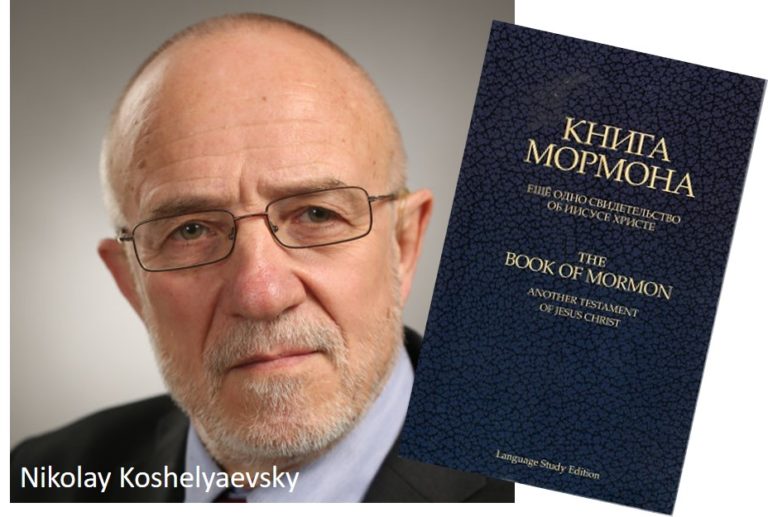


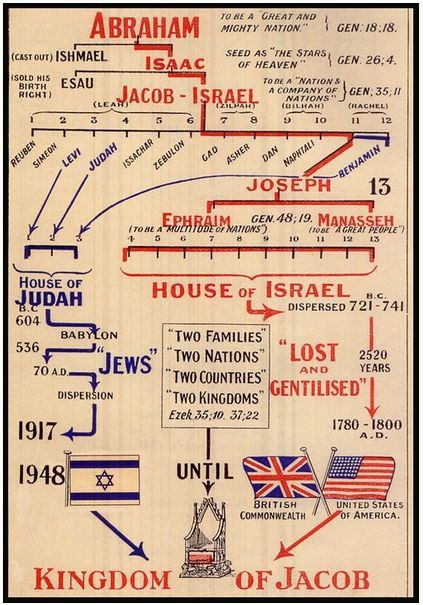


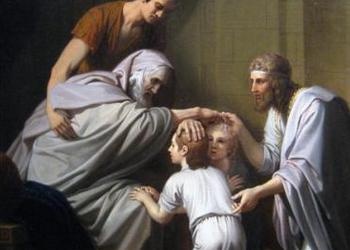






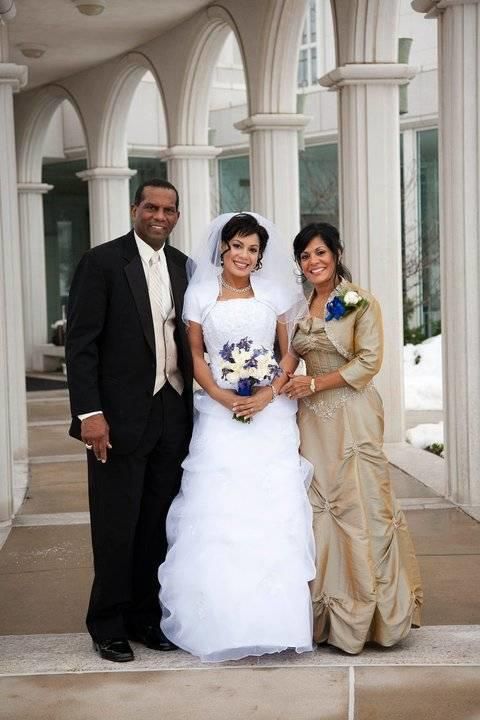


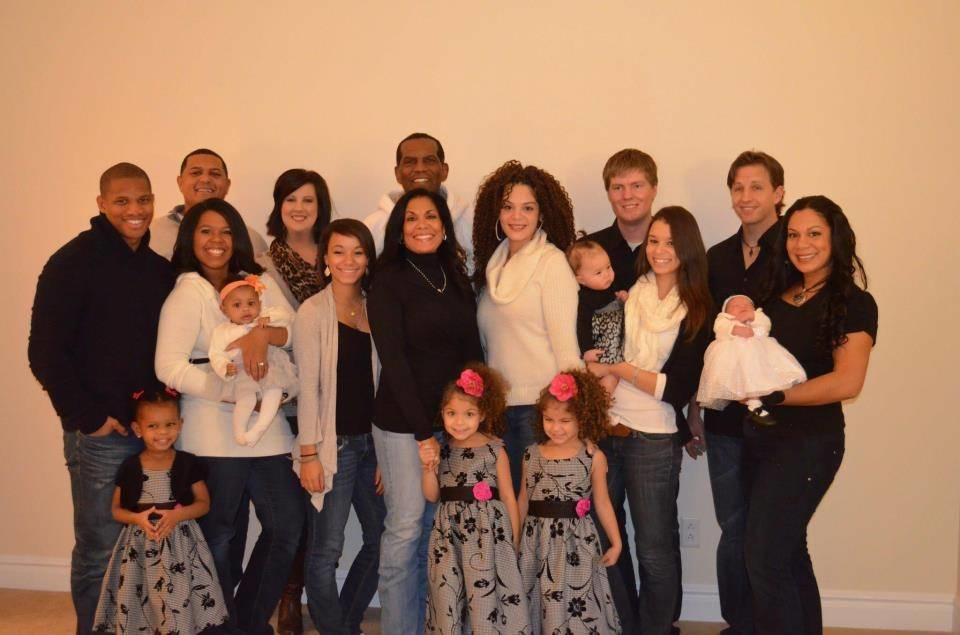




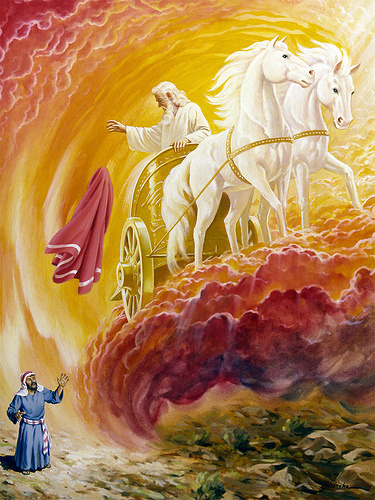


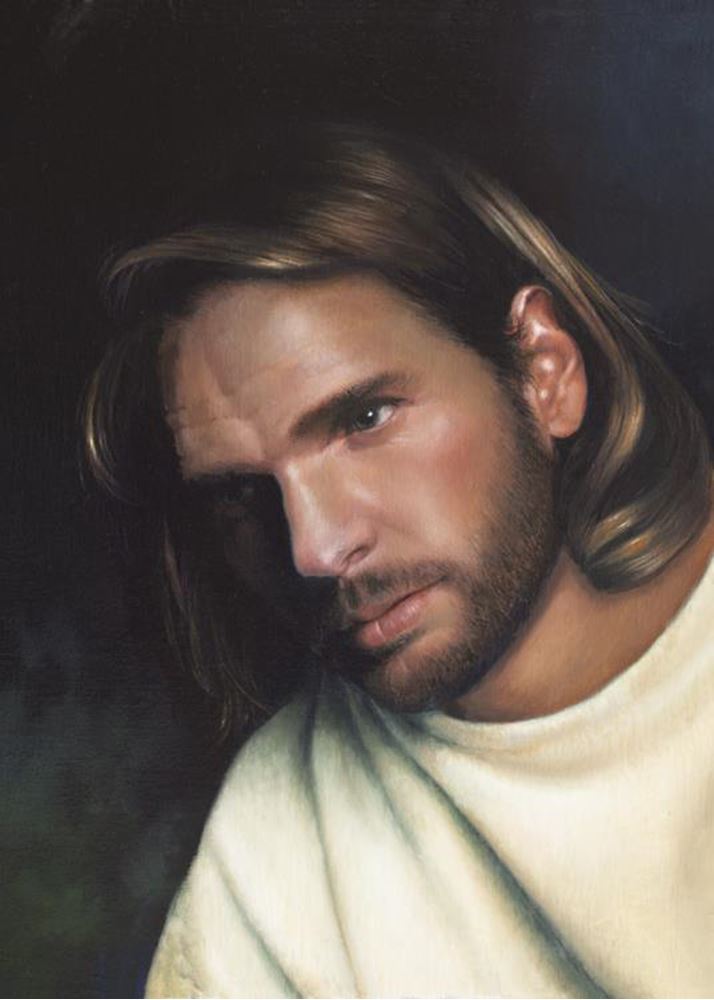


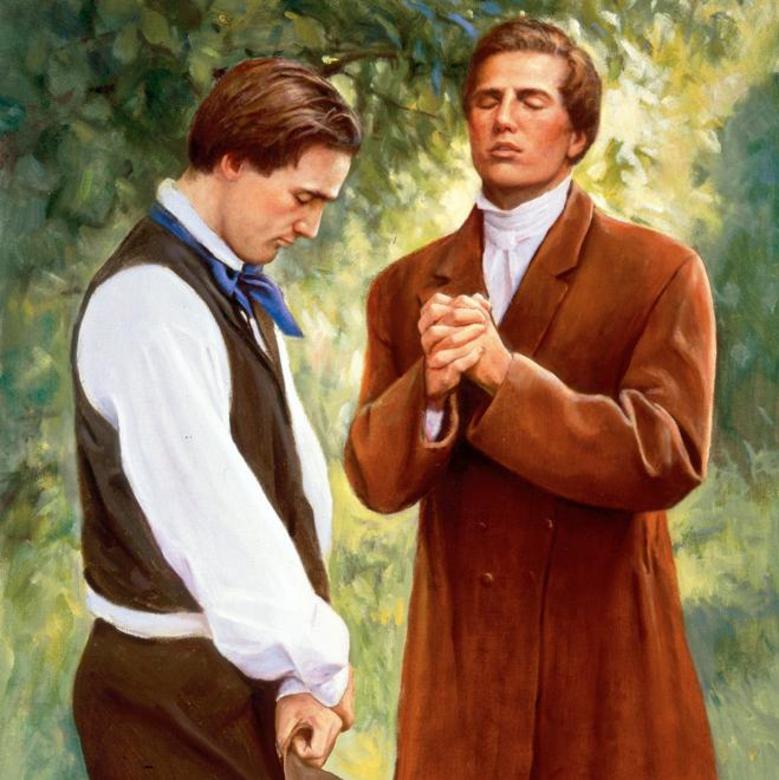


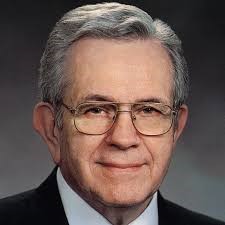



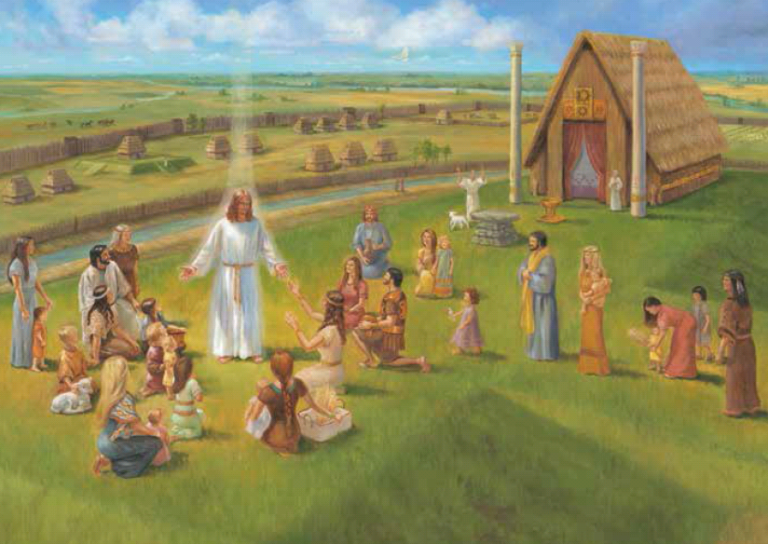


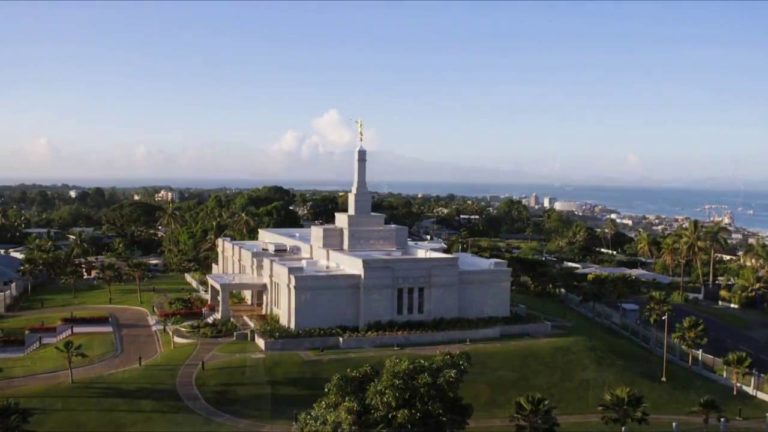



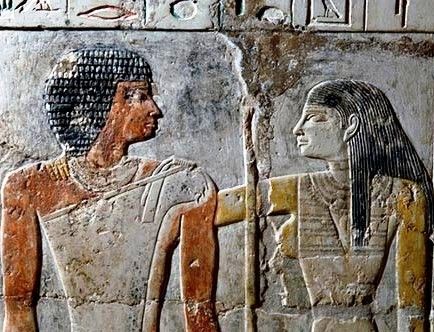


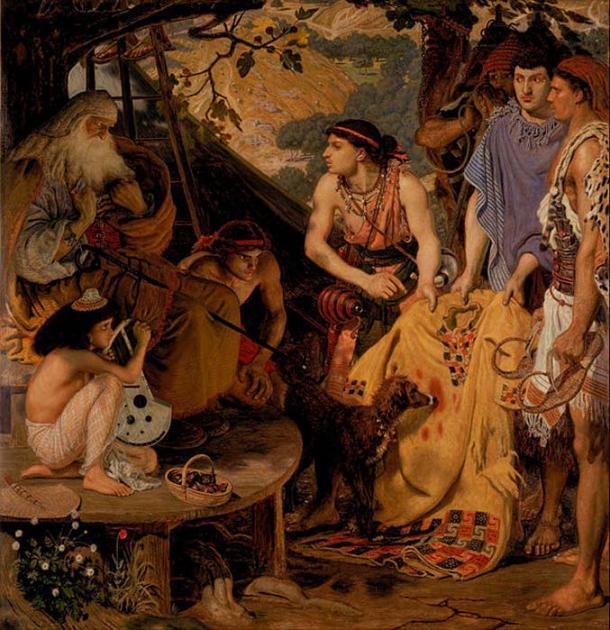 Painting depicting a scene in the Biblical myth of Joseph and the Coat of Many Colors. (Public Domain)
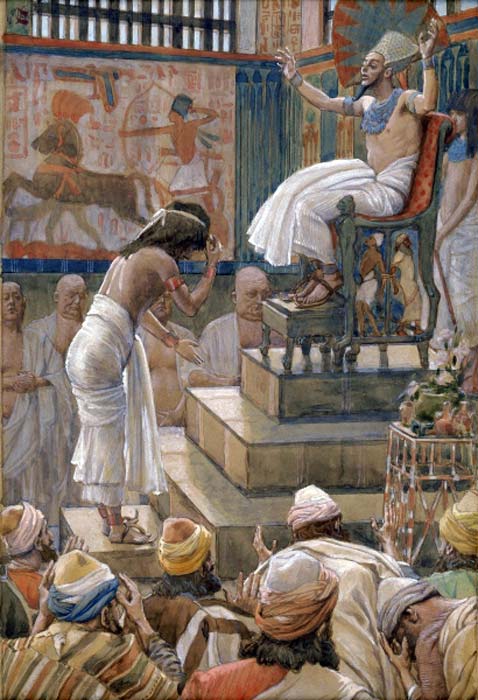 Joseph and His Brethren Welcomed by Pharaoh. By James Tissot, circa 1903. (Public Domain)
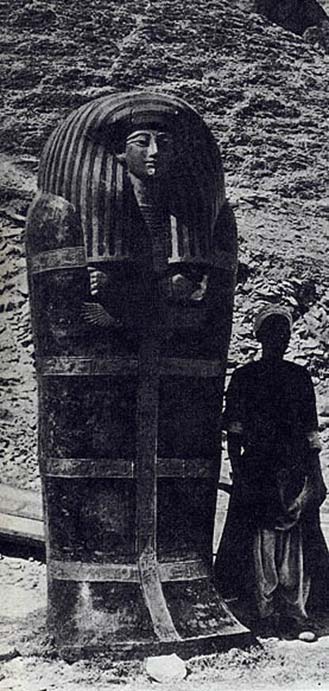 Outer coffin of Yuya’s mummy. Excavation assistant beside 2.75-meter (9 feet) outer coffin, shortly after excavation, circa 1905. (Public Domain)
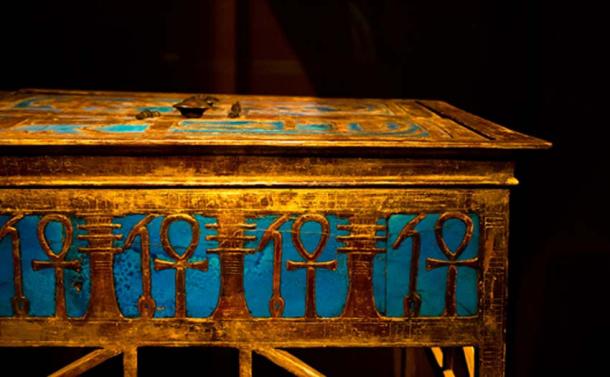 An elaborate box from Yuya and Tjuyu’s tomb bearing Amenhotep III’s cartouche. (CC BY-SA 2.0)
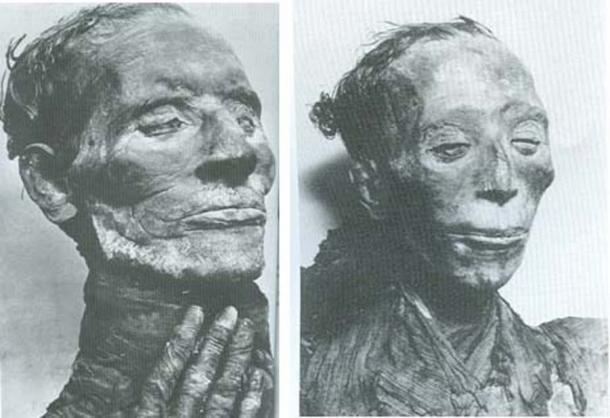 The mummies of Yuya (left), and to the right, Tuya. (Creative Commons Fair Use)
 Gilded cartonnage mummy mask of Tuya, wife of Yuya and mother of Queen Tiye. (Public Domain)
 The gilded cartonnage mask of Yuya, the father of Queen Tiye. Was Yuya more than just the father-in-law of pharaoh Amenhotep III – could he have been the Biblical Patriarch Joseph? (Public Domain)
 Egypt – Temple of Seti, east entrance, Thebes. (Public Domain)
 Ancient Egyptian chariots. (Public Domain)

 Elder Jeffrey R. Holland said, “To the Lord’s covenant people, names—particularly proper names—have always been very important. Adam and Eve themselves bore names that suggested their roles here in mortality (see Moses 1:34; 4:26) and, when important covenants were made, men like Abram and Jacob took on new names that signaled a new life as well as a new identity. (See Gen. 17:5; 32:28). Because of this reverence for titles and the meanings they conveyed, the name Jehovah, sometimes transliterated as Yahweh, was virtually unspoken among that people. This was the unutterable name of Deity, that power by which oaths were sealed, battles won, miracles witnessed. Traditionally, he was identified only through a tetragrammaton, four Hebrew letters variously represented in our alphabet as IHVH, JHVH, JHWH, YHVH, YHWH…
 represents the name “Jehovah”, or the tetragrammaton. All throughout the Old Testament, the word ‘LORD’ (all small caps), replaced the sacred name “Yahweh” as described above. “I Am” in Hebrew is “Yahweh” and “Adonai” is the Hebrew word for LORD.


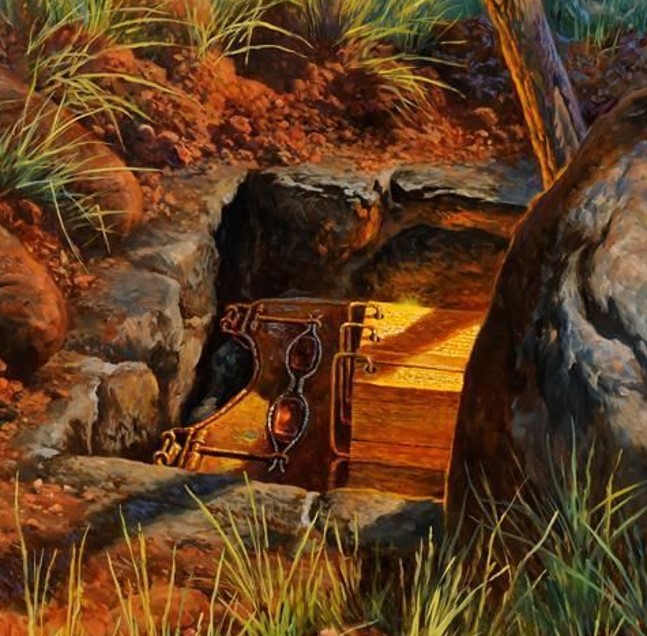
 Messenger and Advocate (Kirtland 1835)
 “I think Letter VII was reprinted so many times because it was so important. Oliver’s history was the most complete history of the early days of the Church until the serialized History of Joseph Smith began running in the Times and Seasons in 1842, but it was also important for people to know that the New York hill was a touchstone for the Book of Mormon. It was a connection between ancient and modern times–a pin in the map.” Jonathan Neville
 oseph Smith’s History, 1834-1836, contains Oliver’s letters, including Letter VII. You can find it in the Joseph Smith Papers starting with Chapter 1 on page 17. Oliver’s letters appear several pages later.
  The following section includes transcripts of eight letters Oliver Cowdery wrote in 1834 and 1835 regarding JS’s visions of an angel and his discovery of the gold plates of the Book of Mormon. Cowdery addressed the letters to


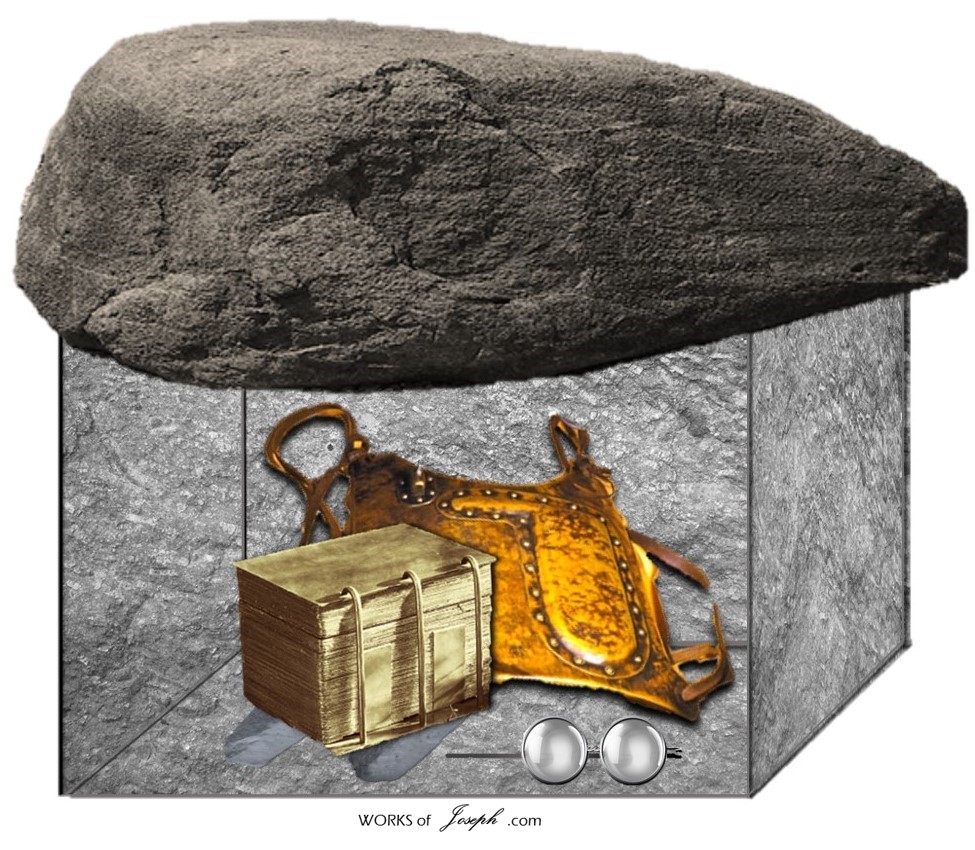


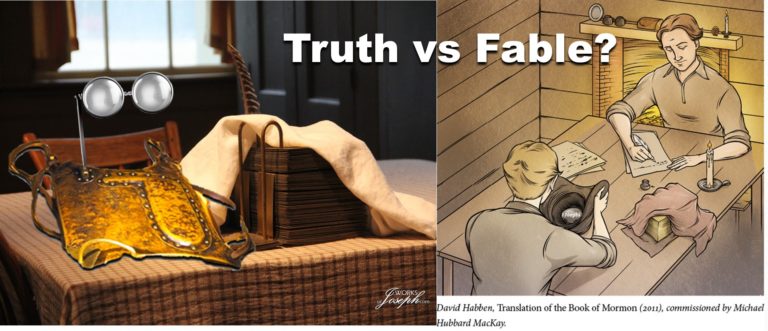


 speaking about it at BYU on January 15th. See the announcement here:
 All of this quoting from the King James Bible is problematic, but only if we assume that the Book of Mormon translation literally represents what was on the plates. Yet the evidence in The Nature of the Original Language (parts 3 and 4) argues that the Book of Mormon translation is tied to Early Modern English, and even the themes of the Book of Mormon are connected to the Protestant Reformation, dating from the same time period. What this means is that the Book of Mormon is a creative and cultural translation of what was on the plates, not a literal one. Based on the linguistic evidence, the translation must have involved serious intervention from the English-language translator, who was not Joseph Smith. Nonetheless, the text was revealed to Joseph Smith by means of his translation instrument, and he read it off word for word to his scribe. To our modern-day, skeptical minds, this is indeed “a marvelous work and a wonder.”
  Here is the bottom line: although Joseph Smith claimed he translated the plates, in reality, according to Brother Skousen and many other LDS intellectuals (including most of the Church History department) he did not actually translate the plates.
  We at the FIRM Foundation have a wonderful opportunity to hear from


