Mark of the Michigan Mound Builders Yod-Hey-Vau (Ojibwa Tongue) The Creator’s Son Deity or God Son of the Right Hand Egyptian Discovery of America
Wayne May publisher of Ancient American Magazine says, “I first learned of this Son of the Great Spirit from Ricardo Baeza, an Ojibwa medicine man in Golden Valley, Minnesota. He approached me after my lecture about the Michigan Plates. Collectively, they were associated with Daniel Soper and Father Savage, early preservers of a large group of copper artifacts and stone tablets unearthed from numerous mounds throughout the state of Michigan, beginning in the 1840’s.
The objects, today scattered across the
United States and Canada in mostly private collections, feature portrayals of
familiar scenes from mostly the Old Testament and three or more, undeciphered,
written scripts, together with depictions of what appear to be persons from
Europe or Near East in hostile interaction with Native Americans. Although
condemned out of hand as fraudulent by the archaeologists, the so-called
“Michigan Plates” or “Soper- Savage Collections” continue
to intrigue independent antiquarians, who believe the artifacts were made by an
Old World religious community in the upper Midwest during the 4th Century A.D
or earlier. In the 1950’s, Henrietta Mertz was the first researcher to identify
the “tribal mark or mystic symbol” which commonly appears throughout
the collection.
Following my Golden Valley slide
presentation of the Michigan Plates, Mr. Baeza told me that he could actually
read some of the glyphs that appeared on the Soper- Savage tablets, explaining
that their symbolic meaning was part of his tribe’s sacred tradition. He added
that the so-called “mystic symbol” represented the name of the
Creator’s Son, pronounced in the Ojibwa tongue (reading the cuneiform
characters from right to left) as “Yod-hey-vau”. This name, he said
really has an additional syllable, but the fourth is pronounced only once a
year in a sacred ceremony and then only by a tribal holy man in the great
lodge. Mr. Baeza’s explanation sparked my memory of an article by Ancient
American author, David Deal, in Ancient American’s Stone, Clay, Copper, Archives of the Past, March/April, 1994 Issue #5, entitled, “The Mystic Symbol
Demystified”.
In the midst of her investigation
(Henriette Mertz), and the Father with whom she had been working on the
Michigan tablets was coincidentally contacted by missionaries from the Church
of Jesus Christ of Latter Day Saints. Aware of their second scriptural book (the
Book of Mormon) that testified to the presence of Christ in America, the priest
invited them to inspect the Soper-Savage collection. Intrigued, the
missionaries wasted no time in contacting Milton R. Hunter of Salt Lake City,
Utah, a researcher of American antiquities.
After several months of communication and
visits to Notre Dame, the school officials chose to turn over the collection to
Hunter rather than Henriette. She was nonetheless afforded enough time with the
artifacts to complete her research for The Mystic Symbol. Elliot Soper, son of
Daniel Soper, offered his father’s collection to Hunter after having learned of
Notre Dame’s transference of its artifacts. Hunter’s expanded collection of
Michigan plates and related items was kept warehoused in the historical
archives of the Church of Jesus Christ of Latter Day Saints in Salt Lake City,
Utah for a period of time where the historical department allowed Ancient
American staff and Triple A Productions to photograph Mr. Hunter’s collection
in its entirety for continued study. Today the collection is kept by the
Michigan Historical Society.
The evidence of the Michigan Tablets and
Burrows Cave stones suggests that some fundamentally important culture-bearer
visited our Western Hemisphere in pre-Columbian times. Was it actually the
Christ? Or one of his disciples? Whatever his true identity, the arrival of
this person left a deep impact on the tribal memories of Native Americans.
Their “Yod-hey-vau” is remarkably similar to the biblical Je-ho-vah
who seems to be portrayed throughout the Michigan plates. Was the East Star Man
and Peace-Maker known to so many indigenous North American tribes really Jesus
Christ? Perhaps the imminent translation of the Illinois and Michigan artifacts
will answer that question.” The Mystic Symbol by Wayne N. May Publisher of
Ancient American Magazine.
“One of the most important events in
prehistory is the early discovery of America by the ancient Egyptians. Recently
an article appeared in Ancient American magazine, describing it. However, the
source of this article was a large petroglyph from Europe. It appears that the
Mystic Symbol is the first known American petroglyph, which confirms this early
discovery. So, apparently, it is a combination of a time glyph and a geographic
glyph. The spikes appear to represent dynasties or kings, but also important
crossings of the Oceans.” Dr. R.M de
Jong
“Father and Sons” (Tablet Picture Below) “God the Father’s face is never shown. To his right is Son of the Right Hand (Jesus Christ) and to his left is Son of the Left Hand (Lucifer). Sometime during the First Council of Nicaea in 325 A.D. to the Council in 381A.D., the Gospels were decided as to what and which would comprise the Holy Bible. At this time the understanding of the two sons of God was well known. However, the Holy men of the day decided that God could not have such an evil son as Lucifer. So the two Sons of God was changed to one Son and the other would become the Devil. It was also decreed that any church that kept the two son doctrine would be subject to excommunication, or even burned at the stake for preaching false doctrine. The two sons of God were no longer preached. This information was first brought forward by David Allen Deal in the publication of Ancient American magazine. This very doctrine of the Two Sons resurfacing in North America in the western woods of the State of Michigan was another support for the authenticity of the Michigan Plates. This doctrine was buried and hidden when the Nicene Creed was accepted and enforced by Roman Catholic Church by the year 381A.D.” Wayne May, ldsarchaeology.com 877-494-0044
Father and Sons (Michigan Tablets)
My blog is one of interesting information. I don’t claim it is all truth for I don’t know everything of course. I know the story behind those Michigan plates and I think there is some truth to them. There are many forgeries as well I believe. I have seen with many artifacts the so called experts rarely say anything but that they are all fake. I find very little truth behind many of these so called experts. I share the information and then expect each of us to study and pray about what is truth just as I do. I always say on my blog, don’t believe me, I am just an instrument for information and ideas that many have never considered. I want you to make up your own mind.
“We are frequently told that Jesus Christ is the God of the Old Testament (see Bible Dictionary, “Jehovah,” 710–11). But when we open our Bibles, we find little evidence that this is so. What is missing in the translations is clear in the original Hebrew text, where Jehovah, the Savior’s Old Testament name, appears over 5,000 times!
Why then is Jehovah missing from our Bible translations? The answer can be found in the way His name has been treated by Jews since the days of Malachi and Zechariah. Jehovah is the name of God, and devout Jews, out of reverence for Him, never say His name. Instead they substitute Adonai, a Hebrew title meaning “Lord.” So whenever they speak of Him or read aloud His name from scripture, they substitute Adonai (Lord).
LORD (in small capital letters)
King James translators of the Hebrew Bible followed Jewish practice. Instead of printing Jehovah, the name of God, they substituted the English title LORD, printed in small capitals, every time the name Jehovah appeared in the Hebrew text.
Lord (in lowercase letters)
Lord is also printed in lowercase letters (as Lord and lord) in the King James Version of the Bible. Lord is a title that refers to rulers of various kinds—heavenly and earthly—such as God, king, husband, governor, prince, prophet, father, captain, and angel. The heavenly ruler is designated by Lord, the earthly ruler by lord. Neither of these titles, printed in lowercase letters, is a substitution for the name Jehovah.Simply put, LORD equals Jehovah, while Lord or lord refers to an earthly or heavenly ruler.
Knowing the distinction between LORD and Lord helps us understand the story of Hannah and Eli in 1 Samuel 1:1–28. In verse 11, Hannah makes a vow with the LORD for a child. Then when Eli, the high priest, accuses her of being drunk (v. 14), Hannah says, “No, my lord.” Her use of lord shows her reverence for the high priest. Her calling upon the LORD shows her pleading with Jehovah. When we understand the distinctions between LORD, Lord, and lord, we can see what publishers have done. We can find Jesus Christ in the Old Testament by substituting Jehovah for LORD whenever it appears. Then something wonderful happens. Jehovah, who is Jesus Christ, appears from beginning to end of this great book as the God of the Old Testament.
The Savior’s ministry on earth did not begin with His birth. He is “the eternal I AM,” the Lord God Omnipotent who appeared to the patriarchs and prophets of old, who delivered Israel from Egypt, who gave the law on Sinai, and who guided and inspired the righteous prophets, priests, seers, judges, and kings of the Old Testament.” Keith H. Meservy is an emeritus professor of ancient scripture at Brigham Young University and a member of the Pleasant View Third Ward, Provo Utah Sharon East Stake.
Elder Jeffrey R. Holland said, “To the Lord’s covenant people, names—particularly proper names—have always been very important. Adam and Eve themselves bore names that suggested their roles here in mortality (see Moses 1:34; 4:26) and, when important covenants were made, men like Abram and Jacob took on new names that signaled a new life as well as a new identity. (See Gen. 17:5; 32:28). Because of this reverence for titles and the meanings they conveyed, the name Jehovah, sometimes transliterated as Yahweh, was virtually unspoken among that people. This was the unutterable name of Deity, that power by which oaths were sealed, battles won, miracles witnessed. Traditionally, he was identified only through a tetragrammaton, four Hebrew letters variously represented in our alphabet as IHVH, JHVH, JHWH, YHVH, YHWH…
Repentance and faith, service and compassion—now is always the right time for these. The past is to be learned from, not lived in, and the future is to be planned for, not paralyzed by. God has declared himself in the present tense. I am the Great I AM.
The prescribed method for coming to knowledge (and subsequent freedom) is to “give diligent heed to the words of eternal life” (D&C 84:43), yet many of us spend precious little time with those words.” Whom Say Ye That I Am? Jeffrey R. Holland Ensign Sept. 1974.
Written in Paleo-Hebrew and used from 1000 BC – 400 AD, represents the name “Jehovah”, or the tetragrammaton. All throughout the Old Testament, the word ‘LORD’ (all small caps), replaced the sacred name “Yahweh” as described above. “I Am” in Hebrew is “Yahweh” and “Adonai” is the Hebrew word for LORD.
“Astrology and astronomy were archaically treated together (Latin: astrologia), and were only gradually separated in Western 17th century philosophy (the “Age of Reason”) with the rejection of astrology. During the later part of the medieval period, astronomy was treated as the foundation upon which astrology could operate.
Since the 18th century they have come to be regarded as completely separate disciplines. Astronomy, the study of objects and phenomena originating beyond the Earth’s atmosphere, is a science and is a widely studied academic discipline. Astrology, which uses the apparent positions of celestial objects as the basis for the prediction of future events, is a form of divination and a pseudoscience having no scientific validity.” Wikipedia
“What should our attitude be regarding zodiac signs, astrology, and horoscopes?”
Basically our attitude should be the same as it is about fortune-telling, reading tea leaves, crystal ball gazing, or palm reading. To put it bluntly, any trust in such things is sheer superstition.
Historically there has developed a problem of discrimination that centers around the failure of otherwise straight-thinking people to distinguish between astronomy as a bona fide science and astrology, which is a counterfeit or pseudoscience. This is more complicated by the fact that the science may have grown out of the superstition. That is to say, belief in the theory that stars influence human affairs could have been the motivation for serious study of the heavenly bodies by those who eventually developed a basis for the ancient knowledge of astronomy.
By the time of the Middle Ages, astrology and astronomy were often regarded as one and the same and were closely associated with alchemy, magic, and other occult practices. Since the time of Copernicus in the sixteenth century, however, the two have diverged, and up until a decade ago it appeared that modern science had all but destroyed the influence of astrology. In recent years, much to the dismay of scientists and rational theologians alike, there has been a great revival of the fraud, consistent with the general irrationality of our times.
The astrologer, by using a chart of the zodiac and referring to the sign in the ascendant at the time of one’s birth, plots a map of the heavens. This is a horoscope and is supposed to determine one’s temperament, liability to accident, fortune, success, calamity, even susceptibility to disease.
Our reason tells us that God, who recognized the free will of man as basic to his nature and gave him freedom of agency to manifest it, would not have left man’s destiny bound up and governed by the relationships and movements of astronomical bodies. There is no reasonable way of establishing any direct cause and effect relationship between the character and personality of human beings and astronomical phenomena except as we may react to climate or our physical environment in general.
The people of several great nations of antiquity believed in and perpetuated this myth for centuries, giving it more dignity than it deserved. Even the Magian priests of the Zoroastrian religion who came to Palestine from Persia at the time of the birth of Jesus to observe from that ideal vantage point the precalculated appearance of an unusual star believed in astrology. Nevertheless, scripture does not affirm the truth of such a notion; it merely reports that this was their belief. In fact, the Judeo-Christian tradition has, from ancient times to the present, repudiated such things.
Moses was inspired to instruct his people with reference to the will of the Lord in such matters as follows:
“There shall not be found among you any one that maketh his son or his daughter to pass through the fire, or that useth divination, or an observer of times, or an enchanter, or witch,
“Or a charmer, or a consulter with familiar spirits, or a wizard, or a necromancer.
“For all that do these things are an abomination unto the Lord. …” (Deut. 18:10–12.)
In similar manner the prophet Isaiah scorned these practices in his own day when he announced that astrologers, stargazers, and monthly prognosticators should not be able to “deliver themselves from the power of the flame.” (Isa. 47:13–14.)
The batting average of so-called astrologers, fortune-tellers, soothsayers, and others of their ilk is no better than the law of averages would allow anyway. Daniel and his companions had a much better record to show by relying on the influence of the Spirit of the Lord in their lives.
“And in all matters of wisdom and understanding, that the king inquired of them, he found them ten times better than all the magicians and astrologers that were in all his realm.” (Dan. 1:20.)
It is also interesting to note that astrologers are referred to as unreliable in other places in scripture, including at least three places in the Book of Daniel alone.
We need to have our attitudes rationally as well as spiritually grounded and not be influenced and sustained by superstition and myth.”
BY DR. JOHN A. WIDTSOE, OF THE UTAH STATE AGRICULTURAL COLLEGE, LOGAN.
Pseudo-science means false science. It is a monster that fills every searcher with dismay. Science is built on truth; it experiments, observes, classifies, and shows the unchanging relation of numerous isolated facts. Pseudo-science is built on error, without experiment or careful observation; it assumes something to be true, and on this imaginary foundation builds a complex system of relations, in which men are asked to believe. Science is careful, plodding, and states all its conclusions with caution; pseudo-science has little thought for accuracy, but lays down far-reaching laws with a positive assurance. Science is modest and unpretentious. Pseudo-science knows no limit to its pretensions; in borrowed garments, enveloped with an air of mysticism, and full of bravado, it stalks about under the stolen title of science. Science is truth; pseudo-science is error.
There would be no need to burden the pages of the Era, whose readers regard truth as the end of their existence, with a discussion of one of the pseudo-sciences, were it not that untruth, clad in the pilfered garments of verity, and with the authority of respected men, is insinuating itself into the lives of some Latter-day Saints. Insidious and insinuating doctrines are leading even some of the young men astray, temporarily, from that unyielding faith in the Gospel which is our strength and our glory. There are men among- us, holding the Holy Priesthood, who in events of their lives would rather stare into a bit of flint-glass that enterprising dealers name a seer-stone, for the solution of their troubles, than to go with the power and authority of their Priesthood to the Almighty Father in prayer. There are persons among us who, after receiving the ordinances of The Church, will place more confidence in the fortune teller with his deck of cards, than in the promises given them as children by the Priesthood. Others, in the direction of their affairs, will give greater heed to the twaddle of a phrenologist, than to the earnest council of an Apostle of the Lord. And, I grieve to say, there are men holding the Holy Melchizedek Priesthood, whose books on astrology are worn with much use, while their patriarchal blessings, clean and bright, are mislaid with other antiquated documents. True, the number of those who can harmonize such beliefs with their faith in the Gospel is small; and true, too, few of those who have been deceived are long led away. However, to forewarn is to forearm; hence, this article has been written for those who may be tempted.
In the list of pseudo-sciences stands, hoary-headed with its high antiquity, the folly of astrology. It has a great power to mislead, for it insists on a near relationship with one of the most accurate of the sciences, namely, astronomy. Astronomy studies with exhaustive care, the motions of the planets and other bodies in space; it measures their distances from the earth and from each other; it determines their chemical composition; and predicts the places that they will occupy at some future time. Astrology, on the other hand, accepts the facts as determined by astronomy, and busies itself with predicting events in the individual lines from the positions of the planets. Claudius Ptolemy, who wrote perhaps the best treatise on astrology, held that in human lives, “all accidents, good or bad, general or particular, originate in the motions of the planets and of the luminaries, and may be foretold by taking into consideration the positions and configurations of the planets.” That is also the belief of the modern astrologers.
Astronomy and astrology are both built upon fundamental laws; and the truth or falsity of these sciences will depend upon the reliability of their foundations. The planets have been studied: from the earliest times, and many correct laws for their motions, were discovered early in the history of the world. It is not much more than two hundred years, however, since the fundamental law of astronomy was recognized, that connected in a reasonable manner all previously discovered laws. Sir Isaac Newton, the celebrated mathematician, physicist and astronomer, elaborated after many years of thought and study, the famous law of gravitation.
It reads as follows: “Every body attracts every other body with a force which varies directly as the product of their masses, and inversely as the square of the distance by which they are separated.” In other words, the earth is attracting every star in the universe, and all the stars are attracting the earth and each other and every man and beast in the world are attracting the earth, and the earth in turn is attracting them. This attraction becomes greater as the attracting bodies become larger; it becomes smaller as the distance between them increases. Now, be it remembered, that this law was not the product of Newton’s imagination, he took only the observations of hundreds of men who had gone before him, and by his keener intellect drew out of them this great law. Since Newton’s day, hundreds of astronomers have tested the truth of the law of gravitation, and have found it to be invariable. It is therefore held to be an eternal truth.
Astrology claims, also, that there is a force by which all things in space are held together. It imagines that a child, at the moment of its birth, is independently attracted by the countless objects in space. The earth attracts the new born child; so does the moon, the planets and all the heavenly bodies. As a result, there arises in the body of the child a peculiar strain, due to these attractions. Now, as the planets move onward in their courses, and approach or recede from the child, the strains to which it is subject change in a corresponding degree. So far, there may be a little truth in the hypothesis; though the counterbalancing attraction of the body, would naturally make any strains imperceptible.
Astrology goes still further and assumes that not only does this law hold for material things, but it is also valid for spiritual things. So important is this attraction that the ruling planet, at the time of birth, will govern the new life until its last days; and all events in the lives of men are the results of the influences of the planets.
In short, man, with his individuality and free agency, is more perfectly a slave to the measured motions of the stars, than are the lifeless rocks of the mountains or the waters of the rivers.
This fundamental law of astrology was not founded on facts, or, if supporting facts existed at the time of its origin, they are not now known. Besides, although astrologers for many centuries have been trying desperately to prove its truth, yet no facts sufficient to establish the fundamental law have been adduced. The fundamental law of astrology is a product of the imagination, and in that respect differs essentially from the law of gravitation which was built upon thousands of observations, made for thousands of years. Guesses are always allowable in science, but, until their truth is established, they should be considered only as guesses; or if they do not stand the tests, they should be discarded immediately.
That the lives of men and women are governed by the planets, may or may not be true; certain it is that astrology, by its predictions, has not proved the truth of the assumption. Test cases, in which the moments of birth of men were stated, have been given eminent professors of astrology at various times, but never have they been able to recount the important details of the lives. Any intelligent man, with some world-knowledge and insight into the natures of men, can make shrewd guesses concerning the events that are likely to overtake his friends. The predictions of the best astrologers have never risen above shrewd guesses. Astrologers themselves realize their inability to foretell events with any great accuracy, but rather than to give up their so-called science, they insist that, while the fundamental principle is correct, the true key has been lost to mankind. A lost science is no science, as far as the world is concerned; and thus by their own statements a science of astrology does not now exist. As an evidence, I may quote the following paragraphs written to astrologers by Raphael, who is the most popular astrologer of the century:
The most difficult and least understood part of astrology is the directional, or the calculation of future events. There are Zodiacal directions, Mundane directions, secondary directions, progressed cusps, revolutional figures, eclipses, new moons, etc., etc., until, in short, if they were all calculated in detail, there would be at least an important influence every week on the average. The stem facts of life do not bear out such copious influences, and it is practically a waste of time to work out the primaries, as they are called, when not more than ten per cent will be found to coincide with an event. I regret that I must adhere to the opinion so often expressed, which is that none of our systems of directions are correct, but that the secondary as taught in my key, comes nearer the truth than any, yet it is sadly deficient and unreliable. I do not take the planets as symbols but as forces, producing or causing the events that occur during our pilgrimage on this earth. The true key to astrology was lost centuries ago, and has not yet been found.
Our knowledge of the Zodiac is sadly deficient, and it is this deficiency that causes so many failures.*
Lines more destructive to astrology could hardly have been written. Any clever deceiver can make ten per cent of his guesses concerning any ordinary subject come true.
Other devotees of fortune-telling by stars argue with great vigor that astrology must be true, if for no other reason, because it existed as far back as history goes. This is a shallow argument; for error has always existed, and an error, no matter, how old it is, can never become a truth. It was believed for centuries that iron, lead, and other base metals, could be transmitted into gold; but we know today that the notion is false. Alchemy is nearly six thousand years old, yet is false; chemistry is little over one hundred years old, but is true. Errors, like garden weeds, will live on and flourish when truth and things useful perish.
There is another argument for astrology, which has influenced many people in their beliefs, but which fails to regard fundamental principles. Astrologers claim that not only has astrology existed from early times, but great men of all ages have believed in it. History informs us that many men (including some astronomers) who have benefited the world by their labors, have been advocates of astrology. It is noteworthy, however, that their scientific work was sharply separated from their astrological beliefs. The number of men of high learning, who have investigated astrology and have rejected it, is much larger than the number of those who have accepted it. Among those who have studied the subjects, astronomy has stood the test of time, while from the first, astrology has been condemned by the majority of scholars.
History relates also that many kings and emperors, when in sore distress, have called in astrologers to their aid. It must be remarked, however, that astrologers, sooth-sayers, and other deceivers, have not found constant favor at the courts, as they have usually failed to make correct predictions. Besides, a king’s favor does not add to the truth of astrology, for a king may be the most ignorant man in the kingdom, and in that case, is as much subject to superstition as the humblest peasant.
The argument, however, by which the astrologer, who is also a theist, clinches his case is, that many of the holy men of old, who knew God, practiced astrology. As the most famous of astrologers are mentioned Solomon, David and Abraham. In fact, Abraham is looked upon as the great master of telling fortunes from the stars. The absurdity of the belief that men who talked with God would have need to go to the stars for their knowledge of coming events is stupendous, yet, some of our brethren and sisters, without close inquiry, have accepted it as a fact. Take, as an instance, the career of Abraham. It is well known that he was a man whose learning far exceeded that of his age, and that he studied with care the heavenly bodies. There is, however, nothing in history that says definitely that Abraham derived all or a part of his wisdom from this study of the stars. There is not even a clear indication that he practiced astrology. Of course, in common with all great men of the far past, Abraham is surrounded by a mythical atmosphere in which all kinds of wild fancies float; but no reasonable men will believe myth instead of fact. We who have been blessed to live in this age know with an absolute certainty that Abraham did not derive his knowledge from his acquaintance with the motions of the planets, for the Lord, speaking to the Prophet Joseph Smith, has said that “Abraham received all things, whatsoever he received, by revelation and commandment, by my word, saith the Lord, and hath entered into his exaltation, and sitteth upon his throne.” * All the holy men of old received “all things, whatsoever they received” in just the same way.
“The true key to astrology was lost centuries ago,” says Raphael, the “astrologer of the Nineteenth century.” He is wrong, for astrology has never had a true key. Falsehood, emanating from the Father of Lies, has been the hope and mainstay of the art in all ages. But if this great Raphael will define astrology as the art of fortelling events, regardless of the stars, then he is correct, for the key of this power has been lost and found again several times during the world’s history; it is the Holy Priesthood, “which continueth in the Church of God in all generations, and is without beginning of days or end of years.” Abraham received this Priesthood, and was a High Priest before God. Therefore did he have a right to call upon the Lord and to learn of the events of his future. This power of the Priesthood is the only one sanctioned of the Father, that can look into the past and the present, and discover the multitudinous relations of human lives. All other powers, with like claims, emanate from the source of error. Modern science, which is based on truth, claims no such power.
The Church of God is upon the earth, and the Priesthood with all its powers. In our midst are prophets, seers and revelators; apostles, high priests and elders. If we must look into the future or the unknown past, let us go to these men, from whom we will get satisfaction; or, if we ourselves hold the Priesthood, then let us call upon the Lord in humility, according to the divine formula, “in fasting and prayer,” and our hearts’ desires will be granted us according to our needs.
The evil one wishes that error should be supreme among the children of God, and he does all he can to support the false and to destroy the true. His snares are manifold. Young men of Zion, defy Satan; spurn all lies; there is truth enough in the universe to keep us busy through all eternities. Let us cast out from amongst us the folly of astrology.
Doctrine and Covenants, section 84; verse 14. Pearl of Great Price, page 50.
This article is not intended for a systematic argument against astrology: it sounds only a note of warning, and in so doing, touches lightly on several objections against the art. I doubt very much that it merits greater notice.
290 IMPROVEMENT ERA
According to LDS Church doctrine, is the Universe Geocentric or Heliocentric?
Astronomy, Scriptural Reference Author: Paul, Erich Robert
Latter-day Saint scriptures indicate that both biblical and latter-day prophets and seers were shown visions of the heavenly realms to orient them to God’s dominion and eternal purposes. These visions gave information about (1) the governing of systems of worlds and stellar objects; (2) a heliocentric, planetary cosmology;(3) the plurality of worlds; (4) the spiritual and physical creation of the earth and the universe; and (5) the role of Jesus Christ as creator.
The book of Abraham states that God’s physical dominion (throne) is located near a star called Kolob (Abr. 3:2-3). While it might seem reasonable to suppose that this refers to some distinguishing feature of the universe, all efforts to identify it are speculative and not authoritative. Wherever Kolob is located, its purpose is to “govern” all planets that are of the same “order” as the Earth (Abr. 3:9). Since Abraham says no more than that, it is not clear whether he is speaking physically, metaphorically, or allegorically. Thus, “to govern” might mean a physical bonding as with gravity, while “order” could conceivably mean planets similar to the Earth in size, or planets in the same region of this galaxy or even in the entire Milky Way galaxy. Kolob was also said by the Egyptians to provide the light for all stars, including that for our sun (Abr. Facsimile 2). Even so, Latter-day Saints have made no definitive comment on the meaning of these passages.
In contrast to some interpretations of biblical scholars who attribute a geocentric cosmology to the words of Joshua (10:12-14), Job (9:6-7), Isaiah (38:7-8), and other Old Testament passages, the Book of Mormon affirms the sun-centered (heliocentric) view accepted by modern planetary physics. The prophets Nephi 2 (Hel. 12:13-15) and Alma 2 agree that “surely it is the earth that moveth and not the sun” (Alma 30:44).
Psalm 8:3-4has been the classic text for discussion of the “plurality of worlds.” LDS scriptures give even more direct support for modern astronomers’ search for extraterrestrial intelligence. The prophets Enoch, Moses, and Joseph Smith all received revelations dealing with the existence of sentient life on other planets. Moses revealed both the spatial and temporal existence of countless worlds: that God had created “worlds without number,” that “many worlds…. have [already] passed away,” and that other worlds are yet to be created (Moses 1:33-38). Joseph Smith received revelations explaining that through Jesus Christ these worlds are created and inhabited (D&C 76:22-24;93:9-10; Moses 1:33), that all kingdoms are bound by certain laws and conditions (D&C 88:36-38, 42-47), and that resurrected beings reside on celestialized planets (D&C 130:4-7).
The various creation accounts in LDS scripture outline a spirit creation of the heavens and the earth that preceded the physical creation, thus affirming the spiritual nature of the cosmos (Moses 2-3; Abr. 4-5); spirit is indeed “matter” of a different order (D&C 131:7-8). While Moses calls creation periods “days,” Abraham speaks of “times” and of thousand-year days (Abr. 3:4;5:13), suggesting a complex physical creation process.
Bibliography Athay, R. Grant. “Worlds Without Number: The Astronomy of Enoch, Abraham, and Moses.” BYU Studies 8 (Spring 1968):255-69.
Hansen, H. Kimball. “Astronomy and the Scriptures.” In Science and Religion: Toward a More Useful Dialogue, ed. W. Hess and R. Matheny, Vol. 1, 181-96. Geneva, Ill., 1979.
Salisbury, Frank B. The Creation. Salt Lake City, 1976.
“…When…first commanded to testify of these things they [The Three Witness] demurred and told the Lord the people would not believe them for the book concerning which they were to bear record told of a people who were educated and refined, dwelling in large cities; whereas all that was then known of the early inhabitants of this country was the filthy, lazy, degraded and ignorant savages that were roaming over the land. The Lord told us, in reply that he would make it known to the people that the early inhabitants of this land had been just such a people as they were described in the book, and he would lead them to discover the ruins of great cities, and they should have abundant evidence of the truth of that which is written in the book…” – David Whitmer, Interview with James H. Hart (Richmond, Mo., 21 August 1883), as printed in Deseret Evening News, Salt Lake City, Utah as published in Annotated Book of Mormon by David Hocking and Rod Meldrum page 560.
This abundant evidence of the truth is here. It is in the art and archaeology, the geopgraphy, records, science, and philosophy, and every known learning of the people of today. The Native Americans are and were indeed Children of God who had trugth among them and will be theirs again. We know this and preach this.
“Wherefore, this land is consecrated unto him whom he shall bring. And if it so be that they shall serve him according to the commandments which he hath given, it shall be a land of liberty unto them; wherefore, they shall never be brought down into captivity; if so, it shall be because of iniquity; for if iniquity shall abound cursed shall be the land for their sakes, but unto the righteous it shall be blessed forever.” 2 Nephi 1:7
The duty we Americans have for living in this wonderful land is to simply obey the Commandments. As we do this we are then able to bless the lives of others, especially our brothers and sisters the Lamanites and the Jews. I am impressed with the deep love the Prophet Enos had for his brethren the Lamanites.
Enos 1:10 “And while I was thus struggling in the spirit, behold, the voice of the Lord came into my mind again, saying: I will visit thy brethren according to their diligence in keeping my commandments. I have given unto them this land, and it is a holy land; and I curse it not save it be for the cause of iniquity; wherefore, I will visit thy brethren according as I have said; and their transgressions will I bring down with sorrow upon their own heads.
11 And after I, Enos, had heard these words, my faith began to be unshaken in the Lord; and I prayed unto him with many long strugglings for my brethren, the Lamanites.”
Our Prophet today, Presiden Nelson has warned us, “Whenever I hear anyone, including myself say, I know the Book of Mormon is True, I want to exclaim that’s nice but it isn’t enough. We need to feel deep the inmost parts of our hearts that the Book of Mormon is unequivocally the word of God. We must feel it so deeply that we wouldn’t want to live even one day without it. I might paraphrase President Brigham Young in saying, I wish I had the voice of seven thunders to wake up the people to the truth and power of the Book of Mormon.” Elder Russell M. Nelson Sept 30, 2017 General Conference.
As the Lord began to bring His people back to the Promised Land, we know other Israelites were already here although they didn’t have the priesthood amongst them.
A big test was now upon the New Settlers. How would we treat the people who already occupied this land? Even as we had been promised this land would we reach out to the Native Americans and help bless their lives, or would our greed take over and would we destroy this great people? We know what happened. What are we doing today to give back to these wonderful Natives so they may have the blessings of the Book of Mormon that we have?
1492: Extensive civilizations and religions were established across the continent by Native Inhabitants. 1790: Numbers of settlers where on the increase (pop. 4 million), demand for land forced the Indians westward. 1830: The Indian Removal Act saw the Indians east of the Mississippi River moved to the west. 1860: Discovery of gold in the west and establishment of reservations, diminished the Native land base. 1890: A further 90 million acres of Indian land was lost due to allotment policies.
Green=Native Americans in 1784
It is simply sad to see what has happened to our Native brothers and siters.
Trail of Tears
Trail of Tears
The Book of Mormon, which contained Lehi’s prophecies, was first offered for sale in Grandin’s Bookstore March 26, 1830. The infamous “Indian Removal Act” was passed by Congress on May 28, 1830.
In speaking to the Lamanites and others who are disobedient, the Book of Mormon said, “and he will take away from them the lands of their possessions, and he will cause them to be scattered and smitten.” 2 Nephi 1:10-11
At the beginning of the 1830s, nearly 125,000 Native Americans lived on millions of acres of land in Georgia, Tennessee, Alabama, North Carolina and Florida–land their ancestors had occupied and cultivated for generations. By the end of the decade, very few natives remained anywhere in the southeastern United States. Working on behalf of white settlers who wanted to grow cotton on the Indians’ land, the federal government forced them to leave their homelands and walk thousands of miles to a specially designated “Indian territory” across the Mississippi River. This difficult and sometimes deadly journey is known as the “Trail of Tears.”
Indian removal took place in the Northern states as well. In Illinois and Wisconsin, for example, the bloody Black Hawk War in 1832 opened to white settlement millions of acres of land that had belonged to the Sauk, Fox and other native nations.
If we as Americans don’t wake up and strive more diligently to obey the Lord we will have the same horrible fate of our good brethren the Lamanites.
The promise of a blessed land is only to those who are righteous.
A Jewish Duty: Creating A More Representative Judiciary
By RABBI SHMULY YANKLOWITZ January 2, 2014,
Of all the wisdom and political theory from the great Thomas Paine that has endured perhaps some of his wisest words were those he imparted on the eve of the American revolution: “Those who expect to reap the blessings of freedom must… undergo the fatigue of supporting it.” (The American Crisis, Number IV: Philadelphia, September 12 [1777]). Paine’s words are both thoughtful and inspiring and serve as a reminder that we must constantly defend and enhance our justice system in America to support freedom.
President Obama has nominated Diane J. Humetewa to serve on the U.S. District Court for the district of Arizona as a federal judge. Humetewa, Professor of Practice at the Sandra Day O’Connor College of Law at Arizona State University and a member of the Hopi tribe, helped establish one of the nation’s first programs for victim services, and was later appointed by President George W. Bush to be the first Native American woman to serve as the U. S. Attorney for the District of Arizona.
Diane Humetewa
Update: “Confirmed in 2014 as the first Native American woman and enrolled tribal member to serve as a federal judge, Humetewa is one of three Native Americans in history to serve in this position.” Source
Continued from RABBI SHMULY YANKLOWITZ, “She previously served as counsel for the Senate Committee on Indian Affairs and to the Deputy Attorney General for the U.S. Justice Department, and was a member of the U.S. Sentencing Guideline Commission, Appellate Court Judge for her tribe, and chairperson for the Arizona U.S. Magistrate Judge Merit Selection Committee. If she is confirmed, she will be the first Native American woman to serve as a federal judge, and the only active judge. Senator John McCain is among those who are supporting her candidacy, making it likely that she will receive at least some bipartisan support.
Native American tribes have been grossly mistreated by the United States for centuries, with hundreds of broken treaties, stolen land, brutal violence and even murder characterizing our relationship with America’s native peoples. One of the grossest examples of this miscarriage of justice occurred to the Cherokee nation, which had been located in the state of Georgia and some other areas of the southeast.Wary of the intentions of Georgia to seize its land, the Cherokee undertook numerous efforts to maintain their land by attempting to assimilate into American culture, including abandoning their traditional lifestyle, adopting the Christian religion, establishing a written language, a constitution, school system, and negotiating treaties with the United States in 1785, 1790, 1791, 1792, 1794, 1804, 1805, 1807, 1816, and 1819. Unfortunately for the Cherokee, President Andrew Jackson, who hated Native Americans, was elected President in 1828. President Jackson had Congress pass the Indian Removal Act of 1830, which authorized the removal of all Native Americans in the east to land west of the Mississippi river. In addition to the President and Congress’ efforts, Georgia also passed laws that facilitated the confiscation of Cherokee land.
In the spirit of assimilation, the Cherokee Nation utilized the American justice system and sued the State of Georgia. The case eventually reached the Supreme Court, where the Chief Justice, the Federalist John Marshall, was a strong political opponent of President Jackson (as he had also opposed President Thomas Jefferson 30 years earlier), possibly indicating a fairer solution to the forced removal. Contrarily, however, Chief Justice Marshall refused to intervene on behalf of the Cherokee, and evidenced the paternalistic, racist philosophy of his era in his infamous decision Cherokee Nation v. the State of Georgia (1831). In the opinion, Marshall wrote that the Cherokee did not qualify as a foreign nation deserving treaty rights, in spite of the numerous treaties that had been ratified by the Senate, and that they constituted “domestic dependent nations.” In Marshall’s words:
They occupy a territory to which we assert a title independent of their will, which must take effect in point of possession when their right of possession ceases; meanwhile, they are in a state of pupilage. Their relations to the United States resemble that of a ward to his guardian. They look to our Government for protection, rely upon its kindness and its power, appeal to it for relief to their wants, and address the President as their Great Father.
The Cherokee were the fifth Native American tribe pushed west in 1838, in a forced march that became known as the “Trail of Tears.” According to historians, the march resulted in the deaths of over 5,000 Cherokees. Originally, the U.S. government promised land and aid to Native American tribes. However, the United States officially began to view Native land as “unassigned territory,” and subsequently in 1885, 1889, and 1893, land in Oklahoma was opened to thousands of “settlers” who quickly journeyed west and claimed the land for their own. This mass repurposing further eroded Native American lands, and in 1907 Oklahoma was formally recognized as a state. While Native American tribes, to this day, have some land (reservations), these lands are almost invariably located on marginal land that has little value and little agricultural productivity.
While this all seems like distant history, the difficulty of obtaining any justice for Native Americans remains a problem; likewise, resistance to considering members of Native American tribes as equal citizens is still strong. Today, the House of Representatives is resisting efforts to reauthorize the Violence Against Women Act because, among other things, it would allow Native American tribal police the right to apprehend non-natives who attack women on tribal land. As a result of gap between State and tribal law, female victims of violence are left to suffer at the hands of violent offenders without legal recourse. For example, Diane Millich, a Southern Ute Native American living on tribal land, was the victim of domestic violence by her husband, a white man. The Southern Ute Tribal Police were not allowed to arrest her husband because he was not a Native, and the local County Sheriff’s office could not go on the tribal land to arrest him. When Millich’s husband traveled onto Federal Bureau of Land Management land and wounded another person with a firearm, he was finally arrested, but then only after the authorities literally measured the area of the crime with a tape measure to ensure the crime was committed on non-tribal land. Native American women are 2.5 times more likely to be raped than other American women, and about 60 percent will experience the horrors of domestic violence. The loopholes in State, Federal, and Tribal law are what allow Native women to be victimized; it is imperative that action be taken by Congress to pass the Violence Against Women Act.
As Jews, we know that justice for oppressed individuals and populations is at the core of the Jewish tradition and built into human conscience. This was our core commitment, even prior to the Sinai revelation, as Rabbi Abraham Joshua Heschel explained:
The moral imperative was not disclosed for the first time through Abraham or Sinai. The criminality of murder was known to men before…What was new was the idea that justice is an obligation to G-d, His way not only His demand; that injustice is not something G-d scorns when done by others but that which is the very opposite of G-d; that the rights of humans are not legally protected interests of society but the sacred interest of G-d. G-d is not only the guardian of moral order, ‘the Judge of all the earth,’ but One who cannot act unjustly (Genesis 18:25,” (G-d in search of Man, 136).
We must approach communities that we do not understand with humility. Political philosopher Jean-Jacques Rousseau wrote that we fail to truly understand and comprehend what others have to offer, be it Africans, Peoples of the East Indies, or Native Americans, when we exploit, beat into submission, and judge others through our perceived understandings of right/wrong and enlightened/savage. We are, in Rousseau’s language, “pretend[ing] to judge mankind:”
Although the inhabitants of Europe have for the past three or four hundred years overrun the other parts of the world and are constantly publishing new collections of travels and reports, I am convinced that the only men we know are Europeans…we do not know the Peoples of the East Indies, who are exclusively visited by Europeans more interested in filling their purses than their heads. All of Africa and its numerous inhabitants, as remarkable in character as they are in color, still remain to be studied; the whole earth is covered with Nations of which know only the names, and yet we pretend to judge mankind!
Tragically for Native Americans, our legal system reflected the ignorance and violence of our singular perspective of justice. The consequences of that reverberate not only in our history books but are currently being experienced on tribal lands and in the halls of our political and legal institutions.
One important way of ensuring that the American legal system is more fair and representative of all of our nation’s citizens is by having more diverse judicial nominees and appointees. Native Americans are a minority group that has infamously and tragically been ignored and left without adequate representation. President Obama has stated that when considering judicial nominees he looks for individuals who understand “that justice isn’t about some abstract legal theory” and who “identif(y) with people’s hopes and struggles as an essential ingredient for arriving at just decisions and outcomes.” Justice is not all intellect. It requires empathy, personal narrative, and being deeply connected to the people. Confirming Professor Diane J. Humetewa as a District Judge, and reauthorizing the Violence Against Woman Act, will be at least a positive step toward equal justice.
Rabbi Dr. Shmuly Yanklowitz is the Executive Director of the Valley Beit Midrash, the Founder & President of Uri L’Tzedek, the Founder and CEO of The Shamayim V’Aretz Institute and the author of “Jewish Ethics & Social Justice: A Guide for the 21st Century.” Newsweek named Rav Shmuly one of the top 50 rabbis in America.”https://jewishweek.timesofisrael.com/a-jewish-duty-creating-a-more-representative-judiciary/
The painting above was created to show the plausibility of the First Nephite Temple built near Chattanooga, Tennessee. In several articles below in the year 1935, an ancient Egyptian Temple actually was found on the Clinch River between Chattanooga and Knoxville Tennessee.
The tools of faith shown in this painting above, were likely utilized by Nephi and subsequent Prophets, and delivered to Joseph Smith in our day. The Lord said through Joseph Smith, “Behold, I say unto you, that you must rely upon my word, which if you do with full purpose of heart, you shall have a view of the plates, and also of the breastplate, the sword of Laban, the Urim and Thummim, which were given to the brother of Jared upon the mount, when he talked with the Lord face to face, and the miraculous directors which were given to Lehi while in the wilderness, on the borders of the Red Sea. And it is by your faith that you shall obtain a view of them, even by that faith which was had by the prophets of old.” D&C 17:1-2.
Nephi’s breastplate in this painting represents Nephi’s readiness for the protection of his people and was not necessarily the one that Joseph Smith found at Cumorah. The breastplate at Cumorah was possibly one of those mentioned in Mosiah 8:10, given to Mosiah by Limhi’s explorers. This Jaredite breastplate was handed down to Alma (Mosiah 28:20), and eventually to Moroni to be buried with the other tools of faith at Cumorah. Mosiah (the second) used seer stones or interpreters, to translate the twenty-four Jaredite plates (Mosiah 28:13), as his grandfather Mosiah (the first) interpreted the Jaredite stone record (Omni 1:20). These seer stones are represented in the painting and may have been handed down from Lehi or Nephi. Moses and the Israelites were also blessed with similar tools of faith that physically represented spiritual things. “…The ark of the covenant overlaid roundabout with gold, wherein was the golden pot that had manna, and Aaron’s rod that budded, and the tables of the covenant; And over it the cherubims of glory shadowing the mercy seat; of which we cannot now speak particularly.” Hebrews 9:4-5.
After Nephi and his people were driven into the wilderness and found a place to settle, Nephi continued to instruct and serve his people. “And I did teach my people to build buildings, and to work in all manner of wood, and of iron, and of copper, and of brass, and of steel, and of gold, and of silver, and of precious ores, which were in great abundance. And I, Nephi, did build a temple; and I did construct it after the manner of the temple of Solomon save it were not built of many precious things; for they were not to be found upon the land, wherefore, it could not be built like unto Solomon’s temple. But the manner of the construction was like unto the temple of Solomon; and the workmanship thereof was exceedingly fine.” 2 Nephi 5:15-16 italics added.
Nephites built mainly of wood, and earth as you can see quotes below. At times they waited for trees to grow up and they used cement. Cement is not stone. There is no indication of building with large cut stone as shown in Central America. Hewn or cut stone would be against the Law of Moses. Only one place mentions stone in the Book of Mormon and it says, “Yea, he had been strengthening the armies of the Nephites, and erecting small forts, or places of resort; throwing up banks of earth round about to enclose his armies, and also building walls of stone to encircle them about, round about their cities and the borders of their lands; yea, all round about the land. ” Alma 48:8 Notice it says “walls of stone” not “stone walls” as compared in the cartoon below:
Heleman 3:11 “And thus they did enable the people in the land northward that they might build many cities, both of wood and of cement.”
Jarom 1:8 “And we multiplied exceedingly, and spread upon the face of the land, and became exceedingly rich in gold, and in silver, and in precious things, and in fine workmanship of wood, in buildings, and in machinery, and also in iron and copper, and brass and steel, making all manner of tools of every kind to till the ground, and weapons of war—yea, the sharp pointed arrow, and the quiver, and the dart, and the javelin, and all preparations for war.”
Mosiah 11:8 “And it came to pass that king Noah built many elegant and spacious buildings; and he ornamented them with fine work of wood, and of all manner of precious things, of gold, and of silver, and of iron, and of brass, and of ziff, and of copper;
9 And he also built him a spacious palace, and a throne in the midst thereof, all of which was of fine wood and was ornamented with gold and silver and with precious things.
10 And he also caused that his workmen should work all manner of fine work within the walls of the temple, of fine wood, and of copper, and of brass.”
How Manifest Destiny Destroyed Book of Mormon Evidence
January 12, 2015 by JA Benson
Newspaper photo graph of the Hopewell Temple site on the Clinch River East Tennessee
In 1934, the Tennessee Valley Authority (TVA), was constructing a dam which would flood a portion of the Clinch River in East Tennessee. Because the area to be flooded included a Hopewell Native American mound, a group of archeologists were called in to excavate the site. The archeologists came upon an amazing discovery when they uncovered the ruins of a large stone and wood structure. So unlike any other find found at a Hopewell site, British Egyptologist, James Rendel Harris from the London Museum, was consulted. At the site, Harris identified the structure as an “Egyptian Temple”. A single newspaper article documents this account.
I know! Amazing! An Egyptian temple in East Tennessee of all places, AND why is this fact not widely known??!! I’ll tell you why, Dear Reader, our ignorance of the Egyptian temple ruins in East Tennessee is the consequence of Manifest Destiny.
EPHRAIM GEORGE SQUIER
When European colonists settled North America they found immense earth mounds and earthwork enclosures, larger than Giza in Egypt. Manifest Destiny and all that, it seemed prudent to plow it all under.The vanquished Native inhabitants were deemed ignorant savages. In regards to the Native Americans, consequentialism was the morality of the day, in other words “the ends justify the means”.
JOHN WESLEY POWELL
LEWIS HENRY MORGAN
“The geography of the Book of Mormon has been a complex issue with multiple factors involved. For example, when the book was first published, it was commonly thought that Native American Indians had never achieved the level of “civilization” as defined in the book Ancient Society by Lewis Henry Morgan which had become the handbook of instruction for the US government in dealing with the Indians. Morgan proposed that all human societies evolve through three stages of development, from being ignorant savages (a term he then used to label the Native Americans) to barbarism and finally on towards civilization. John Wesley Powell, Ephraim George Squier and Morgan were three highly influential men in science, politics and Native American affairs, governing such organizations as the AAAS (American Association for Advancement of Science), the Bureau of Ethnology, the Smithsonian Institution, the Bureau of Indian Affairs and were very active politically. Both Powell and Squier’s fathers happened to be Methodist ministers in Palmyra New York in the 1820’s when the Book of Mormon was first published and these men began what non-Mormon scholars have called the “wanton destruction” of the ancient history of the Mound Builder civilization.” -Rod L. Meldrum
Over parts of the eastern half of the United States, farmers put their plows to what they wanted to believe was virgin turf. They uncovered arrowheads by the bucketfuls, clay pots, long metal “knives” and occasional stone boxes with the bones of the dead. Thousands of mounds and earthwork stockades were leveled with shovels. Native American pottery, and other artifacts, and even the bones themselves sometimes made it into private collections. For the most part the metal was melted down and recycled. For a time, bones were ground up into fertilizer, and the unwanted artifacts were thrown into trash piles. European civilization was the victor, and it was in the best interest to promote a Anglo-Saxon version of history. As the immense earthworks were leveled, the North American Native population was completely conquered by wiping away the history and accomplishments of the ancient inhabitants.
Least we frown and waggle our forefingers at our European ancestors with our modern 21st century morality; this conquering business was nothing new to humanity. One group of humans subduing another group of humans seems to me pretty typical human behavior. Conquerors all over the world, throughout recorded history, and across all civilizations, have made it part of their conquering to erase the traces of the previous dynasties.
Battle of Franklin
A perfect example of what occurred in the eastern US, both north and south and including the mid-west, happened where I live. Just south of the town of Franklin Tennessee, on the southern edge of the Eastern flank of the Battle of Franklin where the Army of the Ohio soundly beat the Army of Tennessee on that fateful afternoon of November 30, 1864, is a completely demolished Hopewell Mound Site of the Mississippian period (900-1450AD) identified as the DeGraffenreid Site.
Our house sits on the edge of a ridge just a few yards from a large bend in the Harpeth River, right outside of the approximately 20 acre DeGraffenreid Site in a quiet middle-class subdivision of modest red brick homes. Most people would never guess the rich and varied history of land which has been inhabited by humankind for at least a thousand years. I, in fact did not know about the DeGraffenreid site literally right under us, until very recently, and we have lived here for 22 years.
Harpeth River
To give you a little history lesson, Dear Reader, the first known inhabitants of our little piece of heaven were the Hopewell Natives of the Mississippian period. Later American settlers, most notably a family of moonshiners who spanned several generations, before, during and after the Civil War, who proudly claimed to be the “biggest moonshining outfit in the county” lived on our property situated between a narrow neck of land between the 20 acre DeGraffenreid site and 5 Mile Creek which empties into the Harpeth River. The moonshiners were shut down in the 1930’s by a no-nonsense county sheriff who filled the family car with bullet holes and threatened to do the same to the family if they didn’t cease and desist with the illegal distillery. During the Civil War, several skirmishes happened nearby and a Confederate Calvary regiment commanded by Major General Nathan Bedford Forrest camped on our property after the Battle of Franklin.
The DeGraffenreid mounds, one large and eight significantly smaller, were enclosed by an immense stockade. Farmers in the 1800’s greatly damaged the site by leveling the mounds and the stockade. Amateur archeologists shortly after the Civil War carted off some of the artifacts. At the turn of the last century, an early Monsanto company mined the area for phosphate, so by 1919 all traces of the mounds were gone.
Red dot is where the Benson homestead is probably located
After extensive damage was done, during the late 1960’s, we can thank University of Tennessee-Knoxville archeologist H.C. (Buddy) Brehm who visited the site and conducted a meager salvage of the remaining items and more importantly provided documentation of the DeGraffenreid site. Without Mr Brehm we would know, even less, of the DeGraffenreid site. Unfortunately where these relics are today, cannot be determined. An interesting bit of information from burial mound H1:
“four copper crosses (copper plates embossed with a copper cross design)”. From Potash From Pyramids: Reconstructing Degraffenreid (40WM4)–A MIssissippian Mound Complex in Williamson County Tennessee
I did a little digging to find out more about Buddy Brehm and I came across this forehead slapping tidbit:
SIAS members Bob Ferguson (center) and Buddy Brehm (right) discussing the sabertooth cat find with an unidentified worker, summer 1971. Photo courtesy of Les Leverett.
“During this time there was not a State Archaeologist or antiquities laws in Tennessee, nor were there any universities interested in the archaeology of the region. State laws did not yet protect prehistoric human remains, and when an ancient graveyard was encountered during development, the graves were open to whoever wanted to dig them. My memories from that time include seeing Boy Scout troops digging graves to earn their “Indian Lore” badges, and housewives digging with their kitchen utensils. SIAS members were also present on these sites, though with the intention of recording as much information as possible before graves were bulldozed away. ” John T Dowd
If this all weren’t so tragic, it would be really hilarious in a Keystone Cops kinda way. Think about it, Dear Reader, if this chunk of tantalizing history could exist unknown to me, a person who loves history, right under my nose for two decades….
This brings us to Wayne May and Rod Meldrum. Neither of these gentlemen hold degrees in history or archeology, but instead are Book Of Mormon enthusiasts who are able to think outside the box and have spent many years studying and visiting the Hopewell Civilizations, documenting their discoveries. They maintain that the destruction of other Hopewell sites, similar to the DeGraffinreid site, was repeated over much of the eastern half of the United States, including the mid-west. May and Meldrum believe the North American Hopewell civilizations were the People of Lehi and the Jaredites, and the events described in the Book of Mormon played out not in Mesoamerica, but right here in the United States. May and Meldrum have amassed an amazing amount of data to support their claims.
You can look at the vast evidence they have collected in two presentations available on Youtube. These presentations by Wayne May are long, but well worth your time. We popped a whole lotta popcorn and watched the videos for a couple of Family Home evenings (parent, young adult, high school and elementary age family members). I am happy to report a good time was had by all. Sourcehttps://www.millennialstar.org/tag/degraffenreid-stie/
“The project identified 23 sites in the area that soon became the bottom of a series of lakes created by the dam. There were 29 mounds at the sites: 20 earth mounds, 9 stone mounds, and several village areas. Twelve of the mounds were found to be burial mounds and 17 had prehistoric structures associated with them. A total of 54 wooden structures were identified. The subsequent report on the project related that all of important sites were excavated and all of the artifacts and other archaeologically important materials were preserved. The full report was published by the Smithsonian as “Ethnology Bulletin 118” and was written by Webb. The report contains dozens of intriguing photos of the mounds, excavations, artifacts, and skeletal remains.
One mound, the “Irvin Mound,” had a row of 10 standing stones, most of which were about 2-4 feet in height. Adjacent to the line of standing stones was the remains of a rectangular building formed by cedar posts. Inside this rectangular building was another line of small standing stones.
Oddly, a copper coin, button, and bead were found at a depth of 18 inches inside another structure under a smaller adjacent mound”. Ancientpages.com Aug 15, 2018
Prehistoric American Indians in Tennessee
The following essay was sponsored in part by the National Endowment for the Humanities in 2009 and the Tennessee State Museum. For more on Tennessee history visit: http://www.tn4me.orgDownload PDF by Jefferson Chapman, McClung Museum, The University of Tennessee, Knoxville
The state of Tennessee is long and narrow, stretching 432 miles from the high mountains of the Appalachians and the Great Smoky Mountains on the east to the Mississippi River on the west. Moving from east to west, the state is divided into six major physiographic provinces (Figure 1): the Unaka Mountains (Appalachians), the Great Valley, the Cumberland Plateau, the Highland Rim which surrounds the fifth, the Central Basin, and the Gulf Coastal Plain of West Tennessee (Folmsbee, Corlew, and Mitchell 1969). The Tennessee and Cumberland rivers and their tributaries flow through the state and a number of rivers in West Tennessee are tributaries of the Mississippi River. These physiographic provinces and river valleys provide a diversity in natural resources and environments that have affected human settlement and adaptation for millennia. While there are many differences in the prehistoric Indian cultures found in East, Middle, and West Tennessee, there are general characteristics that they shared over time.
Figure 1. Physiographic provinces of Tennessee (Luther 1977).
Our knowledge of the prehistoric Indians of Tennessee is a result of over 150 years of archaeological investigations. Archaeology is the scientific discipline responsible for the recovery and interpretation of the remains of past cultures. Modern archaeology has three basic objectives: first, employing excavations and analysis based on scientific principles, archaeologists seek to develop temporal sequences of past cultures; second, archaeologists seek to reconstruct the lifeways of past human societies; and third, archaeologists address the evolution and operation of cultural systems—topics such as the origins of agriculture and changes in political organization. Places where cultural remains are found are called sites, and these may be as simple as a location where several arrowheads are found and as complex as a ten acre village and mound complex.
Scanty written information about the Indians of Tennessee and the Southeast come from chronicles of the sixteenth-century Spanish (Hudson 1990), seventeenth-century French (Williams 1928), and eighteenth-century British expeditions (King 2007). As Euro-American settlers moved westward across Tennessee in the late eighteenth and early nineteenth centuries, the many mounds and earthworks they encountered became a focus of speculative interpretation, often based on scripture or comparison to cultures in other parts of the world. The most pervasive was the theory of the Mound Builders which held that the ancient mounds were the remains of an extinct culture, likely the Canaanites and Lost Tribes of Israel (Silverberg 1968).
By the 1870s, antiquarian collecting and speculation were replaced with more systematic excavations in Middle (Jones 1876, Putnam 1878, Thruston 1890) and East (Thomas 1894) Tennessee and these clearly demonstrated that the prehistoric mounds and villages were constructed by the American Indians and that the occupants may have been ancestors of historic tribes of the Southeast. By the 1920s, excavations made it clear that many sites were occupied over time by successive Indian groups (Harrington 1922).
With the creation of the Tennessee Valley Authority in 1933, there began a massive archaeological recovery program using federal relief workers (CWA, WPA) in valleys to be inundated. Between 1934-1942, surveys and excavations were conducted in the Pickwick, Guntersville, Chickamauga, Kentucky, Watts Bar, Douglas, and Fort Loudoun reservoirs. In addition, limited excavations were conducted at the Obion, Link, Pack, and Mound Bottom sites in Middle and West Tennessee. This period saw the establishment of professional archaeology in the state and increased enormously our understanding of the prehistoric Indian occupations locally.
In the 1940s a technique to date organic material (charcoal, wood, bone, shell) from archaeological sites was developed. Called radiocarbon dating (Libby 1955), archaeologists were now able to determine how long ago sites had been occupied—and suddenly the Indian occupation of Tennessee became very long.
The 1960s and 1970s saw a series of state and federal laws enacted that are designed to protect, preserve, and manage archaeological sites (TCA 11-6-101 et seq., The Reservoir Salvage Act of 1960, National Historic Preservation Act of 1966, National Environmental Policy Act of 1969, The Archaeological and Historic Preservation Act of 1974, and the Archaeological Resources Protection Act of 1979). Among other things, these laws required that for any project on state or federal land, or that is funded by or permitted by state or federal agencies, the project must identify and mitigate the impact on archaeological sites. Consequently, there has been an enormous amount of archaeological work done in Tennessee over the past 40 years ranging from major reservoir projects such as the Tellico, Normandy, and Columbia, to road, bridge, sewer line, and transmission line projects.
Archaeologists divide the time humans have been in eastern Tennessee into periods. These periods are both references to some span of time, and to some stage in a continuum of increasing social complexity.
The result of the past 150 years of archaeological work is that we now know a lot about the prehistoric Indian occupation of Tennessee. Archaeologists divide the time people have been in Tennessee into a series of major periods (Figure 2). These periods are both references to a span of time and to a stage in a continuum of increasing social complexity. Ancient native peoples formed numerous and varied social and political groupings that changed through time during each of the archaeological periods. Although ancestral to native peoples of today, the ethnic and tribal affiliations of these ancient societies are unknown. The prehistoric peoples of Tennessee may well be the ancestors of several southeastern tribes.
The First Tennesseans: The PaleoIndian Period
Figure 3. Clovis type spear points, lengths 5.4 and 4.7 inches. Ernest J. Sims Collection
One of the big issues in American archaeology is the peopling of the New World. The traditional explanation has been that during the last Ice Age, the sea levels were as much as 300 feet lower than today thus exposing a dry land bridge across the Bering Strait from Siberia to Alaska. Around 13,000 years ago, bands of hunters with their families crossed into North America and radiated across the continent, their presence recorded by Clovis points (Figure 3)—a distinctive lanceolate stone spear point with flutes or grooves on each face and named for the Clovis site in New Mexico where they were found in association with extinct mammoths.
In the last two decades evidence has mounted that suggest an earlier, pre-Clovis arrival of people into the New World (Malakoff 2008). Monte Verde, a site in Chile, is dated 14,500YBP (Dillehay 1989, 1997). Human feces from Paisley Caves, Oregon, have been dated 14,300YBP (Curry 2008); and genetic studies comparing modern Native American genes to native Siberians show that the populations diverged 15-20,000 years ago (Goebel et al. 2008). These and other data indicate a date of 15,000+ YBP for the beginning of the PaleoIndian period.
Figure 4. Mastodon molar and bones at the Coats-Hines site.
Evidence for PaleoIndians in Tennessee comes primarily from finds of fluted spear points and other distinctive cutting and scraping stone tools. Over 1,000 fluted points have been found across the state and over 100 sites identified. Concentrations of these artifacts may indicate the location of base camps where a number of activities would have occurred. A particularly good example is the Carson-Conn-Short site in Benton County (Broster and Norton 1993), which contains over forty hearths. The greatest concentration of evidence for PaleoIndian occupation is the western valley of the Tennessee River and the Central Basin particularly along the Cumberland River. This may be due to the high-quality chert resources in the western valley and the availability of mineral-rich soils, springs, and licks in the Central Basin where animals such as the mastodon, an extinct Ice Age elephant, likely congregated (Breitburg and Broster 1994).
Two sites show the direct association of humans with mastodons, At the Coats-Hines site in Williams County, thirty-four stone artifacts were found with the remains of a juvenile male mastodon (Figure 4); stone tool cut marks were present on a vertebra (Breitburg et al. 1996). At the Trull site in Perry County (Norton, Broster, and Breitburg 1998), a modified section of a mastodon tusk was found.
PaleoIndians have been often referred to as big game hunters, focusing on the now-extinct large animals of the last Ice Age (Figure 5). A more accurate description would be to call them generalized foragers who supplemented their diet of plant foods and small game with an occasional opportunistic killing of a mastodon. To understand the cultural organization of the PaleoIndians, archaeologists look at studies of living groups of foragers and construct theoretical models. Thus we believe that PaleoIndians were organized into bands in which several related families occupied and exploited a certain territory. A typical band may have numbered twenty to twenty-five persons and been comprised of a mother and father, their unmarried children, their married sons with their families, a few uncles and aunts, and a grandparent or two (this assumes that the society was organized along male lines; later societies were organized along female lines).
This social group had little political organization except for a nominal leader chosen perhaps for his hunting prowess. The band moved occasionally to take advantage of the seasonal availability of certain plants and animals, but probably also had a base camp where a greater portion of their time was spent. Bands would join with other bands from time to time to hunt game, to exchange items, or for marriage between groups. Religious beliefs probably focused heavily on a respect for and an explanation of various natural forces. Of particular importance would be ceremonies designed to assure success in the hunt and continued abundance of game. In times of sickness or stress, the band looked to a shaman who was thought to have received power from supernatural forces.
Clothing can be assumed to have been sufficient for the environment in which the group lived. Similarly housing would range from simple lean-tos to more elaborate enclosures as the weather and mobility warranted. One must realize that these bands did not wander aimlessly. Their culture was an adaptation to whatever situation they encountered, and although band level society seems “primitive” when compared to later more complex groups, it provided all the physical and spiritual needs of the group.
References
Breitburg, Emmanuel and John B. Broster 1994 Paleoindian Site, Lithic, and Mastodon Remains in Tennessee. Current Research in the Pleistocene 11:9-11.
Broster, John B. and Mark R. Norton 1993 The Carson-Conn-Short Site (40BN190): An Extensive Clovis Habitation in Benton County, Tennessee. Current Research in the Pleistocene 10:3-5.
Curry, Andrew 2008 Ancient Excrement. Archaeology 61(4):42-45.
Folmsbee, Stanley J, Robert Corlew and Enoch L. Mitchell 1969 Tennessee: A Short History. The University of Tennessee Press, Knoxville.
Goebel, Ted, Michael C. Waters, and Dennis H. O’Rourke 2008 The Late Pleistocene Dispersal of Modern Humans in the Americas. Science 319(5869):1497-1502.
Harrington, M.R. 1922 Cherokee and Earlier Remains on Upper Tennessee River. Museum of the American Indian, Heye Foundation, Indian Notes and Monographs, Miscellaneous Series No.24.
Hudson, Charles 1990 The Juan Pardo Expeditions: Exploration of the Carolinas and Tennessee, 1566-1568. Smithsonian Institution Press, Washington.
Jones, Joseph 1876 Explorations of the Aboriginal Remains of Tennessee. Smithsonian Contributions to Knowledge No. 259. Washington, DC
King, Duane H. (editor) 2007 The Memoirs of Lt. Henry Timberlake: The Story of a Soldier, Adventurer and Emissary to the Cherokees, 1756-1765. Museum of the Cherokee Indian Press, Cherokee, NC.
Libby, Willard 1955 Radiocarbon Dating. University of Chicago Press, Chicago.
Luther, Edward T. 1977 Our Restless Earth: The Geologic Regions of Tennessee. The University of Tennessee Press, Knoxville.
Malakoff, David 2008 Rethinking the Clovis. American Archaeology 12(4): 26-31.
Morgan, William N. 1999 Precolumbian Architecture in Eastern North America. University Press of Florida, Gainesville.
Norton, Mark R., John B. Broster, Emmanuel Breitburg 1998 The Trull Site (40PY276). Current Research in the Pleistocene 15:50-51.
Putnam, Fredrick W. 1878 Archaeological Explorations in Tennessee. Eleventh Annual Report of the Trustees of the Peabody Museum of American Archaeology and Ethnology 2 (2):305-360).
Silverberg, Robert 1968 Mound Builders of Ancient America: The Archaeology of a Myth. New York Graphics Society, Ltd.
Simek, Jan F. and Alan Cressler 2008 On the Backs of Serpents: Prehistoric Cave Art in the Southeastern Woodlands. In David Dye, Cave Archaeology of the Eastern Woodlands: Essays in Honor of Patty Jo Watson, pp. 169-191. The University of Tennessee Press, Knoxville.
Thomas, Cyrus 1894 Report on the Mound Explorations of the Bureau of Ethnology. Twelfth Annual Report of the Bureau of Ethology, Washington.
Thruston, Gates P. 1897 Antiquities of Tennessee and the Adjacent States. Second Edition. The Robert Clarke Company, Cincinnati.
Williams, Samuel Cole (editor) 1928 Early Travels in the Tennessee Country, 1540-1800. The Watauga Press, Johnson City, Tennessee.
Yarnell, Richard A. 1993 The Importance of Native Crops during the Late Archaic and Woodland Periods. In Foraging and Farming in the Eastern Woodlands, edited by C. Margaret Scarry, pp. 13-26. University Press of Florida, Gainesville.
“In the Church we are not neutral. We are one-sided. There is a war going on, and we are engaged in it. It is the war between good and evil, and we are belligerents defending the good. We are therefore obliged to give preference to and protect all that is represented in the gospel of Jesus Christ, and we have made covenants to do it.
Some of our scholars establish for themselves a posture of neutrality. They call it “sympathetic detachment.” Historians are particularly wont to do that. If they make a complimentary statement about the Church, they seem to have to counter it with something that is uncomplimentary.
Some of them, since they are members of the Church, are quite embarrassed with the thought that they might be accused of being partial. They care very much what the world thinks and are very careful to include in their writings criticism of the Church leaders of the past.
They particularly strive to be acclaimed as historians as measured by
the world’s standard. They would do well to read Nephi’s vision of the iron rod
and ponder verses 24–28.,,,
And I want to say in all seriousness that there is a limit to the patience of the Lord with respect to those who are under covenant to bless and protect His Church and kingdom upon the earth but do not do it…
…Those of you who are employed by the Church have a special responsibility to build faith, not destroy it. If you do not do that, but in fact accommodate the enemy, who is the destroyer of faith, you become in that sense a traitor to the cause you have made covenants to protect…
I would not contribute to publications, nor would I belong to organizations, that by spirit or inclination are faith destroying. There are plenty of scholars in the world determined to find all secular truth. There are so few of us, relatively speaking, striving to convey the spiritual truths, who are protecting the Church. We cannot safely be neutral.” The Mantle Is Far, Far Greater Than the Intellect Elder Boyd K. Packer
“We have learned by sad experience that it is the nature and disposition of almost all men, as soon as they get a little authority, as they suppose, they will immediately begin to exercise unrighteous dominion.” D&C 121:39
BYU and Organic Evolution
“In the mid-20th century, President Joseph Fielding Smith published a large volume expressing his concerns regarding Darwinism and the theory of evolution, in part because several of his colleagues among the general authorities desired it of him. He taught regularly that Darwin’s philosophies were “a trick of the devil inspired by Lucifer” as a way to deceive both Christian and non-Christian alike. He taught that the Darwinian doctrines remove the three foundations upon which the Gospel is built:; namely, the Creation, the Fall, and the Atonement of Jesus Christ. President Smith further taught that those who are guilty of promoting organic evolution will be held accountable before God, and will receive the fruits of their spiritually-destructive labors.[footnote] Finally, President Smith taught that organic evolution stands as Satan’s chief weapon against the Gospel of Jesus Christ in our day: “. . . organic evolution is Satan’s chief weapon in this dispensation in his attempt to destroy the divine mission of Jesus Christ. It is a contemptible plot against faith in God and to destroy the effective belief in the divine atonement of our Redeemer through which men may be saved from their sins and find place in the Kingdom of God. There is not and cannot be any compromise between the Gospel of Jesus Christ and the theories of evolution. Were evolution true, there could be no remission of sin.” Quoted by “FAITH CRISIS: Did the LDS Church Lie? (Part 1 )” by James and Hannah Stoddard chapter 9
Why did President Joseph F. Smith dismiss three professors from Brigham Young University in 1910 for teaching organic evolution?
Please see Boyd K. Packer’s speech that touches heavily on this event. A source for the history on this subject is Brigham Young University: A School of Destiny, compiled by Ernest L. Wilkinson and W. Cleon Skousen or Brigham Young University: The First One Hundred Years, vol. 1, by Ernest L. Wilkinson.
The First Presidency in 1905. From left to right: John Rex Winder, Joseph Fielding Smith, and Anthon Hendrik Lund.
Note to reader: In researching information on this subject, please be careful to find a history of this incident that is not negative toward President Joseph F. Smith and the history of the Church. Most modern writers take the position of the modernist/evolutionist and feel that President Joseph F. Smith was in error and that the true heroes of this story are the professors who contended with the Prophet. Brigham Young University has had a very interesting history when it comes to the teaching of Darwinian evolution. Brigham Young Academy, the forerunner of BYU was established to refute the false theories of Charles Darwin, Thomas Huxley and Louis Compton Miall all prominent biologists who dedicated much of their lives to establishing the doctrine of organic evolution as the solution to the mystery of life. Please see this FAQ for details. Later during the presidency of Joseph F. Smith the University moved far from its moorings. New highly educated professors were hired who desired to move the teaching environment far from the foundation laid by President Brigham Young and Karl G. Maeser. President Boyd K. Packer explained the situation:
. . . we must go back to 1910. George Brimhall, having already served 19 years as president of BYU, determined to establish a recognized teachers college. He had hired three professors: one with a master’s degree from Harvard, one with a doctorate from Cornell, and the other with a doctorate from Chicago. They hoped to transform the college into a full-fledged university. They determined that practicality and religion, which had characterized the school, must now give way to more intellectual and scientific philosophies. The professors held that “the fundamentals of religion could and must be investigated by extending the [empirical] method into the spiritual realm,” and they “considered evolution to be a basic, spiritual principle through which the divinity in nature expressed itself.” The faculty sided with the new professors and the students rallied to them.1
The three BYU professors mentioned above taught these concepts, as well as other false scientific and philosophical theories including:
The Bible contains many myths and large portions of scripture should not be taken literally.
The accounts in scripture of the Creation, Fall, Flood, Confusion of Tongues and other events should not be considered actual events.
The theory of evolution should be treated as a demonstrated law and applications of it to gospel truths give rise to many curious and conflicting explanations of scripture.
The writings of prophets should not be held as fixed eternal truth, but as evolving over time.
The scriptures should be interpreted in the light of modernism.
George Brimhall, President of BYU, was apprised of the influence that this teaching was having on the BYU students. Some of the students “frankly told him they had quit praying because they learned in school there was no real God to hear them.”2. After learning of the weakening of the students’ faith, President Brimhall had this dream:
He saw several of the BYU professors standing around a peculiar machine on the campus. When one of them touched a spring a baited fish hook attached to a long thin wire rose rapidly into the air. . . . Casting his eyes around the sky he [President Brimhall] discovered a flock of snow-white birds circling among the clouds and disporting themselves in the sky, seemingly very happy. Presently one of them, seeing the bait on the hook, darted toward it and grabbed it. Instantly one of the professors on the ground touched a spring in the machine, and the bird was rapidly hauled down to the earth. On reaching the ground the bird proved to be a BYU student, clad in an ancient Greek costume, and was directed to join a group of other students who had been brought down in a similar manner. Brother Brimhall walked over to them, and noticing that all of them looked very sad, discouraged and downcast, he asked them: Why, students, what on earth makes you so sad and downhearted?” Alas, we can never fly again!” they replied with a sigh and a sad shake of the head. Their Greek philosophy had tied them to the earth. They could believe only what they could demonstrate in the laboratory. Their prayers could go no higher than the ceiling. They could see no heaven—no hereafter.”
The issues surrounding the three professors became more serious. President Brimhall defended his professors, but as time continued the pressure became great. Eventually, President Joseph F. Smith had the professors removed from the faculty. President Smith gave this reasoning for his actions in the matter:
Recently there was some trouble…in one of the leading Church schools—the training college of the Brigham Young University—where three of the professors advanced certain theories on evolution as applied to the origin of man, and certain opinions on “higher criticism,” as conclusive and demonstrated truths. This was done although it is well known that evolution and the “higher criticism” . . . are in conflict on some matters with the scriptures, including some modern revelation . . . The Church, on the contrary, holds to the definite authority of divine revelation which must be the standard; and that, as so-called “science” has changed from age to age in its deductions, and as divine revelation is truth, and must abide forever, views as to the lesser should conform to the positive statements of the greater; and, further, that in institutions founded by the Church for the teaching of theology, as well as other branches of education, its instructors must be in harmony in their teachings with its principles and doctrines . . . as teachers in a Church school they could not be given opportunity to inculcate theories that were out of harmony with the recognized doctrines of the Church, and hence [they were] required to refrain from so doing . . . ”3
President Smith clearly understood the consequences of allowing teaching to occur on Church campuses that destroys faith. He also clearly understood the contradictions between the theories of Darwinian Evolution and the Gospel of Jesus Christ. Some of these consequences have been illustrated by President Boyd K. Packer. President Packer explained the result of this experience on one of the professors:
And now to Sunday, January 8, 1956. President David O. McKay came to Brigham City to dedicate a chapel built for students of the Intermountain Indian School. I stood next to him to introduce those who came forward to shake his hand. A very old man, a stranger to me, came forward on the arm of his daughter. He had come some distance to speak to President McKay. It was impossible for me not to hear their conversation. He gave President McKay his name and said that many years ago he had taught at BYU. President McKay said, “Yes, I know who you are.” Tears came as the old man spoke sorrowfully about the burden he had carried for years. President McKay was very tender in consoling him. “I know your heart,” he said. That old man was one of the three professors who had been hired by President Brimhall in 1910.”4
This is the experience of one of those “learned” professors who strayed from holding to the rod of iron. What of the consequences to the President who hired the learned professors and weakened the faith of unsuspecting students? For unknown reasons President Brimhall ended his own life with a hunting rifle. These are all tragic experiences, but the true casualties are the students and those that have been influenced through the years by these subtle philosophies. President Boyd K. Packer has taught that these issues are serious:
The knowledge that we are the children of God is a refining, even an exalting truth. On the other hand, no idea has been more destructive of happiness, no philosophy has produced more sorrow, more heartbreak, more suffering and mischief, no idea has contributed more to the erosion of the family than the idea that we are not the offspring of God, but only advanced animals. There flows from that idea the not too subtle perception that we are compelled to yield to every carnal urge, are subject to physical but not to moral law. The man-from-animal theory has been passed about enough to be pronounced true on the basis of general acceptance. Because it seems to offer logical explanations for some things, it is widely taught and generally accepted as the solution to the mystery of life. I know there are two views on the subject. But it is one thing to measure this theory soley against intellectual or academic standards, quite another to measure it against moral or spiritual or doctrinal standards. When the theory that man is the offspring of animals is planted in young minds, it should be accompanied by careful instruction to set it in isolation in the garden of the mind until faith is well rooted. Otherwise, seeds of doubt may spring up and choke out the seedling of faith, and the harvest will be bitter fruit and the giver will have served the wrong master.”5
President Howard W. Hunter also spoke strongly of where we should stand on the issue of modernism:
The Old Testament unfolds the story of the creation of the earth and mankind by God. Should we now disregard this account and modernize the creation according to the theories of the modernists? Can we say there was no Garden of Eden or an Adam and Eve? Because modernists now declare the story of the flood is unreasonable and impossible, should we disbelieve the account of Noah and the flood as related in the Old Testament? Let us examine what the Master said when the disciples came to him as he sat on the Mount of Olives. They asked him to tell them of the time of his coming and of the end of the world. Jesus answered: “But of that day and hour knoweth no man, no, not the angels of heaven, but my Father only. But as the days of Noe were, so shall also the coming of the Son of man be. For as in the days that were before the flood they were eating and drinking, marrying and giving in marriage, until the day that Noe entered into the ark, and knew not until the flood came, and took them all away; so shall also the coming of the Son of man be.” (Matthew 24:36–39). In this statement the Master confirmed the story of the flood without modernizing it. Can we accept some of the statements of the Lord as being true and at the same time reject others as being false? When Martha heard that Jesus was coming, she went out to meet him, and they discussed the matter of the death of her brother and the resurrection. Jesus said to her, “I am the resurrection, and the life: he that believeth in me, though he were dead, yet shall he live.”(John 11:25) . Both of these statements, the one regarding Noah and the fact of the flood and the one in which he declared himself to be the resurrection and the life, were made by the Lord. How can we believe one and not the other? How can we modernize the story of the flood, or refer to it as a myth, and yet cling to the truth of the other? How can we modernize the Bible and still have it be a guiding light to us and a vital influence in our beliefs? There are those who declare it is old-fashioned to believe in the Bible. Is it old-fashioned to believe in Jesus Christ, the Son of the Living God? Is it old-fashioned to believe in his atoning sacrifice and the resurrection? If it is, I declare myself to be old-fashioned and the Church to be old-fashioned. In great simplicity, the Master taught the principles of life eternal and lessons that bring happiness to those with the faith to believe.” 6
Gospel Classics: The Origin of Man
By the First Presidency of the Church From Improvement Era, Nov. 1909, 75–81; capitalization, punctuation, paragraphing, and spelling standardized and color added.
In the early 1900s, questions concerning the Creation of the earth and the theories of evolution became the subject of much public discussion. In the midst of these controversies, the First Presidency issued the following in 1909, which expresses the Church’s doctrinal position on these matters. A reprinting of this important First Presidency statement will be helpful as members of the Church study.
“Inquiries arise from time to time respecting the attitude of The Church of Jesus Christ of Latter-day Saints upon questions which, though not vital from a doctrinal standpoint, are closely connected with the fundamental principles of salvation. The latest inquiry of this kind that has reached us is in relation to the origin of man. It is believed that a statement of the position held by the Church upon this subject will be timely and productive of good.
In presenting the statement that follows we are not conscious of putting forth anything essentially new; neither is it our desire so to do. Truth is what we wish to present, and truth—eternal truth—is fundamentally old. A restatement of the original attitude of the Church relative to this matter is all that will be attempted here. To tell the truth as God has revealed it, and commend it to the acceptance of those who need to conform their opinions thereto, is the sole purpose of this presentation.
“God created man in his own image, in the image of God created he him; male and female created he them.” In these plain and pointed words the inspired author of the book of Genesis made known to the world the truth concerning the origin of the human family. Moses, the prophet-historian—“learned,” as we are told, “in all the wisdom of the Egyptians”—when making this important announcement was not voicing a mere opinion, a theory derived from his researches into the occult lore of that ancient people. He was speaking as the mouthpiece of God, and his solemn declaration was for all time and for all people. No subsequent revelator of the truth has contradicted the great leader and lawgiver of Israel. All who have since spoken by divine authority upon this theme have confirmed his simple and sublime proclamation. Nor could it be otherwise. Truth has but one source, and all revelations from heaven are harmonious with each other. The omnipotent Creator, the maker of heaven and earth, had shown unto Moses everything pertaining to this planet, including the facts relating to man’s origin, and the authoritative pronouncement of that mighty prophet and seer to the house of Israel, and through Israel to the whole world, is couched in the simple clause: “God created man in his own image” (Gen. 1:27; see Moses 1:27–41).
The creation was twofold—first spiritual, secondly temporal. This truth, also, Moses plainly taught—much more plainly than it has come down to us in the imperfect translations of the Bible that are now in use. Therein the fact of a spiritual creation, antedating the temporal creation, is strongly implied, but the proof of it is not so clear and conclusive as in other records held by the Latter-day Saints to be of equal authority with the Jewish scriptures. The partial obscurity of the latter upon the point in question is owing, no doubt, to the loss of those “plain and precious” parts of sacred writ, which, as the Book of Mormon informs us, have been taken away from the Bible during its passage down the centuries (see 1 Ne. 13:24–29). Some of these missing parts the Prophet Joseph Smith undertook to restore when he revised those scriptures by the spirit of revelation, the result being that more complete account of the Creation which is found in the book of Moses, previously cited. Note the following passages:
“And now, behold, I say unto you, that these are the generations of the heaven and of the earth, when they were created, in the day that I, the Lord God, made the heaven and the earth,
“And every plant of the field before it was in the earth, and every herb of the field before it grew. For I, the Lord God, created all things of which I have spoken, spiritually, before they were naturally upon the face of the earth. For I, the Lord God, had not caused it to rain upon the face of the earth. And I, the Lord God, had created all the children of men; and not yet a man to till the ground; for in heaven created I them, and there was not yet flesh upon the earth, neither in the water, neither in the air;
“But, I, the Lord God, spake, and there went up a mist from the earth, and watered the whole face of the ground.
“And I, the Lord God, formed man from the dust of the ground, and breathed into his nostrils the breath of life; and man became a living soul, the first flesh upon the earth, the first man also; nevertheless, all things were before created; but spiritually were they created and made according to my word” (Moses 3:4–7; see also Moses 1 and Moses 2, and compare with Gen. 1 and Gen. 2).
These two points being established, namely, the creation of man in the image of God, and the twofold character of the Creation, let us now inquire: What was the form of man, in the spirit and in the body, as originally created? In a general way the answer is given in the words chosen as the text of this treatise. “God created man in his own image.” It is more explicitly rendered in the Book of Mormon thus: “All men were created in the beginning after mine own image” (Ether 3:15). … If, therefore, we can ascertain the form of the “Father of spirits,” “The God of the spirits of all flesh,” we shall be able to discover the form of the original man.
Jesus Christ, the Son of God, is “the express image” of His Father’s person (Heb. 1:3). He walked the earth as a human being, as a perfect man, and said, in answer to a question put to Him: “He that hath seen me hath seen the Father” (John 14:9). This alone ought to solve the problem to the satisfaction of every thoughtful, reverent mind. The conclusion is irresistible, that if the Son of God be the express image (that is, likeness) of His Father’s person, then His Father is in the form of a man; for that was the form of the Son of God, not only during His mortal life, but before His mortal birth, and after His Resurrection. It was in this form that the Father and the Son, as two personages, appeared to Joseph Smith, when, as a boy of 14 years, he received his first vision. Then if God made man—the first man—in His own image and likeness, He must have made him like unto Christ, and consequently like unto men of Christ’s time and of the present day. That man was made in the image of Christ is positively stated in the book of Moses: “And I, God, said unto mine Only Begotten, which was with me from the beginning, Let us make man in our image, after our likeness; and it was so. …
“And I, God, created man in mine own image, in the image of mine Only Begotten created I him; male and female created I them” (Moses 2:26–27).
The Father of Jesus is our Father also. Jesus Himself taught this truth when He instructed His disciples how to pray: “Our Father which art in heaven,” etc. Jesus, however, is the firstborn among all the sons of God—the first begotten in the spirit, and the only begotten in the flesh. He is our elder brother, and we, like Him, are in the image of God. All men and women are in the similitude of the universal Father and Mother and are literally the sons and daughters of Deity.
“God created man in His own image.” This is just as true of the spirit as it is of the body, which is only the clothing of the spirit, its complement—the two together constituting the soul. The spirit of man is in the form of man, and the spirits of all creatures are in the likeness of their bodies. This was plainly taught by the Prophet Joseph Smith (see D&C 77:2).
Here is further evidence of the fact. More than 700 years before Moses was shown the things pertaining to this earth, another great prophet, known to us as the brother of Jared, was similarly favored by the Lord. He was even permitted to behold the spirit-body of the foreordained Savior, prior to His incarnation; and so like the body of a man was gazing upon a being of flesh and blood. He first saw the finger and then the entire body of the Lord—all in the spirit. The Book of Mormon says of this wonderful manifestation:
“And it came to pass that when the brother of Jared had said these words, behold, the Lord stretched forth his hand and touched the stones one by one with his finger. And the veil was taken from off the eyes of the brother of Jared, and he saw the finger of the Lord; and it was as the finger of a man, like unto flesh and blood; and the brother of Jared fell down before the Lord, for he was struck with fear.
“And the Lord saw that the brother of Jared had fallen to the earth; and the Lord said to him: Arise, why hast thou fallen?
“And he saith unto the Lord: I saw the finger of the Lord, and I feared lest he should smite me; for I knew not that the Lord had flesh and blood.
“And the Lord said unto him: Because of thy faith thou hast seen that I shall take upon me flesh and blood; and never has man come before me with such exceeding faith as thou hast; for were it not so ye could not have seen my finger. Sawest thou more than this?
“And he answered: Nay; Lord, show thyself unto me.
“And the Lord said unto him: Believest thou the words which I shall speak?
“And he answered, Yea, Lord, I know that thou speakest the truth, for thou art a God of truth, and canst not lie.
“And when he had said these words, behold, the Lord showed himself unto him, and said: Because thou knowest these things ye are redeemed from the fall; therefore ye are brought back into my presence; therefore I show myself unto you.
“Behold, I am he who was prepared from the foundation of the world to redeem my people. Behold, I am Jesus Christ. I am the Father and the Son. In me shall all mankind have life, and that eternally, even they who shall believe on my name; and they shall become my sons and my daughters.
“And never have I showed myself unto man whom I have created, for never has man believed in me as thou hast. Seest thou that ye are created after mine own image? Yea, even all men were created in the beginning after mine own image.
“Behold, this body, which ye now behold, is the body of my spirit; and man have I created after the body of my spirit; and even as I appear unto thee to be in the spirit will I appear unto my people in the flesh” (Ether 3:6–16).
What more is needed to convince us that man, both in spirit and in body, is the image and likeness of God and that God Himself is in the form of a man?
When the divine Being whose spirit-body the brother of Jared beheld took upon Him flesh and blood, He appeared as a man, having “body, parts and passions,” like other men, though vastly superior to all others, because He was God, even the Son of God, the Word made flesh: in Him “dwelt the fulness of the Godhead bodily.” And why should He not appear as a man? That was the form of His spirit, and it must needs have an appropriate covering, a suitable tabernacle. He came into the world as He had promised to come (see 3 Ne. 1:13), taking an infant tabernacle and developing it gradually to the fulness of His spirit stature. He came as man had been coming for ages and as man has continued to come ever since. Jesus, however, as shown, was the Only Begotten of God in the flesh.
Adam, our first progenitor, “the first man,” was, like Christ, a preexistent spirit, and like Christ he took upon him an appropriate body, the body of a man, and so became a “living soul.” The doctrine of the preexistence—revealed so plainly, particularly in latter days—pours a wonderful flood of light upon the otherwise mysterious problem of man’s origin. It shows that man, as a spirit, was begotten and born of heavenly parents and reared to maturity in the eternal mansions of the Father, prior to coming upon the earth in a temporal body to undergo an experience in mortality. It teaches that all men existed in the spirit before any man existed in the flesh and that all who have inhabited the earth since Adam have taken bodies and become souls in like manner.
It is held by some that Adam was not the first man upon this earth and that the original human being was a development from lower orders of the animal creation. These, however, are the theories of men. The word of the Lord declared that Adam was “the first man of all men” (Moses 1:34), and we are therefore in duty bound to regard him as the primal parent of our race. It was shown to the brother of Jared that all men were created in the beginning after the image of God; whether we take this to mean the spirit or the body, or both, it commits us to the same conclusion: Man began life as a human being, in the likeness of our Heavenly Father.
True it is that the body of man enters upon its career as a tiny germ embryo, which becomes an infant, quickened at a certain stage by the spirit whose tabernacle it is, and the child, after being born, develops into a man. There is nothing in this, however, to indicate that the original man, the first of our race, began life as anything less than a man, or less than the human germ or embryo that becomes a man.
Man, by searching, cannot find out God. Never, unaided, will he discover the truth about the beginning of human life. The Lord must reveal Himself or remain unrevealed; and the same is true of the facts relating to the origin of Adam’s race—God alone can reveal them. Some of these facts, however, are already known, and what has been made known it is our duty to receive and retain.
The Church of Jesus Christ of Latter-day Saints, basing its belief on divine revelation, ancient and modern, proclaims man to be the direct and lineal offspring of Deity. God Himself is an exalted man, perfected, enthroned, and supreme. By His almighty power He organized the earth and all that it contains, from spirit and element, which exist coeternally with Himself. He formed every plant that grows and every animal that breathes, each after its own kind, spiritually and temporally—“that which is spiritual being in the likeness of that which is temporal, and that which is temporal in the likeness of that which is spiritual.” He made the tadpole and the ape, the lion and the elephant, but He did not make them in His own image, nor endow them with godlike reason and intelligence. Nevertheless, the whole animal creation will be perfected and perpetuated in the Hereafter, each class in its “distinct order or sphere,” and will enjoy “eternal felicity.” That fact has been made plain in this dispensation (see D&C 77:3).
Man is the child of God, formed in the divine image and endowed with divine attributes, and even as the infant son of an earthly father and mother is capable in due time of becoming a man, so the undeveloped offspring of celestial parentage is capable, by experience through ages and aeons, of evolving into a God.” Joseph F. Smith John R. Winder Anthon H. Lund First Presidency of the Church of Jesus Christ of Latter-day Saints November 1909
Brigham Young
President Young saw the dangers of false philosophies and desired Church schools to combat them. The two primary concerns that rested upon President Young were evolution (Darwinian evolution) and Marxism (socialism/communism). The Presidents of the Church have continually warned of the dangers of teaching that man descended from lower forms of life and President Young was no exception. President Young felt that the theories of Charles Darwin and Thomas Huxley, who was known as “Darwin’s Bulldog” for his advocacy of the theories of organic evolution, were corrupting the youth among the Saints in his day. Another prominent Darwinist, Louis Compton Miall, was also noted as a threat to the youth. Because of this, President Young used his own financial means to create an academy where these false philosophies could be refuted. This Academy was named Brigham Young Academy and later became Brigham Young University. Brother Hugh Nibley once commented that the purpose of Brigham Young University as envisioned by Brigham Young was to confront the false doctrines promoted in Darwinian evolution.
“The purpose of the BYU, then, is to challenge the reigning philosophies of Darwinism and what today is commonly called Social-Darwinism[1]—not to forbid their teaching but to present the gospel alternatives to it. Instead of which we still embrace both with uncritically open arms . . .” [2] Additionally, President Young felt that socialism, the political outgrowth of evolution, should also be countered. Currently, there is no institution of higher learning in the world today that we are aware of that is dedicated to the refutation of these dangerous philosophies using the doctrines of the gospel as contained in latter-day revelation. President Young envisioned schools that fit these criteria:
False philosophies, including Darwinism and Marxism, should be expressly countered.
The doctrines of the Gospel, as contained in Latter-day revelation, should be used to counter these false philosophies.
The primary text of the school should be the standard works of the Church, and no doctrines contrary to the scriptures should be promoted.
All textbooks or teaching materials would be created by individuals with complete faith in the doctrines of the Gospel as contained in the scriptures and taught by latter-day prophets of God.
All teaching materials would be manufactured by the Saints assuring that all of the above criteria were met.
President Young saw the dangers of false philosophies and desired Church schools to combat them.” Source: Joseph Smith Academy
Heritage is defined as:
a) Something that is handed down from the past, as a tradition:
b) Something that comes or belongs to one by reason of birth; an inherited lot or portion:
c) Something reserved for one:
Lineage is defined as:
a) direct descent from an ancestor
b) ancestry; family; stock
c) descendants from a common ancestor
Below is some very interesting information about heritage and lineage. Just as Lehi may have several heritages, Joseph Smith in a like manner has several heritages. There is also some interesting information about Joseph Smith’s DNA and showing he is of Irish descent.
LEHI’S MANY HERITAGES by Hugh Nibley.
“The caravans of Egypt and Israel pass each other, guided through the sands by those men of the desert (Arabs) who were the immemorial go-between of the two civilizations.
ARAB: Arab designates a way of life, and was applied by the Jews to their own relatives who remained behind in the wilderness. , Manasseh lived furthest out of Jerusalem and had contact with Arabs the most.
ISRAELI: Of Manasseh through Joseph and the 12 tribes of Israel.
EGYPTIAN: Language of Lehi consists of learning of Jews and language of Egyptians: Heritage, culture. Ammon was Manasseh’s nearest neighbor and is an Egyptian name.
HEBREW: Lehi means Jaw Bone in Hebrew. From Eber, Jewish because they live near and around Jerusalem. Learning of the Jews.
CHRISTIAN: Through Christ, and lived the law of Moses
Lehi in the Desert by Hugh Nibley Chapter 2 (numbering and subheadings added)
Joseph Smith was a pure Ephraimite
Book Preview
“It is the house of Israel we are after, and we care not whether they come from the east, the west, the north, or the south; from China, Russia, England, California, North or South America, or some other locality. … The Book of Mormon came to Ephraim, for Joseph Smith was a pure Ephraimite, and the Book of Mormon was revealed to him.” (Brigham Young Journal of Discourses 2:268–69.)
“Is it possible for the same person to be an Israelite by birth and yet be considered a Gentile?”
Although President Young identified Joseph Smith as a “pure Ephraimite” in the above quotation, so far as the Prophet’s family or blood lines were concerned, Brigham Young and others have recognized that (1) Joseph Smith was from a Gentile nation and (2) some of Joseph Smith’s progenitors may have come from bloodlines other than that of Ephraim. (See Journal of Discourses, 2:268.)
President Joseph Fielding Smith also provided insight on how the term Gentile could apply to Joseph Smith even though he was a descendant of Jacob (Israel) through Joseph, the father of Ephraim:
“In this Dispensation of the Fulness of Times, the gospel came first to the Gentiles and then is to go to the Jews. However, the Gentiles who receive the gospel are, in the greater part, Gentiles who have the blood of Israel in their veins. There is a very significant statement in the words of Moroni as recorded on the title page of the Book of Mormon that it was ” … ‘To come forth … by way of the Gentile. …’
“How did the Book of Mormon come forth? By the hand of Joseph Smith. Yet we read in the Book of Mormon [see 2 Ne. 3:7–15] that Joseph Smith is the descendant of Joseph who was sold into Egypt by his brethren, nevertheless he came by ‘way of the Gentile,’ according to Moroni’s prediction.” (Answers to Gospel Questions, 4:39.)
Thus, Joseph Smith was of the house of Israel so far as his family or blood lines were concerned, but he came from a Gentile nation and thus might also be considered a Gentile in the political or geographical sense.
Lehi= Manasseh; Ishmael= Ephraim; Mulek= Judah;
Click to Enlarge
“Whoever has read the Book of Mormon carefully will have learned that the remnants of the house of Joseph dwelt upon the American continent; and that Lehi learned by searching the records of his fathers that were written upon the plates of brass, that he was of the lineage of Manasseh. The Prophet Joseph informed us that the record of Lehi, was contained on the 116 pages that were first translated and subsequently stolen, and of which an abridgement is given us in the first Book of Nephi, which is the record of Nephi individually, he himself being of the lineage of Manasseh; but that Ishmael was of the lineage of Ephraim, and that his sons married into Lehi’s family, and Lehi’s sons married Ishmael’s daughters, thus fulfilling the words of Jacob upon Ephraim and Manasseh in the 48th chapter of Genesis, which says: “And let my name be named on them, and the name of my fathers Abraham and Isaac; and let them grow into a multitude in the midst of the land.” Thus these descendants of Manasseh and Ephraim grew together upon this American continent, with a sprinkling from the house of Judah, from Mulek descended, who left Jerusalem eleven years after Lehi, and founded the colony afterwards known as Zarahemla and found by Mosiah—thus making a combination, an intermixture of Ephraim and Manasseh with the remnants of Judah; and for aught we know, the remnants of some other tribes that might have accompanied Mulek.” (Erastus Snow, JD 23:184) Also see page 9 of the Annotated Book of Mormon by David Hocking and Rod Meldrum Purchase Here
“Speaking about Lehi’s people, “Joseph wrote, “They were principally Israelites, of the descendants of Joseph.” It is possible that Joseph Smith was referring to Zoram after all, clarifying he was not a Jew. He may have been referring to those who accompanied the Mulekites (presumably Phoenicians). But it is also possible that he was referring to others who accompanied Lehi… To summarize: I think Lehi brought servants and landed in a mostly uninhabited area in Florida, among a small population of hunter/gatherers who lacked a well-organized society.” Jonathan Neville Moroni’s America page 84-86
“DNA research into Joseph Smith Jr.’s genealogy has turned up a surprise, according to Ugo Perego, director of operations at the Sorenson Molecular Genealogy Foundation: A rare DNA marker shows that the assumption Smith’s family line came from England is probably wrong.
SANDY, Utah — DNA research into Joseph Smith Jr.’s genealogy has turned up a surprise, according to Ugo Perego, director of operations at the Sorenson Molecular Genealogy Foundation: A rare DNA marker shows that the assumption Smith’s family line came from England is probably wrong.
The Smiths were Irish.
Perego was speaking at the 10th annual Mormon Apologetics Conference presented by the Foundation for Apologetic Information & Research this week at the South Towne Exposition Center in Sandy. He recounted the investigation into Joseph Smith’s DNA and some of the results.
The primary means used to investigate Joseph Smith’s DNA was the Y chromosome — a part of DNA that is only passed from father to son and has few mutations.
Elaine Nichols, a specialist in Joseph Smith’s genealogy, according to Perego wrote in 1991 that Smith’s line can only be followed with confidence back to Robert Smith, possibly born in 1626. Robert Smith showed up in 1638 in Boston, Mass., as an indentured servant to another man. No parents known. No siblings known.
“At that time we thought: ‘Wouldn’t it be cool if we can reconstruct the Joseph Smith genetic signature, the paternal-line signature … and then, somehow,… collect samples from Smiths in England, particularly in the area where we think (Robert Smith) came from, see if we find similar genetic signatures there, and perhaps bridge the gap between the Utah or Mormon Smiths and those in England — and find a way to bridge this genealogical gap using DNA,'” Perego said.
By using DNA samples from several known Joseph Smith Jr. and his father’s descendants, an accurate example of his Y chromosome DNA profile was identified. There was no need to test his blood or bones or hair or anything.
“If I had Joseph Smith standing by me and be able to (take a sample of his cells) and get some DNA from him, I wouldn’t know any additional information than what I already know based on the (samples) of his descendants. That is how accurate this information is,” Perego said.
Having this accurate DNA profile also enabled testing of his alleged descendants through polygamous or plural wives.
Perego showed part of a list of alleged children of Joseph Smith through other wives. The DNA of a number of the alleged children was identified and compared:
Moroni Pratt was not his child, contrary to what Fawn Brodie speculated in her critical biography of Joseph Smith, “No Man Knows My History.”
Zebulon Jacobs was not his child.
Oliver Norman Buell was claimed by Brodie to be a son of Joseph Smith. She had compared his photograph with Joseph Smith III. “Even the hairstyle was the same,” Perego said, eliciting some laughter from the crowd. But notwithstanding the physical similarities, Buell was not Smith’s child.
“My testimony of Joseph Smith has absolutely nothing to do with to what extent he practiced polygamy,” Perego said. “But there is an interesting situation in which there are literally thousands of people descended of these individuals that are wondering, based on what has been written, whether or not they are descendants of Joseph Smith, and so here you have a chance to tell these people how things are.”
Whether Joseph fathered some of the other children on the list may never be known, because some of them died too young to have any children themselves. “I’m not really in the business of going around and digging up graves and testing,” Perego said.
Perego then returned to his search for Joseph Smith’s ancestor in England. Because Joseph Smith’s last certain ancestor on the Smith paternal line, Robert Smith, was indentured to a man who had property in Kirton, Lincolnshire, England, the assumption was made that Robert Smith was also from Kirton.
Another Robert Smith was found there who had a son named Robert at about the correct time. This new Robert Smith was assumed to be the father of the younger indentured servant Robert Smith who came to America — even though the connection was weak. Smith is a common name, of course, and Robert was the most popular first name at the time.
This is where the trail goes completely cold using standard genealogical methods. Perego’s goal was to see if any traces of the Smith family DNA were still in the area. If Robert Smith came from that area, some matching DNA should remain in living Smiths. This would add some support to the genealogical record.
Perego wrote letters to 1,100 Smiths in the Lincolnshire area asking for DNA samples. Thirty-three people responded, but testing showed zero matches with Joseph Smith’s DNA.
The Joseph Smith DNA was unusual for Smiths — even among Smiths in the United States.
Without any success in the target area, Perego cast a wider net — using both Joseph Smith’s specific DNA Y chromosome profile and a “haplogroup” to look for matches. A haplogroup is a grouping of Y chromosome profiles that share similar characteristics. These haplogroups are usually very geographically specific.
First, Perego put the Joseph Smith DNA profile into the Sorenson Molecular Genealogy Foundation database of 23,403 Y chromosome DNA samples. He was looking for matches from about the time when Robert Smith came to America. He found close matches, many of which were Irish.
From there, Perego identified a part of Joseph Smith’s DNA that had a very rare marker called M222. With this “higher resolution” he found that the same marker was found in Northwest Ireland — with a little bit in Lowland Scotland.
Finally, Perego looked at a study published in 2006 that dealt with this same area of Ireland. A Y chromosome profile had been found that was attributed to the many descendants of “Niall of the Nine Hostages,” a fifth-century Irish warlord who was the ancestor of the kings of Ireland up to the 10th century. Perego compared that Y chromosome with Joseph Smith’s profile and found they matched very closely. This was another indication that Smith’s ancestors along his paternal line were not just Irish, but probably related to Irish royalty.
“Perhaps this indentured servant, this 12-year-old boy, was an Irish descendent, perhaps only one or two generations before they were living in Ireland … and moved to England,” Perego said. “Irish people were not viewed too well in England, perhaps there was a surname change. Perhaps Smith was not a Smith, was something else at some point.”
Perego speculated the Irish Smiths were likely not in England for many generations, otherwise he would have found a lot of genetic matches from the samples he collected from the English Smiths who live now in that area.
“I hope that that doesn’t change anybody’s testimony here,” he joked. “I feel OK about the Irish people.” E-mail: [email protected]
DNA tests rule out 2 as Smith descendants – Scientific advances prove no genetic link
By Carrie A. Moore, Deseret News Published: Saturday, Nov. 10 2007
LDS Church founder Joseph Smith married as many as 30 women.
Summary
Page 554 Annotated Book of Mormon
After more than a century of speculation about whether LDS Church founder Joseph Smith had children with any of his plural wives, a local geneticist said he recently has crossed two such purported descendants off the list of potential candidates.
After more than a century of speculation about whether LDS Church founder Joseph Smith had children with any of his plural wives, a local geneticist said he recently has crossed two such purported descendants off the list of potential candidates.
Ugo Perego, director of operations at the Sorenson Molecular Genealogy Foundation, told the Deseret Morning News that technological advances in DNA testing during the past couple of years have helped prove with “99.9 percent certainty” that two early Latter-day Saints thought by some to be Smith’s children are not his descendants. They are:
Mosiah Hancock, son of Clarissa Reed Hancock, who was married to Levi Hancock.
Oliver Buell, son of Prescindia Huntington Buell, who was married to Norman Buell.
Perego said that brings to five the number of people that some believed were Smith descendants whose paternal DNA does not match up with his. To date, at least seven other early Latter-day Saints have been identified in various historical documents or in later writings as potential Smith offspring, he said.
In 2005, Perego said DNA testing also ruled out three other alleged male descendants — Moroni Llewellyn Pratt (son of Mary Ann Frost Pratt, married to Parley P. Pratt), Zebulon Jacobs (son of Zina Diantha Huntington Jacobs Smith, married to Henry Bailey Jacobs) and Orrison Smith (son of Fanny Alger).
Some candidates are surrounded by what he called “strong historical evidences like journal entries,” while other alleged descendants have little historical basis to be related, other than “speculation based on conclusions that sometimes may have been too rushed,” Perego said.
In Hancock’s case, “historically, there is nothing about him. In fact, another son of Levi Hancock is more in question, named John Reed Hancock.” Mid-20th century historian and author Fawn Brodie, in her book “No Man Knows My History,” had “quite a lot about John Reed Hancock,” he said.
Brodie also believed Buell was Smith’s child, born during the early church’s days in Far West, Mo., he said. “She goes quite far to explain why she thought this was the case. The time was perfect because (Prescindia’s) husband was gone from the church, and there was a plural marriage that took place while he was gone.”
Brodie also offered as evidence a photo of Buell resembling two of Joseph and Emma Smith’s sons, writing that his “physiognomy … seems to weigh the balance overwhelmingly on the side of Joseph’s paternity.”
Historians say Smith was married to as many as 30 women before he was killed by a mob in June 1844.
Perego also has gathered DNA samples on about 120 descendants of Josephine Rosetta Lyon, daughter of Sylvia Sessions Lyon, who was one of Smith’s wives. But Y chromosome evidence, used to determine paternal relationships from father to son, is not present for Lyon because she is female. The effort to determine Lyon’s parentage is ongoing, he said.
His most recent findings were presented as a paper at the annual John Whitmer Historical Association conference in Kirtland, Ohio, in late September. The group’s officers since have asked Perego to put his presentation into an article format suitable for publication in their next annual journal.
The list of approximately 12 people alleged to have been Smith’s children “may grow over time,” Perego said, noting historical documents continue to surface. “I’m not saying the list I have is definitive or complete at all. But out of those we have data for, there is no evidence from DNA at this point that Joseph Smith had any children from women other than Emma Smith.
“In the future, if DNA data will be able to be collected and tested, we might know otherwise. But right now, we’re able to eliminate five children from that list. There may be some cases we might never be able to test at all.”
While Y chromosome DNA is passed from father to son and is most accurate in identifying living people, mitochondrial DNA is passed from mother to daughter and is more often used in paleontology and archaeology, Perego said. As a result, there are distinct limitations on the testing that can be done to date because such testing on a living — and cooperative — male descendant requires an unbroken male line.
Perego has mapped Smith’s DNA by retrieving samples from living descendants of two sons he had with Emma Smith — Joseph Smith III and Alexander Hale Smith. “Their Y chromosomes were identical, so we know for 100 percent sure what Joseph Smith’s Y chromosome looked like. We can now use that standard to verify any other alleged sons,” which he did with those who have been eliminated as possible descendants.
Page 555 Annotated Book of Mormon
“For 160 years people have been writing in books or speculating that these people could have been Joseph Smith’s children. When people write something in a book, many people refer to that almost as a fact. Brodie went on and on about Buell, talking about the timing and the picture — everything seems to indicate Buell was Joseph Smith’s son. But the DNA says otherwise.”
Perego said he was not only able to eliminate Smith as their father, but also was able to confirm that the men who were married to Hancock’s and Buell’s mothers were actually their biological fathers.
As he finds living descendants of people in question, Perego said he will be happy to continue to test them. “I think this will always be a work in progress. Hopefully, someday we’ll be able to test some of the girls as well, when genetic testing is developed to accurately conclude if some of these girls were or were not his descendants.”
Plural wife Sylvia Sessions Lyon left a deathbed affidavit for her daughter, Josephine, telling her that her father was Joseph Smith. In terms of circumstantial evidence, “that is probably the strongest case out there, but it involves a daughter. I’ve collected maybe 120 samples from descendants of Josephine, but as of today, there is not an accurate method” to prove parentage. (See 2016 results here. “Joseph Smith apparently was not Josephine Lyon’s father, Mormon History Association speaker says.”)
Perego’s work is an independent project that Sorenson has allowed him to work on, rather than something the foundation does full-time, he said. His motive, he said, is truth, not glory.
“As a scientist, I like to look for truth. If there is a book that says this person was Joseph’s son, and I have evidence that’s not right, it’s important for me to offer an alternative explanation from science that people can refer to. New authors in the future can then take that new genetic evidence into consideration.
“My goal is not at all a crusade to prove or disprove either that Joseph Smith practiced polygamy or that he had children from women other than Emma. I have no agenda to prove or disprove.
“There are legitimate cases of individuals studying family history who have a pedigree chart in front of them that shows” Smith as a third-great-grandfather.
“Because there is some evidence like a book or a rumor in the family, individuals don’t know who to put on their pedigree chart. We’re talking about real people who want to know who they are descended from.
“Most have told me they don’t really care if they come from Joseph Smith or from someone else. They just want to know which one.”
For information on DNA testing for family history research, see Sorenson’s Web site at www.SMGF.org.
Dr. Kevin Price grew up in the small town of Green River, Utah (watermelon country). He served as a missionary for two years in the California, Anaheim mission under the leadership of Elder Rex C. Reeves. He attended Rick’s College (now BYU-Idaho), then transferred to BYU in Provo where he met his wife, Melinda and was married in the Salt Lake Temple. He has two daughters; Kaylie is director of marketing for a company in Wisconsin and Julia is in her last semester at BYU in the School of Business. Kevin severed in his Kansas ward as the High Priest’s Group Leader, Gospel Doctrine Instructor and Secretary to the Young Men’s program. He now serves as the Emergency Preparedness Coordinator.
He did his Bachelor’s and Master’s degrees at BYU in Rangeland Ecology and Ph.D. at the University of Utah in Geography specializing in biogeography (plant ecology), remote sensing and geographic information systems (GIS) (or computerized mapping and analysis). He was a professor for 3 years at Utah State University, 19 years at the University of Kansas and 6 years at Kansas State University. He has conducted research throughout the world and has been the Keynote or Invited speaker on drone applications in agriculture and natural resource management throughout the world at over 100 conferences. He served as a scientific advisor to NASA, NOAA and a former US Secretary of State.
Kevin is currently the Chief Emerging Technologies Officer for Air Data Solutions with offices throughout the US. He analyzes drone and airplane acquired imagery including natural color, color infrared, thermal and LiDAR.
During his presentation he will introduce attendees to emerging mapping technologies and demonstrate how they can be applied to a variety of challenges with emphasis in archaeology. His ultimate desire is to help find the Great City of Zarahemla which he believes to be in the US.
Come and see Dr. Price speak on Fri April 10 at 1:30 pm and he will be followed by Wayne May. See complete schedule here.
Kevin Price, PhD biogeography (plant ecology)
FIRM Foundation Presentation: Fri April 10- 1:30 to 2:25 pm Main Stage “Rapidly Emerging Technologies for Archaeological Site Surveys and Virtual Reality 3D Modeling: Looking for the Great City of Zarahemla”
An Email from Dr. Price to Heartlanders
Dear Colleagues,
“In reading comments from time-to-time even on John’s [Lefgren] new Facebook page, people say geography is not important to the Book of Mormon. When they make this statement, I know they have probably never had a class in geography. The art and science of map making testifies they are absolutely incorrect. Most geographers would have a fit if they heard such an ignorant comment.
If it is not important, then the church should stop printing maps of the Holy Land in the backs of all our Bibles. I taught gospel doctrine for several years and while teaching Old and New Testament, I projected maps onto a screen of the Holy Land to give my class members a mental map of where these events took place. I got LOTS of positive feedback from class members about how much the maps helped them better understand and love the Bible. Guess which maps I used when I started teaching Book of Mormon – NONE. A correct visual image of the Geography of the Book of Mormon is missing for our Book of Mormon and it is very sad.
I pray that we as a group [Heartlanders] will be blessed by the Lord to change this lack of geographic understanding for the Book of Mormon. We are missing a critical component for deeper understanding of the Book of Mormon and that is a “Sense of Place.” Geographers often say that without a sense of place, the story is classified as a fairytale. All of us know the Book of Mormon is NOT a fairytale, but many do not yet have the spiritual testimony of the Book of Mormon, and to them, without a map of known locations, the stories in the Book of Mormon may seem like a fairytale.
There is no reason that I can think of, that the Lord would not want us to know the locations of Book of Mormon events. Most of you have presented extremely compelling evidence for the Book of Mormon events taking place in the Heartland, yet we still struggle to show the evidence many need to believe our views are correct – if we had made such a compelling case, the church would announce our findings to the world. Is the church under a curse because we have NOT believed the words of the prophets when they have CLEARLY told us the Book of Mormon events took place in the USA? If so, I am glad to be a part of those working to remove this curse.
I do not have the depth of experience and understanding in the writings of past prophets or the archeology and anthropology, but I do have an understanding and access to the instruments and data analyses need to begin uncovering greater evidence. Thank you for letting me be a part of this team.
We have GOT to find Zarahemla.” Best wishes, Kevin Price
Another Email from Dr. Price
“Thanks Rian. I do not know what sparked that outburst, but I suspect spending time teaching my 25 year old daughter to beware of the false prophets at BYU she set me off. The more I talk to people about the Central [America] model in contrast to the Heartland model, the more my blood boils. I have heard of people who left the church when the anti-Mormon literature started publishing the DNA findings showing that the MesoAmerica peoples have Asian DNA connections.
Had the Centralists not lead so many members to believe the BoM events transpired in Central America, we would not have been vulnerable to the anti-Mormon attacks on this one. I sent my daughter the links to Wayne’s [May] video on Geography of the Book of Mormon and Rod’s [Meldrum] video on DNA. Thank goodness she is very receptive to the Heartland model and I have caught her before she got indoctrinated with falsehoods of the Central model. The Central model is much more insidious than many people may imagine. We have got to get this one turned around and put these priests of Baal out of business.”
Best wishes, Kevin Price
More From Kevin Price
“The big thanks goes to all of you for taking up this issue years ago. Your work is making significant inroads to many who have been confused by the M2C priest craft for years. That model is so flawed. I remember about 15 years ago talking to an active member of the church in my Lawrence, Kansas Ward about archeological supporting evidences for the Book of Mormon coming out of Mesoamerica. He was doing his Ph.D. in archeology at the University of Kansas. He studies focused on Mesoamerica. I figured he would have all kinds of interest finds or know of interesting finds, so I asked him if they are finding archeological evidence in Mesoamerica that supports the Book of Mormon and his answer was “NO.” I was shocked, but never forgot his response. He offered no caveats, no buts, just flat out NO.
Since that time, I became more attentive to what was being discovered in Mesoamerica and found the M2C model like eating cotton candy – it looks big and beautiful, but when you take a bite, there is nothing there.
Everyone is entitled to their opinion about the importance of geography to the Book of Mormon, but as I said, I have not seen the church remove the maps of the old world from the back of our Bibles. So why is geography important to Bible studies and not to Book of Mormon studies?
When I first started teaching in 1986 in the Department of History and Geography at Utah State University, the big thing in Geography was the recent study findings of the shocking level of geographic illiteracy in the US. This illiteracy started in the 1960s when Harvard eliminated the Department of Geography thinking it was not important. Many universities followed Harvard’s lead, and this trickled down to many public schools.
America lacks knowledge and appreciation for geography and this illiteracy is manifest in our political leaders who make huge political mistakes that takes us into wars and destroys our countries lives and treasure.
I was among those who lacked education in geography because I was an ecologist. It was not until I started collecting field data and learned how big the world really is that I realized the inadequacies of traditional ecology field work. In a lab or classroom it seems easy to quantify ecosystem biophysical and biochemical characteristics but this quickly changes when you get into the field and start laying down 1.0 meter square quadrats (area from which samples are taken) on the ground from which to extract samples and you soon realizing there is not enough money or time to collect a representative same for your area in interest.
As an example, the Konza Prairie is a National Science Foundation Ecological Site in which millions of dollars are funneled for research of the Tallgrass Prairie. They have one watershed that is a favorite study area for many. Each year they collect plant and animal data on this prairie. They lay down forty 0.1 meter quadrats in this watershed and collect biomass and species composition samples. Forty times 0.1 = 4.0 square meters, or in other words, they used samples from 4.0 square meters to describe the condition of the 300,000 square meter watershed. This is a common situation and one of the reasons I ended up doing a Ph.D. in geography – I knew I needed a better way of studying the world.
Who knows, maybe the Lord is directing me to get a Ph.D. in Geography and develop skills in using space age imaging technologies so I could work with a team like we have to bring forth the Book of Mormon geography. Anyone who says Geography is not important does not understand geography and should not be expressing such an opinion.”
Best wishes, Kevin Price
SENSYS Technology on the Fields in the Heartland
Complete Report below on the Fort Glenford Magnetometry Survey December 2018 By Richard D. Moats, Project Archaeologist and Calvin J. Hamilton, Imaging Specialist and Wayne May Research specialist. Heartland Research Group, Finding 270 BC Adena Roundhouses.
Thought you might enjoy this interesting Prayer given in Kansas at the opening session of their Senate some years ago.
I have found several versions of this prayer on the internet. The exact quote isn’t as important as how it relates to our life today.
It seems prayer still upsets some people. When Minister Joe Wright was asked to open a session of the Kansas Senate Congress in about 1996, everyone was expecting the usual generalities; But this is what they heard:
Here is that Kansas Senate Prayer, with Restored Names/Title:
Except for words in the brackets, Joe Wright spoke these words when he prayed at the Kansas Senate opening ceremony on January 23, 1996. SOURCE
“Heavenly Father, we come before you today to ask your forgiveness and seek your direction and guidance. We know your Word says, “Woe to those who call evil [pleasant],” but that’s exactly what we’ve done. We have lost our spiritual equilibrium and inverted our values.
*We confess that we have ridiculed the absolute truth of your Word and called it moral pluralism. *We have worshiped other [latter day mighty ones] and called it multiculturalism.
*We have endorsed perversion and called it an alternative lifestyle. *We have exploited the poor and called it the lottery.
*We have neglected the needy and called it self-preservation. *We have rewarded laziness and called it welfare.
*We have killed our unborn and called it choice. *We have shot abortionists and called it justifiable.
*We have neglected to discipline our children and called it building esteem. *We have abused power and called it political savvy.
*We have coveted our neighbors’ possessions and called it ambition. *We have polluted the air with profanity and pornography and called it freedom of expression.
*We have ridiculed the time-honored values of our fore-fathers and called it enlightenment.
Search us O [YaHuWaH our ELoHiYM] and know our hearts today; try us and see if there be some wicked way in us; cleanse us from every sin and set us free.
Guide and bless these men and women who have been sent here by the people of Kansas, and who have been ordained by you, to govern this great state.
Grant them your wisdom to rule and may their decisions direct us to the center of your will. I ask it in the name of your son, the living Savior, [YaHuWShu’A HaMaShiYaCx.] [Amaen].”
Below is a video that differs from the above quote as it adds more insight and vigor. I think you will enjoy it.
Remember the words of Moroni to us? He saw us in OUR DAY as did Nephi, Joseph Smith and other great Prophets. What did they see? What would they say to us? Let’s review the amazing words of Moroni below.
Moroni’s Words to Us
35 Behold, I speak unto you as if ye were present, and yet ye are not. But behold, Jesus Christ hath shown you unto me, and I know your doing.
36 And I know that ye do walk in the pride of your hearts; and there are none save a few only who do not lift themselves up in the pride of their hearts, unto the wearing of very fine apparel, unto envying, and strifes, and malice, and persecutions, and all manner of iniquities; and your churches, yea, even every one, have become polluted because of the pride of your hearts.
37 For behold, ye do love money, and your substance, and your fine apparel, and the adorning of your churches, more than ye love the poor and the needy, the sick and the afflicted.
38 O ye pollutions, ye hypocrites, ye teachers, who sell yourselves for that which will canker, why have ye polluted the holy church of God? Why are ye ashamed to take upon you the name of Christ? Why do ye not think that greater is the value of an endless happiness than that misery which never dies—because of the praise of the world?
39 Why do ye adorn yourselves with that which hath no life, and yet suffer the hungry, and the needy, and the naked, and the sick and the afflicted to pass by you, and notice them not?
40 Yea, why do ye build up your secret abominations to get gain, and cause that widows should mourn before the Lord, and also orphans to mourn before the Lord, and also the blood of their fathers and their husbands to cry unto the Lord from the ground, for vengeance upon your heads?
41 Behold, the sword of vengeance hangeth over you; and the time soon cometh that he avengeth the blood of the saints upon you, for he will not suffer their cries any longer. Mormon 8:35-41
Elder Gordon B. Hinckley, 1st Counselor to President Ezra Taft Benson, proclaimed that the Book of Mormon “is as current as the morning newspaper”, in its descriptions of the problems of today’s society. The Power of the Book of Mormon, Ensign June 1988
The American Prophet Moroni testified that “Jesus Christ hath shown you unto me, and I know your doing.” Mormon 8:35
Using these two quotations as a guide, author Rod Meldrum explores some of the Book of Mormon prophecies that pertain to our day and compare them directly with news headlines from the mainstream media of the USA.
To understand the signs of our day, we must read the Book of Mormon!
The Book of Mormon Prophets warned a very specific nation about the consequences of being wicked, upon God’s Promised Land. In Rod Meldrum”s latest DVD, he clearly demonstrates how the Book of Mormon is as “Current as the Daily News.”
In his 2-hour presentation Rod discusses the 4 Sacred Covenants that George Washington invoked at St. Paul’s Cathedral during his inauguration – the same sacred ground the New York Twin Towers collapsed on during 911. Take a trip through current news headlines and see why America’s promised blessings are now being revoked, leaving her in grave peril and judgment from God. With this warning will the people living in our nation, foretold by ancient prophets in the Book of Mormon, still serve Jesus Christ, the God of this sacred covenant land?
Purchase multiple copies of the same DVD to share with your friends and you will receive a huge discount. Let’s share the message! Purchase The Book of Mormon Current as the Daily News below: 1 DVD for $20 4 DVD’s for $40 10 DVD’s for $50
The Land of Jerusalem is desolate and yet also beautiful. The Land of Jerusalem is beautiful and it is called wonderful. The Land of Adam and Eve is low and flat with no mountains, and yet it is also lush and green with gardens all around. How are the two lands of promise both beautiful and desolate?
places of Israel’s dwellings shall become desolate until fulfilling of covenant, 3 Ne. 10:7.
Israel’s seed shall make desolate cities to be inhabited, 3 Ne. 22:3 (Isa. 54:3).
Saints are gathered to prepare against day when desolation is sent forth, D&C 29:8.
nothing to be shown forth except desolations upon Babylon, D&C 35:11.
Desolation; not because the land is not desirable, but because of the sadness of events that transpired there. At Cumorah, the sadness is in reference to the end of two once righteous nations, making it a place called Desolation. In the Bible the place Abomination of Desolation was speaking of Jerusalem, not because it wasn’t a beautiful land. The prophecy referred ultimately to the destruction of Jerusalem by the Romans, and consequently the “abomination” must describe some occurrence connected with that event. Webster dictionary says. “extreme sadness caused by loss or loneliness” “the condition of a place or thing that has been damaged in such a way that it is no longer suitable for people to live in : the state or condition of being desolate”
As you look at the map below, you will see desolation as spoken of in the Book of Mormon as the far north country of the United States and a little into Canada. In fact the Hill Cumorah is in the “Land Desolation.” At any moment in time a place that was once full of animals, trees, people and great harvests, could bcome a land of desolation because of a curse, or a war or as a designation of the Lord. Understanding this will help you as your read the Book of Mormon on what is meant when you hear the word “desolation.”
Prairies as Lands of Desolation?
On Shoal creek, where there is water, there are some tolerable mill seats, but, the prairies,— those “old clearings,”— peering one over another, as far as the eye can glance, flatten all common calculation, as to timber for boards, rails, or future wants, for a thick population, according to the natural reasonings of men. The Book of Mormon terms these prairies the land of Desolation; & When I get into prairie so large that I am out of sight of timber, just as the seaman is “out of sight of land in the ocean,” I have to exclaim what is man and his works, compared to the Almighty and his creations? Who hath viewed his everlasting fields? who hath counted his Buffaloes; – who hath seen all his deer on a thousand prairies? .. The pinks variegate these wide spread lawns, without the hand of man to aid them; and the bees of a thousand groves, banquet on the flowers unobserved, and sip the honey-dews of heaven. Nearly every skirt of timber to the state line on the north, I am informed has some one in it. The back settlers are generally very honorable, and more hospitable than any people I ever saw, you are, in most instances. welcome to the best they have. W. W. Phelp’s
People today when they see land in Jerusalem and Jackson County, Missouri see it as “desolation”, or a less desired place to live. The world doesn’t value this land as anything more than land to pass by, that seems somewhat barren, lacking in beautiful large trees, with few gardens, and only small streams that run through. Though that may be true today, these two sacred areas of land will be made whole once again and today’s people will rue the day, that they once called it desolate. For the Saints of the Lord will inhabit these sacred grounds as “CHOICE” Lands forever.
What we may call beautiful today, such as the large mountains in the Rocky’s or Appalachians, may one day be made low and replaced by those rolling hills of a beautiful garden, even as Eden was. “We apply mountain to the largest eminences on the globe; but sometimes the word is used for a large hill.” Webster’s 1828 English Dictionary
“This beautiful region of country [Missouri] is…the land of Joseph or the Indians, as they are called…The world will never value the land of Desolation, as it is called in the Book of Mormon, for anything more than hunting ground, for want of timber and mill-seats: The Lord to the contrary notwithstanding, declares it to be the land of Zion which is the land of Joseph, blessed by him, for the precious things of heaven, for the dew… Thou [Jerusalem] shalt no more be termed Forsaken; neither shall thy land [Zion] any more be termed Desolate.” The Evening and Morning Star Vol. 1 No. 5 October 1832 Page 71
“And the desolate land shall be tilled, whereas it lay desolate in the sight of all that passed by. And they shall say, this land that was desolate is become like the garden of Eden; and the waste and desolate and ruined cities are become fenced, and are inhabited. Then the heathen that are left round about you shall know that I the Lord build the ruined places, and plant that that was desolate: I the Lord have spoken it, and I will do it. Thus saith the Lord God; I will yet for this be inquired of by the house of Israel, to do it for them; I will increase them with men like a flock. As the holy flock, as the flock of Jerusalem in her solemn feasts; so shall the waste cities be filled with flocks of men: and they shall know that I am the Lord.” Ezekiel 36:34-38
The simple rolling hills of today’s Missouri are chosen. Today they are “plains” tomorrow they will be “Zion”. The rocks and grasslands of Jerusalem today are barren and desolate, and tomorrow they will be called “Blessed”.
“…The mountains of Adam-ondi-Ahman, and on the plains of Olaha Shinehah, or the land where Adam dwelt…” D&C 117:8
“This is Shinehah, which is the sun. And he said unto me: Kokob, which is star. And he said unto me: Olea, which is the moon.” Abraham 3:13
“The plains of Olaha Shinehah, or the place where Adam dwelt,” wrote President Joseph Fielding Smith, “must be a part of, or in the vicinity of Adam-ondi-Ahman. This name Olaha Shinehah, may be, and in all probability is, from the language of Adam. We may without great controversy believe that this is the name which Adam gave to this place, at least we may venture this as a probable guess. Shinehah, according to the Book of Abraham, is the name given to the sun. (Abraham 3:13.) It is the name applied to Kirtland when the Lord desired in a revelation to hide its identity. (Sec. 82.) Elder Janne M. Sjodahl commenting on the name, Olaha Shinehah, has said: ‘Shinehah means sun, and Olaha is possibly a variant of the word Olea, which is “the moon.” (Abraham 3:13.) If so the plains of Olaha Shinehah would be the Plains of the Moon and the Sun, so called, perhaps because of astronomical observations there made.’ We learn from the writings of Moses that the Lord revealed to the ancients great knowledge concerning the stars, and Abraham by revelations and through the Urim and Thummim received wonderful information concerning the heavens and the governing planets, or stars. It was also revealed by the Prophet Joseph Smith that Methuselah was acquainted with the stars as were others of the antediluvian prophets including Adam. So, it may be reasonable that here in this valley important information was made known anciently in relation to the stars of our universe.” (Church History and Modern Revelation, 2:97–98.)
The Covenant of the Lord is upon both lands forever. These lands will be the eternal lands of the Lord’s chosen. Those of us who live by the Lord’s law will be blessed on the lands He has set apart for our good. From Jackson County to Far West, to Adam-ondi-Ahman is Desolate to those who see it only as barren lands, and it is Promised to those of us who understand the Covenant on the land. As further evidence of this land being blessed, we read the following:
“Section 116, taken from an inspired entry in the Prophet’s history, was first placed in the Doctrine and Covenants in 1876 under the direction of President Brigham Young:
Friday, May 18. —I left Far West, in company with Sidney Rigdon, Thomas B. Marsh, David W. Patten, Bishop Partridge, Elias Higbee, Simeon Carter, Alanson Ripley, and many others, for the purpose of visiting the north country, and laying off a stake of Zion; making locations, and laying claim to lands to facilitate the gathering of Saints, for the benefit of the poor, in upholding the Church of God. …
Saturday, 19. —This morning we struck our tents and formed a line of march, crossing Grand River at the mouth of Honey Creek and Nelson’s Ferry. Grand River is a large, beautiful, deep and rapid stream, during the high waters of Spring, and will undoubtedly admit of navigation by steamboat and other watercraft. At the mouth of Honey Creek is a good landing. We pursued our course up the river, mostly through timber, for about eighteen miles, when we arrived at Colonel Lyman Wight’s home. He lives at the foot of Tower Hill (a name I gave the place in consequence of the remains of an old Nephite altar or tower that stood there), where we camped for the Sabbath.
In the afternoon I went up the river about half a mile to Wight’s Ferry, accompanied by President Rigdon, and my clerk, George W. Robinson, for the purpose of selecting and laying claim to a city plat near said ferry in Daviess County, township 60, ranges 27 and 28, and sections 25, 36, 31, and 30, which the brethren called ‘Spring Hill,’ but by the mouth of the Lord it was named Adam-ondi-Ahman, because, said He, it is the place where Adam shall come to visit his people, or the Ancient of Days shall sit, as spoken of by Daniel the Prophet.” (History of the Church, 3:34–35.)
Indeed, the Land’s of Promise are in Jackson County Missouri, and Jerusalem. Both are forever blessed and will be the dwelling places of the Lord’s people in the last days. The Lord will make the Desolate, blessed again.
To understand the land of Missouri and its sacredness, here is what Wilford Woodruff said.
“During our travels we visited many mounds thrown up by the ancient inhabitants, the Nephites and Lamanites. This morning, June 3rd, we went on to a high mound near the river. From the summit we could overlook the tops of the trees as far as we could see. The scenery was truly beautiful. On the summit of the mound were stones which presented the appearance of three altars, they having been erected, one above the other, according to the ancient order of things. Human bones were seen upon the ground. Brother Joseph requested us to dig into the mound; we did so; and in about one foot we came to the skeleton of a man, almost entire, with an arrow sticking in his backbone. Elder Milton Holmes picked it out, and brought it into the Camp, with one of the leg bones, which had been broken. I brought the thigh bone to Missouri. I desired to bury it in the Temple Block in Jackson County; but not having this privilege, I buried it in Clay County, Missouri, near the house owned by Col. Arthur and occupied by Lyman Wight.” The arrowhead referred to is now in the possession of President Joseph F. Smith, Salt Lake City, Utah. “Brother Joseph,” continues Wilford, “feeling anxious to learn something of this man, asked the Lord, and received an open vision. The man’s name was Zelph. He was a white Lamanite, the curse having been removed because of his righteousness. He was a great warrior and fought for the Nephites under the direction of the Prophet Onandagus. The latter had charge of the Nephite armies from the Eastern sea to the Rocky Mountains. Although the Book of Mormon does not mention Onandagus, he was a great warrior, leader, general, and prophet. Zelph had his thigh bone broken by a stone thrown from a sling but was killed by the arrow found sticking in his backbone. There was a great slaughter at that time. The bodies were heaped upon the earth, and buried in the mound, which is nearly three hundred feet in height.” History of the Life and Labors of Wilford Woodruff. As recorded in his daily journals prepared for publication by Matthias Cowley The Deseret News Salt Lake City, Utah 1909 page 41 (See also Joseph Smith Papers History, 1838–1856, volume A-1 [23 December 1805–30 August 1834] page 483)
Zelph in Vision by Ken Corbett
On another occasion the Prophet wrote: “Adam-ondi-Ahman is located immediately on the north side of Grand River, in Daviess county, Missouri, about twenty-five miles north of Far West. It is situated on an elevated spot of ground, which renders the place as healthful as any part of the United States, and overlooking the river and the country round about, it is certainly a beautiful location.” (History of the Church, 3:39.)
Concerning Adam-ondi-Ahman, Zerah Pulsipher, a member of the First Council of Seventy, wrote:
Daviess County was a beautiful place situated on Grand River. First rate land and plenty of good timber where we supposed there had been an ancient city of the Nephites, as the hewn stone were already there in piles also the mound or alter built by Father Adam, where he went to offer sacrifices when he was old. Leaning upon his staff, prophesying the most noted thing that should take place down to the latest generation therefore it was called Adam-ondi-Ahman.11
The Far West
The far west, as the section of country from the Mississippi to the Rocky Mountains may justly be styled, is not only distant from the Atlantic States, but different. Its principle river, running rapidly from the 48th to the 39th degree of north latitude, is always rily, always wearing away its banks and always making new channels: It is rightly named Missouri; for in plain English, it looks like the waters of misery,-or troubled water:-even as the sea which the prophet said, Casts up mire and dirt. With the exception of the skirts of timber upon the streams of water, this region of country is one continued field, or prairie, (as the French have it, meaning meadows,) and there is something ancient as well as grand about it, too; for while the eye takes in a large scope of clear field, or extensive plains, decorated with here and there a patch of timber, like the orchards which beautify the farms in the east, the mind goes back to the day, when the Jaredites were in their glory upon this choice land above all others, and comes on till they, and even the Nephites, were destroyed for their wickedness: Here pause and look to the east, and read the words of the prophet: Wo to the crown of pride, to the drunkards of Ephraim, whose glorious beauty is a fading flower, which is on the head of the fat valleys of them that are overcome with wine! Behold, the Lord hath a mighty and strong one, which as a tempest of hail and a destroying storm, as a flood of mighty waters overflowing, shall cast down to the earth with the hand.-The crown of pride, the drunkards of Ephraim, shall be trodden under feet: and the glorious beauty, which is on the head of the fat valley, shall be a fading flower, and as the hasty fruit before the summer; which when he that looketh upon it seeth, while it is yet in his hand he eateth it up. In that day shall the Lord of hosts be for a crown of glory, and for a diadem of beauty, unto the residue of his people, and for a spirit of judgment to him that sitteth in judgment, and for strength to them that turn the battle to the gate.
To return: this beautiful region of country is now mostly, excepting Arkansas and Missouri, the land of Joseph or the Indians, as they are called, and embraces three fine climates: First, like that of New-York; second, like Missouri, neither northern nor southern; and third, like the Carolinas. This place may be called the centre [center] of America; it being about an equal distance from Maine, to Nootka sound; and from the gulf of St. Lawrence to the gulf of California; yea, and about the middle of the continent from cape Horn, south, to the head land at Baffin’s Bay, north. The world will never value the land of Desolation, as it is called in the book of Mormon, for any thing more than hunting ground, for want of timber and mill-seats:(See Map Below for a description) The Lord to the contrary notwithstanding, declares it to be the land of Zion which is the land of Joseph, blessed by him, for the precious things of heaven, for the dew, and for the deep that coucheth beneath, and for the precious fruits brought forth by the sun, and for the precious things put forth by the moon, and for the chief things of the ancient mountains, and for the precious things of the lasting hills, and for the precious things of the earth and fulness [fullness] thereof, and for the good will of him that dwelt in the bush: let the blessing come upon the head of Joseph, and upon the top of the head of him that was separated from his brethren. His glory is like the firstling of his bullock, and his horns are like the horns of unicorns: with them he shall push the people together from the ends of the earth: and they are the ten thousands of Ephraim, and they are the thousands of Manasseh.
When we consider that the land of Missouri is the land where the saints of the living God are to be gathered together and sanctified for the second coming of the Lord Jesus, we cannot help exclaiming with the prophet, O land be glad! and O earth, earth, earth, hear the word of the Lord: For Zion’s sake will I not hold my peace, and for Jerusalem’s sake I will not rest, until the righteousness thereof go forth as brightness, and the salvation thereof as a lamp that burneth. And the Gentiles shall see thy righteousness, and all kings thy glory: and thou shalt be called by a new name, which the mouth of the Lord shall name. Thou shalt also be a crown of glory in the hand of the Lord, and a royal diadem in the hand of thy God. Thou [Jerusalem] shalt no more be termed Forsaken; neither shall thy land [Zion] any more be termed Desolate; but thou shalt be called Hephzi-bah, and thy land Beulah: for the Lord delighteth in thee, and thy land shall be married, [joined together] so that the land of Zion, and the land of Jerusalem will be one, as they were before the days of Peleg: For in his days the earth was divided or separated to receive the oceans, on account of wickedness. Peleg died 305 years after Noah’s flood: Abram’s father was born 210 years after the flood, and Abram 288 after, which brings to mind Joshua’s words unto all the people, Thus saith the Lord God of Israel, Your fathers dwelt on the other side of the flood in old time, even Terah the father of Abraham, and the father of Nachor, and they served other gods. The building of Babel was wickedness, and serving other gods was wickedness: so that dividing, or opening the earth to let in the waters, which were in the beginning gathered unto one place, is one of the Lord’s great miracles, and shows to the world that them that look for signs among the wicked, have them to their own condemnation in all ages.
But, reader, stop and pause at the greatness of God; and remember that even Moses, when on the top of Pisgah, lifted up his eyes and looked westward first, to view the promised land.
Evening and Morning Star Vol. 1 No. 5 October 1832 Page 71
The poem was published on November 10, 1855, by Ticknor and Fields and was an immediate success. In 1857, Longfellow calculated that it had sold 50,000 copies.[6]
Longfellow chose to set The Song of Hiawatha at the Pictured Rocks, one of the locations along the south shore of Lake Superior favored by narrators of the Manabozho stories. The Song presents a legend of Hiawatha and his lover Minnehaha in 22 chapters (and an Introduction). Hiawatha is not introduced until Chapter III.
In Chapter I, Hiawatha’s arrival is prophesied by a “mighty” peace-bringing leader named Gitche Manito.
Chapter II tells a legend of how the warrior Mudjekeewis became Father of the Four Winds by slaying the Great Bear of the mountains, Mishe-Mokwa. His son Wabun, the East Wind, falls in love with a maiden whom he turns into the Morning Star, Wabun-Annung. Wabun’s brother, Kabibonokka, the North Wind, bringer of autumn and winter, attacks Shingebis, “the diver”. Shingebis repels him by burning firewood, and then in a wrestling match. A third brother, Shawondasee, the South Wind, falls in love with a dandelion, mistaking it for a golden-haired maiden.
In Chapter III, in “unremembered ages”, a woman named Nokomis falls from the Moon. Nokomis gives birth to Wenonah, who grows to be a beautiful young woman. Nokomis warns her not to be seduced by the West Wind (Mudjekeewis) but she does not heed her mother, becomes pregnant and bears Hiawatha.
In the ensuing chapters, Hiawatha has childhood adventures, falls in love with Minnehaha, slays the evil magician Pearl-Feather, invents written language, discovers corn and other episodes. Minnehaha dies in a severe winter.
The poem closes with the approach of a birch canoe to Hiawatha’s village, containing “the Priest of Prayer, the Pale-face.” Hiawatha welcomes him joyously; and the “Black-Robe chief” brings word of Jesus Christ. Hiawatha and the chiefs accept the Christian message. Hiawatha bids farewell to Nokomis, the warriors, and the young men, giving them this charge: “But my guests I leave behind me/ Listen to their words of wisdom,/ Listen to the truth they tell you.” Having endorsed the Christian missionaries, he launches his canoe for the last time westward toward the sunset and departs forever.
Book of Mormon as compared with Longfellow’s “Song of Hiawatha”
Thanks to my good friend Jayne Corbett for sharing this article with me.
This particular article is a reprint from an early Foundation for Research on Ancient America newsletter no. 36 dated January 14, 1981 pg. 4 written by Gordon W. Harrison, of Sharon, Pennsylvania:
There is an incident told in Alma 14, of the people of Anti-Nephi-Lehi taking their swords and all their weapons which were used for the shedding of man’s blood and burying them deep in the earth. They made a covenant with God that they would never again shed the blood of man.
It is an unlikely story, isn’t it? So unlikely, in fact, that I would be willing almost to wager that there is only one other place in all this world that such a story as that can be found. That is in Longfellow’s “Song of Hiawatha.”
I had a little of “Hiawatha” in high school. About all I could remember of it was their God Gitche Manito, Nokomis and the shores of Gitche Gumee, Hiawatha’s birch bark canoe and Minnehaha. I had never read all of the poem but I liked what I read so well that I could not forget it. Many years later, after I had become a member of the Reorgnized Church of Jesus Christ of Latter Day Saints, and had become familiar with the Book of Mormon, thoughts of Hiawatha came back to me and I inquired about it at the library. I took home a book of Longfellow’s poems with “The Song of Hiawatha” in it.
I began reading, without the slightest idea of what I was going to find. I had not read very far before I discovered that I was receiving one of the greatest surprises of my life, for I was actually reading a short version of much of the Book of Mormon. With poetic license, Longfellow tells what the Indians believed in the way of legends and traditions as they were handed down through the ages, and of the things that had happened in the lives of their forefathers in the long ago.
They believed in God who was their Creator and Master of Life. It was he who gave them everything. Hiawatha was their prophet and teacher and deliverer. He had a wondrous birth and being, much different from anyone else’s. In the first chapter God calls all the Indian tribes together and reprimands them for their fighting. He commands them to be at peace with one another and to live toghther as brothers, and counsels them in these words:
“I will send a Prophet to you, a Deliverer of the nations, who shall guide you and shall teach you, who shall toil and suffer with you. If you listen to his counsels, you will multiply and prosper; if his warnings pass unheeded, you will fade away and perish!”
He commanded them to bathe in the stream before them and wash themselves clean, which they did. This referred, no doubt, to their baptism, as it was remembered. God commanded them at the same time to bury their war-clubs and weapons (so like the people of Anti-Nephi-Lehi):
“Then upon the ground the warriors threw their cloaks and shirts of deer-skin, threw their weapons and their war-gear, leaped into the rushing river, washed the war-paint from their faces. Clear above them flowed the water, clear and limpid from the footprints of the Master of Life descending; dark below them flowed the water, soiled and stained with streaks of crimson, as if blood were mingled with it!” If we could see the water after our baptism, as God sees it, maybe it would look that way, too.
“From the river came the warriors, clean and washed from all their war-paint; on the banks their clubs they buried, buried all their warlike weapons. Gitche Manito, the mighty, the Great Spirit, the creator, smiled upon his helpless children!” Where else can you read a story like that except in the Book of Mormon? And about the same people!
I suggest that you read “The Song of Hiawatha” studiously. You will find many things in it similar to the Book of Mormon. Longfellow said he got these legends and traditions from the Indians and he published his poem in 1855. Joseph Smith got his record from God and published it in 1830.
Longfellow’s poem, Chapter 5, tells about Hiawatha’s prayer and fasting. Chapter 6 tells about the singer, singing of death, and life undying, in the land of the Hereafter. So the Indians knew about that. Chapter 13 says, “Buried was the bloody hatchet,” and “the dreadful war-club,” and all the “war-like weapons.” The warcry was forgotten and there was peace among the nations. They went about their hunting and their possessions were unmolested. Was this the “Golden Age” of the Nephites?
If you are looking for plausible evidence of the Jaredites and Nephites in North America from 3000 BC to 500 AD, you will find all sorts of information by reputable archaeologists and scientists.
DIGGING HISTORY Published February 28, 2018 By Travis Fedschun, | Fox News
A Native American burial spot has been found underwater off the Florida coast. Researchers say it’s been there for 7,000 years.
A Native American burial site hidden for 7,000 years beneath the Gulf of Mexico off the coast of Florida has been unearthed in what archaeologists are calling an “unprecedented” discovery.
Florida Secretary of State, Ken Detzner, said in a news release on Wednesday the unmarked site near Venice, which measures roughly 0.75 acres, was first discovered by a diver in June 2016, who then reported possible human remains on the continental shelf to the Bureau of Archaeological Research.
Ancient sites all over Florida. The Jaredites and Nephites Geography
One of the stakes excavated at Manasota Key Offshore revealed a notch in its length. It is not yet known what the notch was for. (Ivor Mollema, Florida Department of State)
“Our dedicated team of underwater archaeologists has done an incredible job of documenting and researching the Manasota Key Offshore archaeological site, and I am extremely proud of the work,” Detzner said in a statement. “Our hope is that this discovery leads to more knowledge and a greater understanding of Florida’s early peoples.”
The site has been preserved in what appears to have been a “peat-bottomed freshwater pond” from thousands of years ago, according to the news release.
FPAN partner, Nicole Grinnan, measures the test unit’s depth using a laser level and folding ruler. (Ivor Mollema, Florida Department of State)
Researchers believe during that time period, when sea levels were lower, the indigenous people of Florida buried their family members at the site. As sea levels eventually rose, the pond was covered by the Gulf of Mexico but the peat bottom of the pond remained intact.
“Peat slows the process of organic decay, which allowed the site to stay well preserved,” state officials said.
The find off the coast of Florida is significant because the only known examples of submerged offshore prehistoric burial sites located in Israel and Denmark, according to researchers.
“Seeing a 7,000-year-old site that is so well preserved in the Gulf of Mexico is awe-inspiring. We are truly humbled by this experience,” said Dr. Ryan Duggins, an underwater archaeology supervisor for the Florida Bureau of Archeological Research.
An archaeologist uses a grid to map a section of the test unit. (Ivor Mollema, Florida Department of State)
“It is important to remember that this is a burial site and must be treated with the utmost respect. We now know that this type of site exists on the continental shelf. This will forever change the way we approach offshore archaeology,” he added.
State officials said they are now working to figure out how to best manage the site and protect it for generations to come.
“As important as the site is archaeologically, it is crucial that the site and the people buried there are treated with the utmost sensitivity and respect,” said Dr. Timothy Parsons, the director of Florida’s Division of Historical Resources. “The people buried at the site are the ancestors of America’s living indigenous people. Sites like this have cultural and religious significance in the present day.”
While the site may be accessible in the Gulf of Mexico, state officials warned that it is a first-degree misdemeanor in Florida to remove artifacts from an archaeological site without authorization, and a third-degree felony to disturb or vandalize an unmarked human burial.
The site is also monitored by law enforcement and “any suspicious or unusual activity will be reported,” according to state officials.Travis Fedschun is a reporter for FoxNews.com. Follow him on Twitter @travfed
If you are looking for plausible evidence of the Jaredites and Nephites in North America from 3000 BC to 500 AD, you will find all sorts of information by reputable archaeologists and scientists. More Information below
Allen C. Christensen- Great Friend and Supporter of the Lamanites
Art by Shannon Christensen
Allen C. Christensen is an agricultural scientist who served as Professor of Animal and Veterinary Sciences and Dean of the College of Agriculture at California State Polytechnic University, Pomona and as Director of the Ezra Taft Benson Agriculture and Food Institute at Brigham Young University. In collaboration with the Tuba City Arizona Stake, the Benson Institute inaugurated a location specific gardening effort among the Navajo and Hopi peoples to strengthen families and improve nutrition. It was during that project effort that thoughts about his book titled, “Joseph Remnant; Lamanites in Today’s America” came which was published in 2019. Those experiences among the Navajo and Hopi peoples as well other indigenous peoples were written in Bringing Dignity and Hope: The Work of the Ezra Taft Benson Agriculture and Food Institute. His discipline publications are concerned with nutrition, agricultural development in less-developed nations including working with small-holder farmers in Latin America and Africa. His expertise in agricultural development was recognized by a U.S. presidential appointment to the Board for International Food and Agricultural Development. An avocational historian, he authored Before Zion: An Account of the 7th Handcart Company. He holds BS, MS and PhD degrees and was awarded an honorary degree from a Guatemalan university. He and his wife, Kathleen, are the parents of five children and were also foster parents for four Navajo foster daughters and one Hispanic foster son. An active member of The Church of Jesus Christ of Latter-day Saints he has served as a bishop, stake president, mission president, patriarch and Area Executive Secretary in the Pacific Islands.
Brother Christensen’s newest book has some wonderful and inspirational stories about 15 Native Americans including Emeritus General Authority Larry Echo Hawk. Three of these Native Americans will be speaking at our FIRM Foundation Expo. Betty “Red Ant” LaFontaine (Navajo) , Delores Kahkonen (Iroquois), and Franklin Keel (Chickasaw). You will also hear from a new speaker named Rose Johnson-Tsosie (Navajo). Come and support our Lamanite friends. For information click the picture below.
Yesterday at the Timpanogos Chapter of the Sons of the Utah Pioneers, Brother Christensen shared the following talk that I know you will enjoy.
Pioneers, Native Americans and Jews by Allen C. Christensen
“During my three years as a mission president, I read the Joseph Smith History in the Pearl of Great Price, 36 times, or every Fast Sunday. I also read many of the cross references. Fascinatingly, among the Scriptures quoted by Moroni to Joseph Smith the night of September 21, 1823 was the entire 11th chapter of Isaiah. In that context, I find Isaiah 11:12 especially intriguing: And he shall set up an ensign for the nations, and shall assemble the outcasts of Israel and gather together the dispersed of Judah from the four corners of the earth. The title Israel rightly belongs to Joseph (1 Chronicles 5:1) and then, subsequently, was conferred upon Ephraim by Jacob (Genesis 48:17-20 and JST Genesis 48: 5-11).
Admittedly, in the 19th Century there was an initial gathering to Zion, the Mountains of Ephraim. The concept of gathering had great appeal for early British and Scandinavian converts. Yet, I have come to think the expression “assembled,” means to be assembled in stakes as that typifies Israel today, while Judah is to be gathered from the four corners of the earth. Using both assemble and gathered seems more than picturesque English literature. It is an insightful difference recorded in the King James Translation.
I have been interested in people, their history, culture and legends. Those were topics frequently discussed in my parent’s family. By the time I was five, I knew I wanted to see the world. As a nine-year-old, I received The White Indian Boy as a Christmas gift. It has become a semi-sacred treasure that I have read a number of times and have used as a reference. Since boyhood, I have been fascinated with the founding accounts of the Church, especially the pioneering and Utah territorial periods including our relationships with Native Americans. Members of the Pawnee tribe helped the 7th Handcart Company ford the Loup River. The Loup was reportedly the most dangerous of all such river crossings due to the quicksand in its bottom. My Christensen forebears were a part of that company. My great-grandfather, Niels Christensen, was a 12-year-old when they forded the Loup.
Ultimately, a mature Niels Christensen raised horses as a part of his farming operation. He had a two-year old horse that had not thrived. A Native American came looking for a horse. My great-grandfather told him about this one. They went to the bottom lands to see the horse. The Ute liked what he saw. In after years, my dad remembered the price paid for the horse was a pair of buckskin gloves, two buckskin blankets, two rawhides, a buffalo robe and two dollars in silver.
I have a 6th great-grandmother, who was a full-blood member of the Iroquois Confederacy, probably a Mohawk. Her Native American name was Josnorum Scoenonti, her English name was Running Deer. Today she has many descendants who are Latter-day Saints including some who have been General Authorities. Notable among them is the late A. Theodore Tuttle of the Seventy.
For five years in the 1880s, my maternal grandfather, George Albert Allen, lived among the Utes of Eastern Utah. He was a cowboy for the Schofield, Reid and McCune Cattle Company of Nephi, Utah. He learned to speak their language fluently and never forgot it nor their kindnesses to him. George also learned of some person-specific prophetic promises that Brigham Young had made to individuals Utes. George lived to see those prophecies come to pass. For example, as a boy Wanrodes had known Brigham Young, who had given him a blessing that promised that he [Wanrodes] would become head chief of the Ute Tribe. When Bridger Jim succeeded Tabby as chief, Wanrodes was getting quite old and his eyesight was failing. He said to George: Umpigi Brigham toowig sorokquent. “I’m not certain Brigham told the truth.” George said: “I told him to wait awhile, that Brigham knew what he was talking about.” When Bridger Jim died, Wanrodes was in his 90s and totally blind, yet the Ute tribe elected him as their head chief.
Elder Larry Echo Hawk and his Pawnee Great Great Grandfather
Apparently the Ute name Wanrodes means “Shining Brass.” Many Indian names have special meaning. That is the case with the name “Echo Hawk.” Elder Larry Echo Hawk’s surname is an English translation of a Pawnee name given to his great-grandfather, who was born in the mid-1800s in present-day Nebraska. Among the Pawnee, the hawk is the symbol of a warrior. This Pawnee war scout was known for his bravery, but he was a quiet man who did not speak of his accomplishments. Rather, others spoke in admiration of his good deeds which became, as it were, an echo from one side of the village to the other. Hence, the tribal elders gave him a highly symbolic name, Echo Hawk, “the hawk whose deeds are echoed.” (See page 43, Joseph’s Remnant, second paragraph.)
During the 1880s, federal marshals were in hot pursuit of Latter-day Saint men who were involved in the practice of plural marriage. Many of the Utes considered themselves to be Mormons. Federal officers continued their search for those men into the Uintah Basin. When encountering Utes, they would question them as to the whereabouts of the specific individuals they were seeking to apprehend. The Utes would ask to see the officer’s “Mormon shirt.” If there was no Mormon shirt or temple garment, the Utes had no idea as to where they could be found. Sometimes it can be very smart to play dumb.
While transcribing and adding editorial commentary to the Biography of George A. Allen, I received a letter from Jim Cooper of Cherokee, North Carolina. It provided something of an epilogue about Ute Chief Walker or Wakara. In 1947, an LDS elder traveling alone came to the border of the Eastern Cherokee Reservation at Soco Gap. The elder got out of his car, knelt upon the earth and dedicated the reservation for the preaching of the Gospel of Jesus Christ. He then drove his car to the only restaurant in the little town and inquired if anyone knew of any families from Utah. A young man, Bill Larch, said the local high school band leader was a native of Roosevelt, Utah. After obtaining directions, the elder drove to the home of Philip and Kate Sneed Arkansas. Philip, Kate and their four children eventually joined The Church of Jesus Christ of Latter-day Saints. Philip Arkansas was a great-grandson of Chief Walker of Walker War fame. Chief Walker had given the Latter-day Saints and Brigham Young some difficulty. Yet, it was Brigham Young who had presented Chief Walker with his baptismal certificate. Fascinatingly, on June 17, 1949 in the Oconaluftee River, Philip Arkansas was baptized a member of the Church by Truman Fox Clawson, a 2nd-great-grandson of Brigham Young.
Jewish man in a tallith prayer shawl at Rosh Hashanah
My years at the University of California, Davis became a time when I began developing some close friendships with Jewish people and acquiring a deep interest in them. Robert Elser was one such friend. He told me that his parents had visited the Los Angeles Temple open house. Some 670,000 people attended that open house. “What did they think of it?” I asked. He replied: “My dad thought the temple was tremendous, he even tried to buy stock in the place!”
Yom Kippur
Reformed Jews sell seats in a synagogue or temple thereby raising money for a new edifice. It assures the purchaser of seating for the High Holy Days or the Days of Awe that begin with Rosh Hashanah and end with Yom Kippur. It occurs in the fall of the year and coincides with the ancient Feast of the Tabernacles or Ingathering. Dates vary yearly because Jews still use a lunar calendar. Fascinatingly, Moroni appeared to Joseph Smith on September 21, 1823. In 2020, Rosh Hashanah begins at sundown on September 18 and Yom Kippur begins at sundown on September 27. The preface to chapter 29 of 3 Nephi states: “The coming forth of the Book of Mormon is a sign that the Lord has commenced to gather Israel and to fulfill his covenants.”
While at UC Davis, I home taught Lt. Col. Louis Besbeck and his wife. She was a Latter-day Saint. He was a Jew. In those two years, not once did I hear of his experiences. As a young commissioned officer, he had been part of the Bataan Death March. He did not breathe a word about that. Until I met Lt. Benigno at Mt Samat in Bataan, Philippines and read the horrific suffering of the Martin Handcart Company written by my great-grandfather, Langley Allgood Bailey, I did not understand why. Langley wrote that when the rescuers arrived “that night someone stole and ate the leather straps from the rescuer’s saddles for hunger is a mild name.” Nineteen died that night. Graves were dug in the snow. Wolves came and tore up the dead bodies. The next morning he saw a young lady of about 16 walking in the snow leaving blood prints of her heels and toes. On leaving that morning he saw his brother, John, attempting to drive the wolves away from the bodies he had helped bury. John had to run for his life. Then Langley wrote: “I refrain from writing about the suffering of these folks. It can never be told.” (Journal of Langley Allgood Bailey, edited by Allen C. Christensen, p.8)
Banka boat
Lt. Benigno described his wounds and capture, of his escape through the jungle and making his way across the open sea to Cebu in a Banka boat, a motorized canoe, where he spent the remainder of the war as a guerilla. I attempted to question Lt. Benigno. He said, “I cannot talk about that. Let me just say that because of what happened here and on Corregidor, it has made it difficult to forgive the Japanese.” (Journal of Allen C. Christensen, XIX: 121-122.)
In Southern California I became acquainted with Dr. Fred Krinsky, a well-known professor of government at Pomona College and also an ordained rabbi. Fred said of his Jewish kinsmen, “Where two Jews are talking politics there are at least three political opinions with splinter groups. And if they are talking religion, you must double those numbers.” There is an echo of that in the current effort to elect a political party that can create a parliamentary coalition of sufficient numbers to form a new Israeli government.
Consider this phrase from Jacob’s patriarchal blessing upon Judah: “The scepter shall not depart from Judah, nor a lawgiver from between his feet until Shiloh come; and unto him shall the gathering of the people be” (Genesis 49:10). Couple that verse with D&C 77: 15 which speaks of “two prophets that are to be raised up to the Jewish nation in the last days.” The Jewish revolt against Rome following the Savior’s death marked the end of any semblance of a kingdom of Judah. Today, in electing the Israeli Knesset or parliament, one votes for a party rather than a candidate. The 120 seats are awarded on the basis of percentage of the vote received. That is how the Jewish nation is governed today. It was in March 1832 when Joseph Smith declared there was to be a Jewish nation. The modern Jewish concept of Zionism was nearly 70 years in the future.
Also of interest is the Spanish Inquisition. During the “Age of Discovery,” many Jews publicly became Converso’s. Yet, in the secret sanctity of their homes they remained practicing Jews. They played an important role in the settlement of the New World. “A mercantile people, Jews in the New World went about their business as traders and ship-owners, thus becoming first merchant class in the Spanish Empire. As long as they pretended to be Christians and delivered the goods, no one questioned their religiosity too closely.” (Edward Kritzler’s Jewish Pirates of the Caribbean, p. ix. 9)
The Spanish Inquisition, and I have seen evidence of its gruesome horrors in Peru, did not formally end until 1820, the year of the theophany at Palmyra. Parley P. Pratt’s magnificent hymn: “The morning breaks, the shadows flee, Lo Zion’s standard is unfurled. The dawning of a brighter day, majestic rises on the world,” seemingly has a reflection, an echo, of that terrible case of man’s inhumanity to man.
I have followed the wars and perplexities of the Middle East with intense interest. Initially, the Ingathering of Judah may have caught more of my attention than did the assembling of Israel. For a time, I seemed to read prophetic accounts in Isaiah and the Book of Mormon more in the Jewish context than the broader context for the entire House of Israel.
Consider, for example, 2 Nephi 10:9. Yea, the kings of the Gentiles shall be nursing fathers unto them and their queens shall become nursing mothers . . . For years I thought of the importance of Great Britain’s Balfour Declaration, and the measure of diplomatic legitimacy it conferred for the establishment of a Jewish Homeland in Palestine, as a reflection of Britain’s monarchy.
Other incidents emerged. Noteworthy was the statement made by Isaac Halevi Herzog, the Chief Rabbi of Israel, when he met with President Harry S. Truman at the White House. The orthodox Rabbi said to Truman: “God put you in your mother’s womb so you would be the instrument to bring the rebirth of Israel after two thousand years.” That statement seems to suggest Rabbi Herzog may have had some understanding of our premortal life. Such concepts as pre mortal existence and the resurrection are not usually doctrinally characteristic of Reformed Judaism. Perhaps the declaration of the Lord to Jeremiah, Before I formed thee in the belly I knew thee: and before thou camest out of the womb I sanctified thee and I ordained thee a prophet to the nations (see Jeremiah 1:5) had special meaning for Herzog. President Truman is reported to have been a serious reader of the Bible.
David Niles, a Jew, was a presidential staff appointee for both Roosevelt and Truman. Niles thought the Rabbi comments were overdoing it. Then, when he looked at the President, he noted there were tears running down Harry Truman’s cheeks. (David McCullough’s Truman p.620)
Consider this possibility: Queens, as used in the context of temple language, could mean wives, specifically in this case, the First Lady. The United States has been the key nation of the Gentiles in the 20th Century. When I read Isaiah 42:22-25, I wondered, “Could these verses also refer to the Holocaust?” Consider Anne Frank and her diary in this context. Thou art a people robbed and spoiled; thine enemies, all of them, have snared thee in holes, and have hid thee in prison houses; they have taken thee for a prey . . . and set him on fire round about . . . Auschwitz and Birkenau remain horribly painful, numbing images of genocide.
We had five LDS Placement Students who lived with us a combined total of 15 school years. The four daughters are Navajo; the son’s stepfather is a Hualapai. Our only daughter, who was a volunteer for LDS Social Services in St. Louis, Missouri, has never been able to have children of her own. While we were serving in New Zealand, she and her husband went to China and adopted a daughter. In reflection, she said that the experience of having four Navajo sisters in our home taught her that she could come to love deeply an individual of another culture.
In 2009, I became involved in an agricultural development effort with the Navajo and Hopi people. It involved intensive gardening and reclaiming badly eroded soils. I visited with a number of people who had been participants in the LDS Indian Placement Program. Few of those on the reservation had remained active in the Church, yet all were pleased with the placement experience and were seemingly much better off, physically and financially, than had been their parents. Progress is somewhat generational.
Canyon de Chelly National Monument Near Chinle, AZ
During the March 2009 feasibility study, I sat one evening in my room at the Holiday Inn in Chinle, Arizona pondering this question: “How can we make tradition an ally rather than an adversary?” Consider the long and painful history of Native Americans and Anglo Americans, of betrayal by high-level governmental officials, of setting aside of treaty promises made to the Tribes, of fraudulent and deceitful practices conducted by individuals and businesses against Native Americans. In reflection, I have come to realize that it can be a hard directive to pray for those who despitefully use and persecute you (see 3 Nephi 12:44). That commandment is a demanding test of Christian discipleship. Unwittingly, or deliberately in cases, that is the very test that non-Indian America has imposed on the Children of Lehi. A compelling need exists to build an Ammon-and-Lamoni-type relationship of trust. In this dispensation, that leadership obligation rests heavily upon the Tribe of Ephraim.
Teddy Draper, Sr
We Latter-day Saints accept 1 Nephi 13:12 as Nephi’s description of Columbus and his voyage of discovery. Yet, Native Americans do not necessarily consider him as a heroic figure. One prominent Navajo woman has called him “that lost Italian who has caused us so much grief.” As I reflected on the challenges facing Native Americans, this thought emerged: “Every family, society, culture or nation needs its heroes.” The next morning at Canyon de Chelly I found a book on the Navajo Code Talkers. Later that morning I met one of them, Teddy Draper, Sr., a holder of the Silver Star and Purple Heart, one of 15 Marines who had raised the second much larger flag on Iwo Jima. He had been wounded in that battle. During heavy fighting, he had thrown himself between three dead Marines to save his life. His actions were heroic. His commanding officer asked him what medal, meaning decoration, would he like for that service. With shrapnel wounds above his eye, his shoulder muscle cut and wounds elsewhere in his body, he said, “I’ve already got enough metal. What I want is a promotion.” That was granted and he sent the money home to his family.
Ultimately, I learned that among those young Navajo marines, who created the code, were religious fellows who read the Bible. In their unique effort to create a code within the Navajo language, Dennie Hosteen, saw something of a fulfillment of Jeremiah 5: 15-16. The KJV reads: Lo, I will bring a nation upon you from afar, O house of Israel, it is an ancient nation, a nation whose language thou knowest not, neither understandest what they say. Their quiver is an open sepulchre, they are all mighty men. Or as Hosteen stated: “I am bringing a distant nation against you. An ancient and enduring nation. A people whose language you do not know, whose speech you do not understand.” (Sally McClain, Navajo Weapon, p.59)
Walpi, Hopi Village, First Mesa
I thought: “There are heroes. What is needed is to find them.” I began the search. The project we started initially had two demonstration gardens, one at the Tuba City Stake Center and the other at Polacca Branch—a Hopi unit, and 30 pilot families. Within four years it had grown to more than 2,000 families and a number of demonstration gardens across the reservations.
I have watched with deep interest the work of the senior missionary couples, who have served among the Navajo and Hopi peoples. Those missionaries enlarged my understanding of the verses found in 1 Nephi 21:22-23 or Isaiah 49:22-23.
“Thus saith the Lord God: Behold, I will lift up my hands to the Gentiles, and set up my standard to the people; and they shall bring thy sons in their arms, and thy daughters shall be carried upon their shoulders. And kings shall be thy nursing fathers, and their queens thy nursing mothers; they shall bow down to thee, their face towards the earth, and lick up the dust of thy feet; and thou shall know that I am the Lord; for they shall not be ashamed who wait upon me.”
The climate of northern Arizona and New Mexico, with its sandstone, alkaline soil, 114 degree Fahrenheit temperatures, high winds, and lack of rain, is not favorable for growing produce. With the help of the Church’s welfare program, there are now 2,000 gardens being grown by members of the Navajo and Hopi Nations.
Regarding 1 Ne 21: 22-23, I can see a partial fulfillment of events associated with the Navajo-Hopi project, as I watched endowed members of the church, who were serving as church-service missionaries kneel in the dusty reservation soils or earth and plant seeds of faith and food crops. The methods of planting those crops, especially for corn, was changed. Of special interest was an incident involving Arnold Yellowhorse. According to his wife, Arnold Yellowhorse, a Navajo, knelt and prayed over each individual corn seed as he planted them a foot apart along each emitter of the drip tape. I watched as Elder Earl Seeley, a PhD agronomist, knelt in the earth with program participants and taught them how to grow crops on soils that one Navajo said: “We thought these soils wouldn’t grow nothing.” As I recall, that Navajo man was serving as a bishop.
I have seen Tuba City Arizona Stake President, Larry J. Justice, carry little Navajo children in his arms, wipe the perspiration from their brow, and get them a drink of ice water, while their parents were working with and learning from the missionaries under a hot Arizona sun. President and Sister Justice are Anglo.
Balfour Declaration
As mentioned previously, years ago, when I first read these verses, I thought they pertained to the role that Great Britain had played in the return of the Jews, namely the issuing of the Balfour Declaration that had given a measure of diplomatic legitimacy to the establishment of a Jewish homeland in Palestine. Given my experience with Native Americans, I think those prophetic verses can go beyond that.
I have come to feel that in addition to those events associated with the return of the Jews to their anciently promised homeland, this scripture may well pertain to wonderful senior missionaries, all of whom are endowed, who have knelt in the eroded reservation topsoil, their faces toward the earth, and have helped these people of the remnant plant seeds of crops and seeds of faith. Those efforts are rekindling the flame of faith. The Children of Lehi are seeing themselves in a new light.
Nephi said to his brethren: (1 Nephi 22:6, 8.) Nevertheless, after they shall be nursed by the Gentiles, and the Lord has lifted up his hand upon the Gentiles and set them up for a standard, and their children have been carried in in their arms, and their daughters have been carried upon their shoulders, behold these things of which are spoken are temporal; for thus are the covenants of the Lord with our fathers; and it meaneth us in the days to come, and also our brethren who are of the house of Israel. . . And after our seed is scattered the Lord God will proceed to do a marvelous work among the Gentiles, which shall be of great worth unto our seed; wherefore, it is likened unto their being nourished by the Gentiles and being carried in their arms and upon their shoulders. At least, to some degree, I have been an eye witness to that.
In 1 Ne 22: 6-8, consider in particular this sentence from verse 7 And it meaneth that the time cometh that after all the house of Israel have been scattered and confounded, that the Lord God will raise up a mighty nation among the Gentiles, yea, even on the face of this land; and by them shall our seed be scattered.
Is not the mighty nation that the Lord has raised up the United States? Section 101:80 reads: And for this purpose have I established the Constitution of this land, by the hands of wise men whom I raised up unto this very purpose, and redeemed the land by the shedding of blood. That scriptural declaration suggests such is the case. Furthermore, Spain and Portugal are not usually seen as mighty nations. They were not raised upon the face of this land, unless you stretch your imagination and state their New World colonies satisfies that provision.
According to Sam Charlie, growing a garden on land they have previously thought barren has been instrumental in helping them recover this lost part of their culture. (Sam Charlie and his garden were featured in the “Pure Religion” column of the October 2, 2010 edition of The Church News.) I treasure my involvement with the Navajo and Hopi peoples. I have met many of them. I have met their leaders. They are children of covenant promises made long ago to Lehi, Nephi, Jacob and Enos, and confirmed to others. While serving at BYU, there were choice experiences among the Children of Lehi living in Latin America.
I’m grateful for the opportunity to have been an eye witness to the beginning of the fulfillment of such covenant promises. I once said to those missionaries that it seemed to me that we are engaged in writing an unusual chapter in the history of the Church, when foretold events, recorded long ago in the scriptures, are beginning to happen before our very eyes.
In conclusion, I rhetorically pose these questions: What would our lives be like had not Nephi, Jacob and others recorded in detail these experiences and scriptural insights? What special thoughts and insights may our grandchildren miss if we do not write and preserve our personal record and the record of those from whom we have come?
Your officers have asked that we make the preservation of personal and pioneer histories a priority for our service. I hear some silent questioning of ability to do that. I refer you to 1 Nephi 19 and ask, “Which account of the exodus or flight from Jerusalem and the subsequent adventures of Lehi’s family do you think is probably the best written—Nephi’s first or second effort?” You will discover, as you become involved in this effort that your mortal trek has also been enriched and your abilities have increased.” Allen C. Christensen. Manuscript prepared for delivery at the Timpanogos Chapter of the Sons of Utah Pioneers, February 20, 2020.
This painting below shows the Native Americans of the Promised Land watching as the Pioneers and Pilgrims or Children of Israel reestablished themselves here in the United States as the Tribes of Joseph through Ephraim and Manasseh and the Tribes of Judah. This Promised Land of the United States is called the Land of Joseph.
“This beautiful region of country is…the land of Joseph or the Indians, as they are called…The world will never value the land of Desolation, as it is called in the Book of Mormon, for any thing more than hunting ground, for want of timber and mill-seats: The Lord to the contrary notwithstanding, declares it to be the land of Zion which is the land of Joseph, blessed by him, for the precious things of heaven, for the dew…” The Evening and Morning Star Vol. 1 No. 5 October 1832 Page 71 Editor WW Phelps
“It was not by chance that the Puritans left their native land and sailed away to the shores of New England, and others later followed. They were the advance guard of the army of the Lord, predestined to establish the God-given system of government under which we live and to make America, which is the land of Joseph, the gathering place of Ephraim, an asylum for the oppressed of all nations, and prepare the way for the restoration of the gospel of Christ and the establishment of his church upon the earth” – Heber J. Grant, Conference Report, [April 1930].
Certain lands were given to Israel for an inheritance in time and in eternity. America is the land of Joseph; it was the home of Nephite Israel, who were of Joseph, for a thousand years, and it is the headquarters of the Church in this final dispensation in which the church and kingdom of God are in the lands of Ephraim.” (McConkie, Bruce R., A New Witness for the Articles of Faith [1985], 511.)
“The Lord gave a divine promise to the ancient inhabitants of this favored country (the United States): ‘Behold, this is a choice land, and whatsoever nation shall possess it shall be free from bondage, and from captivity, and from all other nations under heaven, if they will but serve the God of the land, who is Jesus Christ” (Ether 2:12).
“Our Heavenly Father inspired the leaders of…the United States of America, that they might together, under His direction, having been raised up by God for the purpose, establish the Constitution of this country and…Bill of Rights, that by the year of our Lord 1805 [there would be] a climate where our Heavenly Father could send into this period of mortality a choice spirit who would be known as Joseph Smith, Jr.” 2011 President Thomas S. Monson (ordained an Apostle, 1963; ordained President of the Church, 2008)
Screen shot of Pres Monson’s book. United States in parenthesis is in his book.
“The Lord gave a divine promise to the
ancient inhabitants of this favored country (the United States): ‘Behold, this
is a choice land, and whatsoever nation shall possess it shall be free from
bondage, and from captivity, and from all other nations under heaven, if they
will but serve the God of the land, who is Jesus Christ” (Ether 2:12).
“Our Heavenly Father inspired the leaders
of…the United States of America, that they might together, under His direction,
having been raised up by God for the purpose, establish the Constitution of
this country and…Bill of Rights, that by the year of our Lord 1805 [there would
be] a climate where our Heavenly Father could send into this period of
mortality a choice spirit who would be known as Joseph Smith, Jr.” 2011 President Thomas S. Monson (ordained an Apostle, 1963; ordained
President of the Church, 2008)
Get ready to be blown away. More evidence has come forth about Hebrew DNA in North America. You know our wonderful FIRM Foundation presenter named Lenet Hadley Read? Now meet her amazing son.
Lenet will speak on Fri April 10 from 4 to 4:55 in Room B.Her subject will be,
This Is My Sign: Seven Heavenly Signs Manifest It Is “The Last Days”
David Read JD law, Patent Attorney, Judge
Presentation: Thurs April 9- 6:55 to 750 pm Room 400 “Nephites in North America: New DNA Evidence” Sat April 11- 9:00 am to 9:55 Room 400
Despite popular belief, the currently available DNA evidence supports the Book of Mormon. Critics who attempt to rely on DNA evidence to attack the truth of the Book of Mormon misinterpret or misconstrue what the DNA evidence actually shows.
In his presentation, Mr. Read will present more DNA evidence that has recently come to light supporting Book of Mormon claims. As one example, Mr. Read will discuss further scientific studies which again confirm that mitochondrial DNA haplogroup X (previously publicized by Rod Meldrum) is found among Native Americans and originated in the Middle East. Indeed, one recent study found a variety of haplogroup X in Egypt that is just one mutation away from the type found in Native Americans, which undermines the critics’ previous claims that Native American haplotype X2a has “too many mutations” from the haplogroup X haplotypes found in the Middle East to fit a Book of Mormon time frame for a migration from the Middle East to the Americas.
Mr. Read will also present new DNA evidence regarding Y DNA haplogroup R, which is a second non-Asian DNA type found in large numbers among some Native American groups. Mr. Read will present evidence showing that this non-Asian DNA type also predates Columbus and has a distribution pattern in common with haplogroup X. This means that there is now a second and separate line of DNA evidence that corroborates the haplogroup X information and is again consistent with the Book of Mormon. Finally, Mr. Read will explain the significance of recent findings about an ancient Native American skeleton known as Kennewick Man, whose DNA is haplogroup X, but whose carbon dating has been commonly reported as being over 8,000 years old. Because of the reported carbon dating, Kennewick Man is now often used by critics to argue that haplogroup X in the Americas predates Book of Mormon timeframes. However, this again misconstrues the evidence. Mr. Read will demonstrate that a more complete analysis of the carbon dating for Kennewick Man shows that his correct age is within Book of Mormon time frames and once again supports the DNA evidence in favor of the Book of Mormon.
David possesses many intellectual interests. Before finishing his Juris Doctorate in law and becoming a patent attorney and later a judge, he earned undergraduate degrees in chemistry and philosophy. Over the past 10 years, he has completed a considerable amount of research into the historical authenticity of the Book of Mormon with a particular emphasis on DNA evidence related to the Book of Mormon. Through this research, he has recently uncovered additional DNA evidence that corroborates and supports the historical authenticity of the Book of Mormon.
David is an accomplished researcher. Over his career as a patent attorney, he has collaborated with inventors in numerous scientific fields. These include pharmaceuticals, medical devices, firearms, computer software, hybrid vehicles, battery technologies, pollution control technologies, textile manufacturing equipment, diesel and gasoline engines, chemical testing equipment, agricultural chemicals, turbocharging systems, fuels, coal gasification, and power plant technologies. In each of these areas, he researched and came up to speed on the state-of-the-art knowledge in the field to thoroughly understand the new invention and the scientific consensus, interacted with experts in that field, and assessed and argued whether an invention was new or would be obvious to other experts in that scientific field. His work required him to reliably evaluate the state of established scientific knowledge in various scientific fields. He has taken that experience and applied it here to the DNA evidence related to Native Americans.
David lives in Michigan. He and his wife Barbara have five children: Amy, Charlotte, Sarah, Seth, and Matthew. David currently serves as the Sunday School President in his ward.
This message by President Kimball below, is a very inclusive message for all the Children of Joseph who have been scattered all over the world after their disobedience, and now they will be gathered again. We understand by prophets below this land of America is the Land of Joseph where it all began. Life began with the placement of Adam in Missouri and will end at the building up of the New Jerusalem in the same land of America called Missouri. From this location Israel has been scattered to all parts of the world and they will be gathered back to this New Jerusalem.
Land of Joseph Quotes
“The Book of Mormon reveals that Joseph, the son of Jacob who was once sold into Egypt, foresaw the Prophet Joseph Smith and his day and noted that there would be many similarities in their lives. Centuries later, the Prophet Joseph stated, “I feel like Joseph in Egypt.” The Book of Mormon reveals that the inheritance of Joseph, son of Israel, was not forgotten when land was distributed to the tribes of Israel, as promised in the Abrahamic covenant. Joseph’s inheritance was to be a land choice above all others. It was choice not because of beauty or wealth of natural resources, but choice because it was chosen to be the repository of sacred writings on golden plates from which the Book of Mormon would one day come. It was choice because it would eventually host the world headquarters of the restored Church of Jesus Christ in the latter days. And it was choice because it is a land of liberty for those who worship the Lord and keep His commandments.” President Russell M. Nelson President of the Quorum of the Twelve Apostles June 23, 2016. Seminar for New Mission Presidents
“Certain lands were given to Israel for an inheritance in time and in eternity. America is the land of Joseph; it was the home of Nephite Israel, who were of Joseph, for a thousand years, and it is the headquarters of the Church in this final dispensation in which the church and kingdom of God are in the lands of Ephraim.” (McConkie, Bruce R., A New Witness for the Articles of Faith [1985], 511.)
“This beautiful region of country is…the land of Joseph or the Indians, as they are called…The world will never value the land of Desolation, as it is called in the Book of Mormon, for any thing more than hunting ground, for want of timber and mill-seats: The Lord to the contrary notwithstanding, declares it to be the land of Zion which is the land of Joseph, blessed by him, for the precious things of heaven, for the dew… Thou [Jerusalem] shalt no more be termed Forsaken; neither shall thy land [Zion] any more be termed Desolate.” The Evening and Morning Star Vol. 1 No. 5 October 1832 Page 71 Editor WW Phelps
“…Once this nation was well established, then the Church was restored and from here the message of the restored gospel has gone forth. All according to divine plan. This then becomes the Lord’s base of operations in these latter days. And this base will not be shifted out of its place—the land of America. This nation will, in a measure at least, fulfil its mission even though it may face serious and troublesome days. The degree to which it achieves its full mission depends upon the righteousness of its people. God has, through his power, established a free people in this land as a means of helping to carry forward his purposes. It was his latter-day purpose to bring forth his gospel in America, not in any other place. It was in America where the Book of Mormon plates were deposited. That was no accident. It was his design. It was in this same America where they were brought to light by angelic ministry. It was” . . . [here] “where he organized his modern Church, where he, himself made a modern personal appearance” (Editorial, Church News).” The Lord’s Base of Operations” Elder Ezra Taft Benson Of the Council of the Twelve Apostles Conference Report, April 1962, pp. 103-106
First Presidency Message
Our Paths Have Met Again
By President Spencer W. Kimball
After generations of separation, the children of Joseph are again uniting in the brotherhood of the gospel
Long ago, an elderly Navajo brother told me something that I have reflected upon many times in the years that have intervened. He said: “This gospel is something we have been trying all our lives to remember; now all at once it comes back. Our fathers used to be with your fathers in the long ago, but then we came to a division in the road with a great stone in the middle. We went one way and you went the other. We went around that big rock for a long time; but now we are back together, and we will always walk together from now on.”
There is great understanding in this view of the history of the Lord’s dealings with his people.
Many times I have tried in my mind to span the long centuries that link us to our common fathers, this Lamanite brother and I; and my soul is stirred when I remember that in our veins flows the blood of the Lord’s elect—the great patriarchs of the Old Testament, such as Adam, and Enoch, and Noah. I am humbled to know that our common father was Abraham, of whom it is said there were no greater ones and through whose seed the Lord has chosen to carry out his holy purposes on the earth. Isaac, one of the great prophets of all time, and Jacob, the father of all the house of Israel, are our ancestors. Joseph who was sold into Egypt, a man of constant virtue who was in his day a savior to his father’s house, is also the father of most members of the Church today, including the descendants of Lehi, Ishmael, and Zoram.
I have thought of the parting of our ways, when our fathers began to take their separate paths around that great rock that has kept us apart these many centuries, when, through disobedience and rebellion, the words of Moses began to be fulfilled: “The Lord shall cause thee to be smitten before thine enemies … and [thou] shalt be removed into all the kingdoms of the earth. …
“And the Lord shall scatter thee among all people, from the one end of the earth even unto the other; and there thou shalt serve other gods, which neither thou nor thy fathers have known, even wood and stone.” (Deut. 28:25, 64.)
How completely and thoroughly have these prophetic words come to pass! For although the scriptures are filled with examples of the Lord’s patience with ancient Israel—how he endured their pettiness, listened to their eternal complaining, recoiled from their filthiness, groaned at their idolatries and their adulteries, and wept at their faithlessness—yet his people finally did reject him through unrighteousness and rebellion. Then, true to the words of his holy prophets, the Lord suffered them to be scattered—first one branch, then another, and another—to the four corners of the earth: “For, lo, I will command, and I will sift the house of Israel among all nations, like as corn is sifted in a sieve.” (Amos 9:9.)
First, the northern kingdom of Israel was conquered and its people carried away captive to Assyria nearly 2,700 years ago. From thence these people, our fathers, known to us as the “ten lost tribes of Israel,” and principally Ephraim, were scattered among the heathen nations of the earth, to fall into the darkness of an apostasy that lasted for millennia.
Little more than a hundred years after this first captivity, the southern kingdom of Judah was attacked by Nebuchadnezzar’s armies; Jerusalem was sacked and its inhabitants, the Jews, taken into exile. After a time, some of them were permitted to return, but the remainder were scattered throughout western Asia. Following the ministry of the Lord Jesus Christ and his apostles, however, Jerusalem was once again destroyed, and unrighteous and rebellious Judah was once again driven from the land of their inheritance to wander to and fro in darkness upon the earth to await the gathering of Israel in this day.
In 600 B.C., just prior to the exile of Judah, the Lord led yet another precious branch of the house of Israel out of Jerusalem. Father Lehi fled Jerusalem before the destruction and was directed by the Lord to establish his seed upon the American continents. These were a people with an impressive roster of great and inspired leaders. These were the people of the Book of Mormon, the Lord’s “other sheep” (John 10:16), whom he personally visited in the meridian of time, who at one time achieved for the space of 200 years a society of perfect peace and unity. Nevertheless, these too fell into disobedience and rebellion and wickedness and were cut off from the presence of the Lord, to be scourged, scattered, and “led about by Satan, even as chaff is driven before the wind, or as a vessel is tossed about upon the waves, without sail or anchor, or without anything wherewith to steer her.” (Morm. 5:18.) The remnant of this people are our brethren the Lamanites.
Many long centuries have come and gone since the momentous day of the parting of our ways. Countless peoples have lived and died; many kingdoms have risen and fallen. Within the limits of the vast horizon of world history we have seen the hand of the Lord; we have seen a great river divided into smaller streams, to wander over the face of the land, moving ever farther from the place of their origin; we have seen the wanderings of the many branches of Israel, natural branches once part of a strong and healthy tree, then broken from the living tree and scattered.
Yet the Lord has not forgotten Israel, for though Israel was to be sifted among all nations, the Lord nevertheless said, “Yet shall not the least grain fall upon the earth” and be lost. (Amos 9:9.) In our own time we have seen the political developments that have prepared the way for the gathering of Judah to old Jerusalem, to the land of their inheritance. Our comparatively recent history has also unfolded the preparation of the land of the Americas for the restoration of the gospel through the Prophet Joseph Smith, and we have witnessed much of the gathering of the remnants of Joseph in the land of the New Jerusalem and the grafting of the natural branches of Israel into the new tree of the restored gospel. We ourselves are witnessing the fulfillment of the words of the great prophet Isaiah:
“And it shall come to pass in the last days, that the mountain of the Lord’s house shall be established in the top of the mountains, and shall be exalted above the hills; and all nations shall flow unto it.
“And many people shall go and say, Come ye, and let us go up to the mountain of the Lord, to the house of the God of Jacob; and he will teach us of his ways, and we will walk in his paths; for out of Zion shall go forth the law, and the word of the Lord from Jerusalem.” (Isa. 2:2–3.)
And though we have seen the beginning only, yet shall the work of bringing Israel again to Zion expand to the uttermost parts of the earth. In this regard, I am reminded of the words of the prophet Habakkuk: “For I will work in your days, which ye will not believe, though it be told you.” (Hab. 1:5.)
“Therefore, behold, the days come, saith the Lord, that they shall no more say, The Lord liveth, which brought up the children of Israel out of the land of Egypt;
“But, The Lord liveth, which brought up and which led the seed of the house of Israel out of the north country, and from all countries whither I had driven them; and they shall dwell in their own land.” (Jer. 23:7–8.)
Of immense importance to this work of gathering the scattered branches of the house of Israel is the work of carrying the blessings of the restored gospel of Jesus Christ to the Lamanites, for the Lord’s work in these latter days can in no wise be complete until these children of great promise are brought back into the fold. The Lord said through his prophet Lehi, “Behold, I say unto you, Yea; they shall be remembered again among the house of Israel; they shall be grafted in, being a natural branch of the olive-tree, into the true olive-tree.” (1 Ne. 15:16.) We are witnesses to these events; we ourselves, both Lamanite and gentile, have seen the removal of the great stone of our separation.
This process of redeeming the Lamanite people has been far from easy, especially for the Lamanites themselves. For a thousand years after the closing of the Book of Mormon record, these people wandered in spiritual darkness and were scattered upon the American continents and the isles of the sea. They lost their written language, their high culture, and, worst of all, their knowledge of the living God and his work. Faith was replaced by fear, rich language by crippled dialects, and an understanding of God and his ways by idolatry, even human sacrifice. Since the coming of the white man to the Americas, they have been driven mercilessly, killed, and degraded. When Columbus came, these descendants of the Book of Mormon peoples and those with whom they had mixed numbered in the millions and covered the islands of the Pacific and the Americas from Point Barrow to Tierra del Fuego. But the conquerors found a prey, and in the land southward they robbed and despoiled and slaughtered in the name of gold and silver. In the land northward the 400-year “Battle of America” drove the tribal nations, much reduced in numbers, into the far corners of desolate lands. The peoples of the isles of the sea were corrupted by European and American seaman adventurers and were reduced nearly to extinction by disease. Someone said, “If my pen might have the gift of tears I would write a book and call it ‘The Indian,’ and I would make the whole world weep,” Only the most brazen soul could fail to weep when contemplating the fall of this people, and yet it was the decree of the Lord that the Lamanites should be preserved in the land, that this remnant of Joseph should again come into their promised inheritance.
When I was a young man living among the Lamanites more than seventy years ago, the destruction of the Lamanites was a stark reality. It seemed impossible to me that this broken people could ever rise from the destruction and become a mighty people once more, as the Lord had promised. I remember reading the words of President Wilford Woodruff, spoken in a day when the Lamanites were literally the “vanishing Americans”:
“The Lamanites will blossom as the rose on the mountains. I am willing to say here that, though I believe this, when I see the power of the nation destroying them from the face of the earth, the fulfillment of that prophecy is perhaps harder for me to believe than any revelation of God that I ever read. It looks as though there would not be enough left to receive the Gospel.” (Journal of Discourses 15:282.)
Yes, when I was a lad of ten I could read with perfect empathy the moving words of old Chief Tamenund in Cooper’s novel: “The anger of the Manitou is not done. Why should Tamenund stay? The pale-faces are masters of the earth, and the time of the redmen has not yet come again. My day has been too long. In the morning I saw the sons of Unamis happy and strong; and yet, before the night has come, have I lived to see the last … of the Mohicans.”
Yet the Lord’s promises with regard to the Lamanites began to be fulfilled with the coming forth of the Book of Mormon in this dispensation (see Ether 4:17), and I have lived to see them begin to flourish once more and to put on their beautiful garments.
My interest in the Indian people was nourished by a patriarchal blessing that came to me when I was a little lad of eleven years. My father took us children to get our patriarchal blessings. The man who gave mine to me was Samuel Claridge, a white-headed little Englishman, very short. I quote just a few lines of it:
Joseph Smith, Founder of the Mormon Church, Preaching to Indians
“You will preach the gospel to many people, but more especially to the Lamanites, for the Lord will bless you with the gift of language and power to portray before that people the gospel in great plainness. You will see them organized and be prepared to stand as the bulwarks round this people.”
Certainly not a patriarch nor anyone else could ever have guessed that, because I was just a little ordinary country boy when I received that blessing. There was no evidence that I would ever go into the world and preach the gospel, and certainly not that I would go to nearly all the tribes in the world. So it was quite remarkable that these promises should come as they have. The Lamanite people are increasing in numbers and influence. When the Navajos returned from Fort Sumner after a shameful and devastating captivity, there were only 9,000 of them left; now there are more than 100,000.There are nearly 130 million Lamanites worldwide. Their superstitions are giving way. They are becoming active politically and responsible in their communities wherever they dwell. Their employment and standard of living are increasing.
The Church has been established among them to a degree, and it will continue to be established on an ever-increasing scale. There are now more than 350,000 Lamanite members of the Church. They attend their meetings faithfully. They have the priesthood among them. There are branch presidents, quorum leaders, bishops, stake presidents, high councilors, mission presidents, and leaders in all phases of the work among them. They are attending the temple and receiving the ordinances necessary for exaltation. They are intelligent and faithful; they are a great people and a blessed people.
Truly our paths have met once more—we a mixed remnant of Israel, principally Ephraim, even referred to as gentiles, now come forth out of captivity (see, e.g., 1 Ne. 13:19, 39), a people with a long history of apostasy and darkness and persecution, now only through the grace of Almighty God restored to the blessings of the gospel, that we in turn might be a blessing to the nations of the earth; and the Lamanites, also a people of disobedience now returned to the fold, whose sufferings have been sore, and punishment severe, and humiliation complete, whose affliction these many centuries must certainly be fruit meet for repentance. And what should be the nature of our reunion? We are relatives. We are brothers and sisters under the skin. We should receive each other with great joy, as the prodigal son was received, who, “when he was yet a great way off, his father saw him, and had compassion, and ran, and fell on his neck, and kissed him.” (Luke 15:20.)
I rejoice that it has been my privilege to carry the gospel to the Lamanites from the Pacific Ocean to the Atlantic, from the reaches of Canada to southern Chile, and in the islands from Hawaii to New Zealand. I have eaten with and visited with these my brethren and sisters and have been a guest in their homes.
I have met some who are a little bit ashamed that they are Lamanites. How can it be? Some would rather define themselves as Nephites, or Zoramites, or Josephites, or something else. Surely there must be a misunderstanding. Would they separate themselves from the great blessings the Lord has promised to his covenant people? Would they cast off their birthright? For the Lord himself has chosen to call these people Lamanites—all the mixed descendants of Father Lehi, and Ishmael, and Zoram, and Mulek, and others of the Book of Mormon record; all of the literal seed of the Lamanites, “and also all that had become Lamanites because of their dissensions.” (D&C 10:48.)
You who are Lamanites remember this: Your Lamanite ancestors were no more rebellious than any of the other branches of the house of Israel.All the seed of Israel fell into apostasy and suffered the long night of spiritual darkness, and only through the mercy of God have any of the branches been saved from utter destruction—the gentile-Ephraimite mixture first, and then the Lamanite remainder of Joseph, that the saying might be fulfilled, “the last shall be first, and the first last.”(Matt. 20:16.) You who are Lamanites remember: In your past are men such as the Nephi and his brother Lehi who, cast into prison while in the service of the Lord as missionaries, were so righteous and full of faith that though they were encircled by fire they could not be burned; whose faces shone like that of Moses when he descended from the mount; whose persecutors asked, “Who is it with whom these men do converse?” And the reply came: “They do converse with the angels of God.” (Hel. 5:38–39.) You are a chosen people; you have a brilliant future. You might possess all of the wealth of this earth, but you would be nothing compared to what you can be in this Church. You might rule over many nations, but you would have nothing compared to what you can have, through the holy priesthood, as a king or a queen unto the Most High God.
You non-Lamanites who, looking at these your brethren and sisters, can only see that which is “dark and loathsome,” take heed to yourselves! Look into your own past—any of our pasts—and you will find centuries of loathsomeness and unrighteousness. And then look to the scriptures and discover the Lord’s opinion of his chosen people, among whom the Lamanites are numbered.You who “pass by on the other side” when you meet one of these who have, as one may say, gone down from Jerusalem to Jericho and fallen among thieves and been stripped and beaten; in the words of the Prophet Joseph Smith, “you know no more concerning the destinies of this Church and Kingdom than a babe upon its mother’s lap. You don’t comprehend it.” (Wilford Woodruff, General Conference Report, April 8, 1898, p. 57.) if you had been with me recently to witness a chorus of small Lamanite children singing “I Am a Child of God,” you would have begun to see a vision of what the Lord has in mind for these, his people.
The Lord said, “I will soften the hearts of the Gentiles, that they shall be like unto a father to them [the Lamanite remnant of Joseph].” (2 Ne. 10:18.) A loving father does not despise his children. These are a chosen people and this Church has an important part in restoring them to their rightful inheritance. The chasm between what they are and what they will be is opportunity. The gospel furnishes that opportunity: it is ours to give. “And blessed are they who shall seek to bring forth my Zion at that day, for they shall have the gift and the power of the Holy Ghost; and if they endure unto the end they shall be lifted up at the last day, and … how beautiful upon the mountains shall they be.” (1 Ne. 13:37.)
There is one point I would like to make clear as I repeat what the Lord said: “I will give this land to you on one condition.” The title to the land of America is a conditional title, and only those who live the laws of God and serve him faithfully can inherit it. He wanted the Jaredites to come over. They found America. They lived for a long while here and ripened in iniquity before they encountered the people of Mulek. The land then was given to Lehi and to his sons and their families, but when a fulness of iniquity arose among these children of the land, they were swept off. Therefore, I want us to keep in our minds the fact that this land is ours only so long as we live the commandments of God. Whether it is Greeks or Italians or Norwegians or whoever is going to enjoy this land, they are going to serve God or they shall be swept off.
That is what makes me so frightened today when I read the magazines and the newspapers and see that the gentiles who are living upon this land today are failing, to some extent at least, to live the commandments. There is much evil, much wrong, much wrongdoing in this land of ours. Many people break the laws of God, and the day will come when he just cannot tolerate it. He says he won’t. When they become ripe in their iniquity, the day will come when they will be swept off. That day frightens us a little bit, doesn’t it, when people get so near the edge with their immoralities and their ugliness.
So, my appeal today is for the Lamanites, all the Lamanites, the Mexicans, the Polynesians, the Indians, to live the commandments of God and prove themselves worthy of this choice land. And a further word of caution: Keep your strength up to high purpose. Keep your eye single to the glory of God. Maintain your faith and live the principles of the gospel. Remember that the gospel of Jesus Christ is not compatible with radicalism or communism or any other of the “isms.” There could be those who would profess to be your saviors. They could enslave you with their force or their strange philosophies. If some of their leaders have motives that are selfish and questionable, have nothing to do with them. Perhaps some would even excite you to unwise actions. Beware of them. Keep your feet on the ground and your heads high. Listen to your duly elected tribal leaders and stay with those who want independence, equality, and full freedom for the Indian people by peaceful means alone. Only these kinds of successes will be enduring.
The Lord has a comprehensive plan, and I have a firm conviction that the blueprint he worked out many millennia ago will be carried out through the programs of the Church. Even now the Church is bringing to bear its resources to educate the Lamanites, to improve their living conditions and their health, to bring them to a knowledge of the gospel of their Redeemer. I have asked for increased effort in the missionary work among the Lamanites, and I have been most gratified by the response. The missions in the Lamanite areas are the most active and most productive of all, with many more converts per missionary than in any of the other missions. It is as in days of old: “And thus we see that the Lord began to pour out his Spirit upon the Lamanites, because of their easiness and willingness to believe in his words.” (Hel. 6:36.) We have many Lamanite missionaries in the field now, and there will be many, many more, I am sure.
And can we not exercise our faith to expand this work even further? Enos prayed a prayer of mighty faith and secured a promise from the Lord that the Lamanite would be preserved. How glorious it would be if a million Latter-day Saint families were on their knees daily asking in faith that the work among these their brethren would be hastened, that the doors might be opened.
The Lamanites must rise again in dignity and strength to fully join their brethren and sisters of the household of God in carrying forth his work in preparation for that day when the Lord Jesus Christ will return to lead his people, when the millennium will be ushered in, when the earth will be renewed and receive its paradisiacal glory and its lands be united and become one land. For the prophets have said, “The remnant of the house of Joseph shall be built upon this land; and it shall be a land of their inheritance; and they shall build up a holy city unto the Lord, like unto the Jerusalem of old; and they shall no more be confounded, until the end come when the earth shall pass away.” (Ether 13:8.)
In this I have great faith. President Spencer W. Kimball
“The Prophet Joseph Smith dedicated the Kirtland Temple in 1836. His prayer, which he stated later was a revelation from the Lord, covered many matters, and in it he made this statement:
And cause that the remnants of Jacob, who have been cursed and smitten because of their transgression, be converted from their wild and savage condition to the fulness of the everlasting gospel (D&C 109:65).
“And they [Lamanites], by and by, will receive the gospel. It will be a day of God’s power among them and a nation will be born in a day (Isa. 66:8). The chiefs will be filled with the power of God and will receive the gospel, and they will go forth and build the New Jerusalem, and we shall help them. They are branches of the House of Israel and when the fulness of the Gentiles has come in and the work ceases among them, then it will go in power to the seed of Abraham.” (Wilford Woodruff Journal of Discourses 15:282).
These early men of science understood that by addressing the origin and evolution of man, that it could provide a foundational philosophical base to address a myriad of political, religious and social questions. One of those questions was the continued growth and expansion of Mormonism as they were establishing settlements across the West. Powell and Morgan were both finding in their positions in both government and business, that there were answers in the new evolutionary sciences of ethnology and anthropology, which would make cultures, evolution and origin of man their focus.
The Mormon question was just one of the many issues that could be addressed by redirecting societal views as to the origin of man and the ancient Mound Builders. Besides addressing claims found in the Book of Mormon it would address other looming religious and societal questions, as it would pave the way for a more operative way to liberate society from traditional marriage and oppressive family structures, while creating a whole new morality.
These foundational views into the origin of man would also, be used in the passing of race and Indian legislation, while providing a way for the emancipation of many dogmas of religious belief ’s into the creation of the world as jointly held by Protestant, Catholic and Mormons alike.
In the introduction and cover pages of TheBook of Mormon, it states that the book is the abridgment of an ancient record, of a people who are a remnant of the House of Israel. It further states that it was written by way of commandment, and by the spirit of revelation and prophecy, as viewed by its believers to be a record of God’s dealings with the ancient inhabitants of the Americas. It goes on to state that this ancient record was “brought forth from the earth as the voice of a people speaking from the dust, and translated into modern speech by the gift and power of God as attested by divine affirmation.” This ancient record translation was first published in 1830 and asserts that it is another testament of Christ and of his ministries.334
Today, historians of The Church of Jesus Christ of Latter-day Saints affirm that the Church has never taken any official position on the geographical setting of the Book of Mormon. Many of the Church’s faithful believe that the book’s geographical setting was Central and South America, while others believe that it’s setting took place in the heartland of North America.
That having been said, in the late 1800s some antagonists of TheBook of Mormon and many faithful believed that the heartland of America and the Mound Builders were, in fact, the setting for the geography of the Book of Mormon, and that the artifacts coming out of the mounds were evidence of its truthfulness.TheBook of Mormon tells of a prophet, Lehi, who with his family left Jerusalem to journey by ship, driven by the hand of God, to a land of promise; In an early chapter of The Book of Mormon called First Nephi 2:20 it states: “And inasmuch as ye shall keep my commandments, ye shall prosper, and shall be led to a land of promise; yea, even a land which I have prepared for you; yea a land which is choice above all other lands.”335
Upon arriving at the divinely appointed destination, Lehi referred to this land as a “land of promise,” a chosen and sacred land, a land of liberty. Later, declaring in Second Nephi, chapter one, verse 5-7:
We have obtained a land of promise, a land which is choice above all other lands; a land which the Lord God hath covenanted with me should be a land for the inheritance of my seed. Yea, the Lord hath covenanted this land unto me, and to my children forever, and also all those who should be led out of other countries by the hand of the Lord…Wherefore, this land is consecrated unto him whom he shall bring. And if it so be that they shall serve him according to the commandments, which he hath given, it shall be a land of liberty unto them; wherefore, they shall never be brought down into captivity.336
These promises continue later when Lehi’s son Jacob said:
“Behold, this land, said God, shall be a land of thine inheritance, and the Gentiles shall be blessed upon this land. And this land shall be a land of liberty unto the Gentiles, and there shall be no kings upon this land, who shall raise up unto the Gentiles. And I will fortify this land against all other nations.”
The language used in TheBook of Mormon describing the location of the “Promised Land” is both specific as to distance and close as to proximity. The selection of the words, “this land” with “this” being singular as to the land around the speaker, seems to be pointing to a location in close proximity to a land which has been referred to as a land of promise, a choice land, a land of liberty, a land of prosperity and security.
Concurrent with, and subsequent to the publication of The Book of Mormon, Joseph Smith, the founding prophet of The Church of Jesus Christ of Latter-day Saints, was also making some bold statements about the origins of the early inhabitants of this country. In a letter written to John Wentworth (a Chicago newspaper editor) in 1841, Smith wrote; “I was also informed concerning the aboriginal inhabitants of this country, and shown who they were, and from whence they came; a brief sketch of their origin, progress, civilization, laws, governments, of their righteousness and iniquity, and the blessings of God being finally withdrawn from them as a people, was made known unto me…the remnant are the Indians that now inhabit this country.”338Joseph Smith viewed some of the Indian tribes as a remnant of the House of Israel as spoken of in TheBook of Mormon and sent missionaries to teach them. Such proselytizing was a cause for great concern in the region, by government and religious leaders alike. Not only was there concern regarding the alliances that were being made, but also about espousing ideas to the Indians that were contrary to the policy of Manifest Destiny and other social, political and religious agendas of the day.
These missionaries were stating, unequivocally, that the Indians were a remnant of the House of Israel, which implied that they were more than mere savages. They were the descendants of an advanced culture, which implied that they should be viewed differently by American society and should be given rights under the law.
In the summer of 1841, a group of Native Americans from the Sac and Fox tribes had been displaced from their homelands and were living in present-day Iowa. They agreed to cross the Mississippi River to Nauvoo, a Mormon settlement; to visit the Prophet Joseph Smith as described in a recorded meeting in LDS church history. “Thursday, 12—A considerable number of the Sac and Fox Indians have been for several days encamped in the neighborhood of Montrose. The ferryman brought over a great number on the ferryboat and two flat boats for the purpose of visiting me. [Joseph Smith describes] The military band and a detachment of Invincibles [part of the Legion] were on the shore ready to receive and escort them to the grove, but they refused to come on shore until I went down. I accordingly went down, and met Keokuk, Kis-ku-kosh, Appenoose, and about one hundred chiefs and braves of those tribes, with their families. At the landing, I was introduced by Brother Hyrum [Smith] to them; and after salutations, I conducted them to the meeting ground in the grove, and instructed them in many things which the Lord had revealed unto me concerning their fathers, and the promises that were made concerning them in The Book of Mormon. I advised them to cease killing each other and warring with other tribes; also to keep peace with the whites; all of which was interpreted to them. 339
The year before publication of the Squier and Davis report of 1848, the first company of Mormon pioneers entered the valley of the Great Salt Lake as a consequence of being driven out of their homes in Nauvoo, Illinois. This was the beginning of a westward migration of tens of thousands of their faithful into the valley of the Great Salt Lake, where they would establish the headquarters of their expanding settlements.
Chief Moses Keokuk [Kis-ku-kosh] a Sac [Sauk] Indian
However, the concerns of government officials continued regarding the handling of the land claims of the American Indians, since they were being gathered and placed on reservations. At the same time, questions related to who would get title to the lands and homes, which the Mormons left behind were being raised. Both those lands being left behind, as well as those lands that the Mormon pioneers were looking to settle were in question. This and the alliances that were being made between the Mormons and Indians, as Mormons were continually sending missionaries to befriend the Indians, were the cause of much concern for government officials.
At a later date in addressing some of these ongoing concerns, officials found answers in some of the writings and views of Lewis Henry Morgan and John Wesley Powell, as they advanced their ideas regarding stages of human evolution. As we have seen, these theories viewed the American Indian as a savage, at the lowest stage in this evolutionary cycle of development, and saw fundamental religionists as barbaric. These perceptions would be used in establishing political and legal norms that would become the means and justification for the implementation of discriminatory acts and policies that were passed against minority races and religious organizations in the 1800s.
Eastern Tribes of Indians
A word that originated in France in the 1800s is the word “stereotyping.” In advancing public policy and in the preparation for war, the opposition is oftentimes vilified. This tactic that has been used throughout history to increase support for a war effort or for the advancement of race legislation, is a way to stereotype a culture or race so that they would be viewed as evil, crazy or sub-human. In history we have witnessed how the use of denigrating labels have been affixed to a race, culture or a religion, becomes a stigma, that is hard to erase even after many generations.
The Indian tribes of North America have been characterized and stereotyped as being a savage culture, originating from common origins. In our history books Indian tribes are continually characterized as native to America, even though there is ample evidence that shows that the various tribes are greatly different, as they were spread across North America, speaking different languages and living under very different customs.
The images of Indians, in the minds of many, is that of savages running around in loincloths, living in a tent, carrying a tomahawk looking for a scalp. They have seldom been depicted as well clothed with beards, as would be the case with men who would have to survive in cold climates. Nor are they typically depicted harvesting fall crops and living in well laid out and thought-out fortified communities, where they have built giant earthworks and temple mounds for their worship.
Moundville Archaeological Park outside Tuscaloosa, Alabama
Shawnee, Sauk and Algonquin Indians of America’s Heartland
_______________________
334 Book of Mormon, Title Page
335 Book of Mormon, 1 Nephi 2:20.
336 Ibid., 2 Nephi 1:5-11
337 Ibid., 2 Nephi 10:10-12.
338 Joseph Smith, The Personal Writings of Joseph Smith, [Wentworth Letter] compiled and edited by Alma P. Burton [Salt Lake City: Deseret Book., 1977], 275-276
339 See: B. H. Porter, An Everlasting Decree, 101-102: L.D.S. History of the Church 3:34-35, 4:401: see also Teaching of the Prophet Joseph Smith, 122
Steven E. Smoot Lost American Antiquities: A Hidden History Chapter 40
“The Work Among the Lamanites”Elder Spencer W. Kimball
Of the Council of the Twelve ApostlesConference Report, October 1950, pp. 63-69
“…And then the Prophet Joseph Smith said,
. . . and there (in the Rocky Mountains) they (the
Latter-day Saints) will open the door for the establishing the gospel among the
Lamanites who will receive the gospel and their endowments and the blessings of
God.
And Brother John Taylor
said:
. . . the work among the Lamanites must not be postponed
if we desire to retain the approval of God.
Oliver Cowdery, even in that early day, had found the
Navajos in the far Southwest, and he reported it to the brethren, feeling that it
was a very important thing. Then Wilford Woodruff said this further, as he went
down into the southwest, in New Mexico, and visited among the Indians there. He
said:
“In my short communication of the second inst., I
promised to give a fuller account of my visit to the Isletas which I will now
endeavor to do.
The Isletas are one of the Pueblo groups down in New
Mexico.
I view my visit among the Nephites one of the most interesting missions of my life, although short. I say Nephites, because if there are any Nephites on this continent, we have found them among the Zunis, the Lagunas, and the Isletas, for they are a different race of people, altogether, from the Lamanites. I class the Navajo, Moquis (Hopis) and Apaches with the Lamanites, although they are in advance of many Indian tribes of America. I class the Zunis, Lagunas, and Isletas among the Nephites.
And then he goes on to
say, that as soon as they dismissed this particular meeting among the Isletas,
and were going to leave, one of the Nephites arose.
. . . full of the spirit
of the Lord and said, “Friends, why do you dismiss us and leave us this
way? This is the first time we have heard of our forefathers and the gospel and
the things we have looked for from the traditions of our fathers. If our wives
and children are weary, let them go home. We want to hear more. We want you to
talk all night. Do not leave us so.”
Brother Brigham Young
said: “It is our duty to feed and teach these Indians.” Let me quote
a few lines from him. He advised us to “educate them and teach them the
gospel” so that many generations would not pass ere they should become a
white and delightsome people (2 Ne. 30:6).
This is the land they and
their fathers have walked over, called their own. And they have just as good
right to call it theirs today as any children have to call any land their own.
They have buried their fathers and mothers and children here. This is their
home, and we have taken possession and occupy the land where they used to hunt. Now the game is gone, and they are left to
starve… The Lord has given us the ability to cultivate the ground and reap
bountiful harvests. We have an abundance of food for ourselves and for the
stranger… We are living on their
possessions and at their homes.
I should like to quote
again from President John Taylor. He said:
The work among the Lamanites must not be postponed if we desire to retain the approval of God. Thus far we have been content simply to baptize them and let them run wild again, but this must continue no longer; the same devoted effort, the same care in instructing, the same organization and priesthood must be introduced and maintained in the House of Lehi as amongst those of Israel gathered from Gentile nations. As yet God has been doing all, and we comparatively nothing. He has led many of them to us, and they have been baptized, and now we must instruct them further and organize them into churches with proper presidencies, attach them to our stakes, organizations, etc., in one word, treat them exactly in these respects as we would and do treat our white brethren.” Spencer W. Kimball Of the Council of the Twelve Apostles Conference Report, October 1950, pp. 63-69
Before we speak about Great Britain, we will address the division of land in the Old World. We know that Ephraim and Manasseh were the two sons of Joseph who was one of the twelve sons of Jacob or Israel. Below we read about the blessing given to Ephraim and Manasseh and then the blessing given to their father Joseph by Jacob.
Blessing of Manasseh and Ephraim
17 And when Joseph saw that his father laid his right hand upon the head of Ephraim, it displeased him: and he held up his father’s hand, to remove it from Ephraim’s head unto Manasseh’s head.
18 And Joseph said unto his father, Not so, my father: for this is the firstborn; put thy right hand upon his head.
19 And his father refused, and said, I know it, my son, I know it: he also shall become a people, and he also shall be great: but truly his younger brother shall be greater than he, and his seed shall become a multitude of nations.
20 And he blessed them that day, saying, In thee shall Israel bless, saying, God make thee as Ephraim and as Manasseh: and he set Ephraim before Manasseh.Genesis 48:17-20
What was Joseph’s Blessing?
“Joseph is a fruitful bough by a well—His branches (the Nephites and Lamanites) will run over the wall” Genesis 49 Content Header
22 Joseph is a fruitful bough, even a fruitful bough by a well; whose branches run over the wall:
No Joseph or Levi on Map
23 The archers have sorely grieved him, and shot at him, and hated him:
24 But his bow abode in strength, and the arms of his hands were made strong by the hands of the mighty God of Jacob; (from thence is the shepherd, the stone of Israel:)
25 Even by the God of thy father, who shall help thee; and by the Almighty, who shall bless thee with blessings of heaven above, blessings of the deep that lieth under, blessings of the breasts, and of the womb:
26 The blessings of thy father have prevailed above the blessings of my progenitors unto the utmost bound of the everlasting hills: they shall be on the head of Joseph, and on the crown of the head of him that was separate from his brethren. Genesis 49:22-26
“To the Latter-day Saints the blessing of Joseph [in Genesis 49] has a particular significance, for the reason that they, more than any other people, are familiar with his descendants, and the blessing promised them in which also they hope to participate. The Book of Mormon is a history, chiefly, of the descendants of Joseph; and in the mighty nations which have peopled the American continent, the Latter-day Saints see, in part, the fulfillment of the great blessings pronounced upon his head.
The article reviews Book of Mormon passages that refer to the seed of Jacob through Joseph coming to a promised land, including the comments made by the Savior when he visited them after his resurrection. Additional passages are reviewed that discuss the additional blessings pronounced upon Joseph by Moses. The author then says:
But what seems singular in connection with these promises made to Joseph and the account of their partial fulfillment in a portion of his posterity inhabiting America is, that after the nations, composed largely of his descendants, had been destroyed and other peoples from Europe—among whom, however, were also large numbers of the descendants of Joseph through the loins of Ephraim—had taken possession of the land, at the real establishment of that government which is destined to shape the destiny of the great continent of America—the land of Joseph—the very first executive chosen for that nation when being sworn to preserve, protect and defend the constitution of this land which God had inspired men to frame, he [George Washington] placed his hand upon the very page of the Bible containing the blessing pronounced upon the head of Joseph by the patriarch Jacob. …B. H. Roberts.Contributor, vol. 10, p. 275: (Emphasis added)Source:
“Certain lands were given to Israel for an inheritance in time and in eternity. America is the land of Joseph; it was the home of Nephite Israel, who were of Joseph, for a thousand years, and it is the headquarters of the Church in this final dispensation in which the church and kingdom of God are in the lands of Ephraim.” 1985 – Elder Bruce R. McConkie
12 Tribes of Israel
We understand there were 12 Tribes of Israel. Two Tribes didn’t receive a Land inheritance! (Joseph and Levi)
“Only unto the tribe of Levi he gave none inheritance; the sacrifices of the Lord God of Israel made by fire are their inheritance, as he said unto them.” Joshua 13:14
By Ken Corbett
“So the children of Joseph, Manasseh and Ephraim, took their inheritance.” Joshua 16:4. The House of Ephraim and the House of Manasseh each received a land inheritance.
In other words because Levi and Joseph didn’t receive one of 12 portions of land, that left only 10 portions given. As Joshua 16:4 says those two portions were given to Joseph’s two sons, Ephraim and Manasseh. And as Pres. Nelson said in his quote below, “Joseph’s inheritance was to be a land choice above all others. [USA] Pres. Russell M. Nelson
Land of Joseph
“The Book of Mormon reveals that Joseph, the son of Jacob who was once sold into Egypt, foresaw the Prophet Joseph Smith and his day and noted that there would be many similarities in their lives. Centuries later, the Prophet Joseph stated, “I feel like Joseph in Egypt.” The Book of Mormon reveals that the inheritance of Joseph, son of Israel, was not forgotten when land was distributed to the tribes of Israel, as promised in the Abrahamic covenant. Joseph’s inheritance was to be a land choice above all others.It was choice not because of beauty or wealth of natural resources, but choice because it was chosen to be the repository of sacred writings on golden plates from which the Book of Mormon would one day come. It was choice because it would eventually host the world headquarters of the restored Church of Jesus Christ in the latter days. And it was choice because it is a land of liberty for those who worship the Lord and keep His commandments.” President Russell M. Nelson, President of the Quorum of the Twelve Apostles, addresses new Mission Presidents June 22 through June 26, 2016 (Emphasis added)
This quote to me clearly shows that the Land chosen for Joseph of Egypt was indeed CHOICE above all others including any land in Canaan and indeed it was to be the United States of America, the place of Joseph Smith, the gold plates, Salt Lake City and this choice land of liberty.
“Wherefore, the remnant of the house of Joseph shall be built upon this land; [North America] and it shall be a land of their inheritance; and they shall build up a holy city[New Jerusalem] unto the Lord, like unto the Jerusalem of old; and they shall no more be confounded, until the end come when the earth shall pass away.” Ether 13:8 Bold and Parentheses added.
The article below makes a lot of sense. I urge you to read, ponder, and pray and see the value it may have for your understanding of the brotherhood between Great Britain and the United States of America.
Great Britain….The Blessing Given to Manasseh, Not Ephraim
By Joey Thompson
“To most Believers in The Most High and His Son, the debate as to which country matches which of Joseph’s sons (Ephraim or Manasseh) simply isn’t all that important. Fact is, Most Believers wouldn’t care…..but they should. For, wrapped up in this debate is, what I would call, the greatest mystery in all of scripture, which if a Believers comes to understand, it opens up the entirety of the Bible. Suddenly, the Bible makes sense, far more than it ever could before.
I have chosen to deal with Great Britain first because Manasseh was first born and Great Britain was a nation first, long before America.
We’ll begin by stating an often overlooked point. The meaning of the name Manasseh, which is forgetful or he who forgets. This is so important because Great Britain has so much symbolism right before their very eyes and yet, they have forgotten who they are……And when I say, they have forgotten, I mean, the last few generations have forgotten. Generations of Brits long ago certainly did know. Here is evidence of that fact.
The Declaration of Arbroath
Have you ever heard of The Declaration of Arbroath? We today, might call it The Scottish Declaration of Independence. Scotland declared its independence from Great Britain in 1320 of the common era and in the third paragraph, the authors, Robert the Bruce, Sir James Douglas, and Sir Thomas Randolph, and others, very plainly state the following:
“Thence they came, twelve hundred years after the people of Israel crossed the Red Sea, to their home in the west where they still live today.”
The full English text of The Declaration of Arbroath can be seen here:
Staying on the Scottish theme, Joseph’s coat of many colors hold the pattern of the plaid kilt. The following article is an excellent source on this subject: http://www.britam.org/tartan.html#Term
Thus is it suffice to say, as a subheading to Great Britain, Scotland lends itself to the tribe of Joseph specifically more than any of the other nations.
Now, let’s identify another characteristic of Manasseh which I believe to be proof positive of who the Brits are in this Genesis 48 prophecy. Take a look at how the 12 tribes were to be laid out right after Israel settled in the middle eastern promised land given to Abraham (which is not the same promise made to Israel in Deuteronomy 8, by the way).
Do you see how the Jordan river divides east Manasseh from west Manasseh? As we shall see in our studies, The Jordan is a type of the Atlantic Ocean. There is an eastern Manasseh, Great Britain and there is a western Manasseh, which is one half of British Canada, and Ephraim is on the western side of that typological Atlantic Ocean, which would be America.
Next, take a look at Deuteronomy 33:17. This should clinch the matter as to which nation is Manasseh and which is Ephraim. The text is the last verse of the blessing Moses pronounced on Joseph and His two sons. It says this:
“As the firstborn of his ox, majesty is his, And his horns are the horns of the wild ox; With them he will push the peoples, All at once, to the ends of the earth. And those are the ten thousands of Ephraim, And those are the thousands of Manasseh.”
The firstborn of Joseph was of course Manasseh. He was the one who pushed the envelope for conquering the entire world. At one point, it could be said of The British Empire, The sun never sets…..Meaning, their conquered territory was so vast, there was always a country governed by Great Britain, on which the sun was shining at any given point in the day. This is what is meant by “All at once, to the ends of the earth.”
However, Moses then makes a pronouncement of numbers which can only be understood at this end time (in the last 100 years). As Great Britain systematically lost all that vast territory as the New World of America opened up and became great, and the territory of America grew and over-spread throughout the world. The territory of people governed by America to that of The UK is ten times more, just as Moses prophesied it would be.
A few other facts concerning Great Britain which point to a tie with Jacob/Israel, apart from the debate of which nation is Ephraim or Manasseh…
1 — The word British is a compound Hebrew word. BRT in Hebrew means Covenant. Ish in Hebrew means man. Thus Britishish means Covenant Man, pointing back to the Abrahamic and Israelite covenants found in scripture.
2 — The flag of Great Britain is called The Union Jack. Jack is a nickname for Jacob. Thus the Union Jack flag is representative of the Union of Jacob/Israel.
3 — The Union Jack is an overlay of two symbols. The Christian Cross and the crossed X symbol which symbolized the crossed arms of Jacob as he blessed Joseph’s sons Ephraim and Manasseh.
4 — All the Kings and Queens of Scotland and England have been coronated on the throne, which is said to be the throne of King David, which has The Stone of Scoon (Jacob’s Pillar Stone), sitting in its base, at the times each country had the throne in their possession. The two countries fought over this very throne for many, many years and it was overturned several times. Here is a picture of the throne of England:
5 — Throne of England (Picture Right)
6 — The Anglo Saxon tie to Great Britain is undeniable in history. The meanings of the words, Anglo and Saxon tell the story. Anglo means messenger and Saxon means Sons of Isaac, Sac’s sons. Thus the Anglo Saxons are messengers of the sons of Isaac. Take a look at Genesis 21:12:
“But YHWH said to Abraham, “Do not be distressed because of the lad and your maid; whatever Sarah tells you, listen to her, for through Isaac your descendants shall be named.”
There is so much more evidence pointing to the fact, not only that Great Britain is an Israelite nation, but more specifically, how it is the fulfillment of the blessing Jacob/Israel gave to His Grandson, Manasseh.
The more we understand our lineage and our role in the Lord’s kingdom, the more we can assist the Lord in His work. A few quotes from a great article that explains our role in the House of Israel is below from Daniel Ludlow. Source Here
Who Is a Literal Descendant of Abraham by Birth?
In the scriptures, a literal descendant of Abraham is often referred to by the word Hebrew, a word derived from the same root as Eber. (See Gen. 10:21.) The first time the word is used in the Bible (in Gen. 14:13) it refers to Abraham himself. In Genesis 39:14 [Gen. 39:14] it refers to Joseph, a great-grandson of Abraham. Rather consistently throughout the remainder of the scriptures, Hebrews is used to refer to those who are direct, literal descendants of Abraham.
The descendants of Abraham (Hebrews) include anyone whose lineage goes back to any of the sons born to Abraham and his three wives. These wives and their sons, listed in the order of the wives’ marriages to Abraham, are as follows: from Sarah—Isaac; from Hagar—Ishmael; from Keturah—Zimran, Jokshan, Medan, Midian, Ishbak, and Shuah.
Please note that the descendants of Abraham include many, many more peoples than those who are descended from Isaac, the son who is discussed most in the Bible. Entire nations are directly descended from Abraham, including citizens of the numerous Arab countries and those from multitudinous groups who have intermarried into other cultures and races.
“What special responsibilities are held by Ephraimites in this dispensation?”
President Joseph Fielding Smith and others have made it abundantly clear that the descendants of Ephraim hold the presiding keys to carry forth the work of the Restoration and of the gathering of Israel in the last days. His statement is as follows:
“The members of the Church, most of us of the tribe of Ephraim, are of the remnant of Jacob. We know it to be the fact that the Lord called upon the descendants of Ephraim to commence his work in the earth in these last days. We know further that he has said that he set Ephraim, according to the promises of his birthright, at the head. Ephraim receives the ‘richer blessings,’ these blessings being those of presidency or direction. The keys are with Ephraim. It is Ephraim who is to be endowed with power to bless and give to the other tribes, including the Lamanites, their blessings. All the other tribes of Jacob, including the Lamanites, are to be crowned with glory in Zion by the hands of Ephraim. …
“That the remnants of Joseph, found among the descendants of Lehi, will have part in this great work is certainly consistent, and the great work of this restoration, the building of the temple and the City of Zion, or New Jerusalem, will fall to the lot of the descendants of Joseph, but it is Ephraim who will stand at the head and direct the work.” (Doctrines of Salvation, 2:250–51; italics in original removed.)
From what the prophets have said, then, most members of the Church come from Gentile nations, but they have some Israelite ancestors in their lineage. Therefore, they are not “assigned to” or “adopted into” the house of Israel. They are legal heirs of the covenant, and the lineage proclaimed in their patriarchal blessings identifies the blood line that ties them back to Abraham.
While identifying the Lamanites as some of the children of Abraham, President Spencer W. Kimball wrote:
“The Lamanite is a chosen child of God, but he is not the only chosen one. There are many other good people including the Anglos, the French, the German, and the English, who are also of Ephraim and Manasseh. They, with the Lamanites, are also chosen people, and they are a remnant of Jacob. The Lamanite is not wholly and exclusively the remnant of Jacob which the Book of Mormon talks about. We are all of Israel! We are of Abraham and Isaac and Jacob and Joseph through Ephraim and Manasseh. We are all of us remnants of Jacob.” (The Teachings of Spencer W. Kimball, Salt Lake City: Bookcraft, 1982, pp. 600–601.)
In the earliest history of the Native American there are references all over about hunting grounds and sacred places the Natives used for defense, hunting and preparation.
“Leading directly into the heart of the central New York Iroquois heartland, the Forbidden Path stood at a strategic transportation break linking river systems ultimately flowing into Chesapeake Bay, the Great Lakes, and the Ohio Valley. (See pink dot on map below called Small Neck of Land). Small wonder, then, that the Unami Delaware warrior Squash Cutter warned Post and his party away on 17 June 1760 saying, “It is not allow’d either for you or our cousin (Teedyuscung) to travel it, & it is moreover dangerous, I myself must go it blindfolded.” Years later, a Seneca chief challenged Moravian missionary David Zeisberger’s presence on the path in 1767 asking “how comes it that you travel such an unfrequented road, which is no road of whites and on which no white man has ever come?” (Hulbert and Schwarze 1912-47)
Of course these hunting areas (large yellow area below) or paths would have been protected above anything else. Below you will see an amazing find of one such Hunting Path discovered below Lake Huron.
“The Iroquois used the area (above in yellow) as a virtually uninhabited hunting ground and buffer zone guarding the southern approaches to their homeland. Teedyuschung, Post and their companions selected the Forbidden Path as the quickest and most direct route to the great Indian council. As described by P.A.W. Wallace (1965;46-48), the eastern terminus of the forbidden Path was located at the town of Tioga (present day Athens, PA) where the Chemung River flowed into the North Branch of the Susquehanna. The path led up the Chemung Valley past multi-cultural expatriate Indian communities at Kanawahalla (modern Elmira NY), Assinisink (Corning, NY), and Painted Post to Secaughcung at the headwaters of a tributary of the Chemung known as the Conisteo river. Passing across the height of land separation the Ohio, Great Lakes, and Susquehanna drainages, the path crossed the Genesee river and went on to pass through many Seneca and Mingo towns lining the upper Allegheny River.” Journey on the Forbidden Path: Volume 89, Part 2 By Christian Frederick Post, John Hays
We believe this pink dot area is the small neck of land spoken of in Alma 22:32 “The land of Nephi and the land of Zarahemla were nearly surrounded by water, there being a small neck of land [pink area below] between the land northward and the land southward.”
SMALL NECK OF LAND: (Pink Circle in Map Above) Allegheny, Susquehanna, and Genesee river sources or gaps (Triple Divide) Only 6 miles between each of these 3 river sources due to the two Continental Divides crossing at this point. This was an old Iroquois resting and protection point called the Forbidden Path. Alma 22:32
This newly discovered Alpena-Amberley Ridge (yellow area on map above) helps us understand the additional geology points in possible Nephite lands. It seems the Great Lakes would have been much smaller and a protection of geological ridges, escarpments and bluffs protected the Nephites and were also important hunting grounds.
This gap above between these three main rivers makes the Nephites or Lamanites greatly desire this location. You can peaceably rest in these land areas and take advantage of any river to escape or hunt etc. This “gap” in the rivers would need to be defended all the time. Think of it as a gate to a fence.
Amazing Find of Native Hunting Area
Lake Huron
This gorgeous bathymetric map of Lake Huron clearly shows the Alpena-Amberley Ridge (left, dotted black lines running parallel to each other), which once connected Michigan with Canada. Evidence of ancient hunting sites have been found in the now-submerged ridge. Source: MAP BY NOAA GLERL
Lake levels of the day were some 250 feet lower, exposing a narrow bridge of land running from one side of Huron to the other. Prehistoric people evidently thought this isthmus was a perfect place to intercept caribou on their seasonal migrations. The hunting site they built, now inundated, opens a window onto prehistoric America and provides valuable evidence in a region where such artifacts are practically non-existent.
If the hunting structures “were on solid ground, (they) probably would’ve been bulldozed away for a Walmart parking lot by now,” says archaeologist Alan Osborn of the University of Nebraska-Omaha and the University of Nebraska State Museum, who was not part of the discovery team. Underwater archaeology is expensive, but “in this case, it’s revealing a site that’s in pretty much pristine condition.”
Serendipity, the researcher’s friend, is to thank for this discovery as well. A half-dozen years ago, the federal government published new maps showing Lake Huron’s underwater ridge, which runs from northeastern Michigan to southern Ontario, as archaeologist John O’Shea was reading a book about Siberian reindeer herders, who laid down brush to direct their animals’ path. O’Shea, of the University of Michigan’s Museum of Anthropological Archaeology, and his colleagues decided to take a long shot and look for similar features on Huron’s underwater ridge.
With the help of sonar, a remote-controlled underwater vehicle and scuba divers, O’Shea’s team eventually found a complicated system of submerged structures at a point where the caribou’s spring and fall migration paths would’ve crossed. In the fall, caribou heading south along the land bridge would’ve made their way straight into a simple cluster of stone hunting blinds.
But animals heading north in the spring marched into a much more systematic form of ambush. The site’s architects carefully placed two parallel lines of boulders to outline a path 26 feet wide and 100 feet long. Caribou naturally follow lines, O’Shea says, so they would’ve walked along this “drive lane” only to hit a dead end created by a natural stone wall. Meanwhile hunters could hide in another clutch of stone hunting blinds built along the lane. The ground here was littered with debris from the manufacture or repair of stone tools, probably spear points, the researchers say in this week’s issue of the Proceedings of the National Academy of Sciences.
The site speaks to the seasonal pattern of the earliest Americans’ lives, O’Shea says. People probably didn’t live on the isthmus. But in the spring, numerous families would’ve congregated at the drive lane, which required perhaps 15 or 16 hunters to operate.
“That doesn’t sound like a huge number, but if these people are living in small family groups most of the year, that’s a pretty significant aggregation,” O’Shea says. People would have socialized as well as hunted before dispersing, he says. Smaller groups would’ve gathered to use the fall hunting blinds. Other prehistoric sites — though none in the Great Lakes — boast similar innovations.
The researchers make a “compelling case,” says Leland Bement of the Oklahoma Archaeological Survey, who was not affiliated with the study team. The site, he says via e-mail, “provides another example of the skill and level of organization of big-game hunters in North America … and the ability of the hunters to plan and execute strategies to intercept these animals.” The find also shows that it’s possible to gain valuable results from underwater exploration, he says.
Such experience may come in handy as researchers try to chart the paths of the first Americans. It’s likely that archaeological sites from the time are submerged, and O’Shea says the new discovery shows the value of underwater searches.
“In the Great Lakes, there was no evidence of what (early Americans) were doing at all,” he says. “By looking in the right place we were able to find them.”
In Photos: Hunting Structure Hidden Beneath Lake Huron
By Live Science Staff
Hidden from view
An elaborate array of linear stone lanes and V-shaped structures has been discovered on an underwater ridge in Lake Huron, marking what is thought to be the most complex set of ancient hunting structures ever found beneath the Great Lakes, according to a new report. (Shown here in an acoustic image of the site.)
Huron Map
(Image credit: John O’Shea/University of Michigan)
The site, called Drop 45 Drive Lane, consists of two parallel rock-lined paths that would have funneled caribou into an 26-foot-wide (8 meters) lane, with V-shaped hunting blinds perched on a hill above the lane. (Modern land is shown in brown, while areas of exposed dry land some 9,000 years ago are in green.)
Site Topography
(Image credit: John O’Shea/University of Michigan)
Here, a plan showing the major topographic and cultural features associated with the caribou hunting site beneath Lake Huron. (Placed stones shown with black dots; hunting blinds incorporated within the main site are labeled; and raised cobble surface to the north and west of the drive lane varies also shown.)
Light and Dark
(Image credit: John O’Shea/University of Michigan)
An acoustic image of the ancient caribou hunting site produced via a mosaic of scanning sonar images. (Light colored objects are stones that produce a strong acoustic signature while dark areas are acoustic shadows.)
Scanning the Waters
(Image credit: John O’Shea/University of Michigan)
Researchers based at the University of Michigan think the roughly 9,000-year-old-structure helped natives corral caribou herds migrating across what was then an exposed land-corridor — the so-called Alpena-Amberley Ridge — connecting northeast Michigan to southern Ontario. The area is now covered by 120 feet (37 meters) of water, but at the time, was exposed due to dry conditions of the last ice age. Here, a diver and ROV taking measurements at the site.
Lake Huron
(Image credit: John O’Shea/University of Michigan/NOAA)
NOAA bathymetric map of Lake Huron with the Alpena-Amberley Ridge indicated by dashed lines.
Bottom of the Lake
(Image credit: John O’Shea/University of Michigan)
The team also found what appear to be V-shaped hunting blinds oriented both to the southeast and the northwest, and a rectangular area that may have been used as a meat cache, according to the researchers.
Ancient Hunting Blinds
(Image credit: John O’Shea/University of Michigan)
The team also found what appear to be V-shaped hunting blinds oriented both to the southeast and the northwest, and a rectangular area that may have been used as a meat cache, according to the researchers
Underwater Treasure
(Image credit: John O’Shea/University of Michigan)
A stacked stone hunting blind that is incorporated into the ancient caribou hunting site found beneath Lake Huron.
THREE SPECIFIC MOUNDS FIGURE PROMINENTLY IN LDS HISTORY Zion’s Camp March May 5th to July 3rd, 1834 Nauvoo Mounds Now Enter Current History
“Mormonism sprang from the mounds,” wrote Roger Kennedy, former director of the Smithsonian National Museum of American History. Even before the Book of Mormon was published, Mormonism was linked to the Moundbuilder civilizations of North America. One man who claimed to have heard a reading of the lost 116 pages said “It was a description of the mounds about the country and similar to the Book of Mormon. In 1843, Joseph Smith apparently alluded to the 116 pages when he said the Book of Mormon spoke about sacred burial places. Several authors have placed the Book of Mormon among other 19th century books about the origins of the Moundbuilders. At one time, there were over a million ancient earth mounds in North America; approximately 100,000 remain today. Many of these mounds are located in the territory from western New York through western Missouri where early Mormon history took place. Three specific mounds figure prominently in LDS history: Zelph’s mound in Illinois, the Kinderhook mound, also in Illinois, from which the six brass plates were taken, and Enon mound in Ohio. Until the early Saints leveled them to build homes and farms, Indian mounds dominated Nauvoo. Joseph Smith purchased one and resorted to it from time to time. Less well known are the mounds located just north of Nauvoo that have recently been discovered and preserved. The connections between Mormonism and the mounds of North America have yet to be fully explored. …The increasing awareness of the numerous Hopewell mounds in the Nauvoo area may give renewed attention to the connection between Mormons and the mounds. When workers dug a utility trench between the Red Brick Store and the Joseph Smith Homestead, the equipment churned up Hopewell bones and artifacts. This area is adjacent to the Smith Family Cemetery, leading to the possibility that Joseph Smith, his wife Emma, his brother Hyrum and his parents are buried in a Hopewell burial site.”The Mormons and the Mounds – Jonathan Neville Mormon History Association June 2017.[Read more about Joseph’s burial mound from Jennice Curlee below]
LIVING AMONG THE MOUNDS
Ten Years of Care-taking sacred Nephite/Hopewell Mounds
Life had a way of helping us discover answers to questions we didn’t know we were supposed to ask. Some people call this serendipity, or a fortunate accident. Our plans can get broken midstream by something unexpected, but if we look at it with an open mind and heart, it is really what we were meant to do all along. Sometimes we resist and sometimes we are just half-heated, but then if we allow ourselves to accept the change, we will not want to turn back. Does this mighty change happen in days, months or years? In my case, it happened almost instantly. This change can be spiritual, physical, mental or emotional, or it can be all combined into one. In this case, it was the latter. Our new relationship required a total commitment, as well as rearranging our retirement finances and dedication to long days of physical labor. Whatever could cause such a shift in mere hours to change our lives so totally? We had met the MOUND BUILDER CULTURE of NORTH AMERICA. Specifically a group of mounds outside of Nauvoo, Illinois, and it was love at first sight!
Beginning in 1998, Wilson and I had felt a gravitational pull to Nauvoo from our home in Helena, Montana, and began making yearly trips there, usually in conjunction to see family in other states. Without having a concrete plan, we decided in 2005 to buy a small second home in Navuoo for retirement in a few years, and in the meantime, a place to spend our summers. And so it came to be that in 2009 when we retired and semi-relocated to Nauvoo that we were introduced to Heartland Model of the Book of Mormon geography. We were invited to a small gathering of people to hear a presentation about the possibility of the ancient city of Zarahemla having been located across the Mississippi from Nauvoo, near Montrose, Iowa, with the Mississippi River being the River Sidon. It was as if that night I began wearing a new pair of glasses. My view was broadened, clarified and in focus. I felt the hand of the Lord was in this, much like when I learned about the True Gospel taught by the Missionaries when I was 19 years old in Billings, Montana. At that time it was less than 12 hours later that I gained a testimony that the Gospel had been restored to the earth in these last days.
After hearing the presentation that summer night, I went home with my head spinning. As I was getting ready for bed, I had many thoughts about the years I had spent reading about Mesoamerica supposedly being where the Book of Mormon happened, although I never doubted that there was just one Hill Cumorah. I was sort of muttering to myself and to God at the same time, saying that I didn’t like this feeling of my “head being messed with”. Then very quickly and emphatically a voice came into my mind saying “You were always into archaeology and history, and wanted to go to Central America, but I put you in the MIDDLE of it here!!”. From the bathroom I called out to Wilson, “It’s True”! Once the Spirit answers, the discussion is over. It was the same voice that spoke when I knew the Restored Gospel was true. Was this the main reason we felt pulled to move to Nauvoo after all? Since that night it has been one roller-coaster ride after another. I have been writing significant things down as they happened, and then at the end of each fall I have typed them up to make a ruining log of the year’s events. If I had not actually lived it, I would think I was writing a novel made up out of my own imagination. That eventful summer ended with sharing this new information with like-minded friends and family; buying books and videos on the subject, and looking forward to the next summer when we would once again immerse ourselves in the spirit of Navuoo, and see more of what the Midwest and the Nauvoo area would reveal regarding Book of Mormon evidence.
The next summer, on July 9, 2010, we were walking through the woods outside Nauvoo with our son and his wife. Joseph and Emily Abercrombie and children were visiting us from Idaho. Joe had heard about some mounds located outside of Nauvoo, and wanted us all to see them. Our friend Cal, a long-time resident knew of them and initially took Joe and Wilson up to a bluff where they were, even though it was raining and they could only walk in through the unimproved dirt trail. A few days later when the sun partially dried the trail, Emily and I went back with Wilson and Joe. That is a day and a moment that is frozen in time for me. As we walked into the dense, shaded and still humid woods, tears welled up in my eyes and the first words out of my mouth were “I need to take care of these”. Those words came from somewhere deep inside of me, a spiritual place that even I was not expecting. I knew at that moment, without being to able to explain it, that we were called to be there at that time of life.
These woods and mounds were definitely in very sad shape with overgrown vegetation and downed trees by the hundreds, many laying across the mounds themselves in haphazard fashion, making it difficult to see the mounds themselves. We learned later that there were ten main mounds that were recognized by the State of Illinois as ancient burials. At that time we did not even know who owned the land or if it could be considered for sale, which was a moot point anyway because we did not have enough money for such an undertaking.. Nevertheless, I knew instantly that we were to pursue such a course. On the surface it really sounded insane because we were both 67 years old, on a fixed income, and had our main year-around home still in Montana. But because of the powerful urge to take care of these mounds, we decided to turn our life upside down just as we were retiring, to answer the siren call of a “supposed serendipitous” encounter. I felt it was much deeper, it was God calling us.
Our kids had to leave the next day (Saturday) for Idaho, but they encouraged us in our intentions to pursue this calling. We asked around and were told that an acquaintance owned the property, so I spoke to her at church Sunday and thanked her for allowing up to go up on that property. She told us that there were 70 more acres connected to what we had seen, and all of it was for sale, but the very land we were interested in (about 25 acres) had all been subdivided into building lots many years before, therefore each lot (many with mounds on them) was to be priced separately according to its size. Supposedly a hunter and his family were already interested in one chunk of 70 acres for a lower price, but there was still room for negotiation on the platted lots. The plan was for her to build homes on each of these lots once they were sold (not our intent). We immediately began to make plans for what we thought was within range of our financial possibility. We later learned that she was the partner of the owner who was an investor who lived in Las Vegas. She was actually the builder. A few days later when we finally reached him by phone, we learned the price of the individual lots kept changing and going up each time we thought we had settled on the few lots we might buy. One of the lots was owned by the man who did the original surveying back in the mid 1970’s. After going to the courthouse to find the man, we learned his widow now lived in Texas with married children. We were able to locate her and purchase that first lot in August, 2010. It had two large mounds on it and we named it “The Homestead” appropriately. By late October we were able to arrange financing to buy 3 more lots that were connected to the Homestead, so now we had a total of 4 of the possible 23 lots for sale. As it was, the owner had raised enough money by selling those lots, and the 70 acres across the creek to meet his immediate need to pay off some debts after the housing crash of 2008, and he decided he could now wait until the housing market improved. So it looked like we were at a dead end.
But as you read on, you will see how God’s plans are not necessarily what we see from our vantage point. We could not imagine early in this experience how God would go about fulfilling his will through ordinary people like us, as instruments in His hands as he worked his wondrous ways.
Before we even had the paperwork finished on the first of the lots (1 ¾ acre), I received another of those unexpected, yet powerful directives from the Lord, that we were to “protect the whole hill”. That Heavenly charge laid the foundation for everything else that happened between 2010 to current (2019).
Now something greater than ourselves and of our primary goal was in store. Instead of just being able to clean up a few acres of woods so people could come and enjoy the peace and serenity, a whole new story was being written. Within just a few short months, we went from being jubilant that we could save a few mounds, to being overwhelmed at what God was asking of us. We were willing to obey, “line upon line, precept upon precept”, and I suspect the learning and discovering is still not over.
Little by little, over the course of the next few years, we were able to buy 16 lots or about 20 acres just North of Nauvoo about 2 miles, in order to care-take not just 10 large mounds, but literally dozens of burials that were discovered as the woods were cleaned up, in order to save them from a planned housing development. That simple statement is laced with years of intense planning, reshuffling finances, selling our home, trying to interest others to help us secure the property, misinformation as to who owned what, and what it would take to buy it. Misunderstandings, lots of intrigue as to who was to blame and “who did it”, fighting with loggers, working with country and state officials, getting cemetery status, defeatist thinking that all was lost many times, arranging for loads of dirt and gravel, opening up spaces for parking, taking down dead trees, cutting and stacking firewood walking with a spray canister for hours up hill and down killing noxious weeds, getting Poison Ivy, insect bites, slivers and thorns in spite of long sleeves and gloves, intense heat and long hours between meals with aching backs and feet. And I might add, just the two of us for the most part, with blessed periodic summer help from kids and grand-kids when they could make the trip from the west for a week or two. But it has all been so worth it, and we count ourselves most blessed, although there have been trials.
We have a solid relationship with the Mounds. With all good relationships we stay true to the knowledge we have been given, stay committed and open-minded, and get up and go to work whether we feel like it or not. And like other relationships, the love, devotion, hurts and thrills keep growing, and we know we are in it for the long haul. Our prayers every day, as with all good causes are “God, please help us to make it better” The Mounds, for their part are “steadfast and immovable”, and always greet us with a tender spirit each time we spend time in their presence, which is almost daily from Spring until Fall. To us, and many others, it feels very much like being in the Sacred Grove, and we try hard to keep the area feeling pristine and away from the world so that others can come and feel that same peace. With any relationship, there are so many payoffs. The months and years have gone by like a dream, with many rich friendships of like-minded people, Native American Ceremonies, uplifting church meetings, weekly temple attendance, new archaeology discoveries and for the most part, beautiful weather, and the ever-present spirit of Nauvoo.
As time went on, we were able to break through barriers of all manner. We realized with acuteness that we were particularly suited to this calling and God had been grooming us through the years to answer this very call. I could think of no one else who loved the outdoors and the almost torturous work it required, any more than me, and Wilson is not far behind in that passion. I have been almost driven through the years on many other projects where we invested ourselves in bringing life back to the outside as well as the inside or older homes. I had joked with my family that the reason I was sent to earth (other than to raise our family) was to destroy/pull weeds, and to beautify the earth. I can spot a noxious weed from a distance, and seem to know what is out of place. One day a few years ago I had an epiphany that “weeding” was not a joke. With my love of history, especially of the Church and the Book of Mormon, old things and beautifying the earth, it is no mistake that this was/is my calling.
We finally sold our Nauvoo home in 2013 after three years of trying, and we are in awe at how the timing worked out for us to pay off the 2nd mortgage we took out so we could offer on the rest of the lots we felt we should secure. That timing was far better than what we had planned and were able to buy the modular home on the river that backed up to the mounds hill. What happened and will be written about was a culminating event, but since then even more has been revealed, and I suspect the Lord still has more surprises in store since the directive in 2010 was “protect the whole hill”. As this story unfolds, our hope is that the reader senses the awe and wonder that God is so mindful of all of us, and he is sending his “love letters” to us in these last days, if we ask with faith, nothing wavering and endure to the end. He wants to show us what has been hidden, it is time. This hill and the whole area around it are sacred places for reasons that will be shown in this story. Our part is not over until we have shared it with you, those of us who are searching, know that God will reveal these sacred places to us in His time if we stay humble and teachable, for that is what He is asking of us, to be humble, submissive and open. Those who want to contend with each other will have their hearts closed.
As a sneak preview, I will tell you that in October 2010, we had the enjoyable experience of our first meeting with the Editor and Publisher of “Ancient American Magazine”, who came to Nauvoo to spend a few days with us. During this time we explored the “Hopewell” burials that are on the property owned by the Community of Christ, notably those in the area of the Red Brick Store, and the Smith Cemetery, along with the 20 or more mounds that once existed within the town of Nauvoo, going north along Partridge St., back when the early Saints were here. We also had an adventure exploring across the river near Montrose, Iowa, searching for evidence of the ancient city of Zarahemla. As the discoveries and sacred places are revealed, my goal in writing at this time is to lift all of our testimonies of the Book of Mormon to a higher, holier ground, to show that God really does want us to know where it happened. We are all inspired when we walk where the Prophet Joseph and early members of the Church lived. The Church expends much effort and money to improve these sites for the “Strengthening of the Saints”. We all long to walk where the Savior, Jesus Christ walked and gave His life for us, and so we dream about a trip to the Holy Land. Likewise, it is not necessary to know where the Book of Mormon happened in order to know that it is true, but because of the Love our Heavenly Father has for us, He knows how thrilling it would be for us to walk where the Prophets and Christ walked here in America. Experience through our eyes and my writing, the things that are right before us, waiting the right time to be shared and rejoiced in. This really is the Promised Land, it is the Land of the New Jerusalem, the land of Liberty where the Gospel was restored and where our founding fathers fought and died for us and for this land to be free so the church would be restored and taken to the world. No other Land fits all the prophecies. And the Book of Mormon happened right here in United States of America. I bear such a powerful testimony of that, and the evidence is all around us.
Proposed Book of Mormon Sites by Jenny & Wilson Curlee
Jennice and Wilson Curlee Caretakers of the Sacred Nauvoo Mounds
“The days that Sister Sandie was with us were filled with a variety of activities around Nauvoo, but mostly were centered on the mounds. One afternoon Wilson stayed home with the two dogs while Sandie and I went to the Community of Christ tour of the Joseph Smith home and Mansion House. While we were standing outside of the “Homestead” house next to the fence that enclosed the Smith family cemetery, the guide was saying that this was not the first time that the cemetery had been used as a burial ground; that many years before it was an Indian Burial Ground. Both of us looked at each other signaling what we had just picked up on. Later, having left the tour early, because Sandie said she had something on her mind, she told me that at the moment that the guide said that about it being an ancient burial ground, she heard a soft whisper saying “You’ve got to find us”. This certainly did add another dimension to our searching for answers. Either that afternoon or the next day I took her over to Susan’s house for introductions. As soon as Susan saw Sandie she said she had the vibrations that Sandie was “a Grandmother”, meaning in the Native American sense, as Susan also is one. They felt like kindred spirits. We talked about numerous things, as well as what had just happened at the Smith family cemetery. Sandie showed her the carved rock that she found in a field in North Dakota many years ago, and which she always carries with her. It was undoubtedly an anciently carved rock. We all bonded in a special way. On Saturday the 18th we took her back to St. Louis to the airport to return to Colorado Springs. We hope she can return next summer or fall. It was on one of these afternoons that Emma, my cat was killed by a car by our house, and as hard as it was on me, Sandie, Wilson and Susan’s company helped. It is hard to explain many shared memories, I just skim over it.
On Monday morning, Sept 20, 2010, Wilson [Curlee] took a bike ride around Nauvoo, which he often does before I am even fully awake. This time he rode over to the Community of Christ visitor’s center to ask Lach [*Lachlan McKay. See profile in blue text below], the director, where this one particular guide got her information about it being a burial ground for ancient American Indians. He shared with Wilson how in the early 1970’s, when they were re-building Joseph’s Red Brick Store, while digging a trench for spot light wiring, they hit some artifacts, which resulted in calling in the archaeologists who then unearthed more artifacts and bones, all carbon dated to the Hopewell civilization of at least 2000 years ago.. He also said the 1840’s map of Nauvoo has the legend showing ancient “tumuli” [Map Below] within the city of Nauvoo at that time. When Wilson got home he shared this information with me, and you would know for a certainty that I went right over to talk to Lach myself and to buy a copy of that map!! We talked for about an hour and he brought out two binders that were given to them from the University of Missouri that detailed the dig, sketching out the artifacts. He said most of the artifacts were still with the university, but that they held a real treasure in their vault, which was a Cardinal Platform Pipe, which was dated to middle woodland, or Hopewell era (100 BC to 400AD). He said the bones were sent off to the Archaeology museum in Kampsville, which is a very small village on the Illinois River, not far from Zelph’s mound. I found out by researching it that there are major archaeology digs around that area because of the high density of ancient mounds on the Illinois River, so Kampsville is a summer training place for students and they have a nice little museum there. So the very next day Wilson and I drove to Kampsville, enjoyed the trip and the museum, but they said “no, any bones would have been sent to the Chicago or the Springfield museum”. Now, many months later, we have talked to other archaeologistswho say that those bones have been re-interred in Nauvoo.
*Lachlan Mackay is a member of the Council of Twelve Apostles, for the Community of Christ Church assigned to the Northeast USA Mission Field. He also serves as Historic Sites director and Church History and Sacred Story Ministries Team lead.
A native of Independence, Missouri, Lach received a bachelor of arts in economics and Russian arts studies from the University of Missouri-Columbia. He is active in the John Whitmer Historical Association; the Mormon History Association; and the Nauvoo, Illinois, Chamber of Commerce.
He co-authored A Time of Transition: The Kirtland Temple, 1838–1880. He was the winner of the John Whitmer Historical Association’s Best Article award for 1999. He also has published articles in Mormon Historical Studies, The Encyclopedia of Latter-day Saint History, The Journal of Mormon History, and Religion in Ohio: Profiles of Faith Communities.
Community of Christ has 250,000 members in more than 60 nations. The church’s mission is to “proclaim Jesus Christ and promote communities of joy, hope, love, and peace.” Community of Christ International Headquarters is located in Independence, Missouri.
Jennice Curlee continues, “I shared all of this information with Susan and Sandie and also Joe and Emily. In turn, Joe had filled Alan and Jane in on everything that was going on, so little by little our support network was growing. By now we had talked to Jared and James about it as well, and feel they are with us. Susan felt sure that we should call Wayne May and tell him of the new discoveries and that we had bought some of the mounds on the hill. Wayne is the Editor/Publisher of “Ancient American Magazine”. He had been here in the spring, and that is when Susan had met him, and had been up on the hill to see the mounds himself. He has been doing his own discoveries and seminars for most of his adult life. He is a convert to the church (as a young adult) and lives in Wisconsin. He was on hand to see a mound excavated when 7 years old, and was hooked. He has a gift for discerning the truth about who the Hopewell Indians were, long before he was a member. He says he has somehow always known it and it surprises him that other did not see and understand what he has naturally known. He writes books and compiles information for the rest of us to enjoy. He puts on wonderful lectures. Much of what was presented at Book of Mormon evidence conferences at that early date came from Wayne. When I called him to introduce myself, he was so down to earth and genuine that I was very comfortable talking to him. He [Wayne] took in everything I told him about the recent information we learned from Lach regarding the burial sites around the Red Brick Store, the tumuli on the old map [Pictured Below] and about us buying some mounds, with enthusiasm. He said, “I’m coming down in a couple of weeks, and we will have some fun!”
When I shared all this with Joe by phone, he got on the computer and while we were talking he pulled up a copy of the Nauvoo 1840’s Map and enlarged it to see the “tumuli”[Map Above] He also googled articles on the church and ancient mounds during the early saints time here, and had them forwarded to me in just a few minutes. Wow! Such great information. We live in such times that communication is instant! We then bought a second map for Joe, but had to wait until December to take it to him, as it is big. Wilson counted the “tumuli” on the map and then drew them on a “tourist’s map” of Nauvoo. [Map Below]
That map was made from a copy of the old map, and if looked at closely you could see the mounds drawn in the background of the copy. So he used that to draw them in and counted 20 of them, beginning at the corner of Mulholland and Partridge St., and running north to Carlos Street. They of course, are no longer there, and are covered up by the pavement and even the parking lot of the Church’s Visitor Center! Mystery! When/who took down the mounds? Again Joe did some research and sent us a page from the biography of Parley P. Pratt, which quotes him saying that upon his return from his 3 year mission in England, Nauvoo had changed dramatically, and the “hills had been leveled”. Obviously to make room in the growing city to house more of the Saints moving there.
With the beautiful Month of October upon us, on Oct 6-9th, we took a side trip on our way to Dubuque, Iowa to see Vaughn, Christine and grandkids. We drove up the Illinois side of the Mississippi to see mound sites in Albany (pretty little river town) and in East Dubuque at Gramercy Park. While visiting with V & C, we went to “Mines of Spain” park which was very interesting, and which history I had never known before. There were also mounds there, but they were a mile hike off the road, so we didn’t see them. Then when we left we drove down the Iowa side of the river and went off the main road to see the Toolesboro mound site [Map Below] and there they told about some little known about and not very accessible mounds (56) known as the Malchow mounds. They are outside a very little town just north of Burlington (30 miles from Nauvoo). It was almost dark when we got there, and they were located up a very steep trail. At the top of the bluff was tall grass with no paths, but you could see them along the ridge. We plan to go back there in the summer and spend more time. But it was a lovely and well spent trip all around.
We were able to buy more lots that adjoined our original purchase yet that fall. On October 14, we signed the papers to buy three adjoining lots, one beside and two in back of our first lot, the Homestead, but we had no immediate hope of buying more. In two days we would be learning so much more, with more to rejoice over. I think the Lord knew we needed to pause and regroup to get a new perspective, but the year had already brought us more than we ever dreamed of when we first asked.” Jennice Curlee Nauvoo Mounds Owner
Indian mounds near Nauvoo are believed to be battle burial sites
By Mississippi Valley Publishing Alan Moberly Jun 3, 2019
Native Americans lived in the Nauvoo area for centuries. Illinois resident and American researcher and writer Janice K. Patterchak writes that from 10,000 BC to 8,000 BC, Paleo peoples roamed this area, briefly occupying small camps in coniferous forests and subsisting on large game and wild plants.
From 8,000 BC to 500 BC, archaic period peoples inhabited deciduous forests in small groups, hunted deer and small game, wove baskets, and ground seeds with stones. More recently, from 500 BC to 900 AD, she writes that woodland culture “Indians” developed maize agriculture, built villages and burial mounds, invented the bow and arrow for hunting, and began making pottery.
Some things these woodland culture people left behind are the Hopewell Burial Mounds. These mounds are part of the Hopewell culture which flourished from around 550BC to 400AD.
These mounds were first discovered in Ohio during the early 1800s on land owned by a Mr. Hopewell. The mounds that he found were the first to be excavated publicly by “archeologists” who documented their findings.
Early settlers in our country found mounds all over the East and Midwest, and often took them down for farming purposes.
Today mounds are found between the Gulf of Mexico and the Great Lakes, from the Atlantic Ocean to the Missouri River.
These mounds were built by the Woodland Culture people, who were part of the ancestors of today’s Native Americans.
Just like the ancient pyramids of Egypt or Peru, Hopewell mounds are in existence and visible along the Mississippi River just north of Nauvoo.
In 2005 Wilson and Jenny Curlee came to Nauvoo to purchase property so they could spend their retirement years in Nauvoo. They discovered Hopewell mounds near their property on Sycamore Haven Road.
Jenny Curlee was awed and told her husband Wilson, “I gotta take care of these!”
During the next few years, the Curlees purchased the adjoining property that contained some of the mounds. Since purchasing the land, the Curlees have worked hard to clear out brush and dead trees.
A local Boy Scout chose to help with the effort as his Eagle Scout Project. Many people, as well as representatives of the Standing Bear Council, came to assist.
A state archaeologist came to Nauvoo, identified the mounds as Hopewell Indian burial sites and placed protective archaeological signs around them.
According to Jenny Curlee the State of Illinois had certified the largest mounds back in the 1970s, but since they were on private property they did not have any other contact through the years, and they were not kept up or taken care of until the Curlees purchased the land and called the State ourselves to come and oversee how they were protecting them.
The State of Illinois then gave the Curlees official signs/markers to place throughout the area. They also helped them to apply for “cemetery status” so that the mounds would be further protected and exempt from real estate taxes.
The mounds are like “grave stone markers” that we use today. Hopewell people build mounds over their dead. It was a sacred place for them.
The Curlees continue to treat the mounds that way and hope to preserve this site for the future. Visitors are welcome to walk through the land and see the mounds located about 2 miles north of Nauvoo on Sycamore Haven Drive. Source:
Why Do Nauvoo’s Historic Burial Mounds Matter?
Meridian Magazine By Rosemary G. Palmer · June 9, 2013
On Memorial Day, which we recently observed, we honor those who died while serving in the U.S. military, and we often remember our own family members by visiting cemeteries and placing flowers on their graves. “The place where a man is buried is sacred to me,” the Prophet Joseph Smith said. Each cemetery forms a chapter in the history of our human past. What about burial sites from many years ago which have no visible markers and are hidden from view?
Centuries ago, the Hopewell culture flourished in central and eastern North America. Hopewell people lived and farmed along the Mississippi River, and many chose bluffs along the river to build earthen mounds to bury their dead. A group of these mounds is located along the Mississippi River north of Nauvoo. Some 40 years ago, many of the mounds were attacked by looters seeking artifacts. Later, the area became neglected, and brush, brambles, and dead trees concealed these burial spots.
Wilson Curlee in brush hiding a mound
Then, a few years ago Wilson and Jennice (Jenny) Curlee moved to Nauvoo and discovered the mounds. When they first walked into the area, “it was an overwhelming moment,” Jenny Curlee said. She felt they had stepped on sacred ground. “The first thing out of my mouth besides Wow’ was “I wish I could take care of them.” During the next few years, the Curlees purchased property that contained some of the mounds. “One is struck by the serenity and spirituality this place evokes,” Jenny Curlee said. “It is like being in another time and place.”
Jenny and Wilson felt compelled to preserve this chapter of the Hopewellian past by keeping the area pristine and making it a retreat for visitors who appreciate nature, tranquility, and those who lived and had been forgotten. Since purchasing the land, the Curlees have spent hours clearing out brush and dead trees. The prospect of restoring the mounds seemed overwhelming–until they met Joseph Petersen, a young man from Nauvoo looking for an Eagle Scout service project.
Joseph and the Curlees’ make plans
Eagle Project Proposal
Carrie Petersen, Joseph’s mother, said that Joseph’s journey began last fall when the former owner of the land mentioned to Joseph’s father the possibility of an Eagle Scout project. Joseph’s father suggested this to Joseph who contacted the Curlees and they agreed. “Throughout the years these sacred grounds have been pillaged and vandalized,” Joseph wrote in his project proposal. “To honor the deceased,” Joseph chose to restore several mounds to their original appearance by refilling them with dirt. He noted that the beneficiaries of this project would be Native Americans of the Standing Bear Council as well as the local and surrounding communities when the area becomes a public archaeological park.
Mound to be restored Tom Simpson Photo
Preparation for the Project
Before Joseph could submit his proposal to the Boy Scouts of America, the local Native American Council representatives needed to approve the project. A meeting was organized; and on October 26, 2012, the Curlees, several Native American Grandfathers and Grandmothers, Joseph’s family, and other guests met at the mounds site to join in a healing ceremony to restore harmony and balance to the land and mounds before Joseph began the restoration project.
Preparing for healing ceremony
During the last fall and winter, Native American men tutored Joseph and gave him instructions to complete his project. “In following these instructions, Joseph learned more about an ancient culture and was brought into a fellowship of something he had only heard about,” Jenny Curlee said.
In addition, Joseph needed to receive permission from the State of Illinois Historic Preservation Agency and Dawn Cobb, Human Skeletal Remains Protection Act Coordinator of the same agency. According to Dawn Cobb, “this Act protects from disturbance all graves, grave markers, and grave artifacts that are over 100 years old and not located in a registered cemetery.” Prehistoric burial mounds are both a cemetery and a grave marker, and the mounds on the Curlee’s property met the criteria.
The Day of the Project
At 10:00 a.m. on Easter weekend March 30, 2013, approximately 33 people met on the bluff near the mounds to assist Joseph Petersen with his Eagle project. Carrie Petersen “was in awe to see everyone who came and gave up their holiday Saturday morning to help.”
Tom Simpson Photography
With a cloudy sky and forecast of rain, “many prayers went up for us to accomplish the project before it rained, and that was exactly what happened,” Jenny Curlee said. “Wilson and I were the last ones off the hill when it started to rain.”
Ceremonial Protocol
Observing Native American protocol, the participants gathered in a circle for an opening ceremony and instructions before entering the project site. Susan Stanton of the Turtle Island Council and Monica Thompson of the Hummingbird Council drummed and led the group in the Cherokee morning song, a lyrical prayer which greets the new day with gratitude to the Creator.
Larry Cooper of the Standing Bear Council told of his personal history around Nauvoo and the many years he visited this mound group and hundreds more in the Mississippi River vicinity.
He honored Joseph and offered a prayer. Others in the circle spoke, and Joseph gave instructions. Jenny Curlee told the volunteers “not be surprised at what they might feel or learn, but be aware that they will have an experience meant just for them.”
Sage smudging before entering the site Tom Simpson Photo
Later, Carrie Petersen shared her impressions and said, “This has been no ordinary Eagle Scout project. From the beginning of the customary healing ritual after everyone was smudged with sage to cleanse came a peculiar and powerful spirit that was unexpected. We came to a revived awareness that the desire to restore and preserve Native American history and culture is similar to ours as members of the LDS Church. We feel a connection with those who once lived where we now live.”
Restoration of Two Mounds
Dawn Cobb from Springfield, Illinois, identified many mounds on the Curlee’s property “and nearly all of them were damaged decades ago when someone dug into the tops of them, most likely in search of prehistoric artifacts. Joseph Peterson’s Eagle project began the process of repairing damage to two of the mounds.”
Joseph and Scouts fill buckets Tom Simpson Photo
On the day of the project, the previous owners of the property used their heavy equipment to haul dirt to a location where volunteers could access it with wheelbarrows and buckets and carry it to the mounds. Joseph’s Native American tutors requested that the mounds be filled in by hand as they had originally been built. Joseph honored the tradition. Although he planned to repair several mounds that day, Joseph discovered how long it took to finish the first mound. Time would only permit the restoration of two mounds following these steps:
Rake the mounds of leaves before placing ground fabric on the mounds.
Lay the ground fabric according to state law to separate existing dirt from new dirt on the mounds.
Fill the mounds with dirt using shovels, buckets, and wheelbarrows.
Clear the area of tools and materials.
After the opening ceremony and smudging with sage, the volunteers headed to the project site. “We had to carry our tools, rakes, shovels, buckets, and wheelbarrows along the sides of the road, walking in the leaves because of the muddy ground from the recent snow melt and torn-up road,” Jenny Curlee said. “No one seemed to mind the mud or the chill as they focused on the higher reason they had come together. There was an air of excitement, of oneness of purpose and fellowship.”
Walking on muddy ground to the site Tom Simpson Photo
When the group reached the project site, volunteers first raked leaves off the mounds. Then Dawn Cobb taught them “how to install landscape fabric in the holes before backfilling them with clean fill.” She explained that “landscape fabric covers the old disturbance (the looter’s pit) as a visible separation between the mound and the new fill.”
After the fabric was in place, boys and men filled buckets with dirt and carried them up the sides of the mound to dump the dirt. “The teamwork was awe-inspiring,” Jenny Curlee said. “Dawn Cobb urged them to fill in just a little more here or a little more there.”
Putting dirt on the mound Tom Simpson Photo
At noon the volunteers took a lunch break with homemade chili, cookies, and Indian fry bread. After lunch they finished the first mound and started on the second one. When it was time to leave, the second mound still needed dirt to round the top, and the Curlees offered to finish it during the week. “No doubt all who picked up their shovels and other tools and buckets walked more slowly down the lane than when they came in,” Jenny Curlee said. “Tonight there will be aching backs and knees and probably deep sleep, but peace of mind and a sense of accomplishment.”
In Joseph’s final report he expressed gratitude that “everyone was willing to help. They were dressed properly, brought tools, and worked until the end of the project even though it was a holiday weekend.”
The Project’s Impact
What impact did this Eagle Scout project have on its participants?
Dawn Cobb from the Illinois Historic Preservation Agency said, “Joseph Peterson’s Eagle project has a greater depth of meaning because a variety of groups were interested in helping him succeed. Everyone had the same goal – to repair the damage and to right a wrong. His project began the healing process that these mounds and the community needed. I hope that other Scouts look to this project as an example of a community working together towards a positive goal.”
Eagle project volunteers Tom Simpson Photo
Joseph’s mother observed that “Scouts from Troop 110 learned something by the service they gave and hopefully will continue to reverence that place.” She reported that even though Joseph is normally shy, he always has been service-oriented. “This experience will continue to shape the way he views himself and his ability to accomplish something extraordinary.”
Jenny Curlee noticed that “Joseph’s face almost radiated, and he looked and acted like a leader. He seemed to have grown up since we first met him last fall at the onset of the Eagle project.” She added, “As for us, we felt the Spirit radiate through the trees, on the mounds, in the faces of all who came and shared. Many remarked to us how they felt something they had not known they would feel. It was far more than an Eagle Scout project; it was service to each other, to those who built these original mounds, and to God.”
As stewards of the land, the Curlees plan to repair other mounds. One they recently restored is “turnaround mound.” “And for the first time we can walk right up to it, and it is clean and visible,” Jenny said. “Before, it was covered with brambles, honeysuckle, and dead trees. Also the trail by the children’s mound’ is almost cleaned out and looking good.” After a wet Nauvoo spring, visitors to the site were amazed to see beautiful ferns growing prolifically on the tops of mounds and no other place in the area.
Mound with ferns growing on it
Besides restoring mounds on their property, the Curlees hoped to preserve the burial sites in the future. Before Joseph began his Eagle Scout project, Dawn Cobb and a state archaeologist came to Nauvoo, identified mounds, and placed protected archaeological signs by some of them. The Curlees also requested cemetery designation, and a week after the Eagle project, the State of Illinois granted the property cemetery designation.
President Gordon B. Hinckley said, “Each of us has a small field to cultivate. While so doing, we must never lose sight of the greater picture . . . Weave beautifully your small thread in the grand tapestry, the pattern for which was laid out for us by the God of Heaven.” (Ensign, Nov. 1989)
Thanks to the Curlees’ and Joseph Petersen’s small threads, Nauvoo’s diverse history is expanding for visitors to learn more about Nauvoo’s historic past. By keeping this area pristine, individuals and families can roam through the trees, appreciate nature, and contemplate the lives and history of those who built the earthen mounds and were forgotten but can be remembered again. Source:
<div class=”post-info”>
<div class=”post-info-right”>
<p style=”text-align: left;”>I know there is a God just by looking at the world He created. Just as no man could have written that book, no man could explain the creation of the earth without God. It didn’t just appear from nothing, which is common sense. Our Prophet Joseph Smith said, “I looked upon the sun, the glorious luminary of the earth, and also the moon, rolling in their majesty through the heavens, and also the stars shining in their courses and the earth also upon which I stood, and the beasts of the field and the fowls of heaven and the fish of the waters, and also man walking forth upon the face of the earth in majesty, and in the strength of beauty whose power and intelligence in governing the things which are so exceedingly great and marvelous. . . . And when I considered upon these things, my heart exclaimed, ‘<span style=”color: #ff0000;”>Well hath the wise man said, it is a fool that saith in his heart there is no God</span>.’ My heart exclaimed, ‘All these bear testimony and bespeak an omnipotent and omnipresent power, a being who maketh laws and decreeth and bindeth all things in their bounds.’” <em>Joseph Smith Letterbook 1, p. 2–3, Joseph Smith Papers, Church History Library, Salt Lake City, Utah; spelling and punctuation modernized.<img class=”wp-image-9578 size-full aligncenter” src=”https://www.bofm.blog/wp-content/uploads/2020/02/cc6.jpg” alt=”” width=”962″ height=”720″></em></p>
It seems there are two varying opinions on climate change. It is either caused by man or it is not. First I don’t believe climate change was caused by man, but man has a stewardship to love this earth and keep it clean. I believe temperatures of the earth go up and they go down and God is the creator of all and has the greatest say of these things. Moreover there is an eternal law that regulates this earth that was created by the Savior. I truly believe the vast majority of people think it is politically correct to say that man causes climate change in order to scare us, make money, and act as if they are in control of this earth. Many of these people don’t believe in God and want nothing to do with Him. They hate the judgement of anyone especially from God. <img class=”wp-image-9575 size-full aligncenter” src=”https://www.bofm.blog/wp-content/uploads/2020/02/cc2.jpg” alt=”” width=”971″ height=”593″>
Elder Steven E. Snow said, “I am struck by the loving care taken by the Lord in creating this earth as depicted in one of our Church’s most sacred religious ceremonies performed in temples around the world. I believe we ought to emulate that same sense of care and concern toward the earth and its resources. Too often we are a “throw-away people,” as President Spencer W. Kimball described. Some live lavishly in the moment without a thought for the future. Others believe that because “the earth will [one day] be renewed and receive its paradisaical glory” that we have free license to be wasteful. But that’s not how it works. God made us stewards over His creations and, as such, He expects accountability. believe it is unbecoming of a Latter-day Saint to willfully deface and defile the earth….
As Latter-day Saints we tend to focus on our ecclesiastical and family stewardship’s, which is well and good. But I believe we will also be held accountable for how we treat one another, the community in which we live, and the land that surrounds us, even the earth itself. That stewardship has never been more urgent. Our generation, more than any other, has the ability to irretrievably change the land. Financial rewards provide tremendous pressure to unleash our technology to reinvent our surroundings. There will be growth; change will come. But failure to care for the land on which we live means turning our backs on the heritage laid down carefully and at such great cost by our forefathers—and will leave us immeasurably poorer.” <em>The Moral Imperative of Environmental Stewardship By Elder Steven E. Snow of the Seventy Oct 2018</em>
<img class=”alignleft wp-image-9574 ” src=”https://www.bofm.blog/wp-content/uploads/2020/02/cc1.jpg” alt=”” width=”298″ height=”147″>“Stewardship in the Church is a very important matter. The Lord has mentioned it in the revelations. We are stewards over these earthly blessings which the Lord has provided, those of us who have this soil and this water. We have no moral latitude, it seems to me. In fact, we are morally obligated to turn this land over to those who succeed us—not drained of its fertility but improved in quality, in productivity, and in usefulness for future generations.” <i>The Teachings of Ezra Taft Benson</i>, 645.
<h3>Liberty vs. Freedom?</h3>
“Wherefore, men are free according to the flesh; and all things are given them which are expedient unto man. And they are free to choose [first choice] liberty and eternal life, through the great Mediator of all men, or to choose [second choice] captivity and death, according to the captivity and power of the devil; for he seeketh that all men might be miserable like unto himself.” (2 Nephi:2:27; emphasis added.)
Liberty then is far more important than simple freedom. Freedom means we can do anything we want, as we are free to choose, but we must live with the consequence. Liberty means we can do what ever we choose under God’s Laws as there is always a blessing to obedience of His law. This is why the United States of America in not a Democracy meaning the majority rules. The United States has a Republic form of government in which elected individuals represent the citizen body and exercise power according to the rule of law under the Constitution. God’s law then is to love the earth and respect it, and if we don’t we will not receive the blessings associated.<img class=”size-full wp-image-9573 aligncenter” src=”https://www.bofm.blog/wp-content/uploads/2020/02/cc.jpg” alt=”” width=”590″ height=”332″>
<h3>Right vs Wrong?</h3>
It seems on every important subject there are two sides. In movies there is good and evil, in church there is right and wrong, in science there is evolution and creation, in geography there is the heartland or mesoamerica, in school there is the young earth or the old earth theory, in beliefs there is a God or not, is global warming caused by man or by God, in LDS homes there is you can watch the Super Bowl or you can’t, in politics there is Democrat or Republican, in life there is abortion or right to life. I think I can sum it up from the scriptures, <em>”For it must needs be, that there is an opposition in all things. If not so, my firstborn in the wilderness, righteousness could not be brought to pass, neither wickedness, neither holiness nor misery, neither good nor bad. Wherefore, all things must needs be a compound in one; wherefore, if it should be one body it must needs remain as dead, having no life neither death, nor corruption nor incorruption, happiness nor misery, neither sense nor insensibility.” 2 Nephi 2:11</em>
I believe Satan says, “The Book of Mormon is absolutely the word of God, but its not that important to read it.” or Satan says, “the Book of Mormon is false, why not look around for something better.” I believe the simple answer is usually correct. The answer that makes most sense to our spirits. Why? Because our Spirit is eternal and will live forever, and these bodies are corruptible and invoke wrong choices. We need this opposite as part of the Lord’s plan. It’s obviously not that easy but, generally if things make sense, that’s the best answer. You need a whole bunch of research and prayer for ultimate truth, but start with what makes sense.
<span style=”color: #ff0000;”>Many thanks to my good friend Bernell Loveridge for sharing the following article with me and gave me the idea to blog about this topic.</span>
<h3>Climate Change – The Great Inoculation</h3>
<div class=”post-meta”>By Gary C. Lawrence · January 14, 2020 Meridian Magazine</div>
</div>
</div>
<div class=”post-content”>
When there’s no breaking news about impeachment, elections, international tensions, or the economy, we always have climate change to fill the news hole.
<span style=”color: #ff0000;”><img class=”size-medium wp-image-9576 alignleft” src=”https://www.bofm.blog/wp-content/uploads/2020/02/cc4-300×169.jpg” alt=”” width=”300″ height=”169″>From one side, we hear that human activity is endangering the planet – that man’s excessive fossil fuel use releases greenhouse gases into the atmosphere and traps heat thus causing global warming. Such heat-producing carbon emissions melt arctic ice, increase sea levels, cause famines, and spawn hurricanes. </span> Further, it even causes earthquakes in that hurricanes by definition come with lower atmospheric pressures which allow earthquake faults to move more easily and release accumulated strain. <span style=”color: #ff0000;”> In short, every geological or weather-related or crop-failing phenomenon can be linked to climate change.</span>
Proponents of these arguments predict what will happen if we fail to curb carbon emissions and do not transform our energy system away from fossil fuels:
<ul>
<li>Civilization as we know it will end by 2030.</li>
</ul>
<ul>
<li>Meltdown of polar ice sheets will accelerate.</li>
</ul>
<ul>
<li>Many cities will be flooded.</li>
</ul>
<ul>
<li>Starvation will be widespread.</li>
</ul>
<ul>
<li>Temperatures will be hotter.</li>
</ul>
<span style=”color: #ff0000;”>From the other side of the debate, we hear the argument that climate change is a natural process of ups and downs, that temperature variations remain within the bounds of natural fluctuations over the centuries, and human activity has minimal impact. </span> Further, that human-produced gases are naturally absorbed by “carbon sinks” (oceans, forests) and that sea levels have been steadily rising for thousands of years and <span style=”color: #ff0000;”>have nothing to do with human behavior.</span>
As reasons not to panic, they cite their opponents’ predictions on Earth Day 1970:
<ul>
<li>Civilization will end within 15 or 30 years unless immediate action is taken. (Harvard biologist George Wald)</li>
<li>Population will outstrip food supplies and 100 to 200 million people per year will starve to death by 1980. (Paul Ehrlich, population expert)</li>
</ul>
<ul>
<li>By 1995, between 75 and 80 percent of all the species of living animals will be extinct. (Dr. S. Dillon Ripley, secretary of the Smithsonian Institute)</li>
</ul>
<ul>
<li>By the year 2000, the entire world, with the exception of Western Europe, North America, and Australia, will be in famine. (Peter Gunter, university professor)</li>
</ul>
<ul>
<li>By 1985, urban dwellers will have to wear gas masks to survive air pollution that will have reduced the amount of sunlight reaching earth by one half. (Life magazine)</li>
</ul>
<ul>
<li>By the year 2000, there won’t be any more crude oil. (Ecologist Kenneth Watt)</li>
</ul>
<p style=”text-align: left;”><span style=”color: #ff0000;”><img class=”alignright size-full wp-image-9581″ src=”https://www.bofm.blog/wp-content/uploads/2020/02/cc9.jpg” alt=”” width=”330″ height=”222″>No one argues that we need not care for the environment, and few will claim man has been a great steward. </span> But the question is whether this lack of stewardship, combined with substantial use of fossil fuels, is a sufficient explanation for hurricanes, famines, earthquakes, and the like.</p>
As pro and con arguments continue, the important thing to note is the debate centers on one main variable: <span style=”color: #ff0000;”><strong>the role of man</strong>.</span> Both sides seem to assume man is the sole determinant of weather events and the only question is the extent.
So for non-atheists the obvious question: <span style=”color: #ff0000;”>What about the role of God?</span> Does He ever intervene by sending climate events – perhaps (just speculating, mind you) to prod His children to change their ways?
Numerous times of course (about a dozen famines alone are mentioned in the Old Testament) and my favorite in the Book of Mormon is when Nephi, son of <span style=”color: #ff0000;”>Helaman, specifically prayed for a famine in the land “to stir them up in remembrance of the Lord their God…” Lasted three years; the people got the message. Those who survived.</span>
More importantly for this discussion, will message-bearing, weather-related events happen before the Second Coming? Yes, including …
<ul>
<li>D&C 5: desolating scourge</li>
</ul>
<ul>
<li>D&C 29: earth shall quake / sun darkened / moon turned to blood / stars fall from heaven / great hailstorm to destroy the crops of the earth / plague of flies</li>
</ul>
<ul>
<li>D&C 43: heavens shall shake and the earth shall tremble</li>
</ul>
<ul>
<li>D&C 45: desolation / earth in commotion / iniquity shall abound / desolating sickness / earthquakes in diverse places / signs and wonders in heaven above and earth beneath / blood and fire and vapors of smoke / sun darkened and moon turned to blood and stars fall from heaven / earth reel to and fro and the heavens also shall shake</li>
</ul>
But not everything that happens can be attributed solely to God or solely to man. <span style=”color: #ff0000;”>I submit there are three sources of environmental disasters:</span>
<ol>
<li><span style=”color: #ff0000;”>Man</span> indeed causes a share through poor stewardship of land and resources, and by specific actions such as 200 identified cases of arson now contributing to the horrific wildfires in Australia.</li>
</ol>
<ul>
<li><span style=”color: #ff0000;”>Natural forces</span> contribute a portion because there must be opposition in all things in a world specifically designed for things to go wrong that we may be tested.</li>
</ul>
<ul>
<li><span style=”color: #ff0000;”>God</span> will send specific catastrophic events at times of His choosing as special messages to His children to change their ways.</li>
</ul>
So why the emphasis on only one source? Why the lack today of even a rudimentary discussion that God might – just might – send an occasional weather event for His own purposes? <span style=”color: #ff0000;”>Why have we not heard or read any references to God in climate-change debates?</span>
<em><strong>Because that is how the adversary wants it.</strong></em>
<span style=”color: #ff0000;”><img class=”aligncenter wp-image-9579 size-full” src=”https://www.bofm.blog/wp-content/uploads/2020/02/cc7.jpg” alt=”” width=”384″ height=”240″>He inoculates against God’s warnings</span> that may be attached to certain hailstorms, floods, famines, earthquakes, and scourges by focusing the debate on man’s mismanagement of the environment. He tolerates no other explanation. And he doesn’t care which side is speaking or which side wins. <span style=”color: #ff0000;”>He enjoys the debate as he conditions people that they need not change their iniquitous ways.</span>
To re-emphasize: If Satan can maintain the focus on <span style=”color: #ff0000;”>man’s environmental behavior and ignore man’s moral behavior</span>, when earthquakes, hurricanes and famines occur, he will have conditioned people to shrug them off as … mere climate change.
<span style=”color: #ff0000;”>Indeed, the Great Inoculation.”</span>
<em>By Gary C. Lawrence, Meridian Magazine (Italics and color added)</em>
“Men must become harmless before the brute creation, and when men lose their vicious dispositions and cease to destroy the animal race, the lion and the lamb can dwell together, and the sucking child can play with the serpent in safety” <em>Teachings of the Prophet Joseph Smith</em>, sel. Joseph Fielding Smith [1976], 71.
“You are here commencing anew. The soil, the air, the water are all pure and healthy. Do not suffer them to become polluted with wickedness. Strive to preserve the elements from being contaminated by the filthy, wicked conduct and sayings of those who pervert the intelligence God has bestowed upon the human family.” <em>Brigham Young Journal of Discourses, 8:79.</em>
<img class=”size-full wp-image-9582 alignleft” src=”https://www.bofm.blog/wp-content/uploads/2020/02/cc10.png” alt=”” width=”334″ height=”235″>“Things upon the earth, so far as they have not been perverted by wickedness, are typical of things in heaven. Heaven was the prototype of this beautiful creation when it came from the hand of the Creator, and was pronounced ‘good.’” <em>Joseph F. Smith Journal of Discourses 23:175.</em>
“As beneficiaries of the divine Creation, what shall we do? We should care for the earth, be wise stewards over it, and preserve it for future generations. And we are to love and care for one another.” <em>Russell M. Nelson “The Creation,” Ensign, May 2000, 84.</em>
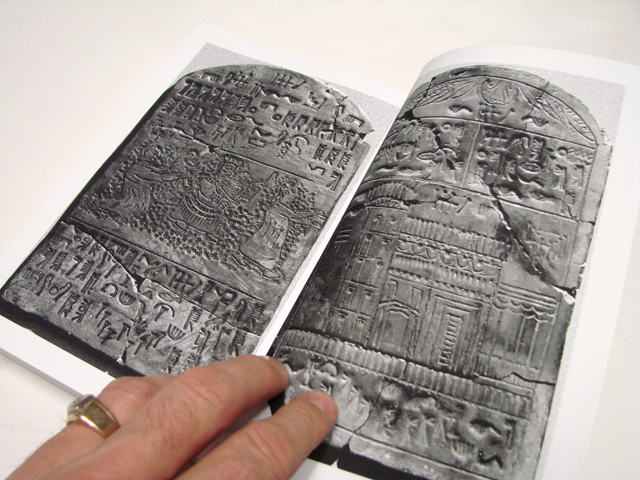


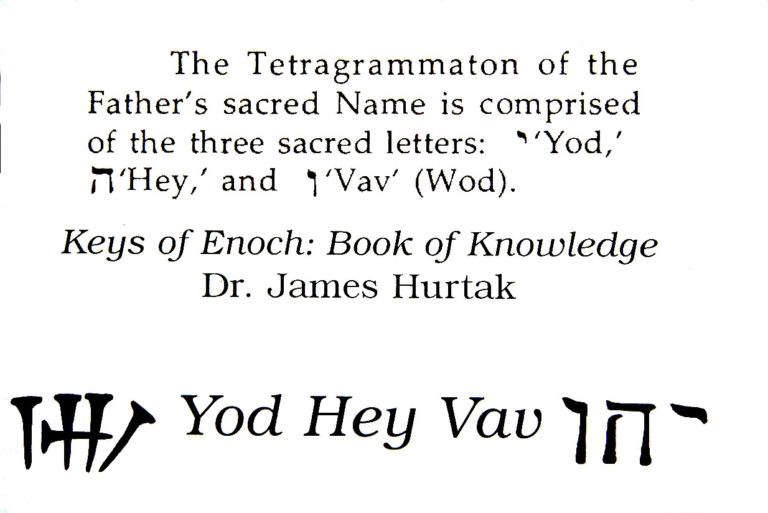




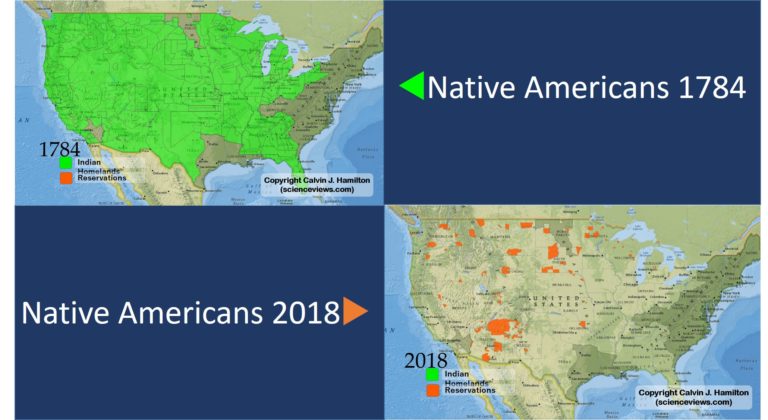


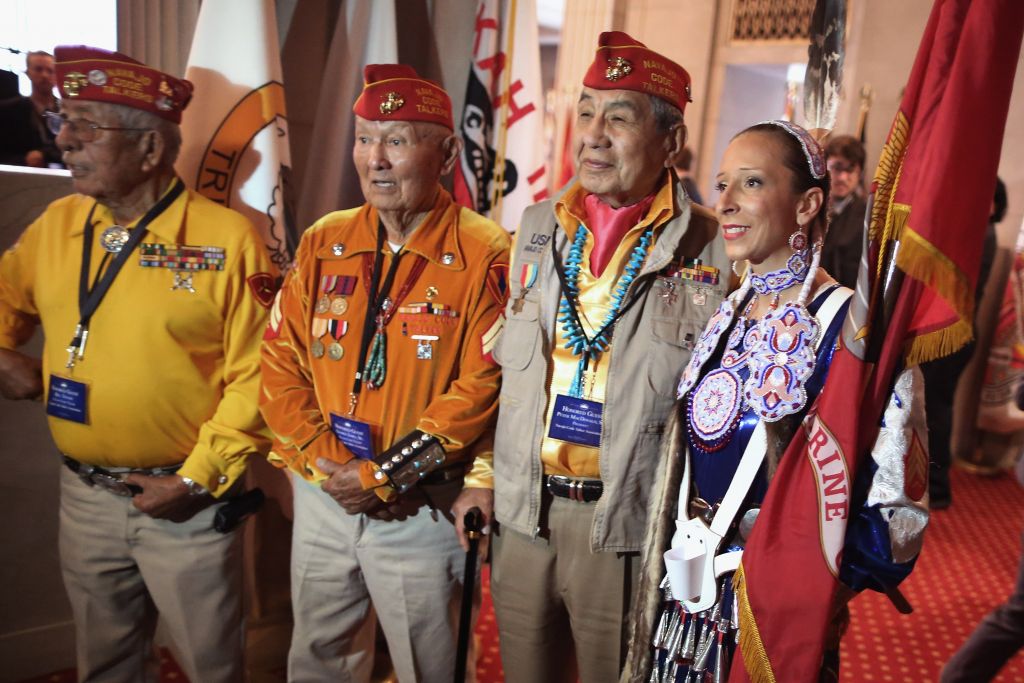


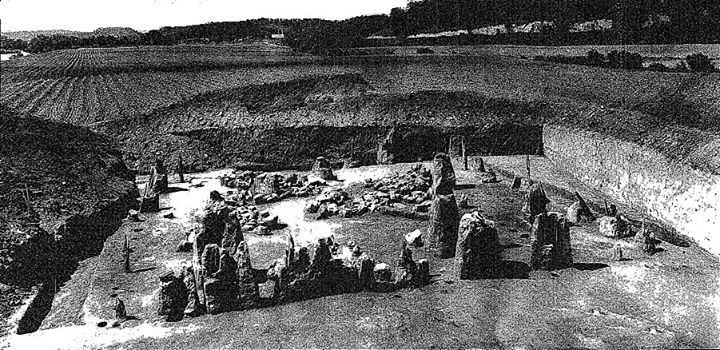


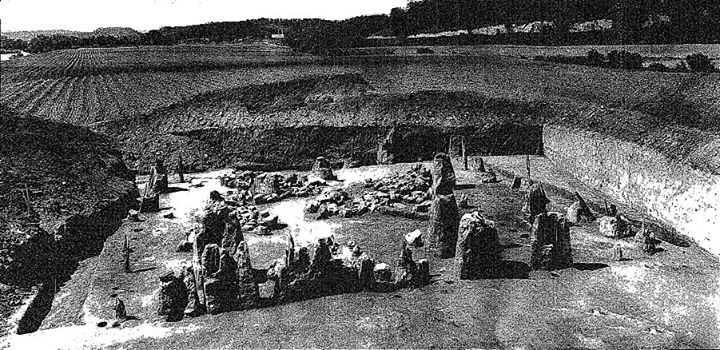
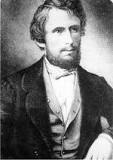
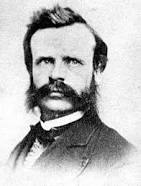
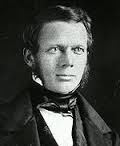
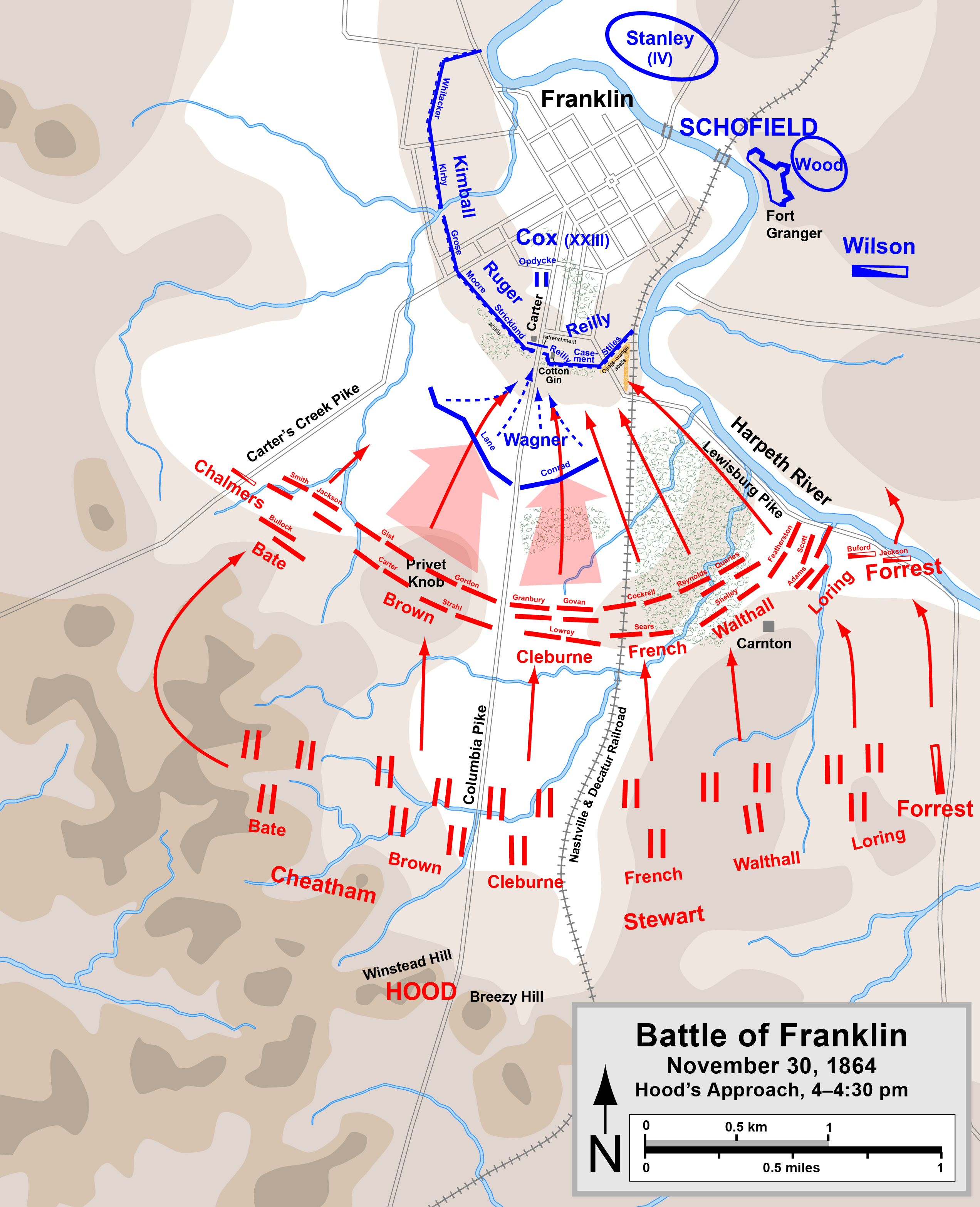

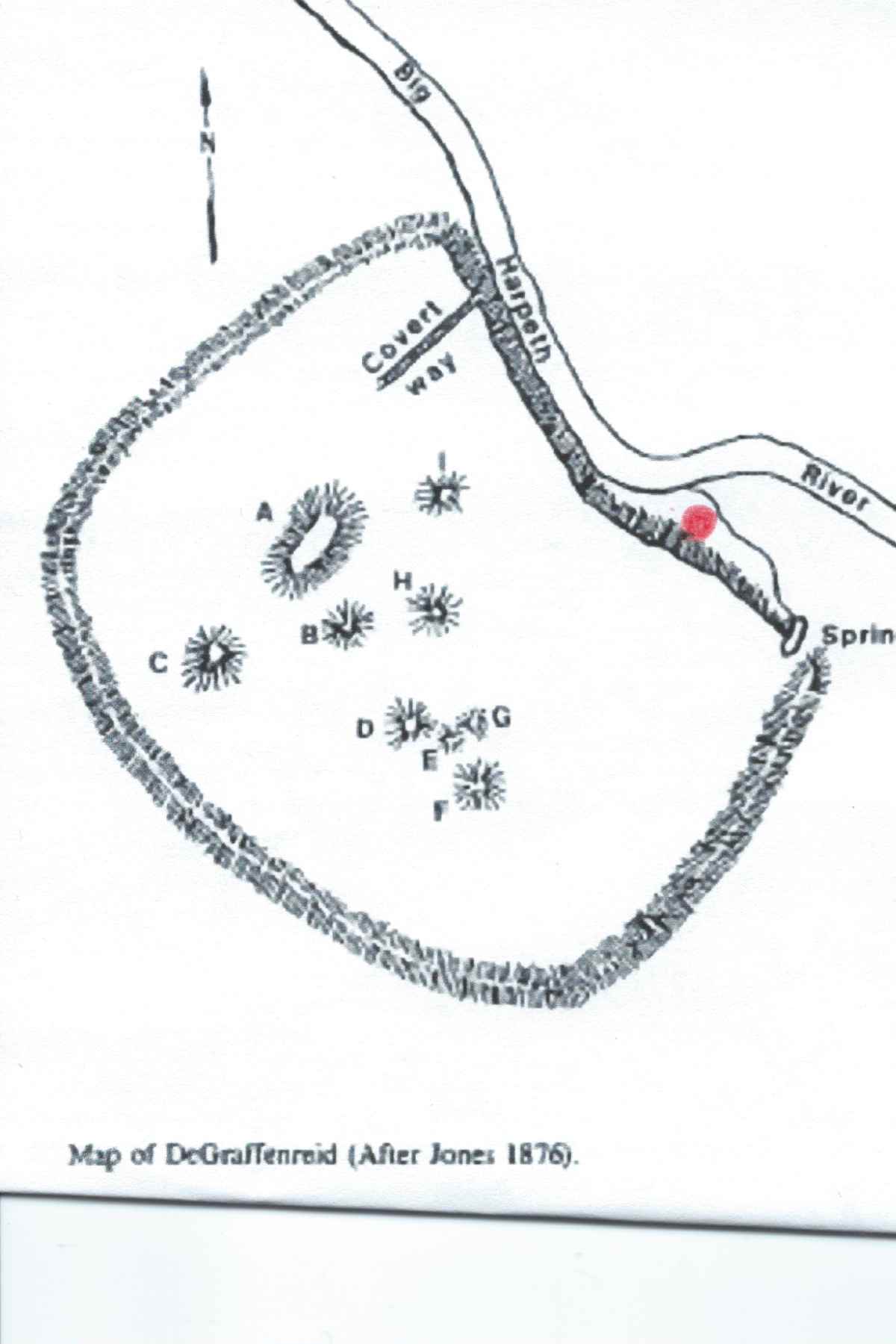
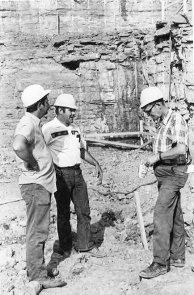
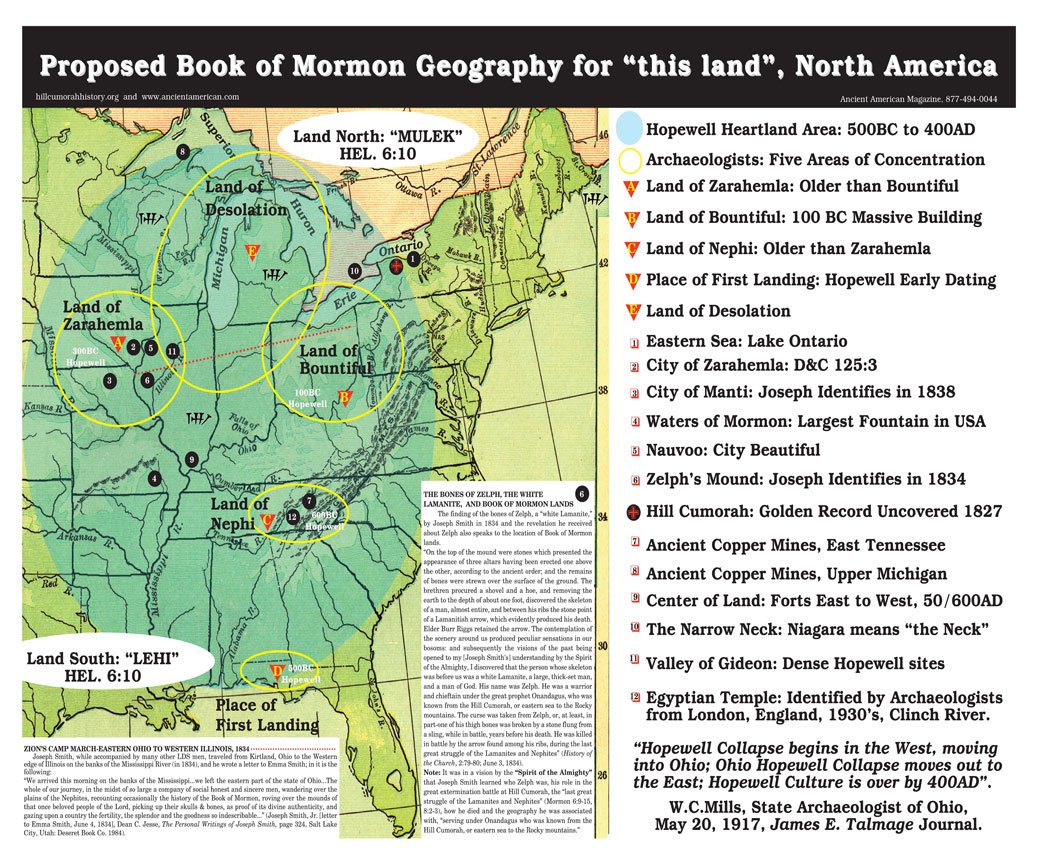

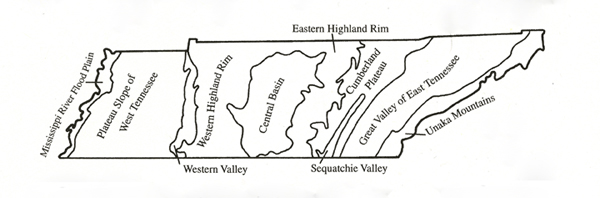

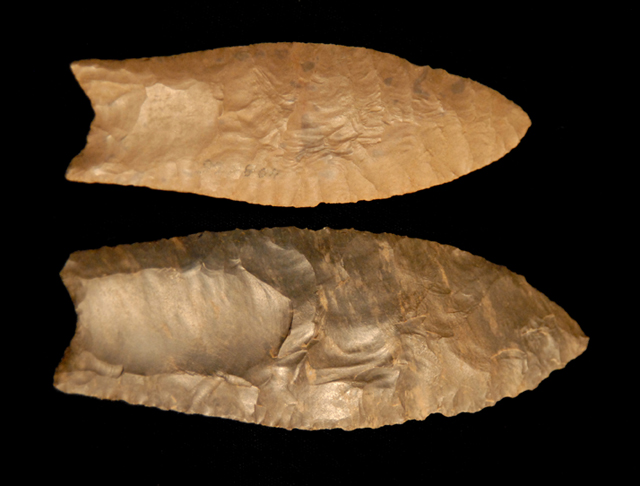
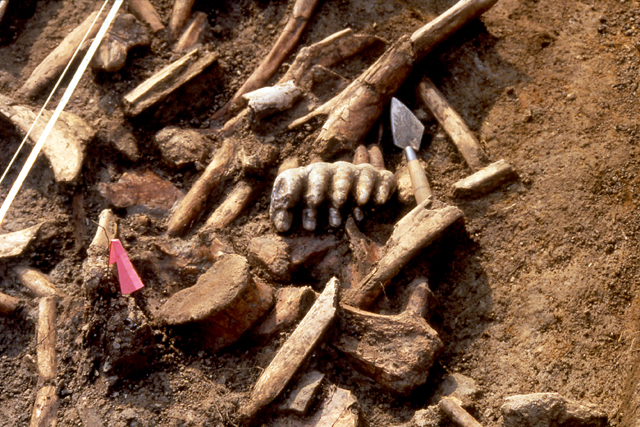



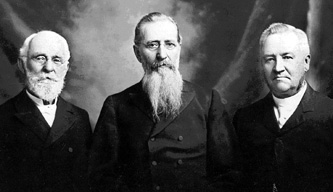


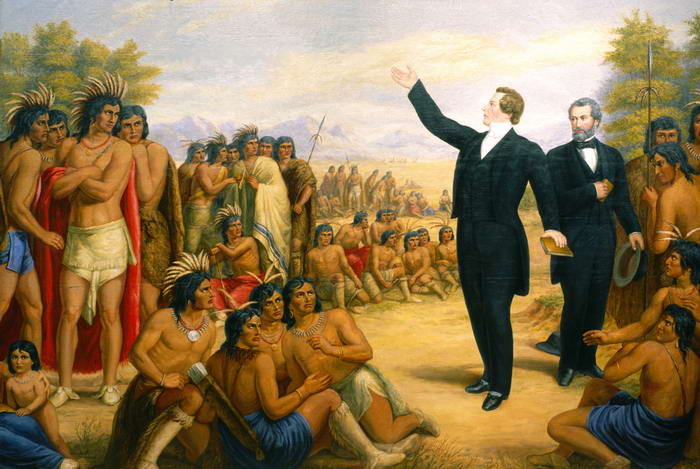
 Without any success in the target area, Perego cast a wider net — using both Joseph Smith’s specific DNA Y chromosome profile and a “haplogroup” to look for matches. A haplogroup is a grouping of Y chromosome profiles that share similar characteristics. These haplogroups are usually very geographically specific.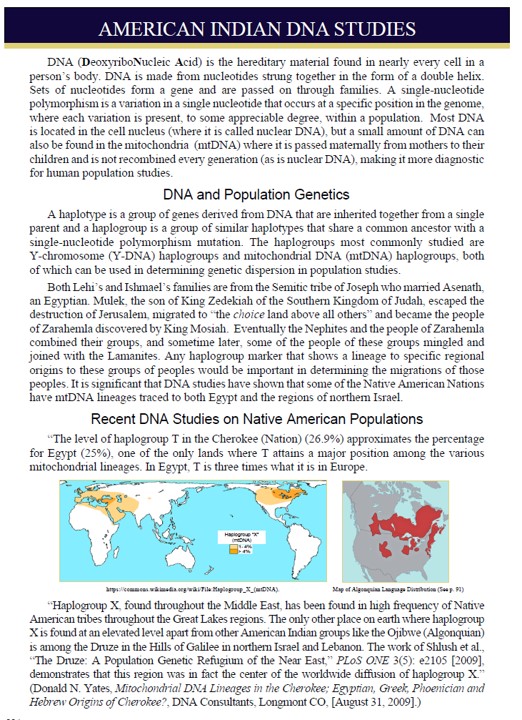

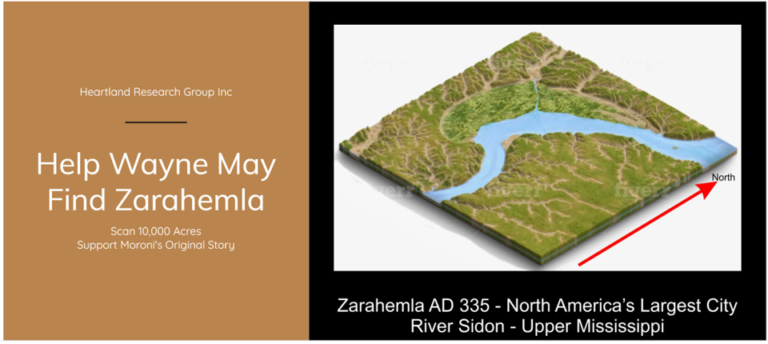



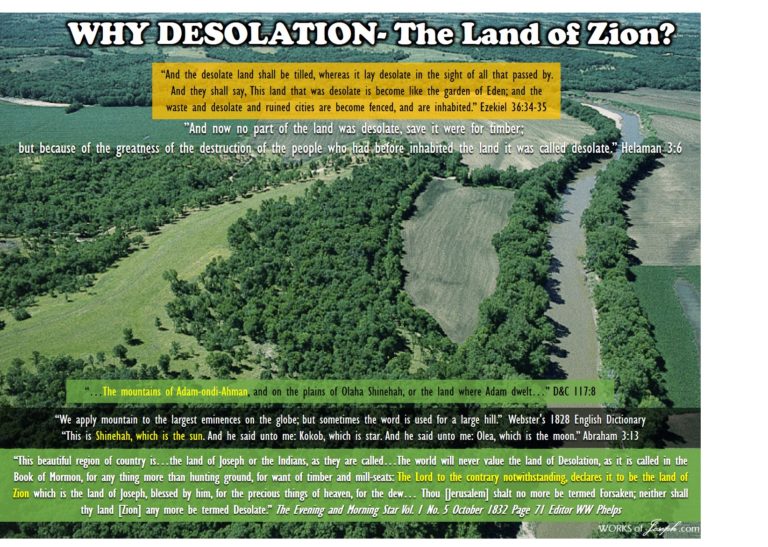


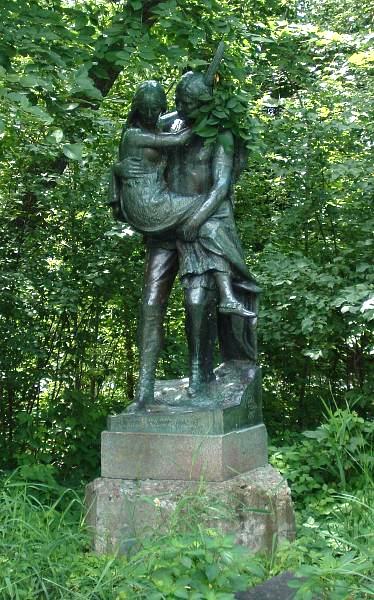
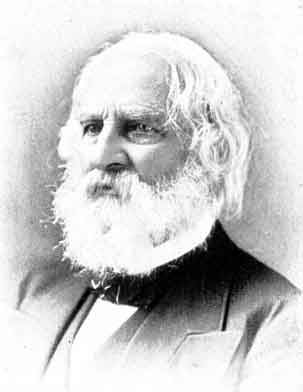

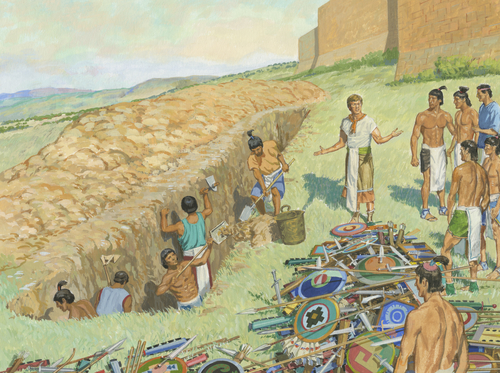
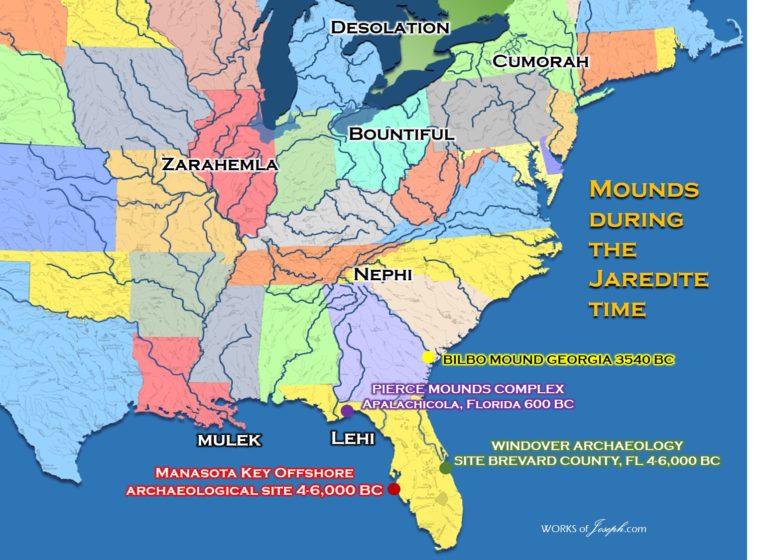










 Is not the mighty nation that the Lord has raised up the United States? Section 101:80 reads: And for this purpose have I established the Constitution of this land, by the hands of wise men whom I raised up unto this very purpose, and redeemed the land by the shedding of blood. That scriptural declaration suggests such is the case. Furthermore, Spain and Portugal are not usually seen as mighty nations. They were not raised upon the face of this land, unless you stretch your imagination and state their New World colonies satisfies that provision.

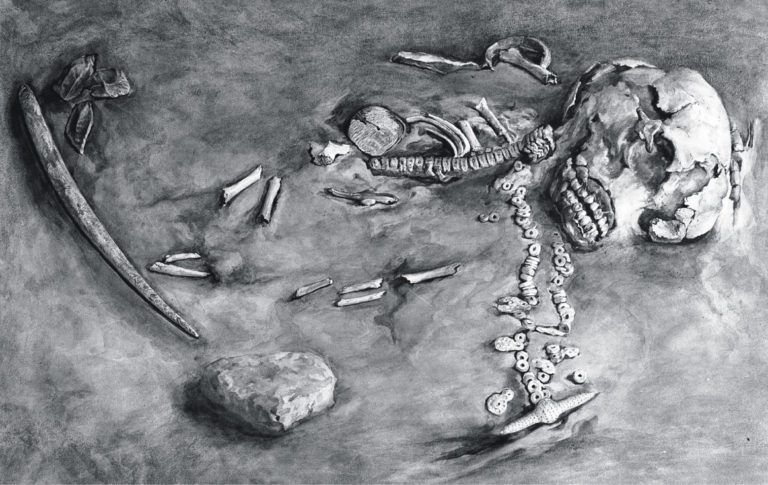


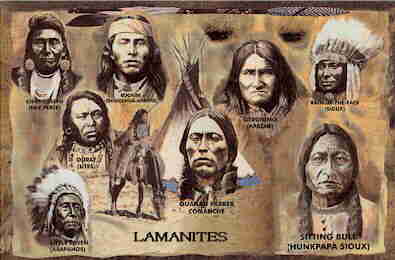
 This message by President Kimball below, is a very inclusive message for all the Children of Joseph who have been scattered all over the world after their disobedience, and now they will be gathered again. We understand by prophets below this land of America is the Land of Joseph where it all began. Life began with the placement of Adam in Missouri and will end at the building up of the New Jerusalem in the same land of America called Missouri. From this location Israel has been scattered to all parts of the world and they will be gathered back to this New Jerusalem.
 “The Book of Mormon reveals that Joseph, the son of Jacob who was once sold into Egypt, foresaw the Prophet Joseph Smith and his day and noted that there would be many similarities in their lives. Centuries later, the Prophet Joseph stated, “I feel like Joseph in Egypt.”
  “This beautiful region of country is…
 Long ago, an elderly Navajo brother told me something that I have reflected upon many times in the years that have intervened. He said: “This gospel is something we have been trying all our lives to remember; now all at once it comes back. Our fathers used to be with your fathers in the long ago, but then we came to a division in the road with a great stone in the middle. We went one way and you went the other. We went around that big rock for a long time; but now we are back together, and we will always walk together from now on.”
 This process of redeeming the Lamanite people has been far from easy, especially for the Lamanites themselves. For a thousand years after the closing of the Book of Mormon record, these people wandered in spiritual darkness and were scattered upon the American continents and the isles of the sea. They lost their written language, their high culture, and, worst of all, their knowledge of the living God and his work. Faith was replaced by fear, rich language by crippled dialects, and an understanding of God and his ways by idolatry, even human sacrifice. Since the coming of the white man to the Americas, they have been driven mercilessly, killed, and degraded. When Columbus came, these descendants of the Book of Mormon peoples and those with whom they had mixed numbered in the millions and covered the islands of the Pacific and the Americas from Point Barrow to Tierra del Fuego. But the conquerors found a prey, and in the land southward they robbed and despoiled and slaughtered in the name of gold and silver. In the land northward the 400-year “Battle of America” drove the tribal nations, much reduced in numbers, into the far corners of desolate lands. The peoples of the isles of the sea were corrupted by European and American seaman adventurers and were reduced nearly to extinction by disease. Someone said, “If my pen might have the gift of tears I would write a book and call it ‘The Indian,’ and I would make the whole world weep,” Only the most brazen soul could fail to weep when contemplating the fall of this people, and yet it was the decree of the Lord that the Lamanites should be preserved in the land, that this remnant of Joseph should again come into their promised inheritance.
 I have met some who are a little bit ashamed that they are Lamanites. How can it be? Some would rather define themselves as Nephites, or Zoramites, or Josephites, or something else. Surely there must be a misunderstanding. Would they separate themselves from the great blessings the Lord has promised to his covenant people?
 The Lamanites must rise again in dignity and strength to fully join their brethren and sisters of the household of God in carrying forth his work in preparation for that day when the Lord Jesus Christ will return to lead his people,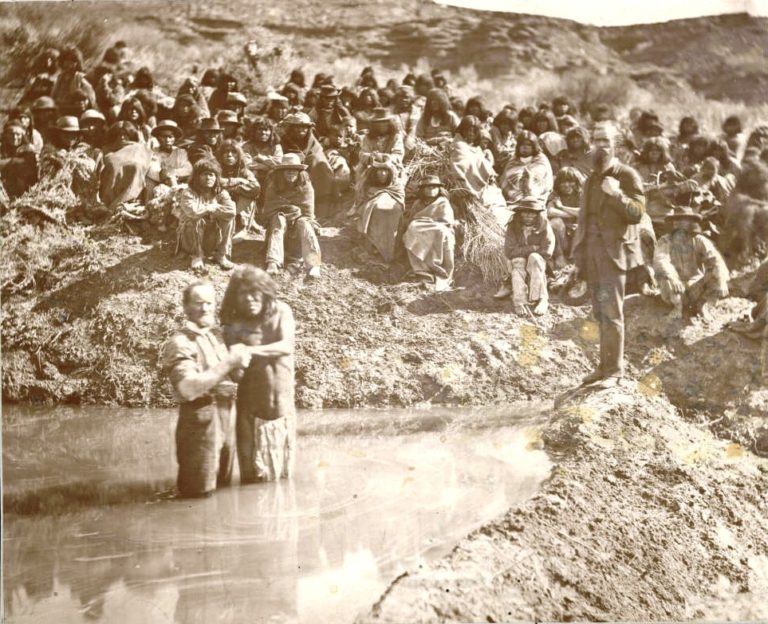


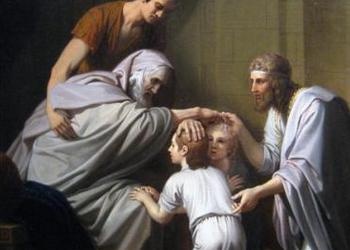


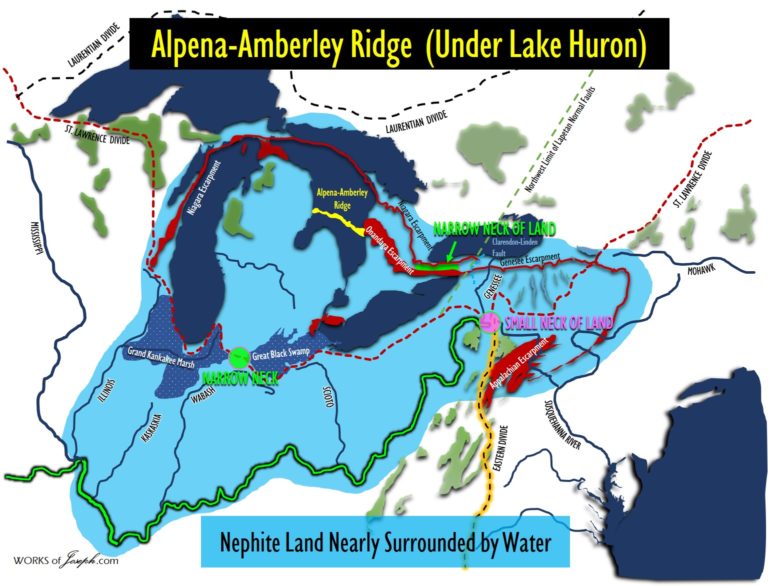


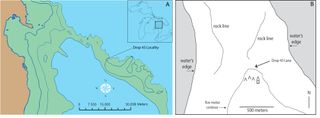
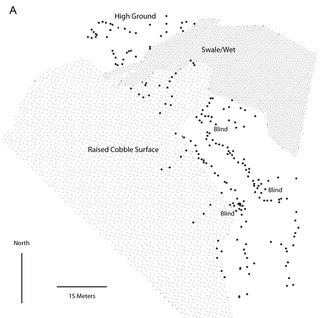

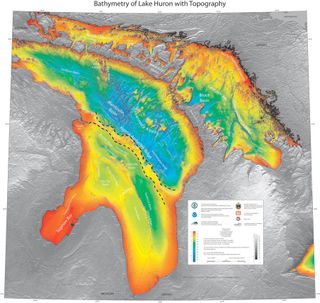



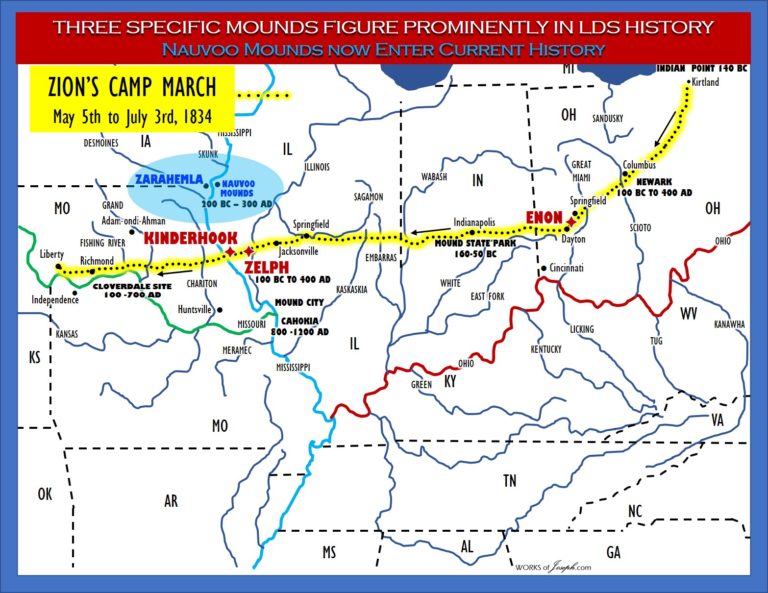


 assigned to the Northeast USA Mission Field. He also serves as Historic Sites director and Church History and Sacred Story Ministries Team lead.


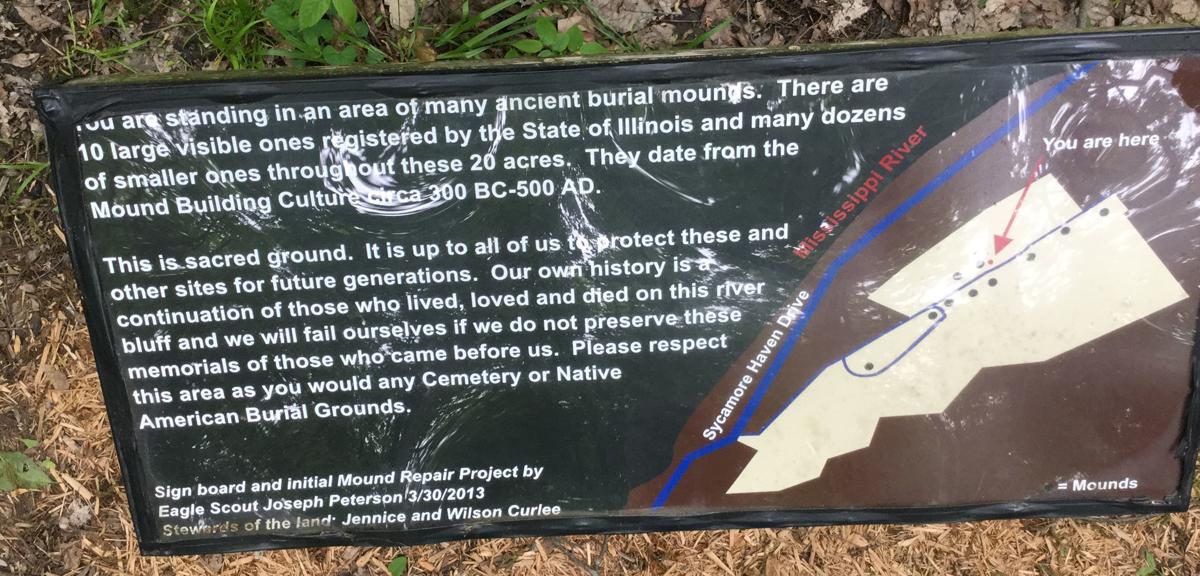
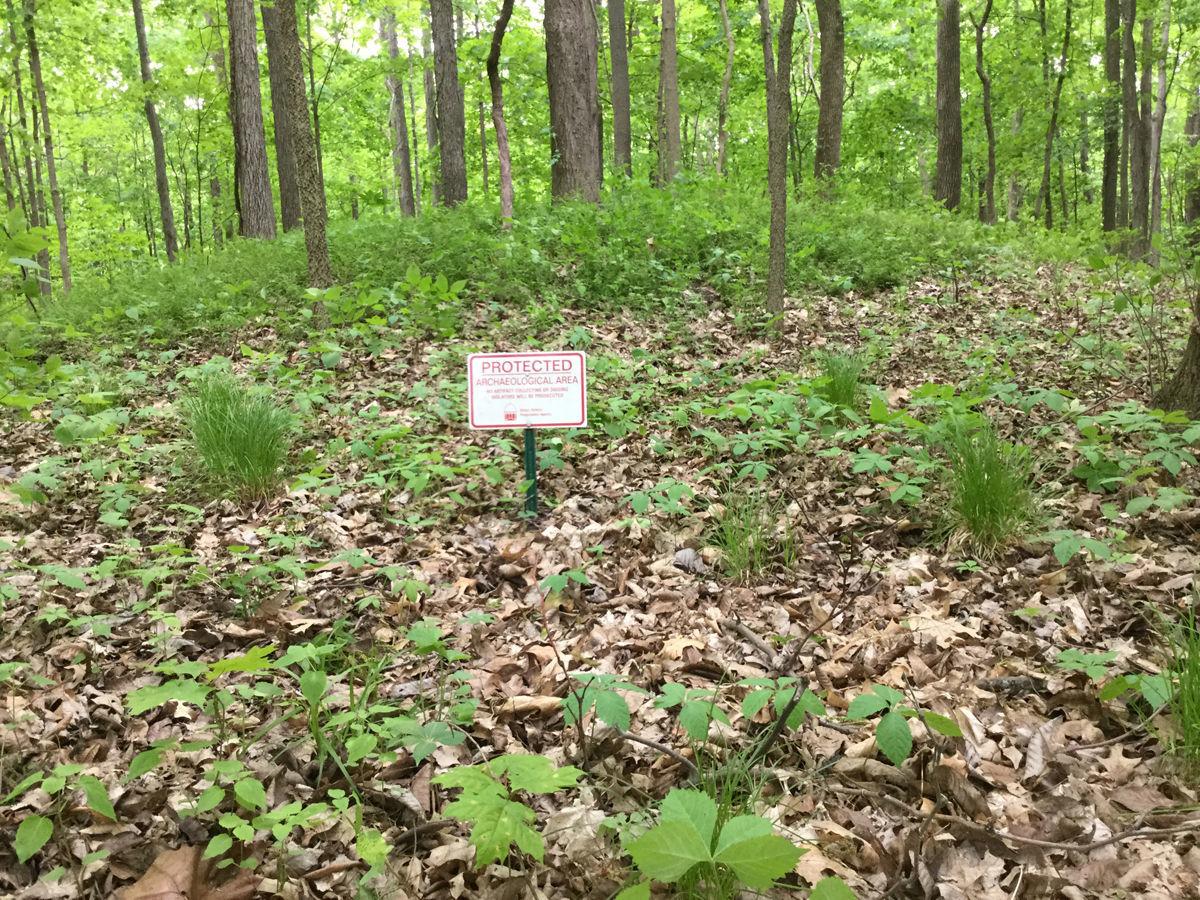 Some things these woodland culture people left behind are the Hopewell Burial Mounds. These mounds are part of the Hopewell culture which flourished from around 550BC to 400AD.