EXPERIENCE OF
ZEKE JOHNSON, son of Joel Hills Johnson, born in 1869. (Recorded in the JOHNSON
BULLEITN, September 1973)
“I have been requested to relate an experience I had in 1908-9 in San Juan Co. I was just making a home in Blanding and the whole country there was covered with trees and sagebrush. I was working hard to clear the ground to plant a few acres of corn. We had five acres cleared and stared to plant corn. My little boy, Roy, about 7 or 8 years old was there to help me plant the corn. I’d plow around the place, then he would plant the furrow with corn, then I’d cover it and plow again. While I was plowing on that piece of ground, I discovered there were ancient houses there, that is the remains of them.
As I was plowing around I noticed that my plow had turned out the skeleton of a small child, the skull and backbone, but most of the bones of course were decayed and gone. Part of the skeleton was there, so I stopped immediately as my plow had passe[d] it a little. I turned and looked back against the bar of the plow between the needles. As I was looking at that little skeleton that I had plowed out and wondering, all of a sudden, to my surprise, I saw the bones begin to wiggle and they began to change position and to take different color and within a minute there lay a beautiful little skeleton. It was a perfect little skeleton.
Then I saw the inner parts of the natural body coming in the entrails, etc. I saw the flesh coming on, and I saw the skin come on the body when the inner parts of the body were complete. A beautiful head of hair adorned the top of the head, and in about a half minute after the hair was on the head, it had a beautiful crystal decoration in the hair. It was combed beautifully and parted on one side. In about half a minute after the hair was on the head, the child raised up on her feet. She was lying a little on her left side with her back toward me. Because of this I wasn’t able to discern the sex of the child, but as she raised, a beautiful robe came down over her left shoulder and I saw it must be a girl.
Zeke Johnson
She looked at me and I looked at her, and for a quarter of a minute we just looked at each other smiling. Then in my ambition to get hold of her, I said, ‘Oh you beautiful child.’ I reached out as if I would embrace her and she disappeared. That was all I saw, and I just stood there and wondered and thought for a few minutes… Now, I couldn’t tell that story to anyone, because it was so mysterious to me and such. Why should I have such a miraculous experience? I couldn’t feature a human being in such a condition as to accidentally plow that little body out and see it come alive. A body of a child about 5 to 7 years old, I’d say. I just couldn’t tell that story to anyone until finally, one day I met a dear friend of mine, Stake Patriarch, Wayne II. Redd of Blanding. He stopped me on the street, and said, ‘Zeke, you have had an experience on this mesa you won’t tell, and I want you to tell me.’ Well, I told it to him. Then he had me tell it to other friends and since then I’ve told it in 4 temples in the United States, and many meeting houses, many socials, Fast meetings, and at Conference time.
I wondered and worried about it for years as to why I was allowed to see it, a common man like me – uneducated as I was. Why was I, just a common man, allowed to see such a marvelous manifestation of God’s powers? One day as I was walking along with my hoe on my shoulder, going to hoe some corn, something said, ‘Stop under the shade of the tree for a few minutes and rest.’ This just came to me and I thought I would, so I stopped there and this was given to me:
It was an answer to my prayers. I prayed incessantly for an answer as to why I was privileged to see that resurrection. Then I was told why. When the child was buried there, it was either in time of war with the different tribes, or it was wintertime when the ground was frozen, and they had no tools to dig deep graves. If it were during time of war they couldn’t possibly take time to dig a deep grave. They just planted the little body as they could under the circumstances. Then it was done, the sorrowing Mother knew that it was such a little shallow grave that in her sorrow she cried out to the little group present, ‘That little shallow grave, the first beast that comes along will smell her body, and will dig her up and scatter her to the four winds. Her bones will be scattered all over these flats.’
Zeke Johnson
There just happened to be a man present holding the Priesthood. (A Nephite or a Jaredite, I don’t know which, because they both had been in this country.) This man said, ‘Sister, calm your sorrows. Whenever that little body is disturbed or uncovered, the Lord will call her up and she will live.’ Since that time I have taken great comfort, great cheer, consolation, and satisfaction with praise in my heart and soul, until I haven’t the words to express it, that it was I that uncovered that little body.
Thank you for listening to me. I just can’t tell
this without crying.”
So we ask the question, Were the Mayans & Aztecs Scattered by the Gentiles? The simple answer is No! However the Native American Lamanite in the USA was SMITTEN and SCATTERED.
Annotated Book of Mormon page 253. click to Purchase .
We believe the Lamanites and Jews (who were one in the same mixed race), were smitten and scattered for their unbelief. The Jews have been scattered all over the world. The Native Americans were pushed and scattered to lands west of the Mississippi. Who has smitten and scattered these groups? The Gentiles or the Europeans and others who were non-Jewish.
“Which is my word to the Gentile, that soon it may go to the Jew, of whom the Lamanites are a remnant, that they may believe the gospel, and look not for a Messiah to come who has already come.” D&C 19:27
“And then shall the remnant of our seed know concerning us, how that we came out from Jerusalem, and that they are descendants of the Jews.” 2 Nephi 30:4
We also know that Lehi was a direct descendant of Manasseh and the daughters of Ishmael were Ephraimites. Further we understand the people of Mulek to be from the tribe of Judah, and the Mulekites and Nephites combined together into a mixed race. We also know the Jaredites were of Asian descent. See article here:
Can you see the great mixture of people at Hill Cumorah? The most important thing was to know that the seed of Lehi was left at that hill. The Lamanites had a mixture of Joseph and Judah and they remained in North America previous to Columbus.
“And it came to pass that I beheld many multitudes of the Gentiles upon the land of promise, and I beheld the wrath of God, that it was upon the seed of my brethren, and they were scattered before the Gentiles and were smitten.” (1 Nephi 13:14)
“And also that a knowledge of these things must come unto the remnant of these people, and also unto the Gentiles, who the Lord hath said should scatter this people, and this people should be counted as naught among them—therefore write a small abridgment, daring not to give a full account of the things which I have seen, because of the commandment which I have received, and also that ye might not have too great sorrow because of the wickedness of this people.” (Mormon 5:9)
On the other hand have the Mayans and Aztecs been smitten and scattered? They may have been oppressed but not scattered. The Mayans of 700 AD are the fathers of the Mayans of 2018 today. Most of the Mayans have come from Asia, and they weren’t scattered by the Gentiles. There has been only Asian DNA found for the people of Central and South America. On the other hand DNA of the Native Americans near the Great Lakes has matched DNA among the Iraqi Jew, the Ashkenazi Jew and other Jews. See blog post here: DNA article here:
Elder Larry J. Echo Hawk, General Authority Seventy (left), talks about his great-grandfather (right) during his June 27 LDS Business College devotional address at the Assembly Hall on Temple Square. Click for Article
Elder Larry Echo Hawk, Emeritus General Authority, a descendant of the Pawnee Indian tribe describes his great-grandfather being forced from their native homeland in the Midwest:
“On the title page [of the Book of Mormon] I read that it is “written to the Lamanites, who are a remnant of the House of Israel; and also to Jew and Gentile.” In the introduction to the Book of Mormon: Another Testament of Jesus Christ, it says that the Lamanites “are among the ancestors of the American Indians.” As I read the Book of Mormon, it seemed to me that it was about my American Indian ancestors. It tells the story of a people, a part of which were later described as “Lamanites,” who migrated from Jerusalem to a “land of promise” (1 Nephi 2:20) about 600 B.C. It is an account of God’s dealings with these ancient inhabitants located somewhere on the American continents…Their prophets foretold that many multitudes of Gentiles would eventually come to this land of promise and the wrath of God would be upon the Lamanites and they would be scattered, smitten, and nearly destroyed.
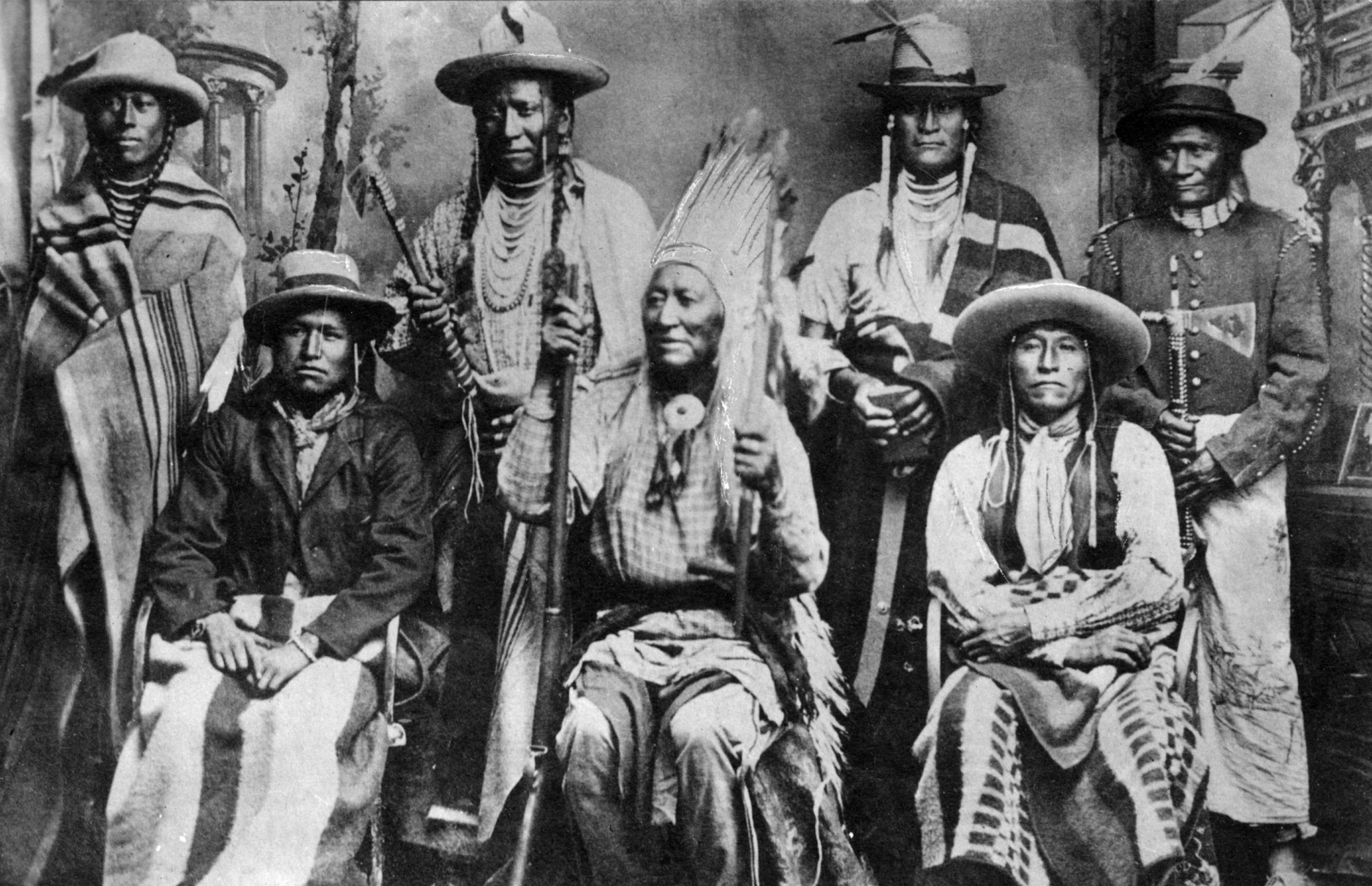
Elder Echo Hawk’s grandfather. A photo taken by a photographer who traveled throughout Indian country taking pictures of Native Americans. Photo courtesy of Elder Larry J. Echo Hawk.
“My great-grandfather Echo Hawk, a Pawnee Indian, was born in the mid-1800s in what is now called Nebraska. When he was 19 years of age, the Pawnee people were forced to give up their 23-million-acre (9.3 million-hectares) homeland to make room for settlers. In 1874 the Pawnee people were marched several hundred miles south to a small reservation located in the Oklahoma Indian Territory… “The Book of Mormon has a special message for descendants of the Lamanites, a remnant of the house of Israel. Nephi expressed this message while interpreting his father’s vision of these latter days: “And at that day shall the remnant of our seed know that they are of the House of Israel, and that they are the covenant people of the Lord; and then shall they know and come to the knowledge of their forefathers, and also to the knowledge of the gospel of their Redeemer, which was ministered unto their fathers by Him…” (1 Nephi 15:14)” – Elder Larry Echo Hawk, “Come Unto Me, O Ye House of Israel,” Ensign, [Nov. 2012].
“The population of Pawnee people had declined from over 12,000 to less than 700 upon their arrival in Oklahoma. The Pawnee, like other tribes, had been scattered, smitten, and nearly destroyed” – Larry Echo Hawk, “Come Unto Me, O Ye House of Israel,” Ensign, [Nov. 2012].
Minerva Teichert’s Manti Temple Murals Author Doris R. Dant
In April 1947, a slight, white-haired grandmother installed herself in a Manti, Utah, motel. At fifty-nine years of age, Minerva Teichert could still keep pace with any Scandinavian farmer in Sanpete County and probably outwork many. After all, she was a rancher’s wife who toiled long hours to meet the demands of garden, flocks, dairy, and family. Now for one month, all her drive would be devoted to an undertaking that daunted even her—painting enormous murals for the world room of the Manti Temple. Sustained by prayer and a sole assistant, she covered four walls several times her height with scenes whose conception is at once unique and spiritually profound
(Left) Minerva Teichert 1888 to 1976 at age 59. Teichert was the artist primarily responsible for the pageant of nations murals in the Manti Temple
This article tells that story, much of it taken from Teichert’s letters and from interviews with her assistant. It also includes reproductions of her world room murals. Although individual Manti murals have been published previously, this is the first time these beautiful works have been printed together. BYU Studies is grateful to The Church of Jesus Christ of Latter-day Saints for permission to offer them to our readers. Article Here
This tremendous mural shows the history of the world. The back wall shows the tower of Babel under construction. The north wall (the one visible on the right half of this photo) generally follows the history of the gentiles; one can see crusaders, monarchs, explorers, and the poor and destitute (the silhouettes near the bottom). Along the south wall (not pictured) is the history of Israel, with paintings of Abraham, Joseph (and his coat of many colors), Moses, and Pilgrims. Both of these histories meet at the east wall (left half of the photo), on the American Continent, where a Native American figure stands at the center. Above him and the tops of the trees is a picturesque mountain valley, complete with a small city and a temple. The city represents Zion, not any place in particular, but it looks a lot like Manti (especially the temple).
This mural is fascinating and much more could be said about it. I recommend BYU Studies’ article on the paintings. It goes into detail not only on each section of the mural (and has detailed pictures of each side!), but also goes into the history of it. From this room, patrons enter the doorway on the right of the Native American and enter the terrestrial room.
The terrestrial room of this temple is one of my favorites. I’ve also noticed that the benches subtly become more ornate as one progresses through the endowment–they’re rather plain and ordinary in the creation room; by the time you get here, they have small flowers and designs carved into them. I do believe the benches are original. http://ldspioneerarchitecture.blogspot.com/2014/09/manti-temple-interior.html
Native American and the City of Zion above. Trappers to the right and
Moroni stood and dedicated this piece of land for a Temple site
Manti was settled by determined pioneers. They carved shelters for that first winter out of a hillside of creamy tan oolite; in the spring, they battled rattlesnakes for possession of the valley. And from that hill, they took the limestone to build their temple, fifth of the Church’s temples and third to be built in Utah.
Brigham Young announced the temple site 25 June 1875 and dedicated the site on 25 April 1877. Earlier that same morning, he had taken Warren S. Snow with him to the southeast corner of the temple site and told him, “Here is the spot where the Prophet Moroni stood and dedicated this piece of land for a Temple site, and that is the reason why the location is made here, and we can’t move it from this spot.”
William H. Folsom was the Manti Temple architect. He also designed the Salt Lake Tabernacle.
The temple cost $991,991.81, of which the Sanpete Stake alone contributed $274,815.05. Some workmen walked the seven miles from Ephraim each Monday morning and back home again Saturday night. In addition to being self-sacrificing, their service was of the highest quality.
This temple contains the only temple murals dating from the pioneer period. C. C. A. Christensen, Minerva Teichert, John Hafen, J. B. Fairbanks, and Dan Weggeland were among the artists represented.
Eleven years from the time it was started, President Wilford Woodruff dedicated the temple, first in a private ceremony on 17 May 1888, then in services attended by 5,400 members May 21, 22, 23.
Apparently, the reference desk at Church Archives keeps a “myths binder”, and this one’s in it:
In 1987, John A. Peterson of the Acquisitions Department of what is now called the Church History Library prepared a report for Jane A. Braithwaite of the Manti Destiny Committee (a private, non-profit organization promoting and preserving the history of Manti and the Sanpete Valley) detailing his attempts to document the source of the tale. He had scoured all known pertinent records, including restricted temple records, looking for any confirmation. His search included at least these sources:
CR 348 19 – Manti Corner Stone Services, April 14, 1879 CR 348 20 – “[Private] Dedication of the Manti Temple – Dedication Services held in the Celestial Room of the Temple, at 12 o’clock on Thursday Morning May 17th, 1888” (which files include copies dedicatory prayer and sermons) CR 348 21 – Manti Temple Historical Record, 1873-01934 CR 348 22 – Manti Temple – Setting apart of temple workers, 1888 CR 348 33 – Manti Temple – Bulletins, 1884-1955 CR 348 37 – Manti Temple – Attendance Roll, 1888-1894 CR 348 37 – Manti Temple – Reunion List, 1895
Spiral Staircase Manti
In none – none – of these sources is there any hint whatsoever of an ancient dedication of the temple site, no mention of Moroni, nothing that could be seen as supporting the story, although the story, if true, would have found a natural place in any of these records. The Keepapitchin
I’ll leave it to you to decide if then if the story is authentic. This story (or rumor) brings up an important point. We need to be careful with stories of this nature (verifying them when possible as you are seeking to do) because stories like this can get passed around and much like gossip grow and change in the telling, even if the changes are innocently and ignorantly made. Sometimes people are so hungry for spiritual experiences, that they are willing to believe any “feel good story’. That’s not good.
So how do we know which stories to believe, especially if we can’t find any official church sources to back them up? How do we discern truth from error or falsehood? We need to pray about it. I realize that sounds like a “Sunday School answer” or in other words, a bit of a cop out, but it is the truth. The only way we can know for certain what comes from God and what does not, is to ask Him.
When we were baptized we were given the Gift of the Holy Ghost. Having this gift is the first step toward receiving many other spiritual gifts. One of these is the gift of discernment. It is with this gift that you can know the truth or falsehood of the “Moroni stories” or any other information you need to know. Elder Bednar explained it this way,
Creation Room Manti
“Discernment is so much more than recognizing right from wrong. It helps us distinguish the relevant from the irrelevant, the important from the unimportant and the necessary from that which is merely nice.” Quick to Observe
Is it relevant for us to know the answer to your question about Moroni? Perhaps not. But this question leads us to another question, what is relevant for us to know? I believe that Heavenly Father wants to share a lot more with us than we imagine. In an Ensign article, Lane Johnson said,
“It would appear from the scriptures that our Father desires to grant [spiritual] gifts even more ardently than we desire to receive them.” How to Receive Spiritual Gifts
So my thought, Robert, is that you can ask Heavenly Father about the Moroni stories you have heard, but don’t stop there. Be open to the abundance of other blessings and knowledge that He is waiting to give His children who obey Him, and ask for those blessings.
Some members of the Church are aware that at the dedication of the site for the temple in Manti, Utah, the following incident took place:
World Room Manti
At a conference held in Ephraim, Sanpete County, June 25th, 1875, nearly all the speakers expressed their feelings to have a temple built in Sanpete County, and gave their views as to what point and where to build it, and to show the union that existed, Elder Daniel H. Wells said “Manti,” George Q. Cannon, Brigham Young, Jr., John Taylor, Orson Hyde, Erastus Snow, Franklin D. Richards, Lorenzo Young, and A.M. Musse said “Manti stone quarry.” I have given the names in the order in which they spoke. At 4 p.m. that day President Brigham Young said: “The Temple should be build on Manti stone quarry.” Early on the morning of April 25, 1877, President Brigham Young asked Brother Warren S. Snow to go with him to the Temple hill. Brother Snow says: “We two were alone: President Young took me to the spot where the Temple was to stand; we went to the southeast corner, and President Young said: “Here is the spot where the prophet Moroni stood and dedicated this piece of land for a Temple site, and that is the reason why the location is made here, and we can’t move it from this spot; and if you and I are the only persons that come here at high noon today, we will dedicate this ground.” (Whitney 436)
Art by Val Chadwick Bagley
That Moroni dedicated the Manti Temple site is one of the few statements the Brethren have made connecting a Book of Mormon figure with a specific current place and action. This aids us in documenting one of Moroni’s travels and priesthood assignments. Another reference happened when William McBride, patriarch from the Richfield Utah Stake, spoke at a prayer meeting in St. George in January 1881. After recalling many experiences from the Nauvoo period and quoting the Prophet Joseph Smith on many issues, Patriarch McBride referred to the Route the old Nephites took travelling to Cumorah from the south and south west; of having to bury their tr[e]asures as they journeyed and finally burying the Records and precious things in the Hill Cumorah; of Moroni dedicating the Temple site of what we now call St. George, Nauvoo, Jackson Co., Kirtland, and others we know not of as yet. (Walker 2:525–26)
Two Interesting Maps
Several years ago, I came across two copies of a map in the Archives Division of the Historical Department of the Church relative to Moroni’s North American journeys (see Figures 1 and 2). On the back of the map in Figure 1 is written the following:
A chart, and description of Moroni’s travels through this country. Got it from Br. Robert Dickson. He got it from Patriarch Wm. McBride at Richfield in the Sevier and also from Andrew M. Hamilton of same place. And they got it from Joseph Smith the Prophet.
On the map “land Bountifull [sic]” is listed in “Sentral [sic] America.” The cartographer wrote “starting point” below the reference to Central America. Above the “land Bountifull” is “Sand hills in south part of Arizona,” and above it to the left is “Salt Lake.” To the right is “Independens, Jackson Co, Mo.” and above that is “Adam on Diamon, Davis Co, Mo.” To the right of that is “Nauvoo, Hancock C.Ill.” Below that is “Mound Kinderhook, Pick, Co, Ill, 6 Plates Bell shape were found” (were was was on one copy). Then to the right and above that is “Kirtland, Ohio,” and to the right of that is “Commorre [Cumorah], N.Y.” Below this on the right-hand side of the map is written: “Moroni’s Travels starting from Sentral America to the Sand hills Arizona then to Salt Lake U[tah], T[erritory], then to Adam on Diammon Mo, then to Nauvoo, Ill, then to Independence Mo, then to Kirtland Ohio then to Cumoro NY.”
The second map appears to have been drawn by the same hand and is quite similar to the first, though it twice spells Arizona as Arisony (one “y” has an “a” written over it); “eden” is written near the circle identifying “Independense”; “where adam blessed his posterity” is written near the circle identifying “Adam on Diammon”; the “missisipy river” is listed near Nauvoo; Kirtland is twice misspelled “kertland”; and Cumorah is misspelled “Cunora” and “Cumora.”
It is interesting to note that the brethren mentioned on these documents were contemporaries of the Prophet Joseph Smith, and they credited him with the notion that the travels of Moroni began in the land Bountiful, which was in Central America, and went through the western New York. Why Moroni took the route he did is still without answers. These men stated that the Prophet Joseph believed Bountiful is in Central America while the Hill Cumorah, the burial place of the plates, is in New York State.
The Plates of the Book of Mormon Are Buried
Sometime around AD 421, Moroni took the sacred plates, the breastplate, and the Urim and Thummim to the Hill Cumorah and buried them near the top of the hill in a stone box that he made for them. The box was made of flat stones laid on the bottom and sides which were cemented together to make it waterproof. When the Prophet Joseph Smith first met the angel Moroni at the hill Cumorah about 1,400 years later on the evening of 22 September 1823, Moroni showed him the sacred contents and told Joseph that the sacred objects had been “sealed by the prayer of faith” (Cowdery 198). The plates remained there until 27 September 1827, when Moroni gave them to Joseph to allow him to translate them into English.
Joseph Smith published the following in the July 1838 issue of the Elders’ Journal in answer to the question: “How and where you obtain The Book of Mormon?” His reply:
“Moroni, the person who deposited the plates, from whence the Book of Mormon was translated, in a hill in Manchester, Ontario County, New York, being dead, and raised again therefrom, appeared unto me, and told me where they were; and gave me directions how to obtain them” (42–43).
The Death of Moroni
I have found only one account which speaks of Moroni’s death:
At a meeting at Spanish Fork, Utah Co., in the winter of 1896, Brother Higginson stated in my presence that Thomas B. Marsh told him that the Prophet Joseph Smith told him (Thomas B. Marsh, he being then President of the Twelve), that he became very anxious to know something of the fate of Moroni, and in answer to prayer the Lord gave Joseph a vision, in which appeared a wild country and on the scene was Moroni after whom were six Indians in pursuit; he stopped and one of the Indians stepped forward and measured swords with him. Moroni smote him and he fell dead; another Indian advanced and contended with him; this Indian also fell by his sword; a third Indian then stepped forth and met the same fate; a fourth afterwards contended with him, but in the struggle with the fourth, Moroni, being exhausted, was killed. Thus ended the life of Moroni. (Evans)
Conclusion
This paper has attempted to highlight some of the lesser-known facts about the life of Moroni, one of the greatest prophets that has lived upon the earth. His contributions both during his mortal and his postmortal ministries have affected and will yet affect the lives of literally millions of God’s children.
Latter-day Saints and non-Mormons alike first identify Moroni as the angel, the “messenger sent from the presence of God” who visited the boy-prophet Joseph Smith (JS—H 1:33). He is probably the most easily identifiable person connected with the Restoration since statues representing him appear on many temple spires heralding the glorious restoration mentioned in the book of Revelation. He is the angel flying “in the midst of heaven, having the everlasting gospel to preach to them that dwell in the earth” (Rev. 14:6). His picture is commonly seen on copies of the Book of Mormon, LDS jewelry, LDS military dog-tags, the official logo, and on tombstones for LDS servicemen. He is usually depicted as blowing a trumpet. By H. Donl Peterson
H. Donl Peterson, “Moroni, the Last of the Nephite Prophets,” in Fourth Nephi, From Zion to Destruction, ed. Monte S. Nyman and Charles D. Tate Jr. (Provo, UT: Religious Studies Center, Brigham Young University, 1995), 235–49.
A Wonderful Manifestation – Hundreds of Indians Healed by the Power of God 1879
The Millennial Star Monday June 2, 1879 Volume 41 No.22 Shared with be by a wonderful Native American named Betty “Red Ant” LaFontaine.
Zuni girl 1903
Several
accounts, slightly varying in their details, having become current with regard
to the manifestation of God’s power in the healing of
several hundred Zuni Indians, under the hands of Elder Llewellyn Harris,
President Taylor directed Elder Orson Pratt, the Church Historian, to obtain,
direct from Elder Harris, the facts in the case. The following is Brother
Harris’ reply to Elder Pratt’s letter of inquiry:
Panguitch,
Dec. 15th, 1879. Brother Orson. Pratt,
Dear brother,—Your favor of Nov. 27th, is received, wishing me to give a history of the healing of the Zuni Indians of small-pox, by the laying on of hands, which I will do, as near as I can remember the circumstances. I started from Panguitch on the 5th of November 1877; overtook brother Thayne and company (from Centreville) at Johnson, and traveled with them as far as Woodruff on the Little Colorado. I parted with the company there and traveled alone to the Zuni village; distance from Woodruff about 100 miles. Arrived at the Zuni village January 20th, 1878 and found some sick with the small-pox in nearly every house.
Llewellyn Harris
I put up with a Zuni Indian known as Captain Lochee, who had three children sick with the smallpox. After I had been asleep two or three hours, I was awakened by the cries of the family and some of the neighbors who had come in. I arose and inquired the cause of the crying, and was informed by Captain Lochee that his daughter, a child of about 12 years of age, was dying. I saw she was gasping for breath. I felt like administering to her then, but the Spirit of the Lord prompted me to wait a little longer. I waited until she had done gasping and she did not appear to breathe. The Spirit of the Lord moved upon me very strong to administer to her, which I did; she revived and slept well the remainder of the night. I also administered to the other two who were sick in the same house that night. All was quiet the remainder of the night, and all seemed much better in the morning.
The news of
this spread through the town, and the next day I was called to visit about twenty-five families, all of whom had one
or more sick with the small-pox. They also wished me to administer to the sick,
which I did. I was called upon to visit from ten to
twenty families a day for four days after my arrival and administering
to their sick. The power of the Lord was made manifest to such a degree that nearly all I administered to
recovered. The disease was spreading so rapidly that I was unable to
visit all the houses. One morning about eight o’clock one of the Zuni women
came for me to go and visit the sick; she took me to a house which had a large
room in it, about twenty by forty feet. When I entered the room, I found they had gathered the
sick from all parts of the village, till they had completely filled the house.
The stench that arose and the horrible sight that met my eves is beyond
description. They had a Spaniard there, who understood the Zuni language, for an
interpreter, who told me they wanted me to administer
to all those who were sick in the room. I being the only elder in the
village it seemed to be a great task to administer to so many, but I called on
the Lord to strengthen me. I commenced, and as fast as
I administered to them they were removed, but other sick ones were continually
being brought in. It was late in the afternoon before I could perceive
that they began to diminish, in numbers. When I had administered to the last
one and went out, the sun had set and it was getting dark. The Spaniard who had
stayed there all day asked me if I knew how many I had prayed for. I told him that I did not keep
count; he said he had and that it was 406. The next morning my arms were so
sore that I could hardly move them.
Image of Zuni Pueblo created during the U.S. Army Corps of Topographical Engineers’s 1851 expedition to Arizona which was led by Captain Sitgreaves
There was a
Presbyterian minister in the village, who became jealous of the influence I was
gaining with the Indians. He persuaded two Spaniards, one Navajo Indian, one
Albino ‘Zuni, and one of the Zuni medicine men, to
circulate lies and frighten the ‘Zunis, telling them that those who were
healed were healed by the power of the devil.
I felt weak
from the effects of administering so much. And on the second day after
administering to the 406. I started for the settlement in Savoia valley. The next
day after arriving in Savoia I
was taken down with a severe fever, which lasted about a week. I stopped
with the family of brother John Hunt, who treated me very kindly. It was about three weeks before I was
able to resume my I journey to the Mexican settlements on I the Rio
Grande. I spent about four months preaching to the Mexican people in New
Mexico. When I arrived at Savoia on my return, I was
informed by the brethren that the minister who opposed me at Zuni had passed
there and was nearly dead with the consumption. When I arrived at Zuni I was
told by some of the most reliable Zunis that all that I had administered to
recovered, excepting five or six that the minister gave medicine, and four or
five that the medicine man had tried to cure by magic. The medicine man that opposed me
had died during my absence, and the Navajo, who opposed me, on returning home,
was killed by his people to keep the small-pox from spreading among them.
This is a
true statement of the manner in which the power of God was made manifest among
the Zunis, and also the judgments of God which followed some of those who
opposed it. It seemed that I was, by the providence of God, cast among them;
and I felt that I was one of the weakest of my brethren, and to ask the Lord to
strengthen me if it was his will to make his power manifest through me. If the
Lord had not strengthened me I could not have borne up under what I passed
through at Zuni.
Zuni men and the ancient Pueblo Town of Zuni, ca.1868
If you wish
a history of my mission to the Mexicans and will make it known, I will be
pleased to furnish it to you. No more at present.
From your brother in the Gospel,
Llewellyn
Harris.
The
foregoing was published in the Deseret News some time since, but, owing
probably to the remarkable character of the statements set forth in it, some people expressed doubts
as to its veracity. In order to set the matter at rest, pains were taken to
obtain information from various other sources. The result of these
investigations, we are, by courtesy of Pres. John Taylor, enabled to place
before our readers, in the annexed correspondence, which, besides being
confirmatory of Brother Harris’s first account, gives further interesting
details:
New Mexico,
Feb. 20, 1879. Brother L. H. Hatch:
According to your request I hasten to give you an account of the power and blessings of our Heavenly Father through the ministration of Elder Llewellyn Harris, while laboring among the Zunis. And as the Church Historian has requested that it should be sent to him without exaggeration or depreciation, I will, as you earnestly requested me, use the same language used by them, under an inquiry. Upon my return and after you handed me the Apostle Brother Pratt’s letter, I called at the village where Bro. Harris had labored, and in the presence of at least forty Zunis I interrogated one of the principal men, who could talk Spanish, at least good enough to enable me to get a most thorough and positive understanding. Speaking to the crowd, I said: Do any of you remember a ‘Mormon,’ who came to this place and stayed a while, at the time you had the small-pox?
Orson Pratt
After a
moment’s talk among themselves, the man of whom I have spoken stepped forward
and answered:
“Oh
yes, but why do you inquire about him”
“Because
I wish to learn if he told the truth, when he said, the Lord heard him by
curing them, when he laid his hands upon their heads.”
I very
readily perceived from the above question that it aroused their suspicions, and
in order to allay this spirit, so as to get at the naked truth, I continued:
“As
this is the remedy to which we * Mormons’ appeal, for you all well know that I
have always told you, that if we would serve the Great Spirit, he would hear us
when we prayed to him.”
By this time
those who had been baptized were drawing nearer, with an expression upon their
countenances of brotherhood and confidence. However, the old man continued:’
“Yes, it is the truth.
There is no doubt.”
This last
sentence, when spoken in Spanish, affirms anything in the most positive manner
possible, not even allowing any chance for a mistake.
“Do you
know how many he cured? (You will remember that the crowd was consulted before
answering at each successive question.)
“Oh, lots of them.”
“But
about how many?” At the same time holding up my finger, as that is the
manner of counting among natives, though these being a little more enlightened,
it serves to form an extra impression, or by way of demanding the exact number.
She-we-na (Zuni Pueblo). Kachina doll (Paiyatemu), late 19th century. Brooklyn Museum
“Oh,
lots of them! How could yoo tell how many, for there were lot of them cured,
though some died after.”
“Which
man in this crowd saw and heard this?
“Why, all but me, so they
say. He cured them in a large house. He did lay his hands on lots in four
houses.”
“Which
man’s house, in this crowd, did he do this in?
“That man says he did in
his house, and that children were brought into him, and those that were big
enough and able to walk, came, and he cured all that he laid his hands on,
though some died afterwards.”
This was
said in presence of my wife Eliza, and not less than forty Zunis.
Besides,
Brother Hatch, it gave me a splendid opportunity to talk to them upon the
subject, which I improved, thus endeavoring to awaken in them a love for the
truth, and they seemed to drink into the Spirit of it, though they said:
“Numberless stories, in
short, everybody seems to be opposed to you; and though we feel good when you
are with us, and we cannot help believing what you say. But then why all this
opposition.”
However, feeling that a more thorough investigation would give better satisfaction, I drove off and left the crowd, and soon met Brother Ramon Lund, who affirmed, in the most positive manner, what had been stated, and adding, said, that it was true that some died after they had been cured ; but it was because they took the medicine of an American, who was acting as priest and doctor at that place, under the direction of the United States, and when he told me this, he went through the motion, with his hand, of putting something into his mouth. At this instant, I well remembered the crowd of which I have spoken, going through the same gestures to the old man, who was acting as interpreter, but he failed to tell that part, as he did not belong to the Church, though he had never to my knowledge taken any active part either for or against.
Laguna Pueblos
I feel impressed to call your attention to the subject of which we talked about; namely the call of the King of the Zunis, with others of his associates for some of our brethren to assist them this spring in putting in their crops. This is not only a request, but rather bordering on a demand, from the fact of us both having offered to do so. I do not know who to appeal to, and I am not acquainted with President John Taylor, but there should be something done, for they look to me, as you well know, as their father; and it is impossible for me to fill the place at the three Branches. You will please excuse my awkwardness and tedious way of explaining, for I have done the best I could.
Zuni Pottery
Praying God
to bless you, and desiring to be remembered in your prayers, I remain, your
co-laborer in the latter-day work,
Ammon M. Tenney. Forestdale, Yavapai Co., Arizona, March 3rd,
1879. Brother E. Snow.
Dear
brother,—I arrived here on the first of this month in good health. I hope these
few lines will find you and family enjoying the same blessing.
The brethren seem to feel satisfied and contented here, with the exception of a few, who do not like to have the Indians move in here. Some twelve families of the Apache Indians want to come into this place, and live with us, and learn to work, and live as we do, and send their children to school I will start out in a few days to preach to some of the Apache Indians, and I feel to pray to the Lord that I may have his Spirit to guide and direct me, that I may be able to do good. Some of the brethren blame me for inducing the Indians to come to this place; but I cannot help that, it is to gain their friendship I am here, and I intend to do so, if possible.
Zuni Indian Man and Northern-Cheyenne Woman
There are also some of the brethren who are trying to show that I have exaggerated on the number of the Zuni Indians administered to, and also the number healed. All I have to say about this is, that I have given a true account, as near as I could, by getting my information from other parties, and what I could see myself; but I will say one thing now, and that is this, that those Indians must have received benefit by the administration when I visited the different houses, or they would not gather all the sick that were in the village for me to administer to, and keep me busy all day. Let the number be more or less than 400, I will say one thing, and that is, that there were silent witnesses whom the Lord had sent to take note of what passed that day. The day will come when those witnesses will give their testimony, and testify that I worked all that day, and did all I could, and no man or men will be able to gainsay it, so I do not care what men may say at present; the Lord knows all things.
No more at
present, from
Your brother in the Gospel, Llewellyn Harris.
Woodruff, March 8th, 1879. Elder Orson Pratt.
Dear brother,—I received, some time ago, a letter from the Historian’s Office, wishing me to ascertain a statement of the healing of the Zunis of the small-pox, and in order that I might get a correct understanding it has taken me some time to get the facts. I will give you what information I have on the subject, personally.
While on my way from Utah to my family that were located in New Mexico, while at sunset, Bishop John Hunt, whom I had placed in charge of the Zuni Mission during my absence, told me that the Zunis were dying off rapidly, and that Elder Llewellyn Harris was performing great cures by the laying on of hands and the power of faith. About the 15th of February, 1878, myself, Elders Ammon M. Tenney, Erastus B. Snow, and A. W. Ivins, passed through the main village, and learned through some of our Zuni brethren that there had been from 150 to 200 deaths, but at the time we passed, the disease was abating. About twenty miles distant, at my house in Savoindette, we found Elder Harris, who was quite sick from exposure and the effects of administering to so many sick people. We administered to him, and he was better. He revealed to us his experience in administering to the Zunis and the power of God in healing the sick. I will now give you a copy of a statement made by brother Harris on the 23rd of February, 1879, while at Bagley, on his way to the Apache Indians:
“On the 27th of January, 1878, I administered from 8 a.m. until sun down, and made short ceremonies. A Mexican was present, who was very friendly. He followed me to where the sick came. He told me that I had administered to 406. I kept no count of the number. I had administered to several at a private house, when a Zuni woman came and wished me to go and see some sick persons, and I went to a hall which I judged to be 20 x 40 feet in dimensions. I think that there were about 75 persons in the room. A loathsome sensation came over me, as I beheld their fearful condition. As I commenced administering this feeling left. After administering to them they were taken out, and others were brought in. These were mostly children. Some that were brought appeared to be well. I asked them why they wanted me to administer to them. The Mexican interpreter told me they wanted me to administer to them, so that if they were taken sick the attack might be light, and I blessed all that came. It seemed that there was a holy messenger standing by me. Fathers and mothers, as they brought their children, each seemed anxious to be first. The day passed rapidly, and after I got out into the open air, I felt sick, and the sun had gone down.
“A
Presbyterian school-teacher in the employ of the United States Government,
named Parmer, when he found what was done, ordered me away, when I went to
Savoindette to your house, where you found me.
“Llewellyn
Harris.”
This is, in substance, as related ta me one year ago. Brother Harris says, he cannot be positive as to dates, but believes he is about correct. There are some remarkable cases of healing among the Navajos, which I witnessed in connection with Elder L. C. Burnham and Bishop Hunt; about one year ago last June, an account of which I think I forwarded to the Deseret News at the time, also to President John W. Young. I do not remember the dates of those letters referred to. If you should require it, and the letters are not at hand, a statement can hereafter be given, as it might be of value to the Church history.
I shall
always be happy to render you all the aid in my power to facilitate your
arduous duties.
Your brother in the Gospel, L. H. Hatch.
P. S.—I herewith forward to you a statement of facts, as related by the Zunis themselves to Elder Aramom M. Tenney. L H. H.
“If there are any Nephites on this continent we have found them among the Zunis, Lagunas, and Isletas” Wilford Woodruff
To President John Taylor and Council:
Moqui Snake Dance
DEAR BRETHREN:—I arrived on Saturday night, the 13th inst., all well and in good spirits and found Brother Lake, of Brigham City, and Brother Bates, of Pleasant Valley, very sick. They had been to the Verde, baptizing some and administering to the sick. Brother Lake has been looked upon as dangerous, but was some better yesterday.
The Isletas of which I speak is a village twelve miles below Albuquerque, on the Rio Del Norte, containing 3,000 souls that stand at the head of this class of men that I call the Nephites. They occupy forty villages, containing a population of 32,000, speaking sixteen distinct languages, but nearly all good Spanish scholars. I look upon this as a great field of missionary labor for some forty good, faithful “Mormon” elders, who should be able to speak the Spanish; and I hope next conference will call some of them, at least, into the field. I visited this people, located in their homes in company with Brother Ammon M. Tenney, who had visited most of them before, and I think has done much good in opening doors among them. He had baptized 115 of the Zunis on a former mission.
Moqui Cave
My journey and visit with him was a visit of observation, and I was amply rewarded. In what way, I do not know, but in almost every village I visited, they were looking for me. I can only make a brief outline from my journal of our journey. On the 19th of August, we entered the Zuni village, containing about 3,000 souls. The village stood on a piece of elevated ground; many buildings were three stories high, and the upper stories were entered by ladders at the top.
There had been a heavy struggle in this village between the Catholics and Mormon Zunis. The priests had done all they could to lie about the Mormons and had drawn away {523}a few who had been baptized, but others remained firm. I went through the old Catholic cathedral in the village; it looked as though it were 500 years old. It had two bells hanging in the tower and over the pulpit was some of the finest carved work in wood I ever saw, representing Christ, the apostles, and angels. I went all through the village and, for the first time in my life, I had a view of the white Indians called Albinos. Their hair, face, and limbs were nearly as white as milk, much whiter than any Americans. I met with many who had been baptized and they were very glad to see me. They had 2,000 acres of corn, looking well without irrigation. On the day following, we visited their village at their farm called Fish Springs. I was here introduced to Brother Juan Bautista (John Baptist), the first man baptized in the Zuni nation by A. M. Tenney. His son’s wife was the most handsome woman I ever saw of the Indian race; had a beautiful child, nearly white. I went through their wheat fields, which they were cutting with sickles. We visited several ruins of the ancient inhabitants; some of the outside walls of stone were standing some eight feet high. On Sunday evening, the 25th, we held a meeting in a village of the Lagumas, called Mosita Negra. We had an interesting talk with the Governor of the place (Jose Carido), and the spiritual advisor (Lorenzo Coreo) and both wanted a meeting. They called the people together, men, women, and children. We opened by singing and prayer, and Brother Tenney spoke to them in Spanish thirty minutes. I spoke a short time. Brother Tenney interpreted and we dismissed, thinking we had kept them long enough.
The Hopi are descended from the Ancestral Puebloans
As soon as we dismissed, a Nephite arose, full of the spirit of the Lord, and said: ‘Friends, why do you dismiss us and leave us in this way. This is the first time we have heard of our forefathers and the gospel, and the things we have looked for from the traditions of our fathers. If our wives and children are weary, let them go home; we want to hear more. We want you to talk all night, do not leave us so.’ This speech raised me to my feet and the next hour was one of the best meetings we had. We all felt inspired, missionaries, Nephite men, women, and children. I spoke and Brother Tenney interpreted. I never felt the want of tongues more than on this occasion. I taught the things of the Kingdom of God and found hearts capable of receiving it. All were deeply interested and the seeds we {524}had sown in the hearts of that people will bring forth fruit. At the close of the meeting, the man who spoke in the meeting came to me and said, ‘When you return, drive to my home and all your wants will be supplied,‘ which we did and held another meeting on the Sunday following. We should have baptized him, the Governor, and many others, I think, but the Governor who had followed us, as did the spiritual advisor, some sixty miles to Isletas, had not returned. The people did not wish to take any steps until their Governor was with them. On the following morning, my carriage was surrounded by the Governor and people that we had talked to the night before. Some of them took breakfast with us and I had to talk to them on the principles of the gospel and their record and signs of the times, until I left; and the leading men of the village followed us sixty miles to Isletas and stopped with us most of the time we were there. On the morning of the 26th of August, we drove through Frisco, crossed the Rio Del Norte, which we found very low, and entered Albuquerque, containing about 3,000 inhabitants, Jews, Gentiles, Americans, and Mexicans.
I was introduced to Judge Parks, the U. S. District Judge of that District, from Illinois. I went through the city or town. It is quite a place of business. I went through the Catholic cathedral accompanied by an Italian padre, or priest. He took great pains to show us everything in it, robes of the priests and deacons; some robes woven from pure gold thread that cost $1,000.00. There was much more wealth than I would have looked for in as obscure a place as Albuquerque. We spent the day in the place and left in the evening and camped five miles below on the banks of the river. On the 27th of August, we entered the village of Isletas (Ysleta), being the day before the great annual feast of this people. Brother Ammon M. Tenney had visited this people three years ago and had made friends in the place. We called upon an old patriarch that had received him before. His name was Juan Reylocero (John King). He was glad to receive us. He furnished us with mutton, fruit, and anything we needed. He was one of the leading spirits, was one of the most influential men in the village, and was over eighty years of age; but by his labor and activity he did not appear more than seventy. It should be understood that the Catholic power has had dominion for centuries over most of the American tribes. This is the case with all {525}these tribes, as well as others, and the priests who now occupy their villages are mostly French or Italian. The priests who dwell in Isletas have had a hard contest with the old patriarch, because he had received the Mormons and their religion. He told the priest that he had his own rights and agency and no men should take his rights or religion from him; and they had not spoken to each other for two years. This spirit is manifest through all the tribes when the gospel is preached, and the Lamanites and Nephites throughout all the land are beginning to be weary of the Catholic priests and their religion.
The inhabitants of Isletas stand at the head of these 32,000 Nephites; all the other 40 villages come to them for counsel. They have their own laws, police courts, and judgment seat. They are very rich. The man we stopped with possessed 9,000 sheep, 100 brood mares and horses, 100 mules and asses, 500 cows and oxen, a ranch worth $8,000.00, and $25,000 of other wealth. He rents many houses in the city, and he is a sample of many of the Isletas nation. They allow no white man or Mexican to mix with them in their blood; all their marriages are in their own tribe. Our friend (Reylocero) said the Americans had called them wild men. If they were wild, they were honest and virtuous. It was very seldom that a case of seduction of a wife or daughter was known in their tribes. Whenever such a case did occur, the penalty of death was executed and had been for centuries, until civilization was introduced by Americans, who had introduced seduction and corruption wherever they had a chance, and now, if a man were put to death for seduction, the civilization of the day would kill his slayer. In fact they were so much afraid of white men coming in contact with their women, that Brothers Tenney and Robert H. Smith, of the 15th Ward, Salt Lake City, three years ago, came nearly starving to death before they got thoroughly acquainted with them.
They were not willing for these brethren to go into the presence of their women; but after the old patriarch had reached full confidence in Brother Tenney, he put his grand-daughter (a very handsome young woman) in his charge, as he was going away for a season, and a young Mexican wished to court her, and the old gentleman did not wish him to marry her. And as the people in that village had full confidence in him, on our arrival we were kindly received and entertained by all we {526}called upon.
Governor Edward Paul Torres, Pueblo of Isleta. Isleta, New Mexico; Jan. 2016.
I look upon the Isletas as the most industrious and hard laboring people of any I ever met (the Latter-day Saints not excepted). This Nephite village has a field of corn ten miles in length and one in width. It lies north and south of their village, and is irrigated. The corn is quite as good as any I ever saw in Utah, and perfectly clean; not a weed could be found in a hundred acres. They have also twenty-one vineyards bordering on their city and 1,000 vines to each vineyard, some of them 60 years of age, all kept perfectly clean and loaded with the finest of fruit, and as heavy a crop as I ever saw in St. George. The vines stand from two to four feet in height and, in the fall of the year, each vine has a mound of earth formed around it, until it is covered out of sight. In the spring it is uncovered and the earth leveled. This is an immense work. They have also many apple, pear, and peach orchards, all ripe as well as the grapes. Isletas is occupied only by the Nephites themselves. There are no Mexicans or white men. The houses generally are made of adobe, cement, or concrete, and plastered. The outside walls are as white as snow, and the floors are made of mortar or plaster, very smooth and many of them very neatly carpeted. We saw some as handsome women and girls as could be found in America, barring their dark complexions. There is one practice that exceeds that of any civilized city on the globe that I ever heard of. No man, woman, or child is allowed to sweep a particle of dirt or dust from their floors into the door yards or streets, under penalty of a fine. It all has to be gathered in cloths or baskets and carried to mounds which are located in different parts of the city. The room we occupied was in the center of the town and the mound formed from the sweepings of the floors in that part of the town measured 150 yards at the base and some thirty feet high, which had probably been 100 years in collecting, for they did not appear to cart it away. I found in Isletas and in other villages of the Nephites the same kind of crockery and stone ware painted in all its brilliant colors that we find in the remains of their ancient cities, or in ruins of the ancient inhabitants. All of their water jugs and main crockery are of this material, for they still hold the art of making and painting it. We visited quite a number of the families in the village and were kindly entertained. Among {527}others, we visited Mrs. Pascual Avieta, a Nephite lady, I should judge 50 years of age, a large portly woman, with a large, fine home. Her floors were neatly carpeted, and settees were covered with Navajoe blankets, worth $15 each. She was neatly dressed. I was introduced to her by Brother Tenney and to her daughters and sons. She received me and treated me with all the cordiality that any refined lady could, and presided over her household with all the dignity and grace of a Martha Washington.
Isleta, N. Mexico
When her daughters were introduced to me, after bowing and shaking hands, they very reservedly and modestly retired across the room, sat down upon a settee and listened to what was said in silence. The matron sat down beside me and conversed with great freedom. While the family could speak good Spanish, her son, a fine young man of 20, could speak good English, which was a God send to me, and I thoroughly improved it by preaching the Gospel of Christ and blessings of the Kingdom of God to him, which he gladly received and promised to deliver the same to his father and mother. The matron invited us into her pear, peach, and apple orchard, and grape vineyard where fruit was ripe. We feasted to our satisfaction, and repeated by invitation the same ceremony each day while in Isletas. The feast was on the 27th of August. There were hundreds of Mexicans from all the surrounding country gathered. The Mexican women and girls had their long trails. Most all the drinking, gambling, and fighting, which lasted all night, were done by the Mexicans, while the Isletas were in their homes with doors locked at an early hour. The Governor and leading men of Mosita Negra, where we preached, were with us and did not take part in the Mexican carousal.
Isleta Girl
Wilford Woodruff
Thus, dear brethren, I have given
you an outline, merely, of the field of labor which I consider the God of
Israel has opened unto us, and which I consider the revelations of God
require us to perform. I think there is element sufficient for forty good,
faithful elders. There is need for a goodly number of elders who can speak the
Spanish language, or who will be able to learn it. I
have already sent Brother Taylor a small list of names, including the Indian
missionaries that are already in this country, as far as I can remember
them, and if there are any in St. George {528}or southern Utah, or northern,
who can speak the Spanish, or who will learn it, I would like Brother Taylor to
consider them at the October Conference.
I am happy to be able to state that most of the settlements
I have visited of the Saints have been blessed with fair crops of grain,
notwithstanding the dry season. They were just finishing threshing as I left Snowflake. They
will have over 3,000 bushels of grain, mostly wheat, and I am confident they
will have over 4,000 bushels of wheat at Sunset.
Isleta Village
I have not written anything for publication concerning my journey to Lamanites or Nephites of late, thinking it would not be wisdom to publish anything about our labors among the American Indians under the present state of excitement on Mormonism. I forwarded a list of names in my other communication, as missionaries. I forward a few more in this communication and those I send from here are mostly persons who have given in their names and are willing to engage in the mission. Some incidents occurred on our mission which were interesting to me and showed that the Lord was at work with and for us, to open the way for the introduction of the gospel among this branch of the house of Israel. But I have already lengthened this communication much more than I intended at the commencement. I learned of the release of the Apostles from prison from the “News,” which has given joy to all the faithful Saints of the land. The devil is making a hard struggle to stop the building of temples, and the work of God, and the wicked are helping him, but, brethren, God reigns and will stand by you to the end. The lawyers, judges, and the nation are hastening to their doom as fast as time will permit, and they are sure of their fate. That God may bless you and give you the victory, is the earnest prayer of
Your brother in the gospel, WILFORD WOODRUFF.
According to Wilford Woodruff
Nephites Isletas Zunis Lagunas
Lamanites Navajo Moquis Apaches
A Quote to Remember
A young missionary Spencer W. Kimball poses in the 1920s. Deseret News Archives
“Oliver Cowdery, even in that early day, had found the Navajos in the far Southwest, and he reported it to the brethren, feeling that it was a very important thing. Then Wilford Woodruff said this further, as he went down into the southwest, in New Mexico, and visited among the Indians there. He said: “In my short communication of the second inst., I promised to give a fuller account of my visit to the Isletas which I will now endeavor to do. The Isletas are one of the Pueblo groups down in New Mexico. I view my visit among the Nephites one of the most interesting missions of my life, although short. I say Nephites, because if there are any Nephites on this continent, we have found them among the Zunis, the Lagunas, and the Isletas, for they are a different race of people, altogether, from the Lamanites. I class the Navajo, Moquis (Hopis) and Apaches with the Lamanites, although they are in advance of many Indian tribes of America. I class the Zunis, Lagunas, and Isletas among the Nephites. And then he goes on to say, that as soon as they dismissed this particular meeting among the Isletas, and were going to leave, one of the Nephites arose. . . full of the spirit of the Lord and said, “Friends, why do you dismiss us and leave us this way? This is the first time we have heard of our forefathers and the gospel and the things we have looked for from the traditions of our fathers. If our wives and children are weary, let them go home. We want to hear more. We want you to talk all night. Do not leave us so.” The Work Among the Lamanites Elder Spencer W. Kimball, Conference Report, October 1950, pp. 63-69
Moral Decay In Our Universities by Guest blogger David W. Allan
As early as 1636 many private institutions, beginning with Harvard, religious instruction was woven into the fabric of student life. As universities became secularized, the lack of ethical standards have increased among college students. This trend has many Americans worried about the decay of moral values that is evident on college campuses today.
More Harm Than Good
When Dennis Prager was interviewing Jordan Peterson as shared in this blog article, Dennis asked the poignant question, “If all North Americans graduating HS decided, ‘I’m not going to college.’ Would North America be a better or worse place?”
Jordan replied, “I believe our universities, not necessarily colleges, do more harm than good now… The post-modern collectivist doctrine is so psychologically and politically toxic. [They] deny the existence of the individual… The idea that human beings are made in the image of God, fundamentally.” [This concept is being attacked by academia and being replaced by Darwinian evolution.] “The idea of the sovereignty of the individual…”
The Natural Man – An Enemy to God
I find that as Jordan continues his attack on the evil in the world, his language, but in his vocabulary, is similar to the profound pronouncement of King Benjamin, “For the natural man is an enemy to God, and has been from the fall of Adam, and will be, forever and ever, unless he yields to the enticings of the Holy Spirit, and putteth of the natural man, and becometh a saint through the atonement of Christ the Lord…” (Mosiah 3:19) Not only does Jordan see the evil nature of man, but also the many organizations bringing about evil in the world and they hate him for what he is doing – including most of the media and many university professors.
Three False Traditions
1. Charles Darwin gave the world the false tradition that the Bible story of creation is not true and that humankind evolved from lower forms of life.
2. Then Lewis Henry Morgan and John Wesley Powell gave America the false tradition of social evolution – labeling the American Indians as savages.
3. The third big satanic false tradition was the introduction of political evolution by Fredrich Engels and Karl Marx – making the state sovereign instead of the individual.
The Lord warned us that the two main ways Satan has of deceiving us are (false) traditions and disobedience (D&C 93:36). How appropriate is that warning to America?
Teaching Staff – Spiritual to Secular
Who do universities hire when they replace staff or add to? The insightful political historian, Trevor Loudon, points out that over the decades, the conservatives tend to be more open minded and will hire people from both the conservative and liberal camps.
However, the liberals, who are on board, want their own kind and tend to fill the staff with liberals. Hence, we have what we have today, as Jordan sadly shares, and our universities are filled with professors who believe in the above false traditions with devastating effects on the students. Satan’s main goal is to take them away from the Christ and from them knowing they are children of God. The sovereignty of the individual is paramount in God’s plan of happiness.
My Own Alma-Mater
As a university example, take my own alma-mater, Brigham Young University, a Christian university, which has been traditionally a conservative school. How it has changed! When I did my undergraduate program to get my BS in physics in 1960, I had a great experience. To have opening prayer as we began our Calculus Class was awesome to me. I cannot think of one bad teacher, but lots of very good ones.
My religion classes were inspiring, and I learned a ton. Later, when I was in my graduate program at the University of Colorado and took a physics class in mechanics and did well in his class, my professor asked me where I went to school. When I told him, he smiled. He could tell I had been taught well.
Darwinian evolution
To contrast the changes that have occurred at BYU, in the recent BYU Alumni magazine, I was appalled to see a picture of a permanent display being set up at the Bean Museum showing the evolution of humankind. There is a major misunderstanding about evolution. The Law of Evolution is totally valid, and data exist showing evolution within a species or kind. This is seen as Divine design allowing each kind to adapt to the environment. But there are no reliable data showing evolution across kinds. No data; no validation. Yet, the world believes it.
Any good scientist knows, you cannot prove a theory true, but if you have reliable falsification data, a theory can be proven false. Using the most credible scientists and with reliable data in support, I show the theory of organic evolution to be false in Chapter 6 of my book. Yet Darwinian evolution is taught pervasively in our universities across the world – including BYU.
Darwinism Is Effectively Dead
In 1980, Harvard paleontologist Stephen Jay Gould stated, “that neo-Darwinism ‘is effectively dead, despite its persistence as textbook orthodoxy,’ the weight of critical opinion in biology has grown steadily with each passing year.”[1] Stephen C. Meyer’s book, Signature in the Cell, shares a great example showing scientifically that DNA is Intelligently Designed (ID). Stephen Meyer says of Darwin’s work:
“On the Origin of Species seized the attention of the scientific community like a thunderclap. Darwin’s analogy to artificial selection was powerful, his proposed mechanism of natural selection and random variation easily grasped, and his skill in dispensing with potential objections unrivalled. Moreover, the explanatory scope of his argument for universal common descent constituted something of a tour de force. By the close of the Origin it seemed to many that Darwin had dispensed with every conceivable objection to his theory but one. [2]”
That “one” objection was having no data to show cross-kind evolution!
As Meyer further states, “Darwin was puzzled by a pattern in the fossil record that seemed to document the geologically sudden appearance of animal life in a remote period of geologic history…” Darwin gave a copy of the Origin to Louis Agassiz — considered to be the greatest natural scientist of the time — and asked him to read it with an open mind. As Meyer reports, Agassiz “concluded that the fossil record, particularly the record of the explosion of Cambrian animal life, posed an insuperable difficulty for Darwin’s theory.” In other words, the data contradict the theory.
Yet, the masses adopted the theory and ignore the data. In 1909, Cambridge University had an enormous 100-year anniversary celebrating Darwin’s birth. But now time has proven the erroneous nature of his theory and substantiated Agassiz’s conclusion. This has enormous ramifications to our universities and to society as a whole!
Brigham Young University – Evolution vs Intelligent Design
Thirty years ago they did a survey of BYU students and 12 % believed in evolution. After taking BIO100, that percentage increased to 38%. A recent survey taken showed 38% of the BYU students believing in evolution; then after taking BIO100 that increased to 62%. Currently, only 22% of the members of the Church of Jesus Christ of Latter-day Saints believe in evolution.
So our BYU students go there as creationists and come out evolutionists, and many of them lose their faith. Jordan was right; I believe most universities “do more harm than good now…” In spite of the down turn in faith at BYU, I still believe that BYU, as a whole, is doing more good for their students than many other universities. Their basic morality and faith are Christ centered. However, there are some departments which teach concepts that are contrary to basic Christian beliefs.
What Can We Do About It?
We need now more than ever to take our education of ourselves and our children into our own hands — to come to the TRUTH’s of God in our own homes. “Trust no one to be your teacher… except he be a man of God…” (Mosiah 23:17) “…seek ye out of the best books words of wisdom, seek learning by study and also by faith.” (D&C 109:7) If you listen to the Spirit, you can even find some truths on the internet
In 2010 I wrote an article, “Christ is Coming. How can we Best Prepare?” How to avoid being deceived. I also share the solutions to several false traditions in my book.
Faith in the Lord Jesus Christ
The Church of Jesus Christ of Latter-day Saints introduced this year the “Come follow Me” program, which is designed to do help us learn the gospel in the home. And we especially need to help our children “understand” and internalize the doctrine of repentance and faith on the Lord Jesus Christ, (D&C 68:25) who is the God of this the “Promised Land.” The need for us as Americans to repent is of paramount importance.
Jesus defines “eternal life” as knowing the Father and the Son, (John 17:3), which is the greatest of all the gifts of God (D&C 14:7). His infinite atonement is the path to bring us and our loved ones to the fullness of joy promised: Is there anything more important to learn, to live, and to share? Let us balance the secular appropriately with the spiritual with the focus, “But seek ye first the Kingdom of God, and His righteousness; and all these things shall be added unto you.” (Matt. 6:33)
There is a great significance with specific dates on the Lord’s timeline. We know He is a God of order and understands the order of the universe. As you read the scripture below, you will understand the amazing opportunity we have as Latter-day Saints to learn and share gospel principles of importance. (See verse 33)
D&C 121:26God shall give unto you knowledge by his Holy Spirit, yea, by the unspeakable gift of the Holy Ghost, that has not been revealed since the world was until now;
27 Which our forefathers have awaited with anxious expectation to be revealed in the last times, which their minds were pointed to by the angels, as held in reserve for the fulness of their glory;
28 A time to come in the which nothing shall be withheld, whether there be one God or many gods, they shall be manifest.
29 All thrones and dominions, principalities and powers, shall be revealed and set forth upon all who have endured valiantly for the gospel of Jesus Christ.
30 And also, if there be bounds set to the heavens or to the seas, or to the dry land, or to the sun, moon, or stars—
31 All the times of their revolutions, all the appointed days, months, and years, and all the days of their days, months, and years, and all their glories, laws, and set times, shall be revealed in the days of the dispensation of the fulness of times—
32 According to that which was ordained in the midst of the Council of the Eternal God of all other gods before this world was, that should be reserved unto the finishing and the end thereof, when every man shall enter into his eternal presence and into his immortal rest.
33 How long can rolling waters remain impure? What power shall stay the heavens? As well might man stretch forth his puny arm to stop the Missouri river in its decreed course, or to turn it up stream, as to hinder the Almighty from pouring down knowledge from heaven upon the heads of the Latter-day Saints.
From the Annotated Book of Mormon by David Hocking and Rod Meldrum page xix
The Feast of Trumpets
Blowing the Shofar: Annotated Book of Mormon page xix
The Jewish celebration of Rosh Hashanah, or Feast of Trumpets (also called The Day of Remembrance), begins on Friday evening as the sun sets on the first day of the seventh month* of Tishrei on the Judaic calendar, (And the LORD spake unto Moses, saying: “Speak unto the children of Israel, saying: ‘In the seventh month, in the first day of the month, shall ye have a Sabbath, a memorial of blowing of trumpets, an holy convocation.’” Leviticus 23:23-24). It was on the evening of September 22, 1827, the Saturday Sabbath, the very month and day Israel celebrated the Feast of Trumpets on 1st, Tishrei, 5588, that Moroni gave the plates to Joseph Smith Jr. Since this feast was traditionally used as a symbol for the gathering of Israel, it is unlikely this timing was accidental as Joseph was asked to meet with Moroni for four years in a row on the anniversary date of his first visit in preparation for that important and significant symbolic day in 1827.
Many Judaic writers teach that the major theme of the Feast of Trumpets is remembrance: God’s remembrance of His covenants with Israel and the need for Israel to remember their God. The prayers of the day plead for this remembrance. They ask God to remember His covenants with the ancient patriarchs that He would regather His people.” (Lenet Hadley Read, “The Golden Plates and the Feast of Trumpets,” Ensign, Jan. 2000). The Book of Mormon’s purpose, as stated by Moroni, is “to show unto the remnant of the House of Israel what great things the Lord hath done for their fathers and that they may know the covenants of the Lord, that they are not cast off forever” – Title Page of the Book of Mormon (p. xxvii). The Book of Mormon then is both a sign and a witness that the final harvest, to gather in the House of Israel from among the nations of the world, has begun—to which all should rejoice. *Seventh month: see footnote (1) p. 308. Annotated Book of Mormon by David Hocking and Rod Meldrum Page xix
The Heavenly Sign Heber C. Kimball Saw the Night Joseph Smith Received the Golden Plates
On a most significant night, a final sign was seen in the heavens by Heber C. Kimball and other individuals. They witnessed this sign at the very time that the angel Moroni turned over the plates of the Book of Mormon to the Prophet Joseph Smith—September 22, 1827. Brother Kimball tells the story.
I had retired to bed, when John P. Greene, who was living within a hundred steps of my house, came and [woke] me up, calling upon me to come out and behold the scenery in the heavens. I woke up and called my wife and Sister Fanny Young (sister to Brigham Young), who was living with us, and we went out-of-doors.
Heber C. Kimball
It was one of the most beautiful starlight nights, so clear that we could see to pick up a pin. We looked to the eastern horizon, and beheld a white smoke arise toward the heavens; as it ascended it formed itself into a belt, and made a noise like the sound of a mighty wind, and continued southwest, forming a regular bow dipping in the western horizon. After the bow had formed, it began to widen out and grow clear and transparent, of a bluish cast; it grew wide enough to contain twelve men abreast.
In this bow an army moved, commencing from the east and marching to the west; they continued marching until they reached the western horizon. They moved in platoons, and walked so close that the rear ranks trod in the steps of their file leaders, until the whole bow was literally crowded with soldiers. We could distinctly see the muskets, bayonets and knapsacks of the men, who wore caps and feathers like those used by the American soldiers in the last war with Britain; and also saw their officers with their swords and equipage, and the clashing and jingling of their implements of war [was heard], and [we] could discover the forms and features of the men. The most profound order existed throughout the entire army; when the foremost man stepped, every man stepped at the same time; I could hear the steps. When the front rank reached the western horizon a battle ensued, as we could distinctly hear the report of arms and the rush.
No man could judge of my feelings when I beheld that army of men, as plainly as ever I saw armies of men in the flesh; it seemed as though every hair of my head was alive. This scenery we gazed upon for hours, until it began to disappear.
After I became acquainted with Mormonism, I learned that this took place the same evening that Joseph Smith received the records of the Book of Mormon from the angel Moroni, who had held those records in his possession.
John Young, Sen[ior], and John P. Greene’s wife, Rhoda, were also witnesses.
My wife, being frightened at what she saw, said, “Father Young, what does all this mean?”
“Why, it’s one of the signs of the coming of the Son of Man,” he replied, in a lively, pleased manner.
The next night similar scenery was beheld in the west by the neighbors, representing armies of men who were engaged in battle.1
During the early nineteenth century, Parley P. Pratt observed an unusual aerial sign that holds great significance to endowed Latter-day Saints. This future Apostle describes what he witnessed in his autobiographical writings:
I had been on a visit to a singular people called Shakers, at New Lebanon, about seven miles from my aunt Van Cott’s, and was returning that distance, on foot, on a beautiful evening of September [1830]. The sky was without a cloud; the stars shone out beautifully, and all nature seemed reposing in quiet, as I pursued my solitary way, wrapped in deep meditations on the predictions of the holy prophets; the signs of the times; the approaching advent of the Messiah to reign on the earth, and the important revelations of the Book of Mormon; my heart filled with gratitude to God that He had opened the eyes of my understanding to receive the truth, and with sorrow for the blindness of those who lightly rejected the same, when my attention was aroused by a sudden appearance of a brilliant light which shone around me, above the brightness of the sun. I cast my eyes upward to inquire from whence the light came, when I perceived a long chain of light extended in the heavens, very bright, and of a deep fiery red. It at first stood stationary in a horizontal position; at length bending in the center, the two ends approached each other with a rapid movement, so as to form an exact square. In this position it again remained stationary for some time, perhaps a minute, and then again the ends approached each other with the same rapidity, and again ceased to move, remaining stationary, for perhaps a minute, in the form of a compass; it then commenced a third movement in the same manner, and closed like the closing of a compass, the whole forming a straight line like a chain doubled. It again remained stationary for a minute, and then faded away.
I fell upon my knees in the street, and thanked the Lord for so marvelous a sign of the coming of the Son of Man.
Some persons may smile at this, and say that all these exact movements were by chance; but, for my part, I could as soon believe that the letters of the alphabet would be formed by chance, and be placed so as to spell my name, as to believe that these signs (known only to the wise) could be formed and shown forth by chance.2
Whether shown forth in the heavens above or on the earth beneath, the signs of the times are designed to reaffirm that these are the last days of decision and that future circumstances—even eternal destinies—will depend upon whether one chooses to stand with the righteous or fall with the wicked. “He that feareth me shall be looking forth for the great day of the Lord to come,” said the Savior, “even for the signs of the coming of the Son of Man” (D&C 45:39). by Matthew B. Brown, adapted from “Prophecies: Signs of the Times, Second Coming, Millennium” | Jun. 15, 2019
1. Orson F. Whitney, Life of Heber C. Kimball (Salt Lake City: Bookcraft, 1967), 15–17. 2. Parley P. Pratt, Autobiography of Parley P. Pratt, rev. ed. (Salt Lake City: Deseret Book, 2000), 42.
Prophecies of the signs of the times, the Second Coming, and the Millennium have been made available to Latter-day Saints in great abundance. They are to be found threaded throughout the scriptures of the Restoration and also in the inspired words of Church leaders. But they are not just to be given a passing thought or a cursory examination. The Lord Jesus Christ has admonished His disciples to be instructed more perfectly “in all things pertaining to the kingdom of God,” which includes “things which must shortly come to pass” (D&C 88:77-79).
On the pages of this intriguing, insightful, and instructive book, readers will learn: The nature of the council to be held at Adam-ondi-Ahman, the governmental structure that will hold sway during the Millennium, signs that are associated with the battle of Armageddon, the purposes behind the scourging of the earth, the identification of the 144,000 high priests on Mount Zion, and much more.
August 3, 1831 – Joseph Smith Jr. Dedicates the Temple Site in Independence, Missouri
Doctrine and Covenants Section 84:1-4. Revelation given through Joseph Smith the Prophet, at Kirtland, Ohio, September 22 and 23, 1832.* A revelation of Jesus Christ unto His servant Joseph Smith, Jun., and six elders, as they united their hearts and lifted their voices on high. Yea, the word of the Lord concerning His church, established in the last days for the restoration of His people, as He has spoken by the mouth of His prophets, and for the gathering of His saints to stand upon Mount Zion, which shall be the city of New Jerusalem. Which city shall be built, beginning at the temple lot, which is appointed by the finger of the Lord, in the western boundaries of the State of Missouri, and dedicated by the hand of Joseph Smith, Jun., and others with whom the Lord was well pleased. Verily this is the word of the Lord: “that the city New Jerusalem shall be built by the gathering of the Saints, beginning at this place, even the place of the temple, which temple shall be reared in this generation.” (Emphasis added. *Symbolic date for gathering: see p. xix.) Annotated Book of Mormon Page 485
Page 521 abom
Description of the Hill Cumorah Monument
“The monument was erected on the Hill Cumorah by the Church of Jesus Christ of Latter Day Saints to commemorate the delivering of the ancient American record to Joseph the Prophet on September 22, 1827 as an expression of gratitude and recognition to the world of this outstanding event. “The Hill Cumorah Monument has an appearance of a symbolic pillar of light with upward leading lines so designed as to draw the thought of man towards Heaven and God and give heed to the Gospel plan.
“After President McKay’s remarks the canvas shroud that was covering the [Hill Cumorah] monument was removed and the congregations joined in the song ‘What Was Witnessed in the Heavens.’ In attendance at this session [of the unveiling of the Monument in 1935] was a young Gordon B. Hinckley, on his way home from his mission to England. He later wrote an article for the Deseret News giving these details of that event: ‘On the summit of the hill was a canvas-draped monument. At an appointed signal four trumpeters raised their gleaming instruments. In sharp clear tones ‘An Angel From On High’ echoed across the placid countryside. The flag—the Stars and Stripes—fluttered in the wind, and it never looked more beautiful than it did over that hill sacred and important to the history of America. Then the canvas shroud fell from the monument, and the figure of Moroni looked out across the quiet fields which in his day of life had been scenes of carnage and sorrow’” – Cameron J. Packer, “A Study of the Hill Cumorah: A Significant Latter-Day Saint Landmark in Western New York,” BYU Dept of Religious Education, Provo, UT, (2002) p. 118; emphasis added. (http://scholarsarchive.byu.edu/etd/5008/)
Read more about this dedication on my blog here. There was a 2nd flag on that site that day, which will beyond all conjecture tell you that the final battles of the Jaredites and the Nephites happened on that very hill.
Wentworth letter
“I was also informed concerning the aboriginal inhabitants of this country and shown who they were, and from whence they came; a brief sketch of their origin, progress, civilization, laws, governments, of their righteousness and iniquity, and the blessings of God being finally withdrawn from them as a people, was made known unto me; I was also told where were deposited some plates on which were engraven an abridgment of the records of the ancient prophets that had existed on this continent. The angel appeared to me three times the same night and unfolded the same things. After having received many visits from the angels of God, unfolding the majesty and glory of the events that should transpire in the last days, on the morning of the 22nd of September, A.D. 1827, the angel of the Lord delivered the records into my hands.” Joseph Smith
The Hebrew Calendar Testifies of Latter-day Events
When the Lord revealed to Moses the law designed to prepare Israel to receive the Savior, He also prescribed in detail certain holidays and rituals and ordinances which Christians know symbolized the life, mission, and teachings of Jesus Christ. Those ordinances were to be performed on very specific days on a lunisolar (meaning months aligned with the moon, years aligned with the sun) calendar similar to today’s Hebrew calendar. For example, every year at the full moon of spring, the Passover lamb would be sacrificed. Centuries after Moses, Jesus Christ, the Lamb of God, was sacrificed along with the Passover lambs (John 19:14). Thus, the calendar included more than symbolic representations. It also predicted the precise timing of the events symbolized.
It might be easy to assume that the Hebrew calendar is no longer important for us since it kept track of rites and events long past. After all, the Savior came and fulfilled the Law of Moses. However, the Savior’s mission is not yet finished and His gospel and church are still rolling forth. There is evidence that the Hebrew calendar is still tracking dates significant to the gospel plan. For instance, there are two great festival seasons on the Hebrew calendar. While the spring festival at the meridian, or midpoint, of the year symbolizes the first coming of Christ at the meridian of time, the larger celebration in the fall apparently symbolizes events pertaining to His second coming. It was opened by the Feast of Trumpets, when 7 priests blew 7 trumpets on the 1st day of the 7th month (Lev. 23:24), apparently symbolic of the 7 angels who will sound the trump at the beginning of the 7th millennium (D&C 88:94-106). Interestingly, the angel Moroni who now sounds the trump atop our temples the world over, delivered the sacred plates to the Prophet Joseph Smith on Saturday, 22 September 1827, the very day of the Hebrew Feast of Trumpets that year.”Source John Pratt
Day-Year Alignment Dates on the Enoch Calendar by John Pratt
Twin Towers: Tue 11 Sep 2001. Looking at this table, which is only part of one 364-year cycle, one might notice that the date Sat 22 Sep 2001 is very near to the date of the destruction of the Twin Towers on Tue 11 Sep 2001. Is that significant? It is tempting to say that it is, because the seven priests associated with the related Feast of Trumpets each give a blast on the trump, apparently symbolizing the seven angels who blow their trump heralding the Millennium (Rev. 8:1-2; D.&C. 88:92-110). And sometimes the trumpet blasts of angels shake the earth and cause things to fall down. For example, the seven priests who blew their trumpets when the walls of Jericho fell down seem to represent those angels and the events of the seventh cycle of time (Joshua 6).[8]
For detailed information about Sept 11, 2001 and parallels in history and the Gospel. Purchase the DVD “Current as the Daily News” by clicking the picture.
Notwithstanding this symbolism, I don’t think that the Twin Towers event is directly related to the Enoch calendar for two reasons. First, it didn’t occur on the exact day indicated as is usual when the Lord’s hand is involved. Secondly, the Enoch calendar is usually used for priesthood purposes. World events which are caused by the Lord are more often scheduled on other calendars.
The destruction of the Twin Towers is, however, entirely in keeping with the theme of the Feast of Trumpets as a voice of warning, announcing the Judgment Day. It was a significant event which called the United States to repentance and served warning that if they cease to be a Christian nation, they will be judged accordingly (Ether 2:8-12).
Feast of Trumpets, Sun 22 Sep 2002. The next date on the above table is Sun 22 Sep 2002, which occurs next month. It is the fall equivalent of the proposed date of the First Vision, and it might be even more important, because it is the fall festivals which pertain to the latter days, even as the spring festivals pertained to the meridian of time. As established above, I have no ability to predict what might happen on that date, other than to expect it to be a little publicized yet significant religious event relating to the coming judgments of God. But it does seem like an appropriate time to celebrate, because the Feast of Trumpets is all about the angels heralding the Millennium, being the first day of the seventh month (first day of the seventh period of time). Thus, because we are already in the beginning of the seventh thousand years from Adam, which began at the dedication of the Palmyra Temple on Thu 6 Apr 2000 (1 Nisan), this might be the most important occurrence of the Enoch Feast of Trumpets in history. But it is important to understand that the Feast of Trumpets is only a feast. It symbolizes the coming judgments of the world, but the Enoch calendar is ahead of the other calendars which are usually used for world events. It is apparently to warn the saints somewhat ahead of time of judgments that are coming bye and bye, rather than to reveal timing details. Thus, the meaning of this feast is most likely that now is the time to get our lives in order, which is just what the living prophet has told us.
Accordingly, a Millennial Feast of Trumpets celebration will be held in Orem, Utah on the night of Fri 20 Sep 2002, which corresponds to the beginning of the day 0 Aut, the Fall Equinox. Next month’s article will discuss the Feast of Trumpets, with a link to a presentation which might be appropriate for a family celebration.
Another Witness
Let us now look at some other significant milestone dates in Church history, which were holy days on the Enoch calendar, although not day-year alignments. The Enoch calendar provides a second witness to several important dates of the restoration.
Moroni’s Trump: Sat 22 Sep 1827, 0 Aut
Autumn Equinox. Even with this rich symbolism, I have been cautious about claiming too much importance for the delivering of the plates on the Feast of Trumpets because some alignments could occur by chance. The transfer of the plates seemed more closely tied to the autumn equinox because Angel Moroni made a point of returning every year on the date of the equinox (22 Sep). It is important that a pattern emerges which truly testifies of the hand of intelligence. The Lord will always provide a pattern so that we won’t be deceived (D.&C. 52:14). When one checks other dates in Church history, only a few alignments are found with the Hebrew calendar. Fortunately, now that the Enoch calendar is understood, the pattern is becoming clear.
Most dates in Church history which are significant on the Hebrew calendar were also holy days on other sacred calendars.[10] My caution about ascribing too much importance to the dark, early morning on which the golden plates were delivered was partly because Sat 22 Sep 1827 was a sacred day on only one calendar known to me.
Two Witnesses. The Lord apparently always provides at least two witnesses that a date was planned and not just a chance coincidence. Those two witnesses might be a day-year alignment (day and year counting separately), or be holy days on two different calendars, or be any of several other witnesses. Now that the Enoch calendar is understood, we have a second witness to the importance of the date of delivering the plates.
The day Sat 22 Sep 1827 was the Fall Equinox on the Enoch calendar (0 Autumn), the holy day preceding the Feast of Trumpets (1 Autumn). Thus, it was a doubly sacred day, and there are indeed two witnesses of its importance. Moreover, the second witness is tied to the autumn equinox which seemed to be the symbolism Moroni used in his other visits.
Within the traditions of the Native Americans of North America (Lamanites) you will find hundreds of stories about a “sacred book”, or “a book”, or ” a record”, or “a history of our forefathers”, or “a book of plates”, or “a history of our people”, and many times these Natives talk about it being buried in a hill or the ground. There is such a connection between these Native American Lamanties and the Book of Mormon which was written by their forefathers.
There is such a familiar story comparing these Native American traditions with the story we know about the Lamanites seeking to destroy these records kept by the Nephites. It should be remembered that these records of the Nephites ultimately became the records of the Lamanites also. After all who was this record speaking of; both Nephi a Nephite, and Samuel a Lamanite.
These “Sacred Book” stories are heard of from Native Americans from North America and seldom heard about from those of South and Central America. This is not a proof that the Book of Mormon events happened in North America, but it is a very powerful indication that these Native Americans have incredibly similar stories as found in the story of the Book of Mormon.
Below you will find many references to “this Sacred Book” or the Lamanite traditions about this book.
Book of Mormon: Sacred Book of the Indians
MORMON APOLOGIST E. Cecil McGavin, in relating to his readers some ancient traditions of the North American Indians, made this remarkable statement in 1947:
The American aborigines, “assert that a book was once in possession of their ancestors; and along with this recognition they have traditions that the Great Spirit used to foretell to their fathers future events; that he controlled nature in their favor; that angels once talked with them; that all the Indian tribes descended from one man who had twelve sons; that this man was a noble and renowned Prince, having great dominions; and that the Indians, his posterity, will yet recover the same dominion and influence. They believe by tradition that the spirit of prophecy and miraculous interposition once enjoyed by their ancestors will yet be restored to them, and that they will recover the book, all of which have been so long lost.” Mormonism & Masonry, (Salt Lake City: Stevens & Wallis, Inc., 1947), pp. 154-155.
If true, this old tradition provides a potentially important link between the American tribes and a (presumably) non-American “renowned Prince” who had “twelve sons,” and whom the heavenly angels hold in great respect. McGavin insinuates that the prince was the Patriarch Jacob and that the native Americans are descended from one of his sons — Joseph to be exact — and that the lost book was a volume of divinely revealed prophecies and holy records. In short, the lost book the Indians expect to recover is the Book of Mormon, that improbable 1830 publication of Joseph Smith, Jr.
Is it true?
Perhaps that question is still a bit premature. Perhaps the more useful question at this point would be, Where did the author come across this wonderous nugget of supposedly ancient information? Tracking the Source of the “Lost Book”
Elder McGavin was not the first LDS writer to relate this unusual story. A very similar quote (with a reference citation matching one of McGavin’s) can be read in a Mormon magazine published in 1886. There the writer, George Reynolds, the former private secretary to Brigham Young, has this to say:
A book published in London, England, in 1833, by a Mr. C. Colton, on the origin of the American Indians bears testimony to this same tradition. It is therein stated: “They assert that a book was once in possession of their ancestors, and along with this recognition they have traditions that the Great Spirit used to foretell to their forefathers future events; that he controlled nature in their favor; that angels once talked with them; that all the Indian tribes descended from one man, who had twelve sons; that this man was a notable and renowned prince, having great dominions, and that the Indians, his posterity, will yet recover the same dominion and influence. They believe, by tradition, that the spirit of prophecy and miraculous interposition, once enjoyed by their ancestors, will yet be restored to them, and that they will recover the book, all of which has been so long lost.” “View of the Hebrews” Juvenile Instructor XXXVII:19 (Oct. 1, 1902)
Elder Reynolds is not exactly specific about which “Mr. C. Colton” he is quoting from. He says he is referring to a certain 1833 “book published in London… on the origin of the American Indians.” Luckily only one book fits that description. Two other LDS writers provide its title, after quoting from the same text:
Jacob and his twelve sons are found in the legends of the American Indians. Some of the tribes “used to build an altar of twelve stones in memory of a great ancestor of theirs who had twelve sons.”
“They have traditions that all Indian tribes descended from one man who had twelve sons. That this man was a notable and renowned prince, having great dominion; and that the Indians, his posterity, will yet recover the same dominion and influence.” (Calvin Colton, Origin of the American Indians, London, 1833., cf. Mill. Star 6:67.) John A. Widtsoe and Franklin S. Harris, Jr. Seven Claims of The Book of Mormon Independence: Zion’s Printing and Pub. Co., 1935, 1937, p. 101
The Rev. Calvin Colton (1789-1857) is not known to have ever produced a book called Origin of the American Indians, but he did write one with this lengthy title: “Tour of the American Lakes, and among the Indians of the North-west territory, in 1830: disclosing the character and prospects of the Indian race.” Since that book was published (in two volumes) in London in 1833, it appears to be the work cited by McGavin, Reynolds, Widtsoe and Harris.
The next question that might be asked is, Where did Rev. Colton get his information? According to his book, he conducted research into the situation and background of the American Indians during his 1830 “Tour of the American Lakes.” He then sailed off to London to work as a correspondent for the New York Observer, during which time he published a plethora of books on America.
It appears, however, that Colton did not glean all of his information on this topic from interviews with the Indians and their neighbors. He himself admits to deriving part of his material from a previously published source. In the case of the “lost book” story, Colton does his reporting in the first chapter of the second volume of Origin of the American Indians. That particular chapter is sub-titled “The Honourable Elias Boudinot’s theory…” and in it Colton agrees with practically everything Boudinot (the celebrated Presbyterian statesman and author, 1740-1821) said about the Indians in his 1816 book, in support of the conclusion, “that they are Hebrews.” Although Colton does not give his readers a precise citation from Boudinot’s 1816 A Star in the West, it is obvious that the former author appropriated the “lost book” story from the former. On page 11 of vol. 2, Colton says:
The offer of Christianity and of the Bible to the Indians of North America, with an account of its origin and claims, has, in several instances quite remote from and independent; of each other, met this remarkable reception: “This book once belonged to our ancestors!” And along with this recognition, they have traditions, that the Great Spirit used to foretell to their fathers future evens; that he controlled nature in their favour; that angels once talked with them, that all the Indian tribes descended from one man, who had twelve sons; that this man was a notable and renowned prince having dominion over all the earth; and that the Indians, his posterity, will yet recover the same dominion and influence. They believe by tradition, that the spirit of prophecy and of miraculous interposition, once enjoyed by their ancestors, will yet be restored to them, and that they shall recover the book — all of which have been so long lost. Rev. Calvin Colton’s 1830 book (Above articles compiled by Dale R. Broadhurst These articles are written from Mr. Broadhurst’s position as one who wants to tie the Book of Mormon with the Spaulding manuscript which I don’t believe. He quotes some great information however from reliable sources which speak about the traditions of Native Americans with this Sacred Book.)
Below you will find articles about the Sacred Book of the Native Americans.
1- Cattaraugus/Wyondat/Delaware/Shawnee
“Once the red men were many; they occupied the country from sea to sea — from the rising to the setting sun; the whole land . . . Thousands of moons ago, when the red men’s forefathers dwelt in peace and possessed this whole land the Great Spirit talked with them, and revealed His law and His will and much knowledge to their wise men and prophets. This they wrote in a Book . . . written on plates of gold and handed down from father to son for many ages and generations. It was then that the people prospered and were strong and mighty; they cultivated the earth, built buildings and cities and abounded in all good things, as the pale faces now do . . . This Book, which contained these things was hid in the earth by Moroni, in a hill called by him Cumorah, which hill is now in the state of New York, near the village of Palmyra, in Ontario county . . . Thus ended our first Indian mission, in which we had preached the Gospel in its fullness and distributed the record of their forefathers among three viz.: the Cattaraugus Indians, near Buffalo, N.Y., the Wyandots, of Ohio and the Delawares, west of Missouri.” Autobiography of Parley P. Pratt, pp. 56-6; Documentary History of the Church Vol 1: Footnotes 183:2-18
2- Blackfoot/The Three Nephites
“When Elder Melvin J. Ballard visited the Ft. Peck and Blackfoot reservations he said he met many who knew him as soon as they saw him and asked for the “Book” which he was to bring them. They said they had seen him in dreams, bringing to them a “Book.” When he handed them the Book of Mormon they adopted it gladly, and could read and understand it. He declared that it was his belief that one of the “Three Nephites” had been laboring among them for years teaching them the gospel and preparing them for our missionaries when they should come.” Redemption of the Lamanites By Annie W. Holdaway Genealogist and Recorder, Lamanite Genealogical Society
3. Stockbridge/Hebrew
In 1837, Elder Parley P. Pratt, one of the early defenders of the church, wrote a work entitled, “A Voice of Warning,” which has been published in many different editions in Europe and America. In the edition of 1885, published at Lamoni, Iowa, page 82, there is a quotation from Mr. Boudinot, which reads as follows:
Mr. Boudinot in his able work, remarks concerning their language: “Their language in its roots, idiom, and particular construction, appears to have the whole genius of the Hebrew; and what is very remarkable, and well worthy of serious attention, has most of the peculiarities of the language, especially those in which it differs from most other languages. There is a tradition related by an aged Indian of the Stockbridge Tribe, that their fathers were once in possession of a ‘Sacred Book‘ which was handed down from generation to generation, and at last hid in the earth, since which time they have been under the feet of their enemies. But those oracles were to be restored to them again, and then they would triumph over their enemies and regain their ancient country, together with their rights and privileges.” — An aged Indian of the Stockbridge tribe.” See Broadside Picture above Quoted as the last line.
4. Cherokee/Liahona and Ark
“We had a war long ago with a light skinned people around the Great Lakes. We conquered them but we had so much respect for their warrior chief that we buried him at the mouth of the Oswego River that is in New York State. We don’t discuss this very much because it is an embarrassment to us.” President Rawson then asked why this is an embarrassment, and the Chief replied, “Our history is written on metal platesand buried in a hill in New York, but we don’t know which hill… It is the belief of the Cherokee People that they came to the land of the New World from the direction of the East Ocean riding on a white cloud. There seems to be in the legend, the existence of some type of round instrument which directed the voyage. Although not totally clear, it seems that the instrument which directed the voyage was ball-shape and contained another like it within itself. It contained a liquid, making the floating devices within to congregate at times to give direction to the eyes of the beholder…In those days when the Cherokee were a God-loving people, living in peace among themselves, they lived as one people, dwelling in half-moon shaped council houses. They had gone from living in caves to living in log-cabins. They still kept the sacred records of metal, some of which had come across the ocean waters with them, and others which they had continued keeping and making, scribing upon them as had been done before by the leaders of the People. They, too, had possession of the Ark of the Covenant, which they also had brought with them from their place of origin, existing across the eastern waters.” Talk given to missionaries in training at the MTC, Provo, Utah 1979, by President Murray J. Rawson. Purchase complete copy here: https://www.bookofmormonremnants.com/store.html
5. Tohono O’odham Nation (Papago)/Liahona/Stone Book
The Liahona by Ken Corbett
“The Papagos believed they crossed the ocean and came to this land, that in the ships and on the trails they were guided by a ball. In this ball was a needle that pointed the direction they were to go. In the Papago language yet today, the name of this ball is ‘Liahona…
Among the Hopis, too, at the present time, is a “stone book.” I have seen it, but only a few white men have had that privilege. I cannot describe it because I have promised not to speak of it. I can only say that at a distance of four or five, feet anyone would easily take it for a modern book. Their stories say that the mate to this book will be brought back to them. The books will be opened, and someone will be able to read the message in them.” Indian Tradition by Golden Buchanan Read more HERE:
6. Delaware/Hill Cumorah
According to Parley P. Pratt, in 1831 some early elders of the Church were discussing the Book of Mormon with the Delaware Indians of Kansas, the first such meeting with Indians since the Restoration. The spokesman was Oliver Cowdery, who included in his remarks the following:
“Once the red men were many; they occupied the country from sea to sea–from the rising to the setting sun; the whole land Thousands of moons ago, when red men’s forefathers dwelt in peace and possessed this whole land the Great Spirit talked with them, and revealed His law and His will and much knowledge to their wise men and prophets. This they wrote in a Book, . . . written on plates of gold and handed down from father to son for many ages and generations. . . . This Book, which contained these things, was hid in the earth by Moroni, in a hill called by him, Cumorah, which hill is now in the state of New York, near the village of Palmyra, in Ontario County.” Autobiography of Parley P. Pratt, SLC, 1938, pp. 55-56
7. Ephraimites and Lamanites/Remnant of Israel/Original Settlers/Ancient Plates
Oliver Cowdery wrote that the Ephraimites and the Lamanites were the “original settlers of this continent,” and that “an ancient prophet caused the plates from which the Book of Mormon was translated to be buried nearly two thousand years ago, in which is now called Ontario County, New York.
In this same issue, W. W. Phelps wrote that it was “by that book [the Book of Mormon] I learned that the poor Indians of America were of the remnants of Israel.” Many other times editor Phelps identified the land of America as being the place where at least some Book of Mormon history took place, including the last battles of both the Jaredites and the Nephites (see Messenger and Advocate, vol. 2, October 1835, and the letter of W. W. Phelps to Oliver Cowdery in that same issue.) Oliver Cowdery Latter Day Saints’ Messenger and Advocate, July 1835, pp. 158-159
8. Lamanites/Native American chiefs/Joseph Presides over Day of the Lamanite/Blossom as the Rose/ A People of Destiny
“Ultimately, what did Joseph accomplish? By the gift and power of God, he translated the Book of Mormon which revealed who the Native Americans are, their heritage of prophets and priests, of repentance and righteousness, and of pride and destruction. It discloses promises to this remnant of Israel, so diligently sought by their ancestors and vouchsafed by the covenants of the Lord. It proclaims their glorious future in the face of their state of poverty. In a personal way, Joseph seemed to feel a kinship to this people whose culture was so very distant from his own. He knew he and they were both descendants of Joseph of old, the son of Israel. He knew that Joseph of old, their prophet ancestor, had foretold that a mighty seer would be raised up from his posterity to bring to pass much restoration to the remnant of his seed (2 Nephi 3:6–12). From his early tutoring by Moroni to his personal visits with numerous Native American chiefs, Joseph Smith sought to bring to this chosen people the glad tidings of the restoration.
But what did he see in the way of fulfillment for his efforts? In mortality he saw very little, but in vision he must have seen the Lamanites “blossom as a rose”(D&C 49:24)…
Joseph Smith stands at the head of this last, greatest of all dispensations (see JD 8:224). From his position today in the spirit world, he undoubtedly presides over the day of the Lamanite which now has arrived (see Kimball “The Day of the Lamanites”). In that sphere, with the cultural biases, the language difficulties, and the centuries of tradition put aside, one wonders if Joseph is not now preaching those very words and seeing the budding and blossoming of that rose which will, in due course, both there and here, reach the perfection of its bloom. Let us be true to the Book of Mormon, true to the revelations and efforts of the Prophet Joseph regarding the Native Americansas a people of destiny, and thus true to the Lord God who gave Joseph the vision of the blossoming rose and who will, assuredly, lead us to its fulfillment.” Byron R. Merrill, “Joseph Smith and the Lamanites,” in Joseph Smith: The Prophet, The Man, ed. Susan Easton Black and Charles D. Tate Jr. (Provo, UT: Religious Studies Center, Brigham Young University, 1993), 187–202
9. American Aborigines/Prince and 12 Sons/Lost Book
MORMON APOLOGIST E. Cecil McGavin, in relating to his readers some ancient traditions of the North American Indians, made this remarkable statement in 1947:
The American aborigines, “assert that a book was once in possession of their ancestors; and along with this recognition they have traditions that the Great Spirit used to foretell to their fathers future events; that he controlled nature in their favor; that angels once talked with them; that all the Indian tribes descended from one man who had twelve sons; that this man was a noble and renowned Prince, having great dominions; and that the Indians, his posterity, will yet recover the same dominion and influence. They believe by tradition that the spirit of prophecy and miraculous interposition once enjoyed by their ancestors will yet be restored to them, and that they will recover the book, all of which have been so long lost.”Mormonism & Masonry, (Salt Lake City: Stevens & Wallis, Inc., 1947), pp. 154-155.
If true, this old tradition provides a potentially important link between the American tribes and a (presumably) non-American “renowned Prince” who had “twelve sons,” and whom the heavenly angels hold in great respect. McGavin insinuates that the prince was the Patriarch Jacob and that the native Americans are descended from one of his sons — Joseph to be exact — and that the lost book was a volume of divinely revealed prophecies and holy records. In short, the lost bookthe Indians expect to recover is the Book of Mormon, that improbable 1830 publication of Joseph Smith, Jr. Is it true? Perhaps that question is still a bit premature. Perhaps the more useful question at this point would be, Where did the author come across this wonderous nugget of supposedly ancient information?
10. American indians/Will recover the Book/Natives descendants from Jacob and 12 sons/Altar of 12 Stones
Tracking the Source of the “Lost Book”
Elder McGavin was not the first LDS writer to relate this unusual story. A very similar quote (with a reference citation matching one of McGavin’s) can be read in a Mormon magazine published in 1886. There the writer, George Reynolds, the former private secretary to Brigham Young, has this to say:
A book published in London, England, in 1833, by a Mr. C. Colton, on the origin of the American Indians bears testimony to this same tradition. It is therein stated: “They assert that a book was once in possession of their ancestors, and along with this recognition they have traditions that the Great Spirit used to foretell to their forefathers future events; that he controlled nature in their favor; that angels once talked with them; that all the Indian tribes descended from one man, who had twelve sons; that this man was a notable and renowned prince, having great dominions, and that the Indians, his posterity, will yet recover the same dominion and influence. They believe, by tradition, that the spirit of prophecy and miraculous interposition, once enjoyed by their ancestors, will yet be restored to them, and that they will recover the book, all of which has been so long lost.” “View of the Hebrews” Juvenile Instructor XXXVII:19 (Oct. 1, 1902)
Elder Reynolds is not exactly specific about which “Mr. C. Colton” he is quoting from. He says he is referring to a certain 1833 “book published in London… on the origin of the American Indians.” Luckily only one book fits that description. Two other LDS writers provide its title, after quoting from the same text:
Jacob and his twelve sons are found in the legends of the American Indians. Some of the tribes “used to build an altar of twelve stonesin memory of a great ancestor of theirs who had twelve sons.”
“They have traditions that all Indian tribes descended from one man who had twelve sons. That this man was a notable and renowned prince, having great dominion; and that the Indians, his posterity, will yet recover the same dominion and influence.” (Calvin Colton, Origin of the American Indians, London, 1833., cf. Mill. Star 6:67.)
11. Origin of the American Indian/They are Hebrews/Tour of the American Lakes/This Book once Belonged to our Ancestors
The Rev. Calvin Colton (1789-1857) is not known to have ever produced a book called Origin of the American Indians, but he did write one with this lengthy title: “Tour of the American Lakes, and among the Indians of the North-west territory, in 1830: disclosing the character and prospects of the Indian race.” Since that book was published (in two volumes) in London in 1833, it appears to be the work cited by McGavin, Reynolds, Widtsoe and Harris.
The next question that might be asked is, Where did Rev. Colton get his information? According to his book, he conducted research into the situation and background of the American Indians during his 1830 “Tour of the American Lakes.” He then sailed off to London to work as a correspondent for the New York Observer, during which time he published a plethora of books on America.
It appears, however, that Colton did not glean all of his information on this topic from interviews with the Indians and their neighbors. He himself admits to deriving part of his material from a previously published source. In the case of the “lost book” story, Colton does his reporting in the first chapter of the second volume of Origin of the American Indians. That particular chapter is sub-titled “The Honourable Elias Boudinot’s theory…” and in it Colton agrees with practically everything Boudinot (the celebrated Presbyterian statesman and author, 1740-1821) said about the Indians in his 1816 book, in support of the conclusion, “that they are Hebrews.” Although Colton does not give his readers a precise citation from Boudinot’s 1816 A Star in the West, it is obvious that the former author appropriated the “lost book” story from the former. On page 11 of vol. 2, Colton says:
The offer of Christianity and of the Bible to the Indians of North America, with an account of its origin and claims, has, in several instances quite remote from and independent; of each other, met this remarkable reception: “This book once belonged to our ancestors!”And along with this recognition, they have traditions, that the Great Spirit used to foretell to their fathers future events; that he controlled nature in their favour; that angels once talked with them, that all the Indian tribes descended from one man, who had twelve sons; that this man was a notable and renowned prince having dominion over all the earth; and that the Indians, his posterity, will yet recover the same dominion and influence. They believe by tradition, that the spirit of prophecy and of miraculous interposition, once enjoyed by their ancestors, will yet be restored to them, and that they shall recover the book — all of which have been so long lost. John A. Widtsoe and Franklin S. Harris, Jr. Seven Claims of The Book of Mormon Independence: Zion’s Printing and Pub. Co., 1935, 1937, p. 101
Wolf Point Montana Branch
Elder and Sister Melvin J. Ballard and missionaries meeting with Montana Native Americans. (Unfortunately the tribal name was not recorded) Photo Courtesy Ballard Family.
“Today there are about 400-500 members in the Wolf Point Branch but only 100 regularly attend church meetings. Their conversions were prompted not only by the temporal assistance the Church gives, but also by belief in those who came to teach them. On Chicken Hill, there is a Mormon church building today, but many years ago, when Melvin J. Ballard was traveling through on train, he asked the train to stop so he could get out. There he had a vision in which he saw many Indians on the hill and among them stood Christ. Another legend attributes one of their Indian wise men with having a dream and prophesying to his people that there would be a great book that would come to them. And there were also healings and a miracle; Looking, a blind Indian, was given a blessing and received his sight. Sheldon Headdress enthusiastically stated that the Mormons were a very positive presence but when questioned more, he conceded that not all of his Indian acquaintances have appreciated the Christian influences” Sheldon Headdress, interview by author, 28 April 2000, Ft. Peck Reservation/Missoula, phone interview. Sheldon Headdress was recently the Branch President of the Wolf Point branch and being a Mormon is unsurprisingly very positive in his views about the religion.
University of Montana Scholar Works at University of Montana Graduate Student Theses, Dissertations, & Professional Papers Graduate School 2004 Mormon movement to Montana Julie A. Wright The University of Montana Page 84
“A star in the West : or, A humble attempt to discover the long lost ten tribes of Israel, preparatory to their return to their beloved city, Jerusalem” BY ELIAS BOUDINOT, L L.D. Chapter IV
Our southern Indians have also a tradition among them which they firmly believe, that of old time, their ancestors lived beyond a great river. That nine parts of their nation, out of ten, passed over the river, but the remainder refused, and staid behind. That they had a king when they lived far to the west, who left two sons. That one of them, with a number of his people, travelled a great way for many years, till they came to Delaware river, and settled there. That some years ago, the king of the country from which they had emigrated, sent a party in search of them. This was at the time the French were in possession of the country on the river Alleghany. That after seeking six years, they found an Indian who led them to the Delaware towns, where they staid one year. That the French sent a white man with them on their return, to bring back an account of their country, but they have never been heard of since.
It is said among their principal, or beloved men, that they had it handed down from their ancestors, that the book which the white people have was once theirs. That while they had it they prospered exceedingly but that the white people bought it of them, and learnt many things from it; while the
Annotated Book of Mormon. Purchase here.
Indians lost their credit, offended the great spirit, and suffered exceedingly from the neighboring nations. That the great spirit took pity on them and directed them to this country. That on their way they came to a great river, which they could not pass, when God dried up the waters and they passed over dry shod. They also say that their forefathers were possessed of an extraordinary divine spirit, by which they foretold future events, and controlled the common course of nature, and this they transmitted to their offspring, on condition of their obeying the sacred laws. That they did by these means bring down showers of plenty on the beloved people. But that this power for a long time past, had entirely ceased.
The reverend gentlemen mentioned in the introduction, who had taken so much pains in the year 1764 or 5, to travel far westward, to find Indians who had never seen a white man, informed the writer of these memoirs, that far to the northwest of the Ohio, he attended a party of Indians to a treaty, with Indians from the west of the Mississippi. Here he found the people he was in search of — he conversed with their beloved man who had never seen a white man before, by the assistance of three grades of interpreters. The Indian informed him, that one of their most ancient traditions was, that a great while ago, they had a common father, who lived towards the rising of the sun, and governed the whole world. That all the white people’s heads were under his feet. That he had twelve sons, by whom he administered his government. That his authority was derived from the great spirit, by virtue of some special gift from him. That the twelve sons behaved very bad and tyrannized over the people, abusing their power to a great degree, so as to offend the great spirit exceedingly. That he being thus angry with them, suffered the white people to introduce spirituous liquors among them, made them drunk, stole the special gift of the great spirit from them, and by this means usurped the power over them, and ever since the Indians heads were under the white people’s feet. But that they also had a tradition, that the time would come, when the Indians would regain the gift of the great spirit from the white people, and with it their ancient power, when the white people’s heads would be again under the Indian’s feet.
Mr. McKenzie in his History of the Fur Trade, and his journey through North-America, by the lakes, to the South-Sea, in the year , says, ” that the Indians informed him, that they had a tradition among them, that they originally came from another country inhabited by wicked people, and had traversed a great lake, which was narrow, shallow and full of islands, where they had suffered great hardships and much misery, it being always winter, with ice and deep snows — at a place they called the Coppermine River, where they made the first land, the ground was covered with copper, over which a body of earth had since been collected to the depth of a man’s height. They believe also that in ancient times their ancestors had lived till their feet were worn out with walking, and their throats with eating. They described a deluge, when the waters spread over the whole earth, except the highest mountain, on the top of which they were preserved. They also believe in a future judgment.” McKcnzie’s history, page 113.
The Indians to the eastward say, that previous to the white people coming into the country, their ancestors were in the habit of using circumcision, but latterly, not being able to assign any reason for so strange a practice, their young people insisted on its being abolished. Source: https://archive.org/details/starinwestorhumb00boud
Priest’s American Antiquities
If such may have been the fact, that a part of the Ten Tribes came over to America, in the way we have suposed, leaving the cold regions of Assareth behind them [p. 813] in quest of a milder climate, it would be natural to look for tokens of the presence of Jews of some sort, along countries adjacent to the Atlantic. In order to this, we shall here make an extract from an able work: written exclusively on the subject of the Ten Tribes having come from Asia by the way of Bherings Strait, by the Rev. Ethan Smith, Pultney, Vt., who relates as follows: Joseph Merrick, Esq., a highly respectable character in the church at Pittsfield, gave the following account: That in 1815, he was leveling some ground under and near an old wood shed, standing on a place of his, situated on Indian Hill. He ploughed and conveyed away old chips and earth to some depth. After the work was done, walking over the place, he discovered, near where the earth had been dug the deepest, a black strap as it appeared, about six inches in length, and one and a half in breadth, and about the thickness of a leather trace to a harness.
He perceived it had at each end a loop of some hard substance, probably for the purpose of carrying it. He conveyed it to his house, and threw it into an old toolbox. He afterwards found it thrown out of doors, and he again conveyed it to the box. After some time he thought he would examine it; but in attempting to cut it found it as hard as bone; he succeeded, however in getting it open, and found it was formed of two pieces of thick raw-hide, sewed and made water tight with the sinews of some animal; and in the fold was contained four folded pieces of parchment. They were of a dark yellow hue, and contained some kind of writing. The neighbors coming in to see the strange discovery, tore one of the pieces to atoms, in the true Hun and Vandal style. The other three pieces Mr. Merrick saved, and sent them to Cambridge.—where they where examined, and discovered to have been written with a pen in Hebrew, plain and legible.
The writing on the three remaining pieces of parchment, was quotations from the Old Testament. See Deut. vi. chap. from the 4th to the 9th verse, inclusive—also, xi. chap. 13–21, and Exodus, chap. 13—13—11,—16 inclusive, to which the reader can refer, if he has the curiosity to read this most interesting discovery. These passages as quoted above, were found in the strap of raw hide; which unquestionably had been written on the very pieces of parchment now in the possession of the Antiquarian Society, before Israel left the land of Syria, more than 2,500 years ago.
Dr. West of Stockbridge, relates that an old Indian informed him, that his fathers in this country, had not long since, been in the possession of a book, which they had for a long time, carried with them, but having lost the knowledge of reading it, they buried it with an Indian chief—View of the Hebrews, p. 223.
It had been handed down from family to family, or from chief to chief as a most precious relic, if not as an amulet, charm, or talisman, for it is not to be supposed, that a distinct knowledge of what was con[t]ained in the strap could have long continued among them, in their wandering condition, amid woods and forests.
“It is said by Calmet, that the above texts are the very passages of Scripture, which the Jews used to write on the leaves of their phylacteries. These phylacteries were little rolls of parchment whereon were written certain words of the law. These they wore upon their forehead, and upon the wrist of the left arm.”—Smith’s view vf the Hebrews. p. 220.
The following month, the Times and Seasons cited yet more from Priest, but also quoted from Ethan Smith’s View of the Hebrews, concerning some pieces of old parchment that had been discovered in the summer of 1815 in Pittsfield, Massachusetts, that appeared to have writing on them. The parchment pieces were said to have been sent by their discoverer, Joseph Merrick, Esq., “a highly respectable character,” to Cambridge, where they were examined, and discovered to have been “written in Hebrew with a pen, in plain and intelligible writing.”[39] The article continued with an account of one “Dr. West of Stockbridge,” who “relates that an old Indian informed him, that his fathers in this country had not long since, been in the possession of a book, which they had for a long time, carried with them, but having lost the knowledge of reading it, they buried it with an Indian chief.”[40] For obvious reasons this account resonated with the Saints; it spoke of antiquated records, supposedly written in Hebrew, which were buried in the earth by a people who had lost their knowledge. As to the actual origin of the parchment, one of the first scholars to examine it was the Reverend William Allen, president of Bowdoin College (and former minister of the First Congregational Church in Pittsfield). He noted in a letter dated March 30, 1821, that the Joseph Merrick farm, where the parchment was discovered, had employed German and British prisoners during the War of 1812, and it was likely dropped by “a concealed Jew” among the prisoners as they worked his land. Allen opined that the general lack of deterioration of the phylactery and its contents indicated that they were relatively recent rather than ancient productions.[41]From Priest’s American Antiquities.
Two Flat Sticks
“The imperishable inscriptions of metal plates have told us the history of that mysterious people who fought their final battles in the land of many waters.
“Furthermore, the Book of Mormon emphasizes the fact that the land of many waters was ‘an exceeding great distance’ from the land of Zarahemla; that there were more streams, rivers, lakes, and fountains in that area than were to be found in any lands where these early people had dwelt.
“Middle America is not a land of many waters. Its ancient hills are not marked with tokens of fortifications; its skeletal remains do not tell of a bitter war of extermination, comparable at all to the evidence in western New York. If we are to find that historic land where the drums of war called forth the warriors until the land was covered with the bodies of the dead, we must go northward ‘an exceeding great distance,’ as the Jaredites and Nephites did many centuries ago.
“In the forepart of the last month, about three hundred and sixty Indian, of the Kickapoos and Pattowattamies, pitched their tents on the east before this town, and tarried one night. They were on their way to the place assigned them for the land of their inheritance, being gathered by the government of the United States, fulfilling that scripture spoken by the mouth of Isaiah, which says, Behold thus saith the Lord God, I lift up my hand to the Gentiles, and set up my standard to the people, and they shall bring thy sons in their arms, and thy daughters shall be carried upon their shoulders. Their agent remarked that “they drunk no spiritous liquors,” and those who saw them can bear testimony that they were quiet and inoffensive, and different from any other tribes that have been gathered.
They have a prophet, in whom they place great confidence, and he instructs them that the day is nigh, when the Great Father will send his Son on the earth; then (as he says) white man and red man be one. Their idea of what is to come to pass in the last days, the resurrection of the righteous, and their living on earth with the Lord while wickedness ceases to trouble the saints, seem to be correct as far as we could ascertain. They are very devout apparently and pray night and morning; even children and all.
They have two flat sticks about one foot long, tied together, on which are several characters, which, they say, the Great Father gave to their prophet, and mean as much as a large book. They say one of these sticks, is for the old book that white man has, (the Bible) the other for the new book, (Book of Mormon) white man has it written on paper, Great Father writes it in red man’s heart. They seem to Pray from these sticks– and worship on the Sabbath with great solemnity, commencing with a salutation from the greatest or oldest to the least that can walk, and ending with the same token of friendship. Should we have time to make them a visit, we may be more particular hereafter. *From Arkansas to the Missouri, the remnants are gathering together in rapid succession, and all, as far as we have been able to ascertain, have an idea that the Great Spirit is about to do something great and good for the red man.” Evening and Morning Star (Kirtland 1835-1836 ISRAEL WILL BE GATHERED. Page 201
For more about the Lamanite traditions see my two blogs below:
Obedience to a prophet is a huge test in our mortal probation. How are we doing with some of these past commandments?
Have one year of food storage. Keep the Sabbath Day Holy Marriage is between one man and one woman Men should not exercise unrighteous dominion Pornography is a deadly sin Thou shalt love the Lord thy God with all thy heart Don’t speak ill of the Lord’s Prophets
The focus of this article is how can we love all people including the LGBTQ community and support the Savior with our Prophets teachings about gay marriage and homosexuality?
“Let us be clear: The Church of Jesus Christ of Latter-day Saints believes that ‘the experience of same-sex attraction is a complex reality for many people. The attraction itself is not a sin, but acting on it is. Even though individuals do not choose to have such attractions, they do choose how to respond to them. With love and understanding, the Church reaches out to all God’s children, including [those with same-sex attraction].” Dallin H. Oaks
Fourteen Fundamentals in Following the Prophet by EZRA TAFT BENSON of the Quorum of the Twelve Apostles Feb. 26, 1980
First: The prophet is the only man who speaks for the Lord in everything.
Second: The living prophet is more vital to us than the standard works.
President Wilford Woodruff tells of an interesting incident that occurred in the days of the Prophet Joseph Smith:
I will refer to a certain meeting I attended in the town of Kirtland in my early days. At that meeting some remarks were made that have been made here today, with regard to the living oracles and with regard to the written word of God. The same principle was presented, although not as extensively as it has been here, when a leading man in the Church got up and talked upon the subject, and said: “You have got the word of God before you here in the Bible, Book of Mormon, and Doctrine and Covenants; you have the written word of God, and you who give revelations should give revelations according to those books, as what is written in those books is the word of God. We should confine ourselves to them.”
When he concluded, Brother Joseph turned to Brother Brigham Young and said, “Brother Brigham, I want you to take the stand and tell us your views with regard to the living oracles and the written word of God.” Brother Brigham took the stand, and he took the Bible, and laid it down; and he took the Book of Mormon, and laid it down; and he took the Book of Doctrine and Covenants, and laid it down before him, and he said: “There is the written word of God to us, concerning the work of God from the beginning of the world, almost, to our day. And now,” said he, “when compared with the living oracles those books are nothing to me; those books do not convey the word of God direct to us now, as do the words of a Prophet or a man bearing the Holy Priesthood in our day and generation. I would rather have the living oracles than all the writing in the books.” That was the course he pursued. When he was through, Brother Joseph said to the congregation: “Brother Brigham has told you the word of the Lord, and he has told you the truth.” [In Conference Report, October 1897, pp. 18–19]
Third: The living prophet is more important to us than a dead prophet.
Fourth: The prophet will never lead the Church astray.
Fifth: The prophet is not required to have any particular earthly training or credentials to speak on any subject or act on any matter at any time.
Sixth: The prophet does not have to say “Thus saith the Lord” to give us scripture.
Seventh: The prophet tells us what we need to know, not always what we want to know.
Eighth: The prophet is not limited by men’s reasoning.
Ninth: The prophet can receive revelation on any matter, temporal or spiritual.
Tenth: The prophet may be involved in civic matters.
Eleventh: The two groups who have the greatest difficulty in following the prophet are the proud who are learned and the proud who are rich.
Twelfth: The prophet will not necessarily be popular with the world or the worldly.
Thirteenth: The prophet and his counselors make up the First Presidency—the highest quorum in the Church.
Fourteenth: The prophet and the presidency—the living prophet and the First Presidency—follow them and be blessed; reject them and suffer.
“I testify that these fourteen fundamentals in following the living prophet are true. If we want to know how well we stand with the Lord, then let us ask ourselves how well we stand with His mortal captain. How closely do our lives harmonize with the words of the Lord’s anointed—the living prophet, the President of the Church, and with the Quorum of the First Presidency?” https://speeches.byu.edu/talks/ezra-taft-benson/fourteen-fundamentals-following-prophet/
I feel the spirit of this article by Jana Riess is not following the Prophets. A lesser kingdom of glory seems a just reward for not obeying fully as you will read about below. The Lord loves us all equally but they are His commandments and He wants all of His Children to obey them completely.
Jana Riess: On oaks (and Oaks), LGBTQ issues and the exclusive Latter-day Saint heaven
(Jeremy Harmon | The Salt Lake Tribune) Jana Riess speaks while recording the 100th episode of the “Mormon Land” podcast Oct. 4, 2019.
One of my favorite Robert Frost poems, “Reluctance,” explores how difficult it is to let go of that which we have cherished. I won’t quote it here because I don’t want the Frost estate to sue the pants off me, but there’s an especially poignant moment in which the poet uses the image of an oak tree to reflect upon human beings’ natural aversion to change.
In the backyard of the house where I used to live, there was a stalwart, beautiful oak tree that helped me to understand the botanical grounding of Frost’s imagery. Each autumn, the oak leaves would turn golden along with the leaves from the maple and other trees. Then those other trees’ dead leaves would fall to the ground to be raked or trampled, while the oak would still be clinging to its withered, browning foliage. There the dead leaves would remain through the winter until buds of fresh growth crowded them out in the early spring.
Frost’s poem, and the memories of that tree, stayed with me throughout President Dallin Oaks’s second talk in last weekend’s General Conference of The Church of Jesus Christ of Latter-day Saints. I am not a believer in theories of nominative determinism, but I do find the image of the change-resistant oak tree helpful as I think about LGBTQ issues and President Oaks.
Parts of his talk, “Two Great Commandments,” were difficult to listen to. What I think Oaks was trying to communicate is that it is our task as Latter-day Saints to balance the love of neighbor with the love of God, which he equated with obedience to God’s commandments. But from the third sentence of the talk onward, it was clear that the explicit focus would be the ways in which LGBTQ persons are not following God’s commandments or keeping his laws. While Oaks stressed several times the importance of civility and kindness to all (are you listening, Twitter trolls?), his own passion defaulted to the side of obedience:
“Our zeal to keep [the second commandment, to love our neighbors as ourselves] must not cause us to forget the first, to love God with all our heart, soul and mind. We show that love by keeping his commandments.”
(Rick Bowmer | The Associated Press) President Russell M. Nelson, right, raises his hand during a sustaining vote with his counselor, Dallin H. Oaks, left, during The Church of Jesus Christ of Latter-day Saints’ twice-annual church conference Saturday, Oct. 5, 2019, in Salt Lake City.
All human beings are going to fall on one side or the other of this equation; I’ve yet to meet a single person I believed was consistently balancing the love of God with the love of neighbor, or perfectly inhabiting both justice and mercy. That’s why we need both kinds of people to build a living church.
But I am frustrated by the single-mindedness of many of Oaks’ recent talks and remarks. He has singled out marriage, gender, and sexuality as a trifecta of potential dangers, and some of his comments are singularly unhelpful to anyone who does not fit within the tiny fraction of humans who will be married for time and eternity in a Latter-day Saint temple to someone of the opposite sex.
Implicit in this particular talk is the notion that there is no Celestial Kingdom — the highest heaven in Mormonism — possible for LGBTQ saints who do not renounce this core part of their identity. He quoted from church President Russell Nelson in saying that the church was formed so that families could be sealed eternally, then noted that this has “important implications” for LGBTQ persons.
“. . . Modern revelation teaches that God has provided a plan for a mortal experience in which all can choose obedience to seek his highest blessings or make choices that lead to one of the less glorious kingdoms. Because of God’s great love for all of his children, those lesser kingdoms are still more wonderful than mortals can comprehend.”
It’s hardly new doctrine for a church leader to state that the highest level of the Celestial Kingdom is reserved for those who are married in the temple. And it’s not new doctrine to claim that “eternal life” (or exaltation, which is more than mere immortality) involves some kind of procreative possibility.
Why, then, has Oaks’ talk been such a source of pain for so many Latter-day Saints?
In part, I believe, it is because he is next in line to become the prophet, and people are projecting their own fear of what a Dallin Oaks administration might emphasize, such as a possible canonization of the family proclamation. But the hurt is also because of how frankly discordant his single-minded approach feels within the church today. During General Conference, we heard talks about a wide range of Christian questions and experiences:
How do we keep our hope when our prayers don’t seem to be answered? (apostle Neil Andersen)
And that’s just a sampling. Within that range, Oaks’ preoccupation with sexuality and gender feels narrow and less focused on Christ than it is on preserving a certain strain of 20th-century culture. It is like a theological version of marcescence, the botanical phenomenon whereby some oak trees tenaciously cling to dead leaves.
His sermon on “Two Great Commandments” was supposed to be a talk about love, and yet it felt like a refortification of boundaries against LGBTQ people. Again.
I realize that how we consider questions about sexual identity has changed enormously since Oaks was a young man. It must seem a bewildering world. Friday, for example, is “National Coming Out Day.” Last month, Mattel introduced a new line of gender-neutral dolls. And right now the Supreme Court is considering a case that would make it legal for sexual orientation to be a fire-able offense in certain circumstances — a position the church has, through its law firm, filed an amicus brief to support.
So here’s my take and my promise. I do not believe, as Oaks said, that our ultimate concern in life is to make it to the Celestial Kingdom. We are Christians, and our ultimate concern should be to follow the teachings and example of Christ. My own exaltation is not of great importance to anyone else except to me and my family . . . and that’s a lot of eternal focus on “me” and “my” that Jesus never spoke about in the scriptures.
If I am so fortunate as to return to be with my Heavenly Parents and their son for all of eternity, that would be great cause for rejoicing. But it would be hollow and incomplete without the company of my LGBTQ brothers and sisters who have been knocked down, misunderstood and consigned to second-class status.
If they don’t get to sit at the front of the bus to the Celestial Kingdom, I’ll gladly hang out with them in the Terrestrial. Or wherever else. And that, to me, is the gospel.
Pres Oaks said, “all can choose obedience to seek his highest blessings or make choices that lead to one of the less glorious kingdoms.” As Pres Oaks believes I believe, that being sextual with someone of the same sex is a choice. I don’t believe you are born that way.
God said to Adam and Eve,”multiply and replenish the earth”. Why would God give a commandment of choice to us if you couldn’t choose for yourself? Having sex has a purpose behind it of bringing children to the world, not just to satisfy our lusts. What is more important in life than to give others the opportunity to come to earth to gain a body and learn how to get back with our Father in Heaven? If you are not born, you have no hope into becoming like Christ.
A man and a man have no hope of ever having offspring, that is why it is a choice we make. Are some men born with a more inherently feminine side? Yes. Are some people born with a tendency to love both sexes? Yes. That doesn’t mean you are born that way, but you are given the same opportunity for choices as anyone else. Can unusual things happen to us because of wrong choices by our friends and family which affect our sexual choices? Of course. That doesn’t mean we are born that way. Saying I am born that way is an excuse to me to do what we want not what God expects. Listen, I am no ones judge. I love all people the same. I just have an opinion and I find it to be in accord with God’s Law.
Should we ever treat the LGBTQ community different than any other community? No! Just because I disagree with their interpretation of God’s moral law, doesn’t mean I don’t like them as a person. I believe this community is picked on and judged harsher than most, but that doesn’t mean they are doing what God wants. They are louder in their protest, but that doesn’t mean they are right. I believe committing adultery is Sin, having sex out of wedlock is Sin, gay marriage is a Sin, and all Sins can be overcome because of the Atonement of Christ.
Let’s stop watering down God’s commandments just so we don’t feel we are hurting someone’s feelings. Say what God would say. “I love you and want you to follow Me.”
The Church of Jesus Christ of Latter-day Saints acknowledges that same-sex attraction is a sensitive issue that requires kindness, compassion and understanding. The website mormonandgay.lds.org reinforces the reality that, in the words of one Latter-day Saint scripture, God “loveth his children” (1 Nephi 11:17), and seeks to help everyone better understand same-sex attraction from a gospel perspective.
The Church does not take a position on the cause of same-sex attraction. In 2006, Elder Dallin H. Oaks said, “The Church does not have a position on the causes of any of these susceptibilities or inclinations, including those related to same-gender attraction.”
Feelings of same-sex attraction are not a sin. Elder M. Russell Ballard said: “Let us be clear: The Church of Jesus Christ of Latter-day Saints believes that ‘the experience of same-sex attraction is a complex reality for many people. The attraction itself is not a sin, but acting on it is. Even though individuals do not choose to have such attractions, they do choose how to respond to them. With love and understanding, the Church reaches out to all God’s children, including [those with same-sex attraction].’”
While same-sex attraction is not a sin, it can be a challenge. While one may not have chosen to have these feelings, he or she can commit to keep God’s commandments. The parent of a child who experiences same-sex attraction or identifies as gay should choose to love and embrace that child. As a community of Church members, Latter-day Saints should create a welcoming community.
Those who experience same-sex attraction or identify as gay can fully participate in the Church. As a Church policy says, “If members feel same-gender attraction but do not engage in any homosexual behavior, leaders should support and encourage them in their resolve to live the law of chastity and to control unrighteous thoughts. These members may receive Church callings. If they are worthy and qualified in every other way, they may also hold temple recommends and receive temple ordinances.”
The title of the Church’s website, “Mormon and Gay,” reflects the reality that a person doesn’t need to choose between these two identities — one can, in fact, be gay and live faithful to the teachings of Christ. Visit mormonandgay.lds.org to learn more.
Mormon leader: Be kind to LGBTQ, but don’t forget God’s laws
A top leader of The Church of Jesus Christ of Latter-day Saints laid out Saturday how the faith intends to navigate its delicate balance of firm opposition to same-sex relationships while being empathetic toward LGTBQ members By BRADY McCOMBS Associated Press
A top leader of The Church of Jesus Christ of Latter-day Saints laid out Saturday how the faith intends to navigate its delicate balance of firm opposition to same-sex relationships while being empathetic toward LGTBQ members.
People should love everyone no matter their difference, but the zeal to achieve that doesn’t mean people should forget the faith’s belief that God’s laws prohibit gay marriage and prevent people in those relationships from receiving heavenly salvation, said Dallin H. Oaks, a member of a top church governing board called the Quorum of the Twelve Apostles.
“Our walk demands that we not compromise on commandments but show forth a full measure of understanding and love. Our walk must be considerate of children who are uncertain about their sexual orientation, but it discourages premature labeling because in most children such uncertainty decreases significantly over time,” said Oaks, a former Utah Supreme Court Justice. “Our walk opposes recruitment away from the covenant path, and it denies support to any who lead people away from the Lord. In all of this, we remember that God promises hope and ultimate joy and blessings for all who keep his commandments.”
It marked the third time in the last month that Oaks or church President Russell M. Nelson has spoken about LGBTQ issues and the faith’s continued doctrinal rejection of gay marriage despite widespread societal acceptance.
Earlier this week, Oaks said in a statement released by the church that a person’s gender assigned at birth is “essential to the plan of salvation” and expressed mystery about why people face confusion over sexual identity or sexual orientation.
Oaks’ speech followed pleas by two fellow leaders during the twice-yearly church conference in Salt Lake City to adhere to the faith’s strict rules despite mocking from others or temptations by Satan.
Quorum member D. Todd Christofferson bemoaned what he called a “hedonistic age” that leads many people to ignore God’s teachings.
“This is a day of sometimes merciless attacks in social media and in person against those who seek to uphold the Lord’s standard in dress, entertainment and sexual purity,” Christofferson said.
Fellow Quorum member David A. Bednar said Satan tries to make people confused and unhappy and use their bodies “improperly” and “love as we should not love.” Complete Article Here:
Commentary: Did the 2015 LGBTQ policy drive a mass exodus from the LDS Church? No, but for many it was the ‘last straw’ By Jana Riess and Benjamin Knoll | Religion News Service
In April, The Church of Jesus Christ of Latter-day Saints reversed an unpopular 2015 policy aimed at curbing the participation of LGBTQ church members and their children.
Since the reversal, children of same-sex couples are once again eligible for baptism, and their parents are not subject to possible discipline just for being in a same-sex relationship.
During the 3½ years the policy was in place, it was controversial — resulting not only in outside criticism but also in internal dissent. Media coverage emphasized that the policy alone was responsible for causing thousands of people to leave the faith. In the Next Mormons Survey, though, we did not see dramatic evidence that the “LGBT exclusion policy” by itself resulted in widespread disaffection.
For starters, as has been reported previously, American Latter-day Saints were generally positive about the 2015 exclusion policy. Close to a year after its implementation, the NMS found that 71% of Latter-day Saints in the United States were either somewhat or strongly in agreement with the first half of the policy, which defined “same-sex marriage as apostasy and automatically trigger[ed] a disciplinary council.” Support for the second half of the exclusion policy, which denied baptisms and baby blessings for children of same-sex couples, was somewhat lower but still in majority territory. Read complete article here:
Mormons free to back gay marriage on social media, LDS apostle reiterates
An LDS apostle reaffirmed recently that Mormons who support gay marriage are not in danger of losing their temple privileges or church memberships — even though the Utah-based faith opposes the practice.
In an interview Friday with KUTV in Salt Lake City, Elder D. Todd Christofferson said that individuals in the 15 million-member Church of Jesus Christ of Latter-day Saints would be in trouble only for “supporting organizations that promote opposition or positions in opposition to the church’s.”
Backing marriage equality on social media sites, including on Facebook or Twitter, “is not an organized effort to attack our effort,” Christofferson said in the interview, “or our functioning as a church.”
The KUTV interviewer asked further if a Latter-day Saint could “hold those beliefs even though they are different from what you teach at the pulpit?”
Yes, the apostle answered.
“Our approach in all of this, as [Mormon founder] Joseph Smith said, is persuasion. You can’t use the priesthood and the authority of the church to dictate. You can’t compel, you can’t coerce. It has to be persuasion, gentleness and love unfeigned, as the words in the scripture….
He was asked about Latter-day Saints who support same-sex marriage privately among family and friends or publicly by posting entries on Facebook, marching in pride parades or belonging to gay-friendly organizations such as Affirmation or Mormons Building Bridges? Can they do so without the threat of losing their church membership or temple privileges?
“We have individual members in the church with a variety of different opinions, beliefs and positions on these issues and other issues,” Christofferson said. ” … In our view, it doesn’t really become a problem unless someone is out attacking the church and its leaders — if that’s a deliberate and persistent effort and trying to get others to follow them, trying to draw others away, trying to pull people, if you will, out of the church or away from its teachings and doctrines.”
In the KUTV interview, Christofferson further acknowledged that LDS leaders have evolved in their thinking about homosexuality, while maintaining that marriage should be between a man and a woman.
“This is not a doctrinal evolution or change, as far as the church is concerned,” the apostle said. “It’s how things are approached.”
All elements of society, “including ourselves, have gained greater understanding, especially in recent years,” Christofferson said, “as we’ve seen more intercommunication, more sharing back and forth, more openness on all sides… [on the] social and physical science issues and all the other pieces to the puzzle.”
The issue is now “coming into focus, but there are still a lot of questions we are seeking added understanding,” he said. “We are still learning.”
Could there be a time when the LDS Church would change its position on gay marriage?
Let us obey the Lord and not look for excuses to not obey Him! If you don’t believe homosexuality is sin, a reading of these scriptures should help. Please understand I do have love and empathy, but wrong is wrong.
Romans 1:27 And likewise also the men, leaving the natural use of the woman, burned in their lust one toward another; men with men working that which is unseemly, and receiving in themselves that recompence of their error which was meet.
I Corinthians 6:9 Know ye not that the unrighteous shall not inherit the kingdom of God? Be not deceived: neither fornicators, nor idolaters, nor adulterers, nor effeminate, nor abusers of themselves with mankind,
Genesis 19:5 And they called unto Lot, and said unto him, Where are the men which came in to thee this night? bring them out unto us, that we may know them.
Leviticus 18:22 Thou shalt not lie with mankind, as with womankind: it is abomination.
2 Timothy 3:3 Without natural affection, trucebreakers, false accusers, incontinent, fierce, despisers of those that are good,
2 Peter 3:3 Knowing this first, that there shall come in the last days scoffers, walking after their own lusts,
2 Timothy 4:3 For the time will come when they will not endure sound doctrine; but after their own lusts shall they heap to themselves teachers, having itching ears;
James 1:14 But every man is tempted, when he is drawn away of his own lust, and enticed.
Jude 1:7-8 Even ad Sodom and Gomorrah, and the cities about them in like manner, giving themselves over to fornication, and going after strange flesh, are set forth for an example, suffering the vengeance of eternal fire.
Galatians 5:16 This I say then, Walk in the Spirit, and ye shall not fulfil the lust of the flesh.
Romans 1:24 Wherefore God also gave them up to uncleanness through the lusts of their own hearts, to dishonour their own bodies between themselves:
Here are two articles that seem out of place in the world today, or are they? The first one speaks of a dedicated Darwinist leaving those ideas behind and the second one speaks of a BYU professor who embraces Darwinism. It seems BYU professors teach Evolution as a theory, but do they really believe that? It’s up to each of us to decide. In my opinion a cat can never become a dog, an ape can never become a man, but species can evolve or change within their own species. God created Man in His own image, period!
He’s not giving up Darwinism without some remorse. “It means one less beautiful idea in our world,” says David Gelernter.
Renowned Yale Computer Science Professor David Gelernter
This isn’t someone you’d expect to reject Darwin. He lives and works at the heart of the intellectual establishment. He’s a renowned computer scientist at Yale University — the New York Times called him a “rock star” — and served on the National Council on the Arts…
Why did Gelernter reject Darwinism? For one thing, he points to the fossils missing from the record…
Perhaps the biggest flaw with Darwinism, he writes, is how hard it would be to randomly make new functional proteins. Darwinian evolution depends a huge number of them…
Gelernter admits intelligent design is an “absolutely serious argument.” It’s the “first, and obviously most intuitive one that comes to mind.” It’s got to be dealt with intellectually. It can’t be dismissed with anti-religious bigotry.
His colleagues have treated him courteously since he changed his position on this issue, he says. Still, for them Darwinism has passed beyond a scientific argument. “You take your life into your hands to challenge it intellectually. They will destroy you.” The Stream, By RACHEL ALEXANDER Published on August 21, 2019Renowned Yale Computer Science Prof Leaves Darwinism
IS EVOLUTION REAL? CHRISTIANS SHOULD EMBRACE DARWIN’S THEORIES, MORMON COLLEGE PROFESSOR SAYS BY KATE SHERIDANON 3/1/18
“An evolutionary biologist who teaches at a college owned by The Church of Jesus Christ of Latter-day Saints said that Mormons should feel comfortable accepting the theory of evolution, the Salt Lake City Tribune reported.
Brigham Young University biologist Steven Peck gave the Eugene England Memorial Lecture at Utah Valley University, a publicly-funded school, on Thursday. At the address, he delved into the rift between science and religion.
Steven L. Peck Associate Professor Biology BYU
Peck does not see science as undermining religion. “The Church has long been interested in education and truth and knowledge,” Peck told Newsweek. “[BYU] itself is a reflection of that interest in gaining knowledge. And from my perspective, evolution is an important part of biology. It’s the foundation of all of biology…
Peck hopes Mormon leadership stays away from promoting an official stance on evolution. If they were to come out against it, that could disrupt his teaching and research. That’s happened before; between 1920 and 1970, evolution wasn’t taught at BYU, Peck said.
“There are a lot of members of the church who aren’t on board with evolution, who see it as a problem, who worry that it isn’t in any way compatible with Mormonism,” Peck said. But despite the potential for controversy, Peck said he hadn’t received much negative feedback from Thursday’s speech.” IS EVOLUTION REAL? CHRISTIANS SHOULD EMBRACE DARWIN’S THEORIES, MORMON COLLEGE PROFESSOR SAYS BY KATE SHERIDANON 3/1/18
Understanding the Principles of Evolution Article from BYU Monte L. Bean Life Science Museum
What is evolution? How do we observe it in the natural world? Understanding the Principles of Evolution is an exhibit which delves into the theory of evolution, the evidence for evolution, and how scientists use evolution to better understand life on Earth. Often misunderstood, evolution is a fascinating theory used by scientists to explain how life changes and adapts.
Regarding evolution, leaders of the Church of Jesus Christ of Latter-day Saints have stated, “The Church has no official position on the theory of evolution. Organic evolution, or changes to species’ inherited traits over time, is a matter for scientific study. Nothing has been revealed concerning evolution. Though the details of what happened on earth before Adam and Eve, including how their bodies were created, have not been revealed, our teachings regarding man’s origin are clear and come from revelation.” (New Era Oct 2016)
The exhibit Understanding the Principles of Evolution is an exploration of how scientists interpret the theory of evolution and does not establish the doctrine of the Church of Jesus Christ of Latter-day Saints. Visitors are encouraged to consider how natural selection plays a part in nature to help animals, plants, and other life forms adapt. We at the Bean Life Science Museum hope this exhibit will help to spark conversations among our guests as they ask, “What is evolution?”
More information about how BYU’s Faculty are working to build bridges between religion and science can be found at Reconciling Evolution
New Bean Museum Exhibit Explores Evolution
March 10, 2019 The Monte L. Bean Life Science Museum opens a new exhibit today exploring the theories and observations of evolution, and how evolution changes life on Earth.
Gabriel Mayberry/BYU Photo “There is a plaque posted on the exhibit stating that it is not Church doctrine and the Church has no stance on the issue.” Daily Universe Paper By Rachel Keeler -July 30, 2019
“There’s a lot of confusion out there about what is and is not evolution,” said Travis Schenck, exhibit designer for the Bean Museum. “In designing this exhibit we wanted to be very clear about how science defines evolution.”
While designing the new exhibit, Understanding the Principles of Evolution, Schenck and his design team consulted with BYU professors who teach about evolution so the exhibit would be able to communicate the principles of evolution in the most approachable way. The language used in the displays is more relatable by using everyday language rather than complex scientific terms. Many of the complex words are still there but are explained in an easy to understand way.
“The heart of our mission here at the Bean Museum is to celebrate the role of Jesus Christ as the creator of life on Earth, and to use science to understand His works better.”
Understanding thePrinciples of Evolution is a long term exhibit and will be on display for many years to come, though parts of the exhibit may change over time. The Bean Museum is open daily from 10 a.m. to 9 p.m., but closed Sundays. Admission is free. For more information about the museum and its exhibits visit mlbean.byu.edu. Article Source: https://news.byu.edu/news/new-bean-museum-exhibit-explores-evolution
Evolution on Display at BYU By Kristen L. Evans (BA ’19)
A new exhibit at BYU’s Bean Museum addresses evolution. BYU also now hosts workshops for religiously affiliated schools on helping students reconcile science and religion. Photo by Bradley Slade.
A tree is depicted in BYU’s Monte L. Bean Life Science Museum, but instead of leaves, this tree displays 25 different kinds of hominid skulls, including everything from Australopithecus afarensis to us—Homo sapiens.
The display is part of a new permanent exhibit, Understanding Evolution, and it raises questions. Do members of The Church of Jesus Christ of Latter-day Saints believe in evolution?
For Jamie L. Jensen (BS ’99, MS ’03), Seth M. Bybee (BS ’04), and other evolutionary biologists at BYU, evolution is simple: there is genetic change in populations over time. The world is full of evidence; flu shots change annually because the influenza virus evolves so quickly. That said, Jensen and Bybee understand that evolution is a theological issue too.
Evidence like the hundreds of hominid skulls that suggest humans share a common ancestor with apes often leaves students disconcerted. “They feel like it’s in conflict with their religion,” says Jensen. “So our main motivation is, let’s help save their testimonies.”
Historically, the matter has been explained in an either-or model; that is, either the science is correct or the religion is. But in a video for a Smithsonian Human Origins committee, Jensen says that science and religion answer two very separate sets of questions—both of which get at truth.
“If you’re talking about the origin of life on the planet, then science is answering questions such as mechanisms: How did it happen? When did it happen? How long ago?” says Jensen. “Whereas religion is more interested in answering questions of why did it happen? Why are we here? Who might have been involved? . . . If we respect the fact that these are two different ways of getting at the same truth, then they really don’t have to be in conflict.”
This reconciliation approach is put forth in every BYU Biology 100 class. Along with scientific data, the professors give students every official Church statement on evolution from the 1909 First Presidency essay to a 2016 statement in the New Era, which reads: “The Church has no official position on the theory of evolution. Organic evolution, or changes to species’ inherited traits over time, is a matter for scientific study.” A wide variety of opinions fit within Church doctrine—from denial of human evolution to full acceptance.“I wonder if that’s how God actually did this.” —Seth Bybee
“We’re not out to indoctrinate students one way or another,” Jensen explains. “We’re out to help find ways that they can keep their faith and still be knowledgeable.”
BYU’s reconciliation model is opening minds. Jensen and Bybee coauthored a 2018 study published in the prestigious journal PLOS One, in which they examined BYU-student attitudes toward evolution from the ’80s to now. In the fall of 1988, 10 percent of polled students accepted evolution and believed it was in harmony with their religious beliefs. In 2016 that number jumped to 60 percent.
Both Bybee and Jensen have had spiritual experiences as they’ve sought to understand and explain evolution. “I’m literally praying over essentially understanding evolution better,” Bybee says. “But there’s also those moments where you see something, you discover something, and you’re kind of like, ‘Wow. That’s amazing. I wonder if that’s how God actually did this.’” Evolution on Display at BYU
“The data shown here reveal a shift toward acceptance by LDS youth of evolutionary theory as a valid explanation for current life on earth. While human evolution is still something of an issue, there has been a dramatic decrease in conflict in comparison with the views of college students of two to three decades ago. As explanations, the data support the influence of an improved K-12 educational experience, a reduction in negative messaging from people in authority within the religious organization, and the positive effects of a strong BYU science education in a faith-friendly manner, which we suggest can be transmitted as a generational legacy. Students both previous and current have responded with approval of both the theoretical framework and empirical evidence for evolution when presented in an instructional strategy that clarifies the authoritative position of their church and encourages reconciliation of faith and science. These data are specific to those of the LDS faith, some aspects of which may be unique (i.e. close adherence of the membership to authoritative pronouncements of any current church leadership, a unity of belief and standardized religious practice in congregations world-wide, and highly effective programs of religious education for youth at both the family and ecclesiastical levels). On the other hand, a case can be made for generalization. The BYU population represents students of a Christian faith whose teachings are informed by Biblical scripture (including the precept of divine creation), with notorious cultural (but not doctrinal) barriers to evolution, a case similar to many other conservative religions. As a result, we believe our findings can be applied more broadly, used as an “ecological case study,” whose results can be replicated with students of other religious affiliations. As “nothing in biology makes sense except in the light of evolution” [78], the fact that trends are changing among one of the most resistant populations in America should serve as a point of encouragement for life science educators from all institutions.” Bold added The Church and BYU: An evolution — of evolution
The Church’s official magazine for youth, the New Era said this in 2016:
The Church has no official position on the theory of evolution. Organic evolution, or changes to species’ inherited traits over time, is a matter for scientific study. Nothing has been revealed concerning evolution. Though the details of what happened on earth before Adam and Eve, including how their bodies were created, have not been revealed, our teachings regarding man’s origin are clear and come from revelation.
Before we were born on earth, we were spirit children of heavenly parents, with bodies in their image. God directed the creation of Adam and Eve and placed their spirits in their bodies. We are all descendants of Adam and Eve, our first parents, who were created in God’s image. There were no spirit children of Heavenly Father on the earth before Adam and Eve were created. In addition, “for a time they lived alone in a paradisiacal setting where there was neither human death nor future family.” They fell from that state, and this Fall was an essential part of Heavenly Father’s plan for us to become like Him. (See Elder Jeffrey R. Holland of the Quorum of the Twelve Apostles, “Where Justice, Love, and Mercy Meet,” Apr. 2015 general conference.)For further reference, see “The Origin of Man,” Improvement Era, Nov. 1909, 78; Ensign, Feb. 2002, 29. See also Encyclopedia of Mormonism, 5 vols. (1992), “Evolution,” 2:478. [2]
Many intellectuals and scientists love sharing the quote above which says, “The Church has no official position on the theory of evolution.” The Church has also said they are neutral on the Geography of the Book of Mormon. These statements by the Church don’t say that we have to be neutral about these things. I believe the Church is telling us to search and pray for ourselves. The Church shouldn’t tell us everything as we are accountable for our own intelligence we learn in this life.
Supposedly those writers at FAIR Mormon use Elder Holland’s statement below as he says, “I do not know the details of what happened on this planet before that”, to feel they can tell us all about evolution as they are smarter than the Prophets. This secular society needs to have the faith of the Brethren and end this tremendous amount of time spent in promoting evolution of ape to man and from nothing comes something.
WE DID NOT COME FROM AN APE OF THIS I AM MOST CERTAIN! MAN DID NOT EVOLVE FROM NOTHING! ADAM WAS PLACED ON THE EARTH IN ABOUT 4,000 BC!
Elder Jeffrey R. Holland
“In our increasingly secular society, it is as uncommon as it is unfashionable to speak of Adam and Eve or the Garden of Eden or of a “fortunate fall” into mortality. Nevertheless, the simple truth is that we cannot fully comprehend the Atonement and Resurrection of Christ and we will not adequately appreciate the unique purpose of His birth or His death—in other words, there is no way to truly celebrate Christmas or Easter—without understanding that there was an actual Adam and Eve who fell from an actual Eden, with all the consequences that fall carried with it.
I do not know the details of what happened on this planet before that, but I do know these two were created under the divine hand of God, that for a time they lived alone in a paradisiacal setting where there was neither human death nor future family, and that through a sequence of choices they transgressed a commandment of God which required that they leave their garden setting but which allowed them to have children before facing physical death. To add further sorrow and complexity to their circumstance, their transgression had spiritual consequences as well, cutting them off from the presence of God forever. Because we were then born into that fallen world and because we too would transgress the laws of God, we also were sentenced to the same penalties that Adam and Eve faced.
What a plight! The entire human race in free fall—every man, woman, and child in it physically tumbling toward permanent death, spiritually plunging toward eternal anguish. Is that what life was meant to be? Is this the grand finale of the human experience? Are we all just hanging in a cold canyon somewhere in an indifferent universe, each of us searching for a toehold, each of us seeking for something to grip—with nothing but the feeling of sand sliding under our fingers, nothing to save us, nothing to hold on to, much less anything to hold on to us? Is our only purpose in life an empty existential exercise—simply to leap as high as we can, hang on for our prescribed three score years and ten, then fail and fall, and keep falling forever?
The answer to those questions is an unequivocal and eternal no! With prophets ancient and modern, I testify that “all things have been done in the wisdom of him who knoweth all things.” Thus, from the moment those first parents stepped out of the Garden of Eden, the God and Father of us all, anticipating Adam and Eve’s decision, dispatched the very angels of heaven to declare to them—and down through time to us—that this entire sequence was designed for our eternal happiness. It was part of His divine plan, which provided for a Savior, the very Son of God Himself—another “Adam,” the Apostle Paul would call Him—who would come in the meridian of time to atone for the first Adam’s transgression. That Atonement would achieve complete victory over physical death, unconditionally granting resurrection to every person who has been born or ever will be born into this world. Mercifully it would also provide forgiveness for the personal sins of all, from Adam to the end of the world, conditioned upon repentance and obedience to divine commandments.” Elder Jeffrey R. Holland of the Quorum of the Twelve Apostles, “Where Justice, Love, and Mercy Meet,” Apr. 2015 general conference.
Origin of Man 1909 First Presidency
“It is held by some that Adam was not the first man upon this earth and that the original human being was a development from lower orders of the animal creation. These, however, are the theories of men. The word of the Lord declared that Adam was “the first man of all men” (Moses 1:34), and we are therefore in duty bound to regard him as the primal parent of our race. It was shown to the brother of Jared that all men were created in the beginning after the image of God; whether we take this to mean the spirit or the body, or both, it commits us to the same conclusion: Man began life as a human being, in the likeness of our Heavenly Father.” The Origin of Man, Improvement Era, Nov. 1909, 78; Ensign, Feb. 2002
Gordon B. Hinckley
“What the church requires is only belief ‘that Adam was the first man of what we would call the human race.’ Scientists can speculate on the rest.” Bold added. Gordon B. Hinckley in 2002; cited in Elaine Jarvik, “Beliefs on Darwin’s evolution vary from religion to religion,” Deseret Morning News (19 January 2006).
And the intellectuals do speculate and theorize as they think they are the smartest ones in the room. This is dangerous.
What was included in SAINTS Volume 1? A Historical Narrative
On June 4, after a month of marching, the camp reached the Mississippi River. Joseph was tired and sore from the journey, but he felt ready to confront the challenges that lay ahead. He learned that reports and rumors of the camp’s movements had already reached Missouri, and hundreds of settlers were preparing for a fight. He wondered whether the Saints were strong enough to face them.
“Zelph Left Out”
“Camp is in as good a situation as could be expected,” he wrote Emma while sitting on the riverbank, “but our numbers and means are altogether too small.”
The next day was hot and muggy as the Camp of Israel waited to cross the river into Missouri. The Mississippi was more than a mile wide, and the camp had only one boat to ferry them across. As they waited, some camp members hunted and fished while others fought off boredom and looked for shade to escape the summer sun.
The camp spent two tedious days crossing the river. By the end of the second day, they were tired and on edge. Now that they were in Missouri, many of them feared surprise attacks. That evening, Joseph’s watchdog startled everyone when it began barking at the last company to arrive in camp.
Sylvester Smith, the captain of the arriving company, threatened to kill the dog if it did not stop barking. Joseph calmed the animal, but Sylvester and his company were still complaining about it the next morning.
Hearing their complaints, Joseph called camp members together. “I will descend to the spirit that is in the camp,” he announced, “for I want to drive it from the camp.” He started to mimic Sylvester’s behavior from the night before, repeating the captain’s threats against the dog. “This spirit keeps up division and bloodshed throughout the world,” he said.
Sylvester, who was no relation to Joseph, was unamused. “If that dog bites me,” he said, “I will kill him.”
“If you kill that dog,” Joseph said, “I will whip you.”
“If you do,” said Sylvester, “I shall defend myself!”
The camp watched the two men stare each other down. So far, no fights had broken out among them, but weeks of marching had frayed everyone’s nerves.
At last, Joseph turned away from Sylvester and asked the Saints if they were as ashamed as he was of the feeling in the camp. He said they were acting like dogs rather than men. “Men ought never to place themselves on a level with beasts,” he said. “They ought to be above it.” Saints Volume 1 Chapter 18 The Camp of Israel page 201
What was left out of SAINTS Volume 1? VISION & TRUTH
Below are two important quotes from the Joseph Smith Papers. They tell us of Joseph’s vision about Zelph, a white Lamanite chieftain and his importance in some of the last Book of Mormon battles. Also I included the letter written from Joseph to Emma on June 4, 1834. This is an important letter as Joseph describes the finding of Nephite bones which as Joseph says, “as a proof of its [Book of Mormon] divine authenticity.” Why would the Historians leave these two important stories out of the SAINTS Book? I know you can’t include everything, but how significant are the words of Joseph’s witnesses saying, “the visions of the past being opened to my understanding by the Spirit of the Almighty”, compared to what was included, “Camp is in as good a situation as could be expected,” he wrote Emma while sitting on the riverbank, “but our numbers and means are altogether too small.” Saints Page 101
Quotes from the Joseph Smith Papers
“On the top of the mound were stones which presented the appearance of three altars having been erected one above the other, according to the ancient order; and the remains of bones were strewn over the surface of the ground. The brethren procured a shovel and a hoe, and removing the earth to the depth of about one foot, discovered the skeleton of a man, almost entire, and between his ribs the stone point of a Lamanitish arrow, which evidently produced his death. Elder Burr Riggs retained the arrow. The contemplation of the scenery around us produced peculiar sensations in our bosoms; and subsequently the visions of the past being opened to my understanding by the Spirit of the Almighty, I discovered that the person whose skeleton was before us was a white Lamanite, a large, thick-set man, and a man of God. His name was Zelph. He was a warrior and chieftain under the great prophet Onandagus, who was known from the Hill Cumorah, or eastern sea to the Rocky mountains. The curse was taken from Zelph, or, at least, in part-one of his thigh bones was broken by a stone flung from a sling, while in battle, years before his death. He was killed in battle by the arrow found among his ribs, during the last great struggle of the Lamanites and Nephites.” Joseph Smith Papers History, 1838–1856, volume A-1 [23 December 1805–30 August 1834], Page 483
Zelph. a Man of God, with Onandagus by Ken Corbett “Three altars having been erected one above the other, according to the ancient order”
“The whole of our journey, in the midst of so large a company of social honest and sincere men, wandering over the plains of the Nephites, recounting occasionally the history of the Book of Mormon, roving over the mounds of that once beloved people of the Lord, picking up their skulls & their bones, as a proof of its divine authenticity… During our travels we visited several of the mounds which had been thrown up by the ancient inhabitants of this country-Nephites, Lamanites, etc.” Joseph Smith Papers Letter to Emma Smith, 4 June 1834 Page 56
Wandering Over the Plains of the Nephites, by Ken Corbett Joseph’s Letter to Emma June 4, 1834
As time moves on research into DNA studies continues to show new evidence that many Native Americans east of the Mississippi have the same Haplogroup X as many in western Eurasia. As the experts continue to try and explain away this evidence, the more I become excited about it. Those in the scientific arena continually want to push the narrative of their great theories about Evolution, Climate Change, Old Earth, Noah’s Flood Myth, etc.
With the new information from our recent Book, The Annotated Edition of the Book of Mormon, I am excited to continue the path of learning. I am finding some amazing things about DNA and a connection between the Lamanites and the Jews. It just makes sense that they are related as we know the Mulekites were Jewish and they surely left evidence of the Native Americans in North America didn’t they? We have also found many evidences of the Hebrew language and Hebrew artifacts in North America. See my blog with additional articles here, here, and here.
DNA and Population Genetics
(From The Annotated Book of Mormon Page 556)
“A haplotype is a group of genes derived from DNA that are inherited together from a single parent and a haplogroup is a group of similar haplotypes that share a common ancestor with a single-nucleotide polymorphism mutation. The haplogroups most commonly studied are Y-chromosome (Y-DNA) haplogroups and mitochondrial DNA (mtDNA) haplogroups, both of which can be used in determining genetic dispersion in population studies.
Both Lehi’s and Ishmael’s families are from the Semitic tribe of Joseph who married Asenath, an Egyptian. Mulek, the son of King Zedekiah of the Southern Kingdom of Judah, escaped the destruction of Jerusalem, migrated to “the choice land above all others” and became the people of Zarahemla discovered by King Mosiah. Eventually the Nephites and the people of Zarahemla combined their groups, and sometime later, some of the people of these groups mingled and joined with the Lamanites. Any haplogroup marker that shows a lineage to specific regional origins to these groups of peoples would be important in determining the migrations of those peoples. It is significant that DNA studies have shown that some of the Native American Nations have mtDNA lineages traced to both Egypt and the regions of northern Israel.
Recent DNA Studies on Native American Populations
“The level of haplogroup T in the Cherokee (Nation) (26.9%) approximates the percentage for Egypt (25%), one of the only lands where T attains a major position among the various mitochondrial lineages. In Egypt, T is three times what it is in Europe.
“Haplogroup X, found throughout the Middle East, has been found in high frequency of Native American tribes throughout the Great Lakes regions. The only other place on earth where haplogroup X is found at an elevated level apart from other American Indian groups like the Ojibwe (Algonquian) is among the Druze in the Hills of Galilee in northern Israel and Lebanon. The work of Shlush et al., “The Druze: A Population Genetic Refugium of the Near East,” PLoS ONE 3(5): e2105 [2009], demonstrates that this region was in fact the center of the worldwide diffusion of haplogroup X.” (Donald N. Yates, Mitochondrial DNA Lineages in the Cherokee; Egyptian, Greek, Phoenician and Hebrew Origins of Cherokee?, DNA Consultants, Longmont CO, [August 31, 2009].) Also, recent research suggests, “The mtDNA X2a evidence is more consistent with the Atlantic route and dates suggested by the Solutrean hypothesis and is more parsimonious than the assumption of a single Beringian entry, that assumes retrograde extinction of X in East Eurasia” – Oppenheimer, Steven, et. al., “Solutrean hypothesis: genetics, the mammoth in the room,” World Archaeology 46(5), October 2014.
When the Winter Olympic games were held in Salt Lake City in 2002, President Gordon B. Hinckley was asked by a reporter if he had a comment about the lack of DNA evidence for the Book of Mormon. He simply responded that all the information wasn’t in yet. Eleven years later, in 2013, National Geographic Magazine published an article titled: “Great Surprise”—Native Americans Have West Eurasian Origins.” The article presents data on a genome found that is related to present-day western Eurasian populations and modern Native Americans, not from East Asia—historically a puzzling finding.
In the article, ancient DNA researcher Eske Willerslev, of the University of Copenhagen, Denmark. stated: “This [DNA] study changes this idea because it shows that a significant minority of Native American ancestry actually derives not from East Asia but from a people related to present-day western Eurasians.” Willerslev also said: “It’s approximately one-third of the genome, and that is a lot,” he added. “So in that regard I think it’s changing quite a bit of the history” – Published November 22, 2013.
Annotated Book of Mormon by David Hocking and Rod Meldrum page 556 Order Here
We need to look no further than the scriptures to know the Lamanites ARE DESCENDANTS of the JEWS.
“And again, I command thee that thou shalt not covet thine own property, but impart it freely to the printing of the Book of Mormon, which contains the truth and the word of God—Which is my word to the Gentile, that soon it may go to the Jew, of whom the Lamanites are a remnant, that they may believe the gospel, and look not for a Messiah to come who has already come.” D&C 29:26-27
“Which is my word to the Gentile, that soon it may go to the Jew, of whom the Lamanites are a remnant, that they may believe the gospel, and look not for a Messiah to come who has already come.” D&C 19:27
“And then shall the remnant of our seed know concerning us, how that we came out from Jerusalem, and that they are descendants of the Jews.”
2 Nephi 30:4
“Hearken, O ye elders of my church, saith the Lord your God, who have assembled yourselves together, according to my commandments, in this land, which is the land of Missouri, which is the land which I have appointed and consecrated for the gathering of the saints. Wherefore, this is the land of promise, and the place for the city of Zion. And thus saith the Lord your God, if you will receive wisdom here is wisdom. Behold, the place which is now called Independence is the center place; and a spot for the temple is lying westward, upon a lot which is not far from the courthouse. Wherefore, it is wisdom that the land should be purchased by the saints, and also every tract lying westward, even unto the line running directly between Jew and Gentile;” D&C 57:1-4Wilford Woodruff
“At that time the Lamanites (or Jews) lived on the west and the Gentiles (or Whites) lived on the east. In this way you may interpret D&C 57:1-4 as separating the Jews and Gentiles or the Lamanites and Whites. I would say to the Lamanites, if I could speak to them understandingly, that you are also a branch of the house of Israel, and chiefly of the house of Joseph, and your forefathers have fallen through the same examples of unbelief and sins, as have the Jews, and you, as their posterity, have wandered in sin and darkness for many generations; and you, like the Jews, have been driven and trampled under the foot of the Gentiles, and put to death through your wars with each other, and with the white man, until you are almost destroyed. But there is still a redemption and salvation for a remnant of you in the latter days. It is time for you to cease shedding each other’s blood or making war upon your fellow-man. Cease to destroy one another, learn to cultivate the earth, and raise your food therefrom; call upon the Great Spirit to protect you and deliver you from bondage and darkness, and the Great Spirit will hear you and deliver you, and a remnant of you will again become a delightsome people as your forefathers were when they kept the commandments of God.” Wilford Woodruff History of His Life and Labors AS RECORDED IN HIS DAILY JOURNALS PREPARED FOR PUBLICATION BY MATTHIAS F. COWLEY Salt Lake City, Utah 1909
Who, then, are the Jews?
“Who, then, are the Jews, and what part shall they yet play in the gathering of Israel and the return of their King? There is a maze of fuzzy thinking and shoddy scholarship, both in the world and in the Church, that seeks to identify the Jews, both ancient and modern, and to expound upon what they have believed and do believe. It is not strange that the divines of the day-not knowing that the kingdom is to be restored to Israel at that glorious day; not having the Book of Mormon and latter-day revelation to guide them-it is not strange that they come up with false and twisted views about the mission and destiny of the Jews. It is a little sad that church members sometimes partake of these false views and of this secular spirit so as to misread the signs of the times.
The term Jew is a contraction of the name Judah, but the Jews are not the members of the tribe of Judah as such. After the reign of Solomon, the Lord’s people divided into the kingdom of Israel and the kingdom of Judah. Nearly ten tribes served Jeroboam in Israel and two and a half tribes served Rehoboam in Judah. The Levites were scattered among all the tribes. Judah, Simeon, and part of Benjamin comprised the kingdom of Judah. In actual fact, and considering blood lineage only, both kingdoms had in them people from all of the tribes. Lehi, who lived in Judah and was a Jew, was of the tribe of Manasseh. The Jews were nationals of the kingdom of Judah without reference to tribal ancestry. Thus the descendants of Lehi, both the Nephites and the Lamanites, were Jews because they came out from Jerusalem and from the kingdom of Judah. (2 Ne. 33:8.)
The Jews today are also those whose origins stem back to the kingdom of their fathers. Clearly the dominant tribe-dominant, however, only in the sense of political power and rulership-was Judah. As to the bloodlines, who knows whether there are more of Judah or of Simeon or of Benjamin or of some other tribe among the Jews as we know them? Paul, a Jew, was of the tribe of Benjamin. The name Judea, now used as a noun, is actually an adjective meaning Jewish and is the Greek and Roman designation for the land of Judah.
Since the Ten Tribes were taken into Assyria and lost from the knowledge of their fellows more than a century before the Jews went into Babylonian captivity, the prophets began to speak of Jews and Gentiles and to consider as a Gentile everyone who was not a Jew. This classifies Ephraim and the rest of scattered Israel as Gentiles. Everyone, in this sense, who is not a Jew is a Gentile, a concept that will enable us, in due course, to set forth what is meant by the fulness of the Gentiles.” (The Millennial Messiah: The Second Coming of the Son of Man, p.221-222) Bruce R. McConkie
Native American Jews? A Fulfillment of Prophecy? By HaRav Ariel Bar Tzadok
Michael Balter Science 25 Oct 2013: Vol. 342, Issue 6157, pp. 409-410
http://science.sciencemag.org/content/342/6157/409.fullBoy’s bones. DNA from this ancient Siberian skeleton offers clues to the first Americans. CREDIT: THE STATE HERMITAGE MUSEUM, ST. PETERSBURG
SANTA FE—Where did the first Americans come from? Most researchers agree that Paleoamericans moved across the Bering Land Bridge from Asia sometime before 15,000 years ago, suggesting roots in East Asia. But just where the source populations arose has long been a mystery.
Now comes a surprising twist, from the complete nuclear genome of a Siberian boy who died 24,000 years ago—the oldest complete genome of a modern human sequenced to date. His DNA shows close ties to those of today’s Native Americans. Yet he apparently descended not from East Asians, but from people who had lived in Europe or western Asia. The finding suggests that about a third of the ancestry of today’s Native Americans can be traced to “western Eurasia,” with the other two-thirds coming from eastern Asia, according to a talk at a meeting* here by ancient DNA expert Eske Willerslev of the University of Copenhagen. It also implies that traces of European ancestry previously detected in modern Native Americans do not come solely from mixing with European colonists, as most scientists had assumed, but have much deeper roots.
The Mal’ta boy was related to people who later migrated across Beringia to the Americas. “I’m still processing that Native Americans are one-third European,” says geneticist Connie Mulligan of the University of Florida in Gainesville. “It’s jaw-dropping.” At the very least, says geneticist Dennis O’Rourke of the University of Utah in Salt Lake City, “this is going to stimulate a lot of discussion.”
As a member of The Church of Jesus Christ of Latter-day Saints, I don’t believe there was a migration from the Bering Land Bridge. I believe the migration was by the ocean voyages of the Jaredites, Mulekites and Lehites.
Genes May Link Ancient Eurasians, Native Americans by Virginia Morell
Summary
“Anthropologists have recently been puzzled by surprising features on a handful of ancient American skeletons that resemble those of Europeans rather than Asians, the presumed ancestors of the first people to cross the Bering Strait into the Americas. Now a new genetic study may link Native Americans and people of Europe and the Middle East, offering tantalizing support to a controversial theory that a band of people who originally lived in Europe or Asia Minor were among this continent’s first settlers. The new data come from studies of a genetic marker called Lineage X, which has been found both in living Native Americans and in certain groups in Europe and Asia Minor, including Italians, Finns, and certain Israelis–but not in any Asian population.” View Full TextAncient “White Men” in North America
“The skull of a male, discovered on the shore of the Columbia River in Washington and called Kennewick Man, has generated a flurry of press publicity over the past two years. It has been dated at around 9300 years old by the radiocarbon method. Anthropologists who have examined the remains were struck that it shows features that relate it to caucasoids (“white men”). One of the experts who studied the find noted, “This skeleton
would be almost impossible to match among any of the Western American
Indian tribes.” Under U.S. laws governing the handling of ancient skeletal
remains, a nearby Indian tribe has claimed this specimen as one of their
ancestors and has blocked further tests; they plan to rebury it. However, certain studies had already been accomplished before the Army Corps of Engineers, in whose custody it remains, put it off limits pending settlement of a suit by prominent scientists to permit further study. The Corps proceeded to bury the site as part of routine flood control activities despite criticism, and a lawsuit, by scientists. Now other ancient skulls, from the Wizard Beach and and Spirit Cave sites in Nevada, have been dug out of museum storage and restud ied. They date to the same period and likewise
prove not to be “typical American Indians.” Forensic reconstructions of the
appearance of the three specimens show, in addition to certain relationships to modern Amerindians, notable similarities to people of European extraction. Two researchers who reported on these result s at the 1998 annual meeting of physical anthropologists, which happened to be in Salt Lake City, concluded that there must have been several waves of migrations from the Old World to America by 10,000 years ago rather than
just one or two out of northern Asia as claimed by most anthropologists until recently.’ It remains to be learned why only “Indian” characteristics seem to have survived in later inhabitants of the area.
Other research reported at the same anthropological meeting offered “tantalizing support to a controversial theory that a band of people who originally lived in Europe or Asia Minor were among the continent’s first settlers.”
The reporting team was led by Emory University DNA researchers Michael
Brown and Douglas Wallace. They were searching for the source population of a puzzling genetic descent line known as haplogroup X. Reviewing previous studies and analyzing new samples from Native American, European, and Asian populations, they found to their surprise that X was confirmed only in a smattering of living people in Europe and Asia Minor, including Italians, Finns, and certain Israelis (and perhaps Turks, Bulgarians, and Spaniards) , but “It’s not in Tibet, Mongolia, Southeast Asia, or Northeast Asia;’ according to one scientist.” From the Vineyard Journal of Book of Mormon Studies 7/1 (1998): 76–77.1065-9366 (print), 2168-3158
https://www.myjewishlearning.com/article/native-americans-jews-the-lost-tribes-episode/
Antique photograph of North American Indians from Southwest of United States during 19th century: an Indian family is posing in front of the camera, a man and a woman that bears a baby in a wrap at her back (all of them in traditional, period costume). With them a horse with his carry. Behind them their conical tent (tipi) and far away other tents of their village.
A Psalm of praise. 1 Make a joyful noise unto the Lord, all ye lands. 2 Serve the Lord with gladness: come before his presence with singing. 3 Know ye that the Lord he is God: it is he that hath made us, and not we ourselves; we are his people, and the sheep of his pasture. 4 Enter into his gates with thanksgiving, and into his courts with praise: be thankful unto him, and bless his name. 5 For the Lord is good; his mercy is everlasting; and his truth endureth to all generations.
Elder B. H. Roberts
Elder B. H. Roberts of the Seventy was a chaplain in the United States Armed Forces during World War I. The war finally ended, and the peace treaty was signed on November 11, 1918. Two weeks later, on Thanksgiving Day, a group of American soldiers were gathered together in France “in one grand Thanksgiving service. “The large attendance included high-ranking military officers and the services were conducted by the chaplains, who were seated on the grandstand.
“Elder Roberts was relegated to one of the rear seats. He had not been asked in advance to participate on the program, therefore, it was with great surprise that he heard the chaplain in charge announce: ‘Elder Roberts, the Mormon chaplain from Utah, will now step up and read the Thanksgiving Psalm.’
“Elder Roberts had never heard of the Thanksgiving Psalm but, hiding his personal embarrassment and possible impending embarrassment to the Church, he arose and walked to the podium, not knowing what he should say.
“Years later he testified that, during the long walk to the front, he distinctly heard an audible voice announce: ‘The 100th Psalm.’
“It was as clear as though another person had spoken at his side.
“Elder Roberts faced the crowd, paused, then opened his Bible and read Psalm 100. …
“After Brother Roberts had closed his Bible and was returning to his seat, he noticed that his fellow chaplains refused to look at him; their eyes were immovably fixed on the floor. … It was then he realized that his part on the program had been a deliberate attempt to embarrass him, the Church and the priesthood. He acknowledged the help which he had received from the Lord in his moment of need and, when he returned to his tent that night, he checked the Book of Psalms, discovering that the 100th Psalm contained the most pertinent and appropriate sentiments on Thanksgiving” (“Inspiration Key to Thanksgiving Psalm,” Church News, Nov. 22, 1975, 12).
Shared with me by my great friend Allen C. Christensen
“Such questions have been asked as “How much did the prophet Joseph Smith actually know about Book of Mormon geography?” and “How much of what he knew did he feel at liberty to reveal to his followers?” Joseph Smith was first shown the plates of the Book of Mormon on September 22, 1823, but it was not until the fourth anniversary of that date, i.e., in 1827, that they actually came into his possession. What was he doing during those four years, and why that long wait before he could get on with his important assignment of translating them into English? A recent study documents no fewer than 22 visitations of the angel Moroni to Joseph, as well as appearances of Nephi, Alma, Mormon, and other Book of Mormon notables [Robert J. Woodford, “Book of Mormon Personalities Known by Joseph Smith” The Ensign, Vol. 8, No. 8, August 1978, pp. 12-15; also “The Story of the Doctrine and Covenants,” i.b.i.d., Vol. 14, No. 12, December 1984, pp. 32-39].
Most of these visits were made, no doubt, during this four-year period, and many of them were reported by Lucy Mack Smith, mother of the Prophet, who in her old age dictated a biography of her controversial son. (Smith, 1979) Chapter 18 (pp. 79-85) of Mother Smith’s biography is of particular interest. It starts with the date September 22, 1823, when young Joseph told his father of the visits of Moroni through the previous night. Then, that evening and the next, his whole family gathered about to listen to him. From this time forth, Joseph continued to receive instructions from the Lord, and we continued to get the children together every evening for the purpose of listening while he gave us a relation of the same. I presume our family presented an aspect as singular as any that ever lived upon the face of the earth–all seated in a circle, father, mother, sons and daughters, and giving the most profound attention to a boy, eighteen years of age, who had never read the Bible through in his life: he seemed much less inclined to the perusal of books than any of the rest of our children, but far more given to meditation and deep study. ‘During our evening conversations, Joseph would occasionally give us some of the most amusing recitals that could be imagined. He would describe the ancient inhabitants of this continent, their dress, mode of traveling, and the animals upon which they rode; their cities, their buildings, with every particular; their mode of warfare; and also their religious worship. This he would do with as much ease, seemingly, as if he had spent his whole life among them.’ (Smith, pp. 82-83) . . . In any case, the Prophet seems to have known a good deal about ancient Nephite civilization. Why, then did he not tell his followers more about such matters as Book of Mormon geography? Because they were not yet ready for it, and because that was not what the Church was to become involved in at that stage of development. It would seem, however, that he at least left a few clues behind, perhaps to stimulate us of the present generation to further inquiry. (Incidentally, I am not one to accept everything Joseph Smith ever said or wrote as automatically binding; he was a human being like the rest of us. But I do believe he had special insights, and whatever he may have had to say–even on a subject like Book of Mormon geography–is worthy of careful consideration.)”Ross T. Christensen at the Thirty-third Annual Symposium on the Archaeology of the Scriptures, held at BYU on September 28 and 29, 1984.
See art in the new Annotated Book of Mormon. Review book here.
I believe the Prophet Joseph Smith actually knew a great deal about Book of Mormon geography. I believe if you study, read and pray about the Prophet Joseph’s writings, you will find his strong belief in the North American setting for the Book of Mormon. Read Letter VII, Wentworth Letter, Josephs letter to Emma, D&C 28, 30,125, 128 and many other sources that reflect this belief. I believe it is important to know more about where Lehi landed, and Nephi served, and where the final battles of the Nephites happened. It adds to my testimony just as knowing the Lord was born in Bethlehem. Cumorah in New York is the key. This is where the angel appeared to Joseph, where the plates were hidden and the very hill where the Jaredites and Nephites were destroyed.
Below is some great counsel from the LDS Newsroom about our witnesses about Church doctrine. I have felt a wonderful feeling for example, that there is only ONE CUMORAH. This feeling gives me a deeper understanding of the important role that Hill Cumorah played in the coming forth of the Book of Mormon.
“Individual members are encouraged to independently strive to receive their own spiritual confirmation of the truthfulness of Church doctrine. Moreover, the Church exhorts all people to approach the gospel not only intellectually but with the intellect and the spirit, a process in which reason and faith work together.” LDS Newsroom
Visit Website
JOSEPH , “SEALED HIS MISSION AND HIS WORKS”
My Works of Joseph website was started in 2011 as a way to honor the Prophet Joseph Smith. Everything he has done, will do, and continues to do, has been and always will be focused on testifying of the Lord Jesus Christ.
As the scripture says in D&C 135: 3, “Joseph Smith, the Prophet and Seer of the Lord, has done more, save Jesus only, for the salvation of men in this world, than any other man that ever lived in it. In the short space of twenty years, he has brought forth the Book of Mormon, which he translated by the gift and power of God, and has been the means of publishing it on two continents; has sent the fullness of the everlasting gospel, which it contained, to the four quarters of the earth; has brought forth the revelations and commandments which compose this book of Doctrine and Covenants, and many other wise documents and instructions for the benefit of the children of men; gathered many thousands of the Latter-day Saints, founded a great city, and left a fame and name that cannot be slain. He lived great, and he died great in the eyes of God and his people; and like most of the Lord’s anointed in ancient times, has sealed his mission and his works with his own blood; and so has his brother Hyrum. In life they were not divided, and in death they were not separated!”
Whatever Joseph Smith possessed, spoke of, acted out, preached, served, translated, worshiped, revealed, and testified of; witnesses as a testimony of the Lord Jesus Christ. He is the Prophet of this Last Dispensation and holds the keys in these last days. It will be well with us to learn about him and speak of him as he will lead us to the Savior.
Along with Moroni holding the keys of the Stick of Ephraim (D&C 27:5), Joseph Smith and Hyrum I believe, will lead us during the millennium. May the Lord help each of us to become more familiar with these amazing prophets and strive to follow the Lord Jesus Christ in all we do.
Art by Andrew Knaupp. Click for videos.
Mother Lucy Smith’s Statement
The day after Joseph and Hyrum were martyred, their bodies were taken back to Nauvoo on horse-drawn wagons. Their mother, Lucy Smith, described the events which followed:
After the corpses were washed and dressed in their burial clothes, we were allowed to see them. I had for a long time braced every nerve, roused every energy of my soul, and called upon God to strengthen me; but when I entered the room, and saw my murdered sons extended both at once before my eyes, and heard the sobs and groans of my family, and the cries of “Father! Husband! Brothers!” from the lips of their wives, children, brothers, and sisters, it was too much. I sank back, crying to the Lord, in the agony of my soul, “My God, my God, why hast thou forsaken this family!”
A voice replied, “I have taken them to myself, that they might have rest!”
Emma was carried back to her room almost in a state of insensibility.
Her oldest son approached the corpse, and dropped upon his knees, and laying his cheek against his father’s, and kissing him, exclaimed, “Oh, my father, my father!”
As for myself, I was swallowed up in the depths of my afflictions; and, though my soul was filled with horror past imagination, yet I was dumb, until I arose again to contemplate the spectacle before me. Oh! at that moment how my mind flew through every scene of sorrow and distress which we had passed together, in which they had shown the innocence and sympathy which filled their guileless hearts!
As I looked upon their peaceful, smiling countenances, I seemed almost to hear them say, “Mother, weep not for us, we have overcome the world by love; we carried to them the gospel, that their souls might be saved; they slew us for our testimony, and thus placed us beyond their power; their ascendancy is for a moment, ours is an eternal triumph.” (Lucy Smith, Joseph Smith the Prophet and His Progenitors, 354-355) Source https://restorationbookstore.org
“Who can say aught against Joseph Smith? I do not think that a man lives on the earth that knew him any better than I did, and I am bold to say that, Jesus Christ excepted, no better man ever lived or does live upon this earth. I feel like shouting Hallelujah all the time, when I think that I ever knew Joseph Smith, the Prophet.” Millennial Star, XXI (July 11, 1863)
When we understand the character of God, and know how to come to Him, he begins to unfold the heavens to us, and to tell us all about it. When we are ready to come to him, he is ready to come to us. History of the Church, 6:308.
Seek to know God in your closets, call upon him in the fields. Follow the directions of the Book of Mormon, and pray over, and for your families, your cattle, your flocks, your herds, your corn, and all things that you possess; ask the blessing of God upon all your labors, and everything that you engage in. History of the Church, 5:31.
The fundamental principles of our religion are the testimony of the Apostles and Prophets, concerning Jesus Christ, that He died, was buried, and rose again the third day, and ascended into heaven; and all other things which pertain to our religion are only appendages to it. History of the Church, 3:30.
It is left for us to see, participate in and help to roll forward the Latter-day glory, “the dispensation of the fullness of times, when God will gather together all things that are in heaven, and all things that are upon the earth, even in one,” . . . The blessings of the Most High will rest upon our tabernacles, and our name will be handed down to future ages; our children will rise up and call us blessed; and generations yet unborn will dwell with peculiar delight upon the scenes that we have passed through, the privations that we have endured; the untiring zeal that we have manifested; the all but insurmountable difficulties that we have overcome in laying the foundation of a work that brought about the glory and blessing which they will realize; a work that God and angels have contemplated with delight for generations past; that fired the souls of the ancient patriarchs and prophets; a work that is destined to bring about the destruction of the powers of darkness, the renovation of the earth, the glory of God, and the salvation of the human family. History of the Church, 4:609–10.
When I contemplate the rapidity with which the great and glorious day of the coming of the Son of Man advances, when He shall come to receive His Saints unto Himself, where they shall dwell in His presence, and be crowned with glory and immortality; when I consider that soon the heavens are to be shaken, and the earth tremble and reel to and fro; and that the heavens are to be unfolded as a scroll when it is rolled up; and that every mountain and island are to flee away, I cry out in my heart, What manner of persons ought we to be in all holy conversation and godliness! History of the Church, 1:442.
Joseph Smith is and was a Prophet of God. I love him! Rian Nelson
Linen is an item mentioned in the Book of Mormon in which those who believe in the Mesoamerican theory about geography are perplexed. Flax is used to make linen and there is no flax found in Mesoamerica. In the Book of Mormon linen is usually mentioned as “fine twined linen” referring to its costliness to make and its excess shine of beauty compared to wool. “It denotes linen as the finely spun threads of which consisted of two or more smaller threads twined together.” Bible Study Tools
Details of the flax plant, from which linen fibers are derived
The earliest evidence of humans using wild flax as a textile comes from the present-day Republic of Georgia, where spun, dyed, and knotted wild flax fibers were found in Dzudzuana Cave and dated to the Upper Paleolithic… Flax was cultivated extensively in ancient Egypt, where the temple walls had paintings of flowering flax, and mummies were entombed in linen.[11] Egyptian priests wore only linen, as flax was considered a symbol of purity.[12] Phoenicians traded Egyptian linen throughout the Mediterranean and the Romans used it for their sails” Wikipedia
Common Flax
“Flax, also known as common flax or linseed, is a food and fiber crop that is grown in cooler regions of the world. Flax fibers are taken from the stem of the plant and are two to three times as strong as those of cotton.” agmrc.org “Flax (Linum usitatissimum) production goes back to ancient history. Flax remnants were found in Stone Age dwellings in Switzerland, and ancient Egyptians made fine linens from flax fiber. Flax production moved west across the northern United States and Canada during the 1800s. As settlers moved west, flax was one of the crops produced. North Dakota farmers have grown flax since sod first was broken.” A brief history of Flaxfrom 8000 BCE to present day“Twined linen was used to make the curtains, veil, and door hangings of the Tabernacle (Exod 26:1, 31, 36), the hangings for the gate of the court and for the court itself (27:9, 16, 18), and also the ephod, the girdle of the ephod, and the breastplate of the high priest.” Bible Gateway
“Linen is a textile made from the fibers of the flax plant. Linen is laborious to manufacture, but the fiber is very strong, absorbent and dries faster than cotton. Garments made of linen are valued for their exceptional coolness and freshness in hot and humid weather.” Wikipedia
Linen in Ohio
Cross section of Seip-Pricer Mound showing the remains of the log crypt.
“All the mounds within the Seip Earthworks were used to inter the remains of individuals, most of whom had been cremated. However at the base of one of the two great mounds in the large circle’s center, there was a log crypt… The individuals in the crypt apparently wore or were draped with a linen burial shroud. At the time of the excavation this linen was said to resemble the weave, texture, and color of pioneer-style, homespun linen. I used to imagine woodland Indians dressing exclusively in leather and animal skins. However early settlers have described the Native Americans of their era as wearing colorful fabrics. The Hopewell Indians lived over a thousand years before these settlers, but apparently even their fabric employed colorful dyes. Scientists are now using techniques developed in forensic laboratories to learn more about the colors and dyes used on these ancient textiles.
This copper breastplate was photographed at the museum found at the Mound City site of the Hopewell Culture National Historical Park
It is very surprising that any cloth was preserved underground over a dozen centuries, however both the burial shrouds and an additional sample of linen that was part of a votive offering were preserved because they laid directly beneath copper breast plates.” As I mentioned earlier, the textiles, pearls and other precious items were discovered in a log crypt at the base of the mound. However the logs rotted causing the crypt to collapse and the top of the mound to sink in. The Hopewell Indians built a secondary mound over the original mound apparently to restore the mound’s shape. Besides the remains of the people within the log crypt, the remains of many other people were interred in and around the Seip Earthworks. According to an article in the Midcontinental Journal of Archaeology, an analysis of the remains of 87 individuals from one mound revealed that both males and females of all ages were laid to rest at this site, and this cemetery was populated over a relatively brief period of time.” Trek Ohio
Cloth of Every Kind:
“The comparatively well-made fabrics of the Hopewell mounds of the Etowah Group of Georgia indicate that some convenient adaptation of the loom was in use in these areas” – Henry Clyde Shetron, The Mound-Builders, D. Appleton-Century Company, NY [1930], 83. Figures on the left show various weaving of cloth by the Hopewell Group found in Georgia. Descriptions for each weave type are: a-c, g-i (twined weaving); f (in-and-out weaving); d and e (netting). Left: Woven cloth found in the Seip Mound, Chillicothe, Ohio, 1928. Cloths of various weaves were preserved by contact with copper. Below: Squier and Davis 1847 survey map of Seip Mound. (As written in Annotated Book of Mormon by David Hocking and Rod Meldrum page 161)
Copper Celts, Seip Mound, Ross County, Ohio Figure 140
“Two important votive offerings occurred in the central Seip Mound. In one of these reposed a huge ceremonial copper axe weighing 28 pounds (Figure 140). Over this were placed twelve large copper breastplates, overlapping one another, and between them were many thicknesses of woven fabric (Figure 36). This fabric, preserved by the chemical action of the copper, is very similar in weave, texture, and color to the homespun linen of pioneer days. It is perhaps the only woven fabric preserved in its original color and practically unstained so far taken from a mound. The other votive offering was the five massive effigy pipes of the Lower Mississippi culture… One accident occurred during the Seip mound excavation. A portion of the mound had been removed leaving a 30 ft. high vertical wall. Part of the top caved off burying Dr. Shetrone under a pile of rubble. He was unconscious and received numerous broken bones but made a full recovery. After excavation, Seip mound was restored and preserved. The Ohio Historical Society owns the central section of the earthworks and the National Park Service owns the surrounding property which includes some remains of the enclosure.” Science ViewsBible Dictionary/LinenSee alsoCloth; Clothing Silks and fine-twined linen in abominable church, 1 Ne. 13:7–8. Zeniff causes women to work all manner of fine linen, Mosiah 10:5. Nephites have abundance of silk and fine-twined linen, Alma 1:29 (Hel. 6:13). Church begins to wax proud because of silks and fine-twined linen, Alma 4:6. Jaredites have silks and fine-twined linen, Ether 10:24.
“And I did cause that the women should spin, and toil, and work, and work all manner of fine linen, yea, and cloth of every kind, that we might clothe our nakedness; and thus we did prosper in the land; thus we did have continual peace in the land for the space of twenty and two years.” Mosiah 10:5
“And it came to pass in the eighth year of the reign of the judges, that the people of the church began to wax proud because of their exceeding riches, and their fine silks and their fine-twined linen, and because of their many flocks and herds, and their gold and their silver, and all manner of precious things which they had obtained by their industry. And in all these things were they lifted up in the pride of their eyes, for they began to wear very costly apparel. Alma 4:6 And Moses said unto him: “As soon as I am gone out of the city, I will spread abroad my hands unto the LORD. And the thunder shall cease, neither shall there be anymore hail that thou mayest know how that the earth is the LORD’s. But as for thee and thy servants, I know that ye will not yet fear the LORD God.” And the flax and the barley was smitten for the barley was in the ear, and the flax was bolled [was in bloom]. But the wheat and the rie [rye] were not smitten for they were not grown up.” (Emphasis added.)
Mesoamerican Opinions about Flax
Silk and Linen in the Book of Mormon “Some people have wondered why the Book of Mormon mentions silk and linen (see Alma 1:29), since silkworms and linen as we know them were apparently not known in ancient America. The answer may be that even though the worm that eats mulberry leaves and produces silk in its cocoon seems to have been restricted to the Far East, several ancient American peoples had cloth as fine as and similar to silk. At the time of the Spanish conquest, natives in Mexico would gather cocoons from a type of wild silkworm and spin the thread into expensive cloth. People in the Yucatan would also spin the silky floss from the pod of the ceiba tree (or silk-cotton tree) into a soft, delicate cloth called kapok. The silky fiber of the wild pineapple plant was also prized in tropical America, yielding a fine, durable cloth. The Aztecs made a silk like fabric using hair from the bellies of rabbits. Some cotton specimens excavated at Teotihuacan, dating to A.D. 400, have been described as even, very fine, and gossamer-thin. As for linen, the flax plant from which the cloth is made was apparently not known in ancient America. However, several fabrics that look and feel like European linen were woven from native plants. The yucca plant and the leaves of the ixtle (agave plant) both yield fibers that make fine, linen-like cloth. A cloth made by stripping bark from the fig tree, soaking it, and pounding it also has some of the characteristics of linen.”
SourceJohn L. Sorenson, An Ancient American Setting for the Book of Mormon (Salt Lake City: Deseret Book Co., and Provo, Utah: Foundation for Ancient Research and Mormon Studies, 1985), pp. 232, 365; Diane E. Wirth, A Challenge to the Critics: Scholarly Evidences of the Book of Mormon (Salt Lake City: Horizon Publishers, 1986), pp. 23, 27–28; “F.A.R.M.S. Update,” Nov. 1988. “Although the type of silk with which we are familiar has not been found, other types of silk were known in the ancient New World. The Spanish reported several kinds of silk. One kind of silk was spun from the hair of rabbit’s bellies, another may have come from a wild silkworm, and yet a third came from the pod of the ceiba tree. Spanish chronicles report that types of silk were spun and woven in Mesoamerica before their arrival. Since the arrival of the Spanish, however, these fabrics have disappeared—deteriorated with time. As with wheat and silk, it is possible that Book of Mormon linen refers to linen-like items rather than the linen with which we are familiar. Bernal Diaz, for instance, who served with Cortez, described Native American garments made of henequen, which is like linen. Likewise, sixteenth-century Bishop Landa recorded that the Mayan priests used linen garb in their ritual ceremonies.[458] The native garments were enough like “linen” to warrant the use of the same label. Henequen is made from the fiber of the maguey plant and closely resembles the flax fiber used to make European linen.”
Wampum belts are woven, beaded belts produced by various American Indian nations in the northeastern and central United States, before European contact in the late 15th century and after. The word wampum means white shell in the Algonquian language family spoken by the Narragansett people of Rhode Island and the Wampanoag people of Massachusetts. Wampum belts are made of white and purple beads, the white beads from the whelk shell, and the purple from the quahog shell. Due to the fragility of the shells, artisans required immense skill and finesse to produce and polish a bead without breaking it, followed by drilling a hole through its center, usually taking one day to produce a single bead. The oldest wampum beads were disks, but were later crafted into the cylindrical shape we are most familiar with today. Women artisans spun thread made from milkweed, dogbane, toad flax, velvet leaf, and nettle plants for weaving the belts. Using weaving techniques similar to prehistoric finger weaving (without a loom), women wove the beads and thread to form a beaded belt. The term “belt” simply refers to its shape, as these were never worn. Source
Forensic photography brings color back to ancient textiles
An image of a Hopewell textile retrieved from Ohio Seip burial mounds in southern Ohio. Photographed in simulated daylight (top), some patterns can be seen by the unaided eye. Credit: Reprinted from The Journal of Archaeological Science , Vol. 34. Archaeologists are now turning to forensic crime lab techniques to hunt for dyes, paint, and other decoration in prehistoric textiles. Although ancient fabrics can offer clues about prehistoric cultures, often their colors are faded, patterns dissolved, and fibers crumbling. Forensic photography can be used as an inexpensive and non-destructive tool to analyze these artifacts more efficiently, according to new Ohio State University research. Forensic photography helps researchers collect information from fragile artifacts before using expensive chemical tests, which cause damage during material sampling. The forensic method also helps researchers narrow areas to sample for colorants, ultimately reducing artifact damage and testing costs. “Normally when you dig artifacts out of the ground, especially stone or ceramic ones, you wash them and they look sexy. But you can’t do that with textiles,” said Christel Baldia, Ohio State University doctoral graduate in textiles and clothing. Baldia conducted the study with Kathryn Jakes, professor of textile sciences in the College of Education and Human Ecology at Ohio State, and published their findings in the April, 2007 issue of Journal of Archaeological Science. Putting forensic photography to the test, Baldia and Jakes examined textiles from burial mounds built by the Hopewell, a prehistoric Native American people that flourished about 1600 years ago. In their study, the two investigators focused on pieces of fabric recovered from Ohio ‘s Seip burial mounds in southern Ohio. Experts believe some of the pieces belonged to a canopy of fabric that arched over the remains buried inside the mounds. “Textiles often come out looking like brown rags, yet Native American dress is described as colorful by early travelers or pioneers.” Baldia said. “So we asked ourselves: ‘What can we do to better examine ancient textiles for colors we no longer see?'” Forensic scientists use different light sources, such as ultraviolet and infrared, to visualize stains or fingerprints on clothing, but Jakes said no one has used those methods in looking at ancient textiles. “In a way, it’s like shopping for clothes,” she said. “You need to see the clothing in different lighting—a fabric looks like it matches in the store’s lighting, but when you bring it into sunlight the colors change.” Under non-visible light, many pigments and dyes absorb light energy but release it in different wavelengths, or colors, of light. This behavior is called fluorescence, and it can reveal faded or deteriorated artwork in textiles. Fluorescence normally helps forensic investigators find blood stains, fingerprints, body oils, and other evidence where there appears to be none (such stains can be visible even after washing thoroughly). To find fluorescent patterns in textiles, Baldia and Jakes simulated daylight, ultraviolet light (between 254 nm and 365 nm), and infrared light (between 800 nm and 900 nm), then photographed the artifacts with special film and light-filtering camera equipment. The photographs ultimately helped them see undetected patterns and markings in some of the artifacts they examined. “The materials we examined from Hopewell burial mounds show gradations of color under different light sources,” Jakes said. “When artifacts have non-random changes in color like that, it indicates to us that there has to be dye or pigment. That’s significant for ancient textiles because it reveals technologies prehistoric Native peoples were capable of.” When archaeologists are curious about an ancient fabric’s colors, they often sample the material at random and cause damage to it. Photographing artifacts with Baldia and Jakes’ method before sampling, however, helps archaeologists build a focused game plan for sampling that minimizes harm to the material. “The code of ethics from the American Institute of Conservation is ‘do no harm’,” Jakes said. “For the artifact to stick around for as long possible, you have to be as minimally destructive in your sampling as possible.” Baldia said sampling ancient fabric always requires removing a fiber or piece of yarn. “People essentially do this randomly, but forensic photography helps minimize damage by enabling us to sample strategically,” Baldia said. If archaeologists see a pattern in forensic photographs, she said, then the area most likely contains dye or paint—and focusing on such areas ultimately provides more information about ancient civilizations while cutting research costs. Baldia explained that she and Jakes got the idea to photographically analyze textiles from museum painting conservators.”Art museums use it to see if a painting has been painted over, if it’s a forgery, and so on,” Baldia said. “We thought: ‘why aren’t we doing this with ancient textiles?’ Just like other art, fabrics are dyed and painted, and this is an inexpensive way to gather important information.” The researchers hope their technique will become standard practice for analyzing textiles and even other organic artifacts, like wood or leather. “I think this will help spur a lot of new findings,” Jakes said. “It’s a great way to start looking at the stuff in the attics of museums across the country in a new way.” Source: Ohio State University
Copper Celts with Fabric Attached
The Naples Mound 8 (also Naples-Russell Mound 8 or Illinois Archaeological Survey #PK 335) is a Havana Hopewell culture mound site located in Pike County, Illinois three miles east of the city of Griggsville. The mound was given the name Naples Mound #8 in 1882. The mound was listed on the National Register of Historic Places in 1975.
Naples-Russel Mound 8 (or Illinois Archaeological Survey #PK 335), also known originally as Zelph’s Mound, pictured above, is a Havana Hopewell culture mound site located in Pike County, Illinois. The artifacts found during an excavation conducted by the University of Illinois at Urbana-Champaign in 1990 confirmed the mound was a Hopewell burial mound, dating from 100 B.C. to 500 A.D. — a time-frame within the fully developed Nephite civilization and when it collapsed. (Archaeology of the Americas Before Columbus, Ancient American Magazine, Volume 12, No. 74, 36.)
Copper celts were removed from Naples-Russel Mound 8 during an archaeological dig. There are remains of fabric on the surface that was preserved from contact with the copper. (Below)
There is much more information about linen and fabrics found at ancient Hopewell sites. The importance of copper as a preservative has helped find these fabrics.
Visit our website at bookofmormonanswers.com for answers to over 200 questions about the Book of Mormon in America’s Heartland.
The Annotated Book of Mormon by David Hocking and Rod Meldrum Page 21-23
Visit our website at bookofmormonanswers.com for answers to over 200 questions about the Book of Mormon in America’s Heartland.
The Annotated Book of Mormon by David Hocking and Rod Meldrum Page 24-25
. “Millennia ago he declared: “There shall none come into this land [he was speaking of America] save they shall be brought by the hand of the Lord… In the western part of the state of New York near Palmyra is a prominent hill known as the “hill Cumorah.” (Morm. 6:6.) On July twenty-fifth of this year, as I stood on the crest of that hill admiring with awe the breathtaking panorama which stretched out before me on every hand, my mind reverted to the events which occurred in that vicinity some twenty-five centuries ago—events which brought to an end the great Jaredite nation… Thus perished at the foot of Cumorah the remnant of the once mighty Jaredite nation, of whom the Lord had said, “There shall be none greater … upon all the face of the earth.” (Ether 1:43.)… This second civilization to which I refer, the Nephites, flourished in America between 600 B.C. and A.D. 400. Their civilization came to an end for the same reason, at the same place, and in the same manner as did the Jaredites…
The tragic fate of the Jaredite and the Nephite civilizations is proof positive that the Lord meant it when he said that this “is a land of promise; and whatsoever nation shall possess it shall serve God, or they shall be swept off when the fulness of his wrath shall come upon them. And the fulness of his wrath cometh upon them when they are ripened in iniquity.” (Ether 2:9.)
This information, wrote Moroni, addressing himself to us who today occupy this land, “cometh unto you, O ye Gentiles” (now, Gentiles is the term used by the Book of Mormon prophets to refer to the present inhabitants of America and to the peoples of the old world from which they came)…
Now my beloved brethren and sisters everywhere, both members of the Church and nonmembers, I bear you my personal witness that I know that the things I have presented to you today are true—both those pertaining to past events and those pertaining to events yet to come. The issue we face is clear and well defined. The choice is ours. The question is: Shall we of this dispensation repent and obey the laws of the God of the land, who is Jesus Christ, or shall we continue to defy them until we ripen in iniquity?
That we will repent and obey and thereby qualify to receive the blessings promised to the righteous in this land, I humbly pray in the name of Jesus Christ, our Redeemer. Amen.” America’s Destiny Marion G. Romney Oct 1975
THE Book of Mormon is a translation of an ancient record of the “other sheep” of the House of Israel of whom the Savior spoke in the Bible (New Testament, John 10:14-16). Like the Bible, it was written anciently for two major reasons: to teach us that Jesus is the Christ and the Savior of all people, and to teach us about the covenants God makes with us just as He did with the House of Israel anciently.
The Bible teaches that all things should be established by two or three witnesses (2 Corinthians 13:1). The Bible is one witness of Christ. The Book of Mormon is a second witness. The Bible is God’s testimony to the world from the promised land of Israel. The Book of Mormon is God’s testimony to the world from the promised land of America. Both books are witnesses of God’s love for His children throughout the world.
The translator of the Book of Mormon, Joseph Smith Jr., once taught: “Do you believe in Jesus Christ and the Gospel of Salvation which he revealed? So do I. Christians should cease wrangling and contention with each other and cultivate the principles of union and friendship in their midst; and they will do it before the Millennium can be ushered in, and Christ takes possession of his kingdom. The enquiry is frequently made of me, ‘Wherein do you differ from others in your religious views?’ In reality and essence we do not differ so far in our religious views but that we could all drink into one principle of love…” (http://www.josephsmithpapers.org/paper-summary/history-1838-1856-volume-e-1-1-july-1843-30-april-1844/36)
Just as the Bible was originally written in Hebrew and Greek without punctuation or formatting, the original text of the Book of Mormon was translated into English without punctuation or formatting. The text has since been organized into chapters and verses like the Bible. Readers who are familiar with the Bible will recognize this chapter and verse system. Also, like the Bible, the Book of Mormon contains a mixture of narrative, natural conversations, poetic speech patterns, prophecies, and the words of God. The original authors of the Bible and the Book of Mormon used these elements to convey God’s word in an especially meaningful, profound and inspiring manner. This Annotated Edition of the Book of Mormon will help readers identify and appreciate these elements of the text. (See “A Text Formatting Guide,” pp. xxii and xxiii.)
There are “insight pages” inserted throughout the text. These include illustrations, images, maps and prophetic statements that support the overall messages of the Book of Mormon that Jesus is the Christ, that His atoning sacrifice continues to bless all people, and that the covenants between God and the House of Israel remain in effect.
Because the Bible describes God’s relationship with ancient people and customs in the Middle East, many commentaries have been written to explain these ancient cultures to modern readers around the world. The Annotated Book of Mormon is designed to provide equivalent background information about the people whose history was recorded on the ancient metal plates that Joseph Smith translated as the Book of Mormon.
Joseph Smith first learned of the ancient record from an angel of God who appeared to him in 1823.This angel, named Moroni, “gave a history of the aborigines of this country, and said they were literal descendants of Abraham… He said this history was written and deposited not far from that place [i.e.,Joseph’s home near Palmyra, New York].” The Book of Mormon explains that the civilization which kept the record was destroyed in a devastating series of wars, culminating in a final battle at a large hill namedCumorah, located in western New York. The victors in the war—the remnant of the Book of Mormon people—were identified by Joseph Smith in 1842. Writing in Nauvoo, Illinois, USA, Joseph explained that “the remnant [of the Book of Mormon people] are the Indians that now inhabit this country.” (See Appendix, “Church History–Wentworth Letter,” pp. 550-553.) Annotated Edition of the Book of Mormon by David Hocking and Rod Meldrum Page ix-x
Visit our website at bookofmormonanswers.com for answers to over 200 questions about the Book of Mormon in America’s Heartland.
Introduction (Two)
“President Cowdery’s Letter VII unambiguously declared that the hill in western New York was: a) the location of Moroni’s stone box from which Joseph obtained the plates; b) the scene of the final battles of the Nephites and Jaredites; and c) the site of Mormon’s depository of Nephite records (Mormon 6:6). Joseph Smith had Letter VII copied into his personal history as part of his life story. Letter VII was republished in early Church publications including the Times and Seasons, the Gospel Reflector, the Millennial Star, The Prophet, and the Improvement Era. Prophets and apostles have reaffirmed this teaching, including Brigham Young, Wilford Woodruff, Heber C. Kimball, Joseph F. Smith, George Albert Smith, Joseph Fielding Smith, Anthony W. Ivins, James E. Talmage, LeGrand Richards, Marion G. Romney, and Mark E. Petersen.
Beyond the location of the Hill Cumorah, there have been a few other statements by Joseph Smith Jr. and his contemporaries that readers may find interesting and useful. Incorporated in the Annotated Edition are maps that depict geographic locations given through revelation, in journal entries, or in an official Church publication (see pp. 523 and 526). These maps help explain how the Book of Mormon is a history of the ancestors of the Indians who live in “this country,” but they are not to be considered official Church doctrine. The annotations also offer insight into the meaning of the “land of promise” that would be “choice above all other lands” (1 Nephi 2:20), a land where the Lehite colony could observe the Law of Moses, with its associated Holy Days or celebrated festivals (see Appendix pp. 532-533). The land parallels the promised land of Israel covenanted to Abraham, Isaac and Jacob. Jacob received the name Israel and became the father of the House of Israel. Lehi’s family were of the House of Israel, so the Lord promised Lehi a land where he could worship and keep his covenants. (See Appendix, “A Choice Land,” p. 509.)
The Title Page of The Book of Mormon (see p. xxvii) states:
“The Book of Mormon, an account written by the hand of Mormon upon plates taken from the plates of Nephi [Lehi’s fourth oldest son], wherefore, it is an abridgment of the record of the people of Nephi [later called Nephites], and also of the Lamanites [those who followed Laman, Lehi’s oldest son], written to the Lamanites who are a remnant of the House of Israel, and also to Jew and Gentile… Readers may wonder about the terms “remnant of the House of Israel,” “Jew,” and “Gentile.”
They appear throughout the Book of Mormon. The ancient authors of the Book of Mormon, being descended from Lehi’s family, viewed the world from the perspective of Israelites. For them, everyone in the world was either a “Jew” or a “Gentile.” Technically, a “Jew” is a descendant of Judah, one of the twelve sons of Jacob (Israel), but because the tribe of Judah remained in Israel while the other tribes were dispersed throughout the world, the term is used in the Book of Mormon to refer to all descendants of Israel. The Title Page refers to those Lamanites “who are a remnant of the House of Israel” because one of the purposes of the Book of Mormon is to tell the Lamanites of their true ancestry; i.e., that they are descendants of Lehi’s family and therefore they are of the House of Israel. The Abrahamic Covenant
Many modern readers are not familiar with the significance of this ancestry. God made covenants with Abraham, a) that the Messiah (Jesus Christ) would come through his lineage, b) that his posterity would receive certain lands as an eternal inheritance (Genesis 17; 22:15–18; Galatians 3; Abraham 2), and c) that his descendants would become as numerous as the stars of heaven and would bless all of the nations of the earth (Genesis 22:15-18; 26:1–4). The covenant was renewed with his son Isaac (Genesis 17:19) and again with his grandson Jacob (also known as Israel), (LDS Bible Dictionary). These three promises are the Abrahamic Covenant that remains in effect today for descendants of Abraham. Terms Given for Israel, Gentiles and Jews
The personal name Israel was the covenant name given to Jacob by God after he wrestled with an angel (Genesis 32:28), which is translated as “One who prevails with God” (LDS Bible Dictionary). Israel also refers to the ethnic descendants of the twelve sons (tribes), and their kingdoms (2 Samuel 1:24; 23:3). Around 930 B.C., the kingdom of Israel was divided into Northern and Southern Kingdoms. The Northern Kingdom consisted of ten tribes, so they retained the name Israel, while the Southern Kingdom was mainly the tribe of Judah (the Jews). The Apostle Paul explained that Israel can mean those who are true believers in Christ (Romans 10:1; 11:7; Ephesians 2:12). This allows Gentiles (non-Israelites) to be adopted into the “House of Israel” through the baptismal covenant so “they shall be numbered among the House of Israel” (1 Nephi 14:2).
The term Gentiles has the Latin root “gentes,” meaning “peoples” or “nations.” As used throughout the scriptures, it has a dual meaning: sometimes the term is used to designate peoples of non-Israelite lineage, and other times the term is used to designate nations that are without the gospel, even though those nations may have some people with Israelite blood lineage therein (LDS Bible Dictionary).
The term Jews also has several meanings. Originally it applied to descendants of Judah, one of the sons of Jacob (Israel). When the Southern Kingdom was created, the term Jew applied to all the citizens of the Southern Kingdom, including those who were actually members of other tribes of Israel. (Its first occurrence is in 2 Kings 16:6) (LDS Bible Dictionary). Although Lehi and his family were from the tribe of Manasseh, they lived in the Southern Kingdom, so Nephi considered his family to be “Jews” (2 Nephi 33:8-9). Two Religious Centers in Their Respective Promised Lands
The Hebrew prophets Isaiah, Jeremiah, Joel, Amos, Micah, Zephaniah and Zachariah all prophesied that there would be two religious centers or capitals for those of the House of Israel. Isaiah declared that“out of Zion shall go forth the law, and the word of the Lord from Jerusalem” (Isaiah 2:3). Micah declared: “And many nations shall come, and say, Come, and let us go up to the mountain of the LORD, and to the house of the God of Jacob; and he will teach us of his ways, and we will walk in his paths: for the law shall go forth out of Zion, and the word of the LORD from Jerusalem” (Micah 4:2). Amos shows the Lord’s judgment by declaring: “…the Lord will roar from Zion, and utter his voice from Jerusalem” (Amos 1:2).
Each of these capitals lies within a distinct “land of promise”—Jerusalem in the Old World and Zion in the New World. From modern revelation, we know that the city of Zion will be located specifically in the “land of Missouri.” Jesus Christ stated: “Wherefore this is the land of promise, and the place for the city of Zion” (Doctrine and Covenants 57: 1-2; emphasis added). The ancient Jaredite prophet Ether, who lived in America, also saw that the “New Jerusalem should be built up upon this land unto the remnant of the seed of Joseph” (see Ether 13:5-7, p. 483). The Old World Promised Land is in the Land of Jerusalem
The Bible teaches that the promised land for the Jews is the land of Jerusalem. When Jesus appeared to the Nephites on the American continent, He explained that: “The land of their fathers” is the “land of Jerusalem which is the Promised land” (3 Nephi 20:29). Jesus then told the Nephites that the land upon which He was speaking would be the covenanted gathering place for “the remnant of Jacob” and “as many in the House of Israel as shall come, that they may build a city, which shall be called the New Jerusalem” (3 Nephi 21:23). The New World Promised Land is at the Borders of the Lamanites in Missouri
Lehi, who took his family from Jerusalem across the ocean to America, prophesied about the promised land: “Wherefore, I, Lehi, prophesy according to the workings of the Spirit which is in me: That there shall none come into this land save they shall be brought by the hand of the Lord. Wherefore, this land is consecrated unto him whom He shall bring; and if it so be that they shall serve Him according to the commandments which He hath given, it shall be a land of liberty unto them; wherefore, they shall never be brought down into captivity, if so, it shall be because of iniquity; for if iniquity shall abound, cursed shall be the land for their sakes, but unto the righteous, it shall be blessed forever” (2 Nephi 1:6-7; emphasis added).
Nephi recounts the vision he was shown that foretold the events that would take place on the land of promise: “And it came to pass that I beheld the Spirit of God, that it wrought upon other Gentiles, and they went forth out of captivity, upon the many waters. And it came to pass that I beheld many multitudes of the Gentiles upon the land of promise, and I beheld the wrath of God, that it was upon the seed of my brethren, and they were scattered before the Gentiles and were smitten” (1 Nephi 13:13-14).
This description of the “other Gentiles” matches both the Pilgrims’ and the Puritans’ history of crossing the Atlantic ocean or “the many waters” where the “seed of [Nephi’s] brethren” [the Lamanites, of the House of Joseph] were “scattered” and “smitten” by the early American settlers. Nephi further comments on the meaning of the scattering: “And it meaneth that the time cometh that after all the House of Israel have been scattered and confounded, that the Lord God will raise up a ‘mighty’ nation among the Gentiles, yea, even upon the face of this land, and by them shall our seed be scattered” (1 Nephi 22:7-8; emphasis added).
Nephi explained that “a mighty nation” would be “raised up” by the Lord. Notice this is not a group of nations, but a single nation that would become mighty. In Doctrine and Covenants 101:80, the Lord explains“I established the Constitution of this land by the hands of wise men whom I raised up unto this very purpose, and redeemed the land by the shedding of blood.” In 1829, when Joseph translated the Book of Mormon, the term “mighty nation” would not have described the United States. European nations had colonized the rest of the world and had formidable armies and navies, along with powerful religious leaders. The Constitution was only forty years old and was deeply thre be until the end of the Civil War in 1865 that it became clear the United States would endure as a nation.
Since then, the United States of America has fulfilled Nephi’s prophecy and has become the “mighty nation.” This nation has fulfilled the other elements of his prophecy. As previously stated, when living in Nauvoo, IL, Joseph Smith wrote that the remnant of the descendants of Lehi were “the Indians who now inhabit this country.” The Lord also identified these Indians as Lamanites in Doctrine and Covenants 28, 30 and 32. It was these Lamanites who were “scattered” by the mighty nation of the United States. An example was the sad “Trail of Tears,” a series of forced removals of several American Indian Nations from their ancestral homelands in the Southeastern United States to an area west of the Mississippi River that had been designated as the new Native Territory by the federal government. Those forced relocations were carried out following the passage of the Indian Removal Act in 1830, the very year the Book of Mormon was published that contained this prophecy.
In a revelation given through Joseph Smith Jr., the Prophet, to Oliver Cowdery (Second Elder of the Church, at Fayette, New York, September 1830, who was ordained Assistant President of the Church in 1834) the Lord directs him to the Lamanites saying: “And now, behold, I say unto you that you shall go unto the Lamanites and preach My gospel unto them; and inasmuch as they receive thy teachings thou shalt cause My church to be established among them; and thou shalt have revelations, but write them not by way of commandment. And now, behold, I say unto you that it is not revealed, and no man knoweth where the city Zion shall be built, but it shall be given hereafter. Behold, I say unto you that it shall be on the borders by the Lamanites” (Doctrine and Covenants Section 28:8-9; emphasis added). In a subsequent revelation given through Joseph Smith Jr., the Prophet, at Kirtland, Ohio, September 22 and 23, 1832, the Lord states where the location will be: “…Yea, the word of the Lord concerning His church, established in the last days for the restoration of His people, as He has spoken by the mouth of His prophets, and for the gathering of His saints to stand upon Mount Zion, which shall be the city of New Jerusalem. Which city shall be built, beginning at the temple lot, which is appointed by the finger of the Lord, in the western boundaries of the State of Missouri, and dedicated by the hand of Joseph Smith, Jun., and others with whom the Lord was well pleased” (Doctrine and Covenants Section 84:2-3; emphasis added).
North America is a choice land, a land that ushered in the restoration of the Gospel with the translation of the Book of Mormon by the gift and power of God, and a land that has a future destiny in being the location of the city of the New Jerusalem in which those of the House of Israel shall dwell.” Annotated Edition of the Book of Mormon by David Hoking and Rod Meldrum Page xi to xiii
Click to Purchase today! Available at Deseret Book and Costco!
During the century before the Church was organized, the American Indian population in North America declined by about four hundred thousand as a result of warfare, exposure to disease, and the disruption of Indigenous economies caused by new settlers from Europe. At the same time, the European American population grew by over five million. In 1800 most colonial settlements remained within five hundred miles of the Atlantic Coast, but white settlers soon pressed westward across North America. This expansion led to tense encounters between Indians and white settlers.
By the early 1800s, Indian nations had engaged in centuries of trade, diplomacy, military alliances, and conflicts with European American settlers, and many tribes had signed treaties guaranteeing access to territory and resources. But in 1830 the United States Congress passed a law that permitted the removal of various tribes to territories west of the Mississippi River. Protestant churches sponsored missions to the displaced Native groups, hoping that gospel preaching would improve Indian relations. But Indian removal caused immense disruption and suffering and led to further conflict.
Indian-Mormon Encounters in the 1830s and 1840s
The Book of Mormon was published the same year the Indian Removal Act passed. It gave Church members a different perspective on the past history and future destiny of American Indians. The early Saints believed that all American Indians were the descendants of Book of Mormon peoples, and that they shared a covenant heritage connecting them to ancient Israel. They often held the same prejudices toward Indians shared by other European Americans, but Latter-day Saints believed Native Americans were heirs to God’s promises even though they now suffered for once having rejected the gospel. This belief instilled in the early Saints a deeply felt obligation to bring the message of the Book of Mormon to American Indians.
Within months of the founding of the Church in 1830, Latter-day Saint missionaries journeyed to Indian Territory, on the borders of the United States. Parley P. Pratt reported that William Anderson (Kik-Tha-We-Nund), the leader of a group of Delaware (Lenape) who had relocated to the area near Independence, Missouri, warmly received the missionaries, and an interpreter told Oliver Cowdery that the “chief says he believes every word” of the Book of Mormon. However, a government agent soon barred them from further evangelizing among Indians in the area because they had not secured proper authorization. Latter-day Saint interactions with American Indians remained sparse for the next few years, though Pratt and others still spoke of a day when Indians would embrace the Book of Mormon.
Joseph Smith preaching to American Indians.
Amid troubles in Missouri during the 1830s, Church leaders were cautious about contact with local Native groups, having been accused by their enemies of using missionary work to cultivate sedition among the Indians. During the 1840s, Joseph Smith and the First Presidency sent missionaries to the Sioux (Dakota), Potawatomi (Bodéwadmi), Stockbridge (Mahican), and other Indian peoples residing in Wisconsin and Canada. Delegations from the Sauk (Asakiwaki) and Fox (Meskwaki) tribes met in Nauvoo with Joseph Smith, who told them of the Book of Mormon and plans to raise up a New Jerusalem. Two years later, Potawatomi leaders asked Joseph and the Mormons to lend aid and join an alliance of confederated tribes. Joseph declined but assured them the Book of Mormon could light the way toward peaceful relationships. After Joseph’s death, the Council of Fifty, under Brigham Young’s leadership, discussed a broader alliance with Indian nations but ceased diplomatic efforts in 1846 in order to organize the Saints’ migration west.
Utah’s Native Peoples and the Latter-day Saint Pioneers
As Church President, territorial governor, and territorial superintendent of Indian affairs, Brigham Young pursued a peace policy to facilitate Mormon settlement in areas where Indians lived. Latter-day Saints learned Indian languages, established trade relations, preached the gospel, and generally sought accommodation with Indians. Peaceful accommodation between Indians and Latter-day Saints was both the norm and the ideal. But, despite Brigham Young’s constant effort to broker lasting agreements, his peace policy emerged unevenly and was inconsistently applied. These two cultures—European and American Indian—had vastly different assumptions about the use of land and property and did not understand each other well. These misunderstandings led to friction and sometimes violence between the peoples.
The two largest clashes between Latter-day Saints in Utah and local Indian groups later came to be known as the Walker War (1853–54) and the Black Hawk War (1865–72). They began as skirmishes between Mormon militias and principally Ute Indians that escalated into larger-scale conflicts. Violence between Mormons and Indians abated as disease and starvation severely reduced Indigenous populations living in the Intermountain West and United States federal action confined many Indians to reservations.
Indian Missions and Student Programs
Despite intermittent conflict, Church leaders remained committed to bringing the message of the Book of Mormon to Native Americans and established proselytizing missions and farms. These efforts introduced the gospel and provided education and food for Indians in Utah and Arizona. Missionaries during the second half of the 19th century visited Catawba (Yeh Is-Wah H’reh), Goshute (Kutsipiuti), Hopi (Hopituh Shi-nu-mu), Maricopa (Piipaash), Navajo (Diné), Papago (Tohono O’odham), Pima (Akimel O’otham), Shoshone (Newe), Ute (Nunt’zi), and Zuni (A:shiwi) peoples forced by settler expansion to live on Indian reservations scattered throughout the American West. Thousands of northwestern Shoshones in the 1870s were baptized and eventually formed the Washakie Ward, which was led by the first American Indian bishop in the Church, Moroni Timbimboo.Rather than move to reservations, many Utes from central Utah settled in Indianola in Sanpete County, where they built up a vibrant branch and a Relief Society, with an Indian woman serving in the presidency. Over 1,200 Papago, Pima, and Maricopa Indians in southern Arizona joined the Church in the 1880s, establishing a ward that later contributed to the building and dedication of the Mesa Arizona Temple. In South Carolina, most of the Catawba Nation received baptism. About 65 years later, Catawba chief Samuel Taylor Blue spoke in general conference. “I have tasted the blessing and joy of God,” he testified. “I have seen the dead raised; I have seen the sick whom the doctors have given up, through the administration of the Elders they have been restored to life. My brothers and sisters, beyond a shadow of a doubt I know that this gospel is true.”
Chief Washakie (seated, center front) and other Shoshone men.
Latter-day Saint outreach to American Indians continued into the 1930s and 1940s with the expansion of missions in Arizona and New Mexico. These missions alerted Church leaders to adverse conditions on the Southwest Indian reservations, and they began to consider alternatives to direct proselytizing, feeling, as Spencer W. Kimball later expressed, an obligation to help their covenant siblings. In the 1950s a student placement program emerged in which Latter-day Saint families hosted Indian students during school semesters. In addition, Brigham Young University offered scholarships with the goal of increasing American Indian enrollment. By the time the Indian Student Placement Program came to a close around the year 2000, some 50 thousand American Indian students had been sponsored.
American Indians today continue to face difficulties as a result of centuries of conflict and displacement. Larry Echo Hawk, a member of the Pawnee Nation, former U.S. Assistant Secretary of the Interior for Indian Affairs, and current General Authority Seventy, spoke in 2007 of the challenges he and his ancestors have faced. “That is a painful history,” he stated, adding that “the pain was not limited to one generation.” Nevertheless, he found strength in the Book of Mormon’s promises and expressed his hope that America’s native peoples will live up to the vision articulated by President Spencer W. Kimball, becoming powerful leaders in their communities and nations.


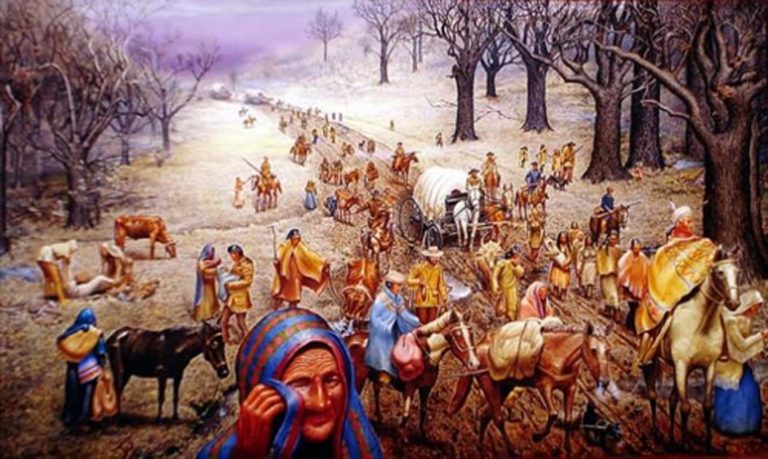


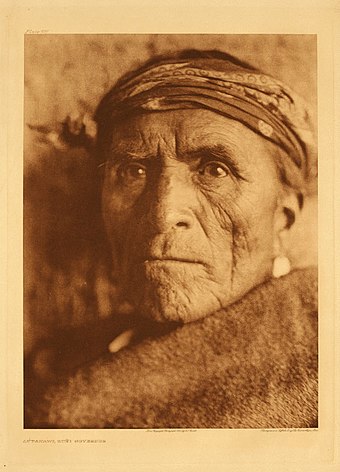





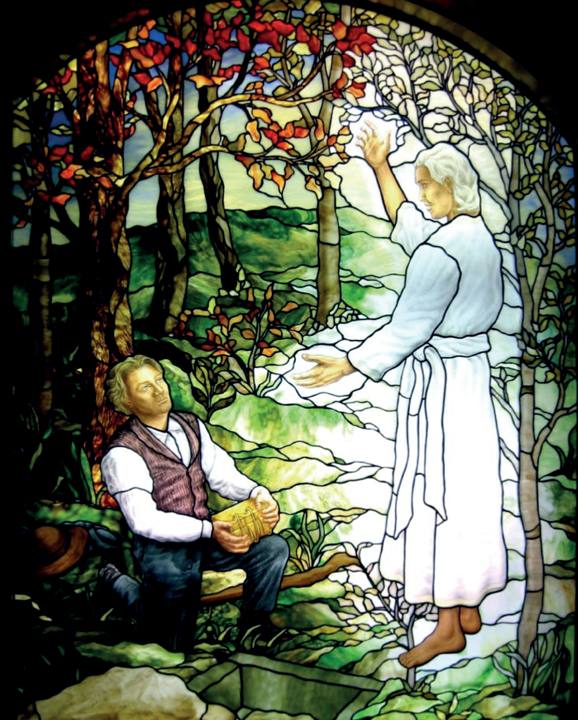


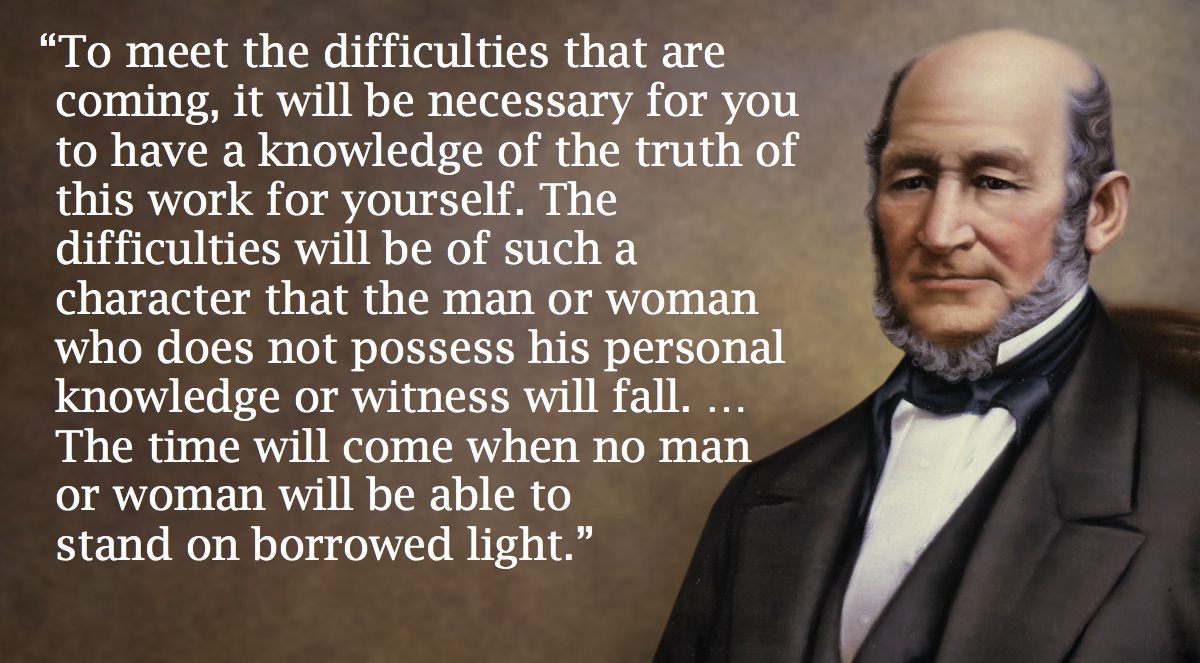

 Doctrine and Covenants Section 84:1-4. Revelation given through Joseph Smith the Prophet, at Kirtland, Ohio,
  “The monument was erected on the Hill Cumorah by the Church of Jesus Christ of Latter Day Saints to commemorate the delivering of the ancient American record to Joseph the Prophet on

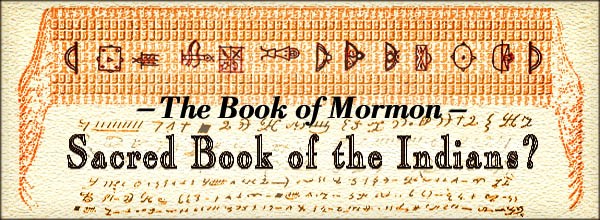
 MORMON APOLOGIST E. Cecil McGavin, in relating to his readers some ancient traditions of the North American Indians, made this remarkable statement in 1947:
 Elder McGavin was not the first LDS writer to relate this unusual story. A very similar quote (with a reference citation matching one of McGavin’s) can be read in a Mormon magazine published in 1886. There the writer, George Reynolds, the former private secretary to Brigham Young, has this to say:
 The Rev. Calvin Colton (1789-1857) is not known to have ever produced a book called Origin of the American Indians, but he did write one with this lengthy title: “Tour of the American Lakes, and among the Indians of the North-west territory, in 1830: disclosing the character and prospects of the Indian race.” Since that book was published (in two volumes) in London in 1833, it appears to be the work cited by McGavin, Reynolds, Widtsoe and Harris.
 “Once the red men were many; they occupied the country from sea to sea — from the rising to the setting sun; the whole land . . . Thousands of moons ago, when the red men’s forefathers dwelt in peace and possessed this whole land the Great Spirit talked with them, and revealed His law and His will and much knowledge to their wise men and prophets. This they wrote in a

 “Once the red men were many; they occupied the country from sea to sea–from the rising to the setting sun; the whole land Thousands of moons ago, when red men’s forefathers dwelt in peace and possessed this whole land the Great Spirit talked with them, and revealed His law and His will and much knowledge to their wise men and prophets. This they wrote in a
  But what did he see in the way of fulfillment for his efforts? In mortality he saw very little, but in vision he must have
  A book published in London, England, in 1833, by a Mr. C. Colton, on the origin of the American Indians bears testimony to this same tradition. It is therein stated: “They assert that
  The next question that might be asked is, Where did Rev. Colton get his information? According to his book, he conducted research into the situation and background of the American Indians during his 1830 “Tour of the American Lakes.” He then sailed off to London to work as a correspondent for the New York Observer, during which time he published a plethora of books on America.





/arc-anglerfish-arc2-prod-sltrib.s3.amazonaws.com/public/SFDFN7V33JBRROEL724CCB6QYY.jpg)

/arc-anglerfish-arc2-prod-sltrib.s3.amazonaws.com/public/7JPWK6NPVRGLDOWO2LZKIS5W6E.JPG)





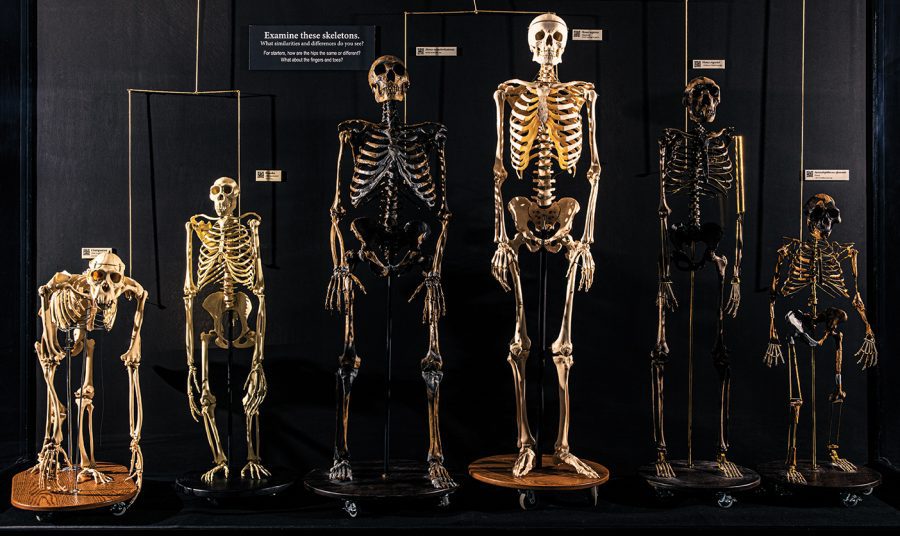

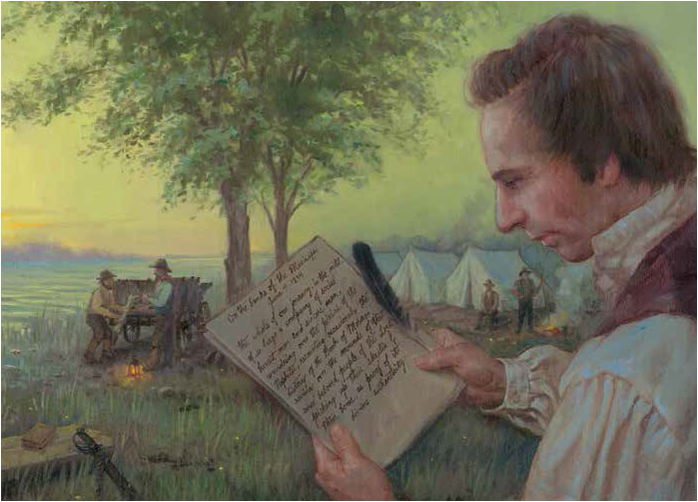
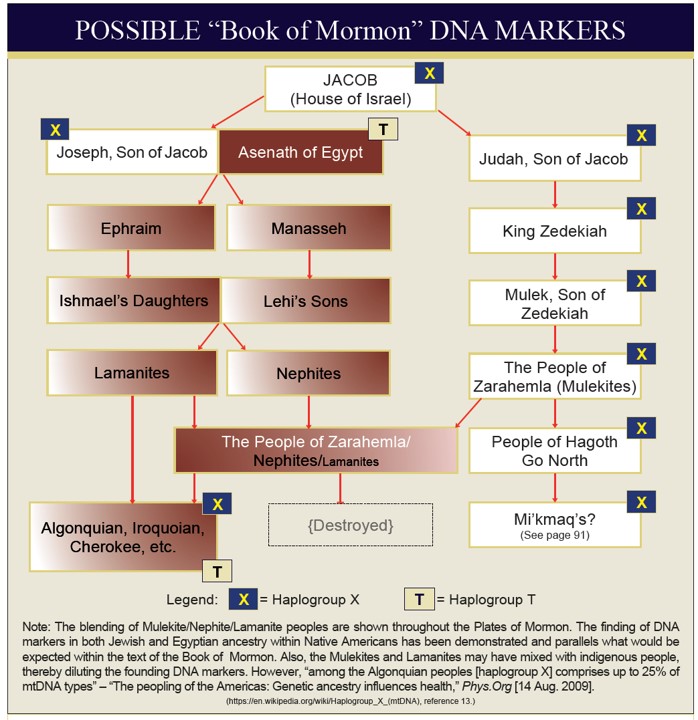

 “Which is my word to the Gentile, that soon it may go to the Jew, of whom the Lamanites are a remnant, that they may believe the gospel, and look not for a Messiah to come who has already come.” D&C 19:27


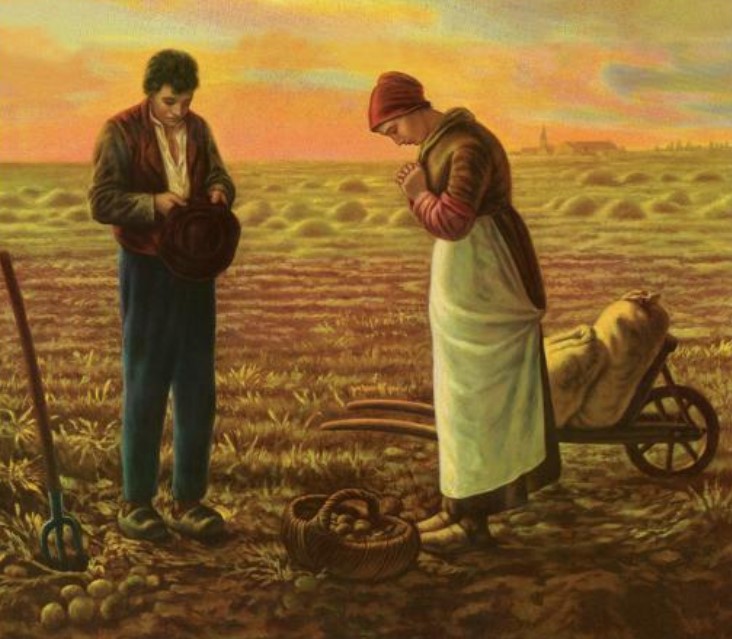
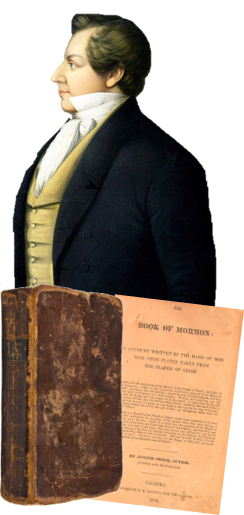
 “Such questions have been asked as “How much did the prophet Joseph Smith actually know about Book of Mormon geography?” and “How much of what he knew did he feel at liberty to reveal to his followers?” Joseph Smith was first shown the plates of the Book of Mormon on September 22, 1823, but it was not until the fourth anniversary of that date, i.e., in 1827, that they actually came into his possession. What was he doing during those four years, and why that long wait before he could get on with his important assignment of translating them into English? A recent study documents no fewer than 22 visitations of the angel Moroni to Joseph, as well as appearances of Nephi, Alma, Mormon, and other Book of Mormon notables [Robert J. Woodford, “Book of Mormon Personalities Known by Joseph Smith” The Ensign, Vol. 8, No. 8, August 1978, pp. 12-15; also “The Story of the Doctrine and Covenants,” i.b.i.d., Vol. 14, No. 12, December 1984, pp. 32-39].
 ‘During our evening conversations, Joseph would occasionally give us some of the most amusing recitals that could be imagined. He would describe the ancient inhabitants of this continent, their dress, mode of traveling, and the animals upon which they rode; their cities, their buildings, with every particular; their mode of warfare; and also their religious worship. This he would do with as much ease, seemingly, as if he had spent his whole life among them.’ (Smith, pp. 82-83) . . . In any case, the Prophet seems to have known a good deal about ancient Nephite civilization. Why, then did he not tell his followers more about such matters as Book of Mormon geography? Because they were not yet ready for it, and because that was not what the Church was to become involved in at that stage of development. It would seem, however, that he at least left a few clues behind, perhaps to stimulate us of the present generation to further inquiry. (Incidentally, I am not one to accept everything Joseph Smith ever said or wrote as automatically binding; he was a human being like the rest of us. But I do believe he had special insights, and whatever he may have had to say–even on a subject like Book of Mormon geography–is worthy of careful consideration.)” Ross T. Christensen at the Thirty-third Annual Symposium on the Archaeology of the Scriptures, held at BYU on September 28 and 29, 1984.


 As for myself, I was swallowed up in the depths of my afflictions; and, though my soul was filled with horror past imagination, yet I was dumb, until I arose again to contemplate the spectacle before me. Oh! at that moment how my mind flew through every scene of sorrow and distress which we had passed together, in which they had shown the innocence and sympathy which filled their guileless hearts!
 “Who can say aught against Joseph Smith? I do not think that a man lives on the earth that knew him any better than I did, and I am bold to say that, Jesus Christ excepted, no better man ever lived or does live upon this earth. I feel like shouting Hallelujah all the time, when I think that I ever knew Joseph Smith, the Prophet.” Millennial Star, XXI (July 11, 1863)


 “Twined linen was used to make the curtains, veil, and door hangings of the Tabernacle (Exod 26:1, 31, 36), the hangings for the gate of the court and for the court itself (27:9, 16, 18), and also the ephod, the girdle of the ephod, and the breastplate of the high priest.”

 Figures on the left show various weaving of cloth by the Hopewell Group found in Georgia. Descriptions for each weave type are: a-c, g-i (twined weaving); f (in-and-out weaving); d and e (netting).
  Left: Woven cloth found in the Seip Mound, Chillicothe, Ohio, 1928. Cloths of various weaves were preserved by contact with copper. Below: Squier and Davis 1847 survey map of Seip Mound. (As written in Annotated Book of Mormon by David Hocking and Rod Meldrum page 161)





 The Annotated Book of Mormon by David Hocking and Rod Meldrum Page 24-25











 The Annotated Edition of the Book of Mormon by David Hocking and Rod Meldrum Page 519-21