
“The Lamanites must Rise in Majesty and Power.” Spencer W. Kimball
“In this dispensation, our day, a book of prophetic utterances has channeled earthward to us. The Prophet Joseph Smith said, “One of the most important points in the faith of the Church of the Latter-day Saints, through the fullness of the everlasting Gospel, is the gathering of Israel (of whom the Lamanites constitute a part).” (History of The Church of Jesus Christ of Latter-day Saints, 2:357.)…
President Brigham Young, speaking of the conversions of the Lamanites, said: “Look to see them like a flame of fire, a mighty rushing torrent, like the grand march of angels.” (Young Woman’s Journal, May 1890, p. 263.)
John Taylor expressed this thought: “The same organization of priesthood, must be introduced and maintained among the house of Lehi as amongst those of Israel gathered from among the gentile nations.” (Letter to A. Carrington, Liverpool, Oct. 18, 1882.)
President Wilford Woodruff penetrated the future and revealed, “Zion is bound to rise and flourish. The Lamanites will blossom as the rose on the mountains. … Every word that God has ever said of them will have its fulfillment, and they, by and by, will receive the Gospel. It will be a day of God’s power among them, and a nation will be born in a day.” (Journal of Discourses, 15:282.)
Now may we consider the book of revelations of today as shared with us by the present prophet, President Spencer W. Kimball: “The Lamanites must rise in majesty and power.” (Conference Reports, Oct. 1947, p. 22.)” The Lamanites Must Rise in Majesty and Power
By Elder J. Thomas Fyans Assistant to the Council of the Twelve Source:
“The Lamanites will blossom as the rose on the mountains. I am willing to say here that, though I believe this, when I see the power of the nation destroying them from the face of the earth, the fulfillment of that prophecy is perhaps harder for me to believe than any revelation of God that I ever read. It looks as though there would not be enough left to receive the Gospel; but notwithstanding this dark picture, every word that God has ever said of them will have its fulfillment, and they, by and by, will receive the Gospel. It will be a day of God’s power among them, and a nation will be born in a day. Their chiefs will be filled with the power of God and receive the Gospel, and they will go forth and build the new Jerusalem, and we shall help them. They are branches of the house of Israel, and when the fullness of the Gentiles has come in and the work ceases among them, then it will go in power to the seed of Abraham.” Wilford Woodruff JD 15:282
Summary of Indian Student Placement Services

Author: De Hoyos, Genevieve
“The Indian Student Placement Services was established among native Americans by the LDS Church in part to fulfill the obligation felt by the Church to help care for the Indians in the Americas (2 Ne. 10:18-19). The program places Indian students in Latter-day Saint homes, where they live while attending the public school of the community during the academic year. Another goal of Indian Student Placement Services, in addition to giving Indian youth better opportunities for education, has been to develop leadership and to promote greater understanding between Indians and non-Indians…
Most placement students express more pride and interest in Indian culture than do students from Indian boarding schools. That they perceive themselves as truly bicultural, at ease in both societies, is confirmed by their rate of interaction with Indian students as well as with Anglo peers. They also become Church leaders. Most of them are active in the Church, go on missions, and agree with major Church beliefs; many marry in the temple.
Foster parents volunteer for religious reasons and remain in the program to see the child grow and develop emotionally and spiritually. They typically become very attached to their Indian children, maintaining a close relationship with them after graduation from school.
Accusations that the LDS Church used its influence to push children into joining the program prompted the U.S. government in 1977 to commission a study conducted under the auspices of the Interstate Compact Secretariat. Its findings rejected such accusations. In the resulting report, written by Robert E. Leach, Native American parents emphatically stated that they, not the children, decided to apply for placement. These parents typically stated that they were pleased that the program led their children to happiness and a better economic situation while the children still identified with their Indian heritage. This participation, they claimed, also helped the rest of the family to understand and deal more effectively with Anglos. They consistently expressed appreciation to the foster families for caring for their children. Some Indian leaders were intent on limiting the placement of Indian children among Anglos. However, after hearing testimony and examining current research, the committee agreed in 1977 to permit the LDS Indian Student Placement program to continue.” Genevieve De Hoyos, Source: Interstate Compact Secretariat in 1977, Its findings Reject Negative Accusations. https://bookofmormonevidence.org/wp-content//index.php/Indian_Student_Placement_Services
 Betty “Red Ant” Loves the Indian Placement Program
As Mom [Helen Yazzi White] said, “I felt the Great Spirit again, like the time I was herding sheep. After the teachings, again I would dream of the stories in that sacred book, The Book of Mormon! Your brother and sisters would read to me. I dreamed everything. I saw the prophets and their families. I saw Lehi and his family. I saw the people leave and come to the promised land. You know our people believe this land, America. It is a special place, it is sacred. So, Lehi brought his family here to this land of the United States. That is why he came here, because it is a sacred land to us Natives…

I can’t say enough good things about the Indian Student Placement Program. It was a truly inspired program. It literally saved my life and put me on the path of success as a wife, mother and now grandmother.” Betty “Red Ant” LaFontaine [Betty’s Mother, a traditional Navajo Woman, Helen Yazzie White, was baptized by Legrand Richards about 1953]
On a quote from the Video below, Betty says, “My older siblings participated in the [Placement] program before me and my younger siblings… I saw them leave and come home, we would leave for nine months of the year and then we come back in the spring… I saw the change in them and I saw that light that was so, you could see it, and I wanted to touch it, I wanted to be like that, I wanted that light myself, and they were changing because of what they were living, they were living the gospel… 24/7 a day.

Betty continues, “We [Lived the Gospel at home] too, but it was more of a balance between tradition and LDS life until… my parents were fully converted. We can go through life as members of the Church our whole life, and not be fully converted, and I feel like when my parents hit that point in their life, there was nothing but good and many blessings to come our way as a as a family. But after a few years of… my older siblings going back and forth, I desired it very much and I asked my parents if I could [go].
At the age of 10, I was baptized, because you had to be baptized before you participated in the program, and I went on the program at age 10… I’ll never forget that time that we all got together, as it was time to go. I went through an interview, and I was asked personally if I wanted to go, and why I wanted to go, and I told them… I wanted to feel the same feelings, and to help my parents, by learning the good that’s out there, because I know there is, and so I wanted to participate, and they said okay, and I’ll never forget that day.
I was excited, 10 years old, okay? How much did you know really young? I mean that’s really young… and my sister was even younger. She was eight… and I got on that bus… ride from Crown Pointe, New Mexico to Springville, Utah, and that day was… amazing. My mom, she was so strong, I would be crying and… just shedding tears watching her child at the age of 10 leave. She was strong, stood there and just gave a simple wave, and we left. I’ll never forget that ride every so often we would go and stop at a different part of the reservation and pick up more students.”
The Effectiveness Of The LDS Indian Placement Program on Cwic Media with Greg Matsen.
“There has been much criticism of the Indian Placement Program conducted in the last century, but so many participants have confirmed their positive experiences with it. In this episode, Betty LaFontaine, a child participant in the program, gives a detailed account of her experiences in the program and what it has meant to her. How did she hold on to her own culture? What kind of relationship did and does she have with the foster families she spent so much time with? If you would like to give feedback on the Indian Placement program to the guest, you can contact Betty LaFontaine at [email protected]” Greg Matsen Cwic Media
The “Father” of the Indian Placement Program”
Joyce Anne Buchanan about her Grand Father Golden R. Buchannan said, “Church-wise, grandfather grew up in a practicing LDS home, advanced through the Aaronic Priesthood, served as ward and stake MIA superintendents, and taught classes in most of the Church organizations. He served a 5 year stake home mission, on two stake high councils, and in the Sevier Stake presidency from 1941 to 1948.
His work with the Lamanites is rooted in his family heritage. His grandfather Buchanan was sent by President Brigham Young to open up the first Indian mission in the Elk Mountains among the Paiute Indians. Later be became an interpreter for President Young in the Sanpete and Sevier areas at the time of the Black Hawk war. Grandfather himself was part Indian, his grandmother on his mother’s side being half Choctaw and Chickasaw. He recalls being with his father who often sat with Indians around a fire, talking to them in broken Ute language.” Joyce Anne Buchanan
Beginning Idea- Indian Placement Program- Golden R. Buchanan
Joyce Anne Buchanan continues, “While in the Sevier Stake Presidency, grandfather became concerned about the plight of Indian young people who came into the area each fall with their parents to work on farms. when one Indian girl, Helen John, requested in 1947 to live with a white family and attend school, grandfather pondered the possibilities of some kind of Church program whereby such youth could be “adopted” by LDS families for a school year. He foresaw that thousands of Lamanites could thereby be taught the gospel and basic economic and social skills they sorely needed. He proposed such a program to Elder Spencer N. Kimball, of the Council of the Twelve. Immediately Elder Kimball visited my grandparents and asked them to experiment with such a program by taking Helen into their home. They did. Other LDS families expressed interest, and other Indian youths requested similar opportunities. That commenced a slowly growing foster parent program which in the 1950’s became the Church’s Indian Student Placement Program. Thus, thousands of Lamanite youngsters have benefited from this program, receiving an education, many even going on to receive college degrees.
That started grandfather’s long career of Church service in behalf of the Lamanites. It led to his being called to promote and supervise special programs in all stakes having Indians residing in their boundaries; from 1943 to 1951 he was Coordinator of the Indian Affairs Committee of the Church. He traveled to many stakes and gradually developed an acquaintance with nearly 70 different Indian Tribes in western United States and western Canada.

In 1951 he was called by President George Albert Smith to preside over the Southwest Indian Mission, [My parents Loa Lee Tueller, and Clyde Wendell Nelson were serving while on that mission, and later I became their second child, Rian Nelson] …where he and my grandmother provided leadership and example to full and part time missionaries and to Indian converts and investigators until 1955. In 1959 he was set-apart as president of the Salt Lake Regional Mission, directing proselyting work among racial and national groups, including Lamanites, residing in the Salt Lake Valley, until his release in 1966.
He was then called to serve on the Melchizedek Priesthood Lamanite and Minority Culture Committee, helping to implement programs and procedures geared to the needs of Lamanite members and units throughout the church.
In 1968 he was called to be a temple worker and sealer in the Salt Lake Temple. That was a nice experience as my grandmother was also called to be a temple worker. It was something they could share as much of the church work he had been involved in was done, leaving grandmother at home.” Spoken at his funeral by Joyce Anne Buchanan, his first grandchild See the complete article of Joyce here; https://bookofmormonevidence.org/president-golden-r-buchanan-lamanite-advocate/
Indian Student Placement Program of The Church of Jesus Christ of Latter-day Saints
During the second half of the 20th century, approximately fifty thousand Native American children participated in the Indian Student Placement Program (ISPP), an initiative sponsored by the Church in which Church members hosted Latter-day Saint Indian students during the school year. For Native participants, the program offered educational and spiritual opportunities in addition to what was then available on reservations. The program enabled host families, who were predominantly white Latter-day Saints, to fellowship and assist American Indians, whom they understood at the time to be descendants of the Lamanites in the Book of Mormon.
The ISPP was founded in the wake of World War II, which brought many American Indians into contact with the dominant culture and convinced many Native leaders and parents of the value of Euro-American education. In 1946, an estimated two-thirds of the Navajo (Diné) population—from which a significant percentage of ISPP participants came—had received no formal education. Federal Indian schools were underfunded and were often geographically inaccessible to Native children. Parents and tribal officials during the postwar era, looking for ways to alleviate poverty in their communities, were therefore open to new educational opportunities for the rising generation. In 1947, Helen John, a teenage Navajo laborer in Richfield, Utah, requested and received permission to stay with a local Latter-day Saint family and attend school. John’s experience served as a template for other Indian youths who were informally placed with Latter-day Saint families over the next few years. In contrast to federal Indian boarding schools, where Native children stayed in sometimes impersonal school facilities, the emerging Latter-day Saint approach was an “outing program,” in which Native children lived with host families, attended local schools, and were embedded in the surrounding community.
Apostle Spencer W. Kimball became the leading proponent of the Church’s 20th-century efforts to proselytize Native peoples and provide educational assistance. Under his direction, the ISPP became an official Church program in 1954. Missionaries and local Church leaders encouraged Native youths to participate, while local priesthood leaders recruited host families. The ISPP operated under the Relief Society’s licensed social services department. Case workers ensured that Native applicants were at least eight years old, in good health, able to participate in school, and baptized members of the Church. Case workers also ascertained that host families met legal requirements to be foster parents and, working with local priesthood leaders, confirmed that they were Church members in good standing. Although many of the initial participants were Navajo children and were placed in Utah homes, as the program expanded in the 1960s, Native American students from many tribal nations throughout the United States and Canada were placed in Latter-day Saint homes throughout the North American West. Aside from attending school, participants often engaged in extracurricular, church, and other social activities intended to enrich their experience in the program. To support the ISPP, the Church operated the Indian Seminary Program for religious instruction.
The ISPP produced mixed results. According to a 1981 study, many participants thrived, graduating high school and attending college at higher rates than Natives who did not participate in the program, given the poor educational alternatives. Many ISPP graduates studied at Brigham Young University, which operated one of the largest Native American education programs in the United States in the 1970s. Following graduation, many participants maintained a high degree of commitment to the Church, participating in their congregation, paying tithing, adhering to the Word of Wisdom, and marrying in the temple. Other participants, however, found adapting to the ISPP’s racial and integrationist assumptions difficult. Although the program encouraged participants to maintain regular contact with their families and to return home during the summers, many found the program’s privileging of Western values separated them from their Native family and culture.
Editors Note: I totally understand the mixture of success in this program. I have talked to many that have seen great success in their lives. I have heard a few who say it helped them, but they are not active in the Church, but they learned a lot about life and how to live. Very few have I heard from that said the program had little or no success. This is not a scientific poll however, the program in my opinion was an inspired program from our Church. I see the success continues for many today. Read the Preface to Joseph’s Remnant below by Allen Christensen, and he will share with you the success of the program and challenges we can help overcome.
 Church Article continues, “ISPP annual enrollment peaked at five thousand participants in 1970, after which a combination of factors led to a slow but steady decline. Externally, indigenous activists began criticizing the ISPP as a tool of assimilation. Internally, the Church began to streamline and standardize its programs, which included curtailing and reducing the ISPP. This led to some internal dissent. Eventually legal and financial constraints made continuation of the program unfeasible. These constraints and the many school improvements on reservations led Church leaders to conclude that the program should be discontinued. The ISPP’s final participant graduated from high school in 2000. https://www.churchofjesuschrist.org/study/history/topics/indian-student-placement-program?lang=eng
Joseph’s Remnant and the Indian Placement Program
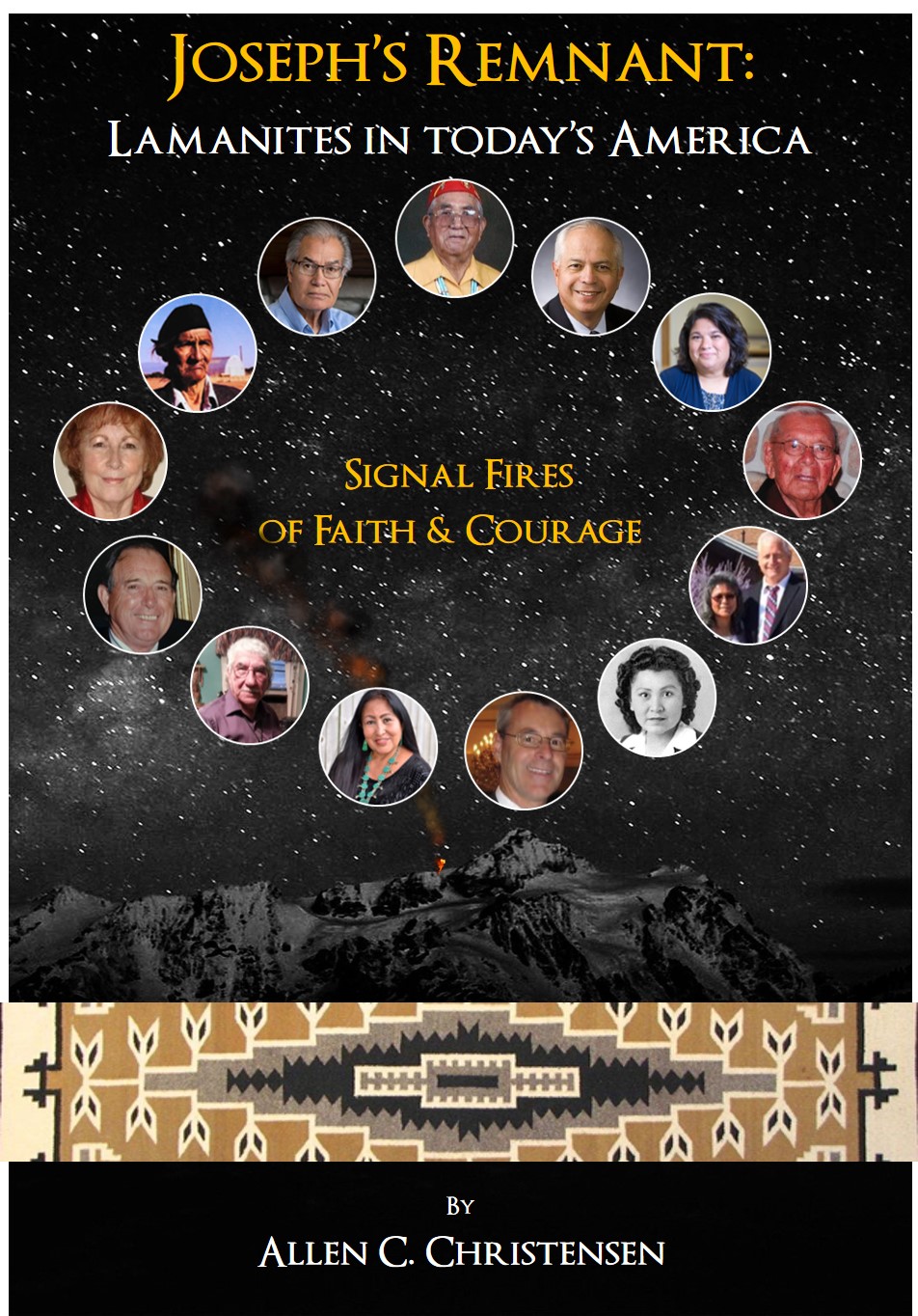
Additional Information below from Allen C. Christensen, author of Joseph’s Remnant, in which there are stories of 16 wonderful Native Americans, including most of you know, Betty LaFontaine, Delores Kahkonen, and franklin Keel, and how they and many others have seen much success in their lives and become heroes to many.
Preface
“In the course of life, one occasionally encounters a situation, or a thought, perhaps an insistent question that will not go away. This is written concerning such a matter that has been difficult to ignore. In addition to our children, we had four Navajo foster daughters who lived with us a combined total of 13 school years. We attempted to make them an integral part of our lives. They attended church services with us regularly. We ate meals together, read the scriptures, held home evening and prayed as a family. However, since their time with us, their activity in the Church has been sporadic.
During March 2009, I spent four days as part of an assessment team on the Navajo Reservation. The team met a number of former LDS placement students, who were pleased this their experiences during their years as placement students, but who were no longer active in LDS Church activities. When asked why, one man, a former 10-year placement student, who subsequently received a B.S. degree in agriculture, candidly said: “I missed the Navajo ways, the traditions and the stories of my people. I was hungry for those things and wanted my children to have that heritage.” Yet, he would announce with pride the different people who had been placement students. Those students have moved up the economic ladder. Their homes are much improved. The red-rocked hogans have largely disappeared. Late model pickups and satellite dishes are everywhere. There are good restaurants on the reservation with quality food in every community of any size. In fact, the level of food intake has increased to such a degree that diabetes has become a serious problem. Tribal leadership has built gymnasiums and other facilities to encourage exercise and to provide an enlightened awareness regarding the attention that should be given to personal health.
The Navajo landscape is largely free of litter along its roads and scenic byways. The Navajo people have become more effective in the maintenance of their rights. Even though Canyon de Chelly is a natural wonder of considerable beauty and has become a National Monument, the Navajo people have successfully insisted on maintaining their right to farm on the canyon’s floor. The Holiday Inn at Chinle is owned by the Tribe, although it has a franchise agreement with Holiday Inn, Inc. It is a hotel of considerable charm. At Tuba City, the Hogan Restaurant is built in the shape of a hogan. It’s large, doomed ceiling features huge laminated beams. The tasty food portions served are substantial, more than one can wisely eat. Other business, some of which are tourist related have opened.
Some businesses, such as the historic Tuba Trading Post established in 1870, which was once owned by traders, in this case Arizona’s prominent Babbitt family, are now the property of the Navajo Nation. The Navajo man clerking at the Tuba Trading Post, who sold me a black turquoise ring, was a former placement student. He married a woman of another faith and has apparently minimal involvement with the Latter-day Saints but remained pleased with his placement experience. He has active Latter-day Saint siblings. That situation seemed to be repeated over and over again. So, while many former placement students now enjoy a greatly enhanced standard of living in comparison to conditions of 40 years ago, the level of Church activity of these former students has not kept pace. As a former placement parent, I introspectively have asked: “What more could I have done? What was overlooked? Were we sufficiently diligent? Where did we fall short as foster parents? While we saw to their physical and educational needs, why were we unsuccessful in bridging the cultural Church or doctrinal gap?”
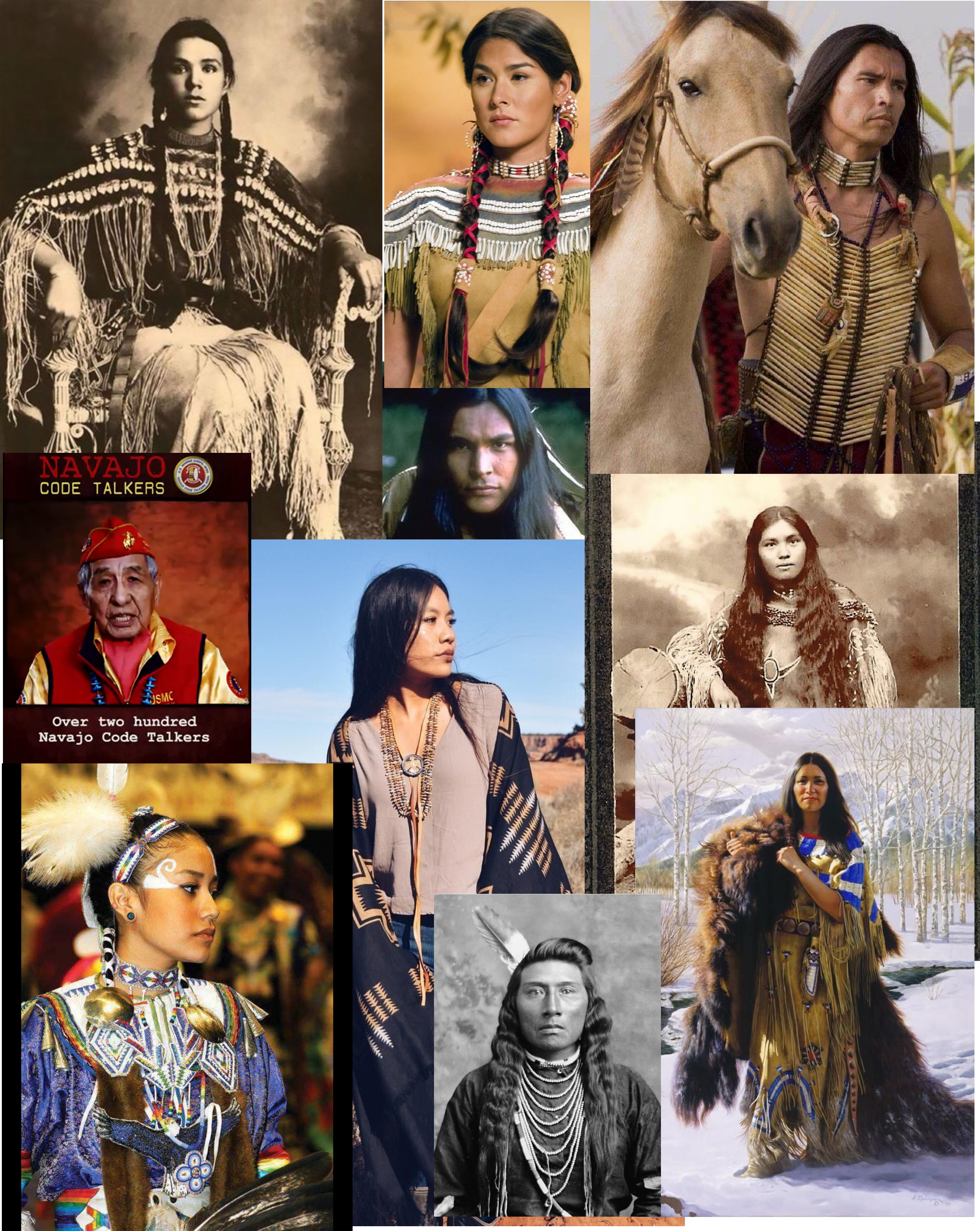
That introspective process has led to asking these questions: “How do we make the cultural traditions of another people a supportive ally, a friend, rather than an adversary insofar as The Church of Jesus Christ of Latter-day Saints is concerned? What is it that we have done in our family that binds us to the Church culture that we have come to love and treasure?” Perhaps part of that answer may be that we have a tradition of faith rooted in the accounts of devoted ancestors, who sacrificed all for the Gospel of Jesus Christ. Their life stories of unwearying diligence, of quiet heroism, which acts of faith began with some as young children, have succored our souls, even before we founded a more mature faith, a faith rooted in the love of the word of God as found in the scriptures and in the joy of service. Family histories have served us well. The stories and traditions of the Navajo we did not know, nor did we, in reflection appreciate the strength of those binding attractions. There have been for some time, generations of Native Americans who have displayed loyal devotion to their Latter-day Saint membership. Surely among the Children of Lehi, the Navajo, the Utes, the Shoshone, the Pawnee, the Apaches and all of the other Native American nations there must be accounts of bravery and faith, of diligence and devotion, that could have a beneficial impact in this day. Not only would such faith-encouraging accounts be beneficial and spiritually sustaining for them, they would also be helpful for Anglo Latter-day Saints…
Allen Christensen ends the preface with, “Well-ordered families are a healthy tradition that can be instrumental in overcoming the social sicknesses that confront all of American society. Clearly, the strengthening of families is one such ally that appeals to thinking people irrespective of faith or cultural origin. Neglect of the rising generation is not limited to any particular societal group. The problems are serious and demand attention. However, the principal purpose of this treatise will be to share accounts of courage and faith among Native Americans. There are remarkable people among them, who can serve as excellent role models and simultaneously build mutual respect and appreciation for those whose ethnic origins are different. There are accounts to be shared around the home fires from all cultures. To love our neighbor as ourselves requires that we get out of our comfort zone, to think outside of the box of previous conceptions. We must serve one another with increasing effectiveness if the purposes and opportunities of mortality are not to be wasted. And as we do, life will take on an added dimension of richness. We will discover in the end that it has not been a sacrifice, or an inconvenience, for we will discover, perhaps to our surprise that we have been given more than we gave for that is the way things really are in the economy of the Lord.” Allen C. Christensen Joseph’s Remnant, Lamanites in Today’s America.
Purchase a copy today today for just $9 here
More Information Here:
The Church of Jesus Christ of Latter-day Saints’ Indian Student Placement Service: A History
Contact Betty Today
Betty LaFontaine has just begun a new correspondence email address at LDSPlacementProgram@yahoo.com.

Betty invites any person who has been or still is a participator in the placement program, whether a parent, child, or administrator, or even just someone who just cares about blessing the lives of Native Americans, to contact her.
She would love to hear the great success or the love you have felt from that program, and she also wants to hear any complaints or ways to improve that program. Betty’s love for the LDS Placement Program and the influence of her life for good, is critically important to her, and to her great husband Mike LaFontaine, a wonderful Chippewa Native American. Both are excellent examples of righteous living Latter-day Saints who love our Savior.
Betty’s phone number is 904-703-5165 she lives in Florida, and is in Nauvoo, Illinois managing the “Phoenicia Ship Museum” each summer. At the end of this blog see several videos about the Phoenicia project that Mike and Betty LaFontaine are spearheading.
Heartland Research Group
 Heartland Research Group is a 501-C3 non-profit group with John C. Lefgren PhD as President, Vice President Mike LaFontaine, and VP Cultural Director Betty LaFontaine, with other board members Michael Stahlman, and Russell Barlow.
See What the Phoenicia Ship Museum is all about below:
For information about the ship, to plan a visit or to donate time or money, please visit here: https://www.zarahemlasite.com/
Additional Videos Here: https://www.phoenicia.rocks/videos
Donations Here: https://www.phoenicia.rocks/donate
