
According to Scripture Central and Fair Mormon when did Joseph Smith first call the hill in NY Cumorah?
“According to Scripture Central and FAIR, Joseph Smith himself never used the name “Cumorah” for the New York hill in his personal histories. The first documented person to identify the New York hill as Cumorah appears to have been William W. Phelps in 1833, followed by Oliver Cowdery in 1835. The name Cumorah came into common circulation among Latter-day Saints no earlier than the mid-1830s, and there’s no historical evidence Moroni called the hill “Cumorah” during Joseph’s first encounter with him in 1823. ScriptureCentral
The closest thing to Joseph Smith himself using the term is in Doctrine and Covenants 128, where Cumorah is mentioned in connection with the gospel going forth — though this may simply reference the Book of Mormon’s Cumorah generally rather than explicitly naming the New York hill. FAIR
So the short answer: not Joseph Smith directly in the 1820s/early 1830s — the identification traces to Phelps (1833) and Cowdery (1835), which then became standard among Latter-day Saints.” Claude AI
The timing of Joseph Smith calling the hill “Cumorah” is wrong according to our Heartland Research. See more below under the title “Geography Packet”
Two Repositories in NY Cumorah
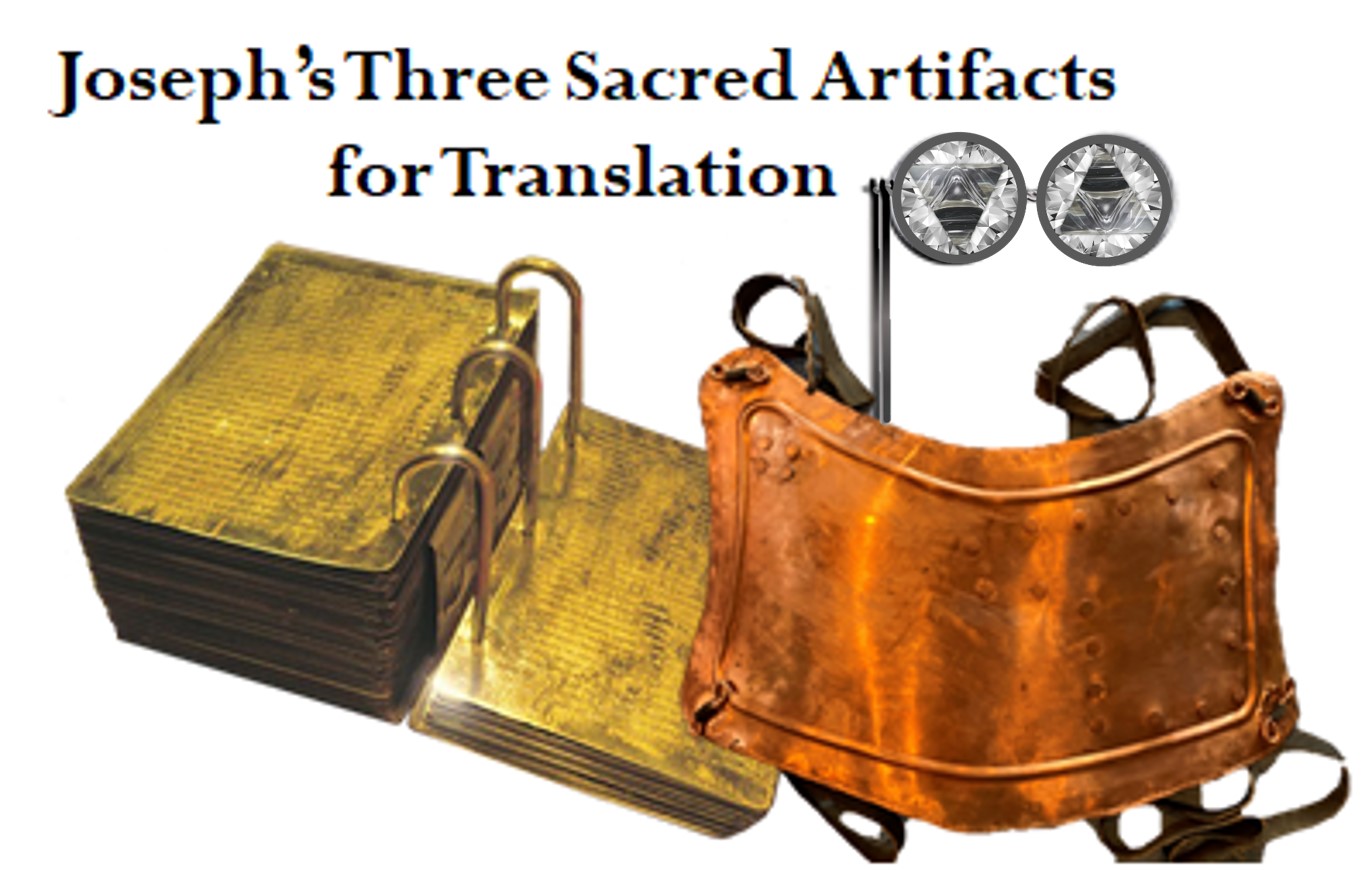 I believe the Hill Cumorah in NY is indeed the hill that Joseph received the plates from and is also the same hill in Cumorah Land and the final battles of the Nephites and Lamanites occurred. I also believe there are two repositories in the NY Hill Cumorah. One is the stone box where Joseph found the gold plates, the breastplate and the spectacles or two clear stones in the rims of a silver bow. There was not found in that box the Sword of Laban nor the Liahona, they were placed in the larger repository of the NY Cumorah sometimes called the Cave at Cumorah, as Orson Pratt says below.
“The hill Cumorah, with the surrounding vicinity, is distinguished as the great battlefield on which, and near which, two powerful nations were concentrated with all their forces. Men, women and children fought till hundreds of thousands on both sides were hewn down, and left to molder upon the ground. . . .
These new plates were given to Moroni to finish the history. And all the ancient plates, Mormon deposited in Cumorah, about three hundred and eighty-four years after Christ. When Moroni, about thirty-six years after, made the deposit of the book entrusted to him, he was, without doubt, inspired to select a department of the hill separate from the great depository of the numerous volumes hid up by his father. The particular place in the hill where Moroni secreted the book, was revealed, by the angel, to the prophet Joseph Smith, to whom the volume was delivered in September, A.D. 1827. But the grand repository of all the numerous records of the ancient nations of the western continent, was located in another department of the hill, and it’s contents under the charge of holy angels, until the day should come for them to be transferred to the sacred temple of Zion.” 1866 Orson Pratt Millennial Star (28 (27): 417)
Last Battlefields of the Nephites and Lamanites.
Below are some dialogues of the Interpreter Foundation blog between Brant Gardner, myself and others. I ask you to read and ponder and come up with your own opinion about the location of the last battlefields of the Nephites and Lamanites. Somewhere in Mesoamerica or around the Land of Cumorah in NY?
The Geography Packet
BYU-CES Packet for Book of Mormon Classes, by Jonathan Neville
Full Article Here: http://www.lettervii.com/p/byu-packet-on-cumorah.html
When the issues of evolution and the origin of man generated controversy at BYU, the administration developed an “Evolution packet” in 1992, titled “Evolution and the Origin of Man.” See https://content.byui.edu/file/fdc3a775-634d-4ff2-b4e9-d1538d36a16e/1/Text/BYU%20Packet%20on%20Evolution.pdf
The explanation included this statement: “the selection of material for such a packet could not depend on the content of the statements. The goal is not to achieve some kind of “balance” among the views that have been expressed, but to give students the full range of official views so that they can judge the different positions they encounter. The full range of official views should provide the basis for the evaluation of other views that have been expressed but that do not have the status of official Church positions.”
Now that the issue of Book of Mormon geography has generated similar controversy, this packet of statements by Church leaders is intended to achieve a similar purpose.
Guidance accompanying the “Evolution packet” is equally relevant to the “Geography packet.” see total article here: https://bookofmormonevidence.org/the-geography-packet/
See the first few of 21 Geography Comments below which pertain to the name “Cumorah” being spoken of by Joseph as early as 1823 and 1827.
1. Lucy Mack Smith’s Journal of 1845
According to Lucy, when Moroni first appeared to Joseph Smith in 1823, he identified the hill as Cumorah:
“[Moroni, after telling Joseph about the record, said] but you cannot get it until you learn to keep the commandments of God For it is not to get gain. But it is to bring forth that light and intelligence which has been long lost in the Earth
Now Joseph beware or when you go to get the plates your mind will be filled with darkness and all manner of evil will rush into your mind. To prevent you from keeping the commandments of God that you may not succeed in doing his work and you must tell your father of this for he will believe every word you say.
The record is on a side hill on the Hill of Cumorah 3 miles from this place. Remove the grass and moss and you will find a large flat stone pry that up and you will find the record under it laying on 4 pillars of cement— then the angel left him.” https://www.josephsmithpapers.org/paper-summary/lucy-mack-smith-history-1844-1845/41
2. Early 1827– Joseph Smith (Quoted by his mother Lucy Mack Smith)
[In January 1827, Joseph] returned with his wife, in good health and fine spirits. Not long after this his father had occasion to send him to Manchester on business. <And,> as he started quite early in the morning, we expected him home, at the outside, by 6. o clock in the evening. But when 6. came he did not arrive.— we always had a peculiar anxiety about him whenever he was absent from us; for, it seemed as if something was always taking place to jeopardize his life. But to return, he did not get home till the night was far spent. On coming in, threw himself into a chair, apparently much exhausted. My husband did not observe his appearance, and immediately exclaimed, “Joseph, why have you staid so late? has anything happened you? we have been much distressed about you these three hours. As Joseph made no reply, he continued his interrogations until I finally said: now, father, (as that was the manner in which I commonly addressed him) let him rest a moment— dont touble him now— you see he is home safe, and he is very tired; so pray wait a little.
The fact is, I had learned to be a little cautious about matters with regard to Joseph; for I was accustomed to see him look as he did on that occasion, and could not easily mistake the cause thereof. Presently he smiled, and said in a very calm tone, “I have taken the severest chastisement, that I have ever had in my life”. My husband, supposing it was from some of the neighbors, was quite angry; and observed, “I would would like to know what business any body has to find fault with you.”
“Stop, father, Stop.” said Joseph, “it was the angel of the Lord— as I passed by the hill of Cumorah, where the plates are, the angel of the Lord met me and said, that I had not been engaged enough in the work of the Lord; that the time had come for the record to <be> brought forth; and, that I must be up and doing, and set myself about the things which God had commanded me to do: but, Father,’ continued he, ‘give yourself no uneasiness concerning the reprimand that I have received; for I now know the course that I am to pursue; so all will be well.”
It was also made known to him at this interview, that he should make another effort to obtain the plates on the 22d. of the following September; But this he did not mention to us at that time. https://www.josephsmithpapers.org/paper-summary/lucy-mack-smith-history-1845/111
3- Moroni
“He [Moroni] then proceeded and gave a general account of the promises made to the fathers, and also gave a history of the aboriganes of this country, and said they were literal descendants of Abraham. He represented them as once being an enlightened and intelligent people, possessing a correct knowledge of the gospel, and the plan of restoration and redemption. He said this history was written and deposited not far from that place… While describing the place where the record was deposited, he gave a minute relation of it, and the vision of his mind being opened at the same time, he was permitted to view it critically; and previously being acquainted with the place, he was able to follow the direction of the vision, afterward, according to the voice of the angel, and obtain the book.” https://www.josephsmithpapers.org/paper-summary/history-1834-1836/68
For other evidence of the Name Cumorah being shared by Joseph Smith see here: https://bookofmormonevidence.org/the-geography-packet/
Interpreter Foundation Blog
Brant A. Gardner on April 23, 2025 at 7:56 pm
There is no question that you can find statements mentioning Cumorah as the name of the New York hill. That has been well known. The problem is whether or not the hill called Cumorah in NY is the same hill as the Cumorah in the Book of Mormon. The only evidence from the Book of Mormon itself suggests that it is not. There is no revelation. Joseph, who one would think would have known, if anyone did, did not use that name until much later.
When using historical evidence, one must understand that when a later text uses the name while describing an earlier period, that is weak evidence. Since that weak evidence is contradicted by the more contemporary evidence, you have the reason that the trained historians who have been through all of the evidence have declared that there is no evidence that Joseph believed them to the same–but later used the terms that others were using.
The next question should be how anyone decided that the NY hill was the Book of Mormon hill. The Church does not believe that there was a revelation, and if Joseph had one, he ignored it until later. If Joseph isn’t the source of the name, who is and where did they get their information? If not by revelation and not by Joseph’s declaration, upon whose authority was the connection made? It obviously became popular, but that doesn’t explain where it came from in the first place. To repeat a statement I quoted in the blog post: “there is no historical evidence that Moroni called the hill ‘Cumorah’ in 1823.” (Yes there is see below) That is what the historians following Church guidelines said about not using Cumorah in Saints. Remember that: “no historical evidence.”
Now, what does that mean for the stack of quotations that have early people mentioning Cumorah? It means that we have to understand them as historical documents and not as some sort if proof text.”
Reply
Rian Nelson on April 23, 2025 at 4:49 pm
There are several places in the History of the Church, Journals, JSP and Lucy Mack Smith’s Journal of 1845 that speak of the name Cumorah before 1830 as Brant has said. According to Lucy, when Moroni first appeared to Joseph Smith in 1823, he identified the hill as Cumorah (Quote below). Brant and others believe this is not a good source. He says, how do we know that Lucy said that quote, maybe she was wrong or maybe she remembered wrong. In my opinion, why not believe Lucy. Who loves Joseph more than her and would remember such a statement? Sure Lucy put this in her journal many years after her quote. I however have the faith and belief in Lucy and her words, others do not.
Lucy Mack Smith said, “[Moroni, after telling Joseph about the record, said] but you cannot get it until you learn to keep the commandments of God For it is not to get gain. But it is to bring forth that light and intelligence which has been long lost in the Earth.
Now Joseph beware or when you go to get the plates your mind will be filled with darkness and all manner of evil will rush into your mind. To prevent you from keeping the commandments of God that you may not succeed in doing his work and you must tell your father of this for he will believe every word you say.
The record is on a side hill on the Hill of Cumorah 3 miles from this place. Remove the grass and moss and you will find a large flat stone pry that up and you will find the record under it laying on 4 pillars of cement— then the angel left him.” https://www.josephsmithpapers.org/paper-summary/lucy-mack-smith-history-1844-1845/41
There are at least seven documentary sources that confirm it was Moroni who told Joseph Smith, prior to the translation of the Gold Plates, that the hill in Palmyra was anciently known as Cumorah.
1. The only first-person source comes from the epistle that Joseph Smith dictated on September 6, 1842, which was later canonized in the Doctrine and Covenants, Section 128.
Glad tidings from Cumorah! Moroni, an angel from heaven, declaring the fulfillment of the prophets — the book to be revealed. (D&C 128:20)
The inference is that Joseph knew the name “Cumorah” before the book was revealed. That knowledge could only have come from Moroni. This is substantiated in the subsequent documents.
2. An early documentary source confirming the above are the lines from a sacred hymn, written by W.W. Phelps. William Phelps lived with the Prophet in Kirtland and was in essence his executive secretary during the Nauvoo period.
An angel came down from the mansions of glory,
And told that a record was hid in Cumorah,
Containing the fulness of Jesus’s gospel;
(Collection of Sacred Hymns, 1835, Hymn 16, page 22,
It was the angel who told Joseph that the record was hid in “Cumorah.” This hymn was selected by Emma Smith, wife of the Prophet, approved by the Prophet, and published in 1835 with a collection of hymns, under instructions and directions from the Lord. “And it shall be given thee, also, to make a selection of sacred hymns, as it shall be given thee, which is pleasing unto me, to be had in my church.” (D&C 25:1)
This hymn was also included in the 1841 edition as hymn #262.
3. Oliver Cowdery, Second Elder of the Church and Co-President with Joseph Smith, stated the following in 1831:
This Book, which contained these things, was hid in the earth by Moroni, in a hill called by him Cumorah, which hill is now in the state of New York, near the village of Palmyra, in Ontario County. (Autobiography of P.P. Pratt p 56-61)
The Autobiography of Parley Parker Pratt was complied, edited and published in1881 by his son, from the documents and records left by his father after his death. From the length and detail of the address given by Oliver Cowdery in 1831, from which the above quote is taken, it had to have been recorded by Parley P. Pratt at the time it was spoken. “In writing his autobiography, Pratt relied heavily on his previous writings. After extensive analysis, Pratt family historian Steven Pratt concluded that almost ninety percent of the text is either based on or copied from earlier works” (Matt Grow, assistant professor of history at the University of Southern Indiana.)
4. The Prophet’s mother, Lucy Mack Smith, provides two separate items of evidence in the original manuscript of her memoirs. In the first item, Lucy is remembering what Joseph told her after Moroni first appeared to him. The quote begins with what Moroni had told Joseph:
Now Joseph beware when you go to get the plates your mind will be filld with darkness and all man[n]er of evil will rush into your mind. To keep you from keeping the comman dments of God and you must tell your father of this for he will believe every word you say the record is on a side hill on the Hill of Cumorah 3 miles from this place remove the Grass and moss and you will find a large flat stone pry that up and you will find the record under it laying on 4 pillars — then the angel left him. [sic] (Lucy Mack Smith, History 1844–1845, Original Manuscript, page 41)
Lucy dictated the above about 20 years after the fact, but it is consistent with other evidence. In the following, Lucy recalls directly what her son said in her presence. Following Joseph’s meeting with Moroni at Cumorah, one year before Joseph received the plates, Joseph told his parents that he had “taken the severest chastisement that I have ever had in my life.” Joseph said:
it was the an gel of the Lord— as I passed by the hill of Cumo rah, where the plates are, the angel of the Lord met me and said, that I had not been engaged enough in the work of the Lord; that the time had come for the record to brought forth; and, that I must be up and doing, and set myself about the things which God had commanded me to do: [sic] (Lucy Mack Smith, History 1844–1845, Original Manuscript, page 111)
In both of these quotes from the Prophet’s mother, she demonstrates that in her mind it was Moroni, who told Joseph, prior to the translation of the plates, that the hill in Palmyra was named Cumorah.
5. David Whitmer confirmed this in an interview in his later years when he stated:
[Joseph Smith] told me…he had a vision, an angel appearing to him three times in one night and telling him that there was a record of an ancient people deposited in a hill near his fathers house called by the ancients “Cumorah” situated in the township of Manchester, Ontario county N.Y…” (Milton V. Backman, Jr., “Eyewitness Accounts of the Restoration,” p. 233)
6. David Whitmer also recounted an incident that occurred while he was with Joseph Smith and Oliver Cowdery in a wagon going to Fayette, NY to finish the translation. They came across an old man with a knapsack on his back who told them he was headed for Cumorah. Joseph identified the man as Moroni. (Deseret Evening News 16 November 1878)
7. Hymn written by Parley P Pratt which we still sing. #328 in the current LDS hymnbook, “An Angel From On High”:
An angel from on high
The long, long silence broke;
Descending from the sky,
These gracious words he spoke:
Lo! in Cumorah’s lonely hill
A sacred record lies concealed.
Lo! in Cumorah’s lonely hill
A sacred record lies concealed.
Notice that Parley P Pratt is quoting Moroni in paraphrase, “Lo! in Cumorah’s lonely hill
A sacred record lies concealed.”
The old man with a backpack matches the description given by Mary Whitmer of the old man who visited her when she was at the family barn and pulled the golden plates out of his knapsack. The children and grandchildren who recounted her telling of the experience were amused because she insisted that the old man told her his name was Nephi. The grandchildren thought she was obviously mistaken, and that the old man was surely Moroni. But when she had the visit, the Book of Mormon had not been published, and she had not read it, and knew nothing about anyone named Nephi.
The description by Mary and David of the old man does not match the description of Moroni as a glorious resurrected angel, given by Joseph and by David as one of the three witnesses.
It seems far more reasonable to me that Mary was relating what the old man told her, and that his name was Nephi, which is the name of one of the twelve Nephite disciples ordained by Christ, and thus possibly one of the three disciples who were selected by Christ to be translated, and not resurrected, so they could remain on the earth and perform missions assigned by God.
The fact that David could be inaccurately remembering the identity of the old man suggests that his recollection about the name of the hill is also something retroactively superimposed on the memory. There could have been a reference made to the hill without the name, and his mind would put the name on the memory.
Raymond Takashi Swenson
Lt. Colonel, USAF (Retired)
JD, LLM Environmental Law
Rian Nelson on April 24, 2025 at 10:04 am
Very well said. I agree. The man at the wagon was likely one of the three Nephites named Nephi. He also appeared to Mary Whitmer.
Please see my earlier comments about how things written later about an earlier period are not of the same weight as contemporary evidence. Everything you cite is correct, but late. Since the application of the name Cumorah was in wide use at the time of writing, it isn’t surprising to see it. However, suggesting that this means that it was common earlier is contrary to evidence. There have been multiple trained historians porting over documents for decades, and their conclusion is that the identifications are late.
Again, no revelation and Joseph himself didn’t use it until much later after it had already become common.
Joseph Smith’s 1842 statement was not late. (Item 1.)
WW Phelps 1835 statement was not late. (see item 2)
Oliver Cowdery’s 1831 statement was not late (see item 3)
Being late does not invalidate it.
Cumorah was commonly known because it came from Joseph Smith before the translation of the book of Mormon. (see item 1)
I guess I would ask you why your opinion of these things should be accepted over the historians who have seen the very same things, and more. I am not offering my opinion (though I agree with theirs) but that of the trained historians who have been through all of the evidence and come to a different conclusion than you have.
Brant,
You are totally ignoring the facts above that there are at least seven documentary sources that confirm it was Moroni who told Joseph Smith, prior to the translation of the Gold Plates, that the hill in Palmyra was anciently known as Cumorah. These are not my opinions. They are historical, e documentary facts.
Theodore,
No, I am not ignoring the sources. I am suggesting that when we use historical sources there are things that must be asked of them. We cannot accept them as, let’s say, inviolate scripture. In the case of the documentary sources you cite, all of them were written down after the term Cumorah had become a popular designation for the NY hill, and therefore used that term in describing an earlier time. They are recollections, not recordings.
How do we know that the term Cumorah is invasive in them rather than authentic? Other historical sources. Please reread the comments from Jed Woodworth and Matt Grow about why Cumorah is not used as the name of the hill in Saints. I assure you that those are both excellent historians and that they have looked at all the evidence, including your seven documentary sources. The texts are not the issue. Understanding them is.
In my opinion historians are wrong often. They of course have bias like we all do. Documentary sources with common sense are the best evidence.
“The real question should be, ‘Who started the idea of Cumorah not in New York and why?” That is perhaps an interesting historical question, but it isn’t particularly relevant to the issue of Book of Mormon geography. Since there is no revelation, we are able to use our understanding to discern.
So far, I have simply noted that the “pins” (Referring to Jonathan Neville’s “pins” on the map for Book of Mormon Geography) are not very solid. We haven’t begun to deal with geography, but be assured that is coming. In the meantime, the simple answer as to why the NY Hill is not Cumorah is pretty much all about geography. The NY hill is simply in the wrong place. Using it as a pin requires a lot of explaining and ignoring of what the text requires for the location. Stay tuned. It is coming.