
The Kickapoo
The Kickapoo are an Algonquian-language people who likely migrated to or developed as a people in a large territory along the southern Wabash River in the area of modern Terre Haute, Indiana, where they were located at the time of first contact with Europeans in the 1600s. They were confederated with the larger Wabash Confederacy, which included the Piankeshaw and the Wea to their north, and the powerful Miami Tribe, to their east. A subgroup occupied the Upper Iowa River region in what was later known as northeast Iowa and the Root River region in southeast Minnesota in the late 1600s and early 1700s. This group was probably known by the clan name “Mahouea”, derived from the Illinoian word for wolf, m’hwea.[2]
 The earliest European contact with the Kickapoo tribe occurred during the La Salle Expeditions into Illinois Country in the late 17th century. The French colonists set up remote fur trading posts throughout the region, including on the Wabash River. They typically set up posts at or near Native American villages. Terre Haute was founded as an associated French village. The Kickapoo had to contend with a changing cast of Europeans; the British defeated the French in the Seven Years’ War and took over nominal rule of former French territory east of the Mississippi River after 1763. They increased their own trading with the Kickapoo.” https://en.wikipedia.org/wiki/Kickapoo_people
The Potawatomi
 The family of languages to which the Potawatomi, Ottawa, and Ojibwa languages belong is intimately related to the Afro-Asiatic family of languages. Interestingly enough, these same populations share a genetic relationship, as well. The greatest frequency of one particular genetic trait, mitochondrial haplogroup X2 (hereafter mt hap X2), among North American Indians occurs in the Ojibwa Indians (25%). And the greatest occurrence of mt hap X2 in Eurasia is among the Druze of southern Lebanon and northern Israel (11%). The purest expression of mt hap X2 in North America occurs in one particular Ojibwa subject, whose closest genetic relatives according to this marker are members of Mediterranean populations, rather than any other Indian subject found in North America! This is true in spite of the thousands of years and thousands of miles that separate them.ii https://www.edgarcayce.org/about-us/blog/blog-posts/more-evidence-for-atlantean-descendants-in-the-united-states/
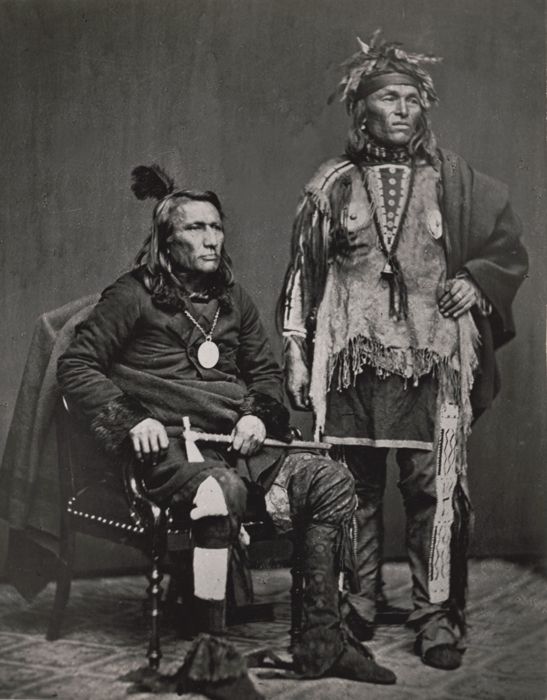
The Potawatomi /pɒtəˈwɒtəmi/,[1][2] also spelled Pottawatomi and Pottawatomie (among many variations), are a Native American people of the Great Plains, upper Mississippi River, and western Great Lakes region. They traditionally speak the Potawatomi language, a member of the Algonquin family. The Potawatomi call themselves Neshnabé, a cognate of the word Anishinaabe. The Potawatomi are part of a long-term alliance, called the Council of Three Fires, with the Ojibway and Odawa (Ottawa). In the Council of Three Fires, the Potawatomi are considered the “youngest brother” and are referred to in this context as Bodéwadmi, a name that means “keepers of the fire” and refers to the council fire of three peoples.
In the 18th century, they were pushed to the west by European/American encroachment and eventually removed from their lands in the Great Lakes region to reservations in Oklahoma. Under Indian Removal, they eventually ceded many of their lands, and most of the Potawatomi relocated to Nebraska, Kansas, and Indian Territory. Some bands survived in the Great Lakes region and today are federally recognized as tribes. In Canada, over 600 First Nation governments or bands are recognized. In the US, 574 tribes or bands are federally recognized.[3]
Name
 Main article: List of Potawatomi ethnonyms
The English “Potawatomi” is derived from the Ojibwe Boodewaadamii(g) (syncoped in the Ottawa as Boodewaadmii(g)). The Potawatomi name for themselves (autonym) is Bodéwadmi (without syncope: Bodéwademi; plural: Bodéwadmik), a cognate of the Ojibwe form. Their name means “those who tend the hearth-fire,” which refers to the hearth of the Council of Three Fires. The word comes from “to tend the hearth-fire,” which is bodewadm (without syncope: bodewadem) in the Potawatomi language; the Ojibwe and Ottawa forms are boodawaadam and boodwaadam, respectively.
Alternatively, the Potawatomi call themselves Neshnabé (without syncope: Eneshenabé; plural: Neshnabék), a cognate of Ojibwe Anishinaabe(g), meaning “original people”.
Teachings
The Potawatomi teach their children about the “Seven Grandfather Teachings” of wisdom, respect, love, honesty, humility, bravery, and truth toward each other and all creation, each one of which teaches them the equality and importance of their fellow tribesmen and respect for all of nature’s creations. The story itself teaches the importance of patience and listening as it follows the Water Spider’s journey to retrieve fire for the other animals to survive the cold. As the other animals step forth one after another to proclaim that they shall be the ones to retrieve the fire, the Water spider sits and waits while listening to her fellow animals. As they finish and wrestle with their fears, she steps forward and announces that she will be the one to bring it back. As they laugh and doubt her she weaves a bowl out of her own web that sails her across the water to retrieve the fire. She brings back a hot coal out of which they make fire, and they celebrate her honor and bravery.” https://en.wikipedia.org/wiki/Potawatomi
Stick of Judah and Joseph
In the Book of Mormon and the well-know words of Ezekiel 37:15-28 we know about the two sticks coming together.
Here are the verses you are familiar with, but read the rest of chapter 37 as well. “The word of the Lord came again unto me, saying, Moreover, thou son of man, take thee one , and upon it, For , and for the children of Israel his companions: then take another stick, and upon it, For , the of Ephraim, and for all the house of Israel his companions” Ezekiel 37:15-16
So Judah’s father was Israel (Jacob), and Joseph’s father was Israel, (Jacob). Both brothers and both Israelites, correct?
Did you notice something subtle, yet poignant in the words in red? The stick of Judah refers to the ancient Hebrew through the loins of Abraham, Isaac, Jacob (Israel), Judah, David, Mulekites, and the Savior, right? Don’t forget who is related to these Hebrews today. The North American Native Americans. So you get it? Judah is Hebrew and Lamanite, and Manasseh.
The Stick of Ephraim refers to the ancient Hebrew through the loins of Abraham, Isaac, Jacob (Israel), Joseph, and Ephraim, and Joseph Smith. Subtle, yet huge! All of my life I have respected the Hebrew from Judah as our blood brothers.
”To the Jew, of Whom the Lamanites are a Remnant”
 “Which is my word to the Gentile, that soon it may go to the Jew, of whom the Lamanites are a remnant, that they may believe the gospel, and look not for a Messiah to come who has already come. D&C 19:27
“And now, I would prophesy somewhat more concerning the Jews and the Gentiles. For after the book of which I have spoken shall come forth, and be written unto the Gentiles, and sealed up again unto the Lord, there shall be many which shall believe the words which are written; and they shall carry them forth unto the remnant of our seed. And then shall the remnant of our seed know concerning us, how that we came out from Jerusalem, and that they are descendants of the Jews.” 2 Nephi 30:3-4.
In my opinion, this page is validation that the Book of Mormon People that came from Jerusalem to America, are Israelites from Joseph and Judah and Manasseh. From Joseph comes Ephraim and Manasseh and from Judah comes the Mulekites all to reunite as “one stick” in North America.
The Stick of Joseph
On July 13, 1936, Edgar Cayce gave a reading for a woman whom he told, “The entity then was among the people, the Indians, of the Iroquois; those of noble birth, those that were of the pure descendants of the Atlanteans…” (1219–1)
But the readings identified another group of North American Indians as descendants of Atlanteans, as well.
…in the experience before this we find the entity was in that land about Fort Dearborn, during those periods when there were the attempts of many to gain a greater understanding by the spiritual concepts and teachings to those of the greater nations – the Red Men; or those of the Atlanteans that had come to these portions of the land…Yet when turmoils and strifes arose, and those periods when there were the gathering of all the nations of these peoples… (Edgar Cayce Reading #3823–1)
Atlanteans?
“They despised everything but virtue, caring little for their present state of life, and thinking lightly of the possession of gold and other property, which seemed only a burden to them; neither were they intoxicated by luxury; nor did wealth deprive them of their self-control; but they were sober, and saw clearly that all these goods are increased by virtue and friendship with one another.”
— Critias, Plato 360BC
Edgar Cayce Reading #3823 continues. “The events described in this reading occurred in the Old Northwest during the period 1809–1813, when Tecumseh, with British support and encouragement, led a confederation of Indians to defend their territories from the encroachment of the settlers. Though historical documents indicate a number of tribes participated in the skirmishes, the residents about Fort Dearborn consisted primarily of several bands of Potawatomi, a tribe of Algonquian Indians closely related to the Ottawa and Ojibwa. These three tribes, all residents of regions about and between the western Great Lakes, had only recently split up, having originally been one unified nation. In other words, in the context of the reading, the Potawatomi were Atlantean descendants.” Source
Kickapoos and Pattowattamies- Two Flat Sticks
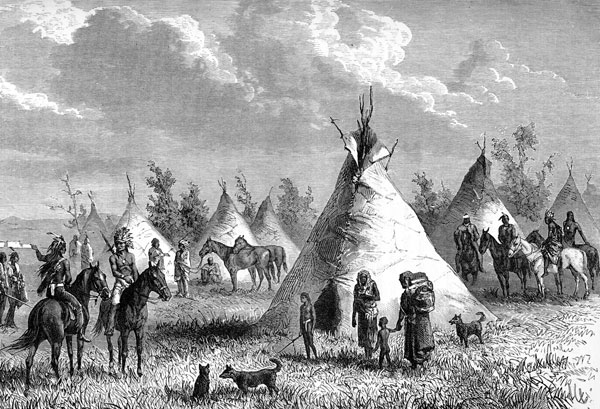
 Frederick G Williams said, “In the forepart of the last month, about three hundred and sixty Indian, of the Kickapoos and Pattowattamies, pitched their tents on the east before this town, and tarried one night. They were on their way to the place assigned them for the land of their inheritance, being gathered by the government of the United States, fulfilling that scripture spoken by the mouth of Isaiah, which says, Behold thus saith the Lord God, I lift up my hand to the Gentiles, and set up my standard to the people, and they shall bring thy sons in their arms, and thy daughters shall be carried upon their shoulders.
Their agent remarked that “they drunk no spiritous liquors,” and those who saw them can bear testimony that they were quiet and inoffensive, and different from any other tribes that have been gathered. They have a prophet, in whom they place great confidence, and he instructs them that the day is nigh, when the Great Father will send his Son on the earth; then (as he says) white man and red man be one.
Their idea of what is to come to pass in the last days, the resurrection of the righteous, and their living on earth with the Lord while wickedness ceases to trouble the saints, seem to be correct as far as we could ascertain. They are very devout apparently and pray night and morning; even children and all.
They have two flat sticks about one foot long, tied together, on which are several characters, which, they say, the Great Father gave to their prophet, and means as much as a large book. They say one of these sticks, is for the old book that white man has, (the Bible) the other for the new book, (Book of Mormon) white man has it written on paper, Great Father writes it in red man’s heart. They seem to Pray from these sticks— and worship on the Sabbath with great solemnity, commencing with a salutation from the greatest or oldest to the least that can walk, and ending with the same token of friendship. Should we have time to make them a visit, we may be more particular hereafter. *From Arkansas to the Missouri, the remnants are gathering together in rapid succession, and all, as far as we have been able to ascertain, have an idea that the Great Spirit is about to do something great and good for the red man.” Evening and Morning Star (Kirtland 1835-1836 ISRAEL WILL BE GATHERED. Page 201 Publisher F.G. Williams
I say to those wonderful Lamanite brothers and sisters, Hang on to those words (something great), then seek, and you shall find what the Lord has for you!
Key Phrases: Oral & Written! One in My Hands!
“White man has it written on Paper (Book of Mormon), Great Father writes it in Red Man’s heart (Oral Tradition). They seem to Pray from these sticks— and worship on the Sabbath with great solemnity.”
“Delaware Prayer Sticks are historically significant ceremonial objects used by the Lenape (Delaware) people in their traditional religious practices, particularly within the Big House Church (Xingwekaown) ceremonies.” Hopi and other tribes also use prayer sticks.
Comments are closed.