
A Theory that says the Ancient Phoenicians were the First to Discover the Americas
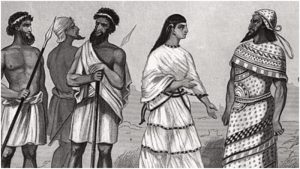
Among the many theories about which civilization first sailed to the Americas and discovered them, there is also the theory that the ancient Phoenicians were the first.
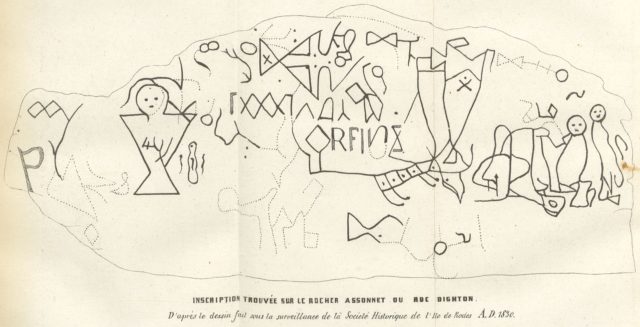
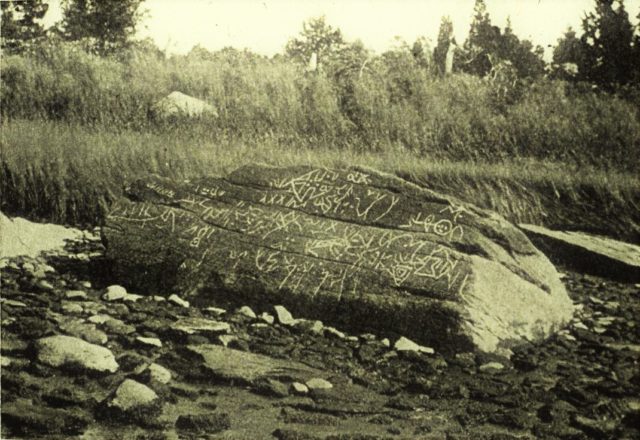
This theory became popular in the 18th century and is closely connected with the petroglyphs on Dighton Rock which are still of unknown origin. This theory is not quite as popular as the one that says that the Norse made the discovery first, but still, it is worth mentioning. (See my blog here about the Dighton Rock)
Back in the 18th century, a lot of scholars started to offer ideas about the true origin of the inscriptions on the rock. Ezra Stiles, a theologian, author, and also the seventh President of Yale College, claimed that the inscriptions are in Hebrew.
Antoine Court de Gébelin, who is mainly known for the popularization of the Tarot, had his own idea about the rock. He believed that the inscription was made by Carthaginian sailors who commemorated their journey to the shores of Massachusetts.
In the 19th century, the theory that a group of Israelite people visited the New World was widely adopted in the Mormon community.
Later, Ross T. Christensen, an American archeologist (And Mormon), speculated that the Mulekites, who are mentioned in the Book of Mormon, were probably of Phoenician ethnic origin. Renewed Latter-Day Saint Interest in the Phoenicians Author(s): Ross T. Christensen Source: Improvement Era, Vol. 73, No. 10 (October 1970) Published by: The Church of Jesus Christ of Latter-day Saints Page(s): 12-15
The Phoenician theory is also supported in a book written in 1871, by John Denison Baldwin, an American anthropologist. In Ancient America, Baldwin wrote,
“The known enterprise of the Phoenician race, and this ancient knowledge of America, so variously expressed, strongly encourage the hypothesis that the people called Phoenicians came to this continent, established colonies in the region where ruined cities are found, and filled it with civilized life. It is argued that they made voyages on the ‘great exterior ocean,’ and that such navigators must have crossed the Atlantic; and it is added that symbolic devices similar to those of the Phoenicians are found in the American ruins, and that an old tradition of the native Mexicans and Central Americans described the first civilizers as ‘bearded white men,’ who ‘came from the East in ships’.“
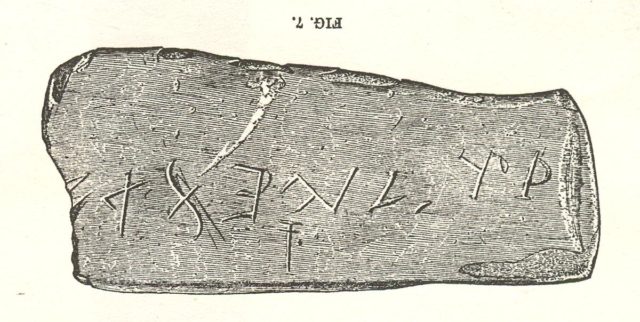
In the 20th century, a few new artifacts appeared that again spiked the theory of Phoenician or Semitic discovery. One of these artifacts was the Bat Creek inscription. Cyrus Herzl Gordon, Near Eastern cultures and ancient languages expert, believed that the inscription of this tablet was in Paleo-Hebrew. Gordon thought that this was proof that Semitic people visited the continent prior to Columbus. Later, the Bat Creek inscription, together with another artifact called the Las Lunas Decalogue Stone, were proven to be forgeries and Gordon’s claim was dismissed. (The Editor believes the Bat Creek Stone and Dighton Rock are authentic.)
Another form of written evidence that slightly goes in favor of the arrival of Phoenicians in the Americas can be found in Ptolemy’s Geography. Lucio Russo, an Italian physicist, mathematician, and historian of science, analyzed Ptolemy’s book and noticed that he gives the coordinates of the Fortunate Isles.
The fortunate Islands were a group of legendary islands mentioned by various ancient Greek writers. Russo also noticed that the size of the world in Ptolemy’s Geography is smaller than what Eratosthenes measured. After he gave the same coordinates of the Fortunate Islands to the Antilles, the map irregularities in Ptolemy’s descriptions disappeared. According to Russo, Ptolemy could have known about the Antilles from his source, Hipparcos, who lived in Rhodes. It is possible that Hipparcos heard about the Antilles from Phoenicians sailors who controlled the western Mediterranean in those days. This is a far-fetched idea, but still, an interesting one.
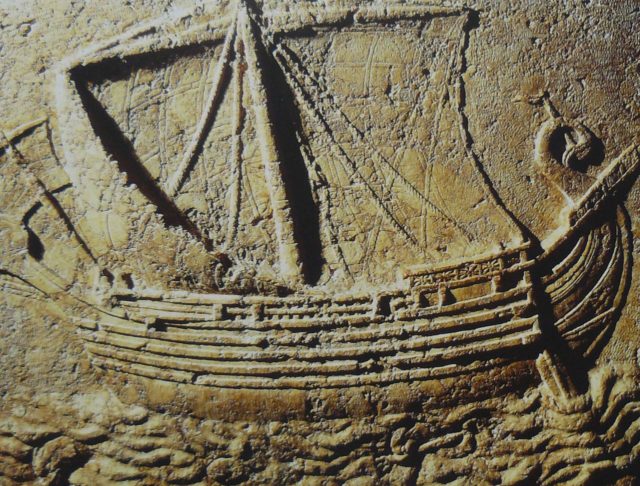
See Theory of Phoenician discovery of the Americas Here.\
Ross T. Christensen of BYU 1973- Plausible Mulek Routes- Tunisia Gathering 2024
Phoenicia Replica 600 BC Ship being rebuilt on the Mississippi River at Montrose, Iowa
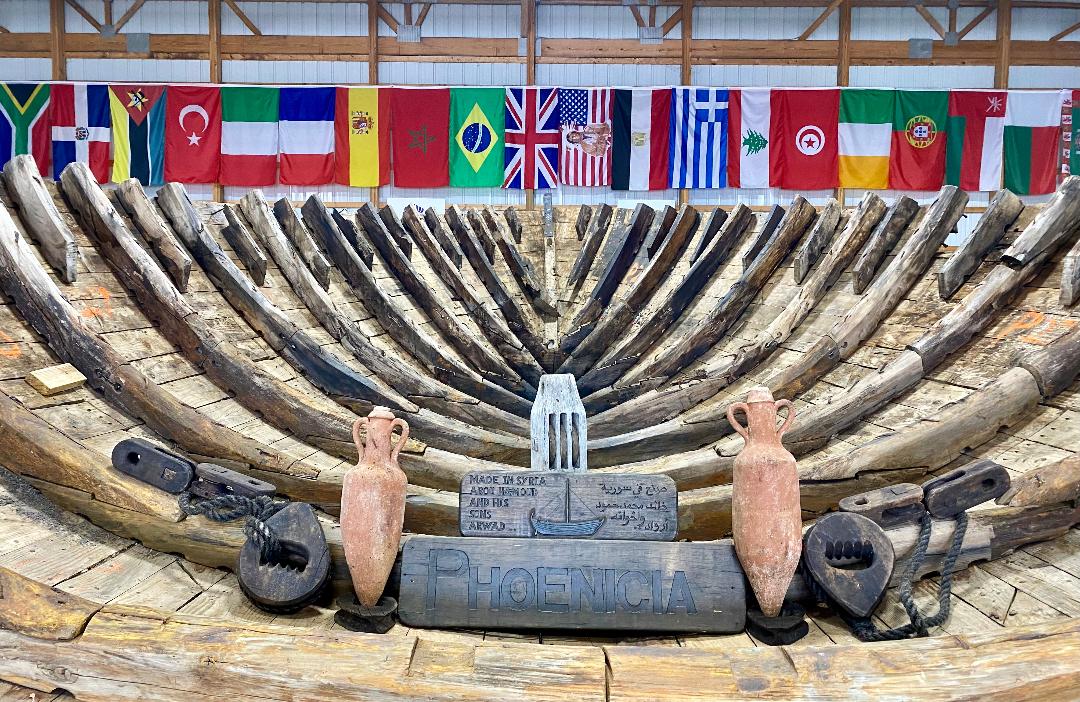
John Lefgren PhD of Heartland Research wrote, “Fortunately, for our purposes, there are many biblical people who were contemporaries at the height of Carthage’s sea power at the time of Hanno the Navigator. The story of PHOENICIA connects with the great stories of the ancient world. All in the same generation, there are so many people who were living at the early part of the sixth century before Christ. There was Necho II, the great Pharaoh of Egypt, who commissioned Phoenician ships to sail around Africa. There was Admiral Hanno whose navy and ships made Carthage the richest city in the Ancient World. There was Jeremiah, one of the great prophets of the Jewish Bible. In Jerusalem, there was Zedekiah, the Last King of the Jews. There was King Nebuchadnezzar who was a prominent figure in the Ancient World, appearing in the books of Jeremiah, Ezekiel, Daniel, 2 Kings, 1 and 2 Chronicles, and Ezra. Indeed, some have calculated that as much as twenty percent of the verses of the Old Testament are associated with this generation of time. These are the connecting points across an ocean six centuries before Christ from King Zedekiah in Jerusalem to his youngest son, Mulek, in the New Work.
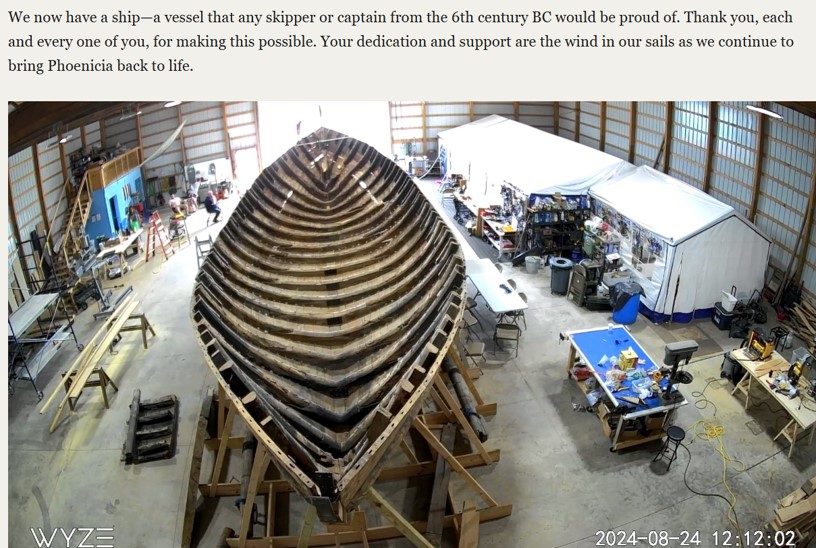
In Montrose, Iowa, on the west bank of the Mississippi River, we have the oldest replica that has sailed 30,000 miles crossing two oceans. The square rigged ship came from the Old to the New Worlds. Her design came from Phoenician shipwrecks from the Ancient World. The wrecks are found in ten places on the bottoms of waters that are connected to the Mediterranean Sea. The replica was assembled in a manner that Hanno the Navigator would have recognized in his time from the early 6th century before Christ. We are grateful for the people in our generation who have helped us and recognize the value of what we are doing. Click here for more information.” John Lefgren
Phoenicians Sailing to the New World
Did Phoenicians beat Christopher Columbus to the Americas by thousands of years?
It has already been established that Columbus was not the first European to lead an expedition sailing to the “New World,” across the vast Atlantic Ocean to the continents that later came to be known as the Americas. The Viking Leif Erikson is now accepted to have been the first, establishing a settlement in modern day Newfoundland, Canada, some 500 years before 1492.

Since the 19th century, a claim has been staked on behalf of the Phoenicians. In 2019 The Phoenicians Before Columbus Expedition set sail in a replica of a Phoenician ship from the Mediterranean across the Atlantic in an attempt to establish that the Phoenicians may have sailed to the “New World” as long ago as the 10th-century B.C.E.

However, such a voyage is difficult to disprove. As Dan L. Davis discussed in “Sailing the Open Seas,” published in Archaeology Odyssey, January/February 2003, ancient mariners did not hug the land on their trade voyages, as had generally been presupposed. The Phoenicians, among others, sailed into the Ocean Deserts of the Mediterranean–vast areas where no coastline was visible–on a regular basis.

The Iron Age Phoenicians were the most famous ancient mariners. If circumstances were right, or very wrong, a Phoenician trading ship could possibly have ended up lost in the Atlantic, and might even theoretically have sailed to the “New World”.Undaunted by the lack of evidence, the Phoenicians Before Columbus Expedition set out in 2019 to “prove” that Phoenicians reached the Americas by sailing a traditional Phoenician ship, and blogging their route and experience.
The Phoenicia was modeled on a wreck dating to around 600 B.C.E., found in the Mediterranean. It was built using traditional methods and materials that would have been available at the time. The ship had already completed a successful 20,000 mile voyage, circumnavigating Africa in 2010.
The Phoenicia, after 39 days at sea, did in fact reach the Dominican Republic on December 31st, 2019. Even if the actual Phoenicians never reached the Americas, the journey demonstrates their impressive boat-building skills, and their capability to have done so. There is good reason they were famous mariners.