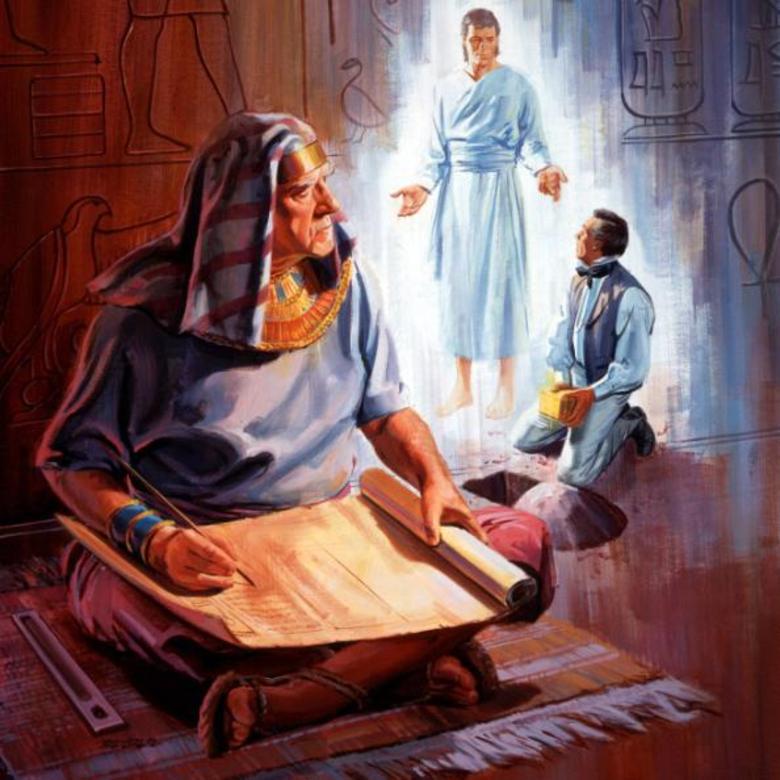
“This Nation will be on the Very Verge of Crumbling”
“Even this nation will be on the very verge of crumbling to pieces and tumbling to the ground, and when the Constitution is upon the brink of ruin, this people will be the staff upon which the nation shall lean, and they shall bear the Constitution away from the very verge of destruction.” Joseph Smith, 19 July 1840, as recorded by Martha Jane Knowlton Coray; ms. in Church Historian’s Office, Salt Lake City; Joseph Smith Papers, LDS Church Historical Archives, Box 1, March 10, 1844 Also: D. Michael Stewart, “I Have a Question,” Ensign, June 1976, 64-65
Who are some of “This People”, Joseph spoke about in the Church today in July 2023?
I sincerely believe Glenn Beck could be “one of these people”, who was a key-note speaker at this past April’s, First Landing 1607 Project or “The Declaration Of CovenantEvent” Below in a video, you will hear what I believe to be one of Glenn Beck’s very best and passionate speeches, and wonderful testimony.
“The Declaration Of Covenant event was a civil “re-covenanting ceremony” where essentially, America remarries God via the original “1607 First Landing Covenant of Dedication.” Covenant is the foundation of the Bible and of this nation. From Genesis to Revelation, God weaves the covenant of grace for all of the ages. Jesus fulfills the old covenant law (Matt. 5:17-20) as the seed of Abraham (Matt. 1:1, Gal. 3:16) forging a new covenant, or more aptly stated, a “re-newed covenant.” Both the Greek kainos (Heb. 8:8) and the Hebrew chadash (Jer. 31:31) words for “new” in new covenant translate as “renewed,” rather than brand new. So God is all about re-newing covenant!” Source
Why Jamestown is Important
“The First Landing 1607 Project focuses on going back to America’s origin—the first documented original covenant where colonists landed at Cape Henry, Virginia, erected a wooden cross on April 29, 1607, took communion and dedicated the new world to God. America’s history centers more on the 1607 Jamestown and 1620 Plymouth settlements, but little is known or taught about the 1607 First Landing Covenant of Dedication at Virginia Beach.
We recognize that prior to the English settlers arriving in 1607, there were other countries/groups that either visited or settled in what was to become the United States of America, well before First Landing. Our mandate with the First Landing 1607 Project is to go back to the original civil covenants of America and re-covenant or re-dedicate America back to God…
What sets the First Landing site at Virginia Beach apart from Jamestown 1607 and the Plymouth 1620 settlements, although very important in our history, is the fact that First Landing was the very first place where the early English settlers arrived on April 26, 1607. Three days later, April 29, they went ashore to plant a wooden cross where the very first new nation was dedicated to God. The ships then traveled along the James River, arriving two weeks later at what was to become the first Jamestown settlement. These English settlers carried the seeds of the Christian Common Law, self-governance, and spiritual liberty cited in the Charter of 1606, a document from King James I of England to the Virginia Company.
The King James commission to the Virginia Company of London was two-fold:
• Dedicate the new land to God and spread the gospel of Jesus Christ to the native inhabitants.
• Establish trading in the new colonies…
Charter of 1606
The First Charter of Virginia, also known as the Charter of 1606, is a document from King James I of England to the Virginia Company assigning land rights to colonists for the creation of a settlement which could be used as a base to export commodities to Great Britain and create a buffer preventing total Spanish control of the North and South American coasts.[1] The land is described as coastal Virginia and the islands near to the coast, and stretches from present-day South Carolina to present-day Maine. The patch of land itself would remain the property of the King, with the London Company and the Plymouth Company (the two divisions of the Virginia Company) as the King’s tenants, and the settlers as subtenants. The colony’s government at first consisted of a council residing in London. The document designated the London Company as responsible for financing the project, which included recruiting settlers and also provided for their transport and supplies.
Purpose of Charter
“The charter only contains clauses to bring success to the king. The king did not invest for he wanted no loss; however, he asked for 20 percent of profit as a way to never lose anything, but become richer.
The charter also granted those born in the colonies all the rights of English citizens elsewhere and that they are compensated and protected in case they were robbed or spoiled by anyone.” Wikipedia
Virginia Company of London SUMMARY
“The Virginia Company of London was a joint-stock company chartered by King James I in 1606 to establish a colony in North America. Such a venture allowed the Crown to reap the benefits of colonization—natural resources, new markets for English goods, leverage against the Spanish—without bearing the costs. Investors, meanwhile, were protected from catastrophic losses in the event of the project’s failure. The company established a settlement at Jamestown in 1607, and over the next eighteen years, the Crown granted the company two new charters, democratizing its governance and reforming its financial model. What began as an enterprise of investors seeking a dividend was funded a decade later almost exclusively by a public lottery. By 1618 the company had found a way to use its most abundant resource—land—to tempt settlers to pay their own passage from England to the colony and then, after arrival, to pay the company a quitrent, or fee, to use the land. Still, the Virginia Company and the colony it oversaw struggled to survive. Disease, mismanagement, Indian attacks, and factionalism in London all took a toll until, in 1623, the Privy Council launched an investigation into the company’s finances. A year later, the company’s charter was revoked and the king assumed direct control of Virginia.” Source
First Landing 1607 continues to say, “The church in the USA has largely become irrelevant and lost its voice because of its disobedience and silence. However, there is a growing, patriotic remnant unwilling to let tyranny in the US and abroad go unchallenged. This remnant is willing to count the cost and speak out. This remnant from all seven mountains of culture (church, media, government, arts, medical, entertainment and education) are beginning to step up and lead the Great Awakening, bringing the light of the gospel while exposing darkness and evil with truth. America has a spiritual problem. Therefore, going back to our origin/roots is essential to get us back on track.” Source First Landing 1607
Jamestown Dedication
“In April 1607 Rev. Robert Hunt dedicated Jamestown with the following prayer:
We do hereby dedicate this Land, and ourselves, to reach the People within these shores with the Gospel of Jesus Christ, and to raise up Godly generations after us, and with these generations take the Kingdom of God to all the earth.
On April 26, 2023, Glenn Beck dedicated America back to God at the very site where it all began: Jamestown.” Source
Glenn believes he has a new calling: hope
“For years, Glenn felt it was part of his calling as a broadcaster to warn people about the destruction of freedom, the transition of our economy, and the rise of tyrannical global elites. But now, Glenn believes he has a new calling: hope. Back in April, he got an opportunity to speak about it at the First Landing 1607 Project’s event, “The Declaration of Covenant.” But it wasn’t just a message for the people in that room. Glenn believes it was the start of something new that will involve ALL of us. Glenn shares his testimony, his new calling, who he believes the next Billy Graham will be, and where he believes we are right now: America has forgotten who she is, the world is in chaos, the people of God are under attack, and the enemy thinks he’s winning. But the Lord is preparing a surprise party for Satan…”
Glenn’s Extremely Vivid Dream
In this clip, Glenn shares something he says he never thought he’d share on-air. He recalls an unusual, extremely vivid dream he had for the first time ten years ago. But what happened AFTER this dream — during a discussion with a prominent religious leader — hints that this ‘dream’ may actually have been a VISION for our future…
“But behold, Satan did stir up the hearts of the more part of the Nephites, insomuch that they did unite with those bands of robbers, and did enter into their covenants and their oaths, that they would protect and preserve one another in whatsoever difficult circumstances they should be placed, that they should not suffer for their murders, and their plunderings, and their stealings.” Helaman 6:21
Are many of today’s Church members and others in this world joining the Secret Combinations? (Many) Have these Gadianton Robbers infiltrated most of society? (Definitely) Should we be cautious of Communism, Nazism, the Deep State, World Governments, and even those in our own Government who lie and cheat our souls for power, influence and money? (Absolutely) Aren’t we today becoming like the destroyed Nephites and Jaredites? (Yes)
Honesty has been Driven from the Government
“On the 11th of October Elder Woodruff assisted in setting apart seventy-five missionaries. At that time eleven Lamanites were ordained to the priesthood. Closing his journal for that year, he said : “The future is before us and great events await us in this generation. The redemption and establishment of Zion, the fall of Babylon, the gathering of Judea and all the tribes of Israel, and the second coming of Christ, are all near at hand.
“This is the commencement of the Centennial year of the American Independence. One hundred years ago the nation was composed of an honest, industrious, Christian people, and the chief men of the nation were poor, honest statesmen, who lived to promote the welfare of the whole people. They established a constitution and laws, which were a glorious legacy to their descendants. By January 1st, 1876, a great change has come over the American government. To a great extent, virtue has departed from the land, and honesty has been driven from the various departments of government.Men seek office to aggrandize themselves rather than to serve the interests of the people. Death and destruction are sown in the land which is ripening for the harvest.” Wilford Woodruff: History of His Life and Labors by Matthias F. Cowley page 489-505
I believe the vast majority of our American Government and the rich elite Globalists who run our Government do not have our best interest in mind anymore. If it was bad in 1876 as Pres Wilford said, doesn’t it make sense that it is worse today? Sure the Lord will win the final battle, but are we enduring to the end?
Great Email
I have a good friend named Jerome Brad Halgren. He made me aware of some very disturbing inventions using the new technology called Artificial Intelligence (AI). The video at the end of this blog is obviously fake, as you don’t see Pres. Nelsons mouth moving and it is a creation from someone called “Vox AI Russell Nelson.”
However, just think of this new technology and how it can make good appear as evil, and evil appear as good. We truly live in the best of times and the worst of times, that is why our prophet has declared, “It is now time that we each implement extraordinary measures — perhaps measures we have never taken before — to strengthen our personal spiritual foundations. Unprecedented times call for unprecedented measures.”Oct 3, 2021 President Russell M. Nelson (bold, underline and color has been added)
My friend Jerome sent me an email that said,
“Deep Fakes and AI Russell Nelson videos made by Artificial Intelligence.
A new video trend is coming among us and growing exponentially and this new tool of Satan portends to be actual videos of President Nelson expounding on church doctrines, history and temple ordinances in such a way as to draw the investigator, the new member, the weak members, etc. away from truth and light.
These videos, so far as I’ve come across, are YouTube’s and so far fall under the production of someone called Vox AI and for the unsuspecting seem very real and legitimate.
This is an extreme problem and evil that is coming among us to destroy testimonies, future investigators, etc. and the Church in general.
Anyway I was quite bothered and scared, to say the least, when I came across them and thought I’d be quite remiss if I didn’t inform you of this new development against the Lord’s Church and Gospel knowing that we are no longer just like in the days of Sodom and Gomorrah but have entered into a likeness of the Days of Noah.” Jerome Brad Halgren(Very appropriate words. Color added)
AI-generated fake videos are becoming more common (and convincing). Here’s why we should be worried
by Ian Sample Mon 13 Jan 2020
What is a deepfake?
Have you seen Barack Obama call Donald Trump a “complete dip…”, or Mark Zuckerberg brag about having “total control of billions of people’s stolen data”, or witnessed Jon Snow’s moving apology for the dismal ending to Game of Thrones? Answer yes and you’ve seen a deepfake. The 21st century’s answer to Photoshopping, deepfakes use a form of artificial intelligence called deep learning to make images of fake events, hence the name deepfake. Want to put new words in a politician’s mouth, star in your favorite movie, or dance like a pro? Then it’s time to make a deepfake.
What are they for?
Many are pornographic. The AI firm Deeptrace found 15,000 deepfake videos online in September 2019, a near doubling over nine months. A staggering 96% were pornographic and 99% of those mapped faces from female celebrities on to porn stars. As new techniques allow unskilled people to make deepfakes with a handful of photos, fake videos are likely to spread beyond the celebrity world to fuel revenge porn. As Danielle Citron, a professor of law at Boston University, puts it: “Deepfake technology is being weaponized against women.” Beyond the porn there’s plenty of spoof, satire and mischief.
Jerome also sent me several links to this type of technology:
Below is a FAKE VIDEO of our dear Prophet. Just think of the damage this type of thing can do to people all over the world. Soon they will make these AI videos even more real. I feel it is critical to make each of you aware as Jerome has made me aware.
Elon Musk warns AI could cause ‘civilization destruction’ even as he invests in it.
By Clare Duffy and Ramishah Maruf, CNN Mon April 17, 2023
New York CNN
“Elon Musk warned in a new interview that artificial intelligence could lead to “civilization destruction,” even as he remains deeply involved in the growth of AI through his many companies, including a rumored new venture.
“AI is more dangerous than, say, mismanaged aircraft design or production maintenance or bad car production, in the sense that it is, it has the potential — however small one may regard that probability, but it is non-trivial — it has the potential of civilization destruction,” Musk said in his interview with Tucker Carlson…” CNN.com Sourcehttps://www.cnn.com/2023/04/17/tech/elon-musk-ai-warning-tucker-carlson/index.html
Trust God not AI!
Please don’t take AI lightly. It is at times a valuable invention but also a dangerous weapon of Satan just as in the past was Radio, Television, the Internet, and Smart Phones today. Satan takes truth and good things, and deceives us with it.
“And it came to pass that when two hundred and ten years had passed away there were many churches in the land; yea, there were many churches which professed to know the Christ, and yet they did deny the more parts of his gospel, insomuch that they did receive all manner of wickedness, and did administer that which was sacred unto him to whom it had been forbidden because of unworthiness.
And this church did multiply exceedingly because of iniquity, and because of the power of Satan who did get hold upon their hearts.
And again, there was another church which denied the Christ; and they did persecute the true church of Christ, because of their humility and their belief in Christ; and they did despise them because of the many miracles which were wrought among them.” 4 Nephi 1:27-29
I believe too many in our own Church are falling for incredible lies. Be prayerful and stay close to our Savior Jesus Christ.
To All the Kings of the World: Chiasmus in the 1845 Proclamation of the Twelve ApostlesInverted Parallels & Chiasmus1. The Nephites and Mulekites after settling in Zarahemla, traveled West to East in their LAST days, which is opposite of the travels of the new LDS Church which went from the East (NY) to the West (Nauvoo). A form of Chiasmus.
2. Chiasmus is an inverted parallel structure in which a series of thoughts or movements are repeated in reverse order. (See Moroni’s America Chapter 4)
Chiasmus: (Latin term from Greek χίασμα, “crossing” and from the Greek χιάζω, chiázō, “to shape like the letter Χ”) is the figure of speech in which two or more clauses are related to each other
through a reversal of structures in order to make a larger point; that is, the clauses display inverted parallelism. Chiasmus was particularly popular in the literature of the ancient world, including Hebrew, Greek, and Latin, where it was used to articulate the balance of order within the text. The elements of simple chiasmus are often labeled in the form A B B’ A’, where the letters correspond to grammar, words, or meaning. (https://en.wikipedia.org/wiki/Chiasmus)
Annotated Book of Mormon Page 140
The Book of Mosiah is organized into a complex chiasmus which focuses on the Messianic teachings of the prophet Abinadi and places emphasis on the powerful teachings of king Benjamin and king Mosiah (Welch, John W., “Chiasmus in the Book of Mormon,” BYU Studies, Vol. 10, No. 1 [1969], 13). The prophet and historian Mormon accomplishes this by using two flashback sequences. The FIRST FLASHBACK (J through J’) is inherently chiastic, so Mormon puts it in the center. The rest of the account, if told in chronological order, would not be chiastic. Mormon uses a SECOND FLASHBACK (H’ through C’) to create a chiastic structure. This complex narrative demonstrates a deliberate effort by Mormon to use the parallel structure common to Hebrew writing as also found in the Bible. This is further evidence that both scriptural witnesses of Christ—the Bible and the Book of Mormon—were written by prophets inspired of God.
To All the Kings of the World: Chiasmus in the 1845 Proclamation of the Twelve Apostles
On January 19, 1841, Joseph Smith received a revelation from the Lord commanding him to “make a solemn proclamation of my gospel … to all the kings of the world” (see D&C 124:1-14).Before he could fulfill this commandment, the Prophet Joseph suffered martyrdom in June 1844. Nine months later, on April 6, 1845, the Quorum of the Twelve Apostles—the highest governing body in the Church at the time—published a proclamation addressed:
“To all the Kings of the World; To the President of the United States of America; To the Governors of the several States; And to the Rulers and People of all Nations”.
The proclamation of 1845 is considered “one of the great prophetic utterances of the last dispensation” and “covers some of the preparations that are expected to be made throughout the world as a preface to the Second Coming of the Lord Jesus Christ to reign on the earth.” A major purpose of the proclamation is to present a bold call-to-action to the kings of the earth to assist the Latter-day Saints with their divine mission.Particularly striking is the clear timeline it presents, “outlining as it does future developments of the Kingdom of God in both the Eastern and Western Hemispheres,” including a detailed description of the Battle of Armageddon and the glorious destiny of the indigenous peoples of North and South America (James R. Clark, Messages of the First Presidency, 1:252).
Authorship of the proclamation is attributed to Parley P. Pratt, a prolific writer and member of the Quorum of the Twelve Apostles from 1835 to 1857. A list of “Church Publications for the Period [1845]” cites Parley P. Pratt as author and Wilford Woodruff as publisher of the proclamation (see Doctrinal History of the Church 7:558). Additionally, a letter from Brigham Young to Parley P. Prattdated May 26, 1845 states, “We have today in relation to your proclamation that we approve of it….”
Both the commandment to “make a solemn proclamation” and the 1845 proclamation are chiastic. This article presents a diagram and detailed analysis of D&C 124:1-14, followed by a less detailed analysis of several chiasms and parallelisms from the 1845 proclamation.
[Note: Thanks to Ron Read at the Church History Libraryfor directing us to sources that clarified authorship of the 1845 proclamation.]
D&C 124:1-14
This revelation directs Joseph Smith to “make a solemn proclamation of my gospel … to all the nations of the earth scattered abroad” and provides instructions for what to include in the proclamation. Chiasmus in this revelation reinforces and clarifies the purpose and content of the proclamation and how it would be received by the nations of the earth. A study of this revelation helps in understanding the content and tone of the 1845 proclamation.
A: [1] Verily, thus saith the Lord unto you, my servant Joseph Smith, I am well pleased with your offering and acknowledgments, which you have made; for unto this end have I raised you up, that I might show forth my wisdom through the weak things of the earth. [2] Your prayers are acceptable before me; and in answer to them I say unto you, that you are now called immediately to make a solemn proclamation of my gospel, and of this stake which I have planted to be a cornerstone of Zion, which shall be polished with the refinement which is after the similitude of a palace.
B: [3] This proclamation shall be made to all the kings of the world, to the four corners thereof, to the honorable president-elect, and the high-minded governors of the nation in which you live, and to all the nations of the earth scattered abroad. [4] Let it be written in the spirit of meekness and by the power of the Holy Ghost, which shall be in you at the time of the writing of the same; [5] For it shall be given you by the Holy Ghost to know my will concerning those kings and authorities, even what shall befall them in a time to come.
C: [6] For, behold, I am about to call upon them to give heed to the light and glory of Zion, for the set time has come to favor her.
D: [7] Call ye, therefore, upon them with loud proclamation, and with your testimony, fearing them not, for they are as grass, and all their glory as the flower thereof which soon falleth,
E: that they may be left also without excuse [8] And that I may visit them in the day of visitation, when I shall unveil the face of my covering,
E: to appointthe portion of the oppressor among hypocrites, where there is gnashing of teeth, if they reject
D: my servants and my testimony which I have revealed unto them.
C: [9] And again, I will visit and soften their hearts, many of them for your good, that ye may find grace in their eyes, that they may come to the light of truth, and the Gentiles to the exaltation or lifting up of Zion. [10] For the day of my visitation cometh speedily, in an hour when ye think not of; and where shall be the safety of my people, and refuge for those who shall be left of them?
B: [11] Awake, O kings of the earth! Come ye, O, come ye, with your gold and your silver, to the help of my people, to the house of the daughters of Zion.
A: [12] And again, verily I say unto you, let my servant Robert B. Thompsonhelp you to write this proclamation, for I am well pleased with him, and that he should be with you; [13] Let him, therefore, hearken to your counsel, and I will bless him with a multiplicity of blessings; let him be faithful and true in all things from henceforth, and he shall be great in mine eyes; [14] But let him remember that his stewardship will I require at his hands.
A=A: “[M]y servant Joseph Smith, I am well pleased with your offering … you are now called immediately to make a solemn proclamation of my gospel” is complemented by “let my servant Robert B. Thompson help you to write this proclamation, for I am well pleased with him.” The Lord is “well pleased” with both Joseph Smith and Robert B. Thompson. Thompson, who had joined the Church in Canada in 1836 and moved with the Saints from Ohio to Missouri to Illinois, was Joseph Smith’s personal scribe at the time this revelation was given. Unfortunately, he died of a “severe lung infection” a few months after this revelation was received in August 1841. This element of the chiasm shows the value of having a faithful scribe to assist with sacred writings. In addition to approaching the assignment with the proper spirit, a faithful scribe can make inspired grammatical and structural suggestions. In light of this, it would be interesting to know if Parley P. Pratt used a scribe in writing the 1845 proclamation.
B=B: “[K]ings of the world” equals “kings of the earth.” Addressed to the “nations of the earth,” the proclamation would invite government leaders to financially assist the Saints in fulfilling their divine commission. In doing so, the proclamation would prophetically describe the Lord’s will “concerning those kings and authorities, even what shall befall them in a time to come.”
C=C: “I am about to call upon them to give heed to the light and glory of Zion” corresponds to “that they may come to the light of truth, and the Gentiles to the exaltation or lifting up of Zion.” In calling upon world leaders “to give heed to the light and glory of Zion,” the Lord would “visit and soften their hearts, many of them for your good, that ye may find grace in their eyes.” As a result, Zion would be “exalt[ed]” and “lift[ed] up” and serve as a “refuge” in preparation for the Second Coming of the Lord.
D=D: “[Y]our testimony” corresponds to “my servants and my testimony which I have revealed unto them.” The testimony contained in the proclamation would be that which the Lord would reveal to “his servants” the Twelve Apostles. In writing and disseminating the proclamation, the apostles should be “loud” and “fear[less],” drawing the attention of the nations of the world to their testimony and message and not being concerned with whatever hostile response might follow, “for they are as grass, and all their glory as the flower thereof which soon falleth.” The nations of the earth enjoy a temporary glory, the decline and ending of which is foreknown by God.
E=E: “[V]isit them in the day of visitation” is complemented by “to appoint the portion of the oppressor among hypocrites, where there is gnashing of teeth.” The proclamation would be boldly written and disseminated throughout the world to make the leaders of nations accountable for their actions in relation to the Saints. At the time of the Lord’s Second Coming, they would be left “without excuse” if they “reject” the apostles and their message. As a result of their deceptive lip service, they would be “appoint[ed] the portion of the oppressor among hypocrites, where there is gnashing of teeth.”
1845 Proclamation of the Twelve Apostles
#1: This chiasm clearly defines the “kingdom of God” that has been “prayed for in all ages” and announces its establishment “in these last days.” It also explains how the Lord, through “open visions” and “the great and eternal High Priesthood,” speaks “from the heavens” and “communes with man upon the earth.”
A: Know ye:—That the kingdom of God has come: as has been predicted by ancient prophets, and prayed for in all ages; even that kingdom which shall fill the whole earth, and shall stand for ever.
B: The great Eloheem [sic] Jehovah has been pleased once more to speak from the heavens; and also to commune with man upon the earth,
C: by means of open visions, and by the ministration of HOLY MESSENGERS.
C: By this means
B:the great and eternal High Priesthood, after the Order of his Son, even the Apostleship, has been restored; or, returned to the earth.
A: This High Priesthood, or Apostleship, holds the keys of the kingdom of God, and power to bind on earth that which shall be bound in heaven; and to loose on earth that which shall be loosed in heaven. And, in fine, to do, and to administer in all things pertaining to the ordinances, organization, government and direction of the kingdom of God. Being established in these last days for the restoration of all things spoken by the prophets since the world began; and in order to prepare the way for the coming of the Son of Man.
#2:This chiasm describes the preparation needed for the Second Coming of Christ, which is “near at hand.” This preparation centers around the first principles and ordinances of the Gospel—faith in Jesus Christ, repentance, baptism, and the gift of the Holy Ghost. The central focus of this chiasm is a description of the blessings that come as a result of having the gift of the Holy Ghost.
A: And we now bear witness that his coming is near at hand; and not many years hence, the nations and their kings shall see him coming in the clouds of heaven with power and great glory.
B: In order to meet this great event there must needs be a preparation.
C: Therefore we send unto you with authority from on high, and command you all to repent and humble yourselves as little children, before the majesty of the Holy One ; and come unto Jesus with a broken heart and a contrite spirit, and be baptized in his name, for the remission of sins (that is, be buried in the water in the likeness of his burial and rise again to newness of life, in the likeness of his resurrection), and you shall receive the gift of the Holy Spirit, through the laying on of the hands of the Apostles and elders, of this great and last dispensation of mercy to man.
D: This Spirit shall bear witness to you, of the truth of our testimony; and shall enlighten your minds, and be in you as the spirit of prophecy and revelation. It shall bring things past to your understanding and remembrance; and shall show you things to come.
D: It shall also impart unto you many great and glorious gifts; such as the gift of healing the sick, and of being healed, by the laying on of hands in the name of Jesus; and of expelling Demons; and even of seeing visions, and conversing with Angels and spirits from the unseen world.
C: By the light of this Spirit, received through the ministration of the ordinances—by the power and authority of the Holy Apostleship and Priesthood, you will be enabled to understand, and to be the children of light;
B: and thus be prepared to escape all the things that are coming on the earth,
A: and so stand before the Son of Man.
#3:This parallelism describes the Lord’s twin capitals that are to be built on the earth—Jerusalem on the eastern hemisphere and the New Jerusalem on the western hemisphere.
A: And we further testify that the Lord has appointed a holy city and temple to be built on this continent for the endowment and ordinances pertaining to the priesthood; and for the Gentiles, and the remnant of Israel to resort unto,
B: in order to worship the Lord; and to be taught in his ways and walk in his paths:
C: in short, to finish their preparations for the coming of the Lord.
A: And we further testify, that the Jews among all nations are hereby commanded, in the name of the Messiah, to prepare, to return to Jerusalem in Palestine; and to rebuild that city and temple unto the Lord:
B: And also to organize and establish their own political government, under their own rulers, judges, and governors in that country.
C: For be it known unto them that we now hold the keys of the priesthood and kingdom which is soon to be restored unto them. Therefore let them also repent and prepare to obey the ordinances of God.
#4:This chiasm describes additional requirements placed upon the “kings, rulers, and people of the Gentiles.” They are to use their temporal riches and resources in furthering the work of the Lord, to lighten the load carried by the Latter-day Saints.
A: And now, O ye kings, rulers, and people of the Gentiles: hear ye the word of the Lord; for this commandment is for you. You are not only required to repent and obey the gospel in its fulness, and thus become members or citizens of the kingdom of God,
B: but you are also hereby commanded, in the name of Jesus Christ, to put your silver and your gold, your ships and steam-vessels, your railroad trains and your horses, chariots, camels, mules, and litters, into active use, for the fulfilment of these purposes. For be it known unto you, that the only salvation which remains for the Gentiles, is for them to be identified in the same covenant, and to worship at the same altar with Israel. In short, they must come to the same standard. For, there shall be one Lord, and his name one, and He shall be king over all the earth.
C: The Latter-day Saints, since their first organization in the year 1830, have been a poor, persecuted, abused, and afflicted people. They have sacrificed their time and property freely, for the sake of laying the foundation of the kingdom of God, and enlarging its dominion, by the ministry of the gospel. They have suffered privation, hunger, imprisonment, and the loss of houses, lands, home, and political rights, for their testimony.
C: And this is not all ; but their first founder, Mr. Joseph Smith, whom God raised up as a Prophet and Apostle, mighty in word and in deed, and his brother Hiram, who was also a prophet, together with many others, have suffered a cruel martyrdom in the cause of truth; and have sealed their testimony with their blood. And still the work has, as it were, but just begun.
B: A great, a glorious, and a mighty work is yet to be achieved, in spreading the truth and kingdom among the Gentiles—in restoring, organizing, instructing and establishing the Jews—in gathering, instructing, relieving, civilizing, educating and administering salvation to the remnant of Israel on this continent; in building Jerusalem in Palestine; and the cities, stakes, temples, and sanctuaries of Zion in America; and in gathering the Gentiles into the same covenant and organization—instructing them in all things for their sanctification and preparation; that the whole Church of the Saints, both Gentile, Jew and Israel, may be prepared as a bride, for the coming of the Lord.
A: And now, O ye kings, rulers, presidents, governors, judges, legislators, nobles, lords, and rich men of the earth; will you leave us, to struggle alone, and to toil unaided in so great a work? Or will you share in the labors, toils, sacrifices, honors and blessings of the same?
#5:This chiasm proclaims that the latter day effort to “usher in the great millennium” is “the greatest of all revolutions.”
A: Have you not the same interest in it that we have? Is it not sent forth to renovate the world—to enlighten the nations—to cover the earth with light, knowledge, truth, union, peace and love? And thus usher in the great millennium, or sabbath of rest, so long expected and sought for by all good men?
B: We bear testimony that it is.
B: And the fulfilment of our words will establish their truth, to millions yet unborn: while there are those now living upon the earth who will live to see the consummation.
A: Come, then, to the help of the Lord; and let us have your aid and protection—and your willing and hearty co-operation, in this, the greatest of all revolutions.
#6:This chiasm provides a remarkable prophetic warning to the people and nations of the earth. Although the Saints were a tiny minority at the time of this proclamation, they would become “more and more an object of political and religious interest and excitement.” As a result, every individual and community would no longer have the option of standing “as idle and disinterested spectators,” but would reach a point where they would either choose to “aid and bless the people of God” or “fight against God, and seek to destroy his people.”
A: There is also another consideration of vast importance to all the rulers and people of the world, in regard to this matter. It is this: As this work progresses in its onward course, and becomes more and more an object of political and religious interest and excitement, no king, ruler, or subject, no community or individual, will stand neutral. All will at length be influenced by one spirit or the other; and will take sides either for or against the kingdom of God, and the fulfilment of the prophets, in the great restoration and return of his long dispersed covenant people.
B: Some will act the part of the venerable Jethro, the father-in-law of Moses; or the noble Cyrus; and will aid and bless the people of God; or like Ruth, the Moabitess, will forsake their people and their kindred and country, and will say to the Saints, or to Israel: “This people shall be my people, and their God my God.”
B: While others will walk in the footsteps of a Pharaoh, or a Balak, and will harden their hearts, and fight against God, and seek to destroy his people. These will commune with priests and prophets who love the wages of unrighteousness; and who, like Balaam, will seek to curse, or to find enchantments against Israel.
A: You cannot therefore stand as idle and disinterested spectators of the scenes and events which are calculated in their very nature to reduce all nations and creeds to one political and religious standard, and thus put an end to Babel forms and names, and to strife and war. You will, therefore, either be led by the good Spirit to cast in your lot, and to take a lively interest with the Saints of the Most High, and the covenant people of the Lord, or on the other hand, you will become their inveterate enemy, and oppose them by every means in your power.
#7:In this chiasm, the remarkable prophecy continues with a vivid description of armed conflict and a dramatic change in “the whole order of things in Europe and Asia, in regard to political and religious organization, and government.” The “great division” of the people of the world will eventually lead “the nations of the old world” to besiege and attack Jerusalem. In the midst of battle, the Messiah (Christ) will appear as the “defender of the Jews” and “complete their victory.” As a result of this “signal victory,” Jerusalem will become the “capital of the old world,” where the nations of the eastern hemisphere will be required to annually keep the Feast of Tabernacles.
A: To such an extreme will this great division finally extend, that the nations of the old world will combine to oppose these things by military force. They will send a great army to Palestine, against the Jews; and they will besiege their city, and will reduce the inhabitants of Jerusalem to the greatest extreme of distress and misery.
B: Then will commence a struggle in which the fate of nations and empires will be suspended on a single battle. C: In this battle the governors and people of Judah distinguish themselves for their bravery and warlike achievements. The weak among them will be like David, and the strong among them will be like God: or like the angel of the Lord.
D: In that day the Lord will pour upon the inhabitants of Jerusalem the spirit of grace and supplication, and they shall look upon the Messiah whom they have pierced.
D: For lo he will descend from heaven, as the defender of the Jews: and to complete their victory. His feet will stand in that day upon the Mount of Olives, which shall cleave in sunder at his presence, and remove one half to the north, and the other to the south; thus forming a great valley where the mountain now stands.
C: The earth will quake around him, while storm and tempest, hail and plague, are mingled with the clash of arms, the roar of artillery, the shouts of victory, and the groans of the wounded and dying. In that day all who are in the siege, both against Judea and against Jerusalem, shall be cut in pieces; though all the people of the earth should be gathered together against it.
B: This signal victory on the part of the Jews, so unlooked for by the nations, and attended with the personal advent of Messiah, and the accompanying events, will change the whole order of things in Europe and Asia, in regard to political and religious organization, and government. The Jews as a nation become holy from that day forward; and their city and sanctuary becomes holy. There also the Messiah establishes his throne, and seat of government. Jerusalem then becomes the seat of empire, and the great centre and capital of the old world.
A: All the families of the land shall then go up to Jerusalem once a year, to worship the King, the Lord of Hosts, and to keep the feast of Tabernacles. Those who refuse to go up, shall have no rain, but shall be smitten with dearth and famine. And if the family of Egypt go not up (as it never rains there) they shall be smitten with the plague. And thus all things shall be fulfilled according to the words of the holy prophets of old, and the word of the Lord which is now revealed, to confirm and fulfil them.
#8: This chiasm provides more detail about the dramatic power shift described in the previous chiasm.
A: In short the kings, rulers, priests and people of Europe, and of the old world, shall know this once that there is a God in Israel, who, as in days of old, can utter his voice, and it shall be obeyed.
B: The courts of Rome, London, Paris, Constantinople, Petersburgh, and all others, will then have to yield the point, and do homage, and all pay tribute to one Great Centre, and to one mighty Sovereign,
C: or, THRONES WILL BE CAST DOWN,
C: AND KINGDOMS WILL CEASE TO BE.
B: Priests, bishops, and clergy, whether Catholic, Protestant, or Mahomedan, will then have to yieldtheir pretended claims to the priesthood, together with titles, honors, creeds and names; and reverence and obey the true and royal priesthood of the order of Melchisedech, and of Aaron; restored to the rightful heirs, the nobility of Israel;
A: or, the dearth and famine will consume them, and the plague sweep them quickly down to the pit, as in the case of Korah, Dathan and Abiram, who pretended to the priesthood, and rebelled against God’s chosen priests and prophets, in the days of Moses.
#9:In this parallelism, the scene shifts in this remarkable prophecy “a scene of grandeur, greatness, and glory, far surpassing the scene just described,” which will take place in the western hemisphere. The indigenous peoples of North and South America will “stand forth in manly dignity” and claim their inheritance as descendants of Joseph. They will build the city of Zion, claim their temple blessings, enjoy a personal visit from the Lord, and become a “standard” for the nations of the western hemisphere.
A: While these great events are rolling on the wheels of time, and being fulfilled in the old world, the Western Continent will present a scene of grandeur, greatness, and glory, far surpassing the scene just described. The Lord will make her that halted a remnant; and gather her that was driven out and afflicted; and make her who was cast afar off, a strong nation; and will reign over them in Mount Zion from that time forth and for ever (sic). Or, in other words, He will assemble the Natives, the remnants of Joseph in America; and make of them a great, and strong, and powerful nation: and he will civilize and enlighten them, and will establish a holy city, and temple, and seat of government among them, which shall be called Zion.
B: And there shall be his tabernacle, his sanctuary, his throne, and seat of government for the whole continent of North and South America for ever. In short, it will be to the western hemisphere what Jerusalem will be to the eastern.
C: And there the Messiah will visit them in person; and the old Saints, who will then have been raised from the dead, will be with him. And he will establish his kingdom and laws over all the land.
D: To this city, and to its several branches or stakes, shall the Gentiles seek, as to a standard
E: of light and knowledge. Yea, the nations, and their kings and nobles, shall say. Come, and let us go up to the Mount Zion, and to the temple of the Lord; where his holy priesthood stand to minister continually before the Lord; and where we may be instructed more fully, and receive the ordinances of remission, and of sanctification, and redemption; and thus be adopted into the family of Israel, and identified in the same covenants of promise.
A: The despised and degraded son of the forest, who has wandered in dejection and sorrow, and suffered reproach, shall then drop his disguise, and stand forth in manly dignity, and exclaim to the Gentiles who have envied and sold him: “I am Joseph: does my father yet live?” Or, in other words: I am a descendant of that Joseph who was sold into Egypt. You have hated me, and sold me, and thought I was dead. But lo! I live, and am heir to the inheritance, titles, honors, priesthood, sceptre, crown, throne, and eternal life and dignity of my fathers, who live for evermore.
B: He shall then be ordained, washed, anointed with holy oil, and arrayed in fine linen, even in the glorious and beautiful garments and royal robes of the high priesthood, which is after the order of the Son of God; and shall enter into the congregation of the Lord, even into the Holy of Holies, there to be crowned with authority and power which shall never end. The Spirit of the Lord shall then descend upon him, like the dew upon the mountains of Hermon, and like refreshing showers of rain upon the flowers of Paradise. His heart shall expand with knowledge, wide as eternity; and his mind shall comprehend the vast creations of his God, and His eternal purpose of redemption, glory, and exaltation, which was devised in heaven before the worlds were organized; but made manifest in these last days, for the fulness of the Gentiles, and for the exaltation of Israel.
C: He shall also behold his Redeemer, and be filled with his presence, while the cloud of his glory shall be seen in his temple.
D: The city of Zion, with its sanctuary and priesthood, and the glorious fulness of the gospel, will constitute a standard which will put an end to jarring creeds and political wranglings, by uniting the republics, states, provinces, territories, nations, tribes, kindred, tongues, people, and sects of North and South America in one great and common bond of brotherhood.
E: While truth and knowledge shall make them free, and love cement their union. The Lord also shall be their king and their lawgiver; while wars shall cease, and peace prevail for a thousand years. Thus shall American rulers, statesmen, citizens, and savages know, “this once,” that there is a God in Israel, who can utter his voice, and it shall be fulfilled.
#10:The following structure consists of two chiasms sandwiched between two corresponding introductory elements (labeled I and II). The two chiasms describe the work of the Lord that “must roll on in fulfillment” and two major contributions the people of the Americas can make to the work of the latter days. In the first chiasm, they are instructed to “protect the Saints” by extending “the broad banner of the Constitution and laws over” them, including punishing their “offenders” and helping them reclaim “the millions they have lost.” In the second chiasm, the people of the Americas are encouraged to continue their efforts to “civilize” the indigenous peoples and to educate them about “their Israelitish origin.”
I: Americans! This mighty and strange work has been commenced in your midst, and must roll on in fulfillment.
A: You are now invited, and earnestly intreated, to investigate it thoroughly, and to aid and
participate in its accomplishment.
B: You ask, What can be done?
C: We answer: Protect the Saints; give them their rights; extend the broad banner of the Constitution and laws over their homes, cities, fire-sides, wives, and children;
D: that they may CEASE to be BUTCHERED, MARTYRED, ROBBED, PLUNDERED, AND DRIVEN, and may peaceably proceed in the work assigned them by their God.
D: Execute the Law upon the offenders, and thus rid your garments of INNOCENT BLOOD.
C: Pass acts, also, to indemnify them in the millions they have lost, by your cruel and criminal neglect.
B: Contribute liberally of your substance
A: for their aid, and for the fulfillment of their mission.
A: Let the Government of the United States also continue to gather together, and to colonize the tribes and remnants of Israel (the Indians), and also to feed, clothe, succor, and protect them, and endeavor to civilize and unite;
B: and also to bring them to the knowledge of their Israelitish origin, and of the fulness of the gospel which was revealed to, and written by, their forefathers on this land;
C: the record of which has now come to light.
C: It is these records,
B: together with the other scriptures, and the priesthood and authority now conferred upon the Saints,
A: that will effect their final conversion and salvation; while the creeds of man, and the powerless forms and dogmas of sectarianism will still remain powerless and inefficient.
II: The Lord has spoken, and who can disannul it?He has uttered his voice, and who can gainsay it?He has stretched out his arm, and who can turn it back?
#11: This parallelism contrasts the blessings and cursings that will follow either supporting or rejecting the Latter-day Saints. Ultimately, they will either “be prepared to receive their king, Messiah, and to dwell for ever under his peaceful government in this happy country,” or they will lose their inheritance when the Messiah comes and executes “judgement for the Saints, and give[s] them the dominion.”
A: If the rulers and people will now inform themselves on these momentous subjects, and fulfill the duties we have just pointed out to them,
B: they will then be entitled to a continuation of the great national blessings and favors they have heretofore enjoyed; yea, and to more abundant favors from His bountiful hand, who first raised them to national greatness. They will in that case be prospered and enlarged, and spread their dominions wide and more wide over this vast country, till not only Texas and Oregon, but the whole vast dominion from sea to sea, will be joined with them, and come under their protection as one great, powerful and peaceful empire of Liberty and Union. Millions of people would also come from all nations, their silver and their gold with them, and would take protection under our banner, till in less than half a century from the present time we would have upwards of a hundred millions of population, all united and free, while civilization, arts, cultivation and improvement would extend to the most wild regions of our continent, making our “wilderness like Eden and our deserts like the garden of the Lord.” Or, if they will go still further, and obey the fulness of the gospel, they would then be entitled, not only to temporal blessings, but to the gifts of the Holy Spirit,
C: and thus be prepared to receive their king, Messiah, and to dwell for ever under his peaceful government in this happy country.
A: But, so long as they remain indifferent and ignorant on these subjects, and so long as they continue to breathe out slanders, lies, hatred and murder against the Saints and against the remnants of Israel, and to speak evil of and oppose the things which they understand not,
B: so long the blood of the Saints and of the martyrs of Jesus must continue to flow, and souls to cry from under the altar for vengeance on a guilty land,
C: till the great Messiah shall execute judgment for the Saints, and give them the dominion.
#12:This chiasm boldly declares that the “faith, hope or knowledge” possessed by the Saints gives them power to endure “death and war in their most horrid forms.”
A: It is in vain to suppose that the sword, the musket, the thunder of cannon, or the grating and rattle of chains, bolts and bars, will take away the faith, hope or knowledge of a Latter-day Saint.
B: They know some facts—
B: and these will continue to be known facts
A: when death and war in their most horrid forms are raging around them. They cannot shut their eyes upon these facts to please either governors, rulers, or the raging multitude.
#13:This chiasm acknowledges the danger of declaring the words of this proclamation, that they may be considered “treason[ous]” by some. The apostles boldly accept this fate by restating and summarizing much of what has previously been presented in this proclamation.
A: We would now make a solemn appeal to our rulers and other fellow-citizens, whether it is treason to know? or even to publish what we know? If it is, then strike the murderous blow, but listen to what we say. B: We say, then, in life or in death, in bonds or free, that the great God has spoken in this age.—And we know it.
C: He has given us the Holy Priesthood and Apostleship, and the keys of the kingdom of God, to bring about the restoration of all things as promised by the holy prophets of old.—And we know it.
D: He has revealed the origin and the Records of the aboriginal tribes of America, and their future destiny.—And we know it. He has revealed the fulness of the gospel, with its gifts, blessings, and ordinances.—And we know it. He has commanded us to bear witness of it, first to the Gentiles and then to the remnants of Israel and the Jews.—And we know it.
E: He has commanded us to gather together his Saints on this Continent, and build up holy cities and sanctuaries.—And we know it.
F: He has said, that the Gentiles should come into the same gospel and covenant; and be numbered with the house of Israel and be a blessed people upon this good land for ever,
G: if they would repent and embrace it.—And we know it.
G: He has also said that, if they do not repent, and come to the knowledge of the truth,
F: and cease to fight against Zion, and also put away all murder, lying, pride, priestcraft, whoredom, and secret abomination, they shall soon perish from the earth, and be cast down to hell.—And we know it.
E: He has said, that the time is at hand for the Jews to be gathered to Jerusalem.—And we know it. D: He has said, that the Ten Tribes of Israel should also be revealed in the North country, together with their oracles and records, preparatory to their return, and to their union with Judah, no more to be separated.—And we know it. He has said, that when these preparations were made, both in this country and in Jerusalem and the gospel in all its fulness preached to all nations for a witness and testimony,
C: He will come, and all the Saints with him, to reign on the earth one thousand years.—And we know it.
B: He has said that he will not come in his glory and destroy the wicked, till these warnings were given and these preparations were made for his reception.—And we know it.
A: Now, fellow-citizens, if this knowledge, or the publishing of it is treason or crime we refuse not to die. But be ye sure of this,
#14: This concluding chiasm continues the apostles’ bold acceptance of death for the testimony contained in this proclamation. They renew their invitation to the people of the earth to assist the Saints with their “silver and gold” and testify of the great blessings that will accompany “the great restoration of all things.”
A: that whether we live or die the words of the testimony of this proclamation which we now send unto you, shall all be fulfilled. Heaven and earth shall pass away, but not one jot or tittle of his revealed word shall fail to be fulfilled. Therefore, again we say to all people, Repent, and be baptized in the name of Jesus Christ, for remission of sins; and you shall receive the Holy Spirit, and shall know the truth, and be numbered with the house of Israel.
B: And we once more invite all the kings, presidents, governors, rulers, judges, and people of the earth, to aid us, the Latter-day Saints; and also, the Jews, and all the remnants of Israel, by your influence and protection, and by your silver and gold, that we may build the cities of Zion and Jerusalem, and the temples and sanctuaries of our God; and may accomplish the great restoration of all things, and bring in the latter-day glory.
C: That knowledge, truth, light, love, peace, union, honor, glory, and power, may fill the earth with eternal life and joy.
C: That death, bondage, oppression, wars, mourning, sorrow, and pain, may be done away for ever, and all tears be wiped from every eye.
B: In fulfillment of the work assigned them, let the Saints throughout the world, and all others who feel an interest in the work of God, forward their gifts, tithes, and offerings, for the building of the temple of the Lord, which is now in progress in the city of Nauvoo, in the State of Illinois. Let them also come with their gold and silver, and goods, and workmen, to establish
manufactories and business of all kinds, for the building up of the city; and for the employment and support of the poor, and thus strengthen the hands of those who have borne the burden and heat of the day, and who have made great sacrifices in laying the foundation of the kingdom of God, and moving on the work thus far.
A: We also make a solemn and an earnest request of all Editors of newspapers, both in this country and other countries to publish this proclamation. It certainly contains news, such as is not met with at all times, and in every place, and cannot fail to interest the reading public, especially those who have prayed every day of their lives for the Lord’s kingdom to to come; and for his will to be done on the earth, as it is done in heaven.
Conclusion:
Chiasmus in the 1845 Proclamation of the Twelve Apostles strengthens an already bold statement of the divinely commissioned mission of the Latter-day Saints. It makes clear what is expected of the kings of the earth, leaving them accountable and “without excuse.” It provides a clear definition of the prophesied kingdom of God that has been established in our time. It stresses the importance and blessings associated with the ordinances of the Gospel—in particular, the gift of the Holy Ghost. Chiasmus also provides greater detail to the remarkable prophecy concerning the social and political divisions of the people leading to the battle of Armageddon in the eastern hemisphere and the building up of Zion on the western hemisphere. Most importantly, perhaps, it strengthens the faith of the Latter-day Saints by illuminating their understanding of the events of the latter days and the role the Lord expects them to play.
“[Christopher] Columbus was inspired of God to persevere as he did to discover this continent, and thus prepare the way for a class of people upon whom the Spirit of the Lord moved to follow.” – Wilford Woodruff, Journal of Discourses 23:82. Quoted in Annotated Book of Mormon by Hocking and Meldrum Page 22
Annotated Book of Mormon by David Hocking and Rod Meldrum page 479Orson Pratt ‘s Footnotes: “e, The Atlantic Ocean. f, Columbus. g, Pilgrim Fathers. h, The Indians. j, The British.” See picture left from The Annotated Book of Mormon page 479
“Nephi “looked and beheld a man among the Gentiles, who was separated from the seed of my brethren by the many waters; and I beheld the Spirit of God, that it came down and wrought upon the man; and he went forth upon the many waters, even unto the seed of my brethren, who were in the promised land.” (1 Nephi 13:12). This man has long been considered to be Columbus (see p. 22). If that’s accurate, then Nephi saw Columbus sail the “many waters” to a land that Nephi recognized as the promised land. That suggests Nephi and Columbus followed a similar route. That doesn’t answer the question of where Lehi landed, but it does indicate it was somewhere along the eastern coast of America. It excludes the possibility of Lehi crossing the Pacific to the western coast of the Americas.” Annotated Book of Mormon Page 530
“Speaking about Lehi’s people, “Joseph wrote, “They were principally Israelites, of the descendants of Joseph.” It is possible that Joseph Smith was referring to Zoram after all, clarifying he was not a Jew. He may have been referring to those who accompanied the Mulekites (presumably Phoenicians). But it is also possible that he was referring to others who accompanied Lehi… To summarize: I think Lehi brought servants and landed in a mostly uninhabited area in Florida, among a small population of hunter/gatherers who lacked a well-organized society.” Moroni’s America page 84-86
“Just as Jesus Christ has piloted to this land of America the vanguard of each succeeding civilization which has dwelt upon it, so has He made known to them His everlasting decree “that whoso should possess [it] should serve Him, the true and only God, or they should be swept off … when they … are ripened in iniquity” (Ether 2:8–9; emphasis added). “Our present civilization is no exception. We who live in America are under this everlasting decree. And the Lord has said, “My word shall be verified at this time as it hath hitherto been verified” (Doctrine and Covenants 5:20). Jesus Christ, the God of this land, led Columbus to it. He led the Pilgrims to Plymouth. He sustained and gave victory to the colonists. He established the Constitution of the United States (see Doctrine and Covenants 101:80). Over a period of some twenty-six centuries He directed the writing of the Book of Mormon, which contains the record of the former inhabitants of this land. At His command, Moroni finished the record and hid it up in the Hill Cumorah, where, under his surveillance, it was safely preserved for some fourteen hundred years. “By the power of Jesus Christ, the God of this land, the record was brought forth, translated, and in 1830 published. For nearly 150 years now it has been bearing its message to all who will receive it. “After setting forth the everlasting decree concerning this land and reviewing the destruction of two civilizations, Moroni, seeing the present inhabitants of America, and knowing by the power of God that we would have the record, penned this message directly to those who inhabit this land: ‘And this cometh unto you … that ye may know the decrees of God—that ye may repent, and not continue in your iniquities until the fulness come, that ye may not bring down the fulness of the wrath of God upon you as the inhabitants of the land have hitherto done’” (Ether 2:11). (Marion G. Romney, Second Counselor in the First Presidency, “America’s Promise,” Ensign [Sept. 1979]; emphasis added.) Quoted in Annotated Book of Mormon by Hocking and Meldrum Page 462.
Columbus Revisited by Jonathan Neville
“The Columbus narrative articulated by FairMormon and others claims Nephi was referring to Columbus when he wrote what is now 1 Nephi 13. I think there are other possibilities, as I’ve discussed before, but here’s another thing to consider.
__________________
In 1 Nephi 18, Nephi describes his voyage across the sea and his arrival in the “promised land.”
22 And it came to pass that I, Nephi, did guide the ship, that we sailed again towards the promised land.
23 And it came to pass that after we had sailed for the space of many days we did arrive at the promised land; and we went forth upon the land, and did pitch our tents; and we did call it the promised land.
__________________
Now, compare this to how he describes “Columbus” in 1 Nephi 13:
12 And I looked and beheld a man among the Gentiles, who was separated from the seed of my brethren by the many waters; and I beheld the Spirit of God, that it came down and wrought upon the man; and he went forth upon the many waters, even unto the seed of my brethren, who were in the promised land.
13 And it came to pass that I beheld the Spirit of God, that it wrought upon other Gentiles; and they went forth out of captivity, upon the many waters.
IOW, both Nephi and the “man among the Gentiles” sailed to “the promised land.”
What if they went to the same region?
__________________
Here’s a map showing Columbus’ route of discovery. Nephi does not describe the “man among the Gentiles” making multiple voyages. He refers only to the first voyage that took him to “the seed of my brethren, who were in the promised land.” For that reason, I focus on the first voyage.
The green line in the map is Columbus first journey to the Americas. The pink line is his route home. The yellow line is the route of the Mulekites from Moroni’s America. The orange line is Lehi’s route from Moroni’s America.
People in Florida of Timucuan heritage
I think Lehi landed in Florida for all the reasons I’ve explained in Moroni’s America. He may have sailed south of Cuba to get there because of ocean currents and wind, but it’s interesting that Mulek, Lehi and Columbus converge on the same areas.
Of course, the first people Columbus encountered were from Florida (they had inhabited the Bahamas). So if you want to believe Columbus was the man identified by Nephi, then the first people he encountered were not from Mesoamerica or South America; they were from North America, not far from where Lehi originally landed (in Florida).
If you have Mesomania, you’ll ignore Columbus’ first voyage, the only one Nephi described, and instead focus on his later voyages where he sailed along the coast of Honduras. Then you’ll say Honduras is “close enough” to Guatemala and southern Mexico.
You’ll also claim that although Lehi landed on the west coast of Central America (or Chile, or Baja, or Panama), and Columbus sailed by the east coast, they both went to the same promised land.
For me, Nephi’s description makes far more sense if Lehi, Mulek, and Columbus converged on the same basic place in the Caribbean. I even think Nephi’s vision of “Columbus,” which he had before they left the old world, helped him recognize the promised land once he arrived there.
I’d like to share with you some interesting information about Christopher Columbus…
Did you know that the angel Moroni appeared to him?
Did you know that Christopher Columbus is an LDS High Priest?
Here are some excerpts from various LDS articles/quotes that mention Christopher Columbus:
“Now let me tell you a little something, an interesting story, that some of you may not have heard. In the early days of the Church, Orson Hyde was called to be one of the original Twelve Apostles by the Prophet Joseph. He served under three presidents of the Church–the Prophet Joseph, Brigham Young, and John Taylor. He was one of the great Apostles of this dispensation of time. He gave a talk in the Salt Lake Tabernacle on July 4, 1854. That’s only seven years after they came into the valley. (Now, it’s not the Tabernacle we know now, but the one they originally built.) That talk was a patriotic talk about America. He called Moroni the “guardian angel of America.” He said, “That same angel of God that appeared to Joseph Smith presides over the destiny of the United States of America.” Elder Hyde said that he [Moroni] was in the camp with George Washington. He [Moroni] helped George Washington when he had trouble. He said that same angel was with Christopher Columbus and gave him deep impressions and dreams and visions respecting the new world. He said that same angel was with Columbus on the stormy deep. He guided his frail vessel to the desired haven, and he calmed the troubled elements.” (The Angel Moroni by Elder Glen L. Rudd. Brigham Young University-Idaho Devotional, March 11, 2003 )
“The temple work for the 56 signers of the Declaration of Independence and other Founding Fathers has been done. All these appeared to Wilford Woodruff when he was president of the St. George Temple. President George Washington was ordained a high priest at that time. You will also be interested to know that, according to Wilford Woodruff’s journal, John Wesley, Benjamin Franklin, and Christopher Columbus were also ordained high priests at that time. When one casts doubt about the character of these noble sons of God, I believe he or she will have to answer to the God of heaven for it. Yes, with Lincoln, I say: “To add brightness to the sun or glory to the name of Washington is . . . impossible. Let none attempt it. In solemn awe pronounce the name and in its naked deathless splendor, leave it shining on.”
If ever this country needed the timeless wisdom of the father of our country, it is today. How much our country could benefit by following the wisdom of our country’s first president. Here are a few among many maxims:
“Let the reins of government then be braced and held with a steady hand, and every violation of the constitution be reprehended. If defective, let it be amended, but not suffered to be trampled upon whilst it has an existence.” (Ezra Taft Benson. A Letter to Henry Lee, October 31, 1786, Writings 29:34.)
The General Constitution of our country is good, and a wholesome government could be framed upon it, for it was dictated by the invisible operations of the Almighty; He moved upon Columbus to launch forth upon the trackless deep to discover the American Continent; he moved upon the signers of the Declaration of Independence; and he moved upon Washington to fight and conquer, in the same way as he moved upon ancient and modern Prophets, each being inspired to accomplish the particular work he was called to perform in the times, seasons, and dispensations of the Almighty. God’s purpose, in raising up these men and inspiring them with daring sufficient to surmount every opposing power, was to prepare the way for the formation of a true Republican government. They laid its foundation; but when others came to build upon it, they reared a superstructure far short of their privileges, if they had walked uprightly as they should have done. (Brigham Young. JD 7:13)” From latterdayconservative.com
5 Prominent Men including John Wesley and Christopher Columbus were ordained High Priests in the St George Temple by Wilford Woodruff
“Our Heavenly Father inspired Christopher Columbus in his discovery of America. Our Heavenly Father inspired the leaders of the renaissance period. Our Heavenly Father inspired men and caused that they would dream dreams and see visions and discover marvelous instruments and inventions which would enable them to set forth upon the oceans and to be led to the place where our Father in Heaven would have them led. Our Heavenly Father inspired the man who invented movable type, that His holy word, as found in the Bible, could be printed and disseminated widely to the people. Our Heavenly Father inspired the leaders of . . . the United States of America, that they might together, under His direction, having been raised up by God for the purpose, establish the Constitution of this country and . . . Bill of Rights, that . . . by the year of our Lord 1805 [there would be] a climate where our Heavenly Father could send into this period of mortality a choice spirit who would be known as Joseph Smith, Jr. His life’s mission would alter the course of all future events. Thus, came Joseph into the world.” Teachings of Thomas S Monson 2011 (Twenty-First Annual Joseph Smith Memorial Sermon, December 11, 1963)
Moroni Appeared to Columbus
1. “…By whose power victory so often perched on our banner? It was by the agency of that same angel of God that appeared unto Joseph Smith, and revealed to him the history of the early inhabitants of this country, whose mounds, bones, and remains of towns, cities, and fortifications speak from the dust in the ears of the living with the voice of undeniable truth. This same angel presides over the destinies of America, and feels a lively interest in all our doings. He was in the camp of Washington; and, by an invisible hand, led on our fathers to conquest and victory; and all this to open and prepare the way for the Church and kingdom of God to be established on the western hemisphere, for the redemption of Israel and the salvation of the world. This same angel was with Columbus, and gave him deep impressions, by dreams and by visions, respecting this New World…Under the guardianship of this same angel, or Prince of America, have the United States grown, increased, and flourished, like the sturdy oak by the rivers of water… When Justice is satisfied, and the blood of martyrs atoned for, the guardian angel of America will return to his station, resume his charge, and restore the Constitution of our country…One positive decree of Jehovah, respecting this land, is, that no king shall ever be raised up here, and that whosoever seeketh to raise up a king upon this land shall perish…” Moroni Guardian Angel of America Orson Hyde Journal of Discourses 6:65.
2. “Indeed this land of America and its leaders have been blessed with the protection of the Lord. ‘As details of the battle emerged, it turns out that either George Washington was extremely lucky, was bulletproof, or was being supernaturally protected. One Indian warrior testified that he had shot at him 17 times. He exclaimed that ‘Washington was never born to be killed by a bullet!’ Another Indian, Red Hawk, had shot and missed him 11 times. He had not missed a shot before, and became convinced that Washington was being supernaturally protected by the Great Spirit. In 1770, fifteen years after the battle, an old Indian told Washington that he had sought out to meet him. He had been fighting in the battle that day, and he had told all the Indians with him to shoot at him, and make sure that he died. When they all missed, he told them to stop. On that evening, he predicted that Washington would never die in battle, and would be ‘the founder of a mighty empire.’ David.Barton, The Bulletproof George Washington.
3. “Many locations in this land of America have been blessed by its guardian angel. Moroni had the great privilege, as he walked across this American Continent, of finding a place and designating the place where the St. George temple was to be built. He also designated where the Manti Temple was to be. And it’s been written that he designated Kirtland and Nauvoo and probably others. Moroni appeared to the Prophet Joseph Smith 22 different times during the life of the Prophet Joseph that we know of.” The Angel Moroni by Elder Glen L. Rudd
4. This United States of America is indeed, “A Land of Promise.” Moroni presides over the destinies of the United States, holds the keys of the Stick of Ephraim (D&C 27: 5), and is the guardian angel of this wonderful land. The Lord has said, “…repent and remember the new covenant, even the Book of Mormon…” (D&C 84:57). As we study The Book of Mormon, we learn to love even more this blessed America we call “A Land of Promise.”
In the Book of Mormon there is no mention of Jaguar’s, Jade, and Volcanoes which the Mesoamericanists talk about all the time. There are no lambs, goats, rams, bullocks, wine, wheat or barley to practice the Law of Moses in Mesoamerica. We also hear of Whirlwinds in the Book of Mormon which to me are defined as a Tornado. There are very few Tornados in Mesoamerica and the Heartland of America is called Tornado Alley. See map below.
There are no large beasts that migrate in Mesoamerica [monkeys? llama’s? jaguars?], but in the Heartland of the United Stated there are Bison, Elk, Bear, and Moose which all migrate as is says in Ether 9:34, “And it came to pass that the people did follow the course of the beasts, and did devour the carcasses of them which fell by the way, until they had devoured them all.”
By the way is an earthquake and a volcano the same thing? No! The Book of Mormon speaks of earthquakes, not volcanoes. More to come below.
To me the Heartland JUST MAKES SENSE!
1970 Copies of the Book of Mormon
Many years ago in the copies of the Book of Mormon, The Church of Jesus Christ of Latter-day Saints included pictures of Mexico and various pyramids and statues. But, as you look at the picture left, you also see an old mammoth from Denver, Colorado. I served a mission in 1975 and those old blue books were full of Mesoamerica. I believe the historians and intellectuals were responsible for those theories. It has never been church doctrine about the location of the geography of the Book of Mormon, and today the Church is neutral on that subject. But, I am not neutral, I believe the Book of Mormon events began in the USA and the many remaining Lamanites have spread all over North and South America. That’s up to you to formulate your own opinion. Read all about “The Smoking Gun of Book of Mormon Geography” here.
Nephite Archaeology
Latter-day Saint Thomas Stuart Ferguson was the founder of BYU’s archaeology division (New World Archaeological Foundation). NWAF was financed by the LDS Church. NWAF and Ferguson were tasked by BYU and the Church in the 1950s and 1960s to find archaeological evidence to support the Book of Mormon. After 17 years of diligent effort, this is what Ferguson wrote in a February 20, 1976 letter about trying to dig up evidence for the Book of Mormon: “…you can’t set Book of Mormon geography down anywhere – because it is fictional and will never meet the requirements of the dirt-archaeology. I should say — what is in the ground will never conform to what is in the book.”
That is a lot of hard word with no reward. I honestly feel if we spent that much money in all the archaeology in the USA among the Hopewell and Adena civilizations, we would have found a ton of evidence. today in Ohio, Indiana, Illinois, Tennessee, Pennsylvania and New York, museums are full of artifacts and pottery dating at the time of the Book of Mormon. Look up the words “Mounds in North America”, or “Hopewell Culture” and you will be amazed at the millions of items of evidence. I believe the Hopewell are the Nephites, and the Adena are the Jaredites.
“Thomas Ferguson was one of the most noted defenders of Book of Mormon archaeology. Mr. Ferguson planned the New World Archaeological Foundation which he hoped would prove The Book of Mormon through archaeological research. The Mormon Church granted hundreds of thousands of dollars to this organization, but in the end, Thomas Stuart Ferguson admitted that although the Foundation made some important contributions to New World archaeology, all his work with regard to the Book of Mormon was in vain. He admitted, in fact, that he had wasted twenty-five years of his life trying to prove the Book of Mormon. In 1975 Ferguson prepared a 29-page paper in which he wrote: ‘I’m afraid that up to this point, I must agree with Dee Green, who has told us that to date there is no Book-of-Mormon geography.’ In a letter to Mr. & Mrs. H.W. Lawrence, dated Feb. 20, 1976, Thomas Stuart Ferguson plainly stated: ‘…you can’t set Book of Mormon geography down anywhere – because it is fictional and will never meet the requirements of the dirt-archeology.'” https://www.mormonwiki.org/Thomas_Stuart_Ferguson.html
Apologists Archaeology
Apologist FAIRLDS say, “There are two major models today, the Mesoamerican Model, and the Heartland Model. There are tons of other ideas, but those are the two largest camps right now. There’s been a lot of back and forth between the two camps over what exactly Joseph knew by revelation and what he was opining. The fact remains that no revelation on the location of Book of Mormon geography has ever been definitively given.”
Jonathan Neville said, “This is a red herring borrowed from L.E. Hills, who at least recognized what the prophets had taught. First, no one can say it’s “a fact” that “no revelation” about the setting has ever been definitively given. At most, we can say there is no canonized statement about the geography (although even that’s debatable).
To say there was no revelation on the topic assumes we have records of every revelation, but we don’t. Joseph and Oliver both mentioned revelations that they never recorded. Joseph gave around 200 sermons that no one wrote down. Joseph taught lots of things that he didn’t claim specific revelation for, including some of the sections of the D&C (such as D&C 128). We infer that, because he taught these things, they originated with revelation. And Oliver, as an apostle and Assistant President of the Church (meaning he was Joseph’s spokesman) declared it was a “fact” that the hill in New York was the setting for the final battles of the Jaredites and Nephites.
Furthermore, Lucy Mack Smith reported that Moroni identified the hill as Cumorah the first time he visited Joseph and that Joseph referred to the hill as Cumorah ever since. Others affirmed that identification.
Notice the word thinking in this M2C [Mesoamerican Two Cumorah Theory] argument. Why would Joseph or Oliver have to claim revelation when they knew the location by personal experience? The restoration of the Priesthood and the keys were not “revelations.” They were experiences. Do we debate whether the Priesthood was restored because it was not a “revelation” or do we accept the report of the experience?
We have more details about the New York Cumorah than we do about the restoration of the Priesthood. We have a date and approximate location for John the Baptist, but neither for Peter, James and John. Yet Oliver Cowdery related details about the visits he and Joseph made to the repository of Nephite records in the Hill Cumorah, described in Mormon 6:6. David Whitmer affirmed that Oliver told him about that–but he denied knowing about the restoration of the Priesthood. ” Jonathan Neville Blog
FAIRLDS also said, “As far as things like the Zelph prophecies go, those weren’t published until after Joseph’s death, and all seven accounts contradict one another on various points. No one knows exactly what was said, especially since the word “Lamanite” seemed to mean “anyone of native, indigenous ancestry” to the early Saints.”
Zelph, a Man of God by Ken Corbett
First, FAIRLDS complains that there was no revelation. When faced with an actual revelation, they parse it for inconsistencies instead of accepting the overall context and implications.
It’s not a question of publication, either. The accounts were recorded contemporaneously. This is one of the few instances where multiple people witnessed the revelation. Naturally they recorded it differently. In other situations, we take Wilford Woodruff’s words on their face because his is the only record. If we did that in this case, there wouldn’t be a debate.” Jonathan Neville.
Volcanoes
There are many volcanoes in Mesoamerica, does the Book of Mormon ever mention a volcano?
Again FAIRLDS says,“Take, for example, the Interpreter articles demonstrating the volcanic eruptions around the time of Christ’s crucifixion in Mesoamerica, as well as the drought and famine from Helaman 11, which has a direct correlation to a drought in Mesoamerica during the same time period. Those are evidences supporting the narrative of the Book of Mormon. They are not direct proof.” FAIRLDS
FAIRLDS quoting the Interpreter is demonstrating the Potemkin village nature of the citation cartel. [In politics and economics, a Potemkin village is any construction (literal or figurative) whose sole purpose is to provide an external façade to a country that is faring poorly, making people believe that the country is faring better.] FAIRLDS, the Interpreter, Book of Mormon Central, BYU Studies, etc., are all storefronts for the same M2C/SITH mindset. They have interlocking management and contributors who have worked closely together for years to enforce M2C/SITH assiduously. [Stone in the Hat]
The volcano evidence is a perfect example. The Book of Mormon, despite 1,000 years of history in (allegedly) Mesoamerica, never once mentions volcanoes. The destruction in 3 Nephi is not volcanic, nor are there any other instances of volcanic action. Yet the citation cartel keeps insisting there really were volcanoes in there somewhere, if you read between the lines. What they’re citing is evidence of their M2C theory, not evidence of the historicity of the Book of Mormon.
New Madrid Earthquake
“And the people began to look with great earnestness for the sign which had been given by the prophet Samuel, the Lamanite, yea, for the time that there should be darkness for the space of three days over the face of the land. And there began to be great doubtings and disputations among the people, notwithstanding so many signs had been given. And it came to pass in the thirty and fourth year, in the first month, on the fourth day of the month, there arose a great storm, such an one as never had been known in all the land. And there was also a great and terrible tempest; and there was terrible thunder, insomuch that it did shake the whole earth as if it was about to divide asunder. And there were exceedingly sharp lightnings, such as never had been known in all the land. And the city of Zarahemla did take fire.” 3 Nephi 8:3-8
Think about this. What great city in Israel was the capital and it was destroyed? (Jerusalem). What great city in North America was the capital and was destroyed? (Zarahemla, Montrose, Iowa?). What is the great city of the last days? (New Jerusalem, Jackson County, MO). An interesting statement that should be familiar to you. “Consistent with this word usage, it is reported that Brigham Young often said that when the Saints returned to Jackson County, Missouri, there would not be as much as a “yellow dog [a persecuting gentile settler] to wag his tail” (see J. Golden Kimball address in Conference Report, [October 1930]: 59). This quote may refer to past or present events however.
In the year 1811 did people in Missouri and the United States “look with great earnestness for the sign”? Yes! Today as I sit here in Bountiful, Utah have I ever “looked with great earnestness for the sign?” Yes! The Nephites of old had many signs that Christ was coming and they did not properly prepare.
I feel it was a witness to us all that just after the (1811 earthquake) a Prophet of God was born (Joseph Smith), A huge sign was given in the Promised Land just before the Lord Jesus Christ visited the earth to Joseph in 1820.
What other signs are there today that tell us that the Son of God is soon to return? Are we excited for the day or are we afraid of the day? I have heard it said that “fear and faith are not compatible” I think we can learn much from the 1811 earthquake and many other signs to prepare us.
Could the very place called New Madrid, Missouri, be close to the same place that the Savior will appear to us when He comes? No one knows, but we should prepare. Could the earthquakes spoken of in the Book of Mormon be very similar to the New Madrid 1811 earthquake? Yes! Not Volcanoes, Earthquakes. Huge difference.
“400 terrified residents in the town of New Madrid, Missouri were abruptly awakened by violent shaking and a tremendous roar. It was December 16, 1811, and it was the first of at least three very large (M7 or greater) earthquakes and thousands of aftershocks to rock the region that winter, with the last occurring on February 7, 1812.
Survivors reported that the earthquakes caused cracks to open in the earth’s surface, the ground to roll in visible waves, and large areas of land to sink or rise. The crew of the New Orleans (the first steamboat on the Mississippi, which was on her maiden voyage) reported mooring to an island only to awake in the morning and find that the island had disappeared below the waters of the Mississippi River. Damage was reported as far away as Charleston, South Carolina, and Washington, D.C.” Central U.S. Earthquake Consortium Memphis, Tennessee Read the entire article here
Whirlwinds
“John Sorenson’s questions about snow and cold were addressed in the very first presentations. Apparently he again has not taken the necessary time to familiarize himself with the Heartland research. If he disagrees with the explanations that have been provided, he has provided no mention of why he disagrees, nor provided evidence refuting it. Having read several of Sorenson’s works, I know him to be very articulate in his research involving things he is interested in. A concern is that Sorenson is either disinterested in this proposed model or so confident in his own theory that he makes claims without attempting to ascertain the facts or review the information. Information regarding weather and climate can be at the blog here or here.
The mention of snow and hail in the Book of Mormon occurs three times, whereas the mention of “the heat of the day” is mentioned only once, and cannot be construed as evidence requiring a tropical climate. Nowhere in the Book of Mormon are monkeys, palm trees, coconuts or jungles mentioned. Weather was apparently not high on the priority list for recording on the sacred records by the ancient prophets who were charged with keeping them. Still, there are indicators of climate such as the fact that there were “seasons of the year” and that this was the “nature of the climate” (Alma 46:40) which would seem to favor a North American setting rather than a Mesoamerican setting because there is little difference between the warm rainy season and the warm dry seasons in Mesoamerica in comparison with winter and summer in North America. Also indicators such as whirlwinds in the Book of Mormon (3 Nephi 8:12, 16) which are most likely referencing significant tornadoes, don’t occur in Mesoamerica, whereas North America’s heartland is known as tornado alley.
Quotation from CES Letter
“Archaeology: There is absolutely no archaeological evidence to directly support the Book of Mormon or the Nephites and Lamanites, who were supposed to have numbered in the millions. This is one of the reasons why unofficial apologists have developed the Limited Geography Model (it happened in Central or South America) and claim that the Hill Cumorah mentioned as the final battle of the Nephites is not in Palmyra, New York but is elsewhere. This is in direct contradiction to what Joseph Smith and other prophets have taught. It also makes little sense in light of the Church’s visitor’s center near the Hill Cumorah in New York and the annual Church-sponsored Hill Cumorah pageants.” CES Letter. [CES Letter is one Latter-day Saint’s honest quest to get official answers from the LDS Church on its troubling origins, history, and practices. Jeremy Runnells was offered an opportunity to discuss his own doubts with a director of the Church Educational System (CES) and was assured that his doubts could be resolved. After reading Jeremy’s letter, the director promised him a response. No response ever came.]
Here at Book of Mormon Evidence, and FIRM Foundation, with a lot of help from Jonathan Neville, we continue to try and answer this CES Letter. Jeremy Runnells asked many difficult questions that this CES director was just not the one to answer them. Our Church Leaders of course share with us doctrine, and the historians share researched opinion, but some of the answers Jeremy wanted were apologetic type questions such as, the age of dinosaurs, belief in evolution, method of translation and geography of the Book of Mormon. Our church leaders should teach doctrine as it is up to each of us individually to seek non-doctrinal answers on our own, followed with a lot of prayer. These are all questions we at FIRM Foundation strives to answer for you with the best information we can discover and research, and those that make sense. We each need to read and pray on our own for all answers in which the Lord has not reveled. Just keep looking as Moroni says, “we may know the truth of all things'” Keep searching.
The Geography Bible of Mesoamericanists
FAIR LDS loves John Sorensen’s book titled “Mormons Codex”, as they say, “as far as the New World evidences go, John Sorenson wrote an 850-page book detailing all of the evidence he’d personally compiled, with approximately 400 correlations between the Mesoamerican peoples and the peoples of the Book of Mormon.” FAIR LDS
Jonathan Neville responded and said, “It’s funny, I’ve had people cite me this book based on its size and weight as well, as if that matters in the least. Sorenson is an awesome guy, smart and faithful, etc., but Mormon’s Codex is an exercise in blatant bias confirmation. Much of it involves the “Sorenson translation” of the text, where he inserts his own opinions about what the text means or should have said to correspond with Mayan culture and geography. I don’t have to ask Michael Coe for all the reasons why the Book of Mormon doesn’t fit Mesoamerica; all I have to do is read the text and observe the absence of jungles, jaguars and jade, not to mention pyramids and Mayans. Then, like everyone else, I can read Mormon’s Codex and see the semantic gyrations Sorenson resorted to (e.g., his “narrow neck”) to cram the Nephites into Mayan society. And, of course, Mormon’s Codex contains the infamous passage in which Sorenson ridicules the prophets who have taught the New York Cumorah.” Jonathan Neville Blog
Christ Visited the Nephites in the Land of Promise in North America
FAIRLDS asks the question, “Question: Does the Book of Mormon fit best in a geography located around the Great Lakes, between the United States and Canada? Unfortunately, the geographical details of the Book of Mormon do not fit terribly well in models presented thus far.” FAIR LDS
I love the readers of this blog to have as much information as I can share with them. Both sides of research about the Book of Mormon geography have value. I invite you to read FAIR LDS and others as you may not realize there are many wonderful people that have also known about a geography in North America that I mention below.
A good friend of Rod Meldrum’s and Wayne May’s, Delbert Curtis proposed a limited geography around the Great Lakes region of North America in about 1993. His narrow neck of land lies between Lake Erie and Lake Ontario. He states his position as follows:
“The geography of the Book of Mormon was not important to the author until the Ensign printed an article suggesting there were two hills named Cumorah. That suggestion caused the author to become engrossed in the geography of the Book of Mormon. The author had never been able to believe a loving God would promise Nephi North America and land him thousands of miles from that land, or that the Nephites could have lived in Mesoamerica and died in New York State.
Search the History and Standard Works of the Church
Rather than looking to the works of man, the author [Curtis] searched the history and standard works of the church. To this was added the landmarks near and to the west of the Hill Cumorah as the source of information. All questions were answered, and each confusing passage become [sic] clear. All the landmarks in the area prove the Hill Cumorah in New York is the Hill Cumorah of the Book of Mormon. [Thus] the history and standard works of the church, along with the landmarks near the Hill Cumorah, offer proof positive that the Hill Cumorah in New York State, was and is the Cumorah of the Book of Mormon. . . . The invention of a second Hill Cumorah creates far more questions than it answers.” (Front cover & Back cover). Delbert W. Curtis “Christ in North America: Christ Visited the Nephites in the Land of Promise in North America”, Resource Communications, 1993.
Members of The Church of Jesus Christ of Latter-day Saints have received a spiritual witness that the Book of Mormon is the word of God and it is a second witness with the Bible as a Testament of Jesus Christ.
There is a difference of opinion with some members of the Church about the method of translation of the Book of Mormon by the Prophet Joseph Smith, but all active members of the Church believe the Book of Mormon was translated by the “Gift and Power of God.”
Scriptural Evidence vs Theorists New Narrative!
The Church and its Prophet and Apostles have not determined what the specific method of translation was, as just knowing the doctrine of the Church that the Book of Mormon is the word of God is most important, which I am in total agreement with. The Church is very supportive of anyone to have their own opinion about what instrument or method that Joseph Smith used. That is the beauty of the Gospel of Jesus Christ. We are blessed with knowing the Doctrine’s of the Lord’s Church through Prophets and Apostles, but on our personal opinions we have our freedom to choose.
Peep Stone
I believe the old stories about Joseph being tied to the occult came from the 1834 anti-Mormon book “Mormonism Unvailed” by E.D. Howe. Most of this was due to the book talking about the rock in the hat and some sort of evil Joseph must have been doing. I grew up in the sixties and my mother told me the peep stone in a hat was evil and I believed her. The majority of the Church agreed, but the church didn’t discuss the way the Urim and Thummim looked nor did they speak much about the Interpreters. We all just said, Joseph translated by the gift and power of God. [FYI In the Book of Mormon the term Urim and Thummim is never used. Instead they are always called “Interpreters”] But now in todays world, many people are trying to make Joseph and his method of peep stones evil, or strange again. That is why I share evidence in the scriptures to verify that Joseph only used as the scriptures say, “these two stones fastened to a breastplate” JSH 1:35, or he used the Interpreters, or he used the Urim and Thummim to translate, all three meaning the same thing.
Names of the same Instrument used to Translate the Book of Mormon
Three Instruments found in the Hill Cumorah
There are many names for the instrument used by Joseph Smith to translate the gold plates with. There seem to be only three people (Joseph, Oliver, and Lucy Smith who held and described the instruments under a linen) who actually saw all three instruments that were in the Hill Cumorah. There is much speculation on what to call those items. Joseph and Oliver of course are the first hand witnesses. In the Book of Mormon there is only one name for the instrument, and that is “INTERPRETERS.” No other word is found in the Book of Mormon which is speaking about the instrument of “two stones fastened to a breastplate.”
Various names of the proper instruments used, usually using a plural. 1- Interpreters (Word found in the Book of Mormon, and PGP) 2- Directors (Alma 37:21, 24. In 1920 “Interpreters” was changed to “Directors” in the Book of Mormon) 3- Urim and Thummim (Word found in the D&C, PGP, and the Old Testament, 4 times in The Testimony of the Prophet Joseph Smith in the preface of the BofM) Urim and Thummim in the Old Testament is a different one than the one found in the Book of Mormon. 4- The Key (Lucy Mack Smith) 5- These stones, fastened to a breastplate 6- Two stones which were fastened into the two rims of a bow (Words found similar in many places) 7- Spectacles (JSP Letterbook 1/11) 8- Glasses (Luck Mack Smith, 9- 2 smooth 3 cornered diamonds set in glass and the glass was set in silver bows. (Lucy Mack Smith) 10- Two transparent stones, resembling glass, set in silver bows (Oliver Cowdery)
Did the translation instrument come from the Brother of Jared (Ether 4:5), or a stone Joseph found in a well when he was young?
These words are never found in association with the translation in scripture: 1- Peep Stone 2- Seer Stone 3- Seer Stones 4- Seer’s Stone 5- Stone in the hat 6- Stone 7- Single Stone 8- Gazelem (Stone, mentioned in Alma 37:23 but does not refer to translation)*
*Blog about the scripture, “Gazelem, a stone”, which really means, “Joseph Smith, a Seer”
Many Physical Instruments
“Some people have balked at this claim of physical instruments used in the divine translation process, but such aids to facilitate the communication of God’s power and inspiration are consistent with accounts in scripture. In addition to the Urim and Thummim, the Bible mentions other physical instruments used to access God’s power: the rod of Aaron, a brass serpent, holy anointing oils, the Ark of the Covenant, and even dirt from the ground mixed with saliva to heal the eyes of a blind man.” Gospel Topic Essays, Book of Mormon Translation
150 Years Ago in the Church
Here is some information from Jonathan Neville that you will enjoy, as I believe it to be a very accurate explanation of attitudes early in the Church and today.
“For over 150 years, LDS Church leaders taught that Joseph Smith translated the Nephite plates with the Urim and Thummim. From the early 1830s, critics said that Joseph produced the Book of Mormon by either (i) reading words off a seer stone he put in a hat or (ii) reading a manuscript written by Solomon Spalding and edited by Sidney Rigdon. All three alternatives were set out in the 1834 book Mormonism Unvailed. When that book was released in October 1834, Oliver Cowdery responded by declaring unambiguously that Joseph translated the record with the Urim and Thummim. You can see Oliver’s declaration in the Pearl of Great Price, at the end of Joseph Smith-History, JSH 175n or in the Joseph Smith papers here: https://www.josephsmithpapers.org/paper-summary/history-1834-1836/50
You might think that Oliver’s declaration, which Joseph Smith helped write and specifically endorsed multiple times, would end the debate.But no. A few decades ago, some LDS historians decided it was time to deal with “all the evidence.” They started what has been called the “New Mormon History” to bring out some of the evidence that differed from, and contradicted, the traditional Church history narratives. Among these was SITH. [Stone in the Hat] Historians largely rejected the Spalding theory, so they focused on SITH vs U&T. [Urim and Thummim]. (Sending the Spalding theory into oblivion is one reason why everyone has overlooked the key role it played, as I’ve discussed before.) Rough Stone Rolling was a key part of the New Mormon History’s focus on SITH, but lots of people contributed. The historians in the Church History department largely embraced the New Mormon History as well as M2C[Mesoamerican 2-Cumorah Theory], and the result is the presentation of SITH in the Ensign (which I discussed here), the lesson manuals, the videos, etc. Several justifications have been proposed. Some have claimed that when Joseph and Oliver said or wrote “Urim and Thummim” they really meant the peep stone Joseph found in a well. That obviously contradicts both what they said and the historical record. Others claim Joseph used both, but that also contradicts both what Joseph and Oliver always said. Some say the “SITH sayers” were all liars who hated Joseph Smith, but that also contradicts the historical record. Besides, people on the other side just say Joseph and Oliver were liars. Stalemate. In a recent presentation, I summarized it this way, leading to my own conclusions. As I mentioned at the outset, a longer version of this is available here:” Jonathan Nevillehttps://www.bookofmormoncentralamerica.com/p/video-summary-of-sith-and-new-mormon.html
The Book of Mormon Is Tangible Evidence of the Restoration
Speaking about the method of Translation President Russell M. Nelson said, “Quite miraculous really, we have through the gift and power of God, we have a lot of suggestions about how it was done…” President Nelson also in this video demonstrated with a hat in his hands and spoke about the possible use of, as he said, “Urim and Thummim Seer Stones” as he is quoted as saying in the video titled. “The Book of Mormon Is Tangible Evidence of the Restoration.
The method of Translation is not a question about doctrine but about belief or opinion.
I don’t believe the stone in the hat was a proper method of translation.
The Brethren don’t often concern themselves with non-essential information. Doctrine and special witness of the Savior is most important to them, and it should be. Our wonderful Prophet and Apostles depend on historians and other quorums to research and answer historical questions, as they trust them as I do, to share accurate information.
No one except Joseph, Oliver and Lucy Mack Smith have ever seen the breastplate or the spectacles, so researchers could only share what their interpretation is of the information they have found. Many historians rarely look outside the box and there is always a hat or a rock nearby, so that makes it easy to demonstrate. Many historians also like to come up with new theories. Our Prophet is just re-sharing many things the historians have shared with him. That’s why the Brethren rarely say exactly how the translation happened as it is not revelation, so it really doesn’t concern them. I suppose it shouldn’t matter to most of us, as the spiritual confirmation that Joseph used the gift and power of God is the best answer. However, I enjoy searching for additional answers as Moroni said, “ye may know the truth of all things.”
The stone in the hat is not a fact but many historians and Church videos show it as the “New Narrative.” Nowhere in the scriptures does it even speak about it. Church Historians have developed consensus in their progressive thoughts, and they don’t like the traditionalist view. It’s just like the opinion that there is consensus that man causes global warming, so the intellectuals all agree on their non provable THEORY.
The stone in a hat is a theory. Our scriptures tell us many times Joseph used “these two stones fastened to a breastplate” JSH 1:35. And Oliver Cowdery in scripture said, “Day after day I continued, uninterrupted, to write from his mouth, as he translated with the Urim and Thummim, or, as the Nephites would have said, ‘Interpreters,’ the history or record called ‘The Book of Mormon.” JSH 1:75n. Latter-day Saints who testify the Scriptures are true, should be able to agree that Joseph used those items which were in the stone box at the Hill Cumorah. Plates, Breastplate, and Interpreters.
The details of this miraculous method of translation are still not fully known
Elder Russell M. Nelson said this. “As Oliver Cowdery testified a few years later: “These were days never to be forgotten—to sit under the sound of a voice dictated by the inspiration of heaven, awakened the utmost gratitude of this bosom! Day after day I continued, uninterrupted, to write from his mouth, as he translated *… the history or record called ‘The Book of Mormon.’ (JS—H 1:75n. The details of this miraculous method of translation are still not fully known. Yet we do have a few precious insights. David Whitmer wrote:
President Nelson by Ken Corbett
“Joseph Smith would put the seer stone into a hat, and put his face in the hat, drawing it closely around his face to exclude the light; and in the darkness the spiritual light would shine. A piece of something resembling parchment would appear, and on that appeared the writing. One character at a time would appear, and under it was the interpretation in English. Brother Joseph would read off the English to Oliver Cowdery, who was his principal scribe, and when it was written down and repeated to Brother Joseph to see if it was correct, then it would disappear, and another character with the interpretation would appear. Thus the Book of Mormon was translated by the gift and power of God, and not by any power of man.” (David Whitmer, An Address to All Believers in Christ, Richmond, Mo.: n.p., 1887, p. 12.)…” A Treasured Testament 1993 By Elder Russell M. Nelson Of the Quorum of the Twelve Apostles (* and color added)
In this talk by Elder Nelson he chose to use a quote from David Whitmer, which is fine with me. I don’t know more than our Apostles and I sure will never tell them what to ever say. I love and respect them. My comment is, if you read many other scriptures you can also know as Elder Nelson says, “The details of this miraculous method of translation are still not fully known.” I have chosen to use Elder Nelson’s talk and some scriptures to personally research, and I have decided not to depend on David Whitmer’s second had quote. I decided to use first hand quotes of Joseph and Oliver. What you do is of course up to you.
Edited Quote?
My commentary on Elder Nelson’s quote above, is also that the scripture quoted in JSH 1:75n above, adds more value when the last part of that scripture is not omitted by the ellipsis in pink above. Elder Nelson may have purposely left off a portion of that scripture with no intention whatsoever which is fine. I love our Prophet. My purpose is simply to find personal revelation to help me understand the method of translation, so I will use Elder Nelson’s and many other leaders, to help me come to a solid confirmation for myself. I am making the point that certain trusted historians, intellectuals, and editors may, at times, undermine the work of the Lord—intentionally or unintentionally—by their possible omission of certain words with an ellipse or by editing of certain quotes for the Brethren. I am not saying that happened here as I have no idea, but it could happen or does happen with some editors.
Here is the completed scripture that was not included in place of the *Pink ellipse above. “with the Urim and Thummim, or, as the Nephites would have said, ‘Interpreters.” This is a huge statement from scripture that helps me tremendously in understanding the entire context of what Joseph Smith was saying. The last sentence of the quote would say, “Day after day I continued, uninterrupted, to write from his mouth, as he translated with the Urim and Thummim, or, as the Nephites would have said, ‘Interpreters.” JSH 1:75n. That complete sentence gives me clarity that Joseph did not use a stone in a hat.
Lucy Mack Smith’s Description
As I am personally researching translation methods I feel I am losing important meaning by repeating the scripture JSH 1:75 without the entire quote. As my thorough research continued, I found this ellipsis was included in at least 4 or 5 different talks by General Authorities including one in 2020. No Judgement on my part whatsoever, just an emphasis on detailed meaning about the entire scripture which helped me come to my opinion, that a stone in a hat was not used. (Talk references available on request).
This entire scripture to me, in JSH 1:75n is a confirmation to me personally that Joseph used the Urim and Thummim or the Interpreters, not a stone in a hat. Along with the two scriptures in JSH 1:35, and 42, it is clear to me the proper instrument used was “two stones in silver bows… fastened to a breastplate” like the picture below.
Personal Revelation
As you can see Elder Nelson above did say, “The details of this miraculous method of translation are still not fully known.” That means many, including some of the Apostles are not sure the exact method and neither am I. If they did, it would be part of our Doctrine. If we as members want to know additional information about non-doctrinal issues, I believe it is up to each of us individually to gain our own personal revelation about the translation process and many other things that may be important to us. For example I believe the Book of Mormon events happened in North America, based on my own study, research and personal revelation. The Church is neutral on that issue which is fine with me.
In another example of personal study, even though the Church has no official position on evolution, I have a personal opinion. I do not believe a cat can ever become a dog and that evolution can only come from within a species. “This is the most recent quote I can find about the evolution opinion by the Church. “The Church has no official position on the theory of evolution. Organic evolution, or changes to species’ inherited traits over time, is a matter for scientific study. Nothing has been revealed concerning evolution. Though the details of what happened on earth before Adam and Eve, including how their bodies were created, have not been revealed, our teachings regarding man’s origin are clear and come from revelation.” New Era 2016https://www.churchofjesuschrist.org/study/new-era/2016/10/to-the-point/what-does-the-church-believe-about-evolution.html?lang=eng
However in 1987 Elder Nelson gave a great talk about evolution saying, “Through the ages, some without scriptural understanding have tried to explain our existence by pretentious words such as ex nihilo (out of nothing). Others have deduced that, because of certain similarities between different forms of life, there has been a natural selection of the species, or organic evolution from one form to another. Still others have concluded that man came as a consequence of a “big bang” that resulted in the creation of our planet and life upon it. To me, such theories are unbelievable!” “We are children of God, created by him and formed in his image. Recently I studied the scriptures simply to find how many times they testify of the divine creation of man. Looking up references that referred either to create or form (or their derivatives) with either man, men, male, or female in the same verse, I found that there are at least fifty-five verses of scripture that attest to our divine creation. So, we can either believe in evolution or the scriptures, not both.” The Magnificence of Man RUSSELL M. NELSON of the Quorum of the Twelve Apostles March 29, 1987.
Elder Nelson quotes David Whitmer, Emma Smith, and Edmund Briggs in his A Treasured Testament article, which may be accurate quotes, but these individuals are all second and third hand witnesses. None of them ever saw Joseph translate the plates nor did they see the breastplate or the spectacles. I however feel the many Scriptures quoted [PDF File Available Below], along with the words of Joseph Smith and of Oliver Cowdery who were first hand accounts, ring most true to my heart as I have followed the council of Elder Benson who said, “Suppose a leader of the Church were to tell you that you were supporting the wrong side of a particular issue. Some might immediately resist this leader and his counsel or ignore it, but I would suggest that you first apply the fourth great civic standard for the faithful Saints. That standard is to live for, to get, and then to follow the promptings of the Holy Spirit.”
Said Brigham Young: “I am more afraid that this people have so much confidence in their leaders that they will not inquire for themselves of God whether they are led by Him. … Let every man and woman know, by the whisperings of the Spirit of God to themselves, whether their leaders are walking in the path the Lord dictates, or not.” (JD, vol. 9, p. 150.)” Ezra Taft Benson April 1972 Conference, Civic Standards for the Faithful Saints.
Professors Opinions I Agree With
Two BYU Professors as I quote below, Craig Ostler and Joseph Fielding McConkie have the opinion that as I have researched I agree with, as I quote them from their article titled The Process of Translating the Book of Mormon. (Available online here and below).Elder Ostler and McConkie say, “As to David Whitmer’s explanation, it should be remembered that he never looked into the Urim and Thummim nor translated anything. His testimony of how the Book of Mormon was translated is hearsay. Spanning a period of twenty years (1869-1888), some seventy recorded testimonies about the coming forth of the Book of Mormon claim David Whitmer as their source. Though there are a number of inconsistencies in these accounts, David Whitmer was repeatedly reported to have said that after the loss of the 116 pages, the Lord took both the plates and the Urim and Thummim from the Prophet, [*]never to be returned. In their stead, David Whitmer maintained, the Prophet used an oval-shaped, chocolate-colored seer stone slightly larger than an egg.
Thus, everything we have in the Book of Mormon, according to Mr. Whitmer, was translated by placing the chocolate-colored stone[Similar to the picture on the left] in a hat into which Joseph would bury his head so as to close out the light. While doing so he could see “an oblong piece of parchment, on which the hieroglyphics would appear,” and below the ancient writing, the translation would be given in English. Joseph would then read this to Oliver Cowdery, who in turn would write it. If he did so correctly, the characters and the interpretation would disappear and be replaced by other characters with their interpretation (Cook, David Whitmer Interviews, 115, 157-58)… Continued below.
*Editors note: It is clear that the Urim and Thummim and the plates were returned to Joseph Smith shortly after the decision to allow Martin to take the 116 pages, Joseph was reprimanded but the translation continued as before. In Church History it says, “Joseph affirmed that he “translated from the plates,” and that he used the Urim and Thummim to do so. After the loss of the 116 pages by Martin Harris, both the plates and the Urim and Thummim were taken from him. Without the Urim and Thummim he could not translate.During this period Joseph made a short visit to his parents in Manchester, New York, and then returned again to Pennsylvania. “Immediately after my return home,” he recounted, “I was walking out a little distance, when, behold, the former heavenly messenger appeared and handed to me the Urim and Thummim again for it had been taken from me in consequence of my having wearied the Lord in asking for the privilege of letting Martin Harris take the writings, which he lost by transgression and I inquired of the Lord through it, and obtained the following [section 3]” (Smith, History of the Church, 1:21-22).
The Process of Translating the Book of Mormon by McConkie and Ostler continues, “Such an explanation is, in our judgment, simply fiction created for the purpose of demeaning Joseph Smith and to undermine the validity of the revelations he received after translating the Book of Mormon. We invite the reader to consider the following: First, for more than fifty years David Whitmer forthrightly rejected Joseph Smith, declaring him to be a fallen prophet. Though he never denied his testimony of the Book of Mormon, he rejected virtually everything else associated with the ministry of Joseph Smith and the restoration of the gospel. His rejection included both the Aaronic and Melchizedek Priesthoods, which were restored during the time the Book of Mormon was being translated and, of course, the revelations which would eventually constitute the Doctrine and Covenants. Second, according to David Whitmer’s account of how the Book of Mormon was translated, Joseph Smith was the instrument of transmission, while translation rested solely with the Lord. This is simply a reflection of the notion of divine dictation, which holds that every word of scripture comes from God himself. If David Whitmer’s account is to be accepted, revelation also includes spelling and punctuation. This notion is at odds with the explanation found in Doctrine and Covenants 8 and 9, which details how revelation comes. In this respect, Richard Anderson observed that Whitmer “after decades of reflection outside of the Church, concluded that no modification could possibly be made in any revelation. This highly rigid view of these revelations matched his highly rigid view of the origin of the Book of Mormon” (“By the Gift and Power of God,” 84).By contrast Brigham Young observed, “Should the Lord Almighty send an angel to re-write the Bible, it would in many places be very different from what it now is. And I will even venture to say that if the Book of Mormon were now to be re-written, in many instances it would materially differ from the present translation” (Journal of Discourses, 9:311). David Whitmer repeatedly said that if a word was misspelled, the translator would not be able to go on until it had been corrected. This hardly allows for the 3,913 changes that have been made between the first edition of the Book of Mormon and the edition presently in use. Third,if the process of translation was simply a matter of reading from a seer stone in a hat, surely Oliver Cowdery could do that as well, if not better, than Joseph Smith. After all, Oliver was a schoolteacher. How then do we account for Oliver’s inability to translate? Further, regarding the use of a hat in translation, Joseph’s brother William Smith explained that the Prophet used the Urim and Thummim attached to the breastplate by a rod that held the seer stones set in the rims of a bow before his eyes. “The instrument caused a strain on Joseph’s eyes, and he sometimes resorted to covering his eyes with a hat to exclude the light in part” (Smith, Rod of Iron 1, 3 [February 1924]: 7).Fourth, Joseph Smith repeatedly testified to having both the plates and the Urim and Thummim returned to him.”
[See my* Editor’s Note above in green]. He further testified that he translated from the plates by the use of the Urim and Thummim.
Spectacles Fastened to a Breastplate
The Process of Translating the Book of Mormon by McConkie and Ostler continues, “Fifth, David Whitmer gave inconsistent accounts of the instrument used to translate. Thomas Wood Smith, in a published response about an interview he had with David Whitmer, who told him that Joseph Smith used the Urim and Thummim in translating the Book of Mormon, wrote, “When I first read Mr. Traughber’s paper in the Herald of November 15th, I thought that I would not notice his attack at all, as I supposed that I was believed by the Church to be fair and truthful in my statements of other men’s views, when I have occasion to use them, and I shall make this reply only: That unless my interview with David Whitmer in January, 1876, was only a dream, or that I failed to understand plain English, I believed then, and since, and now, that he said that Joseph possessed, and used the Urim and Thummim in the translation of the inscriptions referred to, and I remember of being much pleased with that statement, as I had heard of the ‘Seer stone’ being used. And unless I dreamed the interview, or very soon after failed to recollect the occasion, he described the form and size of the said Urim and Thummim. The nearest approach to a retraction of my testimony as given . . . publicly in many places from the stand from January 1876, till now, is, that unless I altogether misunderstood ‘Father Whitmer’ on this point, he said the translation was done by the aid of the Urim and Thummim. If he says he did not intend to convey such an impression to my mind, then I say I regret that I misunderstood him, and unintentionally have misrepresented him. But that I understood him as represented by me frequently I still affirm” (as cited in Cook, David Whitmer Interviews, 56).Finally,the testimony of David Whitmer simply does not accord with the divine pattern. If Joseph Smith translated everything that is now in the Book of Mormon without using the gold plates, we are left to wonder why the plates were necessary in the first place. It will be remembered that possession of the plates placed the Smith family in considerable danger, causing them a host of difficulties. If the plates were not part of the translation process, this would not have been the case. It also leaves us wondering why the Lord directed the writers of the Book of Mormon to make a duplicate record of the plates of Lehi. This provision which compensated for the loss of the 116 pages would have served no purpose either.
Joseph used the same Interpreters the Brother of Jared sealed up. Ether 4:5
Further, we would be left to wonder why it was necessary for Moroni to instruct Joseph each year for four years before he was entrusted with the plates. We would also wonder why it was so important for Moroni to show the plates to the three witnesses, including David Whitmer. And why did the Lord have the Prophet show the plates to the eight witnesses? Why all this flap and fuss if the Prophet didn’t really have the plates and if they were not used in the process of translation? What David Whitmer is asking us to believe is that the Lord had Moroni seal up the plates and the means by which they were to be translated hundreds of years before they would come into Joseph Smith’s possession and then decided to have the Prophet use a seer stone found while digging a well so that none of these things would be necessary after all. Is this, we would ask, really a credible explanation of the way the heavens operate? When asked how the labor of translation was accomplished, the Prophet declined to answer, saying, “It was not intended to tell the world all the particulars of the coming forth of the book of Mormon”(Cannon and Cook, Far West Record, 23).
Surely we do not look to the world or the understanding of the world for an answer. We would expect to find that understanding only as we come to understand in greater measure the operations of the Spirit of revelation.” The Process of Translating the Book of Mormon by Joseph Fielding McConkie (Professor of Ancient Scripture, BYU) and Craig J. Ostler (Assistant Professor of Church History and Doctrine, BYU) Color and Italics and Bold added. Full Article here.
Dr. Ostler’s Video Presentation
View a video from our Firm Foundation Conference by Dr. Craig J Ostler about the proper method of translation titled: “Book of Mormon Translation Instrument Descriptions-Interpreters, Urim & Thummim, and Seer Stones”
Bio: Dr. Ostler is a Professor of Church History and Doctrine at Brigham Young University. Many years ago he served in the Bogotá, Colombia mission, and married his sweetheart soon after returning home. He and his wife, Sandy, have 7 children, 21 grandchildren, and counting. He has served in mostly teaching capacities in his Church callings, but also as a bishop and on three Stake High Councils. He was a committee member for the Church curriculum that has grown to become the “Come Follow Me.” material. He is currently as of June, 2022 as a Mission President in Laredo, Texas.
JSH 1:34 “He said there was a book deposited, written upon gold plates, giving an account of the former inhabitants of this continent, and the source from whence they sprang. He also said that the fulness of the everlasting Gospel was contained in it, as delivered by the Savior to the ancient inhabitants; 35 Also, that there were two stones in silver bows—and these stones, fastened to a breastplate, constituted what is called the Urim and Thummim—deposited with the plates; and the possession and use of these stones were what constituted “seers” in ancient or former times; and that God had prepared them for the purpose of translating the book.”
JSH 1:75* “Oliver Cowdery describes these events thus: “These were days never to be forgotten—to sit under the sound of a voice dictated by the inspiration of heaven, awakened the utmost gratitude of this bosom! Day after day I continued, uninterrupted, to write from his mouth, as he translated with the Urim and Thummim, or, as the Nephites would have said, ‘Interpreters,’ the history or record called ‘The Book of Mormon.’”
Where’s the Breastplate?
In my opinion it is not possible that Joseph used a stone in a hat to translate, as the scriptures tell us he clearly used the two stones fastened to a breastplate above. The question I ask you is, where was the BREASTPLATE during Joseph’s translation and how would he keep his promise to not show the plates, the breastplate nor the spectacles to anyone as stated here:? “Again, he told me, that when I got those plates of which he had spoken—for the time that they should be obtained was not yet fulfilled—I should not show them to any person;neither the breastplate with the Urim and Thummim; only to those to whom I should be commanded to show them; if I did, I should be destroyed”. JSH 1:42.Lucy Mack Smith said, “That of which I spoke, which Joseph termed a key, was indeed nothing more nor less than a Urim and Thummim by which the angel manifested those things to him that were shown him in, vision; by which also he could at any time ascertain the approach of danger, either to himself or the record, and for this cause he kept these things constantly about his person.” Lucy Mack Smith.
Because of the commandment of the Lord to not show the plates, spectacles or breastplate to anyone, I believe in this painting by Ann Marie Oborn that I commissioned, may be how Joseph kept that directive: During translation I propose Joseph used a farmer’s hat that he probably wore daily to work on the farm. (picture right). A young boy would most likely only use a stove pipe hat for a dance or for proper attire, but his working hat would be with him almost constantly you would think. This hat I believe was not used with a stone in it, but as a tool or prop to hide the two stones in a bow or the spectacles from the view of the scribe, as you see in the picture below. The hat is nothing more than a prop to block out Emma’s vision. Joseph could also keep his promise to not show the breastplate (under his shirt. More discussed below),or the spectacles hidden from view by the hat but not in the hat; and the plates lay partially covered so Emma could not see them from her angle of view. See Photograph from Emma’s point of view below:
As Emma is writing, she cannot see the plates, spectacles nor the breastplate which were, as Lucy Mack Smith said, “constantly upon his person.”Joseph’s view. As you can see Emma’s view of the plates, spectacles and breastplate [under Joseph’s shirt] would be hidden. (See actual painting below by Ann Marie Oborn, to see the entire setting with the rod connected to the spectacles.“Mother I Have Got the Key” 2nd Edition by Ann Marie ObornPicture Joseph’s Seer Stone LDS Church History Museum SLC, UT
Curtain Not Used
By Elder Neal A. Maxwell Of the Quorum of the Twelve Apostles “With regard to the physical circumstances of the Prophet Joseph Smith and his scribe, Martin Harris was quoted as saying there was a blanket or curtain hung between himself and Joseph during the translation process. If Martin is accurately quoted, perhaps this occurred when the Prophet was copying characters directly from the plates in the sample to be taken to Professor Charles Anthon, since the dates mentioned are several months before Martin Harris’s brief scribal duties began.I say this because although David Whitmer mentions a blanket being used—it was only to partition off the living area in order to keep both the translator and scribe from the eyes of visitors. (see David Whitmer Interviews: A Restoration Witness, ed. Lyndon W. Cook, [1991], 173).
Elder Maxwell continues, “In fact, Elizabeth Anne Whitmer Cowdery, Oliver’s wife, said, “Joseph never had a curtaindrawn between him and his scribe” (quoted in John W. Welch and Tim Rathbone, “The Translation of the Book of Mormon: Basic Historical Information,” F.A.R.M.S. report WRR–86, p. 25). Emma likewise said of her days as scribe, early on, that Joseph dictated “hour after hour with nothing between us” (“Last Testimony of Sister Emma,” 289). Of course, the real revelatory process involved Joseph’s mind and faith, which could not be seen by others in any case.” By the Gift and Power of God Neal A. Maxwell 1997 Ensign.
A Demonstration? Use Made of a Blanket?
“In order to give privacy to the proceeding a blanket, which served as a portière, was stretched across the family living room to shelter the translators and the plates from the eyes of any who might call at the house while the work was in progress. This, Mr. Whitmer says, was the only use made of the blanket, and it was not for the purpose of concealing the plates or the translator from the eyes of the amanuensis. In fact, Smith was at no time hidden from his collaborators, and the translation was performed in the presence of not only the persons mentioned, but of the entire Whitmer household[?] and several of Smith’s relatives besides.” David Whitmer, as interviewed by the Chicago Tribune (1885). “The Book of Mormon,” Chicago Tribune, December 17, 1885 (Color and Parenthesis added)
This next information goes along with what Elder Maxwell quoted above in blue text about a blanket that David Whitmer mentioned. In regards to the above quote, my good friend and associate Jonathan Neville believes it is possible [?] that Joseph Smith showed many of the Whitmer’s a demonstration of the stone in the hat. It is a very interesting idea, but I don’t think it is correct. In my opinion I have a question about Joseph showing a demonstration to appease others curiosity and I don’t think that was necessary. I don’t think Joseph was obligated to show anyone a sneak preview so to speak. As you read my idea about the breastplate under Joseph’s shirt below, and the spectacles hidden with the hat as a prop only, I think it is a better possibility.It seems possible that some may have seen Joseph with his head in a hat, but they never saw what was in the hat.They were just guessing. As usual, you all can decide for yourself, and you can also contribute and share with Jonathan or myself what you feel happened. None of us know for sure.
Jonathan and I are in total agreement otherwise, as Jonathan said, “The story that doesn’t work is the currently popular narrativethat Joseph Smith never translated anything, that he merely read words off a stone in a hat (and it doesn’t matter whether that was a “peep stone” he found in a well or the spectacles, if he didn’t even use the plates), and Joseph and Oliver misled people by claiming he translated the engravings on the plates by means of the Nephite interpreters.” Jonathan Neville (bold and color added)
In speaking about the demonstration, Jonathan says, “He [Joseph Smith] realized he could just do a demonstration of the process by just reciting Isaiah from memory. So he went downstairs, put the stone in the hat, recited Isaiah, and the three scribes wrote it as fast as they could to keep up… On this one occasion, the demonstration, he was dictating so fast that he had three scribes and they were getting tired and had to take turns, which is not the normal manner of translation. That’s why I propose, anyway, that he was reciting from memory looking at the stone in the hat.” Jonathan Neville, A Man that can Translate
Why I don’t Believe the Demonstration Idea
Joseph wouldn’t allow the perception that his demonstration was the actual translation being shown if it wasn’t. It seems deceiving.
As Joseph was told to not show the plates, or the breastplate or the spectacles, none of those who participated in the demonstration saw any of that. Maybe they saw the rock and the hat, but why would Joseph want them to see a rock in a hat?
I don’t necessarily believe the David Whitmer quote from the Chicago Tribune above, that a blanket covered the front of the first story room so others could not see if they came to the door. Just how long did this demonstration last? Wouldn’t the blanket make neighbors even more curious as to what was going on?
The Chicago quote says that each time they would open with a prayer. How many times did they do the demonstration and how much time did the Whitmer’s loose on their farm work? Did the demonstration go on for a few days or a few weeks?
Why would Joseph recite Isaiah from memory as Jonathan says, and have Whitmer’s and others write it down during the demonstration, as Joseph supposedly read the stone in a hat with his memorized lines of Isaiah?
Why would Joseph have unauthorized scribes to actually write down some of Isaiah that Joseph had memorized, or even let the scribes know that some of Isaiah’s words were contained in the Book of Mormon?
Why would Joseph have to show the demonstration and have it include sacred writings that the others could hear?
The demonstration says nothing about the breastplate. Where was it and didn’t Joseph need it to translate every time?
Jonathan doesn’t mention how the breastplate was used with the spectacles, but I feel the two items had to be used together as many scriptures speak to that method.
Martin Harris Needed a Curtain?
I believe Martin Harris was very superstitious, nervous and scared of consequences. The way he acted would seem to me that he made Joseph put a curtain between them as Martin wanted no chance of himself accidently seeing the plates, breastplate or spectacles. Martin seemed he was afraid that he may meet his utter destruction as the Lord warned Joseph. “Harris declares, that when he acted as amanuensis, and wrote the translation, as Smith dictated, such was his fear of the Divine displeasure that a screen (sheet) was suspended between the prophet and himself. “Gold Bible, No. 6.” The Reflector (Palmyra, New York) 2, no. 16 (19 March 1831): 126–27.
[Martin Harris] says “he wrote a considerable part of the book, as Smith dictated, and at one time the presence of the Lord was so great, that a screen was hung up between him and the Prophet; at other times the Prophet would sit in a different room, or up stairs, while the Lord was communicating to him the contents of the plates. He does not pretend that he ever saw the wonderful plates but once, although he and Smith were engaged for months in deciphering their contents.” Eber D. Howe, Mormonism Unvailed (Painesville, OH, 1834) Based on reports by Doctor Philastus Hurlbut. Eber D. Howe (non-eyewitness), paraphrasing Martin Harris (eyewitness) in Mormonism Unvailed.
Many people listened to Martin Harris who had never seen the translation and wrote articles about Martin who said there was a curtain. But how could Martin ever know what was going on with the actual translation? Most of those people who quoted Martin were from Newspapers, or Apostates, and Authors and other people who seemed to have an animus towards the Prophet. The book Mormonism Unvailed was printed in 1834 and had all kinds of scandalous things about Joseph and he was even said to be a part of the occult. These ideas permeated the entire area near where Joseph lived. I doubt highly the words of Martin Harris and David Whitmer about the rock in the hat story and I only feel at times a curtain was used only with Martin Harris. Since Martin did not translate again after the lost 116 pages a curtain would never be used anyway, as Emma and Ann Cowdery said above.
Joseph Had Several Stones
In my opinion this may very well be the answer to Emma’s quote below about her statement, that the stone was in Joseph’s hat. Most people by now knew Joseph had a seer stone or two, but no one said they saw Joseph use it to translate, they probably just assumed he used it, as they knew he had one. Here is some information from BYU Religious Studies Center, 2016about Joseph apparently having several seer stones. In this book titled, Joseph Smith’s Seer Stones the authors say, “This connection between Native Americans and Joseph Smith’s religious endeavors extended to his brown and white seer stones. William Stafford claimed that someone might find a stone in brass kettles or certain kinds of pots buried in the mounds, insisting that seer stones were being recovered that had a Native American origin. These artifacts were very clearly man-made items, and if a seer stone was found within a kettle, then it must have had some value or purpose as evidenced by the belief that the hands of those who made the kettle must have placed the stone inside. Brigham Young likely had these Native American kettles in mind when he stated that “[Joseph] got [the seer stone] in an Iron kettle 15 feet under ground.” Wayne Sentinel, 27 December 1825 Apparently, the idea of Joseph Smith’s seer stones being anciently deposited by Native Americans became a natural assumption for some and suggested a similar origin for the Nephite interpreters. According to Joseph’s narrative, the Nephite interpreters originated with the ancient American inhabitants, as the ancient prophet Moroni *supposedly placed them in the ground for Joseph to find. At least one of the other two seer stones also shows signs of being prepared anciently…
[*Editors Note: I don’t agree with the book using the term supposedly, as it is very well understood that Moroni placed the artifacts in the Hill Cumorah, the same ones the Brother of Jared gave to him. Moroni said in Ether 4:5, “Wherefore the Lord hath commanded me to write them; and I have written them. And he commanded me that I should seal them up; and he also hath commanded that I should seal up the interpretation thereof; wherefore I have sealed up the interpreters, according to the commandment of the Lord.].”
Joseph Smith’s Seer Stones continues, “Before the Book of Mormon provided the narrative, Joseph Smith’s brown and white stones were artifacts of an ancient past and an expression of his religious devotion in the nineteenth century. Before 1827, the meaning of the brown and white seer stones was less defined, but there is no indication that they were viewed as irreligious artifacts…” Joseph Smith’s Seer Stones/ Michael Hubbard MacKay and Nicholas J. Frederick. BYU Religious Studies Center, 2016. Chapter Title: Seer Stones: Ancient Roots and Religious Significance Remember, Emma is never quoted as seeing the single stone in Joseph’s hat, just that she assumed the stone was in there. Remember also, Joseph did have several single seer stones one white and one brown [picture left], that he found in a well. I also add that this last testimony of Emma’s was written by Joseph Smith III who interviewed Emma Hale Smith shortly before her death which occurred on April 30, 1879 and the interview was published in the October 1, 1879 edition of The Saints Herald.
It was published 5 months after her death, so she did not have the opportunity to review the published statement as correct. Joseph Smith III did say he read Emma’s testimony back to her, and he said that she said it was correct, but we have no way of proving that. Emma said, “I know Mormonism to be the truth; and believe the Church to have been established by divine direction. I have complete faith in it. In writing for your father I frequently wrote day after day, often sitting at the table close by him, he sitting with his face buried in his hat, with the stone in it, and dictating hour after hour with nothing between us.” Last Testimony of Sister Emma Saint’s Herald, Vol. 26, No 19. p. 289. (1 October 1879) Remember the picture above that shows Emma’s view as Joseph translates. Joseph was told not to show the items to anyone, so the farmers hat in front of the spectacles to block out Emma’s view makes a lot of sense to me. Perhaps this is why the scholars and other BYU Historians claim the stone was “in the hat.” It would be easy for someone to see Joseph translating while only seeing the view of the hat and Joseph looking into it. No one claimed to have seen the actual stone or the spectacles, but they only could see the hat. It would be easy to come to a conclusion that Joseph’s head was “buried in a hat” looking at something they called a seer stone, while never really seeing that Joseph was actually looking through the two stones fastened to a breastplate. These stones were not in the hat, but the hat was blocking their view in order for Joseph to keep his promise of never revealing the Interpreters to anyone. To understand the correct method of translation and the most accurate, we should depend on the many scriptures that tell us that Joseph translated with the use of the spectacles fastened to the breastplate. Nowhere in all the scriptures does it say that Joseph used a stone in a hat. Why repeat a theory when we have the scriptures as our guide? Download a list of 16 quotes, including 8 scriptures that validate this proper method of translation below.
Yes, the Prophet of the Lord kept his promise not to show anyone these articles the best way he knew how with his shirt, the hat, and the linen; These perhaps became special articles of the translation and a special part of the” Gift and Power of God”. How marvelous are these spectacles. I quote from the Joseph Smith Papers of Lucy Mack Smith saying, “After breakfast [on the day he received the plates and the urim and thummim] Joseph [Smith] called me into the other room and he set his foot on the bed and leaned his head on his hand and says,… “it is ten times better then I expected.” Then he went on to tell the length and width and thickness of the plates, and said he, “they appear to be gold.” But he seemed to think more of the glasses or the urim and thummim than he did of the plates, for, says he, “I can see anything; they are marvelous.“ (“Joseph Knight’s Recollection of Early Mormon History,” BYU Studies, Vol. 17, No. 1; spelling modernized by Lucy Mack Smith. The glasses were “marvelous”, not a stone. Repeatedly we hear glasses and spectacles which could never be a single stone.
Mother I have got the Key 1st Edition
Lucy also said, “That of which I spoke, which Joseph termed a key, was indeed nothing more nor less than a Urim and Thummim by which the angel manifested those things to him that were shown him in vision; by which also he could at any timeascertain the approach of danger, either to himself or the record, and for this cause he kept these things constantly about his person.” (History of Joseph Smith, Revised and Enhanced, p. 139, 145) I know in my heart, the title of the first art I had painted is, “Mother”, I have got the Key” as Lucy is quoted above. This Key; (Spectacles) unlocked the Heart (Breastplate), so to speak, acting as a Key unlocking Joseph’s mind and heart so he by the “Gift and Power of God” could translate this special book. How I love the Book of Mormon, another witness of Jesus Christ.
The words of Joseph Fielding Smith below are very powerful and reflect my feelings about the way Joseph Smith exercised the “Gift and Power of the Holy Ghost.”
Who Saw the Plates, Breastplate and Spectacles?
I believe there were only three people who actually saw all three items that Joseph found in Hill Cumorah. The gold plates, the breastplate, and the spectacles. They were Joseph Smith, Oliver Cowdery and Lucy Mack Smith. Lucy saw the spectacles and the breastplate under a linen as Joseph let her hold and feel them covered, as recorded in Lucy’s own history I share with you below, published in 1845.
The “Key” that Joseph kept Constantly about his Person
Joseph Smith said, “Also, that there were two stones in silver bows—and these stones, fastened to a breastplate, constituted what is called the Urim and Thummim—deposited with the plates; and the possession and use of these stones were what constituted “seers” in ancient or former times; and that God had prepared them for the purpose of translating the book.” JSH 1:35Oliver said, “I wrote with my own pen, the entire Book of Mormon (save a few pages) as it fell from the lips of the Prophet Joseph Smith, as he translated it by the gift and power of God, by means of the Urim and Thummim, or, as it is called by the book, “holy interpreters.” October 21, 1848, Oliver Cowdery Speaking at a Conference at Kanesville High Council According to his mother, Joseph Smith kept the “Key” ‘constantly about his person’. According to Lucy Mack Smith, The “Key“ is the two stones, (that came from the Brother of Jared (Ether 3:22-24) in silver bows, fastened to the breastplate that were found by Joseph in the stone box with the plates at Hill Cumorah. I believe the witness of Lucy Mack Smith and the scripture in JSH 1:35, more than I believe Martin Harris, David Whitmer, or Emma Smith in their statements about a stone in a hat. They never saw the items used for translation as Oliver & Joseph did. Most people knew Joseph had a stone or two, but there is no record of anyone firsthand who saw Joseph use his stone to translate. There is no scripture that mentions a stone in a hat for translation. I believe the scriptures. JSH 1: 35, 52, 62, 75* Mosiah 28: 13, 20 Ether 3: 22-23; 4:5 Alma 37:21, 24-25.
Lucy’s Own Words
“Early in the morning of September 23, 1837, Joseph returned home from Hill Cumorah after retrieving the plates, spectacles, and breastplate. As Joseph entered the house, Lucy Mack Smith said, “I trembled so much with fear lest all might be lost again by some small failure in keeping the commandments, that I was under the necessity of leaving the room to conceal my feelings. Joseph saw this and followed me. Mother, said he. Do not be uneasy. All is right. See here, said he, I have got the key. I knew not what he meant, but took the article in my hands and, examining it with no covering but a silk handkerchief, found that it consisted of two smooth three-cornered diamonds set in glass, and the glasses were set in silver bows connected with each other in much the same way that old-fashioned spectacles are made. [See Picture Below].
Lucy’s DescriptionAnother possible version of the Spectacles
He took them again and left me but did not tell me anything of the record…. That of which I spoke, which Joseph termed a key, was indeed nothing more nor less than a Urim and Thummim by which the angel manifested those things to him that were shown him in vision; by which also he could at any time ascertain the approach of danger, either to himself or the record, and for this cause, he kept these things constantly about his person.” (History of Joseph Smith, p. 139, 145 (JSP- Lucy Mack Smith, History, 1845; ) “After bringing home the plates, Joseph now commenced work with his father on the farm in order to be as near as possible the treasure that was committed to his care. Soon after this, he came in from work one afternoon, and after remaining a short time, he put on his great coat and left the house. I was engaged at the time in an upper room in preparing some oil cloths for painting. When he returned, he requested me to come downstairs. I told him that I could not leave my work just then, yet upon his urgent request, I finally concluded to go down and see what he wanted, upon which he handed me the breastplate spoken of in his history. It was wrapped in a thin muslin handkerchief, so thin that I could see the glistening metal and ascertain its proportions without any difficulty.It was concave on one side and convex on the other and extended from the neck downwards as far as the center of the stomach of a man of extraordinary size. It had four straps of the same material for the purpose of fastening it to the breast, two of which ran back to go over the shoulders, and the other two were designed to fasten to the hips. They were just the width of two of my fingers (for I measured them), and they had holes in the end of them to be convenient in fastening. The whole plate was worth at least five hundred dollars. After I had examined it, Joseph placed it in the chest [See Below] with the Urim and Thummim.” Lucy Mack Smith, History, 1844–1845
Picture of the Original Alvin’s Desk that Joseph used to store three things. The Plates, the Breastplate and the Spectacles.
“I have myself seen and handled the golden plates; they are about eight inches long, and six wide; some of them are sealed together and are not to be opened, and some of them are loose. They are all connected by a ring which passes through a hole at the end of each plate and are covered with letters beautifully engraved. I have seen and felt also the Urim and Thummim. They resemble two large bright diamonds set in a bow like a pair of spectacles. My son puts these over his eyes when he reads unknown languages, and they enable him to interpret them in English. I have likewise carried in my hands the sacred breastplate. It is composed of pure gold and is made to fit the breast very exactly.” Lucy Mack Smith (in Henry Caswall, The City of the Mormons; or, Three Days at Nauvoo, in 1842, 2nd ed. revised and enlarged, (London: J. G. F. & J. Rivington, 1843), 26) Books and Art at bookofmormonevidence.org/bookstore.
An Account from William Smith:
Storage of the Spectacles in a pocket on the back of the breastplate.
“Among other things we inquired minutely about the Urim and Thummim and the breastplate. We asked him what was meant by the expression “two rims of a bow,” which held the former. He said a double silver bow was twisted into the shape of the figure eight, and the two stones were placed literally between the two rims of a bow. At one end was attached a rod which was connected with the outer edge of the right shoulder of the breast-plate. By pressing the head a little forward, the rod held the Urim and Thummim before the eyes much like a pair of spectacles. A pocket was prepared in the breastplate on the left side, immediately over the heart. When not in use the Urim and Thummim was placed in this pocket, the rod being of just the right length to allow it to be so deposited. This instrument could, however, be detached from the breastplate and his brother said Joseph often wore it detached when away from home, but always used it in connection with the breastplate when receiving official communications, and usually so when translating as it permitted him to have both hands free to hold the plates.” (J. W. Peterson in The Rod of Iron I:3 (February 1924), 6—7.)
Evidence Joseph had the Breastplate and Spectacles Upon his Person
From the Joseph Smith Papers website we read, “We went to Emma Joseph’s wife and asked her if she knew ought of the record whether Joseph had taken them out or where they were. She said she did not know. He then related what he had seen and heard. Emma said she did not know what to do, but she thought Joseph was to have the record… He sent William for the horse who brought him up with a large hickory withe around his neck as it was necessary according to law to put a withe round the neck of a stray horse before turning him into an inclosure— And Emma was soon on her way to her husband. He was in the well when she arrived but having a sudden impression of to get out of the well he came up and met her. When she found him, she informed of the situation of affairs at home and he went immediately inform to Mrs. Wells and told her that he must return home to attend to some important business. She was not willing for him to leave but upon his promising to come back when he was at liberty again she consented and sent a boy to bring him a horse, which he mounted in his linen frock, with his wife by his side with her horse in decorated as before with a green hickory withe on his neck. And thus they rode through the village of Palmira. When he came he met his father a mile from the house pacing back and forth in great anxiety of mind. Father said there is no danger all is perfectly safe there is no cause of alarm when he had refreshed himself a little he sent Carlos my younger son to his brother Hyrum and told him to ask Hyrum to come up as he wished to see him. [paper fragment inserted after page [10] of book 5].
Joseph kept the urim and thumim constantly about his person an[d] he could by this means ascertain at any moment whether <if> the plates were in danger or having just looked into them before Emma got therehe perceived her coming and came up out of the well and met her.When she informed him of the situ what had occurred he told her that the record was perfectly safefor the present. But he <however> concluded to go home with her and told Wells that his business at home made it necessary for him to return.” [I have altered some words and deleted a few others and added periods and commas to help make it more readable. For details and an exact copy of this incident visit the link here:]https://www.josephsmithpapers.org/paper-summary/lucy-mack-smith-history-1844-1845/61#full-transcript “Lucy Mack Smith, History, 1844–1845, Page [8], bk. 5,” p. [10], bk 5, The Joseph Smith Papers, accessed June 10, 2022, https://www.josephsmithpapers.org/paper-summary/lucy-mack-smith-history-1844-1845/64.
This quote from Lucy Mack Smith makes it very clear to me of the following. While Joseph dug a well in Macedon, he was wearing the breastplate and spectacles. As Lucy said before, “is made to fit the breast very exactly” Lucy also said about the breastplate and spectacles “he kept these things constantly about his person.” With the storage compartment on the back of the breastplate, as William Smith said, it would be very easy for Joseph to quickly attach the rod to the breastplate he was wearing under his shirt and quickly see that not only was Emma approaching him, but that the plates were safe. This quote said nothing about a stone being put into a hat so Joseph could ascertain danger or to see Emma coming. The quote does not even mention a hat or a seer stone. My conclusion is, Joseph wore the breastplate with the spectacles in the pocket on back and as Lucy says twice, had them “constantly on his person.”
Other Uses of the Urim and Thummim
“In this respect the testimony of Lorenzo Brown about the preparation the Prophet made for his translation of the Bible may be instructive. He records the Prophet as saying: “After I got through translating the Book of Mormon, I took up the Bible to read with the Urim and Thummim. I read the first chapter of Genesis and I saw the things as they were done. I turned over the next and the next, and the whole passed before me like a grand panorama; and so on chapter after chapter until I read the whole of it. I saw it all!” (as cited in Matthews, Plainer Translation, 25).” The Process of Translating the Book of Mormon Joseph Fielding McConkie (Professor of Ancient Scripture, BYU) Craig J. Ostler (Assistant Professor of Church History and Doctrine, BYU) “Not only did Joseph Smith use the Urim and Thummim to translate the Book of Mormon, but he also used it to receive revelation from God. Specifically, Doctrine and Covenants sections 3, 6, 11, and 14, 15,16, were all given through the Urim and Thummim. (See headings to these sections) We learn from the Doctrine and Covenants that “the place where God resides is a great Urim and Thummim.” In addition, “this earth, in its sanctified and immortal state, will be made like unto crystal and will be a Urim and Thummim to the inhabitants who dwell thereon.” And each person who receives the white stone mentioned in Revelation 2:17 will be able to use the Urim and Thummim (D&C 130:8–10).” by Jay A. Parry and Larry E. Morris, adapted from “The Mormon Book of Lists” | Jan. 18, 2019 LDS Living
Conclusion- Joseph Fielding Smith
“Joseph Smith received the same Urim and Thummim had by the Brother of Jared for it was the one expressly provided for the translation of the Jaredite and Nephite records.(D&C 10: 1; 17:1; Ether 3:22- 28.) It was separate and distinct from the one had by Abraham and the one had by the priests in Israel. The Prophet also had a seer stone which was separate and distinct from the Urim and Thummim, and which (speaking loosely) has been called by some a Urim and Thummim.” Mormon Doctrine page 576 under title Urim and Thummim and (Doctrines of Salvation, vol. 3, pp. 222-226. Italics added) Moroni said, “And now he [Mosiah] translated them by the means of those two stones which were fastened into the two rims of a bow. Now these things were prepared from the beginning, and were handed down from generation to generation, for the purpose of interpreting languages; And they have been kept and preserved by the hand of the Lord, that he should discover to every creature who should possess the land the iniquities and abominations of his people;” Mosiah 28:13-15 “The earliest mention of the Urim and Thummim is in connection with the brother of Jared. The Lord told him to keep a record of certain sacred things and to seal the record up. (We have that record in the book of Ether.) “And behold, these two stones will I give unto thee, and ye shall seal them up also with the things which ye shall write” (Ether 3:23). That same Urim and Thummim was used by Joseph Smith in translating the Book of Mormon.” LDS Living
Urim and Thummim Used by Brigham Young?
The Prophet Joseph Smith was not the only individual in this dispensation to use the Urim and Thummim and to receive revelations from God. Heber C. Kimball testified that Brigham Young also used these sacred instruments. Has Brother Brigham Young got the Urim and Thummim? Yes, he has everything that is necessary for him to receive the will and mind of God to this people. Do I know it? Yes, I know all about it. . . . (Heber C. Kimball, J.D. 2:111)
Using a Urim and Thummim is the special prerogative of a seer, and it would seem reasonable that such instruments were used from the time of Adam. However, the earliest mention is in connection with the brother of Jared (Ether 3:21–28). Abraham used a Urim and Thummim (Abr. 3:1–4), as did Aaron and the priests of Israel, and also the prophets among the Nephites (Omni 1:20–21; Mosiah 8:13–19; 21:26–28; 28:11–20; Ether 4:1–7). There is more than one Urim and Thummim, but we are informed that Joseph Smith had the one used by the brother of Jared (Ether 3:22–28; D&C 10:1; 17:1). (See Seer.) A partial description is given in JS—H 1:35. Joseph Smith used it in translating the Book of Mormon and in obtaining other revelations.
This earth in its celestial condition will be a Urim and Thummim, and many within that kingdom will have an additional Urim and Thummim (D&C 130:6–11).
You will be inspired by the witness of a man of God who loved the Book of Mormon. Francis W. Kirkham said, “The Prophet declared in October, 1831, that no one knew the manner of the translation, neither was “it expedient for him to relate these things.” Kirkham spoke about David Whitmer and Martin Harris’ description of translation as, “The statements of both of these men are to be explained by the eagerness of old age.” Read more about Francis Kirkham at the end of this blog.
I trust the word of Joseph Smith and Oliver Cowdery certainly more than any any other second-hand witness about the true method of translation.
In this eagerness of old age quote that Brother Kirkham uses,I will include Emma Smith who in 1870 said, “Now the first that my <husband> translated, [the book] was translated by use of the Urim, and Thummim, and that was the part that Martin Harris lost, after that he used a small stone, not exactly, black, but was rather a dark color.” Emma Smith Bidamon to Emma Pilgrim (1870)
Emma when she is younger and when she was a scribe for Joseph, says that Joseph used the Urim and Thummim. So did she see Martin Harris as a scribe using the Urim and Thummim, or did she herself see the breastplate and spectacles? I say neither.
Martin Harris- Fear of the Divine Displeasure
I believe Martin Harris was very superstitious, nervous and scared of consequences. The way he acted would seem to me that he made Joseph put a curtain between them as Martin wanted no chance of himself accidently seeing the plates, breastplate or spectacles. Martin seemed he was afraid that he may meet his utter destruction as the Lord warned Joseph. “Harris declares, that when he acted as amanuensis, and wrote the translation, as Smith dictated, such was his fear of the Divine displeasure that a screen (sheet) was suspended between the prophet and himself. “Gold Bible, No. 6.” The Reflector (Palmyra, New York) 2, no. 16 (19 March 1831): 126–27.
Martin probably used a curtain because he was paranoid to not see anything as he thought he would be killed or destroyed, and Martin told over 8 news reported there was a curtain between them.
“With regard to the physical circumstances of the Prophet Joseph Smith and his scribe, Martin Harris was quoted as saying there was a blanket or curtain hung between himself and Joseph during the translation process. If Martin is accurately quoted, perhaps this occurred when the Prophet was copying characters directly from the plates in the sample to be taken to Professor Charles Anthon, since the dates mentioned are several months before Martin Harris’s brief scribal duties began. I say this because although David Whitmer mentions a blanket being used—it was only to partition off the living area in order to keep both the translator and scribe from the eyes of visitors (see David Whitmer Interviews: A Restoration Witness, ed. Lyndon W. Cook, [1991], 173).
I believe Martin Harris was very superstitious, nervous and scared of consequences. The way he acted would seem to me that he made Joseph put a curtain between them as Martin wanted no chance of himself accidently seeing the plates, breastplate or spectacles. Martin seemed he was afraid that he may meet his utter destruction as the Lord warned Joseph. “Harris declares, that when he acted as amanuensis, and wrote the translation, as Smith dictated, such was his fear of the Divine displeasure that a screen (sheet) was suspended between the prophet and himself. “Gold Bible, No. 6.” The Reflector (Palmyra, New York) 2, no. 16 (19 March 1831): 126–27.
See more information below how the curtain was not used any other time for aid in translation. Only to appease martin Harris
Emma’s Ideas of Translation
Joseph was also prohibited from showing the plates, spectacles and breastplate to anyone, so how did Emma see them, as her quote indicates to Emma Pilgrim, and then later Emma who didn’t do any translation later, how did she see Joseph using a stone in a hat?
Now, I give you that Emma most likely knew Joseph had a stone or two and he had a hat, but did Emma ever see Joseph actually use a stone in a hat to translate? I say no.
I believe in Emma’s eagerness of age she went along with what David Whiter and Martin Harris said and what the Reorganized Church taught, that Joseph used a stone in a hat to translate. I don’t think anyone ever saw Joseph translate with a stone in a hat, but it could have appeared he may have as you see this picture below.
I believe the breastplate was under Joseph’s shirt because his mother Lucy Mack Smith said twice in her journal that, Joseph kept the items [breastplate and glasses] “constantly upon his person.”
Martin Harris Eagerness of Old Age
“By aid of the seer stone, sentences would appear … Martin said further that the seer stone differed in appearance entirely from the Urim and Thummim that was obtained with the plates, which were two clear stones set in two rims, very much resembled spectacles, only they were larger.” Martin Harris, as recorded by Edward Stevenson (1881)
“[Martin Harris] also stated that the Prophet translated a portion of the Book of Mormon, with the seer stone in his possession. The stone was placed in a hat that was used for that purpose, and with the aid of this seer stone the Prophet would read sentence by sentence as Martin wrote.” Martin Harris, as interviewed by Edward Stevenson (1886)
“The Prophet possessed a seer stone, by which he was enabled to translate as well as from the Urim and Thummim, and for convenience he then used the seer stone.” Martin Harris, as published by Andrew Jenson (1887)
David Whitmer Eagerness of Old Age
In the previous quote from the Chicago Tribune, David Whitmer claims Joseph, “repented of his rash conduct, was “Puffed Up” and “Entering into some Carnal Confab as I quote here: “. . . It seems that Smith, who was puffed up with his great importance as a confidential secretary to the Lord, displeased the Master by entering into some carnal confab in relation to the work. For this offense he was punished by having the celestial visitant, who first commissioned him to inaugurate the work, suddenly appear and carry off the plates and spectacles. . .
. . . Smith’s offense of tattling the secrets of the work among his neighbors was less readily condoned [than Harris losing the 116 pages], and for a long time the work was suspended, the angel being in possession of the plates and spectacles. Finally, when Smith had fully repented of his rash conduct, he was forgiven. The plates, however, were not returned, [Which is untrue] but instead Smith was given by the angel a Urim and Thummim of another pattern, it being shaped in oval or kidney form. This seer’s stone he was instructed to place in his hat, and on covering his face with the hat the character and translation would appear on the stone.
This worked just as satisfactorily as the old method, but at no time thereafter was the backsliding Joseph intrusted with the precious plates. However, the entire portion of the golden volume, which the angel said might be translated, was reduced by the nimble amanuenses to readable manuscript.” David Whitmer, as interviewed by the Chicago Tribune (1885). “The Book of Mormon,” Chicago Tribune, December 17, 1885
How can we believe David Whitmer about the purpose of a blanket for the Whitmer’s to watch the stone in a hat demonstration, or how can we believe the many various methods that Whitmer speaks of for translation when he is so unhappy and mean towards Joseph Smith in the same interview? I believe Joseph, not David Whitmer.
William Smith’s Views
Joseph also kept the spectacles safely in a pocket on the backside of the breastplatewhich was next to his chest in the pocket, [like the picture left only the glasses could not be seen as they were in the pocket]. It also seems Joseph’s brother William Smith, may have seen the Interpreters as he says, “A silver bow ran over one stone, under the other, around [sic] over that one and under the first in the shape of a horizontal figure 8…[T]hey were much too large for Joseph and he could only see through one at a time using sometimes one and sometimes the other.” These stones, he continued, “were attached to the breastplate by a rod which was fastened at the outer shoulde[r] edge of the breastplate and to the edge of the silver bow.” (Tyrell Givens, By the Hand of Mormon, p.22)
Another account from William Smith: “Among other things we inquired minutely about the Urim and Thummim and the breastplate. We asked him what was meant by the expression “two rims of a bow,” which held the former. He said a double silver bow was twisted into the shape of the figure eight, and the two stones were placed literally between the two rims of a bow. At one end was attached a rod which was connected with the outer edge of the right shoulder of the breast-plate. By pressing the head a little forward, the rod held the Urim and Thummim before the eyes much like a pair of spectacles. A pocket was prepared in the breastplate on the left side, immediately over the heart. When not in use the Urim and Thummim was placed in this pocket, the rod being of just the right length to allow it to be so deposited. This instrument could, however, be detached from the breastplate and his brother said Joseph often wore it detached when away from home, but always used it in connection with the breastplate when receiving official communications, and usually so when translating as it permitted him to have both hands free to hold the plates.” (J. W. Peterson in The Rod of Iron I:3 (February 1924), 6—7.)
Joseph Smith Foundation
You have to read a great article by James Sr. and Hannah Stoddard of the Joseph Smith foundation here, all about the way Whitmer and Harris should not be trusted in reference to how the Book of Mormon was translated. For example Hannah says,
“It’s interesting here that David describes the translation process in a way that is consistent with the traditional belief that Joseph used the Urim and Thummim, or “interpreters”, to read the plates. He clearly states or implies this process in several interviews.1819(See footnote 7 and 20 ) Inconsistent with this he describes on other occasions that Joseph used a stone, often called the seer stone, but also given other names, which was placed in a hat 20212223 (see also footnotes 10, 9, and 17 ). Late in his life he claimed that Joseph used the Urim and Thummim and “chocolate colored stone” interchangeably (see footnote 23). On an earlier occasion, he said that Joseph “translated by means of a pair of large bound Spectacles ie the ‘Book of Mormon’, that the Characters would appear in the air & stay until correctly translated and then disappear…” (see footnote 19)” David Whitmer: Man of Contradictions – An Analysis of Statements by David Whitmer on Translation of the Book of Mormon by the Joseph Smith Foundation
A Demonstration? Use Made of a Blanket
David Whitmer is quoted as saying, “In order to give privacy to the proceeding a blanket, which served as a portière, was stretched across the family living room to shelter the translators and the plates from the eyes of any who might call at the house while the work was in progress. This, Mr. Whitmer says, was the only use made of the blanket, and it was not for the purpose of concealing the plates or the translator from the eyes of the amanuensis. In fact, Smith was at no time hidden from his collaborators, and the translation was performed in the presence of not only the persons mentioned, but of the entire Whitmer household and several of Smith’s relatives besides.” David Whitmer, as interviewed by the Chicago Tribune (1885). “The Book of Mormon,” Chicago Tribune, December 17, 1885
In regards to the above quote, my good friend and associate Jonathan Neville believes it is possible that Joseph Smith showed many of the Whitmer’s a demonstration of the stone in the hat. It is a very interesting idea, but I don’t think it is correct. In my opinion I have a question about Joseph showing a demonstration to appease others curiosity and I don’t think that was necessary. I don’t think Joseph was obligated to show anyone a sneak preview so to speak. As you read my idea about the breastplate under Joseph’s shirt and the spectacles hidden with the hat as a prop only, I think it is a better possibility. As usual, you all can decide for yourself, and you can also contribute what you feel happened. None of us know for sure.
Jonathan and I are in total agreement otherwise, as Jonathan said, “The story that doesn’t work is the currently popular narrativethat Joseph Smith never translated anything, that he merely read words off a stone in a hat (and it doesn’t matter whether that was a “peep stone” he found in a well or the spectacles, if he didn’t even use the plates), and Joseph and Oliver misled people by claiming he translated the engravings on the plates by means of the Nephite interpreters.” Jonathan Neville
In speaking about the demonstration, Jonathan says, “He [Joseph Smith] realized he could just do a demonstration of the process by just reciting Isaiah from memory. So he went downstairs, put the stone in the hat, recited Isaiah, and the three scribes wrote it as fast as they could to keep up… On this one occasion, the demonstration, he was dictating so fast that he had three scribes and they were getting tired and had to take turns, which is not the normal manner of translation. That’s why I propose, anyway, that he was reciting from memory looking at the stone in the hat.” Jonathan Neville, A Man that can Translate
Why I don’t Believe the Demonstration Idea
Joseph wouldn’t allow the perception that his demonstration was the actual translation being shown if it wasn’t. It seems deceiving.
As Joseph was told to not show the plates, or the breastplate or the spectacles, none of those who participated in the demonstration saw any of that. Maybe they saw the rock and the hat, but why would Joseph want them to see a rock in a hat?
I don’t necessarily believe the David Whitmer quote from the Chicago Tribune above, that a blanket covered the front of the first story room so others could not see if they came to the door. Just how long did this demonstration last? Wouldn’t the blanket make neighbors even more curious as to what was going on?
The Chicago quote says that each time they would open with a prayer. How many times did they do the demonstration and how much time did the Whitmer’s loose on their farm work? Did the demonstration go on for a few days or a few weeks?
Why would Joseph recite Isaiah from memory as Jonathan says, and have Whitmer’s and others write it down during the demonstration, as Joseph supposedly read the stone in a hat with his memorized lines of Isaiah?
Why would Joseph have unauthorized scribes to actually write down some of Isaiah that Joseph had memorized, or even let the scribes know that some of Isaiah’s words were contained in the Book of Mormon?
Why would Joseph have to show the demonstration and have it include sacred writings that the others could hear?
The demonstration says nothing about the breastplate. Where was it and didn’t Joseph need it to translate every time?
Jonathan doesn’t mention how the breastplate was used with the spectacles, but I feel the two items had to be used together as many scriptures speak to that method.
THE 2 QUOTES THAT SHOULD STAND ALONE
-1- “In the Wentworth Letter, the Prophet wrote: “With the records was found a curious instrument, which the ancients called “Urim and Thummim,” which consisted of two transparent stones set in the rim of a bow fastened to a breast plate.Through the medium of the Urim and Thummim I translated the record by the gift and power of God” (JSH 1:35 or History of the Church, 4:537).
-2- In the October 1834 Messenger and Advocate [the Church newspaper in Kirtland, Ohio], Oliver Cowdery wrote: “These were days never to be forgotten to sit under the sound of a voice dictated by the inspiration of heaven, awakened the utmost gratitude of this bosom! Day after day I continued, uninterrupted, to write from his mouth, as he translated, with the Urim and Thummim, or, as the Nephites would have said, ‘Interpreters,’ the history or record called ‘The Book of Mormon’” (Messenger and Advocate, 1:14; Also known as Letter I Oliver Cowdery to William W. Phelps, 7 September 1834).
Here is more Scriptural Evidence that Joseph used the Interpreters or Urim and Thummim or Spectacles. Not a Stone in a Hat! See JSH 1:35,52,62,75*; Mosiah 28:13, 20; Ether 3:22-23; 4:5; Alma 37:21, 24-25
Nowhere in scripture does it say, Joseph used a stone in a hat to translate!
These quotes above should stand on their own as direct witnesses of Joseph Smith’s method of translation, as seen below.
“These Stones Fastened to a Breastplate…” JSH 1:35 by Ann Marie Oborn. Never a curtain as the Lord gave Joseph permission to show items to Oliver.
Oliver is the only one besides Joseph Smith to see and feel and perhaps even attempt to utilize, all articles of translation, the plates, the breastplate, and the spectacles. When Cowdery returned to Church membership in 1848 he spoke to an Iowa conference. His words there were recorded by Reuben Miller:
“I wrote with my own pen the entire Book of Mormon (save a few pages) as it fell from the lips of the Prophet as he translated it by the gift and power of God by means of the Urim and Thummim, or as it is called by that book, holy interpreters. I beheld with my eyes and handled with my hands the gold plates from which it was translated. I also beheld the Interpreters. That book is true. … I wrote it myself as it fell from the lips of the Prophet.”
Lucy Mack Smith About the Spectacles
Lucy Mack Smith also saw all three items, but the were covered in a linen cloth. She witnessed seeing them.
Lucy Mack Smith said, “I trembled so much with fear lest all might be lost again by some small failure in keeping the commandments, that I was under the necessity of leaving the room to conceal my feelings Lucy. Joseph saw this and followed me. “Mother,” said he. “Do not be uneasy. All is right. See here,” said he, “I have got the key.”
I knew not what he meant, but took the article in my hands and, examining it with no covering but a silk handkerchief, found that it consisted of two smooth three-cornered diamonds set in glass, and the glasses were set in silver bows connected with each other in much the same way that old-fashioned spectacles are made. He took them again and left me, but did not tell me anything of the record….
That of which I spoke, which Joseph termed a key, was indeed nothing more nor less than a Urim and Thummim by which the angel manifested those things to him that were shown him in vision; by which also he could at any time ascertain the approach of danger, either to himself or the record, and for this cause he kept these things constantly about his person.” (History of Joseph Smith, Revised and Enhanced, p. 139, 145)
Lucy Mack Smith About the Breastplate
“After bringing home the plates, Joseph now commenced work with his father on the farm in order to be as near as possible the treasure that was committed to his care.
Soon after this, he came in from work one afternoon, and after remaining a short time, he put on his greatcoat and left the house. I was engaged at the time in an upper room in preparing some oilcloths for painting. When he returned, he requested me to come downstairs. I told him that I could not leave my work just then, yet upon his urgent request, I finally concluded to go down and see what he wanted, upon which he handed me the breastplate spoken of in his history. It was wrapped in a thin muslin handkerchief, so thin that I could see the glistening metal and ascertain its proportions without any difficulty.
It was concave on one side and convex on the other and extended from the neck downwards as far as the center of the stomach of a man of extraordinary size. It had four straps of the same material for the purpose of fastening it to the breast, two of which ran back to go over the shoulders, and the other two were designed to fasten to the hips. They were just the width of two of my fingers (for I measured them), and they had holes in the end of them to be convenient in fastening.
The whole plate was worth at least five hundred dollars. After I had examined it, Joseph placed it in the chest with the Urim and Thummim.” (History of Joseph Smith, Revised and Enhanced)
Lucy Mack Smith About the Gold Plates
“I have myself seen and handled the golden plates; they are about eight inches long, and six wide; some of them are sealed together and are not to be opened, and some of them are loose. They are all connected by a ring which passes through a hole at the end of each plate, and are covered with letters beautifully engraved. I have seen and felt also the Urim and Thummim.They resemble two large bright diamonds set in a bow like a pair of spectacles. My son puts these over his eyes when he reads unknown languages, and they enable him to interpret them in English. I have likewise carried in my hands the sacred breastplate. It is composed of pure gold and is made to fit the breast very exactly.” Lucy Mack Smith (in Henry Caswall, The City of the Mormons; or, Three Days at Nauvoo, in 1842, 2nd ed. revised and enlarged, (London: J. G. F. & J. Rivington, 1843), 26)
Joseph was told by the Lord, “I should not show them to any person; neither the breastplate with the Urim and Thummim; only to those to whom I should be commanded to show them; if I did I should be destroyed. JSH 1:51 Joseph was however, authorized to show Oliver Cowdery and Lucy Mack Smith.THE ONLY THREE WITNESSED TO SEE ALL THREE!
“Exactly how this precious instrument, the Urim and Thummim, operates we can only surmise, but it seems to be infinitely superior to any mechanism ever dreamed of yet by researchers…Is it difficult to believe that the Urim and Thummim could be such a precision instrument to transmit messages from God to his supreme creation — man?” Spencer W. Kimball Faith Precedes the Miracle, Pg.53
With the additional quotes of Lucy Mack Smith above and the quotes by Joseph and Oliver, these stand on their own as direct witnesses of Joseph Smith’s instruments and method of translation, as seen below.
The hat was only used to block the view of Emma from seeing the spectacles. The spectacles were NOT put INSIDE the hat to block out light.
No Curtain Used After the Lost Pages
“There was a curtain between Joseph and Martin Harris when Joseph copied some characters from the plates for Martin to take to Charles Anthon. Joseph had to look directly at the plates, and Martin was not authorized to view them, so a curtain was necessary. During the actual translation, however, the only time a curtain was used was in a doorway on those occasions when they wanted to keep visitors from disturbing the prophet and scribe as they worked.” By Amy Joi O’Donoghue@Amyjoi 16 Nov 9, 2009
Elizabeth Ann Whitmer Cowdery (eyewitness) “I cheerfully certify that I was familiar with the manner of Joseph Smith’s translating the book of Mormon. He translated the most of it at my Father’s house. And I often sat by and saw and heard them translate and write for hours together. Joseph never had a curtain drawn between him and his scribe while he was translating. He would place the director in his hat, and then place his [face in his] hat, so as to exclude the light, and then [read] to his scribe the words as they appeared before him.”[3] Elizabeth Ann Whitmer Cowdery, “Elizabeth Ann Whitmer Cowdery Affidavit, 15 February 1870,” in Dan Vogel (editor), Early Mormon Documents (Salt Lake City, Signature Books, 1996–2003), 5 vols, 5:260.
Editorial comment: Where this may tell us more than it says is the specific statement that “Joseph never had a curtain drawn between him and his scribe while he was translating.” The statement made by Elizabeth virtually requires that there be a story in current circulation that there was a curtain, and that this statement was made to counter that story. This indicates that among the Saints there may have been two versions circulating and that there was no clear understanding about which was the accurate picture. Therefore, Elizabeth wanted to clarify the account based on her experience.
“With regard to the physical circumstances of the Prophet Joseph Smith and his scribe, Martin Harris was quoted as saying there was a blanket or curtain hung between himself and Joseph during the translation process. If Martin is accurately quoted, perhaps this occurred when the Prophet was copying characters directly from the plates in the sample to be taken to Professor Charles Anthon, since the dates mentioned are several months before Martin Harris’s brief scribal duties began. I say this because although David Whitmer mentions a blanket being used—it was only to partition off the living area in order to keep both the translator and scribe from the eyes of visitors (see David Whitmer Interviews: A Restoration Witness, ed. Lyndon W. Cook, [1991], 173).
In fact, Elizabeth Anne Whitmer Cowdery, Oliver’s wife, said, “Joseph never had a curtain drawn between him and his scribe” (quoted in John W. Welch and Tim Rathbone, “The Translation of the Book of Mormon: Basic Historical Information,” F.A.R.M.S. report WRR–86, p. 25). Emma likewise said of her days as scribe, early on, that Joseph dictated “hour after hour with nothing between us” (“Last Testimony of Sister Emma,” 289).
“Two Stones in Silver Bows… Fastened to a Breastplate” JSH 1:35 by Anne Marie Oborn Purchase for $8 Now
I can see Anything; They are Marvelous
“After breakfast [on the day he received the plates and the urim and thummim] Joseph [Smith] called me into the other room and he set his foot on the bed and leaned his head on his hand and says,… “t is ten times better then I expected.” Then he went on to tell the length and width and thickness of the plates, and said he, “they appear to be gold.” But he seemed to think more of the glasses or the urim and thummim than he did of the plates, for, says he, “I can see anything; they are marvelous.” (“Joseph Knight’s Recollection of Early Mormon History,” BYU Studies, Vol. 17, No. 1; spelling modernized
About Francis W. Kirkham
“Francis W. Kirkham occupies a special place among those who have taken pen in hand to write of the Book of Mormon. At a time when others lacked either the opportunity or the inclination to do so, he set out to gather many early documents related to the coming forth of the Book of Mormon—source materials that were still available but in jeopardy of loss or deterioration. He analyzed these sources and compiled them into a work that has had a lasting impact on our understanding of this book of scripture.” By Keith W. Perkins ChurchofJesusChrist.org
“Francis Washington Kirkham (January 6, 1877 – September 14, 1972)[1] was a prominent educator and the author of New Witness For Christ in America: Evidence of Divine Power in the “Coming Forth” of the Book of Mormon, one of the earliest book-length defenses of the authenticity of the Book of Mormon.
Kirkham studied business under James E. Talmage at age 15. He later attended Brigham Young Academy (BYA) and then served a three-year mission for the LDS Church in New Zealand. At the end of his mission, Kirkham wrote a grammar to help new missionaries learn the Māori language. After his mission, Kirkham completed his studies at BYA, graduating in 1904 as the valedictorian.[2]
In 1901 Kirkham married Martha Alzina Robison in the Salt Lake Temple. He then worked as a business man in Canada for about three years. After this, he went to the University of Michigan where he earned his bachelor’s degree. Kirkham then taught at Brigham Young University (BYU), which had formerly been BYA, for two years. He next entered law school at the University of Utah, where he was in the law school’s first graduating class. Kirkham pursued graduate studies at Stanford University and then earned his Ph.D. from the University of California, Berkeley.
Kirkham served as president of LDS Business College, head of vocational education for the state of Utah, and superintendent of Granite School District. While in the last position he wrote the book Educating All the Children of All the People. This gained him national attention and led to his appointment as head of the New York City-based National Child Welfare Association.
It was while working from New York that Kirkham did his studies on the Book of Mormon. This was a result of being able to access the newspapers from western New York and north-east Ohio in the time of Joseph Smith. In 1937, Kirkham published a compilation of these works as Source Material on the Book of Mormon. This material also was the main basis for his seminal work, A New Witness For Christ in America. The main argument of this book is built around using contemporary sources to dispute the main non-divine theories on the origin of the Book of Mormon.” From Wikipedia
A New Witness for the Book of Mormon by Francis W. Kirkham
“Near the time of the setting of the sun, Sabbath evening, April 5th, 1829, my natural eyes for the first time beheld this brother. He then resided in Harmony, Susquehanna County, Pennsylvania. On Monday, the 6th, I assisted him in arranging some business of a temporal nature and on Tuesday, the 7th, commenced to write the Book of Mormon. These days were never to be forgotten — to sit under the sound of a voice dictated by the inspiration of heaven, awakened the utmost gratitude of this bosom. Day after day I continued, uninterrupted, to write from his mouth as he translated with the Urim and Thummim, or, as the Nephites would have said, “interpreters,” the history or record called the “Book of Mormon.”
Further on in his narrative Mr. Cowdery, with the apparent Elders, 10 Priests, and 10 Teachers were in conference at the home of Brother Sirenes Burnett, at Orange, Cuyahoga County, Ohio (October 25, 1831 ). In the minutes of this conference the following appears (Far West Record, p. 16):
Brother Hyrum Smith said, “That he thought best that the information of the coming forth of the Book of Mormon be related by Joseph himself, to the Elders present, that all might know for themselves.”
Brother Joseph Smith, Jr., said “That it was not intended to tell the world all the particulars of the coming forth of the Book of Mormon,” and also said, “that it was not expedient for him to relate these things, etc.” A careful reading of the writings of the Prophet including his messages and sermons fails to reveal any further information regarding the manner of the translation of the Book of Mormon,
Explanations have been advanced by students to explain the diction, form, and construction of the language of the book. Reasons for the appearance of quotations from the King James’ Bible in the Book of Mormon have also been given.
Here it is emphasized that the only information left us by the Prophet Joseph Smith and Oliver Cowdery, his scribe, may be stated in a sentence. “Joseph Smith translated the Book of Mormon by the gift and power of God with the aid of the Urim and Thummim from gold plates entrusted to him by Moroni, who being dead was raised again therefrom.“
Final Word on the Translation from Francis W. Kirkham
“Both David Whitmer and Martin Harris knew positively that they had been shown the plates by Moroni and had so declared since the time of the experience, but the Prophet declared in October, 1831, that no one knew the manner of the translation, neither was “it expedient for him to relate these things.” ( See quotation above. ) When both these men were past eighty years of age, and about fifty years after the event, they undertook to describe the manner of translation, which Elder Brigham H. Roberts has clearly shown is not in harmony with the manner indicated in Section 8 of the Doctrine and Covenants. (See New Witness for God, Vol. II, pages 106- 133 by B. H. Roberts.) Moreover, they refer to the use of a seer stone by the Prophet. But no publication during his life contains such a statement.
A neighbor, Willard Chase, asserted Joseph stole a “singularly appearing stone” which he had found in 1 822 when Joseph and his brother Alvin were employed by him in digging a well. “Joseph put it into his hat and then his face into the top of his hat . . . alleging that he could see in it.” — Mormonism Unveiled, Eber D. Howe, 1834.
This is an attempt to explain the alleged power of Joseph Smith to translate the plates by a person who denounced him as a fraud and an ignorant deceiver.
In the opinion of the writer, the Prophet used no seer stone in translating the Book of Mormon, neither did he translate in the manner described by David Whitmer and Martin Harris. The statements of both of these men are to be explained by the eagerness of old age to call upon a fading and uncertain memory for the details of events which still remained real and objective to them.” By DR. FRANCIS W. KIRKHAM THE IMPROVEMENT ERA, OCTOBER, 1939
QUESTION: Was Joseph Smith literally taught by Gods and Angels?
QUICK ANSWER: Yes, well over 20 Prophets and Angels are said in scripture, and history, to have visited and taught Joseph.
SCRIPTURE: HC 6:50; D&C 135:3 D&C 107:53
SHORT ANSWER
“Joseph Smith’s six years of advanced training were anything but ordinary, for his tutors were celestial beings who taught eternal truths that would never change or become obsolete. Whereas much of man’s formal education is tentative, wrong, or outdated within a few years of graduation, Joseph said of his own education: “Could you gaze into heaven five minutes, you would know more than you would by reading all that ever was written on the subject.” (History of the Church, 6:50.) This was the quality of the heavenly instruction Joseph Smith enjoyed…
How Many Personages Visited Joseph? “It is impossible to determine the number of “interviews” Joseph had with Moroni, but twenty-two visits are often identified.” Moroni—Joseph Smith’s Tutor By H. Donl Peterson See Moroni—Joseph Smith’s Tutor
“Following is a list of some of the personages who appeared to Joseph Smith to restore priesthood keys, to deliver divine instructions, or to perform other functions. The sources History of the Church and Journal of Discourses are abbreviated as HC and JD. The Prophet Joseph communicated with other messengers who previously had lived righteously on earth, but the precise nature of these visits is not known. These personages include Seth, Isaac, Jacob, and the Jewish and Nephite Apostles [Abraham, Isaac, Jacob, Noah, Adam, Seth, Enoch, and Jesus and the Father, and the apostles that lived on this continent as well as those who lived on the Asiatic continent. see Journal of Discourses, 21:94]. In addition, Joseph Smith saw other angels in vision, some of whom are identified in recorded revelation (see, for example, D&C 107:53; compare History of the Church, 3:388).
It is not unrealistic to believe that Joseph Smith was visited over 50, maybe 75 times by special witnesses from God. I am confident that Joseph had to be taught with Spiritual Eyes, and in a non-physical way perhaps. I am confident that when Spirit teaches Spirit, it is far more effective than Spirit teaching flesh. Joseph had to be one of the most intelligent beings in the history of the World. He was literally taught by Gods and Angels.
I believe many LDS and Non-LDS academics love to promote the idea that Joseph was an uneducated and ignorant farm boy. It allows them to bring up ideas that seem more intellectual than Joseph, as they sometimes show our Prophets weaknesses in order to allow their theories to be more plausible.
John Sorensen who is one of the leaders of the Mesoamerican theory of geography of the Book of Mormon said, “What may startle some about this situation is that most of what Joseph Smith said or implied about geography indicates that he did not understand or was ambiguous about the fact, as it turns out, that Mesoamerica was the particular setting for Nephite history.
Until he encountered the Stephens’s book, Joseph gave no hint that he was aware that such a limited area with a distinctive civilized culture even existed in the Americas. Even with Stephens’s material in mind, he made no more than a passing attempt to relate the Book of Mormon’s story to the newly-found ruins. And in the long run, the little blip on the Latter-day Saints’ mental screen caused by the explorer’s book faded as the mistaken folk view reasserted its dominance.” John Sorenson Mormon’s Codex
It’s amazing to me that Mr. Sorensen can seem so confident as to what Joseph knew, believed or taught. I strongly disagree with Mr. Sorensen. Joseph Smith was taught by angels many times, and I believe I will take his words over any of the intellects of today.
DETAILED ANSWER: Joseph Taught by Angels and God’s about Geography
As a companion volume to President Monson’s biography, this book’s purpose is to highlight his doctrinal teachings on a variety of subjects, focusing on the core of the topic and featuring what he has taught rather than how he has taught it. (Source) Published September 23rd 2011 by Deseret Book Company
Description
A lifetime of teachings from President Thomas S. Monson. Teachings of Thomas S. Monson is the ideal companion volume to the prophet’s bestselling biography, To the Rescue. This comprehensive collection: •Gives quick, easy access to key teachings on scores of gospel topics representing nearly half a century of teaching •Provides President Monson’s teachings topically in alphabetical order •Includes a scripture index so readers can find what President Monson taught about specific scriptural passages. (Source)
President Monson confirms that the United States is The Choice Land spoken of in the Book of Mormon (Ether) and the Nation on This Choice Land is the United States of America. [Mystery Solved?]
As you read Ether 2:12 it says, “Behold, this is a choice land, and whatsoever nation shall possess it shall be free from bondage, and from captivity, and from all other nations under heaven, if they will but serve the God of the land, who is Jesus Christ, who hath been manifested by the things which we have written.” (Bold Added)
Ask yourself, in Ether 2:12 of the Book of Mormon it tells us, this choice land?? will be possessed by a nation?? who will be protected from all other nations if they serve the God of THIS LAND?? What choice land is he speaking of and what nation is he referring to and what does he define as this sland?
Summary of Chapters, “America” & “Joseph Smith” by Monson Below
“The Lord gave a divine promise to the ancient inhabitants of this favored country (the United States): ‘Behold, this is a choice land, and whatsoever nation shall possess it shall be free from bondage, and from captivity, and from all other nations under heaven, if they will but serve the God of the land, who is Jesus Christ” (Ether 2:12). “Our Heavenly Father inspired the leaders of…the United States of America, that they might together, under His direction, having been raised up by God for the purpose, establish the Constitution of this country and…Bill of Rights, that by the year of our Lord 1805 [there would be] a climate where our Heavenly Father could send into this period of mortality a choice spirit who would be known as Joseph Smith, Jr.”Monson, Thomas S., Teachings of Thomas S. Monson, 2011, pp. 14-15, 157-158
America
(The United States)
The Lord gave a divine promise to the ancient inhabitants of this favored country (the United States): “Behold, this is a choice land, and whatsoever nation shall possess it shall be free from bondage, and from captivity, and from all other nations under heaven, if they will but serve the God of the land, who is Jesus Christ” (Ether 2:12).
Chapter called “America” from Monson, Thomas S., Teachings of Thomas S. Monson, 2011, pp. 14-15
Are we today serving the God of the land, even the Lord Jesus Christ? Do our lives conform with His teachings? Are we entitled to His divine blessings?
Too many Americans have been screaming ever louder for more and more of the things we cannot take with us and paying less and less attention to the real sources of the very happiness we seek. We have been measuring our fellow man more by balance sheets and less by moral standards. We have developed frightening physical power and fallen into pathetic spiritual weakness. We have become so concerned over the growth of our earning capacity that we have neglected the growth of our character.
As we view the disillusionment that engulfs countless thousands today, we are learning the hard way what an ancient prophet wrote out for us over three thousand years ago: “He that loveth silver shall not be satisfied with silver; nor he that loveth abundance with increase” (Ecclesiastes 5:10).
The revered American president Abraham Lincoln accurately described our plight: “We have been the recipients of the choicest bounties of heaven; we have been preserved these many years in peace and prosperity. We have grown in numbers, wealth, and power as no other nation has ever grown; but we have forgotten God. We have forgotten the gracious hand which preserved us in peace and multiplied and enriched and strengthened us. We have vainly imagined, in the deceitfulness of our hearts, that all these blessings were produced by some superior wisdom and virtue of our own. Intoxicated with unbroken succession, we have become too self-sufficient to feel the necessity of preserving and redeeming grace, to proud to pray to God that made us” (“Proclamation Appointing a National Fast Day,” Washington, D.C., March 30, 1864).
Notice the parenthesis on United States are part of the original editing
Can we extricate ourselves from this frightful condition? Is there a way out? If so, what is the way?
We can solve this perplexing dilemma by adopting the counsel given by Jesus to the inquiring lawyer who asked, “Master, which is the great commandment in the law?
“Jesus said unto him, Thou shalt love the Lord thy God with all thy heart, and with all thy soul, and with all thy mind. This is the first and great commandment. And the second is like unto it, Thou shalt love thy neighbour as thyself” (Matthew 22:36–39). (“America Needs You,” Church of the Air, October 4, 1964)
For many years the code 911 has been the telephone number dialed to report any emergency. Children have memorized the number, and it has been well known by one and all that when 911 was dialed, help would soon be on its way.
Then came September 11th, 2001, and nine-eleven took on another meaning and has a universal and everlasting place in the annals of history and in the hearts of millions. As with December 7, 1941, it too has become a day of infamy.
Early on the morning of September 11, 2001, men and women left their homes for work, mothers prepared their children for school, commuters filled the freeways. Then everything changed. The unthinkable occurred. An insidious attack, planned and executed by evil minds, wreaked havoc in America. Indiscriminately, men, women, and children were slaughtered, including those who responded to the call to rescue. No dastardly deed has been so rapidly and graphically reported.
Amidst the fear, the sorrow, the pain and the suffering, a mighty miracle occurred. Experienced was a fusion of faith—even a pattern of prayer—as Americans turned not to dial 911, but rather dropped to their knees and looked heavenward to God for help. (“Nine-One-One,” September 11 Memorial Observance, September 11, 2002)
I never entered the classrooms of learning there where students are taught concerning the Declaration of Independence, the Bill of Rights, the Constitution and other monumental foundation principles but what I had the feeling that I was walking on sacred ground. (“God Bless America,” Freedoms Foundation Utah Chapter Constitution Day, September 17, 2002)
One of the most famous enlistment posters of World War II was one depicting Uncle Sam pointing his long finger and directing his piercing eyes at the viewer. The words read, “America Needs You.” America truly does need you and me to lead out in a mighty crusade of righteousness. We can help when we love God and with our families serve Him; and when we love our neighbor as ourselves. (“Duty—Honor—Country,” National Boy Scouts of America Duty to God Breakfast, May 29, 2003)
Joseph Smith
To get to the true meaning of the birth of the Prophet [Joseph Smith], we need to go back beyond the year of our Lord 1805. We need to go back a long way into history and read what another great prophet said—that prophet, Joseph, who was sold into Egypt and who literally saved his brothers. . . . Said Joseph: “A seer shall the Lord my God raise up, who shall be a choice seer unto the fruit of my loins” (2 Nephi 3:6).
“And his name shall be called after me; and it shall be after the name of his father. And he shall be like unto me; for the thing, which the Lord shall bring forth by his hand, by the power of the Lord shall bring my people unto salvation” (2 Nephi 3:15).
Joseph Smith, Jr., was called after the name of Joseph who was sold into Egypt. He was also called Joseph after his own father, Joseph Smith, Sr., literally fulfilling that prophecy which had been spoken many hundreds of years before his birth. (Twenty-First Annual Joseph Smith Memorial Sermon, December 11, 1963)
Chapter called “Joseph Smith” from Monson, Thomas S., Teachings of Thomas S. Monson, 2011, pp. 157-158
Our Heavenly Father inspired Christopher Columbus in his discovery of America. Our Heavenly Father inspired the leaders of the renaissance period. Our Heavenly Father inspired men and caused that they would dream dreams and see visions and discover marvelous instruments and inventions which would enable them to set forth upon the oceans and to be led to the place where our Father in Heaven would have them led. Our Heavenly Father inspired the man who invented movable type, that His holy word, as found in the Bible, could be printed and disseminated widely to the people. Our Heavenly Father inspired the leaders of . . . the United States of America, that they might together, under His direction, having been raised up by God for the purpose, establish the Constitution of this country and . . . Bill of Rights, that . . . by the year of our Lord 1805 [there would be] a climate where our Heavenly Father could send into this period of mortality a choice spirit who would be known as Joseph Smith, Jr. His life’s mission would alter the course of all future events. Thus came Joseph into the world. (Twenty-First Annual Joseph Smith Memorial Sermon, December 11, 1963)
Following the visits of the angel Moroni to young Joseph and his acquisition of the plates, Joseph commenced the difficult assignment of translation. One can but imagine the dedication, the devotion, and the labor required to translate in fewer than 90 days this record of over 500 pages covering a period of 2,600 years. I love the words Oliver Cowdery used to describe the time he spent assisting Joseph with the translation of the Book of Mormon: “These were days never to be forgotten—to sit under the sound of a voice dictated by the inspiration of heaven, awakened the utmost gratitude of this bosom!” (Joseph Smith—History 1:71, footnote). (“The Prophet Joseph Smith: Teacher by Example,” Ensign, November 2005, 68)
I think one of the sweetest lessons taught by the Prophet Joseph, and yet one of the saddest, occurred close to the time of his death. He had seen in vision the Saints leaving Nauvoo and going to the Rocky Mountains. He was anxious that his people be led away from their tormentors and into this promised land which the Lord had shown him. He no doubt longed to be with them. However, he had been issued an arrest warrant on trumped up charges. Despite many appeals to Governor Ford, the charges were not dismissed. Joseph left his home, his wife, his family, and his people and gave himself up to the civil authorities, knowing he would probably never return. . . .
In Carthage Jail he was incarcerated with his brother Hyrum and others. On June 27, 1844, Joseph, Hyrum, John Taylor, and Willard Richards were together there when an angry mob stormed the jail, ran up the stairway, and began firing through the door of the room they occupied. Hyrum was killed, and John Taylor was wounded. Joseph Smith’s last great act here upon the earth was one of selflessness. He crossed the room, most likely “thinking that it would save the lives of his brethren in the room if he could get out, . . . and sprang into the window where two balls pierced him from the door, and one entered his right breast from without” (History of the Church [1932–1952], 6:618). He gave his life; Willard Richards and John Taylor were spared. “Greater love hath no man than this, that a man lay down his life for his friends” (John 15:13). The Prophet Joseph Smith taught us love—by example. (“The Prophet Joseph Smith: Teacher by Example,” Ensign, November 2005, 68–69)
I love the words of President Brigham Young, who said, “I feel like shouting Hallelujah, all the time, when I think that I ever knew Joseph Smith, the Prophet whom the Lord raised up and ordained, and to whom He gave keys and power to build up the kingdom of God on earth” (Teachings of Presidents of the Church: Brigham Young [1997], 343).
To this fitting tribute to our beloved Joseph, I add my own testimony that I know he was God’s prophet, chosen to restore the gospel of Jesus Christ in these latter days. (“The Prophet Joseph Smith: Teacher by Example,” Ensign, November 2005, 69–70)
Through Joseph Smith, the gospel—which had been lost during centuries of apostasy—was restored, the priesthood and its keys were received, the doctrines of salvation were revealed, the gospel and temple ordinances—along with the sealing power—were returned and, in 1830, the Church of Jesus Christ was re-established on the earth.
Though reviled and persecuted, the Prophet Joseph never wavered in his testimony of Jesus Christ. His peers watched him lead with dignity and grace, endure hardships, and time and again rise to new challenges until his divine mission was completed. Today that heritage he established still shines for all the world to see. The teachings he translated and his legacy of love for his fellow man continue in the millions of hearts touched by the message he declared so long ago.
Few in this dispensation have paid so dearly for an irrevocable testimony of Jesus Christ as did the Prophet Joseph Smith. On June 18, 1844, he gave what was to be his last sermon. He very likely knew that he would not again address his people. His concluding remarks were these: “God has tried you. You are a good people; . . . I love you with all my heart. Greater love hath no man than that he should lay down his life for his friends. You have stood by me in the hour of trouble, and I am willing to sacrifice my life for your preservation. May the Lord God of Israel bless you forever and ever.” His words sank deep into the hearts of the people. It was the last time, in the flesh, that they were to listen to . . . his voice, or to feel . . . his inspiration (from Historical Record, edited and published by Andrew Jenson [1889], 555).
Ultimately, the Prophet Joseph was slain by evil men who assumed the church would collapse after his death. George Q. Cannon, who served as a member of the Quorum of the Twelve Apostles and as a counselor to several Church presidents, wrote: “The enemies of truth were sure that they had now destroyed the work. And yet it lives, greater and stronger after the lapse of years. It is indestructible, for it is the work of God. And knowing that it is the eternal work of God, we know that Joseph Smith who established it was a prophet holy and pure” (Life of Joseph Smith the Prophet [1999], 527). . . .
We do not worship the Prophet Joseph; however he left behind a legacy that enables [his] followers today on every continent to proclaim him as a prophet of God. May we, each of us, strive to continue the Prophet Joseph’s vision for this work and to magnify his legacy through our works and testimonies to others, that they may know him as we do and that they may experience the peace and joy of the gospel he restored.
When the Savior returns to the earth in glory, the Prophet Joseph will come forth with the righteous as a resurrected being and will continue to minister under the Savior’s direction. As our beloved hymn affirms, “Millions shall know ‘Brother Joseph’ again.” Of this truth I testify. (“The Prophet Joseph Smith,” 200th Birthday Commemoration, December 23, 2005)
No description of models for us to follow would be complete without including Joseph Smith, the first prophet of this dispensation. When but fourteen years of age, this courageous young man entered a grove of trees, which later would be called sacred, and received an answer to his sincere prayer.
There followed for Joseph unrelenting persecution as he related to others the account of the glorious vision he received in that grove. Yet, although he was ridiculed and scorned, he stood firm. Said he, “I had seen a vision; I knew it, and I knew that God knew it, and I could not deny it, neither dared I do it” (Joseph Smith—History 1:25).
Step by step, facing opposition at nearly every turn and yet always guided by the hand of the Lord, Joseph organized The Church of Jesus Christ of Latter-day Saints. He proved courageous in all that he did.
Toward the end of his life, as he was led away with his brother Hyrum to Carthage Jail, he bravely faced what he undoubtedly knew lay ahead for him, and he sealed his testimony with his blood.
As we face life’s tests, may we ever emulate that undaunted courage epitomized by the Prophet Joseph Smith. (“Models to Follow,” Ensign, November 2002, 62)
“I was born in the year of our Lord 1805 on the 23rd day of December in the town of Sharon, Windsor County, state of Vermont.” Thus spoke the first prophet of this great dispensation, the dispensation of the fulness of times. His testimony has been translated into Portuguese, Spanish, Chinese, Russian, German, French, Polish, and almost every language of the civilized world. When it has been read by honest men and honest women, it has changed thinking and they have changed lives. This is the value of the simple testimony of the boy prophet, Joseph Smith. (“The Prophet Joseph Smith—Teacher by Example,” General Authority Family Home Evening, June 28, 1993)
Volumes have been written concerning the life and accomplishments of Joseph Smith, but for our purposes . . . perhaps a highlight or two will suffice: He was visited by the angel Moroni. He translated, from the precious plates to which he was directed, the Book of Mormon, with its new witness of Christ to all the world. He was the instrument in the hands of the Lord through whom came mighty revelations pertaining to the establishment of The Church of Jesus Christ of Latter-day Saints. In the course of his ministry he was visited by John the Baptist, Moses, Elijah, Peter, James, and John, that the Restoration of all things might be accomplished. He endured persecution; he suffered grievously, as did his followers. He trusted in God. He was true to his prophetic calling. He commenced a marvelous missionary effort to the entire world, which today brings light and truth to the souls of mankind. At length, Joseph Smith died the martyr’s death, as did his brother Hyrum.
Joseph Smith was a pioneer indeed. (“They Showed the Way,” Ensign, May 1997, 51–52)
Thomas S. Monson also said: “In harmony with our belief that the U.S. Constitution is an inspired document and that America has a special mission,” President Monson said, “the Deseret News will defend and promote the principles of the Constitution and the great freedoms for which the nation stands; indeed, it will promote the free agency of all mankind. We view ourselves as being not just in the newspaper business but in the communication business. As technology or public preferences change, our methods of communication may change, but at all times ours shall be a voice for the principles of our owner, for the canons of responsible journalism and for all other righteous and compatible interests and causes.” (Source: “New Home for Pioneer Newspaper”, LDS Church News, 31 May 1997 )
Several other quotes of Prophets validate the “One Great Cumorah” in New York as the hill the plates were buried in and is also the hill where the finals battled happened. [MYSTERY SOLVED?]
“The United States is the promised land foretold in the Book of Mormon—a place where divine guidance directed inspired men to create the conditions necessary for the Restoration of the gospel of Jesus Christ.” Elder L. Tom Perry Ensign Dec. 2012
“I do not believe that there were two Hill Cumorahs, one in Central America and the other one up in New York, for the convenience of the Prophet Joseph Smith, so that the poor boy would not have to walk clear to Central America to get the gold plates.” Elder Mark E. Petersen, General Conference Address, April 1953
“The whole of our journey, in the midst of so large a company of social honest and sincere men, wandering over the plains of the Nephites, recounting occasionaly the history of the Book of Mormon, roving over the mounds of that once beloved people of the Lord, picking up their skulls & their bones, as a proof of its divine authenticity” JS, Letter, Pike County, IL, to Emma Smith, Kirtland, OH, 4 June 1834; in JS Letterbook 2, pp. 56–59 To read Online this letter in the Joseph Smith Papers, CLICK HERE
“…At about one mile west rises another ridge of less height, running parallel with the former, leaving a beautiful vale between. The soil is of the first quality for the country, and under a state of cultivation, which gives a prospect at once imposing, when one reflects on the fact, that here, between these hills, the entire power and national strength of both the Jaredites and Nephites were destroyed.
By turning to the 529th and 530th pages of the Book of Mormon, you will read Mormon’s account of the last great struggle of his people, as they were encamped round this hill Cumorah. (It is printed Camorah, which is an error.) In this valley fell the remaining strength and pride of a once powerful people, the Nephites….” Read Online the complete LETTER VII HERE
“Let them build up a city unto my name upon the land opposite the city of Nauvoo, and let the name of Zarahemla be named upon it.” D&C 125:3
“Wherefore, by the words of three, God hath said, I will establish my word. Nevertheless, God sendeth more witnesses, and he proveth all his words”. 2 Nephi 11:3
Joseph Smith said, “Let man first get rid of his destructive propensities and then we may look for a change in the serpents’ disposition.” This is one of the reasons we love going to the temple.
I Nephi, did build a Temple” By Ken Corbett. Nephi’s Temple on Lookout Mountain in Chattanooga, TN
“Nephi’s building of the temple was to bless the lives of his people. Elder Maxwell explained the significance of temple worship in our day when he said, “The real act of personal sacrifice is not now nor ever has been placing an animal on the altar. Instead, it is a willingness to put the animal that is in us upon the altar—then willingly watching it be consumed! Such is the ‘sacrifice unto [the Lord of] a broken heart and a contrite spirit.’ (3 Nephi 9:20).” Neal A Maxwell, Meek and Lowly 1987. Joseph Smith during Zion’s Camp, stopped some men from killing rattlesnakes and then said, “…Let man first get rid of his destructive propensities and then we may look for a change in the serpents’ disposition.” The Prophet Joseph Smith also taught us about faith and sacrifice saying, “A religion that does not require the sacrifice of all things never has power sufficient to produce the faith necessary unto life and salvation; for, from the first existence of man, the faith necessary unto the enjoyment of life and salvation never could be obtained without the sacrifice of all earthly things.” Joseph Smith Jr. Lectures on Faith. President Ezra Taft Benson succinctly restated the message of Abraham 3:25 when he said: “The great test of life is obedience to God… We are not here to test or “prove” God, but to be tested and proved ourselves. We are on trial, not God.” Ensign, May 1988.
Nephi ordained his brother Jacob and others to teach in the temple. Jacob 1:17. Nephi knew his people needed the greater light that a temple would provide. Nephi’s faith is a great example to us all of passing this important test of life, and the building of the first Nephite temple was a sign to all, of his devotion to the Great Jehovah.
Here I discuss the importance of the Temple and the importance of where it is placed and why. There is a reason you and I love the beauty of being on the mountain tops.” Rian Nelson
D&C 124:25–27. “Build a House to My Name for the Most High to Dwell Therein”
The building of the Nauvoo Temple was the fifth attempt by the Latter-day Saints to build a house of the Lord. The other attempts include Jackson County, Missouri; Kirtland, Ohio; and Far West and Adam-ondi-Ahman, Missouri. Only the Kirtland Temple was completed before the one in Nauvoo, and it was desecrated, as Brigham Young explained: “The Saints had to flee before mobocracy. And, by toil and daily labor, they found places in Missouri, where they laid the corner stones of Temples, in Zion and her Stakes, and then had to retreat to Illinois, to save the lives of those who could get away alive from Missouri, where fell the Apostle David W. Patten, with many like associates, and where were imprisoned in loathsome dungeons, and fed on human flesh, Joseph and Hyrum, and many others. But before all this had transpired, the Temple at Kirtland had fallen into the hands of wicked men, and by them been polluted, like the Temple at Jerusalem, and consequently it was disowned by the Father and the Son.” (In Journal of Discourses, 2:32.)https://www.churchofjesuschrist.org/manual/doctrine-and-covenants-student-manual/section-124-a-solemn-proclamation-the-priesthood-order-is-established?lang=eng
Nauvoo Temple
D&C 124:28. What Is Meant by “The Fulness of the Priesthood”?
President Joseph Fielding Smith wrote:
“Joseph Smith said … , ‘If a man gets a fulness of the Priesthood of God, he has to get it in the same way that Jesus Christ obtained it, and that was by keeping all the commandments and obeying all the ordinances of the house of the Lord.’ [History of the Church, 5:424.]
I hope we understand that. If we want to receive the fullness of the Priesthood of God, then we must receive the fullness of the ordinances of the house of the Lord and keep His commandments. …
Elijah on the Mount
Let me put this in a little different way. I do not care what office you hold in this Church, you may be an apostle, you may be patriarch, a high priest, or anything else, and you cannot receive the fulness of the Priesthood unless you go into the temple of the Lord and receive these ordinances of which the Prophet speaks. No man can get the fulness of the Priesthood outside of the temple of the Lord. There was a time when that could be done, for the Lord could give these things on the mountain tops—no doubt that is where Moses got it, that is no doubt where Elijah got it—and the Lord said that in the days of poverty, when there was no house prepared in which to receive these things, that they can be received on the mountain tops. But now you will have to go into the house of the Lord, and you cannot get the fulness of the priesthood unless you go there. (Elijah the Prophet, pp. 45–46.)” Joseph Fielding Smith
What’s Going on in the Book of Mormon Isaiah Chapters? Here Are 3 Insights into the Verses
by Tammy Uzelac Hall
Question: Isaiah 2:2 and 2 Nephi 12:2 say that the mountain of the Lord’s house shall be established in the top of the mountains. What exactly does this mean?
Answer: Mountains were among the first places where God would commune with and teach His people His ways—they were essentially temples. Here are a few examples of people in the scriptures who communed with God on mountains:
The experiences the prophets had on the tops of mountains held great significance. It was here that Moses received the call to deliver Israel. It was here that Nephi received the interpretation of his father’s dream, and where the Brother of Jared saw the finger of the Lord.
In New Testament times, it appears that Peter, James, and John all received their endowment while on the Mount of Transfiguration [See Joseph Fielding Smith, Doctrines of Salvation, comp. Bruce R. McConkie, 3 vols. (1954–56), 2:165]. While on the mount, they received the more sure word of prophecy when it was revealed to them that they were sealed up unto eternal life (2 Peter 1:16–19; Doctrine and Covenants 131:5). Source Editor’s Note: Tammy Uzelac Hall is the host of LDS Living’s Sunday on Monday
Another example of how mountains are similar to temples is from more recent Church history, as you will read below about Pioneer Addison Pratt
Ensign Peak
“From the time the pioneers first entered the Salt Lake Valley until the present, Ensign Peak has received recognition beyond its geological importance. The peak is best described as an undistinguished hill, rising over a thousand feet from the northern edge of the Salt Lake Valley, approximately one mile north of the Utah State Capitol Building. While unremarkable in most ways, the peak has received attention from community and religious leaders because of its historical importance.” Ensign Peak: A Historical Review Dennis A. Wright and Rebekah E. Westrup
How one Utah hill became a Mormon temple — for a day
“History • Ensign Peak provided the backdrop for several well-known early Salt Lake City events, but it also played host to the first LDS temple ordinance in Utah.
Jutting up like a rounded brown thumb a mile north of the Utah Capitol, Ensign Peak boasts a unique claim: This humble hill once served as a Mormon temple — at least for one day and for one person.
Many of the crowds flocking to LDS General Conference this weekend will visit some of the 14 other Mormon temples in the Beehive State (with three more planned or under construction). Few may realize that the hill north of downtown Salt Lake City played host to the first LDS temple ordinance performed in Utah.
The peak has much other historical significance, too, ranging from Brigham Young proclaiming he saw it in a vision as the hill beneath which Mormon pioneers should settle to an LDS belief that the site represents fulfillment of biblical prophecy.
Ensign Peak’s history as a temple is unusual because The Church of Jesus Christ of Latter-day Saints normally reserves its most sacred sacraments — including eternal marriage — for specially designed and dedicated buildings.
View from Ensign Peak looking west.
One of those temple ceremonies is called the endowment, a word meaning gift. The church’s website says that “as part of this ordinance, we are taught about the purpose of life, the mission and atonement of Jesus Christ and Heavenly Father’s plan for his children. We gain a glimpse of what it will be like to live in his presence.”
Before mobs forced Mormons to flee Nauvoo, Ill., members crowded an early LDS temple there to receive the endowment before trekking westward toward Utah.
To show the importance of temples, Young designated the site for the Salt Lake Temple just days after he arrived in the Salt Lake Valley. But that iconic temple would not be completed for 46 years. Other Utah temples would be finished before that in St. George, Logan and Manti, but they still were decades away.
Addison Pratt
Meanwhile, Addison Pratt missed the opportunity to receive his endowment in Nauvoo because he was away as a missionary in the South Pacific. In 1849, he was about to leave again on a mission to the Society Islands, or French Polynesia. He and LDS leaders wanted him to receive that ordinance before he left, and Ensign Peak essentially became a temple for the purpose.
Minutes of the event — published in the book “The Development of LDS Temple Worship 1846-2000” — record that on July 21, 1849, Young, six members of the faith’s Quorum of the Twelve Apostles and other general authorities met atop the hill with Pratt at 6 a.m.
Young prayed and “consecrated the spot for the present purpose of giving … Pratt his endowment that we might have power to erect a standard that should be glorified in the eyes of all its beholders, that no unholy thing might come here, that thy servants may come here to offer up prayers and obtain the ministration of angels.”
Mount Sinai
LDS historian B.H. Roberts wrote that the “action was in harmony with the instructions of the Prophet [LDS Church founder Joseph Smith] in Nauvoo when he said that these ordinances of the temple under certain circumstances might be obtained on the mountaintop, as Moses obtained them.”
Devery S. Anderson, editor of “The Development of LDS Temple Worship,” wrote that Pratt’s endowment is the only one documented to have occurred on Ensign Peak.
Other endowments would be performed before permanent Mormon temples were up and running in the Salt Lake Valley, according to the book, including in an early Salt Lake City building called the Council House (which later burned down) and a temporary temple dubbed the Endowment House on Temple Square.
Pratt, originally a whaler from New England, served several LDS missions, including the faith’s first foreign-language mission (he had learned Hawaiian as a young sailor). For a short time, he offered classes in Utah to teach Tahitian to other potential proselytizers, essentially operating the church’s first language training center for missionaries.
Among other historical highlights for Ensign Peak, George A. Smith — a counselor to Young — said that Mormonism’s second prophet saw the hill in a vision and was told LDS pioneers should settle beneath it, according to Dennis Wright and Rebekah Westrup, who wrote a chapter about the hill’s history in “Salt Lake City: The Place Which God Prepared.”
George A. Smith said Young recognized the hill when he arrived in the valley because of that vision.
Young climbed Ensign Peak two days after he arrived in the valley with other leaders and began planning the new settlement using the view from that hilltop.
Wilford Woodruff, an early apostle who later led the LDS Church, suggested while there — according to a plaque on the peak — that it was a fit place “to set up an ensign” to fulfill Isaiah 11:12.
That Bible passage proclaims, “And he shall set up an ensign for the nations, and shall assemble the outcasts of Israel, and gather together the dispersed of Judah from the four corners of the earth.”
Ensign Peak looking south.
A Mormon hymn, “High on the Mountain Top,” was written by Joel Johnson and inspired by Ensign Peak, along with other Isaiah prophesies saying that “the mountain of the Lord’s house shall be established in the top of the mountains, and shall be exalted above the hills; and all nations shall flow unto it” in the last days (Isaiah 2:2).
Wright and Westrup wrote that the current monument and flagpole atop the hill was built in 1934, and included stones gathered from the Mormon Pioneer Trail and various LDS historical sites, including the Sacred Grove in New York (where founder Smith said he saw God).
A public trail up to the peak, with a monument garden at its base, starts off Ensign Vista Drive in Salt Lake City. Utah LDS temples and dedication dates
St. George, 1877. Logan, 1884. Manti, 1888. Salt Lake, 1893. Ogden, 1972, rededicated 2014. Provo, 1972. Jordan River (South Jordan), 1981. Bountiful, 1995. Mount Timpanogos (American Fork), 1996. Vernal, 1997 Monticello, 1998. Draper, 2009. Oquirrh Mountain (South Jordan), 2009. Brigham City, 2012. Payson, scheduled for June 7. Provo City Center (formerly the Provo Tabernacle), under construction. Cedar City, announced. —
“What is the LDS endowment?
Mormons go to temples to take part in “endowment” ordinances for themselves and for people who have died. The symbolic ceremony includes ritual re-enactments of the creation, Adam and Eve’s expulsion from the Garden of Eden and humankind’s mortal journey and ultimate return to God’s presence. In the Salt Lake and Manti temples, live actors portray these scenes. But in all other Mormon temples, the story is told through films. During the ceremony, LDS temple goers make promises to the Almighty to act, speak and think according to heaven’s commands.”
“And he shall set up an ensign for the nations, and shall assemble the outcasts of Israel, and gather together the dispersed of Judah from the four corners of the earth.” Isaiah 11:12″ https://archive.sltrib.com/article.php?id=2298685&itype=CMSID
The Lamanites, “…did keep the Law of Moses.” (Alma 25:15)
“Ye shall not round the corners of your heads, neither shalt thou mar the corners of thy beard” – Leviticus 19:27.
“And it shall be for a sign unto thee upon thine hand, and for a memorial between thine eyes” – Exodus 13:9.
“And it shall be for a token upon thine hand, and for frontlets between thine eyes” – Exodus 13:16.
Sidelocks in exact outline of Payot Braid on his forehead is in the exact position of the head Teffillin. Payot is the Hebrew word for sidelocks or side curls worn by Orthodox Jews. A head Tefillin is a form of a phylactery box worn by Orthodox Jews on their forehead containing verses from the Law of Moses in order to have God always on their minds. The photos below depict a few selected American Indian tribes displaying similar sidelocks and side curls along with forehead braids placed in a similar position to a head Tefillin. From Annotated Book of Mormonpg 253
More about Jewish Tefillin and Phylactery and Fringes here and here
Page 253 Annotated Book of Mormon by David Hocking and Rod Meldrum
Thanks to a great reader of our blogs, Neil Klotz who recommended this article to us. It is a great and interesting read. Thank you Neil for sharing this with us.
“Of Hems and Him”
Dr. Dale Manor | December 18, 2020 |
Summary: Hems and tassels show up in the archaeological record and their surprising significance is seen in biblical teaching.
“You shall make yourself tassels on the four corners of the garment with which you cover yourself. – Deuteronomy 22:12 (ESV)
Hems and Fringes in the Ancient World
Jesus upbraids the Pharisees in Matthew 23 for making their phylacteries1 broad and “their fringes long” (Matt. 23:5, ESV).2 To most Gentiles the statement is usually explained as a dress characteristic of the Jews to display their piety. But there is much more involved than just wide hems or tassels (fringes).
In ancient Mesopotamia, the hem of the garment made an important social statement. Documents from the city of Mari on the Euphrates (ca. 18th century BC) reveal that the hem of the garment represented the person who owned it and to cut off the hem implied an injury or denial of the person’s value.
One cuneiform letter speaks of a trustworthy person in which the author states: “since this man was trustworthy, I did not take any of his hair or the fringe of his garment.”3 Another letter, however, refers to a man who had proved dishonest, and Kibri-Dagan (the author of the letter) says: “I now hereby dispatch to my lord the fringe of his garment and a lock from his head. From that day [this] servant has been ill.”4
In the Old Babylonian period (ca. 2000-1600 BC), the bride-price (dowry) paid by the father of the bride was sewn into the hem of his daughter’s garment as part of the marriage agreement.5 In some cases, if a divorce occurred, the husband would cut off the hem of his wife’s robe.6
A Late Assyrian example of fingernail marks – the series of vertical parallel indentations on the left side of the upper middle register – used as a person’s affirmation to seal an ancient document. The display also discusses using the hem of the garment as a seal substitute. (credit: Dale Manor courtesy of Bible Land Museum, Jerusalem).
Further evidence of a connection of the “hem” with a person’s identity appears in declarations that diviners would deliver to the king, asserting their truthfulness and the validity of their visions. Several letters by diviners, visionaries, and cult players attest to their trustworthiness before Zimri-Lim (ruled ca. 1779-1761 BC) by including their “hair and fringe.”7 Additional connections are implied by some traditions of impressing the hem of one’s garment into soft clay to substitute for signatures8 in illiterate societies. (Learn about the discovery of the blue dye used for tassels in the era of King Solomon.)
Milgrom points out that the fringe was considered an extension of the hem9 (hence sometimes the variation of translation). The fringe could manifest itself as tassels. There is evidence that tassels were sometimes wardrobe decorations by some non-Israelite peoples. Whether these decorations were matters of fashion or conviction is unclear.
Tutankhamun (ca. 1350 BC) portrays his dominance over a Syrian captive on his ceremonial footstool and depicts him with tassels on the edge of his kilt.10 Later, Ramses III (ca. 1175 BC) commemorates his victories over the Sea Peoples and Semitic groups and one representation on his mortuary temple at Medinet Habu shows a line of captured Sea Peoples, several of whom wear tassels extending from the edge of their garment (see photo at top of article – look closely at the bottom edges of some of their garments).11
Tassels in Biblical Israel
Obviously, since other peoples had tassels (Heb: tsitsit)12 attached to their garments (perhaps as fashion statements), the presence of such for the Israelites was not unique. The LORD, however, commanded Israel to wear tassels (Deut. 22:12) and he prescribed that they include a blue cord13 as part of the garment (Num. 15:37-41). The LORD explicitly indicated that the purpose of this addition was to remind the Israelites of who they were and of the commandments that they were to obey,14 hence it became a point of cultural identity as well. (See the article on biblical plants and animals that investigates the animal related to tassels in Israel.)
David and Saul in the Cave by James Tissot 1836-1902. (public domain)
The importance of the hem impinges on the narrative when David cuts off the hem of Saul’s garment after Saul ventures into the cave to relieve himself (1 Sam. 24:4-5). David and some of his men were hiding in the cave when Saul enters and they urge David to kill Saul. Instead, David surreptitiously cuts off a “corner of Saul’s robe” (v. 4).
A flood of remorse quickly overwhelms David for this disrespectful behavior against the “LORD’s anointed” (v. 6). The episode permits David to demonstrate that he meant Saul no harm by showing him the hem fragment thus proving how vulnerable Saul had been. While David’s remorse may in part have been that he had damaged Saul’s robe, greater however was that the behavior had insulted the king and Saul’s position as the LORD’s anointed. His actions were much like ours when we might think at the time that our outburst may be justified only upon later reflection to realize that our actions or words were foolish and improper.
A Biblical Warning Related to Tassels
Considering the significance of the hem and the contempt and humiliation implied in the violation of the hem, conversely, how much more significant might a person think of him/herself to display an elaborate hem or long tassels? Milgrom specifically notes: “The more important the individual, the more elaborate the embroidery of his hem. Its significance lies not in its artistry but in its symbolism as an extension of its owner’s person and authority.”15 It is to this tendency that Jesus alludes in his tirade against the Pharisees (Matt. 23:5).
They do all their deeds to be seen by others. For they make their phylacteries broad and their fringes long, and they love the place of honor at feasts and the best seats in the synagogues and greetings in the marketplaces and being called rabbi by others. – Matthew 23:5-7 (ESV)
It is likely that Jesus is actually referring to the tassels as an extension of the hem. The Greek text speaks more specifically of the hem, which likely is a synecdoche for the tassels. Jesus was not condemning the use of the tassels; he apparently observed the injunction himself. The episode of the woman’s desire to touch “the fringe of his garment” (Matt. 9:20; cf. Luke 8:44; ESV)16 almost certainly alludes to Jesus’ wearing tsitsit to conform to the Law.17 Jesus’ condemnation was using the custom as a means of self-promotion and self-aggrandizement—a behavior which most of us at times are inclined to exhibit. This should cause us all to Keep Thinking!
1 “Phylactery” is a transliteration of the Greek word phylaktērion, which Danker (1068) describes as “leather prayer band and case containing scripture passages, sometimes used as an amulet” and then defines as “prayer-band, prayer-case.” Silva (4: 626) notes that the basic meaning from which the word derives conveys the idea of “‘outpost,’ then ‘safeguard’ and ‘amulet.’” The item under consideration is what most Jews refer to as tefillin which derives from the Hebrew word “tefillah” meaning “prayer.” The reference is to the small leather boxes that contain the shema‘, (cf. Deut 6:4-9) and were worn during times of devotion and prayer. 2 The KJV reads “enlarge the borders of their garments” while the NIV (1984, 2011) offers “They make… the tassels on their garments long” (the 1978 NIV renders: “tassels of their prayer shawls…”). 3 Moran, William L. “Akkadian Letters.” Pp. 623-32 in Pritchard (p. 623). 4 Ibid., 623-24. 5 Finkelstein, J. J. “Mesopotamian Legal Documents,” Pp. 542-47 in Pritchard (p. 544). 6 Milgrom (1983: 61). 7 Moran in Pritchard, pp. 632-34 (letters m, n, p, w). 8 Milgrom (1990: 410). The Bible Lands Museum in Jerusalem for several years has displayed an ancient document sealed with a person’s fingernails as his/her affirmation (photo upper left of Late Assyrian example, by DW.M, courtesy of Bible Land Museum, Jerusalem). The fingernail marks are the series of vertical parallel indentations on the left side of the upper middle register. The display also discusses using the hem of the garment, but it does not have an actual example on display. 9 Milgrom (1983: 62). 10 All the images I have seen of this footstool are copyrighted, but you may refer to Desroches-Noblecourt (50-51, 296) as well as a host of other sources. 11 Some of the reliefs at Medinet Habu portray Semitic peoples wearing tassels, but I have no photographs of those—only of the Sea Peoples. 12 In Ezekiel tsitsit refers to the lock of hair by which the LORD lifted him up in visions to Jerusalem (Ezek. 8:3). Milgrom notes that the tsitsit “resemble a lock of hair” (1990: 127) which may explain the references in the Mesopotamian literature that combine the lock of hair with the garments’ fringes (see references in Pritchard above). 13 The significance of “blue” is important. Blue was a characteristic colors associated with the priests (cf. Exo. 28:31). Perhaps this prescription for the blue cord was to remind God’s people that in a sense all of them were at least in a small way priests (cf. Exo. 19:6) and were expected to behave accordingly. In addition, the requirement of a blue cord intrinsically presented an economic impact since the production of blue, purple, violet, and red was very labor intensive, and thus expensive. I plan to address this color issue in a later discussion (—dw.m). 14 A peculiar story appears in the Babylonian Talmud (Menachot 44a) in which a fellow who was meticulous in his observance of the tsitsit went to a prostitute. As he approached her, the “four ritual fringes came and slapped him on his face.” This prompted him to remember his moral responsibilities and he refused to follow through with his plans. In addition, the prostitute was intrigued by his repentance and eventually converted as well! (cf. sefaria…) 15 Milgrom (1990: 410). 16 The Greek word in Matthew is kraspedon which Danker defines as “edge, border, hem” (564). Danker, however, notes that tsitsit is also a probable meaning. Certainly corroborating this interpretation is the fact that kraspedon is the word that appears in the Septuagint of both Deuteronomy and Numbers to prescribe the tassels. 17 See Albright and Mann (111); Lewis (139); and Hagner (249).
Bibliography:
Albright, W. F. and C. S. Mann. Matthew. Anchor Bible 26. Garden City, NY: Doubleday, 1971. Danker, Frederick William (rev. and ed.). A Greek-English Lexicon of the New Testament and other Early Christian Literature, 3d ed. Chicago: University of Chicago, 2000. Desroches-Noblecourt, Christiane. Tutankhamen: Life and Death of a Pharaoh. London: George Rainbird, 1963. Hagner, Donald A. Matthew 1-13. Word Biblical Commentary 33a. Grand Rapids: Zondervan, 2000. Lewis, Jack P. The Gospel According to Matthew, Pt. 1. Living Word Commentary. Austin, TX: Sweet, 1976. Milgrom, Jacob. “Of Hems and Tassels.” Biblical Archaeology Review 9.3 (1983): 61-65. __________. Numbers. JPS Torah Commentary. Philadelphia: Jewish Publication Society, 1990. Pritchard, James B. (ed.). Ancient Near Eastern Texts, 3d ed. with supplement. Princeton: Princeton University, 1969. Silva, Moisés (ed.). New International Dictionary of New Testament Theology and Exegesis, vol. 4. 2d ed. Grand Rapids: Zondervan, 2014.
Rank, authority and holiness were expressed in antiquity by fringes on garments In the book of Numbers, the Lord speaks to the Israelites through his servant Moses and commands them to wear tassels (or tsitsit) on the corners of their garments. The tassels must include a blue thread. The Biblical passage reads as follows-
“The Lord spoke to Moses, saying- Speak to the Israelite people and instruct them to make for themselves tassels (tsitsit) on the corners of their garments throughout the generations; let them attach a cord of blue to the tassel at each corner. That shall be your tassel; look at it [the blue cord] and recall all the commandments of the Lord and observe them, so that you do not follow your heart and your eyes in your lustful urge. Thus you shall be reminded to observe all my commandments and to be holy to your God. I am the Lord your God, who brought you out of the land of Egypt to be your God- I the Lord your God.”
Numbers 15-37–41.
The tassels were in fact extensions of the hem, as we learn from innumerable illustrations in ancient Near Eastern art.
The significance of the hem and of its being cut off is reflected in a famous Biblical episode. When the young and future king, David, fled from the jealous wrath of King Saul, Saul pursued David into the Judean wilderness near the Dead Sea. Weary from his pursuit, Saul went into one of the caves near the spring at Ein Gedi to relieve himself, unaware that David and his men were hiding in that very cave. David’s men urged him to kill the unsuspecting Saul. Instead, David cut the hem of Saul’s cloak to prove that he could easily have killed Saul if he had wanted to, but that he would not harm the Lord’s anointed. The passage has a deeper significance, however—in some ways the opposite significance. The hem that David cut off was an extension of Saul’s person and authority. David did in fact harm the Lord’s anointed; that is why David immediately felt remorse for what he had done- “Afterward David reproached himself for having cut off the hem of Saul’s cloak” (1 Samuel 24-6). According to the New English Bible translation, David’s “conscience smote him” (1 Samuel 24-7). Although protesting that he had not lifted a finger or a hand against the Lord’s anointed (1 Samuel 24-10), David had in fact committed a symbolic act—cutting off Saul’s hem—of enormous significance. This significance was not lost on King Saul; he understood full well- “Now I know that you will become king” (1 Samuel 24-20).
The Biblical instruction to attach the tassels to the “corners” (kanepe) of garments seems puzzling. One explanation is that the hem embroidery terminated at quarter points thereby forming four “corners.” Another possibility is that the skirt was scalloped and the tassels were suspended where the scallops met. This was probably what was intended in the quotation from Numbers at the beginning of this article. It directs that the tassels be attached to the kanap, a term which does not mean “corner” but rather “extremity” or “wing”; a scalloped hem forms a winged extremity to the garment.
Thus, the significance of the tassel (as well as the elaborate hem) is this- It was worn by those who counted; it was the “I.D.” of nobility The requirement of a blue cord (petil tekelet) in the tassels lends further support to the notion that the tassels signified nobility because the blue dye used to color the threads was extraordinarily expensive. Recent scholarship has greatly expanded our knowledge of this dye, and we are apparently on the verge of solving the basic mystery of its production. The blue dye was obtained from the hypobranchial gland of the murex snail.5
NATIVE AMERICANS & JEWISH RITES
Then the Lord said to Moses, 38 “Give the following instructions to the people of Israel: Throughout the generations to come you must make tassels for the hems of your clothing and attach them with a blue cord.39 When you see the tassels, you will remember and obey all the commands of the Lord instead of following your own desires and defiling yourselves, as you are prone to do.
-Numbers 15:37–39
This is why many of the Native tribes (throughout the Americas even) had clothing with this representation. Tassels are a known style of many Native tribes. In Leviticus, Moses wrote this about the Festival of Booths (a small shelter or tent):
41 You shall keep it as a festival to the Lord seven days in the year; you shall keep it in the seventh month as a statute forever throughout your generations. 42 You shall live in booths for seven days; all that are citizens in Israel shall live in booths, 43 so that your generations may know that I made the people of Israel live in booths when I brought them out of the land of Egypt: I am the Lord your God.
-Leviticus 23:41–43
This may be the most defining symbol associated to Native Americans and their use of tents or tepees; Source
Side-Note: NATIVE PHYSIQUE & APPEARANCE
Native Americans are also known to be fierce warriors and the association to lions can be understood from the picture here, especially when wearing war paint. James Adair spent 40 years living among them and also expressed nearly the same association in both facial features and athleticism:
Describing Native American, faces were like the faces of lionsSource
The men are expert in the use of fire-arms, — in shooting the bow, — and throwing the feathered dart, and tomohawk, into the flying enemy. They resemble the lynx, with their sharp penetrating black eyes, and are exceedingly swift of foot; especially in a long chase..
-James Adair (History of the Indians, 1775)
From the Gadites there went over to David at the stronghold in the wilderness mighty and experienced warriors, expert with shield and spear, whose faces were like the faces of lions, and who were swift as gazelles on the mountains..
“It is proper here to observe, that at the time of the reformation, when religion began to revive, nothing contributed more to facilitate its reception and increase its progress than the violence of its persecutors...
There is not a greater evidence either of the reality or the power of religion, than a firm belief of God’s universal presence, and a constant attention to the influence and operation of his providence. It is by this means that the Christian may be said, in the emphatical scripture language, “to walk with God, and to endure as seeing him who is invisible.” John Witherspoon 1776 “Dominion of Providence over the Passions of Men (Sermon)”
John Witherspoon was a delegate from New Jersey to the Second Continental Congress and a signatory to the July 4, 1776, Declaration of Independence. He was the only active clergyman and the only college president to sign the Declaration. Later, he signed the Articles of Confederation and supported ratification of the Constitution. In 1789 he was convening moderator of the First General Assembly of the Presbyterian Church in the United States of America.
This quote above lets us know that evil persecutors facilitate reformation, (Deep State or Cabal today Dec 2022), as we sustain our moral character. In the midst of all this government turmoil, illegal immigration, riots, mandating, unconstitutional laws, and a Deep State, our mission as members of The Church of Jesus Christ of Latter-day Saints has not changed. We must serve the Lord our God with all our heart. Christ’s mission hasn’t changed which says, “For behold, this is my work and my glory—to bring to pass the immortality and eternal life of man.” Moses 1:39
We make a covenant with the Lord to obey His commandments and in return we receive Freedom, Protection, a Posterity, and a blessed country called the United States of America. The Book of Mormon Covenant Land is the United States of AmericaRead Rod Meldrum’s The Scriptural Basis for Book of Mormon Geography
Book of Mormon Prophets and Covenants
The Lord covenanted with Enos to bring forth the Book of Mormon to the Lamanites. “And I, Enos, knew it would be according to the covenantwhich he had made; wherefore my soul did rest.” (Enos 1:17).
“…King Benjamin thought it was expedient, after having finished speaking to the people, that he should take the names of all those who had entered into a covenant with God to keep his commandments. Mosiah 6:1
Captain Moroni said …”whosoever will maintain this title [Title of Liberty] upon the land, let them come forth in the strength of the Lord, and enter into a covenant that they will maintain their rights, and their religion, that the Lord God may bless them.” Alma 46:20
Nephi said… ”we have obtained a land of promise, a land which is choice above all other lands; a land which the Lord God hath covenanted with me should be a land for the inheritance of my seed. Yea, the Lord hath covenanted this land unto me, and to my children forever, and also all those who should be led out of other countries by the hand of the Lord. 2 Nephi 1:5
The Lord has said …”repent and remember the new covenant, even the Book of Mormon…” D&C 84:57
“…I, the Lord, will make known unto you what I will that ye shall do from this time until the next conference, which shall be held in Missouri, upon the land which I will consecrate unto my people, which are a remnant of Jacob, and those who are heirs according to the covenant.” D&C 52:2
“And this shall be my covenant with you, ye shall have it for the land of your inheritance, and for the inheritance of your children forever, while the earth shall stand, and ye shall possess it again in eternity, no more to pass away.” D&C 38:20
Mosiah 12:32 “And now since the coming of Ammon, king Limhi had also entered into a covenantwith God, and also many of his people, to serve him and keep his commandments.”
Even the Puritans who came from Holland to England and then to America made covenants with God. The Book of Mormon speaks of the Pilgrims and Puritans who landed in 1620 at Plymouth, MA.
“17 And I beheld that their mother Gentiles were gathered together upon the waters, and upon the land also, to battle against them. 18 And I beheld that the power of God was with them, and also that the wrath of God was upon all those that were gathered together against them to battle. 19 And I, Nephi, beheld that the Gentiles that had gone out of captivity were delivered by the power of God out of the hands of all other nations.” 1 Nephi 13:17-19
Annotated Book of Mormon by David Hocking and Rod Meldrum page 22 Buy Now
“When the Pilgrims came to America, they landed in unchartered territory, in present-day Massachusetts. Realizing they were outside England’s chartered bounds, some non-Pilgrims or “strangers” on board the Mayflower talked of leaving the group and venturing out on their own. But the Pilgrims had selected every man on the trip according to his particular skills. They depended on one another for survival. So, while aboard the Mayflower vessel, they made an unprecedented decision to draft and sign their own charter. The “Mayflower Compact,” as it became known, was a written agreement or covenant among themselves under God to stick together, create a civil body, and enact just laws in their new colony of Plymouth. The contract was signed on November 11, 1620, by all heads of households, Pilgrims and non-Pilgrims alike.
With their Mayflower Compact, the Pilgrims applied the principle of covenants to found their new colony of Plymouth in America.A covenant is a voluntary, moral agreement or pact between two or more free and consenting parties, usually for a religious or civil purpose. The Pilgrims derived this idea from the Bible—which tells the story of the ancient Israelites in the Old Testament and the early Christians in the New Testament. Covenants are the means by which God often relates with humans and how humans may effectively relate with one another. They are found in the Bible, for example, in Genesis, Exodus, Matthew, and Hebrews.
Moses Descends from Mount Sinai with the Ten Commandments by Ferdinand Bol, 1662 In the Old Testament, for example, God covenants with Moses and the Israelites. The Israelites receive from God at Mount Sinai the terms of this covenant to be God’s people. These terms—the Ten Commandments—are found in Exodus 20 and 34.
The Pilgrims had, for a long time, practiced covenants in their churches, and they applied this principle when creating their first civil covenant, the Mayflower Compact, in America.” American Heritage Education
Mayflower Compact
In the name of God, Amen. We, whose names are underwritten, the Loyal Subjects of our dread Sovereign Lord King James, by the Grace of God, of Great Britain, France, and Ireland, King, defender of the Faith, etc.:
Having undertaken, for the Glory of God, and advancements of the Christian faith, and the honor of our King and Country, a voyage to plant the first colony in the Northern parts of Virginia; do by these presents, solemnly and mutually, in the presence of God, and one another; covenant and combine ourselves together into a civil body politic; for our better ordering, and preservation and furtherance of the ends aforesaid; and by virtue hereof to enact, constitute, and frame, such just and equal laws, ordinances, acts, constitutions, and offices, from time to time, as shall be thought most meet and convenient for the general good of the colony; unto which we promise all due submission and obedience.
In witness whereof we have hereunto subscribed our names at Cape Cod the 11th of November, in the year of the reign of our Sovereign Lord King James, of England, France, and Ireland, the eighteenth, and of Scotland the fifty-fourth, 1620.
The Fog That Saved An Army
Scanned from the plate facing page 123 in Geo. P. Hays’ volume, The Presbyterians (1892).
John Witherspoon’s The Dominion of Providence Over the Passions of Men caused a great stir when it was first preached in Princeton and published in Philadelphia in 1776, about a month before he was elected to the Continental Congress on June 22. He reminds his auditors that the sermon is his first address on political matters from the pulpit: ministers of the Gospel have more important business to attend to than secular crises, but, of course, liberty is more than a merely secular matter.
“Incredibly, yet again, circumstances – fate, luck, Providence, the hand of God, as would be said so often – intervened.” – Historian David McCullough from his book 1776.
Most Americans are not aware of how precarious the situation was at times for the American Continental Army during the Revolutionary War. I wrote about one such time during the Battle of Trenton December 1776: The Month That Saved America. Four months before the Battle of Trenton, the Continental and British armies met in the Battle of Brooklyn, or what is also called the Battle of Long Island or the Battle of Brooklyn Heights, in one of the largest battles of the Revolutionary War. The fate of the American Revolution and the future of our planet were forever changed by what transpired.
After the British abandoned Boston in March 1776, their next campaign was in New York. Their plan was to isolate New York and New England from the rest of the colonies. A large British force of approximately 32,000 soldiers opposed about 19,000 soldiers of the Continental Army. After the British force landed on Stanton Island, General George Washington moved much of his army across the East River from Lower Manhattan to defend Brooklyn.
A map of the battle
On August 27, 1776, the British attacked Brooklyn on three fronts. The British attacked American forces directly on two fronts, but sent a force of about 10,000 men through a little used pass and outflanked the Americans. Caught off guard and outnumbered, only a series of fortuitous events saved the American Revolution.
First, a small group of 400 soldiers from Maryland were able to fight and save the army from a complete rout. This allowed a larger group of Americans to retreat to Brooklyn Heights and avoid capture. Rather than press their advantage, British General William Howe ordered his men to stop the attack and instead dig trenches around the Continental Army. He expected the Americans to surrender. He also expected British ships to sail around and cut off the Americans from their only line of retreat across the river to Manhattan. But the ships never came. Why? Because there was not enough wind to get them there.
Washington had the night to secretly get 9,000 men to safety and keep his army intact. He ordered every available boat to be taken and used to get his army across the East River. Working throughout the rainy night, the oarsmen in the boats crossed the river multiple times to deliver soldiers across to the other side. The only problem was that as the sun rose, there was still a large part of the Continental Army left in Brooklyn. These men likely would have been killed or captured if they did not cross the river, losses the Americans could not afford.
But the final fortune would smile down on the Americans from Above. A heavy fog settled over the area and the rest of the Continental Army was able to conceal their movements from the British. As the fog lifted, the British were left in amazement as the Continental Army was gone.
The British went on to capture New York on September 15, 1776, but they did so without destroying the Continental Army. The Revolutionary War would continue and with it ultimate American victory. Without a few hundred soldiers, a lack of wind and some heavy fog, there may have never been a United States of America. Source
On the first day of spring, a look back at a heavy fog, a propitious hurricane and a sound-sucking heat that changed the course of the American Revolution , the War of 1812 and the Battle of Gettysburg.
But sometimes, weird weather can be a boon, particularly when it comes to the existence of one United States of America. Here are three times when the movements of the heavens helped Americans here on earth. This isn’t really what the secret evacuation of Brooklyn on Aug. 30, 1776, looked like, because that torch would have been seen by British troops and foiled the plot. (Library of Congress/Library of Congress) The fog of (Revolutionary) war.
On the face of it, it may not look like America was “saved” during the Battle of Long Island; Gen. George Washington and the Continental Army he commanded lost badly. They were outnumbered by the British 2 to 1. One-fifth of Washington’s force had been lost to death, injury or capture. And on the evening of Aug. 29, 1776, they were pinned down in Brooklyn between the East River and the British army.
Though rain had ruined Washington’s earliest military pursuits, on this night, Mother Nature did him a solid — in the form of liquid and gas. First, rain slowed down the British advance. That gave Washington time to plot an escape. As the sun went down, Washington gathered every boat available to the shore and began to — very quietly — evacuate his men across the shore. As Ron Chernow describes in “Washington: A Life,” cloth was wrapped around oars to mute their sound, and winds miraculously shifted so sailboats could silently glide across the river. Washington ordered campfires to stay lit all night to trick British guards into thinking they hadn’t moved.
[The plot to assassinate George Washington — and how it was foiled] But they still weren’t fast enough to beat the sun, which, in these pre-daylight-saving years, rose at about 5:20 a.m. Dozens of men were still waiting to leave, including Washington, when a glorious fog rolled in. It was so thick, one soldier reported, that you couldn’t see more than 20 feet away. That was all the Americans needed to evacuate the rest of their troops. Washington was the last one to board a boat to safety, and he and his army were free to fight another day.
“Say, do you smell rain?” (Library of Congress/Library of Congress) The singeing of Washington Frequently, when an invading army captures a city, they occupy it. (For example, when Washington’s troops evacuated New York, the British occupied it for seven years.) But not so when the British invaded Washington during the War of 1812.
Why? The weather, probably. Sure, when the British invaded on Aug, 24, 1814, they set the Capitol building on fire — which at the time housed not only Congress, but the Supreme Court and the Library of Congress. Then they set the White House alight, famously sending first lady Dolley Madison running (though not with a painting in hand, as you may have heard).
[Canada didn’t burn the White House. And Dolley Madison needs a fact check, too.] The next morning, with the previous day’s fires still smoldering, British troops continued their arson. And that’s when a severe thunderstorm, possibly a hurricane, came barreling in. A pounding rain put all the fires out. Wind sent debris flying, killing several British soldiers. Then a tornado touched down in the middle of Constitution Avenue, sending cannons into the air, which landed right on top of them.
Terrified British troops regrouped on Capitol Hill and decided to bail. The wind and rain continued, and as they headed for their damaged ships to sail away, a British admiral exclaimed to a resident: “Great God, Madam! Is this the kind of storm to which you are accustomed in this infernal country?”
Some historians say the British never intended to occupy the city, only to raze it; others disagree. In any case, they were in and out in 26 hours, and the incident soon became known as “the storm that saved Washington.”Two children play by a cannon on Little Round Top Hill on Nov. 18, 2013. (Michel du Cille/The Washington Post) Longstreet’s silent charge
Heading into the Battle of Gettysburg in July 1863, Confederate Gen. Robert E. Lee was aiming for a decisive win, one so big it would drive the Union to seek peace terms. Among Lost Cause apologists, Lt. Gen. James Longstreet is the villain whose dawdling foiled that plan.
Battle of Gettysburg
But, according to one theory, a bizarre phenomenon known as an “acoustic shadow” may have played a bigger role in the defeat. As the summer heat bore down on the second day of fighting, Lee ordered Longstreet to attack Union troops at Cemetery Hill and take the virtually empty Little Round Top. Lt. Gen. Richard S. Ewell’s men were to make a show of force opposite them to split the Union troops and draw them away from the hill. Ewell was to begin his action at the sound of Longstreet’s artillery barrage.
Yes, Longstreet did take a long time to gather his men before attacking in the late afternoon. But, according to physicist and military expert Charles D. Ross, “for a long time after Longstreet had begun his attack, Ewell heard nothing and hence did not move his troops.” When the fighting that day was over, Longstreet’s men were narrowly defeated, and the Union had yet another high tactical advantage.
[Her image had been buried near a Civil War battlefield for 100 years. Then I found her.] So why didn’t Ewell hear Longstreet’s barrage? According to Ross, Ewell was likely in the middle of an acoustic shadow, an atmospheric phenomenon caused by a combination of geography, heat and wind by which sound is “stopped” from traveling in one direction, even while it travels perfectly well in others.
The hillsides of Gettysburg are just the sort of place where acoustic shadows can develop. “More importantly, the hot temperatures near the ground probably caused a dramatic upward refraction of sound waves,” wrote Ross.The next day, when Maj. Gen. George Pickett went on his doomed charge, his men were cut down by Union troops positioned perfectly on Little Round Top, the very place Longstreet had barely lost. From then on, the Union had the upper hand in the Civil War.
Because of this and other acoustic shadows during the war, Ross wrote, “One might even go so far as to say the acoustical shadows determined the course of the entire war.” Read more Retropolis The truth about Confederate Gen. Robert E. Lee: He wasn’t very good at his job.
The worst Fourth of July George Washington ever had — and how it led to a new nation The rise, set and rise of daylight saving time.
1776: Witherspoon, Dominion of Providence over the Passions of Men (Sermon)
“Religion began to revive, nothing contributed more to facilitate its reception and increase its progress than the violence of its persecutors.”
In all after ages, in conformity to this, the deepest laid contrivances of the prince of darkness, have turned out to the confusion of their author; and I know not, but considering his malice and pride, this perpetual disappointment, and the superiority of divine wisdom, may be one great source of his suffering and torment. The cross hath still been the banner of truth, under which it hath been carried through the world. Persecution has been but as the furnace to the gold, to purge it of its dross, to manifest its purity, and increase its lustre. It was taken notice of very early, that the blood of the martyrs was the seed of Christianity; the more abundantly it was shed, the more plentifully did the harvest grow.
So certain has this appeared, that the most violent infidels, both of early and later ages, have endeavored to account for it, and have observed that there is a spirit of obstinacy in man which inclines him to resist violence, and that severity doth but increase opposition, be the cause what it will. They suppose that persecution is equally proper to propagate truth and error. This though in part true, will by no means generally hold. Such an apprehension, however, gave occasion to a glorious triumph of divine providence of an opposite kind, which I must shortly relate to you. One of the Roman emperors, Julian, surnamed the apostate, perceiving how impossible it was to suppress the gospel by violence, endeavored to extinguish it by neglect and scorn. He left the Christians unmolested for sometime, but gave all manner of encouragement to those of opposite principles, and particularly to the Jews, out of hatred to the Christians; and that he might bring public disgrace upon the Galileans, as he affected to stile them, he encouraged the Jews to rebuild the temple of Jerusalem, and visibly refute the prophecy of Christ, that it should lie under perpetual desolation. But this profane attempt was so signally frustrated, that it served, as much as any one circumstance, to spread the glory of our Redeemer, and establish the faith of his saints. It is affirmed by some ancient authors, particularly by Ammianus Marcellinus, a heathen historian, that fire came out of the earth and consumed the workmen when laying the foundation. But in whatever way it was prevented, it is beyond all controversy, from the concurring testimony of heathens and Christians, that little or no progress was ever made in it, and that in a short time, it was entirely defeated.
It is proper here to observe, that at the time of the reformation, when religion began to revive, nothing contributed more to facilitate its reception and increase its progress than the violence of its persecutors. Their cruelty and the patience of the sufferers, naturally disposed men to examine and weigh the cause to which they adhered with so much constancy and resolution. At the same time also, when they were persecuted in one city, they fled to another, and carried the discoveries of popish fraud to every part of the world. It was by some of those who were persecuted in Germany, that the light of the reformation was brought so early into Britain.
The power of divine providence appears with the most distinguished lustre, when small and inconsiderable circumstances, and sometimes, the weather and seasons, have defeated the most formidable armaments, and frustrated the best concerted expeditions. Near two hundred years ago, the monarchy of Spain was in the height of its power and glory, and determined to crush the interest of the reformation. They sent out a powerful armament against Britain, giving it ostentatiously, and in my opinion profanely, the name of the Invincible Armada. But it pleased God so entirely to discomfit it by tempests, that a small part of it returned home, though no British force had been opposed to it at all.
We have a remarkable instance of the influence of small circumstances in providence in the English history. The two most remarkable persons in the civil wars, had earnestly desired to withdraw themselves from the contentions of the times, Mr. Hampden and Oliver Cromwell. They had actually taken their passage in a ship for New England, when by an arbitrary order of council they were compelled to remain at home. The consequence of this was, that one of them was the soul of the republican opposition to monarchical usurpation during the civil wars, and the other in the course of that contest, was the great instrument in bringing the tyrant to the block.
The only other historical remark I am to make, is, that the violent persecution which many eminent Christians met with in England from their brethren, who called themselves Protestants, drove them in great numbers to a distant part of the world, where the light of the gospel and true religion were unknown. Some of the American settlements, particularly those in New-England, were chiefly made by them; and as they carried the knowledge of Christ to the dark places of the earth, so they continue themselves in as great a degree of purity, of faith, and strictness of practice, or rather a greater, than is to be found in any protestant church now in the world. Does not the wrath of man in this instance praise God? Was not the accuser of the brethren, who stirs up their enemies, thus taken in his own craftiness, and his kingdom shaken by the very means which he employed to establish it.*https://oll.libertyfund.org/page/1776-witherspoon-dominion-of-providence-over-the-passions-of-men-sermon
Our world population is greatly being reduced with wars, abortion, evil ambition, and illogical teaching at schools. Families are being torn apart in the Last Days. The Woke Culture is over taking many of the fundamental principles of truth.
The hidden agenda of evil governments, Gadianton’s and deep state characters are working overtime to share Satan’s influence with the world. It is a battle of God vs Evil. We know God will win, but what can we do to help? Can we make our influence help guide others to correct principles? Yes, and we must do all we can now, as our children and grandchildren are being affected.
See the fantastic video and audio below, as our dear friend Steve Smoot shares the importance of the Family Proclamation to a world audience. Steve’s influence among nations of the earth at World conferences, the UN, and the EU, have given nations the reason to support the family as the most important organization on earth and how God loves His children.
We are excited to have over 75 fantastic and inspirational speakers, share live with our audience, over 135 presentations that will motivate, and inspire you to love the Lord Jesus Christ, and follow His commandments.
As you see below, Steven Smoot, has cleaned out his inventory of books and CD’s and wants to essentially give them away to you his friends at the Expo. Prices are reduced 70 to 80% purchased only at the Expo April 6-8th at the Mountain America Center in Sandy at 9575 S State St.
Tipping Pointe – Demographic Winter Podcast. One of the most ominous dramas of modern times is quietly unfolding s the World’s headed to a Demographic Tipping Point. This Demographic winter podcast gives revealing insights into what is happening to countries worldwide. And the effect that it will have on the future of nations.
This Audio Podcast, tells the story of the Ancient Civilizations of North America; the ancestors of the American Indians. A history that gives new insights into the silence and science surrounding these ancient Mound-Building cultures. A history that must be heard and understood; given that this history has profound implications for our day.
Jaren O’Driscoll of Mormon Traditionalists Podcast and interviews Steven Smoot. who is author of the Lost American Antiquities and documentary called, Lost Civilizations of North America.
Not a lost history but a hidden history. Hidden by evil people in order to promote their false belief that the Native Americans were nothing but an uncivilized and unimportant people. With this evil thought process, our beloved Native Americans brothers and sisters have been abused and spit upon. It is past time to bring these great Lamanites the Book of Mormon and the gospel of Jesus Christ.
4-Main US Rivers: Lower Mississippi, Upper Mississippi, Ohio/Allegheny, Missouri.
“Mississippi can be translated as “Father of Waters”
The Ohio River begins at Pittsburg as the Allegheny River flows south from Gold, PA to the Ohio. The Missouri has a confluence with the Mississippi near St Louis, MO
There are actually two main rivers in North America that probably are the 4 rivers of the Garden of Eden. What do I mean?
“Temporarily, we call it America. But it began with the single, primeval continent of Genesis, and the miracle of millennial healing will bring that unity again.” A Promised Land by Jeffrey R. HollandJune 1976 Ensign
”And Enos lived ninety years, and begat Cainan. And Enos and the residue of the people of God came out from the land, which was called Shulon, and dwelt in a land of promise, which he called after his own son, whom he had named Cainan.” Moses 6:17
This is a 2D version of the Earth not the real version which would be round.
The First land of Promise was right where Adam was placed, the Garden of Eden in the area of Missouri. Back then the land was whole and not broken apart and the Ocean was surrounding the earth. As you can see in the map above, the distance from what we call Missouri to what we call today of Jerusalem is much shorter of a distance than with the Atlantic ocean between them.
The [False, in my opinion] Historical Location of the Garden of Eden below.
Where do historical researchers say the Garden of Eden is located?
AUTHOR: Corie Bobechko January 3, 2020
The Garden of Eden is the first location mentioned in the Bible (Genesis 2), and is the backdrop for one of the most iconic histories of the Bible: The lives of Adam and Eve and their fall from grace. Whether or not you believe this to be true history or a purely symbolic or legendary account, it seems undeniable that the Bible itself treats the Garden as a real place.
The Garden is said to have been located in the land called Eden, which was in the East. The Bible names four rivers that watered the garden known as the Pishon, Gihon, Tigris, and Euphrates (Genesis 2:10-14), the other lands that these rivers flowed to and even what some of those lands were famous for. This Garden in Eden had a real location. So where is it?
“A river watering the garden flowed from Eden; from there it was separated into four headwaters.”
GENESIS 2:10 There are two basic ways that interpreters have dealt with these physical descriptors:
“The first takes the text seriously and uses the Tigris and Euphrates rivers today as a place to begin. These rivers maintain their ancient names, and by and large still follow the same course beginning in the mountains of Turkey, joining together in modern Iraq and then emptying into the Persian Gulf. In this scenario the location of Garden of Eden is believed to be in the now flooded northern section of the Persian Gulf. Genesis 2:10 says, “A river watering the garden flowed from Eden; from there it was separated into four headwaters.” This is interpreted as meaning that four rivers joined into one and then that one river flowed through the Garden and emptied into the Gulf. Interestingly there are candidates for the other two rivers.
The Gihon is identified with the Dez and Karun rivers that flow through Western Iran and still meet up with the Tigris and Euphrates.[1] Genesis links this Gihon river with the land of Cush, which in this view is tied to the Kassites (it is also noted that Nimrod son of Kush reigned in Mesopotamia in Genesis 10 – so there may have been a few lands named “Cush” in ancient times).[2]
In 1994 satellite radar images of northern Arabia revealed a long dried river that provides evidence for a possible Pishon river.[3] In Genesis this river Pishon is connected to the land of Havilah, and its abundant gold. This dried up river flowed from western Arabia that had ancient gold connections and may be identifiable as Havilah, it flowed east towards the Tigris and Euphrates whom it joined before flowing into the Persian Gulf.[4]
The second view also takes the text seriously, but interprets Genesis 2 in light of (Genesis 6-8) Noah’s Flood.[5]If the Bible is accurate, and this flood was a global event then the landscape in which the Garden of Eden existed is no more. There’s no real way of telling how much the geography of the world changed. Are mountains, canyons, rivers and gulfs now how they were before the Flood? It is unknown. How then does this theory account for the Tigris and Euphrates still existing? The survivors of the Flood rebuilt, and named their new surroundings after what once was.” Corie Bobechko | January 1, 2020 – 9:33 AM EST
The [False in my opinion] Four Rivers of Eden
Introduction
“When we read the book of Genesis we see that there was one river that entered the garden in order to water it, but then, while inside the garden, that river would be split into the heads of four rivers. These four rivers would then leave the garden to water four major places on earth.
Genesis 2:10-14 (WEB)
10 A river went out of Eden to water the garden; and from there it was parted, and became the source of four rivers.
11 The name of the first is Pishon: it flows through the whole land of Havilah, where there is gold; 12 and the gold of that land is good. Bdellium and onyx stone are also there. 13 The name of the second river is Gihon. It is the same river that flows through the whole land of Cush. 14 The name of the third river is Hiddekel. This is the one which flows in front of Assyria. The fourth river is the Euphrates.
So in the past weeks, the Lord was ministering to me that this river that went into the garden, and the four that left were significant in the life of the church and that of the believer.
The First shall be Last and the Last shall be First
The Lord has said, the first shall be last and the last shall be first. It makes sense that our life will begin and end at the same location, and this life also includes the events of the Book of Mormon happening in that same area. This is not a coincidence. The Lord has planned out our existence and life, before, during and after. Missouri is an important place in the Lord’s plans. This is so obvious that those who believe in other geography theories are in a great and spacious building. You just need common sense and the scriptures to determine that as Elder L. Tom Perry said, “The United States is the promised land foretold in the Book of Mormon—a place where divine guidance directed inspired men to create the conditions necessary for the Restoration of the gospel of Jesus Christ.” Elder L. Tom Perry Ensign Dec. 2012
When I type in a google search for, Where is the Garden of Eden? This is the first result:
Mesopotamia
The Garden of Eden is considered to be mythological by most scholars. [Wow this is how some of the same scholars feel about the Book of Mormon]. Among those who consider it to have been real, there have been various suggestions for its location: at the head of the Persian Gulf, in southern Mesopotamia (now Iraq) where the Tigris and Euphrates rivers run into the sea; and in Armenia.
Most Bible commentaries state that the site of the Garden of Eden was in the Middle East, situated somewhere near where the Tigris and Euphrates Rivers are today. This is to easy as the bible mentions the name Euphrates so I assume most scholars think it must be where that river named Euphrates is located today. We know that is silly to assume as their is Place in Lebanon called Sidon and the same as a River Sidon in the Book of Mormon. Names alone don’t tell location. Did you know there was an ancient of Memphis in Egypt and today there is a city not so ancient named Memphis, TN?
“The word Nephi may come from the Egyptian city of N-ph, transliterated into Hebrew as Noph, which appears in the Old Testament in several places, and translated into English as Memphis. Actually, Hebrew in Nephi’s day (600 BC) was written without vowels, so it would be nph in Egyptian letters transliterated into nph in Hebrew letters when the Egyptian city we now call Memphis was referred to in the Old Testament.” Smith’s Bible Dictionary
This is based on the description given in Genesis 2:8–14:The Lord God planted a garden eastward in Eden. . . . Now a river went out of Eden to water the garden, and from there it parted and became four riverheads. The name of the first is Pishon . . . . The name of the second river is Gihon. . . . The name of the third river is Hiddekel [Tigris]. ;. . . The fourth river is the Euphrates.
Mississippi 3- River Divisions
The importance of the Mississippi river in the history of the Native Americans goes without saying. It could be called three different rivers as explained below and it could be the four rivers described in Genesis flowing out of Eden. (More below)
The Mississippi River can be divided into three sections: the Upper Mississippi, the river from its headwaters to the confluence with the Missouri River; the Middle Mississippi, which is downriver from the Missouri to the Ohio River; and the Lower Mississippi, which flows from the Ohio to the Gulf of Mexico. Source
Named by Algonkian-speaking Indians, Mississippi can be translated as “Father of Waters.” The river, the largest in North America, drains 31 states and 2 Canadian provinces, and runs 2,350 miles from its source to the Gulf of Mexico. The Mississippi River is truly one of the great forces that has shaped the United States into the country it is today. Although its role has changed over the past few centuries, the Mississippi has always been important to those who lived along its banks.
Indigenous peoples fished its waters and depended on the waterway for transportation. Explorers and traders traveled the river in hopes of conquering more land and obtaining wealth for their countries. Settlers moved close to take advantage of the rich farmland the river provided. All of these pursuits resulted in a trade industry [Map Below] that brought about a social and economic transformation, when news and goods made their way downriver and livelihoods were provided. In fact, the Mississippi River’s economic and strategic value was so important that when Ulysses S. Grant won the siege of Vicksburg and control of the river during the Civil War, the Confederacy was dealt a serious blow. Today, although still used to transport goods, the river has taken on yet another identity: that of entertainer. Literature, pleasure boats, and floating casinos all showcase a new dimension of this magnificent river. https://www.arcadiapublishing.com/Products/9780738507453
Give these Four Rivers some thought: The Maps below seems logical.
We know by revelation that the New Jerusalem and Adam-Ondi-Ahman are in Missouri. Before the earth was divided it existed together with no Atlantic Ocean between. It would make sense that if Adam was placed in Missouri that the 4-rivers spoken of in Genesis could be in or near Missouri. See the Map below as it shows the Head of Sidon near St. Louis, MO which very well could be this area in Genesis 2:10 that says, ““And a river went out of Eden to water the garden; and from thence it was parted and became into four heads.” These four rivers could be any of the ones shown below, Upper Mississippi, Lower Mississippi, Ohio/Allegheny, or the Missouri. It makes a lot of sense. I would rather find commonality in the Land of Missouri where we know by revelation it’s existence of Adam, and we have no idea about Mesopotamia, except by the commonality of the name Euphrates in the Bible and in Iraq today.
THE MOST MISUNDERSTOOD QUOTE BY MESOAMERICAN THEORISTS-
Here is the misquoted scripture from Joseph Smith. “You know there has been great discussion in relation to Zion–where it is, and where the gathering of the dispensation is, and which I am now going to tell you. The prophets have spoken and written upon it; but I will make a proclamation that will cover a broader ground. The whole of America is Zion itself from north to south.” President Joseph Smith’s Remarks–The Whole of America Zion–April Conference, 1844 Section Six 1843-44, p.362
Mesoamerican activists actually cite this above quote as evidence that the Book of Mormon took place in Central America. WRONG! The quote above does not mention North, South, or Central at all, but just “America.”
The United States of America has been and is truly great. It is the Promised Land of the Book of Mormon. Today it is receiving relentless attacks from some very unpatriotic and evil people. We are in a World War 3 cyber battle, and it is time to stand up and applaud the goodness of these United States.
We know this land will not be possessed by a disobedient people. We have time to save our land, but it is becoming a challenge. Prophets and Apostles have spoken of the Choice Land and the responsibility those of us who are citizens must act with more dignity, respect, honor, faith and righteousness than those living in any other country.
Not because we are better people, but because far more is expected of us. The penalty for our sin and disobedience will be far greater than those who live in other countries, as more is expected of us. We welcome all into the United States that want to come here legally, and adopt our way of life which is freedom to choose right or wrong and be willing to accept the blessings or the cursings for disobedience. Love our neighbor as ourselves, and above all Love the Lord our God with all our Heart, Might, Mind and Strength.
Find out about how to explain the Prophet Joseph Smith’s quote above. Complete Blog Here
”We must remember that the whole earth was paradisaical before the Fall. The Garden of Eden was a center place. After the Fall, there was no Garden of Eden or paradisaical status on earth. Yet relative to the locale of the site of the Garden of Eden, the Prophet Joseph Smith learned through revelation (D&C 57) that Jackson County was the location of a Zion to be and the New Jerusalem to come. The Prophet first visited Jackson County, Missouri, in the summer of 1831. The Prophet visited Jackson County again in April and May 1832. On one of the occasions, or perhaps both, the Prophet Joseph apparently instructed his close associates, and perhaps even a general Church gathering, that the ancient Garden of Eden was also located in Jackson County.” Bruce A. Van Orden, associate professor of Church history, Brigham Young University.
Heartland and Mesoamericanist Agree! Lehi Left Oman near Khor Kharfot
“When Lehi landed in the Promised land, it seems he found bounties of all kind, just as Adam and Eve had found in the garden of Eden. It makes sense that Lehi was upon the same land as Adam began his life, the area of the united States of America today.
Lehi Leaves Jerusalem. Follow the Pink Line to Oman
Both Mesoamericanists and Heartlanders believe the area of Khor Kharfot, Oman is the most likely place that Lehi came to the Land Bountiful on the Arabian Peninsula. See the list below of necessities this Khor Kharfot area has.
East on Pacific or West around Africa?
The place the Mesoamericanists and the Heartlanders disagree is the direction Lehi sailed from Khor Kharfot. Mesoamerican Theory says they traveled east around India and sailed across the great Pacific ocean. Our British Navy Captain Philip Beale of the Phoenicia Expedition says they could have gone the Pacific route, but it would take 18 months and there wouldn’t be any survivors on the ship.
Here are other reasons why Lehi would have gone around Africa and not towards the Pacific.
WHY APALACHICOLA FLORIDA IS PLAUSIBLE FOR THE LAND OF LEHI’S LANDING
Navigational Proof: Phoenicia 2009 and 2020 Expedition (Proof its possible to said a 600 BC ship from Oman to Florida). Length of voyage: 4-6 months vs. 14-18 months around the Pacific. Time of Year: Leave in Sept or Oct. Land in March or April? Archaeology: 500-700 BC Mounds and Relics at Tallahassee Florida. This is the location the Hopewell Civilization began, in Florida according to Historical Facts. Bees and Honey: Apalachicola, FL, is one of the only places in the world for Tupelo Honey. Lehi and Jaredites brought Bees and used them in America. Similar Latitude: Seeds would grow is similar latitudes of Jerusalem not in Mexico 30° 26′ 17″ N (Tallahassee, FL) 30° 04’42” N (Cairo, Egypt) 31° 46′ 48″ N (Jerusalem) 19° 43’ 26” N (Mexico City) 15° 30′ 0″ N (Guatemala) Mostly Unoccupied Area: 2 Nephi 1:8/Not overrun. Nephi=King. If Nephi was in a highly populated area that had already been established, he would be a foreigner and not a king. Wind Currents: Leaving Oman in Sept (honey & fruit ripe), wind currents flow toward horn of Africa. Jan to March wind would be towards India and the Pacific. Promised Land: Book of Mormon speaks of a Land of Liberty. (36 others) USA, not Mesoamerica. No kings upon the land, a place of a Marvelous Work etc. Abundance of Food: Oman and Florida both called “A” Land Bountiful Same Land as Jaredites: [Cumorah and Ramah] Food prehistoric people needed: Deer, small mammals, Turtles. Bison, Mammoths, Bear, Elk further north. What to eat in Mesoamerica? Monkeys, Llamas, lizards, Jaguar? Signs of Hebrew writing or relics: Bat Creek Stone, Holy Stones, Hebrew Earthworks, Egyptian names of people and places. Access to Rivers: Chattahoochee only river source brings ice into the gulf from Tennessee area. Rivers were the highways of the Nephites, not the jungle rivers.
The Heartland Theory say they sailed along the east coast of Africa and around the tip of Africa and the currents took Lehi’s ship directly towards Florida in about 3-5 months time.
Captain Beale of the Phoenicia Expedition in 2009 sailed a replica built Phoenician 600 BC ship in the route above. They got within 400 miles of Florida and could have landed where we feel Lehi did.
Janne Mattson Sjödahl
Janne Mattson Sjödahl (29 November 1853 – 23 June 1939) was a Swedish convert to The Church of Jesus Christ of Latter-day Saints (LDS Church) and was the author of influential commentaries on LDS Church scriptures. Sjödahl was among the first commentators to advance a “limited geography model” for the theorized geography of the Book of Mormon.
In 1874, Sjödahl moved to England and enrolled in Spurgeon’s College in London, where he graduated with a degree in divinity in 1876. While in England, Sjödahl mastered English and also specialized in Greek and Hebrew. In addition to knowing Swedish and Norwegian from his childhood, Sjödahl would also master the German, Icelandic, and Arabic languages…
On 8 June 1886, Sjödahl was excommunicated from the Baptist Church, possibly on charges of adultery.[1] Around the same time, Sjödahl became associated with Ferdinand Friis Hintze, a Danish missionary from the LDS Church. Following his excommunication, Sjödahl travelled to Utah Territory to further investigate Mormonism. On the sea journey, his son Janne Jr. died.
After arriving in Utah Territory, Sjödahl settled in Sanpete County, where a large number of Scandinavian Latter-day Saints had settled. On 7 October 1886, Sjödahl was baptized into the LDS Church in Manti.
Life in Manti
Upon settling in Manti, Sjödahl became the editor of the Manti Sentinel newspaper.
When the LDS Church’s Manti Utah Temple was completed in May 1888, Sjödahl became the first individual to receive his Endowment in the new temple. On 30 May 1888, Sjödahl and Christina Christofferson were married in the Manti Temple by Apostle Francis M. Lyman; they were the first couple married in the new temple. His second wife died in 1910.
Church Translator and Missionary
In 1888, Sjödahl completed a church-approved translation of the LDS Church’s Doctrine and Covenants into Swedish. In 1927, Sjödahl translated the Pearl of Great Price into Swedish, and in 1935 he completed the third revised translation of the Book of Mormon into Swedish.
Upon the completion of the translation, Sjödahl was asked by church president Wilford Woodruff to go on a mission to Palestine. In January 1889. Sjödahl arrived in Jaffa. He learned to speak Arabic and preached in Palestine for one year, organizing a branch of the church in Jaffa.[3] In January 1890, Sjödahl was asked to go to Bern, Switzerland to complete his mission. He arrived back in Utah Territory in July 1890.
Newspaper Editor and Publications
Upon returning to Utah, Sjödahl became employed by the Deseret News newspaper in Salt Lake City. From 1906 to 1914, Sjödahl was the chief editor of the newspaper. In 1914, Sjödahl returned to England and became an editor of the LDS Church’s Millennial Star in Liverpool.
In 1917, Sjödahl and LDS Church Apsotle Hyrum M. Smith, who was the president of the church’s European Mission, together worked on A Commentary on the Doctrine and Covenants. While Sjödahl wrote most of the text, it was reviewed and approved by Smith. When Doctrine and Covenants Commentary was first published in 1919 in Liverpool, it was a church-approved publication and only Smith was listed as an author. However, subsequent publication of Doctrine and Covenants Commentary have acknowledged Sjödahl as its coauthor. Doctrine and Covenants Commentary is still cited frequently by Latter-day Saint authors and commentators.
Upon returning to Utah in 1919, Sjödahl became an editor for the church’s Improvement Era magazine, in which he published more than 50 of his own articles. In 1920, Sjödahl worked with George F. Richards and James E. Talmage in revising the footnotes in the Book of Mormon; Sjödahl’s work was incorporated into the LDS Church’s 1920 English edition of that publication. In 1923 and 1924, he assisted Talmage in revising his church-approved book Articles of Faith.
An Introduction to the Study of the Book of Mormon
In 1927, Sjödahl published An Introduction to the Study of the Book of Mormon, an apologetic work and one of the founding works in the area of Book of Mormon studies. In this work, Sjödahl advanced an early version of the “limited geography model” of the Book of Mormon, one of the first authors to do so.
Sjödahl was also the editor of the LDS Church’s German, Danish–Norwegian, Dutch, and Swedish newspapers in Salt Lake City from 1919 until they ceased publication in 1935.
When Sjödahl died in 1939, he had partially completed an extensive commentary on the Book of Mormon. In 1955, Sjödahl’s material was taken by his son-in-law, Philip C. Reynolds, and combined with some materials by church general authority George Reynolds and published under their names the seven-volume Commentary on the Book of Mormon. In 1965, Philip Reynolds published under the same names Commentary on the Pearl of Great Price.
Publications
George Reynolds and Janne M. Sjödahl (1955) (Philip C. Reynolds, ed.). Commentary on the Book of Mormon (7 vols.) (Salt Lake City, Utah: Deseret News Press)—— and —— (1965) (Philip C. Reynolds, ed.). Commentary on the Pearl of Great Price (Salt Lake City, Utah: Deseret News Press)Janne M. Sjödahl (1927). An Introduction to the Study of the Book of Mormon (Salt Lake City, Utah: Deseret News Press) —— (1913). The Reign of Antichrist, or, The Great Falling Away: A Study in Ecclesiastical History (Salt Lake City, Utah: Deseret News Press) Hyrum M. Smith and Janne M. Sjödahl (1955, 2d ed.). The Doctrine and Covenants Containing Revelations Given to Joseph Smith Jr., the Prophet, with an Introduction and Historical and Exegetical Notes (Salt Lake City, Utah: Deseret News Press) [originally published in 1919 as A Commentary on the Doctrine and Covenants] source: Wikipedia
See my Blog Here about the stories in the D&C Commentary by Sjodahl and Hyrum Smith that support events of the Book of Mormon in North America
In 1927, Janne M. Sjödahl a Swedish immigrant and convert to the LDS church, wrote a book on one of the founding works in the area of Book of Mormon studies. In his book he said; “The Onondagas: These have special interest… It appears from this, that this warrior, Zelph, was an Onondaga, as well as a “white” Lamanite, and that the Onondagas (of New York), consequently must be of Lamanite lineage. It also appears that at least some of the mounds in the Ohio Valley were erected by the descendants of Lehi”J.M. Sjodahl, An Introduction to the Study of the Book of Mormon.
THE LATTER DAY SAINTS MILLENNIAL STAR THURSDAY, JANUARY 4, 1917, Editorial by J.M. Sjodahl, CONFIRMING THE BOOK OF MORMON.
“According to the belief of the Latter-day Saints, the American continents were inhabited before the Flood. Somewhere in America, they believe, Enoch built his marvelous city, which was taken from the earth before the deluge. Somewhere in that region, Noah built the ark, and preached the gospel of repentance, and from America he was carried across the mighty deep until the vessel in which he and his family had found safety rested on Mount Ararat.
The Book of Mormon tells us that some of those who were engaged in the construction of the Tower of Babel and who were scattered over the face of the earth were brought to America. There they grew to become a mighty nation. In course of time, however, they became exceedingly wicked and destroyed each other. These people are known as the Jaredites.
The sacred record mentioned also tells us that about six hundred years before our era, the Lord brought another colony of settlers to America. They came from Jerusalem. They also increased, prospered, and became wicked. Like the Jaredites, they destroyed each other, and but few remained after their sanguinary wars. From these the Red Indians have descended.
The Book of Mormon teaches, then, that there has been communication between Asia and America during the past ages, and that the American ancient civilization, of which many marvelous monuments still remain, are of Semitic origin, influenced, however, by Egyptian culture. This is implied by Nephi, when he says that he makes his record in the language of his father, “which consists of the learning of the Jews and the language of the Egyptians,” and, when the circumstances of the time in which Lehi lived before he emigrated from Jerusalem are considered, it is easily understood that the Egyptian influence must have been considerable upon the Hebrew mind and intellectual life generally. He lived at a time when Babylonia and Egypt were striving for supremacy in Palestine, and when the shortsighted leaders of the people favored the Egyptians in preference to the Chaldean’s, to such an extreme degree that many of them fled to Egypt, when the army of Nebuchadnezzar approached their beloved city. They even forced Jeremiah to accompany them to Egypt. Under the circumstances it is natural that Egyptian influence should have had a strong hold on the leading men among the Jews, as indicated in the Book of Mormon.
Lately, scientists have been inclined to doubt our belief in this respect. They have tried to account for the similarity observed in the civilizations of the Old World and the New, by supposing that similar needs and circumstances in different parts of the world may well lead isolated groups of men to work out systems of civilization of the same type. How much this theory owes to a desire to disprove the Book of Mormon, no one knows. Even scientists may have their prejudices. It is all the more noteworthy that a recent contributor to Science (New York, August 11th. 1910), G. Elliot Smith, contends that the pre-columbian civilization of the Americas came from Egypt. He places the date of its exodus from that country at 900 B.C. A “cultural migration,” he thinks, took place at that time, which left its influence also in India, China, and Polynesia. On this theory the trek eastward from the Red Sea of Lehi and his company, would appear quite natural, though miraculously guided by divine power.” As quoted in the Literary Digest, September 9th, 1910, G. Elliot Smith writes”
“The proof of the reality of this great migration of culture, is provided, not merely by the identical geographical distribution of a very extensive series of curiously distinctive, and often utterly bizarre, customs and beliefs, the precise dates and circumstances of the origin of which are known in their parent countries, but by the fact that these strange ingredients are compounded in a definite and highly complex manner, to form an artificial cultural structure, which no theory of independent evolution can possibly explain, because chance played so large a part in building it up in its original home.
“For instance, it is quite conceivable (though, I believe, utterly opposed to the evidence at our disposal) that different people might, independently the one or the other, have invented the practices of mummification, building megalithic monuments, circumcision, tattooing, and terraced irrigation; evolved the stories of the petrification of human beings, the strange adventures of the dead in the underworld, and the divine origin of kings ; and adopted sun-worship.
But why should the people of America and Egypt who built megalithic monuments, build them in accordance with very definite plans compounded of Egyptian, Babylonian, Indian, and East Asiatic models ? And why should the same people who did so, also have their wives’ chins tattooed, their sons circumcised, their dead mummified ? Or why should it be the same people who worshiped the sun and adopted the curiously artificial winged-sun-and-serpent symbolism, who practiced terraced irrigation in precisely the same way, who made idols, and held similar beliefs regarding them, who had identical stories of the wanderings of the dead in the underworld?
“If any theory of evolution of customs and beliefs is adequate to explain the independent origin of each item in the extensive repertoire, either of the New Empire Egyptian or the pre-Columbian American civilization (which I deny), it is utterly inconceivable that the fortuitous combination of hundreds of utterly incongruous and fantastic elements could possibly have happened twice. It is idle to deny the completeness of the demonstration which the existence of such a civilization in America supplies of the fact that it was derived from the late New Empire Egyptian civilization, modified by Ethiopian, Mediterranean, West Asiatic, Indian, Indonesian, East Asiatic, and Polynesian influences. * * *
“All that I claim, then, is that the influence of Egypt was handed on from place to place ; that the links which all ethnologists recognize as genuine bonds of union can with equal certainty be joined up into a cultural chain uniting Egypt to America.
“In almost every one of the focal points along this great migration route the folklore of today has preserved legends of the culture heroes who introduced some one or other of the elements of this peculiarly distinctive civilization. * * *
“At every spot where they touched and tarried, whether on the coasts of Asia, the islands of the Pacific, or on the continent of America, the new culture took root and flourished in its own distinctive manner, as it was subjected to the influence of the aborigines or to that of later comers of other ideas and traditions ; and each place became a fresh focus from which the new knowledge continued to radiate for long ages after the primary inoculation.
“The first great cultural wave (or the series of waves of which it was composed) continued to flow for several centuries. It must have begun some time after 900 B.C., because the initial equipment of the great wanderers included practices which were not invented in Egypt until that time. The last of the series of ripples in the great wave set out from India just after the practice of cremation made its appearance there, for at the end of the series the custom of incinerating the dead made its appearance in Indonesia, Polynesia, Mexico, and elsewhere.” J.M. Sjodahl, CONFIRMING THE BOOK OF MORMON.
This time of year we celebrate so much. April is the month of Restoration, Atonement, Birth, Resurrection, and the Savior Jesus Christ. Enjoy this information about the symbolism of the stars, moon and sun, along with the astrological significance of the heavens that Abraham was blessed to know and share with us. These understandings may help you in your service and worship of our Savior. His gospel of truth in on the earth as we enjoy General Conference today and tomorrow.
“But the records of the fathers, even the patriarchs, concerning the right of Priesthood, the Lord my God preserved in mine own hands; therefore a knowledge of the beginning of the creation, and also of the planets, and of the stars, as they were made known unto the fathers, have I kept even unto this day, and I shall endeavor to write some of these things upon this record, for the benefit of my posterity that shall come after me.” Abr. 1:31
Dr. John Lefgren “April 6th” published by Deseret Book 1980
In our haste to sometimes ignore symbolism and other historical teachings, I share the article below as information you may not have heard before, that may assist you in understanding more or new information about our moon, stars, and sun according to some Hebrew teachings.
My Three Suns (and Moons)
by Rabbi Reuven Chaim Klein
In Biblical Hebrew there are three words for the sun and three words for the moon. The sun is variously called shemesh, chamah, and cheres, while the moon is called yare’ach, levanah, and sahar. Rabbi Aharon Marcus (sometimes known as the “Chasid from Hamburg”) explains that not only does each word of these threesomes focus on a different aspect of the sun and the moon, but these words may also represent different stages of development in the history of man’s relationship with the sun and moon. In the Bible’s account of the creation of the world (Gen. 1), the words shemesh (sun) and yare’ach (moon) do not appear. The Bible only refers to the sun as “the great luminary”, and the moon as “the small luminary”, as if to say that their entire purpose is simply to serve as luminaries, but they do not possess any inherent importance. Thus, the sun and moon did not originally have names.
However, as the generations progressed, people began to worship the sun and moon, calling them Baal(literally, “master”) and Asherah, respectively. In order to counter this unfortunate development, early monotheists who fought against idolatry coined specific words to identify the sun and moon, yet still downplay their importance. That is, they called the sun shemesh which literally means “the servant”, highlighting its subservience to G-d; and, they called the moon yare’ach,which is related to the Hebrew word ore’ach (pathway), and refers to the moon’s orbital path in the heavens.
However, the names shemesh and yare’ach themselves came to be used as names of the idolatrous gods of the sun and the moon. In fact, archeologists have identified the worship of Shammash and Yarikh in ancient Canaan and Mesopotamia. Interestingly, place-names reflecting those old idolatrous practices are still in use today: Bet Shemesh (literally, “The House of the Sun”) and Yericho (related to yare’ach) were apparently ancient centers of the sun and moon cults before the Jewish People entered the Holy Land.
Anyways, using these names for idolatry necessitated coining new words to refer to the sun and the moon. For this reason the sun is later referred to as chamah (literally, “the hot one”) and cheres (literally “pottery”) to illustrate the sun’s scorching temperature and its ability to bake pottery — a mainstay of ancient civilization. Others explain that the sun is likened to pottery because of its reddish pottery-like hue at sunrise and at sunset. Similarly, the moon is later referred to as levanah (literally “the white one”) and sahar (“crescent”), to refer to its perceived color and shape. In short, Shemesh focuses on the sun’s utilitarian role in the celestial system meant to carry out Gd’s wishes, chamah refers to the sun’s heat, and cheres refers to the connection between the sun and pottery. Similarly, yare’ach focuses on the orbital path which the moon takes in travelling the solar system, levanah focuses on the moon’s color, and sahar, on its shape. Others note that sahar is not really Hebrew, it is actually an Aramaic loanword sometimes used to refer to the moon.
With time, even these words unsurprisingly also came to be associated with celestial idolatry, as those who worshipped the sun and the moon used ritual objects to “enhance” their cultic practices. The Torah (Lev. 26:30) refers to a ritual object known as a chaman, which was a type of idol that people erected on their roof to worship the sun, and Isaiah (Isa. 3:18) criticizes the Jews for wearing saharonim, which were talisman necklaces shaped like the moon.
Some might reject the historical aspect of this explanation because it would seem to contradict the notion of the Hebrew language’s Divine origins, but the basic argument still holds true. That is, the three words used to refer to the sun and the three words used for the moon somewhat parallel each other in their focus on different aspects of the sun and the moon. 1995-2023 Ohr Somayach International https://ohr.edu/7004
Ancient Mayan Astronomy Among the Planets, Venus Held Particular Importance
By Christopher Minster July 24, 2019
“The ancient Maya were avid astronomers, recording and interpreting every aspect of the sky. They believed that the will and actions of the gods could be read in the stars, moon, and planets, so they dedicated time to doing so, and many of their most important buildings were built with astronomy in mind. The sun, moon, and planets—Venus, in particular—were studied by the Maya.
The heyday of Maya astronomy was in the 8th century CE, and Maya day keepers published astronomical tables tracking the movements of celestial bodies on the walls of a special structure at Xultun, Guatemala in the early 9th century. The tables are also found in the Dresden Codex, a bark-paper book written about the 15th century CE. Although the Maya calendar was largely based on the ancient Mesoamerican calendar created at least as early as 1500 BCE, Maya calendars were corrected and maintained by specialist astronomical observers. Archaeologist Prudence Rice has argued that the Maya even structured their governments based in part on the requirements of tracking astronomy.” Source
Hopewell Archeoastronomy, Lunar Alignments
“The highly advanced ancient civilization, called the Hopewell Mound Builders, that flourished in the heartland of North America from about 300 B.C. to 400 AD built massive earth structures unparalleled in human history. What is even more incredible is that they built them in alignment with astronomical objects…such as the moon. Encoded in these earthworks are eight separate lunar alignments that envelope its entire 18.6 year cycle! They demonstrated their knowledge of the solar system, geometry and mathematics through the building of these massive earthen structures. This is astounding new information that may support the claims of the Book of Mormon (see Omni:21).
Ancient Mesoamerican worship revolved around the Sun and not the Moon like it is with the Jews and the Native Americans. “Maya astronomers had the ability to predict and mark the passage of the seasons by observing the movements of the Sun along the horizon, or the Sun’s movements with respect to the pyramids and other temples. The Sun and its cycles are the foundation for Maya calendar keeping.” Rod Meldrum
The Newark Earthworks below, built between 100 A.D. to 100 A.D.,* originally encompassed more than four square miles. Taken as a whole, the earthworks appear to symbolize elements of the Plan of Salvation and Redemption
Pre-Mortal Life as spirits being born with a…
Veil of Forgetfulness to begin mortal…
Earth life: “the four corners of the earth”
Direct path after death to a higher kingdom
Spirit Prison (holding area for the wicked)
Paradise (Gospel preached to the dead)
Vicarious Path with multiple check points
Lake of Filthy Water (worldly temptations)
Terrestrial Kingdom (cf. 1 Cor. 15:40) The Seal of Melchizedek consists of two interlocked (or overlapping) squares, making what appears to be an eight-pointed star within the octagon.
Celestial Kingdom (narrow path entered only through the realm of the Melchizedek Priesthood)
More detailed information about The Newark Earthworks, by John C. Lefgren at the end of this article.
The “Sun” is the Mayan Calendar Tradition
The cycles of celestial bodies, particularly the Sun, form the basis of the Maya calendar. It is no coincidence then that the word for Sun, day, and time are the same, or are very similar to each other in all Mayan languages. To keep track of time, the Maya observed and recorded the yearly cycles of the Sun; including the times of equinoxes, solstices, and the zenith and nadir passages. Sunlight and shadows, as well as the position of the Sun during sunrise and sunset, are recorded in the architecture of the magnificent pyramids, palaces, and other structures of ancient Maya cities to this day. These special times of the year were celebrated with pomp and ceremony in ancient times; and, today, thousands of people, both Maya and non-Maya, visit archaeological sites and witness the relationship between the Sun and the structures of these monumental cities. Source
The “Moon” is the American Indian & Jewish Calendar Tradition
“The religious belief and ceremonies of the Indians that I propose showing some of the evidences of their being, as it is believed, the descendants of the dispersed tribes.” This opinion is founded —
1st. In their belief in one God. 2d. In the computation of time by their ceremonies of the new moon. 3d. In their divisions of the year in four seasons, answering to the Jewish festivals of the feast of flowers, the day of atonement, the feast of the tabernacle, and other religious holydays. 4th. In the erection of a temple after the manner of our temple, and having an ark of the covenant, and also the erection of altars. 5th. By the division of the nation into tribes with a chief or grand sachem at their head. 6th. By their laws of sacrifices, ablutions, marriages; ceremonies in war and peace, the prohibitions of eating certain things, fully carrying out the Mosaic institutions; — by their traditions, history, character, appearance, affinity of their language to the Hebrew, and finally, by that everlasting covenant of heirship exhibited in a perpetual transmission of its seal in their flesh.
If I shall be able to satisfy your doubts and curiosity on these points, you will certainly rejoice with me in discovering that the dispersed of the chosen people are not the lost ones — that the promises held out to them have been thus far realized, and that all the prophecies relative to their future destination will in due time be strictly fulfilled.
It has been the general impression, as before mentioned, that great resemblance existed between some of the religious rites of the Jews, and the peculiar ceremonies of the Indians ; and the belief in one great spirit has tended to strengthen the impression ; yet this mere resemblance only extended so far as to admit of the belief, that they possibly may have descended from the dispersed tribes, or may have been of Tartar or Malay origin.” Discourse of the Evidences of the American Indians Being the Descendants of the Lost Tribes of Israel. By Mordecai M. Noah page 2-3
As you see by reading this scripture in Omni, the Nephites used the counting of moons as the Jews did. “And they gave an account of one Coriantumr, and the slain of his people. And Coriantumr was discovered by the people of Zarahemla; and he dwelt with them for the space of nine moons.” Omni 1:21
OBSERVING THE LAW OF MOSES IN THE BOOK OF MORMON
Nephi recounted when commanded to obtain the Plates of Brass: “Yea, and I also thought that they could not keep the commandments of the Lord according to the Law of Moses, save they should have the Law. And I also knew that the Law was engraven upon the Plates of Brass” – 1 Nephi 4:15-16. The Law of Moses was instituted to bring the children of Israel to Christ, “And for this intent we keep the Law of Moses, it pointing our souls to Him” – Jacob 4:5. The Law provided for seasonal holy ceremonial assemblies whereby specific items were symbolically used to focus the people’s actions and thoughts on the role the Holy One of Israel (Jesus Christ) had on their salvation (see pp. 15, 142, 144, 169 and 300).
The Prophet and Historian Mormon, when reviewing the history on the Large Plates of Nephi, noted that “…the Lamanites did observe strictly to keep the commandments of God according to the Law of Moses.” (Helaman. 13:1; p. 369). Joseph Smith wrote in his Church History to Mr. John Wentworth, “The principal nation of the second race fell in battle towards the close of the fourth century. The remnant [the conquering Lamanites] are the Indians that now inhabit this country.” (See p. 551.) Mordecai M. Noah (1785-1851), a prominent Jewish lay leader published his, “Discourse of the Evidences of the American Indians Being the Descendants of the Lost Tribes of Israel,” New York, James Van Norden, 1837-39
Lehi and Sariah offer Sacrifice
Mordecai M. Noah
Mordecai M. Noah
He [Mordecai Noah] based his discourse on their religious beliefs and seasonal ceremonies, “In their divisions of the year in four seasons, answering to the Jewish festivals of the feast of flowers [Feast of Weeks; see p. 300], the day of atonement, the feast of the tabernacle, and other religious holydays,” and, “by their laws of sacrifices, ablutions, marriages; ceremonies in war and peace, the prohibitions of eating certain things, fully carrying out the Mosaic institutions.” (p. 8.) He writes, “The most sacred fast day uniformly kept by the Jews is the day of Atonement, usually falling in the month of September or in early October…
Precisely such a fast, with similar motives, and nearly at the same period of the year, is kept by the Indian natives generally…[James] Adair (see p. 544) stat[ed] the strict manner in which the [American heartland] Indians observe the revolutions of the moon, and describing the feast of the harvest, and the first offerings of the fruits, gives a long account of the preparations of putting their temple in proper order for the great day of atonement, which he fixes at the time when the corn is fully eared and ripe, generally in the latter end of September.” (p. 14.)
MODERN MOONRISE CELEBRATIONS
Hively and Horn’s discoveries about the Octagon’s alignments were first published in the 1980s. Brad Lepper and Jeff Gill were soon calculating when the 18.6-year cycle would bring the moonrise back to its perfect axial position. Historian Gill explains:
We were looking at getting to be the first people in 1500 years to go and watch something happen in a place and in a way that it was originally intended to do…. And so there we stood, on the central alignment, and looking along where those walls said to us, whispered across the centuries: “There it will happen.” And when it did, it was just one of the most memorable moments of my life…. And, you know, that’s the kind of stuff that you get involved in archaeology to do, which is to just reach across the centuries and have that human contact.
Now that the moonrise alignments have been re-discovered here, there have been increasing numbers of celebrations. A group of Native Americans came for the 2005 maximum moonrise, and went out into the Octagon. Dick Shiels recalls:
We got to the site and there was this mist: you couldn’t see the walls of the earthworks, let alone the moon. But we had brought a Lakota spiritual leader from South Dakota, who led us in. We had brought Native singers from around the state who led us in. We walked into the center of the octagon. The Native leader sang and prayed, we stood there in the mist unable to see anything at all for about a half an hour, and as we walked back I saw 50-year-old college professors with tears running down their faces. It was a tremendously moving experience. Those of us who have been planning these things have learned a great deal, we’ve learned to appreciate how fully these sites are Native sites, and so we have included more Native speakers, and more of a Native perspective… Source
Hopewell Earthworks explanations by Dr. Bradley Leper
Dr. Bradley Leper and the curator of the Ohio Historical Center in Columbus talk of the different kinds of mounds and ceremonial earthen structures associated with the ancient Hopewell Mound Builder civilization that was incredibly highly advanced…as advanced as any society of their time period! They built roads, massive earth structures aligned with astronomical objects such as the moon, they used metals and were an agrarian culture. Their archaeological time frame matches incredibly closely with the Nephite civilization of the Book of Mormon. If you come with Rod Meldrum on a tour of these areas, you will visit the actual locations that they are pointing out in the video! Join us on an unforgettable tour of the proposed lands of the Book of Mormon nestled in the heartland of North America!
“The world’s largest earthen temple complex is located in Newark, Ohio (see p. 250 of the Annotated book of Mormon). The central axis of the portion known as the Great Octagon (Fig. 9 on p. 250) is fixed at 58.1 degrees east of true north which is the azimuth for the maximum northern moonrise. This event occurs only once every 18.6 years. The moonrise for Saturday, October 3rd, A.D. 33 was in alignment with the central line of the earthwork. At this time the Calendar of Moses required the Children of Israel to gather at the temple. On the rising of the sun of the next morning, the Nephites gathered at the temple in Bountiful (3 Nephi 11:1, p. 399) to observe the 7th day of the Feasts of Tabernacles. This alignment points to Christ coming to the Nephites in His resurrected glory on this day” – John C. Lefgren, Ph.D. “Joseph Smith” by Danquart Anthon Weggeland (March 31, 1827 – June 2, 1918)
Great Octagon digital image courtesy of CERHAS/University of Cincinnati(www.ancientohiotrail.org)The sign before the Birth of Christ- As Witnessed at the Newark Earthworks in Ohio by Dr. John C. Lefgren –44 page PDF document $9.95
-Christ in America As Witnessed at the Newark Earthworks in Ohio -The 5-Year Prophecy of Samuel, the Lamanite -The Sign For The Birth Of Christ -The Day when Christ Appeared At the Temple in the Land of Bountiful
The Newark Earthworks are the largest set of geometric earthen enclosures in the world. Because of their sheer size the descendants of Europeans over two centuries have not been able to destroy these ancient artifacts. Certainly over the years farms, railroads, militia encampments, golf courses and houses have had their impact. Nevertheless, main features of the monuments remain as a witness to a people who lived there more than 2,000 years ago.
Astronomers and archaeologists are in agreement that the design and the orientation of the 200-acre Octagon / Great Circle in Newark, Ohio precisely differentiate the effects that a slight tilt of the moon’s axis has on its movements around the earth. The effects of this tilt cause the positions of the rising moon to vary over a cycle of 18.6 years. Two thousand years ago the maximum northern position of the moon at its rising was an important event for the people who built and maintained these monumental structures. With the use of modern computers and with Newton’s laws of motion it is possible to define within a tolerance of a few minutes the movements of the moon in the sky over Newark, Ohio. The Book of Mormon is an ancient record of a people who lived in America. These people kept the Law of Moses with its required feasts. The biblical feasts are directly tied to a calendar which counts the days of full lunar months. As needed the calendar adds an extra month to the year to keep the reckoning of time within the cycles of the four seasons. The Book of Mormon declares that after His ascension Jesus Christ appeared in America. This study confirms that in the evening of 3 October 33 AD there was for the ancient people at the Newark Earthworks an important lunar event – the maximum northern moonrise alignment along the centeral line between the Great Circle and the Octagon. At that same time the last day of the Feast of Tabernacles began and on the following morning the Children of Israel according to the Law of Moses presented themselves before the Lord at the Temple. On that day there was a great multitude at the Temple in the Land of Bountiful. The Book of Mormon testifies that the Lord Jesus Christ descended and appeared to the believers at the Temple in the Land of Bountiful.
The Firm Foundation’s good friend, Tim Ballard as I’m sure you know, will be a key note speaker at our Conference again. He will speak on Saturday April 8th from 10 to 1130 am, on the subject titled, “Lincoln and the Covenant.”
Not wanting to take any thunder from his talk on Lincoln, I would like to share some amazing information about Washington on this blog. Our Founding Fathers have taken so much ridicule in the world today, it is my privledge to share all the good behind this great man, George Washington.
In a very similar vein running through the world, is a continual put-down of our wonderful Church History and the amazing Prophets of the Restoration. Satan is working overtime to destroy our past history and invalidate Prophets and Founding Fathers. Also as opposition to core beliefs and principles, many within our own Church try and destroy faith and take away from our solid traditions.
Who is Greatly Disturbed in Their Faith?
If you haven’t found physical evidence of the Book of Mormon in North America, you haven’t looked hard enough in my opinion. The Book of Mormon is true by the Spirit and I also believe the Lord has left physical evidences of that fact. Moroni said we may know the truth of all things, didn’t he?
I know for a fact and believe the Lord is in control of our nation and as long as we stay close to Him we will be blessed. I also trust His words as many in our Church today are deceived in many ways. Joseph Fielding Smith said, “Because of this theory, some members of the Church have become confused and greatly disturbed in their faith in the Book of Mormon.” Doctrines of Salvation Joseph Fielding Smith Chapter 12 [Which Theory is being referred to?]
Is There Complacency in our Church?
I also love the quote, “For it came to pass that they did deceive many with their flattering words, who were in the church, and did cause them to commit many sins” Mosiah 26:6
This is a great warning to us all. “O ye pollutions, ye hypocrites, ye teachers, who sell yourselves for that which will canker, why have ye polluted the holy church of God? Why are ye ashamed to take upon you the name of Christ? Why do ye not think that greater is the value of an endless happiness than that misery which never dies—because of the praise of the world?” Mormon 8:38
I feel strongly the above quote I have highlighted in red is speaking to we members of The Church of Jesus Christ of Latter-day Saints. I also believe we are still under condemnation at Scripture says, “And they [We Members] shall remain under this condemnation until they repent and remember the new covenant, even the Book of Mormon and the former commandments which I have given them, not only to say, but to do according to that which I have written.” D&C 84:57
Joseph Smith and the Angel Moroni by Tom Holdman (Stained glass) Hill Cumorah Visitors Center, Palmyra, New York (Photo courtesy of J. Stephen Conn, June 28, 2009 https://www.flickr.com/photos/jstephenconn/3699664012) On the late evening of September 22, 1827 (1 Tishrei, 5588), Joseph Smith Jr. obtained the golden plates as Moroni gives him a charge to protect them.
These warnings are written to myself as to each of us, and I strive daily to repent and forgive all. I love all people whatever they feel about the geography of the Book of Mormon. I am sure they are great people and love the Lord as much as I do, but we can’t both be right. We all however, can live with the Lord again regardless.
My belief in the Heartland Theory of the Book of Mormon has greatly strengthened my overall testimony, and it may do the same for yours. If it is not important to you, I certainly understand. I report, your decide!
Why is the world and the progressives of this world working so hard to destroy our faith? Because they hate truth and want to dispel any goodness in this world. They want us to put down our Savior Jesus Christ and believe lies. Their subtleties begin often by putting little seeds of doubt into our minds. They may try and take down Joseph Smith just a bit, by distorting one little thing he spoke about. Putting just a little doubt in the proper method of translation, or advocating a climate crisis, or forcing our minds to believe a man came from an ape, it is all a tool of evil.
I want this blog to focus on a sold man of faith, even George Washington. For whatever bad you have ever heard about Washington, it is mostly lies. He is a solid man that the Lord used to begin this quest of fulfilling covenants on this the Promised Land. He and Abraham Lincoln stand out to me, as two faithful Presidents who were sent from the Lord to assist this great Nation.
George Washington: Was he ARROW and BULLET Proof?
You Decide!
George Washington and Belief in Divine Providence
This following story of the young George Washington was standard in textbooks before the modern, liberal atheists and secularists took it out, seeking to accomplish their agenda to rid our kids of patriotism, and belief in God and our Founding Fathers’ belief in God.
Bullet Proof: A Story of George Washington
The French and Indian War: Account of a British Officer July 9, 1755
The American Indian chief looked scornfully at the soldiers on the field before him. How foolish it was to fight as they did, forming their perfect battle lines out in the open, standing shoulder to shoulder in their bright red uniforms. The British soldiers—trained for European war—did not break rank, even when braves fired at them from under the safe cover of the forest. The slaughter continued for two hours. By then 1,000 of 1,459 British soldiers were killed or wounded, while only 30 of the French and Indian warriors firing at them were injured. Not only were the soldiers foolish, but their officers were just as bad. Riding on horseback, fully exposed above the men on the ground, they made perfect targets. One by one, the chief’s marksmen shot the mounted British officers until only one remained.
“Quick, let your aim be certain and he dies,” the chief commanded. The warriors leveled their rifles at the last officer on horseback. Round after round was aimed at this one man. Twice the officer’s horse was shot out from under him. Twice he grabbed a horse left idle when a fellow officer had been shot down. Ten, twelve, thirteen rounds were fired by the sharpshooters. Still, the officer remained unhurt.
The native warriors stared at him in disbelief. Their rifles seldom missed their mark. The chief suddenly realized that a mighty power must be shielding this man. “Stop firing!” he commanded. “This one is under the special protection of the Great Spirit.” A brave standing nearby added, “I had seventeen clear shots at him…and after all could not bring him to the ground. This man was not born to be killed by a bullet.”
As the firing slowed, the lieutenant colonel gathered the remaining troops and led the retreat to safety. That evening, as the last of the wounded were being cared for, the officer noticed an odd tear in his coat. It was a bullet hole! He rolled up his sleeve and looked at his arm directly under the hole. There was no mark on his skin. Amazed, he took off his coat and found three more holes where bullets had passed through his coat but stopped before they reached his body.
Nine days after the battle, having heard a rumor of his own death, the young lieutenant colonel wrote his brother to confirm that he was still very much alive.
As I have heard since my arrival at this place, a circumstantial account of my death and dying speech, I take this early opportunity of contradicting the first and of assuring you that I have not as yet composed the latter. But by the all-powerful dispensations of Providence I have been protected beyond all human probability or expectation; for I had four bullets through my coat, and two horses shot under me yet escaped unhurt, although death was leveling my companions on every side of me! This battle, part of the French and Indian War, was fought on July 9, 1755, near Fort Duquesne, now the city of Pittsburgh. The twenty-three-year-old officer went on to become the commander in chief of the Continental Army and the first president of the United States. In all the years that followed in his long career, this man, George Washington, was never once wounded in battle.
Fifteen years later, in 1770, George Washington returned to the same Pennsylvania woods. A respected Indian chief, having heard that Washington was in the area, traveled a long way to meet with him.
He sat down with Washington, and face-to-face over a council fire, the chief told Washington the following:
I am a chief and ruler over my tribes. My influence extends to the waters of the great lakes and to the far blue mountains. I have traveled a long and weary path that I might see the young warrior of the great battle. It was on the day when the white man’s blood mixed with the streams of our forests that I first beheld this chief [Washington].I called to my young men and said, “Mark yon tall and daring warrior? He is not of the red-coat tribe—he hath an Indian’s wisdom and his warriors fight as we do—himself alone exposed. Quick, let your aim be certain, and he dies.”
Our rifles were leveled, rifles which, but for you, knew not how to miss—’twas all in vain, a power mightier far than we shielded you.
Seeing you were under the special guardianship of the Great Spirit, we immediately ceased to fire at you. I am old and shall soon be gathered to the great council fire of my fathers in the land of the shades, but ere I go, there is something bids me speak in the voice of prophecy:
Listen! The Great Spirit protects that man [pointing at Washington], and guides his destinies—he will become the chief of nations, and a people yet unborn will hail him as the founder of a mighty empire. I am come to pay homage to the man who is the particular favorite of Heaven, and who can never die in battle.” Source
This story of God’s divine protection and of Washington’s open gratitude could be found in virtually all school textbooks until 1934. Now few Americans have read it. Washington often recalled this dramatic event that helped shape his character and confirm God’s call on his life. Though a thousand fall at your side, though ten thousand are dying around you, these evils will not touch you. See Psalms 91
The American Covenant Vol. I – Discovery Through Revolution by Timothy Ballard
REVIEWS: “An absorbing read into the nature of the American Covenant, how the world’s history, with its many philosophical and religious movements, serves to inform and sometimes define the Restoration that crowns the Covenant. This book compels honest scholars to open their minds and hearts to the cumulative effect of history on the Restoration…. Rather than being some new religion revealed by an angel and taught by a prophet, Mormonism is actually the crowning achievement of a long historical record. By rereading American history in light of the Restoration, Ballard has given readers a clear path to follow in understanding just how God has guided history, resulting in the ushering in of the Dispensation of the Fullness of Times.” –Jeffrey Needle, Book Review Editor, The Association for Mormon Letters
The American Covenant Vol. II – The Constitution by Timothy Ballard
These two softcover books are organized into two parts. Volume I tells the covenant story from the time of Abraham to America’s discovery through the Revolutionary War. Volume II picks up at the end of the Revolution and takes us through the creation of the Constitution, the tragedy of the Civil War and on through to the present day.
REVIEWS: “By rereading American history in light of the Restoration, Ballard has given readers a clear path to follow in understanding just how God has guided history, resulting in the ushering in of the Dispensation of the Fullness of Times.” -Jeffrey Needle, Book Review Editor, The Association for Mormon Letters
“Tim Ballard’s The American Covenant is an inspiring and thought-provoking work that will cause Latter-day Saints to think more profoundly about their role in America’s destiny, and better understand America’s place in God’s plan. The American Covenant will stir any God-fearing patriot to reflect anew on the divine origin and destiny of this remarkable nation.” -Mayor Mike Winder, author of Presidents and Prophets: The Story of America’s Presidents and the LDS Church.
George Washington Lived in an Indian World, But His Biographies Have Erased Native People
Colin G. Calloway | an excerpt adapted from The Indian World of George Washington | Oxford University Press COPYRIGHT (c) 1977 Cambridge Theological Seminary
Telling Washington’s story without erasing the people and lands that preoccupied him leads to important new questions; like, just how consequential for American history was the first president’s addiction to land speculation?
Nevertheless, Indian people and Indian country loomed large in Washington’s world. His life intersected constantly with them, and events in Native America shaped the direction his life took, even if they occurred “offstage.” Indian land dominated his thinking and his vision for the future. Indian nations challenged the growth of his nation. A thick Indian strand runs through the life of George Washington as surely as it runs through the history of early America.
Washington’s first trips westward were as a surveyor, and he looked on Indian lands with a surveyor’s eye for the rest of his life. Surveyors transformed “wilderness” that disoriented and threatened settler colonists into an ordered landscape they could understand and utilize. In colonial Virginia surveyors enjoyed status; in Indian country they met with suspicion if not outright hostility. Armed with compass, chains, and logbooks, surveyors were the outriders of an advancing settler society intent on turning Indian homelands and hunting territories into a commodity that could be measured and bounded, bought and sold, and Indians knew it. When the frontier trader Christopher Gist did some surveying near the Delaware town of Shannopin, on the southeast side of the Allegheny River, in the fall of 1750, he did so on the quiet: “I… set my Compass privately, & took the Distance across the River, for I understood it was dangerous to let a Compass be seen among these Indians.”
In reality, young Washington found himself out of his depth in a complex world of rumors, wampum belts, and tribal agendas. As events spiraled out of his control, he received a crash course in Indian diplomacy, intertribal politics, and frontier conflict under the tutelage of a formidable Seneca named Tanaghrisson.
Washington never moved west himself, but the West beckoned him and the nation he led. His long association with the region as surveyor, speculator, soldier, landowner, and politician shaped his career and his vision of America’s future tied to western development. As a young man, he pursued wealth in land and a military reputation in the West; in his later years, the West became a key to building national unity. By the end of his life, according to one of the editors of the monumental Papers of George Washington, he probably knew more than any other man in America about the frontier and its significance to the future of his country. He had also accumulated more than 45,000 acres of prime real estate in present-day Kentucky, Ohio, Pennsylvania, the Shenandoah Valley, and West Virginia. It was the West, says another of his editors, that “made the Virginia farmer lift his eyes to prospects beyond his own fields and his native Virginia”; the West that “stretched his mind” to embrace an expansive vision of a republican empire; the West that, more than anything else except the Revolutionary War, prepared him for his role as nation builder.
Washington himself was given or assumed an Indian name, Conotocarious, meaning ‘Town Destroyer’ or ‘Devourer of Villages.’
The Annotated Book of Mormon by David Hocking and rod Meldrum Page 298 Order Today.
Washington knew that the frontier was Indian country and that the future he envisioned would be realized at the expense of the people who lived there. He presided over and participated in their dispossession. He dispatched armies into Indian country; he lost an army in Indian country. The bulk of the federal budget during his presidency was spent in wars against Indians, and their affairs figured regularly and prominently in the president’s conferences with his heads of departments. He promoted policies that divested Indians of millions of acres; he sent treaty commissioners into Indian country and signed the treaties they made, even as he sometimes studiously avoided conversations about purchasing land with Indian delegates who came to the capital. His conduct of Indian affairs shaped the authority of the president in war and diplomacy. He participated in, indeed insisted on, the transformation of Indian life and culture. In the course of his life, he met many of the most prominent Native Americans of his day: Shingas, Tanaghrisson, Scarouady, Guyasuta, Attakullakulla, Bloody Fellow, Joseph Brant, Cornplanter, Red Jacket, Jean Baptiste DuCoigne, Alexander McGillivray, Little Turtle, Blue Jacket, Piominko. He also met many lesser-known individuals, who cropped up time and again in dealings between Indians and colonists, men like the Seneca messenger Aroas or Silver Heels, the Oneida-French intermediary Andrew Montour, and the Seneca Kanuksusy, who appeared in colonial negotiations under his English name, Newcastle. Having more than one name was not uncommon. Washington himself was given or assumed an Indian name, Conotocarious, meaning “Town Destroyer” or “Devourer of Villages,” and an Indian messenger who arrived at Fort Harmar in July 1788 was identified as “George Washington, a Delaware.” He was not the only Indian to bear Washington’s name.
In Washington’s administration, the process of creating the “United States” occurred “in dialogue with other nations,” including Native nations. Establishing the sovereignty of the United States required wrestling with the sovereignty of Indian nations and their place in American society. By the time Washington died, Indian power remained formidable in many areas of the continent, and American sovereignty remained contested in many spaces, but the United States had become a central presence in the world of all Indian peoples east of the Mississippi, and American expansion into Indian country was well under way. Washington, in association with men like Henry Knox, developed and articulated policies designed to divest Indians of their cultures as well as their lands and that would shape US-Indian relations for more than a century.
Washington’s paths through Indian country connected his story to indigenous peoples who told their own stories, organized and lived their lives in distinct ways, and had different visions of America and its possibilities. But theirs was not the Indian world Washington saw and knew; the Indian world he saw was the world most Americans saw. He found little to admire in Indian life. Few of its ways of living or thinking rubbed off on him. No gallery of Native American artifacts graced Mount Vernon as it did Monticello.When Washington looked at Indian country, he saw colonial space temporarily inhabited by Indian people. What he regarded as new lands were in fact quite ancient, but he showed little awareness that the ancestors of Shawnees and Cherokees had walked those lands for thousands of years before he set foot or his surveyor’s gaze on them. Jefferson was interested in the ancient petroglyphs on the banks of the Kanawha River; Washington was more interested in the extent and fertility of his lands on those riverbanks. When he looked at Indian people, he saw either actual or potential enemies or allies. They and their lands feature recurrently and prominently in Washington’s correspondence, and on occasion he expressed sympathy for Indian people. But his writings tell us little or nothing about Indians’ family life, clan affiliations, kinship networks, gender relations, languages, subsistence strategies, changing economic patterns, consensus politics, traditional religious beliefs and ceremonial cycles, distinctive Christianity, or social ethics. There was much he did not see or understand. He did not — could not — comprehend how mythic stories, clan histories, and spiritual forces shaped how Indian people perceived their world. He did not understand many of the words and sounds he heard in Indian country. Rarely if ever did he show any appreciation that the societies there functioned according to their own rules, rhythms, beliefs, and values. He demonstrated no understanding of the roles of women in Native society, beyond being farmers, and he wished to see Indian men take over that role. In all of that, he was not much different from most of his contemporaries.
A British officer traveling in the Wabash country in the 1760s was called a ‘D—d son of a b—ch’ by one Indian and given a copy of Shakespeare’s ‘Antony and Cleopatra’ by another.
By the time Washington encountered Cherokees, Iroquois, or Delawares, he met men who wore deerskin leggings and moccasins and displayed body and facial tattoos but who also often wore linen shirts and wool coats, and even the occasional three-cornered hat. He spoke with chiefs who wore armbands of trade silver and displayed European symbols of distinction like the officer’s crescent-shaped silver gorget he himself wore around his neck when he posed for his portrait by Charles Willson Peale in 1772. He would have seen women who wore calico blouses and kept their children warm with blankets of red-and-blue stroud, a durable woolen cloth produced in England’s Cotswolds. Some of the Catholic Indians Washington encountered from the St. Lawrence or the Great Lakes wore crucifixes, spoke French, and had French names. Like anyone else who spent much time on the eighteenth-century frontier, he would also have met white men who wore breechcloths, moccasins, and hunting shirts and bore facial tattoos. Constantly pressing the edges of Indian country were Scots-Irish, Anglo-American, and German settlers, the kind of people that Washington and his kind of people — Tidewater planters and gentlemen — characterized as more savage than savages. He might have seen black faces; at a time when buying and selling people was as common as buying and selling land, traders, Indian agents, army officers, and settler colonists took African slaves with them when they crossed the Appalachians. Indians also sometimes owned and trafficked in African slaves and harbored runaways. Some of the chiefs who ate dinner with Washington in New York or Philadelphia would not have been surprised to be waited on by black slaves; like Washington, they were slaveholders.
Washington sometimes spent days at a time in Indian villages. He would have seen cows, pigs, and chickens: Indians got pigs from Swedish settlers in the Delaware Valley in the seventeenth century, and Delaware people called chickens tipas, mimicking the sound Swedish settlers used to call poultry. If he entered Indian lodges he would have seen many familiar objects: brass kettles, copper pots, candles, looking glasses, awls, needles, and threads. If he shared a meal, he would have eaten indigenous food — corn, beans, squash, pumpkin, venison, elk, bear’s meat, fish, hominy cakes, berries, nuts, acorns, wild onions, maple sugar — perhaps supplemented by beef, chicken, pork, milk, apples, peaches, watermelon, turnips, peas, potatoes, honey, and many European imports that Indians had added to their diets. He might have met Indian people who had developed a taste for tea and sugar; he certainly met people with a taste for rum. He would have spoken with Native people who could speak English and who, their own languages lacking profanity, had learned to swear in it. (A British officer traveling in the Wabash country in the 1760s was called a “D—d son of a b—ch” by one Indian and given a copy of Shakespeare’s Antony and Cleopatra by another.)
Washington is the “father of the nation,” and he assumed the role of “great father” to Indian people as well. Yet the Iroquois called him “Town Destroyer,” and with justification. Washington’s dealings with Indian people and their land do him little credit, but on the other hand his achievement in creating a nation from a fragile union of states is more impressive when we appreciate the power and challenges his Indian world presented. Washington’s life, like the lives of so many of his contemporaries, was inextricably linked to Native America, a reality we have forgotten as our historical hindsight has separated Indians and early Americans so sharply, and prematurely, into winners and losers.
George Washington dominates the formative events of American nation-building like no one else. He commanded the Continental Army that secured American independence, he presided over the convention that framed the Constitution of the United States, and he was the nation’s first president, serving two terms and setting the bar by which all subsequent presidents have been measured in terms of moral character and political wisdom. Ignoring or excluding Native America from Washington’s life, like excluding it from the early history of the nation, contributes to the erasure of Indians from America’s past and America’s memory. It also diminishes our understanding of Washington and his world. Restoring Indian people and Indian lands to the story of Washington goes a long way toward restoring them to their proper place in America’s story.
With the exception of his expeditions in the Ohio Valley during the French and Indian War, the key events of Washington’s life occur in the East — Mount Vernon, Philadelphia, Yorktown. But Washington’s involvement with the West was lifelong, and he consistently looked to western land for his own personal fortune and for the nation’s future. Securing Indian country as a national resource was essential to national consolidation and expansion, and few people knew more about securing Indian land than he did.
In one of the most iconic images in American history, Washington stands resolutely in the prow of a boat facing east. Emanuel Leutze’s epic 1851 painting, Washington Crossing the Delaware, captures a pivotal moment during the War of Independence. After a string of demoralizing defeats and with the rebel army on the verge of disintegration, the Revolution faced its darkest hour. Then, on Christmas night 1776, Washington led what was left of his army in a daring and desperate attack. In the teeth of a storm, they crossed the ice-clogged Delaware River from Pennsylvania to New Jersey and roundly defeated a garrison of Hessian soldiers at Trenton. A week later, they defeated a British force at Princeton. The Revolution, for the moment, was saved, and the twin victories breathed life into a cause that had seemed lost. After he died, Washington achieved almost godlike status as the savior of the Revolution and the father of the Republic,
But the Revolution was not only a war for independence and a new political order; it was also a war for the North American continent. Washington and the emerging nation faced west as well as east. If Washington did resemble a god, he perhaps most resembled the Roman Janus. Depicted with two faces, looking in opposite directions, Janus was not “two-faced” in the modern, negative sense of the term as duplicitous. As the god of passages and transitions, beginnings and endings, he looked simultaneously to the past and to the future. As America’s god of the passage from colony to nation, Washington looked east to the past and west to the future. And when he faced west, he faced Indian country.
*Note from the Author: There is no general agreement about the appropriate collective term to apply to the indigenous peoples of North America. Although I occasionally, throughout my book, use Native, Native American, indigenous, or, as in the title, First Americans, I most often use Indians or Indian people, which was the term most commonly used at the time. In writing a book aimed at a broad readership, I have used the names for Indian nations that seem to be the most readily recognizable to the most people: Iroquois rather than Haudenosaunee; Mohawks rather than Kanienkehaka; Delawares rather than Lenni Lenapee; and Cherokee, which derives from other people’s name for them, rather than how Cherokees referred to themselves, Ani-Yunwiya, “the principal people.” Applying the same criteria to individuals necessarily involves some inconsistencies, such as Joseph Brant rather than Thayendanegea and White Eyes instead of Quequedegatha or Koquethagechton, but Attakullakulla rather than Little Carpenter and Piominko rather than Mountain Leader.
Colin G. Calloway is John Kimball Jr. 1943 Professor of History and Native American Studies at Dartmouth College. His previous books include A Scratch of the Pen and The Victory with No Name. Longreads Editor: Dana Snitzky
The French and Indian War took place from 1754 to 1763. During this time, a significant amount of land was disputed, and fighting took place primarily in these regions and in borderlands. The Native American tribes were key players, often because they already lived in these regions, understood the lay of the land, and had been recruited through promises of their lands being returned if the French won.
We often don’t think of George Washington as a player in the French and Indian War, more often in conjunction with the Revolutionary War, but he was clearly involved. In the letter below, he wrote to the Tuscarora Indians of North Carolina asking for their support. An underscored word means I couldn’t read it clearly, or at all in some cases.
George Washington Papers, 1741-1799
To King Blount, Capt Jack and the rest of the Tuscarora Chiefs.
Brothers and Friends. This will be delivered you by our brother Tom, a warrior of the Nottoways who with others of that nation have distinguished themselves in our service this summer against our great and perfidious enemies.
The intent of this is to assure you of our real friendship and love and to confirm and strengthen that chain of friendship which has subsisted between us for so many years past….a chain like ours founded on sincere love and friendship must be strong and lasting and will I hope endure while the sun and stars give light.
Brothers you can be no strangers to the many murders and cruelties committed on our countrymen and friends by that false and faithless people the French who are constantly endeavoring to corrupt the minds of our friendly Indians and Lord have stirred up the Shawnee and Delaware with several other nations to take up the hatchet against us and at the head of many of their Indians have invaded our country, laid waste our lands, plundered our plantations, murdered defenseless women and children, burnt and destroyed wherever they came….which has enraged friends the Six Nations, Cherokees, Nottoways, Cattawbas, and all our Indian allies and prompted them to take up the hatchet in our defense against these disturbances of the common peace.
Purchase Now! The Miracle of America, Birth of a Nation is a one-of-a-kind book written by Brian P. Trotter and William S. Norton with incredible fine art photography by Helen Thomas Robson that will touch the heart and inspire you to stand up and make your voice heard for freedom. Put yourself amidst miraculous moments of faith and unity, sacrifice and triumph in Americas heritage as never before. Your children will not hear these stories of God in school anymore.
I hope Brothers you will likewise take up the hatchet against the French and their Indians as our other friends have done and send us some of your young men to protect our frontiers and go to war with us against our notiss and ambitious Frenchmen and to encourage your warriors, I promise to furnish them with arms, ammunition, clothes, provision and ever necessary for war…and the sooner you send them to our assistance the greater ___ will give us of your friendship and the better shall we be enabled to take just revenge on the cruelties.
May you live a happy prosperous people and may we act with sincere love and friendship and while rivers run and trees grow is the sincere wish of your friend and Brother.
Signed with George Washington’s signature
In confirmation of the above and in hopes of your compliance with my request…I give you this string of wampum.
During the year of 1754. United States first president was colonel of the Virginia colonial militia, while he was colonel he headed a project to build fort London in Winchestor Virginia.
During the French and Indian War, Colonel George Washington designed and supervised the construction of a fort in Winchester, Virginia. Named Fort Loudoun, after John Campbell, the fourth Earl of Loudoun and Commander-in-Chief of British forces in North America, the fort was constructed to protect citizens from attack and served as a headquarters for Washington and his militia.
During excavation for the fort’s foundation, Washington’s men dug up skeletons—skeletons which measured seven feet in length.
The first written report of such large Indians dates back to 1707, when Swiss explorer Louis Michelle visited the Shenandoah Valley. Local Indians who lived or hunted in the Winchester area, showed Michelle huge stones, thought to be sacrificial altars. He was also shown burial mounds of ancient warriors known to have been over seven feet tall. Michelle’s diaries and maps relating to his adventures in the Shenandoah Valley are currently stored in the Royal Archives in London.
A monument that mentions the Indian grave site is located in Virginia but the artifacts and skeletons have not been seen since.
George Washington was an American politician and soldier who served as the first President of the United States from 1789 to 1797 and was one of the Founding Fathers of the United States. He served as Commander-in-Chief of the Continental Army during the American Revolutionary War, and later presided over the 1787 convention that drafted the United States Constitution. He is popularly considered the driving force behind the nation’s establishment and came to be known as the “father of the country,” both during his lifetime and to this day.
During the year of 1754. United States first president was colonel of the Virginia colonial militia, while he was colonel he headed a project to build fort London in Winchestor Virginia.
During the French and Indian War, Colonel George Washington designed and supervised the construction of a fort in Winchester, Virginia. Named Fort Loudoun, after John Campbell, the fourth Earl of Loudoun and Commander-in-Chief of British forces in North America, the fort was constructed to protect citizens from attack and served as a headquarters for Washington and his militia.
During excavation for the fort’s foundation, Washington’s men dug up skeletons—skeletons which measured seven feet in length.
The first written report of such large Indians dates back to 1707, when Swiss explorer Louis Michelle visited the Shenandoah Valley. Local Indians who lived or hunted in the Winchester area, showed Michelle huge stones, thought to be sacrificial altars. He was also shown burial mounds of ancient warriors known to have been over seven feet tall. Michelle’s diaries and maps relating to his adventures in the Shenandoah Valley are currently stored in the Royal Archives in London.
A monument that mentions the Indian grave site is located in Virginia but the artifacts and skeletons have not been seen since.
George Washington and the Cherry Tree
George Washington is known for telling the truth. What was once taught as an eyewitness account of young Washington’s “honesty” has been pushed into the fable section by deconstructionists. Here is one account of Washington’s honesty: “One day, in the garden, where he often amused himself hacking his mother’s pea-sticks, he unluckily tried the edge of his hatchet on the body of a beautiful young English cherry-tree, which he barked so terribly, that I don’t believe the tree ever got the better of it. The next morning the old gentleman finding out what had befallen his tree, which, by the by, was a great favourite, came into the house, and with much warmth asked for the mischievous author, declaring at the same time, that he would not have taken five guineas for his tree. Nobody could tell him any thing about it. Presently George and his hatchet made their appearance. George, said his father, do you know who killed that beautiful little cherry-tree yonder in the garden? This was a tough question; and George staggered under it for a moment; but quickly recovered himself: and looking at his father, with the sweet face of youth brightened with the inexpressible charm of all-conquering truth, he bravely cried out, “I can’t tell a lie, Pa; you know I can’t tell a lie. I did cut it with my hatchet.”–Run to my arms, you dearest boy, cried his father in transports, run to my arms; glad am I, George, that you killed my tree; for you have paid me for it a thousand fold. Such an act of heroism in my son, is more worth than a thousand trees, though blossomed with silver, and their fruits of purest gold.” Story by Mason Locke Weems, 1809
George Washington “first in war, first in peace, and first in the hearts of his countrymen”
M2C (Mesoamerican 2 Hill Cumorah Theory) STITH (Stone in the Hat Theory) BOMC (Book of Mormon CentralAmerica) CC (The Citation Cartel) Mesoamericanists who just don’t get it!
I have a new one for him to use WWJN (World-Wide Jonathan Neville) He is literally everywhere and I love it.
Jonathan is WWJN or as I call it, IYCFJYAL Read at the end.
Heck, Jonathan has even brought out from his undercover criticism the previously unknown Neville-Neville Land poster. It is Mike Parker of Book of Mormon Central (America)
If you haven’t read Jonathan’s first amazing article titled “The Smoking Gun of Book of Mormon Geography, you have missed an incredible read. This is what started it ALL! Read Here:
Yes, our great friend and Heartland supporter, Jonathan Neville, has been creating some incredible inroads with the media, and other BYU Scholars who in the past have not participated in the heartland dialogue and only been critical. Jonathan has really helped facilitate a wonderful association between both the Mesoamericanist and other theorists of geography. Has a turnaround begun? I hope so.
Jonathan is on with Cwic Media’s Greg Matsen, Gospel Tangent’s Rick Bennett, The Backyard Professor Kerry Shirts, Mormon Book Review’s Steven Pynakker, Mormon Traditionalist Podcaster, Jaren O’Driscoll and many more. His book even has comments from by Richard Lyman Bushman. SAT WHAT? Read more.
Oh, did I mention he has written at least 14 books that I can even remember, with two brand new ones at this Conference on April 6th to be introduced. I am dizzy keeping up with him. What an amazing lover of the Book of Mormon and sharing truth of the gospel with the world. He is on Fire!
Jonathan and his friend, Jim Lucas have written a new book called, “By Means of the Urim and Thummim: Restoring Translation to the Restoration” Visit the Expo to hear their new information about the proper translation of the Book of Mormon.
In the Salt Lake Tribune we read:
“Letter: Challenging the seer stone consensus on Book of Mormon translation”
(The Church of Jesus Christ of Latter-day Saints) Actor portraying the Prophet Joseph Smith in the church’s 2005 movie, “Joseph Smith: The Prophet of the Restoration” examines gold plates containing the Book of Mormon.
By James W. Lucas and Jonathan E. Neville | The Public Forum March 28, 2023
Our sincere thanks to The Tribune and Peggy Fletcher Stack for the article on our new book, “By Means of the Urim & Thummim: Restoring Translation to the Restoration.” We are especially pleased that you reached out for comments to such distinguished scholars as Kathleen Flake, Grant Hardy and Ben Park, all of whose work we admire.
We would note a few points on their remarks.
For example, our book reports use of the term “Urim & Thummim” earlier than 1833. And we are somewhat chagrined that the professors opined on our book without acknowledging that they had not yet read it. Of course, we realize the constraints of responding to an inquiry on a deadline, and that they were reflecting the current pro-seer stone scholarly consensus.
However, if they read our book, they will see that our challenge to that consensus is based on a deep review of the historical record which shows that (1) the case for the seer stone narrative is actually quite weak and (2) that the seer stone narrative ignores or downplays the near contemporaneous firsthand eyewitness testimony of Joseph Smith and Oliver Cowdery that the entire translation used the Nephite interpreters.
Beyond the factual record, professors Flake and Hardy’s remarks illustrate the abstract and amorphous realms where the seer stone narrative has taken LDS Book of Mormon scholarship. We believe the translation model in our book can return study of the Book of Mormon translation, how Joseph used the plates and interpreters, and what Joseph was studying out in his mind, to a basis as real and concrete as the plates and interpreters themselves.
Finally, we would note that, although the article refers to some comments from Richard Bushman in 2015, this year (2023) Professor Bushman has written that all “readers who take the translation debate seriously must reckon with this book.”
James W. Lucas, Salt Lake City and Jonathan E. Neville, Waldport, Oregon
Access to the article at Moroni’s America here:
“By Means of the Urim and Thummim: Restoring Translation to the Restoration”
Purchase at the Expo April 6th
Joseph Smith claimed the Book of Mormon was his translation of writings on ancient plates made using an even more ancient translation device called the Urim and Thummim. By Means of the Urim and Thummim explores the many controversies surrounding this claim. Did Joseph actually use a magic rock he put in a hat rather than the ancient interpreter device? Did he write the Book himself rather than translating an ancient record? Was Joseph really a near illiterate country bumpkin, or was he plausible as an actively engaged translator? And if he was a real translator as he claimed, how would such a translation process have worked to produce the Book of Mormon as we have it, with its strange mélange of 1820s American English and the Bible underlain by ancient concepts and linguistic forms in an incredibly complex narrative? By Means of the Urim and Thummim will be a must read for anyone interested in the unique and unusual work that is the Book of Mormon.
Lucas and Neville’s By Means of the Urim and Thummim is a substantial contribution to the translation debates that have roiled Book of Mormon scholarship for the past twenty years. It is conservative in that it restores the preeminent role of the Urim and Thummim in the translation process and virtually erases the seerstone from the story. It also proposes a translation theory of its own that preserves the importance of the Urim and Thummim and yet accounts for the presence of language from Joseph Smith’s world. All readers who take the translation debates seriously must reckon with this book.
Richard Lyman Bushman, author of Joseph Smith: Rough Stone Rolling, Gouverneur Morris Professor Emeritus of History, Columbia University
By Means of the Urim and Thummim: Restoring Translation to the Restoration by lawyers James W. Lucas and Jonathan E. Neville is in part an advancement of arguments in Neville’s previous work where he found over 1,700 separate correlations between the non-biblical Book of Mormon and language sources readily available to Joseph. In addition, Lucas and Neville find considerable evidence that Joseph Smith did not use a seer stone in a hat to translate the Book of Mormon—or, as some argue, simply to read what was on the stone. They convincingly offer new approaches to the evidence, explore previously overlooked evidence, and propose a new model for the translation process which corroborates and supports what Joseph affirmed that he, “by the gift and power of God, … translated the Book of Mormon from hieroglyphics.
Richard Dilworth Rust, Professor Emeritus of English, The University of North Carolina at Chapel Hill
The celebrated authors attempt to solve the question of the Book of Mormon translation process– Urim and Thummim and seer stone. Enjoy reading their scholarly work and academic approach to the question.
Susan Easton Black, Emeritus Professor Church History and Doctrine, Brigham Young University
Jonathan Neville is Everywhere: His promotion of Important Truths of the gospel are Significant.
“Polynesians are descendants of Lehi and blood relatives of the American Indians.” Peterson, Mark E., General Conference, April 1962.
Fijian Chiefs Bure
Fijian Chiefs Bure
I have lived with Fijians, served them and had hundreds of visits with them at my home They are pure wonderful people. They have the Spirit of the Lamanites about them. It is very interesting to me that their dwellings (called a Bure, pronounced bur-ey), very closely resemble the Hopewell civilization in the United States. The Fijians also have the chiefs home built higher on a platform rather than a regular villager as seen above.
The story of Hagoth in the Book of Mormon, a Nephite who built several ships and sailed away with a large group of Nephites (Alma 63:4–9), has sparked an interest in the origins of the Polynesian people. Many statements have been made by Presidents of the Church and members of the Twelve Apostles in regard to their belief that the Polynesian people originated from Lehi’s American colony.
Inspired Teachings Polynesia
Mark E. Petersen
The Polynesian Saints are characterized by a tremendous faith. Why do they have this great faith? It is because these people are of the blood of Israel. They are heirs to the promises of the Book of Mormon. God is now awakening them to their great destiny. As Latter-day Saints we have always believed that the Polynesians are descendants of Lehi and blood relatives of the American Indians, despite the contrary theories of other men. 1
George Q. Cannon
The doctrine that the Hawaiian people and all other Polynesians are heirs to the blessings promised to the posterity of Abraham had its origin through George Q. Cannon. While he was at Lahaina, he received a knowledge directly from the Lord that the Hawaiians were of the house of Israel. From this time on Elder Cannon and his associates began to teach that the Hawaiian people were an offshoot branch of Israel through the posterity of Lehi, the Book of Mormon prophet. 2
Patriarchal Blessings
Paul Cheesman notes in Early America and the Polynesians that Bruce G. Pitt, a graduate student, “viewed a portion of microfilm #34 in the BYU library” which contained the patriarchal blessings given to these people in regard to the lineage declared in the blessings. The following information was found: “Of 321 total Polynesian lineages viewed, 155 were declared to be of Manasseh, 2 of Manasseh and Ephraim, 68 of Joseph, 62 of Israel, 4 of Jacob, 28 of Ephraim, 1 of Lehi and 1 of Japeth. . . .
Another [graduate] researcher, Max Hirschi, recorded that out of 35 patriarchal blessings given to Polynesians, thirteen were from the tribe of Ephraim, fourteen were told they were from Manasseh, and the other eight were of the tribe of Joseph”.
During Dr. Paul Cheesman’s visits to the islands, he questioned patriarchs in the various places and found “that nearly three-fourths [of the declared lineages] were from Manasseh and one-fourth were from Ephraim, with some being designated as descendants of the tribe of Joseph”. Since Lehi was a descendant of Manasseh (Alma 10:3) and Ishmael was a descendant of Ephraim (Journal of Discourses 23:184), the common lineage of these two descendants of Joseph who was sold into Egypt and the Polynesian Saints gives support to the theory that the Polynesians came from the American Nephites. 3
According to Alma Taylor’s reminiscences of the event [Elder Heber J. Grant’s prayer dedicating the land of Japan for missionary work in 1901], Elder Grant “spoke of those who, because of iniquity, had been cut off from among the Nephites . . . and said we felt that through the lineage of those rebellious Nephites who joined with the Lamanites, that the blood of Lehi and Nephi [and of all Israel] had been transmitted unto the people of this land, many of whom have the features and manners of the American Indians, [and he] asked the Lord that if this were true that He would not forget the integrity of His servants Lehi and Nephi and would verify the promises made unto them concerning their descendants in the last days upon this [the Japanese] people for we felt that they were a worthy nation”. 4
Hawaii
Matthew Cowley
Brothers and sisters, you are God’s children—you are Israel. You have in your veins the blood of Nephi. 5
New Zealand
David O. McKay
We express gratitude that to these fertile islands thou didst guide descendants of Father Lehi and hast enabled them to prosper. 6
Spencer W. Kimball
And so it seems to me rather clear that your ancestors moved northward and crossed a part of the South Pacific. You did not bring your records with you, but you brought much food and provisions. And so we have a great congregation of people in the South seas who came from the Nephites, and who came from the land southward and went to the land northward, which could have been Hawaii. And then the further settlement could have been a move southward again to all of these islands and even to New Zealand. The Lord knows what he is doing when he sends his people from one place to another. That was the scattering of Israel. Some of them remained in America and went from Alaska to the southern point. And others of you came this direction.
[President Spencer W. Kimball continued by quoting former President Joseph F. Smith as saying:]
“I would like to say to you brethren and sisters from New Zealand, you are some of Hagoth’s people, and there is No Perhaps about it!” He didn’t want any arguments about it. That was definite. So you are of Israel. You have been scattered. Now you are being gathered. 7
It might be of interest to you to know that when Elder Spencer W. Kimball set me apart for my mission to New Zealand in 1946, he said: “We bless you with power and the ‘gift of tongues’ to learn the language of the Maoris. . . . We set you apart among the Children of Lehi to do good.” 8
Gordon B. Hinckley
Again, there was something prophetic about it. Here were two great strains of the house of Israel the children of Ephraim from the isles of Britain, and the children of Lehi from the isles of the Pacific. 9
Hugh B. Brown
We thank Thee, O God, for revealing to us the Book of Mormon, the story of the ancient inhabitants of America. We thank Thee that from among those inhabitants, the ancestors of these whose heads are bowed before Thee here, came from the western shores of America into the South Seas pursuant to Thy plan and now their descendants humbly raise their voices in grateful acknowledgement of Thy kindness, Thy mercy, and Thy love for them and those who went before them.
We humbly thank Thee that this building is erected in this land, so that those faithful Maoris who came here in early days, descendants of Father Lehi, may be remembered by their descendants and saved through the ordinances that will, in this House, be performed in their behalf. 10
Matthew Cowley
Elder Matthew Cowley tells of a great convention held in 1881 that represented all of the native tribes of New Zealand. They were gathered at a native village near Mastertown, near Wellington. Many who attended that conference were old enough to have seen the first Christian missionaries arrive in New Zealand, and all who attended belonged to a Christian church. They were Catholics, Methodists, or Presbyterians. One of the dominant topics considered was why the Maoris were no longer religiously unified as they had been before Christianity came to them. If Christianity was the higher light—the true religion—why were they divided into many churches? So they began asking themselves which of these Christian churches was the right one for the Maori race and which one they should all belong to so that there would be only one church among them. Not knowing the answer and not being able to decide in their debate, they turned to their wisest sage, Paora Potangaroa, and asked him which church they should all join. He said he would have to think on it and then went to his own residence which was nearby. After three days of fasting and prayer, asking Jehovah which was the right church for the Maori people, he returned to his people and said: “My friends, the church for the Maori people has not yet come among us. You will recognize it when it comes. Its missionaries will travel in pairs. They will come from the rising sun. They will visit with us in our homes. They will learn our language and teach us the gospel in our own tongue. When they pray they will raise their right hands.”
Paora Potangaroa then asked Ranginui Kingi to write down what he was going to say and his words were proclaimed to his people at the “eight-years house” on the 16th day of March 1881. Several things were said of interest to us: First, the year 1881 is the “day of fulness”; that is the year that the missionaries first taught the fulness of the gospel to the Maori people. It is also the year W. M. Bromley arrived to preside over the mission. He was told before leaving Utah “that the time had come to take the gospel to the Maori people.” Potangaroa said the next year, 1882, would be the year of the “sealing.” It was in 1882 when they were first taught about the sealing ordinances performed in the temple. He said the third year, 1883, would be the year of “the honoring,” when they would pay “tribute to whom tribute was due, custom to whom custom . . . honor to whom honor” (See Romans 13:7). Elder Cowley interpreted that as the year when Maoris joined the Church in great numbers and gave “tribute to whom tribute was due [and] custom to whom custom” was due as they began worshiping the Lord.
The prophecy went on to say that they were the lost sheep of the house of Israel. They would learn of the scepter of Judah, and of “Shiloh, the king of peace.” They would also learn of “the sacred church with a large wall surrounding it.” There would be an “increase of the[ir] race” and of their faith, love, and peace. That was at a time when the Maoris were beginning to be exterminated, much as the American Indian was in the United States. There was a great deal of apprehension among them, a fear they would disappear as a people.
This covenant was written down on a piece of paper, and at the top of the piece of paper they drew an “all-seeing eye.” This prophecy was then placed in a cement monument in the eight-years house where the convention was held. It remained there from 1881 until 1929, when a Maori sect known as the Ratana Church, in groping for substantiation that they were the true church of the Maoris as foretold by Potangaroa, broke open the cement monument to get at his prophecy, hoping to find something in it that would establish their claim to be the right church for the Maori. Unfortunately, the storage chamber which contained the prophecy had not been hermetically sealed and the paper had been so damaged by moisture that nothing was legible on it.
That was 1929. In 1944, Matthew Cowley was the New Zealand mission president. He was there during the war years, and the only American missionaries he had were himself, his wife, and their daughter. They held a convention for the Maoris in the same area where Paora Potangaroa gave his prophecy in 1881. Present at the 1944 convention was Eriata Nopera, another great Maori chief. When he rose to speak, he told his people that he had been a little boy there when Paora Potangaroa gave his prophecy and repeated what he remembered of the prophecy. At the end of that day’s convention, one of the women attending the convention had her husband go fetch parcel wrapped in brown paper from a trunk in their house. When he brought her the parcel, she called President Cowley and Eriata Nopera into an adjoining room and gave it to them. They opened the parcel and found a photograph of Potangaroa’s written prophecy wrapped up in it.
What had happened was that in 1881, when the prophecy was written down by Ranginui, a photographer in Wellington had heard that a Maori had made a prophecy. He traveled out to that village and asked for permission to photograph it. This was granted and he photographed the prophecy before it was sealed in the cement monument. This woman’s family got a copy of that photograph and had kept it since. She then gave it to Brother Nopera, who in turn gave it to President Matthew Cowley. That is the way we know what was in Paora Potangaroa’s prophecy. 11
Samoa
Spencer W. Kimball
I thought to read to you a sacred scripture which pertains especially to you the islanders of the Pacific. It is in the sixty-third chapter of Alma [He then read the account of Hagoth.]
And so it seems to me rather clear that your ancestors moved northward and crossed a part of the South Pacific. You did not bring your records with you, but you brought much food and provisions. And so we have a great congregation of people in the South seas who came from the Nephites, and who came from the land southward and went to the land northward, which could have been Hawaii. And then the further settlement could have been a move southward again to all of these islands and even to New Zealand. The Lord knows what he is doing when he sends his people from one place to another. That was the scattering of Israel. Some of them remained in America and went from Alaska to the southern point. And others of you came this direction. 12
Tonga
Robert E. Parsons
I asked Elder John Groberg, who has spent years among the Tongans, if they had any traditions concerning their coming to the islands. He said they had nothing as detailed as the Maori, but that Church members among both Tongans and Samoans were adamant in their tradition that they came from the east, not the west as some modern scholars affirm. 13
Notes:
Petersen, Mark E. “New Evidence for the Book of Mormon,” Improvement Era (June 1962) 65:456–59; also in Conference Report (Apr 1962) 111–15
George Q. Cannon, as quoted in Britsch, R. Lanier. Unto the Islands of the Sea: A History of the Latter-day Saints in the Pacific. Salt Lake City: Deseret Book, 1986, pp. 97–98
Cheesman, Paul R. and Millie Foster Cheesman. Early America and the Polynesians. Provo, Utah: Promised Lands Publication, Inc., 1975, p. 15; as quoted in Robert E. Parsons, “Hagoth and the Polynesians,” in The Book of Mormon: Alma, the Testimony of the Word, ed. Monte S. Nyman and Charles D. Tate Jr. (Provo, UT: Religious Studies Center, Brigham Young University, 1992), 249–62
Reminiscences by Alma Taylor of Elder Heber J. Grant’s 1901 prayer dedicating the land of Japan to receive the restored gospel, Palmer, Spencer J., and Roger R. Keller. Religions of the World: A Latter-day Saint View. Provo, Utah: Brigham Young University, 1989, p. 91
Elder Matthew Cowley, in an address to the Hawaiian people at Laie, as recorded in Cole, William A., and Edwin W. Jensen. Israel in the Pacific: A Genealogical Text For Polynesia. Salt Lake City: Genealogical Society of Utah, 1961, p. 384
Prayer offered by President David O. McKay the the dedicatory prayer of the New Zealand Temple, “Dedicatory Prayer Delivered By Pres. McKay at New Zealand Temple,” Church News, 10 May 1958, 2, 6
President Spencer W. Kimball in a talk to the Samoan people, as recorded in the “Official Report of the Samoa Area Conference Held in Pago Pago and Apia, Samoa,” February 15, 16, 17, 18, 1976
Robert E. Parsons, “Hagoth and the Polynesians,” in The Book of Mormon: Alma, the Testimony of the Word, ed. Monte S. Nyman and Charles D. Tate Jr. (Provo, UT: Religious Studies Center, Brigham Young University, 1992), 249–62
President Gordon B. Hinckley’s comment at the dedication of the New Zealand temple upon observing Europeans assembling with the Maoris of the Pacific, “Temple in the Pacific.” Improvement Era (July 1958) 61:506–509, 538
Elder Hugh B. Brown’s closing prayer at the ceremony to lay the cornerstone for the New Zealand Temple, as told in Cummings, David W. Mighty Missionary of the Pacific. Salt Lake City: Bookcraft, 1961, p. 63; and Cheesman, Paul R. and Millie Foster Cheesman. Early America and the Polynesians. Provo, Utah: Promised Lands Publication, Inc., 1975, p. 14
Cowley, Matthew. Matthew Cowley—Speaks. Salt Lake City: Deseret Book, 1954, pp. 200-205, as quoted in Robert E. Parsons, “Hagoth and the Polynesians,” in The Book of Mormon: Alma, the Testimony of the Word, ed. Monte S. Nyman and Charles D. Tate Jr. (Provo, UT: Religious Studies Center, Brigham Young University, 1992), pp. 249–262
President Spencer W. Kimball in a talk to the Samoan people, as recorded in the “Official Report of the Samoa Area Conference Held in Pago Pago and Apia, Samoa,” February 15, 16, 17, 18, 1976
Robert E. Parsons, “Hagoth and the Polynesians,” in The Book of Mormon: Alma, the Testimony of the Word, ed. Monte S. Nyman and Charles D. Tate Jr. (Provo, UT: Religious Studies Center, Brigham Young University, 1992), 249–62
“I should like to say a few words about America…No land is without its beauty, no people without their virtues, and I hope that you who come from elsewhere will pardon my saying a few words concerning my own native land, America…surely this is a good land, a choice land, a chosen land. To me it is a miracle, a creation of the Almighty.” Gordon B. Hinckley Let Not Your Heart Be Troubled”, BYU Speeches of the Year, October 29, 1974, pp. 267-68 )
“Nephi saw in vision also the coming of the Pilgrims, who came to escape religious persecution. He foresaw the coming to America of peoples from many nations, their wars and contentions. As Nephi said, they did humble themselves before the Lord. Thus the American colonies attained their independence and set up the government of the United States, all under the divine intervention of God in preparing this land for its divine destiny. We believe that both freedom and the continuing reformation that flourished here occurred in preparation for the restoration from heaven of the full gospel of Jesus Christ. That restoration began in the United States of America in the 1820s, through the [assistance] of the Prophet Joseph Smith, who was chosen by the Lord and who, through [visits] from heavenly messengers, received … records that contained the authentic record of early American peoples and God’s dealings with them. He received the priesthood and authority to reestablish the church of Jesus Christ in these latter days. At the time of this restoration, God the Father and His Son Jesus Christ actually appeared to Joseph Smith, as they had appeared to leaders of previous dispensations. They announced to him that Christ’s church would be reestablished upon the earth. … This restoration was the greatest event in the history of mankind since the birth, death, and resurrection of our Savior, Jesus Christ.” A Choice Land President N. Eldon Tanner, First Counselor in the First Presidency
America!
“Moroni’s father was commander of the armies of this ancient people, known as Nephites. His name was Mormon. The war of which we speak took place here in America some four hundred years after Christ. (See Mormon 6.) As the fighting neared its end, Mormon gathered the remnant of his forces about a hill which they called Cumorah, located in what is now the western part of the state of New York. Their enemies, known as Lamanites, came against them on this hill…
He accounted for about a quarter of a million Nephite soldiers killed in that final encounter at Cumorah….
When finished with the record, Moroni was to hide it up in that same Hill Cumorah which was their battlefield. It would come forth in modern times as the Book of Mormon…
Had not the Lord said to them, as he says to us now, that America is a choice land and that those who live here must obey God or be swept off? And had he not kept his word to those rebellious Nephites, now totally wiped out? So it is that today’s archaeologists find the ruins which are silent witnesses to the greatness that once was theirs….
He made it clear that advance warning is given to us who live today through the very book which he and his father had written and which he was now about to bury in Cumorah. It would be published in our day to give us that warning….
It should be remembered that these men wrote to us out of the desperation of the event they were passing through as the Nephites were being wiped off the face of the earth. They knew that we live here now under the same conditions that were given to them….
His people were Americans, too. His words constituted a people-to-people message, ancient Americans speaking to modern Americans. Theirs was the voice of bitter experience seeking to persuade us to avoid the dreadful conditions which engulfed them….
The last words of Moroni! Dare we forget them? God grant that we never will, I pray in Jesus’ name. Amen.” The Last Words of Moroni Mark E. Petersen Oct 1978
“If the Book of Mormon is true, then America is a choice land, but if it is to remain such the inhabitants of the land must worship the God of the land, the Lord Jesus Christ. The histories of two great nations, told with warning in this sacred volume, indicate that while we must have science, while we must have education, while we must have arms, we also must have righteousness if we are to merit the protection of God.” Gordon B. Hinckley The Power of the Book of Mormon Ensign June 1988
America vs Americas
Notice above the word’s in orange, America or American or this Land or Here or this Country, or Land of Promise, is used, not Americas with the S on the end.
“When Moroni first visited Joseph Smith at the Smith farm outside of Palmyra, NY, he “gave a general account of the promises made to the fathers, and also gave a history of the aborigines’ of this country, and said they were literal descendants of Abraham.“
You might think that looks fairly straightforward. Webster’s 1828 dictionary defined “country” to mean the region in which one resides, the territory situated in the vicinity of a city, or the whole territory of a kingdom or state. Joseph Smith lived near Palmyra in western New York in the United States. You can choose among the Webster’s definitions (which remain valid today) to decide which “aborigines’” Moroni was referring to.
Our friends who promote M2C nevertheless claim that “this country” refers to Mesoamerica because, according to them, the Nephites never left the “limited geography” of Mesoamerica. They landed there and the entire Book of Mormon took place there, culminating in the final battle at Cumorah in southern Mexico.
They’ve written articles full of clever rhetoric and sophistry to justify their position. But it’s a patently ridiculous argument, so they’ve persuaded our Church historians to replace “this country” with the term “the Americas.”
For example, in Saints, Volume 1, we read this:
“Moroni spoke of gold plates buried in a nearby hill. On the plates was etched the record of an ancient people who once lived in the Americas.“
Moroni never said that. No original documents use the term “the Americas.” It is pure revisionist history, designed solely to accommodate the current intellectual fixation on Mesoamerica and M2C.
For a fun exercise, go to the Joseph Smith Papers and search for “the Americas.” You’ll get 17 results. Every one of them is in the commentary and notes. You’ll read things such as “For early believers, the book was not only a religious history of ancient inhabitants of the Americas…” “The idea that God would establish the New Jerusalem, or the city of Zion somewhere in the Americas stemmed from the Book of Mormon.” “The Book of Mormon also prophesied that the New Jerusalem should be built up upon this land, referring to the Americas.” “Jaredites: a term used in the Book of Mormon to refer to descendants and followers of Jared who departed for a “land of promise” which JS later identified as the Americas.”
The last one is especially fun because Joseph never used the term “the Americas.” This is putting words in Joseph’s mouth for a specific modern agenda–M2C. It is not history.
You can also search “this country” on the Joseph Smith Papers website and see how Joseph and his contemporaries used the term. It always referred to a specific nation (the United States or England, depending on where the author was at the time) or a local region.” Jonathan Neville
Mighty Nation- Spain or the USA?
Who could ever this a “Mighty Nation” from the scriptures could be Spain? It just doesn’t make any sense and yet read below.
Crowd holding American flags
“And it meaneth that the time cometh that after all the house of Israel have been scattered and confounded, that the Lord God will raise up a mighty nationamong the Gentiles, yea, even upon the face of this land; and by them shall our seed be scattered.” (1 Nephi 22:7)
The term appears just once in the Book of Mormon. It appears twice in the Bible, in Genesis 18:18 (“Abraham shall surely become a great and mighty nation”) and Jeremiah 5:15 (Lo, I will bring a nation upon you from far, O house of Israel, saith the Lord: it is a mighty nation”). Some think the Book of Mormon “mighty nation” is the United States. Others think it is Spain. Let’s look at the arguments so you can make an informed decision. The argument for Spain as the “mighty nation” has been made by Kirk Magleby of Book of Mormon Central, here: http://bookofmormonresources.blogspot.com/2020/09/mighty-nation-spain.html. Kirk is a fine scholar, great guy, and effective writer. He has a strong bias in favor of M2C. [Moroni Two Cumorah Theory]. Although I shared his bias for decades, I no longer do. Instead, I have a bias in favor of the North American setting.” Jonathan Neville A Mighty Nation an Example of bias Confirmantion
I have no idea how Book of Mormon Central can think that The Mighty Nation is Spain. It’s hard enough for me to figure out how Mesoamerica has anything to do with the Promised Land. I just feel these intellectuals are trying to rewrite our history.
Why I Believe America is Exceptional by Ski Ingram
“I just returned from a wonderful trip to Mt. Rushmore, South Dakota. Looking up at four of America’s best presidents reminded me of just how exceptional America is. That’s a dirty word to many people today, but I’d like to make the case for why it’s true.
I am an American patriot, meaning I love and support this country and I am ready to defend it against all “enemies foreign and domestic.” I am also a defender, if necessary, of our individual rights against an overreaching and tyrannical government. I believe in American exceptionalism. I believe that God inspired Thomas Jefferson and the framers of the Constitution while this country was being conceived. Some people reading this may be mocking me for what I believe and that is okay for I truly believe that everyone is free to believe what they want. That is part of what makes America exceptional.
There are turmoil and commotion going on all around us. Many cities are experiencing violent protests and riots. We are witnessing historic statues of American heroes being torn down by mobs. Police officers are being killed by anarchists who say they are doing it because the police are the enemy of their desired society.
As a combat veteran and a retired police officer, I see things differently than many people. In the last several years, we have heard politicians and activists say they want to “fundamentally change America.” I believe them when they say that and I believe that is just wrong. Using my training and experience, I’d like to explain why I believe America is an exceptional place in which to live and raise a family.
Like many, I believe that America is a “shining city on a hill” spoken of by Ronald Reagan. This lofty concept of a “city on a hill” was first used by Jesus during his Sermon on the Mount. In Matthew 5:13–16 we read:
Ye are the salt of the earth: but if the salt have lost his savor, wherewith shall it be salted? It is thenceforth good for nothing, but to be cast out, and to be trodden under foot of men. Ye are the light of the world. A city that is set on a hill cannot be hid. Neither do men light a candle, and put it under a bushel, but on a candlestick; and it giveth light unto all that are in the house. Let your light so shine before men, that they may see your good works, and glorify your Father which is in heaven.
Today we can apply this not only to individuals but communities, even a nation.
The phrase was also used by John Winthrop in his treatise, “A Model of Christian Charity,” delivered on March 21, 1630, before the Puritans sailed to the New World. In his treatise, John Winthrop explained that those pilgrims would be an example to the rest of the world of Christian charity. He impressed this upon them when he said, “For we must consider that we shall be as a city upon a hill. The eyes of all people are upon us.”
Alexis de Tocquevilleunderstood that America was that “city on a hill” when he called the new nation “exceptional.” He stated, “America is still the place in the world where the Christian religion has most retained true power over souls; and nothing shows better how useful and natural religion is to men, since the country where today it exercises the most dominion is at the same time the most enlightened and the most free.”
For me, the designation of this land being something set apart goes back even farther than this. The Book of Mormon prophet Nephi, who lived 600 years before Christ, tells us that America is a “land of promise.” In 2 Nephi 1:5, 7 we read:
We have obtained a land of promise, a land which is choice above all other lands; a land which the Lord God hath covenanted with me should be a land for the inheritance of my seed. Yea, the Lord hath covenanted this land unto me, and to my children forever, and also all those who should be led out of other countries by the hand of the Lord. Wherefore, this land is consecrated unto him whom he shall bring. And if it so be that they shall serve him according to the commandments which he hath given, it shall be a land of liberty unto them; wherefore, they shall never be brought down into captivity; if so, it shall be because of iniquity; for if iniquity shall abound cursed shall be the land for their sakes, but unto the righteous it shall be blessed forever.
These powerful words help us understand not only the promise of this land but the responsibilities of those who live here.
President Ronald Reagan believed America was exceptional and preserved by God when he stated, “There was some divine plan that placed this great continent between two oceans to be sought out by those who were possessed of an abiding love of freedom and a special kind of courage.” The phrase “American exceptionalism” became universal when it was added to the official Republican party platform in 2012.
Saying that America is exceptional is not, despite popular perceptions, the same as saying America is wholly superior and better than other countries. You could also say that America is unique from other countries, but saying it is exceptional means so much more. It’s a belief that this country’s laws and standards are different from other countries. America is exceptional because it is a singular standard of freedom and liberty in the world.
America is unique among the other nations of the world because it was founded on the principles of individual liberty, private property rights, and the idea that justice ultimately belongs to everyone who lives here. Although it clearly took this nation time to live up to this standard, it was also established on the idea that all men are created equal under the law. In a letter to the Hebrew Congregation of Newport, Rhode Island on September 9, 1790, George Washington expressed why he believed this new nation was unique in human existence to date. He wrote: “The citizens of the United States of America have the right to applaud themselves for having given to mankind examples of an enlarged and liberal policy worthy of imitation.”
America was built on the eternal principle that all men are created equal and they have certain rights given to them by God. Because these rights are God-given, they cannot be taken away by man. This was a completely new concept in the world at that time. In every other society, the citizens’ rights came from men, such as a king or dictator.
It perhaps goes without saying, that although this government was designed to encourage greatness by its citizens, it has not always lived up to its own ideal. It imposed injustices such as the legalization of slavery, indentured servitude, denying the right to vote to some, forced segregation, and cronyism.
America’s founding has always been about its ambitions. The founders did not claim the country would be perfect, only that through freedom it may encourage greatness among its citizens. Yes, ugly things took place in our history by flawed and dishonest men. But if one looks at history fairly we see that the great leaders of our founding succeeded in creating a nation in which individual freedom became the pathway for unparalleled levels of achievement by its citizens.
Another concept unique to America at the time of its founding is the idea of equal justice under the law.
These enlightened men who established this nation understood that what makes America great and remarkable is its citizens and not the government. They knew that the government can encourage goodness only by protecting its people from the aggression of others, even from within the government.
That brings us to the foundational idea of limited government. The rights guaranteed by God are “Life, Liberty and the pursuit of Happiness.” Americans were truly free to pursue happiness because their government was limited. This nation is truly exceptional because it is the only country in the world that obtains its greatness from God-given rights and laws. Our founders believed the government received its authority from the “laws of nature and from nature’s God,” as stated in the Declaration of Independence.
Another concept unique to America at the time of its founding is the idea of equal justice under the law. Our founders were not thinking of social justice as some do today. They did not expect that everyone should be equal in wealth or social status for they knew that everyone had different talents and opportunities in life. Nothing was guaranteed except your right to pursue your desires and your happiness. Some will say that equal protection was not the case at the country’s founding, and they would be correct. However, the beauty of our constitution is the addition of the Bill of Rights and the ability to add amendments that rectified these wrongs in time. This is evidenced by the passage of Amendment XIII (1865), which abolished slavery, Amendment XIV (1868), which gives to all equal protection under the law, and Amendment XIX (1920), which gave women the right to vote, to name but a few.
The founders had a genuine suspicion of government because of what they had experienced while being governed by Great Britain’s monarchy. They knew that for government to be “for the people,” it had to be an outline of rules and laws that allowed people to construct their own moral and civil code. James Madison once said: “If men were angels, no government would be necessary. … In framing a government which is to be administered by men over men, the great difficulty lies in this: you must first enable the government to control the governed; and the next place, oblige it to control itself.” Arguably, it’s the people who must control government, because government won’t do it on its own. In America, the people have a say about how they will be governed and by whom. If they are not happy, they can vote their leaders and representatives out of office. This was a new concept in the 18th century, which likewise made America exceptional.
American exceptionalism does not mean that people here are better than in other countries. It means our Constitution is exceptional. It gives all who live here the opportunity to succeed or fail in what they choose to do in life. This enlightened document inspires, uplifts, and encourages American citizens, both native-born and immigrant, to live better lives, dream bigger dreams, and work hard for themselves, their families, and their fellow citizens.
Americans have been given a wonderful gift, Freedom. It is up to us to preserve it for this generation and all future generations. Benjamin Franklin summed up this idea when he was asked by a woman, “Well, Doctor, what have we got, a republic or a monarchy?” He replied, “A republic if you can keep it.” By Ski Ingram Public Square Magazine.
“The Book of Mormon reveals that Joseph, the son of Jacob who was once sold into Egypt, foresaw the Prophet Joseph Smith and his day (see 2 Ne. 3:6–21) and noted that there would be many similarities in their lives. Centuries later, the Prophet Joseph stated, “I feel like Joseph in Egypt.” (The Personal Writings of Joseph Smith, ed. Dean C. Jessee, Salt Lake City: Deseret Book Co., 1984, p. 409; spelling modernized.) The Book of Mormon reveals that the inheritance of Joseph, son of Israel, was not forgotten when, as promised in the Abrahamic covenant, land was distributed to the tribes of Israel. Joseph’s inheritance was to be a land choice above all others. (See Ether 13:2, 8.) It was choice not because of beauty or wealth of natural resources, but choice because it was chosen. It was to be the repository of sacred writing on plates of gold from which the Book of Mormon would one day come, choice because it would eventually host world headquarters of the restored church of Jesus Christ in the latter days.” A TREASURED TESTAMENT By Elder Russell M. Nelson Of the Quorum of the Twelve Apostles JULY 1993 Adapted from an address given 25 June 1992 at a seminar for new mission presidents, Missionary Training Center, Provo, Utah.

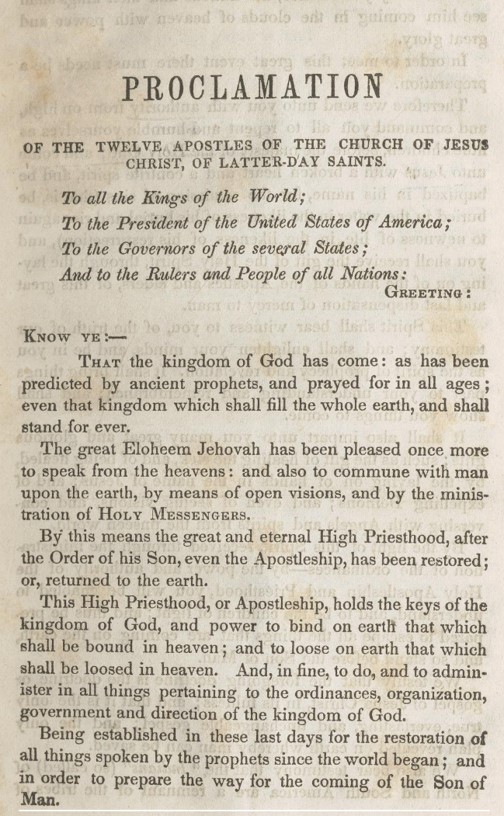
 Chiasmus: (Latin term from Greek χίασμα, “crossing” and from the Greek χιάζω, chiázō, “to shape like the letter Χ”) is the figure of speech in which two or more clauses are related to each other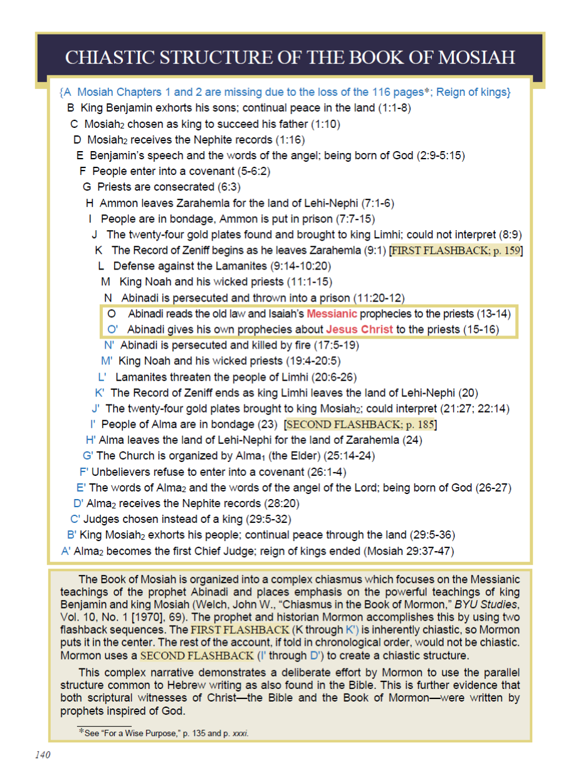
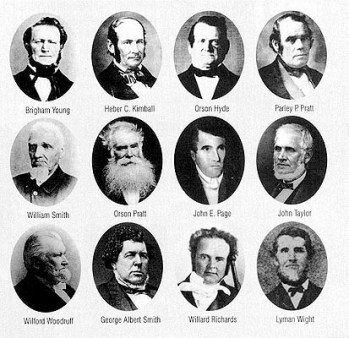
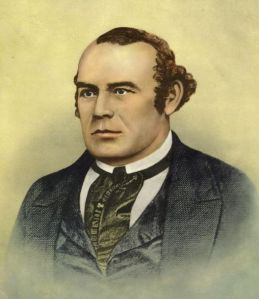
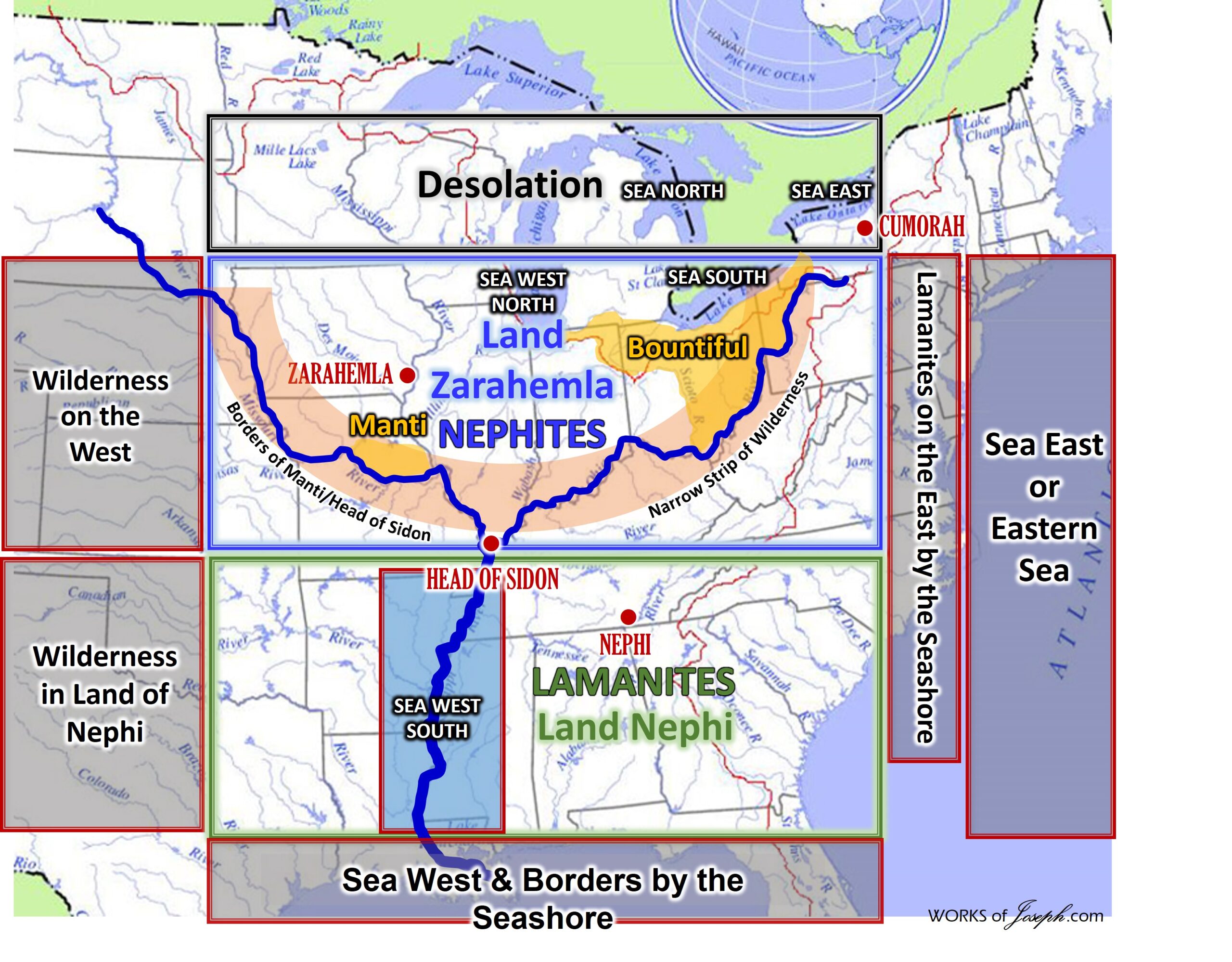

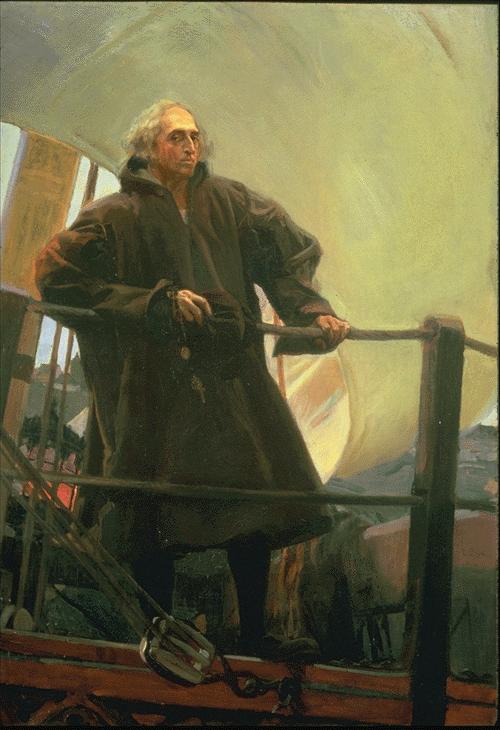
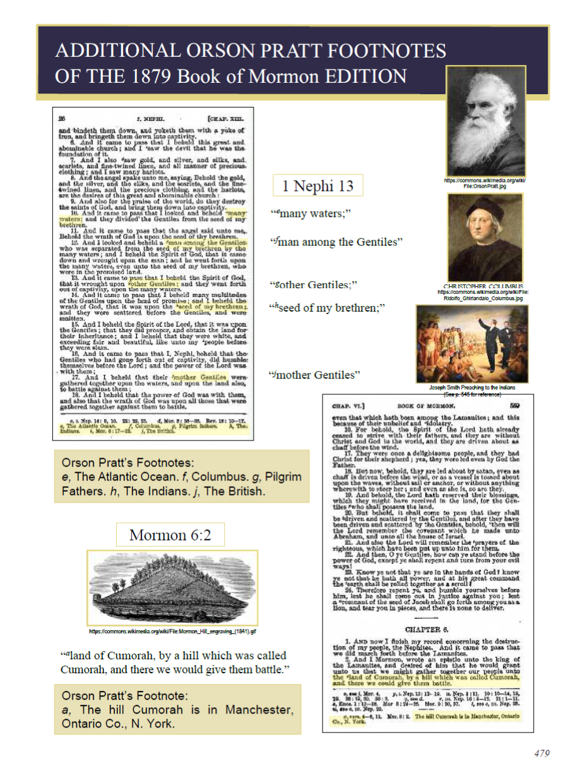
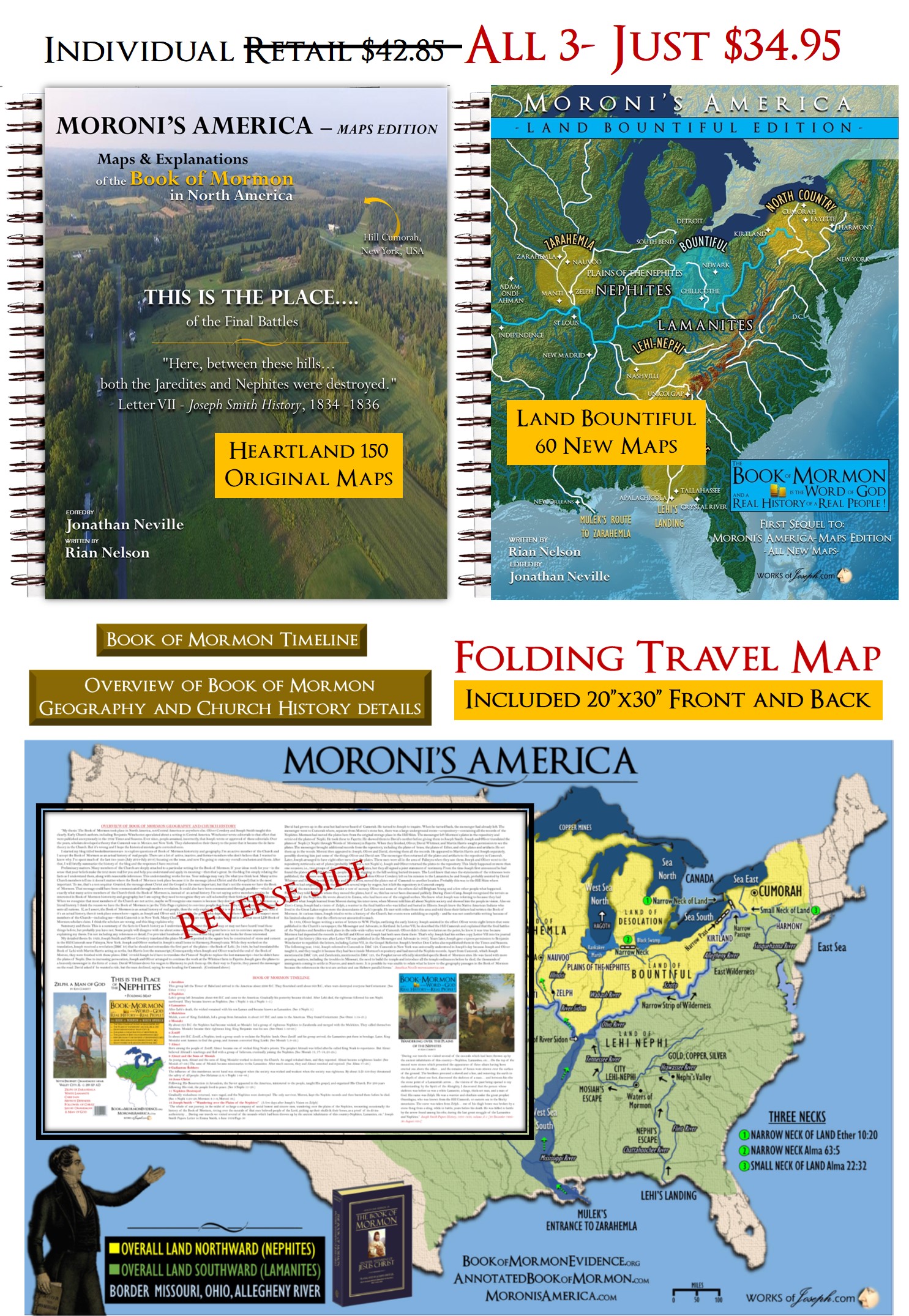

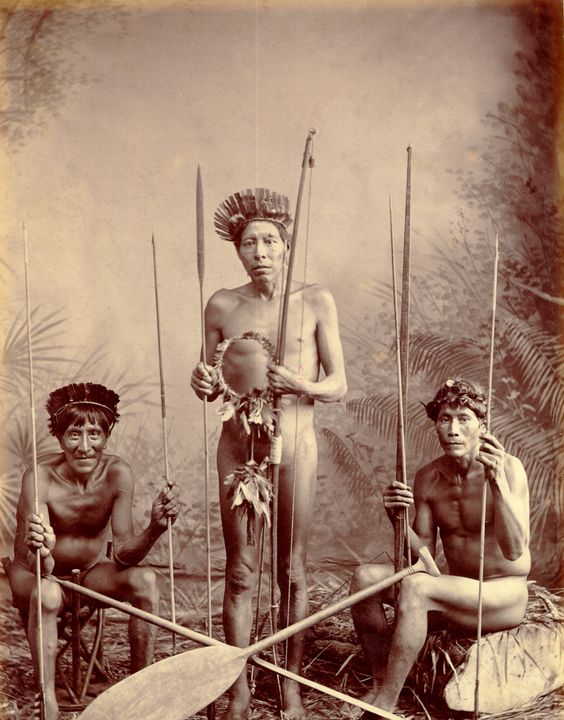

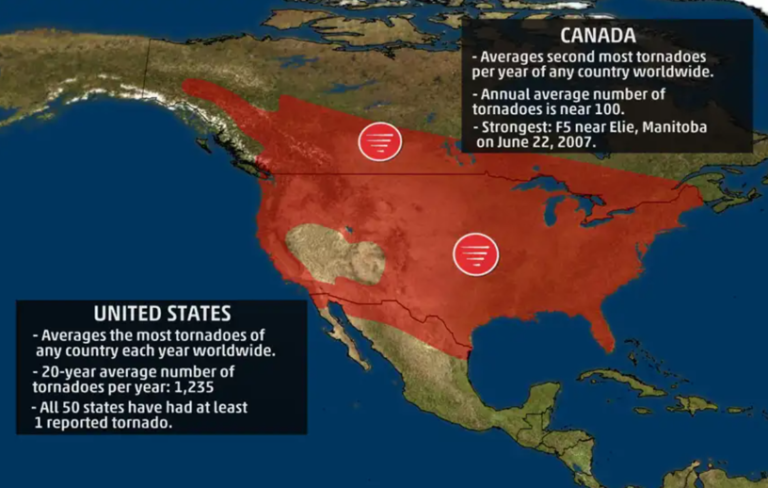


 Many years ago in the copies of the Book of Mormon, The Church of Jesus Christ of Latter-day Saints included pictures of Mexico and various pyramids and statues. But, as you look at the picture left, you also see an old mammoth from Denver, Colorado. I served a mission in 1975 and those old blue books were full of Mesoamerica. I believe the historians and intellectuals were responsible for those theories. It has never been church doctrine about the location of the geography of the Book of Mormon, and today the Church is neutral on that subject. But, I am not neutral, I believe the Book of Mormon events began in the USA and the many remaining Lamanites have spread all over North and South America. That’s up to you to formulate your own opinion. Read all about “
 That is a lot of hard word with no reward. I honestly feel if we spent that much money in all the archaeology in the USA among the Hopewell and Adena civilizations, we would have found a ton of evidence. today in Ohio, Indiana, Illinois, Tennessee, Pennsylvania and New York, museums are full of artifacts and pottery dating at the time of the Book of Mormon. Look up the words “Mounds in North America”, or “Hopewell Culture” and you will be amazed at the millions of items of evidence. I believe the Hopewell are the Nephites, and the Adena are the Jaredites.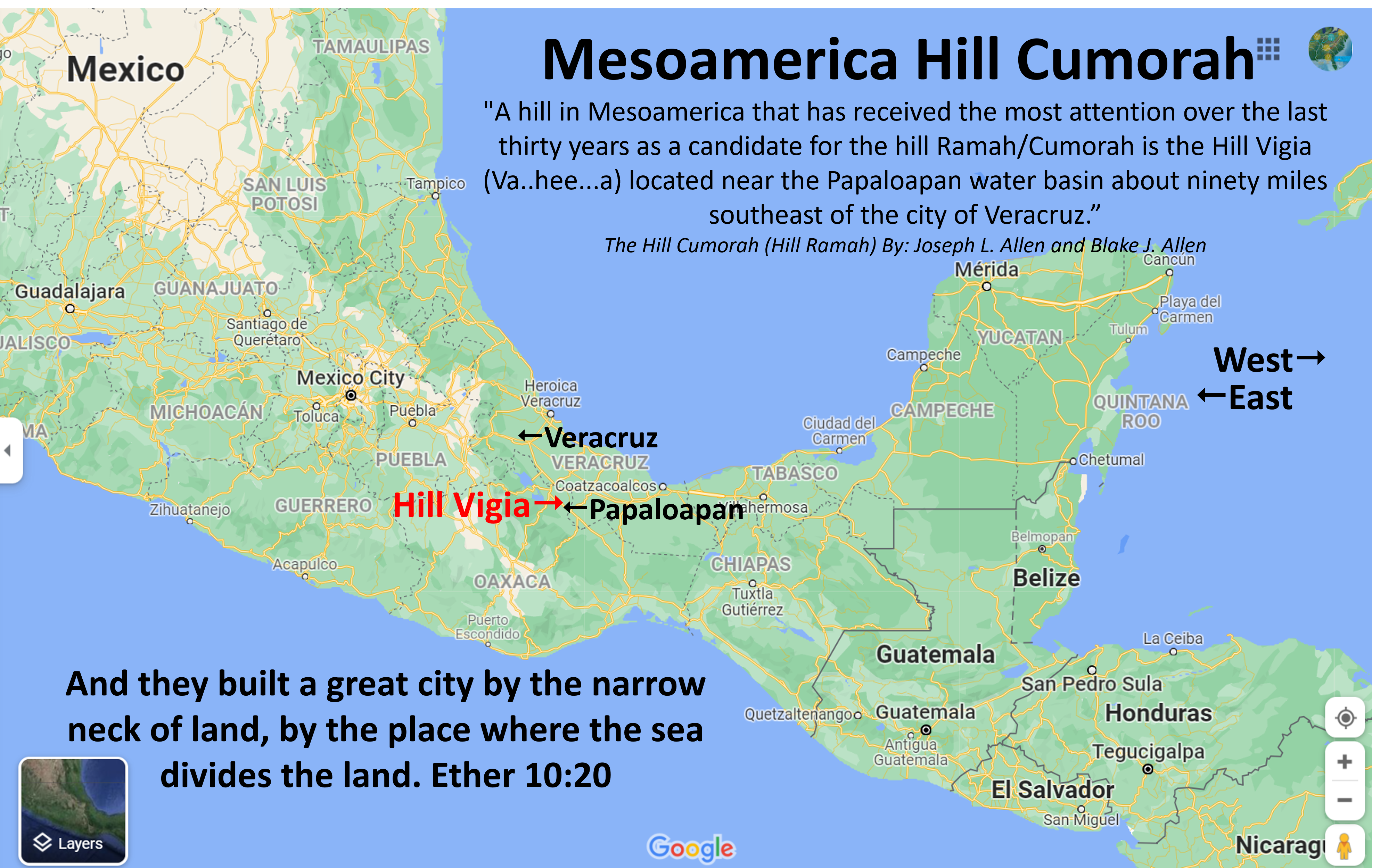
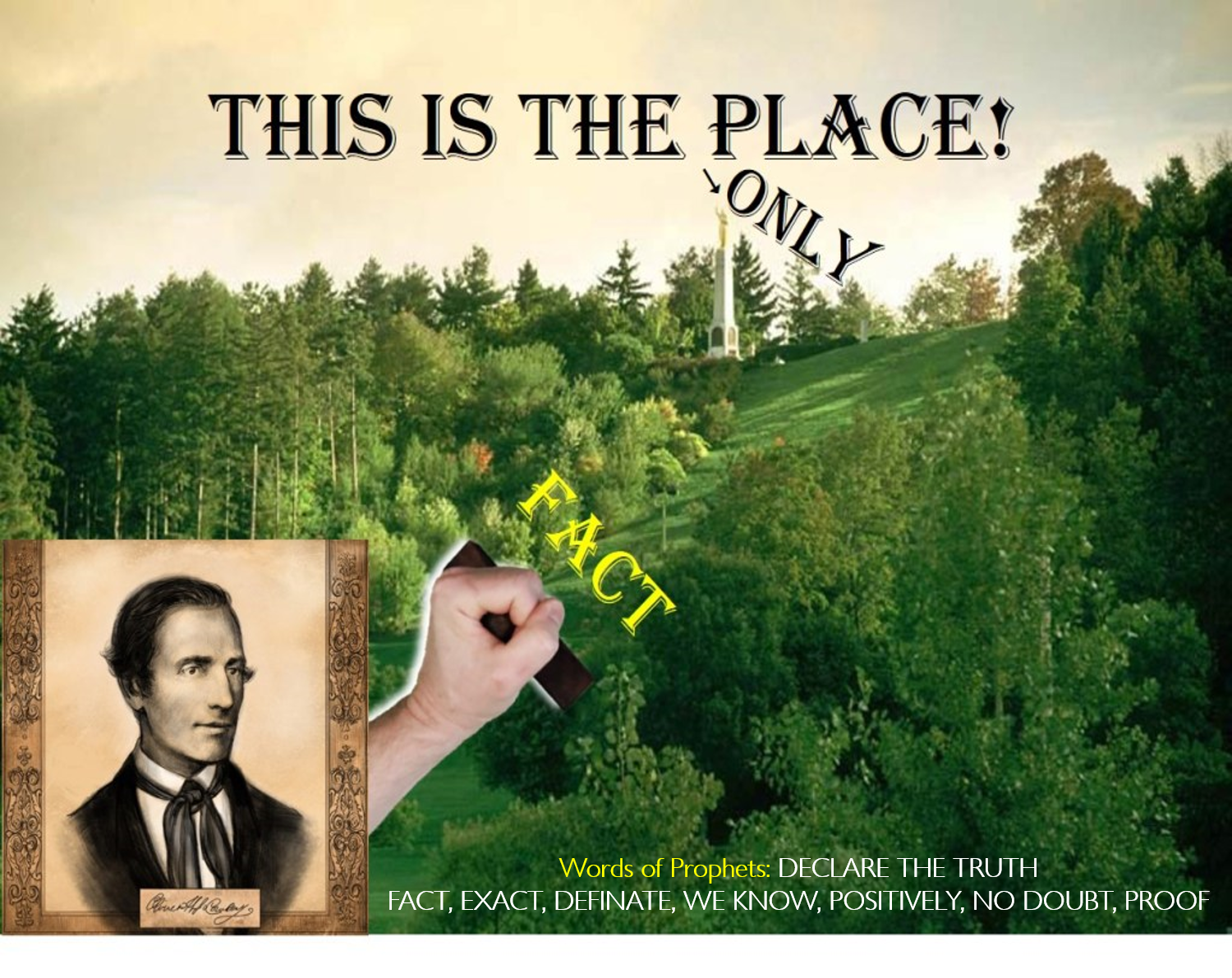
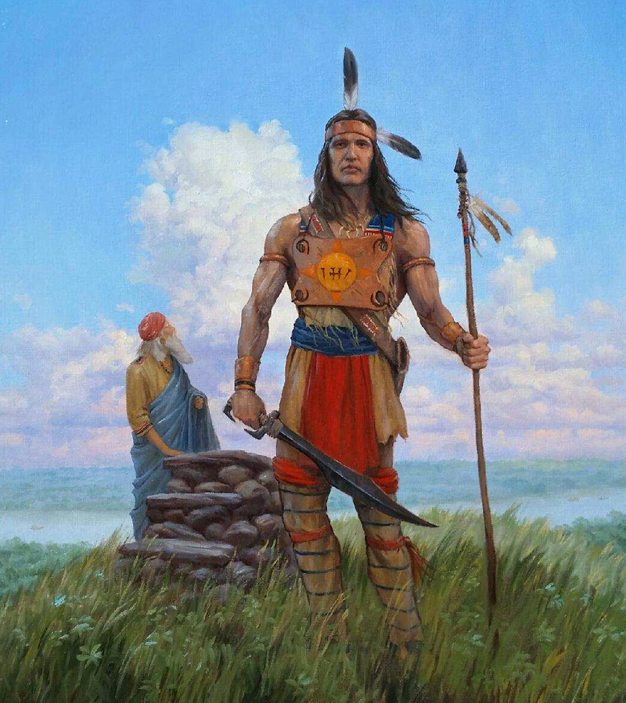
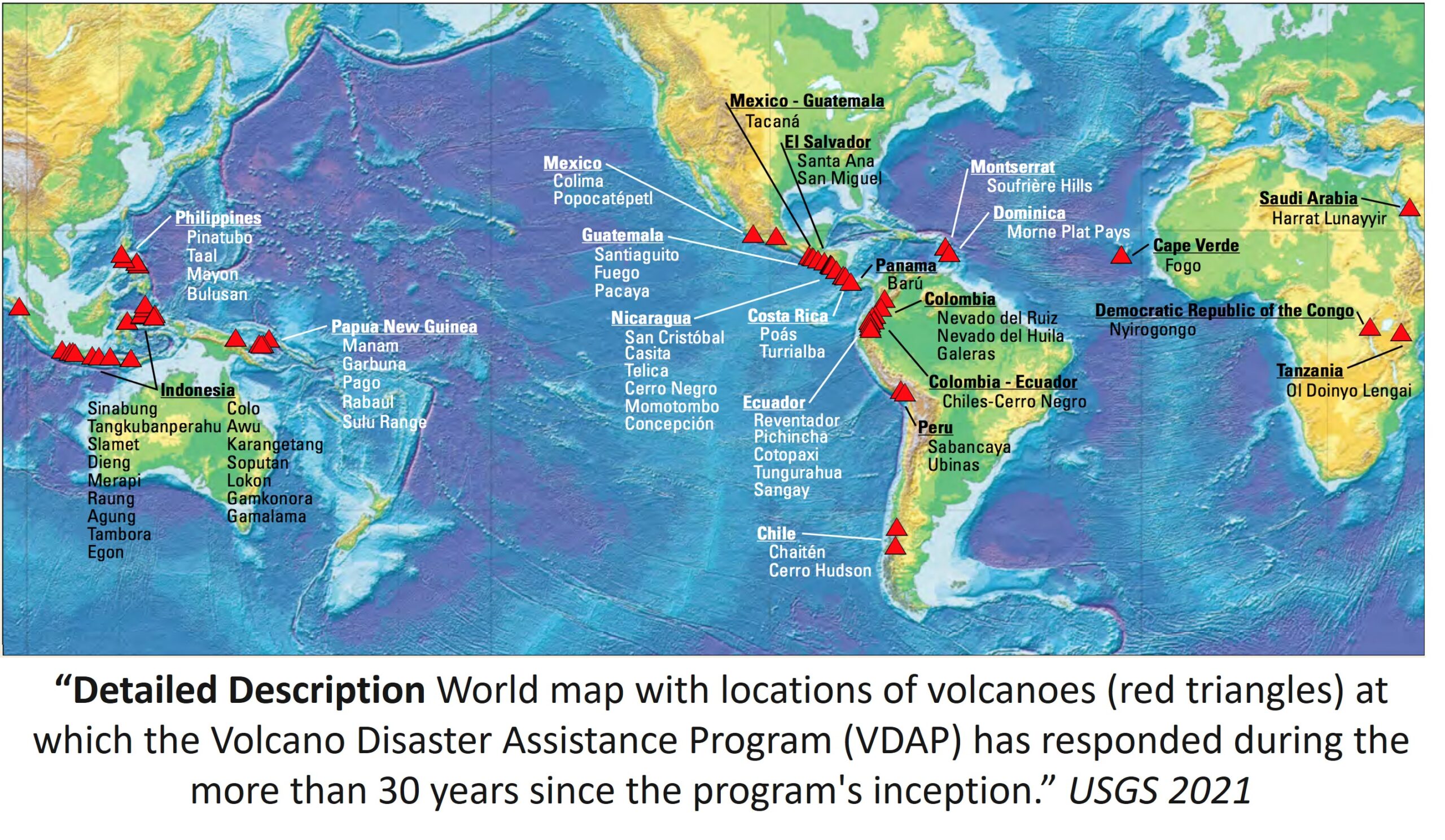


 FAIR LDS loves John Sorensen’s book titled “Mormons Codex”, as they say, “as far as the New World evidences go, John Sorenson wrote an 850-page book detailing all of the evidence he’d personally compiled, with approximately 400 correlations between the Mesoamerican peoples and the peoples of the Book of Mormon.” FAIR LDS
  A good friend of Rod Meldrum’s and Wayne May’s, Delbert Curtis proposed a limited geography around the Great Lakes region of North America in about 1993. His narrow neck of land lies between Lake Erie and Lake Ontario. He states his position as follows:
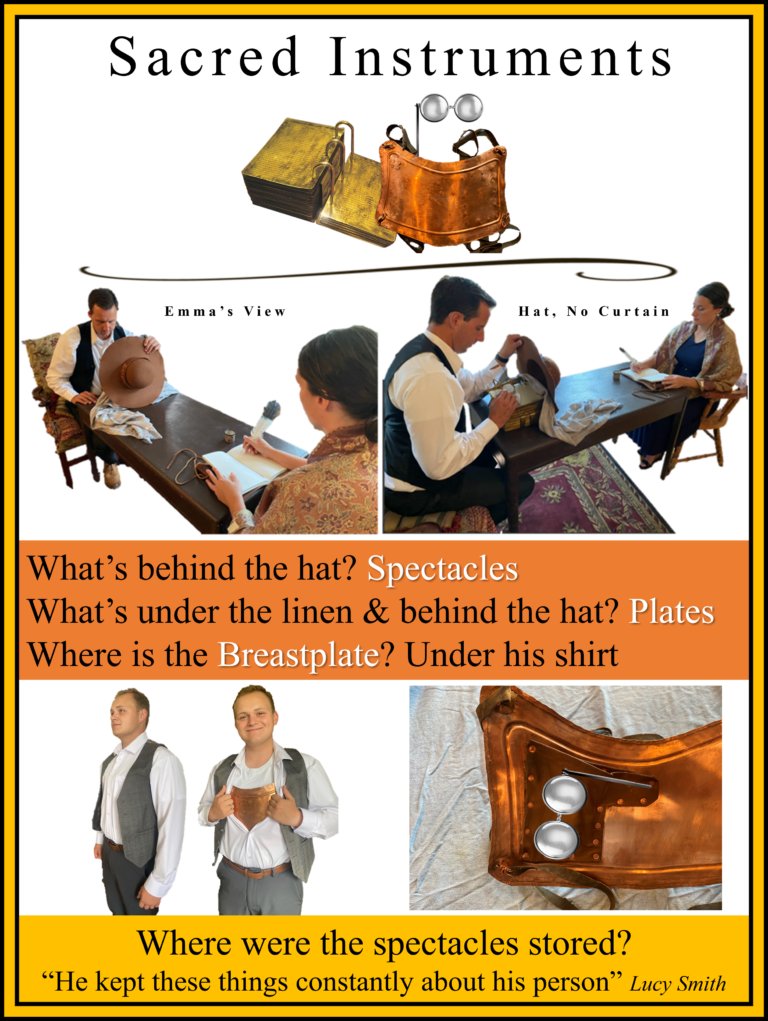
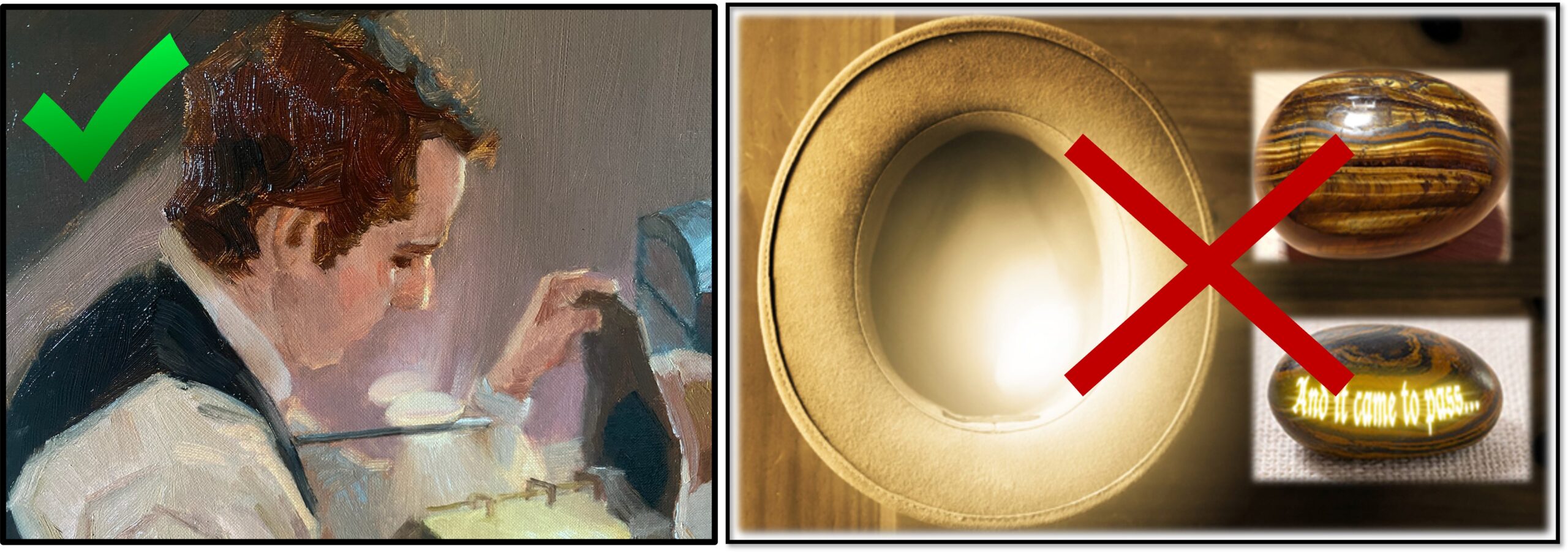
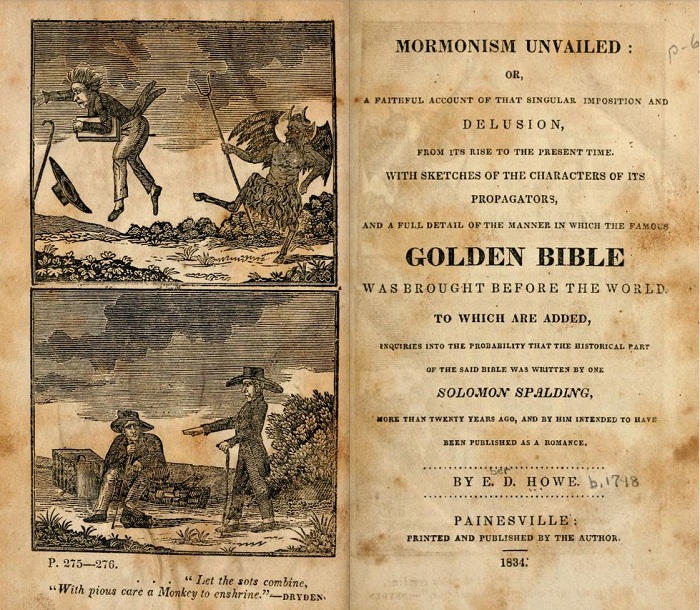
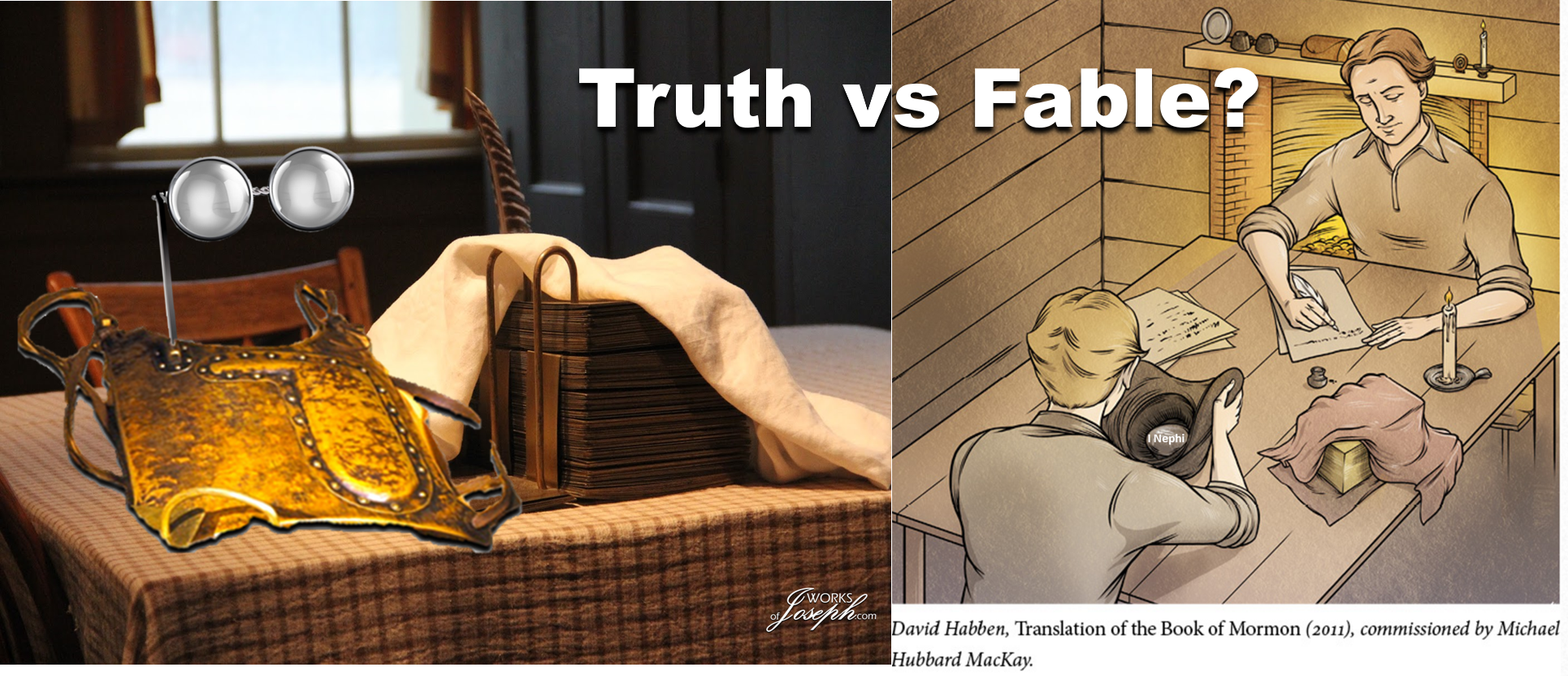
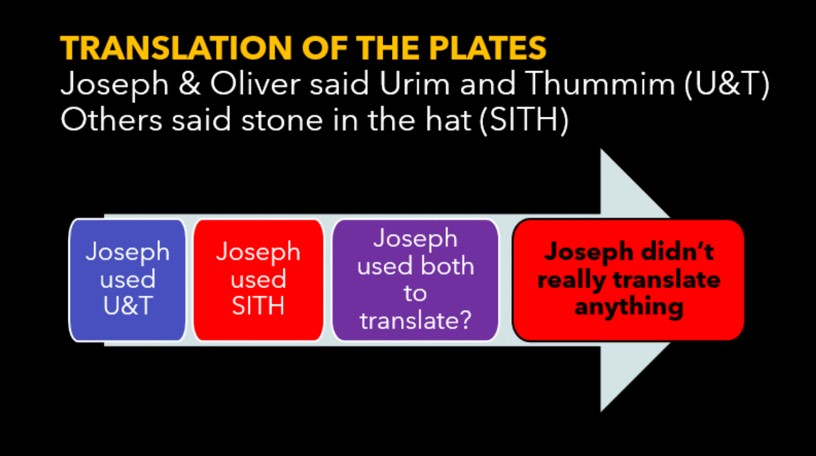 In a recent presentation, I summarized it this way, leading to my own conclusions. As I mentioned at the outset, a longer version of this is available here:” Jonathan Neville
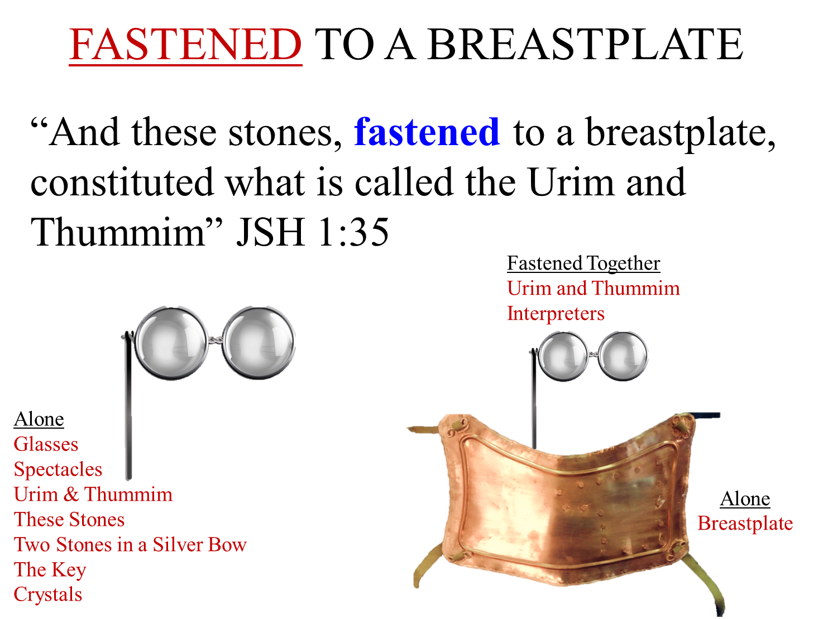
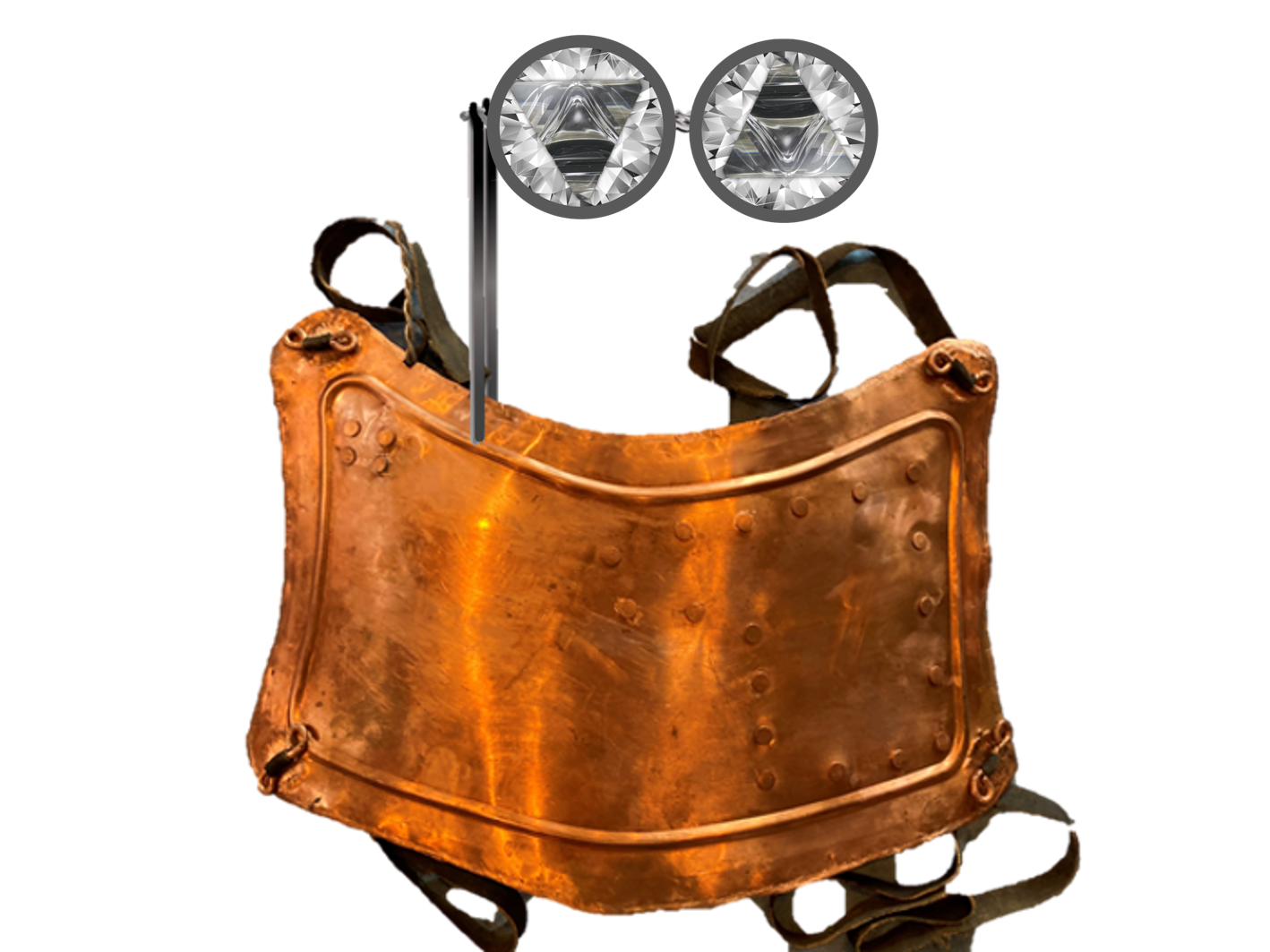
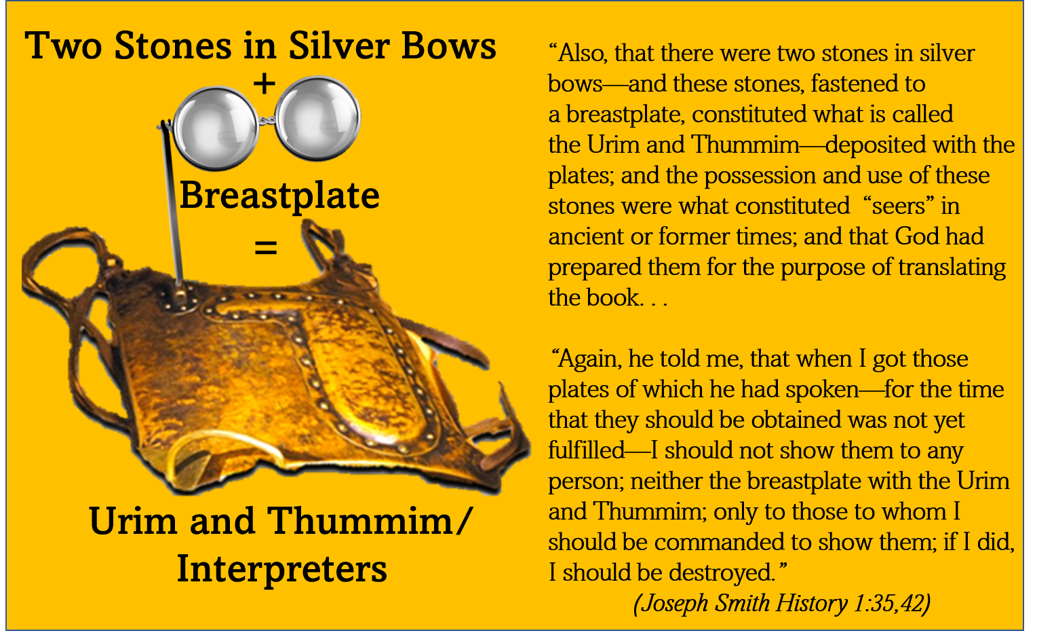
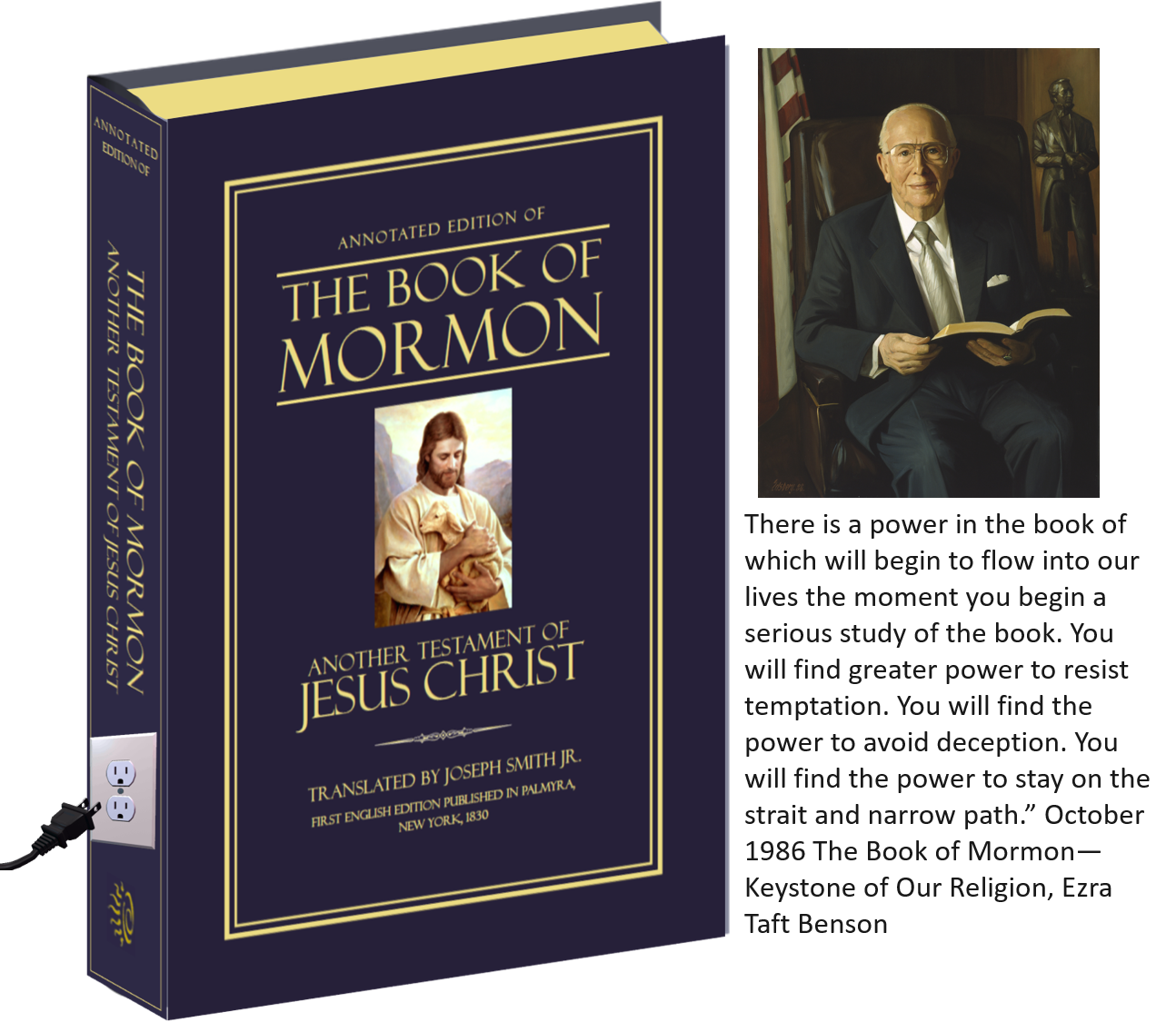
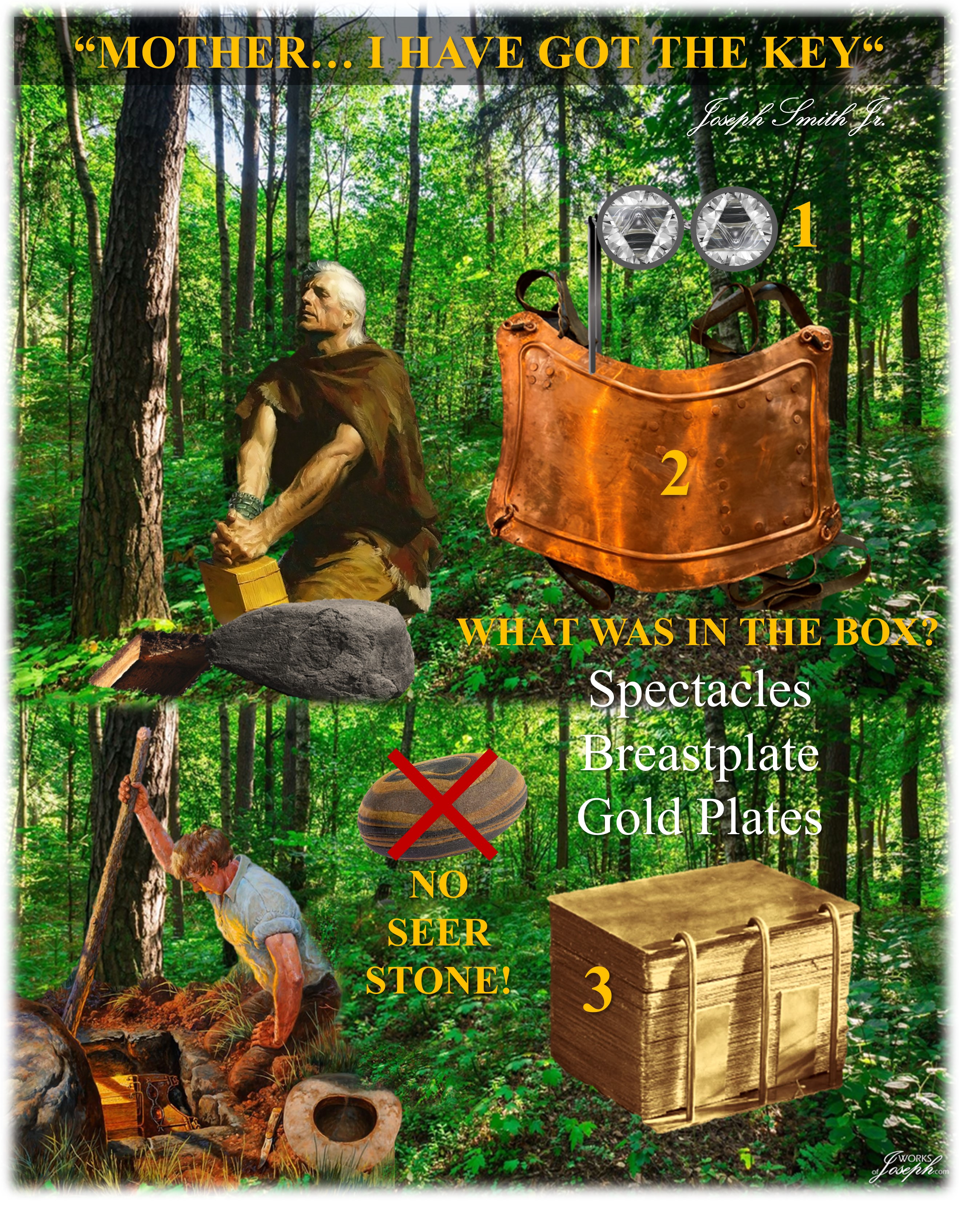

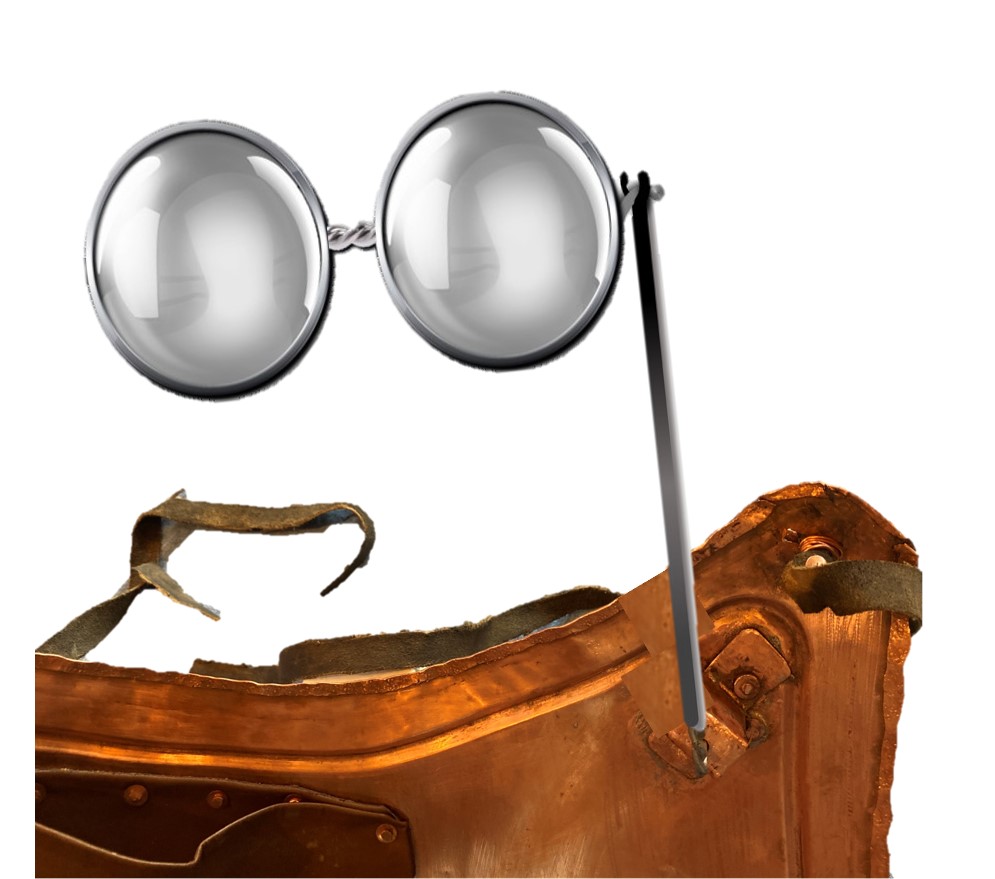
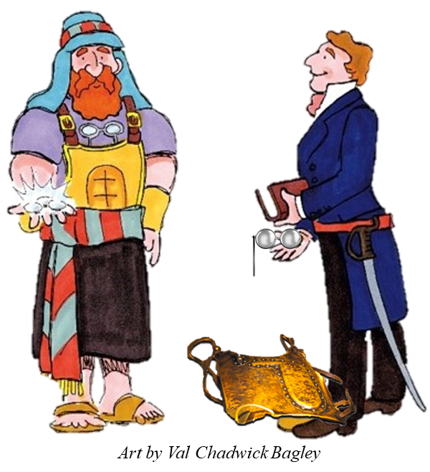
 JSH 1:34 “He said there was a book deposited, written upon gold plates, giving an account of the former inhabitants of this continent, and the source from whence they sprang. He also said that the fulness of the everlasting Gospel was contained in it, as delivered by the Savior to the ancient inhabitants; 35 Also, that there were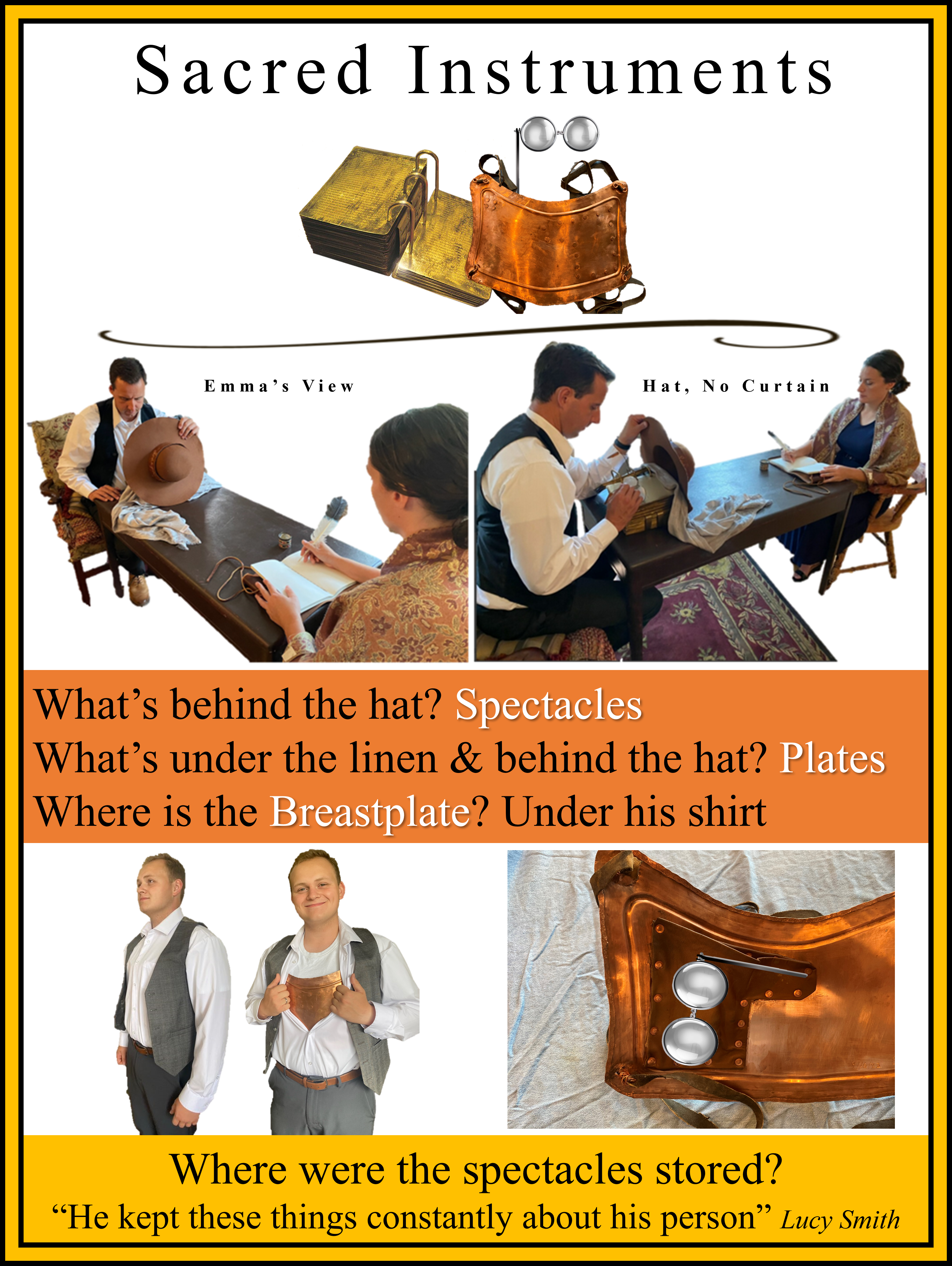
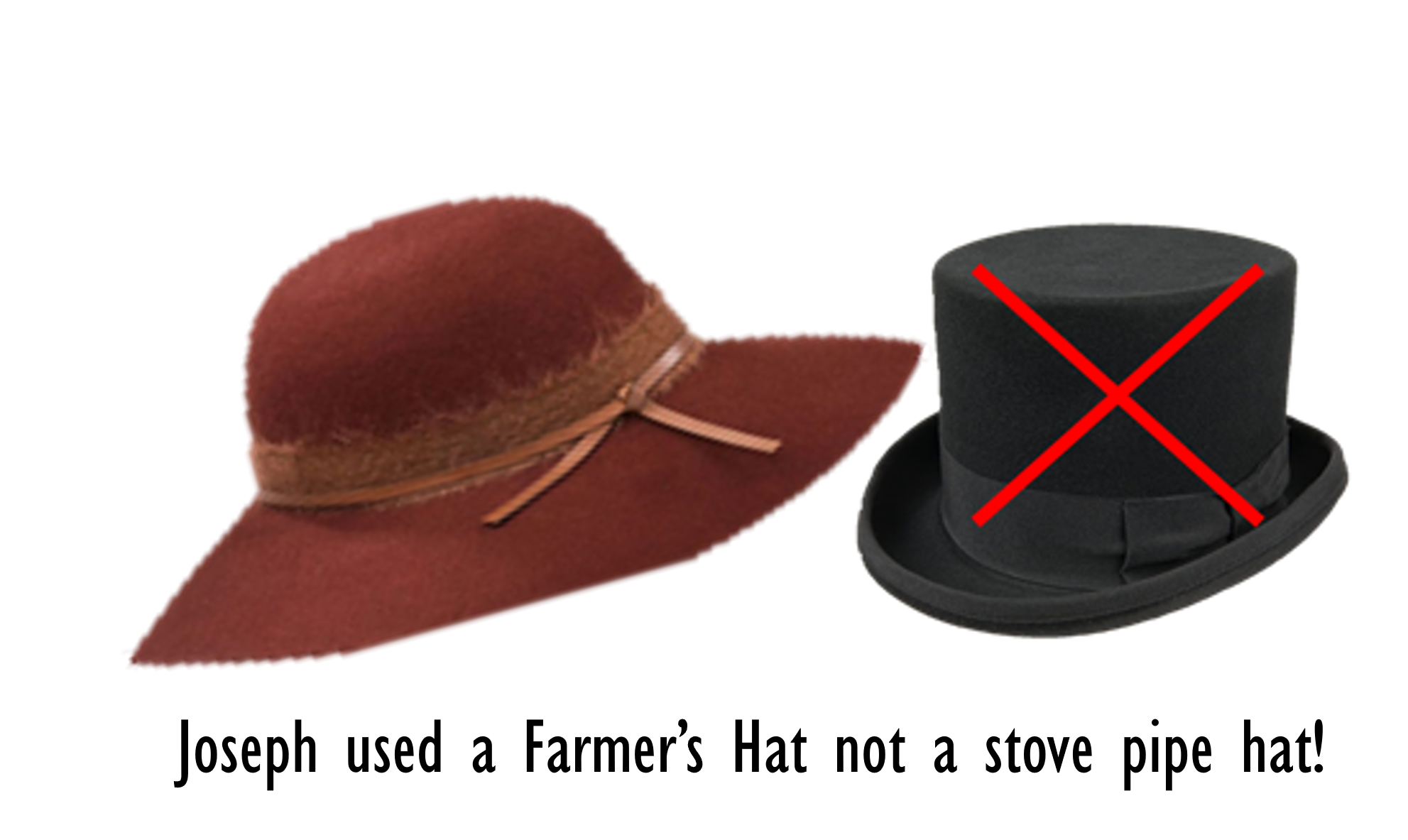 believe in this painting by Ann Marie Oborn that I commissioned, may be how Joseph kept that directive: During translation I propose Joseph used a farmer’s hat that he probably wore daily to work on the farm. (picture right). A young boy would most likely only use a stove pipe hat for a dance or for proper attire, but his working hat would be with him almost constantly you would think. This hat I believe was not used with a stone in it, but as a tool or prop to hide the two stones in a bow or the spectacles from the view of the scribe, as you see in the picture below. The hat is nothing more than a prop to block out Emma’s vision. Joseph could also keep his promise to not show

 Yes, the Prophet of the Lord kept his promise not to show anyone these articles the best way he knew how with his
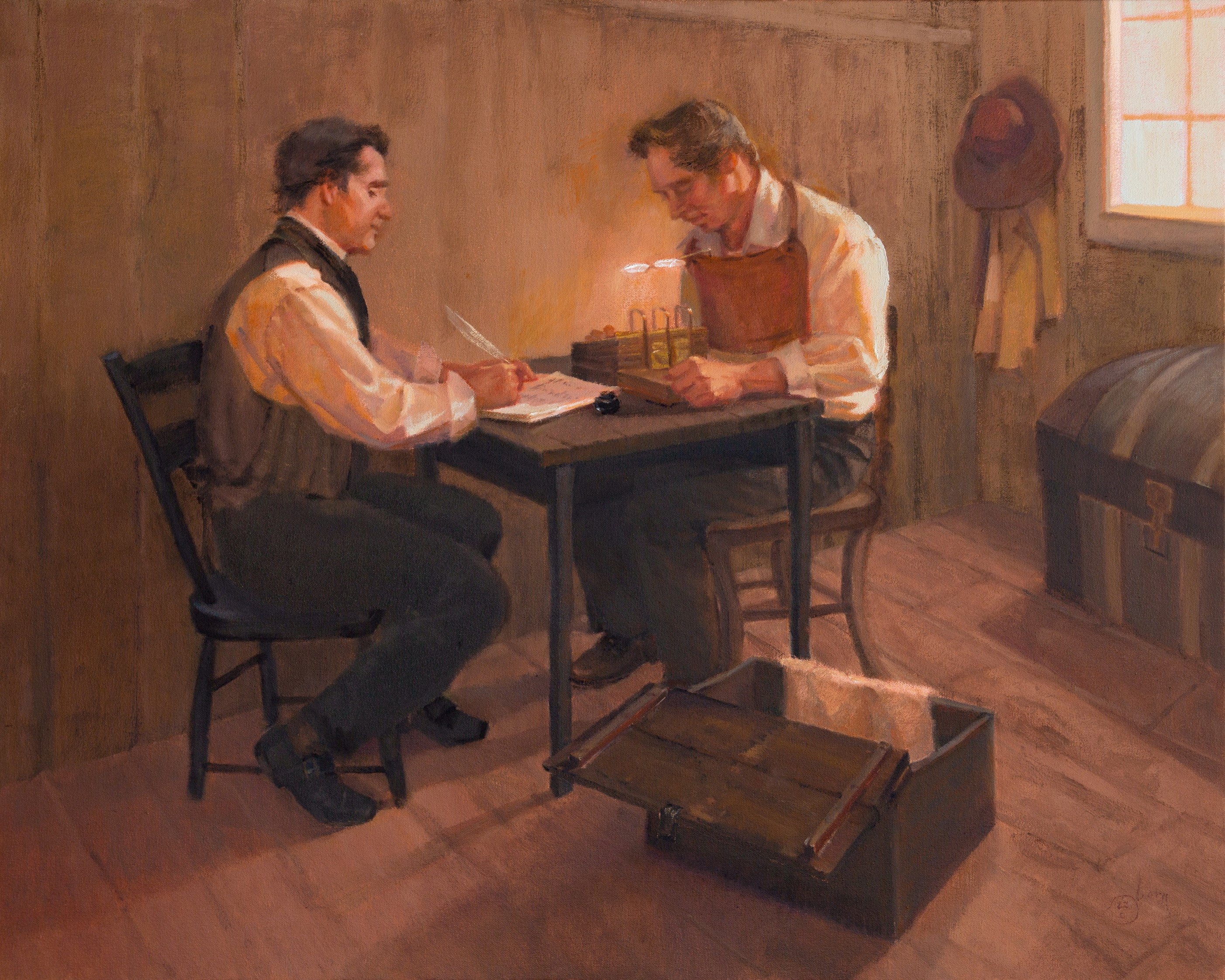
 According to his mother, Joseph Smith kept the “Key” ‘constantly about his person’. According to Lucy Mack Smith, The “Key“ is the two stones, (that came from the Brother of Jared (Ether 3:22-24) in silver bows, fastened to the breastplate that were found by Joseph in the stone box with the plates at Hill Cumorah. I believe the witness of Lucy Mack Smith and the scripture in JSH 1:35, more than I believe Martin Harris, David Whitmer, or Emma Smith in their statements about a stone in a hat. They never saw the items used for translation as Oliver & Joseph did. Most people knew Joseph had a stone or two, but there is no record of anyone firsthand who saw Joseph use his stone to translate. There is no scripture that mentions a stone in a hat for translation. I believe the scriptures.
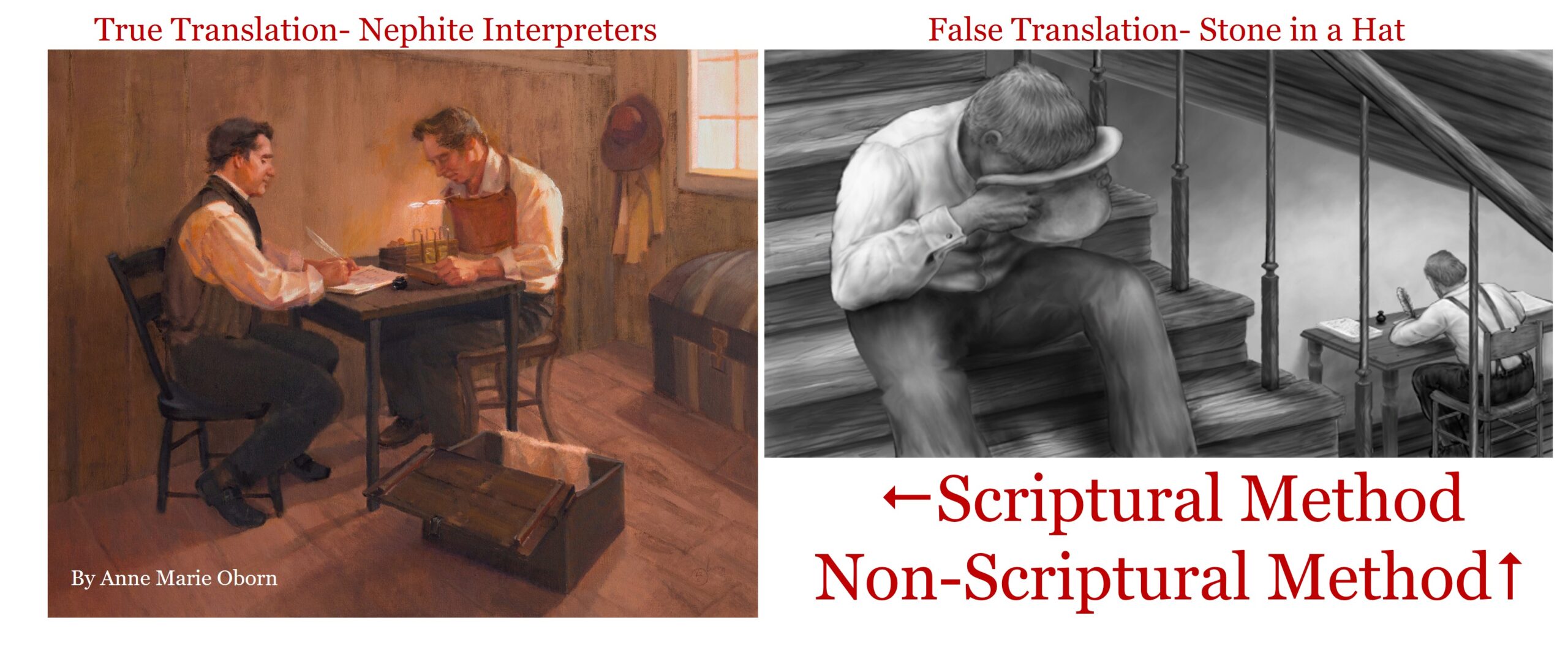
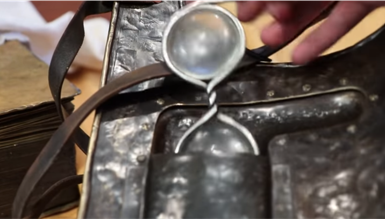
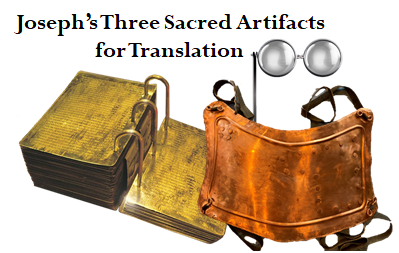 “Not only did Joseph Smith use the Urim and Thummim to translate the Book of Mormon, but he also used it to receive revelation from God. Specifically, Doctrine and Covenants sections 3, 6, 11, and 14, 15,16, were all given through the Urim and Thummim. (See headings to these sections) We learn from the Doctrine and Covenants that “the place where God resides is a great Urim and Thummim.” In addition, “this earth, in its sanctified and immortal state, will be made like unto crystal and will be a Urim and Thummim to the inhabitants who dwell thereon.” And each person who receives the white stone mentioned in Revelation 2:17 will be able to use the Urim and Thummim (D&C 130:8–10).” by Jay A. Parry and Larry E. Morris, adapted from “The Mormon Book of Lists” | Jan. 18, 2019 LDS Living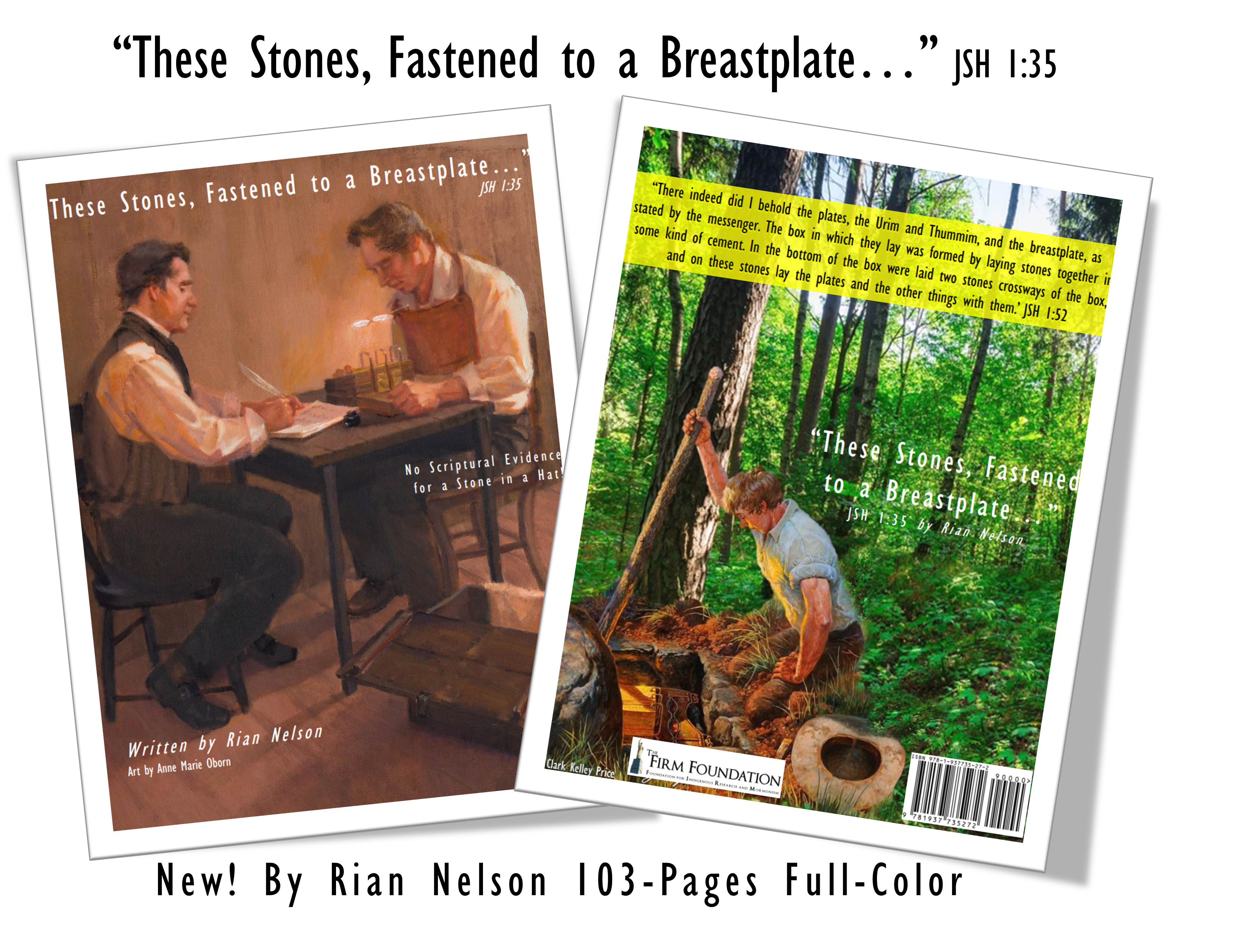
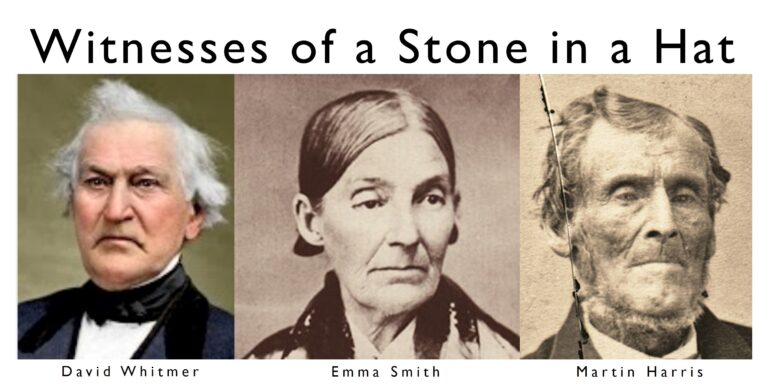
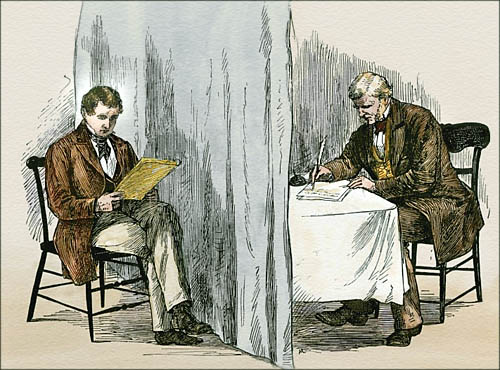 “With regard to the physical circumstances of the Prophet Joseph Smith and his scribe, Martin Harris was quoted as saying there was a blanket or curtain hung between himself and Joseph during the translation process.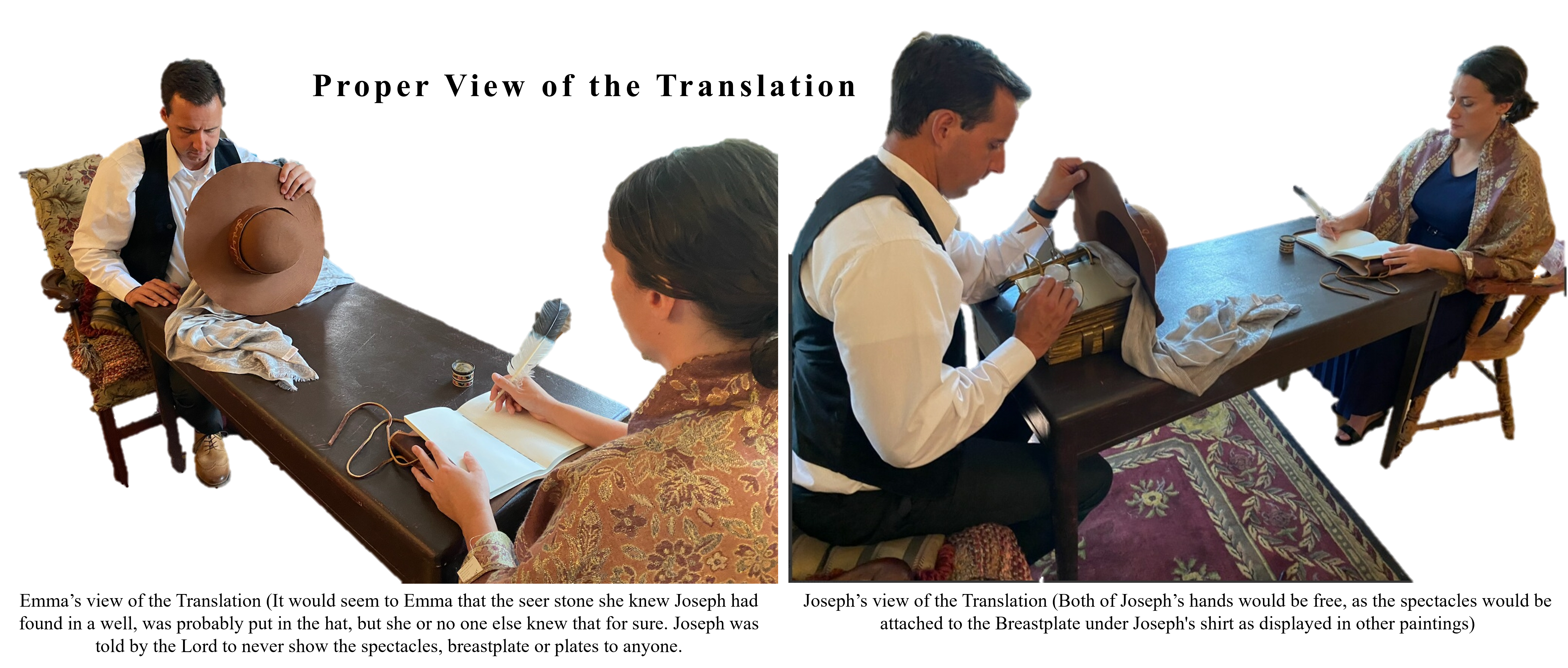
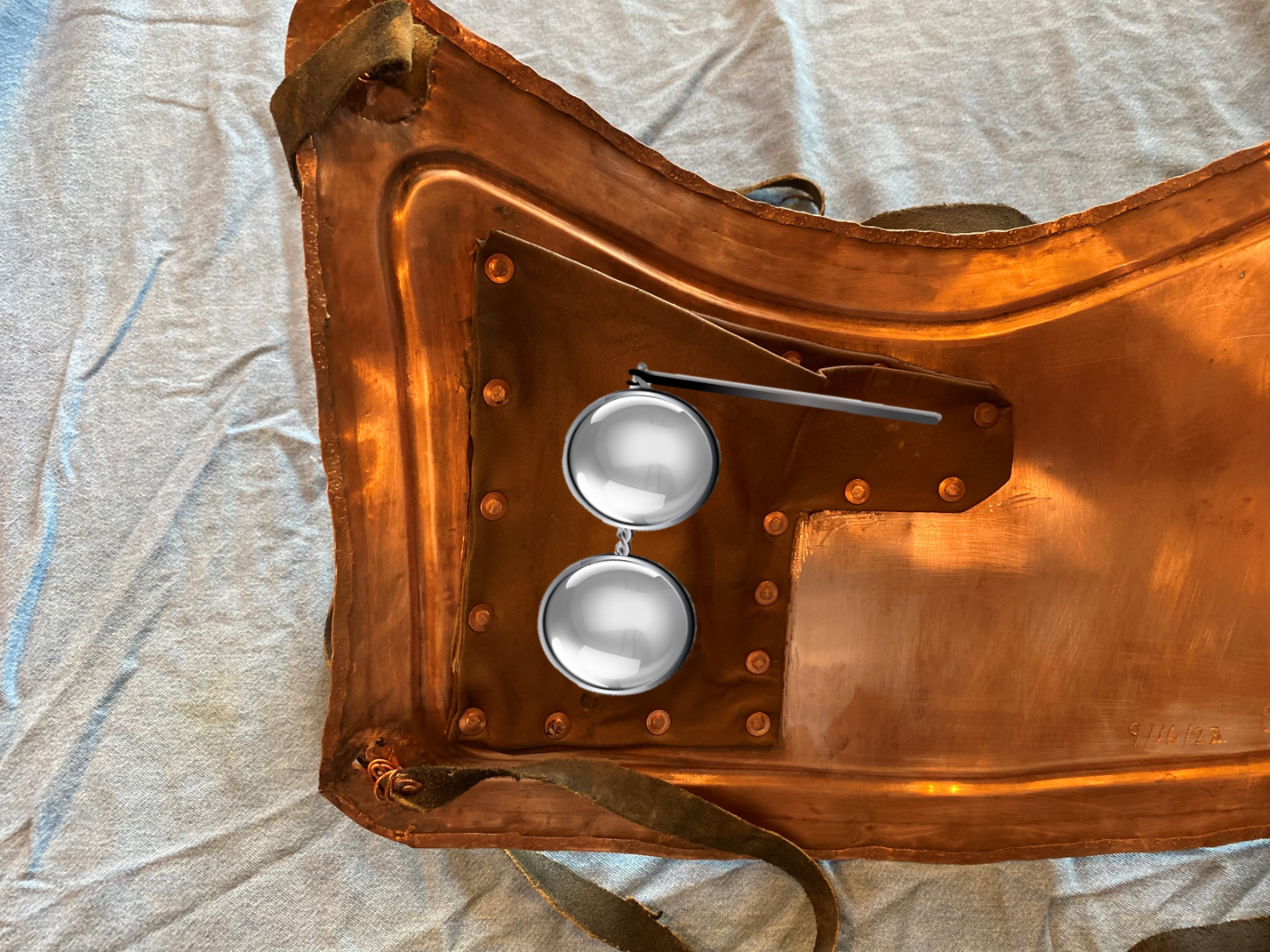 Joseph also kept the spectacles
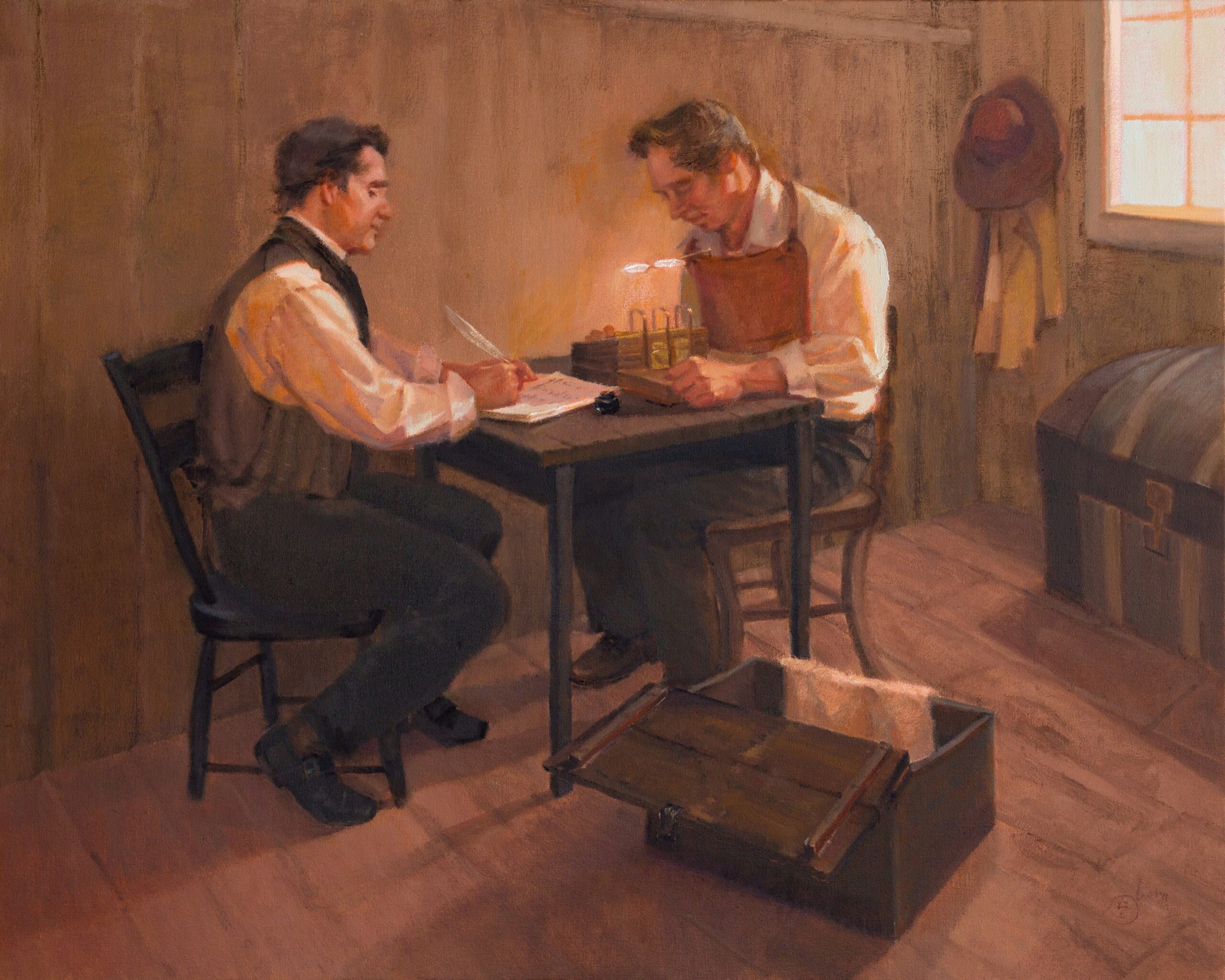
 That of which I spoke, which Joseph termed a key, was indeed nothing more nor less than a Urim and Thummim by which the angel manifested those things to him that were shown him in vision; by which also he could at any time ascertain the approach of danger, either to himself or the record, and for this cause he kept these things constantly about his person.” (History of Joseph Smith, Revised and Enhanced, p. 139, 145)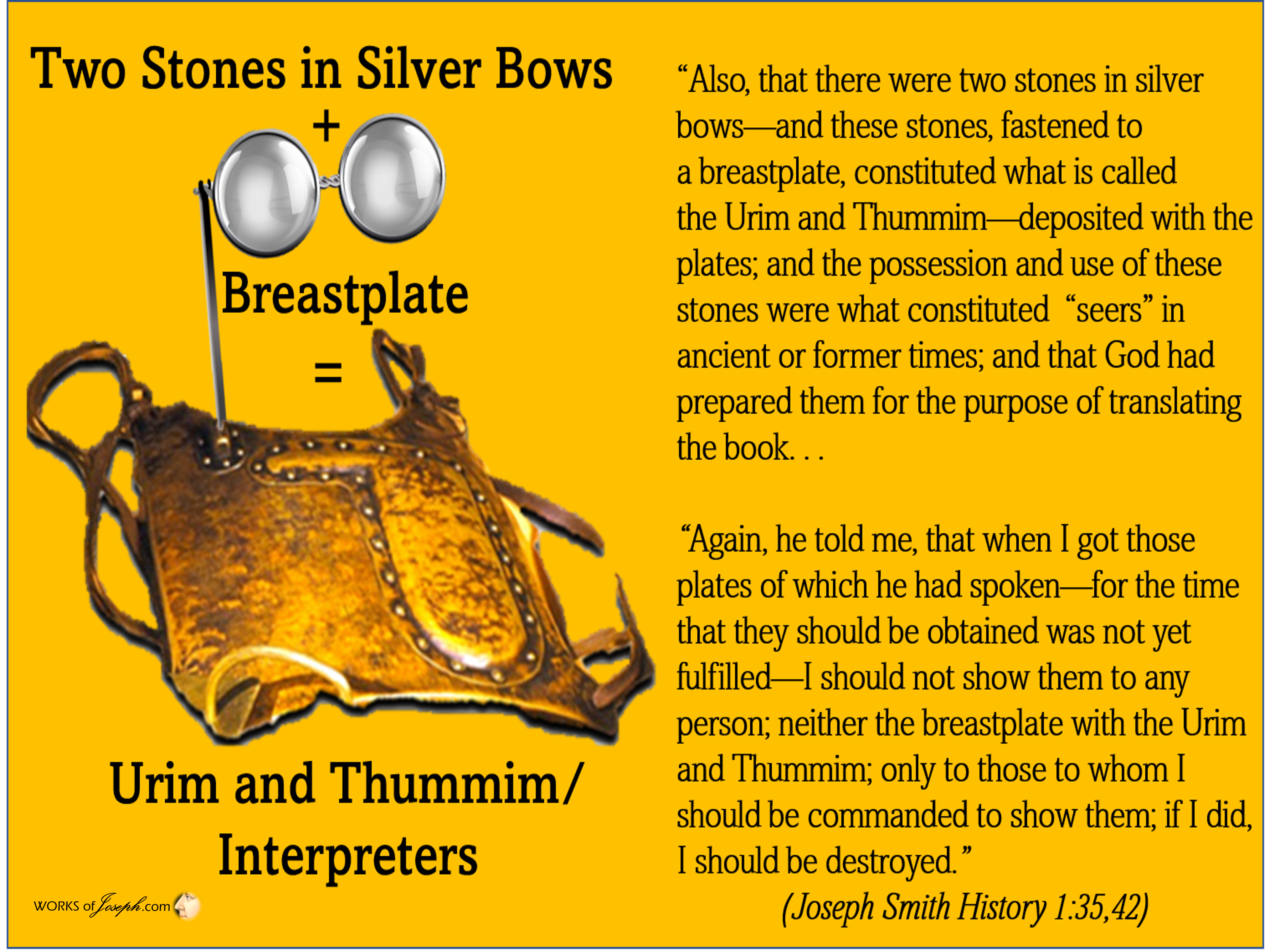
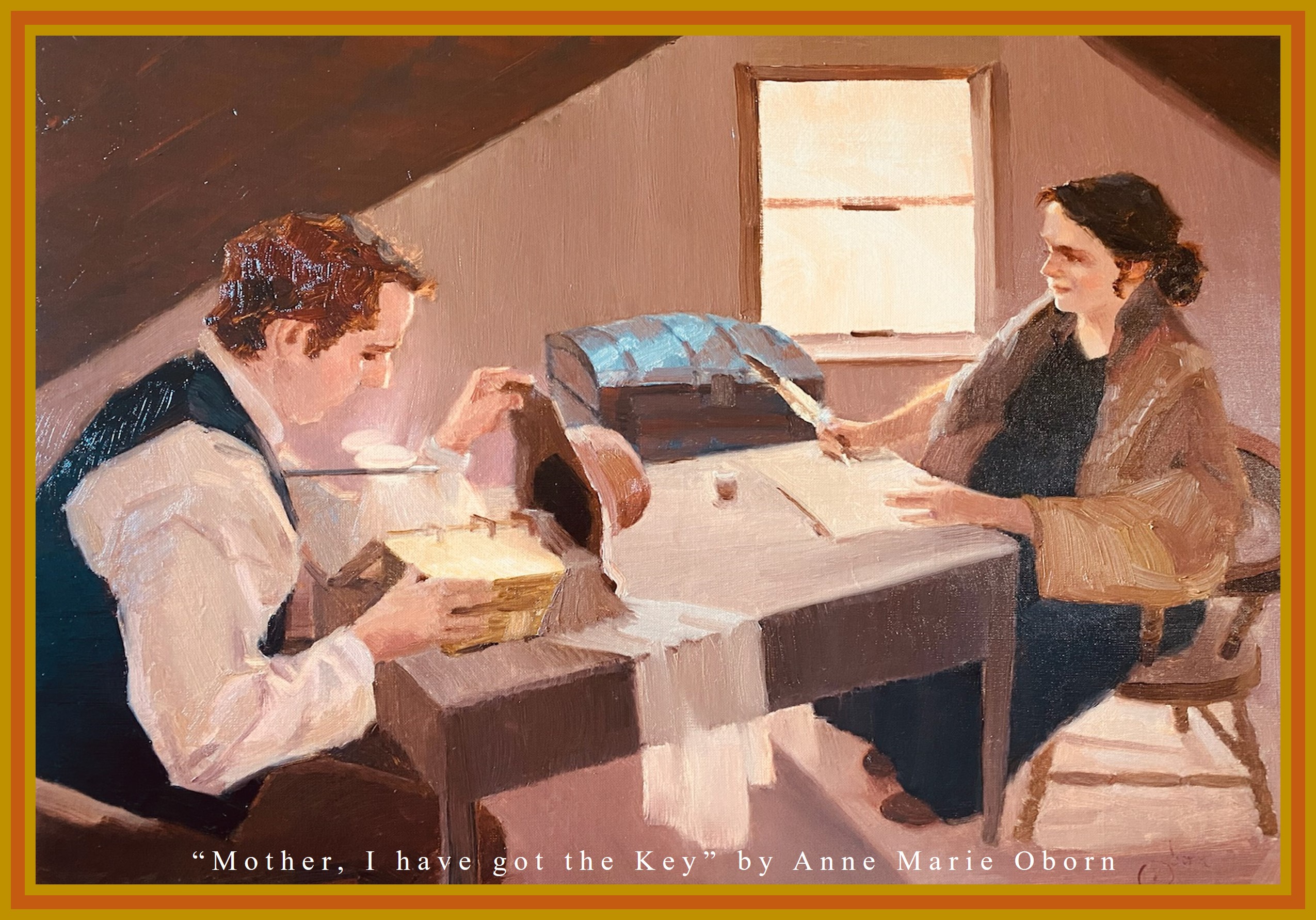
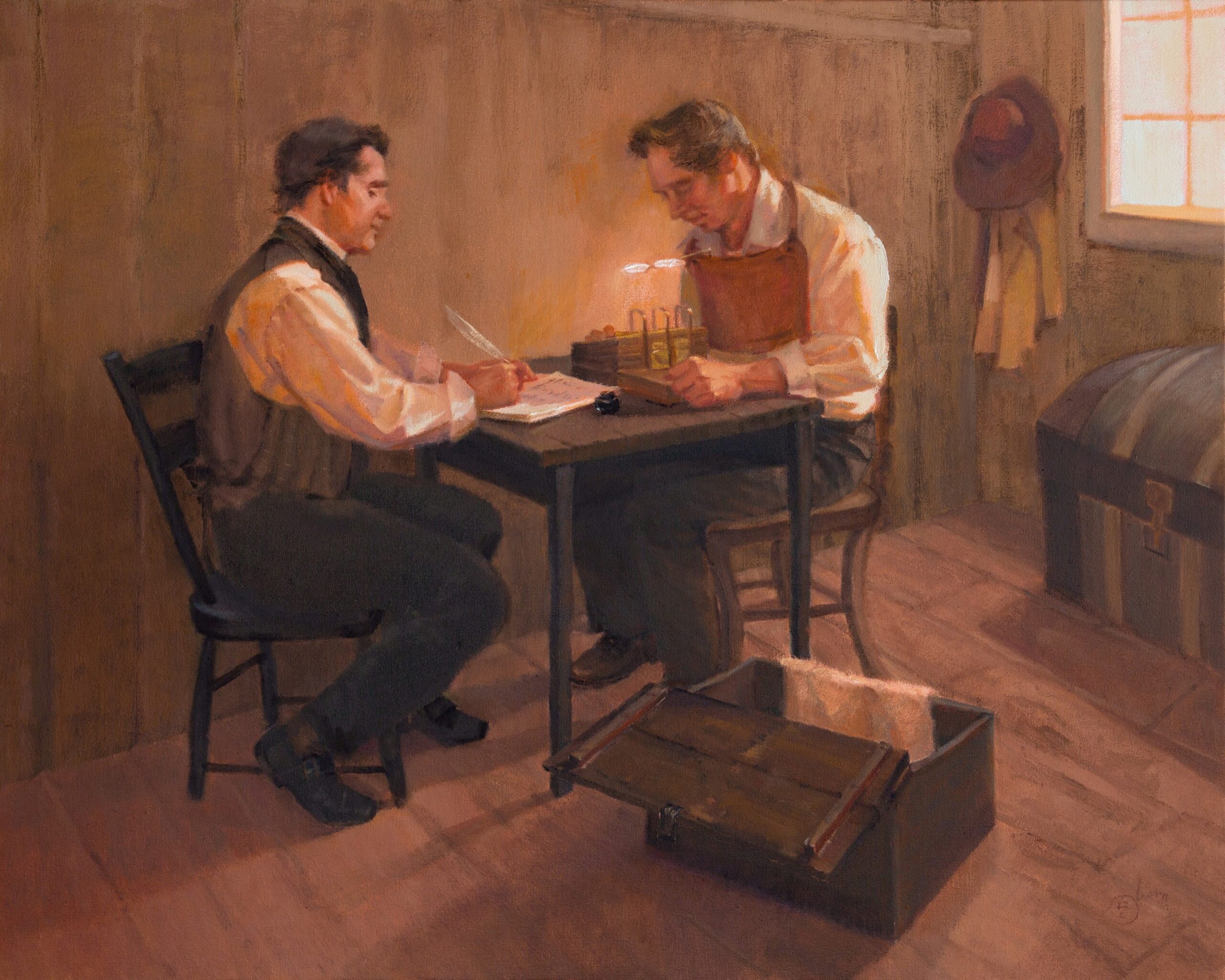


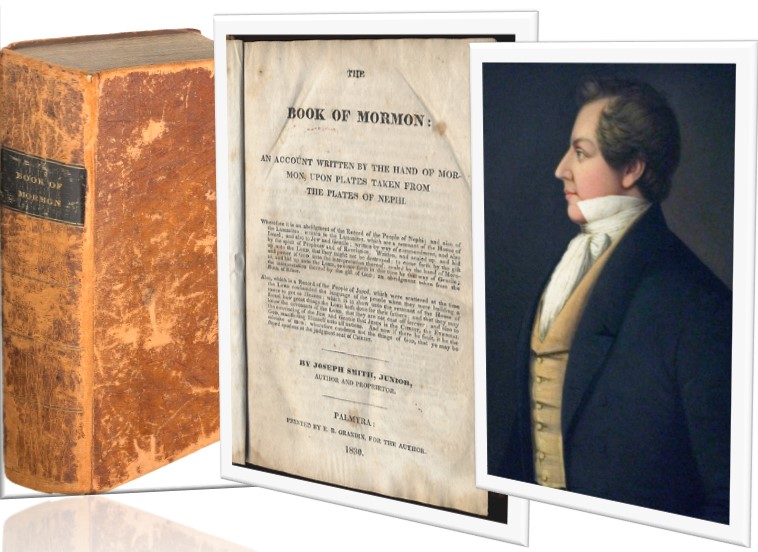
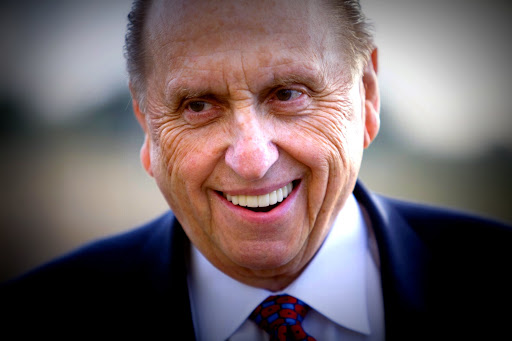


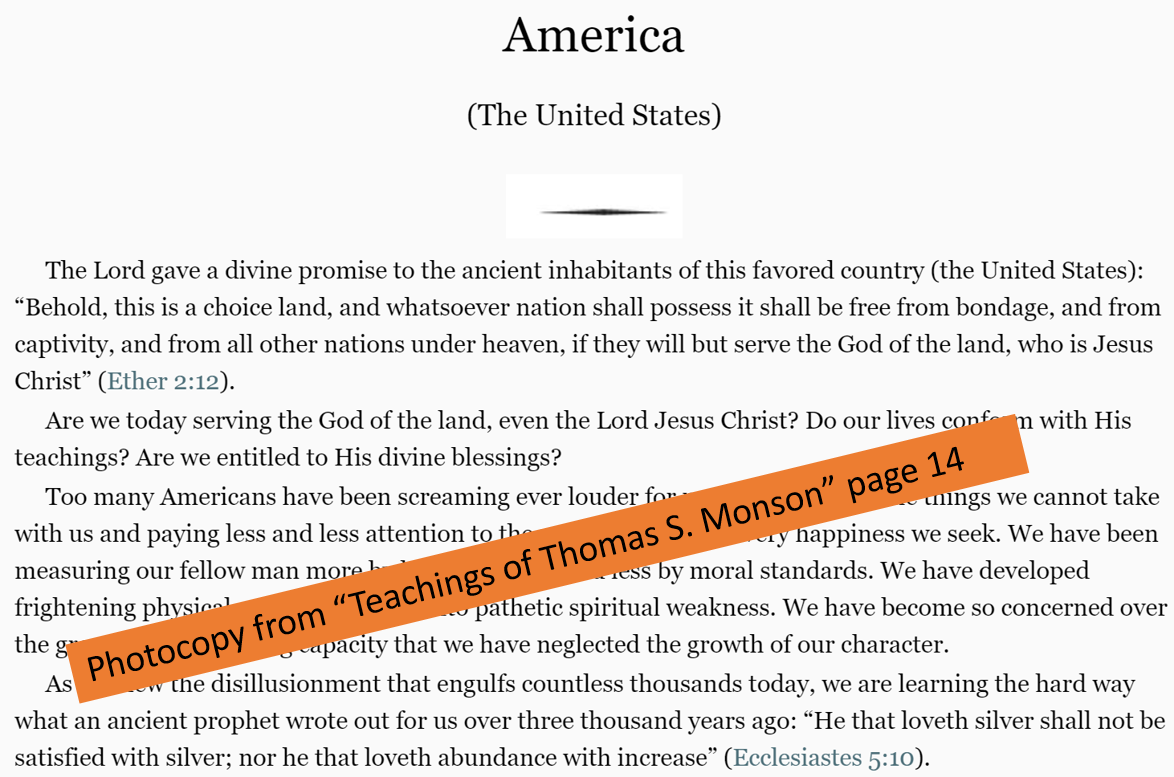




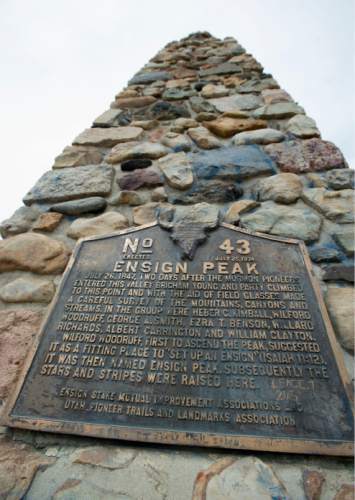





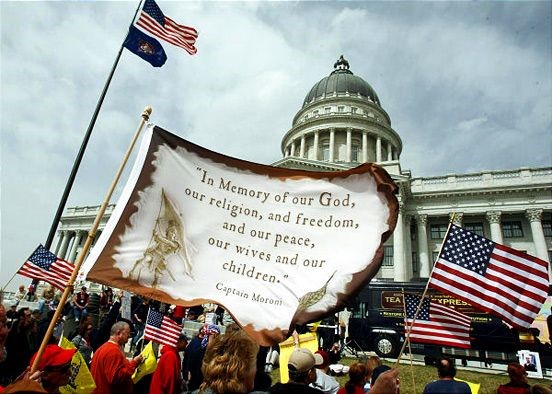
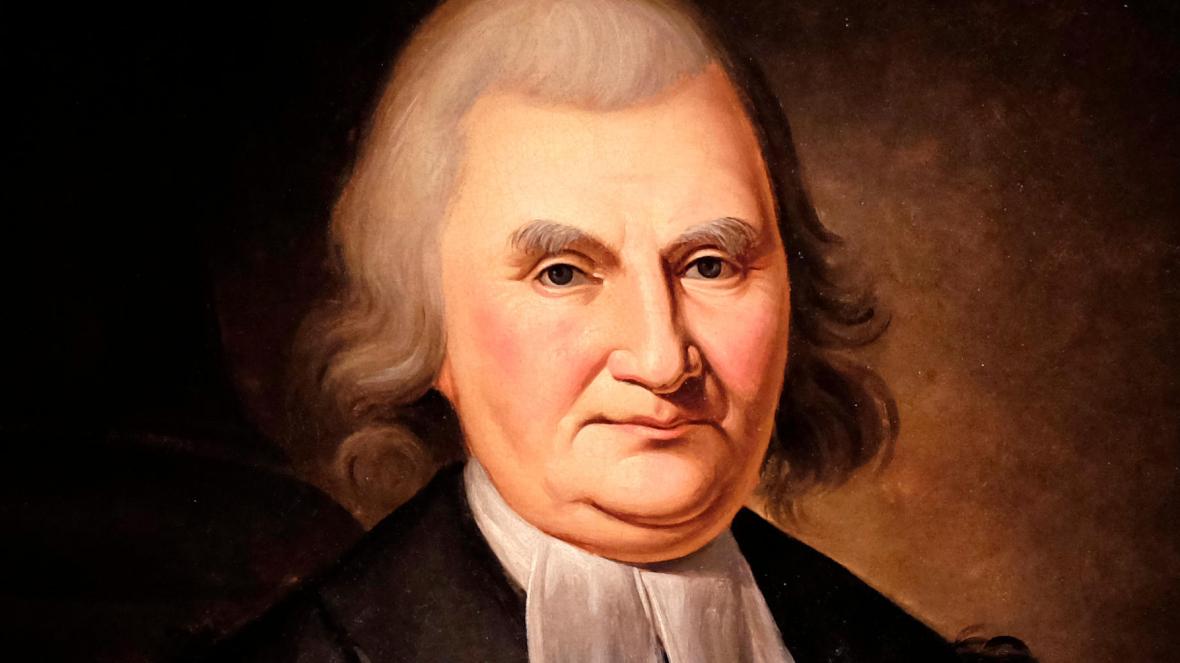


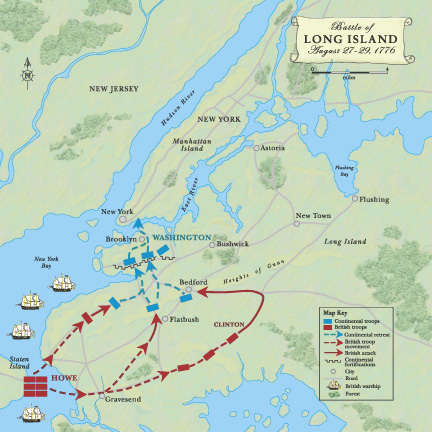

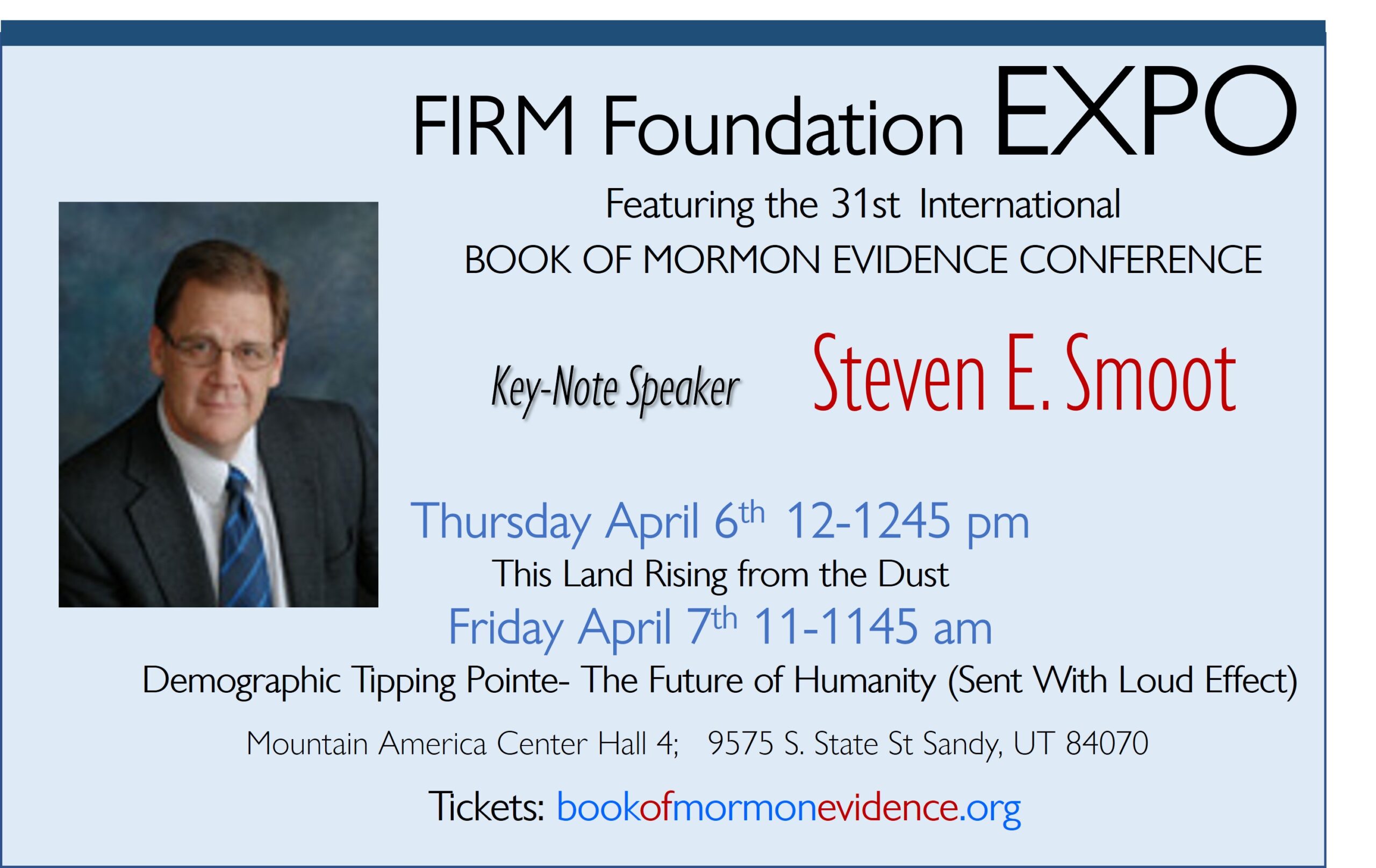
 This Audio Podcast, tells the story of the Ancient Civilizations of North America; the ancestors of the American Indians. A history that gives new insights into the silence and science surrounding these ancient Mound-Building cultures. A history that must be heard and understood; given that this history has profound implications for our day.

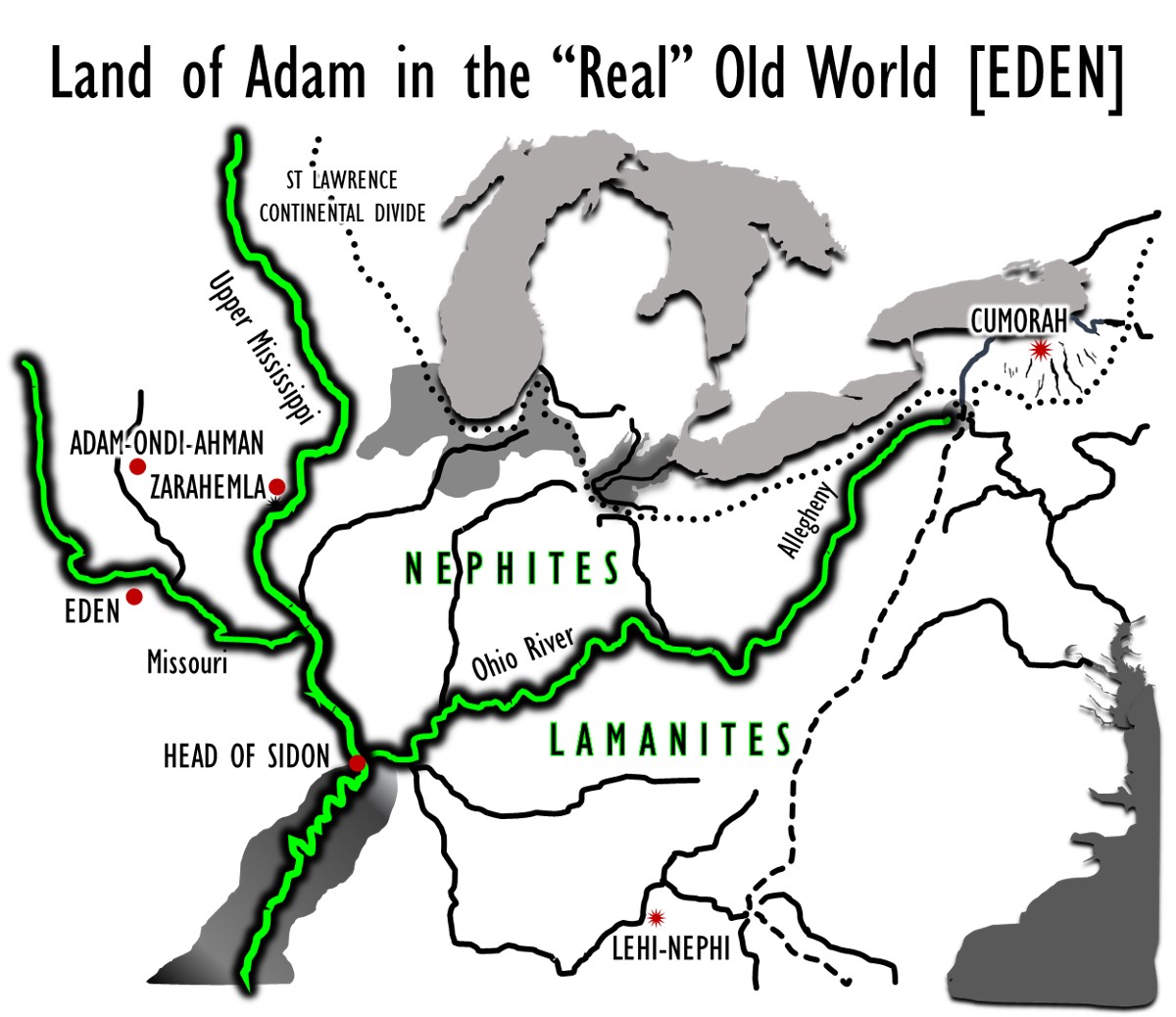 The Ohio River begins at Pittsburg as the Allegheny River flows south from Gold, PA to the Ohio. The Missouri has a confluence with the Mississippi near St Louis, MO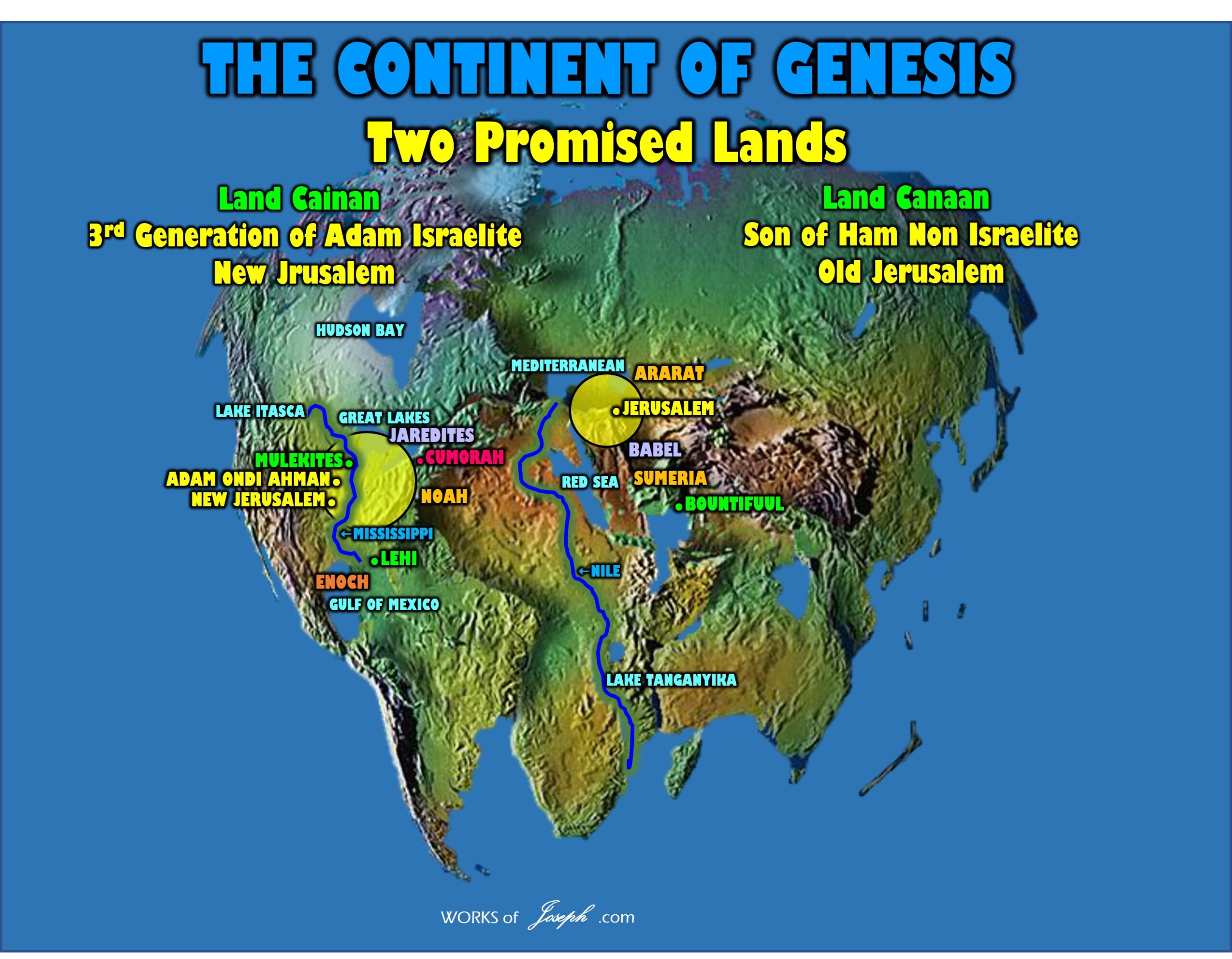
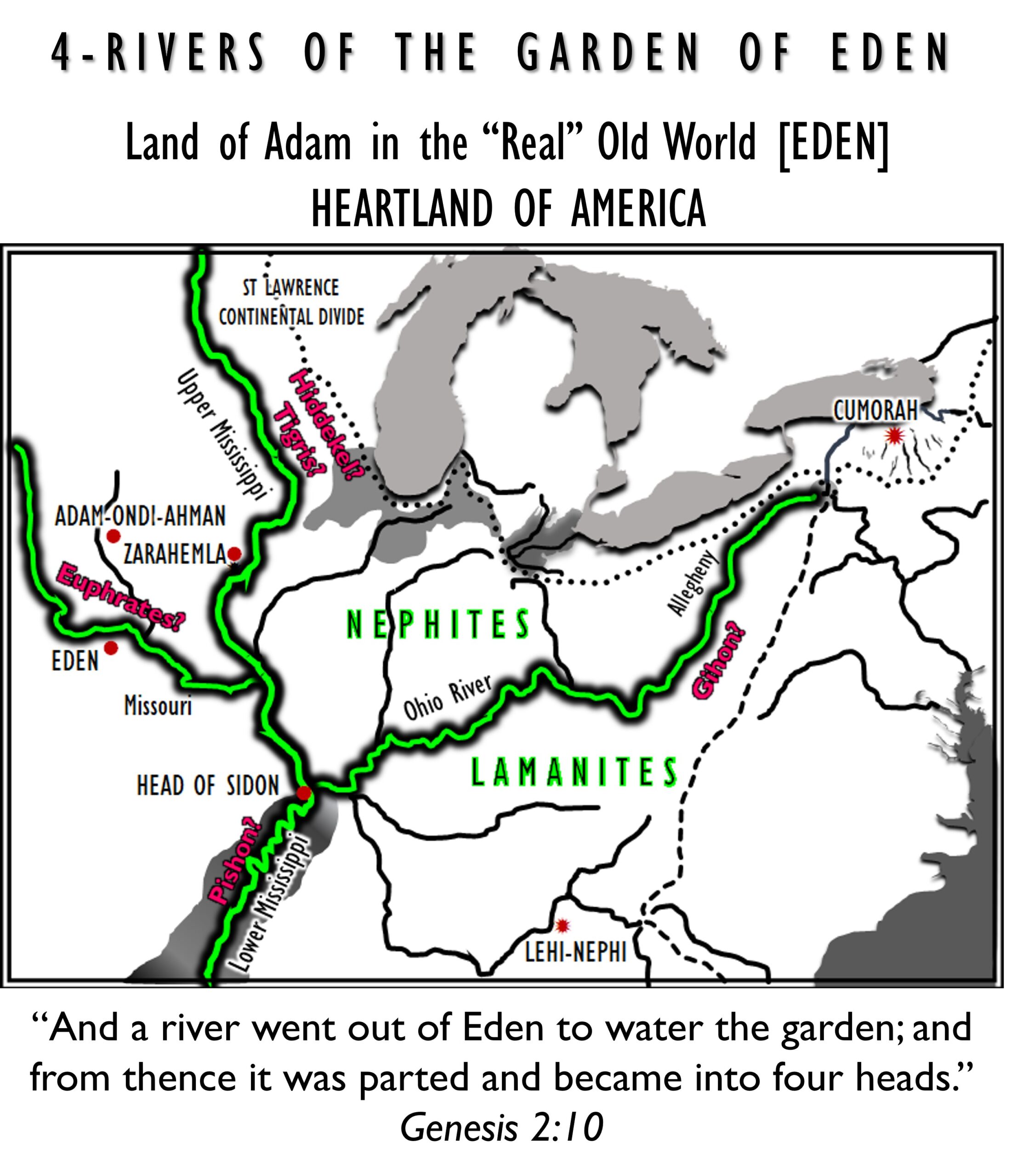
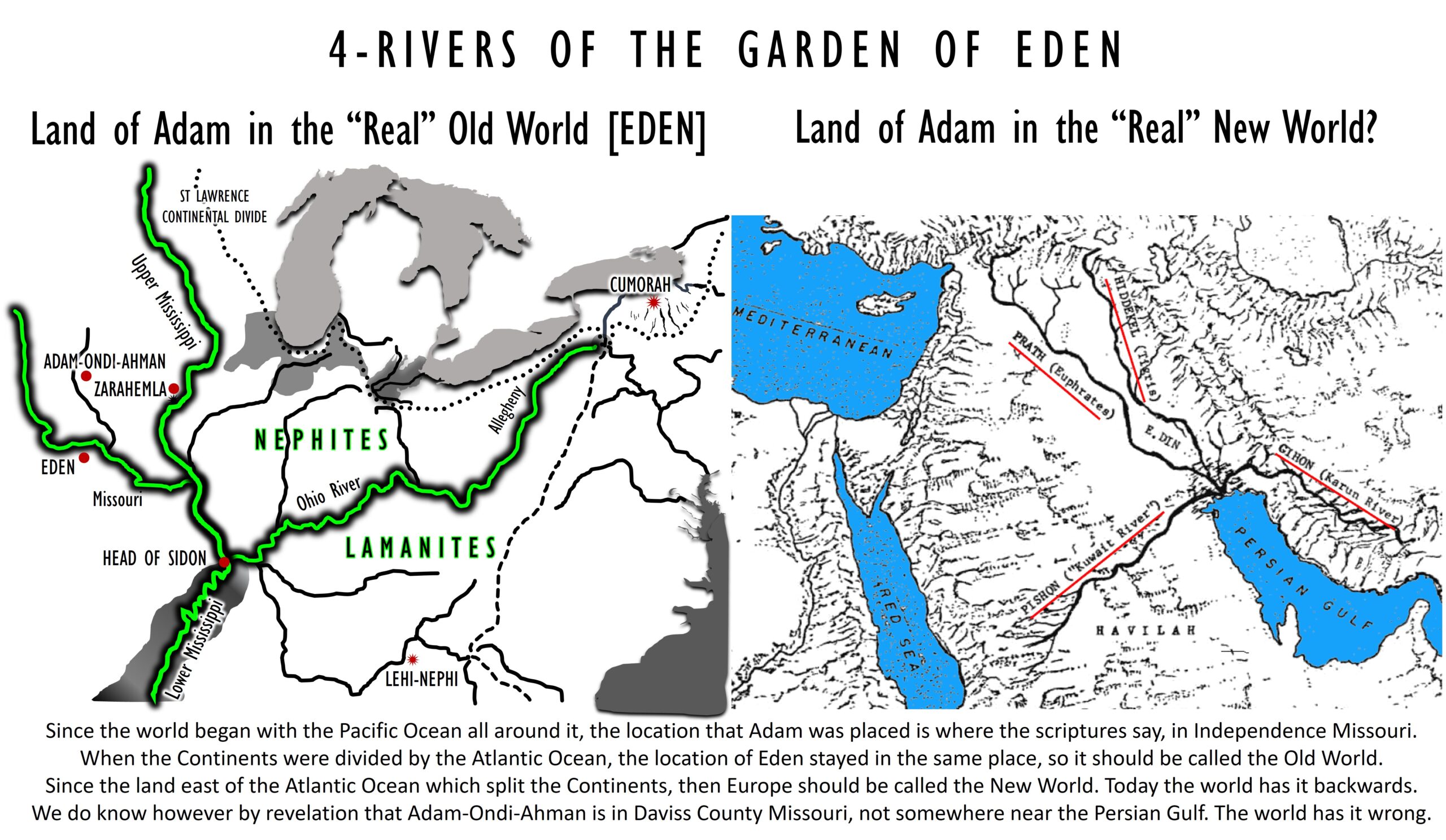
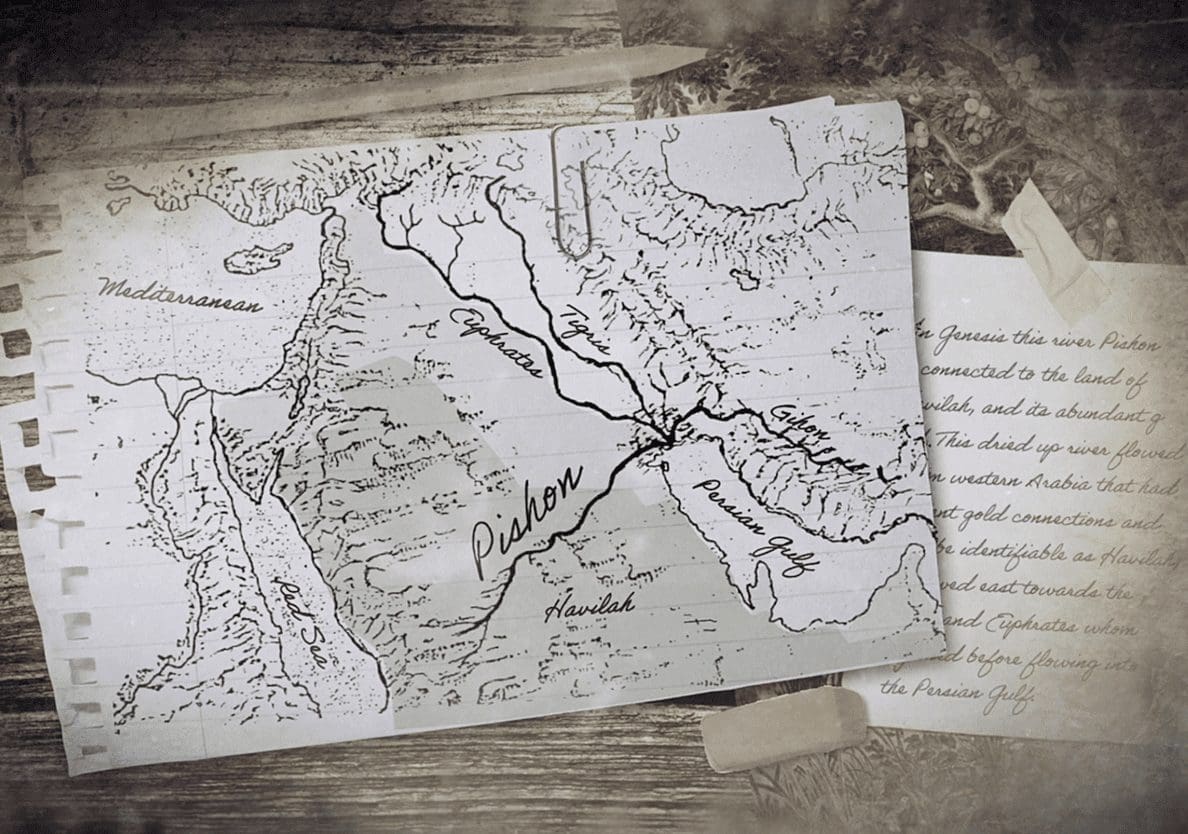

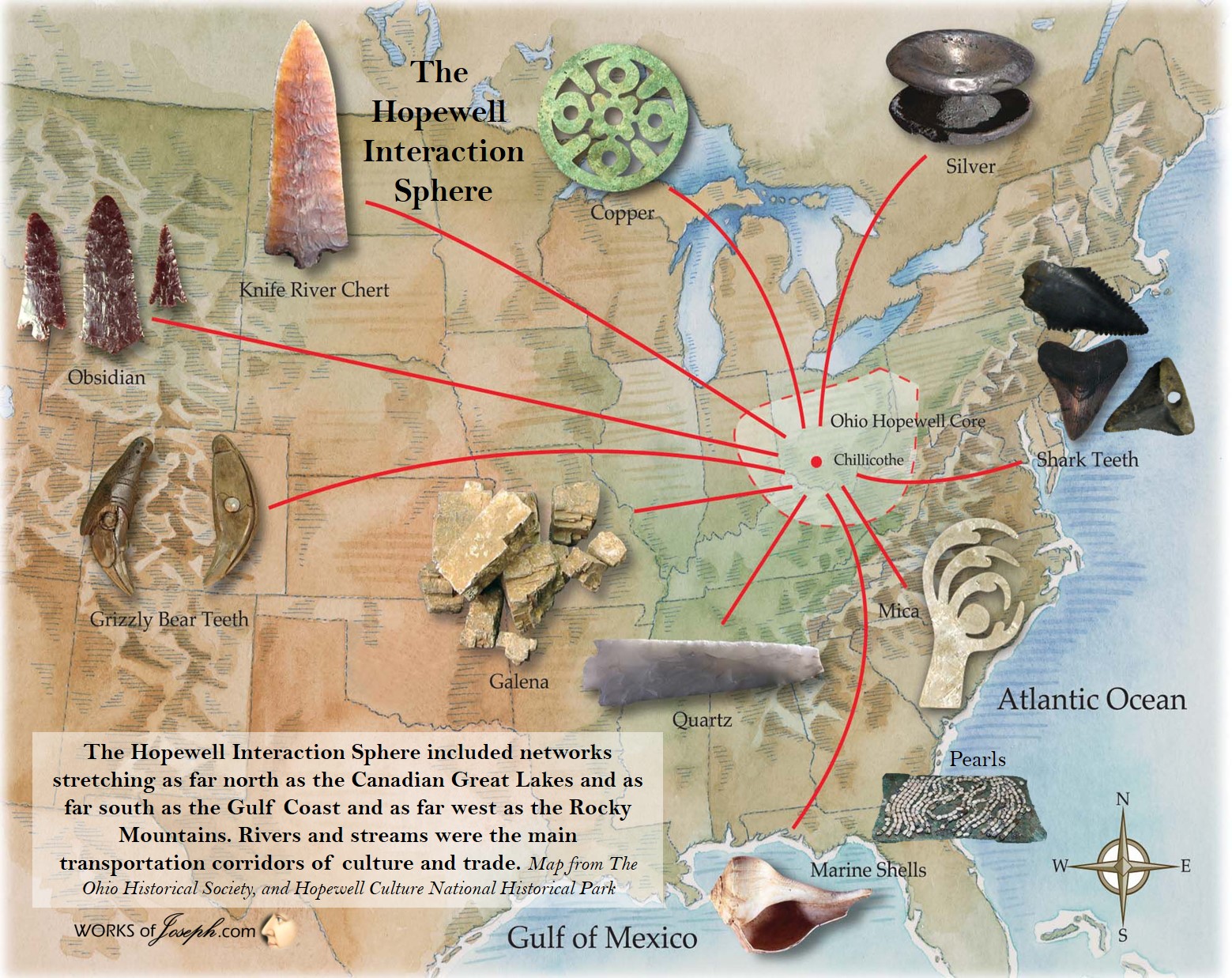


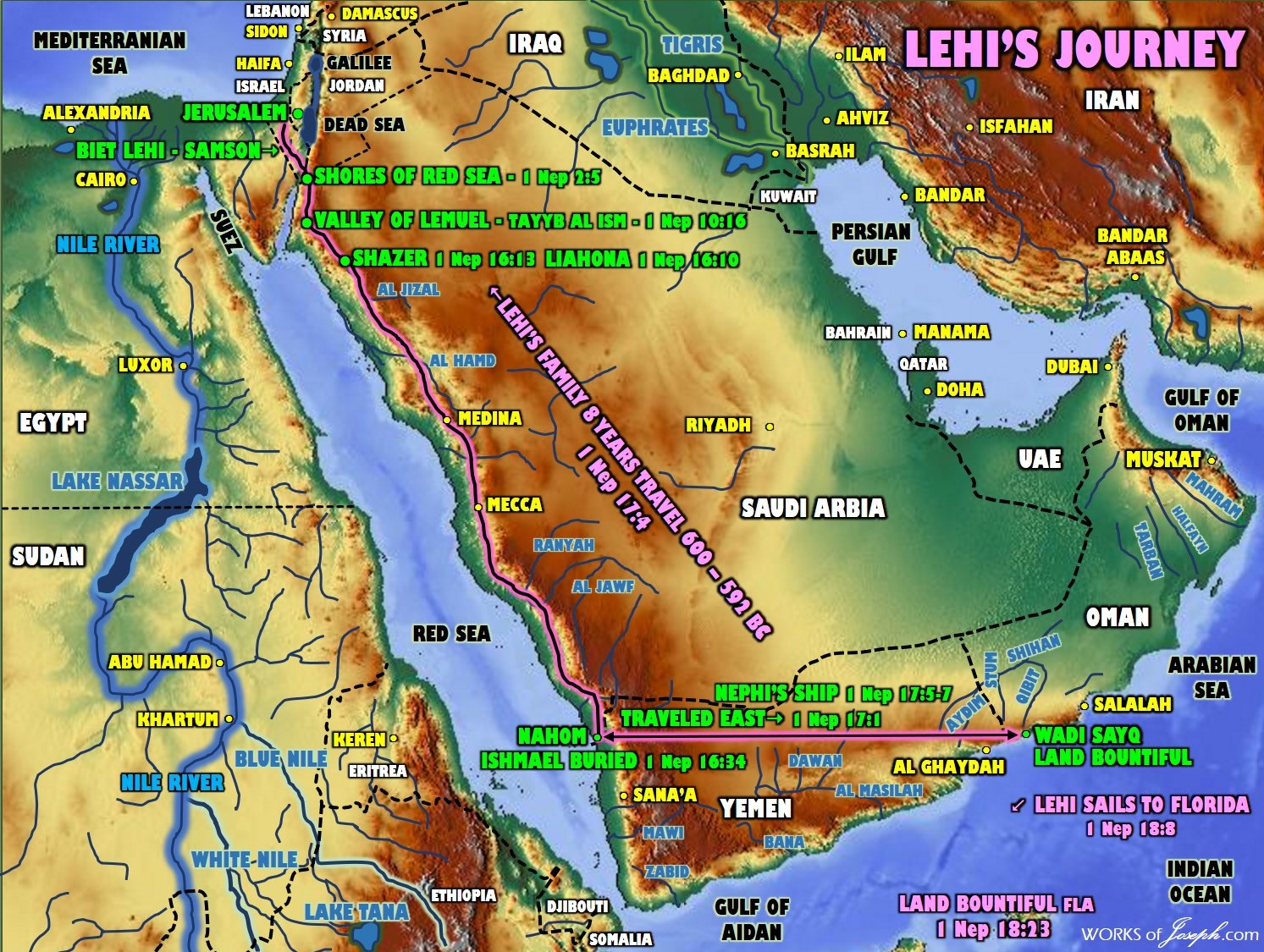
 East on Pacific or West around Africa?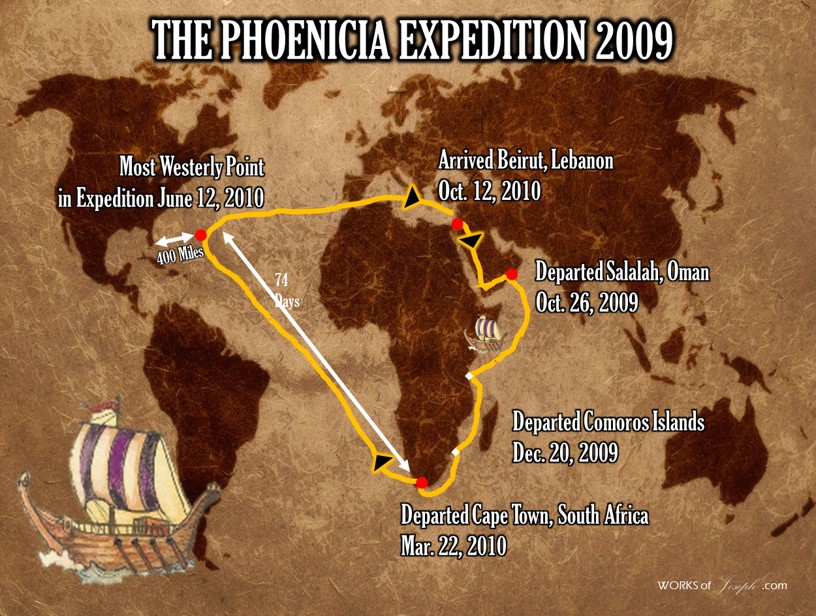
 Janne Mattson Sjödahl (29 November 1853 – 23 June 1939) was a Swedish convert to The Church of Jesus Christ of Latter-day Saints (LDS Church) and was the author of influential commentaries on LDS Church scriptures. Sjödahl was among the first commentators to advance a “limited geography model” for the theorized geography of the Book of Mormon.
 Upon the completion of the translation, Sjödahl was asked by church president Wilford Woodruff to go on a mission to Palestine. In January 1889. Sjödahl arrived in Jaffa. He learned to speak Arabic and preached in Palestine for one year, organizing a branch of the church in Jaffa.[3] In January 1890, Sjödahl was asked to go to Bern, Switzerland to complete his mission. He arrived back in Utah Territory in July 1890.

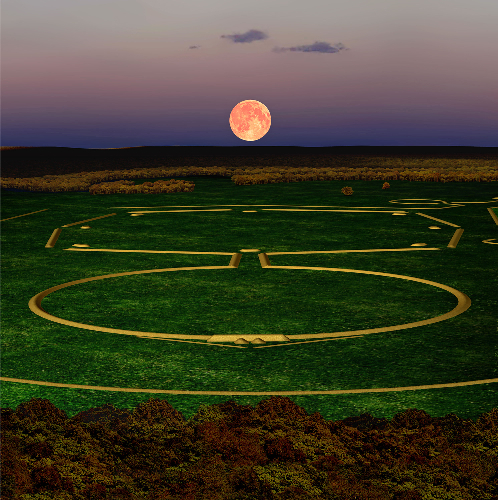
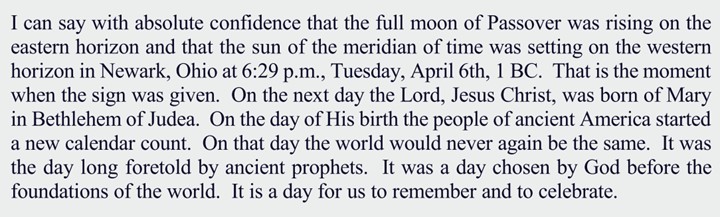


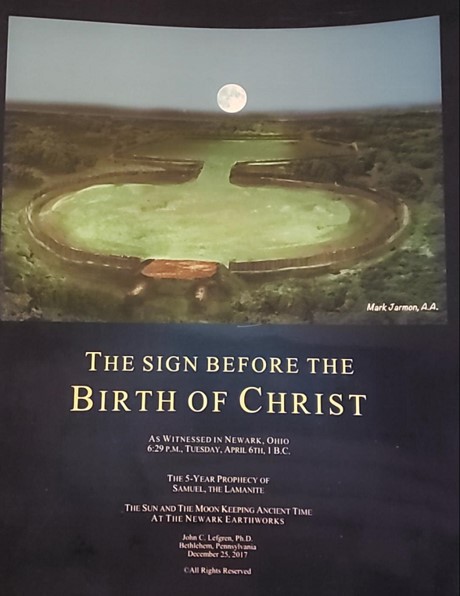
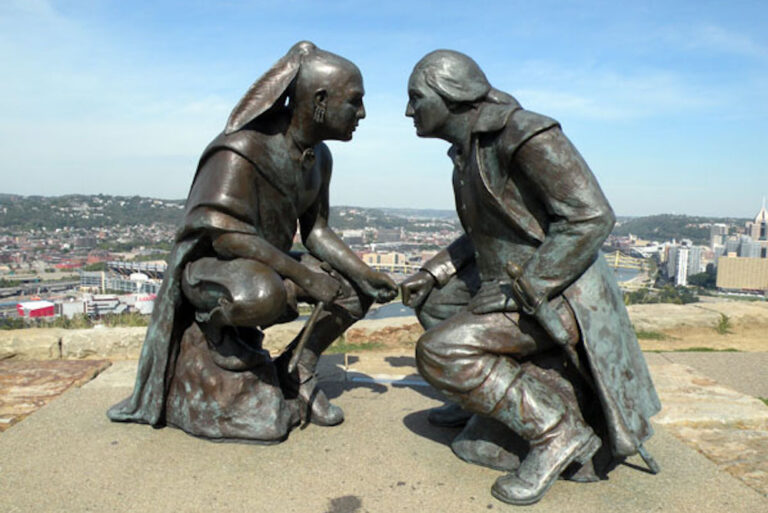
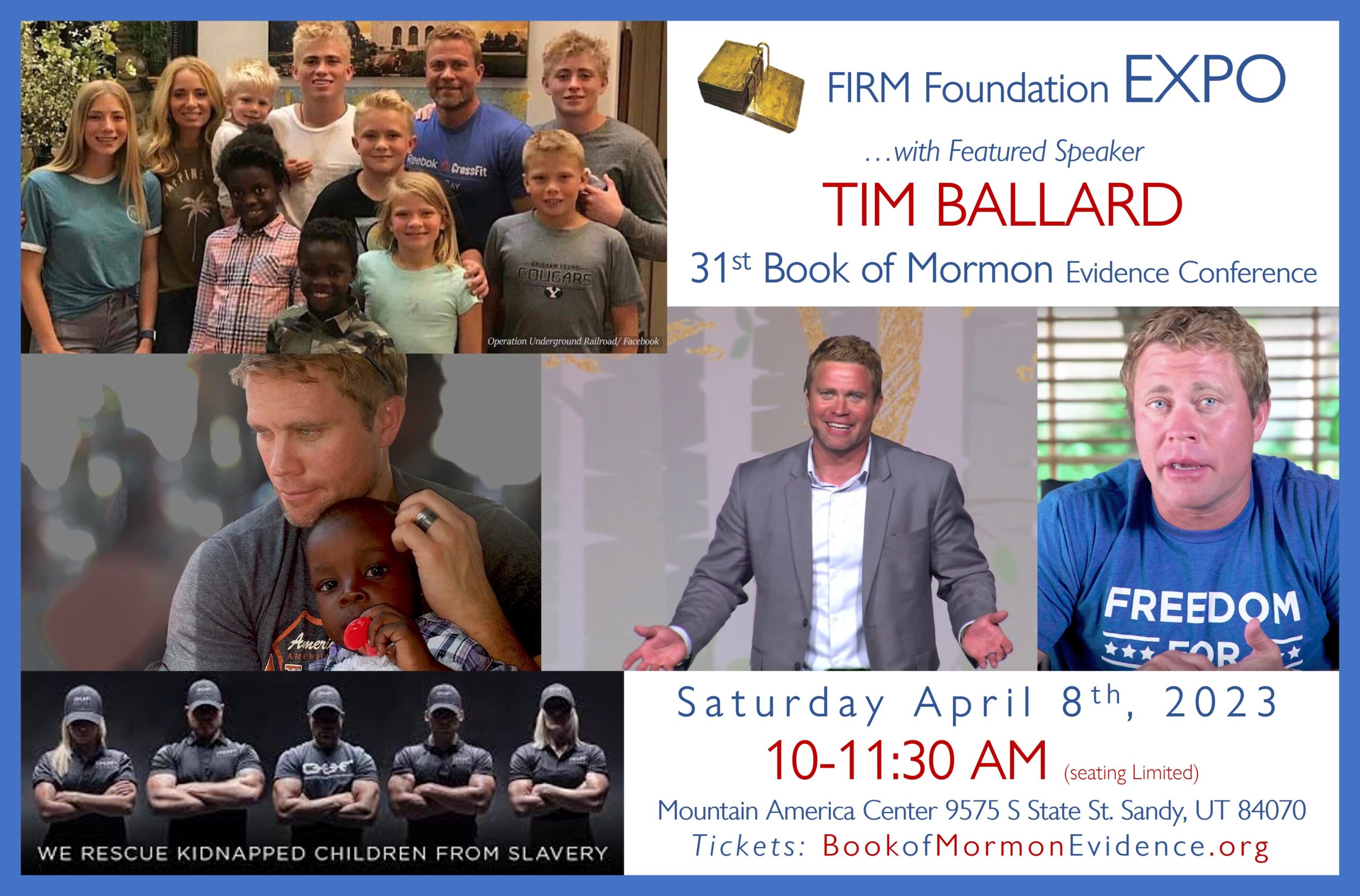
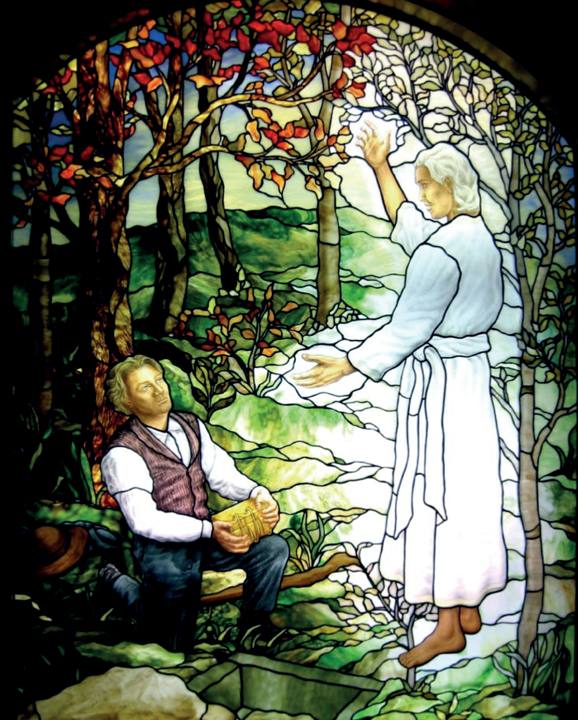
 The American Indian chief looked scornfully at the soldiers on the field before him. How foolish it was to fight as they did, forming their perfect battle lines out in the open, standing shoulder to shoulder in their bright red uniforms. The British soldiers—trained for European war—did not break rank, even when braves fired at them from under the safe cover of the forest. The slaughter continued for two hours. By then 1,000 of 1,459 British soldiers were killed or wounded, while only 30 of the French and Indian warriors firing at them were injured. Not only were the soldiers foolish, but their officers were just as bad. Riding on horseback, fully exposed above the men on the ground, they made perfect targets. One by one, the chief’s marksmen shot the mounted British officers until only one remained.
 Telling Washington’s story without erasing the people and lands that preoccupied him leads to important new questions; like, just how consequential for American history was the first president’s addiction to land speculation?
 Washington never moved west himself, but the West beckoned him and the nation he led. His long association with the region as surveyor, speculator, soldier, landowner, and politician shaped his career and his vision of America’s future tied to western development. As a young man, he pursued wealth in land and a military reputation in the West; in his later years, the West became a key to building national unity. By the end of his life, according to one of the editors of the monumental Papers of George Washington, he probably knew more than any other man in America about the frontier and its significance to the future of his country. He had also accumulated more than 45,000 acres of prime real estate in present-day Kentucky, Ohio, Pennsylvania, the Shenandoah Valley, and West Virginia. It was the West, says another of his editors, that “made the Virginia farmer lift his eyes to prospects beyond his own fields and his native Virginia”; the West that “stretched his mind” to embrace an expansive vision of a republican empire; the West that, more than anything else except the Revolutionary War, prepared him for his role as nation builder.

 During the French and Indian War, Colonel George Washington designed and supervised the construction of a fort in Winchester, Virginia. Named Fort Loudoun, after John Campbell, the fourth Earl of Loudoun and Commander-in-Chief of British forces in North America, the fort was constructed to protect citizens from attack and served as a headquarters for Washington and his militia.
 A monument that mentions the Indian grave site is located in Virginia but the artifacts and skeletons have not been seen since.
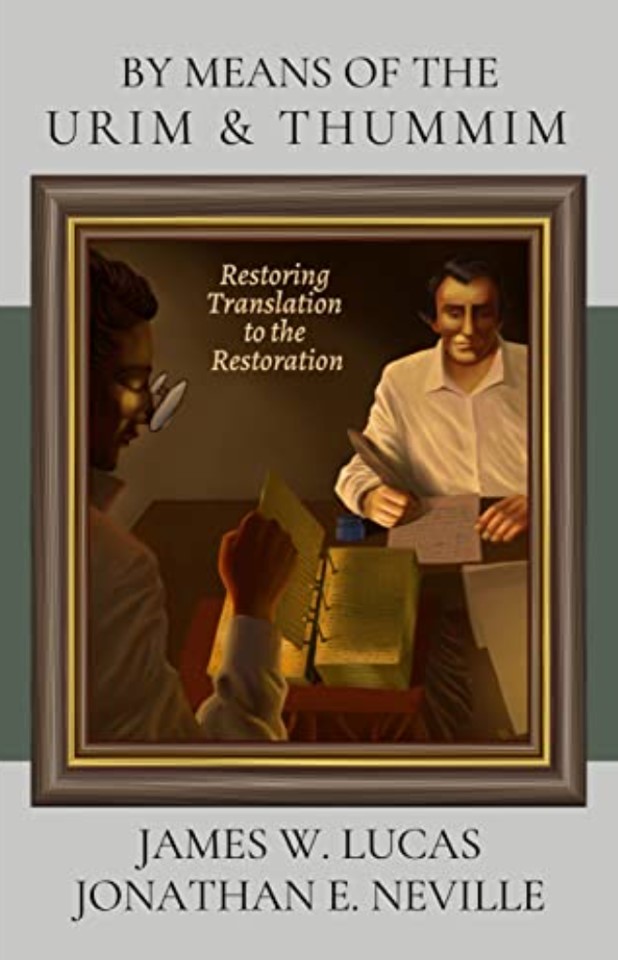
 Where Is Cumorah? Where Did The Book of Mormon Take Place? (feat. Jonathan Neville)

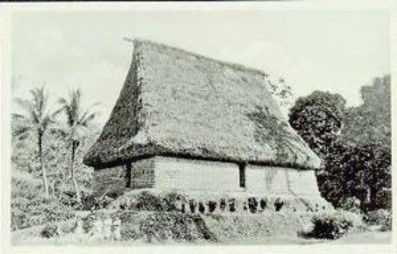
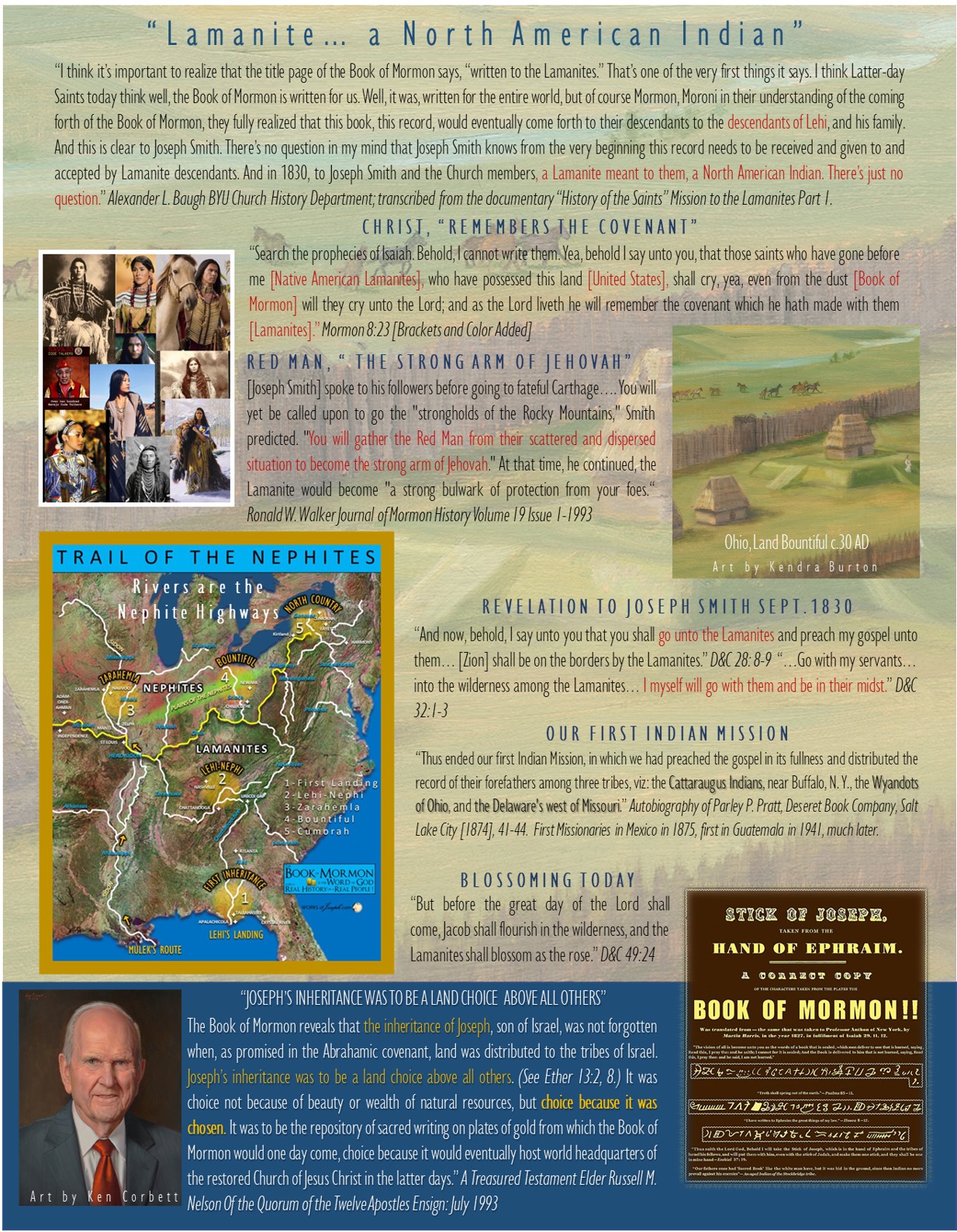
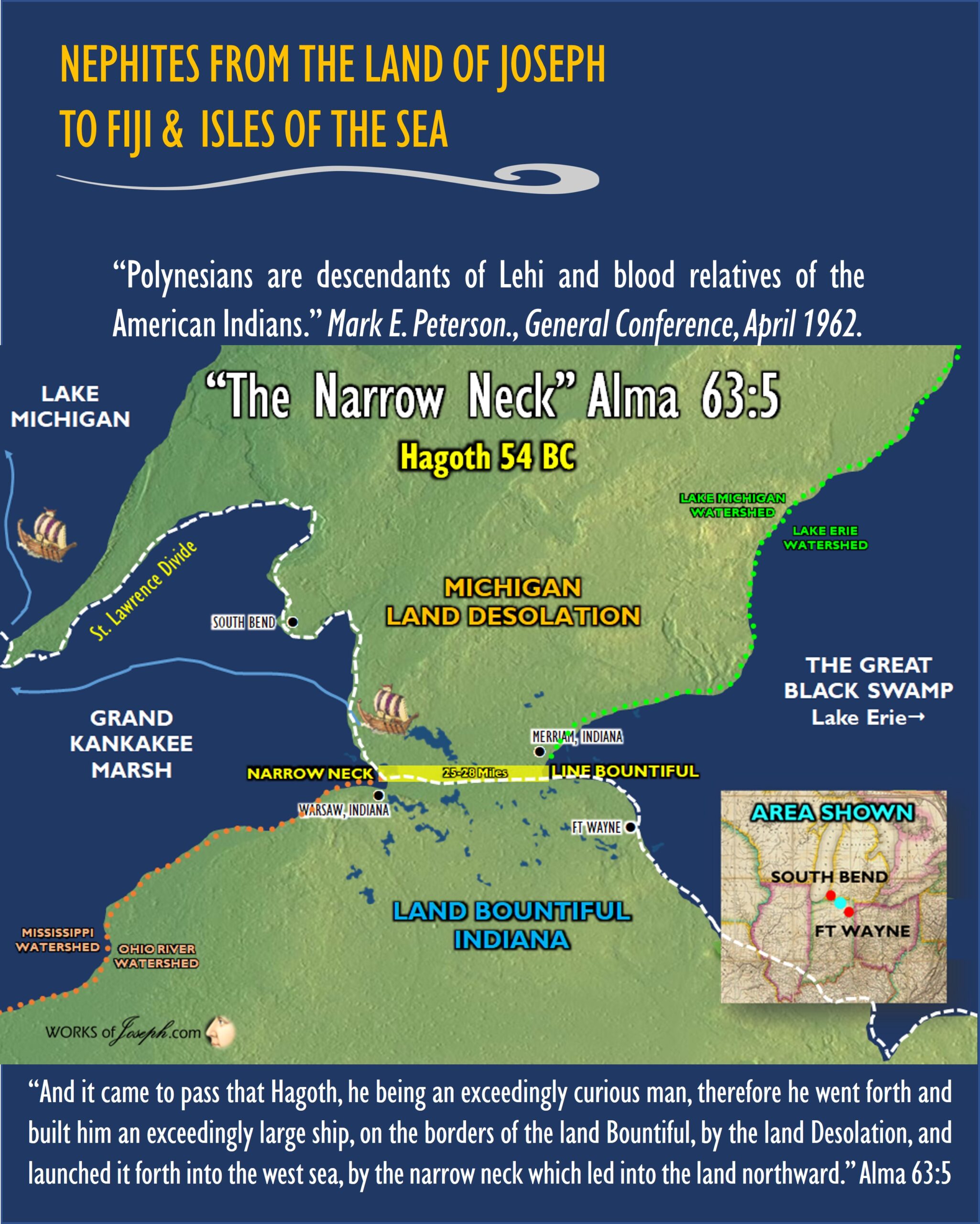

 President Gordon B. Hinckley
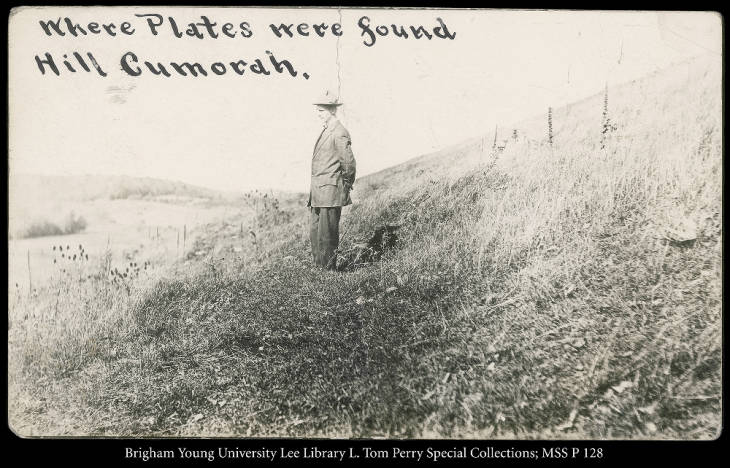 “Moroni’s father was commander of the armies of this ancient people, known as Nephites. His name was Mormon. The war of which we speak took place here in
 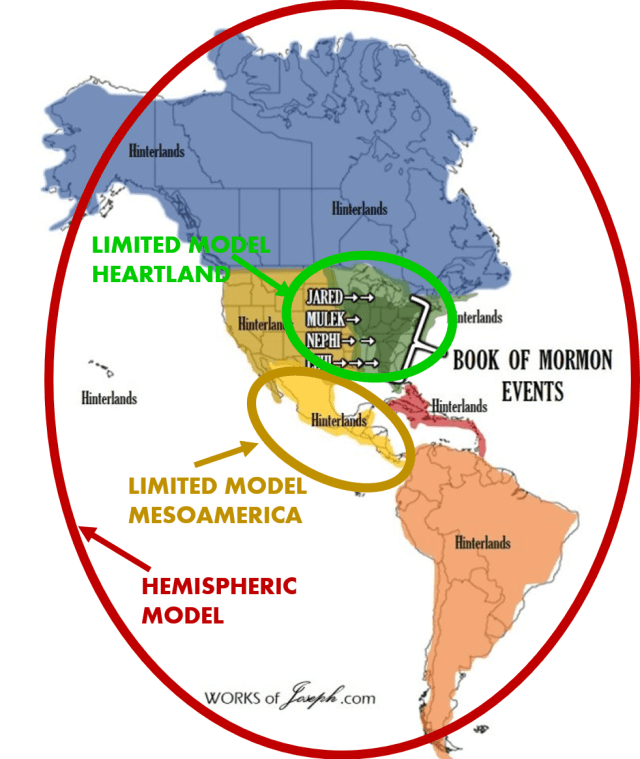 Our friends who promote M2C nevertheless claim that “