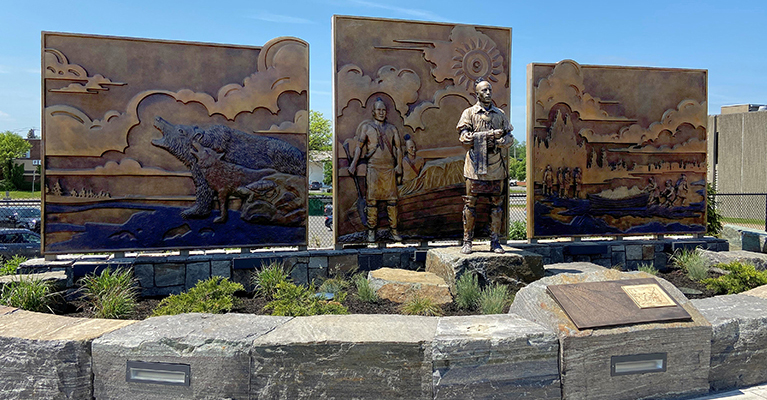
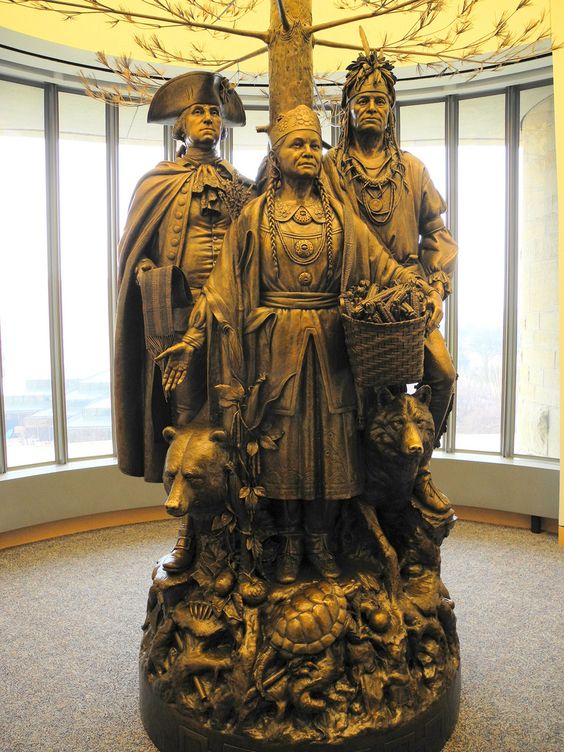
In the past 5 or 6 years most of you have heard about the DNA studies that show the finding of Native American DNA around the Great Lakes matching the DNA of Sephardic Jews near Israel and other areas. The connection between the Native Americans and the Jew has also been discussed at length here and in the Annotated Book of Mormon. The Book of Mormon itself talks about this connection in D&C 19:26-27 which says, “And again, I command thee that thou shalt not covet thine own property, but impart it freely to the printing of the Book of Mormon, which contains the truth and works of God. Which is my word to the Gentile, that soon it may go to the Jew, of whom the Lamanites are a remnant that they may believe the gospel, and look not for a Messiah to come who has already come.”
There are two Large Tribes that were always at war with each other, the Algonquian and the Iroquois. The names on the list below each are various sub-tribes under that group of people. Sometimes in history the writer will use various names for the same group of people.
“There can be no reasonable doubt that the Alleghewi or Tallegwi, who have given their name to the Alleghany River and Mountains, were the mound-builders. The destiny which ultimately befell the Mound-builders can be inferred from what was known of the fate of the Huron themselves in their final was with the Iroquois. The greater portion of the Huron people were exterminated, and their towns reduced to ashes. Of the survivors many were received and adopted among the conquerors. A few fled to the east and sought protection from the France.” Archaeological History of Ohio: The Mound builders and Later Indians pg 438
“It is very difficult for us to communicate to the churches all that God has revealed to us, in consequence of tradition; for we are differently situated from any other people that ever existed upon this earth; consequently those former revelations cannot be suited to our conditions; they were given to other people, who were before us; but in the last days, God was to call a remnant, in which was to be deliverance, as well as in Jerusalem and Zion. Now if God should give no more revelations, where will we find Zion and this remnant? The time is near when desolation is to cover the earth, and then God will have a place of deliverance in His remnant, and in Zion.” —Joseph Smith, Jr.
Join the Unveiling of Michael Bedard’s newest art at our Expo, Thursday April 6, 2023 Mountain America Expo Center Hall 4 9575 S. State St. Sandy, UT 84070 6 pm Sharp! Information Tickets
Zion is The New Jerusalem
“Because of his faithfulness and integrity, Joseph received greater blessings than the progenitors of Jacob, and was rewarded with the land of Zion. His brothers, with malicious intent, separated him and cast him out from among them. The Lord, in rewarding him, separated him from his brothers — the other tribes of Israel — and gave him an inheritance in a land that is choice above all other lands, which, we have learned from the Book of Mormon and modern revelation, is America… We are informed in the revelations given to Joseph Smith the Prophet, that the city of Zion and the New Jerusalem is one and the same. In a number of revelations the Lord speaks of the New Jerusalem which is to be built…” Zion and Jerusalem by Joseph Fielding Smith, Improvement Era Vol. 22 JULY 1919
SCIENTISTS CLAIM CHEROKEES ARE FROM THE MIDDLE EAST – DNA SUPPORTS THIS FINDING
“The Cherokees have lived in the Southeastern United States for over 10,000 years. Cherokees developed and cultivated corn, beans and squash – “the three sisters” – along with sunflowers and other crops. Archaeological evidence, early written accounts, and the oral history of the Cherokees themselves show the Cherokees as a mighty nation controlling more than 140,000 square miles with a population of thirty-six thousand or more. Often the townhouse stood on an earthen mound, which grew with successive ceremonial re-buildings.”
“The History of the America Indians” written by explorer and trader John Adair expressed in the 18th Century how Cherokees who were living in the North Carolina Mountains were known to speak an ancient Jewish language. More so, this language was unintelligible to the Jews in England and Holland. Observing this, Adair extrapolated his belief that these native Americans were in fact descendants of the Ten Lost Tribes of Israel.
Married to a Chickasaw woman himself, Adair had a fond admiration for the Native Americans. Sadly, his observation was twisted during the American Revolution to something very different.
– In the new version, the Ten Lost Tribes of Israel had built the thousands of mounds that dotted the landscape of eastern North America, but the Indians had killed all the “civilized Jews.” Frontier preachers gave sermons which demanded that their parishioners go out and slaughter the evil savages, who had killed the “civilized Jews.”
By the late 20th Century, North Carolina was at a new extreme. 1976 saw the North Carolina government direct a team of professors to come to the finding that Cherokees had been in their state for at least the last 1000 years – better known as the “North Carolina History Project.” This saw masses of archaeologists and historians re-labeling all Native American archaeological sites in the western third of the state “Cherokee” or “Proto-Cherokee” to validate their bonus paychecks. The widespread Creek Indian place names were also re-labeled “ancient Cherokee words whose meanings have been lost.”
Academic fraud on this scale regarding the early Colonial archives saw other ethnic groups living in the region prior to 1715, but the Cherokees were forgotten. The word “Charaqui” first appeared on European maps after 1718.
Subsequently, two generations of archaeologists and historians thoroughly quoted each other in academic papers, not realizing that North Carolina possessed a different history before 1976. This absurdity lead to Coweeta, one mile north of Georgia’s state line to be labeled “Cherokee-Pisgah Phase town,” and it’s sister town south of the state line aptly labeled “Etowah and Lamar proto-Creek” towns by Georgia archaeologists. The proto-Creek pottery and architecture familiar with us all which is found in these towns has been named Coweta – being a Creek word having no meaning in the Cherokee language.
Taking the situation to a new extreme, some Cherokee and Cherokee wannabe’s agreed to send warriors to battle the French in New York in the 1700’s in return for the British Crown offering them a vast territory in the Southeast. This included all the territory belonging to the tribes who were allied with the French. Almost immediately thereafter, the Creek Confederacy won the 40 year long Cherokee-Creek war, taking back and forth the Cherokee core territory that was captured 40 years prior from the Creeks.
1757 saw the Cherokees attack their former British allies. Great Britain won the war, taking back most of the land formerly given to the Cherokees in 1754 PLUS almost all the Cherokee land in North and South Carolina. All other tribes inhabiting these areas were forced to leave. 1763 saw what is now known as the Cherokee Reservation.
The US Department created the map of traditional Native American territories in 1990 as part of the native America Graves and Repatriation Act (NAGPRA). Mapmakers labeled the vast “seven state” area handed to the Cherokee people in 1954 as traditional Cherokee territory. They added northwest Georgia along with northeast Alabama which is the land they inhabited from 1785 to 1838, along with huge sections of North carolina, South Carolina and Georgia – places they never lived. Frozen in stone, the NAGPRA laws incited that the Cherokees were descendants of the Indians who lived inhabited this territory since mankind first came to North America.
DNA tests do not currently exist which can accurately particularly label any particular tribe in eastern North America. Genetically, the people claiming themselves to be full-blooded Native Americans are not the same people who greeted early European explorers. Attempting to create reliable DNA markers for individual tribes, reputable laboratories are mounted with monumental obstacles.
Late into the 20th Century, Cherokee leaders repetitively said they never built mounds. Suddenly, a new generation of North Carolina Cherokees assumed the map meant that they had in fact built the mounds in the Southeast. This same line of thought was extended to the belief that they were also the first to domesticate corn, beans and squash. The film “the Mayans and Aztecs were the descendants of the Cherokees” claimed so.
Perceived as a vast market for millions of Americans claiming they descend from a great grandmother who was a Cherokee princess, DNA Consultants Inc. have begun a comprehensive DNA mapping of the Cherokees inhabiting the Qualla Reservation in western North Carolina. North Carolina Cherokees were selected as after 180 years inhabiting the west, they are thoroughly mixed with other ethnics, rendering any DNA test marker so far obtained useless. Doing so, they have stumbled on a hornet’s nest.
The Cherokee princess was most likely Jewish or North African. This has left the Cherokees more aptly labeled as Middle Eastern or North African. Their test markers strongly associate with the Berbers, native Egyptians, Turks, Lebanese, Hebrews and Mesopotamiams. This makes them genetically more likely to be Jewish than the typical American Jew of European ancestry. These so called “full-blooded” Cherokees possess high levels of European DNA with small traces of Asiatic (Native American) DNA. Even their skin color and facial features differ from Native American aesthetics, primarily looking more Semitic in origin.
Both DNA consultants and journalists now state that these research results apply to all Cherokees from the Qualla Reservation. In several countries, the Cherokees observed had profiles more likely representing Georgia Creeks, often carrying Maya DNA like the Georgia Creeks. In one country, the Cherokees were in fact predominantly Quechua from South America or at the least, mixed Quechua, Maya and Creek. Known as “Moon Faces” by the Cherokee, the residents of the Snowbird Reservation in Graham County possess features more like the Zoque of Mexico who created the Olmec Civilization.
Researchers at DNA Consultants seem currently unaware that throughout the 1600’s, Iberian Sephardic Jews along with Moorish Conversos colonized parts of the North Carolina and Georgia Mountains mining gold and silver.
It is a mystery as to how the North Carolina Mountains became such a mixed Semitic, North African, European and Native American population now known as the Cherokees. Slave raids may have contributed as the 18th Century Cherokees were known as the biggest players when it came to the slave trade. It is thought that young Sephardic females may have been captured by slave raiders to become concubines and wives.
It is known that the British around 1693 forged an alliance with 8 small Native towns holding Creek names along Northwest Carolina and the powerful Rickohockens of southwest Virginia, thwarting the French colonies expansion.
Join us at the Next Book of Mormon Conference. April 6-8, 2023. Tim Ballard will speak on a presentation called, Lincoln and the Covenant. We are thankful to have Tim share his amazing witness of God’s Covenant with the Founders of America.Click Picture for Tickets
The Pilgrim Hypothesis
A photograph copy of the original Printers Manuscript for the first printing of the Book of Mormon sits next to a leather bound copy of the first Book of Mormon. PHOTO BY STUART JOHNSON.
America is a country with deep-seated roots of faith planted by pilgrims seeking religious independence. It was these men and women who paved the way for a free nation under God in this promised land—but what if those early voyagers were brought here for a much greater purpose? What if their arrival in this new land heralded the fulfillment of ancient prophecy, laying the foundation of a country that would allow for the restoration of the gospel of Jesus Christ and the beginning of the gathering of scattered Israel? In The Pilgrim Hypothesis, readers are presented with a gripping new investigation by best-selling author and historian Timothy Ballard as he uncovers what the early colonists—a people who believed themselves to be the “New Israel”—may have known about their role in the restoration of the gospel. Delve into a complex history bridging the centuries and spanning the globe, as each clue leads to one compelling conclusion: history and scripture may be far more intertwined than you’ve ever realized.
Two Apostles Testify of the Puritans and Pilgrims
“It was not by chance that the Puritans left their native land and sailed away to the shores of New England, and others later followed. They were the advance guard of the army of the Lord, predestined to establish the God-given system of government under which we live and to make America, which is the land of Joseph, the gathering place of Ephraim, an asylum for the oppressed of all nations, and prepare the way for the restoration of the gospel of Christ and the establishment of his church upon the earth” – Heber J. Grant, Conference Report, April 1930.
“Nephi saw in vision also the coming of the Pilgrims, who came to escape religious persecution. He foresaw the coming to America of peoples from many nations, their wars and contentions. As Nephi said, they did humble themselves before the Lord. Thus the American colonies attained their independence and set up the government of the United States, all under the divine intervention of God in preparing this land for its divine destiny. We believe that both freedom and the continuing reformation that flourished here occurred in preparation for the restoration from heaven of the full gospel of Jesus Christ. That restoration began in the United States of America in the 1820s, through the [assistance] of the Prophet Joseph Smith, who was chosen by the Lord and who, through [visits] from heavenly messengers, received … records that contained the authentic record of early American peoples and God’s dealings with them. He received the priesthood and authority to reestablish the church of Jesus Christ in these latter days. At the time of this restoration, God the Father and His Son Jesus Christ actually appeared to Joseph Smith, as they had appeared to leaders of previous dispensations. They announced to him that Christ’s church would be reestablished upon the earth. … This restoration was the greatest event in the history of mankind since the birth, death, and resurrection of our Savior, Jesus Christ.” A Choice Land President N. Eldon Tanner, First Counselor in the First Presidency
Editor’s Note About Tim Ballard
About 8 years ago I remember speaking with my good friend Rod Meldrum about Tim Ballard. By that time I had only met Tim briefly a few times as he spoke at our different conferences over the years. Rod would tell me amazing stories about Tim and how brave he was and how much knowledge he had about America and his love for God and Country and his support of the Heartland Geography.
At this time, many years ago, I remember Rod speaking to me about Glenn Beck and how he and Tim Ballard were great friends and taught the same great message about the Gospel and our Country. Rod said something similar to this to me, “You watch one day Tim Ballard will run for the President of the United States. Glenn Beck has felt that as well and Tim probably has many donors already lined up to see him run one day.” I don’t know if Rod would even remember that, but it sure has stuck with me the past many years.
Tim Ballard is simply an amazing patriot, as I would call him. He loves the Lord, honors our country, has a wonderful wife and eight children, loves rescuing sex slave children and even has adopted several. He now has 8 or 9 books he has written and I suggest you read them all. He is an awesome man and I hope he has a future in politics to help our nation. Above all else he loves The Church of Jesus Christ of Latter-day Saints and honors his priesthood. I have always said, Tim Ballard could be one of the Elder’s who help our Constitution from being destroyed. He has been working with President Trump for a few years now to help rid the evil sex trafficking trade from here in the US and in the world.
The American Covenant set. Volumes 1 & 2 by Timothy Ballard (Books)
$45.90$39.95 The American Covenant I and II by Timothy Ballard. Volume 1, Discovery Through Revolution, gives a profound understanding of the true and eternal purpose of America. Witness ancient prophecies and promises of God’s glorious plan for his children on His Promised Land of America, the United States. Vol. 2 tells the covenant story from Abraham to the signing of the Constitution and on to Abraham Lincoln and the Civil War. Buy the set and save. The rest of his books are at Deseret Book and Seagull Book.
Tim Ballard Explains How a Copy of the Book of Mormon Signed by Joseph Smith Ended Up in the John Adams House Library
“Tim Ballard, author and CEO of Operation Underground Railroad, recently released his book called The Pilgrim Hypothesis, which explores the connection between US history and the Restoration.
In one of the videos, Ballard discusses what he discovered after seeing Emma Smith’s copy of the Book of Mormon, which was signed by Joseph, in the John Adams House Library. Ballard was so intrigued by how this copy could have gotten there, that he began reading through Adam family journals until he found his answer.
Charles Francis Adams, son of former US president John Quincy Adams, and his cousin Josiah Quincy—who was a Massachusetts legislator, the son of a Harvard president, and later the mayor of Boston—were near Nauvoo and decided to pay a visit to Joseph Smith. They were both involved in politics and wanted to talk to Joseph because of what they’d heard about his claims of being a prophet and because he was running for president at the time.
Adams and Quincy were welcomed by Joseph, who talked to them about the Restoration and the Book of Mormon. In the video, Ballard explains the two men’s reaction to Joseph and his teachings.
“Their response is so interesting. These men are verbose, they are opinionated, they are conclusive. But with the Mormon prophet they didn’t know what to think. They said, ‘There is a mixture of knowledge and ignorance of wisdom and folly in his whole system that I am somewhat at a loss to find definitions for it,’” says Ballard.
Ballard goes on to explain that Adams and Quincy had expected to find a wild prophet, but within Adams’s diary it is evident that he sees wisdom in Joseph’s philosophies. Joseph was not what they expected.
Before the men left, Joseph signed a copy of the Book of Mormon (evidently Emma’s copy as her name was on the spine) and gave it to them.
Ballard also shares the story of John Howland, who was nearly drowned when he was thrown from the Mayflower during a storm while coming to America. Howland’s survival was a miracle and his posterity would come to include prominent early Church members like Emma and Joseph Smith, and United States presidents.” By Emily Abel LDS Living
You may be disappointed to hear that the second had quotes about the method of translation by Martin Harris, David Whitmer and Emma Smith, are not correct. How do I know? They are second hand quotes and Martin, David and Emma never saw the translation process. Maybe they saw a hat or a peep stone Joseph owned, but they never saw the breastplate, the spectacles or the gold plates during the time of translation. They never even say the words on the peep stone did they?
THE 2 QUOTES THAT SHOULD STAND ALONE
-1- “In the Wentworth Letter, the Prophet wrote: “With the records was found a curious instrument, which the ancients called “Urim and Thummim,” which consisted of two transparent stones set in the rim of a bow fastened to a breast plate.Through the medium of the Urim and Thummim I translated the record by the gift and power of God” (History of the Church, 4:537).
-2- In the October 1834 Messenger and Advocate [the Church newspaper in Kirtland, Ohio], Oliver Cowdery wrote: “These were days never to be forgotten to sit under the sound of a voice dictated by the inspiration of heaven, awakened the utmost gratitude of this bosom! Day after day I continued, uninterrupted, to write from his mouth, as he translated, with the Urim and Thummim, or, as the Nephites would have said, ‘Interpreters,’ the history or record called ‘The Book of Mormon’” (Messenger and Advocate, 1:14; Also known as Letter I Oliver Cowdery to William W. Phelps, 7 September 1834).Here is more Scriptural Evidence that Joseph used the Interpreters or Urim and Thummim or Spectacles. Not a Stone in a Hat! See JSH 1:35,52,62,75*; Mosiah 28:13, 20; Ether 3:22-23; 4:5; Alma 37:21, 24-25
I believe Scripture below, not the opinions of David, Martin and Emma
Book of Mormon “Hard Evidence” – Proper Translation Scriptures
1- ” He said there was a book deposited, written upon gold plates, giving an account of the former inhabitants of this continent, and the source from whence they sprang. He also said that the fulness of the everlasting Gospel was contained in it, as delivered by the Savior to the ancient inhabitants; Also, that there were two stones in silver bows—and these stones, fastened to a breastplate, constituted what is called the Urim and Thummim—deposited with the plates; and the possession and use of these stones were what constituted “seers” in ancient or former times; and that God had prepared them or the purpose of translating the book.” (Joseph Smith—History 1:34–35) 2- I looked in, and there indeed did I behold the plates, the Urim and Thummim, and the breastplate, as stated by the messenger. The box in which they lay was formed by laying stones together in some kind of cement. In the bottom of the box were laid two stones crossways of the box, and on these stones lay the plates and the other things with them.: JSH 1:52 3- “I commenced copying the characters off the plates. I copied a considerable number of them, and by means of the Urim and Thummim I translated some of them, which I did between the time I arrived at the house of my wife’s father, in the month of December, and the February following.” JSH 1:62 4- Joseph Smith said, “I inquired of the Lord through the Urim and Thummim and received from him the following.” (Note: See the preface to the Doctrine and Covenants 3,6,7,11,14,15,16,17) (History of the Church V.1p.45) 5- “I continued to translate, and he [Oliver Cowdery] to write, with little cessation, during which time we received several revelations. A difference of opinion arising between us about the account of John the Apostle, mentioned in the New Testament, as to whether he died or continued to live, we mutually agreed to settle it by the Urim and Thummim.” (History of the Church, 1:35–36.) 6- “These were days never to be forgotten—to sit under the sound of a voice dictated by the inspiration of heaven, awakened the utmost gratitude of this bosom! Day after day I continued, uninterrupted, to write from his mouth, as he translated with the Urim and Thummim, or, as the Nephites would have said, ‘Interpreters,’ the history or record called ‘The Book of Mormon.’ JSH 1:75* 7- “And now he translated them by the means of those two stones which were fastened into the two rims of a bow…” Mosiah 28:13“And whosoever has these things is called seer, after the manner of old times.” Mosiah 28:16 “And now, as I said unto you, that after king Mosiah had done these things, he took the plates of brass, and all the things which he had kept, and conferred them upon Alma, who was the son of Alma; yea, all the records, and also the interpreters, and conferred them upon him, and commanded him that he should keep and preserve them, and also keep a record of the people, handing them down from one generation to another, even as they had been handed down from the time that Lehi left Jerusalem.” Mosiah 28:20 8- “And now, I will speak unto you concerning those twenty-four plates, that ye keep them, that the mysteries and the works of darkness, and their secret works, or the secret works of those people who have been destroyed, may be made manifest unto this people; yea, all their murders, and robbings, and their plunderings, and all their wickedness and abominations, may be made manifest unto this people; yea, and that ye preserve these interpreters…“And now, my son, these interpreters were prepared that the word of God might be fulfilled, which he spake, saying: I will bring forth out of darkness unto light all their secret works and their abominations; and except they repent I will destroy them from off the face of the earth; and I will bring to light all their secrets and abominations, unto every nation that shall hereafter possess the land.” Alma 37:21, 24-25(The word “Directors” was changed to “Interpreters” in the 1920 version & forward of the Book of Mormon) 9- “And behold, these two stones [different than the previous 16 stones]will I give unto thee, and ye shall seal them up also with the things which ye shall write. For behold, the language which ye shall write I have confounded; wherefore I will cause in my own due time that these stones [2 stones] shall magnify to the eyes of men these things which ye shall write.” Ether 3:23:24(Parenthesis Added) 10- Wherefore the Lord hath commanded me to write them; and I have written them. And he commanded me that I should seal them up; and he also hath commanded that I should seal up the interpretation thereof; wherefore I have sealed up the interpreters, according to the commandment of the Lord.”Ether 4:5 (Parenthesis added)
Why do many Church Historians believe David, Martin and Emma more than scriptures?
Professor of Church Ancient Scripture, Craig Ostler says, “As to David Whitmer’s explanation, it should be remembered that he never looked into the Urim and Thummimnor translated anything. His testimony of how the Book of Mormon was translated is hearsay. Spanning a period of twenty years (1869-1888), some seventy recorded testimonies about the coming forth of the Book of Mormon claim David Whitmer as their source. Though there are a number of inconsistencies in these accounts, David Whitmer was repeatedly reported to have said that after the loss of the 116 pages, the Lord took both the plates and the Urim and Thummim from the Prophet, never to be returned. “Ostler Continues: [Both the Urim and Thummim and the Plates were returned. See Joseph Smith — History 1:60. Also, minutes of a meeting on April 17, 1853 represent Brigham Young as stating that “Joseph put the U.T. back with the plates when he had done translating.“ Brigham Young, minutes, 17 April 1853, in The Complete Discourses of Brigham Young, vol. 2, ed. Richard S. Van Wagoner (Salt Lake City: Smith-Pettit Foundation, 2009)]. Brother Ostler continues, “In their stead, David Whitmer maintained, the Prophet used an oval-shaped, chocolate-colored seer stone slightly larger than an egg. Thus, everything we have in the Book of Mormon, according to Mr. Whitmer, was translated by placing the chocolate-colored stone in a hat into which Joseph would bury his head so as to close out the light. While doing so he could see “an oblong piece of parchment, on which the hieroglyphics would appear,” and below the ancient writing, the translation would be given in English. Joseph would then read this to Oliver Cowdery, who in turn would write it. If he did so correctly, the characters and the interpretation would disappear and be replaced by other characters with their interpretation. (Cook, David Whitmer Interviews, 115, 157-58). The Process of Translating the Book of Mormon by Joseph Fielding McConkie (Professor of Ancient Scripture, BYU) and Craig J. Ostler (Assistant Professor of Church History and Doctrine, BYU)Jonathan Neville said,
“We wonder, why do the revisionist Church historians prefer the stone-in-a-hat theory over the definitive, consistent explanations from Joseph and Oliver?
We can’t read minds, and so far as I know the intellectuals have not articulated the rationale for their preference, but it is deliberate, as we’ve just seen from the selection of quotations in the Gospel Topics Essay on Book of Mormon Translation. One possibility is that the revisionist historians think they have discovered something in Church history that was “covered up” for decades. In the interest of openness, they have brought forth the stone-in-a-hat theory. That makes sense from an academic perspective. To get a PhD and have a career, historians have to contribute something new to their field, and because the prophets have consistently taught that Joseph translated with the Urim and Thummim, the idea that Joseph “really” used a seer stone instead would have appeal to an academic. The problem, of course, is that the stone-in-a-hat theory is 185 years old. Those familiar with Church history have always known about Mormonism Unvailed. Rather than contributing something new, these revisionist historians have resurrected an old, discredited claim made by critics to undermine faith in the accounts of Joseph and Oliver… BTW, if Church historians want to write about something new, I recommend that they republish President Cowdery’s eight historical essays in the Ensign so members of the Church can see how he and Joseph responded to the critics. Those eight essays provide a far more effective response to the critics than the current Gospel Topics Essays that largely embrace the arguments of the critics instead of refute them. Another possible rationale for the stone-in-a-hat theory is good old academic arrogance. There’s nothing an intellectual enjoys more than showing that he/she knows more than the prophets. IOW, the revisionist historians have “discovered” that the teachings of the prophets about the translation, consistently taught for 180 years, were “incomplete” or even “misleading.” Among other things, the historians usually cite statements from Emma Smith, David Whitmer, and Martin Harris, which I’ve discussed in detail in my upcoming book on the translation.” Jonathan Neville http://www.moronisamerica.com/peep-stones-vs-urim-and-thummim-part-2/
1- “Organic evolution is Satan’s chief weapon in this dispensation in his attempt to destroy the divine mission of Jesus Christ. It is a contemptible plot against faith in God.”
2- “There was no death in the earth before the fall of Adam. I do not care what the scientists say in regard to dinosaurs and other creatures upon the earth millions of years ago.”
3- “If death was always here, then Adam did not bring it, and he could not be punished for it. If Adam did not fall, there was no Christ, because the atonement of Jesus Christ is based on the fall of Adam.”
Creation and Evolution; A Witness of Prophets
The following are direct printed quotes from Joseph Fielding Smith of the Church of Jesus Christ of Latter-day Saints involving the concepts of organic evolution.
It is hoped that this information will help give insight and perspective on the teaching of evolution being done at nearly every university, college, and public high school across our nation to our most precious treasure, our children. For more detailed information presented in a historical context that provides tremendous understanding of the origins and growth of the theory of evolution and what it’s being taught means to us today and the terrible results it has already produced in this nation and around the world,
Joseph Fielding Smith Prophet January 23, 1970 – July 2, 1972
―Organic evolution is Satan’s chief weaponin this dispensation in his attempt to destroy the divine mission of Jesus Christ. It is a contemptible plot against faith in God and to destroy the effective belief in the divine atonement of our Redeemer through which men may be saved from their sins and find place in the Kingdom of God. There is not and cannot be any compromise between the Gospel of Jesus Christ and the theories of evolution. Were evolution true, there could be no remission of sin. (Joseph Fielding Smith, Man, His Origin and Destiny, 184-185)
Note: President Joseph Fielding Smith was opposed to organic evolution and vocalized such opposition more than any other prophet of this dispensation. In fact, President Smith wrote an entire book that teaches against the theory, and he was asked to do so by members of the Quorum of the Twelve Apostles. Obviously, the entire book is too long to include here. This book, entitled Man, His Origin and Destiny, was highly recommended by President Ezra Taft Benson.
President Joseph Fielding Smith has been condemned and criticized for the publishing of his book and for his other writings and sermons in which he denounces the false theory of organic evolution. Some critics insinuate that President Smith went against the First Presidency in publishing his views and that he became silent when he became the president of the Church. This is demonstrably false given that he himself became the Lord‘s mouthpiece. The Lord does not call men who have a habit of disregarding counsel to preside over His Church. This also runs counter to the testimony of President David O. McKay, who was the President of the Church at this time. His [Joseph Fielding Smith‘s] loyalty to the leadership of the Church has been uncompromising. He has supported his brethren in every endeavor. No man has ever been more loyal to the President of the Church. (Improvement Era, July 1966, p.613)
Note that Man, His Origin and Destiny was published in 1954. President Heber J. Grant also added his feelings about Joseph Fielding Smith‘s qualifications to speak on doctrinal matters. In a letter to Elder Smith he noted.
I don’t want to flatter you, Joseph, but I want you to know that I consider you the best posted man on the scriptures of the General Authorities of the Church that we have. I want you to prolong your life, I want you to make a business of trying to take care of yourself. Your affectionate relative, HEBER J. GRANT (Advice from a Prophet: Take Time Out, BYU Studies copyright 1976, Richard O. Cowan)
These insinuations made by President Smith‘s detractors are also proven to be false by the inspired testimony of President Smith himself in the October 1970 general conference of the Church. At that time, when he spoke as the Lord‘s mouthpiece and as president of the Church, he said:
―For more than sixty years I have preached the gospel in the stakes and missions of the Church—pleading with the Saints to keep the commandments, inviting our Father’s other children to accept the truth of salvation which has come to us by revelation in this present dispensation. All my days I have studied the scriptures and have sought the guidance of the Spirit of the Lord in coming to an understanding of their true meaning. The Lord has been good to me, and I rejoice in the knowledge he has given me and in the privilege that has been and is mine to teach his saving principles. As I ponder the principles of the gospel, I am struck forcibly by the uniform manner in which I…have taught them over the years. The truths of the gospel are everlastingly the same. Like God himself, they are the same yesterday, today, and forever. What I have taught and written in the past I would teach and write again under the same circumstances.(President Joseph Fielding Smith, Conference Report, October 1970, 5.)
The following are only a few of President Smith‘s many teachings that denounce the false theory of organic evolution.
―GOD: FIRST OF THE HUMAN FAMILY.
Let me comment first upon the expression that God is the “first of the human family.” This same doctrine was taught by Joseph Smith. It is a fundamental doctrine of the Church of Jesus Christ of Latter-day Saints. According to the teachings of Joseph Smith, he beheld the Father and the Son in his glorious vision, and he taught that each had a body of flesh and bones. He also taught that, literally, God is our Father; that men are of the same race—the race called humans; and that God, the Progenitor, or Creator, is the Father of the human race. “In the image of his own body, male and female, created he them, and blessed them, and called their name Adam, in the day when they were created and became living souls in the land upon the footstool of God. It is a doctrine common to the Latter-day Saints, that God, the Great Elohim, is the First, or Creator, of the human family.‖ (Joseph Fielding Smith, Doctrines of Salvation, volume 1, p. 102.)
NO DEATH ON EARTH BEFORE FALL.
The Lord pronounced the earth good when it was finished. Everything upon its face was called good. There was no death in the earth before the fall of Adam. I do not care what the scientists say in regard to dinosaurs and other creatures upon the earth millions of years ago, that lived and died and fought and struggled for existence. When the earth was created and was declared good, peace was upon its face among all its creatures. Strife and wickedness were not found here, neither was there any corruption. (Joseph Fielding Smith, Doctrines of Salvation, Volume 1, p. 108.)
―If death was always here, then Adam did not bring it, and he could not be punished for it. If Adam did not fall, there was no Christ, because the atonement of Jesus Christ is based on the fall of Adam. And so we face these problems. If there is anybody here that believes that death has always been going on, and that sin was always here, he will have a difficult time to explain Adam and the fall, or the atonement. You see from these writings what a dreadful state these men get in when they do not believe in the fall and the introduction of sin into the world. (Joseph Fielding Smith, Doctrines of Salvation, 1:119-120.)
―THEORY OF EVOLUTION DENIES CHRIST.
Then Adam, and by that I mean the first man, was not capable of sin. He could not transgress, and by doing so bring death into the world; for, according to this theory, death had always been in the world. If, therefore, there was no fall, there was no need of an atonement, hence the coming into the world of the Son of God as the Savior of the world is a contradiction, a thing impossible. Are you prepared to believe such a thing as that? Do you believe that the first man was a savage? That he lacked in the power of intelligence? That he has been on the constant road of progression? These are the teachings of such theorists. (Joseph Fielding Smith, Doctrines of Salvation, 1:142.)
―CANNOT BELIEVE BOTH GOSPEL AND EVOLUTION.
I say most emphatically, you cannot believe in this theory of the origin of man, and at the same time accept the plan of salvation as set forth by the Lord our God. You must choose the one and reject the other, for they are in direct conflict and there is a gulf separating them which is so great that it cannot be bridged, no matter how much one may try to do so. If you believe in the doctrine of the evolutionist, then you must accept the view that man has evolved through countless ages from the very lowest forms of life up through various stages of animal life, finally into the human form. The first man, according to this hypothesis known as the “cave man,” was a creature absolutely ignorant and devoid of any marked intelligence over the beasts of the field. (Joseph Fielding Smith, Doctrines of Salvation, 1:141.) ―These theories [of organic evolution] taught in our schools should be taught only as theories for they can be nothing more. Unfortunately as previously said, they are presented by many instructors [Including many at Church schools] as though they were well established facts, with a positive assurance that belongs only to established truth. Between belief in God and the fact that he has directed and does direct his servants by revelation, vision, and personal visitation, and the theories based on organic evolution, there is a gulf that can never be bridged.
These theories are man-made deductions but the testimony of the prophets are actual facts, attested by sufficient witnesses, according to the decree of the Almighty, and thus it becomes incumbent upon every soul unto whom these testimonies come to carefully weigh them in the spirit of humility and prayer by which the knowledge of the truth may be received, and then accepted. (Joseph Fielding Smith, Man, His Origin and Destiny, 5.)
―IF EVOLUTION IS TRUE, THE CHURCH IS FALSE.
If life began on the earth, as advocated by Darwin, Huxley, Haeckel (who has been caught openhanded perpetrating a fraud), and others of this school, whether by chance or by some designing hand, then the doctrines of the Church are false. Then there was no Garden of Eden, no Adam and Eve, and no fall. If there was no fall; if death did not come into the world as the scriptures declared that it did—and to be consistent, if you are an evolutionist, this view you must assume—then there was no need for a redemption, and Jesus Christ is not the Son of God, and he did not die for the transgression of Adam, nor for the sins of the world. Then there has been no resurrection from the dead! Consistently, logically, there is no other view, no alternative that can be taken. Now, my brethren and sisters, are you prepared to take this view? (Joseph Fielding Smith, Doctrines of Salvation, 1:143.)
―EVOLUTIONISTS REJECT FATHERHOOD OF GOD.
The modern world is fulfilling the scriptures which say that in the last days men would be “ever learning, and never able to come to the knowledge of the truth.” Today the world has discarded the great truth concerning the Fatherhood of God and has turned to fables. It has adopted and is promulgating in textbooks and schools the debasing doctrine that man is not the offspring of God, but a natural development through countless ages from the lowest forms of physical life to his present form and intelligence. Such a doctrine is an insult to our Father in whose Image we were created, and yet in this teaching vast multitudes seem to glory. Paul saw our day and by prophetic vision declared that such conditions would prevail in this dispensation and the Lord should ‘send them strong delusion, that they should believe a lie: That they all might be damned who believe not the truth, but had pleasure in unrighteousness‘. (Joseph Fielding Smith, Doctrines of Salvation, 1:143.)
―These modernists, who are instructing and leading astray the people of this and other lands, reject the doctrine of the atonement of Christ; they reject the resurrection of the Son of God and consequently the resurrection of all mankind. They have discarded entirely the miracles of the scriptures and make light of the saving ordinances of the gospel which the Lord declared to be so essential to our salvation; and in the stead thereof they have accepted the theories and notions advanced by modern scientistswhich are evidently false, and have taken to their hearts and hugged to their bosoms the falsehoods set forth in the theories of evolution and of higher criticism of the scriptures. And why have they done this thing? Because the simple truth, which is understood by the Spirit of God and not understood and comprehended by the spirit of man, does not appeal to their reason. (Joseph Fielding Smith, Doctrines of Salvation, 3:289-290.)
―Darwin…lost his religion when he lost confidence in [William] Paley’s evidences. He says: “The old argument from design in Nature, as given by Paley, which formerly seemed to me so conclusive, fails now that the law of natural selection has been discovered. We can no longer argue that, for instance, the beautiful hinge of a bivalve shell must have been made by an intelligent being, like the hinge of a door by man.” “At the present day,” he continues, “the most usual argument for the existence of an intelligent God is drawn from the deep inward conviction and feeling which are experienced by most persons.” Formerly he was led by feelings such as those just referred to, to the firm conviction of the existence of God and of the immortality of the soul. The grandeur of the Brazilian forest, he says, used to inspire him with religious awe. “But now the grandest scenes would not cause any such convictions and feelings to arise in my mind. It may be truly said that I am like a man who has become color-blind.” In another passage he mentions the fact that his love for poetry has gradually disappeared—a proof of the withering effect which continual scientific investigation may exert upon the soul! His state was, however, evidently preconditioned by the original intellectualistic bent of his religious convictions, formed by his early instruction. He has a feeling of having been cheated by false theories and proofs, and therefore looks with distrust upon the entire church. This is an every-day occurrence. Consequently it is a vital question for the church to assume a proper attitude towards science. The mutual distrust existing between science and the church is fatal to her. (Introduction to Philosophy, by Dr. Friedrich Paulsen, pp. 159-160.)
Gabriel Mayberry/BYU Photo The Monte L. Bean Life Science Museum opens a new exhibit today exploring the theories and observations of evolution, and how evolution changes life on Earth. “There is a plaque posted on the exhibit stating that it is not Church doctrine and the Church has no stance on the issue.” Daily Universe Paper By Rachel Keeler -July 30, 2019
The quotations in relation to the loss of faith of Charles Darwin is taken from the book, Charles Darwin’s Life, by his son, Francis Darwin, page 63. One who follows the theories of Darwin, will eventually, like Darwin, lose all faith in God the Eternal Creator. A person cannot believe that bivalve shells come by chance and hinges of a door have to come by the act of an intelligent being, and be sound in his thinking. Verily, those who insistently follow the evolutionary theories, cannot at the same time accept and worship an intelligent anthropomorphic God!
“Question asked of Joseph Fielding Smith: “Since reading your book, Man: His Origin, and Destiny, I have been troubled by your difference in view of organic evolution and the age of man and the teachings of some of our most outstanding scientists who maintain that scientific evidence prove the earth and man to be much older than you claim. Your statements are contrary to what I have been taught and believe.”
President Smith’s Answer: If what I have written is in criticism of the present theories in relation to organic evolution and the age of man upon the earth, in which you believe, then I can readily see why you disagree with what I have taught. I will state frankly and positively that I am opposed to the present biological theories and the doctrine that man has been on the earth for millions of years. I am opposed to the present teachings in relation to the age of the earth which declare that the earth is millions of years old. Some modern scientists even claim that it is a billion years old. Naturally, since I believe in modern revelation, I cannot accept these so-called scientific teachings, for I believe them to be in conflict with the simple and direct word of the Lord that has come to us by divine revelation. (Joseph Fielding Smith, Answers to Gospel Questions, 5: 112.)
―EVOLUTIONARY THEORY FALSE.
This idea that everything commenced from a small beginning, from the scum upon the surface of the sea, and has gradually developed until all forms of life, the beasts of the field, the fowls of the air, the fishes of the sea, and the plants upon the face of the earth, have all sprung from that one source, is a falsehood absolutely.There is no truth in it, for God has given us his word by which we may know, and all who are led by the Spirit of God can understand through that Holy Spirit, the truth of these things.
―Organic evolution is Satan’s chief weapon in this dispensation in his attempt to destroy the divine mission of Jesus Christ. It is a contemptible plot against faith in God and to destroy the effective belief in the divine atonement of our Redeemer through which men may be saved from their sins and find place in the Kingdom of God. There is not an cannot be any compromise between the Gospel of Jesus Christ and the theories of evolution. Were evolution true, there could be no remission of sin.
Again, as President of the Church of Jesus Christ of Latter-day Saints, President Joseph Fielding Smith said: ―What I have taught and written in the past I would teach and write again under the same circumstances. (President Joseph Fielding Smith, Conference Report, October 1970, 5.)
Please see the film “Creation and Evolution; A witness of Prophets” by Zionvision. You can now order your own copy of this amazing video online for just $9.95 at http://www.bookofmormonevidence.org/shop.php.
Evolution Believers
Book of Mormon Central who are adamant believers in the Mesoamerican Geography of the Book of Mormon also share many of the theories of Organic Evolution. See the Abstract below from B.H. Roberts:
Abstract: Less than ten years before his death in 1933, B. H. Roberts, one of the most influential Mormon writers of the twentieth century, began work on “the most important book that I have yet contributed to the [LDS] Church.” A prolific and respected Mormon apologist, Roberts wanted to consolidate his theological thought into a unified whole and to reconcile science with scripture. His final manuscript, “The Truth, the Way, the Life,” synthesized doctrine into three sections: the truth about the world and revelation, the way of salvation, and Jesus’ life in shaping Christian character. He submitted his completed work to the LDS First Presidency and Quorum of the Twelve, which, after a series of heated meetings, rejected it. Roberts’s views on evolution, the age of the earth, the pre-earth existence, and the eternal progression of God were deemed too controversial, so his “masterwork” went unpublished. With the support of the Roberts family, editor Stan Larson has corrected this sixty-year omission from the corpus of Mormon theology.
According to Leonard J. Arrington, former LDS Church Historian, “B. H. Roberts considered ‘The Truth, The Way, The Life’ to be the most important work he had written. While people may differ with him on that judgement, this ambitious treatise . . . shows a great mind grappling with great issues.”
Editor’s note
As I search the Book of Mormon Central Website for “evolution” Here is what I come up with. I want you to see both sides and then judge on your own. I believe an ape cannot become a man and a cat cannot become a dog. To me evolution means changes within a species. Obviously there is change or evolutionary phases going on all the time, but not to turn “nothing into something” or to create evolution within a species.
I love and support the Joseph Smith Foundation and feel their research on Evolution to be very accurate.
“Many LDS scientists and other LDS church members who are proponents of evolutionary theory have mistakenly believed that Joseph Fielding Smith is one of the few Church leaders who was out spoken against evolution. Because of this there has been an effort by some of these proponents of evolution to disregard President Joseph Fielding Smith’s words and pass them off as having been stated when he was “speaking as a man” and not “as a prophet.” In particular, President Smith’s work, “Man: His Origin and Destiny,” has come under “fire”. The presiding church leaders, however, are unified on doctrinal issues and Joseph Fielding Smith did not stand alone in his quest against evolutionary theories. After becoming Prophet and President of the Church, he said the following in General Conference, October 1970 (italics and underlining are added):”
As I ponder the principles of the gospel, I am struck forcibly by the uniform manner in which I and all the Brethren have taught them over the years. The truths of the gospel are everlastingly the same. Like God himself, they are the same yesterday, today and forever. What I have taught and written in the past I would teach and write again under the same circumstances.And what I say of myself should be true for all the Brethren and for all the elders of the Church. We are all called to preach the gospel, to be ministers of Christ, to raise the warning voice, and to “teach one another the doctrine of the kingdom.”
Statements by President Gordon B. Hinckley such as the following have not been uncommon in conference proceedings:
I am pleased to report, my brethren, that there is harmony, there is total unity, among the General Authorities and among Church officers and leaders throughout the world wherever the work is organized. 1
A notable and powerful defense of Joseph Fielding Smith was offered by President Ezra Taft Benson in a BYU Twelve‑Stake Fireside speech where he said:
More recently one of our Church educators published what he purports to be a history of the Church’s stand on the question of organic evolution. His thesis challenges the integrity of a prophet of God. He suggests that Joseph Fielding Smith published his work “Man: His Origin and Destiny,” against the counsel of the First Presidency and his own Brethren. This writer’s interpretation is not only inaccurate, but it runs counter to the testimony of Elder Mark E. Peterson, who wrote this foreword to Elder Smith’s book, a book I would encourage all of you to read:“…Some of us [members of the Council of the Twelve] urged [Elder Joseph Fielding Smith] to write a book on the creation of the world and the origin of man… The present volume is the result. It is a most remarkable presentation of material from both sources [science and religion] under discussion. It will fill a great need in the Church and will be particularly invaluable to students who have become confused by the misapplication of information derived from scientific experimentation.” 2When one understands that the author to which I alluded is an exponent for the theory of organic evolution, his motive in disparaging President Joseph Fielding Smith becomes apparent. To hold to a private opinion on such matters is one thing, but when one undertakes to publish his views to discredit the work of a prophet, it is a very serious matter.It is also apparent to all who have the Spirit of God in them that Joseph Fielding Smith’s writings will stand the test of time. 3” Joseph Smith Foundation. Continued here: https://josephsmithfoundation.org/doctrinal-fortifications-against-darwinian-evolution/
“If they would not believe the revelations that God had given, He would suffer the devil to give revelations that they… would follow after.”
“Joseph Smith, Jr. said, every man who lived on the earth was entitled to a seer stone, and should have one, but they are kept from them in consequence of their wickedness.” – Prophet Brigham Young, “History of Brigham Young,” Latter-day Saints’ Millennial Star, v. 26, February 20, 1864
“The power of seership is one of the greatest gifts ever given to man; and the time is not far distant when every man who bears the Priesthood will be a seer. But it can only be when men have proved themselves able to withstand all of the false deceptions of the devil. Today the powers of crystal ball gazers, astrologers, ouija boards, etc., are abounding because men have forsaken or rejected the true seers of God. Thousands of people seek unto ‘wizards who peep and mutter’ etc., but they will not seek unto the living God. I can say to all the inhabitants of the earth that before what is called spiritualism was ever known in America, I told the people that if they would not believe the revelations that God had given, He would suffer the devil to give revelations that they–priests and people would follow after. . . I told the people that as true as God lived, if they would not have the truth they would have error sent to them, and they would believe it.” (Brigham Young, Des. News, June 18, 1871, p. 308) (See Revelation 2:17 and D&C 130:11)
In my opinion the importance of the breastplate and the spectacles being in the same stone box with the gold plates, is a sacred message to Joseph Smith, and to each of us, that the attachment of these two articles was critical and vital to the proper translation of the plates. If not why wasn’t the brown stone and a hat buried with the plates? Did you know the Lord touched the very stones attached in the silver bows for the Brother of Jared, and he sealed them up with the Jaredite records to come forth to Moroni and Joseph Smith later? SeeEther 3:22-23; 4:5. I do not believe any simple and ordinary stone in a hat was ever used to translate the sacred record of the Book of Mormon. I believe many intellects and historians are wrong. This silly “peep” stone idea comes from the first anti Mormon book called “Mormonism Unvailed” and I don’t believe it.
The Lord’s Instrument, Sacred & Perfect!
“We are awed by the perspicacity and discernment of the scientists, whose accumulated knowledge is great, but there is still greater knowledge; there are more perfect instruments; there is much more to learn. Most of us can but imagine how the great truths have been transmitted through the ages. Exactly how this precious instrument, the Urim and Thummim, operates we can only surmise, but it seems to be infinitely superior to any mechanism ever dreamed of yet by researchers. It would seem to be a receiving set, or instrument. For a set to receive pictures and programs, there must be a broadcasting set.The scripture above quoted indicates that the abode of God is a master Urim and Thummim, and the synchronization of transmitting and receiving apparatus of this kind can have no limitation…
In a short period man has so improved his communication techniques as to hear voices around the world. A few years ago, even with earphones, we could decode only part of the static over the newborn radio. Our first television pictures were very local and very amateurish. Today, we see in our homes a fight in Madison Square Garden, a football game in the Cotton Bowl, the Tabernacle Choir in Chicago, an astronaut on his way to the moon. Is it hard to believe that with such accomplishments by puny man Omnipotent God has precision instruments with which to enlarge the knowledge of those who have the skill to use them? Is it difficult to believe that the Urim and Thummim could be such a precision instrument to transmit messages from God to his supreme creation — man? Can God have limitations? Can atmosphere or distance or space hold back his pictures? Would it be so difficult for Moses or Enoch or Abraham or Joseph to see a colorful, accurate, moving picture of all things past and present, and even future? The Creator said to Moses, “ . . . look, and I will show thee the workmanship of mine hands; but not all, for my works are without end.” (Moses 1:4.) (Spencer W. Kimball, Faith Precedes the Miracle, Pg.52-53)
Components of the Color Television Transmitter and Receiver.
Synchronization of Transmitting and Receiving Apparatus
As President Kimball said, “Is it hard to believe that with such accomplishments by puny manOmnipotent God has precision instruments with which to enlarge the knowledge of those who have the skill to use them? Is it difficult to believe that the Urim and Thummim could be such a precision instrument to transmit messages from God to his supreme creation — man? Can God have limitations?” The answer of course is, No, God has no limitation as man does.
The Lord expressly told Joseph Smith, “For the time that they should be obtained was not yet fulfilled—I should not show them to any person; neither the breastplate with the Urim and Thummim; only to those to whom I should be commanded to show them; if I did I should be destroyed.” JSH 1:42
It seems a small thing for the Lord to tell Joseph to keep these sacred instruments out of sight of anyone at this time. That says to me that Joseph would have to be extra careful and prayerful to keep this promise. After all there were many who assisted Joseph as a scribe.
Elder Maxwell said, “We marvel that the Prophet Joseph Smith worked completely without referring to any other sources. None of the 12 people who either participated or merely observed mentioned Joseph’s having any reference materials present. (The 12 people were Emma Smith, Martin Harris, Oliver Cowdery, Elizabeth Ann Whitmer Cowdery, David Whitmer, William Smith, Lucy Mack Smith, Michael Morse, Sarah Hellor Conrad, Isaac Hale, Reuben Hale, and Joseph Knight Sr.). Since the Prophet dictated openly, these individuals would have been aware of any suspicious behavior or procedures. Emma was emphatic on this very point: “He had neither manuscript nor book to read from, [and] if he had anything of the kind he could not have concealed it from me” (“Last Testimony of Sister Emma,” 289, 290) “By the Gift and Power of God” By Elder Neal A. Maxwell Ensign, Jan 1997, 36
None of these 12 ever spoke about seeing the breastplate nor the spectacles, nor even seeing the seer stone during translation and they in my opinion, never spoke of seeing the seer stone in a hat, but just speculating that a seer stone was in the hat. They all probably knew Joseph had a seer stone or two and assumed that is what Joseph used.
“A” Urim and Thummim vs. “The” Urim and Thummim
D&C 130:10 says, “Then the white stone mentioned in Revelation 2:17, will become “A” Urim and Thummim to each individual.” If you believe in scripture you have to listen carefully here; “that there were two stones in silver bows—and these stones, fastened to a breastplate, constituted what is called “THE”Urim and Thummim—deposited with the plates; and the possession and use of these stones were what constituted “seers” in ancient or former times; and that God had prepared them for the purpose of translating the book.” JSH 1:35 What is called “THE” Urim and Thummim? (It is referring to plurality not singular, as it says, “two stones in silver bows—and these stones, fastened to a breastplate) What is called “A” Urim and Thummim? (Josephs brown stone or his white stone or any rock anyone wants to call) “A” Urim and Thummim”(Singular). But “THE” Urim and Thummim is THE ONLY instrument the scriptures say are to be, and were used as the scripture says, “for the purpose of translating the book.” Not any ordinary stone is to be used to translate, so the rock that Joseph found in a well was a nice rock and a great souvenir and probably used by Joseph for fun and other things, but the brown stone was not used to translate as JSH 1:35 says. Scripture reference is far greater than speculating or guessing.
Doctrine vs Opinion
In my opinion many of today’s Church Historians get it wrong about several important issues. I am not smarter than they, nor do I have a higher degree of learning than they do, and I also know these Historians and I have likely the same strong testimony about the Book of Mormon. I just have done some research by reading and pondering the following scriptures, that answer a big question for me. What instrument(s) did Joseph Smith use to translate the gold plates? Answer: “These Stones, Fastened to a Breastplate…” JSH 1:35 What Stones? The ones the Lord Himself touched for the Brother of Jared spoken of in Ether. Not a single stone found in a well.
“In Joseph Smith’s day, some individuals claimed that they had a gift to “see,” or receive divine or supernatural messages, through seer stones. These beliefs came from the Bible and from European cultural traditions brought to early America by immigrants.” Church History Gospel Topics-Seer Stones.
Many so-called seer stones or peep-stones were found all over New York. Joseph Smith is known to have a brown and a white stone that were not used for translation. Hewever, most people who knew joseph also knew he possessed certain stones as they claim he looked for hidden treasure many said. Joseph said about his treasure hunting,”
Treasure Seeking
“Joseph Smith’s critics often tried to disparage him by calling him a money digger or a treasure seeker. Rather than deny the charge, Joseph acknowledged in his official history that Josiah Stowell had hired him in 1825 to assist in a treasure-seeking venture in northern Pennsylvania. Stowell wanted his help because Joseph was reputed by some of his neighbors to be a “seer”—someone who could look into a special stone and find lost or hidden objects.
“Seeing” and “seers” were part of the culture in which Joseph Smith grew up. Some people in the early 19th century believed it was possible for gifted individuals to see lost objects by means of material objects such as stones. Joseph Smith and his family, like many around them, accepted these familiar folk practices.” Source
ELDERS’ JOURNAL. JOSEPH SMITH Jr. Editor. FAR WEST, MO. JULY, 1838. —————————— “In obedience to our promise, we give the following answers to questions, which were asked in the last number of the Journal…
“With regard to the physical circumstances of the Prophet Joseph Smith and his scribe, Martin Harris was quoted as saying there was a blanket or curtain hung between himself and Joseph during the translation process. If Martin is accurately quoted, perhaps this occurred when the Prophet was copying characters directly from the plates in the sample to be taken to Professor Charles Anthon, since the dates mentioned are several months before Martin Harris’s brief scribal duties began. I say this because although David Whitmer mentions a blanket being used—it was only to partition off the living area in order to keep both the translator and scribe from the eyes of visitors (see David Whitmer Interviews: A Restoration Witness, ed. Lyndon W. Cook, [1991], 173).
I believe Martin Harris was very superstitious, nervous and scared of consequences. The way he acted would seem to me that he made Joseph put a curtain between them as Martin wanted no chance of himself accidently seeing the plates, breastplate or spectacles. Martin seemed he was afraid that he may meet his utter destruction as the Lord warned Joseph. “Harris declares, that when he acted as amanuensis, and wrote the translation, as Smith dictated, such was his fear of the Divine displeasure that a screen (sheet) was suspended between the prophet and himself. “Gold Bible, No. 6.” The Reflector (Palmyra, New York) 2, no. 16 (19 March 1831): 126–27.
Elder Maxwell said, “In fact, Elizabeth Anne Whitmer Cowdery, Oliver’s wife, said, “Joseph never had a curtain drawn between him and his scribe” (quoted in John W. Welch and Tim Rathbone, “The Translation of the Book of Mormon: Basic Historical Information,” F.A.R.M.S. report WRR–86, p. 25). Emma likewise said of her days as scribe, early on, that Joseph dictated “hour after hour with nothing between us” (“Last Testimony of Sister Emma,” 289). Of course, the real revelatory process involved Joseph’s mind and faith, which could not be seen by others in any case…”By Elder Neal A. Maxwell
“Demonstration” or “Hat as a Prop”?
Jonathan Neville in his podcast with Greg Matsen spoke about how he believes it is possible that Joseph Smith showed many of the Whitmer’s a “demonstration” of the stone in the hat. It is a very interesting possibility but I don’t think it is correct. In my opinion I have a question about Joseph showing a demonstration to appease others curiosity and I don’t think that was necessary. I will address this question more now.
I don’t think Joseph was obligated to show anyone a sneak preview so to speak. I believe more likely the breastplate was being hidden under Joseph’s shirt, and the spectacles hidden with the obstruction of a hat as a prop only, which I think it is a better possibility. As usual, you all can decide for yourself, and you can also contribute what you feel happened. None of us know for sure. Thanks for your consideration.
Jonathan about a Demonstration
Jonathan quotes the words of David Whitmer below while explaining the blanket David Whitmer said was put across the front window of the Whitmer’s front room, not between the scribe and Joseph while translating.
“In order to give privacy to the proceeding a blanket, which served as a portière, was stretched across the family living room to shelter the translators and the plates from the eyes of any who might call at the house while the work was in progress. This, Mr. Whitmer says, was the only use made of the blanket, and it was not for the purpose of concealing the plates or the translator from the eyes of the amanuensis. In fact, Smith was at no time hidden from his collaborators, and the translation was performed in the presence of not only the persons mentioned, but of the entire Whitmer household and several of Smith’s relatives besides.” David Whitmer, as interviewed by the Chicago Tribune (1885). “The Book of Mormon,” Chicago Tribune, December 17, 1885
In regards to the above quote, my good friend and associate Jonathan Neville believes it is possible that Joseph Smith showed many of the Whitmer’s a demonstration of the stone in the hat. It is a very interesting idea, but I don’t think it is correct. In my opinion I have a question about Joseph showing a demonstration to appease others curiosity and I don’t think that was necessary. I don’t think Joseph was obligated to show anyone a sneak preview so to speak. As you read my idea about the breastplate under Joseph’s shirt and the spectacles hidden with the hat as a prop only, I think it is a better possibility. As usual, you all can decide for yourself, and you can also contribute what you feel happened. None of us know for sure. Jonathan and I are in total agreement otherwise, as Jonathan said, “The story that doesn’t work is the currently popular narrative that Joseph Smith never translated anything, that he merely read words off a stone in a hat (and it doesn’t matter whether that was a “peep stone” he found in a well or the spectacles, if he didn’t even use the plates), and Joseph and Oliver misled people by claiming he translated the engravings on the plates by means of the Nephite interpreters.” Jonathan Neville In speaking about the demonstration, Jonathan says, “He [Joseph Smith] realized he could just do a demonstration of the process by just reciting Isaiah from memory. So he went downstairs, put the stone in the hat, recited Isaiah, and the three scribes wrote it as fast as they could to keep up… On this one occasion, the demonstration, he was dictating so fast that he had three scribes and they were getting tired and had to take turns, which is not the normal manner of translation. That’s why I propose, anyway, that he was reciting from memory looking at the stone in the hat.” Jonathan Neville, A Man that can Translate
David Whitmer’s Displeasure of Joseph Smith
The biggest problem I have with David Whitmer’s quote above, is just before he was quoted, David in the same interview said some very nasty things about Joseph. I quote below.
“A miracle is related by Mr. [David] Whitmer as occurring while the translation was in progress. It seems that [Joseph] Smith, [Jr.], who was puffed up with his great importance as a confidential secretary to the Lord, displeased the Master by entering into some carnal confab in relation to the work…
Smith’s offense of tattling the secrets of the works among his neighbors was less readily condoned, and for a long time the work was suspended, the angel being in possession of the plates and spectacles. Finally, when Smith had fully repented of his rash conduct, he was forgiven. The plates, however, were not returned, but instead Smith was given by the angel, a Urim and Thummim of another pattern, it being shaped in oval or kidney form. This seer’s stone [seerstone] he was instructed to place in his hat, and on covering his face with the hat the character and translation would appear on the stone.
This worked just as satisfactory as the old method, but at no time thereafter was the backsliding Joseph [Smith, Jr.] intrusted with the precious plates.” David Whitmer, as interviewed by the Chicago Tribune (1885). “The Book of Mormon,” Chicago Tribune, December 17, 1885
These quotes for me are hard to even believe anything David Whitmer said regarding the translation of the plates. I am thankful that David Whitmer never denied his witness about the truth of the Book of Mormon, but about Joseph as a person David was not very kind.
Jonathan then said, “True, there are plenty of accounts of the stone-in-a-hat process, but as I’ve pointed out, a careful reading of these accounts is consistent with a demonstration, not the actual translation of the plates…
To summarize, David was never a scribe; he could only have witnessed a demonstration, not the actual translation with the plates and Urim and Thummim. He didn’t even see the plates until after the translation was complete and he became one of the Three Witnesses. [Editors note. David could have seen Joseph in another room or pass by him while he was translating and David may have only seen the hat and not the stone in the hat. Or, more likely in my opinion, David and others may have seen the hat being used as a prop so Joseph could hide the glasses from being in the immediate view of anyone, like in the picture below].
Jonathan continues, “Martin Harris’ statements are consistent with the demonstration explanation. He, too, never saw the plates or the interpreters until he became one of the Three Witnesses. If he knew those objects weren’t even used for the translation, why would he have been so insistent on seeing them? Emma’s statement is not believable for several reasons that I’ll discuss in part 3.” Jonathan Neville http://www.moronisamerica.com/peep-stones-vs-urim-and-thummim-part-2
Editors Opinion Continued
In my opinion It could have been very easy for Martin or Emma or David to have witnessed Joseph sitting just before or after translating, and these people only saw the hat but nothing that was in it. I think because these three people knew Joseph did have several seer stones, a white one and a chocolate one, they just assumed it was one of those stones in Joseph’s hat. I believe however a hat, [not a top hat, but a farmers hat] was most likely used to block the view of the translators from seeing the glasses so their vision was like in the picture you just saw above.
Some of the 12 people spoken of by Elder Maxwell may have thought Joseph had one of his stones in a hat, when in reality he used the hat as a prop to block out these people from seeing the glasses, and the breastplate was secured under Joseph’s shirt, in order to not be seen. This I believe is a better explanation than a “demonstration” being done by Joseph, as Jonathan has suggested. Obviously either of us could be correct.
“Why doesn’t anyone in the Church write very much about the critical role of the Breastplate during the translation process?”
Has anyone asked about the Breastplate?
Where did Joseph hide the breastplate and spectacles each day? If Joseph used a seer stone to translate, where did he keep the breastplate and spectacles?Joseph was commanded to not show the plates or the breastplate or spectacles to anyone, did he obey that command? Why was the breastplate and spectacles in the same stone box with the gold plates? Who put the breastplate and spectacles in the stone box? Who was the first one who possessed the breastplate and spectacles? Why does it seem that the breastplate and spectacles were always mentioned together?What are other names for the breastplate and the spectacles as one unit?Interpreters Urim and Thummim Directors Instruments Is there any scripture that says Joseph translated with a single seer stone? NO! Why would Joseph need a hat to block out light to see words if the Interpreters were made by God?
Why I don’t Believe the Demonstration Idea
Joseph wouldn’t allow the perception that his demonstration was the actual translation being shown if it wasn’t. It seems deceiving to me, and I know Joseph did not deceive.
As Joseph was told to not show the plates, or the breastplate or the spectacles, none of those who participated in the demonstration saw any of that. Maybe they saw the rock and the hat, but why would Joseph want them to see a rock in a hat?
I don’t necessarily believe the David Whitmer quote from the Chicago Tribune above, that a blanket covered the front of the first story room so others could not see if they came to the door. Just how long did this demonstration last? Wouldn’t the blanket make neighbors even more curious as to what was going on?
The Chicago quote says that each time they would open with a prayer. How many times did they do the demonstration and how much time did the Whitmer’s loose on their farm work? Did the demonstration go on for a few days or a few weeks?
Why would Joseph recite Isaiah from memory as Jonathan says, and have Whitmer’s and others write it down during the demonstration, as Joseph supposedly read the stone in a hat with his memorized lines of Isaiah?
Why would Joseph have unauthorized scribes to actually write down some of Isaiah that Joseph had memorized, or even let the scribes know that some of Isaiah’s words were contained in the Book of Mormon?
Why would Joseph have to show the demonstration and have it include sacred writings that the others could hear?
The demonstration says nothing about the breastplate. Where was it and didn’t Joseph need it to translate every time?
Jonathan doesn’t mention how the breastplate was used with the spectacles, but I feel the two items had to be used together as many scriptures speak to that method.
THE 2 QUOTES THAT SHOULD STAND ALONE
-1- “In the Wentworth Letter, the Prophet wrote: “With the records was found a curious instrument, which the ancients called “Urim and Thummim,” which consisted of two transparent stones set in the rim of a bow fastened to a breast plate.Through the medium of the Urim and Thummim I translated the record by the gift and power of God” (History of the Church, 4:537).
-2- In the October 1834 Messenger and Advocate [the Church newspaper in Kirtland, Ohio], Oliver Cowdery wrote: “These were days never to be forgotten to sit under the sound of a voice dictated by the inspiration of heaven, awakened the utmost gratitude of this bosom! Day after day I continued, uninterrupted, to write from his mouth, as he translated, with the Urim and Thummim, or, as the Nephites would have said, ‘Interpreters,’ the history or record called ‘The Book of Mormon’” (Messenger and Advocate, 1:14; Also known as Letter I Oliver Cowdery to William W. Phelps, 7 September 1834).Here is more Scriptural Evidence that Joseph used the Interpreters or Urim and Thummim or Spectacles. Not a Stone in a Hat! See JSH 1:35,52,62,75*; Mosiah 28:13, 20; Ether 3:22-23; 4:5; Alma 37:21, 24-25
Nowhere in scripture does it say, Joseph used a stone in a hat to translate!
These quotes above should stand on their own as direct witnesses of Joseph Smith’s method of translation, as seen below.
.” “These Stones Fastened to a Breastplate…” JSH 1:35 by Ann Marie Oborn. Never a curtain as the Lord gave Joseph permission to show items to Oliver.
FASTENED TO A BREASTPLATE- Heaven and Earth
JSH 1:35 “Also, that there were two stones in silver bows—and these stones, fastened to a breastplate, constituted what is called the Urim and Thummim—deposited with the plates; and the possession and use of these stones were what constituted “seers” in ancient or former times; and that God had prepared them for the purpose of translating the book.“ The breastplate and the spectacles fastened to each other and made the Urim and Thummim or what “the Nephites called, Interpreters.”
I believe having the Spectacles fastened or attached to the breastplate was very critical, and it is not explained by any scholars or leaders. Why would the breastplate be in the sacred stone box with the spectacles, and not be important?
To me, the reason the two items were with the Gold Plates, was the Lord provided them as the ONLY instruments to be used to assist Joseph with the “Proper” Translation.Think of how important symbolism is the the Lord. He constantly provides physical instruments to men on earth that help us understand the things of the spirit world better.
Elder Oaks said, “It should be recognized that such tools as the Urim and Thummim, the Liahona, seer stones, and other articles have been used appropriately in biblical, Book of Mormon, and modern times by those who have the gift and authority to obtain revelation from God in connection with their use. At the same time, scriptural accounts and personal experience show that unauthorized though perhaps well-meaning persons have made inappropriate use of tangible objects while seeking or claiming to receive spiritual guidance. Those who define folk magic to include any use of tangible objects to aid in obtaining spiritual guidance confound the real with the counterfeit. They mislead themselves and their readers.” Elder Dallin H. Oaks From a talk given at Brigham Young University, 6 August 1987.
The breastplate could represent the heart, protection, and sincerity and the spectacles may represent the mind, intellect, and understanding. Together with the spectacles and the breastplate fastened together, they represent what we could call the “Gift and Power of God”.It’s a statement that is hard to explain, but easy for the power of the Lord who can do all things.
Constantly Upon His Person
The Prophet Joseph Smith with these items “constantly upon his person” [Lucy Mack Smith], and the breastplate fitting exactly over his breast, [Lucy Mack Smith], Joseph can at any time refer to these objects to receive an answer to prayer, see danger, receive revelation, call on protection or any other gift the Lord could help him with. Since the glasses fit nicely in a pouch in the back of the breastplate, Joseph could wear the breastplate constantly under his shirt and vest, not to be seen by others. At any time, the glasses could be retrieved from the pocket, fastened quickly to the breastplate, and available to receive revelation or translate the Book of Mormon at any time. I feel the connection of the breastplate and the spectacles represents an ultimate connection between earth and heaven and between the physical heart and the intellectual mind and eyes. As Joseph said to his mother, “I can see anything.” Lucy Mack Smith said, Joseph seemed to like the spectacles more than the plates. That would be understood as Joseph Smith, like Prophets of old, could see the entire world as it was, as it is, and as it is to become. What a blessing and what a wonderful Prophet over the dispensation of the Fullness of Times. Joseph leads the eternities in his special mission.
In my opinion Joseph wore the breastplate under his shirt “constantly” and the glasses were hidden in a pouch at the back of the breastplate closest to Joseph’s heart. Like below:
“Joseph kept the Urim and Thumim constantly about his person an[d] he could by this means ascertain at any moment whether <if> the plates were in danger or having just looked into them before Emma got there he perceived her coming and came up out of the well and met her. When she informed him of the situ what had occurred he told her that the record was perfectly safe for the pre[s]ent. but he <however> concluded to go home with her and told Wells that his business at home made it necessary for him to return.” Source
William Smith Quotes
With these quotes below, I am assuming William Smith saw the Urim and Thummim and maybe even the translation process. He gives an amazing description of the entire process. Of course we don’t know about the authenticity, but I am intrigued by William being quoted as saying, “[Joseph] always used it in connection with the breastplate when receiving official communications, and usually so when translating as it permitted him to have both hands free to hold the plates. A silver bow ran over one stone, under the other, around [sic] over that one and under the first in the shape of a horizontal figure 8…[T]hey were much too large for Joseph and he could only see through one at a time using sometimes one and sometimes the other.” These stones, he continued, “were attached to the breastplate by a rod which was fastened at the outer shoulde[r] edge of the breastplate and to the edge of the silver bow.” (Tyrell Givens, By the Hand of Mormon, p.22)
Another account from William Smith: “Among other things we inquired minutely about the Urim and Thummim and the breastplate. We asked him what was meant by the expression “two rims of a bow,” which held the former. He said a double silver bow was twisted into the shape of the figure eight, and the two stones were placed literally between the two rims of a bow. At one end was attached a rod which was connected with the outer edge of the right shoulder of the breast-plate. By pressing the head a little forward, the rod held the Urim and Thummim before the eyes much like a pair of spectacles. A pocket was prepared in the breastplate on the left side, immediately over the heart. When not in use the Urim and Thummim was placed in this pocket, the rod being of just the right length to allow it to be so deposited. This instrument could, however, be detached from the breastplate and his brother said Joseph often wore it detached when away from home, but always used it in connection with the breastplate when receiving official communications, and usually so when translating as it permitted him to have both hands free to hold the plates.” (J. W. Peterson in The Rod of Iron I:3 (February 1924), 6—7.)
My Summary
My Summary of the actual Translation process will be submitted here. It is likely only one or two scenarios that are possible considering these key factors.
1- Plates and Interpreters not allowed to be seen by others unless the Lord authorizes. (Those known to see both articles are Joseph, Oliver, and Lucy Mack but in Lucy’s case, she only saw them through the linen they were wrapped in. DC 5:3 2- Most reports say Joseph sat on one end of a table and the scribe on the other facing one another. 3- It is never mentioned in the Book of Mormon that anything other than “The Interpreters” were used for translation. (Term Urim and Thummim is never said in the Book of Mormon text) 4- Joseph could not translate unless he was in tune with the Lord and had all the proper equipment about him, and likely the two instruments connected to be intune so to speak. 5-The Translation was accomplished only “By the Gift and Power of God” which none of us can fully understand. 6- The three witnesses saw the plates as Moroni turned the pages in front of them. 7- The eight witnesses had Joseph hand them the plates and each of the 8 handled and hefted the plates.
By the Gift and Power of God
This is my description of how one may define by the gift and Power of God. I don’t mean to say I know for sure, but I have been sure impressed with an idea that I don’t think has been thought of before. The breastplate under Joseph’s shirt, the glasses in a pouch in the back of the breastplate while in transport, and the single rod of the glasses attached to the breastplate in front of Joseph’s eyes while translating. When Joseph slept or rested he likely deposited the breastplate with the glasses in the pouch, inside Alvin’s Box with a lock. This would only be done when Joseph knew he was alone so no one else saw him remove the breastplate or put it on.
“These Stones, Fastened to a Breastplate” by Anne Marie Oborn
Because Oliver is the only other person allowed to see the plates, the breastplate and the glasses, this painting would be an accurate portrayal of the scene of the Proper translation.
Cowdery Saw all Three Sacred Articles.
“When Cowdery returned to Church membership in 1848 he spoke to an Iowa conference. His words there were recorded by Reuben Miller: “I wrote with my own pen the entire Book of Mormon (save a few pages) as it fell from the lips of the Prophet as he translated it by the gift and power of God by means of the Urim and Thummim, or as it is called by that book, holy interpreters. I beheld with my eyes and handled with my hands the gold plates from which it was translated. I also beheld the Interpreters. That book is true. … I wrote it myself as it fell from the lips of the Prophet.”
The Miller journal can be tested by comparing it with official records of the Cowdery speeches, and it is clearly accurate. Thus the above words are likely to be Cowdery verbatim. This judgment is essential because in the report Oliver Cowdery says, “I … handled with my hands the gold plates.” Yet another Witness, David Whitmer, insisted that he had never handled the plates; he only watched as the angel in the vision displayed the plates and other sacred objects. Since Whitmer and Cowdery were together at this impressive vision, one must infer that Cowdery did not handle the plates at that time. Thus a distinction emerges between the key secretary and his witness brother-in-law: at some time during the translation process Oliver Cowdery evidently handled the plates.” By the Gift and Power of God” By Richard Lloyd Anderson
Jonathan Neville has two new books published, one with his friend James W. Lucas. They will share information about it at our Expo on April 6-8. Also, Jonathan was recently interviewed by one of our other speakers at the Expo, Podcaster, Greg Matsen.
Greg Matsen has become one of my favorite LDS Podcasters. He has had over 8 Million views of his podcasts This year at our 31st Book of Mormon Evidence Conference he spoke on a subject he titled, Nephite Dissenters & Social Justice.
Greg Matsen- Cwic Show
Greg and Harlene Matsen
Greg Matsen is the founder of Cwic Media and the host of its primary show, Cwic Show. Cwic Show has almost 5,000,000 views and downloads and is one of the top podcasts for Latter-day Saint culture, social issues, and politics. His website, cwicmedia.com, includes the Critical Social Justice Hub which contrasts LDS principles with Social Justice and woke ideology, what Greg calls the, “Religion of Academia.”
He has studied the scriptures and history almost daily since his mission, seeks and develops interfaith relationships, and diligently seeks to help others learn what he has learned through lenses he developed called Cwic Interpreters. He also does a weekly Come Follow Me podcast. Greg sold his Wealth Management Firm in Scottsdale, AZ in 2020 and now runs Cwic Media full time. He and his wife have four kids and one son-in-law.
Our great Heartland friend Jonathan Neville, just sat down with Greg Matsen to discuss two of the most important “Linchpins” within the Heartland Model, the correct Geography and the Proper method of Translation of the Book of Mormon. You will enjoy Greg’s wonderful interview style and Jonathan’s easy to understand description of events it these two podcasts.
Jonathan Neville’s New Books
Jonathan Neville
Please share these videos with others. Both Greg an Jonathan speak at our Firm Foundation Conferences often.
Jonathan has a new book with co-author, James Lucas called, “The Rational Restoration”
by Jonathan Neville
“Joseph Smith claimed the Book of Mormon was his translation of writings on ancient plates made using an even more ancient translation device called the Urim and Thummim. By Means of the Urim and Thummim explores the many controversies surrounding this claim. Did Joseph actually use a magic rock he put in a hat rather than the ancient interpreter device? Did he write the Book himself rather than translating an ancient record? Was Joseph really a near illiterate country bumpkin, or was he plausible as an actively engaged translator? And if he was a real translator as he claimed, how would such a translation process have worked to produce the Book of Mormon as we have it, with its strange mélange of 1820s American English and the Bible underlain by ancient concepts and linguistic forms in an incredibly complex narrative? By Means of the Urim and Thummim will be a must read for anyone interested in the unique and unusual work that is the Book of Mormon.” Amazon Remarks
Reviews of Jonathan and Mr. Lucas’ book, “By Means of the Urim and Thummim: Restoring Translation to the Restoration”
“Lucas and Neville’s By Means of the Urim and Thummim is a substantial contribution to the translation debates that have roiled Book of Mormon scholarship for the past twenty years. It is conservative in that it restores the preeminent role of the Urim and Thummim in the translation process and virtually erases the seerstone from the story. It also proposes a translation theory of its own that preserves the importance of the Urim and Thummim and yet accounts for the presence of language from Joseph Smith’s world. All readers who take the translation debates seriously must reckon with this book.” Richard Lyman Bushman, author of Joseph Smith: Rough Stone Rolling, Gouverneur Morris Professor Emeritus of History, Columbia University
“By Means of the Urim and Thummim: Restoring Translation to the Restoration by lawyers James W. Lucas and Jonathan E. Neville is in part an advancement of arguments in Neville’s previous work where he found over 1,700 separate correlations between the non-biblical Book of Mormon and language sources readily available to Joseph. In addition, Lucas and Neville find considerable evidence that Joseph Smith did not use a seer stone in a hat to translate the Book of Mormon—or, as some argue, simply to read what was on the stone. They convincingly offer new approaches to the evidence, explore previously overlooked evidence, and propose a new model for the translation process which corroborates and supports what Joseph affirmed that he, “by the gift and power of God, … translated the Book of Mormon from hieroglyphics.” Richard Dilworth Rust, Professor Emeritus of English, The University of North Carolina at Chapel Hill”
“The celebrated authors attempt to solve the question of the Book of Mormon translation process– Urim and Thummim and seer stone. Enjoy reading their scholarly work and academic approach to the question.” Susan Easton Black, Emeritus Professor Church History and Doctrine, Brigham Young University Kindle Edition
“Demonstration” or “Hat as a Prop”?
Jonathan Neville in his podcast with Greg Matsen spoke about how he believes it is possible that Joseph Smith showed many of the Whitmer’s a “demonstration” of the stone in the hat. It is a very interesting possibility but I don’t think it is correct. In my opinion I have a question about Joseph showing a demonstration to appease others curiosity and I don’t think that was necessary.
Apologetics cannot prove that the Church is true, but it can show you answers that may help you in knowing the Church is true,especially through personal revelation. Our Heartland group owned by Rod Meldrum, called Foundation for Indigineous Research and Mormonism,(FIRM), along with FAIR, Book of Mormon Central, The Interpreter, More Good Foundation etc., are similar organizations made up of great spiritual people who love the Lord and the Book of Mormon. All claim to have answers to many challenging or even difficult gospel questions that may encourage or assist people to better understand the truthfulness of The Church of Jesus Christ of Latter-day Saints. No Apologetic organization speaks in behalf of, or for the Church, however. Doctrine in the Church only comes from the Prophet and Apostles who all organizations support.
The purpose of LDS Apologetics is to provide solid or well-reasoned information that makes sense in answering supposed church related difficult questions, so that a conclusive decision of the truth of the Gospel and Church can be determined by study and prayer through the Spirit. The Tag line for the FIRM Foundation has always been, “Faithfully Exploring Relevant LDS Topics of Our Time.” I emphasize Exploring as we continue to look and learn, so to speak, these additional supports of our faith will continually be found.
Personal Revelation
By Ken Corbett
As our dear Prophet said, “Does God really want to speak to you? Yes! “As well might man stretch forth his puny arm to stop the Missouri river in its decreed course … as to hinder the Almighty from pouring down knowledge from heaven upon the heads of the Latter-day Saints.
You don’t have to wonder about what is true. You do not have to wonder whom you can safely trust. Through personal revelation, you can receive your own witness that the Book of Mormon is the word of God, that Joseph Smith is a prophet, and that this is the Lord’s Church. Regardless of what others may say or do, no one can ever take away a witness borne to your heart and mind about what is true.
I urge you to stretch beyond your current spiritual ability to receive personal revelation, for the Lord has promised that “if thou shalt [seek], thou shalt receive revelation upon revelation, knowledge upon knowledge, that thou mayest know the mysteries and peaceable things—that which bringeth joy, that which bringeth life eternal.” Revelation for the Church, Revelation for Our Lives by President Russell M. Nelson
“No one can ever take away a witness borne to your heart and mind about what is true.”
At our Expo, see the Unveiling of Michael Bedard’s newest painting… “Hope of the World II “85 Chiefs A Remnant of The House of Israel” It has been a 7-year project and he is ready to share his art with the world.
It is sad to me as I see many in other Apologetics, who lack a lot of faith. For example if an archaeologist can’t find physical proof, they act like it can’t be true and they most times won’t allow the spirit to speak to them, always depending on the physical fact before they will believe. At FIRM we absolutely know by the Sprit that the Book of Mormon is true, and when we find something simple or small that makes sense, it becomes easier for us to know this additional validation of truth is most likely. We don’t out of hand dismiss an archaeological find because we can’t prove it, but we allow the spirit to work in us, which add to the our discovery of truth.
John Sorensen of the Mesoamerican Theory, “Mormon’s Codex”
“There remain Latter-day Saints who insist that the final destruction of the Nephites took place in New York, but any such idea is manifestly absurd. Hundreds of thousands of Nephites traipsing across the Mississippi Valley to New York, pursued (why?) by hundreds of thousands of Lamanites, is a scenario worthy only of a witless sci-fi movie, not of history.” John L. Sorenson, Mormon’s Codex (Deseret Book, 2013), p. 688.ANSWER: From Joseph Fielding Smith in 1954“Doctrines of Salvation”
“LOCALE OF CUMORAH, RAMAH, AND RIPLIANCUM. This [Central American] theory of necessity, in order to be consistent, must place the waters of Ripliancum and the Hill Cumorah some place within the restricted territory of Central America, notwithstanding the teachings of the Church to the contrary for upwards of 100 years. Because of this theory some members of the Church have become confused and greatly disturbed in their faith in the Book of Mormon. It is for this reason that evidence is here presented to show that it is not only possible that these places could be located as the Church has held during the past century, but that in very deed such is the case. Joseph Fielding Smith in “Doctrines of Salvation” Compiled by Bruce R. McConkie – Volume 3 Chapter12 “WHERE IS THE HILL CUMORAH?” (c) 1954-56 Bookcraft
Whom do you Believe?
PREFACE to Doctrines of Salvation by Bruce R McConkie: “Joseph Fielding Smith is the leading gospel scholar and the greatest doctrinal teacher of this generation. Few men in this dispensation have approached him in gospel knowledge or surpassed him in spiritual insight, His is the faith and the knowledge of his father, President Joseph F. Smith, and his grandfather, the Patriarch Hyrum Smith. It was inevitable, therefore, that his sermons and writings should form the basis of a substantial contribution to the literature of the Church. This first-of-three volumes should find ready acceptance among gospel students everywhere. Source of the material is the published sermons and articles of President Smith as found in the various periodicals of the Church; also, the thousands upon thousands of personal letters he has written to give answers to questions raised by searchers who could not find the desired information in any published work, It follows that a host of answers will be found herein to gospel questions frequently asked, but seldom answered with the authoritative finality of the oracles of God. When President Smith speaks, it is not as the scribes. The student will do well to read the scriptural references listed in the footnotes, and to approach his study in a spirit of faith and prayerful search for ultimate truth. To many I express deep appreciation for help and encouragement: Chiefly, to President Joseph Fielding Smith, himself, for his scriptural insight, his plain teachings, and his power of expression; to Elder Oscar W. McConkie, my father, for much counsel and for many helpful suggestions; to Elder Milton R, Hunter of the First Council of the Seventy, for like assistance; to Joseph Fielding Smith, Jr., for setting the type and making many valued suggestions; to Velma Harvey and Shirley Stone Storrs, for typing the mountain of manuscripts from which the gems here published were selected; and to Harold Lundstrom, for a painstaking and careful reading of the proof.” — Bruce R, McConkie Salt Lake City, Utah November 10, 1954.
Read or watch a video at the end of this blog, about LDS Archaeologist Thomas Ferguson, who lost his faith in the Book of Mormon.
One Cumorah- Marion G. Romney
Cumorah- Records Deposited and Final Battles
“I will give you a lesson today that the Lord has taken great pains to bring to us… In the western part of the state of New York near Palmyra is a prominent hill known as the “hill Cumorah” (Mormon. 6:6). [There] perished at the foot of Cumorah the remnant of the once mighty Jaredite nation, of whom the Lord had said, ‘There shall be none greater… upon all the face of the earth’ (Ether 1:43, p. 461). “As I contemplated this tragic scene from the crest of Cumorah and viewed the beautiful land of the Restoration as it appears today, I cried in my soul, how could it have happened?… This second civilization to which I refer, the Nephites, flourished in America between 600 B.C. and A.D. 400. Their civilization came to an end for the same reason, at the same place, and in the same manner as did the Jaredites…I bear you my personal witness that I know that the things I have presented to you today are true—both those pertaining to past events and those pertaining to events yet to come.”(President Marion G. Romney of the First Presidency 145th Semiannual Conference, Saturday Morning Session, October 4, 1975; emphasis added.)
Gregory L. Little, Ed.D., is the author of over 30 books, including The Illustrated Encyclopedia of Native American Indian Mounds and Earthworks.
1,000,000 North American Mounds
“The most common question that is asked about mounds is, “How many exist?” In the 1800’s the Smithsonian sponsored many expeditions to identify mound sites across America. A map (shown below) was produced by Cyrus Thomas in 1894 in a Bureau of Ethnology book. They found approximately 100,000 mound sites, many with complexes containing 2 to 100 mounds. The figure of 100,000 mounds once existing— based on Cyrus Thomas map revealing 100,000 sites—is often cited by others, but that estimate is far, far too low. After visiting several thousand mounds and reviewing the literature, I am fairly certain that over 1,000,000 mounds once existed and that perhaps 100,000 still exist. Oddly, some new mound sites are discovered each year by archaeological surveys in remote areas. But in truth, a large majority of America’s mounds have been completely destroyed by farming, construction, looting, and deliberate total excavations” – Gregory L. Little, Ed.D., The Illustrated Encyclopedia of Native American Mounds & Earthworks, Eagle Wing Books, Inc., Memphis, TN [2009].
Scholars Mistaken in their Conception’s
In 1909, B. H. Roberts wrote: Let me here say a word in relation to new discoveries in our knowledge of the Book of Mormon, and for matter of that in relation to all subjects connected with the work of the Lord in the earth. We need not follow our researches in any spirit of fear and trembling. We desire only to ascertain the truth; nothing but the truth will endure; and the ascertainment of the truth and the proclamation of the truth in any given case, or upon any subject, will do no harm to the work of the Lord which is itself truth. Nor need we be surprised if now and then we find our predecessors, many of whom bear honored names and deserve our respect and gratitude for what they achieved in making clear the truth, as they conceived it to be–we need not be surprised if we sometimes find them mistaken in their conceptions and deductions; just as the generation who succeed us in unfolding in a larger way some of the yet unlearned truths of the Gospel, will find that we have had some misconceptions and made some wrong deductions in our day and time. . . . All which is submitted, especially to the membership of the Church, that they may be prepared to find and receive new truths both in the Book of Mormon itself and about it. (B. H. Roberts, New Witnesses for God, Vol. II. (3 Volumes), Deseret News: Salt Lake City, 1909, pp. 503-504)
God has Willed it!
“Have you ever tried to associate the outpouring of knowledge, the great discoveries and inventions during the past 136 years, with the restoration of the gospel? Do you not think there is some connection? It is not because we are more intelligent than our fathers that we have received this knowledge, but because God has willed it so in our generation! Yet men take the honor unto themselves and fail to recognize the hand of the Almighty in these things. America was discovered because the Lord willed it. The gospel was restored in America, rather than in some other land, because the Lord willed it. This is the land “shadowing with wings” spoken of by Isaiah that today is sending ambassadors by the sea to a nation scattered and peeled, which at one time was terrible in the beginning. (Isa. 18:1-2.) Now that nation is being gathered, and once again they shall be in favor with the Lord.” The Signs of the Lord’s Coming Joseph F. Smith J UNE 1966 The Improvement Era
“How long can rolling waters remain impure? What power shall stay the heavens? As well might man stretch forth his puny arm to stop the Missouri river in its decreed course, or to turn it up stream, as to hinder the Almighty from pouring down knowledge from heaven upon the heads of the Latter-day Saints.” D&C 121:33
Dr. Roger Kennedy, the former director of the Smithsonian’s American History Museum, addressed a misperception about earth mounds, noting that earth mounds are actually buildings. Build and building are also very old words, often used in this text [his book] as they were when the English language was being invented, to denote earthen structures. About 1150, when the word build was first employed in English, it referred to the construction of an earthen grave. Three hundred and fifty years later, an early use of the term to build up was the description of the process by which King Priam of Troy constructed a “big town of bare earth.” So when we refer to the earthworks of the Ohio and Mississippi Valleys as buildings no one should be surprised.” Jonathan Neville Mounds and Mormons
Nephite Defensive Structures and Strategies
“In Alma 49, the Lamanites approach the land of Ammonihah. Mormon describes some of the defensive structures and strategies that Captain Moroni employed. Some of these were built to protect cities; others were strategic defensive positions manned by the army to protect the borders. There were also “small forts, or places of resort” (Alma 48:8). Here are verses from Alma 49.
Alma 49
2. “And behold, the city had been rebuilt, and Moroni had stationed an army by the borders of the city, and they had cast up dirt round about to shield them from the arrows and the stones of the Lamanites; for behold, they fought with stones and with arrows.
4. But behold, how great was their disappointment; for behold, the Nephites had dug up a ridge of earth round about them, which was so high that the Lamanites could not cast their stones and their arrows at them that they might take effect, neither could they come upon them save it was by their place of entrance.
18 Now behold, the Lamanites could not get into their forts of security by any other way save by the entrance, because of the highness of the bank which had been thrown up, and the depth of the ditch which had been dug round about, save it were by the entrance.” (Alma 49:2, 4, 18)
Moroni’s America
A site in southwest Ohio, near Hamilton,[i] fits this description. (Figure 53) Squier and Davis describe the location as being the summit of a hill about 250 feet high. “It is surrounded at all points, except a narrow space at the north, by deep ravines, presenting steep and almost in accessible declivities. The descent towards the north is gradual; and from that direction, the hill is easy of access.”[ii] The interior of the fortification rises in elevation so that from the top, occupants can overlook the entire adjacent countryside.
This fortified hill is not unique in this area. Squier and Davis explain:
In the vicinity of this work, are a number of others occupying the valley; no less than six of large size occur within a distance of six miles down the river. The character of this structure is too obvious to admit of doubt. The position which it occupies is naturally strong, and no mean degree of skill is employed in its artificial defences. Every avenue is strongly guarded. The principle approach, the only point easy of access, or capable of successful assault, is rendered doubly secure. A mound, used perhaps as an alarm post, is placed at about one-fourth of the distance down the ascent; a crescent wall crosses the isthmus, leaving but narrow passages between its ends and the steeps on either hand. Next comes the principal wall of the enclosure. In event of an attack, even though both these defences were carried, there still remains a series of walls so complicated as inevitably to distract and bewilder the assailants, thus giving a marked advantage to the defenders.[iii]
[ii] Squier and Davis, Ancient Monuments of the Mississippi Valley, p. 17.
[iii] Ibid, pp. 17-18. Moroni’s America Page 174-5
Fortified Hill, Butler County, Ohio
“THIS fine work is situated in Butler county, Ohio, on the west side of the Great Miami river, three miles below the town of Hamilton. The plan is from a survey by JAMES MCBRIDE, Esq., and the description is made up from his notes. The hill, the summit of which it occupies, is about a half mile distant from the present bed of the river, and is not far from two hundred and fifty feet high, being considerably more elevated than any other in the vicinity. It is surrounded at all points, except a narrow space at the north, by deep ravines, presenting steep and almost inaccessible declivities. The descent towards the north is gradual; and from that direction, the hill is easy of access. It is covered with a primitive forest of oak, hickory, and locust, of the same character with the surrounding forests.” PLATE VI Ephraim George Squire
Figure 53 – Fortified Hill, Ohio Notice how the “place of entrance” is set up to force intruders through a maze of well-defended positions. This is the type of “place of resort” where civilians could be protected with a minimal force, while the army could watch over the surrounding area.
Figure 54 – Place of Entrance The steep banks at the southern part of the fortification contain similar mazes.
Figure 55 – Places of Entrance There is not enough information in the text to identify this as a particular Nephite location, but it illustrates a manner of building defenses that the text describes. This site was surveyed in 1836, well after the Book of Mormon was published.
In Alma 50, Moroni continued preparations for war, causing his armies “that they should commence in digging up heaps of earth round about all the cities” (Alma 50:1). They built “works of timbers” on top of the ridges of earth, with a frame of pickets and towers. With fortifications in place, Moroni took the offensive. Perhaps he saw this as a partial fulfillment of the title of liberty; i.e., he sought to liberate all the remnant of the seed of Joseph.” Moroni’s America Page 177-8
Annotated Book of Mormon page 307
Alma CHAPTER 50- Moroni fortifies the lands of the Nephites— About 72–67 B.C.
1 And now it came to pass that Moroni did not stop making preparations for war, or to defend his people against the Lamanites; for he caused that his armies should commence in the commencement of the twentieth year of the reign of the judges, that they should commence in digging up heaps of earth round about all the cities, throughout all the land which was possessed by the Nephites.
“Moroni fortifies the lands of the Nephites” by Clark Kelley Price Painted using the description from Alma 50 Verse 1-5
2 And upon the top of these ridges of earth he caused that there should be timbers, yea, works of timbers built up to the height of a man, round about the cities.
3 And he caused that upon those works of timbers there should be a frame of pickets built upon the timbers round about; and they were strong and high.
4 And he caused towers to be erected that overlooked those works of pickets, and he caused places of security to be built upon those towers, that the stones and the arrows of the Lamanites could not hurt them.
5 And they were prepared that they could cast stones from the top thereof, according to their pleasure and their strength, and slay him who should attempt to approach near the walls of the city.
6 Thus Moroni did prepare strongholds against the coming of their enemies, round about every city in all the land.
7 And it came to pass that Moroni caused that his armies should go forth into the east wilderness; yea, and they went forth and drove all the Lamanites who were in the east wilderness into their own lands, which were south of the land of Zarahemla.
8 And the land of Nephi did run in a straight course from the east sea to the west.
9 And it came to pass that when Moroni had driven all the Lamanites out of the east wilderness, which was north of the lands of their own possessions, he caused that the inhabitants who were in the land of Zarahemla and in the land round about should go forth into the east wilderness, even to the borders by the seashore, and possess the land.
10 And he also placed armies on the south, in the borders of their possessions, and caused them to erect fortifications that they might secure their armies and their people from the hands of their enemies.
11 And thus he cut off all the strongholds of the Lamanites in the east wilderness, yea, and also on the west, fortifying the line between the Nephites and the Lamanites, between the land of Zarahemla and the land of Nephi, from the west sea, running by the head of the river Sidon—the Nephites possessing all the land northward, yea, even all the land which was northward of the land Bountiful, according to their pleasure.
12 Thus Moroni, with his armies, which did increase daily because of the assurance of protection which his works did bring forth unto them, did seek to cut off the strength and the power of the Lamanites from off the lands of their possessions, that they should have no power upon the lands of their possession.
13 And it came to pass that the Nephites began the foundation of a city, and they called the name of the city Moroni; and it was by the east sea; and it was on the south by the line of the possessions of the Lamanites.
14 And they also began a foundation for a city between the city of Moroni and the city of Aaron, joining the borders of Aaron and Moroni; and they called the name of the city, or the land, Nephihah.
15 And they also began in that same year to build many cities on the north, one in a particular manner which they called Lehi, which was in the north by the borders of the seashore.
16 And thus ended the twentieth year.
Alma 53:4 And he caused that they should build a breastwork of timbers upon the inner bank of the ditch; and they cast up dirt out of the ditch against the breastwork of timbers; and thus they did cause the Lamanites to labor until they had encircled the city of Bountiful round about with a strong wall of timbers and earth, to an exceeding height.
“As early as 1620 the tribe called Andastes dwelt in the valley of the Susquehanna… They are spoken of by different writers under various names, the most frequent of which are Susquehannocks, Minquas, and Conastogas. It was this fierce and warlike people who probably constructed the mounds and fortifications, the crumbling ruins of which were distinctly visible a hundred years ago. They were the builders, probably, of the earthworks which once existed on the bluff near the mouth of Wolf Run, which were visited and described by Conrad Weiser in his first journey up the West Branch in 1737.
Also know as the “East Fork Works” or “Gridiron,” these ancient massive earth work walls, described by some as a fortification, depict Hebrew symbols. There were over 200,000 ancient cities and burial mounds (See Video) left by these pre Columbian cultures. Thomas Jefferson was fascinated by the ancient earthworks of North America and made a special study of them. George Washington explored the lands of the “Mound Builders” and Benjamin Franklin and Noah Webster puzzled over their strange mysteries. Now only a fraction remain. A great number of these structures were intentionally destroyed, some by farmers and others by our government. Ohio’s Hebrew Earthworks destruction came by the hands of our own government.
NY County Fortifications near Hill Cumorah
General occupation. Ontario county and the region about it was one of the most important regions occupied by the Seneca Indians during the middle colonial period, as is attested by the several villages and the many evidences of occupation. A review of the sites in this county shows that there were places occupied in precolonial times by the Senecas, the best known site of this earlier period being that on the Reed farm in the town of Richmond, and on the outlet of Hemlock lake. So important a portion of the Seneca county or Sonontouan was this territory that the various French invaders who sent their troops against the Iroquois directed much of their energy to the destruction of the Seneca villages and farm lands in Ontario county… A later record by Father Jocques Fremin in 1668 names four villages within the jurisdiction of St Michels mission. The three villages which he named out of the four are Gandachiragon, Gandougarae, Gandagora. The second named was composed of refugees and captives from three extinguished nations, the Neuters, Hurons and the Onondaga’s.
In 1669 Brehant de Galinee, one of the companions of Count LaSalle, described one of the principal villages of the Senecas as being on the brow of a hill and in a clearing about 2 leagues in circumference. This town he said was composed of a ” lot of cabins surrounded with palisades of poles, 12 or 13 feet high,, fastened together at the top and planted in the ground, with great piles of wood the height of a man behind these palisades, the cabins being not otherwise flanked, merely a simple inclosure, perfectly square.” Sonontouan, in his description, was “composed of four villages, two of which contained 150 cabins each and the other two about 30 cabins. New York State Museum JOHN M. CIARKE, Director E ARCHEOLOGICAL HISTORY OF NEW YORK BY ARTHUR C. PARKER, ARCHEOLOGIST
Narrow Passage Irving NY (Land North) to Salamanca, NY (Land South)
ON THE SOUTH SIDE OF LAKE ERIE, THERE IS A SERIES OF OLD FORTIFICATIONS, RUNNING FROM THE CATTARAUGUS CREEK TO THE PENNSYLVANIA LINE, A DISTANCE OF FIFTY MILES; some are two, three, and four miles apart, and some within half a mile. Some contain five acres… Still further south, there is said to be another chain of forts running parallel with the former, and about the same distance from them as those are from the lake… Whether the nations, which possessed our western country before the Iroquois, had erected those fortifications to protect them against their invaders, or whether they were made by anterior inhabitants, are mysteries which cannot be penetrated by human sagacity; nor can I pretend to decide whether the Eries or their predecessors raised the works of defense in their territory; but I am persuaded that enough has been said to demonstrate the existence of a vast population, settled in towns, defended by forts, cultivating agriculture, and more advanced in civilization than the nations which have inhabited the same countries since the European discovery.” Clinton, De Witt. A Memoir On The Antiquities Of The Western Parts Of The State Of New-York
Fortifications shown today along the Cattaraugus and South Cattaraugus River is the “Day and a Half for a Nephite.”
HARNESSED ELEPHANT ON COPPER PLATE
“In the year 1859, while exploring some tumuli in the vicinity of the Red House valley, we found numerous singular and interesting relics, among which were spear heads, six inches in length, with double barbs composed of masses of native copper; also several blocks of mica, which were in about the same condition as when chiseled from the granite of the Allegany Mountains. It was near this valley where was found one of the most interesting relics ever discovered among the works of the ancient inhabitants. It was a flat piece of native copper, six inches in length by four in width, artistically wrought, with the form of an elephant represented in harness engraved upon it, and a sort of breast collar, with tugs on either side, which extended past the hips.” Historical Gazetteer and Biographical Memorial of Cattaraugus County, N.Y. edited by William Adams
“THE PRINCIPAL ARCHEOLOGICAL CENTERS IN CATTARAUGUS COUNTY
1. The regions about the mouth of Cattaraugus creek and along its bank as far south as Gowanda; 2. In the valley of the Conewango, in the vicinity of Conewango village and within the township of Conewango ranging northward into Leon along a large tributary on the Conewango creek; 3. The township of Randolph; 4. The valley of the Allegheny from Limestone on the east to Onoville on the west. The Allegheny valley contains numerous remains of all the various occupations mentioned. 5. The Allegheny valley from Vandalia running through O’lean to Carroll on the east; 6. Other minor localities are the valley of Cold Spring creek, running northward into the town of Napoli, the valley of Big Indian creek in the town of Perrysburg, and the hilly region in the town of Persia just west of the branch of the town of Cattaraugus.
OUTPOSTS FOUND AT ALL EASILY ACCESSIBLE PARTS OF THE BANKS.
They were probably intended as vantage places from which the enemy could be fought and driven down the slope. That these walls and trenches are artificial is shown by the fact that potsherds, fire-broken stones, chipped flint and stone implements were found below the modern bottoms of the trenches. The earth of which the walls are composed prove to have been thrown up by man because of the disturbance of the regular strata of the soil. The fort is separated from the point of which it is a part by a wall 205 feet in length that curves irregularly from bank to bank… The base of the wall is 14 feet in thickness while the depth from the crest of the wall to the outer edge of the excavation is 16 feet. The average height of the wall from the bottom of the trench is 5 feet. A depression in the top of the wall at this point seems to indicate an ancient gateway. The site is of early Iroquoian occupation and metallic implements or evidences of European contact were discovered.
NEARLY EVERY STREAM that is bordered by fertile lands, were once occupied by the mound builders. Vestiges of ancient works are numerous, such as military fortifications, sepulchral mounds, flint arrowheads, mica and copper relics.
IN CATTARAUGUS COUNTY, the Iroquois exterminated the Erie about 1654 The Seneca, had villages and defensive works after that. It would appear that the earliest occupants to leave definite traces of village life were branches of the Algonkian family.
JACKSON SCHOOLHOUSE FORT Versailles, NY. All forts along Cattaraugus creek are on high points, formed by tributaries of that stream. All have a single and nearly straight bank, except that at the schoolhouse in which there is an opening in the bank. The walls are about 20 feet apart and 180 feet long.” Archeological Investigation conducted by Schoolcraft, Cheney, Adams, Larkin and Macauley, The principal scientific investigations conducted by M. R. Harrington and New York State Museum John M. Clarke, director Archeological History of New York and by Arthur C. Parker, Archeologist, 1922
Question asked at the beginning of the blog and answered again here!
What has Happened to Faith in the Church?
Answer: From Thomas Ferguson
Thomas Stuart Ferguson (May 21, 1915 – March 16, 1983) was an American lawyer, a Mormon and an amateur archaeologist who dedicated his life to finding archeological evidence of the Book of Mormon in Mesoamerica. He was instrumental in the foundation of the New World Archaeological Foundation. He initially believed that the history of Mesoamerican cultures provided support to the historicity of the Book of Mormon, but towards the end of his life came to the conclusion that the Book of Mormon was not a historical book…
Ferguson began to work on the idea that the Book of Mormon could be examined for evidence. The dominant theory within The Church of Jesus Christ of Latter-day Saints (LDS Church) at the time was that the Book of Mormon took place over the entire Western Hemisphere. Ferguson became convinced that the geography was limited to Central America…
In April 1953 Ferguson met with the First Presidency and other leaders of the LDS Church to ask for $15,000 for the current year and $120,000 for the next for years funding NWAF. Church president David O. McKay replied, “Brother Ferguson, you are a hard man to stop.” A week later the LDS Church agreed to donate $15,000 on the condition that no publicity be attached to the donation in any way or any time. Ferguson spent the remainder of the year in Tabasco and Chiapas, believing it to be the location of a Book of Mormon city Zarahemla. In August 1953 Ferguson asked for additional funding from the LDS Church but only received $1,000; he effectively shut down NWAF in 1954.
In January 1955 Ferguson wrote to the First Presidency asking again for funding, “To confirm Book of Mormon history through archaeological discoveries is to confirm revelation to the modern world. … I know, and I know it without doubt and without wavering, that we are standing at the doorway of a great Book of Mormon era.” This time, the LDS Church donated $200,000 to fund NWAF for four seasons…
When asked in 1976 if he still had faith, he responded, “I think the LDS Church is better than any other brand of organized religion and I have not lost faith in very large segment of it.”
Later in 1976, fifteen years removed from any archaeological involvement with the NWAF, referring to his own paper, Ferguson wrote a letter in which he stated:
“The real implication of the paper is that you can’t set the Book-of-Mormon geography down anywhere—because it is fictional and will never meet the requirements of the dirt-archeology. I should say—what is in the ground will never conform to what is in the book.”
In 1983, a couple months before his death, Ferguson went with Howard W. Hunter on his final trip to Mexico for NWAF. He died unexpectedly from a heart attack while playing tennis at the age of 67.
Ferguson had purportedly been working on a book length manuscript that would “expose Joseph Smith as a fraud”; however, this final manuscript has never surfaced.
As I continue to look and research, I feel strongly that the most sacred and blessed land in the Promised Land of the United States should be called, “The Sacred Plains of the Heartland.” These plains are located in the United States Central Lowlands, roaming from the cradle of civilization where Adam dwelt near independence, MO, all the way to Kirtland, Ohio, where the first Temple of the Restoration was dedicated. It spans 800 miles of sacred land I now call,“The Sacred Plains of the Heartland”
At the end I will show you maps of the Bibles talking about the
Plains in the Old World as well.
The Plains of the Latter-day Saints Heartland
Where did the Nephites specifically live? Jungles of Mesoamerica, or the Plains of the United States? The promised land of America, or on a land somewhere else that may be nice, but wasn’t chosen as the Promised Land? “The United States is the promised land foretold in the Book of Mormon—a place where divine guidance directed inspired men to create the conditions necessary for the Restoration of the gospel of Jesus Christ.” Elder L. Tom Perry Ensign Dec. 2012. The Nephites lived on the same Plains of the Nephites that the Early Church lived on, that I call the Plains of the Latter-day Saints.
Choice Because it was Chosen
Elder Russell M. Nelson said, “The Book of Mormon reveals that the inheritance of Joseph, son of Israel, was not forgotten when, as promised in the Abrahamic covenant, land was distributed to the tribes of Israel. Joseph’s inheritance was to be a land choice above all others. (See Ether 13:2, 8.) It was choice not because of beauty or wealth of natural resources, butchoice because it was chosen. It was to be the repository of sacred writing on plates of gold from which the Book of Mormon would one day come, choice because it would eventually host world headquarters of the restored Church of Jesus Christ in the latter days.” A Treasured Testament Elder Russell M. Nelson Of the Quorum of the Twelve Apostles Ensign: July 1993
“The Book of Mormon reveals that the inheritance of Joseph, son of Israel, was not forgotten when, as promised in the Abrahamic covenant, land was distributed to the tribes of Israel” Russell M. Nelson
Adam, Jaredites, Nephites, Pilgrims, Latter-Day Saints, and New Jerusalem in Missouri?
Six Cultures, One Sacred Place-Independence, MO
As a Heartlander, I can now zone in on where many of the specific events happened in North America. What does the text tell me? My key locations for the Nephites are the Hill Cumorah in Ontario, NY (D&C 128:20) and the City of Zarahemla (D&C 125:3), near Montrose, Iowa. Another key on the map are the “Plains of the Nephites” JSP (Where Joseph wrote his letter to Emma after crossing Indiana and Illinois during Zion’s Camp). So from the Mississippi River at Atlas Illinois all the way to Kirtland, Ohio. both the Nephites and Latter-day Saints traveled. And another very important location is the Plains of Olaha Shinehah, (D&C 117:8) or “the land where Adam dwelt” in Missouri.
So, we have Adam at Independence MO, the Nephites, at Independence, MO and we have Joseph Smith at Independence, MO and soon the Lamanites will help us build the New Jerusalem in Independence, MO. Is there any doubt that Missouri is indeed the very center of the Promised Land of America, also called the Land of Joseph?
4- HEARTLAND PLAINS
PLAINS OF THE NEPHITES Emma Letter
PLAINS OF NEPHIHAH Alma 62:18
PLAINS OF BOUNTIFUL Alma 52:20
PLAINS OF OLAHA SHINEHAH D&C 117:8
2- JAREDITE PLAINS
PLAINS OF HESHLON ETHER 13:28
PLAINS OF AGOSH ETHER 14:15
Place of a final War of the Jaredites
Plains of the Latter-day Saints
1-Independence, MO:Identified as the center place of Zion (see D&C 57:3). A temple site was dedicated on 3 August 1831. The Saints were driven from here in 1833 2- Fishing River, MO: Joseph Smith and Zion’s Camp traveled from Kirtland, Ohio, to Missouri in 1834 to restore the Jackson County Saints to their land. D&C 105 was revealed on the banks of this river. 3- Far West, MO:This was the largest Mormon settlement in Missouri. A site for a temple was dedicated at this location (see D&C 115). On 8 July 1838, the Quorum of the Twelve Apostles received a call from the Lord to serve missions in the British Isles (see D&C 118). 4- Adam-ondi-Ahman, MO:The Lord identified this place in upper Missouri as the site where a future great gathering will take place when Jesus Christ comes to meet with Adam and his righteous posterity and receive keys (see D&C 78:15; 107:53-57; 116). 5- Liberty Jail, MO: Joseph Smith and others were falsely imprisoned here from December 1838 to April 1839. In the midst of troubled times for the Church, Joseph called on the Lord for direction and received D&C 121-23. 6- Nauvoo, IL: Located on the Mississippi River, this area was the gathering place for the Saints from 1839 through 1846. Here a temple was built, and ordinances such as baptism for the dead, the endowment, and the sealing of families began. Here the Relief Society was organized in 1842. Revelations received include D&C 124-29. 7- Carthage IL: Here the Prophet Joseph Smith and his brother Hyrum were martyred on 27 June 1844 (see D&C 135). 8- Winter Quarters, NE: The headquarters settlement for the Saints (1846-48) en route to the Salt Lake Valley. The Camp of Israel was organized for the westward journey (see D&C 136). 9- Council Bluffs (Kanesville), IA: The First Presidency was sustained here on 27 December 1847, with Brigham Young as President. 10- Ancient City of Manti Randolph, MO: “This is the ancient site of the City of Manti, which is spoken of in the Book of Mormon, and this is appointed one of the Stakes of Zion, and it is in Randolph County, Missouri, three miles west of the county seat.” Joseph Fielding Smith, Doctrines of Salvation, 1954-1956], 3: 239
The following account is taken from the history of the travels of the Kirtland Camp: “The camp passed through Huntsville, in Randolph County, which has been appointed as one of the stakes of Zion, and is the ancient site of the City of Manti, and pitched tents at Dark Creek, Salt Licks, seventeen miles. It was reported to the camp that one hundred and ten men had volunteered from Randolph and gone to Far West to settle difficulties.”
The following account of the same event is taken from the daily journal of the Kirtland Camp, and was written by Samuel D. Tyler: “September 25, 1838. We passed through Huntsville, Co, seat of Randolph Co, Pop. 450, and three miles further we bought 32 bu. of corn off one of the brethren who resides in this place. There are several of the brethren round about here and this is the ancient site of the City of Manti, which is spoken of in the Book of Mormon and this is appointed one of the Stakes of Zion, and it is in Randolph County, Missouri, three miles west of the county seat. Millennial Star, vol. 16, p. 296. Journal of Samuel D. Tyler, Sept. 25, 1838, filed in Church Historian’s Office. Joseph Fielding Smith, Doctrines of Salvation, 3 vols., edited by Bruce R. McConkie [Salt Lake City: Bookcraft, 1954-1956], 3: 239 11-Emma’s Letter from Joseph Smith June 4, 1834, Atlas, IL: “Wandering over the plains of the Nephites, recounting occasionally the history of the Book of Mormon, roving over the mounds of that once beloved people of the Lord, picking up their skulls & their bones, as a proof of its divine authenticity” 12- Zelph Mound June 2, 1834, Valley City, IL: The Prophet Joseph and others ascended a high mound, on the top of which three altars had once stood. On removing some soil, they uncovered a skeleton, between the ribs of which there was an arrowhead. To the Prophet it was later made known that this was the remains of a Lamanite warrior, by the name of Zelph, who served the great Onandagus, a prophet known from the Hill Cumorah to the Rocky Mountains. Zelph was slain during the last struggle between the Lamanites and Nephites.” The Juvenile Instructor, Vol. 60, No. 10 October 1925 Janne M. Sjodahl 13- Alma 62:18 Quincy, IL: ”And it came to pass that when they had sent them away, they pursued their march towards the land of Nephihah. And it came to pass that when they had come to the city of Nephihah, they did pitch their tents in the plains of Nephihah, which is near the city of Nephihah.” 14- Alma 8:3-4 82 BC, St Charles, MO: “And it came to pass in the commencement of the tenth year of the reign of the judges over the people of Nephi, that Alma departed from thence and took his journey over into the land of Melek, on the west of the river Sidon, on the west by the borders of the wilderness. And he began to teach the people in the land of Melek according to the holy order of God, by which he had been called; and he began to teach the people throughout all the land of Melek.” 15- Fishing River On June 19, 1934, MO: “the [Zion Camp] company arrived between the east and west forks of the Fishing River just north of Jackson County. A large mob intent on destroying Zion’s Camp gathered on the other side of the river. The attack was prevented when a fierce storm swept the area and the river quickly rose more than 30 feet, turning the mob away. Joseph declared, “God is in this storm.” History of the Church, 2:104. Several days later, the Prophet received a revelation at the Fishing River, wherein the Lord declared that the time for redeeming Zion had not arrived. He explained that Zion’s Camp had been “brought thus far for a trial of their faith.” D&C 105:19. The company was formally discharged on July 3, 1834.” LDS Historic Sites Zion’s Camp at the Fishing River.
As I conclude, what does the text tell me? My key locations for the Nephites are the Hill Cumorah in Ontario, NY (D&C 128:20) and the City of Zarahemla (D&C 125:3), near Montrose, Iowa. Another key on the map are the “Plains of the Nephites” JSP (Where Joseph wrote his letter to Emma after crossing Indiana and Illinois during Zion’s Camp). So from the Mississippi River at Atlas Illinois all the way to Kirtland, Ohio. both the Nephites and Latter-day Saints traveled. And another very important location is the Plains of Olaha Shinehah, (D&C 117:8) or “the land where Adam dwelt” in Missouri.
Netflix has made the old Mark Hoffman forgeries a part of it’s dialogue lately. I wanted to share some information with you that may help you navigate the critical importance of Church Leaders and how they help us learn how to receive personal revelation.
Honesty and trust in others is a big part of The Church of Jesus Christ of Latter-day Saints. We as members feel it is critical to be honest in our dealings with everyone and in return we sometimes falsely believe others. In other words we are gullible and sometimes naïve. From our own personal experiences we feel most people are trustworthy. The sad thing today is it’s getting harder to believe that. When I was in my teens I believed the Government was 90% honest. Today, it may be 5%. Evil has darkened our door in a huge way. That doesn’t mean government was 90% honest, that was just my perception.
An Act of Faith
“Sustaining is a sacred action that connects membership of the Church to Church leaders, says Elder Gary E. Stevenson. With more than 16 million members of The Church of Jesus Christ of Latter-day Saints, relatively few Church members will ever speak face to face with an Apostle or shake an Apostle’s hand. But every member has the opportunity to make a personal connection with these and other Church leaders through his or her formal sustaining vote and daily sustaining actions, says President M. Russell Ballard, Acting President of the Quorum of the Twelve…
“I love the imagery of arms to the square and the meaning behind that,” says Elder Jeffrey R. Holland. For the Apostles, being sustained by the members of the Church is spiritually akin to receiving life-giving food, he adds. “Every voice counts and every helping hand looked to. No one has to serve alone in the Church, whatever our calling.”
A Long-Standing Practice
Sustaining the Apostles is a latter-day practice that dates back to Restoration of the gospel of Jesus Christ. From the first day, early Saints were invited to consent to the calling of Church leaders and to sustain them in that calling.
On April 6, 1830, Joseph Smith and his newly baptized followers gathered in a small log farm home belonging to Peter Whitmer Sr. in Fayette, Seneca County, New York.
Joseph stood and asked those participating if they desired the organization of The Church of Jesus Christ of Latter-day Saints.
Exercising the principle of common consent, the new members raised their hands and consented by unanimous vote. Next they consented to accept Joseph Smith and Oliver Cowdery as their teachers and spiritual advisers.
“Membership in the Church is a very personal matter,” notes Elder Holland. “Every individual counts. That is why we function on the principle of common consent. We want everyone to have an opinion, to express him or herself, and to be united in going forward.” How Can We Sustain Our Leaders? By Sarah Jane Weaver and Jason Swensen Church News
Ezra Taft Benson
“Suppose a leader of the Church were to tell you that you were supporting the wrong side of a particular issue. Some might immediately resist this leader and his counsel or ignore it, but I would suggest that you first apply the fourth great civic standard for the faithful Saints. That standard is to live for, to get, and then to follow the promptings of the Holy Spirit.“
Said Brigham Young: “I am more afraid that this people have so much confidence in their leaders that they will not inquire for themselves of God whether they are led by Him. … Let every man and woman know, by the whisperings of the Spirit of God to themselves, whether their leaders are walking in the path the Lord dictates, or not.” (JD, vol. 9, p. 150.)”
The leaders of the Church of Jesus Christ of Latter-day Saints have not received revelation on every item of knowledge and truth, else what would our purpose be in life, than to just do what the Leaders say and that’s it?
Remember free agency is vital. We have to be able to choose good or evil as it is our choice. The Brethren make a few mistakes but not many. We can’t expect them to know everything, nor do they desire for us to learn only from them.
The Brethren have no say in whether they allow false doctrine in the church, some wrong ideas have to be part of the Church because of free agency. I believe in these last days the Brethren want us to listen to them of course and maybe even more personally to the scriptures and prayer than to just them. We will receive hundreds of answers for our personal edification this way. Don’t depend on the source of man but of God. Follow our leaders, sustain our leaders and accept their council after personal prayer and study on your own. Truth will match what the Brethren say in the great majority of issues.
“I think the Brethren are weaning us and guiding us to the source of all truth. Like a child, there comes a time when the parents have to allow their kids to make mistakes and seek guidance from God.
“I like the saying that the Catholic church teaches that the Pope is infallible, and few Catholics believe it. In the Church of Jesus Christ of Latter-day Saints, the general authorities teach us that the prophet is fallible and few of the LDS members believe it.” Kevin Price PhD
MY OPINION ON NEUTRALITY Rian Nelson
I think there is importance in the Brethren being neutral on Geography, Evolution and other difficult issues. They want us to gain our own witness to secondary information. They have given us sound doctrine and that is what we should focus on. I know through the Spirit that the Book of Mormon is true. However, I love to seek for other truth and as Moroni has said “I may know the truth of all things”.
I believe the Land of Promise spoken of in the Book of Mormon is the United States of America. The Constitution was created by the Lord, that Adam and Eve were placed on this same land and the New Jerusalem will be on this same land. No need for me to check out Mesoamerica anymore as I did for 40 years.
Just like Evolution. I don’t believe we came from an ape and I know that matter cannot come from nothing. I don’t have to look into science to figure this out, but by the witness of what the scriptures tell us.
I don’t expect Pres Nelson to come right out and tell me where the Book of Mormon events happened or if we came from an ape, I know through sound reasoning the answer that makes most sense to me. Now if the Brethren say otherwise I would always listen to them first, but in my opinion the Church is neutral on difficult issues that exist to help each of us individually come to a knowledge of the “truth of all things” as promised in the Book of Mormon. I don’t need to be commanded in all things!
All the teachings from current Brethren and those before them and from the Prophet Joseph Smith are to be taken as given. They are guides to the answers I seek. I leave one example on believing that the United Sates is the Choice and Promised land, I quote Pres Nelson when he was President of the Quorum of the Twelve who said, “The Book of Mormon reveals that Joseph, the son of Jacob who was once sold into Egypt, foresaw the Prophet Joseph Smith and his day (see 2 Ne. 3:6–21) and noted that there would be many similarities in their lives. Centuries later, the Prophet Joseph stated, “I feel like Joseph in Egypt.” (The Personal Writings of Joseph Smith, ed. Dean C. Jesse, Salt Lake City: Deseret Book Co., 1984, p. 409; spelling modernized.) The Book of Mormon reveals that the inheritance of Joseph, son of Israel, was not forgotten when, as promised in the Abrahamic covenant, land was distributed to the tribes of Israel. Joseph’s inheritance was to be a land choice above all others. (See Ether 13:2, 8.) It was choice not because of beauty or wealth of natural resources, but choice because it was chosen. It was to be the repository of sacred writing on plates of gold from which the Book of Mormon would one day come, choice because it would eventually host world headquarters of the restored church of Jesus Christ in the latter days.” A TREASURED TESTAMENT By Elder Russell M. Nelson Of the Quorum of the Twelve Apostles
I leave you with true words of a prophet, “Whenever I hear anyone, including myself, say, “I know the Book of Mormon is true,” I want to exclaim, “That’s nice, but it is not enough!” We need to feel, deep in “the inmost part” of our hearts, that the Book of Mormon is unequivocally the word of God. We must feel it so deeply that we would never want to live even one day without it. I might paraphrase President Brigham Young in saying, “I wish I had the voice of seven thunders to wake up the people” to the truth and power of the Book of Mormon.” President Russell M. Nelson The Book of Mormon: What Would Your Life Be Like without It? By Rian Nelson
“The Mark Hoffman saga is in the news because of the Netflix documentary. Let’s look at some parallels between the Hoffman problem with fake documents and the ongoing suppression of Church history designed to promote M2C and SITH. In response to the Hoffman events, President Oaks delivered a detailed, masterful address, which you can read here: Recent Events Involving Church History and Forged Documents (churchofjesuschrist.org) Here are excerpts from that talk (in blue), along with my commentary (in red). What interested me most was the fact that these forgeries and their associated lies grew out of their author’s deliberate attempt to rewrite the early history of The Church of Jesus Christ of Latter-day Saints and that so many persons and organizations seized on this episode to attempt to discredit the Church and its leaders. [emphasis added]
Deliberate attempts to rewrite the early history continue, but now it’s the Church History Department doing the re-writing. For many years, certain LDS historians have sought to rewrite the early history of the Church.
Now the problem has reversed. Correlated Church history, such as the Saints books, is “out of kilter” with authentic historical documents and events. Why? So far as I can tell, the only reason is to promote modern narratives, including M2C and SITH.
Yesterday I showed specific examples regarding Cumorah. The Saints book, volume 1, quotes Lucy Mack Smith’s histories 127 times, but it deliberately omits every one of her references to Cumorah because the M2C citation cartel rejects the New York Cumorah. We see the same careful re-writing of Church history in the Gospel Topics Essays. There is a revolving door between the Church History Department and the M2C citation cartel (including BYU Studies and Book of Mormon Central), so naturally they work together and reinforce these narratives. That’s what makes it a cartel. Consequently, well-meaning but uninformed Latter-day Saints don’t know that when Moroni first visited Joseph Smith, he identified the hill where the plates were concealed as Cumorah, even though this was widely known during Joseph’s lifetime and informed everyone’s writing and understanding at the time. By omitting Cumorah from the historical record, our LDS historians have distorted Church history and created a new version that (i) accommodates M2C but (ii) contradicts the historical record. This leads to preventable confusion among new, former, and prospective members.
The same thing has happened with the discrepancies between the Urim and Thummim and seer (or “peep”) stone accounts. (SITH=stone-in-the-hat.) Like the Gospel Topics Essays, the Saints book deliberately omitted Lucy Mack Smith’s accounts of Joseph using the Urim and Thummim. Instead, it cites much later accounts from David Whitmer and Emma Smith, both of whom had ulterior motives for promoting SITH (i.e, refuting the Solomon Spalding theory).
For example, Saints merely says “Another letter informed David that it was God’s will for him to bring his team and wagon to Harmony to help Joseph, Emma and Oliver move to the Whitmer home in Fayette, where they would finish the translation. “However, Lucy explains that they made the request because Joseph received a commandment through the Urim and Thummim to do it. “an intimation that was given through the urim and thumim for as he one morning applied them to his eyes to look upon the record instead of the words of the book being given him he was commanded to write a letter to one David Whitmore [Whitmer] this man Joseph had never seen but he was instructed to say [to] him that he must come with his team immediately in order to convey Joseph and Oliver [Cowdery] back to his house which was 135 miles that they might remain with him there until the translation should be completed for that an evil designing people were seeking to take away Joseph’s life in order to prevent the work of God from going forth among the world” https://www.josephsmithpapers.org/paper-summary/lucy-mack-smith-history-1844-1845/100
“Not far from this time, as Joseph was translating by means of the Urim and Thummim, he received instead of the words of the Book, a commandment to write a letter to a man by the name of David Whitmer, who lived in Waterloo; requesting him to come immediately with his team, and convey them [3 words illegible] (Joseph & Oliver) to Waterloo; as an evil designing people were seeking to take away his (Joseph’s life), in order to prevent the work of God from going forth to the world.” https://www.josephsmithpapers.org/paper-summary/lucy-mack-smith-history-1845/156
Saints omits these and related passages because they contradict the currently fashionable narrative that (i) Joseph merely dictated words that appeared on the seer stone in the hat (SITH); (ii) Joseph didn’t even use the plates, which remained concealed under a cloth the entire time; and (iii) Joseph didn’t really translate anything anyway. And, of course, Saints completely omits the account of David, Joseph and Oliver meeting the messenger on the road to Fayette. In his knapsack, the messenger had the abridged plates that Joseph had given him in Harmony. He declined a ride to Fayette, explaining he was taking the plates to Cumorah. Joseph identified him as one of the Nephites. But instead of relating these detailed historical accounts, Saints elaborated on the sketchy account of the same messenger showing the plates to David’s mother Mary. To make it worse, Saints concocted a fake quotation! “My name is Moroni,” he said. Except that is a fictional quotation and contradicts what Mary Whitmer herself said, that the messenger identified himself as “Brother Nephi.” It also contradicts Joseph Smith’s identification of the messenger as “one of the Nephites,” an identification he made more than once. David Whitmer, who actually conversed with both this messenger and Moroni on separate occasions, clearly differentiated between the two individuals, but Saints changes Church history to portray the resurrected Moroni as capable of changing his appearance, age, and physical size for unknown reasons. Obviously, that raises important questions about the doctrine of the resurrection. In a sardonic sense, it’s funny to see how the historians manipulated the history to reach this result. For example, in note 16 (page 595), they cite David Whitmer Interviews, 26-27. That book is long out of print and difficult to obtain, but I have a copy. On page 182 of the same book, which Saints does not reference, David says “Joseph looked pale almost transparent & said that was one of the Nephites and he had the plates of the Book of Mormon in his knapsac.” Why deprive Church members of this interesting and relevant information? Recall, this was the messenger who said he was going to Cumorah before going to Fayette.
Because the M2C citation cartel insists Cumorah cannot be in New York, our historians decided we should not be informed about this event. They must accommodate M2C at all costs. I’ve shown before how the book Opening the Heavens went so far as to deliberately falsify this same history. Which brings us back to President Oaks’ talk.
The Church operates under a divine mandate to acquire and preserve the documents and artifacts that show its history…
We are deeply indebted to the Joseph Smith Papers project to preserve our history. Despite the notes and annotations that, in some cases as I’ve discussed, seek to promote M2C and SITH, at least we have the actual documents that the historians cannot change.
The historians can and do omit relevant documents from correlated materials such as the Gospel Topics Essays, Saints, and lesson manuals, but anyone can go to the original documents and see for themselves what Joseph Smith and his contemporaries said, did and thought, as much as the historical record can reveal.
It seems to me that the mandate is not only to acquire and preserve the documents, but also to accurately convey them to Church members and the world as a whole. When it comes to M2C and SITH, though, that does not seem to be the case.
“In order to perform their personal ministries, Church leaders cannot be suspicious and questioning of each of the hundreds of people they meet each year. Ministers of the gospel function best in an atmosphere of trust and love. In that kind of atmosphere, they fail to detect a few deceivers, but that is the price they pay to increase their effectiveness in counseling, comforting, and blessing the hundreds of honest and sincere people they see. It is better for a Church leader to be occasionally disappointed than to be constantly suspicious.“
Here, President Oaks gives us an exceptionally important insight. I agree that Church leaders should be able to trust the Church historians and scholars to be open and honest in their portrayal of Church history. But when we see the type of omissions we see in Saints, and no effort to correct those omissions when pointed out, it is difficult to continue to trust those historians who are promoting an agenda instead of accurately reporting history.
It’s even worse with the Gospel Topics Essays, as we’ve discussed many times. Fortunately, some of those have been edited (albeit without notification) from time to time to correct mistakes, but they still reflect specific agendas of the scholars who wrote them. There is a long way to go to making those essays reliable and credible.
I observed that “historical and biographical facts can only contribute to understanding when they are communicated in context.” This is the work of the scholar. We would all be better informed about history if historical impressions came from the articles and books of mature and objective scholars rather than through the often sensational and always incomplete “stories” of journalists. Sound historical work takes time, but patience is rewarded.
This is another important point. My basic life philosophy is that eventually, the right thing happens. A lot of Latter-day Saints are impatient with the revisionist Church history we are expected to believe, even though it contradicts the historical record and the teachings of the prophets.
Nevertheless, we remain hopeful that these things will be corrected and revised over time. In the meantime, we can read the original sources ourselves and see how the writings of both critics and correlated materials vary. Fortunately, the actual history is the most faith-affirming of all.
When it comes to naivete in the face of malevolence, there is blame enough to go around. We all need to be more cautious. In terms of our long-run interests in Church history, we now have the basis, and I hope we have the will, to clear away the Hofmann residue of lies and innuendo. With that done, we should all pursue our search for truth with the tools of honest and objective scholarship and sincere and respectful religious faith, in the mixture dictated by the personal choice each of us is privileged to make in this blessed and free land.
I bolded that last sentence because it epitomizes my approach to all of this. I strongly favor and encourage people making informed decisions. That’s why I don’t accept the revisionist history designed to accommodate M2C and SITH. That’s also why I disagree with the censorship-based editorial policies of the M2C citation cartel. I don’t expect LDS scholars to vary from their dogmatic enforcement of M2C and SITH. Book of Mormon Central, for example, has M2C embedded in its logo. After decades of promoting M2C, it is probably impossible, psychologically, for the scholars to become open to alternatives to M2C, let alone change their minds.
But their intellectual rigidity doesn’t matter to those who, as President Oaks says, “pursue our search for truth.” Source: About Central America Jonathan Neville | March 5, 2021 URL: https://wp.me/p741A5-YW
No Blind Faith
“We don’t know everything, so we have to have faith in many areas of life. But to rely solely on emotion or blind faith isn’t a good approach, in my view. Instead, to we should gather all available data to make the most-informed decision possible.
I’ve noticed that many LDS critics fall into this category — partisan, uniformed zealots — on many topics. They rush to judgment when an LDS official is accused of wrongdoing, for example (this has occurred recently online). Indeed, in my experience zealous LDS critics often assume the worst when the topic involves Joseph Smith or current leaders. More data or context isn’t needed. No way! They “know” the truth, and their mind’s made up.
This tendency — to assume the worst without evidence — is indicative of a problem. A lack of balance and sense of proportion. A willingness to be ignorant. Perhaps lacking understanding that they’re, in fact, ignorant. But being ignorant, nevertheless.
This tendency — to assume the worst without evidence— is indicative of a problem. A lack of balance and sense of proportion. A willingness to be ignorant. Perhaps lacking understanding that they’re, in fact, ignorant. But being ignorant, nevertheless.
If you’re too quick at either activity — to defend or to accuse — rather than gather the evidence fully, you might fall into the zealot camp. An overzealous and uninformed fan with lacks proportion, balance, and all the context…
And when questions arise relative to items in LDS history, please take the time to do the research. You shouldn’t immediately trust LDS critics, nor should you exclusively trust what your Uncle Bob might say about our own history (even if he’s an active member). Study things on your own. Weigh the evidence. And strive for balance and prudent understanding.
Below is one of by blogs that will help you receive your own answers and learn to not just rely on the Prophet, other than for doctrine which we have revelation for.
There are many complicated issues and the Church tells you about these things on their Gospel Topic Essays Here: Since the Church is neutral on some of these issues, you will have to study and pray about answers yourself.
Remember we humans including Bishops, Leaders and members make mistakes. Most of your answers should come from the scriptures and from the spirit of the Lord. You may not always feel you get answers that way, so at times we rely on the church websites or Ensign talks or quotes from the Prophets and Apostles, but then always take it to the Lord for confirmation. The quote I love is “you may know the truth of all things.”
“The Work of the Lord among the Lamanites must not be Postponed”
“THE LAMANITES. — The work of the Lord among the Lamanites must not be postponed, if we desire to retain the approval of God. Thus far we have been content simply to baptize them and let them run wild again, but this must continue no longer; the same devoted effort the same care in instructing, the same organization of priesthood must be introduced and maintained among the house of Lehi as amongst those of Israel gathered from gentile nations, As yet, God has been doing all, and we comparatively nothing. He has led many of them to us, and they have been baptized, and now we must instruct them further, and organize them into churches with proper presidencies, attach them to our stakes, organizations, etc. In one word, treat them exactly, in these respects, as we would and do treat our white brethren.” — MS, 44:733: a letter from Salt Lake City dated October 18, 1882. The Gospel Kingdom: Selections from the Writings and Discourses of John Taylor page 224
“…When…first commanded to testify of these things they [The Three Witness] demurred and told the Lord the people would not believe them for the book concerning which they were to bear record told of a people who were educated and refined, dwelling in large cities; whereas all that was then known of the early inhabitants of this country was the filthy, lazy, degraded and ignorant savages that were roaming over the land. The Lord told us, in reply that he would make it known to the people that the early inhabitants of this land had been just such a people as they were described in the book, and he would lead them to discover the ruins of great cities, and they should have abundant evidence of the truth of that which is written in the book…” – David Whitmer, Interview with James H. Hart (Richmond, Mo., 21 August 1883), as printed in Deseret Evening News, Salt Lake City, Utah as published in Annotated Book of Mormon by David Hocking and Rod Meldrum page 560.
This abundant evidence of the truth is here. It is in the art and archaeology, the geography, records, science, and philosophy, and every known learning of the people of today. The Native Americans are and were indeed Children of God who had truth among them and will be theirs again. We know this and preach this.
“Wherefore, this land is consecrated unto him whom he shall bring. And if it so be that they shall serve him according to the commandments which he hath given, it shall be a land of liberty unto them; wherefore, they shall never be brought down into captivity; if so, it shall be because of iniquity; for if iniquity shall abound cursed shall be the land for their sakes, but unto the righteous it shall be blessed forever.” 2 Nephi 1:7
Early Bird Tickets for the Expo Ends March 15, 2023
The duty we Americans have for living in this wonderful land is to simply obey the Commandments. As we do this we are then able to bless the lives of others, especially our brothers and sisters the Lamanites and the Jews. I am impressed with the deep love the Prophet Enos had for his brethren the Lamanites.
Enos 1:10 “And while I was thus struggling in the spirit, behold, the voice of the Lord came into my mind again, saying: I will visit thy brethren according to their diligence in keeping my commandments. I have given unto them this land, and it is a holy land; and I curse it not save it be for the cause of iniquity; wherefore, I will visit thy brethren according as I have said; and their transgressions will I bring down with sorrow upon their own heads.
11 And after I, Enos, had heard these words, my faith began to be unshaken in the Lord; and I prayed unto him with many long strugglings for my brethren, the Lamanites.”
Our Prophet today, President Nelson has warned us, “Whenever I hear anyone, including myself say, I know the Book of Mormon is True, I want to exclaim that’s nice but it isn’t enough. We need to feel deep the inmost parts of our hearts that the Book of Mormon is unequivocally the word of God. We must feel it so deeply that we wouldn’t want to live even one day without it. I might paraphrase President Brigham Young in saying, I wish I had the voice of seven thunders to wake up the people to the truth and power of the Book of Mormon.” Elder Russell M. Nelson Sept 30, 2017 General Conference.
As the Lord began to bring His people back to the Promised Land, we know other Israelites were already here although they didn’t have the priesthood amongst them.
A big test was now upon the New Settlers. How would we treat the people who already occupied this land? Even as we had been promised this land would we reach out to the Native Americans and help bless their lives, or would our greed take over and would we destroy this great people? We know what happened. What are we doing today to give back to these wonderful Natives so they may have the blessings of the Book of Mormon that we have?
1492: Extensive civilizations and religions were established across the continent by Native Inhabitants. 1790: Numbers of settlers where on the increase (pop. 4 million), demand for land forced the Indians westward. 1830: The Indian Removal Act saw the Indians east of the Mississippi River moved to the west. 1860: Discovery of gold in the west and establishment of reservations, diminished the Native land base. 1890: A further 90 million acres of Indian land was lost due to allotment policies.
Green=Native Americans in 1784
It is simply sad to see what has happened to our Native brothers and sisters.
Trail of Tears
Trail of Tears
The Book of Mormon, which contained Lehi’s prophecies, was first offered for sale in Grandin’s Bookstore March 26, 1830. The infamous “Indian Removal Act” was passed by Congress on May 28, 1830.
In speaking to the Lamanites and others who are disobedient, the Book of Mormon said, “and he will take away from them the lands of their possessions, and he will cause them to be scattered and smitten.” 2 Nephi 1:10-11
At the beginning of the 1830s, nearly 125,000 Native Americans lived on millions of acres of land in Georgia, Tennessee, Alabama, North Carolina and Florida–land their ancestors had occupied and cultivated for generations. By the end of the decade, very few natives remained anywhere in the southeastern United States. Working on behalf of white settlers who wanted to grow cotton on the Indians’ land, the federal government forced them to leave their homelands and walk thousands of miles to a specially designated “Indian territory” across the Mississippi River. This difficult and sometimes deadly journey is known as the “Trail of Tears.”
Indian removal took place in the Northern states as well. In Illinois and Wisconsin, for example, the bloody Black Hawk War in 1832 opened to white settlement millions of acres of land that had belonged to the Sauk, Fox and other native nations.
If we as Americans don’t wake up and strive more diligently to obey the Lord we will have the same horrible fate of our good brethren the Lamanites.
The promise of a blessed land is only to those who are righteous.
A Jewish Duty: Creating A More Representative Judiciary
By RABBI SHMULY YANKLOWITZ January 2, 2014,
Of all the wisdom and political theory from the great Thomas Paine that has endured perhaps some of his wisest words were those he imparted on the eve of the American revolution: “Those who expect to reap the blessings of freedom must… undergo the fatigue of supporting it.” (The American Crisis, Number IV: Philadelphia, September 12 [1777]). Paine’s words are both thoughtful and inspiring and serve as a reminder that we must constantly defend and enhance our justice system in America to support freedom.
President Obama has nominated Diane J. Humetewa to serve on the U.S. District Court for the district of Arizona as a federal judge. Humetewa, Professor of Practice at the Sandra Day O’Connor College of Law at Arizona State University and a member of the Hopi tribe, helped establish one of the nation’s first programs for victim services, and was later appointed by President George W. Bush to be the first Native American woman to serve as the U. S. Attorney for the District of Arizona.
Diane Humetewa
Update: “Confirmed in 2014 as the first Native American woman and enrolled tribal member to serve as a federal judge, Humetewa is one of three Native Americans in history to serve in this position.” Source
Continued from RABBI SHMULY YANKLOWITZ, “She previously served as counsel for the Senate Committee on Indian Affairs and to the Deputy Attorney General for the U.S. Justice Department, and was a member of the U.S. Sentencing Guideline Commission, Appellate Court Judge for her tribe, and chairperson for the Arizona U.S. Magistrate Judge Merit Selection Committee. If she is confirmed, she will be the first Native American woman to serve as a federal judge, and the only active judge. Senator John McCain is among those who are supporting her candidacy, making it likely that she will receive at least some bipartisan support.
Native American tribes have been grossly mistreated by the United States for centuries, with hundreds of broken treaties, stolen land, brutal violence and even murder characterizing our relationship with America’s native peoples. One of the grossest examples of this miscarriage of justice occurred to the Cherokee nation, which had been located in the state of Georgia and some other areas of the southeast.Wary of the intentions of Georgia to seize its land, the Cherokee undertook numerous efforts to maintain their land by attempting to assimilate into American culture, including abandoning their traditional lifestyle, adopting the Christian religion, establishing a written language, a constitution, school system, and negotiating treaties with the United States in 1785, 1790, 1791, 1792, 1794, 1804, 1805, 1807, 1816, and 1819. Unfortunately for the Cherokee, President Andrew Jackson, who hated Native Americans, was elected President in 1828. President Jackson had Congress pass the Indian Removal Act of 1830, which authorized the removal of all Native Americans in the east to land west of the Mississippi river. In addition to the President and Congress’ efforts, Georgia also passed laws that facilitated the confiscation of Cherokee land.
In the spirit of assimilation, the Cherokee Nation utilized the American justice system and sued the State of Georgia. The case eventually reached the Supreme Court, where the Chief Justice, the Federalist John Marshall, was a strong political opponent of President Jackson (as he had also opposed President Thomas Jefferson 30 years earlier), possibly indicating a fairer solution to the forced removal. Contrarily, however, Chief Justice Marshall refused to intervene on behalf of the Cherokee, and evidenced the paternalistic, racist philosophy of his era in his infamous decision Cherokee Nation v. the State of Georgia (1831). In the opinion, Marshall wrote that the Cherokee did not qualify as a foreign nation deserving treaty rights, in spite of the numerous treaties that had been ratified by the Senate, and that they constituted “domestic dependent nations.” In Marshall’s words:
They occupy a territory to which we assert a title independent of their will, which must take effect in point of possession when their right of possession ceases; meanwhile, they are in a state of pupilage. Their relations to the United States resemble that of a ward to his guardian. They look to our Government for protection, rely upon its kindness and its power, appeal to it for relief to their wants, and address the President as their Great Father.
The Cherokee were the fifth Native American tribe pushed west in 1838, in a forced march that became known as the “Trail of Tears.” According to historians, the march resulted in the deaths of over 5,000 Cherokees. Originally, the U.S. government promised land and aid to Native American tribes. However, the United States officially began to view Native land as “unassigned territory,” and subsequently in 1885, 1889, and 1893, land in Oklahoma was opened to thousands of “settlers” who quickly journeyed west and claimed the land for their own. This mass repurposing further eroded Native American lands, and in 1907 Oklahoma was formally recognized as a state. While Native American tribes, to this day, have some land (reservations), these lands are almost invariably located on marginal land that has little value and little agricultural productivity.
While this all seems like distant history, the difficulty of obtaining any justice for Native Americans remains a problem; likewise, resistance to considering members of Native American tribes as equal citizens is still strong. Today, the House of Representatives is resisting efforts to reauthorize the Violence Against Women Act because, among other things, it would allow Native American tribal police the right to apprehend non-natives who attack women on tribal land. As a result of gap between State and tribal law, female victims of violence are left to suffer at the hands of violent offenders without legal recourse. For example, Diane Millich, a Southern Ute Native American living on tribal land, was the victim of domestic violence by her husband, a white man. The Southern Ute Tribal Police were not allowed to arrest her husband because he was not a Native, and the local County Sheriff’s office could not go on the tribal land to arrest him. When Millich’s husband traveled onto Federal Bureau of Land Management land and wounded another person with a firearm, he was finally arrested, but then only after the authorities literally measured the area of the crime with a tape measure to ensure the crime was committed on non-tribal land. Native American women are 2.5 times more likely to be raped than other American women, and about 60 percent will experience the horrors of domestic violence. The loopholes in State, Federal, and Tribal law are what allow Native women to be victimized; it is imperative that action be taken by Congress to pass the Violence Against Women Act.
As Jews, we know that justice for oppressed individuals and populations is at the core of the Jewish tradition and built into human conscience. This was our core commitment, even prior to the Sinai revelation, as Rabbi Abraham Joshua Heschel explained:
The moral imperative was not disclosed for the first time through Abraham or Sinai. The criminality of murder was known to men before…What was new was the idea that justice is an obligation to G-d, His way not only His demand; that injustice is not something G-d scorns when done by others but that which is the very opposite of G-d; that the rights of humans are not legally protected interests of society but the sacred interest of G-d. G-d is not only the guardian of moral order, ‘the Judge of all the earth,’ but One who cannot act unjustly (Genesis 18:25,” (G-d in search of Man, 136).
We must approach communities that we do not understand with humility. Political philosopher Jean-Jacques Rousseau wrote that we fail to truly understand and comprehend what others have to offer, be it Africans, Peoples of the East Indies, or Native Americans, when we exploit, beat into submission, and judge others through our perceived understandings of right/wrong and enlightened/savage. We are, in Rousseau’s language, “pretend[ing] to judge mankind:”
Although the inhabitants of Europe have for the past three or four hundred years overrun the other parts of the world and are constantly publishing new collections of travels and reports, I am convinced that the only men we know are Europeans…we do not know the Peoples of the East Indies, who are exclusively visited by Europeans more interested in filling their purses than their heads. All of Africa and its numerous inhabitants, as remarkable in character as they are in color, still remain to be studied; the whole earth is covered with Nations of which know only the names, and yet we pretend to judge mankind!
Tragically for Native Americans, our legal system reflected the ignorance and violence of our singular perspective of justice. The consequences of that reverberate not only in our history books but are currently being experienced on tribal lands and in the halls of our political and legal institutions.
One important way of ensuring that the American legal system is more fair and representative of all of our nation’s citizens is by having more diverse judicial nominees and appointees. Native Americans are a minority group that has infamously and tragically been ignored and left without adequate representation. President Obama has stated that when considering judicial nominees he looks for individuals who understand “that justice isn’t about some abstract legal theory” and who “identif(y) with people’s hopes and struggles as an essential ingredient for arriving at just decisions and outcomes.” Justice is not all intellect. It requires empathy, personal narrative, and being deeply connected to the people. Confirming Professor Diane J. Humetewa as a District Judge, and reauthorizing the Violence Against Woman Act, will be at least a positive step toward equal justice.
Rabbi Dr. Shmuly Yanklowitz is the Executive Director of the Valley Beit Midrash, the Founder & President of Uri L’Tzedek, the Founder and CEO of The Shamayim V’Aretz Institute and the author of “Jewish Ethics & Social Justice: A Guide for the 21st Century.” Newsweek named Rav Shmuly one of the top 50 rabbis in America.”https://jewishweek.timesofisrael.com/a-jewish-duty-creating-a-more-representative-judiciary/
The Lamanites “are among the Ancestors of the American Indians”
On the title page I read that it is “written to the Lamanites, who are a remnant of the house of Israel; and also, to Jew and Gentile.” In the introduction to the Book of Mormon: Another Testament of Jesus Christ, it says that the Lamanites “are among the ancestors of the American Indians.” As I read the Book of Mormon, it seemed to me that it was about my American Indian ancestors… 1874 the Pawnee people were marched several hundred miles south to a small reservation located in the Oklahoma Indian Territory. The population of Pawnee people had declined from over 12,000 to less than 700 upon their arrival in Oklahoma. The Pawnee, like other tribes, had been scattered, smitten, and nearly destroyed. The Book of Mormon has a special message for descendants of the Lamanites, a remnant of the house of Israel…I especially ask the remnant of the house of Israel, the descendants of the people of the Book of Mormon, wherever you may be, to read and reread the Book of Mormon.” “Come unto Me, O Ye House of Israel” By Elder Larry Echo Hawk Of the Seventy 2012
Guess who is coming to the the Firm Foundation’s 31st International Book of Mormon Evidence Conference? KIETH MERRILL! The most unique thing about Kieth is not how he spells his first name. KIETH, not the usual Keith. The most unique thing will be that he will be a new spokesman for Phoenicia Museum.
Kieth Merrill-Spokesman for the Phoenicia
Read about the unveiling of the Phoenicia Model Museum created by world renowned architect Clark Schaffer.
The best and most exciting thing about this Oscar winning, 45+ film and documentary maker, is he will be on our video screen from California at 9 am at our Main Conference Stage at the Mountain America Expo Center at 9575 S. State St. Sandy Utah, 84070 in Hall 4. He is the longtime Heartlander friend of many of us. We know him best for this video you can watch below about how much he loves the heartland. Kieth has agreed to be the new spokesperson for the Phoenicia Museum, that Mike and Betty Lafontaine, and John Lefgren own in Montrose, Iowa. On the Lord’s day April 6th, 2023, Kieth will present a video endorsement of the Heartland and the Phoenicia Museum. See the flyer above. You don’t want to miss it.
The internationally recognized and popular Schaffer Studios, owned by Clark Schaffer and is located at 265 S 400 E, Spanish Fork, UT 84660 is creating a architectural Model for the Phoenicia Museum which will be built based on the sketch below at Montrose, Iowa on the Mississippi River. A huge touch of the Old World right in the middle of the Heartland of the United States. An incredible tourist opportunity. Visit and Donate Here: phoenicia.rocks.
Clark Schaffer has built a replica model of how the museum will actually look. The prosess for building this wonderful museum on the Mississippi has begun.
In the video above, Writer/Director Kieth Merrill discusses the purpose of “The Testaments” and it’s testimony of Jesus Christ and the new evidence pointing to the geography of the Book of Mormon in North America. To share the preceding video with others, here is the link: https://bookofmormonevidence.org/kieth-merrill-interview/
Renaissance man Kieth Merrill lives life on a large scale
By Wendy Schultz
KIETH MERRILL writes screenplays, produces award-winning films, is an adventurer, a family man and now adds author to his résumé. Democrat photo by Shelly Thorene
What makes a person interesting is often a different perspective than most and actions and accomplishments that reflect that perspective.
“Everybody has a story. The longer I live, the easier it becomes to step into someone’s story,” said Kieth Merrill, 71, author, film director, screenwriter, artist and producer.
Merrill’s own story comes from a bigger perspective than many others — from dairy farm childhood, to living with an isolated tribe in the Amazon, to the Academy Awards, to raising eight children, and making 45 movies.
In 1972, Merrill was making industrial education documentaries when “On Any Sunday,” a documentary film about motorcycle racing by director Bruce Brown, came out in movie theaters.
“The theater was sold out and there were lines around the corner — for a documentary,” remembered Merrill.
After watching the film, he realized it was something he could have done. The next day he brainstormed a list of grand adventures that no one had yet explored in film and decided on professional rodeo.
A year later, Merrill earned an Academy Award for Best Documentary Film for “The Great American Cowboy.” His documentary about professional rodeo was told through the battle between veteran rodeo rider Larry Mahan and newcomer Phil Lyne for the world championship.
Many worlds, many stories
Through the making of 45 movies, Merrill has lived in a variety of worlds.
“When I’m making a movie, I drop into a completely different world — one I’ve created and inhabit. It’s not an experience that most people have.”
He developed “destination cinema” with such subjects as the Grand Canyon, Zion National Park, the Amazon, Yellowstone National Park, the Alamo, San Francisco, Polynesia and the Ozarks — almost all for the huge IMAX screens. He has plans to do an IMAX destination movie at the Great Wall of China.
His movies have won a plethora of awards and two of them, “Windwalker” and “Grand Canyon: The Hidden Secrets” are listed in the top 100 independent films of all time.
New adventure
Merrill has written many screenplays, but his newest writing adventure is his first book titled, “The Evolution of Thomas Hall.”
“It’s a story I wrote for a film that wasn’t produced. I’ve always been fascinated by God, the Universe, evolution, creation, why we’re here — this book is the collision of all my fascinations.
Thomas Hall is a brilliant artist with two important commissions — a mural of Christ for a children’s hospital and a mural honoring Charles Darwin and the theory of evolution.
The polarization of the two projects propels Hall into a powerful journey of self-discovery described with all the color, action and realism of Merrill’s considerable writing skills.
Merrill said he has sketched, painted and experienced everything Thomas Hall encounters.
“I wrote this book for my publisher, Sheri Dew, but I have other books in mind,” said Merrill who has a series of fiction books about a documentary filmmaker who has Indiana Jones types of adventures while filming.
One story, he plans to call Jack Stone and the Amazon Woman, has the main character filming endangered tribes in the Amazon, something that Merrill actually did himself.
A writing cocoon
Merrill goes into what he calls “creative seclusion” in order to write — “only my wife and God are allowed to interrupt me,” he said.
Fueled by a combo of orange juice and RedBull with a lot of ice, he finds even rewriting to be fun. “After the first hour and a half, I get into the zone and writing is joyous.”
Merrill and Dagny, his wife of 47 years, have eight children, 33 grandchildren and one great-grandchild. “Whenever I went out scouting locations for movies, I always took along at least one of my kids.”
“Dagny is my best friend, confidant, business partner, family partner, mother, wife and the love of my life for 53 years,” said Merrill.
The couple, who married in the Salt Lake City Mormon Temple when Merrill returned from a stint in the Army and a two plus year mission to Denmark, agreed to live the first 35 years of their marriage where Dagny, a California girl, wanted to live and the next 35 on a ranch where Kieth wanted to live.
Dagny picked Los Altos Hills — “the most expensive place on earth,” according to Kieth, and when their youngest child went off to college, the couple moved to a ranch in Rogue River, Ore.
After a year with cows on the lawn and 40 minute drives to the closest grocery, they moved to El Dorado County, eventually onto a mini-ranch in Shingle Springs where Kieth works out of a writer’s fantasy cottage with a fireplace, ceiling to floor bookshelves and French doors that open right into Dagny’s magnificent rose garden.
“I had to write a book just to justify the cottage,” said Merrill.
With a sequel to “The Twelve Dogs of Christmas,” on his plate, a trip to China to film the Great Wall, at least three books to write, serving as assistant Boy Scout leader and counselor in charge of support and teacher training for the El Dorado Stake Sunday School Presidency, a swirl of ideas to act on and a big family to love, Merrill continues adventuring through life.
“I don’t know what I want to be when I grow up,” said Merrill. “I’ve never had a real job — I’m never sure where life is going to go. The phone can ring and open a window I never thought about before. I think the creative spark keeps you alive. There’s one last great epic I want to make and on the last day of shooting I want to say ,’Cut and wrap,’ and then keel over dead.” Source
“It is now time that we each implement extraordinary measures — perhaps measures we have never taken before — to strengthen our personal spiritual foundations. Unprecedented times call for unprecedented measures.” Oct 3, 2021 President Russell M. Nelson
We Live in Exciting Times
“In looking at the Lord’s timing, as I share in both of my books, we live in that exciting time where the Lord is bringing the FIRST (ISRAEL) to be LAST, as we come to the end of the LAST (GENTILES) becoming first with the restoration.
We will see a ZION—pure in heart people—come forth in this epoch, as the FIRST becomes the LAST. And we can be part of it as we look continually to Christ.” David W. Allan
Below is the complete article by a man named David W. Allan, who I greatly admire. He is a strong and vibrant plus 80 year old, who loves the Lord and has a keen awareness of the purpose of life. I want you to read his remarkable article.
Join us April 6-8, 2023- 9575 S. State St Sandy, Utah, Hall 4 of the Mountain America Expo Center Over 75 Speakers Link Here:
If you are one who worries about The Church of Jesus Christ of Latter-day Saints specific decisions as a corporation, this article is for you. I have never questioned the truthfulness of this Church and admonish those who have doubted, to regain a stronger witness. This Church is the Kingdom of God on the Earth and I love it. Mistakes are made, but truth rolls on.
The LDS Church and Ensign Peak Investments by David W. Allan
This week the Securities Exchange Commission fined the LDS Church and Ensign Peak Investments for apparent mis filings of its holdings.
The Lord has promised those living here in America, “Inasmuch as ye shall keep my commandments ye shall prosper in the land;” (2 Nephi 1:20) The Church of Jesus Christ of Latter-day Saints has become the richest per capita church on the planet. Is this why? Or, is there more to the story—given what just happened with the Securities Exchange Commission (SEC) imposing a $5,000,000 fine on the Church and its holdings (Ensign Peak Investments)? Many are now leaving the Church, as the Church’s financial handlings are being revealed. It reminds me of when many of the early saints left the Church with the collapse of the Kirtland Safety Society.
Statement by the LDS Church
The Church released the following statement on Tuesday, February 21, 2023.
“The Church of Jesus Christ of Latter-day Saints and its affiliated investment manager, Ensign Peak Advisors, Inc., have settled a matter with the Securities and Exchange Commission (SEC).
Investment managers who oversee a portfolio of public equities above a certain threshold are required to file Forms 13F with the SEC quarterly. These forms publicly disclose the names of the securities and their values.
Since 2000, Ensign Peak received and relied upon legal counsel regarding how to comply with its reporting obligations while attempting to maintain the privacy of the portfolio. As a result, Ensign Peak established separate companies (LLCs) that each filed Forms 13F instead of a single aggregated filing. Ensign Peak and the Church believe that all securities required to be reported were included in the filings by the separate companies.
In June 2019, the SEC first expressed concern about Ensign Peak’s reporting approach. Ensign Peak adjusted its approach and began filing a single aggregated report. Since that time, 13 quarterly reports have been filed in full accordance with SEC requirements.
This settlement relates to how the forms were filed previously. Ensign Peak and the Church have cooperated with the government over a period of time as we sought resolution.
We affirm our commitment to comply with the law, regret the mistakes made, and now consider this matter closed.”
As I look at the Church’s portfolio, it appears to be about making money, which they have been very successful in doing, and not about principles. I wonder if they had followed Alma’s counsel to his son Helaman, they would have avoided the problems that have arisen, ” Counsel with the Lord in all thy doings, and he will direct thee for good;” (Alma 37:37) We have the great statement from the Prophet Joseph Smith on how he governed the Church members, “I teach them correct principles and they govern themselves.”
Two Men of Principle
Nathan Eldon Tanner, who was one of our favorite general authorities—brilliant and with impeccable integrity. He had been a member of the Canadian legislature and had a major impact on their infrastructure helping to bring about many improvements. Our youngest son, Nathan, was named after Nathan Eldon Tanner who also demonstrates impeccable integrity.
Tanner was called an Apostle in 1960 and went on to be a counselor in the First Presidency for four different presidents of the Church. During that time, he helped improve the Church’s financial structure, which he was gifted to do.
Nathan Eldon Tanner is a descendant of John Tanner, who joined the Church in 1832. John also came with wonderful gifts. John’s conversion, healing, and perfectly timed contributions saved the Kirtland Temple; he used his wealth to build the kingdom and gave the sum of about $50,000 to the Church.
I highly recommend you watch, The John Tanner story on YouTube. The 22-minute video tells his remarkable and inspiring story of “Coming Unto Christ”: “Treasure in Heaven; the John Tanner Story.” John lost all his wealth with the financial crash of the Kirtland Safety Society (KSS) and he was left to beg for bread for his family.
Rather than being bitter and leaving the organization, he accepted a mission call because of his testimony of the gospel of Jesus Christ. Joseph Smith promised John, “Your children shall never again beg for bread.” We are greatly blessed to this day because of the faithfulness of John Tanner and Nathan Eldon Tanner. Their successes came because of following correct principles and adhering to “The Gospel of Jesus Christ”
What is Happening Now
What is happening now reminds me of what happened when many left the Church after the collapse of the Kirtland Safety Society. Perhaps we should follow the example of John Tanner, which is to move forward in the gospel of Jesus Christ as he did. We need to understand the differences between the Church organization and the Kingdom of God, and the gospel of Jesus Christ.
It is Christ, not the Church that saves us. The organization is simply the vehicle to bring us to Christ. Not knowing the differences, I am concerned that many may be “throwing out the baby with the bathwater.” Let us look at the big picture from the Lord’s perspective as best we can and where we are in God’s timetable.
1. The Church is simply an organized corporation to Interface with the world in its goal to bring souls to Christ.
The organization is an inspired model for all other Christian churches in providing fellowship, a feeling of community, opportunities to serve, learning from one another truths of eternal life, and how to be true Christians.
Because of mortality, the Church is made up of imperfect people helping imperfect people to perfection. And it works, because it is Christ who perfects those who come unto Him (Moroni 10:32-33).
We cannot expect perfection of the Church’s membership or leadership since we are not perfect as well. The only perfect Christian is Christ. Our focus is to trust in the Lord and not the arm of the flesh.
2. Christ said, His kingdom is not of this world. His kingdom is not the same as the Church. The Lord’s prayer gives us guidance, “Thy kingdom come, thy will be done on earth as it is in heaven.”
The Kingdom of Heaven is perfectly organized. The Lord is asking us to pray so that the Kingdom of God on earth will also be perfect like the Kingdom of Heaven, as we truly come unto Him.
D&C 65:1-6 – Prepare ye the way of the Lord, make his paths straight. The keys of the kingdom of God are committed unto man on the earth, and from thence shall the gospel roll forth unto the ends of the earth, as the stone which is cut out of the mountain without hands shall roll forth, until it has filled the whole earth. Yea, a voice crying—Prepare ye the way of the Lord, prepare ye the supper of the Lamb, make ready for the Bridegroom. Pray unto the Lord, call upon his holy name, and make known his wonderful works among the people. Call upon the Lord, that his kingdom may go forth upon the earth, that the inhabitants thereof may receive it, and be prepared for the days to come, in the which the Son of Man shall come down in heaven, clothed in the brightness of his glory, to meet the kingdom of God which is set up on the earth. Wherefore, may the kingdom of God go forth, that the kingdom of heaven may come, that thou, O God, mayest be glorified in heaven so on earth, that thine enemies may be subdued; for thine is the honor, power and glory, forever and ever. Amen.
The Lord shared through the Prophet Daniel that His Kingdom was to be set up in the latter days, ”and it shall stand forever” “And filled the whole earth.” (Daniel 2:44-45, 33)
Again, the gospel is separate from the Church and from the Kingdom of God, as well. It is best defined in Third Nephi 27:13-22. As Apostle John saw in vision this Everlasting gospel will go to the ends of the earth. (Rev. 14:6-7).
The Lord’s promise is: For it shall come to pass in that day, that every man shall hear the fulness of the gospel in his own tongue, and in his own language, through those who are ordained unto this power, by the administration of the Comforter, shed forth upon them for the revelation of Jesus Christ. (D&C 90:11)
Mistakes Are Made
Have our Church leaders made some mistakes? Yes! They are members of the imperfect human family. I know that while I was serving as a Bishop and Stake President, I made mistakes. Many wonderful people around me lovingly compensated for errors, and we moved the Lord’s work forward in spite of my weaknesses and mistakes.
It is easy for people to find fault. For us, we should be watchmen on the tower (D&C 101:12) and to treasure up His word that we be not deceived (JS_M 37). It is not our job to fix an imperfect Church. The Lord will do that in His own time (D&C 85:7)
Why I Stay A Member
I enjoy fellowship with the Saints and do my best to use my time and talents to serve Heavenly Father’s children. I cannot do anything about mistakes that may have been made by our Church leaders or their investment advisors. Letting these things bother me, makes me unproductive in things that are much more important—helping to do the work of the Father (Moses 1:39) and helping bring souls to Christ. (John 15:8)
In spite of its imperfections, the Church is the Lord’s. For a person to bail out is short-sighted, because, as I explain in my book, Time & Eternity; the End-Times & Beyond Revealed, the events yet to unfold are greater than anything the world has seen. A Zion, pure in heart people, will come out of the Church’s membership, who are living celestial lives.
We want to be part of this ideal society that is coming motivated by the pure love of Christ
Our Greatest Opportunity
It is the greatest opportunity in our mortal journey to live and share this “Message of Gladness,” which is the fullness of the gospel. As the Savior so profoundly said, “Herein is my Father glorified, that ye bring for much fruit; then are ye my disciples” (John 15:8) Then are we true disciples of Christ.
Finding fault and creating contention are tools of the devil and are not the way of the Lord. Many are leaving the Church and losing faith because they don’t understand how important their mission is in living and sharing this “message of gladness.”
Circumstances Change Quickly
Regarding the Church, the Lord said to the Prophet Joseph Smith, “lay the foundation of this church, and to bring it forth out of obscurity and out of darkness, the only true and living church upon the face of the whole earth, with which I, the Lord, am well pleased, speaking unto the church collectively and not individually–” (D&C 1:30) Then only ten months later the Lord said,
And your minds in times past have been darkened because of unbelief, and because you have treated lightly the things you have received—Which vanity and unbelief have brought the whole church under condemnation. And this condemnation resteth upon the children of Zion, even all. And they shall remain under this condemnation until they repent and remember the new covenant, even the Book of Mormon and the former commandments which I have given them, not only to say, but to do according to that which I have written—That they may bring forth fruit meet for their Father’s kingdom; otherwise there remaineth a scourge and judgment to be poured out upon the children of Zion. (D&C 84:54-58)
Condemnation Remains
I was in the Tabernacle at General Conference and heard President Benson say that the condemnation has not been lifted. The key then is to do as Moroni counsels the world, as he summarizes the message of “The Everlasting Gospel”.
“Yea, come unto Christ, and be perfected in him, and deny yourselves of all ungodliness; and if ye shall deny yourselves of all ungodliness, and love God with all your might, mind and strength, then is his grace sufficient for you, that by his grace ye may be perfect in Christ; and if by the grace of God ye are perfect in Christ, ye can in nowise deny the power of God. And again, if ye by the grace of God are perfect in Christ, and deny not his power, then are ye sanctified in Christ by the grace of God, through the shedding of the blood of Christ, which is in the covenant of the Father unto the remission of your sins, that ye become holy, without spot.” (Moroni 10:32-33)
We Live in Exciting Times
In looking at the Lord’s timing, as I share in both of my books, we live in that exciting time where the Lord is bringing the FIRST (ISRAEL) to be LAST, as we come to the end of the LAST (GENTILES) becoming first with the restoration.
We will see a ZION—pure in heart people—come forth in this epoch, as the FIRST becomes the LAST. And we can be part of it as we look continually to Christ.
As Zenos shares in his allegory in Jacob Chapter 5:66-67 “For it grieveth me that I should lose the trees of my vineyard; wherefore ye shall clear away the bad according as the good shall grow, that the root and the top may be equal in strength, until the good shall overcome the bad, and the bad be hewn down and cast into the fire, that they cumber not the ground of my vineyard; and thus will I sweep away the bad out of my vineyard. And the branches of the natural tree [true Israelites who have put their hand in the hand of the Lord] will I graft in again into the natural tree;”
David W. Allan
Notice, the pruning will be top to bottom. The key is to be Christ-centered — true Israelites–putting our hand in the hand of the Lord! In this epoch, we will see one “Mighty and Strong” “to set in order the house of God.” (D&C 85:7) If things were in order, that would not be needed. Trust in the Lord and not the arm of flesh.
I pray that we may also follow this counsel from Doctrine and Covenants 29:
1 Listen to the voice of Jesus Christ, your Redeemer, the Great I AM, whose arm of mercy hath atoned for your sins;
2 Who will gather his people even as a hen gathereth her chickens under her wings, even as many as will hearken to my voice and humble themselves before me, and call upon me in mighty prayer.
Why is it that so much of our history is distorted or downright incorrect? There is a constant battle between who is right and who is wrong. That is why this world is truly Satan’s until the Lord comes and establishes His perfect government. Like the Bible says, men today are, “Ever learning, and never able to come to the knowledge of the truth.” 2 Tim. 3:7
“I have come to believe that it is the tendency for many members of the Church who spend a great deal of time in academic research to begin to judge the Church, its doctrine, organization, and leadership, present and past, by the principles of their own profession. Ofttimes this is done unwittingly, and some of it, perhaps, is not harmful.” The Mantle Is Far, Far Greater Than the Intellect Elder Boyd K. Packer
Elder Boyd K. Packer
“This problem has affected some of those who have taught and have written about the history of the Church. These professors say of themselves that religious faith has little influence on Mormon scholars. They say this because, obviously, they are not simply Latter-day Saints but are also intellectuals trained, for the most part, in secular institutions. They would that some historians who are Latter-day Saints write history as they were taught in graduate school, rather than as Mormons.” The Mantle Is Far, Far Greater Than the Intellect Elder Boyd K. Packer
President Harold B. Lee,
Cautioned that some people may not follow the line of authority in the Church:
“We call upon you holders of the priesthood to stamp out any such [false doctrines] and to set to flight all such things as are creeping in, people rising up here and there who have had some ‘marvelous’ kind of a manifestation, as they claim, and who try to lead the people in a course that has not been dictated from the heads of the Church.
“The great difficulty lies in the ignorance of the nature of spirits, of the laws by which they are governed, and the signs by which they may be known; if it requires the Spirit of God to know the things of God; and the spirit of the devil can only be unmasked through that medium, then it follows as a natural consequence that unless some person or persons have a communication, or revelation from God, unfolding to them the operation of the spirit, they must eternally remain ignorant of these principles. … Whatever we may think of revelation, … without it we can neither know nor understand anything of God, or the devil.” (History of the Church, 4:573–74.)
False Doctrine
“I do not know all of the providences of the Lord, but I do know that he permits false doctrine to be taught in and out of the Church and that such teaching is part of the sifting process of mortality.” Bruce R. McConkie, McConkie’s 1981 letter to BYU
BYU’s 2017 Department of Geological Sciences Hates New Science *(See Below)
When I was a college student there were many discussions on the question of organic evolution. I took classes in geology and biology and heard the whole story of Darwinism as it was then taught. I wondered about it. I thought much about it. But I did not let it sway me, for I read what the scriptures said about our origins and our relationship to God.” (Gordon B. Hinckley, Faith: The Essence of True Religion, p. 18.)
Our Church is Neutral on Evolution
“The Church has no official position on the theory of evolution. Organic evolution, or changes to species’ inherited traits over time, is a matter for scientific study. Nothing has been revealed concerning evolution. Though the details of what happened on earth before Adam and Eve, including how their bodies were created, have not been revealed, our teachings regarding man’s origin are clear and come from revelation.” https://www.churchofjesuschrist.org/study/new-era/2016/10/to-the-point/what-does-the-church-believe-about-evolution.html?lang=eng
Why? Editors Opinion
Many intellectuals and scientists love sharing the quote above which says, “The Church has no official position on the theory of evolution.” The Church has also said they are neutral on the Geography of the Book of Mormon. These statements by the Church however don’t say that we have to be neutral about these things. I believe the Church is telling us to search and pray for ourselves. The Church can’t teach us everything as we are accountable for our own spiritual growth as we learn in this life. We should read, study and search for evidences about all things, and by the Spirit we may know ALL THINGS!Moroni 10:5
When the Prophet and others received the “shot”, I didn’t immediately say, “oh wow that means I need to do the same.” Taking the shot was not a commandment, but highly encouraged. The Prophet and others said to be a good global citizen and they had listened to competent Doctors. The problem was, I personally had heard from competent Doctors as well that said the shot could be deadly and not to take it. I felt I was being a good global citizen by warning others to not take the shot, and look, in March 2023, I was correct. I received personal revelation and I was blessed. It doesn’t mean the Prophet was wrong, he was just stressing the fact that we all need to consider things that may benefit us.
Personal Revelation
The Prophet also said, “Learn for yourself—right now at your age—how to receive personal revelation. And nothing will make a bigger difference in your life than that!” Hope of Israel Russell M. Nelson
“You don’t have to wonder about what is true. You do not have to wonder whom you can safely trust. Through personal revelation, you can receive your own witness that the Book of Mormon is the word of God, that Joseph Smith is a prophet, and that this is the Lord’s Church. Regardless of what others may say or do, no one can ever take away a witness borne to your heart and mind about what is true.
I urge you to stretch beyond your current spiritual ability to receive personal revelation, for the Lord has promised that “if thou shalt [seek], thou shalt receive revelation upon revelation, knowledge upon knowledge, that thou mayest know the mysteries and peaceable things—that which bringeth joy, that which bringeth life eternal.” Revelation for the Church, Revelation for Our Lives by President Russell M. Nelson
Evolution
Supposedly those writers at FAIR Mormon use Elder Holland’s statement below as he says, “I do not know the details of what happened on this planet before that”, to feel they can tell us all about evolution as they are smarter than the Prophets. This secular society needs to have the faith of the Brethren and end this tremendous amount of time spent in promoting evolution of ape to man and from nothing comes something.
Why is it no surprise that a vast number of those who believe in the Mesoamerican Theory of the Book of Mormon also believe man came from nothing, Noah’s flood is a myth, the Earth is billions of years in creation, and believe in Pre-Adamites?
WE DID NOT COME FROM AN APE OF THIS I AM MOST CERTAIN! MAN DID NOT EVOLVE FROM NOTHING! ADAM WAS PLACED ON THE EARTH IN ABOUT 4,000 BC! THE MATERIALS OF THE EARTH ARE BILLIONS (innumerable) OF YEARS OLD, BUT THE CREATION IS THOUSANDS OF YEARS OLD, NOAH’S FLOOD IS REAL, and if there is ever a difference between Scripture and Science, always choose Scripture!
“One need not look far into science to discover it consists too generally of a maze of facts and theory so closely interwoven that even the most learned and honorable scientist (to say nothing of the intellectually dishonest one or the novice) may have difficulty in distinguishing readily between truth and theory.” — Joseph Fielding Smith Man, His Origin and Destiny
Could a Single Experiment Change Much of Science? Could Modern Science Have Some Things Wrong? Are All the Creation Accounts Actual or Myths? Is Evolution Being Taught as Fact at BYU? Can We Trust the Scriptures & Prophets? Are Our Youth Being Taught the Truth? Was There a Real World-Wide Flood? Did Adam and Eve Really Exist?
Join scientific researcher, author and international lecturer Rod Meldrum as he introduces a paradigm-altering experiment that may forever change the very foundations of science as we know it. Learn about a new millennial science, called the Universal Model, that provides the hard scientific evidences of the processes by which:
1- This magnificent Earth may have actually formed out of water. 2. How, and how long it took, for dinosaurs and trees to fossilize. 3. How a world-wide catastrophic flood at the time of Biblical Noah happened. 4. How mankind’s place in the Universe came through Adam and Eve.
Yes, We Really Can Trust the Scriptures and Prophets!
For 7 years Rod Meldrum was the head scientific researcher for Dean Sessions, author of The Universal Model. Rod gives many presentations about how science and the scriptures go hand in hand including the one above called, DNA and Dating Dinosaurs.
What Is The Universal Model? “The purpose of science is to describe and explain Nature so that we can understand and comprehend it, but where do we learn these things simply, in a way that makes sense? For many decades, a number of incorrect theories and misleading philosophies have formed the foundation of ‘modern’ science. Now, newly discovered scientific truths in the Universal Model have revealed long-hidden natural laws that explain Nature’s workings in an easily comprehensible format. We invite all to explore and experience the adventure of learning by investigating new discoveries about the Earth and our Universe found in the UM. These scientific truths establish a New Millennial Science destined to take us through the current millennium to heights of knowledge and discovery never before imagined.” The Universal Model Home Page
“We must keep in mind that He [Christ] is allowing the wheat and tares to grow up together for a season, and by and by the tares will be gathered together and be burned up. Before the burning though, there will be a judgement, and the Lord is allowing us each right now to work out our salvation or damnation. Those that have the facts before them and reject them (see below) will pay the ultimate price, but there also must be a Great Divide that is taking place right now (talked about in the BoM and in the last chapter of Vol II of UM [Universal Model] – the Human Model) to clearly mark each of us to which side we are on. Joseph Fielding Smith wrote: “One need not look far into science to discover it consists too generally of a maze of facts and theory so closely interwoven that even the most learned and honorable scientist (to say nothing of the intellectually dishonest one or the novice) may have difficulty in distinguishing readily between truth and theory.” — Man, His Origin and Destiny
This is the purpose of the UM, to take this maze (the modern science puzzle that makes no sense – everything from nothing) and replace it with Nature’s Puzzle – they way things really are.
Melvin A. Cook in the Intro of: Man, His Origin and Destiny also said: “Unfortunately, owing to the strong desire of scientists to display their brilliance and ingenuity, there is a tendency for theory to become the objective instead of a means to the end. Theory then not only loses its real value, but actually becomes a stumbling block to progress. Its inventor and disciples become so engrossed in the theory that they lose sight of its fundamental purpose, the quest for truth. This condition was shockingly illustrated in my presence at a meeting of scientists when one of great renown met a factual objection with the statement, “I am more concerned with the elegance of the theory than the truth of it.” — Man, His Origin and Destiny
Therefore, the Lord will judge these so-called intellectuals to whether they want to follow and learn of the Truth (which is literally Christ) or not. The sad thing is that most do not realize following Christ means following and seeking out for the Truth.
The UM has already produced experiments for the first time that are “more than words” (for example it has created sandstone and petrified wood which are identical to how Nature produced it in only a few days). The UM does not just have “alternative explanations” to how things are done in Nature, it has the ONLY explanation in hundreds of instances where modern science admits their theories cannot explain such and such natural phenomena. So ‘producing’ more ‘things’ is not the solution. Science is about demonstrating the true nature of Nature, it is not technology, which is only a tool that helps us understand it better.
Therefore, we cannot expect the leaders of science today to ever change their religion of atheism and accept the truth. It’s just not going to happen. For the UM to gain a much wider acceptance, it will have to be promoted full time to a much greater degree and I will personally have to be involved with this with others. This means I will be involved in debates and interviews and making many more recordings for the Web with influencers.
Although each Volume of the UM stands alone and has more new natural law than produced by modern science over the last century, Vol III does have double the amount of natural law as the other two volumes and many more experiments seen for the first time. Being able to demonstrate the true models of both matter and energy is more than any physicist or chemist or cosmologist has ever dreamed of, as this alone changes all their fields of study – and the UM does this. It also shows the errors in the physics of the Big Bang and proves the Universe is not expanding, but rotating in a Revolutionary Universe. It really is beyond what any scientist could dream about – yet it is all real and empirically demonstrated.” Dean Sessions-Founder and Author of the “Universal Model, A New Millennial Science“
None of us . . . knows enough. The learning process is an endless process. We must read, we must observe, we must assimilate, and we must ponder that to which we expose our minds. I believe in evolution, not organic evolution, as it is called, but in the evolution of the mind, the heart, and the soul of man. I believe in improvement. I believe in growth.‖ (Gordon B. Hinckley, Teachings of Gordon B. Hinckley, p. 298.)
The UM Is For All Lovers Of Truthby Chauncey Riddle
I have just completed reading the first two of the three systems of the new UM project of Dean Sessions. I am greatly impressed and delighted by what I found. It was like seeing an exciting, powerful new movie that deals with some of my favorite topics and concerns. To specifics:
Sessions is right on in pointing out that much of present day science is theory oriented rather than being fact oriented as it should be. For many scientists, theory is more important than law. Scientific laws are demonstrated by facts, but theories cannot be demonstrated by facts. There are always an infinite number of possible theoretical explanations for any finite set of facts. Theories can be eliminated by facts, but only if the persons involved in evaluating them will make the correct application: face the facts. When a theory is an article of faith, many people refuse to apply the pertinent facts which should cause them to abandon a particular theory. Sessions has called attention to specific facts and laws which should cause any honest person to reject the theories of organic evolution, the great age of fossils, the magma theory of the history of the earth, etc. How refreshing to see such candor in scientific thinking!
Sessions is also correct in showing that technology is as important as scientific theorizing. Technology enabled the work of Galileo to establish the helio-centric theory of the solar system, much to the consternation of the self-appointed scientists of his day. Sessions has shown by technology how granite rock is actually formed, as well as other minerals. He has shown how fossils are formed, such as petrified wood. Diamonds are now produced by technology. All of these technical achievements create facts and laws which every honest scientist must recognize and apply to theories affected by them. Technology trumps scientific theory because technology demonstrates what is (facts), whereas scientific theory only muses on what might be. Theory in science is actually metaphysics, not physics. Only when substantiated by facts and laws do theories become acceptable, and are always subject to elimination if new facts and laws come forth to negate them. Sessions has done an admirable job of showing how some present theoretical darlings of some scientists must be rejected.
Session’s discussions of hydrofountains, hypretherms, the Universal Flood, organic evolution, fossils, climate, history, anthropology, etc., are all refreshing and challenging. Reading this book is having one’s imagination stretched at every turn. Every serious reader who has an interest in knowing the truth will be delighted with the challenging ideas found here.
Will there be criticisms of this work? Most certainly. What form will they take?
One will be ignoring this work and discouraging others from reading it. Just as the politicians in charge try to marginalize everyone who is not “politically correct,” so will influential members of the science community try to ignore and belittle this work. But every honest seeker after truth will relish the opportunity to think freshly about important scientific matters, in a refined paradigm of science, and with new facts and laws to ponder.
Some critics will say that this work should be ignored or discounted because the author, Dean Sessions, is not a professional scientist and does not have the “necessary” academic background to propound such a work. This attitude is rubbish, of course. That is like saying someone cannot run fast because they are not part of an official Olympic Team. The proof of science is not in who says it but in the physical evidence brought to bear in evaluating our ideas about this physical world we live in. Sessions is right in pointing out that theory (which cannot be proved, but can be falsified) has become more important to many current scientists than are facts. The great example of this is the theory of organic evolution which is the darling of much of academia right now and which is completely unsupported by the facts, specifically the fact that there is no observable speciation in nature. That plus the inability to prove the immense time frame necessary for the theory spell the death-knell for the theory of organic evolution for every honest person. But evolution is a religion, a matter of faith for many persons, and they would rather give up their honesty than give up their favorite irrational article of faith.
Some will say that Sessions has picked and chosen very carefully the quotations of other writers which he cites to support his case. But that is not a fault. Every person picks and chooses among potential citations, a necessity in the flood of writings about every topic. What is most remarkable and commendable is the breadth and depth of the scholarship which Sessions exhibits in his writing. He has searched the literature of many fields of endeavor with exciting and telling results. Most people know the literature only in their own field. Sessions has no primary field and delves into what others have said from all the fields he deals with to help his readers realize what is being said and not said in the areas of his interest. Be grateful he has been selective and brings to you a summary of what others are saying.
Sessions will possibly be proved wrong about some assertions he has made in his work. This is almost inevitable for anyone doing serious thinking and writing. But the finding of such errors will not be an embarrassment for Sessions. He will laud such finding, because that will mean that the cause of truth will be advanced. His purpose is to bring truth and light to important matters, and if his work stimulates others to produce more truth and light, even unto showing his work needs to be amended, he will be grateful. He will be grateful because he writes not to give the final word but to further the ongoing human inquiry into the powerful ideas about the true nature of the universe that give us all more understanding and power.
I commend this work for all serious thinkers and lovers of truth. You will be challenged in reading the material. It is not “light” reading. But any effort will be well worth it.
Chauncey C. Riddle, Professor Emeritus of Philosophy, Brigham Young University, USA 10/22/2016
BYU’s student newspaper, The Universe, printed a full-page advertisement on behalf of the “Firm Foundation Expo,” a 3-day expo that bills itself as “faithfully exploring LDS topics of our time.” In the advertisement, all of the 70+ speakers are portrayed as distinguished and as experts in some area or another.
One of those speakers is Dean W. Sessions, the author of the “Universal Model.” Mr. Sessions claims to have disproved several straightforward tenets of modern science, including the basic interior structure of the Earth (which he argues has a core of ice and liquid water) and the mass of the Earth (which he recalculates at about a third of what is known in order to fit this model). He will be speaking about his model on each day of the event.
We, members of BYU’s Department of Geological Sciences, cannot accept Mr. Sessions “Universal Model” as it runs contrary to multiple lines of empirical evidence and generations of scientific query. It would not pass expert peer review.
Students and the BYU community are reminded that organic evolution, anthropogenic climate change, radiometric dating and a 4.56 billion-year-old age of the Earth are all seriously taught on campus by professors, who are in good standing with the church, in fields directly relating to these subjects. Students may learn more about these subjects through a variety of courses offered by the Department of Geological Sciences as well as from other departments.
We, the undersigned, support the honest development of knowledge by way of the scientific method and as vetted through expert peer review. We are concerned that the presence of the aforementioned advertisement in The Universe may legitimize Dean Sessions’ “Universal Model” in the eyes of some within the community.
—Bart Kowallis, PhD, Associate Dean of CPMS; Ron Harris, PhD; Jeffrey Keith, PhD;Jani Radebaugh, PhD; Eric Christiansen, PhD; Carl Hoiland, PhD; Thomas Morris, PhD; Sam Hudson, PhD; Stephen Nelson, PhD; Geology master’s degree students:Kimberly Sowards, Colin Hale, Michael Jensen, William Meservy, TJ Slezak, Collin Jensen, Matthew Randall, Aaron Holmes, Braxton Spilker, Danielle Spencer, Rebecca Esplin, Hannah Checketts, Brian Packer, David Tomlinson, Kevin Stuart, Hanif Sulaeman, Han Deng, Joel Barker; Geology bachelor’s degree students: Torri Duncan, Jason Klimek, Brett Young, Austin Eells, Hanna Howell, Chelsea Samuelson”
It’s sad how many scholars feel they know more than most of us who are uneducated people. I feel the great and spacious building is having fun right now at our expense. May the Lord help them become humble and at least consider some of this incredible research.
The Ezra Taft Benson talk from 25 Oct 1966 at a BYU Devotional is a sobering reminder of evil people in the church with an agenda (revising church history by quoting the intellectuals and apostates and ignoring the prophets). Ezra Taft Benson said to avoid being deceived, look to the Prophet. Listen to his entire talk at https://speeches.byu.edu/talks/ezra-taft-benson/immediate-responsibility/
At the 32:07-33:02 mark, just before the above quote, President Ezra Taft Benson states the following.
“We all have stewardships for which we must account to the Lord. Unfortunately, some men who do not honor their stewardships may have an adverse effect on many people. Often the greater the man’s responsibility, the more good or evil he can accomplish. The Lord usually gives a man a long enough rope and sufficient time to determine whether that man wants to pull himself into the presence of God or drop off somewhere below. There are some regrettable things being said and done by some people in the church today. As President Clark so well warned, the ravening wolves are amongst us. From our own membership and they more than any others are clothed in sheep’s clothing because they wear the habiliments of the priesthood. We should be careful of them.”
I have shared information like this before. I don’t do it to create debate or to say who is wrong or right. I do it so you are aware of some of the belief systems of some our the Saints in various apologetic environments.
Understanding Apologetics
Apologetics cannot prove that the Church is true, but it can show you answers that may help you in knowing the Church is true,especially through personal revelation. Our Heartland group owned by Rod and Tonya Meldrum, called Foundation for Indigineous Research and Mormonism,(FIRM), along with FAIR, Book of Mormon Central, The Interpreter, More Good Foundation etc., are similar organizations made up of great spiritual people who love the Lord and the Book of Mormon. All claim to have answers to many challenging or even difficult gospel questions that may encourage or assist people to better understand the truthfulness of The Church of Jesus Christ of Latter-day Saints. No Apologetic organization speaks in behalf of, or for the Church, however. Doctrine in the Church only comes from the Prophet and Apostles who all organizations support.
The purpose of LDS Apologetics is to provide solid or well-reasoned information that makes sense in answering supposed church related difficult questions, so that a conclusive decision of the truth of the Gospel and Church can be determined by study and prayer through the Spirit. The Tag line for the FIRM Foundation has always been, “Faithfully Exploring Relevant LDS Topics of Our Time.”
Austin Farrer, an English Anglican philosopher, theologian, and biblical scholar wrote, in the mid-19th century, “Though argument does not create conviction, lack of it destroys belief. What seems to be proved may not be embraced; but what no one shows the ability to defend is quickly abandoned. Rational argument does not create belief, but it maintains a climate in which belief may flourish.”
Truth and Spiritual things must be spiritually discerned.A personal witness from the Holy Ghost must be the primary evidence for the reality of God, the divinity of Christ and the authority of the scriptures. “No man can say that the Jesus is the Lord,” wrote Paul, (I Corinthians 12:3) “but by the Holy Ghost.” Faithful, reasoned and rational argument, however, can open hearts and minds to the witness of the Spirit. As I mentioned earlier, apologetics cannot prove that the Church is true, but it can show you answers that may help you in knowing the Church is true, especially through personal revelation. This is the goal of the FIRM Foundation.
Personal Revelation
By Ken Corbett
As our dear Prophet said, “Does God really want to speak to you? Yes! “As well might man stretch forth his puny arm to stop the Missouri river in its decreed course … as to hinder the Almighty from pouring down knowledge from heaven upon the heads of the Latter-day Saints.
You don’t have to wonder about what is true. You do not have to wonder whom you can safely trust. Through personal revelation, you can receive your own witness that the Book of Mormon is the word of God, that Joseph Smith is a prophet, and that this is the Lord’s Church. Regardless of what others may say or do, no one can ever take away a witness borne to your heart and mind about what is true.
I urge you to stretch beyond your current spiritual ability to receive personal revelation, for the Lord has promised that “if thou shalt [seek], thou shalt receive revelation upon revelation, knowledge upon knowledge, that thou mayest know the mysteries and peaceable things—that which bringeth joy, that which bringeth life eternal.” Revelation for the Church, Revelation for Our Lives by President Russell M. Nelson
“No one can ever take away a witness borne to your heart and mind about what is true.”
Neutral vs. Saying Your Neutral
Those of us who believe in the Heartland theory are not Neutral on Geography. We believe the events of the Book of Mormon happened in North America in the Book of Mormon Promised Land, of the United States, and some of us are “for profit” as a business earning enough to continue to share information with our followers.
Book of Mormon Central, The Interpreter, FairLDS or FairMormon, Meridian Magazine, and many other Apologetic Groups mostly focus on and believe in the Mesoamerican theory of geography in the Book of Mormon. The reason they act neutral is because the Church is neutral. We have no problem with the Church’s stand, but many of these Apologetic groups are not being honest, in my opinion.
The reason I feel they promote only Mesoamerica is their very websites say so. They won’t allow any articles or speaking about the Heartland theory on their website. They don’t want live debates with us and they won’t invite us to speak at any of their events. We have invited many other apologetic groups to Heartland events and heard from some of those who believe in the Mesoamerican theory at our events, sSuch as Martin Tanner, Jim Gee, Rick Bennett, Craig Ostler, and many others.
Many of the apologetic groups mission statements, contain information that their focus is in Mesoamerica. We don’t have a problem with these Apologists to focus on Mesoamerica as that is their agency. We just wish they would be more honest in their work or ideas about their position. If you ask many members of The Church of Jesus Christ of Latter-day Saints if these various Apologists are neutral they would probably say yes. Why else would the Church have links on their websites that link to these various apologetic sites? Most of these Apologists are also listed as Non-Profit companies. That simply means all the money that is donated to them, they can use it for research and/or large salaries for those who are not officially employees, but volunteers.
We love these brethren and their websites have a lot of very valuable gospel material. I use them regularly to get their opinions on many things not including geography, the method of translation of the plates, or the hill Cumorah being in Mexico somewhere. We love our Church just as we know those who believe in the Mesoamerican theory love the Church.
“Our new logo is a sun and an eye, symbolizing illumination of the mind and the light of the body.” Kirk Magleby
I would also like you to be aware that Book of Mormon Central is now Scripture Central. Here is a video from Kirk Magleby. https://youtu.be/oaQ4-Mm2bLw
In his first statement he says he is, “Volunteering as Executive Director of Scripture Central.” I know Mr. Magleby a little, and he seems like a very nice man.
At times some of the board members or executives of these apologetic groups say they are volunteers which in my opinion is a “code word” for saying, We receive a nice paycheck from great foundations and non profit companies, that I volunteer for.
That is like me saying, I work as a volunteer for Rod Meldrum’s “For Profit” Firm Foundation, and I receive a little compensation for helping him. The compensation part does not matter in my opinion either for myself or for Mr. Magleby. My point is, Mr. Magleby is earing much more than I am as a volunteer. How do I know, because a 501-C3 has to disclose salaries and compensation. I guess we are both “Volunteers” earning money, correct? Why does Mr. Magleby and others have to pretend that they make no money or very little as a volunteer?
As you look at a new non profit that is helping them, called Charis Legacy, it seems obvious to me that Book of Mormon Central has a continual supply of money, as I know the quality of their websites, how many they have, and their ability to research material. They are in many languages and reach far and wide. They have a first class organization that helps many Church Members find answers to many questions. Overall they are wonderful apologetics, and great members of the Church who have great information, and as I say, I love about 85% of their research and information.
Here is some information about their new supporter, Charis Legacy Foundation. They seem to be a good organization with many good supporters. I am simply letting you know that the flow of money is so large compared to the FIRM Foundation, that there are many things they can do, that we just don’t have the resources being a, “for profit” business. Rod does not desire to become a non-profit at this time, and we don’t expect large donations, as donors can’t write-off their donations to us. That is fine as I see Rod as a very honest and wonderful man who loves the Lord and is not caught up in anything more than earning enough money to live comfortably, and continue to give back into his business of bringing forth the Book of Mormon to as many as possible. He is a fantastic person whom I admire.
I Disagree with BOMC
As I say above, there are the overwhelming ideas I agree with other apologetics, but I disagree with them on things such as: geography, translation methods of Joseph using a stone in a hat, ideas on evolution and creation, two Hill Cumorah’s, the Angel Moroni appearing to Mary Whitmer, ability to practice the Law of Moses in Mesoamerica, that “snow” does not exist in the Book of Mormon, that Lamanites have to have a written history, that the River Sidon must flow north, that Zarahemla in D&C 125 is not a revelation from Joseph Smith, that Lehi sailed east from Oman and landed in Guatemala, that the Hopewell culture could not parallel the Nephite culture, and many other things.
With most of these questions, it is up to you and I to decide for ourselves the answers by personal revelation, if we even desire or not to worry about these things, as none of this pertains to doctrine from the Church anyway. I only object that many at these apologetic groups will not allow a side by side dialogue with us and treat us like we are inferior to their information.
I also know that Book of Mormon Central does not like that we are called Book of Mormon “Evidence”, as we have heard them say this. But you will notice below in their quotes, they want to let you know about “evidences”, they call it. They say to us that you have “no evidence” (that the BofM occurred in North America), and we shouldn’t say that, but they sure love the word don’t they? This is a petty thing, and I guess it is even silly to speak about, but it is just an opinion of mine. I pray both sides may love one another as I strive to build and uplift and not tear down.
“To help make these evidences more accessible and understandable to the general public, Evidence Central has begun the formidable process of identifying, categorizing, and helpfully summarizing this substantial body of research. Part of this effort has involved the creation of well-documented and richly illustrated articles (each one referred to as an “Evidence”) that summarizes a particular evidence related to the Restoration. These short articles strive to accurately and simply describe the nature and value of each Evidence without overstating its significance.
In September of 2020, Evidence Central launched by publishing approximately 100 Evidences, all of which pertain to the Book of Mormon. We have plans to eventually publish many hundreds of Evidences, and to expand their scope to include Joseph Smith’s other revelations about the ancient world. We also plan to highlight Evidences pertaining to the divinely-instituted organization that Joseph Smith was called by God to restore to the earth—The Church of Jesus Christ of Latter-day Saints.” Book of Mormon Central
Wow 9 times they use the word Evidence in just two paragraphs. Sorry, it is trivial, but if you knew the many times we have been ridiculed for saying this name, it would amaze you. I digress.
“The FIRM Foundation (Foundation for Indigenous Research and Mormonism) is an organization dedicated to showing forth evidence for the Book of Mormon in order to provide The Church of Jesus Christ of Latter-day Saint members with well-researched information enabling them to powerfully and respectfully defend its historicity and thus its truthfulness – with the ultimate goal of bringing people unto Christ.
The FIRM Foundation believes The Book of Mormon events in the New World occurred in North America in the Heartland of the United States. This is the reason many call us “Heartlanders.” The Church of Jesus Christ of Latter-day Saints is neutral on this subject. Our information is based on our own personal beliefs in regard to: archaeology, anthropology, text of the Book of Mormon, distances, geology, and we believe the many rivers were the highways of the ancients including the Nephites.
No information or opinions of the FIRM Foundation represent The Church of Jesus Christ of Latter-day Saints. The owner and employees are members of the LDS Church and in good standing. FIRM Foundation is not neutral in our opinion about the geography of the Book of Mormon.” Rod Meldrum
“I know the Brethren of the Church take a neutral position on the geography of the Book of Mormon. I love and support the Brethren. For you and me to take a neutral stand is not required. The Lord told us to read and study, and in the promise to Moroni, He said we may know the truth of ALL things, and I feel that could include knowing the location of the Book of Mormon events if that is desirable. I believe knowledge of the Spirit and of the head, are both important in learning truth. As Elder Holland in 2018 said, “truth borne by the Holy Spirit comes with, in effect, two manifestations, two witnesses if you will—the force of fact as well as the force of feeling.”
I think there is importance in the Brethren being neutral on Geography, Evolution and other difficult issues. They want us to gain our own witness to secondary information. They have given us sound doctrine and that is what we should focus on. I know through the Spirit that the Book of Mormon is true. However, I love to seek for other truth and as Moroni has said “I may know the truth of all things.
I believe our friend Jonathan Neville has shared some great information below in regard the beliefs of Book of Mormon Central and others like them including The Interpreter, FairMormon, Meridian Magazine and others. I want you to have some information that I think is good to explain the various ideas. Again we love these other groups and pray that we may all love each other and the Lord.” Rian Nelson
Here’s the Dilemma “I fully share the objectives of Book of Mormon Central (BMC) in terms of sharing the Book of Mormon. I love all the people associated with BMC and its affiliates. They’re all wonderful people. I support about 90% of what they do and wish I could support the rest. However, I think their focus on M2C undermines their objectives for all the reasons I’ve explained.
At the very least, they should represent all faithful views and interpretations of the Book of Mormon, but they refuse. They have earned the nickname Book of Mormon Central America because that’s the only theory of geography they permit on their web site. They continue to censor alternative faithful views.
Like its predecessor FARMS, BMC is the antithesis of diversity and neutrality, but for obvious reasons they want everyone to think they follow the Church’s policy of neutrality on Book of Mormon geography issues, as well as the policy against contention.
Let’s see what the reality is.
As always, I’m eager to correct any errors in this material, so if there are any, please let me know by email. _____
First, let’s review the history of M2C.
1917 map of M2C by L.E. Hills
M2C originated over 100 years ago with the work of RLDS scholars, including Stebbins and Hills. You can see the 1917 map by Hills to the left. Some details in the map are different from some modern M2C maps, but the Hills map clearly shows Cumorah/Ramah in Central America.
Cumorah was part of the contest between the RLDS and LDS, as I discussed in more detail here.
In the late 1800s, the President of the RLDS Church was Joseph Smith III, the son of Joseph Smith Jr. RLDS missionaries were coming to Utah and converting LDS members to their church. By one count, 3,000 LDS in Utah converted to the RLDS church.
In response, Brigham Young called Joseph F. Smith, the 27-year-old son of Hyrum Smith, to the First Presidency, where he served the remainder of his life.
Joseph Smith III and Joseph F. Smith were first cousins. Their rivalry was partly doctrinal but also familial.
RLDS scholars developed M2C about the time that LDS President Joseph F. Smith focused on the New York Cumorah. As editor of the Improvement Era in 1899, President Smith republished Letter VII, reaffirming President Cowdery’s declaration that it was a fact that the hill Cumorah in New York was the scene of the final battles of the Nephites and Jaredites, as well as the location of Mormon’s depository of Nephite records.
After he became President of the Church, Joseph F. Smith wanted to purchase the Hill Cumorah in New York. RLDS scholars were saying, in effect, “go ahead, but the real Cumorah is in Mexico.”
Over the objections of LDS Church leaders such as Joseph Fielding Smith, LDS scholars adopted the RLDS theory. Today’s M2C is the result. _____
The clearest statement of the philosophical basis for M2C was provided by Dr. John Sorenson, author of Mormon’s Codex and other M2C books and articles found in BMC’s archive. Original in blue, my comments in red.
What may startle some about this situation is that most of what Joseph Smith said or implied about geography indicates that he did not understand or was ambiguous about the fact, as it turns out, that Mesoamerica was the particular setting for Nephite history.
Notice: Brother Sorenson announces that the Mesoamerican setting is a fact.
That is how M2C intellectuals define “neutrality,” and that’s what “neutrality” means to their followers, employees, and donors. They are “neutral” only about where in Mesoamerica the Book of Mormon took place, but they insist it could have taken place only somewhere in Mesoamerica.
Continuing: Until he encountered the Stephens’s book, Joseph gave no hint that he was aware that such a limited area with a distinctive civilized culture even existed in the Americas. Even with Stephens’s material in mind, he made no more than a passing attempt to relate the Book of Mormon’s story to the newly-found ruins. And in the long run, the little blip on the Latter-day Saints’ mental screen caused by the explorer’s book faded as the mistaken folk view reasserted its dominance.
Notice what he’s saying here. All the prophets and apostles who declared and affirmed that Cumorah was in New York were misleading members of the Church with a “mistaken folk view.”
That’s the essence of M2C. You can ask anyone associated with Book of Mormon Central what they think about the teachings of the prophets about Cumorah. After trying to evade the question, they will eventually admit they agree with Brother Sorenson. They might try to persuade you that they are “neutral” because they disagree with Brother Sorenson about which river is Sidon, or exactly where in Mesoamerica a particular city or feature is located, but they agree with everything he wrote in the quotation above. That’s the essence of M2C.
We have Hebrew (Old Testament). We have Egyptian (Book of Abraham) We have Greek (New Testament). And we have Mayan (Book of Mormon).
That’s as non-neutral as it gets. The logo is a carryover from the old FARMS, which was also 100% M2C, as discussed below.
This logo, heavily promoted with millions of dollars, announces to the world that there is no room for an interpretation of the Book of Mormon outside Mesoamerica. _____ Now, the people involved.
We love all these brothers and sisters. They are all wonderful, faithful, smart, etc. But they all have one thing in common: complete fidelity to M2C. Some of them are active in social media, pushing M2C aggressively. Maybe we’ll look at some examples of their work, but anyone following this topic knows what I’m referring to.
It is difficult to find more dogmatic groupthink than what exists among the BMC staff. I tried really hard, though, and came across this group.
Actually, there was more “neutrality” about President Trump among the Democrats at Jim Clyburn’s recent fish fry than there is “neutrality” about Book of Mormon geography at BMC.
_____
The BMC editorial position, demonstrated in their archive as well as their regular Kno-Why series, focuses purely on M2C.
They oppose the New York Cumorah at every opportunity because they equate M2C with the authenticity of the Book of Mormon. It’s M2C or bust. This explains why they think the stakes are so high, and why M2C promoters have such an emotional attachment to M2C.
Purchase Here This also explains why so many people (including BYU professors) lose their faith in the historicity of the Book of Mormon when they realize M2C is based on circular reasoning and illusory evidence (as well as the repudiation of the teachings of the prophets). Long ago, Joseph Fielding Smith warned that M2C would cause members of the Church to become confused and disturbed in their faith in the Book of Mormon. BMC rejects his warning, along with the teachings of all the prophets and apostles who have taught that the Hill Cumorah is in New York. BMC coordinates its M2C messages with several affiliates who also promote the same M2C message, including Fairmormon and the Interpreter. https://bookofmormoncentral.org/content/affiliates
The M2C editorial position is at the core of their approach to the Book of Mormon. BMC and the Interpreter had their origins in FARMS, an organization that was known for its dogmatism and aggressive apologetics. The BMC archive contains some of the FARMS material.
Let’s look at how M2C is incorporated in BMC’s official policies.
The legal organization behind Book of Mormon Central is the Book of Mormon Archaeological Forum, Inc., a 501 (c) 3 non-profit public charity chartered in the state of Utah in 2004. When people donate to BMC, they are really donating to BMAF. BMC donors are supporting the dissemination of M2C, as we discussed here.
And that’s perfectly fine, so long as they know what they’re doing.
For decades, BMAF’s mission statement read:
If you can’t read it, it says:
The Book of Mormon Archaeological Forum (BMAF) is a 501(c)(3) not for profit organization dedicated as an open forum for presentation, dissemination, and discussion of research and evidences regarding Book of Mormon archaeology, anthropology, geography and culture within a Mesoamerican context.Our goals are (1) to increase understanding of the Book of Mormon as an ancient Mesoamerican codex, (2) to correlate and publish works of LDS and CofC scholars, (3) to help promote unity and cooperation among scholars and students of the Book of Mormon, and (4) to provide a forum where responsible scholars can present current ideas and discoveries.
After I publicized this mission statement, they changed the statement to what it currently reads:
MISSION STATEMENT
The Book of Mormon Archaeological Forum (BMAF) is a 501(c)(3) not for profit organization dedicated as an open forum for presentation, dissemination, and discussion of research and evidences regarding Book of Mormon archaeology, anthropology, geography and culture within Mesoamerican and other ancient contexts.
Even when they made this change, they could not bring themselves to endorse neutrality. The “other ancient contexts” they refer to here are in the Old World. They are not referring to anywhere in the Americas other than Mesoamerica. This is evident in all their work. Anyone can see it for themselves.
BMC continues “to increase understanding of the Book of Mormon as an ancient Mesoamerican codex.” You can see it in the archive, their Kno-Whys, their social media work, their firesides, their coordinated efforts with other members of the M2C citation cartel, etc.
I’ve mentioned a few examples previously in this blog, which you can see by searching for “KnowWhy,” “Kno-Why” or “no-wise” in the search box. For example:
Book of Mormon Central Policy on Book of Mormon Geography – June 2016
Book of Mormon Central at this time is officially geography neutral. We seek deep understanding of the Book of Mormon text. We hope diligent students work together to achieve working consensus on the geographic correlation issue. Until that happens, our selection of exegetical material is guided by these principles:
In our hierarchy of evidence, the text itself is primary because it is closest to the divine.
If profound and compelling location-specific insights shed light on the text, we highlight these regardless of their geographic provenience.
We favor authors with credentials in their areas of interest.
We favor formally published works from reputable presses.
We welcome good work from any geographic persuasion that is responsive to these principles.
This is all window-dressing for Church leaders and donors. I’ve discussed the implementation here:
I’ll conclude this post with another official statement and its implementation by a BMC employee who demonstrates the deep emotional attachment BMC has with M2C.
Book of Mormon Central Social Media Policy
Joseph Smith emphatically taught, “Friendship is one of the grand fundamental principles of Mormonism. [It is designed] to revolutionize and civilize the world, and cause wars and contentions to cease and men to become friends and brothers” (Teachings of the Prophet Joseph Smith, p. 316). At Book of Mormon Central we strive to represent the very best of professional and personal characteristics in our private and public lives. The message of the Book of Mormon is so compelling and transformative that we have no need to engage in any form of negative public discourse, including in our professional and private social media accounts. Our tremendous work is our defense. We let it speak for itself. Diligently pursuing our mission is the most powerful and convincing way we can answer any contrary individuals or organizations.
To see how that policy is implemented, look at the following social media post by a BMC employee, one that Dan Peterson at the Interpreter endorses. (We aren’t putting any of Dan’s posts here because, technically, he’s not listed under BMC’s directory.)
Below is a quote from an apologetic who I will leave anonymous.
“You have abundantly proven that you are not somebody who can have a rational argument in good faith with an “M2C intellectual.” You have, repeatedly, demonized and belittled and cast aspersion on anybody who doesn’t accept your dogmatic interpretation of early Mormon historical sources relevant to Book of Mormon geography. This isn’t just a matter of having differences of opinion. As your blog posts have more than demonstrated, you have a personal vendetta against the “citation cartel” (which is, in reality, peer reviewed academic scholarship, as opposed to your own brand of trashy Internet pseudo-scholarship) and anybody who is out of step with your narrow and uncompromising Heartland apologetics.
I suspect I know why you are so personally angry and upset at “M2C intellectuals.” It must be very frustrating that your pseudo-scholarship which you’ve invested so much time and energy into is not making mainstream inroads in Mormon studies. It must be frustrating to be a laughingstock at the Church History Department and amongst BYU faculty. It must be frustrating that the best you can do is publish semi-coherent ramblings on obscure personal blogs or with no-name presses. But just know that it isn’t anything personal: it’s because both your Mormon history and your Book of Mormon geography are nonsense and you’re a deeply unpleasant person to interact with..
I don’t know why you have chosen to become such a fanatic over this one issue, but I will say that it is genuinely sad that your testimony is so fragile that even the slightest contradiction of your pet theory causes your cognitive dissonance to flair up like lights on a Christmas tree.
I am content with what I wrote in my post and in the KnoWhy, and I’ll allow readers to decide for themselves which explanation they find more persuasive. I will not, however, waste further time or attention on your shenanigans. Like I said, since you refuse to engage people who disagree with you in good faith, and since you’re a close-minded fanatic, it would be utterly pointless for me to engage you any further.
I will just say this one thing: for all of your self-righteous preening about how you accept the apostles and the prophets, and how “M2C intellectuals” are subversive apostates, it is breathtakingly hypocritical for you to lambast the Church History Department and BYU faculty and Seminaries & Institutes faculty for not kowtowing to your theories, since all of them are ultimately hired by the First Presidency and Quorum of the Twelve. It is astoundingly hypocritical for you to criticize the “Correlation Department” of the Church, which approves “M2C” artwork and videos and articles in Church publications, when, again, the First Presidency and the Twelve are a part of Correlation. It is monstrously hypocritical of you to accuse Saints of being “revisionist history” attempting to deceive people about Book of Mormon geography when Saints has been authorized, reviewed, and approved by the First Presidency and the Twelve.
So please, Jonathan, spare us all the self-righteous BS about how “M2C intellectuals” are trying to get people to disbelieve the prophets and apostles.
Because guess what: as long as you keep doing what you’re doing, you are, in fact, doing the exact same thing. As long as you keep screaming about “M2C intellectuals” ruining the Church, you’re actually telling people to disbelieve the modern prophets and apostles who keep hiring them to work for the Church and guide the Church’s membership in intellectual and historical matters.
An Absurd Character Assassination From a Meso-Blogger called Peter Pan here
Titled: Neville-Neville Land Refuting the errors of Jonathan Neville and the Heartland hoax
“Jonathan Neville has continued his long slide into apostasy by claiming that today’s Church leaders are no longer teaching important truths in General Conference.
This is the same pattern the Latter-day Saints have seen time and time again since 1830: Someone accuses the prophet and other general authorities of being “out of the way,” while they themselves claim to know the truth. Sooner or later, they declare the Church to be in apostasy and break off to form their own church. There have been hundreds of such offshoots; one recent example is the cult of Denver Snuffer. Heartlanders like Jonathan Neville aren’t far behind them.” Peter Pan
Below is another article by Peter Pan who gets our position very wrong.
FIRM Foundation accuses the Church of deceiving the elect HERE
By Peter | Tags: Apostasy, Church leadership, Conspiracy theories, First Presidency, Heartland hoax, Rodney Meldrum, Seer stones, Self-awareness
“The Foundation for Indigenous Research and Mormonism Foundation (or “FIRM Foundation”) was formed by Rodney Meldrum in 2008. It is the leading organization in the “Heartland” Book of Mormon movement.
Jonathan Neville is a frequent contributor to the FIRM Foundation’s website and frequent speaker at their conferences. He’s also collaborated with Rod Meldrum on Heartland publications, including their Annotated Edition of the Book of Mormon. Neville isn’t responsible for things done by the FIRM Foundation, but he is an important individual within that circle.
On February 17, 2020, the FIRM Foundation posted the following on their Facebook page:
FIRM Foundation Facebook post from February 17, 2020 (Note: The date of Ezra Taft Benson’s BYU address was October 25, 1966, not 1996.)
Here we see yet another example of Heartlanders accusing the Church and its leaders of being fallen or in apostasy and needing correction. According to Rodney Meldrum’s FIRM Foundation, the Church today is teaching “things that do not square with the truth” because the devil is “trying to deceive the very elect.” That, according to them, is why Church publications include statements about Joseph Smith engaging in supposedly “occultic” practices like using seer stones. The Heartlanders are, of course, “the wheat,” while everyone else who believes these supposedly false teachings—including President Russell M. Nelson himself—are “the tares.”
This has been a significant step taken by all apostate groups before they split from the main body of the Church: Accuse its leaders of being “out of the way” and not teaching true principles. The leaders and followers of such groups, of course, believe that they are teaching the truth and that the leaders of the Church need to come into alignment with them.” Peter Pan
Rian Nelson’s Response:
“The Facebook post above was written by me. I wish Peter and his Pan would fess up to his secrecy. What is he hiding? I personally put up the quote above from Pres Benson last Feb. It fit perfectly into my feelings that many in the church even the very elect will be deceived. My mind has never been on the General Authorities or leadership of the church although some GA’s have led some astray in the past. The Brethren are NOT leading anyone into apostacy and they are men who I and all those at the firm foundation love and respect.
President Nelson and the Apostles are wonderful men and lead and guide the Lord’s true Church. I have always felt as has Rod or any other person associated with the FIRM Foundation that we love and follow the Lord through His Apostles and Prophets. Mr. Peter Pan is lying and it is not right to promote such slander. If any of you reading this post decide to email him please be nice and loving as we don’t want to treat others as he is treating us.
We advise our Heartland supporters and all people to be kind to those of other Apologetic groups just as we should be kind to all of God’s children. We are simply requesting an honest treatment from these other groups and find some way of working together to build the Lord’s Kingdom and share Christ together with the world.” Rian Nelson
First of all I want to share with you some wonderful and amazing quotes and information from or about our Prophet Wilford Woodruff. These are not in any particular order, but ones I have saved and shared many times. Many of them dealing directly with the geography of the Book of Mormon, proper translation, prophecy, and many other things.
Then I will share with you an article in Prophets and Apostles of the Last Dispensation, when a celebration of his 90th birthday at the Salt Lake Tabernacle on 1 March 1897, he was greeted by the largest crowd ever assembled in that building. And then I will share with you an amazing vision, written and put on video recorded in Woodruff’s journal called John Taylor’s Last Days Vision. We don’t know for sure if it was a vision of John Taylor’s or someone else, but it must have been significant if it was recorded by Wilford Woodruff, who is known as one of the greatest record keepers in the entire church. In fact you will love this quote from Elder Boyd K. Packer about President Wilford Woodruff as Pres. Woodruff warned, “I will here say that God has inspired me to keep a Journal History of this Church, and I warn the future Historians to give Credence to my History of this Church and Kingdom; for my Testimony is true, and the truth of its record will be manifest in the world to Come.”(The Mantle Is Far, Far Greater Than the Intellect Elder Boyd K. Packer)
I will lastly share from Wilford Woodruff’s journal as you will hear an amazing last days vision, sometimes associated with John Taylor. It is a gruesome and scary vision, that may come about in our society today. What he saw is mind boggling and hopefully it will wake you and I wake up to the evil that there is in this world, so we can stay true to the Lord’s commandments.
If I were you, I wouldn’t discount any quotes or information attributed to Wilford Woodruff. You can read the Journal of Wilford Woodruff here.
Amazing Quotes by or about Wilford Woodruff 100 Foot High Mounds
“During our travels we visited many mounds thrown up by the ancient inhabitants, the Nephites and Lamanites.” History of the Life and Labors of Wilford Woodruff. As recorded in his daily journals prepared for publication by Matthias Cowley the Deseret News Salt Lake City, Utah 1909 page 41
“Before breaking camp the morning of June 3, the Prophet Joseph Smith, accompanied by several of the men, went to observe a large mound which was located approximately one mile below the Phillip’s Ferry crossing. It was of unusual size and lay within the proximity of a number of smaller mounds. Heber C. Kimball and Wilford Woodruff recorded in their journals that the mound was one hundred feet high and three hundred feet above the level of the river. The height of the mound enabled the men to look over the tops of the trees and view the surrounding area. At the crest of the mound, human bones were strewn around the base of what appeared to be a three-tiered altar. Heber C. Kimball wrote that the arrangement of the stones resembled the ancient order or altars..
Zelph Bones in Woodruff’s Wagon
“The men were curious about the area, the mounds, and particularly about the scattered bones. As they began to descend the mound, Joseph Smith suddenly stopped, pointed to the ground, and said, “Brethren, dig in there.” When the earth had been removed to the depth of one or two feet, the men found the skeleton of a large man. Journal accounts state that, “the bones were all there and in a good state of preservation.” Buried in the backbone, between the ribs of the man was a stone arrowhead which Milton Holmes took. Examining the skeleton more closely, it was noted that one of the thigh bones had been previously broken and knitted together. The thigh bones and the arrowhead were taken back to camp and placed in Wilford Woodruff’s wagon. The skeleton was unusually large . It was estimated to be over eight feet tall.”James L. Bradley, Zion’s Camp 1834: Prelude to the Civil War (Salt Lake City: Publishers Press, 1990), p. 207.
Wilford Woodruff kneeling by Joseph as they witness many human bones of the Nephites around them. Art by Ken Corbett, created by Rian Nelson.
In the Joseph Smith Papers, Joseph Smith had a vision that was written down by Wilford Woodruff, Heber C. Kimball, George A. Smith and many others. “On the top of the mound were stones which presented the appearance of three altars having been erected one above the other, according to the ancient order; and the remains of bones were strewn over the surface of the ground. The brethren procured a shovel and a hoe, and removing the earth to the depth of about one foot, discovered the skeleton of a man, almost entire, and between his ribs the stone point of a Lamanitish arrow, which evidently produced his death. Elder Burr Riggs retained the arrow. The contemplation of the scenery around us produced peculiar sensations in our bosoms; and subsequently the visions of the past being opened to my understanding by the Spirit of the Almighty, I discovered that the person whose skeleton was before us was a white Lamanite, a large, thick-set man, and a man of God. His name was Zelph.
Zelph a Man of God by Ken Corbett
He was a warrior and chieftain under the great prophet Onandagus, who was known from the Hill Cumorah, or eastern sea to the Rocky mountains. The curse was taken from Zelph, or, at least, in part-one of his thigh bones was broken by a stone flung from a sling, while in battle, years before his death. He was killed in battle by the arrow found among his ribs, during the last great struggle of the Lamanites and Nephites.” Joseph Smith Papers History, 1838–1856, volume A-1 [23 December 1805–30 August 1834], Page 483
Lamanites
“Oliver Cowdery, even in that early day, had found the Navajos in the far Southwest, and he reported it to the brethren, feeling that it was a very important thing. Then Wilford Woodruff said this further, as he went down into the southwest, in New Mexico, and visited among the Indians there. He said: “In my short communication of the second inst., I promised to give a fuller account of my visit to the Isletas which I will now endeavor to do. The Isletas are one of the Pueblo groups down in New Mexico. I view my visit among the Nephites one of the most interesting missions of my life, although short. I say Nephites, because if there are any Nephites on this continent, we have found them among the Zunis, the Lagunas, and the Isletas, for they are a different race of people, altogether, from the Lamanites.I class the Navajo, Moquis (Hopis) and Apaches with the Lamanites, although they are in advance of many Indian tribes of America. I class the Zunis, Lagunas, and Isletas among the Nephites. And then he goes on to say, that as soon as they dismissed this particular meeting among the Isletas, and were going to leave, one of the Nephites arose. . . full of the spirit of the Lord and said, “Friends, why do you dismiss us and leave us this way? This is the first time we have heard of our forefathers and the gospel and the things we have looked for from the traditions of our fathers. If our wives and children are weary, let them go home. We want to hear more. We want you to talk all night. Do not leave us so.” The Work Among the Lamanites Elder Spencer W. Kimballl, Conference Report, October 1950, pp. 63-69
“This work will fill the Rocky Mountains with tens of thousands of Latter-day Saints, and there will be joined with them the Lamanites who dwell in those mountains who will receive the gospel of Christ from the elders of Israel, and they will be united with the Church and the kingdom of God, and bring forth much good” (Discourses of Wilford Woodruff, p. 30).
“I would say to the Lamanites, if I could speak to them understandingly, that you are also a branch of the house of Israel, and chiefly of the house of Joseph, and your forefathers have fallen through the same examples of unbelief and sins, as have the Jews, and you, as their posterity, have wandered in sin and darkness for many generations; and you, like the Jews, have been driven and trampled under the foot of the Gentiles, and put to death through your wars with each other, and with the white man, until you are almost destroyed.But there is still a redemption and salvation for a remnant of you in the latter days. It is time for you to cease shedding each other’s blood or making war upon your fellow-man. Cease to destroy one another, learn to cultivate the earth, and raise your food therefrom; call upon the Great Spirit to protect you and deliver you from bondage and darkness, and the Great Spirit will hear you and deliver you, and a remnant of you will again become a delightsome people as your forefathers were when they kept the commandments of God.” Wilford Woodruff History of His Life and Labors AS RECORDED IN HIS DAILY JOURNALS PREPARED FOR PUBLICATION BY MATTHIAS F. COWLEY Salt Lake City, Utah 1909
About Cumorah
[Heber C. Kimball] “prophesied that when the final last struggle came to this nation it would be at the Hill Cumorah where both of the former Nations [Jaredite and Nephite] were destroyed”(abt. Heber C. Kimball) Wilford Woodruff’s Journal 6:305, December 17, 1866
“[Joseph] went [into] a Cave in the Hill Comoro with Oliver Cowdry & deposited those plates upon a table or shelf. In that room were deposited a large amount of gold plates containing sacred records… Joseph Smith said that cave contained tons of choice treasures & records.” Wilford Woodruff Journal, 11 December 1869
“Brigham Young said in relation to Joseph Smith’s returning the plates of the Book of Mormon that he did not return them to the box from where he had received [them]. But he went into a cave in the Hill Cumora [sic] with Oliver Cowdery and deposited those plates upon a table or shelf and in that room were deposited a large amount of gold plates, containing sacred records, and when they first visited that room the sword was drawn from the scabbord [sic] and lain upon the table and a messenger who was the keeper of the room informed them that that sword would never be returned to its scabbord until [sic] the Kingdom of God was established upon the earth and until it reigned triumphant over evy [sic] Joseph Smith said the cave contained tons of choice treasures and records.” 1869, Wilford Woodruff recorded this following a meeting of the Salt Lake City School of the Prophets:
“I rejoice in the goodness and mercy of the God of Israel In Preserving the precious Book of Mormon & bringing it to light in our day & generation. It teaches the honest & humble mind the great things of God that were performed in the land of promise now called America in Ancient days and also the great things of God that are nigh even at the doors.” Wilford Woodruff, Journal, 2 November 1845
About Joseph Smith
“It has been my faith and belief from the time that I was made acquainted with the Gospel that no greater prophet than Joseph Smith ever lived on the face of the earth save Jesus Christ. He was raised up to stand at the head of this great dispensation—the greatest of all dispensations God has ever given to man. He remarked on several occasions when conversing with his brethren: ‘brethren you do not know me, you do not know who I am.’ As I remarked at our priesthood meeting on Friday evening, I have heard him in my early days while conversing with the brethren, say, (at the same time smiting himself upon the breast) ‘I would to God that I could unbosom my feelings in the house of my friends.’ Joseph Smith was ordained before he came here, the same as Jeremiah was. Said the Lord unto him, ‘Before you were begotten I knew you’ etc.” Wilford Woodruff, “Organization of the First Presidency—Responsibility of the Saints, Etc.,” in Journal of Discourses, vol. 21 (Liverpool, 1881), 317. Discourse given on October 10, 1880.
“I look upon Joseph Smith as the greatest prophet that ever breathed the breath of life, excepting Jesus Christ. Father Adam, as I have said, stands at the head; but Joseph Smith was reserved to lay the foundation of this great kingdom and dispensation of salvation to the whole human family in these last days, to build up Zion, to establish God’s Kingdom, and to prepare it for the coming of the Son of Man.” Wilford Woodruff, The Deseret Weekly, vol. 38, (Deseret News Company, 1889), 389.
Proper Translation
And, as has been stated during this Conference, he brought forth the Book of Mormon-the stick of Joseph in the hands of Ephraim-in fulfillment of the testimony of Isaiah, translating that record through the Urim and Thummim, thereby revealing to us the history of the early inhabitants of this Continent. (1889, October, 6th Session, President Wilford Woodruff)
A Place Called Zarahemla
“I have a Patriarchal blessing hanging in a frame in my room, which was pronounced upon my head by the prophet and patriarch, Hyrum Smith, in the fall of 1844[1843?], which is worth more than gold to me – Gold is no name for it. The predictions are being literally fulfilled every day. I know if I prove faithful it will all come to pass. I knew then and also know now that Joseph was a true prophet of God, and that the mantle of Joseph fell on Brigham Young who was his legal successor.
I was present at the meeting when this took place and heard with my own ears and saw with my own eyes. We all thought Joseph had come back to us although we knew he was in his grave. I was standing by the temple talking to Brother Woodruff and he pointed out a spot to me on the opposit[e] side of the river about a mile and a half above Montrose, and said there would be a city and a temple built there and the place would be called Zarahemla.I was at Nauvoo when the temple was finished and dedicated. I went up into the tower and wrote my name there. As I understand, the wicked have burned that temple to the ground and it is all destroyed like the Jerusalem temple. But I expect to see that temple re-erected and the one built on the opposite side of the river to match.” Autobiography of Edward Phillips (1813-1896)
Wilford Woodruff- Prophets and Apostles of the Last Dispensation by Lawrence R. Flake
When the venerable President Wilford Woodruff entered the Salt Lake Tabernacle 1 March 1897, he was greeted by the largest crowd ever assembled in that building.
The congregation was made up mostly of children gathered to honor him on his ninetieth birthday. The building was beautifully decorated and was draped with large banners bearing the words “Glory to God,” “Honor to His Prophet,” “We honor the man honored by God,” and “1807–1847–1897.” [1]
When the children arose and sang “We Thank Thee, O God, for a Prophet,” President Woodruff was overcome with emotion. Later he wrote, “The scene completely overpowered me. The events of my childhood and early manhood came to my mind. I remembered vividly how I prayed to the Lord that
I might live to see a prophet or an apostle who would teach me the gospel of Christ. Here I stood in the great Tabernacle filled with ten thousand children, with Prophets, Apostles, and Saints. My head was a fountain of tears.” [2]
As a boy in Connecticut, Wilford had made friends with an old gentleman by the name of Robert Mason. This great and spiritual man possessed the gift of prophecy, and among the truths revealed to him was the fact that the kingdom of God would soon be reestablished on the earth. He gained this knowledge by seeing a vision and hearing a heavenly voice in the year 1800. When Father Mason related this experience to Wilford in about 1830, the old man declared that although he himself would not become part of the restored kingdom in this life, he would know of its establishment before his death and that Wilford Woodruff would become a leading figure in this great work. [3]
When two Mormon elders came to Richland, New York, where Wilford was living in 1833, the young man immediately accepted the gospel and was baptized. By letter he informed Robert Mason that the kingdom had been restored and that he was dedicating his life to building it. Father Mason rejoiced in this knowledge and died soon afterward. When the doctrine of baptism for the dead was revealed, Elder Woodruff performed this ordinance in behalf of his noble friend. [4]
Once he had found the truth, Wilford became one of the greatest missionaries of this dispensation. Ten of his first fifteen years in the Church were spent on missions in the United States and Great Britain. On one of his missions to the eastern states he carried a letter of introduction from the Prophet Joseph Smith, which stated in part, “He [Wilford] is, in the language of the Hebrews, ‘The friend of Israel’and worthy to be received and entertained as a man of God. Yea he has (as had the ancient apostles) the good word that leadeth unto Eternal Life.” [5]During his ministry Elder Woodruff baptized over two thousand people. A few years before his death he calculated that he had traveled nearly 175,000 miles, held over 7,500 meetings, preached 3,526 discourses, and organized more than fifty branches as he had labored in Europe, twenty-three states, and five territories of the Union. He offered dedicatory prayers for the Nauvoo, St. George, Manti, and Salt Lake temples. [6]
President Woodruff often referred to the fact that Satan wanted to keep him from making his contribution to the building of the kingdom: “The devil has sought to take away my life from the day I was born. . . . I seemed to be a marked victim of the adversary.”[7] On twenty-seven distinct occasions, most of them before he joined the Church, Wilford had been the victim of near-fatal accidents, ranging from falling into scalding water to nearly freezing to death. But the Lord miraculously preserved him for a great work. [8]
Ordained an apostle in 1839, Elder Woodruff faithfully supported Joseph Smith until the Prophet’s assassination five years later. Only a few weeks before the tragedy, Joseph sent Elder Woodruff on a mission to the East, warning him that if he did not go, he too would die. A week after the news of the martyrdom reached him in Boston, Elder Woodruff recorded in his journal, “Elder B. Young arived in Boston this morning. I walked with him to 57 Temple st. . . . Br Young took the bed and I the big Chair, and I here veiled my face and for the first time gave vent to my grief and mourning for the Prophet and Patriarch of the Church Joseph and Hiram Smith who were murdered by a gentile mob. After being bathed by a flood of tears I felt composed.” [9] The same kind of love and loyalty Elder Woodruff had for Joseph Smith was freely given to Brigham Young and John Taylor as presidents of the Church for forty years before he himself ascended to that holy calling at the age of eighty-two.
First Presidency, 1889–98. Left to right: George Q. Cannon, President Wilford Woodruff, and Joseph F. Smith
When Elder Woodruff became president of the Church, the Saints were in the midst of severe persecutions as a result of the practice of plural marriage. The government had confiscated the property of the Church, and leaders and hundreds of other prominent men had been forced into hiding to avoid imprisonment. Fear of arrest kept Elder Woodruff himself from attending the funeral of President Taylor, who died in exile. He watched the service from a building across the street from Temple Square, as he had also done for the funeral of his first wife, Phoebe Carter, a few months earlier. In 1890 President Woodruff withdrew the priesthood authority to perform plural marriages and announced in the Manifesto the cessation of the practice. Although some members of the Church were troubled by this action, the prophet made it very clear that he had only done as the Lord had directed. “I should have gone to prison myself . . . had not the God of heaven commanded me to do what I did,” he declared. “It was all clear to me. I went before the Lord, and I wrote what the Lord told me to write.” [10] He also taught, “I say to Israel, the Lord will never permit me nor any other man who stands as the President of this Church, to lead you astray.. . . If I were to attempt that, the Lord would remove me out of my place.” [11]
Wilford Woodruff’s entrance into the spirit world at the age of ninety-one must have been a very natural thing for him, for he had received visitors from that sphere on many occasions. Some of those visitors were Joseph and Hyrum Smith, Brigham Young, Heber C. Kimball, George A. Smith, and Jedediah M. Grant. George Washington and many other prominent men of the past sought the blessings of the temple at the hand of this spiritual servant of the Lord: “Two weeks before I left St. George, the spirits of the dead gathered around me, wanting to know why we did not redeem them. . . . These were [the] signers of the Declaration of Independence, and they waited on me for two days and two nights.”[12] He further recorded: “I straightway went into the baptismal font and called upon brother McCallister to baptize me for the signers of the Declaration of Independence, and fifty other eminent men, making one hundred in all, including John Wesley, Columbus, and others; I then baptized him for every President of the United States, except three; and when their cause is just, somebody will do the work for them.” [13]
Editors note:The current President, Ulysses S. Grant, was the only President living. As you see the list of baptized Presidents, you see that they are done in order, with two noticeable absences: Martin Van Buren and James Buchanan. Martin Van Buren is infamous in LDS history. The Prophet Joseph petitioned President Van Buren for redress on account of their sufferings in Missouri. The President replied, “Gentlemen, your cause is just, but I can do nothing for you. … If I take up for you I shall lose the vote of Missouri.”
James Buchanan was the President during the so-called “Utah War”, sending Johnston’s Army to stop a rebellion that hadn’t begun. President Heber J. Grant had the work of these three men done
Wilford Woodruff’s public discourses and his seven-thousand-page journal record hundreds of spiritual manifestations, including raising one of his five wives from the dead. He left a posterity of thirty-three children. At President Woodruff’s funeral, his first counselor, George Q. Cannon, described him as “probably as angelical as . . . any person who has ever lived upon the earth. . . . He was a heavenly being. It was heaven to be in his company.” [14] Prophets and Apostles of the Last Dispensation Lawrence R. Flake
Notes
[1] “Does Anyone Recall Pres. Woodruff’s 90th Birthday,” Church News, 15 September 1973.
[2] Matthias F. Cowley, ed., Wilford Woodruff, Fourth President of the Church of Jesus Christ of Latter-Day Saints: History of His Life and Labors as Recorded in His Daily Journals (Salt Lake City: Bookcraft, 1964), 615.
[3] Thomas G. Alexander, Things in Heaven and in Earth: The Life and Times of Wilford Woodruff, a Mormon Prophet (Salt Lake City: Signature Books, 1991), 19.
(Source: Wilford Woodruff’s Journal, June 15, 1878, “A Vision, Salt Lake City, Night of Dec 16, 1877”)
NOTE: There are some that dispute whether or not it was John Taylor that had this vision. The vision does, in fact, come from the journal of Wilford Woodruff. It is verified that it was not Wilford Woodruff that had the vision. Many believe it to be John Taylor’s vision.
I went to bed as usual at about 7:30PM. I had been reading a revelation in the French language. My mind was calm, more so than usual if possible, so I composed myself for sleep, but could not. I felt a strange feeling come over me and apparently became partially unconscious. Still I was not asleep, nor exactly awake, with dreary feeling. The first thing that I recognized was that I was in the tabernacle of Ogden, Utah. I was sitting in the back part of the building for fear they would call on me to preach, which however they did, for after singing the second time they called me to the stand.
I arose to speak and said that I didn’t know that I had anything especially to say, except to bear my testimony of the Latter-day work, when all at once it seemed as if I was lifted out of myself and I said, “Yes, I have something to say and that is this: Some of my brethren have been asking, “What is becoming of us? What is the wind blowing?” I will answer you right here what is coming very shortly.”
I was then in a dream, immediately in the city of Salt Lake, and wandering around in the streets and in all parts of the city, and on the doors of the houses I found badges of mourning and I could not find a house but was in mourning. I passed my own house and found the same sign there, and I asked the question, “Is that me that is dead?” Someone gave me the answer, “No, you will get through it all.”
It seemed strange to me that I saw no person in the streets in all my wandering around the country. I seemed to be in their houses with the sick, but saw no funeral procession, nor anything of the kind, but the city looking still and as though the people were praying. And it seemed that they had controlled the disease, but what the disease was I did not learn; it was not made known to me. I then looked over the country, north, east, south, and west, and the same mourning was in every land and in every place.
The next thing I knew I was just this side of Omaha. It seemed though I was above the earth, and looking down upon it. As I passed along upon my way east I saw the road full of people, mostly women, with just what they could carry in bundles on their backs, traveling to the mountains on foot. I wondered how they would get through with such a small pack on their backs. It was remarkable to us[?] that there were so few men among them. It didn’t seem to me as though the cars were running, the rails looked rusty and the roads abandoned; and I have no conception of how I traveled as I looked down upon the people.
I continued east by the way of Omaha and Council Bluffs, which were full of disease. There were women everywhere. The state of Illinois and Missouri were in a tumult, men killing one another, women joining the fighting, family against family in the most horrid manner.
I imagined next that I was in Washington and I found desolation there. The White House was empty and the Halls of Congress the same, and everything in ruins. The people seemed to have left the city and left it to take care of itself.
I was in Baltimore. In the square where the Monument of 1812 stands in front of the Charles Hotel. I saw dead piled up so as to fill the street square.I saw mothers cutting the throats of their own children for their blood. I saw them suck it from their throats to quench their own thirst and then lie down and die. The water of Chesapeake Bay was stagnant, and the stench arising from it on account of their throwing their bodies into it so terrible, that the very smell carried death with it. I saw no man except they were dead or dying in the streets and very few women. Those I saw were crazy and in an ugly condition. Everywhere I went I beheld the same sights all over the city; it was terrible beyond description to look upon.
I thought this must be the end; but no, I was seemingly in an instant in the city of Philadelphia. There everything was still. No living soul was there to greet me. It seemed the whole city was without any inhabitants. In the south of Chestnut Street and in fact everywhere I went, the putrefaction of the dead caused such a stench that it was impossible for any living thing to breathe, nor did I see any living thing in the city.
Next I found myself in Broadway, in the city of New York, and there it seemed the people had done the best they could to overcome the disease, but in wandering down Broadway I saw the bodies of beautiful women lying, some dead and others in a dying condition, on the sidewalks. I saw men come out of cellars and ravish the persons of some that were yet alive and then kill them and rob their bodies of all the valuables they had upon them. Then before they could get back to the cellar they would roll over a time or two and die in agony. In some of the back streets I saw them kill some of their own offspring and eat their raw flesh, and in a few minutes die themselves. Everywhere I went I saw the same scene of horror and destruction and death and rapine.
No carriages, buggies, or cars were running; but death and destruction were everywhere. Then I saw fire start and just at that moment a mighty East wind sprang up and carried the flames over the city and it burned until there was not a single building left standing there, even down to the waters edge. Wharves and shipping all seemed to burn and follow in common destruction where the “great city” was a short time ago. The stench from the bodies that were burning was so great that it was carried a long distance cross the Hudson Bay and carried death and destruction wherever it penetrated. I cannot paint in words the horror that seemed to compass me about; it was beyond description of man.
I supposed this was the end; but it was not. I was given to understand the same horror was being enacted all over the country, east, west, north, and south. Few were left alive, still there were some.
Immediately after I seemed to be standing on the left bank of the Missouri River, opposite the City of Independence, but there was no city. I saw the whole state of Missouri and Illinois and all of Iowa, a complete desert with no living being there. A short distance from the river however, I saw twelve men dressed in temple robes, standing in a square or nearly so (and I understood it represented the Twelve Gates of the New Jerusalem.) Their hands were uplifted in consecration of the ground and laying the corner stone of the temple. I saw myraids of angels hovering over them, and saw also an immense pillar of clouds over them and heard the angels singing the most heavenly music. The words were “Now is established the Kingdom of God and his Christ, which shall never more be thrown down.”
I saw people coming from the river and from the desert places a long way off to help build the temple and it seemed that hosts of angels all helped to get material to build with and I saw some of them who wore temple clothes come and build the temple and the city, and all the time I saw the great pillar of clouds hovering over the place.
Instantly, however, I found myself again in the tabernacle at Ogden. And yet, I could still see the building go on and I got quite animated in calling on the people in the tabernacle to listen to the beautiful music, for the angels were singing the same music I had heard before. “Now is established the Kingdom of God and his Christ, which shall never more be thrown down.”
At this I seemed to stagger back from the pulpit and Brother Francis D. Richards and some others caught my arm and prevented me from falling. Then I finished so abruptly. Still even then I had not fainted, but was simply exhausted.
Then I rolled over in bed and awoke just as the city clock was striking twelve. Source
https://youtu.be/R9UOhWIkS-Y
This video may be the most important video on coming future events you have ever seen. The first part is a dream or a vision first had in 1878. Usually attributed to Wilford Woodruff. Sometimes it is attributed to John Taylor. Sometimes it is attributed to someone else. Whoever had this dream recounted a vivid and frightening view of war, disease and famine that might shortly overtake this world. The detail of this dream is quite remarkable. It is astonishing that a man could foresee the nuclear age decades before it actually happened. The second and third parts I am not interested much in but it is attached to this video. I just think the first video about that may have been seen by John Taylor is very interesting not just reading it but seeing the visuals as well. The second part is a prophecy given in 1917. It too provides a look at the coming nuclear age and a potential attack by nuclear submarines from foreign powers. The third part is Chapter 18 from the Book of Revelation in the Bible. By James Mahony –
“I should like to say a few words about America…No land is without its beauty, no people without their virtues, and I hope that you who come from elsewhere will pardon my saying a few words concerning my own native land, America…surely this is a good land, a choice land, a chosen land. To me it is a miracle, a creation of the Almighty.” Gordon B. Hinckley Let Not Your Heart Be Troubled
The Lord reserved this sacred land of America for His people who would honor and obey Him. Who are his people? Anyone, black or white, free or in bondage, man or woman. America had been kept unknown from most of the world and hidden in the hallow of His hand. He did this to allow the land to not be overrun, so the people who follow Him would have a place to worship, with freedom from oppression.
The Lord has done this before. He set Adam on earth at the cradle of civilization which is Missouri area, and eventually they became unrighteous and were destroyed by the flood. Noah was allowed to begin new life in the area of Turkey. The Brother of Jared was righteous and thus sent away to be led to the land of America, where Adam once dwelt. The Jaredites became wicked and were destroyed and were replaced with the Nephites wo lived in America. They also became wicked and were destroyed. [Destroyed does not mean total annihilation, as some Jaredites and some Nephites remained in America]. We do know the Lamanites did remain and are amongst us today.
The gentiles we speak about today from Europe and elsewhere, were also given the land of America, and what have we done with it? It is as bad as Sodom and Gomorrah today. In my opinion the “Day of the Gentile” is coming to an end. Can we save it? Yes, but we need the Lords forgiveness and some statesmen and righteous women to help. In this blog I want to remind us all of the choice blessings we were given when the USA became free. In our glory days as early Founding Fathers and later Pilgrims and Pioneers, have we ruined our chances today to be saved? We are close, as this is definitely Satan’s world, but those who remain righteous by repenting daily will be saved.
Sometimes I feel as the prophet Mormon as he looked over his people and was in anguish with all the evil he saw. But sometimes I feel so wonderfully blessed as I see my wonderful family and church and people also that love the Lord, all over the world. God will win, we must just choose which side we are on.
Pres. Monson said, “The Lord gave a divine promise to the ancient inhabitants of this favored country (the United States): ‘Behold, this is a choice land, and whatsoever nation shall possess it shall be free from bondage, and from captivity, and from all other nations under heaven, if they will but serve the God of the land, who is Jesus Christ” (Ether 2:12).
“Our Heavenly Father inspired the leaders of…the United States of America, that they might together, under His direction, having been raised up by God for the purpose, establish the Constitution of this country and…Bill of Rights, that by the year of our Lord 1805 [there would be] a climate where our Heavenly Father could send into this period of mortality a choice spirit who would be known as Joseph Smith, Jr.” Teachings of Thomas S. Monson by Thomas S. Monson2011
Those who live in America are not better people than others of other countries, they have just been given a different stewardship to share the gospel with the world. If we Americans don’t do that, and don’t remain righteous, we will be far greater punished than any other person in any other country. God loves us all and we should be one. Satan wants us divided.
As you can see below, we are nearly sold out of vendor spaces. Please let us know right away if you would like to sell your products at our Conference, or would like an opportunity to speak at our event. Reserve a Booth Here Buy Tickets Here: More Information Here:
Set up as a Free People
Christ teaches during his visit to the Nephites in the Land Bountiful that His words will come to the remnant of Lehi through Gentiles that will be brought out of captivity to “this land.” He also taught that this same Promised Land will be established for these Gentiles, and that they will “be set up as a free people” in “this land.”
“And behold, this is the thing which I will give unto you for a sign—for verily I say unto you that when these things which I declare unto you, and which I shall declare unto you hereafter of myself, and by the power of the Holy Ghost which shall be given unto you of the Father, shall be made known unto the Gentiles that they may know concerning this people who are a remnant of the house of Jacob, and concerning this my people who shall be scattered by them; Verily, verily, I say unto you, when these things shall be made known unto them of the Father, and shall come forth of the Father, from them unto you; For it is wisdom in the Father that they should be established in this land, and be set up as a free people by the power of the Father, that these things might come forth from them unto a remnant of your seed, that the covenant of the Father may be fulfilled which he hath covenanted with his people, O house of Israel;
Therefore, when these works and the works which shall be wrought among you hereafter shall come forth from the Gentiles, unto your seed which shall dwindle in unbelief because of iniquity; For thus it behooveth the Father that it should come forth from the Gentiles, that he may show forth his power unto the Gentiles, for this cause that the Gentiles, if they will not harden their hearts, that they may repent and come unto me and be baptized in my name and know of the true points of my doctrine, that they may be numbered among my people, O house of Israel;” 3 Nephi 21:2-6
These Gentiles will be “set up as a free people” in a nation founded on religious freedom that the Gospel might be restored and the Church established as seen in D&C 10:45-53. The phrase “set up” in Hebrew means to “raise up, confirm or organize.” As it relates to a “free people,” such an entity must be the formation of a new organization or government that secures freedom for its people. It cannot mean a pre-existing organization, but a new one. Almost every nation and kingdom of the world had a “state”-based religion. The Gentiles come out of religious captivity to establish a place and nation based on religious freedom. This constitutional right to worship according to the dictates of will was “set up” by inspired men in this new nation. The Lord continues teaching the saints in Bountiful that the Holy Ghost will come upon these Gentiles making them “mighty above all” and that they will inhabit the land where the “remnant” remains.
“And after that ye were blessed then fulfilleth the Father the covenant which he made with Abraham, saying: In thy seed shall all the kindreds of the earth be blessed— unto the pouring out of the Holy Ghost through me upon the Gentiles, which blessing upon the Gentiles shall make them mighty above all, unto the scattering of my people, O house of Israel”. 3 Nephi 20:27
Gentiles Come out of Captivity
Further clarifying the revelation concerning the land of promise, the Prophet Nephi describes in detail the Gentiles that go Prophecies & Promises: The Book of Mormon and the United States 62 “forth out of captivity” by the “power of God.” While seeking to understand his father’s vision of the Tree of Life, Nephi sees that the Holy Ghost “wrought” upon the Gentiles as foretold by Christ generations later.
“And it came to pass that I beheld the Spirit of God, that it wrought upon other Gentiles; and they went forth out of captivity, upon the many waters. And it came to pass that I beheld many multitudes of the Gentiles upon the land of promise; and I beheld the wrath of God, that it was upon the seed of my brethren; and they were scattered before the Gentiles and were smitten. And I beheld the Spirit of the Lord, that it was upon the Gentiles, and they did prosper and obtain the land for their inheritance; and I beheld that they were white, and exceedingly fair and beautiful, like unto my people before they were slain. And it came to pass that I, Nephi, beheld that the Gentiles who had gone forth out of captivity did humble themselves before the Lord; and the power of the Lord was with them. And I beheld that their mother Gentiles were gathered together upon the waters, and upon the land also, to battle against them. And I beheld that the power of God was with them, and also that the wrath of God was upon all those that were gathered together against them to battle. And I, Nephi, beheld that the Gentiles that had gone out of captivity were delivered by the power of God out of the hands of all other nations. And it came to pass that I, Nephi, beheld that they did prosper in the land; and I beheld a book, and it was carried forth among them.” 1 Nephi 13:13-20
Readers of the Book of Mormon quickly recognize these verses as a brief history of the pilgrims and puritans, the founding fathers and the Revolutionary War. All these events led to the establishment of a new Gentile nation—the United States. The Revolutionary War is the only war that can fulfill this prophecy as the Gentiles battle against their “mother Gentiles” on the “waters” and on the Promised Land.
Verses 13, 16, and 19 previously cited record that the Gentiles will “come out of captivity” to this Promised Land for freedoms they did not have. Both the freedom to worship as their conscience dictates, as well as out of literal jail cells in Europe. The Doctrine and Covenants and modern prophets reveal important correlations between these Gentiles who were to be led out of captivity and those who played a part in the establishment of the United States and the restoration of the gospel.
President Ezra Taft Benson discussed some of these prophecies and promises recorded in the Book of Mormon and the relationship of the Promised Land to the United States of America. This discussion by President Benson is worth quoting below:
“For centuries the Lord kept America hidden in the hollow of His hand until the time was right to unveil her for her destiny in the last days. “It is wisdom that this land should be kept as yet from the knowledge of other nations,” said Lehi, “for behold, many nations would overrun the land, that there would be no place for an inheritance” (2 Nephi 1:8). In the Lord’s due time His Spirit “wrought upon” Columbus, the pilgrims, the Puritans, and others to come to America. They testified of God’s intervention in their behalf (see 1 Nephi 13:12–13). The Book of Mormon records that they humbled “themselves before the Lord; and the power of the Lord was with them” (1 Nephi 13:16).
Our Father in Heaven planned the coming forth of the Founding Fathers and their form of government as the necessary great prologue leading to the restoration of the gospel. Recall what our Savior Jesus Christ said nearly two thousand years ago when He visited this promised land: “For it is wisdom in the Father that they should be established in this land, and be set up as a free people by the power of the Father, that these things might come forth” (3 Nephi 21:4). America, the land of liberty, was to be the Lord’s latter-day base of operations for His restored church. Nephi recorded that the Founders “were delivered by the power of God out of the hands of all other nations” (1 Nephi 13:19).
The years immediately preceding the Constitutional Convention were filled with disappointments and threats Prophecies & Promises: The Book of Mormon and the United States 64 to the newly won peace. Washington was offered a kingship, which he adamantly refused. Nephi had prophesied hundreds of years before that “this land shall be a land of liberty unto the Gentiles, and there shall be no kings upon the land” (2 Nephi 10:11; italics added).
The Book of Mormon warns us relative to our living in this free land: “Wherefore, this land is consecrated unto him whom he shall bring. And if it so be that they shall serve him according to the commandments which he hath given, it shall be a land of liberty unto them; wherefore, they shall never be brought down into captivity; if so, it shall be because of iniquity; for if iniquity shall abound cursed shall be the land for their sakes, but unto the righteous it shall be blessed forever” (2 Nephi 1:7).
“And now,” warned Moroni, “we can behold the decrees of God concerning this land, that it is a land of promise; and whatsoever nation shall possess it shall serve God, or they shall be swept offwhen the fulness of his wrath shall come upon them. And the fulness of his wrath cometh upon them when they are ripened in iniquity” (Ether 2:9). Two great American Christian civilizations—the Jaredites and the Nephites—were swept off this land because they did not “serve the God of the land, who is Jesus Christ” (Ether 2:12). We, the blessed beneficiaries of the Constitution, face difficult days in America, “a land which is choice above all other lands” (Ether 2:10). (Note 1)
These prophetic statements made by President Benson in General Conference clearly teach that the Promised Land of the Book of Mormon can only be the United States of America. President Benson’s words agree with Moroni, the angelic messenger from the presence of God, as he revealed and declared to young Joseph that the record on the plates of gold contained a history of the ancient inhabitants that lived on “this continent.”
The “Gentiles” of this land spoken of in these prophecies are also addressed by President Marion G. Romney of the First Presidency in a portion of his talk:
“The tragic fate of the Jaredite and the Nephite civilizations is proof positive that the Lord meant it when he said that this “is a land of promise; and whatsoever nation shall possess it shall serve God, or they shall be Chapter 7 – The Gentiles 65 swept off when the fulness of his wrath shall come upon them. And the fulness of his wrath cometh upon them when they are ripened in iniquity” (Ether 2:9).
This information, wrote Moroni, addressing himself to us who today occupy this land, “cometh unto you, O ye Gentiles” (now, Gentiles is the term used by the Book of Mormon prophets to refer to the present inhabitants of America and to the peoples of the old world from which they came), “[this] cometh unto you, O ye Gentiles, that ye may know the decrees of God—that ye may repent, and not continue in your iniquities until the fulness come, that ye may not bring down the fulness of the wrath of God upon you as the inhabitants of the land have hitherto done.”
God gave us victory in the Revolutionary War. We are indebted to him for our nation’s independence. He has prospered us in every righteous endeavor. He established the Constitution of the United States “by the hands of wise men whom [He] raised up unto this very purpose” (D&C 101:80).
He himself with his Beloved Son appeared to the Prophet Joseph Smith to open a new dispensation of the gospel of Jesus Christ here in this land. He has established his Church here and has sent and is sending representatives thereof into every nook and corner of the land—and as far as possible to all the earth—to declare and teach the laws of Jesus Christ, the God of this land.
He has revealed anew and repeated over and over again the ancient decree: “This is a land which is choice above all other lands; wherefore he that doth possess it shall serve God or shall be swept off; for it is the everlasting decree of God” concerning this land (Ether 2:10).” (Note 2)
(Note 1) Ezra Taft Benson, “Our Divine Constitution,” Ensign, Nov 1987, 4. See also Marion G. Romney, “America’s Destiny,” Ensign, Nov 1975, 35.President Romney, like President Benson, makes it clear that the United States of America is the land of promise prophesied about in the Book of Mormon. He adds testimony to the Prophecies and Promises listed that they refer to the land of the United States of America. President Romney states: “Millennia ago he declared: ‘There shall none come into this land [he was speaking of America] save they shall be brought by the hand of the Lord’.”
(Note 2) Marion G. Romney, “America’s Destiny,” Ensign, Nov 1975, 35. See also an explanation of the Promised Land in N. Eldon Tanner, “If They Will But Serve the God of the Land,” New Era, Jul 1977, 36.
Prophecies and Promises by Bruce H. Porter and Rod Meldrum Chapter Seven The Gentiles Bold and italics added.
“…at some seasons of the year…” (Alma 46:40). As the Book of Mormon states there were some seasons of the year, that doesn’t fit the climate in Mesoamerica which has tropic and subtropic climates. The Heartland of the United States has Winter, Spring, Summer and Fall, which is the type of climate most indicative of what is said in the Book of Mormon. Alma 40:46“And there were some who died with fevers, which at some seasons of the year were very frequent in the land—but not so much so with fevers, because of the excellent qualities of the many plants and roots which God had prepared to remove the cause of diseases, to which men were subject by the nature of the climate.” So some seasons of the year had more fevers than others, and certain herbs were found during different climates in the land, which I feel is the Heartland of the United States and not in Mesoamerica.
At what seasons of the year would fevers be more likely? In South America there are basically two seasons. Hot and hotter. Or, warm and warmer. Rainy or not rainy? Dry or wet? In North America there are 4 seasons of the year and and at what time of the year are fevers and the flu more frequent?
Four Seasons in the Promised Land
Does it Mention Snow in the Book of Mormon?
If you answered No, the word snow is not found in the Book of Mormon, you would be in agreement with 90% of those in the Mesoamerican camp. They have said for so many years there is no snow in the Book of Mormon, yet most have not read that passage lately, or ever!
But these theorists would say, yes, but that was in a dream, Nephi wasn’t talking about real snow. Well, who was Nephi writing to? To his children and grand children and to us. Why would Nephi use the word snow if he had never experienced it? Why would he mention snow if his children wouldn’t understand what the word snow meant? Did you know the term “the whiteness of the driven snow” is not found in the Bible? They wouldn’t know about DRIVEN snow unless they lived in upstate New York or in Wyoming during winter. And yes, it does snow in Israel at times.
Driven Snow
“Nephi recorded the description of his previous vision of the Tree of Life: “And I looked and beheld a tree… and the beauty thereof was far beyond, yea, exceeding of all beauty; and the whiteness thereof did exceed the whiteness of the driven snow” (1 Nephi 11:8). Nephi was addressing his own people after having separated from the Lamanites and wrote this description on the small Plates of Nephi, which he was commanded to make forty years after arriving in the Promised Land (2 Nephi 5:30-34). It was thirty years after he made the large set of plates which were used by his father Lehi to record his history and visions. Nephi’s children and grandchildren never lived in Jerusalem. The Nephites were living in the land choice above all others where “driven” snow must have been common in order for them to understand the analogy of “whiteness of the driven snow,” an expression not found in Hebrew Scripture.
As an example, Isaiah wrote: “…though your sins be as scarlet, they shall be as white as snow…” a passage that was written on the Plates of Brass in the book of Isaiah (1:18). Nephi did not write, “they shall be as white as snow,” Nephi instead wrote, “…the whiteness thereof did exceed the whiteness of the driven snow.” In other words, the children and grandchildren of Nephi must have had experienced something similar to a blizzard—snow driven by the wind. Nephi may have experienced this weather condition in the Promised Land, and after living there for forty years, he knew that the generations of his people would understand this specific description as an analogy of the “whiteness” of the fruit of the Tree of Life. Nephi was commanded by God to write on the small plates “for the ministry of my people” (1 Nephi 9:3), suggesting this unique and specific analogy would have meaning to them.
By comparison Nephi records what his father, Lehi saw in the vision while in the Arabian wilderness: “Yea and I beheld that the fruit thereof was white, to exceed all the whiteness that I had ever seen” (1 Nephi 8:11). The phrase, “whiteness of the driven snow” is Nephi’s description, recorded forty years after arriving in the Promised Land, suggesting that he lived somewhere in North America where blizzards “drive” the snow, providing an analogy that had a special and understandable meaning for those who witnessed snow driven by strong winds.” (See p. 300, Annotated Book of Mormon “Four Seasons in the Promised Land.”)
“I want to mention something about the driven snow from an artist point of view. When the sun is at an angle and it hits the snow that is piled up or driven, it reflects so brilliantly that at certain angles it’s almost blinding to look at it. The top of the regular snow in most cases reflects the blue of the sky or the grey of the sky and really is not that white. But driven snow reflects that brilliant sunlight not off the surface but off the part of the snow that is driven or piled up and when it is in that condition it can be truly a bright white” – Clark Kelley Price, Professional Artist. See one of his brand new beautiful paintings below:
Actually, snow and hail are mentioned three times in the text in conjunction with dreams and exhortations (1 Nephi 11:8, Mosiah 12:6 and Helaman 5:12), but no mention is made that they experienced it happening. Both “rain” and “heat” are mentioned in seven verses; twice rain is mentioned as having occurred, once by the Nephites (Helaman 11:17) and once by the Jaredites (Ether 9:35), all other references are speaking in prophecy or metaphorically. There are three instances of observed normal weather phenomena and only two mention the most common—that of rain.
Only once is a hot day mentioned as having occurred as found in Alma 51:33 where it reads: “And it came to pass that when the night had come, Teancum and his servant stole forth and went out by night, and went into the camp of Amalickiah; and behold, sleep had overpowered them because of their much fatigue, which was caused by the labors and heat of the day.”
This solitary reference has formed the foundation upon which many have speculated about the climate of the Book of Mormon. From this one verse it has been surmised that a tropical climate is indicated by the text. But does the text justify such an assumption?
Assuming that the term “heat of the day” refers to the outdoor temperature of that particular day, the timing of the battle is important for context: “And thus endeth the twenty and fifth year of the reign of the judges over the people of Nephi” (Alma 51:37). The Nephites’ lunar calendar meant that the end of their year was the beginning of spring on their observed Jewish calendar.
Weather patterns may have been different anciently, so it may not have been unusual to experience warm temperatures in the Midwestern States in April (the beginning of the Jewish New Year.) Even so, temperature data shows that Cleveland, Ohio, a city noted for its cold winters, recorded highs of 83 degrees F in March, 1945 and 88 degrees F in April, 1986. Similarly, weather almanac’s for St. Louis, Missouri for the month of April have recorded average high temperatures of 67 degrees F and record high temperatures of 93 degrees F. Source: http://myforecast.co/bin/climate.m?city=22127&metric=false
Therefore, it is quite possible that Teancum found Amalickiah much fatigued due to an unseasonably warm day at the end of the 25th year of the reign of the judges in March or April, 67 B.C. There is no reason to assume a tropical climate is necessitated by the text when all that would be required is one of any number of warm sunny spring days in the North American Heartland.
In Helaman 11:17, it says, “that it [rain] did bring forth her fruit in the season of her fruit”. In North America what is the season of her fruit? Look at the picture lower left and see that typically in Ohio the harvest season is July, August, and September. In South America what is the season of her fruit? All the time! See the chart below right and you will notice things are abundant almost any time of the year in Brazil.
Alma 46:40 it says, “And there were some who died with fevers, which at some seasons of the year were very frequent in the land—but not so much so with fevers, because of the excellent qualities of the many plants and roots which God had prepared to remove the cause of diseases, to which men were subject by the nature of the climate”
At what seasons of the year would fevers be more likely? In South America there are basically two seasons. Hot and hotter. Or, warm and warmer. Rainy or not rainy? Dry or wet? In North America there are 4 seasons of the year and and at what time of the year are fevers and the flu more frequent?
The Flu Season “While seasonal influenza (flu) viruses are detected year-round in the United States, flu viruses are most common during the fall and winter. The exact timing and duration of flu seasons can vary, but influenza activity often begins to increase in October. Most of the time flu activity peaks between December and February, although activity can last as late as May.” Center for Disease Control
“Remember that the southern hemisphere seasons are reversed – with summer roughly November to February, and winter in June to August. Peru is pretty much a year round destination thanks to its proximity to the equator. However, visit between January and March and you’ll be slap bang in the middle of the rainy season.” Responsible Travel
Climate
What was the nature of the climate of the Book of Mormon? One longstanding question has been that of snow. If the Book of Mormon lands were in North America, why was there no mention of snow? If I told you right now the word “snow” is in the Book of Mormon, what would you say? Over 80% of the people I speak to today say, “NO it isn’t”. Then I ask them to look it up, there is usually shock on their faces. From there it is easy to discuss this issue. We have been conditioned by the Mesoamerican Theorists that there is no snow mentioned in the Book of Mormon. I would also say that 40% of Heartlanders don’t even know that snow is mentioned in the Book of Mormon.
Migrating Animals
“The Waters of Mormon, were in the borders of the and of Shilom, which was prone to “having been infested, by times or at seasons, by wild beasts” (Mosiah 18:4). A seasonal infestation of wild beasts could indicate migratory patterns caused by changing seasons that affect the abundance or scarcity of available food throughout the year in temperate climates. There are no migratory land animals in climates that do not have distinctive seasons, such as near the equator.” Page 171 Annotated Book of Mormon
Migratory animals live in locales that are difficult to survive in year-round. Instead of hibernating (the survival choice of many land animals) when food and water become scarce, these animals choose to migrate in search of more hospitable habitats and terrain. Most land animals practice seasonal migration — a type of migration that corresponds with the change in seasons, while others migrate in search of mates.
American Bison
American bison inhabit the grasslands and parklands of Canada and the central United States. They are nomadic as well as seasonal migratory animals. During the day, bison slowly graze on grasses, herbs and shrubs, moving approximately 2 miles each day; this slow-moving migratory pattern is called “nomadic migration.” During their seasonal migration, American bison move to more southerly habitats in the winter covering up to 150 miles during their journey. https://animals.mom.me/land-animals-migrate-3520.html
Elk Migration
Elk wintering in Jackson Hole, Wyoming, after migrating there during the fall As is true for many species of deer, especially those in mountainous regions, elk migrate into areas of higher altitude in the spring, following the retreating snows, and the opposite direction in the fall. Hunting pressure also impacts migration and movements.[46] During the winter, they favor wooded areas and sheltered valleys for protection from the wind and availability of tree bark to eat. Roosevelt elk are generally non-migratory due to less seasonal variability of food sources.[37]
The Greater Yellowstone Ecosystem elk herd numbers over 200,000 individuals and during the spring and fall, they take part in the longest elk migration in the continental U.S. Elk in the southern regions of Yellowstone National Park and in the surrounding National Forests migrate south towards the town of Jackson, Wyoming, where they winter for up to six months on the National Elk Refuge. Conservationists there ensure the herd is well fed during the harsh winters.[47] Many of the elk that reside in the northern sections of the Greater Yellowstone Ecosystem migrate to lower altitudes in Montana, mainly to the north and west. https://en.m.wikipedia.org/wiki/Elk
Mammals Migration
“Seasonal movements are not widespread among terrestrial species of mammals, because walking speed is relatively slow and energy consumption great. Marine and flying mammals have a much greater tendency to migrate, a tendency that is directly related to their locomotive powers.
Terrestrial Mammals
True migration among mammals occurs mostly among large artiodactyls (even-toed ungulates) living in habitats with wide fluctuations of climatic and biotic conditions.
In North American Arctic regions, herds of caribou (Rangifer tarandus) settle during the summer in the barrens—rather flat wasteland with little vegetation. In July the animals begin to move irregularly southward and spend the winter in the taiga, or northern forests, through which they wander freely with no general directional trend. Each herd seems to move in accordance with local conditions and without a well-defined pattern. The caribou again move northward as early as late February and return to the barrens. These migrations follow the same routes from year to year.
In former times, American bison (Bison bison) migrated regularly through the Great Plains. Herds of as many as 4,000,000 animals moved from north to south in fall and returned when spring rains brought fresh grass to the northern part of their range. Bison travelled over more or less circular routes and spent the winter in areas 320 to 640 kilometres (200 to 400 miles) from the summer range. Other North American mammals, such as elk (Cervus canadensis), mule deer (Odocoileus hemionus), and dall sheep (Ovis dalli), still migrate regularly in areas undisturbed by man.
Mesoamerican Migration
A few birds and the butterfly migrate in Mesoamerica. “And it came to pass that the people did follow the course of the beasts, and did devour the carcasses of them which fell by the way, until they had devoured them all.” Ether 9:34 I doubt in Ether that Mormon was referring to either a bird or a butterfly or even the turkey which is from Mesoamerica.
Domesticated Animals
What are domestic animals?
The term is very vague especially if you’re talking about Mesoamerica. If you mean animals of burden, they had none, but there are other animals
What they had for food, ritual sacrifice & companions (if they were pets, they were never used as food.) dogs & turkeys.
The dogs that they had are the Chihuahuas (debated to be techichi) & Mexican Hairless (Xoloitzcuintli). There was people who breed them to have select qualities. It’s a debate whether the ones as pets were breeded differently than the ones that were eaten other than the ones that would be eaten were fatten. https://tecpaocelotl.livejournal.com/16190.html
Jaredites Bring Their Animals
The Jaredites would not have brought their animals from the Middle East to Mesoamerica as they would not have survived the climate. This is another reason why it makes sense that the Jaredites landed in North America in a temperate climate and a place for domesticated animals.
Jaredites bring Bees to the Promised Land of North America by Brooke Mann
“The Jaredites left their homeland driving great herds of cattle before them in the immemorial Asiatic manner, and even if they had never been nomads before, they certainly lived the life of the steppes during those many years before they set sail (Ether 3:3, p. 464), and when they embarked, they crammed all they could of their beasts into their small boats, “flocks and herds” and other beasts (Ether 6:4, p. 466), and upon reaching the New World continued to cultivate “all manner of cattle, of oxen, and cows, and of sheep…and of goats” just as their ancestors had in the old country (Ether 9:18, p. 471)” – Hugh Nibley, “The World of the Jaredites;” Part VIII, Improvement Era, [Apr. 1952], 236. The Nephites, who came from Jerusalem, then had religiously essential sheep, goats, cows and oxen brought in by the Jaredites to North America. This allowed the Nephites, who were from the House of Joseph, to practice the Law of Moses in the land of the future New Jerusalem. Page 493 Annotated Book of Mormon.
Domesticated Animals in Mesoamerica
“Dogs, turkeys, and the Musovy duck were the only domesticated animals in ancient Mesoamerica. All were used for food, but they made only a minor contribution to the Aztec diet. The Aztecs also fished and hunted wild game, but again these food sources were limited…Archaeologists do find the bones of fish, deer, rabbit, iguana, dog, turkey, and other animals in Aztec domestic trash deposits, but rarely in dense concentrations. Meat from large animals was a minor part of the Aztec diet. Early Spanish observers noted the widespread use of insects among the Aztecs, including ants, grasshoppers, manuey worms, and jumil bugs. Insects are high in protein, tasty, and could often be harvested in large numbers. The Aztecs also gathered great amounts of blue-green spirulina algae…from the surface of the lakes. This algae, known as tecuitlatl, is extremely high in protein, grows rapidly, and abundantly, and is easy to gather with fine nets…The Spanish soldiers and priests had a low opinion of the palatability of this algae, but it was much prized by the Aztecs.” —The Aztecs, Smith (p. 67) http://www.foodtimeline.org/foodmaya.html
Turkeys Were Domesticated Not For Meat, But For Ancient Mesoamerican Ceremonies
“A staple for many a Thanksgiving and Christmas lunch, the turkey is now synonymous with the holiday season and roast dinners.
But this wasn’t always the case. Now archaeologists have uncovered the earliest origins of the all-American domestic turkey in Mexico, finding that these early birds were not prized for their tasty meat, but rather traded for their cultural significance in rituals and sacrifice.
The archaeological evidence suggests that meat from deer and rabbit was a more popular meal choice for people in pre-Columbian societies; turkeys are likely to have also been kept for their increasingly important symbolic and cultural role,” explained Dr Aurélie Manin, who led the study published in Royal Society Open Science.
Mesoamerica did not have lambs, sheep, rams, bullocks, doves, wheat, barley or wine during the time of the Book of Mormon. These were all necessary animals and plants to practice the Law of Moses.
Not only this, but the proper seasons were required to practice the Law of Moses. In Mesoamerica there is very little change in seasons.
Beginning in the Spring (the Jewish month of the Abib* or “Aviv” [Nisan], which was a critical stage of barley maturation as discussed on p. 160 Annotated Book of Mormon), and continuing through the year, seasonal changes are necessary for observing all of the holy convocations of the Law of Moses (see Appendix, p. 532 Annotated Book of Mormon). See blog on Barley here:
“Observe the month of Abib, and keep the Passover unto the LORD thy God. For in the month of Abib [Early Spring] the LORD thy God brought thee forth out of Egypt by night. Thou shalt therefore sacrifice the Passover unto the LORD thy God, of the flock and the herd, in the place which the LORD shall choose to place His name there” – Deuteronomy 16:1-2.
“And thou shalt observe the Feast of Weeks, of the Firstfruits of Wheat Harvest, [late Spring] and the Feast of Ingathering [Tabernacles] at the year’s end [early Fall]” – Exodus 34:22.
“Three times thou shalt keep a feast unto Me in the year. Thou shalt keep the Feast of Unleavened Bread [Spring]: (thou shalt eat unleavened bread seven days, as I commanded thee, in the time appointed of the month Abib, for in it thou camest out from Egypt. And none shall appear before Me empty:) And the Feast of Harvest [Pentecost] [early Summer], the firstfruits of thy labours, which thou hast sown in the field. And the Feast of Ingathering, which is in the end of the year [Fall], when thou hast gathered in thy labours out of the field” – Exodus 23:14-17.
*Abib: The first month of the Jewish ecclesiastical year, corresponding nearly to the Gregorian April. After the Babylonian captivity this month was called Nisan (see the Jewish calendar on p. 308 of the Annotated Book of Mormon) (https://en.wiktionary.org/wiki/Abib)
THE LAW OF MOSES AND SEASONAL FEASTS Four Seasons in the Promised Land
3 Nephi 1:24-26 “And there were no contentions save it were a few that began to preach, endeavoring to prove by the scriptures, that it was no more expedient to observe the Law of Moses. Now in this thing they did err, having not understood the scriptures. But it came to pass that they soon became converted and were convinced of the error which they were in, for it was made known unto them that the Law was not yet fulfilled, and that it must be fulfilled in every whit; yea, the word came unto them that it must be fulfilled; yea, that one jot or tittle should not pass away till it should all be fulfilled; therefore in this same year were they brought to a knowledge of their error and did confess their faults. And thus the ninety and second year did pass away, bringing glad tidings unto the people because of the signs which did come to pass according to the words of the prophecy of all the holy prophets.”
It was no more expedient to observe the Law of Moses: The Nephites were observing the Law of Moses as contained in the Plates of Brass for over 600 years since they left Jerusalem. They were commanded to observe it until Jesus Christ’s Atonement fulfilled the Law. (The Hebrew word jot is the smallest letter of the square Hebrew alphabet. A tittle refers to a small stroke or point in writing or printing. It is now most commonly used as the name for the dot over the letter i. ) Page 380 Annotated Book of Mormon
Lambs
Remember the most important symbolic animal in the Israelite culture is the Lamb, as in “the Lamb of God.” I have heard the Lamb is known as the only animal that will not resist its own death. That surely describes the Savior of the World.
“…they had a lamb-skin about their loins…” (3 Nephi 4:7).
The Nephites observed the Law of Moses by sacrificing lambs during Passover. The Lamanites possibly mocked the Nephites and their religion by wearing a lambskin about their loins “dyed with blood” (3 Nephi 4:7). The Lamanites might have killed Nephite lambs, then wore and displayed the lamb-skin as an act of defiance and sacrilege to the Law of Moses during battles with the Nephites. (Research by Amberli Nelson) Page 385 Annotated Book of Mormon
(Above) “Kee-o-kúk, The Watchful Fox, Chief of the Tribe” by George Catlin,1835, oil on canvas; Smithsonian American Art Museum. (Note the red-dyed loin cloth. “…and they were naked, save it were a skin which was girded about their loins… ” (Alma 43:20). (Left) Joseph Smith met with Chief Kee-O-Kuk on Aug. 12, 1841; see p. 117 Annotated Book of Mormon)
Mesoamerica did not have sheep or goats or bullocks or rams to practice the Law of Moses. North America did as Hugh Nibley states below.
“If my insistent harping on central Asia annoys you, let me remind you again that the book of Ether gives us no choice. It never lets us forget that what the Jaredite kings did was a conscious imitation and unbroken continuation of the ways of “the ancients,” of “them of old” on the other side of the water. This, incidentally, is another indication that we are not to regard the Jaredite migration as taking place immediately after the flood, for the fall of the tower saw the destruction of an ancient and established order. The Jaredites left their homeland driving great herds of cattle before them in the immemorial Asiatic manner, and even if they had never been nomads before, they certainly lived the life of the steppes during those many years before they set sail (Ether 3:3), and when they embarked, they crammed all they could of their beasts into their small boats, “flocks and herds” and other beasts (Ether 6:4), and upon reaching the New World continued to cultivate “all manner of cattle, of oxen, and cows, and of sheep” just as their ancestors had in the old country (Ether 9:18). Now you know, how the Nephites could have had sheep in North America brought to this land by the Jaredites. The Nephites could continue practicing the Law of Moses in the land of The New Jerusalem.” (2 Nephi 25:24 Mosiah 2:3) Hugh Nibley from Lehi in the Desert; The Great Open Spaces
Why are Baby Farm Animals Typically Born in the Spring? IOWA AG LITERACY …Some of my friends even celebrate events like ‘Lambaggedon’. So many baby lambs can be born on a single weekend that family and friends have to come from miles away to help out. They make the event fun with a little contest. Guess the number of lambs to be born between Friday morning and Monday noon. Closest guess gets the privilege of naming one of the lambs.
But why are so many babies born in the spring?
In a lot of ways spring is the perfect time for babies to be born. Mother mammals usually need better, richer food to produce quality milk for their babies to nurse. For grazing animals like cattle, sheep, and horses, the fresh green grass and other plants on pasture in spring and early summer are rich in nutrients. These plants can have a higher percentage of protein and ‘total digestible nutrients’. This can lead to better milk production for the babies. Most calves are born between January and May because of this reason. Read more about early calving here.
Spring is also a good time for babies to be born because the days become longer and temperatures rise. With the warmer weather it is easier for the baby to survive. There is less chance of harsh weather. Just like humans, animals need to be protected from severe weather. Cows often like to wander away from the herd to give birth in solitude. This can put the mother and calf at risk. If the cow has any problems during the birthing process, a farmer might not be available to assist and help pull the calf. Away from the herd, especially in cold weather, the calf might be less likely to survive. Away from the herd, the baby might be in danger from predators like foxes, coyotes, or even large birds of prey like eagles. In many, contemporary farming operations calving and farrowing happens in a barn or ‘under roof’. This protects the mother and baby from many of those dangers.
Seeking the One by Liz Lemon Swindle
Because spring is such a good time of year for babies, many animals evolved to accommodate these natural cycles. Many Iowans are familiar with the deer rut that happens in October, November, and December. Male deer are at peak testosterone, get more aggressive, and start fighting for mates. They wander out of their natural habitats which leads to increased motor vehicle accidents when they cross roads. This is in large part because the female deer come into estrus in the fall. As the days shorten, their hormones trigger the estrus cycles. A deer’s gestation will take 201 days. So if the female gets pregnant on October 1, you can expect a fawn around April 20th. Why are Baby Farm Animals Typically Born in the Spring?
Warfare only in the Tropics?
Apparently, the only place the Nephites could have fought is in tropics like Mexico where a narrow neck of land is located. From Book of Mormon Central we read this:
“When we carefully examine the accounts of wars in the middle portion of the Nephite record, we find that military action did not take place at random throughout the calendar year but at particular times. Whatever realistic scene we assume for the Nephite lands, we would expect to find a similar seasonal pattern in that area’s secular historical sources. I consider Mesoamerica (central and southern Mexico and northern Central America) to have been the scene of the Nephite conflicts, but whatever plausible location one chooses will lie in the tropics because, among other reasons, only in those areas are there feasible isthmuses located that could correspond to the “narrow neck of land” of the Nephites. Everywhere in those latitudes, war was normally carried on by the pre-Columbian inhabitants during a limited annual period. This paper investigates the evidence for seasonality of warfare in the Book of Mormon account and compares it with what is currently known about the timing of warfare in Mesoamerica.” https://archive.bookofmormoncentral.org/content/seasonality-warfare-book-mormon-and-mesoamerica
Cold Climate
(Below) “On a cold March 16, 1621, in Plymouth, Massachusetts, the English settlers were startled to see a Native American Indian approach them and with great enthusiasm speak the famous words, ‘Welcome, Englishmen.’ His name was Samoset (c. 1590–1653) and he towered over them. He stood before them ‘a tall straight man…’ What impressed them the most was that he was ‘stark naked,’ with just a fringe strap of leather around his waist When a cold gust of wind kicked up, one of the Pilgrims was moved to throw his coat over the Indian’s shoulders” – Nathaniel Philbrick, Mayflower, A Story of Courage, Community and War, Viking, Penguin Group (USA) Inc., NY, NY [2006], 93.
This encounter (below) shows that native Indian tribes could acclimate to the cold months even though non-natives, not accustomed to the cold, needed to be fully clothed for protection from the “cold gust of wind.”
To me, it seems obvious that the seasons of the year, migration of animals, cold and warm weather, and proper animals for the Law of Moses, make the setting for the Book of Mormon most favorable in North America, not in Mesoamerica. It just makes sense!
Most Latter-day Saints love the Native Americans, especially Joseph Smith and WW Phelps. You will hear the story of a connection between 2 Lamanites of today, Mike and Betty LaFontaine, with WW Phelps and a song that brought joy to all of their lives. On Thurs April 6th, 2023, the day of our Lord, Firm Foundation, at our Expo will celebrate the Lamanite and much of what they have contributed to our world. (See Below)
We will also celebrate a group of 85 amazing native American Chieftains who are now with the Savior in Paradise helping the word go forward. You will hear the story of todays Saints including, Rod Meldrum, Robert Goodwin, Delores Kahkonen, Wes and Ellen Clarke, and Mike and Betty Lafontaine, and Michael Bedard, whose love of the Lamanites has opened doors for these Natives to receive the Gospel of Jesus Christ, and all of it’s blessings.
Lamanite Warriors of Today
In Diné (Navajo), the word for warrior is naabaahii.
“Navajo, a warrior means someone who can get through the snowstorm when no one else can. In Navajo, a warrior is the one that doesn’t get the flu when everyone else does—the only one walking around, making a fire for the sick, giving them medicine, feeding them food, making them strong to fight the flu. In Navajo, a warrior is the one who can use words so everyone knows they are part of the same family. In Navajo, a warrior says what is in the people’s hearts and talks about what the land means to them. Bring them together to fight for right. In Diné (Navajo), the word for warrior is naabaahii. The naabaahii were men and women who fought an enemy and/or an illness/disease. These individuals worked bravely and tirelessly to protect their families and communities. When in battle, they used their mind, body, and spirit. Unfortunately, most of their knowledge has been lost, but some stories remain to draw upon.
The naabaahii were men and women who fought to protect the people, the land, and way of life. They worked bravely and without reservation to sustain their families and communities. Their tools, ways, and knowledge helped them to survive and win battles. The lessons learned from the naabaahii and the twin warriors are needed. By reviewing Diné history and cultural knowledge especially the creation narratives and how warriors prepared and fought for the people is useful in developing and implementing strategies. The naabaahii used their mind, body, and spirit to fight and defeat their enemies and illnesses/diseases; their strategies and intelligence helped them to be successful.
Numerous young Diné are graduating from colleges and professional schools where their intelligence and contemporary knowledge is needed. Naayéé’ Neezghání and Tó Bájísh Chíní fought and defeated most of the monsters roaming the Earth in their time; their stories are fundamental to Diné peoples. The lessons of service, teamwork, using appropriate tools, setting goals, compassion, preparation, adaptability, discipline, belief, consistency, organization, and following a spiritual approach provide strategies to use and expand on. Decolonization and rebuilding the Navajo Nation is attainable and starts with the individual. He or she can look at past warriors who sacrificed, protected, and worked for Diné peoples. He or she can use tools such as the Fundamental Laws, the concept of hozh, communication, and a critical mind. Diné peoples are resilient and they have stories to rely on. Now is the time to get to work!” Decolonizing the Navajo Nation: The Lessons of the Naabaahii By Lloyd L. Lee, Ph.D. Native American Studies University of New Mexico October 27-‐30, 2011[Some grammar edited]
Red Ant, A Warrior
Betty “Red Ant” LaFontaine
Navajo, Betty Red Ant LaFontaine said, “In about 2017 while I was researching the Joseph Smith papers website, I entered in the search bar for ‘Lamanites”, and to my great surprise the Lyrics to a special hymn came up. Joseph had asked Emma to put together a church hymnal so she and WW Phelps went to work. As I read the Lyrics written by WW Phelps a flood of emotions and the Spirit filled my soul! Here is a hymn written about our ancestors the Lamanites over 100 years old, I had never heard or seen this song before. My husband Mike and I were immediately touched by the words and Mike said, “Betty you have to sing it!” There was no music that I could find! As we are sitting down at the dinner table Mike said to me, “I’ve got it, I know what music you could sing it too.” I thought wow, here is my husband who does not know much about music, as he always says to me all the time, “I don’t play anything but the radio!” But inspiration kicked in, and Mike said, “the hymn you could sing it to is your favorite song!” I picked up the hymnal and my drum as I turned to page 284 of the LDS Hymn Book, and saw my favorite song, “If You Could Hie to Kolob.” The name of the Indian song written by WW Phelps is titled, “O Stop and tell me, Red Man”. Below is the letter WW Phelps wrote to Oliver Cowdery about the inspiration that WW Phelps found, while writing this beautiful song about the Lamanites. I have been singing this song with my drum for several years now.” Quote by Betty “Red Ant” LaFontaine
“To his steady drum roll about the Indian and his destiny, Phelps added his view of the land west of the Missouri settlements, which he called the “Far West.” Wasn’t this, the editor wondered, the land of the covenant, where the Book of Mormon Jaredites and Nephites had once roamed before meeting their destruction? While the world would never prize the area because of its want of timber and mill seats, Deity had a different view. This land was Zion, he argued, the land of Joseph, the receptacle of “the chief things of the ancient mountains, and for the precious things of the lasting hills.” In a few sentences, Phelps wove together some of the images that Joseph Smith had been using when speaking of the western Zion and the soon-to-be redeemed Indian”Quoted in Seeking The “Remnant”: The Native American During The Joseph Smith Period by Ronald W Walker: Evening and the Morning Star 1 (October 1832): 137] Phelps was citing Deuteronomy 3313-17 The editor later would help select Mormon settlement sites in Daviess County and may have had a role in choosing the name of the region’s most prominent town, Far West, thus giving another expression to his fascination with the western region.
Liberty, Mo. Nov. 6, 1834. LETTER NO. II From WW Phelps
DEAR BROTHER:
WW Phelps
“I am one, but the world has many, and the many so various and extensive that every mind and body may have its portion, and satisfaction, even of truth: wherefore I continue the sketches of the western wilds. And let me begin with that section of land which lies between the Missouri river, and the north western counties of this State. This fine tract of territory embraces land enough for two or three counties, and contrary to the observation which I wrote you last August about it, there will be a further effort for annexation to this State, as soon as matters can move.
The appearance of this tract, as far as I know, is much the same, of the other contiguous country, as described in my last: Extensive prairies, fringed with timber upon the streams. The streams have generally a small assortment of fish, such as large cat, carp, buffalo—shad, hickory—shad, gars, and a few other small pan fish. About three or four miles west of the boundary line, there is a beautiful creek of living water, pebble bottom, running northwardly and empties into the Little Plat.. It is called “Tod’s Creek,” and is sufficient for light mills. Passing some dry branches, in dry times, the Little Platt comes next, and a fine looking river it is, too, about eight or ten rods wide, with a grand fall for mills, of say six or seven feet, at the ford and ferry. Like other western waters, however, it sometimes rises very high, (fifty or sixty feet,) on short notice; and to use it for mill privileges and purposes, would require a stamina and capital equal to what brought the grand canal, by an aqueduct across the Genesee at Rochester, New York.
On the great garrison road, near five miles westerly of the Platt, is a precious rivulet, called “Clear Creek,” along which the Indians camp, in hunting seasons, by scores.—This route to the garrison, from the Platt west, is timber land, and has fine appearance: in fact, from what I can learn, some of this section looks as rich and fertile as Jackson. At the distance of sixty or eighty rods from Clear Creek, as you come down upon the Missouri bottom, is a Jordan—like, deep sluggish stream, bridged, named “Bee Creek,” from the great quantities of bees that have been found in its woods. The Missouri bottom from this creek to the garrison, about three miles, is covered with an unparalleled phalanx of rushes, four or five feet high, presenting one of the stiffest pastures I ever beheld. The cattle live and fatten upon these rushes, year in and year out, without any other fodder. One Mr. Martin, who has a permit from the garrison, has the benefit of all this spontaneous feed, together with a farm and ferry at the Platt, a farm and ferry at the Missouri, opposite the garrison, and a boarding house in the garrison, or cantonment, more properly, an account of which will be given hereafter. This permission with the facilities, without money or price, gives him a chance to amass a fortune with little trouble, little competition, and in a little time.
But to my subject. The last Congress, if I am not mistaken, extended the limits, jurisdiction and laws, of the territory of Michigan, to all “the district of country north of the State of Missouri, and west of the Mississippi,” so that the “far west,” or western world of territory, laid down on some of the maps, as the Missouri Territory, is now bounded, south by the Arkansas Territory; and Mexican States; west by the Rocky Mountains: north by the British line, as it shall be established according to the treaty of Ghent, cornering on the north—east, at the Lake of the Woods: and east by Michigan Territory, and the State of Missouri: comprising more land than did the old “Thirteen United States,” and may emphatically be called the heart of North America. It is about nine hundred miles long and eight hundred miles broad, containing, at estimates, four hundred and sixty millions, and eight hundred thousand acres, spread over thirteen degrees of north latitude, and embracing all the beauty and variety of season and climate, that may be found from the south line of Virginia, to the gulf of St. Lawrence! It is a great place, and every thing about it is GREAT. The Missouri, than which a large or more dreadful river, (with its muddy face always scowling,) is not on earth, rushes rapidly from near the 49th to about the 39th degree of north latitude, hurrying along with it, its numerous relatives, and tributaries, from the vast prairies, that lay spread out like an empire, and passes into the State of Missouri, as the President of rivers.
Notwithstanding, this great country may be ranked as a part of the realm of the United States, yet, the title to the land, is held by the Indians that hunt upon it; or, at least, the most of it, is theirs; and as the general government, has already commenced gathering and settling the various tribes upon the south eastern limits of this grand region, I shall be justified on that point, and because we have the word of the Lord, that these Indians are a remnant of the seed of Joseph, I certainly shall write truth, on another
point, when I call it THE LAND OF ISRAEL. Time will tell whether the United States will be so humane as to gather all the wandering tribes of the forest, and extinguish their title to such lands as they do not want. If the government should succeed in its philanthropic operation to ameliorate the condition of the Indians, and honorably purchase much of their land: if the Lord should permit timber to grow upon the prairies, like corn stalks upon the cultivated fields, so that towns and cities might speckle the west as they now do the east, still, when “Jacob takes root,” according to the prediction of Isaiah, “and blossoms and buds and fills the face of the world with fruit,” this country will then be The Land of Israel.
I should do injustice to the subject, were I to omit a notice of the Indians that inhabit the territory, of which I am writing. When I was at the garrison, I saw a noble looking, portly Indian, dressed and harnessed in fine style for hunting, and for the life of me, I could not help composing the following lines for The Red Man.” Continued below the the recorded music.
Below you will hear Betty playing the flute to the music below as you sing the words of “The Red Man”
Continued by WW Phelps,
“THE RED MAN”
O stop and tell me Red Man,
Who are ye? why you roam?
And how you get your living?
Have you no God;—no home?
Handmade “Red Man” drum by Mike and Betty LaFontaine.
With stature straight and portly,
And deck’d in native pride,
With feathers, paints and broaches,
He willingly replied:—
“I once was pleasant Ephraim,
“When Jacob for me pray’d;
“But oh! how blessings vanish,
“When man from God has stray’d!
“Before your nation knew us,
“Some thousand moons ago,
“Our fathers fell in darkness,
“And wander’d to and fro.
“And long they’ve liv’d by hunting,
“Instead of work and arts,
“And so our race has dwindled
“To idle Indian hearts.
Continue to Read the last 3 Amazing Verses of this Song
O Stop and Tell Me, Red Man” (Latter-Day Saint Hymns, Deseret Book, 1927)
6. “Yet hope within us lingers, “As if the Spirit spoke:— `He’ll come for your redemption, `And break your Gentile yoke:
7. `And all your captive brothers, `From every clime shall come, `And quit their savage customs, `To live with God at home.
8. “Then joy will fill our bosoms, “And blessings crown our days, “To live in pure religion, “And sing our Maker’s praise.”
The Native Americans are from the House of Israel and the Book of Mormon was written for these blessed people. The Blossoming as the Rose for the Lamanites, [D&C 49:24] is upon us. These great Lamanites will be a great part of building the “New Jerusalem” in Missouri.
WW Phelps continues
“Now, to my story again. Besides the Delawares, Shawnees, Kickapoos, Wyandots, Pottowattomies, Senecas, Osages, Choctaws, Cherokees, Kaskaskias, Kansas, &c. &c. which our nation and the missionaries are domesticating as they are gathered, upon the southern limits of the land of Israel, the Pawnees, the Sioux, the Rickarees, the Mandans, the Nespersees, the Blackfeet, the Sacs, the Foxes, and many other tribes, rove and hunt from prairie to prairie, from river to river, from hill to hill, and from mountain to mountain, and live, and are blessed before the face of heaven daily as well as their contemporary whites; and, perhaps I may add, are as justifiable before God, as any people on the globe, called heathens. No church bell from its elevated steeple, rings “Go to meeting; it is Sunday,” while a dozen lesser ones, for stages and Steam boats, peal a ding dong “for parties of pleasure, as a holiday,” among these rude sons of the west.—And it is a difficult matter to make one soul of them believe the Great Spirit ever said, “Remember the Sabbath day to keep it holy,”while they know, that the majority of the white nation, use it for a holiday. No politicians boast of freedom and equal rights, while thousands are imprisoned for debt, or are in bondage: No; when the tribes are at peace, the Indian is free; his land is free; his game is free; his time is free, and all is free.
Mel, Mike LaFontaine’s Chippewa father.
But the glory of the whole matter is yet to be told; and that is, that the hour is near, when the Lord will gather his elect, even Israel; that the righteous may come flocking to the standard of God like doves to the windows. This is the glory of the children of the promise. This is the expectation of the faithful. This is they joy of the saints, that they may be gathered and live and reign a thousand years on earth with Christ. And who would not be full of hope, faith, and charity, at such a grand prospect. Or in other words, Is there an heir of the celestial kingdom, that would take this world as a mite towards the glory and blessings, after much tribulation, that he can receive in the one to come? No!
The generations generally, except the saints, as they have passed by, from the beginning, have had their measure, of glory, fame and power, because they have eagerly sought for it—but where are the mightiest of them? Numbered with the dead! The Nephites who once had the Lord personally among them, where are they?Numbered with the dead! And the present generation, with the knowledge of six thousand years in advance, after a little, where will all its chiefest be? Numbered with the dead! O grave! grave! how many mysteries thou hidest!—but the hour of revelation is nigh, and who is prepared to hear it? And the time to renew the earth is not far off, and who will then possess it? And the time is soon at hand, when the Lord can be seen, and who shall see him? Yea, who can enjoy all these sublime privileges? The pure in heart.
Helen, Betty’s Navajo Mother
No wonder the Saints endured martyrdom! No wonder the Son of God suffered upon the cross, it was for the sake of eternal life in a world of perfection, where the order and the power, and the realm, are unchangeable, and the enjoyment unutterable, (in this world.) Away with crowns and kingdoms; away with grandeur and gold; away with fame and fassions [fashions]—all are vanity: seek first the kingdom of heaven and its righteousness, and when the Lord comes, the riches of eternity will be given to the saints; and the curse will be taken off of the earth, and the land will yield its increase, and the whole world will become the garden of God and his people. The land of the north, the land of the east, the land of the south, and the land of the “West,” will be the land of Israel, the home of the blessed, and the seat of the beloved city: and though oceans shall roll back, and mountains sink down; though worlds may be created, and disappear, and ages come and go, yet, amidst my littleness, and nothingness, compared with the vastness of God’s works, I hope to enjoy an inheritance in that city.”
As ever, W. W. PHELPS.
To OLIVER COWDERY, Esq.
LETTER NO. II. From WW Phelps to Oliver Cowdery Liberty, Mo. Nov. 6, 1834
31st Book of Mormon Expo and Native American Art Celebration
Copy of page 83 in Emma’s original hymnbook of 1835
Shortly after her baptism in July 1830, Emma Smith was called by God to compile a hymnbook to edify the Church. The Lord says in Doctrine and Covenants 25:12, “My soul delighteth in the song of the heart; yea, the song of the righteous is a prayer unto me, and it shall be answered with a blessing upon their heads.”
A Collection of Sacred Hymns for the Church of the Latter Day Saints was published in 1835. These hymns had a great influence on the Saints during the early days of the Church. Some of them are still included in the current hymnbook that was published 150 years later in 1985.
In this first publication was hymn #63 titled, “O stop and tell me Red Man” on page 83. It remained in the Church of Jesus Christ of Latter-day Saints Hymnbook’s until 1919.
If You Could Hie to Kolob
If you could hie to Kolob Hymnal: Sacred Hymns and Spiritual Songs, for the Church of Jesus Christ of Latter-Day Saints. (14th ed.) #231 (1871)
“The hymn “If You Could Hie to Kolob” was written by William W. Phelps and was first published in the Deseret News in 1856.
Originally, the hymn was placed in the Choir section of the 1940 hymnal of The Church of Jesus Christ of Latter-day Saints because it was too difficult to sing the original tune by Joseph Daynes. This was resolved in the 1985 hymnbook when the Church music committee chose an alternate hymn tune called Kingsfold.” Source
As you can see in the picture left, the words to “If you could hie to Kolob” are found in an 1871 Church Hymnal as well.
“O Stop and tell me, Red Man”
As I mentioned above a quote by WW Phelps inspired him to write the words of this song, “O stop and tell me Red Man”. I quote again, “When I was at the garrison, I saw a noble looking, portly Indian, dressed and harnessed in fine style for hunting, and for the life of me, I could not help composing the following lines for The Red Man.” Obviously Phelps was inspired by the strength and beauty of the Native Americans.
W. W. PHELPS. wrote the words to that song “O Stop and tell me, Red Man” as he wrote a letter to OLIVER COWDERY, Esq, which was part of the 8 Letters that Oliver Cowdery wrote to WW Phelps. WW Phelps answered with about 12 letters back to Oliver Cowdery and in LETTER NO. II. From WW Phelps to Oliver Cowdery from Liberty, Mo. written Nov. 6, 1834, The Red Man song was penned by WW Phelps while at a fort or garrison.
Mike and Betty LaFontaine have attempted to find that garrison and report the following:
“We found the Bee Creek along the trail by the Fort.
I found this info on the fort: Fort Leavenworth (39º21’N, 94º 44’W) in eastern Kansas was established in 1827 to guard the Santa Fe Trail and is the oldest of the forts on the Great Plains. In the 1870s Fort Leavenworth became the Headquarters of the Department of the Missouri which supervised military activity in the Southern Great Plains. As a headquarters post, the housing was among the best on the Plains. In the 1870s two officers’ quarters were built with indoor bathrooms instead of the outhouses that most quarters had. Streets were paved. Residents of the post also enjoyed a notable social life and two churches. Elizabeth Burt considered Fort Leavenworth the “land of civilization.” (Burt, 119) Fort Leavenworth was made the site of a military prison in 1875.
We came in to that area from the north east trying to follow WW Phelps Trail, I believe he was coming from Adam Ondi Ahman,
Looking for new settlements for the Saints. Bee Creek is north of Highway 92 which is on the Missouri side in which he talks about. Platte River is south of 92 which runs into Platte city. At the juncture of 92 and 45 there was a sign stating that this was part of the Lewis and Clark trail. I believe that WW Phelps talked about a Indian camp up on the banks of the Platte river.” Mike and Betty LaFontaine
This song was first published in Emma Smith’s first Hymnbook of 1835 on page 83 as Hymn number 63.
The Songs of Zion: A Collection of Choice Songs (1918), p.224
I was able to find the original music assigned to the song “O, stop and tell me Red Man” in the picture above. Source
Joseph’s Remnant- Lamanites in Today’s America
Join us at the 31st International Book of Mormon Evidence Conference. Register here; We will be selling a book called “Joseph’s Remnant: Lamanites in Today’s America”, for just $10. It is written by Allen C. Christensen who recently passed away and includes the faith promoting stories of the wonderful LDS Lamanites listed below:
Franklin Keel
Larry Echo Hawk
John Brown Jr.
Sam Little
John Bluesalt
Delores Kahkonen
Michalyn Steele
Samuel Taylor Blue
Christopher Brent Chaney
James A. Cooper
Betty “Red Ant” LaFontaine
Lucy Morris Gishi
Ollie & Aneta Talker Whaley
“While at the base of a large hill near Lyman Wight’s cabin, George W. Robinson recorded that they discovered “the remains of an old Nephitish Alter.” To commemorate the discovery, Joseph Smith called the place Tower Hill…
So what did Robinson mean when he said they discovered the remains of a “Nephtish” structure? It is important to note that the early Latter-day Saints clearly believed that the native North American tribes were descendants of the earlier Nephite-Lamanite civilization. With this belief, Robinson probably used the word “Nephitish” to indicate that the structure or altar was built by, or originated with, the North American Indians. He may have also used “Nephitish” to mean that the altar was of ancient origin. Therefore, what Robinson was attempting to describe were the remains of what appeared to be a sacred altar structure erected by early Native Americans.” (Alexander L. Baugh, “Joseph Smith in Northern Missouri,” in Joseph Smith, the Prophet and Seer, ed. Richard Neitzel Holzapfel and Kent P. Jackson (Provo, UT: Religious Studies Center, Brigham Young University; Salt Lake City: Deseret Book, 2010), 291–346.)
Wonderful Lamanites have possessed this promised land and continue to do so, as it says in the Book of Mormon. We know the righteousness of the ancient Lamanite has allowed their people to remain on this Land of Promise even the Land of Joseph, or as it is called the United States of America. What have we learned from these Native Americans? How can we emulate them?
We have heard, “But before the great day of the Lord shall come, Jacob shall flourish in the wilderness, and the Lamanites shall blossom as the rose.” D&C 49:24.
As you read about these wonderful brothers and sisters, the Native Americans below, there has been a time in the not so distant past that they HAVE blossomed as a rose. Do you realize with the faith and dedication of these Native Americans who joined the early Church, they have passed on with their righteousness and shared the Gospel with many in the next life. As Peter said, “By which also he went and preached unto the spirits in prison” 1 Peter 3:19 What is not to say, there are millions of choice Lamanites just waiting for the day they can come down and join others in this world, to build the House of the Lord in the New Jerusalem?
I mention 85 of these honorable and brave Chiefs, that had been waiting for their temple work to be done for over 150 years, but thanks to many people, including, Robert Goodwin, Rod Meldrum, Delores Kahkonen, Wes and Ellen Clarke, Mike and Betty LaFontaine, and Michael Bedard, that work has been completed for these 85 special Chiefs.
Robert Goodwin’s Miracle
I will share the very beginning of a story that happened beginning in 2010 by the inspiration of a man named Robert Goodwin. The journey to find these 85 Chief’s records was because of the dedication Mr. Goodwin has in doing work for his ancestors.
Mr. Goodwin said, “Several years ago sometime in the first decade after the year 2000 I embarked on an unassuming endeavor that I didn’t recognize at the time would have an impact on promises made in Holy writ. The Book of Mormon front page states that it was written ‘to the Lamanites’ and further down the page are these words, ‘Which is to show unto the remnant of the House of Israel what great things the Lord hath done for their fathers; and that they may know the covenants of the Lord, that they are not cast off forever’.
Mr. Goodwin calls it an unassuming endeavor, but I would say it was much more than that. I will share his complete story in his own words, in a few days under the title, “MY LAMANITE STORY by Robert A. Goodwin.”
Jacob, Brother of Nephi, Loved the Lamanites
“O all ye that are pure in heart, lift up your heads and receive the pleasing word of God, and feast upon his love; for ye may, if your minds are firm, forever.
But, wo, wo, unto you that are not pure in heart, that are filthy this day before God; for except ye repent the land is cursed for your sakes; and the Lamanites, which are not filthy like unto you, nevertheless they are cursed with a sore cursing, shall scourge you even unto destruction.
And the time speedily cometh, that except ye repent they shall possess the land of your inheritance, and the Lord God will lead away the righteous out from among you.” Jacob 3:2-4
Michael Bedard
Most Latter-day Saints remeber this amazing event described below. Many of us also know the professional artist, Michael Bedard is the man who created the masterpiece called, “A Miraculous Request to President Wilford Woodruff.”
In 1877, the Founding Fathers of the United States and other eminent men and women appeared in a vision to Wilford Woodruff, president of the St. George Temple, for the purpose of completing their temple work. President Woodruff, assisted by others, immediately went forth and had the ordinances performed for these men and women. Alisting of those who appeared can be found at this link.
A Miraculous Request to President Wilford Woodruff – Saint George Temple 1877 by Michael Bedard
Unfinished “Sneak Peek” at Michael’s Masterpiece
“A Remnant of the House of Israel –
85 Native American Chiefs.” New! Michael Bedard Painting, to be Unveiled
Michael Bedard has just completed his new, 25-foot wide, work of art called, “A Remnant of the House of Israel – 85 Native American Chiefs.” It has been a 5 year project and he is ready to share the painting with the world.
You can be one of the first to see the unveiling of Michael Bedard’s newest art, at our Book of Mormon Conference onApril 6th, at 6 pm, at the Mountain America Expo Center 9575 S. State St, Sandy, Utah Hall 4.Don’t Miss It!
85 Indian Chiefs Baptized Aug 29, 1877 at the St. George Temple
85 Indian Chiefs baptized Aug 29, 1877 at the St. George Temple, one week after the Founding Fathers. Read the Annotated Book of Mormon by David Hocking and Rod Meldrum page 554. Detailed story at my blog here:https://www.bofm.blog/85-native-american-chiefs-baptized-at-the-st-george-temple/
Photo copy of page 196 St George Temple Baptisms Aug 29, 1877. Picture taken by Rod Meldrum. The original story of how this record was actually found by Robert Goodwin, will be told on another blog in a few days, titled, MY LAMANITE STORY By Robert A. Goodwin
St George Temple Baptisms Aug 29, 1877. Photo from the Annotated Book of Mormon page 554
Three Native American Chiefs Who Changed the World
Their stories and their decisions to make a difference in the lives of others.
On August 29, 1877, President Wilford Woodruff completed temple work for 85 Native American Chiefs whose lives changed the world. The following three chiefs are just a few among that group, but their stories will send chills through your soul.
Captain Joseph Brant – Merciful War Chief
As a member of the Mohawk nation, Joseph Brant’s early life is connected to Sir William Johnson who was one of the most powerful men alive during the American Revolution. Sir William had not only married Captain Brant’s sister but also received hundreds of thousands of acres of land in exchange for his kindness towards the Mohawk Indians. Captain Brant’s trust in Sir William’s recommendation to support the English in the war led to his being known as a powerful enemy of the revolution, but despite Captain Brant’s reputation of terror, he was one of the most merciful enemies the revolutionaries could have ever hoped for. He spared and even saved the lives of many American captains, families, and individuals. During one particular raid, Captain Brant saw a victim give a Masonic signal and exclaimed, “Brother! you shall not die. I am a Mason and will protect you.” After the war, Captain Brant went on to translate the Gospel of John into the Mohawk language and build the first church in Upper Canada. He was a Native American Chief who loved not only his own life but also the lives of his neighbors.
“No person among us desires any other reward for performing a brave and worthy action, but the consciousness of having served his nation.” – Joseph Brant
King Philip – Protector of the Wampanoags
Seventeen years after the first Thanksgiving celebration with the Puritans, Chief Massasoit brought his two little boys to the governor of Plymouth and requested that they be given English names. The older was named Alexander and the younger, Philip after the ancient king who conquered Illyria, Thrace, and Greece. Ironically, Massasoit’s young Philip would one day attempt to conquer the very people who gave him his fierce name. As a loyalist, King Philip wanted more than anything to sustain the peace that his father had made with the early pilgrims, but the time soon came when the Puritans were more of a threat than an ally to his people. The English were seizing Indian weapons without just cause, taking land for practically nothing, and selling liquor that caused many a hardship on unsuspecting partakers. Any attempt to bring a dishonest white man to justice ended in a court that favored its own Puritan people. King Philip saw that his nation would perish if he did not make a stand against the settlers. His war lead to the destruction of 13 towns and the death of 600 men on the side of the English, but the entirety of the resisting Wampanoag nation was either killed, sold into slavery, or driven to the far West. King Philip himself was beheaded and cut into pieces while his wife and son were sold into slavery. He was a man who loved his nation more than life itself and died trying to protect his Wampanoag family.
“We want trumpets that sound like thunder, and men to act as though they were going to war with those corrupt and degrading principles that rob one of all rights, merely because he is ignorant, and of a little different color. Let us have principles that will give every one his due; and then shall wars cease, and the weary find rest.” – William Apess, Eulogy on King Philip
Chief Tecumseh – The Noblest of Men
One day in Tecumseh’s mid-twenties, a few fellow Shawnee Indians challenged him to a hunting competition. Each competitor would have three days to kill as many deer as he could. Tecumseh responded, “I will return here within the period with twice as many deer as any of you.” The hunters returned at the end of the third day having killed 12 and 13 deer, but Tecumseh soon walked into the light of the evening campfire carrying 30 deerskins. The noble Shawnee was an ambitious young man and a friend to anyone he encountered including white settlers. Tecumseh’s life soon took a new path when his brother was directed by the Great Spirit to form a confederation and lead the remaining Native American tribes against the invading American settlers. Four years later, Tecumseh had united at least six tribes and recruited 1,600 warriors to aid the cause. He initially tried to keep peace by negotiating the return of 60 acres of Native American land along the Wabash river, but after General Harrison denied the request, the negotiation ended with Tecumseh’s promise that his forces would neither capture women or children nor torture any men taken as prisoners of war. The new confederation saw some success, but most of its warriors were killed in an attack by General Harrison while Tecumseh was visiting another tribe. The two war leaders soon met again in the war of 1812. Tecumseh was now a Brigadier General for Great Britain and had a reputation for saving prisoners from harsh treatment and scorning even English generals for unjust conduct. Tecumseh was courageous and noble to the very end when he was shot just after asking that his sword be given to his son who he loved so dearly.
“Show respect to all people, but grovel to none. When you rise in the morning, give thanks for the light, for your life, for your strength. Give thanks for your food and for the joy of living. If you see no reason to give thanks, the fault lies in yourself.” – Tecumseh
Fulfilling of the Lord’s Promise to His Covenant People
The Lord has promised that someday the Native Americans shall “know that they are of the house of Israel, and that they are the covenant people of the Lord; and then shall they know and come to the knowledge of their forefathers, and also to the knowledge of the gospel of their Redeemer… And then at that day will they not rejoice and give praise unto their everlasting God, their rock and their salvation?” (1 Nephi 15:14-15) To create a visual aid that will help teach today’s Native Americans of the great chiefs who they are as members of the house of Israel, Michael Bedard is painting A Remnant of the House of Israel – 85 Native American Chiefs. The beautiful piece will depict 85 Six Nations Chiefs observing their baptismal temple work being done in the Saint George Temple.” Michael Bedard’s Website Here:
Sources “Eulogy on King Philip Quotes by William Apess.” Goodreads, www.goodreads.com/work/quotes/344168-eulogy-on-king-philip. Accessed 24 Aug. 2017.
Johnston, Charles H. L. Famous Indian chiefs; their battles, treaties, sieges, and struggles with the whites for the possession of America. Boston, Page Co. Publishers, 1914.
“Quotes by Joseph Brant.” A-Z Quotes, www.azquotes.com/author/38514-Joseph_Brant.
Accessed 24 Aug. 2017.
“Tecumseh Quotes.” BrainyQuote, Xplore, www.brainyquote.com/quotes/authors/t/tecumseh.html. Accessed 24 Aug. 2017.
The bold and strong picture below reminds me of Samuel the Lamanite. My friend “Red Ant” shared this picture with me and I wanted to share it. As you know I love the Native American Lamanites and I think you will love this information about the first ever Native American who was a Christian preacher named Samson Occom who was similar to Samuel the Lamanite as he was preaching to the Nephites.
If you have any stories about our Native American Brothers and sisters, I would love for you to share them. I feel it is a small thing we can do to remember them and share their experiences with others, so we may be more inspired to share a sacred brotherhood with them.
THIS WEEK’S COVER: An American Red Indian, the story of whose forefathers is told in the Book of Mormon, is shown on this week’s Star cover. This modern-day scripture relates the history of the people who inhabited the Western Hemisphere many centuries before Christ, who were visited by the Saviour after His resurrection and before His ascension, and who once prospered as a mighty civilization, only later to dwindle in unbelief and iniquity. The title page of the Book of Mormon is one of the interesting “shots” in the current March of Time production. A brief explanation of the book is also made in the commentary of the film.
Samson Occom & Samuel the Lamanite
“ANOTHER IMPORTANT PREACHER who lived among the Oneida Indians was Samson OCCOM (1723-92), the famous early Native American minister from Connecticut. Like Samuel the Lamanite in the Book of Mormon (Helaman 13-16), Samson Occom created a sensation among those who were not Indians.As the first Native American preacher to visit Great Britain, he delivered hundreds of sermons to large crowds (1766-67) and raised donations of more than £12,000 from such distinguished figures as George III and Lord Dartmouth. This money was intended for Eleazar Wheelock’s Indian Charity School. It in fact made possible the establishment of Dartmouth College with Moor’s Charity (“Indian”) School which young Hyrum Smith may possibly have attended less than half a century later (Porter, 25-26). (See article below titled, Hyrum Attends Moor Indian School). Disgruntled with Wheelock’s use of this money for a non-Indian college, Samson Occom turned to itinerant preaching among the New England tribes, and later procured a homeland for some of their members among the Oneida, where he relocated near the end of his life. According to Leon B. Richardson.
His appearance was dignified, his voice pleasant, his fluency in English sufficient to enable him to preach without notes, while in the Indian language his brethren esteemed him a great orator. He paid little attention to the dogmas of theology, but centered his efforts upon the emphasis of rules of personal conduct with the citation of simple and pertinent illustrations. His Sermon Preached at the Execution of Moses Paul, an Indian, a moving plea for temperance delivered in New Haven in 1772, was published and went through nineteen editions. He composed a number of hymns, the best known of which is “Awaked by Sinai’s Awful Sound,” and published an Indian hymnal, A Choice Selection of Hymns (1774), which attained three editions. He was a sturdy and uncompromising leader of his people in resisting white encroachment upon Indian lands, an activity which brought upon him great unpopularity in Connecticut, and which was successful in preserving to his followers their possessions in New York.
In the Book of Mormon, Samuel the Lamanite also complained of worldly pride and the misuse of money by non-Indians (Helaman 13:18-36). The title of Occom’s most famous hymn (above, “Awaked by Sinai’s Awful Sound”) reminds me of Samuel the Lamanite trying to arouse the wicked to righteousness with allusions to the law of Moses (Helaman 13:1; 15:5). And, precisely as Horatio Spafford, Salmon Case, and Skenandoa suggested, the people whom Samson Occom championed became like the Lamanites who were praised by Samuel the Lamanite in the Book of Mormon:
Samuel the Lamanite by Joseph Brickey
. . . behold, salvation hath come unto them through the preaching of the Nephites; and for this intent hath the Lord prolonged their days. . . . Yea, . . . the more part of them are . . . striving with unwearied diligence that they may bring the remainder of their brethren to the knowledge of the truth; . . . And ye know also that they have buried their weapons of war, and they fear to take them up lest by any means they should sin; yea, . . . they will suffer themselves that they be trodden down and slain by their enemies, and will not lift their swords against them, and this because of their faith in Christ. . . . and notwithstanding they shall be driven to and fro upon the face of the earth, and be hunted, and shall be smitten and scattered abroad, having no place for refuge, the Lord shall be merciful unto them. [Helaman 15:4, 6, 9, 12]
Skenandoa or Shenandoah
The similar Oneida of central New York State were certainly appreciated in such a context by Protestant ministers and missionaries of the early United States. The venerable Christian Oneida Chief SKENANDOAH (mentioned above, also known variously as “Schenando, Scanondo, Shenandoah, Schenandoah,” or “Johnko’ Skeanendon”) died in 1816, his days indeed prolonged – reputedly to a century or more. He was evidently a drunkard until about 1755, when . . . he was converted to Christianity by Samuel Kirkland. A firm friend of the colonists, he fought against the French in the French and Indian War, and at the outbreak of the Revolution, with Samuel Kirkland and Thomas Spencer, he was responsible for keeping the Oneida and Tuscarora from joining the rest of the Iroquois Confederation in fighting for the British. . . . He is said to have prevented the massacre of many settlers at German Flats, now in Herkimer County, NY.
After the war he shared the fate of the rest of his people, living on year after year in a situation gradually becoming more narrow and more uncomfortable. He grew to be a very old man, . . . and he died at his home near Oneida Castle strong in the white man’s faith. (“Skenandoa,” giving his most extended claimed lifespan, “(1706?—March 11, 1816”)]
“John Skenandoa (c. 1706[1] – March 11, 1816), also called Shenandoah among other forms, was an elected chief (a so-called “pine tree chief”) of the Oneida. He was born into the Iroquoian-speaking Susquehannocks, but was adopted into the Oneida of the Iroquois Confederacy. When he later accepted Christianity, he was baptized as “John”, taking his Oneida name Skenandoa as his surname. Based on a possible reconstruction of his name in its original Oneida, he is sometimes called “Oskanondonha” in modern scholarship. His tombstone bears the spelling Schenando.” Revolvry.com
Mormon Parallels continues, “In the fall of 1819, the Northern Missionary Society erected a monument (left) to Skenandoa where he had been buried three years earlier, in Clinton, Oneida County, New York, next to his friend, Rev. Samuel Kirkland (1741-1808, founder of Hamilton Oneida Academy, now Hamilton College, in 1793). The following contemporary account offers a compelling witness to the powerful image of the ONEIDA in the minds of many Americans who would later read of the Hill Onidah in the Book of Mormon . . .
Hill Onidah Where the Weapons were Buried
“To “bury the hatchet” is an American English idiom meaning “to make peace.” The phrase alludes to the figurative or literal practice of putting away the tomahawk when hostilities ceased during the formation of the Iroquois Confederacy. Weapons (tomahawks, hatchets, swords, etc.) were to be buried, or otherwise stored, in time of peace.” Annotated Book of Mormon Page 251
Compare the name of Oneida, and Onidah in the Book of Mormon. Isn’t it quite amazing that Onidah means a place of arms, and the Oneida Indians buried there weapons anciently?
Annotated Book of Mormon by David Hocking and Rod Meldrum page 251
“And now he had got the command of those parts of the Lamanites who were in favor of the king; and he sought to gain favor of those who were not obedient; therefore he went forward to the place which was called Onidah, for thither had all the Lamanites fled; for they discovered the army coming, and, supposing that they were coming to destroy them, therefore they fled to Onidah, to the place of arms”. Alma 47:5
Mormon Parallels continues, “On the 26th ult. [October 1819] the committee repaired to Hamilton College where they were met by a deputation from the Oneida Nation, accompanied by Mr. Williams their catechist and minister. The Utica Gazette states, that, “having assembled in the chapel of the college, they proceeded from thence to . . . an airy and commanding site, conspicuous from the village and surrounding country.
The procession moved in the following order: Mr. Williams, the missionary; the relatives of Schenando; other Oneidas; the students of the college; the trustees; the faculty; the president; attending citizens; the committee.
The urn, which was to complete the summit of the monument was borne immediately before the committee, and the procession having arrived at the burial ground and opened to the right and left, the urn was carried forward and placed on the top of the obelisk. The committee having followed, the Oneidas were collected before the monument, and Mr. Williams translated into their own tongue the inscription on its base; which is as follows:—
SCHENANDO, a Chief of the Oneida
THIS MONUMENT was erected by the NORTHERN MISSIONARY SOCIETY, in testimony of their respect for the memory of SCHENANDO, a chief of the Oneida nation, who died in the peace and hope of the gospel on the 11th of March, 1816. Wise, eloquent and brave, he long swayed the councils of his tribe, whose confidence and affection he eminently enjoyed. [p. 588 ends]
In the war which placed the Canadas under the crown of Great Britain, he was actively engaged against the French. In that of the revolution, he espoused the cause of the colonies, and ever afterwards remained a firm friend to the United States.
George Washington Friendship sculpture at National Museum of the American Indian. Edward Hlavka depicts Oneida Chief Oskanondohna and Oneida woman (Polly Cooper), and General George Washington. The statue is a commemoration of the bonds between the Oneida Nation and the United States.
Under the ministry of the Rev. Mr. Kirkland, he embraced the doctrines of the gospel; and having exhibited their power in a long life, adorned by every christian virtue.
He fell asleep in Jesus, at the advanced age of one hundred years. Prayer was then offered up to Almighty God by the Rev. Dr. Blatchford, and immediately after, the Oneidas were addressed on the occasion by the Rev. Mr. Stansbury. The address was rendered, sentence by sentence, into the Oneida tongue, by Mr. Williams, who consented to act as interpreter. The ceremony closed, on the part of the committee, by shaking hands with all the Indians present.—The daughter of the departed chief and several of his grand children were present; and when the address was concluded, the daughter requested Mr. Williams to say that “she should reply on the part of her family, but her heart was too full.” [The Christian Spectator (New Haven, Connecticut) 1:11 (November 1819), pp. 588-89]
Joseph Smith’s Native American Land
Young Joseph Smith likely passed near this spot not long after Skenandoa’s death, at a time when the Smith family moved from Vermont to Palmyra, New York. “The great chief,” explains Frank K. Lorenz, full of years (exactly how many cannot be said with certainty), died at his home near Oneida Castle on March 11, 1816. According to his often expressed wish “that I might cling to the skirts of his garments and go up with him at the great resurrection,” he was buried alongside his old friend Samuel Kirkland in the garden of Kirkland’s home, now the Harding Farm. [Lorenz, 26]
Looking west at the “. . . Hamilton college buildings as seen from the [Chenango] canal in Clinton village, about one mile and a half distant, beautifully situated on a commanding eminence westward of the Oriskany valley, overlooking the village, having a delightful distant prospect.” Engraving from a drawing done ca. 1840, in Barber & Howe, 361, bearing caption, “Distant view of Hamilton College, Kirkland.”
Rev. Kirkland’s residence on what is now Harding Road (just south of its intersection with College Hill Road) stands two miles south of the old pioneer road, the Seneca Turnpike (State Route 5). It was very few miles west of this point that Lucy Mack Smith had to appeal to the patrons of a tavern to oblige her wagon driver, Mr. Howard, not to abandon her family and steal her team (Lucy Mack Smith 1853, 69), evidently near the town of Vernon, just east of Oneida Castle. (See complete words of Lucy Mack Smith below)
“In 1856,” adds Lorenz, “the remains of both [Kirkland and Skenandoa] were transferred to the newly expanded and refurbished Hamilton College Cemetery, where the Northern Missionary Society erected a monument to Skenandoa’s memory within a few yards of Kirkland’s own gravesite.” Finally, on September 21, 1999, “a delegation of Oneida once again gathered on what is now College Hill for a ceremony.” The old gravestone, “weathered by the storm of years,” was replaced by one of identical design, unveiled following the observance of . . . a solemn rite, the burning of tobacco, a sacred plant to the Nation, conducted by Brian Patterson and Chief Stanley Buck . . . It incorporates the inscription on the old one, supplemented by new inscriptions reaffirming the historical ties between the College and the Oneida Nation, concluding with, “May the friendship of Skenandoa and Kirkland continue to inspire our two communities.”
. . . In his youth he was a brave and intrepid warrior, and in his riper years one of the noblest counsellors among the North American tribes; he possessed a vigorous mind, and was alike sagacious, active, and persevering. As an enemy, he was terrible. As a friend and ally, he was mild and gentle in his disposition, and faithful to his engagements. His vigilance once preserved from massacre the inhabitants of the little settlement at German Flats. In the revolutionary war his influence induced the Oneidas to take up arms in favor of the Americans.
Among the Indians he was distinguished by the appellation of the ‘white man’s friend.’ “Although he could speak but little English, and in his extreme old age was blind, yet his company was sought. In conversation he was highly decorous; evincing that he had profited by seeing civilized and polished society, and by mingling with good company in his better days.
“To a friend who called on him a short time since, he thus expressed himself by an interpreter: ‘I am an aged hemlock. The winds of an hundred winters have whistled through my branches; I am dead at the top. The generation to which I belonged have run away and left me: why I live, the Great Good Spirit only knows. Pray to my Jesus that I may have patience to wait for my appointed time to die.’
“In 1811, the Smith family moved to West Lebanon, New Hampshire, where Catherine was born on July 28, 1812.22 By then, things were looking up for the family. Lucy remembered, “We settled ourselves down and began to contemplate, with joy and satisfaction, the prosperity which had attended our recent exertions.” Hyrum and his siblings had received little formal education to this point, but their parents made arrangements for Hyrum to attend the academy at Hanover and for the other children to attend a “common school.”23
The academy, or Moor’s Charity School, was associated with Dartmouth College in Hanover, a few miles north of the Smith home and on the same side of the Connecticut River. Lucy did not explain why Hyrum was chosen to attend, but it may have been simply because his cousin of about the same age, Stephen Mack, was already a student there. One of the school’s tutors, Andrew Mack, was also a distant relative.24
Eleazar Wheelcock founded the Moor’s School in Lebanon, Connecticut, in 1754. Its curriculum extended beyond simply educating students; rather, it focused on preparing them to become teachers and preachers. In 1769, the school relocated to Hanover, New Hampshire, and became associated with the newly founded Dartmouth College. With the establishment of a common school in Hanover in 1808, the academy further refined its focus to prepare able students for additional scholarly education. But it maintained its religious influence, and students attended daily chapel services at the White Church on campus. If Hyrum attended in 1811, as Lucy seems to indicate, he joined a class of thirty-one students, which grew to fifty-six by 1814. 25
School records are incomplete, but the “Hiram Smith” listed in the August 1814 record was one of the “charity scholars” studying arithmetic.26 Charity scholars were not merely students with limited financial means. The designation also implied remarkable intellectual potential. School president John Wheelcock personally followed the progress of these student scholars, who were supported from his limited funds. Hyrum’s designation as a charity scholar in 1814 implies that he performed well academically during his previous years there.
The outbreak of “typhus fever” in late 1812 interrupted Hyrum’s education.27 He came home sick from school, perhaps at the end of the quarter in February 1813. His whole family was eventually infected, but Hyrum, despite his own illness, was determined to do his part to alleviate their suffering. He relieved his mother and sat at Joseph’s side for days or weeks until Nathan Smith—an attending surgeon at Dartmouth College, whose daughter Malvina attended class with Hyrum—operated on Joseph’s leg to eradicate the infection. Whether Hyrum and Malvina’s association was significant or even known to those involved is not recorded.
As Joseph’s leg improved, his family sent him to his Uncle Jesse’s home in Salem, Massachusetts, in hopes that “the sea-breezes would be of service to him.” The rest of the family, financially devastated by a year of illness, moved to Norwich, Vermont. Hyrum’s return to the Moor’s School now required him to travel about four miles east of his home and across the Connecticut River. His youngest brother, Don Carlos, was born in Norwich on March 15, 1816. 28.” Hyrum Smith, Patriarch http://deseretbook.com/Hyrum-Smith-Patriarch-Pearson-H-Corbett/i/b791 by Pearson H. Corbett
Lucy Mack Smith Rebukes Mr. Howard:
Lucy Mack and Joseph Smith Sr. by Karen Foster
“After one whole year of affliction dis we were able once more to look upon our children and each other in health, and I assure you my gentle reader we realized the blessing for I believe felt more to acknowledge the hand of God in preserving our lives through such a desperate siege of disease pain and trouble than if we had enjoyed health and prosperity during the interim When health returned to us it found us as may well be supposed in very low circumstances as we had hired nurses all the time and been upon continual expense Sickness with all its attendant expenses of nurses medical attendance and other necessary articles It Reduced us so that we were now compelled to make arrangements for going into some kind of buisness to provide for present wants rather than future prospects as we had previously contemplated.
My Husband now determined to change his residence accordingly we moved to Norrige in New Hampshire and established ourselves on farm belonging to Squire Moredock, The first year our crops failed and we bought our bread with the proceeds of the orchard and our own industry the 2nd year they failed again In the ensuing Spring Mr. Smith [Joseph Smith Sr.] said if that he would plant once more on this farm and if he did not succeed better he would go to New york where they farmers raised wheat in abundance This year was like the preceeding seasons blig vegetation was blighted by untimely frost and which well nigh produced a famine, My Husband now decided upon going to New York and one day he came to house and sat down and after meditating sometime he said if he could so arrange his buisness he would be Glad to set out shortly for New York one Mr. Howard who was going to Palmira [Palmyra] and [p. [3], bk. 3] but said he I cannot leave for you could not get along without me besides I am owing some debts that I must pay I told I thought I that he might call upon both his debtors and creditors by so doing make an arrangement between them that would be satisfactory to all parties and As for the rest I thought I could prepare myself and my Family to follow him by the time he might be ready for us He called upon those with whom he had any dealings and settled up his accounts but there were some who neglected to bring their books but however wittesses were called in order that there might be evidence of the settlement— having done this Mr. Smith left Norrige for Palmira New York with Mr. Howard my sons Alvin [Smith] & Hyrum [Smith] followed their Father with a heavy heart some distance.
After the departure of my Husband we toiled faithfully until we considered that we were fully prepared to leave at a moments warning we soon received a letter from Mr. Smith requesting to make ready to take up a journey for Palmira immediately And a messenger soon arrived with a team conveyance for myself and family to take us to him As we were near setting out those gentlemen who had demands against him us and who settled with my husband pre before he left now visited me bringing the accounts that had been withheld heretofore. Thus I was compelled to pay out $150 out of the means reserved for bearing our expenses in traveling this I made shift to do and saved 60— or $80 for the Journey We set out with Mr. Howard a cousin of the Gentleman who went with Mr. Smith on his journey I had prepared a great quantity of woolen Clothing for my Children besides I had on hand a great deal of diaper and pulled cloth in the web. [p. [4], bk. 3]
My Mother was with me and as She she had been assisting in my preparations for traveling She was now returning to her home when we arrived there I had a task to perform which was a severe trial to my feelings one to which I shall ever look back with peculiar sensations that can never be obliterated I was here to take leave of that pious and affectionate parent to whom I was a indebted for all the religious instructions as well as most of the educational priviledges which I had ever received The parting hour came My Mother wept over me long and heartily She told me that it was not probable She should ever behold my face again but My Dear Child said She I have lived long my days are nearly numbered I must soon exchange the things of Earth for another state of existence where I hope to enjoy the society of the Blessed.
And now as my last admonition I beseech to continue faithful in the exercise of every religious duty to the end of your days that I may have the pleasure of embracing you in another fairer World above— After this I pur[s]ued my Journey but a short time untill I discovered that the man who drove the team in which we rode was an unprincipled unfeeling wretch by the manner in which he handled my Goods & money as well as his treatment to my children, especially Joseph who was Still somewhat lame of foot> but we bore patiently with repeated aggravations until we came 20 miles west of Utica when the was one Morning we were preparing as usual for starting on the days journey my oldest son came to me Mother said he Mr. Howard has thrown the goods out of the waggon and is about Setting off with the team I told him to call the man in [p. [5], bk. 3] I met him in the bar room where there was a large company of travelers male and female I demanded of the man his reason for such procedure. he answered that the money which I gave him was all exhausted and he could go no farther I turned to those present said I.
“Gentlemen and ladies, please give me your attention for a moment. As Now as there is a God in Heaven that Waggon and those horses as well as the goods accompanying them are mine And here I declare that they Shall go This man is determined to take away from me every means of proceeding on my journey leaving me with 8 little children utterly destitute but I forbid you Mr. Howard from stiring one step with my Wagon or horses but for I here I declare that the team Goods and children with myself shall go together to my Husband and the Father of my children as for you sir I has no use for you and can ride or walk the rest of the way as you please but I shall take charge of my own affairs.” I then proceeded on my way and in a short time I arrived in Palmira with a small portion of my effects my babes <&> & 0 cents in money but perfectly happy in the society of my family. The joy I felt in seeing throwing myself and my children upon the care and affection of a tender Husband and Father doubly paid me for all I had suffered for when I saw The children surrounded their Father clinging to his neck an covering his face with tears and kisses that were heartily reciprocated by him— “Joseph Smith Papers, Lucy Mack Smith, History, 1844–1845 9 (Not edited or corrected)
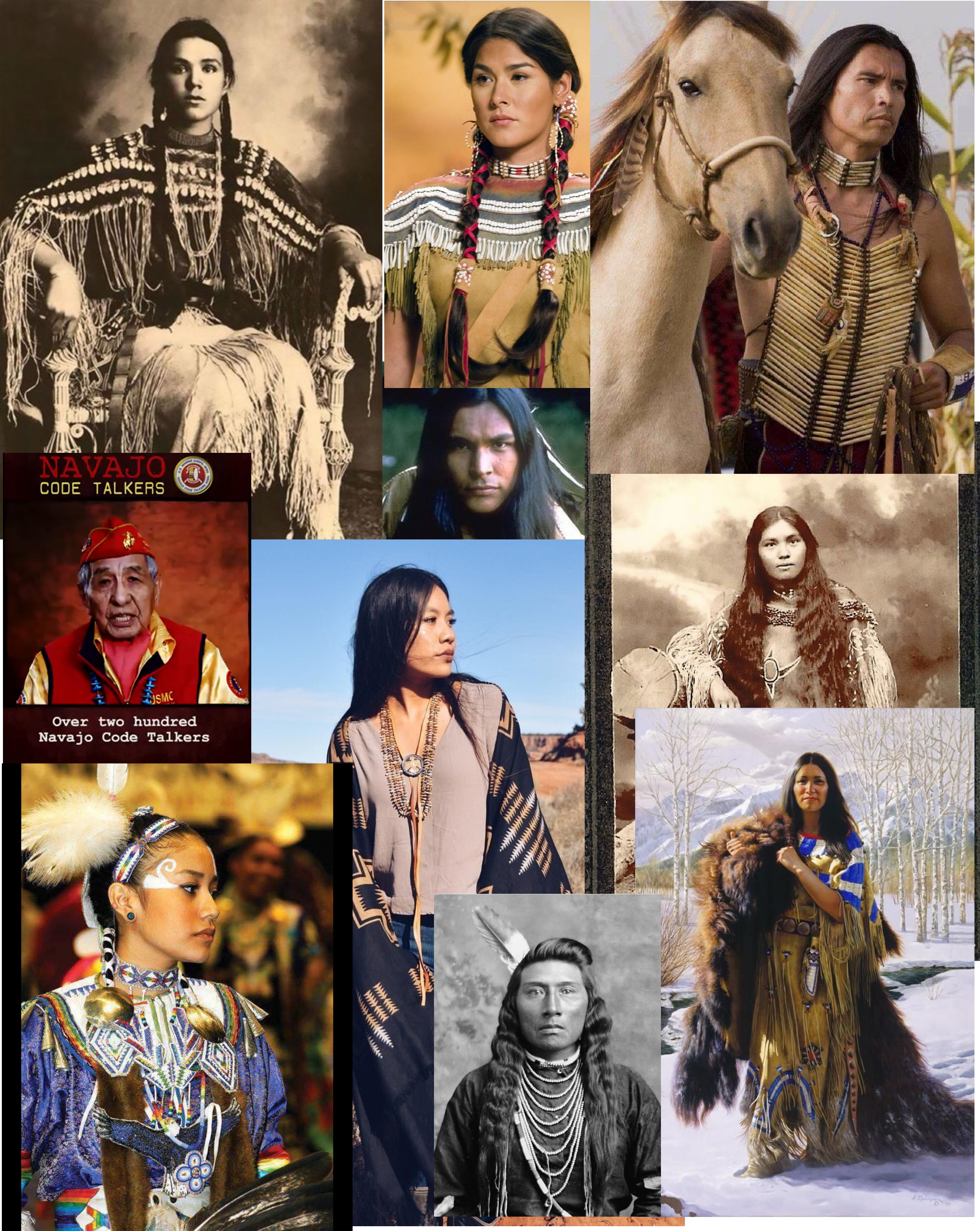

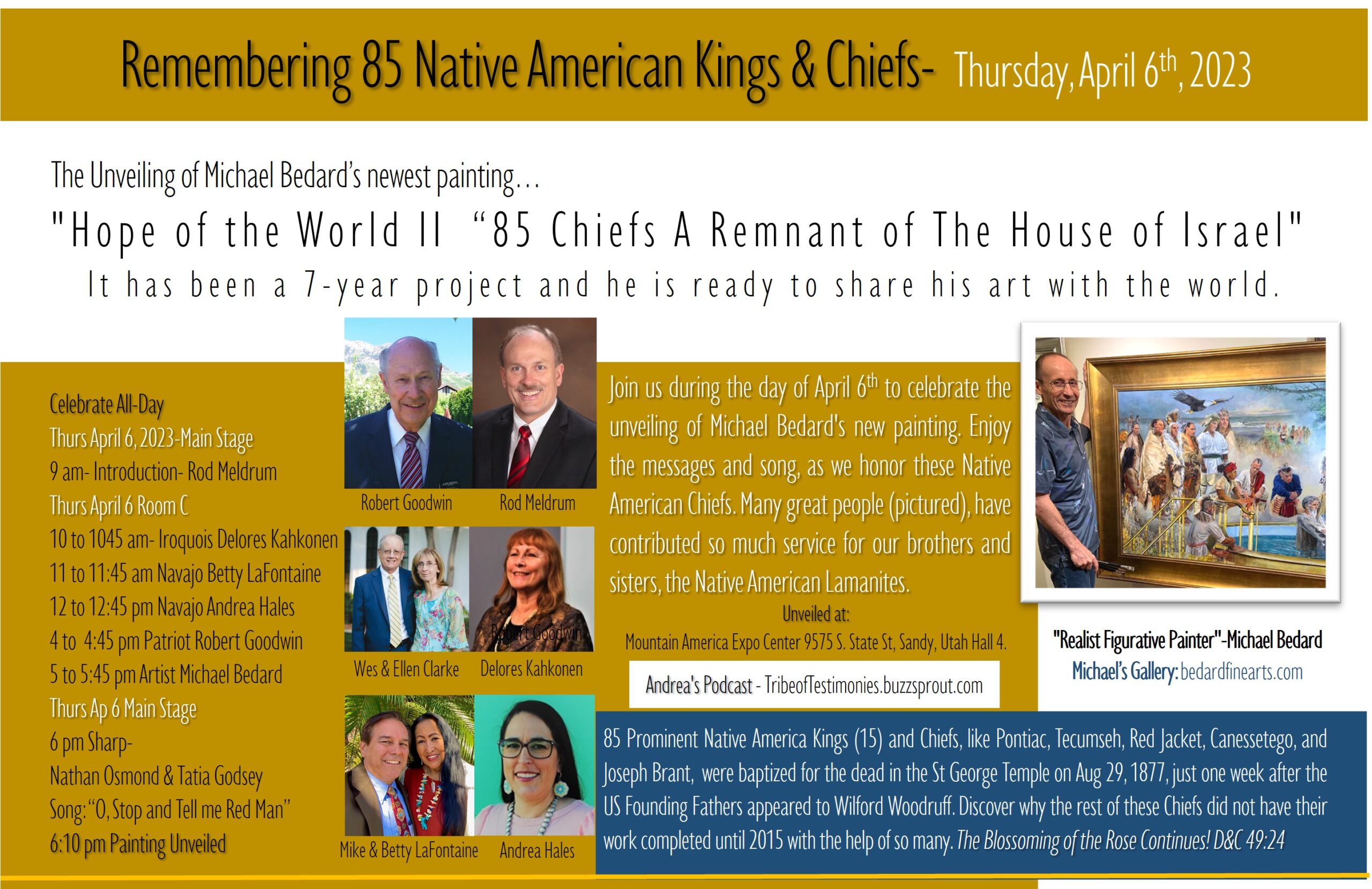


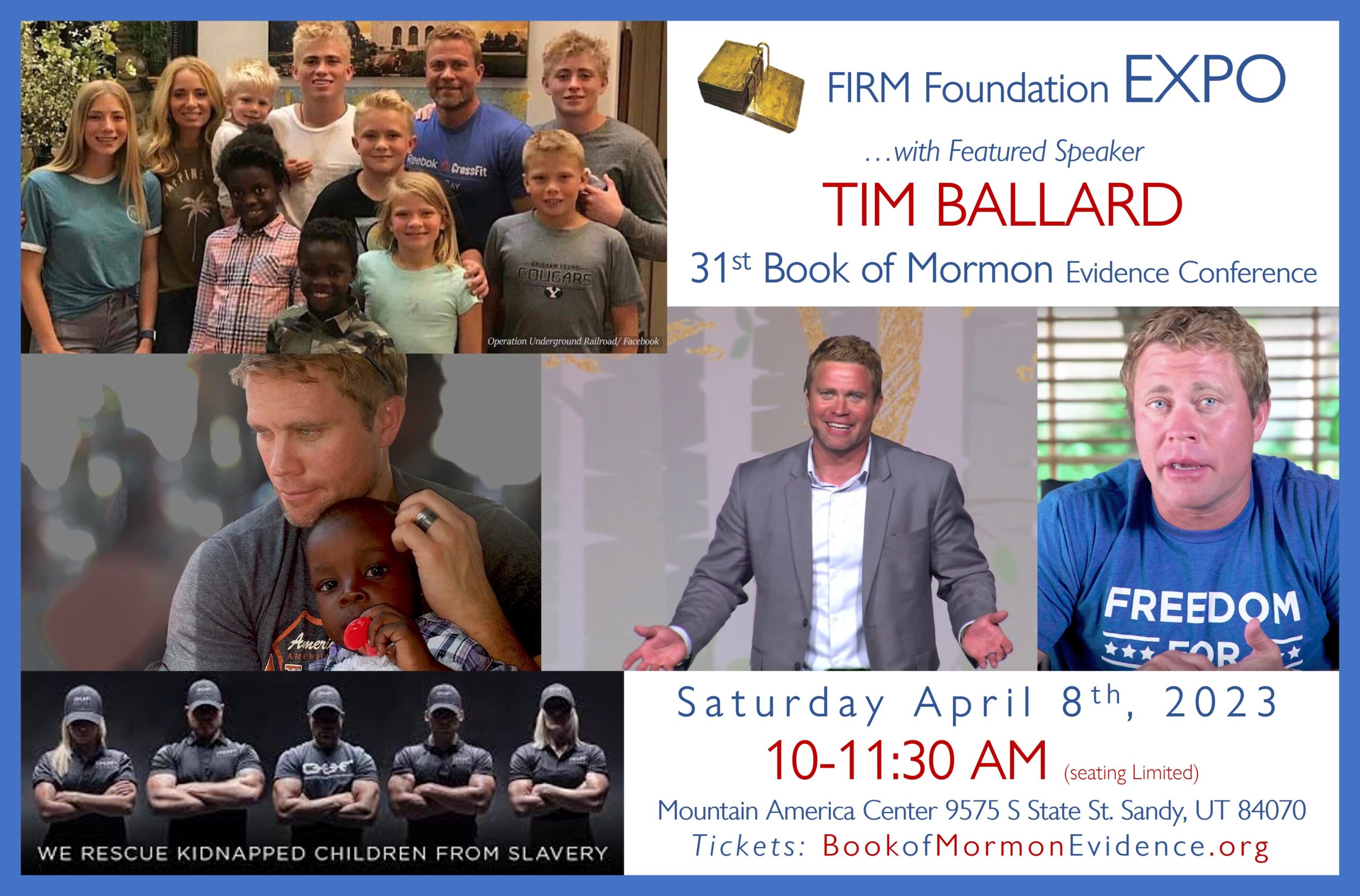


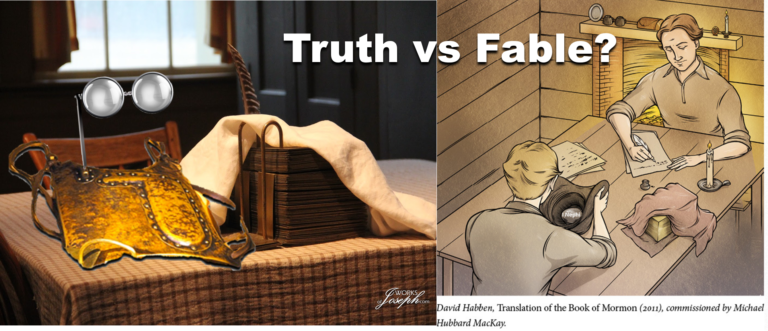

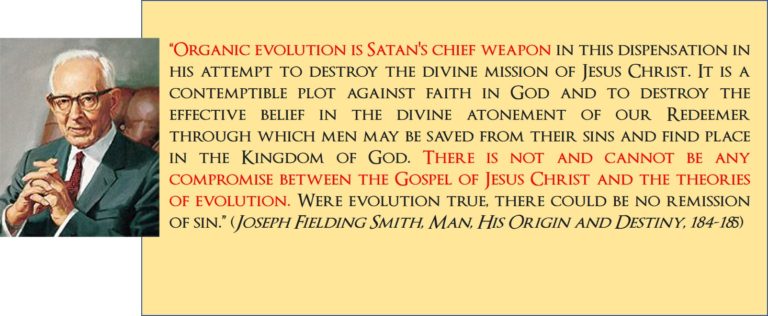
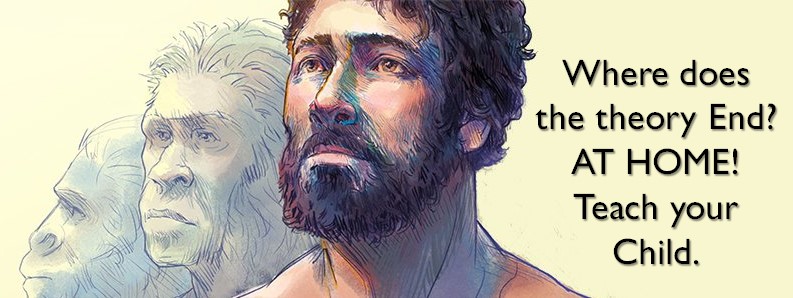
 These insinuations made by President Smith‘s detractors are also proven to be false by the inspired testimony of President Smith himself in the October 1970 general conference of the Church. At that time, when he spoke as the Lord‘s mouthpiece and as president of the Church, he said:
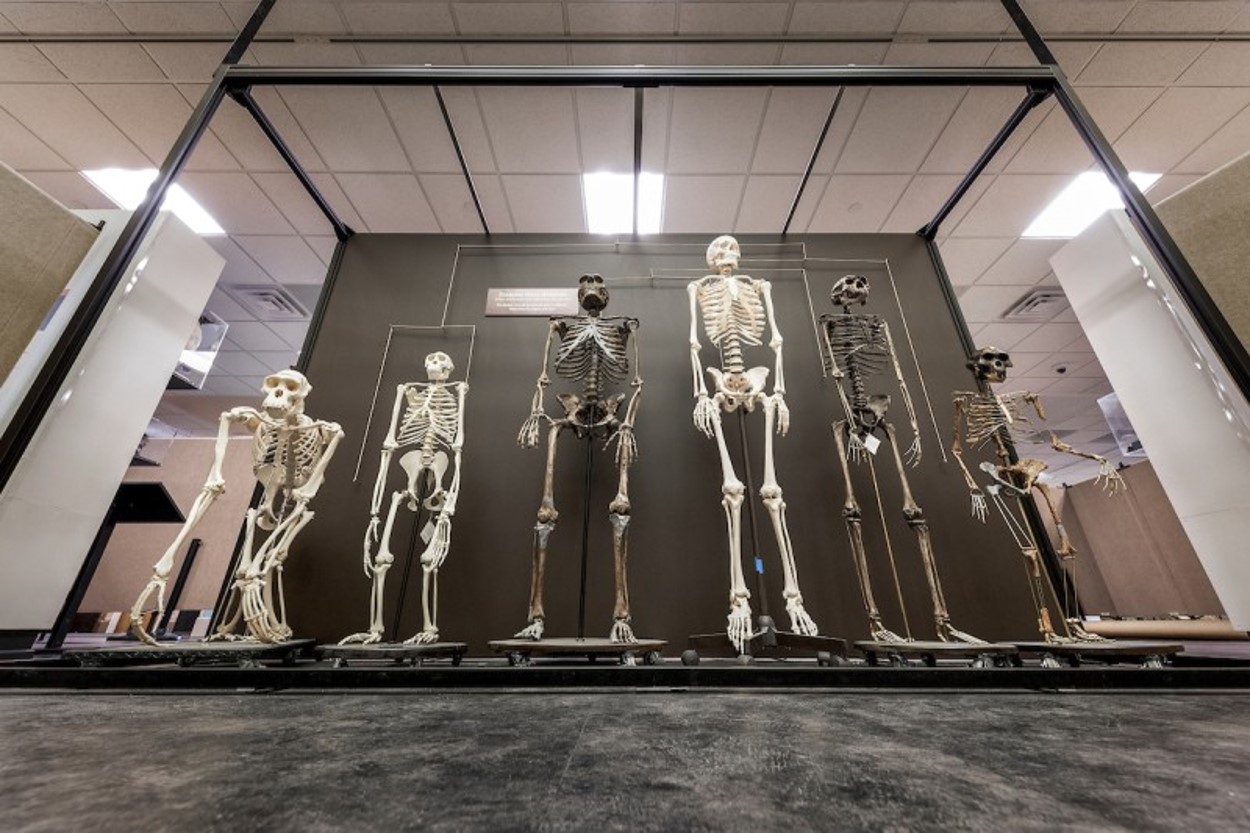
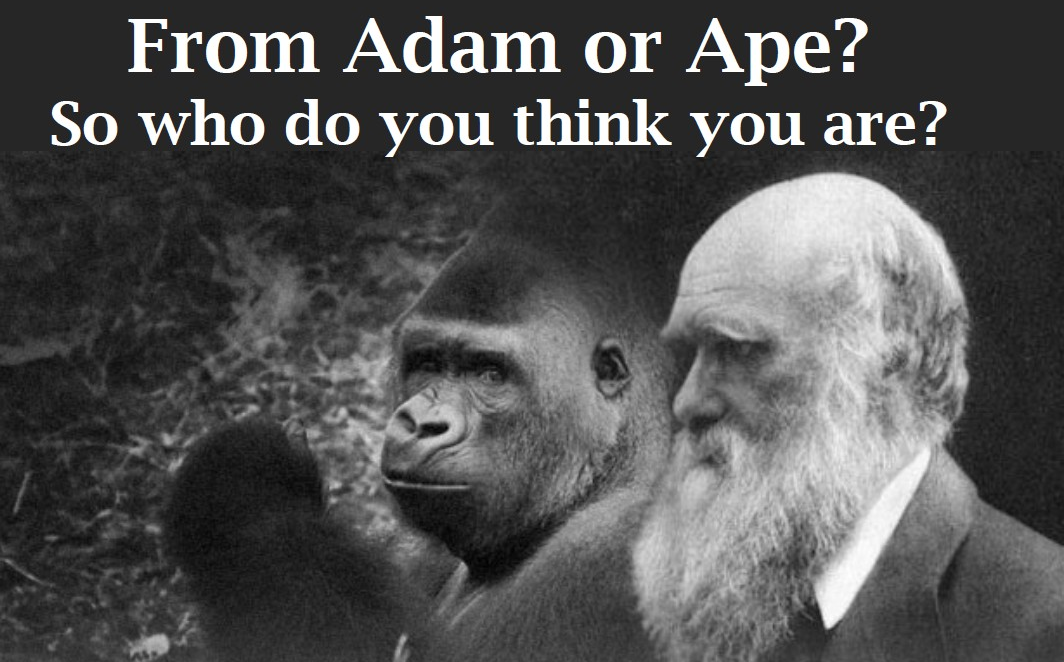
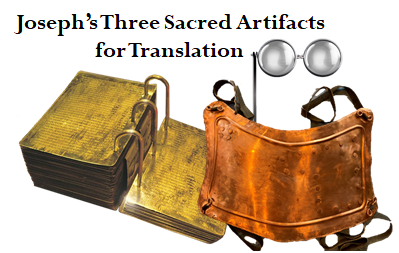
 In my opinion the importance of the breastplate and the spectacles being in the same stone box with the gold plates, is a sacred message to Joseph Smith, and to each of us, that the attachment of these two articles was critical and vital to the proper translation of the plates. If not why wasn’t the brown stone and a hat buried with the plates? Did you know the Lord touched the very stones attached in the silver bows for the Brother of Jared, and he sealed them up with the Jaredite records to come forth to Moroni and Joseph Smith later? See Ether 3:22-23; 4:5. I do not believe any simple and ordinary stone in a hat was ever used to translate the sacred record of the Book of Mormon. I believe many intellects and historians are wrong. This silly “peep” stone idea comes from the first anti Mormon book called “Mormonism Unvailed” and I don’t believe it.
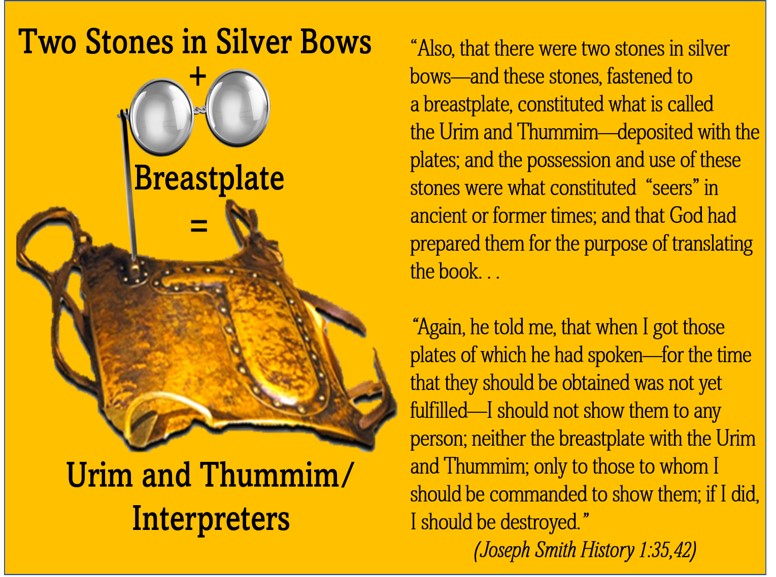 None of these 12 ever spoke about seeing the breastplate nor the spectacles, nor even seeing the seer stone during translation and they in my opinion, never spoke of seeing the seer stone in a hat, but just speculating that a seer stone was in the hat. They all probably knew Joseph had a seer stone or two and assumed that is what Joseph used.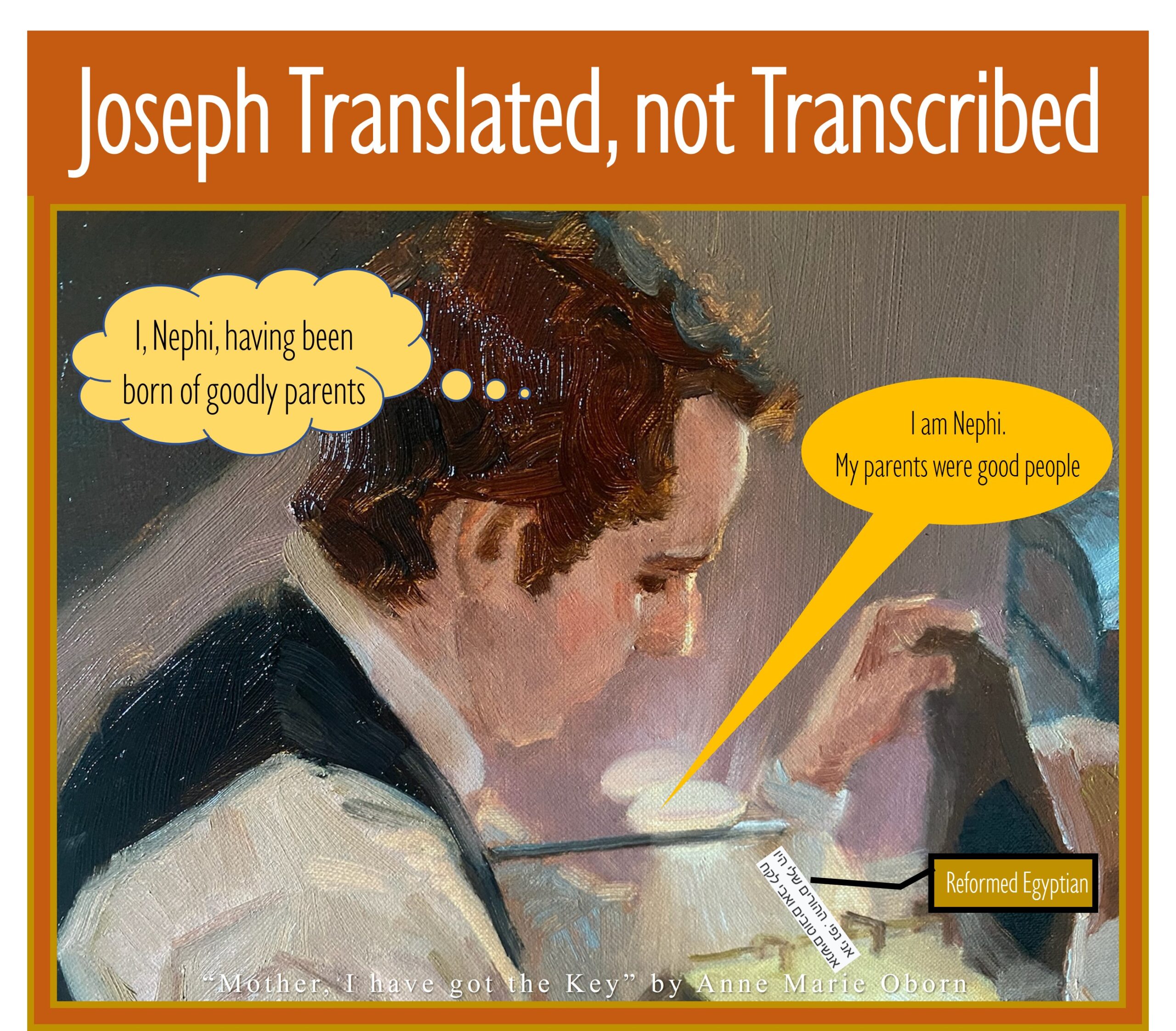
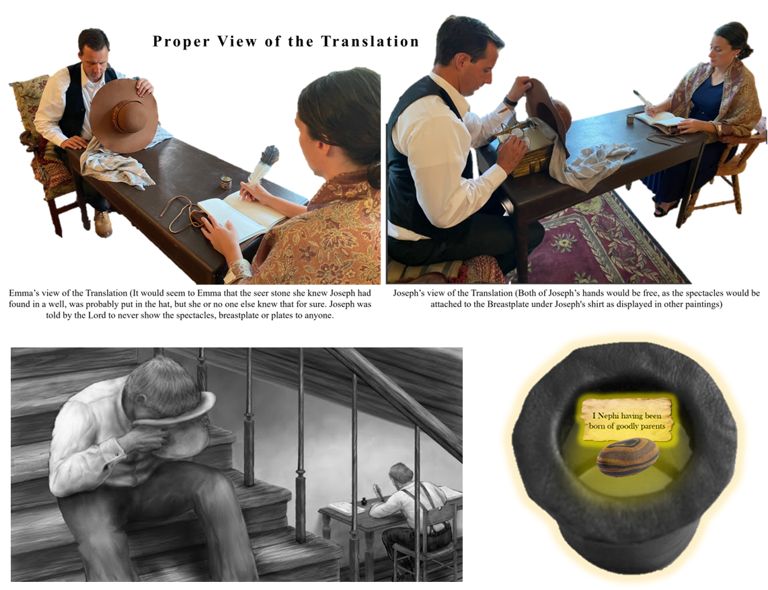

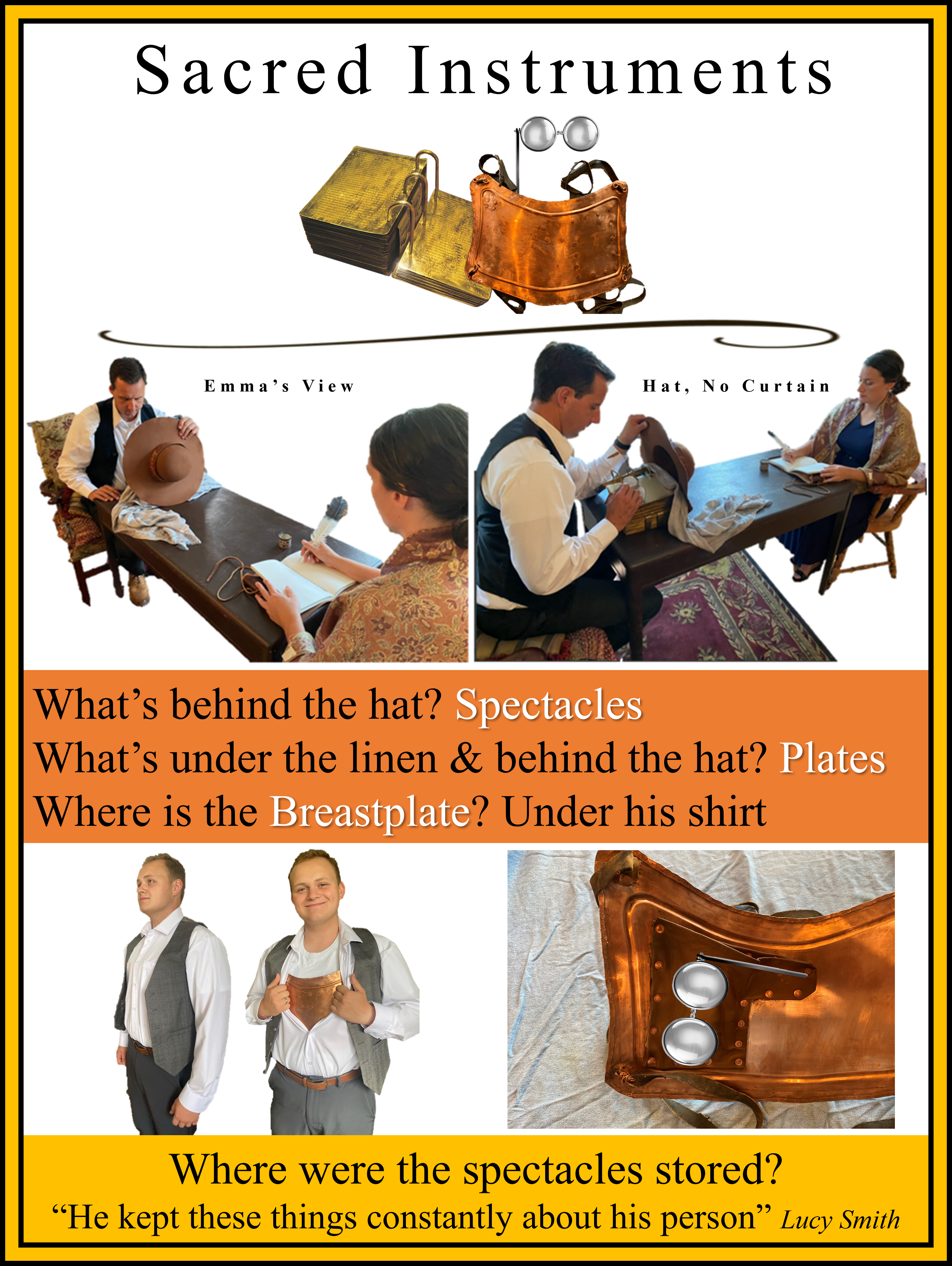
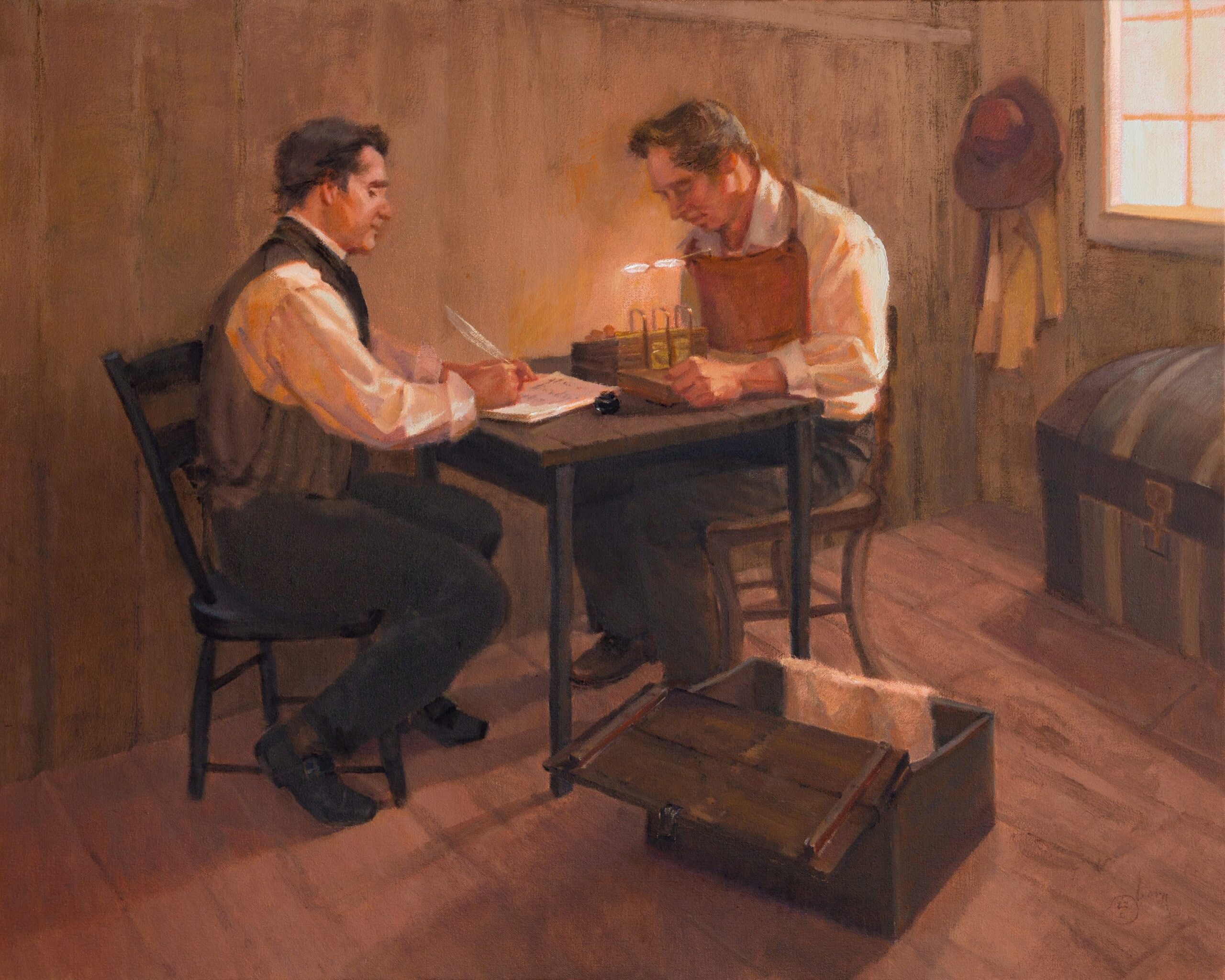


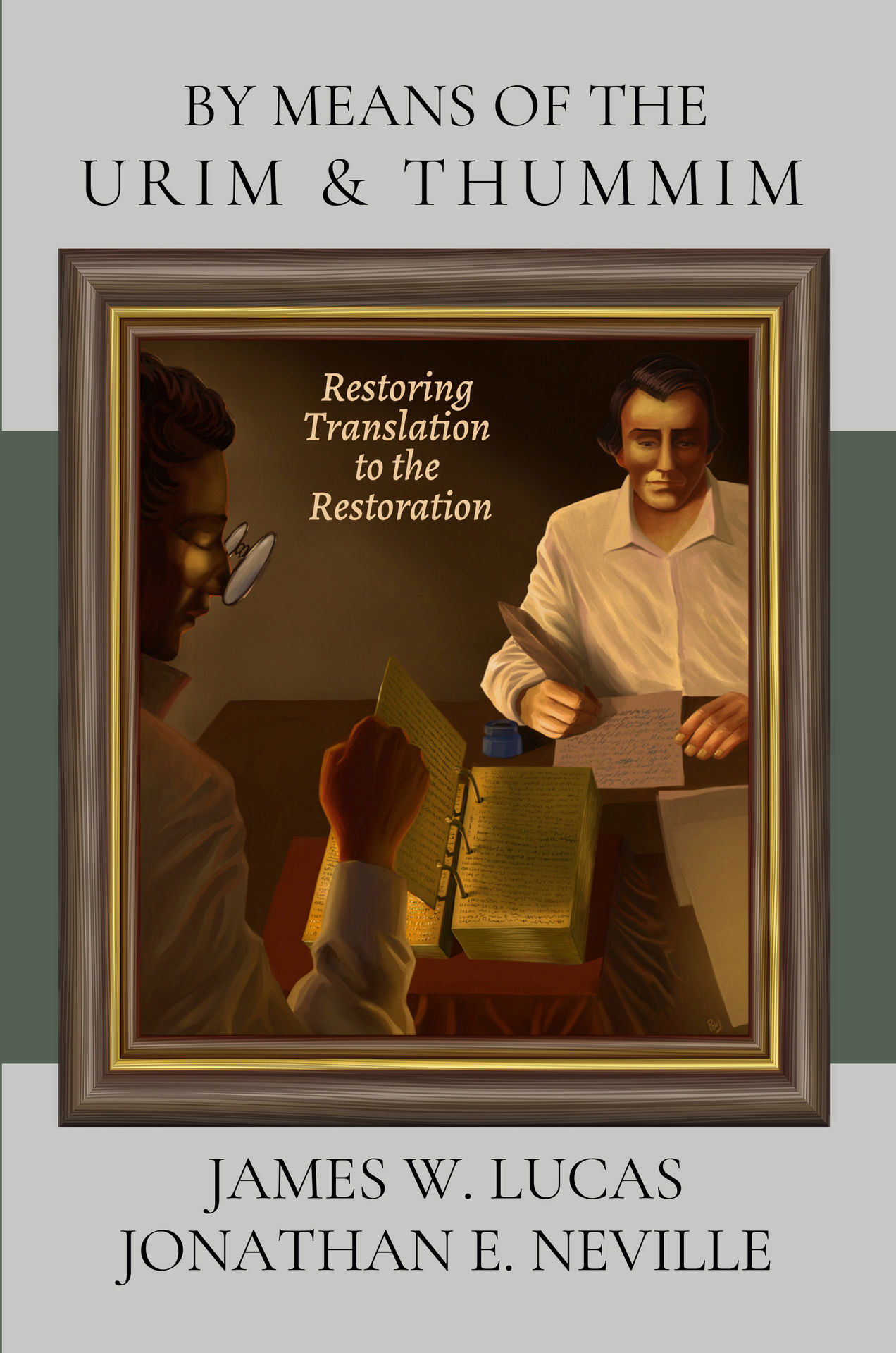

 Apologetics cannot prove that the Church is true
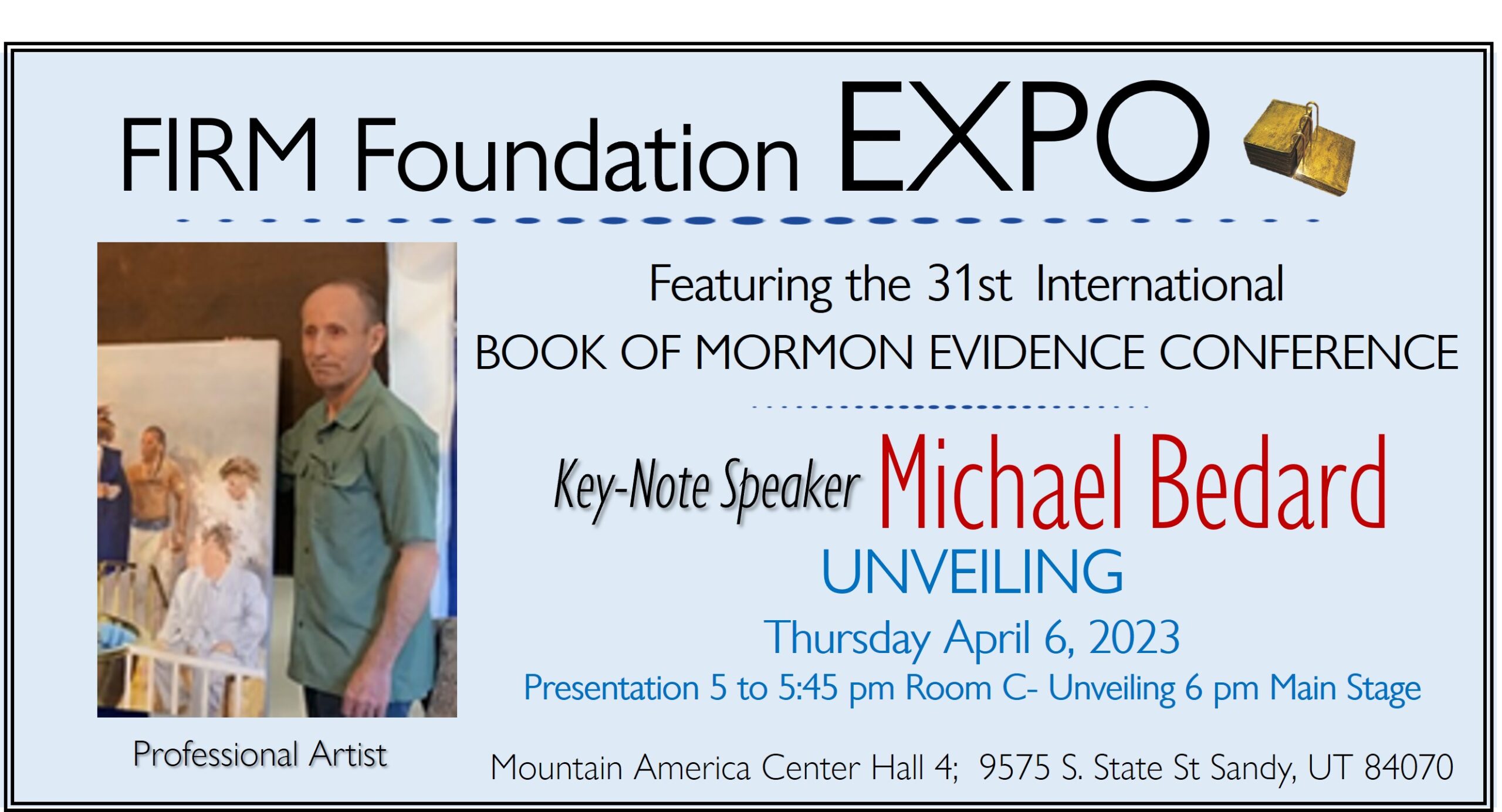


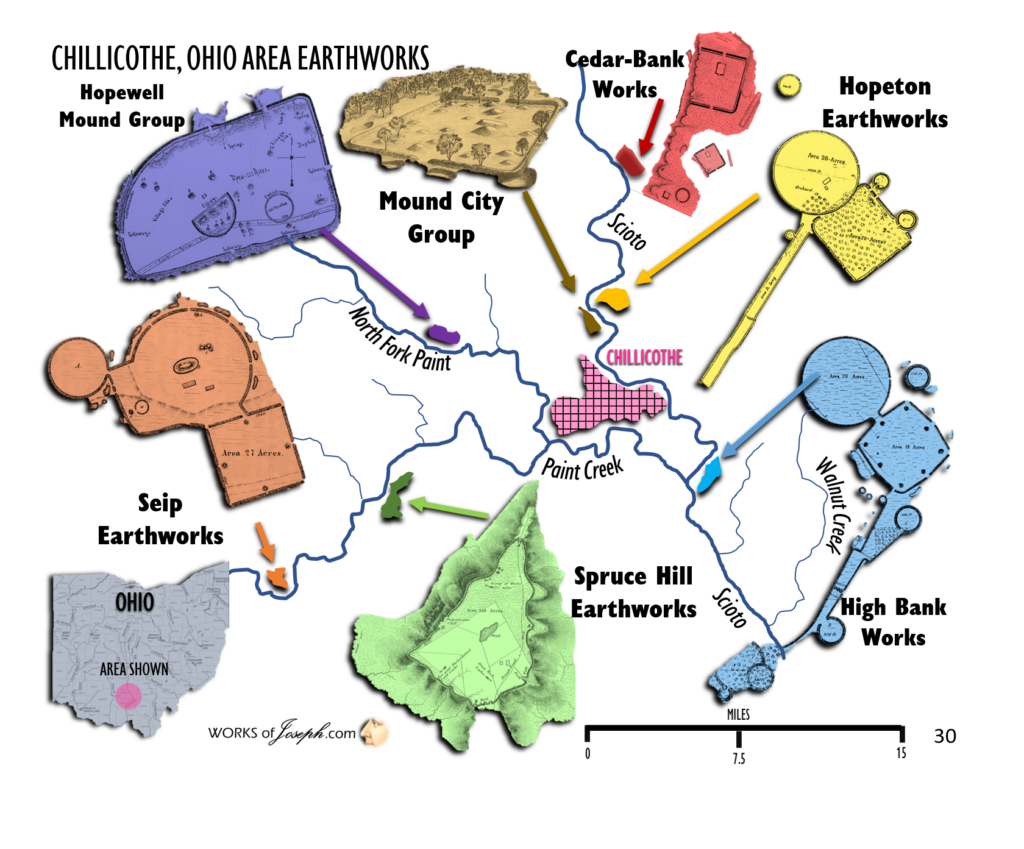





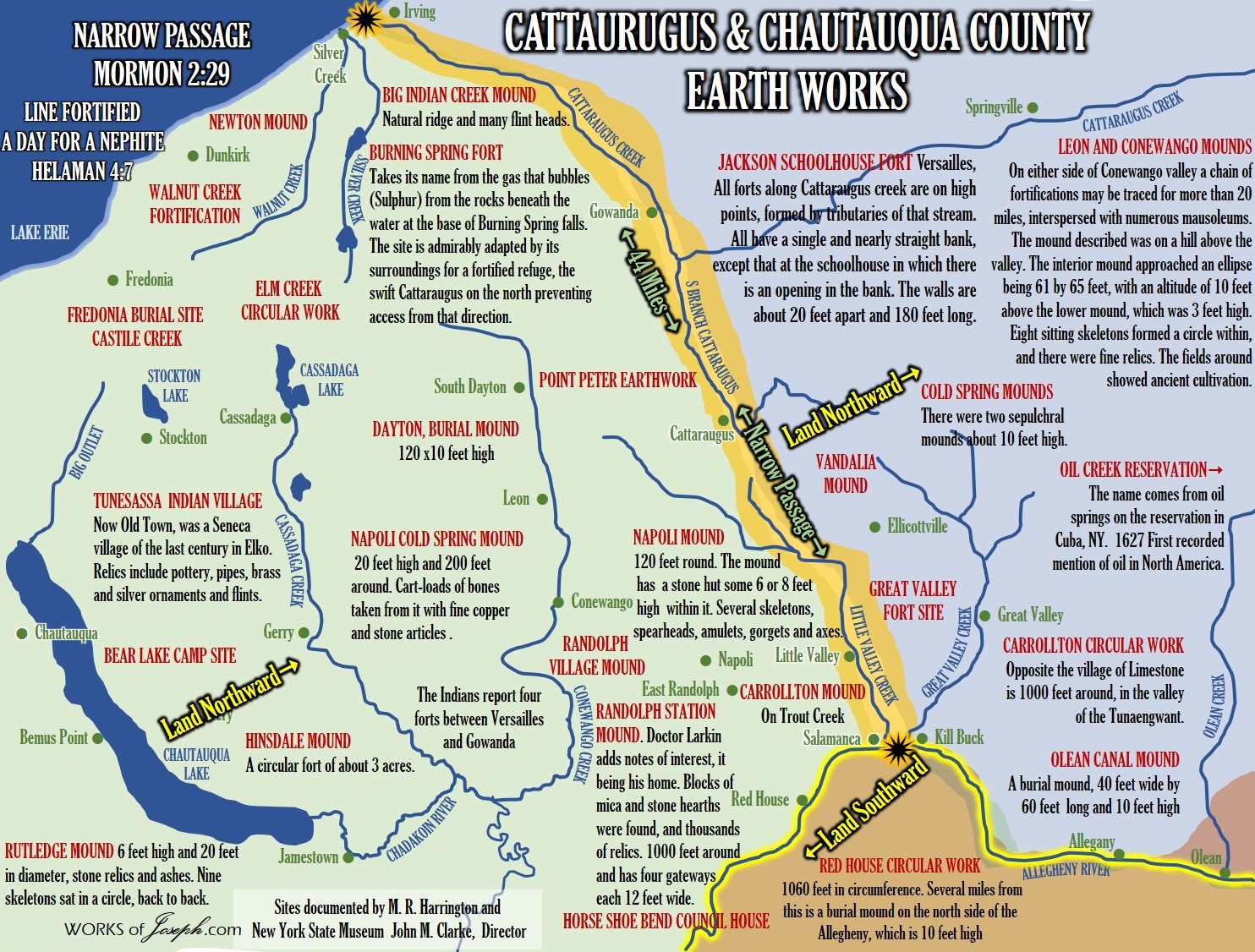


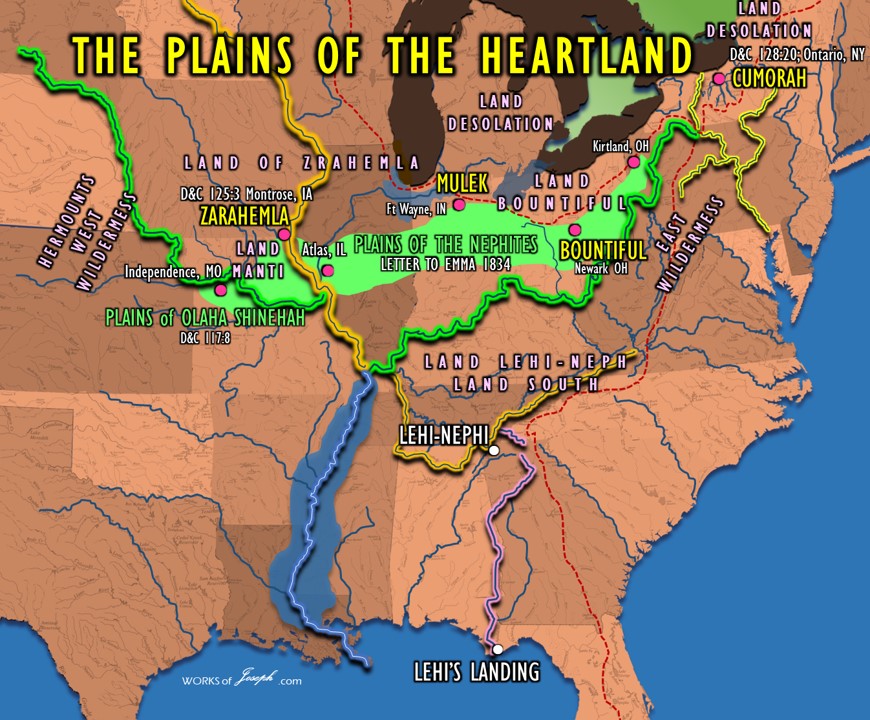
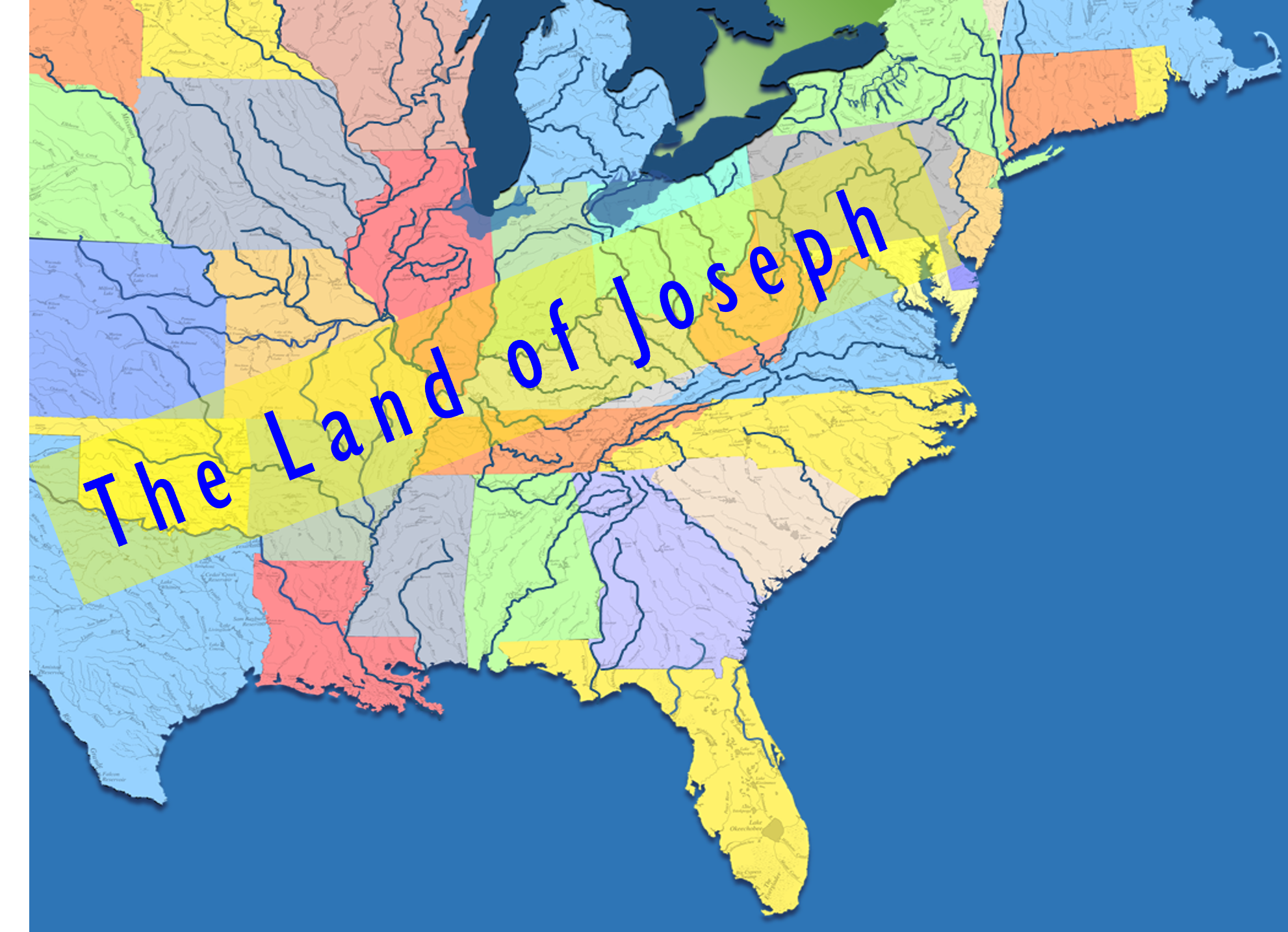
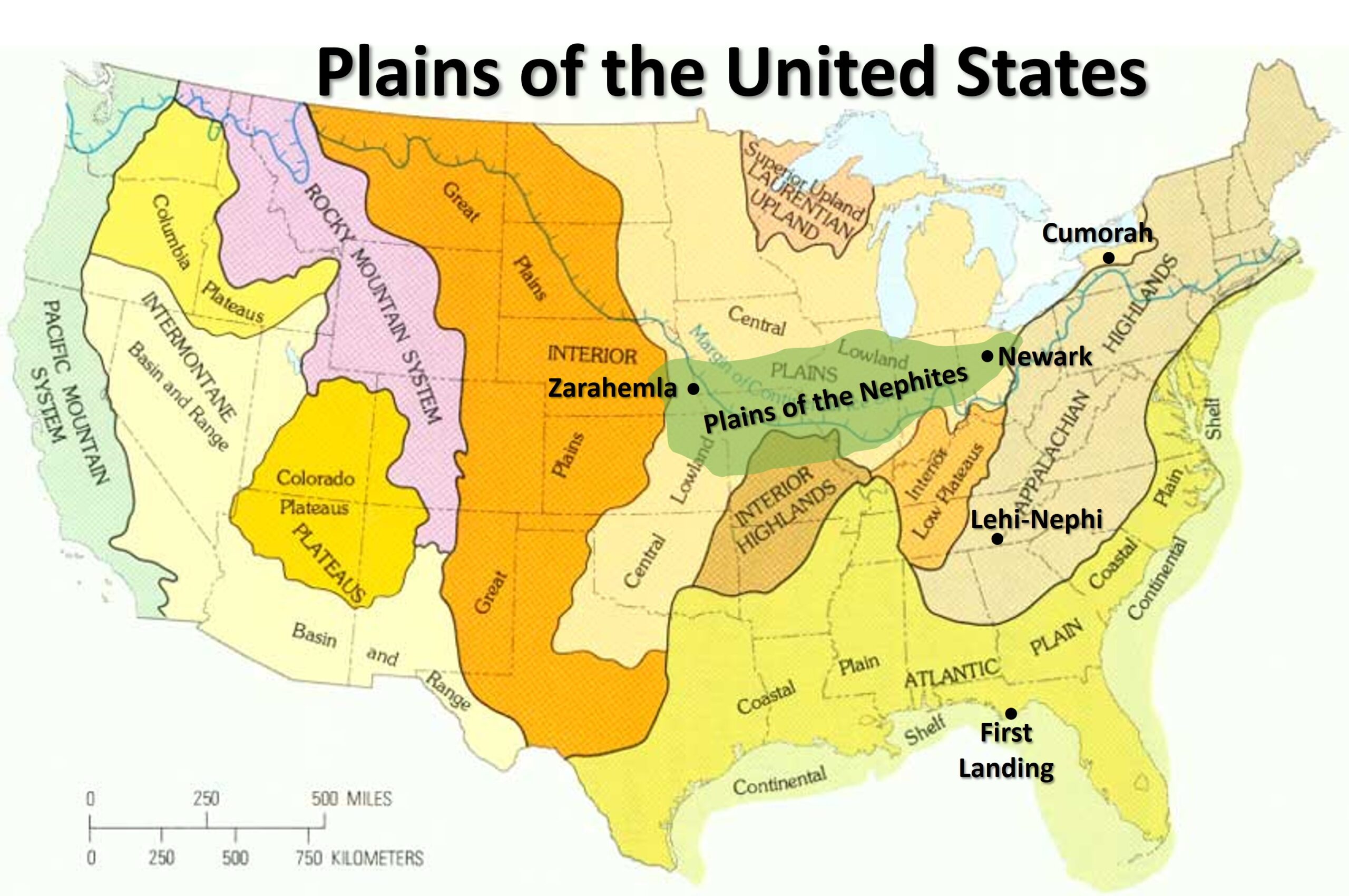 4- HEARTLAND PLAINS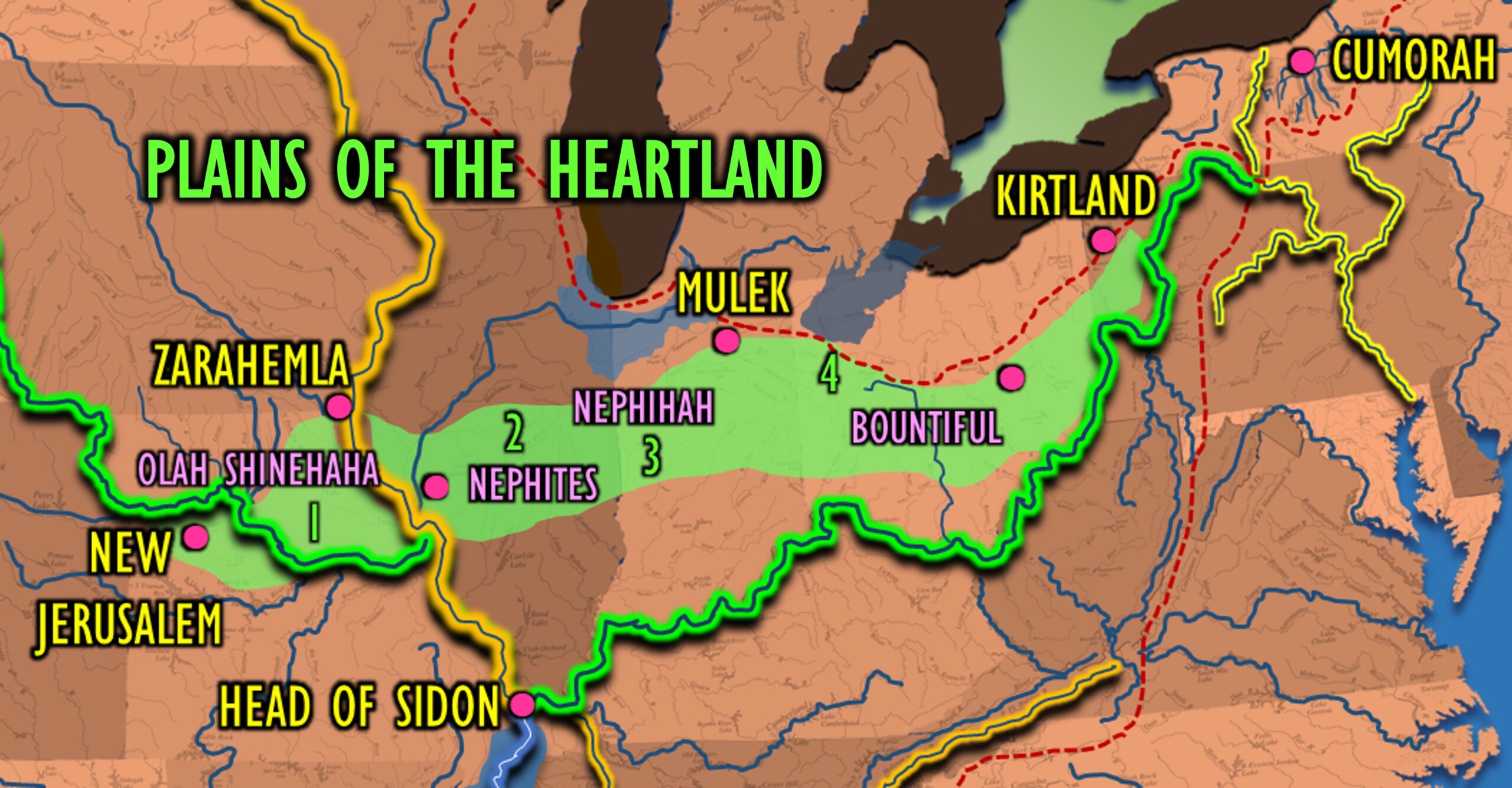
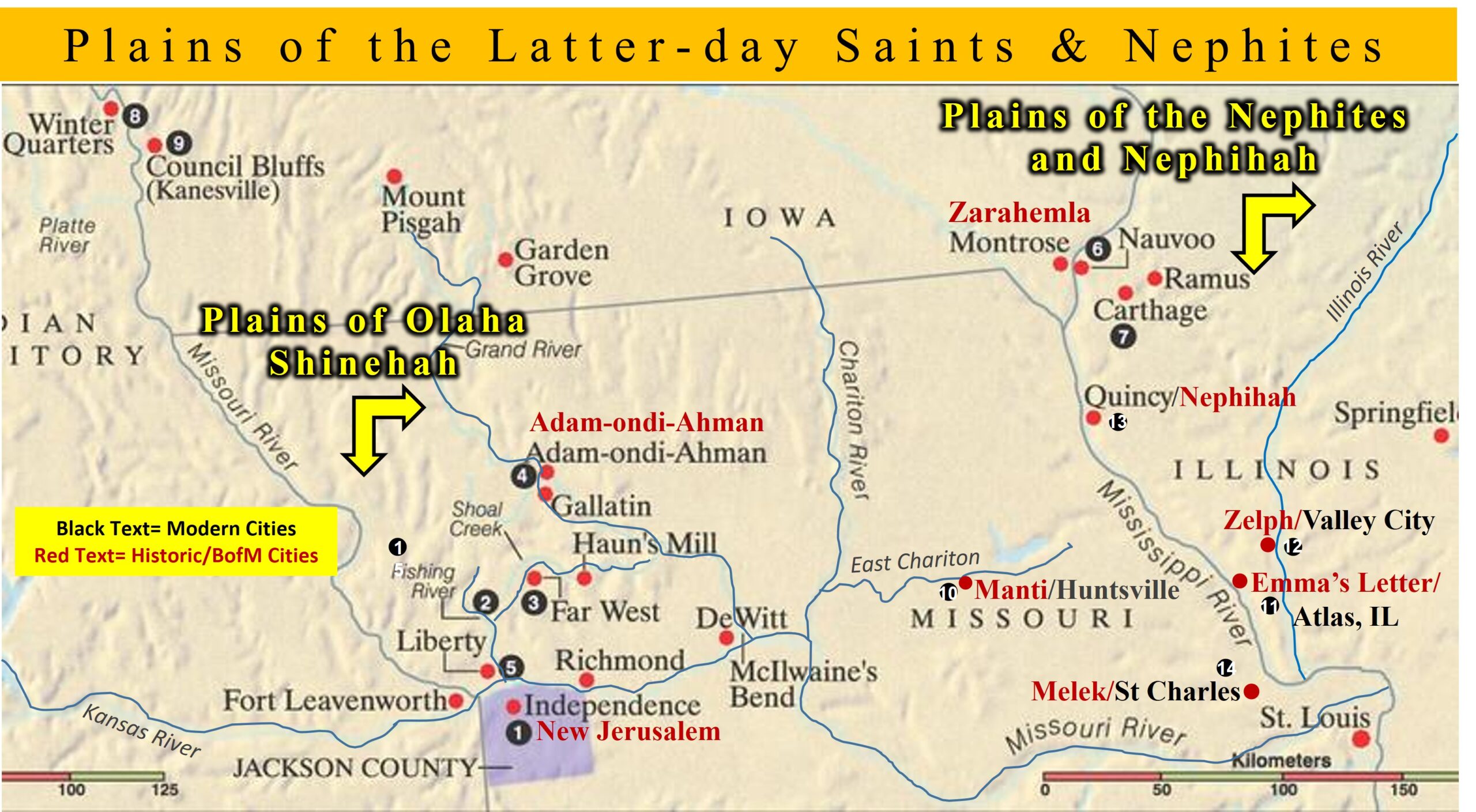

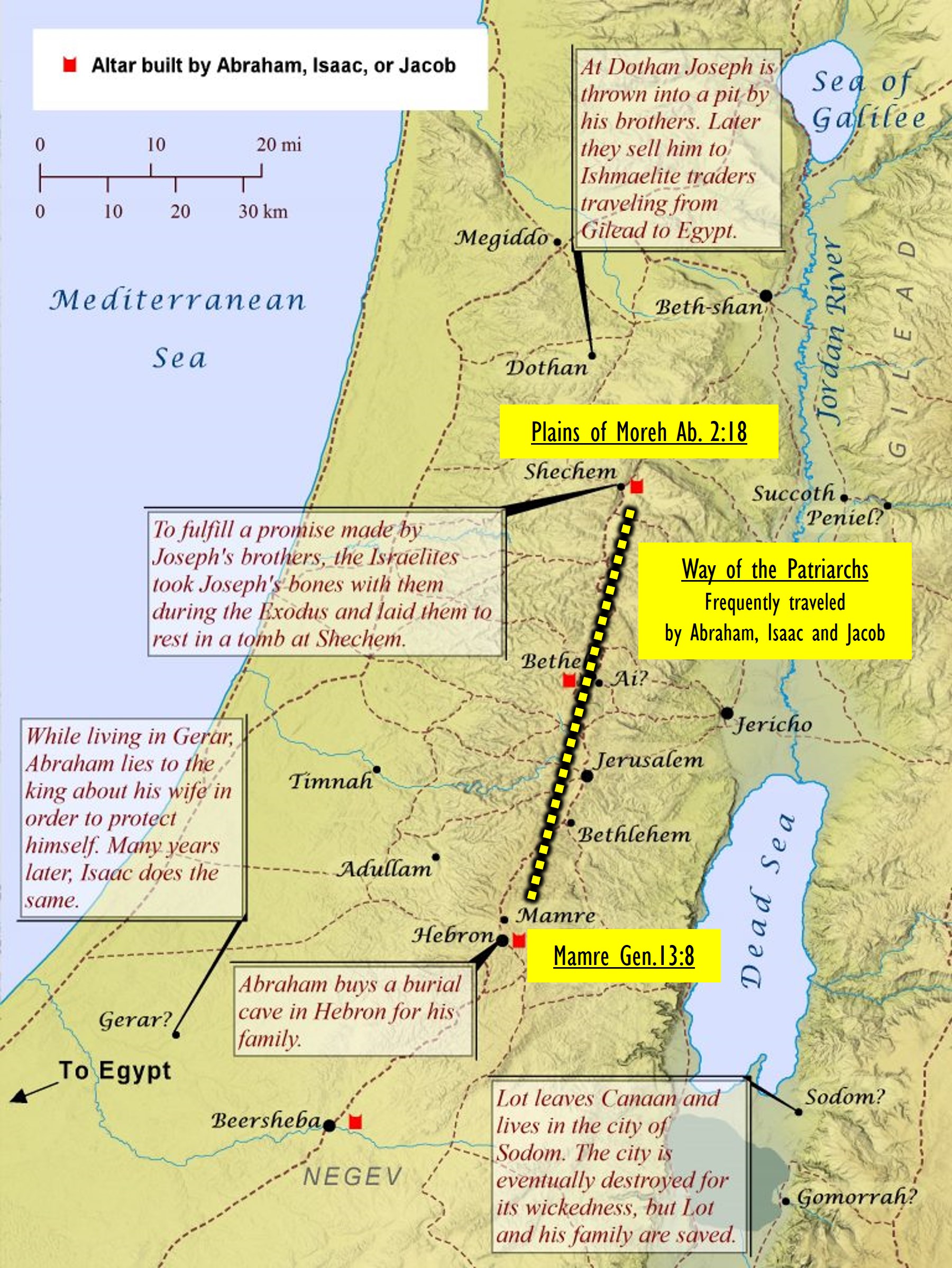
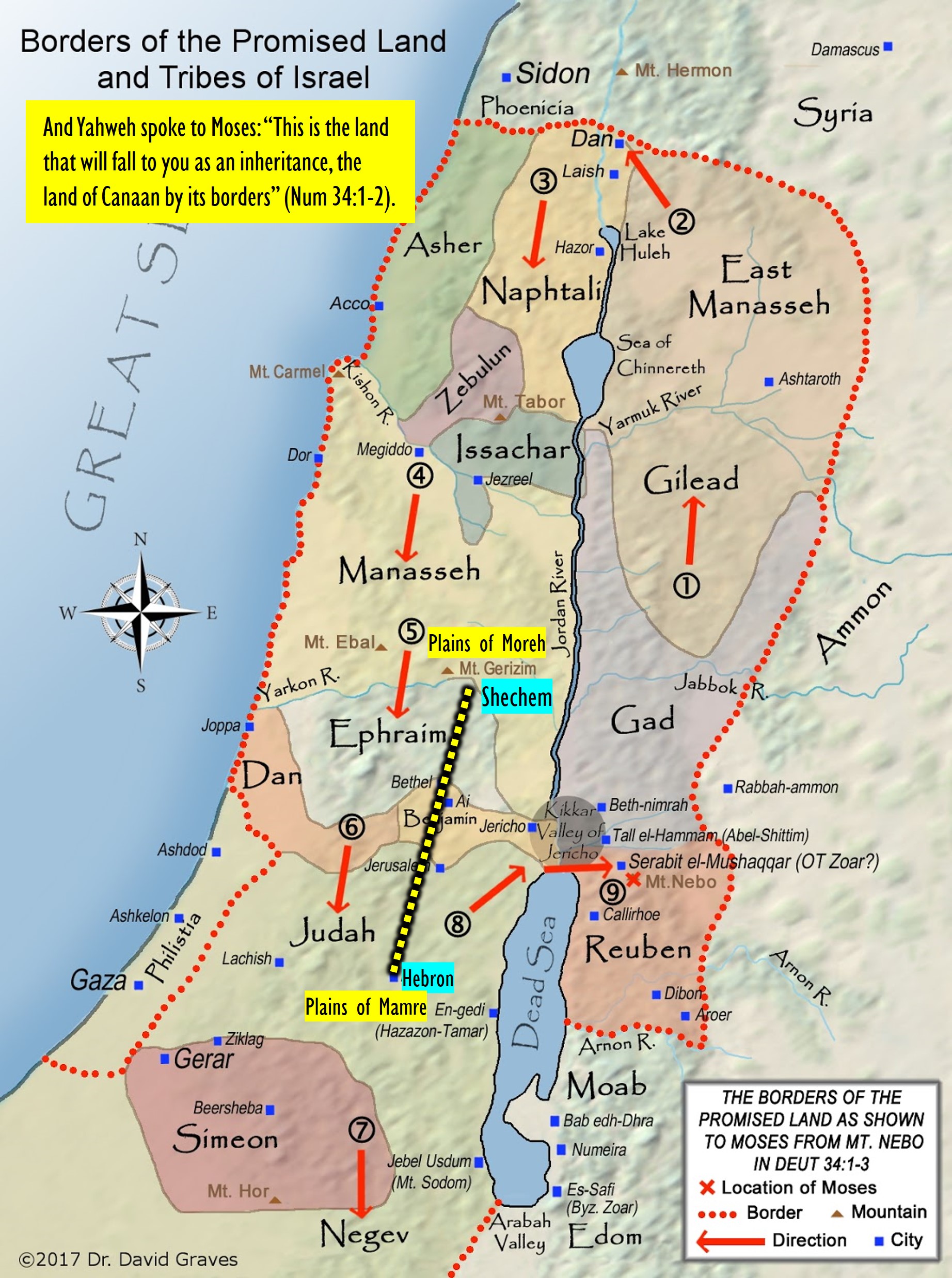
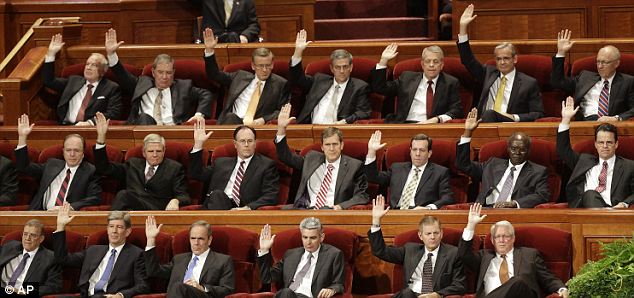






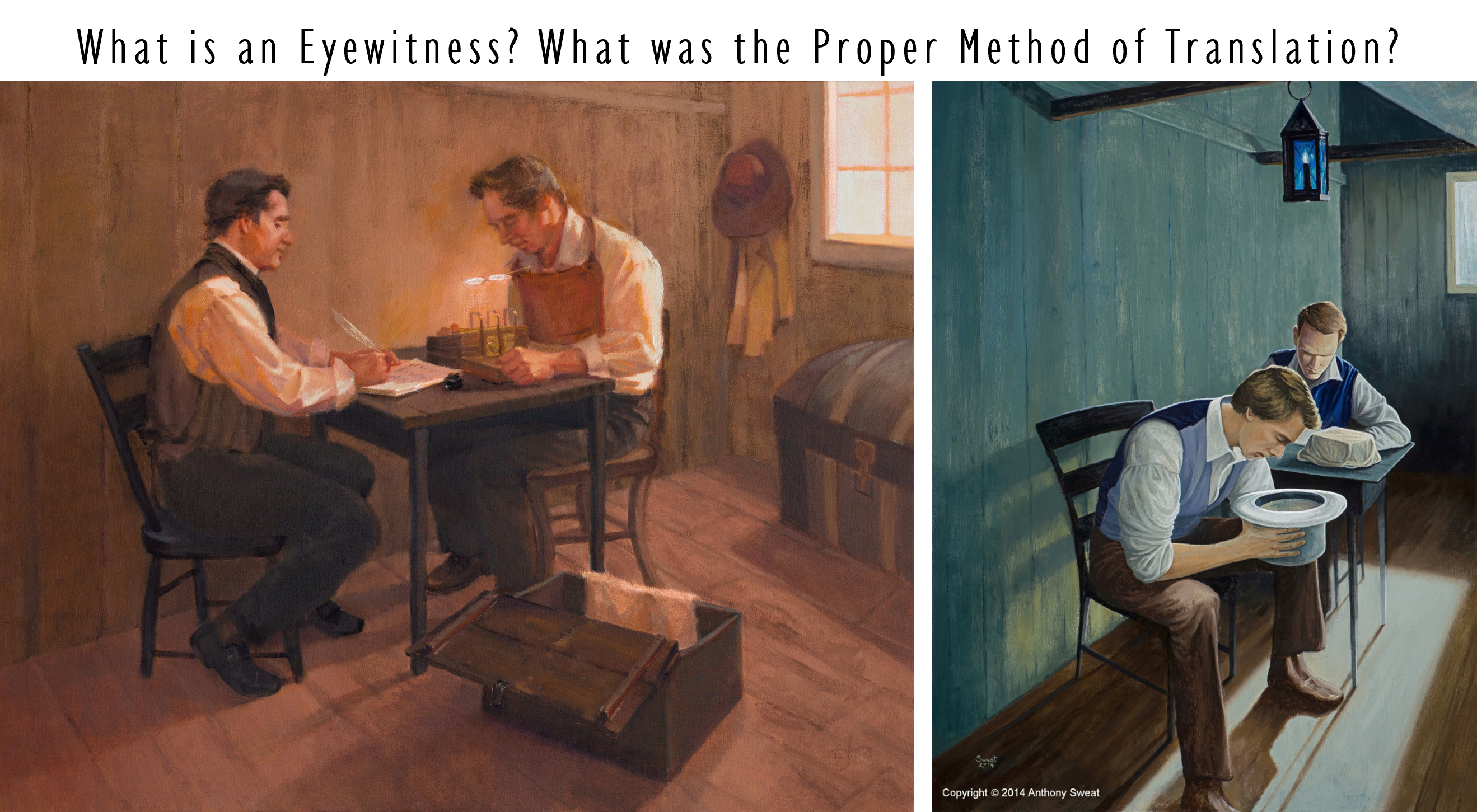
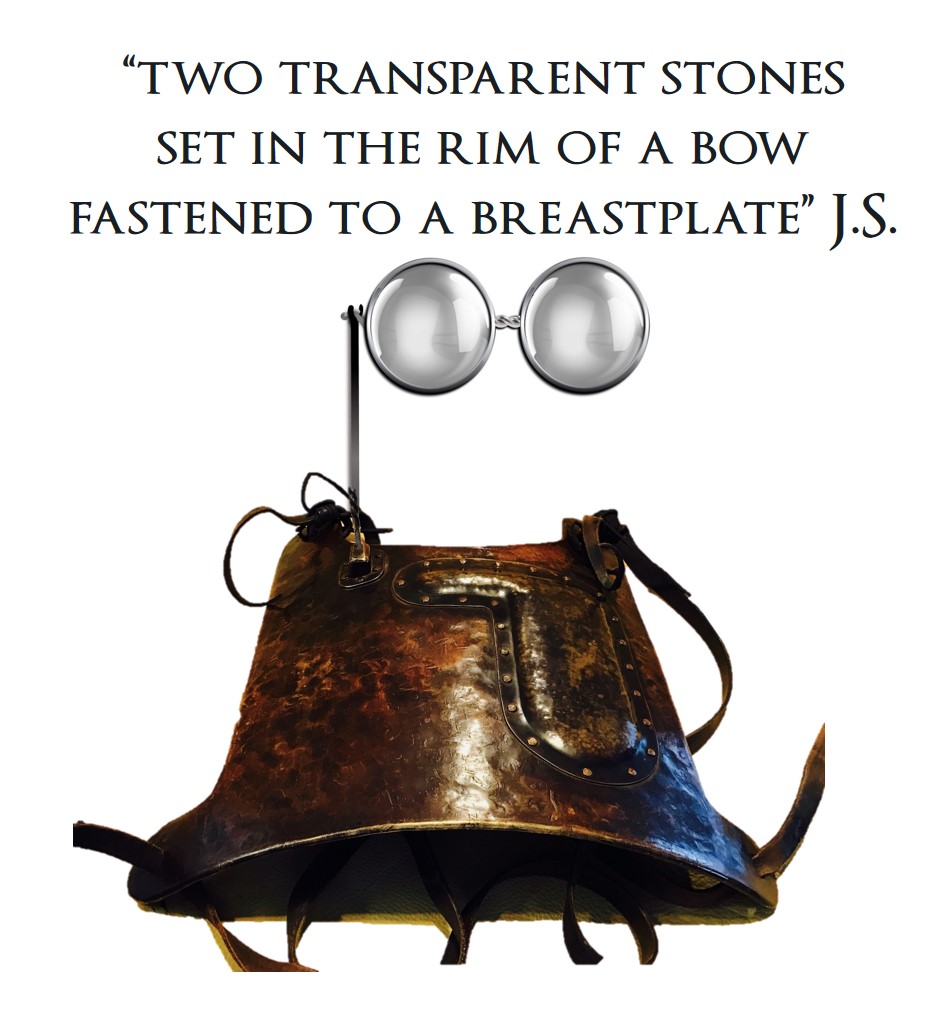



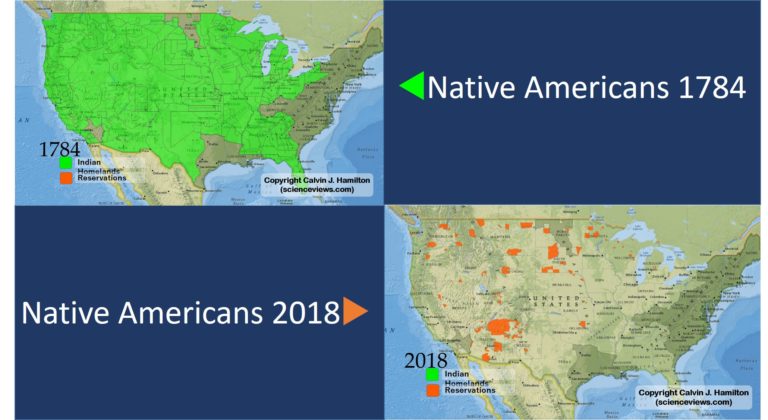


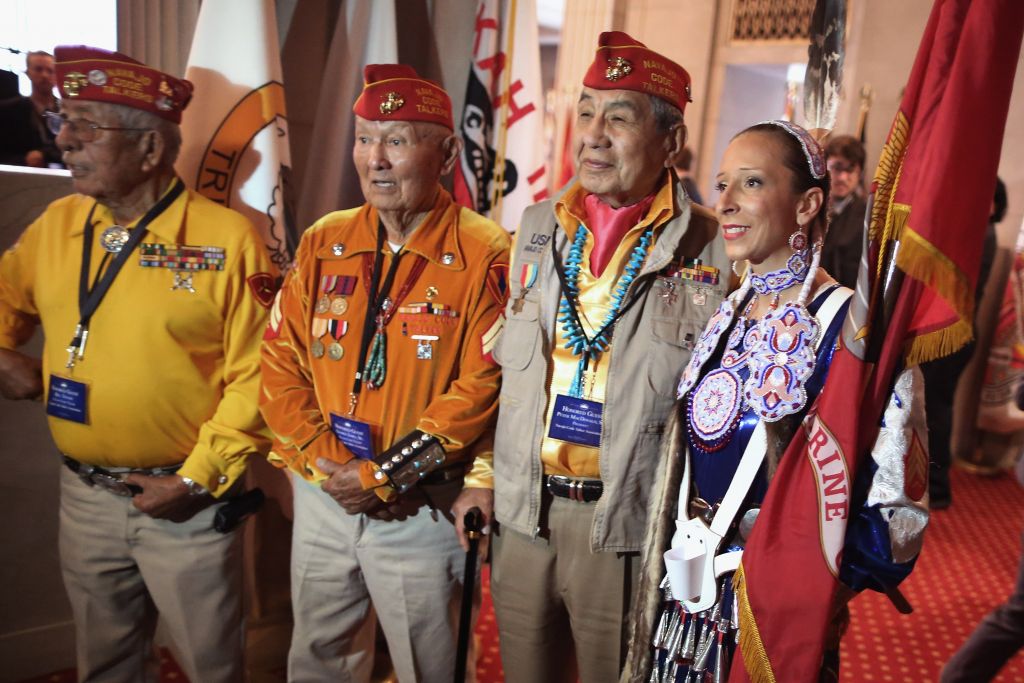


 The best and most exciting thing about this Oscar winning, 45+ film and documentary maker, is he will be on our video screen from California at 9 am at our Main Conference Stage at the Mountain America Expo Center at 9575 S. State St. Sandy Utah, 84070 in Hall 4. He is the longtime Heartlander friend of many of us. We know him best for this video you can watch below about how much he loves the heartland. Kieth has agreed to be
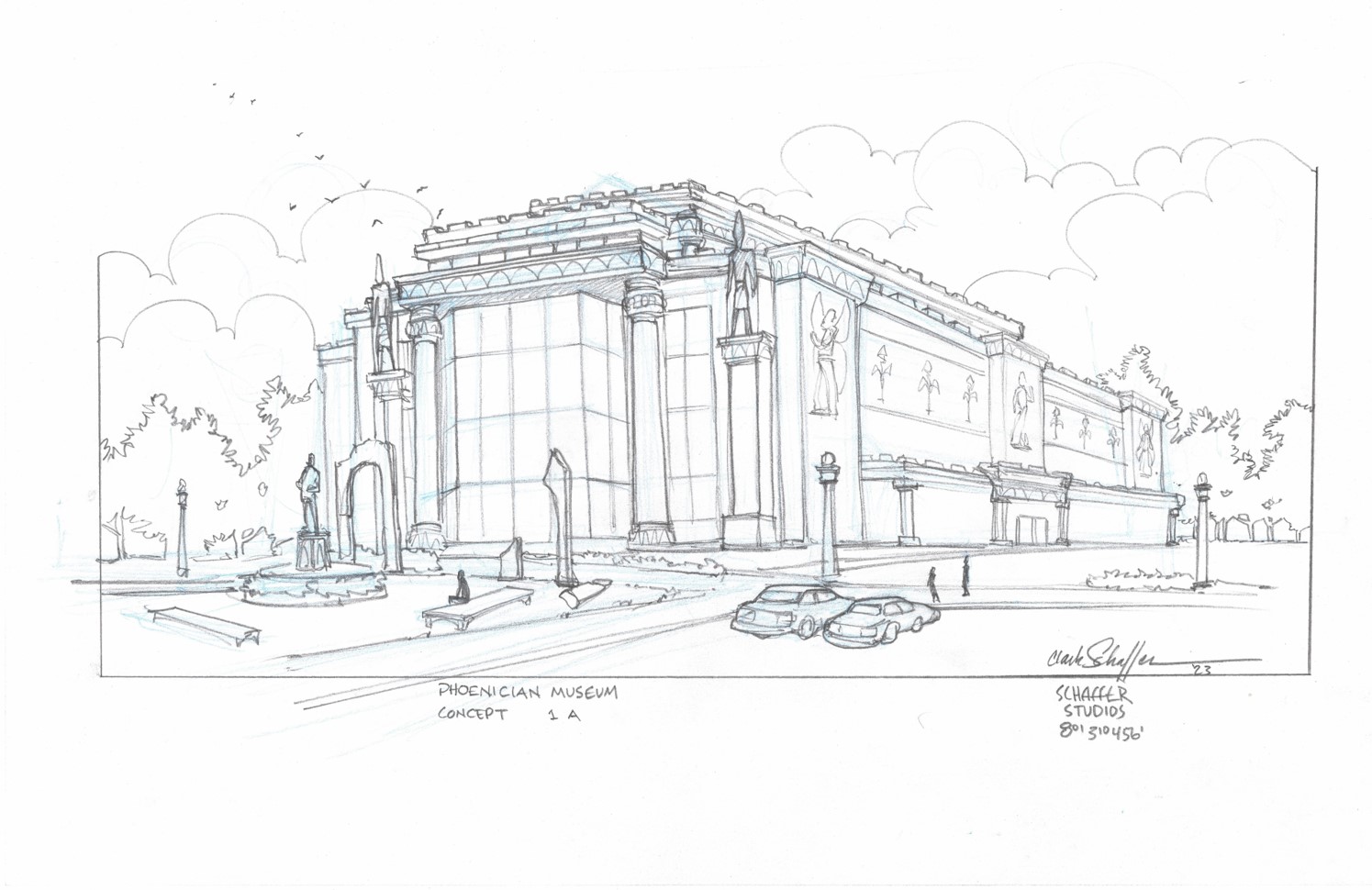


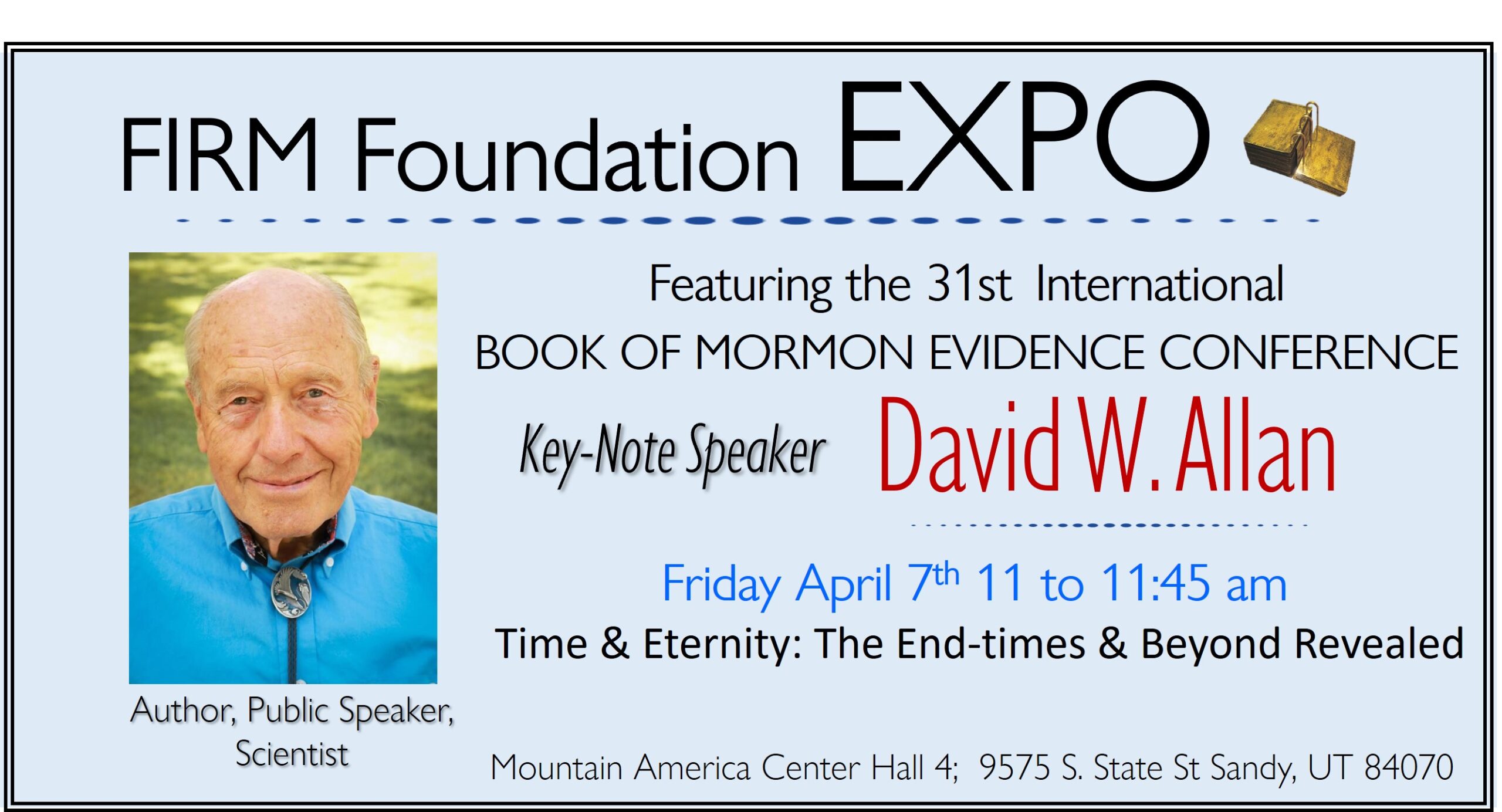
 This week the Securities Exchange Commission fined the LDS Church and Ensign Peak Investments for apparent mis filings of its holdings.





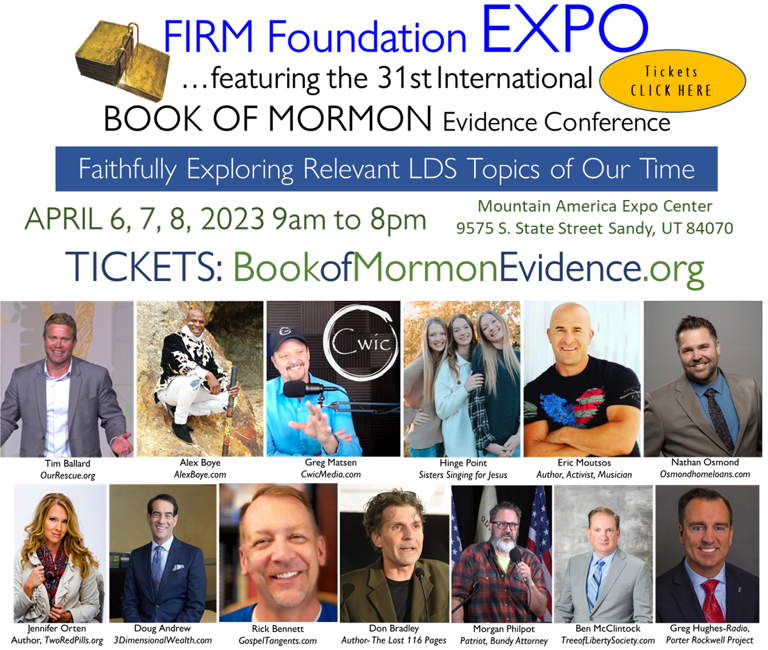



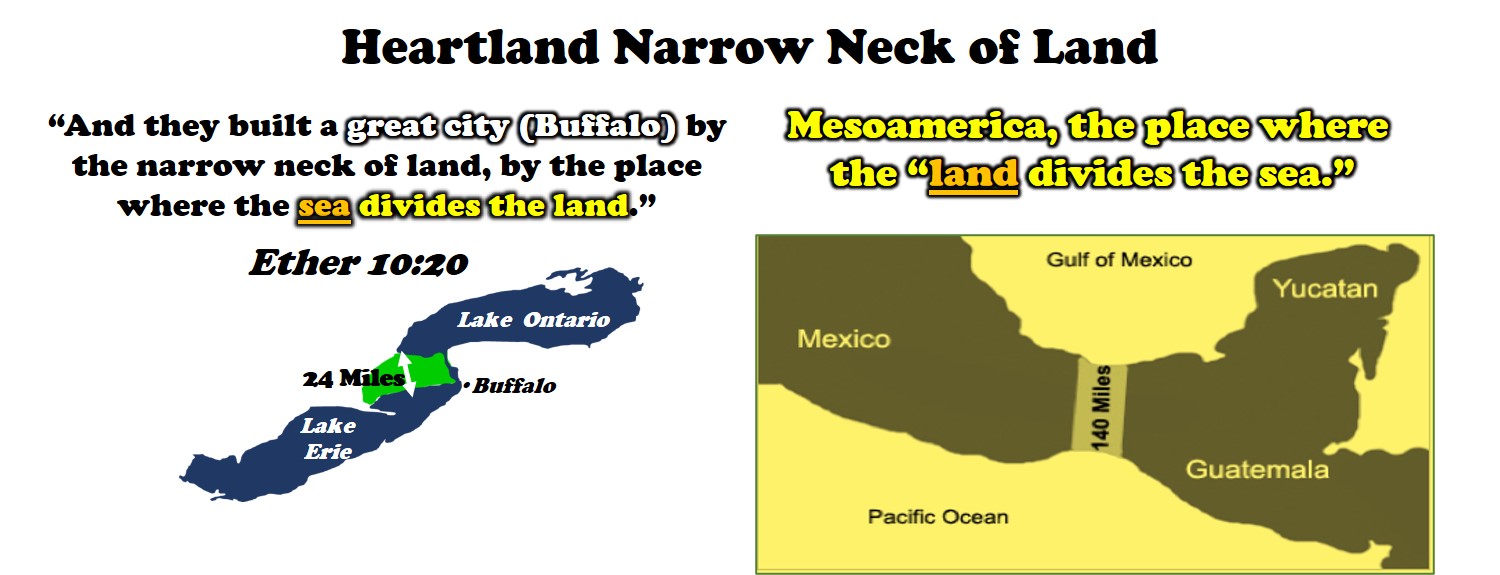


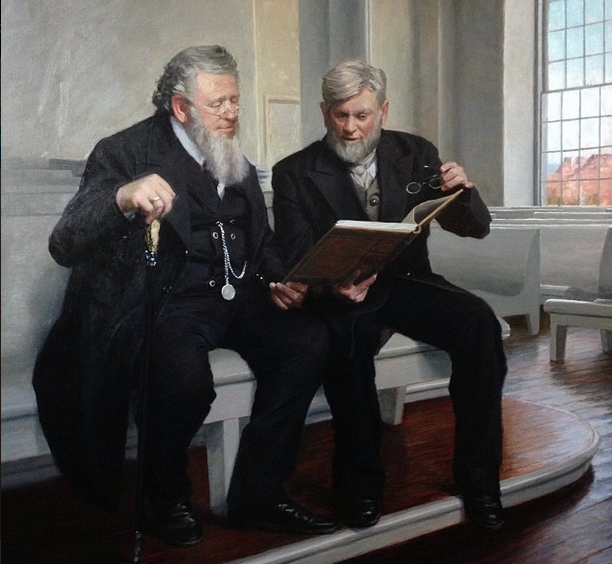


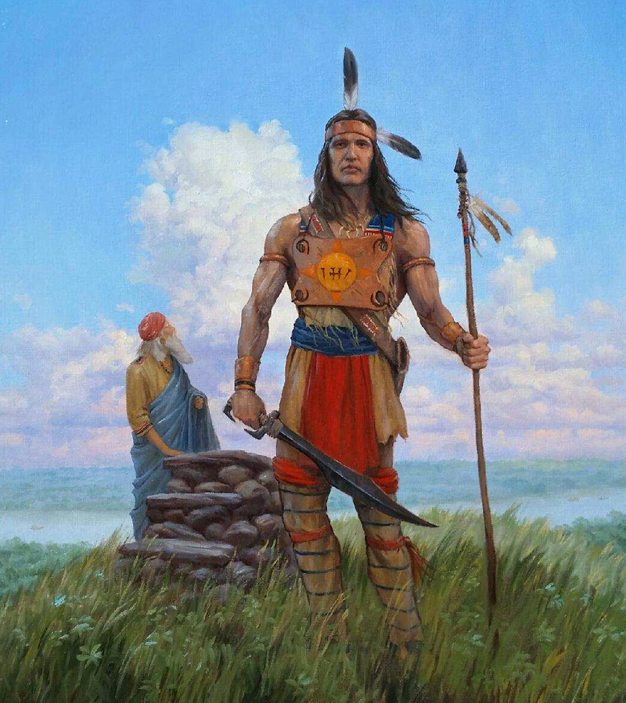
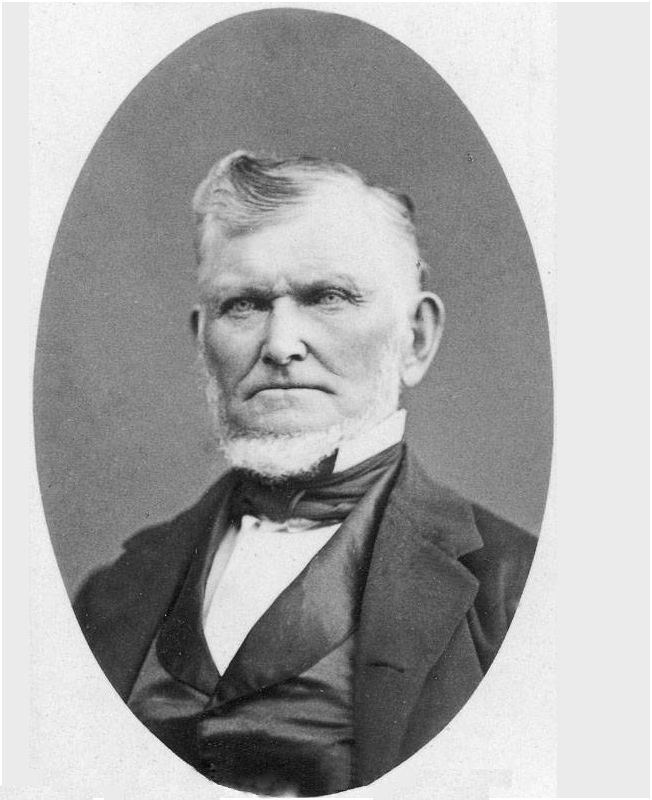


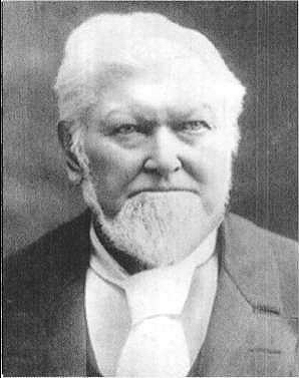
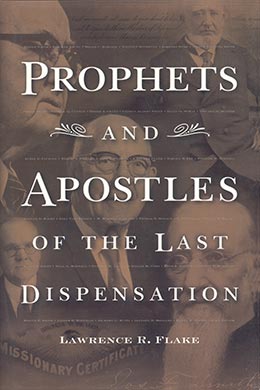
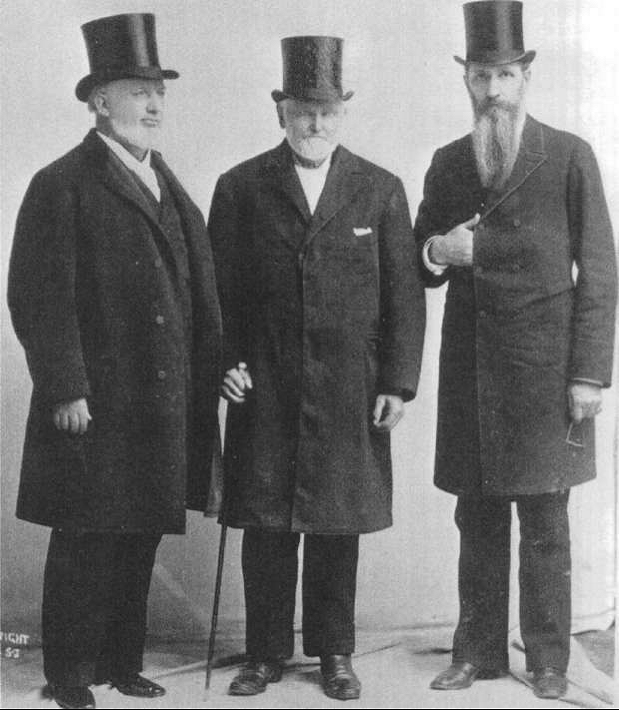


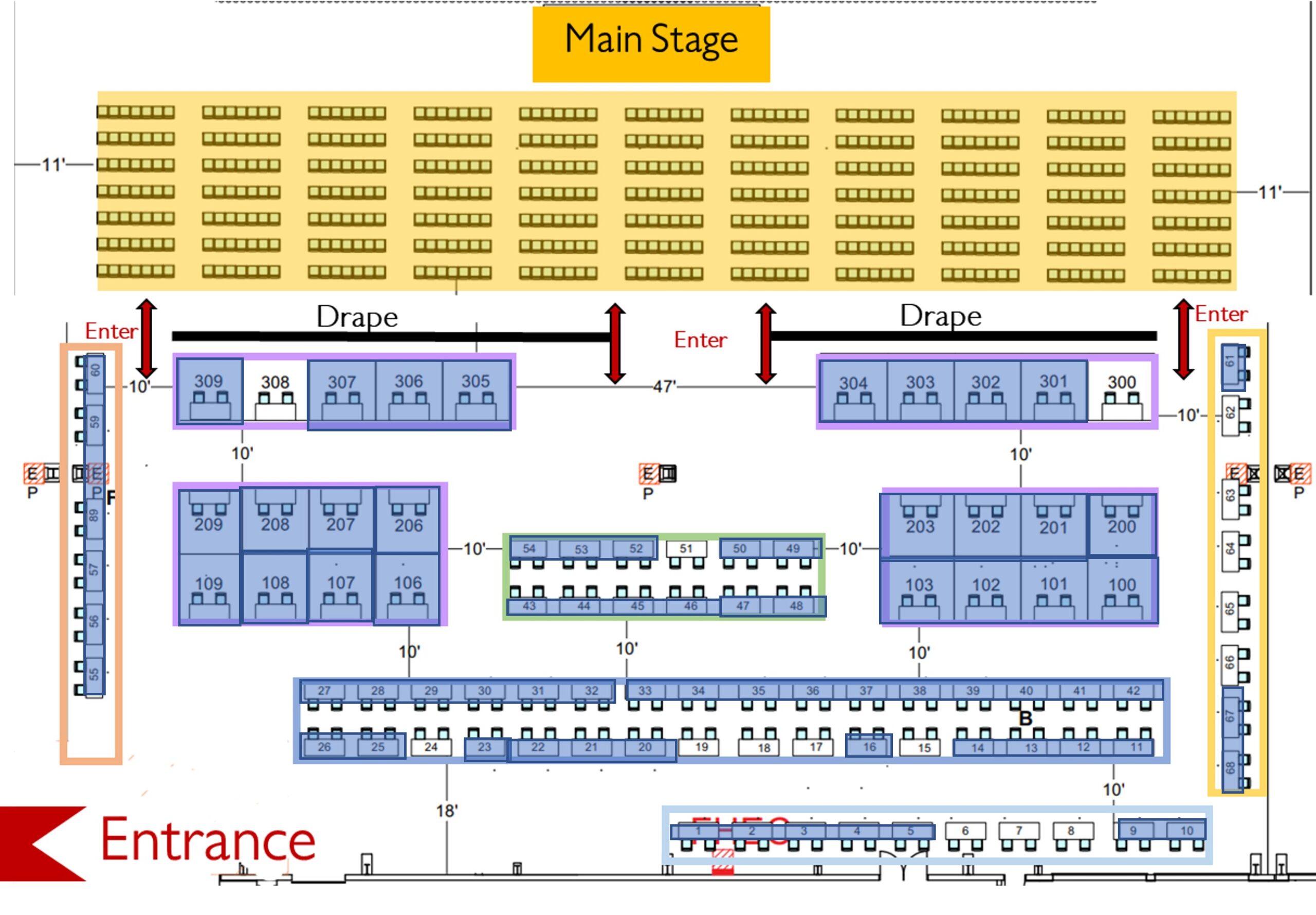 Set up as a Free People


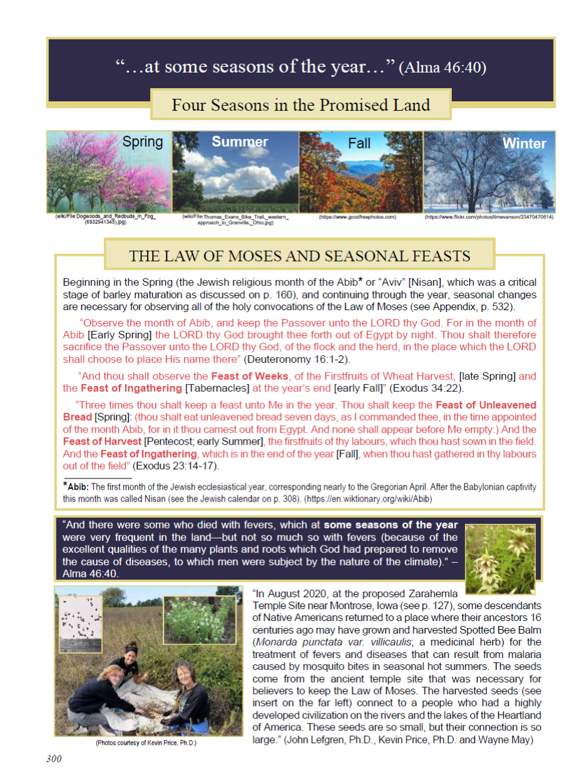

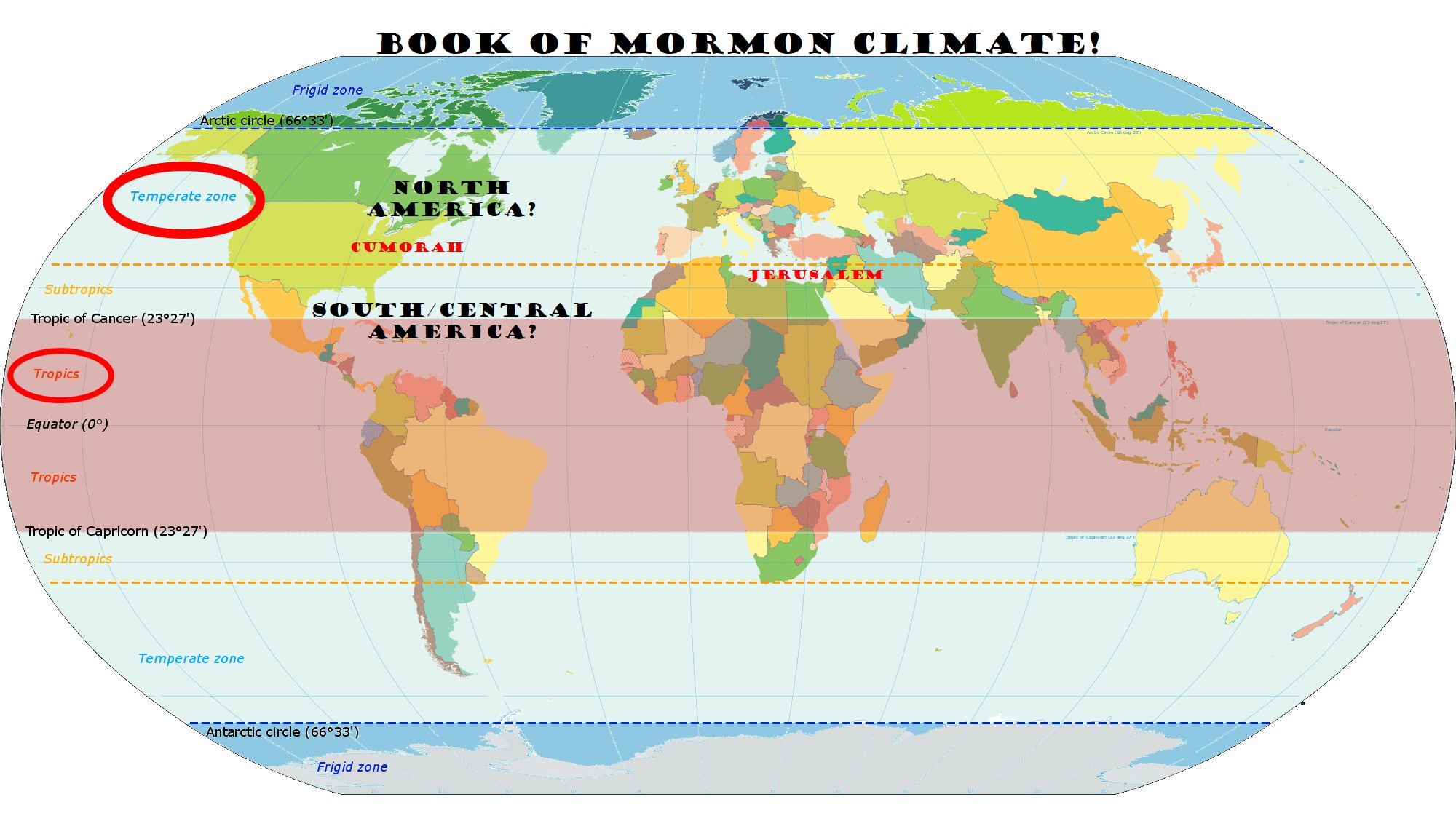


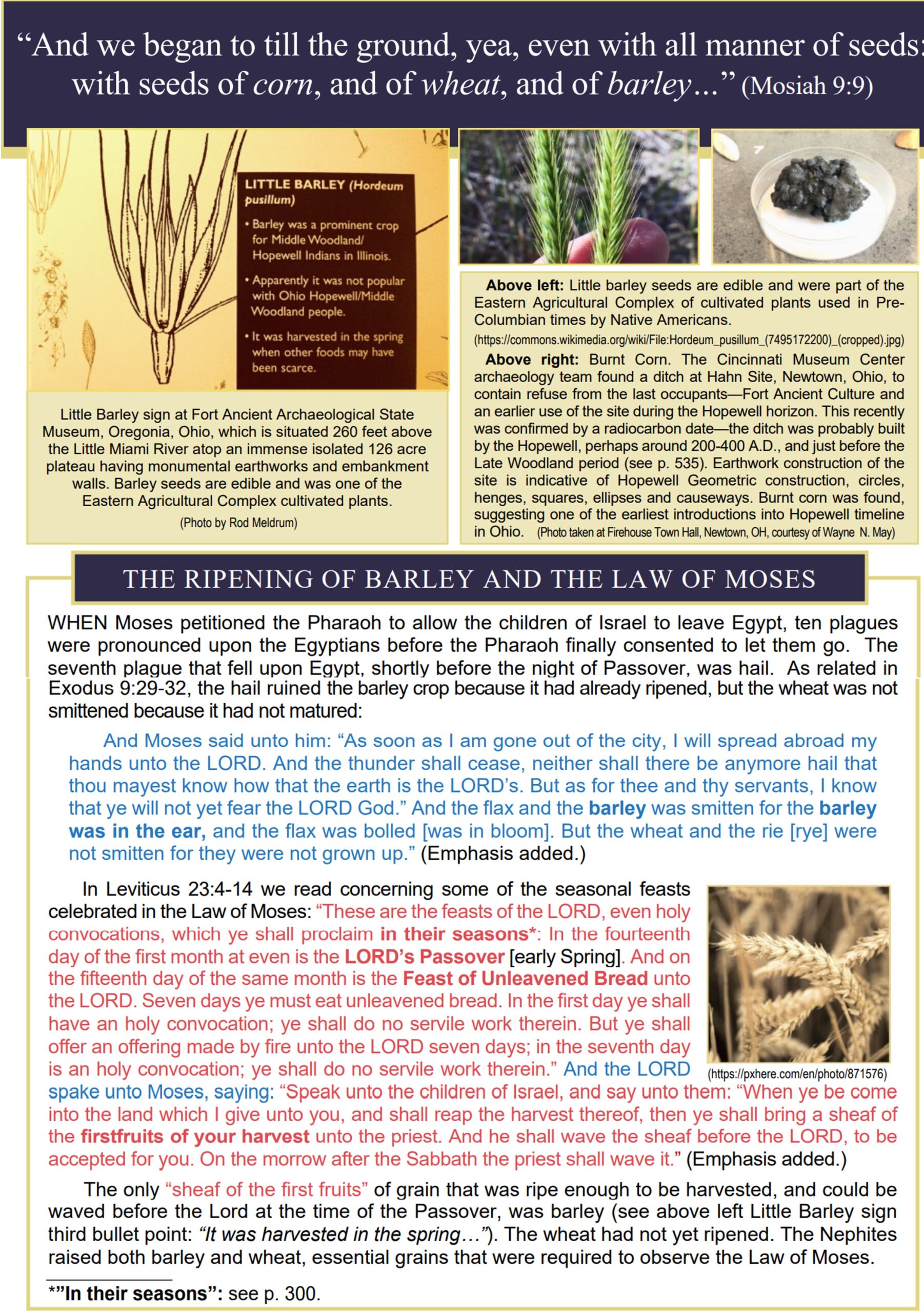 Not only this, but the proper seasons were required to practice the Law of Moses. In Mesoamerica there is very little change in seasons.
 Remember the most important symbolic animal in the Israelite culture is the Lamb, as in “the Lamb of God.” I have heard the Lamb is known as the only animal that will not resist its own death. That surely describes the Savior of the World.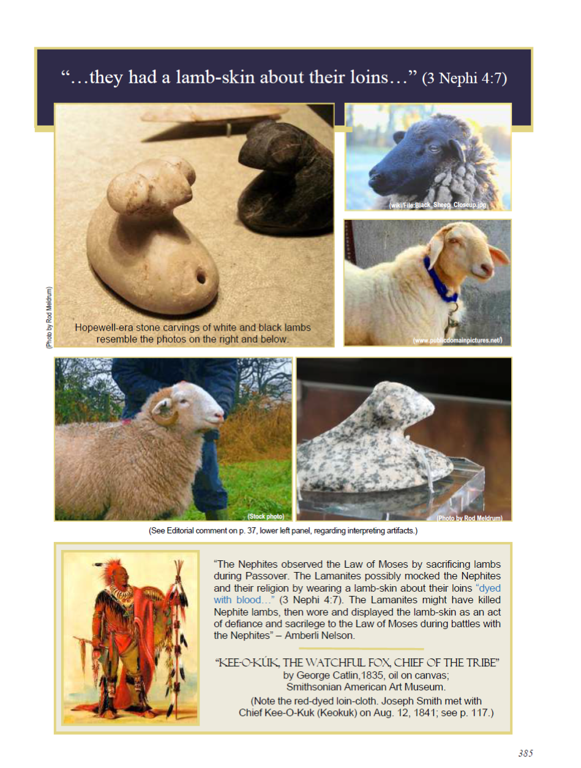
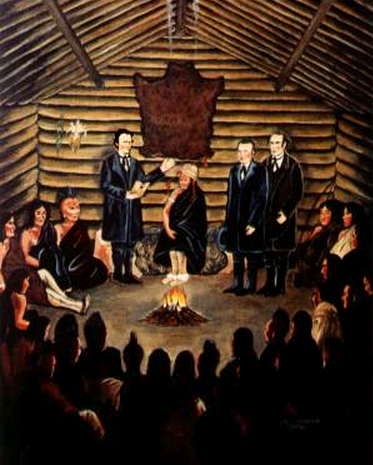 Mesoamerica did not have sheep or goats or bullocks or rams to practice the Law of Moses. North America did as Hugh Nibley states below.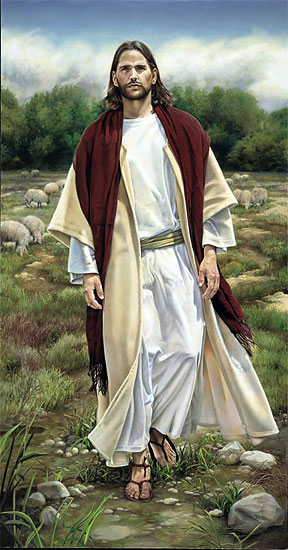

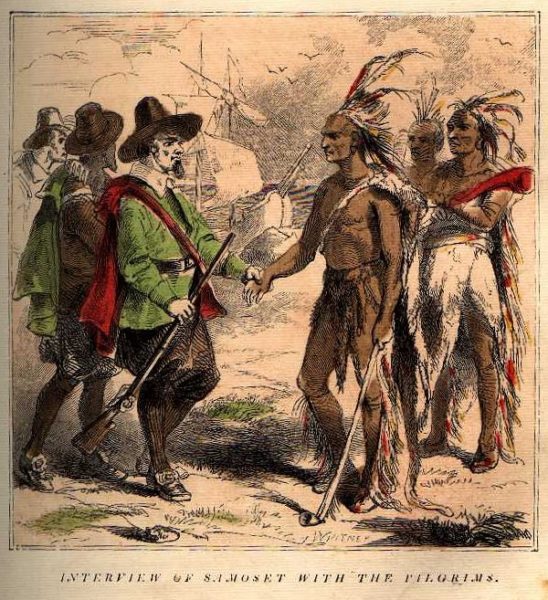
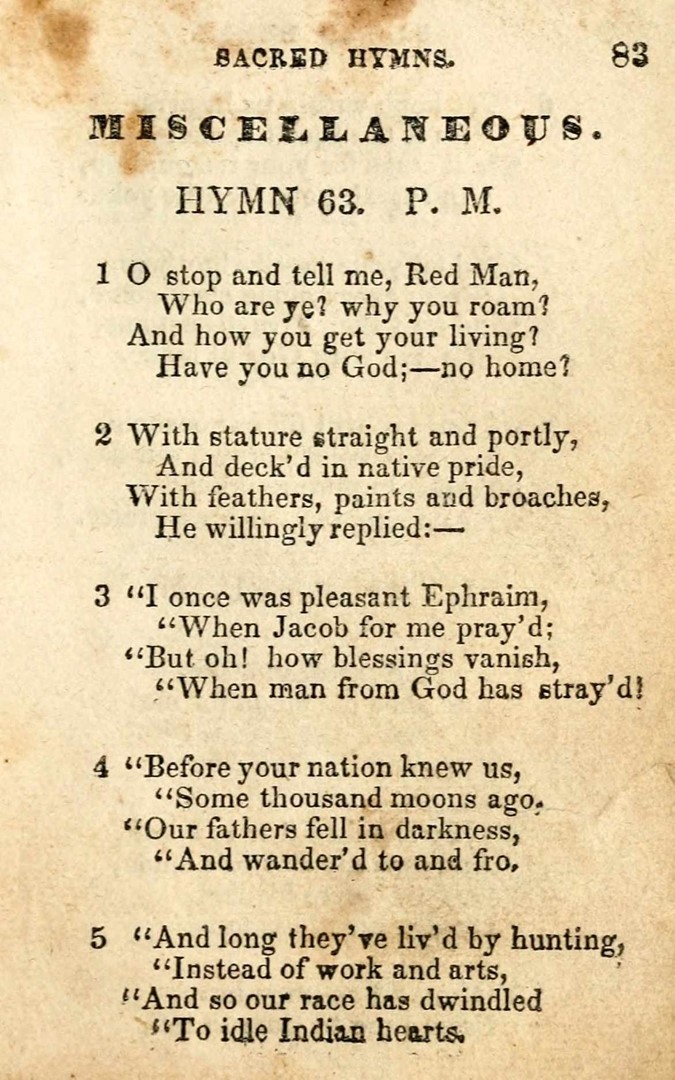


 On the great garrison road, near five miles westerly of the Platt, is a precious rivulet, called “Clear Creek,” along which the Indians camp, in hunting seasons, by scores.—This route to the garrison, from the Platt west, is timber land, and has fine appearance: in fact, from what I can learn, some of this section looks as rich and fertile as Jackson. At the distance of sixty or eighty rods from Clear Creek, as you come down upon the Missouri bottom, is a Jordan—like, deep sluggish stream, bridged, named “Bee Creek,” from the great quantities of bees that have been found in its woods. The Missouri bottom from this creek to the garrison, about three miles, is covered with an unparalleled phalanx of rushes, four or five feet high, presenting one of the stiffest pastures I ever beheld. The cattle live and fatten upon these rushes, year in and year out, without any other fodder. One Mr. Martin, who has a permit from the garrison, has the benefit of all this spontaneous feed, together with a farm and ferry at the Platt, a farm and ferry at the Missouri, opposite the garrison, and a boarding house in the garrison, or cantonment, more properly, an account of which will be given hereafter. This permission with the facilities, without money or price, gives him a chance to amass a fortune with little trouble, little competition, and in a little time.
 But to my subject. The last Congress, if I am not mistaken, extended the limits, jurisdiction and laws, of the territory of Michigan, to all “the district of country north of the State of Missouri, and west of the Mississippi,” so that the “far west,” or western world of territory, laid down on some of the maps, as the Missouri Territory, is now bounded, south by the Arkansas Territory; and Mexican States; west by the Rocky Mountains: north by the British line, as it shall be established according to the treaty of Ghent, cornering on the north—east, at the Lake of the Woods: and east by Michigan Territory, and the State of Missouri: comprising more land than did the old “Thirteen United States,” and may emphatically be called the heart of North America. It is about nine hundred miles long and eight hundred miles broad, containing, at estimates, four hundred and sixty millions, and eight hundred thousand acres, spread over thirteen degrees of north latitude, and embracing all the beauty and variety of season and climate, that may be found from the south line of Virginia, to the gulf of St. Lawrence! It is a great place, and every thing about it is GREAT. The Missouri, than which a large or more dreadful river, (with its muddy face always scowling,) is not on earth, rushes rapidly from near the 49th to about the 39th degree of north latitude, hurrying along with it, its numerous relatives, and tributaries, from the vast prairies, that lay spread out like an empire, and passes into the State of Missouri, as the President of rivers.


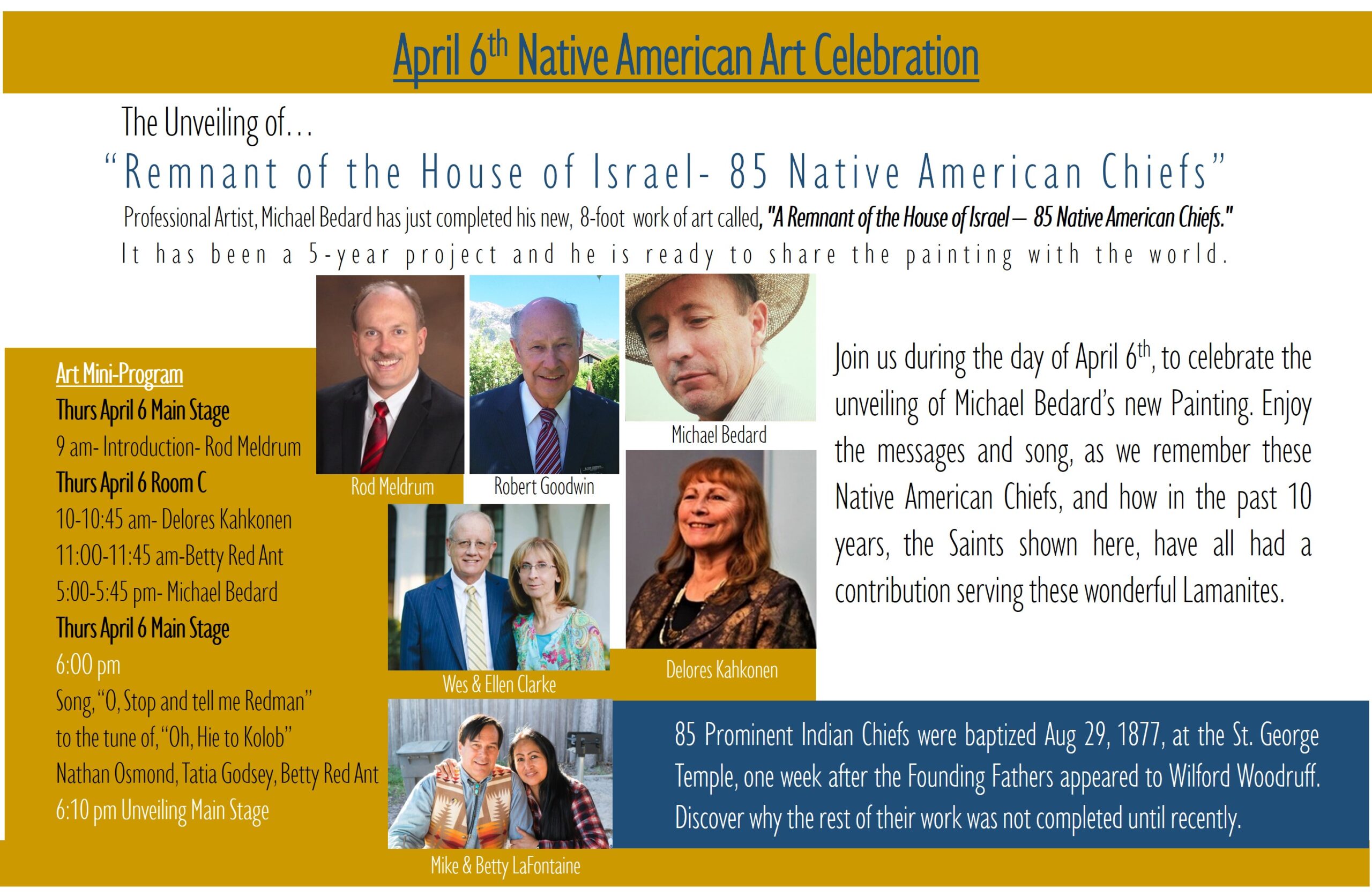
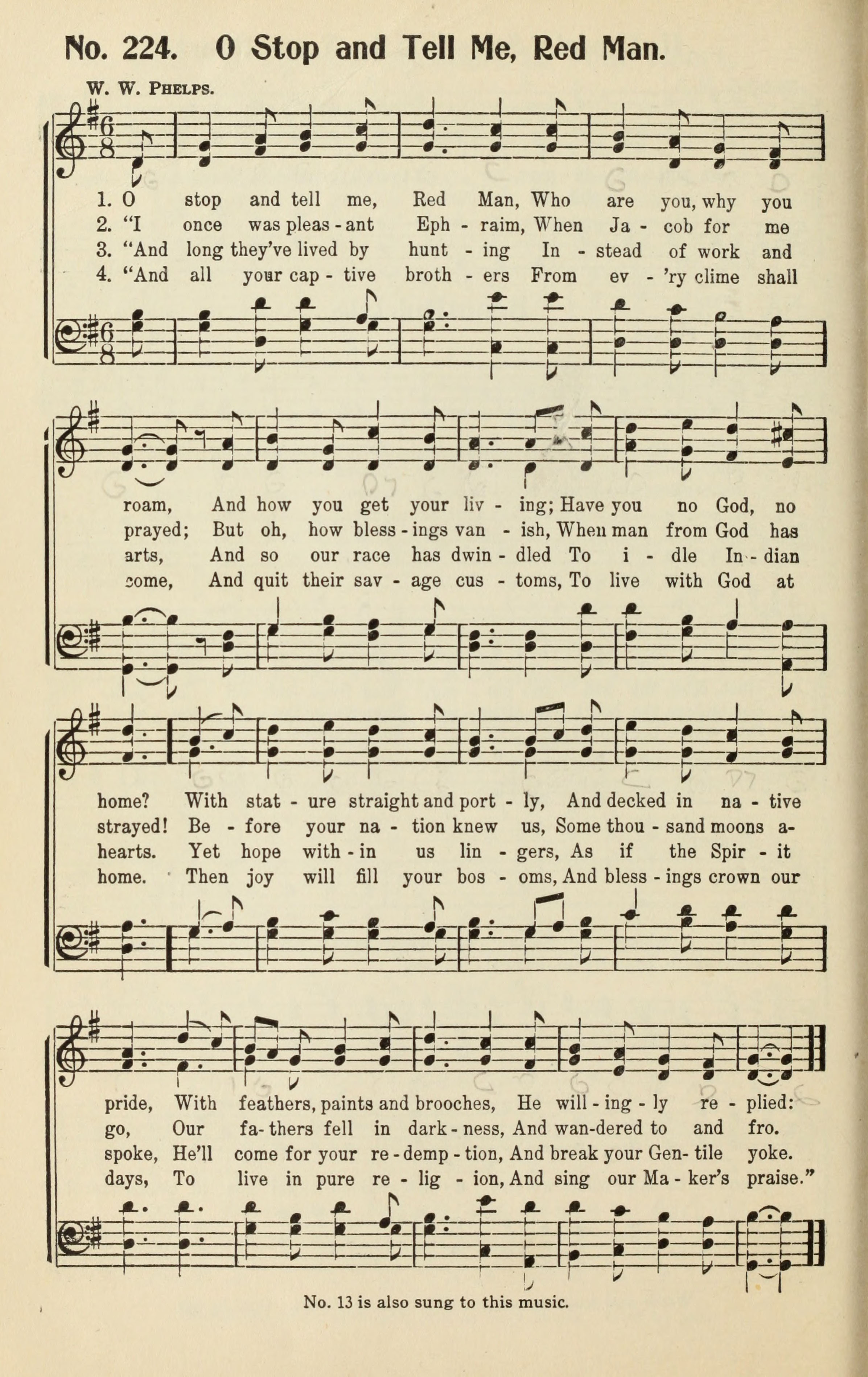


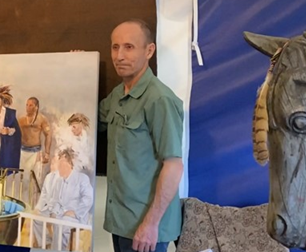


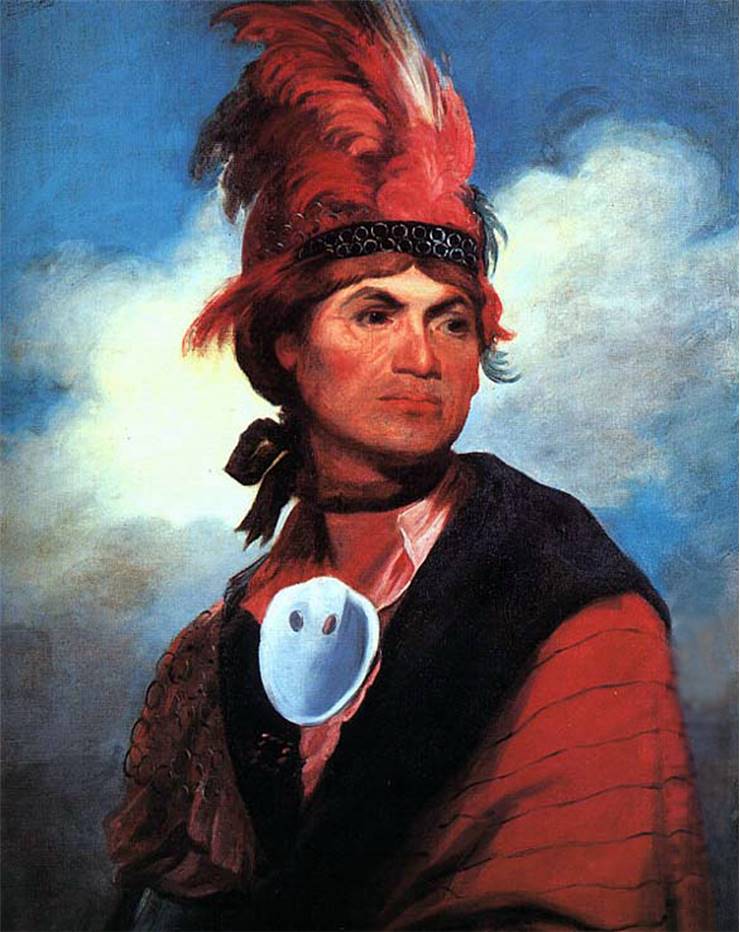 As a member of the Mohawk nation, Joseph Brant’s early life is connected to Sir William Johnson who was one of the most powerful men alive during the American Revolution. Sir William had not only married Captain Brant’s sister but also received hundreds of thousands of acres of land in exchange for his kindness towards the Mohawk Indians. Captain Brant’s trust in Sir William’s recommendation to support the English in the war led to his being known as a powerful enemy of the revolution, but despite Captain Brant’s reputation of terror, he was one of the most merciful enemies the revolutionaries could have ever hoped for. He spared and even saved the lives of many American captains, families, and individuals. During one particular raid, Captain Brant saw a victim give a Masonic signal and exclaimed, “Brother! you shall not die. I am a Mason and will protect you.” After the war, Captain Brant went on to translate the Gospel of John into the Mohawk language and build the first church in Upper Canada. He was a Native American Chief who loved not only his own life but also the lives of his neighbors.
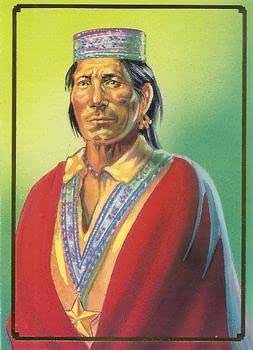 Seventeen years after the first Thanksgiving celebration with the Puritans, Chief Massasoit brought his two little boys to the governor of Plymouth and requested that they be given English names. The older was named Alexander and the younger, Philip after the ancient king who conquered Illyria, Thrace, and Greece. Ironically, Massasoit’s young Philip would one day attempt to conquer the very people who gave him his fierce name. As a loyalist, King Philip wanted more than anything to sustain the peace that his father had made with the early pilgrims, but the time soon came when the Puritans were more of a threat than an ally to his people. The English were seizing Indian weapons without just cause, taking land for practically nothing, and selling liquor that caused many a hardship on unsuspecting partakers. Any attempt to bring a dishonest white man to justice ended in a court that favored its own Puritan people. King Philip saw that his nation would perish if he did not make a stand against the settlers. His war lead to the destruction of 13 towns and the death of 600 men on the side of the English, but the entirety of the resisting Wampanoag nation was either killed, sold into slavery, or driven to the far West. King Philip himself was beheaded and cut into pieces while his wife and son were sold into slavery. He was a man who loved his nation more than life itself and died trying to protect his Wampanoag family.
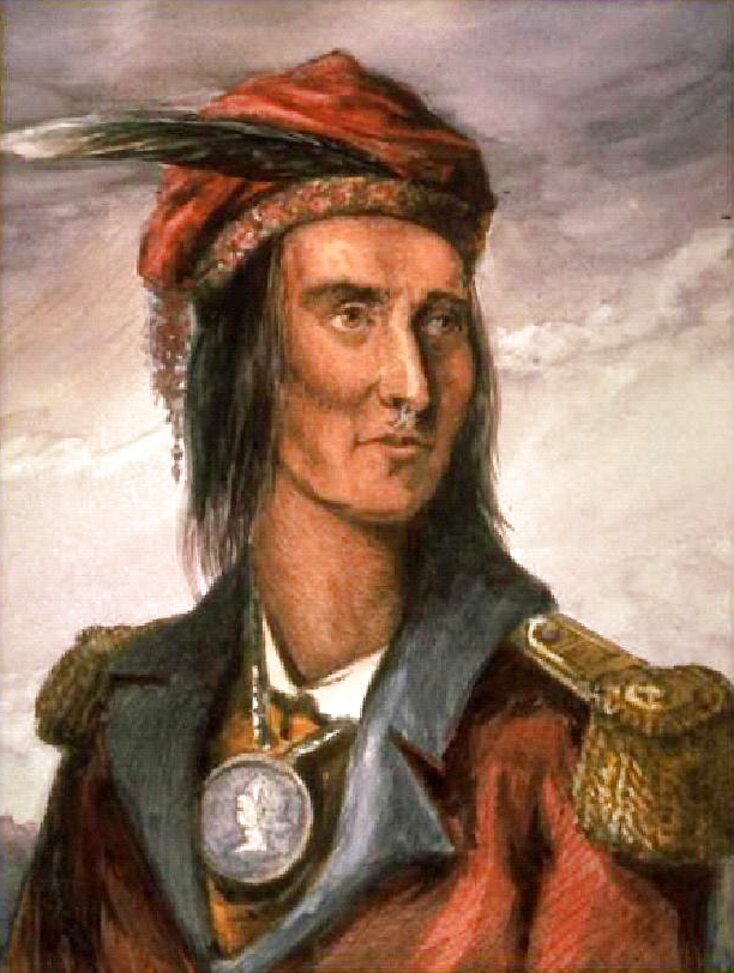 One day in Tecumseh’s mid-twenties, a few fellow Shawnee Indians challenged him to a hunting competition. Each competitor would have three days to kill as many deer as he could. Tecumseh responded, “I will return here within the period with twice as many deer as any of you.” The hunters returned at the end of the third day having killed 12 and 13 deer, but Tecumseh soon walked into the light of the evening campfire carrying 30 deerskins. The noble Shawnee was an ambitious young man and a friend to anyone he encountered including white settlers. Tecumseh’s life soon took a new path when his brother was directed by the Great Spirit to form a confederation and lead the remaining Native American tribes against the invading American settlers. Four years later, Tecumseh had united at least six tribes and recruited 1,600 warriors to aid the cause. He initially tried to keep peace by negotiating the return of 60 acres of Native American land along the Wabash river, but after General Harrison denied the request, the negotiation ended with Tecumseh’s promise that his forces would neither capture women or children nor torture any men taken as prisoners of war. The new confederation saw some success, but most of its warriors were killed in an attack by General Harrison while Tecumseh was visiting another tribe. The two war leaders soon met again in the war of 1812. Tecumseh was now a Brigadier General for Great Britain and had a reputation for saving prisoners from harsh treatment and scorning even English generals for unjust conduct. Tecumseh was courageous and noble to the very end when he was shot just after asking that his sword be given to his son who he loved so dearly.