All of us who chose to come to earth also have an opportunity to become a “True Seer of God.” As Brigham Young has asked, are we “able to withstand all of the false deceptions of the devil?” Have we rejected God and His Holy Priesthood? What would it be like for every worthy person to have a seer stone or an opportunity to see all in the past, present, and future? I look at it as a blessing to live for.
“Joseph Smith, Jr. said, every man who lived on the earth was entitled to a seer stone, and should have one, but they are kept from them in consequence of their wickedness.” – Prophet Brigham Young, “History of Brigham Young,” Latter-day Saints’ Millennial Star, v. 26, February 20, 1864
Joseph F. Smith also said, “These peep-stone men and women are inspired by the devil, and are the real witches” Make sure we understand the difference!
“The power of seership is one of the greatest gifts ever given to man; and the time is not far distant when every man who bears the Priesthood will be a seer. But it can only be when men have proved themselves able to withstand all of the false deceptions of the devil. Today the powers of crystal ball gazers, astrologers, ouija boards, etc., are abounding because men have forsaken or rejected the true seers of God.Thousands of people seek unto ‘wizards who peep and mutter’ etc., but they will not seek unto the living God. I can say to all the inhabitants of the earth that before what is called spiritualism was ever known in America, I told the people that if they would not believe the revelations that God had given, He would suffer the devil to give revelations that they–priests and people would follow after. . . I told the people that as true as God lived, if they would not have the truth they would have error sent to them, and they would believe it.” (Brigham Young, Des. News, June 18, 1871, p. 308) (See Revelation 2:17 and D&C 130:11)
“The place where God resides is a great Urim and Thummim. This earth, in its sanctified and immortal state, will be made like unto crystal and will be a Urim and Thummim to the inhabitants who dwell thereon, whereby all things pertaining to an inferior kingdom, or all kingdoms of a lower order, will be manifest to those who dwell on it; and this earth will be Christ’s. Then the white stone mentioned in Revelation 2:17, will become a Urim and Thummim to each individual who receives one, whereby things pertaining to a higher order of kingdoms will be made known; And a white stone is given to each of those who come into the celestial kingdom, whereon is a new name written, which no man knoweth save he that receiveth it. The new name is the key word.” D&C 130:9-11
“Brigham Young tells us a great thing. “I told the people that if they would not believe the revelations that God had given, He would suffer the devil to give revelations that they–priests and people would follow after. . . I told the people that as true as God lived, if they would not have the truth they would have error sent to them, and they would believe it.” It seems at many times we seek revelations from any source. We just want answers and we don’t take the time to determine which revelations come from God and which ones come from Satan. Our impatience and lack of faith in the Lord’s timing may be our downfall.
Once we receive revelation it is imperative to determine if that was meant just for you, just for your family or for someone to help them. We will not receive a revelation outside of our stewardship. This becomes the cause of great harm when we listen to others who have a great experience and misunderstand it, or the one giving the experience embellishes the story and makes money from publishing it to the world. Bruce R. McConkie as I recall said, “Them that know don’t tell, and them that tell, don’t know.” The Lord wants us to learn how to keep spiritual secrets sacred, as in the Temple.
SUPERSTITIOUS PRACTICES
by Joseph F. Smith.Improvement Era
Joseph F. Smith
“It was no uncommon thing for people of eastern nations, almost from time immemorial, to profess to hold communication with the spirit world through the medium of superstitious practices. There were magical formulae, lucky and unlucky days, incantations, horoscopes, and various other devices, and superstitious rites and practices through which magicians, astrologers, soothsayers, divines, wizards, witches, sorcerers, necromancers, conjurers, and enchanters, played upon the ignorance of their victims. It is, of course, impossible to tell what the secrets of their practices were, but it is safe to say that the power of a strong and cunning will over a weak one, was uppermost in their deceptions. The Children of Israel were forbidden to believe in these various classes of superstition, heathenism and idolatry, for they tended to draw men’s minds from God, the true source of knowledge and power. Says Isaiah: “And when they shall say unto you, Seek unto them that have familiar spirits, and unto wizards that peep, and that mutter: should not a people seek unto their God? for the living to the dead? To the law and to the testimony: if they speak not according to this word, it is because there is no light in them.”They were forbidden to seek wizards that “peep and mutter,” but were commanded to obey the law and the testimony of the prophets.
One would think that in the day in which we live the belief in witches and witchcraft no more exists, and that the counsel given to ancient Israel in this respect would be unnecessary to the Latter-day Saints, but apparently this is not the case. Word comes from a northern stake of Zion which indicates that in a certain settlement the belief in these things is fairly rampant, and a great deal of trouble and unnecessary annoyance have been given to the authorities of the stake and ward because of this absurd belief entertained by certain foolish old men and women of the ward.
It is needless to assert that to those who are intelligent, and not bound by old notions and superstitions, there is no truth in what people call witchcraft. Men and women who come under the influence of a belief therein are bewitched by their own foolish- ness, and are led astray by pretenders and mischief-makers who “peep and mutter.” It is really astonishing that there should be any to believe in these absurdities. No man or woman who enjoys the Spirit of God and the influence and power of the holy priesthood can believe in these superstitious notions; and those who do, will lose, indeed have lost, the influence of the Spirit of God and of the priesthood, and are become subject to the witchery of Satan, who is constantly striving to draw away the Saints from the true way, if not by the dissemination of such nonsense, then by other insidious methods.
One individual can not place an affliction upon another in the way that these soothsayers would have the people believe. It is a trick of Satan to deceive men and women, and to draw them away from the Church and from the influence of the Spirit of God, and the power of his holy priesthood, that they may be destroyed. These peep-stone men and women are inspired by the devil, and are the real witches, if any such there be. Witchcraft, and all kindred evils, are solely the creations of the superstitious imaginations of men and women who are steeped in ignorance, and derive their power over people from the devil, and those who submit to this influence are deceived by him. Unless they repent, they will be destroyed. There is absolutely no possibility for a person who enjoys the Holy Spirit of God to even believe that such influences can have any effect upon him. The enjoyment of the Holy Spirit is absolute proof against all influences of evil; you never can obtain that Spirit by seeking diviners, and men and women who “peep and mutter.” That is obtained by imposition of hands by the servants of God, and retained by right living. If you have lost it, repent and return to God, and for your salvation’s sake and for the sake of your children, avoid the emissaries of Satan who “peep and mutter,” and who would lead you down to darkness and death.
It is impossible for anyone possessing the spirit of the gospel and having the power of the holy priesthood to believe in or be influenced by any power of necromancy.
Joseph F. Smith in the Sacred Grove
My advice to the Saints is to so live that they may have the Spirit and influence of the Lord with them; for, having that influence, it is a wall of protection against all powers of evil that may seek an inroad into their hearts and thoughts. The possession of the Holy Spirit is a sure defense against evil thoughts, superstitions, ignorance, and the follies and machinations of evil disposed men and women. Every Latter-day Saint should so conduct himself that he may enjoy this Spirit, and there will be no danger of his being led away by the foolish nonsense that ignorance and superstition seek to implant in the minds of people concerning the existence of witches and witchcraft.
There is no danger to anyone in so-called witchcraft itself; the evil effect lies in the belief therein. The person who believes injures himself through fear and belief; no other person has power to injure him; it is himself who injures himself through the superstition of his own mind. In the Sandwich Islands this superstitious belief was very prevalent, years ago. They call it pule anaana, or the prayer of sorcery. It was no uncommon thing for a person who became beset with the thought that he was being “prayed to death” actually to wither away, and die. I knew a good woman, wife of a leading native Latter-day Saint whom I often visited, who one day became very ill. I asked what was the matter. She said she was being “prayed to death,” and she was actually seriously ill, and getting ready to die; so great was her fear and faith in what some evil-designing, but in himself impotent, person, had whispered about her. I told her it was all wrong, that she must not believe it; it was impossible; she must believe, on the contrary, that she would live, and be well. I labored with her in this way for some time, and she finally believed and was restored, and such nonsense never had power over her again. It was not so with a young native cook whom the missionaries employed. Some of the jealous natives, one day when we were off on a visit, brought him word that be was being “prayed to death,” and it so frightened him, and so great was his belief in this superstition, that he died within a week, and we were without a cook when we returned.
As Israel of old were enjoined to obey the law and the testimony given to them by Moses, so the Latter-day Saints are commanded to turn to the gospel law restored anew to them, and to live so that they may enjoy the Holy Spirit of promise. A sentiment against belief in the power of witchcraft, and all other evil things should be cherished among the Latter-day Saints, for persons who believe or express faith therein are in danger of losing the Spirit of God, and of f lacing themselves under the influence of the adversary whose footsteps lead to death.”
Joseph F. Smith.Improvement Era 5 (September 1902): 897,
“President Joseph F. Smith also weighed in on this divisive and pivotal discussion: no man or woman who enjoys the Spirit of God and the influence and power of the holy Priesthood can believe in these superstitious notions, and those who do, will lose, indeed have lost, the influence of the Spirit of God and of the Priesthood, and are become subject to the witchery of Satan . . . These peepstone-men and women are inspired by the devil . . . “ Improvement Era 5 (September 1902): 897, https://archive.org/details/improvementera0511unse/ page/896; emphasis added
“Have you noticed there are more and more people in the world who have been left to their own senses and take it upon themselves to be their own god or their own leader, or a member of their own cult?
Man has a tendency to want to find someone that they can idolize in the short term and then conquer or put down that person they idolized and take over his so called congregation.
See today the Rock Stars, Politicians, Sports Heroes, Dancers, Mathematicians, Scientists, Professors, Hollywood Celebrities’ and on and on. They all want to be the best in their field and if there is no God in the way, they can one day become the best in their little haven of happiness. Who wants God around to spoil our party? Why should we listen to Him and so they pretend God is not real. Satan encourages them to do anything, right or wrong so they have no one to answer to, so the evil in the world is climbing rapidly.
One other thing I have noticed is there are many great people in this world who are doing everything they can to follow God and love Him. They may call this a spiritual manifestation, or consciousness, or Father, or Christ, or my conscious, or someone whom I have an interconnectedness with, but they see God as something good that will lead them. I think we members of The Church of Jesus Christ of Latter-day Saints have a special calling to be sure and have all people whether good, evil, righteous, wrong or on the wrong track, teach them who the real Lord and Savior is and that His Book of Mormon is true. That opportunity is coming soon to spread that message to parts of the world never before reached in, Saudi Arabia, China, Iran and Israel. Won’t that be a wonderful opportunity?
Ark of The Church of Jesus Christ of Latter-day Saints
D&C 85:7. Why Are Individuals Still Claiming to Be the “One Mighty and Strong”?
Some modern people have created cults of their own, and among them are those who attempt to take refuge in section 85 of the Doctrine and Covenants.
“They endeavor to say that the Church has gone astray, that the leaders are no longer inspired, and that ‘one mighty and strong’ is needed to take over the affairs of the Lord. And without any evidence of modesty whatsoever on their parts, they themselves volunteer for the position.” (Mark E. Petersen, in Conference Report, Apr. 1973, p. 159; or Ensign, July 1973, p. 110.)
D&C 85:8. What Does It Mean to “Steady the Ark of God”?
This phrase refers to an incident during the reign of King David in ancient Israel. The Philistines had captured the ark of the covenant in battle but returned it when they were struck by plagues (see 1 Samuel 4–6). David and the people later brought the ark to Jerusalem in an ox cart, driven by Uzzah and Ahio. “And when they came to Nachon’s threshingfloor, Uzzah put forth his hand to the ark of God, and took hold of it; for the oxen shook it. And the anger of the Lord was kindled against Uzzah; and God smote him there for his error, and there he died by the ark of God” (2 Samuel 6:6–7; see vv. 1–11). The ark was the symbol of God’s presence, His glory and majesty. When first given to Israel, the ark was placed in the Holy of Holies in the tabernacle, and not even the priest was allowed to approach it. Only the high priest, a type of Christ, could approach it, and then only after going through an elaborate ritual of personal cleansing and propitiation for his sins. The scriptures teach that no unclean thing can dwell in God’s presence (see Moses 6:57). His presence is like a consuming fire (see Hebrews 12:29). Those who bear the vessels of the Lord must be clean (see D&C 133:5).
However well-meaning Uzziah’s intentions, he approached casually what could only be approached under the strictest conditions. He had no faith in God’s power. He assumed that the ark was in danger, forgetting that it was the physical symbol of the God who has all power. We cannot presume to save God and His kingdom through our own efforts.
“Uzzah’s offence consisted in the fact that he had touched the ark with profane feelings, although with good intentions, namely to prevent its rolling over and falling from the cart. Touching the ark, the throne of the divine glory and visible pledge of the invisible presence of the Lord, was a violation of the majesty of the holy God. ‘Uzzah was therefore a type of all who with good intentions, humanly speaking, yet with unsanctified minds, interfere in the affairs of the kingdom of God, from the notion that they are in danger, and with the hope of saving them’ (O.V. Gerlach).” (Keil and Delitzsch, Commentary, bk. 2: Joshua, Judges, Ruth, 1 and 2 Samuel, “Second Book of Samuel,” p. 333.)
This concept can be a difficult one to understand and obey. By the flesh we mostly feel Uzzah is justified because he wants to save and prevent physical damages to the ark. However the higher law is to not worry about the earthly things and realize that God already has a Spiritual plan to save the Ark or the Church or even our soul.
In modern revelation the Lord referred to this incident to teach the principle that the Lord does not need the help of men to defend his kingdom (see D&C 85:8). Yet even today there are those who fear the ark is tottering and presume to steady its course. There are those who are sure that women are not being treated fairly in the Church, those who would extend some unauthorized blessing, or those who would change the established doctrines of the Church. These are ark-steadiers. The best intentions do not justify such interference with the Lord’s plan. President David O. McKay said:
“It is a little dangerous for us to go out of our own sphere and try unauthoritatively to direct the efforts of a brother. You remember the case of Uzzah who stretched forth his hand to steady the ark. (See I Chron. 13:7–10.) He seemed justified, when the oxen stumbled, in putting forth his hand to steady that symbol of the covenant. We today think his punishment was very severe. Be that as it may, the incident conveys a lesson of life. Let us look around us and see how quickly men who attempt unauthoritatively to steady the ark die spiritually. Their souls become embittered, their minds distorted, their judgments faulty, and their spirits depressed. Such is the pitiable condition of men who, neglecting their own responsibilities, spend their time in finding fault with others.” (McKay, Gospel Ideals, p. 258.)
President John Taylor observed:
“We have more or less of the principles of insubordination among us. But there is a principle associated with the kingdom of God that recognizes God in all things, and that recognizes the priesthood in all things, and those who do not do it had better repent or they will come to a stand very quickly; I tell you that in the name of the Lord. Do not think you are wise and that you can manage and manipulate the priesthood, for you cannot do it. God must manage, regulate, dictate, and stand at the head, and every man in his place. The ark of God does not need steadying, especially by incompetent men without revelation and without knowledge of the kingdom of God and its laws. It is a great work that we are engaged in, and it is for us to prepare ourselves for the labor before us, and to acknowledge God, his authority, his law and his priesthood in all things.” (Taylor, Gospel Kingdom, p. 166.)
David O. McKay warned that unauthorized individuals who attempt to “steady the ark” die spiritually.
THE SACRED CHEROKEE ARK
by Danny (Deni Uguku” Troxell, Bird Clan, a Thunderbolt Cherokee descendant orf Cornblossom. Click here to visit his Aniyuntikwalaski (People of the Lightning and Thunder aka Chickamauga Cheerokee) website
Ta-Ka-E-Tuh said his people had very greatly degenerated from what they were in his early youth: and that many of the observances now kept up had been desecrated from solemn religious rites into mere scenes of revelry. The cause of this, as he said, was the capture, of the Delawares, of their religious deposit, (the interpreter called it the ark,) which contained the symbols of their worship. I inquired what were these symbols? He either could not, or would not, tell me. I feared they might be something like idols, … but he assured me the Cherokees had never worshipped idols, or any visible representation of God. When I told him of the nations that worshipped idols, he said they must be fools.
Reminiscences of the Indians, Cephas Washburn, 1869
But their (Hebrews) modes and objects of worship, differed very widely from those of the Americans (Cherokees) … p170
They are such strict observers of the law of purification, and think it so essential in obtaining health and success in war as not to allow the best beloved trader that ever lived among them, even to enter the beloved ground, appropriated to the religious duty of being sanctified for war; much less to associate with the camp in the woods, though he went (as I have known it to happen) on the same war design; – they oblige him to walk and encamp separate and by himself, as an impure and dangerous animal, till the leader has purified him, according to their usual time and method, with the consecrated things of the ark…
The Indian ark is of a very simple construction, and it is only the intention and application of it, that makes it worthy of notice; for it is made with pieces of wood securely fashioned together in the form of a square. The middle of three of the sides extend a little out, but one side is flat, for the conveniency of the person’s back who carries it. Their ark has a cover and the whole is made impenetrably close with Hickory splinters; the leader, and a beloved waiter, carry it by turns. It contains several consecrated vessels, made by super annuated (ghi ga hu) women, and of such various antiquated forms, as would have puzzled Adam to give significant names to each. The leader and his attendant, are purified longer than the rest of the company, that the first may be fit to act in the religious office of a priest of war, and the other to carry the awful sacred ark. All the while they are at war, the Hessitu, or “beloved waiter” feeds each of the warriors by an exact stated rule, giving them even the water they drink, out of his own hands, lest by intemperance they should spoil the supposed communicative power of their holy things, and occasion fatal disasters to the war camp. In speaking of the Indian places of refuge for the unfortunate, I observed, that if a captive taken by the reputed power of the beloved things of the ark, should be able to make his escape into one of these towns, or even into the winter house of the Archi-magus, he is delivered from the fiery torture, otherwise inevitable. It is also highly worthy of notice, that they never place the ark on the ground, nor sit on the bare earth while they are carrying it against the enemy. On hilly ground where stones are plenty, they place it on them: but in level land upon short logs, always resting themselves on like materials. Formerly, when this tract was the Indian Flanders of America, as the French and all their red Canadian confederates were bitter enemies to the inhabitants, we often saw the woods full of such religious war- reliques. p 168-169
…their strict purity in their war camps; that Opae, “the leader”, obliges all during the first campaign they make with the beloved ark, to stand, every day they lie by, from sun-rise to sun-set and after a fatiguing day’s march, and with scanty allowance, to drink warm water imbitttered with rattle-snake-root very plentifully, in order to be purified – that they have also as strong a faith of the power and holiness of their ark as the Israelites ascribing the superior success of the party to their stricter adherence to the law then the other and after they returned home hang it on the leaders war pole. p170
The ark is said to be so sacred and dangerous to be touched, either by their own, sanctified warriors, or the spoiling enemy, that they durst not touch it for any reason. It is not to be meddled with by anyone except the war chief and his waiter under the penalty of incurring great evil. Nor would the most inveterate enemy touch it in the woods for the same reason. If their war expedition failed then they said it was because of the vicious conduct of some of the followers of the beloved ark… p170
*A gentleman who was at the Ohio, in the year 1756, assured me he saw a stranger there very importunate to view the inside of the Cherokee ark, which was covered with a drest deerskin and placed on a couple of short blocks. An Indian sentinel watched it armed with a hickory bow and the brass pointed arrows and he was faithful to his trust for finding the stranger obtruding to pollute the supposed sacred vehicle, he drew an arrow to the head and would have shot him through the body had he not suddenly withdrawn; the interpreter, when asked by the gentleman what it contained, told him there was nothing in it but a bundle of conjuring traps. p170
When they have finished their fast and purifications, they set off, at the fixed time, be it fair or foul, firing their guns, whooping, and hallooing, as they march. The war-leader (savanoko) goes first, carrying the holy ark: he (or she) soon strikes up the awful and solemn song … The rest follow in one line … now and then sounding the war whoo-whoop, to make the war-leader’s song the more striking …” Adair’s History of the American Indian, James Adair, London 1775
Buttrick: Antiquities p.12- refers to the ark being covered with a deerskin “to be set up when they rested and carried when they journeyed.”
Note added by a 7th great grandson of The war-leader Savanoko:
It was the ONLY duty of the Cherokee Oukah to travel to each Cherokee town annually and to read The Law contained in The Ark. He only wore white, lived in a stone house, traveled in a sedan chair wherever he went, and his feet were never allowed to touch the ground… all indicating that he observed ritual purity from corpse contamination whichwas required of a levitical priest.http://americancherokeeassociation.com/cherokee-hebrew-roots-connection/cherokee-ark.htm
Ark of the Covenant
The Ark of the Covenant is one of the greatest unsolved mysteries of antiquity. The story of the sacred ark is familiar to many, yet the enigmatic subject is seldom discussed or dissected by the modern theologians of religious studies.
What Is The Ark of the Covenant? (from Wikipedia.com)
The Ark of the Covenant (Hebrew: אָרוֹן הַבְּרִית ʾĀrôn Habbərît, modern pron. Aron Habrit), also known as the Ark of the Testimony, is a chest described in the Book of Exodus as containing the Tablets of Stone on which the Ten Commandments were inscribed. According to some traditional interpretations of the Book of Exodus, Book of Numbers, and the Letter to the Hebrews, the Ark also contained Aaron’s rod, a jar of manna and the first Torah scroll as written by Moses; however, the first of the Books of Kings says that at the time of King Solomon, the Ark contained only the two Tablets of the Law. According to the Book of Exodus, the Ark was built at the command of God, in accordance with the instructions given to Moses on Mount Sinai. God was said to have communicated with Moses “from between the two cherubim” on the Ark’s cover.
Where Did The Ark Come From?
According to the Book of Exodus, Yahweh (God) came to Moses during his 40-day stay upon Mount Sinai and instructed him to build a sacred ‘box’ made of shittim wood to house the divine Tablets of Stone, which were the Ten Commandments (Exodus 19:20; 24:18). The prophet of Yahweh was given the pattern and furnishings required of the Ark; Moses employed Bezalel and Oholiab to construct the divine chest and built it according to the Creator’s detailed and specific instructions (Exodus 31). The Ark was placed in a special tent known as the Tabernacle, when it was not being carried across the wilderness during the 40 year Hebrew exodus. A description of the Ark can be found in the following chapters of Exodus: 25, 26, 27.
What Was The Purpose of the Ark?
As mentioned above, God instructed Moses to build a sacred box to store the divine Tablets of Stone, that were written by the hand of Yahweh himself, for safe keeping. The Hebrew priests became the vanguard of the Ark, starting with Aaron (brother of Moses) and the first high priest of the Israelite nation. When the Israelites, led by Joshua who was leading the exodus toward the Promised Land, arrived at the banks of the River Jordan, the Ark was carried in the lead preceding the people. During the crossing, the river grew dry as soon as the feet of the priests carrying the Ark touched its waters, and remained so until the priests—with the Ark—left the river after the people had passed over. As a memorial for this great miracle, twelve stones (representing the twelve tribes of Israel) were taken from the River Jordan at the place where the priests had stood (Joshua 3 and 4).
Is this anything unlike the Lord instructing Joseph to have Alvin build him a box to store the Gold Plates, or the Lord having Moroni build a box out of cement to store the plates and the Urim and Thummim in, or a place that the Brother of Jared could hide the plates to be found by Limhi later? That which is sacred is to be protected, or kept out of sight.
According to the narrative of the Battle of Jericho, the Ark was carried around the city once a day for seven (7) days, preceded by the armed men and seven (7) priests sounding seven (7) trumpets of rams’ horns (Joshua 6:4-15). On the seventh day, the priests sounding the trumpets of rams’ horns before the Ark marched around the city seven (7) times and, with a great shout, Jericho’s wall fell down and the Israelites took the city (Joshua 6:16-20).
After the defeat at Ai, Joshua lamented before the Ark (Joshua 7:6-9). When Joshua read the Law to the people between Mount Gerizim and Mount Ebal, they stood on each side of the Ark.
In retrospect, the main purpose of the Ark of the Covenant was to not only protect the Israelites, but for the Israelites to give the respect due to their Great Creator.
Where Was The Ark Located?
After a short stay in Gilgal, the Ark was moved to Shiloh by Joshua, not long after the settlement of the Israelites in Canaan, during Samuel’s apprenticeship (1 Sam. 3:3). The Ark remained in the Tabernacle at Shiloh until the time of Eli, between 300 and 400 years (Jeremiah 7:12), when it was carried into the field of battle. The Ark was taken by the Philistines (1 Samuel 4:3-11) who subsequently sent it back after retaining it for seven (7) months (1 Sam. 5:7, 8) because of the unfortunate events said to have transpired. For further information about the capture of the Ark by the Philistines, please visit Philistine captivity of the Ark.
The Philistines, on the advice of their diviners, returned the Ark to the Israelites, accompanying its return with an offering consisting of golden images of the tumors and mice [wherewith they had been afflicted]. The Ark was set in the field of Joshua the Beth-shemesh (1 Samuel 6:1-15). Out of curiosity the men of Beth-shemesh gazed at the Ark; and as a punishment, seventy of them were smitten by the Lord (1 Samuel 6:19). The Bethshemites sent to Kirjath-jearim to have the Ark removed (1 Samuel 6:21); and it was taken to the house of Abinadab, whose son, Eleazar, was sanctified to keep watch over it. Kirjath-jearim remained the abode of the Ark of the Covenant for twenty years.Under Saul, the Ark was with the army before he first met the Philistines, but the king was too impatient to consult it before engaging in battle… hence the capture of the Ark by the Philistines. In 1 Chronicles 13:3 it is stated that the people did consult the Ark in the days of Saul.
During the early reign of King David, he removed the Ark from Kirjath-jearim, but abandoned it before entering Zion. Uzzah, one of the drivers of the cart whereon the Ark was carried, put out his hand to steady the Ark, and was smitten by God for touching it. David, in fear, carried the Ark aside into the house of the Obed-edom the Gittite and there it stayed three (3) months (2 Samuel 6:1-11; 1 Chronicles 13:1-13). When King David learned that God had blessed Obed-edom, he had the Ark brought to Zion by the Levites. The Levites were appointed to minister before the Ark (1 Chronicles 16:4). David’s plan of building a temple for the Ark was halted at the advice of God (2 Sam. 7:1-17; 1 Chron. 17:1-15; 28:2, 3). The Ark was with the army during the siege of Rabbah (2 Sam. 11:11); and, when David fled from Jerusalem at the time of Absalom’s conspiracy, the Ark was carried along with him until he ordered Zadok the priest to return it to Jerusalem (2 Sam. 15:24-29). For further information about the return of the Ark to King David’s possession, please visit: Ark of the Covenant in Zion
King Solomon worshipped before the Ark after his dream in which God promised him wisdom (1 Kings 3:15). During the construction of Solomon’s Temple, a special inner room, named Kodesh Hakodashim (Holy of Holies), was prepared to receive and house the Ark (1 Kings 6:19). When the Temple was dedicated, the Ark was placed in the inner holy room (1 Kings 8:6-9) and there it remained for over the next three hundred years. It is written, when the priests emerged from the holy place after placing the Ark there, the Temple was filled with a cloud, “for the glory of the Lord had filled the house of the Lord” (1 Kings 8:10-11; 2 Chron. 5:13, 14)
What Happened to the Ark?
In 586 BC, the Babylonians destroyed Jerusalem and Solomon’s Temple. However, there is no record of what became of the Ark in the Books of Kings and Chronicles. But, the 3rd Book of Ezra (1 Esdras) suggests that the Babylonians: “…took all the holy vessels of the Lord, both great and small, and the ark of God, and the king’s treasures, and carried them away into Babylon.” (1 Esdras 1:54) In Rabbinic Literature, the final disposition of the Ark is disputed. Some Rabbis hold that it must have been carried off to Babylon, while others claim that it must have been hidden lest it be carried off into Babylon and never brought back. According to the Jewish book of Second Maccabees and the Greek text in the Septuagint, at the beginning of chapter 2: The records show that it was the prophet Jeremiah who, …. prompted by a divine message … gave orders that the Tent of Meeting and the ark should go with him. Then he went away to the mountain from the top of which Moses saw God’s promised land. When he reached the mountain, Jeremiah found a cave-dwelling; he carried the tent, the ark, and the incense-altar into it, then blocked up the entrance. Some of his companions came to mark out the way, but were unable to find it. When Jeremiah learned of this, he reprimanded them. ‘The place shall remain unknown’, he said, ‘until God finally gathers his people together and shows mercy to them. The Lord will bring these things to light again, and the glory of the Lord will appear with the cloud, as it was seen both in the time of Moses and when Solomon prayed that the shrine might be worthily consecrated.’ (II Maccabees 2:4-8.) Note: The “mountain from the top of which Moses saw God’s promised land” would be Mount Nebo, located in what is now Jordan.
In the New Testament of the Christian Bible, the Ark is mentioned in Hebrews 9:4 and Revelation 11:19 and states that the Ark contained “the golden pot that had manna, and Aaron’s rod that budded, and the tablets of the covenant.” (Hebrews); and, says the prophet saw God’s temple in heaven opened, “and the ark of his covenant was seen within his temple.” (Revelation). But it does not enlighten the reader about what actually happened to the Ark.
In Sura 2:248, of the Islamic Qur’an, the Children of Israel, at the time of Samuel and Saul, were given back the Tabut E Sakina (the casket of Shekhinah) which contained remnants of the household of Musa (Moses) and Harun (Aaron) carried by angels which confirmed peace and reassurance for them from their Lord. The Qur’an states: “And (further) their Prophet said to them: “A Sign of his authority is that there shall come to you the Ark of the Covenant, with (an assurance) therein of security (Sakina) from your Lord, and the relics left by the family of Moses and the family of Aaron, carried by angels. In this is a symbol for you if ye indeed have faith.” The Islamic scholar Al Baidawi mentioned that the sakina could be Tawrat, the Books of Moses. According to Al-Jalalan, the relics in the Ark were the fragments of the two tablets, rods, robes, shoes, mitres of Moses and the vase of manna. According to most Muslim scholars, the Ark of the Covenant has a deep religious basis in Islam, and Islam gives it special significance. A Shia sect of Muslims believe that it will be found by Mahdi near the Qiyamah (end of times) from Lake Tiberias.
For further information about the Islamic history of the Ark, please visit Qisas Al-Anbiya (The Stories of the Prophets).
Current Theoretical Locations of the Ark…
There are a few nations that claim to possess the Ark of the Covenant today. The Ethiopian Orthodox Church, in Axum, not far from the border with Eritrea, claims to hold the Ark of the Covenant, or Tabot. The sacred chest is currently kept under guard in a treasury near the Church of Our Lady Mary of Zion and is used [occasionally] in ritual processions. Replicas of the Axum Tabot are kept in every Ethiopian church, each with its own dedication to a particular saint, the most popular of these include Mary, George and Michael.
The Lemba people of South Africa and Zimbabwe have claimed that their ancestors carried the Ark south, calling it the ngoma lungundu (“voice of God”), eventually hiding it in a deep cave in the Dumghe mountains, their spiritual home. On 14 April 2008, in a UK Channel 4 documentary, Tudor Parfitt, taking a literalistic approach to the Biblical story, described the research and theories of his claim. He says that the object described by the Lemba have several attributes similar to the Ark. It was of similar size, was carried on poles by priests, was not allowed to touch the ground, was revered as a voice of their God, and was a weapon of great power used to sweep enemies aside.
In his book, The Lost Ark of the Covenant (2008), Parfitt also suggests that the Ark was taken to Arabia following the events depicted in the Second Book of Maccabees, and cites Arabic sources which maintain it was brought in distant times to Yemen.
French author Louis Charpentier insisted that the Ark was taken to Chartres Cathedral by the Knights Templar. In 2003, author Graham Phillips hypothetically claimed that the Ark was taken to Mount Sinai in the Valley of Edom by the Maccabees. Phillips concluded it remained there until the 1180s, when Ralph de Sudeley, the leader of the Templars found the Maccabean treasure at Jebel al-Madhbah, returned home to his estate at Herdewyke in Warwickshire, England and taking the treasure with him
Several modern authors of recent times have theorised that the Ark was taken from Jerusalem to the village of Rennes-le-Château in Southern France. Karen Ralls has cited Freemason Patrick Byrne, who believes the Ark was moved from Rennes-le-Château at the outbreak of World War I to America
The Ark of the Covenant was said to have been kept in the Basilica of St. John Lateran, surviving the pillages of Rome by Genseric and Alaric I but lost when the basilica burned. ~ ~ ~ ~ ~ ~ ~ ~ ~ ~ ~ ~
In the Book of Jeremiah, it is referenced by the prophet Jeremiah, who [speaking in the days of King Josiah] prophesied a future time, possibly the end of days, when the Ark will no longer be talked about or be made again: “And it shall be that when you multiply and become fruitful in the land, in those days – the word of the LORD – they will no longer say, ‘The Ark of the Covenant of the LORD’ and it will not come to mind; they will not mention it, and will not recall it, and it will not be used any more.” – Jeremiah 3:16 Rashi comments on this verse that “The entire people will be so imbued with the spirit of sanctity that God’s Presence will rest upon them collectively, as if the congregation itself was the Ark of the Covenant.”
Yet the question still remains… What really happened to the sacred Ark of the Covenant and where is it today?
“In those days when the Cherokee were a God-loving people, living in peace among themselves, they lived as one people, dwelling in half-moon shaped council houses. They had gone from living in caves to living in log-cabins. They still kept the sacred records of metal, some of which had come across the ocean waters with them, and others which they had continued keeping and making, scribing upon them as had been done before by the leaders of the People. They, too, had possession of the Ark of the Covenant, which they also had brought with them from their place of origin, existing across the eastern waters.” A SPECIAL REPORT on the RELIGIOUS KNOWLEDGE of the CHEROKEE INDIANS By: J. Murray Rawson
“At the site of an ancient city on the West Bank, archaeologists are hunting for evidence of the tabernacle that once housed the Ark of the Covenant.”
“The tabernacle was destroyed by the Philistines in 1050 B.C., Stripling told Fox News, around the same time that they briefly captured the Ark of the Covenant from the Israelites in a battle nearby. The Ark, however, was soon back in the hands of the Israelites.”
“While Shiloh’s link to the Ark of the Covenant is fascinating, Stripling notes that it was subsequently housed in a number of locations, where other tabernacles were built. “Later, the tabernacle was set up in other places, but we assume that it was rebuilt, reconstructed.”
Who are the Nephites, Jacobites, & Zoramites and the Lamanites, Lemuelites, and Ishmaelites?
16 Nevertheless, my work shall go forth, for inasmuch as the knowledge of a Savior has come unto the world, through the testimony of the Jews, even so shall the knowledge of a Savior come unto my people— 17 And to the Nephites, and the Jacobites, and the Josephites, and the Zoramites, through the testimony of their fathers— 18 And this testimony shall come to the knowledge of the Lamanites, and the Lemuelites, and the Ishmaelites, who dwindled in unbelief because of the iniquity of their fathers, whom the Lord has suffered to destroy their brethren the Nephites, because of their iniquities and their abominations. 19 And for this very purpose are these plates preserved, which contain these records—that the promises of the Lord might be fulfilled, which he made to his people; 20 And that the Lamanites might come to the knowledge of their fathers, D&C 3:16-20
They “among the American Indians and the Polynesians who are mostly the descendants of the Lamanites, is also a sprinkling of the descendants of the Nephites who may have escaped” D&C 3:19 D&C Commentary Page 22
FIRST PRESIDENCY 1923- ABOUT BOOK OF MORMON GEOGRAPHY
The First Presidency in 1923 of Heber J Grant, Charles W. Penrose and Anthony W. Ivins and again in 1950 The Publication Committee of Joseph Fielding Smith, Harold B. Lee and Marion G. Romney, assigned by Pres George Albert Smith, approved some historical information from Church History that has much to do with Book of Mormon Geography. The last edition of the commentary was also published in 1978 by Deseret Book and approved by Pres Spencer W. Kimball, N. Eldon Tanner and Marion G. Romney. Other BofM geography items about the Cave at Cumorah and the visit of Nephi to Joseph in the wagon headed to Fayette, are found in my other blog here.
Between 1913 and 1916 Hyrum Smith of the Quorum of the 12 Apostles along with Elder Janne M. Sjodahl articulated a commentary of the Doctrine of Covenants which was approved by these two Presidencies as accurate and approved history as contained in the D&C Commentary of 1923 and 1950.
[The Doctrine and the Covenants Commentary] “A doctrinal and exegetical commentary on the book of scripture, known as the “Doctrine and Covenants” (the “D&C”), sacred to the Church of Jesus Christ of Latter-day Saints” The Doctrine and the Covenants Commentary by Hyrum M. Smith (Picture left)
Exegetical Definition:
The message finds its sole source in Scripture. The message is extracted from Scripture through careful exegesis. The message preparation correctly interprets Scripture in its normal sense and its context. The message clearly explains the original God-intended meaning of Scripture. The message applies the Scriptural meaning for today.
The Doctrine and Covenants Containing Revelations Given To Joseph Smith, Jr., The Prophet, with an Introduction and Historical and Exegetical Notes By Hyrum M Smith, of the Council of the Twelve Apostles. And Janne M. Sjodahl.
“Commentaries on the Doctrine and Covenants follow the pattern of many biblical commentaries, supplying the historical context, that is, the time, circumstances, and situation of the revelations. In the most recent (1981) edition of the Doctrine and Covenants, headnotes for each section have been added or enlarged, with a brief synopsis of the historical setting. Additional notes and explanations are provided by the various separately published commentaries discussed here. Commentaries written by members of the Quorum of the Twelve Apostles are given special consideration. Others are recommended as helps to the membership of the Church to provide historical insight to their study of the scriptures.
An early (1916) and still useful one-volume commentary was written by Hyrum M. Smith, a member of the Quorum of the Twelve Apostles, and Janne M. Sjodahl. Doctrine and Covenants Commentary contains the text of the Doctrine and Covenants and gives historical background and commentary for each section. It is extensively footnoted with exegetical notes. The volume was later supplemented and expanded under the direction of Joseph Fielding Smith, Harold B. Lee, and Marion G. Romney of the Quorum of the Twelve in 1950.” Doctrine and Covenants Commentaries Author: Garrett, H. Dean
Preface To the Revised Edition of the Doctrine and Covenants Commentary
In the preface to the 1950 Revised Edition of the Doctrine and Covenants Commentary, we find the following:
“While laboring in the European Missions, Elder Hyrum M. Smith, of the Council of the Twelve Apostles, and Elder Janne M. Sjodahl, were impressed very fervently with the desire to prepare a commentary dealing with the revelations given by the Lord to the Prophet Joseph Smith. In their odd moments, when not otherwise engaged, during the years 1913-1916, these brethren carried on a careful research and study and prepared this volume which has met with popular favor.
For a number of years, the commentary has been out of circulation, and because of the increasing demand for it, the First Presidency instructed the Publication Committee to take the matter in hand and revise the volume ready for a re-printing. This the committee has done and after many months of labor has fulfilled the assignment given.
Since the time of the first publication many world-wide events of the greatest importance have occurred many of which have a bearing on the fulfillment of the prophecies found in the Doctrine and Covenants; these have been noted. The Doctrine and Covenants is a sacred volume of Scripture, and in the revision and preparation of the book, the members of the committee have felt their weakness in commenting on these sacred commandments and revelations coming from the Lord.”
The Urim and Thummim WAS Returned to Joseph
Most of the Mesoamerican theorists and revisionist historians say that when Joseph had the Urim and Thummim taken from him because of losing the 116 pages, it was never returned and Joseph then used the peep stone. Wrong!
I quote: “During this period Joseph made a short visit to his parents in Manchester, New York, and then returned again to Pennsylvania. “Immediately after my return home,” he recounted, “I was walking out a little distance, when, behold, the former heavenly messenger appeared and handed to me the Urim and Thummim again for it had been taken from me in consequence of my having wearied the Lord in asking for the privilege of letting Martin Harris take the writings, which he lost by transgression and I inquired of the Lord through it, and obtained the following [section 3]” (Smith, History of the Church, 1:21-22).
So in July 1828 Joseph received Section 3 of the D&C as a Revelation with the use of the very Urim and Thummim which had been lost. Why then would Joseph use a peep stone.? He wouldn’t. He received the Urim and Thummim again to continue to translate.
The Lord tells Joseph to continue the translation here. “Nevertheless, it is now restored unto you again; therefore see that you are faithful and continue on unto the finishing of the remainder of the work of translation as you have begun.” D&C 10:3
Annotated Book of Mormon Information about a page 117?
After Joseph finished translating the original Book of Mormon Plates that were found in the stone box, Joseph asked if he should re translate the 116 lost pages and he was told, “Now, behold, I say unto you, that because you delivered up those writings which you had power given unto you to translate by the means of the Urim and Thummim, into the hands of a wicked man, you have lost them. And you also lost your gift at the same time, and your mind became darkened. Nevertheless, it is now restored unto you again; therefore see that you are faithful and continue on unto the finishing of the remainder of the work of translation as you have begun. D&C 10:1-3
“And now, because the account which is engraven upon the plates of Nephi is more particular concerning the things which, in my wisdom, I would bring to the knowledge of the people in this account— Therefore, you shall translate the engravings which are on the plates of Nephi, down even till you come to the reign of king Benjamin, or until you come to that which you have translated, which you have retained.* And behold, you shall publish it as the record of Nephi; and thus I will confound those who have altered my words. D&C 10:40-42
*Retained: Joseph apparently retained some of what he translated with Martin Harris; i.e., page 117. This may be Words of Mormon 1:12-18, which flow into Mosiah 1. The current Mosiah 1 was originally Mosiah 3; i.e., the first chapter and a half of Mosiah was included on the 116 pages that were stolen.” Annotated Book of Mormon by David Hocking and Rod Meldrum page xxxi (Also, see Appendix, “Two Sets of Plates,” p. 557.)Blog here
Quotes from D&C Commentary 1950
D&C Sec 3:19 Page 22 Commentary
The First Presidency in 1923 of Heber J Grant, Charles W. Penrose and Anthony W. Ivins and again in 1950 The Publication Committee of Joseph Fielding Smith, Harold B. Lee and Marion G. Romney, assigned by Pres George Albert Smith, approved some historical information from Church History that has much to do with Book of Mormon Geography. The last edition of the commentary was also published in 1978 by Deseret Book and approved by Pres Spencer W. Kimball, N. Eldon Tanner and Marion G. Romney.
Notice what D&C 3:19 says: “And for this very purpose are these plates preserved, which contain these records—that the promises of the Lord might be fulfilled, which he made to his people;”
Notice what the Commentary from these inspired Prophets says:
(See Left) 19. For this very purpose)The Book of Mormon plates were preserved and translated in order that all these should be brought to a knowledge of the Savior. It may be concluded, then, that among the American Indians and the Polynesians who are mostly the descendants of the Lamanites, is also a sprinkling of the descendants of the Nephites who may have escaped the general destruction.D&C Sec 3 page 22 Doctrine and Covenants Commentary by Sjodahl and Smith
So the plates were preserved and translated in order that the Lamanites should be brought to a knowledge of the Savior and we understand that among the American Indians, not the South American or the Central American Indians, but the “American Indians” which lived right in the area of the Heartland during the restoration, were Lamanites.
Who were some of the Lamanites?. Those in the Pacific among the Maori’s.
Mormon missionaries in Māori village
“Polynesians are descendants of Lehi and blood relatives of the American Indians.” Peterson, Mark E., General Conference, April 1962.
“I would like to say to you brethren and sisters from New Zealand, you are some of Hagoth’s people, and there is no perhaps about it!” Joseph F. Smith As written in Robert E. Parsons, “Hagoth and the Polynesians,
“The best known and most important prophecy, as far as most New Zealand members of the Church are concerned, is that from Paora Potangaroa. In March 1881, Elder Matthew Cowley reported, a large convention was held among the Ngatikahungunu tribe. Many Maori chiefs assembled at Te Ore Ore, near Masterton, to discuss political, social, and religious problems. The established churches were well represented, but the chiefs shared a feeling of discontent about the lack of unity among them. Why, the natives asked, were there so many different churches within the bounds of Christianity?
Kamariera Te Hau Takiri Wharepapa
Which one should the Maoris join so that unity could again be restored among them? After considerable debate and discussion, the chiefs decided to place the questions—specifically “Which of the churches is the church for the Maori race? Which of them should we join?”—before the most respected and wisest chief among them. This was Potangaroa, who, when asked the questions, answered with one word, “Taihoa,” which means “wait.” He retired to his own home and meditated, fasted, and prayed about the problem for three days. When he returned to the convention, he addressed his people, saying: “My friends, the church for the Maori people has not yet come among us. You will recognize it when it comes.Its missionaries will travel in pairs. They will come from the rising sun. They will visit with us in our homes. They will learn our language and teach us the gospel in our own tongue. When they pray they will raise their right hands.”Potangaroa then asked Ranginui Kingi to write his words as he continued to answer the questions which had been put to him. He called the transcription of his words “A covenant for remembering the hidden words which were revealed by the Spirit of Jehovah to Paora Potangaroa.” We again quote from Elder Cowley, who translated the document:
“First, this is the day of the fulness (1881).” Brother Cowley points out that later that year the fulness of the gospel was taken to the Maoris. Actually, President Bromley and his colleagues first visited a Maori village, Orakei, on March 6, 1881, ten days before the “covenant” was given to the Maoris at Te Ore Ore. “Second, the year 1882 would be the year of the ‘sealing’ (or the year they would learn the sealing ordinances). Third, the year 1883 will be the year of ‘the honoring’—of ‘great faith’—as it is written: ‘render therefore to all their dues: tribute to whom tribute is due; custom to whom custom; fear to whom fear; honor to whom honor.’ (Rom. 13:7)” In that year the Maoris began to honor the true God by rendering their dues to him and entering The Church of Jesus Christ of Latter-day Saints. Members of the Ngatikahungunu tribe, especially, began to enter the Church in large numbers. The Te Ore Ore Branch was organized on December 16, 1883.The document concludes in these words: “This covenant is to be remembered by the generations which follow after us. And the fruits of that which is set forth above [in the covenants] are—we are the lost sheep of the House of Israel. [We will learn of] the scepter of Judah; of Shilo; of the king of peace; of the day of judgment; of the kingdom of heaven; of the sacred church with a large wall surrounding; of the increase of the race; of faith, love, peace, patience, judgment, unity. All this plan will be fulfilled by the people of Ngatikahungunu Tribe during the next forty years. “March 16, 1881Ranginui Kingi ”New Era 1981 by by R. Lanier BritschSee my blog here:https://www.bofm.blog/maoris-you-are-some-of-hagoths…/
Proof of the Existence of the Plates and the Urim and Thummim
D&C Sec 5 Page 30
(See bottom of picture right) “31. Except Thou do this] Unless the Prophet followed the instructions here given, the plates and the sacred instrument would be taken from him.
This is a remarkable Revelation. It furnishes an irrefutable proof that the Prophet Joseph actually had the plates. He promised that Martin Harris, on certain conditions, which he could easily comply with, should obtain a view of them. Such a promise, if the records had not been in existence, would have been impossible to redeem. It would have been mere buffoonery. The fraud would have been detected at once. The promise was repeated a few months later (Sec 17) to two more witnesses. Joseph had the plates and the Urim and Thummim, and this Revelation proves the truth of that assertion.” D&C Sec 5 Page 30
A Clear Message- NO SEER STONE
“Cowdery Wrote the Entire Book (Save a few pages)…by the means of the Urim and Thummim, or, as it is called by that Book, ’Holy Interpreters‘…”
D&C 6 Page 32-33
“According to his own statement at Council Bluffs on October 21st, 1848, Oliver Cowdery wrote the entire Book (save a few pages) as the words fell from the lips of the Prophet, “as he translated it by the gift and power of God, by the means of the Urim and Thummim, or, as it is called by that Book, ’holy interpreters.’” So that the testimony of Oliver Cowdery was as firm in 1848, two years before his death as it was in 1829, when he first accepted the gospel, although he had been outside the Church for eleven years. When Joseph and Oliver had been engaged on the Book of Mormon a few days, this Revelation was received.” So section 6 of the D&C was also received through the Urim and Thummim along with many other sections.
This is proof itself that Joseph could not only translate using the gift and power of God using the Urim and Thummim, but he did receive revelation as well. If you also look at section 7 in the preface it says, “Revelation given to Joseph Smith the Prophet and Oliver Cowdery, at Harmony, Pennsylvania, April 1829, when they inquired through the Urim and Thummim as to whether John, the beloved disciple, tarried in the flesh or had died. The revelation is a translated version of the record made on parchment by John and hidden up by himself.” D&C 7: Preface. It says “they inquired“, did Oliver and Joseph both see this revelation using the Urim and Thummin? Who knows!
In the preface to the Original Edition, we find the following:
Before laying aside the pen, I may be permitted to express my grateful acknowledgment of the services rendered by Elder Orson F. Whitney and Elder Joseph Fielding Smith, of the Council of the Twelve, who, together with Elder Hyrum M. Smith, carefully read the manuscript of this Commentary before it was given to the printer; also to Elder George F. Richards, of the Council of the Twelve and President of the European mission, and to Elders John E. Cottam, George F. Richards, Jr., and Junius F. Wells, fellow-laborers int he British mission, for most valuable assistance.
Liverpool, May 1, 1919. J. M. Sjodahl.
Janne M. Sjodahl Deseret News Press, 1923, 1932. Reprinted in 1950, 1951, 1960, 1961, 1962, 1971, 1978.
Remember several other BofM geography items about the Cave at Cumorah and the visit of Nephi to Joseph in the wagon headed to Fayette, are found in my other blog here. A North American Setting fot the Book of Mormon is everywhere.
“Certain lands were given to Israel for an inheritance in time and in eternity. America is the land of Joseph; it was the home of Nephite Israel, who were of Joseph, for a thousand years, and it is the headquarters of the Church in this final dispensation in which the church and kingdom of God are in the lands of Ephraim.” 1985 – Elder Bruce R. McConkie
President Monson believes the United States is the Promised Land of the Book of Mormon. Why do Mesoamericanists believe the entire continent of the Americas is the Promised Land. You mean Greenland, Guatemala, and the Northwest Territories are the Promised Lands? I love all of God’s children in the entire world and God loves us all the same, but seriously??? If a person from Greenland comes to the United States legally as a citizen that person can also live in the Promised Land? I’m sure Greenland has muc beauty on its own, but it is not the Promised Land, is it? Please respondents be respectful. I am not belittling other lands. I’m just making a factual statement. Why is the United States and Israel the two Promised Lands? Because Christ said so. See 3 Nephi 20:22,29 By Rian Nelson
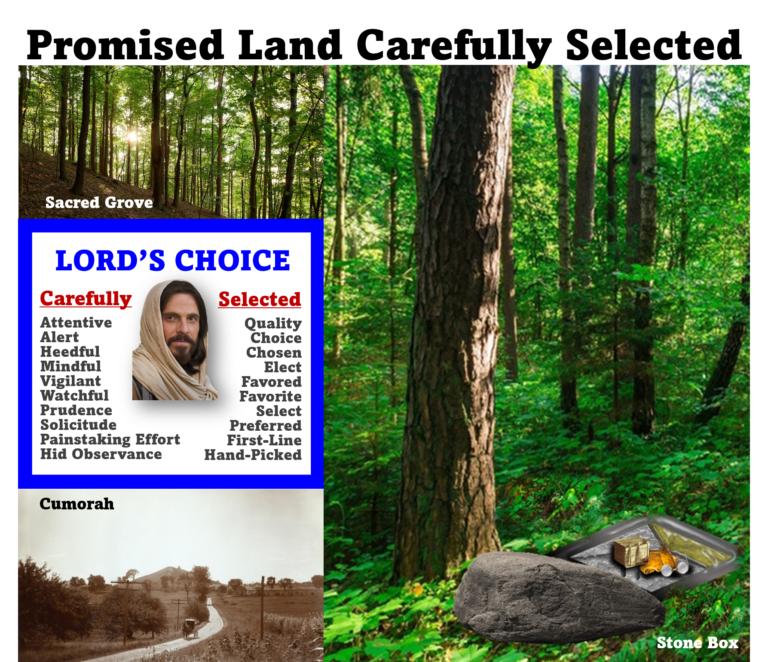
“The Lord gave a divine promise to the ancient inhabitants of this favored country (the United States): ‘Behold, this is a choice land, and whatsoever nation shall possess it shall be free from bondage, and from captivity, and from all other nations under heaven, if they will but serve the God of the land, who is Jesus Christ” (Ether 2:12). “Our Heavenly Father inspired the leaders of…the United States of America, that they might together, under His direction, having been raised up by God for the purpose, establish the Constitution of this country and…Bill of Rights, that by the year of our Lord 1805 [there would be] a climate where our Heavenly Father could send into this period of mortality a choice spirit who would be known as Joseph Smith, Jr.” Teachings of Thomas S. Monson by Thomas S. Monson 2011 (Ordained an Apostle, 1963; ordained President of the Church, 2008) See my blog here about “Carefully Selected” Land
A good friend just asked me, “Am I creating situations in my own home that allow my family to feel the spirit?” “Do I feel and recognize the spirit even though I am unable to meet with others in church each Sunday?”
Just over a year ago President Nelson prophetically shifted the focus of the church to home based worship and study. We were all encouraged to study and teach in our own homes, allowing our testimony to grow because of spiritual experiences had at home. Little did any of us know that just 1 year after these changes were made, the church would be cancelled all together. Now, what have we learned as the Covid scare is relenting? I believe it was a government scare that was for money and control, but were we able to learn from it?
I invite all of us to seek spiritual moments in our homes even when the outside world seems to be all messed up. I hope we can all recognize and treasure some sacred moments of spiritual growth constantly. I promise that as we seek the spirit in our home, we will find peace of mind and a deep sense of appreciation for everything we have. I testify that President Nelson is a prophet, seer, and revelator who holds and properly exercises all the priesthood keys. And because he does this, we can all benefit from the blessings and guidance of the Holy Ghost in our personal lives at home. Personal revelation is very possible.
“No one can ever take away a witness borne to your heart and mind about what is true.”
By Ken Corbett
You don’t have to wonder about what is true. You do not have to wonder whom you can safely trust. Through personal revelation, you can receive your own witness that the Book of Mormon is the word of God, that Joseph Smith is a prophet, and that this is the Lord’s Church. Regardless of what others may say or do, no one can ever take away a witness borne to your heart and mind about what is true.I urge you to stretch beyond your current spiritual ability to receive personal revelation, for the Lord has promised that “if thou shalt [seek], thou shalt receive revelation upon revelation, knowledge upon knowledge, that thou mayest know the mysteries and peaceable things —that which bringeth joy, that which bringeth life eternal.” Revelation for the Church, Revelation for Our Lives by President Russell M. Nelson
Evil is Alive and Well
With so many wrong ideas and evil opportunities in the world, how can our personal revelation keep us on Pres Nelson’s “Covenant Path”? There are so many apostates wanting to see the Church fail and to catch the Prophets telling lies, I would say that the Gadianton’s are alive and deceiving many, even the elite.
A ridiculous billboard selling anti-Mormon ideas
“Korihor is alive and well at Mormon Stories Podcast. It seems that modern-day apostasy has found a new home at a well funded website dubbed “Mormon Stories Podcast.” As Hugh Nibley once said, if you want to write an anti-Mormon book, just get an old one, dust it off and take a bit of a different slant and republish it under a new name. Now hiding in plain site, the website pretends to be faith-affirming, but then all of the old charges that the Book of Abraham was a ruse or that Joseph Smith dabbled in the occult surface without even an effort to show both sides of an argument. Several my blogs and many articles by the Joseph Smith Foundation have answered many of these phony charges but the website ignores all that. Yes, Korihor is alive and well and now has a website. The ironic thing is that it is a fulfillment of prophecy that “calumny will defame…” But, we know how it ends. In the meantime, “Mormon Stories” continues its deception after the order of Korihor. And, it is well funded. Unfortunately, money talks.”
Mormon Stories is WRONG. They are selling you you a bill of goods. This gospel is true and you need to follow President Russell M. Nelson who speaks for the Lord Jesus Christ!
Evil Teachings of Today
You will find many other people and organizations who mean well but hide behind certain little lies. They love the Church and believe they are teaching truth, but after you study and pray you get a different feeling. For example the Interpreter Foundation just released their movie called “Witnesses”, it was nicely done, the acting was wonderful and I felt the spirt when the witnesses kept their faith in the Book of Mormon. However, the silly story of Martin hiding a seer stone, and everyone showingJoseph looking in a hat for translation I believe is a serious challenge to faith and what the Prophet said. Joseph Smith said, “Also, that there were two stones in silver bows—and these stones, fastened to a breastplate, constituted what is called the Urim and Thummim—deposited with the plates; and the possession and use of these stones were what constituted “seers” in ancient or former times; and that God had prepared them for the purpose of translating the book.” (Joseph Smith—History 1:34–35) This is clear that Joseph did not use a peep stone or a seer stone to translate the Book of Mormon.
What about Critical Race Theory today, that teaches the White race are all racist and others are constantly oppressed and permanently held back. All Whites need to feel guilt for their whiteness. How absurd.
What about the new word “equity“? What does it mean? “True equity implies that an individual may need to experience or receive something different (not equal) in order to maintain fairness and access. For example, a person with a wheelchair may need differential access to an elevator relative to someone else. … Few people would find [this] unfair.
However, within Critical Social Justice conceptions of the world … invisible systems of power and privilege are understood to hold some people back in often invisible ways because of their race, gender, sexuality, or other marginalized identity factors. Therefore, “equity” requires giving some identity groups privileges in order to redress the perceived imbalance. …” Wentworth Report
What about the 1619 project? “The project dedicated an issue of the Time Magazine to a re-examination of the legacy of slavery in the United States, at the anniversary of the 1619 arrival of the first slaves to Virginia, challenging the notion that the history of the United States began in 1776 or with the arrival of the Pilgrims.” Wikipedia These race hustlers are trying to wipe out our true American history and base it on the slavery question.
What about the problem at BYU and other universities teaching organic evolution as a law and not a science? Some of these professors begin teaching theory as if it were truth. I believe a cat can never become a dog, many professors try and teach us otherwise. Elder Packer said, “Historians seem to take great pride in publishing something new, particularly if it illustrates a weakness or mistake of a prominent historical figure. For some reason, historians and novelists seem to savor such things. If it related to a living person, it would come under the heading of gossip. History can be as misleading as gossip and much more difficult—often impossible—to verify. The writer or the teacher who has an exaggerated loyalty to the theory that everything must be told is laying a foundation for his own judgment. He should not complain if one day he himself receives as he has given. Perhaps that is what is contemplated in having one’s sins preached from the housetops.” The Mantle Is Far, Far Greater Than the Intellect Elder Boyd K. Packer
What is the Answer?
Personal Revelation! Like President Nelson said, “You don’t have to wonder about what is true.”
How do you answer the voice of critics? Are you a conservative or liberal? Are you a traditionalist or a progressive? Do you love the history of The Church of Jesus Christ of Latter-day Saints, or do you constantly seek to change it’s history? Is your testimony of the Lord growing or remaining neutral? Are you green and growing or ripe and rotten? Do you need to get a check up from the neck up to get rid of stinkin’ thinkin’? Remember, if you do what you’ve always done, you will get what you’ve always got! I know if you read and pray to the Lord for help, He will answer you. don’t get caught up in all this negative revisionist histroy. Stick to the Lord’s word in scripture and prayer!
Zebedee Coltrin an amazing High Priest of the Lord, while praying with Joseph Smith and others said, “While engaged in silent prayer, kneeling, with hands uplifted each one praying in silence, no one whispered above his breath, a personage walked through the room from from East to west, and Joseph asked if we saw him. I saw him and suppose the others did, and Joseph answered that is Jesus, the Son of God, our elder brother. Afterward Joseph told us to resume our former position in prayer, which we did. Another person came through; He was surrounded as with a flame of fire. He [Bro Coltrin] experienced a sensation that it might destroy the tabernacles as it was of consuming fire of great brightness. The Prophet Joseph said this was the Father of our Lord Jesus Christ. I saw Him.
I believe the answer to all questions can come from prayer, scripture study, listening to Prophets, reading good books, serving others, and you will receive personal revelation just as many of the saints of old did. You will be amazed at some of the following stories in our Church History that confirm the Lord speaks to us in today’s world. Seek Him and ye shall find Him!
Zebedee Coltrin
“Many important revelations of the Prophet Joseph Smith happened in the Whitney store in Kirtland. The saints had many spiritual experiences in this store and I believe our understanding of these events may assist us in receiving revelation for our own stewardships in these last days. One of my favorite pioneers not well known in the church is Zebedee Coltrin. In 1835 Coltrin was appointed to be one of the first seven presidents of the Seventy. In 1873, John Taylor ordained Coltrin to be a church patriarch, a position he held until his death in Spanish Fork at the age of 82. Visit the Joseph Smith Papers here for details about his life.
“Referred to as the “House of God” in D&C 88, the Newel K. Whitney and Co. store in Kirtland, Ohio, was the site of seventeen revelations recorded in the Doctrine and Covenants and of sacred visions.
House of Revelation
Church life in Kirtland, Ohio, from 1831 to 1834 revolved around the Newel K. Whitney and Co. store. For eighteen months, this store served as the headquarters of the Church, and it was here that the First Presidency was given the keys of the kingdom. (See D&C 90:6; History of the Church [HC], 1:334.) Joseph Smith and family also lived here for eighteen months, and during that time, the Prophet finished his work on the texts of the Joseph Smith Translation of the Bible.
The first meeting of Joseph Smith and Newel K. Whitney took place in this room, the main part of the store. A post office and the United Firm (a co-op) were also operated here. And it was here that a clerk, Orson Hyde (who later became a member of the Quorum of the Twelve), gained a testimony of the gospel.
In addition, some of the most sacred events of early Church history took place in an upstairs room at a conference held 23 January 1833. Further, the ordinance of the washing of feet was given here for the first time in this dispensation. (See HC, 1:323–24.) Several of those present experienced “divine manifestations of the Holy Spirit,” including a vision of God the Father and his Son Jesus Christ.
Seventeen revelations were received in the Translation Room from March 1832 to December 1833: sections 78, 84–98, and 101 of the Doctrine and Covenants [D&C 78; D&C 84–98; D&C 101]. It was also here that the Prophet finished his work on the Joseph Smith Translation of the Bible.
In recent times, on 18 November 1988, the President’s Historic Preservation Award was given to Church authorities in a ceremony at the White House in recognition of the excellent restoration of this building.
New Podcast. We briefly speak about Zebedee Coltrin.
“Thou Art the Man!”
“‘About the first of February, 1831, a sleigh containing four persons drove through the streets of Kirtland and drew up in front of the store of Gilbert and Whitney. One of the men, a young and stalwart personage alighted, and springing up the steps walked into the store and to where the junior partner was standing. “Newel K. Whitney! Thou art the man!” he exclaimed, extending his hand cordially, as if to an old and familiar acquaintance. “You have the advantage of me,” replied the merchant, as he mechanically took the proffered hand, “I could not call you by name as you have me.” “I am Joseph the Prophet,” said the stranger smiling. “You’ve prayed me here, now what do you want of me?” ‘The Prophet, it is said, while in the East had seen the Whitneys, in vision, praying for his coming to Kirtland. ‘Mother Whitney’ [Elizabeth Ann, wife of Newel] also tells how on a certain night prior to the advent … , while she and her husband were praying to the Lord to know how they might obtain the gift of the Holy Ghost, which of all things they desired, they saw a vision as of a cloud of glory resting upon their house, and heard a voice from heaven saying, ‘Prepare to receive the word of the Lord, for it is coming.’” (HC, 1:146.)
The trading roomThe hired man’s room
Conversion of Orson Hyde
“I attended the Saints’ meeting in Kirtland, Sunday, October 30, 1831, and offered myself a candidate for baptism, which was administered to me by the hands of Elder Sidney Rigdon; was confirmed and ordained an elder in the Church on the same day under the hands of Joseph Smith, the Prophet, and Sidney Rigdon. Not until about three days after did I receive any internal evidence of the special approbation of Heaven of the course I had taken. When one evening behind the counter, the Spirit of the Lord came upon me in so powerful a manner, that I felt like waiting upon no one, and withdrew in private to enjoy the feast alone. This, to me, was a precious season, long to be remembered.” (Millennial Star, 26 [1864]: 761.)
Joseph Smith III was born in this bedroom on 6 November 1832. He was the fourth of nine children born to Joseph and Emma, but the first to survive to adulthood. The Smiths were also caring for adopted twins at this time. One of them died in March 1832.
The Need for the Word of Wisdom
“Over [the] kitchen was situated the room in which the Prophet received revelations and in which he instructed his brethren [the School of the Prophets]. The brethren came to that place for hundreds of miles to attend school in a little room probably no larger than eleven by fourteen. When they assembled together in this room after breakfast, the first thing they did was to light their pipes, and, while smoking, talk about the great things of the kingdom, and spit all over the room, and as soon as the pipe was out of their mouths a large chew of tobacco would then be taken. Often when the Prophet entered the room to give the school instructions he would find himself in a cloud of tobacco smoke. This, and the complaints of his wife at having to clean so filthy a floor, made the Prophet think upon the matter, and he inquired of the Lord relating to the conduct of the Elders in using tobacco, and the revelation known as the Word of Wisdom was the result of his inquiry.” (Brigham Young, in Journal of Discourses, 12:158.)
Brother Zebedee Coltrin adds the following information to this story: “When the Word of Wisdom [D&C 89] was first presented by the Prophet Joseph … there were twenty out of the twenty-one who used tobacco and they all immediately threw their tobacco and pipes into the fire.” (Minutes, Salt Lake City School of Prophets, 3 Oct. 1883, p. 56.)
The kitchen is about ten by fourteen feet in size, with several pantries. Emma, wife of the Prophet Joseph, fed many people here including members of the School of the Prophets, who came down to the kitchen after fasting and holding meetings.
Visions of the Father and the Son
Zebedee Coltrin shared the following sacred experience: “At one of these meetings after the organization of the school, (the school being organized on the 23rd of January, 1833), when we were all together, Joseph having given instructions, and while engaged in silent prayer, kneeling, with our hands uplifted each one praying in silence, no one whispered above his breath, a personage walked through the room from east to west, and Joseph asked if we saw him. I saw him and suppose the others did and Joseph answered that is Jesus, the Son of God, our elder brother. Afterward Joseph told us to resume our former position in prayer, which we did. Another person came through; he was surrounded as with a flame of fire. … The Prophet Joseph said this was the Father of our Lord Jesus Christ. I saw Him.” (Minutes, Salt Lake City School of Prophets, 3 Oct. 1883, pp. 56–57.)
The Brethren met here, in the store’s School of the Prophets Room, during the winter of 1832–33. Also, from 3 December 1832 to 21 June 1833, at least eighteen meetings were held here, including the hallowed meeting of 23 January 1833. The nature of the events that took place here lend the room the sanctity of a temple. “Behold, verily, I say unto you, this is an ensample unto you for a salutation to one another in the house of God, in the school of the prophets.” (D&C 88:136.)
This event is corroborated by John Murdock, missionary companion of Zebedee Coltrin at the time and also present at the meeting: “In one of these meetings the prophet told us if we could humble ourselves before God, and exercise strong faith, we should see the face of the Lord. And about midday the visions of my mind were opened, and the eyes of my understanding were enlightened, and I saw the form of a man, most lovely, the visage of his face was sound and fair as the sun. His hair a bright silver grey, curled in most majestic form, His eyes a keen penetrating blue, and the skin of his neck a most beautiful white and he was covered from the neck to the feet with a loose garment, pure white, whiter than any garment I have ever before seen. His countenance was most penetrating, and yet most lovely. And while I was endeavoring to comprehend the whole personage from head to feet it slipped from me, and the vision was closed up. But it left on my mind the impression of love, for months, that I never felt before to that degree.” (John Murdock Journal, typescript, Brigham Young University archives, p. 13.)
Landing between stairway (lower left corner) and School of the Prophets Room (at right).
The Keys of the Kingdom
On 18 March 1833, “Elder Rigdon expressed a desire that himself and Brother Frederick G. Williams should be ordained to the offices to which they had been called, viz., those of Presidents of the High Priesthood, and to be equal in holding the keys of the kingdom with Brother Joseph Smith, Jun., according to the revelation given on the 8th of March, 1833. Accordingly I laid my hands on Brothers Sidney and Frederick, and ordained them to take part with me in holding the keys of this last kingdom, and to assist in the Presidency of the High Priesthood, as my Counselors; after which I exhorted the brethren to faithfulness and diligence in keeping the commandments of God, and gave much instruction for the benefit of the Saints, with a promise that the pure in heart should see a heavenly vision; and after remaining a short time in secret prayer, the promise was verified; for many present had the eyes of their understanding opened by the Spirit of God, so as to behold many things. I then blessed the bread and wine, and distributed a portion to each. Many of the brethren saw a heavenly vision of the Savior, and concourses of angels, and many other things, of which each one has a record of what he saw.” (HC, 1:334–35.)”
Zebedee Coltrin: “Coltrin became a member of the First Quorum of the Seventy on 28 February 1835. The mouthpiece for that ordination was Presiding Patriarch of the Church Joseph Smith, Sr., with his sons, the Prophet Joseph Smith Jr. and Hyrum Smith; Assistant President of the Church Oliver Cowdery; First Presidency members Sidney Rigdon and Frederick G. Williams; and apostle David Whitmer, laying their hands upon his head in the Melchizedek Priesthood circle. The next day, Coltrin was appointed to be one of the first seven presidents of the Seventy. When the church hierarchy realized that Coltrin had previously been ordained a high priest, Coltrin was released as one of the presidents of the Seventy on 6 April 1837 and took his place among his brethren of the high priesthood.” Wikipedia Zebedee Coltrin
Zebedee Coltrin Photograph, unknown photographer, circa 1865. (Church History Library, Salt Lake City.)
The first session of the School of the Prophets continued from 23 January into April. Little is known of the details of the daily classes. Two interviews with Zebedee Coltrin who participated in the first session of the School of the Prophets, give us our only real look into the daily activities of the School. In an interview held 3 October 1883, the following was reported:
“The salutation, as written in the Doctrine and Covenants was carried out at that time, and at every meeting, and the washing of feet was attended to, the Sacrament was also administered at times when Joseph appointed, after the ancient order; that is, warm bread to break easy was provided, and broken into pieces as large as my fist and each person had a glass of wine and sat and ate the bread and drank the wine; and Joseph said that was the way that Jesus and his disciples partook of the break [bread] and wine; and this was the order of the church anciently, and until the church went into darkness. Every time we were called together to attend any business, we came together in the morning about sunrise, fasting and partook of the Sacrament each time; and before going to school we washed ourselves and put on clean linen.”(Salt Lake School of the Prophets Minute Book 1883, p. 38)
In an interview held on 10 October 1883, Coltrin stated:
Elder Orson Hyde was the teacher and saluted the brethren with uplifted hands, and they also answered with uplifted hands. Spoke of the administration of the sacrament of the Lord’s Supper. The brethren always went fasting; they went in the morning, remained until about four o’clock in the afternoon, when each had a glass of wine and piece of bread, after the ancient pattern. Joseph was the president and appointed Elder Orson Hyde teacher, as the school was not only revelations and doctrine, but also for learning English grammar, etc. The teacher saluted the brethren (one or more) as they came in. This salutation was given every morning when they met. Brother Sidney Rigdon lectured on grammar sometimes. (Salt Lake School of the Prophets Minute Book 1883, p. 44)
Zebedee Coltrin stated in this interview:
Once Joseph gave notice to the school for all to get up before sunrise, then wash temselves and put on clean clothing and be at the school by sunrise, as it would be a day of revelation and vision. They opened with prayer. Joseph then gave instructions to prepare their minds. He told them to kneel and pray with uplifted hands. (p. 44)
While engaged in silent prayer, kneeling, with hands uplifted each one praying in silence, no one whispered above his breath, a personage walked through the room from from East to west, and Joseph asked if we saw him. I saw him and suppose the others did, and Joseph answered that is Jesus, the Son of God, our elder brother. Afterward Joseph told us to resume our former position in prayer, which we did. Another person came through; He was surrounded as with a flame of fire. He [Bro Coltrin] experienced a sensation that it might destroy the tabernacles as it was of consuming fire of great brightness. The Prophet Joseph said this was the Father of our Lord Jesus Christ. I saw Him.
When asked about the kind of clothing the Father has on, Bro Coltin said; I did not discover His clothing for He was surrounded as with a flame of fire, which was so brilliant that I could not discover anything else but His person. I saw His hands, His legs, his feet, his eyes, nose, mouth, head and body in the shape and form of a perfect man. He sat in a chair as a man would sit in a chair, but This appearance was so grand and overwhelming that it seems I should melt down in His presence, and the sensation was so powerful that it thrilled through my whole system and I felt it in the marrow of my bones. The Prophet Joseph said: Brethren[,] now you are prepared to be the apostles of Jesus Christ, for you have seen both the Father and the Son, and know that They exist and that They are two separate Personages.
This appearance occurred about two or three weeks after the opening of the school. (p. 38-39)” “House of Revelation” from the Ensign in 1993.
As Moroni said, “And by the power of the Holy Ghost ye may know the truth of all things.” Moroni 10:5. Develop your own plan for receiving Personal Revelation and then share that revelation with your calling as head of the household.
First of all I want to apologize to all the faithful readers of this blog. Some of my blogs are VERY long and I know this. I just can’t help it. Once I get on an idea, I always over research it. I love getting the whole story and I like sharing as much as I can at one time. I guess the reason is, if I give you all the information you can read portions at a time or skip over some of it. I could put just a paragraph or two and then have you read the entire article, but I like having all the information in one place for future reference.
I found so much great information about Thomas Jefferson and his love of the Country and love of Native Americans and ancient Indian Artifacts, that I just have to share it. Enjoy!
The Plantation Archaeological Survey
The Plantation Archaeological Survey represents the first attempt to provide a complete inventory of the unique archaeological resources located on the 2000-acre tract currently owned by the Thomas Jefferson Foundation. Source
Thomas Jefferson and Native Americans
“Thomas Jefferson believed Native American peoples to be a noble race who were “in body and mind equal to the white man” and were endowed with an innate moral sense and a Indians setting marked capacity for reason.
Jefferson never removed any Native Americans. However in private letters he did suggest various ideas for removing tribes from enclaves in the East to their own new lands in lands west of the Mississippi. Indian Removal was passed by Congress in 1831, long after he died. Before and during his presidency, Jefferson discussed the need for respect, brotherhood, and trade with the Native Americans, and he initially believed that causing them to adopt European-style agriculture and modes of living would allow them to quickly “progress” from “savagery” to “civilization”. Beginning in 1803, Jefferson’s private letters show increasing support for the idea of removal. Jefferson maintained that Indians had land “to spare” and, he thought, would willingly exchange it for guaranteed supplies of food and equipment.
Jefferson’s view of the aboriginal people
Jefferson was fascinated with Indian cultures and languages. His home at Monticello was filled with Indian artifacts obtained from the Lewis and Clark expedition. He collected information on the vocabulary and grammar of Indian languages.
In Jefferson’s day the theory of “environmentalism”, which maintained that the Native peoples of America were inferior to Europeans due to climate and geography, was generally accepted. Jefferson refuted these notions in his book, Notes on the State of Virginia, where he defended American Indians and their culture.” https://en.wikipedia.org/wiki/Thomas_Jefferson_and_Native_Americans
Research in the Heartland to Locate the “Menorah” Earthworks in Clermont County Ohio John C. Lefgren, PhD -Draft #4 – August 2, 2018
Figure 1 National Archives Photograph RG77 144.20
In 1803 the United States Congress asserted that the Constitution did not contain provisions for acquiring new territory. President Thomas Jefferson declared that his presidential powers were sufficient to negotiate treaties for the purchase of land from foreign countries. So, in 1803 he negotiated and signed the largest land purchase in the history of the world. President Jefferson bought from France 827,000 square miles of land for 15 million dollars in gold. In that same year President Jefferson was impressed when he saw General William Lytle’s maps1 which had “those works of antiquity” on the East Fork in Clermont County Ohio. He requested more information about these works.2 This was the first historical reference about earthworks which President Jefferson recognized were designed in the likeness of a Jewish “Menorah”. The ancient features of these works were surveyed in the early nineteenth century but by the late nineteenth century these same works were lost and buried under row crops, streets and houses in Ohio. These works have since become known as the lost earthworks. There exists today a technology which makes it possible to rediscover the exact locations of these earthworks.3
Figure 2 Panel 2B of Plate 34 of Squire and Davis, Ancient Monuments of the Mississippi Valley, 1847.
First let’s outline what we know from the National Archives. Figure 1 is a portion of one map drawn in 1823 which Warden in 1834 attributed to Major Isaac Roberdeau, the Head of the Bureau of Topographical Engineers, U.S. Army Corps of Engineers. The complete original map is still preserved in the Cartographic and Architectural Branch of the Military Archives Division of the U.S. National Archives in Alexandria, Virginia, Record Group 77 (U.S. Army Corps of Engineers, Fortifications File), Drawer 144, Sheet No. 20. The map consists of two sheets of identical paper glued together, so it is not entirely clear whether the scale pertains only to the Milford Works on the left panel, or to the entire map, including the East Fork Works on the right panel. A less detailed survey of the same works depicted by the Roberdeau Map, was made in 1803 by General William Lytle of Cincinnati and was published in 1811 in the book, Observations on the Climate in Different Parts of America 4.
It seems clear that Roberdeau’s 1823 Survey is the ultimate source of Panel 2B of Plate 34 of Squire and Davis, Ancient Monuments of the Mississippi Valley, 1847.5
Sometime during the last half of nineteenth century farmers plowed over the East Fork Works and planted row crops so that since the late nineteenth century the features of the “Menorah” Earthworks have not been noticeable. Perhaps in the mid-nineteenth century some wanted to destroy the large earthworks to disassociate any link to the idea that in ancient times Hebrews were in North America. By making the “Menorah” Earthworks unknown the European settlers diminished the cultural heritage of the native peoples of America.
Cyrus Thomas was an ethnologist and entomologist prominent in the late nineteenth century. He was noted for his studies of the natural history of the American West. However, Thomas is best known for his work in archaeology and ethnology — specifically, his contributions to the question of the origins of the mound builders and Mayan hieroglyphics. Thomas was not a field archaeologist. He visited the sites on which he reported, but did little if any field work. He had permanent and temporary field assistants and one clerical assistant. They provided him with their notes, which he organized, formed into a report, and published.
When Thomas began his investigations into the origins of the mound builders, he was under the impression that the mounds were made by a more advanced race that no longer existed. He argued that America had once been settled by a people who tended to stay in one place. In his mind the archaeological record had been produced by the same people of that area throughout history.6 The Bureau of American Ethnology commissioned Cyrus Thomas to find answers to some of the riddles which troubled many minds. In 1882, Thomas set out to collect as much information as he could about the mound builders; he investigated 2,000 mound sites in 21 states and collected over 40,000 artifacts from these mounds.
In 1894 Cyrus Thomas (left) was apparently unaware of the original survey made in 1823 and he dismissed the 1847 drawings which Squier and Davis had made with respect to the “Menorah” Earthworks in Clermont County as “largely imaginary.”7 From 1803 to 1897 the history of the existence of the “Menorah” Earthworks goes from found to lost. Here is the sequence of events.
(a) 1803. General William Lytle (right), Surveyor General of the Northwest Territory, identified and made drawings of the features of the “Menorah” Earthworks. These drawings came to the attention of President Thomas Jefferson as he was negotiating the Louisiana Purchase.
(b) 1811. The “Menorah” Earthworks were identified in a book published in New York by Hugh Williamson.
(c) 1823. Major Isaac Roberdeau, head of the Bureau of Topographical Engineers of the U.S. Army Corps of Engineers made a survey of the “Menorah” Earthworks. This original survey is currently found in the National Archives.
d) 1847. Squire and Davis (right) confirmed in the first book ever published by the Smithsonian Institute that the “Menorah” Earthworks existed.
(e) 1894. Cyrus Thomas claimed that the “Menorah” Earthworks do not exist and that they are “imaginary”.
The nineteenth century began with the sure knowledge the earthworks existed and ended with the claim that they did not exist.
Heartland Research intends to use German technology to rediscover the exact place of these earthworks.
The 1823 survey showed that the ancient “Menorah” Earthworks existed along the waters of the East Fork of the Little Miami River in Ohio, about 20 miles above its mouth near Milford, and about 25-30 miles east of Cincinnati. The works have long since been under the plow zone. Their orientation and exact locations are today unknown.
Heartland Research wants to locate the existence of the “Menorah” Earthworks. That which was once known by the second President of the United States should now become known to every American citizen. It is time to bring back into the light that which has been hidden for 150 years.
The Heartland Research Group seeks to fund this research with large and small donations which will total at least $100,000. A main purpose of the research is to re-establish the idea that at least one of the ancient earthworks in Ohio was associated with Hebrews who were living in America.
NOTES
1 William Lytle, (1770-1831) amassed a fortune surveying the lands of Revolutionary War veterans granted land in Ohio, and was a good friend of Andrew Jackson, serving in his “kitchen cabinet”.
2 Anthony F.C. Wallace, Jefferson and the Indians: The Tragic Fate of the First Americans, The Belknap Press of Harvard University Press, Cambridge, Massachusetts, 1999, p. 139 and n. 18.
3 SENSYS of Germany designs and manufactures equipment which uses non-destructive methods to digitize thousands of acres of land in a short time. There are nearly a billion data points for each acre and each data point has GPS coordinates which are within a precision of one quarter of an inch. With the use of this technology it is possible to identify ancient features which are under the plow zone. The speed of the technology allows for the search and discovery of ancient features which are now lost.
4 Hugh Williamson, Observations on the Climate in Different Parts of America, New York: T & J Swords, 1811.
5 E.G. Squier and E.H. Davis, Ancient Monuments of the Mississippi Valley, Washington, D.C.: The Smithsonian Institution, June 1847.
6 Bennie C. Keel, “Cyrus Thomas and the Mound Builders”, Southern Indian Studies, Chapel Hill, NC: The Archaeological Society of North Carolina, Vol. XXII, October 1970, pp. 3-16.
7 Cyrus Thomas, Report on the Mound Explorations of the Bureau of Ethnology, Twelfth Annual Report, Washington, D.C.: Government Printing Office, 1894.
Thomas Jefferson’s Archaeological Dig July 26, 2010 by Frances Hunter
Mammoth tooth from Jefferson’s fossil collection
Thomas Jefferson was fascinated by fossils. There are several accounts of his asking Meriwether Lewis, William Clark, and George Rogers Clark to search for fossils for him at Big Bone Lick in Kentucky, and some of the items he collected are on display at Monticello to the present day. However, Jefferson was not just a collector. He was a practicing field archaeologist.
From a young age, Jefferson was intrigued by the Monacan Indians he saw around his childhood home in Albemarle County, Virginia. He wrote about a party of Indians who passed through his father’s property at Shadwell and to visit an earthen mound nearby. The Indians lingered at the mound for some time, and young Jefferson noted their mournful expressions, “which were construed to be those of sorrow.” Jefferson drew the conclusion that the mound was a burial ground, perhaps of ancient origin, and that the Monacan Indians were visiting the mound to grieve.
Reconstructed Monacan Indian Village, Natural Bridge, VA
Intrepidly curious, Jefferson noted a number of other mounds (or “barrows,” as he called them) around the area that he suspected contained human remains. In the 1770’s, when he was in his late 20s or early 30s, he decided to investigate one on a hill in the Blue Ridge Mountains, at a location near Monticello he described as “a few miles north of Wood’s gap.” There he conducted an extensive and scientifically ambitious archaeological dig. Jefferson wrote about what he found in Notes on the State of Virginia in 1787…
Jefferson and Science, by Silvio Bedini
Caught up in the spirit of scientific inquiry, Jefferson appears to have felt no squeamishness or sentiment about digging into a human grave. From a scientific standpoint, he found the presence of children’s bones in the barrow particularly significant. “Every one will readily seize the circumstances above related, which militate against the opinion that it covered the bones only of persons fallen in battle,” he wrote. Also, the jumbled arrangement of the bones also seemed to rule it out as being common sepulcher of an Indian town, in which bodies were generally placed upright, touching one another other. He determined to investigate further.
Jefferson concluded that “appearances certainly indicate that it has derived both origin and growth from the accustomary collection of bones, and deposition of them together.” He conjectured that “the first collection had been deposited on the common surface of the earth, and few stones put over it, and then a covering of earth, that the second had been laid on this, had covered more or less of it in proportion to the number of bones, and was then also covered with earth; and so on.” In other words, the barrow consisted of a number of mass graves, slowly added to and built up over time.
In his methods and observations of the archaeological strata, Jefferson displays his characteristic brilliance. His conclusions about the mounds were worlds ahead of the general state of archaeological science at that time, and have been borne out by more modern scientific investigation of similar burial structures. As Silvio Bedini writes in his monograph Jefferson and Science, “By applying his innate sense of order and detail, he anticipated modern archaeology’s basis and methods by almost a full century.” The dig also demonstrated Jefferson’s intense interest in–and unsentimental view of–Native American cultures.
Jefferson’s Excavation of an Indian Burial Mound
Mather Brown (American, 1761—1831) Thomas Jefferson, 1786 Oil on canvas National Portrait Gallery, Smithsonian Institution;
In 1780, the secretary of the French legation in Philadelphia, François Marbois, submitted to various members of the Continental Congress a list of questions concerning the thirteen American states.1 Joseph Jones, a member of the Virginia delegation, believed Thomas Jefferson the most capable person to answer these queries for the state of Virginia and put Marbois’s questionnaire in his hands. The answers composed by Jefferson to twenty-three queries make up his Notes on the State of Virginia, which has been called the “most important scientific and political book written by an American before 1785.”2 Among the queries submitted by Marbois was one asking for a description of the Indians in the state (Query XI). Jefferson long had an interest in the Indian population of his native Virginia and his response to Query XI constitutes an impressive description of Indian tribes, their number, history, and geographical location, as well as their languages. As part of this response, Jefferson described in detail his exploration of an Indian burial mound in the “neighbourhood” of Monticello. He stated that it was “situated on the low grounds of the Rivanna, about two miles above its principal fork, and opposite to some hills, on which had been an Indian town.”3
Ely Mound in Lee County Source: Wikipedia, Ely Mound
Jefferson and others were aware of “many” barrows, as he called them, in the area.4 This particular mound or barrow was known locally as “the Indian Grave.”5 Jefferson excavated the barrow in order to ascertain which of several views of the Indian burial customs was correct: “That they were repositories of the dead, has been obvious to all: but on what particular occasion constructed, was matter of doubt. Some have thought they covered the bones of those who have fallen in battles fought on the spot of interment. Some ascribed them to the custom, said to prevail among the Indians, of collecting, at certain periods, the bones of all their dead, wheresoever deposited at the time of death. Others again supposed them the general sepulchres for towns, conjectured to have been on or near the grounds; and this opinion was supported by the quality of the lands in which they are found, (those constructed of earth being generally in the softest and most fertile meadow-grounds on river sides) and by a tradition, said to be handed down from the Aboriginal Indians, that, when they settled in a town, the first person who died was placed erect, and earth put around him, so as to cover and support him; that, when another dies, a narrow passage was dug to the first, the second reclined against him, and the cover of earth replaced, and so on.”6
Jefferson wrote that the mound was “of spheroidal form, of about 40 feet diameter at the base, and had been of about twelve feet altitude …. I first dug superficially in several parts of it, and came to collections of human bones, at different depths, from six inches to three feet below the surface. These were lying in the utmost confusion, some vertical, some oblique, some horizontal, and directed to every point of the compass, entangled, and held together in clusters by the earth. … to give the idea of bones emptied promiscuously from a bag or basket, and covered over with earth, without any attention to their order.”7
Monasukapanough, the main Monacan town, was located across the South Fork of the Rivanna River from the mound that Thomas Jefferson excavated
Jefferson proceeded to “make a perpendicular cut through the body of the barrow, that I might examine its internal structure. This passed about three feet from its center, was opened to the former surface of the earth, and was wide enough for a man to walk through and examine its sides.” He observed several strata of bones with those nearest the surface the least decayed and “conjectured that in this barrow might have been a thousand skeletons.”8 There was no evidence of violence to the bones such as holes made from bullets or arrows. The latter finding argued against the view that the remains in the mounds were of warriors killed in battle; nor did Jefferson find that the bodies had been placed upright as others had speculated based on local Indian lore.
Leesville Mound had five burial layers Source: Archeological Society of Virginia Quarterly Bulletin
Jefferson added that “about thirty years ago” he observed a party of Indians visiting the barrow. They “went through the woods directly to it, without any instructions or enquiry, and having staid about it some time, with expressions which were construed to be those of sorrow, they returned to the high road, which they had left about a dozen miles to pay this visit, and pursued their journey.”9 Jefferson submitted a draft of the Notes to Marbois in 1781, and it has been suggested that Jefferson’s sighting of the Indians at the barrow “about thirty years ago” would have been, therefore, when he was about eight years old.10 However, this estimate, given Jefferson was born in 1743, is valid only if the passage was included in the Marbois draft and not added to a later copy, and, of course, that Jefferson remembered accurately the number of years past. The original manuscript delivered to Marbois in 1781 has never been found and may no longer exist, and it is known that Jefferson continued work on the 1781 manuscript over the next few years.11
Jefferson did not record exactly when he made his excavation of the Indian mound, and numerous dates have been suggested: C.G. Holland says “about 1780.”12 Silvio Bedini suggests it was “around 1782,” but may have been undertaken in the 1770s.13 Marie Kimball argues that Jefferson’s “observations were, in all probability, made before 1773, the year Jefferson began to become so involved in the Revolutionary movement that he had little thought or time for anything else.”14 The Monticello and Jamestown archaeologist, William Kelso, writes: “It is certain that Jefferson, at some time in his twenties, organized an archaeological expedition to that mound, directed archaeological fieldwork, analyzed what he found, and published his conclusions.”15 Thus Kelso, too, believed the excavation likely to have taken place before 1773…
In addition to mounds that were removed for farming or construction, others were destroyed by people seeking artifacts rather than information Source: Judith H. Dobrzynski, A Wider View of Grandeur: Restoring an American Treasure
Evidence presented by Douglas Wilson, however, makes a strong case for an excavation date in the summer or early fall of 1783.16 As part of his investigation into the evolution of the Notes, Wilson points out that Jefferson’s account of the dig was a primary addition to the draft he completed in the summer or early fall of 1783. Since Jefferson left Virginia for Philadelphia on October 16 of that year, Wilson argues that the dig was made between the completion of the draft and his departure for Philadelphia. Moreover, based on an analysis of Charles Thomson’s comments made in the spring of 1784, Wilson suggests that Thomson had not seen a first-hand account of the dig as it appears in the later draft and that “Jefferson was prompted to describe his dig, many months after the dig itself by Thomson’s spring 1784 commentary.”17
Thomas Jefferson: Father of American Archaeology
Tthe Rapidan Mound was constructed next to the town of Stegara in territory of the Mannahoacks, and the Rivannna (Jefferson) Mound was at Monasukapanough in Monacan territory Source: Library of Congress, Virginia (by John Smith, 1624)
Archaeological studies have identified thirteen mounds in the Piedmont, Ridge, and Valley regions of central Virginia, including that described by Jefferson. These burial mounds date to the late prehistoric and early contact era (ca. A.D. 900-1700), vary in size and composition (e.g., earth-stone and conical), and may contain the bones of more than a thousand individuals; also, interestingly, these collective burial mounds typically are bereft of artifacts.18
The site of Jefferson’s mound is on the right (south) bank of the South Fork of the Rivanna River just north of Charlottesville and has been explored by archaeologists on several occasions, most recently by members of the Anthropology Department of the University of Virginia.19 However, as early as 1911, Bushnell explored the area and reported that the mound had “entirely disappeared,” most likely washed away due to flooding in the lowland where Jefferson found it.20 On the other hand, scholars agree that the “Indian Town” mentioned by Jefferson was the Monacan village of Monasukapanough, which probably occupied both banks of the South Fork at this point.21 Research at this site is ongoing.22
A supposed burial mound of Delawares is in Loudoun County Source: ESRI, ArcGIS Online
The original territory of the Monacan Indians and their allies once “comprised more than half the state of Virginia, including almost all of the Piedmont region and parts of the Blue Ridge Mountains.” These indigenous people were mound builders, placing the remains of their dead over time in sacred earthen graves.23 Charles Thomson gave an eyewitness account of these burial rituals as part of his extensive comments on a draft of Jefferson’s Notes, which Jefferson included as an appendix to the Notes.24
Jefferson’s excavation of the Indian mound earned him the title of “Father of American Archaeology” and “first American archaeologist.”25 His systematic trenching and use of stratigraphy (i.e., stratigraphic observation) as part of his exploration of the Indian mound, “anticipates the fundamental approach and the methods of modern archaeology by about a full century.”26
Hantman, Jeffrey. “Jefferson’s Mound Archaeological Site.”In Encyclopedia Virginia. Charlottesville: Virginia Foundation for the Humanities, 2008-. Article published December 7, 2011.
Douglas L. Wilson, “The Evolution of Jefferson’s ‘Notes on the State of Virginia,'”The Virginia Magazine of History and Biography vol. 112, no. 2 (2004): 98-133. Examination of the manuscript held by the Massachusetts Historical Society, which is considered to be the setting copy for the 1785 Paris edition, reveals that the passage of interest was part of the fair copy and not an addition, unlike the passage describing Jefferson’s excavation of the mound. The description of Jefferson’s sighting of Indians visiting the barrow may well have been included in the Marbois draft, given Wilson’s statement that “it seems likely that the answers supplied to Marbois, while no doubt ripe with Jefferson’s extensive personal knowledge and impressions, were not the result of extensive research.” Ibid., 105, 108. In other words, it is certainly plausible that Jefferson included in the copy to Marbois the passage based on his “personal knowledge” of Indians visiting the mound.
Karenne Wood, “Monacan Indian Nation,” in The Virginia Indian Heritage Trail(3rd ed.), ed. Karenne Wood (Charlottesville: Virginia Foundation for the Humanities, 2009), 36.
North American Mounds Kayleigh Speirs University of Winnipeg
“Thomas Jefferson exhibited great interest in the mounds, excavating one on his property in Monticello, Virginia in 1784. His aim was to examine the contents of the mound in an attempt to determine their origin. Jefferson cut a trench through a small mound, observing layers of human bones at different depths which were separated by sterile layers of soil. He recorded the internal structure, and determined that there were around 1,000 skeletons which had been deposited over the course of hundreds of years. Jefferson’s excavation was unique in its time; he was not interested in looting the mound, he simply wanted to gather information to better understand who had the built the mounds (Garlinghouse 2001)…
Thomas Jefferson is now credited with conducting the first scientific excavation in the history of archaeology (Renfrew and Bahn 2004). Since that time, archaeological methods have undergone significant changes and improvements, from excavation methods to dating methods. In more recent years, there has been a shift from excavating mounds to a focus on protecting and preserving them. There has also been a shift toward multidisciplinary approaches which will be explored further in discussing the Watson Brake site.” North American Mounds Kayleigh Speirs University of Winnipeg UMASA Journal Volume 32 (2014)
Mode of Burial among North American Indians
The mound—builders were accustomed to dispose of their dead in many different ways; their modes of sepulture were also quite varied. The same statements will apply with equal force to the Indians. “The commonest mode of burial among North American Indians,” we are informed by Dr. H. C. Yarrow, [Footnote: First Annual Report Bureau of Ethnology, Smithsonian Institution, 1879—’80 (1881), p. 93.] “has been that of interment in the ground, and this has taken place in a number of ways.” The different ways he mentions are, in pits, graves, or holes in the ground; in stone graves or cists; in mounds; beneath or in cabins, wigwams, houses or lodges, and in caves.
Mode of Burial among North American Indians
The most common method of burial among the mound—builders was by inhumation also, and all the different ways mentioned by Dr. Yarrow as practiced by the Indians were in vogue among the former. It was supposed for a long time that their chief and almost only place of depositing their dead was in the burial mounds, but more thorough explorations have revealed the fact that near most mound villages are cemeteries, often of considerable extent.
The chief value of this fact in this connection is that it forms one item of evidence against the theory held by some antiquarians that the mound—builders were Mexicans, as the usual mode of disposing of the dead by the latter was cremation. [Footnote: Clavigero, Hist. Mex., Cullen’s transl., I, 325; Torquemada, Monarq. Ind., I, p.60, etc.] According to Brasseur de Bourbourg the Toltecs also practiced cremation. [Footnote: H.H. Bancroft, Native Races, vol. 2, 1882, p. 609.]
Removal of the flesh before burial.—This practice appears to have been followed quite generally by both Indians and mound—builders.
That it was followed to a considerable extent by the mound builders of various sections is shown by the following evidence:
The confused masses of human bones frequently found in mounds show by their relation to each other that they must have been gathered together after the flesh had been removed, as this condition could not possibly have been assumed after burial in their natural state. Instances of this kind are so numerous and well known that it is scarcely necessary to present any evidence in support of the statement. The well—known instance referred to by Jefferson in his “Notes on Virginia” [Footnote: Fourth Am. ed., 1801, p. 143; p. 146, in 8th ed.] [pg 20] is one in point. “The appearance,” he tells us, “certainly indicates that it [the barrow] has derived both origin and growth from the customary collections of bones and deposition of them together.” THE PROBLEM OF THE OHIO MOUNDS. BY CYRUS THOMAS. Government Printing Office 1889
Seven Bends of the Shenandoah River
An aerial photograph shows the locations of Indian mounds dating back to the Late Woodland Period (AD 900–1650) in the seven bends area of the Shenandoah River between Woodstock and Strasburg, Virginia. After some 250 years of plowing by settlers, the mounds have largely disappeared from sight, though traces of them can be detected with aerial photography.
The nineteen-foot rise in the landscape visible next to the barn in this photograph is Ely Mound, an ancient Indian burial mound in Lee County that dates to the latter part of the Mississippian Period (ca. AD 1200–1650). This view is taken from U.S. Route 58, which runs near the archaeological site. Ely Mound was placed on the Virginia Landmarks Register and National Register of Historic Places in 1983
Thomas Jefferson gives an accounting of the Indian tribes in Virginia—the location of their settlements and the population of their warriors in 1607 and 1669—in a foldout page from his Notes from the State of Virginia (1785). The page shown here is from Jefferson’s personal copy of the 1787 London edition.
This illustration depicts shell gorgets, carved decorative shells worn around the neck, a Native American art form that most often dates to the Middle Woodlands Period (ca. 200 BC–AD 500) and the Mississippian Period (ca. AD 1200–1650). Carved to look like human faces, these gorgets were excavated at Indian sites in Tennessee as well as at locations in Stafford County (Aquia Creek) and Lee County (Ely Mound). A key at bottom indicates where each carving was found. The archaeologist William Henry Holmes used this illustration in his “Art in Shell of the Ancient Americans,” an article that appeared in the Smithsonian Institution’s Second Annual Report of the Bureau of American Ethnology (1883).
Do the Indians have any order of the Priesthood? Letter to John Adams from Thomas Jefferson.
“You ask further, if the Indians have any order of priesthood among them, like the Druids, Bards or Minstrels of the Celtic nations? …”
“And, even here, Adair might have kept up his parallel, with ennobling his Conjurers. For the ancient Patriarchs, the Noahs, the Abrahams, Isaacs and Jacobs, and, even after the consecration of Aaron, the Samuels and Elijahs, and we may say further every one for himself, offered sacrifices on the altars. The true line of distinction seems to be, that solemn ceremonies, whether public or private, addressed to the Great Spirit, are conducted by the worthies of the nation, Men, or Matrons, while Conjurers are resorted to only for the invocation of evil spirits…”
“Before the revolution they were in the habit of coming often, and in great numbers to the seat of our government, where I was very much with them. I knew much the great Outassete [i.e., Outacity], the warrior and orator of the Cherokees. He was always the guest of my father, on his journeys to and from Williamsburg. I was in his camp when he made his great farewell oration to his people, the evening before his departure for England…”
“That nation, consisting now of about 2000. warriors, and the Creeks of about 3000. are far advanced in civilisation. They have good Cabins, inclosed fields, large herds of cattle and hogs, spin and weave their own clothes of cotton, have smiths and other of the most necessary tradesmen, write and read, are on the increase in numbers, and a branch of the Cherokees is now instituting a regular representative government…” Full Article Here: Letter To John Adams Monticello, June 11, 1812 rom Thomas Jefferson about the Indians
This is the oldest drawing of mound builder sites that I’ve ever seen–1786! This is NEWS to me. It may be old news to you. I’ve never heard of it until a few days ago. I find it very interesting and refreshing so I’m sharing with the BIG 4! http://hdl.loc.gov/loc.mss/mtj.mtjbib001910
Bruce Lloyd Comments 4/28/20
The 1786 drawing is about 62 years before Squire and Davis publishedAncient Monuments of the Mississippi Valley in 1848 (First Smithsonian publication). It came from the Jefferson papers in the Library of Congress. Jefferson had a great interest in the early inhabitants of America.
You can download in several resolutions and formats, Unfortunately, this drawing is very low resolution. I’ve seen other drawings/maps that were 25 MB or more. This drawing needs to be scanned at a higher resolution. Although the handwriting is hard to read, I have deciphered most of it.
Side 1 Explanation Walls Turrets Caves or Graves (although there are 9 dots on the drawing that seem to be labeled Graves)a=circular ???????? with Ditch C.=A pyramid of Earth 50 feet diameter and 30 feet high with a circular Ditch.c.=Circular ???????D.E.F.=?????? ground with regular??
Scale 10 chains to the Inch. [a chain is 66 feet]To the right of the river name, I can see writing that looks like:”a ravine/ravine 10 or 20 feet deep” (not mentioned in Squire and Davis) “A deep ravine Walls at ?? 30 feet” (not mentioned in Squire and Davis)
Near the top left, there is a roadway connected to the larger square that is missing on the Squire and Davis drawing. The 1786 drawing also has 8 dots representing graves or caves not on Squire and Davis. Squire and Davis also has an Old Stockade not on the 1786 drawing. It must have been built after 1786. Side 2 Narrative Plan of Works or Mounds of Earth and Lines of Aimum sallation? covered with Touft Tree? –at the Entrance of the River Mufkingham into the River Ohio: taken 1786 by Gen Parfons communicated to Ezra Stiles May 5 1786 Yale College Forwarded to his Excellency Gov Jefferson at Paris, Minister Plenipotentiary from the [https://founders.archives.gov/documents/Jefferson/01-06-02-0199-0004 ] United States of America Ezra Stiles
The document was written on both sides of the paper making it hard to read which might explain why it was scanned at a low resolution to avoid the bleed through from the other side.
Based on the scale of 10 chains to the inch, the larger square appears to be about 1600 feet on each side and the smaller square appears to be about 1000 feet on each side. This is just an estimate as I didn’t take an exact measurement. This rough estimate would make the larger temple-like structure (with the ramps) inside the biggest square about 250×150 feet.
I just discovered that the intro drawing of Ancient Monuments of the Mississippi Valley on page 11 of 456 at:
https://www.wdl.org/en/item/4301/view/1/1/ is the same location as the 1786 drawing on the Muskingum River at it’s confluence with the Ohio River. This site is called “Ancient Works Marietta, Ohio”. You can see in the drawing where it intersects the Ohio River (now covered with urban sprawl). The 3 truncated Pyramids (Father, Son, and Holy Ghost?) seem special to me compared to all the Squire and Davis drawings (except the lost Menorah and 1 or 2 others). I don’t recall seeing more than 1 truncated Pyramid with RAMPS on any one site.
The better drawing is at https://www.wdl.org/en/item/4301/view/1/173/ ; However, the 1786 drawing has some differences. This is the only mound that I know of where we have 3 different perspectives.
“In Nephi’s words we feel the magnitude of the sacred relationship that Nephi shared with Jehovah, the Great I Am, whose name is vital in our understanding of Him. Elder Jeffrey R. Holland said, “To the Lord’s covenant people, names—particularly proper names—have always been very important. Adam and Eve themselves bore names that suggested their roles here in mortality (see Moses 1:34; 4:26) and, when important covenants were made, men like Abram and Jacob took on new names that signaled a new life as well as a new identity. (See Gen. 17:5; 32:28). Because of this reverence for titles and the meanings they conveyed, the name Jehovah, sometimes transliterated as Yahweh, was virtually unspoken among that people. This was the unutterable name of Deity, that power by which oaths were sealed, battles won, miracles witnessed. Traditionally, he was identified only through a tetragrammaton, four Hebrew letters variously represented in our alphabet as IHVH, JHVH, JHWH, YHVH, YHWH.” Whom Say Ye That I Am? Jeffrey R. Holland Ensign Sept. 1974.Further Explanation in my blog here:
The word below written in Paleo-Hebrew and used from 1000 BC – 400 AD,
represents the name “Jehovah”, or the tetragrammaton. All throughout the Old Testament, the word ‘LORD’ (all small caps), replaced the sacred name “Yahweh” as described above. “I Am” in Hebrew is “Yahweh” and “Adonai” is the Hebrew word for LORD.
What Do Ancient Egypt & Memphis, Tennessee Have in Common?
From the time of its founding, Memphis, Tennessee has managed to maintain a special connection with the land from where it took its name. Below is a list of several commonalities between the Memphis of ancient Egypt and the modern American city of Memphis, Tennessee.
Importance
Memphis, Tennessee is the second largest port on the Mississippi.
Memphis was the capital of Egypt during the period of the Old Kingdom (from about 3100 BCE) until it was superseded in importance by Alexandria around 332 BCE. The Old Kingdom, also called the Pyramid Age, is considered the beginning of Egyptian civilization. Like Memphis, Tennessee, Memphis, Egypt came to prominence through growth as a trade center.
Location
Memphis, Tennessee was founded in 1819 by Judge John Overton, General James Winchester and General (and future president) Andrew Jackson. The city is based on a strategic position at the head of the Delta of the Mississippi River, the longest river in North America. Memphis, Egypt was located on the Nile River Delta at the head of the longest river in the world.
Cultural Symbols
In 1917, Robert Galloway, chairman of the Memphis Park Commission, presented two quartzite blocks decorated with figures and inscriptions of the Egyptian Pharaoh Amasis (about 550 BCE) to the city of Memphis. The blocks were originally part of a palace in ancient Memphis. Built in 1991, the Memphis Pyramid Arena is a tribute to the city’s Egyptian namesake. It is the third largest pyramid in the world.
Egyptian Art and Archaeology
The University of Memphis Institute of Egyptian Art and Archaeology (IEAA), founded in 1984, is one of the world’s leading centers for research on ancient Egypt. In addition to maintaining a collection of over 1,100 ancient Egyptian artifacts, since 1995, the IEAA has sponsored the Amenmesse Tomb Project, an archeological expedition done in conjunction with the Egyptian Supreme Council of Antiquities. In 2006, the expedition uncovered a new tomb in the fabled Valley of the Kings just a few meters away from the tomb of King Tutankhamen. Read more http://www.ehow.com/info_8146264_do-egypt-memphis-tennessee-common.html
Nephi is the name of three great prophets in the Book of Mormon. I think Nephi may be derived from Nof(נֹף)with the terminal -i being a gentillic. Noph is a Hebrew name for the Egyptian city Memphis; so Nephi would literally mean “Memphisite”. This is interesting given 1 Nephi and Lehi’s familiarity and use of Egyptian(1 Nephi 1:2).
But who are these Nephites of whom you speak? Why is the root the same as Nephilim?
It isn’t. The root of Nephilim (Strong’s 05303, which occurs in Genesis 6:4 and Numbers 13:33, translated “giants” in the KJV) is naphal (Strong’s 05307), which is the verb “to fall” and is itself a primitive root.
Looking through Smith’s Bible Dictionary, Hebrew words that begin with the consonants N and ph have widely different meanings.
The root of Nephites is the proper name Nephi, as in the first two verses in the Book of Mormon:
1 Nephi 1:1-2 “I, Nephi, having been born of goodly parents, therefore I was taught somewhat in all the learning of my father; and having seen many afflictions in the course of my days, nevertheless, having been highly favored of the Lord in all my days; yea, having had a great knowledge of the goodness and the mysteries of God, therefore I make a record of my proceedings in my days. Yea, I make a record in the language of my father, which consists of the learning of the Jews and the language of the Egyptians.“
Nephi was born and raised in the land of Jerusalem by his father Lehi, who was of the tribe of Manasseh. He married a daughter of Ishmael, who was of the tribe of Ephraim.
The Lord commanded Lehi to take his family and journey into the desert, because of the impending captivity of the Jews by King Nebuchadnezzar. Lehi and his party were eventually led to the Americas, which was a promised land to them. Lehi had both righteous and wicked sons, and after his death they divided into two camps which remained at odds with each other for centuries, the righteous Nephites, named after Nephi, and the Lamanites after Nephi’s older brother Laman.
The word Nephi may come from the Egyptian city of N-ph, transliterated into Hebrew as Noph, which appears in the Old Testament in several places, and translated into English as Memphis.
Mem’phis (haven, of the good), a city of ancient Egypt, situated on that western bank of the Nile, about nine miles south of Cairo and five from the great pyramids and the sphinx. It is mentioned by Isaiah 40:14, 19; and Ezekiel, Ezekiel 30:13, 16; under the name of Noph. Smith’s Bible Dictionaryhttp://www.freerepublic.com/focus/f-religion/1061164/posts?q=1&;page=507
The word Nephi may come from the Egyptian city of N-ph, transliterated into Hebrew as Noph, which appears in the Old Testament in several places, and translated into English as Memphis.
Actually, Hebrew in Nephi’s day (600 BC) was written without vowels, so it would be nph in Egyptian letters transliterated into nph in Hebrew letters when the Egyptian city we now call Memphis was referred to in the Old Testament. Read more : http://www.ehow.com/info_8146264_do-egypt-memphis-tennessee-common.html
City of Nephi, Amulon and Helam were likely close to Memphis Tennessee.
Nephi is the name of three great prophets in the Book of Mormon. I think Nephi may be derived from Nof (נֹף)with the terminal -i being a gentillic. Noph is a Hebrew name for the Egyptian city Memphis; so Nephi would literally mean “Memphisite”. This is interesting given 1 Nephi and Lehi’s familiarity and use of Egyptian(1 Nephi 1:2).
“NEPHI: This is also an Egyptian name, usually given as Knephi, and transliterated into Hebrew as Nebi. It means ‘prophet’ or one who speaks with God. The great Osiris, one of the Egyptian gods, was called Nephi or Knephi and the city in his honor was n-ph (vowels always had to be supplied). It is the city we know today as Memphis, located across the Nile from Cairo, but it is referred to by its original name of Noph (a variant of Nephi) in the writings of Hosea, Isaiah, and Jeremiah.” Treasures from the Book of Mormon, Volume One By W. Cleon Skousen
FOUND NEAR NEWARK OHIO 1865
“Five years after the discovery of this remarkable memento of the ancient Israelites on the American continent, and thirty-five years after the Book of Mormon was in print, several other mounds in the same vicinity of Newark were opened, in several of which Hebrew characters were found. Among them was this beautiful expression, buried with one of their ancient dead, ‘May the Lord have mercy on me a Nephite.’ It was translated a little different—’Nephel.’ Now we well know that Nephi, who came out of Jerusalem six hundred years before Christ, was the leader of the first Jewish colony across to this land, and the people, ever afterwards, were called ‘Nephites,’ after their inspired prophet and leader. The Nephites were a righteous people and had many prophets among them; and when they were burying one of their brethren in these ancient mounds, they introduced the Hebrew characters signifying ‘May the Lord have mercy on me a Nephite.’ This is another direct evidence of the divine authenticity of the Book of Mormon, which was brought forth and translated by inspiration some thirty-five years before this inscription was found.”Orson Pratt JD 13:16 Page131
“Five Hebrew letters are cut in the forehead. When Dr. Lillenthal saw it, he instantly decided the last three letters were nun, pe, lamed…” Dr. Bernard Illowy gives it as his judgement that the words are Yerachamehu Adonai Nephel, May the Lord have mercy on him, an untimely birth, or an abortion.” This Land: America 2,000 B. C. to 500 A. D. by Wayne May
Biet Lehi
Beit comes from the Arabic word meaning house or dwelling. Lehi means jawbone. Beit Lehi means the ‘house’ or ‘dwelling’ of the jawbone. “In 1961 Israeli soldiers unearthed a cave that had inscriptions and drawings including the oldest known Hebrew writing of the word ‘Jerusalem’ dated to approximately 600 B.C. by Dr. Frank Cross Moore, Jr. of Harvard University. The drawings depicted men who appeared to be fleeing and two ships. While investigating the cave, Dr. Joseph Ginat of The University of Haifa met a Bedouin who told him about the remains of an ancient oak tree about 1/4 of a mile away where, according to Bedouin legends and tradition, a prophet named Lehi blessed and judged the people of both Ishmael and Judah. The Bedouin told Dr. Ginat that Lehi had lived many years before Muhammad and that Arab people had built a wall of large rocks around the remains of the tree to protect it as a sacred spot, long known by Arab inhabitants as ‘Beit Lehi’, meaning ‘Home of Lehi.’
Mem’phis (haven, of the good ), a city of ancient Egypt, situated on that western bank of the Nile, about nine miles south of Cairo and five from the great pyramids and the sphinx. It is mentioned by ( Isaiah 40:14,19 ) and Ezekiel, (Ezekiel 30:13,16 ) under the name of Noph. Though some regard Thebes as the more ancient city, the monuments of Memphis are of higher antiquity than those of Thebus. The city is said to have had a circumference of about 10 miles. The temple of Apis was one of the most noted structures of Memphis. It stood opposite the southern portico of the temple of Ptah; and Psammetichus, who built that gateway, also erected in front of the sanctuary of Apis a magnificent colonnade, supported by colossal statues or Osiride pillars, such as may still be seen at the temple of Medeenet Habou at Thebes. Herod. ii, 153.
Beit Lehi, or Beit Loya, is an active archaeological site southwest of Jerusalem, about an hour and a quarter’s drive by car. It is situated within a geographical region known as the Judean Shephelah, or Lowland, sandwiched between the Judean Hills in the east and the coastal plain in the west. Throughout antiquity, a major road that led to and from the coastal port city of Gaza passed by the site.
(Above) “Its use as a Christian site is evidenced mainly by the huge, slightly misspelled Greek inscription seen on one wall. Underneath the inscription is a chi rho christogram (31.5 inches in diameter). It comprises the superimposed first two Greek letters of “Christ,” chi (X) and rho (P), enclosed in a medallion. This monogram was first used in Christian context by the Roman emperor Constantine I (who reigned between 306–337 A.D.). A picture of a ship is etched into the wall above the inscription. The ship features a person standing at its far left, raising his hand in the manner known from Christian iconography, and a mast on the right.” Source
Memphis (haven, of the good )
Through this colonnade the Apis was led with great pomp upon state occasions. At Memphis was the reputed burial-place of Isis; it has also a temple to that “myriad-named” divinity. Memphis had also its Serapeium, which probably stood in the western quarter of the city. The sacred cubit until other symbols used in measuring the rise of the Nile were deposited in the temple of Serapis. The Necropolis, adjacent to Memphis, was on a scale of grandeur corresponding with the city itself. The “city of the pyramids” is a title of Memphis in the hieroglyphics upon the monuments. Memphis long held its place as a capital; and for centuries a Memphite dynasty ruled over all Egypt. Lepsius, Bunsen and Brugsch agree in regarding the third, fourth, sixth, seventh and eighth dynasties of the old empire as Memphite, reaching through a period of about 1000 years.
The city’s overthrow was distinctly predicted by the Hebrew prophets. (Isaiah 19:13; Jeremiah 46:19 ) The latest of these predictions was uttered nearly 600 years before Christ, and a half a century before the invasion of Egypt by Cambyses (cir, B.C. 525). Herodotus informs us that Cambyses, engaged at the opposition he encountered at Memphis, committed many outrages upon the city. The city never recovered from the blow inflicted by Cambyses. The rise of Alexandria hastened its decline. The caliph conquerors founded Fostat (old Cairo) upon the opposite bank of the Nile, a few miles north of Memphis, and brought materials from the old city to build their new capital, A.D. 638. At length so complete was the ruin of Memphis that for a long time its very site was lost. Recent explorations have brought to light many of its antiquities. Smith’s Bible Dictionaryhttp://www.studylight.org/dictionaries/sbd/view.cgi?number=T2921
Hugh Nibley
“It should be noted here that archaeology has fully demonstrated that the Israelites, then as now, had not the slightest aversion to giving their children non-Jewish names, even when those names smacked of a pagan background. 59 One might, in a speculative mood, even detect something of Lehi’s personal history in the names he gave to his sons. The first two have Arabic names—do they recall his early days in the caravan trade? The second two have Egyptian names, and indeed they were born in the days of his prosperity. The last two, born amid tribulations in the desert, were called, with fitting humility, Jacob and Joseph. Whether the names of the first four were meant, as those of the last two sons certainly were (2 Nephi 2:1; 3:1), to call to mind the circumstances under which they were born, the names are certainly a striking indication of their triple heritage. Lehi in the Desert by Hugh Nibley Chapter 2
LEHI’S MANY HERITAGES
“The caravans of Egypt and Israel pass each other, guided through the sands by those men of the desert (Arabs) who were the immemorial go-between of the two civilizations.
ARAB: Arab designates a way of life, and was applied by the Jews to their own relatives who remained behind in the wilderness. , Manasseh lived furthest out of Jerusalem and had contact with Arabs the most.
ISRAELI: Of Manasseh through Joseph and the 12 tribes of Israel.
EGYPTIAN: Language of Lehi consists of learning of Jews and language of Egyptians: Heritage, culture. Ammon was Manasseh’s nearest neighbor and is an Egyptian name.
HEBREW: Lehi means Jaw Bone in Hebrew. From Eber, Jewish because they live near and around Jerusalem. Learning of the Jews.
CHRISTIAN: Through Christ, and lived the law of Moses”
Arabic Names: LAMAN, LEMUEL Egyptian Names: NEPHI, SAM Israeli Names: JACOB, JOSEPH” Lehi in the Desert by Hugh Nibley Chapter 2
“The great frequency of the element Mor- in Book of Mormon proper names is in striking agreement with the fact that in the lists of Egyptian names compiled by Lieblein and Ranke the element Mr is, next to Nfr alone, by far the commonest.
In an article in The Improvement Era for April 1948, the author drew attention to the peculiar tendency of Book of Mormon names to concentrate in Upper Egypt, in and south of Thebes. At the time he was at a loss to explain such a strange phenomenon, but the answer is now clear. 7 When Jerusalem fell, most of Lehi’s contemporaries who escaped went to Egypt, where their principal settlement seems to have been at Elephantine or Yeb, south of Thebes. It would seem, in fact, that the main colonization of Elephantine was at that time, and from Jerusalem. 8 What then could be more natural than that the refugees who fled to Egypt from Lehi’s Jerusalem should have Book of Mormon names, since Lehi’s people took their names from the same source?
One serious objection to using Book of Mormon names as philological evidence must not be passed by without an answer. Upon seeing these strange words before him, how could the illiterate Joseph Smith have known how to pronounce them? And upon hearing them, how could his half-educated scribe have known how to write them down phonetically? Remember, these names are not translations into English like the rest of the book but remain bits of the authentic Nephite language. Between them, the guesses of the prophet as to pronunciation and the guesses of Oliver Cowdery as to transcription would be bound to make complete havoc of the original titles. Only there was no guessing. According to David Whitmer and Emma Smith in interviews appearing in The Saints Herald and pointed out to the author by Preston Nibley, Joseph never pronounced the proper names he came upon in the plates during the translation but always spelled them out. 9 Hence there can be no doubt that they are meant as they stand to be as accurate and authentic as it is possible to render them in our alphabet.” Lehi in the Desert 1
Herodotus on the First Circumnavigation of Africa
The Greek researcher and storyteller Herodotus of Halicarnassus (fifth century BCE) was the world’s first historian. In The Histories, he describes the expansion of the Achaemenid empire under its kings Cyrus the Great, Cambyses and Darius I the Great, culminating in king Xerxes’ expedition in 480 BCE against the Greeks, which met with disaster in the naval engagement at Salamis and the battles at Plataea and Mycale. Herodotus’ remarkable book also contains excellent ethnographic descriptions of the peoples that the Persians have conquered, fairy tales, gossip, legends, and a very humanitarian morale. (A summary with some historical comments can be found here.)
Context
Portrait of a pharaoh of the Saite dynasty
The Egyptian king Necho II, or – more properly – Wehimbre Nekao, was the ruler of the kingdom along the Nile from 610 to 595 BCE. When he started his reign, there were serious military problems on Egypt’s northeastern border. The Babylonians had taken the Assyrian capital Nineveh and were ready to punish Egypt for its support to the Assyrian cause. From a Babylonian text, the Nebuchadnezzar Chronicle, we know that Necho was campaigning in Syria from 609 until 605, when the Babylonian king Nebuchadnezzar decisively defeated the Egyptians at Karchemiš (in Syria).
The Babylonian proceeded to subjugate the towns along the Mediterranean coast. It is not entirely clear where and when the border between Egypt and Babylonia was drawn: 2 Kings 24.7 implies that Egypt retired to the Sinai desert and left the Palestine coast in Babylonian hands; Herodotus 2.159 suggests that Gaza remained an Egyptian stronghold.
However this may be, it is obvious that the pharaoh was in big troubles for some time, and he seems to have considered the possibility to attack southern Babylonia by sea. He ordered a canal to be constructed between the Nile and the Red Sea, but discovered that he was giving free access to his enemies too. Consequently, the canal remained uncompleted until the Persians had taken over Egypt in the last quarter of the sixth century.
The circumnavigation of Africa must somehow have been related to Necho’s defense projects. He asked for Phoenician assistance because the Phoenicians (who lived in modern Lebanon) were excellent sailors and had several colonies in the West, such as Carthage and the islet of Mogador opposite modern Essaouira. The Phoenicians must have been happy to help the Egyptians, because they shared the Babylonian enemy. Here is Herodotus’ account of the vovage, in a translation by Aubrey de Sélincourt.
Herodotus’ story
Herodotus c. 484 – c. 425 BC) was an ancient Greek historian, writer and geographer
Libya is washed on all sides by the sea except where it joins Asia, as was first demonstrated, so far as our knowledge goes, by the Egyptian king Necho, who, after calling off the construction of the canal between the Nile and the Arabian Gulf, sent out a fleet manned by a Phoenician crew with orders to sail west about and return to Egypt and the Mediterranean by way of the Straits of Gibraltar. The Phoenicians sailed from the Arabian Gulf into the southern ocean, and every autumn put in at some convenient spot on the Libyan coast, sowed a patch of ground, and waited for next year’s harvest. Then, having got in their grain, they put to sea again, and after two full years rounded the Pillars of Heracles in the course of the third, and returned to Egypt. These men made a statement which I do not myself believe, though others may, to the effect that as they sailed on a westerly course round the southern end of Libya, they had the sun on their right – to northward of them. This is how Libya was first discovered by sea.
Reconstruction of the voyage
Map of the circumnavigation of Africa
The following is a possible reconstruction of their voyage. They must have started their expedition in July, and they must have reached the Horn of Africa after an uneventful trip, relying on the northern wind. The Red Sea (which Herodotus calls “Arabian Gulf”) was well known to their Egyptian pilots, because the Egyptians traded incense with the Arabs of modern Yemen.
The Egyptian sources inform us also about the legendary country named Pwanit or Punt, which is probably identical to Eretria and eastern Ethiopia (more…). The first part of the expedition of the Phoenicians covered known territories.
After they had passed Africa’s most eastern shores, the northeast monsoon – which started in October – sped up their journey, and in March they must have reached the equator. The Agulhas Current must have brought them through the Mozambique Channel and along the coast of modern South Africa. Sailing on their westerly course, they must have observed that they had the sun on their right. (Something that Herodotus, who was unaware of the earth’s spherical shape, was unable to believe.) Something else must have fascinated these men, too: they must have seen whales.
When they reached Cape Agulhas, they left the current that had helped them to the south. At the same time, they encountered the contrary South East trade winds. And they must have been surprised to discover that here, on the southern hemisphere, the winter was already approaching. However, they must happily have noticed that they had started to go north. The plain behind Saint Helena Bay, 150 kilometers north of modern Cape town, offered a fine opportunity to land. They must have sowed their wheat in June, started to repair their ships, and harvested in November.
The Benguela Current and the now favorable South East trade winds brought the Phoenician sailors back to the hot equatorial regions, and they will have experienced its effects in a most unpleasant way, when they sailed along the Namibian coast, which is a waterless desert. It took several weeks to reach a more fertile coast. In March, a new and equally unpleasant surprise awaited them: they had been traveling on a northerly course, but now, the coast curved to the west again. They may have benefited from the westward Guinea Current, but not for long, because it changes its direction during the spring. For weeks, they were struggling against the wind and the current, only to reach -in July- the African west coast, where they encountered the contrary Canary Current and the North Eastern trade winds. But they must have been relieved to find themselves rowing in a northerly direction again.
Somehow they managed to beat against the wind and the current, and in November they must have landed somewhere on the coast of modern Mauritania, maybe at Bay of Arguin, where their Carthaginian compatriots were to build the trading post of Kerne in the not too distant future. The voyagers sowed their wheat, repaired their ships, and waited for the next harvest. Maybe they made contact with the Berber population; in that case, they may have learned that they could obtain gold from the Bambouk region if they returned to the mouth of the Senegal – something that the Carthaginian sailor Hanno probably did.
In May, they brought their ships to the sea, and started to beat their way up to along the Moroccan coast, where they discovered that they had returned to the world they knew: the town on Mogador island was occupied by Phoenicians. Having told the incredible story of their trip to the southern hemisphere, and no doubt with new equipment, they continued their voyage; soon they reached Phoenician towns like Lixus, modern Cadiz and Malaga, and Carthage. They must have reached Egypt at the end of the summer. Their expedition had lasted three full years.
This story, told by Herodotus, was generally questioned after the famous geographer Ptolemy had said that it was impossible to circumnavigate Africa. Another voyage was necessary to vindicate the Phoenician claims. This trip was made in 1488, when Bartolomeus Diaz reached the Cape of Good Hope.
“The Phoenicia Ship Expedition has now demonstrated unequivocally that Lehi’s voyage could have left the Arabian Peninsula and sailed around Africa to the Americas rather than attempting to cross the earth’s largest ocean at its widest point, as proposed by Mesoamerican theorists.” Continued at the blog here:
The Phoenicia 600 B.C ship replica The History Channel recently released a documentary called Who Really Discovered America? which explores a number of possible incursions into the Americas by the ancients. In the film they discuss the Book of Mormon account of the voyage of Lehi and his family. Unfortunately, they consulted with Mesoamerican theorists in concluding that Lehi’s voyage would have taken them from the Saudi Arabian peninsula to the western shores of Mesoamerica. This resulted in oceanographic research which showed, using ‘drifters’ (floating buoys that transmit their positions to satellites orbiting earth) that the route would have taken at least 580 days! That is only four months short of two years. They then rightfully conclude that a ship could make such a long voyage, but the occupants could not store enough food and water for such a lengthy trip, and thus the Book of Mormon and Church upon which it is based, is summarily dismissed as being impossible. Watch the clip from the History Channel by clicking here.. Thus, because of using Mesoamerican theories, the Church and the Book of Mormon are discredited. By Rod Meldrum
What is the 2020 Phoenician Expedition?
The Phoenicia is a traditionally-built replica of a Phoenician merchant vessel, based on a 600 BC design.
According to Greek geographer and historian, Strabo, the Phoenicians traded and settled along the East Atlantic coast, prompting Philip Beale’s belief in the likelihood that the Phoenicians would have attempted to sail West in the hope of discovering more lands.
Beale commissioned the building of the Phoenicia ship 12 years ago. It was traditionally built in Syria and its design was based on the wreckage of the Jules Vernes 7, discovered in the Mediterranean in the early 1990’s. The Phoenicia is believed to be the only replica of its kind in the world.
Tunisia to Florida Sept 25 to Feb 4, 2020 on a replica Phoenician Ship
This voyage (From Tunisia began the 28th of Sept 2019 and Landed in Ft Lauderdale FL on Feb 4, 2020), has proved it possible for the ancient Mulekites to have traveled from Tunisia (Ancient Capital of the Phoenicians), all the way to Florida where we feel the Mulekites traveled up the Mississippi (Sidon) River, and were forced to stop at the DE Moines River rapids near Nauvoo, IL. For an explanation see my blog article here called, Mulekites Land Near Nauvoo
Gematria (/ɡəˈmeɪtriə/; Hebrew: גמטריא or gimatria גימטריה, plural גמטראות or גימטריאות, gimatriot)[1] is an alphanumeric code of assigning a numerical value to a name, word or phrase according to its letters. A single word can yield several values depending on the cipher used.
Gematria is a Hebrew alphanumeric code or cipher that was probably used in biblical times and was later adopted by other cultures. It is still widely used in Jewish culture. Similar systems have been used in other languages and cultures: the Greeks isopsephy, and later, derived from or inspired by Hebrew gematria, Arabic abjad numerals, and English gematria.
A type of gematria system (‘Aru’) was employed by the ancient Babylonian culture but, because their writing script was logographic, the numerical assignations they made were to whole words. The value of these words were assigned in an entirely arbitrary manner and correspondences were made through tables.[2] This practise was very different from the gematria systems used by Hebrew and Greek cultures, which used alphabetic writing scripts. Similar systems have been used in other languages and cultures derived from or inspired by Hebrew gematria, Arabic abjad numerals, and English gematria. There is currently no academic consensus over whether Hebrew gematria or Greek isopsephy was used first.
Gematria sums can involve single words, or a string of lengthy calculations. A well-known short example of Hebrew numerology that uses a gematria cipher is the word חי chai (lit. “alive”), which is composed of two letters that (using the assignments in the Mispar gadol table shown below) add up to 18. This has made 18 a “lucky number” among the Jewish people. Donations of money in multiples of 18 are very popular.[3] Unlike numerology, gematria sums are usually derived from a written text and tend to only involve the nouns for calculation. For instance the nouns from Genesis 1:1 בראשית אלהים השמים הארץ that mean ‘In the beginning, Elohim, the Heavens, the Earth’ add up to 700 (using the biblical gematria cipher) to represent the seven days of creation.
Gematria Calculator
Here is an interesting website that assists you with typical words or phrase concerning the Latter-day Saints. I share it for entertainment value and for an interest of other information in this world of knowledge. Don’t go too far with any interpretations as it is all meant as enjoyment. Latter Day Saints Value In Gematria Calculator
Support our great friend Oak Norton with his amazing Scripture Notes App. Oak will be presenting at out Sept 23rd Conference in Sandy Utah. He can get you started in making scripture study fun and efficient.
Numerology Explains Why Utah is the Mormon Capital: The Power of Numbers
In the United States, the number 5 is sacred, especially 555. This is not known to most, but it becomes evidently true when one looks at the architecture and hidden numerical code of the 50 States. If you would like to look at the numerical code for all 50 states, that information is here. With regards to 5 and 555, one need only look at the Nation’s Capitol for the first significant evidence. The Pentagon, the nation’s war department, is a five sided, five story structure, with 77 foot tall walls, and a five acre court in the middle. Construction began on the Pentagon, September 11, 1941, 60 years before the tragic events of 9/11. The structure is located on the 77th Meridian, also known as the “American Meridian”. I throw that detail in so you know numbers have had significance in history. The Washington Monument, the world’s tallest structure when it was completed, stands 555 feet and 5 inches tall. That is a lot of fives, don’t you think?
Out of the entire 50 states, only Utah sums to the digit 5. Mathematically, if it were all random, approximately 5.555 states should sum to the number 5 out of 50 total states, with numbers running 1 through 9. In this case however, only one state sums to the number 5. That seems all the more odd when you realize that 555 has been coded into the names of States that do not sum to 5. Let us examine.
New Jersey = new = 555
Pennsylvania = enn = 555
Connecticut = nne = 555
New Hampshire = new = 555
New York = new = 555
*Tennessee = enne = 5555
Minnesota = nne = 555
New Mexico (555+33) = new = 555
When we look at the United States as a whole, we find something very special about this 555 sequence. Eight states have the number 555 coded within them.
Pennsylvania, the second state and home of the first capital, Philadelphia
New Jersey, the third state
Connecticut, the fifth state
New Hampshire, the ninth state
New York, the eleventh state
Tennessee, sweet 16, which has 6-fives coded within it, enne-ee
Minnesota, the 32nd state, with a numerology of 5
New Mexico, the 47th state, with a numerology of 11, and summing to 555 and 33.
We also find that the only states to sum to 33 are the first State Delaware, the sixth State Massachusetts, and the fiftieth and final State, Hawaii. The sum of 33, is 6, the state Massachusetts is in order of statehood. Illinois has 33 coded into the lettering, the only to do so, and is also home of the 60606 area code. Illinois is also the twenty-first state, with a numerology of 3, as 21 = 2+1 = 3.
To put this in greater perspective, to see that these numerical sequences aren’t just coincidence, let us look at some other numerology stats for the entire fifty states as a whole.
Five of the first 13 colonies have 555 coded into their names
There are four States with the name “New”, and new = 555
There are 8 states with 555 coded into their name total
Several more cities, such as New Haven, where Skull and Bones is
New = 555 Haven = 5
The United States was established in the “new world” as we were taught.
555 is often used in the movies, 555 = new
Many of us are addicted to new and consuming new, are we not?
In numerology, 555 means the creation of a big change
One could say the U.S.A. has brought it.
Utah is home of Zion National Park. Mount Zion is the mountain outside of Jerusalem where Temple Mount was once built according to religious historical records. Zion National Park has some very interesting reported facts and statistical numbers. Zion National Park is 590 square km or 229 square miles. in total area It is 15 miles or 24 km deep, and 1/2 miles or 800 meters across.
590 km = 5+9 = 14 = 5
229 sq.m = 2+2+9+13 = 4
15 m = 6
24 km = 6
1/2 m = .5
800 = 8
If you’ve ever wondered why we keep multiple measuring systems in the United States, perhaps the answer is in numerology. When such parks are built, perhaps the powers that be want two options to calculate numbers, so that they can have greater capability of achieving their numerical goals. Just a thought. Beyond the numbers however, is the name Zion, which has much influence in our world today. If you’re not familiar with the term Zion and Zionism, it carries many different meanings. To Rastafarians it means the safe return to the homeland, Africa. To a certain sect of Jews, they refer to themselves as Zionists. Zionists are essentially the people behind the creation and governance of modern day Israel, and according to Orthodox Jews, Zionists have stolen the Jewish faith and corrupted their religion for an immoral cause.
Fort Douglas is another major attraction in the state of Utah. Today it is just a museum, but it has been many things in history, from protection for the Mormons in the 1800s to an internment camp for German citizens during World War I starting in 1917. In 1922, Fort Douglas became the home for the 38th infantry. In the year ending ’22, it became the home of the infantry summing to 11 in numerology. Let us quickly also examine the numerology of 1922.
1922 = 1+9+2+2 = 14 = 5.
After World War II, Fort Douglas would become the home of the 96th Army Reserve Command. 96 sums to 15, the same total as 555. Maybe just another coincidence. In 2002, the fort was used to house the “Olympic Winter Village.” This was the Winter following the September 11 attacks, of 2001. The fort was built in 1862 at coordinates:
The numerology of Fort Douglas, names aren’t arbitrary
FORT = 6+6+9+2 = 23 = 5
DOUGLAS = 4+6+3+7+3+1+1 = 25 = Five 5s
Do you see as many fives as I see in those coordinates?
Utah, the United States and Mormonism Let us move onto what Utah is most popularly known for, that being the site of many of the nation’s Mormon citizens, the home of the fastest growing sect of Christianity in the country.
GEORGE = 7+6+7+9+7+5 = 39 WASHINGTON = 5+1+1+8+9+5+7+2+6+5 = 49 GEORGE WASHINGTON = 39+49 = 88 = 16 = 7
See the 88 connection between Mormon wand Washington
55+33 = 88
In the 9/11 Tribute to Light, 88 lamps were used to salute the fallen towers
Two beams, each made of 44 lamps
JOSEPH SMITH = 64+69 = 133 = 7 JOSEPH SMITH = 10+6 = 16 = 7
JOSEPH = 10+15+19+5+7+8 = 64 = 10
JOSEPH =1+6+1+5+7+8 = 28 = 10
SMITH = 19+13+9+20+8 = 69 = 15 = 6
SMITH = 1+4+9+2+8 = 24 = 6
It is believed by most people that Mormonism originates from Utah. This however is not true. It is actually originating from Upstate New York, the eleventh state, the number representing Satan in numerology, also commonly called ‘The Big Apple’, as in the big temptation, as in the fruit that causes sin in the Bible originally, in the first story from the Book of Genesis. Mormonism dates back to the 1820s, with Joseph Smith, before even Utah was an established state or the religion had reached as far West. New York is also one of eight states to have 555 coded into its name, and let us recall, Utah is the only state summing to 5 in numerology of State Names. In a land where numerology is important, this is not a coincidence.
Smith was born in Sharon, Vermont (14 state = 1+4 =5) and by 1817 had moved with his family to western New York, then the site of intense religious revivalism as part of the Second Great Awakening. There, according to Smith, he saw and heard a series of visions that directed Smith to a buried book of golden plates inscribed with a Judeo-Christian history of an ancient American civilization. In 1830, Smith published what he said was an English translation of these plates, titled the Book of Mormon. Also in 1830, he organized the Church of Christ, calling it a restoration of the early Christian church. Church members were later called “Latter Day Saints” or “Mormons”.
In the second post I ever did on this blog, I commented on how I noticed the number 44 seemed to coincide with assassination. Joseph Smith would lead the Mormon Church through its early growth stages, from 1820 to 1844, when he would die on June 27, 1844, after being stampeded by a mob, in Illinois, before Mormonism even reached what is present day Utah.
June 27, 1844 = 6+2+7+1+8+4+4 = 32 = 5
June 27 = 6+2+7 = 15 (The sum of 555)
Before Joseph Smith’s death, in 1831, he and his followers moved west with plans to build a communalistic “American Zion”, as he put it. They gathered in Kirtland, Ohio first, and then established an outpost in Independence, Missouri, which was intended to be Zion’s “center place”. During the 1830s, Smith sent out missionaries, published revelations, and supervised construction of an expensive temple to gain attention. However, due to the collapse of a previously church sponsored bank and violent skirmishes with angry non-Mormon Missourians, Smith’s dreams of building Zion in Missouri and Ohio failed by the end of the decade. In the early 1840s, Smith established a new city called Nauvoo, Illinois, where he was a spiritual and political leader. In 1844, Smith and the Nauvoo city council angered non-Mormons by ordering a printing press destroyed after it was used to publish an editorial critical of Smith’s power and practice of having multiple wives. During the ensuing controversy, Smith was imprisoned in Carthage, Illinois and killed when a mob stormed the jailhouse.
After the death of Joseph Smith, Brigham Young would become the leader of the Latter Day Saints. He would move the religion to the West, and settle the city of Salt Lake City, Utah.
SALT = 1+1+3+2 = 7
LAKE = 3+1+2+5 = 11
CITY = 3+9+2+7 = 16 = 7
SALE + LAKE + CITY = 7 +11+7 = 25 = 7
On September 11, 1857, 13 years after the passing of Joseph Smith, the Mormons would have a September 11 of their own, when the Mountain Meadows Massacre would occur. Like Jamestown, the incident is blamed on Natives, but the facts and history from locals weighs something different.
Courtesy of Wikipedia- On Friday, September 11, 1857, two militiamen approached the Baker–Fancher party wagons with a white flag and were soon followed by Native American agent and militia officer John D. Lee. Lee told the battle-weary emigrants that he had negotiated a truce with the Paiutes, whereby they could be escorted safely the 36 miles (58 km) back to Cedar City under Mormon protection in exchange for turning all of their livestock and supplies over to the Native Americans. Accepting this, the emigrants were led out of their fortification. The adult men were separated from the women and children. The men were paired with a militia escort. When a signal was given, the militiamen turned and shot the male members of the Baker–Fancher party standing by their side. The women and children were then ambushed and killed by more militia that were hiding in nearby bushes and ravines. Members of the militia were sworn to secrecy. A plan was set to blame the massacre on the Native Americans. The militia did not kill some small children who were deemed too young to relate the story. These children were taken in by local Mormon families. Seventeen of the children were later reclaimed by the U.S. Army and returned to relatives in Arkansas.
JOHN = 10+15+8+14 = 47 = 11 D = 4 LEE = 12+5+5 = 22 = 4
Doesn’t it seem interesting the man who lead the conflict, had a name with a numerology of 11-4-4? Knowing what we know about 44, and the fact that Joseph Smith’s life came to an unexpected death in ’44. We should not overlook these numerical names, numbers and dates of history. Of course, the September 11 date is also very curious, and it coming thirteen years after the death of Smith. Here in the United States, September 11, 2014 will mark the 13 year anniversary of 9/11 as we have come to know it in the present.
After Smith’s passing, Brigham Young would lead the Mormons from after Joseph Smith until his death, August 29, 1877, when he would pass at 4:00 PM, from what is believed to be a burst appendix. The deaths of Smith and Joseph were thirty-three years and sixty-three days apart.
33 years = 3+3 = 6
63 days = 6+3 = 9
6/9
Joseph and Brigham
Two years before his death, the Brigham Young University was established, October 16, 1875
October 16, 1875 = 1+1+6+1+8+7+5 = 29 = 11
Utah has been a nation of new, from westward expansion, to the founding of the nation’s first department store; Zion Cooperative Mercantile Institution, to the beginning of the environmental movement. It is also the state where the world’s first transcontinental train was established and celebrated. In additions to firsts, it has many significant numbers, as evidenced by where Interstate 70 ends at Highway 15. The stretch of Highway 70 connecting Utah to Colorado, is considered the most deserted stretch of highway in the nation. In this report, the numbers 5, 555 and 7 have come up often. 70 sums to 7 in numerology, and 15 is the product of three fives. Five and seven also have two other major connections in Utah; the state has five national parks and seven national monuments: National Parks:
Arches
Bryce
Canyonlands
Capitol Reef
Zion
National Monuments
Cedar Breaks
Dinosaur
Grand Staircase-Escelante
Hovensweep
Natural Bridges
Rainbow Bridge
Timpanogos
Utah is also the only state to have a capitol made of three words, each with four letters. 4:4:4. Also, Utah mountain peaks, on average, are the tallest in the country. The average elevation of the tallest peaks in each of Utah’s counties is 11,222 ft.-higher than the same average in any other state. Altogether, it makes Utah a very unique place, having many major numerical significances.
Let us close with Chapter 9, Passage 11, from the Book of Mormon. But behold, I will show unto you a God of miracles, even the God of Abraham, and the God of Isaac, and the God of Jacob; and it is that same God who created the heavens and the earth, and all things that in them are.
ABRAHAM = 1+2+9+1+8+1+4 = 26 = 8
ISAAC = 9+1+1+1+3 = 15 (911 and 113… also 15, the sum of three 5s…also, Isaac is 5 letters)
JACOB = 1+1+3+6+2 = 13 (113 and formed by 5 letters)
The United States of America was chosen and carefully selected for a righteous people to dwell and prosper. The Book of Mormon uses it in the last connotation: “And the Lord would not suffer that they should stop beyond the sea in the wilderness, but he would that they should come forth even unto the land of promise, which was choice above all other lands, which the Lord God had preserved for a righteous people.” (Ether 2:7)
This does not mean that the land of North America is ‘superior’ to all other lands. However, it was ‘carefully selected’ for a special purpose. For the Jaredites it was a land chosen for a ‘righteous people.’ For the Nephites, it was ‘carefully selected’ as a land of promise and a covenant land for a remnant of the House of Israel.“
How is it possible to read the Book of Mormon and read the promises about a Promised Land, and not know these prophets are speaking about the United States of America? There are many choice lands in the Americas, but not like the USA with its constitution, liberty and missionary work. We truly are blessed to be in this chosen land of America. With this blessing, we are under covenant to share the gospel to the rest of the world and if we don’t we shall be swept off this chosen Land. President Dyer shares in plain language as an ambassador of the Lord, this same sentiment.
The Destiny of AmericabyPresident Alvin R. Dyer
Of the First Presidency Conference Report, October 1968, pp. 106-110
“My brothers and sisters and friends of our vast television audience, I occupy this position this morning by assignment from our beloved leader, President David O. McKay. We are so grateful he is present with us this morning, and I bear record that he is a prophet of God.
The Destiny of America
My talk this morning concerns the destiny of America, which directly and indirectly affects all of mankind.
Since the founding of this country, political leaders have spoken of the greatness of America and of its place in the world as the cradle of freedom and democracy, with a destiny to disseminate these principles throughout the world.
We have witnessed America’s attempt at this by various methods, but she is learning by hard and costly experience that freedom cannot be taken or given to any people, nor can it be bought. America of today will need to learn the lesson, as did our Founding Fathers, that freedom must be sought after with courage and sacrifice, and that she cannot maintain it at home or convey it unto others unless this type of pursuit is involved.
As to the destiny of America, politically speaking, I am not prepared to say, but I do know that long before the ships of Columbus touched the shores of the New World, long before our independence and our Founding Fathers established a new nation, events had long since transpired to give unto this land, which we now call America, its committed purpose and destiny.
I have a firm conviction that the true destiny of America is religious, not political; it is spiritual, not physical.
Much has been said by many of the purpose of its founding. The Prophet Joseph Smith himself declared its constitution to be heavenly inspired, and because of this we earnestly pray for its purposeful continuity. But noble and great as are the political phases of its establishment, its real significance lies in its spiritual purpose, for which it was truly founded. I have chosen two of these spiritual and therefore God-purposed reasons for reference:
First: America was founded to fulfill a covenant that God made with the patriarchal ancestors of the house of Israel. The Lord, speaking unto a remnant of this house who had inhabited this land, had thus to say:
“For it is wisdom in the Father that they should be established in this land, and be set up as a free people by the power of the Father, that these things might come forth from them unto a remnant of your seed, that the covenant of the Father may be fulfilled which he hath covenanted with his people, O house of Israel” (3 Ne. 21:4).
Preservation of moral agency
Second: America and its constitution were founded to preserve unto mankind the God-given right of moral agency. I quote from a revelation given to the Prophet Joseph Smith on this subject:
“According to the laws and constitution of the people, which I have suffered to be established, and should be maintained for the rights and protection of all flesh, according to just and holy principles;
“That every man may act in doctrine and principle pertaining to futurity, according to the moral agency which I have given unto him, that every man may be accountable for his own sins in the day of judgment.
“Therefore, it is not right that any man should be in bondage one to another,
“And for this purpose have I established the Constitution of this land, by the hands of wise men whom I raised up unto this very purpose, and redeemed the land by the shedding of blood” (D&C 101:77-80, italics added).
The people whom Columbus found were the ebbing remnants of those who came to this land by heavenly direction and in fulfillment of the covenants which God had enacted long before their migrations and occupancy of the land, which the Lord announced to them as a land of promise and inheritance.
Migration of Jaredites
According to the Book of Mormon, the Jaredites began their migration to this land at the time when the great tower of Babel was under construction. This occurred in about the year 2200 B.C. At this time the language of the people was confused. This tower has been identified in our modern time at a place called Hillah in modern Iraq, southwest of the city of Baghdad, on the east bank of the Euphrates River. Here is found a ruin known as Birs Nimrud, standing like a watchtower on a vast plain. Inscriptions on the pyramid-shaped ruins were found by Professor Rawlinson to bear the name of “The Temple of the Seven Planets.” This ruin is supposed to be what is left of the Tower of Babel.
In the course of the travels of the Jaredites, first northward into the valley of Nimrod and then, after crossing many lakes and rivers, eventually reaching the great sea which separated the continents, they established a community named Moriancumer after their great leader, the brother of Jared (see Ether 2:1-6,13).
We learn that the Lord gave instructions to the brother of Jared for the building of submersible barges that would enable his colony to cross the great waters to a land of promise, concerning which Mahonri-Moriancumer wrote:
“And now, we can behold the decrees of God concerning this land, that it is a land of promise; and whatsoever nation shall possess it shall serve God, or they shall be swept off when the fulness of his wrath shall come upon them. And the fulness of his wrath cometh upon them when they are ripened in iniquity.
“For behold, this is a land which is choice above all other lands; wherefore he that doth possess it shall serve God or shall be swept off; for it is the everlasting decree of God” (Ether 2:9-10).
Lehi led to promised land
About 1,600 years later, or 600 B.C., a prophet by the name of Lehi with his family left doomed Jerusalem, as the Lord had directed him. Lehi and his colony, as with the Jaredites many centuries before, were to be led to the promised land. Speaking unto Nephi, the son of Lehi, while they were yet in the wilderness prior to their embarkation, the Lord said:
“And inasmuch as ye shall keep my commandments, ye shall prosper, and shall be led to a land of promise; yea, even a land which I have prepared for you; yea, a land which is choice above all other lands” (1 Ne. 2:20).
Eventually, after much tribulation and a perilous journey over the great waters in a ship built as directed by the Lord, Lehi and his colony, somewhat enlarged since their departure from Jerusalem, reached the promised land, probably in the year of 589 B.C.
Later, Nephi made this declaration:
“But,” said he, “notwithstanding our afflictions, we have obtained a land of promise, a land which is choice above all other lands; a land which the Lord God hath covenanted with me should be a land for the inheritance of my seed. Yea, the Lord hath covenanted this land unto me, and to my children forever, and also all those who should be led out of other countries by the hand of the Lord” (2 Ne. 1:5).
Land of man’s beginning
While the Reformation and the surge for freedom were gaining momentum in Europe and England, events were transpiring that led to the rediscovery of the land of America, for God touched the heart of a mariner by the name of Christopher Columbus, who eventually pioneered a passageway to the promised land in 1492. But neither Columbus, the Nephites, nor the Jaredites were its original discoverers, nor did they establish the purpose of America’s destiny. This had already been established in the infancy of earth’s habitation. In these migrations they were but directed to the land of man’s beginning upon the earth.
Christ’s visit to America
We have learned that following his earth-life ministry among the Jews, visiting the sheep of another fold here in the land of America and establishing his Church among the people, the resurrected Christ tells of the founding of America and the coming forth again of his gospel unto the remnant of the seed of those then occupying this land, and unto all of the children of God. This was to follow a period of spiritual darkness upon the earth. In this declaration the Lord tells of the sacred destiny of the great land of America, and I quote the words of the Savior:
“And verily I say unto you, I give unto you a sign, that ye may know the time when these things shall be about to take place—that I shall gather in, from their long dispersion, my people, O house of Israel, and shall establish again among them my Zion” (3 Ne. 21:1).
The land of inheritances
The lord in the following declaration designates the land of America as the land of inheritances unto those who are of the house of Israel, who shall be gathered from throughout the earth, for, said he:
“And then shall the remnants, which shall be scattered abroad upon the face of the earth, be gathered in from the east and from the west, and from the south and from the north; and they shall be brought to the knowledge of the Lord their God, who hath redeemed them.
“And the Father hath commanded me that I should give unto you this land, for your inheritance.
“And behold, this people will I establish in this land, unto the fulfilling of the covenant which I made with your father Jacob; and it shall be a New Jerusalem. And the powers of heaven shall be in the midst of this people; yea, even I will be in the midst of you” (3 Ne. 20:13-14,22).
To speak of America, both north and south, as “the choice land,” “a land consecrated” (D&C 57:1), we will need to go back to the beginning for an understanding.
The Garden of Eden
From the writings of the prophet Moses, dealing with the placement of man upon the earth, this statement is made:
“And I, the Lord God, planted a garden eastward in Eden, and there I put the man whom I had formed” (Moses 3:8).
Then, as it was not good for man to be alone, a helpmeet, or a woman, was placed beside him, that both man and woman together could occupy the garden thus planted.
As to what and where the Garden of Eden was, it is well to call to mind that in the process of the creation, during the third period, all waters were gathered in one place, and the dry land was in one place. The land was called earth and the waters sea (Gen. 1:10).
The dry land, or earth, is also given other name, that of Eden, and it was eastward in Eden or eastward on the dry land that the garden of our first earth-life parents was placed (Gen. 2:8).
In the course of time from the creation, in the days of Peleg (Gen. 10:16 (JST)), or about the year 2200 B.C., Just prior to the confusion of the languages, the single continent of land that had continued from creation was divided to produce the hemispheresas we now know them. But notwithstanding this, the geographic location of the Garden of Eden was made known to the Prophet Joseph Smith by revelation as here in the land of America, in Jackson County, Missouri, with Independence as the center place.
Beginning of mortal life
When Adam and Eve were cast out of the Garden, they traveled in a northerly direction less than 100 miles to settle in a place that we now have come to know by the revealed word of God as Adam-ondi-Ahman (see D&C 116:1). Here is where mortal family life began, as Adam and Eve begat sons and daughters, all of this here in the land of America.
Adam and Eve, shut out from the presence of God, settled in the place of their earthly abode and called upon God. They were instructed to offer the firstlings of their flocks upon altars as a sacrifice unto the Lord, to which commandment they were obedient even though they did not know the reason. An angel of the Lord then appeared and explained the similitude of the sacrifice of Christ the Lord, who would come to earth at an appointed time. Thereafter the gospel plan of salvation and exaltation, by reconciliation with God the Father, from whose presence they had been banished, was revealed for the first time to man upon the earth (Moses 5:4-8).
Keys of salvation given to Adam
The Holy Priesthood, after the order of the Son of God, which “administereth the gospel and holdeth the key of the mysteries of the kingdom, even the key of the knowledge of God” (D&C 84:19), was conferred upon Adam. Hence, unto Adam, the great progenitor of the human family, were given the “keys of salvation” (D&C 78:16). The Lord, or Ahman, thus made known unto Adam and Eve that though they had fallen and were subject to both physical and spiritual deaths, they could be redeemed and reconciled with God the Father.
In conferring the “keys of salvation” upon Adam, the revealing and unlocking of the conditions of salvation were made known to them and through them to mankind. In this we can understand the true meaning of the term “Adam-ondi-Ahman,” or simply: from “Ahman,” who is the Lord—”ondi,” meaning through Adam unto mankind.
In the revelation referred to, but to which more attention is now given, the Lord speaks clearly of the “keys of salvation” having been given to Adam (or Michael (D&C 27:11), his premortal name), identifying the purpose for which they were conferred.
“That you may come up unto the crown prepared for you, and be made rulers over many kingdoms, saith the Lord God, the Holy One of Zion, who hath established the foundations of Adam-ondi-Ahman;
“Who hath appointed Michael your prince, and established his feet, and set him upon high, and given unto him the keys of salvation under the counsel and direction of the Holy One, who is without beginning of days or end of life” (D&C 78:15-16).
“. . . for it is necessary in the ushering in of the dispensation of the fulness of times, which dispensation is now beginning to usher in, that a whole and complete and perfect union, and welding together of dispensations, and keys, and powers, and glories should take place, and be revealed from the days of Adam even to the present time” (D&C 128:18).
A choice land
Thus, from these brief accounts we see the reasons why America, or the continent of America, is the promised and choice land, choice above all other lands, for it was here that the habitation of man began, and here that the covenants of God were first established. And it is from the center of this land that God has started his great latter-day work that will carry to the finish.
It is of compelling interest to learn that in the sequence of the Lord’s time, the earth and the waters will return to their original place. On this subject we have this revelation from the Lord:
“And he shall utter his voice out of Zion, and he shall speak from Jerusalem, and his voice shall be heard among all people;
“And it shall be a voice as the voice of many waters, and as the voice of a great thunder, which shall break down the mountains, and the valleys shall not be found.
“He shall command the great deep, and it shall be driven back into the north countries, and the islands shall become one land;
“And the land of Jerusalem and the land of Zion shall be turned back into their own place, and the earth shall be like as it was in the days before it was divided.
“And the Lord, even the Savior, shall stand in the midst of his people, and shall reign over all flesh” (D&C 133:21-25).
Zion will not fail
America as Zion will not fail. Since America is the land choice above all other lands (1 Ne. 2:20), and it is in the “Center Place” that Zion will be established (D&C 57:3), it will not fail.
America as Zion will not fail, not simply because it is, the land of our illustrious independence and constitutional fathers, but because it is the land of Joseph, the son of Jacob, and has been so established by God’s covenant. It is the land for the gathering of Israel in the culminating period of the last dispensation, which God has established through the Prophet Joseph Smith.
To accomplish his purposes in the destiny of America as Zion, we have these words from the Lord concerning his people:
“But first let my army become very great, and let it be sanctified before me, that it may become fair as the sun, and clear as the moon, and that her banners may be terrible unto all nations” (D&C 105:31).
I bear testimony of the fulfillment and the destiny of the land of America as Zion, and I do it in the name of Jesus Christ. Amen.” (The Destiny of AmericabyPresident Alvin R. Dyer Color and highlights added)
(Photo courtesy of Laura Silverman; Fox Grape, vitis labrusca)
“He that eateth this bread, eateth of My body to his soul; and he that drinketh of this wine, drinketh of My blood to his soul, and his soul shall never hunger nor thirst, but shall be filled.” 3 Nephi 20:8
2 Nephi 15:1-2 (Compare Isaiah 5) “And then will I sing to my well-beloved, a song of my beloved, touching His vineyard: My wellbeloved hath a vineyard in a very fruitful hill. And He fenced it, and gathered out the stones thereof, and planted it with the choicest vine, and built a tower in the midst of it, and also made a winepress therein, and He looked that it should bring forth grapes, and it brought forth wild grapes”
Where do you think the wine spoken of in the Book of Mormon is most likely to come from? Mesoamerica, USA Heartland, or somewhere else?
16th-Century Skálholt map of Norse America
Vinland was the name given to part of North America by the Icelandic Norseman Leif Eríksson, about year 1000 A.D. The exact meaning of this Norse name has not been yet established but seems historically to mean the “land of vines” (or “land of wine”) where he discovered wild grapes, as shown in the above photo of Vitis labrusca, or “fox grape.” “The earliest record of the name Vinland is found in Adam of Bremen’s ‘Description of the Northern Islands,’ ch. 39), written c. 1075, where he reported one island [Newfoundland], discovered by many in that ocean, ‘which is called Vinland, for the reason that grapevines grow there by themselves, producing the best wine.’” – Birgitta Linderoth Wallace, “Westward Vikings: The Saga of L’Anse aux Meadows,” St. John’s, Newfoundland: Historic Sites Association of Newfoundland and Labrador in association with Parks Canada [2006]. (Note: the Managing Editor’s Cape Cod High School Mascot is a Viking and the above photo of wild fox grapes was taken on the Cape.)
“Leif Eriksson was the son of Erik the Red, founder of the first European settlement on what is now called Greenland. Around A.D. 1000, Eriksson sailed to Norway, where King Olaf I converted him to Christianity. According to one school of thought, Eriksson sailed off course on his way back to Greenland and landed on the North American continent, where he explored a region he called Vinland. He may also have sought out Vinland based on stories of an earlier voyage by an Icelandic trader. After spending the winter in Vinland, Leif sailed back to Greenland, and never returned to North American shores. He is generally believed to be the first European to reach the North American continent, nearly four centuries years before Christopher Columbus arrived in 1492.
Leif Eriksson’s Early Life and Conversion to Christianity Leif Eriksson (spelling variations include Eiriksson, Erikson or Ericson), known as “Leif the Lucky,” was the second of three sons of the famed Norse explorer Erik the Red, who established a settlement in Greenland after being expelled from Iceland around A.D. 980. The date of Leif Eriksson’s birth is uncertain, but he is believed to have grown up in Greenland. According to the 13th-century Icelandic Eiriks saga (or “Saga of Erik the Red”), Eriksson sailed from Greenland to Norway around 1000. On the way, he was believed to have stopped in the Hebrides, where he had a son, Thorgils, with Thorgunna, daughter of a local chief. In Norway, King Olaf I Tryggvason converted Eriksson to Christianity, and a year later sent him back to Greenland with a commission to spread the faith among the settlers there.
Did you know? After Leif Eriksson returned to Greenland, his brother Thorvald led another Viking expedition to Vinland, but all future efforts to settle in the region failed due to bitter clashes between the Norsemen and the local Native American population. Thorvald himself died in a skirmish somewhere north of the Viking base.” https://www.history.com/topics/exploration/leif-eriksson
(Gino’s Premium Images / Alamy Stock Photo)
“And it came to pass that Jesus commanded His Disciples that they should bring forth some bread and wine unto Him. And while they were gone for bread and wine, He commanded the multitude that they should sit themselves down upon the earth. …And it came to pass that when He said these words, He commanded His Disciples that they should take of the wine of the cup and drink of it, and that they should also give unto the multitude that they might drink of it.” (3 Nephi 18:1-2; 8; emphasis added). “A choice land above all others” (Ether 13:2) has to have the right climate and seasons for growing grapes that can be made into wine.
Photo by Paul Brennan
Earlier in the book of Mosiah we learned that King Noah was fond of wine: “And it came to pass that he planted vineyards round about in the land; and he built wine-presses, and made wine in abundance; and therefore he became a wine-bibber, and also his people” – Mosiah 11:15, emphasis added. Vineyards are plantations of grape-bearing vines, grown mainly for making wine. Annotated Book of Mormon by David Hocking and rod Meldrum Page 327
I believe it’s important to think about the source of the wine that is spoken of in the scriptures. Does it make more sense to you that the wine of the Book of Mormon came from Mesoamerica or from the Heartland? You may not care and that is fine, but I wanted to give you two sides of the story and then let you decide which makes more sense to you.
Pulque in Mesoamerica
Pulque [‘pulke](Classical Nahuatl: metoctli), or octli, is an alcoholic beverage made from the fermented sap of the maguey (agave) plant. It is traditional to central Mexico, where it has been produced for millennia. It has the color of milk, somewhat viscous consistency and a sour yeast-like taste. Source Wikipedia
During the times of the Book of Mormon I think the symbolism of white pulque instead of red wine doesn’t make sense to me. “When the Vikings arrived in America they called the land Vinland. Vinland was the name given to part of North America by the Icelandic Norseman Leif Eríksson, about year 1000 A.D. The exact meaning of this Norse name has not been yet established but seems historically to mean the “land of vines” (or “land of wine”) where he discovered wild grapes.” See Page 327 Annotated Book of Mormon
Close up of a maguey plant
“Close analyses of glyphic, iconographic, and ethnographic evidence from the Maya area reveal that pulque, often associated exclusively with the cultures of central Mexico, was known, valued, and consumed in the Maya area as well. Such studies also reveal numerous parallels between the ritual significance of pulque in the Maya area and its meaning in the Aztec world. Both groups appear to have associated pulque with water, blood, and vomit, all of which were deeply connected with themes of purification, sacrifice, and renewal. Far from being the sinful substance so often maligned in colonial accounts, pulque appears instead to have played a significant and complex role in the religious practices of widespread Mesoamerican cultures”
What Book of Mormon Central Believes about Wine in the Book of Mormon
I have read the following post written by Book of Mormon Central (BMC) Team April 28, 2016 KnoWhy #88 Here. As you may know BMC believes the Mesoamerican theory of the Book of Mormon Geography. In their article below I will make comments in RED among their article in Blue. I just want you to read both sides and make up your own mind. I am not trying to convert anyone to my reasoning. I believe the Nephites used pure red wine of the grape found in North America. BMC believes there may be a wine in Mesoamerica that the Nephites used. You decide!
KnowWhy question #88 Why Does the Book of Mormon Mention Wine, Vineyards, and Wine-presses?
Mosiah 11:15 The Know
The Book of Mormon only mentions one beverage among the Nephites and Lamanites: wine. During King Noah’s reign in the land of Nephi, for instance, it mentions that he had “planted vineyards round about in the land,” had “built wine-presses, and made wine in abundance,” thus he and his people became wine-bibbers (Mosiah 11:15). Wine is also mentioned in several other places throughout the Book of Mormon, including for the sacrament during the risen Lord’s ministry among the Nephites. 1 Planting vineyards and having wine-presses sounds very probable in North America. Heartlanders generally believe the Nephites lived in Northern Georgia and Eastern Tennessee after first arriving in the panhandle of Florida. See my blog here.
Wine is spoken of all over in the Old World and in North America. See 10 of the Most Beautiful North Georgia Vineyards “Temperate sunny days, cool mountain nights, and calming summer breezes make North Georgia’s climate an ideal one for growing high-quality wine grapes. Whether you’re a lover of red wine or prefer the taste of a crisp white, these thriving North Georgia vineyards produce some of the tastiest and most complex wine in the country!” Also see, Dahlonega Best Wine “Wine enthusiasts need venture no further than the foothills of the North Georgia mountains to enjoy award-winning wines and breathtaking views. With the highest concentration of wineries, vineyards, and tasting rooms in the state, Dahlonega is known as the Heart of Georgia Wine Country and the Wine Tasting Room Capital of Georgia.” Dahlonega is also the place gold was first discovered in Hall County (now Lumpkin County) by resident Benjamin Parks with the discovery on October 27, 1828 long before California in 1849. This area is also close to where we feel Nephi had access to much gold, silver and copper. There are thousand of references to wine in North America.
Because there is a wide variety of different wines, “made from fermented grapes or other fruits,”2 it is impossible to be certain what kind of drink is meant, beyond assuming it’s a fermented fruit juice. Moreover, the Hebrew word for “vineyard” can mean an oil orchard. So these terms are broader in meaning than modern English readers might think.3I believe what is meant is good old fashioned red wine from the grapes in the Old World and in the New World of North America. I don’t think the words vineyard and winepress could mean anything found in Mesoamerica.
Alcoholic beverages were made from a variety of fruits in the Americas before Columbus. These include bananas, pineapple, and agave, among others. Natives also used palm sap and tree bark with honey to make alcoholic beverages in pre-Columbian times. All of these were called “wine” by the Spaniards who first mentioned them in their writings. Spanish sources also spoke of “vineyards” of agave plants.4
BMC says vinelands of agave plants were spoken of, but it is a John Sorensen quote from his book. Maybe the Spanish drank pulque I don’t know.
The Book of Mormon itself never actually mentions grapes, but it does mention “wine-presses” (only once, Mosiah 11:15), 5 perhaps indicating grape-based wine.(It does mention grapes and wine-press in the quoting of Isaiah 5 and I believe the Old World had the same grapes as the ones here in North America. Not “perhaps” it does speak of grape-based wine.)American species of grapes were known to grow in the Gulf Coast and Yucatan areas, and some natives in northern Mexico reportedly made red wine from native grapes.6 They say “reportedly” made, and then notice note 6 below just giving a reference to Mormon’s Codex which is written by John Sorensen who is the main believer in Mesoamerica. No references or even suggestions from heatlanders or others with a different opinion.
There is no question that grapes and vineyards can grow in a number of areas throughout North and South America, including near Guatemala City where the Chateau DeFay winery and vineyards were established in 2008. 7(How do we know they grow in Guatemala as all references below are from BMC employees or those who believe in the Mesoamerican theory. If it does show references other than just Mesoamerican sources, I stand corrected.). So it is possible that either the Lehites or the Mulekites brought grape vines with them, which were then cultivated amongst Book of Mormon peoples. (Grape vines would probably grow in latitude 30-34 degrees in Florida or Northern Georgia but would they grow in 19 degree latitude in Guatemala? I don’t know either)There is also some evidence that the Old World grape was known and used for winemaking at one site in Chiapas, Mexico dating to between the first centuries BC and AD. John L. Sorenson explained:What resources do we have in addition to John Sorensen? I honestly don’t know and I would like BMC to give me historical or archaeological evidence of these claims by someone other that a mesoamerica believer.
Our understanding of wine in ancient Mesoamerica was enhanced 30 years ago when Martínez M. excavated a site of Late Pre-Classic date (first centuries BC and AD) beside the Grijalva River in Chiapas …. There he carefully recovered and studied all traces of plant remains. He found seeds of Vitis vinifera, the wine grape known in Europe, from which he concluded that the fruit had been used to manufacture wine equivalent to that of the Old World.8
Where are the sources? Where can I find that information besides in John’s books?
Sorenson then concluded, “Thus the Book of Mormon statements about wine could turn out to refer either to that drink in the usual European sense or to alternative Mesoamerican intoxicants that were based on other fruits.”9
By what proof do we have of this previous statement? I think this is very unlikely as the wine of the Bible would be the wine of North America. Wine was a very holy drink and it represents the blood of the Savior, why would anyone substitute anything artificial?
The Why
Based on the above evidence, the production and use of wine in the Book of Mormon is not problematic from a historical standpoint.BMC hasn’t told me about a historical standpoint only ones from their own sources.Without more information, however, it is impossible to be certain what kind of beverage “wine” meant in the Book of Mormon.I believe it is possible. Wine of the grape in North America makes sense and in Mesoamerica makes no sense.It is likely that many, if not all, of these fermented beverages were known and used by Book of Mormon peoples, and “wine” may very well have been a catch-all term for all the varieties of alcoholic drinks available to them.What does alcoholic have to do with it? Pure wine of a new make is not alcoholic. the wine of the Savior wouldn’t be alcoholic would it?
Still, being aware of the different possibilities invites questions perhaps never before considered.You have only given us one possibility and that is somewhere in Mesoamerica. BMC why won’t you consider other possibilities?For example, visualize that sacred moment when the risen Lord asked the disciples to retrieve both bread and wine for the sacremant [sic] (3 Nephi 18:1–3, 8), and then shortly thereafter Lord Himself miraculously provided wine and bread for a second performance of that sacred ritual (3 Nephi 20:5–8). Was the miraculous wine from the Savior the same variety of wine the disciples brought? If not, why not?Why wouldn’t it be? The disciples were deeply religious and they would know what the correct wine was. They definitely knew the type of wine available and the Lord would use the wine of the country. Why would the Lord change the wine? For what purpose? Why force a situation that requires two types of wines?
Although speculative, one possible answer is that perhaps the available native wine did not strongly enough symbolize the blood of Christ.10(Why was it the wrong color”) While accepting the disciples’ humble offer the first time, for the second occasion Christ may have chosen to miraculously produce traditional red wine from the Old World in order to more strongly convey to them His important teaching, “he that drinketh of this wine drinketh of my blood to his soul; and his soul shall never hunger nor thirst, but shall be filled” (3 Nephi 20:8).If the available native wine was white or yellow, it would not symbolize the blood of Christ would it?
This could have provided a powerful visual for Nephites accustomed to drinking yellowish colored wines.This is a shot in the dark. Why would you even mention a yellowish wine? Is that because that is the only kind of wine that is in Mesoamerica?Even if this is not the case, being aware of the different possible types of wine allows readers to better visualize Book of Mormon life. How? This is especially insightful with wine, since it is so frequently mentioned within the text of the Book of Mormon.Wine is frequently mentioned and critically important and that is why it would be the same wine in both the Old and New World. Awareness of different possible types of wine or wine colors does not help me decide or visualize the Book of Mormon. Having the wine of the Bible which is also available in the USA that may of been brought from Israel, and it would grow in North America, to me is a huge evidence of the Book of Mormon in North America.
Notice all or most of the quotes below are from current advocates of a Mesoamerican setting:
Further Reading
John L. Sorenson, Mormon’s Codex: An Ancient American Book (Salt Lake City and Provo, UT: Deseret Book and Neal A. Maxwell Institute for Religious Scholarship, 2013), 307–308.
Kirk Magleby, “King Noah’s Wine,” Book of Mormon Resources, November 12, 2011, online at (accessed April 5, 2016).
2. Wikipedia, s.v., “Wine,” online at Wikipedia.org (accessed April 5, 2016).
3. See John A. Tvedtnes, “Vineyard or Olive Orchard,” in The Allegory of the Olive Tree: The Olive, the Bible, and Jacob 5, ed. Stephen D. Ricks and John W. Welch (Salt Lake City and Provo, UT: Deseret Book and FARMS, 1994), 477–483. Outside of old-world writings of Isaiah (in 2 Nephi 13 and 15), and Zenos (in Jacob 5), vineyards are only mentioned twice in the Book of Mormon, namely in Mosiah 11:14 (regarding Noah’s novel expansion) and Alma 28:14 (in the metaphor “to labor in the vineyards of the Lord”).
4.S ee John L. Sorenson, Mormon’s Codex: An Ancient American Book (Salt Lake City and Provo, UT: Deseret Book and Neal A. Maxwell Institute for Religious Scholarship, 2013), 307. Sorenson uses “maguey” when talking about agave.
7. Kirk Magleby, “King Noah’s Wine,” Book of Mormon Resources, November 12, 2011, (accessed April 5, 2016). Several different models place the land of Nephi in this area. See Sorenson, Mormon’s Codex, 131–133; V. Garth Norman, Book of Mormon–Mesoamerican Geography: History Study Map (American Fork, UT: ARCON and the Ancient America Foundation, 2008), 31 (no. 48); Joseph L. Allen and Blake J. Allen, Exploring the Lands of the Book of Mormon, revised edition (American Fork, UT: Covenant Communications, 2011), 404–405.
8. Sorenson, Mormon’s Codex, 307–308. Sorenson is citing Alejandro C. Martínez Muriel, “Don Martín, Chiapas: Inferencias económico-sociales de una comunidad arqueológica” (thesis, Universidad Nacional Autónoma de México, 1978), 102ff., 125.
“America has been covered with grapevines even before varieties like Zinfandel and Cabernet Sauvignon were transplanted from Europe. Several of these native species play an important role in the world of wine, but most have been cast aside and their stories are threatened to disappear into history… Nearly all the wines that we drink today are produced with one species of grape: Vitis vinifera. V. vinifera traces its roots back to grapes in ancient Caucasus (Georgia, Armenia, Azerbaijan, etc). Vinifera grapes include all the most popular wines in the world: Cabernet Sauvignon, Pinot Noir, Chardonnay, etc. and have been studied extensively. The idiosyncrasies of making wine with V. vinifera have been fine tuned for several thousand years.”
“Of the eight species of grapes in the Vitis genus, six are native to North America, while only vinifera is native to Europe and amurensis to Asia. The powerhouse species native to Europe gives us varieties (also called cultivars) such as merlot, cabernet sauvignon, riesling, chardonnay, and sauvignon blanc. Basically every wine grape most of us can think of.
Of the six native species that had been growing in North America long before European settlers arrived, some may sound more familiar than others: rotundifolia (muscadine), aestivalis (summer grape), riparia (frost grape), labrusca (fox grape), mustangensis (Mustang grape), and rupestris (sand grape).
Mothervine
Rotundifolia (muscadine) was the first species in North America to be heavily cultivated, and has a history of over 400 years. The living proof resides on Roanoke Island, North Carolina. Known simply as the Mothervine (right), this ancient muscadine is the oldest known grape vine in North America. North Carolina is the largest producer of muscadine, but over three hundred improved muscadine cultivars are currently growing throughout the southeastern United States.
“Wine from the same vine that Sir Walter Raleigh’s colonists likely plucked grapes from will soon be available to the public. MotherVine Premium Scuppernong Wine will be introduced on Tuesday on Mother Vineyard Road, the site of the more than 400-year-old Mother Vine, reputed to be the oldest cultivated grapevine in the world. “Nobody in Europe has come up with one as old as that – and we’ve challenged them,” said David Fussell Sr., the owner of Duplin Winery in Rose Hill.” The virginian Pilot Newpaper
The history of the vine in America begins, symbolically at least, in the fogs that shroud the medieval Norsemen’s explorations. Every American knows the story of Leif Ericsson, and how, in A.D. 1001, he sailed from Greenland to the unknown country to the west. The story, however, is not at all clear. Historians disagree as to what the records of this voyage actually tell us, since they are saga narratives; they come from a remote era, from a strange language, and are uncritical, indistinct, and contradictory. Most experts, however, will agree that Leif—or someone—reached the new land. There, at least according to one saga, while Leif and his men went exploring in one direction, another member of the company, a German named Tyrker, went off by himself and made the discovery of what he called wine-berries—vinber in the original Old Norse, translated into English as “grapes.”[1] The Norsemen made Tyrker’s “grapes” a part of their cargo when they sailed away, and Leif, in honor of this notable part of the country’s produce, called the land “Wineland.”
As a German, Tyrker claimed to know what he was talking about: “I was born where there is no lack of either grapes or vines,” he told Leif. But the latest opinion inclines to the belief that the vines of Leif Ericsson’s “Wineland”—most probably the northern coast of Newfoundland[2] —were in fact not grapes at all but the plants of the wild cranberry. [3] Another guess is that what the Vikings named the land for was meadow grass, called archaically vin or vinber , and misinterpreted by later tellers of the saga. [4] No wild grapes grow in so high a latitude. Though it is powerfully tempting to believe that the Vikings really did discover grapes in their Vinland, the evidence is all against them unless we suppose that the climate of the region was significantly warmer then than now. Their name of “Wineland,” however, was excellent prophecy. For the continent that they had discovered was in fact a great natural vineyard, where, farther to the south, and from coast to coast, the grape rioted in profusion and variety.
A modern rendering of the joyous moment at which Tyrker the German found grapes growing in Vinland. The episode begins the history of wine in America; the questions surrounding it will probably never be satisfactorily answered. (Drawing by Frederick Trench Chapman in Einer Haugen. Voyages to Vinland [1942]) tempting to believe that the Vikings really did discover grapes in their Vinland, the evidence is all against them unless we suppose that the climate of the region was significantly warmer then than now. Their name of “Wineland,” however, was excellent prophecy. For the continent that they had discovered was in fact a great natural vineyard, where, farther to the south, and from coast to coast, the grape rioted in profusion and variety.
Grapes grow abundantly in many parts of the world: besides the grapes of the classic sites in the Near East and in Europe, there are Chinese grapes, Sudanese grapes, Caribbean grapes. But, though the grape vine is widely tolerant and readily adaptable, it will not grow everywhere, and in some places where it grows vigorously, it still does not grow well for the winemaker’s purposes. The main restrictions are the need for sufficient sun to bring the clusters of fruit to full ripeness, yet sufficient winter chill to allow the vine to go dormant. There is another consideration. The so-called “balance” of a wine requires that the sugar content of the grape—essentially the product of heat—not overwhelm the acid content. Too much heat leads to too much sugar and reduction of flavor. Too little, to too much acid. Either extreme destroys the balance of elements. Since the continental United States lies within the temperate zone of the Northern Hemisphere, it is, most of it, potential vineyard area—though not necessarily good vineyard area. In fact, more species of native vines are found in North America than anywhere else in the world. The number of its native species varies according to the system of classification followed, but it is on the order of thirty, or about half of the number found throughout the entire world. [5]
One must emphasize the word native . The vine of European winemaking, the vine that Noah planted after the Flood, is the species vinifera—”the wine bearer,” in Linnaeus’s Latin—of the genus Vitis , the vine. Vitis vinifera is the vine whose history is identical with the history of wine itself: the leaves of vinifera bind the brows of Dionysus in his triumph; the seeds of vinifera are found with the mummies of the pharaohs in the pyramids. It was the juice of vinifera, mysteriously alive with the powers of fermentation, that led the ancients to connect wine with the spiritual realm and to make it an intimate part of religious ceremony. In the thousands of years during which vinifera has been under cultivation, it has produced thousands of varieties—4,000 by one count, 5,000 by another, 8,000 by yet another, though there is no realistic way to arrive at a figure. [6] The grape is constantly in process of variation through the seedlings it produces, and the recognized varieties are only the tiny fraction selected by man for his purposes from among the uncounted millions that have grown wherever the seeds of the grape have been dropped…
Sketchmap of Raleigh’s Virginia (that is, the North Carolina coast), September 1585. The note at the far right of the sketch reads: “Here were great store of great red grapis veri pleasant.” Grapes were thus among the first things to greet the English in the New World. (From D. B. Quinn, ed., The Roanoke Voyages, 1584 to 1590 original in the Public Record Office, London)
All of the explorers and early settlers made note of the abundant and vigorous wild grape vines—they could hardly help doing so, since they were obviously and everywhere to be seen along the coast of eastern North America. Within two years of Columbus’s discovery, for example, the Spaniards reported vines growing in the Caribbean islands. [9] The Pilgrims in New England found the species now called Vitis labrusca growing profusely in the woods around their settlements. [10]The labrusca, or northern fox grape, is the best looking of the natives, with large berries that may come in black, white, or red. It is the only native grape that exhibits this range of colors. Labrusca is still the best known of the native species because the ubiquitous Concord, the grape that most Americans take to be the standard of “grapeyness” in juice and jellies, is a pure example of it…
Hundreds of miles to the south of the Pilgrim settlements, and even before the Pilgrims landed, the gentlemen of the Virginia Company at Jamestown encountered a number of native grape species, among them the very distinctive one called Vitis rotundifolia —round leaf grape—that grows on bottom lands, on river banks, and in swamps, often covering hundreds of square feet with a single vine…
Both Pilgrims in the north and Virginians in the south would have known the small-berried and harsh-tasting Vitis riparia —the riverbank grape—which is the most widely distributed of all native American grapes…
Another grape widespread throughout the eastern United States is Vitis aestivalis , the summer grape, the best adapted to the making of wine of all the North American natives, though not the most widely used. Unlike the rotundifolia and others, it has adequate sugar in its large clusters of small berries; and it is free of the powerful “foxy” odor of the labrusca…
“The arriual of the Englishemen in Virginia”: drawing by John White, engraved by Theodor de Bry, based on the sketchmap shown in Fig. 2. The drawing represents grapes under the word “Weapemeoc” in a position corresponding to that indicated on the sketchmap. (Theodor de Bry, America , part I [Frankfurt am Main, 1590]Huntington Library)
Take, for example, the earliest reference on record to the grapes growing in what is now the United States. In 1524, only a generation after Columbus, the Italian explorer Giovanni da Verrazzano, coasting north along the Atlantic seaboard, encountered a region so lovely in his eyes that he called it Arcadia.[15] Admiral Samuel Eliot Morison, the latest student of the subject, is of the opinion that Verrazzano meant Kitty Hawk, of Wright brothers fame, off the North Carolina mainland—a region that no one would identify as Arcadian now.[16]…
They might have suspected some difficulty from the fact that none of the Indians they saw had any knowledge of wine; in fact, no eastern Indians had any fermented drinks of any sort, though this fact tells us more about the accidents of culture than about natural possibilities.[19]…
The first reference to the actual making of wine in what is now the United States is in the report of his voyage to Florida in 1565 by the rich and respectable pirate Captain John Hawkins, afterwards Sir John…
Wine and silk, those two luxurious commodities, were constantly linked in the English imagination as the most desirable products (other than gold) that America could yield; as one writer has said, the duet of the vine and silk formed from the beginning “one of the major themes in the vast symphony of colonial hopes that enchanted, for half a century, the England of Elizabeth and James the First.”[26]…”
Many archaeologists have long determined that the Poverty Point site in Louisiana was probably the oldest Native American Mound Site (1650 BC). Also the Watson Brake site in LA. is dated at 3500 BC which would be even older. Below is information however about the Bilbo Mound site that is lesser known near Savannah Georgia that may be even older than Poverty Point and Watson Brake. Along with the additional article below about the ancient use of copper in Georgia, this makes me consider the possible voyage of the Jaredites from the Atlantic as a strong possibility. The head of the Savannah River begins just 5-8 miles from Helen, GA and near the head of the Chattahoochee and Hiawassee Rivers where I think Nephi may have pitched his tents after retreating from his brothers. He left them from Florida near Tallahassee where it is proposed that Lehi landed. Lehi could have also landed near Crystal River on the west coast of GA as well. See Map below. Also see maps at the end to share a possible Jaredite voyage from the Pacific or from the Atlantic.
Also near Savannah and down south to Tallahassee some of the pottery found in the Deptford culture is dated from 600 to 500 BC which matches up nicely with the time frame of Lehi and Nephi. See blog hereand here for more about the Jaredites. For more about Nephi’s route visit here:
Savannah’s Bilbo Mound . . . the oldest architecture and civil engineering in North America
by Richard L. Thornton, Architect & City Planner
The Bilbo Mound in Savannah, GA is one of the oldest known examples of architecture and civil engineering in the Americas and certainly the oldest in North America. Currently, it predates any mound or public works project in Mexico. The base of the structure was radiocarbon dated in 1957 by the famous Louisiana archaeologist William C. Haag. Construction began around 3,545 BC. It may have merely been a man-made island within a man-made harbor initially, but over many years grew incrementally due to multiple burials and applications of soil layers.At a yet to be determined point in time, it also became a timber platform village.
Middle layers of the mound dated from around 2165 BC and contained some of the earliest pottery in North America – the Bilbo style pottery. It was fiber tempered like its contemporary Stallings Island Pottery upstream, but had little or no decoration on it. The last construction levels of the mound were dated to about 1750 BC. There is evidence that later peoples utilized the mound for burials, but did not significantly increase its size.
Archaeologists Joseph Caldwell and Antonio Waring first studied the Bilbo Mound in 1941. The mound was partially excavated by WPA-funded laborers under the supervision of these two famous archaeologists. Artifacts removed from the site were found to be similar to those of the Dulany Shell Mound to the west and stored for future analysis. At the time, radiocarbon dating didn’t exist and the archaeology profession had no clue that the oldest pottery in North America was in Georgia.
Haag had professional credentials in both civil engineering and anthropology. He was originally hired in 1957 to study the Bilbo site in anticipation of an oil company terminal being built on the site. Fortunately, the ancient excavations and earthworks were never disturbed. In the process, he became intrigued by the ancient mounds in that part of Savannah and thus excavated the Bilbo Mound because of his own initiative.
Adena Mounds in Florida and Georgia
Other archaeologists thought both dates for the charcoal and pottery were impossible and so did not publicize Haag’s full results. They speculated that the builders of the mound had burned “old wood” while starting its construction. The profession’s decades long hostility to Haag’s research was so comprehensive that the mere existence of the Bilbo Mound would have been forgotten, had not his friend and Savannah-born archaeologist, Antonio Waring, added Haag’s report in one of his reports.
Haag went on to lead the excavation of Poverty Point, Louisiana, a semicircular earthen platform village with large mounds, dating from 1700 BC. He also assisted in the initial studies of the Watson Brake earthworks in northern Louisiana, which have been radiocarbon dated to 3450 BC. Other archaeologists determined that Georgia’s Stallings Island pottery dated from around 2400 BC or earlier, plus there were several mounds near the Bilbo, which were built as early as 2800 BC. Until recently, Stallings Island pottery was the oldest ceramic in the Americas, but older pottery has now been found in the Amazon Basin. Meanwhile, the archaeology profession completely forgot about the time when they dissed Haag’s discoveries at the Bilbo Mound.
Subsequent generations of archeology students were not told about the Bilbo Mound. This is the reason that there is so little information about the mound in such sources as Wikipedia. It is only in the period beginning in 2012 that Savannah residents became aware again of the many ancient mounds clustered between the Savannah Golf Course and Savannah River, immediately southeast of its historic downtown. The Savannah Golf Course and Country Club is the oldest golf course in the nation. It began during the American Revolution when bored Scottish occupation soldiers played golf among the ancient mounds and ponds southeast of the Colonial city.
In recent years, Savannah Area archaeologists have continued the study of the Bilbo Mound and its environs. Construction on the site began as the excavation of a canal to the Savannah River with a circular pond at its end. In its earliest form, the Bilbo Mound was an island in the center of the pond, created by piling the soil, excavated to create the pond. Archaeologists have also found extensive evidence that at one time, there was a village, built on timber pilings around the peripheral areas of the pond and on the surrounding low-lying wetland. Thus, Bilbo Mound appears to have been a man-made port of extraordinary age, older than most timber pile villages in Europe. It is from the same time period of the oldest known timber pile villages in France and Switzerland.
The identity of who initially excavated the canal, harbor and mound is anybody’s guess at this point. It strongly resembles the man-made harbors, built along the southern coast of the Iberian Peninsula and northwestern Africa during the Early and Middle Bronze Age . . . BUT is a thousand years older. No ceramics or metals were discovered below the 1850 BC level. It is possible that the acidic brine water of the Savannah might have completely dissolved copper, but there is absolutely no evidence at this point. The burials in the mound seem to be quite similar to those of contemporary indigenous American burials elsewhere in the lower Southeast. DNA testing will be impossible because the moist, acid soil decomposed most of the skeletal remains…” Source
A Light on Fort Mountain
That prehistoric Georgia may have been inhabited for 17,000 years, throughout the Paleoindian, Archaic, and Woodland periods is evidenced by sites along the Macon plateau at the fall-line. Archaic period pottery found in a mound at Stallings Island near Augusta is the oldest yet to be confirmed in North America, ALTHOUGH the base of another mound near Savannah’s Irene site, known as the Bilbo Mound may be even older – it’s been dated at 3,540 B.C. If this is correct, the culture represented by this Savannah site may well be the OLDEST in North America, preceding ALL others.
Achievements credited to the “Neolithic Revolution,” of the Early Farmers from this period include more substantial dwellings and permanent settlements, decorative symbolic pottery (Swift Creek & Weeden Island – Middle/Late Woodland), limited agricultural advancements, and the use of the bow and arrow. They also participated in the broader Adena, Hopewellian and FortAncient trading cultures.
Along the Etowah River southwest of Cartersville, Georgia in Bartow County, the Leake Mounds site contains the remains of a prehistoric occupation that lasted from approximately 300 B.C. until 650 A.D. A major center during the Middle Woodland period, it figured prominently in the interaction among peoples throughout the Southeastern and the Midwestern United States.Swift Creek pottery has been discovered throughout a major portion of Georgia as well as portions of surrounding states. The Leake site is at the northernmost edge of its distribution.
Tamachichi, Creek Delegation & British Trustees at Westminister Palace – painting by the artist William Verelst (1734)
Architect/historian/author Richard Thornton said, “The Uchee, Apalache and Itsate all told early British settlers that the first place <their ancestors> lived when they arrived in their current homeland was the general vicinity of Savannah. High King Chikili told the settlers that ‘our first emperor is buried in a mound near Savannah’.” (The Bilbo Mound)
Early metal use and crematory practices in the American Southeast
Long-distance exchange of copper objects during the Archaic Period (ca. 8000-3000 cal B.P.) is a bellwether of emergent social complexity in the Eastern Woodlands. Originating from the Great Lakes, the Canadian Maritimes, and the Appalachian Mountains, Archaic-age copper is found in significant amounts as far south as Tennessee and in isolated pockets at major trade centers in Louisiana but is absent from most of the southeastern United States. Here we report the discovery of a copper band found with the cremated remains of at least seven individuals buried in the direct center of a Late Archaic shell ring located in coastal Georgia. Late Archaic shell rings are massive circular middens thought to be constructed, in part, during large-scale ritual gatherings and feasting events. The exotic copper and cremated remains are unique in coastal South Carolina and Georgia where Archaic-age cremations are conspicuously absent and no other Archaic copper objects have been reported. Elemental data produced through laser ablation inductively coupled plasma mass spectrometry shows the copper originated from the Great Lakes, effectively extending Archaic copper exchange almost 1,000 km beyond its traditional boundaries. Similarities in mortuary practices and the presence of copper originating from the Great Lakes reveal the presence of long-distance exchange relations spanning vast portions of the eastern United States and suggest an unexpected level of societal complexity at shell ring localities. These findings are consistent with the hypothesis that elite actors solidified their positions through ritual gatherings and the long-distance exchange of exotic objects during the Archaic.
Significance Chemical sourcing of a Late Archaic (ca. 4100–3980 cal B.P.) copper artifact reveals extensive trade networks linking the coastal southeastern United States with the Great Lakes. Found alongside the cremated remains of at least seven individuals and in the direct center of a plaza defined by a circular shell midden, the copper artifact demonstrates the existence of long-distance networks that transmitted both objects and mortuary practices. In contrast with models that assume coastal hunter-gatherer-fishers typically lived in small, simple societies, we propose that trading for and utilizing copper is evidence of emergent hierarchical social organization during the Archaic and the likelihood that power was gained and displayed during large-scale gatherings and ceremonial events.
Fig. 1. Locations of raw copper sources, selected archaeological sites, and selected Late Archaic shell rings. (1) Isle Royale; (2) Michipicoten; (3) Keweenaw; (4) Snake River; (5) Trout River; (6) Cap d’Or; (7) Cornwall; (8), Adams County; (9) Ducktown; (10) Fanning County; (11) Oglethorpe County; (12) Indian Knoll; (13) Poverty Point.
In summary, the McQueen site contains the remains of at least seven people who died on or near St. Catherines Island during the Late Archaic Period. The first to be interred was probably a young female adult who suffered an injury that became infected. Her body was cremated, and the remains were buried at the center of the McQueen Shell Ring. At some point not long thereafter, six other individuals died and were cremated and interred. They may have been interred in one or more events. The interred people had suffered some minor ailments during their lives, including evidence that at least one individual suffered an injury. Their remains were interred at the center of a shell ring, along with faunal remains, especially from fish and deer, and lithic, ceramic, and copper artifacts. Analysis of zooarchaeological materials is ongoing, but along with the more common taxa mentioned above, preliminary results include the identification of animals rarely encountered in Late Archaic deposits, such as pygmy sperm whale (Kogia breviceps) and eagle ray (Myliobatidae), as well as high proportions of bird and alligator remains (65).
Discussion/Conclusion The discovery of a Late Archaic-age cremation with associated mortuary items, including copper objects made from materials originating from the Great Lakes, contradicts interpretations that characterize shell ring residents as simple, provincial groups, largely disconnected from their more interior neighbors. These interpretations often rely on outdated models that suggest maritime economies are inherently poor and not stable enough to provide for societal expansion, diversification, or complexity (40). Instead, our findings are consistent with hypotheses that characterize ring residents as both living in social groups that included emergent elites (51) and participating in long-distance trade. Prior research suggests that aspiring elites could have utilized marine and terrestrial resources, including tree nuts, to host large-scale gatherings during the winter months (37). These gatherings likely included the mass consumption of shellfish that were then piled, perhaps to display the relative status of individuals or groups. We suggest that long-distance exchange played a key role in helping aspiring elites attain, display, and share social capital. The copper object originating from the Great Lakes is likely part of larger pattern in which ring residents participated in long-distance exchange networks trading raw materials and objects. Considering that a copper object was emplaced alongside cremated human and nonhuman remains, we propose that long-distance exchange practices were intertwined with ritual events. It is likely that emergent elites used both exotic items and ceremonies to elevate their positions within the broader political landscape. To this point, it is important to note that the placement of the copper band among the cremated remains of at least seven individuals, some of whom may have died violently, suggests that this object was purposefully taken out of circulation, likely during a very visible event in which human bodies were burned, pulverized, and then emplaced in the ring center. We know little about who these individuals were, why they were buried together, and why they were interred in the ring center along with the copper object and other potent items, including a whale vertebra. Perhaps these individuals were exalted members of the community and were given a high-status burial to reflect their position(s) in life. It is equally possible that these individuals were murdered by ring residents for political, social, or religious reasons, and their burial in the ring center had motives other than honoring the lives of the interred. It is also possible this group died an abnormal death, perhaps caused by disease or accident, and their burial was an act designed to alleviate the suffering of the dead or to protect the living from similar calamity.
Fig. 2. (A) St. Catherines Island with the location of McQueen Shell Ring. (B) Excavation units at McQueen; the center block is outlined. (C) Plan view of burial pit. (D) Profile of burial pit.
Calibrations were done in OxCal version 4.2.3 (https://c14.arch.ox.ac.uk/) using the IntCal13 and Marine13 curves (67). ND, no data; VPDB, Vienna Pee Dee. Belemnite (international reference standard for carbon isotopes). *University of California, Irvine does not report δ13C, as all results have been corrected for isotopic fractionation according to the conventions offered in ref. 68, with δ13C values measured on prepared graphite using the AMS. These can differ from δ13C of the original material if fractionation occurred during sample graphitization or the AMS measurement and therefore are not presented.
Below is a very interesting video about the McQueen Shell site in Georgia where ancient 2,500 BC Copper from the Great Lakes was found.
Jaredites from the East or the West?
Some researchers believe that the Jaredites may have come from the Near East and traveled the Atlantic and arrived up the St Lawrence River near the Great Lakes. Some believe the Jaredites traveled on foot east from the Tower of Babel across Asia and traveled the Pacific arriving at the Columbia River. With the information dating Louisiana and Georgia as places of the oldest North American known civilizations, I am beginning to consider that the Jaredites may have taken the same route to North America as Lehi near Tallahassee Florida, and/or Mulek up the Mississippi River locating near Montrose, Iowa. I believe information is so ancient as to not be very accurate in determining the correct route of the Jaredites, but it is very interesting to speculate on the plausibility of each location. (See two maps at the end of this blog that show one Jaredite voyage by way of the Atlantic and another one by way of the Pacific).
I share some things about the Georgia/Tennessee area based on many years of research that may be significant as a location of the Nephites. The area of northern Georgia is an amazing area for possible Nephite locations. Near Helen, Georgia and the source of the Hiawasee and Chattahoochee Rivers is what I call Nephi’s Valley. From the mouth of the Apalachicola River where is found 600 BC artifacts, is a possible landing place for Lehi. Nephi would have left the Florida area by way of the Chattahoochee River up to the area called Unicoi Gap, Georgia. By taking the source of the Hiwassee River, Nephi could have traveled up that River which connects to the Tennessee River with an easy stopping place near Chattanooga, Tennessee where I feel is a good possible location for the first Nephite Temple. The eastern hills of eastern Tennessee is rich with gold, silver, and copper where Nephi could have made swords. This area of northern Georgia and eastern Tennessee is the location of the great Cherokee Indians. The area of Chattanooga is close to hundreds of beautiful springs in northern Georgia where a location for the Waters of Mormon is possible. If you have questions, please ask. I acknowledge much of this geography is plausible based on archaeology, geology and other factors. (See map of Unicoi Gap, Georgia for possible Nephite locations at the end of this blog).
What is a Liberal? From Oxford Dictionary, “open to new behavior or opinions and willing to discard traditional values.” Open to new opinions is good isn’t it? Of course it is. But what if the new opinion is to change a proven or traditional law that God has given us? What if we get a majority of opinion that agree with us and disagree with what a so called God says? Does everyone have a right to their own opinion? Of course. This is the tricky part. Not all people have faith in God and don’t even believe in God. Shouldn’t we respect their opinion? Of course, but we don’t have to agree with their opinion do we? No! There is a God! This is 100% for me, by FAITH and study and prayer.
What is a conservative? Oxford says, “holding to traditional attitudes and values and cautious about change or innovation, typically in relation to politics or religion.” It seems to me that a Conservative is one who treats values coming from God as traditional. I think a conservative has a strong faith in God and chooses to follow Him, and I believe a liberal can have faith in God but tends to believe in man more than God. Both a liberal and a conservative, sin and make mistakes, but conservatives seem to be more forgiving than a liberal. Conservatives seen to judge others more harshly especially if the other one doesn’t seem to love God. I believe Liberals are more inclusive to anyone regardless of race or religion. These things are very simplified but I find them basically true in the world today.
New Podcast
Witness to All
The point? As you listen to President Lee below, you will see that he believes basically what I do. I’m sure he loves all people as I do, but there is a profound difference between a conservative and a liberal. They both have good qualities, but I believe that having faith in the Son of God is far more important that believing in the arm of flesh. I am not saying a Conservative is better than a Liberal as I will not judge, but I know I am a Conservative and I believe it is the best way for anyone to live. I also believe in a Conservative Government of Freedom in a Capitalist society with high morals. I believe our Creator gave us all Life, Liberty and Happiness and no man can take those things from us. I believe in the 10 Commandments and I believe The Church of Jesus Christ of Latter-day Saints is true and the Book of Mormon is the Word of God and Joseph Smith is and was a prophet of God. We have a living Prophet today even President Russell M Nelson.
“The self-called liberal [in the Church] is usually one who has broken with the fundamental principles or guiding philosophy of the group to which he belongs.” John A. Widstoe
There are those in the Church who speak of themselves as liberals who, as one of our former presidents has said, “read by the lamp of their own conceit.” Joseph F. Smith
Tradition says, “hold the Rod”
Thank you Kevin Price again for sharing a profound article with me.
The Iron Rod
by Harold B. Lee Address delivered at general conference Sunday afternoon, April 4, 1971
I sincerely pray for the spirit of this great conference during the few moments that I shall stand here.
Sometime ago there appeared in the Wall Street Journal a thought-provoking article, written by an eminent theologian at the Columbia University, under the subject heading “An Antidote for Aimlessness,” which you recognize as a condition that is prevalent in the world today. I quote from this article by Rabbi Arthur Herlzterg:
“What people come to religion for, is an ultimate metaphysical hunger, and when that hunger is not satisfied, religion declines … the moment that clerics become more worldly, the world goes to hades the faster.
“… Religion represents the accumulation of man’s insight over thousands of years into such questions as the nature of man, the meaning of life, the individual’s place in the universe. That is, precisely, the question at the root of man’s restlessness.
“Man seeks something to end his state of confusion and emptiness … in the latest parlance, an antidote for aimlessness. We do not know if the truths of religious tradition can be interpreted to satisfy this need, but we are sure that here, not in political activism, is religion’s path to relevance.”
As an answer to those who may be wandering aimlessly, searching for something to satisfy their need and to end their state of confusion and emptiness, I would like to introduce a few thoughts by relating a remarkable vision which came to an ancient prophet by the name of Lehi—600 years before Christ. To the faithful members of the Church this will be an oft-related incident recorded in the Book of Mormon. To those not of our faith this may, if they will ponder seriously, be very significant in the light of many trends in our modern society.
Think of the Rod as God directing you to him.
In this dream, or better called a vision, the prophet Lehi was led by a heavenly messenger through a dark and dreary waste to a tree laden with delicious fruit which proved to be very satisfying to his soul. He beheld a river of water nearby along which was a straight and narrow path leading to the tree laden with delicious fruit. Between the river bank and the path was a rod of iron, presumably to safeguard the travelers from falling off the narrow path into the river.
As he looked, he saw large groups of people crowding forward to gain access to the spacious field where the tree with fruit was located. As they pressed forward along the path, a great mist of darkness arose, so dense that many who started lost their way and wandered off and were drowned in the murky water or were lost from view as they wandered into strange paths. There were others, however, likewise in danger of being lost because of the blinding mist, who caught hold of the iron rod and, by so doing, held their course so that they too could partake of the delicacies which had beckoned them to come, despite the hazardous journey. Across, on the opposite side of the river, were multitudes of people pointing fingers of scorn at those who made the journey safely.
As with many other ancient prophets in biblical history, dreams or visions of this nature were effective means by which the Lord communicated with his people through prophet-leaders. Just so, this dream had great significance, as the Lord revealed to the prophet Lehi. The tree laden with fruit was a representation of the love of God which he sheds forth among all the children of men. The Master himself, later in his earthly ministry, explained to Nicodemus how that great love was manifested. Said he: “For God so loved the world, that he gave his only begotten Son, that whosoever believeth in him should not perish, but have everlasting life”; and then the Master added: “For God sent not his Son into the world to condemn the world; but that the world through him might be saved.” (John 3:16–17.)
The rod of iron as seen in the vision interpreted was the word of God, or the gospel of Jesus Christ, which led to the tree of life that the Master explained to the woman at the well in Samaria was as “a well of [living] water springing up into everlasting life.” (John 4:14.)
Those, as seen in the vision, who were across the river pointing fingers of scorn represented the multitudes of the earth which are gathered together to fight against the apostles of the Lamb of God. The scorners, so the Lord revealed, represented the so-called wisdom of the world, and the building itself in which they were gathered was the “pride of the world.” (See 1 Ne. 11–12.)
If there is any one thing most needed in this time of tumult and frustration, when men and women and youth and young adults are desperately seeking for answers to the problems which afflict mankind, it is an “iron rod” as a safe guide along the straight path on the way to eternal life, amidst the strange and devious roadways that would eventually lead to destruction and to the ruin of all that is “virtuous, lovely, or of good report.”
These conditions as they would be found in the earth when these scriptures, now called the Book of Mormon, were to be brought forth were foreseen by the prophets. As I read some of these predictions, I would have you think of conditions with which we are surrounded today:
“And I know that ye do walk in the pride of your hearts; and there are none save a few only who do not lift themselves up in the pride of their hearts; unto … envying, and strifes, and malice, and persecutions, and all manner of iniquities … because of the pride of your hearts.
“… behold, ye do love money, and your substance, and your fine apparel, and the adorning of your churches, more than ye love the poor and the needy, the sick and the afflicted.” (Morm. 8:36–37.)
The apostle Paul also spoke of a time of peril when “men [would] be lovers of their own selves, covetous, boasters, proud, blasphemers, disobedient to parents, unthankful, unholy,
“Without natural affection, trucebreakers, false accusers, incontinent, fierce, despisers of those things that are good,
“Traitors, heady, highminded, lovers of pleasures more than lovers of God;
“Having a form of godliness, but denying the power thereof. …” (2 Tim. 3:2–5.)
There are many who profess to be religious and speak of themselves as Christians, and, according to one such, “as accepting the scriptures only as sources of inspiration and moral truth,” and then ask in their smugness: “Do the revelations of God give us a handrail to the kingdom of God, as the Lord’s messenger told Lehi, or merely a compass?”
Unfortunately, some are among us who claim to be Church members but are somewhat like the scoffers in Lehi’s vision—standing aloof and seemingly inclined to hold in derision the faithful who choose to accept Church authorities as God’s special witnesses of the gospel and his agents in directing the affairs of the Church.
There are those in the Church who speak of themselves as liberals who, as one of our former presidents has said, “read by the lamp of their own conceit.”(Joseph F. Smith, Gospel Doctrine [Deseret Book Co., 1939], p. 373.) One time I asked one of our Church educational leaders how he would define a liberal in the Church. He answered in one sentence: “A liberal in the Church is merely one who does not have a testimony.”
Dr. John A. Widtsoe, former member of the Quorum of the Twelve and an eminent educator, made a statement relative to this word liberal as it applied to those in the Church. This is what he said:
“The self-called liberal [in the Church] is usually one who has broken with the fundamental principles or guiding philosophy of the group to which he belongs. … He claims membership in an organization but does not believe in its basic concepts; and sets out to reform it by changing its foundations. … “It is folly to speak of a liberal religion, if that religion claims that it rests upon unchanging truth.”
And then Dr. Widtsoe concludes his statement with this: “It is well to beware of people who go about proclaiming that they are or their churches are liberal. The probabilities are that the structure of their faith is built on sand and will not withstand the storms of truth.” (“Evidences and Reconciliations,” Improvement Era, vol. 44 [1941], p. 609.)
Here again, to use the figure of speech in Lehi’s vision, they are those who are blinded by the mists of darkness and as yet have not a firm grasp on the “iron rod.”
Wouldn’t it be wonderful if, when there are questions which are unanswered because the Lord hasn’t seen fit to reveal the answers as yet, all such could say, as Abraham Lincoln is alleged to have said, “I accept all I read in the Bible that I can understand, and accept the rest on faith.”
How comforting it would be to those who are the restless in the intellectual world, when such questions arise as to how the earth was formed and how man came to be, if they could answer as did an eminent scientist and devoted Church member. A sister had asked: “Why didn’t the Lord tell us plainly about these things?” The scientist answered: “It is likely we would not understand if he did. It might be like trying to explain the theory of atomic energy to an eight-year-old child.”
Wouldn’t it be a great thing if all who are well schooled in secular learning could hold fast to the “iron rod,” or the word of God, which could lead them, through faith, to an understanding, rather than to have them stray away into strange paths of man-made theories and be plunged into the murky waters of disbelief and apostasy?
I heard one of our own eminent scientists say something to the effect that he believed more professors have taken themselves out of the Church by their trying to philosophize or intellectualize the fall of Adam and the subsequent atonement of the Savior. This was because they would rather accept the philosophies of men than what the Lord has revealed until they, and we, are able to understand the “mysteries of godliness” as explained to the prophets of the Lord and more fully revealed in sacred places.
There were evidently similar questions and controversies in the Master’s time. In one terse answer, he gave the essential ingredients to safety amidst the maze of uncertainty:
To settle an apparent controversy among his disciples as to who would be the greatest in the kingdom of God, he said: “… except ye be converted, and become as little children, ye shall not enter into the kingdom of [God].” (Matt. 18:3.)
To become converted, according to the scriptures, meant having a change of heart and the moral character of a person turned from the controlled power of sin into a righteous life. It meant to “wait patiently on the Lord” until one’s prayers can be answered and until his heart, as Cyprian, a defender of the faith in the Apostolic Period, testified, and I quote, “Into my heart, purified of all sin, there entered a light which came from on high, and then suddenly and in a marvelous manner, I saw certainty succeed doubt.”
Conversion must mean more than just being a “card carrying” member of the Church with a tithing receipt, a membership card, a temple recommend, etc. It means to overcome the tendencies to criticize and to strive continually to improve inward weaknesses and not merely the outward appearances.
The Lord issued a warning to those who would seek to destroy the faith of an individual or lead him away from the word of God or cause him to lose his grasp on the “iron rod,” wherein was safety by faith in a Divine Redeemer and his purposes concerning this earth and its peoples.
The Master warned: “But whoso shall offend one of these little ones which believe in me, it were better … that a millstone were hanged about his neck, and that he were drowned in the depth of the sea.” (Matt. 18:6.)
The Master was impressing the fact that rather than ruin the soul of a true believer, it were better for a person to suffer an earthly death than to incur the penalty of jeopardizing his own eternal destiny.
The apostle Paul impressed also the danger of false teachings by bad example. Said he: “But take heed lest by any means this liberty of yours become a stumblingblock to them that are weak. …
“And through thy knowledge shall the weak … perish, for whom Christ died?
“But when ye sin so against the brethren, and wound their weak conscience, ye sin against Christ.” (1 Cor. 8:9, 11–12.)
Speaking to the learned and highly sophisticated generation in his time, the prophet Jacob said something which seems to be so often needed to be repeated today: “… When they are learned they think they are wise, and they hearken not unto the counsel of God, for they set it aside, supposing they know of themselves, wherefore, their wisdom is foolishness and it profiteth them not. …
“But to be learned is good if they hearken to the counsels of God.” (2 Ne. 9:28–29.)
We fervently thank the Lord for the faithfulness and devotion of many in and out of the Church who are in high places in business, in governmental circles, in the legal profession, doctors, trained social workers, nurses, and those in the fields of the sciences and the arts. Particularly are we grateful for those who accept positions of leadership in the Church, who serve as home teachers or class leaders in the priesthood or in the auxiliaries, who make themselves available for volunteer service in helping to care for the unfortunate in all lands and among minorities within and without the Church, and in giving particular attention to the needs of the widows and the orphans.
I say to all such, as did Jesus to Zacchaeus: “This day is salvation come to [their] house.” (Luke 19:9.) These are they who are holding fast to the “iron rod” which can lead us all, in safety, to the tree of life.
I read recently from a column in the Washington Post, by George Moore, who styled himself as the “hermit of Mount Vernon.” (Mount Vernon, of course, was the ancestral home of George Washington.) In this article he said, “I have spent the last twenty years of my life at Mount Vernon reducing my ignorance.” He claimed that a person never learns anything until he realizes how little he knows. In this article he makes this most illuminating observation about George Washington:
“Washington never went to school. That’s why he was an educated man, he never quit learning.”
What George Moore said of himself I suppose could be said of many of you and of myself: “I have spent more than three score years of my life reducing my ignorance.”
Therein, it is my conviction, is the challenge to all who achieve distinction in any field. Some quit learning when they graduate from a school; some quit learning about the gospel when they have completed a mission for the Church; some quit learning when they become an executive or have a prominent position in or out of the Church.
Remember, as George Moore said of Washington, “We can become educated persons, regardless of our stations in life, if we never quit learning.”
The late President Dwight D. Eisenhower wrote this: “Any man who does his work well, who is justifiably self-confident and not unduly disturbed by the jeers of the cynics and the shirkers, any man who stays true to decent motives and is considerate of others is, in essence, a leader. Whether or not he is ever singled out for prominence, he is bound to achieve great inner satisfaction in turning out superior work.
“And that, by the way, is what the good Lord put us on this earth for.” (“What Is Leadership?” Reader’s Digest, June 1965, p. 54.)
With the restoration of the true gospel of Jesus Christ and the establishment of the Church in the dispensation of the fulness of times, we were given instructions by revelation, the magnitude of which, as the late President Brigham H. Roberts explained, was “not merely as to whether baptism should be by immersion or for the forgiveness of sins, but the rubbish of accumulated ages was swept aside, the rocks made bare, and the foundations of the Kingdom of God were relaid.”
It may seem preposterous to many to declare that within the teachings of The Church of Jesus Christ of Latter-day Saints may be found a bulwark to safeguard against the pitfalls, the frustrations, and the wickedness in the world. The plan of salvation formed in the heavens points clearly to the straight and narrow path that leads to eternal life, even though there are many who refuse to follow that way.
In a great revelation, the Lord gave instruction by commandment to the leaders of the Church of that early day that they should be seekers after truth in many fields.
First, of course, he commanded that they should “teach one another the doctrine of the kingdom … in all things that pertain [to] the kingdom of God. …” (D&C 88:77–78.)
The Conservative desires to hold the rod, Liberals don’t think they need a rod.
Then he counsels as to the wide sweep of learning about which we should seek. His church was not to be an ignorant ministry in various fields of secular learning.
And then the Lord addressed his revelation to all others who may not have faith: “… seek learning, even by study and also by faith.” (D&C 88:118.)
One might well ask: How does one get “learning by faith”? One prophet explains the process: First, one must arouse his faculties and experiment on the words of the Lord and desire to believe. Let this desire work in you until ye believe in a manner that you can give place even to a portion of the word of the Lord; then, like a planted seed, it must be cultivated and not resist the Spirit of the Lord, which is that which lighteneth everyone born into the world; you can then begin to feel within yourselves that it must be good, for it enlarges your soul and enlightens your understanding and, like the fruit of the tree in Lehi’s vision, it becomes delicious to the taste. (See Alma 32.)
It was an English novelist who was quoted as saying: “He who seeks God has already found him.”
Let no one think that “learning by faith” contemplates an easy or lazy way to gain knowledge and ripen it into wisdom.
From heavenly instructions and added to which are the experiences of almost anyone who has sought diligently for heavenly guidance, one may readily understand that learning by faith requires the bending of the whole soul through worthy living to become attuned to the Holy Spirit of the Lord, the calling up from the depths of one’s own mental searching, and the linking of our own efforts to receive the true witness of the Spirit.
The mission of this church is to bear witness of the truths of the gospel and put to flight the false teachings on every side that are causing the restlessness and the aimlessness that threaten all who have not found the straight path and that which could be an anchor to their souls.
My fervent prayer is that I may hold up that true Light of Christ to all the world. I would that all may know with assurance, as I, from study, prayer, and faith, know for a certainty, as the Master declared to Martha, who was mourning the death of Lazarus, that the Lord and Master is indeed “the resurrection, and the life; [and] he that believeth in [him], though he were dead, yet shall he live:
“And whosoever liveth and believeth in [him] shall never die. …” (John 11:25–26.)
I thank the Lord that I can answer, as did Martha and as did Peter of old: “Thou art the Christ, the Son of the living God.” (Matt. 16:16.)
“Yea, Lord: I believe … thou art the Christ, the Son of God, which should come into the world.” (John 11:27.)
To this I do bear my solemn witness, in the sacred name of our Lord and Master, Jesus Christ, even so. Amen.
Joseph Smith stands at the head of this last, greatest of all dispensations
“The Book of Mormon reveals the inheritance of Joseph, son of Israel“
“Josephs inheritance was to be a land choice above all others“
“Joseph Smith stands at the head of this last, greatest of all dispensations (see JD 8:224). From his position today in the spirit world, he undoubtedly presides over the day of the Lamanite which now has arrived (see Kimball “The Day of the Lamanites”). In that sphere, with the cultural biases, the language difficulties, and the centuries of tradition put aside, one wonders if Joseph is not now preaching those very words and seeing the budding and blossoming of that rose which will, in due course, both there and here, reach the perfection of its bloom.” Byron R. Merrill, “Joseph Smith and the Lamanites,” in Joseph Smith: The Prophet, The Man, ed. Susan Easton Black and Charles D. Tate Jr. (Provo, UT: Religious Studies Center, Brigham Young University, 1993), 187–202
The Book of Mormon reveals the inheritance of Joseph, son of Israel, who was not forgotten when land was distributed to the tribes of Israel. This was promised in the Abrahamic covenant… Josephs inheritance was to be a land choice above all others. Choice because it was chosen to be the repository of sacred writings on golden plates from which the Book of Mormon would one day come. Choice because it would eventually host the world headquarters of the Restored Church of Jesus Christ in the latter days. And it was choice because it was a land of liberty for those who worship the Lord and keep His commandments.” Russell M Nelson President, Quorum of 12 June, 2016 Provo Missionary Training Center
JOSEPH SMITH AMONG THE NATIVE AMERICAN INDIANS OR LAMANITES
“Although the Gentile threat may have temporarily halted extensive activity among the Native Americans, the ardor of the members in contemplating the Lamanites’ eventual redemption was not abated. William W. Phelps wrote to Oliver Cowdery in 1835: Our government has already gathered many of the scattered remnants of tribes, and located them west of the Missouri to be nationalized and civilized; . . . I rejoice to see the great work prosper. The Indians are the people of the Lord; they are of the tribes of Israel; the blood of Joseph, with a small mixture of the royal blood of Judah, and the hour is nigh when they will come flocking into the kingdom of God, like doves to their windows. (193).
Editors Note: Unfortunately Joseph and the church thought the government was going to take care of the Native Americans by gatherings them up and giving them land. But, it ended up the government was preparing to take land away from the Natives for their own selfish reasons which Joseph found out about later.
Reconstructed Monacan Indian Village
At a meeting in Kirtland, during that same year, Joseph Smith proposed a mission for the Twelve throughout the eastern states. It was there resolved that Brigham Young should “go immediately from this place to an adjacent tribe of the remnants of Joseph, and open the door of salvation to that long dejected and afflicted people” (HC 2:224–25). Brigham Young was not then president of the Quorum of the Twelve, but the promise that this appointment would “open the door to the whole house of Joseph” (222) seems prophetic in view of his labors among the Lamanites when the Saints moved to the Rocky Mountains. There is no record, however, that his early mission resulted in any substantial work among that people (see Young 11). Indicative of the continued concern for this chosen remnant was the dedicatory prayer of the Kirtland temple, received by revelation, wherein Joseph prayed: And cause that the remnants of Jacob, who have been cursed and smitten because of their transgression, be converted from their wild and savage condition to the fullness of the everlasting gospel; That they may lay down their weapons of bloodshed, and cease their rebellions. And . . . come to a knowledge of the truth, believe in the Messiah, and be redeemed from oppression, and rejoice before thee. (D&C 109:65–67).” Byron R. Merrill, “Joseph Smith and the Lamanites,” in Joseph Smith: The Prophet, The Man, ed. Susan Easton Black and Charles D. Tate Jr. (Provo, UT: Religious Studies Center, Brigham Young University, 1993), 187–202
“What of Joseph’s Efforts? There seems to be a perception that Joseph’s efforts among the Lamanites were not only relatively unsuccessful but even superficial. It has been argued that “the initiative for [such] missionary work lay more with the members of the Church than with Joseph Smith” (Parry 74), and that Joseph did not see the redemptive work among the Lamanites “as essential to the ‘building up of Zion’” (72). To the contrary, Joseph’s commitment to the Book of Mormon promises to the Lamanites and the need to find a long term home for his people appear to have been closely connected priorities. Oliver B. Huntington recorded that early in the settlement of Nauvoo, Joseph Smith, Sr., confided in him that it had been revealed to the Prophet that the Church would stay in Nauvoo just seven years and “when we left there, we would go right into the midst of the Indians, in the Rocky Mountains” (18). Similarly, efforts by Lyman Wight and Jonathan Dunham appear to have combined proselyting the Lamanites and exploring for a new home for the Saints in their midst (Esplin 90–97). An 1845 mission call by the Council of the Kingdom was to “fill Joseph’s measures originally adopted . . . to seek out a location and a home where the Saints can dwell in peace and health . . . and proceed from tribe to tribe, to unite the Lamanites. . . .” (Ehat 269). Had Joseph done nothing more than translate the Book of Mormon, his contribution would have been greater than all other efforts to help the Native Americans; yet an examination of his life indicates his concern for and involvement with them went much further. But his time and energy were limited. He was faced with continual personal persecution, legal battles, and imprisonment. He conducted the defense, movements, and growth of the Church and the founding of cities. The Lord gave him many assignments including the new translation of the Bible, the translation of the Egyptian papyri, the organization of the Priesthood, the revelation of temple ordinances and their dissemination, etc. All of these required concentrated effort and substantial time. Spencer W. Kimball summarized: The very first thing before the Church was organized, Joseph Smith caught the vision of this work. He sent Oliver Cowdery, Ziba Peterson, and Parley P. Pratt and Peter Whitmer to the Indians immediately. They didn’t do very much. The brethren had their hands full: there were persecutions and the expulsions and the exodus and the settlement of this country. So missionary work with the Indians was limited in the Church to whom the great responsibility came. (Kimball, “The Children” 6) Brigham Young indicated that “there was a watch placed upon [Joseph] continually to see that he had no communication with the Indians” (Journal of Discourses 4:41; hereafter JD). Perhaps the Lord inspired Joseph to proceed cautiously in the face of false accusations which so negatively impacted the Saints. One wonders if the Lord also revealed to him that as important as this work was, only the seeds thereof were then being planted, that the fulfillment of the promises awaited a future day. Whereas this effort had originally been a primary objective of Joseph’s ministry, as the flood of revelation broadened his assignments, it became one of the principal objectives in the midst of many others. In the Proclamation of the Twelve Apostles issued 6 April 1845, many of the 115 paragraphs discuss the Lamanites, giving a more balanced perspective of their place in the overall picture than perhaps would have been the case had such a mission statement been issued in 1829 (see Clark 252–66). In Nauvoo, Joseph was heavily occupied in the restoration of the blessings given to Abraham as part of the gathering of the house of Israel, the initial stages of which were just then beginning. Who, in Joseph’s mind, would have fit more prominently into the family of Abraham (for whom the blessings were being restored) than the Lamanites? It seems Joseph knew they were of Israel before he knew he was. Was it not the spirit of the Book of Mormon and the continual leadership of the Prophet in this regard that led individual members of the Church to have special personal encounters with the Lamanites? (see Johnson 76). Contrary to general assumption, there were a few Lamanites baptized in his day. Panina S. Cotton, a Cherokee, and Lewis Dana, an Oneida, received their temple blessings in Nauvoo (Black 11:760, 13:194).” Byron R. Merrill, “Joseph Smith and the Lamanites,” in Joseph Smith: The Prophet, The Man, ed. Susan Easton Black and Charles D. Tate Jr. (Provo, UT: Religious Studies Center, Brigham Young University, 1993), 187–202
“Ultimately, what did Joseph accomplish? By the gift and power of God, he translated the Book of Mormon which revealed who the Native Americans are, their heritage of prophets and priests, of repentance and righteousness, and of pride and destruction. It discloses promises to this remnant of Israel, so diligently sought by their ancestors and vouchsafed by the covenants of the Lord. It proclaims their glorious future in the face of their state of poverty. In a personal way, Joseph seemed to feel a kinship to this people whose culture was so very distant from his own. He knew he and they were both descendants of Joseph of old, the son of Israel. He knew that Joseph of old, their prophet ancestor, had foretold that a mighty seer would be raised up from his posterity to bring to pass much restoration to the remnant of his seed (2 Nephi 3:6–12). From his early tutoring by Moroni to his personal visits with numerous Native American chiefs, Joseph Smith sought to bring to this chosen people the glad tidings of the restoration. But what did he see in the way of fulfillment for his efforts? In mortality he saw very little, but in vision he must have seen the Lamanites “blossom as a rose” (D&C 49:24). Byron R. Merrill, “Joseph Smith and the Lamanites,” in Joseph Smith: The Prophet, The Man, ed. Susan Easton Black and Charles D. Tate Jr. (Provo, UT: Religious Studies Center, Brigham Young University, 1993), 187–202
Lewis Dana First Indian in Council of Fifty and Solomon Tindall, a Mohegan Indian
Saints Volume 1 Chapter 46 Endowed with Power
In the fall of 1844, the Quorum of the Twelve sent an epistle to all Saints everywhere. “The temple,” they announced, “necessarily claims our first and most strict attention.” They encouraged the Saints to send money, supplies, and laborers to speed the work along. An endowment of power awaited them. All they needed was a place to receive it.
The Saints shared the apostles’ urgency. In late September, Peter Maughan wrote Willard Richards about the Saints’ new coal mine a hundred miles up the Mississippi River. Peter and Mary had recently sold their home in Nauvoo, used the money to purchase the mine for the church, and moved their family to a rough cabin near the work site. But already Peter longed to be back in Nauvoo cutting stone for the house of the Lord.
“The only thing that rests on my mind,” he told Willard, “is that the temple is being built right up and I am cut off from the privilege of helping.”
With the temple walls climbing higher, Brigham was determined to continue the work Joseph had begun. Following the prophet’s example, he prayed often with the endowed Saints and asked the Lord to preserve and unify the church. Baptisms for the dead, which had stopped after Joseph’s death, began again in the basement of the temple. Elders and seventies returned to the mission field in greater numbers.
But challenges were never far away. In September, Brigham and the Twelve learned that Sidney Rigdon was conspiring against them and denouncing Joseph as a fallen prophet. They charged him with apostasy, and Bishop Whitney and the high council excommunicated him. Sidney left Nauvoo soon after, predicting that the Saints would never complete the temple.
What happened to Sidney Rigdon? Conflict and Change
“After the Saints settled in Nauvoo, Sidney Rigdon’s relationship with Joseph Smith was sometimes strained. Joseph charged Rigdon with neglecting his duties as Joseph’s counselor, aiding the Church’s enemies, and “defraud[ing] the innocent.” In August 1843, Joseph denounced Rigdon and asked the congregation to support him in withdrawing fellowship from his counselor. At the next Church conference in October, Joseph reluctantly agreed to retain Rigdon as his counselor if he would “magnify his office, and walk and conduct himself in all honesty, righteousness, and integrity.”
Despite these rifts, Rigdon was selected to run as Joseph Smith’s vice-presidential candidate in the 1844 United States presidential election. The campaign was cut short in June 1844, however, when a mob murdered Joseph. Rigdon rushed back to Nauvoo from Pittsburgh, where he had been living, and claimed the right to act as a “guardian” to the Church in Joseph’s absence. In response, Brigham Young declared that Joseph had given the Quorum of the Twelve Apostles all the keys and ordinances needed to lead the Church going forward. The vast majority of the Saints in Nauvoo voted to sustain the leadership of the Twelve.
Though members of the Twelve reached out to Rigdon, he refused to accept their leadership, was excommunicated from the Church in September 1844, and then returned to Pittsburgh. There he formed an independent church organization. His Church of Christ only lasted until 1847, when internal strife and a failed prophecy of Christ’s Second Coming caused the organization to crumble. With Stephen Post, Rigdon later organized another movement called the Church of Jesus Christ of the Children of Zion, which he led until his death in 1876.”
“Rigdon Sidney,” josephsmithpapers.org. Elizabeth Maki, “‘Go to the Ohio’: D&C 35, 36, 37, 38,” in Matthew McBride and James Goldberg, eds., Revelations in Context: The Stories behind the Sections of the Doctrine and Covenants (Salt Lake City: The Church of Jesus Christ of Latter-day Saints, 2016), 70–73.” Sidney Rigdon Church History Topic
Disputes over Joseph’s Papers
Endowed with Power chapter 46 continues, “Still concerned about her family’s well-being, Emma Smith also refused to give her full support to the apostles. She cooperated with the trustees-in-trust they had appointed to sort out Joseph’s estate, but disputes over Joseph’s papers and other property rankled her. It also troubled her that the apostles continued to teach and practice plural marriage privately.
The women who had been sealed to Joseph as plural wives made no claim to his estate. After his death, some of them returned to their families. Others married members of the Twelve, who covenanted to care and provide for them in Joseph’s absence. Quietly, the apostles continued to introduce plural marriage to more Saints, married new plural wives, and started families with them.
At the start of 1845, the Saints’ greatest challenges came from outside the church. Thomas Sharp and eight other men had been charged with murdering Joseph and Hyrum, but none of the Saints expected them to be convicted. State legislators, meanwhile, sought to weaken church members’ political power by repealing the Nauvoo city charter. Governor Ford supported their efforts, and by the end of January 1845, the legislature stripped the Saints living in Nauvoo of their right to make and enforce laws and disbanded the Nauvoo Legion as well as the local police force.
Without these protections, Brigham feared, the Saints would be vulnerable to attacks from their enemies. Yet the temple was far from finished, and if the Saints fled the city, they could hardly expect to receive their endowment. They needed time to complete the work the Lord had given them. But staying in Nauvoo, if only for another year, could put everyone’s lives at risk.
Brigham went to his knees and prayed to know what the Saints should do. The Lord responded with a simple answer: stay and finish the temple.
Lewis Dana
On the morning of March 1, thirty-eight-year-old Lewis Dana became the first American Indian to join the Council of Fifty. After Joseph’s death, council meetings had stopped, but once the Nauvoo charter was repealed and the Saints realized their days in Nauvoo were numbered, the Twelve had called the council together to help govern the city and plan its evacuation.
A member of the Oneida nation, Lewis had been baptized with his family in 1840. He had served several missions, including one to the Indian territory west of the United States, and had ventured as far away as the Rocky Mountains. Knowing Lewis had friends and relatives among Indian nations to the west, Brigham invited him to join the council and share what he knew about the people and lands there.
“In the name of the Lord,” Lewis told the council, “I am willing to do all I can.”
Gathering Place in the West
Over the years, the Saints had grown deeply resentful of their nation’s leaders for refusing to help them. Church leaders were now resolved to leave the country and carry out Joseph’s plan to establish a new gathering place where they could raise an ensign to the nations, as the prophet Isaiah foretold, and live the laws of God in peace. Like Joseph, Brigham wanted the new gathering place to be in the West, among the Indians, whom he hoped to gather together as a branch of scattered Israel.
Addressing the council, Brigham proposed sending Lewis and several other members of the council west on an expedition to meet with Indians from several nations and explain the Saints’ purpose for moving west. They would also identify possible sites for gathering.
Heber Kimball agreed with the plan. “While these men are finding this location,” he said, “the temple will be finished and the Saints get their endowment.”
The council approved the expedition, and Lewis agreed to lead it. For the rest of March and April, he attended council meetings and advised fellow councilmen on how best to outfit the expedition and achieve its goals. By the end of April, the council had appointed four men to join Lewis on the journey, including Brigham’s brother Phineas and a recent convert named Solomon Tindall, a Mohegan Indian who had been adopted by the Delaware.
The expedition left Nauvoo soon after, traveling southwest through Missouri to the territory beyond.” Saints Volume 1 Chapter 46 Endowed with Power
“Who can say aught against Joseph Smith? I do not think that a man lives on the earth that knew him any better than I did, and I am bold to say that, Jesus Christ excepted, no better man ever lived or does live upon this earth. I feel like shouting Hallelujah all the time, when I think that I ever knew Joseph Smith, the Prophet.” Millennial Star, XXI (July 11, 1863
“Just like our spirits cannot have a fullness of joy without our physical bodies, I believe that a spiritual confirmation is not really complete without the physical confirmation, and together they are the ultimate weapon against loss of faith.“
First Vision by Ken Corbett
Plant with Faith, Knowledge with Growth
“When Joseph Smith Jr. walked into that grove of trees early in the Spring of 1820 he had a tremendous amount of faith… But when he walked out… he no longer had faith or a spiritual confirmation of the existence of God – he KNEW HIM. And that knowledge was what he referred to when he said that: “I knew it, and I knew that God knew it, and could not deny it, neither dare I do it; at least I knew that by so doing I would offend God, and come under condemnation.” (Joseph Smith—History, v. 25.)“
It was that knowledge, not simply faith only, that carried him through all the trials and tribulations he would endure. Similarly, a spiritual testimony of the Book of Mormon can provide the basis for strong faith, but when put in concert with the physical reality that the book is an actual history of real people, places and events, it takes on an entirely new and more powerful force than faith alone—Knowledge.“
Alma 32 says that we must have faith to plant the seed, but once the seed sprouts and begins to grow, we no longer have faith that it is a good seed, we know it. True knowledge is even more powerful than faith alone” – Rod L. Meldrum.Bold and color added
First Vision Accounts
Overview
Joseph Smith recorded that God the Father and Jesus Christ appeared to him in a grove of trees near his parents’ home in western New York State when he was about 14 years old. Concerned by his sins and unsure which spiritual path to follow, Joseph sought guidance by attending meetings, reading scripture, and praying. In answer, he received a heavenly manifestation. Joseph shared and documented the First Vision, as it came to be known, on multiple occasions; he wrote or assigned scribes to write four different accounts of the vision.
Learn the Date of the First Vision. March 26, 1820 DVD Just $5
Joseph Smith published two accounts of the First Vision during his lifetime. The first of these, known today as Joseph Smith—History, was canonized in the Pearl of Great Price and thus became the best known account. The two unpublished accounts, recorded in Joseph Smith’s earliest autobiography and a later journal, were generally forgotten until historians working for The Church of Jesus Christ of Latter-day Saints rediscovered and published them in the 1960s. Since that time, these documents have been discussed repeatedly in Church magazines, in works printed by Church-owned and Church-affiliated presses, and by Latter-day Saint scholars in other venues. In addition to the firsthand accounts, there are also five descriptions of Joseph Smith’s vision recorded by his contemporaries.
The various accounts of the First Vision tell a consistent story, though naturally they differ in emphasis and detail. Historians expect that when an individual retells an experience in multiple settings to different audiences over many years, each account will emphasize various aspects of the experience and contain unique details. Indeed, differences similar to those in the First Vision accounts exist in the multiple scriptural accounts of Paul’s vision on the road to Damascus and the Apostles’ experience on the Mount of Transfiguration. Yet despite the differences, a basic consistency remains across all the accounts of the First Vision. Some have mistakenly argued that any variation in the retelling of the story is evidence of fabrication. To the contrary, the rich historical record enables us to learn more about this remarkable event than we could if it were less well documented.
Accounts of the First Vision
Each account of the First Vision by Joseph Smith and his contemporaries has its own history and context that influenced how the event was recalled, communicated, and recorded. These accounts are discussed below.
1832 Account.The earliest known account of the First Vision, the only account written in Joseph Smith’s own hand, is found in a short, unpublished autobiography Joseph Smith produced in the second half of 1832. In the account, Joseph Smith described his consciousness of his own sins and his frustration at being unable to find a church that matched the one he had read about in the New Testament and that would lead him to redemption. He emphasized Jesus Christ’s Atonement and the personal redemption it offered. He wrote that “the Lord” appeared and forgave him of his sins. As a result of the vision, Joseph experienced joy and love, though, as he noted, he could find no one who believed his account. Read the 1832 account here.
1835 Account. In the fall of 1835, Joseph Smith recounted his First Vision to Robert Matthews, a visitor to Kirtland, Ohio. The retelling, recorded in Joseph’s journal by his scribe Warren Parrish, emphasizes his attempt to discover which church was right, the opposition he felt as he prayed, and the appearance of one divine personage who was followed shortly by another. This account also notes the appearance of angels in the vision. Read the 1835 account here.
1838 Account.The narration of the First Vision best known to Latter-day Saints today is the 1838 account. First published in 1842 in the Times and Seasons, the Church’s newspaper in Nauvoo, Illinois, the account was part of a longer history dictated by Joseph Smith between periods of intense opposition. Whereas the 1832 account emphasizes the more personal story of Joseph Smith as a young man seeking forgiveness, the 1838 account focuses on the vision as the beginning of the “rise and progress of the Church.” Like the 1835 account, the central question of the narrative is which church is right. Read the 1838 account here.
1842 Account. Written in response to Chicago Democrat editor John Wentworth’s request for information about the Latter-day Saints, this account was printed in the Times and Seasons in 1842. (The “Wentworth letter,” as it is commonly known, is also the source for the Articles of Faith.) The account, intended for publication to an audience unfamiliar with Mormon beliefs, is concise and straightforward. As with earlier accounts, Joseph Smith noted the confusion he experienced and the appearance of two personages in answer to his prayer. The following year, Joseph Smith sent this account with minor modifications to a historian named Israel Daniel Rupp, who published it as a chapter in his book, He Pasa Ekklesia [The Whole Church]: An Original History of the Religious Denominations at Present Existing in the United States. Read the 1842 account here.
Secondhand Accounts. Besides these accounts from Joseph Smith himself, five accounts were written by contemporaries who heard Joseph Smith speak about the vision. Read these accounts here.
Arguments Regarding the Accounts of Joseph Smith’s First Vision
The variety and number of accounts of the First Vision have led some critics to question whether Joseph Smith’s descriptions match the reality of his experience. Two arguments are frequently made against his credibility: the first questions Joseph Smith’s memory of the events; the second questions whether he embellished elements of the story over time.
Memory. One argument regarding the accounts of Joseph Smith’s First Vision alleges that historical evidence does not support Joseph Smith’s description of religious revival in Palmyra, New York, and its vicinity in 1820. Some argue that this undermines both Joseph’s claim of unusual religious fervor and the account of the vision itself.
Documentary evidence, however, supports Joseph Smith’s statements regarding the revivals. The region where he lived became famous for its religious fervor and was unquestionably one of the hotbeds of religious revivals. Historians refer to the region as “the burned-over district” because preachers wore out the land holding camp revivals and seeking converts during the early 1800s. In June 1818, for example, a Methodist camp meeting took place in Palmyra, and the following summer, Methodists assembled again at Vienna (now Phelps), New York, 15 miles from the Smith family farm. The journals of an itinerant Methodist preacher document much religious excitement in Joseph’s geographic area in 1819 and 1820. They report that Reverend George Lane, a revivalist Methodist minister, was in that region in both years, speaking “on Gods method in bringing about Reformations.” This historical evidence is consistent with Joseph’s description. He said that the unusual religious excitement in his district or region “commenced with the Methodists.” Indeed, Joseph stated that he became “somewhat partial” to Methodism.
Embellishment. The second argument frequently made regarding the accounts of Joseph Smith’s First Vision is that he embellished his story over time. This argument focuses on two details: the number and identity of the heavenly beings Joseph Smith stated that he saw. Joseph’s First Vision accounts describe the heavenly beings with greater detail over time. The 1832 account says, “The Lord opened the heavens upon me and I saw the Lord.” His 1838 account states, “I saw two Personages,” one of whom introduced the other as “My Beloved Son.” As a result, critics have argued that Joseph Smith started out reporting to have seen one being—“the Lord”—and ended up claiming to have seen both the Father and the Son.
There are other, more consistent ways of seeing the evidence. A basic harmony in the narrative across time must be acknowledged at the outset: three of the four accounts clearly state that two personages appeared to Joseph Smith in the First Vision. The outlier is Joseph Smith’s 1832 account, which can be read to refer to one or two personages. If read to refer to one heavenly being, it would likely be to the personage who forgave his sins. According to later accounts, the first divine personage told Joseph Smith to “hear” the second, Jesus Christ, who then delivered the main message, which included the message of forgiveness. Joseph Smith’s 1832 account, then, may have concentrated on Jesus Christ, the bearer of forgiveness.
Another way of reading the 1832 account is that Joseph Smith referred to two beings, both of whom he called “Lord.” The embellishment argument hinges on the assumption that the 1832 account describes the appearance of only one divine being. But the 1832 account does not say that only one being appeared. Note that the two references to “Lord” are separated in time: first “the Lord” opens the heavens; then Joseph Smith sees “the Lord.” This reading of the account is consistent with Joseph’s 1835 account, which has one personage appearing first, followed by another soon afterwards. The 1832 account, then, can reasonably be read to mean that Joseph Smith saw one being who then revealed another and that he referred to both of them as “the Lord”: “the Lord opened the heavens upon me and I saw the Lord.”
Joseph’s increasingly specific descriptions can thus be compellingly read as evidence of increasing insight, accumulating over time, based on experience. In part, the differences between the 1832 account and the later accounts may have something to do with the differences between the written and the spoken word. The 1832 account represents the first time Joseph Smith attempted to write down his history. That same year, he wrote a friend that he felt imprisoned by “paper pen and Ink and a crooked broken scattered and imperfect Language.” He called the written word a “little narrow prison.” The expansiveness of the later accounts is more easily understood and even expected when we recognize that they were likely dictated accounts—an easy, comfortable medium for Joseph Smith and one that allowed the words to flow more easily.
Conclusion
Joseph Smith testified repeatedly that he experienced a remarkable vision of God the Father and His Son, Jesus Christ. Neither the truth of the First Vision nor the arguments against it can be proven by historical research alone. Knowing the truth of Joseph Smith’s testimony requires each earnest seeker of truth to study the record and then exercise sufficient faith in Christ to ask God in sincere, humble prayer whether the record is true. If the seeker asks with the real intent to act upon the answer revealed by the Holy Ghost, the truthfulness of Joseph Smith’s vision will be manifest. In this way, every person can know that Joseph Smith spoke honestly when he declared, “I had seen a vision, I knew it, and I knew that God knew it, and I could not deny it.”
The Church acknowledges the contribution of scholars to the historical content presented in this article; their work is used with permission.Originally published November 2013.
Wilford Woodruff about Joseph Smith
“The Prophet called the Quorum of the Twelve together several months before his death, and informed them that the Lord had commanded him to hasten their endowments; that he did not expect to remain himself to see the Temple completed; that he wished to confer the keys of the Kingdom of God upon other men, that they might build up the Church and Kingdom according to the pattern given. The Prophet stood before the Twelve from day to day, clothed with the spirit and power of God, and instructed them in the oracles of God, in the pattern of heavenly things, in the keys of the Kingdom, in the power of the priesthood, and in the knowledge of the last dispensation of the fulness of times.
In his last charge to the Quorum of the Twelve, he rose up in all the majesty, strength, and dignity of his calling, as a prophet, seer, and revelator, out of the loins of ancient Joseph, and exhorted and commanded the brethren of the Twelve to rise up, and go forth in the name of Israel’s God, and bear off the keys of the Kingdom of God in righteousness and in honor in all the world. They were instructed to walk in all holiness, godliness, faith, virtue, temperance, patience, and charity; to do honor to the cause of God in this last dispensation and fulness of times; and when their work was finished, to follow his example by boldly sealing their testimony with their blood, for the word of God, and the testimony of Jesus Christ, if necessity required it, that they might be prepared for the reward, which is beyond the veil.
Those who were present on those occasions cannot forget the teachings that fell from the lips of that noble, but now martyred Prophet of God. Though his body sleeps in the tomb, his testimony lives, not only in the hearts of men, but is on record and will remain in force, while his persecutors will reap a just reward for all their works. And I hereby bear my testimony unto all men into whose hands these lines may fall, that I have been acquainted with Joseph, and Hyrum Smith, the Prophet and the Patriarch of the Church of Jesus Christ of Latter-day Saints; have attended their private and public counsels from time to time, during the last ten years of my life; and notwithstanding their enemies have caused the earth to be deluged, as it were, with lies, slanders, and fabrications, with the intent to injure their character and destroy their influence among men; that I have never heard either of those men teach, counsel, or advocate, or practice any principle that was contrary to the word of God, virtue, or temperance, or unbecoming men standing in their high and holy calling. On the contrary, I have been astonished at the patience, forbearance, long-suffering, philanthropy, and charity manifested in the lives of those men. I have been filled with joy by the beauty, order, knowledge, principles, intelligence, and glory manifest in the teachings, counsels, and revelations of Jesus Christ given through those servants of God, for the benefit of the children of men in this last dispensation.” WILFORD WOODRUFF FOURTH PRESIDENT OF THE CHURCH OF JESUS CHRIST OF LATTER-DAY SAINTS History of His Life and Labors AS RECORDED IN HIS DAILY JOURNALS “To him that overcometh will I grant to sit with me in my throne, even as I also overcame, and am set down with my Father in his throne.”—Rev. 3:21. PREPARED FOR PUBLICATION BY MATTHIAS F. COWLEY Salt Lake City, Utah 1909
Less than four months before his death in 1844, Joseph Smith convened a council to discuss proposed Latter-day Saint settlements in areas that were then outside the United States, such as in California and Texas. The council deliberated not only about how Church leaders would govern these settlements but about how to establish a political kingdom or government in preparation for the millennial reign of Jesus Christ. Joseph Smith and his associates saw this council as the beginning of such a kingdom. The council was composed of about 50 members who typically referred to it as the “Kingdom of God” or the “Council of Fifty.”
50
Joseph Smith intended the council to function separately from the Church. While the Church was responsible for spiritual concerns and the eternal salvation of God’s children, the Council of Fifty was a political or civic organization formed to “govern men in civil matters.” Many of Joseph’s closest associates participated in the council, including members of the First Presidency, Quorum of the Twelve Apostles, and Nauvoo High Council. Joseph also admitted three non-Mormons to the council.
The Latter-day Saints’ desire to lay the foundation for a new civil government was partly in response to the persecution they had experienced in Missouri. Joseph Smith and other Church leaders became convinced that the local, state, and national governments were either unwilling to defend or incapable of protecting the Church’s rights as a religious minority. One important purpose of the council was to adopt measures that would protect the “religious rights and worship” of the Latter-day Saints and others. The council’s minutes contain powerful teachings from Joseph Smith about religious liberty. He spoke of “the importance of thrusting from us every spirit of bigotry and intolerance towards a man’s religious sentiments.”
Editor’s Note: This is what is happening today in our cities and communities. As Latter-day Sainte we have experienced bigotry for years and now other religions and good people are feeling similar. It is becoming harder and harder for our own State, City, County or Township to protect our religious rights and our right to freedom
During the spring of 1844, the council met frequently to draft a constitution, promote Joseph Smith’s 1844 campaign for president of the United States, and identify potential sites for gathering in the American West. After Joseph Smith’s death, the council reconvened in 1845 and early 1846 under the direction of Brigham Young to make decisions about governing Nauvoo, to build diplomatic relations with American Indians, and to prepare for the Latter-day Saint exodus to the West.
In Utah the council met sporadically between the late 1840s and the 1860s. John Taylor reorganized the council in 1880, but meetings ceased before the end of that decade.
Church Resources R. Eric Smith and Matthew J. Grow, “Council of Fifty in Nauvoo, Illinois,” Perspectives on Church History, history.lds.org. Matthew J. Grow, Ronald K. Esplin, Mark Ashurst-McGee, Gerrit J. Dirkmaat, and Jeffrey D. Mahas, eds., Administrative Records: Council of Fifty, Minutes, March 1844–January 1846. Vol. 1 of the Administrative Records series of The Joseph Smith Papers, edited by Ronald K. Esplin, Matthew J. Grow, and Matthew C. Godfrey (Salt Lake City: Church Historian’s Press, 2016).
What is perhaps the most powerful teaching in the entire Nauvoo Council of Fifty record? Joseph Smith’s statement on religious liberty from the meeting on 11 April, 1844. Those minutes are below, with highlighted areas drawing attention to the most salient parts (as chosen by the author of this article).
He then went on to say that for the benefit of mankind and succeeding generations, he wished it to be recorded that there are men admitted members of this honorable council who are not members of the Church of Jesus Christ of Latter-day Saints, neither profess any creed or religious sentiment whatever, to show that in the organization of this kingdom men are not consulted as to their religious opinions or notions in any shape or form whatever, and that we act upon the broad and liberal principle that all men have equal rights and ought to be respected, and that every man has a privilege in this organization of choosing for himself voluntarily his God, and what he pleases for his religion, inasmuch as there is no danger but that every man will embrace the greatest light.
God cannot save or damn a man only on the principle that every man acts, chooses, and worships for himself; hence the importance of thrusting from us every spirit of bigotry and intolerance towards a man’s religious sentiments, that spirit which has drenched the earth with blood. When a man feels the least temptation to such intolerance he ought to spurn it from him.
It becomes our duty on account of this intolerance and corruption—the inalienable right of man being to think as he pleases, worship as he pleases, etc., being the first law of everything that is sacred—to guard every ground all the days of our lives. I will appeal to every man in this council, beginning at the youngest, that when he arrives to the years of hoary age he will have to say that the principles of intolerance and bigotry never had a place in this kingdom, nor in my breast, and that he is even then ready to die rather than yield to such things. Nothing can reclaim the human mind from its ignorance, bigotry, superstition, etc., but those grand and sublime principles of equal rights and universal freedom to all men. We must not despise a man on account of infirmity. We ought to love a man more for his infirmity. Nothing is more congenial to my feelings and principles than the principles of universal freedom and has been from the beginning. . . .
Let us from henceforth drive from us every species of intolerance. When a man is free from it he is capable of being a critic. When I have used every means in my power to exalt a man’s mind, and have taught him righteous principles to no effect, he is still inclined to his darkness, yet the same principles of liberty and charity would ever be manifested by me as though he embraced it. Hence in all governments or political transactions a man’s religious opinions should never be called in question. A man should be judged by the law independent of religious prejudice; hence we want in our constitution those laws which would require all its officers to administer justice without any regard to his religious opinions, or thrust him from his office.
There are only two or three things lacking in the Constitution of the United States. If they had said all men born equal, and not only that but they shall have their rights, they shall be free, or the armies of the government should be compelled to enforce those principles of liberty.
(Council of Fifty, “Record,” 11 Apr. 1844, vol. 1, pp. [116]–[121], Church History Library, in Joseph Smith Papers, Administrative Records, Council of Fifty, Minutes, March 1844–January 1846, 97–101)4 Author DYEJO 2 October 2018
An organization intended to establish the political kingdom of God on the earth.1 An 1842 editorial in the church newspaper stated that the “design of Jehovah” was to “take the reigns of government into his own hand.”2 On 10 and 11 March 1844, JS and several prominent elders met to discuss letters proposing a new gathering center for Latter-day Saint settlement in the Republic of Texas.3 On 11 March, they formally organized as a council, as William Clayton recounted, to “establish a Theocracy” somewhere in western North America.4 A 14 March 1844 revelation stated that the name of the council should be “The Kingdom of God and his Laws, with the keys and power thereof, and judgment in the hands of his servants. Ahman Christ.”5 The members, however, generally referred to it as the “Kingdom of God” or the “Council of the Kingdom,” or more simply as the “Kingdom” or the “Council.”6 Seniority and voting order in the council were based on age, though JS presided over it as the standing chairman.7On 11 April 1844, the council voted to receive JS as “our Prophet, Priest & King.”8 When the council reached fifty members, including three men who were not Latter-day Saints, JS declared “the council was full.”9 Though the council sometimes had more or fewer than fifty members, it became known as the “Council of Fifty.”10JS taught that there was “a distinction between the church of God and the kingdom of God” and that the laws of the kingdom were “not designed to effect our salvation hereafter.”11 Rather, the council’s purpose was to protect the Saints “in their religious rights and worship.”12 On 25 April 1844, a JS revelation stated that the council itself was the constitution of the kingdom of God and that its members were God’s “spokesmen” in civil matters.13 In March and April 1844, the council discussed principles of proper government, petitioned the U.S. government on behalf of the Saints, sought information on potential gathering places in the West, and planned missionary work among American Indians.14In May 1844, most of the members left Nauvoo to campaign for JS as U.S. president.15 After JS’s death, the Council of Fifty reassembled on 4 February 1845 and voted to sustain Brigham Young as standing chairman and JS’s successor.16 Under Young’s leadership, the council helped supervise the exodus of the Saints from Nauvoo and establish civil government in Utah.17 It met infrequently thereafter until its final meetings in the 1880s.18
Lost Teachings of the Prophets: Recently Uncovered Teachings of Joseph Smith and Others from the Council of Fifty Record
“I have sworn by the eternal gods that I will never vote for another Democrat again; and I intend to swear my children, putting their hands under the thigh, as Abraham swore Isaac, that they will never vote a Democratic ticket in all their generations. It is the meanest lowest party in all creation…the lowest, most tyrannical beings in the world. They opposed me in Missouri, and were going to shoot me for treason, and I had never committed any treason whatever.”(The Pittsburgh Weekly Gazette, September 15, 1843)Another Source:
Have the two prophets already come and will they come again?
New DVD- Unlocking The Mystery of the Two Prophets-by The Joseph Smith Foundation
Did you know that the Revelation 11 prophecy aligns with events in the life of the Prophet Joseph Smith and his brother Hyrum? Is it possible the two prophets have already come and will come again? Who are the two prophets in Revelation 11? The two messengers who lie dead in the great city? An assassination by enemies, a forbidden burial by persecutors, and bodies lying in the street for three and a half days are only a few of the clues found in scripture revealing their identity. The two prophets have generally been shrouded in mystery . . . until now. Did Joseph and Hyrum Smith perform a specific ministry within the period of three and one half years that triggered the fulfillment of thousands of years of ancient Biblical prophecy? Why was Joseph Smith crowned King of Israel in Nauvoo? Why did John reference the ark in Heaven when describing the mission of the Two Prophets? Is the ark of the covenant a similitude or foreshadowing of the Latter-days? Did you know that there are two joint heads for this last and final dispensation? How were Joseph & Hyrum Smith “clothed in sackcloth” in Nauvoo?
Beloved Brethren: -The relationship which we sustain to The Church of Jesus Christ of Latter-day Saints, renders it necessary that we should make known from time to time, the circumstances, situation, and prospects of the Church, and give such instructions as may be necessary for the well being of the Saints, and for the promotion of those objects calculated to further their present and everlasting happiness.
We have to congratulate the Saints on the progress of the great work of the “last days,” for not only has it spread through the length and breadth of this vast continent, but on the continent of Europe, and on the islands of the sea, it is spreading in a manner entirely unprecedented in the annals of time. This appears the more pleasing when we consider, that but a short time has elapsed since we were unmercifully driven from the state of Missouri, after suffering cruelties and persecutions in various and horrid forms….
It would be impossible to enumerate all those who, in our time of deep distress, nobly came forward to our relief, and, like the good Samaritan, poured oil into our wounds, and contributed liberally to our necessities, and the citizens of Quincy en masse, and the people of Illinois, generally, seemed to emulate each other in this labor of love….
We would likewise make mention of the legislators of this state, who, without respect to parties, without reluctance, freely, openly, boldly, and nobly, have come forth to our assistance, owned us as citizens and friends, and took us by the hand, and extended to us all the blessings of civil, political, and religious liberty, by granting us, under date of December 16, 1840, one of the most liberal charters, with the most plenary powers ever conferred by a legislative assembly on free citizens, “The City of Nauvoo,” the “Nauvoo Legion,” and the “University of the City of Nauvoo.”…
The name of our city (Nauvoo) is of Hebrew origin, and signifies a beautiful situation, or place, carrying with it, also, the idea of rest; and is truly descriptive of the most delightful location. It is situated on the east back of the Mississippi river, at the head of the Des Moines rapids, in Hancock county, bounded on the east by an extensive prairie of surpassing beauty, and on the north, west, and south, by the Mississippi….
Having been instrumental, in the hands of our heavenly Father, in laying a foundation for the gathering of Zion, we would say, let all those who appreciate the blessings of the Gospel, and realize the importance of obeying the commandments of heaven, who have been blessed with the possession of this world’s goods, first prepare for the general gathering; let them dispose of their effects as fast as circumstances will possibly admit, without making too great sacrifices, and remove to our city and county; establish and build up manufactures in the city, purchase and cultivate farms in the county. This will secure our permanent inheritance, and prepare the way for the gathering of the poor. This is agreeable to the order of heaven, and the only principle on which the gathering can be effected. Let the rich, then, and all who can assist in establishing this place, make every preparation to come on without delay, and strengthen our hands, and assist in promoting the happiness of the Saints….
The Temple of the Lord is in process of erection here, where the Saints will come to worship the God of their fathers, according to the order of His house and the power of the Holy Priesthood, and will be so constructed as to enable all the functions of the Priesthood to be duly exercised, and where instructions from the Most High will be received, and from this place go forth to distant lands. Let us then concentrate all our powers, under the provisions of our Magna Charta granted by the Illinois legislature, at the “City of Nauvoo” and surrounding country, and strive to emulate the action of the ancient covenant fathers and Patriarchs, in those things which are of such vast importance to this and every succeeding generation….
The greatest temporal and spiritual blessings which always flow from faithfulness and concerted effort, never attended individual exertion or enterprise. The history of all past ages abundantly attests this fact. In addition to all temporal blessings, there is no other way for the Saints to be saved in these last days [than by the gathering], as the concurrent testimony of all the holy Prophets clearly proves, for it is written-“They shall come from the east, and be gathered from the west; the north shall give up, and the south shall keep not back.” “The sons of God shall be gathered from far, and His daughters from the ends of the earth.”
“[The] doctrine of the gathering is one of the important teachings of The Church of Jesus Christ of Latter-day Saints. … We not only teach this doctrine, but we participate in it. We do so as we help to gather the elect of the Lord on both sides of the veil” (“The Gathering of Scattered Israel,” Ensign or Liahona, Nov. 2006, 80).
It is also the concurrent testimony of all the Prophets, that this gathering together of all the Saints, must take place before the Lord comes to “take vengeance upon the ungodly,” and to be glorified and admired by all those who obey the Gospel.” The fiftieth Psalm, from the first to the fifth verse inclusive, describes the glory and majesty of that event. The mighty God, and even the Lord hath spoken, and called the earth from the rising of the sun unto the going down thereof. Out of Zion, the perfection of beauty, God hath shined. Our God shall come and shall not keep silence; a fire shall devour before Him, and it shall be very tempestuous round about Him. He shall call to the heavens from above, and to the earth (that He may judge the people). Gather my Saints together unto me; those that have made covenant with me by sacrifice.
We might offer many other quotations from the Scriptures, but believing them to be familiar to the Saints, we forbear.
We would wish the Saints to understand that, when they come here, they must not expect perfection, or that all will be harmony, peace, and love; if they indulge these ideas, they will undoubtedly be deceived, for here there are persons, not only from different states, but from different nations, who, although they feel a great attachment to the cause of truth, have their prejudices of education, and, consequently, it requires some time before these things can be overcome…. Therefore, let those who come up to this place be determined to keep the commandments of God, and not be discouraged by those things we have enumerated, and then they will be prospered-the intelligence of heaven will be communicated to them, and they will eventually, see eye to eye, and rejoice in the full fruition of that glory which is reserved for the righteous.
In order to erect the Temple of the Lord, great exertions will be required on the part of the Saints, so that they may build a house which shall be accepted by the Almighty, in which His power and glory shall be manifested. Therefore let those who can freely make a sacrifice of their time, their talents, and their property, for the prosperity of the kingdom, and for the love they have to the cause of truth, bid adieu to their homes and pleasant places of abode, and unite with us in the great work of the last days, and share in the tribulation, that they may ultimately share in the glory and triumph.
We wish it likewise to be distinctly understood, that we claim no privilege but what we feel cheerfully disposed to share with our fellow citizens of every denomination, and every sentiment of religion; and therefore say, that so far from being restricted to our own faith, let all those who desire to locate themselves in this place, or the vicinity, come, and we will hail them as citizens and friends, and shall feel it not only a duty, but a privilege, to reciprocate the kindness we have received from the benevolent and kind-hearted citizens of the state of Illinois. “ Joseph Smith, Sidney Rigdon, Hyrum Smith, Presidents of the Church [HC 4:267-73]. 1,260 Days until June 27, 1844
Jan 1, 1892 [Apostle Abraham H. Cannon Journal]
(At a Stake Conference at Brigham City) President Snow reported that on one occasion Joseph Smith was once asked who he was: “The Prophet smiled kindly upon his interlocutor and replied, “Noah came before the flood; I have come before the fire.” 3 – Abraham H. Cannon Journal Excerpts, http://www.amazon.com/Apostles-Record-Journals-Abraham-1889-1896/dp/B000MFD1K4
3 and one half days after the proclamation above, Hyrum was ordained a Prophet, Seer, and Revelator Jan 19, 1841
“And from this time forth I appoint unto him that he may be a prophet, and a seer, and a revelator unto my church, as well as my servant Joseph; That he may act in concert also with my servant Joseph; and that he shall receive counsel from my servant Joseph, who shall show unto him the keys whereby he may ask and receive, and be crowned with the same blessing, and glory, and honor, and priesthood, and gifts of the priesthood, that once were put upon him that was my servant Oliver Cowdery; That my servant Hyrum may bear record of the things which I shall show unto him, that his name may be had in honorable remembrance from generation to generation, forever and ever.” D&C 124:94-96
President Joseph Fielding Smith (1876–1972) described how the law of witnesses (see 2 Corinthians 13:1) was fulfilled by Oliver Cowdery being present every time priesthood keys were restored: “The Lord called Oliver Cowdery as the second witness to stand at the head of this dispensation assisting the Prophet in holding the keys. The records inform us that every time the Prophet received authority and the keys of the priesthood from the heavens, Oliver Cowdery shared in the conferring of those powers with the Prophet. Had Oliver Cowdery remained faithful and had he survived the Prophet under those conditions, he would have succeeded as President of the Church by virtue of this divine calling ” (Doctrines of Salvation, comp. Bruce R. McConkie, 3 vols. [1954–56], 1:213; emphasis added). On January 19, 1841, because Oliver did not remain faithful, “the Lord commanded Joseph Smith to ordain Hyrum Smith and confer upon him all the keys, authority, and privileges placed upon the head of Oliver Cowdery, and make him the ‘Second President’ of the Church” (Doctrines of Salvation, 1:220).
The Council of Fifty was designed to serve as something of a preparatory legislature in the Kingdom of God.
Latter-day Saints believe that one reason the gospel was restored was to prepare the earth for the second coming of the Lord Jesus Christ. Just as the Church was to bring about religious changes in the world, the Council of Fifty was intended to bring a political transformation. It was therefore designed to serve as something of a preparatory legislature in the Kingdom of God. Joseph Smith ordained the council to be the governing body of the world, with himself as chairman, Prophet, Priest, and King over the Council and the world (subject to Jesus Christ, who is “King of kings”[1]).
The Council was organized on 11 March 1844, at which time it adopted rules of procedure, including those governing legislation. One rule included instructions for passing motions:
To pass, a motion must be unanimous in the affirmative. Voting is done after the ancient order: each person voting in turn from the oldest to the youngest member of the Council, commencing with the standing chairman. If any member has any objections he is under covenant to fully and freely make them known to the Council. But if he cannot be convinced of the rightness of the course pursued by the Council he must either yield or withdraw membership in the Council. Thus a man will lose his place in the Council if he refuses to act in accordance with righteous principles in the deliberations of the Council. After action is taken and a motion accepted, no fault will be found or change sought for in regard to the motion.[2]
What is interesting about this rule is that it required each council member, by covenant, to voice his objections to proposed legislation. Those council members who dissented and could not be convinced to change their minds were free to withdraw from the council without repercussions. Thus, full freedom of conscience was maintained by the council — not exactly the sort of actions a despot or tyrant would allow.
The Council never rose to the
stature Joseph intended
Members (which included
individuals that were not members of the Church of Jesus Christ of Latter-day
Saints) were sent on expeditions west to explore emigration routes for the
Saints, lobbied the American government, and were involved in Joseph Smith’s
presidential campaign. But only three months after it was established, Joseph
was killed, and his death was the beginning of the Council’s end. Brigham Young
used it as the Saints moved west and settled in the Great Basin, and it met
annually during John Taylor’s administration, but since that time the Council
has not played an active role among the Latter-day Saints.
The Council of Fifty was
designed to serve as something of a preparatory legislature in the Kingdom of
God
Latter-day Saints believe that one reason the gospel was restored was to prepare the earth for the second coming of the Lord Jesus Christ. Just as the Church was to bring about religious changes in the world, the Council of Fifty was intended to bring a political transformation. It was therefore designed to serve as something of a preparatory legislature in the Kingdom of God. Joseph Smith ordained the council to be the governing body of the world, with himself as chairman, Prophet, Priest, and King over the Council and the world (subject to Jesus Christ, who is “King of kings”[1]).
The Council of Fifty, while
established in preparation for a future Millennial government under Jesus
Christ (who is the King of Kings) was to be governed on earth during this
preparatory period by the highest presiding ecclesiastical authority, which at
the time was the Prophet Joseph Smith. Joseph had previously been anointed a
King and Priest in the Kingdom of God by religious rites associated with the fullness
of the temple endowment, and was placed as a presiding authority over this body
in his most exalted position within the kingdom of God (as a King and a
Priest).
Joseph was anointed as the
presiding authority over an organization that was to prepare for the future
reign of Jesus Christ during the Millennium
The fact that Joseph’s prior anointing was referenced in his position as presiding authority over this body creates the confusion that he had been anointed King of the Earth. He was in fact only anointed as the presiding authority over an organization that was to prepare for the future reign of Jesus Christ during the Millennium. The fact that Joseph had submitted his name for consideration as President of the United States during this same period adds fodder for critics seeking to malign the character of the Prophet.
An organization intended to establish the political kingdom of God on
the earth.1
An 1842 editorial in the church
newspaper stated that the “design of Jehovah” was to “take the reigns of
government into his own hand.”2
On 10 and 11 March 1844, JS and
several prominent elders met to discuss letters proposing a new gathering
center for Mormon settlement in the Republic of Texas.3
On 11 March, they formally
organized as a council, as William Clayton recounted, to “establish a
Theocracy” somewhere in western North America.4
A 14 March 1844 revelation stated
that the name of the council should be “The Kingdom of God and his Laws, with
the keys and power thereof, and judgment in the hands of his servants. Ahman
Christ.”5
The members, however, generally
referred to it as the “Kingdom of God” or the “Council of the Kingdom,” or more
simply as the “Kingdom” or the “Council.”6
Seniority and voting order in the
council were based on age, though JS presided over it as the standing
chairman.7
On 11 April 1844, the council
voted to receive JS as “our Prophet, Priest & King.”8
When the council reached fifty
members, including three men who were not Latter-day Saints, JS declared “the
council was full.”9
Though the council sometimes had
more or fewer than fifty members, it became known as the “Council of Fifty.”10
JS taught that there was “a
distinction between the church of God and the kingdom of God” and that the laws
of the kingdom were “not designed to effect our salvation hereafter.”11
Rather, the council’s purpose was
to protect the Saints “in their religious rights and worship.”12
On 25 April 1844, a JS revelation
stated that the council itself was the constitution of the kingdom of God and
that its members were God’s “spokesmen” in civil matters.13
In March and April 1844, the
council discussed principles of proper government, petitioned the U.S.
government on behalf of the Saints, sought information on potential gathering
places in the West, and planned missionary work among American Indians.14
In May 1844, most of the members
left Nauvoo to campaign for JS as U.S. president.15
After JS’s death, the Council of
Fifty reassembled on 4 February 1845 and voted to sustain Brigham Young as
standing chairman and JS’s successor.16
Under Young’s leadership, the
council helped supervise the exodus of the Saints from Nauvoo and establish
civil government in Utah.17
It met infrequently thereafter
until its final meetings in the 1880s.18
Council of Fifty Voted JS to be Received as Prophet, Priest
& King
23 June 1844In Nauvoo, Illinois, JS instructed William Clayton to conceal minutes of Council of Fifty by sending them away, burying them, or burning them; Clayton buried them in his garden.1
William Clayton Began Copying Council of Fifty Records
18 August 1844William Clayton began copying records of Council of Fifty into small leather-bound volume by this date, Nauvoo, Illinois.1
3 July 1844William Clayton dug up records of Council of Fifty and found they had been damaged by water, Nauvoo, Illinois.1
Discussion of Finding New Home in West for Saints, 1 March
1845
In Nauvoo, Illinois, Council of Fifty discussed sending
delegation west with Lewis Dana to find new home for Saints among American Indians.
21 March 1844 Council of Fifty Assigned Others to Draft Petition to Congress
In Nauvoo, Illinois, Council of Fifty assigned Willard Richards, Hyrum
Smith, and William W. Phelps to draft petition to Congress requesting authority
for JS to raise large company of volunteers to protect American settlers and
interests in Republic of Texas, Oregon, and other areas in West. Council also assigned James Emmett to visit
American Indians in Wisconsin Territory.1
List of Members, Council of Fifty, probably between 25 April and 3 May
1844
Source NoteDocument Transcript
1 Joseph Smith Chairman
19 John M Bernhisel
37 Alexander Badlam [Sr.]
2 Samuel Bent
20 John D. Parker
38 Chas. C. Rich
3 John Smith
21 Hyrum Smith
39 George J. Adams
4 Alpheus Cutler
22 Lucian
[Lucien]Woodworth
40 Orson Pratt
5 Uriah Brown
23 Brigham Young
41 Wm. Smith
6 Reynolds Cahoon
24 Heber C. Kimball
42 Merinus G. Eaton
7 Ezra Thayer
25 Orson Spencer
43 Alman Babbut [Almon
Babbitt]
8 W[illiam] W. Phelps
26 James Emmett
44 Amasa Lyman
9 Amos Feilding
[Fielding]
27 Philip B. Lewis
45 Joseph W. Coolidge
10 Wm. Marks
28 Elias Smith
46 Orrin P[orter]
Rockwell
11 Sidney Rigdon
29 Orson Hyde
47 Jedidiah [Jedediah] M.
Grant
12 John P. Green[e]
30 Samuel James
48 George A. Smith
13 George Miller
31 Wilford Woodruff
49 Erastus Snow
14 N[ewel] K. Whitney
32 P[arley] P. Pratt
50 Lorenzo D. Wasson
15 Peter Haws
33 Edward Bonney
51 Benjn. F. Johnson
16 Joseph Fielding
34 David D. Yearsley
52 Lyman Wight
17 Cornelius P. Lott
35 David S. Hollister
53 Wm Clayton Clerk
18 Levi Richards
36 John Taylor
54 W[illard] Richards
Recorder[p. [1]]
“On the morning of March 1, thirty-eight-year-old Lewis Dana became the first American Indian to join the Council of Fifty. After Joseph’s death, council meetings had stopped, but once the Nauvoo charter was repealed and the Saints realized their days in Nauvoo were numbered, the Twelve had called the council together to help govern the city and plan its evacuation. A member of the Oneida nation, Lewis had been baptized with his family in 1840. He had served several missions, including one to the Indian territory west of the United States, and had ventured as far away as the Rocky Mountains. Knowing Lewis had friends and relatives among Indian nations to the west, Brigham invited him to join the council and share what he knew about the people and lands there”. “In the name of the Lord,” Lewis told the council, “I am willing to do all I can.” Saints, Endowed with Power Chapter 46
Discussion of Finding New Home in West for Saints
1 March 1845In Nauvoo, Illinois, Council of Fifty discussed sending delegation west with Lewis Dana to find new home for Saints among American Indians.1Lewis Dana. Oneida Tribe
Daniel Spencer and Charles
Shumway’s Return to Nauvoo
1 September 1845
Daniel Spencer and Charles Shumway returned to Nauvoo,
Illinois, from mission to Indian Territory after conferring with Lewis Dana.1
Group Departed for
Exploratory Mission to Indian Territory
23–24 April 1845
Phineas Young, Lewis Dana, Jonathan Dunham, Charles Shumway,
and Solomon Tindall leave Nauvoo, Illinois, for exploratory mission to Indian
Territory.1
Missionaries’ Arrival at
Indian Territory
31 May 1845
Western missionaries arrived at Fort Gibson, Indian Territory,
and learned that council of Indian leaders in the Creek reservation they had
intended to attend had been held 13–16 May. Charles Shumway and Phineas Young
decided to return to Nauvoo, Illinois; Jonathan Dunham, Lewis Dana, and Solomon
Tindall remained in Indian Territory.1
HC 7:379 Saturday,
March 1, 1845.–I met with the
“General Council’ 4 (link is external) at the Seventies Hall. We decided
to send nine brethren westward, to search out a location for the saints; many
eloquent speeches were made on the present position of affairs: had a good
meeting, which continued all day.
Tuesday, 4.–Continued sickly. General Council met at
Seventies Hall; Elder Kimball presided; the subject of the western mission was discussed.
Steady the Ark of God
D&C 85:8. What Does It
Mean to “Steady the Ark of God”?
This phrase refers to an
incident during the reign of King David in ancient Israel. The Philistines had
captured the ark of the covenant in battle but returned it when they were
struck by plagues (see 1 Samuel 4–6). David and the people later brought the
ark to Jerusalem in an ox cart, driven by Uzzah and Ahio. “And when they came
to Nachon’s threshingfloor, Uzzah put forth his hand to the ark of God, and
took hold of it; for the oxen shook it. And the anger of the Lord was kindled
against Uzzah; and God smote him there for his error, and there he died by the
ark of God” (2 Samuel 6:6–7; see vv. 1–11). The ark was the symbol of God’s
presence, His glory and majesty. When first given to Israel, the ark was placed
in the Holy of Holies in the tabernacle, and not even the priest was allowed to
approach it. Only the high priest, a type of Christ, could approach it, and
then only after going through an elaborate ritual of personal cleansing and
propitiation for his sins. The scriptures teach that no unclean thing can dwell
in God’s presence (see Moses 6:57). His presence is like a consuming fire (see
Hebrews 12:29). Those who bear the vessels of the Lord must be clean (see D&C
133:5).
However well-meaning Uzzah’s
intentions, he approached casually what could only be approached under the
strictest conditions. He had no faith in God’s power. He assumed that the ark
was in danger, forgetting that it was the physical symbol of the God who has
all power. We cannot presume to save God and His kingdom through our own
efforts.
“Uzzah’s offence consisted in
the fact that he had touched the ark with profane feelings, although with good
intentions, namely to prevent its rolling over and falling from the cart.
Touching the ark, the throne of the divine glory and visible pledge of the
invisible presence of the Lord, was a violation of the majesty of the holy God.
‘Uzzah was therefore a type of all who with good intentions, humanly speaking,
yet with unsanctified minds, interfere in the affairs of the kingdom of God,
from the notion that they are in danger, and with the hope of saving them’
(O.V. Gerlach).” (Keil and Delitzsch, Commentary, bk. 2: Joshua, Judges, Ruth,
1 and 2 Samuel, “Second Book of Samuel,” p. 333.)
In modern revelation the Lord
referred to this incident to teach the principle that the Lord does not need
the help of men to defend his kingdom (see D&C 85:8). Yet even today there
are those who fear the ark is tottering and presume to steady its course. There
are those who are sure that women are not being treated fairly in the Church,
those who would extend some unauthorized blessing, or those who would change
the established doctrines of the Church. These are ark-steadiers. The best
intentions do not justify such interference with the Lord’s plan. President
David O. McKay said:
“It is a little dangerous for
us to go out of our own sphere and try unauthoritatively to direct the efforts
of a brother. You remember the case of Uzzah who stretched forth his hand to
steady the ark. (See I Chron. 13:7–10.) He seemed justified, when the oxen
stumbled, in putting forth his hand to steady that symbol of the covenant. We
today think his punishment was very severe. Be that as it may, the incident
conveys a lesson of life. Let us look around us and see how quickly men who
attempt unauthoritatively to steady the ark die spiritually. Their souls become
embittered, their minds distorted, their judgments faulty, and their spirits
depressed. Such is the pitiable condition of men who, neglecting their own
responsibilities, spend their time in finding fault with others.” (McKay,
Gospel Ideals, p. 258.)
President John Taylor
observed:
“We have more or less of the principles of insubordination among us. But there is a principle associated with the kingdom of God that recognizes God in all things, and that recognizes the priesthood in all things, and those who do not do it had better repent or they will come to a stand very quickly; I tell you that in the name of the Lord. Do not think you are wise and that you can manage and manipulate the priesthood, for you cannot do it. God must manage, regulate, dictate, and stand at the head, and every man in his place. The ark of God does not need steadying, especially by incompetent men without revelation and without knowledge of the kingdom of God and its laws. It is a great work that we are engaged in, and it is for us to prepare ourselves for the labor before us, and to acknowledge God, his authority, his law and his priesthood in all things.” (Taylor, Gospel Kingdom, p. 166.)
John Taylor
The Book of Mormon is a record of the forefathers of our western tribes of Indians; having been found through the ministration of an holy angel, and translated into our own language by the gift and power of God, after having been hid up in the earth for the last fourteen hundred years, containing the word of God which was delivered unto them. By it we learn that our western tribes of Indians are descendants from that Joseph which was sold into Egypt, and that the land of America is a promised land unto them, and unto it all the tribes of Israel will come, with as many of the Gentiles as shall comply with the requisitions of the new covenant. But the tribe of Judah will return to old Jerusalem. The city of Zion spoken of by David, in the one hundred and second Psalm, will be built upon the land of America, “And the ransomed of the Lord shall return, and come to Zion with songs and everlasting joy upon their heads” (Isaiah 35:10); and then they will be delivered from the overflowing scourge that shall pass through the land. But Judah shall obtain deliverance at Jerusalem. See Joel 2:32; Isaiah 26:20-21; Jeremiah 31:12, Psalm 1:5; Ezekiel 34:11-13. These are testimonies that the Good Shepherd will put forth His own sheep, and lead them out from all nations where they have been scattered in a cloudy and dark day, to Zion, and to Jerusalem; besides many more testimonies which might be brought.
And now I am prepared to say by the authority of Jesus Christ, that not many years shall pass away before the United States shall present such a scene of bloodshed as has not a parallel in the history of our nation; pestilence, hail, famine, and earthquake will sweep the wicked of this generation from off the face of the land, to open and prepare the way for the return of the lost tribes of Israel from the north country. The people of the Lord, those who have complied with the requirements of the new covenant, have already commenced gathering together to Zion, which is in the state of Missouri; therefore I declare unto you the warning which the Lord has commanded to declare unto this generation, remembering that the eyes of my Maker are upon me, and that to him I am accountable for every word I say, wishing nothing worse to my fellow-men than their eternal salvation; therefore, “Fear God, and give glory to Him, for the hour of His judgment is come.” Repent ye, repent ye, and embrace the everlasting covenant, and flee to Zion, before the overflowing scourge overtake you, for there are those now living upon the earth whose eyes shall not be closed in death until they see all these things, which I have spoken, fulfilled. Remember these things; call upon the Lord while He is near, and seek Him while He may be found, is the exhortation of your unworthy servant.
“The Priesthood was first given to Adam; he obtained the First Presidency, and held the keys of it from generation to generation. He obtained it in the Creation, before the world was formed, as in Genesis 1:26, 27, 28.” Teachings of the Prophet Joseph Smith Section Four 1839-42, p.157 “I saw Adam in the valley of Adan-Ondi-Ahman.” ibid pg.158
THIS LAND IS CHOICE Hartman Rector Jr. said, “I thrill when I see the flag. I hope you do, too. It stands for the USA. This is a land choice above all other lands. We have revelation on the subject. There’s nothing like the USA anywhere. There never has been, and I presume there never will be. The Lord has made that comment in respect to this earth. There are those who feel that we in the Western Hemisphere are the New World but, of course, we aren’t the New World at all this is where it all began; thus the USA is really the “Old World.”
Page 507 Annotated Book of Mormon by David Hocking and Rod Meldrum
It was on this continent, near the center of this continent (in fact, very near Missouri, which is the center of this continent), that the Garden of Eden was located. Life didn’t start off over in what they call the “cradle of civilization” or today’s Holy Land. No, it started in the central part of the United States. That’s where Adam and Eve were cast out of the garden. They moved out to earn their bread by the sweat of their brows. Also it was there that Cain slew Abel. It was there that Noah built an ark, in the middle of a continent like the United States. No wonder they thought he was a little bit “strange,” to say the least. It was there that he and his wife and his three sons and their wives embarked on the ark and floated for many, many days. The ark finally came to rest on top of Mount Ararat. They came down out of the ark, and civilization supposedly started from there. But that was the second start. Civilization had already started here.
By Clark Kelley Price
The Book of Mormon says that, when the waters receded off of this land, it became a land choice above all other lands—a land of promise to those who would obey the God of this land, who is Jesus Christ. If the people would not obey the God of this land, then they would be swept off (see Ether 2:7–12). That has happened at least three times previously as far as we know. It happened in Noah’s time, certainly. It happened again to the Jaredite civilization. It happened again in the Nephite civilization, which included the Mulekites. It may have happened at other times. We’re not sure. We don’t have all the records that deal with this land, but what records we do have are consistent. The warning to us in this day and time is that unless we live these commandments, unless we serve the God of this land, we too can be swept from this land. I don’t believe that will happen again because this people, the Lord’s people, the Latter-day Saints, are going to keep the commandments of God. If they don’t, they will no longer be Latter-day Saints.” Hartman Rector Jr.
Editor’s Notes: This information from Elder Hartman Rector Jr is truth. Many scientists believe very differently. But it just makes sense that the area of Missouri is a promised land forever. What was this part of Missouri originally called? Look at Moses 6:17. “And Enos lived ninety years, and begat Cainan. And Enos and the residue of the people of God came out from the land, which was called Shulon, and dwelt in a land of promise, which he called after his own son, whom he had named Cainan.” Not Canaan; that was near Jerusalem. Cainan is the New Jerusalem and Canaan is the Old Jerusalem.
So the flood began in North America where Noah built the ark. When the waters receded, the ark landed in the Old World in Turkey at Mount Ararat.
“After the waters had receded from off the face of this land [USA] it became a choice land above all other lands, a chosen land of the Lord; wherefore the Lord would have that all men should serve him who dwell upon the face thereof; And that it was the place of the New Jerusalem [USA], which should come down out of heaven, and the holy sanctuary of the Lord.” Ether 13:2-3
Shem, Ham and Japheth by James Tissot 1904.
Which is the first civilization after the flood? Egypt or Turkey or Europe? Or, is it the USA? The following article adds new light to the old theories of Egypt being the cradle of civilization.
If you look back at the time when humans first decided to give up their nomadic, hunter-gatherer lifestyle in favor of settling down at one place, six distinct cradles of civilization can be clearly identified: Egypt, Mesopotamia (present-day Iraq and Iran), the Indus Valley (present-day Pakistan and Afghanistan), China, Mexico and Peru.
These are the regions where our very first cities were built, the expanses where harvesting of crops and raising of livestock first took place, the areas where the first innovations in technology were made, and the places where language was developed and complex social orders came into being.
Since these regions needed to be hospitable and capable of sustaining life, you will notice a common thread between the early civilizations: They all sprung up near rivers. And this development took place around 3000 BCE for each of them except China, who joined the scene only in 2100 BCE. Source: https://mapscaping.com/blogs/geo-candy/mapped-the-6-cradles-of-civilization
In RED Speculative 6 Cradles of Civilization. Adam and Eve the actual Cradle of Civilization.
The following article has been very insightful to me about Joseph of Egypt. It also shares important information about the age of important cities in the past. Maybe Egypt wasn’t as old as we may think. Maybe Europe is just as old after all the Ark landed in Turkey and spread from there. What culture was the first to develop and where do we find the most ancient of evidence? They report and you decide.
A Mysterious Mummy in Cairo: The Surprising True Identity of Joseph with the Coat of Many Colors
“Who was the king who appointed Joseph, of the legendary coat of many colors, as his minister? And during which period of Egyptian history did he live?
Since the start of archaeological digging in Egypt more than a hundred and fifty years ago, scholars have been trying to answer these questions. These were questions to which I devoted twenty-five years of my own adult life.
Patriarch Joseph is said in the Bible and the Quran, to have been sold as a slave into Egypt. It was his own brothers who handed him over to a trade caravan, as they became jealous when Jacob, their father, gave him a coat with many colors. An Egyptian official bought the young Hebrew boy and made him overseer over his house, but when the official’s mistress falsely accused Joseph of trying to seduce her, he was sent to prison. Two years later, Joseph was set free by the Pharaoh, who also appointed him as one of his ministers, when he was able to interpret the king’s dream.
Painting depicting a scene in the Biblical myth of Joseph and the Coat of Many Colors. (Public Domain)
Father to Pharaoh
Later, as a result of a famine in the land of Canaan, the story goes that Joseph’s brothers went down to Egypt to buy corn there. Joseph recognized Jacob’s sons when they arrived, but they did not recognize him in his Egyptian costume; he kept his identity secret.
The famine in Canaan persisted, however, and caused Joseph’s half-brothers to return to Egypt on a second corn-buying mission. On this occasion Joseph invited them to have a meal in his house and, in an emotional moment, he revealed his identity to his brothers. They were ashamed of what they had done to him, when they sold him as a slave, but he asked them not to feel any sense of guilt: “For God did send me before you to preserve life, and He has made me a Father to Pharaoh,” he said.
“Father to Pharaoh”! It was this title that attracted my attention. Egyptian officials were usually given the title “Son of Pharaoh,” but “Father to Pharaoh” was a rare title, and only few people had it. Immediately the name of Yuya came to my mind.
Yuya served as a minister and commander of the military Chariots for Amenhotep III (circa 1405-1367 BC) of the 18 th dynasty. Among his many titles, Yuya bore one that was unique to him , it ntr n nb tawi , ‘the holy father of the Lord of the Two Lands’, Pharaoh’s formal title. The reason for Yuya to get this unique title was the fact that the king, Amenhotep III, had married Yuya’s daughter, Tiye, and made her his great wife, the Queen of Egypt.
Joseph and His Brethren Welcomed by Pharaoh. By James Tissot, circa 1903. (Public Domain)
Could Joseph the Patriarch and Yuya be one and the same person?
Yuya’s Tomb
The tomb of Yuya and his wife Tuya was found in 1905, three years after Theodore M. Davis had obtained a concession to excavate in the Valley of the Kings. The site of the tomb, the only one in Egypt to be found almost intact before the discovery of Tutankhamun’s seventeen years later, occasioned some surprise.
Outer coffin of Yuya’s mummy. Excavation assistant beside 2.75-meter (9 feet) outer coffin, shortly after excavation, circa 1905. (Public Domain)
An elaborate box from Yuya and Tjuyu’s tomb bearing Amenhotep III’s cartouche. (CC BY-SA 2.0)
Davis provided the money, while the actual work was carried out by British archaeologists. There is a narrow side valley in the Valley of the Kings, about half a mile long, leading up to the mountain. Eight days before Christmas of 1904, James Quibell started the examination of this side valley. A month later, he decided to transfer the men back to the mouth of the side valley, and by February 1 they had exposed the top of a sealed door that blocked the stairwell. Within a few days Davis and his group were able to enter the tomb, in which they found the sarcophagus of Yuya and of his wife, Tuya (or Tjuyu, Thuya), including their mummies.
The mummies of Yuya (left), and to the right, Tuya. (Creative Commons Fair Use)
Although both Yuya and his wife were known from Egyptian texts, neither was considered particularly important. Nor, as far as anyone was aware, did either of them possess royal blood—which one would expect when they enjoyed the privilege of burial in the Valley of the Kings.
Gilded cartonnage mummy mask of Tuya, wife of Yuya and mother of Queen Tiye. (Public Domain)
Yuya a Semite
Other than sharing the unique title of “Father to Pharaoh,” both Joseph and Yuya were of foreign origin, and many scholars have commented on Yuya’s foreign appearance. Arthur Weigall, one of the archaeologists involved in the discovery of Yuya’s tomb, wrote: “He was a person of commanding presence . . . He has the face of an ecclesiastic, and there is something about his mouth that reminds one of the late Pope, Leo III.” Henri Naville, the Swiss Egyptologist, took the view that Yuya’s “very aquiline face might be Semitic.”
The difficulties scribes had with his name also point to Yuya’s foreign origin. Eleven different spellings were found on his sarcophagus, three coffins and other funerary furniture. Egyptian names usually indicated the name of the god under whose protection a person was placed: ‘Ra-mos’, ‘Ptah-hotep’, ‘Tutankh-amun’, and so on. It therefore seems that Egyptian scribes must have named him after his own god, Yhwh (Jehovah), and that is what the scribes were trying to write, with spellings that included Ya-a, Yi-ya and Yu-yi.
The way Yuya was buried also points to his not having been Egyptian. His ears were not pierced, unlike those of most royal mummies of the 18 th Dynasty, the time when Yuya saw service under both Tuthmosis IV and his son, Amenhotep III, and the position of his hands, facing his neck under the chin, is different from the usual Osiris form in which the dead man’s hands are crossed over his chest.
The gilded cartonnage mask of Yuya, the father of Queen Tiye. Was Yuya more than just the father-in-law of pharaoh Amenhotep III – could he have been the Biblical Patriarch Joseph? (Public Domain)
Grafton Elliot Smith, the British anatomist who examined Yuya’s mummy in 1905, raised the question of his non-Egyptian appearance. Smith wrote in his report; “His (Yuya’s) face is relatively short and elliptical . . . His nose is prominent, aquiline and high-bridged; . . . The lips appear to be somewhat full. The jaw is moderately square . . . When we come to enquire into the racial character of the body of Yuya, there is very little we can definitely seize on as a clear indication of his origin and affinities . . . The form of the face (and especially the nose) is such as we find more commonly in Europe than in Egypt.”
Pharaoh also gave Joseph an Egyptian wife and an Egyptian name, the first element of which is “sef.” Manetho, an Egyptian historian who wrote the history of his country to Ptolemy I during the third century BC, mentions that Amenhotep III had a minister called Sef. It seems that the name “Jo-sef” or “Yo-sef” in Hebrew and “Yu-sef” in Arabic, was composed of two elements: one Hebrew, “Yu,” which is short for Yahweh, and the other Egyptian, “sef.”
In the biblical account of Joseph the Patriarch, on his appointment as minister, he received three objects from Pharaoh as insignia of office, a ring, a gold chain, and a chariot. These three objects were also found in Yuya’s tomb.
Although the royal ring was not found in Yuya’s tomb, written text was found to show that Yuya was bearer of the king’s ring. This is clear from Yuya’s titles, “bearer of the seal of the king of Lower Egypt” as well as “bearer of the ring of the king of Lower Egypt.” A significant find in the tomb also was a gold chain that had fallen inside Yuya’s coffin, and come to rest beneath his head when the tomb robbers cut the thread that held it in place. A small chariot was also discovered in the tomb.
Age of Wisdom
Of Joseph’s death and burial, the Book of Genesis says that he died at the age of a hundred and ten: “They embalmed him and put him in a coffin in Egypt.” Since as long ago as 1865, when the British scholar Charles W. Goodwin suggested the age the biblical narrator assigned to Joseph at the time of his death was a reflection of the Egyptian tradition, this idea has become increasingly accepted by Egyptologists.
Sir Grafton Elliott Smith, the anatomist who examined Yuya’s mummy after its discovery, said in his medical report that Yuya was not less than sixty at the time of his death. Smith was unable by facial appearance alone to judge the exact age, but Henri Naville, who translated Yuya’s copy of The Book of the Dead , wrote in his subsequent commentary on it that “. . . the artist wished to indicate that Iouiya (Yuya) was a very old man when he died: therefore, he made him quite a white wig . . .”
Such apparent discrepancies about age are easily resolved. As the average age to which people lived at the time was about thirty-five, ancient Egyptians considered old age to be a sign of wisdom, and those who attained long life were looked upon as holy figures. Both Joseph and Yuya were considered wise by Pharaoh.
Of Joseph he said: “There is nobody as discreet and wise as you.” Yuya is described on his funerary papyrus as “the only wise who loves his god.” The age Egyptians ascribed to those who lived to be wise was one hundred and ten, irrespective of how old they actually were. Amenhotep son of Habu, an Egyptian magician in Yuya’s time, was said to have lived one hundred and ten years, although the last information we have about him puts his age at eighty.
The City with Many Gates
It is not only a comparison between the Old Testament account of Joseph the Patriarch and Egyptian historical records that point to both being one and the same person. According to the Quran, the sacred Muslim book, before their second visit to Egypt, Joseph’s half-brothers were given some advice by Jacob, their father:
“O, my sons! Enter (the city) not all by one gate: enter ye by different gates…”
This advice indicates that the city they visited on their trade missions, which had many gates, was either Memphis, the seat of the royal residence south of the Giza Pyramids, or Thebes, on the east bank of the Nile.
Egypt – Temple of Seti, east entrance, Thebes. (Public Domain)
The same story is found in Jewish traditions: “His brothers, fearing the evil eye, entered the city at ten different gates” (Midrash Bereshith Rabbah 89). As Jacob is said to have voiced his concern before his sons set off on their second mission it is reasonable to assume that he heard about the nature of Thebes on their return from their first visit. Thebes was known throughout the ancient world as “the city with many gates,” and the Greek poet Homer mentioned it around the eighth century BC as “the hundred-gated city.” These were not references to gates through a profusion of walls, but to entrances belonging to its many temples and palaces.
The Time of Yuya and Joseph
As the name of Pharaoh who appointed Joseph as his minister is missing in the holy books, scholars looked for some other details in the story of Joseph, to help them in fixing his time. They noticed that the “chariots,” were mentioned three times in the Book of Genesis:
1 – When he was appointed as a minister, Pharaoh gave Joseph a chariot,
2 – Joseph used a chariot to go out to welcome his father Jacob and the rest of the tribe of Israel when they arrived in Egypt,
3 – When the Israelites went to bury their father Jacob in Canaan, Joseph took with him “both chariots and horsemen.”
The Bible story of Joseph’s elevation to high office states that Pharaoh provided him with a second chariot to ride in. This suggests his responsibility for the Chariotry, a view supported by the fact that a chariot was found in Yuya’s tomb. It was the custom in ancient Egypt to place in a tomb objects that had a special significance in the life of a dead person.
Early Egyptologists, however, were deceived when they attempted to fix Joseph’s time in the light of this information. For up to a decade or two ago, it was thought that the Hyksos kings who ruled Egypt for about a century and half before the 18 th dynasty kicked them out, were the first to introduce the chariot into Egypt. As the Hyksos were themselves of Canaanite origin, it was easy to place Joseph the Hebrew during the period of their rule in Egypt. However, all Hyksos sites at the eastern Nile Delta have now been excavated, and no remains of chariots have been found in any of them; neither any written nor drawn reference to chariots. It is now generally accepted that the Egyptian kings of the 18 th dynasty were the first to introduce the chariot.
Ancient Egyptian chariots. (Public Domain)
On the other hand, it has also been established that it was only in the later 18 th Dynasty, the time when Yuya lived, that Chariotry became separated from the infantry as a military arm, and that Yuya, as chief minister to Amenhotep III, was the first person we know of to bear the titles Deputy of His Majesty in the Chariotry.
Thus, the similarity between Yuya of the Egyptian 18 th Dynasty and Joseph of the Bible, indicates that both characters must have represented one person.”
Top image: Golden sarcophagus from the ancient Egyptian Yuya and Tuya collection. (Flickr/CC BY-NC-SA 2.0)
A “CHOICE” (Carefully Selected) Land is the title of this blog. Who’s CHOICE? The Lord’s. Why did He Choose America? It met the right conditions. What Condition’s?
It was Newly Discovered & Protected Freedom of its People The Strength of its Constitution Its own Physical Diversity and Beauty It had to be Somewhere It must be an Asylum for the Oppressed No other Land had such Liberal Institutions Had an Adopted and a Broad Platform to Stand on Christ Loves us all the Same Just Recognize the Hand of God in Sending the Gospel to this Land He Chose America to Bless the Entire World He Chose it for the Beginning (Adam) and for the Middle (Book of Mormon) and the End (New Jerusalem) He Hid it so it Wouldn’t be Overrun Joseph Smith was Carefully Chosen in New York Moroni and Mormon Lived Here. There would be a climate where our Heavenly Father could send into this period of mortality a choice spirit He is the Doer of the Deed It was from the Beginning a Land of Divinity The Choicest Part of this Earthly Creation was a Garden “Eastward in Eden” The Land Mass where the New Jerusalem of the Earth’s Last Days, would Eventually be Built. Had to be Brought by God Adam Prophesied and, three years before his death, called together the righteous remnant of his posterity at Adam-Ondi Ahman. Foreordained Land This Land is Consecrated To Create the Conditions Necessary
“I should like to say a few words about America… No land is without its beauty, no people without their virtues, and I hope that you who come from elsewhere will pardon my saying a few words concerning my own native land, America…surely this is a good land, a choice land, a chosen land. To me it is a miracle, a creation of the Almighty.” Gordon B. Hinckley Let Not Your Heart Be Troubled”, BYU Speeches of the Year, October 29, 1974, pp. 267-68
Only in the United States. Not Canada and Not South America. The United States is the Promised Land of the Book of Mormon. We aren’t better, just Chosen! May we live up to those expectations.
“This is the land that was given to Joseph—the son so well beloved by his father Jacob; and no king will ever reign upon it but the King, the Lord. Could that book [the Book of Mormon] have been brought forth and published to the world under any other government but the Government of the United States? No. He has governed and controlled the settling of this continent.
He led our fathers from Europe to this land, and prepared the way to break the yoke that bound them, and inspired the guaranteed freedom in our Government, though that guarantee is too often disregarded. He could bring forth his work, and has prepared a people to receive and commence his kingdom. Could this be done anywhere else? No. He has known, from the beginning of creation, that this is the land whereon to build this Zion.
He knows how to commence his work and how to finish it, and he will finish it where he commenced it. How our faith would stretch out and grasp the heavenly land where our father Adam dwelt in his paradisiacal state! That land is on this continent. Here is where Adam lived. Do you not think the Lord has had his eye upon it? Yes.” Brigham Young, June 3, 1860, JD 8:67
We read in the Annotated Book of Mormon by David Hocking and Rod Meldrum the following by Jonathan Neville on page 509.
“Choice” can mean excellent or superior, but it can also mean carefully selected for a righteous people to dwell and prosper. The Book of Mormon uses it in the last connotation:‘ And the Lord would not suffer that they should stop beyond the sea in the wilderness, but he would that they should come forth even unto the land of promise, which was choice above all other lands, which the Lord God had preserved for a righteous people’ (Ether2:7; emphasis added).“
This does not mean that the land of North America is ‘superior’ to all other lands. However, it was ‘carefully selected’ for a special purpose. For the Jaredites it was a land chosen for a ‘righteous people.’ For the Nephites, it was ‘carefully selected’ as a land of promise and a covenant land for a remnant of the House of Israel.“
The covenant land can be a blessing and also a cursing in that, if the people don’t keep the covenant, they are worse off than had they never entered the covenant in the first place. In this sense, America has been carefully selected not only as a promised land for the Jaredites and the Nephites, but as the central place for the Lord’s marvelous work and a wonder in our day.America has been chosen to host: a) the restoration of the Gospel, b) the translation and publication of the Book of Mormon, c) the establishment of The Church of Jesus Christ of Latter-day Saints; and d) the restoration of Priesthood authority and keys for the gathering of Israel and the salvation of the dead. These blessings come with great responsibilities. America is not “superior” to any other land created by God.“
This is consistent with the basic principle that God is no respecter of persons, that He speaks to all His children wherever they live: ‘Know ye not that there are more nations than one? Know ye not that I, the Lord your God, have created all men, and that I remember those who are upon the isles of the sea; and that I rule in the heavens above and in the earth beneath; and I bring forth My word unto the children of men, yea, even upon all the nations of the earth?’(2 Nephi 29:7; emphasis added).“
In this sense, every land can be a promised land for the people who live there. We should appreciate all respective homelands for every nation or peoples in every continent. Understanding the history of Book of Mormon connections may help us recognize that all people can develop their own spiritual connections and traditions with their respective homeland.” – Jonathan Neville. Annotated Book of Mormon
Isn’t it Clear that the USA is the “Carefully Selected” Promised Land?
“The Lord gave a divine promise to the ancient inhabitants of this favored country (the United States): ‘Behold, this is a choice land, and whatsoever nation shall possess it shall be free from bondage, and from captivity, and from all other nations under heaven, if they will but serve the God of the land, who is Jesus Christ” (Ether 2:12).Our Heavenly Father inspired the leaders of…the United States of America, that they might together, under His direction, having been raised up by God for the purpose, establish the Constitution of this country and…Bill of Rights, that by the year of our Lord 1805 [there would be] a climate where our Heavenly Father could send into this period of mortality a choice spirit who would be known as Joseph Smith, Jr.” Teachings of Thomas S. Monson by Thomas S. Monson2011 (Ordained an Apostle, 1963; ordained President of the Church, 2008
Carefully Selected as no other land had such Liberal Institutions
“…in culmination of the grand scheme of schemes, this great nation, the Republic of the United States, might be established upon this land as an asylum for the oppressed; a resting place, it might be said, for the Ark of the covenant, where the temple of our God might be built; where the plan of salvation might be introduced and practiced in freedom, and not a dog would wag his tongue in opposition to the purposes of the Almighty. We believe that this was His object in creating the Republic of the United States; the only land where his work could be commenced or the feet of his people find rest. No other land had such liberal institutions, had adopted so broad a platformupon which all men might stand. We give glory to those patriots for the noble work they did; but we give the first glory to God, our Father and their Father, who inspired them. We take them by the hand as brothers. We believe they did nobly their work, even as we would fain do ours, faithfully and well, that we might not be recreant in the eyes of God, for failing to perform the mission to which He has appointed us.” Bishop Orson F. Whitney, delivered in the Tabernacle, Salt Lake City, Sunday Afternoon, April 19, 1885. Reported by John Irvine. Journal Discourses Volume 26 Page 201
Don’t be Jealous of Carefully Selected Land
Mark E. Petersen said: “You from other lands don’t need to become jealous of America. Who is jealous of Palestine, where Jesus was born? We are not jealous of the country; we merely recognize the hand of God in sending him there. We must also recognize the hand of God in sending the gospel to this land. We learn to love America because it is God’s land!
“The most sacred of places…will always be those locations which God has designated for holy and eternal purposes, locations where He is the “doer of the deed.” These places are revered forever by His faithful children wherever they maybe…..America is such a place, but of course it wasn’t always called America, nor has it always been identified by a distinctive continental shape. Originally it was simply a portion of that large, single land mass which God in His creative process called “Earth” and which, when completed, was pronounced “good.” (Gen. 1:10.) Whatever its name and geographical configuration, however, it was from the beginning a land of divinity as well as a land of destiny… Temporally we call it America. But it began with a single, primeval, continent of Genesis, and the miracle of Millennial healing will bring that unity again. “The choicest part of this earthly creation was a garden “eastward in Eden” where God placed our first parents, Adam and Eve. This resplendent place filled with paradisiacal glory was located on that part of the land mass where the city Zion, or the New Jerusalem of the earth’s last days, would eventually be built. (See D&C 57:1–3, D&C 84:1–3; and Joseph Fielding Smith, Doctrines of Salvation, 3:74.) After Adam and Eve were driven out of the Garden, they dwelt at a place called Adam-ondi-Ahman, located in what is now Daviess County, Missouri. In that region this first family lived out their days, tilling the soil, tending the flocks, offering sacrifices, and learning the gospel of Jesus Christ from on high. There Adam prophesied concerning all the families of the earth and, three years before his death, called together the righteous remnant of his posterity and bestowed upon them his last blessing” – Elder Jeffrey R. Holland, “A Promised Land,” Ensign [Jun. 1976].
Carefully Selected and not Overrun
Who has been brought back by the hand of the Lord to this Choice Land since Adam? (Maybe others but we don’t have their records)
Brother of Jared
Lehi
Columbus
Pilgrims
2 Nephi 1:6-9 6 Wherefore, I, Lehi, prophesy according to the workings of the Spirit which is in me, that there shall none come into this land save they shall be brought by the hand of the Lord.
7 Wherefore, this land is consecrated unto him whom he shall bring. And if it so be that they shall serve him according to the commandments which he hath given, it shall be a land of liberty unto them; wherefore, they shall never be brought down into captivity; if so, it shall be because of iniquity; for if iniquity shall abound cursed shall be the land for their sakes, but unto the righteous it shall be blessed forever.
8 And behold, it is wisdom that this land should be kept as yet from the knowledge of other nations; for behold, many nations would overrun the land, that there would be no place for an inheritance.
9 Wherefore, I, Lehi, have obtained a promise, that inasmuch as those whom the Lord God shall bring out of the land of Jerusalem shall keep his commandments, they shall prosper upon the face of this land; and they shall be kept from all other nations, that they may possess this land unto themselves. And if it so be that they shall keep his commandments they shall be blessed upon the face of this land, and there shall be none to molest them, nor to take away the land of their inheritance; and they shall dwell safely forever.” 2 Nephi 1:6-9
How many “Carefully Selected” Promised Lands are there?
There can be beautiful lands and lands of promise and country’s that are beautiful etc, but the Lord said there are only two “Promised Lands”, the New Jerusalem and Jerusalem of old, according to scripture. 3 Nephi 20:22,29
“Carefully Selected” for God’s Purposes. There are many Beautiful Lands and People in North and South America!
“In the last few weeks, I have had the glorious privilege of visiting eleven of our Latin American countries… I found they like to be referred to as Americans… I found they were very happy to learn that to the Latter-day Saints the Promised Land, the land of Zion, includes all of North and South America.” President Ezra Taft Benson April 1955 General Conference:
As Pres Benson said above, I think it is awesome the Latin Americans like to be called Americans. We members in North America are also happy to refer to them as wonderful people who have a promised land of their own. The only difference is no city in Latin America has been chosen by the Lord to be the Garden of Eden, New Jerusalem, Cumorah, Zarahemla, Plains of the Nephites, headquarters of the Church, Manti, Kirtland, Nauvoo, etc. Latin America was chosen to be a beautiful land for a beautiful people just as any other country was. I hear Greenland is beautiful and so is Ontario and Chile, but they weren’t chosen for the Lord’s purpose for a Constitution or to gather the Saints or to reveal the plates. Those things happened in cities in the United States of America. Just understand we in the USA are not better than anyone, we were only allowed to live in the USA where the covenant was made as the “Carefully Selected” Land of the Book of Mormon.
“I am a firm believer that this country, both North and South America, is the choice land of the world, a land choice above all other lands, according to the words of the prophets in the Book of Mormon.” Heber J. Grant
I agree with President Grant. Both North and South America is the choice land of the world. From Greenland to the tip of South America has been reserved for these last days for good people of all nationalities. There is beautiful terrain, vegetation and animal life for us to enjoy. There are also specific areas of the Western Hemisphere that have been selected for specific purposes of God in addition to the beauty of the land.
These specific purposes are namely:
Garden of Eden Adam-Ondi-Ahman Jaredites Lehites Mulekites Pilgrims Constitution Restoration Headquarters of the Church Missionary Work A Land of Freedom New Jerusalem
These specific events and locations would indicate the Lord “Carefully Selected” these specific places of this Western Continent where He knew the above purposes could be accomplished in Missouri, Kirtland, Cumorah, Salt Lake and other areas within the United Stated of America. L. Tom Perry said, “The United States is the promised land foretold in the Book of Mormon—a place where divine guidance directed inspired men to create the conditions necessary for the Restoration of the gospel of Jesus Christ.” Elder L. Tom Perry Ensign Dec. 2012
Define Zion
“Now you folks of South America: you have always lived in Zion. One of the Brethren said that Zion was all of America and that it is like a great bird with two wide wings: North America and South America. With some of the Brethren we have just returned recently from the area conferences in Sao Paulo, Brazil, and in Buenos Aires, Argentina. In that southern world of Zion we reminded them that Zion was all of North and South America, like the wide, spreading wings of a great eagle, the one being North and the other South America.” Spencer W. Kimball
I have seen and visited the beautiful lands in Mexico and love the kindness of the people there. I can see how rapidly the gospel has been accepted by the people of South America and I welcome them into the true Church. As Pres Kimball said there are two wings of the eagle who both live in Zion. Zion can be defined by the Scriptures in the Triple Combination Index as follows:
he who comes to Zion should lay all things before bishop, D&C 72:15.
the Lord God, the Holy One of Zion, D&C 78:15. + More
The word Zion appears repeatedly in all the books of scripture of the Church. In latter-day revelation, Zion is defined as “the pure in heart” (Doctrine and Covenants 97:21).
In the early days of this dispensation, Church leaders counseled members to build up Zion by emigrating to a central location. Today our leaders counsel us to build up Zion wherever we live. Members of the Church are asked to remain in their native lands and help establish the Church there. Many temples are being built so Latter-day Saints throughout the world can receive temple blessings.
“This Western Hemisphere” should “be a land of liberty unto the Gentiles and that no king should dwell upon this land, but that He, the God of Heaven, would be our King and would fortify this land against all the nations, that this should be a land of peace and happiness, on condition that we would honor the God of this earth, the Father of us all.” George Albert Smith
There were at least two kings that ruled in Mexico and in Brazil. The Queen also was head in Canada in the Monarchy. I think its important to understand that the USA has not come close to ever having a king which to me validates this “Carefully Selected” land of Promise.
Emperor Maximilian of Mexico
Maximilian I (German: Ferdinand Maximilian Joseph Maria von Habsburg-Lothringen, Spanish: Fernando Maximiliano José María de Habsburgo-Lorena; 6 July 1832 – 19 June 1867) was an Austrian archduke who reigned as the only Emperor of the Second Mexican Empire from 10 April 1864 until his execution on 19 June 18
President Spencer W. Kimball, speaking at an area conference in Monterey, Mexico in 1977, “In many natural resources, the land of America is rich and will produce abundantly. This is for you [Mexican congregants], for us, and for all the good people who live upon the land of America. Protection against enemies has been promised. In all the Americas, neither kings nor emperors will combine to take the land. Great promises are given us, if we live the commandments God has given us.”
Emperor Dom Pedro of Brazil
Dom Pedro I (English: Peter I; 12 October 1798 – 24 September 1834), nicknamed “the Liberator”, was the founder and first ruler of the Empire of Brazil. As King Dom Pedro IV, he reigned briefly over Portugal, where he also became known as “the Liberator” as well as “the Soldier King”
Massive South American Ruins
“The lands of Central America and South America are studded with ruins — remnants — of ancient civilizations,” he said. “One wonders what life must have been like among those people.
“Add to that the message on the title page of the Book of Mormon, that it is ‘written to the Lamanites, who are a remnant of the house of Israel,’ we not only learn more about those ancient inhabitants, but we learn that the Lord cares for His children in this hemisphere, both in ancient times, and in modern times.”
El Castillo (pyramid of Kukulcán) in Chichén Itzá
Simply stated, he added, the Lord “loves these people, and they love their Savior, their Redeemer and their Lord. The Church is growing in all of Latin America, and we are honored and blessed to serve along with them.” President Russell M Nelson article By Sarah Jane Weaver Church News
I agree with the Prophet. I love the people of Latin America and people from all over the world. As President Nelson says, “The lands of Central America and South America are studded with ruins.” Many of the ruins like Chichen Itza however do not date to the Book of Mormon time frame. The book by John Lloyd Stephens’s “Incidents of Travel in Central America, Chiapas, and Yucatan” was published in 1854 and became a huge validation for many who believed the Book of Mormon events happened in Mesoamerica. However many of the ruins did not happen before 400 AD.
“The first Maya moved to the [Yucatán] Peninsula circa 250 CE, from the Petén (today northern Guatemala), to settle the southeastern peninsula in the modern Bacalar, Quintana Roo.” Source “Mayan civilization began in the pre-Classic period as well, but did not come into prominence until the Classic period (300–900 CE).” Source
“Chichen Itza was a large pre-Columbian city built by the Maya people of the Terminal Classic period. The archeological site is located in Tinúm Municipality, Yucatán State, Mexico. Chichen Itza was a major focal point in the Northern Maya Lowlands from the Late Classic (c. AD 600–900) through the Terminal Classic (c. AD 800–900)” Source
It is very interesting that the leader of Israel understands the Promises given to Israel and to the United States by the Lord. He said, “The remarkable alliance between Israel and the United States has always been above politics. It must always remain above politics. Because America and Israel, we share a common destiny, the destiny of promised lands that cherish freedom and offer hope. Israel is grateful for the support of American — of America’s people…” Benjamin Netanyahu’s Speech to U.S. Congress MARCH 3, 2015
Why should “Carefully Selected” have a Strong Constitution?
“The Constitution of the United States has served as a model for many nations and is the oldest constitution in use today. “I established the Constitution of this land,” said the Lord, “by the hands of wise men whom I raised up unto this very purpose” (D&C 101:80). For centuries the Lord kept America hidden in the hollow of His hand until the time was right to unveil her for her destiny in the last days. “It is wisdom that this land should be kept as yet from the knowledge of other nations,” said Lehi, “for behold, many nations would overrun the land, that there would be no place for an inheritance” (2 Ne. 1:8)… Our Father in Heaven planned the coming forth of the Founding Fathers and their form of government as the necessary great prologue leading to the restoration of the gospel. Recall what our Savior Jesus Christ said nearly two thousand years ago when He visited this promised land: “For it is wisdom in the Father that they should be established in this land, and be set up as a free people by the power of the Father, that these things might come forth” (3 Ne. 21:4). America, the land of liberty, was to be the Lord’s latter-day base of operations for His restored church…
During his first inaugural address in 1789, President George Washington, a man who was raised up by God, said: “No people can be bound to acknowledge and adore the invisible hand, which conducts the affairs of men, more than the people of the United States. Every step by which they have advanced to the character of an independent nation seems to have been distinguished by some token of providential agency” (First Inaugural Address, 30 Apr. 1789)…
Unfortunately, we as a nation have apostatized in various degrees from different Constitutional principles as proclaimed by the inspired founders. We are fast approaching that moment prophesied by Joseph Smith when he said: “Even this nation will be on the very verge of crumbling to pieces and tumbling to the ground, and when the Constitution is upon the brink of ruin, this people will be the staff upon which the nation shall lean, and they shall bear the Constitution away from the very verge of destruction” (19 July 1840, as recorded by Martha Jane Knowlton Coray; ms. in Church Historian’s Office, Salt Lake City)…
Only in this foreordained land, under its God-inspired Constitution and the resulting environment of freedom, was it possible to have established the restored church…
Two great American Christian civilizations—the Jaredites and the Nephites—were swept off this land because they did not “serve the God of the land, who is Jesus Christ” (Ether 2:12). What will become of our civilization?... I have faith that the Constitution will be saved as prophesied by Joseph Smith. It will be saved by the righteous citizens of this nation who love and cherish freedom. It will be saved by enlightened members of this Church—among others—men and women who understand and abide the principles of the Constitution.
I reverence the Constitution of the United States as a sacred document. To me its words are akin to the revelations of God, for God has placed His stamp of approval upon it.
Editor’s note: This means the US Constitution is from the mouth of the Lord. It is akin to the revelations and is sacred. Only in the United States of America has that type of Constitution ever been written directed by revelation from the Lord. Yes the Lord “Carefully Selected” the Men and Citizens and this great country. Add to that the witness and testimony of a Prophet of God.
I testify that the God of heaven sent some of His choicest spirits to lay the foundation of this government, and He has now sent other choice spirits to help preserve it.
“From the summit of this hill, doubtless, Mormon and his great son Moroni had also witnessed the gathering of the hosts of the Nephites and the dusky and myriad legions of their deadly enemies, the Lamanites. Around this hill they had marshaled their forces — their twenty- three divisions of ten thousand men each, commanded by the most skillful of their generals; all to be swept away, except Mormon and Moroni and twenty-two others, in one day’s battle, by the fierce and relentless foe whom God permitted to execute his threatened judgment. Stealthily perhaps, for fear of exciting the attention of the Lamanites, Mormon and Moroni and their companions may have ascended this hill and gazed on the dreadful scene around them. What a picture of desolation and woe must have met their sight! How deep must have been their anguish at thus witnessing the destruction of the fair ones of their nation! No wonder they cried out in anguish, and mourned with pathetic lamentations the rebellion against God which had brought this terrible destruction upon them. Mormon’s feelings must have been very peculiar. At fifteen years of age chosen to be the commander-in-chief of the armies of his nation, he had fought battle after battle until now, at seventy-four years of age, he witnessed the complete blotting out of what had been the most favored people on the earth. His reflections must have been peculiarly painful, because he knew that had they listened to him he could have saved them. It was here that he hid the abridgment which he made of the records, and which is now known by his name, and it was here, thirty-six years after this tremendous battle, that his son Moroni also hid his abridgment of the Book of Ether and the record which he had made from which we learn the fate of his father Mormon and his other companion?, that sixteen years after the battle of Cumorah Mormon and all the Nephites except Moroni had been killed by the Lamanites. It was to this spot that about fourteen hundred years after these events, Joseph Smith, the prophet, was led by Moroni in person and here the records, engraved on plates, were committed to him for translation. Who could tread this ground and reflect upon these mighty events, and not be filled with indescribable emotion ? We were literally surrounded by the graves of two of the mightiest nations which had ever flourished on the earth. We stood in the centre of their burial place. They had rebelled against God, they had slain His prophets, disregarded His warnings and arrayed themselves against Him. His promise and covenant concerning this land are: “that whatsoever nation shall possess it, shall serve God, or they shall be swept off when the fullness of His wrath shall come upon them. And the fullness of His wrath, cometh upon them when they are ripened in iniquity; for behold, this is a land which is choice above all other lands ; wherefore he that doth possess it shall serve God, or shall be swept off; for it is the everlasting decree of God.” VISIT TO THE LAND AND HILL CUORAH GEORCE O. CANNON – – EDITOR. SATURDAY, JULY 5, 1873. https://archive.org/stream/juvenileinstruct814geor/juvenileinstruct814geor_djvu.txt
What Land is This Land? I quote the references by Elder Cannon below referring to this “Carefully Selected” land of Cumorah!
The summit of this hill Around this hill Ascended this hill Dreadful scene around them The armies of this nation Here that he hid the abridgement It was here To this spot Here the records We were literally surrounded by the graves We stood in the centre of their burial place Shall posses it Concerning this land This is a land which is choice above all other lands.
THIS LAND– Does the Geography of the Book of Mormon Matter? By Rod Meldrum
“Does the geography of the Book of Mormon matter? The book is true no matter where it happened. Right? This is a response I have heard many others say and one I have said myself many times. But reading in 3 Nephi this morning made me change my mind. I think the Book of Mormon geography does matter.
When Christ appeared to the Nephites as the resurrected Savior, He blessed them, He taught them He prayed with them and for them. He also quoted to them the words of Isaiah. He reminded them that they had been given THIS LAND for their inheritance and were warned that they would not be allowed to remain on THIS LAND if they did not remain faithful. This emphasis shows the significance of the LAND to the Book of Mormon people, and the people who would be brought by the hand of God to THIS LAND and now occupy THIS LAND.
Christ himself said, “great are the words of Isaiah” and He commanded the Nephites and all who read the Book of Mormon to search his words. If the words of Isaiah are great and we are commanded to read them and study them and ultimately understand them, then I believe we most certainly should understand where THIS LAND is and we should understand who the Lord is taking to when he talks about the inhabitants of THIS LAND. Because he is in fact talking directly to those who are on THIS LAND and if you don’t know where that is you can’t fully understand the message.
Does the geography of the Book of Mormon matter? With over 1400 references to “THIS LAND” in the Book of Mormon I’m not sure how the Book of Mormon prophets could have made it clearer. THIS LAND matters. Geography matters. Those of us on THIS LAND the “promised land,” the Land of Liberty, the Land of the New Jerusalem need to know who we are. America is THIS LAND. America is a covenant land. I live on THIS LAND. Even the chapter heading of 3 Nephi also confirms this truth.
Israel will be gathered when the Book of Mormon comes forth–The Gentiles will be established as a free people in America–They will be saved if they believe and obey; otherwise, they will be cut off and destroyed–Israel will build the New Jerusalem, and the lost tribes will return to THIS LAND.
I am learning more each day about what the prophecies say about me, my fellow Gentiles and my House of Israel sisters and brothers on THIS LAND. I desire to understand my covenant that I have made with the Lord and the Book of Mormon is the “voice crying from the dust” helping me understand it. The geography of the Book of Mormon matters to me.” Rod Meldrum FIRM Foundation President
Betty “Red Ant” Lafontaine found this story in the Joseph Smith papers and was excited to share it with me.
In New York in 1795 a member of the Church named Benjamin Benson saw in New York the Book of Mormon (Book of Ether) and Joseph Smith who had not been born yet. Another evidence that the Book of Mormon is a record of the People of Nephi and the Brother of Jared who lived in upstate New York. An angel (possibly Moroni) appeared to Benjamin as he rode on a horse. The Angel showed Benjamin a Book of Ether about the fore fathers of the Native American Indians of North America that helped Benjamin to see the true origin of the American Indians compared to the understanding he had with the Bible. This vision took place in New York near a city called Pompeii.
This is another witness that the Book of Mormon is a History of the Native Americans in North America
The Life Summary of Benjamin Benson
When Benjamin Benson was born on 3 August 1773, in Greenbush, Albany, New York Colony, British Colonial America, his father, Stutson or Stedson Benson, was 32 and his mother, Bathsheba or Bersheba Lewis, was 27. He married Keziah Messenger on 15 December 1795, in Onondaga, New York, United States. They were the parents of at least 6 sons and 7 daughters. He lived in Hancock, Illinois, United States in 1840 and Nauvoo, Hancock, Illinois, United States in 1842. He died on 8 October 1846, in Mendon, Adams, Illinois, United States, at the age of 73, and was buried in Mendon, Adams, Illinois, United States. https://ancestorsbeta.familysearch.org/en/KWVS-7V7/benjamin-benson-1773-1846
Benjamin Benson
HISTORY OF BENJAMIN BENSON– From the list of passengers of the ship Confidence of London, which sailed to New England on the 11th of April 1638, we find the name of John Benson and his family. They were John and his wife, Mary and two children under four years of age and their names were John and Mary. After they arrived in America another son, Joseph and two daughters, Abigail and Martha were born. Our ancestor is the son John.
This John Benson was born in England about 1635. He lived in Hull, Massachusetts. John had a family of seven children, the youngest being William, who became our ancestor. William was born about 1680. He married Elizabeth Stetson. There is a record of one child born to them whose name is William, born April 18, 1710, at Rochester, Massachusetts. He married Elizabeth Ellis. Their first child was Ellis Benson born 31 March 1740 at Rochester, Massachusetts. The second child was Stutson Benson, who is our ancestor. Stutson was born 2 March 1741 at Rochester, Massachusetts. Stutson married Bathsheba Lewis about 1760. They had eleven children and our ancestor, Benjamin Benson was the 6th child.
Benjamin Benson married Keziah Messenger on December 15, 1795 and they are the parents of twelve children, 6 sons and 6 daughters, our ancestor Alva Benson was the 3rd child.
Benjamins Son, Alva Benson Birth: 13 Dec 1799 in Disitis, Onondago, New York, USA
After the restoration of the Church of Jesus Christ of Latter Day Saints, missionaries were sent out to seek out the honest in heart, and they entered the state of New York in 1831 or 1832. One night Polly Benson, Alva’s sister, had a dream, she dreamed that she was washing the family wash out under a big tree, when she looked up and saw two men walking through their farm with little satchels in their hands. Polly dreamed that someone said to her as she stood there washing, “whatever those men are bringing you, accept it because it is true.” As the men came up to where Polly was, for she actually was out washing in the place of her dream, they told her that they were missionaries of the Restored Gospel of Jesus Christ. She recognized them and called them by name, and invited them into the house. She was about 15 years of age. On another occasion, Elders who had visited with them left to travel to some distant place and were to be away for some time, but a short time after they had departed, Polly came running into the house saying, “the Elders will be back tonight.” Her mother said, “Polly, what prattle is this? Those elders have no cause to return here tonight.” Just before dusk the two weary travelers were seen coming over the ridge and down the dusty road. The Elders had returned and the family was converted.
It was February of the year 1832 when this Benson family was baptized. When Benjamin joined the church his father had been dead for 10 years. The rest of his family disowned him and he isn’t mentioned in any wills or history.
On account of the persecutions in NewYork, they moved to Kirtland, Ohio. When the Prophet Joseph Smith received the revelation concerning the Center Stake of Zion, and the New Jerusalem, the Bensons were among the immigrants who made their way to Jackson County, Missouri, a distance of 1000 miles by ox team. It was during this journey that Joseph Bartholomew, then a lad of 12 years joined the Benson family. The opportunity to break away from his grandfather’s family was just what the boy had been waiting for. He grew up and married Benjamin’s daughter, Polly.
Cynthia Vail & Alva Benson
They traveled the 1000 miles through Indiana, Illinois, and on to the western borders of Missouri. They were among the first settlers in this area. Since the Bensons were Mill-wrights building flour mills and farming, they selected a homestead on the Big Blue, about 5 miles from Kansas City, and about 5 miles from Independence, in Jackson County, Missouri. The Big Blue was a stream that would furnish power for the mills. The soil was also very fertile for farming. The Bensons were a large family with a number of grown young men, so they set to work building houses, stables, sheds and pens. They cleared considerable land of trees and brush and were well on their way to establishing themselves in a home which they hoped would be permanent. The Bensons accumulated very rapidly and were becoming independent but this home was not to be for long. The harvesting was over. They had accumulated several cows, hogs, and other animals, when on the evening of October 31, 1833, having been in Missouri but a little over a year, a friendly neighbor came rushing in and called, “Run for your lives. The mob is coming to kill you.” Their meal was cooking on the fire, oxen and cows were in the stable, hogs in the pen, chickens in the coop. Butter and milk were in the nearby spring to be kept cool. Snatching a rug or quilt, they ran into the woods and hid in the thickets on the Big Blue. From here they watched the destruction by the mob as they pilfered, destroyed and burned their home and property. The next day they were ushered out of Jackson County, across the Missouri river with just what they had with them. They never went back to their homes. They were simply lost to them.
By the first of November it was very cold, they found themselves in a strange wilderness with nothing but thanksgiving in their hearts that their lives had been spared. The Bensons were ambitious. They did not stay here long but went North into another county and settled at Far West, Missouri, and obtained some jobs preparatory to building more mills. While here Benjamin was on the Far West High Council. They worked for a man who employed them until the Saints were exterminated from Missouri. The family next prepared to migrate to Illinois. This they did, settling about six miles South of Nauvoo at Warsaw. Again they cleared land and began to build homes.
When the Saints were forced to leave Nauvoo, the Benjamin Benson family left and went as far as Omaha, Nebraska, or what we call Winter Quarters. Here Benjamin died 7 Oct. 1846, he was 73 years old. His family went on to the Rocky Mountains and his wife Keziah, settled in Springville, Utah. She died on the 10th of March 1857 at the age of 79 years. She is buried in the Springville, Utah Cemetery.
Information came from Benson Family Records, compiled by Fred H. Benson of Syracuse, New York. And from the History of Joseph Bartholomew and His Ancestors on the ABC Family Foundation Website. And some information from WikiTree. https://beta.familysearch.org/tree/person/memories/KWVS-7V7
Benjamin Benson’s Vision shared with Joseph
Mesa Arizona Temple includes a large mural of Joseph Smith and others preaching to the Native Americans in the 1830s.
At JS’s request, Benson wrote a letter the next day recounting a “dream or vision” he had shared with JS the previous night. The original letter is not extant, but James Mulholland copied Benson’s letter into JS’s second letterbook in 1839.The account of his dream reveals that, like many of his era, Benson was concerned about the origins of American Indians and the validity of the Bible’s account of human origins. 2 Benson had prayed to learn whether Indians had been placed on the American continent at the creation of the world or had descended from Adam, as he understood the Bible taught. The dream he related to JS occurred forty-two years earlier, in 1795,when he was twenty-two years old.
In Benson’s account of the dream, an angel took him to a specific place where a record was deposited. There the angel showed him a book, which was to come forth at a later time, that contained a record of a people from Jerusalem, who were the forefathers of the American Indians. Benson also saw in his dream a man who would bring forth that book. In the letter, Benson mentions the “Book [of] Ether” from the Book of Mormon, which along with other details indicates he likely felt that the book in the dream was the Book of Mormon and that the man bringing forth the book in his vision was JS.
Document Transcript
Dear Brother in the Lord, Having reflected on the short interview we had last evening respecting the dream (or vision as you may think proper to term it) and as you stated several times that you should like to have it wrote so that you could take it home with you to Kirtland, I therefore consent to give a statement in as short <a> manner as I can, without going into every minute circumstance.
To wit.—In the year 1795, I then being in the Town of Pompey, County of Onondagua and State of New York; I then being 22 years old; seeing and viewing the ancient Indian Forts1 and trates thereof through that part of the Country; my mind was anxiously led to contemplate and reflect on where these those Indians came from, or from what race of People they sprang from, and oftentimes heard it stated that these Indians were natives of this Continent, and that they were created and placed here at the creation of the world.2Then said I the Bible cannot be true, part of for it (The Bible) says that all the human family sprang from Adam &c, and that all at the time of the flood, the whole earth was covered with water, and that all flesh died, except what were in the ark with Noah, then with things taking place, and I firmly believing that the Bible was true, my heart’s desire was to God in solemn prayer to know where and what race of people these Indians sprang from, It was made known (whether by dream or vision I will leave that for you, to judge)
An angel as I thought came to me and said, Come along with me and I was immediately on a beast like a horse, and the angel at my left hand with his feet about the same height that my feet were as I sat on the horse, and in this position was conveyed to near the place where the record was deposited and he said stop here, and the angel went about 4 or 5 Rods and took in his hand a book, and on his return to where I stood, as I thought there were many stood with me; One said, what book is that? and the answer was, it is a bible a bible, the word of God, a record of a people that came from Jerusalem, the fore fathers of these Indians, [“these Indians” refer to those who live in the New York area] And it also contains a record of a people that came from the Tower of Babel at the time the Lord confounded the language and scattered the people into all the world, and it the Book Ether;3 and then with great anxiety of heart I asked if I might have the book, and answer was that it was not the Lords time then, but it should come, “and you shall see it,” and then said look, and as I looked, I beheld a man standing as I thought at a distance of two hundred yards, and the angel said “there is the Man that the Lord hath appointed &c, and he is not yet born.[”] I have related it in short, as I have not time now to give a full detail of all that I had a view of.
Yours with respect.
Benjamin Benson November 12th 1837 Joseph Smith Jr. Far West. N. B At some further time if the Lord will I will be more full if you should wish it. I shall direct this to you as a letter and you cannot act your Judgement in either keeping it to yourself or publishing it by making use of my name.4 [p. 51]
Footnotes
1Benson may have been referring to the fortified villages or traditional longhouses built by the Oneida and Onondaga tribes of the Iroquois Six Nations in centralNew York. He also may have seen forts built during the French and Indian War, some of which were constructed on the ruins of American Indian villages. The forts described by Benson also may have had connections to other indigenous people. Contemporary accounts identified several mounds in western New York and associated these mounds and their fortifications with an ancient mound building people. (Hauptman, Conspiracy of Interests, 27–33, 78, 107; Hamilton, French and Indian Wars, 161–184, 239–249; Vogel, Indian Origins and the Book of Mormon, 24–30.) Comprehensive Works Cited Hauptman, Laurence M. Conspiracy of Interests: Iroquois Dispossession and the Rise of New York State. Syracuse, NY: Syracuse University Press, 1999. Hamilton, Edward Pierce. The French and Indian Wars: The Story of Battles and Forts in the Wilderness. Garden City, NY: Doubleday, 1962.Vogel, Dan. Indian Origins and the Book of Mormon: Religious Solutions from Columbus to Joseph Smith. Salt Lake City: Signature Books, 1986.
2 The theory of polygenism, or different origins for different races, emerged in European scholarly thought in the sixteenth century. As Europeans encountered new cultures and races, polygenism attempted to explain their origins. Discussions of this theory were particularly widespread in the eighteenth and nineteenth centuries as Enlightenment thought led to the development of racial science and the categorization and ranking of different races. Some scholars tried to make the Bible compatible with polygenism, creating theories of multiple or simultaneous creations besides the creation of Adam. Polygenism and its underlying racial concerns are found throughout nineteenth-century popular and religious literature. For many nineteenth-century Christians, the theory was a direct challenge to Christianity’s single biblical creation and the religious requirement of redemption after the fall of Adam and Eve. JS, like other Christians of his day, emphasized the single creation found in the Bible and humanity’s common descent from Adam and Eve. (Kidd, Forging of Races, 121–167; Livingstone, Adam’s Ancestors, 169–201; Reeve, Religion of a Different Color, 131.) Comprehensive Works Cited Kidd, Colin. The Forging of Races: Race and Scripture in the Protestant Atlantic World, 1600–2000. Cambridge: Cambridge University Press, 2006.Livingstone, David N. Adam’s Ancestors: Race, Religion, and the Politics of Human Origins. Baltimore: Johns Hopkins University Press, 2008.Reeve, W. Paul. Religion of a Different Color: Race and the Mormon Struggle for Whiteness. Oxford: Oxford University Press, 2015.
4 The letter was not published in either the Elders’ Journal or the church’s later publication, Times and Seasons.
Actual Letter from Benjamin Benson, 12 November 1837
Original Here “Letter from Benjamin Benson, 12 November 1837,” p. 51, The Joseph Smith Papers, accessed June 7, 2021, https://www.josephsmithpapers.org/paper-summary/letter-from-benjamin-benson-12-november-1837/1
Source Note Benjamin Benson, Letter, [Far West, Caldwell Co., MO], to JS, Far West, Caldwell Co., MO, 12 Nov. 1837. Featured version copied [between ca. 27 June and ca. 5 Aug. 1839] in JS Letterbook 2, p. 51; handwriting of James Mulholland; JS Collection, CHL. For more complete source information, see the source note for JS Letterbook 2.
Since the days of Adam we have been told that the Sabbath day is a special day of the Lord’s. How are we doing on the Sabbath? Lehi and Nephi kept the Sabbath day holy as we read in Abinadi’s words of the Book of Mormon, it is important enough to be one of the amazing 10 Commandments, it is critical enough that the first Pilgrims kept the Sabbath in 20 degree weather, Joseph Smith and Zion’s camp kept the Sabbath day holy as you read below, so how are we doing?
Seriously, have you thought of that lately? How can we expect to be blessed if we aren’t even do the basics? Is our day today so important that we can’t take a few hours per week to take His Sacrament and worship Him? Can we just do the minimum and pray and read scriptures and pay our tithing, or can we do better? I know myself, I can do much better and that’s why I write this message. I am amazed at the devotion of the Pilgrims and Saints and and Nephites and the many good brothers and sisters today that I know. Are we teaching our children or are they ignoring us?
Is it harder to get our children back to church after this long and stupid (made in the lab) flu scare? Unfortunately in my opinion it was made up and Fauchi will go to jail. I feel the 99.7% curable Covid never needed a Emergency Use Authorization Trial or as they say the “Jab” vaccine. It was meant to hurt us and not help us, but we can and will still be blessed. If we had the Jab I believe there will be medical ways to help us if necessary. We need a better awareness of the evil in this world including our own government. Follow the prophet and stay close to the Lord as He is in charge. Pray for Trump as I believe he will be back soon to bless our lives as I feel he is guided by the Lord to help.
Native American and Pilgrims Kept the Sabbath Day Holy- Do We?
“Now, to my story again. Besides the Delawares, Shawnees, Kickapoos, Wyandots, Pottowattomies, Osages, Choctaws, Cherokees, Kaskaskias, Kansas, &c. &c. which our nation and the missionaries are domesticating as they are gathered, upon the southern limits of the land of Israel, the Pawnees, the Sioux, the Rickarees, the Mandans, the Nespersees, the Blackfeet, the Sacs, the Foxes, and many other tribes, rove and hunt from prairie to prairie, from river to river, from hill to hill, and from mountain to mountain, and live, and are blessed before the face of heaven daily as well as their contemporary whites; and, perhaps I may add, are as justifiable before God, as any people on the globe, called heathens. No church bell from its elevated steeple, rings “Go to meeting; it is Sunday,” while a dozen lesser ones, for stages and Steam boats, peal a ding dong “for parties of pleasure, as a holiday,” among these rude sons of the west.—And it is a difficult matter to make one soul of them believe the Great Spirit ever said, “Remember the Sabbath day to keep it holy,” while they know, that the majority of the white nation, use it for a holiday. No politicians boast of freedom and equal rights, while thousands are imprisoned for debt, or are in bondage: No; when the tribes are at peace, the Indian is free; his land is free; his game is free; his time is free, and all is free.” LETTER NO. II. From WW Phelps to Oliver Cowdery Liberty, Mo. Nov. 6, 1834
The First Sabbath in Zion
“The first Sabbath after our arrival in Jackson county, Brother W. W. Phelps preached to a western audience over the boundary of the United States, wherein were present specimens of all the families of the earth;Shem, Ham and Japheth; several of the Lamanites or Indians–representative of Shem; quite a respectable number of negroes–descendants of Ham; and the balance was made up of citizens of the surrounding country, and fully represented themselves as pioneers of the West. At this meeting two were baptized, who had previously believed in the fulness of the Gospel.” HC 1:191 The First Sabbath in Zion.
The Pilgrims’ First Sabbath on Shore
“They do not believe that their present necessities are sufficient to justify a suspense of the Sabbath law in the sight of God.”
Pulpit Rock Clark’s Island
J.S. Clark, “The Pilgrims’ First Sabbath on Shore,” in The Illustrated Pilgrim Memorial (1872), p. 8:
“Why has no painter immortalized his name by transferring to canvass this Sabbath scene [on Clark’s Island], the first ever witnessed on the shores of New England? As an illustration of the true Pilgrim spirit, nothing can exceed it. We see them now, in imagination, grouped in devout posture around a forest fire, while “Deacon Carver,” the newly elected governor, reads from his pocket Bible an appropriate chapter, and “lines” a favorite psalm, which gives vent to full-hearted and high-sounding praise. We hear the fervent prayers and earnest prophesying’s of Bradford and Winslow, who, though yet young, are much experienced in these exercises. We behold the solemnity that rests even on the sailor’s countenance, as, silently musing on perils recently passed, he participates in the service, while not a rising cloud, nor breaking wave, nor frightened sea-gull escapes his ever watchful eye.
But why are they there, under the open canopy of heaven, on that raw December day? Because it was just there that the Sabbath overtook them, while searching to find a place of settlement for themselves and their little ones, whom they left four days ago at the end of Cape Cod, on board the May-Flower, in charge of a captain who begins to talk of setting them all ashore on the sand, unless they find a place soon.* But how is it that, under such a pressing necessity they can spare the time for so much psalm-singing, and prayer, and prophesying? Do they not know that works of “necessity and mercy” are lawful on that day? Yes, but they do not believe that their present necessities are sufficient to justify a suspense of the Sabbath law in the sight of God. They are even more scrupulous than that; rather than approach the Lord’s Day under such bodily exhaustion as will unfit them for religious worship (an essential part of their Sabbath observance), they would spend the whole of Saturday in recovering tired nature from extra fatigue, and in preparing for the Sabbath, — as they actually did.
Here we have the Pilgrim Sabbath, not as discussed in a learned treatise, not as explained in a catechism; not as enforced in a sermon, but as actually kept, and that, too, under circumstances which exclude all suspicion of any sham observance — any mere pretence of religious strictness.
* In Bradford’s Journal, lately discovered in the Fallhane library, England, and printed by the Massachusetts Historical Society, the account is given thus, immediately after the record of their perilous escape to Clark’s Island on that stormy Friday night. “But though this had been a day and night of much trouble and danger unto them, yet God gave them a morning of comfort and refreshing (as usually he doth to his children), for the next day was a fair sunshining day, and they found themselves to be on an island secure from the Indians, where they might dry their stuff, fix their pieces and rest themselves, and give God thanks for his mercies m their manifold deliverances. And this being the last day of the week, they prepared to keep the Sabbath.”https://virginiahuguenot.blogspot.com/2009/11/pilgrims-first-sabbath-on-shore.html
Pulpit Rock, Clark Island, where the first sermon is said to have been preached.
Cedarfield, Clark’s Island. Photo ca. 1890. Collection of the DRHS, Drew Archival Library
Clark’s Island/Cedarfield
The DRHS owns approximately 17 acres of land on Clark’s Island, located in Plymouth Bay. These holdings include land on the west shore, the eastern shore, Pulpit (Election) Rock, a boat house called Hop House, and the house property known as Cedarfield (built in 1836 and the second-oldest house on the island). The property was donated to the DRHS in 1969 by the Pilgrim Rock Foundation. The property had been part of the estate of Sarah Wingate Taylor (d. 1964).
History of the Island:
The Island’s European history extends back to the landing of the Pilgrims when, during a blinding storm in December of 1620, a band of Pilgrim explorers rowed into Plymouth Bay. Leaving the Mayflower anchored off Cape Cod, this group of 18 had been sent ahead to find a suitable place for settlement. John Clark, the first mate, spotted the shore of what is now known as Clark’s Island and was the first of them to set foot there. Historical legend goes on to say, that as the next day was the Sabbath, the explorers could not begin repairs on their battered vessel. Instead, the group, including William Brewster, Myles Standish, and William Bradford, marched to the top of the nearest hill in search of a place to worship. They found an enormous boulder at the crest of the Island, and there elected to hold their first worship service ashore. Today, the boulder is known as Pulpit (Election) Rock and is inscribed with words from William Bradford’s journal, “On the Sabboth Day Wee Rested.”
A darker episode in the island’s history was its use as an internment camp for the local Native population during King Philip’s War (1675-1676). Despite little evidence of a threat, Plymouth authorities feared a Native insurrection and they voted to relocate over 1,000 people on the island, “and there to remain and not to depart from there…upon pain of death.” With very few resources, starvation was inevitable.
The Town of Plymouth sold Clark’s Island to a group of individual families in 1690, many of whom would continue to hold the properties for centuries. From Cedarfield, Sarah Wingate Taylor directed the Pilgrim Rock School for American Studies beginning in 1963, inviting talented students and scholars to engage in discussion and advanced learning. Notable visitors to the island throughout the history of the house, include Henry David Thoreau, Louisa May Alcott, and Truman Capote.
The DRHS maintains Sarah Wingate Taylor’s tradition of education each year through its Sarah Wingate Taylor lecture series, and the annual picnic and commemorative service at Pulpit (Election) Rock. This property is private property and has a caretaker present. Visitation is possible during the summer season. For more information or to make an appointment for your visit, please call 781-934-6106. Thank you.
Cedarfield (1836), Clark’s Island, ca. 2015.
Hop House, Clark’s Island, ca. 2015.
Annual Clark’s Island Picnic, ca. 2015. Photo: Mary Schiess.
Ceremony at Pulpit Rock, annual Clark’s Island Picnic. Speaker: Patrick Browne, ca. 2015.
Eighteen men on board the Shallop sailed into Plymouth harbor on Friday, December 8, 1620 in the midst of a storm.
Eighteen men on board the Shallop (small sailing vessel) sailed into Plymouth harbor on Friday, December 8, 1620 in the midst of a storm. They had lost their mast as well as their rudder and became shipwrecked on an island.
After drying out on Saturday and repairing their Shallop, it was too late to land that day. The next day was Sunday, and since they honored the Sabbath, they would not land on that day but held a church service, probably near the large boulder now known as Pulpit Rock in the center of Clark’s Island. Then, on Monday, December 11, they landed on what is now known as Plymouth Rock.
The interesting providence is that the pilgrim church had been taught that religious liberty is internal, and civil liberty external. The first precedes the second and is in proportion to it. They held a service at Pulpit Rock before landing on Plymouth Rock, and the first boulder is more than 20 times larger than the second. If our religious convictions do not exceed our civil ones, we lose both. Category: Pilgrims By Dr. Paul Jehle Author: Dr. Paul Jehle
No, God’s base of operations will not be destroyed
No, God’s base of operations will not be destroyed. But it may be weakened and made less effective. One of the first rules of war strategy-and we are at war with the adversary and his agents-is to protect the base of operations. This we must do if we are to build up the kingdom throughout the world and safeguard our God-given freedom.
God’s Base of Operations
We must protect this base of operations from every threat-from sin, from unrighteousness, from immorality, from desecration of the Sabbath day, from lawlessness, from parental and juvenile delinquency. We must protect it from dirty movies, from filthy advertising, from salacious and suggestive television programs, magazines, and books. We must protect this base from idleness, subsidies, doles, and soft governmental paternalism which weakens initiative, discourages industry, destroys character, and demoralizes the people. To protect this base we must protect the soul of America-we must return to a love and respect for the basic spiritual concepts upon which this nation has been established. We must study the Constitution and the writings of the Founding Fathers.
If we are to protect this American base, we must realize that all things, including information disseminated by our schools, churches, and governments, should be judged according to the words of the prophets, especially the living prophet. This procedure, coupled with the understanding which will come through the Spirit of the Lord, if we are living in compliance with the scriptures, is the only sure foundation and basis of judgment. Any other course of action leaves us muddled, despondent, wandering in shades of gray, easy targets for Satan. If we fail in these pressing and important matters, we may well fall far short of the great mission the Lord has proffered and outlined for America and for His divinely restored Church. [6]
I testify to you that this is a choice land, that God held this hemisphere, as it were, in the palm of His hand for hundreds, yea, thousands of years in order that the great mission of this land might be undertaken and might be accomplished. [7] This is a great country and certainly this greatness was foreshadowed and foreseen by ancient prophets who lived here, prophecies made by the brother of Jared [8], by Lehi, by Jacob [9], and by Nephi of old [10]. It is enough to know that this nation has a prophetic history. All of the great events that have transpired here, including the coming of Columbus and of the Pilgrim fathers, were foreseen by ancient prophets [11]. It was predicted that those who came to this great land would prosper here, that they would humble themselves before the Almighty, that the power of God would be with them, and that this nation would move forward to its great destiny. [12]. [13] I bear witness that America’s history was foreknown to God; that His divine intervention and merciful providence has given us both peace and prosperity in this beloved land; that through His omniscience and benevolent design He selected and sent some of His choicest spirits to lay the foundation of our government [14]. These men were inspired of God to do the work they accomplished. They were not evil men. Their work was a prologue to the restoration of the gospel and the Church of Jesus Christ. It was done in fulfillment of the ancient prophets who declared that this was a promised land, “a land of liberty unto the Gentiles,” and that is us [15]. [16]
I testify that America is a choice land. (See 2 Nephi 1:5.) God raised up the founding fathers of the United States of America and established the inspired Constitution. (See D&C 101:77–80.) This was the required prologue for the restoration of the gospel. (See 3 Nephi 21:4.) America will be a blessed land unto the righteous forever, and is the base from which God will continue to direct the worldwide latter-day operations of His kingdom. (See 2 Nephi 1:7.) Ezra Taft Benson, This Nation Shall Endure Teachings of Ezra Taft Benson; “I Testify”, General Conference, October 1988 “Responsibilities of Citizenship,” BYU, Provo, Utah, 1954
Early Sabbath Keeping in North America
By COGwriter
When was the Sabbath first kept in North America? Did the pilgrims on the Mayflower keep the seventh-day Sabbath? Many have wondered about all of this.
Did the Pilgrims Who Arrived on the Mayflower Keep the Seventh day Sabbath?
“Some have believed that the Sabbath was kept by the pilgrims who arrived in Plymouth Rock in 1620.
Notice the following accounts in A History of the True Church Traced From 33 A.D. to Date by Andrew N. Dugger and Clarence O. Dodd:
It will not be thought strange that the churches of God in London were reduced from seven congregations down to three from 1646 to 1677, when severe persecutions were being carried on against the Sabbath-keepers of England during this period, and in America there was an open door offered the Church of God. “The earth helped the woman,” as John the Revelator expressed it in Revelation 12:16. It was to this country the Pilgrims, the Puritans, and the Quakers came, the first ones landing at Plymouth the year 1620, and many others followed. It was quite natural that churches in England at this time would come to America, the only place in the world where freedom of religion was offered the persecuted ones.– In the next chapter we shall trace the Church of God from England and Europe to America, and it will be shown that among the Pilgrim fathers, who risked their lives on the Mayflower, and landed at Plymouth 1620, were Sabbath-keepers, observing the seventh day of the week, who baptized by immersion, and called themselves the “Church of God.” …
That the Pilgrims were Sabbath-keepers, and evidently from the same line of Sabbatarian-Puritan preachers mentioned in this work, the following evidence will confirm.
While one of the authors was living in the city of St. Joseph, Missouri, during the winter of 1934, the following editorial appeared in the St. Joseph, Mo., Daily Gazette, during the Christmas season, written by the editor, Mr. Hugh Sprague.
“Strange as it may seem, in the early history of America there was an attempt at suppression of Christmas spirit. The stern Puritans at Plymouth, imbued with the rigorous fervor of the Old Testament, abhorred the celebration of the orthodox holidays. Their worship was on the Sabbath (Saturday), rather than Sunday, and Christmas in particular they considered a pagan celebration. Later immigrants attempted to observe Christmas as a time of joy, but were suppressed. Governor Bradford, Elder Brewster, Miles Standish and other leaders were firm against the yuletide spirit as we know it today.”
The author’s wife, having first noticed the above editorial, called his attention to it. He immediately drove over to the Gazette office where, upon finding Mr. Sprague, he asked him where he obtained the evidence of the Pilgrim Fathers keeping the Sabbath or Saturday. He said, “Why do you desire this information? Do you doubt the truth of the statement!” He answered, that from information already at hand he had frequently made the statement that they were observers of the seventh day of the week, but thought he might have something additional. He said he did not know of any book mentioning this, but that he had additional evidence. He said, “The Pilgrims are my direct ancestors, and we know very well their religious practice, and belief.” He assured him that all his grandparents and great-grandparents knew that the Pilgrims of the Mayflower days were strict Sabbath-keepers on the seventh day of the week instead of Sunday.
Notice also something from the late John Kiesz (died 1993) that was republished in 2016:
The history of the Church of God organization, as we know it in the 20th century, seems hard to trace accurately as to its origin. But, if we look into articles and letters still available to us that have been published in The Review and Herald (a Seventh-day Adventist paper), the Home of Israel (a Church of God paper) and a few references from the Seventh Day Baptist publications, etc., we may draw some conclusions regarding our faith and heritage. Sabbath-keepers in America can be traced to early colonial days. It is evident that there were seventh-day observers among those who landed on the American shores when they arrived on the Mayflower in 1620. Local congregations developed in several of the New England states, in some of the Eastern, Southern and later even in the Midwestern States, as time rolled on. …
Sabbatarianism
“Sabbatarianism advocates the observation of the Sabbath in Christianity, in keeping with the Ten Commandments. The observance of Sunday as a day of worship and rest is a form of first-day Sabbatarianism, a view which was historically heralded by nonconformist denominations, such as Congregationalists, Presbyterians, Methodists, and Baptists, as well as many Episcopalians.” Wikipedia
Did the Pilgrims Who Arrived on the Mayflower Keep the Seventh day Sabbath continues, “Were there really any Sabbatarians on the Mayflower, which brought the Pilgrims to America? The evidence seems to be in favor of their presence in the Plymouth Colony. In the month of December 1934 Hugh Sprague, editor of The St. Joseph Gazette (Missouri) wrote an editorial on this very matter, as follows: “Strange as it may seem in the early history of America there was an attempt at suppression of the Christmas spirit. The stern Puritans at Plymouth, imbued with the rigorous fervor of the Old Testament, abhorred the celebration of the orthodox holidays. Their worship was on the Sabbath (Saturday), rather than Sunday, and Christmas in particular they considered a pagan celebration. “Later immigrants attempted to observe Christmas as a time of joy, but were suppressed. Governor Bradford, Elder Brewster, Miles Standish and other Leaders were firm against the yuletide spirit as we know it today.”
Sabbatarian and Similar
In a private conversation between Elder A.N. Dugger and Hugh Sprague after this editorial appeared, the latter stated that the Pilgrims were his direct ancestors and that he very well knew their religious beliefs and practices. In addition he stated that all his grandparents and great-grandparents knew that the Pilgrims of the Mayflower were strict Sabbath observers on the seventh day of the week instead of on Sunday.
Now, just because a Sabbath keeping person makes a claim that does not mean the claim is correct. All need to be careful about the truth. Here is essentially a rebuttal to the Mayflower claim by another Sabbath keepting elder, Doug Ward:
However, despite the claims of Hugh Sprague, there is strong evidence that the Pilgrims actually observed a Sunday Sabbath. One good source of information on this question is the Journal of the English Plantation at Plimoth, which was published in London in 1622. This book is our earliest record of the voyage of the Mayflower and the establishment of the Plymouth colony. It gives a first-hand, day-to-day account of the experiences of the Pilgrims.
Two of the entries in this journal indicate that it was the custom of the Pilgrims to rest and meet for worship on Sunday. In early December 1620, the Mayflower was off the coast of what is now Massachusetts as the Pilgrims looked for a good location for a settlement. According to the journal,
“10. of December, on the Sabbath day wee rested, and on Monday we sounded the harbour, and found it a very good Harbour for our shipping … .”
Then for January 1621, the notes include the following: “Saturday 20, we made up our Shed for our common goods. Sunday the 21. we kept our meeting on Land. Monday the 22. was a faire day, we wrought on our houses, and in the after-noone carried up our hogsheads of meale to our common storehouse.”
All the sources on the Pilgrims that I have examined agree that the Plymouth Colony kept a Sunday Sabbath. It is true, though, that Edmund Dunham, the grandson of Plymouth settler John Dunham, later became a prominent Saturday Sabbatarian [2, pp. 111-112].
Presuming the above account is true, then while ancestors to Hugh Sprague, possibly with some ties to an early European in North America, kept the Sabbath, this would mean that the original pilgrim settlers to Plymouth Rock did not. Furthermore, I did my own research into the Journal of the English Plantation at Plimoth and found the following accounts:
But the next morning, being Thursday the 21st of December … Saturday, the 23rd, so many of us as could, went on shore, felled and carried timber, to provide themselves stuff for building.
Sunday, the 24th, our people on shore heard a cry of some savages (as they thought) which caused an alarm, and to stand on their guard, expecting an assault, but all was quiet.
Monday, the 25th day, we went on shore, some to fell timber, some to saw, some to rive, and some to carry, so no man rested all that day. …
Friday and Saturday, we fitted ourselves for our labor, but our people on shore were much troubled and discouraged with rain and wet, that day being very stormy and cold. We saw great smokes of fire made by the Indians, about six or seven miles from us, as we conjectured.
Monday, the 1st of January, we went betimes to work. …
Saturday, 20th, we made up our shed for our common goods.
Sunday, the 21st, we kept our meeting on land.
Monday, the 22nd, was a fair day. …
Sunday, the 4th of February, was very wet and rainy . . . Saturday, the 17th day, in the morning we called a meeting for the establishing of military orders among ourselves, and we chose Miles Standish our captain, and gave him authority of command in affairs.[4]
The accounts show that the pilgrims were working on Saturday, and seemed to rest on Sundays.
The Bible teaches:
8 “Remember the Sabbath day, to keep it holy. 9 Six days you shall labor and do all your work, 10 but the seventh day is the Sabbath of the Lord your God. In it you shall do no work: you, nor your son, nor your daughter, nor your male servant, nor your female servant, nor your cattle, nor your stranger who is within your gates. 11 For in six days the Lord made the heavens and the earth, the sea, and all that is in them, and rested the seventh day. Therefore the Lord blessed the Sabbath day and hallowed it. (Exodus 20:8-11)
The account of the pilgrims showed that they worked on the seventh day, and hence did not obey God’s command. More on the Sabbath can be found in the article The Sabbath in the Early Church and Abroad.
It is not wise for Sabbath keepers to claim that those from the Mayflower kept the Seventh day Sabbath as the evidence is against it. Making improper claims can get people to blaspheme the way of truth (2 Peter 2:1-2)https://cogwriter.com/early-sabbath-keepings-america.htm
During the 400th anniversary year of the arrival of the Mayflower Pilgrims in Plymouth, President Donald Trump references their role in America’s legacy of heroism before millions of Americans during his 2020 State of the Union Address.
“As the world bears witness tonight, America is a land of heroes. This is the place where greatness is born, where destinies are forged, and where legends come to life. This is the home of Thomas Edison and Teddy Roosevelt, of many great Generals, including Washington, Pershing, Patton, and MacArthur. This is the home of Abraham Lincoln, Frederick Douglass, Amelia Earhart, Harriet Tubman, the Wright Brothers, Neil Armstrong, and so many more. This is the country where children learn names like Wyatt Earp, Davy Crockett, and Annie Oakley. This is the place where the pilgrims landed at Plymouth and where Texas patriots made their last stand at the Alamo.
The American Nation was carved out of the vast frontier by the toughest, strongest, fiercest, and most determined men and women ever to walk the face of the Earth. Our ancestors braved the unknown; tamed the wilderness; settled the Wild West; lifted millions from poverty, disease, and hunger; vanquished tyranny and fascism; ushered the world to new heights of science and medicine; laid down the railroads, dug out canals, raised up the skyscrapers — and, ladies and gentlemen, our ancestors built the most exceptional Republic ever to exist in all of human history.”
William Bradford
President Donald Trump
“Thus out of small beginnings greater things have been produced by His hand that made all things of nothing, and gives being to all things that are; and, as one small candle may light a thousand, so the light here kindled hath shone unto many, yea in some sort to our whole nation; let the glorious name of Jehovah have all the praise!” ~William Bradford, Of Plymouth Plantation
A photograph copy of the original Printers Manuscript for the first printing of the Book of Mormon sits next to a leather bound copy of the first Book of Mormon. PHOTO BY STUART JOHNSON.
America is a country with deep-seated roots of faith planted by pilgrims seeking religious independence. It was these men and women who paved the way for a free nation under God in this promised land—but what if those early voyagers were brought here for a much greater purpose? What if their arrival in this new land heralded the fulfillment of ancient prophecy, laying the foundation of a country that would allow for the restoration of the gospel of Jesus Christ and the beginning of the gathering of scattered Israel? In The Pilgrim Hypothesis, readers are presented with a gripping new investigation by best-selling author and historian Timothy Ballard as he uncovers what the early colonists—a people who believed themselves to be the “New Israel”—may have known about their role in the restoration of the gospel. Delve into a complex history bridging the centuries and spanning the globe, as each clue leads to one compelling conclusion: history and scripture may be far more intertwined than you’ve ever realized.
Two Apostles Testify of the Puritans and Pilgrims
“It was not by chance that the Puritans left their native land and sailed away to the shores of New England, and others later followed. They were the advance guard of the army of the Lord, predestined to establish the God-given system of government under which we live and to make America, which is the land of Joseph, the gathering place of Ephraim, an asylum for the oppressed of all nations, and prepare the way for the restoration of the gospel of Christ and the establishment of his church upon the earth” – Heber J. Grant, Conference Report, April 1930.
“Nephi saw in vision also the coming of the Pilgrims, who came to escape religious persecution. He foresaw the coming to America of peoples from many nations, their wars and contentions. As Nephi said, they did humble themselves before the Lord. Thus the American colonies attained their independence and set up the government of the United States, all under the divine intervention of God in preparing this land for its divine destiny. We believe that both freedom and the continuing reformation that flourished here occurred in preparation for the restoration from heaven of the full gospel of Jesus Christ. That restoration began in the United States of America in the 1820s, through the [assistance] of the Prophet Joseph Smith, who was chosen by the Lord and who, through [visits] from heavenly messengers, received … records that contained the authentic record of early American peoples and God’s dealings with them. He received the priesthood and authority to reestablish the church of Jesus Christ in these latter days. At the time of this restoration, God the Father and His Son Jesus Christ actually appeared to Joseph Smith, as they had appeared to leaders of previous dispensations. They announced to him that Christ’s church would be reestablished upon the earth. … This restoration was the greatest event in the history of mankind since the birth, death, and resurrection of our Savior, Jesus Christ.” A Choice Land President N. Eldon Tanner, First Counselor in the First Presidency
Editor’s Note About Tim Ballard
About 8 years ago I remember speaking with my good friend Rod Meldrum about Tim Ballard. By that time I had only met Tim briefly a few times as he spoke at our different conferences over the years. Rod would tell me amazing stories about Tim and how brave he was and how much knowledge he had about America and his love for God and Country and his support of the Heartland Geography.
At this time, many years ago, I remember Rod speaking to me about Glenn Beck and how he and Tim Ballard were great friends and taught the same great message about the Gospel and our Country. Rod said something similar to this to me, “You watch one day Tim Ballard will run for the President of the United States. Glenn Beck has felt that as well and Tim has many donors already lined up to see him run one day.” I don’t know if Rod would even remember that, but it sure has stuck with me the past many years.
Tim Ballard is simply a “stud” as I would call him. He loves the Lord, honors our country, has a wonderful wife and eight children, loves rescuing sex slave children and even has adopted several. He now has 8 or 9 books he has written and I suggest you read them all. He is an awesome man and I know he has a future in politics to help our nation. Above all else he loves The Church of Jesus Christ of Latter-day Saints and honors his priesthood. I have always said, Tim Ballard could be one of the Elder’s who help our Constitution from being destroyed. He has been working with President Trump for a few years now to help rid the evil sex trafficking trade from here in the US and in the world.
The American Covenant set. Volumes 1 & 2 by Timothy Ballard (Books)
$45.90$39.95 The American Covenant I and II by Timothy Ballard. Volume 1, Discovery Through Revolution, gives a profound understanding of the true and eternal purpose of America. Witness ancient prophecies and promises of God’s glorious plan for his children on His Promised Land of America, the United States. Vol. 2 tells the covenant story from Abraham to the signing of the Constitution and on to Abraham Lincoln and the Civil War. Buy the set and save. The rest of his books are at Deseret Book and Seagull Book.
Tim Ballard Explains How a Copy of the Book of Mormon Signed by Joseph Smith Ended Up in the John Adams House Library
“Tim Ballard, author and CEO of Operation Underground Railroad, recently released his book called The Pilgrim Hypothesis, which explores the connection between US history and the Restoration.
In one of the videos, Ballard discusses what he discovered after seeing Emma Smith’s copy of the Book of Mormon, which was signed by Joseph, in the John Adams House Library. Ballard was so intrigued by how this copy could have gotten there, that he began reading through Adam family journals until he found his answer.
Charles Francis Adams, son of former US president John Quincy Adams, and his cousin Josiah Quincy—who was a Massachusetts legislator, the son of a Harvard president, and later the mayor of Boston—were near Nauvoo and decided to pay a visit to Joseph Smith. They were both involved in politics and wanted to talk to Joseph because of what they’d heard about his claims of being a prophet and because he was running for president at the time.
Adams and Quincy were welcomed by Joseph, who talked to them about the Restoration and the Book of Mormon. In the video, Ballard explains the two men’s reaction to Joseph and his teachings.
“Their response is so interesting. These men are verbose, they are opinionated, they are conclusive. But with the Mormon prophet they didn’t know what to think. They said, ‘There is a mixture of knowledge and ignorance of wisdom and folly in his whole system that I am somewhat at a loss to find definitions for it,’” says Ballard.
Ballard goes on to explain that Adams and Quincy had expected to find a wild prophet, but within Adams’s diary it is evident that he sees wisdom in Joseph’s philosophies. Joseph was not what they expected.
Before the men left, Joseph signed a copy of the Book of Mormon (evidently Emma’s copy as her name was on the spine) and gave it to them.
Ballard also shares the story of John Howland, who was nearly drowned when he was thrown from the Mayflower during a storm while coming to America. Howland’s survival was a miracle and his posterity would come to include prominent early Church members and United States presidents.” By Emily Abel LDS Living
Some of you may receive this information from Wayne May and John Lefgren and their Heartland Research Group. This is research being done to find Zarahemla and any connection to the ancient Book of Mormon City or Land. There are many working on this project and if you visit the site zarahemla.site , you can read all about them. They are studying the Michigan plates that Wayne May has been researching over 30 years, finding ancient fire pits and artifacts, doing core hole drilling, magnetometry, lidar, archaeological digging, drone exploring, and many other new world scientific studies from experts all over the world. You will be fascinated with their work below. They would love to have guests, visitors, speakers, and other experts that may want to help. Email John or Wayne at the information on their website.
Podcast with Rod Meldrum and Ridge Hartley Join us Now!
Rock Art Found on Canary Islands, Spain – Zarahemla Cut in Stone June 5, 2021
We are learning every day. There are experts on both sides of the Atlantic who are now helping us to understand the rock art of the Canary Islands.
Petroglyphs are found on all seven of the main islands of the Canarian archipelago. They show geometric signs, characters, and representations carved into large rocks. These petroglyphs show great differences in design and technology. On the largest island, there is one rock with a face of about 20 feet by 12 feet that has a set of engravings that is written in the alphabet of the ancient Berber (Vertical) language and seem to read as Zarahemla. The ancient Berber (vertical) script is probably based on or derived from the Punic script, with some influence from the South Arabian and North Arabian scripts. The red oval on the first figure encompasses the scripts for Zarahemla. The characters are cut in the rock and read from top to bottom.
Most estimates suggest the ancient Berber script is around 3000 years old. This is primarily based on the fact that the Phoenicians arrived in North Africa around that time, and hence the widely accepted conclusion that the name Ti-finagh itself was derived from the word Phoniq.See https://www.temehu.com/imazighen/tifinagh.htm The figure shows the enlargement of the engravings and how the characters relate to the name of Zarahemla.
Rock Art Found on Canary Islands, Spain – Zarahemla Cut in Stone June 6, 2021 Update
We are learning every minute. This is an updated version of an email that we sent out a few hours ago. The discovery of the name Z-A-R-A-H-E-M-L-A off the coast of North Africa is significant for millions of people who study the Book of Mormon. We want to bring to your attention additional information as we receive that information in real-time.
There are experts on both sides of the Atlantic who are now helping us understand the Canary Islands’ rock art. We seek to find people in Morocco who still speak and write forms of languages that were common when the Mulekites left for America. We will ask them to read the rock art, and we expect that when they do, it will sound very much like they are saying the most important ancient city in the Book of Mormon. We hope to make a video of this reading so that we can all be surprised together.
Petroglyphs are found on all seven of the main islands of the Canarian archipelago. They show geometric signs, characters, and representations carved into large rocks. These petroglyphs show great differences in design and technology. There is one rock with a face of about 20 feet by 12 feet on the largest island with engravings written in the alphabet of the ancient Berber (Vertical) language and seems to read as Zarahemla.
Like Hebrew, the ancient Berber script did not use vowels. The right side of the figure shows in vertical position Z-A-R-A-H-E-M-L-A as written in English. Those nine letters are in cells a1:a9. Columns b, c, d, and e have no vowels. Column d places the ancient letters in the order as they are found from the rock art and the alphabet of ancient Berber. The rock art and the written letters are the same.
We know from Barry Fell, America B.C., Ancient Settlers in the New World, that the ancient letters found in North Africa are also found in many places in North America. Our research will focus on looking for ancient writings in Michigan, Illinois, Iowa, and Ohio that match ZARAHEMLA as written on the large rock on the Canary Islands in Spain.
. The ancient Berber (vertical) script is probably based on or derived from the Punic script, with some influence from the South Arabian and North Arabian scripts. The red oval on the first figure encompasses the scripts for Zarahemla. The characters are cut in the rock and read from top to bottom.
Most estimates suggest the ancient Berber script is around 3000 years old. This is primarily based on the fact that the Phoenicians arrived in North Africa around that time, and hence the widely accepted conclusion that the name Ti-finagh itself was derived from the word Phoniq.See https://www.temehu.com/imazighen/tifinagh.htm We know that Zarahemla is the most common geographical name in the Book of Mormon. We know that, separate from Father Lehi’s family, the Mulekites came to America by sea and founded the City of Zarahemla on the west bank of the River Sidon sometime after burning the First Temple of Jerusalem in 586 BC by King Nebuchadnezzar.
Mulek was the son of King Zedekiah, and he came to America as the Prince of Judah. He and his entourage probably had access to princely sums of money. They arranged their trans-Atlantic travel with the able seamen of the ancient world from the Mediterranean.
We know from archaeological surveys and ceramic analyses from the Island of Tenerife that the chronology of the Canary Islands goes back to the 6th Century BC.
Would it not be significant to discover the name of Zarahemla cut in the rocks of North America? How would we be able to recognize the engravings that mean Zarahemla? Is Zarahemla already cut in the rock art of the Canary Islands?
Michel Gérald Boutet, from Quebec, Canada, has been working with rock art and their inscriptions for more than two decades. He specializes in the connection of Old World scripts to the ancient writings of North America.
Michel offers as his professional opinion that the rock art found in the images from Tenerife are Tifinagh symbols.



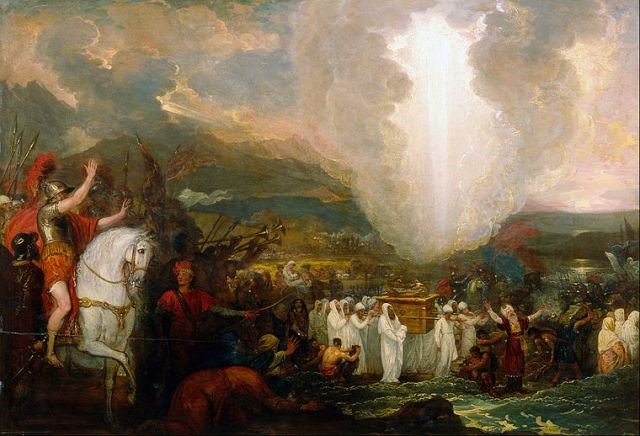


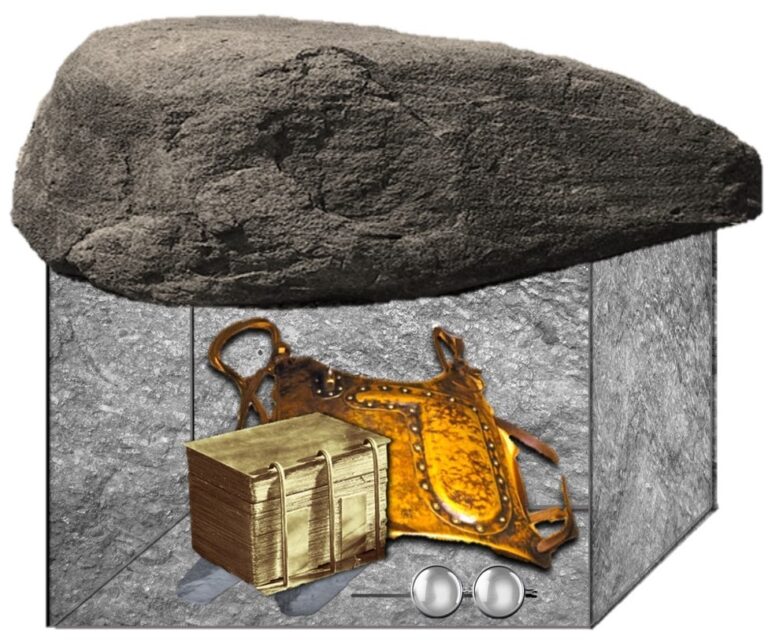




 The first meeting of Joseph Smith and Newel K. Whitney took place in this room, the main part of the store. A post office and the United Firm (a co-op) were also operated here. And it was here that a clerk, Orson Hyde (who later became a member of the Quorum of the Twelve), gained a testimony of the gospel.
 Seventeen revelations were received in the Translation Room from March 1832 to December 1833: sections 78, 84–98, and 101 of the
  “‘About the first of February, 1831, a sleigh containing four persons drove through the streets of Kirtland and drew up in front of the store of Gilbert and Whitney. One of the men, a young and stalwart personage alighted, and springing up the steps walked into the store and to where the junior partner was standing. “Newel K. Whitney! Thou art the man!” he exclaimed, extending his hand cordially, as if to an old and familiar acquaintance. “You have the advantage of me,” replied the merchant, as he mechanically took the proffered hand, “I could not call you by name as you have me.” “I am Joseph the Prophet,” said the stranger smiling. “You’ve prayed me here, now what do you want of me?” ‘The Prophet, it is said, while in the East had seen the Whitneys, in vision, praying for his coming to Kirtland. ‘Mother Whitney’ [Elizabeth Ann, wife of Newel] also tells how on a certain night prior to the advent … , while she and her husband were praying to the Lord to know how they might obtain the gift of the

 Joseph Smith III was born in this bedroom on 6 November 1832. He was the fourth of nine children born to Joseph and Emma, but the first to survive to adulthood. The Smiths were also caring for adopted twins at this time. One of them died in March 1832.
 The kitchen is about ten by fourteen feet in size, with several pantries. Emma, wife of the Prophet Joseph, fed many people here including members of the School of the Prophets, who came down to the kitchen after fasting and holding meetings.
 The Brethren met here, in the store’s School of the Prophets Room, during the winter of 1832–33. Also, from 3 December 1832 to 21 June 1833, at least eighteen meetings were held here, including the hallowed meeting of 23 January 1833. The nature of the events that took place here lend the room the sanctity of a temple. “Behold, verily, I say unto you, this is an ensample unto you for a salutation to one another in the house of God, in the school of the prophets.” (
 Landing between stairway (lower left corner) and School of the Prophets Room (at right).
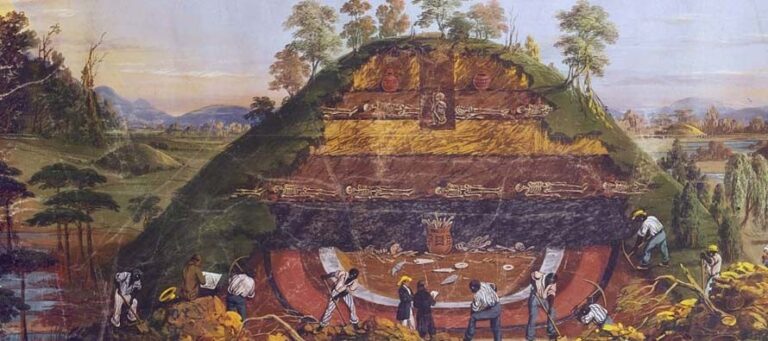
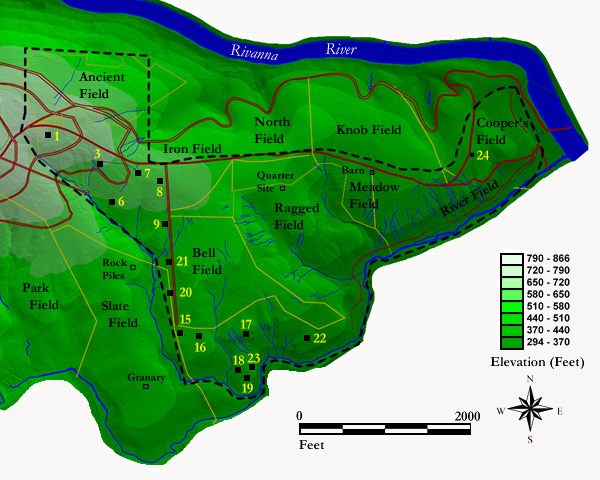
 Jefferson never removed any Native Americans. However in private letters he did suggest various ideas for removing tribes from enclaves in the East to their own new lands in lands west of the Mississippi. Indian Removal was passed by Congress in 1831, long after he died. Before and during his presidency, Jefferson discussed the need for respect, brotherhood, and trade with the Native Americans, and he initially believed that causing them to adopt European-style agriculture and modes of living would allow them to quickly “progress” from “savagery” to “civilization”. Beginning in 1803, Jefferson’s private letters show increasing support for the idea of removal. Jefferson maintained that Indians had land “to spare” and, he thought, would willingly exchange it for guaranteed supplies of food and equipment.


 Cyrus Thomas was an ethnologist and entomologist prominent in the late nineteenth century. He was noted for his studies of the natural history of the American West. However, Thomas is best known for his work in archaeology and ethnology — specifically, his contributions to the question of the origins of the mound builders and Mayan hieroglyphics. Thomas was not a field archaeologist. He visited the sites on which he reported, but did little if any field work. He had permanent and temporary field assistants and one clerical assistant. They provided him with their notes, which he organized, formed into a report, and published.
 In 1894 Cyrus Thomas (left) was apparently unaware of the original survey made in 1823 and he dismissed the 1847 drawings which Squier and Davis had made with respect to the “Menorah” Earthworks in Clermont County as “largely imaginary.”7 From 1803 to 1897 the history of the existence of the “Menorah” Earthworks goes from found to lost. Here is the sequence of events.
 (c) 1823. Major Isaac Roberdeau, head of the Bureau of Topographical Engineers of the U.S. Army Corps of Engineers made a survey of the “Menorah” Earthworks. This original survey is currently found in the National Archives.
 The 1823 survey showed that the ancient “Menorah” Earthworks existed along the waters of the East Fork of the Little Miami River in Ohio, about 20 miles above its mouth near Milford, and about 25-30 miles east of Cincinnati. The works have long since been under the plow zone. Their orientation and exact locations are today unknown.


 Jefferson wrote that the mound was “of spheroidal form, of about 40 feet diameter at the base, and had been of about twelve feet altitude …. I first dug superficially in several parts of it, and came to collections of human bones, at different depths, from six inches to three feet below the surface. These were lying in the utmost confusion, some vertical, some oblique, some horizontal, and directed to every point of the compass, entangled, and held together in clusters by the earth. … to give the idea of bones emptied promiscuously from a bag or basket, and covered over with earth, without any attention to their order.”


 “And, even here, Adair might have kept up his parallel, with ennobling his Conjurers. For the ancient Patriarchs, the Noahs, the Abrahams, Isaacs and Jacobs, and, even after the consecration of Aaron, the Samuels and Elijahs, and we may say further every one for himself, offered sacrifices on the altars. The true line of distinction seems to be, that solemn ceremonies, whether public or private, addressed to the Great Spirit, are conducted by the worthies of the nation, Men, or Matrons, while Conjurers are resorted to only for the invocation of evil spirits…”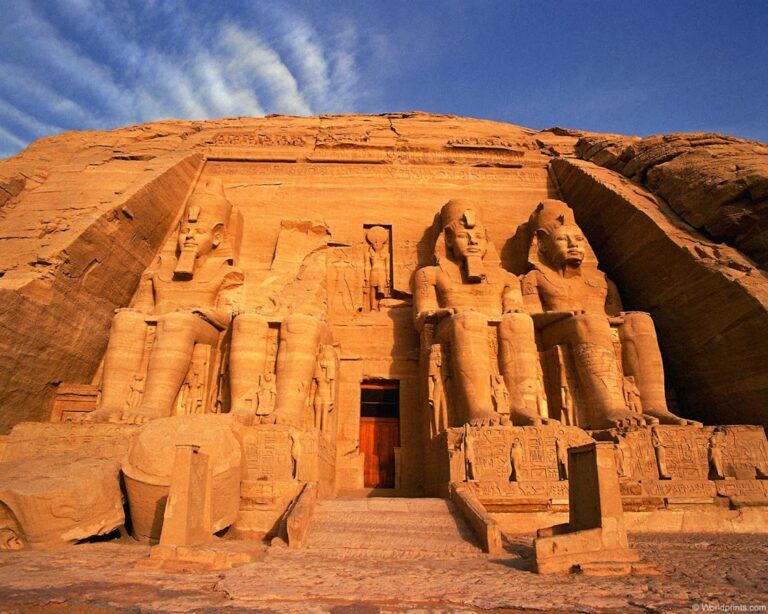


 Portrait of a pharaoh of the Saite dynasty
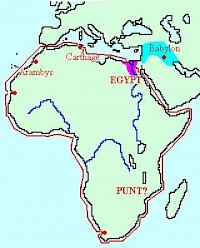 Map of the circumnavigation of Africa




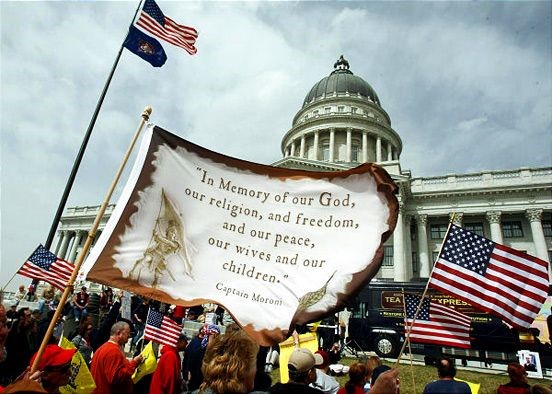
 Of the First Presidency Conference Report, October 1968, pp. 106-110

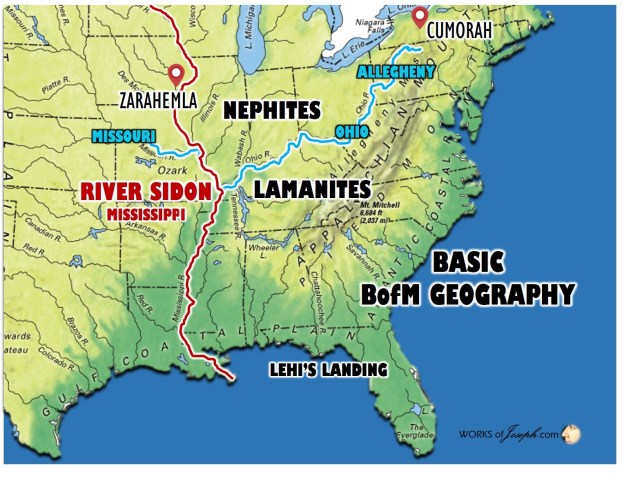



 Pulque [‘pulke](Classical Nahuatl: metoctli), or octli, is an alcoholic beverage made from the fermented sap of the maguey (agave) plant. It is traditional to central Mexico, where it has been produced for millennia. It has the color of milk, somewhat viscous consistency and a sour yeast-like taste. Source Wikipedia


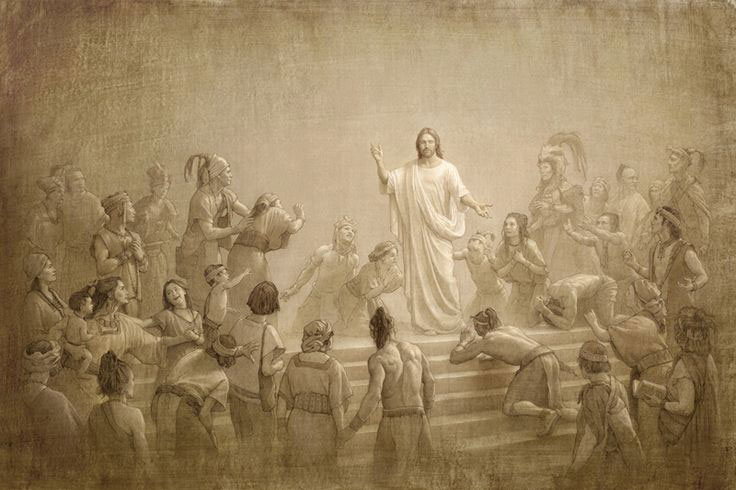

 The history of the vine in America begins, symbolically at least, in the fogs that shroud the medieval Norsemen’s explorations. Every American knows the story of Leif Ericsson, and how, in


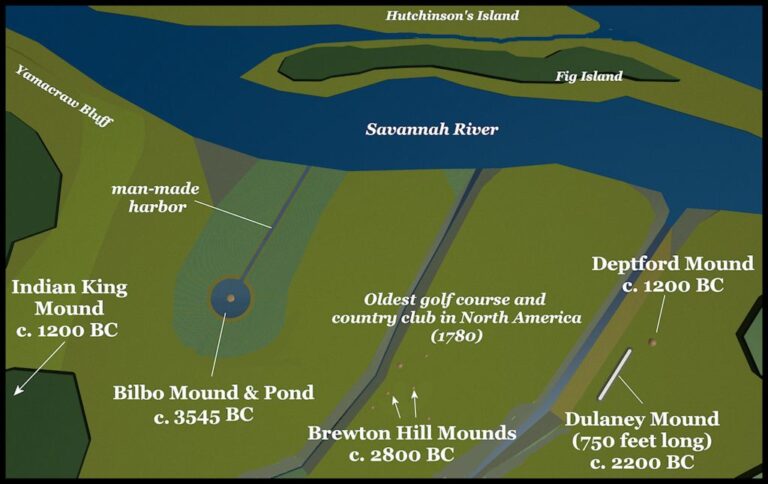


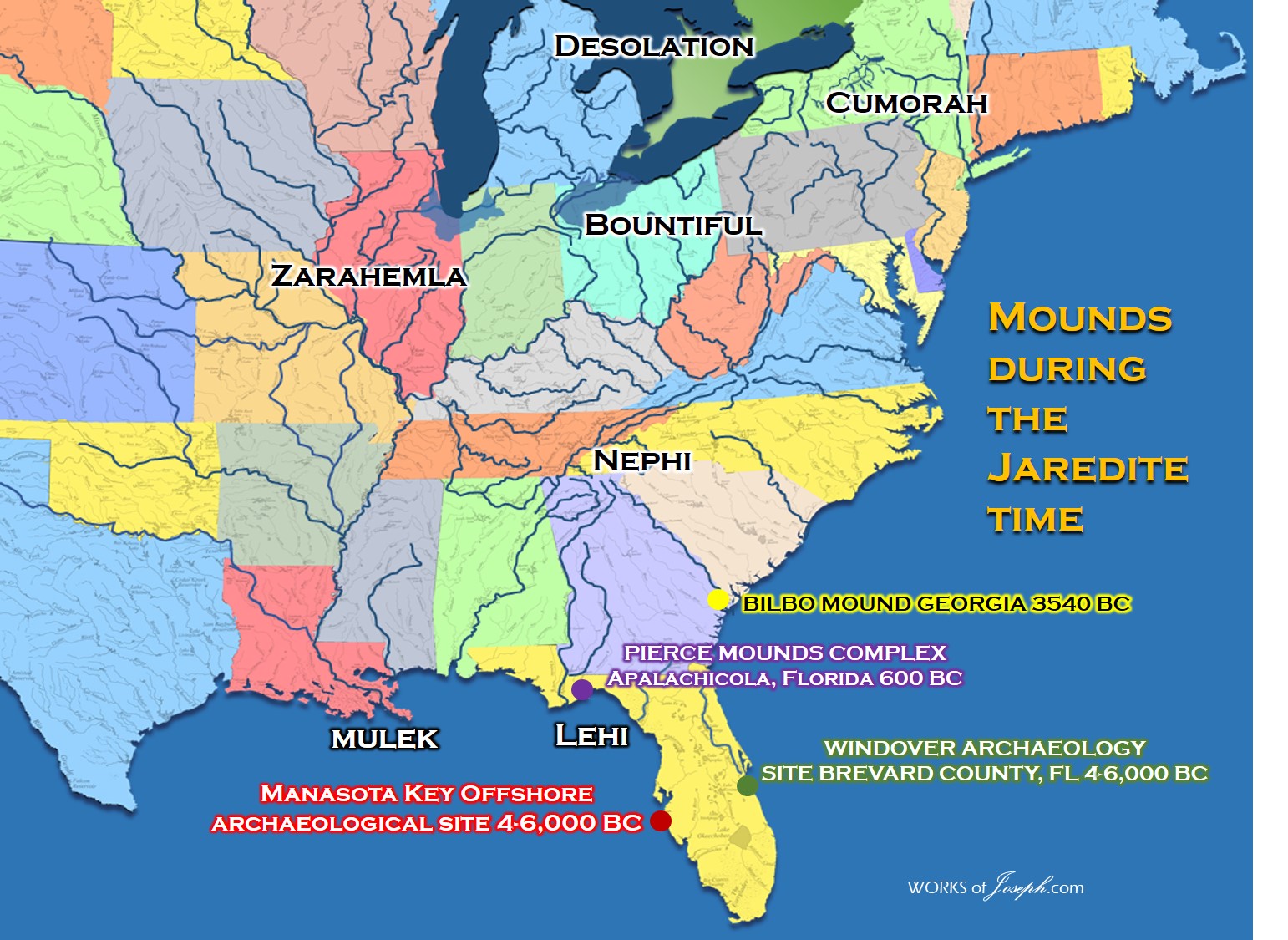
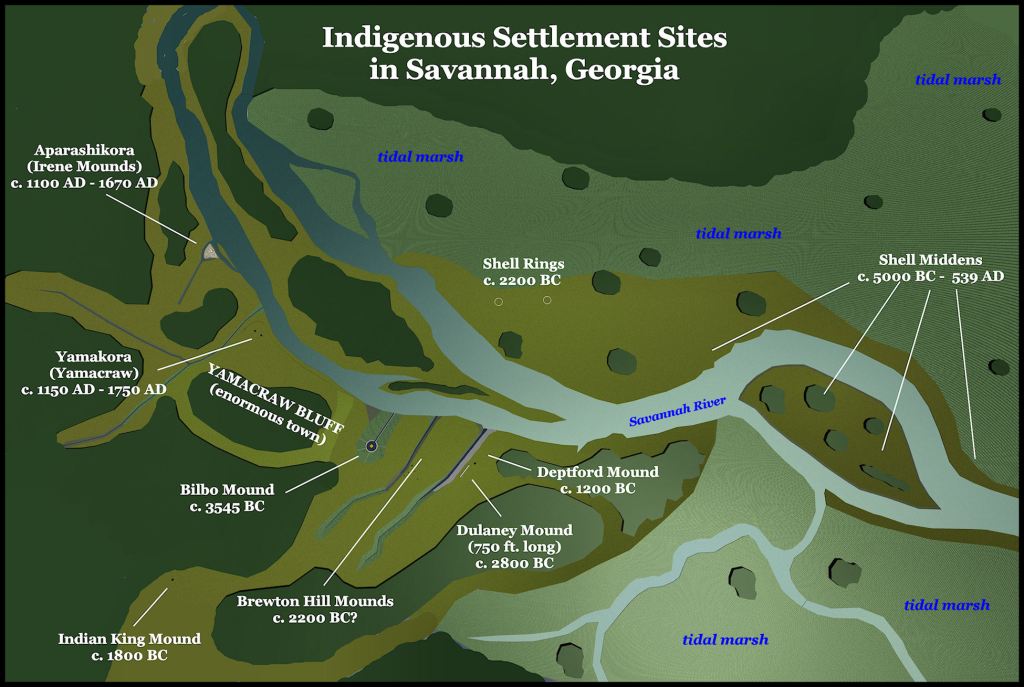





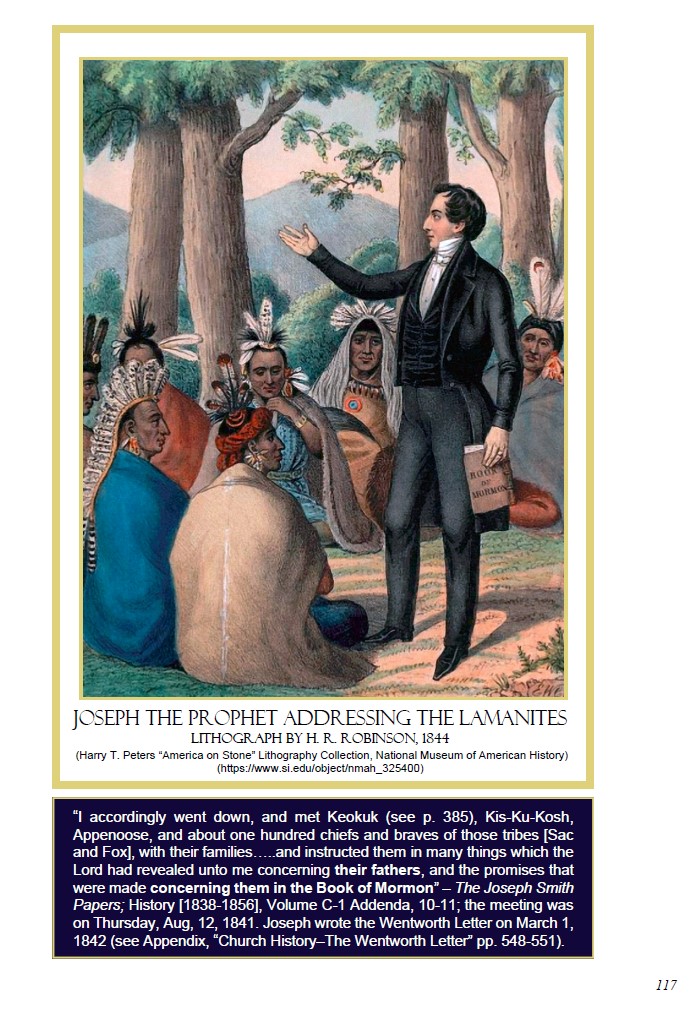


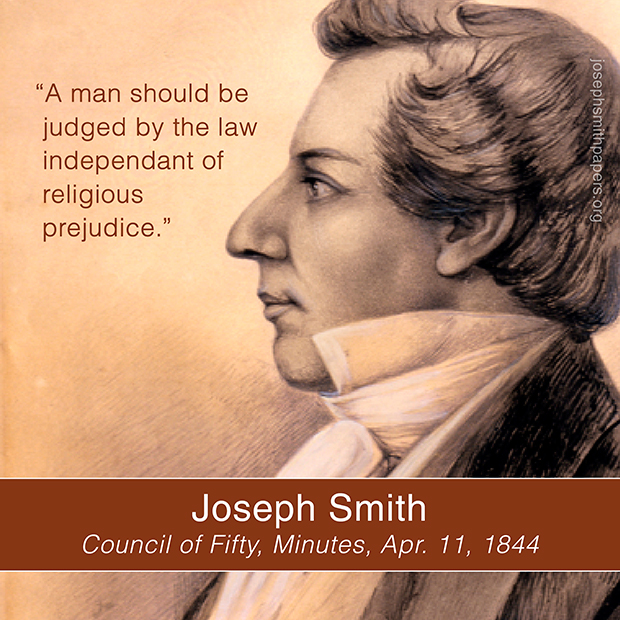


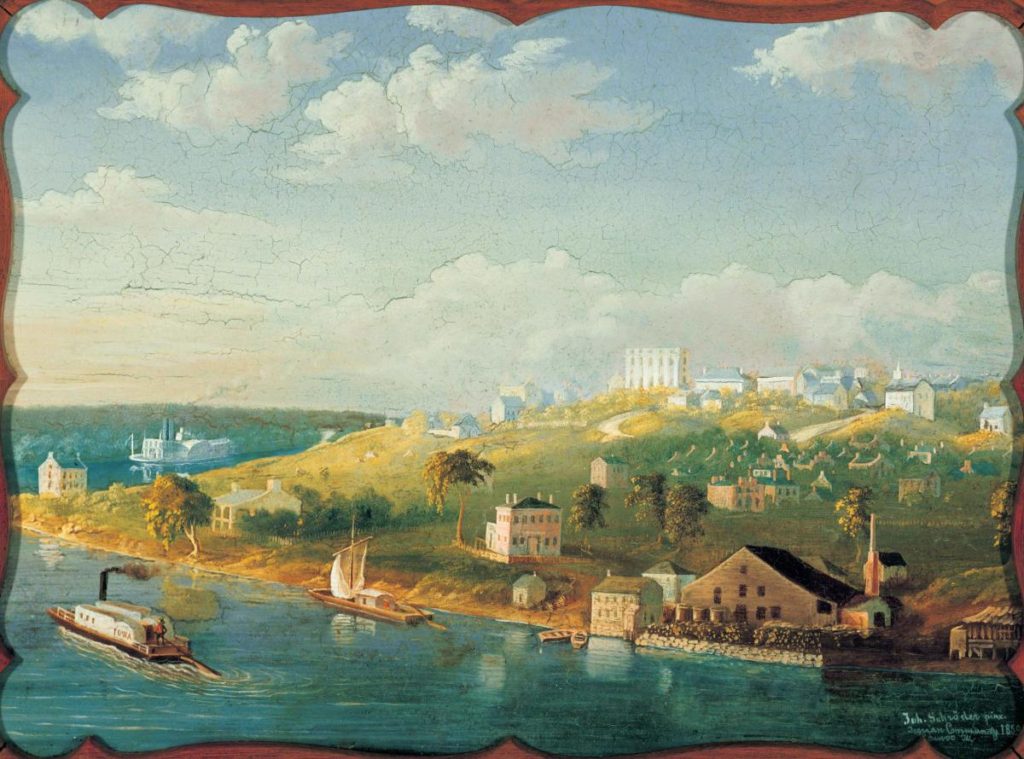


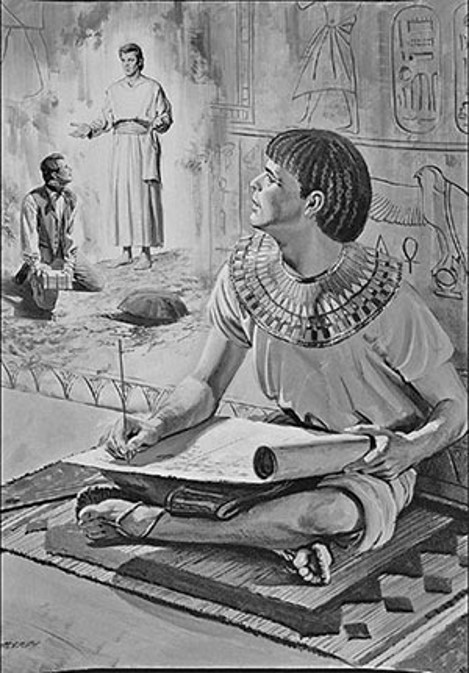


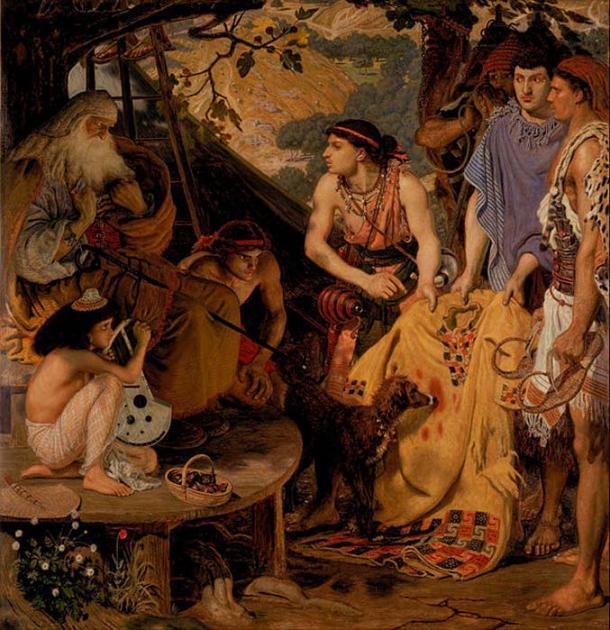 Painting depicting a scene in the Biblical myth of Joseph and the Coat of Many Colors. (Public Domain)
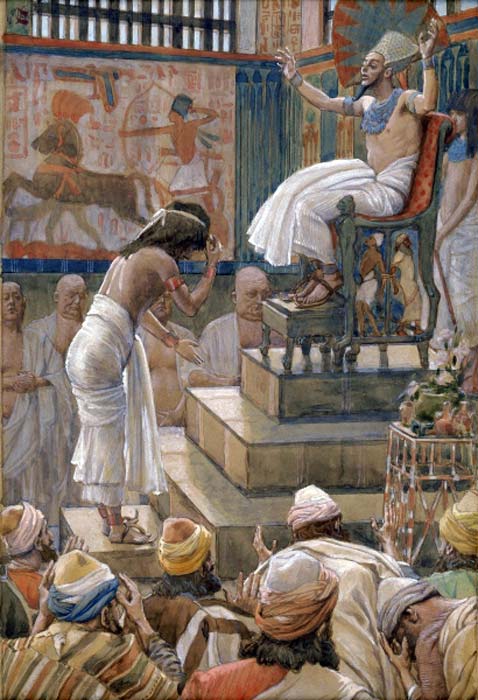 Joseph and His Brethren Welcomed by Pharaoh. By James Tissot, circa 1903. (Public Domain)
 Outer coffin of Yuya’s mummy. Excavation assistant beside 2.75-meter (9 feet) outer coffin, shortly after excavation, circa 1905. (Public Domain)
 An elaborate box from Yuya and Tjuyu’s tomb bearing Amenhotep III’s cartouche. (CC BY-SA 2.0)
 The mummies of Yuya (left), and to the right, Tuya. (Creative Commons Fair Use)
 Gilded cartonnage mummy mask of Tuya, wife of Yuya and mother of Queen Tiye. (Public Domain)
 The gilded cartonnage mask of Yuya, the father of Queen Tiye. Was Yuya more than just the father-in-law of pharaoh Amenhotep III – could he have been the Biblical Patriarch Joseph? (Public Domain)
 Egypt – Temple of Seti, east entrance, Thebes. (Public Domain)
 Ancient Egyptian chariots. (Public Domain)