“Whenever the God of Heaven establishes by revelation his design, Satan always comes among men to pervert the doctrine, saying, ‘Believe it not.’ He often establishes a counterfeit system, designed to deceive the children of men” (“A Vision and a Hope for the Youth of Zion” [President Ezra Taft Benson Brigham Young University devotional, Apr. 12, 1977], 3, speeches.byu.edu).
An Angel of Light
I truly believe our country is close to the end. I have no idea if that is a few months a few years or 10 years or more, but we are close to losing the blessings of this great country. Why? Because I feel there is so much wickedness and desire for money and power now in our world than ever before.
I believe Satan is appearing as that angel of light to deceive us. Our constitutional rights are being ripped from us. This was a fraudulent election and I strongly feel the Lord will step in and help us. I pray the Lord will spare us a little longer. At the core of most Liberals are evil ideas of abortion, no freedom of speech nor worship, no right to bear arms, and socialism. I believe the Republican Party is as corrupt, but I believe in the honorable results will come with the Lord in charge. I believe he loves America and we as a people. I pray the Lord will help our courts of law come to the correct and proper decisions.
Complaining or kicking against the pricks is wrong and will lead you nowhere but the bottom. Remember the quote, “Obedience is greater than Sacrifice?” (see 1 Samuel 15:22). With our leaders it is better to simply be obedient through prayer, than worry about why they are asking you to do something. “Just Do It”. Not blind obedience, but faithful obedience. If the Book of Mormon is the truth (and it is), then obey it. If Joseph Smith is and was a Prophet (which he is and was), just obey him. Stop trying to find fault with Brother Joseph. I know the Church of Jesus Christ of Latter-day Saints is true and I continue to strive to be obedient to our leaders teachings. The difference between a righteous and a wicked person is simply this. The righteous are continually being obedient and repenting. The evil don’t have a desire to obey anything and they are never repenting.
We bind the adversary and his mortal minions only as we bind our appetites.—Neal A. Maxwell “The Man of Christ,” Ensign (May 1975).
“Resist the devil, and he will flee from you. Draw nigh to God, and he will draw nigh to you” (James 4:7–8).
“When we yield to temptation just once, we give Satan ammunition in the form of a memory,”Elder Lynn G. Robbins of the Seventy Sept 2013
Can Satan??
..appear as an angel of Light? ..read our thoughts? ..bruise our heel? ..enter the temple? ..appear as a dove? ..tempt us beyond our ability to overcome? ..tempt little children?
Elder Bruce R. McConkie (1915–85) of the Quorum of the Twelve Apostles wrote: “Since the day in which Satan spoke by the mouth of the serpent to entice Eve to partake of the forbidden fruit (Moses 4:5–21), Satan has been called ‘that old serpent.’ (Rev. 12:9; 20:2; D&C 76:28; 88:110.) Choice of the name is excellent, indicating as it does a cunning, sly, subtle, and deceitful craftiness” (Mormon Doctrine, 2nd ed. [1966], 704).
“Being cursed is the very opposite of being blessed; God’s blessing graciously invokes good, whereas his curse justly invokes evil upon one deserving it. Thus Satan was informed through symbolic terms that he would not have the privilege of earth life that even cattle and beasts have” (Ellis T. Rasmussen, A Latter-day Saint Commentary on the Old Testament [1993], 16).
Moses 4:21. The “Seed of the Woman” Refers to the Savior, Jesus Christ
Elder James E. Talmage (1862–1933) of the Quorum of the Twelve Apostles wrote: “Adam, the patriarch of the race, rejoiced in the assurance of the Savior’s appointed ministry, through the acceptance of which, he, the transgressor, might gain redemption. Brief mention of the plan of salvation, the author of which is Jesus Christ, appears in the promise given of God following the fall—that though the devil, represented by the serpent in Eden, should have power to bruise the heel of Adam’s posterity, through the seed of the woman should come the power to bruise the adversary’s head. It is significant that this assurance of eventual victory over sin and its inevitable effect, death, both of which were introduced to earth through Satan, the arch-enemy of mankind, was to be realized through the offspring of woman; the promise was not made specifically to the man, nor to the pair. The only instance of offspring from woman dissociated from mortal fatherhood is the birth of Jesus the Christ, who was the earthly Son of a mortal mother, begotten by an immortal Father. He is the Only Begotten of the Eternal Father in the flesh, and was born of woman” (Jesus the Christ [1916], 43).
“And the God of peace shall bruise Satan under your feet shortly. The grace of our Lord Jesus Christ be with you. Amen.” Romans 16:20
“And I will put enmity between thee and the woman, and between thy seed and her seed; it shall bruise thy head, and thou shalt bruise his heel.” Genesis 3:15
Can Satan Read our Thoughts?
Surely then Satan and his followers have some knowledge of our thoughts and tendencies. He has knowledge that is superior to man’s knowledge, but he lacks the wisdom to properly use his knowledge for good purposes. Some people are like that and often find themselves opposing even that which is right and true. Satan is a great deceiver, a liar. He appeared unto Korihor in the form of an angel and said unto him: “Go and reclaim this people [the faithful believers in God], for they have all gone astray after an unknown God. And he said unto me: There is no God; yea, and he taught me that which I should say. And I have taught his words; and I taught them because they were pleasing unto the carnal mind; and I taught them, even until I had much success, insomuch that I verily believed that they were true; and for this cause I withstood the truth, even until I have brought this great curse upon me.” (Alma 30:53.)
Satan and his aides no doubt may know our inclinations, our carnal tastes and desires, but they cannot compel a righteous person to do evil if he seeks help from the Lord. Too many try to blame Satan when in reality the fault lies within themselves because they yield to his enticements.
He delights in introducing to the world innovations and practices that lead to unhappiness and misery, all the while making it appear that such evil practices are now acceptable. “It is he who inspires every evil teaching, every evil thought even in false religions, creeds, and organizations.” (Teachings of the Prophet Joseph Smith, p. 297.)
D&C 6:16 Yea, I tell thee, that thou mayest know that there is none else save God that knowest thy thoughts and the intents of thy heart.
“Satan cannot know our thoughts unless we speak them.” James E. Faust, “The Great Imitator,” Ensign (November 1987).
Why Does God Allow Satan to Tempt Us?
God allows Lucifer and his agents to tempt us so that we may more deliberately choose between good and evil. The Lord could banish Satan and his angels from the earth and remove temptations from men, but “it must needs be that the devil should tempt the children of men, or they could not be agents unto themselves; for if they never should have bitter they could not know the sweet.” (D&C 29:39.)
Satan knows all the tricks. He knows where we are susceptible to temptations and how to entice us to do evil. He and his messengers suggest evil, minimize the seriousness of sin, and make evil inviting.
“He will appear to us in the person of a friend or a relative in whom we have confidence. He has power to place thoughts in our minds and to whisper to us in unspoken impressions to entice us to satisfy our appetites or carnal desires and in various ways he plays upon our weaknesses and desires.” (Joseph Fielding Smith, Melchizedek Priesthood Course of Study, 1972–73, p. 298.)
Does Satan Force our Obedience?
We learn from the scriptures that Lucifer, a brilliant, influential character who had considerable authority in the premortal world, rebelled against the plan whereby Jesus Christ would become the Savior and Redeemer of mankind. Lucifer’s plan, which was proposed and rejected, was based on forcible compliance to law without the blessing of free agency. Along with Lucifer one-third of the heavenly host rebelled also and vowed their allegiance to him. Lucifer and his followers were cast out and denied forever the blessing of mortal bodies.
“And he became Satan, yea, even the devil, the father of all lies, to deceive and to blind men, and to lead them captive at his will, even as many as would not hearken unto my voice.” (Moses 4:4.)
Can Satan Tempt us Beyond our Ability to Overcome?
“One of the most impressive doctrines found in the Book of Mormon is that Satan’s power over a person increases as that person becomes more wicked, until eventually the person is “taken captive by the devil” and bound with the “chains of hell.” (Alma 12:11.) Satan’s method is to influence the thoughts of men, tempting them and enticing them, always working “in the hearts of the children of men.” (2 Ne. 28:20.) Nephi chillingly describes the method: “He whispereth in their ears, until he grasps them with his awful chains, from whence there is no deliverance.” (2 Ne. 28:22.)
But Satan’s power is not unrestrained. Joseph Smith taught that Satan has no power over us unless we give it to him. (See Teachings of the Prophet Joseph Smith, sel. Joseph Fielding Smith, Salt Lake City: Deseret Book Co., 1938, p. 181.) And Nephi explained that the righteousness of a people deprives Satan of his power, “for he hath no power over the hearts of the people, for they dwell in righteousness.” (1 Ne. 22:26.)… Free agency demands that neither the Holy Spirit nor the evil spirit have power to control the person against his will….
We’re promised that we won’t be tempted beyond our ability to withstand, we can consistently choose to resist all forms of temptation, if that is our desire. “There hath no temptation taken you but such as is common to man: but God is faithful, who will not suffer you to be tempted above that ye are able; but will with the temptation also make a way to escape, that ye may be able to bear it.” (see 1 Cor. 10:13)
President Kimball has written, “Temptations come to all people. The difference between the reprobate and the worthy person is generally that one yielded and the other resisted.” (The Miracle of Forgiveness, Salt Lake City: Bookcraft, 1969, p. 86.)
By desiring to serve God with all our heart, might, mind, and strength, we can eliminate Satan’s power over us—which is the power to cause us misery. The battle for the souls of men is fought within every heart, and each of us has the power of victory. As we seek to follow the Savior, we should strive to have such pure thoughts that it will make little difference who knows them” Lawrence R. Peterson, Jr., high councilor, Salt Lake Brighton Stake.
Can Satan Tempt Little Children?
Temptation is a test of a person’s ability to choose good instead of evil. It is an enticement to sin and follow Satan instead of God. Part of the experience of this life is to learn to overcome temptation and to choose right over wrong. Modern revelation indicates that Satan does not have power to tempt little children until they begin to be accountable for their actions (see Doctrine and Covenants 29:4).
Can Satan Appear as an Angel of Light?
“And our spirits must have become like unto him, and we become devils, angels to a devil, to be shut out from the presence of our God, and to remain with the father of lies, in misery, like unto himself; yea, to that being who beguiled our first parents, who transformeth himself nigh unto an angel of light, and stirreth up the children of men unto secret combinations of murder and all manner of secret works of darkness.” 2 Nephi 9:9
“But behold, the devil hath deceived me; for he appeared unto me in the form of an angel, and said unto me: Go and reclaim this people, for they have all gone astray after an unknown God.” Alma50:33
Just as there are righteous spirits committed to the accomplishment of God’s work, so there are evil spirits committed to the destruction of His work. “These are fallen angels,” President Charles W. Penrose explained, “who were cast down for transgression, as mentioned by Jude (verse 6), chief among whom on this earth is Lucifer or Satan, who has sought on many occasions to appear as an ‘angel of light’ to deceive and lead astray, and who tempted the Son of God, but failed in his efforts as he did with Moses and with the Prophet Joseph Smith. (See Luke 4:1–13; … Moses 1:12–22; Doctrine & Covenants 128:20.) That great spiritual personage was an angel of God in his ‘first estate’, and yet never had a body of flesh, but ‘was in authority in the presence of God’ as a spirit, before he rebelled and was ‘thrust down.’ (Doctrine & Covenants 76:25–28.)” (“Who and What Are the Angels?” p. 951.)
Satan attempts to deceive by counterfeiting the light that accompanies the spirit of a just man made perfect. A just man made perfect who comes as a messenger will appear in his glory, “for that is the only way he can appear” (D&C 129:6). The Prophet Joseph Smith once said, “Wicked spirits have their bounds, limits and laws, by which they are governed … and, it is very evident that they possess a power that none but those who have the priesthood can control” (History of the Church, 4:576).
The Prophet Joseph Smith taught: “An angel of God never has wings. Some will say that they have seen a spirit; that he offered them his hand, but they did not touch it. This is a lie. First, it is contrary to the plan of God: a spirit cannot come but in glory; an angel has flesh and bones; we see not their glory. The devil may appear as an angel of light. Ask God to reveal it; if it be of the devil, he will flee from you; if of God, He will manifest Himself, or make it manifest. We may come to Jesus and ask Him; He will know all about it.” (History of the Church, 3:392.)
Can Satan Enter the Temple?
“As he observed human behavior, Joseph Fielding wondered about the nature of evil and its source. He asked his father [Joseph F.] whether Satan was the sole source of evil and to what extent Satan was restricted from sacred places, such as the temple. An avid student of Church history, even at this early age, Joseph Fielding knew that once, during the apostasy at Kirtland, a number of disgruntled members tried to take over the Church. In a meeting at the Kirtland Temple in late 1837, Brigham Young vigorously defended Joseph Smith. A scuffle ensued, during which some minor damage was done to the temple. Joseph Fielding cited the incident in his question regarding Satan’s influence and human agency:
You ask, Can a man do any wrong without first being tempted of Satan? All men have their agency, the spirit of Satan leads to error and darkness and wrong doing. If a man does wrong, it is because he yields to the spirit of evil, thereby exercising his agency. If he does good, it is in accordance with the spirit that is of God, and he uses his agency in that as well. Those who overcome evil in this life will be beyond the power of Satan in the life to come. In other words, Satan’s power ends in this world so far as the righteous are concerned, for they arise above him and above his influence; and power is not given to him to tempt them in the spirit world, they having overcome him in this. So far then as the righteous are concerned, Satan is effectually bound, whether it is in this life or in the life to come. But as mortality is never free from its own weaknesses there is no perfect safety in this sphere without the presence continually of the influence of the Holy Spirit. Satan can enter any place where he is invited or permitted to enter by man. If wicked men enter the house of God or have dominion in it, Satan will have access there, but where the righteous rule and the righteousness of God prevails, there Satan cannot come, at least with power.
You ask the question, Can a man do wrong in the temple if Satan is not there to urge him on? In the case you cite with reference to the Kirtland Temple it would seem that Satan himself had taken possession of the minds of those men, and if not in the temple in person, his power was certainly manifested through his agents there, who were apostates. I repeat, Satan, by his presence or power, can go anywhere that man can go who invites him or yields to him and his influence. The prevalence of the spirit of apostasy on the occasion you refer to gave the adversary almost full control at that time in the temple, and it is only by the power of righteousness that Satan and his influence was expelled therefrom. As to whether the binding of Satan is a literal binding as with a chain or not, it matters not. I am inclined to believe that the chain spoken of in the Bible, with which Satan is to be bound, is more figurative than real. He will be bound both by the faith of the righteous and the decrees of the Almighty during the Millennial reign and will be cast down into hell, as the prophets have said, and shall not be at liberty to molest the children of men until the end of the thousand years.” Joseph F. Smith, From Prophet to Son: Advice of Joseph F. Smith to His Missionary Sons, compiled by Hyrum M. Smith III and Scott G. Kenney [Salt Lake City: Deseret Book Co., 1981], 70
Strange Interview with the Evil One
“On one occasion I heard the late Apostle Marriner W. Merrill, President of the Logan Temple, relate this extraordinary incident:
He was sitting in his office one morning, he said, when he noticed from the window a company of people coming up the hill to the Temple. As they entered the Temple grounds they presented rather a strange appearance, not only in dress but in their mode of travel. Some were riding on horses, others were in conveyances, and still others were afoot. He wondered who they could be as he was not looking for a company of such size that particular morning. They dismounted from their horses, stepped down from their conveyances, put their animals under the shade and walked about complacently as if they had a perfect right to be there.
A little later a person unknown to Brother Merrill entered the room. Brother Merrill said to him: “Who are you and who are these people who have come up and taken possession of the Temple grounds unannounced?” He answered and said: “I am Satan and these are my people.” Brother Merrill then said: “What do you want? Why have you come here?” Satan replied: “I don’t like the work that is going on in this Temple and feel that it should be discontinued. Will you stop it?” Brother Merrill answered and said emphatically, “No, we will not stop it. The work must go on.” “Since you refuse to stop it, I will tell you what I propose to do,” the adversary said. “I will take these people, my followers, and distribute them throughout this Temple district, and will instruct them to whisper in the ears of people, persuading them not to go to the Temple, and thus bring about a cessation of your Temple work.” Satan then withdrew.
President Merrill, commenting on this strange interview with the Evil One, said that for quite a period of time the spirit of indifference to Temple work seemed to take possession of the people and very few came to the House of the Lord. The presumption was that Satan had carried out his threat which caused a temporary lull in Temple work.
It is not to be wondered at that Satan, who is the enemy of all righteousness, is displeased with Temple work.” Rudger Clawson: [Church Section, The Deseret News, Dec. 12, 1936, Vol. 344, No. 61] https://josephsmithfoundation.org/01-can-satan-enter-the-temples/
The Devil cannot come in the Sign of a Dove
The question arose from the saying of Jesus—”Among those that are born of women there is not a greater prophet than John the Baptist; but he that is least in the kingdom of God is greater than he.” How is it that John was considered one of the greatest of prophets? His miracles could not have constituted his greatness.
First.He was entrusted with a divine mission of preparing the way before the face of the Lord. Whoever had such a trust committed to him before or since? No man.
Secondly.He was entrusted with the important mission, and it was required at his hands, to baptize the Son of Man. Whoever had the honor of doing that? Whoever had so great a privilege and glory? Whoever led the Son of God into the waters of baptism, and had the privilege of beholding the Holy Ghost descend in the form of a dove, or rather in the sign of the dove, in witness of that administration? The sign of the dove was instituted before the creation of the world, a witness for the Holy Ghost, and the devil cannot come in the sign of a dove.The Holy Ghost is a personage, and is in the form of a personage. It does not confine itself to the form of the dove, but in sign of the dove. The Holy Ghost cannot be transformed into a dove; but the sign of a dove was given to John to signify the truth of the deed, as the dove is an emblem or token of truth and innocence.
Thirdly. John, at that time, was the only legal administrator in the affairs of the kingdom there was then on the earth, and holding the keys of power. The Jews had to obey his instructions or be damned, by their own law; and Christ Himself fulfilled all righteousness in becoming obedient to the law which he had given to Moses on the mount, and thereby magnified it and made it honorable, instead of destroying it. The son of Zacharias wrested the keys, the kingdom, the power, the glory from the Jews, by the holy anointing and decree of heaven, and these three reasons constitute him the greatest prophet born of a woman.
Second question:—How was the least in the kingdom of heaven greater than he:
In reply I asked—Whom did Jesus have reference to as being the last? Jesus was looked upon as having the least claim in God’s kingdom, and [seemingly] was least entitled to their credulity as a prophet; as though He had said—”He that is considered the least among you is greater than John—that is I myself.”https://byustudies.byu.edu/further-study-lesson/volume-5-chapter-13/History of the Church Volume 5, page 256-2
A Sure Foundation
“Remember, remember that it is upon the rock of our Redeemer, who is Christ, the Son of God, that ye must build your foundation; that when the devil shall send forth his mighty winds, yea, his shafts in the whirlwind, yea, when all his hail and his mighty storm shall beat upon you, it shall have no power over you to drag you down to the gulf of misery and endless wo, because of the rock upon which ye are built, which is a sure foundation, a foundation whereon if men build they cannot fall” (Helaman 5:12).
to bring people to Christ through evidence of the Book of Mormon that causes them to realize that it is a literal historical and prophetic account of real people and events thereby encouraging them to read, study and ponder the book – which ultimately builds and strengthens testimonies of its truthfulness through the Holy Spirit,
to utilize the prophecies and promises in the Book of Mormon to increase awareness and understanding of the ancient prophetic history that took place in a long established covenanted and promised land – which today is found within the borders of the nation-state called The United States of America,
to conduct research in a multiplicity of scientific and scholarly fields of endeavor which may provide secular support for the historicity of the Book of Mormon – including, but not limited to such disciplines as genetics, archaeology, climatology, anthropology, history, religion, geography, linguistics, mythology, meteorology, astronomy, metallurgy, architecture, ancient texts, Jewish customs, zoology, agronomy, oceanography, geophysics, etc.,
to correlate, publish and offer through our bookstore works of LDS scholars and researchers involving the Heartland Book of Mormon Geography Model and related research in support of the truthfulness of the Book of Mormon, Joseph Smith, and the gospel of Jesus Christ,
to produce, provide and encourage well-researched articles, papers, books, films, newsletters and presentations in support of the Book of Mormon through the Heartland Model,
to create one or more online repositories of knowledge, research and educational materials pertaining to evidence of the Book of Mormon’s historicity through the Heartland Model,
to organize, conduct and sponsor events such as presentations, symposiums, firesides, webinars, and conferences providing educational opportunities for all interested,
to objectively evaluate and review the assertions, articles, books, films, speeches and conferences of individuals or organizations promoting the plethora of Book of Mormon historical settings, and when said research is critical of the Heartland Model, to correct erroneous, unfounded, misrepresented, ill-conceived or poorly researched information as it pertains the Heartland Model through dispassionate instruction and education in a respectful and Christ-like manner that seeks to avoid confrontation and contention,
to provide further on-location educational opportunities through travel and tours to visit proposed Book of Mormon sites and museums in conjunction with Church History and United States history,
to provide forums (blog, Facebook, etc.) where responsible scholars, researchers, and interested individuals can discuss and present ideas and discoveries consistent with the Heartland Model setting for the Book of Mormon, and
to organize and engage the many thousands of volunteers who have offered to help with this research and organization.
Thank you all for your love and support. Rodney L Meldrum President
Shawnee and Cherokee Indian Burials and What they Teach
Monday, April 23, 2012
Shawnee Indian stone covered burial mound within the walls of Fort Ancient, Ohio
“Shawnee Indian stone covered burial mound within the walls of Fort Ancient, Ohio. Universities continue to destroy these burial mounds by not recognizing the Shawnee as their builders and circumventing the Native American Graves
Protection Act of 1993
New Podcast
In order to state clearly the argument based upon these works it is necessary to present a brief explanation. There are several forms and varieties of Indiana stone graves or cists found in the mound builders area, some being of cobble stones, others of slabs; some round, others polygonal; some dome-shaped, others square, and others box shaped, or parallelograms. Reference is made at present only to the last mentioned—the box shaped type, made of stone slabs. If the evidence shows that this variety is found only in certain districts, pertains to a certain class of works, and is usually accompanied by certain types of art, we are warranted in using it as an ethnic characteristic, or as indicating the presence of particular tribes. If it can be shown that graves of this form are found in mounds attributed to the so- called mound-builders, and that certain tribes of Indians of historic times were also accustomed to bury in them, we are warranted in assuming that there was a continuity of custom from the mound-building age to historic times, or that graves found in the mounds are probably attributable to the same people (or allied tribes) found using them at a later date. This conclusion will be strengthened by finding that certain peculiar types of art are limited to the regions where these graves exist, and are found almost exclusively in connection with them. These graves, as is well known, are formed of rough and unhewn slabs or flat pieces of stone, thus: First, in a pit some 2 or 3 feet deep and of the desired dimensions, dug for the purpose, a layer of stone is placed to form the floor; next, similar pieces are set on edge to form the sides and ends, over which other slabs are laid flat, forming the covering, the whole when finished making a rude, box-shaped coffin or sepulcher.” (Think Moroni’s stone box at Cumorah like pictured below).
Where did 3 Pillars of the Stone Box Come From?
“This box was sufficiently large to admit a breast-plate, such as was used by the ancients to defend the chest, &c. from the arrows and weapons of their enemy. From the bottom of the box, or from the breast-plate, arose three small pillars composed of the same description of cement used on the edges; and upon these three pillars was placed the record of the children of Joseph, and of a people who left the tower far, far before the days of Joseph… I must not forget to say that this box, containing the record was covered with another stone, the bottom surface being flat and the upper, crowning. But those three pillars were not so lengthy as to cause the plates and the crowning stone to come in contact.” Oliver Cowdery, “Letter VIII,” October 1835See my blog here)Shawnee and Cherokee Indian Burials and What they Teach continues, “Sometimes one or more of the six faces are wanting; occasionally the bottom consists of a layer of water-worn boulders; sometimes the top is not a single layer of slabs, but other pieces are laid over the joints, and sometimes they are placed shingle-fashion. These graves vary in length from 14 inches to 8 feet, and in width from 9 inches to 3 feet.It is not an unusual thing to find a mound containing a number of those cists arranged in two, three, or more tiers. As a general rule, those not in mounds are near the surface of the ground, and in some instances even projecting above it. It is probable that no one who has examined them has failed to note their strong resemblance to the European mode of burial. Even Dr. Joseph Jones, who attributes them to some “ancient race,” was forcibly reminded of this resemblance, as he remarks: In looking at the rude stone coffins of Tennessee, I have again and again been impressed with the idea that in some former age this ancient race must have come in contact with Europeans and derived this mode of burial from them. [Footnote: Aboriginal Remains of Tennessee, pp. 34,35]
The presence of stone graves of the type under consideration in the vicinity of the site of some of the “over hill towns” of the Cherokees on the Little Tennessee River, presented a difficulty in the way of the theory here advanced, as it is well known that the Cherokees and Shawnees were inveterate enemies from time immemorial. But by referring to Schoolcraft’s History of the Indians the following statement solves the riddle and confirms the theory: A discontented portion of the Shawnee tribe from Virginia broke off from the nation, which removed to the Scioto country, in Ohio, about the year 1730, and formed a town known by the name of Lulbegrud, in what in now Clark County [Kentucky], about 30 miles east of this place [Lexington]. This tribe left this country about 1730 and went to East Tennessee, to the Cherokee Nation. [Footnote: Vol. 1, p. 301. Some years ago Mr. George E. Sellers discovered near the salt spring in Gallatin County, Ill., on the Saline River, fragments of clay vessels of unusually large size, which excited much interest in the minds of antiquarians, not only because of the size of the vessels indicated by the fragments, but because they appeared to have been used by some prehistoric people in the manufacture of salt and because they bore impressions made by some textile fabric. In the same immediate locality were also discovered a number of box-shaped stone graves. That the latter were the work of the people who made the pottery Mr. Sellers demonstrated by finding that many of the graves were lined at the bottom with fragments of these large clay “salt pans.” [Footnote: Popular Science Monthly, vol. II, 1877, pp. 573-584.] Mention of this pottery had been made long previously by J. M. Peck in his “Gazetteer of Illinois.” [Footnote: 1834, p. 52.]
He remarks that “about the Gallatin and Big Muddy Salines large fragments of earthenware are very frequently found under the surface of the earth. They appear to have been portions of large kettles used, probably, by the natives for obtaining salt.” The settlement of the Shawnees at Shawneetown, on the Ohio River, in Gallatin County, in comparatively modern times, is attested not only by history but by the name by which the town is still known. There is evidence on record that there was an older Shawneetown located at the very point where this “salt-kettle” pottery and these stone graves were found. This is mentioned in the American State Papers [Footnote: Public Lands, Class VIII, vol.2, p. 103, Gales and Seaton ed.] in the report relating to the famous claim of the Illinois and Wabash Land Companies. The deed presented was dated July 20, 1773, and recorded at Kaskaskia, September 2, 1773. In this mention is made of the “ancient Shawnee town” on Saline Creek, the exact locality of the stone graves and suit-kettle pottery. The modern Indian village at Shawneetown on the Ohio River had not then come into existence, and was but in its prime in 1806, when visited by Thomas Ashe. [Footnote: Travels in America, 1808, p. 265.] As proof that the people of this tribe were in the habit of making salt the following evidence is presented: Collins, in his “History of Kentucky”, [Footnote: Vol. 2, p. 55.] gives an account of the capture and adventures of Mrs. Mary Ingals, the first white woman known to have visited Kentucky. In this narrative occurs the following statement: The first white woman in Kentucky was Mrs. Mary Ingals, nee Draper, who, in 1756 with her two little boys, her sister-in-law, Mrs. Draper, and others was taken prisoner by the Shawnee Indians, from her home on the top of the great Allegheny ridge, is now Montgomery County, W. Va. The captives were taken down the Kanawha, to the salt region, and, after a few days spent in making salt, to the Indian village at the mouth of Scioto River.
By the treaty of Fort Wayne, June 7, 1803, between the Delawares, Shawnees, and other tribes and the United States, it was agreed that in consideration of the relinquishment of title to “the great salt spring upon the Saline Creek, which falls into the Ohio below the mouth of the Wabash, with a quantity of laud surrounding it, not exceeding 4 miles square,” the United States should deliver “yearly, and every year for the use of said Indians, a quantity of salt not exceeding 150 bushels.” [Footnote: Treaties of United States with Indian tribes, p. 97.] Another very significant fact in this connection is that the fragments of large earthen vessels similar in character to those found in Gallatin County, Ill., have also been found in connection with the stone graves of the Cumberland Valley, and, furthermore, the impressions made by the textile fabrics show the same stitches as do the former. Another place where pottery of the same kind has been found is about the salt-lick near Saint Genevieve, Mo., a section inhabited for a time by Shawnees and Delawares. [Footnote: C.C. Royce in American Antiquarian, vol. 3, 1881, pp. 188, 189.] Stone graves have been found in Washington County, Md. [Footnote: Smithsonian Report for 1882 (1884), p. 797.] History informs us that there were two Shawnee settlements in this region, one in the adjoining county of Maryland (Allegany), and another in the neighborhood of Winchester, Va. [Footnote: C. C. Royce in American Antiquarian, vol. 3, 1881, p. 186. Virginia State Papers, 1. p. 63.]
See the textile material found on these copper Celts in Illinois at Zelph’s Mound dated from 62 to 120 AD
Mr. W. M. Taylor [Footnote: Smithsonian Report for 1877, p. 307. Mentions only known instance of mound with Delaware Village.] mentions some stone graves of the type under consideration as found on the Mahoning River, in Pennsylvania. An important item in this connection is that these graves were in a mound. He describes the mound as 35 feet in diameter and 5 feet high, having on one side a projection 35 feet long of the same height as the mound. Near by a cache was discovered containing twenty one iron implements, such as axes, hatchets, tomahawks, hoes, and wedges. (See picture above) He adds the significant statement that near the mound once stood the Indian (Delaware) village of Kush-kush-kee. Graves of the same type have been discovered in Lee County, Va. [Footnote: Eleventh Report of the Peabody Museum, 1878, p. 208.] Others have been found in a mound on the Tennessee side, near the southern boundary of Scott County, Va. Allusion has already been made to the occasional presence of the Shawnees in this region. In the map of North America by John Senex, Chaonanon villages are indicated in this particular section. The presence of these graves in any part of Ohio can easily be accounted for on the theory advanced, by the well-known fact that both Shawnees and Delawares were located at various points in the region, and during the wars in which they were engaged were moving about from place to place; but the mention of a few coincidences may not be out of place.
“In the American Antiquarian for July, 1881, is the description of one of these cists found in a mound in the eastern part of Montgomery County. Mr. Royce, in the article already referred to, states that there was a Shawnee village 3 miles north of Xenia, in the adjoining county, on Mad River, which flows into the Miami a short distance above the location of the mound.
The Righteous Native Americans
“Now, to my story again. Besides the Delawares, Shawnees, Kickapoos, Wyandots, Pottowattomies, Senecas, Osages, Choctaws, Cherokees, Kaskaskias, Kansas, &c. &c. which our nation and the missionaries are domesticating as they are gathered, upon the southern limits of the land of Israel, the Pawnees, the Sioux, the Rickarees, the Mandans, the Nespersees, the Blackfeet, the Sacs, the Foxes, and many other tribes, rove and hunt from prairie to prairie, from river to river, from hill to hill, and from mountain to mountain, and live, and are blessed before the face of heaven daily as well as their contemporary whites; and, perhaps I may add, are as justifiable before God, as any people on the globe, called heathens. No church bell from its elevated steeple, rings “Go to meeting; it is Sunday,” while a dozen lesser ones, for stages and Steam boats, peal a ding dong “for parties of pleasure, as a holiday,” among these rude sons of the west.—And it is a difficult matter to make one soul of them believe the Great Spirit ever said, “Remember the Sabbath day to keep it holy,” while they know, that the majority of the white nation, use it for a holiday.No politicians boast of freedom and equal rights, while thousands are imprisoned for debt, or are in bondage: No; when the tribes are at peace, the Indian is free; his land is free; his game is free; his time is free, and all is free.” LETTER NO. II. From WW Phelps to Oliver Cowdery Liberty, Mo. Nov. 6, 1834
Shawnee and Cherokee Indian Burials and What they Teach continues, “Stone graves have been found in great numbers at various points along the Ohio from Portsmouth to Ripley, a region known to have been occupied at various times by the Shawnees. Similar graves have been discovered in Ashland County. [Footnote: Smithsonian Report for 1877, pp. 261-267.] These, as will be seen by reference to the same report (page 504), are precisely in the locality of the former Delaware villages. The evidence is deemed sufficient to show that the Shawnees and Delawares were accustomed to bury in stone graves of the type under consideration, and to indicate that the graves found south of the Ohio are to be attributed to the former tribe and those north to both tribes.As graves of this kind are common over the west side of southern Illinois, from the month of the Illinois to the junction of the Ohio and Mississippi Rivers, attention is called to some evidence bearing on their origin. Hunter, who traveled in the West, says that some of the Indians he met with during his captivity buried their dead in graves of this kind. According to a statement made by Dr. Rau to Mr. C. C. Jones, and repeated to me personally, “it is a fact well remembered by many persons in this neighborhood [Monroe County, III.] that the Indians who inhabited this region during the early part of the present century (probably Kickapoos) buried their dead in stone coffins.” [Footnote: Antiquities So. Indians, p. 220.]
Dr. Shoemaker, who resided on a farm near Columbia, in 1861, showed Dr. Rau, in one of his fields, the empty stone grave of an Indian who had been killed by one of his own tribe and interred there within the memory of some of the farmers of Monroe County. An old lady in Jackson County informed one of the Bureau assistants that she had seen an Indian buried in a grave of this kind. It is doubtful whether Dr. Rau is correct in ascribing these graves to the Kickapoos, as their most southern locality appears to have been in the region of Sangamon County. [Footnote: Reynolds’s Hist. Illinois, p. 20.] It is more probable they were made by the Kaskaskias, Tamaroas, and Cahokias. Be this as it may, it is evident that they are due to some of the tribes of this section known as Illinois Indians, pertaining to the same branch of the Algonquin family as the Shawnees and Delawares.”
Joseph Smith Speaks with Many Tribes in Nauvoo
“I accordingly went down, and met Keokuk, Kis-Ku-Kosh, Appenoose, and about one hundred chiefs and braves of those tribes (Sac, Fox), with their families.” … and instructed them in many things which the Lord had revealed unto me concerning their fathers, and the promises that were made concerning them in the Book of Mormon.” Joseph Smith Papers; History, 1838–1856, volume C-1 Addenda page 10-11
“In the forepart of the last month, about three hundred and sixty Indian, of the Kickapoos and Pottawattamie’s, pitched their tents on the east before this town, and tarried one night. They were on their way to the place assigned them for the land of their inheritance, being gathered by the government of the United States, fulfilling that scripture spoken by the mouth of Isaiah, which says, Behold thus saith the Lord God, I lift up my hand to the Gentiles, and set up my standard to the people, and they shall bring thy sons in their arms, and thy daughters shall be carried upon their shoulders. Their agent remarked that “they drunk no spiritous liquors,” and those who saw them can bear testimony that they were quiet and inoffensive, and different from any other tribes that have been gathered. They have a prophet, in whom they place great confidence, and he instructs them that the day is nigh, when the Great Father will send his Son on the earth; then (as he says) white man and red man be one. Their idea of what is to come to pass in the last days, the resurrection of the righteous, and their living on earth with the Lord while wickedness ceases to trouble the saints, seem to be correct as far as we could ascertain. They are very devout apparently and pray night and morning; even children and all. They have two flat sticks about one foot long, tied together, on which are several characters, which, they say, the Great Father gave to their prophet, and mean as much as a large book. They say one of these sticks, is for the old book that white man has, (the Bible) the other for the new book, (Book of Mormon) white man has it written on paper, Great Father writes it in red man’s heart. They seem to Pray from these sticks– and worship on the Sabbath with great solemnity, commencing with a salutation from the greatest or oldest to the least that can walk, and ending with the same token of friendship. Should we have time to make them a visit, we may be more particular hereafter. *From Arkansas to the Missouri, the remnants are gathering together in rapid succession, and all, as far as we have been able to ascertain, have an idea that the Great Spirit is about to do something great and good for the red man.”Evening and Morning Star (Kirtland 1835-1836 ISRAEL WILL BE GATHERED. Page 201
Editor’s Note: With all the talk about stone graves, one must remember that the dead were buried in shallow graves or not at all at times of war. Think about the Nephite warrior Zelph whose body was found only a few inches from the surface according to over 7 witnesses found in 1834 during Zion’s Camp. See article about Zelph HERE
Shawnee and Cherokee Indian Burials and What they Teach continues, “That the stone graves of southern Illinois (Zelph’s Mound pictured left is in Valley City, Illinois 100 to 380 AD) were made by the same people who built those of the Cumberland Valley, or closely allied tribes, is indicated not only by the character of the graves but by other very close and even remarkable resemblances in the construction and contents as well as in the form and size of the mounds; the presence of hut-rings in both localities, and the arrangement of the groups. Taking all the corroborating facts together there are reasonable grounds for concluding that graves of the type now under consideration, although found in widely-separated localities, are attributable to the Shawnee Indians and their congeners, the Delawares and Illinois, and that those south of the Ohio are due entirely to the first named tribe. That they are the works of Indians must be admitted by all who are willing to be convinced by evidence. The fact that in most cases (except when due to the Delawares, who are not known to have been mound-builders) the graves are connected with mounds, and in many instances are in mounds, sometimes in two, three, and even four tiers deep, proves beyond a doubt that the authors of these graves were mound-builders.
Heaps or Mounds in the Book of Mormon
“And the bodies of many thousands are laid low in the earth, while the bodies of many thousands are moldering in heaps upon the face of the earth; yea, and many thousands are mourning for the loss of their kindred, because they have reason to fear, according to the promises of the Lord, that they are consigned to a state of endless wo.” Alma 28:11“Nevertheless, after many days their dead bodies were heaped up upon the face of the earth, and they were covered with a shallow covering.” Alma 16:11“They did cast up mighty heaps of earth to get ore, of gold, and of silver, and of iron, and of copper.” Ether 10:23
Shawnee and Cherokee Indian Burials and What they Teach continues, The importance and bearing of this evidence does not stop with what has been stated, for it is so interlocked with other facts relating to the works of the “veritable mound-builders” as to leave no hiatus into which the theory of a lost race or a “Toltec occupation” can possibly be thrust. It forms an unbroken chain connecting the mound-builders and historical Indians which no sophistry or reasoning can break. Not only are these graves found in mounds of considerable size, but they are also connected with one of the most noted groups in the United States, namely, the one on Colonel Tumlin’s place, near Cartersville, Ga., known as the Etowah mounds, (Picture below) of which a full description will be found in the Fifth Annual Report of the Bureau of Ethnology.
In the smallest of the three large mounds of this group were found stone graves of precisely the type attributable, when found south of the Ohio, to the Shawnees. They were not in a situation where they could be ascribed to intrusive burials, but in the bottom layer of a comparatively large mound with a thick and undisturbed layer of hard-packed clay above them. It is also worthy of notice that the locality is intermediate between the principal seat of the Shawnees in the Cumberland Valley, and their extreme eastern outposts in northeastern Georgia, where both tradition and stone graves indicate their settlement. The tradition regarding this settlement has been given elsewhere. [Footnote: Am. Antiq, vol. 7, 1885, p. 133] In these graves were found the remarkable figured copper plates and certain engraved shells, of which mention has been made by Mr. W. H. Holmes [Footnote: Science, vol. 3, 1884, pp. 436-438.] and by myself [Footnote: Ibid., pp. 779-785.] in Science. It is a singular corroboration of the theory here advanced that the only other similar copper plates were found at Lebanon, Tenn., by Prof. F. W. Putnam; in a stone grave in a mound at Mill Creek, southern Illinois, by Mr. Earle; in a stone grave in Jackson County, Ill., by Mr. Thing; in a mound of Madison County, Ill., by Mr. H. R. Howland; and in a small mound at Peoria, Ill., by Maj. J. W. Powell. All, except the specimens found by Professor Putnam and Mr. Howland, were secured by the Bureau of Ethnology, and are now in the National Museum.
There can be but little doubt that the specimens obtained from simple stone graves by Professor Putnam and Mr. Thing are to be attributed to Indian burials, but surely not to Indian manufacture. We have, therefore, two unbroken chains connecting the Indians of historic times with the “veritable mound builders,” and the facts which form the links of these chains throw some additional light on the history of that mysterious people, the Shawnees. It may be stated here that in the report relating to the claim of the Wabash Land Company [Footnote: American State Papers, Land Affairs, Appendix, p. 20.] is a statement giving a list of articles furnished the Indians, among which we notice nine ear wheels. These we suppose to be the same as the spool shaped ear ornaments (picture above) found in stone graves and elsewhere.
The engraved shells also form a link which not only connects the mound-builders with historic times but corroborates the view advanced in regard to the Shawnees, and indicates also that the Cherokees were mound-builders. But before introducing this we will give the reasons for believing that the mounds of eastern Tennessee and western North Carolina are due to the last-named tribe. Source: https://moundbuilder.blogspot.com/2012/04/native-american-stone-mounds.html
Additional Artifacts and Maps below
Page 289 Annotated Book of Mormon by David Hocking and Rod Meldrum. Head-plates and breastplates from Ross County, Ohio
I have noticed some peculiar beliefs behind some very intellectual men and women that are good active members, but they seem to promote their own theories much of the time. They seem to promote a liberal set of principles and don’t seem to be that proud about the United States of America as the Lord’s choice for a Promised Land. They call others Nationalists, or ultra right wing. They also tend to believe the untrue science (In my opinion) that the earth is billions of years old.
Here are some generalizations by me, of how many of these Intellectuals seem to believe much of the following:
-They believe in Christ and the Gospel -They believe in the most of the Doctrines of the Church -They believe the First Presidency and the Quorum of the Twelve with an occasional slip up. -They believe in past Prophets and Apostles mostly. (Many likely disagreeing with Joseph Smith, Brigham Young, Joseph Fielding Smith, Ezra Taft Benson, and David O. McKay. -They believe members of the Quorum of the Seventies mostly but have a several different opinions. -They believe their peers, and scholars as each tries to prove their own theory, whether it is consistent with the scriptures or not. -They believe the Prophet Joseph Smith often, but put him down, or try and make him human quite often.
I realize I am generalizing, and I am far from perfect, but I am trying to make a point. In my opinion it seems many historians, professors and intellectuals try and bring Joseph Smith down just a notch more often than anyone else as Elder Packer says below.
“Some historians write and speak as though the only ones to read or listen are mature, experienced historians. They write and speak to a very narrow audience. Unfortunately, many of the things they tell one another are not uplifting, go far beyond the audience they may have intended, and destroy faith. What that historian did with the reputation of the President of the Church was not worth doing. He seemed determined to convince everyone that the prophet was a man. We knew that already. All of the prophets and all of the Apostles have been men. It would have been much more worthwhile for him to have convinced us that the man was a prophet, a fact quite as true as the fact that he was a man.” The Mantle Is Far, Far Greater Than the Intellect Elder Boyd K. Packer
Many have collected dinosaur remains all over and they have no lingering doubt concerning their reality. Thousands of specimens have been found and excavated. However, simply because we acknowledge the existence of dinosaurs does not mean we must accept that it took millions of years for their appearance/disappearance. Many people see the dinosaur bones, but feel there is no direct Biblical supporting evidence for their creation. I think the existence of dinosaurs is very plausible and even supported in the Bible. The word “Dinosaur” does not even appear in the KJV of the Bible and that makes perfect sense. Because In 1842, the English naturalist Sir Richard Owen coined the term Dinosauria, derived from the Greek deinos, meaning “fearfully great,” and sauros, meaning “lizard.”
“Gen 1:24-25 “And God said, Let the earth bring forth the living creature after his kind, cattle, and creeping thing, and beast of the earth after his kind: and it was so. And God made the beast of the earth after his kind, and cattle after their kind, and every thing that creepeth upon the earth after his kind: and God saw that it was good.”
Among the beasts of the Earth, there were animals of all sizes, great and small, including those we know today as dinosaurs. We know they were here because we see their remains, but where did they go? Intermittent extinction of animals is ongoing, but the greatest mass-extinction event to occur on the Earth, the global, Universal Flood, witnessed the sudden end of 75% of all land species, including plants and animals, and 95% of all marine species. When this transpired about 4,400 years ago, tens, even hundreds-of-millions of animals perished, most obliterated by the forces of the great Deluge, but some remains survived because of a very unique, perfectly balanced environment of heat, pressure, water, and ocean chemistry, known as a hypretherm. Those fossil remains show us that the continents were all once connected, that all dinosaurs died in a flood environment (worldwide, all dinosaur fossils are found in flood sediment), and that the extinction event happened in the springtime. In fact, fossilization of dead animals is not happening today; it only happened during the Great Flood.” Russ Barlow, editor of the Universal Model, New Millennial Science
“Through the ages, some without scriptural understanding have tried to explain our existence by pretentious words such as ex nihilo (out of nothing). Others have deduced that, because of certain similarities between different forms of life, there has been a natural selection of the species, or organic evolution from one form to another. Still others have concluded that man came as a consequence of a “big bang” that resulted in the creation of our planet and life upon it. To me, such theories are unbelievable!”
“We are children of God, created by him and formed in his image. Recently I studied the scriptures simply to find how many times they testify of the divine creation of man.Looking up references that referred either to create or form (or their derivatives) with either man, men, male, or female in the same verse, I found that there are at least fifty-five verses of scripture that attest to our divine creation. So, we can either believe in evolution or the scriptures, not both.”The Magnificence of Man RUSSELL M. NELSON of the Quorum of the Twelve Apostles March 29, 1987
“Evolutionary theories assume that hundreds of millions of years were involved, first in the creation of the earth as a habitable globe, and again in the evolution of spontaneously generated, single celled forms of life into the complex and multitudinous forms of life now found on its face. We have rather specific scriptural indications that the creative period was of relatively short duration.” Bruce R. McConkie, Mormon Doctrine, p. 255
James and Hannah Stoddard have some amazing information. I love how they have shown through prophets and scripture that the age of the earth is not what most people believe. Much of science has done a terrible job of sharing truths of the Bible and Book of Mormon. The Joseph Smith Foundation are faithful people who share truth and ask you to pray about it, just as we should do about everything.
Do the revelations teach a 7,000 year temporal existence of the earth? Can the scriptures and writings of the presidents of the church be harmonized with the scientific principle of Uniformitarianism?
Questions Answered: Do the revelations teach a 7,000 year temporal existence of the earth? Have latter-day Prophets supported this view? Can the scriptures and writings of the presidents of the church be harmonized with the scientific principle of Uniformitarianism?
Commentary
The scriptures are very clear that the earth has a temporal or mortal existence of 7000 years. John the Revelator saw by revelation the history of this earth. This history was divided into 1000 year increments or seven seals. The Prophet Joseph Smith was given a revelation explaining the teachings of John the Revelator concerning the seven seals spoken of in his work. Part of this explanation explains that the Lord created the earth in 6 days on His time, resting on the seventh, and that this earth will likewise continue for a 7000 year temporal existence.
. . . as God made the world in six days, and on the seventh day he finished his work, and sanctified it, and also formed man out of the dust of the earth, even so, in the beginning of the seventh thousand years will the Lord God sanctify the earth, and complete the salvation of man . . .1
Additionally, the Lord explained that the book, which John saw, which was sealed on the back with seven seals represents:
. . . the revealed will, mysteries, and the works of God; the hidden things of his economy concerning this earth during the seven thousand years of its continuance, or it temporal existence.2
The seven thousand years of this earth’s temporal existence? This scripture is very clear and definite as to the continuance of this earth. Some however, have suggested that it does not mean what it clearly says. What is the proper scriptural interpretation of this phrase? President Joseph Fielding Smith in explanation of Doctrine and Covenants 77 taught:
Here is a definite statement by revelation to us that this earth will go through 7,000 years of temporal existence. Temporal, by all interpretations, means passing, temporary or mortal. This, then, has reference to the earth in its fallen state, for the earth was cursed when Adam . . . transgressed the law. Before that time this earth was not mortal any more than Adam was.3
Mortality, with death, blood and sin will only continue on this earth for a time of 7000 years. These teachings differ significantly from those suggested by most modern scientists. President Smith explained:
. . . we can hardly be justified in trying to harmonize the days of creation with the extended periods of millions of years according to the reckoning of so-called scientists.4
There was no death, reproduction or sin prior to the Fall of Adam for man and all animal life. Therefore, as the scriptures teach, there was no change and all things existed in a state of peace until Adam brought death into the world5. The question then is, how long has it been since the Fall occurred? How long has death and mortality with blood, reproduction and sin been a part of this world? The following Presidents of the Church have made statements declaring that the temporal or mortal fallen earth is approximately 6,000 years old:
Joseph Smith Brigham Young John Taylor Wilford Woodruff Joseph F. Smith George Albert Smith Joseph Fielding Smith
Some of these statements will be summarized here. President Joseph Fielding Smith answered the question of the age of the earth authoritatively:
We have evidence beyond dispute that Adam was driven out of the Garden of Eden about 6,000 years ago, or perhaps a short time less. It is possible for us, by using the Bible chronology and that given by the Lord in the Book of Mormon and Doctrine and Covenants to figure this almost accurately.6
As President Smith taught, we have the genealogy from Adam to Jesus Christ. We also have many other evidences from the Book of Mormon and Doctrine and Covenants that substantiate this genealogy. Additionally, the Lord, in revelation to the prophet Joseph Smith, taught that it was 1,830 years from the birth of Christ to the organization of the Church. The time from the Fall of Adam can be calculated quite precisely to about 6,000 years. But, what of the teachings of those who claim that death and procreation have been a part of this earth for millions of years? Again, President Smith taught:
. . . a man is willfully blind who would push these days back tens of thousands of years, much less, hundreds of thousands of years.7
In addition to the words of President Joseph Fielding Smith and the standard works, the Prophet Joseph Smith taught specifically concerning the mortal probation of this earth.
The world has had a fair trial for six thousand years; the Lord will try the seventh thousand Himself;8
These are the teachings of the Lord through the scriptures, the Prophet Joseph Smith and President Joseph Fielding Smith. Have there been other witnesses among the Lord’s prophets? President Brigham Young often alluded to the mortal period of the earth. On one occasion he taught, as the Prophet had, that the devil has had influence on this earth for about six thousand years:
The devil says, “I have had power over the earth for six thousand years, and do you think I am going to loose my grasp upon it? No, I will hold it, and before ever the Latter-day Saints obtain one foot of inheritance upon it they will have to contest it inch by inch.”9
The devil says, “I have had power over the earth for six thousand years . . .
President Young also taught:
After passing over the ages and generations of the children of men for about six thousand years, we will come to the present congregation . . . .10
. . . the ages and generations of the children of men [are] about six thousand years . . .
Other prophets have added their witness. President John Taylor taught in the same manner:
Let us ask what the nations of the earth have accomplished for the last six or seven thousand years. What great work have they achieved?11 . . . nations of the earth . . . for the last six or seven thousand years.
President Wilford Woodruff taught in like manner as well:
The Lord Almighty never created a world like this and peopled it for six thousand years, as He has done, without having some motive in view.12 . . . created the world . . . and peopled it for six thousand years . . .
President Woodruff also taught that we are in fact living in the last six thousand years:
We are living in the dispensation and generation to which Jesus referred–the time appointed by God for the last six thousand years, through the mouths of all the prophets and inspired men who have lived and left their sayings on record, in which his Zion should be built up and continue upon the earth.13
In addition to the early brethren, Elder Bruce R. McConkie of the Quorum of the Twelve has taught more recently:
If . . . [one] accepts the untrue theory that death has been present on the earth for scores of thousands or millions of years, he must reject the revealed truth that there was no death either for man or animals or plants or any form of life until some 6000 years ago when Adam fell.14
Therefore, we have the witness of the Lord in the scriptures, the witness of several of the Presidents of the Church and other additional witnesses that mortality with birth and death has been continuing on this earth for about 6,000 years, rather than the millions of years that some would desire us to believe.
But what about all of this evidence that has been accumulated? What about dating techniques that prove the earth is extremely old? Radiometric dating is a technique used to date materials based on a knowledge of the decay rates of naturally occurring isotopes, and the current abundances. It is the principal source used by most scientists in acquiring information about the age of the Earth and a significant source of information in formulating theories regarding evolutionary change. These theories are dependant upon a theory known as uniformitarianism. Uniformitarianism in the scientific community refers to the theory that the same natural processes that shape the universe occurred in the past as they do now, and that the same laws of physics apply in all parts of the knowable universe. For research on the age of the earth that agrees with the writings of the prophets and the revelations in scripture, please see the video Thousands, Not Billions. Evidence has been accumulated showing the inaccuracy of current dating methods. There are discrepancies of many millions of years when using one dating technique versus another, carbon 14 has been found in diamonds and helium has been found in rocks in the Grand Canyon. What will scientists in the future, who have faith in the scriptures, find?
Where did the idea of millions or billions of years as opposed to the Biblical and Prophetical record come from? Excellent videos explaining this history include: Millions of Years: Where Did the Idea Come From?and Origin of Old-Earth Geology and Christian Compromise I & II. These videos explain that the men who devised the theories of a very old earth were atheists and deists who rejected the scriptures as revealed by God. They also rejected scriptural concepts including miracles, resurrection, visions and so forth. Any belief that God upheld or interfered in the history of the earth or the dealings of those upon it was rejected.
Charles Lyell was one of the chief proponents of moving away from the Biblical chronology given by Moses as it appears in scripture. Lyell was one of the most influencial individuals in the formulation of Darwin’s thoughts. In a letter Lyell revealed his plan for destroying the scriptural interpretation of the history of the earth:
If we don’t irritate, which I fear that we may . . . we shall carry all with us. If you don’t triumph over them, but compliment the liberality and candor of the present age, the bishops and enlightened saints will join us in despising both the ancient and modern physico-theologians . . . I conceived the idea five or six years ago, that if ever the Mosaic geology could be set down without giving offence, it would be in an historical sketch . . . Let them feel it, and point the moral.15
Lyell desired to do away with the words of Moses and other prophets whom he felt were ignorant leaders of the superstitious. Lyell was clever however and knew that at that time he could not come out in a direct attack upon what was considered the word of God. His plan instead included providing a rework of history and a knew way of looking at the geological record found in the earth. Additionally, Lyell proposed a knew view of the scriptures. Most of the moral or spiritual portions could be promoted as inspired, while the history and practical part should be rejected as in error. This exclusion of science from the Bible and scripture was his aim. Science dealt with facts, while scripture dealt with the heart and emotion.
I have always been strongly impressed with the weight of an observation of an excellent writer and skillful geologist who said that ‘for the sake of revelation as well as of science—of truth in every form– the physical part of Geological inquiry ought to be conducted as if Scriptures were not in existence’.”16
This separation of the spiritual and the temporal is discussed further in the FAQ dealing with Religion and Science. Of special note in this work is this statement by Henry Cole concerning the scriptural compromise that occurred in the late 18th and earth 19th century.
Many reverend Geologists, however, would evince their reverence for the divine Revelation by making a distinction between its historical and its moral portions; and maintaining, that the latter only is inspired and absolute Truth but that the former is not so. . . .”17.
How do these philosophies appear when placed along side the Gospel of Jesus Christ and the Word of God? First, has this earth continued with the same conditions from the Creation until now? Has the atmosphere always been the same? Remember that, according to the scriptures and words of prophets, this earth was created without death, sin and reproduction in a paradisiacal state. Man was not mortal; animals were not dying and decaying. Even after the Fall, the scriptures and words of the prophets again teach that Adam and the patriarchs lived often to near one thousand years. Note these statements, given by direct revelation to the Prophet Joseph Smith proving that man lived far longer in the early ages of the earth than he does today:
Adam:
199 years, Ordained son, Seth, D&C 107:42
“From Adam to Seth, who was ordained by Adam at the age of sixty-nine years,”
Enos:
134 years + 4 months, ordained by grandfather Adam, D&C 107:44
“Enos was ordained at the age of one hundred and thirty-four years and four months, by the hand of Adam.”
Cainan:
87 years, ordained by great-grandfather Adam, D&C 107:45
“God called upon Cainan in the wilderness in the fortieth year of his age; and he met Adam in journeying to the place Shedolamak. He was eighty-seven years old when he received his ordination.”
Mahalaleel:
496 years + 7 days, ordained by great-great grandfather Adam, D&C 107:46
“Mahalaleel was four hundred and ninety-six years and seven days old when he was ordained by the hand of Adam, who also blessed him.”
Jared:
200 years, ordained by great-great-great grandfather Adam, D&C 107:47
“Jared was two hundred years old when he was ordained under the hand of Adam, who also blessed him.”
Enoch:
430 years, D&C 107:49 (translated)
“And he saw the Lord, and he walked with him, and was before his face continually; and he walked with God three hundred and sixty-five years, making him four hundred and thirty years old when he was translated.”
Methuselah:
100, ordained by (5 greats) grandfather Adam, D&C 107:50
“Methuselah was one hundred years old when he was ordained under the hand of Adam.”
From these scriptures above we can see that Adam lived to ordain his 5th great-grandson at the age of 100 years old (the grandson was 100) to the Priesthood. Adam by this time was several hundred years old. Adam also ordained his 2nd great-grandson at the age of 496 years and 7 days of age. From this we know from direct revelation from the Lord that Adam lived well over 500 years. All of this was revealed to the Prophet Joseph Smith from the Lord in section 107 of the Doctrine and Covenants. Additionally, the Lord here declares that Enoch was 430 years old when he was translated. The word of the Lord is clear that the patriarchs lived several hundred years compared with the relatively short life-times of individuals today. Clearly their bodies were more healthy than their descendents today, and the connditions on the earth permitted their bodies to age at a different rate than bodies age today. If their bodies aged at a far different rate, could could other aging have occurred far differently than it does today. Obviously, the assumptions of uniformitarianism break down if the word of the Lord is to be believed. All things have not continued the same from the beginning. Again the theories of men are in opposition to the word of God.
Does this sound like the atmosphere and conditions of the earth have always been the same? If man lived many hundreds of years as the revelations of God clearly attest, clearly changes have occurred in the system in which we live. How exactly would science date a paradisiacal earth, created in a Terrestrial sphere with different laws and principles? How would science date an earth that once supported human life spans for nearly a thousand years? Is it any wonder that the dating techniques employed by modern science are flawed?
Additionally, the second principle of uniformitarianism states that the same laws of physics that exist upon this earth apply throughout the entire universe. Again, from what we know of the Gospel of Jesus Christ does this sound true? For a discussion of this principle please see the FAQ on God being the Creator of natural laws.
Long before science had conceived of the idea of Pangaea, or an original state of the earth with all the continents joined together in one land mass, the Word of the Lord declared that such was the case. Much later science began to see signs that this was indeed the case. Now this is an accepted theory in scientific circles. For a discussion of what this means to the age of the earth please see the FAQ on this subject.
What other assumptions have modern scientists made that do not harmonize with the scriptures and word of God through prophets?
Prophetic Statements
Joseph Smith
The world has had a fair trial for six thousand years; the Lord will try the seventh thousand Himself;18
Brigham Young
The devil says, “I have had power over the earth for six thousand years, and do you think I am going to loose my grasp upon it? No, I will hold it, and before ever the Latter-day Saints obtain one foot of inheritance upon it they will have to contest it inch by inch.”19
After passing over the ages and generations of the children of men for about six thousand years, we will come to the present congregation and say the right of heirship is the same now that it was in the beginning.20
John Taylor
Let us ask what the nations of the earth have accomplished for the last six or seven thousand years. What great work have they achieved?21
. . . after the flood, in the days of Peleg, the earth was divided.—See Genesis 10:25,—a short history, to be sure, of so great an event; but still it will account for the mighty revolution, which rolled the sea from its own place in the north, and brought it to interpose between different portions of the earth, which were thus parted asunder, and moved into something near their present form . . . 22
And when I cast mine eyes over our own land, and see . . . rocks having been rent, and torn asunder, from centre to circumference; I exclaim, Whence all this?
“When I read the Book of Mormon, it informs me, that while Christ was crucified among the Jews, this whole American continent was shaken to its foundation, that many cities were sunk, and waters came up in their places; that the rocks were all rent in twain; that mountains were thrown up to an exceeding height; and other mountain became vallies: the level roads spoiled; and the whole face of the land changed.—I then exclaim, These things are no longer a mystery; I have now learned to account for the many wonders, which I everywhere behold, throughout our whole country; when I am passing a ledge of rocks, and see they have all been rent and torn asunder, while some huge fragments are found deeply imbedded in the earth, some rods from whence they were torn, I exclaim, with astonishment, These were the groans! the convulsive throes of agonizing nature! while the Son of God suffered upon the cross!23
Wilford Woodruff
We are nearing the end of the 6th thousand years . We have the history, or a partial history, of the dealings of God with the nations from the day of Father Adam down as contained in the Bible and the Book of Mormon , from which we may learn many valuable lessons.24
The Lord Almighty never created a world like this and peopled it for six thousand years , as He has done, without having some motive in view.25
We are living in the dispensation and generation to which Jesus referred–the time appointed by God for the last six thousand years , through the mouths of all the prophets and inspired men who have lived and left their sayings on record, in which his Zion should be built up and continue upon the earth.26
My mind reverts to the channels of communication from God to man. Here we have the Bible which gives a history and prophecy of the prophets from Adam down to our own day extending through a period of near 6,000 years .27
Joseph F. Smith
Some . . . limit the power of God to the power of men, and we have some of these among us and they have been among our school teachers. They would have you disbelieve the inspired accounts of the Scriptures . . . but we know better . . . . And I say, beware of men who come to you with heresies that things come by laws of nature of themselves, and that God is without power. — Logan Journal, April 7, 1914. 28
George Albert Smith
Adam and Eve were the children of God ; they were our first parents , and every human being that has lived upon the earth descended from them. God gave them their agency to decide for themselves in all matters and held them responsible for their conduct. They received their instructions in the Garden of Eden from our Heavenly Father and those teachings were preserved for succeeding generations.
Biblical chronology indicates that nearly six thousand years ago our first parents began their earth life. The Lord instructed them how they should conduct themselves, and his prophets divinely commissioned to speak for him, have taught Adam’s descendants through the ages how to live to be happy in mortality and so qualify that when the time comes for them to die, they may pass into immortality taking with them the riches of their characters and the knowledge they have gained here.29
I wonder if we appreciate what it is to live today with all the advantages gained in the nearly six thousand years since our first parents came into the world .30
Joseph Fielding Smith
Question asked of Joseph Fielding Smith: “Since reading your book, Man: His Origin, and Destiny , I have been troubled by your difference in view of organic evolution and the age of man and the teachings of some of our most outstanding scientists who maintain that scientific evidence prove the earth and man to be much older than you claim. Your statements are contrary to what I have been taught and believe.”
President Smith’s Answer : If what I have written is in criticism of the present theories in relation to organic evolution and the age of man upon the earth, in which you believe, then I can readily see why you disagree with what I have taught. I will state frankly and positively that I am opposed to the present biological theories and the doctrine that man has been on the earth for millions of years. I am opposed to the present teachings in relation to the age of the earth which declare that the earth is millions of years old. Some modern scientists even claim that it is a billion years old . Naturally, since I believe in modern revelation, I cannot accept these so-called scientific teachings, for I believe them to be in conflict with the simple and direct word of the Lord that has come to us by divine revelation.31
Here is a definite statement by revelation to us that this earth will go through 7,000 years of temporal existence. Temporal, by all interpretations, means passing, temporary or mortal. This, then, has reference to the earth in its fallen state, for the earth was cursed when Adam . . . transgressed the law. Before that time this earth was not mortal any more than Adam was. 32I have here a clipping from “Believe It Or Not” by Ripley which I cut out of the paper January 15, 1941; it is too small for you to see, but I will gladly pass it around. In this Ripley shows that you could take all the land surface of the earth, if you had the power to do so, and fit it like a jigsaw puzzle altogether again. You hang a map up on the wall and take a look at it; and if you have one you do not care much about, take your scissors and clip out along the coast of South America and North America and see if you cannot fit them together with the coastline of Europe and Africa.”In the restoration of all things this is going to be accomplished. I am not saying that because of any statement that is made by some scientist. I am not saying it because I have imagined such a thing, because I have looked at a map. I am saying it because the Lord Himself has said it. If you are willing for me to depart from the standard works of the Church and present to you some of the sayings that have been made by some of the leaders of the Church, I would like to read one or two things to you; at least, to show that I am not so far off the track. I have good company, anyhow. When I have the Prophet Joseph Smith and Brigham Young and Parley P. Pratt and Orson Pratt and John Taylor and others all on my side, I think I have some pretty good company, and I would rather have that company than this uncertain company that has an idea that things began way back millions, no, billions of years ago in the sea and have developed to what they are now. 33
We have evidence beyond dispute that Adam was driven out of the Garden of Eden about 6,000 years ago, or perhaps a short time less. It is possible for us, by using the Bible chronology and that given by the Lord in the Book of Mormon and Doctrine and Covenants to figure this almost accurately.34
. . . a man is willfully blind who would push these days back tens of thousands of years, much less, hundreds of thousands of years.35
TIME ELEMENT IN THE CREATION. This earth was created on the Lord’s time, which is celestial time. By revelation we know exactly the nature of that time, and just how many days of celestial time were required to create this earth . Moreover, we know how long this earth has endured, approximately, and how long it will endure according to our present rate of reckoning. The Lord revealed to Abraham:
“And the Lord said unto me, by the Urim and Thummim, that Kolob was after the manner of the Lord, according to its times and seasons in the revolutions thereof; that one revolution was a day unto the Lord, after his manner of reckoning, it being one thousand years according to the time appointed unto that whereon thou standest. This is the reckoning of the Lord’s time, according to the reckoning of Kolob….
“And thus there shall be the reckoning of the time of one planet above another, until thou come nigh unto Kolob, which Kolob is after the reckoning of the Lord’s time; which Kolob is set nigh unto the throne of God to govern all those planets which belong to the same order as that upon which thou standest.”
CELESTIAL TIME USED IN CREATION. Also: “Fig. 1. Kolob, signifying the first creation, nearest to the celestial, or the residence of God. First in government, the last pertaining to the measurement of time. The measurement according to celestial time, which celestial time signifies one day to a cubit. One day in Kolob is equal to a thousand years according to the measurement of this earth, which is called by the Egyptians Jah-oh-eh.”
When this earth was created, it was not according to our present time, but it was created according to Kolob’s time , for the Lord has said it was created on celestial time which is Kolob’s time. Then he revealed to Abraham that Adam was subject to Kolob’s time before his transgression. “Now I, Abraham, saw that it was after the Lord’s time, which was after the time of Kolob; for as yet the Gods had not appointed unto Adam his reckoning.”
AGE OF THE EARTH SINCE ADAM. We have evidence beyond dispute that Adam was driven out of the Garden of Eden about 6,000 years ago, or perhaps a short time less. It is possible for us, by using the Bible chronology and that given by the Lord in the Book of Mormon and Doctrine and Covenants to figure this almost accurately.
In the Book of Revelation, chapters five to 10, we have the story of the opening of the seven seals by the Lamb, each seal representing 1,000 years of the temporal existence of this earth. In the Doctrine and Covenants, section 88:92-116, we have the confirmation of this with other detail in regard to the opening of the seals. In section 77:6-15, we have more information in relation to the opening of these seals, with the following significant detail:
Verse 6: “Q. What are we to understand by the book which John saw, which was sealed on the back with seven seals?
“A. We are to understand that it contains the revealed will, mysteries, and works of God; the hidden things of his economy concerning this earth during the seven thousand years of its continuance, or its temporal existence .”
TEMPORARY EXISTENCE OF EARTH. Here is a definite statement by revelation to us that this earth will go through 7,000 years of temporal existence. Temporal, by all interpretations, means passing, temporary or mortal. This, then, has reference to the earth in its fallen state, for the earth was cursed when Adam, who was given dominion over it, transgressed the law. Before that time this earth was not mortal any more than Adam was. This we learn from other scriptures; for instance, see 2 Nephi 2:22 .
In verse 12, section 77 the Prophet by inspiration from the Lord, sets days of a thousand years off against years of our measurement, in these words:
“We are to understand that as God made the world in six days, and on the seventh day he finished his work, and sanctified it, and also formed man out of the dust of the earth, even so, in the beginning of the seventh thousand years will the Lord God sanctify the earth, and complete the salvation of man, and judge all things, and shall redeem all things , except that which he hath not put into his power, when he shall have sealed all things, unto the end of all things; and the sounding of the trumpets of the seven angels are the preparing and finishing of his work, in the beginning of the seventh thousand years -the preparing of the way before the time of his coming.”
CREATION DID NOT TAKE MILLIONS OF YEARS. Here we have the Prophet comparing the days of creation with seven periods of 1,000 years each, corresponding to days, according to the Lord’s time, in harmony with the teaching of Abraham and the other scriptures. The earth’s temporal existence, according to this, is to endure for just one week, or seven days of 1,000 years each. Moreover, since the earth was built according to the celestial time, which is the Lord’s days, which he clearly defined to Abraham, we can hardly be justified in trying to harmonize the days of creation with the extended periods of millions of years according to the reckoning of the so-called scientists .
Both from the Bible and from the Book of Doctrine and Covenants, we know that the flood came in the year 1600 from the driving of Adam out of the Garden of Eden. We know that Abraham was living in the days of Shem, son of Noah, if not in the days of Noah himself. Profane history corroborates the history of Israel and Abraham. So a man is willfully blind who would push these days back tens of thousands, much less, hundreds of thousands of years.
MEANING OF THE MERIDIAN OF TIME. Moreover, our Savior came in the meridian of time. That dispensation is called the dispensation of the meridian of time. This means that it was about half way from the beginning of “time” to the end of “time.” Anyone who desires can figure it for himself that our Lord came about 4,000 years from the time of the fall. The millennium is to come some time following the 2,000 years after his coming. Then there is to be the millennium for 1,000 years, and following that a “little season,” the length of which is not revealed, but which may bring “time” to its end about 8,000 years from the beginning.
We have seen that the Lord had not given to this earth its present time until after the fall. Before that time it was subject to Kolob’s time, which is eternal time. After the temporal existence of the earth is finished, it will again go back on celestial time, and there shall be “time no longer.” This does not mean that the inhabitants of the earth, who will be celestial beings, will not reckon by time, but by a different time-Kolob’s time which the Lord says is his time.
If men prefer to believe the strong delusions taught by evolutionists, rather than what the Lord has revealed, we cannot help it, but it certainly shows in them a lack of faith, which is not to their credit.36
In respect to President Joseph Fielding Smith’s words on this subject President Ezra Taft Benson added his testimony (Please see the reference for context): It is also apparent to all who have the Spirit of God in them that Joseph Fielding Smith’s writings will stand the test of time.37
APOSTASY COMES WHEN TRUTH NOT TAUGHT. Modern education declares that there never was such a thing as the fall of man, but that conditions have always gone on in the same way as now in this mortal world . Here, say they, death and mutation have always held sway as natural conditions on this earth and everywhere throughout the universe the same laws obtain . It is declared that man has made his ascent to the exalted place he now occupies through countless ages of development which has gradually distinguished him from lower forms of life.
Such a doctrine of necessity discards the story of Adam and the Garden of Eden, which it looks upon as a myth coming down to us from an early age of foolish ignorance and superstition. Moreover, it is taught that since death was always here, and a natural condition prevailing throughout all space, there could not possibly come a redemption from Adam’s transgression, hence there was no need for a Savior for a fallen world.
Is it any wonder, under such circumstances, that churches are deserted; that more than half of the population of this country has become indifferent, if not antagonistic, to religion? This, also, is just as true of other lands.38
Darwinist and Neo-Darwinist Statements
Charles Lyell
If we don’t irritate, which I fear that we may . . . we shall carry all with us. If you don’t triumph over them, but compliment the liberality and candor of the present age, the bishops and enlightened saints will join us in despising both the ancient and modern physico-theologians . . . I conceived the idea five or six years ago, that if ever the Mosaic geology could be set down without giving offence, it would be in an historical sketch . . . Let them feel it, and point the moral.39
I have always been strongly impressed with the weight of an observation of an excellent writer and skillful geologist who said that ‘for the sake of revelation as well as of science—of truth in every form– the physical part of Geological inquiry ought to be conducted as if Scriptures were not in existence’.40
Scriptures
D&C 77:12 . . . as God made the world in six days , and on the seventh day he finished his work, and sanctified it, and also formed man out of the dust of the earth, even so , in the beginning of the seventh thousand years will the Lord God sanctify the earth, and complete the salvation of man . . .
D&C 77:6 . . . the revealed will, mysteries, and the works of God; the hidden things of his economy concerning this earth during the seven thousand years of its continuance , or it temporal existence.
D&C 77:6-7 Q. What are we to understand by the book which John saw, which was sealed on the back with seven seals?
A. We are to understand that it contains the revealed will, mysteries, and the works of God; the hidden things of his economy concerning this earth during the seven thousand years of its continuance, or its temporal existence.
Q. What are we to understand by the seven seals with which it was sealed? A. We are to understand that the first seal contains the things of the first thousand years, and the second also of the second thousand years, and so on until the seventh.
D&C 88:108-110 And then shall the first angel again sound his trump in the ears of all living, and reveal the secret acts of men, and the mighty works of God in thefirstthousand years. And then shall the second angel sound his trump, and reveal the secret acts of men, and the thoughts and intents of their hearts, and the mighty works of God in the second thousand years— And so on, until the seventh angel shall sound his trump; and he shall stand forth upon the land and upon the sea, and swearin the name of him who sitteth upon the throne, that there shall be time no longer; and Satan shall be bound, that old serpent, who is called the devil, and shall not be loosed for the space of a thousand years.
JST 2 Peter 3:3-6; 8 Knowing this first, that in the last days there shall come scoffers, walking after their own lusts. Denying the Lord Jesus Christ, and saying, Where is the promise of his coming? for since the fathers fell asleep, all things must continue as they are and have continued as they are from the beginning of the creation. For this they willingly are ignorant of, that of old the heavens, and the earth standing in the water and out of the water, were created by the word of God; And by the word of God, the world that then was, being overflowed with water perished; . . . But concerning the coming of the Lord, beloved, I would not have you ignorant of this one thing, that one day is with the Lord as a thousand years and a thousand years as one day. ”
Supporting Statements
Henry Cole
Many reverend Geologists, however, would evince their reverence for the divine Revelation by making a distinction between its historical and its moral portions; and maintaining, that the latter only is inspired and absolute Truth but that the former is not so. . . .41
Bruce R. McConkie
If . . . [one] accepts the untrue theory that death has been present on the earth for scores of thousands or millions of years, he must reject the revealed truth that there was no death either for man or animals or plants or any form of life until some 6000 years ago when Adam fell.42
↑ Joseph Fielding Smith, Doctrines of Salvation, 1:79
↑ Joseph Fielding Smith, Doctrines of Salvation, 1:81
↑ Teachings of the Prophet Joseph Smith, Section Five 1842-43 p.252
↑ Brigham Young, Journal of Discourses, Vol. 12, p. 271, August 16th, 1868
↑ Journal of Discourses, Vol.6, p.307, Brigham Young, April 8, 1853
↑ Journal of Discourses, Vol. 8, p. 2, John Taylor, February 19, 1860
↑ Journal of Discourses 25:9, January 6, 1884. The Discourses of Wilford Woodruff, p. 8
↑ Journal of Discourses, Vol. 14, p. 5, Wilford Woodruff, January 1, 1871
↑ Bruce R. McConkie, Doctrinal New Testament Commentary, 3 vols. [Salt Lake City: Bookcraft, 1965-1973], 3: 97.
↑ Letter written to George Poulette Scrope in 1830, then published in Life, Letters and Journal of Charles Lyell, Mrs. Charles Lyell, ed. (London: John Murray, 1881), pp. 270-271
↑ Charles Lyell, quoted in M.J.S. Rudwick, “Charles Lyell Speaks in the Lecture Theatre,” Brit. J. Hist. Sci., IX:2:32 (July 1976), p. 150
↑ Henry Cole, Popular Geology Subversive of Divine Revelation (London: Hatchard and Son, 1834), p. ix-x, 44-45 (footnote)
↑ Teachings of the Prophet Joseph Smith , Section Five 1842-43 p.252
↑ Joseph Smith, Teachings of the Prophet Joseph Smith , Section Five 1842-43, p.252
↑ Journal of Discourses , Vol. 12, p. 271, Brigham Young, August 16th, 1868
↑ Journal of Discourses , Vol.6, p.307, Brigham Young, April 8, 1853
↑ Journal of Discourses , Vol. 8, p. 2, John Taylor, February 19, 1860
↑ John Taylor, The Government of God [Liverpool: S. W. Richards, 1852], 110.
↑ John Taylor, The Government of God [Liverpool: S. W. Richards, 1852], 105.
↑ Wilford Woodruff, Journal of Discourses , 26 vols. [London: Latter-day Saints’ Book Depot, 1854-1886], 24: 53
↑ Journal of Discourses 25:9, January 6, 1884. The Discourses of Wilford Woodruff, p. 8
↑ Journal of Discourses , Vol. 14, p. 5, Wilford Woodruff, January 1, 1871
↑ Wilford Woodruff, Journal of Discourses , 26 vols. [London: Latter-day Saints’ Book Depot, 1854-1886], 22: 331
↑ Joseph F. Smith, Gospel Doctrine: Selections from the Sermons and Writings of Joseph F. Smith, compiled by John A. Widtsoe [Salt Lake City: Deseret Book Co., 1939], 372.
↑ President George Albert Smith, Conference Report, April 1945 , Third Day—Morning Meeting 135
↑ President George Albert Smith, Conference Report, October 1949 , First Day—Morning Meeting 4
↑ Joseph Fielding Smith, Answers to Gospel Questions, 5: 112.
↑ Joseph Fielding Smith, Doctrines of Salvation, 1:79-80
↑ Joseph Fielding Smith, Doctrines of Salvation, 1:79
↑ Joseph Fielding Smith, Doctrines of Salvation, 1:81
↑ Joseph Fielding Smith, Doctrines of Salvation, 3 vols., edited by Bruce R. McConkie [Salt Lake City: Bookcraft, 1954-1956], 1: 81.
↑ Ezra Taft Benson, This Nation Shall Endure [Salt Lake City: Deseret Book Co., 1977], 26.
↑ Joseph Fielding Smith, Doctrines of Salvation, 1:315.
↑ Letter written to George Poulette Scrope in 1830 , then published in Life, Letters and Journal of Charles Lyell , Mrs. Charles Lyell, ed. (London: John Murray, 1881), pp. 270-271
↑ Charles Lyell, quoted in M.J.S. Rudwick, Charles Lyell Speaks in the Lecture Theatre, Brit. J. Hist. Sci., IX:2:32 (July 1976), p. 150
↑ Henry Cole, Popular Geology Subversive of Divine Revelation (London: Hatchard and Son, 1834), p. ix-x, 44-45 (footnote)
↑ Bruce R. McConkie, Doctrinal New Testament Commentary, 3 vols. [Salt Lake City: Bookcraft, 1965-1973], 3: 97.
D&C 77:12
D&C 77:6
Joseph Fielding Smith, Doctrines of Salvation, 1:79-80
Joseph Fielding Smith, Doctrines of Salvation, 1:80
Joseph Fielding Smith, Doctrines of Salvation, 1:79
Joseph Fielding Smith, Doctrines of Salvation, 1:81
Teachings of the Prophet Joseph Smith, Section Five 1842-43 p.252
Brigham Young, Journal of Discourses, Vol. 12, p. 271, August 16th, 1868
Journal of Discourses, Vol.6, p.307, Brigham Young, April 8, 1853
Journal of Discourses, Vol. 8, p. 2, John Taylor, February 19, 1860
Journal of Discourses 25:9, January 6, 1884. The Discourses of Wilford Woodruff, p. 8
Journal of Discourses, Vol. 14, p. 5, Wilford Woodruff, January 1, 1871
Bruce R. McConkie, Doctrinal New Testament Commentary, 3 vols. [Salt Lake City: Bookcraft, 1965-1973], 3: 97.
Letter written to George Poulette Scrope in 1830, then published in Life, Letters and Journal of Charles Lyell, Mrs. Charles Lyell, ed. (London: John Murray, 1881), pp. 270-271
Charles Lyell, quoted in M.J.S. Rudwick, “Charles Lyell Speaks in the Lecture Theatre,” Brit. J. Hist. Sci., IX:2:32 (July 1976), p. 150
Henry Cole, Popular Geology Subversive of Divine Revelation (London: Hatchard and Son, 1834), p. ix-x, 44-45 (footnote)
Joseph Smith, Teachings of the Prophet Joseph Smith , Section Five 1842-43, p.252
Journal of Discourses , Vol. 12, p. 271, Brigham Young, August 16th, 1868
Journal of Discourses , Vol.6, p.307, Brigham Young, April 8, 1853
Journal of Discourses , Vol. 8, p. 2, John Taylor, February 19, 1860
John Taylor, The Government of God [Liverpool: S. W. Richards, 1852], 110.
John Taylor, The Government of God [Liverpool: S. W. Richards, 1852], 105.
Wilford Woodruff, Journal of Discourses , 26 vols. [London: Latter-day Saints’ Book Depot, 1854-1886], 24: 53
Journal of Discourses 25:9, January 6, 1884. The Discourses of Wilford Woodruff, p. 8
Journal of Discourses , Vol. 14, p. 5, Wilford Woodruff, January 1, 1871
Wilford Woodruff, Journal of Discourses , 26 vols. [London: Latter-day Saints’ Book Depot, 1854-1886], 22: 331
Joseph F. Smith, Gospel Doctrine: Selections from the Sermons and Writings of Joseph F. Smith, compiled by John A. Widtsoe [Salt Lake City: Deseret Book Co., 1939], 372.
President George Albert Smith, Conference Report, April 1945 , Third Day—Morning Meeting 135
President George Albert Smith, Conference Report, October 1949 , First Day—Morning Meeting 4
Joseph Fielding Smith, Answers to Gospel Questions, 5: 112.
Joseph Fielding Smith, Doctrines of Salvation, 1:79-80
Joseph Fielding Smith, Signs of the Times [Salt Lake City: Deseret Book Co., 1952], 23 – 24.
Joseph Fielding Smith, Doctrines of Salvation, 1:79
Joseph Fielding Smith, Doctrines of Salvation, 1:81
Joseph Fielding Smith, Doctrines of Salvation, 3 vols., edited by Bruce R. McConkie [Salt Lake City: Bookcraft, 1954-1956], 1: 81.
Ezra Taft Benson, This Nation Shall Endure [Salt Lake City: Deseret Book Co., 1977], 26.
Joseph Fielding Smith, Doctrines of Salvation, 1:315.
Letter written to George Poulette Scrope in 1830 , then published in Life, Letters and Journal of Charles Lyell , Mrs. Charles Lyell, ed. (London: John Murray, 1881), pp. 270-271
Charles Lyell, quoted in M.J.S. Rudwick, Charles Lyell Speaks in the Lecture Theatre, Brit. J. Hist. Sci., IX:2:32 (July 1976), p. 150
Henry Cole, Popular Geology Subversive of Divine Revelation (London: Hatchard and Son, 1834), p. ix-x, 44-45 (footnote)
Bruce R. McConkie, Doctrinal New Testament Commentary, 3 vols. [Salt Lake City: Bookcraft, 1965-1973], 3: 97.
Please watch Stephen’s video from out last Virtual Conference in April 2021. Login and do a search for his name and you will find it. bookofmormonevidencestreaming.comPRESENTATION: “THE TWO-CUMORAH SOLUTION”
As an Analyst for an International Bank for the past eleven years, Steve has a penchant for solving problems.
He doesn’t accept the current dogma by Book of Mormon Scholars, despite their advanced degrees, claiming that the Prophet Joseph Smith learned the geography of The Book of Mormon from a travel book with pictures, published in 1842 by John Lloyd Stephens.
(A travel book with pictures? Seriously? Is that the best analysis you’ve got?)
Then Book of Mormon geography miraculously turned into a restricted Mesoamerica setting with the original Hill Cumorah, not in New York, but located somewhere in Central America.
Below his information is amazing and will shed a new light on where the original 2-Cumorah Theory came from!His references are solid and you will enjoy his fantastic wit and sense of humor. Email him as he is very happy to speak about all the research he has done.[email protected].
The Origin of the Two Cumorah Mesoamerica Geography Theory for The Book of Mormonby Stephen Reed Mesa, AZ
I’ll be blunt. The so-called Two Cumorah Mesoamerica Geography Theory for The Book of Mormon, is completely false. There’s no truth to it.
Most people today promoting it, act is if they know nothing of its origin. And the ones who do, are hiding the truth of it. Shame on them.
Coined M2C, by Brother Jonathan Neville, for “Mesoamerica Two Cumorahs,” it was actually created in a house by its owner, located at 201 S. Willis Ave. in Independence, Missouri. Don’t believe me? Read on and learn.
The Two Cumorah idea was actually contrived separately and earlier than the restricted Mesoamerica Geography Theory.
As early as 1901, members of The Reorganized Church of Jesus Christ of Latter-day Saints (RLDS Church) were debating the location of The Hill Cumorah. This is found in “Autumn Leaves” a publication for the youth. This is a mere 57 years after the death of The Prophet Joseph Smith!
This is a screen shot from page 474 from that 1901 publication found at HathiTrust:
Note the name, H.A. Stebbins. It will be mentioned later.
To paraphrase, “Resolved, our present maps are correct. But many expressed themselves surprised at the evidence the negative side could show, that Cumorah being in New York is not correct.”
Well, that’s interesting. RLDS Members in 1901 debating the location of The Hill Cumorah on their maps. What maps are these?
The six maps created by the RLDS Committee on American Archaeology. Here’s Map No. 5 of the six maps.
Notice how the Land of Zarahemla is placed in the country of Colombia along the north-flowing Rio Magdalena as the River Sidon. The Hill Cumorah is correctly placed in upstate New York. This posed a problem for RLDS students of The Book of Mormon. The ones who actually studied the Book.
The distance was too far for King Limhi’s “rescue party” looking for the Land of Zarahemla. These Nephites somehow left the Land of Nephi (in Ecuador and Peru) and as they moved northward, they completely missed locating Zarahemla (in Colombia), entered the Isthmus of Darién or Panama, then traveled the length of Central America and Mexico then the breadth of North America. Then they discovered in upstate New York the Prophet Ether’s 24-gold plates, retrieving them and some oversized armor and rusted swords.
On their return trip, they again traveled the breadth of North America and the length of Central America, again missing the land of Zarahemla and arrived back at the Land of Nephi, where they were corralled by Lamanites. “To my mind it is very unlikely.”
So wrote RLDS Member A.B. Hanson in the earlier 1900 Autumn Leaves:
Of course, he was intelligent enough to mention the unlikely possibility of the Jaredite Coriantumr, wounded, of having traveled from upstate New York to Colombia to meet up with the people of Mulek only to live with them for nine moons. Hanson then demanded answers from RLDS Book of Mormon scholars.
These maps were so popular they were created as wall hangings, hung in homes and used for class lectures. “Map Lectures” are mentioned in “Autumn Leaves.”
This one recently sold at Boston Rare Maps, and has the address of 100 S. Willis written in the lower right corner. “Keep Dry.” They were made of cloth. Essentially, a wall rug.
What was the solution? Well, the First Quorum of Seventy of The RLDS Church convened a meeting. The first item on the agenda was, “Where is the Hill Cumorah?” by A. B. Phillips. Then a discussion on Archaeology and The Book of Mormon. This was announced in the RLDS publication, The Saints’ Herald of March 8, 1911.
Notice who was in attendance, L.E. Hills. Remember that name, please, as well as the earlier name of H.A. Stebbins. The location of the meeting was to be announced on the bulletin board in the church building. This was not a large group of RLDS members folks. It never rivaled the membership of The Church of Jesus Christ of Latter-day Saints, located in Utah.
Then this article, the entirety can be read in The Saint’s Herald of March 15, 1911, written by H.A. Stebbins and on my blog. To save space here, this is only the first page.
Thus, was introduced, what I call “The Two Cumorah Solution.” Notice that the Prophet Joseph Smith had nothing to do with it. This is 1911, now 67 years after his death.
Within a span of a lifetime after The Prophet’s death, some fellow believers in The Book of Mormon in Independence, were confused as to the location of The Hill Cumorah, because of improperly created hemispheric maps, for The Book of Mormon.
But why did H.A. Stebbins, who was involved with the earlier debate on the location of Cumorah in the basement of the Lamoni, Iowa church building in 1901, write this article some seven days after the announced March 8, 1911 meeting of the First Quorum of Seventy?
It’s because H.A. Stebbins’ February 1896 Book of Mormon lectures given in The Stone Church in Independence, was the “trigger” for the creation the RLDS “Committee on American Archaeology” in the April 1896 RLDS General Conference meeting. Stebbins’ lectures were very popular. They are available online today.
In his lectures, Stebbins placed The Book of Mormon in Mexico, and in Central and South America. The Committee’s maps were based off of his lectures as well as his other writings as early as the 1870s, which I won’t link to here. He was born in January of 1844, in Ohio, five months before the death of Joseph Smith and joined the RLDS Church in 1863 after returning from the Civil War.
Instead of suggesting the maps were wrong, Stebbins decided it was better just to move the original Hill Cumorah to Central America. Then he came up with the idea that the Prophet Moroni, the last Nephite survivor, traveled from Central America to New York with the gold plates. (Apparently, the Sierra Madres of Mexico and the Rocky Mountains weren’t a good place to bury the plates. Instead, after travelling thousands of miles, a tiny hill in upstate New York sufficed.)
This, Dear Reader, is how the Two Cumorah theory came about. Read his three-and-half page article on my blog or in The Saint’s Herald, and you’ll notice the same arguments being used today, by purveyors of M2C.
So how did the Mesoamerica version come to be? That was created by L.E. Hills. Do you remember that name? He was a member of the First Quorum of The Seventy.
He created three maps and wrote three books on the subject in his home at 201 S. Willis. Here they are below.
L.E. Hills died in 1925 after being struck by an automobile. His copyrights are expired and his works are in the Public Domain. Thus, anyone can resell them. And anyone has. And you’ve been duped!
In his 1924 book, Hills referred back to the Two Cumorah idea and H.A. Stebbins March 15, 1911 article. In fact, Hills wrote in his book, that Stebbins sent him that article published 13 years earlier. Stebbins approved of Hills’ ideas before Stebbins died in 1920. He never saw Hills’ 1924 book.
Thus, Henry A. Stebbins created “2C” or Two Cumorah. Louise E. Hills added “M” for Mesoamerica. And M2C was born, as early as 1917.
And you’ve been sold snake-oil by modern-day LDS Book of Mormon Scholars and BYU Professors, to place in your Lamp of Testimony. How’s that now working out for you?
I will end my message here. I have a lot more of this history that I could share. But I don’t want to bore any reader of this blog. If anyone wants me to continue with more information, contact Bro. Rian Nelson, the owner of this blog, who I thank for inviting me here.
Thank you,
Stephen Reed
Steve is a member of The Church of Jesus Christ of Latter-day Saints, residing in Mesa, Arizona. He is a nobody. That is, neither famous nor popular. But he has access to The Internet where he discovered all of this information.
And you can too, from the clutches of the Censors at Book of Mormon Central and The Interpreter Foundation, which are the remnants of F.A.R.M.S. (as well as FAIRLDS and their other affiliates) and who resold L.E. Hills’ works and maps, without attributing Louise Edward Hills as their source. Nor Henry A. Stebbins.
You can learn more by visiting his simple blog at https://twocumorahsolution.blogspot.com It’s free. And you won’t be insulted with PayPal buttons on every page, begging for donations.
——–//——–
The Three books and Maps by L.E HillsAll Three Books are at HathiTrust, scanned by Google
The United States of America has been and is truly great. Today it is receiving relentless attacks from some very unpatriotic people. We are in a battle and it is time to stand up and applaud the goodness of these United States. We know this land will not be possessed by a disobedient people. We have time to save our land, but it is becoming a challenge. Today’s headlines say it all. Which side are you on?
Gordon B. Hinckley
“I should like to say a few words about America…No land is without its beauty, no people without their virtues, and I hope that you who come from elsewhere will pardon my saying a few words concerning my own native land, America…surely this is a good land, a choice land, a chosen land. To me it is a miracle, a creation of the Almighty.” Gordon B. Hinckley Let Not Your Heart Be Troubled”, BYU Speeches of the Year, October 29, 1974, pp. 267-68 )
“I would that all men could believe in the destiny of America as did the early pioneers: that it is the land of Zion; that the founders of this nation were men of inspired vision; that the Constitution as written by the inspiration of heaven must be preserved at all costs. “I make a further plea that the citizens of this favored land live righteously that they might enjoy the fruits of their righteousness in this land of promise.”Let Not Your Heart Be Troubled Gordon B. Hinckley of the Quorum of the Twelve Apostles Oct. 29, 1974 • Devotional
Zion and Jerusalem By Joseph Fielding Smith
Improvement Era Vol. XXII JULY 1919 No. 9
The following question is from a reader of the Improvement Era, in the Southern States:
Referring to Isaiah 2:2-3, please explain whether it is the New Jerusalem that is to be built in the land of Zion, or Jerusalem that is to be built on the eastern continent, from whence the word of the Lord will go forth in the last days.”
The scripture in question is as follows:
“And it shall come to pass in the last days, that the mountain of the Lord’s House shall be established in the top of the mountains, and shall be exalted above the hills; and all nations shall flow unto it.
And many people shall go and say, Come ye, and let us go up to the mountain of the Lord, to the house of the God of Jacob; and he will teach us of his ways, and we will walk in his paths: for out of Zion shall go forth the law, and the word of the Lord from Jerusalem.
The statement is very clear that two separate cities, or centers, are mentioned by Isaiah. In modern revelation this is confirmed, and we are informed just where the city of Zion — which is the New Jerusalem — shall be built.
In order to get a proper understanding of this question, it is necessary to explain the fact that Palestine is to be the gathering place of the tribe of Judah “and the children of Israel his companions,” after their long dispersion as predicted by the prophets. America is the land of Zion. It was given to Joseph, son of Jacob, and his descendants to be an everlasting inheritance. The children of Ephraim (son of Joseph) “and all the house of Israel his companions,” will be gathered to Zion, or America.
In the blessing given by Jacob to his son Joseph the inheritance of America is foreshadowed and predicted in the following words:
Joseph is a fruitful bough, even a fruitful bough by a well; whose branches run over the wall: * * *
The blessings of thy father have prevailed above the blessings of my progenitors unto the utmost bounds of the everlasting hills: they shall be on the head of Joseph, and on the crown of the head of him that was separate from his brethren.”
We have Learned from the Book of Mormon and Modern Revelation America is the Promise Land.
“The Lord gave a divine promise to the ancient inhabitants of this favored country (the United States): ‘Behold, this is a choice land, and whatsoever nation shall possess it shall be free from bondage, and from captivity, and from all other nations under heaven, if they will but serve the God of the land, who is Jesus Christ” (Ether 2:12). Our Heavenly Father inspired the leaders of…the United States of America, that they might together, under His direction, having been raised up by God for the purpose, establish the Constitution of this country and…Bill of Rights, that by the year of our Lord 1805 [there would be] a climate where our Heavenly Father could send into this period of mortality a choice spirit who would be known as Joseph Smith, Jr.”Teachings of Thomas S. Monson by Thomas S. Monson 2011 (Ordained an Apostle, 1963; ordained President of the Church, 2008)
President Monson may believe the United States is the Promised Land of the Book of Mormon. Why do Mesoamericanists believe the entire continent of the Americas is the Promised land? You mean Greenland, Guatemala, and the Northwest Territories are the Promised Lands? I love all of God’s children in the entire world and God loves us all the same, but seriously? If a person from Greenland comes to the United States legally as a citizen that person can also live in the Promised Land, correct? I’m sure Greenland has much beauty on its own, but it is not the Promised Land, is it? I am not belittling other lands. I’m just making a statement. Why is the United States and Israel the two Promised Lands? Because Christ chose them. See 3 Nephi 20:22,29 Rian Nelson
Joseph Fielding Smith continues, “Because of his faithfulness and integrity, Joseph received greater blessings than the progenitors of Jacob, and was rewarded with the land of Zion. His brothers, with malicious intent, separated him and cast him out from among them. The Lord, in rewarding him, separated him from his brothers — the other tribes of Israel — and gave him an inheritance in a land that is choice above all other lands, which, we have learned from the Book of Mormon and modern revelation, is America.
In this great day of gathering, the Lord has commanded that those of the house of Israel who are scattered among the Gentiles should flee unto Zion, and those who are of the house of Judah should flee unto Jerusalem, “unto the mountain of the Lord’s house,” which is their gathering place. (Doc. and Cov.133:12,13.)
In each land a holy city shall be built which shall be the capital from whence the law and the word of the Lord shall go forth to all peoples. The Savior said to the Nephites: “Behold, this people will I establish in this land, unto the fulfilling of the covenant which I made with your father Jacob; and it shall be a New Jerusalem. And the powers of heaven shall be in the midst of this people; yea, even I will be in the midst of you” (3 Nephi 20:22).
Moroni, writing of the Jaredites, has said: “Behold, Ether saw the days of Christ, and he spake concerning a New Jerusalem upon this land; and he spake also concerning the house of Israel, and the Jerusalem from whence Lehi should come; after it should be destroyed, it should be built up again a holy city unto the Lord, wherefore it could not be a New Jerusalem, for it had been in a time of old, but it should be built up again, and become a holy city of the Lord; and it should be built unto the house of Israel.”
We are informed in the revelations given to Joseph Smith the Prophet, that the city of Zion and the New Jerusalem is one and the same. In a number of revelations the Lord speaks of the New Jerusalem which is to be built. (See sections 28, 42, 45, 84.) In Sec. 45:66, 67, we read: “And it shall be called the New Jerusalem, a land of peace, a city of refuge, a place of safety for the Saints of the Most High God; and the glory of the Lord shall be there, and the terror of the Lord also shall be there, insomuch that the wicked will not come unto it, and it shall be called Zion” (See also sections 57:2 and 58:7).
In section 84:2, we read: “Yea, the word of the Lord concerning his Church established in the last days for the restoration of his people, as he has spoken by the mouth of his prophets, and for the gathering of his Saints to stand upon Mount Zion, which shall be the city of New Jerusalem.“
Jerusalem of old, after the Jews have been cleansed and sanctified from all their sin, shall become a holy city where the Lord shall dwell and from whence he shall send forth his word unto all people. Likewise, on this continent, the city of Zion, New Jerusalem— shall be built, and from it the law of God shall also go forth. There will be no conflict, for each city shall be headquarters for the Redeemer of the world, and from each he shall send forth his proclamations as occasion may require. Jerusalem shall be the gathering place of Judah and his fellows of the house of Israel, and Zion shall be the gathering place of Ephraim and his fellows, upon whose heads shall be conferred “the richer blessings.”
“Because of his faithfulness and integrity, Joseph received greater blessings than the progenitors of Jacob, and was rewarded with the land of Zion. His brothers, with malicious intent, separated him and cast him out from among them. The Lord, in rewarding him, separated him from his brothers — the other tribes of Israel — and gave him an inheritance in a land that is choice above all other lands, which, we have learned from the Book of Mormon and modern revelation, is America… We are informed in the revelations given to Joseph Smith the Prophet, that the city of Zion and the New Jerusalem is one and the same. In a number of revelations the Lord speaks of the New Jerusalem which is to be built…” Zion and Jerusalem by Joseph Fielding Smith, Improvement Era Vol. 22 JULY 1919
Quotes that Support the Land Joseph as the United States of America
“The Book of Mormon reveals that Joseph, the son of Jacob who was once sold into Egypt, foresaw the Prophet Joseph Smith and his day and noted that there would be many similarities in their lives. Centuries later, the Prophet Joseph stated, “I feel like Joseph in Egypt.” The Book of Mormon reveals that the inheritance of Joseph, son of Israel, was not forgotten when land was distributed to the tribes of Israel, as promised in the Abrahamic covenant. Joseph’s inheritance was to be a land choice above all others. It was choice not because of beauty or wealth of natural resources, but choice because it was chosento be the repository of sacred writings on golden plates from which the Book of Mormon would one day come. It was choice because it would eventually host the world headquarters of the restored Church of Jesus Christ in the latter days. And it was choice because it is a land of liberty for those who worship the Lord and keep His commandments.” President Russell M. Nelson President of the Quorum of the Twelve Apostles June 23, 2016. Seminar for New Mission Presidents
The Book of Mormon is a record of the forefathers of our western tribes of Indians; having been found through the ministration of an holy angel, and translated into our own language by the gift and power of God, after having been hid up in the earth for the last fourteen hundred years, containing the word of God which was delivered unto them. By it we learn that our western tribes of Indians are descendants from that Joseph which was sold into Egypt, and that the land of America is a promised land unto them, and unto it all the tribes of Israel will come, with as many of the Gentiles as shall comply with the requisitions of the new covenant. But the tribe of Judah will return to old Jerusalem. The city of Zion spoken of by David, in the one hundred and second Psalm, will be built upon the land of America, “And the ransomed of the Lord shall return, and come to Zion with songs and everlasting joy upon their heads” (Isaiah 35:10); and then they will be delivered from the overflowing scourge that shall pass through the land. But Judah shall obtain deliverance at Jerusalem. See Joel 2:32; Isaiah 26:20-21;Jeremiah 31:12,Psalm 1:5; Ezekiel 34:11-13. These are testimonies that the Good Shepherd will put forth His own sheep, and lead them out from all nations where they have been scattered in a cloudy and dark day, to Zion, and to Jerusalem; besides many more testimonies which might be brought.
And now I am prepared to say by the authority of Jesus Christ, that not many years shall pass away before the United States shall present such a scene of bloodshed as has not a parallel in the history of our nation; pestilence, hail, famine, and earthquake will sweep the wicked of this generation from off the face of the land, to open and prepare the way for the return of the lost tribes of Israel from the north country. The people of the Lord, those who have complied with the requirements of the new covenant, have already commenced gathering together to Zion, which is in the state of Missouri; therefore I declare unto you the warning which the Lord has commanded to declare unto this generation, remembering that the eyes of my Maker are upon me, and that to him I am accountable for every word I say, wishing nothing worse to my fellow-men than their eternal salvation; therefore, “Fear God, and give glory to Him, for the hour of His judgment is come.” Repent ye, repent ye, and embrace the everlasting covenant, and flee to Zion, before the overflowing scourge overtake you, for there are those now living upon the earth whose eyes shall not be closed in death until they see all these things, which I have spoken, fulfilled. Remember these things; call upon the Lord while He is near, and seek Him while He may be found, is the exhortation of your unworthy servant. HC 1:301-315
“This beautiful region of country is…the land of Joseph or the Indians, as they are called…The world will never value the land of Desolation, as it is called in the Book of Mormon, for any thing more than hunting ground, for want of timber and mill-seats: The Lord to the contrary notwithstanding, declares it to be the land of Zion which is the land of Joseph, blessed by him, for the precious things of heaven, for the dew… Thou [Jerusalem] shalt no more be termed Forsaken; neither shall thy land [Zion] any more be termed Desolate.” The Evening and Morning Star Vol. 1 No. 5 October 1832 Page 71 Editor WW Phelps
“To his steady drum roll about the Indian and his destiny, Phelps added his view of the land west of the Missouri settlements, which he called the “Far West.” Wasn’t this, the editor wondered, the land of the covenant, where the Book of Mormon Jaredites and Nephites had once roamed before meeting their destruction? While the world would never prize the area because of its want of timber and mill seats, Deity had a different view. This land was Zion, he argued, the land of Joseph, the receptacle of “the chief things of the ancient mountains, and for the precious things of the lasting hills.” In a few sentences, Phelps wove together some of the images that Joseph Smith had been using when speaking of the western Zion and the soon-to-be redeemed Indian” Quoted in Seeking The “Remnant”: The Native American During The Joseph Smith Period by Ronald W Walker: Evening and the Morning Star 1 (October 1832): 137] Phelps was citing Deuteronomy 3313-17 The editor later would help select Mormon settlement sites in Daviess County and may have had a role in choosing the name of the region’s most prominent town, Far West, thus giving another expression to his fascination with the western region.
Certain lands were given to Israel for an inheritance in time and in eternity. America is the land of Joseph; it was the home of Nephite Israel, who were of Joseph, for a thousand years, and it is the headquarters of the Church in this final dispensation in which the church and kingdom of God are in the lands of Ephraim.” (McConkie, Bruce R., A New Witness for the Articles of Faith [1985], 511.)
“The Book of Mormon tells us that America is a land of promise, a land choice above all other lands. Nephi said that whosoever should possess it must serve the God of the land or they would be swept off. And we have read in the Book of Mormon of the nations that have been swept off because they ceased to worship the God who had led them and their forefathers here to this land. We have a great responsibility as citizens in this land, for the Lord said that he would fight its battles and be its king, if we will just serve him. So it’s appropriate at this time that we express our appreciation for this great land. I like the words Moses used when he gave a blessing to the twelve tribes of Israel. When he blessed Joseph he promised him a new land in the utmost bowels of the everlasting hills (see Deut. 33:15). Now that isn’t in Jerusalem because they don’t have everlasting hills over there, and the prophets have never predicted a regathering of all nations to the land of Israel. But they have predicted the gathering of Israel to this land of America, which is the land of Joseph. And we are the only people in the world who know what that land is that Moses promised to Joseph. It was so great in his eyes as he received the revelations of the Holy Spirit that in describing the land he used the word “precious” five times in just four verses…We have so much to be grateful for. We are not here by chance. We are here because of the sacrifices of our pioneer fathers who came to this choice land that the Lord, according to the Book of Mormon, had hidden away from the eyes of the world that it should not be overrun. He preserved it for us, for the day and time in which we now live here in these valleys of the mountains.” LEGRAND RICHARDS of the Quorum of the Twelve Apostles Nov. 18, 1980 • Devotional
“Manasseh, Ephraim; and Ephraim, Manasseh: and they together shall be against Judah. For all this his anger is not turned away, but his hand is stretched out still.” Isaiah 9:21
Those of us who believe in the Heartland theory are not Neutral on Geography. We believe the events of the Book of Mormon happened in North America in the Book of Mormon Promised Land of the United States, and some of us are “for profit” as a business earning enough to continue to share information with our followers.
Book of Mormon Central, The Interpreter, FairLDS or FairMormon, Meridian Magazine, and other Apologetic Groups focus on and believe in the Mesoamerican theory of geography in the Book of Mormon. The reason they act neutral is because the Church is neutral. We have no problem with the Church’s stand, but these Apologetics are not being honest.
The reason we feel they promote only Mesoamerica is their very websites say so.. They won’t allow any articles or speaking about the Heartland theory on their website. They don’t want live debates with us and they won’t invite us to speak at any of their events, as we have invited them to Heartland events and heard from some of those who believe in the Mesoamerican theory. Their mission statements contain information that their focus is in Mesoamerica. We don’t have a problem with these Apologists to focus on Mesoamerica as that is their agency. We just wish they would be honest in their work. If you ask many members of The Church of Jesus Christ of Latter-day Saints if these various Apologists are neutral they would probably say yes. Why else would the Church have links on their websites that link to these various Apologetic sites? Most of these Apologists are also listed as Non-Profit companies. That simply means all the money that is donated to them, they can use it for research and/or large salaries for those who are not officially employees, but volunteers. We love these brethren and their websites have a lot of very valuable gospel material. I use them regularly to get their opinions on many things not including geography, the method of translation of the plates, or the hill Cumorah being in Mexico somewhere. We love our Church just as we know those who believe in the Mesoamerican theory love the Church.
“The FIRM Foundation (Foundation for Indigenous Research and Mormonism) is an organization dedicated to showing forth evidence for the Book of Mormon in order to provide The Church of Jesus Christ of Latter-day Saint members with well-researched information enabling them to powerfully and respectfully defend its historicity and thus its truthfulness – with the ultimate goal of bringing people unto Christ.
The FIRM Foundation believes The Book of Mormon events in the New World occurred in North America in the Heartland of the United States. This is the reason many call us “Heartlanders.” The Church of Jesus Christ of Latter-day Saints is neutral on this subject. Our information is based on our own personal beliefs in regard to: archaeology, anthropology, text of the Book of Mormon, distances, geology, and we believe the many rivers were the highways of the ancients including the Nephites.
No information or opinions of the FIRM Foundation represent The Church of Jesus Christ of Latter-day Saints. The owner and employees are members of the LDS Church and in good standing. FIRM Foundation is not neutral in our opinion about the geography of the Book of Mormon.” Rod Meldrum
“I know the Brethren of the Church take a neutral position on the geography of the Book of Mormon. I love and support the Brethren. For you and me to take a neutral stand is not required. The Lord told us to read and study, and in the promise to Moroni, He said we may know the truth of ALL things, and I feel that could include knowing the location of the Book of Mormon events if that is desirable. I believe knowledge of the Spirit and of the head, are both important in learning truth. As Elder Holland in 2018 said, “truth borne by the Holy Spirit comes with, in effect, two manifestations, two witnesses if you will—the force of fact as well as the force of feeling.”
I think there is importance in the Brethren being neutral on Geography, Evolution and other difficult issues. They want us to gain our own witness to secondary information. They have given us sound doctrine and that is what we should focus on. I know through the Spirit that the Book of Mormon is true. However, I love to seek for other truth and as Moroni has said “I may know the truth of all things.
I believe our friend Jonathan Neville has shared some great information below in regard the beliefs of Book of Mormon Central and others like them including The Interpreter, FairMormon, Meridian Magazine and others. I want you to have some information that I think is good to explain the various beliefs. Again we love these other groups and pray that we may all love each other and the Lord.” Rian Nelson
Here’s the Dilemma “I fully share the objectives of Book of Mormon Central (BMC) in terms of sharing the Book of Mormon. I love all the people associated with BMC and its affiliates. They’re all wonderful people. I support about 90% of what they do and wish I could support the rest. However, I think their focus on M2C undermines their objectives for all the reasons I’ve explained.
At the very least, they should represent all faithful views and interpretations of the Book of Mormon, but they refuse. They have earned the nickname Book of Mormon Central America because that’s the only theory of geography they permit on their web site. They continue to censor alternative faithful views.
Like its predecessor FARMS, BMC is the antithesis of diversity and neutrality, but for obvious reasons they want everyone to think they follow the Church’s policy of neutrality on Book of Mormon geography issues, as well as the policy against contention.
Let’s see what the reality is.
As always, I’m eager to correct any errors in this material, so if there are any, please let me know by email. _____
First, let’s review the history of M2C.
1917 map of M2C by L.E. Hills
M2C originated over 100 years ago with the work of RLDS scholars, including Stebbins and Hills. You can see the 1917 map by Hills to the left. Some details in the map are different from some modern M2C maps, but the Hills map clearly shows Cumorah/Ramah in Central America.
Cumorah was part of the contest between the RLDS and LDS, as I discussed in more detail here.
In the late 1800s, the President of the RLDS Church was Joseph Smith III, the son of Joseph Smith Jr. RLDS missionaries were coming to Utah and converting LDS members to their church. By one count, 3,000 LDS in Utah converted to the RLDS church.
In response, Brigham Young called Joseph F. Smith, the 27-year-old son of Hyrum Smith, to the First Presidency, where he served the remainder of his life.
Joseph Smith III and Joseph F. Smith were first cousins. Their rivalry was partly doctrinal but also familial.
RLDS scholars developed M2C about the time that LDS President Joseph F. Smith focused on the New York Cumorah. As editor of the Improvement Era in 1899, President Smith republished Letter VII, reaffirming President Cowdery’s declaration that it was a fact that the hill Cumorah in New York was the scene of the final battles of the Nephites and Jaredites, as well as the location of Mormon’s depository of Nephite records.
After he became President of the Church, Joseph F. Smith wanted to purchase the Hill Cumorah in New York. RLDS scholars were saying, in effect, “go ahead, but the real Cumorah is in Mexico.”
Over the objections of LDS Church leaders such as Joseph Fielding Smith, LDS scholars adopted the RLDS theory. Today’s M2C is the result. _____
The clearest statement of the philosophical basis for M2C was provided by Dr. John Sorenson, author of Mormon’s Codex and other M2C books and articles found in BMC’s archive. Original in blue, my comments in red.
What may startle some about this situation is that most of what Joseph Smith said or implied about geography indicates that he did not understand or was ambiguous about the fact, as it turns out, that Mesoamerica was the particular setting for Nephite history.
Notice: Brother Sorenson announces that the Mesoamerican setting is a fact.
That is how M2C intellectuals define “neutrality,” and that’s what “neutrality” means to their followers, employees, and donors. They are “neutral” only about where in Mesoamerica the Book of Mormon took place, but they insist it could have taken place only somewhere in Mesoamerica.
Continuing: Until he encountered the Stephens’s book, Joseph gave no hint that he was aware that such a limited area with a distinctive civilized culture even existed in the Americas. Even with Stephens’s material in mind, he made no more than a passing attempt to relate the Book of Mormon’s story to the newly-found ruins. And in the long run, the little blip on the Latter-day Saints’ mental screen caused by the explorer’s book faded as the mistaken folk view reasserted its dominance.
Notice what he’s saying here. All the prophets and apostles who declared and affirmed that Cumorah was in New York were misleading members of the Church with a “mistaken folk view.”
That’s the essence of M2C. You can ask anyone associated with Book of Mormon Central what they think about the teachings of the prophets about Cumorah. After trying to evade the question, they will eventually admit they agree with Brother Sorenson. They might try to persuade you that they are “neutral” because they disagree with Brother Sorenson about which river is Sidon, or exactly where in Mesoamerica a particular city or feature is located, but they agree with everything he wrote in the quotation above. That’s the essence of M2C.
We have Hebrew (Old Testament). We have Egyptian (Book of Abraham) We have Greek (New Testament). And we have Mayan (Book of Mormon).
That’s as non-neutral as it gets. The logo is a carryover from the old FARMS, which was also 100% M2C, as discussed below.
This logo, heavily promoted with millions of dollars, announces to the world that there is no room for an interpretation of the Book of Mormon outside Mesoamerica. _____ Now, the people involved.
We love all these brothers and sisters. They are all wonderful, faithful, smart, etc. But they all have one thing in common: complete fidelity to M2C. Some of them are active in social media, pushing M2C aggressively. Maybe we’ll look at some examples of their work, but anyone following this topic knows what I’m referring to.
It is difficult to find more dogmatic groupthink than what exists among the BMC staff.
I tried really hard, though, and came across this group.
Actually, there was more “neutrality” about President Trump among the Democrats at Jim Clyburn’s recent fish fry than there is “neutrality” about Book of Mormon geography at BMC.
_____
The BMC editorial position, demonstrated in their archive as well as their regular Kno-Why series, focuses purely on M2C.
They oppose the New York Cumorah at every opportunity because they equate M2C with the authenticity of the Book of Mormon. It’s M2C or bust. This explains why they think the stakes are so high, and why M2C promoters have such an emotional attachment to M2C.
Purchase Here This also explains why so many people (including BYU professors) lose their faith in the historicity of the Book of Mormon when they realize M2C is based on circular reasoning and illusory evidence (as well as the repudiation of the teachings of the prophets). Long ago, Joseph Fielding Smith warned that M2C would cause members of the Church to become confused and disturbed in their faith in the Book of Mormon. BMC rejects his warning, along with the teachings of all the prophets and apostles who have taught that the Hill Cumorah is in New York. BMC coordinates its M2C messages with several affiliates who also promote the same M2C message, including Fairmormon and the Interpreter. https://bookofmormoncentral.org/content/affiliates
The M2C editorial position is at the core of their approach to the Book of Mormon. BMC and the Interpreter had their origins in FARMS, an organization that was known for its dogmatism and aggressive apologetics. The BMC archive contains some of the FARMS material.
Let’s look at how M2C is incorporated in BMC’s official policies.
The legal organization behind Book of Mormon Central is the Book of Mormon Archaeological Forum, Inc., a 501 (c) 3 non-profit public charity chartered in the state of Utah in 2004. When people donate to BMC, they are really donating to BMAF. BMC donors are supporting the dissemination of M2C, as we discussed here.
And that’s perfectly fine, so long as they know what they’re doing.
For decades, BMAF’s mission statement read:
If you can’t read it, it says:
The Book of Mormon Archaeological Forum (BMAF) is a 501(c)(3) not for profit organization dedicated as an open forum for presentation, dissemination, and discussion of research and evidences regarding Book of Mormon archaeology, anthropology, geography and culture within a Mesoamerican context.Our goals are (1) to increase understanding of the Book of Mormon as an ancient Mesoamerican codex, (2) to correlate and publish works of LDS and CofC scholars, (3) to help promote unity and cooperation among scholars and students of the Book of Mormon, and (4) to provide a forum where responsible scholars can present current ideas and discoveries.
After I publicized this mission statement, they changed the statement to what it currently reads:
MISSION STATEMENT
The Book of Mormon Archaeological Forum (BMAF) is a 501(c)(3) not for profit organization dedicated as an open forum for presentation, dissemination, and discussion of research and evidences regarding Book of Mormon archaeology, anthropology, geography and culture within Mesoamerican and other ancient contexts.
Even when they made this change, they could not bring themselves to endorse neutrality. The “other ancient contexts” they refer to here are in the Old World. They are not referring to anywhere in the Americas other than Mesoamerica. This is evident in all their work. Anyone can see it for themselves.
BMC continues “to increase understanding of the Book of Mormon as an ancient Mesoamerican codex.” You can see it in the archive, their Kno-Whys, their social media work, their firesides, their coordinated efforts with other members of the M2C citation cartel, etc.
I’ve mentioned a few examples previously in this blog, which you can see by searching for “KnowWhy,” “Kno-Why” or “no-wise” in the search box. For example:
Book of Mormon Central Policy on Book of Mormon Geography – June 2016
Book of Mormon Central at this time is officially geography neutral. We seek deep understanding of the Book of Mormon text. We hope diligent students work together to achieve working consensus on the geographic correlation issue. Until that happens, our selection of exegetical material is guided by these principles:
In our hierarchy of evidence, the text itself is primary because it is closest to the divine.
If profound and compelling location-specific insights shed light on the text, we highlight these regardless of their geographic provenience.
We favor authors with credentials in their areas of interest.
We favor formally published works from reputable presses.
We welcome good work from any geographic persuasion that is responsive to these principles.
This is all window-dressing for Church leaders and donors. I’ve discussed the implementation here:
I’ll conclude this post with another official statement and its implementation by a BMC employee who demonstrates the deep emotional attachment BMC has with M2C.
Book of Mormon Central Social Media Policy
Joseph Smith emphatically taught, “Friendship is one of the grand fundamental principles of Mormonism. [It is designed] to revolutionize and civilize the world, and cause wars and contentions to cease and men to become friends and brothers” (Teachings of the Prophet Joseph Smith, p. 316). At Book of Mormon Central we strive to represent the very best of professional and personal characteristics in our private and public lives. The message of the Book of Mormon is so compelling and transformative that we have no need to engage in any form of negative public discourse, including in our professional and private social media accounts. Our tremendous work is our defense. We let it speak for itself. Diligently pursuing our mission is the most powerful and convincing way we can answer any contrary individuals or organizations.
To see how that policy is implemented, look at the following social media post by a BMC employee, one that Dan Peterson at the Interpreter endorses. (We aren’t putting any of Dan’s posts here because, technically, he’s not listed under BMC’s directory.)
You have abundantly proven that you are not somebody who can have a rational argument in good faith with an “M2C intellectual.” You have, repeatedly, demonized and belittled and cast aspersion on anybody who doesn’t accept your dogmatic interpretation of early Mormon historical sources relevant to Book of Mormon geography. This isn’t just a matter of having differences of opinion. As your blog posts have more than demonstrated, you have a personal vendetta against the “citation cartel” (which is, in reality, peer reviewed academic scholarship, as opposed to your own brand of trashy Internet pseudo-scholarship) and anybody who is out of step with your narrow and uncompromising Heartland apologetics.
I suspect I know why you are so personally angry and upset at “M2C intellectuals.” It must be very frustrating that your pseudo-scholarship which you’ve invested so much time and energy into is not making mainstream inroads in Mormon studies. It must be frustrating to be a laughingstock at the Church History Department and amongst BYU faculty. It must be frustrating that the best you can do is publish semi-coherent ramblings on obscure personal blogs or with no-name presses. But just know that it isn’t anything personal: it’s because both your Mormon history and your Book of Mormon geography are nonsense and you’re a deeply unpleasant person to interact with..
I don’t know why you have chosen to become such a fanatic over this one issue, but I will say that it is genuinely sad that your testimony is so fragile that even the slightest contradiction of your pet theory causes your cognitive dissonance to flair up like lights on a Christmas tree.
I am content with what I wrote in my post and in the KnoWhy, and I’ll allow readers to decide for themselves which explanation they find more persuasive. I will not, however, waste further time or attention on your shenanigans. Like I said, since you refuse to engage people who disagree with you in good faith, and since you’re a close-minded fanatic, it would be utterly pointless for me to engage you any further.
I will just say this one thing: for all of your self-righteous preening about how you accept the apostles and the prophets, and how “M2C intellectuals” are subversive apostates, it is breathtakingly hypocritical for you to lambast the Church History Department and BYU faculty and Seminaries & Institutes faculty for not kowtowing to your theories, since all of them are ultimately hired by the First Presidency and Quorum of the Twelve. It is astoundingly hypocritical for you to criticize the “Correlation Department” of the Church, which approves “M2C” artwork and videos and articles in Church publications, when, again, the First Presidency and the Twelve are a part of Correlation. It is monstrously hypocritical of you to accuse Saints of being “revisionist history” attempting to deceive people about Book of Mormon geography when Saints has been authorized, reviewed, and approved by the First Presidency and the Twelve.
So please, Jonathan, spare us all the self-righteous BS about how “M2C intellectuals” are trying to get people to disbelieve the prophets and apostles.
Because guess what: as long as you keep doing what you’re doing, you are, in fact, doing the exact same thing. As long as you keep screaming about “M2C intellectuals” ruining the Church, you’re actually telling people to disbelieve the modern prophets and apostles who keep hiring them to work for the Church and guide the Church’s membership in intellectual and historical matters.
“Physician, heal thyself!” _____
That last sentence is good advice for everyone.
Source: About Central America by Jonathan Neville
An Absurd Character Assassination From a Meso-Blogger called Peter Pan here
Titled: Neville-Neville Land Refuting the errors of Jonathan Neville and the Heartland hoax
“Jonathan Neville has continued his long slide into apostasy by claiming that today’s Church leaders are no longer teaching important truths in General Conference.
This is the same pattern the Latter-day Saints have seen time and time again since 1830: Someone accuses the prophet and other general authorities of being “out of the way,” while they themselves claim to know the truth. Sooner or later, they declare the Church to be in apostasy and break off to form their own church. There have been hundreds of such offshoots; one recent example is the cult of Denver Snuffer. Heartlanders like Jonathan Neville aren’t far behind them.” Peter Pan
Below is another article by Peter Pan who gets our position very wrong.
FIRM Foundation accuses the Church of deceiving the elect HERE
By Peter | Tags: Apostasy, Church leadership, Conspiracy theories, First Presidency, Heartland hoax, Rodney Meldrum, Seer stones, Self-awareness
“The Foundation for Indigenous Research and Mormonism Foundation (or “FIRM Foundation”) was formed by Rodney Meldum in 2008. It is the leading organization in the “Heartland” Book of Mormon movement.
Jonathan Neville is a frequent contributor to the FIRM Foundation’s website and frequent speaker at their conferences. He’s also collaborated with Rod Meldrum on Heartland publications, including their Annotated Edition of the Book of Mormon. Neville isn’t responsible for things done by the FIRM Foundation, but he is an important individual within that circle.
On February 17, 2020, the FIRM Foundation posted the following on their Facebook page:
FIRM Foundation Facebook post from February 17, 2020 (Note: The date of Ezra Taft Benson’s BYU address was October 25, 1966, not 1996.)
Here we see yet another example of Heartlanders accusing the Church and its leaders of being fallen or in apostasy and needing correction. According to Rodney Meldrum’s FIRM Foundation, the Church today is teaching “things that do not square with the truth” because the devil is “trying to deceive the very elect.” That, according to them, is why Church publications include statements about Joseph Smith engaging in supposedly “occultic” practices like using seer stones. The Heartlanders are, of course, “the wheat,” while everyone else who believes these supposedly false teachings—including President Russell M. Nelson himself—are “the tares.”
This has been a significant step taken by all apostate groups before they split from the main body of the Church: Accuse its leaders of being “out of the way” and not teaching true principles. The leaders and followers of such groups, of course, believe that they are teaching the truth and that the leaders of the Church need to come into alignment with them.” Peter Pan
Rian Nelson’s Response:
“I wish Peter and his Pan would fess up to his secrecy. What is he hiding? I personally put up the quote above from Pres Benson last Feb. It fit perfectly into my feelings that many in the church even the very elect will be deceived. My mind has never been on the General Authorities or leadership of the church although some GA’s have led some astray in the past. The Brethren are NOT leading anyone into apostacy and they are men who I and all those at the firm foundation love and respect. Please
President Nelson and the Apostles are wonderful men and lead and guide the Lord’s true Church. I have always felt as has Rod or any other person associated with the FIRM Foundation that we love and follow the Lord through His Apostles and Prophets. Mr. Peter Pan is lying and it is not right to promote such slander. If any of you reading this post decide to email him please be nice and loving as we don’t want to treat others as he is treating us.
We advise our Heartland supporters and all people to be kind to those of other Apologetic groups just as we should be kind to all of God’s children. We are simply requesting an honest treatment from these other groups and find some way of working together to build the Lord’s Kingdom and share Christ together with the world.” Rian Nelson
Note: Josiah Stowell would have seen the Original Set of Plates buried in the Stone Box that Joseph received which were translated at the Hale home in Harmony, PA. As we will explain, there is a second set of plates called “The Small Plates of Nephi” that were in the Cave at Cumorah that were first seen by Mary Whitmer which were translated at the Whitmer Farm. See blog about Mary Whitmer and others seeing the plates.
TWO SETS OF PLATES; ONE HILL CUMORAH
(1)= The Smaller Stone Box where the Original Plates were found by Joseph with the Spectacles and Breastplate. (2) =The Cave at Cumorah that had many plates including the Small Plates of Nephi, and the Liahona and Sword.
“I [Mormon] made this record out of the Plates of Nephi, and hid up in the hill Cumorah all the records which had been entrusted to me by the hand of the Lord, save it were these few plates (1) which I gave unto my son Moroni” (Mormon 6:6). “The depository in the Hill Cumorah in New York was the site of all the Nephite records.(2) Mormon gave his abridgment of the Large Plates of Nephi to Moroni, who added the abridgment of the Book of Ether along with his commentary and included his own record whereupon he “sealed” the record.(1) Moroni put this set of plates into the stone box (1) he constructed in a separate department (2) of the Hill Cumorah, as Orson Pratt explained in 1882. The plates in the stone box (1) were called the “Original Book of Mormon” as Joseph Smith described it.
“Joseph translated all of these plates (1) (except the sealed portion) in Harmony, PA with Oliver Cowdery as the scribe. He translated the title page there, which was on the last leaf of the plates. Then he and Oliver discussed going back to re-translate the Book of Lehi, the original translation of which Martin Harris had lost. Instead, the Lord told them they’d have to translate the plates of Nephi (2)—except they didn’t have the plates of Nephi. (See p. xxxi, Doctrine and Covenants 10).
“Joseph gave the Harmony plates (1) (the Plates of Mormon) to a divine messenger before leaving Harmony. After Joseph, Oliver, and David Whitmer arrived in Fayette, a messenger (probably the same one) brought the Small Plates of Nephi (2) from the repository in the Hill Cumorah. Joseph, therefore, translated the Small Plates of Nephi in Fayette, NY” (2) – Jonathan Neville, Whatever Happened to the Golden Plates ?, Digital Legend [2016].
Map Josiah Stowell’s Home and Area
1- South Bainbridge Joseph Smith Jr. and Emma Hale were married here on January 18, 1827 (see JS—H 1:57). 2- Colesville The first branch of the Church was organized at the Joseph Knight Sr. home, in Colesville Township, in 1830. 3- Joseph Smith Jr. Home in Harmony Much of the translation of the Book of Mormon was completed here. The priesthood was restored nearby in 1829 (see D&C 13; 128:20; JS—H 1:71–72). 4-Fayette The Three Witnesses saw the gold plates and the angel Moroni here (D&C 17). The Book of Mormon translation was completed here in June 1829. The Church was organized here on April 6, 1830 (see D&C 20–21).
Joseph Hires with Josiah Stowell (Stoal) JSH 1:56
“In the year 1823 my father’s family met with a great affliction by the death of my eldest brother, Alvin. In the month of October, 1825,I hired with an old gentleman by the name of Josiah Stoal, who lived in Chenango county, State of New York.He had heard something of a silver mine having been opened by the Spaniards in Harmony, Susquehanna county, State of Pennsylvania; and had, previous to my hiring to him, been digging, in order, if possible, to discover the mine. After I went to live with him, he took me, with the rest of his hands, to dig for the silver mine, at which I continued to work for nearly a month, without success in our undertaking, and finally I prevailed with the old gentleman to cease digging after it. Hence arose the very prevalent story of my having been a money-digger.
Josiah Stoal (Stowell)
During the time that I was thus employed, I was put to board with a Mr. Isaac Hale, of that place; it was there I first saw my wife (his daughter), Emma Hale. On the 18th of January, 1827, we were married, while I was yet employed in the service of Mr. Stoal.
Owing to my continuing to assert that I had seen a vision, persecution still followed me, and my wife’s father’s family were very much opposed to our being married. I was, therefore, under the necessity of taking her elsewhere; so we went and were married at the house of Squire Tarbill, in South Bainbridge, Chenango county, New York. Immediately after my marriage, I left Mr. Stoal’s, and went to my father’s, and farmed with him that season.
At length the time arrived for obtaining the plates, the Urim and Thummim, and the breastplate.On the twenty-second day of September, one thousand eight hundred and twenty-seven, having gone as usual at the end of another year to the place where they were deposited, the same heavenly messenger delivered them up to me with this charge: that I should be responsible for them; that if I should let them go carelessly, or through any neglect of mine, I should be cut off; but that if I would use all my endeavors to preserve them, until he, the messenger, should call for them, they should be protected.
I soon found out the reason why I had received such strict charges to keep them safe, and why it was that the messenger had said that when I had done what was required at my hand, he would call for them. For no sooner was it known that I had them, than the most strenuous exertions were used to get them from me. Every stratagem that could be invented was resorted to for that purpose. The persecution became more bitter and severe than before, and multitudes were on the alert continually to get them from me if possible. But by the wisdom of God, they remained safe in my hands, until I had accomplished by them what was required at my hand. When, according to arrangements, the messenger called for them, I delivered them up to him; and he has them in his charge until this day, being the second day of May, one thousand eight hundred and thirty-eight.” JSH 1:56-60
Newest Podcast
Archaeological and Historical Evidence- Josiah Stowell
“Josiah Stowell (or “Stoal”), was the first person other than Joseph Smith to feel and heft the plates. Later, though, Stowell actually “testified under oath that he saw the plates the day Joseph first brought them home. As Joseph passed them through the window, Stowell saw a corner of the plates as a portion of the linen was pulled back. Stowell gave the court the dimensions of the plates and explained that they consisted of gold leaves with characters written on each sheet.
“it was unknown to Smith, that witness, (Josiah Stowell), saw a corner of the Bible, (Book of Mormon plates), so called by Smith; told the witness the leaves were of gold; there were written characters on the leaves; prisoner was commanded to translate the same by the Lord; and from the Bible got from the hill, as aforesaid, the prisoner said he translated the book of Mormon….” Two 1830 Court Cases belowSource
“It resembled a stone of a greenish caste; should judge it to have been about one foot square and six inches thick.” Josiah Stowell
(The most likely reason the plates had a greenish caste is that copper turns that color after of a few years, so the corners could well have ben a little greenish tint. This shows also, the plates were not made of gold but the majority were copper with a small amount of other ore. People have said if the plates were solid gold they may have weighed nearly 100 pounds).
The purpose of this blog is to make my readers aware of the new evil that is before us. A man named Phil Davis and his group called Doctrine of Christ, as he is up to deceiving the elite, the vulnerable or anyone who will listen. Please avoid him just as you are avoiding the Denver Snuffer, Mormon Stories with John Dehlin, Jeremy Runnels with the CES Letter and other evil anti-Mormon groups. If you would like to know details of these groups and others who are anti-Mormon please contact our wonderful friend Hannah Stoddard at: [email protected]
Official Position of The Church of Jesus Christ of Latter-day Saints:
“We urge Church members to be cautious about participating in any group that promises-in exchange for money-miraculous healings or that claims to have special methods for accessing healing power outside of properly ordained priesthood holders,” said church spokesman Eric Hawkins.
Boyd K. Packer said,
“Many an academic giant is at once a spiritual pygmy and, if so, he is usually a moral weakling as well. Such a man may easily become a self-appointed member of a wrecking crew determined to destroy the works of God.
“Beware of the testimony of one who is intemperate, or irreverent, or immoral, who tears down and has nothing to put in its place.” (In Conference Report, Apr. 1974, p. 138; or Ensign, May 1974, p. 95.)
President Joseph F. Smith said,
Purchase Stoddard’s Faith Crisis Volume 1 NEW! May 2020 WE WERE NOT BETRAYED
“Among the Latter-day Saints, the preaching of false doctrines disguised as truths of the Gospel, may be expected from people of two classes, and practically from these only, they are:
“First—the hopelessly ignorant, whose lack of intelligence is due to their indolence and sloth, who make but feeble effort, if indeed any at all, to better themselves by reading and study; those who are afflicted with a dread disease that may develop into an incurable malady—laziness.
“Second—the proud and self-vaunting ones, who read by the lamp of their own conceit; who interpret by rules of their own contriving; who have become a law unto themselves, and so pose as the sole judges of their own doings. More dangerously ignorant than the first.” (Juvenile Instructor, Mar. 1906, p. 178.)
Keys for Avoiding Deception
Enrichment J: Keys for Avoiding Deception, Doctrine and Covenants Student Manual (2002)
Introduction Since the councils in the premortal world Lucifer has “sought … the misery of all mankind” (2 Nephi 2:18). He “sought to destroy the agency of man” (Moses 4:3), “to deceive and to blind men, and to lead them captive … even as many as would not hearken unto [the Lord’s] voice” (Moses 4:4). President Joseph F. Smith warned the Saints of the continuation of Satan’s workings: “Let it not be forgotten that the evil one has great power in the earth, and that by every possible means he seeks to darken the minds of men and then offers them falsehood and deception in the guise of truth. Satan is a skillful imitator, and as genuine gospel truth is given the world in ever increasing abundance, so he spreads the counterfeit coin of false doctrine. Beware of his spurious currency, it will purchase for you nothing but disappointment, misery and spiritual death. The ‘father of lies’ he has been called, and such an adept has he become through the ages of practice in his nefarious work, that were it possible he would deceive the very elect.” (Juvenile Instructor, Sept. 1902, p. 562.)
In order to be able to discern the deceptions, imitations, and counterfeits, one must be able to recognize manifestations that are real, legitimate, and true. The Savior warned that in the last days “there shall also arise false Christs, and false prophets, and shall show great signs and wonders, insomuch, that, if possible, they shall deceive the very elect, who are the elect according to the covenant” (JS—M 1:22). It is important to understand the principles that will enable one to avoid the deceptions of Satan.” Source
Question: What do you get when you combine Denver Snuffer with Chad Daybell?
Purchase Stoddard’s– FAITH CRISIS, VOLUME 2: BEHIND CLOSED DOORS—LEONARD ARRINGTON & THE PROGRESSIVE REWRITING OF MORMON HISTORY
“Answer: Phil Davis [And as I understand the money supporter, Justin Griffin]
“There is a disturbing movement among members of a group called the ‘Doctrine of Christ’ to believe that Brigham Young killed Joseph Smith. Members of the ‘Doctrine of Christ’ group are disaffected members of the Church who are influenced by a man named Phil Davis. He is a single man living in Utah County who use to own a Chocolate Factory.
Every person with truth in their heart should stare at such an evil falsehood. For it is a grievous matter to see members of the Church- who are duped by the devil- gather themselves together and cause others to stumble after them. The Doctrine of Christ website states that they are “An open community of believers who seek to learn, follow, teach and value the ‘doctrine of Christ’ above all else”.
However, if you examine them you will not find anything but contradiction and rejection to every principle of truth restored by the Prophet Joseph Smith. In addition to this diabolic claim that Brigham Young killed Joseph Smith,Phil Davis also teaches his followers that the Church of Jesus Christ of Latter-day Saints DOES NOT have the Melchizedek Priesthood. And the story gets even more sinister… Phil Davis claims that Joseph Smith has returned to the earth and is translating the sealed portion of the Book of Mormon.YES!! They really believe he is working with a reincarnated Joseph Smith to restore a terrestrial order to the earth. Unfortunately, members of the Church of Jesus Christ of Latter-day Saints will not have access to the sealed portion of the Book of Mormon, according to Davis. Only those who have received a “baptism of fire and the Holy Ghost” performed by a person or angel with the Melchizedek Priesthood will have the sealed portion.
Avoid Evil
The allegations and charges made by Phil Davis and ‘Doctrine of Christ’ members about Brigham Young and the Church of Jesus Christ of Latter-day Saints have serious and eternal implications for members of the Church that demand close investigation. Let’s Begin our Investigation of Phil Davis In a podcast archived on their website called “Personal Experiences and Waking up to Christ” recorded on April 9, 2020, Phil Davis tells his eager and gullible listeners a wild, sensational, and very disturbing experience he claims he had in 2015 after he spent a few days camping with some friends at Parowan Gap in Central Utah. If you have read this far, get some popcorn. Phil’s story will have you on the edge of your seat. It is unlike anything you have ever read in scripture. It is so sensational in fact that there is not a single person in all of the scriptures who has ever had a more spectacular spiritual experience than Phil Davis. Are you ready for it? Please try not to laugh because there are people that hang on to every word Phil says and follow him without reservation. We should pray for them.
Phil describes Parowan Gap as a temple site with an ancient blood and peace altar. He and his unidentified buddies went to spend a few days in Parowan Gap to “make themselves more Holy”. When they get there he claims ‘the spirit’ told him to build an altar. Before I continue, I just want to point out that there are two kinds of “spirits”. The Holy Spirit and the Unholy Spirit. Not all inspiration is from God. The Lord revealed to the Prophet Joseph Smith in 1831, ‘Behold, verily I say unto you, that there are many spirits which are false spirits, which Have gone forth in the earth, deceiving the world”. According to Phil Davis, the “spirit” tells him to build an altar. So they build an altar. Then the “spirit’ tells him to pitch the doors of his tent to surround the altar. He and his buddies spend the rest of the night around this altar. Then they retire to their tents to have all-night prayers with the intention that they would assemble together again at 4 am around the altar. However, Phil missed three nights of sleep in preparation for this trip so he was physically ill from lack of sleep so he fell asleep and couldn’t wake up until 9 o’clock the next morning. They resume their worship around the altar when the “spirit” tells Phil to take the sacrament. As he is taking the sacrament, the sun comes up over the horizon and he begins to visualize that Christ is also ascending over the horizon and light, glory, and fire are coming off of Christ’s body. Phil then begins to visualize Christ’s light, glory, and power coming into his body and it initiates a baptism of fire. Phil then begins to proclaim the Hosanna shout as loud as he can. As he was proclaiming the Hosanna shout fire comes down from the sky and the altar becomes a temple altar. Then another man joins in and starts proclaiming the Hosanna shout and fire comes down from the sky again and the altar now becomes an altar in the Holy of Holies.
Avoid this Movie By Phil Davis and Justin Griffin
At this point, Phil discovers that his Spirit is no longer in his body and he is transfigured like Moses. He finds himself standing outside a large stone building in a location he has never been before. He ascends the steps and comes to a large door. The door has a series of locks on it and he looks down at his waist and sees a set of keys. He precedes to unlock the locks on the door and goes inside. Inside he sees a very narrow set of stairs without handrails. Phil then precedes to wash in a large basin of water and a man comes forward and begins to clothe him in a white robe. Then the man brings forward armor and a sword and Phil is clothed with the armor. He then ascends the stairs and comes to a second door with no locks. He opens the door and it looks like he is looking into the center of the sun. He enters the door and begins to ascend upward at a rapid speed. He then finds himself standing in a room high above the earth. In the middle of the room was who he alleges is Jesus Christ. Phil tells this being he believes to be Christ that he desires to be a witness to the atonement. He claims he is taken to Gethsemane where he witnesses the atonement in 3rd person but also gets to enter Christ’s body (that’s not creepy at all) to actually feel the pain of Christ’s suffering.
Several months later Phil goes to his private altar up Provo canyon where his spirit leaves his body and again he is in “Christ’s” presence. He parts several veils and Christ presents him to the Father. He then has a vision open up of the “end times” and he asks Christ to be sent on a mission and as his spirit is standing above his body a horizontal portal opens up and he goes inside and finds himself in a strange land where he saves a Christian lady from being killed by Muslims. He enters the portal again and then finds himself back in his body. He concludes by describing his experience by stating and I quote: “So in preparation for the Second Coming of Jesus Christ in Glory, the heavens are again opened in ways that have not been opened since the days of Joseph Smith”. Clearly alleging that the heavens have been sealed until he had this experience.
These sensational experiences are similar to what Chad Daybell and several other excommunicated energy healers have described. The scriptures warn us about Satan transforming himself into an angel of light in order to deceive and devour the weak-minded and those who lack knowledge. Altars are for consecrated temples that have been set apart by those who hold Priesthood keys and preside over the Church. Individuals who build “altars” in the mountains and worship around them are acting outside the bounds of Priesthood authority and they open themselves up to the Devil who is anxious to flatter them with “spiritual experiences”. In conclusion, These are the people who want you to believe that Brigham Young killed Joseph Smith that Joseph Smith has returned to the earth and is working with Phil Davis. They also want you to believe the Church of Jesus Christ of Latter-day Saints does not have the Melchizedek Priesthood so you need a man like Phil Davis who can provide a Melchizedek Priesthood baptism in order to enter into the Terrestrial Order. #DOCTRINEOFCHRIST #theveryelectwillbedeceived”. By LDS Energy Healing/Emotion Code Exposed
Many of the Quotes below are from: Keys for Avoiding Deception from the Doctrine and Covenants Student Manual.
Joseph Smith’s Instructions
Joseph Smith helped restore the Aaronic and Melchizedek priesthoods.
The Prophet Joseph Smith instructed that the manifestation of these gifts was not for public display but rather to benefit those who were already believers and who were striving to build the work of God (see History of the Church, 5:27–29). The nature of the gifts of the Spirit is that their effects are not readily visible when they are received. The Prophet said: “There are several gifts mentioned here, yet which of them all could be known by an observer … ? The word of wisdom, and the word of knowledge, are as much gifts as any other, yet if a person possessed both of these gifts, … who would know it? Another might receive the gift of faith, and they would be as ignorant of it. Or suppose a man had the gift of healing or power to work miracles, that would not then be known; it would require time and circumstances to call these gifts into operation.” (History of the Church, 5:29–30.)
Some Manifestations Are Not of the Spirit
Using the Doctrine and Covenants as a guide, Elder Marion G. Romney provided the following rules to aid in discerning the differences of manifestations:
“By the statement in the revelation on spiritual gifts, ‘… it is given by the Holy Ghost to some to know the diversities of operations, whether they be of God, … and to others the discerning of spirits’ [D&C 46:16, 23], it appears that there are some apparently supernatural manifestations which are not worked by the power of the Holy Ghost. The truth is there are many which are not. The world today is full of counterfeits. It has always been so. …
“The Saints were cautioned by the Lord to walk uprightly before him, doing all things with prayer and thanksgiving, that they might ‘… not be seduced by evil spirits, or doctrines of devils, or the commandments of men.’ [D&C 46:7.] …
“These citations not only sustain the proposition that there are counterfeits to the gifts of the spirit, but they also suggest the origin of the counterfeits. However, we are not required to rely alone upon their implications, plain as they are, for the Lord states specifically that some of the counterfeits ‘… are of men, and others of devils.’ [D&C 46:7.]
“Some of these counterfeits are crude and easily detected, but others closely simulate true manifestations of the spirit. Consequently, people are confused and deceived by them. Without a key, one cannot distinguish between the genuine and the counterfeit.” (In Conference Report, Apr. 1956, p. 70.)
Distinguishing between the Manifestations of the Spirit and the Counterfeits
The Prophet Joseph Smith emphasized the importance of being able to discern or distinguish between manifestations of the Spirit and counterfeits, between the genuine and the false. “A man must have the discerning of spirits before he can drag into daylight this hellish influence and unfold it unto the world in all its soul-destroying, diabolical, and horrid colors; for nothing is a greater injury to the children of men than to be under the influence of a false spirit when they think they have the Spirit of God. Thousands have felt the influence of its terrible power and baneful effects. Long pilgrimages have been undertaken, penances endured, and pain, misery and ruin have followed in their train; nations have been convulsed, kingdoms overthrown, provinces laid waste, and blood, carnage and desolation are habiliaments in which it has been clothed.” (History of the Church, 4:573.)
The Doctrine and Covenants teaches: “And that which doth not edify is not of God, and is darkness. That which is of God is light; and he that receiveth light, and continueth in God, receiveth more light; and that light groweth brighter and brighter until the perfect day. … And I say it that you may know the truth, that you may chase darkness from among you.” (D&C 50:23–25.)
There are manifestations of supernatural power outside the Church. The Prophet Joseph Smith noted: “One great evil is, that men are ignorant of the nature of spirits; … and imagine that when there is anything like power, revelation, or vision manifested, that it must be of God” (Teachings, p. 203.) He noted keys for telling when a gift is from God. Of manifestations that overwhelm or incapacitate a person with something inexpressible, he asked: “Is there any intelligence communicated?” (p. 204). Of manifestations in which a person writhes or babbles or loses control, he said, “Now God never had any prophets that acted in this way; there was nothing indecorous in the proceeding of the Lord’s prophets in any age [see 1 Corinthians 14:32]” (p. 209). “A man must have the discerning of spirits … to understand these things. … ‘Christ ascended into heaven, and gave gifts to men; and He gave some Apostles, and some Prophets, and some Evangelists, and some Pastors and Teachers.’ [See Ephesians 4:8, 10.] And how were [they] chosen? By prophecy (revelation) and by laying on of hands—by a divine communication, and a divinely appointed ordinance—through the medium of the Priesthood, organized according to the order of God” (p. 206).
President Harold B. Lee,
Cautioned that some people may not follow the line of authority in the Church:
“We call upon you holders of the priesthood to stamp out any such [false doctrines] and to set to flight all such things as are creeping in, people rising up here and there who have had some ‘marvelous’ kind of a manifestation, as they claim, and who try to lead the people in a course that has not been dictated from the heads of the Church.
Joseph Smith wrote: “The great difficulty lies in the ignorance of the nature of spirits, of the laws by which they are governed, and the signs by which they may be known; if it requires the Spirit of God to know the things of God; and the spirit of the devil can only be unmasked through that medium, then it follows as a natural consequence that unless some person or persons have a communication, or revelation from God, unfolding to them the operation of the spirit, they must eternally remain ignorant of these principles. … Whatever we may think of revelation, … without it we can neither know nor understand anything of God, or the devil.” (History of the Church, 4:573–74.)
Joseph F. Smith, Anthon H. Lund, and Charles W. Penrose wrote in 1913 about those who make false claims or declare erroneous doctrines:
“When visions, dreams, tongues, prophecy, impressions or any extraordinary gift or inspiration conveys something out of harmony with the accepted revelations of the Church or contrary to the decisions of its constituted authorities, Latter-day Saints may know that it is not of God, no matter how plausible it may appear. Also they should understand that directions for the guidance of the Church will come, by revelation, through the head. All faithful members are entitled to the inspiration of the Holy Spirit for themselves, their families, and for those over whom they are appointed and ordained to preside. But anything at discord with that which comes from God through the head of the Church is not to be received as authoritative or reliable. In secular as well as spiritual affairs, Saints may receive Divine guidance and revelation affecting themselves, but this does not convey authority to direct others, and is not to be accepted when contrary to Church covenants, doctrine or discipline, or to known facts, proven truths, or good common sense. No person has the right to induce his fellow members of the Church to engage in speculations or take stock in ventures of any kind on the specious claim of Divine revelation or vision or dream, especially when it is in opposition to the voice of recognized authority, local or general. The Lord’s Church ‘is a house of order.’ It is not governed by individual gifts or manifestations, but by the order and power of the Holy Priesthood as sustained by the voice and vote of the Church in its appointed conferences.
“The history of the Church records many pretended revelations claimed by imposters or zealots who believed in the manifestations they sought to lead other persons to accept, and in every instance, disappointment, sorrow and disaster have resulted therefrom. Financial loss and sometimes utter ruin have followed. …
“Be not led by any spirit or influence that discredits established authority, contradicts true scientific principles and discoveries, or leads away from the direct revelations of God for the government of the Church. The Holy Ghost does not contradict its own revealings. Truth is always harmonious with itself. Piety is often the cloak of error. The counsels of the Lord through the channel he has appointed will be followed with safety. Therefore, O! ye Latter-day Saints, profit by these words of warning.” (In Clark, Messages of the First Presidency, 4:285–86.) Source of most quotes here
Joseph Smith’s Historically Verifiable Written Statements
“Nearly all those familiar with the early statements by the Prophet touching on potential Book of Mormon lands know that he clearly indicated them to be in North America. This is evident in the historically verified accounts wherein he declared revelation such as in the Wentworth Letter, the American Revivalist Account, the Zelph Accounts and Joseph’s handwritten letter to Emma while on Zion’s camp. In addition, the prophet revealed a Nephite altar at Adam-ondi-Ahman, mentioned the land of Manti was near Huntsville, Missouri, and revealed that this land was “the borders of the Lamanites” (see D&C 54:8). Furthermore he received revelation from the Lord for the location of Zarahemla (see D&C 125:3) and New Jerusalem (see D&C 84:1-6) which Christ Himself declared to be on Book of Mormon lands (3 Nephi 20:22), both of which are absolutely located in North America. These accounts and their indications are not speculation based, but historically documented.” By Rod Meldrum
Faithful Question
Let me ask you a question. If you have a great great… grandfather (Let’s call him Bill), who lived during the time of Joseph Smith, and Bill personally knew and loved Joseph as a true prophet of God, wouldn’t that be exciting to explore the relationship of Bill and Joseph? Maybe some of you already have that relative. As you research and find out about the close relationship that Bill has with Joseph and the other Apostles, and Bill’s testimony of these men, wouldn’t you be so pleased to find out all you could know about their relationship? (I know some of your relatives maybe didn’t like Joseph but we are not talking about those relatives).
What if you found out Bill was present with Wilford Woodruff in Nauvoo when he told Bill, as Wilford pointed out a spot on the opposite side of the Mississippi River about a mile and a half above Montrose, IA, and said “there would be a city and a temple built there and the place would be called Zarahemla.“
Would you believe Bill? Of course you would, as you had studied and found out Bill was a good active member of The Church of Jesus Christ of Latter-day Saints and had prayed about it. What if it was Bill’s witness after Joseph had passed away, that he saw the countenance of Brigham Young as “it appeared that Joseph had returned and was speaking to the people?” Bill said, As Brigham Young commences speaking, hundreds in the audience believe “in every possible degree it is Joseph’s voice, and his person, in look, attitude, dress and appearance it is Joseph himself, personified.” You want to and probably would believe Bill after prayer correct? Let’s say you prayed earnestly about that fact, and you received a personal witness that you indeed know that Bill believed Wilford Woodruff and Bill was present at the talk by Brigham Young and Bill knew that Brigham was to be the next Prophet. Is that even possible? Of course it is.
I can hear the non-believers say, “I don’t believe Bill”, or “he was lying”, or “Joseph didn’t mean it was a Book of Mormon city”, or “I still believe Zarahemla was somewhere in Mesoamerica.” What is the difference between you believing Bill and others not believing him? Is it because you are related to Bill and you are biased. Or is it because you have prayed about it and studied it out and you thought it was very important to know, and you believed what Moroni told you and that you could “know the truth of all things?”
Why do many people in the Church today not want to believe Bill, or Edward Phillips, or D&C 125? Why is their heart so hard? Why is it that you believe so strongly in Bill and Joseph and others in the church don’t? It’s probably because you want to believe, and you pray in faith to believe and others may only think of their bias that Zarahemla was in Mexico or some other place. You see, to believe it takes faith, study, and prayer. This is what I believe, that the Zarahemla of the Book of Mormon was indeed across the river near Montrose, Iowa. It is a part of my testimony and I don’t have a relative named Bill, but through faith I really believe this.
Now you know The Church of Jesus Christ of Latter-day Saints has not spoken on whether the Zarahemla of D&C 125 means it was a city in the Book of Mormon, but some of the General Authorities and many members believe personally that Iowa is the place of the ancient Zarahemla. In other words knowing this is not church doctrine but it is true all the same. Is it that important you know the answer? Maybe. To me it is very important as I look for additional evidences of the Book of Mormon not just my witness of the spirit, but as Elder Holland said, “Truth borne by the Holy Spirit comes with, in effect, two manifestations, two witnesses if you will—the force of fact as well as the force of feeling.” In the same talk Elder Holland said, “but not to seek for and not to acknowledge intellectual, documentable support for our belief when it is available is to needlessly limit an otherwise incomparably strong theological position and deny us a unique, persuasive vocabulary in the latter-day arena of religious investigation and sectarian debate.” The Greatness of the Evidence By Elder Jeffrey R. Holland August 16, 2017
I believe the Book of Mormon Zarahemla is near Montrose, Iowa, just as I believe there is only one Hill Cumorah in upstate New York.
City Opposite of Nauvoo
Below is a revelation, not a statement, not an idea, not conjecture, a revelation. If the Lord planned the name Zarahemla as just another name and not one in the Book of Mormon, the Lord may have called it in D&C 125 the New Zarahemla, signifying a different location as in the city of the New Jerusalem.
D&C 125:3-4
“Revelation given through Joseph Smith the Prophet, at Nauvoo, Illinois, March 1841, concerning the Saints in the territory of Iowa.” (Heading of D&C 125)
“Let them build up a city unto my name upon the land opposite the city of Nauvoo, and let the name of Zarahemla be named upon it.
And let all those who come from the east, and the west, and the north, and the south, that have desires to dwell therein, take up their inheritance in the same, as well as in the city of Nashville, or in the city of Nauvoo, and in all the stakes which I have appointed, saith the Lord.” D&C 125:3-4
Zarahemla According to Neville
“When Joseph Smith purchased the land for Nauvoo, he actually purchased far more land across the river in Iowa, as this map (left) from the Joseph Smith papers shows. If this area–designated in the 1800s as the “half-breed tract”–was the location of the ancient city of Zarahemla, the location could explain why the people were wealthy and why they had problems with pride, etc. (Of course, every human society has problems of pride, envy, etc.
However, Alma focuses particularly on this when he’s in the city of Zarahemla.) People ask if there is archaeological evidence for a city in this area. There is archaeological evidence of settlements along the river, north and south of this site, that date to Book of Mormon times, but nothing that can be identified as the city of Zarahemla, per se. The city of Zarahemla and its inhabitants were burned (3 Nephi 8:8). Later, the city was built again (4 Nephi 1:8) but the city is not mentioned afterward. It could have been destroyed again, of course. The river could have flooded the city, deposited sand over it, or any number of other possibilities.”
Neville continues, “For now, I note that it’s a location that seems to fit the text nicely. Another consideration is that D&C 125 hints at this site as the location of ancient Zarahemla. Another interesting aspect of Alma 5 is the mention of sheep, shepherds, and wolves. There must have been sheep in the city of Zarahemla. We’ve already stipulated that, because the Nephites “strictly” observed the Law of Moses, but Alma emphasizes the point is repeated here.
v. 37: ye that have professed to have known the ways of righteousness nevertheless have gone astray, as sheep having no shepherd, v. 38: ye are not the sheep of the good shepherd. v. 39: And now if ye are not the sheep of the good shepherd, of what fold are ye? v. 59: For what shepherd is there among you having many sheep doth not watch over them, that the wolves enter not and devour his flock? v. 60: if you will hearken unto his voice he will bring you into his fold, and ye are his sheep; and he commandeth you that ye suffer no ravenous wolf to enter among you, that ye may not be destroyed.
These metaphors would be ineffective if the people living in Zarahemla did not have sheep. In verse 59, Alma abandons the metaphorical use and speaks directly to actual shepherds. Some species of sheep that are indigenous to North America have survived to the present day, including the Bighorn and Dall. Anciently, their populations were in the millions. Although confined mainly to the western US, Canada, and northern Mexico. Wolves are indigenous to North America and were ubiquitous throughout North America before the Europeans arrived. They were part of Native American Indian legends and mythology. Their devastating impact on domesticated animals led to federal government programs to eradicate wolves from grazing areas. See this article.
Because Alma discussed wolves in this sense, I think it’s possible that whatever domesticated sheep the Nephites had–whether related to the other indigenous North American species or species Lehi brought with him–were killed off after the destruction of the Nephite society. The situation could be similar to that of horses, where recent research has shown the traditional explanation for horses–that the Spanish brought them all–is not consistent with the actual records. See excellent article on horses:https://byustudies.byu.edu/system/files/pdfs/54_3JohnsonHard.pdf.”
Source: 2016 Gospel Doctrine Resource by Jonathan Neville
1875 Leslies illustrated June 5 – Mormons baptise Indians at St. George Utah.
“The Church did move to the Rocky Mountains into the midst of the Indians or Lamanites -or more properly speaking the Jews-and here expect to live until we move to the spirit land or the Lord moves us somewhere else.” Oliver B. Huntington, “Prophecy,” Young Woman’s Journal 2, no. 7 (April 1891): 314-15
[The Heartland Research Group headed by John Lefgren PhD, with Mike and Betty Lafontaine, have been doing research near Nauvoo and Montrose, Iowa for several years now looking for evidence of Zarahemla. They have found evidence for ancient fires pits in the area and a possible location of a temple mound.
The most exciting news in many years, is the 600 BC replica ‘Phoenicia’ is being re-assembled on the banks of the Mississippi River near Montrose, Iowa. Mike and Betty LaFontaine purchased the original Philip Beale ‘Phoenicia’ which sailed over 30,000 nautical miles from the Old world to America in 2009 and another voyage in 2020.
This area of Iowa across the river from Nauvoo, Illinois is very sacred that the ‘Phoenicia’ sits on. The Heartland Research Group also owns significant land in Montrose Iowa as you see below.
Mike and Betty LaFontaine awarding Captain Philip Beale with a hand made drum constructed by Mike and Painted by Betty, after the Captains last voyage on the ‘Phoenicia’ in 2020.
“For my people, the Dine’ oral tradition says that we came to this land from the East direction, at first light as the sun rises we give thanks for all we have in the east direction. Our homes face the east direction, we believe to have come here from the east by The Holy People.
When I first learned of the Phoenicia and its beginning and how it sailed here to North America she fascinated me, especially learning of replication of a 600 BC ship. The timeline of The Book of Mormon and the stories of my people coming to this sacred land America. I believe The Phoenicia is a special ship, I believe she has a Spirit of discovery and a mission. In 2019 she came to the shore of Ft Lauderdale, I boarded her and instantly felt her Spirit, I thought of how it was very possible a ship like her came to North America carrying my Ancestors of The Book of Mormon! She had a rough couple of years and even made it through a bad Tropical storm, and had some damage. Mike and I drove to Ft Lauderdale in December 2021 to see her. As I walked around and touched her worn wood I instantly felt a strong presence, she lives! She has a story to tell, others need to see her, touch her and hear her story.
Her figurehead a horse head on the bow of the ship was damaged but still made her beautiful presence known. She lives and must live on were my thoughts, when we visited her that day in the shipyard in Ft Lauderdale, Florida. She will need love and care to bring her back to where she will continue her story. Philip Beale sailed her to America to tell a story without really knowing our story and the time era of 600 BC and what that means to us. May we continue her story here in America” Red Ant
600 BC Phoenicia Expedition Ship with Horse-Head Prows
“The Heartland Research Group is a grassroots, boots-on-the-ground organization that believes that the historical narrative of the Book of Mormon took place in the Heartland of North America. The HRG is active in archaeological research and in the acquisition, restoration and display of ancient American artifacts. The HRG is currently preparing an ancient ship replica called the “Phoenicia” for display. The ships construction design is patterned after a shipwreck dating to 600 BC. The Phoenicia ship made modern voyages, first around Africa and then also from the Middle East to Florida in 2019 – proving that voyages around Africa or from Sidon to North America were feasible anciently.” Heartland Research Group
We invite you to support our efforts financially so we can complete these worthy goals! See their website here: phoenicia.rocks
No Sheep, Goats, Bullocks, Rams, Doves, Wheat, or Barley in Mesoamerica during the time of the Nephites. They couldn’t practice the Law of Moses unless they lived in North America.
Hugh Nibley said, “If my insistent harping on central Asia annoys you, let me remind you again that the book of Ether gives us no choice. It never lets us forget that what the Jaredite kings did was a conscious imitation and unbroken continuation of the ways of “the ancients,” of “them of old” on the other side of the water. This, incidentally, is another indication that we are not to regard the Jaredite migration as taking place immediately after the flood, for the fall of the tower saw the destruction of an ancient and established order. The Jaredites left their homeland driving great herds of cattle before them in the immemorial Asiatic manner, and even if they had never been nomads before, they certainly lived the life of the steppes during those many years before they set sail (Ether 3:3), and when they embarked, they crammed all they could of their beasts into their small boats, “flocks and herds” and other beasts (Ether 6:4), and upon reaching the New World continued to cultivate “all manner of cattle, of oxen, and cows, and of sheep” just as their ancestors had in the old country (Ether 9:18). Now you know, how the Nephites could have had sheep in North America brought to this land by the Jaredites. The Nephites could continue practicing the Law of Moses in the land of The New Jerusalem.” (2 Nephi 25:24 Mosiah 2:3) Hugh Nibley from Lehi in the Desert; The Great Open Spaces
3 Essential Truths about Nephite Observance of the Law of Moses By Kendra Burton
“First Truth: Not only did the Nephites “strictly” keep the law of Moses (as indicated in 37 verses in the Book of Mormon (see Alma 30:3, Mosiah 13:29-30, Jarom 1:5), but they did so with delight as it was seen by them as both a collection of types of Christ and a means of coming unto Him. Occasionally even the Lamanites were known to “strictly” observe the law (Hel. 13:1). Second: In “observing to keep the commandments of the Lord in all things, according to the Law of Moses” (2 Ne. 5:10), the Nephites would have necessarily observed all the feasts or “holy days” given to Moses by Jehovah. These are recorded in Exodus and Leviticus and are known as “holy convocations” or “rehearsals” and they typify the life and mission of Jesus Christ in profoundly beautiful ways. Third: It was absolutely essential for these Jewish Lehites to be brought to a land that would provide an abundance of all the plants and animals required to keep the Law of Moses, with its concomitant Holy Days or festivals. Based on the latest archeological findings, it can now be irrefutably shown that the Heartland of North America is the only location in the Western Hemisphere where all ten of the essential items were found anciently including; lambs, oxen, goats, doves, barley, wheat, grapes, and altars made of stacked, unhewn stones. These aforementioned items have not been found in the archaeological record of the pre-Columbian peoples of Mesoamerica.” Amberli Nelson MBA Hebrew/Jewish Symbology Expert
Edward Phillips- Saint and Witness of Zarahemla
“I was one of the forty-six preachers that Brother Woodruff speaks of in his “Leaves of My Journal.” The forty-six were baptized except one, that was Phillip Holdt. Brother Woodruff baptized me at Hill Farm where he baptized six hundred. He told me not long ago, that less had apostatized out of that lot than any other of the same number in the church.” Edward Phillips
“I was standing by the temple talking to Brother Woodruff and he pointed out a spot to me on the opposit[e] side of the river about a mile and a half above Montrose, and said there would be a city and a temple built there and the place would be called Zarahemla.” Edward Phillips. More from his autobiography below.
Mesoamerican Theories of Zarahemla
Mesoamerica “Book of Mormon Lands” tour promoter Dr. John L. Lund, released a historically incorrect and misleading article in a newsletter and paid advertisement eblast (http://ldsliving.com/e/2012/db02_29_2012.html ) published Feb. 29, 2012. Lund’s piece, Joseph Smith Identified Zarahemla as Being in Guatemala, proclaims that an article appearing in the Times and Seasons on October 1, 1842 in Nauvoo, Illinois was emphatically “written by Joseph Smith.” Read more here:
In March 1841, a revelation known as Section 125, gave a name and location of a city. While the Lord had previously named Adam – ondi – Ahman and the New Jerusalem as being in the state of Missouri, perhaps this revelation has named yet another city in ancient America. The Lord said to Joseph: “Let them build up a city unto my name upon the land opposite the city of Nauvoo, and let the name of Zarahemla be named upon it”. We first learned of the name Zarahemla in the Book of Mormon. However, very early in Church History documents, the name Zarahemla was disassociated with the revelation. Writers of the history of this period began to attribute the naming of Zarahemla to other persons who were contemporary with the Prophet Joseph or even to the Prophet himself rather than to the Lord and they made it appear that the word Zarahemla was used pre-1841 when the Lord actually gave the revelation to Joseph. We have learned from historic and current Church History publications the following clarifications about the naming of Zarahemla:
1. Joseph Smith DID NOT use the word Zarahemla in 1839. (Joseph Smith Papers, Journals, vol. 1, p. 336)
Thus, we have learned, that any use of the name Zarahemla prior to March 1841 is not correct and was inserted in historical accounts after 1841. Surely, further investigation is warranted as to why the Lord used such a name in the revelation.
Again do you remember Bill? Read study and pray and you will know the truth.
Autobiography of Edward Phillips (1813-1896)
This sketch was written by Sylvia Phillips, then a fourteen year old granddaughter of Edward Phillips, as he dictated it to her in the year 1889. Italicized portions are apparently Phillips’ corrections/additions. Typescript in hands of family.
Edward Phillips, son of William and Mary Phillips, born in Oxenhall Parrish [Parish], Glouscestershire [Gloucestershire], England, April 2, 1813. He was christened April 3, 1813.
When [I was] six months old my father moved to Leigh, Worcestershire, Upper Sandlin, and there rented a farm of one hundred acres for three years. From there moved to Black House, Creadley, Herefordshire, and rented a farm of seventy-five acres for four years then returning to Upper Sandlin and rented that farm again for three years. From there he moved to Creadley and rented another farm. While working there he was taken sick and died at Longley Groen [Green], Suckley, Worcestershire, November 29, 1825, at the age of sixty-two. He married Mary Ann Pressdee in Worcestershire, being about ten years her senior. She was the mother of eleven children. From that time I employed myself farming and learning blacksmithing. I joined the society called the “United Brethern” whose president and leader was Thomas Kington. Everything worked well with us until within a year of the time Brother Wilford Woodruff arrived in our neighborhood. It seemed to me that we had come to a precipice and could not go any farther until Brother Wilford Woodruff placed a bridge over that precipice and we went on with glad hearts rejoicing. I went to hear him preach at Ridgeway Crossing on or about March 15, 1840. A day or two following I went to Hill’s Farm to hear him speak. When I started my good old mother said, “Edward, I should think you will not come back without being baptized.” I obeyed this council. I was the only male member of my father’s family who received the gospel. My sister Susan followed suite.I was one of the forty-six preachers that Brother Woodruff speaks of in his “Leaves of My Journal.” The forty-six were baptized except one, that was Phillip Holdt.Brother Woodruff baptized me at Hill Farm where he baptized six hundred. He told me not long ago, that less had apostatized out of that lot than any other of the same number in the church.
I[n] a few days after I was baptized, I was ordained a priest and put in charge of two branches, Ashfield and Crocutt, with George Brooks as my addistant [assistant]. This was near Sherrage, Leigh, Worcestershire. In the fall of that year, I was ordained an elder at the conference, under the hands of Brother Woodruff, and was sent to preach the gospel with Elder John Gaily to the Forest of Deane and Glouscestershire [Gloucestershire]. There I had the privilege of visiting my father’s family. We traveled and preached nearly a year and many were brout [brought] into the church under our administration. My mother embraced the gospel about this time under the hands of Brother Woodruff at a place called Moorings Cross, Maythen Parrish [Parish], Herfordshire [Herefordshire], 1841.
I left my home to emigrate to America. I went to Gloucester and in company with one hundred saints went to Bristol and boarded the “Carolina” for America. We set sail for Quebec, August 8th, 1841. We had a tedious voyage of eight weeks and three days, but landed safely. Thomas Richardson was our President. We set sail for Quebec, from Quebec we went to Montreal by steamer, and from Montreal through the lock to Kinston and then we sailed along Lake Ontario to Lewiston. We had a fine view of the city of Toronto. From Lewiston we boarded the train (which was drawn by mules) from Niagara Falls.
The next day we boarded the train for Buffalo and arrived at that place after dark. We put up at the Farmer’s Exchange for a week because of sickness. We then boarded the Chespeake [Chesapeake] for where now stands the great city of Chicago. We hired a man there to take us to Nauvoo with a team which contract he filled. We arrives [arrived] at Nauvoo in the latter part of October, 1841, on Saturday. On Sunday, I was anxious to see the Prophet. I attended meeting there and saw him for the first time. I did not need an introduction for I knew him the moment I saw him. He preached the gospel of salvation to us that morning which caused my heart to rejoice. Next day, Monday, I went to work in quarrying rock for the temple, (that was my first days work in America) near the upper Stone House on the Mississippi River. I continued to work on the temple and the Nauvoo House, most of the winter. I boarded with an old friend by the name of Jenkins, a shoemaker. There I fell in love with my present wife, who had preceeded [preceded] me a few weeks to America. On the 2nd of August of the next year, being one year from the time I left home, we were married by Heber C. Kimball near Camp Creek in Hancock County. She bore me fifteen children, nine of whom are still living, three of whom were born in Illinois, and the two first, a boy and a girl, died there. We were driven from their graves at the point of a bayonet, which was very grievous to us. I had some land and made me a nice home near where they were buried. I was working in the field near the house when the news came that the Prophet and his brother were killed at Carthage Jail.This made me shed bitter tears for I felt they were two good friends and I knew Joseph was a true prophet of God. He had said that he would go and die for the people. I was under arms in Nauvoo when he gave himself up to die for the people. He discharged us and told us to go home and he would go and die for us. We would gladly have gone and stood between him and death, but he would not let us. I was ready and willing to go. We were quartered at the tithing yard and slept in the Nauvoo Exposition Building. We went one day for foliage for our horses, and met Gen. Joseph Smith with his staff in the street. He cheered us and said, “Well done, boys.” We had been out inspecting the ground where we expected to meet our enemies. Word came to our Captain one night that the pickett guard was driven in and we were ordered out in the dead of night to go and meet the mob. I was determined to go and assist, so I borrowed a horse from a boy who did not like to go himself. Nevertheless this proved to be a false alarm and I went back disappointed. The prophet said he would go and die for us. He did and was butchered in cold blood. I was not there when he was killed, but I went later and took my wife with me to show her the well, curb, and the window where he jumped out when he was shot.
I have a Patriarchal blessing hanging in a frame in my room, which was pronounced upon my head by the prophet and patriarch, Hyrum Smith, in the fall of 1844[1843?], which is worth more than gold to me – Gold is no name for it. The predictions are being literally fulfilled every day. I know if I prove faithful it will all come to pass. I knew then and also know now that Joseph was a true prophet of God, and that the mantle of Joseph fell on Brigham Young who was his legal successor.
We all thought Joseph had come back to us!
I was present at the meeting when this took place (Read about that meeting below with the *) and heard with my own ears and saw with my own eyes. We all thought Joseph had come back to us although we knew he was in his grave. I was standing by the temple talking to Brother Woodruff and he pointed out a spot to me on the opposit[e] side of the river about a mile and a half above Montrose, and said there would be a city and a temple built there and the place would be called Zarahemla. I was at Nauvoo when the temple was finished and dedicated. I went up into the tower and wrote my name there. As I understand, the wicked have burned that temple to the ground and it is all destroyed like the Jerusalem temple. But I expect to see that temple re-erected and the one built on the opposite side of the river to match. Source Here and Here
Art by Ken Corbett and Rian Nelson
*Is there evidence for the transfiguration of Brigham Young?
James F. Stoddard IV and Aaron R. Halsell
“The day is Thursday, August 8, 1844. Six weeks to the day have passed since the martyrdom of the Prophet Joseph Smith on June 27, 1844. The majority of the Twelve Apostles have recently returned from missions1 and some are still stunned and disheartened by the loss of their Prophet. Upon their arrival they find “Sidney Rigdon busy among the Saints, trying to establish his claim to the presidency of the Church.”2 According to a report issued by the Times and Seasons:
[A] special meeting of the Church of Jesus Christ of Latter Day Saints, convened at the stand in the city of Nauvoo, President Brigham Young, called the audience to order, and arranged the several quorums according to their standing, and the rules of the church. The meeting had been previously called, as stated, to choose a guardian, or trustee for said church.3
Sidney Rigdon
Opinions differ,4 either Sidney Rigdon, former First Counselor in the First Presidency,5 or the Quorum of the Twelve with Brigham Young at their head. The audience is divided as the polished and eloquent Sidney Rigdon commences his message. The old gentleman is charismatic and the arguments are compelling to some of the flock.6
Brigham Young, a man fiercely loyal to the Prophet Joseph Smith, current President of the Twelve and later to become known as the “Lion of the Lord”, takes the stand. Suddenly, the people arise “en-masse to their feet astonished.”7 One eyewitness later remembered, “it appeared that Joseph had returned and was speaking to the people.”8 As Brigham Young commences speaking, hundreds in the audience believe “in every possible degree it [is] Joseph’s voice, and his person, in look, attitude, dress and appearance [it is] Joseph himself, personified”.9 William Hyde later remembers:
[Brigham Young] then called upon the saints to know if they would receive the Twelve and let them stand in their place as the First Presidency of the Church in the absense of Joseph. The vote was unanimous in the affirmative. On this day it was plainly manifest that the mantle of Joseph had rested upon President Young.10James F. Stoddard IV and Aaron R. Halsell
Here are other evidences to pray about as you decide where the Book of Mormon Events happened. I believe the events happened right here in the USA.
Nephitish Altar
“…The remains of an old Nephite altar’” read from the sign at Adam-Ondi-Ahman
“George W. Robinson, a scribe of Joseph Smith who was with him at the time, writes: “We next kept [traveling] up the river mostly in the timber for ten miles, until we came to Colonel Lyman Wright’s who lives at the foot of Tower Hill. A name appropriated by President Smith in consequence of the remains of an old Nephitish Altar and Tower where we camped for the Sabbath.” (Scott H. Faulring ed., An American Prophet’s Record: The Diaries and Journals of Joseph Smith, SLC: Signature Books, 1989, p. 184.) 1838 Joseph Smith, Jr. History of the Church of Jesus Christ of Latter-day Saints, 3:34-35 Quoted in Step by Step through the Book of Mormon by Alan C. Miner
“So what did Robinson mean when he said they discovered the remains of a “Nephtish” structure? It is important to note that the early Latter-day Saints clearly believed that the native North American tribes were descendants of the earlier Nephite-Lamanite civilization. With this belief, Robinson probably used the word “Nephitish” to indicate that the structure or altar was built by, or originated with, the North American Indians. He may have also used “Nephitish” to mean that the altar was of ancient origin. Therefore, what Robinson was attempting to describe were the remains of what appeared to be a sacred altar structure erected by early Native Americans.” (Alexander L. Baugh, “Joseph Smith in Northern Missouri,” in Joseph Smith, the Prophet and Seer, ed. Richard Neitzel Holzapfel and Kent P. Jackson (Provo, UT: Religious Studies Center, Brigham Young University; Salt Lake City: Deseret Book, 2010), 291–346.) See article here about other Altars
Hopewellian Stone Tower
“We have been to Adam-Ondi-Ahman, and there are large stones scattered around on top of Tower Hill that are the remains of a structures, so it was apparently a Hopewellian stone tower or altar as indicated by Joseph. In connection with this, George W. Robinson in 1838 also wrote: “President Smith and myself . . . returned to the camp in Robinson’s Grove . We next scouted west in order to obtain some game to supply our necessities but found or killed none. We [found] some ancient antiquities about one mile west of the camp, which consisted of stone mounds , apparently laid up in square piles, though somewhat decayed and obliterated by the almost continual rains. Undoubtedly these were made to seclude some valuable treasures deposited by the aborigines of this land.” Faulring, Scott H. ed., 1989, An American Prophet’s Record: The Diaries and Journals of Joseph Smith, Salt Lake City, Utah: Signature Books, p. 185, spelling corrected
Zelph of Zarahemla
Zelph a Man of God by Ken Corbett
“Before breaking camp the morning of June 3, the Prophet Joseph Smith, accompanied by several of the men, went to observe a large mound which was located approximately one mile below the Phillip’s Ferry crossing. It was of unusual size and lay within the proximity of a number of smaller mounds. Heber C. Kimball and Wilford Woodruff recorded in their journals that the mound was one hundred feet high and three hundred feet above the level of the river. The height of the mound enabled the men to look over the tops of the trees and view the surrounding area. At the crest of the mound, human bones were strewn around the base of what appeared to be a three-tiered altar. Heber C. Kimball wrote that the arrangement of the stones resembled the ancient order or altars..
Zelph in vision by Ken Corbett
The men were curious about the area, the mounds, and particularly about the scattered bones. As they began to descend the mound, Joseph Smith suddenly stopped, pointed to the ground, and said, “Brethren, dig in there.” When the earth had been removed to the depth of one or two feet, the men found the skeleton of a large man. Journal accounts state that, “the bones were all there and in a good state of preservation.” Buried in the backbone, between the ribs of the man was a stone arrowhead which Milton Holmes took. Examining the skeleton more closely, it was noted that one of the thigh bones had been previously broken and knitted together. The thigh bones and the arrowhead were taken back to camp and placed in Wilford Woodruff’s wagon. The skeleton was unusually large . It was estimated to be over eight feet tall.” James L. Bradley, Zion’s Camp 1834: Prelude to the Civil War (Salt Lake City: Publishers Press, 1990), p. 207.
Letter to Emma by Ken Corbett
“The whole of our journey, in the midst of so large a company of social honest and sincere men, wandering over the plains of the Nephites, recounting occasionally the history of the Book of Mormon, roving over the mounds of that once beloved people of the Lord, picking up their skulls & their bones, as a proof of its divine authenticity… During our travels we visited several of the mounds which had been thrown up by the ancient inhabitants of this country-Nephites, Lamanites, etc.” Joseph Smith Papers Letter to Emma Smith, 4 June 1834 Page 56
“On the top of the mound were stones which presented the appearance of three altars having been erected one above the other, according to the ancient order; and the remains of bones were strewn over the surface of the ground. The brethren procured a shovel and a hoe, and removing the earth to the depth of about one foot, discovered the skeleton of a man, almost entire, and between his ribs the stone point of a Lamanitish arrow, which evidently produced his death. Elder Burr Riggs retained the arrow. The contemplation of the scenery around us produced peculiar sensations in our bosoms; and subsequently the visions of the past being opened to my understanding by the Spirit of the Almighty, I discovered that the person whose skeleton was before us was a white Lamanite, a large, thick-set man, and a man of God. His name was Zelph. He was a warrior and chieftain under the great prophet Onandagus, who was known from the Hill Cumorah, or eastern sea to the Rocky mountains. The curse was taken from Zelph, or, at least, in part-one of his thigh bones was broken by a stone flung from a sling, while in battle, years before his death. He was killed in battle by the arrow found among his ribs, during the last great struggle of the Lamanites and Nephites.” Joseph Smith Papers History, 1838–1856, volume A-1 [23 December 1805–30 August 1834], Page 483
Book of Mormon City Manti
“The camp passed through Huntsville, in Randolph County, which has been appointed as one of the stakes of Zion, and is the ancient site of the City of Manti…” Millennial Star, vol. 16, p. 296 “September 25, 1838. We passed through Huntsville, Co, seat of Randolph Co, Pop. 450, and three miles further we bought 32 bu. of corn off one of the brethren who resides in this place. There are several of the brethren round about here and this is the ancient site of the City of Manti, which is spoken of in the Book of Mormon and this is appointed one of the Stakes of Zion, and it is in Randolph County, Missouri, three miles west of the county seat.” Journal of Samuel D. Tyler, filed in Church Historian’s Office. Joseph Fielding Smith, Doctrines of Salvation 3: 239 History of Joseph Smith page 296
“We came through Huntsville, the county seat of Randolph county . . . A mile and a half west of Huntsville we crossed the east branch of Chariton (River), and one and a half miles west of the river we found Ira Ames and some other brethren near the place where the city of Manti is to be built, and encamped for the night on Dark creek, six miles from Huntsville. Traveled this day seventeen miles. Distance from Kirtland, seven hundred and fifty-five miles.” Joseph Smith Documentary History of the Church, 3:10:144:1
Joseph Smith accompanied several Church members in exploring the area around Lyman Wight’s northern Missouri home. In his journal, A. Jenson wrote: “The [Kirtland] camp passed through Huntsville, in Randolph County, which has been appointed as one of the stakes of Zion, and is the ancient site of the City of Manti.” A. Jenson, Historical Record, Book 1, p. 601Millennial Star 16:296
Indians that now Inhabit this Country
“In this important and interesting book the history of ancient America is unfolded, from its first settlement by a colony that came from the Tower of Babel at the confusion of languages to the beginning of the fifth century of the Christian era. We are informed by these records that America in ancient times has been inhabited by two distinct races of people. The first were called Jaredites and came directly from the Tower of Babel. The second race came directly from the city of Jerusalem about six hundred years before Christ. They were principally Israelites of the descendants of Joseph. The Jaredites were destroyed about the time that the Israelites came from Jerusalem, who succeeded them in the inheritance of the country. The principal nation of the second race fell in battle towards the close of the fourth century. The remnant are the Indians that now inhabit this country…” Wentworth Letter reprinted in Ensign July 2002
Joseph said that “the Book of Mormon is a record of the forefathers of our western tribes of Indians . . . By it we learn that our western tribes of Indians are descendants from that Joseph that was sold into Egypt, and that the land of America is a promised land unto them.” Joseph Smith’s Letter to The American Revivalist Feb 2, 1833 (Quoted in Dean C. Jessee, The Personal Writings of Joseph Smith (Salt Lake City: Deseret Book Co., 1984), p. 273)
“He told me of a sacred record which was written on plates of gold, I saw in the vision the place where they were deposited, he said the Indians were the literal descendants of Abraham…” Joseph Smith Journal, November 9, 1835; The Joseph Smith Papers: Journals Volume 1:1832-1839 (Salt Lake City: Church Historian’s Press, 2008), 88-89.
“Wherefore, it is an abridgment of the record of the people of Nephi, and also of the Lamanites—Written to the Lamanites, who are a remnant of the house of Israel;” BofM Title Page
“You shall go unto the Lamanites and preach my gospel unto them;… and no man knoweth where the city Zion shall be built, but it shall be given hereafter. Behold, I say unto you that it shall be on the borders by the Lamanites. D&C 28:8-9
The Lamanites that were first taught the gospel, as Parley Pratt says were the Native American Indians of the United States. There were two tribes of the Iroquois, Wyandot, and Cattaraugus, and two from the Algonquian, the Delaware or Leni Lape, and the Shawnee.
“Once the red men were many; they occupied the country from sea to sea — from the rising to the setting sun; the whole land . . . Thousands of moons ago, when the red men’s forefathers dwelt in peace and possessed this whole land the Great Spirit talked with them, and revealed His law and His will and much knowledge to their wise men and prophets. This they wrote in a Book . . . written on plates of gold and handed down from father to son for many ages and generations. It was then that the people prospered and were strong and mighty; they cultivated the earth, built buildings and cities and abounded in all good things, as the pale faces now do . . . This Book, which contained these things was hid in the earth by Moroni, in a hill called by him Cumorah, which hill is now in the state of New York, near the village of Palmyra, in Ontario county . . . Thus ended our first Indian mission, in which we had preached the Gospel in its fullness and distributed the record of their forefathers among three viz.: the Cattaraugus Indians, near Buffalo, N.Y., the Wyandots, of Ohio and the Delawares, west of Missouri.”Autobiography of Parley P. Pratt, pp. 56-6; Documentary History of the Church Vol 1: Footnotes 183:2-18
“Thus ended our first Indian mission, in which we had preached the Gospel in its fullness and distributed the record of their forefathers among three tribes… west of Missouri.” Autobiography of Parley P. Pratt, p 56-61
“Now, to my story again. Besides the Delawares, Shawnees, Kickapoos, Wyandots, Pottowattomies, Senecas, Osages, Choctaws, Cherokees, Kaskaskias, Kansas, &c. &c. which our nation and the missionaries are domesticating as they are gathered, upon the southern limits of the land of Israel, the Pawnees, the Sioux, the Rickarees, the Mandans, the Nespersees, the Blackfeet, the Sacs, the Foxes, and many other tribes, rove and hunt from prairie to prairie, from river to river, from hill to hill, and from mountain to mountain, and live, and are blessed before the face of heaven daily as well as their contemporary whites; and, perhaps I may add, are as justifiable before God, as any people on the globe, called heathens. No church bell from its elevated steeple, rings “Go to meeting; it is Sunday,” while a dozen lesser ones, for stages and Steam boats, peal a ding dong “for parties of pleasure, as a holiday,” among these rude sons of the west.—And it is a difficult matter to make one soul of them believe the Great Spirit ever said, “Remember the Sabbath day to keep it holy,” while they know, that the majority of the white nation, use it for a holiday. No politicians boast of freedom and equal rights, while thousands are imprisoned for debt, or are in bondage: No; when the tribes are at peace, the Indian is free; his land is free; his game is free; his time is free, and all is free.” LETTER NO. II. From WW Phelps to Oliver Cowdery Liberty, Mo. Nov. 6, 1834
“I accordingly went down, and met Keokuk, Kis-Ku-Kosh, Appenoose, and about one hundred chiefs and braves of those tribes (Sac, Fox), with their families.” … and instructed them in many things which the Lord had revealed unto me concerning their fathers, and the promises that were made concerning them in the Book of Mormon.” Joseph Smith Papers; History, 1838–1856, volume C-1 Addenda page 10-11
Joseph Knew where the Book of Mormon took Place
“From this time forth, Joseph continued to receive instructions from the Lord, and we continued to get the children together every evening, for the purpose of listening while he gave us a relation of the same. I presume our family presented an aspect as singular as any that ever lived upon the face of the earth–all seated in a circle, father, mother, sons, and daughters, and giving the most profound attention to a boy, eighteen years of age, who had never read the Bible through in his life: he seemed much less inclined to the perusal of books than any of the rest of our children, but far more given to meditation and deep study… During our evening conversations, Joseph would occasionally give us some of the most amusing recitals that could be imagined. He would describe the ancient inhabitants of this continent, their dress, mode of traveling, and the animals upon which they rode, their cities, their buildings, with every particular; their mode of warfare; and also their religious worship. This he would do with as much ease, seemingly, as if he had spent his whole life with them.” Lucy Mack Smith, History, 1844–1845 Book 4 Joseph Smith Papers
One Cumorah
“I do not believe that the classrooms or the pulpits of our Church are for laboratory purposes in which to experiment with new doctrines and speculative notions. They are exclusively for the use of those who are willing to convert men and women and boys and girls to the truth. . . . I do not believe we should give credence to the highly speculative theories about Book of Mormon geography. I do not believe that there were two Hill Cumorahs, one in Central America and the other one up in New York, for the convenience of the Prophet Joseph Smith, so that the poor boy would not have to walk clear to Central America to get the gold plates. I do not believe we can be good Latter-day Saints and question the integrity of Joseph Smith. I do not believe we can be good Latter-day Saints and question the testimony of the eleven witnesses of the Book of Mormon. I do not believe you have a testimony of the truth if you question the accuracy of the translation of the Book of Mormon.” Mark E. Petersen LDS Conference Reports, Sunday afternoon, April 5, 1953
“…This modernistic theory of necessity, in order to be consistent, must place the waters of Ripliancum and the Hill Cumorah some place within the restricted territory of Central America, notwithstanding the teachings of the Church to the contrary for upwards of 100 years. Because of this theory some members of the Church have become confused and greatly disturbed in their faith in the Book of Mormon. It is for this reason that evidence is here presented to show that it is not only possible that these places could be located as the Church has held during the past century, but that in very deed such is the case… It is known that the Hill Cumorah where the Nephites were destroyed is the hill where the Jaredites were also destroyed. This hill was known to the Jaredites as Ramah. It was approximately near to the waters of Ripliancum, which the Book of Ether says, “by interpretation, is large, or to exceed all…
It must be conceded that this description fits perfectly the land of Cumorah in New York, as it has been known since the visitation of Moroni to the Prophet Joseph Smith, for the hill is in the proximity of the Great Lakes and also in the land of many rivers and fountains. Moreover, the Prophet Joseph Smith himself is on record, definitely declaring the present hill called Cumorah to be the exact hill spoken of in the Book of Mormon. Further, the fact that all of his associates from the beginning down have spoken of it as the identical hill where Mormon and Moroni hid the records, must carry some weight. It is difficult for a reasonable person to believe that such men as Oliver Cowdery. Brigham Young, Parley P. Pratt, Orson Pratt, David Whitmer, and many others, could speak frequently of the Spot where the Prophet Joseph Smith obtained the plates as the Hill Cumorah, and not be corrected by the Prophet, if that were not the fact. That they did speak of this hill in the days of the Prophet in this definite manner is an established record of history.” Doctrines of Salvation Joseph Fielding Smith Chapter 12
The United States is the Land of the Book of Mormon
“The United States is the promised land foretold in the Book of Mormon—a place where divine guidance directed inspired men to create the conditions necessary for the Restoration of the gospel of Jesus Christ.” Elder L. Tom promised Ensign Dec. 2012
“The Lord gave a divine promise to the ancient inhabitants of this favored country (the United States): ‘Behold, this is a choice land, and whatsoever nation shall possess it shall be free from bondage, and from captivity, and from all other nations under heaven, if they will but serve the God of the land, who is Jesus Christ” (Ether 2:12).
“Our Heavenly Father inspired the leaders of…the United States of America, that they might together, under His direction, having been raised up by God for the purpose, establish the Constitution of this country and…Bill of Rights, that by the year of our Lord 1805 [there would be] a climate where our Heavenly Father could send into this period of mortality a choice spirit who would be known as Joseph Smith, Jr.” Teachings of Thomas S. Monson by Thomas S. Monson2011 (Ordained an Apostle, 1963; ordained President of the Church, 2008)
President Monson believes the United States is the Promised Land of the Book of Mormon. Why do Mesoamericanists believe the entire continent of the Americas is the Promised land? You mean Greenland, Guatemala, and the Northwest Territories are the Promised Lands? I love all of God’s children in the entire world and God loves us all the same, but seriously? If a person from Greenland comes to the United States legally as a citizen that person can also live in the Promised Land, correct? I’m sure Greenland has much beauty on its own, but it is not the Promised Land, is it? I am not belittling other lands. I’m just making a factual statement. Why is the United States and Israel the two Promised Lands? Because Christ said so. See 3 Nephi 20:22,29 Rian Nelson
Gadianton Robbers
“Upon one occasion President Brigham Young was in the Tabernacle at St. George and was speaking on the spirit world. He stated that it was not far from us and if the veil could be taken from our eyes there wouldn’t be either a man, woman or child who would dare go out of “this tabernacle as the spirits of the Gadianton robbers were so thick out there. This is where they lived in these mountains,” said he.” Crowther, Duane S., 1967, Life Everlasting, Bookcraft, SLC, UT, p. 165, as quoted from N. B. Lundwall, Temples of the Most High, p. 89.
“Of course, the significance of this statement makes sense only in light of the land of Zarahemla being in the United States. The Nephites wouldn’t have gone all the way from Mexico into the United States to hunt the Gadianton Robbers, nor would the Gadiantons have gone into the United States to hide from Nephites in Mexico. It is clear that since the Gadianton Robbers were hiding out in Utah in the St. George region, the Land of Zarahemla must have been in the United States as well. The “mountains” mentioned in the following scriptures, therefore, are the Rocky Mountains of the United States.” Josephsmithacademy.org
First of all I want to share with you some wonderful and amazing quotes and information from or about our Prophet Wilford Woodruff. These are not in any particular order, but ones I have saved and shared many times. Many of them dealing directly with the geography of the Book of Mormon, proper translation, prophecy, and many other things.
Then I will share with you an article in Prophets and Apostles of the Last Dispensation, when a celebration of his 90th birthday at the Salt Lake Tabernacle on 1 March 1897, he was greeted by the largest crowd ever assembled in that building. And then I will share with you an amazing vision, written and put on video recorded in Woodruff’s journal called John Taylor’s Last Days Vision. We don’t know for sure if it was a vision of John Taylor’s or someone else, but it must have been significant if it was recorded by Wilford Woodruff, who is known as one of the greatest record keepers in the entire church. In fact you will love this quote from Elder Boyd K. Packer about President Wilford Woodruff as Pres. Woodruff warned, “I will here say that God has inspired me to keep a Journal History of this Church, and I warn the future Historians to give Credence to my History of this Church and Kingdom; for my Testimony is true, and the truth of its record will be manifest in the world to Come.”(The Mantle Is Far, Far Greater Than the Intellect Elder Boyd K. Packer)
If I were you, I wouldn’t discount any quotes or information attributed to Wilford woodruff unless it comes directly from the Lord through much prayer. You can read the Journal of Wilford Woodruff here. Here.
Amazing Quotes by or about Wilford Woodruff 100 Foot High Mounds
“During our travels we visited many mounds thrown up by the ancient inhabitants, the Nephites and Lamanites.” History of the Life and Labors of Wilford Woodruff. As recorded in his daily journals prepared for publication by Matthias Cowley the Deseret News Salt Lake City, Utah 1909 page 41
“Before breaking camp the morning of June 3, the Prophet Joseph Smith, accompanied by several of the men, went to observe a large mound which was located approximately one mile below the Phillip’s Ferry crossing. It was of unusual size and lay within the proximity of a number of smaller mounds. Heber C. Kimball and Wilford Woodruff recorded in their journals that the mound was one hundred feet high and three hundred feet above the level of the river. The height of the mound enabled the men to look over the tops of the trees and view the surrounding area. At the crest of the mound, human bones were strewn around the base of what appeared to be a three-tiered altar. Heber C. Kimball wrote that the arrangement of the stones resembled the ancient order or altars..
Zelph Bones in Woodruff’s Wagon
“The men were curious about the area, the mounds, and particularly about the scattered bones. As they began to descend the mound, Joseph Smith suddenly stopped, pointed to the ground, and said, “Brethren, dig in there.” When the earth had been removed to the depth of one or two feet, the men found the skeleton of a large man. Journal accounts state that, “the bones were all there and in a good state of preservation.” Buried in the backbone, between the ribs of the man was a stone arrowhead which Milton Holmes took. Examining the skeleton more closely, it was noted that one of the thigh bones had been previously broken and knitted together. The thigh bones and the arrowhead were taken back to camp and placed in Wilford Woodruff’s wagon. The skeleton was unusually large . It was estimated to be over eight feet tall.”James L. Bradley, Zion’s Camp 1834: Prelude to the Civil War (Salt Lake City: Publishers Press, 1990), p. 207.
Wilford Woodruff kneeling by Joseph as they witness many human bones of the Nephites around them. Art by Ken Corbett, created by Rian Nelson.
In the Joseph Smith Papers, Joseph Smith had a vision that was written down by Wilford Woodruff, Heber C. Kimball, George A. Smith and many others. “On the top of the mound were stones which presented the appearance of three altars having been erected one above the other, according to the ancient order; and the remains of bones were strewn over the surface of the ground. The brethren procured a shovel and a hoe, and removing the earth to the depth of about one foot, discovered the skeleton of a man, almost entire, and between his ribs the stone point of a Lamanitish arrow, which evidently produced his death. Elder Burr Riggs retained the arrow. The contemplation of the scenery around us produced peculiar sensations in our bosoms; and subsequently the visions of the past being opened to my understanding by the Spirit of the Almighty, I discovered that the person whose skeleton was before us was a white Lamanite, a large, thick-set man, and a man of God. His name was Zelph.
Zelph a Man of God by Ken Corbett
He was a warrior and chieftain under the great prophet Onandagus, who was known from the Hill Cumorah, or eastern sea to the Rocky mountains. The curse was taken from Zelph, or, at least, in part-one of his thigh bones was broken by a stone flung from a sling, while in battle, years before his death. He was killed in battle by the arrow found among his ribs, during the last great struggle of the Lamanites and Nephites.” Joseph Smith Papers History, 1838–1856, volume A-1 [23 December 1805–30 August 1834], Page 483
Lamanites
“Oliver Cowdery, even in that early day, had found the Navajos in the far Southwest, and he reported it to the brethren, feeling that it was a very important thing. Then Wilford Woodruff said this further, as he went down into the southwest, in New Mexico, and visited among the Indians there. He said: “In my short communication of the second inst., I promised to give a fuller account of my visit to the Isletas which I will now endeavor to do. The Isletas are one of the Pueblo groups down in New Mexico. I view my visit among the Nephites one of the most interesting missions of my life, although short. I say Nephites, because if there are any Nephites on this continent, we have found them among the Zunis, the Lagunas, and the Isletas, for they are a different race of people, altogether, from the Lamanites.I class the Navajo, Moquis (Hopis) and Apaches with the Lamanites, although they are in advance of many Indian tribes of America. I class the Zunis, Lagunas, and Isletas among the Nephites. And then he goes on to say, that as soon as they dismissed this particular meeting among the Isletas, and were going to leave, one of the Nephites arose. . . full of the spirit of the Lord and said, “Friends, why do you dismiss us and leave us this way? This is the first time we have heard of our forefathers and the gospel and the things we have looked for from the traditions of our fathers. If our wives and children are weary, let them go home. We want to hear more. We want you to talk all night. Do not leave us so.” The Work Among the Lamanites Elder Spencer W. Kimballl, Conference Report, October 1950, pp. 63-69
“This work will fill the Rocky Mountains with tens of thousands of Latter-day Saints, and there will be joined with them the Lamanites who dwell in those mountains who will receive the gospel of Christ from the elders of Israel, and they will be united with the Church and the kingdom of God, and bring forth much good” (Discourses of Wilford Woodruff, p. 30).
“I would say to the Lamanites, if I could speak to them understandingly, that you are also a branch of the house of Israel, and chiefly of the house of Joseph, and your forefathers have fallen through the same examples of unbelief and sins, as have the Jews, and you, as their posterity, have wandered in sin and darkness for many generations; and you, like the Jews, have been driven and trampled under the foot of the Gentiles, and put to death through your wars with each other, and with the white man, until you are almost destroyed.But there is still a redemption and salvation for a remnant of you in the latter days. It is time for you to cease shedding each other’s blood or making war upon your fellow-man. Cease to destroy one another, learn to cultivate the earth, and raise your food therefrom; call upon the Great Spirit to protect you and deliver you from bondage and darkness, and the Great Spirit will hear you and deliver you, and a remnant of you will again become a delightsome people as your forefathers were when they kept the commandments of God.” Wilford Woodruff History of His Life and Labors AS RECORDED IN HIS DAILY JOURNALS PREPARED FOR PUBLICATION BY MATTHIAS F. COWLEY Salt Lake City, Utah 1909
About Cumorah
[Heber C. Kimball] “prophesied that when the final last struggle came to this nation it would be at the Hill Cumorah where both of the former Nations [Jaredite and Nephite] were destroyed”(abt. Heber C. Kimball) Wilford Woodruff’s Journal 6:305, December 17, 1866
“[Joseph] went [into] a Cave in the Hill Comoro with Oliver Cowdry & deposited those plates upon a table or shelf. In that room were deposited a large amount of gold plates containing sacred records… Joseph Smith said that cave contained tons of choice treasures & records.” Wilford Woodruff Journal, 11 December 1869
“Brigham Young said in relation to Joseph Smith’s returning the plates of the Book of Mormon that he did not return them to the box from where he had received [them]. But he went into a cave in the Hill Cumora [sic] with Oliver Cowdery and deposited those plates upon a table or shelf and in that room were deposited a large amount of gold plates, containing sacred records, and when they first visited that room the sword was drawn from the scabbord [sic] and lain upon the table and a messenger who was the keeper of the room informed them that that sword would never be returned to its scabbord until [sic] the Kingdom of God was established upon the earth and until it reigned triumphant over evy [sic] Joseph Smith said the cave contained tons of choice treasures and records.” 1869, Wilford Woodruff recorded this following a meeting of the Salt Lake City School of the Prophets:
“I rejoice in the goodness and mercy of the God of Israel In Preserving the precious Book of Mormon & bringing it to light in our day & generation. It teaches the honest & humble mind the great things of God that were performed in the land of promise now called America in Ancient days and also the great things of God that are nigh even at the doors.” Wilford Woodruff, Journal, 2 November 1845
About Joseph Smith
“It has been my faith and belief from the time that I was made acquainted with the Gospel that no greater prophet than Joseph Smith ever lived on the face of the earth save Jesus Christ. He was raised up to stand at the head of this great dispensation—the greatest of all dispensations God has ever given to man. He remarked on several occasions when conversing with his brethren: ‘brethren you do not know me, you do not know who I am.’ As I remarked at our priesthood meeting on Friday evening, I have heard him in my early days while conversing with the brethren, say, (at the same time smiting himself upon the breast) ‘I would to God that I could unbosom my feelings in the house of my friends.’ Joseph Smith was ordained before he came here, the same as Jeremiah was. Said the Lord unto him, ‘Before you were begotten I knew you’ etc.” Wilford Woodruff, “Organization of the First Presidency—Responsibility of the Saints, Etc.,” in Journal of Discourses, vol. 21 (Liverpool, 1881), 317. Discourse given on October 10, 1880.
“I look upon Joseph Smith as the greatest prophet that ever breathed the breath of life, excepting Jesus Christ. Father Adam, as I have said, stands at the head; but Joseph Smith was reserved to lay the foundation of this great kingdom and dispensation of salvation to the whole human family in these last days, to build up Zion, to establish God’s Kingdom, and to prepare it for the coming of the Son of Man.” Wilford Woodruff, The Deseret Weekly, vol. 38, (Deseret News Company, 1889), 389.
Proper Translation
And, as has been stated during this Conference, he brought forth the Book of Mormon-the stick of Joseph in the hands of Ephraim-in fulfillment of the testimony of Isaiah, translating that record through the Urim and Thummim, thereby revealing to us the history of the early inhabitants of this Continent. (1889, October, 6th Session, President Wilford Woodruff)
A Place Called Zarahemla
“I have a Patriarchal blessing hanging in a frame in my room, which was pronounced upon my head by the prophet and patriarch, Hyrum Smith, in the fall of 1844[1843?], which is worth more than gold to me – Gold is no name for it. The predictions are being literally fulfilled every day. I know if I prove faithful it will all come to pass. I knew then and also know now that Joseph was a true prophet of God, and that the mantle of Joseph fell on Brigham Young who was his legal successor.
I was present at the meeting when this took place and heard with my own ears and saw with my own eyes. We all thought Joseph had come back to us although we knew he was in his grave. I was standing by the temple talking to Brother Woodruff and he pointed out a spot to me on the opposit[e] side of the river about a mile and a half above Montrose, and said there would be a city and a temple built there and the place would be called Zarahemla.I was at Nauvoo when the temple was finished and dedicated. I went up into the tower and wrote my name there. As I understand, the wicked have burned that temple to the ground and it is all destroyed like the Jerusalem temple. But I expect to see that temple re-erected and the one built on the opposite side of the river to match.” Autobiography of Edward Phillips (1813-1896)
Wilford Woodruff- Prophets and Apostles of the Last Dispensation by Lawrence R. Flake
When the venerable President Wilford Woodruff entered the Salt Lake Tabernacle 1 March 1897, he was greeted by the largest crowd ever assembled in that building.
The congregation was made up mostly of children gathered to honor him on his ninetieth birthday. The building was beautifully decorated and was draped with large banners bearing the words “Glory to God,” “Honor to His Prophet,” “We honor the man honored by God,” and “1807–1847–1897.” [1]
When the children arose and sang “We Thank Thee, O God, for a Prophet,” President Woodruff was overcome with emotion. Later he wrote, “The scene completely overpowered me. The events of my childhood and early manhood came to my mind. I remembered vividly how I prayed to the Lord that
I might live to see a prophet or an apostle who would teach me the gospel of Christ. Here I stood in the great Tabernacle filled with ten thousand children, with Prophets, Apostles, and Saints. My head was a fountain of tears.” [2]
As a boy in Connecticut, Wilford had made friends with an old gentleman by the name of Robert Mason. This great and spiritual man possessed the gift of prophecy, and among the truths revealed to him was the fact that the kingdom of God would soon be reestablished on the earth. He gained this knowledge by seeing a vision and hearing a heavenly voice in the year 1800. When Father Mason related this experience to Wilford in about 1830, the old man declared that although he himself would not become part of the restored kingdom in this life, he would know of its establishment before his death and that Wilford Woodruff would become a leading figure in this great work. [3]
When two Mormon elders came to Richland, New York, where Wilford was living in 1833, the young man immediately accepted the gospel and was baptized. By letter he informed Robert Mason that the kingdom had been restored and that he was dedicating his life to building it. Father Mason rejoiced in this knowledge and died soon afterward. When the doctrine of baptism for the dead was revealed, Elder Woodruff performed this ordinance in behalf of his noble friend. [4]
Once he had found the truth, Wilford became one of the greatest missionaries of this dispensation. Ten of his first fifteen years in the Church were spent on missions in the United States and Great Britain. On one of his missions to the eastern states he carried a letter of introduction from the Prophet Joseph Smith, which stated in part, “He [Wilford] is, in the language of the Hebrews, ‘The friend of Israel’and worthy to be received and entertained as a man of God. Yea he has (as had the ancient apostles) the good word that leadeth unto Eternal Life.” [5]During his ministry Elder Woodruff baptized over two thousand people. A few years before his death he calculated that he had traveled nearly 175,000 miles, held over 7,500 meetings, preached 3,526 discourses, and organized more than fifty branches as he had labored in Europe, twenty-three states, and five territories of the Union. He offered dedicatory prayers for the Nauvoo, St. George, Manti, and Salt Lake temples. [6]
President Woodruff often referred to the fact that Satan wanted to keep him from making his contribution to the building of the kingdom: “The devil has sought to take away my life from the day I was born. . . . I seemed to be a marked victim of the adversary.”[7] On twenty-seven distinct occasions, most of them before he joined the Church, Wilford had been the victim of near-fatal accidents, ranging from falling into scalding water to nearly freezing to death. But the Lord miraculously preserved him for a great work. [8]
Ordained an apostle in 1839, Elder Woodruff faithfully supported Joseph Smith until the Prophet’s assassination five years later. Only a few weeks before the tragedy, Joseph sent Elder Woodruff on a mission to the East, warning him that if he did not go, he too would die. A week after the news of the martyrdom reached him in Boston, Elder Woodruff recorded in his journal, “Elder B. Young arived in Boston this morning. I walked with him to 57 Temple st. . . . Br Young took the bed and I the big Chair, and I here veiled my face and for the first time gave vent to my grief and mourning for the Prophet and Patriarch of the Church Joseph and Hiram Smith who were murdered by a gentile mob. After being bathed by a flood of tears I felt composed.” [9] The same kind of love and loyalty Elder Woodruff had for Joseph Smith was freely given to Brigham Young and John Taylor as presidents of the Church for forty years before he himself ascended to that holy calling at the age of eighty-two.
First Presidency, 1889–98. Left to right: George Q. Cannon, President Wilford Woodruff, and Joseph F. Smith
When Elder Woodruff became president of the Church, the Saints were in the midst of severe persecutions as a result of the practice of plural marriage. The government had confiscated the property of the Church, and leaders and hundreds of other prominent men had been forced into hiding to avoid imprisonment. Fear of arrest kept Elder Woodruff himself from attending the funeral of President Taylor, who died in exile. He watched the service from a building across the street from Temple Square, as he had also done for the funeral of his first wife, Phoebe Carter, a few months earlier. In 1890 President Woodruff withdrew the priesthood authority to perform plural marriages and announced in the Manifesto the cessation of the practice. Although some members of the Church were troubled by this action, the prophet made it very clear that he had only done as the Lord had directed. “I should have gone to prison myself . . . had not the God of heaven commanded me to do what I did,” he declared. “It was all clear to me. I went before the Lord, and I wrote what the Lord told me to write.” [10] He also taught, “I say to Israel, the Lord will never permit me nor any other man who stands as the President of this Church, to lead you astray.. . . If I were to attempt that, the Lord would remove me out of my place.” [11]
Wilford Woodruff’s entrance into the spirit world at the age of ninety-one must have been a very natural thing for him, for he had received visitors from that sphere on many occasions. Some of those visitors were Joseph and Hyrum Smith, Brigham Young, Heber C. Kimball, George A. Smith, and Jedediah M. Grant. George Washington and many other prominent men of the past sought the blessings of the temple at the hand of this spiritual servant of the Lord: “Two weeks before I left St. George, the spirits of the dead gathered around me, wanting to know why we did not redeem them. . . . These were [the] signers of the Declaration of Independence, and they waited on me for two days and two nights.”[12] He further recorded: “I straightway went into the baptismal font and called upon brother McCallister to baptize me for the signers of the Declaration of Independence, and fifty other eminent men, making one hundred in all, including John Wesley, Columbus, and others; I then baptized him for every President of the United States, except three; and when their cause is just, somebody will do the work for them.” [13]
Editors note:The current President, Ulysses S. Grant, was the only President living. As you see the list of baptized Presidents, you see that they are done in order, with two noticeable absences: Martin Van Buren and James Buchanan. Martin Van Buren is infamous in LDS history. The Prophet Joseph petitioned President Van Buren for redress on account of their sufferings in Missouri. The President replied, “Gentlemen, your cause is just, but I can do nothing for you. … If I take up for you I shall lose the vote of Missouri.”
James Buchanan was the President during the so-called “Utah War”, sending Johnston’s Army to stop a rebellion that hadn’t begun. President Heber J. Grant had the work of these three men done
Wilford Woodruff’s public discourses and his seven-thousand-page journal record hundreds of spiritual manifestations, including raising one of his five wives from the dead. He left a posterity of thirty-three children. At President Woodruff’s funeral, his first counselor, George Q. Cannon, described him as “probably as angelical as . . . any person who has ever lived upon the earth. . . . He was a heavenly being. It was heaven to be in his company.” [14] Prophets and Apostles of the Last Dispensation Lawrence R. Flake
Notes
[1] “Does Anyone Recall Pres. Woodruff’s 90th Birthday,” Church News, 15 September 1973.
[2] Matthias F. Cowley, ed., Wilford Woodruff, Fourth President of the Church of Jesus Christ of Latter-Day Saints: History of His Life and Labors as Recorded in His Daily Journals (Salt Lake City: Bookcraft, 1964), 615.
[3] Thomas G. Alexander, Things in Heaven and in Earth: The Life and Times of Wilford Woodruff, a Mormon Prophet (Salt Lake City: Signature Books, 1991), 19.
(Source: Wilford Woodruff’s Journal, June 15, 1878, “A Vision, Salt Lake City, Night of Dec 16, 1877”)
NOTE: There are some that dispute whether or not it was John Taylor that had this vision. The vision does, in fact, come from the journal of Wilford Woodruff. It is verified that it was not Wilford Woodruff that had the vision. Many believe it to be John Taylor’s vision.
I went to bed as usual at about 7:30PM. I had been reading a revelation in the French language. My mind was calm, more so than usual if possible, so I composed myself for sleep, but could not. I felt a strange feeling come over me and apparently became partially unconscious. Still I was not asleep, nor exactly awake, with dreary feeling. The first thing that I recognized was that I was in the tabernacle of Ogden, Utah. I was sitting in the back part of the building for fear they would call on me to preach, which however they did, for after singing the second time they called me to the stand.
I arose to speak and said that I didn’t know that I had anything especially to say, except to bear my testimony of the Latter-day work, when all at once it seemed as if I was lifted out of myself and I said, “Yes, I have something to say and that is this: Some of my brethren have been asking, “What is becoming of us? What is the wind blowing?” I will answer you right here what is coming very shortly.”
I was then in a dream, immediately in the city of Salt Lake, and wandering around in the streets and in all parts of the city, and on the doors of the houses I found badges of mourning and I could not find a house but was in mourning. I passed my own house and found the same sign there, and I asked the question, “Is that me that is dead?” Someone gave me the answer, “No, you will get through it all.”
It seemed strange to me that I saw no person in the streets in all my wandering around the country. I seemed to be in their houses with the sick, but saw no funeral procession, nor anything of the kind, but the city looking still and as though the people were praying. And it seemed that they had controlled the disease, but what the disease was I did not learn; it was not made known to me. I then looked over the country, north, east, south, and west, and the same mourning was in every land and in every place.
The next thing I knew I was just this side of Omaha. It seemed though I was above the earth, and looking down upon it. As I passed along upon my way east I saw the road full of people, mostly women, with just what they could carry in bundles on their backs, traveling to the mountains on foot. I wondered how they would get through with such a small pack on their backs. It was remarkable to us[?] that there were so few men among them. It didn’t seem to me as though the cars were running, the rails looked rusty and the roads abandoned; and I have no conception of how I traveled as I looked down upon the people.
I continued east by the way of Omaha and Council Bluffs, which were full of disease. There were women everywhere. The state of Illinois and Missouri were in a tumult, men killing one another, women joining the fighting, family against family in the most horrid manner.
I imagined next that I was in Washington and I found desolation there. The White House was empty and the Halls of Congress the same, and everything in ruins. The people seemed to have left the city and left it to take care of itself.
I was in Baltimore. In the square where the Monument of 1812 stands in front of the Charles Hotel. I saw dead piled up so as to fill the street square.I saw mothers cutting the throats of their own children for their blood. I saw them suck it from their throats to quench their own thirst and then lie down and die. The water of Chesapeake Bay was stagnant, and the stench arising from it on account of their throwing their bodies into it so terrible, that the very smell carried death with it. I saw no man except they were dead or dying in the streets and very few women. Those I saw were crazy and in an ugly condition. Everywhere I went I beheld the same sights all over the city; it was terrible beyond description to look upon.
I thought this must be the end; but no, I was seemingly in an instant in the city of Philadelphia. There everything was still. No living soul was there to greet me. It seemed the whole city was without any inhabitants. In the south of Chestnut Street and in fact everywhere I went, the putrefaction of the dead caused such a stench that it was impossible for any living thing to breathe, nor did I see any living thing in the city.
Next I found myself in Broadway, in the city of New York, and there it seemed the people had done the best they could to overcome the disease, but in wandering down Broadway I saw the bodies of beautiful women lying, some dead and others in a dying condition, on the sidewalks. I saw men come out of cellars and ravish the persons of some that were yet alive and then kill them and rob their bodies of all the valuables they had upon them. Then before they could get back to the cellar they would roll over a time or two and die in agony. In some of the back streets I saw them kill some of their own offspring and eat their raw flesh, and in a few minutes die themselves. Everywhere I went I saw the same scene of horror and destruction and death and rapine.
No carriages, buggies, or cars were running; but death and destruction were everywhere. Then I saw fire start and just at that moment a mighty East wind sprang up and carried the flames over the city and it burned until there was not a single building left standing there, even down to the waters edge. Wharves and shipping all seemed to burn and follow in common destruction where the “great city” was a short time ago. The stench from the bodies that were burning was so great that it was carried a long distance cross the Hudson Bay and carried death and destruction wherever it penetrated. I cannot paint in words the horror that seemed to compass me about; it was beyond description of man.
I supposed this was the end; but it was not. I was given to understand the same horror was being enacted all over the country, east, west, north, and south. Few were left alive, still there were some.
Immediately after I seemed to be standing on the left bank of the Missouri River, opposite the City of Independence, but there was no city. I saw the whole state of Missouri and Illinois and all of Iowa, a complete desert with no living being there. A short distance from the river however, I saw twelve men dressed in temple robes, standing in a square or nearly so (and I understood it represented the Twelve Gates of the New Jerusalem.) Their hands were uplifted in consecration of the ground and laying the corner stone of the temple. I saw myraids of angels hovering over them, and saw also an immense pillar of clouds over them and heard the angels singing the most heavenly music. The words were “Now is established the Kingdom of God and his Christ, which shall never more be thrown down.”
I saw people coming from the river and from the desert places a long way off to help build the temple and it seemed that hosts of angels all helped to get material to build with and I saw some of them who wore temple clothes come and build the temple and the city, and all the time I saw the great pillar of clouds hovering over the place.
Instantly, however, I found myself again in the tabernacle at Ogden. And yet, I could still see the building go on and I got quite animated in calling on the people in the tabernacle to listen to the beautiful music, for the angels were singing the same music I had heard before. “Now is established the Kingdom of God and his Christ, which shall never more be thrown down.”
At this I seemed to stagger back from the pulpit and Brother Francis D. Richards and some others caught my arm and prevented me from falling. Then I finished so abruptly. Still even then I had not fainted, but was simply exhausted.
Then I rolled over in bed and awoke just as the city clock was striking twelve. Source
https://youtu.be/R9UOhWIkS-Y
This video may be the most important video on coming future events you have ever seen. The first part is a dream or a vision first had in 1878. Usually attributed to Wilford Woodruff. Sometimes it is attributed to John Taylor. Sometimes it is attributed to someone else. Whoever had this dream recounted a vivid and frightening view of war, disease and famine that might shortly overtake this world. The detail of this dream is quite remarkable. It is astonishing that a man could foresee the nuclear age decades before it actually happened. The second and third parts I am not interested much in but it is attached to this video. I just think the first video about that may have been seen by John Taylor is very interesting not just reading it but seeing the visuals as well. The second part is a prophecy given in 1917. It too provides a look at the coming nuclear age and a potential attack by nuclear submarines from foreign powers. The third part is Chapter 18 from the Book of Revelation in the Bible. By James Mahony –
Brenton G. “Brent” Yorgason (May 25, 1945 in Mount Pleasant, Utah – October 28, 2016) was an American novelist and writer who used themes about members of The Church of Jesus Christ of Latter-day Saints in the United States. Many of his works were written in cooperation with his brother, Blaine M. Yorgason. Wikipedia
Brent’s greatest love was teaching the youth of the Church. His training enabled him to counsel and coach countless people through difficult times. He was never too busy to respond to the needs of others. He served as Bishop twice and as 1st counselor in the Sandy Granite Stake Presidency.
Dr. Yorgason was most well-known as a prolific author and renowned speaker. As a member of the National Speaker’s Association, he was renowned as a keynote speaker. In all, he wrote and published 105 books, over 40 of which were biographies. He became one of the most popular authors ever to write for the Latter-day Saint fiction market. He enjoyed writing many books with his brother Blaine. The paintings they did together were used as the covers of many of their books. He loved to include others as co-authors, especially his wife Margaret as they laughed, wept and worked together. Bio Here
Dr. Yorgason says, “The Book of Mormon records that due to the wickedness of the Nephite civilization they were destroyed by their brothers the Lamanites. The final battles of this unholy war took place near a hill that was called Cumorah. At Cumorah, hundreds of thousands of Nephites were slain, and the prophet/historian Moroni buried the history of his people in that hill (Mormon 6:2-15; 8:1-5). Hundreds of years later, that same history was unearthed in upstate New York, by the boy prophet Joseph Smith and translated to become the Book of Mormon (Joseph Smith–History 1:51-52).
In New York State Bulletin #2 it is documented that several miles south of “Mormon Hill,” as it was then called, a site was found where flint arrowheads and spear points and many unfinished weapons were found in great abundance.” All of the above sources are cited in Brenton G. Yorgason, Little Known Evidences of the Book of Mormon, 1989, p. 10.
In 1843–1848, he engaged in journalism in Hartford, Connecticut and then edited the Chillicothe, Ohio, weekly newspaper the Scioto Gazette. During this period, Squier collaborated with physician Edwin H. Davis on the book, Ancient Monuments of the Mississippi Valley, which was issued in 1848. The work was a landmark in American scientific research, the study of the prehistoric Mound Builders of North America, and the early development of archaeology as a scientific discipline. This publication to the right is an actual reprint of the very first publication of the Smithsonian Institution with explorations in 1848.
E.G. Squire said, “When Joseph Smith made his “fantastic” claims and published the Book of Mormon as an ancient history of the American Indians, some scoffed at the idea that a major battle had anciently taken place in the local vicinity. However, evidence was soon produced that documented that this region of the country did indeed once possess a heavy Indian population, and that a terrible battle had taken place in that locality.
Writing in 1851, E. G. Squier says that in the region: “Human bones of men, women, and children of both sexes were thrown together promiscuously by the thousands.” He notes large quantities of pottery, pipes, flint arrow-heads, stone hatchets and other implements were also found there. He further states that the ancient relics unearthed in the vicinity (which he estimates to be several hundred years old) showed considerable evidence of Hebrew origin.”(See E. G. Squier, Antiquities of New York, 1851, pp. 137-138.)
Dan Vogel
Daniel Arlon Vogel (born 1955) is an independent researcher, writer, and author on a number of works that include Joseph Smith: The Making of a Prophet. and is most known for his work on early Mormon documents.
Vogel’s scholarship on the topic [Joseph Smith] has been debated by Mormon apologists and scholars who have stated that he is critical of Mormon faith claims. He has also been criticized by ex-Mormons and anti-Mormons for not being sufficiently critical of Joseph Smith… In the LDS historical community, Vogel’s work has received significant recognition… Wikipedia
As I read Vogel he has many good insights that should be considered, but he also has a definite bias you want to be careful of. Vogel assumes Joseph Smith to be the author of the Book of Mormon and takes the position that the book may be used as a “primary source document” that represents a reflection of Smith’s own life. Events portrayed in the Book of Mormon are compared to specific events in Smith’s life to illustrate similarities and to deduce Smith’s thoughts and aspirations during these periods. As usual, read and study and let the Spirit of the Lord guide you. Below are two of his quotes.
“In the 1834 Unitarian (Boston) reported that the Mormons “Suppose the mounds throughout the western states, which have heretofore excited so much curiosity, are the remains of the cities of the Nephites and Lamanites.” Edward Stuart Abdey wrote in 1835 that “the mounds of earth, which, as they now exist in that part of the country, have given rise to so much interest and speculation, are referred to, by the preachers of the Mormon faith, as proofs of these theocratic tribes. And Mormon elder Charles Thompson added in an 1841 pamphlet that such similarities were “sufficient to show to the public that the people whose history is contained in the Book of Mormon, are the authors of these works.”Vogel, Dan, 1986, Indian Origins and the Book of Mormon, Salt Lake City
Dan Vogel writes, “that shortly after the Book of Mormon’s publication, David Marks visited the Ohio mounds and like many wondered who had built them. When he was told that the Book of Mormon gave a history of them, and of their authors, he became anxious to get a copy even though he doubted its historicity”. (Dan Vogel, Indian Origins and the Book of Mormon, SLC: Signature Books, 1986, p. 32)
Editor’s Note: How can anyone doubt Joseph, is what I say all during Vogel’s words. Many times he is just quoting a good source and giving his biased opinion, and other times he is supportive of what the newspaper or person said about Joseph. I also know with a deep conviction that the Book of Mormon is the word of God and I know how to separate bad intent that may be shared by someone who thinks the Book of Mormon is just a novel or story. Why then do I want you to read Vogel? Some members of The Church of Jesus Christ of Latter-day Saints read Vogel and think he is a good member of the Church and get confused with his teachings at times. With a strong witness of truth most of you reading this already posses, isn’t it learning and knowledge we seek and sometimes even someone with a ton of knowledge of historical value, will surprise us and give us some nuggets that teach our spirits?
Joseph Smith: The Making of a Prophet by Dan Vogel
“Joseph Smith claimed that the burial mounds in the region contained the bodies of destroyed Nephites when, on 4 June 1834 during a trip through Illinois with a company of Mormons, he wrote to his wife that he and others had been “wandering over the plains of the Nephites, recounting occasionally the history of the Book of Mormon, roving over the mounds of that once beloved people of the Lord, picking up their skulls and their bones, as proof of its divine authenticity.”31 The previous day Smith made an inspired declaration about a skeleton they had unearthed from an Indian burial mound, saying it was that of “Zelph”—“a white Lamanite” and “a warrior and chieftain under the great prophet Onandagus, who was known from the Hill Cumorah, or eastern sea to the Rocky mountains. … He was killed … during the last great struggle of the Lamanites and Nephites.”32
“Truly rock-ribbed faith and uncompromised conviction comes with its most complete power when it engages our head as well as our heart… Truth borne by the Holy Spirit comes with, in effect, two manifestations, two witnesses if you will—the force of fact as well as the force of feeling… I believe God intends us to find and use the evidence He has given—reasons, if you will—which affirm the truthfulness of His work…—we still need that spiritual confirmation in the heart of which we have spoken—but not to seek for and not to acknowledge intellectual, documentable support for our belief when it is available is to needlessly limit an otherwise incomparably strong theological position and deny us a unique, persuasive vocabulary in the latter-day arena of religious investigation and sectarian debate..” The Greatness of the Evidence By Elder Jeffrey R. Holland August 16, 2017
Vogel continues, “It was, in fact, in the vicinity of Manchester, New York, that the last stand of the Nephites was said to have taken place about A.D. 385, according to Smith. In 1835, under Smith’s supervision, Oliver Cowdery included in his account of early Mormon history a description of the Manchester hill from which Smith took the gold plates, including the following: “At about one mile west rises another ridge of less height, running parallel with the former … [and] between these hills, the entire power and national strength of both the Jaredites and Nephites were destroyed. … [Mormon] deposited … all the records in this same hill, Cumorah.”33In 1842, Smith described his interviews with the angel on the hill’s summit as “Glad tidings from Cumorah!” (D&C 128:20). Similar statements from his associates indicate that Cumorah was located in western New York, not in Central America as some have suggested.34 Despite the long distance between Panama and New York, neither Smith nor his followers saw this as a problem until 1885 when the Reverend M. T. Lamb made it an issue.35Hemispheric geography had come part and parcel with Smith’s adaptation of the mound builder myth, including the assumption that the South American and Mexican ruins were built by the same white-skinned agriculturalists who had built the earth works in North America and who destroyed by the ancestors of the Great Lakes tribes.36
Hemispheric Model
“Evidence indicates that early members of the Church did not pay a great deal of attention to Book of Mormon details about distances.[p] The “Hemispheric” or “Two-Continent” model proposes that Book of Mormon lands stretch many thousands of miles over much of South and North America. There is no first hand, verifiable statement by Joseph Smith endorsing this view. One of the earliest advocates of a hemispheric setting was the young missionary Orson Pratt, who as early as 1832 publicly promoted the idea that Lehi “crossed the water into South America”.[88] For some who read the Book of Mormon, with maps of the Western Hemisphere in view, the Isthmus of Panama seems an easy fit for the Book of Mormon’s “narrow neck of land”. Pratt claimed that the “running battle”, culminating in the destruction of the Nephite nation, started at “the Isthmus of Darien” (Panama) and “ended at Manchester” (western New York).[89] Pratt never attributed his geography (or one like it) to Joseph Smith. Pratt in fact, indicated that the South American landing idea was supposition, not revelation.[90] Pratt’s geographic views were published in the 1879 edition of the Book of Mormon, but retracted from later editions.” Hemispheric Models Wikipedia
Today not one of the maps representing all the various geography of the Book of Mormon believe in the Hemispheric Model. Not even the Mesoamericans or the Heartlanders believe the Hemispheric Model any more because the vast distance in miles make it impossible to say all of North America is where the Nephites lived and and the Lamanites lived in South America.” Some contemporaries of Joseph Smith described a hemispheric model. There was quite a bit of speculation about where the Book of Mormon events took place, but very little speculation about any site for Cumorah other than New York. They insist that most of the events in the Book of Mormon took place in Central America. Therefore, they reason, a New York Cumorah means a hemispheric model; All Theorists today believe in a Limited Model whether in North or South America. Editor
“The only thing Letter VII establishes is that Cumorah–the Cumorah of the final battles, the Cumorah of Mormon 6:6, etc.–is the hill in New York where Joseph obtained the plates.
It’s true that some contemporaries of Joseph Smith described a hemispheric model. There was quite a bit of speculation about where the Book of Mormon events took place, but zero speculation about any site for Cumorah other than New York. The 1879 Orson Pratt footnotes are a perfect example. I have a separate post on that scheduled for later this week.
It is because of this unanimous and universal understanding about the New York Cumorah that I say Cumorah is a pin in the map. It’s the touchstone between our modern world and the world of the Nephites and Jaredites. It’s the one sure thing we can rely on, and it was given to us unambiguously and definitely by Joseph and Oliver in Letter VII.” Jonathan Neville
Not Utterly Destroyed
Vogel continues, “Returning to Mormon’s account, one learns that some Nephites “dissented over unto the Lamanites” (6:15), which contradicts the previously unqualified predictions that they would be “utterly destroyed”(Mosiah 12:8; Alma 9:24; Hel. 7:24; 15:17). Later, Smith corrects this where, in dictating the replacement portion of the book, he has Lehi tell his son Joseph that his “seed shall not utterly be destroyed” (3:2-3).37
When Mormon closes his account, he reminds latter-day Indians that they are Israelites, that they must repent, and that they “must lay down [their] weapons of war, and delight no more in the shedding of blood, and take them not again, save it be that God shall command you” (7:2-4; emphasis added). Of course, the possibility that latter-day Indians might take up arms is left open, but it would be appropriate only if instructed to by God through Smith. Mormon states that he has made his record so that the Indians might more easily believe in the Bible and thereby accept the gospel of Jesus Christ (v. 9). After declaring that the Indians are “a remnant of the seed of Jacob” and of the “first covenant,” Mormon promises that it will be well with them on judgment day if they submit to baptism (v. 10). With this, his account concludes, and he turns the record over to Moroni.
“Abundant Evidence of the Truth of that which is Written in the Book”
“When…first commanded to testify of these things they [The Three Witness] demurred and told the Lord the people would not believe them for the book concerning which they were to bear record told of a people who were educated and refined, dwelling in large cities; whereas all that was then known of the early inhabitants of this country was the filthy, lazy, degraded and ignorant savages that were roaming over the land. The Lord told us, in reply that he would make it known to the people that the early inhabitants of this land had been just such a people as they were described in the book, and he would lead them to discover the ruins of great cities, and they should have abundant evidence of the truth of that which is written in the book…” – David Whitmer, Interview with James H. Hart (Richmond, Mo., 21 August 1883), as printed in Deseret Evening News, Salt Lake City, Utah as published in Annotated Book of Mormon by David Hocking and Rod Meldrum page 560.
Vogel continues, “For reasons not entirely clear, Moroni waits sixteen years before finishing the history (8:1, 6). When he finally writes, he says he intends to be brief, declaring: “I have but few things to write, which things I have been commanded by my father” (v. 1). He complains that there is little room left for writing on the plates and that he has no means of making more plates (v. 5). Yet, he continues for another fifty-five pages (first edition pages), finishing his father’s record and adding two more books: the Book of Ether, which is a history of the Jaredites, and his own book. Concerning the final battle and the death of his father, Moroni writes:
“And now it came to pass that after the great and tremendous battle at Cumorah, behold, the Nephites who had escaped into the country southward were hunted by the Lamanites, until they were all destroyed. And my father also was killed by them, and I even remain alone to write the sad tale of the destruction of my people. … And whether they will slay me, I know not. Therefore I will write and hide up the records in the earth; and whither I go it mattereth not. … I am alone … I have not friends nor whither to go. (8:2-4)
Vogel says, “Smith may have identified with this situation. His brother Alvin had died, his family was divided over religion, former friends had become enemies, and he was living with his in-laws, who disapproved of him, as did the Methodists and others in Harmony. Smith may have become alienated from his own feelings and realized that he did not have any real connection to other people. His secret mission to save his family and the world and to assume the prophetic mantle insured that his feelings of “otherness” and “aloneness” would continue.
The remainder of Mormon’s section of the Book of Mormon (8:14-9:37) consists of Moroni’s closing exhortation, including a statement to future readers that seems well suited to those who had attempted to steal the gold plates: “The plates thereof are of no worth, because of the commandment of the Lord. For he truly saith that no one shall have them to get gain; but the record thereof is of great worth” (8:14). To those who threatened Smith with physical harm, saying “show unto me [the plates], or ye shall be smitten,” Moroni warns that there are consequences to seeking what is “forbidden of the Lord” (8:18-20).
The fact that Smith withheld the plates from public view was a point of contention in Harmony. Isaac Hale said that in that case, the plates should be removed from the house—which is to say that the box should be removed from the house—and that “if he did not, I was determined to see it.”38 Others in Harmony said that Smith promised to show them the plates and then changed his mind.39 If Smith did make any such statements, it could have been diversionary because he seemed to have had no intention of showing his enemies the plates.
Moroni describes what America will be like when the Book of Mormon appears, offering several predictions. First, “it shall come in a day when it shall be said that miracles are done away. … Yea, it shall come in a day when the power of God shall be denied, and churches become defiled and [will] be lifted up in the pride of their hearts” (8:26, 28). True, Smith lived in a day when miracles were denied by deists, skeptics, and rationalists; but it was also a time when revivalists were experiencing visions, speaking in tongues, and healing the sick. Smith likely referred to the rejection of a specific kind of miracle—the coming forth of new revelation.” Joseph Smith: The Making of a Prophet by Dan Vogel Chapter 21 Mormon and Moroni–The Final Struggle
Quotes about Cumorah’s Location and the Cave
1. “At one time a fierce battle was fought near where Buffalo, N.Y., now stands, wherein two million were lying strewn upon the earth, slain in battle and no one to bury them, till the stench drove them southward to the Hill Ramah, which was called Cumorah by the Nephite race.” Reminiscences of Joseph the Prophet, by Edward Stevensonm1893
2. “It was at this time that Mormon deposited in the Hill Cumorah all the records that had been entrusted to him except a few plates that he gave to his son Moroni. (See Mormon 6.) About A.D. 420, Moroni placed these plates with those his father, Mormon, had already deposited in the hill. (See Moroni 10:1-2.)” A Marvelous Work and a Wonder, p. 73. By LeGrand Richards
3. “This Book, which contained these things, was hid in the earth by Moroni, in a hill called by him, Cumorah, which hill is now in the State of New York, near the village of Palmyra, in Ontario County.” Autobiography of Parley P. Pratt, p. 43.
4. “[Joseph] went [into] a Cave in the Hill Comoro with Oliver Cowdry & deposited those plates upon a table or shelf. In that room were deposited a large amount of gold plates containing sacred records… Joseph Smith said that cave contained tons of choice treasures & records.” Wilford Woodruff Journal, 11 December 1869
F. “Joseph and others… went into a cave in the hill Cumorah, and saw more records than ten men could carry… There were books piled up on tables, book upon book. Those records this people will yet have, if they accept of the Book of Mormon and observe its precepts, and keep the commandments.” Heber C. Kimball
NOTES
31. Joseph Smith to Emma Smith, 4 June 1834, in Dean C. Jessee, ed., The Personal Writings of Joseph Smith, 2nd. ed. (Salt Lake City: Deseret Book Co.; Provo, UT: Brigham Young University Press, 2002), 345-46.
32. Joseph Smith Jr., History of the Church of Jesus Christ of Latter-day Saints, ed. B. H. Roberts, 7 vols., 2nd ed. rev. (Salt Lake City: Deseret Book, 1948), 2:79-80 (cf. Times and Seasons 6 [1 Jan. 1846]: 1076). Onandagus is no doubt inspired by the Onondaga Indians of central New York State. Kenneth W. Godfrey argues that those who refer to the Zelph incident as evidence against the Limited Tehuantepec Theory of Book of Mormon geography do so “on inconclusive grounds” (Kenneth W. Godfrey, “The Zelph Story,” Brigham Young University Studies 29 [Spring 1989]: 31-56). Godfrey’s oft-cited essay, however, contains many inaccuracies, not the least of which is his suggestion that Smith’s history was emended to exclude references to “the Nephites” and “the Hill Cumorah,” possibly at Smith’s instigation (47). However, these alterations were made sometime after publication of the Zelph story in the Times and Seasons in 1846 and, hence, without Smith’s participation. His assertion that “the earlier accounts do not expressly identify Zelph with the Nephites, as do the later accounts” (42) is equally false. Within months of the return of Smith and his men to Kirtland, Ohio, E. D. Howe reported that after disinterment of the bones, “Smith made a speech, prophesying or declaring that they were the remains of a celebrated General among the Nephites, mentioning his name and the battle in which he was slain, some 1500 years ago” (E. D. Howe, Mormonism Unvailed [Painesville, OH: E. D. Howe, 1834], 159). Godfrey equivocates about every key word in the Zelph accounts, but his questioning of “the plains of the Nephites” in Smith’s letter to Emma is especially strained. “Evidently these plains were in some respect associated with, or comparable to, the battlefields of the Nephites,” Godfrey argues, “but beyond this it is unclear what Joseph meant by this expression” (46). The balance of the sentence, that they were standing on the mounds of that “once beloved people of the Lord” and “picking up their skulls and their bones” as “proof” of the Book of Mormon’s “divine authenticity,” makes it abundantly clear that Smith intended “the plains of the Nephites” to be understood literally.
33. Latter Day Saints’ Messenger and Advocate 1 (July 1835): 158 (EMD 2:449).
34. One of the speculative apologists is John L. Sorenson, who has written that Cumorah was located about eighty-five miles northwest of the Isthmus of Tehuantepec in the Tuxtla Mountain chain near Tres Zapotes in south-central Veracruz (John L. Sorenson, An Ancient American Setting for the Book of Mormon [Salt Lake City: Deseret Book; and Provo, UT: FARMS, 1985], 347-50). This suggestion is problematic. Mormon describes the region around Cumorah as “a land of many waters, rivers, and fountains” (Morm. 6:4). Helaman 3:4 describes it as a land with “large bodies of water and many rivers,” stating that it is located “an exceeding great distance” into the land northward. Traditionally, these two passages of the Book of Mormon have been thought to point to the Great Lakes Region. By comparison, Tres Zapotes is not “an exceeding great distance” from the Isthmus of Tehuantepec. Some writers have proposed two lands of many waters and lakes: one the land of Cumorah—which they say is the Papaloapan Lagoon System just west of the Isthmus of Tehuantepec—the other farther west and north in the Valley of Mexico (Ibid., 267). The Book of Mormon gives no indication that such a division was implied. If this were the case, one would expect Mormon, the editor, to explicitly distinguish the area of many waters in Helaman 3:4 from the more famous “land of many waters” of Cumorah. David A. Palmer argues that “it would be fruitless to argue over how far an ‘exceeding great distance’ was to a Nephite” (In Search of Cumorah: New Evidences for the Book of Mormon from Ancient Mexico [Bountiful, UT: Horizon Publishers, 1981], 79). But if eighty-five miles or so to Tres Zapotes is “an exceeding great distance” to a Nephite, then what about the 120 miles across the Isthmus of Tehuantepec, which the Book of Mormon describes as “only the distance of a day and a half’s journey for a Nephite” (Alma 22:32)? Or what about the 155 miles from Kaminaljuyu (Nephi) to Santa Rosa (Zarahemla), spoken of as being a short distance apart? Along with the two-Cumorah theory comes the problem of explaining how the plates (not to mention the entire Nephite library) came to be in New York thousands of miles from their supposed location in Central America. (For the story of Smith, Cowdery, and others seeing the Nephite library inside the New York hill, see EMD 3:379-82.) John A. Widtsoe suggested that the plates could have been “moved from place to place by divine help” (John A. Widtsoe, “Is Book of Mormon Geography Known?” Improvement Era 53 [July 1950]: 547). But the more popular explanation is that “Moroni carried the plates by himself to the Palmyra, New York area and buried them there” (Palmer, In Search of Cumorah, 20; and Sorenson, An Ancient American Setting for the Book of Mormon, 44). This explanation is problematic because Moroni makes it clear that he buried the plates in the vicinity of the Nephites’ destruction, not 2,000 miles away in some remote region. When Moroni begins writing sixteen years after the Nephites’ destruction, we learn that he remained in the area to observe the activities of the Lamanites, at risk of being captured (Morm. 8:1-13). Uncertain about his future, Moroni buries the plates (8:3-4). When he returns twenty years later, he observes the “exceedingly fierce” wars among the Lamanites and declares: “I make not myself known to the Lamanites lest they should destroy me” (Moro. 1:1-2). After writing his final exhortation, he bids farewell: “And I seal up these records … I soon go to rest in the paradise of God” (10:2, 34). Thus, Moroni is old and ready to die when he hides the plates in the same hill around which the Nephites were destroyed. On these and other difficulties facing the new geographers, see Earl M. Wunderli, “Critique of a Limited Geography for Book of Mormon Events,”
35. See M. T. Lamb, The Golden Bible; or, The Book of Mormon. Is it from God? (Salt Lake City: Salt Lake Herald, 1885), 96-106, 205-6, 308-16. See also Vogel and Metcalfe, American Apocrypha, viii-ix.
36. See chapters 8 and 17.
37. See chapter 25.
38. “Mormonism,” Susquehanna Register, and Northern Pennsylvanian 9 (1 May 1834): 1 (EMD 4:286).
39. See the statements of Alva Hale, Nathaniel Lewis, and Joshua McKune in ibid. (EMD 4:291, 294, 325).
Joseph Smith: The Making of a Prophet by Dan Vogel
How Can Anyone Doubt Joseph?
“Joseph Smith claimed that the burial mounds in the region contained the bodies of destroyed Nephites when, on 4 June 1834 during a trip through Illinois with a company of Mormons, he wrote to his wife that he and others had been “wandering over the plains of the Nephites, recounting occasionally the history of the Book of Mormon, roving over the mounds of that once beloved people of the Lord, picking up their skulls and their bones, as proof of its divine authenticity.”31 The previous day Smith made an inspired declaration about a skeleton they had unearthed from an Indian burial mound, saying it was that of “Zelph”—“a white Lamanite” and “a warrior and chieftain under the great prophet Onandagus, who was known from the Hill Cumorah, or eastern sea to the Rocky mountains. … He was killed … during the last great struggle of the Lamanites and Nephites.”32
“Truly rock-ribbed faith and uncompromised conviction comes with its most complete power when it engages our head as well as our heart… Truth borne by the Holy Spirit comes with, in effect, two manifestations, two witnesses if you will—the force of fact as well as the force of feeling… I believe God intends us to find and use the evidence He has given—reasons, if you will—which affirm the truthfulness of His work…—we still need that spiritual confirmation in the heart of which we have spoken—but not to seek for and not to acknowledge intellectual, documentable support for our belief when it is available is to needlessly limit an otherwise incomparably strong theological position and deny us a unique, persuasive vocabulary in the latter-day arena of religious investigation and sectarian debate..” The Greatness of the Evidence By Elder Jeffrey R. Holland August 16, 2017
Vogel continues, “It was, in fact, in the vicinity of Manchester, New York, that the last stand of the Nephites was said to have taken place about A.D. 385, according to Smith. In 1835, under Smith’s supervision, Oliver Cowdery included in his account of early Mormon history a description of the Manchester hill from which Smith took the gold plates, including the following: “At about one mile west rises another ridge of less height, running parallel with the former … [and] between these hills, the entire power and national strength of both the Jaredites and Nephites were destroyed. … [Mormon] deposited … all the records in this same hill, Cumorah.”33In 1842, Smith described his interviews with the angel on the hill’s summit as “Glad tidings from Cumorah!” (D&C 128:20). Similar statements from his associates indicate that Cumorah was located in western New York, not in Central America as some have suggested.34 Despite the long distance between Panama and New York, neither Smith nor his followers saw this as a problem until 1885 when the Reverend M. T. Lamb made it an issue.35Hemispheric geography had come part and parcel with Smith’s adaptation of the mound builder myth, including the assumption that the South American and Mexican ruins were built by the same white-skinned agriculturalists who had built the earth works in North America and who destroyed by the ancestors of the Great Lakes tribes.36
Hemispheric Model
“Evidence indicates that early members of the Church did not pay a great deal of attention to Book of Mormon details about distances.[p] The “Hemispheric” or “Two-Continent” model proposes that Book of Mormon lands stretch many thousands of miles over much of South and North America. There is no first hand, verifiable statement by Joseph Smith endorsing this view. One of the earliest advocates of a hemispheric setting was the young missionary Orson Pratt, who as early as 1832 publicly promoted the idea that Lehi “crossed the water into South America”.[88] For some who read the Book of Mormon, with maps of the Western Hemisphere in view, the Isthmus of Panama seems an easy fit for the Book of Mormon’s “narrow neck of land”. Pratt claimed that the “running battle”, culminating in the destruction of the Nephite nation, started at “the Isthmus of Darien” (Panama) and “ended at Manchester” (western New York).[89] Pratt never attributed his geography (or one like it) to Joseph Smith. Pratt in fact, indicated that the South American landing idea was supposition, not revelation.[90] Pratt’s geographic views were published in the 1879 edition of the Book of Mormon, but retracted from later editions.” Hemispheric Models Wikipedia
Today not one of the maps representing all the various geography of the Book of Mormon believe in the Hemispheric Model. Not even the Mesoamericans or the Heartlanders believe the Hemispheric Model any more because the vast distance in miles make it impossible to say all of North America is where the Nephites lived and and the Lamanites lived in South America.” Editor
“The only thing Letter VII establishes is that Cumorah–the Cumorah of the final battles, the Cumorah of Mormon 6:6, etc.–is the hill in New York where Joseph obtained the plates.
It’s true that some contemporaries of Joseph Smith described a hemispheric model. There was quite a bit of speculation about where the Book of Mormon events took place, but zero speculation about any site for Cumorah other than New York. The 1879 Orson Pratt footnotes are a perfect example. I have a separate post on that scheduled for later this week.
It is because of this unanimous and universal understanding about the New York Cumorah that I say Cumorah is a pin in the map. It’s the touchstone between our modern world and the world of the Nephites and Jaredites. It’s the one sure thing we can rely on, and it was given to us unambiguously and definitely by Joseph and Oliver in Letter VII.” Jonathan Neville
Not Utterly Destroyed
Vogel continues, “Returning to Mormon’s account, one learns that some Nephites “dissented over unto the Lamanites” (6:15), which contradicts the previously unqualified predictions that they would be “utterly destroyed”(Mosiah 12:8; Alma 9:24; Hel. 7:24; 15:17). Later, Smith corrects this where, in dictating the replacement portion of the book, he has Lehi tell his son Joseph that his “seed shall not utterly be destroyed” (3:2-3).37
When Mormon closes his account, he reminds latter-day Indians that they are Israelites, that they must repent, and that they “must lay down [their] weapons of war, and delight no more in the shedding of blood, and take them not again, save it be that God shall command you” (7:2-4; emphasis added). Of course, the possibility that latter-day Indians might take up arms is left open, but it would be appropriate only if instructed to by God through Smith. Mormon states that he has made his record so that the Indians might more easily believe in the Bible and thereby accept the gospel of Jesus Christ (v. 9). After declaring that the Indians are “a remnant of the seed of Jacob” and of the “first covenant,” Mormon promises that it will be well with them on judgment day if they submit to baptism (v. 10). With this, his account concludes, and he turns the record over to Moroni.
“Abundant Evidence of the Truth of that which is Written in the Book”
“When…first commanded to testify of these things they [The Three Witness] demurred and told the Lord the people would not believe them for the book concerning which they were to bear record told of a people who were educated and refined, dwelling in large cities; whereas all that was then known of the early inhabitants of this country was the filthy, lazy, degraded and ignorant savages that were roaming over the land. The Lord told us, in reply that he would make it known to the people that the early inhabitants of this land had been just such a people as they were described in the book, and he would lead them to discover the ruins of great cities, and they should have abundant evidence of the truth of that which is written in the book…” – David Whitmer, Interview with James H. Hart (Richmond, Mo., 21 August 1883), as printed in Deseret Evening News, Salt Lake City, Utah as published in Annotated Book of Mormon by David Hocking and Rod Meldrum page 560.
Vogel continues, “For reasons not entirely clear, Moroni waits sixteen years before finishing the history (8:1, 6). When he finally writes, he says he intends to be brief, declaring: “I have but few things to write, which things I have been commanded by my father” (v. 1). He complains that there is little room left for writing on the plates and that he has no means of making more plates (v. 5). Yet, he continues for another fifty-five pages (first edition pages), finishing his father’s record and adding two more books: the Book of Ether, which is a history of the Jaredites, and his own book. Concerning the final battle and the death of his father, Moroni writes:
“And now it came to pass that after the great and tremendous battle at Cumorah, behold, the Nephites who had escaped into the country southward were hunted by the Lamanites, until they were all destroyed. And my father also was killed by them, and I even remain alone to write the sad tale of the destruction of my people. … And whether they will slay me, I know not. Therefore I will write and hide up the records in the earth; and whither I go it mattereth not. … I am alone … I have not friends nor whither to go. (8:2-4)
Smith may have identified with this situation. His brother Alvin had died, his family was divided over religion, former friends had become enemies, and he was living with his in-laws, who disapproved of him, as did the Methodists and others in Harmony. Smith may have become alienated from his own feelings and realized that he did not have any real connection to other people. His secret mission to save his family and the world and to assume the prophetic mantle insured that his feelings of “otherness” and “aloneness” would continue.
The remainder of Mormon’s section of the Book of Mormon (8:14-9:37) consists of Moroni’s closing exhortation, including a statement to future readers that seems well suited to those who had attempted to steal the gold plates: “The plates thereof are of no worth, because of the commandment of the Lord. For he truly saith that no one shall have them to get gain; but the record thereof is of great worth” (8:14). To those who threatened Smith with physical harm, saying “show unto me [the plates], or ye shall be smitten,” Moroni warns that there are consequences to seeking what is “forbidden of the Lord” (8:18-20).
The fact that Smith withheld the plates from public view was a point of contention in Harmony. Isaac Hale said that in that case, the plates should be removed from the house—which is to say that the box should be removed from the house—and that “if he did not, I was determined to see it.”38 Others in Harmony said that Smith promised to show them the plates and then changed his mind.39 If Smith did make any such statements, it could have been diversionary because he seemed to have had no intention of showing his enemies the plates.
Moroni describes what America will be like when the Book of Mormon appears, offering several predictions. First, “it shall come in a day when it shall be said that miracles are done away. … Yea, it shall come in a day when the power of God shall be denied, and churches become defiled and [will] be lifted up in the pride of their hearts” (8:26, 28). True, Smith lived in a day when miracles were denied by deists, skeptics, and rationalists; but it was also a time when revivalists were experiencing visions, speaking in tongues, and healing the sick. Smith likely referred to the rejection of a specific kind of miracle—the coming forth of new revelation.” Joseph Smith: The Making of a Prophet by Dan Vogel Chapter 21 Mormon and Moroni–The Final Struggle
Quotes about Cumorah’s Location and the Cave
1. “At one time a fierce battle was fought near where Buffalo, N.Y., now stands, wherein two million were lying strewn upon the earth, slain in battle and no one to bury them, till the stench drove them southward to the Hill Ramah, which was called Cumorah by the Nephite race.” Reminiscences of Joseph the Prophet, by Edward Stevensonm1893
2. “It was at this time that Mormon deposited in the Hill Cumorah all the records that had been entrusted to him except a few plates that he gave to his son Moroni. (See Mormon 6.) About A.D. 420, Moroni placed these plates with those his father, Mormon, had already deposited in the hill. (See Moroni 10:1-2.)” A Marvelous Work and a Wonder, p. 73. By LeGrand Richards
3. “This Book, which contained these things, was hid in the earth by Moroni, in a hill called by him, Cumorah, which hill is now in the State of New York, near the village of Palmyra, in Ontario County.” Autobiography of Parley P. Pratt, p. 43.
4. “[Joseph] went [into] a Cave in the Hill Comoro with Oliver Cowdry & deposited those plates upon a table or shelf. In that room were deposited a large amount of gold plates containing sacred records… Joseph Smith said that cave contained tons of choice treasures & records.” Wilford Woodruff Journal, 11 December 1869
F. “Joseph and others… went into a cave in the hill Cumorah, and saw more records than ten men could carry… There were books piled up on tables, book upon book. Those records this people will yet have, if they accept of the Book of Mormon and observe its precepts, and keep the commandments.” Heber C. Kimball
NOTES
31. Joseph Smith to Emma Smith, 4 June 1834, in Dean C. Jessee, ed., The Personal Writings of Joseph Smith, 2nd. ed. (Salt Lake City: Deseret Book Co.; Provo, UT: Brigham Young University Press, 2002), 345-46.
32. Joseph Smith Jr., History of the Church of Jesus Christ of Latter-day Saints, ed. B. H. Roberts, 7 vols., 2nd ed. rev. (Salt Lake City: Deseret Book, 1948), 2:79-80 (cf. Times and Seasons 6 [1 Jan. 1846]: 1076). Onandagus is no doubt inspired by the Onondaga Indians of central New York State. Kenneth W. Godfrey argues that those who refer to the Zelph incident as evidence against the Limited Tehuantepec Theory of Book of Mormon geography do so “on inconclusive grounds” (Kenneth W. Godfrey, “The Zelph Story,” Brigham Young University Studies 29 [Spring 1989]: 31-56). Godfrey’s oft-cited essay, however, contains many inaccuracies, not the least of which is his suggestion that Smith’s history was emended to exclude references to “the Nephites” and “the Hill Cumorah,” possibly at Smith’s instigation (47). However, these alterations were made sometime after publication of the Zelph story in the Times and Seasons in 1846 and, hence, without Smith’s participation. His assertion that “the earlier accounts do not expressly identify Zelph with the Nephites, as do the later accounts” (42) is equally false. Within months of the return of Smith and his men to Kirtland, Ohio, E. D. Howe reported that after disinterment of the bones, “Smith made a speech, prophesying or declaring that they were the remains of a celebrated General among the Nephites, mentioning his name and the battle in which he was slain, some 1500 years ago” (E. D. Howe, Mormonism Unvailed [Painesville, OH: E. D. Howe, 1834], 159). Godfrey equivocates about every key word in the Zelph accounts, but his questioning of “the plains of the Nephites” in Smith’s letter to Emma is especially strained. “Evidently these plains were in some respect associated with, or comparable to, the battlefields of the Nephites,” Godfrey argues, “but beyond this it is unclear what Joseph meant by this expression” (46). The balance of the sentence, that they were standing on the mounds of that “once beloved people of the Lord” and “picking up their skulls and their bones” as “proof” of the Book of Mormon’s “divine authenticity,” makes it abundantly clear that Smith intended “the plains of the Nephites” to be understood literally.
33. Latter Day Saints’ Messenger and Advocate 1 (July 1835): 158 (EMD 2:449).
34. One of the speculative apologists is John L. Sorenson, who has written that Cumorah was located about eighty-five miles northwest of the Isthmus of Tehuantepec in the Tuxtla Mountain chain near Tres Zapotes in south-central Veracruz (John L. Sorenson, An Ancient American Setting for the Book of Mormon [Salt Lake City: Deseret Book; and Provo, UT: FARMS, 1985], 347-50). This suggestion is problematic. Mormon describes the region around Cumorah as “a land of many waters, rivers, and fountains” (Morm. 6:4). Helaman 3:4 describes it as a land with “large bodies of water and many rivers,” stating that it is located “an exceeding great distance” into the land northward. Traditionally, these two passages of the Book of Mormon have been thought to point to the Great Lakes Region. By comparison, Tres Zapotes is not “an exceeding great distance” from the Isthmus of Tehuantepec. Some writers have proposed two lands of many waters and lakes: one the land of Cumorah—which they say is the Papaloapan Lagoon System just west of the Isthmus of Tehuantepec—the other farther west and north in the Valley of Mexico (Ibid., 267). The Book of Mormon gives no indication that such a division was implied. If this were the case, one would expect Mormon, the editor, to explicitly distinguish the area of many waters in Helaman 3:4 from the more famous “land of many waters” of Cumorah. David A. Palmer argues that “it would be fruitless to argue over how far an ‘exceeding great distance’ was to a Nephite” (In Search of Cumorah: New Evidences for the Book of Mormon from Ancient Mexico [Bountiful, UT: Horizon Publishers, 1981], 79). But if eighty-five miles or so to Tres Zapotes is “an exceeding great distance” to a Nephite, then what about the 120 miles across the Isthmus of Tehuantepec, which the Book of Mormon describes as “only the distance of a day and a half’s journey for a Nephite” (Alma 22:32)? Or what about the 155 miles from Kaminaljuyu (Nephi) to Santa Rosa (Zarahemla), spoken of as being a short distance apart? Along with the two-Cumorah theory comes the problem of explaining how the plates (not to mention the entire Nephite library) came to be in New York thousands of miles from their supposed location in Central America. (For the story of Smith, Cowdery, and others seeing the Nephite library inside the New York hill, see EMD 3:379-82.) John A. Widtsoe suggested that the plates could have been “moved from place to place by divine help” (John A. Widtsoe, “Is Book of Mormon Geography Known?” Improvement Era 53 [July 1950]: 547). But the more popular explanation is that “Moroni carried the plates by himself to the Palmyra, New York area and buried them there” (Palmer, In Search of Cumorah, 20; and Sorenson, An Ancient American Setting for the Book of Mormon, 44). This explanation is problematic because Moroni makes it clear that he buried the plates in the vicinity of the Nephites’ destruction, not 2,000 miles away in some remote region. When Moroni begins writing sixteen years after the Nephites’ destruction, we learn that he remained in the area to observe the activities of the Lamanites, at risk of being captured (Morm. 8:1-13). Uncertain about his future, Moroni buries the plates (8:3-4). When he returns twenty years later, he observes the “exceedingly fierce” wars among the Lamanites and declares: “I make not myself known to the Lamanites lest they should destroy me” (Moro. 1:1-2). After writing his final exhortation, he bids farewell: “And I seal up these records … I soon go to rest in the paradise of God” (10:2, 34). Thus, Moroni is old and ready to die when he hides the plates in the same hill around which the Nephites were destroyed. On these and other difficulties facing the new geographers, see Earl M. Wunderli, “Critique of a Limited Geography for Book of Mormon Events,”
35. See M. T. Lamb, The Golden Bible; or, The Book of Mormon. Is it from God? (Salt Lake City: Salt Lake Herald, 1885), 96-106, 205-6, 308-16. See also Vogel and Metcalfe, American Apocrypha, viii-ix.
36. See chapters 8 and 17.
37. See chapter 25.
38. “Mormonism,” Susquehanna Register, and Northern Pennsylvanian 9 (1 May 1834): 1 (EMD 4:286).
39. See the statements of Alva Hale, Nathaniel Lewis, and Joshua McKune in ibid. (EMD 4:291, 294, 325).
Book of Mormon Evidence.org believes The Book of Mormon events occurred mainly in North America. Of course many Lamanites eventually spread into the western United States and Mexico, but the main events happened in the Heartland of America. The Church of Jesus Christ of Latter-day Saints is neutral on this subject.
Mesoamerican’s says they are Neutral about Geography
The Mesoamerican theory says the Book of Mormon happened in Mexico and Guatemala. Most that believe the Mesoamerican theory, claim they are neutral like our Church, but in my opinion they are fully entrenched in their belief that the Book of Mormon began in Mesoamerica. That is fine for them to believe whatever they would like, I just think it would be more truthful for them to not say they are neutral but they believe in Mesoamerica. Those of us who believe the Heartland theory do not claim to be neutral. We believe and state it boldly, that we believe the Book of Mormon events began and ended on the Promised Land of the United States of America.
Heartlanders are not Neutral, but believe firmly in the North American Theory
Our information is based on archaeology, anthropology, text of the Book of Mormon, distances, geology, and we believe the many rivers were the highways of the ancients including the Nephites. We all know the book of Mormon is the word of God through the spiritual witness, but understanding the secondary evidences is a witness to that truth. You are encouraged to do your own research as that is the only way to validate any personal revelation you may receive. Moroni said, “we may know the truth of all things” and a huge part of my testimony is the amazing secondary evidences and artifacts and geology that support my spiritual witness of truth.
Palmyra Register, 1818 says: “The author of this interesting and valuable work, in speaking of the antiquities of the state of Indiana that now exist near Vincennes, County of Knox, says that “On the hills, two miles east of the town, are three large mounds; and others are frequently met with on the prairies, and upland, from White River to the head of the Wabash. They are in every respect similar to those in Franklin County, already described.
The French have a tradition, that an exterminating battle was fought in the beginning of the last century, on the ground where Fort Harrison now stands, between the Indians living on the Mississippi, and those of the Wabash.[Zarahemla]. The bone of contention was the lands lying between those rivers, which both parties claimed. There were about 1000 warriors on each side. The condition of the fight was, that the victors should possess the lands in dispute. The grandeur of the prize was peculiarly calculated to inflame the ardor of savage minds. The contest commenced about sunrise. Both parties fought desperately. The Wabash warriors came off conquerors, having seven men left alive at sunset, and their adversaries but five.The mounds are still to be seen where it is said the slain were buried.” Palmyra Register, 21 January 1818 Extract from the Western Gazeteer.
In my opinion I believe the Algonquian Language Group are most likely the remaining Lamanites of the final battle of Cumorah. I believe the Iroquois Language Group are most likely the remaining Nephites from the Cumorah battle. After this last battle, there were only Lamanites so-called, yet many Nephites joined them and so did many Mulekites and other races. I propose after this battle in 385 AD at Cumorah, tribes most likely formed again. I believe the two most strident opponents were Algonquian and Iroquois.
Understanding each Native Groups Location
Wabash Confederacy
“The Wabash Confederacy, also referred to as the Wabash Indians or the Wabash tribes, was a number of 18th century Native American villagers in the area of the Wabash River in what are now the U.S. states of Illinois, Indiana, and Ohio. The Wabash Indians were primarily the Miami, Weas and Piankashaws, but also included Kickapoos, Mascoutens, and others.[Algonquian/I call Remaining Lamanites]. In that time and place, Native American tribes were smaller political units, and the villages along the Wabash were multi-tribal settlements with no centralized government. The confederacy, then, was a loose alliance of influential village leaders (sometimes called headmen or chiefs).
In the 1780s, headmen of the Wabash Confederacy allied themselves with a larger, loose confederacy of Native American leaders in the Ohio Country and Illinois Country known as the Northwestern Confederacy, in order to collectively resist U.S. expansion after the American Revolutionary War. In 1786, a Wyandot [Iroquois/ I call a remaining Nephite] messenger named Scotosh warned Congress that the Wabash, Twightwee, and Miami nations would disrupt U.S. surveyors, and Congress promised reprisals if that occurred. This resistance movement culminated with the Northwest Indian War. The alliance with the Western Confederacy ended in 1792 with the Wabash Confederacy signed a treaty with the United States.” Wikipedia
This quote above could have been in reference to the many battles fought between the Lamanites and Nephites in this general area. (See Map Below) The area described in the article above is the area we would call the middle of the Land Zarahemla and the Land Bountiful with the Land Desolation being north of Bountiful. As a matter of fact, my maps show that the Wabash River could possibly be the division point of the Land Bountiful, east of the Wabash, and the Land Zarahemla west of the Wabash to the Mississippi River and beyond, to the Missouri River. The area of Lachoneus of the Book of Mormon and many other battles in Alma 2 and Alma 46 are probably likely just south of the Narrow New bordering on the land Zarahemla and the Land Bountiful on the Wabash River. That area of Missouri to Illinois, to Indiana to Ohio to Pennsylvania were all the direction of the last great battle of the Book of Mormon ending at Cumorah.
The Black arrow above represents the division of the Land Bountiful and Land Zarahemla. Between the Mississippi River and the Wabash is where the quoted battle from the Palmyra Register occurred. Yellow shaded area is Zarahemla and shaded orange area is Bountiful.
There are 3 unique mentions in the Book of Mormon about NECKS!
NARROW NECK OF LAND Ether 10:20
NARROW NECK Alma 63:5(This blog is about this Neck)
SMALL NECK OF LAND Alma 22:32
These three unique mentions of NECK are all in different locations in North America. THE NARROW NECK OF LAND is defined below:
Lake Ontario (a sea) divides the land at Hamilton, OT Canada, and Lake Erie (s sea) divides the land at Buffalo, NY.
In Central America, the ”land divides the sea”. (Isthmus of Tehuantepec) which is opposite of what the scripture says about the “sea divides” the land.
Lake Ontario and Lake Erie are seas, where the “sea divides the land” as quoted in Ether. Ether 10:20. The N/S distance from Lake Erie to Lake Ontario is only about 24 miles wide and in Central America it is 140 miles, which doesn’t sound very narrow to me. In the Book of Mormon the Narrow Neck of Land is only described in the Book of Ether, so the Jaredites used it, not the Nephites. There is archaeological verification at the Niagara Peninsula that dates from 800 BC to 3000 BC which is the time of the Jaredites.
THE NARROW NECK
The NARROW NECK is very different than the “Narrow Neck of Land” I will share with you how the Narrow Neck in Alma is located in Indiana along the St Lawrence Divide which divides the land. The rivers flow north of the Narrow Neck towards the Gulf of St Lawrence or south towards the Gulf of Mexico- The Narrow Neck of Alma is where Hagoth built his ships. On Lake Michigan lower east side following Lake Michigan’s coast along the St Lawrence Continental Divide to the St. Joe River. Anciently the Grand Kankakee Marsh extended south of Lake Michigan and the Great Black Swamp extended west of Lake Erie. The neck running E/W was 30 miles between Warsaw, IN and Merriam IN. See Alma 63:5
Initial Topography of Indiana and Michigan. We are looking for the “Narrow Neck”
Ancient Lake and Marsh
GRAND KANKAKEE MARSH Everglades of the North. 1 Million acres called “New France” and “Chicago’s Food Pantry.” An endless supply of fur, fowl, and fin. Information
GREAT BLACK SWAMP 40 miles wide and 120 miles long. It was the Great Black Swamp, an oozing mass of water, mud, snakes, wolves, wildcats, biting flies, and clouds of gnats and mosquitoes. Information
The Narrow Neck Alma 63:5 and the Line Bountiful 3 Nephi 3:23-24 are the same area.
“And it came to pass that Hagoth, he being an exceedingly curious man, therefore he went forth and built him an exceedingly large ship, on the borders of the land Bountiful, by the land Desolation, and launched it forth into the west sea, by the narrow neck which led into the land northward.” Alma 63:5
“And the land which was appointed was the land of Zarahemla, and the land which was between the land Zarahemla and the land Bountiful, yea, to the line which was between the land Bountiful and the land Desolation. And there were a great many thousand people who were called Nephites, who did gather themselves together in this land. Now Lachoneus did cause that they should gather themselves together in the land southward, because of the great curse which was upon the land northward.” 3 Nephi 3:23-24
These divides and basins determine which way the water flows and where the rivers begin. If I were a Nephite I would not cross the rivers, but I would travel on the rivers and follow the walking path of these divides and basins. A Nephite could walk all along the red or orange lines without ever crossing a river. Can you fine the Narrow Neck yet?
The Saint Lawrence River Divide is a continental divide in central and eastern North America that separates the Great Lakes-St. Lawrence River Basin from the southerly Atlantic Ocean watersheds. InformationLong Red Line above
Lake Erie Basin consists of Lake Erie and surrounding watersheds, which are typically named after the river, creek, or stream that provides drainage into the lake. The watersheds are located in the states of Indiana, Michigan, New York, Ohio, and Pennsylvania in the United States, and in the province of Ontario in Canada. InformationOrange Line North of the St Lawrence Divide
The Michigan Basin is a geologic basin centered on the Lower Peninsula of the U.S. state of Michigan. The feature is represented by a nearly circular pattern of geologic sedimentary strata in the area with a nearly uniform structural dip toward the center of the peninsula. InformationOrange Line North of the St Lawrence Divide
The Mississippi River Basin has the world’s fourth-largest drainage basin (“watershed” or “catchment”). The basin covers more than 1,245,000 square miles (3,220,000 km2), including all or parts of 32 U.S. states and two Canadian provinces. The drainage basin empties into the Gulf of Mexico, part of the Atlantic Ocean. InformationOrange line south of the St Lawrence Divide
The Ohio’s drainage basin covers 189,422 square miles (490,600 km2), encompassing the easternmost regions of the Mississippi Basin. The Ohio drains parts of 14 states in four regions. InformationOrange line south of the St Lawrence Divide
Pink Line is the NARROW NECK– Where Hagoth built his ships. On Lake Michigan lower east side following Lake Michigan’s coast along the St Lawrence Continental Divide to the St. Joe River. Anciently the Grand Kankakee Marsh extended south of Lake Michigan and the Great Black Swamp extended west of Lake Erie. The neck running E/W was 30 miles between Warsaw, IN and Merriam IN. Alma 63:5
Dark Pink line is also theLINE DESOLATION/BOUNTIFUL-The Great Black Swamp anciently went from the west end of Lake Erie to Fort Wayne, Indiana. It occupied what was formerly the southwestern part of proglacial Lake Maumee, a Holocene precursor to Lake Erie. Grand Kankakee Marsh anciently surrounded the south of Lake Michigan. These swamps almost connected W/E along the St Lawrence Divide. The northern Lake Michigan water basin and the southern Mississippi water basin create a line along the St Lawrence Divide of about 30 miles. From about Warsaw, IN to Auburn, IN, is the 30 mile long E/W line the Nephites would have to of defended. 3 Nephi 3:23
This is a close up of the Line Bountiful/Narrow Neck in the large yellow dots. This would be a route the Nephites could have walked. Remember the rivers and water flow north or south of this yellow like as it is the St Lawrence Divide and the highest point of this region.
Look at all of the arrows so you can see what direction each river is flowing. They can flow any direction including north like parts of the Tennessee River and the New River. Notice the Plains of the Nephites goes West and East through Ohio, Indiana, and Illinois.
Notice Ancient Lake Tight? Lake Tight, named for geologist William G. Tight, was a glacial lake in what is present-day Ohio, Kentucky, and West Virginia, during the Ice Age the early Pleistocene before 700 ka. As you know I think most geologists have their dates wrong. Lake Tight could have been around during the Jaredite times. Also look at Lake Eriganan Ancient Lake system. Prior to the beginning of the Pleistocene Ice Age about two million years ago, Ohio’s drainage system consisted of at least two major river systems. Best known is the Teays system that entered southern Ohio and swung westward across Indiana and Illinois to the ancestral Mississippi River system. The Teays River (pronounced taze) was a major preglacial river that drained much of the present Ohio River watershed, but took a more northerly downstream course. Again the dates are probably wrong but it is nice to see the geology of the ancient United States. It may have been Jaredite or Nephite times as we just don’t know.
The Nephites really were nearly surrounded by water. See the map above and the map below.
The above map references the third neck we haven’t spoken of much yet. The “Small Neck of Land” is at Gold, PA which is a place called a Triple Gap, which is part of the Eastern Continental Divide.
The Eastern Continental Divide, Eastern Divide or Appalachian Divide is a hydrographic divide in eastern North America that separates the easterly Atlantic Seaboard watershed from the westerly Gulf of Mexico watershed. The divide nearly spans the United States from south of Lake Ontario through the Florida peninsula, and consists of raised terrain including the Appalachian Mountains to the north, the southern Piedmont Plateau and lowland ridges in the Atlantic Coastal Plain to the south. also see the map below which shows #3 as the Small Neck of Land which connects to the St. Lawrence Divide and goes south past Atlanta where #11 is probably where Nephi traveled north to get away from his brothers.
Walk through this map using the numbering system and colors to determine where each divide, land, or neck is located. If you learn to read the maps you will definitely know how and why the Nephites traveled the way they did. The highways of the Nephites were the rivers. For a complete guide of the Trail of the Nephites click here.
The answer is, the white dot is both the Narrow Neck and the Line Bountiful. In this large map you can see all the river systems in the United States. See the large Mississippi river system in pink right through the middle of the U.S. It is one of the most productive systems in the world. No wonder the Lord chose it for the Promised Land. Dr. Lefgren has done a lot of research in determining how valuable this Mississippi Valley was to feed the people and armies of the Nephites below.
Conflict and Displacement of Hopewellian People In the 4th Century in Western New York
Focus of Research in the Heartland of North America- Prepared by Dr. John Lefgren PhDComplete Blog Here
“All serious conflict results in the displacement of people. Indeed, much of the movement of people in the ancient as well as the modern world is the result of conflict. The proposed research would examine the movements and the encampments of the Hopewellian people who were in conflict in Western New York during the late 4th century. The paper examines associated themes such as the dislocation and displacement of people who came from the river valleys of Ohio and Illinois. There would be a review of the accounts by the first Europeans of fortifications and artifacts of war including bones of a people who were in Western New York a thousand years before Columbus. The research would examine sites where the archaeological record shows artifacts from the rich agricultural lands of the Mississippi river valleys. The research would examine various aspects of ancient life in these sites and their particular ‘wilderness’ settings, framing the discussion within the themes of movements and dislocations, and especially their multiple impacts on the Hopewellian people who came to a land removed from their origins. A particular emphasis for the research would be movements and dislocations of people in conflict. The Hopewellian people became in effect ‘stuck’ in the northeastern wilderness. The inhabitants of these ancient sites were in conflict and they coped with the situation as well as they could. The conflict is reflected in the different features of the sites and the archaeological material which the fieldwork produces. The research would focus on how conflict pushed the Hopewellian people from one region to another. The research will compare the multi-generational construction of large and numerous earthworks of these people in Ohio to the immediate construction of hundreds of fortifications in Western New York. Considering the displacement of people in our time the research will note how conflicts have pushed hundreds of millions of people from one region to another in Europe, Africa, the Middle East, the Indian Subcontinent and Asia. In this context the research examines how in the ancient world one conflict pushed one people from the Heartland of America into the northeastern lands of Western New York.” Lands, Peoples, and Armies In Ancient America During the Fourth Century John C. Lefgren, PhD
Statement of Dr. Lefgren’s Thesis
This paper supports the Heartland Geography for the lands of the Book of Mormon. The primary arguments are based on the knowledge (1) that large armies need large populations, (2) that large populations need large amounts of food, and (3) that large amounts of food need large amounts of land and water. The historic setting for the Book of Mormon is a place which is epic in size and significant in location. Moroni confirmed the grandeur of his people. Moroni’s father, Mormon, was the leader of armies which were larger than those under the command of George Washington. The armies of Mormon operated in areas which were comparable to those of Ulysses S. Grant and Robert E. Lee. The history of this true story entails 1,500,000 square miles where the waters of the Mississippi and St. Lawrence flow.
Mormon wrote in AD 385 that he had under his command 230,000 men. He placed his armies in defensive positions because his armies were numerically less than his opposition. In the final battles, the two sides had more than 500,000 combatants. This war required huge amounts of material and food. The methods of production were pre-industrial. In the final stages of the war the combatants needed more than 1,000,000 tons of food and supplies per year. How did these nations organize themselves? Does pre-modern history in other parts of the world help us to understand what Mormon experienced? These are the important questions of this paper.
The conclusion of the study is that in the final battles of the late fourth century the Lamanite armies had access to the resources of the world’s largest contiguous arable land while the Nephite armies had access to the resources of the world’s largest system of fresh water lakes. The Mississippi Basin has an area of about 1,000,000 square miles and the St. Lawrence Basin has an area of about 500,000 square miles. The study explains that the theory of war for a large theater of operation gave good reasons why Mormon would gather the Nephite armies into defensive positions near the southern shores of Lake Ontario.
The final battles of the Book of Mormon required the resources of the basins of the Mississippi River and the St. Lawrence River. In the battle of AD 385 there were combatants who came from the 31 states which are connected to the Mississippi as well as from the 9 states and 6 provinces which are connected to the St. Lawrence. The armies of the Lamanites destroyed the armies of the Nephites. The final battles required more than 1,000,000 tons of food and material which were produced by a population of about 30,000,000 who were working in an area of 1,500,000 square miles. The men and material necessary to execute this war were moved on the major waterways of North America.
Given available historical sources, it is possible to estimate how lands, waterways, people and armies were interrelated in the pre-modern societies of Europe and Asia. These interrelationships help to establish how similar parameters related to people who were preparing for battle in North America in AD 380.
Christ in America- 44-page PDF Thirty-eight years after the publication of his first book, Dr. Lefgren again looks to the Mosaic Law for the ordering of days and how this calendar connects to the birth of Christ as synchronized by the world’s largest geometric clock. He examines the very minute for the numeric harmony of the sign for the birth of Christ — a sign which ancient people witnessed in the Heartland of America. The identification of this moment is found in a timeline from more than 2000 years ago and relies on 6 primary sources: (1) the exact movements of the earth around its axis; (2) the exact movements of the earth around the sun; (3) the exact movements of the moon around the earth; (4) the exact physical alignment of 3,000 acres of ancient earthworks in Newark, Ohio; (5) the exact 5-year prophecy of the coming of Christ by Samuel, the Lamanite; and (6) the exact eyewitness testimony of the fulfillment of the prophecy by Nephi, the Son of Nephi. All these sources point to the same moment in time and place.
He has a new book here which is entitled The Sign Before the Birth of Jesus Christ; As Witnessed in Newark, Ohio, 6:29 P.M., Tuesday April 6th, 1 B.C.; The 5-Year Prophecy of Samuel, the Lamanite; The Sun and the Moon Keeping Ancient Time at the Newark Earthworks.
Dr. Lefgren along with Dr. John Pratt have created a wonderful new DVD called, “Oh How Lovely was the Morning” This is the true story about two people who were on the same search for important dates associated with the History of the Church. Little did they know that their paths would come together many years later in such an important way. The event of the First Vision and the appearance of the Father and the Son to the Prophet Joseph Smith, stands alone as the pivotal event from the Lord in these last days! John Lefgren and John Pratt conclude the date of The First Vision was March 26, 1820.
UNDERSTANDING NECKS, LINES, PASSAGES, STRIPS, AND THE NARROW NECK OF LAND
NARROW PASS- This could be described in many areas in the Heartland of America, as the geography has changed over the years. We know the Great Lakes have receded since ancient times. Passes could include: The land pass between Lake St. Clair and Lake Huron (St. Clair River), or Land between Lake St Clair and Lake Erie. (Detroit River), or E-W pass between Lake Erie and Lake Ontario near Niagara Falls. The best choice is the land E-W between the south side of Lake Erie and the Allegheny River, from Irving, NY to Salamanca, NY. Lake Erie was larger anciently and is bordered on the south by the St Lawrence Divide.Mormon 3:5 (Near Buffalo, NY by the Narrow Neck of Land)
Alma 50:34. (Line Desolation between Lake Erie and the Allegheny River.) Alma 52:9 (Line Bountiful is an E/W Continental Divide of 30 miles between Warsaw, IN, and Auburn, IN.
NARROW PASSAGE- Begins on the south side of Lake Erie at Irving NY, following the Cattaraugus Creek south through Zoar Valley on the Little Valley Creek, ending at the Allegheny River which is where the land southward begins. A day’s journey for a Nephite of 44 miles. “On the south side of Lake Erie, there is a series of old fortifications, running from the Cattaraugus creek to the Pennsylvania line, a distance of fifty miles; some are two, three, and four miles apart, and some within half a mile.” Clinton, De Witt. A Memoir On The Antiquities Of The Western Parts Of The State Of New-York. Mormon 2:29
NARROW NECK- Where Hagoth built his ships. On Lake Michigan lower east side following Lake Michigan’s coast along the St Lawrence Continental Divide to the St. Joe River. Anciently the Grand Kankakee Marsh extended south of Lake Michigan and the Great Black Swamp extended west of Lake Erie. The neck running E/W was 30 miles between Warsaw, IN and Merriam IN. Alma 63:5
NARROW NECK OF LAND- Lake Ontario divides the land at Hamilton, OT Canada, and Lake Erie divides the land at Buffalo, NY, and at Toledo, OH. In Central America the ”land divides the sea”. (Isthmus of Tehuantepec) Lake Ontario and Lake Erie are seas, where the “sea divides the land” as quoted in Ether. Ether 10:20.The N/S distance from Lake Erie to Lake Ontario is only about 24 miles wide.
SMALL NECK OF LAND- Allegheny, Susquehanna, and Genesee head-river gaps. (Triple Divide) Only 6 miles between each of these three river heads, where the two Continental Divides meet. (St Lawrence and Eastern Divide) Anciently this location was called the Forbidden Path, and was a strategic defensive location, hunting area, and buffer zone for the Native Americans to protect their south land. “Leading directly into the heart of the central New York Iroquois heartland, the Forbidden Path stood at a strategic transportation break linking river systems ultimately flowing into Chesapeake Bay, the Great Lakes, and the Ohio Valley.” (Journey on the Forbidden Path: Volume 89, Part 2 By Christian Frederick Post, John Hays) Alma 22:32.This is the gate of the Narrow Strip of Wilderness and the place which is the “Nearly” in “nearly surrounded by water.” Don’t confuse this location with the more well known, “Narrow Neck of Land.” (3 “NECKS” see # 3,4,5).
NARROW STRIP OF WILDERNESS- The Allegheny, Ohio, Mississippi, and Missouri Rivers act as a west to east fence, across the United States. This is the main border between the Nephites and Lamanites from about Independence MO to Hill Cumorah . The gate of the fence is the Small Neck of Land which is why the Nephites and Lamanites were “nearly” surrounded by water. Alma 22:27.Rivers are well known as a type of wilderness where there are marshes, weeds, and unusable space along both banks of rivers, thus creating a wilderness area where people don’t live, especially if the river bed is low or dry.
LINE BETWEEN/LINE FORTIFIED- Journey for a Nephite from the “Great City” at Buffalo, NY in a straight line to the Allegheny River near Salamanca, NY. Remember everything south of the Allegheny River is the land southward. (66 miles or about a day and a half for a Nephite). North of this line is Desolation and south is the Land Bountiful.
Line Fortified Helaman 4:7 Line Between Alma 50:11
LINE DESOLATION/BOUNTIFUL- The Great Black Swamp anciently went from the west end of Lake Erie to Fort Wayne, Indiana. It occupied what was formerly the southwestern part of proglacial Lake Maumee, a Holocene precursor to Lake Erie. Grand Kankakee Marsh anciently surrounded the south of Lake Michigan. These swamps almost connected W/E along the St Lawrence Divide. The northern Lake Michigan water basin and the southern Mississippi water basin create a line along the St Lawrence Divide of about 30 miles. From about Warsaw, IN to Auburn, IN, is the 30 mile long E/W line the Nephites would have to of defended. 3 Nephi 3:23
Visit or look online at the many Mounds the Jaredites and Nephites were most likely living near, in Indiana and by the the Narrow Neck.
Heartlanders say, “Mormon’s depository and Moroni’s stone box are in the same hill Cumorah in New York in different locations.” [One Hill Cumorah only in New York] Mesoamericanists say, “Mormon’s depository is at some hill in Mexico, and Moroni’s stone box is in New York” [Neither one was necessarily called Cumorah. See “Saints” Vol. 1]
Most of those who believe the Book of Mormon events happened in Mesoamerica, believe the final battles at Cumorah happened in Mexico on a different hill, not the hill Joseph received the plates in New York. They say the hill in New York is too small to have millions fighting, or couldn’t be used as a strategic defensive position, and there are no battle artifacts near by. There can’t be a hidden cave within the New York drumlin as the NY hill was not a normal hill with caves, but being a drumlin which is a ridge of glacial drift it was impossible to have a cave there. These theorists advocate the hill in NY called Cumorah is not the only hill that could be called Cumorah, which is technically correct. See quotes belowfrom Book of Mormon Central.
Book of Mormon Central Quotes
“Knowing that he and his people faced impending doom, Mormon “made this record out of the plates of Nephi, and hid up in the hill Cumorah all the records which had been entrusted to me by the hand of the Lord, save it were these few plates which I gave unto my son Moroni” (Mormon 6:6). That is to say, Mormon deposited what remained of Nephite textual sources in the hill Cumorah [Somewhere in Mexico] for preservation and entrusted the plates of what would later become the published Book of Mormon (the record obtained by Joseph Smith in the nineteenth century) to his son Moroni, who finished and later sealed the record…
As far as can be determined, the Prophet Joseph Smith himself only associated the hill in New York with the Cumorah in the Book of Mormon towards the end of his life…
“The location of where Joseph Smith obtained the golden plates which he translated by the gift and power of God is well known. Whether that was the same location as the final destruction of the Nephites remains open to discussion.” Read the full article here: Book of Mormon Central Know/Why #489 [Parenthesis Added]
2 Different Locations at Cumorah Art By Val Chadwick Bagley Purchase Art Here
I wanted to address this issue the Mesoamerican theorists believe and explain it to you. Most Mesoamerican theorists say that the plates that Mormon gave to his son Moroni before his death, were not necessarily deposited in the same hill as where Joseph found them. That is repeated by my new blogging friend Matthew Grow. Here is a little about him, some of which information I just learned today.
Matthew J. Grow is an American historian specializing in Mormon history. As of 2012, Grow was the director of publications for the Church History Department of The Church of Jesus Christ of Latter-day Saints (LDS Church) and was among scholars preparing for publication of the Joseph Smith Papers. In 2018, the LDS Church published Volume 1 of a new history of the church, entitled Saints with the first volume named The Standard of Truth. Grow was listed first among four general editors for the volume. In 2020, with the release of Saints Vol 2, No Unhallowed Hand Grow was again list first among the four general editors. Grow has a bachelor’s degree from Brigham Young University and a Ph.D. from the University of Notre Dame. During his graduate training, Grow did a summer seminar course in Latter-day Saint history that was directed by Richard L. Bushman. Source
In response to a recent blog I did, Matthew said, “Cumorah as the name of a hill makes perfect sense–what else would it be called? But that doesn’t mean there can’t be another hill with the same name. Mormon buried all the plates in Cumorah [Mexico] except the golden plates he gave to Moroni. Moroni never indicates he buries the plates in the same hill where his father buried the other records. Instead, he says he wanders where he can. He wanders for decades and flees from the Lamanites. Very possible to arrive in the great lakes region over that period of time [36 years].” Matthew Grow Comments in blog called Why Do Many Church Historians Insist that the Final Battles of The Nephites and Lamanites Didn’t Happen at the One and Only Hill Cumorah? [Parenthesis Added] HERE
Matthew says above, “Moroni never indicates he buries the plates in the same hill where his father buried the other records.”Speaking to Matthew I said, “I believe it is more likely Moroni traveled and wandered a small distance from his home (Cumorah in NY), and more than likely he knew of many places locally to hide with the plates. Why would Moroni travel some 3,500 miles for 36 years all the time worrying about running into strangers, staying alive, hiding the plates etc? I would think Moroni would stay close to where the Cave in Cumorah was also located. I know you probably think the Cave in Cumorah was either a dream of Brigham’s and Oliver or that the Cave was somewhere in Mesoamerica. I believe what Orson Pratt said here. “These new plates were given to Moroni to finish the history. And all the ancient plates, Mormon deposited in Cumorah [NY], about three hundred and eighty-four years after Christ. When Moroni, about thirty-six years after, made the deposit of the book entrusted to him, he was, without doubt, inspired to select a department of the hill separate from the great depository of the numerous volumes hid up by his father [In NY]. The particular place in the hill where Moroni secreted the book, was revealed, by the angel, to the prophet Joseph Smith, to whom the volume was delivered in September, A.D. 1827. But the grand repository of all the numerous records of the ancient nations of the western continent, was located in another department of the hill,[Meaning not in the stone box where the plates and breastplate were buried], and its contents under the charge of holy angels, until the day should come for them to be transferred to the sacred temple of Zion.” 1866 Orson Pratt Millennial Star (28 (27): 417) [Parenthesis and color added]
Below is a quote from Brigham Young about the “grand repository” as Orson Pratt described above, and it was in a different part of the hill than the stone box where the gold plates were buried. The Mesoamericanists say this cave at Cumorah was simply a dream that happened somewhere in Mexico or it didn’t happen at all.
“When Joseph got the plates, the angel instructed him to carry them back to the hill Cumorah, which he did. Oliver says that when Joseph and Oliver went there, the hill opened, and they walked into a cave, in which there was a large and spacious room. He says he did not think, at the time, whether they had the light of the sun or artificial light; but that it was just as light as day. They laid the plates on a table; it was a large table that stood in the room. Under this table there was a pile of plates as much as two feet high, and there were altogether in this room more plates than probably many wagon loads; they were piled up in the corners and along the walls. The first time they went there the sword of Laban hung upon the wall; but when they went again it had been taken down and laid upon the table across the gold plates; it was unsheathed, and on it was written these words: ‘This sword will never be sheathed again until the kingdoms of this world become the kingdom of our God and his Christ. I take this liberty of referring to those things so that they will not be forgotten and lost. Carlos Smith was a young man of as much veracity as any young man we had, and he was a witness to these things. Samuel Smith saw some things, Hyrum saw a good many things, but Joseph was the leader.
Now, you may think I am unwise in publicly telling these things, thinking perhaps I should preserve them in my own breast; but such is not my mind. I would like the people called Latter-day Saints to understand some little things with regard to the workings and dealings of the Lord with his people here upon the earth. I could relate to you a great many more, all of which are familiar to many of our brethren and sisters.” Brigham Young Journal of Discourses 1XIX., p. 38).”1950 Revised Edition of the Doctrine and Covenants Commentary page 47-48
Visiting Temple Square – Moroni at “a hill in New York”
By JONATHAN NEVILLE
Neville at the Church History Museum in Salt Lake. 2 Cumorah’s
As I explained on the consensus blog, I visited the North Visitors Center on Temple Square again Tuesday to see the awesome display of two Cumorah’s.
I want to point out some details of “Moroni’s Cumorah,” which our LDS intellectuals describe as “a hill in New York” where Moroni deposited the plates after walking 2,400 miles north from the “real Cumorah” they are still searching for in southern Mexico.
Why they’re looking in Mexico is a fun story for another day.
But for now, imagine you’re a missionary serving on Temple Square.
Millions of people visit Temple Square every year, and you take them to see this display of Mormon abridging the record in a Mayan cave. Then you take them across the hall (the distance representing the 2,400 miles) to New York where Moroni is burying the plates.
As a missionary, you hope your visitors don’t know anything about Church history, because if they do, they will ask questions you can’t answer without contradicting these displays.
For example, what happens when a visitor points out that Joseph Smith, Oliver Cowdery, Brigham Young, and every other prophet and apostle who has spoken on the issue has declared that there is one Cumorah and it is in New York?
Are you supposed to explain that these exhibits, which directly contradict the prophets, are wrong? Or are you supposed to say we believe the intellectuals now instead of the prophets?
Do you just hope no one asks the question? And how do you deal with the cognitive dissonance you feel every day when you walk through these displays? _____
The problem is, these displays reflect what our intellectuals say, not what the scriptures and the prophets say.
Our intellectuals can’t explain Church history so they resort to magical thinking and invented scenarios that contradict what Joseph and Oliver explained.
You’re a missionary, taking a visitor to look at the display of Moroni on “a hill in New York.”
Part of a video display at the Church Museum in Salt Lake.
You explain that Moroni hauled the plates 2,400 miles from Mayan territory in Mexico, back where Mormon abridged the plates in a Mayan cave, and then buried them in a stone box on “a hill in New York,” just as Joseph explained in Joseph Smith-History 1:51-52.
Part of a video display at the Church Museum in Salt Lake.
But you know better than to look up the scripture, and you definitely don’t read it to your visitor, because the scripture says the box contained the plates, the Urim and Thummim, and the breastplate. That’s all. Oliver affirmed this in Letter VIII.
“What about the round thing?”
Part of a video display at the Church Museum in Salt Lake.
“That’s the Liahona,” you explain as you press the button to watch the video. You bite your tongue as the video shows Moroni putting the Liahona in the stone box because you know there are no accounts of the Liahona being in the stone box.
Lehi with the Liahona. Part of a video display at the Church Museum in Salt Lake.Moroni puts the Liahona in the stone box. Part of a video display at the Church Museum in Salt Lake.
“And those letters?”
“Oh, those are letters Moroni’s father wrote to him. He included them in the plates, in the Book of Moroni.”
“So he wrote on the plates in New York?”
You know he did–Moroni told Joseph the record was “written and deposited” [See quote below in red] not far from Joseph’s home–but you can’t say that because it contradicts your script and the displays so you say, “We don’t know where he wrote on the plates.”
“He [Moroni] then proceeded and gave a general account of the promises made to the fathers, and also gave a history of the aborigenes of this country, and said they were literal descendants of Abraham. He represented them as once being an enlightned and intelligent people, possessing a correct knowledge of the gospel, and the plan of restoration and redemption. He said this history was written and deposited not far from that place, and that it was our brother’s privilege, if obedient to the commandments of the Lord, to obtain and translate the same by the means of the Urim and Thummim, which were deposited for that purpose with the record.” Letter IV Oliver Cowdery in Joseph Smith Papers History 1834-1836 page 65 at the top.
Neville continues, “But he’s burying the plates so he already wrote on them. Why did he carry the letters all the way from Mexico if he already copied them onto the plates?”
“It’s just a concept, I guess.” By now, you want to change the subject, but your visitor is still interested in the display.
“What about that sword?”
Part of a video display at the Church Museum in Salt Lake.
“Oh,” you say, “that’s the sword of Laban.”
Your visitor presses the button on the screen and watches as Moroni puts the sword of Laban into the stone box.
Depositing the Sword of Laban with the Gold Plates. Part of a video display at the Church Museum in Salt Lake.
“Wow,” your visitor says, “that is a deep box. Or a small sword.”
You say nothing. Now you’re really glad you didn’t read the scriptures to your visitor, and you want to divert your visitor’s attention to one of the films or something.
Later, you wonder if your companion is wondering the same things you do, like, who made these displays? You find yourself wondering if someone translated the sealed portion to come up with all this stuff, but you realize the displays are really just reflecting the theories of a bunch of Mormon intellectuals who don’t believe the scriptures or what the prophets have said.
_____
These displays are sophisticated persuasion.
The intellectuals who teach at BYU and in CES know that Joseph and Oliver taught that the Hill Cumorah was in New York. They explicitly stated that the “hill in New York” was not only the place where Moroni buried the plates, but also the scene of the final battles of the Jaredites and the Nephites and the location of Mormon’s depository of Nephite records and artifacts. Their teaching was affirmed by Brigham Young and many others.
But the intellectuals teach that all the prophets and apostles are wrong.
Instead, they insist the “real Cumorah” is in Mexico, and they promote their theory at BYU, in CES, in BYU Studies, at FairMormon, Book of Mormon Central, Meridian Magazine, and elsewhere.
But they have a problem.
They’ve been able to successfully suppress Letter VII–try finding a reference to it in any of the “scholarly,” “peer-approved” LDS publications. They’ve been able to confuse students by claiming that the prophets themselves sent mixed messages, as I’ve explained here: Letter I to VIII Here
But they haven’t been able to change the scriptures (yet).
Instead, they pre-suade people through art, media and displays so that when people read the scriptures, they already have a mental image that is more persuasive than the words on the page. [Added by editor: Pre-suade- A beautifully crafted persuasive argument can completely fail, even backfire, if you don’t control what is happening in the moment before you deliver that persuasive argument. In other words, you have to pre-suade before you can per-suade]
Neville continues, “Anyone reading Joseph Smith-History (or Letter VIII) sees that there were three things in Moroni’s stone box. But once you’ve been pre-suaded by the Visitors Center, you will actually believe the box also contained the Liahona and the sword of Laban.
Why do the intellectuals need you to think this?
Because of D&C 17:1
“Behold, I say unto you, that you must rely upon my word, which if you do with full purpose of heart, you shall have a view of the plates, and also of the breastplate, the sword of Laban, the Urim and Thummim, which were given to the brother of Jared upon the mount, when he talked with the Lord face to face, and the miraculous directors [Liahona] which were given to Lehi while in the wilderness, on the borders of the Red Sea.”
The official Testimony of the Three Witnesses only mentions the plates. That’s all anyone talked about at the time. It was only later that they saw the other objects, along with many other things. That’s why the verse separates the other objects with the clause “and also.” It was later, at the depository [The Hill Cumorah in a different location than the stone box where the plates were hidden], not in the woods near Fayette, that the witnesses saw these other objects.
Oliver and Joseph explained that Mormon’s depository was in the New York hill, and Brigham Young confirmed that these additional objects were in Mormon’s depository in the New York hill. [See article above under the title Cave at Cumorah [NY]
Neville continues, “But our intellectuals insist they were wrong because Mormon’s depository was actually in Mexico, as depicted in the display on Temple Square.
Therefore, the only possible source for the Liahona and the sword of Laban was Moroni’s stone box.
Therefore, according to the intellectuals, the scriptures are wrong, or at least incomplete. Joseph Smith forgot to list the Liahona and the sword of Laban when he wrote Joseph Smith-History 1:51-52. Oliver Cowdery forgot to mention them in Letter VIII.
That’s why the display depicts this.
Part of a video display at the Church Museum in Salt Lake.
If the display depicted the words of the prophets instead of the words of the intellectuals, we’d have Mormon’s depository andMoroni’s stone boxin the same hill, as Joseph, Oliver and all of their contemporaries and successors have taught.
We would have Moroni placing only the plates, the Urim and Thummim, and the breastplate in the stone box.
We would have the other objects in the depository.
And the missionaries wouldn’t have to dance around the obvious disconnect between the displays and the words of the prophets.”
Source: Book of Mormon Wars by Jonathan Neville. [Parenthesis, color, bold and quotes were added]
I have received a lot of feedback in the comments section on my recent blog here titled, “WHY DO MANY CHURCH HISTORIANS INSIST THAT THE FINAL BATTLE OF THE NEPHITES AND LAMANITES DIDN’T HAPPEN AT THE ONE AND ONLY HILL CUMORAH?” There is a good discussion with friends of the Mesoamerican Theory and the Heartland Theory that I think is informative and you will enjoy reading.
I believe it is important to understand both sides of the issue as we search for truth. From the earliest age until I was well into my 40’s I always thought the Hill Cumorah was in Mexico somewhere. With much reading and studying and prayer on my own, after hearing a message from Rod Meldrum, and through much prayer, I now believe strongly there is only one Cumorah in upstate New York.
Bruce Lloyd says: July 9, 2021 For those who ask “where are all the bones and weapons that should be on the hill Cumorah”, I say where are the 60 Million buffalo bones? Surely, the victors would have retrieved all the useful weapons. However, we know that many stone arrowheads have been found in the last 200 years. Many mass grave burial pits have been found in the area. I’ve wondered why more copper weapons and artifacts have not been found in the Cumorah area. I wonder if access to copper around Lake Superior was cut off after about the year 321 AD when the 3 Nephites were pulled and the Nephites retreated to Cumorah for the next 60 years. As far as iron goes, we know the people of Limhi found the 24 plates and rusted swords left by the Jaredites. Here is an interesting account for a rusty pocketknife that has been around since about 1715 at a Michigan Fort. Look at https://www.archaeology.org/news/9832-210707-michigan-colonial-knife Would there be anything left after 1,600 or 2,000 years?
[email protected] says: July 9, 2021 I am just amazed at the people who just want to talk and not investigate. The evidence is everywhere. Thanks Bruce.
Wayne Sikes says: July 9, 2021 For me, a modern day effort to change the history, culture, language, laws and foundation upon which the United States of America is built, by such groups as BLM, Antifa, far left sided individuals and political parties including teachers, school boards, mayors, city councils, etc. is undeniable evidence that the United States of America is the promised/choice land of the Book of Mormon. If not so, why else would Satan and his minions put forth such a strong effort and work so hard, spending so much money to destroy the very land (United States of America) which we, the true believers and even the Mesoamerica crowd believe the Lord established. There is no other nation on this Earth which has such an effort to destroy and change everything good and true about it. The United States and our Constitution is incorporated into scripture making them part of Gods word ever much as any other part of the the scriptures. The United States of America as a nation, country and land along with the Constitution for the United States of America, is incorporated within the Doctrine and Covenants thereby making them scripture and the word of God. See Sections: 98, 101, 109 and Official Declaration 1. The only other nations, countries and lands that are found in scriptures is Israel, Jerusalem, and those lands within the middle East that are around Israel and Palestine including Rome, Greece and a few others all of which are in the middle East, Europe and the Mediterranean area. We know Israel and Jerusalem are a promised land but all of the others in that area we know are not choice and no others are unanimously accepted as being the promised/choice land of the Book of Mormon given to Lehi and the Jaredites. Satan would only work so hard to destroy that which God has blessed, established and that is choice and promised to his faithful. There are two lands which he has been trying to destroy from their inception and those are Israel and the United States of America. We will lose this choice land a third time if good people of the Lord choose to do nothing. The stakes are high and many souls are in danger. God’s people must keep every covenant and commandment they have made an oath to obey. God will not be mocked. Sins cannot be tolerated and we cannot put our hands in our pockets because we are ashamed to put our right hand over our heart. Our vote must express our true outward displays of religious belief and faith. How can a true member of the Church of Jesus Christ of Latter Day Saints vote for a person or principle which promotes abortion, socialism, communism or anything which is contrary to the scriptures, the Prophets, the Temple and baptism covenants or any of the questions we are asked in a Temple Recommend interview? The answer is they cannot. If it is against the teachings of the Church and Gospel of Jesus Christ (please read over the Temple Recommend questions slowly) then we are to stand against those principles in our public and private lives including voting against those individuals and parties which uphold those un-Godly principles. How and for whom we cast our ballot will be counted unto us for our salvation or our damnation. It is time to choose. There is enough time to save this beautiful, choice land and there are yet enough good men, women and Priesthood to save The United States of America. However, time is short and the clock is ticking.
[email protected] says: July 9, 2021 Hi Wayne: You have given an excellent talk about our Country, Religion and Freedoms. We need good people like you spreading the word. It is so critical that the USA is indeed the Promised Land of the Book of Mormon. How can rational people think differently with the many quotes of the BofM?
Matthew Grow says: July 10, 2021 In October 2019 General Conference, President Oaks reminded us…”As to all of these, the wise cautions of Elders D. Todd Christofferson and Neil L. Andersen in earlier general conference messages are important to remember. Elder Christofferson taught: ‘It should be remembered that not every statement made by a Church leader, past or present, necessarily constitutes doctrine. It is commonly understood in the Church that a statement made by one leader on a single occasion often represents a personal, though well-considered, opinion, not meant to be official or binding for the whole Church.’” Many of the statements you quote by church leaders are used as authoritative as to geography and are given the weight of revelation. But those statements are not in the canon of scripture, so the counsel President Oaks gives should be considered when reading those statements. I appreciate your work and what you are sharing, but please note that many faithful members of the church don’t interpret the statements quoted and often included in your commentary as statements that are about geography. “America” covers more than the current political boundaries of the US, which did not exist when the Book of Mormon was written. A promised land geography that reaches into Mesoamerica fits comfortably within the framework of the statements within the Book of Mormon itself and comments by church leaders. Lamanite descended people could easily have made their way into the heartland over the 1,400 years between the end of the BoM and the time of Joseph Smith. These sorts of things should be acknowledged so as to give greater credence to your efforts at approaching the matter objectively. Many of us who lean towards a Mesoamerican setting do so based on the text of The Book of Mormon itself. Statements like the land of Nephi being nearly surrounded by water that don’t make sense for an Appalachia location unless people consider rivers to be sufficient water to define themselves as living on an island of the sea. The great lakes don’t seem to fit well within the descriptions in The Book of Mormon, either.
While I’m very interested in what you’re doing and would like to believe a heartland geography for the BoM, I remain unconvinced based on the language in the scripture itself. Until we can account for mountains being raised along the Mississippi river and sinking into the sea, as described in the BoM, among many other things, it’s hard to conclude a heartland location is reasonable. I recommend you devote more efforts to addressing the language in the scripture and explaining how that fits in the heartland. What I have seen thus far on this front isn’t conclusive. Cumorah as the name of a hill makes perfect sense–what else would it be called? But that doesn’t mean there can’t be another hill with the same name. Mormon buried all the plates in Cumorah except the golden plates he gave to Moroni. Moroni never indicates he buries the plates in the same hill where his father buried the other records. Instead, he says he wanders where he can. He wanders for decades and flees from the Lamanites. Very possible to arrive in the great lakes region over that period of time.
Thank you, Matthew, for a cordial reply to my blog. My response may be long, but this subject is important to me. As you quoted, Elder Christofferson says, “It is commonly understood in the Church that a statement made by one leader on a single occasion often represents a personal, though well-considered, opinion, not meant to be official or binding for the whole Church.’ ”This quote saying “made by one leader” above is absolutely true, but it does not account for the hundreds of leaders who speak about North American geography.
Do you who trust and believe Joseph Smith, believe his words when he said to Emma that he was “wandering over the Plains of the Nephites?” Do you trust the fact that Joseph was camped on the Mississippi River near a small landing near the town of Atlas, Illinois? Do you indeed believe Joseph wrote said letter of June 4, 1834, as shown in the Joseph Smith papers? Was Joseph telling Emma the truth? Did he have any reason to be making something up here? Do you really think that Joseph was traveling on the very plains that the Nephites had once walked on, some 2,000 years ago? If he were not, why would Joseph say he was walking on those very plains of the Nephites? Was he really roving over the Nephite mounds and was it indeed a proof of the divine authenticity of the Book of Mormon?
Joseph was speaking to his wife, and he would have no reason to make something up or lie to her, would he? Did Zion’s Camp really see physical mounds? Did Joseph really say this, “proof of [the Book of Mormon’s] divine authenticity?” Yes, and yes. So, Joseph spoke a FACT, not a FEELING. Joseph spoke the truth and I believe Joseph, and I know that Joseph knows that the plains of the Nephites in the Book of Mormon are in Ohio, Indiana, and Illinois. Today not one of the maps representing all the various geography of the Book of Mormon believe in the Hemispheric Model anymore. Not even the Mesoamericans or the Heartlanders believe the Hemispheric Model anymore because the vast distance in miles make it impossible to say all of North America is where the Nephites lived, and the Lamanites lived in South America.
Also, if the Nephites really lived somewhere as I know they did, why do we need a fantasy map pretending we don’t know where they lived? If the Mesoamerican theorists really believe their theory, they would continue to use a real map of Central America, wouldn’t they?
My friend Jonathan Neville said, “For decades, LDS scholars have labored to establish and defend a Mesoamerican setting for the Book of Mormon because they believed they were vindicating what Joseph Smith wrote (or approved) in three articles published in the Times and Seasons on 15 September and 1 October 1842. The discovery that it was someone other than Joseph Smith, Wilford Woodruff, or John Taylor who wrote the articles, led to the further discovery that Benjamin Winchester wrote the articles linking the Book of Mormon to Central America, and that William Smith edited and published them. These discoveries raise serious questions about the original premise for both hemispheric and Mesoamerican theories of Book of Mormon geography. Although now discredited, these Times and Seasons articles have influenced generations of Latter-day Saints—members, scholars, and leaders—and have been frequently cited by those who advocate a Mesoamerican setting.” Moroni’s America Page 317.
Joseph Fielding Smith said about the theory of Book of Mormon Geography in Mesoamerica; “Because of this theory some members of the Church have become confused and greatly disturbed in their faith in the Book of Mormon.” Joseph Fielding Smith, Doctrines of Salvation, Edited by Bruce McConkie, Vol. 3 [1999] 232–243.
“The Prophet Joseph Smith here declares that “this land” shall be the place of the New Jerusalem and adds that it is to be “established on this continent.” Here the prophet links “this continent” with the “very spot of land” for the New Jerusalem indicating that it was not a hemispherical setting of which he was thinking. Joseph knew where the New Jerusalem was to be built, what “continent” and what “spot of land” that was prophesied of in the Book of Mormon, and they are all within the confines of North America and the United States.” Prophesies and Promises by Rod Meldrum and Bruce Porter
The Prophet Joseph Smith makes it clear that we “learn from the Book of Mormon the very identical continent” and the very “spot of land” upon that continent that the New Jerusalem “is to stand” in the latter days. The Prophet continues: “Now many will feel disposed to say, that this New Jerusalem spoken of, is the Jerusalem that was built by the Jews on the eastern continent. But you will see, from Revelation 21:2, there was a New Jerusalem coming down from God out of heaven, adorned as a bride for her husband; that after this, the Revelator was caught away in the Spirit, to a great and high mountain, and saw the great and holy city descending out of heaven from God. Now there are two cities spoken of here. As everything cannot be had in so narrow a compass as a letter, I shall say with brevity, that there is a New Jerusalem to be established on this continent, and also Jerusalem shall be rebuilt on the eastern continent (see Book of Mormon, Ether 13:1-12).
“Behold, Ether saw the days of Christ, and he spake also concerning the house of Israel, and the Jerusalem from whence Lehi should come; after it should be destroyed, it should be built up again, a holy city unto the Lord, wherefore it could not be a New Jerusalem, for it had been in a time of old.” This may suffice, upon the subject of gathering, until my next.” Joseph Smith, Teachings of the Prophet Joseph Smith, compiled by Joseph Fielding Smith [Salt Lake City: Deseret Book Co., 1976], 85.
You say in your reply, I recommend you devote more efforts to addressing the language in the scripture and explaining how that fits in the heartland. What I have seen thus far on this front isn’t conclusive. “One of the most common questions asked about the North American setting is, “what about the narrow neck of land?” People have been taught to think the Book of Mormon describes two large land masses connected by the “narrow neck of land.” The hourglass shape has been depicted in many LDS publications. When we look on a globe, we immediately think of Panama as a narrow neck of land connecting North and South America.
However, scholars have pointed out that a hemispheric interpretation of Book of Mormon geography contradicts the text; the distances are simply too great.” Moroni’s America page 20I.
It may be surprising to realize that the term “narrow neck of land” is used only once in the entire Book of Mormon. The passage is in Ether 10:20: “And they built a great city by the narrow neck of land, by the place where the sea divides the land.”
That’s it. A single passage. A passage describing the location of a Jaredite city. Nowhere in the Book of Ether does Moroni mention Nephite or Lamanite locations, except that the Jaredite hill Ramah is the same hill where Mormon hid the records (Ether 15:11).
In the first verse of the first chapter, Moroni explained the territory addressed in the Book of Ether: “And now I, Moroni, proceed to give an account of those ancient inhabitants who were destroyed by the hand of the Lord upon the face of this north country.” Despite its solitary appearance in Ether, many commentators have considered the “narrow neck of land” to be a defining feature of both Nephite and Jaredite lands. They think the verse in Ether refers to the same feature as a verse in Alma 22:32, which says “thus the land of Nephi and the land of Zarahemla were nearly surrounded by water, there being a small neck of land between the land northward and the land southward.” That interpretation is a mistake. Besides the difference in terminology (narrow does not mean small), the context and frame of reference of the two passages are entirely different, and they were written by different authors hundreds of years apart.
There are 3 unique mentions in the Book of Mormon about NECKS! 1.NECK OF LAND Ether 10:20 2. NARROW NECK Alma 63:5 3. SMALL NECK OF LAND Alma 22:32 These three unique mentions of NECK are all in different locations in North America.
THE NARROW NECK OF LAND is defined below: Lake Ontario (a sea) divides the land at Hamilton, OT Canada, and Lake Erie (a sea) divides the land at Buffalo, NY. In Central America, the” land divides the sea.” (Isthmus of Tehuantepec), which is opposite of what the scripture says about the “sea divides” the land. Lake Ontario and Lake Erie are seas, where the “sea divides the land” as quoted in Ether 10:20. The N/S distance from Lake Erie to Lake Ontario is only about 24 miles wide and in Central America it is 140 miles, which does not sound very narrow to me. In the Book of Mormon, the Narrow Neck of Land is only described in the Book of Ether, so the Jaredites used it, not the Nephites. There is archaeological verification at the Niagara Peninsula that dates from 800 BC to 3000 BC which is the time of the Jaredites.
Matthew, you also are quoted saying, “Lamanite descended people could easily have made their way into the heartland over the 1,400 years between the end of the BoM and the time of Joseph Smith. These sorts of things should be acknowledged so as to give greater credence to your efforts at approaching the matter objectively.”
I speak about Lamanites descending to South America all the time. I call South and Central America the “Hinterlands.” Hinterlands is defined here as meaning the unknown area of North and South America that are not within the scope of the writings of the Book of Mormon. In other words, since we believe main events of the Book of Mormon happened in a limited area of North America around the Great Lakes in the east, and Ohio, Indiana, Iowa, and Missouri to the west, and south in Tennessee, West Virginia, Georgia, and Florida, all other areas will be discussed as “The Hinterlands”.
We propose that Mesoamerica is the Hinterlands along with many other areas of the continent. As Mormon has said, “…I shall take from the plates of Nephi; and I cannot write the hundredth part of the things of my people (Words of Mormon 1:5). There are many people in South and Central America that are Lamanites and part of the Hinterlands.
In other words, if the Book of Mormon events took place in Mesoamerica, then every other area would be the “Hinterlands” where other Lamanites may have migrated and lived. If, however the events of the Book of Mormon took place in the Heartland of the United States (As I believe they did), then every other area outside of this limited Heartland area would contain migrating Lamanites, including the western United States, Canada, Mexico, and South and Central America.
Here are my two definitions. Heartland Core – Where the main Nephite and Lamanite events occurred! Mesoamerican Periphery – Where Nephites and Lamanites migrated to outside of this core! You also say, “He wanders for decades and flees from the Lamanites.” I believe it is more likely Moroni traveled and wandered within maybe 100 miles of his home, and more than likely he knew of many places locally to hide with the plates. Why would Moroni travel some 3,500 miles for 36 years all the time worrying about running into strangers, staying alive, hiding the plates etc? I would think Moroni would stay close to where the Cave in Cumorah was also located.
I know you probably think the Cave in Cumorah was either a dream of Joseph’s as told to Brigham’s and Oliver, or that the Cave was somewhere in Mesoamerica. I believe what Orson Pratt said here. “These new plates were given to Moroni to finish the history. And all the ancient plates, Mormon deposited in Cumorah, about three hundred and eighty-four years after Christ. When Moroni, about thirty-six years after, made the deposit of the book entrusted to him, he was, without doubt, inspired to select a department of the hill separate from the great depository of the numerous volumes hid up by his father.The particular place in the hill where Moroni secreted the book, was revealed, by the angel, to the prophet Joseph Smith, to whom the volume was delivered in September, A.D. 1827.But the grand repository of all the numerous records of the ancient nations of the western continent, was located in another department of the hill, and its contents under the charge of holy angels, until the day should come for them to be transferred to the sacred temple of Zion.” 1866 Orson Pratt Millennial Star (28 (27): 417)
Matthew, I appreciate your responses and your dialogue, but I will just have to disagree with you. There is only one Hill Cumorah in NY where Joseph received the plates and the same hill where the Jaredites and the Nephites were both destroyed. I love the article called, Pilgrimage to Palmyra: President B. H. Roberts and the Eastern States Mission’s 1923 Commemoration of Cumorah by Author Reid L. Neilson and Carson V. Teuscher
“Because the Church was still several years away from purchasing the entire Hill Cumorah, conference organizers secured special permission from non–Latter-day Saint Pliny T. Sexton, owner and proprietor of the hill and surrounding farmland, to hold ceremonies on his property.87 The missionaries and members made their way, flags in hand, to the top of the hill while the sun peeked over the eastern horizon. When everyone summited, the appointed “Flag Sergeants” erected America’s national banner.
They also raised a unique “Cumorah—Ramah” flag specially designed for the occasion—bisected into two colors, the blue “Cumorah” side bore the hill’s name “as it was known by the Nephites” in bright gold letters. The purple “Ramah” side similarly bore the ancient name of the hill in gold, as it “was known to the Jaredites—the people who first possessed the land.”8887. See David F. Boone, “‘A Man Raised Up’: The Role of Willard W. Bean in the Acquisition of the Hill Cumorah,” Journal of Book of Mormon Studies 13, nos. 1–2 (2004): 24–37, 168–69. (88. Smith, “Minutes—the First General Conference of the Eastern States Mission,” 3; and “Palmyra Scene Re-Enacted,” 1. 89)
“After President McKay’s remarks the canvas shroud that was covering the monument was removed and the congregations joined in the song “What Was Witnessed in the Heavens.” In attendance at this session was a young Gordon B. Hinckley, on his way home from his mission to England. He later wrote an article for the Deseret News giving these details of that event:
“On the summit of the hill was a canvas-draped monument. At an appointed signal four trumpeters raised their gleaming instruments. In sharp clear tones “An Angel from On High” echoed across the placid countryside. The flag—the Stars and Stripes—fluttered in the wind, and it never looked more beautiful than it did over that hill sacred and important to the history of America. Then the canvas shroud fell from the monument, and the figure of Moroni looked out across the quiet fields which in his day of life had been scenes of carnage and sorrow.It is interesting to note that Gordon B. Hinckley, present at the first dedication of the Hill Cumorah as a returning missionary, would also be present at the 50th anniversary of the dedication in 1985 as a member of the First Presidency. Following the unveiling of the monument, President Heber J. Grant shared a few remarks followed by the dedicatory prayer.” A Study of the Hill Cumorah: A Significant Latter-Day Saint Landmark in Western New York Cameron J. Packer Brigham Young University – Provo
I have fasted and prayed about the Hill Cumorah location, and it has become an important part of my testimony. Until the Prophet says otherwise, I will always believe there is only one Hill Cumorah in NY. I know the church is neutral on their position about geography. I am fine with that. I am not neutral. I also think it is disingenuous for other apologetic groups to claim they are neutral when I know they are decidedly proponents of the Mesoamerican Theory. Many of these groups claim to be neutral as to show themselves in agreement with the Church. Many of these groups dismiss the Heartland Theory and will not even allow our information on their website as a balance to their liberal views. I would think Matthew, you would help us give the members of the Church both sides of the argument. I am the organizer for Rod Meldrum’s events. I would like to personally give you an invitation to speak at our next FIRM Foundation Conference on Sept 23-25, 2021 at the Mountain America Expo Center in Sandy Utah. I would love for you to spend about 45 minutes on stage and share with our group how you feel we can support each other as fellow Saints in strengthening each of our testimonies about the Book of Mormon. Thanks for your consideration. Blog Here about Ramah and Cumorah with the Flag
Rian, you have responded to Brother Grow’s comments well. For years I looked to Mesoamerica to find the scientific evidence for Book of Mormon Geography and it was a big nothing burger for over 30 years. The ruins they look to in Mesoamerica area were constructed hundred of years after the Nephites were destroyed, the ruins are not Israelite in structure but solid Hindu, the DNA of the Maya is Asian.
The remains of human bone powder covering large areas have been found around the Hill Cumorah in New York as confirmed by Cornell University, the metals from the battles were carried off long ago and Parley Pratt said his father, who was a blacksmith found all the scrap metal he needed around Hill Cumorah.
More importantly, however, we do not find Adam-ondi-Ahman, New Jerusalem, the restored gospel, the Land of Liberty, the Promised Land in Mesoamerica. The church headquarters is not found in Mesoamerica. Why did Thomas Stuart Ferguson leave the church after exploring for Book of Mormon evidence in Mesoamerica for decades and after spending hundreds of thousands of members money in Mesoamerica.
To me, Meso is like eating cotton candy, it looks beautiful (Pagans have been very good at building temples, but they used them for Human blood sacrifices, and used stairs and ornately carved stone altars forbidden by God), but take a bite of the cotton candy and there is NOTHING there. The good news is many members are abandoning Meso and coming back to North America. Every member I talk to tells me they never believed in Meso and was waiting for the evidence to be found in North America. As we find more evidence, increasing numbers of members are coming to the truth. The avalanche of true is near and it is exciting.
Hi Dr. Price: I appreciate your feedback. Do they still have a Dept. of Geography at BYU do you know? I grew up believing my seminary teachers and seeing the Meso buildings in our light blue copies of the Book of Mormon when I served a mission. I always thought things happened in Central America. Just after my mission in 1977, I began wondering really how Moroni walked all the way some 3,000 miles to New York. I finally justified it and said, “well the Lord could have just moved the plates to New York Himself”, so I forgot about things.
Then about 12 years ago this man named Rod Meldrum told me about the mounds of North America and I had never heard of mounds or any ancient civilization in North America. I began exploring and the rest is history. I believe now as Pres Monson said, “The Lord gave a divine promise to the ancient inhabitants of this favored country (the United States): ‘Behold, this is a choice land, and whatsoever nation shall possess it shall be free from bondage, and from captivity, and from all other nations under heaven, if they will but serve the God of the land, who is Jesus Christ” (Ether 2:12). Our Heavenly Father inspired the leaders of…the United States of America, that they might together, under His direction, having been raised up by God for the purpose, establish the Constitution of this country and…Bill of Rights, that by the year of our Lord 1805 [there would be] a climate where our Heavenly Father could send into this period of mortality a choice spirit who would be known as Joseph Smith, Jr.” Teachings of Thomas S. Monson by Thomas S. Monson 2011 (Ordained an Apostle, 1963; ordained President of the Church, 2008) I love the Book of Mormon!
Yes, BYU does have a geography department, but I turned down a job offer from this department about 10 years ago because they decided to eliminate their graduate program. This means the department is more like a community college teaching program. At the time I had millions in NASA research funding and needed good graduate students to assist with the NASA work. I decided the program was not well suited for the research work I was doing. Their focus was more on tourism and mine was on the use of satellite and airborne color infrared imagery and other remote sensing data types for studying the earth (crops, range and forest lands). I was working in China, Zambia, El Salvador, Brazil, and Kazakhstan and needed good research assistance, which I knew could not be provided by undergraduate students. So, yes, BYU has an undergraduate program focuses mainly on tourism.
Did BYU’s geography Dept. ever speak about geography in any other place other that Mesoamerica? How would those departments allocate gifts from donors and who would determine where to put the donation and why? Who allocates those dollars today to Mesoamerica and why? Maybe you could help me understand the process.
Could a donor give money and the donor tell a University where they want the money spent in a particular place? I hear about a project headed by John Lefgren PhD in Iowa where he is looking for evidence of the city Zarahemla in the Heartland of the USA. Why wouldn’t the Church take an interest in that and allow even a small amount of money to that project? It would be nice to hear from someone in the appropriate Department at BYU on answering these questions as I truly believe the evidence for One Hill Cumorah in NY and Zarahemla being in Iowa D&C 125 should be looked into.
It is obvious over all these years there has been no evidence of the Book of Mormon in Mesoamerica. Here is an article, https://www.sciencemag.org/news/2018/01/how-mormon-lawyer-transformed-archaeology-mexico-and-ended-losing-his-faith about a brother Ferguson who ended up losing his testimony after looking and looking in Mesoamerica for evidence using donated money from the Church and he lost his testimony. What follow-up has there been from that, by our Church do you know?
Nelson – Did BYU’s geography Dept. ever speak about geography in any other place other that Mesoamerica?
Price – First, I should clarify that my BS and MS degrees are from BYU in plant biology, my PhD is in geography from the University of Utah. I never took a class in geography at BYU. I therefore cannot confidently respond to your question above.
Nelson – How would those departments allocate gifts from donors and who would determine where to put the donation and why?
Price – For reasons stated above, I cannot speak specifically to your question regarding BYU Department of Geography. I know many of the faculty in geography at BYU and they are exceptionally fine people. I can speak as to how donations were handled in my former Department of Geography at the University of Kansas and Kansas State University. The donor often specifies how they want their funding allocated. This is one reason universities have distinguished professors or endowed chairs. A person or organization that donates funding often tells the university how they want their donation used. They may specify that they want the funds used to hire the best person they can in a particular area of research. Such people are offered impressive salaries to lure them away from other institutions and given funding to run their research program. Sometimes the funding is used to build a new building that is usually named after the donor. I should make clear that I am speaking of donations, not research funding from organizations such as the National Science Foundation or other research funding organizations.
Nelson – Who allocates those dollars today to Mesoamerica and why? Maybe you could help me understand the process.
Price – I think most of their funding is coming from private donors. I hope BYU or the Church is not providing them funding or they would not be adhering to their statement of neutrality concerning Book of Mormon geography. If BYU or the Church are providing them funding, then members should be concerned and challenge these funding allocations. People working in or with these organization should not be funded by BYU or the LDS Church if there is to be a neutral stand regarding Book of Mormon geography. This is true for the Departments of Religion/History and the Church Education System. If they are teaching the Mesoamerica Model, they are using Church funding in violation of the neutrality position stated by the Church presidency. Any Church publications should be neutral with respect to artwork, publications and talks given by Church funded individuals or organizations. If they are using Church funding facilities, they must be neutral in what they say and show. If not, the membership should challenge them on the matter and asked that neutrality be observed.
I should point out too that universities usually charge over 50% overhead rates, meaning for every research dollar a professor is successful in securing, the university gets about half of the funds. This is one of the reasons BYU tried to recruit me away from the University of Kansas (KU). BYU offered me twice my KU salary and KU came back and beat BYU’s offer. I generated about a million dollars in overhead for KU over a 5-year period and they were not going to let me leave without a fight. I turned down BYU’s offer not because of money, but because the department that was recruiting me had decided to eliminate their graduate student program, so I would have no graduate research assistance to help with my research. To me, it was very foolish to do this – they turned the department into the equivalent of a teaching school (I love to teach, but I could not be nearly as successful in winning research funding without a graduate student program to support the efforts. Ironically, BYU was recruiting me for my research funding success.
Nelson – Could a donor give money and the donor tell a university where they want the money spent in a particular place?
Price – Yes as I stated above, but if the organization doing the donation or receiving donation is funded by the Church, they cannot violate the Church’s Book of Mormon neutrality position. They would need to tell the donor that they cannot violate the Church’s neutrality position unless they stop receiving funding from the Church and are independently funded such at the those working on the Heartland Model.
Nelson – I hear about a project headed by John Lefgren PhD in Iowa where he is looking for evidence of the city Zarahemla in the Heartland of the USA. Why wouldn’t the Church take an interest in that and allow even a small amount of money to that project?
Price – My response is based somewhat on person opinion and not sure knowledge, but I believe the Church has taken many attacks for past support of the Mesoamerica Model (no evidence, DNA, etc.). The Church spent a lot of money in Mesoamerica, and the outcome has never proven the Geography of the Book of Mormon. If the thousands of dollars spent looking for proof of Book of Mormon geography in Mesoamerica has been productive we would not have Mesoamerica supporters using a Fantasy Map in some of our Church educational materials to teach Book of Mormon geography (something that needs to be stopped immediately – it is destroying testimonies of the Book of Mormon).
If the Book of Mormon geography were known in Mesoamerica, we would have a map showing the location of Zarahemla, the Hill Cumorah, and other locations spoken of in the Book of Mormon – the Mesoamerica model supporters do not have a reality map so they use a fabricated map that looks too much like Mesoamerica and should be stopped NOW. This fantasy map (photo below) is leading many members to believe the events described in the Book of Mormon are only metaphorical. Tell me, why would Moroni in chapter 10 of the Book of Mormon ask us to pray about a metaphor? That would be like asking someone to pray about Alice in Wonderland or Disneyland (at least Disneyland does not need to be plotted on a fantasy map.)
Nelson – It would be nice to hear from someone in the appropriate Department at BYU on answering these questions as I truly believe the evidence for One Hill Cumorah in NY and Zarahemla being in Iowa D&C 125 should be looked into.
Price – Do not hold your breath Brother Nelson. The Mesoamerica Model is so entrenched at BYU that I am not sure if there is anyone at BYU who dares challenge it. They would not want to be expelled from the Great and Spacious Building of Academia. I agree that there is only ONE HILL CUMORAH just as has been taught by many Prophets and Apostles of the Church in the past.
I believe the Lord revealed to Joseph Smith the location of Zarahemla when He gave him the revelation recorded in D&C 125 and when I ask those who challenge our interpretation of the revelation, asking them why did the Lord give this revelation, I never get a response.
I had a friend in my ward doing his PhD in archaeology at the University of Kansas (I still live in Lawrence, Kansas) and he was specializing in archaeology in Mesoamerica. I remember my surprise when I asked him “Are you finding evidence in Mesoamerica supporting the Book of Mormon geography in this area, and he said, without apology, “no – nothing is there.”
I see below that you cite the paper in Science Magazine about Thomas Stuart Ferguson losing his testimony after not finding evidence supporting Book of Mormon geography in Mesoamerica. He spent years and fortunes trying to find it and left the Church after he found nothing. Later he was rebaptized, but he never stepped foot in Mesoamerica again. It is time members start looking at the Heartland for answers – the evidence is abundant, and the Spirit confirms what it cannot confirm in Mesoamerica.
Nelson – It is obvious over all these years there has been no evidence of the Book of Mormon in Mesoamerica. Here is an article, https://www.sciencemag.org/news/2018/01/how-mormon-lawyer-transformed-archaeology-mexico-and-ended-losing-his-faith about a brother Ferguson who ended up losing his testimony after looking and looking in Mesoamerica for evidence using donated money from the Church and he lost his testimony. What follow-up has there been from that by our Church, do you know?
Price – Some things are easier to sweep under the rug, but I am glad the Church finally came out with a neutrality statement on this matter and we as members should expect those working for the Church to honor this position. I am not worried about getting great amounts of funding. I have faith the Lord will provide, and He has done so so far.
The Lord never seems to make those who are his servants rich. He continues to bring faithful members forward with support right at the times it is most needed. I believe He will continue to support our efforts. I have had so many amazing spiritual experiences since I started working with those doing the work to reveal the Book of Mormon geography in the Promised Land. I wish I could share some of these spiritual events, but right now it would not be appropriate, but please know that I know the Lord is mindful of our efforts and He is opening the doors as fast as we can investigate and document our findings.
I am using my skills as a plant scientist, geographer, and geospatial scientists (remote sensing, GIS, GPS, statistics) to support this effort. I am working one some amazing projects right now. I am scanning artifacts that have been found in the Book of Mormon lands of the Heartland and building 3D models that we plan to post online in a virtual museum so people can view these artifacts and rotate them in 3D. The work is voluntary just like work done by most of those working on Book of Mormon geography in the Heartland. We are not enriching ourselves but are volunteering our time and talents.
If any have questions, please feel free to write me at my personal email account ([email protected]). Or call me at my mobile number of 785-393-5428. I would love to talk and share with you many exciting things that are now happening.
Dr. Kevin Price Senior Geospatial Analytics Scientist, Heartland Research Group [email protected] 785-393-5428
“I am more concerned with the elegance of the theory than the truth of it.” (Anonymous Scientist)
What does the great and spacious building represent? (The pride of the world.) In what ways have you been made fun of because you were trying to do right? Who influences people who make fun of us? Why are those in the building pointing a mocking finger at those not in the building? Would you rather have common sense or Intellect? Since the spacious building refers to pride, let’s discuss pride. Remember Pres Benson’s landmark talk on Pride? I review some of it below. Here is the complete talk.
“Unfortunately, some are among us who claim to be Church members but are somewhat like the scoffers in Lehi’s vision – standing aloof and seemingly inclined to hold in derision the faithful who choose to accept Church authorities as God’s special witnesses of the gospel and his agents in directing the affairs of the Church.” (Harold B. Lee, Conference Report, Apr. 1971, p. 91 as taken from Latter-day Commentary on the Book of Mormon compiled by K. Douglas Bassett, p.34)
What is the difference between a Scientist and Academia?
“One need not look far into science to discover it consists too generally of a maze of facts and theory so closely interwoven that even the most learned and honorable scientist (to say nothing of the intellectually dishonest one or the novice) may have difficulty in distinguishing readily between truth and theory.” — Joseph Fielding Smith Man, His Origin and Destiny
“Unfortunately, owing to the strong desire of scientists to display their brilliance and ingenuity, there is a tendency for theory to become the objective instead of a means to the end. Theory then not only loses its real value, but actually becomes a stumbling block to progress. Its inventor and disciples become so engrossed in the theory that they lose sight of its fundamental purpose, the quest for truth. This condition was shockingly illustrated in my presence at a meeting of scientists when one of great renown met a factual objection with the statement, “I am more concerned with the elegance of the theory than the truth of it.” Melvin Cook in the Intro of: Man, His Origin and Destiny
I Believe more in COMMON SENSE than INTELLIGENCE
Fake or True? Good or Evil? You Decide!
Evolution Climate Change Einstein’s Theory BofM Translation One Hill Cumorah Cave in Cumorah BofM Geography Age of Earth Age of Dinosaurs Critical Race Theory 1619 Project Covid Vaccine Jan 6th Insurrection Noah’s Flood Pre-Adamites Socialism Abortion
In our search for truth and with so many possibilities, we need help. I don’t believe the Lord nor His Prophets will tell us many of the answers. above. The Lord wants us to test Moroni’s promise. Our bias divides us and that is what Satan wants. We will never agree on all things, but we can all love one another and agree to disagree. A nice tussle and discussion of ideas is always healthy and fun. For example, I adamantly believe the Book of Mormon main events happened in the Heartland of the United States. You can believe what you want which is fine. Let’s discuss it and then allow each other their own opinion.
Another example is our Sunday worship. All active members believe in keeping the Sabbath Day Holy. However, in some families they feel going to the store and shopping is fine, and others do not. Some feel it is a family day with no friends and only immediate family, and others feel it is fine to visit anyone on Sunday. Who is right? Both. Do you think the Prophet will ever tell us which is correct? No! We need to make non-doctrinal decisions on our own through prayer and fasting. We can also believe the Historians we chose to, based on personal prayer as well.
LDS Teachers Employed in Paganism
“I attended sessions of meetings for the institute teachers, held in the assembly room on the fourth floor of the Church Office Building. I cannot say that I was very greatly edified. Too much philosophy of a worldly nature does not seem to mix well with the fundamentals of the gospel.In my opinion many of our teachers employed in the church school system have absorbed too much of the paganism of the world, and have accepted too readily the views of uninspired educators without regard for the revealed word of the Lord.
What to do about it I do not know. It is a problem for the Presidency to consider. It is a very apparent fact that we have traveled far and wide in the past 20 years [since his father’s death]. What the future will bring I do not know. But if we drift as far afield from fundamental things in the next 20 years, what will be left of the foundation laid by the Prophet Joseph Smith? It is easy for one who observes to see how the apostasy came about in the Primitive Church of Jesus Christ. Are we not traveling the same road? The more I see of educated men—I mean those who are trained in the doctrines and philosophies now taught in the world, the less regard I have for them. Modern theories which are so popular today just do not harmonize with the gospel as revealed to the prophets, and it would be amusing if it were not a tragedy to see how some of our educated brethren attempt to harmonize the theories of men with the revealed word of the Lord. Thank the Lord, there is still some faith left and some members who still cherish the word of the Lord and accept the prophets. Surely the world is ripening rapidly for the destruction, and Satan has power and dominion over his own. If any are saved surely the Lord must soon come and have power over his Saints and reign in their midst, and execute ‘judgment upon Idumea, or the world.'” (Joseph Fielding Smith, Jr., and John J. Stewart, The Life of Joseph Fielding Smith [Salt Lake City: Deseret Book Co., 1972], 210 – 211.)
Pride
Three times in the Doctrine and Covenants the Lord uses the phrase “beware of pride,” including a warning to the second elder of the Church, Oliver Cowdery, and to Emma Smith, the wife of the Prophet. (D&C 23:1; see also D&C 25:14; D&C 38:39.)
Pride is a very misunderstood sin, and many are sinning in ignorance. (See Mosiah 3:11; 3 Ne. 6:18.) In the scriptures there is no such thing as righteous pride—it is always considered a sin. Therefore, no matter how the world uses the term, we must understand how God uses the term so we can understand the language of holy writ and profit thereby. (See 2 Ne. 4:15; Mosiah 1:3–7; Alma 5:61.)
Most of us think of pride as self-centeredness, conceit, boastfulness, arrogance, or haughtiness. All of these are elements of the sin, but the heart, or core, is still missing.
The central feature of pride is enmity—enmity toward God and enmity toward our fellowmen. Enmity means “hatred toward, hostility to, or a state of opposition.” It is the power by which Satan wishes to reign over us.
Pride is essentially competitive in nature.We pit our will against God’s. When we direct our pride toward God, it is in the spirit of “my will and not thine be done.” As Paul said, they “seek their own, not the things which are Jesus Christ’s.” (Philip. 2:21.)
Our will in competition to God’s will allows desires, appetites, and passions to go unbridled. (See Alma 38:12; 3 Ne. 12:30.)
The proud cannot accept the authority of God giving direction to their lives. (See Hel. 12:6.) They pit their perceptions of truth against God’s great knowledge, their abilities versus God’s priesthood power, their accomplishments against His mighty works.
Our enmity toward God takes on many labels, such as rebellion, hard-heartedness, stiff-neckedness, unrepentant, puffed up, easily offended, and sign seekers. The proud wish God would agree with them. They aren’t interested in changing their opinions to agree with God’s.
Another major portion of this very prevalent sin of pride is enmity toward our fellowmen. We are tempted daily to elevate ourselves above others and diminish them. (See Hel. 6:17; D&C 58:41.)
The proud make every man their adversary by pitting their intellects, opinions, works, wealth, talents, or any other worldly measuring device against others. In the words of C. S. Lewis: “Pride gets no pleasure out of having something, only out of having more of it than the next man. … It is the comparison that makes you proud: the pleasure of being above the rest. Once the element of competition has gone, pride has gone.” (Mere Christianity, New York: Macmillan, 1952, pp. 109–10.)
In reference to the title of this blog, my summary would say. Science is good and learning is great, searching for truth is very valiant but, when we close our mind to learning new things, or close our mind to new discoveries, we are no longer a Scientist searching for facts, but an Academic who only cares about their new pet theory and pushing it on others until they believe this new pet theory of theirs.
“Historians seem to take great pride in publishing something new, particularly if it illustrates a weakness or mistake of a prominent historical figure. For some reason, historians and novelists seem to savor such things. If it related to a living person, it would come under the heading of gossip. History can be as misleading as gossip and much more difficult—often impossible—to verify. The writer or the teacher who has an exaggerated loyalty to the theory that everything must be told is laying a foundation for his own judgment. He should not complain if one day he himself receives as he has given. Perhaps that is what is contemplated in having one’s sins preached from the housetops.” The Mantle Is Far, Far Greater Than the Intellect Elder Boyd K. Packer
Historians Editing “Saints” Book
First I want to say the Saints Book is very good to read and I like it. The Church has worked hard to put together a great volume to help others understand the history of the church. There are in the church, historians and intellectuals who like to retell history or revise things at times. The Prophet and the 12 have trusted these people to say the correct things and most of the time they do what is right. However, some of these intellects who think they they are doing something noble, they make mistakes. Some are mistakes and some of it may be their pride to look good. In Utah especially are two camps of believers so to speak.One group of good LDS members believes there is a hill Cumorah in New York and one in Mexico. They are called Mesoamericanists. They also believe the final battles of the Nephites were on an unnamed hill in Mexico somewhere. They also believe Joseph translated the plates using a stone in a hat to read from and that Joseph never looked at the plates to translate. There is another group of good active LDS people called Heartlanders, who believe the Heartland of the USA is where the Book of Mormon events happened and there is only one hill Cumorah in NY. They believe the final battles happened at this hill in NY and not in Mexico. They also believe that Joseph only used the Urim and Thummim to translate the Gold Plates. (breastplate with two stones in a silver bow like spectacles)
The Church is neutral on these ideas as they don’t want to do anything except preach the doctrine of the Book of Mormon, which of course is most important. However, understand that the Gospel Topic Essays are written by Historians and later approved by the Church, but that doesn’t mean the book is doctrine, it is men’s opinions of the history and narrative and I believe some historians make errors on purpose at times. We all know the Book of Mormon is true, but we also know the “very elect” will believe a lie and try to deceive us. We urge you to pray about all things for your own personal witness as we know the Prophet and Apostles will not lead us astray, but they also want us to think on our own and study about things. Here are three other blogs I did about the Saints book. Understand it is a great book, but some intellectuals have tried to make subtle points that are not correct. #1 Here#2 Here and #3 Here
The Great and Spacious Building
While in the wilderness, Lehi had a dream about a “great and spacious building”, and a “rod of iron.” The great and spacious building represented the pride of the world, while the rod of iron represented the word of God. Lehi, Sariah, Nephi, and Sam all held to the iron rod, and partook of the fruit which was “exceedingly delicious about all other fruit” representing the love of God.
However, Laman and Lemuel, did not follow the rod, and entered the great and spacious building. Lehi related this dream to his family, and asked Laman and Lemuel to reconsider their ways and follow God. However, even with all the promptings, the two older brothers resisted, and ended up fulfilling the dream, becoming enemies to their brothers.
Also in the wilderness, Lehi found the Liahona, a round ball that functioned similar to a compass. However, it only worked as the family was righteous, directing them where they should travel. When they did not follow God, the Liahona failed to work.
The great and spacious building in Lehi’s dream was identified by the angel as representing “the pride and vain imaginations of the children of men” (1 Nephi 12:18). Lehi’s contemporary Jeremiah speaks of the pride of Jerusalem and her people. The Hebrew word used by Jeremiah means “to be/become high.” The word imaginations may be based upon a Hebrew word also found in Jeremiah which denotes a kind of defiant stubbornness in opposition to God which leads to calamity.Vanity (as in vain) is likely based on a Hebrew word meaning “vapor” and often signifies something that is fleeting, worthless, and does not last. Each of these words shed light on the nature of the great and specious building. https://knowhy.bookofmormoncentral.org/knowhy/what-is-the-significance-of-the-great-and-spacious-building
An interesting article below if you want to know more about Academia and Research.
Written by Abha Chalpe, PhD Scientists… the researchers, discoverers, and curious people who dig deeper until they find what they were looking for and then research why and how it got there. Sounds amazing, doesn’t it? As the old saying goes, ‘necessity is the mother of invention’. Scientists are therefore the facilitators who realize these necessities and invent what we all need. At least that’s the idea.
And why I got into research. All scientists are groomed in the academic environment, and most of us thrive there while we work towards our masters and doctorates. However, the thriving transforms into suffering when the academic goal of achieving the degree is postponed for an indefinite amount of time. PhDs are overworked, underpaid, and certainly undervalued. That’s when a PhD will start to question their decisions. Why did I get into research? Click on title above for complete article.
First Hand Witnesses/Scripture Urim and Thummim Testimony by Joseph & Oliver
“By the Gift and Power of God!
It is nearly impossible to know, understand or contemplate what the Gift and Power of God actually means. As humans and not fully able to comprehend all things, we can at least understand that a term such as this can only be understood under the influence of the Spirit of God. In this blog I want to try and give the reader some tools in the form of words and quotes to be able themselves to contemplate how Joseph Smith explained that he translated the Book of Mormon by the gift and Power of God. President Kimball does an amazing job of explaining below.
“We are awed by the perspicacity and discernment of the scientists, whose accumulated knowledge is great, but there is still greater knowledge; there are more perfect instruments; there is much more to learn. Most of us can but imagine how the great truths have been transmitted through the ages. Exactly how this precious instrument, the Urim and Thummim, operates we can only surmise, but it seems to be infinitely superior to any mechanism ever dreamed of yet by researchers. It would seem to be a receiving set, or instrument. For a set to receive pictures and programs, there must be a broadcasting set. The scripture above quoted indicates that the abode of God is a master Urim and Thummim, and the synchronization of transmitting and receiving apparatus of this kind can have no limitation.” (Spencer W. Kimball, Faith Precedes the Miracle, Pg.52 – Pg.53)
“In a short period man has so improved his communication techniques as to hear voices around the world. A few years ago, even with earphones, we could decode only part of the static over the newborn radio. Our first television pictures were very local and very amateurish. Today, we see in our homes a fight in Madison Square Garden, a football game in the Cotton Bowl, the Tabernacle Choir in Chicago, an astronaut on his way to the moon. Is it hard to believe that with such accomplishments by puny man Omnipotent God has precision instruments with which to enlarge the knowledge of those who have the skill to use them? Is it difficult to believe that the Urim and Thummim could be such a precision instrument to transmit messages from God to his supreme creation — man? Can God have limitations? Can atmosphere or distance or space hold back his pictures? Would it be so difficult for Moses or Enoch or Abraham or Joseph to see a colorful, accurate, moving picture of all things past and present, and even future? The Creator said to Moses, “ . . . look, and I will show thee the workmanship of mine hands; but not all, for my works are without end.” (Moses 1:4.) (Spencer W. Kimball, Faith Precedes the Miracle, Pg.53)
Our Own Urim and Thummim
We learn from the Doctrine and Covenants that “the place where God resides is a great Urim and Thummim.” In addition, “this earth, in its sanctified and immortal state, will be made like unto crystal and will be a Urim and Thummim to the inhabitants who dwell thereon.” And each person who receives the white stone mentioned in Revelation 2:17 will be able to use their Urim and Thummim.
“Then the white stone mentioned in Revelation 2:17, will become a Urim and Thummim to each individual who receives one, whereby things pertaining to a higher order of kingdoms will be made known; And a white stone is given to each of those who come into the celestial kingdom, whereon is a new name written, which no man knoweth save he that receiveth it. The new name is the key word.” (D&C 130:8–10)
“He that hath an ear, let him hear what the Spirit saith unto the churches; To him that overcometh will I give to eat of the hidden manna, and will give him a white stone, and in the stone a new name written, which no man knoweth saving he that receiveth it”. Revelations 2:17
Special Witnesses of Translation
“The Prophet Joseph Smith used the same Urim and Thummim that was “given to the brother of Jared upon the mount, when he talked with the Lord face to face” (D&C 17:1). President Joseph Fielding Smith wrote a brief history regarding the Urim and Thummim: “King Mosiah possessed ‘two stones which were fastened into the two rims of a bow,’ called by the Nephites Interpreters, with which he translated the Jaredite record [Mosiah 28:11–14], and these were handed down from generation to generation for the purposes of interpreting languages. How Mosiah came into possession of these two stones or Urim and Thummim the record does not tell us, more than to say that it was a ‘gift from God’ [Mosiah 21:28]. Mosiah had this gift or Urim and Thummim before the people of Limhi discovered the record of Ether. They may have been received when the ‘large stone’ was brought to Mosiah with engravings upon it, which he interpreted by the ‘gift and power of God’ [Omni 1:20–21]. They may have been given to him, or to some other prophet before his day, just as the Brother of Jared received them—from the Lord. “That the Urim and Thummim, or two stones, given to the Brother of Jared were those in the possession of Mosiah appears evident from Book of Mormon teachings. The Brother of Jared was commanded to seal up his writings of the vision he had when Christ appeared to him, so that they could not be read by his people. … The Urim and Thummim were also sealed up so that they could not be used for the purpose of interpreting those sacred writings of this vision, until such time as the Lord should grant to man to interpret them. When they were to be revealed, they were to be interpreted by the aid of the same Urim and Thummim [Ether 3:21–28]. …“Joseph Smith received with the breastplate and the plates of the Book of Mormon, the Urim and Thummim, which were hid up by Moroni to come forth in the last days as a means by which the ancient record might be translated, which Urim and Thummim were given to the Brother of Jared [D&C 17:1]” (Joseph Fielding Smith Doctrines of Salvation, 3:223–25). The Prophet inquired of the Lord, and D&C Section 17 was given in answer through the Urim and Thummim.
And, as has been stated during this Conference, he brought forth the Book of Mormon-the stick of Joseph in the hands of Ephraim-in fulfillment of the testimony of Isaiah, translating that record through the Urim and Thummim, thereby revealing to us the history of the early inhabitants of this Continent. (1889, October, 6th Session, President Wilford Woodruff)
“This book, that has been so despised by the world, was testified to by the Prophet Joseph when asked: “How and when did you obtain the Book of Mormon? Answer. Moroni, the person who deposited the plates, from which the Book of Mormon was translated, in a hill in Manchester, Ontario County, New York, being dead, and raised again therefrom, appeared unto me, and told me where they were; and gave me directions how to obtain them. I obtained them, and the Urim and Thummim with them, by the means of which I translated the plates, and thus came the Book of Mormon.” (1896, October, 4th Session, Elder Franklin D. Richards)
The Key- Nothing more nor less than a Urim and Thummim
“I trembled so much with fear lest all might be lost again by some small failure in keeping the commandments, that I was under the necessity of leaving the room to conceal my feelings. Joseph saw this and followed me. “Mother,” said he. “Do not be uneasy. All is right. See here,” said he, “I have got the key.“ I knew not what he meant, but took the article in my hands and, examining it with no covering but a silk handkerchief, found that it consisted of two smooth three-cornered diamonds set in glass, and the glasses were set in silver bows connected with each other in much the same way that old-fashioned spectacles are made. He took them again and left me, but did not tell me anything of the record….
That of which I spoke, which Joseph termed a key, was indeed nothing more nor less than a Urim and Thummim by which the angel manifested those things to him that were shown him in vision; by which also he could at any time ascertain the approach of danger, either to himself or the record, and for this cause he kept these things constantly about his person.” (History of Joseph Smith, Revised and Enhanced, p. 139, 145)
“After breakfast [on the day he received the plates and the urim and thummim] Joseph [Smith] called me into the other room and he set his foot on the bed and leaned his head on his hand and says,… “It is ten times better then I expected.” Then he went on to tell the length and width and thickness of the plates, and said he, “they appear to be gold.” But he seemed to think more of the glasses or the urim and thummim than he did of the plates, for, says he, “I can see anything; they are marvelous.” (“Joseph Knight’s Recollection of Early Mormon History,” BYU Studies, Vol. 17, No. 1; spelling modernized
The Breastplate Seen by Lucy
“After bringing home the plates, Joseph now commenced work with his father on the farm in order to be as near as possible the treasure that was committed to his care.
Soon after this, he came in from work one afternoon, and after remaining a short time, he put on his greatcoat and left the house. I was engaged at the time in an upper room in preparing some oilcloths for painting. When he returned, he requested me to come downstairs. I told him that I could not leave my work just then, yet upon his urgent request, I finally concluded to go down and see what he wanted, upon which he handed me the breastplate spoken of in his history.
It was wrapped in a thin muslin handkerchief, so thin that I could see the glistening metal and ascertain its proportions without any difficulty. It was concave on one side and convex on the other and extended from the neck downwards as far as the center of the stomach of a man of extraordinary size. It had four straps of the same material for the purpose of fastening it to the breast, two of which ran back to go over the shoulders, and the other two were designed to fasten to the hips. They were just the width of two of my fingers (for I measured them), and they had holes in the end of them to be convenient in fastening.
The whole plate was worth at least five hundred dollars. After I had examined it, Joseph placed it in the chest with the Urim and Thummim.” (History of Joseph Smith, Revised and Enhanced)
“I have myself seen and handled the golden plates; they are about eight inches long, and six wide; some of them are sealed together and are not to be opened, and some of them are loose. They are all connected by a ring which passes through a hole at the end of each plate, and are covered with letters beautifully engraved. I have seen and felt also the Urim and Thummim. They resemble two large bright diamonds set in a bow like a pair of spectacles. My son puts these over his eyes when he reads unknown languages, and they enable him to interpret them in English. I have likewise carried in my hands the sacred breastplate. It is composed of pure gold and is made to fit the breast very exactly.” (in Henry Caswall, The City of the Mormons; or, Three Days at Nauvoo, in 1842, 2nd ed. revised and enlarged, (London: J. G. F. & J. Rivington, 1843), 26)
Common Sense
NO SINGLE SEER STONE that Joseph found was used to translate the sacred Book of Mormon. Common sense says a lot to me. If a single seer stone was so important why was it not touched by the Lord like it was for the Brother of Jared, and why was this very important seer stone not buried with the gold plates? Why were the Interpreters protected and handed down from generation to generation as it says below?
Moroni said, “And now he [Mosiah] translated them by the means of those two stones which were fastened into the two rims of a bow. Now these things were prepared from the beginning, and were handed down from generation to generation, for the purpose of interpreting languages; And they have been kept and preserved by the hand of the Lord, that he should discover to every creature who should possess the land the iniquities and abominations of his people;” Mosiah 28:13-15
Why Historians are Revisionists
“Historians seem to take great pride in publishing something new, particularly if it illustrates a weakness or mistake of a prominent historical figure. For some reason, historians and novelists seem to savor such things. If it related to a living person, it would come under the heading of gossip. History can be as misleading as gossip and much more difficult—often impossible—to verify. The writer or the teacher who has an exaggerated loyalty to the theory that everything must be told is laying a foundation for his own judgment. He should not complain if one day he himself receives as he has given. Perhaps that is what is contemplated in having one’s sins preached from the housetops.” The Mantle Is Far, Far Greater Than the Intellect. Elder Boyd K. Packer
“Some historians write and speak as though the only ones to read or listen are mature, experienced historians. They write and speak to a very narrow audience. Unfortunately, many of the things they tell one another are not uplifting, go far beyond the audience they may have intended, and destroy faith. What that historian did with the reputation of the President of the Church was not worth doing. He seemed determined to convince everyone that the prophet was a man. We knew that already. All of the prophets and all of the Apostles have been men. It would have been much more worthwhile for him to have convinced us that the man was a prophet, a fact quite as true as the fact that he was a man” The Mantle Is Far, Far Greater Than the Intellect Elder Boyd K. Packer
“This problem has affected some of those who have taught and have written about the history of the Church. These professors say of themselves that religious faith has little influence on Mormon scholars. They say this because, obviously, they are not simply Latter-day Saints but are also intellectuals trained, for the most part, in secular institutions. They would that some historians who are Latter-day Saints write history as they were taught in graduate school, rather than as Mormons.” The Mantle Is Far, Far Greater Than the Intellect Elder Boyd K. Packer
We wonder, why do the revisionist Church historians prefer the stone-in-a-hat theory over the definitive, consistent explanations from Joseph and Oliver?By Jonathan Neville
“We can’t read minds, and so far as I know the intellectuals have not articulated the rationale for their preference, but it is deliberate, as we’ve just seen from the selection of quotations in the Gospel Topics Essay on Book of Mormon Translation. (See Link below)
One possibility is that the revisionist historians think they have discovered something in Church history that was “covered up” for decades. In the interest of openness, they have brought forth the stone-in-a-hat theory.
That makes sense from an academic perspective. To get a PhD and have a career, historians have to contribute something new to their field, and because the prophets have consistently taught that Joseph translated with the Urim and Thummim, the idea that Joseph “really” used a seer stone instead would have appeal to an academic.
The problem, of course, is that the stone-in-a-hat theory is 185 years old. Those familiar with Church history have always known about Mormonism Unvailed.
If you are having a hard time understanding the Stone in the Hat theory (SITH), don’t worry, just read the scriptures and quotes below and then pray about it. Just like the list below, I have compiled a large list of quotes about why the United States is the Promised Land of the Book of Mormon, and why there is only “One” Hill Cumorah. See it here.
There is not one scripture anywhere that says Joseph Smith used a single seer stone, or a stone (singular), to translate any of the Book of Mormon. It doesn’t exist. There are many quotes from others like David Whitmer, Martin Harris and Emma Smith that say Joseph used SITH to translate, but none of these witnesses ever saw the actual stone in the hat and never saw what Joseph saw if indeed he did look in the hat during translation. They all would have had to guess at what joseph saw because Joseph and Oliver never told anyone about it. Remember Joseph was told by the Lord, “Again, he told me, that when I got those plates of which he had spoken—for the time that they should be obtained was not yet fulfilled—I should not show them to any person; neither the breastplate with the Urim and Thummim; only to those to whom I should be commanded to show them; if I did I should be destroyed.” JSH 1:42
There are many of our current Prophets and Apostles who have said Joseph could have used the Urim and Thummim and/or a seer stone to translate. I know that both methods are a possibility because none of us know for sure, but you must each form your own witness based on prayer and personal revelation just as I must. I love and support the Prophet and Apostles as they will not lead us astray. They may not however, tell us many of the answers that have very little to do with our Salvation.
I have said many times, if the Prophets and Apostles tell me it is doctrine that the main Book of Mormon Events happened in Mesoamerica, or if they tell me that at one time Adam was an ape, or that only a seer stone was used to translate the Book of Mormon, or that Joseph Smith never looked at the plates but he just read the words off of a rock, or that Noah’s flood was not real, I would have a very hard time believing it, but with much prayer I would follow the living Prophet and Apostles who speak the truth.
Said Brigham Young: “I am more afraid that this people have so much confidence in their leaders that they will not inquire for themselves of God whether they are led by Him. … Let every man and woman know, by the whisperings of the Spirit of God to themselves, whether their leaders are walking in the path the Lord dictates, or not.” (JD, vol. 9, p. 150.)”
I believe the words of Joseph Smith and the words of Oliver Cowdery who were the only first hand witnesses to the method of translation, and I have followed the council of Brigham Young above and the words of Moroni have helped me who said, “You may know the truth of all things.” May you pray for your personal answer as well.
Book of Mormon “Hard Evidence” – Proper Translation PDF Below
“That there were two stones in silver bows—and these stones, fastened to a breastplate, constituted what is called the Urim and Thummim… God had prepared them for the purpose of translating the book.” Joseph Smith
Scripture – Numbers in Red
1- ” He said there was a book deposited, written upon gold plates, giving an account of the former inhabitants of this continent, and the source from whence they sprang. He also said that the fulness of the everlasting Gospel was contained in it, as delivered by the Savior to the ancient inhabitants; Also, that there were two stones in silver bows—and these stones, fastened to a breastplate, constituted what is called the Urim and Thummim—deposited with the plates; and the possession and use of these stones were what constituted “seers” in ancient or former times; and that God had prepared them for the purpose of translating the book.” (Joseph Smith—History 1:34–35)
2- I looked in, and there indeed did I behold the plates, the Urim and Thummim, and the breastplate, as stated by the messenger. The box in which they lay was formed by laying stones together in some kind of cement. In the bottom of the box were laid two stones crossways of the box, and on these stones lay the plates and the other things with them.: JSH 1:52
3-“With the records was found a curious instrument, which the ancients called “Urim and Thummim,” which consisted of two transparent stones set in the rim of a bow fastened to a breast plate. Through the medium of the Urim and Thummim I translated the record by the gift and power of God.” (History of the Church, 4:537 Wentworth Letter).
4-“I commenced copying the characters off the plates. I copied a considerable number of them, and by means of the Urim and Thummim I translated some of them, which I did between the time I arrived at the house of my wife’s father, in the month of December, and the February following.” JSH 1:62
5-Joseph Smith said “I inquired of the Lord through the Urim and Thummim and received from him the following.” (Note: See the preface to the Doctrine and Covenants 3,6,7,11,14,15,16,17) (History of the Church V.1p.45)
6- “I continued to translate, and he [Oliver Cowdery] to write, with little cessation, during which time we received several revelations. A difference of opinion arising between us about the account of John the Apostle, mentioned in the New Testament, as to whether he died or continued to live, we mutually agreed to settle it by the Urim and Thummim.” (History of the Church, 1:35–36.)
7- “I have, by the aid of the Urim and Thummim…, seen those martyrs. They were honest, devoted followers of Christ, according to the light they possessed. They will be saved.” (Hyrum L. Andrus and Helen Mae Andrus, comps., They Knew the Prophet, p. 85)
8- “After I got through translating the Book of Mormon, I took up the Bible to read with the Urim and Thummim. I read the first chapter of Genesis and I saw the things as they were done. I turned over the next and the next, and the whole passed before me like a grand panorama; and so on chapter after chapter until I read the whole of it. I saw it all!”(as cited in Matthews, Plainer Translation, 25).” The Process of Translating the Book of Mormon Joseph Fielding McConkie (Professor of Ancient Scripture, BYU) Craig J. Ostler (Assistant Professor of Church History and Doctrine, BYU)
9- “These were days never to be forgotten—to sit under the sound of a voice dictated by the inspiration of heaven, awakened the utmost gratitude of this bosom! Day after day I continued, uninterrupted, to write from his mouth, as he translated with the Urim and Thummim, or, as the Nephites would have said, ‘Interpreters,’ the history or record called ‘The Book of Mormon.’ JSH 1:75*
10- “I wrote with my own pen, the entire Book of Mormon (save a few pages) as it fell from the lips of the Prophet Joseph Smith, as he translated it by the gift and power of God, by means of the Urim and Thummim, or, as it is called by the book, “holy interpreters.” I beheld with my eyes, and handled with my hands, the gold plates from which it was translated. I also saw with my eyes and handled with my hands the “holy interpreters.” The book is true. Sidney Rigdon did not write it; Mr. Spaulding did not write it; I wrote it myself as it fell from the lips of the Prophet.” Restoration of All Things by Joseph Fielding Smith CHAPTER TWELVE, A TESTIMONY AGAINST THE WORLD Address delivered Sunday, August 20, 1944
11- During an 1830 trial Oliver Cowdery testified under oath, that “said [Joseph] Smith found with the plates, from which he translated his book, two transparent stones, resembling glass, set in silver bows. That by looking through these, he was able to read in English, the reformed Egyptian characters, which were engraved on the plates.” , (A. W. Benton, “Mormonites,” Evangelical Magazine and Gospel Advocate n.s. 2:15 April 9, 101)
12- “And now he translated them by the means of those two stones which were fastened into the two rims of a bow… Mosiah 28:13
“And whosoever has these things is called seer, after the manner of old times.” Mosiah 28:16
And now, as I said unto you, that after king Mosiah had done these things, he took the plates of brass, and all the things which he had kept, and conferred them upon Alma, who was the son of Alma; yea, all the records, and also the interpreters, and conferred them upon him, and commanded him that he should keep and preserve them, and also keep a record of the people, handing them down from one generation to another, even as they had been handed down from the time that Lehi left Jerusalem.”Mosiah 28:20
13- “And now, I will speak unto you concerning those twenty-four plates, that ye keep them, that the mysteries and the works of darkness, and their secret works, or the secret works of those people who have been destroyed, may be made manifest unto this people; yea, all their murders, and robbings, and their plunderings, and all their wickedness and abominations, may be made manifest unto this people; yea, and that ye preserve these interpreters.
And now, my son, these interpreters were prepared that the word of God might be fulfilled, which he spake, saying:
I will bring forth out of darkness unto light all their secret works and their abominations; and except they repent I will destroy them from off the face of the earth; and I will bring to light all their secrets and abominations, unto every nation that shall hereafter possess the land.” Alma 37:21, 24-25 (The word Directors was changed to Interpreters in the 1920 version of the Book of Mormon)
14- “He [Moroni] then proceeded and gave a general account of the promises made to the fathers, and also gave a history of the aborigenes of this country, and said they were literal descendants of Abraham. He represented them as once being an enlightned and intelligent people, possessing a correct knowledge of the gospel, and the plan of restoration and redemption. He said this history was written and deposited not far from that place, and that it was our brother’s privilege, if obedient to the commandments of the Lord, to obtain and translate the same by the means of the Urim and Thummim, which were deposited for that purpose with the record.”Letter IV Oliver Cowdery
15- “And behold, these two stones [different than the previous 16 stones] will I give unto thee, and ye shall seal them up also with the things which ye shall write. For behold, the language which ye shall write I have confounded; wherefore I will cause in my own due time that these stones [2stones] shall magnify to the eyes of men these things which ye shall write.” Ether 3:23:24 (Parenthesis Added) 16- Wherefore the Lord hath commanded me to write them; and I have written them. And he commanded me that I should seal them up; and he also hath commanded that I should seal up the interpretation thereof; wherefore I have sealed up the interpreters, according to the commandment of the Lord.” Ether 4:5
Joseph Fielding Smith said about the theory of Book of Mormon Geography in Mesoamerica; “Because of this theory some members of the Church have become confused and greatly disturbed in their faith in the Book of Mormon.”Joseph Fielding Smith, Doctrines of Salvation, Edited by Bruce McConkie, Vol. 3 [1999] 232–243.
A Promised Land
What a statement that has come very true today. People have the right to believe what they want, but a huge part of my personal testimony is the Book of Mormon geography happened in North America as President Monson also said here: “The Lord gave a divine promise to the ancient inhabitants of this favored country (the United States): ‘Behold, this is a choice land, and whatsoever nation shall possess it shall be free from bondage, and from captivity, and from all other nations under heaven, if they will but serve the God of the land, who is Jesus Christ” (Ether 2:12). Our Heavenly Father inspired the leaders of…the United States of America, that they might together, under His direction, having been raised up by God for the purpose, establish the Constitution of this country and…Bill of Rights, that by the year of our Lord 1805 [there would be] a climate where our Heavenly Father could send into this period of mortality a choice spirit who would be known as Joseph Smith, Jr.” Teachings of Thomas S. Monson by Thomas S. Monson2011 (Ordained an Apostle, 1963; ordained President of the Church, 2008)
President Monson believes the United States is the Promised Land of the Book of Mormon. Why do Mesoamericanists believe the entire continent of the Americas is the Promised land? You mean Greenland, Guatemala, and the Northwest Territories are the Promised Lands? I love all of God’s children in the entire world and God loves us all the same, but seriously? If a person from Greenland comes to the United States legally as a citizen that person can also live in the Promised Land, correct? I’m sure Greenland has much beauty on its own, but it is not the Promised Land, is it? Please respondents be respectful. I am not belittling other lands. I’m just making a factual statement. Why is the United States and Israel the two Promised Lands? Because Christ said so. See 3 Nephi 20:22,29 Rian Nelson
We love all people in the world and Pres Hickley stated our position as Americans very well when he said, “I should like to say a few words about America…No land is without its beauty, no people without their virtues, and I hope that you who come from elsewhere will pardon my saying a few words concerning my own native land, America…surely this is a good land, a choice land, a chosen land. To me it is a miracle, a creation of the Almighty.” Gordon B. Hinckley Let Not Your Heart Be Troubled”, BYU Speeches of the Year, October 29, 1974, pp. 267-68 )
Amazing Evidence of Artifacts Near Cumorah!
Why do many insist that the final battle of the Nephites and Lamanites didn’t happen at the one and only Hill Cumorah? Many yell the words, “It’s a clean hill”, meaning there are no arrowheads found there, or they say, “where are all the bones?” I say it is not and was not a clean hill, meaning there are all types of remains now and in the past that will verify the final battles at Hill Cumorah in NY. Bones from 1,400 years ago that weren’t even buried? No breastplates or headplates? Ever hear of spoils of the war. Too small of a hill? The final battles didn’t happen just on a little hill, but in the Land of Cumorah. See Mormon 6:2. Oliver Cowdery said in Letter VII it was the hill of the final battles. Good enough for me.
I am tired of many Archaeologists and Historians in The Church of Jesus Christ of Latter-day Saints constantly saying, “There is no evidence on Hill Cumorah of swords, or bones or arrowheads found on the hill. We have to have proof”, they say. Well, I will share with you here an abundance of evidence on and near the Hill Cumorah that will show there was a huge battle near Hill Cumorah. It is as well known in the Church as it is with non member archaeologists.
As you view the map below, you will see archaeological evidence of many forts, artifacts, bones, skeleton’s and weapons from the ancient NY area according to the NY Archaeological Society.
I have been asked by many to share more information about how many artifacts, fortifications, copper, mounds, burials, bones, and enclosures were found near the Hill Cumorah and the surrounding countryside in the past and present. There are hundreds of artifacts if you want to look for them.
Entrenchments and Fortifications
“Moroni told Joseph that he had hidden up the records four centuries after the birth of Jesus, while he was living on the earth. He said that the Nephites, the people to which he belonged, called the hill where they stood Cumorah, and that a still earlier people, the Jaredites, called it Ramah. This was a very important hill in the history of both these peoples.” The Latter-day Prophet. History of Joseph Smith Written for Young People by George Q. Cannon 1900
“From the time Father Bosley located near Avon, he found and plowed up axes and irons, and had sufficient to make his mill irons, and had always abundance of iron on hand without purchasing. In the towns of Bloomfield, Victor, Manchester, and in the regions round about, there were hills upon the tops of which were entrenchments and fortifications, and in them were human bones, axes, tomahawks, points of arrows, beads and pipes, which were frequently found; and it was a common occurrence in the country to plow up axes, which I have done many times myself.
I have visited the fortifications on the tops of those hills frequently, and the one near Bloomfield I have crossed hundreds of times, which is on the bluff of Honeyoye River, at the outlet of Honeyoye Lake. In that region there are many small deep lakes, and in some of them the bottom has never been found. Fish abound in them. The hill Cumorah is a high hill for that country, and had the appearance of a fortification or entrenchment around it. In the State of New York, probably there are hundreds of these fortifications which are now visible, and I have seen them in many other parts of the United States. Readers of the Book of Mormon will remember that in this very region, according to that sacred record, the final battles were fought between the Nephites and Lamanites. At the hill Cumorah, the Nephites made their last stand prior to their utter extermination, A. D., 385. Thus was Heber preaching the Gospel to the Gentiles, above the graves of the ancients of Israel, whose records with the fullness of that Gospel, and the relics of their prowess and civilization, were now whispering from the dust.” Life of Heber C. Kimball by Orson F. Whitney Mounds at Cumorah
Hundreds of Thousands had been Slain within Sight of that Hill.
“We visited the Hill Cumorah and were accorded the courtesy of going thereon by the wife of Mr. George Sampson, a brother of Admiral Wm. Sampson, who before his death owned the property. When we went up there and looked around, we felt that we were standing on holy ground. The brethren located, as near as they thought was possible, the place from which the plates of the Book of Mormon were taken by the Prophet. We were delighted to be there. Looking over the surrounding country we remembered that two great races of people had wound up their existence in the vicinity, had fought their last fight, and that hundreds of thousands had been slain within sight of that hill. Evidence of the great battles that have been fought there in days gone by are manifest in the numerous spear and arrow-heads that have been found by farmers while plowing in that neighborhood. We were fortunate enough to obtain a few of the arrowheads.” (George Albert Smith, Conference Report, April 1906, Third Day—Morning Session p. 56)
Finding of Indian Arrow and Spearheads in Great Quantities
“One of the old Indian Trails which became the route of the first road of the white man in this area, from Canandaigua Lake, two miles south of the Hill to Lake Ontario twenty-two miles north passing the “nose” of the Hill Cumorah. The finding of Indian arrow and spearheads in great quantities on the slopes of the Hill and in the fields surrounding it indicates that long after the great battle in which the Nephites were annihilated, Hill Cumorah has been an important battle ground. Willard Bean’s experience coincides with Giles’ conclusion as he found many arrowheads and artifacts as he visited and worked on the Hill Cumorah in the early 1900’s.” A STUDY OF THE HILL CUMORAH: A SIGNIFICANT LATTER-DAY SAINT LANDMARK IN WESTERN NEW YORK Cameron J. Packer Religious Education Master of Arts
Joseph Smith’s Testimony
The Book of Mormon records that due to the wickedness of the Nephite civilization they were destroyed by their brothers the Lamanites. The final battles of this unholy war took place near a hill that was called Cumorah. At Cumorah, hundreds of thousands of Nephites were slain, and the prophet/historian Moroni buried the history of his people in that hill (Mormon 6:2-15; 8:1-5). Hundreds of years later, that same history was unearthed in upstate New York, by the boy prophet Joseph Smith and translated to become the Book of Mormon (Joseph Smith–History 1:51-52).
Many Historians say the hill Cumorah was not named Cumorah until very late in Joseph’s life and was only referred to as a hill or the hill. See a blog about “Saints” here where they left out entirely the name Cumorah. We know Moroni told Joseph the name Cumorah on several occasions. There is only “One Hill Cumorah”
The first time Cumorah was called Cumorah was by Moroni in Jan. of 1827. Cumorah was not in Central America. Here is the quote by Lucy Mack Smith as she heard from her son. “Stop, father, Stop.” said Joseph, “it was the angel of the Lord— as I passed by the hill of Cumorah, where the plates are, the angel of the Lord met me and said, that I had not been engaged enough in the work of the Lord.” Joseph Smith (quoted by his mother Lucy Mack Smith) Complete list of evidence here
A Terrible Battle
When Joseph Smith made his “fantastic” claims and published the Book of Mormon as an ancient history of the American Indians, some scoffed at the idea that a major battle had anciently taken place in the local vicinity. However, evidence was soon produced that documented that this region of the country did indeed once possess a heavy Indian population, and that a terrible battle had taken place in that locality.
Writing in 1851, E. G. Squire says that in the region: “Human bones of men, women, and children of both sexes were thrown together promiscuously by the thousands.” He notes large quantities of pottery, pipes, flint arrow-heads, stone hatchets and other implements were also found there. He further states that the ancient relics unearthed in the vicinity (which he estimates to be several hundred years old) showed considerable evidence of Hebrew origin. (See E. G. Squier, Antiquities of New York, 1851, pp. 137-138.)
Unfinished Weapons were found in Great Abundance
In New York State Bulletin #2 it is documented that several miles south of “Mormon Hill,” as it was then called, a site was found where flint arrowheads and spear points and many unfinished weapons were found in great abundance. All of the above sources are cited in Brenton G. Yorgason, Little Known Evidences of the Book of Mormon, 1989, p. 10.
Do You think that those Arrow Heads would still be on the Surface?
“Let’s see, two great battles of extermination took place near the Hill Cumorah. The first occurred sometime before 600 BC in which some two million warriors were, along with their wives and children. The second occurred in 385 AD, in which 150,000 warriors were killed. And you did your search I would imagine somewhere near the year 2000 AD. The area that you searched has been gone over by others for the last 200 years or more, and do think1) that those arrow heads would still be on the surface after that period of time, and 2) that by searching around the area you could pick up a bunch of arrow heads that all the others who have poured over the area for the last 200 years have missed?
You should have been there when the place was first settled when the American frontier was expanding. At that time there were arrow heads all over the place.
Page 289 Annotated Book of Mormon
Numerous Spear and Arrow-Heads that have been Found by Farmers while Plowing in that Neighborhood.
Here’s a statement by President George Albert Smith who reported in 1906 of visiting the Hill Cumorah and of hearing the reports of farmers finding arrow heads while plowing in the region. He reports that he obtained a few himself. “We visited the Hill Cumorah and were accorded the courtesy of going thereon by the wife of Mr. George Sampson, a brother of Admiral Wm. Sampson, who before his death owned the property. When we went up there and looked around, we felt that we were standing on holy ground. The brethren located, as near as they thought was possible, the place from which the plates of the Book of Mormon were taken by the Prophet. We were delighted to be there. Looking over the surrounding country we remembered that two great races of people had wound up their existence in the vicinity, had fought their last fight, and that hundreds of thousands had been slain within sight of that hill. Evidence of the great battles that have been fought there in days gone by are manifest in the numerous spear and arrow-heads that have been found by farmers while plowing in that neighborhood. We were fortunate enough to obtain a few of the arrowheads” (Conference Report, April 1906, p.56).
Bushel Baskets Filled with Arrow Heads
Further, Elder Claude Taylor and others visited the area in 1901, and Susan Young Gates recorded the following:
“Outside the farmhouse Elder Taylor and myself noted several bushel baskets filled with arrow heads and I asked Mrs. Samson (local resident) what they were. She said they had just begun to plow up the hill Cumorah and around the hill, to plant some crops, and they turned up these arrow heads by the basket full” (J. M. Sjodahl, An Introduction to the Study of the Book of Mormon , p.7)
“So it looks like you were a little late in doing your search. However, I have no doubt that if someone were to dig deep enough and in enough places in that region he would be amply rewarded with artifacts yet remaining from those great battles.” Ask Grampshttps://askgramps.org/why-cant-we-find-any-evidences-at-hill-cumorah/
THE HILL CUMORAH; OR THE SACRED DEPOSITORY OF WISDOM AND UNDERSTANDING.
2 Repositories in the Hill Cumorah The Great Battle-Field
“The Hill Cumorah is situated in western New York, between the villages of Palmyra and Canandaigua, about four miles from the former. It is celebrated as the ancient depository of the sacred gold plates from which the Book of Mormon was translated. Cumorah was the name by which the hill was designated in the days of the Prophet Moroni, who deposited the plates about four hundred and twenty years after the birth of Christ. The Prophet Mormon, the father of Moroni, had been entrusted with all the sacred records of his forefathers, engraved on metal plates. New plates were made by Mormon on which he wrote, from the more ancient book an abridged history of the nation, incorporating therewith many revelations, prophecies, the Gospel, &c. These new plates were given to Moroni to finish the history. An d all the ancient plates, Mormon deposited in Cumorah, about three hundred and eighty-four years after Christ. When Moroni, about thirty-six years after, made the deposit of the book entrusted to him, he was, without doubt, inspired to select a department of the hill separate from the great sacred depository of the numerous volumes hid up by his father. The particular place in the hill, where Moroni secreted the book, was revealed, by the angel, to the Prophet Joseph Smith, to whom the volume was delivered in September, AD. 1827. But the grand repository of all the numerous records of the ancient nations of the western continent, was located in another department of the hill, and its contents under the charge of holy angels, until the day should come for them to be transferred to the sacred temple of Zion. The hill Cumorah, with the surrounding vicinity, is distinguished as the great battle-field on which, and near which, two powerful nations were concentrated with all their forces, men, women, and children, and fought till hundreds of thousands on both sides were hewn down, and left to moulder upon the ground. Both armies were Israelites; both had become awfully corrupt having apostatized from God: the Nephites, as a nation, became extinct: the Lamanites alone were left. This happened, according to their faithful records, near the close of the fourth century of the Christian era. The American Indians are the remnants of the once powerful nation of Lamanites.
The hill Cumorah is remarkable also as being the hill on which, and around which, a still more ancient nation perished, called Jaredites: this unparalleled destruction is recorded in the Book of Ether; and happened about six centuries before Christ. The Jaredites colonised America from the Tower of Babel. After about sixteen centuries, during which they became exceedingly numerous, they, through their terrible wars, destroyed themselves. The hill Cumorah, by them, was called Ramah. Millions fought against millions, until the hill Ramah, and the land round about, was soaked with blood, and their carcases left in countless numbers unburied, to moulder back to mother earth.
There is no spot on this wide world of ours, which is calculated to excite more vivid reflections, than the wonderful hill of Cumorah. There the history of one-half of our globe, reposed, for fourteen centuries, in profound unbroken silence: there, “the everlasting Gospel,” engraved, not on tablets of stone, but on plates of gold, awaited the voice of the heavenly angel to reveal the priceless treasure: there, buried in the holy archives of Cumorah’s sacred hill, are plates of brass, plates of gold, undimmed by time ; sacredly guarded as the temple of heaven : there shines the Urim and Thummim, the stones of light, the gems of immortality: there, reposes in words of light, the hidden knowledge of ages past, the prophetic history of ages to come: there wisdom has selected her palace, and understanding here dwelling place, until ” the spirit is poured out from on high,” and “the skies pour down righteousness;” then, “the earth opens and brings forth salvation.”
Well did the inspired Patriarch, Job, inquire, “Where shall wisdom be found? and where is the place of understanding?” (28: 12.) “The place” cannot be sought out by man; neither is it found in the land of the living. The depth saith, It is not in me: and the sea saith, It is not with me.” If neither the depths of the sea, nor the generations of the living, know the holy hidden place, where shall it be sought? Is it in some sequestered wild? In some uninhabited desert or wilderness, where roams the beasts of prey? Is it on the surface of the earth, exposed to the vultures gaze, or to the keen eye of the lofty eagle? It is in “a path which no fowl knoweth, and which the vulture’s eye hath not seen: the lion’s whelps have not trodden it, nor the fierce lion passed by it.” “It is hid from the eyes of all living, and kept close from the fowls of the air.” If neither man, nor beast, nor fowl hath seen it; if it has been withheld from mortal gaze; where shall we turn to renew our researches? The Patriarch exclaims, “Destruction and death say, we have heard the fame thereof with our ears.” How truthful is this saying! The countless millions, whose dust and ashes enrich the soil of Cumorah’s hill, “have heard the fame thereof.”Let the nations of the dead speak from their lonely sepulchres, and “whisper from the dust,” the doings of bye gone ages! Let the faithful records of the ancient dead, declare the holy dwelling place of wisdom, the sacred depository of understanding! Though hidden from the gaze of covetous man, and protected from the pointed touch of unholy beings, yet, “God understandeth the way thereof, and he knoweth the place thereof. For he looketh to the ends of the earth, and seeth under the whole heaven; to make the weight for the winds; and he weigheth the waters by measure. When he made a decree for the rain, and a way for the lightning of thunder; then did he see it, and declare it; he prepared it, yea, and searched it out.” From days of old, he ordained it; on the land that is afar off, He selected for it a habitation; “on the sides of the north,” in a land of fountains, rivers, and lakes, he constructed for wisdom a house, and said unto knowledge, here shalt thou dwell, until the heavens shall reveal thy hiding place, and thy presence is sought again among the sons; of men; then shalt thou teach mortals in “the fear of the Lord,” and light the candle of understanding in their hearts; then shalt thou dwell in Zion, and light tip the habitations thereof with thy glory.
These holy treasures, these sacred archives are too precious to be bought with the riches of this world. Hence, Job says, “It cannot be gotten for gold, neither shall silver be weighed for the price thereof. It cannot be valued with the gold of Ophir, with the precious onyx, or the sapphire. The gold and the crystal cannot equal it: and the exchange of it shall not be for jewels of fine gold. No mention shall be made of coral, or of pearls: for the price of wisdom is above rubies. The topaz of Ethiopia shall not equal it, neither shall it be valued with pure gold.” All the wealth of ages is valueless, compared with the records of eternal wisdom, the inexhaustible fountain of understanding, hidden in the secret recesses of the wonderful— the beautiful—the lovely hill Cumorah! O, Cumorah! the hill of ancient Seers and Prophets! the hill of God! Sanctified by holy angels’ feet! From thy bowels is heard a voice, low, sweet, mild, of heavenly tones! yet it thrills through every fibre of the heart! It speaks of man—of God—of earth—of heaven—of hell! It speaks of the past—of the future—of the destiny of nations—the reign of Messiah — the resurrection—the final judgment! O holy, lovely mount! the sacred resting place of Zion’s law! In thy chambers dwell eternal riches! In thy lovely bosom are fountains that never dry I Speak! 0 speak again! Let Zion. hear thy voice! for thy voice is not the voice of feeble helpless man! but the voice of the Eternal One, speaking from the ground. Let Zion sing for joy! let the heavens be full of praise; for thou, O Lord, makest the earth to disclose its wonders; thou bringest forth truth from the bowels thereof! thou openest the gates of wisdom, and showest thy word unto the sons of men! Hidden things are brought to light—things most precious to the soul! let the hills and mountains break forth into singing! let the earth itself utter songs of everlasting joy! let glory, honor, and everlasting power, be unto Him who sitteth upon the throne, who holdeth the keys of Creation and Redemption forever more.” The Latter-day Saints Millennial Star Vol. 28; publisher Liverpool: July 7, 1866 Orson Pratt (Italics added)
Coupled with Christian interests, scholars like Samuel L. Mitchill of Columbia College examined Indian ruins in New York, claiming that Native American races had once met there in battle, resulting in the extermination of one race by another. Mitchill was well known enough to have reached public conscientiousness in Palmyra, having been mentioned in the Palmyra Freeman, and Martin Harris eventually visited him in February of 1828 to see if he could translate some of the characters on the gold plates. See, generally, Bennett, “ ‘A Nation Now Extinct’ ”; Michael Hubbard MacKay, “ ‘Git Them Translated’: Translating the Characters on the Gold Plates,” in Approaching Antiquity: Joseph Smith and the Ancient World, ed. Lincoln H. Blumell, Matthew J. Grey, Andrew H. Hedges (Provo, UT: Religious Studies Center; Salt Lake City; Deseret Book, 2015), 79–112; “Gold Bible,” Palmyra Freeman, 12 August 1829.
These treasures that are in the earth are carefully watched, they can be removed from place to place according to the good pleasure of Him who made them and owns them…. Orin P. Rockwell is an eye-witness to some powers of removing the treasures of the earth. He was with certain parties that lived nearby where the plates were found that contain the records of the Book of Mormon. There were a great many treasures hid up by the Nephites. Porter was with them one night where there were treasures, and they could find them easy enough, but they could not obtain them…. He said that on this night, … they dug around the end of a chest…. One man who was determined to have the contents of that chest, took his pick and struck into the lid of it, and split through into the chest. The blow took off a piece of the lid, which a certain lady kept in her possession until she died. That chest of money went into the bank. Porter describes it so [making a rumbling sound]; he says this is just as true as the heavens are … to those who understand these things, it is not marvelous…. I will take the liberty to tell you of another circumstance … Oliver Cowdery went with the Prophet Joseph when he deposited these plates…. the angel instructed him to carry them back to the hill Cumorah, which he did. Oliver says … the hill opened, and they walked into a cave, in which there was a large and spacious room. … They laid the plates on a table; it was a large table that stood in the room. Under this table there was a pile of plates as much as two feet high, and there were altogether in this room more plates than probably many wagon loads; … there is a seal upon the treasures of earth; men are allowed to go so far and no farther. I have known places where there were treasures in abundance; but could men get them? No (Brigham Young Journal of Discourses, vol. 19, pp. 36-39).
Faith Greatly Disturbed with the Mesoamerican Theory
Joseph Fielding Smith
“Within recent years there has arisen among certain students of the Book of Mormon a theory to the effect that within the period covered by the Book of Mormon, the Nephites and Lamanites were confined almost entirely within the borders of the territory comprising Central America and the southern portion of Mexico—the isthmus of Tehauntepec probably being the “narrow neck” of land spoken of in the Book of Mormon rather than the Isthmus of Panama (See Alma 50:34; 52:9; 63:5; Mormon 2:29; 3:5).This theory is founded upon the assumption that it was impossible for the colony of Lehi’s to multiply and fill the hemisphere within the limits of 1,000 years, or from the coming of Lehi from Jerusalem to the time of the destruction of the Nephites at the Hill Cumorah. Moreover, they claim that the story in the Book of Mormon of the migrations, building of cities, and the wars and contentions, preclude the possibility of the people spreading over great distances such as we find within the borders of North and South America. “If we are willing to accept the Bible record, which is confirmed by the Doctrine and Covenants, the entire civilization of the earth was destroyed in the flood except Noah and his family (See Gen 6; 7; 8; Moses 7:36–43). Moreover, this destruction took place less than 5,000 years ago, and today the population of the earth, notwithstanding wars and destructions, is estimated [in 1954] at over 2,000,000,000 souls [2018 population estimated at 7,600,000,000, has nearly quadrupled in just 64 years]. The population of Europe, based upon the best records available, is vastly increased over that at the time of the discovery of America; yet upon this hemisphere are to be found hundreds of millions of people, descendants of European and Asiatic ancestors who knew nothing of this land before the discovery by Columbus. The rapid increase of posterity is known to every genealogist who has traced the record of the early settlers in this western country. “This modernistic theory of necessity, in order to be consistent, must place the waters of Ripliancum and the Hill Cumorah some place within the restricted territory of Central America, notwithstanding the teachings of the Church to the contrary for upwards of 100 years. Because of this theory some members of the Church have become confused and greatly disturbed in their faith in the Book of Mormon. It is for this reason that evidence is here presented to show that it is not only possible that these places could be located as the Church has held during the past century, but that in very deed such is the case. “It is known that the Hill Cumorah where the Nephites were destroyed is the hill where the Jaredites were also destroyed. This hill was known to the Jaredites as Ramah. It was approximately near to the waters of Ripliancum, which the Book of Ether says, ‘by interpretation, is large, or to exceed all’ – Ether 15:8. Mormon adds: ‘And it came to pass that we did march forth to the land of Cumorah, and we did pitch our tents round about the hill Cumorah; and it was in a land of many waters, rivers, and fountains; and here we had hope to gain advantage over the Lamanites,’ (Mormon 6:4).” – Joseph Fielding Smith, Doctrines of Salvation, Edited by Bruce McConkie, Vol. 3 [1999] 232–243.
A Personal Witness of Artifacts at Cumorah
“My name is Kathy Burris. Last year I contacted Wayne May regarding use of some of his PPT slides for a presentation that I often give at various Stake firesides. I grew up in Palmyra, NY, and over the years have had some very powerful experiences regarding the truthfulness of Joseph Smith, his family and the Book of Mormon.” Kathy Burris Heartlander Friend. Read her story here.
Antiquities of the State of New York
The book below written in 1851 is a wonderful work about ancient earth works, enclosures, and mounds. E.G. Squire has done a thorough analysis of evidence in New York about ancient civilizations in the counties of Ontario where the Hill Cumorah is located, and many surrounding counties. This leaves little doubt about substantial artifacts of copper, pottery, bones, burials, mounds, enclosures and battlegrounds of people like the Nephites and Lamanites. View Here
The Hopewell Culture describes the common aspects of the Native American culture that began in the Florida panhandle in 600 – 500 BC that flourished along rivers in the northeastern and Midwestern United States from 300 BC to 400 AD, in the Middle Woodland period.
As you can see in the map below, and as you read history, the proven historical location and timelines of the Hopewell Culture are facts. Just think about it. If we found a people that had a history following this same beginning and ending pattern in North America and we called it the Book of Mormon, we would have validation that indeed the Hopewell people are the same as the Nephites. So as we surmise, Lehi landed in Florida, Nephi was chased by his brothers into Tennessee, then Mosiah left and went north on the Tennessee River (which by the way, flows north) to Missouri and Illinois where he met up with the Mulekites near the Mississippi River. Remember the Mulekites began their civilization at the same place they were found by Mosiah. (read here) “And they [Mulekites] journeyed in the wilderness, and were brought by the hand of the Lord across the great waters, into the land where Mosiah discovered them; and they had dwelt there from that time forth.” Omni 1:16
Because of being found where they landed, we show a great probability that the Mulekites followed the same path as Lehi to the Gulf of Mexico, with the Mulekites following the Mississippi River all the way up to Montrose Iowa, where the Des Moines river rapids halted their journey, as it restricted boat traffic until the Army Corps of Engineers opened that waterway in the 19th century.
The area of Ohio is known as the Cultural Center of both the Adena and the Hopewell People with the Great Hopewell road running from Chillicothe, OH to Newark OH, the place of the amazing Newark Earthworks.
In the Land Zarahemla (WI, IA, MO, IL), there were many battles as well as in the Land Bountiful, (IN, OH, PA, NY) from Illinois to Indiana to Ohio and finally at Cumorah. What happened near Cumorah historically? Historians have found a sudden end to Hopewell civilization and pottery in that area from about 400-500 AD. We Latter-day Saints know what happened in that time range as the Lamanites destroyed the Nephites. For a Full Nephite Time-Line visit: https://bookofmormonevidence.org/nephite-timeline/
Origins, Mound Builders and Mormonism 1491 New Revelations of the Americas Before Columbus, Charles C. Mann
“The major metatheoretical issue in the pre-professional anthropology of Squier’s day was whether humankind had a single origin (monogenism, with Native Americans often assumed to be the ‘Lost Tribes of Israel’ or other people mentioned in the Bible) or whether the races had multiple origins (polygenism, with various kinds of non-whites viewed as being created separately and comprising inferior species).” The question being raised was: Who were the people who built such amazing earthwork structures and mounds? “The result was that mound construction was widely and popularly attributed to a race of [Mound Builders], who no longer existed or at least no longer existed where and as they had earlier.”
In the 1998 republication of the Squier and Davis report, David J. Meltzer states, “All this was riding on a book devoted to the questions of the origin, antiquity, and identity of the [Mound Builders].” Questions had surfaced after the Revolutionary War, as emigrant trains began streaming over the Appalachian and Allegheny Mountains into the lowlands of the Ohio and Mississippi valleys, where the settlers were finding a vast number of abandoned mound sites, fortifications and earthworks structures.
With the publication of Squier and Davis’s “Ancient Monuments”, many questions were being raised, as many considered the Indians too savage and primitive to have built such monumental structures. Others believed that some of the tribes of the Indians that existed in North America could be the descendants of the Mound Builders, a remnant of the Lost Tribes of Israel; and that the Mound Builders could be their progenitors, who through war and disease had experienced monumental reduction of their populations, changing the way they had once lived, causing the remaining populations, to revert to a more primitive way of existence, as “Hunter Gathers” relying on hunting and the gathering of fruits and nuts for their very existences. Meltzer states; “There was considerable speculation, among antiquarians no less than others, about who the Mound Builders were, where they had come from and when and where they had disappeared to…Nor was it clear how the [Mound Builders] related to living Native Americans: Were they linked as ancestors and descendants?”
The speculation about the people who had built these earthworks and mound structures had escalated as a number of early colonists and religious leaders were praising the virtues of the Indians and sending out missionaries to them. The early Jesuits viewed the Indians in a different light than most, for they were seekers of the Lost Ten Tribes. Other religious leaders of the day held the view that Native Americans might be of Jewish descent and needed to be familiarized with their heritage. “Reverend John Eliot, of Roxbury, Massachusetts, in a spirited effort to convert the Algonquian tribe of Indians, made a translation of many parts of the bible into the Algonquian language. He and Roger Williams were of the branch of Puritans still cleaving to the view that Indians were people worthy of salvation.” William Penn disposed toward conversion rather than extinction of the Indians reported; “that the Indians of Pennsylvania resembled the Jews of London…”
By the 1820’s there was among reformist Protestants a settled body of opinion holding that Indians should be handled more gingerly than mere imperial convenience might dictate. This thinking was grounded in the opinion that they were not, so to speak, Indians at all. While others were calling for extermination of bloodthirsty savages, the reformers asked some consideration at least for impoverished descendants of Lost Tribes, who might be as capable of redemption as New Testament Jews. This strain of Puritanism bore fruit again in 1823, when Ethan Smith published his View of the Hebrews; or the Lost Tribes of Israel in America; this Smith [was] no kin to Joseph Smith, the founder of the Church of [Jesus] Christ of the Latter Day Saints.
Joseph Smith had published the Book of Mormon in 1830 in Palmyra, New York. It tells of migrations of people to America before Columbus. “Smith became the founder of the only world religion to be based in American archeology. Because the American Indians have never sought to evangelize Europeans or Africans, Mormonism is also the only world religion to place American Indian experience at the center of its creed.” “It is true to this day that the Mormon church, the largest denomination to accept the Lost Tribes view of Indian origins, has been consistently interested in evangelistic—that is respectful—relations with Native Americans.”
Set of 48 original plates in 1848 (Book)This spiral bound oversized book contains a complete set of 48 of the plates from the book, Ancient Monuments of the Mississippi Valley by the Smithsonian’s E.G. Squier and E.H. Davis from their original surveys. These reproductions have been enlarged 120% from the original size for greater detail. They include such works as those of Newark, Chillicothe and Marietta, Ohio, the Great Circle & Octagon, Fort Ancient, Fort Hill, Serpent Mound, and “the Cross.”
Upon the publication of the Book of Mormon in Palmyra New York, Joseph Smith began to reach out in a missionary effort to the Indians of America’s heartland. He directed missionaries to the Cattaraugus Indians near Buffalo, New York, the Wyandot’s of Ohio, and the Delawares of Missouri, along with the Fox, Sac and other Algonquian tribes; declaring to them that they were of a remnant of the House of Israel.This idea, that the Indians were of Mid-Eastern origin, was a concept that was contrary to the political doctrine of Manifest Destiny and to the social engineering efforts that were being advanced in the 1800s. The primary political and social agenda of the late 1700s and 1800s was centered on questions as to who would control the lands of America. The desired outcome would require the removal of the Indians from their ancestral lands and the placing of them on reservations as settlers moved westward. If the Indians were to be viewed as of Hebrew or European descent, then a case could be made that the Indians were more than mere savages with rights that should be granted under a constitutional law.” 1491 New Revelations of the Americas Before Columbus, Charles C. Mann and information provided by Ancient American Magazine
The 300-acre Hopewell Mound Group
The 300-acre Hopewell Mound Group is the type site for the Hopewell culture. Early archeologists named the site for its owner, Mordecai C. Hopewell. The artifacts in the picture below were found in Mound 25 called a double burial site in the Hopewell Mound Group in Ross County, OH. The significance of the better known mica hand placed between the skulls of the double burial and two mica eagle talons which were placed on each chest is not understood.
Hopewell Mica Cutouts
The native peoples of Ohio may have begun to use mica during the Early Woodland period, but its use in the crafting of ceremonial objects became especially important during the Middle Woodland period.
Mica is a shiny mineral that occurs in layers, which can be split apart into thin, translucent sheets. Sometimes called isenglass, plates of mica have been used historically as windows for stoves.
Human face effigy, Hopewell culture, Turner Group, Mound 3, altar, Little Miami Valley, Ohio, 200 BC to 500 AD, mica – Native American collection – Peabody Museum, Harvard University – DSC06093.jpg (Made of Mica)
Hopewell culture spiritual leaders used small slabs of mica for a kind of mirror, possibly used in divination ceremonies, and artisans cut sheets into a variety of delicate shapes that may have been sewn onto garments to serve as personal ornaments.
Mica does not occur naturally in Ohio. Its source is in the Appalachian Mountains of North and South Carolina. Ohio’s Hopewell people may have obtained the mica in trade with the Middle Woodland cultures in this region, or perhaps pilgrims brought offerings of mica and other rare and precious materials to the great earthwork centers of southern Ohio.
Mica continued to be used by some Late Woodland cultures in Ohio, but only in much smaller quantities and these later peoples did not cut it into the elegant effigies so characteristic of the Hopewell culture.
Human Hand Effigy, Hopewell Culture, Hopewell Mound Group
Human Hand Effigy, Hopewell Culture, Hopewell Mound Group, Ross Co., A 283/000294 Hopewell Culture: Double Burial Mica Set artifacts Time period: 100 BC-AD 400 Provenience: Hopewell site (Mound 25), Ross County, Ohio USA Original artifact size: 8-31 cm (3-12 inches) Original artifact material: Mica
Hopewell Double Burial Context and Interpretation:
“Mica cutouts were produced by the Hopewell culture (100 BC-AD 400) which thrived in the American Midwest and southern Ohio more than two thousand years ago. The artifacts that the replicas pictured above were based upon were excavated from a double burial in Mound 25 that was part of a complex of earthworks known as the Hopewell site. The site name honored Mordecai C. Hopewell who in the 1800s owned the farm which the 44.5 hectare (110 acre) mound complex was located. Since excavations on the Hopewell site produced artifacts that were previously unknown, the culture was also named after Hopewell. Complex geometric earthworks, some the largest in the world, were a trademark of the Hopewell culture. Usually Hopewell mound complexes comprise of very regular geometric shapes: a combination of circular, square and octagonal earthen walls that lined the site perimeter. The Hopewell site is unusual in that it has a mound geometry that is irregular in shape. The site has two orthogonal walls on the south and east sides with a j-shaped curve forming the remaining north and western walls. There is however a smaller square walled complex sharing the eastern wall of this larger complex that conforms to the classic Hopewell plan. A survey of the Hopewell site in 1847 described more than 20 smaller mounds within the enclosure of the perimeter walls. Many contained multiple burials with abnormally large amounts of burial objects.
In 1891, Warren K. Moorehead was employed by Harvard University to excavate the site. His methods have been described euphemistically as “cavalier” by modern standards. Mosaics of colored sand, one represented a panther, were uncovered and then destroyed as his investigation cut through stratigraphy of the mounds. Mound 2 had 8,000 palm-sized discs of flint, about 5.4 metric tons (6 tons) uncovered. He must have been overwhelmed by the shear number of artifacts for a famous picture taken at the time (left) showed these discs recklessly piled outside one of his field camp tents. Mound 17 had 3,000 sheets of mica excavated, “enough to fill two barrels”. The same mound had 5,000 copper objects, of which Moorehead thought 4,000 were copper ear spools, 100 were breast plates, and another 120 were “cut into numerous designs”. He also found in Mound 17 by his estimates over 100,000 fresh water pearls from the various species mussels and clams that inhabit Ohio streams (they were at the time worth one million dollars).
Mound 25, the largest in the Hopewell site enclosure, was composed of the Central Mound and two side mounds that over time, due to additional burials, merged to become one conjoined mound 9 m (30 ft) high and 152 m (500 ft) long.There were a total of 69 copper and (meteoritic) iron celts and 92 copper breastplates found in all the features of this mound.The significance of the better known mica hand placed between the skulls of the double burial and two mica eagle talons which were placed on each chest is not understood. Evidence of incising has been found on one of the mica talons. No pigment is observed on the surface of these artifacts as has been found on painted mica artifacts. The burial also had smaller two mica circular discs, a pierced claw and two other mica geometric forms placed at their waist. The photograph (above right) has the mica replicas positioned as they were found in the Hopewell grave (relative distances between replicas not accurate). The geographical origins of grave goods from this and other excavations indicated the Hopewell culture had trade sophisticated trade networks extending to the Gulf of Mexico (marine shells), Rocky Mountains (obsidian), and Michigan (native copper). North Carolina is one source of mica where one pre-Columbian mine was reported to have blunt excavation makings on its wall characteristic of stone tools. Cause for the Hopewell culture decline about AD 400 is not known.” Jack Corbo Cleveland Ohio
Actual artifact at Ohio History Connection Museum, Columbus, OH (14 cm x 28 cm) Mica hand cutout excavated at the Hopewell Site from Mound 25. T
Squier & Davis, c.1848
This mica eagle claw was found together with the mica hand effigy to the left, in the same extended burial.
Two thousand years ago, people of an advanced culture gathered here to conduct religious rituals and ceremonies related to their society. At this site, they built an enormous earthwork complex spanning about 130 acres. An earthen wall extended for over two miles, surrounding an immense sacred space that included 29 burial mounds. Astounding quantities of finely crafted art made of exotic materials were buried here as part of elaborate mortuary ceremonies.
The 300-acre Hopewell Mound Group is the type site for the Hopewell culture. Early archeologists named the site for its owner, Mordecai C. Hopewell. The general shape of the Hopewell Mound Group is a parallelogram 1,800 feet long on the east and the west sides and 2,800 feet long on the north and south. Archeologists estimated that the walls were originally 35 feet wide at the base and enclosed an area of 111 acres. A smaller square enclosure with sides 850 feet long is connected to the east side of the parallelogram. Remnants of the east, west, and north walls are visible. Two earthworks features are located within the parallelogram, one circular and one D-shaped. Three of the seven mounds in the D-shaped enclosure are joined. Their original size is estimated to be 500 feet long, 180 feet wide, and 30 feet tall. This is the largest known mound constructed by the Hopewell culture, and a remnant of it is visible today.
Additional Hopewell Mound Group Information
Squier & Davis, c.1848 Two thousand years ago, people of an advanced culture gathered here to conduct religious rituals and ceremonies related to their society. At this site, they built an enormous earthwork complex spanning about 130 acres. An earthen wall extended for over two miles, surrounding an immense sacred space that included 29 burial mounds. Astounding quantities of finely crafted art made of exotic materials were buried here as part of elaborate mortuary ceremonies.
This site is accessible for visitors during daylight hours. Hopewell Mound Group has a 2.5 mile interpretive trail and a portion of the Rails-To-Trails bike path. Bikes are only permitted on the bike path, not on the interpretive trail. This site contains restrooms and a covered picnic shelter.
Information on visiting the site today. Squier & Davis 1848 New to Science The culture discovered at this site was new to the science of archeology in the late 1800’s. Newly described cultures field, which happened to be owned by a gentleman named Mordecai Hopewell at the time. Consequently, a remarkable American Indian culture, which is believed to have stretched from the Great Lakes to the Gulf of Mexico, is named after an otherwise obscure Chillicothe land owner. The true tribal names of these people were lost over the millennia, but the ancient American Indians who built this sprawling structure were part of a cultural golden age that flourished in this region from A.D. 1 to 400. The monumental architecture and artifacts of the Hopewell culture reflect a pinnacle of achievement in the fields of art, astronomy, mathematics and engineering, the likes of which was seldom seen again in eastern North America. A List of Superlatives Even when compared to all of the other astonishing prehistoric earthworks in the Chillicothe area, Hopewell Mound Group stands out in many regards. This complex included the largest single earthen-walled enclosure constructed by the Hopewell – encompassing over 110 acres. Within its walls was the largest burial mound the Hopewell people ever built: Mound 25 was 500 feet long and 33 feet high. Ephraim Squire’s dramatic 1848 engraving (seen above) pictures this enormous triple peaked mound surrounded by the low earthen wall that formed a smaller D-shaped enclosure within the great enclosure. This site provided the greatest set, both in quality and quantity, of artistic Hopewell objects ever discovered. Many of the most famous images of the Hopewell culture are from the objects found at this site: the mica bird claw the copper bear paw, and the mica hand with its elongated fingers stretching upward. The artifacts were often made of exotic materials not found in Ohio. A vast trade network appears to have thrived during this period. Huge ceremonial blades made of obsidian from Yellowstone National Park were discovered here. In fact, the total amount of obsidian here was the largest ever found east of the Mississippi River. While most Hopewell complexes seem to have been used for less than two centuries, evidence suggests that Hopewell Mound Group remained an important ceremonial center throughout the entire era of the Hopewell Culture in Ohio, a period of about four hundred years! All of these extraordinary features support the idea that Hopewell Mound Group was possibly the most important ceremonial center of all the earthworks in southern Ohio. Searching for Remnants Unfortunately, this fabulous earthwork complex fell victim to the same fate that claimed nearly all of the many renowned earthwork complexes of southern Ohio. Two centuries of plowing gradually leveled the sloping earthen embankment walls until they are barely visible today. The mounds that were too large to plow were excavated to below ground level by archeologists in the early 1900’s and never reconstructed. Sadly, the great earthen monuments of this sacred site are now all but invisible to the casual visitor’s eye. However, with some effort, the keen-eyed observer can still find signs of prehistoric grandeur here. The interpretive trail meanders past some of the site’s significant features. Paralleling the trail on the northwest side of the great enclosure, lies an intact, six-foot-high section of the original 2,000-year-old embankment wall. Use the key on the below map to locate the other visible remnants of the Hopewell Mound Group earthworks. Archeological crew from Hopewell Culture NHP work under a tent at Hopewell Mound Group during the 2014 field season. NPS / Tom Engberg Archeological Expeditions When Europeans first came to this area in the late 1700’s they were amazed to find so many giant earthworks in the Chillicothe area. Eventually, word spread about the intriguing phenomenon and archeologists arrived to study the earthwork and its burials. The current theories about Hopewell Mound Group and its builders are founded on the scientific conclusions of archeologists who have studied this site over nearly two centuries.1820: Caleb Atwater draws the first map of these earthworks. Atwater assumes the site had been built for defense. He names the earthworks “Clark Fort” after the owners of the farm field.
1848: Ephraim Squier and Edwin Davis draw the most famous map of the site and include it in their groundbreaking work Ancient Monuments of the Mississippi Valley, the first book ever published by the Smithsonian Institution. They name the complex “North Fork Works,” due to its proximity to the North Fork Paint Creek.
1891-92: Warren Moorehead excavates to find artifacts for the 1893 “World’s Columbian Exposition” in Chicago. By this time, Mordecai Hopewell owns the land. Moorehead partially excavates several of the mounds, including about a quarter of the largest mound, Mound 25. The abundance and exquisite craftsmanship of the artifacts enthralls visitors at the exposition and the concept of the “Hopewell Culture” is born. After the exposition, all the artifacts are stored and displayed in Chicago’s newly created “Field Museum.”
1922-25: Henry Shetrone and William Mills of the Ohio Historical Society excavate all the mounds of what is now called “Hopewell Mound Group.” By this time, many of the mounds and the walls of the square have disappeared under the plow. None of the excavated mounds are reconstructed. Today, the discovered artifacts are stored or displayed at the Ohio Historical Center in Columbus.
1980: Archeologist Mark Seeman of Kent State University accurately relocates most of the mounds through aerial photography and surface survey. By this time, the only part of the earthworks left intact is the wall and adjacent ditch on the north side of the great enclosure.
2001: Using magnetometry, archeologists from the National Park Service and OSU find no evidence of long term settlement within the earthen walls. They also discover a new 90-foot diameter circular earthwork within the great enclosure (the smaller circle on the map between Mounds 2 and 23). Visiting the Site Park grounds are open every day during daylight hours. Facilities at Hopewell Mound Group include restrooms, a picnic shelter and a two-mile self-guided interpretive trail. The Tri-County Triangle Trail, a paved bike trail which traverses the site, runs for over thirty miles between Chillicothe and Washington Courthouse. See map below for layout of trail and parking lot access. The parking area at the trailhead is located on Sulphur Lick road, just west of Maple Grove road and the North Fork Creek.
Copper falcon from the Mound City Group site of the Hopewell culture.
HOPETON GREAT CIRCLE & SUGARLOAF MOUNTAIN
“There was a wall at the Great Circle at the Hopeton site. For those of you interested in dry archeological research, here is more about an interesting and recent discovery at the Hopeton Great Circle (adjacent to the Cedar Bank site near Chillicothe OH and also adjacent to the Chillicothe Ward building). Typically, I try to remain abreast with the research happening each year in Ohio and nearby. I spoke with an archaeologist last summer [2017] at the site, and learned of his confirmation of anomalies indicated by a an extensive magnetometry survey. The other day in conversation, we discussed more details regarding the findings. It appears the Great Circle has evidences of a wooden fence, where the at least 6 ft height 1050 ft diameter earthen wall (enclosing 20 acres) was located. Indications are a pattern of very large posts spaced every 6 meters. This excavation last season revealed a post mold to be 96cm (about 38 inches) in diameter and 1.13 meters deep. One can estimate the height from that data. Indications are that smaller posts existed between the larger ones. The Hopeton site is significant in its location in relation to Cedar Bank, Sugarloaf, Mound City, and Dunlap Works and likely others. The current Chillicothe Ward building aligns with the Cedar Bank site (specifically the platform mound) and is within sight of Sugarloaf and in association with other major earthworks, including Hopeton. I am pretty sure Church engineering had not considered the earthworks when the building was designed.
Sugarloaf Mountain – “The Hopewell road from Newark points straight as an arrow to Sugarloaf Mountain, the hill directly behind the Cedar Bank site. It is also the hill which many Chillicothe earthworks align to. Additionally, the Marietta Road, another ancient thruway, points straight to Sugarloaf from Marietta. Then consider the Kanawha Trail from Charleston WV and the Scioto Trail from Portsmouth OH…yep, the same. It seems everything in southern Ohio points to Sugarloaf. And there is more. The largest concentration of Hopewell earthworks are within minutes of Sugarloaf (over 500). You can see Columbus OH from the top of the hill. It commands the valley more in presence as opposed to height.
I cannot overstate the significance of the hillscape in Chillicothe! The Creation and Creator can be read like a book. Consider how many times we read of the symbolic ‘get thee to the mountain’ in many accounts in the scriptures.
And then there is the irony of Ohio’s founding fathers choosing the same hills for inclusion of the state’s official seal (picture right) with the sun rising and dawning from the EAST, rising over a land that we know the Savior himself appeared in our time…in fact just a few years later.
You can not make this stuff up any better. I absolutely skip through life fearless of death because of my testimony of the things I have witnessed living a lifetime in this land. These were the people. Ohio was the place. But Sugarloaf is special. As I have climbed to the summit of Sugarloaf I have realized a spirit equal to that in the temple. My wife agrees of its uniqueness. It was clear to her the area of compaction at the summit. I hiked with my oldest son and he experienced strongly the feelings associated with the place. He described at as a place where one should remove his shoes.
Come to Ohio and I will guide you to the top of Sugarloaf. We will sit down on a fallen tree near an area of ancient compaction. We will look down on the Cedar Bank site and dozens of others immediately below us. And then I will ask you, “What do you feel?
Like Wayne May says, “There’s more.“ Assemble yourselves at the Ohio and see “I have kept in store a blessing such as is not known among the children of men, and it shall be poured forth upon their heads. And from thence men shall go forth into all nations.”
It is a dawning of yet another season.” Anthony George Lifelong Resident of Chillicothe, Ohio and Archaeological Researcher. Email Tony at: [email protected]
Since my last post on the Newark Holy Stones in 2019 we have found additional evidence from Scott E. Meyer of Northwestern University, and Dr. Arnold Fischel called “Newark” Ritual Artifacts By Rochelle I. Altman January 2004. She quotes saying, “If you found a US penny in a trench at a dig that was assumed to contain only ancient items, you wouldn’t claim the penny to be a forgery when you saw it. First, however, you would have to recognize that it’s a penny. Anon. Also see page 545 in the Annotated Book of Mormon.https://www.bofm.blog/additional-evidence-newark-holy-stones/ You can also read my blog at https://bookofmormonevidence.org/america-unearthed-holy-stone-analysis/
“In 1867, David M. Johnson, a banker who co-founded the Johnson-Humrickhouse Museum, in conjunction with Dr. N. Roe Bradner, M.D., of Pennsylvania, found a fifth stone, in the same mound group south of Newark in which Wyrick had located the Decalogue. The original of this small stone is now lost, but a lithograph, published in France, survives.
The “Holy” Stones Found Near Newark, Ohio Dr. Yitzchok Levine Department of Mathematical Sciences Stevens Institute of Technology Hoboken, NJ 07030 [email protected]
“The letters on the lid and base of the Johnson-Bradner stone are in the same peculiar alphabet as the Decalogue inscription, and appear to wrap around in the same manner as on the Decalogue’s back platform.
“The independent discovery, in a related context, by reputable citizens, of a third stone bearing the same unique characters as the Decalogue stone, strongly confirms the authenticity and context of the Decalogue Stone, as well as Wyrick’s reliability.”7 Dr. Yitzchok Levine Department of Mathematical Sciences Stevens Institute of Technology Hoboken, NJ 07030 [email protected]More Here:
Our great Heartland friend Jeff Downs was attending a Wayne May seminar in 2021 and sent me some of the slides. They go along with evidence of the Holy Stone’s authenticity and we appreciate Jeff sending me the information.
Jeff said, “Wayne May recently gave a presentation in Utah (2 days ago). A site I am subscribed to posted it online. I watched the 2 hours 11 min presentation and wanted to share some new nuggets of information I found interesting. Cool stuff!
I thought I would share a small exchange I had with my son Steve and some friends. Steve after watching Wayne May’s most recent presentation said, “I just did some digging on the importance of these types of statues. It seems like they were placed at the burial sites of individuals or in temples to reverence the individual. I’d be curious if the site where they found the Decalogue was either of these?
(Above) “[Wayne] May was visiting his daughter whose husband is a military doctor stationed in Rome. Wayne was visiting the museum when he stumbled across the display above. (note the figure on the left and the second to the last figure on the right). The second picture (insert) shows how the decalogue stone matches very well with the statues on display. There WAS a precedent for the decalogue stone! For those that dismiss this stone, there are those who were creating something similar before!
My son, Steve, found this info on the 2 pictures Wayne highlighted (see picture above). New Kingdom (c. 1570- c. 1069 BCE) Graeco–Roman Period (332 BC -395 AD) Eighteenth Dynasty spanned the period from 1550/1549 to 1292 BC. There is some debate whether the figure in the decalogue stone is Moses or Mosiah. Moses: Rabbinical Judaism calculated a lifespan of Moses corresponding to 1391–1271 BCE; Jerome suggested 1592 BCE, and James Ussher suggested 1571 BCE as his birth year. Mosiah: By about 225 B.C. the Nephites had become wicked, so Mosiah led a group of righteous Nephites to Zarahemla and merged with the Mulekites.” Jeff and Steve Downs
Hebrew Holy Stones-More Proof!
Orson Pratt speaks about the Holy Stones. Sacred Stones in the Vicinity of Newark, Licking County, Ohio; Millennial Star Vol. 28 The Latter-day Saints’ Millennial Star Vol. 28, page 753-759;
Today in July 2021 we continue to come across believable evidence to consider the Nephites of Hebrew descent living here in North America and within the United States as the Book of Mormon indicates.. There has been a lot of talk from some intellectuals about various hoaxes purported to be associated with ancient Hebrew stones and script found in North America. It makes sense that when Lehi landed in North America he and his culture would have left behind evidence of his Jewish and Israelite heritage. Since nothing has been found in South and Central America, these intellectuals want to condemn anything that may have been found in North America. Of the 10-12 evidences found in North America related to Hebrew, the scholars refute ALL OF THEM as hoaxes!. That seems way to easy to just out of hand condemn any evidence. That’s what people do when they can’t explain things. Much of today’s science is not engaged in finding new truths, but in finding new pet theories. Since no new “Scientific Law” has been discovered and proven in over 100 years, the scientists are now propping up their new “theories” as if they are true. Take for example the theory of evolution. Last time I heard it is still a theory and has never been proven to be a law. What about the theory of magma in the center of the earth? It has been shown in Dean Sessions book that it is more likely that water is at the center of the earth? I’m not a scientist but just an ordinary man who likes to have science and history just “make sense”. What about the intellectuals (some at BYU) that say Noah’s flood was not universal and was probably a myth? What about those who say Adam was not the first man created on this earth? I would rather ask the simple question of, “does it make common sense” rather than listen to many intellectuals who claim to know the unknown or have a good theory for it. I don’t know the unknown either, but I study and pray about all things and it has to make sense as well. For example, something cannot be created out of nothing. We know this by the scriptures (D&C 93:29) and yet the vast majority of these intellectuals don’t believe in scripture either.
I offer this additional information below that I just read thanks to my friend David Hocking who sent it to me, (July 2021), that adds to all my previous information about the Newark Holy Stones. Take it to heart. Learn and listen, search and pray and things will make sense to you. By all means I don’t want you to believe me or this article, as like you, I am only one who loves the Lord and tries daily to learn His truths that He is sharing with us. Stay close to The Church of Jesus Christ of Latter-day Saints and follow the Prophet and Apostles in all you do. I have a witness that the Book of Mormon is the word of God and I also know as Moroni promised that I, “may know the truth of all things.” Rian Nelson
The photograph of an unfamiliar inscribed artifact appeared in the mail one day. The sender had only one question: what was the date of the artifact? The object itself was shaped like an ancient arch-topped tablet of “The” Law. In the center nested a bas-relief sculpture, with clear late-medieval attributes, enclosed in yet another Hammurabi-Jerusalemite arch-topped shape of “The” Law. Running down the sides of the object, between the inset sculpture and the outer edge, was an inscription expertly executed in a consolidated, sans-serif script design based on a Late-Medieval Hebrew font. Incorporated into the consolidated font were Sinaitic, Hebraeo-Phoenician, and Nabatean graphs. The object bore unmistakable evidence that it had been produced during the Late-Medieval period and was a product of probably France or Spain. A short summary report as to date and probable place of manufacture was duly supplied along with the very obvious markers as to both time and place. Upon reading this summary, the correspondent supplied more data.
Combined amazement and dismay are not the usual response to reading about an artifact. It was amazing that the clear evidence of medieval manufacture was not recognized and that this artifact and its companion pieces had been branded a 19th-century forgery — simply because it was assumed that the items had to be 1300 years old and, quite obviously, they were not that old. It was dismaying to learn that, because the objects had been found in the United States, this artifact, along with the rest of the set, had been annexed to support the dubious claims of an ancient Israelite presence in pre-Columbian America. This connection was murky enough; worse was to come.
It was disturbing to learn later that the artifact with the shape of “The” Law had been correctly identified as medieval and European in 1861 by Dr. Arnold Fischel.[1] It was disgraceful to learn that the Report, issued in 1863 by the committee appointed by the Ethnological Society which stated that they accepted Dr. Fischel’s assessment and could not label the items as “fakes,”[2] was ignored. Investigation into why the correct identification had been literally swept under the rug only made matters worse.
Why was the identification ignored? Because neither the committee’s report nor Fischel’s identification fit the two models erected with regard to these artifacts. On one side, we had a group who maintained that the artifacts were evidence of the presence of the ten lost tribes of Israel in “Ancient America.” On the other side, we had a school who declared the artifacts were “modern forgeries.” David Wyrick, who found two of the artifacts in 1860, including the one in the shape of the “Law” (now called “the decalog”), was “convicted” by rumor-consensus of forgery. Both Wyrick’s reputation and finances were ruined; he committed suicide in 1864. In 1872, Charles Whittlesey published his Archaeological Frauds: Inscriptions Attributed to the Mound Builders. Three Remarkable Forgeries.[3] These authentic artifacts were featured as one of the three forgeries. And there matters rested until 1980.
In 1980, Robert Alrutz carefully investigated the available data and re-opened the subject with his article, “The Newark Holy Stones: The History of an Archaeological Tragedy.”[4] In 1982, in his Mysteries of the Holy Stones, (Pheasant Run Publications, St. Louis), Joseph Schenck cleared Wyrick of the forgery charges. Between Alrutz and Schenck, the slightly revised position — now stated as “the artifacts are evidence of an Israelite presence in pre-Columbian America” — came back to life. The artifacts have been the subject of dispute between the two extremes ever since.
In 1991, Stephen Williams included these artifacts in his Fantastic Archaeology and still treats the artifacts as forgeries.[5] In 2000, Bradley T. Lepper and Jeff Gill, in an article entitled “The Newark Holy Stones,” decided that the artifact in the shape of “The” Law is a forgery made for political purposes by someone else they name.[6]
In the meantime, the other side was gathering forces. Cyrus Gordon entered the fray in 1995; in spite of the fact that the artifact has a handle and there are no holes with which to mount it, he decided that the “decalog” was a Samaritan mezzuzah.[7] In 1996, David A. Deal, published his article, “The Ohio Decalog: A Case of Fraudulent Archaeology,” in Ancient American, a magazine title that clearly states Deal’s position.[8] J. Huston McCulloch opened a web site devoted to proving that the artifacts are pre-Colombian.[9] Although Alrutz specifically mentions both Fischel’s and the Committee’s reports, both sides treat Fischel and Committee as if neither existed. The penny had been identified; but the identification was, and still is, ignored.
Fischel assumed that the artifacts had been stolen from a European settler and that they had been “planted.”[10] The artifacts were not “planted,” but, writing in 1861, Fischel lacked key information supplied in 1867. He was, however, right about the theft from a European settler in the United States and the medieval and European origins of the artifacts. The amount of information revealed by the artifacts, particularly with regard to the antiquity of certain Jewish traditions and their continued use many centuries after their presumed proscription in 200 CE, is stunning.
The evidence of continuity with the ancient wide-spread use of “magic letters” is substantial. These aspects demand that this particular penny be made known and recognized for what it is.
DESCRIPTION OF THE ARTIFACTS:
There are five pieces, four of which compose a set of ritual artifacts of two types. The fifth item is a case, made-to-order, to house one of the ritual artifacts. The two types are intended for different purposes.
Abram with book in hand, reading scroll (Magella) with phylacteries on forehead
Type one consists of head (“rosh”) and hand (“yad”) phylacteries (tefillin), made of black limestone (black is required for phylacteries).[11] The hand phylactery is 6-7/8″ in length by 2-7/8″ in width by 1-3/4″ in thickness.[12]
Open Head phylacteries worn on forehead, showing readings and scriptures inside.
A typical Semitic-style profile pose of Moses in bas-relief is on the front (Figure 1).
Fig. 1: The front of the hand phylactery (photo, J. Huston McCulloch)
The artifact is inscribed in the incantation format and displays a variant of a known condensed version of the “decalogue,” with abbreviations and composite graphs, that dates to before the second century BCE.[13] The head phylactery, inscribed with two of the four excerpts of Exodus required by halacha (Laws), is also written in the spirals of an incantation format and is also made of black limestone. Now only a lithograph of the head piece remains.[14] The phylactery was approximately 3″ long by 1-3/4″ in thickness and tapered from approximately 1″ at the top to a rounded “point” at the bottom (Figure 2).
Fig. 2: The lithograph of the head phylactery (photo, J. Huston McCulloch)
Type two, made of novaculite, a very hard fine-grained rock, consists of a flow detector, for determining whether water is stagnant or flowing (thus pure), and a bowl for containing the water for ritual purification prior to donning the phylacteries. The flow detector is four-sided and approximately 6″ in length by 1-5/8 in thickness and bears a resemblance to a rounded “plumb bob” (Figure 3).[15]
Fig. 3: One side of the flow detector (photo, J. Huston McCulloch)
Each side of the flow detector is inscribed in a Hebrew Square Script. The four inscriptions read as follows: D’var YHVH, (Saying/Word/Speech of [the] Lord);[16] Torat YHVH (Instructions of [the] Lord);[17] Qodesh Qadashim (Most pure/Most Sanctified/Most Sacred/Most Clean)[18] and Melekh Aretz (King of Earth).[19] Both the “mem” in “Melekh” and the “Aleph” in “Aretz” are expanded to indicate extra duration on “Mel” and “Ar.”
The durational notation on this last inscription shows us how the flow detector was used. The detector was inserted into whatever outdoor water source was available, and the inscriptions were recited in the above order (D, , Q, M) ending with a resounding “ME-lekh AR-etz.”
The use of durational notation to expand the “mem” in “melekh” and the “aleph” in “aretz” places the inscriptions, at the latest, to the 13th century when durational and stress notation were still in use on parts of the Continent.[20] The bowl was professionally shaped on a stone lathe, undoubtedly pedal- or hand-powered. The washing bowl is the “size of a teacup.”[21]
Four of the artifacts are in the Johnson-Humrickhouse Museum in Coshocton, Ohio: the hand phylactery, its made-to-order case, the bowl, and the flow detector. The case is made of the same material as the flow detector and bowl.
A copy of the lithograph of the head phylactery is on hand. The set was meant for use when traveling; this is clear from the flow detector, bowl, and the protective case.[22] One does not need to check whether the water is free-flowing in one’s own home, nor does one need to carry around a matching bowl for washing. One does, however, have to assure that the water for washing is pure and a stone container is an ideal material for such a purpose.[23] Purity would also affect the choice of stone for the two phylacteries. Whatever else the traveler would be exposed to, stone would ensure that the ritual set would remain undefiled. The head phylactery probably had a case as well, but we shall never know.
That the artifacts were found more than 4,000 miles in distance and 400 to 600 years after their manufacture at a site in Ohio is completely irrelevant to an analysis of the artifacts themselves. Nevertheless, their disposition when found is relevant and is linked to how they got there. The evidence of “how” is stark and clear and, incidentally, answers “when.” We will now dispose of this side issue and then be free to concentrate on the artifacts themselves.[24]
DISPOSITION WHEN FOUND
The town of Newark, Ohio was founded in 1802 on a branch of the Licking River in one of the areas that had been filled with “great stone works” and Indian burial mounds covered with loose stone “stacks.” The burial mounds were located 10 miles to the south and east of Newark in an area that had never been inhabited but had long been dug into and pillaged.
The flow detector was found in June of 1860 about a mile from Newark in a pit at the edge of the nearby “great stone works.” The artifact was encased in a spherical “clay” ball typical of finds in the Indian mounds.[25]The hand phylactery, nestling in its case, and the water bowl were found in close proximity to each other in one of many Indian burial mounds on November 1, 1860. Also found were two small objects.[26] A branch of the river passed near by the mound. The burial mounds were under what had been reputed to be a “stone stack” 40 feet in height. “Reputed” is the key word; the site of the finds was hardly undisturbed.
The entire area of the “stone stack” and burial mounds had been thoroughly dug over during the early 1800’s in a search for the treasure of the notorious pirate, Captain Kidd. Then, in 1831-32, after the “pirate treasure hunt” had already erased evidence of the original state of the site and “stone stack,” the stones had been removed in their entirety to build the retaining wall around what is now called “Buckeye Lake.” The “stack” was neither described before the treasure hunt nor before it was destroyed; neither was the specific mound where the artifacts were found. Evidence that the site was continuously disturbed comes in 1850 when some farmers spent part of one day in excavating and turned up a small wooden “coffin” embedded in the clay about 2-3 feet beneath the surface of one mound. The wooden coffin was not excavated until July, 1860.[27]
Mound Group where Holy Stones were found near Newark, Ohio
The hand phylactery and bowl were found in this same mound in November 1860. Further, in November, when digging around where the “coffin” had been excavated in July, water seeped in at the head end where it had been. In digging, the texture of the wet clay has been described as comparable to “cutting through cheese.”[28]
Thus the site had continuously been disturbed, the soil was easily dug into, and we know nothing at all about the actual state of the site. In spite of the mass of evidence to the contrary, the site was (and still is) treated as if it were in a “virginal” state as left by the Indians 1300 years before. The head phylactery, with its matching spiraled inscription and black limestone material, was found in 1867 in the same mound and in the same area of the mound in which were found the hand phylactery and the bowl.
With the finding of the head phylactery, we are told when and how this set of late-medieval ritual artifacts found their way to these sites. The head phylactery was found by David M. Johnson (Banker) and N. Roe Bradner (MD), or rather skulls and other human bones and remains of “a burning place,” containing charcoal and ashes, and “other relics” were found by Johnson in what was a shallow grave twelve to fourteen inches in depth.[29] The skulls were encased in clay. The pirate’s treasure hunt, 50 to 75 workmen digging around and carting off the stones, and other numerous disturbances to the site across at least 60 years were completely ignored. As a result, the raised “burning place” (composed of rocks and clay and quite necessary to making any kind of “fireplace” in that soil at any period), skulls, and skeletal remains of humans were automatically assigned to “Ancient America” without further ado.
A number of skulls found in the dig were lifted out by banker Johnson and some of these were later handed to MD Bradner to be packed and shipped to Philadelphia. One particular “fragile skull,” with its damaged condition “tolerably well preserved,” was held together by the wet clay in which it was found. When Bradner lifted out the clay encased skull to examine it, the now dried-out clay fell apart, the skull disintegrated, and the head phylactery was revealed.[30]
Unlike the other pieces, the head phylactery is damaged. The damage to the “tolerably well preserved” skull showed that the person had been hit with force on the back of the head with the traditional “blunt instrument.” We know that the owner was wearing the head phylactery from its disposition when found: glued in place by the clay to the front of the “fragile” skull. We also know he was wearing the head phylactery from the condition of the artifact itself.
Chips of stone are knocked off both the lid and the matching place on the side of the “box” precisely where they should be if the owner were wearing it and had been struck from behind with force enough to pitch the person forward and hit stony ground directly in front of him. We also know that the hand phylactery was still in its case; therefore, the owner was killed after he had donned the head phylactery but was probably in the process of purifying himself before opening the case to don the hand phylactery.
That the skull and other skeletal remains were found in a shallow grave tells us that the area was no longer an empty wilderness in a climax forest. The only reason for a body to be hidden is because the area was now populated and the site regularly visited by local farmers and by people from the already founded Newark, Ohio — not to mention treasure hunters.
The flow detector was taken away while the other artifacts were buried with the deceased owner. We know that the owner had used the flow detector and the bowl because the head phylactery was on his head and he had, necessarily, washed before donning the phylactery. Therefore, he had recited the formula inscribed on the flow detector out loud and drawn attention to himself and what he was doing in a place he had chosen for privacy while performing the ritual.
One plausible reason for the removal of the flow detector comes to mind: after all, people have been killed for a pair of roller skates and the flow detector is a neat device for checking a water supply. Whatever the reason for carrying off the flow detector, the killer headed north and east to Newark and finally threw the item, with its Hebrew writing and evidence of mayhem, into the “bone-pit” where it acquired its “clay ball” and was found around 25-40 years later in 1860.
D. Francis Bacon, in 1860, acidly commented on the flow detector: “no stone, whether novaculite or any thing else (even granite), can be buried in that soil for so much as half a century without becoming covered by a calcareous incrustation, . . . or acquiring a ferruginous or other stain from the earth which encloses it. And yet this Newark Holy Stone comes up from its entombment of some thousand some hundreds and some odd years as clean and bright and slick as a new whistle!”[31]
It is hardly surprising that the stone came up “clean as a new whistle”: it had not been buried there long enough to acquire “a calcareous incrustation.” The evidence is quite clear: the artifacts were indeed stolen from a European settler, as Fischel surmised, and deposited at these sites earlier in the nineteenth century
That the head phylactery was bound in place on the owner’s head and the hand phylactery still in its case is relevant to an analysis of the artifacts.
BACKGROUND MATERIAL
WRITING SYSTEMS
We cannot emphasize often enough that a writing system is an integral part of cultural identity.[32] Prior to the first half of the 17th century, everything on a document had meaning: size, shape, color, format, script, material — literally everything. All these elements are sub-systems in a culture’s writing system. All of the sub-systems had to be correct for a given class of document and within a given culture for a document to be accepted as authentic. We cannot ignore any part of a culture’s writing system. To rephrase this, we must examine the whole elephant, or we are in danger of coming to conclusions based on a trunk or a tail.
PHYLACTERIES (TEFILLIN):
The word “phylactery” is Greek and means “to guard against evil”: in other words, a protective “amulet.” The term is never used in the Masoretic Text [MT] or Rabbinic discussions and is mentioned only once in the Old Greek [OG] in Matthew 25:3. Nevertheless, “phylactery” was picked up and became the standard term of reference.
Phylacteries (tefillin) are square boxes made of black leather and contain the four Biblical passages (Exodus 13:9, 13:16; Deuteronomy 6:8, 6:18) that relate to the wearing of a sign [OTT] on the hand, to remind the wearer of the instructions of the Lord [Torat IHVH], and on the forehead, to keep the words of the Lord in mind. Since the second century CE, the four verses are written on one piece of parchment placed in the hand piece. The same four verses are written on four separate pieces of parchment and placed in four compartments in the head piece. Referred to as “halacha mosheh misinai” [laws given to Moses at Sinai], the wearing of phylacteries are derived from these four verses; however, there were disputes about the order in which the verses should be placed in the compartments. With the finding of one head piece at Qumran that still contained its parchments, these disputes, once thought to be medieval, were shown to date from at least the first century CE.
Ohio is well known as the area of the Hopewell (Nephites) and the Adena (Jaredites) Newark Ohio where the Holy Stones were found is about 30 miles east of Columbus, Ohio in the middle of the state.
As far back as 1927, J. Mann maintained that the contents were not always limited to these four verses.[33] He pointed out that a ruling in Mishna Sanhedrin 11.3 specifically forbids the use of five instead of four verses. Mann claimed that the forbidden fifth verse was the decalogue itself. In the late 4th century CE, Jerome mentions that the phylacteries also contained the decalogue;[34] Jerome was considered in error; everyone “knew” that the decalogue had been forbidden.
Although long assumed to be only used in Samaritan ritual, evidence that the decalogue was recited daily in the temple along with Deut 6:4-9 and 11:13-21 comes from Mishna Tamid 5:1 and is also indicated in the Nash papyri from Fayyum (second century BCE). Finds at Qumran show that Mann was correct and so was Jerome: the decalogue was indeed used in phylacteries during the second-temple period. As of the second century CE, the practice of reciting the fifth part (the decalogue) was forbidden, so was its inclusion in the phylacteries.
Mann notes that the argument forbidding the inclusion of the decalogue is an interpretation that assigns the reciting of the decalogue only to Moses.[35] In current use, the hand piece is donned first; the head piece second. Yet, the Talmud generally places the head piece first because, unlike the hand piece, the head one was always visible and permitted a Jew to be recognized as one under the protection of the name of God. The placing of the hand piece first seems to date to the Talmudic period and has been assumed to have supplanted the older order.
The Rabbis held that the general law was figurative and expressed in the Bible; the application and amplification of these verses were matters of tradition and inference.[36] In addition to the evidence that among diverse Jewish groups a hand phylactery certainly could have the decalogue written on it, research has shown that the four Biblical passages may very well have been meant literally.[37]
While the specialized terminology of “magic” (divination, protection, placation, influencing of the supernatural, and so forth) appears throughout the MT, the terms are clustered in legal materials. The appearance of “magic” terminology in Exodus 22:18 (22:17 in the English texts) and Deuteronomy 18:10-11 would appear relevant to the discussion of the wearing of the phylacteries.
The custom appears related to the known ancient practice of wearing “magic” charms and protective amulets inscribed with the name of, or symbol for, a deity, or inscribed on hand and head denoting clan membership. Arguments on this subject abound and have since the late 19th century.[38] Even the supporters of the figurative interpretation admit that the language used in the text is borrowed from known, ancient customs connected with magic charms and with regard to amulets and incised or tattooed signs in use in the Ancient Near East. Among the suggestive passages are Gen 4:15; I Kings 20:41; and Ezekiel 9:4-6.
The four passages contained in the phylacteries themselves are ambiguous. There is also Isaiah 56:5, with the inexplicable combination of “yad v’shem” [hand and name] — unless the association is meant as a literal reference to the practice of placing a sign upon the hand. There is also the point that, although worn on the left arm (nearest the heart), the Hebrew name for the piece is “yad” (hand). Whether protective amulets or not, the wearing of the phylacteries and their contents are prescribed.
FORMAT:
Everyone is familiar with the “block” format; today we call this format “justified text.” The primary purpose of the block, or justified, format is to prevent the insertion of words not put there by the author.[39]
There are, however, other formats; each format had a special purpose. The “incantation format” was reserved for incantations or charms. The purpose of this format is to “freeze” the text to ensure that the words are said exactly as written. Incantation documents are instantly recognizable by the way they are written: the text is written in a spiral or circling manner.
Fig. 4: Texts in the Incantation format: (a) Cretan Linear A; (b) Etruscan; (c) Roman (to Juno); (d) Greek: from Thera; (e) (f) from Athens; (g) Babylonian in ca, 8th-century CE Aramaic; (h) Portugal, 8th BCE
Many examples of such incantation texts have been found. Incantations texts appear from Portugal of the 8th century BCE to Babylon in the 8th century CE; from Etruscan lead tablets to Roman dedications to Juno; from early Greek inscriptions from Thera to Ionic votive inscriptions to Apollo. They even appear written in Cretan Linear A. (Figure 4). From the number of texts written in boustrophedon (writing back and forth like an ox plowing) that appear at ancient Greek sacred sites, e.g., a wall block from Temple of Apollo Pythas (7th BCE), sacred laws from Magnesia, grave pillars, and other ritual inscriptions, we may have to re-assess the purpose of the technique. It appears to be another way of writing incantations in a “spiral.”
An inscription that is written in a spiral or circularly is an incantation text.
Limits are the framework of a writing system and enclose the writing zone Our modern writing limits are Quattro linear, that is, four lines, with the outer limits marking the upper limit for ascenders (e.g., “h”) and lower limit for descenders (e.g., “y”). Graphs are written between the limits. Quattro linear limit systems are tri linear limit systems moved down one limit-line to accommodate ascenders. Writing systems on the eastern side of the Ancient Near East used tri linear limit systems. Tri linear limits are dynamic; graphs are written within the limits and permit the graphs to move up and down and from side to side in imitation of words as-spoken. Bilinear scripts and fonts fill the entire space between the upper and lower limits. Because the graphs fill the writing zone, bilinear limit systems are static. The main purpose of bilinear limit systems is to “freeze” the written words into an unchanging form to preserve the “magic” power of speech. Bilinear limit systems are favored by religio-mystico societies.
Any document written using bilinear limits indicates that the text is meant to be “frozen” and said exactly as written.
CONSOLIDATED SCRIPTS AND FONTS:
A script design is a closed system that functions as an independent and coherent whole within the complete writing system. Consolidated fonts are the exact opposite of conglomerate fonts. While both scripts use graphs from other script designs, they share no other features. Conglomerate fonts make no attempt to merge two or more different designs into a coherent whole. Instead, a conglomerate font displays a haphazard assortment of graphs from different designs within one word or phrase.[41]
As xenographic exchange[41] depends upon the strict adherence to a coherent font within the body of a text, conglomerate fonts are a meaningless mixture of graphs and are a definitive sign of a forgery.
Consolidated fonts are designed to merge graphs from different designs to create a coherent whole. These fonts are difficult to design because the final sub-system must frequently incorporate graphs from far different script systems. All consolidated designs start from a base script, that is, an existing script design is used as the base and the graphs from the other script systems are modified to match and merge with the existing base.
While not as common as single script designs, consolidated fonts are not rare and already appear under Sargon I of Sumer and Akkad. Among the Dead Sea Scrolls, 11QPs, the large Psalm scroll from Cave 11 in the general vicinity of Khirbet Qumran, is written in a consolidated Paleo-Square Script design. Paleo-Hebraic does not have serifs. This font incorporates features of Monumental Paleo-Hebraic and formal Square Script designs to make a formal sans-serif font. The base script is the Monumental Paleo-Hebraic. The font is carefully designed to use Monumental Paleo-Hebraic in xenographic exchange.
The graphs from the square script have been modified to match the base-script. The left leg of the “shin/sin,” for example, imitates the exact angle of the uprights of monumental Paleo, as do the uprights on the “ayin.” The right-hand angles imitate exactly the down-strokes, as on the Paleo-Hebraic “heh” (Figure 5).[42]
Fig. 5: The consolidated font of 11QPs
Constantine’s Uncial script is a consolidated font intended to unite the Greco-Roman Empire by creating a new official script design that incorporates graphs from both Latin and Greek script systems into one matching whole.
Consolidated fonts are used as “standard” fonts; thus, the fact that a document is written in a consolidated font does not tell us anything about the status of the document as genuine or fake. On the other hand, close examination of the elements used in a consolidated font frequently yields otherwise inaccessible data.
GRID FONTS:
A “grid” font is geometrically based. A grid of squares, all of the same size, is laid out, then the graphs, always starting with the “A” (or “aleph”) of the base-script, are squared off to outline a given “box” on the grid.
Each graph is then modified to approximate the desired appropriate symbol but filling the limits of a square. Grid fonts frequently result in the distortion of standard graphs to meet the coherence required in a font design. Nevertheless, grid fonts are useful when the consolidated font must combine graphs from many areas or ages and must be written without descenders or ascenders.
Grid fonts frequently are used with the incantation format.
SHAPE:
The shape of the Mosaic, or arch-topped, tablet derives directly, and practically unchanged down the millennia, from the shape associated with the architecture of Mesopotamian “House of God” buildings.[43] While the interpretation of the arch is dependent upon a culture (high and rounded, flattened and broad, “cloud,” or pointed), the arch always is a symbol that whatever is presented under the arch is backed by the word of a god. Today the shape is frequently referred to as the shape of a “tombstone.” This is backwards: the tombstone is shaped to imitate the narrow high arch associated with the Mosaic code; the shape symbolizes that the deceased has been entrusted to God. This use dates back to the earliest Christian grave markers and is used with the same symbolism on Moslem graves.[45]
Any article in the shape of a Mosaic tablet should contain a law or imply the law code handed down “at Sinai” by God.
COLOR:
While most people are aware that the color (or lack of color really) white indicates purity, not many are aware that, in antiquity, the color of the law was black. In fact, the color of the law is black to this day.
Because the contents of the phylacteries represent laws on wearing signs on hand and head, phylacteries are required by religious law to be black.
MATERIAL:
A symposium on the artifacts was held on Nov. 6, 1999. At the request of Patti Malenke, curator of the museum, Kenneth Bork and David Hawkins of Denison University examined the stone on which the “decalogue” is inscribed (and from the lithograph and description also the lost companion piece) and found it to be a black limestone in which “a fossil crinoid stem is visible on the surface.[45] “The “stems” (or “tests”) of the marine creatures (both extinct and living) are “limy” and white.[46] The flow detector, cup, and case for the “yad” piece are made of novaculite.
An article made of stone is necessarily pure according to Rabbinic halachic rules.
THE SCULPTURE:
The figure on the bas-relief sculpture, enclosed within the shape of “The” Law, is the classic Semitic profile pose that, when a ruler or member of the elite is portrayed, is usually enclosed within an arch. The Semitic pose is quite distinct from the classic Egyptian pose, which combines a frontal body with a profile head.[47] In the Semitic pose, the entire body is portrayed in profile. This pose dates back to the oldest surviving stele from Akkad (ca. 2371-ca. 2255 BCE); the profile pose enclosed in an arch reappears down the millennia. In the classic Semitic pose, the figure is in profile, one hand is raised or the arm is bent forward pointing at something or holding something.
A sculpture in this classic pose indicates a Semitic model.
RESULTS OF THE ANALYSIS:
PHYLACTERIES:
The two phylacteries are made of black material, which is in accord with the rabbinical law that phylacteries must be black in color. Although contrary to Palestinian and Babylonian rabbinic rulings in the second century CE, the use of a condensed “decalogue” is in accord with a known prior tradition. That other traditions continued to exist alongside the Palestinian and Babylonian tradition is known from the Dead Sea Scrolls, papyri from Egypt, and was also was mentioned by Jerome.
PASS
FORMAT:
The two phylacteries are written in the incantation format (Figure 6). As they are, in fact, incantation texts meant to be recited exactly as written, the format matches the text — and the purpose of the artifact.
Fig. 6: The incantation format on the back of the hand phylactery: (photo, J. Huston McCulloch)
PASS
WRITING LIMITS:
The texts on the two phylacteries are written between bilinear limits, that is, the text is “frozen.” Incantation texts are intended to be frozen and are written between bilinear limits The limit system is in accord with the incantation format used on the two artifacts.
PASS
SCRIPTS:
The font used on these two phylacteries is a consolidated grid font. The base script is a Late-Medieval Hebrew “squared” font where the “aleph” is a three-sided “box” open at the bottom. Of the 21 symbols (“tet” is not used), 12 graphs are directly from the base-script: aleph, bet, dalet, heh, chet, khaf, nun, samech, peh, resh, shin, and taf. The shin and bet are squared off standard graphs from the base script. The “yod” is a single line that runs full height of the square; full height yods have been used in various Hebrew script systems since the late BCE period. Qof has a descender and caused a problem in this design. The designer used the top part of the qof and incorporated the descender into a tail that wraps around the bottom of the grid square.
Incorporated into the font are one cuneiform-type composite graph (ca. 16th BCE) that appears to have been the model for numerous descendants both in North and South Semitic script systems; one South-Sinaitic graph (ca. 16th-15th BCE), two South-Semitic graphs, one Nabatean graph; one Neo-Sinaitic graph, and one Hebraeo-Phoenician graph that dates to ca. 10th BCE (Figure 7).
Fig. 7:(a) Modern Hebrew — Formal typeface and cursive;(b) The Late-Medieval Hebrew Base-script;(c) The Consolidated Grid font on the phylacteries;(d) South Sinaitic;(e) Nabatean;(f) South-Semitic;(g) Neo-Sinaitic;(h) Hebraeo-Phoenician
(click on image for larger view)
As there can be neither ascenders or descenders in this design (or the graphs will not fit between the limits and will intrude on the incantation spiral), the designer created a variant form to indicate a final (sofit) graph on the “khaf” by leaving a space. Variant forms are also used to distinguish “shin” from “sin” and “taf” from “dhaf.”
We should also note that the ancients were “thrifty.” Graphs were used not only as themselves, but to indicate special purpose. Xenographic exchange is one example of multiple use; variant forms are another. Just as Phoenician territorial scripts used variant forms of “aleph” to indicate which vowel phone was attached to the consonant, this design includes four variant forms of “aleph.” Each variant form has a different “vowel” attached to the specific location and shape of the left-hand leg of the “aleph.” The technique of denoting instructions on the left-hand leg of an “aleph” or an “A is well attested.[48]
Multiple use is also seen in the tzadik. The tzadik is a cuneiform-type composite and appears to be the class model for both North and South Sinaitic graphs. As the mutations of this graph are found in both branches of Semitic script systems, the composite graph antedates the earliest descendants and is from ca. 16th or 15th centuries BCE.[49] The “V”of the tzadik appears in Aramaic and Hebrew Square Script systems from at least the fifth century BCE onwards and can be seen in the Medieval Hebrew base-script [b]); the “V” on the “tzadik” is still used in the modern formal typeface [a]. In South-Semitic scripts systems [e, f, g], the tzadik appears with a rounded upper graph along with a second form that indicates a “tzadik sofit.” The “mem” is a squared off South Sinaitic graph, as old as the tzadik. These two graphs may be “magic” letters, for the designer did not include final forms of either the “tzadik” or “mem.” Whether “magic” or not, it is clear that these graphs were to be copied without change — which they were.
We should note that somewhere down the fifteen centuries or more of copying this decalogue text, the “vav” and “zayin” became interchanged. What is placed in the “vav” position is a South Semitic “zayin”; in the “zayin” position is the third form of Hebraeo-Phoenician “vav.” While the two graphs were interchanged, again, it is clear that the “vav” was to be copied without change.
The lamed is a Nabatean graph that was the model for the Neo-Sinaitic, and later, the Kufic scripts.50 Two forms of “taf” (“t” and “dh”) are also used in Nabatean and appear as variant forms in the Nabatean script systems. The “crossed” gimel is Neo-Sinaitic. The “ayin” is a South Semitic graph that dates to ca. 10th-century BCE. (The North Semitic “ayin” at this date is a circle, i.e., “o [h].) The symbol at the center and front of the inscription may be some type of religious emblem or it may be an identification of sect affiliation. We cannot, at this juncture, know its purpose.
The text is written in a consolidated grid font, which is what we would expect for use in an incantation format.
PASS
SHAPE:
The hand phylactery is the shape of a Mosaic tablet and it does indeed contain a “law” code. In fact, it contains a condensed version of “The” Law code.
PASS
COLOR:
Phylacteries are black under the “halacha mosheh misinai” [laws given to Moses at Sinai].
PASS
MATERIAL:
Stone as the materials used for the set follows rabbinic halachic rules on purity. Both the black stone for the phylacteries and a different stone for the purification ritual of washing are in accord with these rulings.
PASS
THE SCULPTURE:
The pose on the sculpture is the classic Semitic pose.
In 1861, the appearance of the bas-relief on the hand phylactery led Rabbi Lederer, editor of the “Israelite,” to class the artifact as “not Jewish” because the making of images of anything in the sky, on the earth, or in the sea contravenes Exodus 20: 4.51 Exodus 20: 5, however, is the second half of the injunction in Exodus 20:4 and explicitly states that such images should not be worshipped as gods. This further statement can be interpreted as not applicable to anything that is not worshipped as a god. It is rather apparent that the second half in Exodus 20:5 was so interpreted in some communities. There is nothing “god-like” in this “portrait” of Moses.
The appearance of the Savior in Ohio to the Nephites is very possible.
The word “Moses” (Moshe) is inscribed above the head of the figure, which is just as well or we would not know who was depicted. In medieval Christian art, Moses is rendered with a stern expression; a long, flowing beard and hair; and voluminous sweeping robes that descend from the shoulders and also from which depend wide flowing sleeves. Moses is always depicted as holding tablets with the high rounded-arch shape of “The” Law. This Moses, however, wears a benign expression; his hair is completely covered, his beard is the neatly trimmed beard of late medieval portraits, his robe is loose, but not flowing, and he is wearing a short tunic with close fitting sleeves. Tucked under his arm is a tablet in the triangle “arch” shape of “The” Law used by the North Central and Northwest Semitic peoples in the Dan-Edom area.52
More specifically, Moses’ clothing consists of a robe, a short tunic, a hat with a tight band, and a girdle. From the bulk at the shoulders, he may also be wearing an ephod.53 This ensemble, of course, is the description in Exodus 28 of the priestly garments to be made for Aaron. All in all, his clothing most closely resembles Josephus’ word picture in Ant. III, vi, 3. We should note that the entire ensemble has been depicted with a decided South Semitic bent.
The “hat” may originally have been an interpretation of the “priestly” headwear;54 but here it more closely resembles the identifying hat of an Arabic Ollamh, a professor of the law.55 Similarly, the robe worn by the figure of Moses may have been an interpretation of the priestly garments described in Exodus.56 Again, in this sculpture, we find the type of robe worn by “teachers of the law” in the Moslem world. The neatly trimmed beard, in direct contrast to the usual flowing beard on Moses in other medieval portraits is a mark of late-medieval provenance. The sculpture bears all the signs of a late-medieval interpretation of a Semitic profile portrait. The workmanship is more likely to be Spanish than French because of the decided Arabic influences, although we cannot rule out the possibility that a Spanish artisan worked in France. There is little doubt as to the ca. 11th-13th centuries date of this sculpture. The workmanship and style date the sculpture to the same period as the late-medieval base-script used for the consolidated font.
PASS
CONCLUSIONS:
The artifacts could not possibly have been created in the nineteenth century; nobody had the knowledge necessary to do so. Indeed, nobody who previously examined these artifacts has recognized that two of the artifacts are inscribed in the ancient incantation format. Nor has anyone previously realized that the “peculiar” font is a consolidated design or that it is a grid font typical of scripts and fonts used with incantation formats. It is rather clear that no one until today has recognized the Late-Medieval Hebrew script that is the base-script of this consolidated grid font.
The inclusion of ancient Sinaitic graphs in the consolidated grid font is an indication that these particular “letters” were considered “magic” and had to be copied exactly. Nor could they be modified much to suit the script design. There are other indications that the tzadik is a “magic” graph. As has been noted, the tzadik is a cuneiform-type composite — a graph of which mutations were incorporated into both North and South Semitic script systems adapted for dry surface writing. There are many abbreviations in the text. In accord with the typical practice of multiple use, this composite stands as both a “tzadik” and as the symbol for “Sinai.”
The first words running down the left hand side of the artifact are not the “decalogue”: they are a condensation of Exodus 20:2, which reads: “asher hotzetecha m’eretz mitzrai’im” (confirm [that I] brought you from the land of Egypt). The first three letters of “Hotzetecha” are “heh-vav-tzadik;” but that is not what is written on the artifact. What is written on the artifact is “heh-resh[half grid space] tzadik/Sinai.” “Heh-resh” is “har and means “mount.” The line reads: “asher har Sinai/tzetecha m’eretz[sinai] mitz[sinai]rai’im.” (Confirm [that I] [at] mount Sinai brought you [at Sinai] out of the land of Egypt [at Sinai].)
Perhaps it should be explained that, when asked what script would have been used for the tablets described in Exodus 32:15, more than one expert on ancient Semitic scripts will reply that an educated guess would be Sinaitic. The preservation of one Sinaitic graph in the symbol-set used on the hand phylactery, as well as the preservation of the “V” of the composite “tzadik” in Hebrew script systems down the millennia, is the first tiny bit of concrete evidence that the description of the Mosaic code as inscribed on tablets, no matter how many embellishments accrued, is based in fact.
The preservation of one Hebraeo-Phoenician graph suggests that this graph was considered another “magic” letter that had to be copied exactly for the incantation to work. It also represents a small piece of evidence that the texts of the first four books of the Pentateuch were written down early in the Monarchial period in the 10th century BCE.
The large number of South-Semitic graphs (six out of twenty-one) are strong evidence that the older tradition of including the decalogue in the phylacteries was continued among a group of religious Jews living in South Semitic countries long after the tradition was forbidden by the Palestinian and Babylonian Rabbis in the second century CE. Equally strong as evidence is the sculpture with its distinctly Semitic pose and Islamic-influenced clothing. These aspects that show clear South Semitic influence indicate that the set was commissioned by a Sephardic Jew and, as the set is clearly intended for use when traveling, probably by a merchant-trader. From details on the sculpture, the most likely site for the place of production is Spain. If at the earliest range for the date (11th CE), the set may have been produced in Catalonia. If the later date range (13th CE), the set was possibly produced in Cordoba or Toledo during the time of Alfonso X of Castille. Nor can we ignore the possibility that the set was produced in France; Sephardic Jews handled the trade between the Holy Roman Empire and the Moslem world.
While the words in the phylacteries are linked to both identification and protection, there is no direct evidence that the words were linked to magic. On the other hand, evidence that certain graphs were linked to “magic” signs can be seen in the format and symbol-set used on the late-medieval hand phylactery inscribed with the “forbidden” condensed decalogue. The inclusion of “antique” graphs in the consolidated script design tends to support the school that maintains that the texts of Exodus and Deuteronomy which refer to the wearing of signs on hand and on forehead may have been meant literally. These graphs also link phylacteries with the ancient “magic” letter/signs inscribed on protective charms and amulets — and, possibly, literally inscribed on the skin of the left hand and the forehead.
The fact that the hand piece was still in its case, while the bowl, flow detector, and head piece were not, gives us further information. The head piece clearly was bound to the skull; thus, we know that the flow detector and bowl had been used. We now also have evidence that the older tradition of donning the head piece first was carried on among some Jewish communities for many centuries after the Rabbinical ruling that the hand piece be placed first.
The use of the condensed decalogue on the hand phylactery gives us concrete evidence that, although as of the second century CE, the decalogue was forbidden to use in the Palestinian and Babylonian traditions, the older tradition of a “fifth” text, the decalogue itself, was alive and well among other Jewish communities. We do have some indications as to the age of this older tradition. The finds at Qumran, the Nash Papyri, and this hand phylactery, make it clear that the condensed “decalogue” was not a Samaritan concept as had been previously assumed. Samaritans do not use phylacteries, although a similar condensed version appears on Samaritan stone mezzuzahs. The use by Samaritans of a similar condensed “decalogue” indicates that the tradition of this condensed “decalogue” dates to before the rift between the Samaritan and Jerusalem communities, which may be as early as the 7th-6th BCE.57 The rift certainly was indicated by the fifth century BCE in a letter from Elephantine.
We have, however, further indications as to the antiquity of the tradition of reciting this condensed decalogue, which pushes the probable date back to the 9th century BCE. Although the hand phylactery is shaped as the familiar high-rounded arch of the Jerusalemite tradition and although the sculpture is encased in another Jerusalemite arch, the tablet that Moses is holding is not the high rounded-arch of the Southern Kingdom. The tablet is the shape used in the Phoenicianized northwest and north central corner of the area in that period. The tablet, in fact, is the same shape as the “Beit David”stele found at the Tel Dan archaeological site (Figure 8).58
Fig. 8:(a) Shape of the tablet tucked under the arm of Moses
Fig. 8:(b) Shape of the “Beit David” stele found at Tel Dan
We will never be able to date this “portrait” of Moses: the shape of the tablet he is holding indicates a very ancient tradition in the Northern Kingdom with regard to interpretations of the instructions in Exodus. On the other hand, with the evidence of the “Newark” hand phylactery, we can now state with confidence that an older tradition of reciting the decalogue daily continued for at least another 1100 years among some Sephardic Jewish communities.59 It also seems that a compromise on the contested point was arrived at, albeit many centuries before the question was even raised: a condensed version of the decalogue avoids the exact repetition of the words said by Moses. Indeed, the bas-relief of a benign Moses would appear to lend his countenance to the saying of the condensed decalogue.
The Newark Ritual artifacts date to the Late Medieval period, as is made clear from stylistic features on the bas-relief sculpture on one of the artifacts and the Late Medieval Hebrew base-script used for the consolidated grid font that appears in the inscriptions on two of the artifacts. The artifacts are authentic, if not what they were thought to be in the 19th century, and, unfortunately, even today.60
Claims of modern forgery based on the “peculiar” script, or “spelling” errors (of which there is precisely one after 1500 years or more of copying the text),61 or the pose of the figure on the bas-relief are equally erroneous and have no basis in actuality. The fact that black limestone with crinoid stems can be found in Ohio also has been claimed as evidence that the artifacts are forgeries. Black limestone containing crinoid stems, however, is available throughout the world. The material may be found, for example, in Belgium, England, France, Hungary and Spain. It may also be found in Idaho and the Dakotas as well as in Mercer and Muskingum Counties Ohio.62 The artifacts pass all visual forensic analysis tests. They also pass the materials examination as far as the availability of the material at the probable site(s) of manufacture. That black limestone can also be found in Ohio is irrelevant.
Archaeology as a soundly based field only came into being in the 1880’s. That in the 1860’s claims that the artifacts were forgeries, although the evidence at the site and expert opinion was against this, can be excused. Claims today that these artifacts are forgeries and not “old” enough for where they were found are unacceptable; such claims ignore both basic archaeological standards and the evidence. We can never know whether the artifacts were deposited during the “pirate treasure hunt” phase or sometime shortly after 1832 when the workmen removed 144,000 cartloads of stones from all the stacks at the site. There is, though, little doubt: this set of ritual artifacts was deposited at the two sites during the early part of the nineteenth century. As Dr. Fischel pointed out in 1861, these artifacts are medieval and European and had been stolen from a European settler.
The “Newark” Ritual artifacts are neither forgeries nor relics of “Ancient America.” They are, however, very important concrete evidence of Ancient and Medieval Israelite practices. The ancient graphs included in the consolidated script on these phylacteries are also our first small pieces of concrete evidence that a factual basis underlies Exodus 32:15. The shape of the tablet held by Moses as well as the condensed “decalogue” inscribed on the hand phylactery is concrete evidence of the types of authoritative and theological disputes that divided the Northern and Southern Kingdoms. In addition, these artifacts also give us some hints as to the continuation of Jewish traditions among the peoples displaced after the Northern Kingdom was destroyed. This particular penny is far too important to leave in the obscurity of a wrangle between two extremist sides, both of whom ignore the evidence.
If an American penny finds its way onto the Acropolis in Athens or the Colosseum in Rome, we dismiss the question of how it got there as too obvious to be worth asking. This set of late-medieval ritual artifacts found their way to these sites in the United States because they were brought there, as so many family heirlooms were, by a settler from Europe searching for a new home in the new world.
Many thanks to Scott E. Meyer of Northwestern University for supplying me with the Alrutz article (which I could not acquire for myself) and then for digging out further information on Dr. Arnold Fischel after the provocative (and incomplete) reference in the Alrutz article. My gratitude must also be expressed to Herb Basser of Queens University for his erudite comments on Hebrew and Mishnaic sources. Obviously, any errors that may remain are mine.
Notes
[1] Dr. Arnold Fischel, lecturer at the Sephardic synagogue in New York (founded in 1654, thus with a Sephardic-Dutch connection), a noted scholar and authority, had written a paper, “The Hebrew Inscribed Stones Found in Ohio,” delivered in June of 1861 to The American Ethnological Society. In this paper, he stated he was convinced of the authenticity of the artifact and ascribed it to “medieval and European origins.” (See Alrutz, “The Newark Holy Stones: The History of an Archaeological Tragedy,” Journal of the Scientific Laboratories, Denison University, 1980, 57: 1-57.) In Fischel’s paper, he commented that he had nothing with which to compare these artifacts (Alrutz 44), yet accustomed to Medieval Sephardic styles, if not this precise object, he would certainly have noted the obvious medieval and Sephardic attributes of the artifact.
[2] The Report from the committee appointed by the society was issued in 1863. (See, Alrutz, 44).
[3] Whittlesey, Western Reserve Historical Society Historical & Archaeological Tract #9.
[5] Williams, University of Pennsylvania Press, 1991, 167-75.
[6] Lepper and Gill, TIMELINE: A Publication of the Ohio Historical Society, 2000, 17-25.
[7] Cyrus H. Gordon, “Diffusion of Near East Culture in Antiquity and in Byzantine Times,” Orient, vol. 30-31 (1995): 69-81. Gordon was not familiar with late-medieval scripts and artifacts.
[8] Deal, Ancient American, Issue # 11 [Jan/Feb 1996], pp. 10- 19.
[9] McCulloch’s site is at http://www.econ.ohio-state.edu/jhm/arch/. McCulloch includes other items, such as the Los Lunas inscription (an obvious fake) and the Bat Creek inscription, which appears to be an authentic souvenir” of Judea, as it states. (Another European family heirloom displayed whenever the words, “Next Year in Jerusalem,” were uttered?) McCulloch as also written numerous articles on the artifacts.
[10] See, Jonathan Waxman, “Arnold Fischel: ‘Unsung Hero’ in American Israel,” American Jewish Historical Quarterly, Volume 60, No. 4, June 1971.
[11] The tefillin were the subject of much debate for centuries. The color, however, has never been debated as, from the time of Sumer and Akkad on down through the centuries, black is the color of the Law. This is why the robe of a judge is black to this day.
[12] The item is referred to as a “yad” (hand) tefilla by Rabbinical sources and, even though worn on the arm in more modern use, it is still referred to as the “yad” tefilla.
[13] Similar condensed “decalogues” (with abbreviations and composite graphs) appear in Samaritan documents and among the Dead Sea Scrolls. References in the 2nd century CE to not using the “decalogue” indicate that the text dates earlier. Curiously enough, these condensed versions have points in common with the condensed decalogue in Josephus, Ant. III, vi, 3.
[14] In 1996, David A. Deal and James S. Trimm came to the conclusion that the “decalogue” was a phylactery. (“Ohio Decalog is Ancient Arm Phylactery,” Ancient American, Vol. 3, Issue 13: May/June 1996, 25-27) Deal and Trim are correct, if off by 800 odd years on the dating. In 2002, Myron Paine of Martinez, California suggested that the other piece was a head phylactery. It is. (see: The Newark, Ohio Decalogue Stone and Keystone)
[15] The flow detector has been named the “Keystone” because of its shape. It was also stated to be a “Masonic” device in 1860.
[16] The data has been biased by more than ignoring Fischel and the Committee Report. The bias extends to the mistransliterations and mistranslations of the Hebrew texts. The tetragrammaton (YHVH) translates into English as “Lord.” El or Elohim (plural) translates as “God.”
[17] “Torah” means “instruction” or “direction,” not “law.”
[18] The translation of QDS as “Holy” is a King James-ism and there is also a semantic shift in meaning to complicate matters. QDS may be translated as to sanctify, to purify, to cleanse, to hallow, to make sacred –depending upon context. The inscription has been mistranscribed and mistranslated as “Holy of Holies.” (A closer translation would be Sanctity of Sanctities/Sacred of Sacreds.) Even using the translation terms of the KJV, “Holy of Holies” would be transliterated as “Qodesh Haqadashim.” The definite article “ha” (the) is not written on the flow detector; it does not translate as “Holy of Holies.” What is written is idiomatic; in context the translation would be “Most Pure”; but other possibilities have been given as well.
[19] This was mistransliterated as “Melek Eretz,” “King of the Earth.” Eretz translates into English as “land,” as in “Eretz Israel,” land of Israel; “Eretz Mitzrai’im,” Land of Egypt.” Aretz is translated as the equivalent of “Earth.” The definite article, “ha” is missing; the text does not read “the Earth” but is more encompassing.
[20] Durational and stress notation dates back to Sumer. They were in continuous use for nearly 4,000 years. The notations appear on items as diverse as the Yadi and Roman Imperial stelae; the Dead Sea Scrolls and Anglo-Saxon Chronicle A. Their use on the Continent tapered off slowly, depending upon location. By the 12th century, they were no longer in use to the north. Their use in the south lasted for another century. In England, durational notation was still in use in the Age of Elizabeth I. (See, Altman, “Some Aspects of Older Writing Systems: With Focus on the DSS.” Orion Center for the Study of the Dead Sea Scrolls. Jerusalem., 1999; Altman, “Writing Systems and Manuscripts.” Guest Lecture: St. Mary’s School of Divinity, University of St. Andrews, Fife, Scotland, 1999. For Elizabethan use, see Altman, Absent Voices: The Story of Writing Systems in the West. Newcastle, DE: forthcoming.
[21] The “size of a teacup” accords with the size of the water vessel per rabbinic halakha.
[22] Tefillin are kept in a special “phylactery” bag. Whether this ritual set had a special bag cannot be ascertained.
[23] As Hanan Eshel noted in his paper, given at the 3rd symposium on the Dead Sea Scrolls in 1998, with respect to the stone vessels found at Qumran: “In the late Second Temple period, from the first century BCE to the second century CE, we find a stone vessel industry in the Jerusalem region whose products were used for storage and measurement. These stone vessels were made for observant Jews who observed the laws of purity strictly, since according to rabbinic halakha, stone vessels always stay pure.” Eshel cites the following sources on the ruling: M[ishna] Kelim 10:1; M. Oholot 5:5, 6:1; M. Para 5:5; M. Miqwa’ot 4:1; M. Yadayim 1:2. (see: Stone Vessels Found at Qumran).
[24] One need not be a police forensic detective to reconstruct events. Historians are detectives and are accustomed to evaluating and reconstructing evidence from textual sources. With these artifacts, we have unambiguous physical evidence in addition to textual evidence. The artifacts were deposited after 1802. For a thorough discussion of the events surrounding the finding of the artifacts, see, Alrutz, “Newark Holy Stones.”
[25] Any hard object thrown into river-bed clay of this type, if the clay is moist, will quickly accumulate a spherical mass around it. When the soil dries out, it will leave behind such hard clay balls.
[26] The two small objects, square in shape, are now missing. Two other artifacts were found in another mound some distance away. One was a carved head with Hebrew writing in Square script on it. The other is said to be some sort of “talisman” with intertwined human and animal heads, also with a few letters of Hebrew writing in Square script on it. The Corresponding Secretary of the Ethnological Society, Theodore Dwight, Jr. (1796-1866), sent a copy of the drawing of the incised head to Dr. Fischel in Amsterdam in 1865. Fischel was reluctant to trust a drawing but did state: “These stones as described in your letter could never have been the work of a Jew.” The drawing may not be accurate, but that this item is a fake is patent. A photograph of the “talisman” exists: it is an intriguing object, but the reproduction of photograph is quite poor. From what can be seen, however, the object would appear to be an authentic artifact that was defaced by scribbling a few Hebrew graphs on it. Like the “inscribed head,” this object “could never have been the work of a Jew.” (Fischel-Dwight correspondence; National Anthropological Archives at the Smithsonian Institution, Washington, D.C.).
[27] The site was described for the first time in 1852, two years after the “coffin” was found. For specifics, see Alrutz.
[29] For a partial description of the find, see Alrutz, 36; Bradner, 1873. For further information on the depth at which the hand phylactery and the bowl were found. (See: The Newark, Ohio Decalogue Stone and Keystone)
[30] Bradner assumed that the skulls “powdered” because of “great age.” The rate of disintegration of bone depends entirely on the ph of the soil. In some soils, such as this river-bed clay, disintegration is very rapid. The powdering was due to the soil, not “great age.” (See Alrutz)
[33] J. Mann. “Changes in the Divine Service of the Synagogue due to Religious Persecution,” Cincinnati, Ohio: Hebrew Union College Annual 4, 1927. 288-99.
[37] We should also bear in mind that the Ancients were literalists. When the ancients spoke of the “voice of authority,” they meant it literally. When referring to the “colors of music,” they meant it literally. The colors of music number 12, as in a twelve-tone scale. The first indications of color-to-tone appear in Pythagorean documents (6th century BCE). Recorded evidence from the 3rd and 5th centuries CE places the central color as yellow/gold and the equivalent of “C;” red equaled “F.” When staff lines first appeared in musical notation systems, two lines were drawn: yellow (C) and red (F). These ancient colors of music can still be seen today on the academic gowns of doctors of musicology. We have reason to suspect that the ancients also meant inscribed in heart (left hand) and in mind (on the forehead) literally as well.
[38] This connection between the phylacteries, amulets, tattoos, and other signs were already hotly debated in the late 19th century in works such as History of Amulets, Charms and Talismans, New York, 1893. The bibliography on the subject is enormous. For concise discussions and bibliography on the subject of magic in the ANE and the MT, see the Anchor Bible Dictionary (New York: Doubleday, 1992), Vol.IV, 464-471.
[39] For a discussion of the block format, see Altman, Temple Tablet; for a discussion of the “centering” technique on bi-ethnic (bilingual) inscriptions, see “Report on the Zoilos Votive Inscription from Tel-Dan.” Orion Center for the Study of the Dead Sea Scrolls: Jerusalem.
[40] For a discussion of conglomerate fonts, see Altman, Temple Tablet.
[41] Xenographic (foreign graph) exchange is the use of Font B in a text written in Font A. Dating back to Akkad, the use of italics to denote “book title” or “foreign word” is a modern use of xenographic exchange..
[42] For further information on the design of the consolidated font used in 11QPs, see, Altman, “The Writing World of the Dead Sea Scrolls.” Lecture: St. Mary’s School of Divinity, University of St. Andrews, Fife, Scotland, 2001.
[43] For discussions on the “shape of the law,” see Altman, Temple Tablet; Altman, Absent Voices, 33-35.
[44] Interesting aspects of the grave markers used in Islam are 1) a marker is placed at both head and feet — which may refer to the two tablets as is written in Exodus; and 2) pairs of Islamic “cloud” arch and “Mosaic” arch tablets appear, but on different graves.
[46] Existing class Crinoidea, phylum Echinodermata include sand dollars, star fish, and sea urchins.
[47] Both poses appear to have something to do with the concept of the “eyes as the mirror of the soul.” The oldest known sculpture, the “venus” head from the Magdalene period (ca. 22,000 BCE) is lifelike, but where the eyes should be are two concave “blanks.” These same concave “blank eyes” appear in archaic Greek sculptures-in-the-round. Cave paintings from ca. 5,000 BCE show rounded, lifelike figures, usually in perspective, but their backs are to the viewer. A similar taboo on depicting the eyes, though not concave, appears to operate in the late archaic Greek frontal pose. The subject warrants further research.
[48] The replacement of the left-leg on an “A” with a cephalicus neume to indicate, for example, which of three singers was to lead the congregation can be seen in BN MS. Lat. 8824 and in St. Gall MSS. 329 and 359. See, Altman, Absent Voices, Chapter 10.
[49] Many of the South Sinaitic graphs are adaptations of cuneiform graphs, minus “wedges,” for use in dry surface writing.
[50] The Nabatean language was the formal Aramaic of Achamaenid Persia. Their script systems were a territorial variant. The modern Arabic script systems descend from the Nabatean.
[51] See Alrutz, “Tragedy,” 44.
[52] The “triangle arch” led people to believe that the item was a “breastplate,” although a breastplate would be in the center, not tucked under an arm.
[53] While the ephod is described in detail, nobody knows exactly what the item is, and it is not translated.
[54] The “priestly” hat in this sculpture seems to follow the description in Josephus, Ant. III. vi, 3 rather closely..
[55] The identifying hat worn by European lawyers during the period also has a tight band, but it has a crown and the hair is free in the back above the band..
[56] Again, the robe seems closer to the description in Josephus, Ant. III, vii, 1 than to the one in the MT.
[57] The Samaritan Chronicles relate feuding between Zerrubabel (the builder of the Second Temple in Jerusalem) and Sanballat, the Samaritan priesteven while in Babylon during the exile (6th BCE). (See, Paul Stenhouse, The Kitab al Tarikh of Abu’l-Fath Sydney: Mandelbaum Trust, 1985.)
[58] The appearance of the “Phoenician” triangle arch used on this hand phylactery gives external corroboration that the “beit david” stele found at Tel-Dan is the correct “shape” for the area and is authentic. Its use also has very important implications in respect to the differences in interpretative traditions between the Northern Kingdom and the Southern Kingdom..
[59] The hand piece also makes it patent that the tradition of reciting the decalogue, albeit in a condensed form, continued for at least 1100 years after it was forbidden in the Babylonian and Tiberian communities in the 2nd century CE..
[60] See above, footnotes 5 and 6.
[61] The interchange of the “vav” and the “zayin” cannot be classed as “spelling errors.” Once the two graphs were interchanged, they were used consistently to represent the opposite graph..
[62] “Stems” on fossil crinodea come in a variety of shapes: circular, v-shaped, and irregular. The “stems” embedded in the artifact would have to match the “stems” in the black limestone from these Ohio counties; the structural granulation from the way the limestone was formed would also have to match. These tests are performed by “thin-sections,” that is, thin “wafers” or cross sections of stone are cut and then glued to a glass slide. The wafer is ground and polished until the structure and fossil contents can be seen through a microscope. These tests have not been done, although such tests are crucial to asserting that the artifact is a forgery and that the material comes from Ohio.” “Newark” Ritual Artifacts by By Rochelle I. Altman
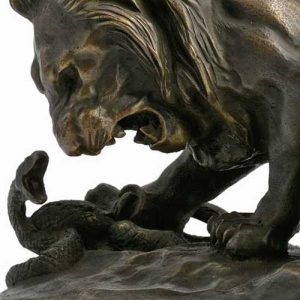


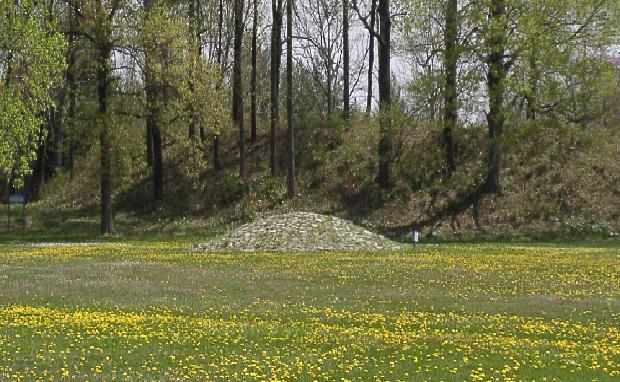
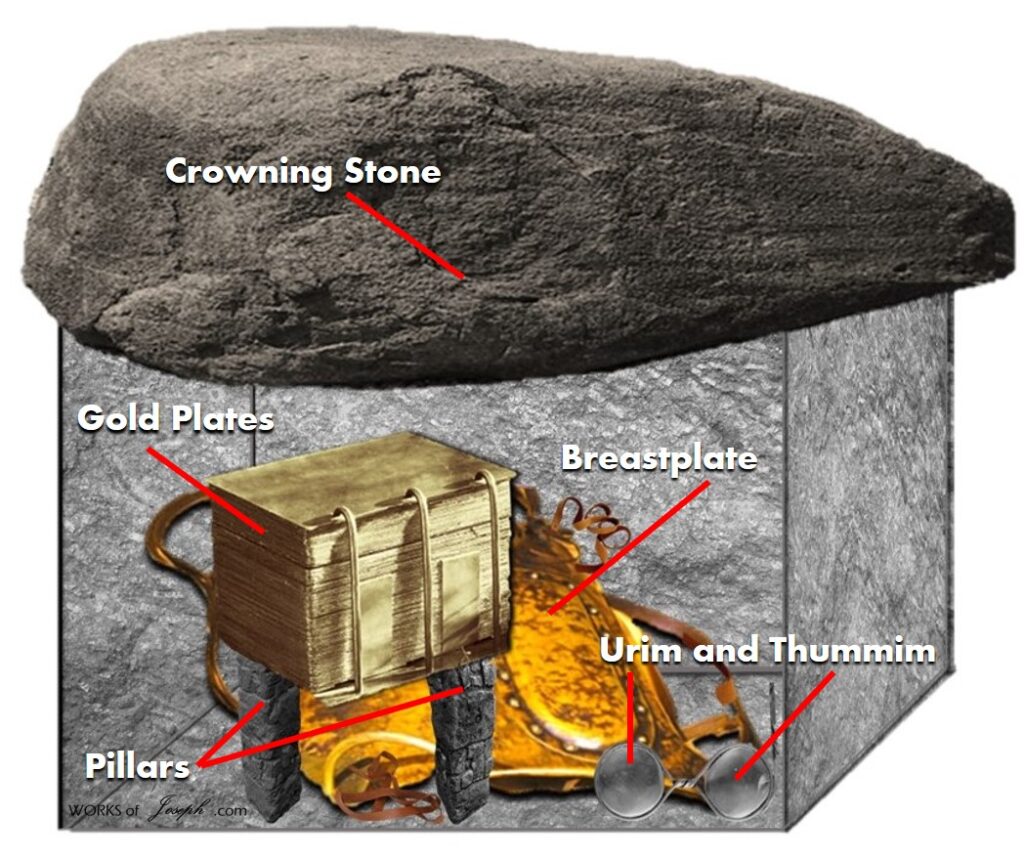
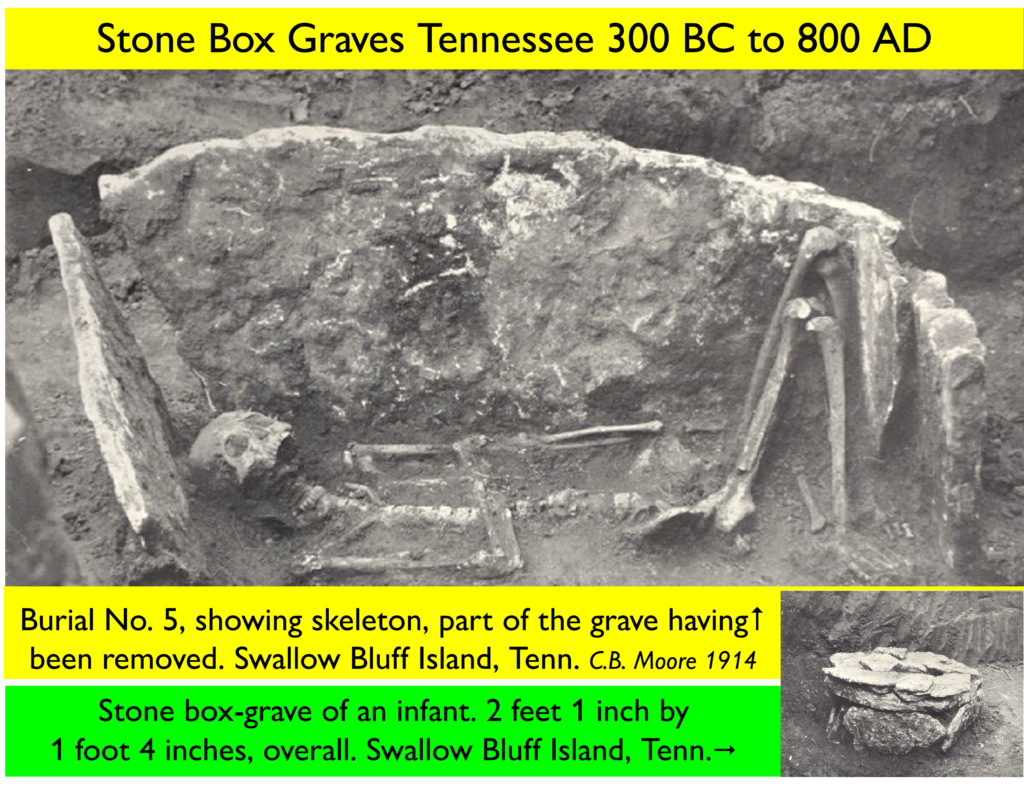








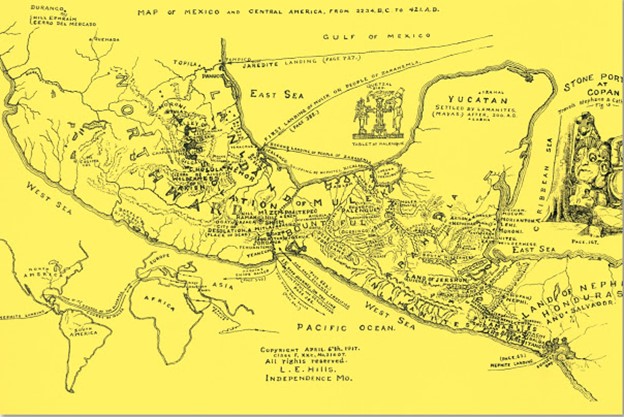


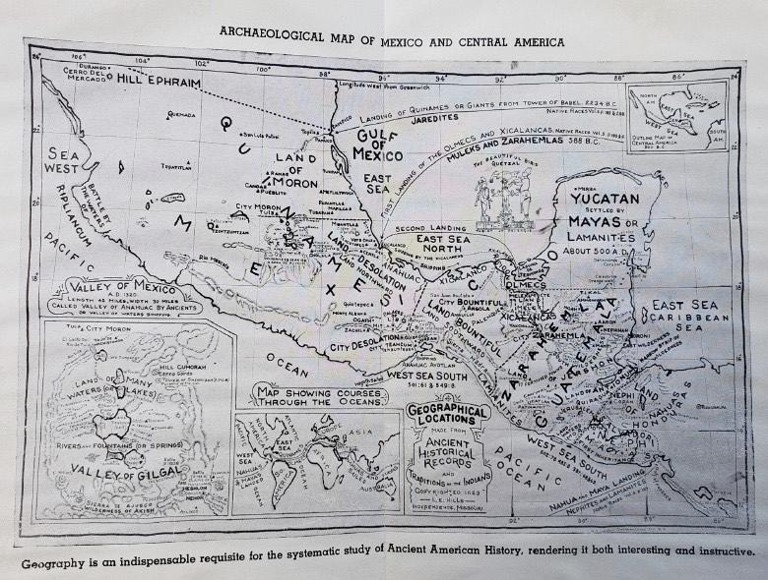
 Gordon B. Hinckley
 And many people shall go and say, Come ye, and let us go up to the mountain of the Lord, to the house of the God of Jacob; and he will teach us of his ways, and we will walk in his paths: for out of Zion shall go forth the law, and the word of the Lord from Jerusalem.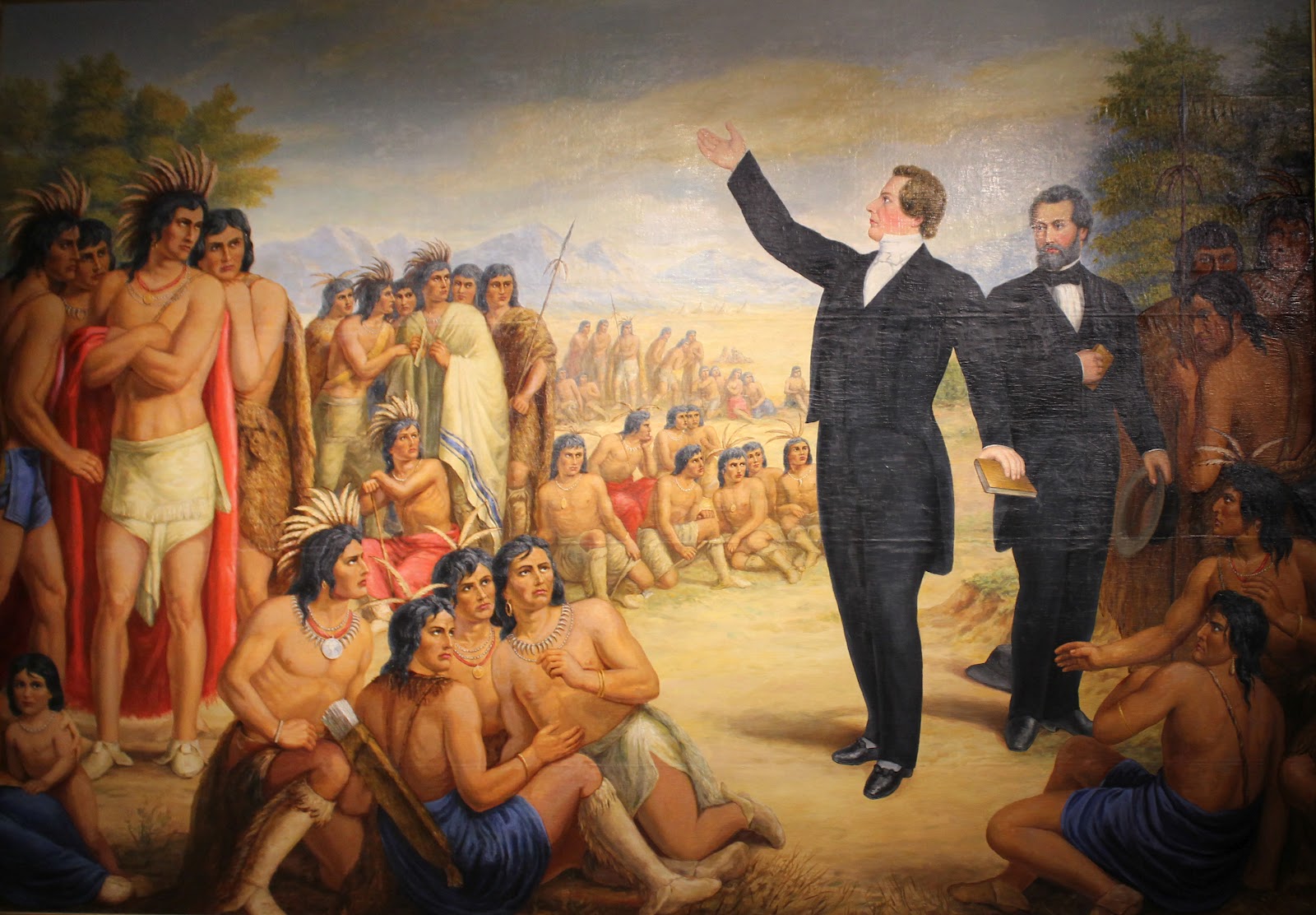



 We have Hebrew (Old Testament).


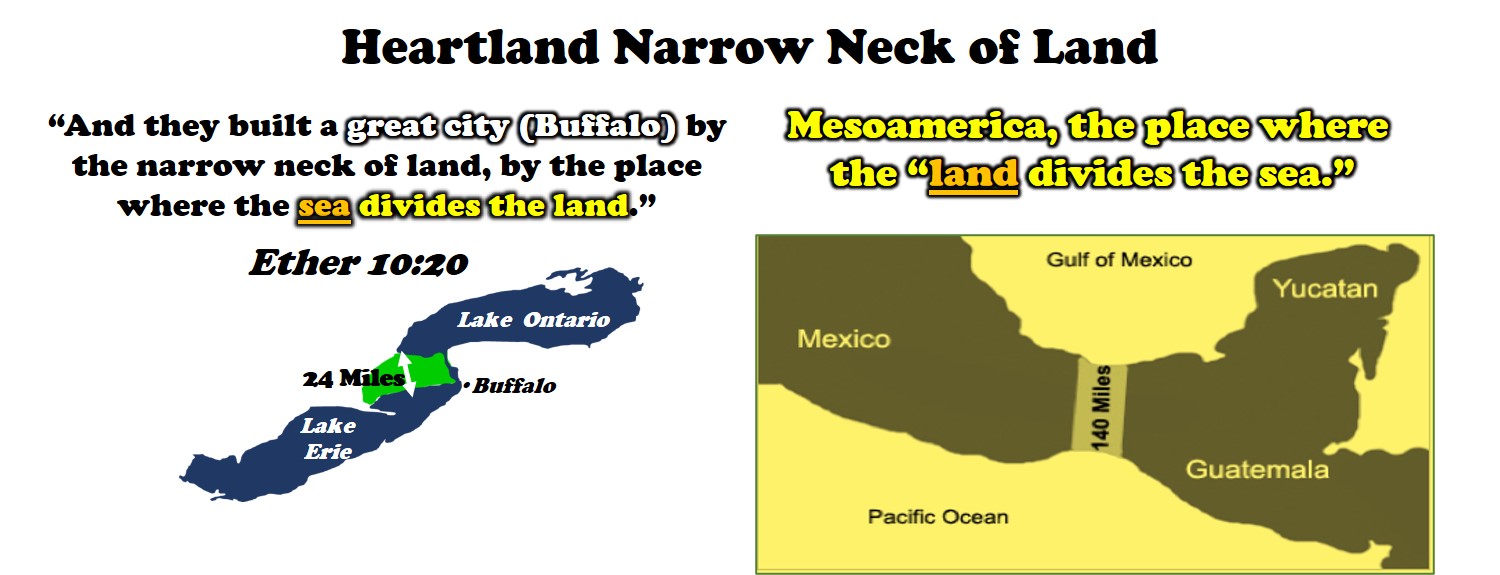


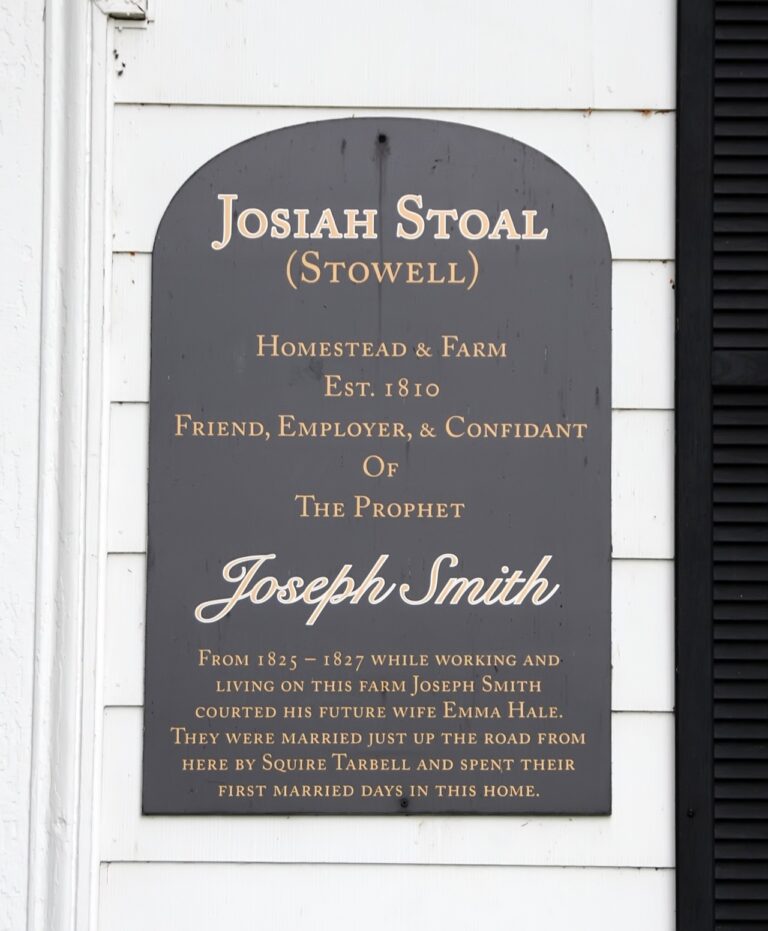







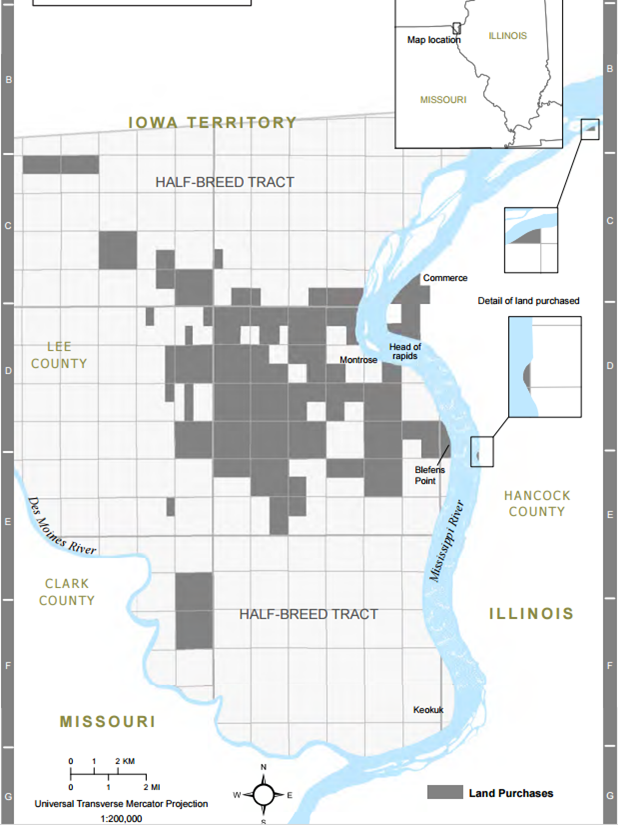
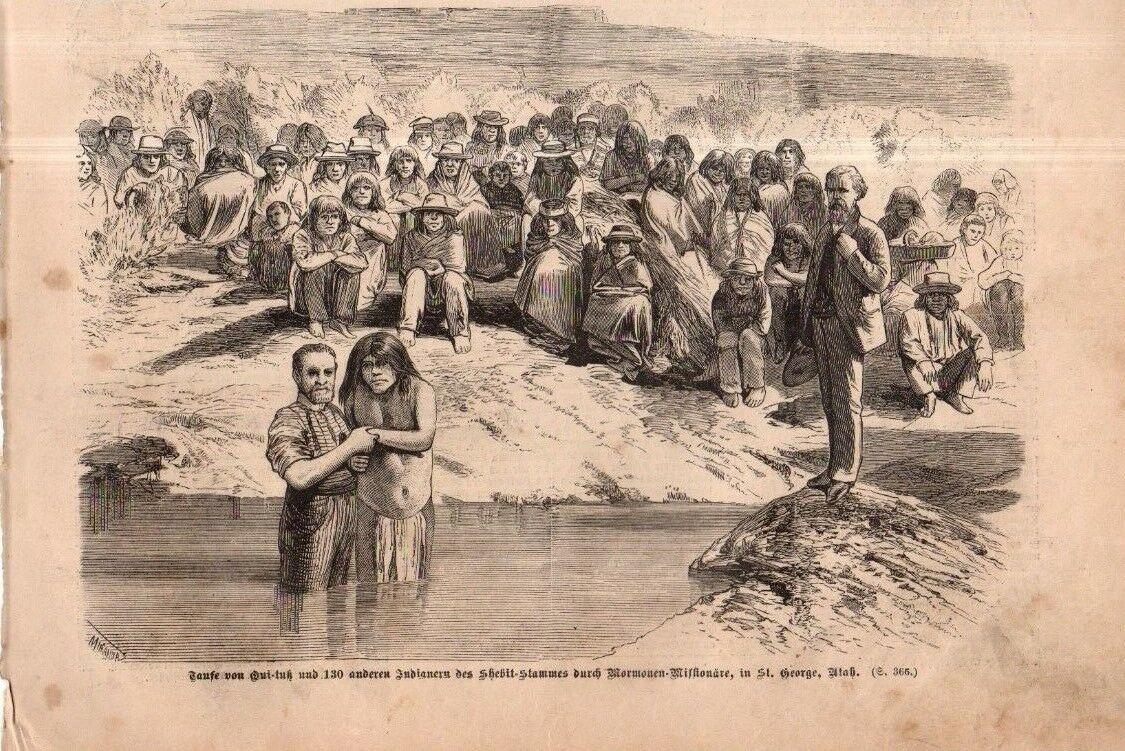
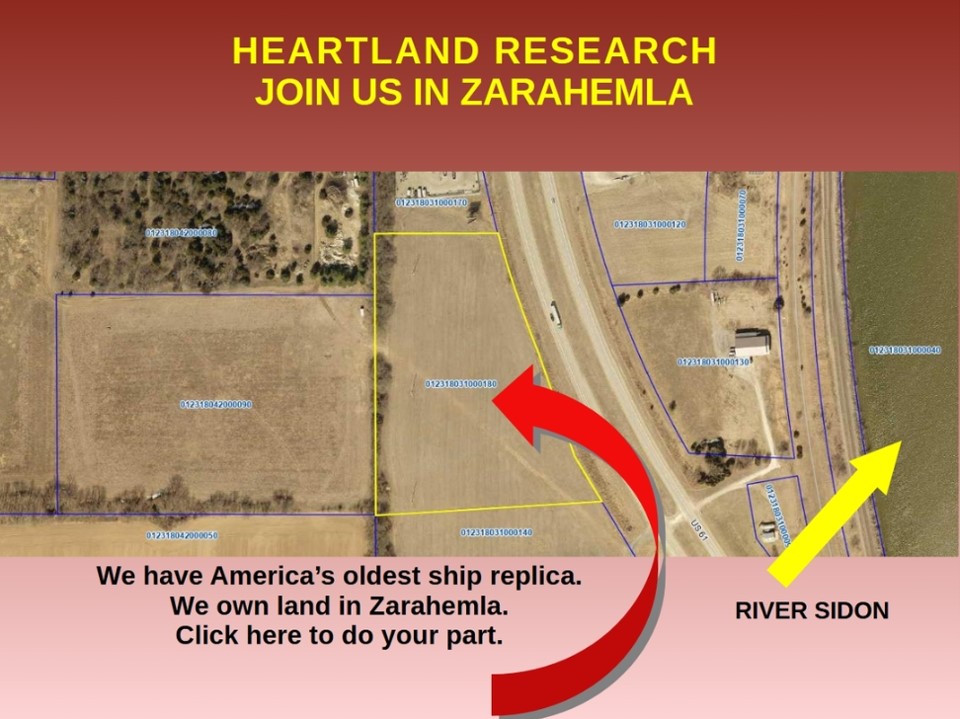


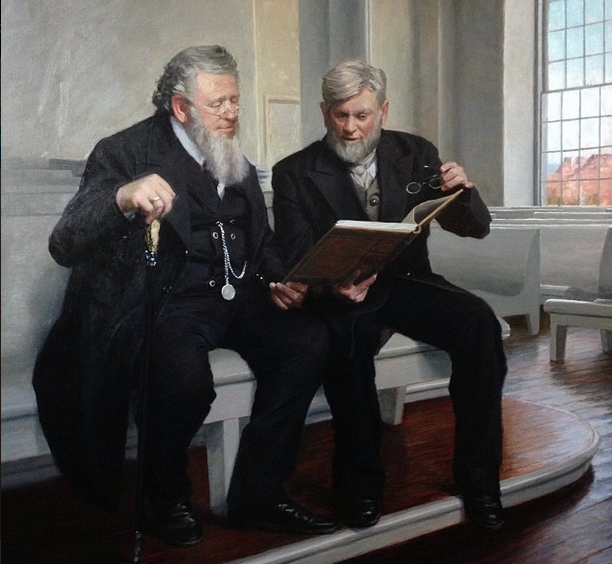


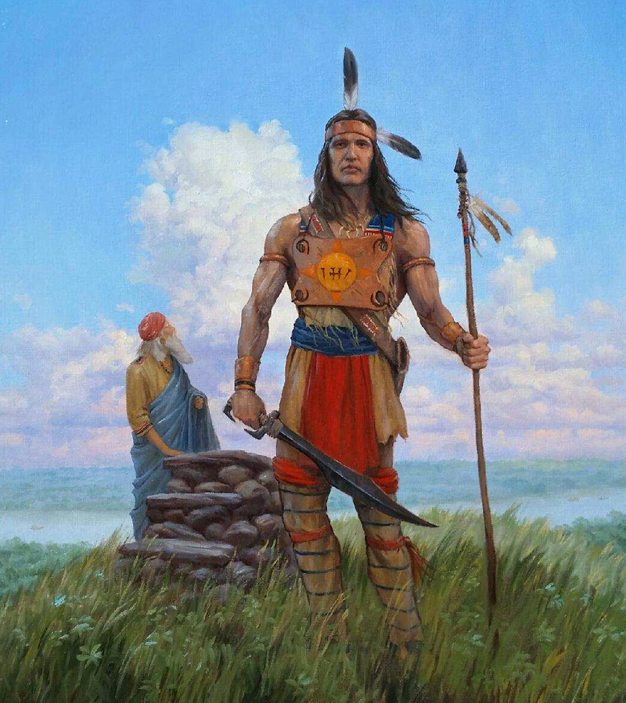
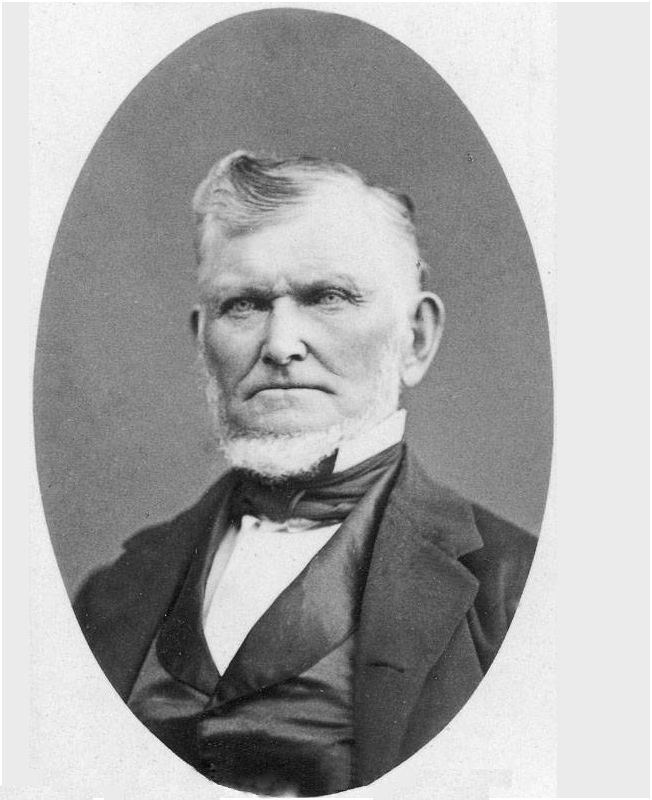


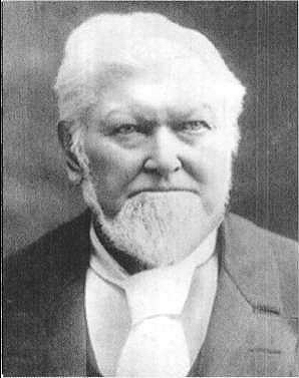
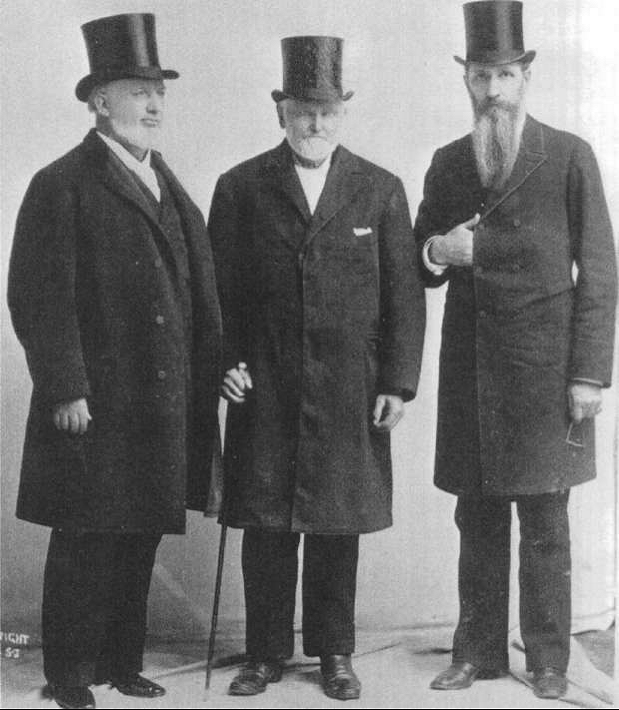


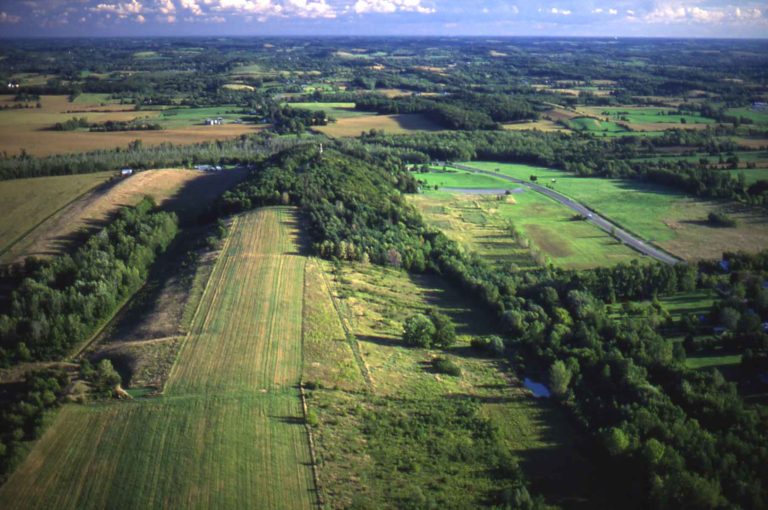
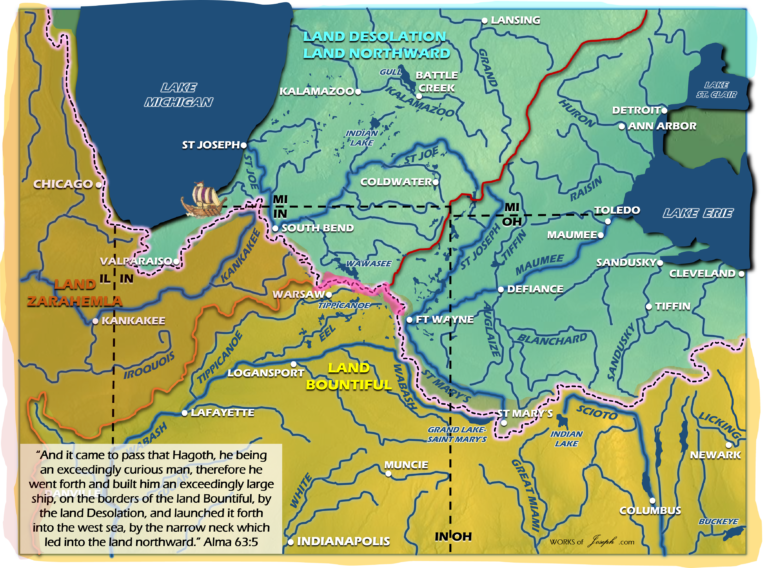

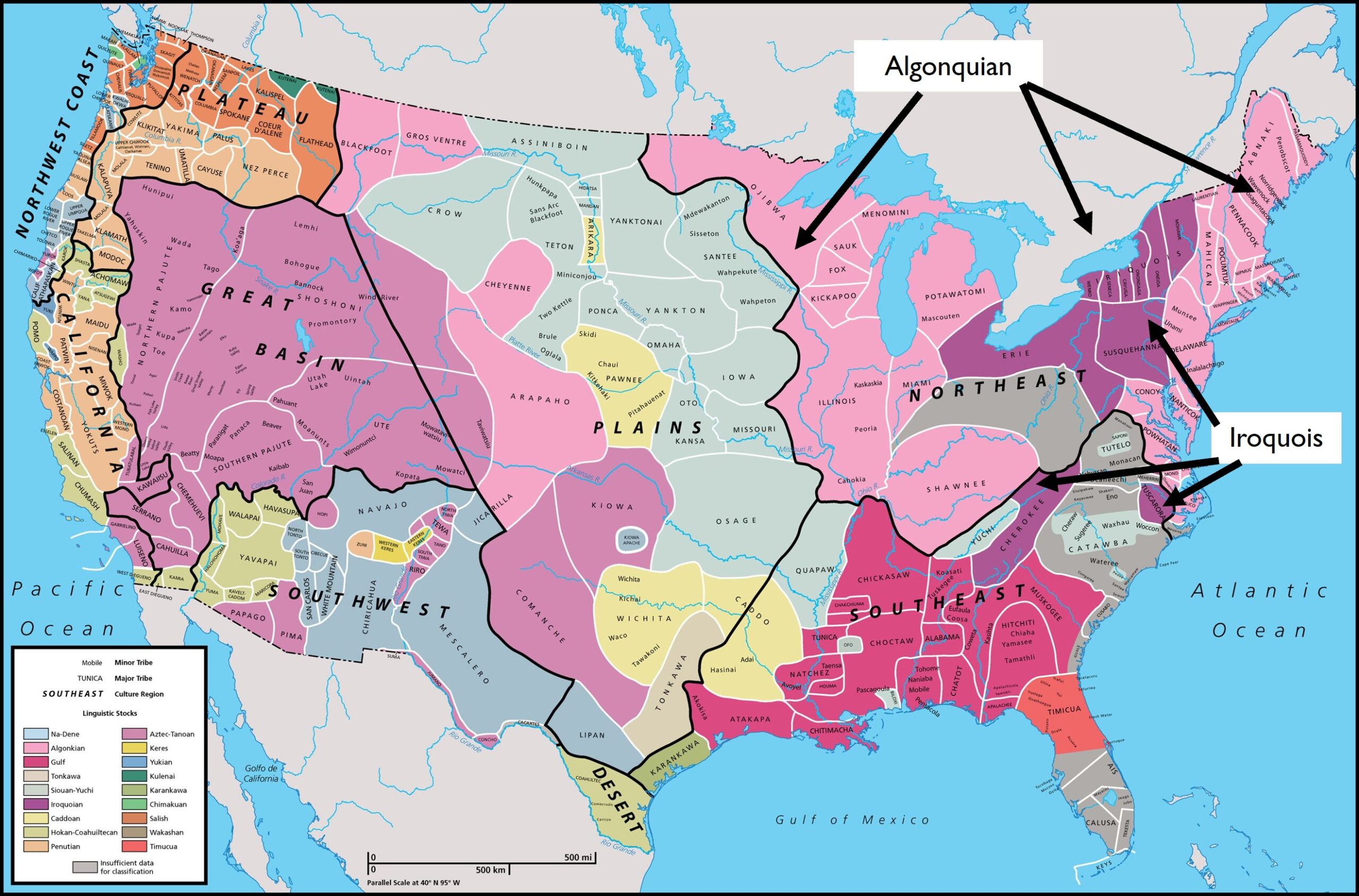
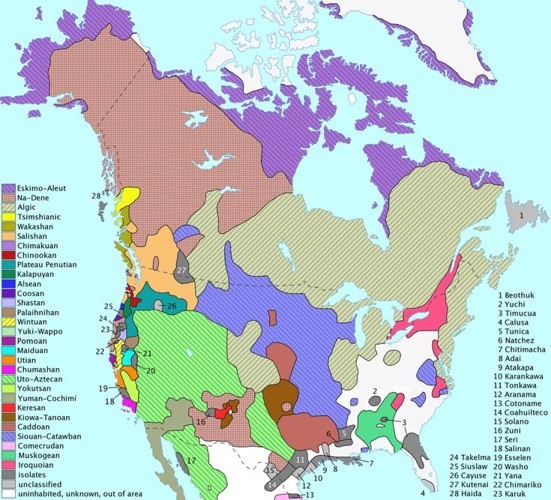 Wabash Confederacy


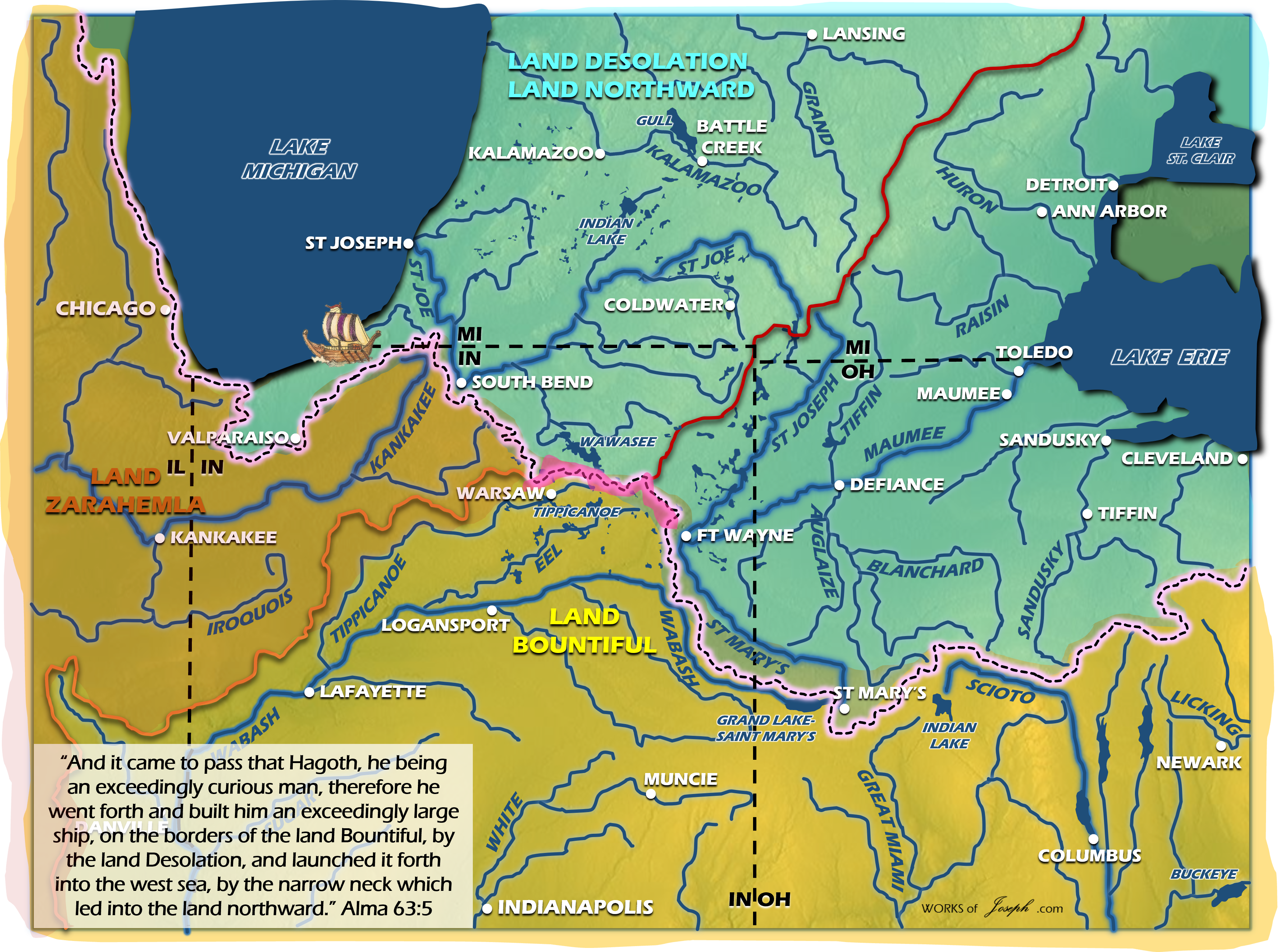


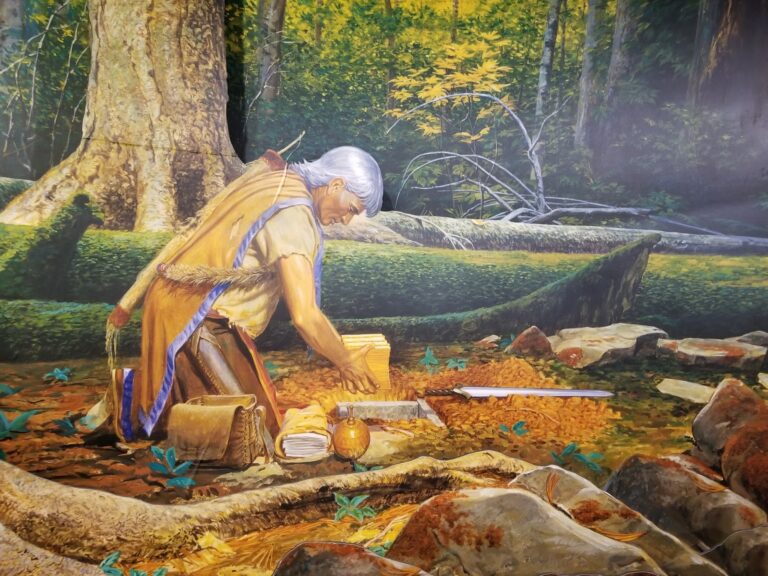


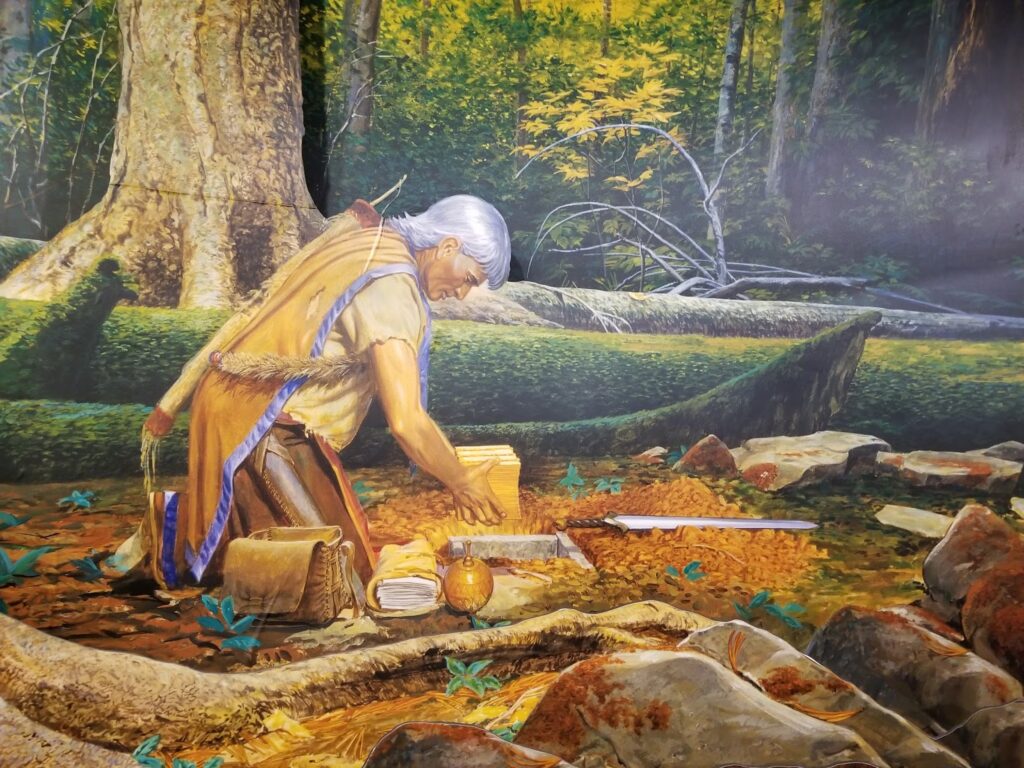





 “I attended sessions of meetings for the institute teachers, held in the assembly room on the fourth floor of the Church Office Building. I cannot say that I was very greatly edified.
  amusing if it were not a tragedy to see how some of our educated brethren attempt to harmonize the theories of men with the revealed word of the Lord. Thank the Lord, there is still some faith left and some members who still cherish the word of the Lord and accept the prophets. Surely the world is ripening rapidly for the destruction, and Satan has power and dominion over his own. If any are saved surely the Lord must soon come and have power over his Saints and reign in their midst, and execute ‘judgment upon Idumea, or the world.'” (Joseph Fielding Smith, Jr., and John J. Stewart, The Life of Joseph Fielding Smith [Salt Lake City: Deseret Book Co., 1972], 210 – 211.)


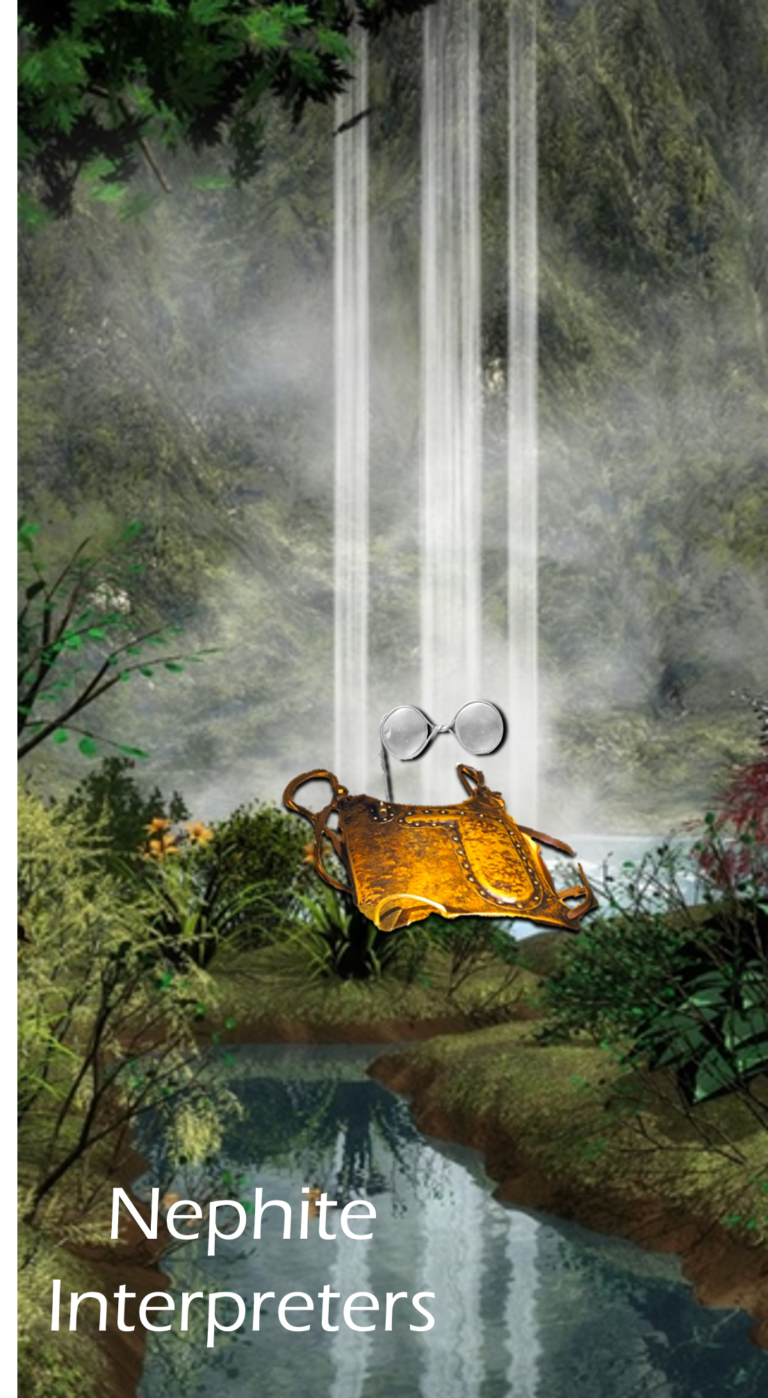

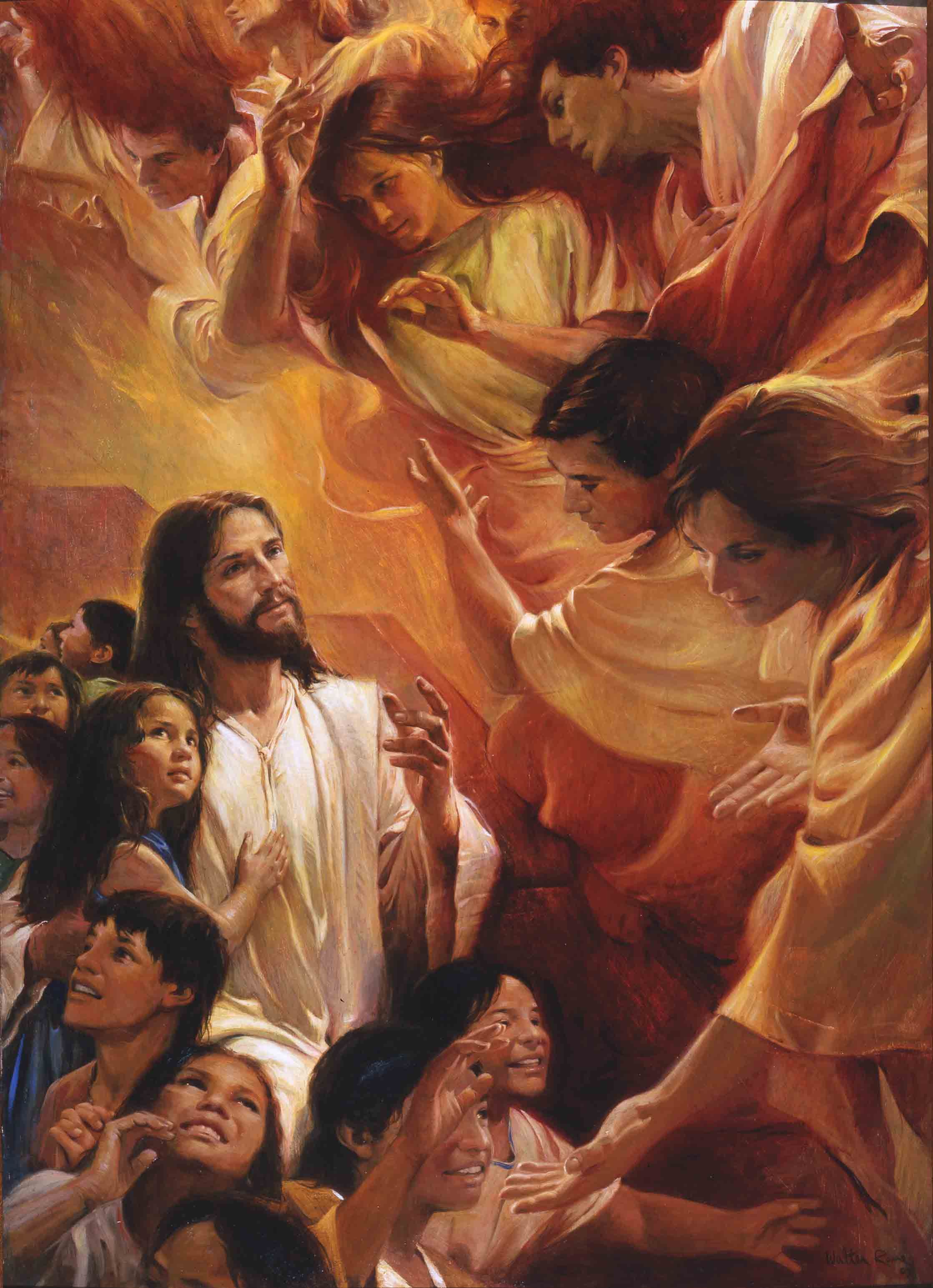





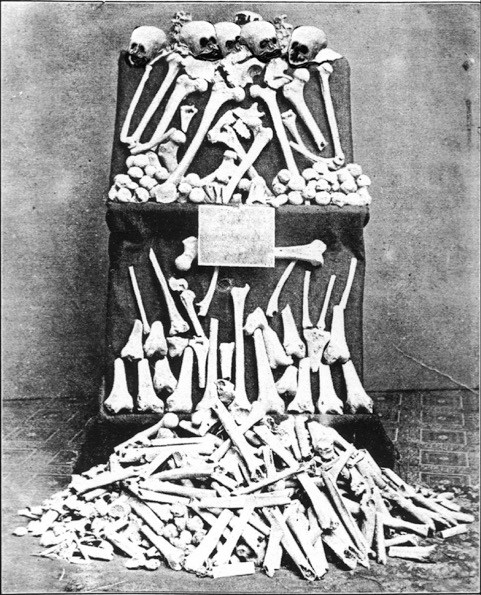


 “Moroni told Joseph that he had hidden up the records four centuries after the birth of Jesus, while he was living on the earth. He said that the Nephites, the people to which he belonged, called the hill where they stood Cumorah, and that a still earlier people, the Jaredites, called it Ramah. This was a very important hill in the history of both these peoples.” The Latter-day Prophet. History of Joseph Smith Written for Young People by George Q. Cannon 1900
 “We visited the Hill Cumorah and were accorded the courtesy of going thereon by the wife of Mr. George Sampson, a brother of Admiral Wm. Sampson, who before his death owned the property. When we went up there and looked around, we felt that
  “One of the old Indian Trails which became the route of the first road of the white man in this area, from Canandaigua Lake, two miles south of the Hill to Lake Ontario twenty-two miles north passing the “nose” of the Hill Cumorah.
  When Joseph Smith made his “fantastic” claims and published the Book of Mormon as an ancient history of the American Indians, some scoffed at the idea that a major battle had anciently taken place in the local vicinity.
  “
“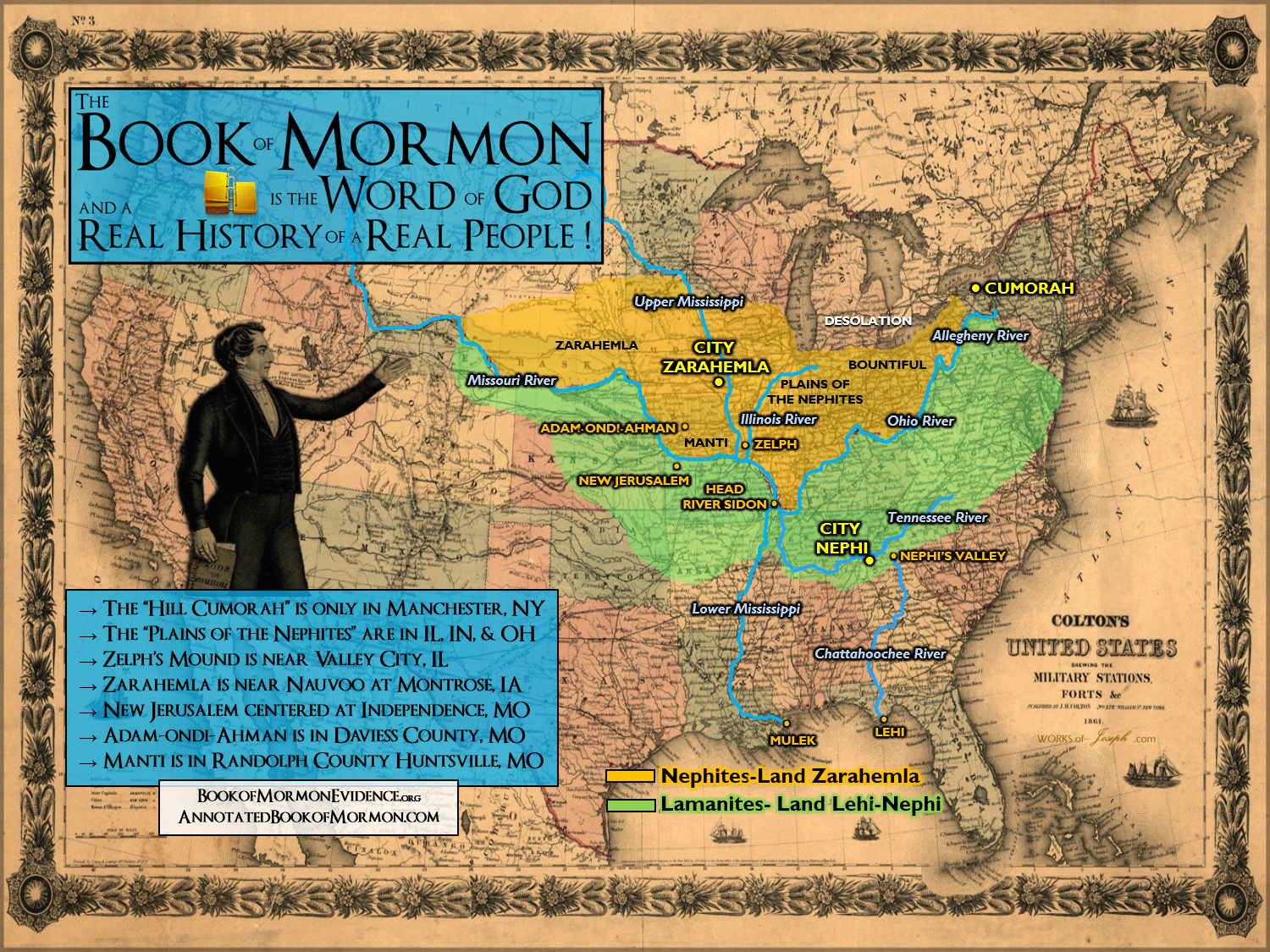
 There is no spot on this wide world of ours, which is calculated to excite more vivid reflections, than the wonderful hill of Cumorah. There the history of one-half of our globe, reposed, for fourteen centuries, in profound unbroken silence: there, “the everlasting Gospel,” engraved, not on tablets of stone, but on plates of gold, awaited the voice of the heavenly angel to reveal the priceless treasure: there, buried in the holy archives of Cumorah’s sacred hill, are plates of brass, plates of gold, undimmed by time ; sacredly guarded as the temple of heaven : there shines the Urim and Thummim, the stones of light, the gems of immortality: there, reposes in words of light, the hidden knowledge of ages past, the prophetic history of ages to come: there wisdom has selected her palace, and understanding here dwelling place, until ” the spirit is poured out from on high,” and “the skies pour down righteousness;” then, “the earth opens and brings forth salvation.”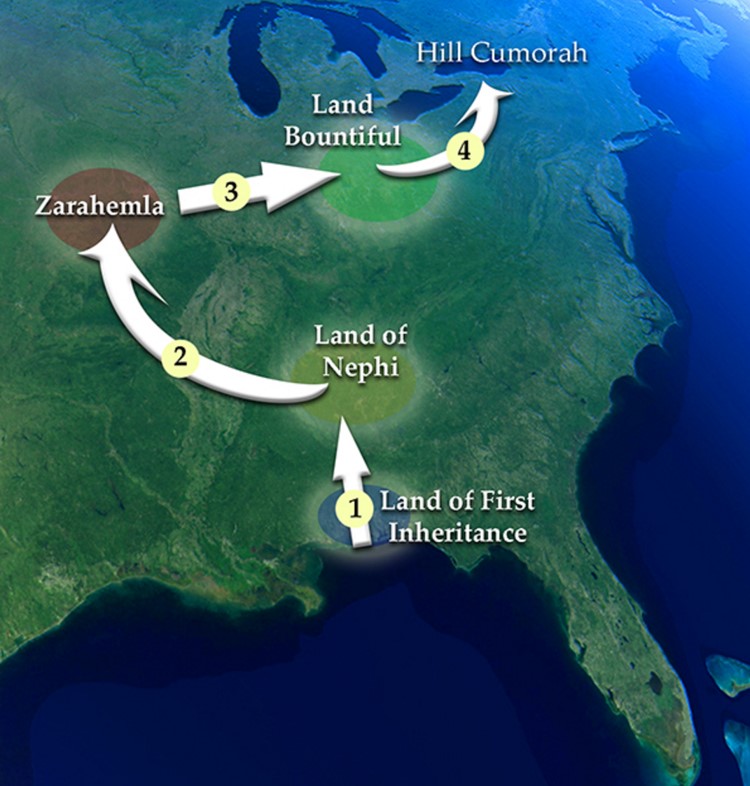
 Coupled with Christian interests, scholars like Samuel L. Mitchill of Columbia College examined Indian ruins in New York,


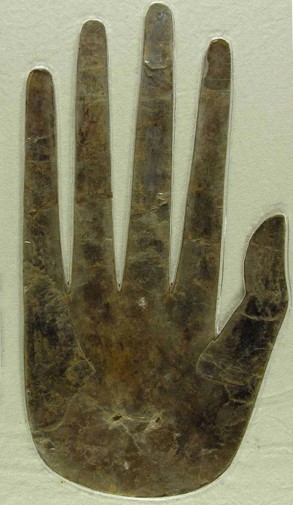


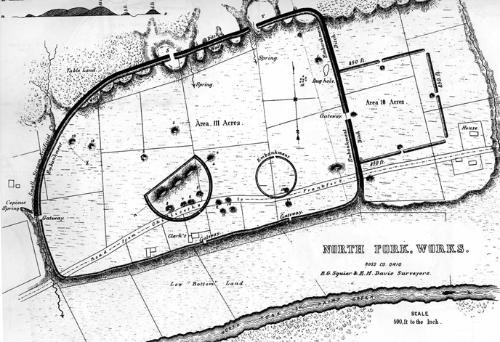
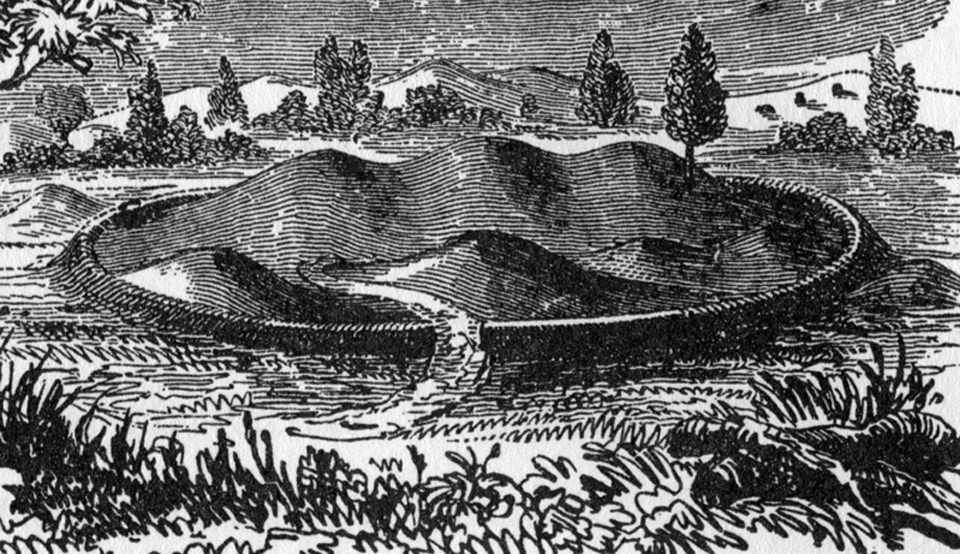 Squier & Davis 1848 New to Science The culture discovered at this site was new to the science of archeology in the late 1800’s. Newly described cultures field, which happened to be owned by a gentleman named Mordecai Hopewell at the time. Consequently, a remarkable American Indian culture, which is believed to have stretched from the Great Lakes to the Gulf of Mexico, is named after an otherwise obscure Chillicothe land owner. The true tribal names of these people were lost over the millennia, but the ancient American Indians who built this sprawling structure were part of a cultural golden age that flourished in this region from A.D. 1 to 400. The monumental architecture and artifacts of the Hopewell culture reflect a pinnacle of achievement in the fields of art, astronomy, mathematics and engineering, the likes of which was seldom seen again in eastern North America. A List of Superlatives Even when compared to all of the other astonishing prehistoric earthworks in the Chillicothe area, Hopewell Mound Group stands out in many regards. This complex included the largest single earthen-walled enclosure constructed by the Hopewell – encompassing over 110 acres. Within its walls was the largest burial mound the Hopewell people ever built: Mound 25 was 500 feet long and 33 feet high. Ephraim Squire’s dramatic 1848 engraving (seen above) pictures this enormous triple peaked mound surrounded by the low earthen wall that formed a smaller D-shaped enclosure within the great enclosure. This site provided the greatest set, both in quality and quantity, of artistic Hopewell objects ever discovered. Many of the most famous images of the Hopewell culture are from the objects found at this site: the mica bird claw the copper bear paw, and the mica hand with its elongated fingers stretching upward. The artifacts were often made of exotic materials not found in Ohio. A vast trade network appears to have thrived during this period. Huge ceremonial blades made of obsidian from Yellowstone National Park were discovered here. In fact, the total amount of obsidian here was the largest ever found east of the Mississippi River. While most Hopewell complexes seem to have been used for less than two centuries, evidence suggests that Hopewell Mound Group remained an important ceremonial center throughout the entire era of the Hopewell Culture in Ohio, a period of about four hundred years! All of these extraordinary features support the idea that Hopewell Mound Group was possibly the most important ceremonial center of all the earthworks in southern Ohio. Searching for Remnants Unfortunately, this fabulous earthwork complex fell victim to the same fate that claimed nearly all of the many renowned earthwork complexes of southern Ohio. Two centuries of plowing gradually leveled the sloping earthen embankment walls until they are barely visible today. The mounds that were too large to plow were excavated to below ground level by archeologists in the early 1900’s and never reconstructed. Sadly, the great earthen monuments of this sacred site are now all but invisible to the casual visitor’s eye. However, with some effort, the keen-eyed observer can still find signs of prehistoric grandeur here. The interpretive trail meanders past some of the site’s significant features. Paralleling the trail on the northwest side of the great enclosure, lies an intact, six-foot-high section of the original 2,000-year-old embankment wall. Use the key on the below map to locate the other visible remnants of the Hopewell Mound Group earthworks.