Home Blog Page 59

Phoenicians to America for Wyoming Copper?

0

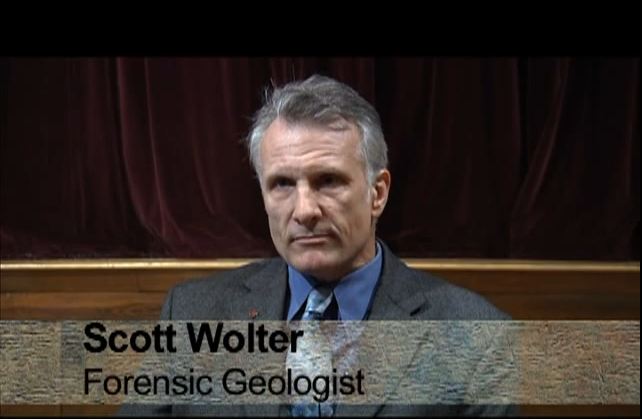
Minnesota-based forensic geologist Scott Wolter, investigates mysteries and artifacts believed to reveal an alternative history of the North American continent before the United States.

Scott Wolter wants to know if an inscribed rock found in Wyoming is a good-luck charm left by Phoenician explorers more than 2,000 years ago.

Although this story may not have an ending that I would have hoped for, it is very telling how much information there is out there that just has not been told or found. In the field of history and archaeology we are either “green and growin’ or ripe and rotten” Are we making progress? Yes! Are most scientists looking only for things that validate their theory? Yes!

I believe the Lord is sharing so much knowledge with us and we just aren’t looking for it. In D&C 121:33 it says, “…What power shall stay the heavens? As well might man stretch forth his puny arm to stop the Missouri river in its decreed course, or to turn it up stream, as to hinder the Almighty from pouring down knowledge from heaven upon the heads of the Latter-day Saints.” Who is the Lord pouring down knowledge to? We Latter-day Saints. Take a look at all the new information in science, archaeology, geography, anthropology and more. We are finding new truth every day from the most unique and inspirational sources.

You will see in this video, Scott Wolter uses our friend Philip Beale’s (Builder and Captain of the Phoenicia Ship) knowledge to answer a few questions.

Wolter asked, “Do you think the Phoenicians made it to North America? Beale answered, “Yea I do believe they made it there. They had the ability, they had the means, and undoubtedly they had the ships that have done it, what we need is to find the proof”

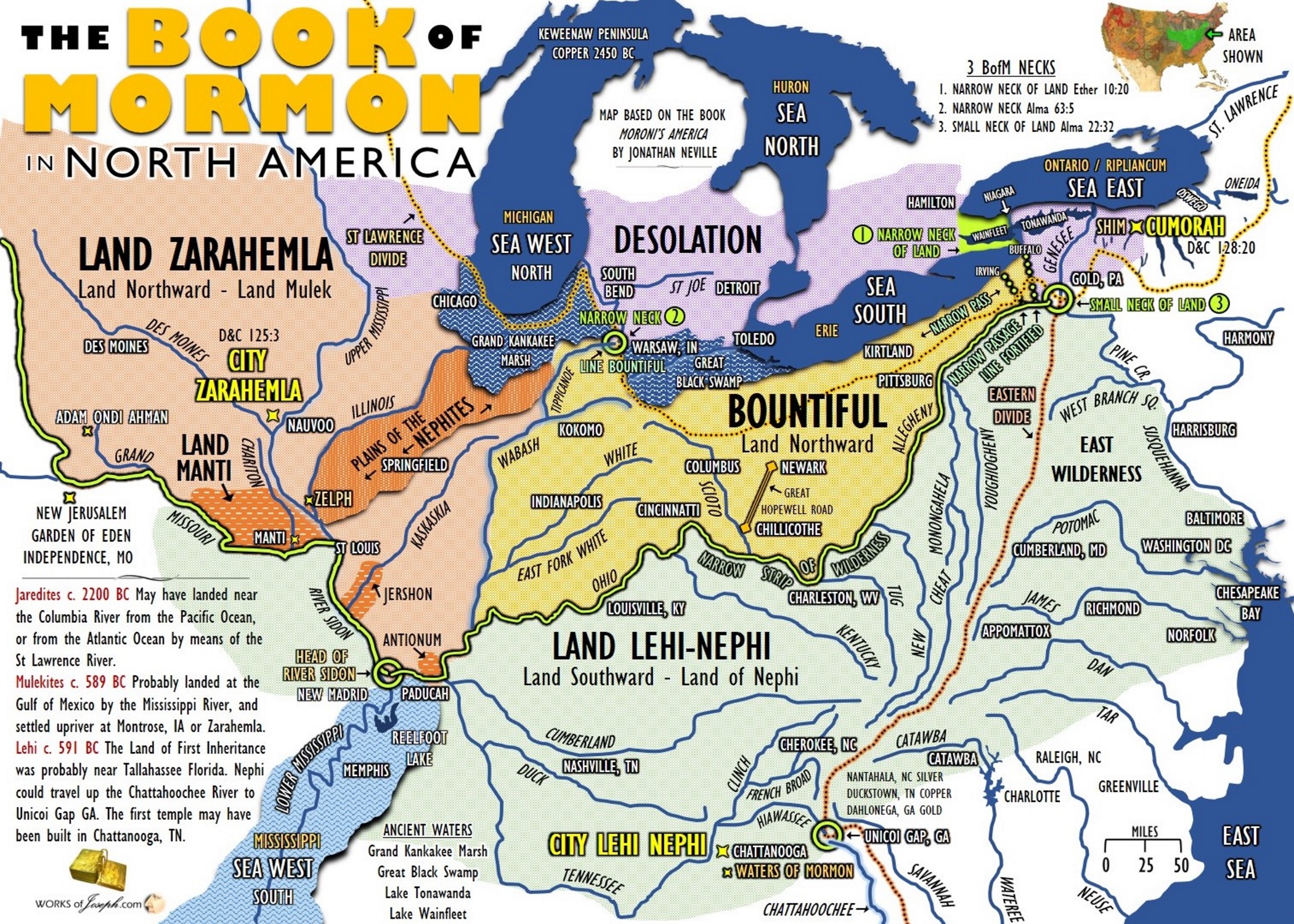
Wolter asked, Could your ship go up a river and how far? Beale says, “It undoubtedly could go up a river and a very long ways and I am out to prove the Phoenicians made it to America.” Philip Beale has made it seem very feasible that the Mulekites cold have traveled up the Mississippi to the Des Moines River rapids, or even to Wyoming copper mines by utilizing the Missouri River also.

America Unearthed S04E05 Phoenicians in America

Joseph Smith Irish DNA

0
Click to Purchase Annotated Book of Mormon

Heritage is defined as:
a) Something that is handed down from the past, as a tradition:
b) Something that comes or belongs to one by reason of birth; an inherited lot or portion:
c) Something reserved for one:

Lineage is defined as:
a) direct descent from an ancestor
b) ancestry; family; stock
c) descendants from a common ancestor

Below is some very interesting information about heritage and lineage. Just as Lehi may have several heritages, Joseph Smith in a like manner has several heritages. There is also some interesting information about Joseph Smith’s DNA and showing he is of Irish descent.

LEHI’S MANY HERITAGES by Hugh Nibley.

“The caravans of Egypt and Israel pass each other, guided through the sands by those men of the desert (Arabs) who were the immemorial go-between of the two civilizations.

  1. ARAB: Arab designates a way of life, and was applied by the Jews to their own relatives who remained behind in the wilderness. , Manasseh lived furthest out of Jerusalem and had contact with Arabs the most.
  2. ISRAELI: Of Manasseh through Joseph and the 12 tribes of Israel.
  3. EGYPTIAN: Language of Lehi consists of learning of Jews and language of Egyptians: Heritage, culture. Ammon was Manasseh’s nearest neighbor and is an Egyptian name.
  4. HEBREW: Lehi means Jaw Bone in Hebrew. From Eber, Jewish because they live near and around Jerusalem. Learning of the Jews.
  5. CHRISTIAN: Through Christ, and lived the law of Moses

Arabic Names: LAMAN, LEMUEL
Egyptian Names: NEPHI, SAM
Israeli Names: JACOB, JOSEPH”

Lehi in the Desert by Hugh Nibley Chapter 2 (numbering and subheadings added)


Conference Features Glenn Beck, Tim Ballard, and David Barton

Joseph Smith was a pure Ephraimite

Book Preview

“It is the house of Israel we are after, and we care not whether they come from the east, the west, the north, or the south; from China, Russia, England, California, North or South America, or some other locality. … The Book of Mormon came to Ephraim, for Joseph Smith was a pure Ephraimite, and the Book of Mormon was revealed to him.” (Brigham Young Journal of Discourses 2:268–69.)

“Is it possible for the same person to be an Israelite by birth and yet be considered a Gentile?”

Although President Young identified Joseph Smith as a “pure Ephraimite” in the above quotation, so far as the Prophet’s family or blood lines were concerned, Brigham Young and others have recognized that (1) Joseph Smith was from a Gentile nation and (2) some of Joseph Smith’s progenitors may have come from bloodlines other than that of Ephraim. (See Journal of Discourses, 2:268.)

President Joseph Fielding Smith also provided insight on how the term Gentile could apply to Joseph Smith even though he was a descendant of Jacob (Israel) through Joseph, the father of Ephraim:

“In this Dispensation of the Fulness of Times, the gospel came first to the Gentiles and then is to go to the Jews. However, the Gentiles who receive the gospel are, in the greater part, Gentiles who have the blood of Israel in their veins. There is a very significant statement in the words of Moroni as recorded on the title page of the Book of Mormon that it was ” … ‘To come forth … by way of the Gentile. …’

“How did the Book of Mormon come forth? By the hand of Joseph Smith. Yet we read in the Book of Mormon [see 2 Ne. 3:7–15] that Joseph Smith is the descendant of Joseph who was sold into Egypt by his brethren, nevertheless he came by ‘way of the Gentile,’ according to Moroni’s prediction.” (Answers to Gospel Questions, 4:39.)

Thus, Joseph Smith was of the house of Israel so far as his family or blood lines were concerned, but he came from a Gentile nation and thus might also be considered a Gentile in the political or geographical sense.

Lehi= Manasseh; Ishmael= Ephraim; Mulek= Judah;

Click to Enlarge

“Whoever has read the Book of Mormon carefully will have learned that the remnants of the house of Joseph dwelt upon the American continent; and that Lehi learned by searching the records of his fathers that were written upon the plates of brass, that he was of the lineage of Manasseh. The Prophet Joseph informed us that the record of Lehi, was contained on the 116 pages that were first translated and subsequently stolen, and of which an abridgement is given us in the first Book of Nephi, which is the record of Nephi individually, he himself being of the lineage of Manasseh; but that Ishmael was of the lineage of Ephraim, and that his sons married into Lehi’s family, and Lehi’s sons married Ishmael’s daughters, thus fulfilling the words of Jacob upon Ephraim and Manasseh in the 48th chapter of Genesis, which says: “And let my name be named on them, and the name of my fathers Abraham and Isaac; and let them grow into a multitude in the midst of the land.” Thus these descendants of Manasseh and Ephraim grew together upon this American continent, with a sprinkling from the house of Judah, from Mulek descended, who left Jerusalem eleven years after Lehi, and founded the colony afterwards known as Zarahemla and found by Mosiah—thus making a combination, an intermixture of Ephraim and Manasseh with the remnants of Judah; and for aught we know, the remnants of some other tribes that might have accompanied Mulek.” (Erastus Snow, JD 23:184) Also see page 9 of the Annotated Book of Mormon by David Hocking and Rod Meldrum Purchase Here

“Speaking about Lehi’s people, “Joseph wrote, “They were principally Israelites, of the descendants of Joseph.” It is possible that Joseph Smith was referring to Zoram after all, clarifying he was not a Jew. He may have been referring to those who accompanied the Mulekites (presumably Phoenicians). But it is also possible that he was referring to others who accompanied Lehi… To summarize: I think Lehi brought servants and landed in a mostly uninhabited area in Florida, among a small population of hunter/gatherers who lacked a well-organized society.” Jonathan Neville Moroni’s America page 84-86

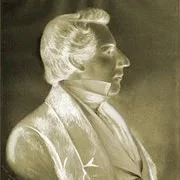
DNA shows Joseph Smith was Irish

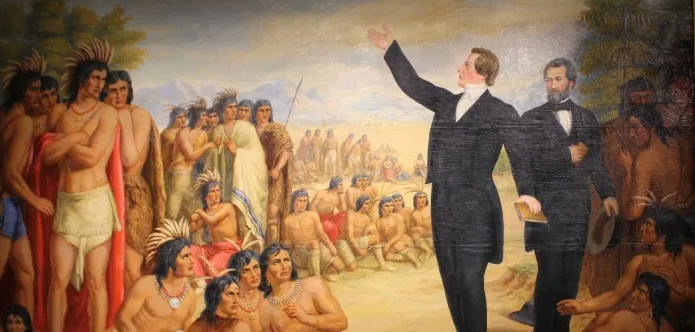
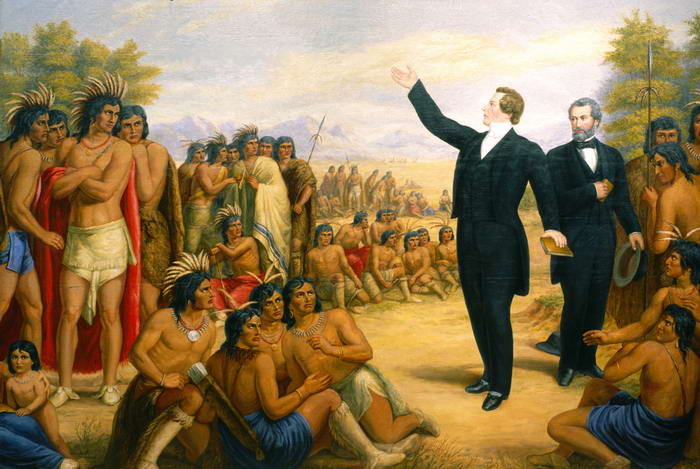
armitage-preaching-indians_MD1SANDY, Utah — DNA research into Joseph Smith Jr.’s genealogy has turned up a surprise, according to Ugo Perego, director of operations at the Sorenson Molecular Genealogy Foundation: A rare DNA marker shows that the assumption Smith’s family line came from England is probably wrong.

The Smiths were Irish.

Perego was speaking at the 10th annual Mormon Apologetics Conference presented by the Foundation for Apologetic Information & Research this week at the South Towne Exposition Center in Sandy. He recounted the investigation into Joseph Smith’s DNA and some of the results.

The primary means used to investigate Joseph Smith’s DNA was the Y chromosome — a part of DNA that is only passed from father to son and has few mutations.

Elaine Nichols, a specialist in Joseph Smith’s genealogy, according to Perego wrote in 1991 that Smith’s line can only be followed with confidence back to Robert Smith, possibly born in 1626. Robert Smith showed up in 1638 in Boston, Mass., as an indentured servant to another man. No parents known. No siblings known.

“At that time we thought: ‘Wouldn’t it be cool if we can reconstruct the Joseph Smith genetic signature, the paternal-line signature … and then, somehow,… collect samples from Smiths in England, particularly in the area where we think (Robert Smith) came from, see if we find similar genetic signatures there, and perhaps bridge the gap between the Utah or Mormon Smiths and those in England — and find a way to bridge this genealogical gap using DNA,'” Perego said.

By using DNA samples from several known Joseph Smith Jr. and his father’s descendants, an accurate example of his Y chromosome DNA profile was identified. There was no need to test his blood or bones or hair or anything.

“If I had Joseph Smith standing by me and be able to (take a sample of his cells) and get some DNA from him, I wouldn’t know any additional information than what I already know based on the (samples) of his descendants. That is how accurate this information is,” Perego said.

Having this accurate DNA profile also enabled testing of his alleged descendants through polygamous or plural wives.

Perego showed part of a list of alleged children of Joseph Smith through other wives. The DNA of a number of the alleged children was identified and compared:

Moroni Pratt was not his child, contrary to what Fawn Brodie speculated in her critical biography of Joseph Smith, “No Man Knows My History.”

Zebulon Jacobs was not his child.

Oliver Norman Buell was claimed by Brodie to be a son of Joseph Smith. She had compared his photograph with Joseph Smith III. “Even the hairstyle was the same,” Perego said, eliciting some laughter from the crowd. But notwithstanding the physical similarities, Buell was not Smith’s child.

Mosiah L. Hancock was not his child either.

Using other DNA tests, Perego also hopes to determine whether Josephine Rosetta Lyon is a daughter of Joseph Smith. So far he has collected 120 DNA samples from her descendants. He says they should know in the “next year or so.” (See 2016 results here. “Joseph Smith apparently was not Josephine Lyon’s father, Mormon History Association speaker says.”)

“My testimony of Joseph Smith has absolutely nothing to do with to what extent he practiced polygamy,” Perego said. “But there is an interesting situation in which there are literally thousands of people descended of these individuals that are wondering, based on what has been written, whether or not they are descendants of Joseph Smith, and so here you have a chance to tell these people how things are.”

Whether Joseph fathered some of the other children on the list may never be known, because some of them died too young to have any children themselves. “I’m not really in the business of going around and digging up graves and testing,” Perego said.

Perego then returned to his search for Joseph Smith’s ancestor in England. Because Joseph Smith’s last certain ancestor on the Smith paternal line, Robert Smith, was indentured to a man who had property in Kirton, Lincolnshire, England, the assumption was made that Robert Smith was also from Kirton.

Another Robert Smith was found there who had a son named Robert at about the correct time. This new Robert Smith was assumed to be the father of the younger indentured servant Robert Smith who came to America — even though the connection was weak. Smith is a common name, of course, and Robert was the most popular first name at the time.

This is where the trail goes completely cold using standard genealogical methods. Perego’s goal was to see if any traces of the Smith family DNA were still in the area. If Robert Smith came from that area, some matching DNA should remain in living Smiths. This would add some support to the genealogical record.

Perego wrote letters to 1,100 Smiths in the Lincolnshire area asking for DNA samples. Thirty-three people responded, but testing showed zero matches with Joseph Smith’s DNA.

The Joseph Smith DNA was unusual for Smiths — even among Smiths in the United States.

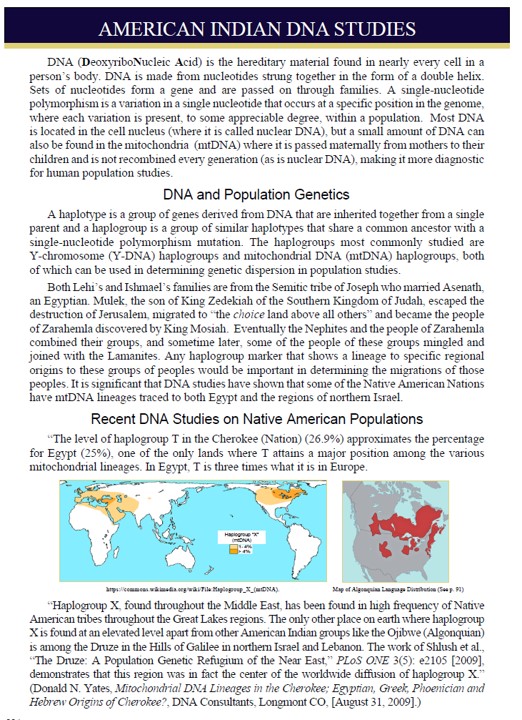
Without any success in the target area, Perego cast a wider net — using both Joseph Smith’s specific DNA Y chromosome profile and a “haplogroup” to look for matches. A haplogroup is a grouping of Y chromosome profiles that share similar characteristics. These haplogroups are usually very geographically specific.

First, Perego put the Joseph Smith DNA profile into the Sorenson Molecular Genealogy Foundation database of 23,403 Y chromosome DNA samples. He was looking for matches from about the time when Robert Smith came to America. He found close matches, many of which were Irish.

From there, Perego identified a part of Joseph Smith’s DNA that had a very rare marker called M222. With this “higher resolution” he found that the same marker was found in Northwest Ireland — with a little bit in Lowland Scotland.

Finally, Perego looked at a study published in 2006 that dealt with this same area of Ireland. A Y chromosome profile had been found that was attributed to the many descendants of “Niall of the Nine Hostages,” a fifth-century Irish warlord who was the ancestor of the kings of Ireland up to the 10th century. Perego compared that Y chromosome with Joseph Smith’s profile and found they matched very closely. This was another indication that Smith’s ancestors along his paternal line were not just Irish, but probably related to Irish royalty.

“Perhaps this indentured servant, this 12-year-old boy, was an Irish descendent, perhaps only one or two generations before they were living in Ireland … and moved to England,” Perego said. “Irish people were not viewed too well in England, perhaps there was a surname change. Perhaps Smith was not a Smith, was something else at some point.”

Perego speculated the Irish Smiths were likely not in England for many generations, otherwise he would have found a lot of genetic matches from the samples he collected from the English Smiths who live now in that area.

“I hope that that doesn’t change anybody’s testimony here,” he joked. “I feel OK about the Irish people.” E-mail: [email protected]

DNA tests rule out 2 as Smith descendants – Scientific advances prove no genetic link

By Carrie A. Moore, Deseret News Published: Saturday, Nov. 10 2007

LDS Church founder Joseph Smith married as many as 30 women.

Summary

Page 554 Annotated Book of Mormon

After more than a century of speculation about whether LDS Church founder Joseph Smith had children with any of his plural wives, a local geneticist said he recently has crossed two such purported descendants off the list of potential candidates.

After more than a century of speculation about whether LDS Church founder Joseph Smith had children with any of his plural wives, a local geneticist said he recently has crossed two such purported descendants off the list of potential candidates.

Ugo Perego, director of operations at the Sorenson Molecular Genealogy Foundation, told the Deseret Morning News that technological advances in DNA testing during the past couple of years have helped prove with “99.9 percent certainty” that two early Latter-day Saints thought by some to be Smith’s children are not his descendants. They are:

  • Mosiah Hancock, son of Clarissa Reed Hancock, who was married to Levi Hancock.
  • Oliver Buell, son of Prescindia Huntington Buell, who was married to Norman Buell.

Perego said that brings to five the number of people that some believed were Smith descendants whose paternal DNA does not match up with his. To date, at least seven other early Latter-day Saints have been identified in various historical documents or in later writings as potential Smith offspring, he said.

In 2005, Perego said DNA testing also ruled out three other alleged male descendants — Moroni Llewellyn Pratt (son of Mary Ann Frost Pratt, married to Parley P. Pratt), Zebulon Jacobs (son of Zina Diantha Huntington Jacobs Smith, married to Henry Bailey Jacobs) and Orrison Smith (son of Fanny Alger).

Some candidates are surrounded by what he called “strong historical evidences like journal entries,” while other alleged descendants have little historical basis to be related, other than “speculation based on conclusions that sometimes may have been too rushed,” Perego said.

In Hancock’s case, “historically, there is nothing about him. In fact, another son of Levi Hancock is more in question, named John Reed Hancock.” Mid-20th century historian and author Fawn Brodie, in her book “No Man Knows My History,” had “quite a lot about John Reed Hancock,” he said.

Brodie also believed Buell was Smith’s child, born during the early church’s days in Far West, Mo., he said. “She goes quite far to explain why she thought this was the case. The time was perfect because (Prescindia’s) husband was gone from the church, and there was a plural marriage that took place while he was gone.”

Brodie also offered as evidence a photo of Buell resembling two of Joseph and Emma Smith’s sons, writing that his “physiognomy … seems to weigh the balance overwhelmingly on the side of Joseph’s paternity.”

Historians say Smith was married to as many as 30 women before he was killed by a mob in June 1844.

Perego also has gathered DNA samples on about 120 descendants of Josephine Rosetta Lyon, daughter of Sylvia Sessions Lyon, who was one of Smith’s wives. But Y chromosome evidence, used to determine paternal relationships from father to son, is not present for Lyon because she is female. The effort to determine Lyon’s parentage is ongoing, he said.

His most recent findings were presented as a paper at the annual John Whitmer Historical Association conference in Kirtland, Ohio, in late September. The group’s officers since have asked Perego to put his presentation into an article format suitable for publication in their next annual journal.

The list of approximately 12 people alleged to have been Smith’s children “may grow over time,” Perego said, noting historical documents continue to surface. “I’m not saying the list I have is definitive or complete at all. But out of those we have data for, there is no evidence from DNA at this point that Joseph Smith had any children from women other than Emma Smith.

“In the future, if DNA data will be able to be collected and tested, we might know otherwise. But right now, we’re able to eliminate five children from that list. There may be some cases we might never be able to test at all.”

While Y chromosome DNA is passed from father to son and is most accurate in identifying living people, mitochondrial DNA is passed from mother to daughter and is more often used in paleontology and archaeology, Perego said. As a result, there are distinct limitations on the testing that can be done to date because such testing on a living — and cooperative — male descendant requires an unbroken male line.

Perego has mapped Smith’s DNA by retrieving samples from living descendants of two sons he had with Emma Smith — Joseph Smith III and Alexander Hale Smith. “Their Y chromosomes were identical, so we know for 100 percent sure what Joseph Smith’s Y chromosome looked like. We can now use that standard to verify any other alleged sons,” which he did with those who have been eliminated as possible descendants.

Page 555 Annotated Book of Mormon

“For 160 years people have been writing in books or speculating that these people could have been Joseph Smith’s children. When people write something in a book, many people refer to that almost as a fact. Brodie went on and on about Buell, talking about the timing and the picture — everything seems to indicate Buell was Joseph Smith’s son. But the DNA says otherwise.”

Perego said he was not only able to eliminate Smith as their father, but also was able to confirm that the men who were married to Hancock’s and Buell’s mothers were actually their biological fathers.

As he finds living descendants of people in question, Perego said he will be happy to continue to test them. “I think this will always be a work in progress. Hopefully, someday we’ll be able to test some of the girls as well, when genetic testing is developed to accurately conclude if some of these girls were or were not his descendants.”

Plural wife Sylvia Sessions Lyon left a deathbed affidavit for her daughter, Josephine, telling her that her father was Joseph Smith. In terms of circumstantial evidence, “that is probably the strongest case out there, but it involves a daughter. I’ve collected maybe 120 samples from descendants of Josephine, but as of today, there is not an accurate method” to prove parentage. (See 2016 results here. “Joseph Smith apparently was not Josephine Lyon’s father, Mormon History Association speaker says.”)

Perego’s work is an independent project that Sorenson has allowed him to work on, rather than something the foundation does full-time, he said. His motive, he said, is truth, not glory.

“As a scientist, I like to look for truth. If there is a book that says this person was Joseph’s son, and I have evidence that’s not right, it’s important for me to offer an alternative explanation from science that people can refer to. New authors in the future can then take that new genetic evidence into consideration.

“My goal is not at all a crusade to prove or disprove either that Joseph Smith practiced polygamy or that he had children from women other than Emma. I have no agenda to prove or disprove.

“There are legitimate cases of individuals studying family history who have a pedigree chart in front of them that shows” Smith as a third-great-grandfather.

“Because there is some evidence like a book or a rumor in the family, individuals don’t know who to put on their pedigree chart. We’re talking about real people who want to know who they are descended from.

“Most have told me they don’t really care if they come from Joseph Smith or from someone else. They just want to know which one.”

For information on DNA testing for family history research, see Sorenson’s Web site at www.SMGF.org.

E-mail: [email protected]


Mary Magdalene Moved Me!

0

I have watched many films, videos, and productions about the Life of Christ. My expectations to watch another film on Jesus was very high. I usually have something to say about the set or the person or the props etc. I never seem satisfied, especially with other faiths not of the Church of Jesus Christ of Latter-day Saints who portray the Savior on film.

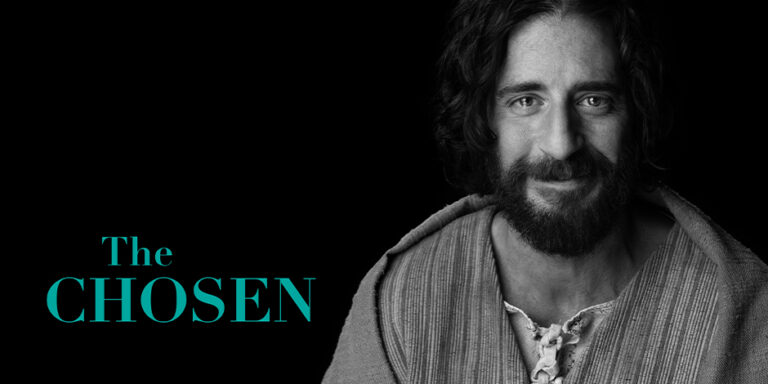
This movie, “The Chosen” is flat out the best I have ever seen and it is made by a great Evangelical man named Dallas and distributed by a team of Mormons called Vid Angel. I sat down with my wife and we watched the first 3-episodes and we just looked at each other and cried. It was an awesome Spirit and I have to share it with you.

The Chosen starts off very differently and initially I have a hard time knowing who I am watching and when. One of the first scenes is about Mary of Magdala, who at first I had forgotten she was possessed with seven devils. The first time I see Jesus in this movie is when He heals Mary Magdala. Wow! What a powerful scene. That’s what caught my eye. Then it goes on and shows the life of Simon Peter, Andrew, Matthew, and Nicodemus and it gets better and better. Don’t trust me watch it now at:

https://studios.vidangel.com/the-chosen

From LDS Living we read, “The Chosen” explores the life of Christ through the eyes of those who knew Him. The narrative multi-season show has received high praise from viewers and critics alike, earning a 9.8 out of 10 rating on IMDB. But with the praise, it has also attracted skeptics. Some don’t believe evangelical Christians should be working with Latter-day Saints on a show about Jesus or vice versa, and others believe scripture should only be portrayed exactly as it is written without creative liberties. The show’s writer and director, Dallas Jenkins, believes that exploring faith, especially in relation to the Savior, is something that requires trust. On this week’s episode, he shares the triumphs as well as the challenges of depicting the life of the Son of God.

“Even though He spoke to crowds, He was always talking personally, and He was always seeking that personal relationship. And that’s what He wants from your heart. He wants that more than your accomplishments, and He wants that more than any kind of mass movement. He wants the personal.”


Portrayed- Simon Peter

Th Chosen is the first-ever-multi-season TV show about the life of Jesus. Created outside of the Hollywood system, The Chosen allows us to see Him through the eyes of those who knew him. No matter where you are at in your journey with Jesus Christ, this TV show is for you. Source LDS Living


EPISODE REFERENCES: 

Video: Can you trust The Chosen? – The Chosen Youtube Channel

Watch Episode One: The Chosen: Complete Episode One 

Video: Behind the scenes: The Miracle of the Miracle of the Fish

Book: The Chosen Devotional Book

Video: Season 2 update: “I’m in a tough spot” 2020 Chosen update

Video: Interview with Jonathan Roumie: The immense weight of playing Jesus

Video: Vertical Worship – Faithful Now (Live)

Video: Season 2 Sneak peek:  Chosen cast reads scene from Season 2

https://www.ldsliving.com/pages/allin-e90-dallas-jenkins-behind-the-scenes-of-the-chosen

Words of the Producer Dallas Jenkins

“And in the last week and a half since that video, I don’t even have time on an entire podcast episode to tell you what God has been doing in the last week and a half, including in my life. Just a couple of days ago, I experienced the sunrise in Goshen, Utah, where the beautiful Jerusalem set is located. I just went there and watched the sunrise and prayed with a couple of my friends, my brothers and sisters from VidAngel. And God has shown up. I mean, He has been answering prayers and making things clear and releasing doors to be opened, so fast that I can’t even believe it. Miracles have taken place just in the last week and a half. And at the end of the day, it’s not about the miracles of the show that is moving me so much, it’s just what He keeps teaching me over and over on a personal level. So many different lessons. As I’ve talked about publicly before, it’s not your job to feed the 5000, it’s only to provide the loaves and fish. Another lesson that was learned just two days ago, I was standing there, staring at the horizon, waiting for the sunrise. And that’s why we had gone out to this place that was just out in the middle of nowhere, just to watch the sunrise. I’m standing there staring at the horizon, and I don’t stand still for anything. I had my phone in my hand, actually, because I was going to take some pictures. And we sped out there because we started to see the light emerge, like, “Oh, we’re gonna miss it.” We get out there and we stood there, and for like, 30 minutes, the sun just wouldn’t come up over the mountains. It was ridiculous. I’m thinking, “What am I doing? I’m just standing here, staring at the horizon.” And at one point I actually started to walk away, because I’m like, “I have to leave soon.” I was gonna go do kind of a walk around the area that we were in, and I was gonna look at some things. I just felt this “No, no, stay here. Just be quiet for just a minute. Just be quiet and be still, and just look at the horizon and rest and abide and don’t do anything else. Don’t look at your phone or anything else.” So I did. And eventually the sun came over the mountains way after the app had said it would. One of the women that we were with when we gathered together to pray, because we’d kind of split up to watch the sunrise, she started sharing what God taught her during that moment and she said, “You know, where I’m from the originally, the sun rises immediately. I was sitting there, just waiting for the sun to come up.” And I’m like, “Me too!” I was just like, what is happening? She’s said it was taking so long, and God just knocked her out and said, “This is about my timing. My timing and my will is what I want you to submit to.” It was like He was just clearly teaching all of us that same lesson in that moment. And that has been the lesson of this show, is we are not on our own timing. We are on God’s plan, and I am happy to submit that. It’s what my wife calls “the manna program,” where God gave manna to the Israelites, just enough for that day. He even said, “If you try to store up more than I’m giving you, I’m going to make it rot.” He wanted them to be hands outstretched to God every day for their daily manna, and not any more than that. And that’s what he’s been teaching us every single day on the show. It’s been a beautiful lesson for me to learn, and my life has changed because of it. Source: Words by Dallas Jenkins

https://www.ldsdaily.com/entertainment/the-chosen-brings-christ-to-life-in-visceral-beautiful-new-show/

Comment Section (I Love this Exchange)

Glenda Shaw du Toit My concern is that you have made Mary Magdala to be a Prostitute! That is a Catholic interpretation. She was NOT a prostitute!! And Mathew the Tax Collector looks like a 14 year old boy. Why couldn’t you use a man for that part? I have only watched one episode. I hope there are not going to be too many “in the dark” scenes. But I am really really upset that you made Mary of Magdala to be a prostitute. You are LDS. Why did you do that??? And who’s idea was it to also make her “mad. Like · Reply · 10w

Charity Angelhttps://en.wikipedia.org/wiki/Mary_MagdaleneLike · Reply · 10w

Neal Harmon Glenda, thanks for voicing your concern and I’m glad you brought this up because there may be others who share your distrust of the content. I have a few thoughts on your comments.

First off, where in season one of The Chosen does it suggest that Mary is a prostitute? I saw abuse, I saw sadness and a broken life, I saw possession and then I saw her redemption. But I never saw Mary agree to what was happening to her for pay. Quite the opposite. Go back and watch those scenes and lines carefully. It seems you are imposing that interpretation of prostitute onto the script yourself.

Secondly, to clarify my role: I don’t write the scripts. I don’t direct the show. I’m in a supporting roll as the CEO of the distributor of the show, VidAngel. And VidAngel’s goal as a distributor is not to control what creators make, but to provide audiences the ability to skip stuff they find objectionable so that the creators know where they are getting off track from the audience. If the creators make stuff you want to watch in its entirety, then they get bonuses. We’re attempting to solve this as a market rather than dictating what the creators have to do. Dallas Jenkins, an Evangelical, and his team are the creators of The Chosen, not me. Here’s how Dallas Jenkins responds to people who are wary of the content: https://www.youtube.com/watch?v=S1E-gFGKVWw

Additionally, there were a few things that I disagree with in Season one and there will be more in the future. For example, I don’t like the line from the kids hiding from their parents that they’re going to visit a traveler in the wilderness in Episode 3. I asked Dallas to consider removing that line. He didn’t. There will be scenes and lines in this show that I will likely not agree with as a Latter-day Saint.

That said, our life is definitely better for having watched The Chosen (and admittedly episode 1 is the darkest of the entire season – please give the rest of the season a chance before making your final judgment on the show). Our family has enjoyed separating fact from fiction in the show by combing back over the lines from the New Testament and comparing them with what we watched. We’ve been surprised at how many times we thought something was creative license and it actually appears in the New Testament.

In conclusion, The Chosen is so beautifully done and I’m personally very grateful for it. VidAngel is thrilled to distribute it. Please watch it with an understanding of what it is and what it is not. It is a show, created by a faithful Evangelical, who is trying to tell the stories of those who walked with Jesus from a fresh perspective. It is not scripture; it’s a show. It is entertainment based on the Bible. Hopefully The Chosen draws you closer to the scriptures and ultimately to Jesus Christ as a Latter-day Saint.

Thank you again for expressing your concern so I could address this point for you and others who will feel similarly.

What stands out to me from this project is, when it comes to Jesus Christ, how much we of all different faiths share in common. That is what is so beautiful, to me, about The Chosen.Like · Reply · 9 · 10w

The Shepherd (Pilot Episode of The Chosen)

Now, “The Chosen” team is working on funding season 2 and sharing their energized message of Jesus with the world.

“This series is in over 180 countries and being translated into 52 languages currently, and we are just getting started,” Harmon said. “Our goal is to reach the world with this show, and specifically we would like to break the 1 billion view record set by HBO’s Game of Thrones.”

George Washington Baptized by Immersion!

0

How often have we heard the media or a progressive person say the Founding Fathers weren’t Christian. They didn’t even believe in God. They had slaves so they are evil and don’t deserve recognition and are all racist? It goes on and on demeaning our founders. I guess we understand this, as our Savior went through the worst of anyone ever born. He did it for us, that we may not have to suffer.

Today in this mixed up world we are feeling a greater sense of ridicule, opposition, hate and immorality, every day. This is some of the worst of times in the World. Yet, why do we suffer and still hold our head high? Because we believe we will be saved in God’s Kingdom as long as we are repenting and endure to the end.

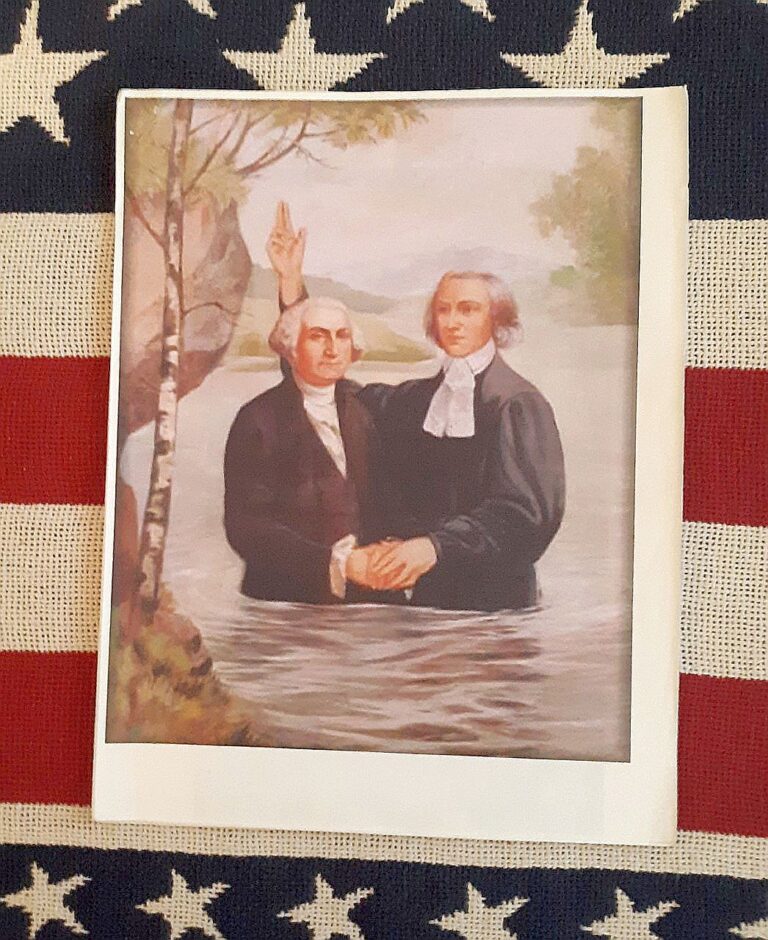
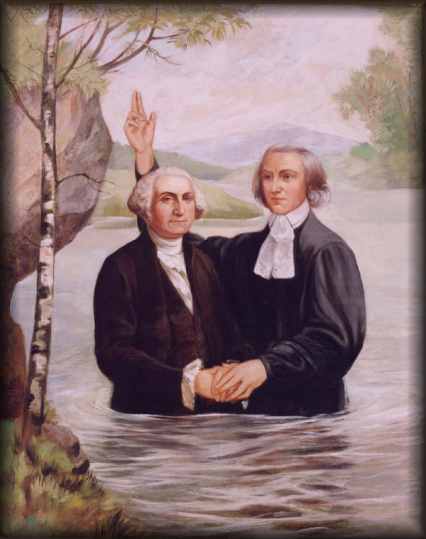
I received some amazing pictures printed by the Sons of the American Revolution, from my friend Robert Goodwin and I was simply amazed. Here I see one of my heroes, George Washington being baptized? That’s right a painting of Washington being baptized into the Baptist Church in 1783, just six years before he would take his oath of office. You also remember Washington took that oath and prayed at the St Paul Cathedral in NY the same site of the World Trade Center bombings. The St. Paul Church was not harmed as that was a sacred place that the Lord protected. To read more about his see my blog here, and here!

We off course understand George Washington was also baptized for the dead as a member of the Church of Jesus Christ of Latter-day Saints in the St George Temple by Wilford Woodruff on Aug 21, 1877 along with many other worthy men and women in history. See blog here:


Painting hanging in Gano Chapel, William Jewell College in Liberty, Missouri, Showing Baptism By Immersion of George Washington By John Gano {Photo Used By Permission}


Robert Goodwin sent me an email saying, “I thought you might be interested in this discovery I found digitizing books for the church.  There were some skeptics who didn’t think this took place.  I have an additional 6 page official congressional acknowledgement of the event entitled “George Washington’s Baptism, An Official Act of Congress 7-16-1894 Accepts Evidence.  When I began to share this with fellow ODPC missionaries in the lunchroom, an Elder from the ROC unit spoke up and continued the story as a second witness- he was a resident of Liberty, Missouri where the college and special chapel is located where the portrait hangs.  He knew even more about the whole story  Nice to have a second witness of the story I was trying to tell.” Robert Goodwin

Immersion vs. Sprinkling
“IS IT PROBABLE THAT WASHINGTON, SPRINKLED IN INFANCY,BRED IN THE CHURCH OF ENGLAND AND CONTINUED TO THE END IN THE EPISCOPAL CHURCH, COULD AT ANY TIME HAVE SEEN IT TO BE HIS DUTY TO BE BAPTIZED, I.E. IMMERSED?

It will be recognized at once (that the improbability would be far greater than it is, if he had been reared in almost any of the other Pedobaptist churches, e.g., the Presbyterian. But immersion continued to be the common practice of the Church of England till within less than one hundred years of the birth of Washington…

“Washington speaks in one of his letters of the fact that his stepson had begun the study of the Greek New Testament with a tutor at Mt. Vernon. Is it possible that, at meal time, or of an evening in that farmer’s mansion, the actual meaning of the word strong>“baptize” may have been discussed. At any rate, Washington doubtless knew enough of his English Bible to know that it spoke of “one baptism” only, and did not contain the “or pour” of his prayer book. It may not have needed the instruction of a Dean or even of a Baptist minister, to convince his well-balanced, conscientious and fearless mind that he must himself obey the command, ”Repent and be baptized,” and that it would not answer to change it into a command, “Repent and have been baptized (in infancy) or poured.” We have reasonably gathered that the Episcopalian atmosphere which Washington breathed may have been, if not favorable, at least not hostile to a correct view as to that was the primitive act of baptism…

IS IT PROBABLE THAT A BAPTIST MINISTER WOULD HAVE BAPTIZED WASHINGTON WITHOUT THE VOTE OF A CHURCH AND WITHOUT HIS BECOMING A MEMBER OF A BAPTIST CHURCH?

Such certainly would not be the ordinary method of procedure. Exceptions however have always been sanctioned in emergencies. During the war of 1861- 65, hundreds of soldiers were baptized by Baptist chaplains, many of them during active campaigns, far from settled quarters and formalities, some of them in plain sight and range of the pickets on the opposite side. But apart from exceptional emergencies, there have been some Baptist ministers who have habitually baptized every one who applied and gave evidence of being a genuine Christian, whatever his former or subsequent church relations might be.

We have no direct evidence as to the views of John Gano on this subject. But it is, at least, interesting to note the views and practice of his son Rev. Stephen Gano, M. D., who was for thirty-six years pastor of the First Baptist church in Providence, R. I. In a pamphlet register of members of that ancient church, published in 1832, four years after his death, is a biographical sketch of Pastor Gano. It contains this paragraph,

“As to his denominational views and attachments, Dr. Gano was a Baptist of the o1d school, of the true, regular and orthodox cast, be was also a thorough-going adherent to all the peculiarities of his favorite sect, with the exception of the treatment of persons baptized by immersion in other communities. He had no scruples at administering the ordinance of baptism to all in whom he could recognize the characteristics of genuine discipleship to our blessed Lord, whether they were about to become church members with his own denomination or to unite in other communities. He was also fully settled in the belief that Baptist churches ought, in consistency with their principle, to admit to their communion table all real Christians who have been baptized by immersion on a profession of their faith, to whatever denomination they might belong. Many were the cases of his performing the baptismal rite to members of Pedobaptist churches.” Circumstantial Evidence of Washington’s Baptism by John Gano

Baptist vs Episcopalians

“IS IT PROBABLE THAT WASHINGTON’S KNOWLEDGE OF BAPTISTS AND RELATIONS WITH BAPTISTS WERE SUCH AS TO FAVORABLY DISPOSE HIM TOWARD THE PRACTICAL ADOPTION OF ONE OF THEIR VIEWS? Baptists were at that time generally despised and spoken against.

One thing, however, was greatly in their favor. They were true to the American cause. In view of some of the circumstances in the case this was a remarkable fact, which must have impressed intelligent observers. They them- selves felt called upon to explain, Isaac Backus said, “Since the Baptists have often been oppressed in this land, and would have suffered more than they did had it not been for restraints from Great Britain, how came they to join in the war against her? Many have wondered at it, and some have censured them severely therefore. But they had the following reasons for their conduct.

1. Where Episcopalians have had all the power of government, they have never allowed others so much liberty as we have enjoyed. In England all are taxed to their worship, while none are admitted into civil offices both communicants in their church. In Virginia they cruelly imprisoned Baptist ministers, only for preaching the gospel to perishing souls without license from their courts, until this war compelled them to desist there from. Of this we had incontestable evidence. Therefore we had no rational hopes of real advantage in joining with them.”

Mr. Backus proceeds with four other reasons of different kinds, laying hold of the deepest principles of both religious and civil liberty, “the immutable rules of truth and equity.” Long lists of Tories are in print containing many hundreds of names, one of them 926 names but so far as is known, there are no names of Baptists among them. There is no need of discussion on this subject, for Washington himself said in his address to the Baptist Churches of Virginia,

“l recollect with satisfaction that the religious society of which you are members have been, throughout America, uniformly and almost unanimously the firm friends of civil liberty and the persevering promoters of our glorious revolution.” George Washington’s Baptism By Lemuel Call Barnes – Richard St. James, Editor Research performed by Richard St. James at William Jewell College Library Liberty, Missouri March 21, 2008

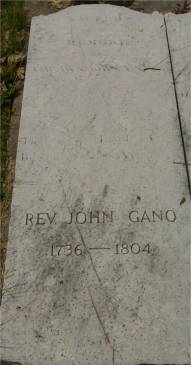
John Gano 1736-1804

History of the Restoration Movement

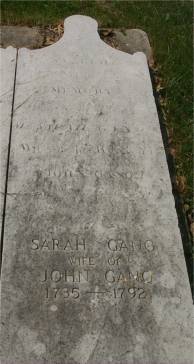
John Gano was a famous Baptist Preacher who’s claim to fame begins with the baptism of George Washington. Gano was Washington’s personal chaplain during the Revolutionary War. His grandson, John Allen Gano was one of the greatest gospel preachers of the Restoration Movement in Kentucky. It was said that John Allen baptized more people in Kentucky than any other man. Some years after the death of his grandfather, John Allen wrote attempting to prove that his grandfather had actually baptized George Washington for the remission of his sins. This was disputed by many. One other claim to fame in John Gano is that he was a direct ancestor to the billionaire, Howard Hughes. John Gano is buried in the Daughters Of The Revolutionary War Section of the Frankfort Cemetery, Frankfort, Kentucky. The cemetery itself is one of the most beautiful settings in America. It is located on the cliffs overlooking the Kentucky River and the downtown area of Frankfort, Kentucky. The cemetery’s greatest claim to fame is that it is the location of the grave of Daniel Boone. When you enter the cemetery follow the directions leading to the grave of D. Boone. Continue past his grave until you see the Daughters Of The Revolutionary War Section on the right. (Section 22-A on the map at the entrance of the Park. See Map Here!) Stop the car, and you will notice how the section descends in tiers. Go down to the second tier and you will find the grave of John and Sarah Gano. Note also, that next to Gano’s grave is the founding father of the Forks Of The Elkhorn Baptist Church, William Hickman (1747-1831).

Biographical Sketch On John Gano

John Gano was the most learned and distinguished of the pioneer Baptist preachers of Kentucky. And, although he was far advanced in life before he came to the West, and had but a few years to labor among the Baptists of Kentucky, his matured wisdom, long and varied experience, and eminent piety and consecration, made him of incalculable benefit to the cause of the blessed Redeemer, in the new country. He had spent his youth and the prime of his life in building up the cause of Christ along the Atlantic slope, from Rhode Island to South Carolina, and few men were ever better fitted for the work of a pioneer preacher. He was well educated and well skilled in the gospel. He was easy and agreeable in conversation, his wit and humor were rarely at fault, he could readily accommodate himself to any grade of society, and any contingency, his courage was dauntless, and, above all, he loved the cause of Christ, his brethren in the Lord and the souls of men, with an unquenchable ardor. He brought all these excellent gifts and graces into requisition among the pioneers of Kentucky, according to the measure of physical strength, which still remained to him. He visited and encouraged the young churches and preachers, hastened to adjust difficulties among the brethren, went far to attend the new associations, guided their counsels and corrected the crudities of their doctrines, and pushed out into the very remotest settlements in the midst of fierce Indian wars, to lift up and establish the feeble infant churches. It is not wonderful that he was greatly loved and much lamented by the Baptists of Kentucky.

John Gano was born at Hopewell, New Jersey, July 22, 1727. His father was of French extraction. His great-grandfather, Francis Gano, fled from France in the night, to avoid martyrdom. On his arrival in America he settled at New Rochelle, a few miles above New York City, where he lived to the age of 103 years. His son, Stephen Gano, raised six sons (Daniel, Francis, James, John, Lewis and Isaac) and three daughters. Daniel married Sarah Britton, by whom he raised five sons, (Daniel, Stephen, John, Nathan and David), and three daughters. Of these parents, both of whom were eminently pious, the father being a Presbyterian and the mother a Baptist, John was the fifth child and third son.

In early life John Gano professed conversion, and was strongly inclined to unite with the Presbyterian church; but, doubting the scriptural authority for infant baptism, he entered into an elaborate investigation of the subject. He read many books on the subject, and had many conversations with Presbyterian ministers. He only became more and more convinced of the truth of Baptist principles. Finally he had an extended conversation with the renowned Gilbert Tennant. At the close of this interview, Mr. Tennant, seeing he was not convinced, said to him: “Dear young man, if the devil cannot destroy your soul he will endeavor to destroy your comfort and usefulness, and, therefore, do not be always doubting in this matter. If you cannot think as I do, think for yourself.” Some time after this, having obtained the consent of his father, who had had him “christened” in infancy, he united with the Baptist church, at Hopewell, and was probably baptized by Isaac Eaton, who established the first school for educating young men for the Baptist ministry in America, and whose descendants have been so conspicuous as preachers and educators in this country.

Soon after he was baptized Mr. Gano became much exercised in mind on the subject of preaching Christ to dying sinners. His mind became so much absorbed on this subject that he was almost incapacitated for his ordinary business. “One morning after he began plowing in his field the passage, `Warn the people, or their blood will I require at your hands,’ came with such weight upon his mind that he drove on till 11 o’clock utterly insensible of his employment. When he came to himself he found he was wet with the rain, his horses were excessively fatigued, and the labor he had performed was astonishingly great.”

After becoming convinced that the Lord had called him to the work of the ministry, he applied himself with great diligence to study, preparatory to entering upon this duty. Before he had been licensed to preach he accompanied Benjamin Miller and David Thomas, who were among the most eminent ministers of their day, on a missionary tour into Virginia, whither they had been sent by the Philadelphia Association. The principal object of this mission was to visit and set in order a little church on Opecon Creek, which had been constituted by the notorious impostor, Henry Loveall. (Note: This Loveall was from New England. His real name was Desolate Baker. He was excluded from Opecan church for licentiousness.) On reaching the place, and visiting this little church, the ministers found it in a deplorable condition. Only three of its members could give a satisfactory account of their conversion. These were constituted a new church, and the rest of the members of the old church were exhorted to seek the salvation of their souls. Mr. Gano, in his Autobiography, gives the following account of the part he took in this work:

“After the meeting ended a number of old members went aside and sent for me. They expressed their deplorable state, and asked me if I would meet with them that evening and try to instruct them. They were afraid the ministers blamed them. They had been misled, but it was not their fault, and they hoped I would pity them. I told them I would with all my heart, and endeavored to remove their suspicion of the ministers. They met and I spoke to them from these words: “They, being ignorant of God’s righteousness, and going about to establish their own righteousness, have not submitted themselves to the righteousness of God. ” I hope I was assisted to speak to them in an impressive manner; and they to hear, at least some of them, so as to live. They afterwards professed conversion and became zealous members and remained so, I believe, until their deaths.”

This occurred in 1751. This was the first time Mr. Gano attempted to preach, and this, it will be remembered, was before he was licensed by his church. The attentive reader will also remember that William Hickman commenced his ministry in a similar manner, at Harrodsburg, Kentucky, just twenty-five years later.

Before Mr. Gano returned home the news reached Hopewell that he had been preaching in Virginia. Some of the brethren deemed it disorderly, and were aggrieved about it. As in the case of Peter’s preaching at Ceasarea, when John (Gano) was come up to Hopewell the brethren that were offended said unto him, “Thou didst go in unto the Virginians, and didst preach unto them, without authority from the church.” John demanded evidence to sustain the accusation. They informed him that they had only heard it from travelers, but desired him to give them a relation of the matter. He replied that it was the first time he had known the accused called on to give evidence against himself, but that he was willing to give them an account of his conduct. Then John rehearsed the matter from the beginning. They then asked him what he thought of his conduct. He replied that he thought this question more extraordinary than the former. He had given evidence against himself, and was now called on to adjudge himself guilty. This is a specimen of that self-possession, readiness of mind, and ingenuity which characterized him through life. At length he informed the church that he did not mean to act disorderly or contrary to their wishes. That the case was an extraordinary one, that was not likely to occur again. But if it should, he would probably act in the same way. The church now appointed a time to hear him preach. He gave satisfaction, and was soon licensed to exercise his gift. About this time he moved his residence to Morristown. Up to this period he had, with brief interruptions, devoted himself to close, systematic study. But the calls on him to preach became so frequent that he entered regularly into his holy calling. There being a call on the Philadelphia Association for a missionary to go to Virginia, he was ordained for that work in May, 1754, and soon afterwards set out on his mission. On this journey he went as far as Charleston, S. C. The following extracts, giving some account of this missionary tour, condensed from Mr. Gano’s journal, will give some insight into the character of that good and great man:

On the frontier of Virginia this zealous missionary, while conversing with some people where he lodged, in an affectionate manner, respecting their religious concerns, overheard one of the company say to another, “This man talks like one of the Joneses!” On inquiring who the Joneses were he was informed that they were distracted people, who did nothing but pray and talk about Jesus Christ, and that they lived between twenty and thirty miles distant on his route. “I determined,” said he, “to make it my next day’s ride, and see my own likeness.” When he arrived at the house he found there a plain, obscure family, which had formerly lived in a very careless manner, but a number of them had lately been changed by grace, and were much engaged in devotional exercises. As he entered the house he saw the father of the family lying before the fire, groaning with rheumatic pains. He inquired how he did. “O,” said he, ”I am in great distress.” “I am glad of it,” replied the stranger. The old gentleman, astonished at this singular reply, raised himself up and inquired what he meant. “Whom the Lord loveth he chasteneth, and scourgeth every son he receiveth,” answered Mr. Gano. From this they proceeded to religious conversation, and he soon found that this pious family, whom the world accounted mad, had been taught the words of truth and soberness. They asked him many questions, and were much pleased to find one who was acquainted with the things they had experienced.

From this place he proceeded on toward North Carolina, having a young man with him, who chose to bear him company. “We arrived at a house just at dusk, the master of which gave us liberty to tarry. After we had conveyed our things into the house, the following dialogue occurred:

“Landlord — “Are you a trader?”
“Mr. Gano — “Yes.”
“L. — “Do you find trading to answer your purpose?”
“G. — “Not so well as I could wish.”
“L. — “Probably the goods do not suit.”
“G. — “No one has complained of the goods.”
“L. — “You hold them too high.”
“G. — “Any one may have them below his own price.”
“L. — “I will trade with you on these terms.”
“G. — “I will cheerfully comply with them. Will not gold tried in the fire, yea, that which is better than the fine gold, wine and milk, durable riches and righteousness, without money and without price, suit you?”
“L. — “Oh, I believe you are a minister.”
“G. — “I am, and I have a right to proclaim free grace wherever I go.”

“This,” says Mr. Gano, “laid the foundation for the evening’s conversation, and I must acknowledge his kindness, though he was not very desirous of trading, after he discovered who I was.”

Our itinerant continued southward till he arrived at Charleston, and there, and in its vicinity, he preached to good acceptance. His account of his first sermon for Mr. Oliver Hart, at that time pastor of the Baptist Church in Charleston, is as follows: “When I arose to speak, the sight of so brilliant an audience, among whom were twelve ministers, and one of whom was Mr. [George] Whitefield, for a moment brought the fear of man upon me; but blessed be the Lord, I was soon relieved from this embarrassment; the thought passed my mind, I had none to fear and obey but the Lord.”

On his return from Charleston to the northward he visited an island where he was informed there never had been but two sermons preached. The people soon collected, and he preached to them from these words: “Behold, the third time l am ready to come to you, and I will not be burdensome to you.”

When he arrived at Tar River, in North Carolina, he found that a report had gone forth that some of the principal men in the county had agreed that if he came within their reach they would apprehend him as a spy; for, by his name he was judged to be a Frenchman, and this was in the time of the French war. Some of these people lived on the road he was to travel the next day. His friends urged him to take a different route, but he replied that God had so far conducted him on his way in safety, and he should trust Him for the future. When he got near the place where the men who had threatened him lived, he was advised to go through it as secretly as possible; but that by no means accorded with his views. He replied he should stop and refresh himself in the place. He stopped at one of the most public houses, and asked the landlord if he thought the people would come out to hear a sermon on a week day. He informed him he thought they would; but observed, that on the next Monday there was to be a general muster for that county. He therefore concluded to defer the meeting till that time, and requested the landlord to inform the colonel of the regiment, who, he had learned, was one of those who had threatened him, of his name, and desire of him the favor of preaching a short sermon before military duty. The landlord promised to comply with his request.” On Monday I had twenty miles to ride to the muster, and by ten o’clock there was a numerous crowd of men and women. They had erected a stage in the woods for me, and I preached from Paul’s Christian armor. They all paid the most profound attention, except one man, who behaved amiss. I spoke, and told him I was ashamed to see a soldier so awkward in duty, and wondered his officer could bear with him. The colonel, as I afterwards understood, brought him to order. After service I desired a person to inform the commander that I wanted to speak with him. He immediately came, and I told him that, although I professed loyalty to King George, and did not wish to infringe upon the laudable design of the day, yet I thought the King of kings ought to be served first, and I presumed what I had said did not tend to make them worse soldiers, but better Christians. He complacently thanked me, and said if I could wait, he would make the exercise as short as possible, and give an opportunity for another sermon, for which he should be much obliged to me. I told him I had an appointment some miles off to preach the next day. Thus ended my chastisement and the fears of my friends.

“From hence I returned by way of Ketocton, on Blue Ridge, where the inhabitants are scattered. On my road I observed a thunder-storm arising, and rode speedily for the first house. When I arrived the man came running into the house, and, seeing me, appeared much alarmed, there being at that time great demands for men and horses for Braddock’s army. He said to me, `Sir, are you a press-master?’ I told him I was. `But,’ said he, `you do not take married men?’ I told him surely I did; and that the Master I wished him to serve was good, His character unimpeachable, the wages great, and that it would be for the benefit of his wife and children if he enlisted. He made many excuses, but I endeavored to answer them, and begged him to turn out a volunteer in the service of Christ. This calmed his fears, and I left him, and proceeded on my way to Ketocton, where I spent some time, and baptized Mr. Hale.”

Soon after Mr. Gano’s arrival at home, after this tour, he was married to Sarah, daughter of John Stites, of Elizabethtown, New Jersey, and sister of the wife of the celebrated James Manning, the founder and first president of Rhode Island College-now Brown University.

Mr. Gano remained at home but a short time before he set out on another preaching tour through the Southern Colonies. This trip occupied him eight months. He was rejoiced to learn that his labors during the former tour had produced good fruits, and many people had turned to the Lord. Many striking incidents occurred on this tour, a few of which may be related:

Calling at a house on his route, he asked the man to have his horse fed. The man ordered his son to go at once and feed the horse. Meanwhile, ascertaining that his guest was a minister, he began to speak to him about baptizing his child.” I have been waiting some time,” said he, “for a priest to come along, that I might have my child baptized, and now I wish to have it attended to.” Mr. Gano signified his willingness to serve his host in any way that he could. The boy stood staring at “the priest,” and neglected feeding Mr. Gano’s horse. The father, observing this, said to the boy, “You son of a b—h; why don’t you feed that horse, as I told you?” The boy started on his errand, and the father resumed his conversation about baptizing his child. “What are you going to call it?” said Mr. Gano. “That boy, I perceive, is named son of a b—h.” After this singular reproof nothing more was said about baptizing the child.

Preaching at a place in Virginia one day, where the people were very wicked, two young men, believing that he was directing his censures against them, came forward at the close of the sermon and dared him to fight. “That is not the way I defend my sentiments,” said he, “but, if you choose it, I will fight you, either both at once, or one after the other. But as I have to preach again very soon, I prefer putting it off till after meeting. To this they agreed. At the close of the meeting they came forward to engage in the fight. “If I must fight,” said Mr. Gano, ”I perfer a more retired place, and not before all these people.” With this he walked off, bidding the young men follow him. When they were away from the crowd he said: “Young men, you ought to be ashamed of your conduct. What reason have you to suppose I had particular reference to you? I am an entire stranger here, and know not the character of any. You have proved, by your conduct, that you are guilty of the vices I have censured. If you are so much disturbed at my reproofs, how will you stand before the bar of God?” “I beg your pardon,” said each of the young men. “If you are beat, gentlemen, we will go back,” said Mr. Gano. Thus ended the fight.

On another occasion, hearing that there had been a revival at a certain place on his route, he made an effort to reach it that night. It was after dark when he reached the place. Knocking at the door of a house, with which he was unacquainted, and a woman answering the call, he said to her: “I have understood, madam, that my Father has some children in this place, and I wish to learn where they are, that I may find lodgings for the night.” “I hope I am one of your Father’s children,” said the woman; “come in, dear sir, and lodge here.”

In this manner, with his apparently exhaustless resources, did this eminent man of God find his way to all homes and hearts, and then, with equal wisdom and readiness, apply the blessed truth of the Gospel. After spending a few years in the manner above related, he was waited on at Morristown, N. J. by some messengers who came a distance of about eight hundred miles, to solicit him to take charge of an infant church in North Carolina. After a brief consideration, he accepted the call, and moved his family thence. At the “Jersey settlement” in North Carolina, he remained about two years. The church grew to be large, and his labors were abundantly useful throughout an extensive region of country. But a war breaking out with the Cherokee Indians, he moved back to New Jersey.

June 19, 1762, the first Baptist church in the city of New York was constituted by Benjamin Miller and John Gano, and the latter, who had recently moved from North Carolina to New Jersey, immediately became its pastor. He also accepted the pastoral care of the church in Philadelphia, and for a number of years was pastor of all the Baptists in the largest two cities on the American Continent.

At the breaking out of the war between England and the American Colonies, Mr. Gano warmly espoused the cause of the latter. In 1776, he entered the army as chaplain, and continued in the service till the close of the war. In this position he maintained the same purity of character, and the same zeal and energy in the cause of Christ, that he exhibited on the missionary field and in the pastoral office. Some specimens of the many incidents related concerning him, while in the army, may be interesting.

On one occasion, the General informed him, on Saturday, that the army would move on the following Monday, but requested him not to speak of it till after religious services next day. On Sunday morning he preached from the words: Being ready to depart on the morrow. Immediately after the sermon, orders were given to prepare for the march. On another occasion, as he was going to pray with the regiment, an officer, who did not observe him, was swearing profanely. Saluting the officer cheerfully and politely, he said to him : “You pray early this morning.” “I beg your pardon, sir,” said the officer. “Oh I cannot pardon you,” replied the chaplain; “carry your case to your God.”

One day, standing near where some soldiers were disputing as to whose turn it was to cut wood, he heard one of them say he would be d—nd if he would cut it. Soon, however, the profane soldier was convinced that the task was his, and took up the ax to perform it. Immediately Mr. Gano stepped up to him and said: “Give me the ax.” “Oh no,” said the soldier, “the chaplain shall not cut wood.” “Yes, I must,” said Mr Gano, “But why,” said the soldier. “Because,” said Mr. Gano, “I just heard you say you would be d—nd if you cut it; and I would rather take the labor off your hands than that you should be miserable for ever.”

At the close of the war, Mr. Gano resumed his labors as pastor of the church in New York city. He continued in this position till about the year 1786. At this time William Wood, pastor of Limestone church in Mason county, Ky., visited New York, and made such flattering representations of the western country, both for ministerial usefulness, and temporal advantage, as induced Mr. Gano to call a church meeting, and consult the church about his going to Kentucky. Mistaking his motive, and supposing that he only desired them to increase his salary, they treated the matter with apparent indifference, leaving him to the free exercise of his own judgment. He at once determined to go. Learning this, the church offered to raise his salary, and made an earnest effort to retain him. But it was now too late. He had formed his resolution, and could not be changed. He soon sold his small possessions, paid off some debts that had been embarrassing him, and started to Kentucky. He came to Redstone in wagons, and there took a boat. There was still much danger to be apprehended from the savages along the Ohio river; and, on the way their boat was partially wrecked. However, Mr. Gano and his family landed in safety at Limestone, June 17, 1787. He proceeded to Washington, where he preached his first sermon in Kentucky from the words” So they all got safe to land.” Some time after this, his son Stephen, then pastor of the Baptist church in Providence, Rhode Island, paid him a visit, on which occasion he preached from the words: I am glad of the coming of Stephanas. After remaining a short time at Washington, Mr. Gano moved to the neighborhood of Lexington, and became pastor of Town Fork church. Here he became the co-laborer of Craig, Taylor, Hickman, Dudley, and others of that noble band that were in Kentucky before him. Among these brethren who recognized him as a father in the gospel, he labored with faithfulness and efficiency, about ten years, when, in 1798, he had his shoulder broken by a fall from his horse. Before he recovered from this, he had a paralytic stroke, which deprived him of the power of speech. From this he so far recovered as to be able to preach. During the “Great Revival,” it is said, he preached in an “astonishing manner.” While Elkhorn Association was much agitated by the appearance of Arianism in some of the churches about the year 1803, Mr. Gano was carried to Lexington, and assisted into the pulpit, where he preached a masterly discourse on the Deity of Christ, which was thought to have a salutary effect in checking the spread of that baleful heresy. The next year, August 9, 1804, this venerable servant of Christ departed this life at his home near Frankfort, Kentucky, in the 78th year of his age.

This great and good man had some marked eccentricities; but they were such as heightened his efficiency, without detracting from his piety, and illustrate the important truth that God adapts all the means he uses in the accomplishment of his purposes, to the ends they are designed to subserve. The following observations from the pen of his personal friend, Richard Furman, long the distinguished pastor of the Baptist church at Charleston, South Carolina, will appropriately close this sketch of Mr. Gano:

“The late Rev. John Gano will be long remembered with affection and respect in the United States of America. He was a person below the middle stature, and, when young, of a slender form; but of a firm vigorous constitution. His mind was formed for social intercourse and friendship. His passions were strong, and his sensibilities could be easily excited, but so chastened and regulated were they, by the meekness of wisdom, that he preserved great composure of spirit and command of his words and actions.

“As a minister of Christ, he shone like a star of the first magnitude in the American churches, and moved in a widely extended field of action. For this office, God had endowed him with a large portion of grace and excellent gifts. `He believed and therefore spoke.’ His doctrines were those contained in the Baptist (Philadelphia) Confession of Faith, and are commonly called Calvinistic.

“Like John the harbinger of our Redeemer, he was a burning and a shining light, and many rejoiced in his light. Resembling the sun, he rose in the church with morning brightness, advanced regularly to his station of meridian splendor and then gently declined with mild effulgence, till he disappeared without a cloud to intercept his rays or obscure his glory.”

—History Of Kentucky Baptists, J.H. Spencer, Vol. 1c.1886, Chapter 10, Pages 116-127


Even when I was a small boy I kept hearing older people say that they had heard that George Washington had been immersed in the Potomac River. Still later, some one said that he had been baptized by a preacher by the name of Gano.

An article on this subject appeared in the news-magazine, Time, Issue of September 6, 1932. Soon the Christian Standard, in its issue of October 15, 1932, presented to its readers some information assembled by Ira M. Boswell, minister of the Christian church at Georgetown, Kentucky.

Inasmuch as many readers of the Firm Foundation have not had access to these publications, it might be interesting to give them the opportunity to learn just what others have said along this line.

The man who is supposed to have baptized Washington was John Gano, a Baptist minister. It was he who helped to organize the First Baptist church of New York City, and he was the pastor of that church for some time. This church was founded in June, 1762. Mr. Gano also did some preaching in Philadelphia. If we may rely on the evidence, he was a man of great power and influence. It is said that the old records of his New York church are still preserved.

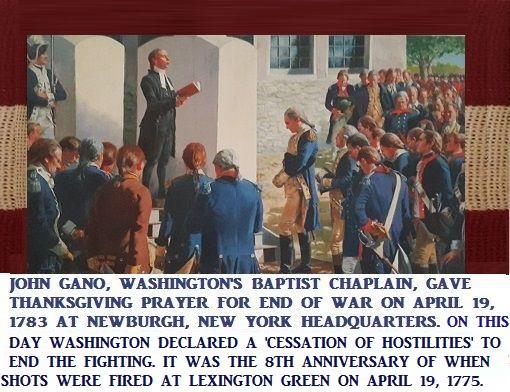
At the outbreak of the Revolutionary War, John Gano became a chaplain in the continental army, and continued to serve in that capacity until the close of hostilities. George Washington seems to have had a high regard for this chaplain, and is reported to have paid Gano a compliment for his ”bravery while encouraging the troops in a very severe conflict.” When peace had been declared, Washington selected Gano to conduct a thanksgiving service at the General’s headquarters, neat Newburgh, New Jersey, on April 19, 1783. Upon leaving the army, John Gano returned to his ministerial field of labor in the city of New York.

Now the tradition of the actual baptism of General Washington is this:

John Gano had been conducting a Sunday morning service in his capacity as chaplain. At the close of the service, he was engaged in a private conversation with a number of the soldiers who were Baptists in their religious belief. George Washington approached the group, and was drawn into the discussion. It seems that John Gano and the others of the group were talking about the “mode” or action of baptism. Washington said, “I am convinced that immersion is the baptism taught in the scriptures, and I demand baptism at your hands.” He further said that he wanted no parade made over it. In the presence of forty-two witnesses, he was led into the waters of the Potomac River, and there baptized.

(According to the article in the Baptist Argus, March 24, 1904, Washington first expressed his belief that immersion was the apostolic mode. Thereupon Chaplain Gano asked, “General Washington, if you believe that you have been improperly baptized, why don’t you secure proper baptism?” Washington replied by asking, “Do you think I am a fit subject for baptism?” The chaplain then proceeded to “examine” General Washington; and, at the conclusion of the examination, announced his readiness to attend to the ordinance. Washington was baptized in an adjacent river, and he and the chaplain returned dripping to their respective tents.) Upon what records and upon whose testimony is this story based?

1. General R. M. Gano, whom many of our older Texas brethren still remember as an early leader In the church in Dallas, has given his testimony. General R. M. Gano was 2. gospel preacher who baptized thousands. He was the great grandson of the Chaplain John Gano above mentioned. ln order to answer the many inquiries he received on this subject, he prepared a letter on the subject, in or about the year 1899. He said in this letter: “The parties from whom I received my information have all crossed over the river. My father, John A. Gano, named for his grandfather, who did the baptizing, I often heard speak of it. He was a minister in the church of Christ.”

2. Brother R. M. Gano also cited the testimony of his uncle, Dr. Stephen F. Gano, of Georgetown, Kentucky. Dr. Gano was the grandson of Chaplain Gano. He died at Georgetown, Kentucky, at the age of ninety-four, in the year 1901. This Dr. Gano claimed to have received the facts from his uncle, Colonel Daniel Gano. Daniel Gano was the son of Chaplain John Gano, and is supposed to have been a witness of the immersion. He was an officer in the continental army.

3. General R. M. Gano of Dallas also has the testimony of his father’s oldest sisters, Mrs. Mary Buckner and Mrs. Margaret Ewing. The elder of these sisters had conversed with her grandfather, who immersed General Washington.

4. When a boy of twelve years, R. M. Gano had also heard the story from his great-uncle, Daniel, to whom we have referred above. (This Daniel Gano was born about 1750 and died at the age of ninety-two. He had served in the same army where his father, John, was chaplain.)

5. R. M. Gano also had the testimony of an old Baptist minister from Virginia who visited his father’s home in Kentucky, while he was still a boy. This Baptist minister told R. M. Gano the circumstances of Washington’s baptism.

6. Once while in Corsicana, Texas, R. M. Gano heard Richard Bealle, an attorney, speak of the matter. This Mr. Bealle had a brother who was a Baptist minister residing in Virginia. This brother had often related the same story to Mr. Bealle.

7. Mrs. Mary Gano Cobb, a granddaughter of Chaplain Gano, wrote a letter dated Russiaville, Indiana, some time in 1898, in which she said, “My grandfather, Rev. John Gano, baptized General Washington. They were close friends. My father has often spoken of the circumstances.” At the time of this writing, Mrs. Cobb was nearing her ninety-seventh birthday.

1932 being Washington’s bi-centenary year, an unusual amount of attention was paid to digging into old material relating to the life of our first president. Many details, formerly unknown or almost forgotten, were brought to light. The above-mentioned details concerning Washington’s baptism were among the historical incidents rediscovered and brought to light. Wide-spread interest in this story was aroused by Charles Edward Thomas, editor of The Delta, Publication of Sigma Nu fraternity, some time in August, 1932.

The article in Time, issue of September 5, 1932, was based on the article which bad previously appeared in The Delta. In part, the Time article said: “When he was almost two months old, Washington was sprinkled in the ‘orthodox Episcopal manner.’ At thirty-three years of age, be took oath to conform to the doctrine or the church of England ‘as by law established.’ Throughout his life he was seen regularly in church though he did not often kneel or partake of the communion. Washington’s reputation, like that or such Deist as Thomas Jefferson, Thomas Paine, and Benjamin Franklin, is one of coolness and moderation In religion. But through his time swept a hot blast of evangelism, chiefly In the Methodist and Baptist faiths. General Washington one day went to Rev. John Gano, chaplain in the Continental Army, and exclaimed: ‘I have been Investigating the Scripture, and I believe immersion to be the baptism taught in the word of God, and I demand It at your hands. I do not wish any parade made or the army called out, but simply a quiet demonstration of the ordinance.’ In the presence or forty-two witnesses, George Washington was immersed in the Potomac; but he did not give ‘personal testimony’ which would have made him a member of the Baptist Church.’‘ It Is also interesting to note that a minister named E. T. Sanford, in 1908, commissioned a painting of Washington .and Chaplain Gano, both standing waist deep in the Potomac. This painting was taken to the Baptist Church of Asbury Park, New Jersey, where it hung until 1926. It was then presented by John Gano’s great granddaughter, to William Jewell College, located at Liberty. Missouri, where it hangs In a John Gano Memorial Chapel.

To be perfectly fair, it might be well to add that E.C. Riley, or Midway, Kentucky, in a letter to Ira M. Boswell, said that he had read in the Louisville Public Library a volume entitled, “Biographical Memoirs of the Late Rev. John Gano, of Frankfort, Kentucky, formerly of New York. Written principally by himself. Printed by Southwick & Hardcastle, 1806.” This is a little book of 151 pages. In this there is no reference made to the alleged baptism of George Washington. However, it might have been omitted because the baptism {if it occurred) was not in accord with Baptist usage. Washington was not voted on by a Baptist church nor did he ever consider himself a Baptist. Perhaps Chaplain Gano, who was a Baptist minister, felt It best not to discuss the matter in his book of memoirs. Certainly, the Episcopal church would hardly have cared to publish the matter.

After weighing the matter carefully, It seems not at all unreasonable to suppose that Washington really may have been immersed. If he did so, he did not become a Baptist even though he was immersed by a Baptist preacher. (Alexander minister, but not according to Baptist custom and usage.) To say the least, it is very doubtful that General Washington had any very clear conception of gospel obedience. But it may be that he lived up to what light he did have.

To say the least, the tradition is an interesting one. However, whether Washington was really baptized or not, it still remains the duty of penitent believers to “arise, and be baptized,” being buried with Christ in the Waters of baptism-simply because Christ commanded baptism and his apostles thus instructed men and women who sought tor divine guidance.-James H. Childress, Firm Foundation, Vol. 50, No. 15, April 11, 1933, p.1,3

Directions to the Grave Of John Gano

John and Sarah Gano are buried in the Frankfort Cemetery in Frankfort, Kentucky. They are buried in the Revolutionary War section of the cemetery. Frankfort Cemetery is one of the oldest and most impressive cemeteries in all North America. It lies upon the cliffs above the Kentucky River, in the Kentucky’s capital city, Frankfort. Buried in the cemetery are former governors, state and U.S. representatives, and even Vice-President Richard M. Johnson, the brother of the restoration preacher, John T. Johnson. The most noted person buried in the cemetery is Daniel Boone. See map of including locations of others more directly connected to the Restoration Movement here.

In central Kentucky, take the Blue-Grass Parkway, I-64 to Exit 53A and go north on Hwy. 127/Lawrenceburg Rd. Turn right on the East-West Connector. After crossing the river, turn left on Martin Luther King, Jr. Blvd. Go to E. Main St. and turn left. Then enter the cemetery to your left. You can get a map at the office, or See Map below for location of grave in the cemetery.

GPS Location of Grave 38.192361,-84.865258 View Larger Map

Old Markers

New Marker Placed

Sacred in the Memory of John Gano Who departed this life August 10, A.D. 1804 In the 78th year of his age

Sarah Gano Who departed this life April 22, 1792 in the 57th year of her age

Of Huguenot descent, John Gano was born July 22, 1727 in Hopewell, New Jersey to Daniel and Sarah Britton Gano.

Afer his conversion, he was baptized and united with the Baptist church
at Hopewell. His call to preach the gospel came while he was plowing a field. Among the texts that took hold of his mind was: “Woe is unto me, if I preach not the gospel,” 1 Corinthians 9:16. He was ordained May 28, 1754 at Hopewell, and for fifty years plowed the eternal fields of the souls of men. As a minister of Christ, he shone like a star of the first magnitude in the American churches, and moved in a widely extended field of action.

The churches he pastored include:
Morristown Baptist Church – New Jersey 1755-1757
Jersey Baptist Church – North Carolina 1757-1760
First Baptist Church – New York City 1762-1788
Town Fork Baptist Church – Kentucky 1788-1798

During the Revolution, his services to his country were conspicuous. He entered the army as a chaplain to General Clinton’s New York Brigade. In the fierce conflict on Chatterton’s Hill, when he saw more than half the army flying from the sound of cannon, others abandoned their pieces without firing a shot, and a brave band of six hundred maintaining a conflict with the whole British army, being filled with chivalrous and patriotic sympathy for the valiant men who refused to run, he could not resist the strong desire to share their perils and he eagerly pushed to the front.” Of his conduct, Gano said, “My station in time of action I knew to be with the surgeons, but in this battle I somehow got in front of the regime, yet I durst not quit my place for fear of dampening the spirits of the soldiers or of bringing on myself the imputation of cowardice.

Also during the Revolution, his friend, General George Washington demanded the ordinance of immersion at the hands, to which he consented on April 19, 1783 when Washington proclaimed peace, he called upon his friend, John Gano, who offered a prayer of thanksgiving to the Almighty Ruler of the world. He lived to a good old; saw his posterity multiplying around him. His country independent and thus he closed his eyes in peace; his heart expanded with the sublime hope of immortality and heavenly bliss.

“May the peace of our Lord Jesus Christ be with you all, Amen.” https://www.therestorationmovement.com/_states/kentucky/gano,john.htm

George Washington Loved Christ

Here are a few quotes from George Washington that will validate that Washington was indeed a follower of Christ and one who knew he needed forgiveness and help. The quotes were sent to me again by Robert Goodwin and Robert told me they are from a handwritten journal that Washington wrote when he was 20 years old, very profound for a 20-year-old.

“ O Most Glorious God, in Jesus Christ, my merciful and loving Father; I acknowledge and confess my guilt in the weak and imperfect performance of the duties of this day. I have called on Thee for pardon and forgiveness of my sins, but so coldly and carelessly that my prayers are become my sin, and they stand in need of pardon.”

“ I have sinned against heaven and before Thee in thought, word, and deed. I have contemned Thy majesty and holy laws. I have likewise sinned by omitting what I ought to have done and committing what I ought not. I have rebelled against the light, despising Thy mercies and judgment, and broken my vows and promise. I have neglected the better things. My iniquities are multiplied and my sins are very great. I confess them, O Lord, with shame and sorrow, detestation and loathing and desire to be vile in my own eyes as I have rendered myself vile in Thine. I humbly beseech Thee to be merciful to me in the free pardon of my sins for the sake of Thy dear Son and only Savior Jesus Christ who came to call not the righteous, but sinners to repentance. Thou gavest Thy Son to die for me.”
[George Washington; from a 24 page authentic handwritten manuscript book dated April 21-23, 1752 by George Washington, at age 20, William J. Johnson George Washington, the Christian (New York: The Abingdon Press, New York) 

“Almighty God,… I beseech thee, my sins, remove them from thy presence, as far as the east is from the west, and accept of me for the merits of thy son Jesus Christ, that when I come into thy temple, and compass thine altar, my prayer may come before thee as incense; and as thou wouldst hear me calling upon thee in my prayers, so give me grace to hear thee calling upon me in thy Word…for his sake, who lay down in the Grave and rose again for us, Jesus Christ our Lord, Amen.”  (Ibid, William J. Johnson, George Washington’s Prayer Journal-written in 1752 at age of 20) read entire prayer at missionariesofprayer.org)


Pictures provided by Robert Goodwin

SABERTOOTH CAT 7500 BC in NASHVILLE – HUMAN BONES same grave 1800 BC-33 AD

How amazing is it to find out that many of the anachronisms of the Book of Mormon have gone by the wayside as we continue to find new information. Historians say there are no horses, cureloms, elephants and mastodons found in Mesoamerica. There are no animals for the law of Moses such as sheep, bullocks, goats, and doves in Mesoamerica. There is only Asian DNA in Mesoamerica, there is no barley or wheat in Mesoamerica. We know, we know. The Book of Mormon events happened in NORTH America.

In this article we even find Dinosaurs like the Sabertooth Cat. Here is my complete blog about Dinosaurs. Yes dinosaurs lived during the time of Adam and were all destroyed during the great world wide flood. May Mesoamericanist don’t believe this. They believe the earth is billions of years old and dinosaurs are millions of years old and Noah’s flood was a myth. I believe the scriptures literally and spiritually. Adam was put on earth in about 4000 BC there was a real flood about 2400 BC and the materials of the earth are probably billions of years old but the earth’s creation was thousands of years. As my friend Wayne May says, We report, you decide.


THE NASHVILLE SMILODON: AN ACCOUNT OF THE 1971 FIRST AMERICAN CENTER SITE INVESTIGATIONS IN DAVIDSON COUNTY, TENNESSEE

by John T. Dowd

“During the summer of 1971, construction activity in downtown Nashville, Tennessee exposed cave deposits containing the remains of a saber-tooth cat. Salvage excavation of the deposits by the Southeastern Indian Antiquities Survey (SIAS) yielded other early faunal remains as well, including horse, mammoth, peccary, and possibly musk ox. Human remains discovered above the early faunal remains were determined to be of much later origin. This report documents the author’s first-hand account of events surrounding the 1971 site discovery. Brief Summary of the 1977 Guilday Analysis Results The First American Center was completed in 1974 with a preserved Pleistocene cave section 30 feet under its lowest floor level.

REGARDING THE HUMAN SPECIMENS, Ferguson noted “The human material represents four persons buried in prepared, rock-lined crypts near the ceiling of the cavern, in a narrow space. They were secondary , or bundle, burials and were moderately flattened on the frontal bone…. Radiocarbon dates later proved that the separation was 7,000 years or better. The Sabertooth cat had died about 9,000 years ago while the bones of the human had been buried in the fill near the top of the cave about the time of Christ.

A HUMAN tibia submitted to Geochron (Sample GX-2471) was dated at 1690 + 115 years B.P. A human tibia was also submitted to the University of Georgia Geochronology Laboratory (Betty Brandau) (Sample UGA-334). The date obtained was 2390 + 145 B.P. Given the disparity of these datings one may assume the time of Christ as central, or more generally the Woodland Period as first surmised. Minimally they were deposited some 6,000 years after the Sabertooth and were separated by many feet of cave fill. Archaeological, geological, and radiocarbon age determination dates all indicate a wide separation in time between the deposition of the Pleistocene animal and the human bones.

TWO BONE SAMPLES FROM THE SABERTOOTH cat were also sent to two different labs to see how they would match up. Rib and vertebrae fragments sent to Teledyne Isotopes (I-6125) yielded a date of 9410 + 155 years B.P. The proximal end of a humerus sent to Geochron Labs (GX- 2562) dated 10,035 + 650 years B.P.”

Tennessee Archaeology volume 5 summer 2010 NUMBER 1 Michael C. Moore Tennessee Division of Archaeology Kevin E. Smith Middle Tennessee State University

Well over 1000 pieces of bone were found (including human) and his report lists some 520 pieces that could be identified. The fauna (and number of specimens) identified from the site included:

Another verification of ancient Horses in this report

SABER-TOOTH CAT (119) See my blog about dinosaurs.
HORSE (92) See my blog about other proof of horses in North America.
COTTONTAIL RABBIT (44)
NORTHERN PINE SNAKE (41)
UNIDENTIFIED SNAKE (40)
RACCOON (36)
BOBCAT (24)
LONG-NOSED PECCARY (23)
RATTLESNAKE (20)
RACER (18)
WHITE-TAILED DEER (12)
EASTERN MOLE (8)
SWAMP RABBIT (7)
DEER MOUSE (5)
TOAD (5)
UNIDENTIFIED FISH SCALES (3)
DOG (3)
PINE OR PRAIRIE VOLE (3)
COPPERHEAD (3)
DOMESTIC HOG (2)
OPOSSUM (2)
POSSIBLE BISON (1)
MASTODON (1) Blog on Mastodons
MUSK OX (1)

MUD TURTLE (1)
WATER SNAKE (1)
GARTER SNAKE (1)
WORM SNAKE (1)
MILK SNAKE (1)
AMERICAN COOT (1)
LEAST SHREW (1)
SHORT-TAILED SHREW (1)
GRAY OR FOX SQUIRREL (1)
POCKET GOPHER (1)
STRIPED SKUNK (1)

THE NASHVILLE SMILODON: AN ACCOUNT OF THE 1971 FIRST AMERICAN CENTER SITE INVESTIGATIONS IN DAVIDSON COUNTY, TENNESSEE page 71

by John T. Dowd

In late March 1972, Ferguson received a preliminary faunal report from Flannery and John Guilday of the Carnegie Museum of Natural History (Guilday would later publish a much more detailed report in 1977). The preliminary report listed a variety of mammals, bird, fish, and reptiles. The mammal sample included (in addition to the saber-tooth cat): human, mastodon, horse, possible bison, deer, dog/wolf, and peccary specimens. Regarding the human specimens, Ferguson noted “The human material represents four persons buried in prepared, rock-lined crypts near the ceiling of the cavern, in a narrow space. They were secondary , or bundle, burials and were moderately flattened on the frontal bone. They were about 7 feet above the extinct faunal deposits, but stratigraphy is not fully determined as yet. About 7 feet of fill remain below the Smilodon feature which we have not yet excavated. The First American Bank of Nashville has preserved the site at a cost in excess of $22,000.00 and have built a hatch and ladder for our use.” Dates returned on submitted radiocarbon samples were somewhat disappointing. A human tibia sent to Geochron Labs (GX-2471) yielded a date of 1690 + 115 years B.P. A second human tibia sent to Georgia Geochronology Laboratory (UGA-334) dated 2390 + 145 B.P. Both dates place the human bundle burials within the Woodland period… page 71

This image has an empty alt attribute; its file name is nnn-1024x922.jpg
Tickets Here

Nashville Cat

“It was a beautiful August day in 1971. Johnny Cash had just handed me a check at his House of Cash office in the amount of $10,000 to help our local anthropological organization (SIAS) further its work with the Indians of the Southeast. The money, with similar contributions from Porter Wagoner, Jerry Reed, Kitty Wells, Johnny Wright, Dolly Parton, and others would make possible publication of a newspaper for the Choctaws of Mississippi (The Choctaw Times), a Choctaw dictionary, and republication of a book by William Edward Myer (Two Prehistoric Villages in Middle Tennessee). So already the day was beautiful, what happened next made it memorable.

As Johnny signed the check for presentation the telephone rang. It was Tom Seigenthaler, who handled Public Relations for the First American National Bank. He asked if I could come by the construction headquarters of the planned First American Center and look at some material he believed was of archaeological importance. He had been referred to our SIAS group (Southeastern Indian Antiquities Survey) by Vanderbilt University and had tracked me down through the direction of my RCA secretary. As soon as I had deposited Johnny’s check in the bank I went to the construction site.

Already present at the site were Seigenthaler, construction foreman George Spence, geologist Dick Stearns, and a close friend and archaeological associate Dick Weesner. Our attention focused on some bits of bone and some teeth arranged on an 9 x 11 inch sheet of paper on a drafting table (see Figure 3). The room was hushed as we examined each item. It was as though time was jumbled before our eyes. There were human and animal teeth, large and small. There lay the distal end of a human humerus and next to it the maxillary canine of a Smilodon, or in plain english the formidable daggerlike “fang” of a long extinct Sabertooth Tiger (Time magazine would later describe it as an “ivory-colored, banana-shaped object that looked like a miniature elephant tusk”(Time 1973:53). This particular late-Pleistocene animal had never been reported from Middle Tennessee, nor had it ever been found in direct association with human remains. Both the human and animal material had mineralized to some degree and both bore stains from minerals in the clay and cave water. We were looking at Tennessee’s “first” Saber-toothed cat.

We were also looking at the possibility that the animal had coexisted with humans. We visited the cave proper. It was located deep down in the Bigby- Cannon limestone that underlies much of Nashville and which now resembled a mud-filled sinkhole (see Figures 1 and 2). Arrangements were made with bank officials to conduct a study of the site. Working after 4:30 each day, when the construction workers knocked off, several of Nashville’s best amateur archaeologists, H. C. Brehm, John Dowd, Roy Broster, Lionel Barrett, Lib Roller, Dick Weesner and others began the careful work (see Figure 4). National Life and Grand Ole Opry photographer Les Leverett made regular photographs as the work progressed and he and his sons participated in the excavations on weekends (see Figure 5).

A search was made both in the cave area and a site where dirt that had been removed from the cave had been dumped. The bank was fully cooperative toward the excavation from the very beginning. Not only did it provide access and assistance in the excavation, it later paid for crucial radio-carbon datings of the bone material. Most of all it altered construction plans so the site could be saved for further study long after the building had been completed. Thus, to this day, Nashville has not only the First American Center with its offices, vaults, and computers, but far below in the substratum stone itself, the safely preserved First American Smilodon Site (40Dv40).

Vanderbilt University and the State Division of Archaeology have consulted with bank officials on continuing the excavation at a later date. Doubtless much remains to be discovered because we were only able to work sixty part time days before the steel and concrete walls enclosed the area of the cavern. In those sixty days there was unearthed a remarkable story and some of the questions posed by the original assemblage were answered. Dr. Ronald Spores, who was Head of the Anthropology Department at Vanderbilt University, had just returned from excavations in Oaxaca, Mexico, and he agreed to be codirector with this author. He brought in some of his students who continued the work along with the original crew.

Cataloging of all the carefully excavated materials and those found at the dump site were done at Vanderbilt University. Some of the highlights of the excavation were the finding of two foreleg bones of the Smilodon in correct anatomical position, and the excavation of a crushed human humerus some six feet above those of the Smilodon. One evening, about dusk, working higher in the cave clay than we had worked before, under a dangerous looking protruding rock, we found a human long bone and upon excavating the area a human mandible (jaw bone) was also discovered (see Figure 7).

These remains were rushed out to Dr. Spores home carrying them as carefully as if they were the remains of the last passenger pigeon. This was a clear indication that, while the human and Smilodon had shared the same cave, they were there at widely separated times. Radiocarbon dates later proved that the separation was 7,000 years or better. The Sabertooth cat had died about 9,000 years ago while the bones of the human had been buried in the fill near the top of the cave about the time of Christ. The cavern itself had become filled with clay over the many thousands of years. Vance Haynes, of the Department of Geological Sciences at Southern Methodist University visited the site on October 1st and 2nd, 1971, while our work was in progress. He offered the following chronology of events in the cave’s history: “A hypothetical model of cave sedimentological history would be (1) erosion and transport of clays from interglacial soils or uplands, (2) occupation of the cave by Sabertoothed Cat early in the deposition of the yellow-brown, clay fill, (3) continual or intermittent accumulation of boulder and cave filling at the end of the Pleistocene 11,000 or 12,000 years ago followed by (4) desiccation of the fill, (5) use of the cave for secondary burials 5,000 to 1,000 years ago, and (6) filling of desiccation cracks by modern waste in late historic time as well as earlier parts of human burials that had fallen into cracks.” Radiocarbon datings, obtained after Dr. Haynes letter was written, tend to support his hypothesis. What was not learned until after his visit was that the depth of the site continues some seven feet below where remains of the saber-toothed cat were found. Excavation in this lower area remains to be done. Certainly after the sabertoothed cat had died the cave filling continued, boulders and all, until it nearly reached the ceiling of the cavern. The desiccation, or drying-out of this fill material would expose cracks much like those in the bottom of a dust bowl. Anything deposited in the cave later could fall or wash down through these cracks. This would account for our finding human bone below where it was originally buried. It can also account for our finding early and recent historic Nashville materials at great depths. Some fissures extended from street level to eroded bedding strata in the limestone and so into the cave itself. During series of heavy rainfalls there would be hardly any limit to the movement of small objects of whatever time period through these cracks and crevices. Because of underground water pressure they could move not only downward and outward, but upward as well. When these materials were well covered with clay, however, their movement stopped except in cases of wildest flooding. In the first century of Nashville’s occupation by non-Indians caves and sinkholes were often used as dumping sites.

Future exploration of the cave should reveal not only information on the Pleistocene and the Native American, but information on historic Nashville as well. Carbon 14 dating was carried out in two different laboratories. Working with John E. Guilday who is the Associate Curator of Vertebrate Fossils at the Carnegie Museum, we obtained a date from Teledyne Isotopes (Sample I-6125) using rib and vertebrae pieces of the Smilodon. A second sample was submitted to Geochron (Sample GX-2562) from the proximal end of the Smilodon’s humerus (the large shoulder joint). For comparative purposes the two dates can be written this way: Geochron-(GX-2562) 10,035 + 650 (9385 to 10,685) years B.P. (before present). Teledyne Isotopes (I-6125) 9410 + 155 (9255 to 9565) years B.P. The two dates overlap in the range 9385 to 9565. Richard Reesman of Geochron states that the “two analyses show quite agreement, considering the magnitudes of the measured ages”. Thus our “Nashville Cat” dates about 7500 B.C. John Guilday points out that the condition of the bones are commensurate with the date. They had not completely mineralized, or fossilized. His comments are worth quoting in full: “When burned it (the bone) readily chars, smokes, and emits the odor of burning organic matter. There has obviously been little mineral replacement or less of organic constituents. Whether this date is applicable to the other extinct forms in the deposit is a moot point. It does, however, imply that the saber-toothed cat survived well into early recent times and was a contemporary of early man”(Guilday 1972). In fact, the date 7,500 B.C. puts the Saber-tooth into the Early Archaic Period according to the chronological usage of present day archaeologists. With California’s La Brea Tar Pit specimens dating about 12,000 B.C., it was generally accepted that the Cat, and some of the other megafauna (giant animals) had coexisted with Paleo Period Indians. Some paleontologists believe the animal had survived to the end of the Paleo Period because its prey animals had been dated to that time. The Nashville cat lends support to this belief. It could well be the last of its kind. At any rate, it is late in the evolutionary sequence of the genus Smilodon.

Another extinct animal found at the site was the long-nosed peccary. In fact, teeth and bone fragments of three individuals were found. Guilday points out that “this is the fifth known occurrence of the long-nosed peccary from Tennessee cave deposits. The other four are some 200 miles to the east in the Appalachian Mountains. Fragments have also been found in Savage Cave, located in Logan County, Kentucky, about 50 miles north of Nashville.” Bison bones were also identified, but it is uncertain at this time whether these represent the large, extinct Bison or the commonly known form. Future excavation may yield cranial and dental fragments which will facilitate positive identification. The American Mastodon is represented at the First American Site by a single lower milk tooth. More of this animal’s bones should turn up at the site. Of the many other animal species found at the site the Pocket Gopher is of special interest because the animal is no longer present in Tennessee. It can be found in Missouri and a related species occurs in Central Alabama, but Guilday refers to our area as a “now pocket gopherless 400 mile corridor”(Guilday 1972). He adds that its presence at the site is indicative of nearby open country. More bone material from this animal would help understand the relationship of the two related, but distinct, species. In all, 46 individual animals were represented at this site, some being the cat’s prey and others that lived or had fallen in the cave.

As mentioned previously, the discovery of the human burials was made after we had been working the site for about a month. They were at the very top of the cave fill in a very dark humus soil which barely covered them. Its high organic content indicated no great age. At least four individual Native Americans were represented. They were found in a niche of the cave wall about a foot in width and 15 inches in depth. Except for a single flint tool no artifacts were found. As the measurements of the niche indicate, the bones had been buried only after the flesh was gone, this being a custom of early man. This makes it a secondary, or reburial, or as archaeologists would call it a “bundle burial”. Flattening of the frontal bone suggested a Woodland Period time for the burials. Dr. Ed Wilmsen agreed with this preliminary dating that he would put it no later than the Woodland Time Period. In fact, Dr. Kent Flannery said, before we had received the Carbon 14 dates, that we may have a Late Archaic cave niche burial, which would have made it even earlier. Dr. Loring Brace placed it emphatically in the Woodland Period. A few months after their comments, reports were received on the Carbon 14 datings from human bone that had been sent to two different laboratories. A human tibia submitted to Geochron (Sample GX-2471) was dated at 1690 + 115 years B.P. A human tibia was also submitted to the University of Georgia Geochronology Laboratory (Betty Brandau) (Sample UGA-334). The date obtained was 2390 + 145 B.P. Given the disparity of these datings one may assume the time of Christ as central, or more generally the Woodland Period as first surmised. Minimally they were deposited some 6,000 years after the Sabertooth and were separated by many feet of cave fill. Archaeological, geological, and radiocarbon age determination dates all indicate a wide separation in time between the deposition of the Pleistocene animal and the human bones. Much remains to be discovered when work remains in the cavern so thoughtfully preserved by the First American Bank in Nashville. In addition to answering some of the questions I have already proposed, further excavation and evaluation may ultimately tell us what kind environment existed in Nashville 5,10, or 20,000 years ago.

Find the Mammoth, Sabertooth Cat, Horse and Human.

There remains a possibility that human material will be found at the same time level of the giant animals. How valuable is the site? Here are the ways several specialists put it: Dr. Kent Flannery: “The only thing I have seen as good in an assemblage of this size is from Rancho La Brea. The state of preservation of this material is excellent and highly unusual for this part of the United Stastes. This collection is filling in a blank in the Eastern U.S.”. Dr. Ed Wilmsen: “This kind of fauna that is preserved is not often found in the Southeastern United States and so from this point of view, it is really quite valuable.” Dr. Vance Haynes: Vanderbilt, the local amateur archaeologists, and the Bank are to be commended for the superb way in which all aspects of the discovery have been handled. It is a very important site and investigations there, I hope, will continue”. John Guilday: “I want to congratulate you and your group on the thorough approach to this subject. Its key will lie not only in tests being carried on today on recovered material, but also what can be recovered in the way of additional material.”

Tennessee Archaeology 5(1) Summer 2010 page 72-76

Don’t Forget!

Tickets Here

USA Today: New Method Traces Ancestry Back Thousands Of Years!

0

For hundreds of years scientists and historians have said that peopling of the Americas came over the Bering Land Bridge. I have never believed this. To me it is all theory and not solidified in common sense or in the Scriptures. Below is what the National Park Service of Alaska says.

Current Theories

“In today’s world, the peopling of the Americas is a hotly debated topic. Evidence for competing theories continues to change the ways we understand our prehistoric roots. While evidence of animal migration is more solidified, the human story may be more complicated. As of 2008, genetic findings suggest that a single population of modern humans migrated from southern Siberia toward the land mass known as the Bering Land Bridge as early as 30,000 years ago, and crossed over to the Americas by 16,500 years ago. Archaeological evidence shows that by 15,000 years ago, humans had made it south of the Canadian ice sheets.

While this may represent the earliest migration, it was not the only one. Once the first humans made it over, it appears that multiple migrations took place over the next several millennia, not only across the ice-free corridor, but also along the coast by boat. Evidence is still sparse and often conflicting however, some theories of the “first Americans” are still largely inconclusive.” Bering Land Bridge National Preserve Alaska

Learn from Scriptures

See what I mean? They don’t even believe in their theory. Facts are just unknown. Thankfully we have the Scriptures. If you have read 1 Nephi 13 you know that Columbus came here by ship. You know the Mulekites came here from Jerusalem by ship. The Lehites came here by boat from Oman to Florida. We know the Jaredites came by barges from the Old to the New world as well. Why don’t these intellectuals get off of the Bering Straight nonsense? Because they don’t like truth and they don’t like being wrong. We have truth in the scriptures and in prayer.

This article below was sent to me from our great friend Pam Stanfield of Ohio, which says a lot. Here we have an old debunked story that this Blackfoot Indian finds out he didn’t come from Siberia and the Land Bridge, but from the Pacific Islands? We believe the Islanders are descendants of Hagoth (Nephites) who left the USA and probably took a ship up Lake Michigan and around the north side to the Pacific Ocean, or Hagoth could have gone up Lake Michigan and out the Gulf of St Lawrence to the Atlantic and around the tip of South America. We still don’t have all the facts, but the land bridge makes no sense, even to the intellectuals of today.

We have found according to National Geographic, “Nearly one-third of Native American genes come from west Eurasian people linked to the Middle East and Europe, rather than entirely from East Asians as previously thought, according to a newly sequenced genome.” Source

“DNA from the remains revealed genes found today in western Eurasians in the Middle East and Europe, as well as other aspects unique to Native Americans, but no evidence of any relation to modern East Asians. (Related: “Is This Russian Landscape the Birthplace of Native Americans?”) Source

I also believe that Noah who landed in the Middle East and (Mt Ararat Turkey) had three sons who spread all over the world. The descendants of Ham settled in Africa, the descendant of Japeth settled in Asia and the descendants of Shem (The Line of the Priesthood) settled in the Middle East and Europe. The descendants of the Brother of Jared settled in the USA and many of them could have migrated to the Pacific Islands as well.

The scriptures will lead us to the truth not any theory of man.

Have you ever wondered about where you came from?
One Montana man did. Dusty Crawford, a member of the Blackfeet Indian tribe, had always been told his ancestors came from Siberia, across a landbridge.

However, his tribe members told a different story. “We’ve always been here, since time immemorial,” said Shelly Eli, an instructor at Blackfeet Community College. “There’s no oral stories that say we crossed a bridge or anything else.” Dusty sought his own answers.

This image has an empty alt attribute; its file name is dusty2.jpg

Dusty Crawford traced his genetic timeline back 17,000 years—and found out he was 83% Native American.

DUSTY’S DNA DISCOVERY So Dusty took a CRI Ancestry Test at the urging of his late brother Willy, who passed away before Dusty could receive his results.

That’s a shame, because Dusty discovered something that would have shocked his late brother. With his CRI Genetics DNA test, Dusty was able to trace his ancestry back a whopping 17,000 years.

More surprising than that, he found that his North American ancestry was OLDER than the land bridge that once connected Siberia to Alaska—and that he’d been told in school was the place his ancestors came from.
Instead, Crawford’s results suggest that his ancestors came not by bridge, but by boat—as his closest genetic ancestors come from the Pacific Islands, not Siberia.

The current theory is that Crawford’s ancestors—some of the first people to set foot in the Americas—came by boat to South America. They would have then worked their way North over many generations of travel.
In fact, remains found in Peru contain DNA from the same haplogroup as Dusty Crawford—meaning that he can trace his lineage DIRECTLY back down to Peru—and back across the Pacific Ocean.

FROM FARMER TO FAMOUS
It’s an incredible story, one picked up by USA TodayThe Daily Beast, and the Great Falls Tribune.

Dusty’s only wish? That he could have shared his results with his late brother. “He would have been really happy with the results,” said Dusty, when interviewed about his experience with CRI Genetics (2). See the Top 3 DNA Tests of 2020

WHERE ARE YOU FROM?
Like Dusty, for many of us, that question can be hard to answer.
We get a different answer from mom and dad, and far more when you begin tracing grandparents, great-grandparents, and great-greats. Pretty soon you’ve got 16, 32, 64 stories to keep track of…and no way of knowing how accurate each one is.

Ancestry records can certainly help part of the way. They’re great for recent history—spotting the moment your grandfather came over on Ellis Island, or looking up the marriage records of your great-grandparents from the Old Country. But these records mostly just confirm what you already knew…

SO WHERE ARE YOU REALLY FROM?

While Dusty’s story is incredible, it’s hardly unique: 26 Million Americans have already taken a DNA test, with that number expected to DOUBLE in 2020. While everyone has different reasons for taking one, some similarities appear.

This image has an empty alt attribute; its file name is new-dna-graph.jpg

The DNA market doubled in 2019–for the third year in a row.

The top benefits include:

  • Finding Out WHO You Are and WHERE You’re From
  • ​Discovering New Ancestors
  • Verifying Family History
  • ​Testing for Health, Allergies and Weight Loss
  • ​Feeling Connected to Your Past—and Future.

OUR REVIEW

Genetics Digest has spent the last 4 years providing you with the top quality DNA tests in our award-winning reviews and news articles. Below, you’ll find our top 3 DNA tests this year.

The test Dusty took, CRI Genetics, has been the top-rated DNA test at Genetics Digest for 3 years in a row now. It’s easy to see why: the discoveries you can make with CRI are irresistible, and their test provides far more information than competitors. Not only that, but they are led by an award-winning, Harvard trained Geneticist, Dr. Alexei Fedorov, who proved a Nobel Prize-winning theory on genetic inheritance. Finally, they are 100% privately owned, meaning they don’t provide data to pharma companies or the government, like certain competitors.

More DNA Findings

Anomalous Native American Lineages Now Identified Also among Micmac Indians After posting “ANOMALOUS MITOCHONDRIAL DNA LINEAGES IN THE CHEROKEE,” and after being interviewed on the subject by an Internet radio show host, I was contacted by participants in the AMERINDIAN ANCESTRY OUT OF ACADIA PROJECT who were struck by similarities in results for the two groups. Source DNA Consultants

See my blog below titled:

What Will It Take To Save America?

0

Our great friend David Allan has shared his articles with us in the past. Here is a very appropriate blog about the Last Days. We are thankful to David for sharing his thoughts with us as we pray we all may be ready when the Lord comes again.

I truly believe the Prophet of the Lord Russell M Nelson is leading us in the Covenant Path and we need to get behind him. We have other evangelists and preachers that are trying to help as well. Anything that is Good is of God. May we utilize our stewardship the Lord has give us to further the work of the church of Jesus Christ of Latter-day Saints and serve the entire world in sharing our witness of the truth that Christ is coming again.

What Will It Take To Save America? by David W. Allan

What will it take to save America? If this nation goes down, there also goes liberty for the world.

Jonathan Cahn, wrote The Harbinger, a book about 9/11, which opened up to the world the great significance of many last day prophecies being fulfilled right before our eyes.  We presently are on the brink of disaster.

What Can Be Done?

Cahn, and other spiritual leaders have called, all who will, to turn to prayer for the greatest nation in history. There will be ten days of prayer and repentance that coincide with the Biblical Feast of Trumpet and ending with the Day of Atonement (September 18th to September 28th.)

The Return

The Return is a  joint national and global day of prayer and repentance that will be held on Saturday, the 26th of September 2020. They are asking as many as can to gather on the Washington D.C. Mall for this day of prayer – believing this is our last opportunity for this nation to receive the promise in the scriptures.  Those who can’t make it there can, of course, have their own day of prayer wherever they are.  The goal is to invoke the Lord’s blessing, if we do our part, which America critically needs:

If my people, which are called by my name, shall humble themselves, and pray, and seek my face, and turn from their wicked ways; then will I hear from heaven, and will forgive their sin, and will heal their land. (2 Chronicles 7:14

The Mayflower

On the 26th of September, we are looking back at our marvelous history, where God has greatly blessed us in the “Promise Land” of America. This September celebrates the 400th year of the sailing of the Mayflower. The event is 38 days before the election. It is a pivotal time for Americans. Will they choose God or continue on a path to moral decay and destruction?

The scriptures are clear: “…it is a land of promise, and whatsoever nation shall possess it shall serve God, or they shall be swept off when… they are ripened in iniquity.” (Ether 2:9)

The repentance of the citizens of America is critical for the temporal salvation of this Promised Land.

The Importance of Individual Repentance for Spiritual and Physical Safety

We know because of the infinite atonement that all of us are saved from the spiritual and physical deaths brought about by the fall of Adam and Eve. However, the extremely important conditional part of the infinite atonement depends upon each of our choices to repent of our sins and accept Christ or not.

Even though this nation will be saved in glory in due process, how it gets there is totally a function of the collective choices of each of us individually as Americans. We can choose wickedness or righteousness. We cannot be luke-warm (Rev. 3:16). No unclean thing can enter heaven; if that were so, it would not be heaven.  We are all sinners, but through the cleansing power of the amazing infinite atonement, we can all be clean, as we come unto Him, who can and will perfect us, as we “come unto Christ.” (Moroni 10:32-33)  We are in the valley of DECISION.

Watch Glenn Beck, Tim Ballard, and David Barton and 75 others Click for tickets.

Righteous Leadership Has Made A Difference

George Washington, the father of our nation and our first President, led our troops to win the Revolutionary War, a fledgling nation defending our love of liberty against the greatest army on the planet.  At the time, all conditions pointed to certain failure. However, Washington continually petitioned our troops to be moral and to seek the blessings of heaven, while the British troops had major problems with immorality.  We won that war and Washington summarized it well. It was clearly by “Divine intervention.”

And again, we saw Divine intervention as we won the War of 1812 because of the blessings of heaven, as a Christian motivated nation. This was greatly evidenced during the British relentless barrage against Ft. McHenry, where Francis Scott Key composed our National Anthem; the third verse of which reads:

Oh, thus be it ever, when free men shall stand
Between their loved homes and the war’s desolation!
Blest with vict’ry and peace, may the heav’n-rescued land
Praise the Pow’r that hath made and preserved us a nation!
Then conquer we must, when our cause it is just,
And this be our motto: “In God is our trust!
And the star-spangled banner in triumph shall wave
O’er the land of the free and the home of the brave!

In this “Promised Land,” our inspired Declaration of Independence and Constitution made the individual sovereign and open to the blessings of liberty, according to Biblical ethics, which guided its foundation. Fortunately, we have had some incredibly moral presidents that gave us our beginnings and led us through difficult times: Washington, Adams, Jefferson… Lincoln.

But, this free nation, who knew better, had to be purged again by the bloodiest war we have ever fought because of the sin of slavery. In the end, the Civil War purging actually brought us closer to the freedom and liberty we all seek.  How are we progressing in keeping these freedoms?

Where Are We Now?

Much of our government’s leadership and our education system have been liberalized and have moved more and more toward socialism and communistic-atheistic philosophies – where the state is sovereign and “God is dead!”.  Because organic evolution has permeated our education system, atheism continues to increase, and this Christian based nation has moved far from its foundational moorings. In such a state, we cannot expect the “blessings of heaven.”

The Critical Need for Righteous Leadership Now

The United States of America and Israel are the only two nations founded on Biblical ethics.  Materialism and secularism tend toward having science solve our problems and forgetting God.  Jonathan Cahn shares how Benjamin Netanyahu was given a word from God to keep Israel’s Biblical covenant to be part of the coming restoration of the Tabernacle of David.  Similarly, President Trump by his oath of office is under Biblical covenant.  Regardless of their personal problems and life’s challenges, we need to pray for them to look to God in all they do.  Watch the amazing movie documenting a true story: “The Trump Prophecy,” available on Amazon Prime.

Back To Our Christian Values

We were raised up as a Christian nation but have, in large measure, turned from Him.  Let us join with Jonathan Cahn, and others on Saturday, Sept. 26th, in his invitation to invoke the Lord’s promise given in 2 Chronicles 7:14, and encourage as many as we can to do the same.  We needn’t go to Washington D.C to join in effective prayer by calling on His name, humbling ourselves, seeking His face, and turning from all our wicked ways.

If you desire, you can participate in this event by way of Live Simulcast wherever you are, in your home, Church, town, or city. Notice, the invitation is to those who “are called by [His] name” that we might receive His promise.

We have a Living, Loving God

We have a living loving God who wants to protect us. As we are in the valley of decision, let each of us personally repent, turn to Him, and love Him with all our heart, might, mind, and strength by keeping His commandments, which includes loving our neighbors as our selves.  Only then we will be entitled to receive the “blessings of heaven” and the “healing of our land.”  God Bless America.

David W. Allan

See David’s Website here: https://itsabouttimebook.com/what-will-it-take-to-save-america/

Hear Glenn Beck, Tim Ballard and David Barton

We have some super stars doing some special video presentations for us on September 25, 2020?

Don’t miss it!

Because of the continued covid 19 restrictions we will again have our event virtually… with some important improvements! Because of the challenges of live streaming, we are going to pre-record every presentation and release them on opening morning! (Sept 25, 2020 at 9 AM). You will have 70-80 videos to choose from right away. You can watch from anywhere in the world on your smartphone, computer, or similar device with internet access.

Our previous Virtual Expo in April 2020, touted over 90 presentations by 75 experts in many fields. This event will be just as big with brand new presentations from many of your favorite presenters as well as many new speakers we’ve never had before.

Rod Meldrum has been meeting with Glenn Beck at his Idaho Ranch for a few weeks and Glenn wants to help us out big time. Glenn will do a video for us to share on Sept 25th at our Virtual Conference and he will do a live event for us in April, 2021. We are so excited. Glenn is reading our Annotated BofM and loves it. He loves all the work we have done for the Native Americans, whom he loves a lot. See all of Glenn’s programs at GlennBeck.com

I also reached out to David Barton of Wallbuilders.com. Many of you know him as a dedicated Christian who presents America’s forgotten history and heroes, with an emphasis on the moral, religious, and constitutional foundation on which America was built. He will also be providing a video presentation for us all to see on Sept 25. 

You also all know Tim Ballard. He has a  New Book, Pilgrim Hypothesis Tim is a Husband, Father of 9, Former CIA, Former DHS: Special Agent/Undercover Operator, Founder/CEO of @OURRescue, and Author. We know he has a big full length movie coming out soon called, “Sound of Freedom” which tells the story of Tim Ballard, a former CIA operative, who quits his job at DHS to save children from cartels and human traffickers. It takes a look into the child trafficking in Latin American countries, especially Mexico. Jim Caviezel plays the role as Tim Ballard, and Jim portrayed Jesus Christ in Mel Gibson’s The Passion of the Christ movie. 

Registration Begins this Wednesday July 29

More Information at FirmFoundationExpo.org

We will be having many fantastic previous and some new speakers this year. Speakers may change at any time.

Click for Speaker Biographies

Bonuses with your paid Virtual Conference Subscription:

1- “Destruction at Christ’s Death” 2-Hour Streaming Video by Rod Meldrum from his Volume II Series. (One 2- Hour video only}

$20 Value FREE
Was the destruction at the time of Christ’s death caused by a volcanic eruption as has been speculated by some Book of Mormon geography scholars, or is there another explanation? Amazing new research has uncovered incredible parallels between the eye-witness accounts of the Book of Mormon prophets and the eye-witness observations of those who suffered through a sequence of earthquakes in the heartland of America in 1811 and 1812. Together we will compare the scriptural account with the History Channels Earthquake in the Heartland documentary and authoritative accounts by those who were there! It is nothing short of amazing.

  • What textual evidence exists that the destruction was volcanic in nature?
  • How was the destruction described by the ancient prophets?
  • What caused the three days of darkness?
  • When did the Nephites gather at the temple in Bountiful?
  • Why couldn’t some Nephites light fires, while other Nephite cities were entirely burned?
  • Did an event similar to that witnessed in 1811-1812 occur near the time of Christ?

No Disc nor actual CD. This is a streaming version you can watch from the Categories menu of your Book of Mormon Evidence Streaming Site. No Disc will be sent to you.

2- New 40 Page E-Book by Rod Meldrum

$15 Value FREE

*E-Book: One 40 page E-book exerted from a chapter in the book, Prophecies and Promises Titled “What Did Joseph Know?” Includes new charts, graphs, art and information that was not included in his original chapter of Prophecies and Promises. No book will be mailed to you. You will be able to read the entire book from your computer, i-pad, or Smart Phone. 

African Non-Member Translator Testify’s of Joseph Smith

0

I found this wonderful story about the faith of people all over the world. The Lord continues to inspire and direct His work on this earth. Think of all the miracles He has done in this world. When it comes to the miracles surrounding the coming forth of the Book of Mormon I am in awe of all the Lord does for us.

The Translation of the Book of Mormon into Afrikaans

By Lawrence E. Cummins

The Translation of the Book of Mormon into Afrikaans

One of the greatest single achievements of the South African Saints was the translation of the Book of Mormon into Afrikaans. At a meeting in Johannesburg on May 14, 1972, when the Afrikaans Boek van Mormon was introduced to the South African Saints, it was a happy and, at the same time, an emotion-packed experience for those in attendance. A missionary who attended the landmark event said that “to sit in that meeting and observe the rapt attention and subsequent tears in the eyes of the audience when the first few pages of Die Boek van Mormon were read aloud was one of the greatest spiritual experiences of my mission.”

Bishop Johan Brummer of the Johannesburg Second Ward, one of those who shepherded this valuable and important translation, told of the divine guidance that made its publication possible. He had translated about a third of the Book of Mormon into Afrikaans, but it had been a long, tedious effort, and it was imperative that the translation be completed without further delay so that the building up of the Church in South Africa could progress with greater speed and with every possible advantage. But where could a person be found with the necessary academic excellence and sufficient spirituality to complete such a task?

One day an acquaintance of Bishop Brummer brought his friend, Felix Mynhardt, a language teacher from Pretoria, to meet him. The man not only had a consuming interest in everything related to the scriptures, but he also had been raised in a home with a spiritual atmosphere. His father, the Reverend C. F. Mynhardt, compiled the first concordance of the Afrikaans Bible.Felix’s facility with languages was phenomenal. When he was a young boy he could read Latin text; at nine, he read Latin and Greek fluently; by sixteen, he had mastered English, Afrikaans, Aramaic, and Hebrew; then he took up other languages —German, French, Norwegian, Swedish, Danish, Spanish, Italian, and Portuguese. Finally, he gained a reading skill in Chinese.

Bishop Brummer bore testimony of divine intervention in the translation: “I can tell you that I have no doubt about this that when Felix Mynhardt made his appearance in my office on a given day, it was not just a coincidence. He was sent to us by the Lord. This has been confirmed to me on many occasions since then. You might well ask the question whether a man of such academic pre-eminence and authority would have the necessary humility of spirit to enable him to do work of this nature.”

Felix Mynhardt, a non-member, provided the answer to that question himself. During a difficult period in the translation Felix said: “It’s as though darkness seems to settle on my mind when I get down to work so that I just cannot get the translation done. On some occasions I have in absolute despair gone down onto my knees and asked the Lord to help me. I have come to you today to tell you that I think you folks are just not praying for me.”

Felix was blessed as he worked on the translation so that the Afrikaans speaking people can read the Book of Mormon in their own language, just as members around the world can read it in any of 110 languages. The Lord said, “For it shall come to pass in that day, that every man shall hear the fulness of the gospel in his own tongue, and in his own language…” (D&C 90: 11). Die Boek van Mormon was published in 1972.

https://www.lds.org/ensign/1973/03/the-saints-in-south-africa?lang=eng


Another Version by John Pontius

“I was searching through my books in storage a few days ago and came across a first edition of the Book of Mormon in Afrikaans. I served a mission in South Africa from 1971 to 1973. It was an interesting and challenging experience.

I attended the Stake Conference in Johannesburg on May 14, 1972 when the new translation of the Book of Mormon into Afrikaans (Die Boek van Mormon) was presented. It was an electric moment. People wept. Some had waited all of their lifetimes to read the Book of Mormon in Afrikaans. Many people had learned English for the sole purpose of reading this scripture.

The Spirit was strong among us as we rejoiced. Remembering back more than 50 years, I can still remember Professor Felix Mynhardt [not a member of our church] as he spoke of his experience in translating that sacred book. I will retell it as best I can recall. Professor Mynhardt was invited to come to the stand and speak about his experience in translating the Book of Mormon. He recounted how he had been given a gift of languages from God from his youth. He said that he was fluent in many languages, including English, Afrikaans, Hebrew and Egyptian, as well as many others. He was presently employed as a language professor. He said he had been praying that the Lord would give him some task, some divinely important task, that would justify his having this gift of language from God.

He said in about 1970 that he had visited with a group of Mormon leaders, who sought to commission him to translate the Book of Mormon from English into Afrikaans. He said that he knew of the Book of Mormon from his religions studies, and his initial reaction was that he did not want to be involved in translating it. However, that evening, as he prayed upon his knees, as was his habit, he said the Spirit of the Lord convicted him. The message was something on the order of, “You asked me for a great, divinely inspired task of translation, I sent it to you in the form of translating the Book of Mormon, and you declined.” Professor Mynhardt said he could not sleep through the night because he knew that translating the Book of Mormon would get him into trouble with his university, which was owned and operated by the Dutch Reformed Church.

When morning came he telephoned Elder Clark to inform him that he would begin the translation immediately. He stood at the pulpit and described the experience. He said, “I never begin translating a book at the beginning. Writing style usually changes through a book, and becomes more consistent toward the middle. Accordingly, I opened to a random place in the middle of the Book of Mormon, and began translating.” He said, “I was startled by the obvious fact that the Book of Mormon was not authored in English. He said, “It became immediately apparent that what I was reading was a translation into English from some other language. The sentence structure was wrong for native English. The word choices were wrong, as were many phrases.” He said, “How many times has an English man said or written, ‘And it came to pass?’” We all laughed, and knew he was right, of course.

He continued, “When I realized this, I knew that I had to find the original language, and translate it back into the original language, or a similar language to the original, and then proceed to translate it into Afrikaans. He listed a half-dozen languages he tried, all of which did not accommodate the strange sentence structure found in the Book of Mormon. He said, “I finally tried Egyptian, and to my complete surprise, I found that the Book of Mormon translated flawlessly into Egyptian, not modern, but ancient Egyptian. I found that some nouns were missing from Egyptian, so I added Hebrew nouns where Egyptian did not provide the word or phrase. I chose Hebrew because both languages existed in the same place anciently.” “I had no idea at that time why the Book of Mormon was once written in Egyptian, but I can tell you without any doubt, that this book was at one point written entirely in Egyptian.” I heard him say this over and over. Then, he said, “Imagine my utter astonishment when I turned to chapter one, verse one and began my actual translation and came to verse two, where Nephi describes that he was writing in the language of the Egyptians, with the learning of the Jews!” He said, “I knew by the second verse, that this was no ordinary book, that it was not the writings of Joseph Smith, but that it was of ancient origin and was in fact scripture. I could have saved myself months of work if I had just begun at the beginning. Nobody but God, working through a prophet of God, in this case Nephi, would have included a statement of the language he was writing in.

Consider, how many documents written in English, include the phrase, “we are writing in English!” It is unthinkable and absolute proof of the inspired origins of this book. He paused, then noted, “I am one of the few people in the world that is fluent in ancient Egyptian. I am perhaps the only person fluent in ancient Egyptian who is also fluent in Afrikaans and English. And I know for a fact, that I am the only person alive who could have translated this book first into Egyptian, and then into Afrikaans.

If your church ever needs an Egyptian translation of the Book of Mormon, it is sitting in my office as we speak.” We all laughed. Professor Mynhardt spoke of many other things regarding the translation of this book, and then said, “I do not know what Joseph Smith was before he translated this book, and I do not know what he was afterward, but while he translated this book, he was a prophet of God! I know he was a prophet! I testify to you that he was a prophet while he brought forth this book! He could have been nothing else! No person in 1827 could have done what he did. The science did not exist. The knowledge of ancient Egyptian did not exist. The knowledge of these ancient times and ancient peoples did not exist.

The Book of Mormon is scripture. I hope you realize this. “I will keep promoting this book as scripture for the remainder of my life – simply because it is scripture, and I know it.I haven’t studied your doctrine or your history since Joseph Smith. The only thing I know about the Mormon religion is that you have authentic, ancient scripture in the Book of Mormon, that your church was begun by a living and true prophet of God, and that all of the world should embrace the Book of Mormon as scripture. It simply can’t be denied.” This was written by John Pontius, who was a missionary for The Church of Jesus Christ of Latter-day Saints in South Africa from 1971–73.), about Prof. Mynhardt, not a member, who translated the Book of Mormon into Afrikaans. He was quoting some things that Mynhardt said at the conference in 1972. The words in quotes are Mynhardt’s.

Book of Mormon Geography Matters to Many

Book of Mormon Geography Matters

“God intends us to find and use the evidence He has given—reasons, if you will—which affirm the truthfulness of His work….” The Greatness of the Evidence By Elder Jeffrey R. Holland August 16, 2017

Art by Ken Corbett. Visit kencorbettart.com

“The Book of Mormon reveals the inheritance of Joseph, son of Israel, who was not forgotten when land was distributed to the tribes of Israel. This was promised in the Abrahamic covenant…  Josephs inheritance was to be a land choice above all others. Choice because it was chosen to be the repository of sacred writings on golden plates from which the Book of Mormon would one day come. Choice because it would eventually host the world headquarters of the Restored Church of Jesus Christ in the latter days. And it was choice because it was a land of liberty for those who worship the Lord and keep His commandments.”Russell M Nelson President, Quorum of 12 June, 2016 Provo Missionary Training Center

“It was not by chance that the Puritans left their native land and sailed away to the shores of New England, and others later followed. They were the advance guard of the army of the Lord, predestined to establish the God-given system of government under which we live and to make America, which is the land of Joseph, the gathering place of Ephraim, an asylum for the oppressed of all nations, and prepare the way for the restoration of the gospel of Christ and the establishment of his church upon the earth” – Heber J. Grant, Conference Report, April 1930.


Letter I to Letter VIII 1835 Written by Oliver Cowdery and Joseph Smith CLICK HERE


Below we share with you many examples of Scriptures, Prophets, Apostles, Leaders, and Saints who have firm beliefs in the Geography of the Book of Mormon in North America. In Joseph Smith’s own words (letter to Emma June 4, 1834) he expresses his feelings that many of the Book of Mormon events were located in North America and more specifically the Heartland of the United States.


“The United States is the promised land foretold in the Book of Mormon—a place where divine guidance directed inspired men to create the conditions necessary for the Restoration of the gospel of Jesus Christ.” Elder L. Tom Perry Ensign January 2012

Elder Jeffrey R. Holland said, “…Truly rock-ribbed faith and uncompromised conviction comes with its most complete power when it engages our head as well as our heart… Truth borne by the Holy Spirit comes with, in effect, two manifestations, two witnesses if you will—the force of fact as well as the force of feeling… I believe God intends us to find and use the evidence He has given—reasons, if you will—which affirm the truthfulness of His work… Evidence is still evidence even if it is not immediately observable… “My testimony to you tonight is that the gospel is infallibly true and that a variety of infallible proofs supporting that assertion will continue to come until Jesus descends as the ultimate infallible truth of all. Our testimonies aren’t dependent on evidence—we still need that spiritual confirmation in the heart of which we have spoken—but not to seek for and not to acknowledge intellectual, documentable support for our belief when it is available is to needlessly limit an otherwise incomparably strong theological position and deny us a unique, persuasive vocabulary in the latter-day arena of religious investigation and sectarian debate. Thus armed with so much evidence of the kind we have celebrated here tonight, we ought to be more assertive than we sometimes are in defending our testimony of truth… Farrer [English cleric Austin Farrer] said: “Though argument does not create conviction, lack of it destroys belief. What seems to be proved may not be embraced; but what no one shows the ability to defend is quickly abandoned. Rational argument does not create belief, but it maintains a climate in which belief may flourish.”… May our Father in Heaven bless us and an ever-larger cadre of young scholars around the Church to do more and more to discover and delineate and declare the reasons for the hope that is in us, that like those converted Lamanites, we may with bold conviction hold up to a world that desperately needs it “the greatness of the evidences which [we have] received,” especially of the truthfulness of the Book of Mormon, the keystone of our religion. In the name of Jesus Christ, amen.” The Greatness of the Evidence By Elder Jeffrey R. Holland August 16, 2017 (Color added) Full article HERE Video HERE

More information about Book of Mormon Geography here.

Elder Dallin H. Oaks – while a member of the Quorum of Twelve Apostles – wrote, “The historicity—historical authenticity—of the Book of Mormon is an issue so fundamental that it rests first upon faith in the Lord Jesus Christ, which is the first principle in this, as in all other matters. However, on the subject of the historicity of the Book of Mormon, there are many subsidiary issues that could each be the subject of a book. Those lesser issues are worthy of attention. Elder Neal A. Maxwell quoted Austin Farrer’s explanation: ‘Though argument does not create conviction, the lack of it destroys belief. What seems to be proved may not be embraced; but what no one shows the ability to defend is quickly abandoned. Rational argument does not create belief, but it maintains a climate in which belief may flourish.”

Elder B. H. Roberts wrote in 1909: “[The Holy Ghost] must ever be the chief source of evidence for the truth of the Book of Mormon. All other evidence is secondary to this, the primary and infallible. No arrangement of evidence, however skilfully ordered; no argument, however adroitly made, can ever take [the] place [of the Holy Ghost].

Secondary evidences in support of truth, like secondary causes in natural phenomena, may be of first rate importance, and mighty factors in the achievement of God’s purposes” (New Witnesses for God,Salt Lake City, Deseret News, 1909, pp. vi–vii).


Buy 1 DVD get 6 FREE! Share with your Friends.


Does the geography of the Book of Mormon matter? By Rod Meldrum
The book is true no matter where it happened. Right? This is a response I have heard many others say and one I have said myself many times. But reading in 3 Nephi this morning made me change my mind. I think the Book of Mormon geography does matter.

When Christ appeared to the Nephites as the resurrected Savior, He blessed them, He taught them He prayed with them and for them. He also quoted to them the words of Isaiah. He reminded them that they had been given THIS LAND for their inheritance and were warned that they would not be allowed to remain on THIS LAND if they did not remain faithful. This emphasis shows the significance of the LAND to the Book of Mormon people, and the people who would be brought by the hand of God to THIS LAND and now occupy THIS LAND.

Christ himself said, “great are the words of Isaiah” and He commanded the Nephites and all who read the Book of Mormon to search his words. If the words of Isaiah are great and we are commanded to read them and study them and ultimately understand them, then I believe we most certainly should understand where THIS LAND is and we should understand who the Lord is taking to when he talks about the inhabitants of THIS LAND. Because he is in fact talking directly to those who are on THIS LAND and if you don’t know where that is you can’t fully understand the message.

Does the geography of the Book of Mormon matter? With over 1400 references to “this land” in the Book of Mormon I’m not sure how the Book of Mormon prophets could have made it clearer. THIS LAND matters. Geography matters. Those of us on THIS LAND the “promised land,” the Land of Liberty, the Land of the New Jerusalem need to know who we are. America is THIS LAND. America is a covenant land. I live on THIS LAND. Even the chapter heading of 3 Nephi also confirms this truth.

Israel will be gathered when the Book of Mormon comes forth–The Gentiles will be established as a free people in America–They will be saved if they believe and obey; otherwise, they will be cut off and destroyed–Israel will build the New Jerusalem, and the lost tribes will return.

I am learning more each day about what the prophecies say about me, my fellow Gentiles and my House of Israel sisters and brothers on THIS LAND. I desire to understand my covenant that I have made with the Lord and the Book of Mormon is the “voice crying from the dust” helping me understand it. The geography of the Book of Mormon matters to me.” Rod Meldrum FIRM Foundation President


Moroni’s America-Great explanation of Book of Mormon Lands. Click to purchase- Just $9.95


I believe the following secondary evidences of the truth and veracity of Book of Mormon geography. My belief of these quotes shows solid support of a North American setting of the Book of Mormon with only “One Cumorah” clearly in Manchester, NY. This opinion is my own and not endorsed by The Church of Jesus Christ of Latter-day Saints. I am a lifelong devoted member of the The Church of Jesus Christ of Latter-day Saints and I love the Prophet Joseph Smith and the Lord Jesus Christ, and fully support President Russell M Nelson as the only holder of all Keys of the true Gospel of Jesus Christ, even The Church of Jesus Christ of Latter-day Saints. We believe the Book of Mormon is the word of God. It is a comfort to know that additional knowledge of many of the events of the Book of Mormon Geography happened right here in the Untied States. This makes us love the Book of Mormon even more. Rian Nelson

Secondary Evidences of The Book of Mormon in North America

1.“Let them build up a city unto my name upon the land opposite the city of Nauvoo, and let the name of Zarahemla be named upon it.” D&C 125:3

2.“…Here, between these hills, the entire power and national strength of both the Jaredites and Nephites were destroyed. By turning to the 529th and 530th pages of the Book of Mormon, you will read Mormon’s account of the last great struggle of his people, as they were encamped round this hill Cumorah.  In this valley fell the remaining strength and pride of a once powerful people, the Nephites—once so highly favored of the Lord, but at that time in darkness, doomed to suffer extermination by the hand of their barbarous and uncivilized brethren. From the top of this hill, Mormon, with a few others, after the battle, gazed with horror upon the mangled remains of those who, the day before, were filled with anxiety, hope, or doubt.” Oliver Cowdery’s Letter VII

3. “And again, what do we hear? Glad tidings from Cumorah!  Moroni, an angel from heaven, declaring the fulfilment of the prophets—the book to be revealed. A voice of the Lord in the wilderness of Fayette, Seneca county, declaring the three witnesses to bear record of the book! The voice of Michael on the banks of the Susquehanna, detecting the devil when he appeared as an angel of light! The voice of Peter, James, and John in the wilderness between Harmony, Susquehanna county, and Colesville, Broome county, on the Susquehanna river, declaring themselves as possessing the keys of the kingdom, and of the dispensation of the fulness of times!” D&C 128:20

Plains of the Nephites LR4. “The whole of our journey, in the midst of so large a company of social honest and sincere men, wandering over the plains of the Nephites, recounting occasionally the history of the Book of Mormon, roving over the mounds of that once beloved people of the Lord, picking up their skulls & their bones, as a proof of its divine authenticity… During our travels we visited several of the mounds which had been thrown up by the ancient inhabitants of this country-Nephites, Lamanites, etc.” JS Papers Letter from Joseph to Emma. June 4, 1834

5. “The camp passed through Huntsville, in Randolph County, which has been appointed as one of the stakes of Zion, and is the ancient site of the City of Manti…” Millennial Star, vol. 16, p. 296 “September 25, 1838. We passed through Huntsville, Co, seat of Randolph Co, Pop. 450, and three miles further we bought 32 bu. of corn off one of the brethren who resides in this place. There are several of the brethren round about here and this is the ancient site of the City of Manti, which is spoken of in the Book of Mormon and this is appointed one of the Stakes of Zion, and it is in Randolph County, Missouri, three miles west of the county seat.” Journal of Samuel D. Tyler, filed in Church Historian’s Office. Joseph Fielding Smith, Doctrines of Salvation 3: 239

“We came through Huntsville, the county seat of Randolph county . . . A mile and a half west of Huntsville we crossed the east branch of Chariton (River), and one and a half miles west of the river we found Ira Ames and some other brethren near the place where the city of Manti is to be built, and encamped for the night on Dark creek, six miles from Huntsville. Traveled this day seventeen miles. Distance from Kirtland, seven hundred and fifty-five miles.” 1838 Joseph Smith Documentary History of the Church, 3:10:144:1

Joseph Smith accompanied several Church members in exploring the area around Lyman Wight’s northern Missouri home. In his journal, A. Jenson wrote: “The [Kirtland] camp passed through Huntsville, in Randolph County, which has been appointed as one of the stakes of Zion, and is the ancient site of the City of Manti. . . .” 1838 A. Jenson, Historical Record, Book 1, p. 601Millennial Star 16:296

armitage-preaching-indians_MD16. “I was also informed concerning the aboriginal inhabitants of this country, and shown who they were, and from whence they came…I was also told where there was deposited some plates on which were engraven an abridgment of the records of the ancient prophets that had existed on this continent…. The principal nation of the second race fell in battle towards the close of the fourth century. The remnant are the Indians that now inhabit this country.” History of the Church 1: 301

7.  Joseph said that “the Book of Mormon is a record of the forefathers of our western tribes of Indians . . . By it we learn that our western tribes of Indians are descendants from that Joseph that was sold into Egypt, and that the land of America is a promised land unto them.” Joseph Smith’s Letter to The American Revivalist Feb 2, 1833 (Quoted in Dean C. Jessee, The Personal Writings of Joseph Smith (Salt Lake City: Deseret Book Co., 1984), p. 273)

8. “He told me of a sacred record which was written on plates of gold, I saw in the vision the place where they were deposited, he said the Indians were the literal descendants of Abraham…” Joseph Smith Journal, November 9, 1835; The Joseph Smith Papers: Journals Volume 1:1832-1839(Salt Lake City: Church Historian’s Press, 2008), 88-89.

9. “From this time forth, Joseph continued to receive instructions from the Lord, and we continued to get the children together every evening, for the purpose of listening while he gave us a relation of the same. I presume our family presented an aspect as singular as any that ever lived upon the face of the earth–all seated in a circle, father, mother, sons, and daughters, and giving the most profound attention to a boy, eighteen years of age, who had never read the Bible through in his life: he seemed much less inclined to the perusal of books than any of the rest of our children, but far more given to meditation and deep study… During our evening conversations, Joseph would occasionally give us some of the most amusing recitals that could be imagined. He would describe the ancient inhabitants of this continent, their dress, mode of traveling, and the animals upon which they rode, their cities, their buildings, with every particular; their mode of warfare; and also their religious worship. This he would do with as much ease, seemingly, as if he had spent his whole life with them.” History of Joseph Smith by his mother, 1954, pp. 82-83

10. “Wherefore, it is an abridgment of the record of the people of Nephi, and also of the Lamanites—Written to the Lamanites, who are a remnant of the house of Israel;” BofM Title Page

11.” You shall go unto the Lamanites and preach my gospel unto them;… and no man knoweth where the city Zion shall be built, but it shall be given hereafter. Behold, I say unto you that it shall be on the borders by the Lamanites. D&C 28:8-9cowdery indian mission

12. “Thus ended our first Indian mission, in which we had preached the Gospel in its fullness and distributed the record of their forefathers among three tribes… west of Missouri.” Autobiography of Parley P. Pratt, p 56-61

13. “I accordingly went down, and met Keokuk, Kis-Ku-Kosh, Appenoose, and about one hundred chiefs and braves of those tribes (Sac, Fox), with their families.” … and instructed them in many things which the Lord had revealed unto me concerning their fathers, and the promises that were made concerning them in the Book of Mormon.” Joseph Smith Papers; History, 1838–1856, volume C-1 Addenda page 10-11

14. “I do not believe that the classrooms or the pulpits of our Church are for laboratory purposes in which to experiment with new doctrines and speculative notions. They are exclusively for the use of those who are willing to convert men and women and boys and girls to the truth. . . . I do not believe we should give credence to the highly speculative theories about Book of Mormon geography. I do not believe that there were two Hill Cumorahs, one in Central America and the other one up in New York, for the convenience of the Prophet Joseph Smith, so that the poor boy would not have to walk clear to Central America to get the gold plates. I do not believe we can be good Latter-day Saints and question the integrity of Joseph Smith. I do not believe we can be good Latter-day Saints and question the testimony of the eleven witnesses of the Book of Mormon. I do not believe you have a testimony of the truth if you question the accuracy of the translation of the Book of Mormon.” Mark E. Petersen LDS Conference Reports, Sunday afternoon, April 5, 1953

Purchase 150 Maps of The Book of Mormon in North America

15. “On the top of the mound were stones which presented the appearance of three altars having been erected one above the other, according to the ancient order; and the remains of bones were strewn over the surface of the ground. The brethren procured a shovel and a hoe, and removing the earth to the depth of about one foot, discovered the skeleton of a man, almost entire, and between his ribs the stone point of a Lamanitish arrow, which evidently produced his death. Elder Burr Riggs retained the arrow. The contemplation of the scenery around us produced peculiar sensations in our bosoms; and subsequently the visions of the past being opened to my understanding by the Spirit of the Almighty, I discovered that the person whose skeleton was before us was a white Lamanite, a large, thick-set man, and a man of God. His name was Zelph. He was a warrior and chieftain under the great prophet Onandagus, who was known from the Hill Cumorah, or eastern sea to the Rocky mountains. The curse was taken from Zelph, or, at least, in part-one of his thigh bones was broken by a stone flung from a sling, while in battle, years before his death. He was killed in battle by the arrow found among his ribs, during the last great struggle of the Lamanites and Nephites.” History of the Church, ed. B. H. Roberts, 7 vols. 2:79-80 

16. “…This modernistic theory of necessity, in order to be consistent, must place the waters of Ripliancum and the Hill Cumorah some place within the restricted territory of Central America, notwithstanding the teachings of the Church to the contrary for upwards of 100 years. Because of this theory some members of the Church have become confused and greatly disturbed in their faith in the Book of Mormon. It is for this reason that evidence is here presented to show that it is not only possible that these places could be located as the Church has held during the past century, but that in very deed such is the case… It is known that the Hill Cumorah where the Nephites were destroyed is the hill where the Jaredites were also destroyed. This hill was known to the Jaredites as Ramah. It was approximately near to the waters of Ripliancum, which the Book of Ether says, “by interpretation, is large, or to exceed all… It must be conceded that this description fits perfectly the land of Cumorah in New York, as it has been known since the visitation of Moroni to the Prophet Joseph Smith, for the hill is in the proximity of the Great Lakes and also in the land of many rivers and fountains. Moreover, the Prophet Joseph Smith himself is on record, definitely declaring the present hill called Cumorah to be the exact hill spoken of in the Book of Mormon. Further, the fact that all of his associates from the beginning down have spoken of it as the identical hill where Mormon and Moroni hid the records, must carry some weight. It is difficult for a reasonable person to believe that such men as Oliver Cowdery. Brigham Young, Parley P. Pratt, Orson Pratt, David Whitmer, and many others, could speak frequently of the Spot where the Prophet Joseph Smith obtained the plates as the Hill Cumorah, and not be corrected by the Prophet, if that were not the fact. That they did speak of this hill in the days of the Prophet in this definite manner is an established record of history.” Doctrines of Salvation Joseph Fielding Smith Chapter 12

17. Other scriptures that reference the Book of Mormon in America or North America.

A. Mormon 6:6; B. D&C 128:20; C. D&C 10:48-52; D. Triple combination Index: (look under America, American) -prophets blessed land in prayers: D&C 10:49–50 -America to be free: D&C 10:51 -Zion to be built upon American continent: A of F 1:10
E. Ether 13; Ether speaks of a New Jerusalem to be built in America by the seed of Joseph.


Review the new Annotated Book of Mormon here:
To Purchase the Annotated Book of Mormon visit here:

Combine the original text of the “most correct book on earth”, with the secondary evidences of archaeology, artifacts, geology and geography in the Heartland of the United States. Shipping is not included in the price.

Edited by David R. Hocking & Rodney L. Meldrum. Nearly 600 pages of Prophetic Testimony, Evidences, Pictures, & Maps. Hardbound, Gold Embossed, 8½” X 11” and in Full Color! 

Learn about our Next Conference

www.firmfoundationexpo.org


President Thomas S. Monson

0

I want you to think back to all that you love about President Monson. What a great man he was and is. His amazing stories and ability to remember them all have inspired me all my life. From 1963 to 2018 he served as an apostle or a Prophet. That is 55 years and I am only 64 years old. What an absolutely stellar life. I miss him. In his book “Teachings of Thomas S. Monson” you will read a lifetime of teachings from him as it is the ideal companion volume to the prophet’s bestselling biography, To the Rescue.

It Includes:

  • Quick, easy access to key teachings on scores of gospel topics representing nearly half a century of teaching
  • President Monson’s teachings topically in alphabetical order
  • A scripture index so readers can find what President Monson taught about specific scriptural passages.

He shares in the book two things I simply love. First is his stance on the United States of America. He speaks as though he knows that the United States is the Promised Land of the Book of Mormon, just like Elder L. Tom Perry said, “The United States is the promised land foretold in the Book of Mormon—a place where divine guidance directed inspired men to create the conditions necessary for the Restoration of the gospel of Jesus Christ.” Elder L. Tom Perry Ensign Dec. 2012

And I also love Pres Monson’s love of the Prophet Joseph Smith that you will read about below. There is no greater man other than our Savior, than Joseph Smith.

America (The United States)

The Lord gave a divine promise to the ancient inhabitants of this favored country (the United States): “Behold, this is a choice land, and whatsoever nation shall possess it shall be free from bondage, and from captivity, and from all other nations under heaven, if they will but serve the God of the land, who is Jesus Christ” (Ether 2:12).

Are we today serving the God of the land, even the Lord Jesus Christ? Do our lives conform with His teachings? Are we entitled to His divine blessings?

Too many Americans have been screaming ever louder for more and more of the things we cannot take with us and paying less and less attention to the real sources of the very happiness we seek. We have been measuring our fellow man more by balance sheets and less by moral standards. We have developed frightening physical power and fallen into pathetic spiritual weakness. We have become so concerned over the growth of our earning capacity that we have neglected the growth of our character.

As we view the disillusionment that engulfs countless thousands today, we are learning the hard way what an ancient prophet wrote out for us over three thousand years ago: “He that loveth silver shall not be satisfied with silver; nor he that loveth abundance with increase” (Ecclesiastes 5:10).

The revered American president Abraham Lincoln accurately described our plight: “We have been the recipients of the choicest bounties of heaven; we have been preserved these many years in peace and prosperity. We have grown in numbers, wealth, and power as no other nation has ever grown; but we have forgotten God. We have forgotten the gracious hand which preserved us in peace and multiplied and enriched and strengthened us. We have vainly imagined, in the deceitfulness of our hearts, that all these blessings were produced by some superior wisdom and virtue of our own. Intoxicated with unbroken succession, we have become too self-sufficient to feel the necessity of preserving and redeeming grace, to proud to pray to God that made us” (“Proclamation Appointing a National Fast Day,” Washington, D.C., March 30, 1864).

Can we extricate ourselves from this frightful condition? Is there a way out? If so, what is the way?

We can solve this perplexing dilemma by adopting the counsel given by Jesus to the inquiring lawyer who asked, “Master, which is the great commandment in the law?

“Jesus said unto him, Thou shalt love the Lord thy God with all thy heart, and with all thy soul, and with all thy mind. This is the first and great commandment. And the second is like unto it, Thou shalt love thy neighbour as thyself” (Matthew 22:36–39). (“America Needs You,” Church of the Air, October 4, 1964)

For many years the code 911 has been the telephone number dialed to report any emergency. Children have memorized the number, and it has been well known by one and all that when 911 was dialed, help would soon be on its way.

Then came September 11th, 2001, and nine-eleven took on another meaning and has a universal and everlasting place in the annals of history and in the hearts of millions. As with December 7, 1941, it too has become a day of infamy.

Early on the morning of September 11, 2001, men and women left their homes for work, mothers prepared their children for school, commuters filled the freeways. Then everything changed. The unthinkable occurred. An insidious attack planned and executed by evil minds, wreaked havoc in America. Indiscriminately, men, women, and children were slaughtered, including those who responded to the call to rescue. No dastardly deed has been so rapidly and graphically reported.

Amidst the fear, the sorrow, the pain and the suffering, a mighty miracle occurred. Experienced was a fusion of faith—even a pattern of prayer—as Americans turned not to dial 911, but rather dropped to their knees and looked heavenward to God for help. (“Nine-One-One,” September 11 Memorial Observance, September 11, 2002)

I never entered the classrooms of learning there where students are taught concerning the Declaration of Independence, the Bill of Rights, the Constitution and other monumental foundation principles but what I had the feeling that I was walking on sacred ground. (“God Bless America,” Freedoms Foundation Utah Chapter Constitution Day, September 17, 2002)

One of the most famous enlistment posters of World War II was one depicting Uncle Sam pointing his long finger and directing his piercing eyes at the viewer. The words read, “America Needs You.” America truly does need you and me to lead out in a mighty crusade of righteousness. We can help when we love God and with our families serve Him; and when we love our neighbor as ourselves. (“Duty—Honor—Country,” National Boy Scouts of America Duty to God Breakfast, May 29, 2003) From Teachings of Thomas S. Monson


As I read this plea from the Lord through Pres. Monson, I again in our day of July 2020 know there is calamity in the streets. Portland, Oregon was just officially called a riot after 70 days of supposed protesting. The virus is increasing in the land, we can’t worship in our churches, but we sure can attend tattoo parlors and abortion clinics. We have one potential US President hiding and saying little and we have another current President doing all he can to serve our country and we pray for his success. We are in the Last Days. What are we doing? I am repenting and trying to serve others. Isn’t that what we must do? Keep the faith and don’t fear is my motto.

One thing Pres Monson said that has inspired me is, “May we, each of us, strive to continue the Prophet Joseph’s vision for this work and to magnify his legacy through our works“, that is one reason I called my website, “Works of Joseph, Testify of Christ.” I love the Lore the Prophet Joseph, this blessed Promised Land, and my friend Thomas S. Monson.

Joseph Smith

“To get to the true meaning of the birth of the Prophet [Joseph Smith], we need to go back beyond the year of our Lord 1805. We need to go back a long way into history and read what another great prophet said—that prophet, Joseph, who was sold into Egypt and who literally saved his brothers. . . . Said Joseph: “A seer shall the Lord my God raise up, who shall be a choice seer unto the fruit of my loins” (2 Nephi 3:6).

“And his name shall be called after me; and it shall be after the name of his father. And he shall be like unto me; for the thing, which the Lord shall bring forth by his hand, by the power of the Lord shall bring my people unto salvation” (2 Nephi 3:15).

Joseph Smith, Jr., was called after the name of Joseph who was sold into Egypt. He was also called Joseph after his own father, Joseph Smith, Sr., literally fulfilling that prophecy which had been spoken many hundreds of years before his birth. (Twenty-First Annual Joseph Smith Memorial Sermon, December 11, 1963)

Our Heavenly Father inspired Christopher Columbus in his discovery of America. Our Heavenly Father inspired the leaders of the renaissance period. Our Heavenly Father inspired men and caused that they would dream dreams and see visions and discover marvelous instruments and inventions which would enable them to set forth upon the oceans and to be led to the place where our Father in Heaven would have them led. Our Heavenly Father inspired the man who invented movable type, that His holy word, as found in the Bible, could be printed and disseminated widely to the people. Our Heavenly Father inspired the leaders of . . . the United States of America, that they might together, under His direction, having been raised up by God for the purpose, establish the Constitution of this country and . . . Bill of Rights, that . . . by the year of our Lord 1805 [there would be] a climate where our Heavenly Father could send into this period of mortality a choice spirit who would be known as Joseph Smith, Jr. His life’s mission would alter the course of all future events. Thus came Joseph into the world. (Twenty-First Annual Joseph Smith Memorial Sermon, December 11, 1963)

Following the visits of the angel Moroni to young Joseph and his acquisition of the plates, Joseph commenced the difficult assignment of translation. One can but imagine the dedication, the devotion, and the labor required to translate in fewer than 90 days this record of over 500 pages covering a period of 2,600 years. I love the words Oliver Cowdery used to describe the time he spent assisting Joseph with the translation of the Book of Mormon: “These were days never to be forgotten—to sit under the sound of a voice dictated by the inspiration of heaven, awakened the utmost gratitude of this bosom!” (Joseph Smith—History 1:71, footnote). (“The Prophet Joseph Smith: Teacher by Example,” Ensign, November 2005, 68)

I think one of the sweetest lessons taught by the Prophet Joseph, and yet one of the saddest, occurred close to the time of his death. He had seen in vision the Saints leaving Nauvoo and going to the Rocky Mountains. He was anxious that his people be led away from their tormentors and into this promised land which the Lord had shown him. He no doubt longed to be with them. However, he had been issued an arrest warrant on trumped up charges. Despite many appeals to Governor Ford, the charges were not dismissed. Joseph left his home, his wife, his family, and his people and gave himself up to the civil authorities, knowing he would probably never return. . . .

Visit my website here

In Carthage Jail he was incarcerated with his brother Hyrum and others. On June 27, 1844, Joseph, Hyrum, John Taylor, and Willard Richards were together there when an angry mob stormed the jail, ran up the stairway, and began firing through the door of the room they occupied. Hyrum was killed, and John Taylor was wounded. Joseph Smith’s last great act here upon the earth was one of selflessness. He crossed the room, most likely “thinking that it would save the lives of his brethren in the room if he could get out, . . . and sprang into the window where two balls pierced him from the door, and one entered his right breast from without” (History of the Church [1932–1952], 6:618). He gave his life; Willard Richards and John Taylor were spared. “Greater love hath no man than this, that a man lay down his life for his friends” (John 15:13). The Prophet Joseph Smith taught us love—by example. (“The Prophet Joseph Smith: Teacher by Example,” Ensign, November 2005, 68–69)

I love the words of President Brigham Young, who said, “I feel like shouting Hallelujah, all the time, when I think that I ever knew Joseph Smith, the Prophet whom the Lord raised up and ordained, and to whom He gave keys and power to build up the kingdom of God on earth” (Teachings of Presidents of the Church: Brigham Young [1997], 343).

To this fitting tribute to our beloved Joseph, I add my own testimony that I know he was God’s prophet, chosen to restore the gospel of Jesus Christ in these latter days. (“The Prophet Joseph Smith: Teacher by Example,” Ensign, November 2005, 69–70)

Through Joseph Smith, the gospel—which had been lost during centuries of apostasy—was restored, the priesthood and its keys were received, the doctrines of salvation were revealed, the gospel and temple ordinances—along with the sealing power—were returned and, in 1830, the Church of Jesus Christ was re-established on the earth.

Though reviled and persecuted, the Prophet Joseph never wavered in his testimony of Jesus Christ. His peers watched him lead with dignity and grace, endure hardships, and time and again rise to new challenges until his divine mission was completed. Today that heritage he established still shines for all the world to see. The teachings he translated and his legacy of love for his fellow man continue in the millions of hearts touched by the message he declared so long ago.

Few in this dispensation have paid so dearly for an irrevocable testimony of Jesus Christ as did the Prophet Joseph Smith. On June 18, 1844, he gave what was to be his last sermon. He very likely knew that he would not again address his people. His concluding remarks were these: “God has tried you. You are a good people; . . . I love you with all my heart. Greater love hath no man than that he should lay down his life for his friends. You have stood by me in the hour of trouble, and I am willing to sacrifice my life for your preservation. May the Lord God of Israel bless you forever and ever.” His words sank deep into the hearts of the people. It was the last time, in the flesh, that they were to listen to . . . his voice, or to feel . . . his inspiration (from Historical Record, edited and published by Andrew Jenson [1889], 555).

Ultimately, the Prophet Joseph was slain by evil men who assumed the church would collapse after his death. George Q. Cannon, who served as a member of the Quorum of the Twelve Apostles and as a counselor to several Church presidents, wrote: “The enemies of truth were sure that they had now destroyed the work. And yet it lives, greater and stronger after the lapse of years. It is indestructible, for it is the work of God. And knowing that it is the eternal work of God, we know that Joseph Smith who established it was a prophet holy and pure” (Life of Joseph Smith the Prophet [1999], 527). . . .

We do not worship the Prophet Joseph; however he left behind a legacy that enables [his] followers today on every continent to proclaim him as a prophet of God. May we, each of us, strive to continue the Prophet Joseph’s vision for this work and to magnify his legacy through our works and testimonies to others, that they may know him as we do and that they may experience the peace and joy of the gospel he restored.

When the Savior returns to the earth in glory, the Prophet Joseph will come forth with the righteous as a resurrected being and will continue to minister under the Savior’s direction. As our beloved hymn affirms, “Millions shall know ‘Brother Joseph’ again.” Of this truth I testify. (“The Prophet Joseph Smith,” 200th Birthday Commemoration, December 23, 2005)

No description of models for us to follow would be complete without including Joseph Smith, the first prophet of this dispensation. When but fourteen years of age, this courageous young man entered a grove of trees, which later would be called sacred, and received an answer to his sincere prayer.

There followed for Joseph unrelenting persecution as he related to others the account of the glorious vision he received in that grove. Yet, although he was ridiculed and scorned, he stood firm. Said he, “I had seen a vision; I knew it, and I knew that God knew it, and I could not deny it, neither dared I do it” (Joseph Smith—History 1:25).

Step by step, facing opposition at nearly every turn and yet always guided by the hand of the Lord, Joseph organized The Church of Jesus Christ of Latter-day Saints. He proved courageous in all that he did.

Toward the end of his life, as he was led away with his brother Hyrum to Carthage Jail, he bravely faced what he undoubtedly knew lay ahead for him, and he sealed his testimony with his blood.

As we face life’s tests, may we ever emulate that undaunted courage epitomized by the Prophet Joseph Smith. (“Models to Follow,” Ensign, November 2002, 62)

“I was born in the year of our Lord 1805 on the 23rd day of December in the town of Sharon, Windsor County, state of Vermont.” Thus spoke the first prophet of this great dispensation, the dispensation of the fulness of times. His testimony has been translated into Portuguese, Spanish, Chinese, Russian, German, French, Polish, and almost every language of the civilized world. When it has been read by honest men and honest women, it has changed thinking and they have changed lives. This is the value of the simple testimony of the boy prophet, Joseph Smith. (“The Prophet Joseph Smith—Teacher by Example,” General Authority Family Home Evening, June 28, 1993)

Volumes have been written concerning the life and accomplishments of Joseph Smith, but for our purposes . . . perhaps a highlight or two will suffice: He was visited by the angel Moroni. He translated, from the precious plates to which he was directed, the Book of Mormon, with its new witness of Christ to all the world. He was the instrument in the hands of the Lord through whom came mighty revelations pertaining to the establishment of The Church of Jesus Christ of Latter-day Saints. In the course of his ministry he was visited by John the Baptist, Moses, Elijah, Peter, James, and John, that the Restoration of all things might be accomplished. He endured persecution; he suffered grievously, as did his followers. He trusted in God. He was true to his prophetic calling. He commenced a marvelous missionary effort to the entire world, which today brings light and truth to the souls of mankind. At length, Joseph Smith died the martyr’s death, as did his brother Hyrum. Joseph Smith was a pioneer indeed.” (“They Showed the Way,” Ensign, May 1997, 51–52) 2011 Teachings of Thomas S. Monson

Mordecai Noah-Symbology Indians & Jews

0

“Mordecai Manuel Noah (July 14, 1785, Philadelphia, Pennsylvania – May 22, 1851, New York) was an American sheriff, playwright, diplomat, journalist, and utopian. He was born in a family of Portuguese Sephardic ancestry. He was the most important Jewish lay leader in New York in the early 19th century, and the first Jew born in the United States to reach national prominence…

In 1811, he was appointed by President James Madison as consul at Riga, then part of Imperial Russia, but declined, and, in 1813, was nominated Consul to the Kingdom of Tunis, where he rescued American citizens kept as slaves by Moroccan slave owners…

In 1825, with virtually no support from anyone — not even his fellow Jews — in a precursor to modern Zionism, he tried to found a Jewish “refuge” at Grand Island in the Niagara River, to be called “Ararat,” after Mount Ararat, the Biblical resting place of Noah’s Ark. He purchased land on Grand Island for $4.38 per acre to build a refuge for Jews of all nations. He had brought with him a cornerstone which read “Ararat, a City of Refuge for the Jews, founded by Mordecai M. Noah in the Month of Tishri, 5586 (September, 1825) and in the Fiftieth Year of American Independence.”

Noah also shared the belief, among various others, that some Native American “Indians” were from the Lost Tribes of Israel, on which he wrote the Discourse on the Evidences of the American Indians being the Descendants of the Lost Tribes of Israel. In his Discourse on the Restoration of the Jews, Noah proclaimed his faith that the Jews would return and rebuild their ancient homeland and called on America to take the lead in this endeavor.

The cornerstone was laid on the communion table, and the new proclamation establishing the refuge was read.

On September 2, 1825, soon after Noah’s arrival in Buffalo from New York, thousands of Christians and a smattering of Jews assembled for a historic event. Noah led a large procession headed by Masons, a New York militia company, and municipal leaders to St. Paul’s Episcopal Church. Here, there was a brief ceremony — including a singing of the psalms in Hebrew — the cornerstone was laid on the communion table, and the new proclamation establishing the refuge was read. “Proclamation – day ended with music, cannonade and libation. 24 guns, recessional, masons retired to the Eagle Tavern, all with no one ever having set foot on Grand Isle.”This was the beginning and the end of Noah’s venture: he lost heart and returned to New York two days later without once having set foot on the island. The cornerstone was taken out of the audience chamber of the church and laid against the back of the building. It is now on permanent display at the Buffalo Historical Society in Buffalo, New York. Afterwards, despite the failure of his project, he developed the idea of settling the Jews in Palestine and, as such, he can be considered a forerunner of modern Zionism.Wikepedia Mordecai Noah

“It has been the general impression, as before mentioned, that great resemblance existed between some of the religious rites of the Jews, and the peculiar ceremonies of the Indians ; and the belief in one great spirit has tended to strengthen the impression.” Evidences of the American Indians Being the Descendants of the Lost Tribes of Israel. By Mordecai M. Noah

OBSERVING THE LAW OF MOSES IN THE BOOK OF MORMON

Nephi recounted when commanded to obtain the Plates of Brass: “Yea,
and I also thought that they could not keep the commandments of the Lord
according to the Law of Moses, save they should have the Law. And I also
knew that the Law was engraven upon the Plates of Brass” – 1 Nephi
4:15-16. The Law of Moses was instituted to bring the children of Israel to
Christ, “And for this intent we keep the Law of Moses, it pointing our souls
to Him” – Jacob 4:5. The Law provided for seasonal holy ceremonial
assemblies whereby specific items were symbolically used to focus the
people’s actions and thoughts on the role the Holy One of Israel (Jesus
Christ) had on their salvation (see pp. 15, 142, 144, 169 and 300).
The Prophet and Historian Mormon, when reviewing the history on the
Large Plates of Nephi, noted that “…the Lamanites did observe strictly to
keep the commandments of God according to the Law of Moses.”
(Helaman. 13:1; p. 369). Joseph Smith wrote in his Church History to Mr.
John Wentworth, “The principal nation of the second race fell in battle
towards the close of the fourth century. The remnant [the conquering
Lamanites] are the Indians that now inhabit this country.” (See p. 551.)
Mordecai M. Noah (1785-1851), a prominent Jewish lay leader
published his, “Discourse of the Evidences of the American Indians Being
the Descendants of the Lost Tribes of Israel,” New York, James Van Norden, 1837-39

Mordecai M. Noah

He based his discourse on their religious beliefs and seasonal ceremonies, “In their divisions of the year in four seasons, answering to the Jewish festivals of the feast of flowers [Feast of Weeks; see p. 300], the day of atonement, the feast of the tabernacle, and other religious holydays,” and, “by their laws of sacrifices, ablutions, marriages; ceremonies in war and peace, the prohibitions of eating certain things, fully carrying out the Mosaic institutions.” (p. 8.) He writes, “The most sacred fast day uniformly kept by the Jews is the day of Atonement, usually falling in the month of September or in early October…Precisely such a fast, with similar motives, and nearly at the same period of the year, is kept by the Indian natives generally…[James] Adair (see p. 544) stat[ed] the strict manner in which the [American heartland] Indians observe the revolutions of the moon, and describing the feast of the harvest, and the first offerings of the fruits, gives a long account of the preparations of putting their temple in proper order for the great day of atonement, which he fixes at the time when the corn is fully eared and ripe, generally in the latter end of September.” (p. 14.)

Editor’s Note: Ancient Mesoamerican worship revolved around the Sun and not the Moon like it is with the Jews and the Native Americans. “Maya astronomers had the ability to predict and mark the passage of the seasons by observing the movements of the Sun along the horizon, or the Sun’s movements with respect to the pyramids and other temples. The Sun and its cycles are the foundation for Maya calendar keeping.’ Source

Pres. John Taylor

“…It appears indubitable from the two records, the Bible and the Book of Mormon, that the intent and true meaning of the Law of Moses, of its sacrifices, etc., were far better understood and comprehended by the Nephites than by the Jews. But in this connection, it must not be forgotten that a great many most plain and precious things, as the Book of Mormon states, have been taken from the Bible, through the ignorance of uninspired translators or the design and cunning of wicked men.” – John Taylor, The Gospel Kingdom: Selections from the Writings and Discourses of John Taylor, Third President of the Church of Jesus Christ of Latter-day Saints, Salt Lake City: Deseret Book Co. [2002], 107.

“The Nephites definitely kept and observed the law of sacrifice, yet no procedural explanations of how such sacrifices were performed are presented in the Book of Mormon. However, there are three instances of animal sacrifice offerings recorded that shed some light on this: The first instance was an offering sacrifice performed by Lehi in the Arabian wilderness using an altar of stones in order to give thanks to God for his family’s deliverance: “And it came to pass that he built an altar of stones, and made an offering unto the Lord, and gave thanks unto the Lord our God.” (1 Nephi 2:7)

The second is an animal burnt offering when Lehi and Sariah rejoiced on the return of their sons from Jerusalem: “And it came to pass that they did rejoice exceedingly, and did offer sacrifice and burnt offerings unto the Lord, and they gave thanks unto the God of Israel.” (1 Nephi 5:9)

The third was also a burnt offering of sheep or goats (flocks) performed in the new land of promise when king Benjamin gathered the people at the temple in Zarahemla and “took of the firstlings of their flocks, that they might offer sacrifice and burnt offerings according to the Law of Moses.” (Mosiah 2:3) Amulek taught that sacrifices were symbolically a reminder of the future great and last sacrifice of Jesus Christ: “And behold, this is the whole meaning of the law, every whit pointing to that great and last sacrifice; and that great and last sacrifice will be the Son of God, yea, infinite and eternal.” (Alma 34:14) ” Annotated Book of Mormon David Hocking and Rod Meldrum Page 533


DISCOURSE THE EVIDENCES THE AMERICAN INDIANS BEING THE DESCENDANTS LOST TRIBES OF ISRAEL. MERCANTILE LIBRARY ASSOCIATION, CLINTON HALL.  BY M. M. NOAH.  PRINTED BY JAMES VAN NOUDEN,

 DISCOURSE.

Those who study the Scriptures, either as a matter of duty or pleasure — who seek in there divine revelations, or search for the records of history, cannot be ignorant of the fact that the Jewish nation, at an early period, was divided into twelve tribes, and occupied their ancient heritage under geographical divisions, during the most splendid periods under the kingdoms of Judah and of Israel,

Their early history — the rise, progress and downfall of the nation — the proud distinction of being the chosen people — their laws, government and wars — their sovereigns, judges and temples — their sufferings, dispersions, and the various prophecies concerning this ancient and extraordinary people, cannot be unknown to you all. For their history is the foundation of religion, their vicissitudes the result of prophecy, their restoration the fulfillment of that great promise made to the Patriarch Abraham, almost I may say in the infancy of nature.

It is also known to you that the Jewish nation was finally overpowered, and nine and a half of the tribes were carried captives to Samaria ; two and a half, to wit : Judah, Benjamin and half Manasseh, remained in Judah or in the Trans Jordan”* cities.

The question before us for consideration is, what has become of the missing or dispersed tribes — to what quarter of the world did they direct their footsteps, and what are the evidences of their existence at this day?

An earthquake may shake and overturn the foundations of a city’ — the avalanche may overwhelm the hamlet — and the crater of a volcano may pour its lava over fertile plains and populous villages, but a whole nation cannot vanish from the sight of the world, without leaving some traces of its existence, some marks of habits and customs.

It is a singular fact that history is exceedingly confused, or rather I may say dark, respecting the ultimate dispersion of the tribes among the cities of the Medes. The last notice we have of them is from the second Book of Esdras, which runs thus.

” Whereas thou sawest another peaceable multitude : these are the ten tribes which were carried away prisoners out of their own land in the time of Hosea, whom Salmanazar King of Assyria led away captive, and he carried them over the waters, so they came unto another land.”…

On the discovery of America by Columbus, and the discoveries subsequent to his time, various tribes of Indians or savages were found to inhabit this our continent, whose origin was unknown.

It is, perhaps, difficult for the human mind to decide on the character and condition of an extreme savage state. We can readily believe that children abandoned in infancy in a savage country, and surviving this abandonment, to grow up in a state of nature, living on herbs and fruits, and sustaining existence as other wild animals, would be stupid, without language, with- out intellect, and with no greater instinct than that which gov- erns the brute creation. We can conceive nothing reduced to a more savage condition ; with cannibal propensities, an ungovernable ferocity, or a timid apprehension, there can be but a link that separates them from other classes of animal creation. So, with herds of men in a savage state, like herds of buffalo or wild horses on our prairies, they are kept together by sounds common amongst themselves, and are utterly unacquainted with the landmarks of civilization.

This, however, was not the condition of the American Indians when first discovered. They were a singular race of men, with enlarged views of life, religion, courage, constancy, humanity, policy, eloquence, love of their families ; with a proud and gallant bearing, fierce in war, and, like the ancients, relentless in victory. Their hospitality might be quoted as examples among- the most liberal of the present day. These were not wild men — these were a different class from those found on the Sandwich and Fiji Islands. The red men of America, bearing as they do the strongest marks of Asiatic origin, have for more than 2000 years (and divided as they are in upwards of 300 different nations) been remarkable for their intellectual superiority, their bravery in war, their good faith in peace, and all the simplicity and virtues of their patriarchal fathers, until civilization, as it is called, had rendered them familiar with all the vices which distinguish the present era, without being able to enforce any of the virtues which are the boast of our present enlightened times.

It is, however, in the religious belief and ceremonies of the Indians that I propose showing some of the evidences of their being, as it is believed, the descendants of the dispersed tribes.” This opinion is founded —

1st. In their belief in one God.

2d. In the computation of time by their ceremonies of the new moon. , . ., ,

3d. In their divisions of the year in four seasons, answering to the Jewish festivals of the feast of flowers, the day of atonement, the feast of the tabernacle, and other religious holydays.

4th. In the erection of a temple after the manner of our temple, and having an ark of the covenant, and also the erection of altars.

5th. By the division of the nation into tribes with a chief or grand sachem at their head.

6th. By their laws of sacrifices, ablutions, marriages; cere- monies in war and peace, the prohibitions of eating certain things, fully carrying out the Mosaic institutions; — by their traditions, history, character, appearance, affinity of their language to the Hebrew, and finally, by that everlasting covenant of heirship exhibited in a perpetual transmission of its seal in their flesh.

If I shall be able to satisfy your doubts and curiosity on these points, you will certainly rejoice with me in discovering that the dispersed of the chosen people are not the lost ones — that the promises held out to them have been thus far realized, and that all the prophecies relative to their future destination will in due time be strictly fulfilled.

It has been the general impression, as before mentioned, that great resemblance existed between some of the religious rites of the Jews, and the peculiar ceremonies of the Indians ; and the belief in one great spirit has tended to strengthen the impression ; yet this mere resemblance only extended so far as to admit of the belief, that they possibly may have descended from the dispersed tribes, or may have been of Tartar or Malay origin.

It was, however, a vague and unsatisfactory suspicion, which, having no tangible evidence, has been rejected, or thrown aside as a mere supposition. All the missionaries and travelers among the Indian tribes since the discovery of America — Adair, Heck- welder, Charlevoix, McKenzie, Bartram, Beltrami, Smith, Pena, Mrs. Simon, who has written a very interesting work on this subject, &c., have expressed opinions in favor of their being of Jewish origin — the difficulty, however, under which they all labored was simply this ; they were familiar with the religious rites, ceremonies, traditions and belief of the Indians, but they were not sufficiently conversant with the Jewish rites and cere- monies, to show the analogy. It is precisely this link in the chain of evidence that I propose to supply.

It has been said that the Indians believing in one great Spirit and Fountain of Life, like the Jews, does not prove their descent from the missing tribes, because in a savage state their very ignorance and superstition lead them to confide in the works of some divine superior being. But savages are apt to be idolaters, and personate the deity by some carved figure or image to whom they pay their adoration, and not like the Indians, having a clear and definite idea of one great Ruler of the universe, one great Spirit, whose attributes are as well known to them as to us. But if the continued unerring worship of one God like the Jews prove nothing, where did they acquire the same Hebrew name and appellation of that deity? If tradition had not handed down to them the ineffable name as also preserved by the Jews, how did they acquire it in a wilderness where the word of the Lord was never known?

Adair, in whom I repose great confidence, and who resided forty years among them, in his work published in 1775, says, ” The ancient heathens worshipped a plurality of gods, but these Indians pay their devoir to Lo-ak (Light) Ish-ta-hoola-aba, distinctly Hebrew, which means the great supreme beneficent holy Spirit of Fire who resides above.

They are, says Adair, utter strangers to all the gestures practiced by the pagans in their religious rites — they kiss no idols, nor would they kiss their hands in tokens of reverence or willing obedience.

These tribes, says Adair, so far from being Atheists, use the great and dreadful name of God which describes his divine essence, and by which he manifested himself to Moses ! and are firmly persuaded that they now live under the immediate government of the Almighty Ruler. Their appellative for God is Islo-hoolo, the Hebrew of Esh-Eshys, from Ishto, Great but they have another appellative, which with them as with us, is the mysterious essential name of God, which they never mention in common speech, and only when performing their most sacred religious rites, and then they most solemnly divide it in syllables, with intermediate words, so as not to pronounce the ineffable name at once.

Thus, in their sacred dances at their feast of the first-fruits, they sing Aleluyah and Mesheha, from the Hebrew of Masheach, Messiah, the anointed one. ” Yo mesheha,” ” He mesheha,” ” Wah meshehah,” thus making the Alleluyah, the Meshiah, the Yehovah.”

Can we, for a moment, believe that these sacred well known Hebrew words found their way by accident to the wilderness 1 Or can it be doubted that like the fire of the burning bush which never is extinguished, those words of religious adoration are the sacred relics of tradition, handed down to them from generation to generation 1 In the same manner, says Adair, they sing on certain other religious celebrations, ailyo ailyo, which is the Hebrew el for God by his attribute of omnipotence. They likewise sing heioah, hewah, He chyra, the ” immortal soul.” Those words sung at their religious rejoicings are never uttered at any other time, which must have occasioned the loss of their divine hymns. They on some occasions sing Shilu yo — Shilti he — Shilu wah. The three terminations make up in their order the four lettered divine name in Hebrew. Shilu is evidently Shaleach, Shiloth, the messenger ; ” the peace maker.”

The number of Hebrew words used in their religious services is incredible ; tlius, in chiding any one for levity during a solemn worship they say, Che hakeet Kana, ” you resemble those re- proved in Canaan,” and to convey the idea of criminality, they say Hackscl Canaha, ” the sinners of Canaan.” They call lightning eloah, and the rumbling of thunder yowah, from the Hebrew runch, ” spirit.”

Like the Israelites they divide the year into four seasons, with the same festivals ; (bey calculate by moons and celebrate as the Jews do the berachah halebana, the blessing for the new moon.

The Indians have their prophets and high-priests, the same as the Jews had ; not hastily selected, but chosen with caution from the most wise and discreet, and they ordain their high priests by anointing, and have a most holy place in their sanctuaries, like the Holy of Holies in the Temple. The Archimagus or High Priest, wears, in resemblance to the ancient breast- plate, a white conch-shell ornamented so as to resemble the precious stones on the Urim, and instead of the golden plate worn by the Levite on his forehead, bearing the inscription Kodish Ladonaye, the Indian binds his brows with a wreath of swan’s feathers, and wears a tuft of white feathers which he calls Yatira.

The Indians have their ark which they invariably carry with them to battle well-guarded. In speaking of the Indian places of refuge, Adair says, ” I observed that if a captive taken by the reputed power of the holy things of their ark, should be able to make his escape into one of these towns, or even into the winter house of the Archimagus, he is delivered from the fiery torture, otherwise inevitable. This, when taken in connection with the many other faint images of Mosaic customs, seems to point at the mercy-seat of the sanctuary. It is also worthy of notice, that they never place the ark on the ground. On hilly ground where large stones are plenty, they rest it thereon, but on level prairies, upon short logs, where they also seat themselves. And when we consider, continues Adair, in what a surprising manner the Indians copy after the ceremonial law of the Hebrews, and their strict purity in the war camps ; that opae, “the leader” obliges all during the first campaign which they have made with the beloved ark, to stand every day they are not engaged in warfare, from sunrise to sunset, and after a fatiguing day’s march and scanty allowance, to drink warm water embittered with rattle snake root very plentifully, in order to purification ; that they have also as strong a faith in the power of their ark as ever the Israelites had in theirs, ascribing the success of one party to their stricter adherence to the law, than the other, we have strong reason to conclude them of Hebrew origin. The Indians have an old tradition, that when they left their own native land, they brought with them a sanctified rod by order of an oracle, which they fixed every evening in the ground, and were to remove from place to place on the continent towards the sun rising till it budded in one night’s time. I have seen other Indians, says the same writer, who related the same thing. Instead of the miraculous direction to which they limit it, in their western banishment, it appears more likely that they refer to the ancient circumstance of the rod of Aaron, which in order to check the murmur of those who conspired against him, was in his favor made to bud blossoms and yield almonds at one and the same time. It is a well attested fact, and is here corroborated by Adair, that in taking female captives, the Indians have often protected them, but never despoiled them of honor.

This statement of Adair, in relation to the ark, is corroborated by several travelers. Major Long, a more recent traveler, in his expedition to the Rocky Mountains, says, in relation to the ark, ” It is placed upon a stand, and is never suffered to touch the earth. No person dare open all the coverings. Tradition informs them that curiosity induced three different persons to examine the mysterious shell, who were immediately punished for their profanation by instant blindness.” This is the Jewish punishment pronounced for looking on the holy of holies — even now for looking on the descendants of the High Priest who alone have the privilege of blessing the people.

The most sacred fast day uniformly kept by the Jews is the day of Atonement, usually falling in the month of September or early in October, This is deemed in every part of the world a most solemn fast, and great preparations are made for its celebration. It is in the nature of expiation of sin, of full confession, penitence and prayer; and is preceded by ablution and preparation of morning- prayer for some time.

It is a very sacred fast, which lasts from sunset on one day until the new moon is seen on the succeeding evening. It is not in the nature of a gloomy desponding penance, but rather a day of solemn rejoicing, of hope and confidence, and is respected by those most indifferent to all other festivals throughout the year.

Precisely such a fast, with similar motives, and nearly at the same period of the year, is kept by the Indian natives generally.

Adair, after stating the strict manner in which the Indians observe the revolutions of the moon, and describing the feast of the harvest, and the first offerings of the fruits, gives a long ac- count of the preparations in putting their temple in proper order for the great day of atonement, which he fixes at the time when the corn is full eared and ripe, generally in the latter end of September. He then proceeds:

” Now one of the waiters proclaims with a loud voice, for all the warriors and beloved men whom the purity of their law admits, to come and enter the beloved square, and observe the fast. He also exhorts the women and children, with those who have not been initiated in war, to keep apart, according to the law.

” Four sentinels are now placed one at each corner of the holy square, to keep out every living creature as impure, except the religious order, and the warriors who are not known to have violated the law of the first fruit-offering, and that of marriage, since the last year’s expiation. They observe the fast till the rising of the second sun ; and be they ever so hungry in the sacred interval, the healthy warriors deem the duty so awful, and disobedience so inexpressibly vicious, that no temptation would induce them to violate it. They at the same time drink plentifully of a decoction of the button snake root, in order to vomit and cleanse their sinful bodies.

” In the general fast, the children and men of weak constitutions, are allowed to eat, as soon as they are certain that the sun has begun to decline from his meridian altitude.

” Now every thing is hushed. Nothing but silence all around. The great beloved man, and his beloved waiter, rising up with a reverend carriage, steady countenance and composed beha- viour, go into the beloved place, or holiest, to bring them out the beloved fire. The former takes a piece of dry poplar, willow, or white oak, and having cut a hole, but not so deep as to reach through it ; he then sharpens another piece, and placing that in the hole, and both between his knees, he drills it briskly for several minutes, till it begins to smoke — or by rubbing two pieces together for a quarter of an hour, he collects by friction the hidden fire, which they all consider as proceeding from the holy spirit of fire.

” The great beloved man, or high priest, addresses the warriors and women ; giving all the particular, positive injunctions and negative precepts they yet retain of the ancient law. He uses very sharp language to the women. He then addresses the whole multitude. He enumerates the crimes they have committed, great and small, and bids them look at the holy fire which has forgiven them. He presses on his audience, by the great motives of temporal good and the fear of temporal evil, the necessity of a careful observance of the ancient law, assuring them that the holy fire will enable their prophets, the rain makers, to procure them plentiful harvests, and give their war leaders victory over their enemies. He then orders some of the fire to be laid down outside of the holy ground, for all the houses of the various associated towns, which sometimes lay several miles apart.”

Mr. Bartram, who visited the southern Indians in 1778, gives an account of the same feast, but in another nation. He says, ” that the feast of first fruits is the principal festival. This seems to end the old and begin the new ecclesiastical year. It commences when their new crops are arrived to maturity. This is their most solemn celebration.”

With respect to the sacrifices, we have had none since the destruction of the temple, but it was customary among the Jews, in the olden time, to sacrifice daily a part of a lamb. This ceremony is strictly observed* by the Indians. The hunter when leaving his wigwam for the chase, puts up a prayer, that the great Spirit will aid his endeavors to procure food for his wife and children, and, when he returns with the red deer, whatever may be the cravings of hunger, he allows none to taste until he has cut part of the flesh, which he throws in the fire as a sacrifice, accompanied with prayer. All travelers speak of this practice among the Indians, so clearly Hebrew in its origin.

The bathing’s, anointings, ablutions, in the coldest weather, are never neglected by the Indians, and, like the Jews of old, they anoint themselves with bear’s oil.

Editor’s note: None of the anointing, ceremony, altar, one God, prayers and eating of clean flesh remind me of any tribe in South or Central America. The Native Americans of the Untied States are the Hebrew. The Great Spirit is Jesus Christ.

The Mosaic prohibition of eating unclean animals, and their enumeration, are known to you all. It would be supposed that, amidst the uncertainty of an Indian life, all kinds of food would be equally acceptable. Not so : for in strict conformity with the Mosaic law, they abstain from eating the blood of any ani- mal, they abominate swine flesh, they do not eat fish without scales, the eel, the turtle or sea cow ; and they deem many animals and birds to be impure. These facts are noticed by all writers, and particularly by Edwards in his History of the West Indies. The latter able historian, in noticing the close analogy between the religious rites of the Jews and Indians, says, ” that the striking conformity of the prejudices and customs of the Caribbee Indians, to the practices of the Jews, has not escaped the notice of such historians as Gamella, Du Tertre,and others;” and Edwards also states, that the Indians on the Oroonoke, punished their women caught in adultery, by stoning them to death before the assembly of the people.

Among the Mosaical laws is the obligation of one brother to marry his brother’s widow, if he die without issue. Major Long says, ” if the deceased has left a brother, he takes the widow to his lodge after a proper interval and considers her as his wife.” This is also confirmed by Charlevoix.

It would occupy a greater space of time than I can afford, to trace a similitude between all the Indian rites and religious ceremonies, and those of the Jewish nation. In their births, in their separation after the births of their children, in their daily prayers and sacrifices, in their festivals, in their burials, in the employment of mourners, and in their general belief, I see a close analogy and intimate connection, with all the ceremonies and laws which are observed by the Jewish people ; making n due allowance for what has been lost, and misunderstood, in the course of upwards of 2000 years.

A general belief exists among most travelers, that the Indians are the descendants of the missing tribes.

Manasseh Ben Israel wrote his celebrated treatise, to prove this fact, on the discovery of America. William Penn, who always acted righteously towards the Indians, and had never suspected that they had descended from the missing tribes, says, in a letter to his friends in England, ” I found them with like countenances to the Hebrew race. I consider these people under a dark night, yet they believe in God and immortality, without the aid of metaphysics. They reckon by moons, they offer their first ripe fruits, they have a kind of feast of tabernacles, they are said to lay their altars with twelve stones, they mourn a year, and observe the Mosaic law with regard to separation.” i

Emanuel de Moraez, in his history of Brazil, declares that America has been peopled by the Carthaginians and Israelites, and as to the Israelites, he says, nothing is wanting but circumcision, to constitute a perfect resemblance between them and the Brazilians.

The Rev. Mr. Beatty, a very worthy missionary, says, ” I have often before hinted, that I have taken great pains to search into the usages and customs of the Indians, in order to see what ground there was for supposing them to be part of the ten tribes, and I must own, to my no small surprise, that a number of their customs appear so much to resemble those of the Jews, that it is a great question with me, whether we can expect to find among the ten tribes wherever they are at this day, all things considered, more of the footsteps of their ancestors than among the different Indian tribes.”

Discourse of the Evidences of the American Indians Being the Descendants of the Lost Tribes of Israel. By Mordecai M. Noah page 2-15


Jewish Hamsa Symbol found in prehistory Native American Artifacts

The Jewish hamsa is a symbol a hand with the all seeing eye in the palm is used by Jews and Arabians still to this day. This symbol is found in North America specifically the Mississippian native culture. The Mississippian culture is dated after the Hopewell and the Book of Mormon but I believe that they were strongly influenced by the descendants of the Hopewell. The Jewish symbol is shown below as well as the Mississippian hamsa symbol.

A bas relief on the Arch of Titus in Rome depicts the celebratory procession of Titus’s victorious troops after defeating the First Jewish Revolt (66–70 C.E.). They carry the spoils of the Temple on their shoulders: the Menorah, the Showbread table and the trumpets.

Ancient DNA from the Nephites?- 2006, 2013, 2020

0

Ancient DNA from the Ohio Hopewell 2006

Amazing results of a study of ancient DNA from the Hopewell site! Lisa A. Mills conducted a study of ancient DNA recovered from human remains from mounds at the Hopewell site, Ross County, Ohio. The results of her work are presented in her doctoral dissertation: Mitochondrial DNA analysis of the Ohio Hopewell of the Hopewell Mound Group. PhD Dissertation by Lisa A. Mills, Department of Anthropology, Ohio State University, 2003.

The Hopewell Mound Group is located in Ross County along the North Fork of Paint Creek, about four miles northwest of Chillicothe. It is part of the Hopewell Culture National Historical Park here: The Hopewell culture here: The Hopewell Culture extended across much of eastern North America, but its heartland was here in central and southern Ohio. Hopewell culture sites range in age from 100 BC to around AD 500. 

Mills successfully extracted mitochondrial DNA (mtDNA) from the teeth of 34 individuals originally excavated by H. C. Shetrone who was, at the time, Curator of Archaeology for the Ohio Archaeological and Historical Society (now called the Ohio Historical Society). These human remains were excavated from mounds of the Hopewell Mound Group between 1922 and 1925 and subsequently have been curated by the Ohio Historical Society. Mills sampled a total of 49 individuals so her success rate at recovering DNA was 69%. This rate of success indicates excellent preservation of DNA. Although based on a relatively small sample of individuals, the results are promising and provocative.

First, Mills noted that the people she studied from the Hopewell site represented a very diverse group. The sample included 4 out of the 5 documented Native American lineages (haplotypes) [see http://www.centerfirstamericans.com/mt.php?a=203 and http://en.wikipedia.org/wiki/Haplogroup_X_(mtDNA) for more information about Native American DNA]. This apparent diversity might suggest that individuals from different groups were buried together in these mounds.

Second, comparisons between the mtDNA from individuals from the Hopewell site and a database of mtDNA from groups from all over the world, demonstrated that these ancient Native Americans shared close ties with Asia especially, China, Korea, Japan, and Mongolia. This offers strong support for the already well-supported conclusion that Native Americans originated in Asia and migrated to the Americas in the past 15,000 years.

Third, comparisons between the mtDNA from these individuals from the Hopewell site and a database of mtDNA samples from 50 ancient and modern Native American groups provided evidence of some biological relationships. There were clear links between these people and individuals from two Adena culture [http://www.ohiohistorycentral.org/entry.php?rec=1287] sites as well as individuals from the even earlier Glacial Kame culture [http://www.ohiohistorycentral.org/entry.php?rec=2049]. This confirms the inference that the people of the Hopewell culture were the descendants of people of the Adena culture (circa 800 BC to AD 1) who were, in turn, descended from the local Archaic cultures (circa 3000-500 BC).

Interestingly, however, the Hopewell site individuals did not show a close relationship to the Fort Ancient culture samples [http://www.ohiohistorycentral.org/entry.php?rec=1285]. Perhaps, as some scholars have suggested, some Fort Ancient-era groups (circa AD 1000-1650) moved into Ohio from elsewhere. The most closely related ancient groups outside of Ohio included individuals buried at the 700-year-old Norris Farm mound in central Illinois. Also, Mills found that one particular female buried at Mound 25 at the Hopewell site had a rare mutation that she shared with several elite individuals buried at the 1000-year-old Cahokia site [http://www.cahokiamounds.com/cahokia.html].

Modern groups with whom the individuals at the Hopewell site shared some degree of relatedness include the Chippewa/Ojibwa [http://www.ohiohistorycentral.org/entry.php?rec=2090] and Kickapoo of the Great Lakes region. Some genetic links also are indicated between one or more of the individuals from the Hopewell site and tribes as diverse and widespread as the Apache, Iowa, Micmac, Pawnee, Pima, Seri, Southwest Sioux, and Yakima. Mills looked, in particular, for evidence of ancestral ties between the individuals at the Hopewell site and Cherokee Indians, since some oral traditions have suggested a relationship between them. She found that Cherokee mtDNA samples do not cluster close to the Ohio Hopewell.

Finally, Mills found that multiple burials at the Hopewell site included individuals with different mtDNA profiles, indicating they did not share a recent female ancestor (since mtDNA is passed from mother to child). This further indicates that the people at this Hopewell culture site did not base their burial practices on principles of matrilineal descent. Due to the small sample size, the conclusions are tentative.

Mills work, however, confirms that DNA is recoverable from 2,000-year-old bones and that it can be used to make inferences about biological relationships between and among ancient populations and their descendants. It also demonstrates the importance of museum collections, including ancient human remains.” Posted June 22, 2006 Ohio History Connection

What is the Controversy Surrounding DNA and the Book of Mormon? 2013

Rod Meldrum has said, “If The Book of Mormon is true (and I believe it is) then it is a literal historical record of real people in addition to its primary purpose of testifying of Jesus Christ.  Lehi and his family, who came from the Holy Land area, where descendants of Joseph that was sold into Egypt. (1 Nephi 5:14).  The three primary races of the earth, Asian (Oriental), African (Negroid) and European (Caucasian) are quite easily distinguished from each other through specific DNA markers or ‘signatures’ that delineate their ancestry.

The Book of Mormon tells us that the descendants of Lehi, (including his wife Sariah, Ishmael and his wife, and Zoram) lived and multiplied to a great extent somewhere in the America’s. Since it is highly probable that Sariah, Ishmael, and Zoram were also of the same genetic stock (not Asian or African), their genetic signatures today would most certainly be classified by present day geneticists as ‘European’ rather than Asian or African. We do not know the exact makeup of Lehi’s DNA, but that does not preclude us from being able to make a direct connection to his ‘European/Caucasian’ heritage.

Preliminary DNA studies, performed on thousands of individual Native Americans from the Aleuts in Alaska, through North, Central, and South America, were completed.  They were tested, studied and classified into one of 4 primary genetic groups called haplogroups. These four founding groups, designated Haplogroups A, B, C and D are all Asian-based groups found in modern populations of Siberia and Asia today, which supports the dominant theory of the peopling of the New World (the America’s) by an overland migration across the Bering Strait during an ice age epoch. Initial studies indicated that there were no European type genetic DNA markers, which would lead to the conclusion that no migration or population expansion of an ‘Israelite’ group occurred anywhere in the America’s as is indicated by the Book of Mormon. This led to some LDS scientists viewing this as the ‘final straw’ for their belief and some were subsequently excommunicated from the church after writing books contrary to the teachings and doctrine of the gospel, but based on these initial scientific findings.” Rod Meldrum Rediscovering the Book of Mormon Remnant through DNA. Free 180 page download here!


LDS Lawyer says, “Nephites in North America: New DNA Evidence” 2020

Despite popular belief, the currently available DNA evidence supports the Book of Mormon. Critics who attempt to rely on DNA evidence to attack the truth of the Book of Mormon misinterpret or misconstrue what the DNA evidence actually shows.

David Read- Patent Attorney;  JD; Judge

Mr. Read recorded his April 2020 presentation for the FIRM Foundation Expo, “Nephites in North America: New DNA Evidence”, (you can sign up and see it here). Mr. Read presents more DNA evidence that has recently come to light supporting Book of Mormon claims. As one example, Mr. Read will discuss further scientific studies which again confirm that mitochondrial DNA haplogroup X (previously publicized by Rod Meldrum) is found among Native Americans and originated in the Middle East. Indeed, one recent study found a variety of haplogroup X in Egypt that is just one mutation away from the type found in Native Americans, which undermines the critics’ previous claims that Native American haplotype X2a has “too many mutations” from the haplogroup X haplotypes found in the Middle East to fit a Book of Mormon time frame for a migration from the Middle East to the Americas.

Mr. Read will also present new DNA evidence regarding Y DNA haplogroup R, which is a second non-Asian DNA type found in large numbers among some Native American groups. Mr. Read will present evidence showing that this non-Asian DNA type also predates Columbus and has a distribution pattern in common with haplogroup X. This means that there is now a second and separate line of DNA evidence that corroborates the haplogroup X information and is again consistent with the Book of Mormon. Finally, Mr. Read will explain the significance of recent findings about an ancient Native American skeleton known as Kennewick Man, whose DNA is haplogroup X, but whose carbon dating has been commonly reported as being over 8,000 years old. Because of the reported carbon dating, Kennewick Man is now often used by critics to argue that haplogroup X in the Americas predates Book of Mormon timeframes. However, this again misconstrues the evidence. Mr. Read will demonstrate that a more complete analysis of the carbon dating for Kennewick Man shows that his correct age is within Book of Mormon time frames and once again supports the DNA evidence in favor of the Book of Mormon.

David possesses many intellectual interests. Before finishing his Juris Doctorate in law and becoming a patent attorney and later a judge, he earned undergraduate degrees in chemistry and philosophy. Over the past 10 years, he has completed a considerable amount of research into the historical authenticity of the Book of Mormon with a particular emphasis on DNA evidence related to the Book of Mormon. Through this research, he has recently uncovered additional DNA evidence that corroborates and supports the historical authenticity of the Book of Mormon.

David is an accomplished researcher. Over his career as a patent attorney, he has collaborated with inventors in numerous scientific fields. These include pharmaceuticals, medical devices, firearms, computer software, hybrid vehicles, battery technologies, pollution control technologies, textile manufacturing equipment, diesel and gasoline engines, chemical testing equipment, agricultural chemicals, turbocharging systems, fuels, coal gasification, and power plant technologies. In each of these areas, he researched and came up to speed on the state-of-the-art knowledge in the field to thoroughly understand the new invention and the scientific consensus, interacted with experts in that field, and assessed and argued whether an invention was new or would be obvious to other experts in that scientific field. His work required him to reliably evaluate the state of established scientific knowledge in various scientific fields. He has taken that experience and applied it here to the DNA evidence related to Native Americans.

David lives in Michigan. He and his wife Barbara have five children: Amy, Charlotte, Sarah, Seth, and Matthew. David currently serves as the Sunday School President in his ward.


Haplogroup R (Y-DNA)
From Wikipedia, the free encyclopedia

Some descendant subclades have been found since pre-history in Europe, Central Asia and South Asia. Others have long been present, at lower levels, in parts of West Asia and Africa. Some authorities have also suggested, more controversially, that R-M207 has long been present among Native Americans in North America – a theory that has not yet been widely accepted.

More information:

http://self.gutenberg.org/articles/eng/Haplogroup_R-M207

Forgiveness or Hate?

0

Victim’s Mother Tells Dylann Roof ‘I Forgive You’ as He’s Sentenced to Death!

What is the difference between Forgiveness and Hate? Why do some turn to God and others turn to blaming God? Why is it harder to love than to hate? (Or is it?)

“O that I were an angel, and could have the wish of mine heart, that I might go forth and speak with the trump of God, with a voice to shake the earth, and cry repentance unto every people!

The above is a favorite scripture of mine. My entire desire is to share the Gospel, to help others see that He loves us all. The Lord judges fairly and we as a people from a great country need to learn LOVE!.

“That was the true Light, which lighteth every man that cometh into the world.” John 1:9 All that wer born on this earth made a promise in Heaven to follow Christ. Each of us received His Light. We need to learn and follow taht Light..

“Yea, I would declare unto every soul, as with the voice of thunder, repentance and the plan of redemption, that they should repent and come unto our God, that there might not be more sorrow upon all the face of the earth”. Alma 29:1-2 We must repent often and sometimes daily. What am i doing today to repent? Am I adding to the world or am I taking away with judgement? My heart goes out to all oppressed and vilified people of this world especially those of Black descent. It’s hare to imagine the hate and racism that has happened to them. I do however believe that the Lord can help us all, white and black to forgive and love one another.

“For I say unto you that whatsoever is good cometh from God, and whatsoever is evil cometh from the devil. Whey can’t we as Children of a Loving Father understand this simple sentence? We know in our heart what is good and what is not.

“Therefore, if a man bringeth forth good works he hearkeneth unto the voice of the good shepherd, and he doth follow him; but whosoever bringeth forth evil works, the same becometh a child of the devil, for he hearkeneth unto his voice, and doth follow him.” Alma 5:40-41

“And now, my brethren, seeing that ye know the alight by which ye may judge, which light is the light of Christ, see that ye do not judge wrongfully; for with that same judgment which ye judge ye shall also be judged.

Wherefore, I beseech of you, brethren, that ye should search diligently in the alight of Christ that ye may know good from evil; and if ye will lay hold upon every good thing, and condemn it not, ye certainly will be a child of Christ.” Moroni 7:18-19

“And the Spirit giveth light to every man that cometh into the world; and the Spirit enlighteneth every man through the world, that hearkeneth to the voice of the Spirit.” D&C 84:46

Below you will read three basic stories. 1- The forgiving Amish people who had their family members killed and they forgave is an inspirational story. 2- There are some amazing members of a Charleston Church who are some of the greatest lovers of God you will ever want to meet. 3- The story of the George Floyd killing has set off two separate positions. You judge which one is of God and which one is not? This is why I ask, “What is the difference between Forgiveness and Hate?”

Amish Girls Shot in an Amish School

Following the tragic Amish school shooting of 10 young schoolgirls in a one-room Amish school in October 2006, reporters from throughout the world invaded Lancaster County, PA to cover the story. (You can read the full story of the Amish school shooting here.)  However, in the hours and days following the shooting a different, an unexpected story developed.

Amish Forgiveness in Response to School Shooting

In the midst of their grief over this shocking loss, the Amish community didn’t cast blame, they didn’t point fingers, they didn’t hold a press conference with attorneys at their sides. Instead, they reached out with grace and compassion toward the killer’s family.

The afternoon of the shooting an Amish grandfather of one of the girls who was killed expressed forgiveness toward the killer, Charles Roberts. That same day Amish neighbors visited the Roberts family to comfort them in their sorrow and pain.

Later that week the Roberts family was invited to the funeral of one of the Amish girls who had been killed. And Amish mourners outnumbered the non-Amish at Charles Roberts’ funeral.

It’s ironic that the killer was tormented for nine years by the pre-mature death of his young daughter. He never forgave God for her death. Yet, after he cold-bloodedly shot 10 innocent Amish school girls, the Amish almost immediately forgave him and showed compassion toward his family.

In a world at war and in a society that often points fingers and blames others, this reaction was unheard of. Many reporters and interested followers of the story asked, “How could they forgive such a terrible, unprovoked act of violence against innocent lives?”

Source


Roof was sentenced to death for killing nine churchgoers at a Bible study.

By EMILY SHAPIROJanuary 11, 2017

Wife of Charleston Shooting Victim Says She's Glad Sentencing Is Over

Wife of Charleston Shooting Victim Says She’s Glad Sentencing Is Over Roof was sentenced to death today for killing nine churchgoers in 2015.

— — Felicia Sanders, the mother of one of the nine victims killed by Dylann Roof in a Charleston church, told Roof this morning at an emotional sentencing hearing, “I forgive you.”

“That’s the easiest thing I had to do. But you don’t want to help somebody who don’t want to help themselves,” she told her son’s killer, according to ABC affiliate WCIV. “May God have mercy on your soul.”

Sanders survived Roof’s shooting rampage on June 17, 2015, that killed nine black parishioners who had gathered at the Charleston, South Carolina, church for Bible study. She was there when her son, Tywanza Sanders, was shot to death.

A jury on Tuesday afternoon sentenced Roof to death. His formal sentencing was held today, during which Felicia Sanders and other family and friends of the victims addressed Roof directly in court. Roof did not look at them as they spoke. After the statements from family and friends, Roof declined to speak. Roof was then formally sentenced to death.

Robert ManiscalcoDylann Roof is depicted during his sentencing hearing in federal court in Charleston, S.C., Jan. 11, 2017.Dylann Roof is depicted during his sentencing hearing in federal court in Charleston, S.C., Jan. 11, 2017.Robert Maniscalco

“You took my love away from me. And since June 17 I’ve gotten to know you,” Felicia Sanders said to Roof at his sentencing hearing, according to WCIV. “I know you because you are in my head all day.”

“I can’t hear balloons pop. I can’t see the fireworks,” she continued. She explained that she can’t shut her eyes to pray because she needs to keep them open to see those around her.

Tywanza Sanders’ father, Tyrone Sanders, said to Roof, “I need you to look at me.”

“You look at each individual in this room. Each and every one of us are a little different, but we are still human,” he said, according to WCIV. “Why you want to single out black people in a church I don’t know. But whoever your creator is needs to come be with you.”

Grace Beahm/The Post And Courier via AP PhotoParents of Tywanza Sanders, Tyrone Sanders and Felicia Sanders comfort each other at the graveside of their son at Emanuel AME Cemetery in Charleston, South Carolina, in this June 27, 2015 file photo.Parents of Tywanza Sanders, Tyrone Sanders and Felicia Sanders comfort each other at the graveside of their son at Emanuel AME Cemetery in Charleston, South Carolina, in this June 27, 2015 file photo.Grace Beahm/The Post And Courier via AP Photo

According to WCIV, Tywanza Sanders’ sister, Shirrene Goss, told Roof, “One day it’s going to come to you and you’re going to realize you did not have to do this. And it’s going to bring you to your knees. And you’re going to have to ask — no — you’re going to have to beg, for forgiveness.”

“My brother didn’t deserve what he got,” she said. “None of the victims did. But you deserve every bit of the sentence you received.”

Roof, 22, was sentenced to death by the jury after three hours of deliberations on Tuesday. Roof was convicted of hate crimes resulting in death, among other charges, in his federal death penalty case. This is the first time a death penalty verdict was rendered in a federal hate crimes case, the Justice Department said.

Before the jury began deliberating, Roof told the jury Tuesday in a closing statement, “I still feel like I had to do it.”

Bethane Middleton-Brown, sister of the slain Rev. Depayne Middleton-Doctor, said to Roof today, according to WCIV, “I wanted to hate you, but my faith tells me no. I wanted to remain angry and bitter, but my view of life won’t let me.”

“You took someone precious from me, but my faith tells me she was a borrowed angel God called home,” she said, according to WCIV. To Roof, she said, “You can’t look at me, but when you’re alone you will hear my voice and see my face.”

Stephen B. Morton/AP PhotoMourners pass by a make-shift memorial on the sidewalk in front of the Emanuel AME Church following a shooting by Dylann Roof in Charleston, S.C., June 18, 2015.Mourners pass by a make-shift memorial on the sidewalk in front of the Emanuel AME Church following a shooting by Dylann Roof in Charleston, S.C., June 18, 2015.Stephen B. Morton/AP Photo

Middleton-Doctor’s daughter, Gracyn, called Roof “Satan.”

“You will rot in hell where you belong,” she said, as Roof sat motionless, according to WCIV. “I hope your guilt eats you alive. While you’re pleading for life and begging for your life, I hope God forgives you, the one sin I’m not sure even he can forgive. … This spawn of Satan will not steal our joy.”

Middleton-Doctor’s niece addressed Roof as “the devil sitting here today.”

“How dare you sit here every day looking dumb-faced, acting like you did nothing wrong, and had the nerve to insinuate you were misled. How dare you even smile or smirk. … I’ve wanted to wipe that smile off your face myself,” she said, according to WCIV. “You are the biggest coward I have ever seen in my life because you can’t be a man and look at us. … It really shows the kind person you are, excuse me, the kind of animal you are. I have many choice words I would love to say to you, but God is working on me so I will not.”

She said Roof’s mission “failed” because the tragedy brought people closer together.

Rose Simmons, daughter of the slain Rev. Daniel Simmons Sr., told Roof, “I loved my father. I was just like him. And I’m going to miss him and I will miss getting to know him all over again in my adult life. But I don’t grieve so much for my father because I know he and his eight precious eternal comrades, they are at this very moment experiencing the greatest peace, and that’s a peace not found here on this earth.”

She said she’s not surprised Roof hasn’t shown accountability, sorrow or remorse. “I know at this time it’s not there.”

Charleston County Sheriff/AFP Photo/Getty ImagesThis file photo taken on June 19, 2015 shows a Charleston County Sheriff booking photo of suspect Dylann Roof.This file photo taken on June 19, 2015 shows a Charleston County Sheriff booking photo of suspect Dylann Roof.Charleston County Sheriff/AFP Photo/Getty Images

Rev. Simmons’ son, Dan Simmons Jr., said to Roof, “I forgive you.”

“I know that you don’t understand that, but God requires me to forgive you. I forgive you. He also requires me to plead and pray for you, and I do that,” Simmons Jr. said, according to WCIV. “Understand that as you have been judged, know that you have an opportunity to ask for forgiveness. Know that you can change your life. Stay focused. I guarantee if you choose to serve him you will have a better life.”

Rev. Sharon Risher, daughter of slain churchgoer Ethel Lance, said she’s against Roof’s death sentence. “I still don’t want you to die,” Risher said, adding she wants him to sit in a jail cell.

Risher told Roof, WCIV reported, “You have opened doors, and given me a platform. … Hopefully you will get to read the newspapers because you will get to see me crusading for each of those nine people. … May God have mercy on you.”

Stephen B. Morto/AP PhotoJ. Denise Cromwell, left, hugs her daughter, Asia Cromwell, center, and a friend Sandy Teckledburg outside the Emanuel AME Church after a memorial in Charleston, S.C., June 19, 2015.J. Denise Cromwell, left, hugs her daughter, Asia Cromwell, center, and a friend Sandy Teckledburg outside the Emanuel AME Church after a memorial in Charleston, S.C., June 19, 2015.Stephen B. Morto/AP Photo

Lance’s son, Gary Washington, spoke today through sign language interpreters. He recounted the tragic moment he was told his mother was dead, and he said that since the shooting, he’s been left with no one to take care of him the way his mother could, WCIV reported. Washington said to Roof, “I know you’ll be burning in hell.”

Gail Jackson, niece of slain churchgoer Susie Jackson, said to Roof that to see him sit in court every day and never apologize hurts her.

She said she hopes his soul burns in hell. She added she hopes God has mercy on Roof’s mother’s soul.

Melvin Graham, brother of slain churchgoer Cynthia Hurd, said to Roof, the hate “you possess is beyond human comprehension.”

Robert ManiscalcoMelvin Graham, brother of slain churchgoer Cynthia Hurd, is depicted speaking to Dylann Roof in court in Charleston, S.C., Jan. 11, 2017.Melvin Graham, brother of slain churchgoer Cynthia Hurd, is depicted speaking to Dylann Roof in court in Charleston, S.C., Jan. 11, 2017.Robert Maniscalco

Graham said Roof wanted to start a race war, but instead started a love war; Graham said how Hurd was honored with a library, scholarships, a fellowship and more.

“When my sister was executed, it tore me apart,” Graham said. He said he and his sister used to go on walks, so after her funeral, he carried her the last steps of the way at the cemetery.

Jennifer Pinckney, whose husband, South Carolina State Sen. Clementa Pinckney, was killed in the shooting, told WCIV today that she’s glad that the process is over.

She had testified during the trial, saying her husband was a loving, devoted and involved father to their two young daughters, ages 12 and 7. She and her younger daughter were in an office at the church on the night of the shooting. They hid under a desk as gunshots rang out and put their hands over each other’s mouth.

Today Jennifer Pinckney said her daughters “miss daddy.”

“He was our rock,” she said, adding, “my girls have been strong. I’ve been very proud of them.”

Blondelle Gadsden, sister of slain churchgoer Myra Thompson, said she still wonders how a 21-year-old could carry out this attack, according to WCIV. Gadsden said she may not get those answers, but said she has gained a greater sense of God and an appreciation of her family — especially her parents -– after the attack.

Brenda Hargrove, aunt of slain churchgoer Sharonda Coleman-Singleton, spoke of her niece’s sweet spirit and their family’s close bond. Hargrove said her church in New Jersey gave Coleman-Singleton a memorial service.

U.S. Attorney Beth Drake of the District of South Carolina said Tuesday, “Motivated by racist hatred, Dylann Roof murdered and attempted to murder innocent African-American parishioners as they worshiped in the historic Mother Emanuel church.”

Stephen B. Morton/AP PhotoMen from Omega Psi Phi Fraternity Inc. lead a crowd of people in prayer outside the Emanuel AME Church in Charleston, S.C., June 19, 2015.Men from Omega Psi Phi Fraternity Inc. lead a crowd of people in prayer outside the Emanuel AME Church in Charleston, S.C., June 19, 2015.Stephen B. Morton/AP Photo

“But, contrary to Roof’s desire to sow the seeds of hate, his acts did not tear this community apart. Instead of agitating racial tensions as he had hoped, Roof’s deadly attack inside Mother Emanuel became an attack on all of us, and the community stood in solidarity. Now, following a trial, the jury has rendered a sentence that underscores the severity of his crimes,” Drake said.

Roof’s family said in a statement, “We will always love Dylann. We will struggle as long as we live to understand why he committed this horrible attack, which caused so much pain to so many good people. We wish to express the grief we feel for the victims of his crimes, and our sympathy to the many families he has hurt. We continue to pray for the Emanuel AME families and the Charleston community.”

Roof’s defense said in a statement that the “sentencing decision means that this case will not be over for a very long time. We are sorry that, despite our best efforts, the legal proceedings have shed so little light on the reasons for this tragedy.”

Roof also faces a state trial in which he may again face the death penalty.

ABC News’ Anne Emerson contributed to this report. https://abcnews.go.com/US/charleston-victims-mother-tells-dylann-roof-forgive/story?id=44704096Charleston

George Floyd Killing

The killing by a white policeman of George Floyd was a terrible event in American History. I think this event was as bad as any other evil crime and was especially bad as many people feel it was another racist crime against people of color. I believe God loves us all and all of Christ’s Children deserve to live a productive life. When people’s lives are cut short, the Lord will judge a righteous judgement and we must turn that ultimate role unto Him

“What good came out of people rioting and looting? Is it the black-owned businesses that were destroyed, all in the name of Black Lives Matter? Or destroying the homes, stores and communities of black disabled women? 

Targets, Walmarts and other big box store chains weren’t the only ones who were impacted. And saying that looting a Target store somehow moves the conversation about police reform and racism forward is ignorant. It doesn’t do anything other than create a cycle of poverty.” Townhall


Chop Seattle

When civil and elected governments allow rioting and looting and disobeying all rules, you will get tyranny like you did in downtown Seattle. Following the rule of law is paramount to keeping order.

“The CHOP/ CHAZ in Seattle has finally been shutdown after almost a month of unrest in the city’s central Capitol Hill neighborhood. Its demise was not the end of a peaceful protest but a necessary curtailing by police and city leaders of a movement that turned violent and claimed the lives of two teenagers.

SEATTLE, WA – JUNE 14: A sign welcomes visitors on East Pine Street during ongoing Black Lives Matter events at the so-called “Capitol Hill Organized Protest” on June 14, 2020 in Seattle, Washington. Black Lives Matter protesters have continued demonstrating in what was first referred to as the Capitol Hill Autonomous Zone, which encompasses several blocks around the Seattle Police Departments vacated East Precinct, but what protesters are now calling the “Capitol Hill Organized Protest.” (Photo by David Ryder/Getty Images)

That shutdown should have been much sooner, as signs of violence and mal-intent abounded from early days. But the city’s mayor, Democrat Jenny Durkan sided with the protesters who insisted they were there only to peacefully demand racial justice following the death of George Floyd. 

“This could be a summer of love,” Durkan famously said.” Source


“While protesters camp out in our city parks, harass police officers attempting to keep the peace, and enjoy the taffy-soft submission of leftist mayors and governors across the country, U.S. cities are experiencing a dramatic uptick in violent deaths. But as hundreds of Americans perish within our own borders each week, the protests focus only on the deaths that help advance the cause of defeating the entirety of law enforcement within the United States. 

And they’re not losing. Hundreds of members of the NYPD have chosen to retire as Mayor Bill de Blasio and Governor Andrew Cuomo cowed to the mobs and refused to back up the police department, further promising to gut the budget.” Source

If you do what you have always done, you will get what you’ve always received. Things that don’t change stay the same and things that stay the same become obsolete. We as Americans must get a check up from the neck up to get rid of (As Zig Zigler said), Stinkin’ Thinkin’.

Again I ask the question, “Why do some turn to God and others turn to blaming God?” You choose.

Tim Ballard and Candace Owens

0

Rod and I would like to share with you an interview Candace Owens had with Tim Ballard. These two people are two of our conservative heroes along with Glenn Beck, who love God and love this Country. Glenn Beck started the Nazarene Fund and has now turned it over to Tim’s Operation Underground Railroad. Tim talks briefly about that on the video. You will enjoy this exchange. We encourage you to support their effort as we also appreciate your continued support of FIRM Foundation.

Short Video Clip Here

Candace Amber Owens Farmer (born April 29, 1989) is an American conservative commentator and political activist. Initially critical of Trump and the Republican Party, Owens has become known for her increasingly pro-Trump activism, in addition to her criticism of Black Lives Matter and the Democratic Party. She worked for the conservative advocacy group Turning Point USA between 2017 and 2019 as their communications director.

Timothy “Tim” Ballard is the founder and CEO of Operation Underground Railroad (O.U.R.), CEO of The Nazarene Fund and the author of several books. He organizes activities on the national and international level to stop child trafficking. Thousands of trafficking victims have been rescued by Tim Ballard and Operation Underground Railroad. They have also assisted in the arrest of over 750 traffickers.

Full video Here

NAZARENE FUND OUR MISSION

To liberate the captive, to free the enslaved, and to rescue, rebuild and restore the lives of Christians and other persecuted religious and ethnic minorities wherever and whenever they are in need.

OUR STORY

During the ISIS reign of terror in the Middle East, the Nazarene symbol, or nūn (the letter that makes the “n” sound in Arabic), was painted on the homes of Christians to mark them for conversion, extortion and murder. While ISIS used the nūn to symbolize death, The Nazarene Fund took this symbol as our own. We rehabilitated it to mean life, hope, safety and freedom and not just to the Christians of this troubled region, but to all of the world’s persecuted people.

nazarene-fund-favicon-152x152


Since 2015, The Nazarene Fund has been a beacon of hope to those suffering in the darkness of slavery, persecution and despair. We are are a highly motivated and resourceful team of dedicated professionals and supporters with a bias for action who have committed to help those who have lost all hope. We go where others cannot or will not. Wherever there is persecution, we will bring kindness, comfort and support. Wherever there is slavery, we will bring liberation. Wherever hope has died, we will bring it back to life.

OUR MANDATE

During our first two years, The Nazarene Fund was given the mandate to assist persecuted Christians and religious minorities in the Middle East – specifically those affected by the ISIS war. Although ISIS has been defeated in Iraq, the terror that permeated the region is far from gone. ISIS still controls large swaths of territory in Syria (about 6000 sq. km.). Some of its foreign fighters have returned home or traveled to other countries to spread its violent jihad, while others remain in an attempt to hold on to the diminished caliphate. Local fighters and sympathizers, still loyal to the ISIS cause, blended back into the population and continue to work on the terrorist organization’s behalf. The ISIS threat is still very real to the persecuted minorities of the region as well as to the thousands of captives and slaves under its control.

Adding another vile chapter to its dark history, ISIS and some of its former members are now involved in the international organ harvesting and trafficking markets. In the vacuum left by ISIS, new political players – some just as ruthless as its predecessor – have taken up the mantle of power. In addition, nation-states such as Iran are heavily involved in the area and are making the lives of Christians, Yazidis and other minorities there very difficult and dangerous.

The Nazarene Fund is committed to the continued support of the persecuted minorities of the Middle East by searching for and liberating captives, providing aid to those who remain in the area trying to maintain their lives and culture, and by evacuating and resettling those who cannot remain due to the threat of violence they face. We have also expanded our operations to Africa and Asia for the Christians there who are facing displacement, torture and death.

As our mission continues to evolve both internationally and at home, please continue to support all of The Nazarene Fund’s efforts by donating.

JOIN THE NAZARENE FUND TO LIBERATE THE CAPTIVE AND FREE THE ENSLAVED.

https://thenazarenefund.org/support/

Hidden Cities in North America

In Feb. 2018 Lidar images in Mesoamerica have caused many Mesoamericanist’s to say how this new archeological information corroborates the Book of Mormon in Mesoamerica. I believe it shows just the opposite.

Lidar in Mesoamerica

Mesoamericanist’s say, “These new LiDAR images have revealed 60,000 previously unknown structures, leading experts to new population estimates as high as 15–20 million for the lowland Maya during the Classic period. This means Maya civilization was much more dense, complex and advanced than previously thought. This is consistent with the situation described by Mormon: “The whole face of the land had become covered with buildings, and the people were as numerous almost, as it were the sand of the sea” (Mormon 1:7). Early Book of Mormon authors made similar descriptions” (Mosiah 27:6; Jarom 1:8).” 4 Ways the New Maya Discoveries May Relate to the Book of Mormon This post is based on an article by Kirk Magleby of Book of Mormon Central who believe in the Mesoamerican Theory of the Book of Mormon. View the original article at the Book of Mormon Resources blog

“Now that we are learning from LiDAR that the Mayan civilization was even larger, more densely populated, and more sophisticated than we previously realized, the Book of Mormon seems even less plausible in that setting. IOW, the grander the Mayan civilization, the less likely it is that Lehi landed anywhere near that civilization.”  Jonathan Neville

The Mesoamericanist’s say that Lehi landed on the west coast of Mesoamerica and they found a large indigenous population already living there which describes what the Book of Mormon says. They also say that this population was large enough that the DNA of Lehi basically was absorbed and had become extinct. We will explain these ideas in this blog. First let’s discuss the ancient cities of North America that did exist. These cities in North America are being searched for and discovered regularly.
“If you live into the next century you will see evidence for the Book of Mormon come forth in droves.” Truman G. Madsen, speaking of what the Prophet Joseph Smith said to a colleague, in the opening statement of the 2005 video, “Journey of Faith.”
“HIDDEN CITIES” IN NORTH AMERICA

Cahokia near St. Louis MO

“…When…first commanded to testify of these things they [The Three Witness] demurred and told the Lord the people would not believe them for the book concerning which they were to bear record told of a people who were educated and refined, dwelling in large cities; whereas all that was then known of the early inhabitants of this country was the filthy, lazy, degraded and ignorant savages that were roaming over the land. The Lord told us, in reply that he would make it known to the people that the early inhabitants of this land had been just such a people as they were described in the book, and he would lead them to discover the ruins of great cities, and they should have abundant evidence of the truth of that which is written in the book…” – David Whitmer, Interview with James H. Hart (Richmond, Mo., 21 August 1883), as printed in Deseret Evening News, Salt Lake City, Utah as published in Annotated Book of Mormon by David Hocking and Rod Meldrum page 560.

Roger G. Kennedy, Director Emeritus, Smithsonian National Museum of American History, author, “Hidden Cities, The Discovery and Loss of Ancient North American Civilization,” The Free Press, New York, [1995], stated, “Very, very few of us were conscious of these immense cities of a place like Monk’s Mound and Cahokia, opposite St. Louis, which is bigger in its footprint than the Great Pyramid at Giza [city in Egypt]. We didn’t know that.” Dr. Kennedy coined the phrase, “Hidden Cities,” because he states, “I use the term because these were very big places. There were more people, that we now know, in Cahokia, across from St. Louis, than there were in London or Rome. There were major population centers in what is now Nashville and Cincinnati and Pittsburgh and St. Louis. Few realize that some of the most complex structures of ancient archaeology were built in North America, home of some of the most highly advanced and well organized civilizations in the world.”

Click Picture to Purchase

In his book, Hidden Cities, he writes: “Eighteenth century pioneers passing over the Appalachians into the Ohio Valley wrote often of [the] feeling of being freed of encumbrances, of fresh beginnings. Judging from what they said, and from what has been said of them subsequently, most of them shared the misconception that they were entering an ample emptiness intended to be theirs alone. “In fact… [t]he western vastness was not empty. Several hundred thousand people were already there, and determined to resist invasion….Even along the headwaters of the Ohio, on the banks of mountain brooks, there were signs of ancient habitation…As the streams grew larger, so did the buildings. “In the Ohio and Mississippi
valleys, tens of thousands of structures were built between six and sixty-six centuries ago. Some, as large
as twenty-five miles in extant, required over three million person hours of labor” – Roger G. Kennedy, Hidden Cities,  page 560 Annotated Book of Mormon

Few realize that some of the oldest, largest, and most complex structures of ancient archaeology were built of earth, clay, and stone right here in America, in the Ohio and Mississippi valleys. From 6,000 years ago until quite recently, North America was home to some of the most highly advanced and well organized civilizations in the world – complete with cities, roads, and commerce. From the lost city of Balbantsha, near New Orleans, to the Great Hopewell Road, a causeway for religious pilgrims along the Ohio River in the thirteenth century, these cultures built hundreds of thousands of structures, of which a small but tantalizing portion still remain. Like the Druids of Salisbury Plain, they patterned extraordinarily precise geometry according to the rising and setting of the moon. Like the ancient Egyptians, they organized millions of hours of human labor to construct pyramids, platforms, and plazas. In Hidden Cities, Roger G. Kennedy sets out on a bold quest of recovery – a recovery of the rich heritage of the North American peoples, and a reimagination of the true relations of their modern-day successors and neighbors. From the Spanish and French explorers to the present, very few Euro-Americans have paid attention to the evidence and meaning of this heritage. Building on recent work of many archaeologists and historians, Roger Kennedy presents a fascinating picture of these American antiquities as well as their reception among leading citizens of the young United States. On missions of exploration, politics, and even piracy, men such as George Rogers Clark, George Washington, Albert Gallatin, and Thomas Jefferson frequently chanced upon the architecture of the past. As Kennedy shows us the magnificence of the mound-building cultures through the sometimes-prejudiced eyes of the Founding generation, he reveals not only the astounding history of our continent, but also the reasons why we have refused to credit Native American predecessors with the greatness. Roger G. Kennedy, Director Emeritus, Smithsonian National Museum of American History, author, “Hidden Cities, The Discovery and Loss of Ancient North American Civilization,” The Free Press, New York, [1995]


Etzanoa Ancient Mississippian Era City of 20,000 indians
“Wichita State archaeologist and anthropologist Donald Blakeslee points out man-made depressions on a boulder in what would have been the lost city of Etzanoa, a home to ancestors of the Wichita tribe. Researchers like Blakeslee believe that the area was a sprawling city of 20,000 people… ”  THE WICHITA EAGLE

Wichita State archaeologist and anthropologist Donald Blakeslee

“Etzanoa has remained a mystery for 400 years. Archaeologists could not find it. Historians thought reports of a permanent settlement with 20,000 Native Americans in it were exaggerated. But here in Arkansas City, at the confluence of the Walnut and Arkansas Rivers, Blakeslee, an anthropologist and archaeologist at Wichita State University, has found evidence of a massive town stretching across thousands of acres of bluffs and rich bottomland along two rivers. What clinched it was the discovery, by a high school kid, of a half-inch iron cannon ball. He even found a still-functional water shrine, depicting communication with the spirit world, carved into a limestone boulder in Tami and Greg Norwood’s backyard.

It’s a good story, all true, Blakeslee said: A lost city, a forgotten mythology — and the story of the once-great Wichita Nation, decimated by European diseases, then pushed aside by American settlers and the United States Army. With the discovery, Arkansas City leaders are hoping to turn their town into a tourist destination.

“We always knew we once had a whole bunch of Indians living around here, because we had found way too many artifacts to think otherwise,” said Jay Warren, an Arkansas City council member. “But we had no idea until Dr. Blakeslee came along about how big it was.” Etzanoa might have been comparable in size to Cahokia, Blakeslee said. That alone should bring world attention…

“The Spaniards were amazed by the size of Etzanoa,” Blakeslee said. “They counted 2,000 houses that could hold 10 people each. They said it would take two or three days to walk through it all.” But for four centuries, the story of a big Native American town in Kansas made no sense to historians…. Onate sent armed patrols into the empty town.

What his soldiers saw unnerved them. They told Onate they’d counted 2,000 big beehive-shaped homes — clusters of these homes surrounded by cornfields. Nervous about the size of the place, they turned around. Indians told them later that the settlement extended for miles past where the Spaniards stopped, meaning the true population might have been higher than the 20,000 Spanish estimate.”  Source: Its location a mystery for centuries, huge Indian city may have been found in Kansas By Roy Wenzl Kansas city Star Full Article Here: Etzanoa


“…the bodies of many thousands are moldering in heaps upon the face of the earth…” (Alma 28:11). See Annotated Book of Mormon page 260

How many Mounds were there?

“The most common question that is asked about mounds is, “How many exist?” In the 1800’s the Smithsonian sponsored many expeditions to identify mound sites across America. A map (shown left) was produced by Cyrus Thomas in 1894 in a Bureau of Ethnology book. They found approximately 100,000 mound sites, many with complexes containing 2 to 100 mounds. The figure of 100,000 mounds once existing— based on Cyrus Thomas map revealing 100,000 sites—is often cited by others, but that estimate is far, far too low. After visiting several thousand mounds and reviewing the literature, I am fairly certain that over 1,000,000 mounds once existed and that perhaps 100,000 still exist. Oddly, some new mound sites are discovered each year by archaeological surveys in remote areas. But in truth, a large majority of America’s mounds have been completely destroyed by farming, construction, looting, and deliberate total excavations” – Gregory L. Little, Ed.D., The Illustrated Encyclopedia of Native American Mounds & Earthworks, Eagle Wing Books, Inc., Memphis, TN [2009].


New Discoveries about Mayans and bias confirmation
Jonathan Neville Blog below

“We have an outstanding new example of how confirmation bias works in the arena of Book of Mormon geography and historicity.

Last week, researchers announced a major discovery about Mayan civilization based on LiDAR scanning of jungles in Central America. This discovery will probably confirm your bias no matter what you believe; i.e., it will support your position whether: 

1. You accept the New York Cumorah as taught in President Cowdery’s Letter VII and reaffirmed by the prophets and apostles, which I refer to as Moroni’s America (MA);

OR

2. You accept the Mesoamerican/two-Cumorahs (M2C) theory taught by BYU/CES intellectuals, which repudiates Letter VII and the prophets and apostles.

Another way to say this:

M2C seeks to repudiate Letter VII and the prophets and apostles.

MA seeks to support Letter VII and the prophets and apostles.

You decide which bias you share and then interpret the scriptures accordingly.

I’ll have lots more to say about bias confirmation in upcoming posts because it fascinates me that two groups can derive such dramatically different expectations from the same text.

Because this news about the Mayans is so fresh, let’s start by looking at the discovery. Then we’ll look at how the scriptures are interpreted to confirm the respective biases.
_____

Here’s one report, along with an image from the article:

https://phys.org/news/2018-02-laser-technology-reveals-secrets-ancient.html

A comparison of LiDAR data showing the ancient Maya site of El Zotz covered in trees (left), and with the trees digitally removed. Credit: Ithaca College

The image on the left shows what the area looks like with tree coverage. On the right, the trees are removed, showing a complex of buildings and roads that are not visible naturally.

The new data revealed a much more extensive, sophisticated, and densely-populated civilization than was previously known or estimated.

One of the researchers, Thomas Garrison, will appear in a documentary on the National Geographic channel tomorrow (Feb 6). The article notes this: “Especially telling to Garrison are newly revealed agricultural features that would be necessary to support the lowland Maya population during their centuries of civilization—population estimates have now expanded from a few million to 10-20 million—and defensive structures that suggest warfare was far more prevalent than previously known.”

National Geographic has more photos here: https://news.nationalgeographic.com/2018/02/maya-laser-lidar-guatemala-pacunam/
_____

Next, let’s look at the respective biases.

As an MA supporter, my bias is this: 
I accept the New York Cumorah as taught by Letter VII and the prophets and apostles. I interpret the text and relevant scientific and historical evidence in a manner that corroborates and confirms my bias.

M2C supporters (those affiliated with BYU Studies, BookofMormonCentral, FairMormon, the Interpreter, Meridian Magazine, BMAF, etc.) have a bias expressed candidly by BMAF
to increase understanding of the Book of Mormon as an ancient Mesoamerican codex.They interpret the text and relevant scientific and historical evidence in a manner that corroborates and confirms their bias.

Big Mound City, Florida

After I started writing this post, Meridian Magazine posted an article about this finding titled “How an Incredible New Archaeological Discovery Corroborates the Book of Mormon.” Now I don’t have to infer what M2C intellectuals would think about this discovery: I can use their actual words. You can see why I’ve referred to this source as Meridian Mesoamerican Magazine. They will never, ever tell their readers about President Cowdery’s Letter VII because their owners don’t want their readers to know what the prophets and apostles have taught. I consider this deceitful, of course, and you can decide for yourself whether you agree, but I don’t blame them for seeking to confirm their biases because everyone does it–even when, in this case, they are trying to persuade members of the Church to disbelieve the prophets and apostles.

You can see the bias confirmation in the very title of this article!
_____

There is nothing inherently right or wrong about bias. Everyone has biases. It’s a question of whether we honestly recognize our own and those of others, and then recognize that we interpret the world (and the scriptures) to confirm our biases.

Once we recognize the biases of the various players, the rest is easy.

Here’s an example. My first job out of law school was as a law clerk to the Chief Justice of the Supreme Court of New Mexico. After oral argument on a case, the Justices would vote on the outcome they wanted. Whichever outcome the majority voted for became the Court’s position, and the Justices assigned us, as the law clerks, to write the opinions accordingly.

Any of us law clerks could have written the opinion to reach whichever conclusion the Justices wanted. In close cases, it’s not a question of what the law is, but rather what the Justices want it to be. Then we write the opinion to make it look like the desired outcome was obvious all along. You always want the Court’s opinion frame the issue as a pursuit of the “correct law,” but everyone knows these opinions are anything but that. They are always a reflection of the personal philosophies of the judges. That’s why it makes such a big difference whether a conservative or a liberal is appointed to a court.

The reason lawyers charge clients so much money is not because they know what the law is, but because they know how to use the law to get what the clients want. 

BYU map designed to teach students that the
apostles and prophets are wrong about the New York Cumorah

It’s really no different in scholarly work. The idea that one side or the other is pursuing “the truth” is a ruse. Everyone is seeking purely to confirm his/her biases. When you look at the fantasy map currently being taught at BYU, for example, it has nothing to do with seeking the truth, and everything to do with teaching the students that the prophets and apostles are wrong about the New York Cumorah. Otherwise, the BYU map would show Cumorah in New York.

The same thing is going on in the Church History department, btw, which I’ll be demonstrating in upcoming posts. The scholars there are colluding with the M2C proponents to portray Joseph Smith as a confused speculator who was wrong about the New York Cumorah.

This is why the semantic arguments about interpreting the Book of Mormon are pointless. LDS literature on this topic is full of subjective interpretations about such topics as what constitutes a “narrow neck,” and whether that is different from a “narrow neck of land.” You will agree or disagree with a particular interpretation depending on whether you agree or disagree with the bias of the person proposing that interpretation.

Actually, this is why the M2C proponents oppose Letter VII so vehemently. You can’t mistake President Cowdery’s meaning when he states it is a fact that the final battles of the Jaredites and Nephites took place in the mile-wide valley west of Cumorah. There’s no wiggle room there.

To reiterate this again:

MA proponents seek interpretations of the text and relevant science, history, etc. that corroborate Letter VII and the prophets and apostles because they want to demonstrate their teachings are correct.

M2C proponents seek interpretations of the text and relevant science, history, etc. that refute Letter VII and the prophets and apostles because they want to demonstrate their teachings are false.

Everything you read about this topic reflects these respective biases.

Meridian Magazine has an agenda of teaching members of the Church that the prophets and apostles are wrong about Cumorah, so they published this article to reinforce that agenda.

My agenda is to teach members of the Church that the prophets and apostles are correct about Cumorah, so I publish this blog to reinforce that agenda.

This is all very basic, but it is usually overlooked.

Now, let’s look at how the new data about the Mayans confirms these respective biases.

Key Information

MA position. If you believe in the New York Cumorah, you will likely view this LiDAR discovery as additional evidence that the Nephites could not possibly have lived among the Mayans.

I think the text shows Lehi’s colony landing in the promised land, planting their own seeds, finding animals and ore in the wilderness, all while completely unimpeded by any existing civilization. (1 Ne. 18:23-5).  ; i.e., that there were no “other nations” in the promised land where they landed, “for behold, many nations would overrun the land, that there would be no place for an inheritance” (2 Nephi 1:8). I do think there were some indigenous people who went with Nephi when he fled (2 Nephi 5:6), but I infer they were unorganized hunter/gatherers that did not qualify as any sort of “nation” and were impressed by the Jewish immigrants’ technology, language, etc.

In my view, it is difficult enough to believe that Lehi’s family, a relative handful of immigrants from a distant culture speaking a different language, could have arrived and started planting crops on unclaimed land in Mesoamerica, encountering no resistance, but it is even more difficult to believe Lehi’s descendants could have managed to rule as kings and chief judges over even a part of a Mayan civilization, and that in the midst of this Mayan civilization, King Mosiah could have escaped with the Nephites into the wilderness and found a much larger group of illiterate people (the people of Zarahemla) who possessed exactly one engraven stone.

Now that we are learning from LiDAR that the Mayan civilization was even larger, more densely populated, and more sophisticated than we previously realized, the Book of Mormon seems even less plausible in that setting. IOW, the grander the Mayan civilization, the less likely it is that Lehi landed anywhere near that civilization.

This view is based on the text and has nothing directly to do with the New York Cumorah, but it does confirm my bias in favor of the New York Cumorah.
_____

M2C position. If you believe the M2C position that Cumorah is not in New York and that the entire Book of Mormon took place in Mesoamerica, you will likely view this LiDAR discovery as additional evidence that the Nephites must have lived among the Mayans.

Mound City, Ohio

The basic M2C concept is described in the Meridian Magazine article. It is the idea that the Nephites were absorbed into Mayan culture. That’s why there is no Israelite DNA in Central America, no traces of Nephite languages or the law of Moses or Christian beliefs and practices, etc. M2C proponents believe there were bottlenecks (both DNA-related and cultural) that screened out Nephite cultural influence.

Let’s look at some of the verses cited in the Meridian Magazine article to demonstrate how the respective interpretation confirm the respective biases.

M2C proponents generally believe the Nephites lived among a much larger culture (i.e., Mayan culture in Mesoamerica). The Meridian article cites Mormon 1:7 as evidence of a huge Nephite population, possibly in the millions, with intensive agriculture, etc.

6 And it came to pass that I, being eleven years old, was carried by my father into the land southward, even to the land of Zarahemla.

7 The whole face of the land had become covered with buildings, and the people were as numerous almost, as it were the sand of the sea.

If you look at the published LiDAR images, and you want to confirm your M2C bias of a large, dense civilization, you will eagerly conclude that (i) Mayan buildings literally “covered” the land, and (ii) Mormon somehow knew this without the benefit of satellite images.

But if you’re not seeking to confirm your M2C bias, you look at the selected LiDAR images and notice they do not show the land to be “covered with buildings.” There are more structures than archaeologists realized, for sure, but most of the terrain remains uninhabited, just like in the much more heavily populated modern world.

The National Geographic article points out that “The results suggest that Central America supported an advanced civilization that was, at its peak some 1,200 years ago, more comparable to sophisticated cultures such as ancient Greece or China than to the scattered and sparsely populated city states that ground-based research had long suggested.”

No ancient civilizations in Greece, China, Mesoamerica, or anywhere else, covered the land with buildings. The LiDAR articles themselves don’t make any such claim. Instead, they note that “Complex irrigation and terracing systems supported intensive agriculture capable of feeding masses of workers who dramatically reshaped the landscape.”

LiDAR shows us that the “face of the land” was mainly covered with agricultural activities and wilderness, with some areas containing a concentration of buildings, just as the land today is throughout the world, even in densely populated countries such as Taiwan, South Korea, Lebanon, and Israel.

Only a bias-confirming M2C proponent would delude himself/herself into thinking that these LiDAR images show “the whole face of the land covered with buildings.”

Am I saying Mormon was wrong?

Not at all.

Let’s look at the scripture. He says he was 11 years old when his father took him on this trip. Why would he say the face of the land was “covered with buildings,” when such a description, if taken literally, is impossible as we just saw.

1. First, we have to consider this from the perspective of an 11-year-old boy.
2. Second, we have to consider what someone on the ground would see, without the benefit of satellite images.
3. Third, we have to consider what the term “building” means.

I’ve addressed all of this before in my book, Moroni’s America, but I’ll quickly summarize it here.

1. The perception of an 11-year-old differs from the perception of an adult. Think of Mormon as a Cub Scout. He wasn’t even old enough to be a Deacon. How would a Cub Scout perceive the world? To children, everything looks bigger. Who hasn’t revisited a childhood home and been surprised at how small it was compared with what you remembered?

Tikal viewed from the air

2. Without the benefit of satellite or aerial imagery, how would ancient people know what “the face of the land” was like? If you’ve climbed to the top of the Mayan ruins in Yucatan as I have, you know you can look over the relatively flat terrain and see the peaks of other ruins, many of them still covered with jungle. Let’s assume that in Mormon’s day the jungle was cut back so you could see the structures clearly.

What would Mormon see from the top of one of these temples?

He would see mostly agricultural land, just as the LiDAR images show.

The Meridian Magazine article, paradoxically, recognizes the inconsistency of its own argument. Look at these two applications of Mormon 1:7:

“Maya lowland population at apogee could have reached 15 million Mormon 1:7” (we can all see that Mormon 1:7 gives no population numbers).

“land use was intensive – nearing 100% utilization is some areas Mormon 1:7” (we can all read that Mormon 1:7 describes buildings covering the whole face of the earth, not “intensive land use”).

Besides reading into the text the M2C bias, these two claims are inconsistent. Which is it? “The whole face of the earth is covered with buildings” (Mormon’s description)” or “intensive land use in some areas” for agriculture (Meridian Magazine’s M2C description)? Do you see how bias confirmation can lead to absurd interpretations of the text?
_____

So what could Mormon have meant in these verses?

He could only have reported what he saw (or was told). I think this means that on his way to Zarahemla, he traveled in heavily populated areas.

I think everyone can agree that he did not have an aerial view.

So let’s think. How would an 11-year-old boy taking what was essentially a long field trip travel through a heavily populated area that was “covered with buildings” with so many people that it seemed to him like “the people were as numerous almost, as it were the sand of the sea?”

One thing is for sure; Mormon either did not describe his experience accurately, or he could not have been traveling through the areas captured in these LiDAR images, because most of the land he would have traveled through was agricultural or wilderness.

National Geographic is going to show the most spectacular LiDAR images of stone structures, including temples and roads. They will show indicia of irrigation, including canals, dykes and reservoirs (none of which are mentioned in the text, btw). But by far, most of the land even in this “densely populated” ancient Mayan world captured by LiDAR is not covered by buildings.

Again, I’m not saying Mormon reported his observations inaccurately. I’m saying just the opposite.

Distribution of mounds and earthworks in the eastern United States.
Red dots indicate relative occurrence and comparative distribution
rather than individual major remains.

I think Mormon was traveling along the Allegheny and Ohio rivers on his way to the land of Zarahemla (Illinois and Iowa). In ancient North America, people lived along these rivers.

This map shows how the ancient moundbuilders in North America located mostly along rivers. This makes sense; rivers provided water, fish, and other wildlife. They were transportation corridors. They also served as boundaries between competing groups.

If, as I have proposed, Mormon was traveling along these rivers, he would have seen little more than buildings and people. (One non-LDS experts reports there were over a million mounds in ancient North America.)

Had Mormon instead been walking through Mesoamerica, he would have seen mostly agricultural and wilderness areas, occasionally interspersed with the Mayan structures.

From my perspective, confirming my bias in favor of Letter VII and the New York Cumorah, young Mormon was describing a long-distance journey through a heavily populated area where the “face of the land” (as opposed to the rivers he was on) appeared to be “covered with buildings” along with lots and lots of people.

From my perspective, a person traveling through the lands depicted in the Mayan LiDAR photos would never have described the land as “covered with buildings” because most of it was agricultural and wilderness.

3. What does the term “building” mean in the first place?

First, we have to recognize that not a verse in the Book of Mormon says any “buildings” were made of stone. We are told they were made of wood and, for one brief period in one location, of wood and cement (Helaman 3). But the only stone buildings in the text are in the imagination of the reader. 

If you want to confirm an M2C bias, then you can read “stone” into the text wherever you want. People who share your bias will undoubtedly agree with you.

But because I don’t share the M2C bias, I don’t see any stone buildings.

However, I do see “their shipping and building of ships,” which Mormon didn’t take the time to describe in detail but was just as much a part of Nephite society as “their building of temples, and of synagogues and their sanctuaries” (Helaman 3:14). I take this to mean they lived along rivers.

So what could Mormon have meant by “buildings” in verse 7?

In my presentation at the 2017 Mormon History Association in St. Louis (you can read it here), I pointed out that Dr. Roger Kennedy, the former director of the Smithsonian’s American History Museum, addressed a misperception about earth mounds, noting that earth mounds are actually buildings. “Build and building are also very old words, often used in this text [his book] as they were when the English language was being invented, to denote earthen structures. About 1150, when the word build was first employed in English, it referred to the construction of an earthen grave. 350 years later, an early use of the term to build up was the description of the process by which King Priam of Troy constructed a “big down to bare earth.” So when we refer to the earthworks of the Ohio and Mississippi Valleys as buildings no one should be surprised.”

Even today when you drive along the Ohio River you see lots of ancient mounds that have been preserved. I’ve taken photos of many of these. By far, most have been destroyed and replaced by modern roads and structures. But as the map above shows, in ancient times if you traveled along these rivers, there were mound cities and defensive positions along the banks.

MORMON, “CARRIED BY MY FATHER… TO THE LAND OF ZARAHEMLA.” by Ken Corbett

Most of the modern depictions of the moundbuilder sites illustrate Mississippian or later culture because these were built over earlier settlements that dated to Book of Mormon times, but they give a rough idea of what Mormon would have seen during his field trip.

This painting shows young Mormon on his way to Zarahemla. [They are traveling south west on the Ohio River at Moundsville, WV, and you can see Grave Creek Mound].

A Cub Scout seeing this would definitely conclude that the “whole face of the land” was “covered with buildings.”

Nevertheless, if your bias is that Letter VII and the prophets and apostles are wrong, then you cannot accept my interpretation of the text because it would contradict your bias. It would generate cognitive dissonance you seek to avoid.

Instead, you must persuade yourself that traveling through agricultural and wilderness land, by foot, occasionally passing through areas of dense human habitation, would lead you to write that the “whole face of the land had become covered with buildings, and the people were as numerous almost, as it were the sand of the sea.”
_____

You can also pretend that you don’t have a bias; i.e., you don’t have an opinion on whether or not Letter VII and the prophets and apostles are correct. You just want to look at the “facts” and decide.

If so, I’m interested in an explanation of how these Mayan LiDAR images show anything like the “whole face of the land covered with buildings.”
_____

There’s one more aspect of this passage we should examine.

The M2C proponents claim the Book of Mormon describes a Nephite civilization numbering in the millions (or at least in the midst of millions of Mayans). The LiDAR discoveries have increased population estimates to as high as 15 million, which confirms the M2C bias.

The MA bias sees it differently. I read the text as describing a Nephite civilization of tens of thousands, not millions, of people. (I’m not discussing the Jaredites here.) Because of my bias, when I read LiDAR discoveries that there were many millions more Mayan than previously believed, that takes the Mayan civilization even further away from the descriptions in the text.

I keep reading in Mormon 1. During the same year as Mormon’s field trip, he says there began to be a war (verse 8).

8 And it came to pass in this year there began to be a war between the Nephites, who consisted of the Nephites and the Jacobites and the Josephites and the Zoramites; and this war was between the Nephites, and the Lamanites and the Lemuelites and the Ishmaelites.
9 Now the Lamanites and the Lemuelites and the Ishmaelites were called Lamanites, and the two parties were Nephites and Lamanites.
10 And it came to pass that the war began to be among them in the borders of Zarahemla, by the waters of Sidon.

Sounds like a lot of people involved, doesn’t it? Seven separate groups, allied into two camps: the Nephites and the Lamanites.

In fact, Mormon says “the Nephites had gathered together a great number of men” for this war. They had a number of battles during which the Nephite “did slay many of” the Lamanites.

Now, how many men did Mormon consider to be a “great number?”

30,000.

Well, “even to exceed the number of thirty thousand.”

Look at how that is phrased. Mormon seeks to impress the reader with the size of this Nephite army by calling it “a great number of men, even to exceed the number of thirty thousand.”

As if the reader can hardly imagine a number as great as 30,000.

In the context of a civilization of 15 million people, how would this be at all impressive?

Do you see why, in my interpretation of the text, a Nephite civilization in the midst of 15 million people makes no sense?

Later, Mormon tells us that after he gathered in his people “together in one body” he was able to recruit an army of 42,000. (Mormon 2:7-9). That’s even more impressive than the 30,000, but still insignificant in the midst of 15 million people.

For these and similar reasons, the larger the Mayan civilization turns out to be, the less likely it has anything to do with the Book of Mormon.
_____

So far, I’ve only addressed Mormon 1:7 to show how confirmation bias drives one’s interpretation of the text. I could do the same with the rest of the Meridian Magazine article.

I freely admit my bias: I seek to corroborate and support President Cowdery’s Letter VII and the prophets and apostles who have consistently affirmed it.

M2C proponents also freely admit their bias: they seek “to increase understanding of the Book of Mormon as an ancient Mesoamerican codex,” which requires them to refute and reject President Cowdery’s Letter VII and the prophets and apostles who have consistently affirmed it.

In my view, the intellectuals who push M2C don’t really care what the text actually says, so long as they can construe it–or make stuff up–up to confirm their biases.

They are so obsessed with proving the prophets and apostles wrong that they resort to strained interpretations of the text and seeing terms and concepts that don’t appear in the text anywhere. That’s how they come up with the 3 Js (Jaguars, Jungles and Jade) and the three Ms (Mayans, Mountains and Massive stone temples) that are characteristic of Mesoamerica but not the Book of Mormon. (Not to mention volcanoes…).
_____

Every time you read Meridian Magazine (or BYU Studies, or anything produced by any other members of the citation cartel), you need to recognize that the authors are confirming their biases.

If you share their biases, then you will probably accept what they write, no problem.

If you don’t share their biases, you will see right through their rhetoric.

New Discoveries about Mayans and bias confirmation

Source: Book of Mormon Wars

“America Will Not Fail” Harold B. Lee

0

Faith not Fear should lead us. According to prophets and Apostles below, America will not fail, but if we don’t obey the Commandments, we will lose this great country of America. Happy 244th Birthday America!

“America Will Not Fail:  Men may fail in this country, earthquakes may come, seas may heave beyond their bounds, there may be great drought, disaster, and hardship, but this nation, founded on principles laid down by men whom God raised up, will never fail. This is the cradle of humanity, where life on this earth began in the Garden of Eden. This is the place of the New Jerusalem. This is the place that the Lord said is favored above all other nations in all the world. This is the place where the Savior will come to His temple. This is the favored land in all the world. Yes, I repeat, men may fail, but this nation won’t fail. I have faith in America; you and I must have faith in America, if we understand the teachings of the gospel of Jesus Christ. We are living in a day when we must pay heed to these challenges. “I plead with you not to preach pessimism. Preach that this is the greatest country in all the world. This is the favored land. This is the land of our forefathers. It is the nation that will stand despite whatever trials or crises it may yet have to pass through. President Harold B. Lee, 1974 Ye are the Light of the World, pp. 350-351

“I should like to say a few words about America…No land is without its beauty, no people without their virtues, and I hope that you who come from elsewhere will pardon my saying a few words concerning my own native land, America…surely this is a good land, a choice land, a chosen land. To me it is a miracle, a creation of the Almighty.” Gordon B. Hinckley Let Not Your Heart Be Troubled”, BYU Speeches of the Year, October 29, 1974, pp. 267-68 )

“We have a great message to tell the world. We have to live it, and then we have to tell it, too. If you’re interest in history and in geography, just think what you can get out of the Book of Mormon! The Book of Mormon is the most tangible evidence that we have the truth, for no man could have written it at the time that it was written—except the story of the Prophet Joseph be a true story. Just imagine what that book has to tell us about America. Go back to the promises of Jacob and Moses and Joseph, who was sold into Egypt and who was promised a new land in the utmost bounds of the everlasting hills. Nobody in this world, outside of this Church, can tell you where that new land is, and yet Moses, in describing that land, used the word precious five times in just four short verses in the bible (see Deuteronomy 33:13–16). He called it a precious land, and we read the history of how Lehi and his people came here and how they were told that it was a land choice above all other lands. This fact is repeated over and over again in the scriptures.

From a historical standpoint, it ought to be worth something to people to know about this land of America or when Columbus discovered it. The knowledge that we get through the Book of Mormon is a knowledge that we can’t get any other way in all this world. It not only tells us of the great destiny of this land of America, but it also gives the promises of the Lord through his prophets that it would be a land choice above all other lands and that it would be the land upon which God would build his New Jerusalem in the latter days. It was hidden away from the eyes of the world that it might not be overrun, and the Spirit of the Lord moved upon a man across the great waters to come here. We understand and know that man was Columbus. You see what a marvelous thing it is to have understanding.” LeGrande Richards, “You’re Fringe Benefits” 1975 Devotional

America’s Past Uncovered

“On Sept. 10, 1925 what are believed to be bodies of a royal family of the ancient mound builders were unearthed in a group of mounds near Bainbridge, Ohio. With these remains were found strands of pearls, some of extraordinary size and perfection; also ornaments of silver and copper and some sculptured objects of exquisite workmanship.

This is a highly interesting find. It shows that these mound builders in the Mississippi valley were wealthy and civilized, and that they must have had commercial connections with distant places where pearl oysters were procured.

Scientists know nothing certain about the time when the mound builders lived, whence they came and what became of them.

However, when Zion’s Camp, in the year 1834, was temporarily located on the western bank of the Illinois river, the Prophet Joseph and others ascended a high mound, on the top of which three altars had once stood. On removing some soil, they uncovered a skeleton, between the ribs of which there was an arrowhead. To the Prophet it was later made known that this was the remains of a Lamanite warrior, by the name of Zelph, who served the great Onandagus, a prophet known from the Hill Cumorah to the Rocky Mountains. Zelph was slain during the last struggle between the Lamanites and Nephites. May not this furnish a key to the mystery of the mound builders in the Mississippi valley? Besides this, at various points, from Maine to California, we find evidences of a race, or perhaps more than one race, that, like the Jaredites, who from their point of departure, carried with them “the fish of the waters,” depended largely upon sea food for their sustenance. The evidence of this they have left in numerous shell mounds, which consist almost entirely of oyster shells, some of gigantic size.

Some tell us American archaeology does not corroborate the Book of Mormon. As I see it, American Archaeologists will never unravel the mysteries of this country without the Book of Mormon.” THE JUVENILE INSTRUCTOR, Vol. 60, No. 10 October 1925 Janne M. Sjodahl

“I testify that America is a choice land. (See 2 Nephi 1:5.) God raised up the founding fathers of the United States of America and established the inspired Constitution. (See D&C 101:77–80.) This was the required prologue for the restoration of the gospel. (See 3 Nephi 21:4.) America will be a blessed land unto the righteous forever, and is the base from which God will continue to direct the worldwide latter-day operations of His kingdom.” (See 2 Nephi 1:7.) “Ezra Taft Benson,” in Latter-day Prophets and the United States Constitution, ed. by Donald Q. Cannon (Provo, Utah: Religious Studies Center, Brigham Young University, 1991), 163–210.

“…Once this nation was well established, then the Church was restored and from here the message of the restored gospel has gone forth. All according to divine plan. This then becomes the Lord’s base of operations in these latter days. And this base will not be shifted out of its place—the land of America. This nation will, in a measure at least, fulfil its mission even though it may face serious and troublesome days. The degree to which it achieves its full mission depends upon the righteousness of its people. God has, through his power, established a free people in this land as a means of helping to carry forward his purposes.

“It was his latter-day purpose to bring forth his gospel in America, not in any other place. It was in America where the Book of Mormon plates were deposited. That was no accident. It was his design. It was in this same America where they were brought to light by angelic ministry. It was” . . . [here] “where he organized his modern Church, where he, himself made a modern personal appearance” (Editorial, Church News).” The Lord’s Base of Operations” Elder Ezra Taft Benson Of the Council of the Twelve Apostles Conference Report, April 1962, pp. 103-106

“[The Constitution] is the keystone of our nation. It is the guarantee of our liberty. That original document, with the Bill of Rights, constitutes the charter of our freedom. Through all of the years that have followed we have had some ambitious men who have sought to subvert the great principles of the Constitution, but somehow we have endured one crisis after another. We have been involved in terrible wars during this, the bloodiest of all centuries in the history of man. All of this is part of the miracle that is America, the struggle, the travail, the bitterness, the jealousies, the cynicism, and the criticism. But beyond and above it all is the wonder of a nation that for more than two centuries has remained free and independent and strong, the envy of the world, the hope of the world, the protection of free men everywhere, the manifestation of the power of the Almighty. Source: Gordon B. Hinckley “
Keep Faith with America”, commencement address at Weber State University, Ogden, Utah on 6 May 1999

“Certain lands were given to Israel for an inheritance in time and in eternity. America is the land of Joseph; it was the home of Nephite Israel, who were of Joseph, for a thousand years, and it is the headquarters of the Church in this final dispensation in which the church and kingdom of God are in the lands of Ephraim.” 1985 – Elder Bruce R. McConkie

“The Lord gave a divine promise to the ancient inhabitants of this favored country (the United States): ‘Behold, this is a choice land, and whatsoever nation shall possess it shall be free from bondage, and from captivity, and from all other nations under heaven, if they will but serve the God of the land, who is Jesus Christ” (Ether 2:12).

“Our Heavenly Father inspired the leaders of…the United States of America, that they might together, under His direction, having been raised up by God for the purpose, establish the Constitution of this country and…Bill of Rights, that by the year of our Lord 1805 [there would be] a climate where our Heavenly Father could send into this period of mortality a choice spirit who would be known as Joseph Smith, Jr.” 2011 President Thomas S. Monson (ordained an Apostle, 1963; ordained President of the Church, 2008)

“I would that all men could believe in the destiny of America as did the early pioneers: that it is the land of Zion; that the founders of this nation were men of inspired vision; that the Constitution as written by the inspiration of heaven must be preserved at all costs. “I make a further plea that the citizens of this favored land live righteously that they might enjoy the fruits of their righteousness in this land of promise.” Let Not Your Heart Be Troubled Gordon B. Hinckley of the Quorum of the Twelve Apostles Oct. 29, 1974 • Devotional

Rod with Glenn Beck & David Osmond

Alan and Suzanne Osmond’s Clan

Rod Meldrum’s friend David Osmond called him to join David at Glenn Beck’s Ranch. David was singing at an event to be produced by Glenn Beck. David’s mom and dad is Alan and Suzanne Osmond, Rod’s great friends who support the Heartland Model big time. Of course most of you know David Osmond, as the Osmond who took over Donnie’s role as Joseph and the Technicolor Dream-coat in Chicago. He has recorded albums all over the country and David will be singing some special music at a big July 2nd Glenn Beck special called “Restoring Hope”.

David, Glenn and Dance Team
Watch a rehearsal video here.

Tim Ballard

Our great friend, Tim Ballard will also be in attendance on Glenn’s July 2nd show with some of his patriotic stories about America. Don’t forget to check out Tim’s new book called, The Pilgrim Hypothesis” available here:

You can all watch it on July 2nd at 8 pm on Glenn’s Blaze TV here:

Here is David’s facebook https://www.facebook.com/DavidOsmondFans/ and listen to some of his beautiful music below:. http://www.reverbnation.com/open_graph/song/26212104

With Glenn

Rod spent some great time with Glenn and David and the crew of entertainers and performers as he watched some wonderful singing and dancing. Rod had the opportunity to meet Glenn’s wonderful wife and his son and daughters. Glenn had asked Rod to bring all his gear with him including Universal Model Rocks, Moroni armor, swords and artifacts, Hebrew Rocks, and all of his books and DVD’s. Glenn had been reading the Annotated Book of Mormon and was very impressed with it. Of course Glenn has to stay neutral as an active Latter-day Saint, as he can’t turn off his huge Christian audience by promoting the Church. It’s sad, but that is the way it has to be.

Rod began sharing some of the items he brought that Glenn could share on the air. Things about the Mound builders and Hopewell and Adena. Rod gave Glenn a Title of Liberty Flag and told Glenn he could promote the Title of Liberty and Glenn said, “I wish I could”. Rod turned to page 297 in the Annotated Book of Mormon and read to Glenn George Washington’s similar Title of Liberty” that says,

“The unnatural Contest between the English Colonies and Great-Britain, has now risen to such a Heighth, that Arms alone must decide it. The Colonies, confiding in the Justice of their Cause, and the Purity of their Intentions, have reluctantly appealed to that Being, in whose Hands are all human Events….

Come then, my Brethren, unite with us in an indissoluble Union, let us run together to the same Goal.—We have taken up Arms in Defence of our Liberty, our Property, our Wives, and our Children, we are determined to preserve them, or die. We look forward with Pleasure to that Day not far remote (we hope) when the Inhabitants of America shall have one Sentiment, and the full Enjoyment of the Blessings of a free Government” George Washington’s Address to the Inhabitants of Canada (14 September 1775)

That was some information Glenn said would be amazing to share about George Washington. Glenn had never seen that quote before.

Glenn’s family was so impressed with the Enhydro rocks (rocks with water inside), and Rod’s story about the age of dinosaurs. Glenn was fascinated with Rod’s replica’s of the Holy Stones and Bat Creek Stone and he asked all kinds of questions about those.

Glenn was excited to share this information on future episodes on radio or TV. Stay tuned for other updates as Rod continues to share his message about the wonderful Book of Mormon with all.

On a fun side-note, before Rod visited with Glenn, David and Glenn were in the middle of a rehearsal and David mentioned Rod Meldrum’s name to Glenn about America’s Covenant and how inspirational Rod’s materials were. Glenn said to David, “Meldrum? isn’t he dead?” David laughed and said no I can get him on the phone right now. David called Rod and that’s how Rod got connected with Glenn again. We are so happy that Rod isn’t dead yet aren’t we?

Access to Blaze TV

https://www.blazetv.com/watch/channel/series/series/6h9e60TbKWdu-glenn-tv/episode/43-zij5dkjfvdrj-the-lefts-global-thought-police-exposed-friday-exclusive-ep-34

Yod Hey Vah Hey & Saint Paul’s Chapel

Yod Hey Vah Hey (Read left to right)

This blog is in two parts. The first part explains the importance of the Hebrew word JEHOVAH (Seen Left) The second part discusses the importance of this Hebrew word Yahweh (God) in the St Paul Chapel in New York City, which was the location of the 9-11 attacks against our country.


“The evidences for Jesus Christ as the Pale Prophet” are to be found in many legends and traditions among the native races, throughout the Western Hemisphere.

Why were the apparent teachings of Christ already familiar to North American Aboriginals before their first contact with modern Europeans in the 16th Century? For Native Americans, their God of the four Winds may have been another name for Jesus Christ. He was also known as The Healer, East Star Man, The Dawn Star, The Pale One, Chee-zoos, Waicomah, Wakana Tanka, Yowa, Yod Hey Vah, Yahud, Ye-Sos, etc. Henceforth, the bearded white visitor could have been none other that Jesus Christ of the Christian books namely the Stick of Judah and the Stick of Joseph (Ezekiel 37:16).” Wayne May and Joshua M. Bennett in Ancient American Magazine issue #36 page no. 36

From Michael P Video https://www.youtube.com/watch?v=1vcem3miWvY

“We are frequently told that Jesus Christ is the God of the Old Testament (see Bible Dictionary, “Jehovah,” 710–11). But when we open our Bibles, we find little evidence that this is so. What is missing in the translations is clear in the original Hebrew text, where Jehovah, the Savior’s Old Testament name, appears over 5,000 times!

Why then is Jehovah missing from our Bible translations? The answer can be found in the way His name has been treated by Jews since the days of Malachi and Zechariah. Jehovah is the name of God, and devout Jews, out of reverence for Him, never say His name. Instead they substitute Adonai, a Hebrew title meaning “Lord.” So whenever they speak of Him or read aloud His name from scripture, they substitute Adonai (Lord).

LORD (in small capital letters)

King James translators of the Hebrew Bible followed Jewish practice. Instead of printing Jehovah, the name of God, they substituted the English title LORD, printed in small capitals, every time the name Jehovah appeared in the Hebrew text.

Lord (in lowercase letters)

Lord is also printed in lowercase letters (as Lord and lord) in the King James Version of the Bible. Lord is a title that refers to rulers of various kinds—heavenly and earthly—such as God, king, husband, governor, prince, prophet, father, captain, and angel. The heavenly ruler is designated by Lord, the earthly ruler by lord. Neither of these titles, printed in lowercase letters, is a substitution for the name Jehovah. Simply put, LORD equals Jehovah, while Lord or lord refers to an earthly or heavenly ruler.

Knowing the distinction between LORD and Lord helps us understand the story of Hannah and Eli in 1 Samuel 1:1–28. In verse 11, Hannah makes a vow with the LORD for a child. Then when Eli, the high priest, accuses her of being drunk (v. 14), Hannah says, “No, my lord.” Her use of lord shows her reverence for the high priest. Her calling upon the LORD shows her pleading with Jehovah. When we understand the distinctions between LORD, Lord, and lord, we can see what publishers have done. We can find Jesus Christ in the Old Testament by substituting Jehovah for LORD whenever it appears. Then something wonderful happens. Jehovah, who is Jesus Christ, appears from beginning to end of this great book as the God of the Old Testament.

The Savior’s ministry on earth did not begin with His birth. He is “the eternal I AM,” the Lord God Omnipotent who appeared to the patriarchs and prophets of old, who delivered Israel from Egypt, who gave the law on Sinai, and who guided and inspired the righteous prophets, priests, seers, judges, and kings of the Old Testament.”

Keith H. Meservy is an emeritus professor of ancient scripture at Brigham Young University and a member of the Pleasant View Third Ward, Provo Utah Sharon East Stake.

https://www.churchofjesuschrist.org/study/ensign/2002/06/lord-equals-jehovah.html?lang=eng#series_title1

From Michael P Video

This FIVE book series below by Wayne May contains valuable information about Book of Mormon archaeology, Native American oral history, and Church History relating to this subject material. He explains in detail about the word “Yod Hey Vah” or Jehovah and the Mystic Symbol. (Picture Left)


Elder Jeffrey R. Holland said, “To the Lord’s covenant people, names—particularly proper names—have always been very important. Adam and Eve themselves bore names that suggested their roles here in mortality (see Moses 1:34; 4:26) and, when important covenants were made, men like Abram and Jacob took on new names that signaled a new life as well as a new identity. (See Gen. 17:5; 32:28). Because of this reverence for titles and the meanings they conveyed, the name Jehovah, sometimes transliterated as Yahweh, was virtually unspoken among that people. This was the unutterable name of Deity, that power by which oaths were sealed, battles won, miracles witnessed. Traditionally, he was identified only through a tetragrammaton, four Hebrew letters variously represented in our alphabet as IHVH, JHVH, JHWH, YHVH, YHWH…

Repentance and faith, service and compassion—now is always the right time for these. The past is to be learned from, not lived in, and the future is to be planned for, not paralyzed by. God has declared himself in the present tense. I am the Great I AM.

The prescribed method for coming to knowledge (and subsequent freedom) is to “give diligent heed to the words of eternal life” (D&C 84:43), yet many of us spend precious little time with those words.” Whom Say Ye That I Am? Jeffrey R. Holland Ensign Sept. 1974.

Written in Paleo-Hebrew and used from 1000 BC – 400 AD,   represents the name “Jehovah”, or the tetragrammaton. All throughout the Old Testament, the word ‘LORD’ (all small caps), replaced the sacred name “Yahweh” as described above. “I Am” in Hebrew is “Yahweh” and “Adonai” is the Hebrew word for LORD. 

See additional information on by blog here: https://www.bofm.blog/yahweh-yhwh-yod-hey-vah-jehovah-jesus-christ-and-lord/

“The Tetragrammaton, referred to in rabbinic literature as HaShem (The Name) or Shem Hameforash (The Special Name),  is the word used to refer to the four-letter word, yud-hey-vav-hey (יהוה), that is the name for God used in the Hebrew Bible.

The name, which some people pronounce as Yahweh and others (mostly Christians) as Jehovah, appears 5,410 times in the Bible (1,419 of those in the Torah).

It is unclear what the original pronunciation of the word was, due to the longstanding Jewish prohibition on speaking God’s name aloud. Instead, a variety of pseudonyms are used, such as Adonai (Lord), Elohim (God) and HaShem (The Name).

The four letters of the Tetragrammaton form the root meaning “to be,” and some have understood the original meaning to be “He-Who-Is,” or “He who brings being into being.” https://www.myjewishlearning.com/article/the-tetragrammaton/


My good friend Bob Goodwin brought to my attention the Hebrew word for Jehovah (Yod Hey Vau Hey) on the altar in the St Paul Chapel. I want to thank him for sharing this information with me.

Saint Paul’s Chapel: A place of miracles in lower Manhattan

written by Stephen Z. Nemo Jun 21, 2016

President George Washington.

NEW YORK, June 21, 2016 — It was an event so improbable many considered it a miracle. No one more so than the first American president who that day swore an oath to defend the new U.S. Constitution against all enemies foreign and domestic.

And so, the first U.S. government under the Constitution marched a few blocks north of New York City’s Federal Hall on Wall Street to St. Paul’s Chapel on Broadway.

“No people can be bound to acknowledge and adore the invisible hand, which conducts the affairs of men more than the People of the United States,” said George Washington in his 1789 inaugural address to Congress. “Every step, by which they have advanced to the character of an independent nation, seems to have been distinguished by some token of providential agency.”

An 18th century rendering of the Great Seal of the United State at New York’s St. Paul’s Chapel.

And no one was more aware of providential intervention than Washington.

“I have been protected beyond all human probability or expectation,” he wrote in a letter to his brother, “for I had four bullets through my coat, and two horses shot under me, yet escaped unhurt, although death was leveling my companions on every side of me.”


Having concluded his inaugural address, Washington’s first act as president was to fulfill the terms of a Congressional resolution stating that he and they “proceed to St. Paul’s Chapel to hear divine service.”

Like the soldier/statesman that sat under its roof, St. Paul’s was a beneficiary of providential protection. Built in 1766, the structure came under threat ten years later, the same year Thomas Jefferson penned the Declaration of Independence. But the “chapel of ease” somehow escaped the ravages of fire that consumed one-third of the city.

225 years later, this modest place of worship survived the collapse of the World Trade Center towers one short block away, its stained glass windows withstanding the rush of 150-mile-an-hour winds generated by the falling structures.

The churchyard at St. Paul's Chapel.
The churchyard at St. Paul’s Chapel.

George Eacker also rests here, famous (or infamous) for killing Philip Hamilton in a duel in 1801. Three years later, Philip’s father, Founding Father and current hit Broadway musical sensation Alexander Hamilton, suffered the same fate at the hands of Vice President Aaron Burr.

Approaching the Georgian Classic-Revival building from Church Street, one confronts its ancient churchyard. Among the cemetery’s nearly 1,000 internees rests John Bailey – the man who forged General Washington’s jade-handle battle sword now on display at the National Museum of American History in the nation’s capital.

Bell of Hope

Just in passing, a Revolutionary War citizen’s militia, Hearts of Oak, trained on these very church grounds – led by Alexander Hamilton.

Before entering the sanctuary, its steeple towering above, you see the Bell of Hope; a gift from the Lord Mayor of London and the Archbishop of Canterbury, presented in 2002. The bell – “forged in adversity” – commemorates the tragic events of 9/11 and was cast at the Whitechapel Foundry, which long ago fashioned Philadelphia’s Liberty Bell.

On entering the rectangular structure, your eyes immediately focus ahead to three windows illuminating the neo-baroque altar designed by architect and civil engineer Pierre L’Enfant, who designed the federal district of Washington, D.C.

The Glory Altarpiece designed by Pierre L’Enfant.

The Glory Altarpiece, as it is known, has two stone tablets at its base that are inscribed with the Ten Commandments. Carved white clouds surround these dark slabs as a representation of Mount Sinai rises above them, crowned by a translucent golden sun inscribed with the Hebrew word Yahweh (God). To its immediate left stands the tall pulpit.


As you face the altar, turn left to see a replica of the box where George Washington sat and worshiped, his chair and hymnal stand inside. Directly opposite sits the Governors box.

Looking up, you see the original 14 cut-glass chandeliers, modernized to receive lightbulbs in 1925.

Along the walls at St. Paul’s are various displays, like the “Healing Hearts and Minds,” which contains a policeman’s uniform covered by police and firefighter’s patches from around the world.

Right of the altar, is another. The “Pilgrimage Alter,” which contains small tokens and notes left by the families of loved ones who perished on 9/11.

The Pilgrimage Alter at St. Paul’s Chapel.

A plaque reads:

“After 9/11, this alter was filled spontaneously with mementos by those remembering their lost loved ones. To this day, all pilgrims to St. Paul’s Chapel bring something precious with them: a hope, a question, a memory, a wound. This is a sacred place to name and offer what is in your heart.”

And this simple, unbroken sacrament of providential acknowledgment connects us to the venerable George Washington.

Part-museum and public gathering place but still an active part of Trinity Church Parish, St. Paul’s Chapel is opened Monday through Saturday, 10 a.m. to 6 p.m. And on Sunday from 7 a.m. to 6 p.m.

interior

George Washington’s pew at St. Paul’s Chapel. Interior of St. Paul’s Chapel.


In his 2-hour DVD presentation Rod Meldrum discusses the 4 Sacred Covenants that George Washington invoked at St. Paul’s Chapel during his inauguration – the same sacred ground the New York Twin Towers collapsed on during 911. Take a trip through current news headlines and see why America’s promised blessings are now being revoked, leaving her in grave peril and judgment from God. With this warning will the people living in our nation, foretold by ancient prophets in the Book of Mormon still serve Jesus Christ, the God of this sacred covenant land?


Symbols of Freedom – St. Paul’s Chapel

Symbols of Freedom in Early NYC

A walk through the historic streets of Lower Manhattan uncovers many symbols illustrating the early history of the city and the celebration of freedom after the Revolutionary War. Some are in plain sight and others a little harder to find. Some are right in front of us but we usually don’t know what they mean. Let’s see what we can find in St. Paul’s Chapel artwork.

St. Paul’s Chapel

Every tour I lead visits St. Paul’s Chapel. Standing intact since 1766 it’s been a constant presence since before the Revolutionary War. The chapel is filled with symbols of hope, justice, freedom and the promise of a better life after the American Revolution.

Montgomery Monument

On the outside of the church, facing Broadway, is the Montgomery Monument. It was commissioned in 1776 by the Continental Congress, at the request of Benjamin Franklin, to honor Major General Richard Montgomery. Montgomery was killed in the Battle of Quebec on December 31, 1775.

Montgomery Monument, St. Paul’s Chapel, 1877

The monument was made in Paris by Jean Jacques Caffiéri in 1777. It was installed in the church in 1787. On the left is a group of palms, symbolizing martyrdom, with a phrygian cap, a symbol of freedom, and a club with a ribbon inscribed with “libertas”. On the right are traditional military emblems: a knight’s helmet and arrows. In the center is a column with an urn.

Beneath the monument is an inscription dedicated to Montgomery.

“Glory” Altar

Walking into the church you immediately notice the altar, designed by Pierre L’Enfant and installed in 1787. L’Enfant was from Paris. He was an artist, engineer and officer in the American Army during the Revolutionary War.

Altar, St. Paul’s Chapel, 1877 (The Glory Altar Piece)

The design is called “Glory” and represents Moses receiving the Ten Commandments from God atop Mount Sinai. The rays of light, known as a “glory”, symbolize God’s power. In the center of the glory is a triangle and within the triangle are the Hebrew letters YHVY, the unspoken name of God.

It’s likely that L’Enfant was inspired by European Christian iconography of the time. The picture below is from the book, Iconologia by Cesare Ripa, printed in 1620. (A wonderful book filled with religious depictions.) You can see the same symbol in the sky above St. Augustine, representing God.

L’Enfant would have been familiar with this book from his schooling in Paris and would have seen altars in France that incorporated the same symbols.

Plate #3, Iconologia, Cesare Ripa

What Does It Mean?

YHVH represents the Hebrew name of God and is also known as the tetragrammaton. (Greek for 4 letters). It’s placed inside of a pythagoras tetractys, a triangle that also represents God. Those are placed within the glory, also a symbol of God.

Interestingly, we see the same symbol on this Freemason banner from early NYC. Freemasonry incorporated many of these old religious symbols.

Robert R. Livingston Masonic Library, NYC

New York State Arms

On the Southern facing wall is a painting, commissioned by the church in 1784, of the Arms of the State of New York.

New York State Arms, 1784

At the very top of the painting are rays of light, a glory, breaking through the dark clouds. Beneath them, the American eagle, strong and capable. Beneath the eagle is a frame and within it the sun is rising over the Atlantic Ocean. This symbolizes the importance of maritime trade to the state. Today’s version of the NY State flag shows two ships sailing on the Hudson River in tribute the importance of that river in our financial success.

On the left side of the painting is a woman representing freedom. In her right hand is a spear with the point down, in the passive position, and a phrygian cap sits atop the end of the spear. The cap is an ancient symbol of freedom from slavery or oppression. Beneath her feet is a dagger and at the end of the dagger is the King’s crown, on its side. The cap of freedom is above her head and the crown of oppression is beneath her feet. The battle is over and liberty has won!

On the right side is a woman representing justice. Her sword us unsheathed and pointed upwards, in the aggressive position, ready for battle. The scales she carries are balanced and she is blindfolded. Justice in the new land will apply equally to all and we are prepared to fight for it.

At the bottom of the painting is the word “Excelsior”, our New York State motto: “Ever Upward”.


New York State Seal

The Great Seal

Directly across from the New York State arms, on the Northern facing wall, is a painting of the Great Seal of the United States of America. It was also commissioned in 1784.

Right away the giant glory jumps out at us! Within it are thirteen stars, representing the thirteen colonies: the colonies have been brought into existence by God’s will. In front of the glory is an eagle with a banner in its beak bearing the motto “E Pluribus Unum” our national motto: Out of Many, One. On the eagle’s right side the eagle carries an olive branch, the symbol of peace. On it’s left side are thirteen arrows, symbols of war. This tells us the new nation looks toward the path of peace but reserves the right to war, if necessary. On the eagle’s chest is a crest, representing the new American republic. Thirteen stripes are the thirteen states and blue above them is the congress. Meaning: the congress exists according to the will of the states, which are united into one republic.

Great Seal of the United States of America, 1784

Over the years the Great Seal has changed and below is the current version, designed by Tiffany & Co., NYC, in 1885.

Great Seal USA

Post War NYC

In St. Paul’s Chapel we see all of these symbols of hope, justice and freedom. The ideals of the generation that fought the American Revolution and came together to write and ratify the Constitution are commemorated in these beautiful works of art. There are many more in the neighborhood and I will be discussing them in future posts.

If you’d like to read more about the imagery found at St. Paul’s, see “By the Light of Providence: The Glory Altarpiece at St. Paul’s Chapel, New York City” by Michael Paul Driskel.

Until then, thank-you for reading! Karen Q


Pierre-Charles L’Enfant and the Iconography of Independence by Sally Webster

The result of L’Enfant’s work was the carving of the great Shekinah, or Glory which focuses all eyes on the altar. The design is inspired by Old Testament symbolism, Mount Sinai and the Tables of the Law, Jehovah (in Hebrew), in a Triangle surrounded by rays, representing the Deity, and a background of clouds and lightning, suggesting the power and majesty of God. There are several such “Glories” in French churches….It fulfills the purpose indicated in Didron’s “Christian Iconography,” emphasizing the supreme holiness of the altar, the Throne of God’s Presence in the Great Sacrifice…. It is a symbol of the Church of the Ancient Law, leading to the Altar of the Incarnate Christ, the Church of the New Dispensation, the Law of Love.75 75. Margaret Elliman Henry, “L’Enfant and St. Paul’s Chapel,” Trinity Parish Herald, October/November 1947. Reprinted in Caemmerer, The Life of Pierre Charles L’Enfant, 464. http://www.19thc-artworldwide.org/spring08/109–pierre-charles-lenfant-and-the-iconography-of-independence

Fig. 10. Pierre-Charles L’Enfant, alter, 1787. Interior St. Paul’s Chapel, New York City
Fig. 1. Pierre-Charles L’Enfant, wooden casing for Monument to General Richard Montgomery, 1787. St. Paul’s Chapel, New York City. New York: Trinity Church Archives. Photo: Wurtz Bros.

See pictures of St Paul’s Chapel Here:

Joseph IS & WAS a Prophet!

0

JOSEPH , “SEALED HIS MISSION AND HIS WORKS”

logo woj

Works of Joseph website was started in 2011 as a way to honor the Prophet Joseph Smith. Everything he has done, will do, and continues to do, has been and always will be focused on testifying of the Lord Jesus Christ.

As the scripture says in D&C 135:3. “Joseph Smith, the Prophet and Seer of the Lord, has done more, save Jesus only, for the salvation of men in this world, than any other man that ever lived in it. In the short space of twenty years, he has brought forth the Book of Mormon, which he translated by the gift and power of God, and has been the means of publishing it on two continents; has sent the fullness of the everlasting gospel, which it contained, to the four quarters of the earth; has brought forth the revelations and commandments which compose this book of Doctrine and Covenants, and many other wise documents and instructions for the benefit of the children of men; gathered many thousands of the Latter-day Saints, founded a great city, and left a fame and name that cannot be slain. He lived great, and he died great in the eyes of God and his people; and like most of the Lord’s anointed in ancient times, has sealed his mission and his works with his own blood; and so has his brother Hyrum. In life they were not divided, and in death they were not separated!”

What ever Joseph Smith possessed, spoke of, acted out, preached, served, translated, worshiped, revealed, and testified of; witnesses as a testimony of the Lord Jesus Christ. He is the Prophet of this Last Dispensation and holds the keys in these last days. It will be well with us to learn about him and speak of him as he will lead us to the Savior.

Along with Moroni holding the keys of the Stick of Ephraim (D&C 27:5), Joseph Smith and Hyrum I believe, will lead us during the millennium. May the Lord help each of us to become more familiar with these amazing prophets and strive to follow the Lord Jesus Christ in all we do.

Editor: worksofjoseph.com, Rian Nelson – [email protected]

I share some details from the Joseph Smith Papers that speak about the Martyrdom of our wonderful Prophet and Leader. We look tenderly at the date of June 27th which is today. I know Joseph is and was a Prophet of the Living God, and I know Joseph continues with us today. He is the leader of this last dispensation and continues to serve us all. 

Brigham Young about Joseph Smith
“Who can say aught against Joseph Smith? I do not think that a man lives on the earth that knew him any better than I did, and I am bold to say that, Jesus Christ excepted, no better man ever lived or does live upon this earth. I feel like shouting Hallelujah all the time, when I think that I ever knew Joseph Smith, the Prophet.” Millennial Star, XXI (July 11, 1863)

Wilford Woodruff about Joseph Smith
“The Prophet called the Quorum of the Twelve together several months before his death, and informed them that the Lord had commanded him to hasten their endowments; that he did not expect to remain himself to see the Temple completed; that he wished to confer the keys of the Kingdom of God upon other men, that they might build up the Church and Kingdom according to the pattern given. The Prophet stood before the Twelve from day to day, clothed with the spirit and power of God, and instructed them in the oracles of God, in the pattern of heavenly things, in the keys of the Kingdom, in the power of the priesthood, and in the knowledge of the last dispensation of the fulness of times.
In his last charge to the Quorum of the Twelve, he rose up in all the majesty, strength, and dignity of his calling, as a prophet, seer, and revelator, out of the loins of ancient Joseph, and exhorted and commanded the brethren of the Twelve to rise up, and go forth in the name of Israel’s God, and bear off the keys of the Kingdom of God in righteousness and in honor in all the world. They were instructed to walk in all holiness, godliness, faith, virtue, temperance, patience, and charity; to do honor to the cause of God in this last dispensation and fulness of times; and when their work was finished, to follow his example by boldly sealing their testimony with their blood, for the word of God, and the testimony of Jesus Christ, if necessity required it, that they might be prepared for the reward, which is beyond the veil.
Those who were present on those occasions cannot forget the teachings that fell from the lips of that noble, but now martyred Prophet of God. Though his body sleeps in the tomb, his testimony lives, not only in the hearts of men, but is on record and will remain in force, while his persecutors will reap a just reward for all their works. And I hereby bear my testimony unto all men into whose hands these lines may fall, that I have been acquainted with Joseph, and Hyrum Smith, the Prophet and the Patriarch of the Church of Jesus Christ of Latter-day Saints; have attended their private and public counsels from time to time, during the last ten years of my life; and notwithstanding their enemies have caused the earth to be deluged, as it were, with lies, slanders, and fabrications, with the intent to injure their character and destroy their influence among men; that I have never heard either of those men teach, counsel, or advocate, or practice any principle that was contrary to the word of God, virtue, or temperance, or unbecoming men standing in their high and holy calling. On the contrary, I have been astonished at the patience, forbearance, long-suffering, philanthropy, and charity manifested in the lives of those men. I have been filled with joy by the beauty, order, knowledge, principles, intelligence, and glory manifest in the teachings, counsels, and revelations of Jesus Christ given through those servants of God, for the benefit of the children of men in this last dispensation.” WILFORD WOODRUFF FOURTH PRESIDENT OF THE CHURCH OF JESUS CHRIST OF LATTER-DAY SAINTS History of His Life and Labors AS RECORDED IN HIS DAILY JOURNALS “To him that overcometh will I grant to sit with me in my throne, even as I also overcame, and am set down with my Father in his throne.”—Rev. 3:21. PREPARED FOR PUBLICATION BY MATTHIAS F. COWLEY Salt Lake City, Utah 1909


“I told Stephen Markham that if I and Hyrum were ever taken again, we should be massacred, or I was not a prophet of God; “I want Hyrum to live to avenge my blood, but he is determined not to leave me.” [HC 6:546]

Joseph Smith Speaks to Evil doers that his blood is all they want.

“Several of the officers of the troops in Carthage, and other gentlemen, curious to see the prophet, and to gratify a propensity to see the Elephant, visited Joseph in his room. Gen. Smith asked them if there was anything in his appearance that indicated he was the desperate character his enemies represented him to be; and he asked them to give him their honest opinion on the subject. The reply was “No, sir, your appearance would indicate the very contrary, General Smith, but we cannot see what is in your heart, neither can we tell what are your intentions;” to which Joseph replied,

“Very true, gentlemen, you cannot see what is in my heart, and you are therefore unable to judge me or my intentions; but I can see what is in your hearts, and will tell you what I see: I can see you thirst for blood, and nothing but my blood will satisfy you. It is not for crime of any description that I and my brethren are thus continually persecuted and harassed by our enemies, but there are other motives, and some of them I have expressed so far as relates to myself, and inasmuch as you and the people thirst for blood, I prophesy in the name of the Lord that you shall witness scenes of blood and sorrow to your entire satisfaction. Your souls shall be perfectly satiated with blood, and many of you who are now present shall have an opportunity to face the cannon’s mouth from sources you think not of; and those people that desire this great evil upon me and my brethren, shall be filled with regret and sorrow because of the scenes of desolation and distress that await them. They shall seek for peace, and shall not be able to find it. Gentlemen, you will find what I have told you to be true.”

Josephs last letters to Emma

http://www.josephsmithpapers.org/paper-summary/history-1838-1856-volume-f-1-1-may-1844-8-august-1844/68#full-transcript

Page 408

8.20 a. m. Joseph wrote to Emma as follows:— [HC 6:604]

“Dear Emma,

The Governor continues <his> courtesies and permits us to see our friends. We hear this morning that the Governor will not go down with his troops to day, to Nauvoo, as was anticipated last evening, but if he does come down with his troops you will be protected; and I want you to tell Bro. [Jonathan] Dunham to instruct the people to stay at home and attend to their own business, and let there be no groups, or gathering together unless by permission of the Governor, they are called together to receive communications from the Governor, which would please our people, but let the Governor direct. Bro Dunham of course will obey the orders of the Government Officers, and render them the assistance they require. There is no danger of any exterminating order. Should there be a meeting among the troops (which we do not anticipate; excitement is abating) a part will remain loyal and stand for the defense of the State and our rights. There is one principle which is Eternal, it is the duty of all men to protect their lives, and the lives of the household, whenever necessity requires, and no power has a right to forbid it,— should the last extreme arrive, but I anticipate no such extreme, but I anticipate no such extreme, but caution is the parent of safety.

Joseph Smith

“P. S. Dear Emma,

I am very much resigned to my lot, knowing I am justified and have done the best that could be done, give my love to the children and all my friends, Mr [James] Brewer, and all who inquire after me; and as for treason, I know that I have not committed any, and they cannot prove an appearance of anything of the kind, so you need not have any fears that any harm can happen to us on that score. May God bless you all. Amen

Joseph Smith.

JSP History, 1838–1856, volume F-1 [1 May 1844–8 August 1844]

https://www.josephsmithpapers.org/paper-summary/history-1838-1856-volume-f-1-1-may-1844-8-august-1844/189

4 P. M. The guard was again changed; only eight men being stationed at the jail, whilst the main body of [HC 6:615] the Carthage Greys were in camp about a quarter of a mile distant, on the public square.

428

4¼. Joseph commenced conversing with the guard about Joseph H. Jackson, William [Law] and Wilson Law, and others of his persecutors

Hyrum and Dr. Richards conversed together until 5¼.

5.20. Jailer [George] Stigall returned to the jail, and said that Stephen Markham had been surrounded by a mob, who had driven him out of Carthage, and he had gone to Nauvoo. Stigall suggested that they would be safer in the cell. Joseph said, “after supper we will go in” Mr Stigall went out, and Joseph said to “Dr Richards, “If we go into the cell will you go in with us?” The doctor answered, “brother Joseph, you did not ask me to cross the river with you— you did not ask me to come to Carthage you did not ask me to come to Jail with you— and do you think I would forsake [p. 181] < June 27> you now? But I will tell you what I will do; if you are condemned to be hung for treason, I will be hung in your stead, and you shall go free” Joseph said, “you cannot.” The doctor replied, “I will.”

< June 27> you now? But I will tell you what I will do; if you are condemned to be hung for treason, I will be hung in your stead, and you shall go free” Joseph said, “you cannot.” The doctor replied, “I will.”

Before the jailer came in, his boy brought in some water, and said the guard wanted some wine. Joseph gave Dr Richards two half dollars to give the guard; but the guard said one was enough, and would take no more. The guard immediately sent for a bottle of wine, pipes, and two small papers of tobacco; and one of the guard brought them into the jail soon after the jailer went out. Dr Richards uncorked the bottle and presented a glass to Joseph, who tasted, as also brother Taylor and the Doctor, and the bottle was then given to the guard who turned to go out. When at the top of the stairs some one below called him two or three times, and he went down. [HC 6:616] Immediately there was a little rustling at the outer door of the jail, and a cry of surrender, and also a discharge of three or four fire arms followed instantly. The doctor glanced an eye by the curtain of the window, and saw about a hundred armed men around the door.

429

It is said that the guard elevated their firelocks, and boisterously threatening the mob discharged their firearms over their heads. The mob encircled the building, and some of them rushed by the guard up the flight of stairs, burst open the door, and began the work of death, while others fired in through the open windows.

In the meantime Joseph, Hyrum, and Taylor had their coats off; Joseph sprung to his coat for his six shooter, Hyrum for his single barrel, Taylor for [Stephen] Markham’s large hickory cane, and Dr Richards for Taylor’s cane; all sprang against the door; the balls whistled up the stairway, and in an instant one came through the door. Joseph Smith, John Taylor, and Dr Richards sprang to the left of the door, and tried to knock aside the guns of the ruffians. Hyrum was retreating back in front of the door and snapped his pistol, when a ball struck him in the left side of his nose, and he fell on his back on the floor, saying, “I am a dead man”. As he fell on the floor, another ball from the outside entered his left side and passed through his body with such force that it completely broke to pieces his watch which he wore in his vest pocket, and at the same instant another ball from the door grazed his breast and entered his head by the throat; <subsequently> a fourth ball entered his left leg. A shower of balls were pouring through all parts of the room, many of which lodged in the ceiling just above the head of Hyrum. [HC 6:617]

Joseph reached round the door casing, and discharged his six shooter into the passage, several barrels missing fire. Continual discharges of musketry came into the room.

Elder Taylor continued parrying their guns until they had got them about half their length into the room, when he found that resistance was vain, and he attempted to jump out of the window, where a ball fired from within struck him on his left thigh, hitting the bone, and passing through to within half an inch of the other side. He fell on the window sill, when a ball fired from the outside struck his watch in his vest pocket, and threw him back into the room. [p. 182] <June 27> After he fell into the room he was hit by two more balls, one of them injuring his left wrist considerably, and the other entering at the side of the bone, just below the left knee. He rolled under the bed, which was at the right of the window in the South east corner of the room. While he lay under the bed he was fired at several times from the stairway; one ball struck him on the left hip which tore the flesh in a shocking manner, and large quantities of blood were scattered upon the wall and floor.

<June 27> After he fell into the room he was hit by two more balls, one of them injuring his left wrist considerably, and the other entering at the side of the bone, just below the left knee. He rolled under the bed, which was at the right of the window in the South east corner of the room. While he lay under the bed he was fired at several times from the stairway; one ball struck him on the left hip which tore the flesh in a shocking manner, and large quantities of blood were scattered upon the wall and floor.

When Hyrum fell, Joseph exclaimed, “Oh dear! brother Hyrum,” and opening the door a few inches he discharged his six shooter in the stairway (as stated before) two or three barrels of which missed fire. Joseph, seeing there was no safety in the room, and probably thinking that it would save the lives of his brethren in the room if he could escape, turned calmly from the door, dropped his pistol on the floor, and sprang into the window, when two balls pierced him from the door, and one entered his right breast from without, and he fell outward into the hands of his murderers exclaiming “O Lord my God”!! [HC 6:618] He fell partly on his right shoulder and back, his neck and head reaching the ground a little before his feet, and he rolled instantly on his face. From this position he was taken by a man who was barefoot and bareheaded, and having on no coat, his pants rolled up above his knees, and his shirt sleeves above his elbows. He set Joseph against the south side of the well curb, which was situated a few feet from the jail, when Col. Levi Williams ordered four men to shoot him; they stood about eight feet from the curb, and fired simultaneously. A slight cringe of the body was all the indication of pain visible when the balls struck him, and he fell on his face

The ruffian who set him against the well curb now gathered a bowie knife for the purpose of severing his head from his body. He raised the knife, and was in the attitude of striking, when a light, so sudden and powerful, burst from the heavens upon the bloody scene (passing its vivid chain between Joseph and his murderers) that they were struck with terror. This light, in its appearance and potency, baffles all powers of description. The arm of the ruffian that held the knife fell powerless; the muskets of the four who fired fell to the ground, and they all stood like marble statues, not having the power to move a single limb of their bodies.

The retreat of the mob was as hurried and disorderly as it possibly could have been. Col Williams hallooed to some who had just commenced their retreat to come back and help to carry off the four men who fired, and who were still paralysed; they came and carried them away by main strength to the baggage wagons, when they fled towards Warsaw.

Dr Richards’ escape was miraculous, he being a very large man, and in the midst of a shower of balls, yet he stood unscatheed, with the exception of a ball which took away the tip end of the lower part of his left ear; which fulfilled literally a prophecy which Joseph made over a year previously, that the time would come that the balls would fly around him like hail, and he should see his friends fall on the right and on the left, but that there should not be a hole in his garment.


We here insert the location of the Twelve Apostles on this memorable day:
456 Prest B[righam] Young and Elder W[ilford] Woodruff spent a portion of the day together in the city of Boston, and were sitting together in the railway depot [p. 229] <​June 27​> at the time of the massacre of the Prophets: they felt very sorrowful, and depressed in spirits, without knowing the cause.
457 Elders H[eber] C. Kimball and Lyman Wight travelled from Philadelphia to New York by Railway and Steamboat. <​Elder Kimball felt very mournful as though he had lost some friend, and knew not the cause.​>
Elder O[rson] Hyde was in the hall occupied by the Saints in Boston, examining maps, and designating, or pointing out each man’s district, or field of labor, in company with Elders B. Young, W. Woodruff and others, a part of the day. He felt very heavy and sorrowful in spirit, and knew not the cause, but felt no heart to look on the maps. He retired to the further end of the hall alone, and walked the floor: tears ran down his face and wet the floor as he walked. He never felt so before, and knew no reason why he should feel so then.
458 Elder P[arley] P. Pratt was on the canal boat between Utica and Buffalo N. Y., on his return to Nauvoo, and was much depressed in spirit; his Bro William Pratt came on board of the same boat, and Parley asked him if he had any books or pamphlets containing the Gospel of Christ, or the word of life, if so, to put them under lock and key for the people were not worthy [HC 7:132] of them, for said Parley “I feel <​that​> the spirit of murder is in the hearts of the people through the land”
Elder Orson Pratt [2 lines blank]
Elders Willard Richards and John Taylor were the only two of the Quorum of the Twelve who were not on missions, and the only two men who were with the martyrs when they fell and sealed their testimony with their blood.
459 Elder Geo. A. Smith was at the house of <​rode with Elder Crandall Dunn from Napoleon to Elder​> Noah Willis Bartholemew’s <​near​> Jacksonburgh, Jackson Co., Michigan, and felt unusually cast down and depressed in spirits. <​About 5 o’clock he repaired to an oak grove and called upon the Lord, endeavoring to break the spell of horror which had dominion over his mind. He remained there a long time without finding any relief, and then went back to Bro. Bartholemew’s and went to bed with Elder Crandall Dunn: he could not sleep, but spent the night in a series of miserable thoughts and reflections. Once it seemed to him that some fiend whispered in his ear “Joseph and Hyrum Smith are dead, aint you glad of it.”​>
Elder Amasa Lyman was in the city of Cincinnati, and felt that depression of spirit mentioned by his brethren.


A Tribute
“As suggested earlier, the life of Joseph Smith in some degree followed the pattern set by his Master, Jesus Christ. That pattern holds true even when extended to its tragic conclusion. Like his Master, Joseph Smith also shed his blood in order that the final testament, the reestablishment of the new covenant, might be in full effect. (See Heb. 9:16.) Just prior to his death, the Prophet Joseph was reported to have remarked:

“I am tired, I have been mobbed, I have suffered so much. Some of the brethren think they can carry this work out better than I can, far better. I have asked the Lord to take me out of this world. I have stood all I can. I have to seal my testimony to this generation with my blood. I have to do it, for this work will never progress until I am gone, for the testimony is of no force until the testator is dead. People little know who I am when they talk about me, and they never will know until they see me weighed in the balance in the kingdom of God. Then they will know who I am, see me as I am” (Mary Elizabeth Rollins Lightner, in They Knew the Prophet, compiled by Hyrum and Helen Mae Andrus, Salt Lake City: Bookcraft, 1974, pages 26–27).

President Brigham Young offered this testimonial: “Who can justly say aught against Joseph Smith? … I am bold to say that, Jesus Christ excepted, no better man ever lived or does live upon this earth” (Discourses of Brigham Young, page 459). Elder Wilford Woodruff observed: “There is not so great a man as Joseph standing in this generation. … His mind, like Enoch’s, expands as eternity, and only God can comprehend his soul” (In Journal History, 9 April 1837).

One of the significant challenges we face as Latter-day Saints at the close of the twentieth century is to be true and faithful to the legacy Joseph Smith left us. The Psalmist declared that in the last days the wicked would strike at the foundations of the faith of believers (see JST, Ps. 11:1–3) and would seek to undermine those fundamental verities which underlie our commitment to the church and kingdom of God. This has entailed and will yet entail attempts—both vicious and subtle—to malign the name and labors of Joseph Smith, the founding prophet of this dispensation. But be it remembered that the God of heaven has called and approved Joseph Smith; those who attempt to mar the name and image of the Prophet of the Restoration will eventually answer to God for their actions.

President George Albert Smith observed: “Many have belittled Joseph Smith, but those who have will be forgotten in the remains of mother earth, and the odor of their infamy will ever be with them, but honor, majesty, and fidelity to God, exemplified by Joseph Smith and attached to his name, will never die” (cited by Harold B. Lee in Conference Report, October 1973, page 166).

Joseph Smith was and is a prophet of the living God. I know that the Lord appeared to him, called him, and empowered him to reveal the Father and Son and the doctrines of salvation to a world that had been wandering for centuries in darkness. May the Lord endow each of us with the commitment and spiritual strength to live as we believe, in order that we can evidence our appreciation for God our Father, for Jesus Christ his Son, d for their preeminent prophetic witness in these last days, Joseph Smith the Prophet.” Joseph Smith Among the Prophets by Robert L. Millet

Triumph over all His foes- Art and Movie by Andrew Knaupp


worksofjoseph.com