Whether you love the Book of Mormon as a believer in the Mesoamerica Theory or the Heartland Model or some other theory, you will enjoy taking this brief personal quiz. I admit I am a Heartland follower and I feel it “Just makes sense”. I used to follow the Meso theory for 40 years, but it never made sense. All may feel the spiritual truth of the Book of Mormon as Moroni said, but I also feel you may know the truth about the Geography within the same promise. I believe truth is a simple process and it doesn’t require advanced learning or peer reviewed information. It just exists and “feels right”. I personally don’t know all the answers of my questions below, but how I answer them, just “feels right”. See how you feel!
Answer Yes or No Only
Was Noah’s flood universal and is it a factual event?
Was there any man on this earth before Adam?
Did Man evolve from monkeys?
Are dinosaurs about the age of Adam?
The name Cumorah was spoken by Joseph Smith to his parents in 1827?
Are there two hill Cumorah’s, one in Mexico and one in Ontario, NY?
Did Joseph enter a hill of records at Cumorah, or was it only a vision of a possible place?
Is Letter I, written by Oliver Cowdery scripture? See the “*” after JS 1:75 It says the source is “Messenger and Advocate, vol. 1 (October 1834), pp. 14–16.” But the actual source is Letter from Oliver Cowdery to W.W. Phelps” (Letter I), (September 7, 1834)
Did Joseph Smith write a letter to Emma in 1834 from Illinois that said Joseph was wandering over the plains of the Nephites?
Did Joseph Smith have a vision during Zion’s camp discovery of the bones of Zelph?
Is the City of Zarahemla near present day Montrose Iowa?
Is the USA the Promised Land of the Book of Mormon?
Was Adam placed on the earth near Independence, MO?
Does the history of the Hopewell Indians follow the same dates as the history of the Nephites?
Did the Nephites practice the Law of Moses?
Would the Nephites have sacrificed Lambs, goats, bullocks, and doves, or Llamas, Apes, and Lizards?
Have Hebrew writings and earthworks been found in North America?
Are Eastern Native Americans (Woodland) descendants of the Jews?
Did the Lord send the first missionaries to Lamanites in NY, OH, and MO?
Are there cooper breastplates and headplates found in museums in North America that date to Book of Mormon times?
Did Joseph Smith use the Urim and Thummim to translate the plates in Harmony?
Did Joseph ever look at the plates to assist him in translation?
Do the historical Adena Indians of North America match the dates of the Jaredites?
Are there 3,000 BC ancient copper smelters found in North America?
Were grapes and wine available in Mesoamerica during Book of Mormon times?
Did Book of Mormon Lamanites keep written records of their history?
Has a modern ship route been discovered to show the possibility of Lehi sailing and landing in Florida?
As you read the scriptures below, are they speaking of you, non-believers, myself, all people, or does it matter? I think it does matter and I challenge each of you to personally reflect within your heart,so we can learn new things by humbling ourselves and pondering these things. Is it your focus to be correct or to teach correct principles?
Timothy 3:7 “Ever learning, and never able to come to the knowledge of the truth.”
D&C 121:34 “Behold, there are many called, but few are chosen. And why are they not chosen? 35 Because their hearts are set so much upon the things of this world, and aspire to the honors of men, that they do not learn…”
I Nephi 11:35 “And the multitude of the earth was gathered together; and I beheld that they were in a large and spacious building, like unto the building which my father saw. And the angel of the Lord spake unto me again, saying: Behold the world and the wisdom thereof; yea, behold the house of Israel hath gathered together to fight against the twelve apostles of the Lamb. 36 And it came to pass that I saw and bear record, that the great and spacious building was the pride of the world; and it fell, and the fall thereof was exceedingly great. And the angel of the Lord spake unto me again, saying: Thus shall be the destruction of all nations, kindreds, tongues, and people, that shall fight against the twelve apostles of the Lamb.”
Joseph Smith Matthew:22 “For in those days there shall also arise false Christs, and false prophets, and shall show great signs and wonders, insomuch, that, if possible, they shall deceive the very elect, who are the elect according to the covenant. 23 Behold, I speak these things unto you for the elect’s sake; and you also shall hear of wars, and rumors of wars; see that ye be not troubled, for all I have told you must come to pass; but the end is not yet.”
2 Nephi 9:28 “O that cunning plan of the evil one! O the vainness, and the frailties, and the foolishness of men! When they are learned they think they are wise, and they hearken not unto the counsel of God, for they set it aside, supposing they know of themselves, wherefore, their wisdom is foolishness and it profiteth them not. And they shall perish. 29 But to be learned is good if they hearken unto the counsels of God…. 42 And whoso knocketh, to him will he open; and the wise, and the learned, and they that are rich, who are puffed up because of their learning, and their wisdom, and their riches—yea, they are they whom he despiseth; and save they shall cast these things away, and consider themselves fools before God, and come down in the depths of humility, he will not open unto them.”
The cartoons in this post are all from my great friend Val Chadwick Bagley. For 37 of the past 40 years he has believed in the Mesoamerican Theory and drawn cartoons reflecting that. He now believes in the Heartland Model and is having some fun sharing the differences between the two theories. It is amazing how Val also “just makes sense”. Purchase Val’s products below. Meso fans, just let go of the barriers and have some fun with these.
D&C 121:33 “How long can rolling waters remain impure? What power shall stay the heavens? As well might man stretch forth his puny arm to stop the Missouri river in its decreed course, or to turn it up stream, as to hinder the Almighty from pouring down knowledge from heaven upon the heads of the Latter-day Saints.”
Meso believers and Heartlanders are a huge part of the army of Latter-day Saints the Lord will use to get His message out to the world. Are we helping the Lord’s people or hurting them? May we all try to come together in sharing the truth of the Book of Mormon as it testifies of the Savior. Let’s not contend, but instead have fun sharing our differences and let others decide on their own.
Cartoon about Elder Holland’s last conference talk by Val Chadwick Bagley
(Photo courtesy of Laura Silverman; Fox Grape, vitis labrusca)
“He that eateth this bread, eateth of My body to his soul; and he that drinketh of this wine, drinketh of My blood to his soul, and his soul shall never hunger nor thirst, but shall be filled.” 3 Nephi 20:8
2 Nephi 15:1-2 (Compare Isaiah 5) “And then will I sing to my well-beloved, a song of my beloved, touching His vineyard: My wellbeloved hath a vineyard in a very fruitful hill. And He fenced it, and gathered out the stones thereof, and planted it with the choicest vine, and built a tower in the midst of it, and also made a winepress therein, and He looked that it should bring forth grapes, and it brought forth wild grapes”
Where do you think the wine spoken of in the Book of Mormon is most likely to come from? Mesoamerica, USA Heartland, or somewhere else?
16th-Century Skálholt map of Norse America
Vinland was the name given to part of North America by the Icelandic Norseman Leif Eríksson, about year 1000 A.D. The exact meaning of this Norse name has not been yet established but seems historically to mean the “land of vines” (or “land of wine”) where he discovered wild grapes, as shown in the above photo of Vitis labrusca, or “fox grape.” “The earliest record of the name Vinland is found in Adam of Bremen’s ‘Description of the Northern Islands,’ ch. 39), written c. 1075, where he reported one island [Newfoundland], discovered by many in that ocean, ‘which is called Vinland, for the reason that grapevines grow there by themselves, producing the best wine.’” – Birgitta Linderoth Wallace, “Westward Vikings: The Saga of L’Anse aux Meadows,” St. John’s, Newfoundland: Historic Sites Association of
Newfoundland and Labrador in association with Parks Canada [2006]. (Note: the Managing Editor’s Cape Cod High School Mascot is a Viking and the above photo of wild fox grapes was taken on the Cape.)
“Leif Eriksson was the son of Erik the Red, founder of the first European settlement on what is now called Greenland. Around A.D. 1000, Eriksson sailed to Norway, where King Olaf I converted him to Christianity. According to one school of thought, Eriksson sailed off course on his way back to Greenland and landed on the North American continent, where he explored a region he called Vinland. He may also have sought out Vinland based on stories of an earlier voyage by an Icelandic trader. After spending the winter in Vinland, Leif sailed back to Greenland, and never returned to North American shores. He is generally believed to be the first European to reach the North American continent, nearly four centuries years before Christopher Columbus arrived in 1492.
Leif Eriksson’s Early Life and Conversion to Christianity
Leif Eriksson (spelling variations include Eiriksson, Erikson or Ericson), known as “Leif the Lucky,” was the second of three sons of the famed Norse explorer Erik the Red, who established a settlement in Greenland after being expelled from Iceland around A.D. 980. The date of Leif Eriksson’s birth is uncertain, but he is believed to have grown up in Greenland. According to the 13th-century Icelandic Eiriks saga (or “Saga of Erik the Red”), Eriksson sailed from Greenland to Norway around 1000. On the way, he was believed to have stopped in the Hebrides, where he had a son, Thorgils, with Thorgunna, daughter of a local chief. In Norway, King Olaf I Tryggvason converted Eriksson to Christianity, and a year later sent him back to Greenland with a commission to spread the faith among the settlers there.
Did you know? After Leif Eriksson returned to Greenland, his brother Thorvald led another Viking expedition to Vinland, but all future efforts to settle in the region failed due to bitter clashes between the Norsemen and the local Native American population. Thorvald himself died in a skirmish somewhere north of the Viking base.” https://www.history.com/topics/exploration/leif-eriksson
(Gino’s Premium Images / Alamy Stock Photo)
“And it came to pass that Jesus commanded His Disciples that they should bring forth some bread and wine unto Him. And while they were gone for bread and wine, He commanded the multitude that they should sit themselves down upon the earth. …And it came to pass that when He said these words, He commanded His Disciples that they should take of the wine of the cup and drink of it, and that they should also give unto the multitude that they might drink of it.” (3 Nephi 18:1-2; 8; emphasis added). “A choice land above all others” (Ether 13:2) has to have the right climate and seasons for growing grapes that can be made into wine.
Photo by Paul Brennan
Earlier in the book of Mosiah we learned that King Noah was fond of wine: “And it came to pass that he planted vineyards round about in the land; and he built wine-presses, and made wine in abundance; and therefore he became a wine-bibber, and also his people” – Mosiah 11:15, emphasis added. Vineyards are plantations of grape-bearing vines, grown mainly for making wine. Annotated Book of Mormon by David Hocking and rod Meldrum Page 327
I believe it’s important to think about the source of the wine that is spoken of in the scriptures. Does it make more sense to you that the wine of the Book of Mormon came from Mesoamerica or from the Heartland? You may not care and that is fine, but I wanted to give you two sides of the story and then let you decide which makes more sense to you.
Pulque in Mesoamerica
Pulque [‘pulke](Classical Nahuatl: metoctli), or octli, is an alcoholic beverage made from the fermented sap of the maguey (agave) plant. It is traditional to central Mexico, where it has been produced for millennia. It has the color of milk, somewhat viscous consistency and a sour yeast-like taste. Source Wikipedia
During the times of the Book of Mormon I think the symbolism of white pulque instead of red wine doesn’t make sense to me. “When the Vikings arrived in America they called the land Vinland. Vinland was the name given to part of North America by the Icelandic Norseman Leif Eríksson, about year 1000 A.D. The exact meaning of this Norse name has not been yet established but seems historically to mean the “land of vines” (or “land of wine”) where he discovered wild grapes.” See Page 327 Annotated Book of Mormon
Close up of a maguey plant
“Close analyses of glyphic, iconographic, and ethnographic evidence from the Maya area reveal that pulque, often associated exclusively with the cultures of central Mexico, was known, valued, and consumed in the Maya area as well. Such studies also reveal numerous parallels between the ritual significance of pulque in the Maya area and its meaning in the Aztec world. Both groups appear to have associated pulque with water, blood, and vomit, all of which were deeply connected with themes of purification, sacrifice, and renewal. Far from being the sinful substance so often maligned in colonial accounts, pulque appears instead to have played a significant and complex role in the religious practices of widespread Mesoamerican cultures”
What Book of Mormon Central Believes about Wine in the Book of Mormon
I have read the following post written by Book of Mormon Central (BMC) Team April 28, 2016 KnoWhy #88 Here. As you may know BMC believes the Mesoamerican theory of the Book of Mormon Geography. In their article below I will make comments in RED among their article in Blue. I just want you to read both sides and make up your own mind. I am not trying to convert anyone to my reasoning. I believe the Nephites used pure red wine of the grape found in North America. BMC believes there may be a wine in Mesoamerica that the Nephites used. You decide!
KnowWhy question #88 Why Does the Book of Mormon Mention Wine, Vineyards, and Wine-presses?
Mosiah 11:15 The Know
The Book of Mormon only mentions one beverage among the Nephites and Lamanites: wine. During King Noah’s reign in the land of Nephi, for instance, it mentions that he had “planted vineyards round about in the land,” had “built wine-presses, and made wine in abundance,” thus he and his people became wine-bibbers (Mosiah 11:15). Wine is also mentioned in several other places throughout the Book of Mormon, including for the sacrament during the risen Lord’s ministry among the Nephites. 1 Planting vineyards and having wine-presses sounds very probable in North America. Heartlanders generally believe the Nephites lived in Northern Georgia and Eastern Tennessee after first arriving in the panhandle of Florida. See my blog here.
Wine is spoken of all over in the Old World and in North America. See 10 of the Most Beautiful North Georgia Vineyards “Temperate sunny days, cool mountain nights, and calming summer breezes make North Georgia’s climate an ideal one for growing high-quality wine grapes. Whether you’re a lover of red wine or prefer the taste of a crisp white, these thriving North Georgia vineyards produce some of the tastiest and most complex wine in the country!” Also see, Dahlonega Best Wine “Wine enthusiasts need venture no further than the foothills of the North Georgia mountains to enjoy award-winning wines and breathtaking views. With the highest concentration of wineries, vineyards, and tasting rooms in the state, Dahlonega is known as the Heart of Georgia Wine Country and the Wine Tasting Room Capital of Georgia.” Dahlonega is also the place gold was first discovered in Hall County (now Lumpkin County) by resident Benjamin Parks with the discovery on October 27, 1828 long before California in 1849. This area is also close to where we feel Nephi had access to much gold, silver and copper. There are thousand of references to wine in North America.
Because there is a wide variety of different wines, “made from fermented grapes or other fruits,”2 it is impossible to be certain what kind of drink is meant, beyond assuming it’s a fermented fruit juice. Moreover, the Hebrew word for “vineyard” can mean an oil orchard. So these terms are broader in meaning than modern English readers might think.3I believe what is meant is good old fashioned red wine from the grapes in the Old World and in the New World of North America. I don’t think the words vineyard and winepress could mean anything found in Mesoamerica.
Alcoholic beverages were made from a variety of fruits in the Americas before Columbus. These include bananas, pineapple, and agave, among others. Natives also used palm sap and tree bark with honey to make alcoholic beverages in pre-Columbian times. All of these were called “wine” by the Spaniards who first mentioned them in their writings. Spanish sources also spoke of “vineyards” of agave plants.4
BMC says vinelands of agave plants were spoken of, but it is a John Sorensen quote from his book. Maybe the Spanish drank pulque I don’t know.
The Book of Mormon itself never actually mentions grapes, but it does mention “wine-presses” (only once, Mosiah 11:15), 5 perhaps indicating grape-based wine.(It does mention grapes and wine-press in the quoting of Isaiah 5 and I believe the Old World had the same grapes as the ones here in North America. Not “perhaps” it does speak of grape-based wine.)American species of grapes were known to grow in the Gulf Coast and Yucatan areas, and some natives in northern Mexico reportedly made red wine from native grapes.6 They say “reportedly” made, and then notice note 6 below just giving a reference to Mormon’s Codex which is written by John Sorensen who is the main believer in Mesoamerica. No references or even suggestions from heatlanders or others with a different opinion.
There is no question that grapes and vineyards can grow in a number of areas throughout North and South America, including near Guatemala City where the Chateau DeFay winery and vineyards were established in 2008. 7(How do we know they grow in Guatemala as all references below are from BMC employees or those who believe in the Mesoamerican theory. If it does show references other than just Mesoamerican sources, I stand corrected.). So it is possible that either the Lehites or the Mulekites brought grape vines with them, which were then cultivated amongst Book of Mormon peoples. (Grape vines would probably grow in latitude 30-34 degrees in Florida or Northern Georgia but would they grow in 19 degree latitude in Guatemala? I don’t know either)There is also some evidence that the Old World grape was known and used for winemaking at one site in Chiapas, Mexico dating to between the first centuries BC and AD. John L. Sorenson explained:What resources do we have in addition to John Sorensen? I honestly don’t know and I would like BMC to give me historical or archaeological evidence of these claims by someone other that a mesoamerica believer.
Our understanding of wine in ancient Mesoamerica was enhanced 30 years ago when Martínez M. excavated a site of Late Pre-Classic date (first centuries BC and AD) beside the Grijalva River in Chiapas …. There he carefully recovered and studied all traces of plant remains. He found seeds of Vitis vinifera, the wine grape known in Europe, from which he concluded that the fruit had been used to manufacture wine equivalent to that of the Old World.8
Where are the sources? Where can I find that information besides in John’s books?
Sorenson then concluded, “Thus the Book of Mormon statements about wine could turn out to refer either to that drink in the usual European sense or to alternative Mesoamerican intoxicants that were based on other fruits.”9
By what proof do we have of this previous statement? I think this is very unlikely as the wine of the Bible would be the wine of North America. Wine was a very holy drink and it represents the blood of the Savior, why would anyone substitute anything artificial?
The Why
Based on the above evidence, the production and use of wine in the Book of Mormon is not problematic from a historical standpoint.BMC hasn’t told me about a historical standpoint only ones from their own sources.Without more information, however, it is impossible to be certain what kind of beverage “wine” meant in the Book of Mormon.I believe it is possible. Wine of the grape in North America makes sense and in Mesoamerica makes no sense.It is likely that many, if not all, of these fermented beverages were known and used by Book of Mormon peoples, and “wine” may very well have been a catch-all term for all the varieties of alcoholic drinks available to them.What does alcoholic have to do with it? Pure wine of a new make is not alcoholic. the wine of the Savior wouldn’t be alcoholic would it?
Still, being aware of the different possibilities invites questions perhaps never before considered.You have only given us one possibility and that is somewhere in Mesoamerica. BMC why won’t you consider other possibilities?For example, visualize that sacred moment when the risen Lord asked the disciples to retrieve both bread and wine for the sacremant [sic] (3 Nephi 18:1–3, 8), and then shortly thereafter Lord Himself miraculously provided wine and bread for a second performance of that sacred ritual (3 Nephi 20:5–8). Was the miraculous wine from the Savior the same variety of wine the disciples brought? If not, why not?Why wouldn’t it be? The disciples were deeply religious and they would know what the correct wine was. They definitely knew the type of wine available and the Lord would use the wine of the country. Why would the Lord change the wine? For what purpose? Why force a situation that requires two types of wines?
Although speculative, one possible answer is that perhaps the available native wine did not strongly enough symbolize the blood of Christ.10(Why was it the wrong color”) While accepting the disciples’ humble offer the first time, for the second occasion Christ may have chosen to miraculously produce traditional red wine from the Old World in order to more strongly convey to them His important teaching, “he that drinketh of this wine drinketh of my blood to his soul; and his soul shall never hunger nor thirst, but shall be filled” (3 Nephi 20:8).If the available native wine was white or yellow, it would not symbolize the blood of Christ would it?
This could have provided a powerful visual for Nephites accustomed to drinking yellowish colored wines.This is a shot in the dark. Why would you even mention a yellowish wine? Is that because that is the only kind of wine that is in Mesoamerica?Even if this is not the case, being aware of the different possible types of wine allows readers to better visualize Book of Mormon life. How? This is especially insightful with wine, since it is so frequently mentioned within the text of the Book of Mormon.Wine is frequently mentioned and critically important and that is why it would be the same wine in both the Old and New World. Awareness of different possible types of wine or wine colors does not help me decide or visualize the Book of Mormon. Having the wine of the Bible which is also available in the USA that may of been brought from Israel, and it would grow in North America, to me is a huge evidence of the Book of Mormon in North America.
Notice all or most of quotes below are from current advocates of a Mesoamerican setting:
Further Reading
John L. Sorenson, Mormon’s Codex: An Ancient American Book (Salt Lake City and Provo, UT: Deseret Book and Neal A. Maxwell Institute for Religious Scholarship, 2013), 307–308.
Kirk Magleby, “King Noah’s Wine,” Book of Mormon Resources, November 12, 2011, online at (accessed April 5, 2016).
2. Wikipedia, s.v., “Wine,” online at Wikipedia.org (accessed April 5, 2016).
3. See John A. Tvedtnes, “Vineyard or Olive Orchard,” in The Allegory of the Olive Tree: The Olive, the Bible, and Jacob 5, ed. Stephen D. Ricks and John W. Welch (Salt Lake City and Provo, UT: Deseret Book and FARMS, 1994), 477–483. Outside of old-world writings of Isaiah (in 2 Nephi 13 and 15), and Zenos (in Jacob 5), vineyards are only mentioned twice in the Book of Mormon, namely in Mosiah 11:14 (regarding Noah’s novel expansion) and Alma 28:14 (in the metaphor “to labor in the vineyards of the Lord”).
4.S ee John L. Sorenson, Mormon’s Codex: An Ancient American Book (Salt Lake City and Provo, UT: Deseret Book and Neal A. Maxwell Institute for Religious Scholarship, 2013), 307. Sorenson uses “maguey” when talking about agave.
7. Kirk Magleby, “King Noah’s Wine,” Book of Mormon Resources, November 12, 2011, (accessed April 5, 2016). Several different models place the land of Nephi in this area. See Sorenson, Mormon’s Codex, 131–133; V. Garth Norman, Book of Mormon–Mesoamerican Geography: History Study Map (American Fork, UT: ARCON and the Ancient America Foundation, 2008), 31 (no. 48); Joseph L. Allen and Blake J. Allen, Exploring the Lands of the Book of Mormon, revised edition (American Fork, UT: Covenant Communications, 2011), 404–405.
8. Sorenson, Mormon’s Codex, 307–308. Sorenson is citing Alejandro C. Martínez Muriel, “Don Martín, Chiapas: Inferencias económico-sociales de una comunidad arqueológica” (thesis, Universidad Nacional Autónoma de México, 1978), 102ff., 125.
“America has been covered with grapevines even before varieties like Zinfandel and Cabernet Sauvignon were transplanted from Europe. Several of these native species play an important role in the world of wine, but most have been cast aside and their stories are threatened to disappear into history… Nearly all the wines that we drink today are produced with one species of grape: Vitis vinifera. V. vinifera traces its roots back to grapes in ancient Caucasus (Georgia, Armenia, Azerbaijan, etc). Vinifera grapes include all the most popular wines in the world: Cabernet Sauvignon, Pinot Noir, Chardonnay, etc. and have been studied extensively. The idiosyncrasies of making wine with V. vinifera have been fine tuned for several thousand years.”
“Of the eight species of grapes in the Vitis genus, six are native to North America, while only vinifera is native to Europe and amurensis to Asia. The powerhouse species native to Europe gives us varieties (also called cultivars) such as merlot, cabernet sauvignon, riesling, chardonnay, and sauvignon blanc. Basically every wine grape most of us can think of.
Of the six native species that had been growing in North America long before European settlers arrived, some may sound more familiar than others: rotundifolia (muscadine), aestivalis (summer grape), riparia (frost grape), labrusca (fox grape), mustangensis (Mustang grape), and rupestris (sand grape).
Mothervine
Rotundifolia (muscadine) was the first species in North America to be heavily cultivated, and has a history of over 400 years. The living proof resides on Roanoke Island, North Carolina. Known simply as the Mothervine (right), this ancient muscadine is the oldest known grape vine in North America. North Carolina is the largest producer of muscadine, but over three hundred improved muscadine cultivars are currently growing throughout the southeastern United States.
“Wine from the same vine that Sir Walter Raleigh’s colonists likely plucked grapes from will soon be available to the public. MotherVine Premium Scuppernong Wine will be introduced on Tuesday on Mother Vineyard Road, the site of the more than 400-year-old Mother Vine, reputed to be the oldest cultivated grapevine in the world. “Nobody in Europe has come up with one as old as that – and we’ve challenged them,” said David Fussell Sr., the owner of Duplin Winery in Rose Hill.” The virginian Pilot Newpaper
The history of the vine in America begins, symbolically at least, in the fogs that shroud the medieval Norsemen’s explorations. Every American knows the story of Leif Ericsson, and how, in A.D. 1001, he sailed from Greenland to the unknown country to the west. The story, however, is not at all clear. Historians disagree as to what the records of this voyage actually tell us, since they are saga narratives; they come from a remote era, from a strange language, and are uncritical, indistinct, and contradictory. Most experts, however, will agree that Leif—or someone—reached the new land. There, at least according to one saga, while Leif and his men went exploring in one direction, another member of the company, a German named Tyrker, went off by himself and made the discovery of what he called wine-berries—vinber in the original Old Norse, translated into English as “grapes.”[1] The Norsemen made Tyrker’s “grapes” a part of their cargo when they sailed away, and Leif, in honor of this notable part of the country’s produce, called the land “Wineland.”
As a German, Tyrker claimed to know what he was talking about: “I was born where there is no lack of either grapes or vines,” he told Leif. But the latest opinion inclines to the belief that the vines of Leif Ericsson’s “Wineland”—most probably the northern coast of Newfoundland[2] —were in fact not grapes at all but the plants of the wild cranberry. [3] Another guess is that what the Vikings named the land for was meadow grass, called archaically vin or vinber , and misinterpreted by later tellers of the saga. [4] No wild grapes grow in so high a latitude. Though it is powerfully tempting to believe that the Vikings really did discover grapes in their Vinland, the evidence is all against them unless we suppose that the climate of the region was significantly warmer then than now. Their name of “Wineland,” however, was excellent prophecy. For the continent that they had discovered was in fact a great natural vineyard, where, farther to the south, and from coast to coast, the grape rioted in profusion and variety.
A modern rendering of the joyous moment at which Tyrker the German found grapes growing in Vinland. The episode begins the history of wine in America; the questions surrounding it will probably never be satisfactorily answered. (Drawing by Frederick Trench Chapman in Einer Haugen. Voyages to Vinland [1942]) tempting to believe that the Vikings really did discover grapes in their Vinland, the evidence is all against them unless we suppose that the climate of the region was significantly warmer then than now. Their name of “Wineland,” however, was excellent prophecy. For the continent that they had discovered was in fact a great natural vineyard, where, farther to the south, and from coast to coast, the grape rioted in profusion and variety.
Grapes grow abundantly in many parts of the world: besides the grapes of the classic sites in the Near East and in Europe, there are Chinese grapes, Sudanese grapes, Caribbean grapes. But, though the grape vine is widely tolerant and readily adaptable, it will not grow everywhere, and in some places where it grows vigorously, it still does not grow well for the winemaker’s purposes. The main restrictions are the need for sufficient sun to bring the clusters of fruit to full ripeness, yet sufficient winter chill to allow the vine to go dormant. There is another consideration. The so-called “balance” of a wine requires that the sugar content of the grape—essentially the product of heat—not overwhelm the acid content. Too much heat leads to too much sugar and reduction of flavor. Too little, to too much acid. Either extreme destroys the balance of elements. Since the continental United States lies within the temperate zone of the Northern Hemisphere, it is, most of it, potential vineyard area—though not necessarily good vineyard area. In fact, more species of native vines are found in North America than anywhere else in the world. The number of its native species varies according to the system of classification followed, but it is on the order of thirty, or about half of the number found throughout the entire world. [5]
One must emphasize the word native . The vine of European winemaking, the vine that Noah planted after the Flood, is the species vinifera—”the wine bearer,” in Linnaeus’s Latin—of the genus Vitis , the vine. Vitis vinifera is the vine whose history is identical with the history of wine itself: the leaves of vinifera bind the brows of Dionysus in his triumph; the seeds of vinifera are found with the mummies of the pharaohs in the pyramids. It was the juice of vinifera, mysteriously alive with the powers of fermentation, that led the ancients to connect wine with the spiritual realm and to make it an intimate part of religious ceremony. In the thousands of years during which vinifera has been under cultivation, it has produced thousands of varieties—4,000 by one count, 5,000 by another, 8,000 by yet another, though there is no realistic way to arrive at a figure. [6] The grape is constantly in process of variation through the seedlings it produces, and the recognized varieties are only the tiny fraction selected by man for his purposes from among the uncounted millions that have grown wherever the seeds of the grape have been dropped…
Sketchmap of Raleigh’s Virginia (that is, the North Carolina coast), September 1585. The note at the far right of the sketch reads: “Here were great store of great red grapis veri pleasant.” Grapes were thus among the first things to greet the English in the New World. (From D. B. Quinn, ed., The Roanoke Voyages, 1584 to 1590 original in the Public Record Office, London)
All of the explorers and early settlers made note of the abundant and vigorous wild grape vines—they could hardly help doing so, since they were obviously and everywhere to be seen along the coast of eastern North America. Within two years of Columbus’s discovery, for example, the Spaniards reported vines growing in the Caribbean islands. [9] The Pilgrims in New England found the species now called Vitis labrusca growing profusely in the woods around their settlements. [10]The labrusca, or northern fox grape, is the best looking of the natives, with large berries that may come in black, white, or red. It is the only native grape that exhibits this range of colors. Labrusca is still the best known of the native species because the ubiquitous Concord, the grape that most Americans take to be the standard of “grapeyness” in juice and jellies, is a pure example of it…
Hundreds of miles to the south of the Pilgrim settlements, and even before the Pilgrims landed, the gentlemen of the Virginia Company at Jamestown encountered a number of native grape species, among them the very distinctive one called Vitis rotundifolia —round leaf grape—that grows on bottom lands, on river banks, and in swamps, often covering hundreds of square feet with a single vine…
Both Pilgrims in the north and Virginians in the south would have known the small-berried and harsh-tasting Vitis riparia —the riverbank grape—which is the most widely distributed of all native American grapes…
Another grape widespread throughout the eastern United States is Vitis aestivalis , the summer grape, the best adapted to the making of wine of all the North American natives, though not the most widely used. Unlike the rotundifolia and others, it has adequate sugar in its large clusters of small berries; and it is free of the powerful “foxy” odor of the labrusca…
“The arriual of the Englishemen in Virginia”: drawing by John White, engraved by Theodor de Bry, based on the sketchmap shown in Fig. 2. The drawing represents grapes under the word “Weapemeoc” in a position corresponding to that indicated on the sketchmap. (Theodor de Bry, America , part I [Frankfurt am Main, 1590]Huntington Library)
Take, for example, the earliest reference on record to the grapes growing in what is now the United States. In 1524, only a generation after Columbus, the Italian explorer Giovanni da Verrazzano, coasting north along the Atlantic seaboard, encountered a region so lovely in his eyes that he called it Arcadia.[15] Admiral Samuel Eliot Morison, the latest student of the subject, is of the opinion that Verrazzano meant Kitty Hawk, of Wright brothers fame, off the North Carolina mainland—a region that no one would identify as Arcadian now.[16]…
They might have suspected some difficulty from the fact that none of the Indians they saw had any knowledge of wine; in fact, no eastern Indians had any fermented drinks of any sort, though this fact tells us more about the accidents of culture than about natural possibilities.[19]…
The first reference to the actual making of wine in what is now the United States is in the report of his voyage to Florida in 1565 by the rich and respectable pirate Captain John Hawkins, afterwards Sir John…
Wine and silk, those two luxurious commodities, were constantly linked in the English imagination as the most desirable products (other than gold) that America could yield; as one writer has said, the duet of the vine and silk formed from the beginning “one of the major themes in the vast symphony of colonial hopes that enchanted, for half a century, the England of Elizabeth and James the First.”[26]…”
Young Mormon traveled from Cumorah on the Ohio River probably through Moundsville, WV and then to Missouri and the Land Zarahemla. “And it came to pass that I, being eleven years old, was carried by my father into the land southward, even to the land of Zarahemla. The whole face of the land had become covered with buildings, and the people were as numerous almost, as it were the sand of the sea.” Mormon 1:6-7 (See Moroni’s America page 241).
MORMON, “CARRIED BY MY FATHER… TO THE LAND OF ZARAHEMLA.” MORMON 1:6
The name Mormon represents a great man and a great name by which we are known today as Latter-day Saints. “Such was the goodness, the strength, the power, the faith, the prophetic heart of the prophet-leader Mormon. He was the chief compiler of the book which is called after his name and which has come forth in this period of the world’s history as a voice speaking from the dust in testimony of the Lord Jesus Christ. All of this places upon us of this Church and this generation an incumbent and demanding responsibility to recognize that as we are spoken of as Mormons, we must so live that our example will enhance the perception that Mormon can mean in a very real way, “more good.” Mormon Should Mean “More Good” Gordon B. Hinckley Oct 1990.
Mormon in the Heartland by David Lindsley (Click Picture to Purchase Print)
“Mormon abridged the entire record of the descendants of Lehi. How did he learn so much about his country? Mormon’s book begins with him at age ten. He writes, “I began to be learned somewhat after the manner of the learning of my people and Ammaron said unto me: I perceive that thou art a sober child, and art quick to observe. Mormon 1:2.” Moroni’s America by Jonathan Neville page 239.
The origin of the name Mormon in the Book of Mormon, is interesting. “Now it was the custom of the people of Nephi to call their lands, and their cities, and their villages, yea, even all their small villages, after the name of him who first possessed them” Alma 8:7. Apparently a great leader named Mormon was in the land of Nephi before the time of Alma, for there was a place called the Waters of Mormon, and the Place of Mormon. Mosiah 18:7-8. Mormon, while abridging the Book of Mormon says, “And behold, I am called Mormon, being called after the land of Mormon, the land in which Alma did establish the church among this people: Yea, the first church which was established among them after their transgression.” 3 Nephi 5:12. Alma’s baptizing seems to be the first time in a few generations that covenants were established again among the Nephites. The name Mormon seems to have reminded the people of the restoration of the covenants and the establishment of Christ’s church at the Place of Mormon in 148 BC or earlier. Latter-day Saints associate with the name of the Book of Mormon as did the Nephites of old, with the restoring of covenants among the people. Also the 1986 addition to the Book of Mormon added a subtitle, “Another Testament of Jesus Christ,” which reinforces these covenants.
Click Picture to Purchase
In Mormon 1:3-5, Ammaron gives Mormon further instructions regarding his role as a record keeper. Jonathan Neville in his book Moroni’s America writes; “The text gives no information about the location of the “land Antum,” but it does mention “the hill of Shim” in Ether 9:3. In that verse, Omer passes by the hill after he is overthrown. Later, the way Moroni (who abridged Ether) refers to the hill suggests he was familiar with it… Certainly Moroni knew the place where the Nephites were destroyed. According to Oliver Cowdery and Joseph Smith, this was the valley west of the Hill Cumorah in New York, just south of Palmyra. Moroni refers to “the hill of Shim” specifically. Since he had Mormon’s record and knew all about the hill Cumorah and the plates, I infer Moroni identified the hill of Shim by name so his readers would make the connection. In other words, the hill Shim was in western New York, somewhere in proximity to the hill Cumorah. That would put the land Antum in the general area, which means Ammaron was in that area when he hid the records. Ammaron didn’t have to explain to young Mormon where the land Antum was; I infer from this that as a boy, Mormon lived not too far away from Antum. Later, when he reaches the age of 24, Mormon will do as Ammaron told him (See Mormon 2:17-18), and get the plates of Nephi. Later he will remove all the plates from the hill Shim (Mormon 4:23) to keep them from the Lamanites. But first, Mormon needs to learn about his country. The text doesn’t say why he did it, but Mormon’s father takes his son on a long field trip. I think the father was present when Ammaron told the ten-year-old boy what his calling would be and took it upon himself to educate his son. Mormon 1:6 “And it came to pass that I, being eleven years old, was carried by my father into the land southward, even to the land of Zarahemla.” Mormon’s father waited only about a year before taking his son on the trip. He “carried” the boy, a term that suggests a mode of conveyance. Surely Mormon the father didn’t carry his eleven-year-old son in his arms or on his shoulders. I think the most likely conveyance was a boat, like a canoe. Maybe it was just Mormon and his father, or maybe the entire family went on the journey.” Moroni’s America Page 240
“Canoes were developed over the course of thousands of years by the native peoples of North America. The word ‘canoe’ originated from the word ‘kenu’ – meaning dugout. North American Indians are responsible for creating the more well-known version of the canoe – a frame of wooden ribs covered with the lightweight bark of birch trees, and sometimes elm or cedar trees. These boats, which have remained virtually unchanged in design for thousands of years, proved to be ideal for travelling the numerous streams, rivers and lakes of North America. Birch bark was the perfect choice to build canoes because, not only was it lightweight and smooth, but it was also waterproof and resilient. The joints of the canoes were held together by the root of the white pine and then made waterproof by applying hot pine or spruce resin… Many of the canoes that fur traders used were capable of carrying a crew of up to 12 people and a cargo weighing around 2400 kilograms… At a typical length of 14 ft. and weight of 50 lbs., the canoes were light enough to be portaged, yet could carry a lot of cargo, even in shallow water. Although susceptible to damage from rocks, they are easily repaired.” Bark Canoes Canadian Museum of Civilization. During this journey by canoe it is very likely that young Mormon would have kept a type of journal probably on parchment or papyrus. This way he could recall what to write at age 24 when Ammaron had commanded him to keep a record. It also seems likely that even though this was a time of peace, older Mormon would have brought with him the Sword of Laban and breastplate and others would have their armor, headplates, and weapons nearby. They may have even used the Liahona, or other devices for physical and spiritual guidance.
“Mormon refers to the land of Zarahemla as “the land southward.” What is his frame of reference? Many times in the text, Mormon refers to Zarahemla as the land northward. For example, he explained that “Now the land south was called Lehi, and the land north was called Mulek, which was after the son of Zedekiah; for the Lord did bring Mulek into the land north, and Lehi into the land south” (Helaman 6:10). But here, he refers to Zarahemla as “the land southward.” Obviously he is writing from a reference point north of Zarahemla… Starting from the northern area near the land Antum, Mormon and his father would travel south to reach the Allegheny River, then south to join the Ohio River, then south along the Ohio River until it moves more westerly. Only once he reaches the head of Sidon would he turn north. Mormon wouldn’t be looking at Google Earth or a map of the globe to determine the relative latitude of his destination (although, even technically, Zarahemla is south of his starting point). Mormon would refer to the direction they headed; i.e., they went “into the land southward” from the perspective of someone leaving from the Cumorah area. Later, Mormon will write about how the Lamanites drove the Nephites northward, back to the area of his homeland. During his field trip, the boy Mormon was amazed at what he saw. “The whole face of the land had become covered with buildings, and the people were as numerous almost, as it were the sand of the sea.” Mormon 1:7. The whole face of the land would be the areas through which Mormon traveled. Imagine what it would be like for a young boy to leave his homeland and “see the world” with his parents.
“Land had become covered with buildings”
What does it mean that the “land had become covered with buildings” in this context? The Book of Mormon text includes over 100 references to “build,” “building,” and “buildings.” Recall how Dr. Roger Kennedy, the former director of the Smithsonian’s American History Museum, explained this term. “Build and building are also very old words, often used in this text [his book] as they were when the English language was being invented, to denote earthen structures. About 1150, when the word build was first employed in English, it referred to the construction of an earthen grave. Three hundred and fifty years later, an early use of the term to build up was the description of the process by which King Priam of Troy constructed a “big town of bare earth.” So when we refer to the earthworks of the Ohio and Mississippi Valleys as buildings no one should be surprised.” Roger G. Kennedy, Hidden Cities: The Discovery and Loss of Ancient North American Civilization.
All along the Ohio and Mississippi Rivers, young Mormon would have passed by these earthworks and mounds. Most of the hundreds of thousands of sites have long since been destroyed, but many can still be visited today. Along the Ohio River, there are sites such as the one in Moundsville, West Virginia that I discussed in the Mosiah chapter. Other sites include Marietta and Portsmouth, Ohio, the Mann site near Evansville, Indiana, and several in Illinois.” Moroni’s America page 241-42
Mormon, “Carried by my Father…. to the Land Zarahemla” by Ken Corbett
In the painting we show Grave Creek Mound at Moundsville, WV, which can be seen today. “Grave Creek Mound is the largest conical type of any of the mound builder structures. Construction of the mound took place in successive stages from about 250–150 B.C., as indicated by the multiple burials at different levels within the structures. In 1838, road engineers measured its height at 69 feet and its base as 295 feet. Originally a moat of about 40 feet in width and five feet in depth, with one causeway across it, encircled the mound. Inside the mound, archaeological researchers have discovered Adena Hopewell remains and ornaments, along with a small sandstone tablet.” Wikipedia Grave Creek Mound
“Mormon’s father may have taken his son to visit historic sites along tributaries, such as the Scioto and Tennessee Rivers. He could have visited the ancient city of Nephi, [Waters of Mormon] the places where the sons of Mosiah taught the gospel to the Lamanites, and Alma’s land of Helam. He could have visited the battlefields described in Alma. The journey would be the perfect preparation for the future prophet and historian who would compile the history of Lehi’s descendants.” Moroni’s America page 242
In Mormon 1:12 it speaks about peace in the land for four years. This time would have been utilized by young Mormon to read, write, and study more about these events that he was commanded to record on the plates. At the age of 16 Mormon now large in stature, was made the commander of the Nephite army. In this painting you can see the “Title of Liberty” hoisted at the top of the fort in Moundsville, as young Mormon would continue to follow this pledge of; “In memory of our God, our religion, and freedom, and our peace, our wives, and our children” Alma 46:12.
Mormon and his son Moroni were direct descendants of Manasseh (3 Nephi 5:20). Moroni would bury the plates, which Joseph Smith, a direct descendant of Ephraim, would be led to uncover. Once again the covenant of the House of Joseph and the House of Israel would be upon the Promised Land.
From the Annotated Book of Mormon by David hocking and Rod Meldrum Page 432 Order here
I have been amazed all my life at the wisdom of Hugh Nibley. Ever since I was young, I have marveled at the depth of knowledge of this amazing man. I agree it is a huge challenge to read his works and comprehend more than about 5%, but that is what I have loved about Brother Nibley. His writings force me to think deeper and differently. I have read his article “Ancient Temples: What Do They Signify many times, and just now am I beginning to understand the wisdom of this article. Nothing happens without the Lord. No seer stone, ancient ruin, temple, stick, Urim and Thummim, Church building, etc has any significance without the Lord and His power.
Those ancient ruins of Mesoamerica, or Rome, or Egypt, or anywhere else don’t show any of the power of God. They show mere ruins of civilization. As Brother Nibley points out, “A closer approximation to the Book of Mormon picture of Nephite culture is seen in the earth and palisade structures of the Hopewell and Adena culture areas than in the later stately piles of stone in Mesoamerica.”
Seip Mound, Ohio
To me this means that most civilizations leave remembrance of themselves and their power, and they leave nothing of significance about the power of God. These spacious pyramids and temples were built by kings to prove to others how great they were, and not in any way to show the power or significance of how great God is. I think of a simple Indian burial mound of the Hopewell and how sacred that land is. Why? Because the dirt is God’s. The artifacts that are buried with the dead are God’s, and are no more useful, but simply honor that person whose body these artifacts lie close to. The labor of the burial is to show respect for the dead and not to show significance to themselves or their culture. Why do today’s Native American Indians hold as sacred these burial mounds? Because they truly honor the Earth and sky, and animals all all creatures of the Great Spirit who has blessed us to use these things of this earth in glorifying Him not ourselves. After death earthly structures are of no worth. All we take with us is the relationships and love and intelligence we have obtained.
Our Prophet, Russell M. Nelson just spoke about all that is important in his 2108 Christmas devotional titled, “Four Gifts That Jesus Christ Offers to You” All we need to do is these first 3 things and we will be entitled to the 4th, even Eternal Life with God. 1- Love 2- Forgiveness 3- Repentance 4- Eternal Life
Those of us who believe that the United States is the Promised Land spoken of in the Book of Mormon, may we be true to what our Prophet has said. Even though others may think most events of the Book of Mormon took place in Mesoamerica, or Peru, or Baja, may we love and respect them and understand they love the Lord just as we do. We can agree to disagree.
Ancient Temples: What Do They Signify?
By Hugh Nibley Professor of History and Religion Brigham Young University 1972
Chichen Itza
“What most impressed me last summer on my first and only expedition to Central America was the complete lack of definite information about anything. Never was so little known about so much. We knew ahead of time that of the knowledge of the ancient cultures there wasn’t much to be expected, but we were quite unprepared for the poverty of information that confronted us on the guided tours of ruins, museums, and lecture halls. It was not that our gracious guides knew less than they should. It is just a fact of life that no one knows much at all about these oft-photographed and much-talked-about ruins.
In the almost complete absence of written records, one must be permitted to guess, because there is nothing else to do; and when guessing is the only method of determination, one man’s skill is almost as good as another’s. An informed guess is a contradiction of terms, so our initial shock of non discovery was tempered by a warm glow of complacency on finding that the rankest amateur in our party was able to pontificate on the identity and nature of most objects as well as anybody else.
One would suppose it to be a relatively easy thing to decide whether a given structure had served as a hospital, a monastery, a palace, a storeroom, a barracks, a temple, a tomb, or an office. But it is not easy at all, with everything stripped completely bare and all the interiors looking just alike. Usually, we do not even know who the builders were or what their names were or where they came from.
Stock phrases, such as, “We know as little about the history of the Mixtecs as we do about the Zapotecs,” may confirm a scientist’s integrity, but they hardly establish him as an authority. Admission of ignorance, though a constant refrain in guidebooks and articles, is really no substitute for knowledge. This writer is as ill-equipped as any ten-year-old to write about the people of ancient America, because he has never seen their records—but then who has?
Ruins at Rome
The vast archives of the Old World civilizations that bring their identities and their histories to life simply do not exist for the New World, and so all we can do as we sit drinking lemonade in the shade is to gaze and emote and speculate and rest our weary feet.
There are two things, however, about ancient American ruins upon which everyone seems to agree: (1) the reliefs that adorn the walls of some of these structures with ritual games, sacrifices, processions, audiences, and well-known religious symbols leave little doubt that they were designed to be the scenes of religious activities; (2) some of these religious structures were laid out to harmonize with the structure and motion of the cosmos itself, as witness the perfectly straight axial ways that point directly to the place of the rising and setting sun at solstices and equinoxes or the total of 364 steps and 52 slabs to a side that adorn the great pyramid of Chichén Itzá.
It is an eloquent commentary on the bankruptcy of the modern mind, as Giorio de Santillana points out, that we can find so little purpose or meaning in the magnificent and peculiar structures erected by the ancients with such immense skill and obvious zeal and dedication. These great edifices are found throughout the entire world and seem to represent a common tradition; and if they do, then we have surely lost our way.
Newark Earthworks, Ohio
Counterparts to the great ritual complexes of Central America once dotted the entire eastern United States, the most notable being the Hopewell culture centering in Ohio and spreading out for hundreds of miles along the entire length of the Mississippi River. These are now believed to be definitely related to corresponding centers in Mesoamerica.
Ranging further abroad, we see a convincing resemblance when we visit the famous ritual complex sites of the Old World and find the same combination of oddities on the same awesome scale. Pyramids and towers first catch our eye whether in Asia or America, and closer inspection reveals the familiar processional ways, stone alignments and colonnades, ceremonial gates, labyrinthine subterranean passages and chambers with their massive sarcophagi for priests and kings, reliefs depicting processions and combats, images of kings, gods, priests, and dangerous carnivores and serpents in stone.
Heartland Geography of the Book of Mormon
While those who dig in the ruins of both hemispheres discover many similarities in the use of gold, turquoise, seashells, feathers, cotton textiles, and abstract designs, such as key patterns, spirals, and swastikas, the Western experts doggedly defend their domain as New World specialists. They are unencumbered by extensive knowledge of the Old World and still insist that “there was absolutely no similarity in the details of development in America and the Mediterranean countries.” Then they mention similarity after similarity with, of course, the understanding that such likenesses are the result of mere coincidence.
Mesoamerican geography of the Book of Mormon
As for the idea of possible contact between the hemispheres, a magisterial gesture toward the map has always been thought sufficient to explain everything, obviating the necessity of reading the rich and wonderful libraries of the ancients who could tell us a great deal about the real and possible intercourse over the waters if we would only give them our attention.
Whole rooms full of ancient writings have been found in the Old World at actual ruin sites with which they were contemporary, and from such we may learn the nature and purpose of the great buildings. Strangely enough, it is only in the present generation that really extensive comparative studies among these documents and ruins have been undertaken. Serious study of the Egyptian temples, with the aid of inscriptions found in and near them, is only now being systematically pursued for the first time.
Because of this neglect, it is not surprising that comparison of Old World ritual complexes with their counterparts in the New World has hardly even begun, though resemblances between the two have never failed to impress even the most casual observer of the past 150 years. However, such studies as have been undertaken invariably suggest emerging patterns common to both worlds. Without committing ourselves to any dogmatic position (it is still too early for that), we can still indulge like stout Cortez in a few wild surmises from a peak in Darien.
Egyptian Ruins
In his recent study of a primitive Egyptian temple complex, Egyptologist Philippe Derchain declares that “one can almost compare the ancient Egyptian temple to a powerhouse where diverse energies are converted into electric current or to a control room where, by the application of very little effort … one can safely produce and distribute energy as needed along the proper power lines.” (Le Papyrus Salt 5825 [Brussels: Memoirs of the Royal Academy], vol. 58 [1965], p. 14.) Such powerhouses were not confined to Egypt; we find them everywhere, in the Old World and the New.
The ruins of such centers of power and control still comprise by far the most impressive remnants of the human past. Today the great plants are broken down and deserted; the power has been shut off. They mean nothing to us any more, because we don’t understand how they worked.
The most sophisticated electronic gadget in perfect working order is nothing in the hands of one who has never heard of electricity, and it would only frustrate even an expert if he found no power outlet to plug into. Perhaps the old powerhouses were something like that. And did they ever really work?
The Great Mosque of Mecca
A great many people went to a lot of trouble for an unusually long time to set up these mysterious dynamos all over the world. What could they possibly have derived from all this effort? They must have gotten something, to have kept at it so long and so enthusiastically. For that matter, some of the holy places still carry on: pilgrims still travel in vast numbers to Mecca, Jerusalem, Rome, and Benares, hoping to experience manifestations of supernatural power.
Countless reports are on record at those famous sites of ingenious attempts to duplicate by fraud certain miraculous displays during the pilgrimages, attesting the fading or fictive nature of the vaunted powers from on high.
It is remarkable that some principal centers of world power are still located at the ancient sites where the corporate life of the race was thought to be renewed in the great New Year’s rites presided over by the king as god on earth. These sacred centers flourished in the heart of Rome, at the Altar of the Sun in Peking, in the Kremlin, in Jerusalem, in Cairo (the ancient Memphis), in Mexico City, and elsewhere. Such pouring of new forces into fossil molds is what the philosopher Oswald Spengler calls “pseudomorphs,” endowing a new power structure with a specious authority in which no one any longer believes.
The idea that divine power can be conveyed to men and used by them through the implementation of tangible earthly contrivances and that these become mere antique oddities once the power is shut off is surprisingly confirmed and illustrated by the Book of Mormon. Thus the Liahona and the Urim and Thummim were kept among the national treasures of the Nephites long after they had ceased their miraculous functions.
Before the finger of the Lord touched the sixteen stones of the brother of Jared, they were mere pieces of glass, and they probably became so after they had fulfilled their purpose. And the gold plates had no message to deliver until a special line of communication was opened by supernatural power.
In themselves these objects were nothing; they did not work by magic, a power that resided in the objects themselves so that a person has only to get hold of the magical staff, seal, ring, robe, book of Moses or Solomon or Peter in order to become master of the world. The aids and implements that God gives to men work on no magic or automatic or mechanical principle, but only “according to the faith and diligence and heed which we … give unto them” (1 Ne. 16:28) and cease to work because of wickedness (see 1 Ne. 18:12).
Some have thought it strange that God should use any earthly implements and agents at all, when he could do all things himself just as easily. But even the Moslems, who protest that Christianity places needless intermediaries, notably Jesus and the Holy Ghost, between God and man, declare in their creed that they believe “in God and his Angels and his Prophets and his Books.” Does God need all of these to do his work with men? However we may rationalize, the fact is that he does make use of them.
Zelph’s Mound, Illinois
But what about all these ancient powerhouses—what would happen if they were restored?Nothing, in my opinion. They might be repaired and put in working order, but that would no more make them work than setting up a Liahona or Urim and Thummim, with all of the working parts in order, would enable us to use them. Without power from above, nothing will happen, for this is not magic.
It is doubtful if any of the known powerhouses ever really worked, except for the temple at Jerusalem (of which duplicates were made all over the Christian world as centers of pilgrimage in the Middle Ages), where the key manifestations in the life of the Savior took place. But what of the others? If they enjoyed no real dispensations of heavenly power, they really did not need to justify their existence, with all the trouble and expense of building them or keeping them in operation as the focal centers of the world’s religious life.
The gesture of faith was not without its reward, however, and the by-products of the ancient temple were easily worth the time and effort that went into constructing and operating it, since the result was nothing less than civilization itself.
Ancient civilization was hierocentric, so that everything came from the temple. The Egyptians carried on for centuries like “a people searching in the dark for a key to truth,” as I. E. S. Edwards put it.
Abraham
Abraham, while he pitied the futility of Pharaoh’s zeal, respected his sincerity: though “cursed … as pertaining to the Priesthood,” Pharaoh was nonetheless “a righteous man, … seeking earnestly to imitate the order … of the first patriarchal reign.” In return he was blessed “with the blessings of the earth, and with the blessings of wisdom …” (Abr. 1:26), and with the most stable, humane, and enlightened of civilizations.
If the Egyptian religion fed on its hopes, so do all the others; the Jews ever hoping for Jerusalem, the temple, and the Messiah; the Latter-day Saints still hoping for the fulfillment of the promises of the tenth Article of Faith.
One thing that leads us to suspect that most of the great powerhouses whose traces still remain were never anything more than pompous imitations or replicas is their sheer magnificence. The archaeologist finds virtually nothing of the remains of the primitive Christian church until the fourth century, because the true church was not interested in buildings and deliberately avoided the acquisition of lands and edifices that might bind it and its interests to this world.
Ocmulgee National Monument, Georgia
The Book of Mormon is a history of a related primitive church, and one may well ask what kind of remains the Nephites would leave us from their more virtuous days. A closer approximation to the Book of Mormon picture of Nephite culture is seen in the earth and palisade structures of the Hopewell and Adena culture areas than in the later stately piles of stone in Mesoamerica.
C. Northcote Parkinson has demonstrated with withering insight how throughout history really ornate, tasteless, and pompous building programs have tended to come as the aftermath of civilization. After the vital powers are spent, then is the time for the super-buildings, the piling of stone upon stone for monuments of staggering mass and proportion. It was after the disciples of the early church decided to give up waiting for the Messiah and to go out for satisfaction here and now that the Christians of the fourth century took to staging festivals and erecting monuments in the grand manner, covering the whole Near East with structures of theatrical magnificence and questionable taste.
How unlike the building program of the Church today which can barely erect enough of our very functional, almost plain chapels to keep abreast of the growing needs of the Latter-day Saints.
Though such piles as the great pyramid-temple of Chichén Itzá yield to few buildings in the world in beauty of proportion and grandeur of conception, there is something disturbing about most of these overpowering ruins. Writers describing them through the years have ever confessed to feelings of sadness and oppression as they contemplate the moldy magnificence—the futility of it all: “They have all gone away from the house on the hill,” and today we don’t even know who they were.
Amid the ruins of the New World, as in Rome, we feel something of both the greatness and the misery, the genuine aspiration and the dull oppression, the idealism and the arrogance imposed by the heavy hand of priestcraft and kingcraft, and we wonder how the ruins of our own super buildings will look someday.
Hopewell Culture National Historical Park Chillicothe, OH
The great monuments do not represent what the Nephites stood for; rather, they stand for what their descendants, “mixed with the blood of their brethren,” descended to. But seen in the newer and wider perspective of comparative religious studies, they suggest to us not only the vanity of mankind and the futility of man’s unaided efforts, but also something nobler; the constant search of men to recapture a time when the powers of heaven were truly at the disposal of a righteous people.” Hugh Nibley, (Color and italics added)
President Nelson shares with us that indeed the Land of Joseph is the United States of America.
“The Book of Mormon reveals that Joseph, the son of Jacob who was once sold into Egypt, foresaw the Prophet Joseph Smith and his day and noted that there would be many similarities in their lives. Centuries later, the Prophet Joseph stated, “I feel like Joseph in Egypt.” The Book of Mormon reveals that the inheritance of Joseph, son of Israel, was not forgotten when land was distributed to the tribes of Israel, as promised in the Abrahamic covenant. Joseph’s inheritance was to be a land choice above all others. It was choice not because of beauty or wealth of natural resources, but choice because it was chosen to be the repository of sacred writings on golden plates from which the Book of Mormon would one day come. It was choice because it would eventually host the world headquarters of the restored Church of Jesus Christ in the latter days. And it was choice because it is a land of liberty for those who worship the Lord and keep His commandments.” President Russell M. Nelson President of the Quorum of the Twelve Apostles June 23, 2016. Seminar for New Mission Presidents
ANNOTATED EDITION OF THE BOOK OF MORMON – MORONI’S AMERICA MAPS
Click to Enlarge
“At the onset, we stipulate that the spiritual messages of the Book of Mormon are more important than its geography. And yet the historicity—the historical accuracy—of the book is also important. The Book of Mormon could not accomplish its objective if it was not a true history of real people. As a restored history, it is a tangible symbol of the restored gospel. The book’s very existence is a manifestation of the reality of divine revelation in our day.
When we read the Book of Mormon under the light Joseph and Oliver provided, we see it in a completely new way. We come to realize that the Gospel was restored where it was lost. The light of the Gospel was extinguished in the Old World when the Apostles were killed and the Church fell into apostasy, but that light endured in the New World until the Nephite civilization was finally destroyed in New York around 400 A.D. What better place for the restoration of the Gospel than the scene of its disappearance? And from the New World, the gospel is taken back to the Old World.
We come to realize that the early history of the Church paralleled Nephite history, in reverse. The Nephites were destroyed in New York, so the Church was established there. The Nephites had been driven from Zarahemla and diminished on their way to Cumorah, so the Church grew on its way to Zarahemla from Cumorah. Joseph Smith was eventually buried in an ancient Nephite cemetery in Nauvoo—across the river from Zarahemla.
Finally, we come to realize that just as the Gospel was once taken from the entire Earth, now it is spreading to the entire Earth. And the Book of Mormon is the means for making that possible…
My objective in writing the book Moroni’s America, including the maps (see p. 523), was not to persuade or convince anyone of anything. I have simply assembled and organized information that I think everyone interested in the Book of Mormon should be aware of. While I think the geography I present is consistent with the text and makes more sense than alternatives I’ve read, the most important consideration is whether a given map corroborates and supports what Joseph Smith and Oliver
Cowdery taught about the Hill Cumorah in New York, including their specific teachings in Letter VII.
The New York Cumorah doesn’t answer other questions about Book of Mormon geography, but it is a firm “pin in the map” (see p. 523) given to us by Joseph and Oliver, who knew Cumorah was in New York because they personally visited Mormon’s depository there (Mormon 6:6). Every prophet and apostle who has commented about Cumorah since then, including members of the First Presidency speaking in General Conference, have affirmed what Joseph and Oliver taught. In my view, no legitimate geography can reject what they said was a fact.
Over the years, people have made so-called ‘abstract’ maps based on their subjective interpretation of the text. While these may be helpful for envisioning a general relationship among named locations, such efforts cannot possibly derive a definite real-world setting because the information in the text is too vague. However, when we start with Cumorah in New York and think of Mormon and Moroni describing things from their earth-bound perspective, the hundreds of geography-related passages make sense in the real world. Joseph Smith specifically rejected a hemispheric geography when he wrote the Wentworth letter and he rejected a limited model based solely in New York when he wrote his letter to Emma during Zion’s Camp. For these and other reasons I’ve explained in my books and blogs, I suggest we consider the North American setting for the Book of Mormon.
Each element is framed as a proposal or plausible interpretation, always subject to revision with more
information. Feel free to agree or disagree. Each of us makes our own decisions about what to believe, and I recognize how complex that process is. And yet, well informed decisions tend to be better than uninformed decisions—especially uniformed decisions that reject what the prophets have taught about the New York Cumorah.” Jonathan Neville The Annotated Book of Mormon by David Hocking and Rod Meldrum page 522
“I was first taught and inspired about the North American Model by Rod Meldrum. The Works of Joseph maps included in this Annotated Edition of the Book of Mormon were created after being inspired while reading the book Moroni’s America by Jonathan Neville. However, I want others to know that the spiritual messages of the Book of Mormon are far more important than the geography. But I also believe the historical accuracy is critical to my full comprehension of the ‘most correct book’ (Joseph Smith Jr.) on the earth. Many Latter-day Saints agree that the Garden of Eden, Adam-ondi-Ahman, and Cumorah are located in North America, and most know that the New Jerusalem will be built upon the American Continent (Articles of Faith #10, Doctrine and Covenants 84:1-4). It just makes sense to me that the Book of Mormon history primarily occurred in the United States of America, as other sacred events did.
The maps have been created based on Joseph Smith’s writings that the Hill Cumorah is in Manchester, New York (Letter VII), that Joseph did have a vision of Zelph who was a Book of Mormon Chieftain in Illinois (Joseph Smith Papers), and Joseph did write a letter to Emma June 4, 1834 telling her that he was ‘wandering over the plains of the Nephites,’ in Illinois, Indiana and Ohio. (Joseph Smith Papers). I also believe the Promised Land spoken of in the Book of Mormon is indeed the choice land of the United States. I desire that these visual representations of Book of Mormon events will inspire you and teach you more about the spiritual message of The Book of Mormon, Another Testament of Jesus Christ.” Rian Nelson The Annotated Book of Mormon by David Hocking and Rod Meldrum page 522
UNDERSTANDING NECKS, LINES, PASSAGES, STRIPS, AND THE NARROW NECK OF LAND
NARROW PASS- This could be described in many areas in the Heartland of America, as the geography has changed over the years. We know the Great Lakes have receded since ancient times. Passes could include: The land pass between Lake St. Clair and Lake Huron (St. Clair River), or Land between Lake St Clair and Lake Erie. (Detroit River), or E-W pass between Lake Erie and Lake Ontario near Niagara Falls. The best choice is the land E-W between the south side of Lake Erie and the Allegheny River, from Irving, NY to Salamanca, NY. Lake Erie was larger anciently and is bordered on the south by the St Lawrence Divide.Mormon 3:5 (Near Buffalo, NY by the Narrow Neck of Land)
Alma 50:34. (Line Desolation between Lake Erie and the Allegheny River.)
Alma 52:9 (Line Bountiful is an E/W Continental Divide of 30 miles between Warsaw, IN, and Auburn, IN.
NARROW PASSAGE- Begins on the south side of Lake Erie at Irving NY, following the Cattaraugus Creek south through Zoar Valley on the Little Valley Creek, ending at the Allegheny River which is where the land southward begins. A day’s journey for a Nephite of 44 miles. “On the south side of Lake Erie, there is a series of old fortifications, running from the Cattaraugus creek to the Pennsylvania line, a distance of fifty miles; some are two, three, and four miles apart, and some within half a mile.” Clinton, De Witt. A Memoir On The Antiquities Of The Western Parts Of The State Of New-York. Mormon 2:29
NARROW NECK- Where Hagoth built his ships. On Lake Michigan lower east side following Lake Michigan’s coast along the St Lawrence Continental Divide to the St. Joe River. Anciently the Grand Kankakee Marsh extended south of Lake Michigan and the Great Black Swamp extended west of Lake Erie. The neck running E/W was 30 miles between Warsaw, IN and Merriam IN. Alma 63:5
NARROW NECK OF LAND- Lake Ontario divides the land at Hamilton, OT Canada, and Lake Erie divides the land at Buffalo, NY, and at Toledo, OH. In Central America the ”land divides the sea”. (Isthmus of Tehuantepec) Lake Ontario and Lake Erie are seas, where the “sea divides the land” as quoted in Ether. Ether 10:20. The N/S distance from Lake Erie to Lake Ontario is only about 24 miles wide.
SMALL NECK OF LAND- Allegheny, Susquehanna, and Genesee head-river gaps. (Triple Divide) Only 6 miles between each of these three river heads, where the two Continental Divides meet. (St Lawrence and Eastern Divide) Anciently this location was called the Forbidden Path, and was a strategic defensive location, hunting area, and buffer zone for the Native Americans to protect their south land. “Leading directly into the heart of the central New York Iroquois heartland, the Forbidden Path stood at a strategic transportation break linking river systems ultimately flowing into Chesapeake Bay, the Great Lakes, and the Ohio Valley.” (Journey on the Forbidden Path: Volume 89, Part 2 By Christian Frederick Post, John Hays) Alma 22:32. This is the gate of the Narrow Strip of Wilderness and the place which is the “Nearly” in “nearly surrounded by water.” Don’t confuse this location with the more well known, “Narrow Neck of Land.” (3 “NECKS” see # 3,4,5).
NARROW STRIP OF WILDERNESS- The Allegheny, Ohio, Mississippi, and Missouri Rivers act as a west to east fence, across the United States. This is the main border between the Nephites and Lamanites from about Independence MO to Hill Cumorah . The gate of the fence is the Small Neck of Land which is why the Nephites and Lamanites were “nearly” surrounded by water. Alma 22:27. Rivers are well known as a type of wilderness where there are marshes, weeds, and unusable space along both banks of rivers, thus creating a wilderness area where people don’t live, especially if the river bed is low or dry.
LINE BETWEEN/LINE FORTIFIED- Journey for a Nephite from the “Great City” at Buffalo, NY in a
straight line to the Allegheny River near Salamanca, NY. Remember everything south of the Allegheny River is the land southward. (66 miles or about a day and a half for a Nephite). North of this line is Desolation and south is the Land Bountiful.
Purchase Today!
Line Fortified Helaman 4:7
Line Between Alma 50:11
LINE DESOLATION/BOUNTIFUL- The Great Black Swamp anciently went from the west end of Lake Erie to Fort Wayne, Indiana. It occupied what was formerly the southwestern part of proglacial Lake Maumee, a Holocene precursor to Lake Erie. Grand Kankakee Marsh anciently surrounded the south of Lake Michigan. These swamps almost connected W/E along the St Lawrence Divide. The northern Lake Michigan water basin and the southern Mississippi water basin create a line along the St Lawrence Divide of about 30 miles. From about Warsaw, IN to Auburn, IN, is the 30 mile long E/W line the Nephites would have to of defended. 3 Nephi 3:23
SCRIPTURES ABOUT NEPHITE GEOLOGY
MORMON 3:5 “And it came to pass that I did cause my people that they should gather themselves together at the land Desolation, to a city which was in the borders, by the narrow pass which led into the land southward.”
ALMA 50:34 “And it came to pass that they did not head them until they had come to the borders of the land Desolation; and there they did head them, by the narrow pass which led by the sea into the land northward, yea, by the sea, on the west and on the east.”
ALMA 52:9 “And he also sent orders unto him that he should fortify the land Bountiful, and secure the narrow pass which led into the land northward, lest the Lamanites should obtain that point and should have power to harass them on every side.”
MORMON 2:29 “And the Lamanites did give unto us the land northward, yea, even to the narrow passage which led into the land southward. And we did give unto the Lamanites all the land southward.”
ALMA 63:5 “And it came to pass that Hagoth, he being an exceedingly curious man, therefore he went forth and built him an exceedingly large ship, on the borders of the land Bountiful, by the land Desolation, and launched it forth into the west sea, by the narrow neck which led into the land northward.”
ETHER 10:20 “And they built a great city by the narrow neck of land, by the place where the sea divides the land.”
ALMA 22:27 “And it came to pass that the king sent a proclamation throughout all the land, amongst all his people who were in all his land, who were in all the regions round about, which was bordering even to the sea, on the east and on the west, and which was divided from the land of Zarahemla by a narrow strip of wilderness, which ran from the sea east even to the sea west, and round about on the borders of the seashore, and the borders of the wilderness which was on the north by the land of Zarahemla, through the borders of Manti, by the head of the river Sidon, running from the east towards the west—and thus were the Lamanites and the Nephites divided.”
ALMA 22:32 “And now, it was only the distance of a day and a half’s journey for a Nephite, on the line Bountiful and the land Desolation, from the east to the west sea; and thus the land of Nephi and the land of Zarahemla were nearly surrounded by water, there being a small neck of land between the land northward and the land southward.”
HELAMAN 4:7 “And there they did fortify against the Lamanites, from the west sea, even unto the east; it being a day’s journey for a Nephite, on the line which they had fortified and stationed their armies to defend their north country.”
ALMA 50:11 “And thus he cut off all the strongholds of the Lamanites in the east wilderness, yea, and also on the west, fortifying the line between the Nephites and the Lamanites, between the land of Zarahemla and the land of Nephi, from the west sea, running by the head of the river Sidon—the Nephites possessing all the land northward, yea, even all the land which was northward of the land Bountiful, according to their pleasure.”
3 NEPHI 3:23 “And the land which was appointed was the land of Zarahemla, and the land which was between the land Zarahemla and the land Bountiful, yea, to the line which was between the land Bountiful and the land Desolation.”
There are 3 unique mentions in the Book of Mormon about NECKS!
NARROW NECK OF LAND Ether 10:20
NARROW NECK Alma 63:5
SMALL NECK OF LAND Alma 22:32
These three unique mentions of NECK are all in different locations in North America. THE NARROW NECK OF LAND is defined below:
Lake Ontario (a sea) divides the land at Hamilton, OT Canada, and Lake Erie (s sea) divides the land at Buffalo, NY.
In Central America, the ”land divides the sea”. (Isthmus of Tehuantepec) which is opposite of what the scripture says about the “sea divides” the land.
Lake Ontario and Lake Erie are seas, where the “sea divides the land” as quoted in Ether. Ether 10:20. The N/S distance from Lake Erie to Lake Ontario is only about 24 miles wide and in Central America it is 140 miles, which doesn’t sound very narrow to me. In the Book of Mormon the Narrow Neck of Land is only described in the Book of Ether, so the Jaredites used it, not the Nephites. There is archaeological verification at the Niagara Peninsula that dates from 800 BC to 3000 BC which is the time of the Jaredites.
Moroni’s America-Heartland Map Package- BOTH MAP Book’s (210 Maps) + TRAVEL MAP Save 18% was $42.85 now! $34.95- Click Here!
Observing the Law of Moses
In order for Lehi’s family to keep the commandments and covenants of God, they were required to live the Law of Moses. Throughout the history of the Nephites, those keeping the records will indicate that they did observe the law (see Jarom 1:5, p. 122; Mosiah 13:29-30, p. 170; and Alma 30:3, p. 261), and was seen by them as both symbolic of Christ and a means of coming unto Him (see Jacob 4:5). The Nephite record is a witness that observing the law would bring them to Christ. Even “…the Lamanites did observe strictly to keep the commandments of God according to the Law of Moses.” – Helaman. 13:1; and Annotated Book of Mormon p. 369.
1 Nephi 4:14-16 “And now, when I, Nephi, had heard these words, I remembered the words of the Lord which He spake unto me in the wilderness, saying that: “Inasmuch as thy seed shall keep My commandments, they shall prosper in the land of promise.” Yea, and I also thought that they could not keep the commandments of the Lord according to the Law of Moses, save they should have the Law. And I also knew that the Law was engraven upon the Plates of Brass.
Mordecai M. Noah By John Wood Dodge (1834)
Nephi recounted when commanded to obtain the Plates of Brass: “Yea,and I also thought that they could not keep the commandments of the Lord according to the Law of Moses, save they should have the Law. And I also knew that the Law was engraven upon the Plates of Brass” – 1 Nephi 4:15-16. The Law of Moses was instituted to bring the children of Israel to Christ, “And for this intent we keep the Law of Moses, it pointing our souls to Him” – Jacob 4:5. The Law provided for seasonal holy ceremonial assemblies whereby specific items were symbolically used to focus the people’s actions and thoughts on the role the Holy One of Israel (Jesus Christ) had on their salvation (see Annotated Book of Mormon pp. 15, 142, 144, 169 and 300).
The Prophet and Historian Mormon, when reviewing the history on the Large Plates of Nephi, noted that “…the Lamanites did observe strictly to keep the commandments of God according to the Law of Moses.” (Helaman. 13:1; p. 369). Joseph Smith wrote in his Church History to Mr. John Wentworth, “The principal nation of the second race fell in battle towards the close of the fourth century. The remnant [the conquering Lamanites] are the Indians that now inhabit this country.” (See p. 551.) Mordecai M. Noah (1785-1851), a prominent Jewish lay leader published his, “Discourse of the Evidences of the American Indians Being the Descendants of the Lost Tribes of Israel,” New York, James Van Norden, 1837. He based his discourse on their religious beliefs and seasonal ceremonies, “In their divisions of the year in four seasons, answering to the Jewish festivals of the feast of flowers [Feast of Weeks; see p. 300], the day of atonement, the feast of the tabernacle, and other religious holydays,” and, “By their laws of sacrifices, ablutions, marriages; ceremonies in war and peace, the prohibitions of eating certain things, fully carrying out the Mosaic institutions.” (p. 8.) He writes, “The most sacred fast day uniformly kept by the Jews is the day of Atonement, usually falling in the month of September or in early October…Precisely such a fast, with similar motives, and nearly at the same period of the year, is kept by the Indian natives generally…[James] Adair (see p. 544) stat[ed] the strict manner in which the Indians observe the revolutions of the moon, and describing the feast of the harvest, and the first offerings of the fruits, gives a long account of the preparations of putting their temple in proper order for the great day of atonement, which he fixes at the time when the corn is fully eared and ripe, generally in the latter end of September.” (p. 14.)
John Taylor
“…It appears indubitable from the two records, the Bible and the Book of Mormon, that the intent and true meaning of the Law of Moses, of its sacrifices, etc., were far better understood and comprehended by the Nephites than by the Jews. But in this connection, it must not be forgotten that a great many most plain and precious things, as the Book of Mormon states, have been taken from the Bible, through the ignorance of uninspired translators or the design and cunning of wicked men.” – John Taylor, The Gospel Kingdom: Selections from the Writings and Discourses of John Taylor, Third President of the Church of Jesus Christ of Latter-day Saints, Salt Lake City: Deseret Book Co. [2002],
The Nephites definitely kept and observed the law of sacrifice, yet no procedural explanations of how such sacrifices were performed are presented in the Book of Mormon. However, there are three instances of animal sacrifice offerings recorded that shed some light on this: The first instance was an offering sacrifice performed by Lehi in the Arabian wilderness using an altar of stones in order to give thanks to God for his family’s deliverance: “And it came to pass that he built an altar of stones, and made an offering unto the Lord, and gave thanks unto the Lord our God” – 1 Nephi 2:7. The second is an animal burnt offering when Lehi and Sariah rejoiced on the return of their sons from Jerusalem: “And it came to pass that they did rejoice exceedingly, and did offer sacrifice and burnt offerings unto the Lord, and they gave thanks unto the God of Israel” – 1 Nephi 5:9. The third was also a burnt offering of sheep or goats (flocks) performed in the new land of promise when king Benjamin gathered the people at the temple in Zarahemla and “took of the firstlings of their flocks, that they might offer sacrifice and burnt offerings according to the Law of Moses” – Mosiah 2:3. Amulek taught that sacrifices were symbolically a reminder of the future great and last sacrifice of Jesus Christ: “And behold, this is the whole meaning of the law, every whit pointing to that great and last sacrifice; and that great and last sacrifice will be the Son of God, yea, infinite and eternal” – Alma 34:14. Source: Annotated Book of Mormon by David Hocking and Rod Meldrum Pages 532-33
“There have been some who have belittled him, but I would like to say that those who have done so will be forgotten and their remains will go back to mother earth, if they have not already gone, and the odor of their infamy will never die, while the glory and honor and majesty and courage and fidelity manifested by the Prophet Joseph Smith will attach to his name forever. So we have no apologies to make.” — President George Albert Smith
First Hand Quotes of Joseph & Oliver
Now I faithfully believe Oliver Cowdery’s statement which would be a firsthand account, when Oliver rejoined the Church in 1848 he reaffirmed his testimony about the Urim and Thummim as he spoke to an Iowa conference. “I wrote with my own pen the entire Book of Mormon (save a few pages) as it fell from the lips of the Prophet as he translated it by the gift and power of God by means of the Urim and Thummim, or as it is called by that book, holy interpreters. I beheld with my eyes and handled with my hands the gold plates from which it was translated. I also beheld the Interpreters. That book is true. … I wrote it myself as it fell from the lips of the Prophet.”
In the October 1834 Messenger and Advocate [the Church newspaper in Kirtland, Ohio], Oliver Cowdery wrote: “These were days never to be forgotten to sit under the sound of a voice dictated by the inspiration of heaven, awakened the utmost gratitude of this bosom! Day after day I continued, uninterrupted, to write from his mouth, as he translated, with the Urim and Thummim, or, as the Nephites would have said, ‘Interpreters,’ the history or record called ‘The book of Mormon'” (Messenger and Advocate, 1:14 also called Letter I).
Joseph Smith said, “Through the medium of the Urim and Thummim I translated the record by the gift, and power of God. In this important and interesting book, the history of ancient America is unfolded, from its first settlement by a colony that came from the tower of Babel, at the confusion of languages to the beginning of the fifth century of the Christian era. We are informed by these records that America in ancient times has been inhabited by two distinct races of people. The first were called Jaredites and came directly from the tower of Babel. The second race came directly from the city of Jerusalem, about six hundred years before Christ. They were principally Israelites, of the descendants of Joseph. The Jaredites were destroyed about the time that the Israelites came from Jerusalem, who succeeded them in the inheritance of the country. The principal nation of the second race fell in battle towards the close of the fourth century. The remnant are the Indians that now inhabit this country. This book also tells us that our Saviour made his appearance upon this continent after his resurrection, that he planted the gospel here in all its fulness, and richness, and power, and blessing; that they had apostles, prophets, pastors, teachers and evangelists; the same order, the same priesthood, the same ordinances, gifts, powers, and blessing, as was enjoyed on the eastern continent…” The Wentworth Letter, Joseph Smith Jr.
In the Wentworth Letter, the Prophet wrote: “With the records was found a curious instrument, which the ancients called “Urim and Thummim,” which consisted of two transparent stones set in the rim of a bow fastened to a breast plate. Through the medium of the Urim and Thummim I translated the record by the gift and power of God” (History of the Church, 4:537).
Tradition vs. Revisionist History
From the book, Seer Stone v. Urim & Thummim- Book of Mormon Translation on Trial, we read, “The proposed “reconstructed narrative” of our Church history, as well as the “reconstructed” life and character of the Prophet Joseph Smith, is admittedly a departure from the traditional or “dominant narrative” inherited from past Church leaders and historians including Willard Richards (who was present at the Carthage martyrdom), George A. Smith (a cousin to the Prophet Joseph Smith who knew him well), President Wilford Woodruff, President Joseph F. Smith (nephew of the Prophet through his closest brother, Hyrum), and President Joseph Fielding Smith.
Bushman and other seer stone proponents claim the “dominant narrative” is “not true” and needs to be rewritten. Said another way, the history and the accounts of sacred events that we have been teaching Church membership for 200 years is suddenly false and misleading. Understandably, members who have been taught that this is the “true Church” begin to question their faith when progressive historians tell them that the Church isn’t so “true” after all.
Oliver Ordained
It is a serious charge to suggest that Latter-day Saints have been betrayed by our dominant historical narrative given to us by our past leaders. Especially disconcerting is the suggestion that past Presidents of the Church lied to the members. The question is, does the “reconstructed narrative” promoted by Richard L. Bushman, Michael MacKay, Mark Ashurst-McGee, Brant Gardner, and a growing number of others hold up when scrutinized against primary source credible history, and the scriptures?” Seer Stone v. Urim & Thummim- Book of Mormon Translation on Trial
Editor’s Note: It is not necessarily the opinion of all those at Firm Foundation or Heartlander’s who agree with this opinion about some of the current Church historians.There is room for many opinions.
Seer Stone v. Urim & Thummim- Book of Mormon Translation on Trial continues, “When it comes to the translation of the Book of Mormon, if one believes the testimonies of the Lord Jesus Christ, the Prophet Joseph Smith, and Oliver Cowdery, the answer is a resounding, no! Joseph Smith did not translate the Book of Mormon using a seer stone; his translation was genuine. He used ancient plates and the Nephite Urim and Thummim. He studied and exerted faith and his character was pure and honorable.
When it comes to the translation of the Book of Mormon, if one believes the testimonies of the Lord Jesus Christ, the Prophet Joseph Smith, and Oliver Cowdery, the answer is a resounding, no! Joseph Smith did not translate the Book of Mormon using a seer stone; his translation was genuine. He used ancient plates and the Nephite Urim and Thummim. He studied and exerted faith and his character was pure and honorable.
Founding Fathers
The battle in which we are currently engaged is a battle for the very heart of our faith. What was done to American history is now being done to the history of the Restoration of the Gospel of Jesus Christ. The late 19th and 20th centuries saw progressive historians rewriting United States history and laudatory biographies of the early Founding Fathers (including George Washington, Thomas Jefferson, John Adams, etc.). The revisionists wrote a “new narrative” that included sordid accusations such as Thomas Jefferson having an affair with his black slave, Sally Hemings,11 or the allegation that George Washington was arrogant, vain, and ambitious,12 followed by other claims disparaging Benjamin Franklin as a womanizer 13 and Samuel Adams as a violent anarchist.14 The “new narrative” of the Founding Fathers asserts these men were atheists, agnostics, and deists. What has been the result? Today, our Constitution hangs by a thread.15 Our country is in severe decline, wracked with political division, and is collapsing from within. When progressive historians maligned the character of the Founding Fathers, they dishonestly eradicated our country’s righteousness and purity, degrading our heritage until there was nothing left to defend, nothing to stand for, nothing to be proud of. The foundation we abandoned has left our country crumbling. “Seer Stone v. Urim & Thummim- Book of Mormon Translation on Trial” by James and Hannah Stoddard, Page 219-220
“Seer Stone V. Urim and Thummim: Book of Mormon Translation on Trial” Purchase Here!
Notes 11 See David Barton, The Jefferson Lies: Exposing the Myths You’ve Always Believed About Thomas Jefferson (Nashville: Thomas Nelson, 2012), 1-30. See Chapter 1, “Thomas Jefferson Fathered Sally Hemings’ Children.”. “So many things that we are told today about our Founding Fathers simply aren’t true – such as that Thomas Jefferson fathered the child of his slav girl, that he was an anti-Christian secularist who rewrote the Bible to his liking, and that he was just another racist, bigoted colonial. But historical fact proves otherwise – that Jefferson was a visionary, an innovator, a man who revered Jesus, and a man whose pioneering stand for liberty and God-given inalienable rights fostered a better world for this nation and its posterity.” (Description from WallBuilders.com) 12 See Jay A. Parry and Andrew M. Allison, The Real George Washington (National Center for Constitutional Studies, 1991), and Peter A. Lillback, George Washington’s Sacred Fire (Providence Forum Press, 2006). 13 Andrew M. Allison, W. Cleon Skousen, and M. Richard Maxfield, The Real Benjamin Franklin (Freemen Institute, 1982), 229-233. 14 Rod Gragg, Forged in Faith: How Faith Shaped the Birth of the Nation, 1607- 1776 (New York: Howard Books, a Division of Simon & Schuster, 2011). 15 “31) HANG BY A THREAD: What Have Latter-day Prophets Taught concerning the Prophecy of Joseph Smith That the United States Constitution Would Hang by a Thread and Be Saved, If Saved at All, through the Efforts of the Elders of Israel?” Joseph Smith Foundation, accessed March 2019, https://josephsmithfoundation.org/faqs/government/31-hang-by-a-thread-what-have-latter-day-prophets-taught-concerning-the-prophecy-of-joseph-smith-that-the-united-states-constitution-would-hang-by-a-thread-and-be-saved-if-saved-at-all-through-the/
Choose Tradition over Revisionist History
Jonathan
Neville said, “The historical record shows that the peep stone-in-a-hat vs. the
Urim and Thummim were two alternative narratives (the way “Mormonism Unveiled” {An
anti-Mormon book] presented them in 1834). Church leadership, starting with
Joseph and Oliver, have always taught the Urim and Thummim narrative. Even if
only by implication, Joseph, Oliver and the others rejected the stone-in-a-hat
narrative… Consequently, for 180+ years, no one who accepted Church leadership
as honest, credible and reliable would depict the stone-in-a-hat narrative in a
painting.
That
deliberate choice between the two narratives leaves the stone-in-a-hat
testimony hanging out there for critics to latch onto, just as Mormonism Unveiled
did in 1834.
Some Church
members apparently dismissed the stone-in-a-hat testimony as mere lies, but
that strikes me as an unreasonable, nonhistorical position. That’s the type of
explanation that non-Mormons would find not credible. It’s purely apologetic in
nature, and it plays into the hands of the critics.
Apparently,
Brother Sweat and other revisionist Church historians (such as the authors of
From Darkness unto Light) also found that position untenable. Instead of
choosing between the two narratives, they proposed a way to reconcile them.
They came up with the idea that actually, there were not two different
narratives.
e Urim and Thummim
They
concluded that when Joseph, Oliver and their successors were teaching the Urim
and Thummim narrative, they were also teaching the stone-in-a-hat narrative
because they used the term Urim and Thummim to apply to both the Nephite
interpreters and the seer stone.
This is a
clever approach that has obvious appeal, but it relies on a false historical
narrative present (meaning what people living in the 1830s and 1840s believed).
Everyone can read Mormonism Unveiled and see that the two narratives were
separate and distinct. As we’ve seen, Oliver Cowdery’s eight essays on Church
history declared as a fact that Joseph translated with the Urim and Thummim
that accompanied the plates; it was a deliberate affirmation of that narrative
as opposed to the stone-in-a-hat.
Relying on a
false historical narrative present to reconcile the accounts is problematic;
it’s really no better, in terms of credibility, than claiming the
stone-in-a-hat witnesses were all liars…
“Not only did Joseph Smith use the Urim and Thummim to translate the Book of Mormon, but he also used it to receive revelation from God. Specifically, Doctrine and Covenants sections 3, 6, 11, and 14, 15,16, were all given through the Urim and Thummim. (See headings to these sections) We learn from the Doctrine and Covenants that “the place where God resides is a great Urim and Thummim.” In addition, “this earth, in its sanctified and immortal state, will be made like unto crystal and will be a Urim and Thummim to the inhabitants who dwell thereon.” And each person who receives the white stone mentioned in Revelation 2:17 will be able to use the Urim and Thummim (D&C 130:8–10).”10 Things We Know About the Urim and Thummim by Jay A. Parry and Larry E. Morris, adapted from “The Mormon Book of Lists” | Jan. 18, 2019 LDS Living
Joseph
affirmed that he “translated from the plates,” and that he used the
Urim and Thummim to do so. After the loss of the 116 pages by Martin Harris,
both the plates and the Urim and Thummim were taken from him. Without the Urim
and Thummim he could not translate.
During this period Joseph made a short visit to his parents in Manchester, New York, and then returned again to Pennsylvania. “Immediately after my return home,” he recounted, “I was walking out a little distance, when, behold, the former heavenly messenger appeared and handed to me the Urim and Thummim again for it had been taken from me in consequence of my having wearied the Lord in asking for the privilege of letting Martin Harris take the writings, which he lost by transgression and I inquired of the Lord through it, and obtained the following [section 3]” (Smith, History of the Church, 1:21-22).
The Three Witnesses
As to David Whitmer’s explanation, it should be remembered that he
never looked into the Urim and Thummim nor translated anything. His testimony
of how the Book of Mormon was translated is hearsay. Spanning a period
of twenty years (1869-1888), some seventy recorded testimonies about the coming
forth of the Book of Mormon claim David Whitmer as their source. Though there
are a number of inconsistencies in these accounts, David Whitmer was repeatedly
reported to have said that after the loss of the 116 pages, the Lord took both
the plates and the Urim and Thummim from the Prophet, never to be returned. In
their stead, David Whitmer maintained, the Prophet used an oval-shaped, chocolate-colored
seer stone slightly larger than an egg. Thus, everything we have in the Book of
Mormon, according to Mr. Whitmer, was translated by placing the
chocolate-colored stone in a hat into which Joseph would bury his head so as to
close out the light. While doing so he could see “an oblong piece of
parchment, on which the hieroglyphics would appear,” and below the ancient
writing, the translation would be given in English. Joseph would then read this
to Oliver Cowdery, who in turn would write it. If he did so correctly, the
characters and the interpretation would disappear and be replaced by other
characters with their interpretation
(Cook, David Whitmer Interviews, 115, 157-58).
Such an explanation is, in our judgment, simply fiction created for the purpose of demeaning Joseph Smith and to undermine the validity of the revelations he received after translating the Book of Mormon. We invite the reader to consider the following: First, for more than fifty years David Whitmer forthrightly rejected Joseph Smith, declaring him to be a fallen prophet. Though he never denied his testimony of the Book of Mormon, he rejected virtually everything else associated with the ministry of Joseph Smith and the restoration of the gospel. His rejection included both the Aaronic and Melchizedek Priesthoods, which were restored during the time the Book of Mormon was being translated and, of course, the revelations which would eventually constitute the Doctrine and Covenants.
Second, according to David Whitmer’s account of how the Book of Mormon was translated, Joseph Smith was the instrument of transmission, while translation rested solely with the Lord. This is simply a reflection of the notion of divine dictation, which holds that every word of scripture comes from God himself. If David Whitmer’s account is to be accepted, revelation also includes spelling and punctuation. This notion is at odds with the explanation found in Doctrine and Covenants 8 and 9, which details how revelation comes. In this respect, Richard Anderson observed that Whitmer “after decades of reflection outside of the Church, concluded that no modification could possibly be made in any revelation. This highly rigid view of these revelations matched his highly rigid view of the origin of the Book of Mormon” (“By the Gift and Power of God,” 84). By contrast Brigham Young observed, “Should the Lord Almighty send an angel to re-write the Bible, it would in many places be very different from what it now is. And I will even venture to say that if the Book of Mormon were now to be re-written, in many instances it would materially differ from the present translation” (Journal of Discourses, 9:311).
David Whitmer repeatedly said that if a word was misspelled, the
translator would not be able to go on until it had been corrected. This hardly
allows for the 3,913 changes that have been made between the first edition of
the Book of Mormon and the edition presently in use.
Third, if the process of translation was simply a matter of reading from a seer stone in a hat, surely Oliver Cowdery could do that as well, if not better, than Joseph Smith. After all, Oliver was a schoolteacher. How then do we account for Oliver’s inability to translate? Further, regarding the use of a hat in translation, Joseph’s brother William Smith explained that the Prophet used the Urim and Thummim attached to the breastplate by a rod that held the seer stones set in the rims of a bow before his eyes. “The instrument caused a strain on Joseph’s eyes, and he sometimes resorted to covering his eyes with a hat to exclude the light in part” (Smith, Rod of Iron 1, 3 [February 1924]: 7).
Fourth, Joseph Smith repeatedly testified to having both the plates and the Urim and Thummim returned to him. He further testified that he translated from the plates by the use of the Urim and Thummim.
Fifth, David Whitmer gave inconsistent accounts of the instrument used to translate. Thomas Wood Smith, in a published response about an interview he had with David Whitmer, who told him that Joseph Smith used the Urim and Thummim in translating the Book of Mormon, wrote, “When I first read Mr. Traughber’s paper in the Herald of November 15th, I thought that I would not notice his attack at all, as I supposed that I was believed by the Church to be fair and truthful in my statements of other men’s views, when I have occasion to use them, and I shall make this reply only: That unless my interview with David Whitmer in January, 1876, was only a dream, or that I failed to understand plain English, I believed then, and since, and now, that he said that Joseph possessed, and used the Urim and Thummim in the translation of the inscriptions referred to, and I remember of being much pleased with that statement, as I had heard of the ‘Seer stone’ being used. And unless I dreamed the interview, or very soon after failed to recollect the occasion, he described the form and size of the said Urim and Thummim. The nearest approach to a retraction of my testimony as given . . . publicly in many places from the stand from January, 1876, till now, is, that unless I altogether misunderstood ‘Father Whitmer’ on this point, he said the translation was done by the aid of the Urim and Thummim. If he says he did not intend to convey such an impression to my mind, then I say I regret that I misunderstood him, and unintentionally have misrepresented him. But that I understood him as represented by me frequently I still affirm” (as cited in Cook, David Whitmer Interviews, 56).
Outstanding Article Below
The Process of Translating the Book of Mormon Joseph Fielding McConkie (Professor of Ancient Scripture, BYU) Craig J. Ostler (Assistant Professor of Church History and Doctrine, BYU) [From Revelations of the Restoration: A Commentary on the Doctrine and Covenants and Other Modern Revelations (Salt Lake City, UT: Deseret Book, 2000), pp. 89-98]
“Joseph Smith relates that when Moroni first appeared to him, a description was given of the contents of the stone box that contained the metal plates and, “…that there were two stones in silver bows—and these stones, fastened to a breastplate, constituted what is called the Urim and Thummim—deposited with the plates, and the possession and use of these stones were what constituted Seers in ancient or former times, and that God had prepared them for the purpose of translating the book.” (JS-History-1:35). When the day arrived for Joseph to obtain the ancient record, he records that, “Having removed the earth, I obtained a lever, which I got fixed under the edge of the stone, and with a little exertion raised it up. I looked in, and there indeed did I behold the plates, the Urim and Thummim and the breastplate, as stated by the messenger. The box in which they lay was formed by laying stones together in some kind of cement. In the bottom of the box were laid two stones crossways of the box, and on these stones lay the plates and the other things with them.” (JS-History-1:52; see also pp. xv-xvi; emphasis added) (Artifacts:https://commons.wikimedia.org/wiki/File:Golden_Plates_with_Urim_and_Thummim.jpg.)
The first mention of the Urim and Thummim is recorded in Exodus 28:30: “And thou shalt put in the breastplate of judgment the Urim and the Thummim; and they shall be upon Aaron’s heart, when he goeth in before the Lord: and Aaron shall bear the judgment of the children of Israel upon his heart before the Lord continually.” (See also Deut. 33:8; Ezra 2:63; emphasis added.) Urim ( םיִרּוא ) traditionally has been taken to derive from a root meaning lights; these derivations are reflected in the Neqqudot of the Masoretic Text. (George Foote Moore, “Urim and Thummim”, Encyclopedia Biblica, ed. Cheyne & Black, vol. IV (Q−Z), cols. 5235–5237, [1903]). In consequence, “Urim and Thummim” has traditionally been translated as “Lights and Perfections” (by Theodotion, for example), or, by taking the phrase allegorically, as meaning “Revelation and Truth”, or “Doctrine and Truth” (it appears in this form in the Vulgate, in the writing of St. Jerome, and in the Hexapla). (Hirsch, Emil G.; Muss-Arnolt, William; Bacher, Wilhelm; Blau, Ludwig (1906). “Urim and Thummim”. In Singer, Isidore; et al. (eds.). The Jewish Encyclopedia. 12. New York: Funk & Wagnalls. p. 384–385.) These alternate meanings may have been the reason why Joseph Smith described the Book of Mormon as the “most correct book of any book on earth,” (History of The Church of Jesus Christ of Latter-day Saints, 4:461.), as the book contains the fulness of the Gospel (“Doctrine and Truth”, e.g. “correct”) having been translated using these sacred instruments or “interpreters.” The “interpreters”, or instruments, were prepared specifically for translation of the ancient language of the Jaredites into the Book of Ether. After their use, Moroni was commanded to seal them up: “Wherefore the Lord hath commanded me to write them; and I have written them. And he commanded me that I should seal them up; and he also hath commanded that I should seal up the interpretation thereof; wherefore I have sealed up the interpreters, according to the commandment of the Lord.” (Ether 4:5; emphasis added.) The “interpreters” were composed of two stones: “And behold, these two stones will I give unto thee, and ye shall seal them up also with the things which ye shall write.” (Ether 3:23) In the Wentworth Letter, the Prophet wrote: “With the records was found a curious instrument, which the ancients called “Urim and Thummim,” which consisted of two transparent stones set in the rim of a bow fastened to a breast plate. Through the medium of the Urim and Thummim I translated the record by the gift and power of God.” (History of the Church, 4:537; emphasis added; see p. 551.) Oliver Cowdery was Joseph Smith’s scribe for most of the translation of the Book of Mormon. He described his feelings in the October 1834 Messenger and Advocate [the Church newspaper in Kirtland, Ohio], by writing: “These were days never to be forgotten to sit under the sound of a voice dictated by the inspiration of heaven, awakened the utmost gratitude of this bosom! Day after day I continued, uninterrupted, to write from his mouth, as he translated, with the Urim and Thummim, or, as the Nephites would have said, ‘Interpreters,’ the history or record called ‘The book of Mormon’” (Messenger and Advocate, 1:14). When Oliver Cowdery rejoined the Church in 1848, he reaffirmed his testimony about the Urim and Thummim as he spoke to an Iowa conference. “I wrote with my own pen the entire Book of Mormon (save a few pages) as it fell from the lips of the Prophet as he translated it by the gift and power of God by means of the Urim and Thummim, or as it is called by that book, holy interpreters. I beheld with my eyes and handled with my hands the gold plates from which it was translated. I also beheld the Interpreters. That book is true… I wrote it myself as it fell from the lips of the Prophet.” (Smith, Joseph Fielding, “The Restoration of All Things.” Salt Lake City: Deseret Book, [1973], 113; emphasis added.) Before Oliver Cowdery acted as Joseph’s scribe, it was Martin Harris who assisted Joseph in acting as his scribe while translating the book of Lehi. Martin lost those 116 pages, and as a result, the Lord told Joseph in a revelation given April, 1829, informing him of the alteration of the Manuscript of the fore part of the Book of Mormon: “Now, behold I say unto you, that because you delivered up those writings which you had power given unto you to translate, by the means of the Urim and Thummim, into the hands of a wicked man, you have lost them; and you also lost your gift at the same time, and your mind became darkened; nevertheless, it is now restored unto you again, therefore see that you are faithful and continue on unto the finishing of the remainder of the work of translation as you have begun…” (“Doctrine and Covenants 36:1, [D&C 10:1-3; p. xxxi], 1844,” p. 240, The Joseph Smith Papers, accessed September 2, 2019, https://www.josephsmithpapers.org/paper-summary/doctrine-and-covenants-1844/242;emphasis added.)
The Lord revealed through Joseph Smith that Oliver Cowdery, David Whitmer and Martin Harris (the three witnesses) were to be privileged to view these scared instruments: “Behold, I say unto you, that you must rely upon My word, which if you do with full purpose of heart, you shall have a view of the plates, and also of the breastplate, the sword of Laban, the Urim and Thummim, which were given to the brother of Jared upon the mount, when he talked with the Lord face to face..” (D&C 1717:1, given June 1829, Fayette, New York; emphasis added.) Shortly after the Book of Mormon was published, detractors of the Church published Mormonism Unvailed, a scathing attack on Joseph and his method of translation where it stated: The translation finally commenced. They were found to contain a language not now known upon the earth, which they termed “reformed Egyptian characters.” The plates, therefore, which had been so much talked of, were found to be of no manner of use. After all, the Lord showed and communicated to him [Joseph] every word and letter of the Book. Instead of looking at the characters inscribed upon the plates, the prophet was obliged to resort to the old ”peep stone,” which he formerly used in money-digging. This he placed in a hat, or box, into which he also thrust his face. Through the stone he could then discover a single word at a time, which he repeated aloud to his amanuensis [scribe], who committed it to paper, when another word would immediately appear, and thus the performance continued to the end of the book. (Emphasis added; https://archive.org/details/mormonismunvaile00howe/page/18.)
Purchase Today!
It should be noted that those opposed to Joseph Smith used these false statements to justify their disaffection and apostasy from the Church. This is reinforced by this observation: “Such an explanation is, in our judgment, simply fiction created for the purpose of demeaning Joseph Smith and to undermine the validity of the revelations he received after translating the Book of Mormon… If the process of translation was simply a matter of reading from a seer stone in a hat, surely Oliver Cowdery could do that as well, if not better, than Joseph Smith. After all, Oliver was a schoolteacher. How then do we account for Oliver’s inability to translate? Further, regarding the use of a hat in translation, Joseph’s brother William Smith explained that the Prophet used the Urim and Thummim attached to the breastplate by a rod that held the seer stones set in the rims of a bow before his eyes. ‘The instrument caused a strain on Joseph’s eyes, and he sometimes resorted to covering his eyes with a hat to exclude the light in part’ (Smith, Rod of Iron 1, 3 [February 1924]: 7)” – Joseph Fielding McConkie (Professor of Ancient Scripture, BYU) and Craig J. Ostler (Assistant Professor of Church History and Doctrine, BYU), “The Process of Translating the Book of Mormon,” from Revelations of the Restoration: A Commentary on the Doctrine and Covenants and Other Modern Revelations (Salt Lake City, UT: Deseret Book, 2000), pp. 89-98; https://emp.byui.edu/SatterfieldB/Rel121/Process%20of%20Translating%20the%20BofM.pdf.) Those advocating that Joseph used an old “peep stone in a hat”, where transmitted English words were formed on them, seem to question the statements of the Prophet, his scribe and the Lord in the manner ancient Nephite characters on the metal plates were actually translated into Joseph Smith’s mental bank of the English language he drew upon during the translation. The plates were therefore necessary in the translation and both the Three and Eight Witnesses testified they saw and handled them, bearing their testimonies to the world to that truth.” Annotated Edition of the Book of Mormon by David Hocking and Rod Meldrum page 546-6
In Joseph Smith’s Own Words, “Proof of its Divine Authenticity” End of Story. North America is the land of the Book of Mormon.
See Joseph Smith Papers Here:
Wandering over the Plains of the Nephites by Ken corbett
“On the banks of the Mississippi, June 4th. 1834. My Dear Companion, I now embrace a few moments to dictate a few words that you may know how it is with us up to this date. We arrived this morning on the banks of the Mississippi, and were detained from crossing the river, as there was no boat that we could cross in, but expect a new one to be put into the river this evening, so that we are in hopes, to be able to cross tomorrow, and proceed on our journey. A tolerable degree of union has prevailed among the brethren or camp up to the present moment, and we are all in better circumstances of health apparently than when we started from Kirtland… The whole of our journey, in the midst of so large a company of social honest men and sincere men, wandering over the plains of the Nephites, recounting occasionaly the history of the Book of Mormon, roving over the mounds of that once beloved people of the Lord, picking up their skulls & their bones, as a proof of its divine authenticity…” Signed, Joseph Smith Jr. Joseph to Emma, 6.4.1834. Retained copy in handwriting of James Mulholland, Joseph Smith Letterbook 2, pp. 56–58, LDS Church Archives
In this personal love letter to Emma, Joseph says Zion’s Camp traveled on the same plains as those Nephites of the Book of Mormon. Joseph also explains these “once beloved people of the Lord” built these mounds. These are the same lands as the Hopewell Mound Builder Civilization that thrived in the heartland of the United States from 100 BC to 500 AD according to archaeologists and scientists.
What better description from Joseph Smith than “the plains of the Nephites” when speaking about the heartland of North America. Imagine rolling hills, vast prairies, rivers, lakes, streams, majestic meadows, areas of wilderness, pastures, flatlands and timberland, just as spoken of in places of scripture. “…And it came to pass that when they had come to the city of Nephihah, they did pitch their tents in the plains of Nephihah, which is near the city of Nephihah.” Alma 62:18 (see D&C 117:8, Ether 14:15). It seems very unlikely that you could confuse these plains with the jungles of South and Central America.
I Believe Joseph Smith
“Do you who trust and believe Joseph Smith, believe his words when he said to Emma that he was “wandering over the Plains of the Nephites?” Do you trust the fact that Joseph was camped on the Mississippi River near a small landing near the town of Atlas, Illinois? Do you indeed believe Joseph wrote said letter of June 4, 1834 as shown in the Joseph Smith papers? Was Joseph telling Emma the truth? Did he have any reason to be making something up here? Do you really think that Joseph was traveling on the very plains that the Nephites had once walked on, some 2,000 years ago? If he wasn’t why would Joseph say he was walking on those very plains of the Nephites? Was he really roving over the Nephite mounds and was it indeed a proof of the divine authenticity of the Book of Mormon?
Mark Wright a Mesoamerican friend once wrote while trying to downplay Joseph’s letter, “in a letter to his wife Emma dated June 4, 1834, he gave a general account of what they encountered on their excursion:” Does Mark mean generally true or generally false, or he doesn’t know? What did they encounter on their excursion? Bones of real Nephites? Did they really see physical mounds? Did Joseph really say this, “proof of [the Book of Mormon’s] divine authenticity?” Yes, and Yes. So, Joseph spoke a FACT, not a FEELING. Joseph spoke the truth and I believe Joseph, and I know that Joseph knows that the plains of the Nephites in the Book of Mormon are in Ohio, Indiana, and Illinois.
Zion’s Camp brethren said they picked up the bones of ancient Nephites on the plains. From the mound they visited just a day or so earlier, they brought with them some bones of Zelph in their wagon. “Some of his bones were brought into the Camp and the thigh bone which was broken was put into my wagon and I carried it to Missouri.” Wilford Woodruff’s Journal, ed. Scott G. Kenney, 1:10. “We took the leg and thigh bones and carried them along with us to Clay County. All four appeared sound.” Heber C. Kimball, Times and Seasons, 6:788. “…We came to the bones of an extraordinary large person or human being, the thigh bones being 2 inches longer from one Socket to the other than of the Prophet who is upwards of 6 feete high which would have constuted some 8 or 9 feete high.” Moses Martin Diary, LDS Church Archives, spelling not corrected).
“As we look into the record, we find that after the first visit to the Hill Cumorah, Joseph told the story of the history of the early American inhabitants to his family. His mother wrote: “From this time forth, Joseph continued to receive instructions from the Lord, and we continued to get the children together every evening for the purpose of listening while he gave us a relation of the same. I presume our family presented an aspect as singular as any that ever lived upon the face of the earth—all seated in a circle, father, mother, sons and daughters, and giving the most profound attention to a boy, eighteen years of age.” This sounds like the first family home evening of this dispensation.
Art by Val Chadwick Bagley
Then she continued to say: “We were now confirmed in the opinion that God was about to bring to light something upon which we could stay our minds, or that would give us a more perfect knowledge of the plan of salvation and the redemption of the human family. This caused us greatly to rejoice, the sweetest union and happiness pervaded our house, and tranquility reigned in our midst. During our evening conversations, Joseph would occasionally give us some of the most amusing recitals that could be imagined. He would describe the ancient inhabitants of this continent, their dress, mode of traveling, and the animals upon which they rode; their cities, their buildings, with every particular; their mode of warfare; and also their religious worship. This he would do with as much ease, seemingly, as if he had spent his whole life among them.” Lucy Mack Smith, History of Joseph Smith by His Mother, pp. 82-83. This was before he received the plates. He must have received this by revelation, for he knew the whole story of the content of the record that is now the Book of Mormon. He had had five long visits with Moroni, and his mother says he received many revelations.” Eldred G. Smith, Conference Report, October 1967, pp. 82-84
“From the time Father Bosley located near Avon, he found and plowed up axes and irons, and had sufficient to make his mill irons, and had always abundance of iron on hand without purchasing. In the towns of Bloomfield, Victor, Manchester, and in the regions round about, there were hills upon the tops of which were entrenchments and fortifications, and in them were human bones, axes, tomahawks, points of arrows, beads and pipes, which were frequently found; and it was a common occurrence in the country to plow up axes, which I have done many times myself.
I have visited the fortifications on the tops of those hills frequently, and the one near Bloomfield I have crossed hundreds of times, which is on the bluff of Honeyoye River, at the outlet of Honeyoye Lake.
In that region there are many small deep lakes, and in some of them the bottom has never been found. Fish abound in them. The hill Cumorah is a high hill for that country, and had the appearance of a fortification or entrenchment around it. In the State of New York, probably there are hundreds of these fortifications which are now visible, and I have seen them in many other parts of the United States. Readers of the Book of Mormon will remember that in this very region, according to that sacred record, the final battles were fought between the Nephites and Lamanites. At the hill Cumorah, the Nephites made their last stand prior to their utter extermination, A. D., 385. Thus was Heber preaching the Gospel to the Gentiles, above the graves of the ancients of Israel, whose records with the fullness of that Gospel, and the relics of their prowess and civilization, were now whispering from the dust.” Life of Heber C. Kimball by Orson F. Whitney Mounds at Cumorah
Other verses of the Book of Mormon that have “plains of…”:
“The plains of Nephihah.” (Alma 62:18)
“The plains of Heshlon.” (Ether 13:28)
“The plains of Agosh.” (Ether 14:15)
What is the Lord’s purpose in life? “To bring to pass the immortality and eternallife of man.” Moses 1:39 Why do we make it so hard for the Lord to accomplish this?
What should our purpose in life be? “Yea, come unto Christ, and be perfected in him, and deny yourselves of all ungodliness; and if ye shall deny yourselves of all ungodliness, and love God with all your might, mind and strength, then is his grace sufficient for you, that by his grace ye may be perfect in Christ; and if by the grace of God ye are perfect in Christ, ye can in nowise deny the power of God.” Moroni 10:32 Why do we spend so much time worshipping ball players, professors, rock stars, musicians, movie stars, and others of this world?
The Lord showed Enoch our World today: “And the day shall come that the earth shall rest, but before that day the heavens shall be darkened, and a veil of darkness shall cover the earth; and the heavens shall shake, and also the earth; and great tribulations shall be among the children of men, but my people will I preserve;” Moses 7:61 Since we are all in this world of turmoil and darkness, how can we stay righteous?
The Nephite record will come forth in a day of wickedness, degeneracy, and apostasy. Mormon said,
“Behold, I speak unto you as if ye were present, and yet ye are not. But behold, Jesus Christ hath shown you unto me, and I know your doing.
And I know that ye do walk in the pride of your hearts; and there are none save a few only who do not lift themselves up in the pride of their hearts, unto the wearing of very fine apparel, unto envying, and strifes, and malice, and persecutions, and all manner of iniquities; and your churches, yea, even every one, have become polluted because of the pride of your hearts.
For behold, ye do love money, and your substance, and your fine apparel, and the adorning of your churches, more than ye love the poor and the needy, the sick and the afflicted.
O ye pollutions, ye hypocrites, ye teachers, who sell yourselves for that which will canker, why have ye polluted the holy church of God? Why are ye ashamed to take upon you the name of Christ? Why do ye not think that greater is the value of an endless happiness than that misery which never dies—because of the praise of the world?
Why do ye adorn yourselves with that which hath no life, and yet suffer the hungry, and the needy, and the naked, and the sick and the afflicted to pass by you, and notice them not?
Yea, why do ye build up your secret abominations to get gain, and cause that widows should mourn before the Lord, and also orphans to mourn before the Lord, and also the blood of their fathers and their husbands to cry unto the Lord from the ground, for vengeance upon your heads?”
Behold, the sword of vengeance hangeth over you; and the time soon cometh that he avengeth the blood of the saints upon you, for he will not suffer their cries any longer.” Mormon 8:35-41
This day that Mormon saw is full of Counterfeit, Deceit, and Confusion. This statement summarizes today’s big challenge.
The Government is the Virus The Media is How it Spreads People’s Behavior is the Pandemic Common Sense is the Cure
Who are our Leaders and Mangers? How can we please others in today’s world, yet fully be engaged in the Lord’s work?
By Ken Corbett
President Russell M. Nelson declared, “Anytime you do anything that helps anyone—on either side of the veil—take a step toward making covenants with God and receiving their essential baptismal and temple ordinances, you are helping to gather Israel. It is as simple as that” Russell M. Nelson, “Hope of Israel
“It is now time that we each implement extraordinary measures — perhaps measures we have never taken before — to strengthen our personal spiritual foundations. Unprecedented times call for unprecedented measures.” Oct 3, 2021 President Nelson
1- Inspired Leadership- A Tree in a Large and Spacious Field?
And it came to pass after I had prayed unto the Lord I beheld a large and spacious field. And it came to pass that I beheld a tree, whose fruit was desirable to make one happy. And it came to pass that I did go forth and partake of the fruit thereof…” 1 Nephi 8: 9-11
OR
2- Ambitious Management- Black Robes in the Great and Spacious Building
“And I also cast my eyes round about, and beheld, on the other side of the river of water, a great and spacious building; and it stood as it were in the air, high above the earth. And it was filled with people, both old and young, both male and female; and their manner of dress was exceedingly fine; and they were in the attitude of mocking and pointing their fingers towards those who had come at and were partaking of the fruit.” 1 Nephi 8: 26-27
Can we be Both?
Can we be both? In other words can we seek after the things of this world and be not of this world? Yes. Can we seek after the things of this world and be of this world? Yes. Can we be both? Yes.
As Lehi said to his son Jacob, “For it must needs be, that there is an opposition in all things. If not so, my firstborn in the wilderness, righteousness could not be brought to pass, neither wickedness, neither holiness nor misery, neither good nor bad.” 2 Nephi 2: 11
So I ask again. Can we seek after the riches of this world first or must we seek after the riches of the Spirit first? Either one, as it is our choice.
“But before ye seek for riches, seek ye for the kingdom of God. And after ye have obtained a hope in Christ ye shall obtain riches, if ye seek them; and ye will seek them for the intent to do good—to clothe the naked, and to feed the hungry, and to liberate the captive, and administer relief to the sick and the afflicted.” Jacob 2: 18-19
So do you want to become a Leader or a Manager and what is the difference? Is a true Servant of God a Leader or a Manager? What is your goal vs. the goal of the majority of the world? How can we become this Leader in a world of Managers? Do we desire the Black Robes of the World or the White Robes of the Temple? Can we have both? Yes, as it is our choice. What does the Lord say?
Two Masters
“No man can serve two masters: for either he will hate the one, and love the other; or else he will hold to the one, and despise the other. Ye cannot serve God and mammon.”Matthew 6:24
Why is it seemingly so easy to follow the world and not God? It has to do with the Spirit inside us, and the Physical body we all have. Which do we feed the most often? Which one do we exercise the most? As Alma said, “And now behold, I ask of you, my brethren of the church, have ye spiritually been born of God?” Alma 5:24
Hugh Nibley
The article below from Hugh Nibley is some thought provoking ideas to help us become the Leaders we all want to be while also loving the Lord with all our heart.
Hugh Nibley has a way of sharing things that amaze me. He has really thought out our world and our relationship to God. He has really answered for me the importance of following the Lord and not following this false world of power and glory. I will quote portions of this talk and if you desire to read the entire article I will give you a link at the bottom of the blog.
Leaders and Managers
HUGH NIBLEYProfessor Emeritus of Ancient Scripture at Brigham Young University August 19, 1983 • Commencement
True leaders are inspiring because they are inspired, caught up in a higher purpose, devoid of personal ambition, idealistic, and incorruptible.
Hugh Nibley
Twenty-three years ago on this same occasion, I gave the opening prayer, in which I said: “We have met here today clothed in the black robes of a false priesthood.” Many have asked me since whether I really said such a shocking thing, but nobody has ever asked what I meant by it. Why not? Well, some knew the answer already, and as for the rest, we do not question things at the BYU. But for my own relief, I welcome this opportunity to explain: a “false priesthood?”
The Explanation
Why a priesthood? Because these robes originally denoted those who had taken clerical orders, and a college was a “mystery” with all the rites, secrets, oaths, degrees, tests, feasts, and solemnities that go with initiation into higher knowledge.
But why false? Because it is borrowed finery, coming down to us through a long line of unauthorized imitators. It was not until 1893 that “an intercollegiate commission was formed to draft a uniform code for caps, gowns, and hoods” in the United States. Before that there were no rules—you designed your own; and that liberty goes as far back as these fixings can be traced. The late Roman emperors, as we learn from the infallible Du Cange, marked each step in the decline of their power and glory by the addition of some new ornament to the resplendent vestments that proclaimed their sacred office and dominion. Branching off from them, the kings of the tribes who inherited the lands and the claims of the Empire vied with each other in imitating the Roman masters, determined to surpass even them in the theatrical variety and richness of caps and gowns.
Mortarboard
One of the four crowns worn by the emperor was the mortarboard. The French kings got it from Charlemagne, the model and founder of their royal lines. To quote Du Cange:
When the French kings quitted the palace at Paris to erect a Temple of Justice, at the same time they conferred their royal adornments on those who would preside therein, so that the judgments that came from their mouths would have more weight and authority with the people, as if they were coming from the mouth of the prince himself [the idea of the Robe of the Prophet, conferring his glory on his successor]. It is to these concessions that the mortar-boards and the scarlet and ermine robes of the chancellors of France and the presidents of Parlement are to be traced. Their gowns or epitogia [the loose robe thrown over the rest of the clothing, to produce the well-known greenhouse effect], are still made in the ancient fashion. . . . The name “mortar-board” is given to the diadem because it is shaped like a mortar-board which serves for mixing plaster, and is bigger on top than on the bottom. [Charles Du Fresne, Sieur Du Cange, Glossarium ad Scriptores Mediae et Infimae Graecitatis (Graz, Austria: Akademische Druck u. Verlagsanstalt, 1958; Unveränderter Abdruck der 1688 bei Anisson, Joan. Posuel u. Claud. Rigaud in Lyon erschiehenen Ausgabe)]
But where did the Roman emperors get it? For one thing, the mortarboard was called a Justinianeion, because of its use by the Emperor Justinian, who introduced it from the East. He got his court trappings and protocol from the monarchs of Asia, in particular the Grand Shah, from whom it can be traced to the khans of the steppes and the Mongol emperors, who wore the golden button of all wisdom on the top of the cap even as I do now; the shamans of the north also had it, and among the Laplanders it is still called “the Cap of the Four Winds.” The four-square headpiece topped by the golden tassel—“the emergent flame of Full Enlightenment”—also figures in some Buddhist and Lamaist representations. But you get the idea—this Prospero suit is pretty strong medicine—“rough magic” indeed! (See Shakespeare, The Tempest, act 5, scene 1, line 51.)
There is another type of robe and headdress described in Exodus and Leviticus and the third book of Josephus’ Antiquities, i.e., the white robe and linen cap of the Hebrew priesthood, which have close resemblance to some Egyptian vestments. They were given up entirely, however, with the passing of the temple, and were never even imitated again by the Jews. Both their basic white and their peculiar design, especially as shown in the latest studies from Israel, are much like our own temple garments. This is not the time or the place to pursue a subject in which Brother Packer wisely recommends a judicious restraint; I bring it up only to ask myself, ”What if I appeared for an endowment session in the temple dressed in this outfit?” There would be something incongruous about it, of course, even comical. But why should that be so? The original idea behind both garments is the same—to provide a clothing more fitting to another ambience, action, and frame of mind than that of the warehouse, office, or farm. Section 109 of the Doctrine and Covenants describes the function and purpose of the temple as much the same as those of a university: a house where all seek learning by study and faith, by discriminating search among the best books (no official list is given), and by constant discussion—diligently teaching “one another words of wisdom”; everybody seeking greater light and knowledge as all things come to be “gathered in one”—hence university.
Things of the Mind and the Spirit
Both the black and the white robes proclaim a primary concern for things of the mind and the spirit, sobriety of life, and concentration of purpose removed from the largely mindless, mechanical routines of your everyday world. Cap and gown announced that the wearer had accepted certain rules of living and been tested in special kinds of knowledge.
What is wrong, then, with the flowing robes? For one thing, they are somewhat theatrical and too easily incline the wearer, beguiled by their splendor, to masquerade and affectation. In the time of Socrates the Sophists were making a big thing of their special manner of dress and delivery. It was all for show, of course, but it was “dressing for success” with a vengeance, for the whole purpose of the rhetorical brand of education which they inaugurated and sold at top prices to the ambitious youth was to make the student successful as a paid advocate in the law courts, a commanding figure in public assemblies, or a successful promoter of daring business enterprises by mastering those irresistible techniques of persuasion and salesmanship which the Sophists had to offer.
Leadership vs. Management
What took place in the Greco-Roman as in the Christian world was that fatal shift from leadership to management that marks the decline and fall of civilizations.
At the present time, Captain Grace Hopper, that grand old lady of the Navy, is calling our attention to the contrasting and conflicting natures of management and leadership. No one, she says, ever managed men into battle. She wants more emphasis in teaching leadership. But leadership can no more be taught than creativity or how to be a genius. The Generalstab (General Staff) tried desperately for a hundred years to train up a generation of leaders for the German army, but it never worked, because the men who delighted their superiors, i.e., the managers, got the high commands, while the men who delighted the lower ranks, i.e., the leaders, got reprimands. Leaders are movers and shakers, original, inventive, unpredictable, imaginative, full of surprises that discomfit the enemy in war and the main office in peace.For managers are safe, conservative, predictable, conforming organization men and team players, dedicated to the establishment.
The leader, for example, has a passion for equality. We think of great generals from David and Alexander on down, sharing their beans or maza with their men, calling them by their first names, marching along with them in the heat, sleeping on the ground, and first over the wall. A famous ode by a long-suffering Greek soldier, Archilochus, reminds us that the men in the ranks are not fooled for an instant by the executive typewho thinks he is a leader.
For the manager, on the other hand, the idea of equality is repugnant and indeed counterproductive. Where promotion, perks, privilege, and power are the name of the game, awe and reverence for rank is everything, the inspiration and motivation of all good men. Where would management be without the inflexible paper processing, dress standards, attention to proper social, political, and religious affiliation, vigilant watch over habits and attitudes, and so forth, that gratify the stockholders and satisfy security?
“If you love me,” said the Greatest of all leaders, “you will keep my commandments.” “If you know what is good for me,” says the manager, “you will keep my commandments, and not make waves.” That is why the rise of management always marks the decline of culture. If the management does not go for Bach, very well, there will be no Bach in the meeting; if management favors vile, sentimental doggerel verse extolling the qualities that make for success, young people everywhere will be spouting long trade-journal jingles from the stand; if the management’s taste in art is what will sell—trite, insipid, folksy kitsch—that is what we will get; if management finds maudlin, saccharine commercials appealing, that is what the public will get; if management must reflect the corporate image in tasteless, trendy new buildings, down come the fine old pioneer monuments.
Leadership is an Escape from Mediocrity.
…Leadership is an escape from mediocrity. All the great deposits of art, science, and literature from the past on which all civilization is nourished come to us from a mere handful of leaders. For the qualities of leadership are the same in all fields, the leader being simply the one who sets the highest example; and to do that and open the way to greater light and knowledge, the leader must break the mold. “A ship in port is safe,” says Captain Hopper, speaking of management; “but that is not what ships were built for,” she adds, calling for leadership. True leaders are inspiring because they are inspired, caught up in a higher purpose, devoid of personal ambition, idealistic, and incorruptible.
There is necessarily some of the manager in every leader (what better example than Brigham Young?), as there should be some of the leader in every manager. Speaking in the temple to the temple management, the scribes and Pharisees all in their official robes, the Lord chided them for one-sidedness: They kept careful accounts of the most trivial sums brought into the temple, but in their dealings they neglected fair play, compassion, and good faith, which happen to be the prime qualities of leadership. The Lord insisted that both states of mind are necessary, and that is important: “This ye must do [speaking of the bookkeeping] but not neglect the other.” But it is “the blind leading the blind,” he continues, who reverse priorities, who “choke on a gnat and gulp down a camel” (see Matthew 23:23). So vast is the discrepancy between management and leadership that only a blind man would get them backwards. Yet that is what we do. In that same chapter of Matthew, the Lord tells the same men that they do not really take the temple seriously while the business contracts registered in the temple they take very seriously indeed (see Matthew 23:16-18). I am told of a meeting of very big businessmen in a distant place, who happened also to be the heads of stakes, where they addressed the problem of “how to stay awake in the temple.” For them what is done in the house of the Lord is mere quota-filling until they can get back to the real work of the world.
Moroni and Amalickiah
History abounds in dramatic confrontations between the two types, but none is more stirring than the epic story of the collision between Moroni and Amalickiah—the one the most charismatic leader, the other the most skillful manager in the Book of Mormon. We are often reminded that Moroni “did not delight in the shedding of blood” and would do anything to avoid it, repeatedly urging his people to make covenants of peace and preserve them by faith and prayer. He refused to talk about “the enemy”—for him they were always “our brethren,” misled by the traditions of their fathers; he fought them only with heavy reluctance, and he never invaded their lands, even when they threatened intimate invasion of his own; for he never felt threatened, since he trusted absolutely in the Lord. At the slightest sign of weakening by an enemy in battle, Moroni would instantly propose a discussion to put an end to the fighting. The idea of total victory was alien to him—no revenge, no punishment, no reprisals, no reparations, even for an aggressor who had ravaged his country. He would send the beaten enemy home after battle, accepting their word for good behavior or inviting them to settle on Nephite lands, even when he knew he was taking a risk. Even his countrymen who fought against him lost their lives only while opposing him on the field of battle—there were no firing squads, and former conspirators and traitors had only to agree to support his popular army to be reinstated. And, like Helaman, he insisted that conscientious objectors keep their oaths and not go to war even when he desperately needed their help. Always concerned with doing the decent thing, he would never take what he called unfair advantage of an enemy. Devoid of personal ambition, the moment the war was over he “yielded up the command of his armies . . . and he retired to his own house . . . in peace” (Alma 62:43), though as a national hero he could have had any office or honor. For his motto was, “I seek not for power,” and as to rank, he thought of himself only as one of the despised and outcast of Israel. If all this sounds a bit too idealistic, may I remind you that there really have been such men in history, hard as that is to imagine today.
By David Lindsley
Above all, Moroni was the charismatic leader, personally going about to rally the people, who came running together spontaneously to his “title of liberty,” the banner of the poor and downtrodden of Israel (Alma 46:12-13, 19-21). He had little patience with management and let himself get carried away and wrote tactless and angry letters to the big men sitting on their thrones “in a state of thoughtless stupor” back in the capital. And when it was necessary, he bypassed the whole system; he “altered the management of affairs among the Nephites,” to counter Amalickiah’s managerial skill (Alma 49:11; emphasis added). Yet he could apologize handsomely when he learned that he had been wrong, led by his generous impulses to an exaggerated contempt for management, and he gladly shared with Pahoran the glory of the final victory—the one thing that ambitious generals jealously reserve for themselves.
But if Moroni hated war so much, why was he such a dedicated general? He leaves us in no doubt on that head—he took up the sword only as a last resort: “I seek not for power, but to pull it down” (Alma 60:36). He was determined “to pull down their pride and their nobility”—the pride and nobility of those groups who were trying to take things over (Alma 51:17). The “Lamanite brethren” he fought were the reluctant auxiliaries of Zoramites and Amalickiahites, his own countrymen. They “grew proud . . . , because of their exceedingly great riches,” and sought to seize power for themselves (Alma 45:23). Enlisting the aid of “those who were in favor of kings . . . those of high birth . . . supported by those who sought power and authority over the people” (Alma 51:8), they were further joined by important judges who had many friends and kindreds (the right connections are everything) plus almost all the lawyers and the high priests, to which were added “the lower judges of the land, and they were seeking for power” (Alma 46:4). All these Amalickiah welded together with immense managerial skill to form a single ultraconservative coalition who agreed to “support him and establish him to be their king,” expecting that “he would make them rulers over the people” (Alma 46:5). Many in the church were won over by Amalickiah’s skillful oratory, for he was a charming (flattering is the Book of Mormon word) and persuasive communicator. He made war the cornerstone of his policy and power, using a systematic and carefully planned communication system of towers and trained speakers to stir up the people to fight for their rights, meaning Amalickiah’s career. For while Moroni had kind feelings for the enemy, Amalickiah “did care not for the blood of his people” (Alma 49:10). His object in life was to become king of both the Nephites and Lamanites, using the one to subdue the other (see Alma 46:5). He was a master of dirty tricks, to which he owed some of his most brilliant achievements as he maintained his upward mobility by clever murders, high-powered public relations, and great executive ability. His competitive spirit was such that he swore to drink the blood of Alma, who stood in his way. In short, he was “one very wicked man” (Alma 46:9), who stood for everything that Moroni loathed.
Management
It is at this time in Book of Mormon history that the word management makes its only appearances (three of them) in all the scriptures. First there was that time when Moroni on his own “altered the management of affairs among the Nephites” (Alma 49:11) during a crisis. Then there was Korihor, the ideological spokesman for the Zoramites and Amalickiahites, who preached that “every man fared in this life according to the managementof the creature; therefore every man prospered according to his genius [ability, talent, brains, and so forth], and . . . conquered according to his strength; and whatsoever a man did was no crime” (Alma 30:17; emphasis added). He raged against the government for taking people’s property, that “they durst not make use of that which is their own” (Alma 30:28). Finally, as soon as Moroni disappeared from the scene, the old coalition “did obtain the sole management of the government,” and immediately did “turn their backs upon the poor” (Helaman 6:39; emphasis added), while they appointed judges to the bench who displayed the spirit of cooperation by “letting the guilty and the wicked go unpunished because of their money” (Helaman 7:5).
Such was the management that Moroni opposed. By all means, brethren, let us take “Captain Moroni” for our model, and never forget what he fought for—the poor, outcast, and despised; and what he fought against—pride, power, wealth, and ambition; or how he fought, as the generous, considerate, and magnanimous foe—a leader in every sense.
(Even at the risk of running overtime I must pause and remind you that this story of which I have given just a few small excerpts is supposed to have been cooked up back in the 1820s somewhere in the backwoods by some abysmally ignorant, disgustingly lazy, and shockingly unprincipled hayseed. Aside from a light mitigation of those epithets, that is the only alternative to believing that the story is true; nobody made it up, for the situation is equally fantastic no matter what kind of author you choose to invent.)
Some Leaders
That Joseph Smith is beyond compare the greatest leader of modern times is a proposition that needs no comment. Brigham Young recalled that many of the brethren considered themselves better managers than Joseph and were often upset by his economic naiveté. Brigham was certainly a better manager than the Prophet (or anybody else, for that matter), and he knew it, yet he always deferred to and unfailingly followed Brother Joseph all the way while urging others to do the same, because he knew only too well how small is the wisdom of men compared with the wisdom of God.
Brother Joseph by David Lindsley
Moroni scolded the management for their “love of glory and the vain things of the world” (Alma 60:32), and we have been warned against the things of this world as recently as the last general conference. But exactly what are the things of the world? An easy and infallible test has been given us in the well-known maxim “You can have anything in this world for money.” If a thing is of this world, you can have it for money; if you cannot have it for money, it does not belong to this world. That is what makes the whole thing manageable—money is pure number; by converting all values to numbers, everything can be fed into the computer and handled with ease and efficiency. “How much?” becomes the only question we need to ask. The manager “knows the price of everything, and the value of nothing” (Oscar Wilde, Lady Windermere’s Fan, act 3), because for him the value is the price.
Look around you here. Do you see anything that cannot be had for money? Is there anything here you couldn’t have if you were rich enough? Well, for one thing you may think you detect intelligence, integrity, sobriety, zeal, character, and other such noble qualities—don’t the caps and gowns prove that? But hold on! I have always been taught that those are the very things that managers are looking for—they bring top prices in the marketplace. Does their value in this world mean, then, that they have no value in the other world? It means exactly that: such things have no price and command no salary in Zion; you cannot bargain with them because they are as common as the once-pure air around us; they are not negotiable in the kingdom because there everybody possesses all of them in full measure, and it would make as much sense to demand pay for having bones or skin as it would to collect a bonus for honesty or sobriety. It is only in our world that they are valued for their scarcity. “Thy money perish with thee,” said Peter to a gowned quack (Simon Magus), who sought to include “the gift of God” in a business transaction (see Acts 8:9-24).
The group leader of my high priests quorum is a solid and stalwart Latter-day Saint who was recently visited by a young returned missionary who came to sell him some insurance. Cashing in on his training in the mission field, the fellow assured the brother that he knew that he had the right policy for him just as he knew the gospel was true. Whereupon my friend, without further ado, ordered him out of the house. For one with a testimony should hold it sacred and not sell it for money. The early Christians called Christemporoi those who made merchandise of spiritual gifts or Church connections. The things of the world and the things of eternity cannot be thus conveniently conjoined, and it is because many people are finding this out today that I am constrained at this time to speak on this unpopular theme.
Avoid the Latter-day “Arm of Flesh”
For the past year I have been assailed by a steady stream of visitors, phone calls, and letters from people agonizing over what might be called a change of major. Heretofore the trouble has been the repugnance the student (usually a graduate) has felt at entering one line of work when he or she would greatly prefer another. But what can they do? “If you leave my employ,” says the manager, “what will become of you?” But today it is not boredom or disillusionment, but conscience that raises the problem: To “seek ye first financial independence and all other things shall be added,” is recognized as a rank perversion of the scriptures and an immoral inversion of values.
To question that sovereign maxim, one need only consider what strenuous efforts of wit, will, and imagination have been required to defend it. I have never heard, for example, of artists, astronomers, naturalists, poets, athletes, musicians, scholars, or even politicians coming together in high-priced institutes, therapy groups, lecture series, outreach programs, or clinics to get themselves psyched up by GO! GO! GO! slogans, moralizing clichés, or the spiritual exercises of a careful dialectic, to give themselves what is called a “wealth mind-set” with the assurance that (in the words of Korihor) “whatsoever a man [does is] no crime” (Alma 30:17). Nor do those ancient disciplines lean upon lawyers, those managers of managers, to prove to the world that they are not cheating. Those who have something to give to humanity revel in their work and do not have to rationalize, advertise, or evangelize to make themselves feel good about what they are doing.
In my latest class a graduating honors student in business management wrote this—the assignment was to compare oneself with some character in the Pearl of Great Price, and he quite seriously chose Cain:
Many times I wonder if many of my desires are too self-centered. Cain was after personal gain. He knew the impact of his decision to kill Abel. Now, I do not ignore God and make murderous pacts with Satan; however, I desire to get gain. Unfortunately, my desire to succeed in business is not necessarily to help the Lord’s kingdom grow [a refreshing bit of honesty]. Maybe I am pessimistic, but I feel that few businessmen have actually dedicated themselves to the furthering of the church without first desiring personal gratification. As a business major, I wonder about the ethics of business—“charge as much as possible for a product which was made by someone else who was paid as little as possible. You live on the difference.” As a businessman will I be living on someone’s industry and not my own? Will I be contributing to society, or will I receive something for nothing, as did Cain? While being honest, these are difficult questions for me.
They have been made difficult by the rhetoric of our times. The Church was full of men in Paul’s day “supposing that gain is godliness” (1 Timothy 6:5) and making others believe it. Today the black robe puts the official stamp of approval on that very proposition. But don’t blame the College of Commerce! The Sophists, those shrewd businessmen and showmen, started that game 2,500 years ago, and you can’t blame others for wanting to get in on something so profitable. The learned doctors and masters have always known which side their bread was buttered on and have taken their place in the line. Business and “Independent Studies,” the latest of the latecomers, have filled the last gaps, and today, no matter what your bag, you can put in for a cap and gown. And be not alarmed that management is running the show—they always have.
The Economy is the Only Thing
Most of you are here today only because you believe that this charade will help you get ahead in the world. But in the last few years things have got out of hand; “the economy,” once the most important thing in our materialistic lives, has become the only thing. We have been swept up in a total dedication to “the economy,” which like the massive mud slides of our Wasatch Front, is rapidly engulfing and suffocating everything. If President Kimball is “frightened and appalled” by what he sees, I can do no better than to conclude with his words: “We must leave off the worship of modern-day idolsand a reliance on the ‘arm of flesh,’ for the Lord has said to all the world in our day, `I will not spare any that remain in Babylon’” (“The False Gods We Worship,” Ensign, June 1976, p. 6). And Babylon is where we are.
In a forgotten time, before the Spirit was exchanged for the office and inspired leadership for ambitious management, these robes were designed to represent withdrawal from the things of this world—as the temple robes still do. That we may become more fully aware of the real significance of both is my prayer in the name of Jesus Christ. Amen.
Hugh Nibley was professor emeritus of ancient scripture at Brigham Young University when this commencement address was given on 19 August 1983.
Phylacteries and Borders of their Garments (Matt. 23)
Pictures from Rabbi Hayim Halevy Donin shows what tefillin are:
In reprimanding the Pharisees, the Savior said: “But all their works they do for to be seen of men: they make broad their phylacteries, and enlarge the borders of their garments” (Matthew 23:5). What are phylacteries? What are the borders of their garments?
Phylacteries
The Hebrew word for phylactery is tefillin. In the following command, note that the Lord states that Israel is to keep the law before their eyes and heart. As a sign they are to bind the law on their hand and between their eyes.
Hear, O Israel: The LORD our God is one LORD:
And thou shalt love the LORD thy God with all thine heart, and with all thy soul, and with all thy might.
And these words, which I command thee this day, shall be in thine heart:
And thou shalt teach them diligently unto thy children, and shalt talk of them when thou sittest in thine house, and when thou walkest by the way, and when thou liest down, and when thou risest up.
And thou shalt bind them for a sign upon thine hand, and they shall be as frontlets between thine eyes.
And thou shalt write them upon the posts of thy house, and on thy gates. (Deuteronomy 6:4-9; emphasis added)
A tefillin is a literal representation of the Lord’s command to bind the law on the hand and between the eyes. In his excellent book, To Be a Jew, Rabbi Hayim Halevy Donin describes what tefillin are:
The tefillin (translated phylacteries) consist of two small black boxes, containing small scrolls of parchment upon which are written four Biblical passages [Exodus 13:1-10; 13:11-16; Deut. 6:4-9; and 11:13-21]. These four passages from the Torah [five books of Moses] all include the commandment to don tefillin as a sign, as a symbol of Jewish faith and devotion. Each of the black boxes comes with leather straps (Hebrew: retzuot) so designed as to enable one to be bound upon the hand and for the other to be worn above the forehead. (p. 145)
Borders of the Garments
Pictures from Rabbi Hayim Halevy Donin shows what borders of their garments are;
The phrase “borders of their garments” as reference to what is called in Hebrew the tallit or prayer shawls. The Lord gave the following commandment to the children of Israel:
37 And the LORD spake unto Moses, saying,
38 Speak unto the children of Israel, and bid them that they make them fringes in the borders of their garments throughout their generations, and that they put upon the fringe of the borders a ribband of blue:
39 And it shall be unto you for a fringe, that ye may look upon it, and remember all the commandments of the LORD, and do them; and that ye seek not after your own heart and your own eyes, after which ye use to go a whoring:
40 That ye may remember, and do all my commandments, and be holy unto your God. (Numbers 15:37-40)
Rabbi Donnin says of this passage:
The commandment in [Numbers 15:37-40] calls for the attachment of fringes (tzitzit) to four-cornered garments as a reminder of all the commandments of the Lord … Garments not possessing four or more corners are not required to have the special fringes. ….
Although in ancient times four-cornered garments or robes were common, the development of clothing not having four corners would have rendered this mitzvah [Heb. for commandment] totally obsolete, with the full sanction of the law. To prevent the total disappearance of a mitzvah that possessed such great symbolic significance (since it serves as a reminder to observe all the commandments), the Sages encouraged the wearing of a specially-made four-cornered garments so as to provide the opportunity to observe and implement this commandment.
Says Maimonides: “Although one is not obligated to buy a garment and wrap himself in it just so as to provide it with fringes, it is not proper for a devout or pious person to exempt himself from observing this precept. He should strive to wear a garment that requires fringes so as to perform this precept. And during times of prayer, one should take special care to do so” (Hil. Tzitzit 3:11)
The tallit, a four-cornered robe with the required tzitzit, has thus become the garment traditionally worn by men during morning prayer services. In English, it is commonly called a “prayer shawl.” (pp. 155-6) Source: BYU Idaho
The Annotated Book of Mormon by David Hocking and Rod Meldrum page 253
When Joseph Merrick, local farmer and innkeeper, purchased a tract of land in west Pittsfield in 1800, he had no expectation that it would prove such fertile ground for growing mystery. Indeed, it was not until 15 years later that a seemingly innocuous piece of refuse found there would go on to arouse the interest of the town’s most prominent citizens, and to serve as a potentially crucial clue in controversy surrounding the origins of the Book of Mormon.
In June of 1815, a boy Merrick had employed to clear a piece of yard presented him with a leather strap found among the debris left by plowing. Merrick at first threw it in a box and paid little attention. Only looking at it later did he realize that there was something inside the strap. He cut it open to find several tightly scrolled pieces of parchment. Each was inscribed with Hebrew characters of some sort. Perplexed, Merrick shared the discovery with some of the most learned men at the First Congregational Church, where he served as a deacon. He didn’t have to try very hard to get their attention. He had only barely mentioned the find when he found himself called on by a number of curious visitors. Rumors of the object quickly reached Elkanah Watson, father of the American Agricultural Society and probably Pittsfield’s most illustrious citizen at the time. Watson wrote in a letter “immediately on hearing of the discovery, I repaired to the house of Mr. Merrick, where I found several clergymen whose curiosity was [also] greatly excited by the strange incident..”
Among those present when Watson arrived was 20-year-old Sylvester Larned, fresh from seminary but already “greatly distinguished for talents and moving eloquence.” Larned, though exceedingly well educated for the times, lacked any knowledge of Hebrew. This required the help of William Allen, son of “Fighting Parson” Thomas Allen, and the minister of First Congregational Church at the time. Allen identified the object as a Jewish phylactery, containing four pieces of parchment inscribed with verses from Deuteronomy and Exodus.
Now that they knew what it was, the question of where it came from became all the more exciting to them. No Jewish family or individual had ever lived at that location, so far as anyone knew. Before Merrick it had been the site of “Fort Hill” or Fort Ashley, a blockhouse built by colonial militia during the French and Indian War. Prior to that the area was called “Indian Hill,” in reference to it being the site of a former Mohican settlement, and it was this earlier occupation that most intrigued the Pittsfield scholars. In their mind, the phylactery fit quite perfectly into a debate that had begun more than a century and a half before. The theory that the American Indians were descendants of the lost tribes of Israel had first been advanced in 1650, with the publication of Thorowgood’s “Jewes in America” and had been a subject of perennial interest in Puritan New England ever since. Watson had already leaped to this conclusion, stating “the artifact must have found its way into this recent wilderness by the agency of some descendants of Israel. this discovery forms another link in the evidence by which our Indians are identified with the ancient Jews.” After his initial inspection, Allen was inclined to agree that the phylactery “furnished proof that our Indians were descendants of the ancient chosen people.” Adding weight to this conclusion was the late testimony of Dr. West of Stockbridge that “an old Indian” had told him that his ancestors had once “been in the possession of a book which they had, not long since, carried with them, but having lost the knowledge of reading it, they buried it with an Indian Chief.”*
Shortly thereafter, Allen sent the artifact to Abiel Holmes, a scholar in Cambridge. There is no record of Holmes’ opinion, only that he delivered the phylactery to the American Antiquarian Society, on Allen’s urging. Nothing much was said or done about the phylactery for several years after that. Most of the parties who had viewed it (and many who hadn’t) believed it to be evidence of the Hebrew origins of Native Americans, but by 1816 or so no one outside of select sectarian circles seemed much interested in proving that point. In the early 1820s, Ethan Smith, a congregational minister in Poultney, Vt., became interested in the Pittsfield phylactery. Though he never actually saw it personally, he described it in his 1823 book “View of the Hebrews: The Lost Tribes of Israel in America.” That same year, a young man in Palmyra, N.Y., announced that he was to receive a set of plates from an angel. The man was Joseph Smith and the plates were said to contain a history of ancient America.
Later, when these plates were being translated, Oliver Cowdery, one of original “Three Witnesses” of Mormonism’s Golden Plates, joined Smith and became the major scribe who assisted in Smith’s translation. Cowdery hailed from Poultney, where he had been a parishioner of Ethan Smith’s congregational flock and quite likely owned a copy of his book. For this reason, nearly two centuries of skeptics and opponents to Mormonism have theorized that Ethan Smith’s ideas, along with certain elements of his style (e.g., his heavy quotation of the Book of Isaiah) may have been one of two major sources of influence on the Book of Mormon (the other being a fictional manuscript by Solomon Spaulding that Smith friend and follower Sidney Rigdon may have provided. It is certain that Joseph Smith did become aware of View of the Hebrews at some point, for he cites it and the artifact found in Pittsfield as supporting evidence of the “Lost Tribes” in America. Furthermore, it is entirely conceivable that Smith could have already have heard of the phylactery prior to 1823.
By then, though, no on was sure where the darned thing was. Isaiah Thomas, the first president of the antiquarian society, told Ethan Smith that he didn’t know where it was, or even where to go about looking. Several historians have made attempt over the years to track its whereabouts after being delivered to the society, coming up with only fragmentary possible scenarios. It may or may not have been returned to Sylvester Larned, who in 1818 expressed disappointment that nothing had come of the find. Larned may or may not in turn have sent it to Elias Boudinot, another interested scholar. Larned died of Yellow Fever two years later in New Orleans, at the age of 25, and there is no sign of the phylactery in Boudinot’s papers, housed at the Historical Society of Pennsylvania. I tend to think that the Hebrew inscriptions are still in the hands of the Antiquarians – in fact, one AAS librarian in 1917 said that he seemed to remember seeing the scrolls but not didn’t know where. As such, it is one of hundreds of fascinating, potentially paradigm-shaking artifacts which resides in a Library Limbo, lost, uncataloged or misfiled in one of the country’s major archives or museums.
What relevance does the Pittsfield discovery have today, anyway? Scientific knowledge has advanced, well, let’s say slightly, since the early 1800s, at least to a point where belief in Native American groups as descendants of lost Israelite tribes can be effectively dismissed. On the other hand, scholarly opinion over the past decade has increasingly shifted toward the concept of the Americas being an occasional stopping point of many different world groups prior to Columbus. In 1924, some lead artifacts, mostly crosses and swords, with Hebrew and early Latin inscriptions were dug up in Tucson, Ariz. The inscriptions told of a group of Romanized Jews who left the Empire and whose ship (apparently) came to shore in the Gulf of Mexico, from which point they followed the Colorado River inland, establishing a briefly flourishing colony. Of course, questions were raised about the authenticity of the artifacts and, like the Pittsfield phylactery, the “Tucson Crosses” went missing for many years before finally showing up on display at the University of Arizona campus in 2003.
For those who prefer to get somewhat cleaner shave out of old Ockham’s razor, an alternate explanation was offered by William Allen, some time after the object left his care, though no one paid much attention. Allen noted that the strap was found in a place where wood chips and dirt had been collecting for years, and he was unable to find out whether it had come from the old earth beneath or from among the recent debris. He did learn that Merrick had employed British and German prisoners during the War of 1812, one of whom could have dropped it there. For my contribution, I’d append that it could have been lost there even earlier. The entire county was suddenly inundated with Hessian deserters following Burgoyne’s defeat at Saratoga in 1777 – some of whom never left – and any one of whom could have been the owner of the 18th-century equivalent of a scriptural fanny pack.
Of course, modern forensics could probably provide snappy answers to almost all of the questions surrounding the legendary scripts, if one could only put one’s finger on the troublesome strip. “Or,” as Charles Fort more eloquently put it, “there could be a real science, if there were really anything to be scientific about.” Full Article here. http://mysterious-hills.blogspot.com/2006/03/pittsfields-hebrew-scrolls-spark.html
Ancient Hebrew in North America
There is so much Hebrew influence as shown in the chart below, that has been found in North America. Most artifacts are called hoaxes by the intellectuals because is doesn’t fit with their theory. Most of these intellectuals still believe the New World was peopled on land via the Bering Strait. We haven’t found even one Hebrew item in the Mesoamerica area. An amazing number of ancient Hebrew items are all over the United States.
According to Wikipedia under Bering Strait it says, “The Strait has been the subject of the scientific hypothesis that humans migrated from Asia to North America across a land bridge known as Beringia when lower ocean levels – perhaps a result of glaciers locking up vast amounts of water – exposed a wide stretch of the sea floor, both at the present strait and in the shallow sea north and south of it. This view of how Paleo-Indians entered America has been the dominant one for several decades and continues to be the most accepted one. Numerous successful crossings without the use of a boat have also been recorded since at least the early 20th century.”
Most common sense people just don’t believe the Bering Strait theory any more. We believe North America was peopled by ocean voyages from the Old World by the Jaredites, Mulekites, and Nephites and others from Asia and Africa voyaged to South and Central America.
From The Annotated Book of Mormon by David Hocking and Rod Meldrum page 546
Broadside used in the early days of the Church to publicize the Book of Mormon reproduces the characters Joseph Smith copied from the plates. The broadside was printed in gold letters on black paper. (Church Archives) CHARACTERS TAKEN FROM THE PLATES THE BOOK OF MORMON!! …. “Our fathers once has a sacred book like the white man have, but it was hidden in the ground, since then Indian no more prevail against their enemies” — An aged Indian of the Stockbridge tribe.
(* Note from above) In 1837, Elder Parley P. Pratt, one of the early defenders of the church, wrote a work entitled, “A Voice of Warning,” which has been published in many different editions in Europe and America. In the edition of 1885, published at Lamoni, Iowa, page 82, there is a quotation from Mr. Boudinot, which reads as follows:
Click to enter bookstore
Mr. Boudinot in his able work, remarks concerning their language: “Their language in its roots, idiom, and particular construction, appears to have the whole genius of the Hebrew; and what is very remarkable, and well worthy of serious attention, has most of the peculiarities of the language, especially those in which it differs from most other languages. There is a tradition related by an aged Indian of the Stockbridge Tribe, that their fathers were once in possession of a ‘Sacred Book’ which was handed down from generation to generation, and at last hid in the earth, since which time they have been under the feet of their enemies. But those oracles were to be restored to them again, and then they would triumph over their enemies and regain their. ancient country, together with their rights and privileges.”
Rabbi Yoni Birnbaum shows us how to put on your Tefillin correctly.
George Washington: Was he ARROW and BULLET Proof You Decide!
George Washington and Belief in Divine Providence
This following story of the young George Washington was standard in textbooks before the modern, liberal atheists and secularists took it out, seeking to accomplish their agenda to rid our kids of patriotism, and belief in God and our Founding Fathers’ belief in God.
The French and Indian War: Account of a British Officer July 9, 1755
The American Indian chief looked scornfully at the soldiers on the field before him. How foolish it was to fight as they did, forming their perfect battle lines out in the open, standing shoulder to shoulder in their bright red uniforms. The British soldiers—trained for European war—did not break rank, even when braves fired at them from under the safe cover of the forest. The slaughter continued for two hours. By then 1,000 of 1,459 British soldiers were killed or wounded, while only 30 of the French and Indian warriors firing at them were injured.Not only were the soldiers foolish, but their officers were just as bad. Riding on horseback, fully exposed above the men on the ground, they made perfect targets. One by one, the chief’s marksmen shot the mounted British officers until only one remained.
“Quick, let your aim be certain and he dies,” the chief commanded. The warriors leveled their rifles at the last officer on horseback. Round after round was aimed at this one man. Twice the officer’s horse was shot out from under him. Twice he grabbed a horse left idle when a fellow officer had been shot down. Ten, twelve, thirteen rounds were fired by the sharpshooters. Still, the officer remained unhurt.
The native warriors stared at him in disbelief. Their rifles seldom missed their mark. The chief suddenly realized that a mighty power must be shielding this man. “Stop firing!” he commanded. “This one is under the special protection of the Great Spirit.” A brave standing nearby added, “I had seventeen clear shots at him…and after all could not bring him to the ground. This man was not born to be killed by a bullet.”
As the firing slowed, the lieutenant colonel gathered the remaining troops and led the retreat to safety. That evening, as the last of the wounded were being cared for, the officer noticed an odd tear in his coat. It was a bullet hole! He rolled up his sleeve and looked at his arm directly under the hole. There was no mark on his skin. Amazed, he took off his coat and found three more holes where bullets had passed through his coat but stopped before they reached his body.
Nine days after the battle, having heard a rumor of his own death, the young lieutenant colonel wrote his brother to confirm that he was still very much alive.
As I have heard since my arrival at this place, a circumstantial account of my death and dying speech, I take this early opportunity of contradicting the first and of assuring you that I have not as yet composed the latter. But by the all-powerful dispensations of Providence I have been protected beyond all human probability or expectation; for I had four bullets through my coat, and two horses shot under me yet escaped unhurt, although death was leveling my companions on every side of me!This battle, part of the French and Indian War, was fought on July 9, 1755, near Fort Duquesne, now the city of Pittsburgh. The twenty-three-year-old officer went on to become the commander in chief of the Continental Army and the first president of the United States. In all the years that followed in his long career, this man, George Washington, was never once wounded in battle.
Fifteen years later, in 1770, George Washington returned to the same Pennsylvania woods. A respected Indian chief, having heard that Washington was in the area, traveled a long way to meet with him.
He sat down with Washington, and face-to-face over a council fire, the chief told Washington the following:
I am a chief and ruler over my tribes. My influence extends to the waters of the great lakes and to the far blue mountains. I have traveled a long and weary path that I might see the young warrior of the great battle. It was on the day when the white man’s blood mixed with the streams of our forests that I first beheld this chief [Washington].I called to my young men and said, “Mark yon tall and daring warrior? He is not of the red-coat tribe—he hath an Indian’s wisdom and his warriors fight as we do—himself alone exposed. Quick, let your aim be certain, and he dies.”
Our rifles were leveled, rifles which, but for you, knew not how to miss—’twas all in vain, a power mightier far than we shielded you.
Seeing you were under the special guardianship of the Great Spirit, we immediately ceased to fire at you. I am old and shall soon be gathered to the great council fire of my fathers in the land of the shades, but ere I go, there is something bids me speak in the voice of prophecy:
Listen! The Great Spirit protects that man [pointing at Washington], and guides his destinies—he will become the chief of nations, and a people yet unborn will hail him as the founder of a mighty empire. I am come to pay homage to the man who is the particular favorite of Heaven, and who can never die in battle.
* * * * *This story of God’s divine protection and of Washington’s open gratitude could be found in virtually all school textbooks until 1934. Now few Americans have read it. Washington often recalled this dramatic event that helped shape his character and confirm God’s call on his life. Though a thousand fall at your side,though ten thousand are dying around you,these evils will not touch you.
COPYRIGHT (c) 1977 Cambridge Theological Seminary
George Washington Lived in an Indian World, But His Biographies Have Erased Native People
Colin G. Calloway | an excerpt adapted from The Indian World of George Washington | Oxford University Press
Telling Washington’s story without erasing the people and lands that preoccupied him leads to important new questions; like, just how consequential for American history was the first president’s addiction to land speculation?
Nevertheless, Indian people and Indian country loomed large in Washington’s world. His life intersected constantly with them, and events in Native America shaped the direction his life took, even if they occurred “offstage.” Indian land dominated his thinking and his vision for the future. Indian nations challenged the growth of his nation. A thick Indian strand runs through the life of George Washington as surely as it runs through the history of early America.
Washington’s first trips westward were as a surveyor, and he looked on Indian lands with a surveyor’s eye for the rest of his life. Surveyors transformed “wilderness” that disoriented and threatened settler colonists into an ordered landscape they could understand and utilize. In colonial Virginia surveyors enjoyed status; in Indian country they met with suspicion if not outright hostility. Armed with compass, chains, and logbooks, surveyors were the outriders of an advancing settler society intent on turning Indian homelands and hunting territories into a commodity that could be measured and bounded, bought and sold, and Indians knew it. When the frontier trader Christopher Gist did some surveying near the Delaware town of Shannopin, on the southeast side of the Allegheny River, in the fall of 1750, he did so on the quiet: “I… set my Compass privately, & took the Distance across the River, for I understood it was dangerous to let a Compass be seen among these Indians.”
In reality, young Washington found himself out of his depth in a complex world of rumors, wampum belts, and tribal agendas. As events spiraled out of his control, he received a crash course in Indian diplomacy, intertribal politics, and frontier conflict under the tutelage of a formidable Seneca named Tanaghrisson.
Washington never moved west himself, but the West beckoned him and the nation he led. His long association with the region as surveyor, speculator, soldier, landowner, and politician shaped his career and his vision of America’s future tied to western development. As a young man, he pursued wealth in land and a military reputation in the West; in his later years, the West became a key to building national unity. By the end of his life, according to one of the editors of the monumental Papers of George Washington, he probably knew more than any other man in America about the frontier and its significance to the future of his country. He had also accumulated more than 45,000 acres of prime real estate in present-day Kentucky, Ohio, Pennsylvania, the Shenandoah Valley, and West Virginia. It was the West, says another of his editors, that “made the Virginia farmer lift his eyes to prospects beyond his own fields and his native Virginia”; the West that “stretched his mind” to embrace an expansive vision of a republican empire; the West that, more than anything else except the Revolutionary War, prepared him for his role as nation builder.
Washington himself was given or assumed an Indian name, Conotocarious, meaning ‘Town Destroyer’ or ‘Devourer of Villages.’
The Annotated Book of Mormon by David Hocking and rod Meldrum Page 298 Order Today.
Washington knew that the frontier was Indian country and that the future he envisioned would be realized at the expense of the people who lived there. He presided over and participated in their dispossession. He dispatched armies into Indian country; he lost an army in Indian country. The bulk of the federal budget during his presidency was spent in wars against Indians, and their affairs figured regularly and prominently in the president’s conferences with his heads of departments. He promoted policies that divested Indians of millions of acres; he sent treaty commissioners into Indian country and signed the treaties they made, even as he sometimes studiously avoided conversations about purchasing land with Indian delegates who came to the capital. His conduct of Indian affairs shaped the authority of the president in war and diplomacy. He participated in, indeed insisted on, the transformation of Indian life and culture. In the course of his life, he met many of the most prominent Native Americans of his day: Shingas, Tanaghrisson, Scarouady, Guyasuta, Attakullakulla, Bloody Fellow, Joseph Brant, Cornplanter, Red Jacket, Jean Baptiste DuCoigne, Alexander McGillivray, Little Turtle, Blue Jacket, Piominko. He also met many lesser-known individuals, who cropped up time and again in dealings between Indians and colonists, men like the Seneca messenger Aroas or Silver Heels, the Oneida-French intermediary Andrew Montour, and the Seneca Kanuksusy, who appeared in colonial negotiations under his English name, Newcastle. Having more than one name was not uncommon. Washington himself was given or assumed an Indian name, Conotocarious, meaning “Town Destroyer” or “Devourer of Villages,” and an Indian messenger who arrived at Fort Harmar in July 1788 was identified as “George Washington, a Delaware.” He was not the only Indian to bear Washington’s name.
In Washington’s administration, the process of creating the “United States” occurred “in dialogue with other nations,” including Native nations. Establishing the sovereignty of the United States required wrestling with the sovereignty of Indian nations and their place in American society. By the time Washington died, Indian power remained formidable in many areas of the continent, and American sovereignty remained contested in many spaces, but the United States had become a central presence in the world of all Indian peoples east of the Mississippi, and American expansion into Indian country was well under way. Washington, in association with men like Henry Knox, developed and articulated policies designed to divest Indians of their cultures as well as their lands and that would shape US-Indian relations for more than a century.
Washington’s paths through Indian country connected his story to indigenous peoples who told their own stories, organized and lived their lives in distinct ways, and had different visions of America and its possibilities. But theirs was not the Indian world Washington saw and knew; the Indian world he saw was the world most Americans saw. He found little to admire in Indian life. Few of its ways of living or thinking rubbed off on him. No gallery of Native American artifacts graced Mount Vernon as it did Monticello.When Washington looked at Indian country, he saw colonial space temporarily inhabited by Indian people. What he regarded as new lands were in fact quite ancient, but he showed little awareness that the ancestors of Shawnees and Cherokees had walked those lands for thousands of years before he set foot or his surveyor’s gaze on them. Jefferson was interested in the ancient petroglyphs on the banks of the Kanawha River; Washington was more interested in the extent and fertility of his lands on those riverbanks. When he looked at Indian people, he saw either actual or potential enemies or allies. They and their lands feature recurrently and prominently in Washington’s correspondence, and on occasion he expressed sympathy for Indian people. But his writings tell us little or nothing about Indians’ family life, clan affiliations, kinship networks, gender relations, languages, subsistence strategies, changing economic patterns, consensus politics, traditional religious beliefs and ceremonial cycles, distinctive Christianity, or social ethics. There was much he did not see or understand. He did not — could not — comprehend how mythic stories, clan histories, and spiritual forces shaped how Indian people perceived their world. He did not understand many of the words and sounds he heard in Indian country. Rarely if ever did he show any appreciation that the societies there functioned according to their own rules, rhythms, beliefs, and values. He demonstrated no understanding of the roles of women in Native society, beyond being farmers, and he wished to see Indian men take over that role. In all of that, he was not much different from most of his contemporaries.
A British officer traveling in the Wabash country in the 1760s was called a ‘D—d son of a b—ch’ by one Indian and given a copy of Shakespeare’s ‘Antony and Cleopatra’ by another.
By the time Washington encountered Cherokees, Iroquois, or Delawares, he met men who wore deerskin leggings and moccasins and displayed body and facial tattoos but who also often wore linen shirts and wool coats, and even the occasional three-cornered hat. He spoke with chiefs who wore armbands of trade silver and displayed European symbols of distinction like the officer’s crescent-shaped silver gorget he himself wore around his neck when he posed for his portrait by Charles Willson Peale in 1772. He would have seen women who wore calico blouses and kept their children warm with blankets of red-and-blue stroud, a durable woolen cloth produced in England’s Cotswolds. Some of the Catholic Indians Washington encountered from the St. Lawrence or the Great Lakes wore crucifixes, spoke French, and had French names. Like anyone else who spent much time on the eighteenth-century frontier, he would also have met white men who wore breechcloths, moccasins, and hunting shirts and bore facial tattoos. Constantly pressing the edges of Indian country were Scots-Irish, Anglo-American, and German settlers, the kind of people that Washington and his kind of people — Tidewater planters and gentlemen — characterized as more savage than savages. He might have seen black faces; at a time when buying and selling people was as common as buying and selling land, traders, Indian agents, army officers, and settler colonists took African slaves with them when they crossed the Appalachians. Indians also sometimes owned and trafficked in African slaves and harbored runaways. Some of the chiefs who ate dinner with Washington in New York or Philadelphia would not have been surprised to be waited on by black slaves; like Washington, they were slaveholders.
Washington sometimes spent days at a time in Indian villages. He would have seen cows, pigs, and chickens: Indians got pigs from Swedish settlers in the Delaware Valley in the seventeenth century, and Delaware people called chickens tipas, mimicking the sound Swedish settlers used to call poultry. If he entered Indian lodges he would have seen many familiar objects: brass kettles, copper pots, candles, looking glasses, awls, needles, and threads. If he shared a meal, he would have eaten indigenous food — corn, beans, squash, pumpkin, venison, elk, bear’s meat, fish, hominy cakes, berries, nuts, acorns, wild onions, maple sugar — perhaps supplemented by beef, chicken, pork, milk, apples, peaches, watermelon, turnips, peas, potatoes, honey, and many European imports that Indians had added to their diets. He might have met Indian people who had developed a taste for tea and sugar; he certainly met people with a taste for rum. He would have spoken with Native people who could speak English and who, their own languages lacking profanity, had learned to swear in it. (A British officer traveling in the Wabash country in the 1760s was called a “D—d son of a b—ch” by one Indian and given a copy of Shakespeare’s Antony and Cleopatra by another.)
Washington is the “father of the nation,” and he assumed the role of “great father” to Indian people as well. Yet the Iroquois called him “Town Destroyer,” and with justification. Washington’s dealings with Indian people and their land do him little credit, but on the other hand his achievement in creating a nation from a fragile union of states is more impressive when we appreciate the power and challenges his Indian world presented. Washington’s life, like the lives of so many of his contemporaries, was inextricably linked to Native America, a reality we have forgotten as our historical hindsight has separated Indians and early Americans so sharply, and prematurely, into winners and losers.
George Washington dominates the formative events of American nation-building like no one else. He commanded the Continental Army that secured American independence, he presided over the convention that framed the Constitution of the United States, and he was the nation’s first president, serving two terms and setting the bar by which all subsequent presidents have been measured in terms of moral character and political wisdom. Ignoring or excluding Native America from Washington’s life, like excluding it from the early history of the nation, contributes to the erasure of Indians from America’s past and America’s memory. It also diminishes our understanding of Washington and his world. Restoring Indian people and Indian lands to the story of Washington goes a long way toward restoring them to their proper place in America’s story.
With the exception of his expeditions in the Ohio Valley during the French and Indian War, the key events of Washington’s life occur in the East — Mount Vernon, Philadelphia, Yorktown. But Washington’s involvement with the West was lifelong, and he consistently looked to western land for his own personal fortune and for the nation’s future. Securing Indian country as a national resource was essential to national consolidation and expansion, and few people knew more about securing Indian land than he did.
In one of the most iconic images in American history, Washington stands resolutely in the prow of a boat facing east. Emanuel Leutze’s epic 1851 painting, Washington Crossing the Delaware, captures a pivotal moment during the War of Independence. After a string of demoralizing defeats and with the rebel army on the verge of disintegration, the Revolution faced its darkest hour. Then, on Christmas night 1776, Washington led what was left of his army in a daring and desperate attack. In the teeth of a storm, they crossed the ice-clogged Delaware River from Pennsylvania to New Jersey and roundly defeated a garrison of Hessian soldiers at Trenton. A week later, they defeated a British force at Princeton. The Revolution, for the moment, was saved, and the twin victories breathed life into a cause that had seemed lost. After he died, Washington achieved almost godlike status as the savior of the Revolution and the father of the Republic,
But the Revolution was not only a war for independence and a new political order; it was also a war for the North American continent. Washington and the emerging nation faced west as well as east. If Washington did resemble a god, he perhaps most resembled the Roman Janus. Depicted with two faces, looking in opposite directions, Janus was not “two-faced” in the modern, negative sense of the term as duplicitous. As the god of passages and transitions, beginnings and endings, he looked simultaneously to the past and to the future. As America’s god of the passage from colony to nation, Washington looked east to the past and west to the future. And when he faced west, he faced Indian country.
*Note from the Author: There is no general agreement about the appropriate collective term to apply to the indigenous peoples of North America. Although I occasionally, throughout my book, use Native, Native American, indigenous, or, as in the title, First Americans, I most often use Indians or Indian people, which was the term most commonly used at the time. In writing a book aimed at a broad readership, I have used the names for Indian nations that seem to be the most readily recognizable to the most people: Iroquois rather than Haudenosaunee; Mohawks rather than Kanienkehaka; Delawares rather than Lenni Lenapee; and Cherokee, which derives from other people’s name for them, rather than how Cherokees referred to themselves, Ani-Yunwiya, “the principal people.” Applying the same criteria to individuals necessarily involves some inconsistencies, such as Joseph Brant rather than Thayendanegea and White Eyes instead of Quequedegatha or Koquethagechton, but Attakullakulla rather than Little Carpenter and Piominko rather than Mountain Leader.
Colin G. Calloway is John Kimball Jr. 1943 Professor of History and Native American Studies at Dartmouth College. His previous books include A Scratch of the Pen and The Victory with No Name. Longreads Editor: Dana Snitzky
The French and Indian War took place from 1754 to 1763. During this time, a significant amount of land was disputed, and fighting took place primarily in these regions and in borderlands. The Native American tribes were key players, often because they already lived in these regions, understood the lay of the land, and had been recruited through promises of their lands being returned if the French won.
We often don’t think of George Washington as a player in the French and Indian War, more often in conjunction with the Revolutionary War, but he was clearly involved. In the letter below, he wrote to the Tuscarora Indians of North Carolina asking for their support. An underscored word means I couldn’t read it clearly, or at all in some cases.
George Washington Papers, 1741-1799
To King Blount, Capt Jack and the rest of the Tuscarora Chiefs.
Brothers and Friends. This will be delivered you by our brother Tom, a warrior of the Nottoways who with others of that nation have distinguished themselves in our service this summer against our great and perfidious enemies.
The intent of this is to assure you of our real friendship and love and to confirm and strengthen that chain of friendship which has subsisted between us for so many years past….a chain like ours founded on sincere love and friendship must be strong and lasting and will I hope endure while the sun and stars give light.
Brothers you can be no strangers to the many murders and cruelties committed on our countrymen and friends by that false and faithless people the French who are constantly endeavoring to corrupt the minds of our friendly Indians and Lord have stirred up the Shawnee and Delaware with several other nations to take up the hatchet against us and at the head of many of their Indians have invaded our country, laid waste our lands, plundered our plantations, murdered defenseless women and children, burnt and destroyed wherever they came….which has enraged friends the Six Nations, Cherokees, Nottoways, Cattawbas, and all our Indian allies and prompted them to take up the hatchet in our defense against these disturbances of the common peace.
I hope Brothers you will likewise take up the hatchet against the French and their Indians as our other friends have done and send us some of your young men to protect our frontiers and go to war with us against our notiss and ambitious Frenchmen and to encourage your warriors, I promise to furnish them with arms, ammunition, clothes, provision and ever necessary for war…and the sooner you send them to our assistance the greater ___ will give us of your friendship and the better shall we be enabled to take just revenge on the cruelties.
May you live a happy prosperous people and may we act with sincere love and friendship and while rivers run and trees grow is the sincere wish of your friend and Brother.
Signed with George Washington’s signature
In confirmation of the above and in hopes of your compliance with my request…I give you this string of wampum.
During the year of 1754. United States first president was colonel of the Virginia colonial militia, while he was colonel he headed a project to build fort London in Winchestor Virginia.
During the French and Indian War, Colonel George Washington designed and supervised the construction of a fort in Winchester, Virginia. Named Fort Loudoun, after John Campbell, the fourth Earl of Loudoun and Commander-in-Chief of British forces in North America, the fort was constructed to protect citizens from attack and served as a headquarters for Washington and his militia.
During excavation for the fort’s foundation, Washington’s men dug up skeletons—skeletons which measured seven feet in length.
The first written report of such large Indians dates back to 1707, when Swiss explorer Louis Michelle visited the Shenandoah Valley. Local Indians who lived or hunted in the Winchester area, showed Michelle huge stones, thought to be sacrificial altars. He was also shown burial mounds of ancient warriors known to have been over seven feet tall. Michelle’s diaries and maps relating to his adventures in the Shenandoah Valley are currently stored in the Royal Archives in London.
A monument that mentions the Indian grave site is located in Virginia but the artifacts and skeletons have not been seen since.
George Washington was an American politician and soldier who served as the first President of the United States from 1789 to 1797 and was one of the Founding Fathers of the United States. He served as Commander-in-Chief of the Continental Army during the American Revolutionary War, and later presided over the 1787 convention that drafted the United States Constitution. He is popularly considered the driving force behind the nation’s establishment and came to be known as the “father of the country,” both during his lifetime and to this day.
During the year of 1754. United States first president was colonel of the Virginia colonial militia, while he was colonel he headed a project to build fort London in Winchestor Virginia.
During the French and Indian War, Colonel George Washington designed and supervised the construction of a fort in Winchester, Virginia. Named Fort Loudoun, after John Campbell, the fourth Earl of Loudoun and Commander-in-Chief of British forces in North America, the fort was constructed to protect citizens from attack and served as a headquarters for Washington and his militia.
During excavation for the fort’s foundation, Washington’s men dug up skeletons—skeletons which measured seven feet in length.
The first written report of such large Indians dates back to 1707, when Swiss explorer Louis Michelle visited the Shenandoah Valley. Local Indians who lived or hunted in the Winchester area, showed Michelle huge stones, thought to be sacrificial altars. He was also shown burial mounds of ancient warriors known to have been over seven feet tall. Michelle’s diaries and maps relating to his adventures in the Shenandoah Valley are currently stored in the Royal Archives in London.
A monument that mentions the Indian grave site is located in Virginia but the artifacts and skeletons have not been seen since.
George Washington and the Cherry Tree
George Washington is known for telling the truth. What was once taught as an eyewitness account of young Washington’s “honesty” has been pushed into the fable section by deconstructionists. Here is one account of Washington’s honesty: “One day, in the garden, where he often amused himself hacking his mother’s pea-sticks, he unluckily tried the edge of his hatchet on the body of a beautiful young English cherry-tree, which he barked so terribly, that I don’t believe the tree ever got the better of it. The next morning the old gentleman finding out what had befallen his tree, which, by the by, was a great favourite, came into the house, and with much warmth asked for the mischievous author, declaring at the same time, that he would not have taken five guineas for his tree. Nobody could tell him any thing about it. Presently George and his hatchet made their appearance. George, said his father, do you know who killed that beautiful little cherry-tree yonder in the garden? This was a tough question; and George staggered under it for a moment; but quickly recovered himself: and looking at his father, with the sweet face of youth brightened with the inexpressible charm of all-conquering truth, he bravely cried out, “I can’t tell a lie, Pa; you know I can’t tell a lie. I did cut it with my hatchet.”–Run to my arms, you dearest boy, cried his father in transports, run to my arms; glad am I, George, that you killed my tree; for you have paid me for it a thousand fold. Such an act of heroism in my son, is more worth than a thousand trees, though blossomed with silver, and their fruits of purest gold.” Story by Mason Locke Weems, 1809
George Washington “first in war, first in peace, and first in the hearts of his countrymen”
Extract from ‘Presidents and Giants‘ Chapter in Giants On Record: America’s Hidden History, Secrets in the Mounds and the Smithsonian Files by Jim Vieira and Hugh Newman. Available on Amazon: http://amzn.to/1MrVH5L (US), http://amzn.to/1OxghHM (UK). Facebook Page: www.facebook.com/giantsonrecord #giantsonrecord
Prophets, Apostles and Leaders speak of “One Hill Cumorah” in many of the quotes below. Are you with the Prophets or Scholars? Many of you reading this blog would probably find it hard to believe that many scholars, seminary and institute teachers, and church employees believe there are two Hill Cumorah’s, one in upstate New York and one in Mesoamerica somewhere. I used to think that as well 8 years ago, but to me there are so many leaders in the Church of Jesus Christ of Latter-day Saints that say the Hill in New York is the place that Joseph Smith received the plates and it is also the same hill in New York where the final battles of the Nephites vs Lamanites, and the final battle of the Jaredites (Hill Ramah) occured. (Ether 15:11 “And it came to pass that the army of Coriantumr did pitch their tents by the hill Ramah; and it was that same hill where my father Mormon did ahide up the records unto the Lord, which were sacred.”) I believe the Hill Cumorah and the Hill Ramah are the very same hill in upstate New York, and there is not a second hill in Mesoamerica.
The Church of Jesus Christ of Latter-day Saints today are “neutral” in where the Book of Mormon events happened and that is fine for me as I follow the Prophet Russell M Nelson and the Twelve in all Church Doctrine. For you and I to take a neutral stand on individual questions is not required. The Lord told us to read and study, and in the promise to Moroni, He said we may know the truth of ALL things, and that would include knowing the location of the Book of Mormon events. I feel that the location of the many Book of Mormon events happened in the United States of America. I will support and follow the Brethren where ever they say it is located, but what if they never tell us and we find out it was our duty as Latter-day Saints to find this out on our own? What do you think?
Quotes from Prophets, Apostles, and Leaders
Art by Ken Corbett
1. “If you live into the next century you will see evidence for the Book of Mormon come forth in droves.” Truman G. Madsen, speaking of what the Prophet Joseph Smith said to a colleague, in the opening statement of the 2005 video, “Journey of Faith.” 2. “…When…first commanded to testify of these things they [The Three Witness] demurred and told the Lord the people would not believe them for the book concerning which they were to bear record told of a people who were educated and refined, dwelling in large cities; whereas all that was then known of the early inhabitants of this country was the filthy, lazy, degraded and ignorant savages that were roaming over the land. The Lord told us, in reply that he would make it known to the people that the early inhabitants of this land had been just such a people as they were described in the book, and he would lead them to discover the ruins of great cities, and they should have abundant evidence of the truth of that which is written in the book…” – David Whitmer, Interview with James H. Hart (Richmond, Mo., 21 August 1883), as printed in Deseret Evening News, Salt Lake City, Utah 3. “The Hill Cumorah is situated in western New York. . . . It is distinguished as the great battlefield on which, and near which, two powerful nations were concentrated with all their forces, men, women and children, and fought till hundreds of thousands on both sides were hewn down, and left to molder upon the ground. . . . The Hill Cumorah is remarkable also as being the hill on which and around which, a still more ancient nation perished, called Jaredites. . . . Millions fought millions, until the Hill Ramah, and the land round about, was soaked with blood.” Orson Pratt Millennial Star 28 (16 June 1866) 4. “The Church has long maintained, as attested to by references in the writings of General Authorities, that the Hill Cumorah in western New York state is the same as referenced in the Book of Mormon.” F. Michael Watson, Secretary to the First Presidency, in a letter dated October 16, 1990 5. “The final struggles between Nephites and Lamanites were waged in the vicinity of the Hill Cumorah, in what is now the State of New York, resulting in the destruction of the Nephites as a nation, about 400 A.D. The last Nephite representative was Moroni, who, wandering for safety from place to place, daily expecting death from the victorious Lamanites, wrote the concluding parts of the Book of Mormon, and hid the record in Cumorah. It was this same Moroni who, as a resurrected being, gave the records into the hands of Joseph Smith in the present dispensation.” James Talmage Articles of Faith 6. “For many decades the Nephites retreated before their aggressive foes, making their way north-eastward through what is now the United States. About 400 A.D. the last great battle was fought near the hill Cumorah; and the Nephite nation became extinct. The degenerate remnant of Lehi’s posterity, the Lamanites or American Indians, have continued until this day. Moroni, the last of the Nephite prophets, hid away the record of his people in the hill Cumorah, whence it has been brought forth by divine direction in the current dispensation. That record is now before the world translated through the gift and power of God, and published to the edification of all nations, as the BOOK OF MORMON.” Jesus the Christ, p. 743
There Indeed by Clark Kelley Price
7. “Joseph then went to the locality specified by the angel, on the side of a hill called in the record Cumorah, and immediately identified the spot that had been shown him in vision. By the aid of a lever he removed a large stone, which proved to be the cover of a stone box wherein lay the plates and other articles described by Moroni. The angel appeared at the place, and forbade Joseph to remove the contents of the box at that time. The young man replaced the massive stone lid and left the spot. Four years later, the plates, the Urim and Thummim, and the breastplate were delivered into Joseph’s keeping by the angel Moroni. This Moroni, who now came as a resurrected being, was the last survivor of the Nephite nation; he had completed the record, and then shortly before his death had hidden away the same in the hill Cumorah, whence it was brought forth through his instrumentality and delivered to the modern prophet and seer, Joseph Smith, September 22, 1827. That record, or, strictly speaking a part thereof, is now accessible to all; it has been translated through divine instrumentality and is now published in many languages as the Book of Mormon.” Jesus the Christ, p. 767 8. “I marvel at the miracle of America, the land which the God of Heaven long ago declared to be a land choice above all other lands and concerning which He has made a promise and given a warning in these remarkable words: ‘Behold, this is a choice land, and whatsoever nation shall possess it shall be free from bondage, and from captivity, and from all other nations under heaven, if they will but serve the God of the land, who is Jesus Christ’(Ether 2:12.) “God bless America, for she is His creation.”Hinckley, Gordon B., National Advisory Council of BYU College of Business November 2, 1973. 9. Certain lands were given to Israel for an inheritance in time and in eternity. America is the land of Joseph; it was the home of Nephite Israel, who were of Joseph, for a thousand years, and it is the headquarters of the Church in this final dispensation in which the church and kingdom of God are in the lands of Ephraim.” McConkie, Bruce R., A New Witness for the Articles of Faith [1985], 511. 10. “The Lord gave a divine promise to the ancient inhabitants of this favored country (the United States): ‘Behold, this is a choice land, and whatsoever nation shall possess it shall be free from bondage, and from captivity, and from all other nations under heaven, if they will but serve the God of the land, who is Jesus Christ (Ether 2:12).” Monson, Thomas S., Teachings of Thomas S. Monson [2011], 14-15. 11. “In the face of this evidence coming from the Prophet Joseph Smith, Oliver Cowdery, and David Whitmer, we cannot say that the Nephites and Lamanites did not possess the territory of the United States and that the Hill Cumorah is in Central America. Neither can we say that the great struggle which resulted in the destruction of the Nephites took place in Central America. If Zelph, a righteous man, was fighting under a great prophet-general in the last battles between the Nephites and Lamanites; if that great prophet-general was known from the Rocky Mountains to “the Hill Cumorah or eastern sea,” then some of those battles, and evidently the final battles did take place within the borders of what is now the United States. There were no righteous prophets, save the Three Nephites, after the death of Moroni, and we learn that Zelph was slain during one of these battles during the great last struggle between the Nephites and Lamanites and was buried near the Illinois River. In the Book of Mormon story the Lamanites were constantly crowding the Nephites back towards the north and east. If the battles in which Zelph took part were fought in the country traversed by the Zion’s Camp, then we have every reason to believe from what is written in the Book of Mormon, that the Nephites were forced farther and farther to the north and east until they found themselves in the land of Ripliancum, which both Ether and Mormon declare to us was the land of Ramah or Cumorah, a land of “many waters,” which “by interpretation, is large, or to exceed all.” This being true, what would be more natural then that Moroni, like his father Mormon, would deposit the plates in the land where the battles came to an end and the Nephites were destroyed? This Moroni says he did, and from all the evidence in the Book of Mormon, augmented by the testimony of the Prophet Joseph Smith, these final battles took place in the territory known as the United States and in the neighborhood of the Great Lakes and hills of Western New York. And here Moroni found the resting place for the sacred instruments which had been committed to his care.” Joseph Fielding Smith, Doctrines of Salvation Vol. 3 Ch. 12 12. “At one time a fierce battle was fought near where Buffalo, N.Y., now stands, wherein two million were lying strewn upon the earth, slain in battle and no one to bury them, till the stench drove them southward to the Hill Ramah, which was called Cumorah by the Nephite race.” Reminiscences of Joseph the Prophet, by Edward Stevenson 1893 13. “It was at this time that Mormon deposited in the Hill Cumorah all the records that had been entrusted to him except a few plates that he gave to his son Moroni. (See Mormon 6.) About A.D. 420, Moroni placed these plates with those his father, Mormon, had already deposited in the hill. (See Moroni 10:1-2.)” A Marvelous Work and a Wonder, p. 73. By LeGrand Richards 14. “This Book, which contained these things, was hid in the earth by Moroni, in a hill called by him, Cumorah, which hill is now in the State of New York, near the village of Palmyra, in Ontario County.” Autobiography of Parley P. Pratt, p. 43. 15. “[Joseph] went [into] a Cave in the Hill Comoro with Oliver Cowdry & deposited those plates upon a table or shelf. In that room were deposited a large amount of gold plates containing sacred records… Joseph Smith said that cave contained tons of choice treasures & records.” Wilford Woodruff Journal, 11 December 1869 16. “Joseph and others… went into a cave in the hill Cumorah, and saw more records than ten men could carry… There were books piled up on tables, book upon book. Those records this people will yet have, if they accept of the Book of Mormon and observe its precepts, and keep the commandments.” Heber C. Kimball 17. “Most of the grounds mentioned had undoubtedly been scenes of hard-fought battles, of which the [Iroquois] Indians had preserved unpleasant traditions, for such was their abhorrence of scenes enacted here that never, except in a few rare instances, could they be induced to visit the spot near the old fort and burying ground. They turned from it with a sort of shudder, exclaiming, “Oie-qneh sa-he-eh! — ‘Tis the field of blood!’” – W.W. Clayton, History of Onondaga County, New York, D. Mason & Co., Syracuse, NY, 1878, p. 33. (Pictured is Gadji-Nonda-He (aka Robert David) – Iroquois (Cayuga),1901.) 18. “Just before the Camp passed from Illinois across the Mississippi river into Missouri, Joseph with Brigham Young and others went up on one of the mounds in the neighborhood to obtain a view of the great river, called the Father of Waters. Here they found an altar built according to the ancient style, and from its foot they dug up the skeleton of a man. They were surprised to find an arrow-head between the ribs. It was revealed to the Prophet that this was the remains of Zelph, a white Lamanite and a mighty man of God, who had fought as a chieftain under the Prophet Omandagus [sp]. He was killed in battle during the last great struggle of the Lamanites and Nephites. Of course, we know it was not in the last battle of the struggle because that was fought around the hill Cumorah. What a glorious gift is the inspiration of God!” The Latter-day Prophet, History of Joseph Smith, Written for Young People page 100-101 by George Q. Cannon Illustrated and Published at Juvenile Instructor Office Salt Lake City, Utah 1900 19. “President [Heber C.] Kimball talked familiarly to the brethren about Father Smith, [Oliver] Cowdery, and others walking into the hill Cumorah and seeing records upon records piled upon table[s,] they walked from cell to cell and saw the records that were piled up. . . .” Manuscript History of Brigham Young, 5 May 1867 20. “The passages which I have quoted from the Book of Mormon… definitely establish the following facts: That the Hill Cumorah, and the Hill Ramah are identical; that it was around this hill that the armies of both the Jaredites and Nephites, fought their great last battles; that it was in this hill that Mormon deposited all of the sacred records which had been entrusted to his care by Ammaron, except the abridgment which he had made from the plates of Nephi, which were delivered into the hands of his son, Moroni. We know positively that it was in this hill that Moroni deposited the abridgment made by his father, and his own abridgment of the record of the Jaredites, and that it was from this hill that Joseph Smith obtained possession of them.” President Anthony W. Ivins of the First Presidency, April 1929 General Conference: 21. “Another remark, I would esteem it one of the greatest blessings, if I am to be afflicted in this world, to have my lot cast where I can find brethren & friends all around me, but this is not. thing. I referred to it is to have the privilige of having our dead buried on the land where god has appointd to gather his saints together,— & where there will be nothing but saints, where they may have the privelige of laying their bodies where the Son will make his appearance. & where they may hear the. sound of the trump that shall call them forth, to behold him, that in the morn of the resurrection, they may come forth in a body. & come right up out of their graves. & strike hands immediately in eternal glory. & felicity rather than to be scattered thousands of miles apart. There is something good. & sacred to me— in this thing. the place where a man is buried has been sacred to me.— this subjct is made mention of— In Book of Mormon & Scripturs. to the aborigines the burying places of their fathers is more sacred than any thing else.” Journal, December 1842–June 1844; Book 2, 10 March 1843–14 July 1843,” p. [141], The Joseph Smith Papers, accessed November 19, 2017, http://www.josephsmithpapers.org/paper-summary/journal-december-1842-june-1844-book-2-10-march-1843-14-july-1843/149 22.“The Book of Mormon tells us that America is a land of promise, a land choice above all other lands. Nephi said that whosoever should possess it must serve the God of the land or they would be swept off. And we have read in the Book of Mormon of the nations that have been swept off because they ceased to worship the God who had led them and their forefathers here to this land. We have a great responsibility as citizens in this land, for the Lord said that he would fight its battles and be its king, if we will just serve him. So it’s appropriate at this time that we express our appreciation for this great land. I like the words Moses used when he gave a blessing to the twelve tribes of Israel. When he blessed Joseph he promised him a new land in the utmost bowels of the everlasting hills (see Deut. 33:15). Now that isn’t in Jerusalem because they don’t have everlasting hills over there, and the prophets have never predicted a regathering of all nations to the land of Israel. But they have predicted the gathering of Israel to this land of America, which is the land of Joseph. And we are the only people in the world who know what that land is that Moses promised to Joseph. It was so great in his eyes as he received the revelations of the Holy Spirit that in describing the land he used the word “precious” five times in just four verses…We have so much to be grateful for. We are not here by chance. We are here because of the sacrifices of our pioneer fathers who came to this choice land that the Lord, according to the Book of Mormon, had hidden away from the eyes of the world that it should not be overrun. He preserved it for us, for the day and time in which we now live here in these valleys of the mountains.” Thanksgiving LEGRAND RICHARDS of the Quorum of the Twelve Apostles Nov. 18, 1980 • Devotional 23. “Oliver Cowdery, even in that early day, had found the Navajos in the far Southwest, and he reported it to the brethren, feeling that it was a very important thing. Then Wilford Woodruff said this further, as he went down into the southwest, in New Mexico, and visited among the Indians there. He said: “In my short communication of the second inst., I promised to give a fuller account of my visit to the Isletas which I will now endeavor to do. The Isletas are one of the Pueblo groups down in New Mexico. I view my visit among the Nephites one of the most interesting missions of my life, although short. I say Nephites, because if there are any Nephites on this continent, we have found them among the Zunis, the Lagunas, and the Isletas, for they are a different race of people, altogether, from the Lamanites. I class the Navajo, Moquis (Hopis) and Apaches with the Lamanites, although they are in advance of many Indian tribes of America. I class the Zunis, Lagunas, and Isletas among the Nephites. And then he goes on to say, that as soon as they dismissed this particular meeting among the Isletas, and were going to leave, one of the Nephites arose. . . full of the spirit of the Lord and said, “Friends, why do you dismiss us and leave us this way? This is the first time we have heard of our forefathers and the gospel and the things we have looked for from the traditions of our fathers. If our wives and children are weary, let them go home. We want to hear more. We want you to talk all night. Do not leave us so.” The Work Among the Lamanites Elder Spencer W. Kimballl, Conference Report, October 1950, pp. 63-69 24. “And again, I command thee that thou shalt not covet thine own property, but impart it freely to the printing of the Book of Mormon, which contains the truth and the word of God—Which is my word to the Gentile, that soon it may go to the Jew, of whom the Lamanites are a remnant, that they may believe the gospel, and look not for a Messiah to come who has already come.” D&C 29:26-27 25.“It was at this time that Mormon deposited in the Hill Cumorah all the records that had been entrusted to him except a few plates that he gave to his son Moroni. (See Mormon 6.) About A.D. 420, Moroni placed these plates with those his father, Mormon, had already deposited in the hill. (See Moroni 10:1-2.)” A Marvelous Work and a Wonder, p. 73. 26. “As the fighting neared its end, Mormon gathered the remnant of his forces about a hill which they called Cumorah, located in what is now the western part of the state of New York…. When finished with the record, Moroni was to hide it up in that same Hill Cumorah which was their battlefield. It would come forth in modern times as the Book of Mormon, named after Moroni’s father, the historian who compiled it… His people were Americans, too. His words constituted a people-to-people message, ancient Americans speaking to modern Americans.” Mark E. Petersen Oct 1978 27. “The Book of Mormon reveals that Joseph, the son of Jacob who was once sold into Egypt, foresaw the Prophet Joseph Smith and his day (see 2 Ne. 3:6–21) and noted that there would be many similarities in their lives. Centuries later, the Prophet Joseph stated, “I feel like Joseph in Egypt.” (The Personal Writings of Joseph Smith, ed. Dean C. Jessee, Salt Lake City: Deseret Book Co., 1984, p. 409; spelling modernized.) The Book of Mormon reveals that the inheritance of Joseph, son of Israel, was not forgotten when, as promised in the Abrahamic covenant, land was distributed to the tribes of Israel. Joseph’s inheritance was to be a land choice above all others. (See Ether 13:2, 8.) It was choice not because of beauty or wealth of natural resources, but choice because it was chosen. It was to be the repository of sacred writing on plates of gold from which the Book of Mormon would one day come, choice because it would eventually host world headquarters of the restored church of Jesus Christ in the latter days.” A Treasured Testament By Elder Russell M. Nelson Of the Quorum of the Twelve Apostles JULY 1993 Adapted from an address given 25 June 1992 at a seminar for new mission presidents, Missionary Training Center, Provo, Utah. 28. “I should like to say a few words about America…No land is without its beauty, no people without their virtues, and I hope that you who come from elsewhere will pardon my saying a few words concerning my own native land, America…surely this is a good land, a choice land, a chosen land. To me it is a miracle, a creation of the Almighty.” Elder Gordon B. Hinckley. Oct. 29, 1974 Devotional 29. “Certain lands were given to Israel for an inheritance in time and in eternity. America is the land of Joseph; it was the home of Nephite Israel, who were of Joseph, for a thousand years, and it is the headquarters of the Church in this final dispensation in which the church and kingdom of God are in the lands of Ephraim.” 1985 – Elder Bruce R. McConkie 30. “The Lord gave a divine promise to the ancient inhabitants of this favored country (the United States): ‘Behold, this is a choice land, and whatsoever nation shall possess it shall be free from bondage, and from captivity, and from all other nations under heaven, if they will but serve the God of the land, who is Jesus Christ” (Ether 2:12). “Our Heavenly Father inspired the leaders of…the United States of America, that they might together, under His direction, having been raised up by God for the purpose, establish the Constitution of this country and…Bill of Rights, that by the year of our Lord 1805 [there would be] a climate where our Heavenly Father could send into this period of mortality a choice spirit who would be known as Joseph Smith, Jr.” 2011 President Thomas S. Monson 31. “I would that all men could believe in the destiny of America as did the early pioneers: that it is the land of Zion; that the founders of this nation were men of inspired vision; that the Constitution as written by the inspiration of heaven must be preserved at all costs. “I make a further plea that the citizens of this favored land live righteously that they might enjoy the fruits of their righteousness in this land of promise.” 1941 Harold B. Lee:
Purchase DVD or Book today!
“Most members of the Church believe the Hill Cumorah is in New York. Church leaders have consistently taught this for over 150 years.
However, some intellectuals in the Church—including some faculty at BYU and some at CES—claim there are “two Cumorahs.” They rationalize that New York is too far from Central America (Mesoamerica) for the hill in New York to be the scene of the final battles of the Jaredites and the Nephites.
Because these intellectuals have trained thousands of LDS students for decades, their ideas have permeated the Church. The “two-Cumorahs” theory is being taught in some Church media and at Church visitors centers, but it has never been taught by a single member of the First Presidency or Quorum of the Twelve.
The efforts of the intellectuals have caused confusion among members and investigators. Recent discoveries in Church history reaffirm the original teaching that there is one Cumorah and it is in New York. For example, there is a lot of information in the book titled “Letter VII: Joseph Smith and Oliver Cowdery Explain the Hill Cumorah.” In response, many intellectuals are teaching their students that the prophets and apostles are wrong.
This summary of Church history will help members understand the issue, so they can support the Brethren when confronted with arguments against the New York Cumorah.
In 1834, Joseph Smith and Oliver Cowdery decided to publish a series of letters about Church history in the Church newspaper titled The Messenger and Advocate. This was in response to anti-Mormon publications that were disrupting the missionary effort.
Oliver wrote the letters with Joseph’s assistance. They published eight letters between October 1834 and October 1835.
A section of Letter I is included as a footnote in the Pearl of Great Price at the end of Joseph Smith—History.
In December 1834, Joseph ordained Oliver Cowdery as Assistant President of the Church, explaining that this made him the spokesman. Joseph later referred to these letters as “President Cowdery’s letters.”
In Letter VII, published in July 1835, President Cowdery described the Hill Cumorah in New York. He explained that “at about one mile west rises another ridge of less height, running parallel with the former” and declares it was a “fact that here, between these hills, the entire power and national strength of both the Jaredites and Nephites were destroyed.” He emphasized that “in this valley fell the remaining strength and price of a once powerful people, the Nephites.” “This hill, by the Jaredites, was called Ramah; by it, or around it, pitched the famous army of Coriantumr their tent… The opposing army were to the west, and in this same valley, and near by.” He also explained that Mormon’s depository of Nephite records (Mormon 6:6) was in the same hill.
The entire First Presidency at the time endorsed these letters. Joseph Smith had President Frederick G. Williams begin the process of copying all eight letters into his history, which you can read in the Joseph Smith Papers in History, 1834-1836. (go to www.josephsmithpapers.organd search for “Letter VII.”) President Sidney Rigdon separately approved of them.
All members of the original Quorum of the Twelve (they were called and ordained by President Cowdery and others in February 1835) who ever mentioned Cumorah affirmed what Letter VII teaches, including Parley and Orson Pratt, Brigham Young, Heber C. Kimball, and William Smith.
Letter VII was originally published in the Messenger and Advocate(1835) and copied into Joseph Smith, History, 1834-1835, shortly thereafter. It was republished in the Millennial Star(1840), the Times and Seasons (1841), the Gospel Reflector (1841), a special pamphlet in England (1844), The Prophet (1844), and The Improvement Era. Joseph referred to it in D&C 128:20, which was originally a letter published in the Times and Seasons a year after Letter VII was published in the same newspaper.
Over the years, multiple members of the First Presidency and Quorum of the Twelve, speaking in General Conference, have affirmed the New York Cumorah. Elder James E. Talmage in Articles of Faithaffirmed it, as have other apostles, including LeGrand Richards in A Marvelous Work and a Wonder.
No member of the Twelve or First Presidency has ever said the Hill Cumorah was anywhere else.
Brigham Young, Heber C. Kimball, Wilford Woodruff and others explained that on multiple occasions, Oliver and Joseph had actually visited Mormon’s depository of records in the Hill Cumorah, which explains why President Cowdery wrote that it was a fact that Cumorah was in New York.
The intellectuals nevertheless have framed Letter VII as “Oliver Cowdery’s opinion,” characterizing it as a false tradition that Joseph Smith passively accepted. They claim that all the other prophets and apostles who have affirmed the New York Cumorah were perpetuating this false tradition. They claim that Brigham Young, Heber C. Kimball, Wilford Woodruff and others were mistaken because Oliver had merely told them about a vision of a hill in Mexico.
The intellectuals have rejected the New York Cumorah because they think it contradicts their preferred theory that the Book of Mormon took place in Mesoamerica. To persuade their students to agree with them, they have made a series of claims about archaeology, anthropology, geology, and geography, and they have insisted on an interpretation of the text that, they claim, makes the New York setting impossible. Lately, BYU and CES have been teaching students about the Book of Mormon by using a video-game-like fantasy mapthat depicts Cumorah in a mythical setting.
Although the consistent, repeated teachings of the prophets and apostles should be enough to settle this matter, there is evidence from archaeology, anthropology, geology, and geography that supports the New York Cumorah as the scene of the final battles of the Jaredites and the Nephites. There are dozens of archaeological sites in western New York, dating to Book of Mormon times, that contain artifacts from the Ohio Hopewell civilization (the archaeological and anthropological term for the people who correspond to the Nephites). Bushels of stone weapons have been recovered from the vicinity of Cumorah. Research in the area is ongoing.
When the Mesoamerica/two-Cumorahs theory began to be accepted by LDS intellectuals, Joseph Fielding Smith, then Church Historian and a member of the Quorum of the Twelve, released a statement that he later reiterated after he became President of the Quorum of the Twelve. He wrote, “Because of this theory some members of the Church have become confused and greatly disturbed in their faith in the Book of Mormon.” His prophetic warning against the efforts of the intellectuals remains as valid today as it was when he originally published it.”
Remember to pre-order our new Annotated Book of Mormon for just $49.95. You can pick it up at our 22nd Book of Mormon Conference. (Info Here) At the Conference the retail price will be charged. We appreciate your support.
President Benson gave a most wonderful talk below, that everyone of us should share with all those we know. His love for the Promised Land of the United States is such a testimony to me. This talk has strengthened my love for our country and helped me understand our role to spread the Gospel to the world. We have made a Covenant with the Lord to share the Gospel and if we don’t we will be held accountable. Those on other lands of the world have also been blessed as the Lord loves them as much as He love us. President Benson in my opinion, makes it very clear that this land of the United States is the Promised Land spoken of in the Book of Mormon. My friend Rod Meldrum has summed up this Covenant from his wonderful article. I quote a portion below. For Rod’s complete article visit here. “The Scriptural Basis for the Heartland Model”
Blessings of the Promised Land Covenant by Rod Meldrum
“Once Adams posterity rebelled against God, they were swept from this Promised Land [USA] by the great flood. After the flood, Noah’s three sons, Ham, Shem, and Japeth, and their families dispersed from Turkey’s Mount Ararat into three regions roughly known as Egypt, Canaan and Asia respectively. Following their departure from righteousness, Abraham, a descendant of Shem, left his homeland of Canaan for Egypt for a time, returning again to the lands of his ancestors. Upon his return he was commanded to sacrifice that which was most precious to him, his son Isaac, on what today is Mount Moriah, or the temple mount of Old Jerusalem. Because of his unflinching obedience to God, Abraham was promised a land known as Canaan (Gen. 13:14-15, Abraham 2:18-19), which is present day Israel for his posterity, together with a covenant that as long as his children would keep His commandments, they would be blessed in the land [Israel] by covenant.
President Benson said, “The Constitution of the United States has served as a model for many nations and is the oldest constitution in use today. “I established the Constitution of this land,” said the Lord, “by the hands of wise men whom I raised up unto this very purpose” (D&C 101:80). For centuries the Lord kept America hidden in the hollow of His hand until the time was right to unveil her for her destiny in the last days. “It is wisdom that this land should be kept as yet from the knowledge of other nations,” said Lehi, “for behold, many nations would overrun the land, that there would be no place for an inheritance” (2 Ne. 1:8)… Our Father in Heaven planned the coming forth of the Founding Fathers and their form of government as the necessary great prologue leading to the restoration of the gospel. Recall what our Savior Jesus Christ said nearly two thousand years ago when He visited this promised land: “For it is wisdom in the Father that they should be established in this land, and be set up as a free people by the power of the Father, that these things might come forth” (3 Ne. 21:4). America, the land of liberty, was to be the Lord’s latter-day base of operations for His restored church…
During his first inaugural address in 1789, President George Washington, a man who was raised up by God, said: “No people can be bound to acknowledge and adore the invisible hand, which conducts the affairs of men, more than the people of the United States. Every step by which they have advanced to the character of an independent nation seems to have been distinguished by some token of providential agency” (First Inaugural Address, 30 Apr. 1789)…
Unfortunately, we as a nation have apostatized in various degrees from different Constitutional principles as proclaimed by the inspired founders. We are fast approaching that moment prophesied by Joseph Smith when he said: “Even this nation will be on the very verge of crumbling to pieces and tumbling to the ground, and when the Constitution is upon the brink of ruin, this people will be the staff upon which the nation shall lean, and they shall bear the Constitution away from the very verge of destruction” (19 July 1840, as recorded by Martha Jane Knowlton Coray; ms. in Church Historian’s Office, Salt Lake City)…
Only in this foreordained land, under its God-inspired Constitution and the resulting environment of freedom, was it possible to have established the restored church…”
Purchase 150 Page Map Book of the Book of Mormon in North America Today
“Two great American Christian civilizations—the Jaredites and the Nephites—were swept off this land because they did not “serve the God of the land, who is Jesus Christ” (Ether 2:12). What will become of our civilization?… I have faith that the Constitution will be saved as prophesied by Joseph Smith. It will be saved by the righteous citizens of this nation who love and cherish freedom. It will be saved by enlightened members of this Church—among others—men and women who understand and abide the principles of the Constitution.
I reverence the Constitution of the United States as a sacred document. To me its words are akin to the revelations of God, for God has placed His stamp of approval upon it.
I testify that the God of heaven sent some of His choicest spirits to lay the foundation of this government, and He has now sent other choice spirits to help preserve it.
I know if you listen to this talk by our Prophet Ezra Taft Benson, you will have a strong feeling like I do about the United States of America being the “Promised Land”. Not Mexico or Canada or South America simply because they are contiguous lands. Just as Jerusalem was the Promised Land, not Syria, Jordan or Egypt simply because they have borders with them. There are simply two promised lands, One in the Old World Jerusalem, and one in the New World, New Jerusalem.
Page 414 Annotated Book of Mormon. Order Today!
Ether 3:3-6
3 And that it was the place of the New Jerusalem, which should come down out of heaven, and the holy sanctuary of the Lord.
4 Behold, Ether saw the days of Christ, and he spake concerning a New Jerusalem upon this land.
5 And he spake also concerning the house of Israel, and the Jerusalem from whence Lehi should come—after it should be destroyed it should be built up again, a holy city unto the Lord; wherefore, it could not be a new Jerusalem for it had been in a time of old; but it should be built up again, and become a holy city of the Lord; and it should be built unto the house of Israel—
6 And that a New Jerusalem should be built up upon this land, unto the remnant of the seed of Joseph, for which things there has been a type.
We know by Revelation that the New Jerusalem will be in Missouri, which is the Promised Land in the New World, and we know the Old Jerusalem is in Israel which is the Promised Land of the Old World. Once the Lord sets these lands apart, he does it forever. Only those who keep the Covenants however will remain on those Promised Lands.
As we celebrate our Country’s birthday July 4th, may we love and respect all those who have fought to protect and serve us. We love our military of the United States and of the Land Bountiful. We thank the Lord for His trust in us and may we keep these sacred Covenants we have made with Him.
Soldiers salute the U.S. flag during a recitation of the Pledge of Allegiance at a welcome home ceremony for soldiers returning from a deployment in Afghanistan, at Fort. Carson, Colo., Wednesday Dec. 5, 2012. Nearly 300 soldiers of the 4th Brigade Combat Team, 4th Infantry Division, returned home after a tour of duty that began in February. (AP Photo/Brennan Linsley)
“This section of the text bears the heading “The prophecy of Samuel, the Lamanite, to the Nephites.” Helaman 13:1 explains the context:
“And now it came to pass in the eighty and sixth year, the Nephites did still remain in wickedness, yea, in great wickedness, while the Lamanites did observe strictly to keep the commandments of God, according to the law of Moses.”
Throughout the Book of Mormon, the law of Moses was an important part of the culture. Obedience of the law was a key indicator of the righteousness of the people, as this passage shows. Presumably the Lamanites began living the law of Moses as part of their conversion by Nephi and Lehi. (See Helaman 15:5, where Samuel emphasizes this point).
In about 6 B.C., “Samuel, a Lamanite, came into the land of Zarahemla and began to preach unto the people” (Helaman 13:2). He preached “many days” but was rejected. He was going to return home but the Lord told him to “return again” and preach. When the people would not let him into the city—Samuel identifies it as “this great city of Zarahemla”—he “got upon the wall thereof” (Helaman 13:4, 12). What kind of a wall could a man “get upon” the way the scripture describes Samuel’s action? Certainly not the wall depicted in the iconic painting by Arnold Friberg. (Picture Right)
Although the painting depicts an undoubtedly dramatic scene, it is nothing remotely comparable to what the text describes. Arnold Friberg specifically set his artwork in Central America, and many if not most LDS have been raised with this understanding of the setting for the Book of Mormon. Overcoming these long-held mental images is one of the challenges of changing the paradigm from Central America to North America.
What would be a more accurate image? [See Below] The text speaks of “throwing up banks of earth… and also building walls of stone to encircle them about, round about their cities and the borders of their lands” (Alma 48:8).
Scene depicting an Early Woodland/Adena (2800-2000 B.P. gathering at a ceremonial earthwork in the Hocking River Valley. The Adena people of this period constructed circular earthen enclosures which were used as sites for ceremonies and social events. A hunter can be seen holding spears and an atlatl as he oversees the ceremony taking place, with Adena men and women performing a ritual using wolf skins. In the distance can be seen the encampment which would be constructed for use during ceremonial periods until participants returned to their home settlements in the region. The large enclosure seen here is modeled on similar earthworks along the Hocking River in Athens County, Ohio.
Moroni’s America continued, “They built breastworks of timbers; “they had encircled the city of Bountiful round about with a strong wall of timbers and earth to an exceeding height” (Alma 53:4). These are good descriptions of Hopewell sites. They built mostly with earth and timber, but sometimes they built walls of stone by piling stones. Perhaps the actual wall Samuel “got upon” was more like the one shown in the painting (above), although more likely topped with timber, (as shown below left).
The likelihood that Samuel stood on a typical Hopewell wall is attested later in the account. After Samuel had prophesied, many Nephites became angry.
Recreated Hopewell Wall by Wayne May
“But as many as there were who did not believe in the words of Samuel were angry with him; and they cast stones at him upon the wall, and also many shot arrows at him as he stood upon the wall; but the Spirit of the Lord was with him, insomuch that they could not hit him with their stones neither with their arrows” (Helaman 16:2). The inability of the Nephites to hit Samuel had to be quite miraculous, because “when they saw that they could not hit him, there were many more who did believe on his words, insomuch that they went away unto Nephi to be baptized” (Helaman 16:2).
Had Samuel been standing on a wall such as the one in the Friberg painting, it would have been a miracle for the people to hit him, not to miss him. Furthermore, when they saw that they could not hit him with their stones and their arrows, they cried unto their captains, saying: Take this fellow and bind him, for behold he hath a devil; and because of the power of the devil which is in him we cannot hit him with our stones and our arrows; therefore take him and bind him, and away with him. And as they went forth to lay their hands on him, behold, he did cast himself down from the wall, and did flee out of their lands, yea, even unto his own country, and began to preach and to prophesy among his own people (Helaman 16:6-7).
Samuel had to be close enough that the people could seize him and bind him. And the wall had to be low enough that he could “cast himself down” from it. This entire description suggests the kind of wall built by Hopewell Indians, and not a high wall made of carved blocks of stone. When Samuel gets upon the wall, he introduces himself and declares an alarming prophecy:
Behold, I, Samuel, a Lamanite, do speak the words of the Lord which he doth put into my heart; and behold he hath put it into my heart to say unto this people that the sword of justice hangeth over this people; and four hundred years pass not away save the sword of justice falleth upon this people… And four hundred years shall not pass away before I will cause that they shall be smitten; yea, I will visit them with the sword and with famine and with pestilence. (Helaman 13:5, 9), emphasis added.”
“What is the significance of the four hundred years? (Note 190) Genesis chapter 15 provides a Hebrew background.
13 And he said unto Abram, Know of a surety that thy seed shall be a stranger in a land that is not theirs, and shall serve them; and they shall afflict them four hundred years;
14 And also that nation, whom they shall serve, will I judge: and afterward shall they come out with great substance.
The Nephites to whom Samuel was preaching would recognize the symbolic significance of his prophecy. There are several references in the Book of Mormon to the children of Israel being in bondage and being freed. Ancient Israel was afflicted for four hundred years before the nation that subjected them would be judged; now the sword of justice would fall on the Nephite nation in four hundred years. Samuel’s prophecy, particularly in the context of the law of Moses referenced just a few verses earlier, demonstrates the Book of Mormon is a Hebrew text and should be interpreted with that in mind.
Samuel tells the people of Zarahemla that, “if it were not for the righteous who are in this great city, behold, I would cause that fire should come down out of heaven and destroy it” (Helaman 13:13). Later we see that the city of Zarahemla was burned (3 Nephi 9:3).
He names the city of Gideon, and then says “wo be unto all the cities which are in the land round about, which are possessed by the Nephites” (Helaman 13:16). Because Zarahemla and Gideon are on opposite sides of the River Sidon, Samuel’s prophecy suggests the cities destroyed in 3 Nephi are along that river.
Samuel condemns the people for having their hearts set on their riches, so the judgment that takes place in 3 Nephi is appropriate. These cities are buried in the earth and the water, and covered with earth, and burned—completely destroying the material wealth that the people valued over living the gospel.
I will address the actual destruction in the chapter on 3 Nephi, but it’s important to note that Samuel’s prophecy is not necessarily limited to the immediate vicinity of Zarahemla. For example, Samuel prophesied that “there shall be many mountains laid low, like unto a valley, and there shall be many places which are now called valleys which shall become mountains, whose height is great” (Helaman 14:23). Yet when the destruction is described in 3 Nephi, only one mountain is mentioned, and it is formed when “the earth was carried up upon the city of Moronihah that in the place of the city there became a great mountain” (3 Nephi 8:10). This suggests fulfillment of Samuel’s prophecy in other parts of the world; even in the case of the mountain on Moronihah, a “great mountain” is not the same as a mountain “whose height is great.” Moroni’s America page 206-9 by Jonathan Neville.
Note 190: “Proponents of a Mesoamerican theory claim the 400 year prophecy should be viewed in the context of a Mayan culture the text never mentions. For example, in Mormon’s Codex, Sorenson writes, “An intriguing possibility of a detailed Mesoamerican correspondence with the Book of Mormon arises in connection with the prophecy of Samuel. He had announced that “four hundred years pass not away save the sword of justice falleth upon this people” the Nephites (Helaman 13:5, 9). (Here he nearly echoes Alma in Alma 45:10…) Another cycle in the numeration of some [Mayan] groups was 400 years. The 400-year prophecies by Alma and Samuel would be on a potentially correct calendrical target, even though so far we lack documentation form secular sources that prophecies occurred for a like period.” In my view, this is an illusory correspondence that is much better explained by the passage in Genesis, as are the other references to 400 years (Alma 45:10, Mormon 8:6, and Moroni 10:1).” Moroni’s America page 208
About Hopewell Walls
Reconstructed Hopewell Timber Stockade at Hopewell Mound Group, Ohio, covered with a type of cement.
The website JosephKnew.com said, “This [Hopewell Culture] was a Native American culture that developed and spread throughout the Midwest. It is not associated with any specific tribe, but rather is a way of life that was common throughout the heartland of North America, Indiana, Minnesota, Nebraska, Mississippi, and the Ohio Valley. The main concentration was found in these areas, but evidence of them can be found in other areas as well.
They built their cities mainly near waterways such as rivers and lakes that could support their trade system. They created large enclosures of earthen walls 2 -3 meters high. These walls outlined shapes such as squares, circles and octagons. They created entire cities using geometry and astronomy. Their sacred enclosures often occupied spaces of over 100 acres and were laid out in distinctive patterns aligned with the sun, moon and stars.”
Samuel the Lamanite and additional Information including the Indian Removal Act
The Book of Mormon, which contained Lehi’s prophecies, was published in March, 1830. The infamous “Indian Removal Act” was passed by Congress on May 28, 1830.
In speaking to the Lamanites and others who are disobedient, the Book of Mormon said, “and he will take away from them the lands of their possessions, and he will cause them to be scattered and smitten.” 2 Nephi 1:10-11
At the beginning of the 1830s, nearly 125,000 Native Americans lived on millions of acres of land in Georgia, Tennessee, Alabama, North Carolina and Florida–land their ancestors had occupied and cultivated for generations. By the end of the decade, very few natives remained anywhere in the southeastern United States. Working on behalf of white settlers who wanted to grow cotton on the Indians’ land, the federal government forced them to leave their homelands and walk thousands of miles to a specially designated “Indian territory” across the Mississippi River. This difficult and sometimes deadly journey is known as the “Trail of Tears.”
“Samuel [The Lamanite] here gives important keys to identifying the Lamanites in the latter days. We should be looking for a people who were “driven to and fro upon the face of the earth.” They will have been “hunted, and smitten and scattered abroad, having no place for refuge.” This is an accurate description of the fate of the American Indians, as is well known in history. The Lord sent Oliver Cowdery, Parley P. Pratt and others to the Lamanites—Indian tribes—in New York, Ohio, Missouri and Kansas.
Although Indians had been “to and fro” ever since the Europeans arrived, the Indian Removal Act—enacted in 1830 after the Book of Mormon was translated—gave President Andrew Jackson authority to negotiate removal treaties with Indian tribes who lived east of the Mississippi. Before becoming President, Jackson had waged war against the Indians, including the Creek nation that lost 22 million acres of land in Georgia and Alabama. By 1837, most of the southeastern tribes had been removed from their homeland, “smitten and scattered abroad,” with no place for a refuge other than government-operated reservations that were, in many cases, difficult places to live and without resources. The legacy of this treatment continues today, with many Indian nations suffering from high levels of poverty, substance abuse, and poor health.” By contrast, Mayan peoples in Central America generally occupy their ancestral homes.”Jonathan Neville, Moroni’s America
Map by Worksofjoseph.com
Other Rock and Earth Walls in North America
“Scattered throughout the woods and fields of New England lie the remains of an ancient civilization. These remnants are enigmatic stone structures that predate European settlement. Standing stone circles, hundreds of impressive and elaborate stone chambers, massive balanced stones, over one million stone cairns, stone animal effigies, solstice and equinox markers and many other unexplained structures litter the landscape. Historical texts, colonial reports, carbon dating, astro-archeological research and Native American oral traditions all support this contention. Written by Jim Vieira a stone mason, researcher, freelance writer and member of the Northeast Antiquities Research Association… The Adena, Hopewell and Mississippian mound building cultures built earthen mounds, pyramids and geometric enclosures that showed an extremely high degree of engineering and mathematical skill. Shell and midden mounds were built from Florida to Maine. Mystery stone walls and forts were built throughout the midwestern states…
America’s Stonehenge in Salem, New Hampshire is probably the most elaborate and controversial site in New England. It has been described by Dr. Edward J. Kealy, professor of History at Holy Cross University as “potentially the most important stone complex in the Northern Hemisphere”. Featured on the History Channel and other programs, this 30 acre complex is a mixture of stone chambers, stone solstice and equinox markers, cairns, chimneys, fireplaces and stone drains. The two largest stones here weigh 45 and 70 tons. The site has been carbon dated to at least 2000 B.C. by scientists at Geochron Labs of Cambridge, Mass after dating 13 different test pits. That dates it’s construction half a millenia before the final construction phase of Stonehenge, and like Stonehenge it possesses many precise astronomical alignments. Stone markers throughout the site provide over 200 alignments with the sun, moon and 45 different stars which have been verified by independent researchers. One alignment wall allows a person to observe the southern most standstill of the moon on its 18.61 year metonic cycle. A period of 18.61 is required to carry the moon to all of its possible positions in respect to the sun. This event is marked at Mystery Hill as the moon passes above the winter solstice stone and then aligns with the terminal of this wall…
Thomas Jefferson, Yale President Ezra Stiles, Cotton Mather, Roger Williams and countless others described the different structures they saw and theorized about who the builders might be. There is certainly a mystery here and the closer you look, the stranger it gets.”
BY H. C. MERCER G. P. Putnam’s Sons is an American book publisher based in New York City, New York The Knickerbocker Press 1885
Fig. 1. The Lenape Stone—Aboriginal picture representing Indians fighting the Hairy Mammoth—discovered in Bucks County, Pennsylvania, 1872 and 1881.
PREFACE
In claiming an impartial examination of so extraordinary a carving as the “Lenape Stone” at the hands of archaeologists, the writer has had several difficulties to contend with.
First, The fact that the carving is quite unique, it being the first aboriginal carving of the mammoth thus far claimed to have been discovered in North America.
Second, That no “scientific observer” was present at the discovery.
Third, That since its discovery the Stone has been several times cleaned, and that thereby many geological tests of its authenticity have been rendered impossible.
Fourth, That within the last few years, and particularly in Philadelphia, serious frauds have been perpetrated upon lovers of Indian relics.
These considerations may well have been sufficient to prejudice the mind of a stranger against the alleged wonderful Indian relic, yet they should in no case suffice to prevent, on the part of the archaeologists, a thorough and impartial examination of all the evidence pertaining to its discovery.
In presenting this and other evidence, the writer has wished only to be impartial, and to be led by the facts as they have presented themselves, and for the examination of which his opportunities have been peculiarly favorable.
In his knowledge of the neighborhood and its people (his home), an acquaintance with all the persons concerned, and very frequent visits to the Hansell Farm, nothing has yet occurred to shake his faith in the unimpeachable evidence of an honest discovery. Yet should any fresh light be brought to bear upon the subject, how ever at variance with this opinion, it will be welcomed.
The appearance in America of a carving of the hairy mammoth, presumably the work of our aborigines, if not a surprise to students of archaeology, would certainly be no less interesting than the French discoveries of some twenty years ago; while the ready connection of the work with the Indian of comparatively recent times, the appearance of human figures in the carving, and of many symbols which seem related to highly important branches of archaeological study, would awaken a more general and enthusiastic interest in the Stone, than has been felt for any other prehistoric representation of the great elephant.
A disbelief in its authenticity would leave us with an interest, not inconsiderable, in the unknown person who, after months of careful study and preparation, could have conceived and executed so remarkable a fraud.
THE LENAPE STONE
Don Hitchcock 2008 Source: Original on display at Le Musée National de Préhistoire, Les Eyzies-de-Tayac
In the spring of 1872, eight years after the discovery of the famous mammoth carving in the cave of La Madeleine, Perigord, France, Barnard Hansell, a young farmer, while ploughing on his father’s farm, four miles and a half east of Doylestown, Bucks County, Pennsylvania, saw, to use his own words, a “queer stone” lying on the surface of the ground, and close to the edge of the new furrow. The plough had just missed turning it under. He stopped and picked it up; it was the larger piece of the fractured “gorget stone,” in fig. 1, (frontis-piece).
By wetting his thumb and rubbing it he could see strange lines and a carving representing an animal like an elephant, but without troubling his boyish head much about it, he carried it several days in his pocket, and finally locked it up in his chest, where, along with his other relics, arrow-heads, spear-points, axes, and broken banner stones, thrown in from time to time as he found them on the farm, it remained until the spring of 1881, when he sold it to Mr. Henry Paxon, son of a well-known resident of the neighborhood, then a youth of nineteen, and with a fancy for collecting Indian antiquities, in whose possession it still remains.1 At the moment of the purchase no particular attention had been paid to the carvings, and the new owner was not certain that he had noticed the mammoth while at Hansell’s house, or until a few hours later, when he had brought home his trophies and shown them to his father, who distinctly remembers calling his son’s attention to the rude outline of an elephant upon the stone.
1. See Hansen’s sworn statement in the appendix.
But without doubt the singular part of the story is the unexpected finding of the smaller piece of the fractured stone a few months later. After many ineffectual searches for it in the intervening years, it was picked up by Hansell while corn-husking with his brother in the same field and at the same spot where nine years before the first piece had been found. This luckily discovered fragment Hansell presented to Mr. Paxon. Several persons of the neighborhood had seen the stone at Mr. Paxon’s house both before and after the discovery of the second piece, but it was not until both parts had been some months in his possession that any unusual interest was attached to it even by him.
Some time in July, 1882, Captain J. S. Bailey, of the Bucks County Historical Society, to whom the writer in preparing the present article must acknowledge his great indebtedness, and who first called serious attention to the archaeological value of the stone, made it the subject of a paper read before the Society, but since that time, although displayed at a county exhibition and twice shown at meetings of the Society above mentioned, this remarkable relic has remained unheard of.
This is the simple story of most great archaeological discoveries; no “man of science” was at hand to analyze the condition of the surrounding soil, or satisfy himself that a fraud had not been committed, and a hundred questions now arise as to the finder of the stone, and its present owner, its long unrecognized importance, the whereabouts of Bucks County, Pennsylvania, etc., etc. The “modern scientist” will by no means be satisfied with such evidence as would be held sufficient in a court of law, and every fraud that has been perpetrated upon the lover of Indian relics adds to the necessity of carefully examining each detail of the discovery—nothing must be believed except upon the strongest evidence.
For a full discussion of this evidence the reader is referred to the appendix.
Several circumstances seem to concur in adding to the novelty of the discovery. In the first place the carving has been made upon one of the so-called “gorget stones,” than which no class of Indian relics have been more puzzling to archaeologists. Our museums are well-supplied with these mysterious perforated tablets of slate, generally resembling in size and shape the stone represented in fig. 1, and which are found in all parts of the United States. Ornaments, talismans, breastplates, or buttons, as we may choose to call them, they seem to have been the peculiar property of the North American Indian, without a counterpart, as far as the writer can learn, in the stone implements of other uncivilized races. They seem often to have been buried with the dead warrior and when discovered in Indian graves are generally close to the breast of the skeleton.2 Gorgets are frequently scratched and scribbled upon, and ornamental zig-zags and cross-lines, like the faint scratches plainly to be seen on the Lenape stone crossing the carvings in all directions, are not uncommon on these stones, pipes, banner stones, and other Indian implements; but picture-writings proper, such as are commonly found painted upon buffalo robes, scratched upon birch bark, or carved upon the face of cliffs or large boulders, are exceedingly rare on small stones, and the tablet in question is the only known instance, the writer believes, of a pictured gorget. The carving, when compared with the larger and more conventional Muzzinabiks or rock-writings and birch-bark records of the Indians, seems to lack much of the symbolic obscurity common to these productions of the prophets and medicine men. It doubtless belongs to the less hieratic class of writings, known among the Algonkins as “Kekeewin,” which dealt with things generally understood by the tribe.
2. Nothing seems to contribute so much to the problem of their use as the absence, in most cases, of any sign of friction around the holes. Similar stones have been recently seen in use by the Pah-Utes of Southern Nevada, “for giving uniform size to their bow-strings,” yet the clean edges of the perforations make it impossible to believe that these stones could have been used for such a purpose, while the difficulty of supposing they could have been used as buttons, or that they could have been suspended at all is almost as great, unless we adopt the very ingenious theory of Dr. F. W. Putnam, i.e., that the raw deer thong used for suspending them, and forced tightly through the holes, becoming hard when dry, remained motionless in its place, and rendered friction impossible.
This mammoth skeleton was discovered during the 1920s on what is now Crane Creek Reserve Golf Course in Melbourne. It is displayed at the Beneski Museum of Natural History at Amherst College in Massachusetts. (Photo: Samuel Masinter/Amherst College)
It is unquestionably a picture of a combat between savages and the hairy mammoth—an encounter such as our imagination has not yet connected with the ancient forests of America, and drawn as well as an Indian who had seen the great monster could have drawn it. Most of the figures seem represented according to the common conventional method of the modern Indians, yet there is certainly a seeming picturesque relation between them of which we can find no example in the few ancient Indian pictographs which have been preserved to us. We can almost fancy a foreground, a distance, and a faint chiaroscuro.
The combat we might imagine takes place on the confines of a forest, and if we may judge from an upward inclination of the foreground on the right, at the base of a hillside. The monster, angry, and with erect tail, approaches the forest, in which, through the pine trunks, are seen the wigwams of an Indian village. In the sky overhead, and as if presiding over the event, are ranged the powers of heaven: forked lightning flashes through the tree-tops, and from between a planet and the crescent moon, beyond which we seem to see a constellation (represented by a series of crossed lines) and two stars, the sun’s face looks down upon the scene. Four human forms confront the monster, the first holds in his right hand a bow from [pg 6]which the arrow just discharged is sticking in the side of the enraged beast, and in his left, if it is not planted in the ground, a long lance; a second warrior with headdress of feathers stands farther to the right; and still farther, and near what may perhaps be called a rock, a third sits upon the ground apparently smoking a pipe. A fourth figure is easily distinguishable trampled under the fore feet of the mammoth.
The strong effect upon the fancy of the rude carving, as we gaze upon it, would be hard indeed to resist. Its stern naiveté and characteristic lack of aesthetic purpose bring upon the mind a haunting sense of the reality of the event it represents, and our sympathies seem genuinely awakened for the four human beings who have dared to confront the monster with their rude weapons of stone, yet whose destiny, like that of their huge antagonist, is overshadowed by the near presence of a supernatural power, seen in the great phenomena of nature which the artist has connected with the scene. Well might the appearance of the hairy mammoth have excited in the superstitious mind of the Indian hunter fancies more wild than those contained in the carving. Hardly more thrilling could have been the coming of the white men in ships, or the sound of their cannon, than the sight of one of these ungainly monsters in the shadows of a primeval forest, or the crash of his irresistible advance through the underbrush.
Beckendorff, a Russian engineer, who, in 1846, saw a carcass entire, “a black, horrible, giant-like mass,” floating on one of the rivers of Siberia, declared that its appearance to that of a modern Indian elephant was as “that of a coarse ugly dray-horse to an Arab steed.” He also noticed a ridge of stiff hair like a mane about a foot in length and extending above the shoulders and along the back.
Its size, like that of the modern elephant, must have varied considerably. The famous St. Petersburg skeleton measures but nine feet in height, while that in the Royal Museum of Natural History in Brussels reaches eleven feet, and the animal in the carving, judging from the relative size of the figures, would have been still larger than Beckendorff’s carcass, which he declares measured thirteen feet in height. Geology tells us much of the aspect, epoch, habits, and range of the mammoth; that it had appeared later than the mastodon, and somewhere in the age known as the Pliocene; that there were several species—three at least—two of which were inhabitants of America; that in North America it ranged from Behring Strait to the Gulf of Mexico, and in Europe from the extremity of Eastern Siberia as far south as Rome and the Pyrenees; that it fed upon the branches of the fir, birch, poplar, willow, etc., and was probably migratory in its habits, wandering toward grazing grounds in the north in summer, and southward in winter.
The long shaggy hair with which it was clothed, distinguishing [pg 8]it in appearance from the modern elephant and its smaller contemporary, the mastodon, was composed of three distinct suits: the longest, rough, black bristles, about eighteen inches in length; the next, a coat of finer close-set hair, fawn-colored, from nine to ten inches long; and the last, a soft, reddish wool, about five inches long, filling up the interstices between the other hair, and enabling the animal to withstand an arctic cold.
The enormous tusks measured along the curve from eleven to fifteen feet, and curved quite abruptly outward and backward.
The massive grinder, sometimes weighing seventeen pounds, was a conspicuous characteristic; the whole of its surface was not brought into use at once, but successively, new grinding-points being formed from behind as the outer and older points wore away.
Several etymologies have been given for the name “mammoth“; among others, the word “behemoth” in the Book of Job, and the Arabic word “mehemot,” signifying an elephant of very large size. One of the most interesting is the Tartar word “mamma,” meaning the earth, suggested by Pallas, a Russian scientist, who first gave a description of the animal. “The Tungooses and Yakoots,” he says, “believed that this animal worked its way in the earth like a mole. The mammoths had retired, they say, into great caverns from which they never emerge, but wander to and fro in the galleries; and as they pass into one the roof of the gallery rises, and the roof of the one just vacated sinks. The moment this animal sees the light it dies, and the reason why so many carcasses have been exposed to view is because of their having been deceived by the irregular conformation of the earth’s surface, thus unintentionally venturing beyond the confines of darkness.”3
Mastodon and mammoth bones have been discovered in Europe from the earliest times, and a history of the remarkable theories to which they had given rise before the time of Cuvier is very interesting. By the learned of by-gone times the fossils have been mistaken for the bones of Ajax, the “body of Orestes,” unicorns, the teeth of St. Christopher, and the remains of Hannibal’s elephants. The middle ages have given us a whole library on the subject of a race of giants, whose remains were clearly recognized in the huge bones.
In America, in colonial times, Governor Dudley, of Massachusetts, was “perfectly of opinion” that the mastodon tooth discovered near Albany in 1705 “will agree only to a human body, for whom the flood only could prepare a funeral; and without doubt he waded as long as he could keep his head above the clouds, but must at length be confounded with all other creatures.”
At what period the monster became extinct in Europe is a question to which geology gives no answer from the point of view of human history. The evidence rests upon the variously computed age of the beds in which the fossil bones occur. In France, for instance, it is known that the mammoth, whose bones are found in the strata underlying, and therefore older than, the Somme Valley peat, became extinct before the peat stratum, thirty feet thick, which contains no bones, had formed. It had grown, says M. Boucher de Perthes, at the rate of three inches in a hundred years; and if, as geologists say, the mammoth bones of Niagara Falls were deposited in their bed before six miles of the present river gorge were worn by the cataract out of the solid rock, they may be, according to Lyell, 31,000, or Desors, 380,000 years old.
In Siberia, whence most of our information comes, many carcasses of these huge animals have been found preserved entire in the frozen mud. When and how did they perish? Possibly, says the geologist, all at once, overwhelmed by some sudden cataclysm, which, burying the carcasses in the mud, was immediately followed by an intense cold that has lasted ever since; possibly, again, great freshets in the northern rivers, overtaking the migrating herds, swept their carcasses from warmer regions to the shores of the Polar Sea.
In Europe, the fact that the mammoth survived into the human period was proved some years ago by the discovery of human stone implements associated with mammoth bones in the river gravels of the Somme Valley, France, and in the Virgin Cave at Brixham, South Devon, England; but more interesting still, was the discovery of prehistoric carvings of the great elephant, sketches from nature made by the “cave-men,” and found in their subterranean dwellings along the river Dordogne in France, illustrations of which will be given in the following pages.
In America, we have traces of a race of savages as old or older than the now famous river-drift and cave-men of Europe. Since the “Calaveras Man” lived, a valley, say geologists, has been metamorphosed, by the slow processes of nature, into a mountain; and the “San Joachim plummet,” the “Trenton gravel-flints,” and stone implements from the gold-bearing gravels of California, all speak of a race of human beings who must have lived in the time of the hairy mammoth.
[Editor’s Note: I personally believe Adam was the first man on this earth. Because Science only uses logic, I believe faith in scriptures has more relevance. I believe mammoths and dinosaurs probably died in the great flood. See my blog here: https://www.bofm.blog/dinosaurs-lived-during-adams-time/ ]
But who were these people? Were they Indians? or had the Indian or his ancestor the mound-builder not yet appeared? and how many thousands or tens of thousands of years ago did they exist? These are, questions which archaeology has not yet answered.
Here, however, with the carving before us we need not go back so far, nor beyond the Indian as we know him—the fierce, roving, bauble-loving, picture-making hunter of today. A study of the wonderful outlines on the stone will lead us through a period of his history extending over many hundreds, perhaps thousands, of years before the coming of Columbus; and here we may try to read, from the few vestiges of this time that chance has preserved to us, fragments of his picturesque mythology, strange legends of his origin and wanderings over a forest-covered continent, and the thrilling story’ of the mound-builders, and of long wars when the forest soil for centuries was a “dark and bloody ground.”4
From The Annotated Book of Mormon by David Hocking and rod Meldrum Page 37 Click to purchase
That the mammoth had survived into the time of the Indian can hardly be doubted. Early travellers had frequently seen its bones at the “Big-Bone Licks” in Kentucky, whither the huge animals had come, like the deer and buffalo of modern times, to lick the salt. The great bones often seemed hardly older than those of the modern animals with which they were mingled, and, judging from their position along the modern buffalo-trails through the forest, it seems that the latter animals had followed the ancient tracks of the mammoth to and from the licks.
Not a few of these early travellers thought it worth their while to question the Indians about the huge bones and note down their answers. Jefferson, in his “Notes on Virginia,” devotes several pages to the subject. He even believes the mammoth to be still in existence in his time in some remote part of the American continent. He tells the story of a Mr. Stanley, who, “taken prisoner by the Indians near the mouth of the Tanissee,” relates that “after being transferred through several tribes from one to another, he was at length carried over the mountains west of the Missouri to a river which runs westwardly; that these bones abounded there, and that the natives described to him the animal to which they belonged as still existing in the northern parts of their country, from which description he judged it to be an elephant.”
Further, in support of his theory, he gives an Indian tradition of a great monster known as the Big Buffalo. and obtained, he says, from a Delaware chief by one of the governors of Virginia during the American Revolution. Nothing has seemed more interesting in a study of the carvings on the Lenape Stone than the remarkable similarity between this tradition of the Lenni Lenape or Delawares and the carvings on this relic, discovered in the middle of their ancient territory. The chief, as the account runs, being asked as to the bones at the Big-Bone Licks in Kentucky, says that it was a tradition handed down from his fathers that “in ancient times a herd of these tremendous animals came to the Big-Bone Licks and began a universal destruction of the bear, deer, elks, buffaloes, and other animals which had been created for the use of the Indians. That the Great Man above, looking down and seeing this, was so enraged that he seized his lightning, descended on the earth, seated himself on a neighboring mountain, on a rock on which his seat and the print of his feet are still to be seen, and hurled his bolts among them till the whole were slaughtered except the big bull, who, presenting his forehead to the shafts, shook them off as they fell; but missing one at length, it wounded him in the side, whereon, springing around, he bounded over the Ohio, over the Wabache, the Illinois, and finally over the great lakes, where he is still living at this day.” Notes on the State of Virginia page 44
Making due allowance for translation, and a reasonable amount of garbling, the points of similarity between the carving and the tradition—the great man above (the sun) looking down, the lightning, and the big bull presenting his forehead to the shafts, and at length wounded in the side—are very striking; and if we compare the curious circle enclosing a dot, on the inclined foreground to the right, with the “neighboring mountain,” and the footprint on the rock of the tradition, the correspondence seems again too unusual for mere coincidence. On the other hand, the tradition says nothing of warriors or wigwams, or of planets, moon, and stars, yet these differences may naturally be accounted for if we suppose the stone older than the tradition, and that in the latter the local and matter-of-fact elements of time, place, and human agency would have been the first to fade away as time went on. But this is not the only Indian tradition of a great monster—presumably the mammoth—which has been preserved to us.
The element of divine wrath, common to monster myths among barbarous peoples, again occurs in a Wyandot version of the same tradition, taken down from a band of Iroquois and Wyandots by Colonel G. Croghan, at the Salt Licks in Kentucky in 1748, and given in Winterbotham’s “History of the United States,” vol. iii., page 139. The head chief, says the writer, having been flattered with presents of tobacco, paint, ammunition, etc., on being asked about the large bones, related the ancient tradition of his people as follows: “That the red man, placed on this island by the Great Spirit, had been exceedingly happy for ages, but foolish young people forgetting his rules became ill-tempered and wicked, in consequence of which the Great Spirit created the Great Buffalo, the bones of which we now see before us. These made war upon the human species alone, and destroyed all but a few, who repented and promised the Great Spirit to live according to his laws if he would restrain the devouring enemy; whereupon he sent lightning and thunder, and destroyed the whole race in this spot, two excepted, a male and female, whom he shut up in yonder mountain, ready to let loose again should occasion require.”
David Cusic, the Tuscarora Indian, in his history of the Iroquois, among other instances, speaks of the Big Quisquis,5 a terrible monster who invaded at an early time the Indian settlements by Lake Ontario, and was at length driven back by the warriors from several villages after a severe engagement; and of the Big Elk, another great beast, who invaded the towns with fury and was at length killed in a great fight; and Elias Johnson, the Tuscarora chief, in his “History of the Six Nations,” speaks of another monster that appeared at an early period in the history of his people, “which they called Oyahguaharh, supposed to be some great mammoth who was furious against men, and destroyed the lives of many Indian hunters, but who was at length killed after a long and severe contest.”
5. A word meaning “hog” in modern Iroquois.
Scientists have identified the remains of at least nine extinct mammals at Wakulla springs, Florida
Another instance of a terrible monster desolating the country of a certain tribe “with thunder and fire” appears in a collection of Wyandot traditions published by one William Walker, an Indian agent, in 1823; and again the great beast appears in the song tradition of the “Father of Oxen,” from Canada, and in a monster tradition from Louisiana, both spoken of by Fabri, a French officer, in a letter to Buffon from America in 1748.
“The Reliquae Aquitanicae,” published by Lartet and Christy, page 60, quotes a letter from British America of Robert Brown to Professor Rupert Jones, which speaks of a tradition common to several widely separated tribes in the Northwest, of lacustrine habitations built by their ancestors to protect themselves against an animal who ravaged the country a long time ago.
Hardly less remarkable in its description of the animal than any of the others is, perhaps, the Great Elk tradition as mentioned by Charlevoix in his “History of New France.”
“There is current among these barbarians,” says the author, “a pleasant-enough tradition of a Great Elk, beside whom all others seem like ants. He has, they say, legs so high that eight feet of snow does not embarrass him, his skin is proof against all sorts of weapons, and he has a sort of arm which comes out of his shoulder and which he uses as we do ours.” Whatever we may have previously thought of these legends, their evidence now combined with that of the carving is irresistible. Nothing but the mammoth itself, surviving into comparatively recent times and encountered by the Indians, could suffice to account for the carving, and we can no longer suppose that the size and unusual appearance of the mammoth bones seen by the Indians in Kentucky could alone have originated the traditions.
In the carving, we have the most interesting mammoth picture in existence; not a mere drawing of the animal itself, but a picture of primitive life, in which the mammoth takes a conspicuous part in the actions and thoughts of man,—a carving made with a bone or flint instrument upon a tablet of slate at least four hundred years ago,—the hairy elephant, drawn in unmistakable outline, and attacked by human beings,—a battle-scene which thrills our imagination, and the importance of which the ancient draughtsman magnifies by the introduction of the symbols of his religion, the sun, moon, and stars, and the lightning alone powerful to overthrow the great enemy.
All is evidently the work of the Indian; so would he rudely carve trees, the pine with its straight-spreading arms, like a modern telegraph pole; his forest wigwam, a simple triangle; the sun, with human face, and a halo; and the moon, a crescent; the stars were small crosses, and diverging lines were the rays of light that traversed the sky from the great luminaries. Men were triangles with their sides produced, and three dots in the head for eyes, nose, and mouth; here the minute forms standing their ground before the great beast, are warriors, with feathers in their hair, and bows and lances in their hands. The chief figure, the great buffalo, or the great elk of Charlevoix, armed with a proboscis, as the Indians may well have named the mammoth, is assailed, as in the Jefferson tradition, by lightning.
Between such a monster, however inoffensive in its habits, and the Indian hunter, there could be no peace; his size and terrific appearance were enough for the superstitious fancy of the red man, and as he browses harmlessly near the village he is attacked; then his rage transforms him into the fierce enemy and destroyer of mankind remembered in the traditions. As naively represented in the carving, he tramples men to a pulp under his feet with the ungovernable fury of a modern elephant, and overturns whole villages of fragile wigwams, while his anger perhaps vents itself in loud bellowings; arrows and spears only annoy him; he must be destroyed by the lightnings of the Great Spirit to whom the medicine men pray for help.
A remarkable story, alleged in support of the coexistence of the Indian, and the mammoth’s great contemporary the mastodon, regarded by most scientists with distrust, though defended by some, was that of Dr. Albert Koch, a collector of curiosities, who in 1839 disinterred the skeleton of a mastodon in a clay bed near the Bourboise River, Gasconade County, Missouri. Associated with the bones Koch claimed to have discovered, in the presence of a number of witnesses, a layer of wood-ashes, numerous fragments of rock, “some arrow-heads, a stone spear-point, and several stone axes,” evidencing he claimed, that the huge animal had met its untimely end at the hands of savages, who, armed with rude weapons of stone and boulders brought from the bed of the neighboring river, had attacked it, while helplessly mired in the soft clay, and finally effected its destruction by fire.
Koch also published with his statement and in connection with another skeleton, that of the Mastodon giganteus discovered by him in Benton County, Missouri, a tradition of the Osage Indians, in whose former territory the bones were found, and which he says led him to the discovery. It states, says Koch, “that there was a time when the Indians paddled their canoes over the now extensive prairies of Missouri and encamped or hunted on the bluffs. That at a certain period many large and monstrous animals came from the eastward along and up the Mississippi and Missouri rivers, upon which the animals that had previously occupied the country became very angry, and at last so enraged and infuriated by reason of these intrusions, that the red man durst not venture out to hunt any more, and was consequently reduced to great distress. At this time a large number of these huge monsters assembled here, when a terrible battle ensued, in which many on both sides were killed, and the remnant resumed their march toward the setting sun. Near the bluffs which are at present known by the name of the Rocky Ridge one of the greatest of these battles was fought. Immediately after the battle the Indians gathered together many of the slaughtered animals and offered them up on the spot as a burnt sacrifice to the Great Spirit. The remainder were buried by the Great Spirit himself, in the Pomme de Terre River, which from this time took the name of the Big-Bone River, as well as the Osage, of which the Pomme de Terre is a branch. From this time the Indians brought their yearly sacrifice to this place, and offered it up to the Great Spirit, as a thank-offering for their great deliverance, and more latterly, they have offered their sacrifice on the table rock above mentioned (a curious rock near the spot of the discovery), which was held in great veneration and considered holy ground.”
There is considerable variety of opinion of late, and especially among persons familiar with the Indians, as to the value of the information furnished by their traditions; and certainly among Indians to-day the separation of their pre-Columbian from their later traditions, and their traditions proper from the extravagant relations so readily dealt forth by them extempore, is no easy matter. Much stress is laid on the absence of a tradition of De Soto; yet, as Schoolcraft remarks, the Delawares and Mohicans had in his time one of Hudson, the Chippeways of Cartier, and the Iroquois one of a wreck on a sea-coast, and the extinction of an infant colony, probably Jamestown.
Interest in the American elephant has of late been considerably increased by the appearance of several supposed representations of the animal among the relics of our aborigines, drawings of which, and of the so-called elephant trunks, and head-dresses from the architecture of Mexico and Central America, are given in the following pages.
Not one of these outlines is unmistakable, and all lack the characteristic tusks of the mammoth.
Figures 2 and 3, the now famous “elephant pipes,” the authenticity of which is doubted, however, in the last report of the Bureau of Ethnology, came to light in Louisa County, Iowa. The former, discovered in 1872 or 1873, was found, it is said, on the surface by a farmer while planting corn; and the latter, more interesting from the scratches upon it evidently intended to represent hair, was taken from a mound near an old bed of the Mississippi by the Rev. Dr. Blumer and others on March 2, 1880. The material of the two pipes, which apparently have been much greased and smoked, is the same—a light- colored sandstone.
The next of the elephant documents is the so-called elephant mound of Grant County, Wisconsin, (fig. 4). It was described by Mr. Jared Warner, of Patch Grove, Wisconsin, on page 416 of the “Smithsonian Report for 1872,” when public attention was first generally called to it. The effigy, 135 feet long, 60 feet broad, and but 5 feet high, is situated on the east bank of the Mississippi, just below the mouth of the Wisconsin, and, says Mr. Warner, has been known in the neighborhood of Patch Grove for twenty-five years as the “elephant mound.” Like the elephant pipes, however, it lacks the characteristic tusks, and sceptics claim that its original shape has been too much modified by many years of cultivation to render judgments concerning it admissible.
Fig. 4. Elephant Mound (Grant County, Wisconsin).
But to return to the carving, a somewhat novel feature in it, and one which has been objected to as casting a doubt upon its authenticity, is the spear between the two upright human figures on the right. Large flint spear-points, so-called, are found abundantly in the Eastern States, and within the last hundred years instances of the use of the spear by the Indians in hunting and fishing are common; no one doubts, as we learn, for instance, in Tanner’s narrative, that the Indians speared salmon in the Eastern rivers, or, as Catlin shows, used steel-pointed lances in their Western buffalo hunts. Yet the early writers, in their descriptions of aboriginal implements, have been supposed to make no mention of the spear, and there has been some controversy among archaeologists as to whether it can be classed among Indian prehistoric weapons of warfare or the chase.
Dr. Abbott, who, in his “Prehistoric Industry,” has given a wood-cut of the curious egg-shaped stone found at Lake Winnipissiogee, and upon which there are several carvings of spears, quotes in the same work, by way of the nearest approach to an allusion to the spear among the early writers, a description from Josselyn of an elk-hunt among the early Massachusetts Indians, in which the writer describes a lance made of a staff a yard and a half long and pointed with fish-bone. But a passage in Bernal Diaz del Castillo (“Historia verdadera de la Conquista de la nueva Espana,” Madrid, 1638), kindly pointed out to the writer by Dr. Rau, seems to furnish conclusive evidence on the subject. Bernal Diaz, among several instances in his works, speaks (chapter vi.) of an attack upon the Spaniards in Florida by Indians “armed with immense-sized bows, sharp arrows, and spears, among which some were shaped like swords” (“y lanzas y unas a manera de espadas”).
Furthermore there is fig. 5 (plate xiv. from De Bry’s “Brevis Narratio,” published in Latin in Frankfort-on-the-Main in 1591), representing Indians holding spears, for which likewise the writer is indebted to Dr. Rau. It was drawn from life by one Jacques Le Moyne, a French artist, in 1564. He had come to Florida with the French Admiral Laudonniere, and having been left by the expedition for some months at a fort upon the St. John’s River, frequently made sketching expeditions among the neighboring tribes. Many similar drawings by him of warriors armed with spears are to be found among the numerous illustrations in De Bry.
Fig. 5. Picture of North American Indians carrying spears, drawn From life by Jacques Le Moyne, in 1564.
Passing over the mysterious animal on one of the Davenport tablets, sometimes taken for a mammoth, and the pictograph on a boulder near the Gila River seen by Colonel W. H. Emory in 1846 in a military reconnaissance,6 and which, he says, “may with some stretch of the imagination be supposed to be a mastodon,” we come to the supposed traces of the elephant noticed by numerous writers in the mural paintings and architecture of Mexico and Central America.
6. “Notes of a Military Reconnaissance from Fort Leavenworth to San Diego, Cal.,” Col. W. H. Emory, Washington, 1848, p. 90.
Fig. 6. Elephant Trunk (Uxmal).
Figures 6 and 7, reduced from Catherwood’s “Atlas” to Stephens’ “Yucatan,” are fair specimens of the remarkable architectural ornaments from Central America known as elephant trunks, and which, placed between two eyes and a mouth-like cavity, seem at first, as Waldeck and other travellers have remarked, to bear a striking resemblance to the trunk of a proboscidean.
Figure 6 is from the gateway of the great Teocallis at Uxmal, and 7 from that of the Casa de las Monjos at Uxmal; as in the case of all the other “elephant trunks,” however, they offer no suggestion of the prominent tusks of the American elephant, and, as Dr. F. W. Putnam maintains, should perhaps be looked upon as grotesque representations of the human race, of which the so-called trunk forms the nose.
Fig. 7. Elephant Trunk (Uxmal).
Far more striking among the so-called traces of the elephant in North America are the priests’ head-dresses from Mexico and Yucatan.
Fig. 8. Elephant Head-dress (Palenque).
Fig. 9. Elephant Head-dress (Mexico).
Figure 8, a reduction from plate xiii, in Waldeck’s “Recherches sur les Ruines de Palenque,” is taken from a stucco bas-relief in the palace of Palenque. Waldeck considers it “evidently a representation of the head of a proboscidean.”
Figure 9, the no less fantastic Mexican head-dress, is from the Vues des Cordilleras, plate xv. As to it, Humboldt says: “I would not have had this hideous scene engraved, were it not for the remarkable and apparently not accidental resemblance of the priest’s head-dress to the Hindoo Ganesa, or elephant-headed god of wisdom. It seems hardly possible to suppose that a tapir’s snout could have suggested the trunk in the head-dress, and we are almost left to infer either that the people of Atzlan had received some notice of the elephant from Asia, or that their traditions reached back to the time of the American elephant.”
Fig. 10. Prehistoric carving of the Mammoth from the cave of La Madeleine.
It is interesting to compare the Lenape Stone with the mammoth carvings of the cave-men of Europe, of which we here give the series. None of these outlines equal the Lenape drawing in realistic spirit except, perhaps (fig. 10) the most remarkable of them all, the celebrated La Madeleine carving. It is engraved upon mammoth ivory and was discovered in 1864 in the cave of La Madeleine, Perigord, France, by M. Louis Lartet. It was broken into five fragments, and like the carving on the Lenape Stone, which it singularly resembles in general position, and in
Fig. 11. Mammoth Carving from the Collection of M. Lartet.
Fig. 12. Mammoth Carving from the Collection of M. Lartet.
the indecisive drawing of the back and tail, unmistakably represents the mammoth. The mammoth scratching his side (fig. 11), and the very indistinct head (fig. 12), carved on opposite sides of a bone plate, are from the Edouard Lartet collection. M. Louis Lartet, brother of the former, in his description of the drawings in the “Matériaux pour l’histoire primitive de l’homme,” vol. ix., p. 33, thinks that “the primitive artist to whom these rude but sufficiently faithful representations are due, and who changed his. mind several times when sketching, had, without doubt, the living model before his eyes, and was disturbed in his work by the movements of the animal.”
Fig. 13. Mammoth Dagger-hilt from the Rock Shelter of Bruniquel.
Figure 13, is the mammoth dagger-hilt carved in deer horn, in the collection of M. Peccadeau de l’Isle. It was discovered in the rock shelter of Bruniquel (Tame et Garonne), France. Here, to avoid breakage probably, the muzzle has been greatly exaggerated and the shape of the trunk and position of the tusks have been considerably departed from.
Fig.14. Head of Mammoth from the cave of Láugerie Basse.
The least interesting specimen perhaps in the French collection is (fig. 14) the very indistinct elephant’s head, minus the tusks, discovered by the Marquis de Vibraye in the cave of Laugerie Basse, Dordogne, France. Another so-called prehistoric representation of the mammoth, though resembling that animal only in the trunk-like prolongation of its muzzle, is (fig. 15) a more modern bronze specimen from Siberia. The writer of the description in the “Matériaux,” vol. iv., p. 197, prefers to consider it a fantastic cat, tiger, or lion.
Fig. 15. Bronze figure supposed to represent the Mammoth. (Siberia.)
[Editor’s note: If you have read this much, you are amazed and enthralled with the mammoth and the Indian as I am. I believe the possibility that these large animals dwelt among the Jaredites who were known to be very large people. These Adena Culture people lived in North America from 1500 BC to 200 BC and were the culture that preceded the Hopewell or the Nephite period of time.]
PART II
Let us picture to ourselves, as it occurred in ancient times, and when his customs and traditions were as yet uncontaminated by civilization, one of the great religious feasts of the Indian—a dance, in honor, perhaps, of the sun, or pipe of peace, or of the green corn.
A wildly picturesque scene rises before us, as we read the descriptions of writers who have witnessed these ceremonies in later days; such a scene, as—in the language of Catlin: “not all the years allotted to mortal man could in the least deface or obliterate from the memory.”
The tribe is assembled in the Indian village, or upon a bare hill-top, or perhaps in a lonely spot in the forest; a great bonfire burns in their midst, around which many mysterious rites have been performed. The rain perhaps was to be called down from heaven, sickness averted, evil spirits to be exorcised and driven away, or the deer or moose to be led in a state of charmed fatuity into the midst of the camp. With wild noises and gestures the warriors have danced around the fire, waving corn-stalks, or fiercely brandishing their weapons of war; the odor of burning tobacco or roasting dog’s flesh fills the air, and the forest re-echoes with the cawings of the crow, the [pg 35]“gobble” of the wild turkey, or the growl of the bear, exactly imitated by the dancers. With a truthfulness born of their intense sympathy for nature, the moving figures mimic the spring of the panther or wild-cat, the start of the deer, and the sinuous motion of the snake.
Fig. 16.
At length a figure, half man half animal, approaches— the prophet or medicine-man. Nothing can be more strange than his appearance; his dress is hung with the skins of snakes, frogs, and bats, and adorned with the beaks, tails, and toes of birds, and the hoofs of the deer and antelope, — a diabolical embodiment of animal monstrosity.
All is now quiet, and from his medicine bag, made of the skin of the racoon, polecat, or bat, beautifully decorated, and lined with moss and fine grass, he produces a scroll of birch bark, a tablet of wood, or a stone, engraved with mystic characters. Holding the tablet in his hands, as his eye falls upon the carved devices a low sound, rising into a song or chant, now only interrupted by the crackling of the fire, issues from under the hideous bear’s-mask which hides his head. Each picture suggests to his mind some event of the far past, carefully treasured in the traditional lore of his tribe.7 His song, rising and falling in strange inflections, and preserving a sort of rhythm, now tells of the creation of the world, a deluge, the origin of his people, and their primitive struggles with the forces of nature; now images of primeval giants and demigods rise before the minds of the assembled tribe, his hearers, of Manabozho the great hare, of Tarentya-wagon holder of the heavens, of Hiawatha, and Nana-bush, and of “Stonish Giants,” and “Flying Heads”; now he tells of the passage of great waters and mountains, of treeless plains, and forests, now of long wars with human enemies, and of the final coming of the whites. The squatting figures listen in motionless silence, as the song proceeds through its many verses, each the theme of a particular event. At last it ceases, and the pictured scroll or tablet, formula of its spell, restored to its place in the medicine pouch, remains hidden from the eyes of the tribe until its reappearance upon some similar occasion.
7. See article on Indian picture-writing, appendix, p.
Such is the song-chronicle of the Indian’s history; and such songs are known to have been carefully preserved and sung by many if not all of the Eastern tribes.
Such was the national song-legend of the Creeks and Choctaws, narrating in considerable detail their traditional origin and early migration from the West. It was read to the English by the Creek chief, Chekillè, at Savan- nah, in 1775, “and was written in red and black characters on the skin of a young buffalo.” This pictured skin, with an English translation, was sent to London, and there, in a frame in the Georgia office, at Westminister, was kept for many years as a curiosity; it was finally lost, but the translation has been recently brought to light by Dr. D. G. Brinton, of Philadelphia.
Such, too, was the national song of the Cherokees, sung by them at their annual green-corn dance. Portions of it which tell of an early migration from the head-waters of the Monongahela, and of the great mound at Grave Creek which the Cherokees claim to have built, are given by Haywood in his “History of Tennessee.” They were related to the author from memory by an old Indian trader who had heard the song. Mr. Chamberlain, at present missionary among the Cherokees, states that Guess or Sequoyah, a half-breed Cherokee, since dead, had invented the Cherokee alphabet of eighty-two letters, for the express purpose of perpetuating this chronicle of his nation, and had recorded it in the new characters, but these interesting manuscripts, which after his death were unfortunately mislaid, have thus far escaped discovery.
The Blackfeet, too, have a singular historical song sung on stated occasions; and the Shawnees, now situated in the northeast corner of the Indian territory, have a national legend, described in one of the late Indian reports as a “weird song sung in a rising melancholy strain”; it is sung at one of their great annual feasts, but as yet the double-barrelled shotgun or the “handsomest blanket in Philadelphia,” offered by Dr. Brinton for a translation, have not served to break the reserve of the Indians familiar with the particular dialect in which it is sung, and who say that its revelation would bring misfortune upon the tribe.
The historical records of the Ojibways, says Ka-ge-ga-gah-bowh, or George Copway, their native historian, were written in Indian hieroglyphics upon “slate-rock, copper, lead, and the bark of birch trees,” and kept in three secret underground depositories near the head-waters of Lake Superior, where, being disinterred and examined every fifteen years by a committee of chiefs, the dimmed and decaying pictographs were replaced by facsimiles.
It seems highly probable, in fact, that the solemn songs above, as well as most of the important historical narratives of the Indian tribes, have been repeatedly and variously recorded in eye-catching pictures of men, animals, and natural objects, intended to refresh or jog the memory of the singer or speaker, in his lengthy recitations to the assembled tribe. And such a pictured song-chart, or reference-table we may perhaps consider the carving on the reverse of the Lenape stone (fig. 16), which, should it be, as we have supposed, a production of the Lenni Lenape, would not unnaturally refer to the well-known historical legend of that ancient people.
This tradition of the Delawares, more interesting and suggestive probably than any of these long-overlooked records of ancient North America, has once at least, been recorded by Indians in pictographic symbols; fortunately it has been preserved to us in full, and we can compare it with the carving on the reverse of the Lenape stone (fig. 16), which we may suppose suggested to the mind of the Indian singer versed in the art of picture-writing some at least of the events remembered in his tradition.
Two versions of this wonderful Indian chronicle have been rescued from oblivion. The first, far less complete than the other, was collected from the Indians themselves by the Moravian missionary Heckewelder, about 1800. It reads as follows: “The Lenni Lenape (according to the traditions handed down to them by their ancestors) resided many hundred years ago in a very distant country, in the western part of the American continent. For some reason which I do not find accounted for, they determined on migrating to the eastward, and accordingly set out together in a body. After a very long journey, and many nights’ encampments by the way, they at length arrived at the Namaesi Sipu, or River of Fish (from namaes, a fish, and sipu, a river).”
One of the first figures that catches our eye on looking at the carvings is the unmistakable outline of a fish, (a), just beneath the waving lines; (b) representing water at the left of the stone. The tradition goes on to say that at this river the Delawares “fell in with the Mengwe (Iroquois, or five nations), who had likewise emigrated from a distant country, and had struck upon this river somewhat higher up. Their object was the same with that of the Delawares; they were proceeding on to the eastward until they should find a country that pleased them. The spies which the Lenape had sent forward for the purpose of reconnoitring, had long before their arrival discovered that the country east of the Mississippi was inhabited by a very powerful nation, who had many large towns built on the great rivers flowing through their land. Those people (as I was told) called themselves Talligeu or Talligewi. Colonel John Gibson, however, a gentleman who has a thorough knowledge of the Indians, and speaks several of their languages, is of opinion that they were not called Talligewi, but Alligewi, and it would seem that he is right, from the traces of their name, which still remain in the country, the Allegheny river and mountains having indubitably been named after them. The Delawares still call the former Alligewi Sipu, the River of the Alligewi.”
“Many wonderful things are told of this famous people. They are said to have been remarkably tall and stout, and there is a tradition that there were giants among them, people of a much larger size than the tallest of the Lenape. It is related that they had built to themselves regular fortifications or intrenchments, from whence they would sally out, but were generally repulsed.8 When the Lenape arrived on the banks of the Mississippi, they sent a message to the Alligewi to request permission to settle themselves in their neighborhood. This was refused them, but they obtained leave to pass through the country and seek a settlement farther to the eastward.”
8. Heckewelder states that he had himself seen ” many of these fortifications,”—of course the works of the mound-builders. He mentions in particular two “entrenchments” along the Huron River, and several large flat mounds near them, in which were buried, as he learned from the Indians, hundreds of the Alligewi, slain in the bloody wars which the narrative proceeds to mention.
This agreement, that the Lenape should cross in peace, might have been symbolized in the Muzzinabiks (rock writings) and historical song records of any tribe, by the figure of the pipe (c) on the left of the stone, just above the water, and opposite the fish.
“They accordingly began to cross the Namaesi Sipu,” continues the account, “when the Alligewi, seeing that their numbers were so very great, and in fact they consisted of many thousands, made a furious attack on those who had crossed, threatening them all with destruction if they dared to persist in coming over to their side of the river. Fired at the treachery of these people, and the great loss of men they had sustained, and besides, not being prepared for a conflict, the Lenape consulted on what was to be done—whether to retreat in the best manner they could, or try their strength, and let the enemy see they were not cowards, but men, and too high-minded to suffer themselves to be driven off before they had made a trial of their strength, and were convinced that the enemy was too powerful for them. The Mengwe, who had hitherto been satisfied with being spectators from a distance, offered to join them on condition that, after conquering the country, they should be entitled to share it with them. Their proposal was accepted, and the resolution was taken by the two nations to conquer or die. Having thus united their forces, the Lenape and Mengwe declared war against the Alligewi, and great battles were fought, in which many warriors fell on both sides.”
This ancient alliance may have been symbolized to the mind of the Delaware by the figures of the hawk (c), beneath which is seen (f) perhaps a wampum belt, and of the turtle (d) in the central part of the stone, and set in divisions formed by one intersecting and four diverging lines. Devices of the “great Thunder-bird, whose eyes were fire and glance lightning, and the motion of whose wings filled the air with thunder,” and of the “great turtle, upon whose back the mother of the human race had been received from heaven,” were common in the mystic songs of the medas or priests, and their particular significations in these incantations might have been almost endless when we consider that to the initiated Meda or Josakeed (prophet) the same sign calls up quite different ideas, as the theme of the writer varies from war to love, or from the chase to medicine, or prophecy. If, however, we refer the subject of the carving to history, the hawk and turtle may well be viewed as the tokens or heraldic badges of the chief actors in the story9 (the Lenape and Mengwe).
9. This view coincides with the opinion of the Indians who have seen the carving since the above was written.
As clan badges, both symbols were in common use among most of the Indian tribes. The turtle clan, says Heckewelder, was the governing family in any nation, and among the Delawares claimed an ascendency over the wolf and turkey families on account of its superior antiquity and relationship to “the great turtle, the Atlas of their mythology, who bore the great island—the earth—upon its back.”
The hawk totem, which of course the Delawares might have applied to any people they chose, irrespective of its real emblem, occurred among the Hurons, and in both the Seneca and Cayuga tribes of the Iroquois confederacy; also among the Ojibways, Pottowatamies, Miamis, Abenakis, Sacs, and Foxes, and in many other tribes.
The account goes on to say that “the enemy fortified their large towns and erected fortifications, especially on large rivers and near lakes, where they were successively attacked and sometimes stormed by the allies. An engagement took place, in which hundreds fell, who were afterwards buried in holes or laid together in heaps and covered over with earth. No quarter was given, so that the Alligewi, at last, finding that their destruction was inevitable if they persisted in their obstinacy, abandoned the country to the conquerors and fled down the Mississippi River, from whence they never returned. The war [pg 44]which was carried on by this nation lasted many years, during which the Lenape lost a great number of their warriors, while the Mengwe would always hang back in the rear, leaving them to face the enemy.”
In this description of a superior race of Indians, conquered after a most desperate resistance, and whose memory still survives, in the great mountain chain to which they have given a name, we find a key to the often-spokcn-of mystery of the mound-builders and their sudden disappearance.
The story of their long death-struggle and final overthrow by a horde of savage invaders, as here given in the formal style of Heckewelder, seems somewhat colored by his well-known partiality for the Delawares. It is confirmed, as we shall see, by the evidence of other Indian traditions and the study of their language, which seems to show that this people,—the Alligewi or mound-builders— fleeing down the Mississippi, were received and adopted by the Choctaws and Cherokees, themselves in comparatively recent times a mound-building people, and who thus have become in part their descendants.
A suggestion of these long and bloody wars, in which the Lenape did most of the fighting, may be seen in the figure of the tomahawk (g) just below the turtle,10 and of the mound-builders themselves perhaps, in the singular group of figures above the water on the left, i. e., the outline of a mountain or mound on which a series of numerical marks are faintly seen, a tablet inscribed with ten dots, two diagonally intersecting lines, and five parallel marks or points.
10. The Point projecting behind the handle in the figure reminds us forcibly of the shape of the modern iron tomahawk; yet that stone axes of this shape were anciently in use among the Indians was proved by the discovery of the “Thorndale Axe” with a similar projection, and found in the original wooden handle, now at the Museum of Natural History in New York.
” In the end,” continues the account, “the conquerors divided the country between themselves,” as the wigwams (h and i) above each totem might denote. “The Mengwe made choice of the lands in the vicinity of the great lakes” and on their tributary streams, again suggested, perhaps, by the snow-shoe (j) “and the Lenape took possession of the country to the south. For a long period of time—some say many hundred years—the two nations resided peacefully in this country and increased very fast. Some of their most enterprising huntsmen and warriors crossed the great swamps, and falling on streams running to the eastward, followed them down to the great Bay River (Susquehanna), and thence into the bay itself, which we call Chesapeak.” As they pursued their travels, partly by land and partly by water, in this primitive reconnaissance of the great wilderness now our homes, journeying sometimes near and at other times on the “great salt-water lake” (the sea), they finally discovered the river which we call the Delaware.
“Thence exploring still eastward,” continues the account, “they discovered the Scheyichbi country, now named New Jersey, and at length arrived at another great stream— that which we call the Hudson or North River. Satisfied with what they had seen, they (or some of them), after a long absence, returned to their nation and reported the discoveries they had made. They described the country they had discovered as abounding in game and various kinds of fruits, and the rivers and bays with fish, tortoises, etc., together with abundance of water-fowl, and no enemy to be dreaded. They considered the event as a fortunate one for them, and concluding this to be the country destined for them by the Great Spirit, they began to emigrate thither, as yet but in small bodies, so as not to be straitened for want of provisions by the way, some even laying by for a whole year. At last they settled on the four great rivers (which we call Delaware, Hudson, Susquehanna, and Potomac), making the Delaware, to which they gave the name of ‘Lenapewihittuck,‘ (the river or stream of the Lenape), the centre of their possessions.”
Here the ancient portion of the chronicle and its parallelism with the figures on the stone seems to end, the remainder being devoted to long wars with the Mengwe, relations with the whites, and the more modern events of the history of the tribe in the east.
The other figures upon the stone—the star (k), the calumet (l), the deer (m), the curve crossed by three oblique lines (n), probably a war canoe, and the fish-like figure (o) at the end of the stone—are hardly suggested by the narrative, yet may refer to further details of the passage of the Alleghenies, and the exploration and settlement of the country to the east, along the great rivers and by the sea-coast.
Far more interesting than Heckewelder’s account, is a full version of the great national song of the Lenape as they sung it in their own language, with an English translation, and with all the pictographic devices used to jog the memory of the singer. He may well have needed them, as the whole song consists of two hundred and two verses. It was first published in 1836 by the eccentric French-American philosopher, Rafinesque, in an extravagant work by him entitled “The American Nations,” and is known as the Wallum Olum (literally, painted sticks), or pictographic traditions of the Lenni Lenape. It contains the Delaware account of the creation, a deluge, the early migrations and entire history of the tribe, and one hundred and eighty-four mnemonic symbols painted upon tablets of wood. “It was obtained” says Rafinesque, “about 1822,—the symbols from a Dr. Ward of Indiana, who had received them as a reward for a medical cure from the Delawares, at Wahapani or White River, in 1820, and the verses from another individual.”
Mr.E. G. Squier, who considered the internal evidence furnished by the songs sufficiently strong to settle their authenticity, submitted the manuscript copy of the songs and pictographs in the hand of Rafinesque, who it appears had never owned the original “painted sticks,” to George Copway, the Chippewa chief, who unhesitatingly, he says, pronounced it authentic. This manuscript, together with [pg 48]the pictographs, of which Rafinesque had published none, and Squier but forty, was considered hopelessly lost until its fortunate discovery a few weeks ago by Dr. Brinton, by whom it will shortly be published with a new translation.
Passing over its account of the creation and deluge, the narrative goes on to describe the passage by the Lenape of a large body of water on the ice (Behring’s Straits, says Rafinesque), and their settlement at a place called Shinaki, or the “Land of Firs.”
After many generations of chiefs, continues the fourth song, during which time they were continually engaged in wars with “Snakes” (enemies), they wander from the fir land to the south and east, pass over a hollow mountain Oligonunk (Oregon, according to Rafinesque), and at last “find food” at “Shililaking, the plains of the Buffalo Land.” Here they tarry and build towns and raise corn on the great meadows of the Wisawana (Yellow River). But after many wars with “Snakes,” “northern enemies,” and “father snakes,” of which we can see a suggestion in the eel-like form (p) on the stone, they again resume their migration towards the “sun-rising,” and finally reach the shores of the Messussipu,11or Great River, “which divides the land.” The accompanying pictograph for verse 49, descriptive of the Great River, quite unlike the figure upon the stone, is here given from the original drawing by Rafinesque, kindly furnished the writer by Dr. Brinton (fig. 17). The narrative, of which we give the English translation by Rafinesque, omitting the Delaware version, continues in the original as follows:
11. The word Namaesi Sipu (Fish River) given by Heckewelder, but published Messussipu (Great River) in Mr. Squier’s version of the Wallum Olum, appears Namasipi in the Rafinesque version of 1836, and in the original manuscript now in Dr. Brinton’s possession it seems that the latter word has been written over the word Messussipu by the author, who probably had been comparing the account with Heckewelder.
49. The Great River (Messussipu) divided the land, and being tired, they tarried there.
Fig 17.
50. Yagawanend (Hut-maker) was next sakima, and then the Tallegwi were found possessing the east.
51. Followed Chitanitis (Strong-friend), who longed for the rich east-land.
52. Some went to the east, but the Tallegwi killed a portion.
53. Then all of one mind exclaimed: War, war!
54. The Talamatan (not of themselves) and the Nitilowan all go united (to the war).
55. Kinehepend (Sharp-looking) was their leader, and they went over the river.
56. And they took all that was there, and despoiled and slew the Tallegwi.
57. Piniokhasuwi (Stirring-about) was next chief, and then the Tallegwi were much too strong.
58. Teuchekensit (Open-path) followed, and many towns were given up to him.
59. Paganchihilla was chief, and the Tallegwi all went southward.
60. Hattanwulaton (the Possessor) was sakima, and all the people were pleased.
61. South of the lakes they settled their council-fire, and north of the lakes were their friends the Talamatan (Hurons?).
Nothing could be more interesting to the lover of American archaeology than a study of this song—with the single exception perhaps of the Lenape stone, the most remarkable Indian document in existence. The latter part of the story here given, is even less suggestive than the preceding portions, which we have been obliged to omit.
The generations of chiefs, which it recites in order, seem to include thousands of years, and as we read its account of a creation and a deluge, of the passage of a great water upon the ice, and an arrival at a “Land of Firs,” we almost pardon the extravagant speculations of Rafinesque, to which it gave rise.
Both versions of the account tell the same story, yet there is one striking difference between them. In the Heckewelder version the allies of the Lenape are spoken of as “Mengwi ” (Iroquois, Mingoes); in the Wallum Olum as “Talamatan” (Hurons, called Delamattenos by the Delawares); but the variance is reconciled when we consider that in ancient times, as their language and traditions prove, the Hurons and Iroquois were one closely allied nation, constituting one family or linguistic stock.
We may doubt, however, whether the great river [pg 51]crossed in the migration—”Namaesi Sipu” (Fish River) in Heckewelder, and “Messussipu” in the Wallum Olum— referred to the Mississippi.
The Huron-Iroquois will tell us, when questioned, that at an early period, and while the families were still united, his people, coming originally from the northeast of Canada, migrated to the southward, and had not come from the west across the Mississippi; he too has traditions of crossing a river and attacking a race of mound-builders, but the river of his account was crossed to the southward, and lay on the north of the mound-builders’ country. The Iroquois tradition is given in a famous passage, supposed to refer to the mound-builders, in the account of David Cusic, a native Iroquois, of the Tuscarora clan, who wrote a history of his tribe. We give it here in the original, uncorrected form, as published by Schoolcraft.
Referring to an early age of monsters, demi-gods, giants, and horned serpents, when the Hurons and Iroquois were as yet but one people, and they and other tribes, “the northern nations,” possessed the banks of the great lakes, “where there were plenty of beavers,” but “where the hunters were often opposed by the big Snakes,” Cusic goes on to say that “on one occasion the northern nations formed a confederacy, and seated a great council-fire on the river St. Lawrence. Perhaps about 2,200 years before the Columbus discovered the America, the northern nations appointed a prince, and immediately repaired to the south and visited the Great Emperor, who resided at [pg 52]the Golden City, a capital of the vast Empire. After a time the Emperor built many forts throughout his dominions, and almost penetrated the Lake Erie. This produced an excitement; the people on the north felt that they would soon be deprived of the country on the south side of the great lakes. They determined to defend their country against any infringement of foreign people; long, bloody wars ensued, which lasted about one hundred years. The people of the north were too skilful in the use of bows and arrows, and could endure hardships which proved fatal to a foreign people; at last the northern nations gained the conquest, and all the towns and forts were totally destroyed, and left them in the heap of ruins.”
It has been supposed that the upper St. Lawrence or Detroit River, streams noticed by the Indians as abounding in fish, was the “Fish River” of the Heckewelder tradition. Here, as we have seen according to information collected from the Lenni Lenape, desperate battles had taken place with the Allegwi, hundreds of whom were slain and buried under mounds in that vicinity.12
12. See article on “Indian Migrations” by Horatio Hale, American Antiquarian, Jan.-April, 1883.
Other considerations, too, induce us to suppose that the Lenape and Huron-Iroquois invasion came from the northward and not from the west. If we study the shape and position of the mounds themselves along the southern shore of the great lakes, we find that they present often the appearance of fortifications erected against the advance of an enemy from the north, and suddenly abandoned after a long struggle. Also the scattered implements and half-removed blocks of ore found in the prehistoric copper mines on the south shore of Lake Superior, seemed to indicate their hasty desertion by the miners upon the sudden inroad of an enemy from that direction. Again, the works of the mound-builders, though at some points insignificant and hardly perceptible, extend considerably west of the Mississippi, and probably would have been encountered by the advancing Lenape before reaching that river, and had it been the stream meant it would not have been spoken of as the boundary of the mound-builders’ empire.13
13. On the other hand, how shall we account for the occurrence of the word Messusipu in the Wallum Olum, or, more exactly, in the Rafinesque copy of it—the only version we possess? Messusipu is derived, says Squier, from the Algonkin words Messu, Messi, or Michi (great), and Sipu (river).
The name Mississippi is of Algonkin origin, and has the same etymology, —it means “great river.” Among the Algonkin tribes living to the north and along the eastern shore of the Mississippi, the Sauks called it Mechasapo, the Menomonees Mecha-sepua, the Kicapoos Meche-sepe, the Chippeways Meze-zebe, and the Ottawas Missis-sepi; Mecha, Mecke, Meze, Missis, meaning “great,” and sapo, sepua, sepe, zebe, and sepi, “river.” (Wisconsin Hist. Col., ix., 301.)
The Lenape word Messusipu must therefore refer to the Mississippi. Yet we may suppose that Rafinesque had written the word by mistake in his copy of the Wallum Olum, a supposition which gains strength from the fact that Messusipuplainly appears in his manuscript to have been changed to Namasipi. Had he been comparing his copy with the original “painted sticks” or some other Indian authority not mentioned? or did he merely borrow the word Namasipi from Heckewelder? Again we may suppose the word Messusipu to have been an indefinite term applied by the Lenape to more than one of the great streams crossed by them in their migrations.
Fig 18.
The Wallum Olum, however, with its hieroglyphics, does not end with the brief extract given. Song five, consisting of fifty-eight verses, recounts the details of the occupation by the conquerors of the Ohio valley, and long wars with enemies denominated “Father Snakes,” “Stone Snakes” and “North Snakes,” whose pictograph in the original manuscript is here given (fig. 18). They pass the Alleghenies, and exploring the Chesapeake Bay and great rivers of “the large and long east land,” finally establish themselves on the Delaware, making “Maskekitong,” the rapids at Trenton, the centre of their dominions. We have now reached the time of the coming of the whites, and the last verses of the song speak in brief simplicity of a people who came from somewhere, “and that which was white” (ships) “coming from the East Sea.”
There is still another song—the sixth—continuing the chronicle and recounting the melancholy story of the Lenape’s contact with the whites, and final westward journey to Ohio, where the records were obtained. A narrative of sufferings and hard wrongs, whose recital by the Indian had caused Heckewelder, as he said, “to feel ashamed that he was a white man.”.
The symbols appended to the songs, and among which the forms of the rectangle and circle frequently occur, end with the fifth song; they appear very arbitrary, and it is certainly disappointing to find that they bear no resemblance [pg 55]to the carvings upon the Lenape stone, likewise, as we have supposed, productions of the Lenni Lenape and dealing with the same subject. Yet we need not be surprised when we consider the varied and often arbitrary methods of Indian picture-writing.
In comparing the carvings on the reverse of the Lenape stone with the Lenape and Huron-Iroquois traditions of their early migration and struggle with the mound-builders, we have spoken only of probabilities. Possibly these carvings may refer to the incantations of the prophets and doctors, to songs for “medicine hunting,” or charms against evil spirits, and not to the history of the tribe, as recounted in the Wallum Olum and the narratives of Heckewelder and Cusic. Possibly, too, the modern Indians who have seen the carvings may have entirely mistaken their subject, as similar signs are used in quite different kinds of their picture-writing. Yet if we view the chief feature of the Lenape stone—the mammoth picture—as an example of muzzinabik or historical picture-writing, an attempt to explain the carvings on the reverse of the stone as specimens of the same class of writings does not seem extravagant. Viewed in the light of these legends, and compared with the fragments of ancient Indian history which chance has preserved to us, the carvings upon the Lenape stone vividly impress upon our minds the reality of that dark period of our continent’s past, antecedent to the first coming of the white man, separated from us by but a few centuries, yet [pg 56]where the boundary line between history and geology becomes indistinct, when for hundreds, perhaps thousands, of years the Indian lived alone on the “great island,” and while those deep-rooted peculiarities of his character, which civilization has failed to eradicate, were slowly growing out of his wilderness life.
The ancient presence of the Lenape is often remembered in the heart of his former dominions. Along the shores of the beautiful river, whose transatlantic name, applied also to his tribe, he resented, the arrow-head and tomahawk, everywhere found upon sites of ancient camps and fishing-grounds, tell of the long centuries of his possession. His memory lingers in the name and poetry of our Indian summer; and in that most delightful of autumnal seasons, when a warm wind blowing from the abode of the Great Spirit stirs the fields of ripened maize, we may see, where first the Indian’s fancy must have seen it, a suggestion of his head-dress of feathers in the graceful motion of the corn-stalks. He is immortalized in richly melodious names of rivers, streams, and mountains, and his memory is forever recalled in the yearly growth of that noblest of American plants, the Indian corn.
In concluding here our view of the less distinct though not improbable reference of the carvings on the reverse of the Lenape stone to the ancient historical traditions of the Delawares, a brief review of the subject of the foregoing pages may not be out of place.
We have seen that the stone was found at a spot situated in the ancient territory of the Delawares, and where many articles of undoubted Indian workmanship have been found,—among them two carved stones,14—that similar aboriginal carvings of the hairy mammoth have been discovered in Europe, and that a race of men, relics of whom have been found on the Delaware river and in California, and who may or may not have been the ancestors of the modern Indian, have existed in North America at the time of the mammoth. Moreover, that as yet nothing is definitely known as to the antiquity of the Indians’ occupancy of our continent, and that there is no geological evidence to prove that the mammoth did not survive in America to a comparatively recent period. We have seen further that the Indians in several of their traditions attribute the mammoth bones seen by them on the Ohio to a great monster who was destroyed by lightning, and that there is a similarity too strong to be accidental between the Lenape tradition of the great Buffalo and the carving on the stone; finally, we may see perhaps a reference in the carvings on the reverse of the stone to the early Delaware traditions of their migration to the eastward and wars with the mound-builders, as detailed in Heckewelder’s account, the “Wallum Olum,” and David Cusic’s history.
14. See Appendix.
APPENDIX.
STATEMENT OF BERNARD Z. HANSELL.
On the writer’s second visit to Hansell, the latter was at his father’s farm. He stated that the photographs shown him were representations of the stone, and said that he considered that he had been cheated. He had had no idea of the stone’s value, and declared that it was a “mean trick,” the purchase of all his relics—the stone included—for $2.50. When it was explained to him that Mr. Paxon, the purchaser, had been as ignorant as he in the matter at the time, he seemed satisfied.
On the third visit, February 10th, Hansell said:
I am sure that I found the large piece first, in the spring of 1872 (the year after my father bought the place—1871), and while “ploughing for oats” in the “corner” field, and near the corner where the by-road joins the Durham road—the roots of the last year’s corn crop had shortly before been harrowed out. It was in April. When I saw it, it was lying on the top of the ground, a little to one side of the furrow. I stopped and picked it up; it seemed like “something different” from what I had ever found before. It was dirty—dirt stuck to the stone; by rubbing, I could see lines—”queer marks” over it. (When I afterward saw it at Mr. Paxon’s, the latter had “cleaned it.”)
I am certain I saw an animal like an elephant on it before Mr. Paxon saw the stone. I carried it around a day or two in my pocket, and then put it in a box along with the other things; and whatever arrow-heads and other relics I found, I would put into the same box. The same day, I planted a cornstalk into the ground to mark the place—a shower might wash out something else, I thought. I left the corn-stalk until the oats harvest, and then threw a stone there, but I soon came to know the place by heart. The box with the relics I kept locked up in my trunk, and I took care to keep it locked,— there were so many boys about. In the meantime, I was married. I showed the relics and stone to my wife, but she would not remember the elephant on the stone. I might have showed it to father, or might not, I am not sure. He would not remember. In the same field, I and others on the place found arrow-heads, coins (English and American pennies), and a part of a tomahawk or banner stone (sold to Mr. Paxon). I did not find any thing else in that field, but “gorget Stones” without inscriptions, and round stone balls, with incisions on sides, were found near by.
In the spring of 1881, Mr. Paxon asked me whether I had any Indian relics. I said that I had. I told him I would be at home on Sunday, and he came the next Sunday afternoon—about May or June, as nearly as I can recollect,—1881. I brought out the box of relics, and told him that I would sell him the perfect arrow-heads for ten cents, and the broken ones for five cents apiece. I had a broken tomahawk and a piece of another, and I laid them and the stone aside, and said I thought I would keep them. But he did not take much interest in the rest, and said he wanted all the relics. He did not look much at the arrow-heads, but he picked up the stone and turned it around, and wet his thumb and rubbed it. He did not say any thing about the stone. I did not much want to sell him the stone, for I never saw any thing like it before. But he said he would take all the relics or none for $2.50. So I let him have them. At the same time he asked me whether I had not the other piece; perhaps I had, he said, and did not know it. I told him that I had not.
About a month after that time, he came by on foot and asked me whether I had found any thing more? I said that I had not. “If you do,” he said, “keep it and give me the first chance.”
I always had the other piece in my mind, and when I went in the field I used to look for it. I would walk around the spot in a circle, for I thought some one might have picked it up and then thrown it away again.
After we had cut the corn in the field, and as I went in to husk, I happened to pass near the place—I always remember the place,—I was thinking of the other piece, and was hardly in the field before I picked it up. I noticed the marks and the shape, and saw at once that it was the missing piece. It had notches around the edges. I put it in my pocket and laid it in the drawer. My wife never saw it. It was the little piece. I was married then and in my own house, and there was nobody about the house, so I did not lock it up. This was in the fall—after the exhibition at Doylestown (October), in 1881. When I went down to Mr. Paxon’s father’s. Squire Paxon’s, to pay my tax, on the 9th of November, 1881, I took this piece along. Young Mr. Paxon was not at home, but I waited till he came back. I said I had something “pretty nice” for him, and showed him the missing piece. He thought when he saw it that I would make him pay pretty dear for it, but I told him that I would give it to him. I had not rubbed or cleaned it. He put the pieces together and said “that is the missing piece.” He took me up to his room and gave me some minerals. I advised him to glue the pieces together with “hickory cement.” I had some of this cement at home, and offered to give it to him.
The next spring I saw the stone again, all washed and cleaned. It did not look altered—only clean and rubbed off. I saw it again this February (1884), when you and Mr. Paxon came to see me, and I saw no change in it.
I never sold a relic before I sold those to Harry Paxon, and never knew any one from Philadelphia that took any interest in Indian relics. I used to give things away to relatives of mine, often boys—my cousins, when they came up from town. They had never seen any thing like an arrow-head before. I never gave a stone to any one but a relative. William Hansell, my brother, a little boy, saw me pick up the small piece of the Lenape Stone. I never heard of any one in this neighborhood interested in Indian relics before Mr. Paxon.
The first things that I remember giving away were a couple of black arrow-heads that I gave to James Aikens, in 1871. He lives in Germantown. This was before I found the stone.
[Signed] BERNARD Z. HANSELL. Sworn to before
Benjamin S. Rich, J. P., Nov. 6, 1884.
The writer questioned Hansell’s wife. She remembered his having shown her the relics before they were sold to Mr. Paxon, but had paid no attention to “these little stones he picks up,” and did not remember whether “this stone you are talking about” was among them or not. The writer also questioned Hansell’s father and mother. Neither had seen the stone. The boy, William Hansell, brother of Bernard, said that he had seen the little piece when Bernard picked it up, but had never seen the large piece of the stone. The piece he had seen was covered with dirt and mud, and had “half a hole” in it. Bernard had told him that he was going to give it to Mr. Paxon.[pg 65]
STATEMENT OF MR. HENRY D. PAXON.
I remember Hansell telling me of his Indian relics at my father’s office. I went to see him on a Sunday, and he showed me, in the wood-shed, a tobacco-box half full of relics, among them the large piece of the Lenape Stone. At the time I never realized what it was. It was covered with dirt, as were all the relics. There must have been about two hundred arrow-heads, broken and perfect, besides a broken axe and fragments of a banner stone, and one or two large spears and so-called “gigs.” The stone struck me as an extraordinary Indian relic. Buying the relics, I brought them home that Sunday afternoon, and at once showed them to my father. He saw the elephant. Whether I had noticed it before I cannot remember. Mr. John S. Ash saw this first piece—the large piece—before Capt. Bailey saw it. I showed it to any and everybody that came to my father’s office, but can only be sure now of Mr. Ash. Capt. Bailey saw it and borrowed it while preparing his article. I had it at the Bucks County Bi-Centennial Exhibition, August 31, September 1 and 2, 1882. I did not particularly value the stone until I read Capt. Bailey’s article. I cleaned out the soil which clung to the stone with a toothbrush, and may also have used a stick—but I think not a nail.
[Signed] HENRY D. PAXON. Sworn to before
Elias Eastburn, J. P., Nov. 8, 1884.
STATEMENT OF MR. ALBERT PAXON.
Young Hansell and his father were at my house on business (I am Justice of the Peace). They had rented a house. I think it was on a Saturday in ’80 or ’81, in the summer. The next day my son went to Hansell’s and brought back a large number of Indian relics. He had invested two or three dollars in [pg 66]them. In the lot was one of the pieces of the stone. I remember saying that it was a pity he had not the other half. The lines were not cleaned out. I recollect the elephant. He emptied the relics on the floor of the piazza. It was early summer, and warm weather—about May or June,—and I think on Sunday. I am certain of having seen the elephant the first day he got the stone. Bernard Hansell, I find in my book, paid his tax November 8, ’81, but I am not positive in these dates to a day. There is not, and never has been, to my knowledge, any strange or suspicious person of an “archaeological turn” in this neighborhood, and there is no one here clever enough to have made the stone.
[Signed] ALBERT S. PAXON. Affirmed before
James Gilkyson, J. P., Nov. 8, 1884.
STATEMENT OF MR. JOHN S. ASH, OF GREENVILLE,
NOVEMBER 8, 1 884.
At the time of my first seeing the Lenape Stone, I observed an elephant or mammoth carved upon the fragment. I cannot now fix the date of my first seeing this piece. Probably it was some three years since, though it may not be two and may be four. I think it was before the Bucks County Bi-Centennial Exhibition.
[Signed] JOHN S. ASH. Affirmed before
Elias Eastburn, J. P., Nov. 8, 1884.
STATEMENT OF CAPT. J. S. BAILEY.
I saw the stone first, I think, in November, in the fall of 1881, and a few days after Mr. Paxon had obtained the second piece. He had said to me that he had a curious stone which he wished to show me. I remember his mentioning the figure of a turtle, a snake, and an elephant carved on the stone, although [pg 67]he did not first mention the elephant figure or show that he appreciated the mammoth. It was not till he had read my article in the county newspaper that he came to know the value of the carving. He was only eighteen or nineteen then, and I believe would have sold the stone for a comparatively trifling sum. As soon as I took the stone home, after Mr. Paxon had lent it to me, all my family saw it. Judge Paxon, his uncle, did not realize its archaeological importance, neither did Mr. Paxon, the owner’s father. I showed it to Judge Paxon before I wrote the article. The first time Mr. Harry Paxon showed me the stone I remember his saying that “he could sell it for five dollars.” He wanted me to glue or cement the pieces together, but I discountenanced the plan. I think he must have scraped out the original soil clinging to it with a nail or some sharp instrument, and I told him that he had cleaned the lines too much and that the stone had lost the look of age. The next time I saw it he had filled the lines with clay, and this I advised him to remove, as it did not resemble the soil of the original field. So the next time I saw it he had cleaned it again. I took the stone to the January or April meeting of the Bucks County Historical Society, 1882, and showed it to all the members present. I showed it to Gen. Davis, who advised me in connection with it to prepare an article on the Indian relics found in Bucks County, to be read before the July meeting at Penn’s Manor. A few days after that I returned the stone to Mr. Paxon. Somewhere in June or July (1882) I borrowed it again, and kept it until two or three weeks after the meeting at Pennsbury. This meeting was on the third Tuesday in July, 1882. Mr. Paxon did not go to the meeting, but after reading my article in the paper he set a higher value on his relic and wished me to return it. I do not recollect seeing either part separately. The two pieces were together when I first saw it. I think Hansell told me that the large part had been found [pg 68]first. Very many people saw the stone at my lecture at Penn’s Manor. I had a large diagram of the inscription, several feet long. Two hundred people must have seen it. There was an article in the Bucks County Intelligencer about it, and it was at the Bi-Centennial and there seen by everybody.
[Signed] JOHN S. BAILEY.
Affirmed to before
Elias Eastburn, J. P., Nov. 8, 1884.
Letter from Dr. D. G. Brinton, Professor of Archaeology and Ethnology in the Academy of Natural Sciences, Philadelphia.
To the Editor of the Bucks County “Intelligencer”:
The discussion in your paper about the so-called “Lenape Stone,” in which my name has incidentally been introduced, leads me to address you a few lines on some archaeological points, especially on the methods of distinguishing genuine from fabricated specimens. I shall only refer to the Lenape Stone by way of illustration. It was first shown to me by Professor Lewis, and after a careful inspection I pronounced it a modern piece of work, which opinion has been substantiated by later observers. My opinion was based, first, on the design, and secondly, on the execution. It may be laid down as a rule, holding good in all aboriginal designs of the Eastern United States, that no lines indicating either shading or rounding are found on figures of pure native origin. Every line was significant, and nothing was done for affect. Grouping was also unknown, and any such triple arrangement as the brute, the human, and the divine groups, standing in immediate relation to each other and forming parts of a picture, as appears on the Lenape Stone, was as far above aboriginal aesthetic conceptions as the, Sistine Madonna would be above the execution of a sign-painter. Certain artistic details, as the [pg 69]lightnings shooting in various directions from a central point (as from the hand of Jove), were also unknown to the art notions of the red race. The treatment of the sun as a face, with rays shooting from it, I also consider foreign to the pictography of the Delaware Indians, nor have I yet seen any specimens proved to be of their manufacture that present it. It is found, indeed, in Chippeway pictography, but there only in late examples. The execution of such imitations also usually betrays their origin. The lines on the Lenape Stone are obviously cut with a metal instrument, making clean incisions, deepest in the centre and tapering to points—quite different from the scratch of a flint point. Shrewder fabricators than the unknown author of this one make use of flint points. Some of the Western “tablets” have been so inscribed. They may thus conceal their tools, but there are other resources for the archaeologist. The surface of all stones undergoes a certain chemical change on exposure to the air, which is called by the French term patine. In many varieties, as flints, jasper, and hard shales, this affords a decisive means of discriminating a modern from an ancient inscription or arrow-head. It requires the use of the microscope and some practice, but with these most of such impostures can be detected. This does not exhaust the resources at the command of the antiquary to circumvent those who would practise on his love for relics of the past. But I have said enough to show that opinions on relics need neither be vague nor prejudiced. It is most desirable that the citizens of our Commonwealth should take an earnest interest in the collection of our aboriginal remains, and it is gratifying to learn that Bucks County is not behindhand in this direction. Respectfully yours,
[Signed] D. G. BRINTON, M.D.
From the Bucks County Intelligencer
of Sept. 6, 1884.
[pg 70]Letter from Mr. H. Carvill Lewis, Professor of Mineralogy, Academy of Natural Sciences, Philadelphia.
Philadelphia, Feb. 19, 1884.
Capt. J. S. Bailey:
Dear Sir:—Upon careful examination I am convinced that the mammoth on the Indian tablet is a forgery, being copied directly from the drawing of a mammoth on a piece of ivory found in the cave of La Madeleine, Perigord, France. The tablet is genuine, but the drawing upon it is recent. Who do you think perpetrated this fraud?
Yours, very truly,
[Signed] H. CARVILL LEWIS.
Letter from Dr. F. W. Putnam, Curator of the Peabody Museum of Archaeology, Cambridge, Mass.
Cambridge, March 17, 1884.
Dear Mr. Mercer:
In answer to your request, I put on paper a few thoughts in relation to the carved gorget of slate said to have been found in Bucks Co., Penna. It is needless to say that I have examined the stone with great care; for if it is a work of prehistoric times in America, it is a specimen of very great archaeological interest. The first impression I received was that it was probably a fraud. This was of course natural, after having seen several gorgets with figures carved upon them which were unquestionable frauds. I therefore first of all examined the stone, and was sorry to find that it had been so much cleaned, and rubbed, and scrubbed, and probably oiled, that no evidence could be derived from the character of the lines cut upon the surface of the stone, or from the stone itself, bearing upon its antiquity. So far as the testimony of the stone itself is concerned, the lines may have been cut within a few weeks [pg 71]or many years ago. Throwing out of consideration all the facts you have given me in relation to the history of the stone as known to you, I am left with the character of the carvings alone upon which to draw conclusions. From a study of these I get the following results:
1st. The person who carved the stone must have been familiar, with the appearance of an elephant or mammoth, either from having seen one or the other in life or represented in pictures. There is too much expression given to the details of outline of forehead, curve of back and belly, and position of the legs, representing the animal as walking, to be the work of one who only knew the animal from a general description handed down by tradition.
2d. Most of the other figures on both sides of the stone are of a character common to Indian picture-writing, but there are a few which, like the “mammoth,” show an appreciation of details or ideas unlike any I can recall in Indian picture-writings. Take, for example, the fish on the edge of the small piece, and the long eel-like figure by the side of the bird—each of these have a few hair-lines drawn from the back as if to represent the rays of fins, in order to impress the character of a fish, although the rays are out of natural position. The figure of a man on his back under the foot of the “mammoth” is not drawn in the usual conventional manner, like the figure of the man with the bow.
3d. The idea of the heavens, conveyed by the figures of stars, moon, and sun, is probably not an unusual way of representing the sky or the heavens, but the mass of crossed lines near the sun, which are supposed to represent lightning, seems to me to be more the conventional symbol of the white man than the Indian.
Considering all these points I draw these conclusions:
1st. The carvings were made in ancient times by an Indian of superior artistic skill, who had seen a living mammoth, and [pg 72]who wished to preserve some myth or tradition relating to the animal, in picture-writing upon his gorget; or,
2d. The carvings were made by an Indian in comparatively recent times, with the same idea of preserving a myth about the “great beast,” and he was aided in his work by some white man; or,
3d. That the carving is the work of some white man in very recent times, who may or may not have known of the myth and tradition of the Indians relating to the “mammoth.”
An attempt to read the stone as a pictograph illustrating the myth of the “great beast” may be going too far, but if it can be shown to be a piece of Indian work beyond reasonable doubt, the interpretation of the figures in that connection is certainly legitimate from the remarkable coincidence between them and the myth.
I certainly hope you will bring every possible evidence to bear in your work, and that by a study of many pictographs you will be able to test the doubtful figures on the stone.
Yours very truly,
[Signed] F. W. PUTNAM,
Curator Peabody Museum.
Extracts from a report of an examination of the Lenape Stone by Dr. M. E. Wadsworth, of Cambridge, Massachusetts. The answers are Dr. Wadsworth’s.
Q. Are the carvings made by steel or flint instruments?
A. The depth and regularity of the carvings indicate that they were made by some dulled steel tool like an awl.
Q. Are the carvings later than the fracture of the ends and the middle?
A. Later—for the tool-mark can be seen at one end striking across the broken surface, and lines crossing the middle fracture do not match on both sides. On one side they pass [pg 73]down on the rounded and worn surface of the fracture, below their position on the other side. This is seen in all the marks (three only) crossing the line of fracture. One other line sinks down on one side, and ends against the fractured portion opposite. This appears to have been made after the fracture by holding the pieces together. It is very remarkable that the line of fracture should cross the specimen at the only place it could and intersect the minimum number of the lines of carving. Even in two of those cuts, the fracture breaks across the point where they cross one another. * * *
[Signed] M. E. WADSWORTH.
Canjbridge, Massachusetts,
March 17, 1884.
Extracts from a report of an examination of the Lenape Stone by Mr. J. P. Iddings, of the U. S. Coast Survey. The answers are Mr. Iddings’.
Q. Can it be decided beyond reasonable doubt whether the carvings were made with a steel or flint instrument—is there a great probability either way?
A. I do not know.
Q. Are the carvings beyond a reasonable doubt later than the fracture in the middle—(or other fractures)?
A. They appear to be later than the middle fracture; they do not lie at the same depth on the edges of both pieces. The small arrow’s shaft does not appear to have been a continuous line. It is interesting to note that the middle fracture only crosses three lines on one side and none on the other side, and that in no other position could one happen without cutting half a dozen or more. The carvings appear to have been arranged with reference to the break.
[Signed] JOSEPH P. IDDINGS.
New York, March 24, 1884.
[pg 74]Letter from Dr. F. W. Putnam referring to the two carved stones (figs. 19 and 20) found on the Hansell Farm in the summer of 1884.
Cambridge, Mass., Oct. 30, 1884.
Dear Mr. Mercer:
I have examined the two specimens you have placed in my hands from the Hansell Farm, Bucks Co., Penn., and see no reason to doubt their authenticity. The lines cut upon them seem to have been made a long time since, as exhibited by the weatherings within the incisions. One stone seems first to have been designed for a perforated ornament, but not completed, and was afterwards used as a rubbing implement, as shown by the notches on the edge. The other stone is of a natural form, in which two holes have been drilled, and on one surface a number of waves and zigzag lines were cut, evidently for the purpose of using the stone for an ornament.
Yours very truly,
[Signed] F. W. PUTNAM.
The reader is referred to a series of articles mentioning the Lenape Stone in the Bucks County Intelligencer of August 9, 23, and 30, and September 20, 1884, and headed, “Who Perpetrated the Forgery?” also to a personal discussion which took place in the columns of that newspaper between the owner of the Stone and Mr. H. C. Lewis, of the Academy of Natural Sciences, Philadelphia, in which arise various questions of veracity as to the facts of an interview which had taken place between them—i. e., whether Mr. Lewis had or had not wished to buy the Stone, and how long he had been allowed the loan of it; whether he had or had not been permitted to take photographs; and whether he or Mr. Paxon had scratched the surface of the Stone “to see its inside structure.”
After a fair consideration of every fact bearing upon the case, and with ample knowledge to judge of the particulars of this interview at the time it took place, personal considerations prevent the writer from discussing the merits of this controversy, purely personal in its nature and irrelevant to the question before us.
EVIDENCE OF AN HONEST DISCOVERY.
The first evidence to be certain of in a case of this kind is doubtless that deducible from the circumstances attending the discovery itself, and upon it, in the present instance, for the reason that the Stone has been cleaned, and all vestiges of the soil which originally clung to it unfortunately removed, we must chiefly depend.
The fact that several persons saw the first fragment immediately after it left Hansell’s hands, throws back the period of possible doubt as to its authenticity to the nine years of his ownership, while the remarkable skill and archaeological knowledge necessary to forge such a stone place him as the possible maker of the carvings above the slightest suspicion. The motive of gain must be eliminated from the possibilities of the case, when we consider the trifling sum received by Hansell for the relics, and the fact that the small piece was presented by him to the present owner, while the supposition that he could have been in collusion with any person unknown for the purpose [pg 76]of a practical joke is rendered impossible by his own honest simplicity and the conduct of his family and friends throughout. Again, no one clever enough to have made the relic could have been a neighbor of Hansen’s and remained unknown or unsuspected, and it is quite absurd to suppose that some one from a distance, having entrusted the fortunes of so elaborate a practical joke to the fragments of this small stone, would have “planted” the results of his labor in Buckingham Township, Bucks County, where the chances were very strongly against its being brought to the notice of archaeologists, even if discovered.
OBJECTIONS OF ARCHAEOLOGISTS.
From the a-posteriori point of view—i. e., from the character and appearance of the carving, there are objections which have been considered important to the Stone’s authenticity; these the writer has carefully noted, and will allow them to speak for themselves.
First, in the opinion of Messrs. M. E. Wadsworth, of Cambridge, and Joseph P. Iddings, of the United States Coast Survey, the carvings were made after the Stone was broken. The fact is proved, they say, by the appearance of certain lines crossing the fracture, as in the case of the lightning above the hole on the right, which, when exposed to the microscope, seem as they cross to descend into it.
Secondly, the fracture, they say, crosses the minimum number of carvings as if they had been arranged with reference to it.
Thirdly, the mammoth on the Stone resembles the La Madeleine carving.
As to the first point—the carving being later than the fracture,—Dr. F. W. Putnam (of the Peabody Museum, Cambridge, Mass.) observes, on the other hand: “It is possible that an Indian might have made his carving on a broken gorget, and there is no reason why he should have discontinued his work if the gorget were broken during the carving, a likely thing to happen,”—nor, we may add, need it be difficult to suppose that the Indian would have glued the pieces together or cleaned out the grooves crossing the fracture. In such a case the instrument would naturally have broken somewhat into the fracture—”sinking down,” as Dr. Wadsworth says, “and ending against the fractured portion opposite,” while the subsequent weathering and brushing might account for the slight difference in level of the lines on either side of the break. Again, supposing the mammoth carving to have been made before the fracture, the carvings on the reverse of the Stone, and the apparently meaningless scratch below the perforation, which, as it were, skips the fracture, may have been made long after it. As Dr. Putnam says: “The fact that a very large number of perforated stones are broken when found is worthy of consideration, and also that in most cases the fracture is through one of the holes.” As regards the resemblance of the mammoth on [pg 78]the Stone to the La Madeleine carving, a point which after a careful examination of all the facts struck Professor Shaler, of Harvard, as suspicious, there is certainly in the outline of the tail and the indicisive drawing of the back a great similarity in the treatment of the two figures; while, on the other hand, as Dr. Charles Rau, of the Smithsonian Institute, supposes, the resemblance may perhaps be ascribed to accident, the drawing of the head, ear, trunk, and hair being, as he suggests, totally dissimilar. The seeming repetition of the outline of the back in the two figures may perhaps be looked upon as a suggestion of the mane-like ridge of hair, which, as seen in some of the reconstructions, extended along the back of the animal from the neck to the tail; and it may be observed that any two profile drawings of the same animal, as realistic as the above, would naturally possess striking points of resemblance. Dr. D. G. Brinton, of the Academy of Natural Sciences, Philadelphia, objects, in a letter above quoted to the Bucks County Intelligencer, that “no lines indicating shading or rounding are found in the aboriginal designs of pure native origin in the Eastern United States,” that in these designs grouping was unknown, and that “any such triple arrangement as the brute, the human, and the divine groups standing in immediate relation to each other and forming parts of a picture, was far above aboriginal aesthetic conceptions,” that “lightnings shooting from a central point (as from the hand of Jove) were unknown to the art-notions of the red race,” and that “the treatment of the sun as a face with rays shooting from it, I also consider foreign to the pictography of the Delaware Indians; nor have I yet seen any specimens proved to be of their manufacture that present it. It is found, indeed, in Chippeway pictography, but there only in late examples.”
To this we can only say that nothing is more common than “grouping” in the pictography of our modern Western Indians, while the more ancient pictographs of the pre-Columbian Indian, a study of which would be necessary in forming definite opinions, as to their character, have been almost entirely lost to us.
These were probably very rarely carved upon stone or made upon any thing but the most perishable materials, and few have survived the bigotry or indifference of the early settlers and explorers. Their character is, we think, not fully represented by the meagre data furnished us from the allusions of the early writers, the Chippeway bark records, the “wallum olum,” or the rock inscriptions now within the student’s reach, and from which we are left to draw our conclusions as to the evolution of “grouping” or “shading,” or the ability of the Indian to treat the sun, moon, and stars, or lightning.
There could have been no great mental chasm, we think, between the aesthetic conceptions of the modern Sioux or Comanche, who pictures a buffalo hunt on his robe, and those of his pre-Columbian red brother, who, as Loskiel says, painted his “bedeutende figuren ” on the trees of a Pennsylvania forest.
Domenich says, in the “History of North America,” p. 426: “We have seen painted upon bark the representation of a Chippeway emigration, passing through rivers, forests, and mountains, on their way from the borders of a lake to a more civilized country; above the river were creeks and trees, symbols of forests, and tumuli indicating mountains; finally, on top of the picture a dozen animals, totems of the Chippeway chiefs, each with a heart in his breast.”
The same author says, again: “One seldom sees a garment on which there is not a drawing in black, yellow, red, white, or blue, representing guns, lances, heads of hair, arrows, shields, the sun, moon, men, horses, roads, etc., and sometimes mythological objects.”
Possessed as we elsewhere find of a considerable power of delineation of which our present extremely insufficient vestiges can give us no adequate idea, and having already conceived the idea of a “brute, human, and divine group” in his numerous traditions of a great monster, the enemy of man, destroyed by divine wrath and lightnings, we can by no means think that the ancient Delaware would have found it more difficult than the Chippeway mentioned above, to express his conception in a rude picture involving such a triple grouping.
TREATMENT OF THE SUN IN INDIAN PICTOGRAPHY.
As to the “treatment of the sun,” we find faces with rays, or divergent curves, in Schoolcraft, vol. i., p. 362, figs. 16 and 17, and p. 409, fig. 9; vol. iii., p. 493,—a circle with rays in the rock inscription (Delaware perhaps) on the Susquehanna near the Maryland line, a face without rays in the rock inscription (also Delaware, possibly) at Safe Harbor on the Susquehanna, and a face with rays, the counterpart of the carving in question, on a small broken tablet found near Akron, Ohio, in the collection of the late Mr. Dupont, of Philadelphia, who had no doubt of its authenticity.
LIGHTNING IN INDIAN PICTOGRAPHY.
The marks in the picture evidently representing forked lightning, and directed as in the language of the tradition at the forehead of the beast, are without parallel among the Indian pictographs within the writer’s reach. The symbolic snake, or barbed zigzag of the Moquis—the only Indian lightning that the writer has been able to find—differs greatly from this, yet there seems no good reason why the Indian should not have sometimes represented lightning as he saw it.
LINES CUT BY STEEL AND FLINT INSTRUMENTS.
As to the steel-cut appearance of the lines, Dr. Brinton says: “The lines on the Lenape Stone are obviously cut with a steel instrument, making clean incisions, deepest in the centre and tapering to points, quite different from the scratch of a flint point”; and Dr. M. E. Wadsworth thinks that “the depth and regularity of the carvings indicate that they were made with some dulled steel tool like an [pg 82]awl.”On the other hand Mr. J. E. Iddings does not know whether it is possible thus to distinguish the work of steel and flint instruments, and a series of experiments with the microscope and steel and flint points has induced the writer to believe that lines cut on a similar stone by “a dulled steel instrument” and a flint arrow-point cannot be distinguished after both have been washed and scrubbed.
The appearance of such lines would of course depend much upon the sharpness of the flint or steel point, the kind of stone used, and whether the lines were cut by one or by a series of strokes. The single scratch of a scissors point on a shale tablet of similar hardness makes an incision in shape like the letter V; that of either an awl or flint arrow-head one like the letter U; while any line made by either instrument and consisting of a series of strokes will have its bottom furrowed by parallel grooves, as in the case of the large lines on the Lenape Stone.
The fresh flint-cut grooves, however, when separately examined with the microscope, exhibit many faint scratches running along the furrow, not so conspicuous in the steel incisions, yet a few applications of soap, water, and a scrubbing-brush efface these scratches in both cases, and render the surface of the grooves indistinguishably alike and in appearance similar to the now polished incisions upon the Lenape Stone. In other respects the scratch of the arrow-head can be made of equal depth, clearness, and regularity, the flint point, if held carefully, [pg 83]not appearing to tear the edges of the incision more than the awl. Moreover, we can cause the flint-cut line to “taper to a point ” or not, as we choose.
NEWLY DISCOVERED INDIAN CARVINGS FROM THE HANSELL FARM.
Strongly in support of the authenticity of the Lenape Stone and its honest discovery, are the two carved stones, figs. 19 and 20, recently discovered on the Hansell Farm, while the present paper was preparing, and proving that, however rare in other localities, small stones were not infrequently carved in this neighborhood. Dr. Putnam “sees no reason to doubt their authenticity,” and Professor Shaler, of Harvard College, to whom the writer has shown fig. 19, says: “If, upon comparing the incised lines with those on the Lenape Stone, it appears that they have the same character—i.e., the same shape of furrow,—then you will undoubtedly add a good deal to the weight of evidence in favor of the antiquity of the other ornament.”
Fig. 19. Carved “Gorget” from the Hansell Farm.
Considering, however, the variety of lines which may be cut with a flint instrument, we would hesitate to assign great importance to this comparison. An examination with the microscope proves that the lines on the gorget, fig. 19, are not so neatly and deeply cut as those on the Lenape Stone, and that the bottoms of the grooves are more rounded. While most of the lines on the banner stone, fig. 20, “tapering into points,” seem as deeply and clearly cut as those of the mammoth outline, the microscope shows few, if any, scratches on the surface of the grooves, which bear all the traces of long exposure to the weather.
Fig. 20. Carved Banner Stone from the Hansell Farm.
OPINION OF INDIANS.
The writer has made several efforts to obtain opinions upon the Lenape Stone from modern Indians, particularly Delawares, in the West and in Canada. Mr. Horatio Hale, of Toronto, who kindly showed photographs of the carvings to several Indians in Canada, among whom were [pg 85]some very intelligent Delawares, says that “they thought that the Stone showed Indian workmanship, and would have been inclined to consider it authentic but for the mammoth, which perplexed them. They had never heard of such a creature, and, fearing a hoax, were shy of saying much about the symbols on the reverse side of the Stone; the pipes would naturally, they said, indicate a treaty; the snow-shoe, that some of the tribes concerned came from the North; and the tortoise, hawk, deer, etc., would be the marks or totems of the different tribes; with regard to the doubtful figures, they could give no explanation.” Of course, the value of these opinions would in each case depend upon the tribe to which the Indian belonged, and how far his former knowledge of a pictographic art or the traditions of his race may have been lost by many years of contact with the whites.
INDIAN PIPE-FORMS.
The strong resemblance of the pipe figure (l) to the modern Sioux calumets, made of catlinite or red pipestone from the famous quarry in Southwestern Minnesota, has been spoken of as another objection to the authenticity of the Stone. The form does not occur, as far as the writer can learn, in any of the ancient rock-writings of the eastern Algonkins, and no pipes of exactly the Sioux shape, which Mr. E. A. Barber, of Philadelphia, considers the most modern of Indian pipe-forms, have as yet been discovered in the ancient Delaware era, nor even in the mounds.
Fig. 21.
On the other hand, the profile of the Sioux form itself could not more closely correspond with the minute outline, which is too small, perhaps, to be taken very strictly, than does the profile of fig. 21—a pipe now in the Archaeological Museum, at Salem, Mass., and found by Dr. Putnam, in an ancient Indian grave near Beverly, Mass.
Fig. 22.
The other pipe figure on the stone might easily have been suggested by the form from the mounds, with a slightly curved base (fig. 22), now in the Peabody Museum at Cambridge, Mass., and discovered in a mound in Ohio.
INDIAN PICTURE-WRITING.
Schoolcraft, who has been more explicit than other writers respecting the picture-writings of the North American Indians, speaks of two distinct pictographic systems [pg 87]among the Algonkin tribes, called by them respectively Kekeewin and Kekeenowin. The first appeared to be their method of recording facts of every-day occurrence, and embraced the heraldic devices used upon the grave posts—the communications written upon birch bark, and the caution marks, itinerary, hunting, and war records inscribed upon the trunks of blazed trees by travelling bands, to communicate intelligence to their comrades in the forest. These writings, the signs of which were carefully taught to the young, like the language of signs common at present to a majority of the Western tribes, could be understood by any Indian. Loskiel, the Moravian missionary, who makes frequent mention of picture records, states that “it gave the Indians great pleasure if one halted on coming to such a tree, and listened to their description of the great chief and his exploits thereon inscribed.”
The Kekeenowin, on the other hand,—the pictographic system of the prophets, jugglers, and medicine-men,—was far less generally understood by the Indians themselves. It was the method used in the historical records, sung before the tribe at religious feasts and dances, and was likewise invariably employed in the incantations of the priests, prophets, and medicine-men, of which Schoolcraft gives seven kinds relating to medicine, necromancy, revelry, hunting, prophecy, war, and love.
The chief characteristic of the Kekeenowin is the fact that in it each symbol recalled to the mind of the reader learned in the art a song, previously committed to memory by him in connection with the symbol, and the general idea of which was more or less arbitrarily connected with it. “The words of the song,” says James, in his appendix to Tanner’s narrative, “were not variable, but must be learned by heart, otherwise though from an inspection of the figure the idea might be comprehended, no one would know what to sing.” The main object, however, was the preservation of the songs, which the priests, on consulting their birch-bark scrolls or painted wooden tablets, were thus enabled to sing at the great feasts, giving the many verses in their proper order. The connection between the symbol and the idea expressed by the song was often beyond the power of divination to the uninitiated, and the key to these sacred incantations, a knowledge of the songs, once lost, could never be recovered, as it was doubtless far from the intention of the priests that the uninitiated Indian should divine their mysteries from an inspection of the symbols. It was only upon the payment of many beaver skins, says Tanner in his narrative, that he was permitted to learn the mystic signification of the twenty-seven symbols of the Chippeway song for medicine hunting, which it took him more than a year to learn.
The historical records, however, were sometimes, it appears, written in Kekeewin and sometimes in Kekeenowin; some were related in songs, others were not. Those inscribed upon painted wooden tablets, or the bark scrolls, and pieces of slate alluded to by George Copway, were doubtless generally sung at stated occasions before the tribe, while the Muzzinabicks or rock-writings upon the face of cliffs and boulders, as at “Bald Friars” and “Miles Island” on the Susquehanna or West River, and Bellows Falls, Vermont, at the Cunningham Islands, Lake Erie, or upon the famous Dighton Rock at Fall River, Mass., although including many of the characters seen in the song records were probably not expressed in songs.
TRADITION OF THE GREAT BUFFALO.
Another version of the big-buffalo tradition is found in Rembrandt Peale’s pamphlet on the mammoth, published in Philadelphia in 1803. Notwithstanding the highly colored style of the translation the ideas expressed seem to be those of the Indian. It reads as follows: “Ten thousand moons ago, when naught but gloomy forests covered this land of the sleeping sun, and long before the pale men, with thunder and fire at their command, rushed on the wings of the wind to ruin this garden of nature, when naught but the untamed wanderers of the woods, and men as unrestrained as they, were lords of the soil, a race of animals existed, huge as the frowning precipice, cruel as the bloody panther, swift as the descending eagle, and terrible as the angel of night. The pines crashed beneath their feet, and the lake shrunk when they slaked their thirst; the forceful javelin in vain was hurled, and the barbed arrow fell harmless by their side. Forests were laid waste at a meal, the groans of expiring animals were everywhere heard, and whole villages, inhabited by men, were destroyed in a moment. The cry of universal distress extended even to the region of peace in the west, and the Good Spirit interposed to save the unhappy. The forked lightning gleamed aloud, and loudest thunder rocked the globe. The bolts of heaven were hurled upon the cruel destroyers alone, and the mountains echoed with the bellowings of death. All were killed except one male, the fiercest of the race, and him even the artillery of the skies assailed in vain. He ascended the bluest summit which shades the source of the Monongahela, and roaring, aloud, bid defiance to every vengeance. The red lightning scorched the lofty firs, and rived the knotty oaks, but only glanced upon the enraged monster. At length, maddened with fury, he leaped over the waves of the west at a bound, and at this moment reigns the uncontrolled monarch of the wilderness, even in despite of omnipotence itself.”
THE CHEROKEES AND CHOCTAWS DESCENDANTS OF THE MOUND-BUILDERS.
If the account of Cusic and the Lenape traditions concur in solving the mystery of the mound-builders, and proving their identity with the Allegewi of the Lenape tradition, the evidence is strengthened by the concurrent testimony of language, which, as Mr. Hale and others have shown, renders it probable that the conquered race [pg 91]fleeing down the Mississippi, were received and adopted by the Choctaws and Cherokees, who thus became in part their descendants. Both the language of the Cherokees lying to the southeast of the mound-builders’ dominions, and who claim to have built the Grave Creek mound, and that of the Choctaws lying to the southwest, have in their vocabularies been largely recruited from a similar foreign linguistic element. One remnant of the Allegewi mingling with their conquerors, the Talamatan or Hurons, became in part the ancestors of the Cherokees. Living to the southeast of the mound-builders’ dominions, the Cherokees had their council lodge on the summit of a vast mound, the construction of which they ascribed to a people who had preceded them. In grammar their language resembled the Huron-Iroquois, while in vocabulary it has been largely recruited from some foreign source.
The other remnant of the vanquished Allegewi, fleeing down the Mississippi “to the southward,” would have been received and protected by the warlike Choctaws, themselves a mound-building people in comparatively recent times, and the peculiar foreign element in whose language, which differs considerably from that of the sister Creek and Chicasaw nations, would thus be explained.
CARVED “GORGET” FOUND ON THE HANSELL FARM,
JANUARY 8, 1885.
While the foregoing pages were in course of publication, the carved “gorget” (fig. 23) was found on the Hansell farm, on Thursday, January 8, 1885.
The circumstances of the discovery were as follows: Late in the autumn of last year—1884—the writer had caused an excavation to be made at a spot in one of the fields on the Hansell property, where the carved stone (fig. 19) had been found. At this place the soil of the field, a yellowish clay, was very noticeably discolored as if by the fires and decayed refuse of aboriginal dwellings; the discolored spot was of a dark brown color, and covered an area of about twenty square yards.
The excavation measured about 25 feet in length by 4 1/2 feet in width, and about 3 feet in depth. The dark brown stratum had a depth of 1 1/2 to 2 feet, and beneath it appeared the yellow clay of the surrounding field. The place was at a distance of about a quarter of a mile from the spot where the Lenape Stone had been found. In digging the trench many small stones were thrown up, but no human remains or implements were discovered. The earth was not thrown through a sieve. As the excavation was to have been continued in the spring, the trench and pile of earth were left undisturbed.
Bernard Hansell, the discoverer of the Lenape Stone, states that he found the carved gorget (fig. 23) in this heap of earth on Thursday the 8th of last month; his [pg 93]brother had previously found there several flint chips, and Hansell had gone to the spot, on the day in question, expressly to look for “Indian relics.”
The day was warm and the trench full of water. The field was very muddy. Hansell found the stone, the perforation in which had attracted his attention, protruding a little from the mud on the outside of the heap, and in the yellow earth last thrown out. Without displacing it, he returned to the house, and brought his brother, William Hansell, to the spot, that the latter might witness his discovery. Then removing the stone from the mud, he washed it in the water of the trench, not rubbing it, but holding it in the water for about five minutes. The mud clinging to it, having melted and frozen several times within a few days, was very soft and dissolved easily. On the same day Hansell informed the writer of his discovery in a letter.
The stone is a soft, red shale, similar in appearance to the Lenape Stone. Unlike the specimens (figs. 19 and 20) found on the surface of the ground, its surface presents a very polished and rubbed appearance, as if it had been subjected to long wear after the carvings had been made. The lines, the edges of which are much worn and rubbed, do not seem sharply and deeply cut, as those of fig. 20 or the Lenape Stone, and the bottoms of the grooves, to which the soil still clings, appear rounded, as if cut with a dull point—as in the case of the shallow incisions upon fig 19.
[pg 94]The discovery of this stone in the clayey soil, beneath the black stratum above mentioned, and where it had lain for an indefinite period beyond the reach of the ploughshare, would account for its polished appearance and the absence of weathering upon its surface—the conditions of its discovery generally corresponding with those in the case of highly polished implements found in the mounds.
Fig. 23. (Natural size) Carved “Gorget” Found on the Hansell Farm, January 8, 1885.
The design consists of: (a) three waving lines representative of water; (b) three points between the perforations, referring probably to wigwams—possibly an allusion to the triple clanship of the Lenapes and their settlement by the Lenape whittuck or Delaware River; (c) a bow; (d) an arrow; and (e) a quiver.
Fig. 24. Reverse of fig. 23.
The design on the reverse side, of which we here give a rough outline (fig 24) consists mainly of a series of circular waving lines, representative probably of water; numerical dots and “tallies”; and three triangular outlines, common Indian symbols for the human figure, and again suggestive perhaps of the Wolf, Turtle, and Turkey brotherhood of the Lenapes.
I am blessed with a wonderful eternal companion and I love her with all my heart. I wanted to share some information I have known about great women in order to pay honor to my dear wife Stacy. I don’t believe the women in our lives get enough recognition by the world.
Women constantly love and support and serve with very little desire for recognition. People ask me why are there not many women mentioned in the scriptures? I believe it is out of reverence. In other words the Lord keeps them safe in His hands as they are the very being whom He has blessed to bring His children into the world. Just as the Melchizedek Priesthood is not called by its real name in order to keep from repeating the Lord’s name, women I believe are shown the same respect. I truly believe women are such important people in our lives today. I also believe Eve, in making the decision to partake of the fruit of the tree was the spiritually sensitive one who allowed us to have the privilege of living in this world today. She convinced Adam that she knew what the purpose of life was and we needed to experience it.
A wonderful woman wrote the hymn called,”O My Father” It is written by Eliza R. Snow. I understand she felt inspired to write the lyrics of this hymn sometime after Joseph Smith had taught her the principle of heavenly parents. This hymn is one of the few direct references to a “Heavenly Mother” we know of in the Church. This hymn gives three reasons that if there is an eternal Father there must also be an eternal Mother:
“I had learned to call thee Father, Through thy Spirit from on high,
But until the key of knowledge Was restored, I knew not why.
In the heavens are parents single? No, the thought makes reason stare!
Truth is reason, truth eternal Tells me I’ve a mother there.”
This article is about two very special women who had the privilege of witnessing to the divinity of the Gold Plates from which we have the wonderful Book of Mormon today. Rian Nelson
Emma Smith & Mary Whitmer Witnesses to the Gold Plates
Mary Whitmer Sees the Plates by Brooke Malia Mann. Click to see her art.
“Most Latter-day Saints are aware of the testimonies of the Three Witnesses and the Eight Witnesses to the Book of Mormon. But these 11 men, impressive as they are, were not the only people besides Joseph Smith who had direct encounters with the gold plates. David Whitmer, for example, one of the Three Witnesses, related that his mother, Mary Musselman Whitmer, also saw the plates, quite independently of anybody else and under the most matter-of-fact circumstances.
It was through David, the fourth of nine children, that the entire family of Peter Whitmer Sr. had become acquainted with Joseph Smith in 1828. Eventually, a substantial part of the translation of the Book of Mormon occurred at the Peter Whitmer farm near Fayette, N.Y. (Later, on April 6, 1830, The Church of Jesus Christ of Latter-day Saints would be officially organized there.) During that period, the place was a hive of activity; Joseph Smith and his wife, Emma, and Oliver Cowdery were boarding with the Whitmers, and other people (including curiosity-seekers) were constantly coming and going. Much of the burden of coping with them fell upon Peter’s wife, Mary.
“My father and mother had a large family of their own,” David later explained. “The addition to it therefore of Joseph, his wife, Emma, and Oliver very greatly increased the toil and anxiety of my mother. And although she had never complained, she had sometimes felt that her labor was too much, or at least she was perhaps beginning to feel so.”
One day, though, probably in June 1829, when she was going out to milk the cows in the family barn — where, David happened to know, the plates were concealed at the time — she met an “old man,” as she described him, who said to her, in David’s account of the story, “You have been very faithful and diligent in your labors, but you are tired because of the increase of your toil; it is proper therefore that you should receive a witness that your faith may be strengthened.” “Thereupon,” David said, “he showed her the plates.” And this unexpected encounter “completely removed” her feeling of being overwhelmed, said her son, “and nerved her up for her increased responsibilities.”Afterwards, Mary was able to describe the plates in detail. John C. Whitmer, her grandson, reported that he himself had heard his grandmother tell of this event several times. He summarized her experience as follows:
“She met a stranger carrying something on his back that looked like a knapsack. At first she was a little afraid of him, but when he spoke to her in a kind, friendly tone and began to explain to her the nature of the work which was going on in her house (that is, the translation of the Book of Mormon), she was filled with unexpressible (sic) joy and satisfaction. He then untied his knapsack and showed her a bundle of plates, which in size and appearance corresponded with the description subsequently given by the witnesses to the Book of Mormon. This strange person turned the leaves of the book of plates over, leaf after leaf, and also showed her the engravings upon them; after which he told her to be patient and faithful in bearing her burden a little longer, promising that if she would do so, she should be blessed; and her reward would be sure, if she proved faithful to the end. The personage then suddenly vanished with the plates, and where he went, she could not tell.”
Five of Mary Whitmer’s sons became official witnesses of the Book of Mormon. Oliver Cowdery, one of the Three Witnesses and the principal scribe during its dictation, baptized her into The Church of Jesus Christ of Latter-day Saints in Seneca Lake on April 18, 1830, when the church was less than two weeks old, and he married her daughter, Elizabeth Ann, in December 1832. The Whitmers gathered to Missouri with the Latter-day Saints, and there Mary died at 78 years of age in 1856, still a faithful believer in the divine origin of the gold plates and the book that had been translated from them.
According to Jesus, “In the mouth of two or three witnesses every word may be established” (Matthew 18:16). Plainly, the Lord still follows this pattern, and Mary Whitmer can justly be counted the 12th witness to the Book of Mormon.” Defending the Faith: Mary Whitmer, 12th witness to the Book of Mormon By Daniel Peterson, For the Deseret News Published: Thursday, July 18 2013
References: Historical Record,” Vol. 7, p. 621 LDS Biographical Encyclopedia, Andrew Jenson, Vol. 1, p.283
B. H. Roberts, New Witnesses for God, Vol.2, p.125 Deseret News, 27 Nov. 1878, p. 674.
I Have a Question
Some historical records indicate that Mary Musselman Whitmer was privileged to see the gold plates, in addition to Joseph Smith and the Three and Eight Witnesses. Do we know of any other persons who may have seen or handled the plates?
Keith W. Perkins, professor of Church history and doctrine at Brigham Young University and president of the Orem Utah Stake.Your question relates to the divine law of witnesses. President Joseph Fielding Smith best described this law: “There is a law definitely stated in the scriptures governing testimony and the appointment of witnesses. This law the Lord has always followed in granting new revelation to the people. … Paul in writing to the Corinthians said: ‘In the mouth of two or three witnesses shall every word be established’ (2 Cor. 13:1).” (Doctrines of Salvation,Bruce R. McConkie, comp., 3 vols., Salt Lake City: Bookcraft, 1954, 1:203.)
The Annotated Book of Mormon page xxiv. Purchase today!
In this dispensation the Lord has given many witnesses to the divinity of the work of the Prophet Joseph Smith. Among them are three special witnesses the Lord prophesied he would provide for the Book of Mormon. (See Ether 5:2–4.) These three men were Oliver Cowdery, Martin Harris, and David Whitmer. While the Book of Mormon was in the process of being translated in June of 1829, the Lord promised that they would have the privilege of being witnesses to the Book of Mormon. (See D&C 17:1–5.)
But the Lord had promised in the Book of Mormon that others besides the Three Witnesses might be privileged to view the plates: “At that day when the book shall be delivered unto the man of whom I have spoken, the book shall be hid from the eyes of the world, that the eyes of none shall behold it save it be that three witnesses shall behold it, by the power of God. …
“There is none other which shall view it, save it be a few according to the will of God, to bear testimony of his word unto the children of men. …
“Wherefore, the Lord God will proceed to bring forth the words of the book; and in the mouth of as many witnesses as seemeth him good will he establish his word; and wo be unto him that rejecteth the word of God!” (2 Ne. 27:12–14; italics added.)
We know that in addition to the three witnesses, eight other witnesses testified: “Joseph Smith, Jun., the translator of this work, has shown unto us the plates of which hath been spoken, which have the appearance of gold; and as many of the leaves as the said Smith has translated we did handle with our hands.” (Introduction, Book of Mormon.)
In an article in a previous issue of the Ensign (Feb. 1989, p. 36) I detailed the privilege that Mary Musselman Whitmer had in viewing the gold plates because of her faithfulness. The question is, Did any others besides the Three Witnesses, the Eight Witnesses, and Sister Whitmer see the gold plates?
There are recorded in Church history several accounts of others who saw the gold plates, but not in the same way as these witnesses we have mentioned.
Martin Harris was not the only member of his family who showed a great interest in the translating of the Book of Mormon. In the beginning, his wife Lucy also had a keen interest in the work of the Prophet Joseph Smith. Although Lucy Harris lacked the stability of others in her witness of the Book of Mormon, Lucy Mack Smith records what she heard from Mrs. Harris. One day Lucy Harris said to the Prophet, “Joseph, I will tell you what I will do, if I can get a witness that you speak the truth, I will believe all you say about the matter and I shall want to do something about the translation—I mean to help you any way.” (Lucy Mack Smith, History of Joseph Smith, ed. Preston Nibley, Salt Lake City: Bookcraft, 1958, pp. 116–17.)
The next morning she related a remarkable dream she had had the previous night: “She said that a personage appeared to her who told her that as she had disputed the servant of the Lord, and said his word was not to be believed, and had also asked him many improper questions, she had done that which was not right in the sight of God. After which he said to her, ‘Behold, here are the plates, look upon them and believe.’” (Ibid., p. 117.)Mother Smith stated that Lucy Harris then described the record in minute detail. Mrs. Harris became so convinced of the truthfulness of the record after this remarkable dream that she decided to give to the Prophet Joseph Smith twenty-eight dollars she had received from her mother before she died; Mrs. Harris insisted that he take it to assist in bringing forth the Book of Mormon.
I wish we could say that after this wonderful experience Lucy Harris became a great supporter of the work of the Restoration, but, sadly, this was not the case. She continued to insist to Joseph Smith that she must see the plates; on one occasion, she ransacked the home where he was staying, looking for them, but to no avail. She then commenced a search outside, but was frightened away when she encountered a “horrible black snake.” (Ibid., p. 122.) After this, she became one of the persecutors of the Prophet.
It is also interesting that Joseph Smith recorded in his history a similar experience of Oliver Cowdery before he came to assist in the work of translation. He stated that the Lord “appeared unto a young man by the name of Oliver Cowdery and showed unto him the plates in a vision, and also the truth of the work, and what the Lord was about to do through me, his unworthy servant. Therefore, he was desirous to come and write for me, and translate.” (The Personal Writings of Joseph Smith, ed. Dean C. Jessee, Salt Lake City: Deseret Book Co., 1984, p. 8. Spelling and punctuation modernized.) Although Emma Smith never saw the gold plates in the same way the other witnesses did and was also counseled by the Lord not to murmur because of the things which she had not seen (seeD&C 25:4), she did have close contact with the plates and the work of her husband. In response to a question from her son, Joseph Smith III, as to the reality of the plates, she responded: “The plates often lay on the table without any attempt at concealment, wrapped in a small linen tablecloth, which I had given him [Joseph Smith, Jr.] to fold them in. I once felt of the plates, as they thus lay on the table, tracing their outline and shape. They seemed to be pliable like thick paper, and would rustle with a metallic sound when the edges were moved by the thumb, as one does sometimes thumb the edges of a book. … I did not attempt to handle the plates, other than I have told you, nor uncover them to look at them. I was satisfied that it was the work of God, and therefore did not feel it to be necessary to do so. … I moved them from place to place on the table, as it was necessary in doing my work.” (The Saints’ Herald, 1 Oct. 1879, p. 290; spelling modernized.)
Even though Emma did not see the plates directly, what she had seen and felt by the Spirit deepened her conviction of the truth of the Book of Mormon. As a result, she bore this powerful witness and testimony of the book to her son:
“My belief is that the Book of Mormon is of divine authenticity—I have not the slightest doubt of it. I am satisfied that no man could have dictated the writing of the manuscripts unless he was inspired; for, when acting as his scribe, your father would dictate to me hour after hour; and when returning after meals, or after interruptions, he would at once begin where he had left off, without either seeing the manuscript or having any portion of it read to him. This was a usual thing for him to do. It would have been improbable that a learned man could do this; and, for one so ignorant and unlearned as he was, it was simply impossible.” (Ibid.)
The Lord has established the truth of the Book of Mormon already in the mouth of “as many witnesses as seemeth him good.” Now our challenge is to gain a testimony of it for ourselves. That is obtained in the way that millions have gained their witness—by reading, pondering, and praying about the Book of Mormon “with a sincere heart, with real intent, having faith in Christ.” Then, by the power of the Holy Ghost, we too will know that it is the word of God. (Moro. 10:4.)
As a young man I gained that witness for myself, after some struggle on my part. If you have not gained that testimony for yourself, please accept the challenge of Moroni. If you have already gained that testimony, you can nourish it by reading the Book of Mormon daily, as our beloved prophet, President Ezra Taft Benson, has admonished. (See Ensign, May 1986, p. 78.)
Lucy Mack Smith sees the Urim and Thummin
I trembled so with fear, lest all might be lost in consequence of some failure in keeping the commandments of God, that I was under the necessity of leaving the room in order to conceal my feelings. Joseph saw this, and said, “Do not be uneasy mother, all is right—see here, I have got a key.”
I knew not what he meant, but took the article of which he spoke into my hands, and, upon examination, found that it consisted of two smooth three-cornered diamonds set in glass, and the glasses were set in silver bows, which were connected with each other in much the same way as old fashioned spectacles. He took them again and left me, but said nothing respecting the Record.[3]
Lucy Mack Smith, Biographical Sketches of Joseph Smith the Prophet, and His Progenitors for Many Generations(Liverpool, S.W. Richards, 1853), 101.
“Sweet Mary Whitmer knew that taking care of a farming household with many children was hard. However, she soon found that taking care of a farming household with many children plus the Prophet Joseph himself, his friends, and his family was almost unbearable. She felt the weight of this responsibility and almost hit the breaking point one summer. In just a few short months her world changed.
It began early one spring when her son David became enamored with this Joseph Smith character. Through letters to a friend named Oliver, David was convinced Joseph needed to come stay with them on the Whitmer farm to finish some alleged “holy work.” Mary didn’t much like that idea. A stranger coupled with so many odd rumors coming to stay with her family didn’t sound very appealing, that was until the miracles began to occur.
When work on the farm was being completed by three mysterious figures Mary could no longer deny that God was involved somehow. David found himself with enough free time to go retrieve Joseph during the busiest planting season of the year, and after he came, many others soon followed. Mary now knew she had the one living prophet to make comfortable in her home as he completed the translation of a set of golden plates. She sacrificed many of her personal affairs to tend to everyone and never complained. Instead of attending choir she did laundry. Instead of visiting friends and neighbors, she cooked and cleaned. Instead of attending her old church, she made sure the prophet Joseph had privacy. And the worst part of it all was Mary couldn’t even see the process upstairs in her own home that would validate her sacrifice.
Anxiety continued to build. Tears threatened to fall. Mary was relying completely on faith as she labored to allow the smooth translation of these records she wasn’t allowed to see. She may not have persevered if God didn’t show her mercy at the last moment.
One day Mary was on her way out to milk the cow when a gentleman met her at the fence. If some of her guests saw him they would have identified him with the name “Moroni.”
“You have been faithful and diligent in your labors, but you are tired because of the increase of your toil; it is proper therefore that you should witness that your faith may be strengthened,” he told Mary.
Then at that instant the thing she was blindly working for everyday was shown unto her. Mary Whitmer became the one and only woman to see the golden plates. It changed not only her but the whole family as well. The extra strength she gained helped prepare all seven children to become either one of the witnesses of the plates or the wife to one. After the trial of her faith Mary received a witness, divine approval for her efforts, and so much more. The chores didn’t seem quite so hard after that.” Brooke Mahlia Mann
The Testimony of the Especial Witnesses To the Book of Mormon. History of the Church, Vol.1 Chapter 6. [June 1829]
The witnesses were well known for honesty and sobriety. Though each of the Three Witnesses was eventually excommunicated from the Church (two returned), none ever denied or retracted his published testimony. Each reaffirmed at every opportunity the veracity of his testimony and the reality of what he had seen and experienced.
Soon after the experience of the three witnesses, at the Smith farm in New York, eight others were allowed to view and handle the plates: Christian Whitmer, Jacob Whitmer, Peter Whitmer, Jr., John Whitmer, Hiram Page, Joseph Smith, Sr., Hyrum Smith, and Samuel H. Smith. Their signed “Testimony of Eight Witnesses” reports that Joseph Smith showed these eight men the metal plates, which they “hefted” while turning the individual “leaves” and examining the engravings of “curious workmanship.” In 1829 the word curious carried the meaning of the Latin word for “careful,” suggesting that the plates were wrought “with care and art.” Five of these Eight Witnesses remained solidly with the Church; John Whitmer was excommunicated in 1838, and his brother Jacob Whitmer and brother-in-law Hiram Page then became inactive. Most of these eleven witnesses were members of the large Smith and Whitmer families–families who had assisted in guarding and in translating the ancient record. Not surprisingly, other family members reported indirect contact with the plates and the translation. Young William Smith once helped his brother Joseph carry the plates wrapped in a work frock. Joseph’s wife Emma Smith felt the pliable plates as she dusted around the cloth-covered record on her husband’s translating table. Burdened with daily chores and caring for her family and visitors working on the translation, Mother Whitmer (Peter Whitmer, Sr.’s, wife) was shown the plates by a heavenly messenger to assure her that the work was of God.
The above quote is also found in: Book of Mormon Witnesses Author: Anderson, Richard Lloyd https://bookofmormonevidence.org/wp-content//index.php/Book_of_Mormon_Witnesses
Another Account of Mary Whitmer’s Viewing of the Golden Plates
By Royal Skousen
“Carl T. Cox has graciously provided me with a new account of Moroni showing the Book of Mormon plates to Mary Whitmer (1778-1856), wife of Peter Whitmer Senior. Mary was the mother of five sons who were witnesses to the golden plates: David Whitmer, one of the three witnesses; and Christian Whitmer, Jacob Whitmer, John Whitmer, and Peter Whitmer Junior, four of the eight witnesses.
For a long time we have known that Mary Whitmer was also shown the plates. These accounts are familiar and derive from David Whitmer and John C. Whitmer (the son of John Whitmer). For comparison’s sake, I provide here two versions of their accounts (in each case, I have added some paragraphing).
David Whitmer’s account, according to an interview with Orson Pratt and Joseph F. Smith in September 1878, published 16 November 1878 in the Deseret News, and reproduced by Dan Vogel in his Early Mormon Documents, 5:51-52 (Salt Lake City, Utah: 2003):
When I was returning to Fayette with Joseph and Oliver all of us riding in the wagon, Oliver and I on an old fashioned wooden spring seat and Joseph behind us, while traveling along in a clear open place, a
Purchase art by Val Chadwick Bagley here.
very pleasant, nice-looking old man suddenly appeared by the side of our wagon and saluted us with, “good morning, it is very warm,” at the same time wiping [Page 36]his face or forehead with his hand. We returned the salutation, and by a sign from Joseph I invited him to ride if he was going our way. But he said very pleasantly, “No, I am going to Cumorah.” This name was somewhat new to me, I did not know what Cumorah meant. We all gazed at him and at each other, and as I looked round inquiringly of Joseph, the old man instantly disappeared, so that I did not see him again. … It was the messenger who had the plates, who had taken them from Joseph just prior to our starting from Harmony.
Soon after our arrival home, I saw something which led me to the belief that the plates were placed or concealed in my father’s barn. I frankly asked Joseph if my supposition was right, and he told me it was. Sometime after this, my mother was going to milk the cows, when she was met out near the yard by the same old man (judging by her description of him) who said to her, “You have been very faithful and diligent in your labors, but you are tired because of the increase of your toil, it is proper therefore that you should receive a witness that your faith may be strengthened.” Thereupon he showed her the plates. My father and mother had a large family of their own, the addition to it therefore of Joseph, his wife Emma and Oliver very greatly increased the toil and anxiety of my mother. And although she had never complained she had sometimes felt that her labor was too much, or at least she was perhaps beginning to feel so. This circumstance, however, completely removed all such feelings, and nerved her up for her increased responsibilities. [Page 37]John C. Whitmer’s 1878 account, as recorded by Andrew Jenson (see his Latter-Day Saint Biographical Encyclopedia 1:283, Salt Lake City, Utah: 1901):
I have heard my grandmother (Mary Musselman Whitmer) say on several occasions that she was shown the plates of the Book of Mormon by a holy angel, whom she always called Brother Nephi. (She undoubtedly refers to Moroni, the angel who had the plates in charge.)
Page xxv of the Annotated Book of Mormon. Purchase here
It was at the time, she said, when the translation was going on at the house of the elder Peter Whitmer, her husband. Joseph Smith with his wife and Oliver Cowdery, whom David Whitmer a short time previous had brought up from Harmony, Pennsylvania, were all boarding with the Whitmers, and my grandmother in having so many extra persons to care for, besides her own large household, was often overloaded with work to such an extent that she felt it to be quite a burden.
One evening, when (after having done her usual day’s work in the house) she went to the barn to milk the cows, she met a stranger carrying something on his back that looked like a knapsack. At first she was a little afraid of him, but when he spoke to her in a kind, friendly tone and began to explain to her the nature of the work which was going on in her house, she was filled with unexpressible joy and satisfaction. He then untied his knapsack and showed her a bundle of plates, which in size and appearance corresponded with the description subsequently given by the witnesses to the Book of Mormon. This strange person turned the leaves of the book of plates over, leaf after leaf, and also [Page 38]showed her the engravings upon them; after which he told her to be patient and faithful in bearing her burden a little longer, promising that if she would do so, she should be blessed; and her reward would be sure, if she proved faithful to the end. The personage then suddenly vanished with the plates, and where he went, she could not tell.
From that moment my grandmother was enabled to perform her household duties with comparative ease, and she felt no more inclination to murmur because her lot was hard. I knew my grandmother to be a good, noble and truthful woman, and I have not the least doubt of her statement in regard to seeing the plates being strictly true. She was a strong believer in the Book of Mormon until the day of her death.
Here is what Carl Cox writes:
This same experience with Mother Whitmer and the plates is a part of my family history. Elvira Pamela Mills Cox heard the story before she was married. Christian Whitmer, one of the Book of Mormon witnesses and the eldest son of Peter Whitmer, had married Anna Schott in 1825. They must have lived in close proximity to Peter Whitmer while the Book of Mormon was being translated. When Christian died in Clay County, Missouri, in 1835, Anna was left a widow. Sylvanus Hulet married the widowed Anna, and also had care of his orphaned niece, Elvira Mills. The experience of Mother Whitmer would have been known by family members, and Elvira was an interested teenager at that time. This is the way the story appears in our family history:
[Page 39]“Elvira Pamela Mills”, Cox Bulletin II (1958), written by Orville Cox Day (O C Day):
Grandma stopped telling a story of Mother Whitmer till 1900 when B. H. Roberts printed it in his “New Witness for God.” Then she said, “I’m so glad I can tell it again.”
David Whitmer had invited Joseph and Oliver to live in his father’s home while translating the Book of Mormon. When Oliver’s hand and Joseph’s eyes grew tired they went to the woods for a rest. There they often skated rocks on a pond.
Mary Whitmer, with five grown sons and a husband to care for, besides visitors, often grew tired. She thought they might just as well carry her a bucket of water or chop a bit of wood as to skate rocks on a pond.
She was about to order them out of her home.
One morning, just at daybreak, she came out of her cow stable with two full buckets of milk in her hands, when a short, heavy-set, gray-haired man carrying a package met her and said,
Family of Joseph Smith
“My name is Moroni. You have become pretty tired with all the extra work you have to do. The Lord has given me permission to show you this record:” turning the golden leaves one by one!
The most interesting aspect of this story is that Mary Whitmer’s difficulty with the household situation was more than just being tired from all the extra work. She was irritated by Joseph and Oliver’s indifference to all the work she was [Page 40]doing, with their not helping out and instead skipping rocks for relaxation, so “she was about to order them out of her home.” Thus Moroni’s intervention was perhaps more purposeful than we might have previously thought. Undoubtedly, many others exerted much effort on behalf of providing help to Joseph and Oliver (such as Emma Smith had just done in Harmony, Pennsylvania, for the previous three months). Here, however, Moroni needed to deal with a more difficult situation, one that could have forced Joseph to find another place – and a secure one – to do the translating. Moroni (and the Lord) weren’t in the habit of just showing the plates to people to encourage them to act as a support team for the work of the translation.
There is independent evidence that during the translation process Joseph Smith liked to skip rocks on water as a form of relaxation. Martin Harris tells of one such occasion in the spring of 1828 when he was acting as scribe when Joseph was translating the book of Lehi (the 116 manuscript pages that were later lost). In an interview with Edward Stevenson and published in the Deseret News on 30 November 1881 and republished in the Latter-day Saints’ Millennial Star (30 January and 6 February 1882), Martin says (on page 87 of the Millennial Star) that “after continued translation they would become weary, and would go down to the river and exercise by throwing stones out on the river, etc.”
There are a few other differences in this account. The plates were in a package rather than a knapsack. Mary had already done the milking, and it was in the morning rather than the evening. As with all independent accounts of historical events, there will be minor additions, omissions, and variants. But the reason for Moroni’s intervention is clearly a significant difference – and probably accurate.
Carl Cox has also provided me in various emails (dating from 2012) with the following information on the provenance of this account:
[Page 41]21 August 2012, email from Carl Cox to Royal Skousen:
I talked to O C Day’s children (he is the one that published the pamphlet) and they do not know of any earlier written stories. O C’s mother, Euphrasia, liked to tell family stories at night to the children, and her mother Elvira Pamela Mills Cox probably did the same. O C was 18 when Elvira died, so he would have heard the stories from her, and also from his mother. I have another Cox history pamphlet from 1957 that has genealogy with many tidbits of stories interspersed. O C was born in 1885, so he was in his 70s by that time. The pamphlet we are interested in was published just a little later.
The other pamphlets were published in the late 1950s by the Alpine Publishing Company, in Alpine or American Fork. Orville Cox Day is the son of Euphrasia Cox Day, who is the daughter of Elvira Pamela Mills Cox, who married Orville Sutherland Cox, my great grandfather. All this genealogy is on the website, OSCox.org. I got the pamphlet in the 1960s when I published the Cox Family Bulletin, which was the source for the beginnings of the OSCox.org website about 10 years ago.
29 September 2012, email from Carl Cox to Royal Skousen:
My investigation of the source of the Elvira Mills Cox story mostly confirms my earlier ideas. I have almost identical copies of the story, one typed on the legal size sheet used for Books of Remembrance, and the other which may be the [Page 42]published Cox Bulletin II printed in typewriter paper size.
I believe that O C Day heard the stories from his grandmother, Elvira, and from his mother, Euphrasia, in his youth, but didn’t write them down until the 1950s, when he decided such history needed to be shared. His daughter and granddaughter that I talked with only knew of them after the stories were printed in 1958. And at the beginning of the compilation of Elvira’s stories he said: “While spinning and weaving wool, grandma liked to tell us stories about her people.”
At the end of the 14 page bulletin is written: “Abridged from information written by” in pencil just before the typewritten – Orville Cox Day –, and indicating 5 sentences just above about Elvira’s character. But the whole bulletin is a Xerox copy, which I just noticed. And this bulletin says it is John Whitmer whose widow Sylvester married, but it is Christian Whitmer instead.
1 October 2012, email from Carl Cox to Royal Skousen:
I have scanned the 14 page printing. I think some of the marks on there were instructions to the typist 50 years ago when I published the Cox Family Bulletin, but otherwise I don’t know anything other than it came from O C Day when he was about 73 years old. I think I corrected his errors.
[Page 43]I am just sending the cover this time, and will send about 4 pages at a time because they are big files.
3 October 2012, email from Carl Cox to Royal Skousen:
Christian Whitmer was in the David Whitmer [Peter Whitmer Senior] home during the translation process, and is listed as one of those who actually acted as scribe, I believe. He and his wife would have known of the visit of Moroni to Christian’s mother. He died in 1835, and his widow, Anna Schott, whom he had married in 1825, then married Sylvester Hulet, in troubled Missouri. Sylvester cared for his niece and nephew after their parents died, while Elvira Pamela Mills was a teenager, during this time. Elvira married Orville Sutherland Cox, my great grandfather, in 1839, and told the stories to her descendants.
Elvira’s youngest daughter was Euphrasia Cox, who married Eli Day as a second wife. Their oldest child was Orville Cox Day (O C Day), 1885-1969, who followed his mother as the family genealogist. He was also one of the grandchildren who heard Elvira’s stories, and wrote down some of what he heard in later life.” By Royal Skousen, professor of linguistics and English language at Brigham Young University
A Prophet at a General Conference shares his testimony that there is only one Hill Cumorah.
Art by Ken Corbett. Click for www.kencorbettart.com.
“Millennia ago he declared: “There shall none come into this land [he was speaking of America] save they shall be brought by the hand of the Lord… In the western part of the state of New York near Palmyra is a prominent hill known as the “hill Cumorah.” (Morm. 6:6.) On July twenty-fifth of this year, as I stood on the crest of that hill admiring with awe the breathtaking panorama which stretched out before me on every hand, my mind reverted to the events which occurred in that vicinity some twenty-five centuries ago—events which brought to an end the great Jaredite nation… Thus perished at the foot of Cumorah the remnant of the once mighty Jaredite nation, of whom the Lord had said, “There shall be none greater … upon all the face of the earth.” (Ether 1:43.)… This second civilization to which I refer, the Nephites, flourished in America between 600 B.C. and A.D. 400. Their civilization came to an end for the same reason, at the same place, and in the same manner as did the Jaredites…
The tragic fate of the Jaredite and the Nephite civilizations is proof positive that the Lord meant it when he said that this “is a land of promise; and whatsoever nation shall possess it shall serve God, or they shall be swept off when the fulness of his wrath shall come upon them. And the fulness of his wrath cometh upon them when they are ripened in iniquity.” (Ether 2:9.)
This information, wrote Moroni, addressing himself to us who today occupy this land, “cometh unto you, O ye Gentiles” (now, Gentiles is the term used by the Book of Mormon prophets to refer to the present inhabitants of America and to the peoples of the old world from which they came)…
Now my beloved brethren and sisters everywhere, both members of the Church and nonmembers, I bear you my personal witness that I know that the things I have presented to you today are true—both those pertaining to past events and those pertaining to events yet to come. The issue we face is clear and well defined. The choice is ours. The question is: Shall we of this dispensation repent and obey the laws of the God of the land, who is Jesus Christ, or shall we continue to defy them until we ripen in iniquity?
That we will repent and obey and thereby qualify to receive the blessings promised to the righteous in this land, I humbly pray in the name of Jesus Christ, our Redeemer. Amen.” America’s Destiny Marion G. Romney Oct 1975
Here is another witness of only one Hill Cumorah
See more art at worksofjoseph.com
“The hill Cumorah, with the surrounding vicinity, is distinguished as the great battlefield on which, and near which, two powerful nations were concentrated with all their forces. Men, women and children fought till hundreds of thousands on both sides were hewn down, and left to molder upon the ground… These new plates were given to Moroni to finish the history. And all the ancient plates, Mormon deposited in Cumorah, about three hundred and eighty-four years after Christ. When Moroni, about thirty-six years after, made the deposit of the book entrusted to him, he was, without doubt, inspired to select a department of the hill separate from the great depository of the numerous volumes hid up by his father. The particular place in the hill where Moroni secreted the book, was revealed, by the angel, to the prophet Joseph Smith, to whom the volume was delivered in September, A.D. 1827. But the grand repository of all the numerous records of the ancient nations of the western continent, was located in another department of the hill, and it’s contents under the charge of holy angels, until the day should come for them to be transferred to the sacred temple of Zion.” 1866 Orson Pratt Millennial Star (28 (27): 417) In relation to these records, Orson Pratt commented in 1873: “But will these things be brought to light? Yes. The records, now slumbering in the hill Cumorah, will be brought forth by the power of God, to fulfil the words of our text, that ‘the knowledge of God shall cover the earth, as the waters cover the deep.'” (Orson Pratt, May 18, 1873, in Journal of Discourses 16:57)
Hill Cumorah Cave
Click to enlarge.
There really was a “Cave of Records” in the Hill Cumorah in up state New York. Joseph Smith and many others visited it. It has been spoken of all throughout Church History. It was not somewhere in Mesoamerica, it was in the Hill Cumorah in Ontario County, New York. Below are quotes offering strong indication that the Hill where the Jaredites and the Nephites were destroyed is also the hill where Joseph found the plates and where a great depository of records of both races were held.
“Oliver Cowdery went with the Prophet Joseph when he deposited these plates. Joseph did not translate all of the plates; there was a portion of them sealed, which you can learn from the Book of Doctrine and Covenants. When Joseph got the plates, the angel instructed him to carry them back to the hill Cumorah, which he did. Oliver says that when Joseph and Oliver went there, the hill opened, and they walked into a cave, in which there was a large and spacious room. He says he did not think, at the time, whether they had the light of the sun or artificial light; but that it was just as light as day. They laid the plates on a table; it was a large table that stood in the room. Under this table there was a pile of plates as much as two feet high, and there were altogether in this room more plates than probably many wagon loads; they were piled up in the corners and along the walls. The first time they went there the sword of Laban hung upon the wall; but when they went again it had been taken down and laid upon the table across the gold plates; it was unsheathed, and on it was written these words: “This sword will never be sheathed again until the kingdoms of this world become the kingdom of our God and his Christ.” I tell you this as coming not only from Oliver Cowdery, but others who were familiar with it, and who understood it just as well as we understand coming to this meeting. . . . [Don] Carlos Smith was a young man of as much veracity as any young man we had, and he was a witness to these things. Samuel Smith saw some things, Hyrum saw a good many things, but Joseph was the leader.” Brigham Young, Journal of Discourses, 17 June 1877
“President [Heber C.] Kimball talked familiarly to the brethren about Father Smith, [Oliver] Cowdery, and others walking into the hill Cumorah and seeing records upon records piled upon table[s,] they walked from cell to cell and saw the records that were piled up. . . .” Manuscript History of Brigham Young, 5 May 1867
See and purchase the art of Val Chadwick Bagley here.
“In his journal, Wilford Woodruff recounted what he had heard Brigham Young say about the cave: President Young said in relation to Joseph Smith returning the Plates of the Book of Mormon that He did not return them to the box from wh[ence?] He had Received [them]. But He went [into] a Cave in the Hill Comoro with Oliver Cowdry & deposited those plates upon a table or shelf. In that room were deposited a large amount of gold plates Containing sacred records & when they first visited that Room the sword of Laban was Hanging upon the wall & when they last visited it the sword was drawn from the scabbard and [laid?] upon a table and a Messenger who was the keeper of the room informed them that that sword would never be returned to its scabbard untill the Kingdom of God was Esstablished upon the Earth & untill it reigned triumphant over Evry Enemy. Joseph Smith said that Cave Contained tons of Choice Treasures & records.” Wilford Woodruff Journal, 11 December 1869
“A southern Utah Saint, Jesse Nathaniel Smith, heard Brigham Young speak in Cedar City, Utah, and recorded: “I heard him [Brigham Young] at an evening meeting in Cedar City describe an apartment in the Hill Cumorah that some of the brethren had been permitted to enter. He said there was great wealth in the room in sacred implements, vestments, arms, precious metals and precious stones, more than a six-mule team could draw.” Jesse Nathaniel Smith Journal, February 1874
“In response to a Brother Mills’s statement about the handcart pioneers, Heber C. Kimball said: “How does it compare with the vision that Joseph and others had, when they went into a cave in the hill Cumorah, and saw more records than ten men could carry? There were books piled up on tables, book upon book. Those records this people will yet have, if they accept of the Book of Mormon and observe its precepts, and keep the commandments.” Heber C. Kimball, Journal of Discourses, 28 September 1856
Purchase over 150 maps of the Book of Mormon in North America
“But the grand repository of all the numerous records of the ancient nations of the western continent, was located in another department of the hill, and its contents put under the charge of holy angels, until the day should come for them to be transferred to the sacred temple of Zion.” Orson Pratt, The Contributor, September 1882
“Will these things be brought to light? Yes. The records, now slumbering in the hill Cumorah, will be brought forth by the power of God, to fulfill the words of our text, that ‘the knowledge of God shall cover the earth, as the waters cover the great deep.” Orson Pratt, in Journal of Discourses, 16:57
“In his book Reminiscences of Joseph, the Prophet, and the Coming Forth of the Book of Mormon, Edward Stevenson relates an interview with David Whitmer in 1877:
It was likewise stated to me by David Whitmer in the year 1877 that Oliver Cowdery told him that the Prophet Joseph and himself had seen this room and that it was filled with treasure, and on a table therein were the breastplate and the sword of Laban, as well as the portion of gold plates not yet translated, and that these plates were bound by three small gold rings, and would also be translated, as was the first portion in the days of Joseph. When they are translated much useful information will be brought to light. But till that day arrives, no Rochester adventurers shall ever see them or the treasures, although science and mineral rods testify that they are there.” Edward Stevenson, Reminiscences of Joseph, the Prophet, 1877
Purchase the new Annotated Book of Mormon here.
“In an interview with P. Wilhelm Poulson, David Whitmer gave another account of the cave:
[Poulson]: Where are the plates now?
[Whitmer]: In a cave, where the angel has hidden them up till the time arrives when the plates, which are sealed, shall be translated. God will yet raise up a mighty one, who shall do his work till it is finished and Jesus comes again.
[Poulson]: Where is that cave?
[Whitmer]: In the State of New York.
[Poulson]: In the Hill of Comorah?
[Whitmer]: No, but not far away from that place.”
William Horne Dame Diary, 14 January 1855
“Attended meeting a discourse from W. W. Phelps. He related a story told him by Hyrum Smith which was as follows: Joseph, Hyrum, Cowdery & Whitmere went to the hill Cormorah. As they were walking up the hill, a door opened and they walked into a room about 16 ft square. In that room was an angel and a trunk. On that trunk lay a book of Mormon & gold plates, Laban’s sword, Aaron’s breastplate.”
“Although not a member of the church, Elizabeth Kane lived in St. George, Utah, and entertained the company of Brigham Young. She recorded the following discussion:
I asked where the plates were now, and saw in a moment from the expression of the countenances around that I had blundered. But I was answered that they were in a cave; that Oliver Cowdery though now an apostate would not deny that he had seen them. He had been to the cave. . . . Brigham Young’s tone was so solemn that I listened bewildered like a child to the evening witch stories of its nurse. . . . Brigham Young said that when Oliver Cowdery and Joseph Smith were in the cave this third time, they could see its contents more distinctly than before. . . . It was about fifteen feet high and round its sides were ranged boxes of treasure. In the centre was a large stone table empty before, but now piled with similar gold plates, some of which lay scattered on the floor beneath. Formerly the sword of Laban hung on the walls sheathed, but it was now unsheathed and lying across the plates on the table; and One that was with them said it was never to be sheathed until the reign of Righteousness upon the earth.” Elizabeth Kane Journal, 15 January 1873
There was a cave of records in the New York Hill Cumorah where all the Nephite and Jaredite records were kept. The witnesses of Church History have spoken. May your heart be open to understanding the significance of the wonderful hill we call Cumorah!
Attention: Our new 600 page Annotated Book of Mormon is currently at a pre-order price of $49.95. At our Conference here, it will be $69.95, so order here today.
PARLEY P. PRATT’S MISSION TO THE LAMANITES (Parley P. Pratt photograph likely by Marsena Cannon or Lewis W. Chaffin (Church History Library, Salt Lake City). Circa 1852)
“Two of our number [Peter Whitmer, Jr. and Ziba Peterson] now commenced work as tailors in the village of Independence [Missouri], while the others crossed the frontier line and commenced a mission among the Lamenites [sic], or Indians. Passing through the tribe of Shawnees we tarried one night with them, and the next day crossed the Kansas river and entered among the Delawares. We immediately inquired for the residence of the principal Chief, and were soon introduced to an aged and venerable looking man, who had long stood at the head of the Delawares, and been looked up to as the Great Grandfather, or Sachem of ten nations or tribes. He was seated on a sofa of furs, skins and blankets, before a fire in the center of his lodge; which was a comfortable cabin, consisting of two large rooms. His wives were neatly dressed, partly in calicoes and partly in skins; and wore a vast amount of silver ornaments. As we entered his cabin
he took us by the hand with a hearty welcome, and then motioned us to be seated on a pleasant seat of blankets, or robes. His wives, at his bidding, set before us a tin pan full of beans and corn boiled tip together, which proved to be good eating; although three of us made use alternately of the same wooden spoon.
There was an interpreter present and through him we commenced to make known our errand, and to tell him of the Book of Mormon. We asked him to call the council of his nation together and give us a hearing in full. He promised to consider on it till next day, in the meantime recommending us to a certain Mr. Pool for entertainment; this was their blacksmith, employed by government.
The man entertained us kindly and comfortably. Next morning we again called on Mr. Anderson, the old chief, and explained to him something of the Book. He was at first unwilling to call his council; made several excuses, and finally refused; as he had ever been opposed to the introduction of missionaries among his tribe.
We continued the conversation a little longer, till he at last began to understand the nature of the Book. He then changed his mind; became suddenly interested, and requested us to proceed no further with our conversation till he could call a council. He despatched a messenger, and in about an hour had some forty men collected around us in his lodge, who, after shaking us by the hand, were seated in silence; and in a grave and dignified manner awaited the announcement of what we had to offer. The chief then requested us to proceed; or rather, begin where we began before, and to complete our communication. Elder [Oliver] Cowdery then commenced as follows:
“Aged Chief and Venerable Council of the Delaware nation; we are glad of this opportunity to address you as our red brethren and friends. We have travelled a long distance from towards the rising sun to bring you glad news; we have travelled the wilderness, crossed the deep and wide rivers, and waded in the deep snows, and in the face of the storms of winter, to communicate to you great knowledge which has lately come to our ears and hearts; and which will do the red man good as well as the pale face.
“Once the red men were many; they occupied the country from sea to sea—from the rising to the setting sun; the whole land was theirs; the Great Spirit* gave it to them, and no pale faces dwelt among them. But now they are few in numbers; their possessions are small, and the pale faces are many. [*See Alma 18: 18-26, p. 235]
“Thousands of moons ago, when the red men’s forefathers dwelt in peace and possessed this whole land, the Great Spirit talked with them, and revealed His law and His will, and much knowledge to their wise men and prophets. This they wrote in a Book; together with their history, and the things which should befall their children in the latter days.
“This Book was written on plates of gold, and handed down from father to son for many ages and generations. It was then that the people prospered, and were strong and mighty; they cultivated the earth; built buildings and cities, and abounded in all good things, as the pale faces now do.
“But they became wicked; they killed one another and shed much blood; they killed their prophets and wise men, and sought to destroy the Book. The Great Spirit became angry, and would speak to them no more; they had no more good and wise dreams; no more visions; no more angels sent among them by the Great Spirit; and the Lord commanded Mormon and Moroni, their last wise men and prophets, to hide the Book in the earth, that it might be preserved in safety, and be found and made known in the latter day to the pale faces who should possess the land; that they might again make it known to the red man; in order to restore them to the knowledge of the will of the Great Spirit and to His favor. And if the red man would then receive this Book and learn the things written in it, and do according thereunto, they should cease to fight and kill one another; should become one people; cultivate the earth in peace, in common with the pale faces, who were willing to believe and obey the same Book, and be good men and live in peace.
“Then should the red men become great, and have plenty to eat and good clothes to wear, and should be in favor with the Great Spirit and be his children, while he would be their Great Father, and talk with them, and raise up prophets and wise and good men amongst them again, who should teach them many things.
“This Book, which contained these things, was hid in the earth by Moroni, in a hill called by him, Cumorah, which hill is now in the State of New York, near the village of Palmyra, in Ontario County.
“In that neighborhood there lived a young man named Joseph Smith, who prayed to the Great Spirit much, in order that he might know the truth; and the Great Spirit sent an angel to him, and told him where this Book was hid by Moroni; and commanded him to go and get it. He accordingly went to the place, and dug in the earth, and found the Book written on golden plates.
“But it was written in the language of the forefathers of the red man; therefore this young man, being a pale face, could not understand it; but the angel told him and showed him, and gave him knowledge of the language, and how to interpret the Book. So he interpreted it into the language of the pale faces, and wrote it on paper, and caused it to be printed, and published thousands of copies of among them; and then sent us to the red men to bring some copies of it to them, and to tell them this news. So we have now come from him, and here is a copy of the Book, which we now present to our red friend, the chief of the Delawares, and which we hope he will cause to be read and known among his tribe; it will do them good.”
We then presented him with a Book of Mormon. There was a pause in the council, and some conversation in their own tongue, after which the chief made the following reply:
“We feel truly thankful to our white friends who have come so far, and been at such pains to tell us good news, and especially this new news concerning the Book of our forefathers; it makes us glad in here”—placing his hand on his heart.
“It is now winter, we are new settlers in this place; the snow is deep, our cattle and horses are dying, our wigwams are poor; we have much to do in the spring—to build houses, and fence and make farms; but we will build a council house, and meet together, and you shall read to us and teach us more concerning the Book of our fathers and the will of the Great Spirit.”
We again lodged at Mr. Pool’s, told him of the Book, had a very pleasant interview with him, and he became a believer and advocate for the Book, and served as an interpreter.
We continued for several days to instruct the old chief and many of his tribe. The interest became more and more intense on their part, from day to day, until at length nearly the whole tribe began to feel a spirit of inquiry and excitement on the subject. We found several among them who could read, and to them we gave copies of the Book, explaining to them that it was the Book of their forefathers.
Some began to rejoice exceedingly, and took great pains to tell the news to others, in their own language. The excitement now reached the frontier settlements in Missouri, and stirred up the jealousy and envy of the Indian agents and sectarian missionaries to that degree that we were soon ordered out of the Indian country as disturbers of the peace; and even threatened with the military in case of non-compliance.
William Armitage (1857–1940), Joseph Smith Preaching to the Indians, c. 1870.
We accordingly departed from the Indian country, and came over the line, and commenced laboring in Jackson County, Missouri, among the whites. We were well received, and listened to by many; and some were baptized and added to the Church.
Thus ended our first Indian Mission, in which we had preached the gospel in its fullness, and distributed the record of their forefathers among three tribes, viz: the Catteraugus Indians, near Buffalo, N. Y., the Wyandots of Ohio, and the Delawares west of Missouri.” (Autobiography of Parley P. Pratt, Deseret Book Company, Salt Lake City [1874], 41-44, posthumous.)
C.C.A. Christensen (1831-1912), Joseph Smith Preaching to the Indians, c.1878, tempera on muslin, 76 ½ x 112 ¾ inches. Brigham Young University Museum of Art, gift of the grandchildren of C.C.A. Christensen, 1970.
“The Book of Mormon is a record of the forefathers of our western tribes of Indians…containing the word of God, which was delivered unto them… By it, we learn that
our western tribes of Indians are descendants from that Joseph that was sold into Egypt, and that the land of America is a promised land unto them” – Letter to Noah C. Saxton, 4 January 1833, from Joseph Smith Jr.; written “by the commandment from God” in “Mormonism,” The American Revivalist, and Rochester Observer, Rochester, New York, [2 Feb. 1833].
Annotated Book of Mormon by David Hocking and Rod Meldrum page 546-7 Purchase Here
The unicorn you may be thinking of that is a horse with a single horn that you read about in fairy tales is not the unicorn found in the Bible. The Bible is all about truth. We as Latter-day Saints also believe that the Bible is the word of God “as far as it is translated correctly.”
“The word unicorn is mentioned in the King James Bible, but that is a mistranslation; the animal referred to is actually some kind of wild ox or other form of Bovidae.” Unicorns, Soul Mates, and Other Mythical Creatures By David A. Edwards and David Dickson LDS Church Magazines
“Unicorns are a mythical beast, no more real than dragons, which incidentally are also mentioned in the Bible (see Revelations). But what are we to make of this? With so many references to the creature, could the unicorn actually have existed?
Most experts say no, and they also say that the original manuscripts shouldn’t lead us to believe they did. The source text for each of these references gives us the Hebrew “re’em,” which the Jewish Encyclopedia describes as “a wild, untamable animal of great strength and agility, with mighty horns.” If this sounds less like a unicorn and more like a rhinoceros, that’s because many scholars believe these verses likely refer to the African mammal.
Other translations sometimes designate the re’em as a type of antelope, while still other scholars believe it refers to a one-horned ox…” 8 Times Unicorns Were Mentioned in the Bible by Jeff Hampton LDS Living
UNICORN: LDS Bible Dictionary says, “A wild ox, the Bos primigenius, now extinct, but once common in Syria. The KJV rendering is unfortunate, as the animal intended is two-horned.”
Unicorns in the Bible—Mythical, Fairy Tale Creatures?
Unicorns are mentioned in the Bible nine times in the books of Numbers, Deuteronomy, Job, Psalms, and Isaiah and have become one of the “problematic” creatures referred to in Scripture. From our 21st-century understanding as presented in books and movies, we have come to think of this creature as a beautiful, magical, mythical horse. Thus, it has become an excuse for scoffers to dismiss the Bible as a book of fairy tales. However, a closer examination of the word’s origin and original English definition may give us a different picture.
The very first edition of Noah Webster’s dictionary in 1828 lists “unicorn” with the following definition: “an animal with one horn, the monoceros. This name is often applied to the rhinoceros.” Notice that this definition says absolutely nothing about a horse, or a horse-like animal, or Greek mythology, or a mythical or fictitious creature. This definition simply states that this is a name that is often applied to the rhinoceros.
Yet, our present-day understanding of a rhinoceros is that of a two-horned animal. If we look up the word “rhinoceros” in the same 1828 dictionary, it defines rhinoceros as: “A genus of quadrupeds of two species, one of which, the unicorn, has a single horn growing almost erect from the nose. This animal when full grown is said to be 12 feet in length. There is another species with two horns, the bicornis.
They are natives of Asia and of Africa.” According to Noah Webster, back in the early 1800s, it was understood that there were two species of the rhinoceros. The one-horned species was called unicorn and the two-horned species was called bicornis.
Still today, the scientific name of the Asian one-horned rhinoceros is rhinoceros unicornis, and the scientific name for a two-horned rhinoceros is diceros bicornis.
Both unicornis and bicornis are Latin words. Let’s look at these two words as found in the Latin Bible in two different Bible passages.
In Psalm 92:10, the psalmist is praying and says, “But my horn shalt thou exalt like the horn of an unicorn.” Looking at this verse in a Latin Bible, the word “unicorn” is unicornis, the same scientific Latin name of the present-day Asian one-horned rhinoceros. The King James Bible translators transliterated this word “unicornis” as “unicorn.”
Looking at Deuteronomy 33:17 in a Latin Bible, this verse uses the Latin word rinocerotis, referring to a two-horned rhinoceros.
“His glory is like the firstling of his bullock, and his horns are like the horns of unicorns: with them he shall push the people together to the ends of the earth: and they are the ten thousands of Ephraim, and they are the thousands of Manasseh.”
The King James translators transliterated this word, “rinocerotis” as “unicorn;” exactly the same as they transliterated unicornis as “unicorn.” We must be careful when referring to transliterated words in the text, as in this case two different words were transliterated as the same word.
In this Deuteronomy passage which uses the word rinocerotis, Moses is giving a blessing to each of the 12 sons of Jacob. When he gives a blessing to Joseph, he declares that Joseph’s sons would be like the horns of the rinocerotis. Joseph’s two sons did become as the two horns of a rhinoceros with one big horn and one little horn. Moses prophecies that Manasseh, the elder son, would become the father of thousands, and Ephraim, the younger son, would become the father of tens of thousands. The use of this particular word actually clarifies the passage, because the two-horned rhinoceros has a larger horn and a smaller horn. This prophecy seems backwards, giving the greater blessing to the younger son rather than to the elder son, the first-born. Let’s investigate further.
The King James Bible translators used “unicorns,” (plural with an “s”) in this Deuteronomy passage where a marginal note appears. It reveals that in the Hebrew text, the word is actually a singular word, “unicorn.” However, while the word being translated “unicorn” is singular, the word being translated “horns” is a plural possessive. It’s saying that these plural horns are possessed by the singular unicorn, which would mean that in the Latin, it’s not actually an unicornis, but a rinocerotis. In the English, it’s not actually a unicorn (one animal with one horn), but a rhinoceros (one animal—Joseph, with two horns—two sons.)
Back in Genesis 48:19, Jacob prophesied that Ephraim (the younger) would be greater than Manasseh (the elder, the first-born.) He said that Manasseh “shall be great,” but that Ephraim “shall be greater.” He said that Manasseh “shall become a people,” but that Ephraim “shall become a multitude of nations.” That is exactly what happened, and the prophecy was fulfilled, exactly as the Bible predicted, exactly as the picture the rinocerotis, transliterated as unicorn, visualized.
With this knowledge of the meaning of the biblical unicorn, each of the nine passages in which we find an animal called a “unicorn” or “unicorns” may be studied with a far greater understanding of the text’s meaning. Each passage hones in on how powerful God, the creator of the universe, truly is.
While the perfect identity of the creatures called “unicorn” and “unicorns” in the English King James Bible may be explored even further, far more important is the reality that the creatures existed. The Bible clearly describes real animals—not fantasy animals as have been popularized by many books and movies—and uses these strong creatures to further demonstrate the power of God.
When we read the word “unicorn” in the Bible with its original meaning and intent, it presents the biblical unicorn as a powerful animal possessing one or two strong horns. Rather than making the Bible seem unworthy of trust due to referencing some mythical, fairy tale creatures, the biblical unicorn authenticates the reality that this miraculous book accurately records prophecies which are meticulously fulfilled in every detail! Thus, the biblical unicorn yet further demonstrates the Bible as the trusted, ultimate source of truth and authority.
About the Author: Eric Hovind
Eric Hovind grew up immersed in the world of apologetics and following college graduation in 1999, he began full-time ministry. President and Founder of Pensacola-based organization, Creation Today, Eric’s passion to reach people with the life-changing message of the Gospel has driven him to speak in five foreign countries and all fifty states. He lives in Pensacola, Florida with his wife Tanya and three children and remains excited about the tremendous opportunity to lead an apologetics ministry in the war against evolution and humanism.
Other Names Associated with Unicorn or Beasts
RE’EM
The Elasmotherium, also known as the “Giant Unicorn,” a 7-foot tall, shaggy Eurasian rhinoceros indigenous to Eurasia
“A re’em, also reëm (Hebrew: רְאֵם), is an animal mentioned eight times in the Hebrew Bible[1] and variously translated as a unicorn or a wild ox. It was first identified in modern times with the aurochs by Johann Ulrich Duerst who discovered it was based on the Akkadian cognate rimu (? in cuneiform), meaning Bos primigenius, the aurochs, progenitor of cattle.[2] This has been generally accepted,[3] as it is today even among religious scholars. It has been translated in some Christian Bible translations as “oryx” (which was accepted as the referent in Modern Hebrew) and as “unicorn” in the King James Version, possibly referring to a one-horned rhinoceros such as Rhinoceros unicornis.[4],,,
Some Bible translations into English, including the American Standard Version and New American Standard Bible, interpret re’em as “wild ox”. Re’em is also speculated to refer to the Arabian Oryx.
Some Christian translations once identified the re’em with the legendary unicorn. Detail of a former floor mosaic dating from year 1213, Basilica of San Giovanni Evangelista, Ravenna.
In Jewish folklore, the re’em was larger than a mountain and could dam the river Jordan with its dung. To survive during the deluge, Noah had to strap its horns to the side of the Ark so that its nostril could protrude into the Ark allowing the animal to breathe. King David, while still a shepherd, mistook its horn for a mountain and climbed it, then the re’em got up, carrying David up to the heavens. He prayed to God to save him, so a lion passed in front of the re’em. As the re’em bowed down to the king of beasts, David climbed off, but was threatened by the lion. He prayed again and an animal passed by so the lion could chase it and leave David unharmed.[5] These stories are fables and do not appear in the Biblical narrative.
The Re’em is also mentioned in metaphorical terms in Tractate Zebahim 113b saying in short that it took a tremendous miracle for one to actually survive the deluge. The association may be linked to the mythical beast, Behemoth, described in other areas of Jewish mythology, aggada, and Kabbala due to the striking parallels between the two beasts.” Wikipedia Re’em
The Eurasian wild aurochs (Bos primigenius). Brehms Tierleben, Small Edition, 1927
Aurochs, (Bos primigenius), also spelled auroch, extinct wild ox of Europe, family Bovidae (order Artiodactyla), from which cattle are probably descended. The aurochs survived in central Polanduntil 1627. The aurochs was black, stood 1.8 metres (6 feet) high at the shoulder, and had spreading, forward-curving horns. Some German breeders claim that since 1945 they have re-created this race by crossing Spanish fighting cattle with longhorns and cattle of other breeds. Their animals, however, are smaller and, though they resemble the aurochs, probably do not have similar genetic constitutions.
The name aurochs has sometimes been wrongly applied to the European bison, or wisent (Bison bonasus).” EXTINCT MAMMAL WRITTEN BY: The Editors of Encyclopaedia Britannica
“Assyrian archaeology provides one other possible solution to the unicorn identity crisis. The biblical unicorn could have been an aurochs (a kind of wild ox known to the Assyrians as rimu).7 The aurochs’s horns were symmetrical and often appeared as one in profile, as can be seen on Ashurnasirpal II’s palace relief and Esarhaddon’s stone prism.8 Fighting rimu was a popular sport for Assyrian kings. On a broken obelisk, for instance, Tiglath-Pileser I boasted of slaying them in the Lebanese mountains.9
Extinct since about 1627, aurochs, Bos primigenius, were huge bovine creatures.10 Julius Caesar described them in his Gallic Wars as,
. . . a little below the elephant in size, and of the appearance, color, and shape of a bull. Their strength and speed are extraordinary; they spare neither man nor wild beast which they have espied. . . . Not even when taken very young can they be rendered familiar to men and tamed. The size, shape, and appearance of their horns differ much from the horns of our oxen. These they anxiously seek after, and bind at the tips with silver, and use as cups at their most sumptuous entertainments.11 The aurochs highly prized horns would have been a symbol of great strength to the ancient Bible reader.” Answers in Genesis
Arabian Oryx
Arabian oryx (Oryx leucoryx)
The Arabian oryx or white oryx (Oryx leucoryx) is a medium-sized antelope with a distinct shoulder bump, long, straight horns, and a tufted tail.[2] It is a bovid, and the smallest member of the genus Oryx, native to desert and steppe areas of the Arabian Peninsula. The Arabian oryx was extinct in the wild by the early 1970s, but was saved in zoos and private preserves, and was reintroduced into the wild starting in 1980. Wikipedia Arabian Oryx
The scientific name of the Asian one-horned rhinoceros is rhinoceros unicornis, and the scientific name for a two-horned rhinoceros is diceros bicornis.
Comparison of sizes between extant and extinct rhinos
Hyracodontidae, also known as “running rhinos”, showed adaptations for speed, and would have looked more like horses than modern rhinos. The smallest hyracodontids were dog-sized; the largest was Paraceratherium, one of the largest known land mammals that ever existed. The hornless Paraceratherium was almost seven metres high, ten metres long, and weighed as much as 15 tons. Like a giraffe, it ate leaves from trees. Hyracodontids spread across Eurasia from the mid-Eocene to early Miocene. https://en.wikipedia.org/wiki/Rhinoceros
First published restoration (1878) of E. sibiricum, by Rashevsky, under supervision of A.F. Brant
Elasmotherium (“thin plate beast”) is an extinct genus of large rhinoceros endemic to Eurasia during the Late Pliocene through the Pleistocene, existing from 2.6 Ma to at least as late as 39,000 years ago in the Late Pleistocene.[2] A more recent date of 26,000 BP[3] is considered less reliable.[2] https://en.wikipedia.org/wiki/Elasmotherium
Three species are recognised. The best known, E. sibiricum, or Siberian unicorn was the size of a mammoth and is thought to have borne a large, thick horn on its forehead. Theories about the function of this horn include defense against predators, attracting mates, driving away competitors, sweeping snow from the grass in winter, and digging for water and plant roots.[4][5] Like all rhinoceroses, elasmothereswere herbivorous. Unlike any other rhinos, its high-crowned molars were ever-growing. Its legs were longer than those of other rhinos and were adapted for galloping, giving it a horse-like gait.
Narwhal
Illustration of a narwhal and a beluga, its closest living relative
The narwhal (Monodon monoceros), or narwhale, is a medium-sized toothed whale that possesses a large “tusk” from a protruding canine tooth. It lives year-round in the Arctic waters around Greenland, Canada, and Russia. It is one of two living species of whale in the Monodontidae family, along with the beluga whale. The narwhal males are distinguished by a long, straight, helical tusk, which is an elongated upper left canine.
The most conspicuous characteristic of the male narwhal is a single long tusk, a canine tooth[15][16] that projects from the left side of the upper jaw, through the lip, and forms a left-handed helix spiral. A tusk grows throughout life, reaching a length of about 1.5 to 3.1 m (4.9 to 10.2 ft). It is hollow and weighs around 10 kg (22 lb). Wikipedia Narwhal
Why Does the Bible Mention Unicorns? (Video)
Unicorn Webster’s 1828 Dictionary
UNICORN, noun [Latin unicornis; unus, one, and cornu, horn.]
1. an animal with one horn; the monoceros. this name is often applied to the rhinoceros.
2. The sea unicorn is a fish of the whale kind, called narwal, remarkable for a horn growing out at his nose.
MONOCEROS
The monoceros as pictured in the Bodleian Library, Ashmole Bestiary, Folio 21r.
“The monoceros (Greek: μονόκερως) is a legendary animal with only one horn related to the unicorn.
It derives from the Greek word μονόκερως (monokerōs), a compound word from μόνος (monos) which means “only one” / “single” and κέρας (keras) (neuter gender), which means “horn”.
The monoceros was first described in Pliny the Elder’s Natural History as a creature with the body of a horse, the head of a stag (minus the antlers), the feet of an elephant, and the tail of a wild boar. It has one black horn in the middle of its forehead, which is two cubits (about 1 m or 3 feet) in length, and is impossible to capture alive.[1]
Cosmas Indicopleustes in the Christian Topography writes that he hasn’t seen the animal, but he has seen brazen figures of it at the palace of the King of Aethiopia and from these figures he was able to draw it. He also mentions that the people speak of it as a terrible beast and invincible and all its strength lies in his horn. When it is pursued by many hunters and is about to being caught, it springs up to the top of some precipice whence and falls down and while failing it turns so that the horn sustains all the shock of the fall, and it escapes unhurt.[2]
In today’s English language, the term monoceros typically refers to a unicorn or similar one-horned creature.[3]” Wikipedia Monoceros
RHINOCEROS, noun [Latin rhinoceros; Gr. nose-horn.]
A genus of quadrupeds of two species, one of which, the unicorn, as a single horn growing almost erect from the nose. This animal when full grown, is said to be 12 feet in length. There is another species with two horns, the bicornis. They are natives of Asia and Africa. The scientific name of the Asian one-horned rhinoceros is rhinoceros unicornis, and the scientific name for a two-horned rhinoceros is diceros bicornis. https://creationtoday.org/why-does-the-bible-mention-unicorns/
“The ZIZ (Hebrew: זיז) is a giant griffin-like bird in Jewish mythology, said to be large enough to be able to block out the sun with its wingspan.
Clockwise from left: Behemoth (on earth), Ziz (in sky), and Leviathan (under sea).
It is considered a giant animal/monster corresponding to archetypal creatures. Rabbis have said that the Ziz is comparable to the Persian Simurgh, while modern scholars compare the Ziz to the Sumerian Anzû and the Ancient Greek phoenix.[1]
There is only passing mention of the Ziz in the Bible, found in Psalms 50:11 “I know all the birds of the mountains and Zīz śāday is mine” and Psalms 80:13-14 “The boar from the forest ravages it, and Zīz śāday וְזִיז שָׂדַי feeds on it”, and these are often lost in translation from the Hebrew.[1] The Jewish aggadot say of the Ziz: Wikipedia Ziz https://en.wikipedia.org/wiki/Ziz
Behemoth (/bɪˈhiːməθ, ˈbiːə-/; Hebrew: בהמות, behemot) is a beast mentioned in Job 40:15–24. Suggested identities range from a mythological creature to an elephant, hippopotamus, rhinoceros, or buffalo.[1] Metaphorically, the name has come to be used for any extremely large or powerful entity.
Leviathan (/lɪˈvaɪ.əθən/; Hebrew: לִוְיָתָן, Livyatan) is a creature with the form of a sea monster from Jewish belief, referenced in the Hebrew Bible in the Book of Job, Psalms, the Book of Isaiah, and the Book of Amos.
The Leviathan of the Book of Job is a reflection of the older Canaanite Lotan, a primeval monster defeated by the god Hadad. Parallels to the role of Mesopotamian Tiamat defeated by Marduk have long been drawn in comparative mythology, as have been wider comparisons to dragon and world serpent narratives such as Indra slaying Vrtra or Thor slaying Jörmungandr,[1] but Leviathan already figures in the Hebrew Bible as a metaphor for a powerful enemy, notably Babylon (Isaiah 27:1), and some scholars have pragmatically interpreted it as referring to large aquatic creatures, such as the crocodile.[2] The word later came to be used as a term for “great whale” as well as of sea monsters in general. Wikipedia Levianthan
Beasts and wild beasts are mentioned many places in the scriptures. In the LDS Bible Dictionary it gives the following list of some of the terms titled as Beasts.
Beast
6 “Fantastic Beasts” in the Bible & Book of Mormon by Katharine Lyon LDS Living
“While J.K. Rowling masterfully created a world based on mythology and magic, her novels are not the only books to mention these mystical beasts—some are also mentioned in the Bible and the Book of Mormon.
Magical creatures, whether that includes unicorns, dragons, or other fantastic beasts, don’t just live in the Harry Potter universe. While J.K. Rowling masterfully created a world based on mythology and magic, her novels are not the only books to mention these mystical beasts.
When we think of the Bible and Book of Mormon, we tend to think of lions, serpents, and lambs. However, the scriptures have their fair share of magical-sounding beasts. Here is a list of fantastic beasts mentioned in the Bible and the Book of Mormon:
1. Unicorns
Mentioned at least nine times in the Bible, unicorns make an appearance in the Old Testament books of Job, Numbers, Psalms, Isaiah, and Deuteronomy.
Deuteronomy 33:17 reads, “His glory is like the firstling of his bullock, and his horns are like the horns of unicorns,” while Numbers 23:22 reads, “God brought them out of Egypt; he hath as it were the strength of an unicorn.”
Those who are familiar with the mythical unicorns, whether from Harry Potter or another source, may find it interesting to see unicorns mentioned in the scriptures. However, most Bible scholars agree that the creature mentioned in these verses is more likely a rhinoceros, buffalo, wild ox, or bison.
Unicorn was translated from the Hebrew word re’em, meaning “a wild, untamable animal of great strength and agility, with mighty horns.”
2. Dragons
Dragons are mentioned at least 48 times in the Bible. Occurring in the Old Testament and the book of Revelation, dragons appear just as fearsome as the beasts we’re familiar with in Harry Potter (excluding baby Norbert). However, instead of defeating these dragons by simply retrieving our brooms, these dragons often refer to the adversary.
Revelation 12:7 reads, “And there was war in heaven: Michael and his angels fought against the dragon; and the dragon fought and his angels.” Dragons seem to act as a symbol in their scriptural use, rather than an actual beast, and may even reference crocodiles or other dangerous reptiles.
However, in Jeremiah 9:11, which reads, “And I will make Jerusalem heaps, and a den of dragons,” the Hebrew translation refers to jackals instead of dragons. So while references to dragons appear in the scriptures, they don’t usually represent the mythical beasts.
3. Fiery Flying Serpents
Similar to dragons, fiery flying serpents have four scriptural references, including two references in the Book of Mormon. Whether these beasts are dragons or other mythical beasts, they seem to share similar qualities with dragons.
In 1 Nephi 17:41, Nephi declares, “He sent fiery flying serpents among them; and after they were bitten he prepared a way that they might be healed.” The footnote references Deuteronomy 8:15, which references “fiery serpents, and scorpions,” which may be more along the line of how “fiery flying serpents” really appear. (This is how the article appears with number 1,2,3,5, and 6)
5. Cureloms and Cumoms
Moroni briefly mentions beasts called “cureloms and cumoms” in Ether 9:19, mentioning that they are “useful unto man.” While they only make a brief appearance in the Book of Mormon, these unknown beasts might as well be mythical creatures to most scholars, who have little to no evidence of which beasts cureloms and cumoms reference.
6. Satyrs
Satyrs are mythical creatures who are half-man, half-goat. Mentioned at least three times in the Bible and the Book of Mormon, satyrs appear in 2 Nephi and Isaiah.
Speaking of destruction, 2 Nephi 23:21 reads, “But wild beasts of the desert shall lie there; and their houses shall be full of doleful creatures; and owls shall dwell there, and satyrs shall dance there.”
While satyrs may represent wild goats, the same verse in Isaiah includes the Hebrew translation as “he-goats, or demons.” While these satyrs are no Mr. Tumnus, their Greek mythological background makes them another fantastic beast in the scriptures.
It’s important to note, however, the scriptures don’t exactly testify of magical beasts, but instead, according to Nephi: “[We] talk of Christ, we rejoice in Christ, we preach of Christ, we prophesy of Christ, and we write according to our prophecies, that our children may know to what source they may look for a remission of their sins” (2 Nephi 25:25).
While it may be fun to look for magical beasts in the scriptures, it’s even more important to read the Bible and Book of Mormon as testaments of Jesus Christ.
Let us know if we missed any fantastic beasts in the comments below.” LDS Living Here
Biblical Evidence: The Joseph Aspect The Lion and Unicorn by Yair Davidiy
The Coat of Arms of Britain
“The Lion and Unicorn were representative of Israel in its aspect of power in the End Times. The lion and unicorn are on the coat of arms officially symbolizing Britain. Bilaam the heathen prophet foresaw that in the End Times the descendants of Israel would be very powerful. He likened them to a lion and a raem or unicorn.
“God brought them out of Egypt; he hath as it were the strength of an unicorn. Surely there is no enchantment against Jacob, neither is there any divination against israel: according to this time it shall be said of Jacob and of Israel, what hath god wrought! Behold, the people shall rise up as a great lion, and lift up himself as a young lion: he shall not lie down until he eat of the prey, and drink the blood of the slain.” [Numbers 23:22-24].
The Coat of Arms of Scotland
The symbols of Scotland had two unicorns and that of the United Kingdom of Great Britain had a lion and a unicorn. The Midrash (Numbers Rabah) says that the raem (unicorn) was the symbol of MANASSEH. In our passage Israel is likened to a unicorn. Only in Britain does the unicorn appear as a national symbol. On the other hand the unicorn came to Britain from Scotland which is still represented by two unicorns. More than 80% of the founding settlers of the USA came from Scotland and related areas in the North and West of Britain.
How Many Horns Did the Unicorn Have? “His horns are like the Horns of unicorns.” [Deuteronomy 33:17]. This phrase in the Hebrew says, Karnei [the Horns of] Raem [a unicorn] Karnov [are his horns]. The expression in the Hebrew can in effect be understood to say that the raem (unicorn) has more than one horn. Rabbinical Commentators however (and the King James Translation after them) chose to interpret it as consistent with the Raem having only one horn. In this their opinion was consistent with that of the major Rabbinical Commentators. There is in fact a Biblical verse that could justify this view:
He hath as it were the strength [Hebrew: TOYAFOTH] of a unicorn.” [Numbers 23:22].
The word translated above from the Hebrew as strength is TOYAFOTH and literally means that which he is exalted by (lifted up) and appears to be referring to the horns. This word is spelt one way and traditionally pronounced another. It is spelt in the singular and pronounced in the plural. The expression of strength (Toyafoth), meaning the horns which are normally plural, in this case have become ONE [TOYAFATH: in the singular instead of TOYAFOTH in the plural]. Perhaps it is an animal that in some cases has one horn and in other cases has two?
The Classical Opinion
Rabbi David Kimchi (Safer HaShorashim, RAEM): “His horns are like the horns of unicorns.”(Deuteronomy 33:17). It is intended to mean that his horns are like the horns of (several) unicorns for the Raem has only one horn. [Psalms 29:6] “He maketh them also to skip like a calf; Lebanon and Sirion like a young unicorn.” [Psalms 22:21] Save me from the Lion’s mouth’ for thou hast heard me from the horns of the unicorns.” i.e. A wild beast of the wilderness, extremely strong.
The Greek Translation of the Bible (Septuagint) translates Raem (Numbers 23:22) as monoceros i.e. one-horned. Saadia, Yehudah HaLevi, and Ibn Ezra also considered the “Raem” to be a unicorn (see Kaplan in the “Living Torah”), as did Menasseh ben Israel.
Did the Unicorn Exist? In our magazine Brit-Am Truth no.7 there is an article discussing this question in depth. There were animals with one horn such as the narwal (a small whale with a long horn); the “sakea” which was a kind of goat like deer depicted by the Assyrians with one horn. In some opinions the sakea was a mythical animal (THE ARAB FRINGE. AN ENQUIRY CONCERNING Mutsri, KUSH, MELUHHA AND MAGAN by Michael Banyai http://www.abara2.de/chronologie/fringe.php);
The Prehistoric Elasmotherium:
“This was a gigantic rhinoceros the size of an elephant, with a horn that may have measured up to six feet long. Unlike the contemporary rhinoceros, the horn of the elasmotherium was situated on its forehead rather than on its nose.” (Mysterious Creatures. Intriguing Torah Enigmas of Natural and Unnatural History, Nosson Slifkin, Israel, 2003 p.62). This animal was reportedly extinct long before the age of man, but who knows?
The auroch which was a gigantic wild bull of immense strength and only recently extinct has also been suggested as representing the “raem” and in Akkadian (the language of Ancient Assyria) the word “rimu” appears to mean an auroth.
Whatever the “raem” originally was it became identified with the unicorn and together with the lion these two were used as symbols of Britain.
Detail from synagogue ceiling, in Hodorov (in Poland?), 17th-c. reconstruction. (Left) The lion is kissing the horn of the unicorn -perhaps indicating the reunification of Judah and Joseph?” Biblical Evidence: The Joseph Aspect The Lion and Unicorn by Yair Davidiy
Did some of the beasts and creatures of the Bible become the beasts and creatures of Mythology, or did some of the beasts and creatures of Mythology become the beasts and creatures of the Bible? The way you look at this question should determine your belief in God or not. Which came first, God or Man?
Whenever you are in doubt between science and scripture, believe scripture through prayer.
Elder Nigeajasha and Other Mormon Indians by Lori Elaine Taylor
“All of us can unite as annalists before we separate as analysts.” Truman G. Madsen, BYU Studies1
The rumor was that Mormons had “ten hundred thousand” Indian allies ready to avenge Joseph’s death,2 but these were not Mormon Indians.3 There were not many more than 10 Indians who had joined the early church. Penina Cotton (Cherokee)4, William McCary (Choctaw)5, Anthony Navarre (Potawatomi)6, William Clute (Seneca)7, Solomon Zundel (Delaware)8, Moses Otis, Edward Whiteseye, Peter Cooper9, and, by some accounts, William McLellin (Cherokee).10 Among the Mormon Indians, a few served as guides for the westward movement. They were: Lewis Dana (Oneida)11, George Herring (Mohawk), and his brother Joseph Herring, called Nigeajasha. These three men were baptized, ordained, and intimately involved with Mormon insiders.
Hopes for the Lamanites
Mormons set out to save the Lamanites. Right on the title pages of the Book of Mormon, Joseph Smith told the world who the book was for: “Written to the Lamanites, who are a remnant of the house of Israel.” Early Mormons knew who Lamanites were. The book belonged to the Indians.
The common version of early Mormon contacts with Indians—the first mission to Indian territory and a few delegations to Nauvoo—does not constitute the whole of Mormon-Indian relations during that time. Mormons and Indians were overlapping and connected peoples on the frontier. As Mormons moved “on the borders by the Lamanites,” they inevitably met Indians. Sometimes Indians showed an interest in the book presented to them as the history of their ancestors. Some Indians became Mormons.
Mormons did not write all they knew of Indians in part because of the explosive potential of what could be said. Because most records are silent about Indians, most grand narratives of Mormon history are silent, too. But, if we dig in and around the stories we already know, more stories of Indians, even Mormon Indians, are waiting to be told.
The new exploring expedition (1845)
After Joseph Smith died in June of 1844 and Brigham Young asserted the authority of the Twelve Apostles to lead the church, the exploring mission given by Joseph Smith in the spring of 1844 to convert the Lamanites and find a home for the Saints was not forgotten. Joseph Smith began organizing an exploratory company for California and Oregon in early 1844.12 Diplomatic missions, small companies, westward exploration—all were related to the political Kingdom of God or the Council of Fifty. Sometimes, Indians were part of these plans as guides, allies, builders of Zion, or legions of God’s soldiers.
Optimism about Lamanites and Indians flowed freely in Nauvoo, in part because of the conversion in 1840 of Lewis Dana, an Oneida. That the gospel was spreading to Indians was big news.13 Oliver B. Huntington, whose brother Dimick taught Lewis Dana, told the story of Dana’s conversion.
This Louis Dainy; I think in the year 1840 was a kind of agent for his tribe to go from Green Bay west of the Missouri River to report concerning the practicability of the tribes removing there. He was descending the River Mississippi in a canoe with his family; and had stopped for the night just below Nauvoo where Dimmicks oldest boy, Allen, was the means of getting him back to his fathers house to stay, as he was fond of the Indians.
By the great friendship which he met. . . , he stayed 2 or 3 weeks in my brother Dimmicks house. . . .
He read to him the whole of the Book of Mormon and promised to be baptized and was; and the prophet Joseph confirmed him and ordained him an elder. One of the brethren, took his team and carried him near to the end of his journey. He had a wife and one girl and one boy. His wife and daughter died in a short time. He was not educated but got into company with a Lamanite that was, and as he had a book of Mormon, (Dainy) they went even to the Rocky Mountains and preached the word some.14
As unlikely as it seems, a group of Oneidas who had already removed from New York to Wisconsin petitioned the United States government for further removal west of the Mississippi.15 Lewis Dana acted as their investigator until at least 1844, during which time he was apparently absent from Nauvoo.16
At the beginning of 1845, rumors of Indians were still flying. “[T]here is,” wrote one woman, “all ready ten hundred thousand of the lamanites baptized into the Church and that they are waiting very impatient to avenge the blood of Joseph and Hyrum. We have to keep men among them to keep them back or they would [have] been here before this time.”17 At least one Lamanite was threatening men generally believe responsible for Joseph and Hyrum’s deaths. On Lewis Dana’s return from Wisconsin, he saw William Law, whose publication of the Nauvoo Expositor set off events leading to the deaths.18 Law was clearly afraid of Dana, hiding beyond bar posts and such. After Dana arrived in Nauvoo, he continued to defend Mormon honor. As one of the accused murderers left the local court, Dana followed him, and “with tru Mormon and Lamanite feeling’s,” Dana whispered to the prisoner that “he wanted to mark him (with his eyes) so as to know him if he ever should meet him in the woods.”19
February 1845, Brigham Young called the Council of Fifty for the first time since Joseph Smith’s death. They renewed their mission to move the church, conversing “on the subject of sending six brethren with brother Lewis Dana to the West, and especially to Texas.”20The leadership was pulling together, and Lewis Dana was on the inside of the circle as a member of the Council of Fifty. Nine men were chosen “to start immediately after conference and proceed from tribe to tribe, to united the Lamanites and find a home for the saints.”21
Little was written about the mission except by Phineas Young. Young “decided to go with Brothers Dana, Dunham and Shumway to the Indian Council at Council Bluffs and thence if they think best to the Pacific Ocean. It was also decided that Brother Solomon [Zundel] should go with them to his tribe the Delawares.”22 Young’s companions for the next two months, erratically, were Jonathan Dunham, Lewis Dana, Charles Shumway, and S. Tindale—all men over 40, members of the Council of Fifty, Freemasons, two former Danites, and three among those chosen by Joseph Smith in 1844 for the original exploring expedition.23 This was not a mission for the young and brash but for men mature, tested, true to the faith and to the Twelve.
After two weeks overland to Indian territory in Kansas, Thomas Hendricks, Stockbridge leader, “cordially received” them.24 Hendricks knew Dunham from previous visits. Dana and Dunham left Young and Shumway. Young wanted to teach and preach. This was not the mission he had expected, and he showed great frustration at this in his journal. Finally, Young and Shumway left.25
Dana and Dunham continued their mission without an observer to tell us what they did. Some say Dunham was ill; some say he was depressed. Dana and Dunham were certainly very cagey with their kindly passive companions. When Joseph Smith had been in Carthage jail on 27 June 1844, he sent a note to Jonathan Dunham, Major-General of the Nauvoo Legion, to bring the Legion to his rescue. Dunham did not muster the Nauvoo Legion. Joseph Smith was murdered that day. Dunham “seemed to grieve over the matter.”26 Whether it was grief, fever, or dysentery,27 Jonathan Dunham was dead.28 Oliver Huntington told the story to Seymour B. Young over dinner sixty years later without naming Dana:
. . . one day Bro D [that’s Dunham] was seen going into the woods with a friendly Indian.
The Indian came back alone.
It is supposed that Bro Dunham had exacted a promise from the Indian and that after diging his grave he prevaled upon the Indian to Kill and bury him.29
Considering the oaths Dunham had taken in all of the military, police, Masonic, and religious organizations he belonged to over 15 years, the story is not far-fetched.
Within days of Shumway and Young’s return, Brigham Young rushed missionaries back to Indian territory to find out what happened. Brigham Young had just baptized Joseph Herring and Moses Otis.30 They and two others gathered to receive instructions and letters.31 They were to find out if Jonathan Dunham was dead and learn what became of the earlier mission. They left immediately.32
When they arrived in Indian territory, they were met on the short by Joseph Herring’s brother George Herring and by “Father Hendrix.”33 They found Lewis Dana, and he confirmed Jonathan Dunham’s death 6 weeks earlier after a three-week illness. Dana had buried Dunham.34 They also found that “Herrin[g] had accomplished all that could be done at present.”35
According to their report, “George Herring has been with several tribes and says they are all friendly and seem to understand what is going on and area ready to render us any assistance they can. . . . Denay had accomplished what they were sent for.”36Several nations were ready to give assistance, including allowing Mormons to settle nearby. This was the real objective of the western exploring expedition—to find a home for the Saints and to secure alliance with as many Indians as possible.
Elder Nigeajasha and other Mormon Indians
In 1845, Mormons were about to be removed again. Knowing where to go and who would help them get there was of greatest importance during this year. They knew they would go to Indian country, and they knew they would pass through Indian country. Every Indian was a potential mediator, and Mormons continued to host diplomats from the west.
Hosea Stout, chief of the Nauvoo police since the death of Jonathan Dunham, hosted many Indians. In particular, he spent a lot of time with George Herring. Herring and other Indians who had not yet been baptized went with Brigham Young to the Mississippi River for baptism and confirmation.37 Stout and George Herring explored Nauvoo together and had long conversations. Stout wrote, “George understands the Policy of this government well is acquainted with many of its rulers at Washington his talk is interesting and agreeable.”38Joseph Herring and Lewis Dana also offered leaders in Nauvoo “much conversation” and counsel “as to the traits of character of the red men.”39
After a month in Nauvoo, George and Joseph Herring revealed that they were on a mission To the Mormons. “They [explained] . . . the nature of their mission to us and their standing at home, which was not understood by us heretofore. It was quite an important and interesting council and I expect will yet make a great alteration in their affairs and ours.”40Very important, certainly intriguing, and from where we stand, unknowable. At the time when many Mormons were preparing companies and supplies to be removed from their home in Nauvoo, the already removed Mohawks prepared to go home to the west.
After Mormons left Nauvoo, when the main camps were in southeastern Iowa early in March 1846, Brigham Young called in his Indian diplomats.41 Messengers returned to the main camp with George Herring months later.42 They left Lewis Dana on the Missouri near a settlement of about 2,000 Potawatomis.43George Herring told leaders that Indian agents had prohibited Mormons in particular from stopping amongst the Indians.44As Mormons moved west, intelligence from Indian members and allies was invaluable.
On the Missouri, Mormon relations with Indians got more tense, and Mormon Indians’ own places were becoming less sure. Dana and the Herrings decided to winter with the Potawatomis.45
Antique photograph of North American Indians from Southwest of United States during 19th century: an Indian family is posing in front of the camera, a man and a woman that bears a baby in a wrap at her back (all of them in traditional, period costume). With them a horse with his carry. Behind them their conical tent (tipi) and far way other tents of their village
Joseph Herring had left Cherokee country quickly, leaving behind his sister and her family.46 He reluctantly wrote to the Twelve for advice on going to get them and providing for his large family. He was worried about white people’s laws and taxes. He signed his letter with his “best respect,” “Joseph F. Herring or Nigeajasha.”47 The council voted to send a team and wrote back.48 They liked his letter and admitted that in the midst of their own concerns, “we have not thought so much of your situation & feelings differing from the rest of our brethren as we might.” As soon as the Twelve could gather a team and wagon, Herring should go get her and bring her to the Mormon camps. “Now brother,” they wrote, “comfort your heart. Seek after the Spirit that you may have it burning in your bosom continually & it will make you happy & good.”49 He had a difficult time that winter being either happy or good.
In mid-December the High Council was still talking about raising a team for the Herrings but had not done so yet.50 By early January, Joseph Herring was losing patience. It had been four months since the Twelve agreed to help him get his sister before winter. Hosea Stout wrote that Joseph Herring was very angry.
Joseph Herring was here all day. He was entirely dissatisfied with the Twelve and swore he would take Br. Wilford Woodruff’s life neither would he go on with us in the Spring but intended to take the team, which was now being raised for him to go after his people with, and leave us and never come back. . . . So it appears that all the trouble & expense laid out in them will prove futile because they have no integrity and stability enough be done well by when it is entirely gratis on our part.51
Stout did not seem to consider that the brothers might actually feel offended at the Twelve not keeping their promise of support.
Things only got worse over the next few days. It was 9 degrees below zero, and no one was in any mood to be generous. Stout gathered the leaders together, walking house to house, talking about Joseph Herring.52 For the next two days the Twelve held councils to discuss Herring.53 They considered Herring’s “evil intentions,” and “all gave their opinions which was one and the same thing to wit: the law of God to be administered in righteousness.” An ominous conclusion. Those gathered shared “utmost confidence & good feelings.”54The next week, Herring was excommunicated.55
It was another year before Stout mentioned Herring again, still drinking and complaining—very emotional and clearly having a problem. But Joseph Herring was not seen as having a problem; he was the problem. Stout wrote, “I took him out and had talk with him & found him as full of his bad and evil feelings as he was when he left here.”56 When Joseph Herring wrote to Brigham Young a week later, his handwriting was less elegant and his words less measured, but he did not seem to show evil feelings—just disappointment at betrayal. “I am very sorry that I heard you listen Every little wind blow and bird sing,” he wrote. He just wanted to know without question what they desired of him. “[I]f you dont want me in this country very good I am perfectly satisfied.” He just wanted to be told directly. “I know if any man in my control if I did not like him. I would walk to him like a man and tell him what is what Sir. well Sir. then we could have fair understand and part friendship and when we ever meet a gain meet friendship. . . . I will be alway Glat to see some Brethren where ever will be. I will allways say your affectionate Brothers as friend.” He signed, “J.F.H. Nigeajasha of Mohawk Indian.”57 There is no record that Brigham Young responded directly. Hosea Stout did not mention Joseph Herring again.
Alpheus Cutler’s Mission to the Indians (1847-1852)
Click for Dr Taylor’s Article
Lewis Danacontinued to act both as an Oneida agent and a Mormon missionary. May 1847 he sent a letter to Mormon leaders that the Oneidas were about to settle on their land in Kansas. His scribe wrote, “[T]hey have requested him to select their officers for them, and he has thought that perhaps this might be means of opening the way for the gospel in his nation.” Leaders agreed to fill the request.58 When Lewis Dana gave a glowing report, he did not mention that the New York Indians had already been and gone.59 Brigham Young asked Alpheus Cutler to preside over the Kansas mission.60Dana and Cutler took their mission to Indian territory not to the Oneidas but to the Delawares.61
Cutler was enthusiastic about the possibilities. He imagined an army of Indians, a great alliance that could help Mormons avenge Missouri.62Brigham Young reminded Cutler that it was he, Brigham Young, who held “the keys to open the Gospel to every Lamanite nation.” Nevertheless, the mission went forward, and Brigham Young kept their delicate business out of writing. He said, “Cutler has been there—he has got a verbal order what to do. I don’t like to put out a piece of writing.”63 Whatever
63- 31 March 1848, John D. Lee minutes of meeting at Recorder’s Office, Brigham Young Microfilm Collection, LDS Historical Department Archives; 31 March 1848, Journal History. The Journal History also cites a report from Lewis Dana on file, but this was not found. A few days before this meeting, Lewis Dana attended by invitation a “political caucus” in what became Kanesville with Brigham Young, Heber C. Kimball, Phineas Young, and many other “prominent citizens.” They listened to Whig candidates court their votes. 27 March 1848, Journal History; 27 March 1848, Brigham Young, in William S. Harwell, Manuscript History, 94-99.
exactly Cutler’s and Dana’s verbal orders were, we do not know.
For the next four years or so they worked to build the mission to the Delaware.64 They made a treaty, gave away copies of the Book of Mormon, and even baptized some Delawares.65 The mission did not take on the grand proportions envisioned, but Cutler and those with him went further than any Mormons before in establishing a full-time teaching and farming mission. The mission was clearly the fruition of years of work with Delaware and Stockbridge leaders.
As Alpheus Cutler established other settlements in Iowa, he continued his mission among the Delaware. The High Council sent out circuit riders to subdue “Lamanism.”66In 1850, a worried Orson Hyde wrote to Brigham Young, “Everything is precarious with us here. Indian Cutlerism in 500 forms would rage like wild fire through this country if the strong arm of power were not upon it all the time.”67 Mormons wanted the Indian mission. They were ready—but leaders were not. Alpheus Cutler was excommunicated.68
Cutler and his followers left Kansas and soon after organized themselves into the Church of Jesus Christ.69 They did not proselytize among the Gentiles. Their growth was to come from Indian converts only.70
Saving the Lamanites
KW114969 Credit: Joseph Smith, Founder of the Mormon Church, Preaching to Indians, from ‘La Vuelta al Mundo’, published in Madrid, 1865 (engraving) by Spanish School (19th century) Private Collection/ Ken Welsh/ The Bridgeman Art Library Nationality / copyright status: Spanish / out of copyright
Their common experience of removal and expectation of renewal may have made them seem inclined to find alliance together. Mormons talked big; Indians talked big. But they acted small. There was not the will on either side for more than fleeting alliances in the shifting frontier.71In the end no more than a few Indians joined Mormons, became Mormons, and sought mutual comprehensibility with these mostly white people who, though not like other white people, still came from very different worlds to American Indians. Mormons may have been tribal in many ways, but they were still a Western people building on concepts such as the ownership of property, the rightful division of humanity, and ultimate religious unification.
There are certainly many more stories of Mormon Indians. We cannot claim that contacts between Mormons and Indians were few and scattered.
Three Mormon Indians in particular were intimately involved in the Mormon movement through the mid-West. What happened to these three Mormon Indians?
Lewis Dana lived as a Cutlerite until his death.
George Herring planned to go west with his extended family, but it seems unlikely he would go without his brother.72
Joseph Herring did not seem to be someone who would play a particularly significant role. His companions found his drinking and his unreliability a hindrance on the mission to Kansas. It was exactly his drinking, his unreliability, and his loyalty as a Mormon that combined to make him a problem to be taken care of.
Joseph Herring wrote to Brigham Young in April 1848 that he would always be glad to see any of the brethren wherever he went. He may not have received a letter in reply, but he did receive an unmistakably clear message. Bill Hickman, a hit man for church leaders, was the messenger. Hickman later wrote,
The Spring of 1848 rolled in. Young, Hyde and others had some bitter enemies. One half breed Indian from some of the tribes south, well educated, had been to Nauvoo, joined the Church, gone home and have to come to Council Bluffs to see Brigham Young. Brigham had made him very mad, and he was swearing vengeance. He said he was well acquainted with the tribes west, and would be out ahead of him, collect them together, and scalp Brigham Young before he reached Fort Laramie—that he would have a war dance over his scalp in less than three months. Brigham Young’s boys in Winter Quarters had got after him, but could not catch him, and he came on our side of the river. Brigham sent me to work to look out for him. I found him, used him up, scalped him, and took his scalp to Brigham Young, saying— “Here is the scalp of the man who was going to have a war-dance over your scalp; you may now have one over his, if you wish.” He took it and thanked me very much. He said in all probability I had saved his life, and that some day he would make me a great man in the Kingdom. This was my first act of violence under the rule of Brigham Young.73
So much for saving the Lamanites.
PUBLICATION & PRESENTATION HISTORY
From:
Taylor, Lori Elaine. Telling Stories about Mormons and Indians. Ph.D. dissertation, American Studies. State University of New York at Buffalo, 2000. Supervisor, John C. Mohawk.
Paper:
Invited paper, John Whitmer Historical Association conference, Independence, Missouri, September 2000. Delivered to accept award “Best Dissertation” of 2000.
Published:
Taylor, Lori Elaine. “Elder Nigeajasha and Other Mormon Indians Moving Westward.” The John Whitmer Historical Association Journal 24 (2004): 111-24. Available through JSTOR or from the John Whitmer Historical Association.
A Mormon woman wrote “there is all ready ten hundred thousand of the lamanites baptized into the Church and they are waiting very impatient to avenge the blood of Joseph and Hyrum. We have to keep men among them to keep them back or they would been here before this time.” 15 January 1845, D. Michael Quinn, Mormon Hierarchy: Origins of Power, 649. He cites no source.
The imprecision with which I use the term “Mormon” reflects historical and contemporary usage around me. It may mean members of the Church of Jesus Christ of Latter-day Saints based in Salt Lake City, Utah; it may mean those culturally connected though excommunicated, inactive, or “less active,” as is so often said; or it may mean those who are actively involved in other restoration groups, other churches and organizations who claim Joseph Smith or the Book of Mormon as their own. There is no one precise usage of the term possible as it is continually negotiated. It is sometimes possible to be more precise in referring to Latter-day Saints (LDS, members of the Church of Jesus Christ of Latter-day Saints, those who followed Brigham Young after this early period), Latter Day Saint (RLDS, members of the Reorganized Church of Jesus Christ of Latter-day Saints, those who organized around Joseph Smith III, some of Joseph Smith the founder, by 1860; as of April 2001, they are known as Community of Christ), or others in their locations within the broader movement. I make an effort to refer to people as they refer to themselves, and I favor vernacular rather than institutional usage. For the same reasons, when arguments break out over “Native American,” “indigenous,” “autochthonous,” and so on, I tend to stay with “Indian,” being more specific when I can. Both “Mormon” and “Indian” are common enough nicknames among insiders and outsiders. Both create the illusion of a coherent body of people where none exists. Their use here is strategic.
Susan Easton Black, comp., Membership of the Church of Jesus Christ of Latter-day Saints 1830-1848. Microfiche at LDS Historical Department Library, Penina Shropshire Cotton, married 27 January 1846, Nauvoo. She was born in southern Illinois (Vienna, 12 March 1827), but her family were all from North Carolina.
In the winter of 1846/1847, William McCary (McGarry, McCairey, McCay), entertained those at Winter Quarters playing flute, saucepan, and other instruments. When he was in favor, he was a Lamanite prophet. When he was out of favor, sharing with young women his own version of polygamy, he was “Negro.” Newell G. Bringhurst, “Elijah Abel and the Changing Status of Blacks within Mormonism,” Dialogue 12/2 (Summer 1979). Article also appears in Neither White Nor Black: Mormon Scholars Confront the Race Issue in a Universal Church, eds. Lester E. Bush, Jr., and Armand L. Mauss (Midvale, Utah: Signature Books, 1984), 130-148; and much of the information is in Newell G. Bringhurst, Saints, Slaves, and Blacks: The Changing Place of Black People within Mormonism, Contributions to the Study of Religion, Number 4 (Westport, Connecticut: Greenwood Press, 1981).
When Anthony Navarre, a 21-year-old Metís Potawatomi, arrived in Council Bluffs in 1848 after being away at school, he was intrigued enough by the Mormons that he joined them. He spent the next eight years in the new Mormon settlement at Great Salt Lake City, where he was involved and occasionally showed up in local records. After he was baptized, ordained, and blessed, he went back to the Potawatomi in 1857 as a missionary. James A. Clifton, The Prairie People, 217, 365-366, 400. Anthony Freichett (Freischutz) Navarre was born 6 March 1827 in South Bend Indiana. His mother was Kishwaquah, a Potawatomi, and his father was Peter Navarre, a French trader, the first white settler of South Bend. this is the same area Zion’s Camp passed through in 1834. When Navarre was a child, the Potawatomis throughout the Great Lakes removed to Missouri, Kansas and Iowa (though not all removed). He was baptized 27 July 1856. This could well have been a rebaptism since many in Salt Lake City were rededicating themselves at this time. He was ordained by Hosea Stout 11 January 1857 and given a patriarchal blessing by John Young 25 February 1857. Early Church Information File. LDS Historical Department Library. 11 January 1857, Hosea Stout, in Brooks, On the Mormon Frontier 2: 617.Navarre seemed to have an established life in Salt Lake City. When he sued S. S. Brattleson for $120.80, Hosea Stout represented him and he won. Stout mentions that the plaintiff (Brattleson) was a non-resident but says nothing of Navarre, implying that he was a resident on and before 4 August 1855. 4 August 1855, Stout, in Brooks, On the Mormon Frontier, 2: 559.
In January 1839, R.M. Brown and Henry More went from Chautauqua County north to the Senecas at “Tonevanta” (Tonawanda) to preach. They actually brought back a convert, William Clute, baptized and ordained him, sent him home to preach, and never heard from him again. Lorenzo Brown, Journal, Writings of Early Latter-day Saints and Their Contemporaries, 22 January, 29 January, 31 January, and 4 February. Comp. Milton V. Backman, Jr. 2 August 1993. From typescript in Brigham Young University Special Collections. http://www.math.byu.edu/~smithw/Lds/LDS/Early-Saints/brown,l (3 September 1999). The convert’s name, William Clute, is very close to that of Jonathan Dunham’s interpreter at Tuscarora, William Chue, 25 miles away and three years earlier.
When the exploring expedition of 1845 was organized, “It was also decided that Brother Solomon [Zundel] should go with them to his tribe the Delawares.” 15 April 1845, William Clayton, in Smith, An Intimate Chronicle, 163.Two years earlier at the small Augusta branch, about 15 miles north of Nauvoo and across the Mississippi in Iowa, one of the Elders in the branch was a Delaware, unnamed. He was ordained 1 April 1843. This may have been Solomon Zundel, whose name appears in no other records I found. As the Saints moved west across Iowa in the spring of 1846, Horace K. Whitney, husband of Helen Mar Kimball, mentions his “family horse physician, the Delaware.” When a horse was bitten by a rattlesnake, he wrote, “we have a civilized Indian of the ancient Delaware tribe with us, who is of great use to us in such cases.” This could have been Zundel. There is no record that he actually went with Lewis Dana on the exploring expedition. Augusta branch: History of the Church 5: 218; Times and Seasons4/11 (15 April 1843): 176. Delaware doctor: 4 May and 24 April 1846, Horace K. Whitney, in Helen Mar Kimball Whitney, in Holzapfel and Holzapfel, A Woman’s View, 360, 362. Originally published in Women’s Exponent 12/17 (1 February 1883): 135-136.
Moses Otis, nation unknown. Baptized by Brigham Young. 3 August 1845, Journal History. Edward Whiteseye and Peter Cooper, nations unknown. 24-29 September 1845, Hosea Stout, in Brooks, On the Mormon Frontier, 1: 72-77. Baptism: 29 September 1845, Heber C. Kimball, in Helen Mar Kimball, in Holzapfel and Holzapfel, A Woman’s View, 273. Originally published in Women’s Exponent 11/23 (May 1883): 177-178.
Michael Quinn claims that, though McLellin did not talk about this, William McLellin’s mother was Cherokee, making him the first American Indian to become a Latter-day Saint apostle. Quinn does not cite his evidence, and I found no support for the assertion. D. Michael Quinn, Mormon Hierarchy: Origins of Power (Salt Lake City: Signature Books in association with Smith Research Associates, 1994), 563, 623.
Lewis Dana’s name is spelled in the record many different ways: Dagney, Dainy, Dany, Dana, etc. Cutlerite sources used Denna. Danny Jorgensen takes Denna as definitive because that is the spelling his wife used on his gravestone. Quite understandable. LDS sources tend more often to use Dana, which could have been the result of the close presence of another New Yorker called Dana (Charles Root Dana). I use Dana as definitive because this is the spelling used by Lewis Dana’s father, John Dana. In all, it is not a terribly important question.Lewis Dana’s father, John Dana, had been an interpreter at the removal treaty between Oneidas of Wisconsin and J.F. Schermerhorn for the United States on 16 September 1836. In Francis Jennings, ed., Iroquois Indians: A Documentary History of the Diplomacy of the Six Nations and their League (Woodbridge, Connecticut: Research Publication, 1985), reel 47. The original treaty is at the State Historical Society of Wisconsin in Madison. George Boyd Papers, Wisconsin Manuscript D, volume 5, item no. 12.Lewis Dana received two or three patriarchal blessings in Nauvoo, all listing his father as Jonathan Dana. Patriarchal Blessing Index, 1830-1971. 14 February 1845, volume 9, p. 79; 16 February 1845, volume 14, p. 68. LDS Historical Department Archives. 11 April 1845. Early Church Information File. LDS Historical Department Library. This last one is probably the same blessing dated 14 February 1845. His mother was Nelly Dana.
7 April 1842 meeting in Andrew F. Ehat, “It Seems Like Heaven Began on Earth’: Joseph Smith and the Constitution of the Kingdom of God,” BYU Studies 20/3 (spring 1980): 254. Meetings and volunteers for Oregon and California Exploring Expedition, 21-29 February 1844, History of the Church 6: 223-227. Joseph Smith wanted 35 men. The following volunteered or were appointed: Jonathan Dunham, Phineas H. Young, David D. Yearsley, David Fullmer, Alphonzo Young, James Emmett, George D. Watt, Daniel Spencer, Samuel Bent, Joseph A. Kelting, Samuel Rolfe, Daniel Avery, Samuel W. Richards, Seth Palmer, Amos Fielding, Charles Shumway, John S. Fullmer, Ira S. Miles, Almon L. Fullmer, Hosea Stout, Thomas S. Edwards, Moses Smith, and Rufus Beach.
“Late from America,” Millennial Star 1/4 (August 1840): 89. Woodruff paraphrased his wife’s letter in his journal. Scott G. Kenney, ed., Wilford Woodruff’s Journal, 483.
Oliver Boardman Huntington, Diary and Reminiscences, LDS Historical Department Archives. Mary Gont, the woman Dana later married and was sealed to, was not his first wife. Oliver Boardman Huntington, Diary and reminiscences, 1843 June – 1900 January. LDS Historical Department Archives. Oliver Huntington was 17 years old when Lewis Dana first arrived among the Mormons. Dimmick Huntington, after he crossed the Palins, “was best known among the early settlers of Utah as an Indian interpreter, and for his influence among the Indian.” Andrew Jenson, Latter-day Saints Biographical Encyclopedia. Volume 4 (Salt Lake City: Andrew Jenson Historical Company, 1936), 748.
Reginald Horsman, “The Wisconsin Oneidas in the Preallotment Years,” in The Oneida Indian Experience: Two Perspectives, eds. Jack Campisi and Lawrence M. Hauptman, The Iroquois and Their Neighbors (Syracuse: Syracuse University Press, 1988), 69-71. In Wisconsin, Oneidas moved to the Fox River, near Green Bay.
Times and Seasons reprinted an article from the Green Bay Republican lamenting the Oneidas’ failure to move on. The Times and Seasons editor commented that it was only a few years since they had been moved from New York. “Now they have begun to live again, and the voice of the (white man) from Washington to the Wallamette murmurs ‘go.’ And why? O because the poor Indians (acquire the vices) and not the virtues of the whites!” It was the whites, the editor went on, who lacked the virtue to behave honorably toward the Indians. “The Oneida Indians,” Times and Seasons 6/1 (15 January 1845): 1080-1081.
15 January 1845. D. Michael Quinn, Mormon Hierarchy: Origins, 649. He cites no source.
Law, one of Joseph Smith’s Presidency, published the paper to expose Joseph Smith as a fallen prophet; Joseph Smith ordered the press destroyed after one issue; and the lawlessness of this act moved other Illinois citizens to take Joseph Smith into custody for the crime. He was killed in custody. That, of course, is only a very simple version of events.
Oliver Boardman Huntington, Diary and Reminiscences, LDS Historical Department Archives. Hosea Stout mentions going to the trial of J.C. Elliott on 12 February 1845 and gives some of the background to his arrest. Stout, in Juanita Brooks, ed., On the Mormon Frontier: The Diary of Hosea Stout. Volume 1, 1844-1848 (Salt Lake City: University of Utah Press and the Utah State Historical Society, 1964), 20.
14 February 1845, William Clayton, in Smith, An Intimate Chronicle, 158; 1 March 1845, 158-159.
1 March 1845, William Clayton, in Smith, An Intimate Chronicle, 158, 159. One of the men appointed, Daniel Spencer, was already acquainted with Indians. In a fragment of his journal from 24 January 1845 he mentions “Powchiech,” who is Powesheek, a Mesquakie leader living in central Iowa. On 1 March 1845 he wrote, “Saw Br Orson who informed me that I ben approved on mission to explore the contry in company with 8 others.” Within a week he was among the Mesquakie again. 7 March 1845 he wrote, “Camped out on the banks of the Ioway River in a Settlement of Indians.” Daniel Spencer, Journal, typescript, LDS Historical Department Archives.
15 April 1845, William Clayton, in Smith, An Intimate Chronicle, 163.
Danites were Young and Dunham. All but Tindale were Freemasons. D. Michael Quinn, Mormon Hierarchy: Origins, 481, 484, 528-530. I have on information at all on Tindale or Tinsdale outside of the records that he left on the mission with the others. He was with Dana when Daniel Spencer and Charles Shumway returned to Indian territory in August. 18 August 1845, Daniel Spencer, Journal. LDS Historical Department Archives. Tindale does not seem to have been with them in Indian territory in May, or perhaps he was so unremarkable that Young simple did not remark on him. Phineas Young, Journal, LDS Historical Department Archives.
26 April, 5 May, 27 April, 3 May 1845, Phineas Young, Journal, LDS Historical Department Archives.
8-19 May 1845, Phineas Young, Journal, LDS Historical Department Archives.
The note, which has never been found, was one of the documents reimagined by Mark Hofmann—a forgery which he sold in the mid-1980s and which appeared in some collections as authentic. For Dunham’s grieving, see Oliver B. Huntington story in Seymour Bicknell Young, Diary, LDS Historical Department Archives, 23 May 1903.
T[homas]. B[rown]. H[olmes]. Stenhouse, The Rocky Mountain Saints: A Full and Complete History of the Mormons, from the first vision of Joseph Smith to the last courtship of Brigham Young. . . (New York: D. Appleton and Company, 1873), 164n.
He died in the early morning, 28 July 1845.
Oliver Huntington story in Seymour Bicknell Young, Diary, LDS Historical Department Archives, 23 May 1903.
3 August 1845, Journal History.
James R. Clark, Messages of the First Presidency, 1: 275. No other record of these letters could be found. The Twelve kept no letterbook for this period.
6-17 August 1845, Daniel Spencer, Journal, typescript, LDS Historical Department Archives.
The Herrings were Mohawks, but the presence of Mohawks in Kansas and Indian territory is not easily untangled. They may have been part of a group of Mohawks who settled in Ohio, on Honey Creek, among the refugee Iroquois there. Some were Anglican, originally from the Six Nations in Upper Canada (Ontario), those who followed Joseph Brant after the Revolutionary War. Others were Catholic, from Caughnawaga (Kahnawake), near Montreal, though it seems all were considered Anglican (Episcopal) by the time of emigration to Oklahoma in 1831. The Iroquois who emigrated from Ohio are usually called Sandusky Senecas because there were far more Senecas among them than others of the Six Nations. They were 200 Senecas, 211 Seneca Shawnees, and 50 Mohawks. William C. Sturtevant, “Oklahoma Seneca-Cayuga,” The Handbook of North American Indians, ed. William Sturtevant, volume 15, 537-542; Grant Foreman, The Last Trek of the Indians (Chicago: University of Chicago, 1946), 339n50, 165-166.This makes it seem even more likely that George and Joseph Herring were of this group, because they have been described in Mormon records as Seneca and Shawnee as well as Mohawk—though they always referred to themselves as Mohawks. In 1835 in Indian territory, George Herring signed a treaty between Comanches, Wichatas, Cherokees, Creeks, Choctaws, Osages, Quapaws, and Senecas. He was a part of the party of Senecas. 24 August 1835, Treaty No. 198 at Camp Holmes, Documents Relating to the Negotiation of Ratified and Unratified Treaties with Various Indian Tribes, 1801-1869, National Archives and Records Service, Legislative and Natural Resources Branch, Washington, D.C. In Francis Jennings, Iroquois Indians, reel 47.There was also a group of Caughnawaga (Kahnawake) Mohawks, from near Montreal, who in 1866 petitioned the Cherokee nation for citizenship. The Herrings seemed to go often to the Cherokees, and their sister lived among the Cherokees, so they could also have been part of this group. Grant Foreman, The Last Trek of the Indians, 339n50.
Dana’s date would put Dunham sick by mid-June and dead in early July. They seem to have confirmed the 28 July date later.
18 August 1845, Daniel Spencer, Journal, typescript, LDS Historical Department Archives.
9 September 1845, William Clayton, in Smith, An Intimate Chronicle, 181. Dana and Dunham must have been among the Senecas at least part of the time, because the nasty letter from the agent reached Dunham at the Seneca nation—otherwise it would not be preserved among his paper.
24-29 September 1845, Hosea Stout, in Brooks, On the Mormon Frontier, 1: 72-77. Baptism: 29 September 1845, Heber C. Kimball, in Helen Mar Kimball, in Holzapfel and Holzapfel, A Woman’s View, 273. Originally published in Women’s Exponent 11/23 (May 1883): 177-178.
1-4 October 1845, Hosea Stout, in Brooks, On the Mormon Frontier, 1:79-80.
Heber C. Kimball and Helen Mar Kimball, in Holzapfel and Holzapfel, eds., A Woman’s View, 276-277. Originally published in Women’s Exponent 11/24 (15 May 1883): 186. Mary Gont was not Dana’s first wife with whom he was baptized in 1840. The first wife died soon after the Danas first came to Nauvoo. After Lewis Dana died in 1885 in Clitherall, Minnesota, Mary Gont Denna lived out her life there. They were married 40 years. Danny L. Jorgensen, personal communication, June 1999. Lawrence Coates not only called her Mary Goat but assumed she was Indian. Coates published three articles on this period: “Refugees Meet: The Mormons and Indians in Iowa,” BYU Studies 21/4 (Fall 1981): 491-514; “Brigham Young and Mormon Indian Policies: The Formative Period, 1836-1851,” BYU Studies 18/3 (Spring 1978): 428-451; and “Cultural Conflict: Mormons and Indians in Nebraska,” BYU Studies 24/3 (Summer 1984): 275-300.
29 October 1845, Hosea Stout, in Brooks, On the Mormon Frontier, 1:87.
6 March 1846, Journal History. 30 April 1846, Hosea Stout, in Brooks, On the Mormon Frontier, 1: 158.
26 May 1846, Journal History.
31 May 1846, James Willard Cummings, Diary, LDS Historical Department Archives. 26 May 1846, Horace K. Whitney, in Helen Mar Kimball, in Holzapfel and Holzapfel, eds., A Woman’s View, 368. Originally published in Women’s Exponent 12/18 (15 February 1884): 138.
Horance K. Whitney, in Helen Mar Kimball, in Holzapfel and Holzapfel, eds., A Woman’s View, 368. Originally published in Women’s Exponent 12/18 (15 February 1884): 138.
5 August 1846, Hosea Stout, in Brooks, On the Mormon Frontier, 1:184.
10 July 1846, Horace K. Whitney, in Helen Mar Kimball, in Holzapfel and Holzapfel, eds., A Woman’s View, 383. Originally published in Women’s Exponent 13/1 (1 June 1884): 2.
5 September 1846, Joseph F. Herring to Brigham Young and the Council of Twelve, Brigham Young Papers, LDS Historical Department Archives.
September 1846, Journal History.
13 September 1846, Willard Richards and Brigham Young for the Council to Joseph F. Herring or Nigeajasha, Brigham Young Papers, LDS Historical Department Archives.
15 December 1846, Journal History; 15-16 December 1846, Hosea Stout, in Brooks, On the Mormon Frontier, 1: 218.
8 January 1847, Hosea Stout, in Brooks, On the Mormon Frontier, 1:224.
9 January 1847, Hosea Stout, in Brooks, On the Mormon Frontier, 1: 224.
10 January 1847, Hosea Stout, in Brooks, On the Mormon Frontier, 1: 225-226.
11 January 1847, Hosea Stout, in Brooks, On the Mormon Frontier, 1: 226.
17 January 1847, Hosea Stout, in Brooks, On the Mormon Frontier, 1: 229-290. 18 January 1847, Brigham Young, in William S. Harwell, Manuscript History, 17.
7 April 1848, Hosea Stout, in Brooks, On the Mormon Frontier, 1: 308.
Joseph F. Herring to Brigham Young, 14 April 1848, Brigham Young Papers, LDS Historical Department Archives, Brigham Young had returned to Winter Quarters to take another party west.
9 May 1847, Lewis Dana, Charles Bird as scribe, from the Kickapoo Nation, Journal History. Original letter in the LDS Historical Department Archives has not been found.
13 August 1847, Hosea Stout, in Brooks, On the Mormon Frontier, 1: 269. Grant Foreman, The Last Trek of the Indians, 333, 335. The New York Indians who had considered emigrating arrived in 1846 and left again as soon as they could in 1847. They were not prepared for the hardship they found.
8 November 1847, Meeting of the Quorum of Twelve and others. Quoted in Richard E. Bennett, “Lamanism, Lymanism, and Cornfields,” 50. Two days later the report was heard at another council meeting, 10 November 1847, Hosea Stout, in Brooks, On the Mormon Frontier, 1: 287.
This was not the Oneida land; that lay about 80 miles south on the Neosho River.
2-25 December 1847, James Willard Cummings, Diary, LDS Historical Department Archives.
31 March 1848, John D. Lee minutes of meeting at Recorder’s Office, Brigham Young Microfilm Collection, LDS Historical Department Archives; 31 March 1848, Journal History. The Journal History also cites a report from Lewis Dana on file, but this was not found. A few days before this meeting, Lewis Dana attended by invitation a “political caucus” in what became Kanesville with Brigham Young, Heber C. Kimball, Phineas Young, and many other “prominent citizens.” They listened to Whig candidates court their votes. 27 March 1848, Journal History; 27 March 1848, Brigham Young, in William S. Harwell, Manuscript History, 94-99.
Danny L. Jorgensen, “Building the Kingdom,” 205-206.
Danny L. Jorgensen, “Building the Kingdom,” 206.
Richard E. Bennett, “Lamanism,” 54-55. Pottawattamie was the Mormon spelling 1848-1851.
27 April 1850, Orson Hyde to Brigham Young, Brigham Young Papers, LDS Historical Department Archives. Quoted in Richard E. Bennett, “Lamanism,” 52.
20 April 1851, Pottawattamie High Council, Conference Minutes, 1848-1851, LDS Historical Department Archives.
Danny L. Jorgensen, “Building the Kingdom,” 207-208.
After Cutler’s death in 1864, many Cutlerites, including Lewis Dana, went to Minnesota.
Actual circumstances and relations changed, but rumors of a grand treaty or alliance with the Indians persisted from New York in the 1830s to Utah later in the century. A traveler through Utah 35 years after they crossed the Plains, English journalist Phil Robinson, spent three months with the Mormons, intending to find out if there was a “Secret Treaty” between Mormons and Indians as was commonly assumed. He determined that there was none because: 1) it could not have been kept secret, 2) they did not need it since the Indians would gladly choose the Mormons over the United States, and 3) “The conciliatory policy of the Church toward the Indians obviates all necessity for further measures of alliance.” Mormons could go safely where Gentiles could not. Robinson said the Mormons and Indians had great mutual admiration. He was editor of the Court and Society Review in London. Phil Robinson, Sinners and Saints, 124-125, 128.
A single man, George Herring, went to Great Salt Lake City with the Keighams and the Carvers in David Wilkin’s company in 1853. 15 July 1853, Journal History.
William A[dams]. Hickman, Brigham’s Destroying Angel: Being the Life, Confession, and Startling Disclosure of the Notorious Bill Hickman, The Danite Chief of Utah. Written by himself, with explanatory notes by J.H. Beadle, Esq. of Salt Lake City (New York: Geo. A Crofutt, 1872), 46-47. In this case, the details fit well the circumstances outlined in other sources. Joseph Herring was persistent. It would not make sense that he would not be around anymore if he were still able.

 The cartoons in this post are all from my great friend Val Chadwick Bagley. For 37 of the past 40 years he has believed in the Mesoamerican Theory and drawn cartoons reflecting that. He now believes in the Heartland Model and is having some fun sharing the differences between the two theories. It is amazing how Val also “just makes sense”. Purchase Val’s products below. Meso fans, just let go of the barriers and have some fun with these.


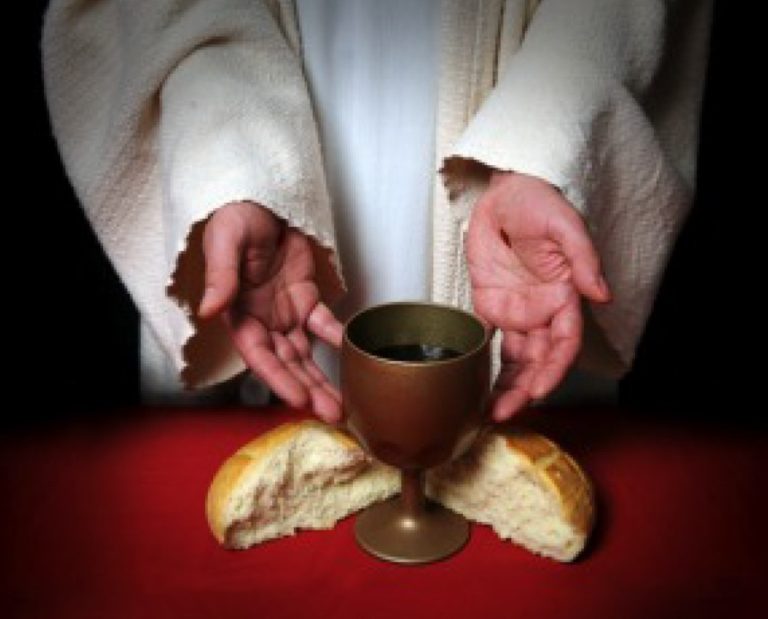


 Pulque [‘pulke](Classical Nahuatl: metoctli), or octli, is an alcoholic beverage made from the fermented sap of the maguey (agave) plant. It is traditional to central Mexico, where it has been produced for millennia. It has the color of milk, somewhat viscous consistency and a sour yeast-like taste. Source Wikipedia
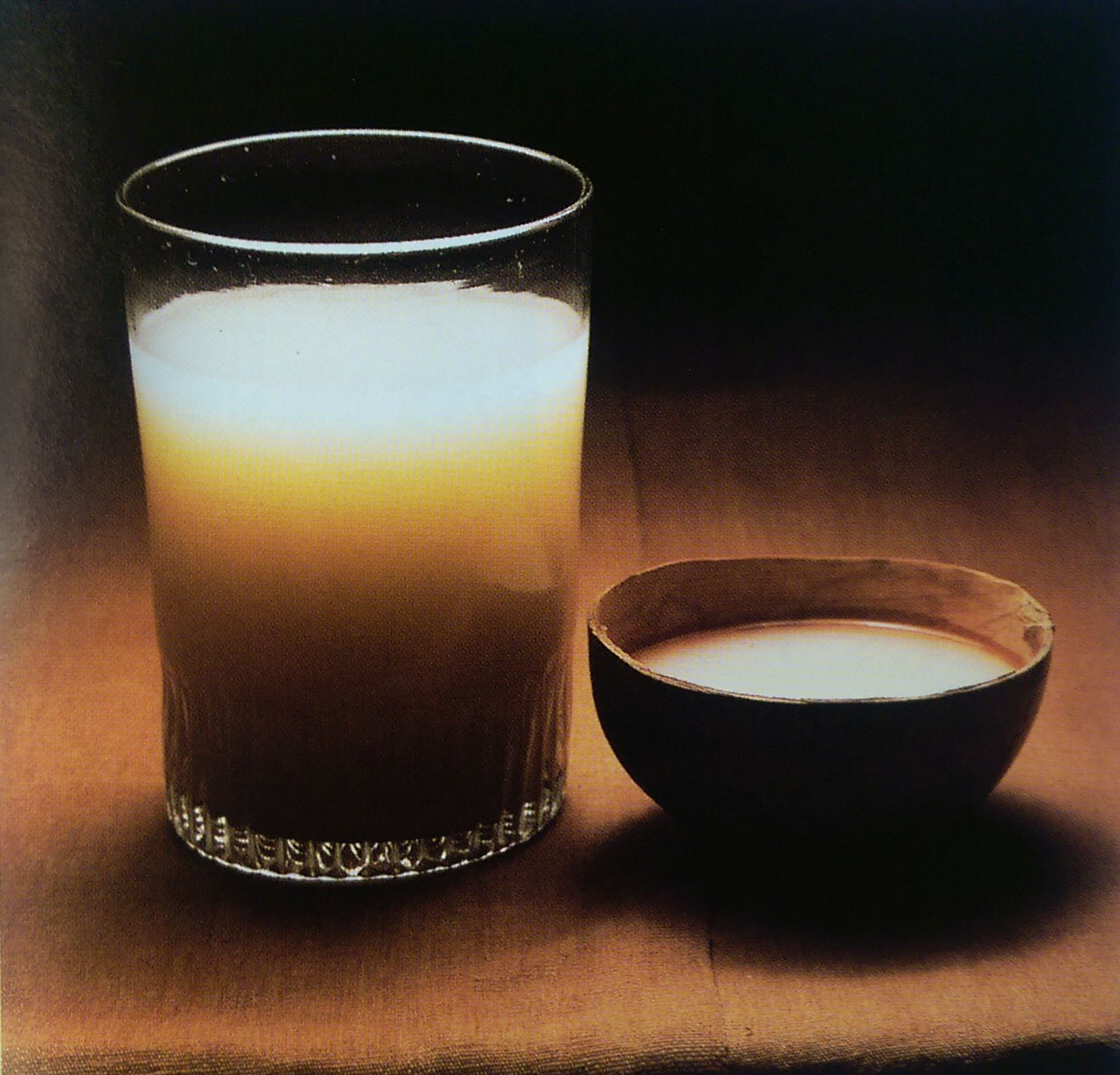

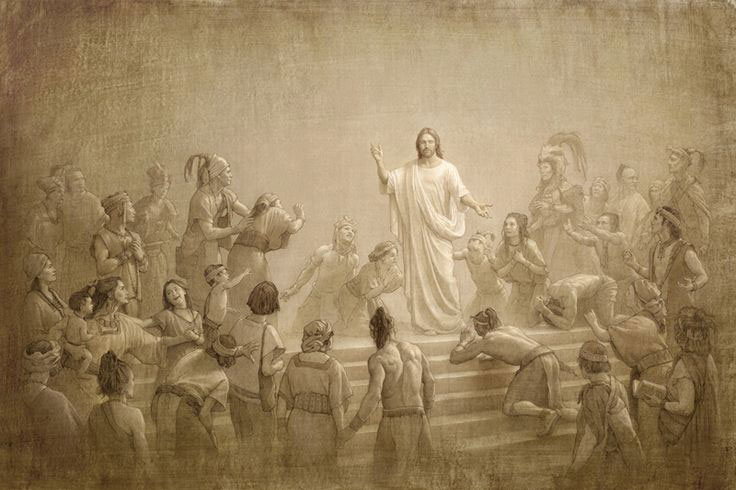
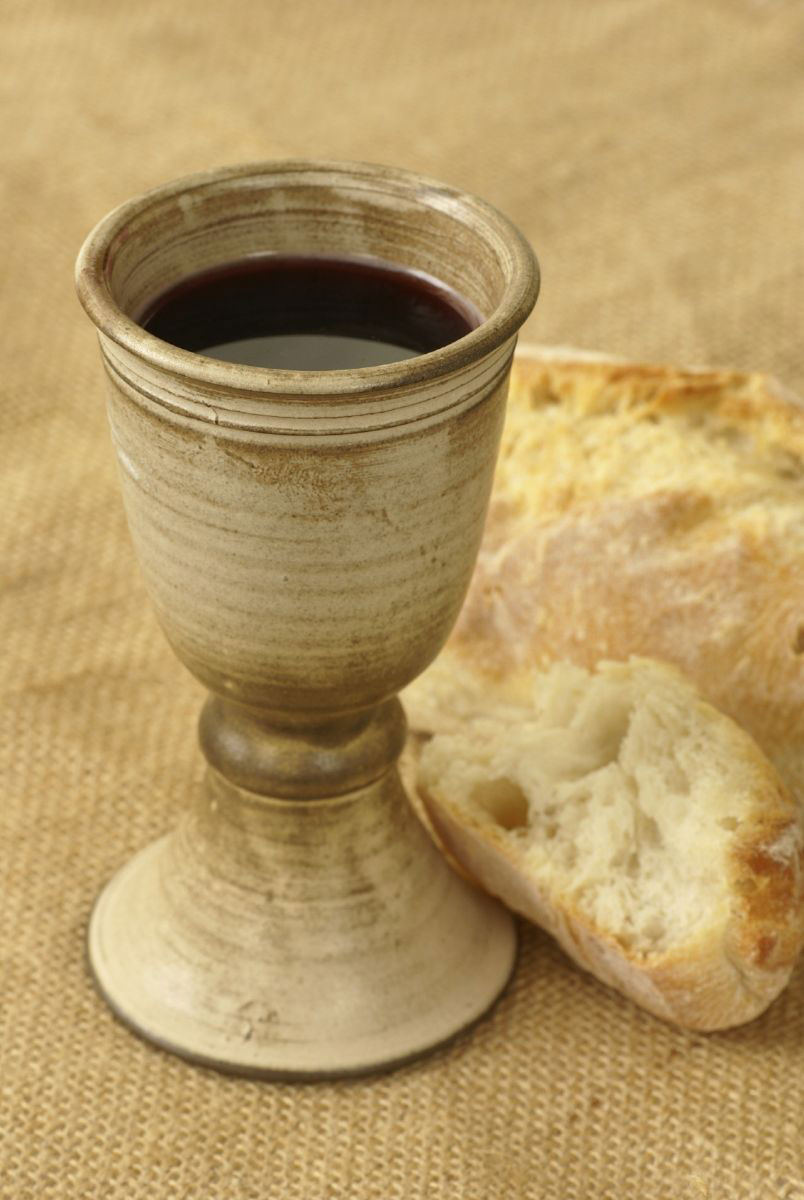

 The history of the vine in America begins, symbolically at least, in the fogs that shroud the medieval Norsemen’s explorations. Every American knows the story of Leif Ericsson, and how, in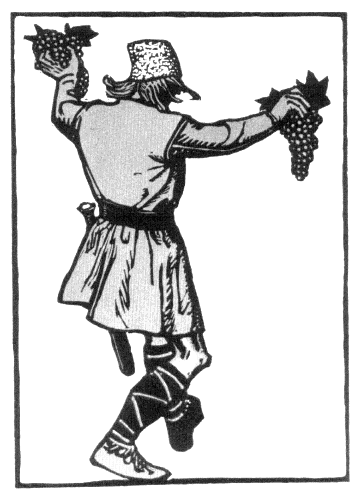


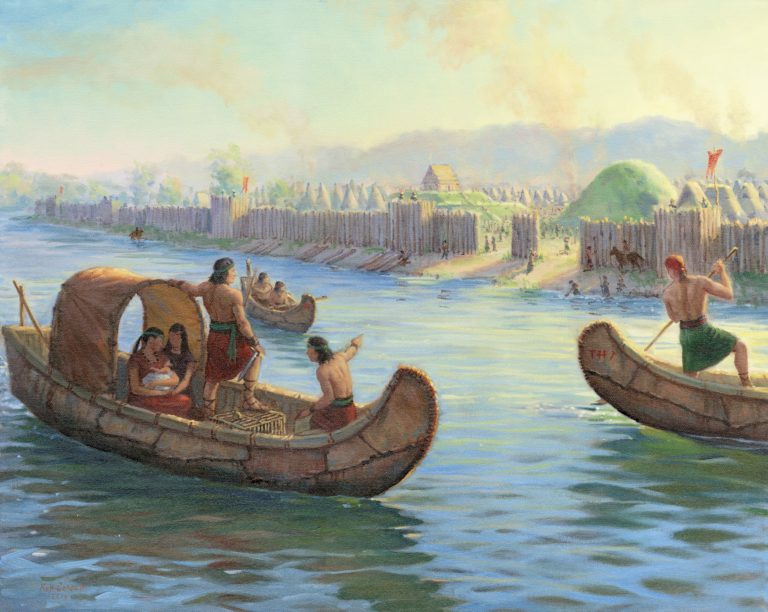


 “Mormon refers to the land of Zarahemla as “the land southward.” What is his frame of reference? Many times in the text, Mormon refers to Zarahemla as the land northward. For example, he explained that “Now the land south was called Lehi, and the land north was called Mulek, which was after the son of Zedekiah; for the Lord did bring Mulek into the land north, and Lehi into the land south” (Helaman 6:10). But here, he refers to Zarahemla as “the land southward.” Obviously he is writing from a reference point north of Zarahemla… Starting from the northern area near the land Antum, Mormon and his father would travel south to reach the Allegheny River, then south to join the Ohio River, then south along the Ohio River until it moves more westerly. Only once he reaches the head of Sidon would he turn north. Mormon wouldn’t be looking at Google Earth or a map of the globe to determine the relative latitude of his destination (although, even technically, Zarahemla is south of his starting point). Mormon would refer to the direction they headed; i.e., they went “into the land southward” from the perspective of someone leaving from the Cumorah area. Later, Mormon will write about how the Lamanites drove the Nephites northward, back to the area of his homeland. During his field trip, the boy Mormon was amazed at what he saw. “The whole face of the land had become covered with buildings, and the people were as numerous almost, as it were the sand of the sea.” Mormon 1:7. The whole face of the land would be the areas through which Mormon traveled. Imagine what it would be like for a young boy to leave his homeland and “see the world” with his parents.

 “Mormon’s father may have taken his son to visit historic sites along tributaries, such as the Scioto and Tennessee Rivers. He could have visited the ancient city of Nephi, [Waters of Mormon] the places where the sons of Mosiah taught the gospel to the Lamanites, and Alma’s land of Helam. He could have visited the battlefields described in Alma. The journey would be the perfect preparation for the future prophet and historian who would compile the history of Lehi’s descendants.” Moroni’s America page 242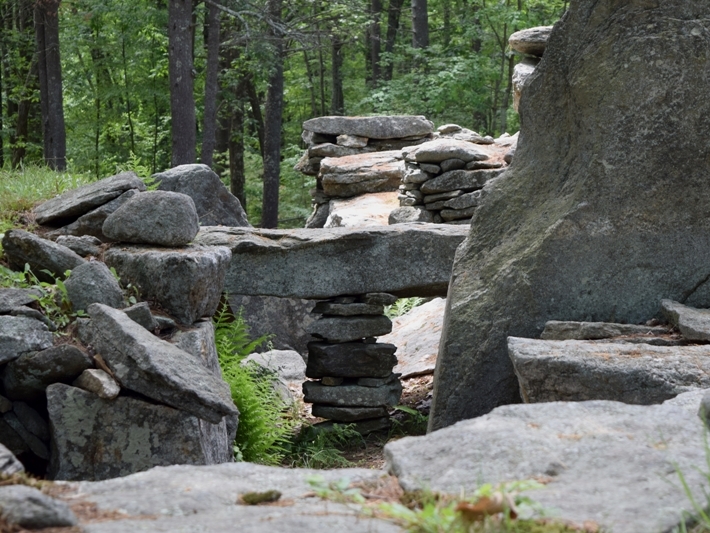


 The idea that divine power can be conveyed to men and used by them through the implementation of tangible earthly contrivances and that these become mere antique oddities once the power is shut off is surprisingly confirmed and illustrated by the Book of Mormon. Thus the Liahona and the Urim and Thummim were kept among the national treasures of the Nephites long after they had ceased their miraculous functions.


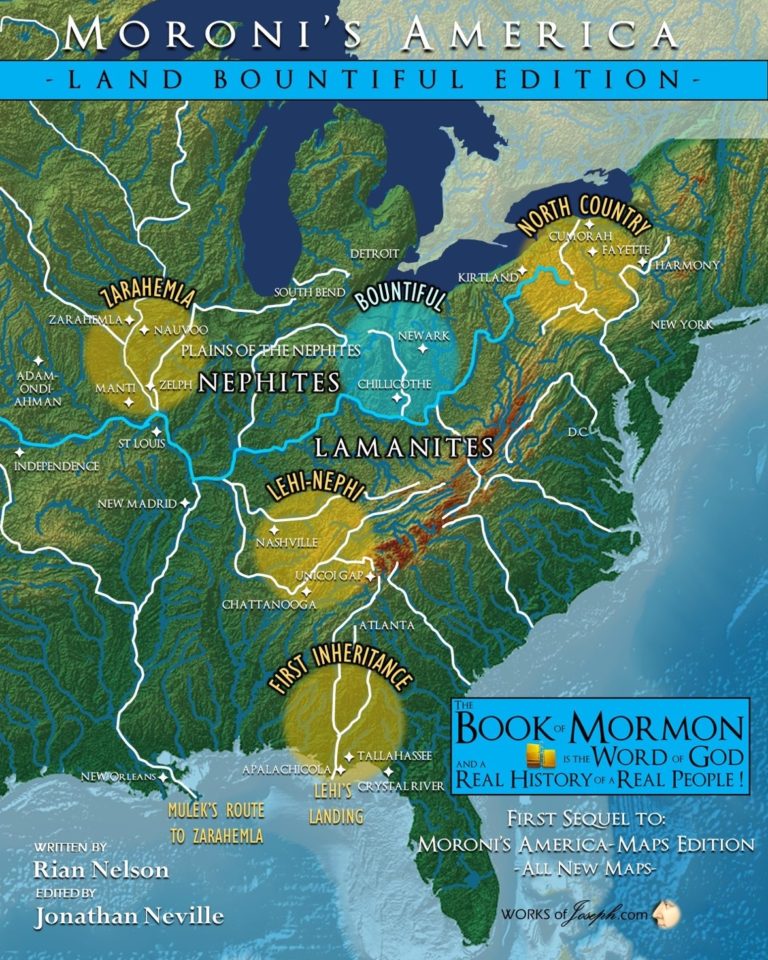


 “I was first taught and inspired about the North American Model by Rod Meldrum. The Works of Joseph maps included in this Annotated Edition of the Book of Mormon were created after being inspired while reading the book Moroni’s America by Jonathan Neville. However, I want others to know that the spiritual messages of the Book of Mormon are far more important than the geography. But I also believe the historical accuracy is critical to my full comprehension of the ‘most correct book’ (Joseph Smith Jr.) on the earth. Many Latter-day Saints agree that the Garden of Eden, Adam-ondi-Ahman, and Cumorah are located in North America, and most know that the New Jerusalem will be built upon the American Continent (Articles of Faith #10, Doctrine and Covenants 84:1-4). It just makes sense to me that the Book of Mormon history primarily occurred in the United States of America, as other sacred events did.


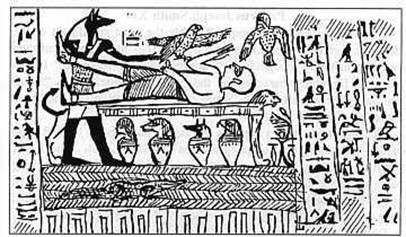


 The Prophet and Historian Mormon, when reviewing the history on the Large Plates of Nephi, noted that “…the Lamanites did observe strictly to keep the commandments of God according to the Law of Moses.” (Helaman. 13:1; p. 369). Joseph Smith wrote in his Church History to Mr. John Wentworth, “The principal nation of the second race fell in battle towards the close of the fourth century. The remnant [the conquering Lamanites] are the Indians that now inhabit this country.” (See p. 551.) Mordecai M. Noah (1785-1851), a prominent Jewish lay leader published his, “Discourse of the Evidences of the American Indians Being the Descendants of the Lost Tribes of Israel,” New York, James Van Norden, 1837. He based his discourse on their religious beliefs and seasonal ceremonies, “In their divisions of the year in four seasons, answering to the Jewish festivals of the feast of flowers [Feast of Weeks; see p. 300], the day of atonement, the feast of the tabernacle, and other religious holydays,” and, “By their laws of sacrifices, ablutions, marriages; ceremonies in war and peace, the prohibitions of eating certain things, fully carrying out the Mosaic institutions.” (p. 8.) He writes, “The most sacred fast day uniformly kept by the Jews is the day of Atonement, usually falling in the month of September or in early October…Precisely such a fast, with similar motives, and nearly at the same period of the year, is kept by the Indian natives generally…[James] Adair (see p. 544) stat[ed] the strict manner in which the Indians observe the revolutions of the moon, and describing the feast of the harvest, and the first offerings of the fruits, gives a long account of the preparations of putting their temple in proper order for the great day of atonement, which he fixes at the time when the corn is fully eared and ripe, generally in the latter end of September.” (p. 14.)

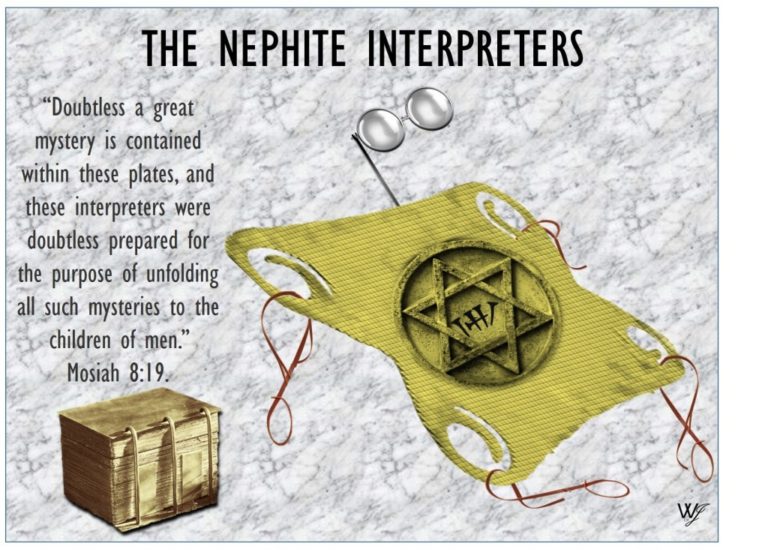


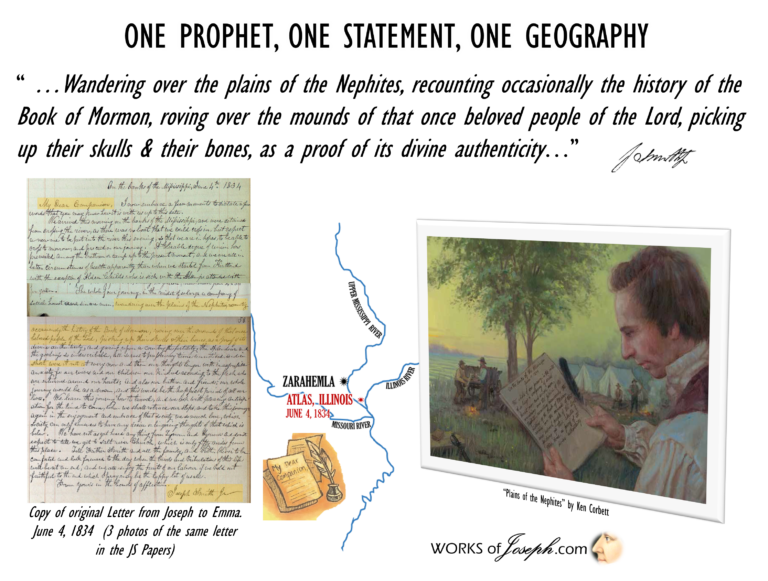
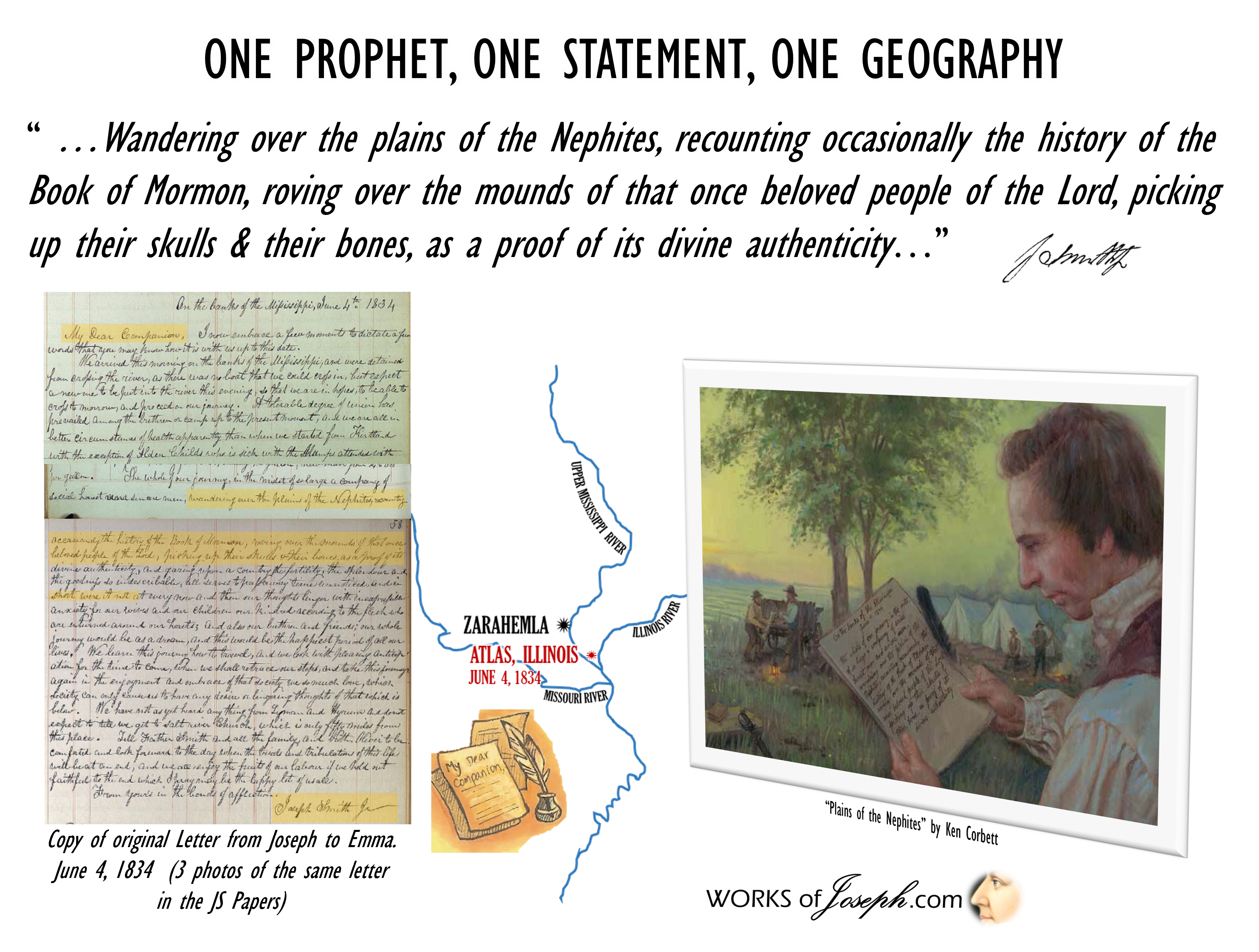
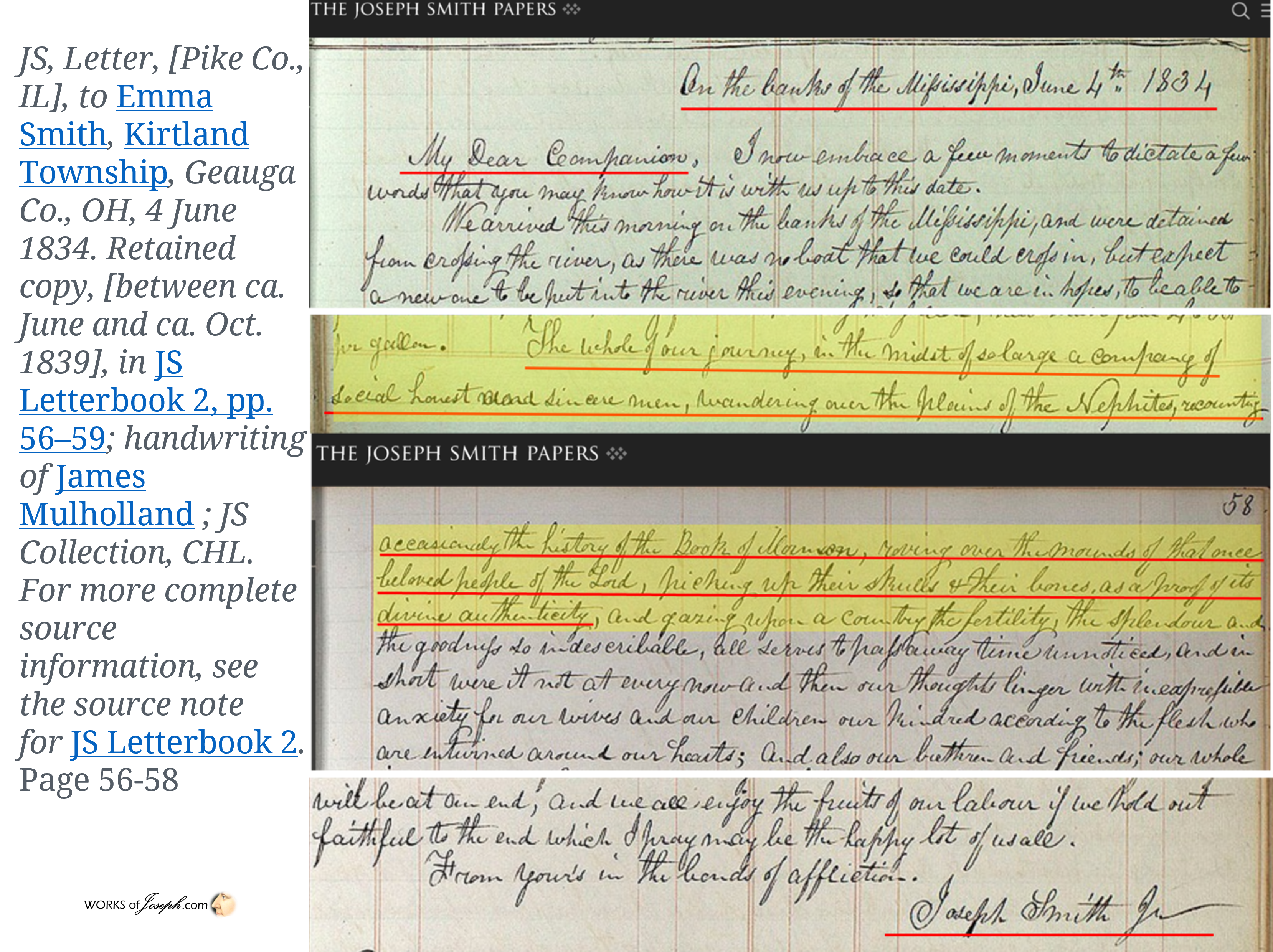
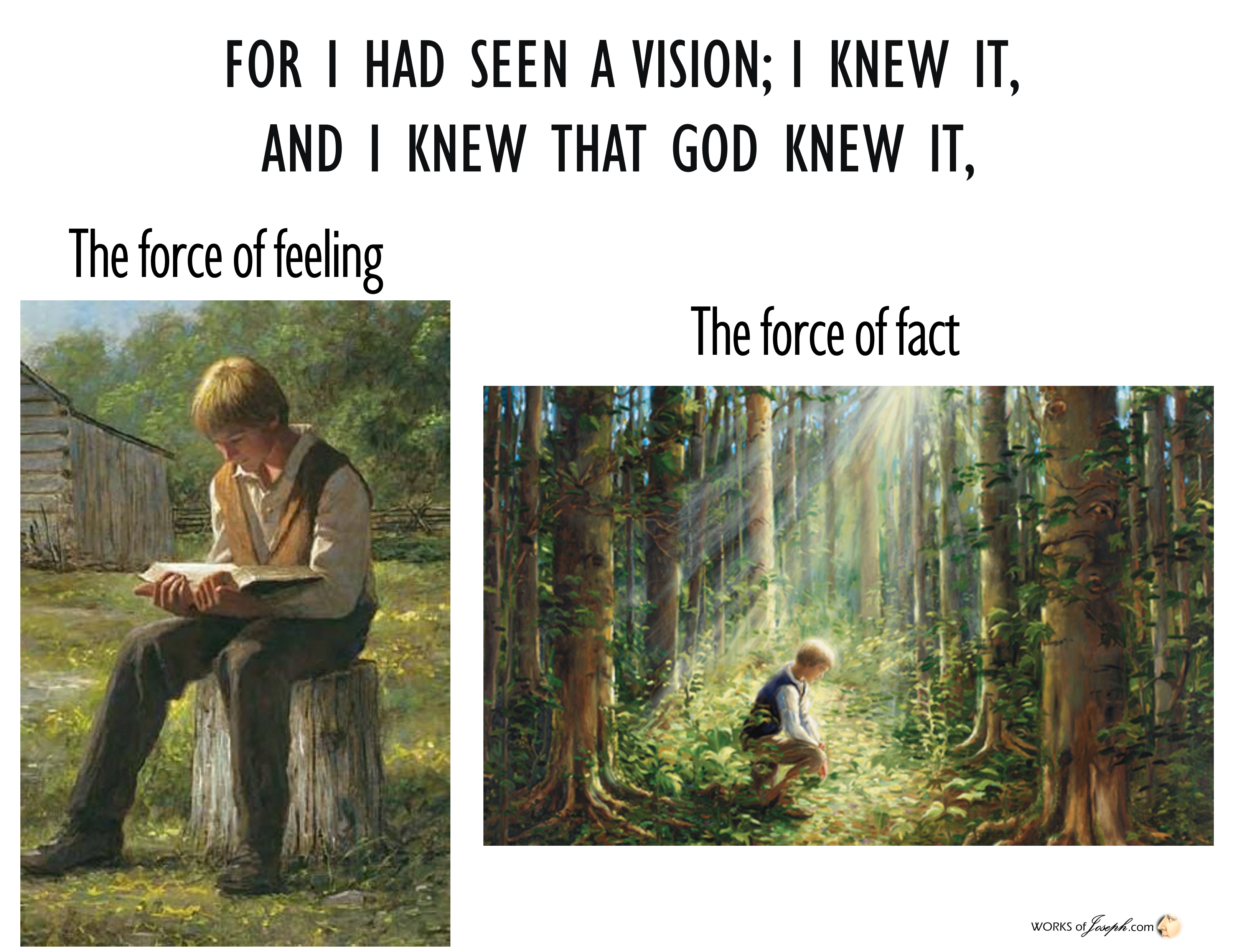
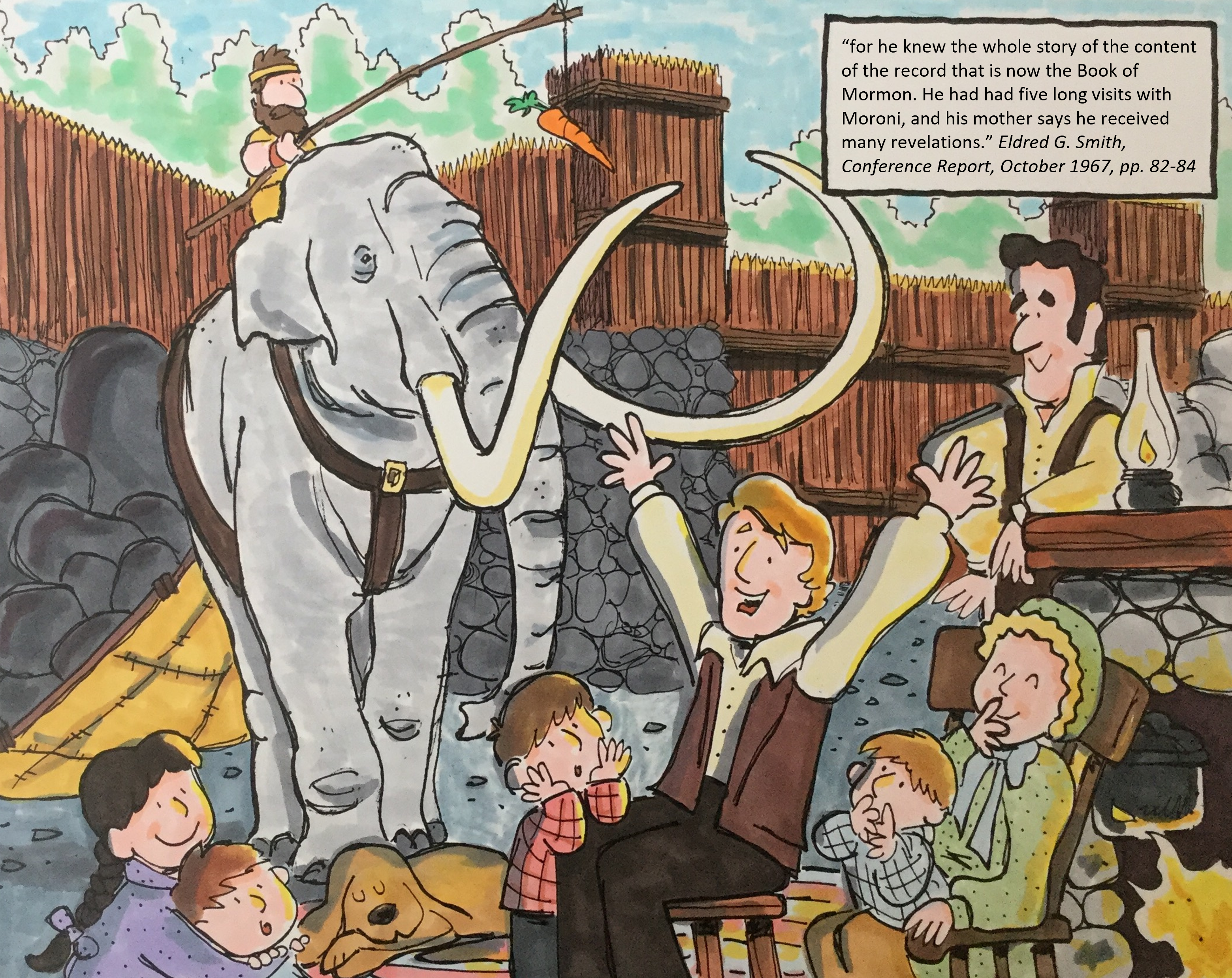







 The American Indian chief looked scornfully at the soldiers on the field before him. How foolish it was to fight as they did, forming their perfect battle lines out in the open, standing shoulder to shoulder in their bright red uniforms. The British soldiers—trained for European war—did not break rank, even when braves fired at them from under the safe cover of the forest. The slaughter continued for two hours. By then 1,000 of 1,459 British soldiers were killed or wounded, while only 30 of the French and Indian warriors firing at them were injured.Not only were the soldiers foolish, but their officers were just as bad. Riding on horseback, fully exposed above the men on the ground, they made perfect targets. One by one, the chief’s marksmen shot the mounted British officers until only one remained.
 Telling Washington’s story without erasing the people and lands that preoccupied him leads to important new questions; like, just how consequential for American history was the first president’s addiction to land speculation?
 Washington never moved west himself, but the West beckoned him and the nation he led. His long association with the region as surveyor, speculator, soldier, landowner, and politician shaped his career and his vision of America’s future tied to western development. As a young man, he pursued wealth in land and a military reputation in the West; in his later years, the West became a key to building national unity. By the end of his life, according to one of the editors of the monumental Papers of George Washington, he probably knew more than any other man in America about the frontier and its significance to the future of his country. He had also accumulated more than 45,000 acres of prime real estate in present-day Kentucky, Ohio, Pennsylvania, the Shenandoah Valley, and West Virginia. It was the West, says another of his editors, that “made the Virginia farmer lift his eyes to prospects beyond his own fields and his native Virginia”; the West that “stretched his mind” to embrace an expansive vision of a republican empire; the West that, more than anything else except the Revolutionary War, prepared him for his role as nation builder.

 During the French and Indian War, Colonel George Washington designed and supervised the construction of a fort in Winchester, Virginia. Named Fort Loudoun, after John Campbell, the fourth Earl of Loudoun and Commander-in-Chief of British forces in North America, the fort was constructed to protect citizens from attack and served as a headquarters for Washington and his militia.
 A monument that mentions the Indian grave site is located in Virginia but the artifacts and skeletons have not been seen since.
 Extract from ‘Presidents and Giants‘ Chapter in Giants On Record: America’s Hidden History, Secrets in the Mounds and the Smithsonian Files by Jim Vieira and Hugh Newman. Available on Amazon: http://amzn.to/1MrVH5L (US), http://amzn.to/1OxghHM (UK). Facebook Page: www.facebook.com/giantsonrecord #giantsonrecord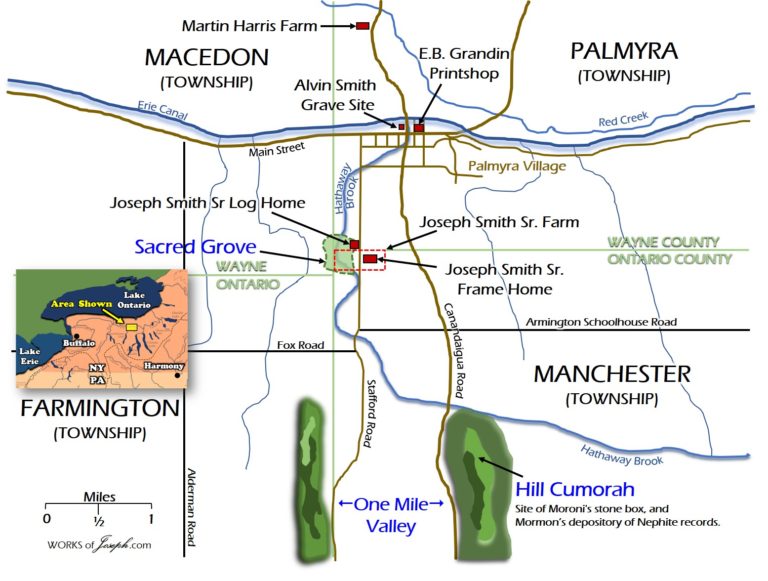
 Prophets, Apostles and Leaders speak of “One Hill Cumorah” in many of the quotes below. Are you with the Prophets or Scholars? Many of you reading this blog would probably find it hard to believe that many scholars, seminary and institute teachers, and church employees believe there are two Hill Cumorah’s, one in upstate New York and one in Mesoamerica somewhere. I used to think that as well 8 years ago, but to me there are so many leaders in the Church of Jesus Christ of Latter-day Saints that say the Hill in New York is the place that Joseph Smith received the plates and it is also the same hill in New York where the final battles of the Nephites vs Lamanites, and the final battle of the Jaredites (Hill Ramah) occured. (Ether 15:11 “And it came to pass that the army of Coriantumr did pitch their tents by the hill Ramah; and it was that same hill where my father Mormon did ahide up the records unto the Lord, which were sacred.”) I believe the Hill Cumorah and the Hill Ramah are the very same hill in upstate New York, and there is not a second hill in Mesoamerica.

 11.
11. 16.
16. 21.
21. 23.
23. 27.
27.
 Remember
 President Benson gave a most wonderful talk below, that everyone of us should share with all those we know. His love for the Promised Land of the United States is such a testimony to me. This talk has strengthened my love for our country and helped me understand our role to spread the Gospel to the world. We have made a Covenant with the Lord to share the Gospel and if we don’t we will be held accountable. Those on other lands of the world have also been blessed as the Lord loves them as much as He love us. President Benson in my opinion, makes it very clear that this land of the United States is the Promised Land spoken of in the Book of Mormon. My friend Rod Meldrum has summed up this Covenant from his wonderful article. I quote a portion below. For Rod’s complete article visit here. “
 President Benson said, “The Constitution of the United States has served as a model for many nations and is the oldest constitution in use today. “I established the Constitution of this land,” said the Lord, “by the hands of wise men whom I raised up unto this very purpose” (
 During his first inaugural address in 1789, President George Washington, a man who was raised up by God, said: “No people can be bound to acknowledge and adore the invisible hand, which conducts the affairs of men, more than the people of the United States. Every step by which they have advanced to the character of an independent nation seems to have been distinguished by some token of providential agency” (First Inaugural Address, 30 Apr. 1789)…
 I reverence the Constitution of the United States as a sacred document. To me its words are akin to the revelations of God, for God has placed His stamp of approval upon it.

![Hebrew 400 Year Prophecy from Hopewell Walls [Samuel the Lamanite]](https://bookofmormonevidence.org/wp-content/uploads/2019/10/robeBeautiful-Tree-Art-Painting-Art-Works.jpg "Hebrew 400 Year Prophecy from Hopewell Walls [Samuel the Lamanite]")


 The Nephites to whom Samuel was preaching would recognize the symbolic significance of his prophecy. There are several references in the Book of Mormon to the children of Israel being in bondage and being freed. Ancient Israel was afflicted for four hundred years before the nation that subjected them would be judged; now the sword of justice would fall on the Nephite nation in four hundred years. Samuel’s prophecy, particularly in the context of the law of Moses referenced just a few verses earlier, demonstrates the Book of Mormon is a Hebrew text and should be interpreted with that in mind.
 He names the city of Gideon, and then says “wo be unto all the cities which are in the land round about, which are possessed by the Nephites” (Helaman 13:16). Because Zarahemla and Gideon are on opposite sides of the River Sidon, Samuel’s prophecy suggests the cities destroyed in 3 Nephi are along that river.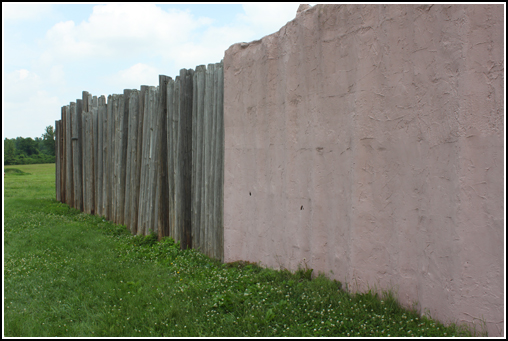


 America’s Stonehenge in Salem, New Hampshire is probably the most elaborate and controversial site in New England. It has been described by Dr. Edward J. Kealy, professor of History at Holy Cross University as “potentially the most important stone complex in the Northern Hemisphere”. Featured on the History Channel and other programs, this 30 acre complex is a mixture of stone chambers, stone solstice and equinox markers, cairns, chimneys, fireplaces and stone drains. The two largest stones here weigh 45 and 70 tons. The site has been carbon dated to at least 2000 B.C. by scientists at Geochron Labs of Cambridge, Mass after dating 13 different test pits. That dates it’s construction half a millenia before the final construction phase of Stonehenge, and like Stonehenge it possesses many precise astronomical alignments. Stone markers throughout the site provide over 200 alignments with the sun, moon and 45 different stars which have been verified by independent researchers. One alignment wall allows a person to observe the southern most standstill of the moon on its 18.61 year metonic cycle. A period of 18.61 is required to carry the moon to all of its possible positions in respect to the sun. This event is marked at Mystery Hill as the moon passes above the winter solstice stone and then aligns with the terminal of this wall…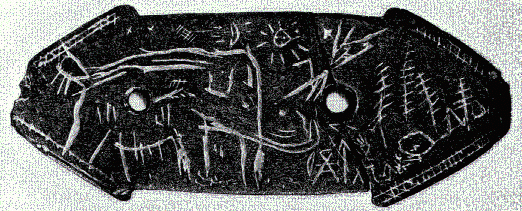
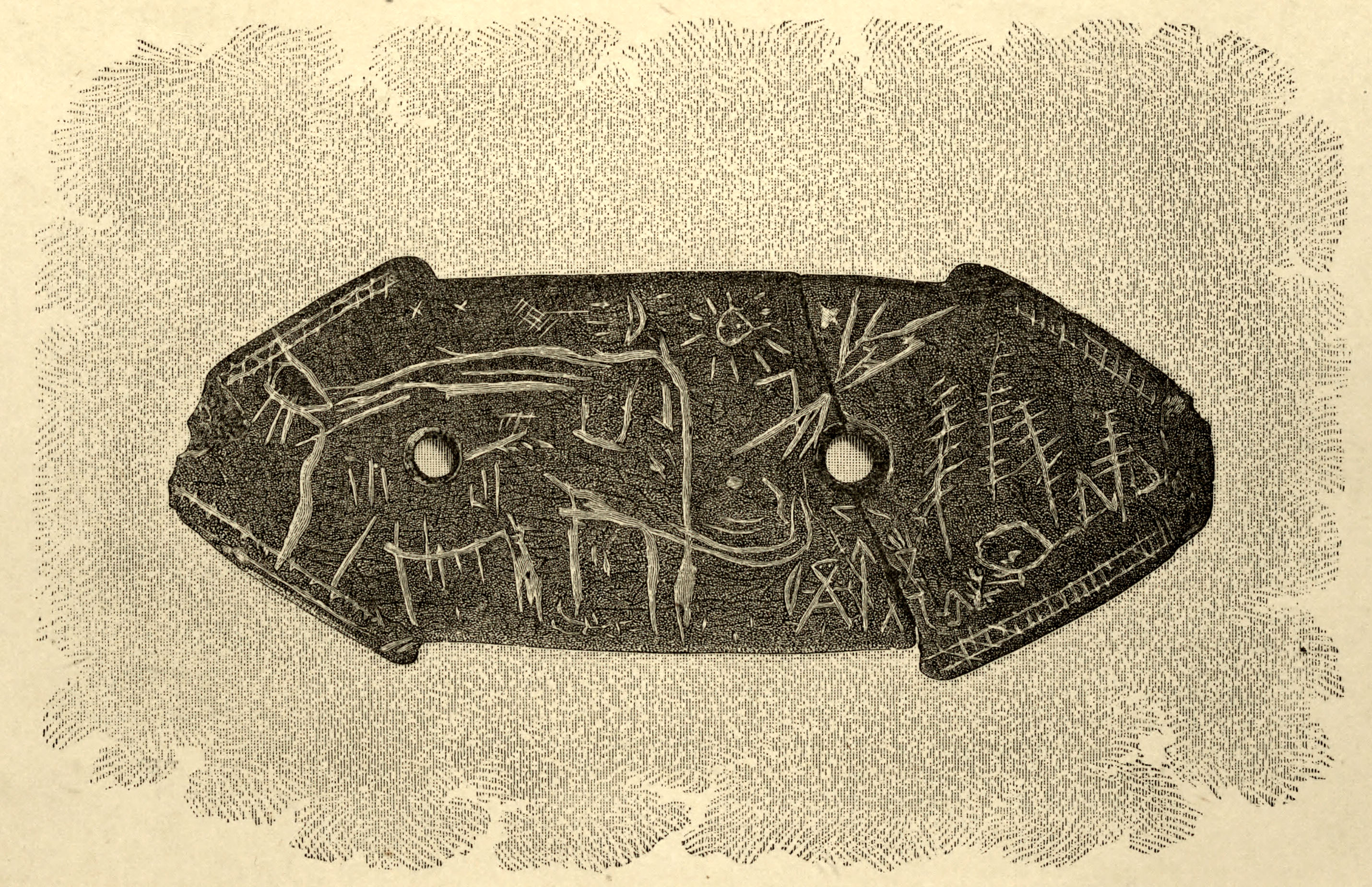


 There is considerable variety of opinion of late, and especially among persons familiar with the Indians, as to the value of the information furnished by their traditions; and certainly among Indians to-day the separation of their pre-Columbian from their later traditions, and their traditions proper from the extravagant relations so readily dealt forth by them extempore, is no easy matter. Much stress is laid on the absence of a tradition of De Soto; yet, as Schoolcraft remarks, the Delawares and Mohicans had in his time one of Hudson, the Chippeways of Cartier, and the Iroquois one of a wreck on a sea-coast, and the extinction of an infant colony, probably Jamestown.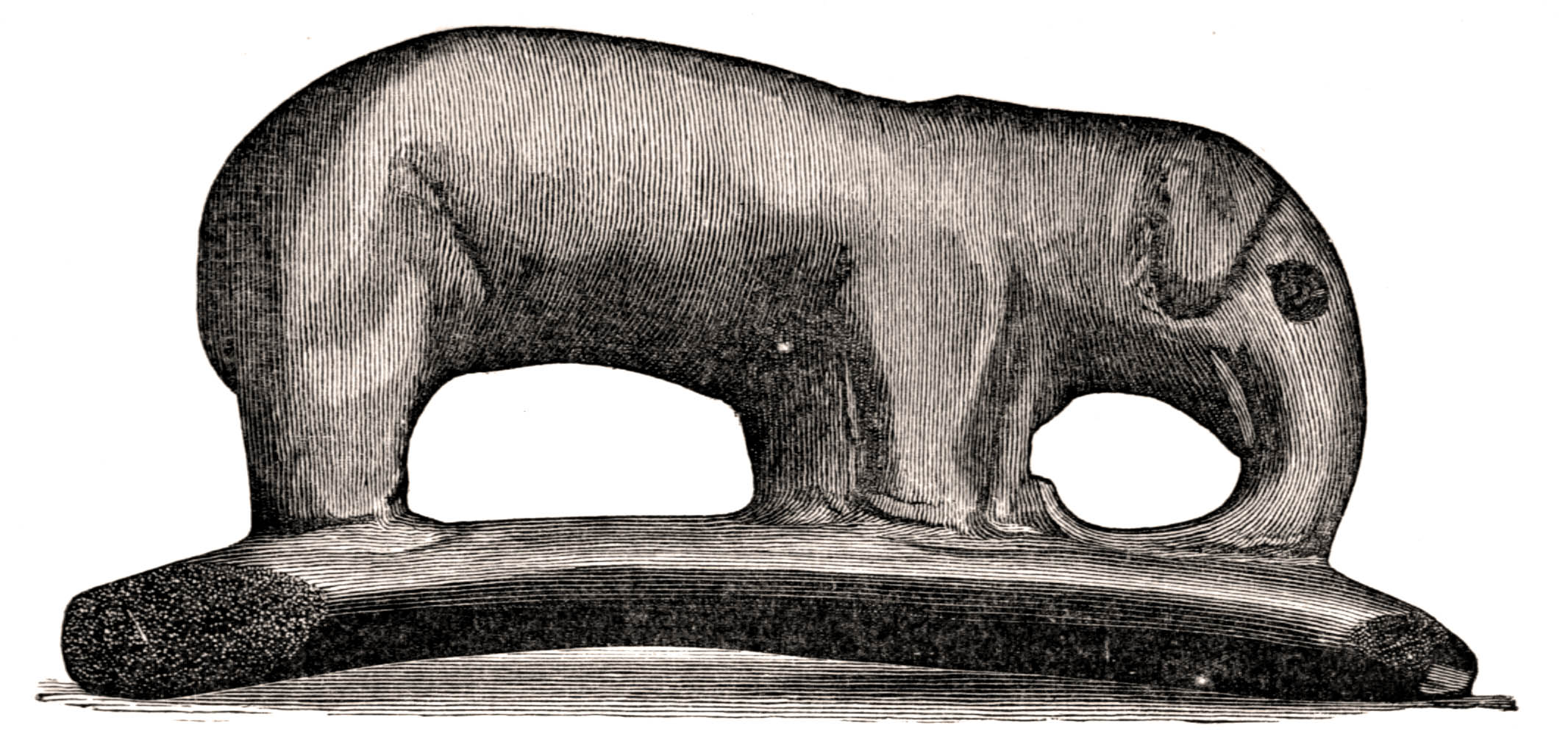
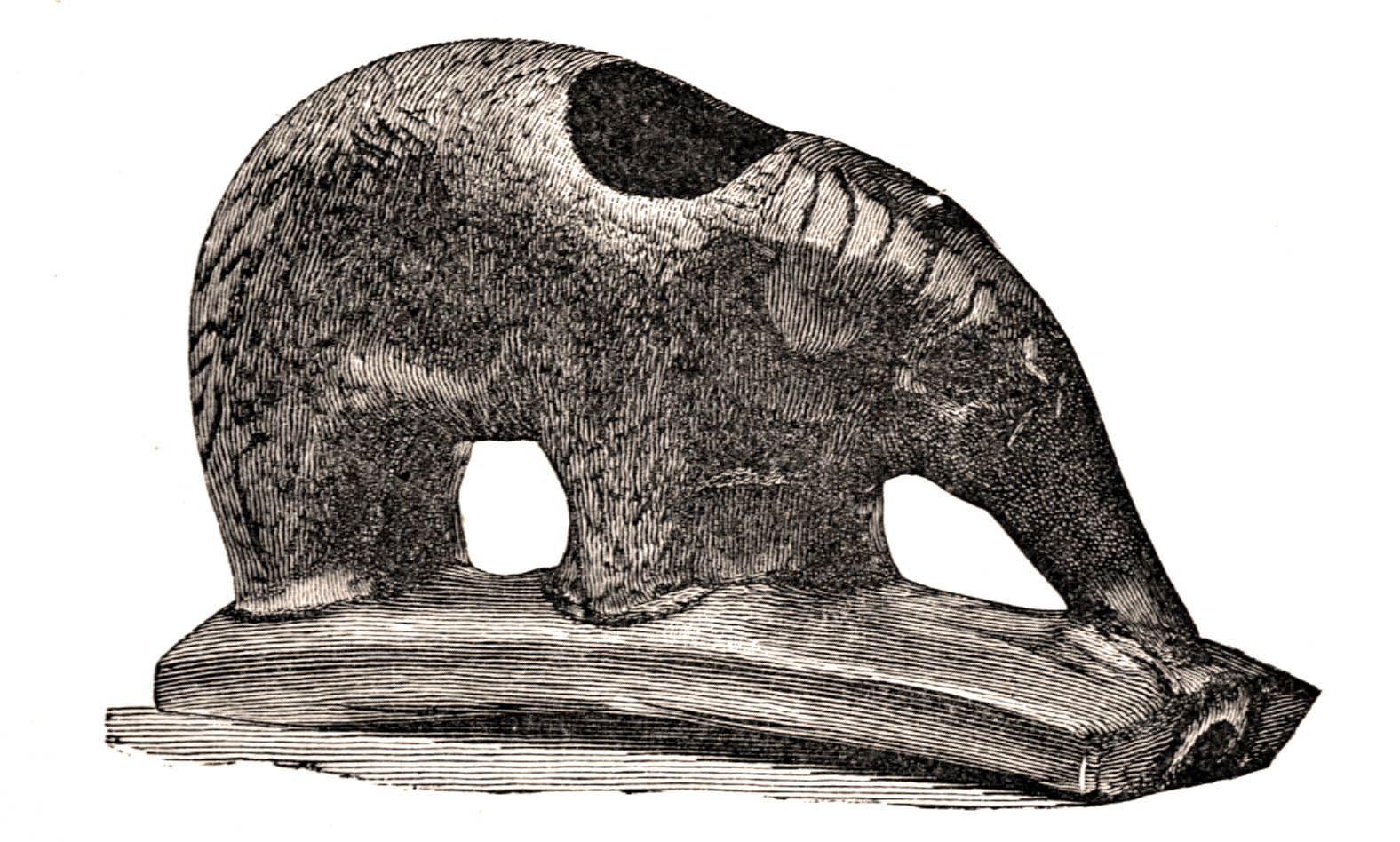
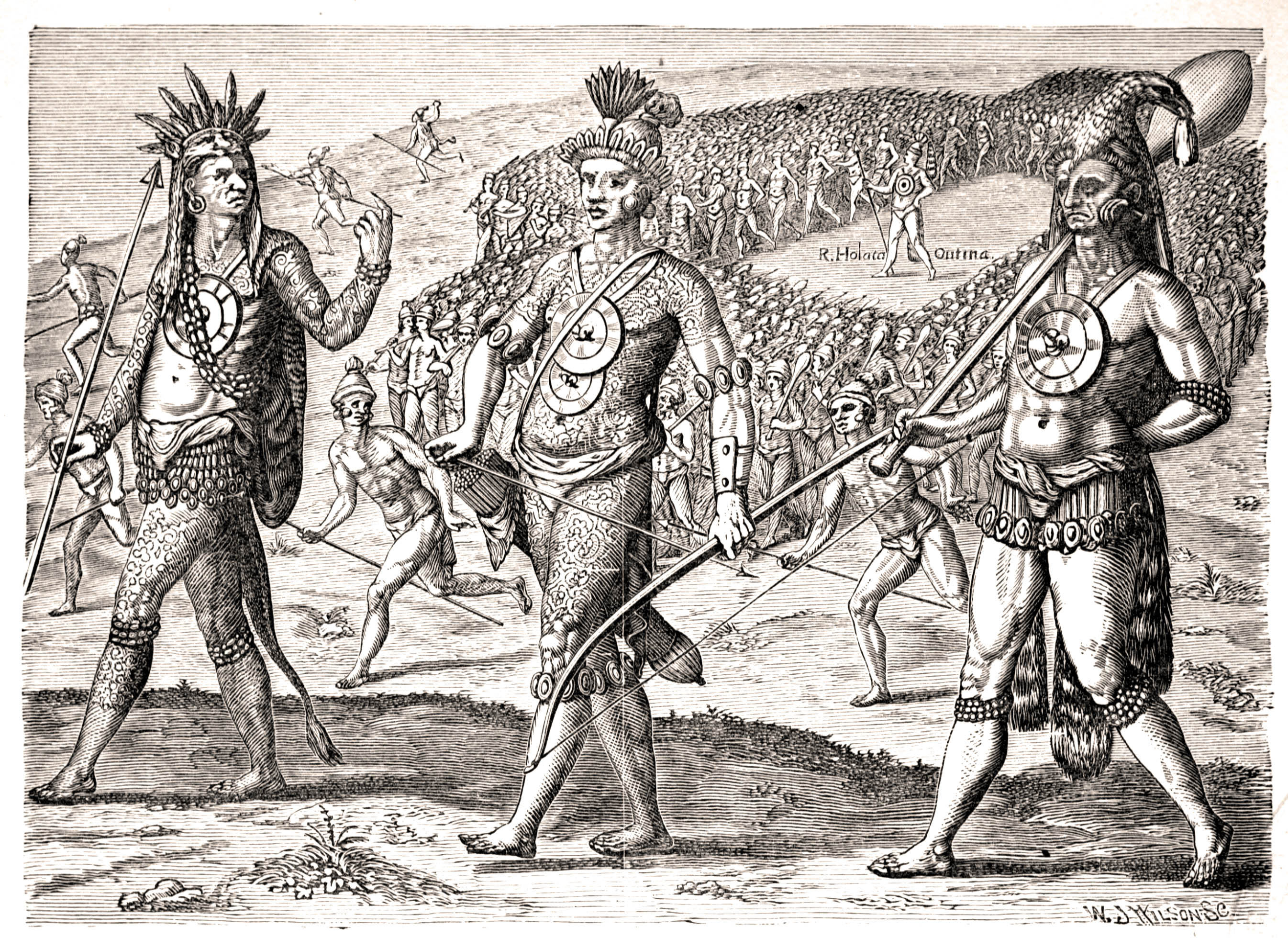

 This tradition of the Delawares, more interesting and suggestive probably than any of these long-overlooked records of ancient North America, has once at least, been recorded by Indians in pictographic symbols; fortunately it has been preserved to us in full, and we can compare it with the carving on the reverse of the Lenape stone (fig. 16), which we may suppose suggested to the mind of the Indian singer versed in the art of picture-writing some at least of the events remembered in his tradition.
 We have seen that the stone was found at a spot situated in the ancient territory of the Delawares, and where many articles of undoubted Indian workmanship have been found,—among them two carved stones,14—that similar aboriginal carvings of the hairy mammoth have been discovered in Europe, and that a race of men, relics of whom have been found on the Delaware river and in California, and who may or may not have been the ancestors of the modern Indian, have existed in North America at the time of the mammoth. Moreover, that as yet nothing is definitely known as to the antiquity of the Indians’ occupancy of our continent, and that there is no geological evidence to prove that the mammoth did not survive in America to a comparatively recent period. We have seen further that the Indians in several of their traditions attribute the mammoth bones seen by them on the Ohio to a great monster who was destroyed by lightning, and that there is a similarity too strong to be accidental between the Lenape tradition of the great Buffalo and the carving on the stone; finally, we may see perhaps a reference in the carvings on the reverse of the stone to the early Delaware traditions of their migration to the eastward and wars with the mound-builders, as detailed in Heckewelder’s account, the “Wallum Olum,” and David Cusic’s history.

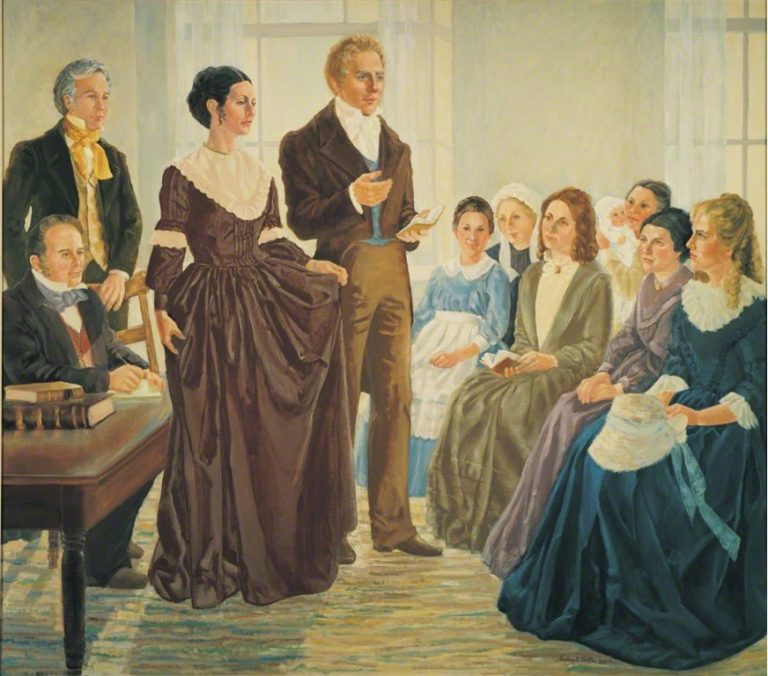

 Afterwards, Mary was able to describe the plates in detail. John C. Whitmer, her grandson, reported that he himself had heard his grandmother tell of this event several times. He summarized her experience as follows:
 Mother Smith stated that Lucy Harris then described the record in minute detail. Mrs. Harris became so convinced of the truthfulness of the record after this remarkable dream that she decided to give to the Prophet Joseph Smith twenty-eight dollars she had received from her mother before she died; Mrs. Harris insisted that he take it to assist in bringing forth the Book of Mormon.
 “The plates often lay on the table without any attempt at concealment, wrapped in a small linen tablecloth, which I had given him [Joseph Smith, Jr.] to fold them in. I once felt of the plates, as they thus lay on the table, tracing their outline and shape. They seemed to be pliable like thick paper, and would rustle with a metallic sound when the edges were moved by the thumb, as one does sometimes thumb the edges of a book. … I did not attempt to handle the plates, other than I have told you, nor uncover them to look at them. I was satisfied that it was the work of God, and therefore did not feel it to be necessary to do so. … I moved them from place to place on the table, as it was necessary in doing my work.” (The Saints’ Herald, 1 Oct. 1879, p. 290; spelling modernized.)
 “My belief is that the Book of Mormon is of divine authenticity—I have not the slightest doubt of it. I am satisfied that no man could have dictated the writing of the manuscripts unless he was inspired; for, when acting as his scribe, your father would dictate to me hour after hour; and when returning after meals, or after interruptions, he would at once begin where he had left off, without either seeing the manuscript or having any portion of it read to him. This was a usual thing for him to do. It would have been improbable that a learned man could do this; and, for one so ignorant and unlearned as he was, it was simply impossible.” (Ibid.)
 I trembled so with fear, lest all might be lost in consequence of some failure in keeping the commandments of God, that I was under the necessity of leaving the room in order to conceal my feelings. Joseph saw this, and said, “Do not be uneasy mother, all is right—see here, I have got a key.”
 Most of these eleven witnesses were members of the large Smith and Whitmer families–families who had assisted in guarding and in translating the ancient record. Not surprisingly, other family members reported indirect contact with the plates and the translation. Young William Smith once helped his brother Joseph carry the plates wrapped in a work frock. Joseph’s wife Emma Smith felt the pliable plates as she dusted around the cloth-covered record on her husband’s translating table. Burdened with daily chores and caring for her family and visitors working on the translation, Mother Whitmer (Peter Whitmer, Sr.’s, wife) was shown the plates by a heavenly messenger to assure her that the work was of God.


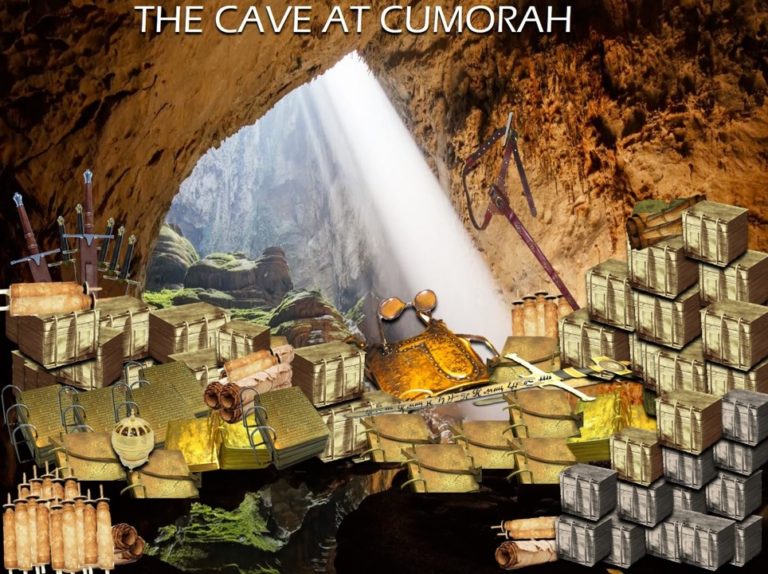


 Attention: Our new 600 page Annotated Book of Mormon is currently at a pre-order price of $49.95. At our Conference
 (Parley P. Pratt photograph likely by Marsena Cannon or Lewis W. Chaffin (Church History Library, Salt Lake City). Circa 1852)
 “Thousands of moons ago, when the red men’s forefathers dwelt in peace and possessed this whole land, the Great Spirit talked with them, and revealed His law and His will, and much knowledge to their wise men and prophets. This they wrote in a Book; together with their history, and the things which should befall their children in the latter days.
 “In that neighborhood there lived a young man named Joseph Smith, who prayed to the Great Spirit much, in order that he might know the truth; and the Great Spirit sent an angel to him, and told him where this Book was hid by Moroni; and commanded him to go and get it. He accordingly went to the place, and dug in the earth, and found the Book written on golden plates.
 We continued for several days to instruct the old chief and many of his tribe. The interest became more and more intense on their part, from day to day, until at length nearly the whole tribe began to feel a spirit of inquiry and excitement on the subject. We found several among them who could read, and to them we gave copies of the Book, explaining to them that it was the Book of their forefathers.


 In
In 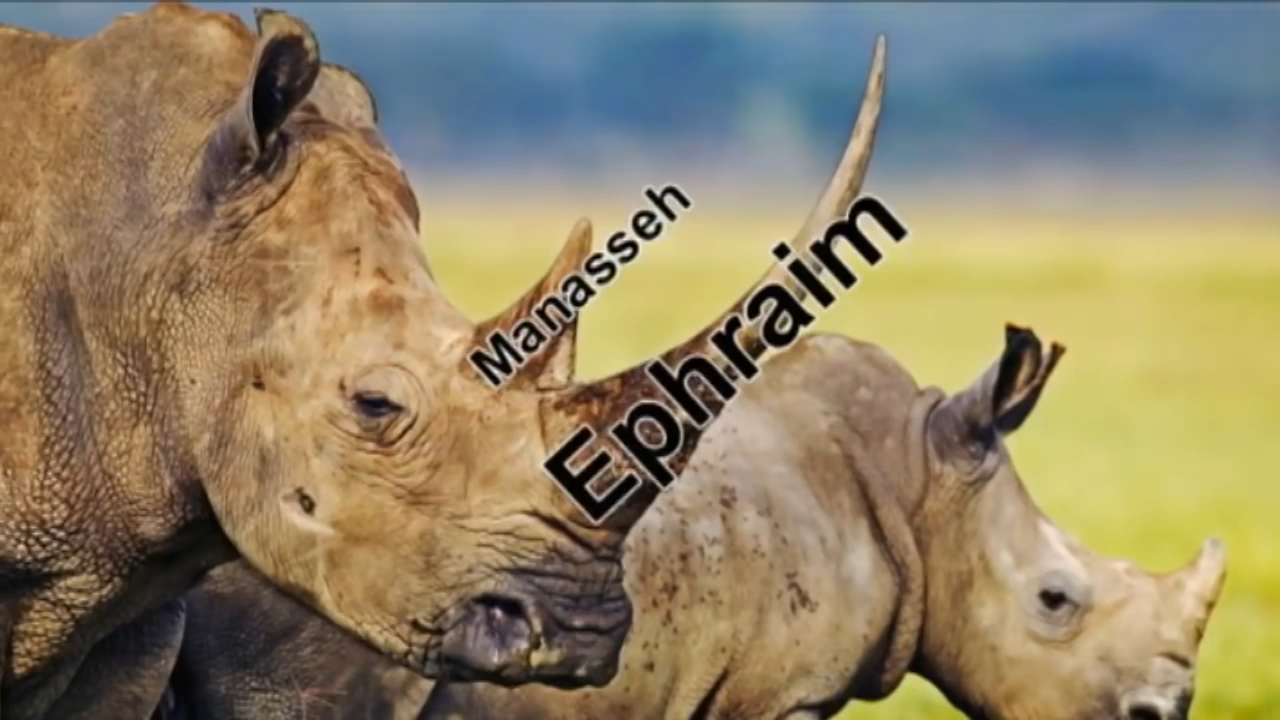 The King James Bible translators used “unicorns,” (plural with an “s”) in this Deuteronomy passage where a marginal note appears. It reveals that in the Hebrew text, the word is actually a singular word, “unicorn.” However, while the word being translated “unicorn” is singular, the word being translated “horns” is a plural possessive. It’s saying that these plural horns are possessed by the singular unicorn, which would mean that in the Latin, it’s not actually an unicornis, but a rinocerotis. In the English, it’s not actually a unicorn (one animal with one horn), but a rhinoceros (one animal—Joseph, with two horns—two sons.)


 Unicorn Webster’s 1828 Dictionary



 Mormons set out to save the Lamanites. Right on the title pages of the Book of Mormon, Joseph Smith told the world who the book was for: “Written to the Lamanites, who are a remnant of the house of Israel.” Early Mormons knew who Lamanites were. The book belonged to the Indians.
 After Joseph Smith died in June of 1844 and Brigham Young asserted the authority of the Twelve Apostles to lead the church, the exploring mission given by Joseph Smith in the spring of 1844 to convert the Lamanites and find a home for the Saints was not forgotten. Joseph Smith began organizing an exploratory company for California and Oregon in early 1844.
 Optimism about Lamanites and Indians flowed freely in Nauvoo, in part because of the conversion in 1840 of
  At the beginning of 1845, rumors of Indians were still flying. “[T]here is,” wrote one woman, “all ready ten hundred thousand of the lamanites baptized into the Church and that they are waiting very impatient to avenge the blood of Joseph and Hyrum. We have to keep men among them to keep them back or they would [have] been here before this time.”
 After two weeks overland to Indian territory in Kansas,
  When they arrived in Indian territory, they were met on the short by Joseph Herring’s brother George Herring and by “Father Hendrix.”
 Hosea Stout, chief of the Nauvoo police since the death of Jonathan Dunham, hosted many Indians. In particular, he spent a lot of time with



)