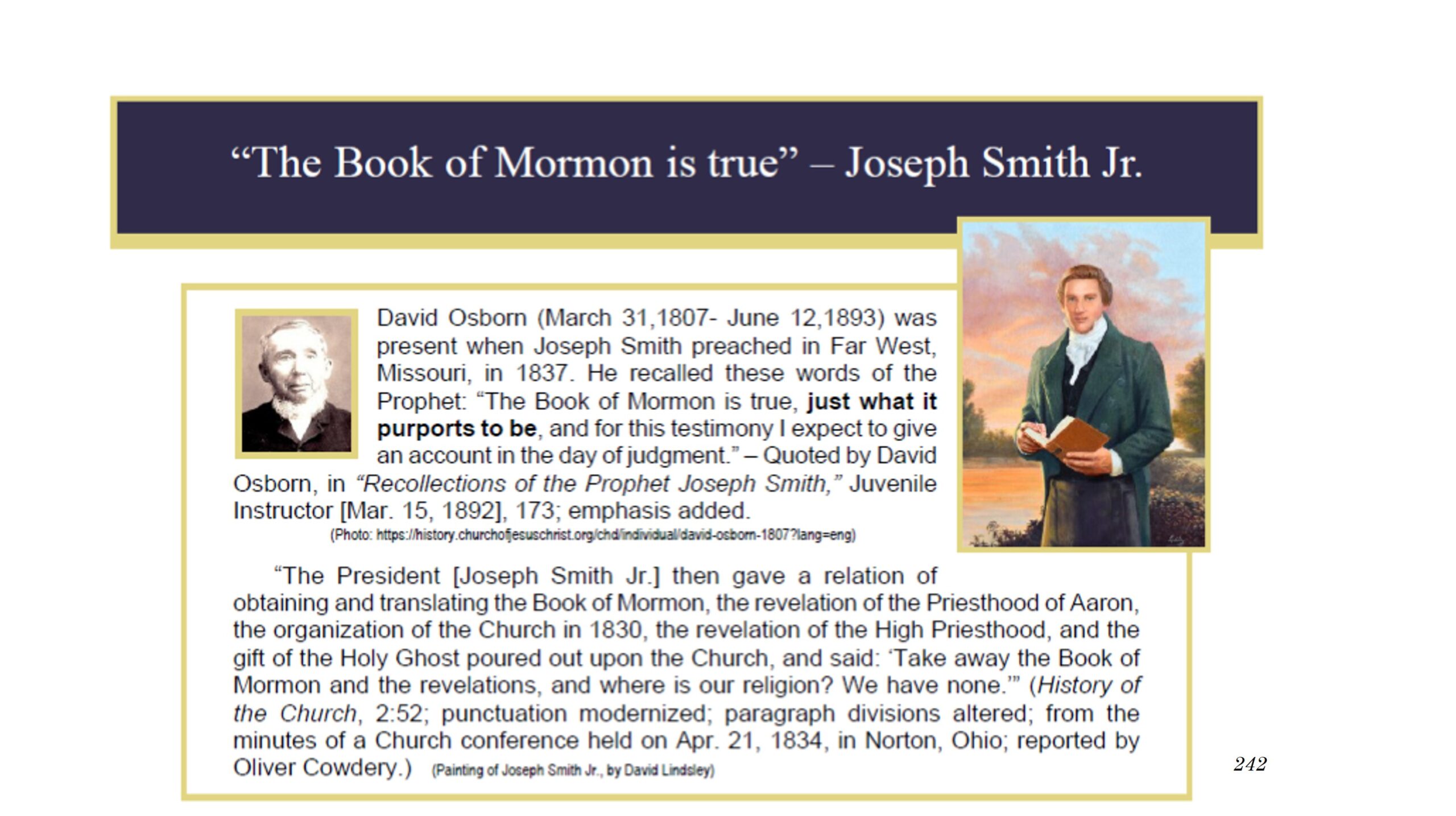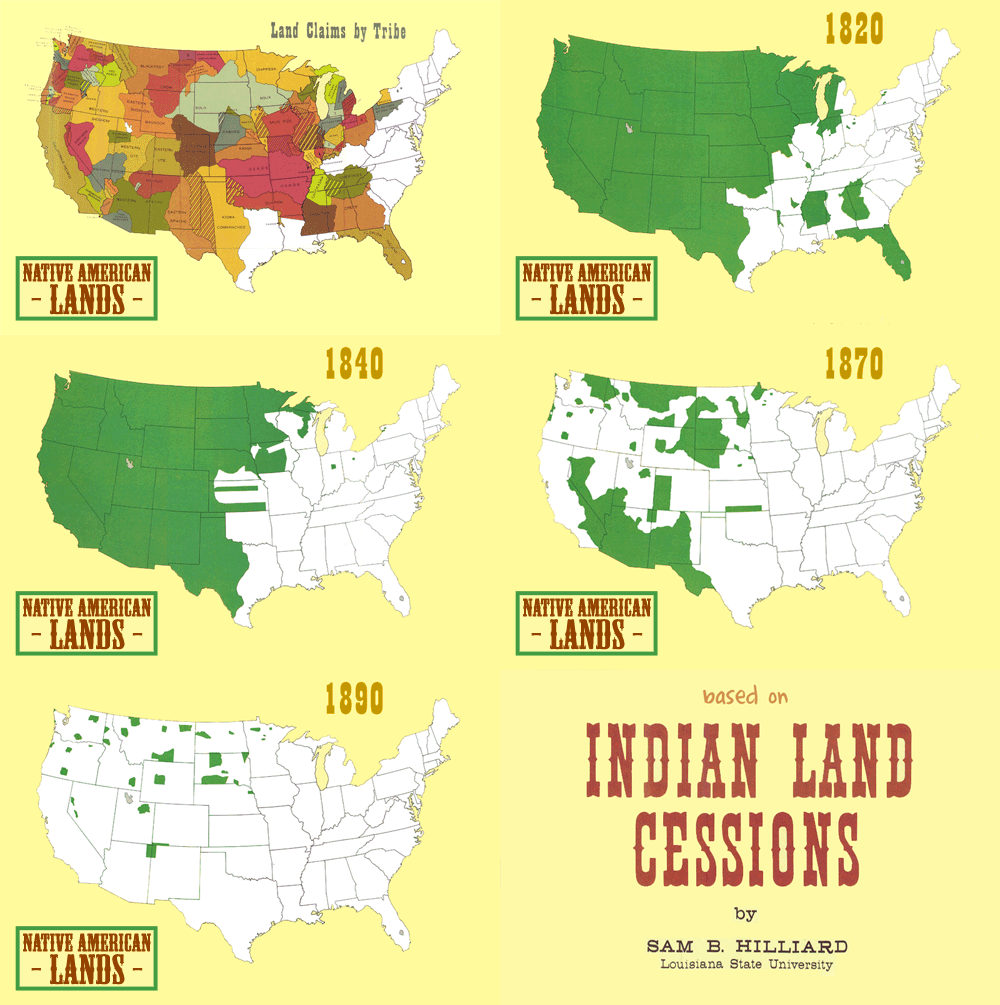
“It has been borne in upon my soul that one of my descendants will promulgate a work to revolutionize the world of religious faith.” Statement of Asael Smith before his grandson Joseph Smith was born (quoted in George Q. Cannon, Life of Joseph Smith, the Prophet [1986], 26).
The Prophet Joseph Smith wrote:
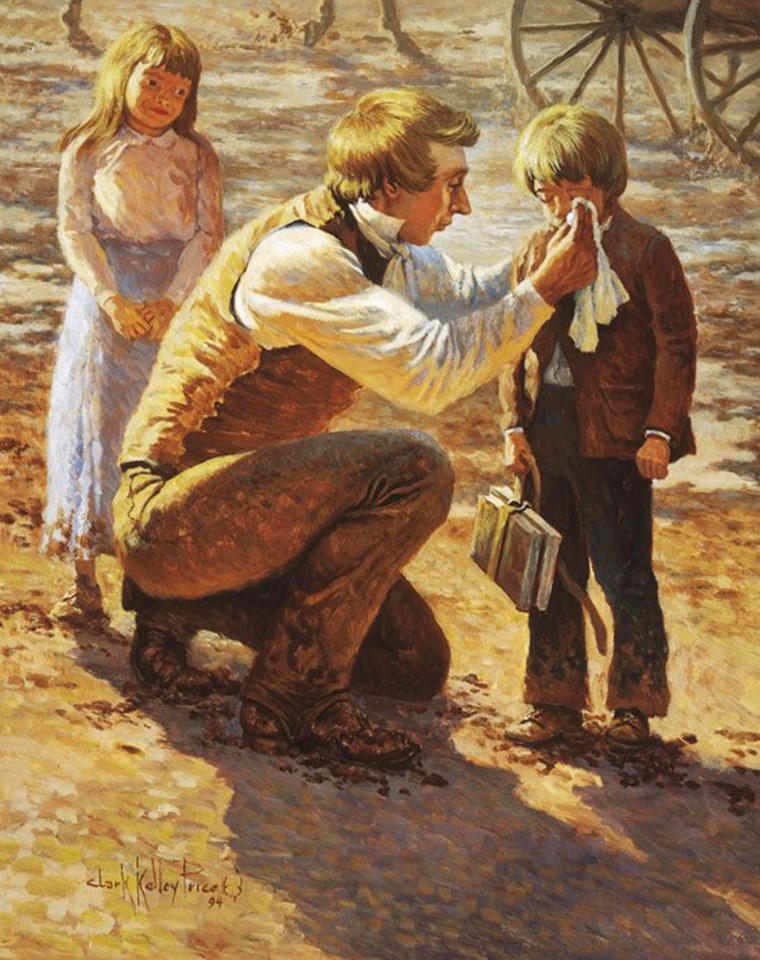
Joseph’s Personality by Clark Kelley Price
“My grandfather, Asael Smith, long ago predicted that there would be a prophet raised up in his family, and my grandmother was fully satisfied that it was fulfilled in me. My grandfather Asael died in East Stockholm, St. Lawrence county, New York, after having received the Book of Mormon, and read it nearly through; and he declared that I was the very Prophet that he had long known would come in his family” (In History of the Church, 2:443).
President Brigham Young said, “The Lord had his eye upon him, and upon his father, and upon his father’s father, and upon their progenitors clear back to Abraham, and from Abraham to the flood, from the flood to Enoch, and from Enoch to Adam. He has watched that family and that blood as it has circulated from its fountain to the birth of that man. He was foreordained in eternity to preside over this last dispensation” (in Journal of Discourses, 7:289–90).
For Good and Evil
Why is it that so many people in the world only know Joseph Smith as a fallen prophet, or a storyteller, or a money digger, or a fake, or a deceiver? It was all prophesied as you know.
Why is Joseph Smith’s name known among all nations and all people? He must be a very influential person. Think of the name of Adam, or Noah, Moses, Abraham, or Peter. They are also very important people who are known for good and evil among the entire planet. Why? Because the mission of Joseph Smith was to be the Prophet of the at Dispensation to cry a final repentance among the people of this earth’s final existence.
Joseph Smith said, “He called me by name, and said unto me that he was a messenger sent from the presence of God to me, and that his name was Moroni; that God had a work for me to do; and that my name should be had for good and evil among all nations, kindreds, and tongues, or that it should be both good and evil spoken of among all people.” Joseph Smith—History 1:33.
“How could a farm boy, largely without formal education, have dared to say such a thing? And yet it has all come to pass and will continue to increase as this restored gospel is taught across the world” (President Gordon B. Hinckley in Conference Report, Apr. 1998, 4; or Ensign, May 1998, 6).
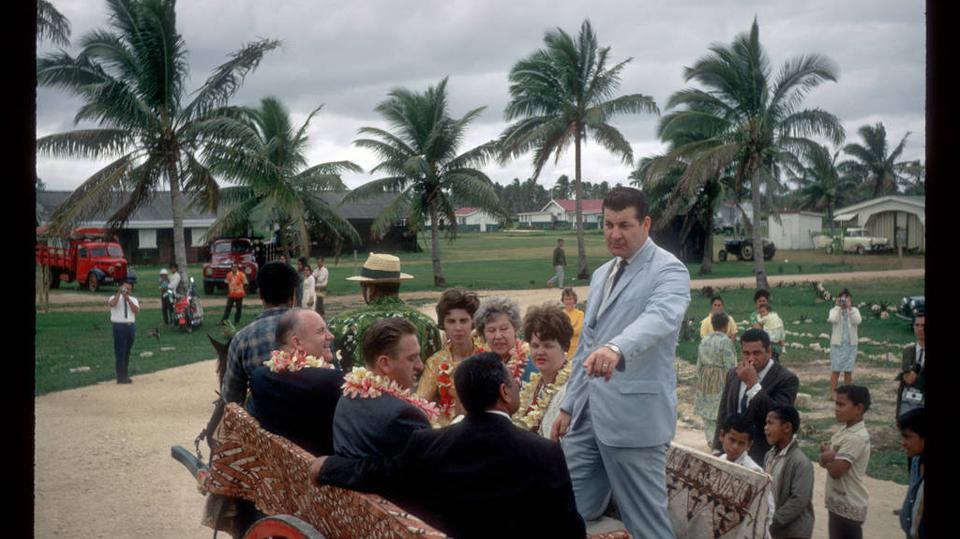
I had the opportunity to serve my Mission in the Fiji, Suva Mission from 1975 to 1977. This included service in Fiji,Kiribati, formerly known as the Gilbert Islands, and Tuvalu, formerly known as the Ellice Islands. During this incredible time amongst the Children of Israel my testimony was strengthened. I also had the privledge of meeting Elder Groberg in 1976, as he visited our small mission. I then at the end of my mission in Nov 1977 left from Kiribati. and flew to Honolulu to receive my mission release from Elder Groberg who was a Regional Representative serving in Hawaii. I love this great man, Elder Groberg.
Testing the Prophesy
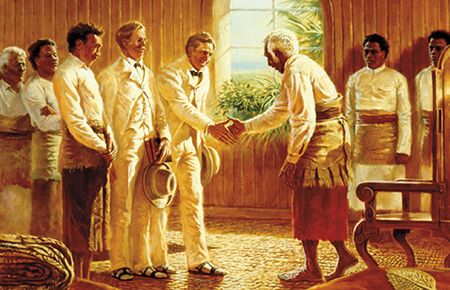
While serving a mission in Tonga [1953], Elder John H. Groberg of the Presidency of the Seventy decided to test that prophecy about the name of Joseph Smith.
“Elder Groberg and his companion sailed to the island of Tafahi, located about eight miles from their home island of Niuatoputapu. About 80 people lived on Tafahi. Like the people on Niuatoputapu, the people on Tafahi had no running water or electricity, but they were even more isolated from the outside world since they had no telegraph or scheduled boats.
When Elder Groberg visited, the island had only 18 homes, and the missionaries visited each one. He wrote: “At the last home, a strange thought occurred to me, ‘Why don’t you test the prophecy that the name of Joseph Smith should be known for good and evil throughout the world?’ I don’t know why the thought came, but it did.”
The missionaries asked the family if they had ever heard of the president of the United States. “Who’s he?” and “Where’s the United States?” was their response. Elder Groberg reported: “I tried to explain where it was, but they couldn’t understand. They asked how big an island it was. I replied that it was a very big island, thousands of miles away with millions of people living on it. I told them that many people there had never even seen the ocean and that many people didn’t know one another. They couldn’t comprehend that.”
He then asked if they had heard of Russia and France and their leaders; he asked about movie stars, sports figures, and world political leaders. They knew nothing of these places or people, nor of world events such as the Depression and the Korean War.
Elder Groberg recalled: “There was not a member of the Church living on this island, although there were two other churches there. I took a deep breath and said, ‘Have you ever heard of Joseph Smith?’”
“Immediately their faces lit up. Everyone looked at me, and the father said, ‘Don’t talk to us about that false prophet! Not in our home! We know all about him. Our minister has told us!’ I could hardly believe what I was hearing. The scripture … sounded in my mind that Joseph’s name should be had for good and evil among all nations. … To me this was a direct fulfillment of prophecy.
“I am convinced that you could hardly get a place more remote, more out of touch with modern civilization, than the little island of Tafahi. The people there knew nothing of the great leaders of the day—political, economic, or otherwise—but they knew the name Joseph Smith. In this case they knew it for ill, at least to begin with. I spent the next few days explaining more of the mission of the Prophet Joseph Smith, and before we left, a few of them knew his name for good” (In the Eye of the Storm [1993], 104–6). https://www.churchofjesuschrist.org/study/manual/presidents-of-the-church-teacher-manual-religion-345/joseph-smith-first-president-of-the-church?lang=eng
More About Groberg
“Groberg was born in Idaho Falls, Idaho, in 1934 and was reared there after the Great Depression. After a year at Brigham Young University, and shortly after the Korean War, he served a mission to Tonga.
After much difficulty in getting to Tonga with strikes, visa problems, and problems finding boats, he served briefly in Los Angeles, Samoa, and Fiji while waiting to get to Tonga. When he finally arrived in Tonga, his first assignment was on a remote isolated island called Niuatoputapu, which with neighboring Tafahi, was a place whose contact to the outside world was an occasional telegraph and visiting boat. On this Island he suffered mosquitoes, a typhoon, and starvation. He spent nearly a year there.
He then returned to more developed islands and served as a district president supervising smaller congregations called branches. The branches he dealt with lacked unity and morality. He had little contact with his mission president. He nearly drowned when pushed out of a boat during a major storm and suffered exhaustion many times. He was denied an extension so he could take a group of Latter-day Saint converts to the Hamilton New Zealand Temple. He flew home, and shortly after married Jean Sabin; together, they have had 11 children.
Groberg received his bachelor’s degree from BYU and an MBA from Indiana University. He was then involved in real estate in the Idaho Falls area. Groberg also served for five years as a bishop of a ward in Idaho Falls.
He returned to the islands of his mission ten years later as a mission president and, since his release as mission president, has been there many times as a regional representative. He is beloved by the people of that region.
With much coaxing, he wrote a book about his mission from his memoirs called In the Eye of the Storm. His missionary experiences in Tonga became the subject of the film The Other Side of Heaven (released by Disney, 2001) and the sequel The Other Side of Heaven 2 (2018).
John Groberg, center, with actors Christopher Gorham (right, as Groberg) and Joe Folau (left, as Feki)
In April 1976, Groberg was called to be a general authority of the Church of Jesus Christ. The changes he saw in Tonga from a missionary to church leader were documented in his book The Fire of Faith. He had other assignments besides Tonga as a general authority.” https://www.mormonwiki.com/John_H._Groberg
The following story titled below as “The Hole in Cumorah“, is shared as some first hand and second hand information. I am confident I have described things fairly accurate. I have however contacted my video friend who is the one who took the pictures in this article and he thinks this story as I present is accurate to his recollection.
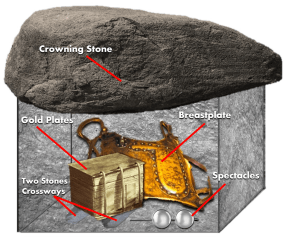
Remember there are two different locations of importance in the Hill Cumorah. Of course there was the place of the “Stone Box” where Joseph Smith received the set of plates from Moroni. In that stone box was contained the Original Gold Plates including the sealed portion, the large breastplate and the Urim and Thummim. The Sword of Laban and Liahona were not in this “Stone Box”. (See picture below)
There was also a “Cave of Records” separate from the stone box, which many brethren including Joseph Smith, Oliver Cowdery, Wilford Woodruff, Brigham Young and others spoke of. (See two quotes below).
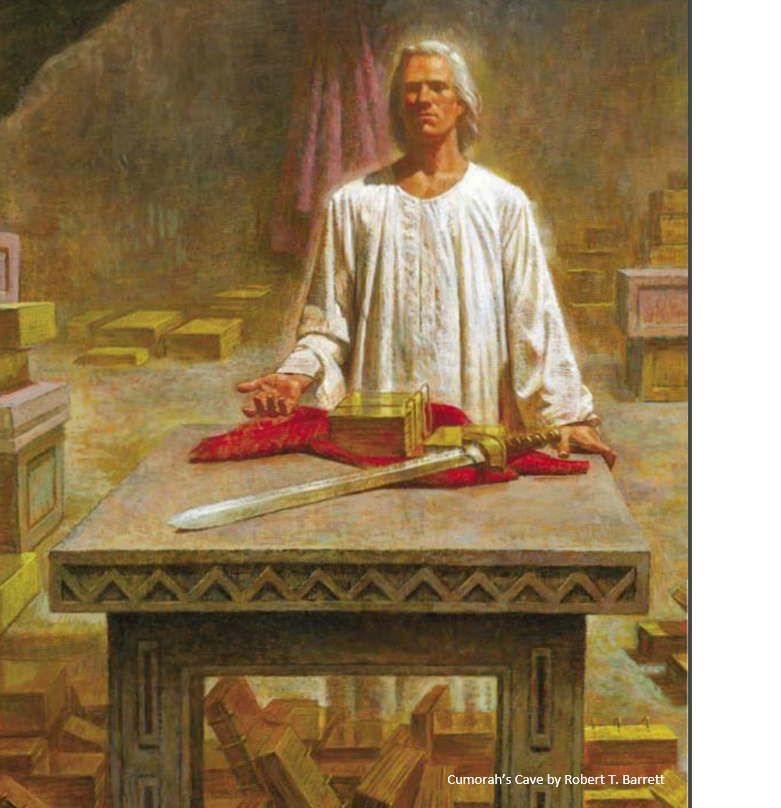
“Oliver Cowdery went with the Prophet Joseph when he deposited these plates. Joseph did not translate all of the plates; there was a portion of them sealed, which you can learn from the Book of Doctrine and Covenants. When Joseph got the plates, the angel instructed him to carry them back to the hill Cumorah, which he did. Oliver says that when Joseph and Oliver went there, the hill opened, and they walked into a cave, in which there was a large and spacious room. He says he did not think, at the time, whether they had the light of the sun or artificial light; but that it was just as light as day. They laid the plates on a table; it was a large table that stood in the room.
Under this table there was a pile of plates as much as two feet high, and there were altogether in this room more plates than probably many wagon loads; they were piled up in the corners and along the walls. The first time they went there the sword of Laban hung upon the wall; but when they went again it had been taken down and laid upon the table across the gold plates; it was unsheathed, and on it was written these words: “This sword will never be sheathed again until the kingdoms of this world become the kingdom of our God and his Christ.” I tell you this as coming not only from Oliver Cowdery, but others who were familiar with it, and who understood it just as well as we understand coming to this meeting. . . . [Don] Carlos Smith was a young man of as much veracity as any young man we had, and he was a witness to these things. Samuel Smith saw some things, Hyrum saw a good many things, but Joseph was the leader.” Brigham Young, Journal of Discourses, 17 June 1877
“The hill Cumorah, with the surrounding vicinity, is distinguished as the great battlefield on which, and near which, two powerful nations were concentrated with all their forces. Men, women and children fought till hundreds of thousands on both sides were hewn down, and left to molder upon the ground. These new plates were given to Moroni to finish the history. And all the ancient plates, Mormon deposited in Cumorah, about three hundred and eighty-four years after Christ.
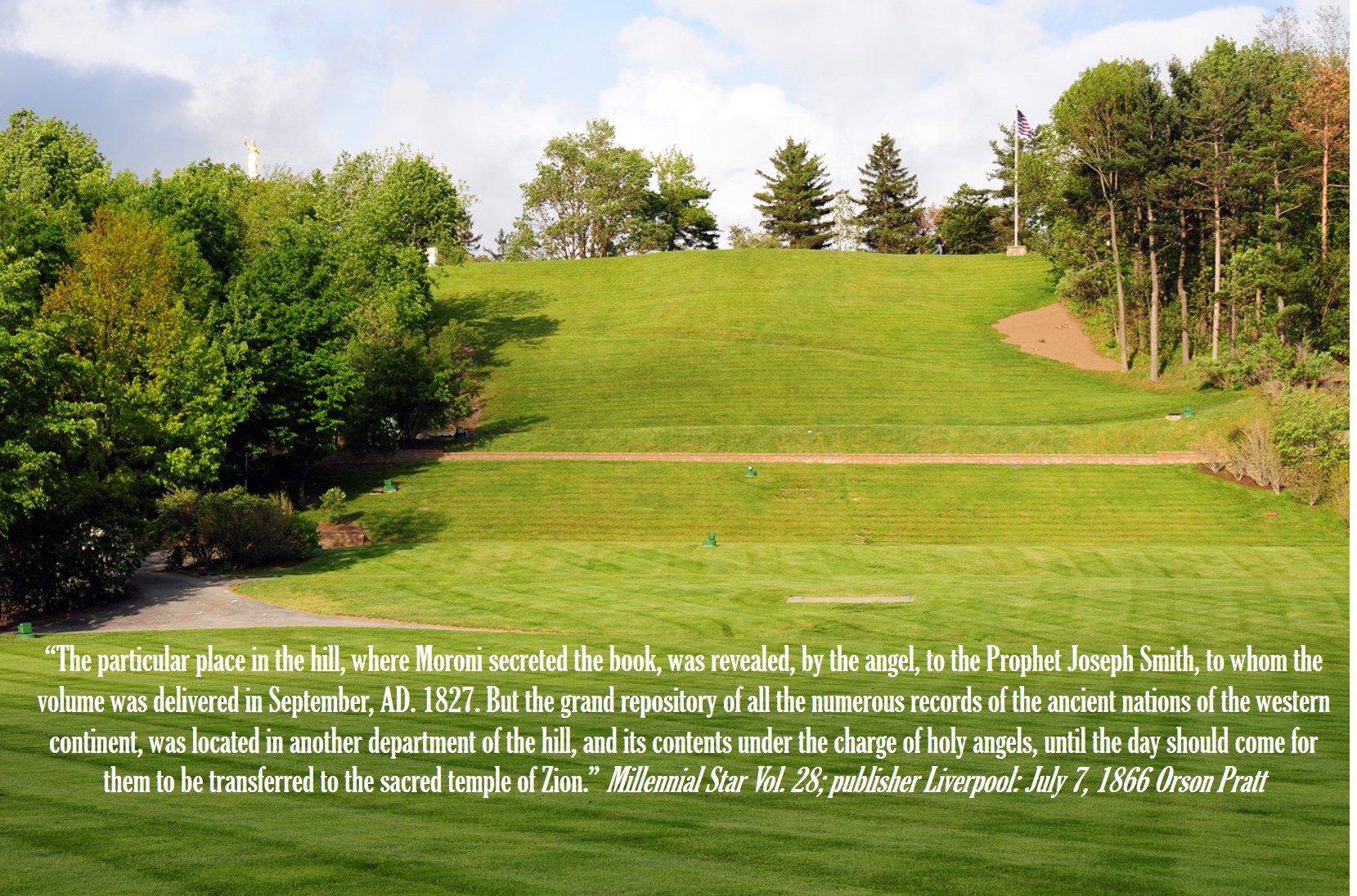
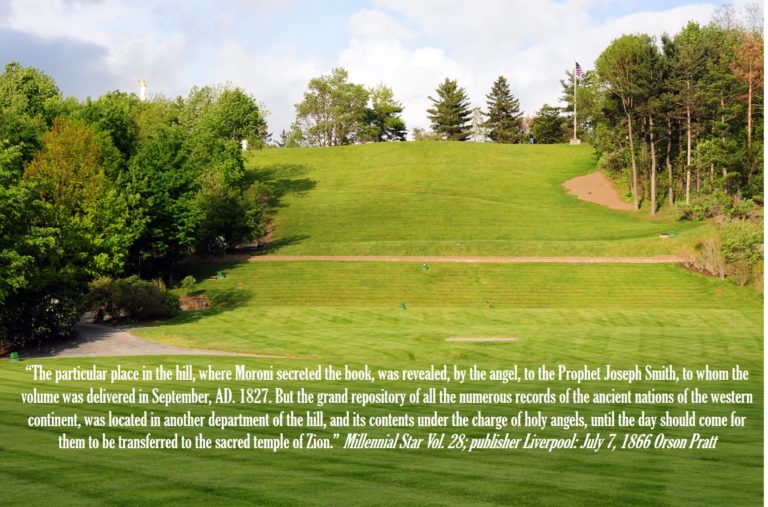
When Moroni, about thirty-six years after, made the deposit of the book entrusted to him, he was, without doubt, inspired to select a department of the hill separate from the great depository of the numerous volumes hid up by his father. The particular place in the hill where Moroni secreted the book, was revealed, by the angel, to the prophet Joseph Smith, to whom the volume was delivered in September, A.D. 1827. But the grand repository of all the numerous records of the ancient nations of the western continent, was located in another department of the hill, and it’s contents under the charge of holy angels, until the day should come for them to be transferred to the sacred temple of Zion.” 1866 Orson Pratt Millennial Star (28 (27): 417)
The Hole in Cumorah
About 10 years ago a friend of mine who worked in the Church Video department was on assignment at the Hill Cumorah for a project the Church was working on.
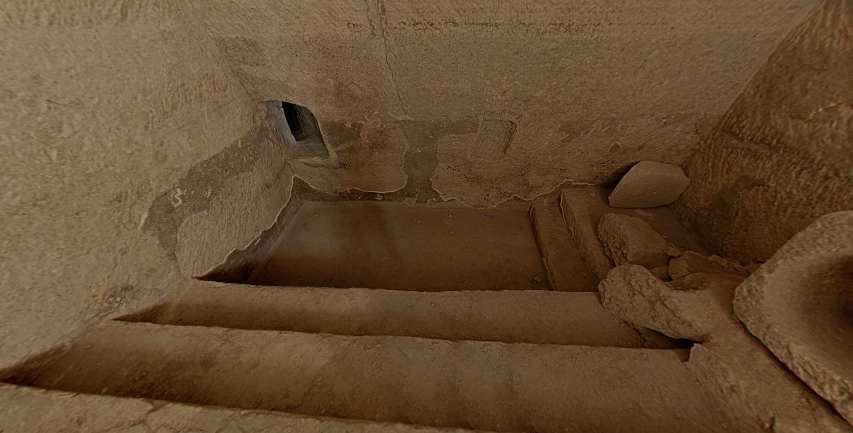
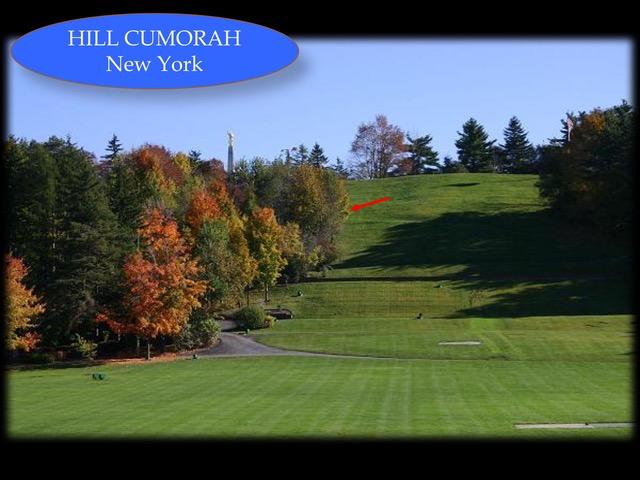
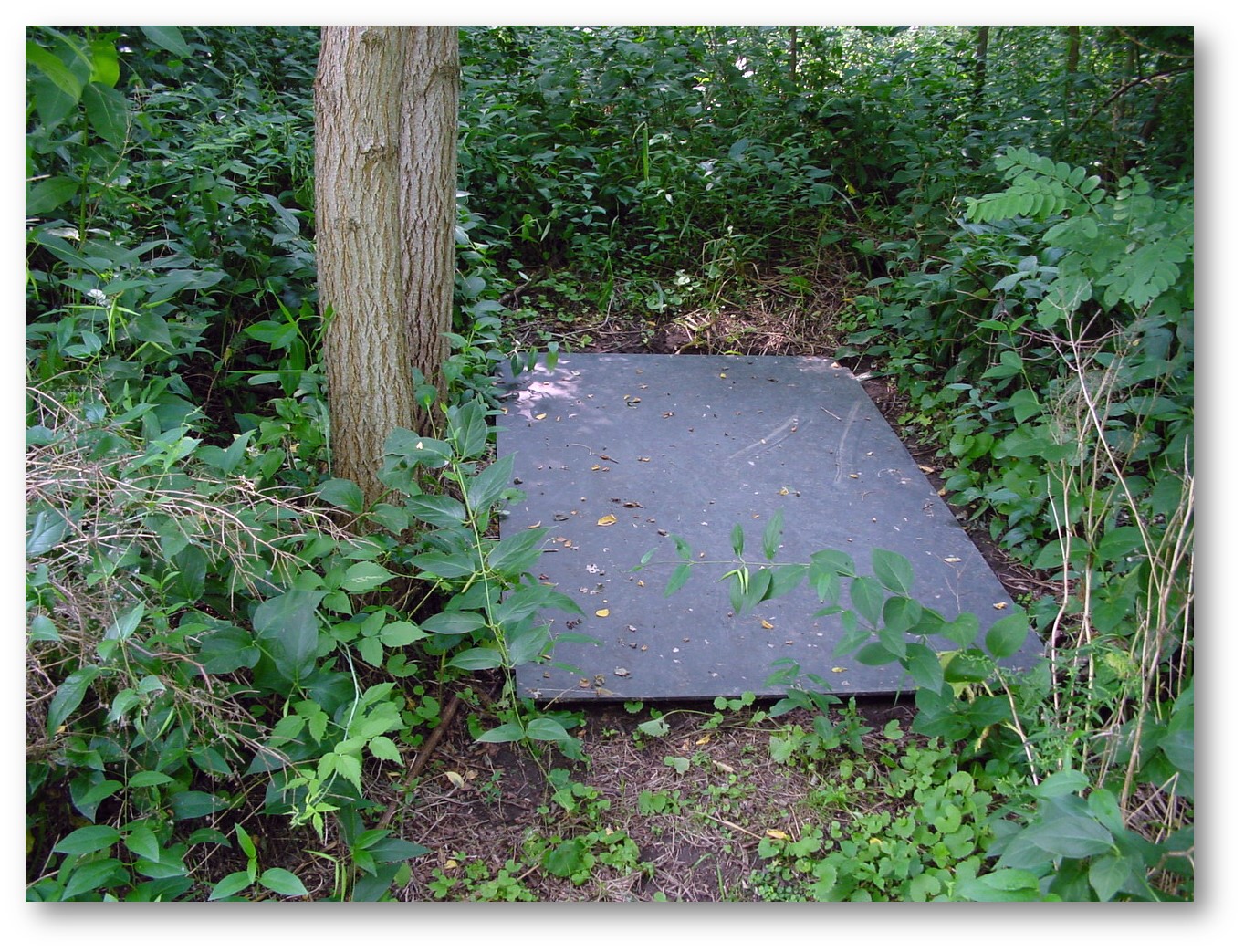
The west side of Hill Cumorah was being prepared for setting up the stage for the Hill Cumorah Pageant. A missionary couple had some guests on a tour showing them around this west facing hill Cumorah. After a time one of the families on tour noticed one of their children was missing from the group. A search for this young man began. After searching for a time the missionary couple and their guest family heard a yell for help several times. They came upon the missing young man who had fallen through an opening in the top west side of the Hill Cumorah. [See Approximate location of that hole at the red arrow above]
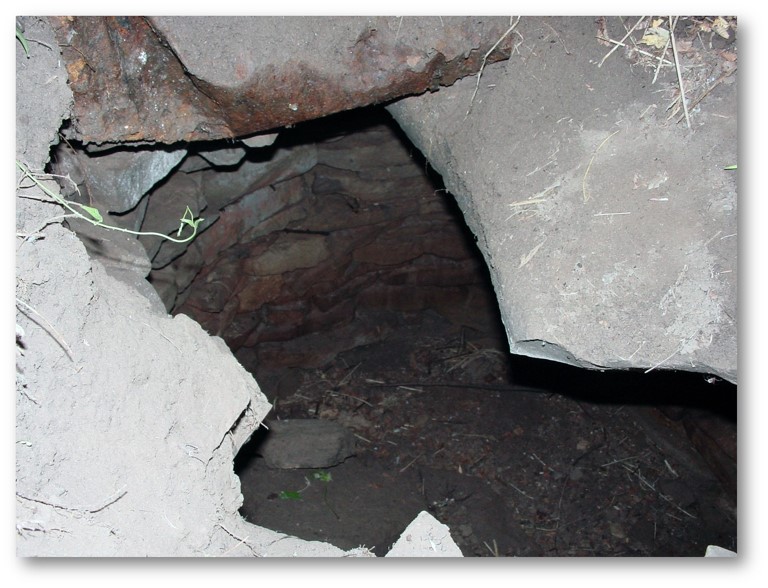
The hole seemed to be 12-15 feet deep. Someone ran to their car and brought back some jumper cables as a rope, to assist in bringing the young man up out of the hole below, which is my video friends actual picture he took of the hole after the young man was pulled out.
An Actual Picture at Hill Cumorah about 2009. Shows a possible man made cavern in the drumlin
My friend put his camera with its light down the hole and snapped a few pictures. He was very surprised to see the appearance of a cave that was about 15 feet square. The cave was empty (Explained below). On the sides of the walls were stacked stones and there were some stones attached seemingly as shelves coming out from the stacked stones, which would mean the cave would have been man made.
What most people know about the hill Cumorah is that it is classified as a drumlin. “A drumlin, from the Irish word droimnín (“littlest ridge”), first recorded in 1833, and in the classical sense is an elongated hill in the shape of an inverted spoon or half-buried egg formed by glacial ice acting on underlying unconsolidated till or ground moraine.” Source: Wikipedia.
Drumlins are created by a glacial drift with moving dirt and debris and won’t leave spaces for caves as other hills and mountains would. This is one of the reasons those of the Mesoamerican belief don’t think a cave would exist in a drumlin. But this pictures shows a possibility for a man made hill to be created in a drumlin.
After discovering this cave, the Church had a contractor notified about fixing the hole. They came out to the location and put a large thick piece of steel over the hole, (see photo above) and then covered it with dirt. I have some friends who have since been back with detectors and can easily locate the location of where the piece of steel was buried.
The cave was empty (Explained Here)
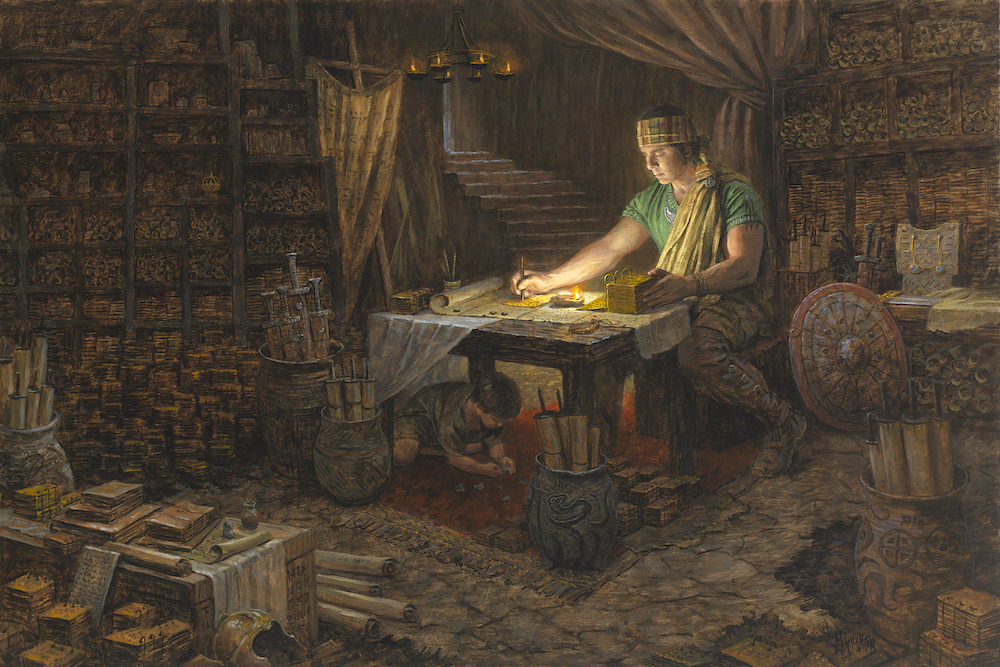
Mormon 1:3 “Therefore, when ye are about twenty and four years old I would that ye should remember the things that ye have observed concerning this people; and when ye are of that age go to the land Antum, unto a hill which shall be called Shim; and there have I deposited unto the Lord all the sacred engravings concerning this people.
4 And behold, ye shall take the plates of Nephi unto yourself, and the remainder shall ye leave in the place where they are; and ye shall engrave on the plates of Nephi all the things that ye have observed concerning this people.”
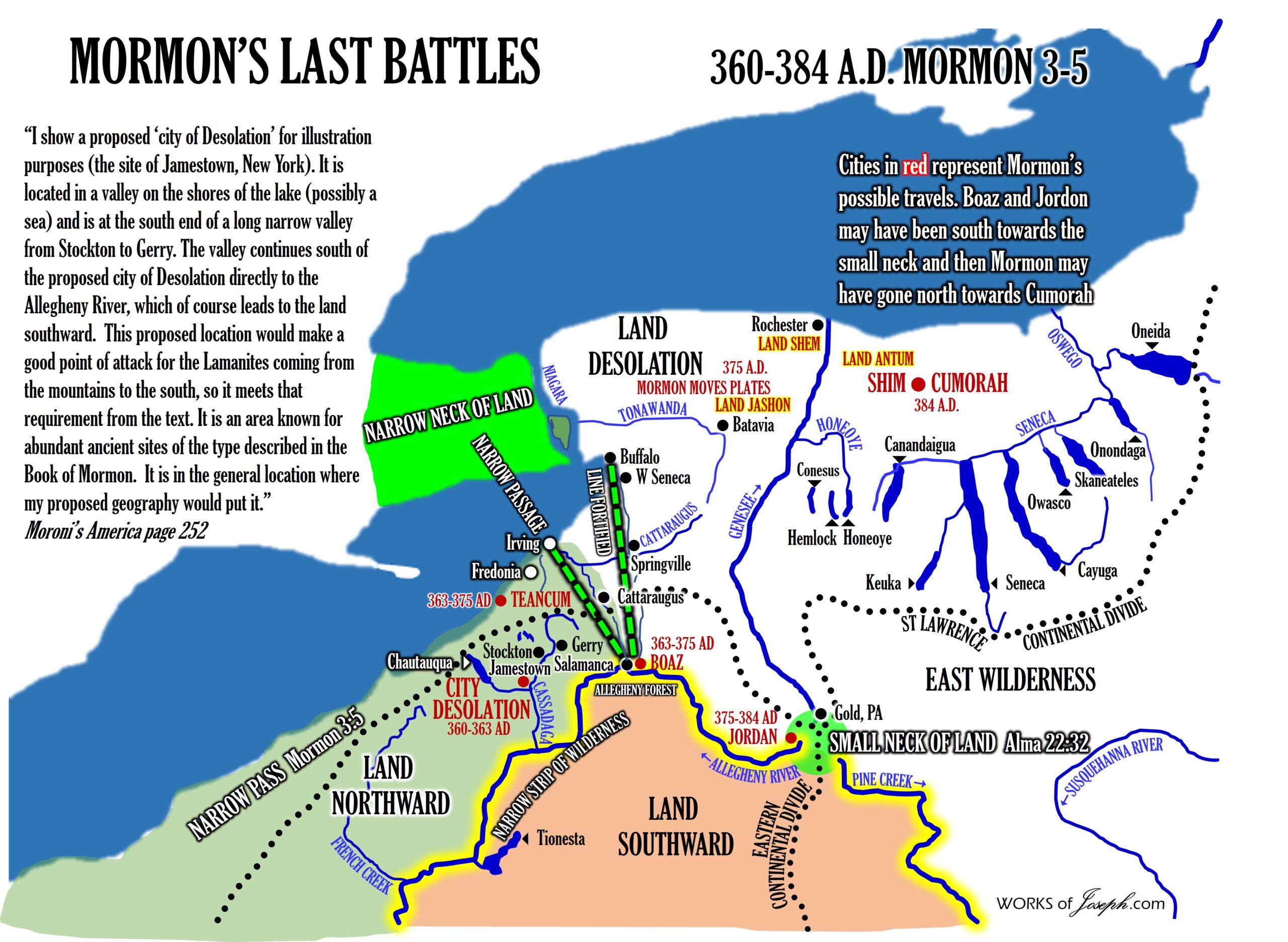
Mormon would return to the hill Shim in about 375 AD. So, all the records of the Nephites were in hill Shim at that time.
As you read in Mormon 4:23, “And now I, Mormon, seeing that the Lamanites were about to overthrow the land, therefore I did go to the hill Shim, and did take up all the records which Ammaron had hid up unto the Lord.” This would mean the plates from Shim were hid up in a place probably close to Hill Cumorah.
In one of Jonathan Neville’s blogs Here he speaks about how the Cave of all the Plates including the Sword of Laban and Liahona were taken from the Cave at Cumorah and probably taken back to the Hill Shim to hide them from people today. David Whitmer also explains that possibility below.
Wagonloads of plates in Cumorah’s cave?
The following was originally printed in the March-April 2010 edition of Mormonism Researched.
“David Whitmer’s testimony is a rare exception because he was one of the men who is said to have actually entered such a cave. His testimony slightly conflicts with Young’s for he stated in an 1878 interview printed in the Deseret Evening News, that Smith’s gold plates were indeed hidden, but not in a cave in the Hill Cumorah. Instead, he said they were hidden, “not far away from that place.”
8. Edward Stevenson, Reminiscences of Joseph, the Prophet, 1877 In his book Reminiscences of Joseph, the Prophet, and the Coming Forth of the Book of Mormon, Edward Stevenson relates an interview with David Whitmer in 1877:
It was likewise stated to me by David Whitmer in the year 1877 that Oliver Cowdery told him that the Prophet Joseph and himself had seen this room and that it was filled with treasure, and on a table therein were the breastplate and the sword of Laban, as well as the portion of gold plates not yet translated, and that these plates were bound by three small gold rings, and would also be translated, as was the first portion in the days of Joseph. When they are translated much useful information will be brought to light. But till that day arrives, no Rochester adventurers shall ever see them or the treasures,
although science.”
9. David Whitmer, Deseret Evening News, 16 August 1878 In an interview with P. Wilhelm Poulson, David Whitmer gave another account of the cave:
[Poulson]: Where are the plates now?
[Whitmer]: In a cave, where the angel has hidden them up till the time arrives when the plates, which are sealed, shall be translated. God will yet raise up a mighty one, who shall do his work till it is finished and Jesus comes again.
[Poulson]: Where is that cave?
[Whitmer]: In the State of New York. [Poulson]: In the Hill of Comorah? [Whitmer]: No, but not far away from that place.
8 and 9 above from JOURNAL OF BOOK OF MORMON STUDIES 7-31-2004 Cumorah’s Cave by Cameron J. Packer Volume 13 Number 1 Article 6 Page 55
Art by Jon McNaughton
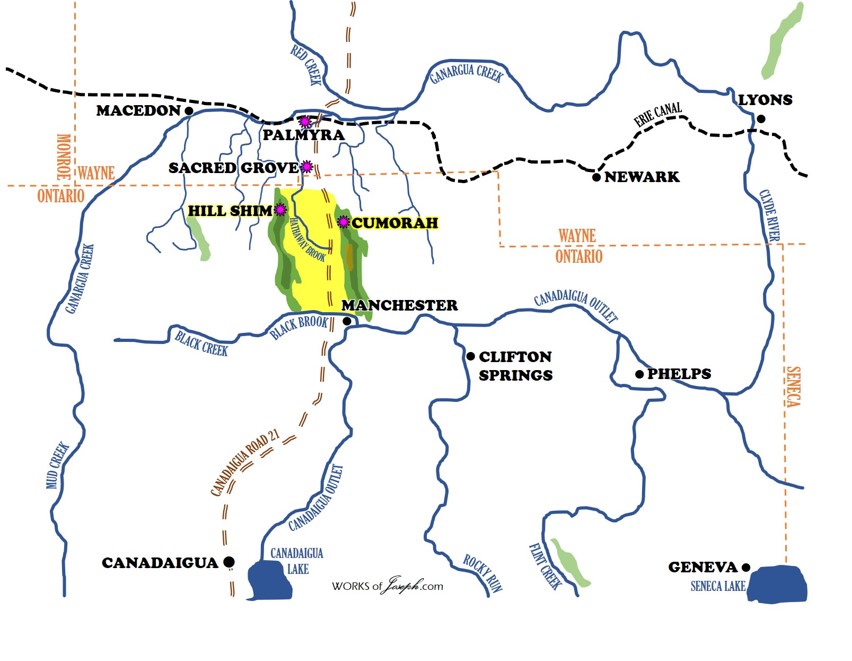
In these two quotes, I feel it very likely the hill Shim was very close to the Hill Cumorah as that would make it feasible to move the plates from one location to the other. Below is my proposed location for Shim.This area locating Shim is speculation, based on a few personal friends that have discovered some interesting artifacts in that location in the past few years. A very large flat rock in that area seems to be a possible location of a grave or an entrance etc. Again I speculate but is seems like a possibility according to the location and how Oliver described the 1-mile valley below:
“At about one mile west rises another ridge of less height, running parallel with the former, leaving a beautiful vale between. The soil is of the first quality for the country, and under a state of cultivation, which gives a prospect at once imposing, when one reflects on the fact, that here, between these hills, the entire power and national strength of both the Jaredites and Nephites were destroyed. By turning to the 529th and 530th pages of the Book of Mormon, you will read Mormon’s account of the last great struggle of his people, as they were encamped round this hill Cumorah. In this valley fell the remaining strength and pride of a once powerful people, the Nephites—once so highly favored of the Lord, but at that time in darkness, doomed to suffer extermination by the hand of their barbarous and uncivilized brethren. From the top of this hill, Mormon, with a few others, after the battle, gazed with horror upon the mangled remains of those who, the day before, were filled with anxiety, hope, or doubt.” Oliver Cowdery’s Letter VII Joseph Smith Papers “Letter VII,” LDS Messenger and Advocate, July 1835, 1:155–159 .
Oliver Cowdery spoke of the valley below (in yellow) as the final battle location of the Nephites and Lamanites. The battle was not necessarily “on” Cumorah, but, round about the hill.
In the DVD, you will also have the following questions answered.
Where is the Hill Cumorah of the Book of Mormon?
Is there more than one Hill Cumorah?
What have prophets and apostles proclaimed?
What archaeological evidence should we expect?
Has any archaeological evidence been found?
Are Written Records Found Among the Original Lamanites?
I have spoken with many Historians and Scholars who believe the Mesoamerican Theory. One of their main reasons they tell me that the Mesoamerica Theory makes sense, and Heartland Theory does not, is the written language of the Mayans and Olmecs and other ancient civilizations is so critically important to any theory of the Book of Mormon, and the Heartland clearly shows no ancient written records about ancient people in North America.
The traditions of Nephites was about writing things of God on plates of ore to keep records for their posterity and have shared later with their Lamanite brethren. In fact written records were so important to God’s people, Lehi had the Brass Plates retrieved from Jerusalem, and every prophet of God after, kept records as we know. Lamanites or people of the world who had fallen from the true gospel did not normally keep records but maintained oral traditions. It also is very significant that the language of the Nephites and Lamanites would have to be patterned after Hebrew, since Lehi was a Hebrew and descendant of Manasseh through Joseph. “And Aminadi was a descendant of Nephi, who was the son of Lehi, who came out of the land of Jerusalem, who was a descendant of Manasseh, who was the son of Joseph who was sold into Egypt by the hands of his brethren.” Alma 10:3
Joseph’s Remnant by Allen C. Christensen
“I have a 6th great-grandmother who was a member of the Iroquois Confederacy. It is probable she was a Mohawk. In the early 1700s, her tribe lived along the Mohawk River. Her tribal name was Josnorum Scoenonti—her English name, Running Deer.
Tod S. served a mission among the Navajo people in the later 1970s. He said one day that he and other missionaries saw their mission president, George P. Lee, come out of his office, looking as white as a ghost. President Lee informed them that he had been visited by Chief Joseph, Sitting Bull and a number of important Native American chiefs, and that he, George Lee, had been given their genealogy.
The written record never forgets. In a small way, Joseph’s Remnant is a personal attempt at helping correct that oversight. There are marvelous people, wonderful heroes among the greatgrandchildren of Father Lehi. They are those who have been asked to forgive and pray for those who have despitefully used and persecuted them.” Allen C. Christensen Author, Joseph’s Remnant
Are Nephites Mayan?
Below is what Book of Mormon Archaeological Forum defines as Records and Writings in their A to Z glossary.
“RECORDS- Nephites kept extensive records (Hel. 3:13). There were also a great many RECORDS kept by the Mesoamericans. [Editors note; No equivalence here]. The central Mexican cultures and the Maya to their east made picture books on animal skins known as codices. Codices have accordion-like pages that run many feet in length. These codices contained genealogies, history, mythology, and astronomical information. At the time of the Spanish Conquest, mounds of these codices were cast into bonfires by Catholic clergy.” BMAF[Editor: What were the dates these codices were written?]
“WRITING In 1 Ne. 1:2 we learn that the record of the Nephites was written in Reformed Egyptian, consisting “of the learning of the Jews and the language of the Egyptians.” Maya hieroglyphs differ from Egyptian hieroglyphs, but[Editor, there should be no “but] the individual glyphs were pronounced in a similar way, in other words, they both used a phonetic system to pronounce syllables. The Mayan written language wasn’t the only one used in Mesoamerica, in fact, some scripts have not yet been deciphered.41″ BMAF http://www.bmaf.org/articles/traditions_only_mesoamerica__wirth
[Editor: The Gold Plates have been deciphered and they are Reformed Egyptian]
The Nature of Knowledge in Oral Traditions and Archaeology
As archaeologists begin once again to incorporate Native American oral traditions into archaeological research, it is important to recognize that oral traditions and archaeology represent two separate, but overlapping, way’s of knowing the past. Because they are qualitatively distinct, different standards apply in the way that information is collected, evaluated, and used to understand the past. These sources of knowledge converge in a broad sense on certain issues and themes, however, such as migrations, warfare, residential mobility, land use, and ethnic coresidence. Both sources can therefore be used productively to investigate these issues, among others.
There is no doubt that a real history is embedded in Native American oral traditions, and that this is the same history’ that archaeologists study. Oral traditions contain cultural information about the past carefully preserved and handed down from generation to generation within a tribe. The archaeological record contains material remains of past human behavior that provide physical evidence for many of the same events and processes referred to in oral traditions. Since oral traditions and archaeology’ have inherent limitations, combining them in research can create knowledge that goes beyond what is possible using either source by itself.” Working Together -— March/April Native American Oral Traditions ▼ Roger Any on, T. J. Ferguson, Loretta Jackson, and Lillie Lane https://www.nps.gov/subjects/ncptt/upload/1994-02a1.pdf
Oral Traditions of Native Americans
My mother and my father both served the Native Americans on the Southwest Indian Mission of 1949-51 under Pres. Golden Buchanan. They have told me wonderful stories and oral traditions about the Hopi, Navajo and Apache all my life. I came across this Improvement Era article just a few years ago and as a lover of Lamanite Tradition and one who desires to share the Gospel with our Native brothers and sisters, I wanted to share this with you.
Golden R. Buchanan was a member of The Church of Jesus Christ of Latter-day Saints. He devoted 16 years to missionary service as president of the Southwest Indian Mission and Salt Lake Regional Mission. He was Indian coordinator for the church and was known for his work with the Indian people. He was known by some as the “father of the Indian Placement Program,” a program in the LDS Church in which thousands of Indian youngsters came to live for a time with LDS families. Pres Buchanan was the first one to invite these wonderful Native Americans to live in his home as the Placement Program began.
These many Native American Oral Histories, are consistent with the truths we find in the Book of Mormon, in Church History, and in our Sacred Temples today. You can read more about the Cherokee Temple Ordinance similarites here: https://bookofmormonevidence.org/cherokee-temple-ordinances-2/
Pres. Buchanan said the following:
“The Hopis say that they came across the ocean. The Navajos believe they came up from the other side of the earth through a tube. The Papago’s believe they were guided to this land by divine means. Recently I was on the Papago Reservation. One of our new converts to the Church there told me this story: “I had never joined any church because the ministers and the priests did not teach the Bible as I read it. I couldn’t read it and make it say the same things the other churches said it did. I speak the Papago language. I have lived among them all my life. I know their story and their traditions. And as I read the Book of Mormon that was placed in my hands by missionaries, I recognized the stories of the Papagos, and I knew the book was true. Your missionaries read the Bible the same way I did. These are the reasons I joined the Church. The Papago’s believed they crossed the ocean and came to this land, that in the ships and on the trails, they were guided by a ball. In this ball was a needle that pointed the direction they were to go. In the Papago language yet today, the name of this ball is ‘Liahona.’ Navajo tradition tells that a man and his wife and four sons came to this land a long time ago. They have, in their native language, the names of these four sons, but I cannot write them. The oldest two of these sons rebelled against the youngest two who were the appointed leaders. The older sons and their children lived in the forest. They made their living by hunting and by the use of the weapons of warfare. They warred and preyed upon their two younger brothers. They covered their bodies with mud and thus became a dark people. The two younger sons became builders and built cities and houses of stone. They planted gardens and fields. They did not place mud upon themselves and thus remained white. For generations there were fighting, wars, and difficulties, the children of the older sons being the aggressors. Then came a night in which the sun didn’t go down, and it was light all night, and the people were much disturbed and’ distressed. But still there were troubles. Some years after this, came an extended period of darkness…Indian tribes have their own ceremonies. They have their own religions. This was particularly true before the advent of the so-called Christian churches among them. Even today the faithful still cling to their native tradition. Some of them profess Christianity and give token obedience to the so-called Christian churches, but deep in their hearts they still are waiting for the return of the Great White Spirit and the truth. In many dances, which are largely prayers, significant handclasps are sometimes given. Connected with some of these kiva ceremonies is the wearing of certain types of clothing, and in these clothing are certain marks sacred to the people. I have been told that only the faithful may wear these marks in their clothing, and that only the very good and true may receive these ordinances.Certain washings and anointings are common in many tribes. Usually these are done with water and corn pollen or corn meal, all of which are sacred to the Indian. If it were not for violating confidences, I could take you among the Utes and Paiutes, and tell of certain “ordinances for the dead.” Among many of the tribes there is a tradition that some day the people will lose their dark color and become white…It is interesting to note, in closing, that I know of no Indian language in which one can take the name of the Lord in vain. Indeed, I do not know of an Indian language in which they can even swear. They have to learn English or some white man’s language before they can defile the name of Deity.” Lamanite Tradition By Golden R. Buchanan President, Southwest Indian Mission. Improvement Era April 1955
The oral traditions of nearly all North American Natives, have been shared and kept for many years. These are not normally myths, but deeply held truths of earlier times.
Han Nei Oral Traditions
“The Navajo cosmology comes from the oral traditions of the creation and the emergences through previous worlds before coming to this place where the modern day Navajo live. Navajo children are taught that they are special because they come from a special people. It was a great undertaking for the Navajo people to be. The Navajo have oral traditions to tell them who they are.
NIGHT HOGAN
According to Ella M. Ben of “Beauty Under the Pinon Trees” (Tsaile, Arizona), who is Will Tsosie’s grandmother, one late summer day in the mountain fields, she was sorting corn from the fall harvest. She piled corn by white, yellow, blue, red, black, striped, and finally, the ear of corn of many colors (called Indian corn by the non-Navajo). I asked about the ear of corn of many colors. Grandmother Ella said that this ear of corn of many colors was the most special corn of all. In the first world after A[tse H1stiin and A[tse Asdzaan were created, there is a story that all of the different colors of mist were mixed by Diyin7. Then another beautiful ear of corn appeared, and this was the ear of corn of many colors. This ear of corn of many colors was so beautiful that raven flew down from the sky and stole it.
As raven flew off with the ear of corn of many colors, corn kernels fell out of it. These kernels of corn became the “others.” The others were the other human beings of this world. Where white corn fell it became white people, yellow corn became yellow people, red corn became red people, and black corn became black people. All human beings of this world came from the beautiful ear of corn of many colors. Different languages, history, and lifeways make us beautiful human beings.” https://woodscanyon.net/Navajo/People/Oraltraditions.html
Oral Traditions Validate Hard Science
McPherson Takes a Serious Look at the Oral Traditions of the Southwestern United States.
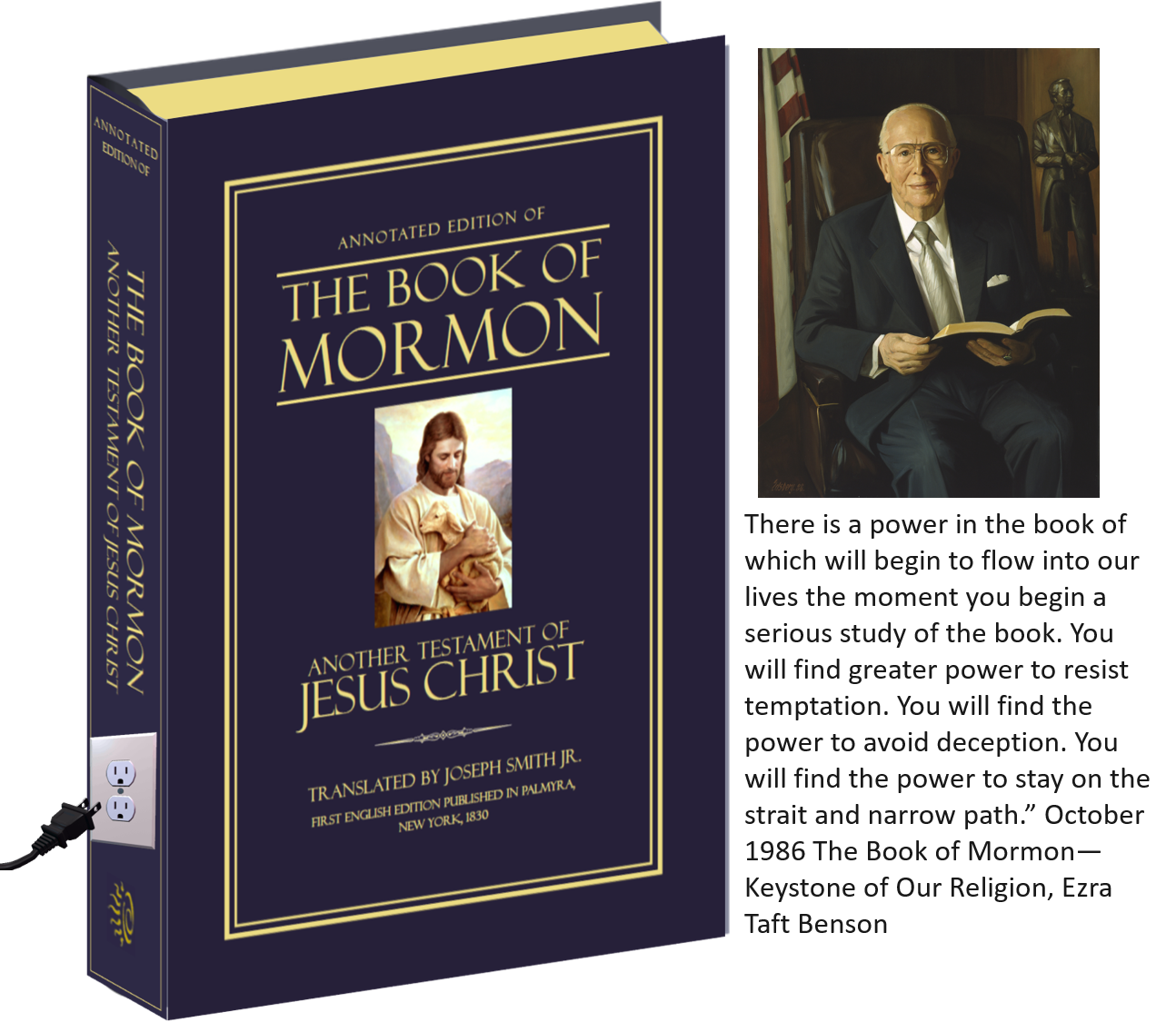
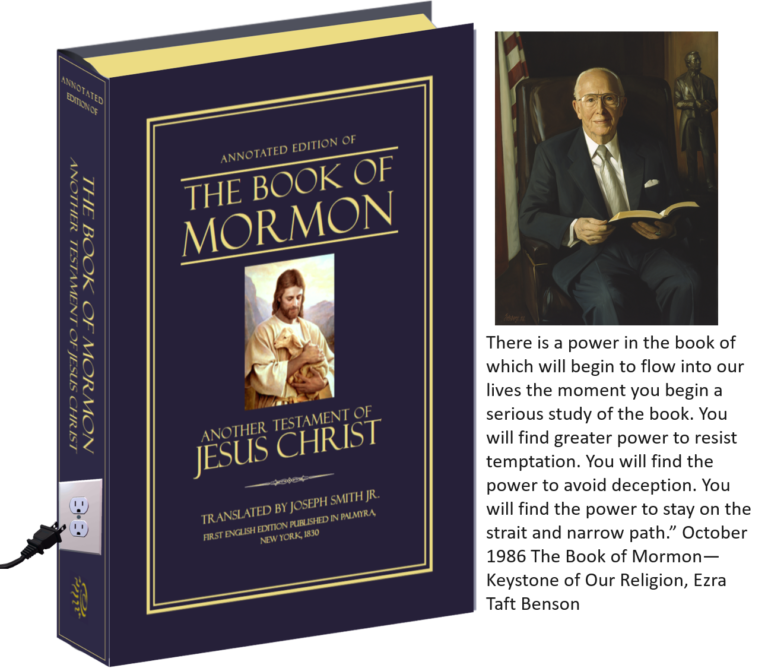
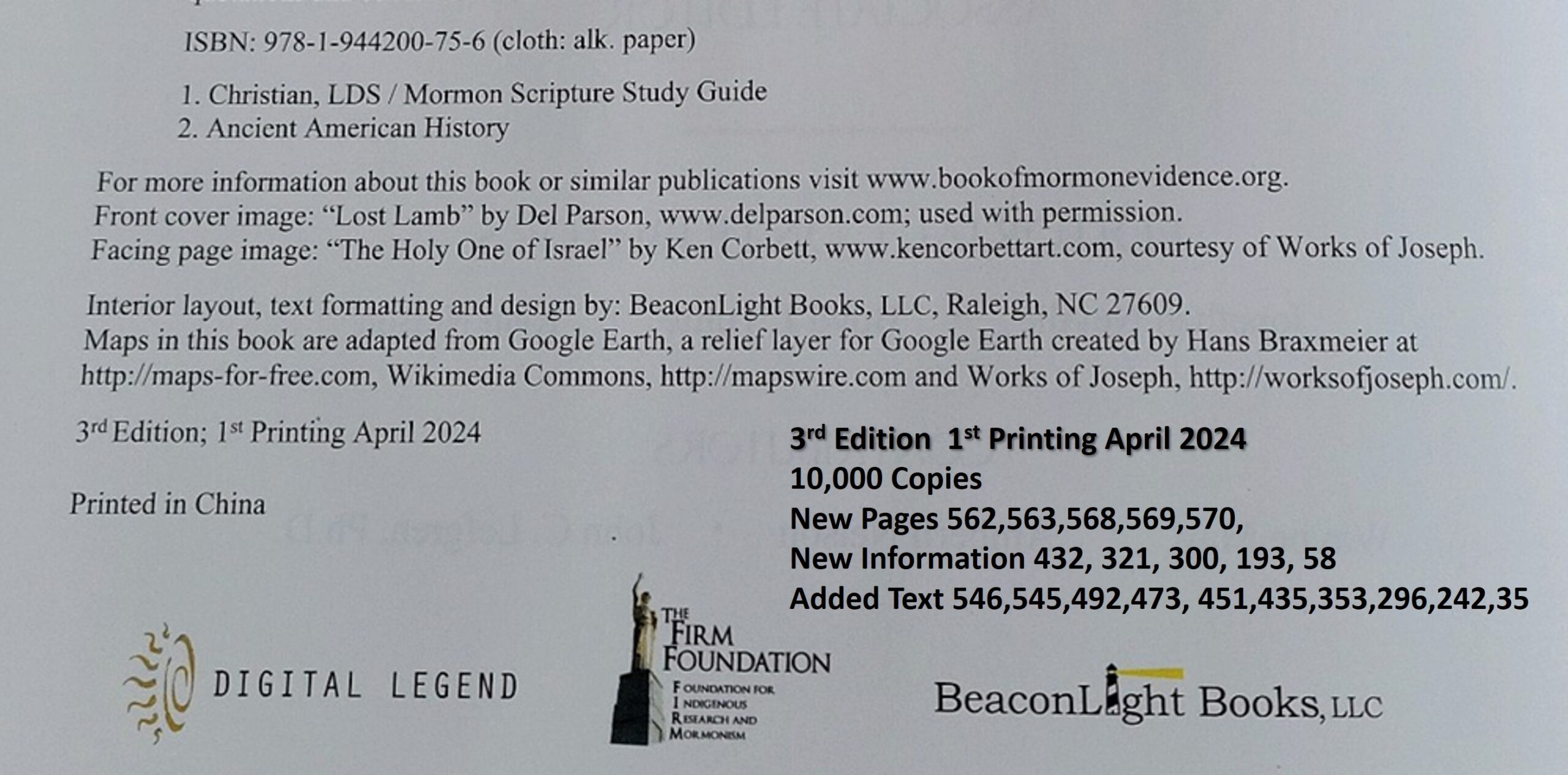
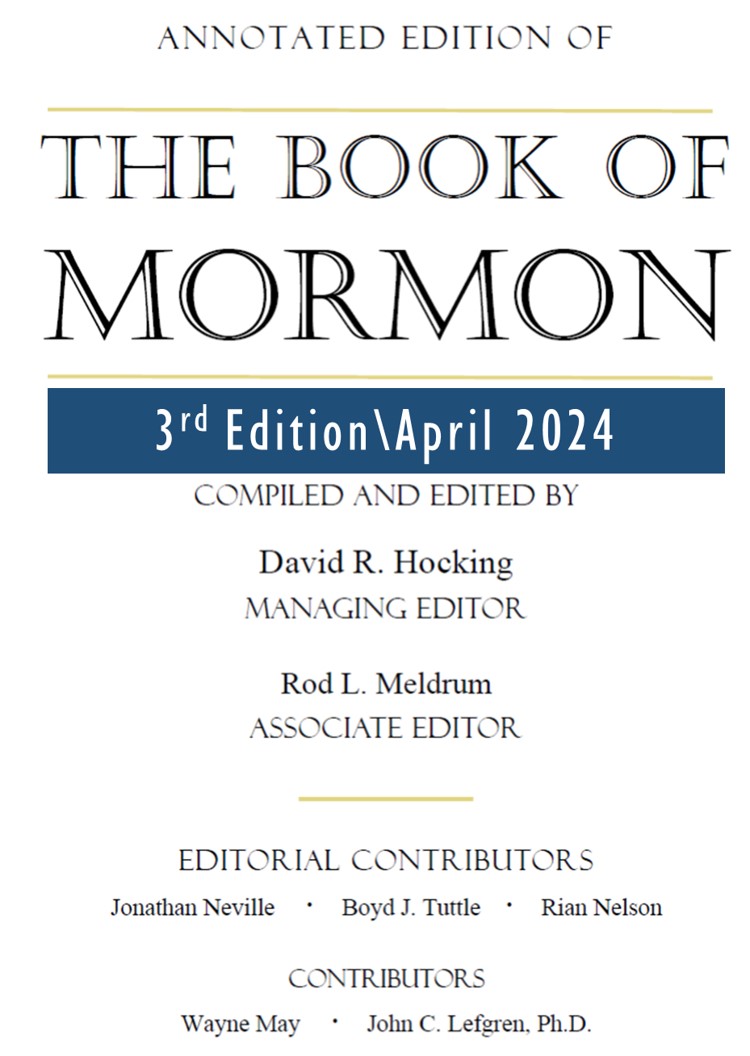
We are excited to announce purchases for the New 3rd Printing of “Annotated Edition of the Book of Mormon.” They continue to be popular as gifts and for individuals. Rod Meldrum’s previously best selling book titled, “Exploring the Book of Mormon in America’s Heartland”, had 5 Editions and sold over 50,000 copies from 2009 to 2023.(Currently out of Print). The Annotated Edition of the Book of Mormon already has its 3rd Edition and over 35,000 printed copies in less than 5 years. We appreciate your valued support.
Thanks to David Hocking and Rod Meldrum with the Editorial Team
Managing Editor David Hocking, has spent countless hours beyond what one would think, to make the new 3rd Edition, worthwhile for those who have previous editions.
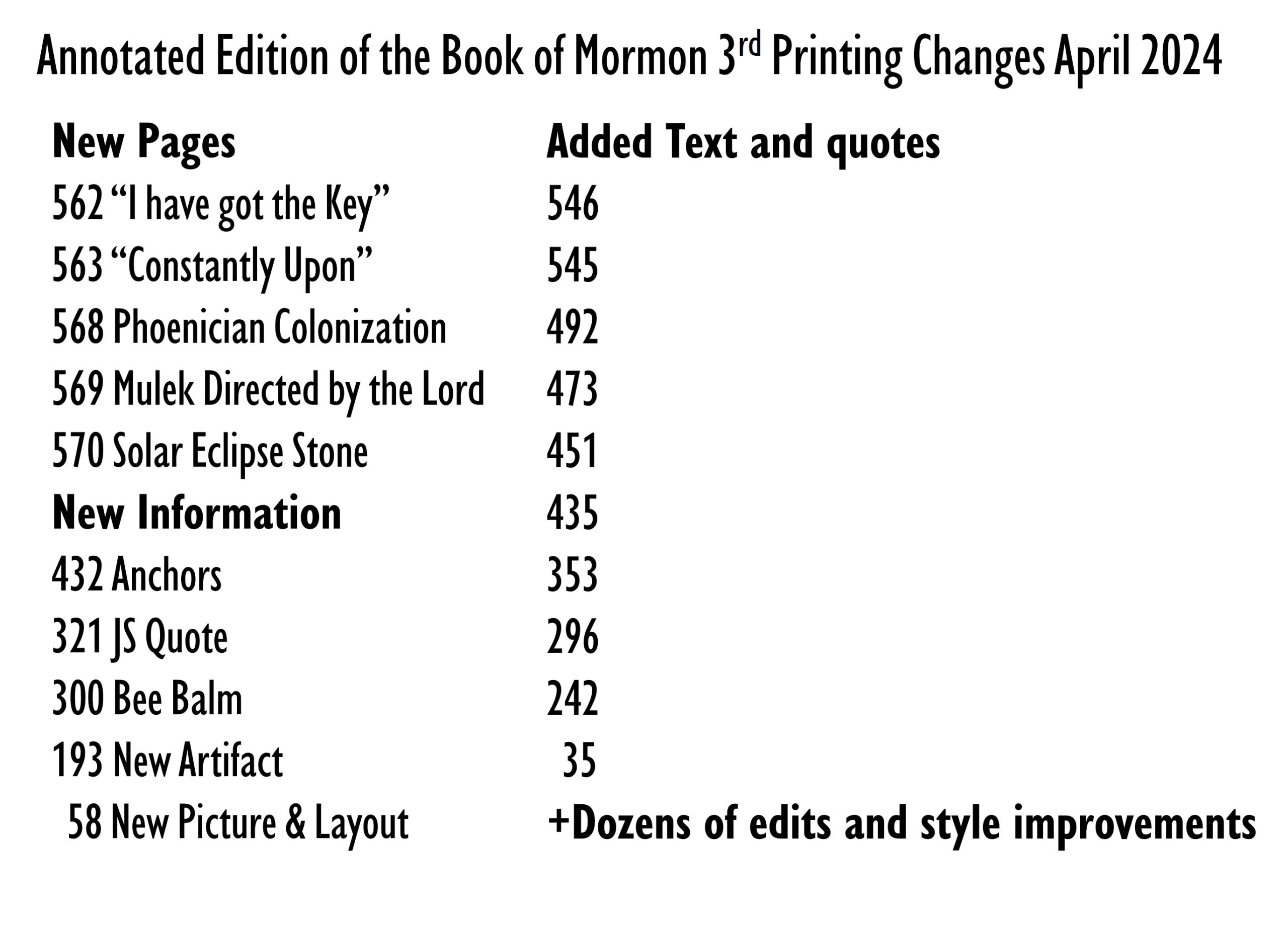
This New 3rd Edition “Annotated Edition of the Book of Mormon” is here. Same great cover with 5 all-new pages, 8 new inserts with quotes or pictures, and dozens of edits and updates are included.
Additions for the 3rd Printing
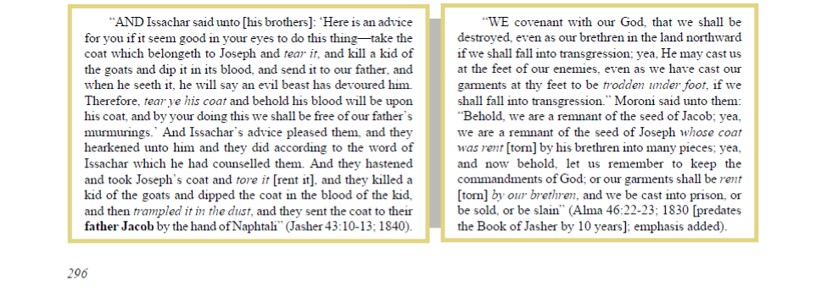
In this new first printing of the 3rd Edition, Brother Hocking makes several notes from the Book of Jasher and the Book of Enoch passages, that validate that the presence and validity of the Plates of Brass had other Biblical-era records not found in the Bible record or Stick of Judah.
‘Phoenicia’
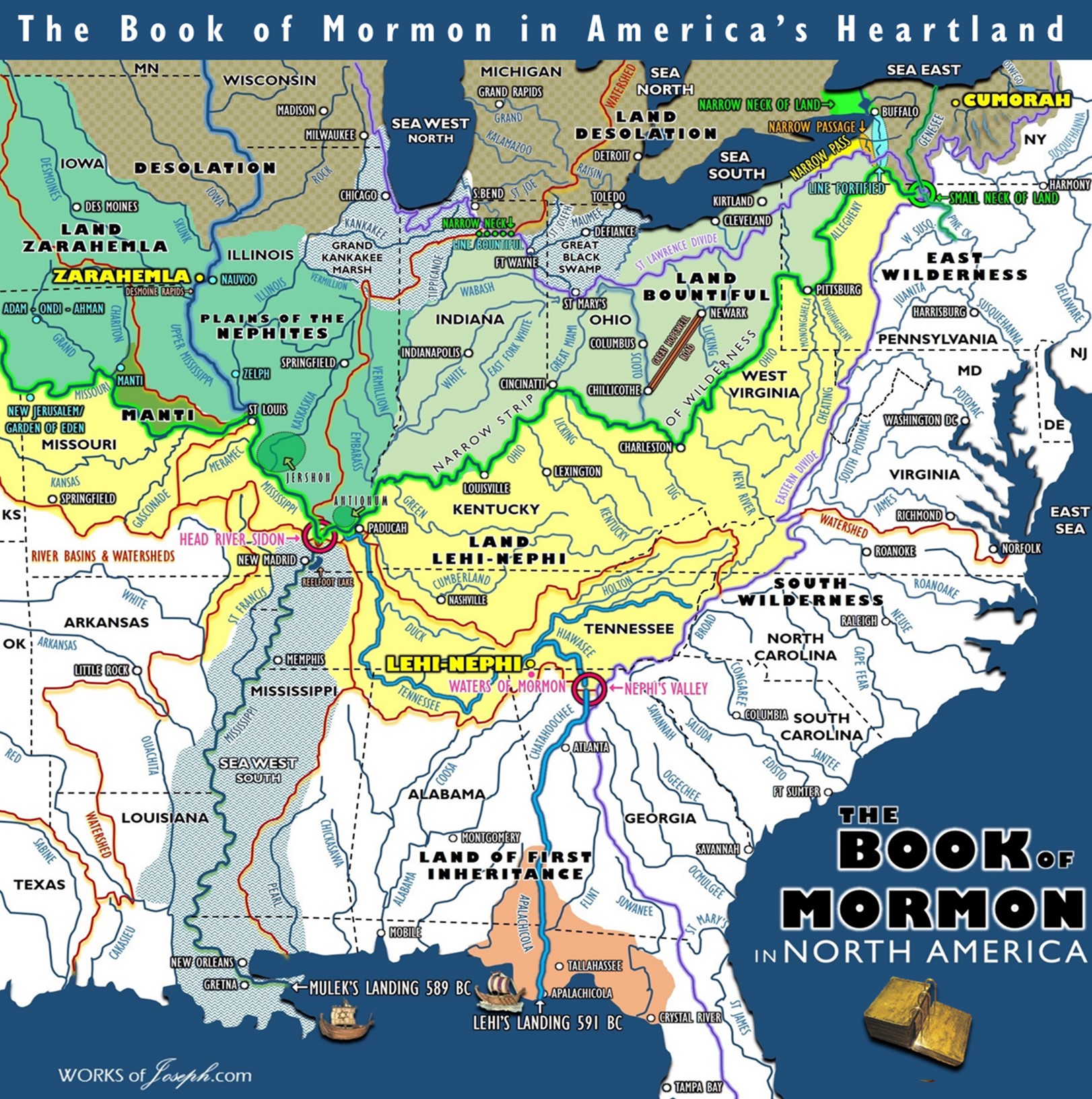
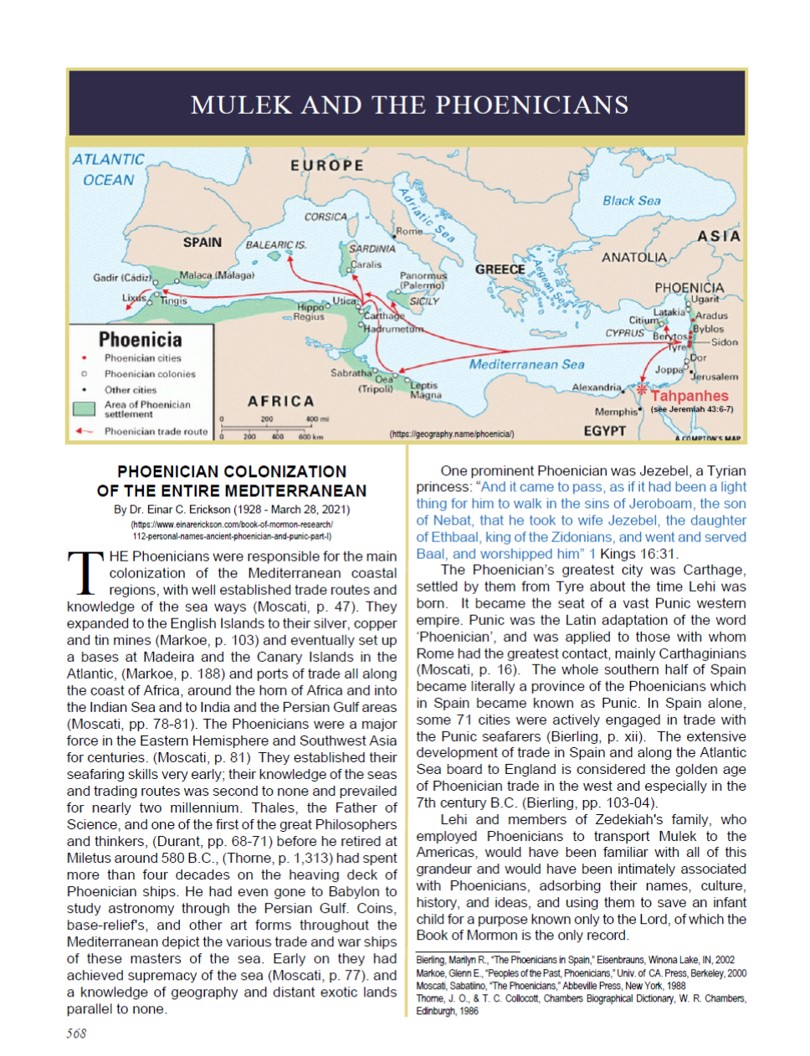
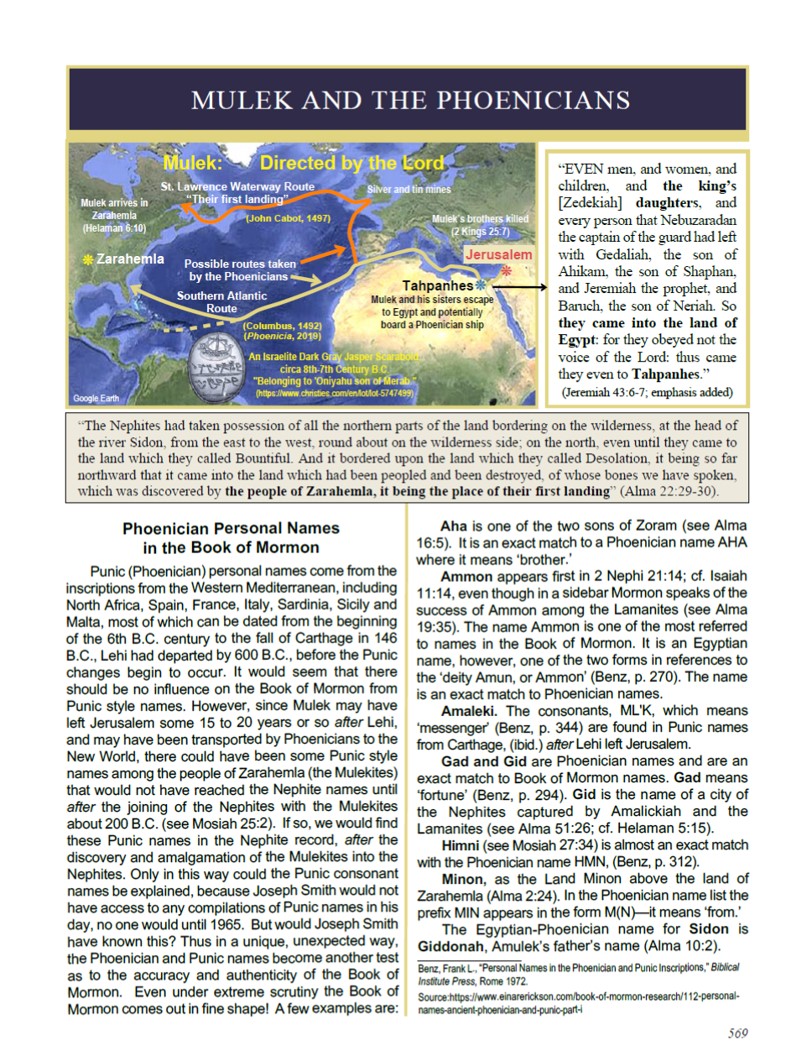
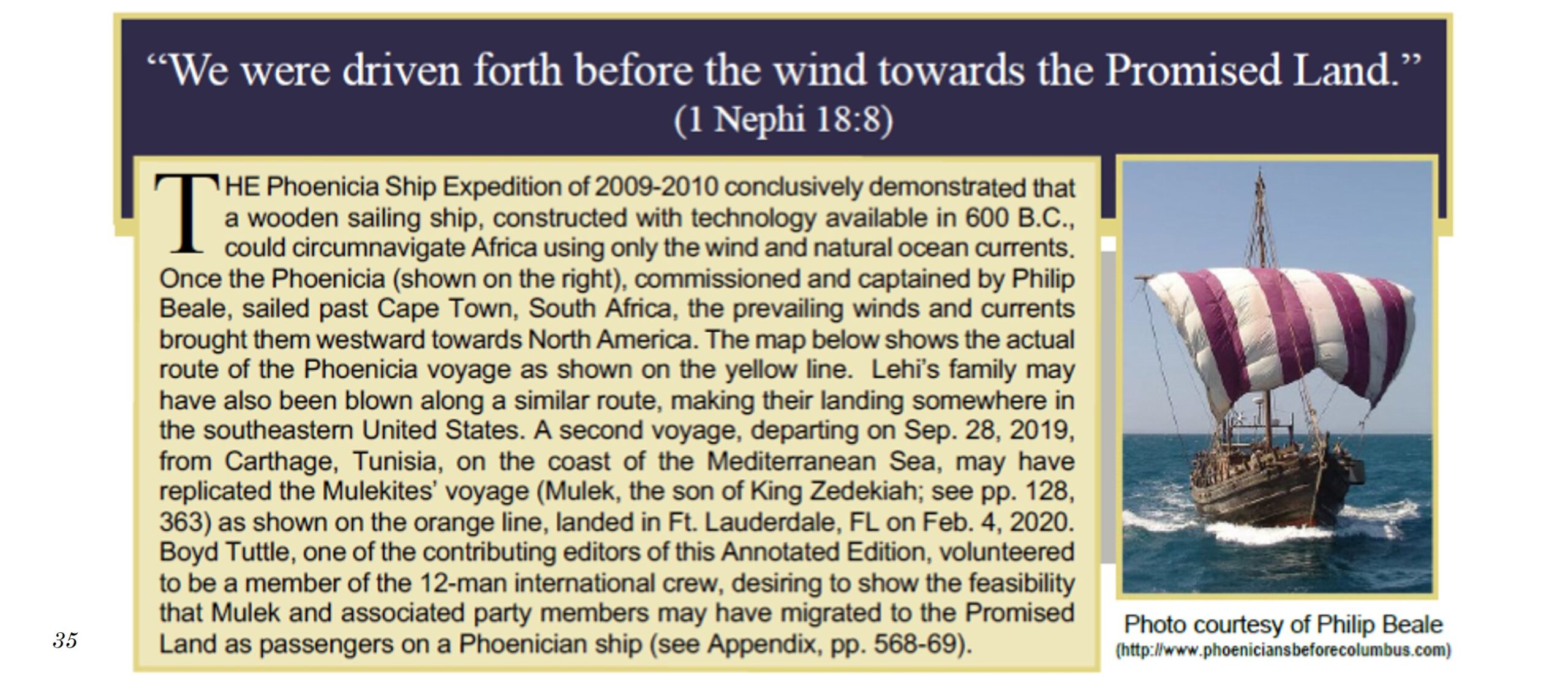
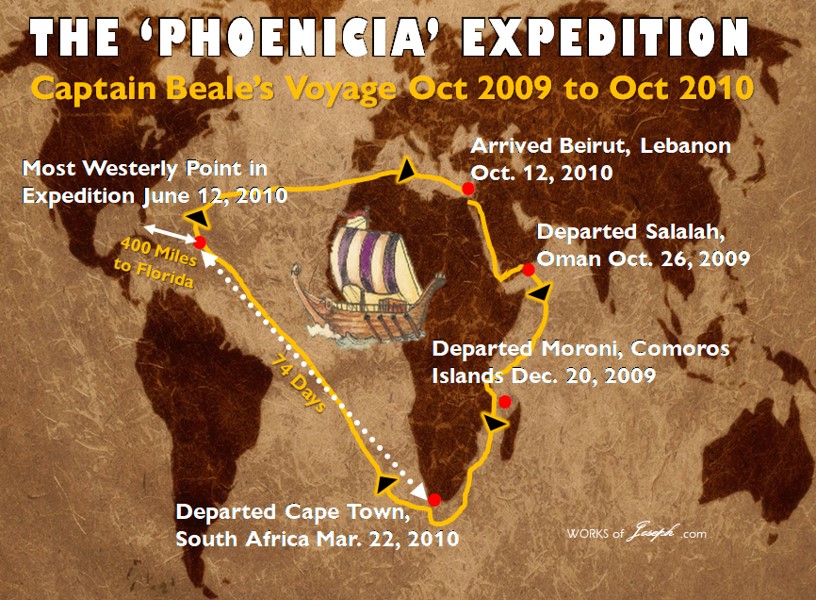
The ‘Phoenicia’ ship owned by Heartland Research with John Lefgren and Mike and Betty LaFontaine, is a 600 BC replica ship that was sailed by British Navy Captain Philip Beale over 30,000 nautical miles, proving a plausible route for Nephi and Mulek to sail from the Old World to North America.
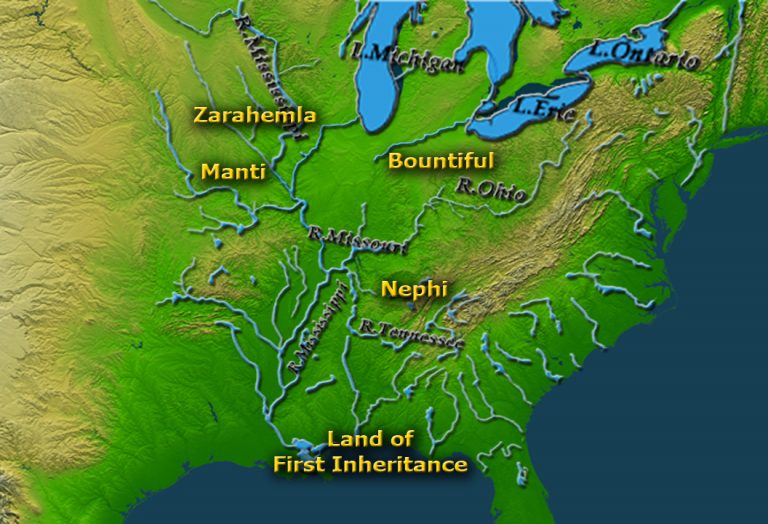
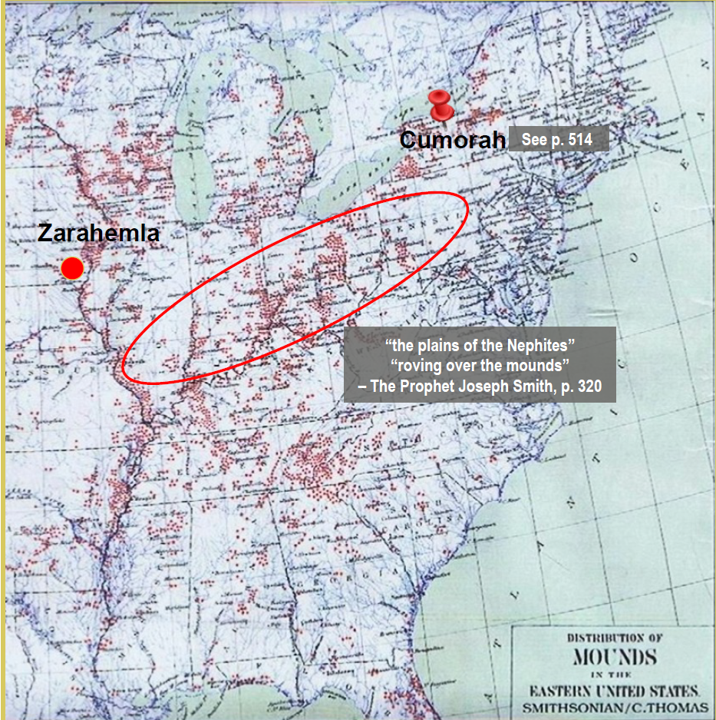
Brother Hocking has updated route information on a map that may have brought Mulek to America. He added insight pages about Phoenician names showing up in the books of Mosiah and Alma after King Mosiah meets the people of Zarahemla, suggesting that it was a Phoenician ship that brought Zedekiah’s family with Mulek to the Land of Zarahemla near Montrose, Iowa. Also see an article from a BYU professor in 1973 that affirms a Heartland theory about the route and landing of Mulek and or Nephi, here: https://bookofmormonevidence.org/ross-t-christensen-of-byu-1973-plausible-mulek-routes-tunisia-gathering-2024/
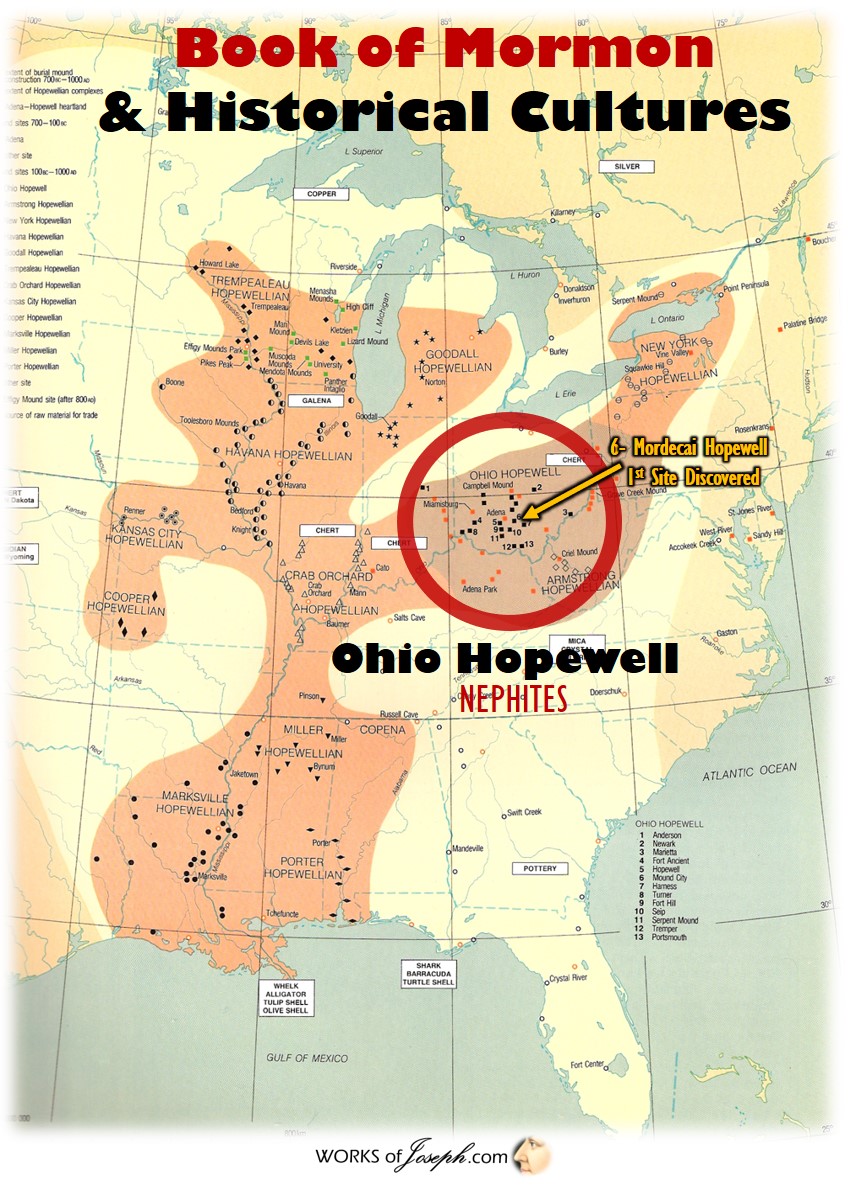
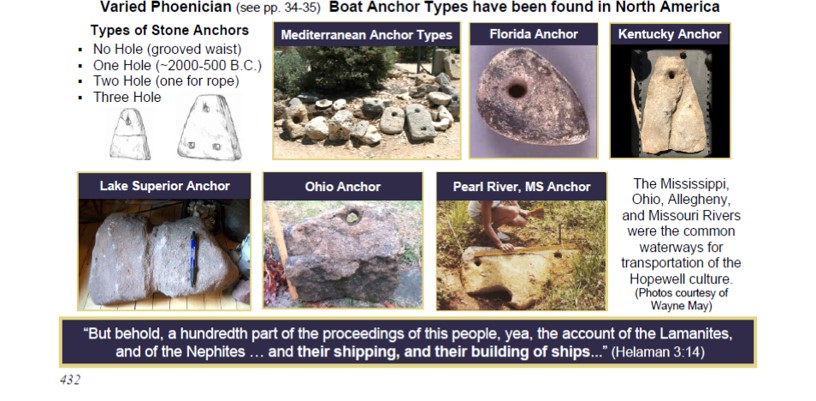
Pictures of Phoenician boat anchors have been found in North America’s rivers and lakes add support Mulek arriving in one of their ships. Brother Hocking says, “The Mississippi, Ohio, Allegheny, and Missouri Rivers were the common waterways for transportation of the Hopewell culture.”
Interpreters
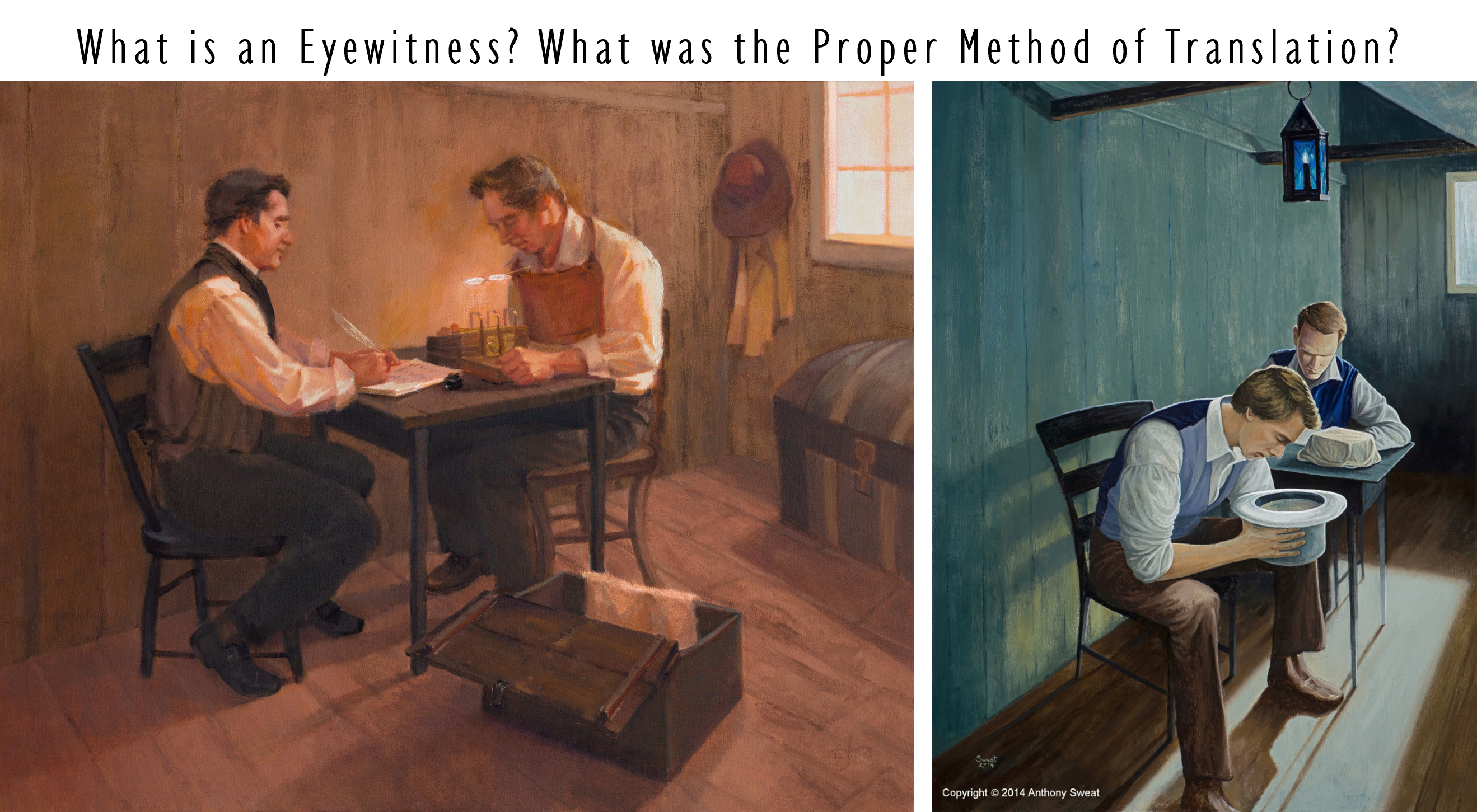
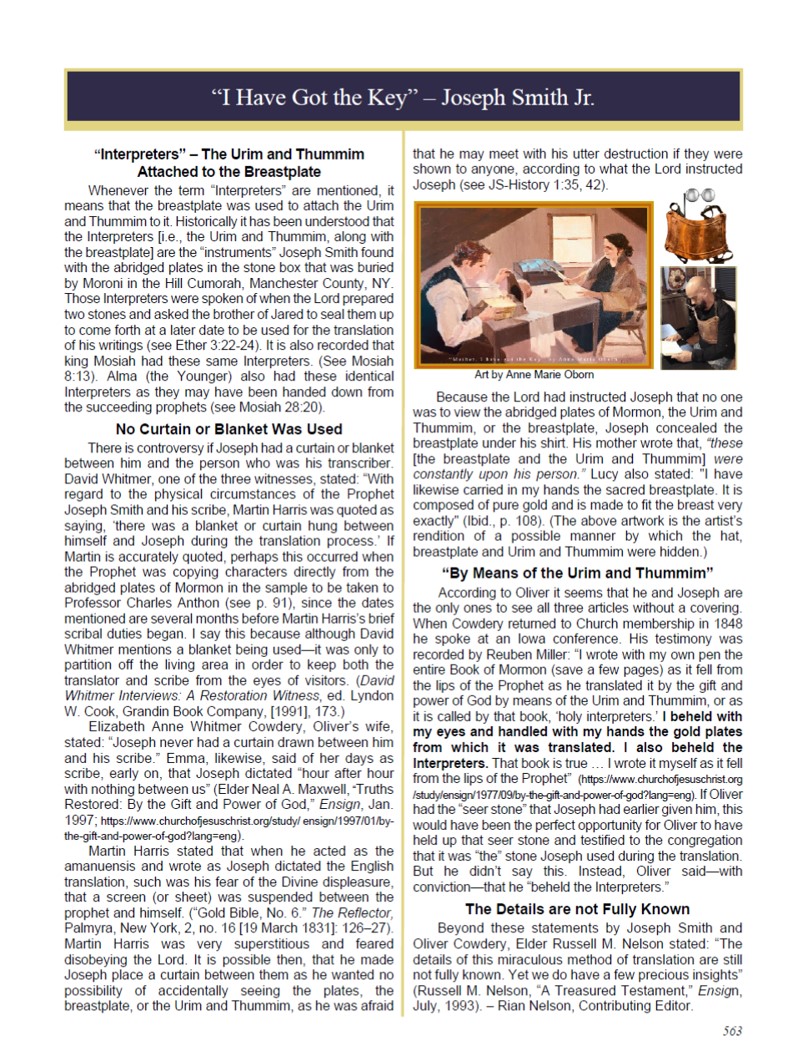
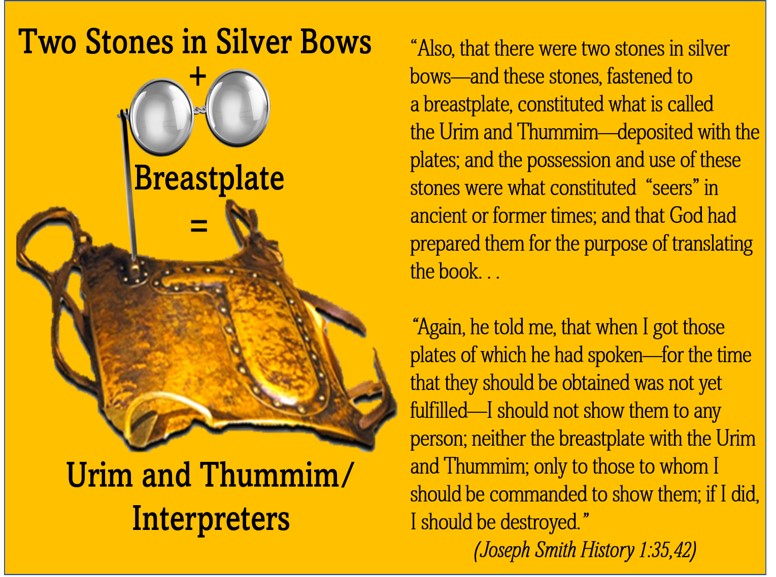
Did you know that the words, Urim and Thummim, do not appear in the translated text of the Book of Mormon? Instead these instruments are called “Interpreters” or Nephite interpreters. The term Urim and Thummim is found in the Bible but it is speaking of different tools, and are not the same tools Joseph found in the stone box with the gold plates.
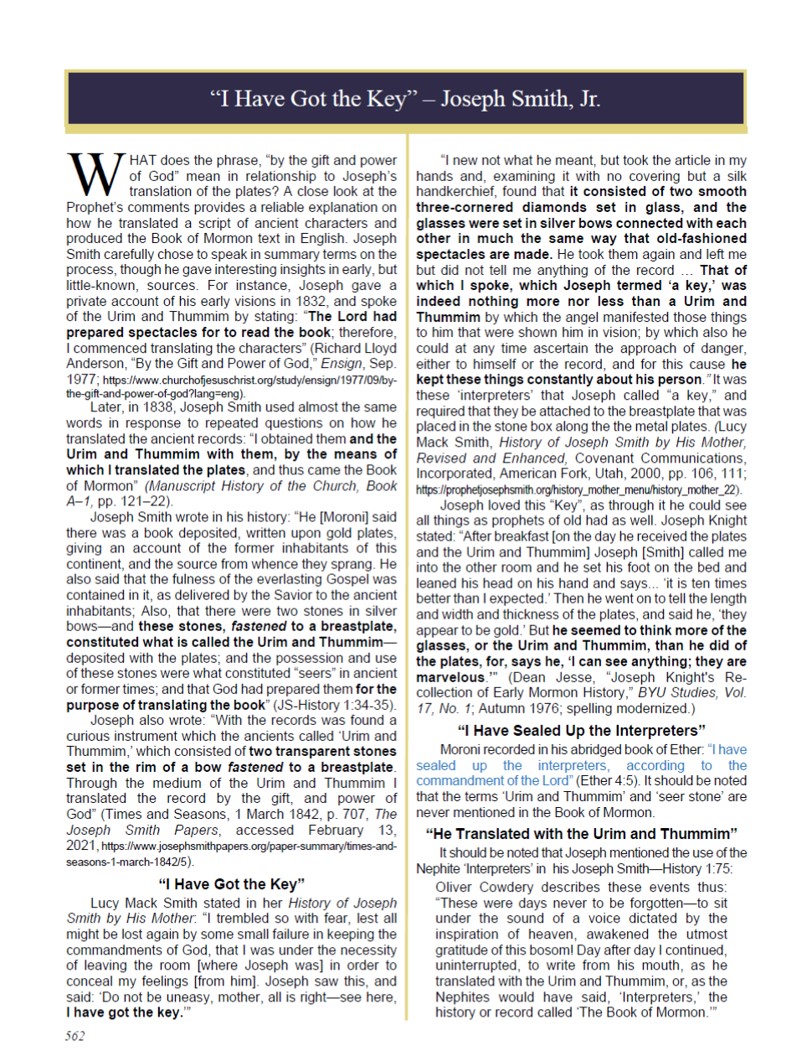
Brother Hocking has included additional insight pages relating the use of the Interpreters (“these stones fastened to a breastplate” JSH 1:35), as the proper tools Joseph used to translate the ancient inscriptions.
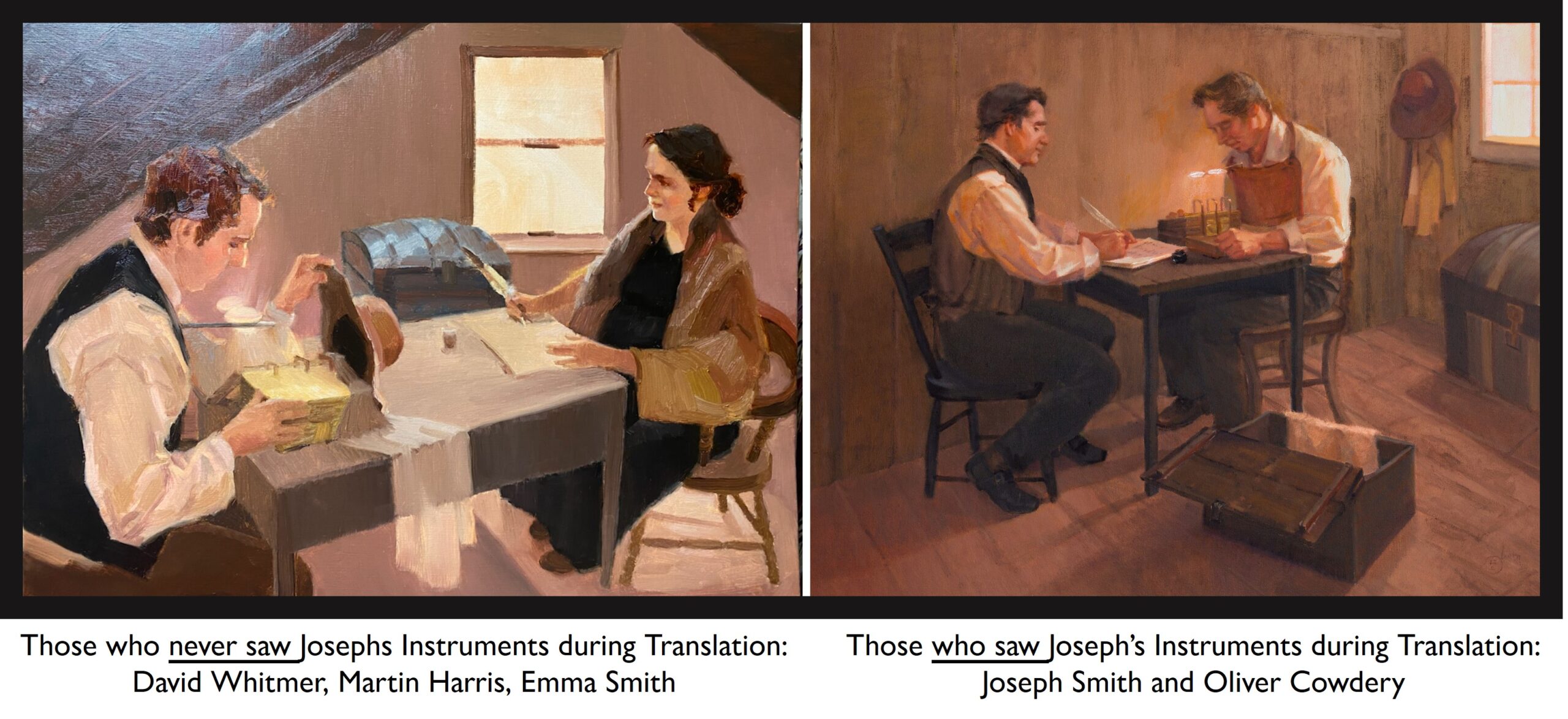
A statement from Lucy Mack Smith who said Joseph marveled at the Interpreters, calling them as she quotes Joseph saying, “I have got the Key”, and how Lucy also said that Joseph “had these things (Spectacles & Breastplate), constantly upon his person.” This suggests Joseph may have worn the breastplate under his shirt, for constant usage during the translation period and to keep it out of sight. Joseph could have possibly hid the Interpreters (Spectacles) from Emma’s view and other scribes by using his farmers hat to block their view. (See picture above). Blog here: https://bookofmormonevidence.org/scriptural-translation-method-2/
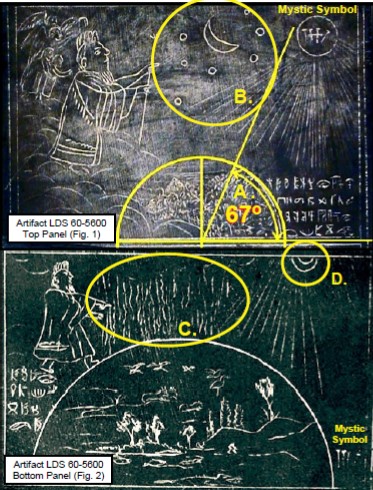
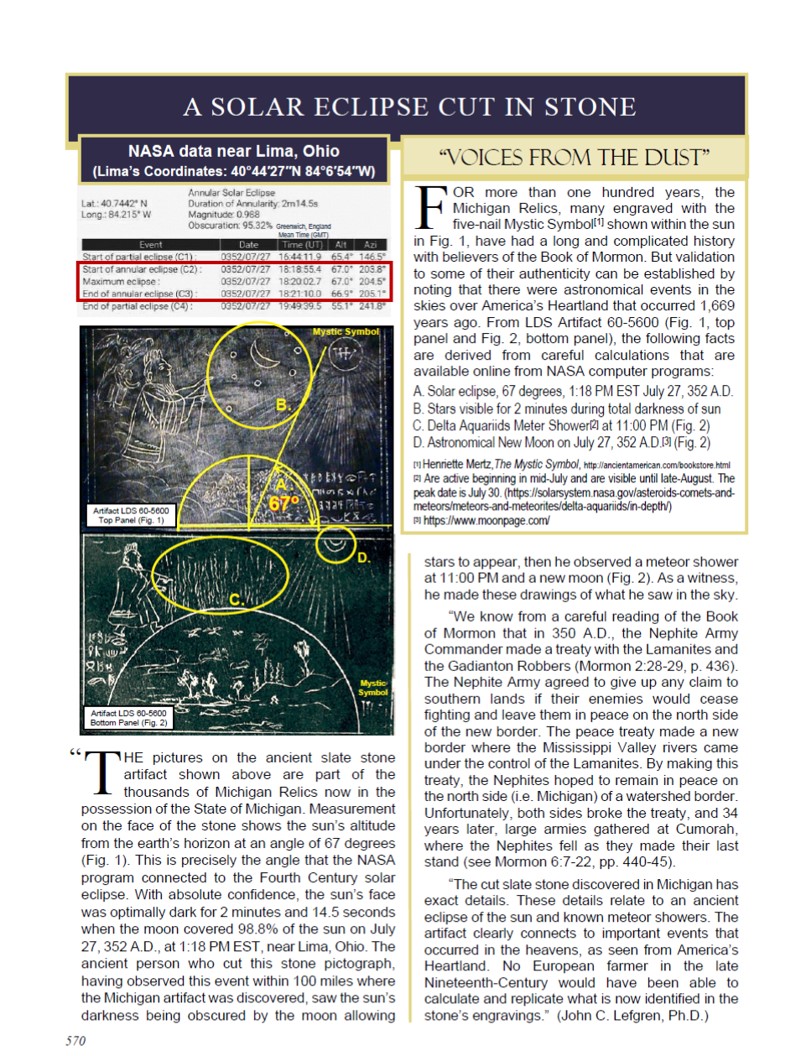
Solar Eclipse Stone
Another insight page highlights a Michigan artifact that suggests it was made in a Book of Mormon time period. Brother Hocking says, “Measurement on the face of the stone shows the sun’s altitude from the earth’s horizon at an angle of 67 degrees (Fig. 1). This is precisely the angle that the NASA program connected to the Fourth Century solar eclipse.”

Spotted Bee Balm
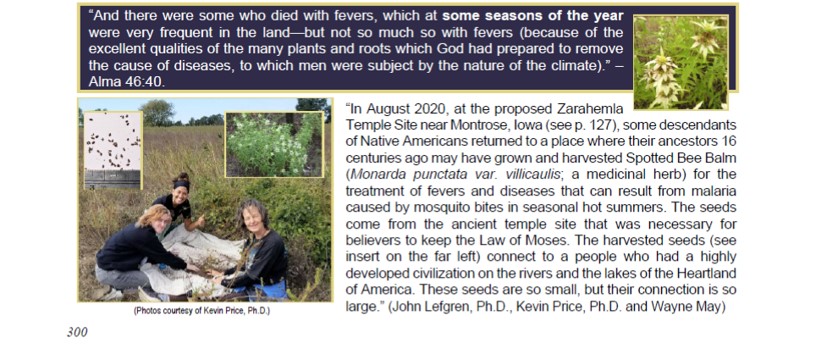
Spotted beebalm has been located across from Nauvoo, which adds credence to having reduced fevers of the Nephites due to the change in climate. (Alma 46:40) “Descendants of Native Americans returned to a place where their ancestors 16 centuries ago may have grown and harvested Spotted Bee Balm (Monarda punctata var. villicaulis; a medicinal herb).” Special thanks to John Lefgren, Ph.D., Kevin Price, Ph.D. Photos courtesy of Kevin Price, Ph.D.), and Wayne May.
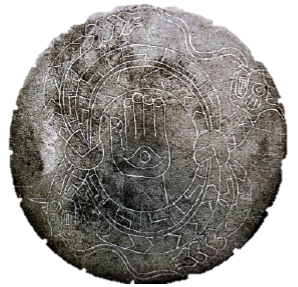
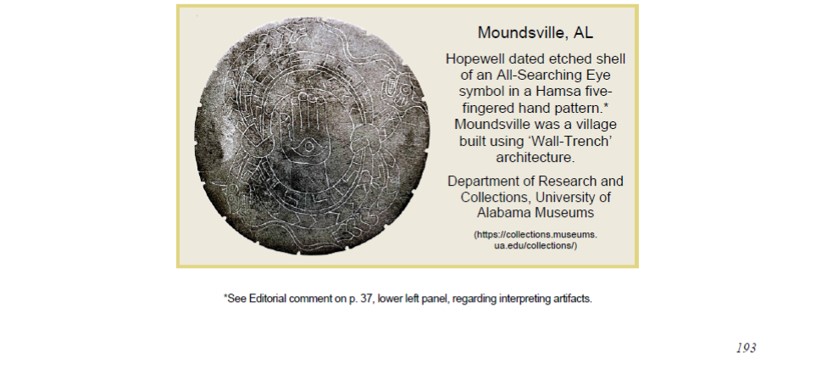
Another artifact, is shown (left) that was found in Alabama. It is a “Hopewell dated etched shell of an All Searching Eye symbol in a Hamsa five-fingered hand pattern. Moundsville was a village built using ‘Wall-Trench’ architecture.” Department of Research and Collections, University of Alabama Museums.
Check out Rod Meldrum’s New 2024 Come Follow Me, Supplemental Videos on YouTube, posted every week now! Watch Here!
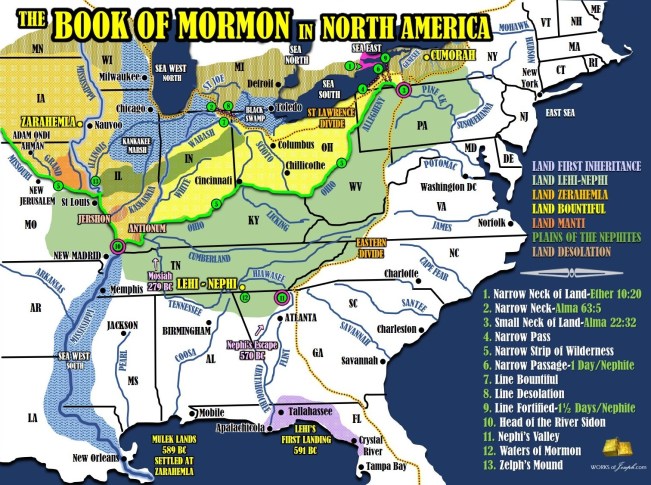
The Book of Mormon in North America
“The United States is the promised land foretold in the Book of Mormon—a place where divine guidance directed inspired men to create the conditions necessary for the Restoration of the gospel of Jesus Christ.” Elder L. Tom Perry Ensign Dec. 2012
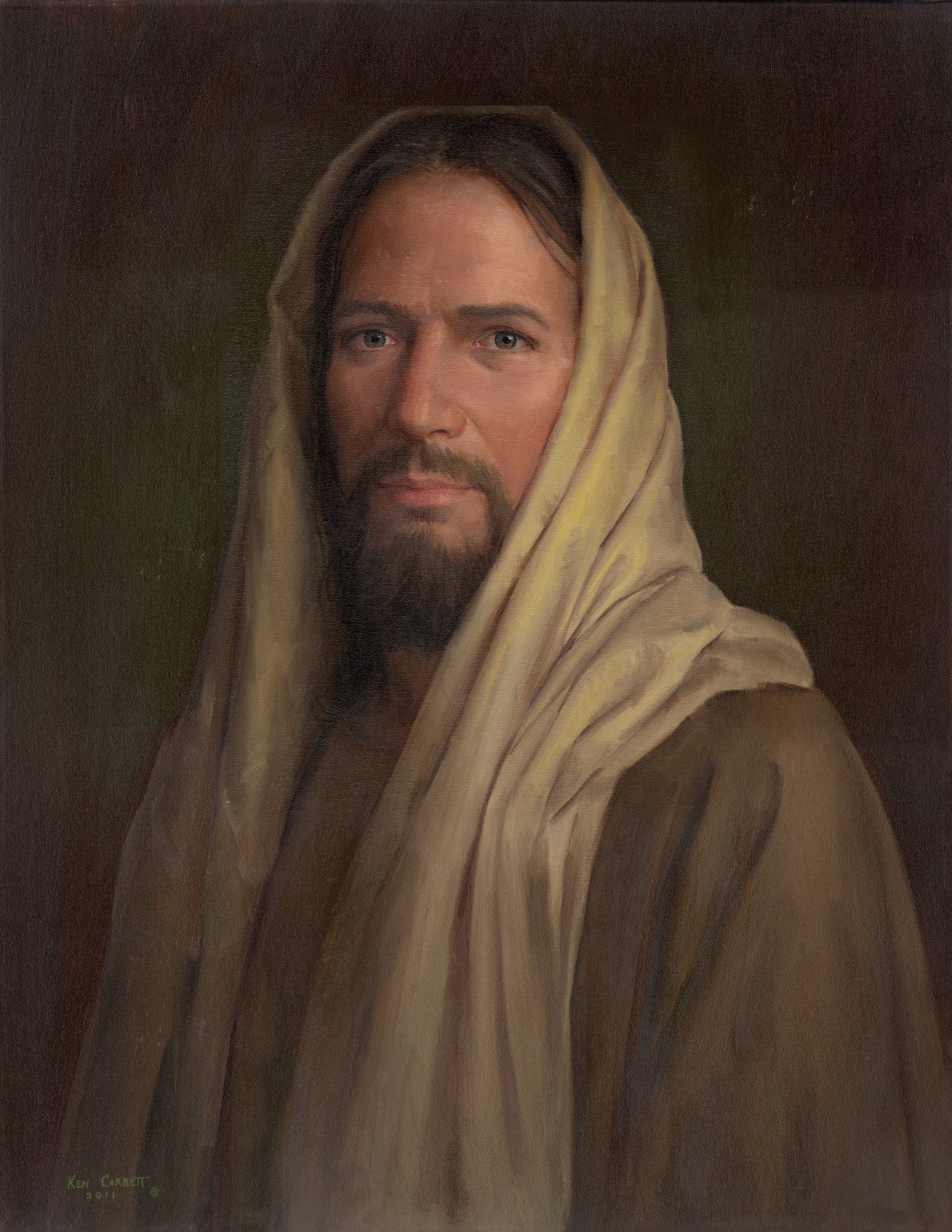
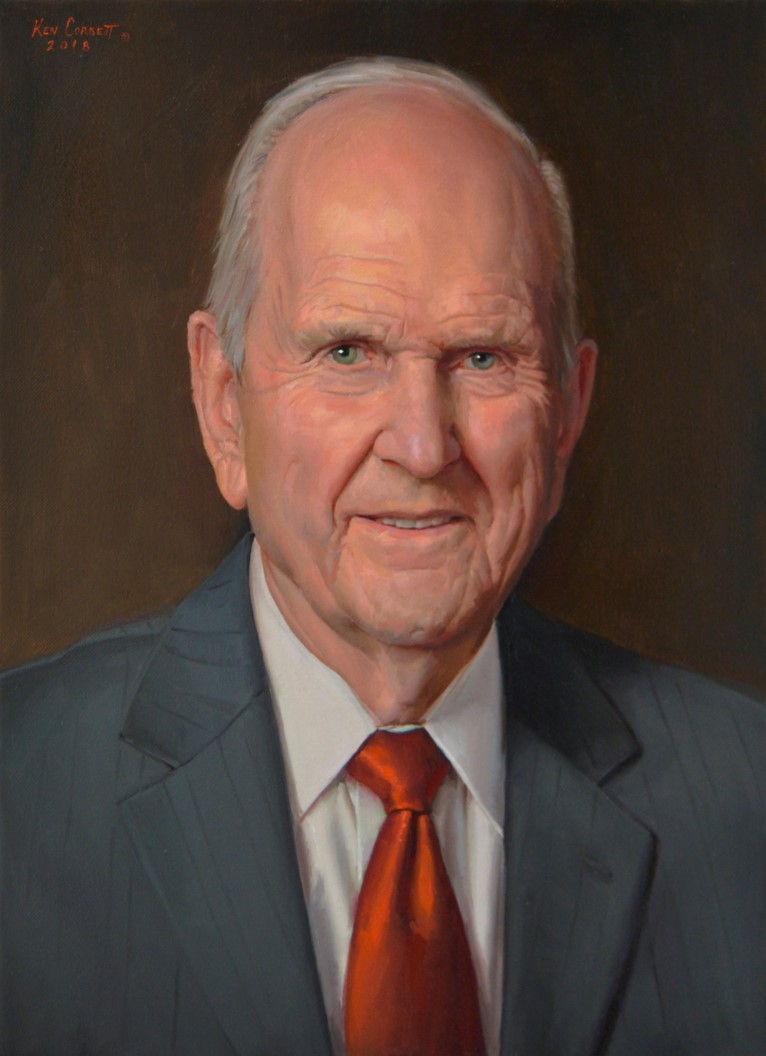
Click the logo above for over 500 questions and over 500 answers to your questions!“The Book of Mormon reveals the inheritance of Joseph, son of Israel, who was not forgotten when land was distributed to the tribes of Israel. This was promised in the Abrahamic covenant. Because… Joseph’s inheritance was to be a land choice above all others. It was choice not because of beauty or wealth of natural resources, but because it was chosen to be the repository of sacred writings on golden plates from which the Book of Mormon would one day come. Choice because it would eventually host the world headquarters of the Restored Church of Jesus Christ in the latter days. And it was choice because it was a land of liberty for those who worship the Lord and keep His commandments” – President Russell M. Nelson, President of the Quorum of Twelve Apostles, Yes, Mormons are Christians, Legends Library [2017], 60; emphasis added. Art by Ken Corbett
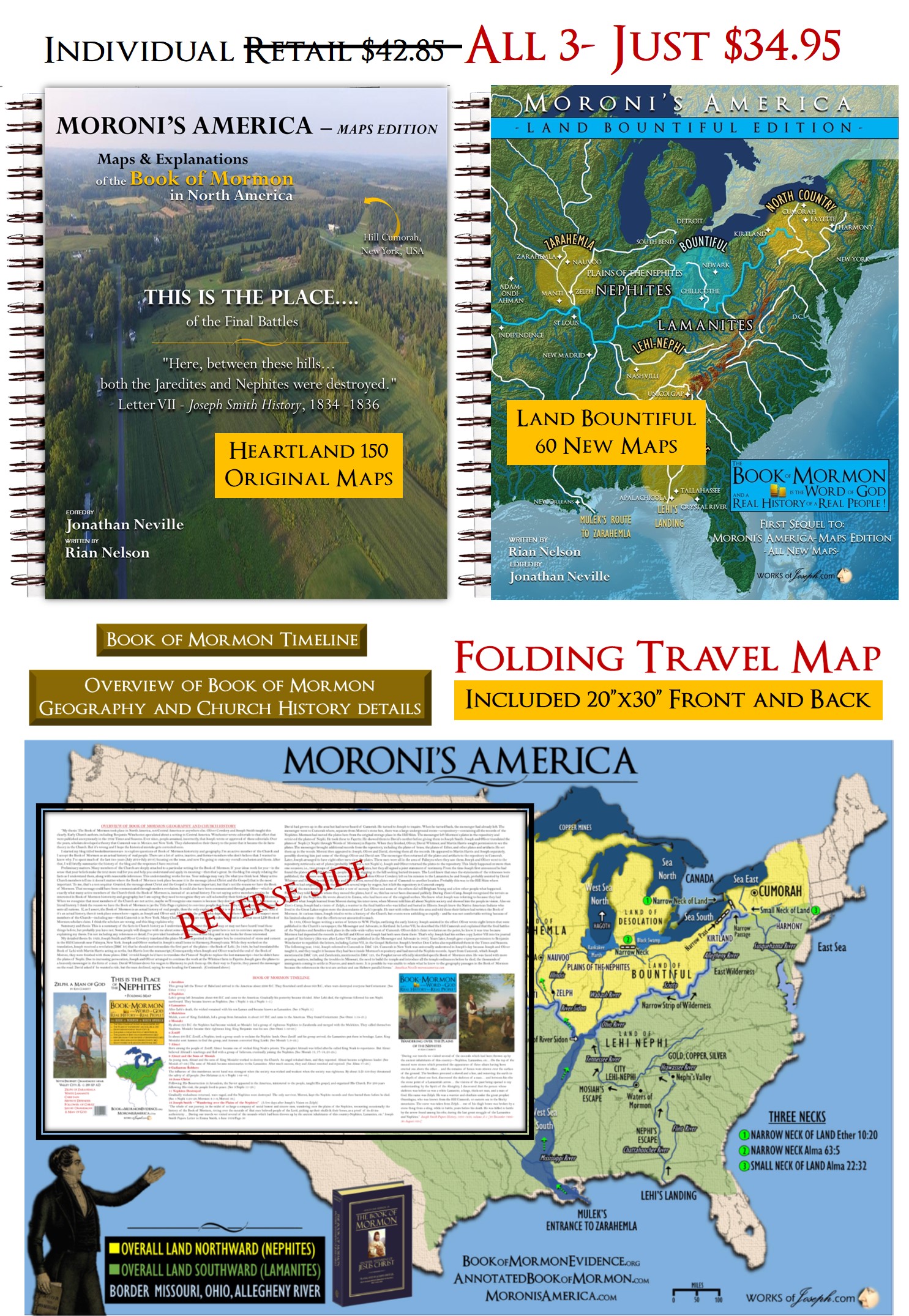
“The prophecies pertinent to this holy land of America were not just directed to the ancient saints, but those of our day as well, that we, too, might know of our responsibility to keep the Promised Land free from sin.Thus, knowing which land is the Promised Land is far more important than we might otherwise have supposed. Not only is such information vital to our understanding of where Book of Mormon activity took place, but learning that those activities took place in what has since become known as the United States of America is therefore critical to our very survival as a nation and as individuals who may just suffer untold misery in years to come if we allow the nation to become ripe in iniquity. The Lord’s decree that all who inhabit this promised land must serve Him or be wiped away is an everlasting decree, and just as pertinent to those of our day as it was to the Nephites or Jaredites, for according to the Lord Himself, this glorious land of America, the place of the New Jerusalem, is the land of promise, and who shall dispute His word.” From Ezra Taft Benson: Source
Previous Editions of the Annotated Edition of the Book of Mormon
Here is some information about the previous two printings of the Annotated Edition of the Book of Mormon. As you may remember, we printed our first 5,000 copies in Sept 2018. Those were gone in less than one month. We then had another 10,000 printed and available for Christmas 2018. Those were all sold by April of 2019. We had another 10,000 arrive in Nov. of 2019. We call this last shipment the 2nd Edition. The first 5,000 and first 10,000 we call the first printing.
You can see on the inside cover of your copy of the Annotated Book of Mormon, the following ways to determine what version you have.These editions below are now out of print.
Thanks to each of you, and your friends for supporting this amazing new 3rd edition of the Annotated Edition of the Book of Mormon. We feel grateful that so many wonderful people are reading the Book of Mormon. Pre-Order 3rd Edition Here
There are a few differences between the 2nd edition and the new 3rd edition I will explain. Obviously, the Book of Mormon text is the same, with only a couple minor corrections. Page numbers are the same up to page 561.
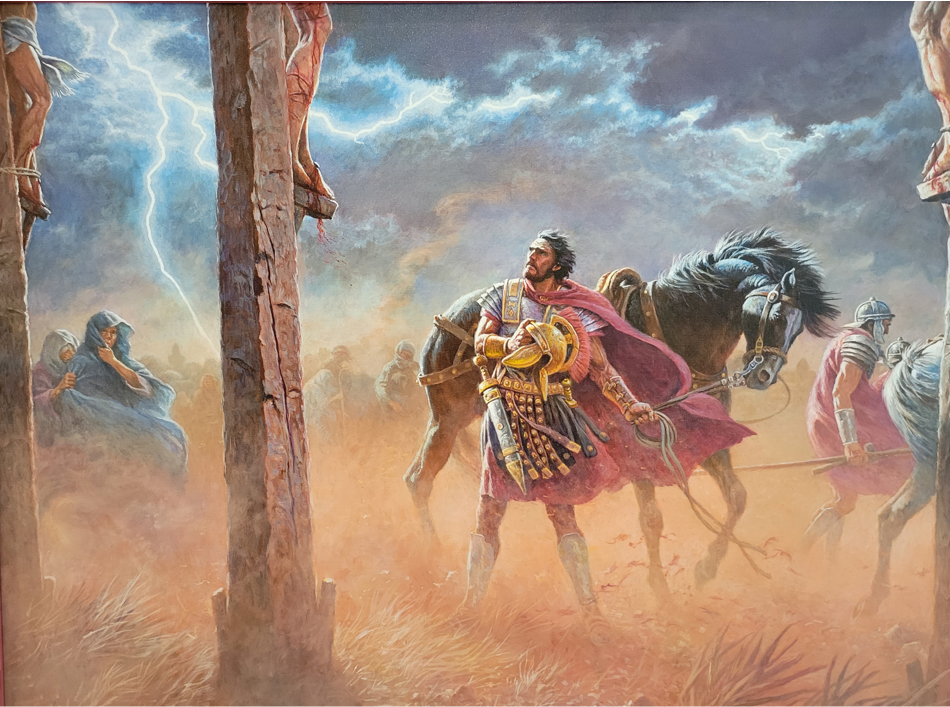
This painting is included in all versions. I love it.
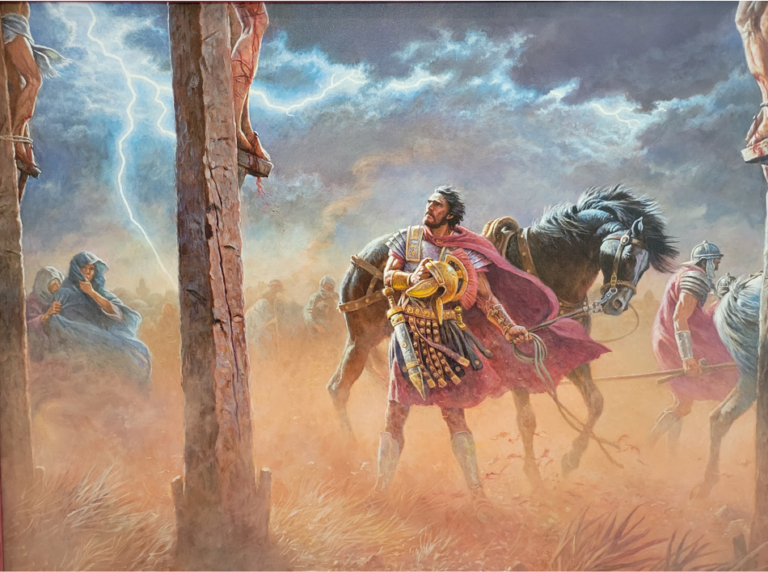
“Truly this man was the Son of God” by Clark Kelley PricePrints Here: After Jesus was put upon the cross to be crucified, there was darkness over all the land, and when He died, there was a great earthquake. A Roman centurion standing guard at the foot of the cross witnessed these events and, sensing the reality of who was on the cross above him, testified, “Truly this man was the Son of God” (Mark 15:39). The powerful testimony of the Savior spoken by this centurion who oversaw the Crucifixion now echoes through time and throughout eternity.
Within the traditions of the Native Americans of North America (Lamanites) you will find hundreds of stories about a “sacred book”, or “a book”, or ” a record”, or “a history of our forefathers”, or “a book of plates”, or “a history of our people”, and many times these Natives talk about it being buried in a hill or the ground. There is such a connection between these Native American Lamanties and the Book of Mormon which was written by their forefathers. There is such a familiar story comparing these Native American traditions with the story we know about the Lamanites seeking to destroy these records kept by the Nephites. It should be remembered that these records of the Nephites ultimately became the records of the Lamanites also. After all who was this record speaking of; both Nephi a Nephite, and Samuel a Lamanite. These “Sacred Book” stories are heard of from Native Americans from North America and seldom heard about from those of South and Central America. This is not a proof that the Book of Mormon events happened in North America, but it is a very powerful indication that these Native Americans have incredibly similar stories as found in the story of the Book of Mormon. Below you will find many references to “this Sacred Book” or the Lamanite traditions about this book.
Book of Mormon: Sacred Book of the Indians
MORMON APOLOGIST E. Cecil McGavin, in relating to his readers some ancient traditions of the North American Indians, made this remarkable statement in 1947: The American aborigines, “assert that a book was once in possession of their ancestors; and along with this recognition they have traditions that the Great Spirit used to foretell to their fathers future events; that he controlled nature in their favor; that angels once talked with them; that all the Indian tribes descended from one man who had twelve sons; that this man was a noble and renowned Prince, having great dominions; and that the Indians, his posterity, will yet recover the same dominion and influence. They believe by tradition that the spirit of prophecy and miraculous interposition once enjoyed by their ancestors will yet be restored to them, and that they will recover the book, all of which have been so long lost.” Mormonism & Masonry, (Salt Lake City: Stevens & Wallis, Inc., 1947), pp. 154-155. If true, this old tradition provides a potentially important link between the American tribes and a (presumably) non-American “renowned Prince” who had “twelve sons,” and whom the heavenly angels hold in great respect. McGavin insinuates that the prince was the Patriarch Jacob and that the native Americans are descended from one of his sons — Joseph to be exact — and that the lost book was a volume of divinely revealed prophecies and holy records. In short, the lost book the Indians expect to recover is the Book of Mormon, that improbable 1830 publication of Joseph Smith, Jr. Is it true? Perhaps that question is still a bit premature. Perhaps the more useful question at this point would be, Where did the author come across this wonderous nugget of supposedly ancient information? Tracking the Source of the “Lost Book” Elder McGavin was not the first LDS writer to relate this unusual story. A very similar quote (with a reference citation matching one of McGavin’s) can be read in a Mormon magazine published in 1886. There the writer, George Reynolds, the former private secretary to Brigham Young, has this to say: A book published in London, England, in 1833, by a Mr. C. Colton, on the origin of the American Indians bears testimony to this same tradition. It is therein stated: “They assert that a book was once in possession of their ancestors, and along with this recognition they have traditions that the Great Spirit used to foretell to their forefathers future events; that he controlled nature in their favor; that angels once talked with them; that all the Indian tribes descended from one man, who had twelve sons; that this man was a notable and renowned prince, having great dominions, and that the Indians, his posterity, will yet recover the same dominion and influence. They believe, by tradition, that the spirit of prophecy and miraculous interposition, once enjoyed by their ancestors, will yet be restored to them, and that they will recover the book, all of which has been so long lost.” “View of the Hebrews” Juvenile Instructor XXXVII:19 (Oct. 1, 1902) Elder Reynolds is not exactly specific about which “Mr. C. Colton” he is quoting from. He says he is referring to a certain 1833 “book published in London… on the origin of the American Indians.” Luckily only one book fits that description. Two other LDS writers provide its title, after quoting from the same text: Jacob and his twelve sons are found in the legends of the American Indians. Some of the tribes “used to build an altar of twelve stones in memory of a great ancestor of theirs who had twelve sons.” “They have traditions that all Indian tribes descended from one man who had twelve sons. That this man was a notable and renowned prince, having great dominion; and that the Indians, his posterity, will yet recover the same dominion and influence.” (Calvin Colton, Origin of the American Indians, London, 1833., cf. Mill. Star 6:67.) John A. Widtsoe and Franklin S. Harris, Jr. Seven Claims of The Book of Mormon Independence: Zion’s Printing and Pub. Co., 1935, 1937, p. 101The Rev. Calvin Colton (1789-1857) is not known to have ever produced a book called Origin of the American Indians, but he did write one with this lengthy title: “Tour of the American Lakes, and among the Indians of the North-west territory, in 1830: disclosing the character and prospects of the Indian race.” Since that book was published (in two volumes) in London in 1833, it appears to be the work cited by McGavin, Reynolds, Widtsoe and Harris. The next question that might be asked is, Where did Rev. Colton get his information? According to his book, he conducted research into the situation and background of the American Indians during his 1830 “Tour of the American Lakes.” He then sailed off to London to work as a correspondent for the New York Observer, during which time he published a plethora of books on America. It appears, however, that Colton did not glean all of his information on this topic from interviews with the Indians and their neighbors. He himself admits to deriving part of his material from a previously published source. In the case of the “lost book” story, Colton does his reporting in the first chapter of the second volume of Origin of the American Indians. That particular chapter is sub-titled “The Honourable Elias Boudinot’s theory…” and in it Colton agrees with practically everything Boudinot (the celebrated Presbyterian statesman and author, 1740-1821) said about the Indians in his 1816 book, in support of the conclusion, “that they are Hebrews.” Although Colton does not give his readers a precise citation from Boudinot’s 1816 A Star in the West, it is obvious that the former author appropriated the “lost book” story from the former. On page 11 of vol. 2, Colton says: The offer of Christianity and of the Bible to the Indians of North America, with an account of its origin and claims, has, in several instances quite remote from and independent; of each other, met this remarkable reception: “This book once belonged to our ancestors!” And along with this recognition, they have traditions, that the Great Spirit used to foretell to their fathers future evens; that he controlled nature in their favour; that angels once talked with them, that all the Indian tribes descended from one man, who had twelve sons; that this man was a notable and renowned prince having dominion over all the earth; and that the Indians, his posterity, will yet recover the same dominion and influence. They believe by tradition, that the spirit of prophecy and of miraculous interposition, once enjoyed by their ancestors, will yet be restored to them, and that they shall recover the book — all of which have been so long lost. Rev. Calvin Colton’s 1830 book (Above articles compiled by Dale R. Broadhurst These articles are written from Mr. Broadhurst’s position as one who wants to tie the Book of Mormon with the Spaulding manuscript which I don’t believe. He quotes some great information however from reliable sources which speak about the traditions of Native Americans with this Sacred Book.)
Below you will find articles about the Sacred Book of the Native Americans.
1- Cattaraugus/Wyondat/Delaware/Shawnee
“Once the red men were many; they occupied the country from sea to sea — from the rising to the setting sun; the whole land . . . Thousands of moons ago, when the red men’s forefathers dwelt in peace and possessed this whole land the Great Spirit talked with them, and revealed His law and His will and much knowledge to their wise men and prophets. This they wrote in a Book . . . written on plates of gold and handed down from father to son for many ages and generations. It was then that the people prospered and were strong and mighty; they cultivated the earth, built buildings and cities and abounded in all good things, as the pale faces now do . . . This Book, which contained these things was hid in the earth by Moroni, in a hill called by him Cumorah, which hill is now in the state of New York, near the village of Palmyra, in Ontario county . . . Thus ended our first Indian mission, in which we had preached the Gospel in its fullness and distributed the record of their forefathers among three viz.: the Cattaraugus Indians, near Buffalo, N.Y., the Wyandots, of Ohio and the Delawares, west of Missouri.” Autobiography of Parley P. Pratt, pp. 56-6; Documentary History of the Church Vol 1: Footnotes 183:2-18
2- Blackfoot/The Three Nephites
“When Elder Melvin J. Ballard visited the Ft. Peck and Blackfoot reservations he said he met many who knew him as soon as they saw him and asked for the “Book” which he was to bring them. They said they had seen him in dreams, bringing to them a “Book.” When he handed them the Book of Mormon they adopted it gladly, and could read and understand it. He declared that it was his belief that one of the “Three Nephites” had been laboring among them for years teaching them the gospel and preparing them for our missionaries when they should come.” Redemption of the Lamanites By Annie W. Holdaway Genealogist and Recorder, Lamanite Genealogical Society
3. Stockbridge/Hebrew
In 1837, Elder Parley P. Pratt, one of the early defenders of the church, wrote a work entitled, “A Voice of Warning,” which has been published in many different editions in Europe and America. In the edition of 1885, published at Lamoni, Iowa, page 82, there is a quotation from Mr. Boudinot, which reads as follows: Mr. Boudinot in his able work, remarks concerning their language: “Their language in its roots, idiom, and particular construction, appears to have the whole genius of the Hebrew; and what is very remarkable, and well worthy of serious attention, has most of the peculiarities of the language, especially those in which it differs from most other languages. There is a tradition related by an aged Indian of the Stockbridge Tribe, that their fathers were once in possession of a ‘Sacred Book‘ which was handed down from generation to generation, and at last hid in the earth, since which time they have been under the feet of their enemies. But those oracles were to be restored to them again, and then they would triumph over their enemies and regain their ancient country, together with their rights and privileges.” — An aged Indian of the Stockbridge tribe.” See Broadside Picture above Quoted as the last line.
4. Cherokee/Liahona and Ark
“We had a war long ago with a light skinned people around the Great Lakes. We conquered them but we had so much respect for their warrior chief that we buried him at the mouth of the Oswego River that is in New York State. We don’t discuss this very much because it is an embarrassment to us.” President Rawson then asked why this is an embarrassment, and the Chief replied, “Our history is written on metal platesand buried in a hill in New York, but we don’t know which hill… It is the belief of the Cherokee People that they came to the land of the New World from the direction of the East Ocean riding on a white cloud. There seems to be in the legend, the existence of some type of round instrument which directed the voyage. Although not totally clear, it seems that the instrument which directed the voyage was ball-shape and contained another like it within itself. It contained a liquid, making the floating devices within to congregate at times to give direction to the eyes of the beholder…In those days when the Cherokee were a God-loving people, living in peace among themselves, they lived as one people, dwelling in half-moon shaped council houses. They had gone from living in caves to living in log-cabins. They still kept the sacred records of metal, some of which had come across the ocean waters with them, and others which they had continued keeping and making, scribing upon them as had been done before by the leaders of the People. They, too, had possession of the Ark of the Covenant, which they also had brought with them from their place of origin, existing across the eastern waters.” Talk given to missionaries in training at the MTC, Provo, Utah 1979, by President Murray J. Rawson. Purchase complete copy here: https://www.bookofmormonremnants.com/store.html
5. Tohono O’odham Nation (Papago)/Liahona/Stone Book
The Liahona by Ken Corbett
“The Papagos believed they crossed the ocean and came to this land, that in the ships and on the trails they were guided by a ball. In this ball was a needle that pointed the direction they were to go. In the Papago language yet today, the name of this ball is ‘Liahona… Among the Hopis, too, at the present time, is a “stone book.” I have seen it, but only a few white men have had that privilege. I cannot describe it because I have promised not to speak of it. I can only say that at a distance of four or five, feet anyone would easily take it for a modern book. Their stories say that the mate to this book will be brought back to them. The books will be opened, and someone will be able to read the message in them.” Indian Tradition by Golden Buchanan Read more HERE:
6. Delaware/Hill Cumorah
According to Parley P. Pratt, in 1831 some early elders of the Church were discussing the Book of Mormon with the Delaware Indians of Kansas, the first such meeting with Indians since the Restoration. The spokesman was Oliver Cowdery, who included in his remarks the following: “Once the red men were many; they occupied the country from sea to sea–from the rising to the setting sun; the whole land Thousands of moons ago, when red men’s forefathers dwelt in peace and possessed this whole land the Great Spirit talked with them, and revealed His law and His will and much knowledge to their wise men and prophets. This they wrote in a Book, . . . written on plates of gold and handed down from father to son for many ages and generations. . . . This Book, which contained these things, was hid in the earth by Moroni, in a hill called by him, Cumorah, which hill is now in the state of New York, near the village of Palmyra, in Ontario County.” Autobiography of Parley P. Pratt, SLC, 1938, pp. 55-56
7. Ephraimites and Lamanites/Remnant of Israel/Original Settlers/Ancient Plates
Oliver Cowdery wrote that the Ephraimites and the Lamanites were the “original settlers of this continent,” and that “an ancient prophet caused the plates from which the Book of Mormon was translated to be buried nearly two thousand years ago, in which is now called Ontario County, New York. In this same issue, W. W. Phelps wrote that it was “by that book [the Book of Mormon] I learned that the poor Indians of America were of the remnants of Israel.” Many other times editor Phelps identified the land of America as being the place where at least some Book of Mormon history took place, including the last battles of both the Jaredites and the Nephites (see Messenger and Advocate, vol. 2, October 1835, and the letter of W. W. Phelps to Oliver Cowdery in that same issue.) Oliver Cowdery Latter Day Saints’ Messenger and Advocate, July 1835, pp. 158-159
8. Lamanites/Native American chiefs/Joseph Presides over Day of the Lamanite/Blossom as the Rose/ A People of Destiny
“Ultimately, what did Joseph accomplish? By the gift and power of God, he translated the Book of Mormon which revealed who the Native Americans are, their heritage of prophets and priests, of repentance and righteousness, and of pride and destruction. It discloses promises to this remnant of Israel, so diligently sought by their ancestors and vouchsafed by the covenants of the Lord. It proclaims their glorious future in the face of their state of poverty. In a personal way, Joseph seemed to feel a kinship to this people whose culture was so very distant from his own. He knew he and they were both descendants of Joseph of old, the son of Israel. He knew that Joseph of old, their prophet ancestor, had foretold that a mighty seer would be raised up from his posterity to bring to pass much restoration to the remnant of his seed (2 Nephi 3:6–12). From his early tutoring by Moroni to his personal visits with numerous Native American chiefs, Joseph Smith sought to bring to this chosen people the glad tidings of the restoration.But what did he see in the way of fulfillment for his efforts? In mortality he saw very little, but in vision he must have seen the Lamanites “blossom as a rose”(D&C 49:24)…Joseph Smith stands at the head of this last, greatest of all dispensations (see JD 8:224). From his position today in the spirit world, he undoubtedly presides over the day of the Lamanite which now has arrived (see Kimball “The Day of the Lamanites”). In that sphere, with the cultural biases, the language difficulties, and the centuries of tradition put aside, one wonders if Joseph is not now preaching those very words and seeing the budding and blossoming of that rose which will, in due course, both there and here, reach the perfection of its bloom. Let us be true to the Book of Mormon, true to the revelations and efforts of the Prophet Joseph regarding the Native Americansas a people of destiny, and thus true to the Lord God who gave Joseph the vision of the blossoming rose and who will, assuredly, lead us to its fulfillment.” Byron R. Merrill, “Joseph Smith and the Lamanites,” in Joseph Smith: The Prophet, The Man, ed. Susan Easton Black and Charles D. Tate Jr. (Provo, UT: Religious Studies Center, Brigham Young University, 1993), 187–202
9. American Aborigines/Prince and 12 Sons/Lost Book
MORMON APOLOGIST E. Cecil McGavin, in relating to his readers some ancient traditions of the North American Indians, made this remarkable statement in 1947: The American aborigines, “assert that a book was once in possession of their ancestors; and along with this recognition they have traditions that the Great Spirit used to foretell to their fathers future events; that he controlled nature in their favor; that angels once talked with them; that all the Indian tribes descended from one man who had twelve sons; that this man was a noble and renowned Prince, having great dominions; and that the Indians, his posterity, will yet recover the same dominion and influence. They believe by tradition that the spirit of prophecy and miraculous interposition once enjoyed by their ancestors will yet be restored to them, and that they will recover the book, all of which have been so long lost.”Mormonism & Masonry, (Salt Lake City: Stevens & Wallis, Inc., 1947), pp. 154-155. If true, this old tradition provides a potentially important link between the American tribes and a (presumably) non-American “renowned Prince” who had “twelve sons,” and whom the heavenly angels hold in great respect. McGavin insinuates that the prince was the Patriarch Jacob and that the native Americans are descended from one of his sons — Joseph to be exact — and that the lost book was a volume of divinely revealed prophecies and holy records. In short, the lost bookthe Indians expect to recover is the Book of Mormon, that improbable 1830 publication of Joseph Smith, Jr. Is it true? Perhaps that question is still a bit premature. Perhaps the more useful question at this point would be, Where did the author come across this wonderous nugget of supposedly ancient information?
10. American indians/Will recover the Book/Natives descendants from Jacob and 12 sons/Altar of 12 Stones
Tracking the Source of the “Lost Book” Elder McGavin was not the first LDS writer to relate this unusual story. A very similar quote (with a reference citation matching one of McGavin’s) can be read in a Mormon magazine published in 1886. There the writer, George Reynolds, the former private secretary to Brigham Young, has this to say: A book published in London, England, in 1833, by a Mr. C. Colton, on the origin of the American Indians bears testimony to this same tradition. It is therein stated: “They assert that a book was once in possession of their ancestors, and along with this recognition they have traditions that the Great Spirit used to foretell to their forefathers future events; that he controlled nature in their favor; that angels once talked with them; that all the Indian tribes descended from one man, who had twelve sons; that this man was a notable and renowned prince, having great dominions, and that the Indians, his posterity, will yet recover the same dominion and influence. They believe, by tradition, that the spirit of prophecy and miraculous interposition, once enjoyed by their ancestors, will yet be restored to them, and that they will recover the book, all of which has been so long lost.” “View of the Hebrews” Juvenile Instructor XXXVII:19 (Oct. 1, 1902) Elder Reynolds is not exactly specific about which “Mr. C. Colton” he is quoting from. He says he is referring to a certain 1833 “book published in London… on the origin of the American Indians.” Luckily only one book fits that description. Two other LDS writers provide its title, after quoting from the same text:Jacob and his twelve sons are found in the legends of the American Indians. Some of the tribes “used to build an altar of twelve stonesin memory of a great ancestor of theirs who had twelve sons.” “They have traditions that all Indian tribes descended from one man who had twelve sons. That this man was a notable and renowned prince, having great dominion; and that the Indians, his posterity, will yet recover the same dominion and influence.” (Calvin Colton, Origin of the American Indians, London, 1833., cf. Mill. Star 6:67.)
11. Origin of the American Indian/They are Hebrews/Tour of the American Lakes/This Book once Belonged to our Ancestors
The Rev. Calvin Colton (1789-1857) is not known to have ever produced a book called Origin of the American Indians, but he did write one with this lengthy title: “Tour of the American Lakes, and among the Indians of the North-west territory, in 1830: disclosing the character and prospects of the Indian race.” Since that book was published (in two volumes) in London in 1833, it appears to be the work cited by McGavin, Reynolds, Widtsoe and Harris. The next question that might be asked is, Where did Rev. Colton get his information? According to his book, he conducted research into the situation and background of the American Indians during his 1830 “Tour of the American Lakes.” He then sailed off to London to work as a correspondent for the New York Observer, during which time he published a plethora of books on America. It appears, however, that Colton did not glean all of his information on this topic from interviews with the Indians and their neighbors. He himself admits to deriving part of his material from a previously published source. In the case of the “lost book” story, Colton does his reporting in the first chapter of the second volume of Origin of the American Indians. That particular chapter is sub-titled “The Honourable Elias Boudinot’s theory…” and in it Colton agrees with practically everything Boudinot (the celebrated Presbyterian statesman and author, 1740-1821) said about the Indians in his 1816 book, in support of the conclusion, “that they are Hebrews.” Although Colton does not give his readers a precise citation from Boudinot’s 1816 A Star in the West, it is obvious that the former author appropriated the “lost book” story from the former. On page 11 of vol. 2, Colton says: The offer of Christianity and of the Bible to the Indians of North America, with an account of its origin and claims, has, in several instances quite remote from and independent; of each other, met this remarkable reception: “This book once belonged to our ancestors!”And along with this recognition, they have traditions, that the Great Spirit used to foretell to their fathers future events; that he controlled nature in their favour; that angels once talked with them, that all the Indian tribes descended from one man, who had twelve sons; that this man was a notable and renowned prince having dominion over all the earth; and that the Indians, his posterity, will yet recover the same dominion and influence. They believe by tradition, that the spirit of prophecy and of miraculous interposition, once enjoyed by their ancestors, will yet be restored to them, and that they shall recover the book — all of which have been so long lost. John A. Widtsoe and Franklin S. Harris, Jr. Seven Claims of The Book of Mormon Independence: Zion’s Printing and Pub. Co., 1935, 1937, p. 101
Wolf Point Montana Branch
Elder and Sister Melvin J. Ballard and missionaries meeting with Montana Native Americans. (Unfortunately the tribal name was not recorded) Photo Courtesy Ballard Family.
“Today there are about 400-500 members in the Wolf Point Branch but only 100 regularly attend church meetings. Their conversions were prompted not only by the temporal assistance the Church gives, but also by belief in those who came to teach them. On Chicken Hill, there is a Mormon church building today, but many years ago, when Melvin J. Ballard was traveling through on train, he asked the train to stop so he could get out. There he had a vision in which he saw many Indians on the hill and among them stood Christ. Another legend attributes one of their Indian wise men with having a dream and prophesying to his people that there would be a great book that would come to them. And there were also healings and a miracle; Looking, a blind Indian, was given a blessing and received his sight. Sheldon Headdress enthusiastically stated that the Mormons were a very positive presence but when questioned more, he conceded that not all of his Indian acquaintances have appreciated the Christian influences” Sheldon Headdress, interview by author, 28 April 2000, Ft. Peck Reservation/Missoula, phone interview. Sheldon Headdress was recently the Branch President of the Wolf Point branch and being a Mormon is unsurprisingly very positive in his views about the religion.
University of Montana Scholar Works at University of Montana Graduate Student Theses, Dissertations, & Professional Papers Graduate School 2004 Mormon movement to Montana Julie A. Wright The University of Montana Page 84
“A star in the West : or, A humble attempt to discover the long lost ten tribes of Israel, preparatory to their return to their beloved city, Jerusalem” BY ELIAS BOUDINOT, L L.D. Chapter IV
Our southern Indians have also a tradition among them which they firmly believe, that of old time, their ancestors lived beyond a great river. That nine parts of their nation, out of ten, passed over the river, but the remainder refused, and staid behind. That they had a king when they lived far to the west, who left two sons. That one of them, with a number of his people, travelled a great way for many years, till they came to Delaware river, and settled there. That some years ago, the king of the country from which they had emigrated, sent a party in search of them. This was at the time the French were in possession of the country on the river Alleghany. That after seeking six years, they found an Indian who led them to the Delaware towns, where they staid one year. That the French sent a white man with them on their return, to bring back an account of their country, but they have never been heard of since.
It is said among their principal, or beloved men, that they had it handed down from their ancestors, that the book which the white people have was once theirs. That while they had it they prospered exceedingly but that the white people bought it of them, and learnt many things from it; while the
Annotated Book of Mormon. Purchase here.
Indians lost their credit, offended the great spirit, and suffered exceedingly from the neighboring nations. That the great spirit took pity on them and directed them to this country. That on their way they came to a great river, which they could not pass, when God dried up the waters and they passed over dry shod. They also say that their forefathers were possessed of an extraordinary divine spirit, by which they foretold future events, and controlled the common course of nature, and this they transmitted to their offspring, on condition of their obeying the sacred laws. That they did by these means bring down showers of plenty on the beloved people. But that this power for a long time past, had entirely ceased.
The reverend gentlemen mentioned in the introduction, who had taken so much pains in the year 1764 or 5, to travel far westward, to find Indians who had never seen a white man, informed the writer of these memoirs, that far to the northwest of the Ohio, he attended a party of Indians to a treaty, with Indians from the west of the Mississippi. Here he found the people he was in search of — he conversed with their beloved man who had never seen a white man before, by the assistance of three grades of interpreters. The Indian informed him, that one of their most ancient traditions was, that a great while ago, they had a common father, who lived towards the rising of the sun, and governed the whole world. That all the white people’s heads were under his feet. That he had twelve sons, by whom he administered his government. That his authority was derived from the great spirit, by virtue of some special gift from him. That the twelve sons behaved very bad and tyrannized over the people, abusing their power to a great degree, so as to offend the great spirit exceedingly. That he being thus angry with them, suffered the white people to introduce spirituous liquors among them, made them drunk, stole the special gift of the great spirit from them, and by this means usurped the power over them, and ever since the Indians heads were under the white people’s feet. But that they also had a tradition, that the time would come, when the Indians would regain the gift of the great spirit from the white people, and with it their ancient power, when the white people’s heads would be again under the Indian’s feet.
Mr. McKenzie in his History of the Fur Trade, and his journey through North-America, by the lakes, to the South-Sea, in the year , says, ” that the Indians informed him, that they had a tradition among them, that they originally came from another country inhabited by wicked people, and had traversed a great lake, which was narrow, shallow and full of islands, where they had suffered great hardships and much misery, it being always winter, with ice and deep snows — at a place they called the Coppermine River, where they made the first land, the ground was covered with copper, over which a body of earth had since been collected to the depth of a man’s height. They believe also that in ancient times their ancestors had lived till their feet were worn out with walking, and their throats with eating. They described a deluge, when the waters spread over the whole earth, except the highest mountain, on the top of which they were preserved. They also believe in a future judgment.” McKcnzie’s history, page 113.
The Indians to the eastward say, that previous to the white people coming into the country, their ancestors were in the habit of using circumcision, but latterly, not being able to assign any reason for so strange a practice, their young people insisted on its being abolished. Source: https://archive.org/details/starinwestorhumb00boud
Priest’s American Antiquities
If such may have been the fact, that a part of the Ten Tribes came over to America, in the way we have suposed, leaving the cold regions of Assareth behind them [p. 813] in quest of a milder climate, it would be natural to look for tokens of the presence of Jews of some sort, along countries adjacent to the Atlantic. In order to this, we shall here make an extract from an able work: written exclusively on the subject of the Ten Tribes having come from Asia by the way of Bherings Strait, by the Rev. Ethan Smith, Pultney, Vt., who relates as follows: Joseph Merrick, Esq., a highly respectable character in the church at Pittsfield, gave the following account: That in 1815, he was leveling some ground under and near an old wood shed, standing on a place of his, situated on Indian Hill. He ploughed and conveyed away old chips and earth to some depth. After the work was done, walking over the place, he discovered, near where the earth had been dug the deepest, a black strap as it appeared, about six inches in length, and one and a half in breadth, and about the thickness of a leather trace to a harness. He perceived it had at each end a loop of some hard substance, probably for the purpose of carrying it. He conveyed it to his house, and threw it into an old toolbox. He afterwards found it thrown out of doors, and he again conveyed it to the box. After some time he thought he would examine it; but in attempting to cut it found it as hard as bone; he succeeded, however in getting it open, and found it was formed of two pieces of thick raw-hide, sewed and made water tight with the sinews of some animal; and in the fold was contained four folded pieces of parchment. They were of a dark yellow hue, and contained some kind of writing. The neighbors coming in to see the strange discovery, tore one of the pieces to atoms, in the true Hun and Vandal style. The other three pieces Mr. Merrick saved, and sent them to Cambridge.—where they where examined, and discovered to have been written with a pen in Hebrew, plain and legible. The writing on the three remaining pieces of parchment, was quotations from the Old Testament. See Deut. vi. chap. from the 4th to the 9th verse, inclusive—also, xi. chap. 13–21, and Exodus, chap. 13—13—11,—16 inclusive, to which the reader can refer, if he has the curiosity to read this most interesting discovery. These passages as quoted above, were found in the strap of raw hide; which unquestionably had been written on the very pieces of parchment now in the possession of the Antiquarian Society, before Israel left the land of Syria, more than 2,500 years ago. Dr. West of Stockbridge, relates that an old Indian informed him, that his fathers in this country, had not long since, been in the possession of a book, which they had for a long time, carried with them, but having lost the knowledge of reading it, they buried it with an Indian chief—View of the Hebrews, p. 223. It had been handed down from family to family, or from chief to chief as a most precious relic, if not as an amulet, charm, or talisman, for it is not to be supposed, that a distinct knowledge of what was con[t]ained in the strap could have long continued among them, in their wandering condition, amid woods and forests. “It is said by Calmet, that the above texts are the very passages of Scripture, which the Jews used to write on the leaves of their phylacteries. These phylacteries were little rolls of parchment whereon were written certain words of the law. These they wore upon their forehead, and upon the wrist of the left arm.”—Smith’s view vf the Hebrews. p. 220.
The following month, the Times and Seasons cited yet more from Priest, but also quoted from Ethan Smith’s View of the Hebrews, concerning some pieces of old parchment that had been discovered in the summer of 1815 in Pittsfield, Massachusetts, that appeared to have writing on them. The parchment pieces were said to have been sent by their discoverer, Joseph Merrick, Esq., “a highly respectable character,” to Cambridge, where they were examined, and discovered to have been “written in Hebrew with a pen, in plain and intelligible writing.”[39] The article continued with an account of one “Dr. West of Stockbridge,” who “relates that an old Indian informed him, that his fathers in this country had not long since, been in the possession of a book, which they had for a long time, carried with them, but having lost the knowledge of reading it, they buried it with an Indian chief.”[40] For obvious reasons this account resonated with the Saints; it spoke of antiquated records, supposedly written in Hebrew, which were buried in the earth by a people who had lost their knowledge. As to the actual origin of the parchment, one of the first scholars to examine it was the Reverend William Allen, president of Bowdoin College (and former minister of the First Congregational Church in Pittsfield). He noted in a letter dated March 30, 1821, that the Joseph Merrick farm, where the parchment was discovered, had employed German and British prisoners during the War of 1812, and it was likely dropped by “a concealed Jew” among the prisoners as they worked his land. Allen opined that the general lack of deterioration of the phylactery and its contents indicated that they were relatively recent rather than ancient productions.[41]From Priest’s American Antiquities.
Two Flat Sticks
“The imperishable inscriptions of metal plates have told us the history of that mysterious people who fought their final battles in the land of many waters.
“Furthermore, the Book of Mormon emphasizes the fact that the land of many waters was ‘an exceeding great distance’ from the land of Zarahemla; that there were more streams, rivers, lakes, and fountains in that area than were to be found in any lands where these early people had dwelt.
“Middle America is not a land of many waters. Its ancient hills are not marked with tokens of fortifications; its skeletal remains do not tell of a bitter war of extermination, comparable at all to the evidence in western New York. If we are to find that historic land where the drums of war called forth the warriors until the land was covered with the bodies of the dead, we must go northward ‘an exceeding great distance,’ as the Jaredites and Nephites did many centuries ago.
“In the forepart of the last month, about three hundred and sixty Indian, of the Kickapoos and Pattowattamies, pitched their tents on the east before this town, and tarried one night. They were on their way to the place assigned them for the land of their inheritance, being gathered by the government of the United States, fulfilling that scripture spoken by the mouth of Isaiah, which says, Behold thus saith the Lord God, I lift up my hand to the Gentiles, and set up my standard to the people, and they shall bring thy sons in their arms, and thy daughters shall be carried upon their shoulders. Their agent remarked that “they drunk no spiritous liquors,” and those who saw them can bear testimony that they were quiet and inoffensive, and different from any other tribes that have been gathered. They have a prophet, in whom they place great confidence, and he instructs them that the day is nigh, when the Great Father will send his Son on the earth; then (as he says) white man and red man be one. Their idea of what is to come to pass in the last days, the resurrection of the righteous, and their living on earth with the Lord while wickedness ceases to trouble the saints, seem to be correct as far as we could ascertain. They are very devout apparently and pray night and morning; even children and all. They have two flat sticks about one foot long, tied together, on which are several characters, which, they say, the Great Father gave to their prophet, and mean as much as a large book. They say one of these sticks, is for the old book that white man has, (the Bible) the other for the new book, (Book of Mormon) white man has it written on paper, Great Father writes it in red man’s heart. They seem to Pray from these sticks– and worship on the Sabbath with great solemnity, commencing with a salutation from the greatest or oldest to the least that can walk, and ending with the same token of friendship. Should we have time to make them a visit, we may be more particular hereafter. *From Arkansas to the Missouri, the remnants are gathering together in rapid succession, and all, as far as we have been able to ascertain, have an idea that the Great Spirit is about to do something great and good for the red man.” Evening and Morning Star (Kirtland 1835-1836 ISRAEL WILL BE GATHERED. Page 201
For more about the Lamanite traditions see my two blogs below:
I believe Critical Race Theory (CRT), the 1619 Project, Woke-ism, Equity, are all being taught at nearly all Universities including BYU. If Professors could teach ideology and show all sides in the world, and allow us our freedom to choose, that would be fine. We should know there is Religion and its values and we should know there is CRT and what it teaches as well. BUT, professors have no right to persuade or to cram down students throats their personal ideology. Teach and let the student decide. Sadly that does not exist in our Great and Spacious Universities any more. It is the Progressive ideology that is tells our students what to believe. That is wrong.
In my opinion (CRT) is a deceptive theory and so is the term “Equity.” We are fighting Satan and CRT and Equity is from Satan. CRT states that every white person is an oppressor and every black person is a victim. That is racist in and of itself. The Progressives in the world today and the “Woke” society want race to divide us like it did in our early history. “Equity to me means, we should all have the same amount of stuff or privledge, but who cares if it is fair? We all have freedom of opportunity, but because of this wonderful gift of Free Agency, we can’t have equal outcomes. The Savior will judge each of us individually and appropriately based on righteous principles. Remember Alma 40-41, “For I say unto you that whatsoever is good cometh from God, and whatsoever is evil cometh from the devil. Therefore, if a man bringeth forth good works he hearkeneth unto the voice of the good shepherd, and he doth follow him; but whosoever bringeth forth evil works, the same becometh a child of the devil, for he hearkeneth unto his voice, and doth follow him.”
This article below from good friend’s, will help you understand better how the Lord works in our lives and how Satan continues to deceive.
HEART OF THE MATTER? WHAT IS THE DIFFERENCE BETWEEN CTR AND CRT? by Richard & RuthEllen Wood
“What are the values, beliefs, goals and ideals parents want their children to embrace? Almost all parents want their children to be happy, successful, productive and in that desire, hope that supportive institutions like schools would have similar goals. Consider the following-what do you think about these situations for your children?
In Cupertino, CA, an elementary school forced first graders to deconstruct their racial and sexual identities to rank themselves according to their level of “power and privilege.”
In Springfield, MO, a middle school forced teachers to identify themselves on an “oppression matrix” based on the belief that straight, white, English speaking Christian males are members of the oppressor class and must atone for their sins by denouncing practices of white supremacy.
In Philadelphia, PA, an elementary school forced fifth graders to celebrate “Black Communism” and simulated a Black Power rally to free the 1960s radical Angela Davis from prison, where she was incarcerated.
In Seattle, WA, the school district told white teachers they were guilty of “spirit murder” against black children and must bankrupt their privilege status by acknowledging their thieved wealthy inheritance. There are more than 1000 stories of similar nature in America today. And the less parents know the better.
Indoctrination into schools about Critical Race Theory (CRT) conditions the thinking of our youth. Consider a high school senior, William Clark, whose mother, Gabrielle, is black and deceased father is white, filed a lawsuit against the State of Nevada Public Charter School Authority on Dec. 22, 2020, claiming “coercive, ideological indoctrination” included in the CRT curriculum.
Gabrielle Clark filed a lawsuit through Schoolhouse Rights, which supports “civil rights litigation in defense of students’ freedom of conscience in public education and the rights of parents to direct the upbringing of their children.”
William claimed the classroom was a hostile environment and felt discriminated against in the mandatory, year-long “Sociology of Change” course required for graduation. In another required class, “Change the World,” students were required to carry out an activist political or social work project for credit.
These courses were under the old name of civics curriculum, but parents were not aware of the Critical Race Theory shift to coercive ideological indoctrination until students complained about the content, their experience and course requirements. “The new curriculum inserted consciousness raising and conditioning exercises under the banner of intersectionality and Critical Race Theory.” Teachers greeted their students with “Hello, my wonderful social justice warriors!”
These classes required pupils to unlearn and fight back against oppressive structures allegedly implicit in their family, and religious beliefs about racial, sexual and gender identities. William was directed in class to “unlearn the basic Judeo-Christian principles taught at home. But he refused, and the school retaliated against him. “
The school principal told Mrs. Clark, “That the theoretical basis of the new curriculum was “intersectionality” or life at a crossroads, but the definition used was not to stop, look, listen and proceed, rather, reverse course, reframe history, shift family values to activism and turn from an intended course to a new direction imposed by Critical Race Theory indoctrination. This false theoretical Marxist indoctrination deceived parents and students. Teaching by demanding obedience to Marxist theory is deception, indoctrination and propaganda.
Two families were close friends, one was black the other white. Their pre-adolescent boys were best friends and played sports together, were in each other’s homes and felt like brothers. Then the black parents were called to a meeting at the school and CRT was explained that they, as black people, were victims of “white supremacy” and should not associate with white people. The black boy was not allowed to play with his white friend again. The white parents were stunned as they looked at people through a color-blind lens and loved this little boy being with their son. This is an example of the divisiveness caused by CRT.
CRT claims there is no such thing as ‘absolute truth’ but rather a social construct of Godless Marxist socialism which homogenizes humanity and says everyone is equal. But beware of the ruling oligarchs because they rule and everyone below them is equal. In other words, in a world where truth does not exist, all that is left is power and control. Critical Race Theory builds contention, distrust, hate and envy and false reasoning of Marxist oppressor-oppressed binary thinking. Welcome to the theory of life imposed on public education.
If truth does not exist, it does not matter what else we believe. We resort to tribalism or collectivism for preservation, and we lose individualism and the uniqueness of being human. Welcome to the hierarchy of controlled life in China, where 80 million Chinese Communist Party members control 1.4 billion people and there are 600 million peasants. Ever see anyone step out of order in North Korea, Cuba, Venezuela, or other countries where varying degrees of authoritarianism rules and truth is what you are told in their schools and over their propaganda infused media.
The Heritage Foundation discovered 79% of school districts with 100,000 students have hired a “Chief Diversity Officer” and implemented university style “Diversity, Equity and Inclusion” programming. Seattle Public Schools which have 52, 000 students and a $1Billion budget has created departments of Racial Equity Advancement, Division of Equity, Partnerships and Engagement, a Department of Ethnic Studies an Office of African American Male Achievement and an Equity and Race Advisory Committee whose role is to “actively dismantle the systems of oppression, implementing Critical Race Theory and building leadership for racial capacity in every school.
Teachers are taught that the United States is a “race based white supremist society and schools are guilty of ‘spirit murder’ against minorities and that white teachers must confront their ‘thieved inheritance’ in order to rectify these injustices School employees must embrace ‘anti-racist pedagogy’, support current social justice movements and work toward the ‘abolition of whiteness’.
The history of Diversity, Inclusion and Equality evolved from the creation of Critical Race Theory by Marxist activists, Herbert Marcuse and his followers and Derrick Bell, who as a Harvard law professor, ‘loved to harass white people’, and wanted to kill the Harvard President, formed the theory based on hate, envy, and white atonement for past slavery sins. The unproven theory has masqueraded as truth by the infusion into our government, businesses, schools and higher education. Truth be known, this is an American Marxism replay of the bourgeois vs proletariat social revolt of every communist country since 1900. Where this has evolved, you don’t see people trying to cross the borders into China, North Korea, Cuba, Venezuela or other countries in various forms of dictatorships around the world! Nor is there a mass exodus to return home to Africa.
For those who believe in absolute truth, it superimposes a different perspective to the interaction of man, God and society to the conversation of Marxism’s social egalitarianism. Can the quest for righteous living, principle-based thinking, and the reality of decisions based on who we are be compromised with non-God-fearing socialism? For those of this persuasion CTR effectively says “Choose The Right.”
The question for parents is, what do you want your children to believe and live? Is there such a thing as ultimate truth, or are humans just an advanced evolution of protoplasm seeking meaning to life? Is collective good the ultimate egalitarian society, where the only god is conformity, equality, inclusion and self-indulgence for hedonic pleasure. The question cannot be left to chance because the indoctrination bandwagon will not let that happen. Always present, are the powerful lobbies to discount and supplant family values and the desire to indoctrinate every public school and university. Consider USU’s sustainability program manager, “The time is now to change the world and we’re here to help you do it.” If you understand the double meaning for Diversity, Inclusion and Equity you realize it is not the common definition but rather to advance American Marxism. Be careful what you think this means.
Can oil and water be mixed? Can the social justice revolution shake up society to see what chaos creates? Will window dressing of revolutionary fervor cover the failures and hollowness and lack real inner personal change because discussion about who we really are is avoided? Can the principles of freedom, democratic self-governance, faith, self-reliance, equality of opportunity based on merit, and the conflict between human dignity and slavery to government handouts, poverty of thinking about who am I, and can external dependence emancipate the soul from its handlers?
We cannot allow our American heritage birthright which starts with self-identity, obedience to laws upon which all growth is predicated and the quest to be one’s best be sold for a pot of rotten porridge proliferated by the government. Five states have said, enough is enough and stood up and refused the federal government infusion of Marxist philosophy into their schools. Parents, this is a war to indoctrinate your children and to captivate their thinking, values, morals, and future into social order conformity.
Marxism wants to enslave individuals so they cannot think, reason or determine their future. It is your time to be the voice for your children. Don’t leave this to society. Do you believe in principles that uplift, encourage goodness, honesty, obedience to laws and the courage to live them or do you want infiltration, indoctrination of Marxist anti-Christ, anti-God propaganda to saturate your child’s impressive mind?
D. Todd Christofferson delivered a conference address in October, 2020 entitled, Sustainable Societies from which this is quoted.
Sustainable societies identified and lived the fundamentals that sustain a flourishing society, one that promotes happiness, progress, peace and well-being among its members…However, sustainability is not guaranteed, and a thriving society can fail if it abandons the cardinal virtues that uphold its peace and prosperity…I think it safe to say that when people turn from a sense of accountability to God and begin to trust in the ‘arm of flesh’ disaster lurks. Trusting in the arm of flesh is to ignore the divine Aurhor of human rights and human dignity and to give highest priority to riches, power, and the praise of the world.
The institutions of family and religion have been crucial for endowing both individuals and communities with the virtues that sustain an enduring society. These virtues, rooted in scripture, include integrity, responsibility and accountability, compassion, marriage and fidelity in marriage, respect for others and the property of others, service, and the necessity and dignity of work, among others.
As secularism divides personal and civic virtue from accountability to God, it cuts the plant from its roots. Reliance on culture and tradition alone will not be sufficient to sustain virtue in society. When one has no higher god than himself and seeks no greater good than satisfying his own appetites and preferences, the effects will be manifest in due course.
A society, for example, in which individual consent is the only constraint of sexual activity is a society in decay. Adultery, promiscuity, out-of-wedlock births, and elective abortions are but some of the bitter fruits that grow out of the ongoing sexual revolution and produce consequences that work against sustainability of a healthy society…include children raised in poverty without the positive influence of fathers…and women bearing alone what should be shared responsibilities, and serious deficient education as schools…are tasked to compensate for failure in the home. Added to these social pathologies are the incalculable instances of individual heartbreak and despair—mental and emotional destruction visited upon both the guilt and innocent.
Previously life was defined primarily by duty, not by entitlement, by social responsibilities, not personal privileges. The primary animating principle throughout this century has been the sense of obligation-to family, God and country.
The contrast between a sustainable and unsustainable society. Our country was created by the sustainable foundation beliefs in God, universally applicable commandments, moral ethics, a collaborative union solidified by the principles of the Constitution and Bill of Rights and the determination to remove the prior control imposed by government aristocracy.”
This year, 2024, will chart the course for your family and our republic. Rise up to voice your opinion for freedom to learn, think, reason, for your children and the nation’s children to become all they are capable of becoming without the indoctrination of godless Marxist false beliefs. Be certain about what you want your children to know, be able to do, and to believe what is truth about life on Earth and its purposes. Richard and RuthEllen Wood- Celebrate America, the birthright of freedom, independence and individuality to become all we are capable of becoming.” Richard and RuthEllen Wood
Richard Wood- Psychologist, Administrator, Professor
RuthEllen Wood- MS Genetics, Musician, Autistic Educator
They will speak at our Firm Foundation Conference with 80 others. April 18th, 19th, and 20th of April 2024 Early-Bird Tickets here:
The Wood’s served under President Patrick Kearon in Frankfurt, Germany as directors of Family Services in Western Europe. Richard served in the Central Office of the Veterans Administration in Washington, DC. Character Counts was designed and implemented in local schools and communities. We taught doctoral students at Beijing University in China for two years, served ecclesiastically in a county jail and a member leadership training mission in Blowing Green, KY. We now serve in the Pathway Connect program with students from eight African countries.
Indoctrination
Today, your children are subjected to indoctrination from ideologies that challenge and contradict your proven family beliefs and values. Wanted is the heart, mind, and soul of your children. Social collectivism, group identity, and social egalitarianism create an homogenized society where everyone is equal, where power and control by oligarchs rule with impunity. Countries with these philosophies include China, North Korea, Cuba, Venezuela, and others where engineered political systems act as quasi dictatorships.
Your child’s identity, an eternal noble birthright to freedom and agency, and light and truth are being undermined and transformed. Individual identity defers to collective social unity led by social justice warriors who want to rewrite history and define the American future. The quest for academic excellence is not as important as social activism. Our American heritage is under attack.
Today parents are considered old-fashioned, out of touch, unaware of contemporary issues and sidelined by the professionals who know how to teach and control your children. American Marxist is in our schools.” Bio from Richard and RuthEllen Wood
This blog seeks to help members of The Church of Jesus Christ of Latter-day Saints avoid apostacy, misunderstanding, divisiveness, evil speaking of the Lord’s anointed, division, and help members be more aware of many false and sectarian notions creeping into the Church. I don’t seek to influence Doctrine or to steady the ark in any way. I love the Doctrine and the Revelation this Gospel is built upon, for this is truly the only true Church of Jesus Christ, led by a Prophet of God. That is a firm testimony I have. The books that will help you best address many who may be having a “Faith Crisis”, as published by the Joseph Smith Foundation Here: and Here:
Do we have signs in The Church of Jesus Christ of Latter-day Saints of a growing apostacy? Yes! Are we seeing our Historians and Intellectuals bring into our fold Sectarian ideas to weaken our faith? Yes! Do many of these Professors of Philosophy realize they are dong this? Yes! Do the common saints who love the Lord sense a deliberate put-down of their simple faith and devotion in the eyes of the great and spacious building? (Pointing fingers) Yes! Do the ideas and understanding about the following subjects vary greatly in the Church? Yes. What is happening? The First Presidency of 1942 explains then what is happening today in 2023. Is there any doubt? NO!
I believe however, the truth will win out in the end, as the Lord will personally reign and we will have complete truth taught.
“I tell you we are beginning to follow along the course of the early Christian church. So long as that church was persecuted from without, it prospered, but when it began to be polluted from within, the church began to wither.There is creeping into our midst, and I warn you brethren about it, and I urge you to meet it, a great host of sectarian doctrines that have no place amongst us. The gospel in its simplicity, is to be found in the revelations, the teachings of the Prophet and the early leaders of the Church.” It was read by J. Reuben Clark. It states, Clark, Jr., First Counselor in the First Presidency, and President David O. McKay, Second Counselor in the First Presidency, were present at all the sessions. President McKay conducted the services at all the sessions. (In One Hundred Fifteenth Semi-annual Conference of The Church of Jesus Christ of Latter-day Saints[Conference Report, October 1944] [Salt Lake City, Utah
Sectarian Ideas
1- Mesoamerican Theory Joseph Fielding Smith said, “…This modernistic theory [Mesoamerica] of necessity, in order to be consistent, must place the waters of Ripliancum and the Hill Cumorah some place within the restricted territory of Central America, notwithstanding the teachings of the Church to the contrary for upwards of 100 years. Because of this theory some members of the Church have become confused and greatly disturbed in their faith in the Book of Mormon.Doctrines of Salvation Joseph Fielding Smith Chapter 12
2-Translation with the Hat and the Stone “Day after day I continued, uninterrupted, to write from his mouth, as he translated with the Urim and Thummim, or, as the Nephites would have said, ‘Interpreters,’ the history or record called ‘The Book of Mormon.’ JSH 1:75n(There are NO scriptures that say a seer stone in a hat was ever used to translate).See 16 Hard Evidences of Translation Here
“Joseph Smith received the same Urim and Thummim had by the Brother of Jared for it was the one expressly provided for the translation of the Jaredite and Nephite records. (D. & C. 10: 1; 17:1; Ether 3:22- 28.) It was separate and distinct from the one had by Abraham and the one had by the priests in Israel. The Prophet also had a seer stone which was separate and distinct from the Urim and Thummim, and which (speaking loosely) has been called by some a Urim and Thummim.” Mormon Doctrine page 576 under title Urim and Thummim and (Doctrines of Salvation, vol. 3, pp. 222-226.)
For those concerned how this occultic “Joseph Smith” could make its way into Church publications, President Ezra Taft Benson offered this advice, “Sometimes from behind the pulpit, in our classrooms, in our Council meetings and in our church publications we hear, read or witness things that do not square with the truth. . . . Now do not let this serve as an excuse for your own wrong-doing. The Lord is letting the wheat and the tares mature before he fully purges the Church. He is also testing you to see if you will be misled. The devil is trying to deceive the very elect.” Ezra Taft Benson, “Our Immediate Responsibility” (BYU Devotional, Provo, October 25, 1996), https://speeches.byu.edu/talks/ezra-taft-benson_immediateresponsibility
Wandering over the Plains of the Nephites by Ken corbett
3- The Promised Landis the entire Continent of North and South America “The whole of our journey, in the midst of so large a company of social honest and sincere men, wandering over the plains of the Nephites, recounting occasionally the history of the Book of Mormon, roving over the mounds of that once beloved people of the Lord, picking up their skulls & their bones, as a proof of its divine authenticity… During our travels we visited several of the mounds which had been thrown up by the ancient inhabitants of this country-Nephites, Lamanites, etc.”Letter from Joseph to Emma June, 4, 1834 (Event happened near Atlas, Illinois)Joseph Smith Papers Letter to Emma Smith, 4 June 1834 Page 56
“I should like to say a few words about America…. No land is without its beauty, no people without their virtues, and I hope that you who come from elsewhere will pardon my saying a few words concerning my own native land, America. I know that she has problems. We have heard so much of them for so long. But surely this is a good land, a choice land, a chosen land. To me it is a miracle, a creation of the Almighty….” New Home for Pioneer Newspaper, LDS Church News, 31 May 1997 )Gordon B. Hinckley
“The Book of Mormon reveals that Joseph, the son of Jacob who was once sold into Egypt, foresaw the Prophet Joseph Smith and his day (see 2 Ne. 3:6–21) and noted that there would be many similarities in their lives. Centuries later, the Prophet Joseph stated, “I feel like Joseph in Egypt.” (The Personal Writings of Joseph Smith, ed. Dean C. Jessee, Salt Lake City: Deseret Book Co., 1984, p. 409; spelling modernized.) The Book of Mormon reveals that the inheritance of Joseph, son of Israel, was not forgotten when, as promised in the Abrahamic covenant, land was distributed to the tribes of Israel. Joseph’s inheritance was to be a land choice above all others. (See Ether 13:2, 8.) It was choice not because of beauty or wealth of natural resources, but choice because it was chosen. It was to be the repository of sacred writing on plates of gold from which the Book of Mormon would one day come, choice because it would eventually host world headquarters of the restored church of Jesus Christ in the latter days.” A TREASURED TESTAMENT By Elder Russell M. Nelson Of the Quorum of the Twelve Apostles JULY 1993 Adapted from an address given 25 June 1992 at a seminar for new mission presidents, Missionary Training Center, Provo, Utah.
4-The Law of Moses can be practiced in Mesoamerica? 3 Essential Truths about Nephite Observance of the Law of Moses “First Truth: Not only did the Nephites “strictly” keep the law of Moses (as indicated in 37 verses in the Book of Mormon (see Alma 30:3, Mosiah 13:29-30, Jarom 1:5), but they did so with delight as it was seen by them as both a collection of types of Christ and a means of coming unto Him. Occasionally even the Lamanites were known to “strictly” observe the law (Hel. 13:1). Second: In “observing to keep the commandments of the Lord in all things, according to the Law of Moses” (2 Ne. 5:10), the Nephites would have necessarily observed all the feasts or “holy days” given to Moses by Jehovah. These are recorded in Exodus and Leviticus and are known as “holy convocations” or “rehearsals” and they typify the life and mission of Jesus Christ in profoundly beautiful ways. Third: It was absolutely essential for these Jewish Lehites to be brought to a land that would provide an abundance of all the plants and animals required to keep the Law of Moses, with its concomitant Holy Days or festivals. Based on the latest archeological findings, it can now be irrefutably shown that the Heartland of North America is the only location in the Western Hemisphere where all ten of the essential items were found anciently including; lambs, oxen, goats, doves, barley, wheat, grapes, and altars made of stacked, unhewn stones. These aforementioned items have not been found in the archaeological record of the pre-Columbian peoples of Mesoamerica.” Amberli Nelson MBA Hebrew/Jewish Symbology Expert
5- Zarahemla was somewhere in Mesoamerica “Let them build up a city unto my name upon the land opposite the city of Nauvoo, and let the name of Zarahemla be named upon it.” D&C 125:3 (Revelation given through Joseph Smith the Prophet, at Nauvoo, Illinois, March 1841, concerning the Saints in the territory of Iowa.)
6- The plates were buried at a “hill” in New York, but the final battles happened somewhere in Mesoamerica. “The final struggles between Nephites and Lamanites were waged in the vicinity of the Hill Cumorah, in what is now the State of New York, resulting in the destruction of the Nephites as a nation, about 400 A.D. The last Nephite representative was Moroni, who, wandering for safety from place to place, daily expecting death from the victorious Lamanites, wrote the concluding parts of the Book of Mormon, and hid the record in Cumorah. It was the same Moroni who as a resurrected being, gave the records into the hands of Joseph Smith in the present dispensation.” James Talmage Articles of Faith, Ch 14, Pg. 260.
7- No Cave in Hill Cumorah (Vision of Mesoamerica) Heartlanders say, “Mormon’s depository and Moroni’s stone box are in the same hill Cumorah in New York in different locations.” [One Hill Cumorah only in New York] Mesoamericanists say, “Mormon’s depository is at some hill in Mexico, and Moroni’s stone box is in New York” [Neither one was necessarily called Cumorah. See “Saints” Vol. 1 as there is no mention of the word Cumorah]
By John McNaughton
“[Joseph] went [into] a Cave in the Hill Comoro with Oliver Cowdry & deposited those plates upon a table or shelf. In that room were deposited a large amount of gold plates containing sacred records… Joseph Smith said that cave contained tons of choice treasures & records.” Wilford Woodruff Journal, 11 December 1869
“Brother Mills mentioned in his song, that crossing the Plains with hand-carts was one of the greatest events that ever transpired in this Church. I will admit that it is an important event, successfully testing another method for gathering Israel, but its importance is small in comparison with the visitation of the angel of God to the Prophet Joseph, and with the reception of the sacred records from the hand of Moroni at the hill Cumorah.
How does it compare with the vision that Joseph and others had, when they went into a cave in the hill Cumorah, and saw more records than ten men could carry? There were books piled up on tables, book upon book. Those records this people will yet have, if they accept the Book of Mormon and observe it’s precepts, and keep the commandments.” Heber C. Kimball Journal of Discourses, 4:105, September 28, 1856
8- The Urim and Thummim was never returned to Joseph after he lost them for disobedience “During this period Joseph made a short visit to his parents in Manchester, New York, and then returned again to Pennsylvania. “Immediately after my return home,” he recounted, “I was walking out a little distance, when, behold, the former heavenly messenger appeared and handed to me the Urim and Thummim again for it had been taken from me in consequence of my having wearied the Lord in asking for the privilege of letting Martin Harris take the writings, which he lost by transgression and I inquired of the Lord through it, and obtained the following [section 3]” (Smith, History of the Church, 1:21-22).
“After the angel left me’, said he, “I continued my supp [p. 137]lications to God without cessation; and, on the 22d of September, I had the joy and satisfaction of again receiving the Urim and Thummim; and have commenced translating again, and Emma writes for me; but the angel said that the Lord would send me a scribe, and trust his promise will be verified. The angel He also seemed pleased with me, when he gave me back the Urim and Thummim; and he told me that the Lord loved me, for my faithfulness and humility.”
9- Interpreters, Seer Stone and Peep Stone, and Stone all mean the same thing.
Joseph’s Key is certainly not a seer stone.(Lucy Mack Smith) “The Key” is the spectacles acting as a key to unlock the breastplate for a heart to head ability to reveal, “by the gift and Power of God.” In the Book of Mormon the word Seer Stones and Urim and Thummim are never mentioned. Only Interpreters.
As Elder Jeffery R. Holland said, “Truly rock-ribbed faith and uncompromised conviction comes with its most complete power when it engages our head as well as our heart… “Two manifestations, two witnesses if you will—the force of fact as well as the force of feeling.” Joseph’s Jaredite Breastplate represents, “Having on the breastplate of righteousness” Eph.6:14
Together we will call the Key with the Breastplate, “Interpreters” as Moroni first said, “I have sealed up the interpreters, according to the commandment of the Lord” (Ether 4:5).
Interpreters
5 Names of the same Instrument used to Translate the Book of Mormon
1- Interpreters (Word found in the Book of Mormon, PGP) 2- Directors (Alma 37:21, 24. In 1920 “Interpreters” was changed to “Directors” in the Book of Mormon) 3- Urim and Thummim (Word found in the D&C, PGP, and the Old Testament, 4 times in THE TESTIMONY OF THE PROPHET JOSEPH SMITH in the preface of the BofM) 4- The Key (Lucy Mack Smith) 5- Two stones in silver bows, fastened to a breastplate 6- Two stones which were fastened into the two rims of a bow (Words found similar in many places)
10 Errors in Joseph Smith Papers
JSP in Blue Jonathan in Red
“An official explanation in the Joseph Smith Papers says,”Regarding the mode of translation, Joseph Smith himself stated only that it was done “by the gift and power of God.”
That’s a patently false statement because that’s not all Joseph said. Joseph actually wrote this:
“With the records was found a curious instrument which the ancients called ‘Urim and Thummim,’ which consisted of two transparent stones set in the rim of a bow fastened to a breastplate. Through the medium of the Urim and Thummim I translated the record by the gift, and power of God.”https://www.josephsmithpapers.org/paper-summary/church-history-1-march-1842/2Jonathan Neville “A Man that can Translate
Other Sectarian Notions Creeping into the Church
Joseph shouldn’t have married a 14 year old girl The Blacks should not have received the Priesthood Joseph Smith made considerable mistakes that make him a fallen Prophet Holy-Ghoster Prophets like, Joseph Fielding, Benson, McKay, etc. are too Conservative Myth of Noah’s Flood Satan is not real Apostate groups, Snuffers, Mormon Stories, CES Letter and many more Church Manuals, Saints, Joseph Smith Papers, have some purposeful wrong edits I HAVE TO follow the Prophet’s and take the jab! Why didn’t the Prophets catch Hoffman? Why are the Brethren allowing liberal ideas like CRT into BYU? Pre-Adamites Swearing Elders Group Corruption Dinosaurs Millions of years old? Evolution. An Ape could become a Man No Creationism. – Something from Nothing The earth’s creation itself was billions of years in creation.
Yes, This is Satan’s world. We must learn to be strong in our testimony. Follow the Prophets and the Doctrine of the Church and stop trying to fill it full of theories, innuendo’s and false teaching. We love this Church and the Prophet Joseph Smith and the current Prophets and Apostle. Let’s follow them.
“Belief in prophets and apostles at the head of the Church does not mean that members blindly follow their leaders. While the prophet of God receives revelation and inspiration to guide the Church as a whole, revelation flows at every level, including to the leaders of congregations and to individual families and members. In fact, individual members are expected to seek that kind of divine guidance to help them in their own lives, in their responsibilities in the Church and even in temporal pursuits, including their occupations. Members are also expected to prayerfully seek their own “testimony” or conviction of the principles their leaders teach them.” Church Newsroom
Shaking the Faith J. Reuben Clark Jr., First Counselor in the First Presidency, 7 Oct. 1944:
Apostasy within the Church
“It is a very apparent fact that we have traveled far and wide in the past 20 years. What the future will bring I do not know. But if we drift as far afield from fundamental things in the next 20 years, what will be left of the foundation laid by the Prophet Joseph Smith? It is easy for one who observes to see how the apostasy came about in the primitive church of Christ. Are we not traveling the same road?” Joseph Fielding Smith of the Quorum of the Twelve Apostles, 28 Dec. 1938:
Satisfying the Thought and the Philosophy and the Reasoning of Men
“Even during the time of the apostles there began to be a falling away, as is clear from the Epistles of Paul, of Peter, John, James, and Jude. People began to wander off, and that wandering was increased in the succeeding centuries, accumulating speed, it seems, as it went on. They began to gather into church teachings things to make Christianity a little more palatable to the philosophers of the time. . . . They were trying to satisfy the thought and the philosophy and the reasoning of men, in order that they might have their support and probably their praise. . . . There is a deep lesson in all of that for us today. Already there are coming in amongst us doctrines that have no part or place in the pure doctrines of the restored gospel.These heresies are creeping in insidiously. They come to us from the philosophies of the Christian scholars of the day. They make our doctrines, as they made the early Christian beliefs, more palatable to our philosophers, but so surely as they destroyed the Christian church in the early days, just so surely will they destroy us if we do not stop them where they are.” J. Reuben Clark Jr., First Counselor in the First Presidency, 7 Oct. 1945: [Salt Lake City, Utah: Published by the Church of Jesus Christ of Latter-day Saints], pp. 165, 166;)
Christ will crush Satan’s head.
“In the early church the Saints were extremely anxious for two things: First,to be well thought of by the pagans. Their ears itched for praise. Do any of you brethren know anything about such a tendency as that?” (In “Remarks at Bishop’s Meeting,” J. Reuben Clark Papers, box 151, L. Tom Perry Special Collections, Harold B. Lee Library, Brigham Young University, Provo, Utah.) J. Reuben Clark Jr., First Counselor in the First Presidency, 29 Sept. 1950:
“Read your books. There is a startling parallel between the course that is coming in to us today and the course that was in the early Church, so startling that one becomes fearful.” J. Reuben Clark Jr., Second Counselor in the First Presidency, 5 April 1952: Conference Report, April 1952
Cycle of Human Folly- The Wickedness of its Members
“In recent years I have felt, and I think I am not alone, that we were losing the ability to correct the course of the Church. You can not appreciate how deeply I feel about the importance of this present opportunity unless you know the regard, the reverence, I have for the Book of Mormon and how seriously I have taken the warnings of the prophets, particularly Alma and Helaman. Both Alma and Helaman told of the church in their day. They warned about fast growth, the desire to be accepted by the world,to be popular, and particularly they warned about prosperity. Each time those conditions existed in combination, the Church drifted off course. All of those conditions are present in the Church today. Helaman repeatedly warned, I think four times he used these words, that the fatal drift of the church could occur ‘in the space of not many years.’ In one instance it took only six years. (See Helaman 6:32, 7:6, 11:26.)” (Boyd K. Packer of the Quorum of the Twelve Apostles, 30 Mar. 1990: Transcript of an address given at a Regional Representatives Seminar, 30 March 1990, entitled “Let Them Govern Themselves.”)
Do you have a loved one who is struggling with faith crisis? Do you want to know why? Discover empowering history and faith crisis through a safe book for understanding controversial issues without compromise! This book explores issues including Leonard Arrington and the founding of New Mormon History, Mark Hofmann’s forgeries, the progressive Latter-day Saint group “The Swearing Elders,” the New Mormon History attack on President Brigham Young and more.
Unbeknownst to the general Church membership, the 20th century would witness an organized effort to rewrite Latter-day Saint history from within its own ranks. In a head-to-head, behind-the-scenes-battle, traditional leaders resisted intellectual progressives working in the Church History Department and at BYU, who claimed some forty years ago that it would take a generation to re-educate the Church membership. Where are we in this attempted re-education? What is the New Mormon History, and how does it personally affect you and your family?
I recently was sent this article written in 1973 by Elder Christensen from my good friend David Hocking, Editor of “The Annotated Edition of the Book of Mormon” I had read it a few years ago, and it made me recall the research that David Hocking, Rod Meldrum, Jonathan Neville and I have done over the many years.
As many of you may know, the Heartland Reseach Group with John Lefgren, and Mike & Betty LaFontaine just completed a historic meeting in Washington DC. They and over 100 invited guests met with the Tunisian Ambassador, and her delegation. It was a fantastic meeting as I have heard from Rod Meldrum, Russ Barlow, Hayden and Jackson Paul, Boyd Tuttle, 3 representatives from the Church of Jesus Christ of Latter-day Saints, A leading historian of the Smithsonian Museum, Philip Beal and Yuri Sanada a professional filmmaker and crew member of the Phoenicia.
Inspired by this long history of friendship between America and Tunisia, Association Didon de Carthage’s president, Eryj Ben Sassi Trimech, and Heartland Research Group’s president, John Lefgren and Board Member Betty “Red Ant” LaFontaine, have signed a cooperation document for their organizations in Washington, DC, on February 15th, 2024, an important step to solidifying their partnership and to promote cultural and social exchanges between their countries. Tunisia and America will mutually benefit from entrepreneurship to empower and provide a more sustainable way of life for communities in need. See PDF Brochure below for details.
This map shows the route of Philip Beale in 2009. As you can see the ‘Phoenicia’ came within 3-400 miles of Florida. Rod Meldrum encouraged Captain Beale to land in Florida as Rod followed very closely their voyage. Capt. Beale said, “No I set out to prove the trading route of Herodotus in 600 BC to circumnavigate Africa.” Rod feels this route from Oman is the route Lehi took in 589 BC and landed near Tallahassee, FL.
I created a 4-page brochure for the attendees that you can see a PDF here:
Article by Dr. and Sister Ross T. Christensen of Brigham Young University. Dr. Christensen is a professor of archaeology and anthropology; his wife is a graduate student in archaeology, 1973.
“Two possible routes of the voyage of Mulek and his followers to the New World “promised land” of the Book of Mormon have been proposed by Dr. and Sister Ross T. Christensen of Brigham Young University. Dr. Christensen is a professor of archaeology and anthropology; his wife is a graduate student in archaeology.
The Book of Mormon does not specify whether the Mulekites made their voyage to the Americas in the sixth century B.C. westward across the Atlantic Ocean or eastward across the Pacific. But since that history clearly indicates that they landed on the east coast of the “land northward,” the Christensen’s suggest that the Mulekites may have followed the Atlantic route.
While the Christensen’s believe Mulek traveled this more direct route across the Atlantic, they have also considered the route around Africa and across the South Atlantic as another possibility.
A study of Atlantic Ocean currents together with other substantive information supports the feasibility of two possible routes that these early voyagers might have taken, according to the Christensen’s. One is a Mediterranean and North Atlantic route; the other is around Africa, then across the South Atlantic.
The sixth century before Christ was a time of extraordinary activity in exploration, trade, and colonization in the Mediterranean world and beyond. And the destruction of Jerusalem and the flight of Mulek and his people and others who were oppressed only accelerated a disposition to emigrate. Israelite colonies are believed to have existed at Cyprus, Crete, Libya, Jerba, and Carthage at the time of Jerusalem’s fall, some of them having been established, according to tradition, during the reigns of David and Solomon. Also dating from the period of David and Solomon was a tradition of Israelite commerce with the Phoenicians.
One hypothesis suggests that at least part of the colony that settled in America with Mulek was Phoenician, because the river Sidon, mentioned in the Book of Mormon, bears the name of the principal city of ancient Phoenicia, Sidon. Aided by Phoenician mariners and Hebrew colonists across the Mediterranean, Mulek’s group could have reached the Atlantic Ocean by traveling the length of the Mediterranean Sea. Once out on the Atlantic, Mulek would have entered into a powerful ocean current that sweeps southwestward from Spain and Portugal along the west coast of Africa, then veers westward across the Atlantic, continuing in an arc through the West Indies.
While the Christensen’s believe Mulek traveled this more direct route across the Atlantic, they have also considered the route around Africa and across the South Atlantic as another possibility.
A powerful ocean stream originates in the Indian Ocean in the vicinity of Madagascar, sweeps southward around the Cape of Good Hope, veers westward across the South Atlantic to a point on the north of the eastern tip of Brazil, and continues northward off the coast of South America until it merges with the current flowing across the North Atlantic. Thus, if a vessel were to embark on the Red Sea and hold course close to the eastern shore of Africa until it reached the vicinity of Madagascar, it could follow the currents to the West Indies and the Gulf of Mexico.
Although twice as far as the Mediterranean route, this second possibility warrants consideration. It has been discovered that under orders of the Egyptian monarch Neccho II, Phoenician sailors in about 600 B.C. voyaged around the entire continent of Africa, and this was 2100 years before the same feat was accomplished by Vasco de Gama in 1498.
Another accomplishment about the time of the Mulekite voyage was an actual crossing of the Atlantic to America by Phoenician mariners who set sail in the Red Sea, taking the route around the Cape of Good Hope and across the South Atlantic to what is now Brazil. An ancient Phoenician inscription found at Paraiba, Brazil, sets the crossing between 534 and 531 B.C.” https://www.churchofjesuschrist.org/study/ensign/1973/09/discovery/possible-routes-suggested-for-muleks-voyage?lang=eng
Understanding the Mulek Route
The two routes from the Old World to America that Brother and Sister Christensen speak about above, are very similar to the two routes we believe line up very well, one with the route of Lehi from Oman to Florida, and one from Israel or Tunisia to Florida that Mulek may have taken. We believe it very likely that Mulek didn’t stop in the Gulf of Mexico, but tacked up the Mississippi River to the stopping point at the Des Moines river rapids near Keokuk, Iowa.
We believe this landing near Zarahemla spoken of in D&C 125, is across from Nauvoo, IL, as Joseph’s revelation stated, “Let them build up a city unto my name upon the land opposite the city of Nauvoo, and let the name of Zarahemla be named upon it.” The Book of Mormon says, [Mulekites] “were brought by the hand of the Lord across the great waters, into the land where Mosiah discovered them; and they had dwelt there from that time forth.” Omni 1:16,
This land of Zarahemla which is all along the Mississippi River from the Head of Sidon [Confluence of the Ohio and Mississippi River] to the Great Lakes is where the Mulekites lived and where Mosiah joined them in about 300 BC. The Mulekites had “dwelt there [near Nauvoo] from that time forth”.
Our good friend Wayne May believes the Mulekites came the St Lawrence Seaway Route, which is a possibility as well. However, going that route according to Capt Beale would be very unlikely as traveling north from Gibraltar he said is “a no go” as the map shows below that crossing through the Gulf Stream and other currents is not feasible.
St Lawrence Route to Zarahemla?
If you take the St Lawrence you would have to avoid or fight the Niagara Falls, and then the end of the water route would have to be near Detroit, MI where the Mulekites would have to travel by land to the next river, or travel all the way to Zarahemla by Land. The other option for the St Lawrence would be for the Mulekites to travel the great lakes up Lake Huron and back down the Lake Michigan to land only. They would then need to travel down the Illinois River which connects to the Mississippi River, and land near the Des Moines Rapids in Iowa from the north. These two scenarios make it unlikely that [Mulekites] “had dwelt there from that time forth.” Omni 1:16. The Mulekites may have had to dwell neat Detroit, or Indiana, etc as there were no connecting waterways.
Also we read in Heleman 6:10, “Now the land south was called Lehi, and the land north was called Mulek, which was after the son of Zedekiah; for the Lord did bring Mulek into the land north, and Lehi into the land south.” Whether the Mulekites came from the St Lawrence or from the Mississippi, both voyages they would be “north” of where Lehi landed in Florida. See map below.
Capt. Beale’s voyage from Tunisia to Florida in 2020. It could have easily continued up the Mississippi River to Zarahemla.
Captain Philip Beale British Navy Captain and Adventurer
Maritime adventurer Philip Beale has led a life of exploration, searching for answers to some of the great mysteries of ancient civilizations. His adventures began when he was chosen for Operation Drake, sailing the brigantine Eye of the Wind from Fiji to Papua New Guinea. Later, Philip joined the Royal Navy as an officer, and after leaving the Navy, he then led a successful career in finances. Years later, in Indonesia, Philip commissioned construction of a replica vessel depicted at the Borobudur stupa. He then navigated the Borobudur Ship Expedition across the Indian Ocean sailing far as Ghana in the West coast of Africa. The Borobudur Ship is now on display in its own dedicated at Museum at the Borobudur Temple in Indonesia. His next big project was the Phoenician Ship Expeditions.
What Does Philip Beale Think?
As you see below, I asked Philip a question about the best route of a 600 BC ship to America. Either from Gibraltar northwest to the St Lawrence Seaway or from Gibraltar southwest to the Gulf of Mexico and up the Mississippi River. His answer is a big reason why I believe the Mulekites landed in Zarahemla by way of the Mississippi River, and not through the St Lawrence. See Omni 1:16 which says, “And they [Mulekites] journeyed in the wilderness and were brought by the hand of the Lord across the great waters, into the land where Mosiah discovered them; and they had dwelt there from that time forth.”
If the Mulekites had been “there from that time forth”, That is where they landed. If they used the St Lawrence Seaway they could not have landed directly at Montrose, IA without stopping and by foot traveling many miles to find another river to then get to Montrose. If they used the Mississippi River, they would have traveled by ship all the way to the Des Moines Rapids without stopping.
This is just my opinion, as my good friend Wayne May feels they came through the St Lawrence. Neither of us know for sure, but I feel mine makes more sense to me.
Below is my email from Rian Nelson to Philip Beale
“So even though the northern route to the St Lawrence seems shorter travel that way would be because of the winds? How many days would it take in your ship for you to travel from Tunisia to the Mouth of the St Lawrence River? How many days from the Mouth of the St Lawrence to Nauvoo, Illinois? Also understanding the Great Lakes could have been higher in 600 BC how hard would it be to cross the Great Lakes going west to Lake Michigan and then to the Mississippi River and down to Nauvoo?
How many days would it take in your ship for you to travel from Tunisia to the Mouth of the Mississippi River? How many days also from the Mouth of the Mississippi to Nauvoo, Illinois? How many days was your actual 2020 expedition from Tunisia to Florida?
There is of course the Des Moines Rapids by Keokuk, Iowa on the Mississippi. If Mulek traveled up the Mississippi from the Gulf of Mexico to those rapids, would it have been possible that the rapids could have been higher in 600 BC to have crossed the rapids a few more miles to land near Nauvoo?”
Thanks so much for your help, Rian Nelson
Email from Philip Beale to Rian Nelson Jan 4, 2022
“Hi Rian,
Thanks for your email the other day and sorry for my delayed response.
I think in general the so-called Northern route is a non-starter for an historical/maritime point of view because as you will see from the attached chart (below), the currents and winds (which have been the same for thousands of years) go against the norther route. Unless the Phoenicians invented the internal combustion engine or sailed to meet the Vikings first in Norway, it just does not make sense.
This is the chart Captain Beale sent me in his email.
However, the southern route is just like a conveyer belt all the way to the Caribbean from the Med. For the rivers we would have to look at the distances involved but I think at best you would be looking at 10 miles per day through rowing.
Happy to do a bit more work on this but I thought I would send this to get started.”
Regards Philip
Study The Maps
Rian says, “I believe if you study the maps below, they will be an important key to your understanding the voyage of the Mulekites. I have used Captain Beale as my guide to understand sailing of a 600 BC Phoenician ship. He has traveled 30,000 miles and is very educated in this travel.”
Captain Beale said to me, “traveling up the Mississippi River could easily have been done with a technique called “tacking.”
Beating to windward on a series of port and starboard tacks, tacking between each at points 1, 2, and 3. Wikipedia
“Tacking or coming about is a sailing maneuver by which a sailing craft (sailing vessel, ice boat, or land yacht), whose next destination is into the wind, turns its bow toward and through the wind so that the direction from which the wind blows changes from one side of the boat to the other, allowing progress in the desired direction. Sailing vessels are unable to sail higher than a certain angle towards the wind, so “beating to windward” in a zig-zag fashion with a series of tacking maneuvers, allows a vessel to sail towards a destination that is closer to the wind that the vessel can sail directly.
A sailing craft, whose course is downwind, jibes (or “wears” if square-rigged) by having the apparent wind cross the stern from one tack to the other. High-performance sailing craft may tack, rather than jibe, downwind, when the apparent wind is well forward.” Wikipedia
Here is my projected voyage of the Mulekites and of Lehi.
See my maps about the many voyages to the Promised land. I sincerely believe the Jaredites came from Babel through to Persian Gulf on the first set of barges and ended up in China or Japan with the second set of barges traveling 344 days as Ether says, to the Northwest coast of America near Seattle. See my blog here: https://bookofmormonevidence.org/jaredites-2-sets-of-barges-pacific-landing/
If you want more details on any voyage. Don’t just dismiss these theories, study and ask questions. Firm Foundation Expo Facebook post Feb 10, 2024 Rian Nelson [email protected] or 801-931-9031
This is a picture from Philip Beal of his voyage from Tunisia to Ft Lauderdale Florida. ending in April 2020.
See the header map to understand better what the Limited Geography of the Book of Mormon is all about. The understanding of who the Lamanites are, and where they lived, has been a topic of interest for many years in The Church of Jesus Christ of Latter-day Saints. I was taught in the 1970’s what is called the “Hemispheric Model” about the Book of Mormon. (Map Left)
Meaning, that generally speaking all of the Lamanites lived in South America and all the Nephites lived in North America and the “Narrow Neck of Land” was Central America. That has now become obsolete to most people in the Church, whether they believe in a Mesoamerican, a Heartland, a Baja theory, or any other theory about Book of Mormon Events.
The consensus opinion of both Heartlanders and Mesoamericanists is, the Book of Mormon had to be contained into a smaller geographical area of about 7-900 miles east to west and 4-600 miles north to south. That means either the Nephites lived in the Heartland of North America from about Zarahemla (Montrose, IA) to the Hill Cumorah near Palmyra NY (800 to 850 miles across the Land Zarahemla and Bountiful) and from about Mackinaw City, Michigan in the north to the Cincinnati, OH on the Ohio River (500-550 miles through the Land of Zarahemla and Bountiful).
The reason is, that the distances required to make that old Hemispheric Model a reality has created an almost consensus opinion that it just doesn’t make sense anymore. A “Limited Geography Model” or today what is called (Hinterland Model) is now the consensus.Either the Lehites sailed southwest from Oman and around Africa and they landed in North America near Florida to begin civilization, or they sailed southeast towards the tip of India and through the islands of Malaysia and the Philippines continuing east on the huge Pacific ocean and then landing on the west coast near Chile or Central America. My mariner friend, British Naval Captain Philip Beal from England, estimated this voyage time in a sailing vessel across the Pacific to be 14 to 18 months. Compete Blog hereTickets
Did the Inca, Aztec or Mayan civilizations leave any record that they knew about the Book of Mormon peoples? Does any ancient culture of the Americas show any awareness of the Book of Mormon people or events?
By Warren Osborn, Founder at Osborn Companies (1998-present) Answered February 2, 2019 · Upvoted by Jesse Christopherson, former Mormon Missionary at The Church of Jesus Christ of Latter-day Saints (1996-1998) Source
“As early as 1953, the New World Archaeological Foundation (NWAF) received funding from the Church of Jesus Christ of Latter-day Saints after Thomas Ferguson approached church leaders about finding Book of Mormon archeological evidence. Ferguson had a passion for looking for archaeological evidences for the Book of Mormon and he reminded the church leadership that discovering Book of Mormon artifacts would assist in the church’s missionary program.
After years of studying maps, Mormon scripture, and Spanish chronicles, Ferguson had concluded that the Book of Mormon took place around the Isthmus of Tehuantepec, the narrowest part of Mexico. He had come to the jungles of Campeche, northeast of the isthmus, to find proof.
Ferguson wrote, “It is the only Church on the face of the earth which can be subjected to this kind of investigation and checking.” And in another, to the LDS leadership, he declared, “The Book of Mormon is either fake or fact. If fake, the [ancient] cities described in it are non-existent. If fact—as we know it to be—the cities will be there.”
Below is a map of the land the Ferguson believed to be where the Book of Mormon people’s lived.
After many years of searching for artifacts and other evidence, he came up empty-handed. In 1975, he submitted a paper to a symposium about Book of Mormon geography outlining the failure of archaeologists to find Old World plants, animals, metals, and scripts in Mesoamerica. “The real implication of the paper,” he wrote in a letter the following year, “is that you can’t set Book of Mormon geography down anywhere—because it is fictional.”
In many other excavations and research, the church has come up empty-handed with evidence to back the Book of Mormon. {In Mesoamerica}
Many animals listed in the Book of Mormon did not exist in the Americas during Book of Mormon history.
The Book of Mormon tells the details of a war where 2 million were killed. Swords, chariots, cimeters were spoken of as being used. Yet none of these have been found.
The Book of Mormon speaks of an advanced currency of coins and other metallurgy. None have been found.
No language matching the Book of Mormon narrative matches.
Genetic evidence confirms that the people of the Americas originated in Asia, not the Middle East.
The culture in the Americas during Book of Mormon times does not match the Book of Mormon.
No evidence has been found to date to support the Book of Mormon as real history.
Confirmation of the truth of the book must be found through prayer and by way of the “burning in the bosom.” Source Here:Scroll down to find the article by Warren Osborne.
The New World Archaeological Foundation is an archaeological research and teaching entity administered by the Department of Anthropology at Brigham Young University. The research focus is the study of the origins and subsequent trajectory of civilization (complex societies) in the New World with special emphasis on Mesoamerica. Related to that study is the dissemination of findings through the NWAF Papers and other professional outlets. The NWAF also exists to enrich BYU student experience through mentoring/internship opportunities.
Heartland Model of the Book of Mormon vs. Fantasy Map Theory
The fantasy map from Book of Mormon Central shows the same positioning of the various cities from Lehi’s landing, south, to the Hill Cumorah, north. But only the Heartland map agrees with Ether 10:20 which says, “And they built a great city by the narrow neck of land, by the place where the sea divides the land.” (Not, where the land divides the sea as is shown in the Mesoamerican fantasy map below).
Lake Ontario and Lake Erie are the seas that divide the land, at the Narrow Neck of Land or the Niagara Peninsula. Native American language says the word “Niagara” means “neck.”
“When Columbus first sought this continent—when Christ suffered on the cross—when Moses led Israel through the Red-Sea—nay, even, when Adam first came from the hand of his Maker—then as now, Niagara was roaring here. The eyes of that species of extinct giants, whose bones fill the mounds of America, have gazed on Niagara, as ours do now. Co[n]temporary with the whole race of men, and older than the first man, Niagara is strong, and fresh to-day as ten thousand years ago. The Mammoth and Mastadon—now so long dead, that fragments of their monstrous bones, alone testify, that they ever lived, have gazed on Niagara. In that long—long time, never still for a single moment. Never dried, never froze, never slept, never rested, Abraham Lincoln
How a Mormon Lawyer Transformed Archaeology in Mexico—and ended up losing his Faith!
By Lizzie Wade Jan. 18, 2018
Thomas Stuart Ferguson lay in his hammock, certain that he had found the promised land. It had been raining for 5 hours in his camp in tropical Mexico on this late January evening in 1948, and his three campmates had long since drifted off to sleep. But Ferguson was vibrating with excitement. Eager to tell someone what he had seen, he dashed through the downpour to retrieve paper from his supply bag. Ensconced in his hammock’s cocoon of mosquito netting, he clicked on his flashlight and began to write a letter home.
“We have discovered a very great city here in the heart of ‘Bountiful’ land,” Ferguson wrote. According to the Book of Mormon, Bountiful was one of the first areas settled by the Nephites, ancient people who supposedly sailed from Israel to the Americas around 600 B.C.E. Centuries later, according to the scripture, Jesus appeared to the Nephites in the same region after his resurrection. Mormons like Ferguson were certain that these events had happened in the ancient Americas, but debates raged over exactly how their sacred lands mapped onto real-world geography. The Book of Mormon gave only scattered clues, speaking of a narrow isthmus, a river called Sidon, and lands to the north and south occupied by the Nephites and their enemies, the Lamanites.
After years of studying maps, Mormon scripture, and Spanish chronicles, Ferguson had concluded that the Book of Mormon took place around the Isthmus of Tehuantepec, the narrowest part of Mexico. He had come to the jungles of Campeche, northeast of the isthmus, to find proof.
As the group’s local guide hacked a path through the undergrowth with his machete, that proof seemed to materialize before Ferguson’s eyes. “We have explored four days and have found eight pyramids and many lesser structures and there are more at every turn,” he wrote of the ruins he and his companions found on the western shore of Laguna de Términos. “Hundreds and possibly several thousand people must have lived here anciently. This site has never been explored before.”
Thomas Stuart Ferguson L. TOM PERRY SPECIAL COLLECTIONS, HAROLD B. LEE LIBRARY, BRIGHAM YOUNG UNIVERSITY, PROVO, UTAH
Ferguson, a lawyer by training, did go on to open an important new window on Mesoamerica’s past. His quest eventually spurred expeditions that transformed Mesoamerican archaeology by unearthing traces of the region’s earliest complex societies and exploring an unstudied area that turned out to be a crucial cultural crossroads. Even today, the institute he founded hums with research. But proof of Mormon beliefs eluded him. His mission led him further and further from his faith, eventually sapping him of religious conviction entirely. Ferguson placed his faith in the hands of science, not realizing they were the lion’s jaws.
But that night, lying in his hammock listening to the rain and the occasional roar of a jaguar in the distance, Ferguson felt surer than ever that Mesoamerican civilizations had been founded by migrants from the Near East, just as his religion had taught him. Now, he thought, how would he convince the rest of the world.
The Church of Jesus Christ of Latter-day Saints (LDS) doesn’t take an official position on where the events in the Book of Mormon occurred. But the faithful have been trying to figure it out practically since 1830, when church founder Joseph Smith published what he said was a divinely inspired account of the ancient Americas. Smith said an angel had led him to buried ancient golden plates, which he dug up and translated into the Book of Mormon. Smith’s account of buried wonders was one of many in the United States at the time. As white settlers moved west, they encountered mounds filled with skeletons and artifacts, including beautiful pottery and ornaments. Newspapers, including those in Smith’s hometown of Palmyra, New York, buzzed with speculation about who the “mound builders” were and how they came by their refined culture. Many settlers, blinded by racism, concluded that the mound builders—now known to be indigenous farming societies—were a lost people who had been exterminated by the violent ancestors of Native Americans. The Book of Mormon, with its saga of righteous, white Nephites and wicked, dark-skinned Lamanites, echoed these ideas.
The Book of Mormon also spoke of sprawling ancient cities, none of which had been identified in the United States. So in the 1840s, Mormons, including Smith himself, took notice of a U.S. explorer’s best-selling accounts of visits to the ruins of Mayan cities in Mexico and Guatemala. In 1842, as editor of a Mormon newspaper, Smith published excerpts from a book about the ruins of the Mayan city of Palenque in Mexico, with the commentary: “Even the most credulous cannot doubt … these wonderful ruins of Palenque are among the mighty works of the Nephites—and the mystery is solved.”
But non-Mormons continued to doubt, and church authorities gradually retreated from explicit statements about Book of Mormon locations. By the 1930s, when Ferguson learned about Mesoamerican civilizations as an undergraduate at the University of California (UC), Berkeley, the matter had been largely ceded to amateurs who pored over maps and the Book of Mormon looking for correspondences.
Ferguson wasn’t impressed by their efforts. “The interested and inquiring mind of the modern investigator is not satisfied with explanations which are vague, unsound, and illogical,” he wrote in an article in a church magazine in 1941. By then he was a law student at UC Berkeley and intrigued by the idea of scientifically testing Smith’s revelation. In a later letter, he wrote, “It is the only Church on the face of the earth which can be subjected to this kind of investigation and checking.” And in another, to the LDS leadership, he declared, “The Book of Mormon is either fake or fact. If fake, the [ancient] cities described in it are non-existent. If fact—as we know it to be—the cities will be there….
In 1954, LDS authorities granted NWAF $250,000 for 5 years of work. Intensive excavations at Chiapa de Corzo uncovered stone pyramids and tombs, and a wealth of pottery that impressed University of Pennsylvania anthropologist John Alden Mason, then working with NWAF. “Since pre-Classic pottery is not very common anywhere, and that of this region is entirely new, it is of course a very great scientific contribution,” Mason wrote to Ferguson. Eventually, archaeologists reported that the site was settled around 1200 B.C.E., likely by people connected to the Olmec, an early civilization that dominated the gulf coast of Mexico from 1200 B.C.E. to 400 B.C.E., centuries before the Classic Maya arose.
Stela 5 from Izapa in Mexico—an early site first extensively excavated by New World Archaeological Foundation archaeologists—shows a mythical tree; some Mormons believe it reflects a prophetic dream from the Book of Mormon. JEAN-PIERRE COURAU/BRIDGEMAN
Then, in the early 1960s, NWAF archaeologists became the first to extensively excavate at Izapa, near the Chiapas coast and the Guatemalan border. They were drawn to the site in part because of a monument that apparently depicts a myth involving a tree; Ferguson’s friend and founder of BYU’s archaeology department, M. Wells Jakeman, argued that the carving shows visions received in a dream by the Mormon prophet Lehi.NWAF archaeologists, some of whom were Mormon, later soundly rebuffed that interpretation. But Izapa turned out to be a key site in the Soconusco, the Pacific coast region from which every Mesoamerican political power, from the Olmec in 1200 B.C.E. to the Aztec empire in the early 1500s C.E., sourced key luxury goods such as cacao and quetzal feathers. NWAF spearheaded excavations throughout this region. Pottery finds and dates from Izapa and elsewhere formed the basis of the ceramic chronologies for the Formative period that are still used by every archaeologist working in central and coastal Chiapas today.
“They were working in a part of Mesoamerica that was really unknown,” says Michael Coe, an influential Mesoamerican archaeologist and professor emeritus at Yale University who, at the time, was surveying Formative sites just over the border in Guatemala. “NWAF put it on the map.”
But even as NWAF grew in scientific stature, and was finally assured continued existence when BYU took it over in 1961, Ferguson was quietly becoming frustrated. The smoking gun he had been certain he would find—Egyptian or Hebrew script—proved elusive. He once had promised that archaeological evidence for the Book of Mormon would be found within 10 years of NWAF starting excavations. But in 1966 he wrote, “My number one goal of establishing that Christ appeared in Mexico following the crucifixion will never be achieved until significant ancient manuscript discoveries are made. I hope it happens during our lifetimes.”
When an ancient manuscript discovery did come, however, it was from a different quarter of the world—and it shook Ferguson’s faith to its core.
In the summer of 1835, Joseph Smith had received a curious visitor in Kirtland, Ohio, then the headquarters of his burgeoning LDS church: a traveling showman, with four Egyptian mummies and some hieroglyphic texts in tow. The church bought the mummies and texts, and Smith said he translated the hieroglyphics, resulting in the Book of Abraham, which lays out Smith’s cosmic vision of the afterlife. (Although Egyptian hieroglyphics had been deciphered in France in 1822 with the help of the Rosetta Stone, the news had barely reached U.S. shores.) As Smith and his followers moved around the Midwest, often fleeing angry mobs, they carried the mummies and papyri with them. After Smith’s death at the hands of one of those mobs in Nauvoo, Illinois, they were sold by his family…
After decades of stressing the importance of the scientific method and using it to shore up his own faith, Ferguson now found himself at its mercy. “I must conclude that Joseph Smith had not the remotest skill in things Egyptian-hieroglyphics,” he wrote to a fellow doubting Mormon in 1971. What’s more, he wrote to another, “Right now I am inclined to think that all of those who claim to be ‘prophets’, including Moses, were without a means of communication with deity.”
This doubt ultimately spread to Ferguson’s archaeological quest. In 1975, he submitted a paper to a symposium about Book of Mormon geography outlining the failure of archaeologists to find Old World plants, animals, metals, and scripts in Mesoamerica. “The real implication of the paper,” he wrote in a letter the following year, “is that you can’t set Book of Mormon geography down anywhere—because it is fictional.”
Although open about his doubts in his private letters, Ferguson didn’t discuss his loss of faith with his family. He continued attending church, singing in the choir, and even giving blessings. “[Mormons] are so immersed in that culture … [that] to lose your faith, it’s like you’re being expelled from Eden,” Coe says. “I felt sorry for him.” Complete article and video here
Rod Meldrum’s good friend is the son of Thomas Ferguson. This friend of Rod’s is a very strong believer in the Heartland Model and wished his father would have been around when all of these discoveries of Wayne May’s and Rod Meldrum’s information had come to light.
I am continually amazed at the lack of desire for some prominent archaeologists in the Church to begin explorations in the Heartland of North America. Wayne May continues to search for the City of Zarahemla as do other members of the Church. If the Lord desires, more evidence will be found.
A Treasure Trove of North American Evidence of the Book of Mormon
Mike Lafontaine is of the Chippewa Nation and Betty is from the Dine or Navajo Nation. They are Native Americans and their many year project with the “Phoenicia” museum and ship are very note worthy. They along with Pres John Lefgren PhD, are important instruments in bringing together two great civilizations, the Old World and the New World. Are the Phoenician and Native Americans related? It seems like the answer is yes.
Mike (Chippewa) and Betty (Navajo) LaFontaine
This blog will focus your attention on one of the many discoveries of Heartland Research Group and supported by the FIRM Foundation. Native Americans Mike and Betty LaFontaine have been instrumental along with Dr. John Lefgren in obtaining the purchase of the replica 600 BC ship called Phoenicia, which has been sailed over 30,000 nautical miles by Captain Philip Beale, Retired British Navy. Captain Beale took a 2009 voyage from Jerusalem around the Horn of Africa and back to Israel. His goal was to prove the ancient mariner Herodotus could circumvent the African Continent in a trade route. On this voyage the Phoenicia came within 400 miles of Florida and could have easily landed there, where we believe Lehi of the Book of Mormon most likely landed.
John Lefgren PhD
In addition to the 2009 voyage, Captain Beale and crew including our own Heartlander and friend Boyd Tuttle, in 2020 took the same Phoenicia ship on a voyage from Tunisia to Puerto Rico and then landing in Florida in Feb 2020. This proves a possible voyage of Mulek, one of King Zedikiah’s sons who escaped Jerusalem and came here to the Promised Land of the United States and settled in Montrose, Iowa in the Land we call Zarahemla.
Mike and Betty, present Captain Philip Beale this hand made Native Drum after Voyage #2 of the Phoenicia landing in Florida 2020
“Since about 2021 on the western banks of the Upper Mississippi River, the PHOENICIA is on display for the world to see how in the Sixth Century Before Christ, the Prince of Judah, Mulek, came to America seeking refuge from the agents of the King of Babylon.” Article Here:John Lefgren
The replica 600 BC “Phoenicia” is being rebuilt on the Mississippi right now. It is about 50% finished and they can use volunters who visit Nauvoo to come across the river and assist them in this huge undertaking. Directions, Information and Donations Here: https://www.zarahemlasite.com/
Joining Native Americans and Tunisians
Association Didon de Carthage’s president, Eryj Ben Sassi Trimech (left), and Heartland Research Group’s Cultural Manager, have created a cooperation document for their organizations at the Tunisian reception that was held on February 16th, 2024,at The Tunisian Embassy in Washington DC. which is an important step to solidifying their partnership. Association Didon de Carthage is a non-profit organization dedicated to studying and promoting the Carthaginian and Tunisian cultures, organizing cultural events, and researching their ancient traditions. The partnership with America began in 2019 when Didon welcomed and organized the reception for the maritime archaeological expedition “Phoenicians Before Columbus Expedition” which sailed from Tunisia to America.
Betty “Red Ant” LaFontaine with Eryj Ben Sassi Trimech in Washington DC
“Our association’s main objective is to research and promote our Carthaginian heritage, and to be able to do it internationally, beginning in America, is a way to reveal the importance of our history to the world, perpetuating our legacy. This is a very important step into the cooperation between our organizations, which in time will bring many benefits to both the people of Tunisia and of America.” – Eryj Ben Sassi Trimech, President and Founder of Association Didon de Carthage.
Betty “Red Ant” LaFontaine of Heartland Research Group said, “Being a Navajo native of America, fostering cultural exchange and embracing diversity holds significance in connecting people and nations. While collaborating with the Heartland Research Group, I shared my insights and had the privilege of engaging with Eryj from Tunisia. Exploring the similarities between her culture and my Navajo heritage has brought forth new insights, enhancing our relationship and facilitating meaningful connections as we progress together. The historical narrative of the old world meeting the new world, coupled with the settlement of America and connections forged from the East, further illuminates the strength and novelty of cultural exchange in shaping our collective understanding and bonds. Recognizing the pivotal role women play in cultural identity within their families and villages, these connections contribute significantly to global diversity and the construction of strong, successful families worldwide. In the work field, this commitment extends to building successful individuals, thereby enhancing daily living for a better world” Betty “Red Ant” LaFontaine Dine’ (Navajo)”, Director of Heartland Research Group
Mike LaFontaine’s sister, Victoria went to Tunisia on her own, to collaborate and get to know the Carthaginian culture better, and spent a lot of time with Eryj Ben Sassi in Tunisia.
There is a clear connection to the PHOENICIA from accounts found in the Bible.
As you look at the connection between our wonderful Native American’s the Hebrew, and the Phoenician’s, you will see this story of their similarity in DNA, is the link to bring the Old World of Jerusalem to the New World where the Native America Lamanites will assist in building the New Jerusalem in independence, Missouri. What a blessing. Donate at zarahemla.site
Haplogroup X Plausibility in Relation to the Book of Mormon
Is there any possible correlation of Haplogroup X with the Book of Mormon and Lehi’s group? Can we narrow down the potential connections? Is it possible, or even probable, that there will ever be any evidence in favor or support of the Book of Mormon’s claim of being a historical account of real people? The understanding, of course, is that DNA cannot “prove” the historicity of the Book of Mormon, but rather a case is being built that may support its authenticity. After reading the information presented here it should be clear that each of these questions may now be answered with a resounding “Yes!” Rod Meldrum Rediscovering the Book of Mormon Remnant through DNA 2009In human genetics, Haplogroup X is a mitochondrial DNA (mtDNA) haplogroup. The sequences of haplogroup X diverged about 30,000 years ago to give two sub-groups, X1 and X2, found in Europeans and Native Americans. Unlike the four main Native American mtDNA haplogroups (A, B, C, D), X is not at all associated with East Asians, but is associated with Europeans.
Research into DNA studies continues to show new evidence that many Native Americans east of the Mississippi have the same Haplogroup X as many in western Eurasia. As the experts continue to try and explain away this evidence, the more I become excited about it. Those in the scientific arena continually want to push the narrative of their great theories about Evolution, Climate Change, Old Earth, Noah’s Flood Myth, etc. With the information from our recent Book, The Annotated Edition of the Book of Mormon, I am excited to continue the path of learning. I am finding some amazing things about DNA and a connection between the Lamanites and the Jews. It just makes sense that they are related as we know the Mulekites were Jewish and they surely left evidence of the Native Americans in North America didn’t they? We have also found many evidences of the Hebrew language and Hebrew artifacts in North America. See my blog with additional articles here, here, and here.
Connecting the Cherokee and the Phoenician’s DNA
CHEROKEE UNLIKE OTHER INDIANS
May 28, 2018
Dorene Soiret’s mother, Alice Gound, about 1960. Soiret is a participant in DNA Consultants’ Phase III Cherokee Studies.
Photo used by permission of Alice Gound and Dorene Soiret.
Dorene Soiret always knew there was something different about her ancestry. She had been on a fruitless quest to prove her family’s Cherokee heritage for many years until she joined Phase III of DNA Consultants’ Cherokee DNA Studies Project. She will have to wait a little longer for all the answers. But in the meantime, she is enrolled as Participant 52 and matches one other woman in the unique study, their rare lineage labeled American Indian H1z1.
Historically, H1 is centered in Libya and Tunisia among the Tuareg people, concentrated around the site of ancient Carthage. In the first millennium BCE, this was the homeland of the sea-roving Phoenicians, who sent teeming colonies westward composed of natives from the Maghreb interior. The Cherokee Paint Clan, it has been suggested by Donald Yates and others, preserves their name, Paint or *Punic People, given to them because of their monopoly in making purple dye and trading luxury goods.
See Article about “Americas’ Natives Have European Roots”
The Phoenicians’ name in their own Semitic language translates as “Canaanite,” a reflection of their origins in the East Mediterranean. James Adair, who wrote the first book about American Indians in 1775, suggested this ethnonym (national identity) appears in the name of the Kanawha River and as the name of a now-extinct Indian tribe in Kentucky and West Virginia. Phoenicians are probably also the source of haplogroup X in the New World, and they are implicated in the mystery of the Melungeon people, with court cases mentioning them by name.
Soiret’s direct female line, like all the others in the program, goes back to a historical Cherokee woman, in this case the wife of Lycan Adkins who lived between 1829 and 1908 and whose maiden name was Murray. The test subject has several other multiply intermarried Adkinses in her ancestry.
Phase III of Cherokee DNA Studies is now closed, with 57 participants enrolled over the past three years. It began in 2007 and went through two phases before the publication of the book CHEROKEE DNA STUDIES: REAL PEOPLE WHO PROVED THE GENETICISTS WRONG. The results of Phase III will be published in a sequel, Cherokee DNA Studies, Volume 2: More Real People Who Proved the Geneticists Wrong (forthcoming 2018). See CHEROKEE STUDY CLOSED.
Although ignored by most tribal bibliographies and Native American journals, CHEROKEE DNA STUDIES: REAL PEOPLE WHO PROVED THE GENETICISTS WRONG was favorably reviewed by Stephen C. Jett, a noted geographer, who endorsed it with the screed, “Revolutionary DNA findings.” He went on to say in his academic book, ANCIENT OCEAN CROSSINGS (University of Alabama Press 2017): “Donald N. Yates and collaborators… characterized the mtDNA of fifty-two individuals of partial Cherokee ancestry who did not display any of the usual Native American mtDNA haplogroups A through D… identifying (in order of the frequency) haplogroups T, U, X, J, H, L and K. T, X, and J are essentially Levantine (eastern Mediterranean) in origin….”
The Warriors of AniKituhwa
This dance group brings to life the Cherokee War Dance and Eagle Tail Dance as described by Lt. Henry Timberlake in 1762. They are designated as official cultural ambassadors by the Tribal Council of the Eastern Band of Cherokee Indians and are sponsored by the Museum of the Cherokee Indian.
Further, Jett noted that the East Mediterranean haplogroup showings were interesting for several reasons:
Hg T seems to have emerged in Mesopotamia and later spread into Europe. This Hg occurred in nearly 27 percent of Yates’ sample. None of the Cherokee Ts exactly matched any other known T haplotype, and the Cherokee percentage of T was three times as high as that of the general US population. Cherokee/*Melungeon-associated J haplotypes are not precisely duplicated elsewhere, either, suggesting the passage of much time to allow differentiation…. Hg U is largely European….and is generally absent among Native Americans. However, it reached a level of approximately 25 percent among those Cherokee descendants, whose Hts (haplotypes) turned out to be very diverse and to include some mutations unique to American Indians, again implying considerable elapsed time since introduction… the Cherokee descendants shared some haplotypes with Jews. Too, the Jewish ‘Cohen gene’ has been traced back within the Cherokee to no later than about AD 1640.”
Jett concluded that the distribution of haplogroups was evidently ancient and not the result of recent European or Middle Eastern admixture in America:
Yates’ genetically remarkably diverse Cherokee sample, the unique haplotypes represented therein, and the frequencies of the haplogroups found—quite different from those of the larger US populations—are striking: ‘Similar proportions of these haplogroups are noted in the populations of Egypt, Israel and other parts of the East Mediterranean … No such mix could result from post-1492 European gene flow into the Cherokee Nation.’” (pp. 353f.)
Information video about *Melungeon People below:
The American Indians and Phoenic
ian Hebrews: The Lost Tribes of Israel
“I’m like Jesus looking for a place to be born! There’s no room in any inn. My essays don’t fit anywhere because they are about ideas that still are outside the canon of the canonized. They will eventually totally change the way the world looks as the ancient Americas, but meanwhile they wander the highways and by ways looking for a place to be born.” – Dr. Hugh Fox
In my research into the lost history of my ancestors who I know to be the ancient Phoenician Hebrews, and who are biblically known as the Lost Tribes of Israel, I have frequently come across a race of people known where I live in the United States, as the Native American Indians. This exhaustive research has proved to me time and time again what my intuition has been telling me all along, that the Native American Indians are the descendants of the ancient Phoenicians.
Many researchers, authors, Jews, and even Catholic Fathers have all came to this same conclusion. For example, in 1607, the Catholic Father Gregorio García wrote his book, The Origin of the Indians of the New World of Native Americans:
“The Indios come from many nations of the Old World. Some are probably descendants of the Carthigians; Some are the descendants of the lost Tribes of Israel; others come from Atlantis, Greece, Phoenicia and China.” (Thompson 1992 p.14)
The similarities between the two allegedly different races of people are to many to discount. Between 1500 B.C. and 300 B.C., the Phoenicians were the world’s most advanced sailors and traders. They based themselves in coastal cities such as Tyre and Sidon, and sailed across the Mediterranean, Atlantic, Red Sea, and Indian Ocean.”
I concur with Father Garcia. The name of the Phoenicians was given to them by their cousins who we know as the Greeks, but they had called themselves the Sidonians with their capital at the city of Sidon on the ancient holy island of Crete. In the Bible they are called by various different names such as the Canaanites, Philistines and simply the Cretans. However, they were also known by many other names due to the different languages and people who described them over the course of the many thousands of years they had explored the globe.
Before I begin detailing some of my research, I would first like to show you some images of both the Phoenicians and Indians showing the many similarities between these two interrelated people.
First of all, the Phoenician race looks almost exactly identical to that of the American Indian race. They both had a reddish/brown skin color, and both the Phoenician and Indian men wore their hair long.
Cup Bearers fresco in the Palace of Knossos, Crete. Two Phoenician men.
Now here is an image of an American Indian Navajo Scout from 1860.
It is well known that the American Indians were masters of the bow and arrow.
The Phoenicians also used the battle axe that was also their symbol of war.
Just like the Native American Indians had a battle axe called a tomahawk.
The Phoenicians (Cretans/Minoans) were the inventors of the bow and arrow and became masters of war with the advancements they made in its production. For this reason, they were often called the “Bow People.”Phoenician archers were a well known class of warrior, whose specialist skills were extensively utilized in both ancient and medieval warfare. They were especially valued in armies, such as those of the Greek city states, Macedonia and ancient Rome, which could not draw upon substantial numbers of skilled archers from their native populations. (Wikipedia)
In addition, their tribes were set up in a similar fashion like those of the Tribes of Israel in the Bible, and the Phoenician tribes who settled in Europe in places such as Ireland and Scotland where you will find a tattooed painted people known as the Picts. They also dressed similar with loin cloth type aprons just like Freemasons wear today. The chiefs wore a feather or feather headdress to signify their royal authority.
MANY AUTHORS CONNECT THE AMERICAN INDIANS WITH THE PHOENICIAN HEBREWS
The connection I make above is just the start of my research. There have been many, many authors over the course of the last few hundred or so years who have also made similar connections. In fact, this would be a book in itself. For the purpose of this article, I will just include the most famous and controversial authors.
In 1641, a Portuguese traveler and a Marrano Sephardic Jew, Antonio de Montezinos, also known as Aharon Levi, claimed that while journeying in South America about 1641 near Quito, Ecuador, he met with savages who practiced Jewish ceremonies and recited the Shema’ and who were of the tribe of Reuben. He met other savages of the tribe of Levi. Going to Holland in 1644 he told this story to Dutch rabbi, scholar, and diplomat Manasseh Ben Israel.(1)
In 1650, Manasseh Ben Israel had said in The Hope of Israel, that the discovery of the Native Americans were a surviving remnant of the Assyrian exile, and was a sign heralding the messianic era. A year later, British author Thomas Thorowgood published his best seller Jews in America, Or, Probabilities that those Indians are Judaical.
Thorowgood had written, “The Indians do themselves relate things of their Ancestors suteable to what we read in the Bible … They constantly and strictly separate their women in a little wigwam by themselves in their feminine seasons … they hold that Nanawitnawit (a God overhead) made the Heavens and the Earth.” He further proposes that, “The rites, fashions, ceremonies, and opinions of the Americans are in many things agreeable to the custom of the Jews, not only prophane and common usages, but such as he called solemn and sacred.”
“The known enterprise of the Phoenician race, and this ancient knowledge of America, so variously expressed, strongly encourage the hypothesis that the people called Phoenicians came to this continent, established colonies in the region where ruined cities are found, and filled it with civilized life.
It is argued that they made voyages on the “great exterior ocean,” and that such navigators must have crossed the Atlantic; and it is added that symbolic devices similar to those of the Phoenicians are found in the American ruins, and that an old tradition of the native Mexicans and Central Americans described the first civilizers as “bearded white men,” who “came from the East in ships.”
The History of the Early Discovery of America and Landing of the Pilgrims by Samuel Gardner Drake states, “The learned Doctor Swinton, in a dissertation upon the peopling of America,* after stating the different opinions of various authors who have advocated in favor of the “dispersed people,” the Phoenicians, and other eastern nations, observes, “that, therefore, the Americans in general were descended from some people who inhabited a country not so far distant from them as Egypt and Phoenicia.”
More recently, the anthropologist, Dr. Hugh B. Fox, Professor Emeritus in the Department of American Thought and Languages at Michigan University and author of six books. He had written in Gods of the Cataclysm:
“They were certainly part of a Phoenician exploratory push out into the Atlantic…..I believe I was the first person to identify Carthaginian ‘Tanit altars” among the so-called “Yopi” Indians in Mexico and in my book THE GODS OF THE CATACLYSM, in Chapter IV (“Phoenicians in the New World”) I had an artist draw pictures of Phoenician funerary masks that were close doubles of their counterparts among the Olmecs in Mexico, and side by side presented drawings of the Egyptian-Phoenician god, Bes, from both western Mexico (again “Yopi”-territory) and Egypt.
There was no question in my mind that the “Yopis” were a Phoenician colony in Mexico and that probably the Olmecs themselves were derived from Phoenician settlers — with a strong infusion of black African influences.”
James Adair, a 40-year veteran Indian trader and meticulous chronicler of the Israelitish features of Native American religion and social custom wrote The History of the American Indians…Containing an Account of their Origin, Language, Manners, Religion and Civil Customs in 1775. Even Epaphras Jones, an American Bible professor engaged the theory in 1831, claiming that anyone “conversant with the European Jews and the Aborigines of America… will perceive a great likeness in color, features, hair, aptness to cunning, dispositions for roving, &s.”
THE CONNECTION TO THE ISRAELITES
James Adair, an 18th century settler who traded with Native Americans for 40 years, wrote that their language, customs, and social structures were similar to those of the Israelites. He wrote a book on the subject, which was published about the year 1775. He was positive in his conviction that the American Indians are descendants from the Israelites. Adair had said: “From the most accurate observations I could make, in the long time I traded among – – the Indians of America, I was forced to believe them lineally descended from the tribes of Israel.”
He wrote in his book “The History of the American Indians“: “It is a very difficult thing to divest ourselves, not to say, other persons, of prejudices and favourite opinions, and I expect to be censured by some for opposing commonly received sentiments, or for meddling with a dispute agitated among the learned ever since the first discovery of America.”
Adair noted linguistic similarities between Native American languages and Hebrew.
“As in Hebrew, Native American nouns have neither cases nor declensions”, wrote Adair. “Another similarity is the lack of comparative or superlative degrees. There is not, perhaps, any one language or speech, except the Hebrew and the Indian American, which has not a great many prepositions. The Indians, like the Hebrews, have none in separate and express words. They are forced to join certain characters to words, in order to supply that great deficit”, he wrote. https://gnosticwarrior.com/indians-and-phoenician-hebrews.html
The idea that Native Americans are descended from ancient Jews, Egyptians, or Greeks has been a controversial one for hundreds of years. James Adair, an 18th century settler who traded with Native Americans for 40 years, wrote that their language, customs, and social structures were similar to those of the Israelites.
The purpose this blog, is to share some information, that I would love our Church to consider in regard to the geography of the Book of Mormon.
I understand the position of The Church of Jesus Christ of Latter-day Saints which says on their website, “Some believe that the history depicted in the Book of Mormon occurred in North America, while others believe that it occurred in Central America or South America. Although Church members continue to discuss such theories today, the Church takes no position on the geography of the Book of Mormon except that the events it describes took place in the Americas.” Gospel Topic Essays
CES Map
I understand CES has approved and handed out many copies of these maps created by Taylor Halverson and Tyler Griffin as I show below.
Here is what LDS Living Magazine said about these maps. “Creating a map or a virtual app for Book of Mormon geography has been a bit more challenging because there is no widely accepted location to pin on our modern maps.
While many individuals and groups forward various theories on Book of Mormon geography, the LDS Church officially holds a position of neutrality as to geographic locations.
Some members are either apathetic or confused by proposed Book of Mormon geography models. Tyler and Taylor sympathize with the challenge many learners experience and are motivated to bring some sense of clarity and meaning to learning Book of Mormon geography.
In this LDS Perspectives Podcast, Nick Galieti discusses the usefulness of mapping Book of Mormon geography with Tyler Griffin and Taylor Halverson.
Their efforts are not aimed at situating the Book of Mormon within Americabut rather within the text. They hope that their app will facilitate more in-depth study from youth who are often confused by the geographic references in the text.
The model may also help readers gain a respect for how geography plays a role in motivating characters in the Book of Mormon to make certain decisions.” Exploring the World of the Book of Mormon with Taylor Halverson and Tyler Griff[eth]in. LDS Living Aug 1, 2017
Unlike the effort of the CES map, the Heartland are aimed at the true setting for the Book of Mormon not just an effort to make the text match.
Two Manifestations
Elder Holland said, “But it should be noted that truly rock-ribbed faith and uncompromised conviction comes with its most complete power when it engages our head as well as our heart…
Truth borne by the Holy Spirit comes with, in effect, two manifestations, two witnesses if you will—the force of fact as well as the force of feeling…
I believe God intends us to find and use the evidence He has given—reasons, if you will—which affirm the truthfulness of His work…
Our testimonies aren’t dependent on evidence—we still need that spiritual confirmation in the heart of which we have spoken—but not to seek for and not to acknowledge intellectual, documentable support for our belief when it is available is to needlessly limit an otherwise incomparably strong theological position and deny us a unique, persuasive vocabulary in the latter-day arena of religious investigation and sectarian debate…” Jeffrey R. Holland Greatness of the Evidences Brigham Young University August 16, 2017
New Scripture Central Video
In a new video by Scripture Central titled, “The Greatness of the Evidence | A Marvelous Work | Episode 1”, they are attempting to show the importance of two learning methods, as Elder Holland says, “two witnesses if you will—the force of fact as well as the force of feeling”
The information that the Heartland Group and Firm Foundation have been sharing now for over 20 years is attempting the same thing as Scripture Central has been, “The force of fact as well as the force of feeling.”
It seems to me that the Church has Scripture Central, and FairMormon maps and dialogue about Mesoamerica, yet Firm Foundation maps and information is not considered to be shown on our Church websites. Those Heartlanders like Rod Meldrum, Wayne May, Jonathan Neville, and Hannah Stoddard are mostly ignored by the Mesoamerican groups. I do acknowledge Kirk Magleby in the “Marvelous Work” new video, showed some possible evidence of the Book of Mormon in Tennessee, and I would appreciate the Church to show that same consideration.
Heartland Map vs Fantasy Map and RLDS Map
Here we compare the several maps presented by the RLDS Church in 1914 and the Fantasy Map of Scripture Central. The only difference between these two maps is the Fantasy map has been turned 90 degrees so the text of the Book of Mormon saying northward or southward matches better with the N-S position.
Now compare the Heartland map below with the Fantasy Map and notice they follow the same position of Nephite cities. The Land of Inheritance is at the bottom on the Fantasy map and it is Florida on the Heartland map, and Cumorah is at the top of the Fantasy map as a make believe place, and the Heartland map shows Cumorah in NY where is should be. Side by side notice Ether 10:20 and how the Heartland maps follows the text saying, “And they built a great city by the narrow neck of land, by the place where the sea divides the land“, [Sea is Erie and Ontario] and in the Meso map the opposite is shown that, the Land divides the sea.
Chosen Land, not Better Land
No land in the world is better than any other land, but the Lord Himself “chose” the area of America for the Garden of Eden, Adam-Ondi-Ahman, SLC, NY Cumorah and more. It is fine wherever you think the geography began. We are all entitled to our own opinions. Elder Perry said, “The United States is the promised land foretold in the Book of Mormon—a place where divine guidance directed inspired men to create the conditions necessary for the Restoration of the gospel of Jesus Christ.” Elder L. Tom Perry Ensign Dec. 2012.
Also, Gordon B. Hinckley said, “I should like to say a few words about America…. No land is without its beauty, no people without their virtues, and I hope that you who come from elsewhere will pardon my saying a few words concerning my own native land, America. I know that she has problems. We have heard so much of them for so long. But surely this is a good land, a choice land, a chosen land. To me it is a miracle, a creation of the Almighty….” Gordon B. Hinckley, Let Not Your Heart Be Troubled 1974.
President Monson said, “The Lord gave a divine promise to the ancient inhabitants of this favored country (the United States): ‘Behold, this is a choice land, and whatsoever nation shall possess it shall be free from bondage, and from captivity, and from all other nations under heaven, if they will but serve the God of the land, who is Jesus Christ” (Ether 2:12). Our Heavenly Father inspired the leaders of…the United States of America, that they might together, under His direction, having been raised up by God for the purpose, establish the Constitution of this country and…Bill of Rights, that by the year of our Lord 1805 [there would be] a climate where our Heavenly Father could send into this period of mortality a choice spirit who would be known as Joseph Smith, Jr.” Teachings of Thomas S. Monson by Thomas S. Monson 2011.
Lastly, Joseph Smith said while on Zions Camp in 1834 in Illinois on the banks of the Mississippi River, “The whole of our journey, in the midst of so large a company of social honest and sincere men, wandering over the plains of the Nephites, recounting occasionally the history of the Book of Mormon, roving over the mounds of that once beloved people of the Lord, picking up their skulls & their bones, as a proof of its divine authenticity…” Joseph Smith Papers Letter to Emma Smith, 4 June 1834 Page 56.
I love all people and all Lamanites, wherever they live, but in my opinion the Book of Mormon events began in the Heartland of America, and through war, marriage, migration, or other causes, many parts of South and Central America and the world in general, may possibly also have the blood of Father Lehi. But I believe the Book of Mormon events began in America. I know the Church is neutral on this subject, which I appreciate, but for me, the beginning was in this Promised Land of America. Thanks to Scripture Central for giving the Heartland Theory a say in their discoveries, as I pray the Church will consider as well.
Greatly Disturbed Faith
We know in this world today, that Satan is using every means necessary to deceive us, and I believe the world not thinking our Church knows where the Book of Mormon events began, just adds to that confusion. We even have Joseph Fielding Smith in about 1954, saying that including the Mesoamerican theory mingles with what Joseph Smith originally taught, will disturb the faith of our members, and it has.
Joseph Fielding Smith said, “This modernistic theory of necessity, in order to be consistent, must place the waters of Ripliancum and the Hill Cumorah some place within the restricted territory of Central America, notwithstanding the teachings of the Church to the contrary for upwards of 100 years. Because of this theory some members of the Church have become confused and greatly disturbed in their faith in the Book of Mormon. It is for this reason that evidence is here presented to show that it is not only possible that these places could be located as the Church has held during the past century, but that in very deed such is the case… It is known that the Hill Cumorah where the Nephites were destroyed is the hill where the Jaredites were also destroyed. This hill was known to the Jaredites as Ramah. It was approximately near to the waters of Ripliancum, which the Book of Ether says, “by interpretation, is large, or to exceed all…
It must be conceded that this description fits perfectly the land of Cumorah in New York, as it has been known since the visitation of Moroni to the Prophet Joseph Smith, for the hill is in the proximity of the Great Lakes and also in the land of many rivers and fountains. Moreover, the Prophet Joseph Smith himself is on record, definitely declaring the present hill called Cumorah to be the exact hill spoken of in the Book of Mormon. Further, the fact that all of his associates from the beginning down have spoken of it as the identical hill where Mormon and Moroni hid the records, must carry some weight. It is difficult for a reasonable person to believe that such men as Oliver Cowdery. Brigham Young, Parley P. Pratt, Orson Pratt, David Whitmer, and many others, could speak frequently of the Spot where the Prophet Joseph Smith obtained the plates as the Hill Cumorah, and not be corrected by the Prophet, if that were not the fact. That they did speak of this hill in the days of the Prophet in this definite manner is an established record of history.” Doctrines of Salvation Joseph Fielding Smith Chapter 12
“The world is becoming increasingly secular. It is essential for seminary and institute teachers to be ever more helpful and exemplary for young Latter-day Saints “who have to defend their faith while living in a culture that often denies it or, worse yet, demeans it.” Elder Jeffrey R. Holland of the Quorum of the Twelve Apostles speaks during the Seminaries and Institutes Annual Training Broadcast on June 12, 2019
I along with many others have heard asked, “Why does the geography matter?” Think of that question if we are speaking about Israel. Does it matter where the Savior was born, or where the Biblical events happened? Yes. At Mount Moriah where Abraham was to sacrifice Isaac, the Lord made a special covenant with Abraham. The land around Mt Moriah was a covenant land and God’s people were given that covenant land as long as they are righteous. However, if they disobey the commandments, God’s people will be swept off that sacred land. The Hebrews, Muslims, and Christians fight over control over this one piece of land why? Because it is a beautiful piece of real estate? No, because it is a covenant land. All three religions say Mt Moriah is sacred to them and they are willing to die over it.
In the same token what is the Promised Land spoken of in the Book of Mormon? According to the Book of Mormon this Promised land must meet certain requirements to be the Promised Land. 1. No Kings upon the land 2. Land choice above all other lands 3. Land of Liberty 4. Land where sacred record is kept 5. Land kept from the knowledge of other nations. 6. Land of the New Jerusalem 7. Gentiles to scatter and afflict the Remnant. 8. The place where the Marvelous Work and Wonder happened. These are only 8 of 36 prophesies and promises in the Book of Mormon according to the book “Prophecies and Promises.” It makes sense to me that the USA is the Promised Land. Not Canada, Mexico, England, or South America.
As President Hinckley said, “I should like to say a few words about America…. No land is without its beauty, no people without their virtues, and I hope that you who come from elsewhere will pardon my saying a few words concerning my own native land, America. I know that she has problems. We have heard so much of them for so long. But surely this is a good land, a choice land, a chosen land. To me it is a miracle, a creation of the Almighty….” Keep Faith with America, commencement address at Weber State University, Ogden, Utah on 6 May 1999 )
Israel and America
Just as Israel is a Promised Land forever, so the USA is a Promised Land forever and it does matter where this Promised Land is located. The Nephites practiced the Law of Moses. To do this they needed the following plants and animals to keep the Law. Sheep, Rams, Goats, Bullocks, Doves, Wheat, Barley, and Wine. None of these animals or items are found anywhere in Mesoamerica during the Nephites times, only in the Heartland of America. So, the land and where things happen is critical to us, and especially to the Lord.
If we in the Church cannot even decide among ourselves where the Book of Mormon happened, how confusing is that to our youth and adults? The Anti-Mormons love the idea that we don’t even know where our sacred scriptures happened. There are over 100 theories of where the Book of Mormon happened, including, Baja, Chile, Malaysia, Honduras, Peru, etc.
I pray that The Church of Jesus Christ of Latter-day Saints, will begin to make a clearer definition for where the events began in the Book of Mormon, or at least give equal time to the Heartland theory. There are great Lamanites and even Nephite descendants all over the world, but where did it all begin, that is an important question.
Our great friend and patriot , Pamela Romney Openshaw, who knows, loves, and supports our United States Constitution, and the founding principles of freedom, shares a wonderful blog for us today.
Why the Promised Land was in America:
“…in culmination of the grand scheme of schemes, this great nation, the Republic of the United States, might be established upon this land as an asylum for the oppressed; a resting place, it might be said, for the Ark of the covenant, where the temple of our God might be built; where the plan of salvation might be introduced and practiced in freedom, and not a dog would wag his tongue in opposition to the purposes of the Almighty. We believe that this was His object in creating the Republic of the United States; the only land where his work could be commenced or the feet of his people find rest.No other land had such liberal institutions, had adopted so broad a platform upon which all men might stand. We give glory to those patriots for the noble work they did; but we give the first glory to God, our Father and their Father, who inspired them. We take them by the hand as brothers. We believe they did nobly their work, even as we would fain do ours, faithfully and well, that we might not be recreant in the eyes of God, for failing to perform the mission to which He has appointed us.” Bishop Orson F. Whitney, delivered in the Tabernacle, Salt Lake City, Sunday Afternoon, April 19, 1885. Reported by John Irvine. Journal Discourses Volume 26 Page 201
“Do you have the feeling that the world is falling apart? Are you fearful for the future of those you love as America abandons its moral standards and its sanity? Your fears are justified.
Many Americans are abandoning conservative power and individuality as they sink into progressive homogenization where leaders dictate policies, behavior, and mandatory outcomes. The conservative and progressive philosophies differ markedly. We as individuals—and the culture in general—are pulled back and forth between the policies and objectives of each of these ideologies. Each of these philosophies has its own believers, as each touts its authorities, statistics, evidence, and resources. Presented with such different points of view, truth seems uncertain and people are bewildered. Only careful evaluation and prayerful thought can bring us truth.
I clearly define these fundamental differences in my insightful, eye-opening new book, “The Great Conflict: Conservative vs Progressive”. It details the origins and effects of these philosophies and those who drove them forward.
Under conservative principles, America was founded on a unique system of government unknown in the modern world. The conservative philosophy embraces all we have learned throughout history. We have independence, intelligence, creativity, and determination to carry forward with things we know to be good and right. Conservatism is based on belief in God, individual rights that come directly from God, and unchanging standards of truth. These principles were initially identified by our puritan forefather, John Winthrop and his shining “city on a hill.” An honest review of our history shows the reality of what he envisioned.
The progressive philosophy, by contrast, is embedded in uncertainty—an attempt to create an impossible utopia. It embraces new attitudes, new ‘tolerance,’ new procedures that have produced unintended, often dismaying, results that defy basic truth. God is disdained as man extols and elevates the Self. Individual rights are overruled by the will of the group, leaders’ demands are carved into law, and ‘truth’ vacillates.
New problems emerge, problems never imagined years or decades ago. ‘Solutions’ mandate government control in this cultural takeover. Progressivism infiltrates America’s welfare system, educational system, and dwindling demographics; it suffocates our rights to speak and worship. It is undermining our economy and family paychecks. As America continues to implement and entrench progressivism, we are losing the power, influence, and superiority that we as a people nourished in the past.
We find ourselves at a crossroads. What will we become? Do you want to create your own world, or do you want leaders to dictate what your lifestyle and actions will be? These questions demand immediate attention.
Reading this book will open your eyes to the subtle, interconnected web that is being spun around us in these fields and many others. Years of prayerful research into politics, the culture, and individual moral standards were poured into The Great Conflict: Conservative vs Progressive. As the author, my study was complicated by the fact that, eight years ago, I began going blind. Research assistants helped me through the process of clarifying the issues we face, making this information easily available for you. Their help is gratefully appreciated!
Our God-given liberties are worth preserving! We have the power to create change, and time is of the essence. Become wise on this issue. Pray for assistance, and use our books as sources of powerful information. Widespread issues are clearly explained in powerful, 5-minute vignettes, providing indisputable facts. Find the truth, as demonstrated in D&C 93:24: “[T]ruth is knowledge of things as they are, and as they were, and as they are to come.” As God revealed this information to Joseph Smith, he surely must have known the challenges we would face today.
Visit our website,promisesoftheconstitution.com, to order your copy of The Great Conflict: Conservative vs Progressive. You can also access my additional materials. Promises of the Constitution helps us understand our constitution, its origination, and its enemies in 5-minute vignettes. Our three-volume Constitution curriculum is an exceptional tool for in-depth individual study and teaching your children about America’s divine heritage. Also for use in homeschools and classrooms that study the Constitution. This Constitution course is used throughout the nation. Included in this curriculum are the scriptures used by the Founding Fathers to bring Christian principles to our founding documents.” (Color and bold were added)
Thank you for your time and attention, Pamela Romney Openshaw
The Miracle of America, Birth of a Nation by William Norton (Book)
The Miracle of America, Birth of a Nation is a one-of-a-kind book written by Brian P. Trotter and William S. Norton with incredible fine art photography by Helen Thomas Robson that will touch the heart and inspire you to stand up and make your voice heard for freedom. Put yourself amidst miraculous moments of faith and unity, sacrifice and triumph in Americas heritage as never before. Purchase here:
In September 1620, a merchant ship called the Mayflower set sail from Plymouth, a port on the southern coast of England. Normally, the Mayflower’s cargo was wine and dry goods, but on this trip the ship carried passengers: 102 of them, all hoping to start a new life on the other side of the Atlantic. Nearly 40 of these passengers were Protestant Separatists—they called themselves “Saints”—who hoped to establish a new church in the so-called New World. Today, we often refer to the colonists who crossed the Atlantic on the Mayflower as “Pilgrims.” Source
We will show quotes below from some Founding Fathers who we know were Christians. Many progressives today claim most of these Fathers were Atheists’ or non-Christian. I don’t not believe that.
1619 Jamestown Virginia
The 1619 Project is an ongoing project developed by The New York Times Magazine in 2019 which “aims to reframe the country’s history by placing the consequences of slavery and the contributions of black Americans at the very center of [the United States’] national narrative. The project was timed for the 400th anniversary of the arrival of the first enslaved Africans in the Virginia colony in 1619, and suggests that this date represents the “nation’s birth year.” It is an interactive project directed by Nikole Hannah-Jones, a reporter for The New York Times, with contributions by the newspaper’s writers, including essays on the history of different aspects of contemporary American life which the authors believe have “roots in slavery and its aftermath…
Editors note: Today this radical theory of 1619 is being taught in our schools. It is much worse in the schools back east than in Utah, but it is making its way here as well. It may even be in High School teaching by now. Beware, it is another tool of Satan to change our history and turn the USA into a racist nation.
How Many Pilgrims Were on the Mayflower?
There were 46 pilgrims (Separatists) on board the Mayflower.
In addition to the pilgrims there were also 30 non-separatists, dozens of personal servants and 36 crewmen as well as two dogs and some farm animals.
Who Were the Mayflower Pilgrims?
The pilgrims on board the Mayflower were:
Isaac Allerton Mary Allerton Bartholomew Allerton Remember Allerton Mary Allerton William Bradford Dorothy Bradford William Brewster Mary Brewster Love Brewster Wrestling Brewster John Carver Catherine Carver James Chilton Mrs. James Chilton Mary Chilton Francis Cook John Cook John Crackstone John Crackstone (son) Moses Fletcher Edward Fuller Ann Fuller Samuel Fuller (son) Samuel Fuller John Goodman Digory Priest Thomas Rogers Joseph Rogers Edward Tilley Ann Tilley John Tilley Joan Tilley Elizabeth Tilley Thomas Tinker Mrs. Thomas Tinker Son of Thomas Tinker John Turner First son of John Turner Second son of John Turner William White Susanna White Resolved White Thomas Williams Edward Winslow Elizabeth Winslow See All Passengers Here including Puritans and other servants.
In late November, Susanna White also gave birth to a baby, Peregrine White, on board the Mayflower while it was anchored in Cape Cod Harbor.
Editor’s note: John Howland the famous pilgrim who fell off the Mayflower and was miraculously saved at sea, was not a Pilgrim Separatist, but a possible non-Separatist. He later married Elizabeth Tilley. Joseph Smith is a direct descendant of John and Elizabeth Howland through their oldest son named John. Emma Smith is a direct Descendant of John and Elizabeth Howland through their 2nd oldest daughter, Hope. I am a direct Descendant of John and Elizabeth Tilley through their oldest daughter, Desire. What a blessing to have this bloodline in my family.
John Howland (c. 1592 – February 23, 1673) accompanied the English Separatists and other passengers when they left England on the Mayflower to settle in Plymouth. He was an indentured servant and in later years an executive assistant and personal secretary to Governor John Carver.[1]
In 1620 he signed the Mayflower Compact and helped found the colony.[2] During his service to Governor Carver in 1621, Howland assisted in the making of a treaty with the Sachem Massasoit of the Wampanoag.[3] In 1626, he was a freeman and one of eight settlers who agreed to assume the colony’s debt to its investors in exchange for a monopoly on the fur trade.[4] He was elected deputy to the Plymouth General Court in 1641 and held the position until 1655, and again in 1658.[5] Wikipedia
Our Pilgrim Heroes
If you want to know about what is happening in these last days, I hope and pray you first of all know your history? Why is our Constitution being violated so much today? What does it mean that this is Satan’s world? What are we doing to make this a more peaceful and Christlike world? What is happening to our government today?
I want you to understand who settled this land we call America. The Pilgrims are the faithful saints who started it all. Not the Puritans who came over in 1630. Some Puritans may have helped but initially it was a small band of 46 who left Holland and then England to discover this great Promised Land at Plymouth. After only one year in America there only remained about 23 Pilgrims the rest suffering death.
Here are the most important questions!
What are we doing to spread the good news of the Book of Mormon to the world? Are we actively engaged in a good cause? Pres Nelson wants us to Gather Israel and share the Book of Mormon with all.
What is the difference between a Jew and a Gentile? What is the difference between a Christian and a Muslim? What is the difference between a Catholic and a Baptist? What is the difference between a member of the Church of Jesus Christ of Latter-day Saints and any other belief? Do your Neighbors know the difference?
Let’s now understand the difference between a Puritan and a Pilgrim. It’s important. Cotton Mather, was an influential New England Puritan minister.
What’s the Difference Between Puritans and Pilgrims? by David Roos
Both sought a different religious practice than what the Church of England dictated, but they were otherwise distinct groups of people
Many Americans get the Pilgrims and the Puritans mixed up. Common thinking is: They were both groups of English religious reformers. They both landed in modern-day Massachusetts. And they were both stuffy sourpusses who wore black hats, squared collars and buckled shoes, right?
Well, maybe not the buckles.
To understand the biggest differences between the Pilgrims and the Puritans, one has to go back to the Protestant Reformation, which swept across Europe after Martin Luther (supposedly) nailed his “95 Theses” to the church door in 1517.
Thanks to the printing press, non-clergy had access to the Bible in their native languages for the first time. They began to question why the Roman Catholic worship services were so different than those of the primitive Christian church.
The Reformation was slower to arrive to the British Isles, but England had its own split from the Roman Catholic church in 1534 when King Henry VIII wanted a divorce and the Pope wouldn’t grant it. The newly created Church of England was similar to Catholicism in every way, except instead of the Pope carrying divine authority, it was the British Crown.
1620 Who Were the Pilgrims? Separatists!
Every British citizen was expected to attend the Church of England, and those who didn’t were punished by the state. One group of farmers in Northern England, known disparagingly as the Separatists, began to worship in secret, knowing full well that it was treasonous.
“Once they decided that the only way they could be true to their conscience was to leave the established church and secretly worship, they were hunted and persecuted, and many of them faced the loss of their homes and the loss of their livelihood,” says Donna Curtin, executive director of the Pilgrim Hall Museum in Plymouth, Massachusetts. “When it became impossible for them to continue in this way, they began to seek another place to live.”
Pilgrims Look to the New World
Pilgrim leader William Bradford, later the Governor of Plymouth Colony, reads the Mayflower Compact on board the Mayflower off the coast of what became known as Massachusetts. MPI/Getty Images. Separatists is the same a a Pilgrim
The Separatists first fled to the Netherlands, a wealthy maritime superpower that was far more religiously diverse and tolerant. But while life in Holland was peaceful, it wasn’t English, and the Separatists feared that their children were losing their native culture. They decided that the only way to live as true English Christians was to separate even further and establish their own colony in the New World.
Not all of the Separatists could make the cross-Atlantic journey, including their spiritual leader, Reverend John Robinson. Writing years later in Of Plymouth Plantation, William Bradford recounted the tearful farewell at the docks in Delftshaven, where a ship would take the Separatists to meet the Mayflower in London.
“So they left that goodly and pleasant city which had been their resting place near twelve years; but they knew they were pilgrims, and looked not much on those things, but lift up their eyes to the heavens, their dearest country, and quieted their spirits.”
Curtin points out that Bradford didn’t name his community “Pilgrims,” and wouldn’t have heard the term in his lifetime. The first usage of capital-P “Pilgrim” appeared around 1800, when a group of citizens in Plymouth proposed the creation of a Pilgrim Society to organize the annual celebration of the founding of the Plymouth Colony in 1620. Before 1800, the Separatists who landed at Plymouth Rock were known as the “first-comers” or “forefathers.”
The Pilgrims, led by Bradford, arrived in New England in December. Roughly half of the 102 passengers on the Mayflower died that first winter from starvation, exposure and disease. With the help of the native Wampanoag people, the Pilgrims learned to fish and farm their new lands, resulting in the famous feast of Thanksgiving attended by natives and new arrivals in 1621.
1630 Who Were the Puritans? Reformers!
The Puritans were members of a religious reform movement that arose within the Church of England in the late 16th century. Nawrocki/ClassicStock/Getty Images
So who, then, were the Puritans? While the Separatists believed that the only way to live according to Biblical precepts was to leave the Church of England entirely, the Puritans thought they could reform the church from within. Sometimes called non-separating Puritans, this less radical group shared a lot in common with the Separatists, particularly a form of worship and self-organization called “the congregational way.”
In a congregational church, there is no prayer book, no formal creeds or belief statements, and the head of the church isn’t a Pope or the King, but Jesus Christ as revealed in the scriptures. Sabbath worship doesn’t include sermons and preaching, but extemporaneous “testifying” by the Holy Spirit. As an organizing principle, congregational churches are bound together by a “covenant” and make decisions democratically, including the selection of religious leaders.
The biggest difference between the Separatists and the Puritans is that the Puritans believed they could live out the congregational way in their local churches without abandoning the larger Church of England.
“The Puritans said, ‘It’s completely acceptable that this ecclesiastical structure is above us, but we’re going to operate as a congregation in this biblical way,’” says Vicki Oman, associate director of group participation and learning at the historic Plimouth Plantation. “The Separatists said, ‘That’s baloney. We have to completely separate ourselves and have this congregational community separate from the state church.’”
This theological split between Separatists and non-separating Puritans had lasting consequences.
“Separatists end up on the outside of society,” says Oman. “Even if they’re educated, they end up with low-paying jobs. They leave for places like the Netherlands, where they’re also not financially successful. Meanwhile, the Puritans stay wealthy.”
Puritans Seek Land in America
The Puritans ultimately decided to journey to the New World, too, but not for the same reasons as the Separatists. The Puritans, who already had some money, saw a favorable investment opportunity by owning land in America. And somewhat paradoxically, the Puritans also believed that by being far away from England, they could create the ideal English church.
“[The Puritan leader] John Winthrop talks about creating a church that will be a light to the nations,” says Oman. “The Pilgrims never really expressed that desire.”
John Winthrop, who was a wealthy English Puritan lawyer of the Massachusetts Bay Colony, approaches a Narragansett warrior. Universal History Archive/Universal Images Group/Getty Images
When the Puritans settled the Massachusetts Bay Colony in 1630, they arrived in 17 ships carrying more than 1,000 passengers. They came with money and resources and divinely ordained arrogance. Just 10 years later, the Massachusetts Bay Colony was a Puritan stronghold of 20,000, while humble Plymouth was home to just 2,600 Pilgrims. Plymouth was fully swallowed up by Mass Bay just a few decades later.
Because the Pilgrims and the Puritans share a similar backstory, their legacies often got blurred in the minds of later generations of Americans, and not always accidentally. Writing in 1820, Daniel Webster used the Pilgrims as nostalgic symbols of Manifest Destiny, which was more of a Puritan thing:
“Two thousand miles westward from the rock where their fathers landed, may now be found the sons of the Pilgrims … [cherishing the blessings] of wise institutions, of liberty, and religion.”
Sarah Crabtree, a historian at San Francisco State University, admits that she gets frustrated by the “slippage” between the Pilgrims and the Puritans.
“It contributes to the myth that ‘the first Thanksgiving’ and ‘religious freedom’ are part and parcel of America’s origin story,” writes Crabtree in an email. “The Puritans and their ‘City on a Hill’ explicitly rejected religious freedom and never attempted to adopt the Pilgrims’ initial, fleeting cooperation with American Indian peoples.”
What Did the Pilgrims Wear?
And those black hats and buckled shoes? That popular imagery of the Pilgrims was dreamed up in the late 19th- and early 20th century. Oman says that buckles were around in the 17th century, but weren’t Pilgrim fashion, and black dye would have been too expensive for the humble settlers. Only the wealthier Puritans may have worn black hats. Pilgrim clothing was likely very colorful, full of blues, greens and oranges.
“A lot of our mythology about the Pilgrims comes out of the early 20th century, when Americans were once again recreating their identity at a moment of great cultural upheaval,” says Curtin. “America was changing with the rise of manufacturing and the rise of immigration, when many new people were coming in to become Americans. ”BY DAVE ROOS
Samuel Adams Father of the American Revolution, Signer of the Declaration of Independence
“I . . . recommend my Soul to that Almighty Being who gave it, and my body I commit to the dust, relying upon the merits of Jesus Christ for a pardon of all my sins.” Will of Samuel Adams
Charles Carroll Signer of the Declaration of Independence
“On the mercy of my Redeemer I rely for salvation and on His merits; not on the works I have done in obedience to His precepts.”
From an autographed letter in our possession written by Charles Carroll to Charles W. Wharton, Esq., on September 27, 1825, from Doughoragen, Maryland.
William Cushing First Associate Justice Appointed by George Washington to the Supreme Court
“Sensible of my mortality, but being of sound mind, after recommending my soul to Almighty God through the merits of my Redeemer and my body to the earth . . .”
Will of William Cushing
John Dickinson Signer of the Constitution
“Rendering thanks to my Creator for my existence and station among His works, for my birth in a country enlightened by the Gospel and enjoying freedom, and for all His other kindnesses, to Him I resign myself, humbly confiding in His goodness and in His mercy through Jesus Christ for the events of eternity.”
Will of John Dickinson
John Hancock Signer of the Declaration of Independence
“I John Hancock, . . . being advanced in years and being of perfect mind and memory-thanks be given to God-therefore calling to mind the mortality of my body and knowing it is appointed for all men once to die [Hebrews 9:27], do make and ordain this my last will and testament…Principally and first of all, I give and recommend my soul into the hands of God that gave it: and my body I recommend to the earth . . . nothing doubting but at the general resurrection I shall receive the same again by the mercy and power of God. . .”
Will of John Hancock
Patrick Henry Governor of Virginia, Patriot
“This is all the inheritance I can give to my dear family. The religion of Christ can give them one which will make them rich indeed.”
Will of Patrick Henry
John Jay First Chief Justice of the US Supreme Court
“Unto Him who is the author and giver of all good, I render sincere and humble thanks for His manifold and unmerited blessings, and especially for our redemption and salvation by His beloved son. He has been pleased to bless me with excellent parents, with a virtuous wife, and with worthy children. His protection has companied me through many eventful years, faithfully employed in the service of my country; His providence has not only conducted me to this tranquil situation but also given me abundant reason to be contented and thankful. Blessed be His holy name!”
Will of John Jay
Daniel St. Thomas Jenifer Signer of the Constitution
“In the name of God, Amen. I, Daniel of Saint Thomas Jenifer . . . of dispossing mind and memory, commend my soul to my blessed Redeemer. . .”
Will of Daniel St. Thomas Jenifer
Henry Knox Revolutionary War General, Secretary of War
“First, I think it proper to express my unshaken opinion of the immortality of my soul or mind; and to dedicate and devote the same to the supreme head of the Universe – to that great and tremendous Jehovah, – Who created the universal frame of nature, worlds, and systems in number infinite . . . To this awfully sublime Being do I resign my spirit with unlimited confidence of His mercy and protection . . .”
Will of Henry Knox
John Langdon Signer of the Constitution
“In the name of God, Amen. I, John Langdon, . . . considering the uncertainty of life and that it is appointed unto all men once to die [Hebrews 9:27], do make, ordain and publish this my last will and testament in manner following, that is to say-First: I commend my soul to the infinite mercies of God in Christ Jesus, the beloved Son of the Father, who died and rose again that He might be the Lord of the dead and of the living . . . professing to believe and hope in the joyful Scripture doctrine of a resurrection to eternal life . . .”
Will of John Langdon
John Morton Signer of the Declaration of Independence
“With an awful reverence to the great Almighty God, Creator of all mankind, I, John Morton . . . being sick and weak in body but of sound mind and memory-thanks be given to Almighty God for the same, for all His mercies and favors-and considering the certainty of death and the uncertainty of the times thereof, do, for the settling of such temporal estate as it hath pleased God to bless me with in this life . . .”
Will of John Morton
Robert Treat Paine Signer of the Declaration of Independence
“I desire to bless and praise the name of God most high for appointing me my birth in a land of Gospel Light where the glorious tidings of a Savior and of pardon and salvation through Him have been continually sounding in mine ears.”
Robert Treat Paine, The Papers of Robert Treat Paine, Stephen Riley and Edward Hanson, editors (Boston: Massachusetts Historical Society, 1992), Vol. I, p. 48, March/April, 1749.
“[W]hen I consider that this instrument contemplates my departure from this life and all earthly enjoyments and my entrance on another state of existence, I am constrained to express my adoration of the Supreme Being, the Author of my existence, in full belief of his providential goodness and his forgiving mercy revealed to the world through Jesus Christ, through whom I hope for never ending happiness in a future state, acknowledging with grateful remembrance the happiness I have enjoyed in my passage through a long life. . .”
Will of Robert Treat Paine
Charles Cotesworth Pinckney Signer of the Constitution
“To the eternal, immutable, and only true God be all honor and glory, now and forever, Amen!. . .”
Will of Charles Cotesworth Pinckney
Rufus Putnam
Revolutionary War General, First Surveyor General of the United States
“[F]irst, I give my soul to a holy, sovereign God Who gave it in humble hope of a blessed immortality through the atonement and righteousness of Jesus Christ and the sanctifying grace of the Holy Spirit. My body I commit to the earth to be buried in a decent Christian manner. I fully believe that this body shall, by the mighty power of God, be raised to life at the last day; ‘for this corruptable (sic) must put on incorruption and this mortal must put on immortality.’ [I Corinthians 15:53]”
Will of Rufus Putnam
Benjamin Rush Signer of the Declaration of Independence
“My only hope of salvation is in the infinite, transcendent love of God manifested to the world by the death of His Son upon the cross. Nothing but His blood will wash away my sins. I rely exclusively upon it. Come, Lord Jesus! Come quickly!”
Benjamin Rush, The Autobiography of Benjamin Rush, George Corner, editor (Princeton: Princeton University Press for the American Philosophical Society, 1948), p. 166, Travels Through Life, An Account of Sundry Incidents & Events in the Life of Benjamin Rush.
Roger Sherman Signer of the Declaration of Independence, Signer of the Constitution
“I believe that there is one only living and true God, existing in three persons, the Father, the Son, and the Holy Ghost. . . . that the Scriptures of the Old and New Testaments are a revelation from God. . . . that God did send His own Son to become man, die in the room and stead of sinners, and thus to lay a foundation for the offer of pardon and salvation to all mankind so as all may be saved who are willing to accept the Gospel offer.”
Lewis Henry Boutell, The Life of Roger Sherman (Chicago: A. C. McClurg and Company, 1896), pp. 272-273.
June 12, 2024 Hot Magma or Water-world? Rod Meldrum.
June 5, 2024 SHOCKING PROOF!: Why SCHOLARS Can No Longer Ignore A NORTH AMERICA BOOK Of MORMON | With ROD MELDRUM
June 4, 2024 DINOSAURS AREN’T OLD!: Shocking Mind-Blowing Breakthroughs!
May 20, 2024 Rod Meldrum, 6000 YEAR SECRET | YOUNG EARTH in a BILLION-YEAR WORLD
May 1st, 2024 They Did WHAT with the Plants of the Book of Mormon?!
April 22, 2024 Rod Meldrum and Richard Ferguson of Scripture Central. A new day sharing with each other research about the Phoenicia Ship and other things.
April 22,2024
Ward Radio Special Make the Book of Mormon…and Snow, Great Again!
April 20, 2024
Mulek, Tunisia, and The Book of Mormon | Rod Meldrum and Boyd Tuttle interviewed by Stick of Joseph Paul Brothers
April 4, 2024
TRACKING THE JAREDITES | From Launch to Landing! | Two SETS of BARGES | Rian Nelson
April 2, 2024
Bald Eagles, Ronald Reagan, and the American Covenant in the Book of Mormon!
March 30, 2024
Kirtland’s TIMELESS MIRACLES! | By the POWER of the HOLY GHOST!
March 28, 2024
ANCIENT KIRTLAND WISDOM! Meaning and CONSTRUCTION SECRETS!
March 28, 2024
SACRED GROUNDS and SECULAR STRUGGLES in KIRTLAND! Rod Meldrum Delivers AGAIN!
March 27, 2024
The JOHN TANNER STORY that made me CRY!
March 2024, Rod Meldrum – DNA Evidence for The Book of Mormon and Heartland Geographic Model
Feb 2024
Kirtland History and Nauvoo Archaeological Findings
Feb 2024
The Destruction in Third Nephi was the New Madrid Fault Line! (feat. Rod Meldrum)
The Top 10 Quotes from the Gen-Z Book of Mormon Translation by Brosef Smith! Ward Radio asks Rod and Brill to read.
Ward Radio; Ask Me Anything About Book of Mormon Geography! With Rod Meldrum and Brill Hernandez
Rod Meldrum on Cwic Media with Greg Matsen- Lamanite & Nephite DNA, Heartland or Mesoamerica?
SHOCKING PROOF!: Why SCHOLARS Can No Longer Ignore A NORTH AMERICA BOOK Of MORMON | With ROD MELDRUM
BEST FLOOD VIDEO you will ever ENCOUNTER! | Look at the GREATEST Global Flood in HISTORY Rod Meldrum
Are We IGNORING What JOSEPH SMITH Said About BOOK OF MORMON Geography? | ROD MELDRUM! |
https://youtu.be/-tHX-ttTjkE?si=oweVqJkrqAAr4vrH
Rod Meldrum Responds to John Dehlin and Simon Southerton
“Many an academic giant is at once a spiritual pygmy and, if so, he is usually a moral weakling as well. Such a man may easily become a self-appointed member of a wrecking crew determined to destroy the works of God.
“Beware of the testimony of one who is intemperate, or irreverent, or immoral, who tears down and has nothing to put in its place.” (In Conference Report, Apr. 1974, p. 138; or Ensign, May 1974, p. 95.)
Unbiased Definitions
Progressives tend to think of the world as a sort of blank slate that is meaningless in itself. On that view man becomes the creator of values, society becomes a system set up to bring about whatever goals people want it to serve, and it seems most sensible to design the system to help people attain whatever purposes they have, without playing favorites or interfering more than necessary with what they want to do…
Traditionalists view society and morality as natural rather than constructed. Since man is naturally social, society and morality are necessary to the world he inhabits and needed to make him what he truly is. That world is considered good in itself as well as productive of good, and to act socially and morally is to realize one’s own nature by participating in it. So the loyalty and authority that create a social world and make us part of it are natural to man and necessary for a good life.” Source
Is BYU getting too liberal? Here’s why some, amazingly, say it is.
By Peggy Fletcher Stack March 2021, SL Tribune
“There is “a wave of faculty” hired who “really do view the restored gospel as their secondary allegiance.” And that, he says, is a problem for a school trying to educate while building faith.
They come to BYU, where there are “quite a few faculty and students who do not believe in the principles in the proclamation on the family,” Ellsworth says. “Instead of having those views challenged and having the proclamation being articulated and explained and defended, they are having views contrary to the proclamation affirmed on campus…
Graduating senior Sam Crofts has definitely seen the school shift toward being “too liberal.”
In his major, political science, Crofts says, “I don’t know that I have had a single conservative professor, and that wasn’t my expectation coming to BYU.”
The Pleasant Grove resident wished there could be “a little more diversity of thought among the faculty. It is valuable for any educational experience to avoid the echo chamber.” Source
President Harold B. Lee,
Cautioned that some people may not follow the line of authority in the Church:
“We call upon you holders of the priesthood to stamp out any such [false doctrines] and to set to flight all such things as are creeping in, people rising up here and there who have had some ‘marvelous’ kind of a manifestation, as they claim, and who try to lead the people in a course that has not been dictated from the heads of the Church.
Joseph Smith wrote: “The great difficulty lies in the ignorance of the nature of spirits, of the laws by which they are governed, and the signs by which they may be known; if it requires the Spirit of God to know the things of God; and the spirit of the devil can only be unmasked through that medium, then it follows as a natural consequence that unless some person or persons have a communication, or revelation from God, unfolding to them the operation of the spirit, they must eternally remain ignorant of these principles. … Whatever we may think of revelation, … without it we can neither know nor understand anything of God, or the devil.” (History of the Church, 4:573–74.)
Joseph F. Smith, Anthon H. Lund, and Charles W. Penrose wrote in 1913 about those who make false claims or declare erroneous doctrines:
“When visions, dreams, tongues, prophecy, impressions or any extraordinary gift or inspiration conveys something out of harmony with the accepted revelations of the Church or contrary to the decisions of its constituted authorities, Latter-day Saints may know that it is not of God,no matter how plausible it may appear. Also they should understand that directions for the guidance of the Church will come, by revelation, through the head. All faithful members are entitled to the inspiration of the Holy Spirit for themselves, their families, and for those over whom they are appointed and ordained to preside. But anything at discord with that which comes from God through the head of the Church is not to be received as authoritative or reliable. In secular as well as spiritual affairs, Saints may receive Divine guidance and revelation affecting themselves, but this does not convey authority to direct others, and is not to be accepted when contrary to Church covenants, doctrine or discipline, or to known facts, proven truths, or good common sense. No person has the right to induce his fellow members of the Church to engage in speculations or take stock in ventures of any kind on the specious claim of Divine revelation or vision or dream, especially when it is in opposition to the voice of recognized authority, local or general. The Lord’s Church ‘is a house of order.’ It is not governed by individual gifts or manifestations, but by the order and power of the Holy Priesthood as sustained by the voice and vote of the Church in its appointed conferences.
“The history of the Church records many pretended revelations claimed by imposters or zealots who believed in the manifestations they sought to lead other persons to accept, and in every instance, disappointment, sorrow and disaster have resulted therefrom. Financial loss and sometimes utter ruin have followed. …
“Be not led by any spirit or influence that discredits established authority, contradicts true scientific principles and discoveries, or leads away from the direct revelations of God for the government of the Church. The Holy Ghost does not contradict its own revealings. Truth is always harmonious with itself. Piety is often the cloak of error. The counsels of the Lord through the channel he has appointed will be followed with safety. Therefore, O! ye Latter-day Saints, profit by these words of warning.” (In Clark, Messages of the First Presidency, 4:285–86.) Source of most quotes here
Rules for Radicals by Saul Alinsky
“In 1971, Saul Alinsky wrote an entertaining classic on grassroots organizing titled Rules for Radicals. Those who prefer cooperative tactics describe the book as out-of-date. Nevertheless, it provides some of the best advice on confrontational tactics. Alinsky begins this way: What follows is for those who want to change the world from what it is to what they believe it should be. The Prince was written by Machiavelli for the Haves on how to hold power. Rules for Radicals is written for the Have-Nots on how to take it away. His “rules” derive from many successful campaigns where he helped poor people fighting power and privilege…
According to Alinsky, the organizer, especially a paid organizer from outside, must first overcome suspicion and establish credibility. Next the organizer must begin the task of agitating: rubbing resentments, fanning hostilities, and searching out controversy. This is necessary to get people to participate. An organizer has to attack apathy and disturb the prevailing patterns of complacent community life where people have simply come to accept a bad situation. Alinsky would say, “The first step in community organization is community disorganization.” Source
Does this sound like a Traditionalist or a Progressive? This book by Saul Alinsky has been the guide book for years for political, influential, and progressive people on how to turn over a village, city, or county one step at a time into a radical and progressive place. It isn’t hard for you to google this book, to find out which prominent politicians acknowledge it is a wonderful influence in their lives.
In fact do you know who this evil book was written for and dedicated to by the author? Lucifer
“Lest we forget at least an over-the-shoulder acknowledgment to the very first radical: from all our legends, mythology, and history (and who is to know where mythology leaves off and history begins — or which is which), the first radical known to man who rebelled against the establishment and did it so effectively that he at least won his own kingdom — Lucifer.” — SAUL ALINSKY
As you read this manifesto above, does it sound like many countries of the world today including our own United States of America? In my opinion, yes. Unless we stick to the Traditions (Traditionalist) and values of the Lord Jesus Christ through His gospel, His scriptures, and His Prophets, we cannot achieve peace in this world and our goal to live with the Savior again will not be achieved.
Korihor is Alive
“And this Anti-Christ, whose name was Korihor, (and the law could have no hold upon him) began to preach unto the people that there should be no Christ. And after this manner did he preach, saying:
13 O ye that are bound down under a foolish and a vain hope, why do ye yoke yourselves with such foolish things? Why do ye look for a Christ? For no man can know of anything which is to come.
14 Behold, these things which ye call prophecies, which ye say are handed down by holy prophets, behold, they are foolish traditions of your fathers.
15 How do ye know of their surety? Behold, ye cannot know of things which ye do not see; therefore ye cannot know that there shall be a Christ.
16 Ye look forward and say that ye see a remission of your sins. But behold, it is the effect of a frenzied mind; and this derangement of your minds comes because of the traditions of your fathers, which lead you away into a belief of things which are not so.” Alma 30:12-16
“Korihor is alive and well at Mormon Stories Podcast. It seems that modern-day apostasy has found a new home at a well funded website dubbed “Mormon Stories Podcast.” As Hugh Nibley once said, if you want to write an anti-Mormon book, just get an old one, dust it off and take a bit of a different slant and republish it under a new name. Now hiding in plain site, the website pretends to be faith-affirming, but then all of the old charges that the Book of Abraham was a ruse or that Joseph Smith dabbled in the occult surface without even an effort to show both sides of an argument. Several of our guests on LATTER DAY RADIO answered all those phony charges as did our host, Martin Tanner, but the website ignores all that. Yes, Korihor is alive and well and now has a website. The ironic thing is that it is a fulfillment of prophecy that “calumny will defame…” But, we know how it ends. In the meantime, “Mormon Stories” continues its deception after the order of Korihor. And, it is well funded. Unfortunately, money talks.” Greg Jerrod
Mormon Stories is WRONG. They are selling you you a bill of goods. This gospel is true and you need to follow President Russell M. Nelson who speaks for the Lord Jesus Christ!
How do you answer the voice of critics? Are you a conservative or liberal? Are you a traditionalist or a progressive? Do you love the history of The Church of Jesus Christ of Latter-day Saints, or do you constantly seek to change it’s history? Is your testimony of the Lord growing or remaining neutral? Are you green and growing or ripe and rotten? Do you need to get a check up from the neck up to get rid of stinkin’ thinkin’? Remember, if you do what you’ve always done, you will get what you’ve always got! I know if you read and pray to the Lord for help, He will answer you. don’t get caught up in all this negative revisionist history. Stick to the Lord’s word in scripture and prayer!
From the Book “FAITH CRISIS, VOLUME 1: WE WERE NOT BETRAYED!” by James and Hannah Stoddard
“The essential difference separating traditionalists and progressives—and dividing traditional history from New Mormon History—is revelation from God. For traditionalists, the revelations in the scriptures, and those received by Joseph Smith, represent pure revelation from God. The Book of Mormon is one such revelation, as are the Doctrine and Covenants, the Book of Moses, and the Book of Abraham. Furthermore, many of the Prophet Joseph Smith’s teachings constitute revelation from God.
The progressive places God’s revelations on a spectrum, assigning ‘weight’ or credibility based on particular academic fields of study, and built upon a framework of their particular discipline.
Traditionalists reject the notion that revelation and history should be interpreted through a particular discipline of worldly learning; they recognize that man’s ideas are in a fluid state—a whirlwind—of change, and subject to the influence of an enemy whose goal is man’s destruction. “Theories which once invoked great authority are abandoned and given the most derisive of treatment by a later generation only to be revived by a subsequent generation.”(20) Thus we can see the wisdom offered two thousand years ago, that when we accept the worldly approach, we are “ever learning, and never able to come to the knowledge of the truth.”(21)
After interpreting revelation based on the scholar’s academic training, the progressive categorizes the revelations under various interpretations: myth, allegory, folklore, and sometimes inspiration—or perhaps attributing them to the historical environment of the receiving prophet. However, the progressive worldview does not accept the revelations as literal revelation from God in a concrete sense. Leonard Arrington related his belief that faiths that take the scriptures as divine revelation are inconsistent and illogical:
A big mistake is always made when one attempts to interpret the Scriptures literally . . . The Scriptures are contradictory, and inconsistent and any theology based upon them cannot help but be inconsistent and illogical. . . . It comes back to the fact that people must use their reason as well as their faith.”(22)
The Prophet Joseph Smith, a true traditionalist—perhaps one could even say, the father of traditionalism—entertained angels and witnessed firsthand, God the Father and His Son. The Prophet described engaging in literal combat with the adversary and his dominion; he spoke of receiving the pure word and will of God—directly fromGod. For the Prophet Joseph, this was not mere inspiration—and it certainly was not mythological, allegorical, nor the subject of folklore; it constituted an actual, literal, personal experience. The Prophet warned:
. . . whatever we may think of revelation, that without it we can neither know, nor understand any thing of God, or the devil; and however unwilling the world may be to acknowledge this principle, it is evident from the multifarious creeds and notions concerning this matter, that they understand nothing of this principle, and it is equally as plain that without a divine communication they must remain in ignorance.
Traditionalists believe that progressives are destined to inherit ‘unenlightenment’ because they reject revelation. Progressives believe that traditionalists are mired in ignorance because they do not fully accept and embrace the philosophies and teachings of the ‘learned.’ Regardless of which position one takes, nearly all agree—an unbridgeable gulf separates the two.” FAITH CRISIS, VOLUME 1: WE WERE NOT BETRAYED! By James and Hannah Stoddard Page 9-10
Notes: 20- David E. Bohn, “No Higher Ground: Objective History is an Illusive Chimera,” Sunstone Magazine 8 (May-June 1983): 30. 21- 2 Timothy 3:7. 22- Gregory A. Prince, “Faith and Doubt as Partners in Mormon History,” Leonard J. Arrington Mormon History Lecture Series, no. 19, 3.:
Is Our Dominant Narrative True?
From the Book “FAITH CRISIS, VOLUME 1: WE WERE NOT BETRAYED!” by James and Hannah Stoddard
“On April 21, 2017, a Salt Lake Tribune headline announced, “’Trust gap’ hounds the Mormon church, research shows.” The article showcased a 2016 study completed by Dr. Jana Riess, a Latter-day Saint author and editor, who demonstrated that the unprecedented faith crisis among Latter-day Saint members was stemming not so much from history, politics, or unpopular doctrines—but from a trust gap:
Riess has been conducting a large-scale survey, called The Next Mormons, and has been “struck by the fact that among former Mormons, particular historical problems or doctrines don’t emerge as the primary reasons for leaving the church,” she writes. “. . . Book of Mormon historicity ranks ninth, and the other specific historical issues barely register at all.”
Instead, the “third most common reason overall (and tied for first among millennials),” Riess reports, was “I did not trust the church leadership to tell the truth surrounding controversial or historical issues.” (1)
Many have suspected seer stones, polygamy, the Book of Abraham, Mountain Meadows Massacre, and other sensitive issues as the driving force behind the growing exodus away from the Church; but surprisingly, this may not be the case. Peggy Fletcher Stack reported:
Some Latter-day Saints may leave the fold after finding out aspects of their history that don’t match the Sunday school version — like the fact founder Joseph Smith peered at a “seer stone” in a hat to help him produce the Book of Mormon — but such discoveries are not what drive away most former believers.
It’s the realization that they didn’t hear those stories first from their church.(2)
As one former Latter-day Saint lamented,
I was sold a “one true church” gospel, and it’s just not true so I can’t bring myself to support something so full of lies. . . . I was very faithful to the church for 43 years. My dad was a mission president in South America when I was 9. I have a son on a mission in Russia. I did not lose my faith lightly or because I wanted to sin. I felt completely betrayed, like I had been told lies my whole life. It hurt a lot. (Becky Berger, Richmond) (3)
Over the years, the authors have spoken with many hundreds of members who were either experiencing a crisis of faith of their own—or had a friend, relative, or family member who had abandoned the Church. The pain, the tears, the fear, and the doubt we have witnessed prompted us to address some of these issues, and to write this series, Faith Crisis.
Notes: 1- Peggy Fletcher Stack, “’Trust Gap’ Hounds the Mormon Church, Research Shows,” The Salt Lake Tribune, 2017, https://archive.sltrib.com/article.php?id=5196148&itype=CMSID. 2- Peggy Fletcher Stack, “’Trust Gap’ Hounds the Mormon Church, Research Shows,” The Salt Lake Tribune, 2017, https://archive.sltrib.com/article.php?id=5196148&itype=CMSID. 3- Peggy Fletcher Stack, “’Trust Gap’ Hounds the Mormon Church, Research Shows,” The Salt Lake Tribune, 2017, https://archive.sltrib.com/article.php?id=5196148&itype=CMSID.
FAITH CRISIS, VOLUME 2: BEHIND CLOSED DOORS—LEONARD ARRINGTON & THE PROGRESSIVE REWRITING OF MORMON HISTORY
Description By Joseph Smith Foundation During the 20th century, an organized objective to rewrite Latter-day Saint history from within, unbeknownst to the general Church membership, went head to head behind the scenes with traditional leaders of the Church. Meet the main players of this conflict: Leonard Arrington—progressive “Father of New Mormon History,” Ezra Taft Benson—traditionalist defender, and many other advocates of traditionalist and progressive Latter-day Saint history.
As traditionalists and progressives sparred during the 1970s-1980s, a covert cold war commenced in Salt Lake City, Utah, with the progressives spying on the traditionalists, and the traditionalists spying on the progressives. Secret informants, leaked documents, falsified reports, and even employed pseudonyms—all were part of this struggle to dominate Latter-day Saint history. But how did, and does, this secret conflict affect you? Progressives, working in the Church History Department and at Brigham Young University, claimed 40 years ago that it would take a generation to re-educate the Church. Where are we now in that re-education?
The USA, only Land where His Work could be Commenced
“…in culmination of the grand scheme of schemes, this great nation, the Republic of the United States, might be established upon this land as an asylum for the oppressed; a resting place, it might be said, for the Ark of the covenant, where the temple of our God might be built; where the plan of salvation might be introduced and practiced in freedom, and not a dog would wag his tongue in opposition to the purposes of the Almighty. We believe that this was His object in creating the Republic of the United States; the only land where his work could be commenced or the feet of his people find rest.No other land had such liberal institutions, had adopted so broad a platform upon which all men might stand. We give glory to those patriots for the noble work they did; but we give the first glory to God, our Father and their Father, who inspired them. We take them by the hand as brothers. We believe they did nobly their work, even as we would fain do ours, faithfully and well, that we might not be recreant in the eyes of God, for failing to perform the mission to which He has appointed us.” Bishop Orson F. Whitney, delivered in the Tabernacle, Salt Lake City, Sunday Afternoon, April 19, 1885. Reported by John Irvine. Journal Discourses Volume 26 Page 201
Our friend, Brian Stutzman wrote the following article for LDS Living and several publications. Firm Foundation would like to acknowledge this wonderful story by sharing it with our readers.
Mr. Stutzman sent me an email saying, “I followed closely the approval by the city of Nauvoo for the new visitor center [Church of Jesus Christ of Latter-day Saints approved].
It will be on the west side of the temple just a bit north. Our building [Brian Stutzman] is on the block east of the temple. Right next door to where the Expositor building was!…
The building we bought is at 1279 Mulholland. It was the Knights of Columbus building and they just moved next door after they were gifted there new building. Ours is a 3-story building and we are making the upstairs a summer living quarters for us, the main floor a no charge summer museum, with the basement for storage.
We are hoping to have our building permit tomorrow night [Jan 16, 2024] if the city meets…they postponed last week’s meeting… and the weather is bitter cold right now out there… But regardless we have a new HVAC and other work ready to go.
Future Church Visitor Center in Nauvoo
We will see you [Firm Foundation] in the fall, and hope to see you in Nauvoo summer 2025 or after. Our focus will be telling the Martyrdom story. It is not being told in Nauvoo or Carthage. Such as the Expositor or the court case after, or my favorite the story of Eliza Graham [See article below], who was the 18 year old church member who was the waitress at the Warsaw House who served the mob who killed Joseph and Hyrum the night of the martyrdom. She testified against the 5 mob leaders the next year.
The Bravest Woman in Church History That You’ve Never Heard Of by Brian Stutzman
“Eliza Jane Graham may be the bravest woman in church history that you have never heard of. Eliza, a member of the church, was just 19 years old when she became the star witness for the prosecution in the trial of those charged in the death of the Prophet Joseph Smith.
It all started when Eliza was a teenager. Her family joined The Church of Jesus Christ of Latter-day Saints and moved to Nauvoo, Illinois. Her aunt and uncle, Samuel and Ann Graham Fleming, not church members, moved to Warsaw, Illinois. Warsaw was a small but thriving city just 18 miles south of Nauvoo. Situated on the Mississippi River, Warsaw became the hotbed of anti-Mormon feelings in the 1840s. Warsaw Signal newspaper editor Thomas Sharp and others fanned the flames of hate and religious bigotry toward the church and especially its leaders.
The Flemings owned and operated the Fleming Inn, also known as the Warsaw House Hotel. It was a hotel, boarding house, restaurant, saloon, and livery completely with stables. It was at this Warsaw House Hotel that Eliza found employment as a waitress, working for her aunt and uncle. Although a faithful church member, Eliza had not broadcast her religious affiliation to those in town.
The Night To Always Be Remembered
Normal life came crashing to an end for Eliza on the night of June 27, 1844, when a mob, mostly from Warsaw, attacked the Carthage Jail and martyred the Prophet Joseph Smith and his brother Hyrum Smith, the Patriarch. Earlier that day, a group of men, about 200, had left Warsaw and gone north toward Nauvoo. They had erroneously heard that Governor Ford had been kidnapped by church members and was awaiting rescue.
The Warsaw group, made up of two military detachments from Warsaw and one from nearby Green Plains, was greeted by a messenger from the governor as they approached a crossroads known as Golden’s Point, about halfway between Warsaw and Nauvoo. It was close to noon. The messenger ordered the Warsaw group to disassemble and return home.
But instead of immediately following the governor’s orders this group decided to discuss their next move. Some, such as the group’s doctor Charles Hay, advocated returning to Warsaw, which he and a few others did. However, Thomas Sharp and Levi Williams, a colonel in the militia from Green Plains, and others, urged the mob to re-direct to Carthage. They reminded the mob that not only did they not like Joseph Smith, but they also had political problems with Governor Ford. Because of this, some told the mob that if they went to Carthage and killed Joseph Smith, the church members in Nauvoo might be so enraged they might immediately kill Governor Ford, thereby potentially removing two enemies of the mob from Warsaw. After more debate, it was decided that the majority of the group would march on to Carthage.
Disguising themselves with mud and gunpowder, this group entered Carthage just after 5 pm. What followed is well known to church members: the cold-blooded murders of Joseph and Hyrum Smith. After this treachery was complete, a shout of “the Mormons are coming” was heard and the cowardly mob hastily returned to Warsaw.
Around 9pm, the mob began to return to Warsaw and went directly to the Warsaw House Hotel where Eliza Jane Graham was on duty in her waitress job. No one in town knew what had occurred in Carthage until Thomas Sharp, the first mob member to return, came into the restaurant and asked for a glass of water. Sharp waited at the Warsaw House Hotel’s restaurant until dozens of his co-conspirators joined him. Eventually, some 50-60 mob members gathered, ordered food and drink, and celebrated their wicked deed.
Eliza Jane Graham, just 18 years old at the time, listened in horror as different members of the group began describing what had happened. She gathered herself and paid close attention to what the various mob members were saying. She memorized where they sat, what they said, and how they said it. At the same time, her aunt, the proprietor of the Warsaw House, remained in the back kitchen cooking and preparing the requested meals. Her husband Samuel was in Boston on business.
As the evening got later and more alcohol was consumed, the group began to get louder and more boisterous. Jacob C. Davis and William Grover openly discussed the killing of the Smiths with Grover bragging that he had been the actual killer of “Old Joe.” Little did the crowd know that Eliza Graham was a church member and was taking mental notes of the various conversations. The boastful crowd finished dinner and the last of the group dispersed about 2am. A few, including Davis and Grover, retired upstairs to their rented rooms at the Warsaw House.
Almost immediately, Eliza left her employment and moved to Nauvoo to live with her parents. It was a traumatic time in Nauvoo as church members mourned the deaths of their prophet leader and the church’s patriarch. Governor Ford, horrified that his promise of safety given to the Smith brothers was not honored by the mobs and militias in the area, promised swift legal justice.
The Trial
A few months later, in October 1844, Eliza’s uncle Thomas Graham, a non-church member, was asked to sit on a Grand Jury that was convened in Carthage. The purpose of the Grand Jury was to see if there was enough evidence to warrant a trial be held on this matter. On Saturday, October 26, 1844, this Grand Jury decided to charge nine people for the crime committed in Carthage. These nine were Thomas Sharp, Levi Williams, William Grover, Jacob Davis, Mark Aldrich, John Wills, William Voras, John Allen, and William Gallaher.
Some of those who faced these charges were celebrated as heroes. For example, Gallaher and Voras were bought new suits by the residents of Green Plains. But others felt those charged were criminals, including Governor Ford, who wrote that the mob committed “mutiny and treachery.” Out of these nine that were charged, four fled the area, leaving only Sharp, Williams, Grover, Davis, and Aldrich to stand trial about seven months later. All of these five lived in Warsaw except for Levi Williams, who lived, as noted, in nearby Green Plains.
In regards to this case, the prosecutor acknowledged that it might never be known who actually pulled the trigger at Carthage. Therefore, the charge filed was not murder but rather “the conspiracy to commit murder.” Therefore, instead of seeking the actual murderers, the charge would instead be against community ringleaders and others who conspired to stir up the mob to commit the crimes. The charges, therefore, were brought against prominent men in the area who had influence enough to lead the crowd. Regarding this charge, Thomas Sharp clearly had the lead role in inciting anti-Mormon feelings and whipping the mob up to march on to Carthage on June 27, 1844.
Court cases were not regularly heard in this part of the country in the 1840s, but rather cases were heard twice a year in what was known as “Court Week.” For this case, Court Week began in Carthage in May 1845. Mormon leaders counseled their members not to attend, noting that not even Joseph Smith was safe in that town. The prosecution wanted Mormon leaders to come and testify, but the leaders avoided being served subpoenas as they realized the trial was likely to be a sham anyway. For good measure, however, the anti-Mormons posted a mob of nearly 1000 people outside Carthage in an effort to keep any Mormons or their friends from attending and possibly testifying.
The case was officially called “The People vs. Levi Williams,” and the courthouse was overflowing when the proceedings began. The audience was a rough crowd and many openly carried rifles and other weapons inside and around the courthouse.
The mob and their guns intimidated the judge and the prosecution. At the start of this trial, it was noted this was an important case where the lives of five men were at stake and the eyes of the nation were watching. The judge was Richard Young, an experienced and respected former member of the Illinois Supreme Court.
The attorney for the prosecution was Josiah Lamborn and the defendants were represented by Oliver H. Browning, Archibald Williams, and Calvin Warren, all of Quincy, and William Richardson of Rushville. Warren, ironically, had previously represented Joseph Smith several times. While attendance wasn’t kept, it is safe to say that many residents of Warsaw were at the trial to see the fate of their neighbors, friends, and militia leaders. In fact, the prosecutor publicly acknowledged that the crowd was anti-Mormon when, near the start of the trial, he told the jury that, “There are hundreds here I have no doubt who are ready to applaud you and rejoice with you if you should return a verdict of not guilty against these men.”
After the prosecution had called a few witnesses who didn’t give much testimony, they called on their star witness Eliza Graham. Mr. Lamborn had recently found and interviewed her and asked her to come to the trial. Even though Brigham Young and the other church members felt Carthage was unsafe and had decided not to be involved in the trial, Eliza went and testified. She was just 19 years old when she gave her testimony.
Once on the stand, Eliza recounted her experience the night of the crimes. She told of how she served those boasting of the murders. Attorney Lamborn asked Eliza to tell the jury what was said by those she served. She testified that someone said “he had killed Old Jo” but then another would insist that no, they had killed Smith. Eliza testified she heard William Grover say he had committed the murders. She said that all around the Warsaw House the men were bragging and rejoicing concerning their deeds. In her concluding remarks, Eliza testified that Sharp and Davis had said “we have finished the leading men of the Mormon Church.”
Eliza also testified she had often heard Thomas Sharp threatening to kill the Smiths. Sharp had even allegedly threatened this on the morning of the murders. Eliza held strong during cross-examination and that she only found out a week prior that she was to testify at this trial.
Her testimony was received with enough prejudice that the defense was able to convince the jury to discount it. Writing about Miss Graham some years later, former Warsaw resident and famous town son John Hay shared what is probably more of a community memoir, since he was only a child at the time of the trial. Concerning Graham, John Hay wrote, “The evidence of Miss Graham, delivered with all the impetuosity of her sex, was all that could be desired-and more too. She had assisted in feeding the hungry mob at the Warsaw House as they came straggling in from Carthage, and she should remember where every man sat, and what he said, and how he said it. Unfortunately, she remembered too much.”
Returning to the trial, the defense next had their turn. Near the end of their sixteen witnesses, the defense called on Eliza Graham’s aunt, Ann Fleming. Ann testified she had remembered a large group of men coming for dinner late on the night of the murders but none had mentioned the killing of the Smiths. Although she was in the back kitchen cooking, Ann testified she specifically did not see Sharp or Grover at her business that night. It was said that because Ann viewed the accused, as well as their friends and neighbors, as valuable customers whom she didn’t want to offend, she blatantly contradicted the testimony of her niece Eliza Graham.
On Friday, May 30, 1845, after six days of testimony, the court broke for lunch and the jury met to deliberate and decide their verdict. At 2pm that day the jury returned with a “Not Guilty” verdict. Very few were surprised. The Mormons had already figured they would never see a conviction in Carthage. The Nauvoo Neighbor newspaper did not even mention the trial. A second trial, one for the murder of Hyrum Smith, was never held because the prosecution failed to appear. When it was all over there were two murdered men, five known ringleaders, and no convictions.
In the public’s mind, at least for some, these acquittals exonerated those that stood trial for the crime. It allowed the five who stood trial not only to fit back into society free of any stigma and allowed them to excel in their professions, including being leaders in government. In the same article noted above, John Hay summarized that “there was not a man on the jury, in the court, in the county, that did not know the defendants had not done the murder. But it was not proven, and the verdict of NOT GUILTY was right in the law.” Sometime later, Thomas Sharp was asked if he had murdered Joseph Smith and he simply replied, “Well, the jury said not.”
Moving to Utah
Shortly after the trial, Eliza became a plural wife of John Pack, an illustrious pioneer and famous Mormon settler. While walking across the plains from Nauvoo to Salt Lake City, John Pack felt his wives’ dresses were too long and kicked up too much dust. Pack demanded that his wives cut their dresses so they would not kick up so much dust. Eliza refused. Angered, Pack took Eliza over his knee like a child and cut her dress shorter. When they arrived in Utah, she obtained a divorce.
Once settled in Utah, John Pack helped found the University of Utah. At the “This is the Place” monument outside of Salt Lake City, Utah, a cabin with some of John Pack’s items on display still stands.
After her divorce, Eliza then married Robert Porter and had five children. For a time they settled in Salt Lake. Feelings over the conflicting testimony at the trial in Carthage must have healed because the Flemings sold the Warsaw House and decided to move to California as part of the Gold Rush of 1849. During their move West, the Flemings went out of their way to pay a visit Eliza in Salt Lake City. Although Ann Fleming was partly responsible for the mob leader’s acquittal, she was treated respectfully and cordially on her visit to Utah.
Eliza and Robert eventually moved to Wyoming. They settled on a ranch about eighteen miles south of Evanston near Hillyard on the Bear River. Sadly, Eliza died during the childbirth of her daughter Sady. At the time of this birth, a group of Indians had trapped the family in their home. Because they feared these Indians, Eliza’s family was forced to bury her in an unmarked grave near their home.
Lessons Learned
Eliza Jane Graham stands as a hero in church history. She stood by her story of what she saw and heard in the most intimidating courtroom setting imaginable. And although she risked potential physical harm for showing up at the trial in Carthage, and suffered her courtroom testimony being belittled and discredited, and not believed, Eliza stood true. Perhaps more importantly, Eliza stayed true to her larger convictions of the truth of the restored Gospel. She died a faithful member of the church and her posterity has been blessed by her example and testimony.” Brian Stutzman
Edited June 22, 2024
THE INCREDIBLE ELIZA GRAHAM
Eliza Jane Graham may be the bravest woman in church history that you have never heard of. Eliza, a member of the church, was just nineteen years old when she became the star witness for the prosecution in the trial of those charged in the death of the prophet Joseph Smith.
It all started when Eliza was a teenager. Her family joined The Church of Jesus Christ of Latter-day Saints and moved to Nauvoo, Illinois. Her aunt and uncle, Samuel and Ann Graham Fleming, not church members, moved to Warsaw, Illinois. Warsaw was a small but thriving city just eighteen miles south of Nauvoo. Situated on the Mississippi River, Warsaw became the hotbed of anti-Mormon feelings in the 1840s. Warsaw Signal newspaper editor Thomas Sharp and others fanned the flames of hate and religious bigotry toward the church, especially its leaders.
The Flemings owned and operated the Fleming Inn, also known as the Warsaw House Hotel. It was a hotel, boarding house, restaurant, saloon, and livery complete with stables. It was at this Warsaw House Hotel that Eliza found employment as a waitress, working for her aunt and uncle. Although a faithful church member, Eliza had not broadcast her religious affiliation to those in town.
The Night To Always Be Remembered
Normal life came crashing to an end for Eliza on the night of June 27, 1844, when a mob, mostly from Warsaw, attacked the Carthage Jail and martyred the Prophet Joseph Smith and his brother Hyrum Smith, the Patriarch of the Church. Earlier that day, a group of men, about 200, had left Warsaw and gone north toward Nauvoo. They had erroneously heard that Governor Ford had been kidnapped by church members and was awaiting rescue.
The Warsaw group, made up of two military detachments from Warsaw and one from nearby Green Plains, was greeted by a messenger from the governor as they approached a crossroads known as Golden’s Point, about halfway between Warsaw and Nauvoo. It was close to noon. The messenger ordered the Warsaw group to disassemble and return home.
But instead of immediately following the governor’s orders this group decided to discuss their next move. Some, such as the group’s doctor Charles Hay, advocated returning to Warsaw, which he and a few others did. However, Thomas Sharp and Levi Williams, a colonel in the militia from Green Plains, and others, urged the mob to re-direct to Carthage. They reminded the mob that not only did they not like Joseph Smith, but they also had political problems with Governor Ford. Because of this, some told the mob that if they went to Carthage and killed Joseph Smith, the church members in Nauvoo might be so enraged they might immediately kill Governor Ford, thereby potentially removing two enemies of the mob from Warsaw. After more debate, it was decided that the majority of the group would march on to Carthage.
Disguising themselves with mud and gunpowder, this group entered Carthage just after 5 P.M. What followed is well known to church members: the cold-blooded murders of Joseph and Hyrum Smith. After this treachery was complete, a shout of “the Mormons are coming” was heard and the cowardly mob hastily returned to Warsaw.
Around 7:45 P.M., the mob began to return to Warsaw and went directly to the Warsaw House Hotel where Eliza Jane Graham was on duty at her waitress job. No one in town knew what had occurred in Carthage until Thomas Sharp, the first mob member to return, came into the restaurant and asked for a glass of water. Sharp waited at the Warsaw House Hotel’s restaurant until dozens of his co-conspirators joined him. Eventually, some fifty-sixty mob members gathered, ordered food and drink, and celebrated their wicked deed.
Eliza Jane Graham, just eighteen years old at the time, listened in horror as different members of the group began describing what had happened. She gathered herself and paid close attention to what the various mob members were saying. She memorized where they sat, what they said, and how they said it. At the same time, her aunt, the proprietor of the Warsaw House, remained in the back kitchen cooking and preparing the requested meals. Her husband Samuel was in Boston on business.
As the hour got later and more alcohol was consumed, the group began to get louder and more boisterous. Jacob C. Davis and William Grover openly discussed the killing of the Smiths with Grover bragging that he had been the actual killer of “Old Joe.” Little did the crowd know that Eliza Graham was a church member and was taking mental notes of the various conversations. The boastful crowd finished dinner and the last of the group dispersed about 2 A. M. A few, including Davis and Grover, retired upstairs to their rented rooms at the Warsaw House.
Almost immediately, Eliza left her employment and moved to Nauvoo to live with her parents. It was a traumatic time in Nauvoo as church members mourned the deaths of their prophet and the church’s patriarch. Governor Ford, horrified that his promise of safety given to the Smith brothers was not honored by the mobs and militias in the area, promised swift legal justice.
The Trial
A few months later, in October 1844, Eliza’s uncle Thomas Graham, a non-church member, was asked to sit on a grand jury that was convened in Carthage. The purpose of the grand jury was to see if there was enough evidence to warrant a trial be held on this matter. On Saturday, October 26, 1844, this grand jury decided to charge nine people for the crime committed in Carthage. These nine were Thomas Sharp, Levi Williams, William Grover, Jacob Davis, Mark Aldrich, John Wills, William Voras, John Allen, and William Gallaher.
Some of those who faced these charges were celebrated as heroes. For example, the residents of Green Plains bought Gallaher and Voras new suits. But others felt those charged were criminals, including Governor Ford, who wrote that the mob committed “mutiny and treachery.” Out of these nine that were charged, four fled the area, leaving only Sharp, Williams, Grover, Davis, and Aldrich to stand trial about seven months later. All of these five lived in Warsaw except for Levi Williams, who lived, as noted, in nearby Green Plains.
In regards to this case, the prosecutor acknowledged that it might never be known who actually pulled the trigger at Carthage. Therefore, the charge filed was not murder but rather “the conspiracy to commit murder.” Therefore, instead of seeking the actual murderers, the charge would instead be against community ringleaders and others who conspired to stir up the mob to commit the crimes. The charges, therefore, were brought against prominent men in the area who had influence enough to lead the crowd. Regarding this charge, Thomas Sharp clearly had the lead role in inciting anti-Mormon feelings and whipping the mob up to march on to Carthage on June 27, 1844.
Court cases were not regularly heard in this part of the country in the 1840s, but rather cases were heard twice a year in what was known as “Court Week.” For this case, Court Week began in Carthage in May 1845. Mormon leaders counseled their members not to attend, noting that not even Joseph Smith was safe in that town. The prosecution wanted Mormon leaders to come and testify, but the leaders avoided being served subpoenas as they realized the trial was likely to be a sham anyway. For good measure, however, the anti-Mormons posted a mob of nearly 1000 people outside Carthage in an effort to keep any Mormons or their friends from attending and possibly testifying.
The case was officially called The People vs. Levi Williams, and the courthouse was overflowing when the proceedings began. The audience was a rough crowd and many openly carried rifles and other weapons inside and around the courthouse.
The mob and their guns intimidated the judge and the prosecution. At the start of this trial, it was noted this was an important case where the lives of five men were at stake and the eyes of the nation were watching. The judge was Richard Young, an experienced and respected former member of the Illinois Supreme Court.
The attorney for the prosecution was Josiah Lamborn and the defendants were represented by Orville H. Browning, Archibald Williams, and Calvin Warren, all of Quincy, and William Richardson of Rushville. Warren, ironically, had previously represented Joseph Smith several times. While attendance wasn’t kept, it is safe to say that many residents of Warsaw were at the trial to see the fate of their neighbors, friends, and militia leaders. In fact, the prosecutor publicly acknowledged that the crowd was anti-Mormon when, near the start of the trial, he told the jury that, “There are hundreds here I have no doubt who are ready to applaud you and rejoice with you if you should return a verdict of not guilty against these men.”
After the prosecution had called a few witnesses who didn’t give much testimony, they called on their star witness Eliza Graham. Mr. Lamborn had recently found and interviewed her and asked her to come to the trial. Even though Brigham Young and the other church members felt Carthage was unsafe and had decided not to be involved in the trial, Eliza went and testified. She was just 19 years old when she gave her testimony.
Once on the stand, Eliza recounted her experience the night of the crimes. She told of how she served those boasting of the murders. Attorney Lamborn asked Eliza to tell the jury what was said by those she served. Eliza recounted who sat where, what they said, and how they said it. She testified that someone said “he had killed Old Jo” but then another would insist that no, they had killed Smith. Eliza testified she heard William Grover say he had committed the murders. She said that all around the Warsaw House the men were bragging and rejoicing concerning their deeds. In her concluding remarks, Eliza testified that Sharp and Davis had said “We have finished the leading men of the Mormon Church.”
Eliza also testified she had often heard Thomas Sharp threatening to kill the Smiths. Sharp had even allegedly threatened this on the morning of the murders. Eliza held strong during cross-examination, despite the fact that she only found out a week prior that she was to testify at this trial.
Her testimony was received with enough prejudice that the defense was able to convince the jury to discount it. Writing about Miss Graham some years later, former Warsaw resident and famous town son John Hay shared what is probably more of a community memoir, since he was only a child at the time of the trial. Concerning Graham, John Hay wrote, “The evidence of Miss Graham, delivered with all the impetuosity of her sex, was all that could be desired-and more too. She had assisted in feeding the hungry mob at the Warsaw House as they came straggling in from Carthage, and she should remember where every man sat, and what he said, and how he said it. Unfortunately, she remembered too much.”
Returning to the trial, the defense next had their turn. Near the end of their sixteen witnesses, the defense called on Eliza Graham’s aunt, Ann Fleming. Ann testified she had remembered a large group of men coming for dinner late on the night of the murders but none had mentioned the killing of the Smiths. Although she was in the back kitchen cooking, Ann testified she specifically did not see Sharp or Grover at her business that night. It was said that because Ann viewed the accused, as well as their friends and neighbors, as valuable customers whom she didn’t want to offend, she blatantly contradicted the testimony of her niece Eliza Graham.
On Friday, May 30, 1845, after six days of testimony, the court broke for lunch and the jury met to deliberate and decide their verdict. At 2 PM that day the jury returned with a “Not Guilty” verdict. Very few were surprised. The trial was general thought of as a farce. The Mormons had already figured they would never see a conviction in Carthage. The Nauvoo Neighbor newspaper did not even mention the trial. A second trial, one for the murder of Hyrum Smith, was never held because the prosecution failed to appear. When it was all over there were two murdered men, five known ringleaders, and no convictions.
In the public’s mind, at least for some, these acquittals exonerated those who stood trial for the crime. It allowed the five who stood trial to fit back into society free of any stigma and allowed them to excel in their professions, including being leaders in government. In the same article noted above, John Hay summarized that “there was not a man on the jury, in the court, in the county, that did not know the defendants had not done the murder. But it was not proven, and the verdict of NOT GUILTY was right in the law.” Sometime later, Thomas Sharp was asked if he had murdered Joseph Smith and he simply replied, “Well, the jury said not.”
Moving to Utah
Shortly after the trial, Eliza became a plural wife of John Pack, an illustrious pioneer and famous Mormon settler. While walking across the plains from Nauvoo to Salt Lake City, John Pack felt his wives’ dresses were too long and kicked up too much dust. Pack demanded that his wives cut their dresses so they would not kick up so much dust. Eliza refused. Angered, Pack took Eliza over his knee like a child and cut her dress shorter. When they arrived in Utah, she obtained a divorce.
Once settled in Utah, John Pack helped found the University of Utah. At the “This is the Place” monument outside of Salt Lake City, Utah, a cabin with some of John Pack’s items on display still stands.
After her divorce, Eliza then married Robert Porter and had five children. For a time they settled in Salt Lake. Feelings over the conflicting testimony at the trial in Carthage must have healed because the Flemings sold the Warsaw House and decided to move to California as part of the Gold Rush of 1849. During their move West, the Flemings went out of their way to pay a visit to Eliza in Salt Lake City. Although Ann Fleming was partly responsible for the mob leader’s acquittal, she was treated respectfully and cordially on her visit to Utah.
Eliza and Robert eventually moved to Wyoming. They settled on a ranch about eighteen miles south of Evanston near Hillyard on the Bear River. Sadly, Eliza died during the childbirth of her daughter Sady. At the time of this birth, a group of Native Americans had trapped the family in their home. Because they feared these Indians, Eliza’s family was forced to bury her in an unmarked grave near their home.
Lessons Learned
Eliza Jane Graham stands as a hero in church history. She stood by her story of what she saw and heard in the most intimidating courtroom setting imaginable. And although she risked potential physical harm for showing up at the trial in Carthage, and suffered her courtroom testimony being belittled and discredited, and not believed, Eliza stood true. Perhaps more importantly, Eliza stayed true to her larger convictions of the truth of the restored Gospel. She died a faithful member of the church and her posterity has been blessed by her example and testimony.” By Brian Stutzman
And it came to pass that in this year there was one Samuel, a Lamanite, came into the land of Zarahemla, and began to preach unto the people. And it came to pass that he did preach, many days, repentance unto the people, and they did cast him out, and he was about to return to his own land. (Helaman 13:2)And behold, he said unto them: Behold, I give unto you a sign; for five years more cometh, and behold, then cometh the Son of God to redeem all those who shall believe on his name.And behold, this will I give unto you for a sign at the time of his coming; for behold, there shall be great lights in heaven, insomuch that in the night before he cometh there shall be no darkness, insomuch that it shall appear unto man as if it was day.Therefore, there shall be one day and a night and a day, as if it were one day and there were no night; and this shall be unto you for a sign;for ye shall know of the rising of the sun and also of its setting; therefore they shall know of a surety that there shall be two days and a night; nevertheless the night shall not be darkened; and it shall be the night before he is born. (Helaman 14:2-4)
But behold, as I said unto you concerning another sign, a sign of his death, behold, in that day that he shall suffer death the sun shall be darkened and refuse to give his light unto you; and also the moon and the stars; and there shall be no light upon the face of this land, even from the time that he shall suffer death, for the space of three days, to the time that he shall rise again from the dead. (Helaman 14:20)
So, who was Helaman? And how did he know of the signs that accompanied the birth of Christ and of his death? Ponder these questions for now, we do not have time in this paper to answer all the questions about the Saviors birth. I will tell you it is one of the most wonderful stories that few people know. You can learn all about the star of Bethlehem by listening to an earlier Book of Mormon Conference where I included a movie [Watch Below] clip of what exactly happened in the night sky that could be seen in both the Americas and in the Middle East so many years ago. The Star of Bethlehem event at the meridian of time started near an important star by the name of Regulus.
Regulus is the bright star at the upper left paw of Leo the Lion, or if you believe as I do that the constellations were organized from the beginning of time; then Leo matches Old and New Testament scriptures pertaining to the Lion of the tribe of Judah. This star Regulus is an Arabic word where we in the English get the word “Regal” from. Or also known as the King star of Judah. If one goes to Jerusalem today, they will see the symbol of the lion almost everywhere including on every concrete trash bin. It represents the lion of Judah, the messiah on whom they wait for. As you can imagine this star is a sign in the heavens.
I shall see him, but not now: I shall behold him, but not nigh: there shall come a Star out of Jacob, and a Sceptre shall rise out of Israel, and shall smite the corners of Moab, and destroy all the children of Sheth. (Numbers 24:17)
The “star of Bethlehem” happened in this constellation of the zodiac sign Leo the Lion, (or as the scriptures testify ‘the Lion of the tribe of Judah’) which matches Judah a son of Jacob; but would take many pages to describe. For our purposes we only need to talk about this part (the star Regulus) to “see” the importance of the latter-day signs in the Heavens. We are going to talk about and compare the two solar eclipses and other signs of 2017 and the next one coming up in 2024. Recall back to where some of you were during that 2017 solar eclipse. Also before you do, realize scriptures speak of so much more. For instance: The sun shall be turned into darkness, and the moon into blood, before the great and the terribleday of the Lord come. (Joel 2: 31)And I beheld when he had opened the sixth seal, and, lo, there was a great earthquake; and the sunbecame black as sackcloth of hair, and the moon became as blood; (Revelation 6:12)How does the moon turn to blood? When the earth passes between the Sun and the moon, the edge of the sun’s light wraps around the earth and projects itself onto the Moon and creates this red color. In 2014 and in 2015 there were four lunar signs that preceded the 2017 solar eclipse. The ancients used their imagination when they saw signs in the heavens that were not common. A lunar eclipse happens more frequently than a solar eclipse. It was believed that a reddish lunar moon portended war or bloodshed, even disease. It was frightening to observe. These four Lunar eclipses fell exactly on four Jewish holidays. Two years in a row they fell on the two Passovers. And of the other two, one fell on Rosh Hashanah and the other at Yom Kippur. We Latter-day Saints celebrate our Conferences nearly at the same time of year as the tribe of Judah (the Jews) keep theirs. If we consider ourselves of the House of Israel, we should pay attention to these four signs that, by the way are almost never clustered as these were then. These four signs were not seen over Israel, but over America. Let’s pay attention; are we not of the House of Israel? Our Christian friends of other faithful denominations looked at these “signs” and concluded that the Lord was returning. They had just forgot one important part of the scripture, the part about the sun turning to darkness. So, lets now talk about the August 21st, 2017, Solar eclipse. A solar eclipse is when the Moon passes in front of the sun blocking the light of the sun plunging the earth in a sort of eerie twilight. My wife and daughter Jacqueline and I live in Beaverton Oregon and traveled down to Dallas Oregon to “see” the full eclipse. We were at a park in the middle of the town with our new t-shirts and solar glasses. It was a magical day! We went to “see” what most people saw, but the experience was stunning. At the onset, under the canopy of the trees as the sun was waning tiny rays of light came through the leaves of the trees and projected the light of the sun into thousands of crescents, as you can see on my friend Rick’s back. You may also see in the picture that even the lawn was covered with them. This area in which we live is in the flight path of commercial jets that fly from California cities north to Portland and Seattle. When the time of totality came, we saw two planes that turned from side to side so that their passengers could “see” the eclipse from their side of the plane. But that did not distract me from what I was “looking” for. There was something else happening up in that sky that nearly no one else was looking for that day. I had been “looking” forward to that day for about five years. I found on my astronomy program those years ago that a star might be seen with the naked eye. At totality I took off my solar glasses as my daughter did with me and we saw the Star next to the eclipse. The natural star Regulus could be seen at the brightest time of day with the naked eye because of the darkened sun. Regulus is a brighter magnitude star than those around it.Imagine that! The King Star! The royal star of the lion of Judah! And if you saw this eclipse wherever your viewing place across the United States in its path was then you might have seen it and not known what it was. Of all the places beyond the sun in the Heavens for the solar eclipse to happen; it happened here, like it showed up at the Saviors first arrival. And I testify of it because we saw it. But wait there’s more! If one follows the path of the shadow 2017 solar eclipse, they will notice that it started way out over the Pacific Ocean, and it reaches over the center of the country exiting well out into the Atlantic Ocean. The longest duration occurs in the NW end of Kentucky, with the closest large cities being St Lois Missouri which it just misses and later Nashville Tennessee. What is even more important is to see that the line of demarcation if followed westward crosses through the center between Independence Missouri and Adam-Ondi-Ahman to the North. Which means the area of the Latter-day Temple corner stone where the city of theNew Jerusalem is to be builtand the Land where our Father Adam blessed the residue of his posterity; the sign of the Lion of Judah and the King Star had nearly the longest duration over that blessed land!
[Editor’s Note: In my study and research this 2017 eclipse also went over the ancient City Lehi-Nephi at Chattanooga, TN and over the plausible ancient Waters of Mormon near Catoosa Springs, GA. Especially a significant crossing over the important Book of Mormon area at the Head of the River Sidon, which is where the Mississippi River is joined by the Ohio River, near Paducah, KY. You see that Lehi’s Landing was near Tallahassee, FL and Nephi’s escape from his brothers is Unicoi Gap GA that I call Nephi’s Valley. Nashville is near Hopewell’s Pinson Mounds which is a possible Helam in the Book of Mormon, just south east of Nashville is Book of Mormon City Amulon.]Tim continues, “If these are signs in the heavens, what could they mean? We do not know for certain; but we can speculate the return of the King is near at hand. When Jesus came the first time at his birth in the meridian of time; the Star of Bethlehem showed but almost nobody, or perhaps nobody in Jerusalem saw it. If you will recall King Herod hadn’t seen it, nor any of his wise-men according to the record. He had to ask the wise men when the star had made its appearance. And then after the sign no one knew that they had a great Rabbi/ Messiah in their midst until 33 years later when Jesus began his ministry. Just because a sign shows, does not mean the answer to it is immediate. Sometimes we people must wait until it gets there. When I was a boy, my family drove from St George Utah to Salt Lake City. We saw the signs way before arrival. And like the ten-year-old boy that I was way back then, still I had to ask: “Are we there yet?”. So, it is with signs of the times. I must mention Joseph who was sold into Egypt for twenty pieces of silver. I spent my longest chapter writing about him in my new book “Similitudes”, which can only be downloaded onto a reader device here: (“typology/ Similitudes/ Tim Adams). Joseph is in similitude asthe Savior, meaning the life of Jesus matches that of Joseph. When Joseph interprets Pharaoh’s dream you will recall there is a period of seven years of plenty and seven years of drought. The question I propose is there a context for two sets of sevens in the latter days? The answer is well, sort of. Daniel who prophecies of the last days, and John the revelator, both mention a period of two sets of three and ½ years for a total of one set of seven. Seven as a number representing perfection, or completion, as in the story of the creation where God labored seven days and rested on the sabbath. He did this twice, first the spiritual creation, and next the temporal creation, as is taught in the Pearl of Great Price, and alluded to in Genesis. In speaking of the Latter days, the Savior taught in Matthew: “unless those days are not shortened there will be no flesh left alive” (Matthew 24:22). In Joseph Smith Matthew 1:21 it says no Jews will be left alive. Regardless, if we shorten this type of Joseph in Egypt to the double times of plenty and famine, with the two sets of three ½ years we have a total of 7. See Book of Mormon Evidence Blog here. I took a long time to explain that from the time of the 2017 solar eclipse to the one in 2024 is 7 years. Actually, we our four months short of seven years, and the next eclipse is April 8th, 2024, at about 3:20 pm to be precise. We will mention the reasoning for this shortly. This 2024 eclipse happens in front of the constellation of Pisces where the center of the eclipse appears to be breaking the bands of death that hold the two fishes tied to Cetus the sea monster. This imagery of the Leviathan is a depiction of the adversary, and the two fishes of Pisces represent the Church. Born again Christians are right in identifying Christians as the fish symbol. It is God who breaks the bands of sin/death that tie us, the church, to the monster Cetus or Satan. This astronomy program depicts the 2024 solar eclipse and arranged my viewing area both at Cleveland Ohio (closest to Kirtland) and Rochester New York (closest to Hill Cumorah) at the very bands. This map view has Kirtland Ohio at the edge by the interstate 90 north of Cleveland, and the hill Cumorah very little east of Rochester, New York. Now the Kirtland Temple is the first Temple of this dispensation. Does the Temple not help break those bonds of death? The Hill Cumorah is where the Book of Mormon sprang from. Does the Book of Mormon help release our ties to the adversary? I think the answer to both questions are a definite yes!
Editors Note: In the maps below I have added additional points that may be important as we view this next Country wide eclipse. I think these two eclipse’s are very significant that they are criss-crossing the entire land of the United States of America which is the Promised Land of the Book of Mormon. It’s very hard to deny this to not be true. Along with Tim’s comments about the importance of Kirtland and Cumorah I make a few other observations. What happened at Fayette, NY with the completion of the Book of Mormon and the organization of the True Church of Christ? Are these important markers? I must also include the First Mission to the Lamanites. Read about them in D&C 28, 30, and 32. The first two tribes taught were from the Iroquois Nations, the Seneca’s or Cattaraugus of Buffalo, NY and the Wyandot’s of Sandusky, OH. The next mission to the Lamanites was in and near Independence, MO to the Algonquin Nations of the Delaware and the Shawnee Tribes.Also have you noticed the center point or the point the two eclipse’s meet? I believe there may be a significance here. The X point is near Cedar Lake, Illinois near Makanda.You can read more at a blog that Tim and I did earlier titled, 2017 & 2024 Solar Eclipses. I share below a small portion of that blog.
Anticipating the Aug 2024 Eclipse!Center of the Land. X marks the spot?
Notice that the eclipse of 2024 will be going directly over Kirtland, Ohio and the Hill Cumorah. The eclipse of 2017 went right over Adam-Ondi-Ahman and Independence, Missouri. These are probably not just coincidences.
Art by Wayne May
In year 16-18 AD, Lachoneus gathered all the people to the center of the land to fight a significant battle. 3 Nep 3:21-24. This significant battle we are facing today may be a parallel sign the Lord is sharing with us. We believe the center of the land to be at the southern tip of Illinois. There is perfect protection with the Mississippi River on the west and the Ohio River or the Wabash River on the East. In the tip of Illinois is an escarpment and remains of old fortifications and walls all the way across. The article below talks all about those stone walls and fortifications of southern Illinois.
Tim Continues, “What does it mean? Who knows for sure; but I think this would be good timing for a revelation to build the New Jerusalem on this the American continent? In the Book of Mormon, we also have this verse: That these plates of brass should go forth unto all nations, kindreds, tongues, and people who were of his seed.Wherefore, he said that these plates of brass should never perish; neither should they be dimmed any more by time. And he prophesied many things concerning his seed. (Nephi 5:18-19) Would this not also be good timing if the Saints were ready enough to receive additional records that were promised the Saints to spring from that hill, or one west of there, so that the Brass Plates to come forth, so that their plates would never be dimmed by time? And would it not be another powerful witness to our Hebrew friends who may hear of things that only a Hebrew would know from the Genealogies of Joseph (father of Ephraim and Manasseh) and details that only these plates could show? Let’s go back a bit to the April 8th day, just a little over four 1/2 months short of making the 7 year spread between these two eclipses. Let’s also use the Biblical story of Joseph as the model. Joseph receives a new name from Pharaoh: “Zaphnath-paaneah”, which being interpreted means “The [God of the Hebrews] speaks, and he lives”, or simply “God speaks, and he lives”! You may also recall that Joseph revealed himself to his brethren before the end of the famine. Is there a famine in our day? Behold, the days come, saith the Lord God, that I will send a famine in the land, not a famine of bread, nor a thirst for water, but of hearing the words of the Lord: (Amos 8:11)If there is a famine in our day, who is facilitating the saving of the people by feeding them like Joseph did in his day? His sons Ephraim and Manasseh, our latter-day missionaries are going to the four corners of the earth to feed all nations, and to save their brethren by gathering in the House of Israel. President Nelson said in the October 2020 conference: “Anytime we do anything that helps anyone—on either side of the veil—to make and keep their covenants with God, we are helping to gather Israel.” Joseph’s sons are doing the same work that Joseph did in the Old Testament. It was Joseph who saved his brethren, indeed his whole family from the severe famine of his day. Likewise, it is the Joseph of the restoration that will save his brethren from today’s famine.
Not a famine of pestilence and dearth, but rather a famine of hearing the words of the Lord. This scripture sees its fulfilment in our day! Our Missionaries indeed go to the ends of the earth and are gathering.
Now let’s remember that Joseph of Old was a type of the savior, and as such, when Joseph reveals himself to his brethren it is a type of the Saviors return. When Joseph revealed himself, two years of the famine had gone by and there were yet five years remaining. If we think to follow this analogy, then we would guess the Savior would return before the end of the seven years between eclipses, or the three ½ latter day years. One more thing to mention about the timing of his coming. I think it is clear, that the timing of his coming will happen in the Fall of the Year, for several reasons.
It is safe to assume that Adam was created and given the breath of life at Passover time, the time of our April Conferences. The same time when our Savior was born, and when Moses took the children of Israel out of Egypt. Eve created shortly thereafter. They wandered the garden thru the temperate season of Summer, where the latest leaf to open, (fig leaf) which doesn’t mature until the Fall. Meaning it is not large enough to cover one’s nakedness until the fall.
Once again, the sign of falling leaves happens in the Fall when the Fall of Man most likely occurred. The sign of plants and flowers springing from the ground represent new beginning, but at the Springtime of Passover.
Rosh Hashanah, meaning “Head of Year” According to Jewish tradition commemorates the creation of the world. Also in the fall. Differences exist as to whether their belief is that it is the beginning, or end of creation. Yet Moses is instructed at Passover time that that month Nissan was the beginning month and year for them. And the Lord spake unto Moses and Aaron in the land of Egypt, saying, This Month shall be unto you the beginning of months: it shall bethe first month of the year to you. (Exodus 12:1-2)
Yom Kippur (Day of Atonement) is 8 days after Rosh Hashanah. This was a day for God’s people to confess sins, repent, make atonement, and seek forgiveness.
Feast of Tabernacles five days later. A time from the past and in the future when Jehovah/ Christ will dwell among his people
So which is the true beginning of the year? It appears that the beginning of years corresponds to the creation of Adam, and birth of Jesus. And that the Fall of man corresponds to the Temporal man at the Fall of Adam, so that the beginning of years is measured from actual years of man’s probation that begins in the Fall season. Therefore, this time from April 8th, 2024, solar Eclipse allows time for us to at the last minute prepare. I do believe that this story of Joseph matches our latter-day scenario; but I am happy to wait and see. We are somewhere at the 7 years of famine, where Joseph’s brothers will come seeking nourishment and find that their younger brother with sacks of grain and corn, that will provide nourishment in a world of trouble. Perhaps that meeting will take place in Adam-Ondi-Ahman, what an astonishing meeting that will be as history once again repeats itself! In essence, Joseph is doing today what he did anciently, distributing food to the hungry and bringing them nourishment in a starving world. The most important thing we can do is repent and come unto Him with full purpose of heart and blessing ourselves with the Harvest of the House of Israel.” Signs of Our Times Tim Adams Red text was highlighted by editor for emphasis.
I feel the Des Moines River Rapids are a significant story in Nephite, Mulekite and LDS History. The Nephites and Lamanites had several battles in the Mississippi River [Sidon] near these rapids, and then the Mulekites voyage being stopped by those rapids on their journey from Israel, on the Atlantic Ocean and up the Mississippi to Zarahemla, and finally there was an ability to cross the Mississippi River from Nauvoo to the other side at Montrose, IA [City of Zarahemla]
To me a huge witness is that the River Sidon or Mississippi River, was not only navigable for the Nephites in about 74 BC, the Mulekites in about 586 BC, and also for Joseph Smith in 1841. An amazing coincidence at the same location.
If the Mississippi River is the River Sidon as mentioned in the Book of Mormon, [which I believe it is], how could the battles in Alma 2 and Alma 43-44 speak about how easily the Nephites and Lamanites could cross that huge Mississippi River on foot? Did the disposing of dead bodies add to the swallow nature of the River Sidon at certain places?
Did you know that during Joseph Smith’s time, the Mississippi River was crossed on horseback by Joseph, and could be crossed by walking across in some parts? The Des Moines River Rapids just south of Nauvoo was an obstacle where ships could not navigate that area until the Army Corp of Engineers cut a path so boats could then navigate the river.
I believe it was at the Des Moines rapids, that stopped the Mulekites from traveling further up to Nauvoo, on the Mississippi River from the Gulf of Mexico. As it says in Omni 1:16, “And they [Mulekites] journeyed in the wilderness, and were brought by the hand of the Lord across the great waters, into the land where Mosiah discovered them; and they had dwelt there from that time forth. It seems that very place at the Des Moines Rapids, the Mulekites would have to had stopped, and then on foot [or portage] walked just north of there to Nauvoo and Montrose, Iowa, where they were found by Mosiah in about 300 BC. Detailed blog here: https://bookofmormonevidence.org/suggested-routes-of-the-mulekites/
Making the Mississippi River Navigable
“Various attempts to make the river navigable started in 1837 when a channel was blasted through the rapids by U.S. Army Corps of Engineers team led by Robert E. Lee. A canal around the rapids was built in 1877. It is now obliterated by Lock and Dam No. 19.” Wikepedia
Open your Annotated Book of Mormon to page 293, or open your regular Book of Mormon to Alma 43. As you read you can follow the action from the map below. The Mississippi River is the River Sidon and the action takes place just north of the current city of St. Louis, MO.
Cast their Dead into the River Sidon
20 And it came to pass that Moroni caused that the work of death should cease again among the people. And he took the weapons of war from the Lamanites; and after they had entered into a covenant with him of peace they were suffered to depart into the wilderness.
21 Now the number of their dead was not numbered because of the greatness of the number; yea, the number of their dead was exceedingly great, both on the Nephites and on the Lamanites.
22 And it came to pass that they did cast their dead into the waters of Sidon, and they have gone forth and are buried in the depths of the sea. “Alma 44:20-22
The information below is from Jonathan Neville’s best selling book, “Moroni’s America”
“[Alma] Chapter 43 resumes the account of the wars between the Nephites and the Lamanites. The Nephites gathered their armies in the land of Jershon, while the Lamanites came into the land of Antionum. All the leaders of the Lamanites were Amlicites (Amalekites) and Zoramites.
Captain Moroni met the Lamanites “in the borders of Jershon” (Alma 43:18), but when the Lamanites saw that the Nephites were better armed and protected with breastplates and arm-shields and thick clothing, their leaders “departed out of the land of Antionum into the wilderness, and took their journey round about in the wilderness, away by the head of the river Sidon, that they might come into the land of Manti and take possession of the land” (Alma 43:25). [The Head of River Sidon is most likely the confluence of the Mississippi River and the Ohio River]
From the Lamanite perspective, this made sense. Moroni had fortified the land of Jershon, and presumably the sea, or mighty river, it bordered. The Lamanites could do an end run around Jershon, past the productive (bountiful) farmland into the wilderness north, and then cross the Sidon to reach Manti.
The confrontation between Moroni and the Lamanites is another battle in and near the river. Moroni “found by his spies which course the Lamanites were to take” (Alma 43:30).
31 Therefore, he divided his army and brought a part over into the valley, and concealed them on the east, and on the south of the hill Riplah; [See #5, in map above]
32 And the remainder he concealed in the west valley, on the west of the river Sidon, and so down into the borders of the land Manti. [See #4, in map above].
33 And thus having placed his army according to his desire, he was prepared to meet them.
34 And it came to pass that the Lamanites came up on the north of the hill, where a part of the army of Moroni was concealed.[See #4 on the map above].
35 And as the Lamanites had passed the hill Riplah, and came into the valley, and began to cross the river Sidon, the army which was concealed on the south of the hill, which was led by a man whose name was Lehi, and he led his army forth and encircled the Lamanites about on the east in their rear.
36 And it came to pass that the Lamanites, when they saw the Nephites coming upon them in their rear, turned them about and began to contend with the army of Lehi.
“Moroni Fortifies the Land of the Nephites” [See Alma 50] by Clark Kelley Price.
The Nephites were better armed and protected, so “the Lamanites became frightened because of the great destruction among them even until they began to flee towards the river Sidon… and they were driven by Lehi into the waters of Sidonand Lehi retained his armies upon the bank of the river Sidon that they should not cross” (Alma 43:39-40).
Moroni had stationed the rest of his army “in the valley on the other side of the river Sidon” (Alma 43:41). When his men began to “fall upon” the Lamanites and to slay them, “the Lamanites did flee again before them towards the land of Manti and they were met again by the armies of Moroni” (Alma 43:41-2).
All of this was taking place near the “head of Sidon,” because that is where the Lamanites planned to attack.
The passage describes a river that is a significant barrier, with a hill and bank on the east side and a large valley on the west side. Armies can cross it(at least at some times of the year), but it is a significant barrier. This cannot be “headwaters” as some commentators have proposed. [It is a confluence where the Mississippi meets the Ohio]
Another requirement: there must be a way out of the valley toward the land of Manti.
One place that fits this description nicely is where the Missouri River meets the Mississippi. [Another possible Head of Sidon with the confluence of the Missouri and the Mississippi]. On the east bank, there are hills. The west bank is a wide valley, with access to the north and west toward what would have been the land of Manti.
At this point, the Lamanites were surrounded. Moroni offered a truce, but Zerahemnah, the Lamanite leader, refused to enter a covenant of peace. Moroni resumed the battle until “Zerahemnah, when he saw that they were all about to be destroyed, cried mightily unto Moroni, promising that he would covenant and also his people with them, if they would spare the remainder of their lives, that they would never come to war against them” (Alma 44:19).
As before with the Amlicites, “they did cast their dead into the waters of Sidon and they have gone forth and are buried in the depths of the sea” (Alma 44:22).” Moroni’s America by Jonathan Neville page 169-173
Crossable Mississippi River for the Nephites and Joseph Smith
Rodney Meldrum says, “The Des Moines Rapids between Nauvoo, Illinois on the east and Montrose (Zarahemla) and Keokuk, Iowa on the west was formed by a hard natural limestone shelf that extended across an 11 mile stretch of the Mississippi river. It severely limited Steamboat traffic through the early 19th century. Prior to the building of locks and dams that have raised water levels 18-20 feet, it was the first location upstream from the Gulf of Mexico where the Mississippi river could be crossed… on foot. Historical records state that these rapids had an average depth of only 2.4 feet*, with most of the crossing being more shallow, especially during late summer, fall and dry seasons…
*”The Mississippi in its natural state widens from 2,500 feet (760 m) to 4,500 feet (1,400 m) in width at Nauvoo as it drops 22 feet (6.7 m) over 11 miles (18 km) over shallow limestone rocks to the confluence with Des Moines. According to records its mean depth through the rapids was 2.4 feet (0.73 m) and “much less” in many places.” Wikipedia
Why is this important? This would have been one of the most strategic locations in North America due to this crossing of a significant barrier to travel, the Mississippi River. Trade would also occur here bringing goods and people together from across the continent.
This location would also be of strategic importance in securing against foreign invasion. An ancient army would of necessity be faced with either swimming or rowing their men across to launch an attack, which in the case of the Book of Mormon could mean many thousands of men awaiting portage. The element of surprise in battle would be lost if a week were required to ferry men across the river. This major river crossing would, then, be a critical strategic location either to defend of to conquer, by allowing or restricting access to either side. Exploring the Book of Mormon in America’s Heartland by Rod Meldrum pg. 80-81
CROSSING THE MISSISSIPPI ON HORSEBACK
On August 8, 1842, a Warrant was served by Governor Carlin for the arrest of Joseph Smith and Porter Rockwell who had been charged with the near fatal shooting of Gov. Lilburn Boggs. Joseph and Porter went into hiding, knowing their innocence and that this was just another attempt to thwart the work of the Lord.
From Dean C. Jesse’s The Papers of Joseph Smith, in the Illinois journal we read from the entry Aug. 11th, “It is very evident that the whole business is but another evidence of the effects of prejudice, and that it proceeds from a persecuting spirit, the parties having signified their determination to have Joseph taken to Missouri whether by legal or illegal means.” The journal continued, “12 August 1842 – Friday – This AM it appears still more evident that the whole course of Proceedings of Gov. Carlin and others is illegal”
A stratagem was conceived to trick the Sheriff and his Deputies. The journal states,” Accordingly Joseph’s new horse which he rides, (which he named Joe Duncan after the unsupportive former Governor of Illinois) was got ready and Wm. Walker proceeded to cross the river in sight of a number of Persons. One chief design in this procedure was to draw the attention of the Sheriffs and public, away from all idea that Joseph was on the Nauvoo side of the river.”
The next day, “A report came over the river that there is a several small companies of men in Montrose, Nashville, Keokuk, etc., in search of Joseph. They saw his horse go down the river yesterday and was confident he was on that side.” The Mississippi River was shallow enough on this late summer day to ride a horse across it at this location.”Exploring the Book of Mormon in America’s Heartland by Rod Meldrum pg 80-81
More about Zarahemla D&C 125
“I have a Patriarchal blessing hanging in a frame in my room, which was pronounced upon my head by the prophet and patriarch, Hyrum Smith, in the fall of 1844[1843?], which is worth more than gold to me – Gold is no name for it. The predictions are being literally fulfilled every day. I know if I prove faithful it will all come to pass. I knew then and also know now that Joseph was a true prophet of God, and that the mantle of Joseph fell on Brigham Young who was his legal successor.
I was present at the meeting when this took place and heard with my own ears and saw with my own eyes. We all thought Joseph had come back to us although we knew he was in his grave. I was standing by the temple talking to Brother Woodruff and he pointed out a spot to me on the opposit[e] side of the river about a mile and a half above Montrose, and said there would be a city and a temple built there and the place would be called Zarahemla. I was at Nauvoo when the temple was finished and dedicated. I went up into the tower and wrote my name there. As I understand, the wicked have burned that temple to the ground and it is all destroyed like the Jerusalem temple. But I expect to see that temple re-erected and the one built on the opposite side of the river to match.” Autobiography of Edward Phillips (1813-1896)
“…When…first commanded to testify of these things they [The Three Witness] demurred and told the Lord the people would not believe them for the book concerning which they were to bear record told of a people who were educated and refined, dwelling in large cities; whereas all that was then known of the early inhabitants of this country was the filthy, lazy, degraded and ignorant savages that were roaming over the land. The Lord told us, in reply that He would make it known to the people that the early inhabitants of this land had been just such a people as they were described in the book, and he would lead them to discover the ruins of great cities, and they should have abundant evidence of the truth of that which is written in the book…” – David Whitmer, Interview with James H. Hart (Richmond, Mo., 21 August 1883), as printed in Deseret Evening News, Salt Lake City, Utah
“THE LAMANITES. — The work of the Lord among the Lamanites must not be postponed, if we desire to retain the approval of God. Thus far we have been content simply to baptize them and let them run wild again, but this must continue no longer; the same devoted effort the same care in instructing, the same organization of priesthood must be introduced and maintained among the house of Lehi as amongst those of Israel gathered from gentile nations, As yet, God has been doing all, and we comparatively nothing. He has led many of them to us, and they have been baptized, and now we must instruct them further, and organize them into churches with proper presidencies, attach them to our stakes, organizations, etc. In one word, treat them exactly, in these respects, as we would and do treat our white brethren.”— MS, 44:733: a letter from Salt Lake City dated October 18, 1882. The Gospel Kingdom: Selections from the Writings and Discourses of John Taylor page 224
Ancient Hunting Grounds
In the earliest history of the Native American there are references all over about hunting grounds and sacred places the Natives used for defense, hunting and preparation.
“Leading directly into the heart of the central New York Iroquois heartland, the Forbidden Path stood at a strategic transportation break linking river systems ultimately flowing into Chesapeake Bay, the Great Lakes, and the Ohio Valley. (See pink dot on map below called Small Neck of Land). Small wonder, then, that the Unami Delaware warrior Squash Cutter warned Post and his party away on 17 June 1760 saying, “It is not allow’d either for you or our cousin (Teedyuscung) to travel it, & it is moreover dangerous, I myself must go it blindfolded.” Years later, a Seneca chief challenged Moravian missionary David Zeisberger’s presence on the path in 1767 asking “how comes it that you travel such an unfrequented road, which is no road of whites and on which no white man has ever come?” (Hulbert and Schwarze 1912-47 Spelling not corrected)
Of course these hunting areas (large yellow area below) or paths would have been protected above anything else. Below you will see an amazing find of one such Hunting Path discovered below Lake Huron.
Forbidden Path
This gap above (green land with the forbidden path, [blue dotted line] running between it) these three main rivers flowing to the Atlantic, the Gulf of Mexico and the Gulf of St Lawrence, allow the Nephites or Lamanites to greatly desire this location. You can peaceably rest and hunt in these land areas, and take advantage of any river to escape or hunt etc. This “gap” (Small Neck of Land) in the rivers, would need to be defended all the time. Think of it as a gate to a fence.
“The Iroquois used the area (above in yellow) as a virtually uninhabited hunting ground and buffer zone guarding the southern approaches to their homeland. Teedyuschung, Post and their companions selected the Forbidden Path as the quickest and most direct route to the great Indian council. As described by P.A.W. Wallace (1965;46-48), the eastern terminus of the forbidden Path was located at the town of Tioga (present day Athens, PA) where the Chemung River flowed into the North Branch of the Susquehanna. The path led up the Chemung Valley past multi-cultural expatriate Indian communities at Kanawahalla (modern Elmira NY), Assinisink (Corning, NY), and Painted Post to Secaughcung at the headwaters of a tributary of the Chemung known as the Conisteo river. Passing across the height of land separation the Ohio, Great Lakes, and Susquehanna drainages, the path crossed the Genesee river and went on to pass through many Seneca and Mingo towns lining the upper Allegheny River.” Journey on the Forbidden Path: Volume 89, Part 2 By Christian Frederick Post, John Hays
3 DIFFERENT NECKS IN THE BOOK OF MORMON
When you understand that the Narrow Neck of Land is a huge talking point of the Mesoamericanists, you will understand that they truly have the argument all backwards. THE SEA DIVIDES THE LAND, not the Land Divides the Sea.
Ether 10:20 And they built a great city by the narrow neck of land, by the place where the sea divides the land.
(Isthmus of Tehuantepec is LAND that DIVIDES the Sea!! Niagara Peninsula is the Sea (Ontario and Erie,) that divide the land.
They also think the 3 different NECKS we list are all the same Neck. See below.
SMALL NECK OF LAND: (3 in Map Above) Allegheny, Susquehanna, and Genesee river sources or gaps (Triple Divide) Only 6 miles between each of these 3 river sources due to the two Continental Divides crossing at this point. This was an old Iroquois resting and protection point called the Forbidden Path. Alma 22:32
We believe this pink dot area is the small neck of land spoken of in Alma 22:32 “The land of Nephi and the land of Zarahemla were nearly surrounded by water, there being a small neck of land [pink area below] between the land northward and the land southward.”
This newly discovered Alpena-Amberley Ridge (yellow area on map above) helps us understand the additional geology points in possible Nephite and Jaredite lands. It seems the Great Lakes would have been much smaller and a protection of geological ridges, escarpments and bluffs, which protected the Nephites and Jaredites and were also important hunting grounds.
Understanding Narrow Neck of Land Geography
Amazing Find of Native Hunting Area
Lake Huron
This gorgeous bathymetric map of Lake Huron clearly shows the Alpena-Amberley Ridge (left, dotted black lines running parallel to each other), which once connected Michigan with Canada. Evidence of ancient hunting sites have been found in the now-submerged ridge. Source: MAP BY NOAA GLERL
Lake levels of the day were some 250 feet lower, exposing a narrow bridge of land running from one side of Huron to the other. Prehistoric people evidently thought this isthmus was a perfect place to intercept caribou on their seasonal migrations. The hunting site they built, now inundated, opens a window onto prehistoric America and provides valuable evidence in a region where such artifacts are practically non-existent.
If the hunting structures “were on solid ground, (they) probably would’ve been bulldozed away for a Walmart parking lot by now,” says archaeologist Alan Osborn of the University of Nebraska-Omaha and the University of Nebraska State Museum, who was not part of the discovery team. Underwater archaeology is expensive, but “in this case, it’s revealing a site that’s in pretty much pristine condition.”
Serendipity, the researcher’s friend, is to thank for this discovery as well. A half-dozen years ago, the federal government published new maps showing Lake Huron’s underwater ridge, which runs from northeastern Michigan to southern Ontario, as archaeologist John O’Shea was reading a book about Siberian reindeer herders, who laid down brush to direct their animals’ path. O’Shea, of the University of Michigan’s Museum of Anthropological Archaeology, and his colleagues decided to take a long shot and look for similar features on Huron’s underwater ridge.
With the help of sonar, a remote-controlled underwater vehicle and scuba divers, O’Shea’s team eventually found a complicated system of submerged structures at a point where the caribou’s spring and fall migration paths would’ve crossed. In the fall, caribou heading south along the land bridge would’ve made their way straight into a simple cluster of stone hunting blinds.
But animals heading north in the spring marched into a much more systematic form of ambush. The site’s architects carefully placed two parallel lines of boulders to outline a path 26 feet wide and 100 feet long. Caribou naturally follow lines, O’Shea says, so they would’ve walked along this “drive lane” only to hit a dead end created by a natural stone wall. Meanwhile hunters could hide in another clutch of stone hunting blinds built along the lane. The ground here was littered with debris from the manufacture or repair of stone tools, probably spear points, the researchers say in this week’s issue of the Proceedings of the National Academy of Sciences.
The site speaks to the seasonal pattern of the earliest Americans’ lives, O’Shea says. People probably didn’t live on the isthmus. But in the spring, numerous families would’ve congregated at the drive lane, which required perhaps 15 or 16 hunters to operate.
“That doesn’t sound like a huge number, but if these people are living in small family groups most of the year, that’s a pretty significant aggregation,” O’Shea says. People would have socialized as well as hunted before dispersing, he says. Smaller groups would’ve gathered to use the fall hunting blinds. Other prehistoric sites — though none in the Great Lakes — boast similar innovations.
The researchers make a “compelling case,” says Leland Bement of the Oklahoma Archaeological Survey, who was not affiliated with the study team. The site, he says via e-mail, “provides another example of the skill and level of organization of big-game hunters in North America … and the ability of the hunters to plan and execute strategies to intercept these animals.” The find also shows that it’s possible to gain valuable results from underwater exploration, he says.
Such experience may come in handy as researchers try to chart the paths of the first Americans. It’s likely that archaeological sites from the time are submerged, and O’Shea says the new discovery shows the value of underwater searches.
“In the Great Lakes, there was no evidence of what (early Americans) were doing at all,” he says. “By looking in the right place we were able to find them.”
In Photos: Hunting Structure Hidden Beneath Lake Huron
An elaborate array of linear stone lanes and V-shaped structures has been discovered on an underwater ridge in Lake Huron, marking what is thought to be the most complex set of ancient hunting structures ever found beneath the Great Lakes, according to a new report. (Shown here in an acoustic image of the site.)
Huron Map
(Image credit: John O’Shea/University of Michigan)
The site, called Drop 45 Drive Lane, consists of two parallel rock-lined paths that would have funneled caribou into an 26-foot-wide (8 meters) lane, with V-shaped hunting blinds perched on a hill above the lane. (Modern land is shown in brown, while areas of exposed dry land some 9,000 years ago are in green.)
Site Topography
(Image credit: John O’Shea/University of Michigan)
Here, a plan showing the major topographic and cultural features associated with the caribou hunting site beneath Lake Huron. (Placed stones shown with black dots; hunting blinds incorporated within the main site are labeled; and raised cobble surface to the north and west of the drive lane varies also shown.)
Light and Dark
(Image credit: John O’Shea/University of Michigan)
An acoustic image of the ancient caribou hunting site produced via a mosaic of scanning sonar images. (Light colored objects are stones that produce a strong acoustic signature while dark areas are acoustic shadows.)
Scanning the Waters
(Image credit: John O’Shea/University of Michigan)
Researchers based at the University of Michigan think the roughly 9,000-year-old-structure helped natives corral caribou herds migrating across what was then an exposed land-corridor — the so-called Alpena-Amberley Ridge — connecting northeast Michigan to southern Ontario. The area is now covered by 120 feet (37 meters) of water, but at the time, was exposed due to dry conditions of the last ice age. Here, a diver and ROV taking measurements at the site.
Lake Huron
(Image credit: John O’Shea/University of Michigan/NOAA)
NOAA bathymetric map of Lake Huron with the Alpena-Amberley Ridge indicated by dashed lines.
Bottom of the Lake
(Image credit: John O’Shea/University of Michigan)
The team also found what appear to be V-shaped hunting blinds oriented both to the southeast and the northwest, and a rectangular area that may have been used as a meat cache, according to the researchers.
Ancient Hunting Blinds
(Image credit: John O’Shea/University of Michigan)
The team also found what appear to be V-shaped hunting blinds oriented both to the southeast and the northwest, and a rectangular area that may have been used as a meat cache, according to the researchers
Underwater Treasure
(Image credit: John O’Shea/University of Michigan)
A stacked stone hunting blind that is incorporated into the ancient caribou hunting site found beneath Lake Huron.