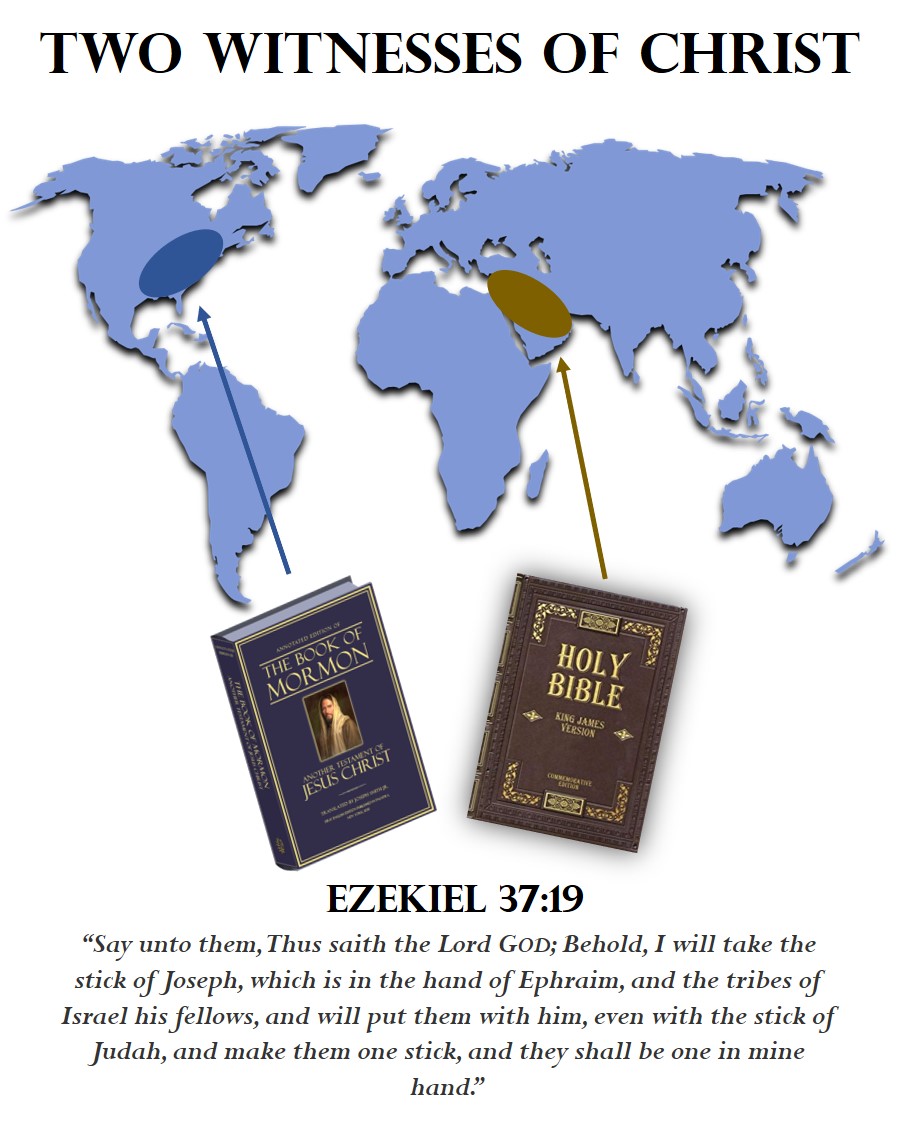
What are the Prophesies and Promises of the Lord that effect our lives?
We blessed people of this nation of the United States, owe a great debt to God and the world. We have been blessed with an incredible amount of freedom and have made a covenant with God that He will help us prosper and be protected, as long as we are righteous. How are we doing today? We are definitely not better than anyone else, but we have made a covenant with God that many have not, therefore, we are held to a higher standard in may regards.
Carnal Security?
Will we take advantage of being brought out of captivity? or, “will he pacify, and lull them away into carnal security, that they will say: All is well in Zion; yea, Zion prospereth, all is well—and thus the devilcheateth their souls, and leadeth them away carefully down to hell. And behold, others he flattereth away, and telleth them there is no hell; and he saith unto them: I am no devil, for there is none—and thus he whispereth in their ears, until he grasps them with his awful chains, from whence there is no deliverance. Yea, they are grasped with death, and hell; and death, and hell, and the devil, and all that have been seized therewith must stand before the throne of God, and be judged according to their works, from whence they must go into the place prepared for them, even a lake of fire and brimstone, which is endless torment. Therefore, wo be unto him that is at ease in Zion! Wo be unto him that crieth: All is well!2 Nephi 28 21-25
Just think. Map out your time spent each week. how many hours do you spend? Take a minute and “Judge yourself”
Sleeping Reading Pleasure Reading Scripture Studying With Family Teaching Children Procrastinating Working Praying Pleasure Hobby Fighting Doing Nothing Learning Overcoming Physical Training Yelling Attending Church
Which one of these items is most important to you, and is that the item you spend most time doing, during the week? What is the least important item to you and how much time do you spend doing that item each week? What part is Satan in that process, and how can we allow the Savior to become the majority of our focus?
Destroyed for Lack of Knowledge
In the bible we read from Hosea 4:6. My people are destroyed for lack of knowledge: because thou hast rejected knowledge, I will also reject thee, that thou shalt be no priest to me: seeing thou hast forgotten the law of thy God, I will also forget thy children.”
If we are mentally weak and uninformed we will suffer. Lack of knowledge and sin, removes our personal choice options. This means we should not wait around a find a friend or a leader or a guru for knowledge. We MUST seek out personal revelation as the only truth comes from our Father in Heaven. Waiting to be told or listening only to some human we respect is not enough. We must reach our to God.
Our dear Prophet said, “Learn for yourself—right now at your age—how to receive personal revelation. And nothing will make a bigger difference in your life than that!
“Anytime you do anything that helps anyone—on either side of the veil—take a step toward making covenants with God and receiving their essential baptismal and temple ordinances, you are helping to gather Israel. It is as simple as that” (Russell M. Nelson, “Hope of Israel,
With God all things are Planned as He is in control and they must occur. All of our choices must contain a blessing or a curse, a good result or a not so good result. That is the Law of nature and of decisions. Satan who controls nothing, all things are made to look like he planned them as a god. Do not trust the arm of flesh of any man.
“Just look at us today. Everything seems backwards, everything is upside down. Doctors destroy health, lawyers destroy justice, psychiatrists destroy minds, scientists destroy truth, major media destroys information, religions destroy spirituality and governments destroy freedom.”
As a matter of fact the word EVIL, if said backwards says LIVE. Satan has us twisted around. Why do you think the Lord has given us the Book of Mormon? Two great civilization brought down by Gadianton’s, Cabal’s, and Evil. What will happen to us?
Out of Captivity
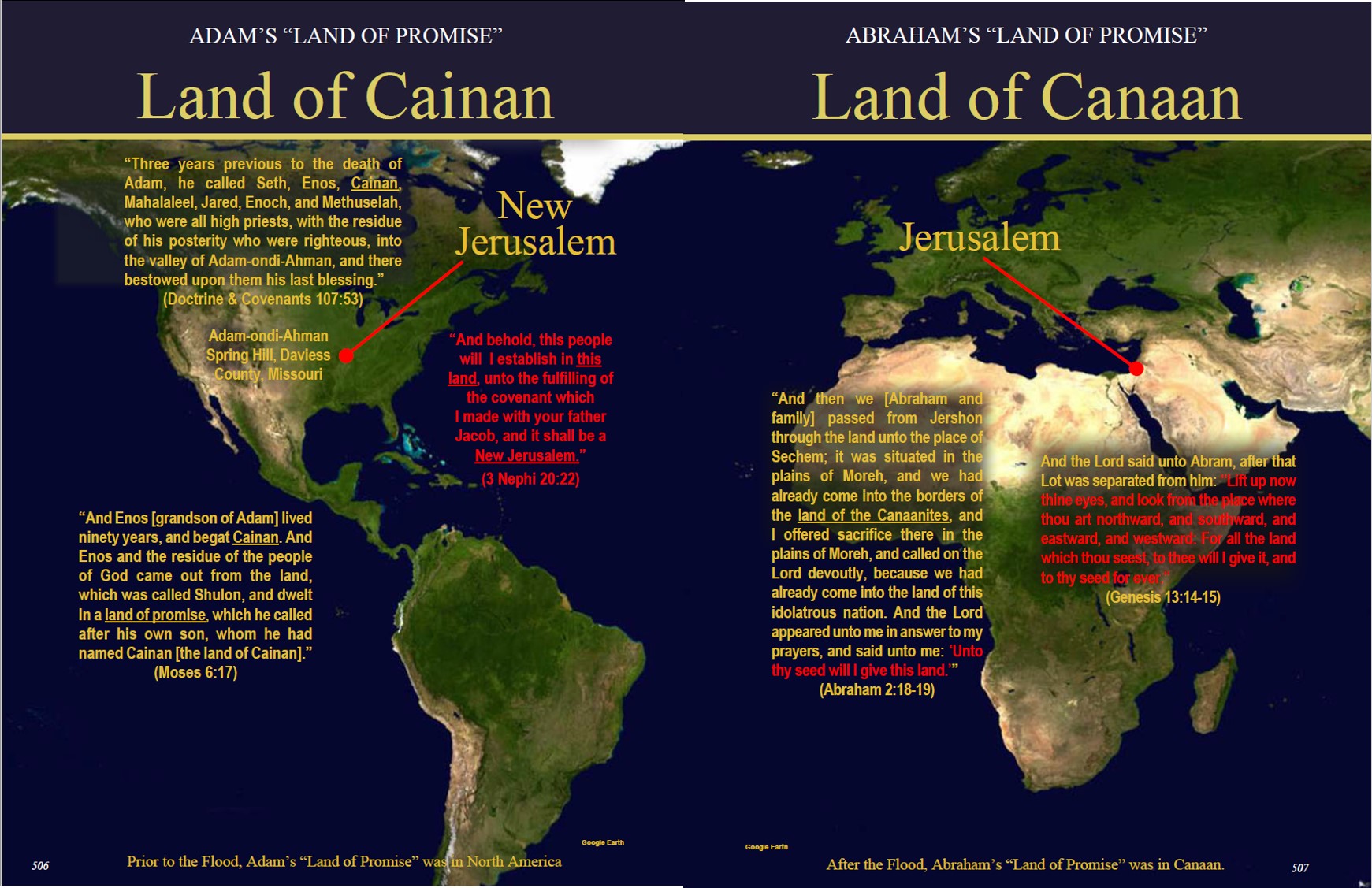
Christ teaches during his visit to the Nephites in the Land Bountiful that His words will come to the remnant of Lehi through Gentiles that will be brought out of captivity to “this land.” He also taught that this same Promised Land will be established for these Gentiles, and that they will “be set up as a free people” in “this land.”
2 “And behold, this is the thing which I will give unto you for a sign—for verily I say unto you that when these things which I declare unto you, and which I shall declare unto you hereafter of myself, and by the power of the Holy Ghost which shall be given unto you of the Father, shall be made known unto the Gentiles that they may know concerning this people who are a remnant of the house of Jacob, and concerning this my people who shall be scattered by them;
3 Verily, verily, I say unto you, when these things shall be made known unto them of the Father, and shall come forth of the Father, from them unto you;
4 For it is wisdom in the Father that they should be established in this land, and be set up as a free people by the power of the Father, that these things might come forth from them unto a remnant of your seed, that the covenant of the Father may be fulfilled which he hath covenanted with his people, O house of Israel;
5 Therefore, when these works and the works which shall be wrought among you hereafter shall come forth from the Gentiles, unto your seed which shall dwindle in unbelief because of iniquity;
6 For thus it behooveth the Father that it should come forth from the Gentiles, that he may show forth his power unto the Gentiles, for this cause that the Gentiles, if they will not harden their hearts, that they may repent and come unto me and be baptized in my name and know of the true points of my doctrine, that they may be numbered among my people, O house of Israel;” 3 Nephi 21:2-6
I don’t see this scripture above as referring to any other people than the Americans of the United States of America. Not just White, but Black, Asian, and all people who are citizens of this land. After all, this was the land Christ chose to be a chosen land. Not that he likes Americans better, but that this is simply the land He chose. Why did He choose it?
Elder Whitney says, “…in culmination of the grand scheme of schemes, this great nation, the Republic of the United States, might be established upon this land as an asylum for the oppressed; a resting place, it might be said, for the Ark of the covenant, where the temple of our God might be built; where the plan of salvation might be introduced and practiced in freedom, and not a dog would wag his tongue in opposition to the purposes of the Almighty. We believe that this was His object in creating the Republic of the United States; the only land where his work could be commenced or the feet of his people find rest. No other land had such liberal institutions, had adopted so broad a platform upon which all men might stand. We give glory to those patriots for the noble work they did; but we give the first glory to God, our Father and their Father, who inspired them. We take them by the hand as brothers. We believe they did nobly their work, even as we would fain do ours, faithfully and well, that we might not be recreant in the eyes of God, for failing to perform the mission to which He has appointed us.” Bishop Orson F. Whitney, delivered in the Tabernacle, Salt Lake City, Sunday Afternoon, April 19, 1885. Reported by John Irvine. Journal Discourses Volume 26 Page 201
These Gentiles will be “set up as a free people” in a nation founded on religious freedom that the Gospel might be restored and the Church established as seen in D&C 10:45-53.
The phrase “set up” in Hebrew means to “raise up, confirm or organize.” As it relates to a “free people,” such an entity must be the formation of a new organization or government that secures freedom for its people. It cannot mean a pre-existing organization, but a new one.Almost every nation and kingdom of the world had a “state”-based religion. The Gentiles come out of religious captivity to establish a place and nation based on religious freedom. This constitutional right to worship according to the dictates of will was “set up” by inspired men in this new nation. The Lord continues teaching the saints in Bountiful that the Holy Ghost will come upon these Gentiles making them “mighty above all” and that they will inhabit the land where the “remnant” remains.
“And after that ye were blessed then fulfilleth the Father the covenant which he made with Abraham, saying: In thy seed shall all the kindreds of the earth be blessed— unto the pouring out of the Holy Ghost through me upon the Gentiles, which blessing upon the Gentiles shall make them mighty above all, unto the scattering of my people, O house of Israel”. 3 Nephi 20:27
Gentiles Come out of Captivity
Further clarifying the revelation concerning the land of promise, the Prophet Nephi describes in detail the Gentiles that go Prophecies & Promises: The Book of Mormon and the United States come “forth out of captivity” by the “power of God.” While seeking to understand his father’s vision of the Tree of Life, Nephi sees that the Holy Ghost “wrought” upon the Gentiles as foretold by Christ generations later.
“And it came to pass that I beheld the Spirit of God, that it wrought upon other Gentiles; and they went forth out of captivity, upon the many waters. And it came to pass that I beheld many multitudes of the Gentiles upon the land of promise; and I beheld the wrath of God, that it was upon the seed of my brethren; and they were scattered before the Gentiles and were smitten. And I beheld the Spirit of the Lord, that it was upon the Gentiles, and they did prosper and obtain the land for their inheritance; and I beheld that they were white, and exceedingly fair and beautiful, like unto my people before they were slain. And it came to pass that I, Nephi, beheld that the Gentiles who had gone forth out of captivity did humble themselves before the Lord; and the power of the Lord was with them. And I beheld that their mother Gentiles were gathered together upon the waters, and upon the land also, to battle against them. And I beheld that the power of God was with them, and also that the wrath of God was upon all those that were gathered together against them to battle. And I, Nephi, beheld that the Gentiles that had gone out of captivity were delivered by the power of God out of the hands of all other nations. And it came to pass that I, Nephi, beheld that they did prosper in the land; and I beheld a book, and it was carried forth among them.” 1 Nephi 13:13-20
Readers of the Book of Mormon quickly recognize these verses as a brief history of the pilgrims and puritans, the founding fathers and the Revolutionary War. All these events led to the establishment of a new Gentile nation—the United States. The Revolutionary War is the only war that can fulfill this prophecy as the Gentiles battle against their “mother Gentiles” on the “waters” and on the Promised Land.
Verses 13, 16, and 19 previously cited record that the Gentiles will “come out of captivity” to this Promised Land for freedoms they did not have. Both the freedom to worship as their conscience dictates, as well as out of literal jail cells in Europe. The Doctrine and Covenants and modern prophets reveal important correlations between these Gentiles who were to be led out of captivity and those who played a part in the establishment of the United States and the restoration of the gospel.
No Doubt that America was Chosen
President Ezra Taft Benson discussed some of these prophecies and promises recorded in the Book of Mormon and the relationship of the Promised Land to the United States of America. This discussion by President Benson is worth quoting below:
“For centuries the Lord kept America hidden in the hollow of His hand until the time was right to unveil her for her destiny in the last days. “It is wisdom that this land should be kept as yet from the knowledge of other nations,” said Lehi, “for behold, many nations would overrun the land, that there would be no place for an inheritance” (2 Nephi 1:8).
In the Lord’s due time His Spirit “wrought upon” Columbus, the pilgrims, the Puritans, and others to come to America. They testified of God’s intervention in their behalf (see 1 Nephi 13:12–13). The Book of Mormon records that they humbled “themselves before the Lord; and the power of the Lord was with them” (1 Nephi 13:16). Our Father in Heaven planned the coming forth of the Founding Fathers and their form of government as the necessary great prologue leading to the restoration of the gospel. Recall what our Savior Jesus Christ said nearly two thousand years ago when He visited this promised land: “For it is wisdom in the Father that they should be established in this land, and be set up as a free people by the power of the Father, that these things might come forth” (3 Nephi 21:4). America, the land of liberty, was to be the Lord’s latter-day base of operations for His restored church. Nephi recorded that the Founders “were delivered by the power of God out of the hands of all other nations” (1 Nephi 13:19).
The years immediately preceding the Constitutional Convention were filled with disappointments and threats to the newly won peace. Washington was offered a kingship, which he adamantly refused. Nephi had prophesied hundreds of years before that “this land shall be a land of liberty unto the Gentiles, and there shall be no kings upon the land” (2 Nephi 10:11; italics added). The Book of Mormon warns us relative to our living in this free land: “Wherefore, this land is consecrated unto him whom he shall bring. And if it so be that they shall serve him according to the commandments which he hath given, it shall be a land of liberty unto them; wherefore, they shall never be brought down into captivity; if so, it shall be because of iniquity; for if iniquity shall abound cursed shall be the land for their sakes, but unto the righteous it shall be blessed forever” (2 Nephi 1:7). “And now,” warned Moroni, “we can behold the decrees of God concerning this land, that it is a land of promise; and whatsoever nation shall possess it shall serve God, or they shall be swept off when the fulness of his wrath shall come upon them. And the fulness of his wrath cometh upon them when they are ripened in iniquity” (Ether 2:9).
Two great American Christian civilizations—the Jaredites and the Nephites—were swept off this land because they did not “serve the God of the land, who is Jesus Christ” (Ether 2:12). We, the blessed beneficiaries of the Constitution, face difficult days in America, “a land which is choice above all other lands” (Ether 2:10). (Note 1)
These prophetic statements made by President Benson in General Conference clearly teach that the Promised Land of the Book of Mormon can only be the United States of America. President Benson’s words agree with Moroni, the angelic messenger from the presence of God, as he revealed and declared to young Joseph that the record on the plates of gold contained a history of the ancient inhabitants that lived on “this continent.”
The “Gentiles” of this land spoken of in these prophecies are also addressed by President Marion G. Romney of the First Presidency in a portion of his talk:
“The tragic fate of the Jaredite and the Nephite civilizations is proof positive that the Lord meant it when he said that this “is a land of promise; and whatsoever nation shall possess it shall serve God, or they shall be swept off when the fulness of his wrath shall come upon them. And the fulness of his wrath cometh upon them when they are ripened in iniquity” (Ether 2:9).
This information, wrote Moroni, addressing himself to us who today occupy this land, “cometh unto you, O ye Gentiles” (now, Gentiles is the term used by the Book of Mormon prophets to refer to the present inhabitants of America and to the peoples of the old world from which they came), “[this] cometh unto you, O ye Gentiles, that ye may know the decrees of God—that ye may repent, and not continue in your iniquities until the fulness come, that ye may not bring down the fulness of the wrath of God upon you as the inhabitants of the land have hitherto done.”
God gave us victory in the Revolutionary War. We are indebted to him for our nation’s independence. He has prospered us in every righteous endeavor. He established the Constitution of the United States “by the hands of wise men whom [He] raised up unto this very purpose” (D&C 101:80).
He himself with his Beloved Son appeared to the Prophet Joseph Smith to open a new dispensation of the gospel of Jesus Christ here in this land. He has established his Church here and has sent and is sending representatives thereof into every nook and corner of the land—and as far as possible to all the earth—to declare and teach the laws of Jesus Christ, the God of this land.
He has revealed anew and repeated over and over again the ancient decree: “This is a land which is choice above all other lands; wherefore he that doth possess it shall serve God or shall be swept off; for it is the everlasting decree of God” concerning this land (Ether 2:10).” (Note 2)
(Note 1) Ezra Taft Benson, “Our Divine Constitution,” Ensign, Nov 1987, 4. See also Marion G. Romney, “America’s Destiny,” Ensign, Nov 1975, 35. President Romney, like President Benson, makes it clear that the United States of America is the land of promise prophesied about in the Book of Mormon. He adds testimony to the Prophecies and Promises listed that they refer to the land of the United States of America. President Romney states: “Millennia ago he declared: ‘There shall none come into this land [he was speaking of America] save they shall be brought by the hand of the Lord’.”
(Note 2) Marion G. Romney, “America’s Destiny,” Ensign, Nov 1975, 35. See also an explanation of the Promised Land in N. Eldon Tanner, “If They Will But Serve the God of the Land,” New Era, Jul 1977, 36.
Prophecies and Promises by Bruce H. Porter and Rod Meldrum Chapter Seven The Gentiles Bold and italics added.
Instead of trying to find out where the Nephites lived, try this experiment.
Find an ancient culture of people that lived somewhere in the world at the same time period as the Nephites. (Apx. 200 BC to 400 AD). If you believe the Nephites lived in Mesoamerican look for this group of people there. If you believe the Book of Mormon events happened in North America, look there. If you feel Nephi and Mosiah lived in South America, look there.
Next find real artifacts that exist today that are dated during those time frames of 200 BC to 400 AD. Look at their travel patterns and hunter gatherer societies and compare it with the location you have found.
Finally, does the land and these people you are looking for, match these 36 promises and prophecies at the bottom of this blog as recorded in the Book of Mormon? If not, don’t be alarmed. The answer is: “The events of the Book of Mormon happened in the Heartland of the United States of America.”
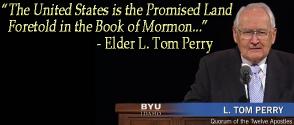
Item 8 below is a [REVELATION]. It shouldn’t be disputed. The way the Meso boys get around this, is they say the entire continent of North America includes the New Jerusalem not just the USA. (So the Promised land could be Greenland, or Nova Scotia, or Venezuela, or Montreal? I guess it could be, but I don’t think it is. The place of the Constitution written by the Lord Himself and the place where the Garden of Eden is located is the Promised Land. What else is an important location of a promised land? Hill Cumorah, Palmyra, Susquehanna, Colesville, Kirtland, Nauvoo, Independence, MO, Salt Lake City? There is overwhelming evidence that as Elder L Tom Perry said, “The United States is the promised land foretold in the Book of Mormon—a palace where divine guidance directed inspired men to create the conditions necessary for the Restoration of the gospel of Jesus Christ.” Elder L. Tom Perry Ensign Dec. 2012.
I Have Stopped Looking.
The Hopewell and Adena Mound builders I believe, are the society that match the criteria of what you are looking for.
Early Woodland period (1500 BC–200 BC) ADENA Middle Woodland period (200 BC–500 AD) HOPEWELL Late Woodland period (500–1000 AD) FORT ANCIENT Mississippian Period (1000 -1500 AD) EARLY-LATE JAREDITES (22OO BC – 586 BC) NEPHITES (600 BC – 421 AD)
Enlarge
“The Hopewell Culture was contemporaneous with the end of the Adena culture, but the Adena people tended to be considerably larger than the Hopewell. Remains of men seven feet tall were common among the Adena, while Hopewell were robust, their males averaged closer to six feet in height. There are four types of earthworks that were constructed by the ancient Hopewell civilization.
Defensive Enclosure Mounds
Burial Mounds
Effigy (Shaped) Mounds
Ceremonial and Temple Mounds
“Mounds were used chiefly as burial places but also as elevated foundations for special structures such as temples (Marietta, OH), hill top enclosures (Fort Ancient, OH), as totemic representations (Serpent Mound in Ohio), and ceremonial space and structures, (The great Circle/Octagon complex, Newark, OH). In size they vary from less than one acre in area to more than 100 acres. Over 200,000 earthworks dotted America’s Heartland.” The Book of Mormon in America’s Heartland by Rodney Meldrum
The Hopewell Culture describes the common aspects of the Native American culture that flourished along rivers in the northeastern and midwestern United States from 300 BC to 400 AD, in the Middle Woodland period. The Hopewell tradition was not a single culture or society, but a widely dispersed set of related populations. They were connected by a network of trade routes, known as the Hopewell Exchange System.
At its greatest extent, the Hopewell Exchange System ran from the Southeastern United States as far south as the Crystal River Indian Mounds into the southeastern Canadian shores of Lake Ontario up north. Within this area societies participated in a high degree of exchange with the highest amount of activity along waterways. The Hopewell Exchange System included copper from the Great Lakes, mica from the Carolinas, obsidian from the Rocky Mountains, and shells from the Gulf Coast. These people then converted the materials into products and exported them through local and regional exchange networks. Although the origins of the Hopewell are still under discussion, the Hopewell culture can also be considered a cultural climax, ending suddenly in about 400 AD.
Hopewell populations originated in western New York and moved south into Ohio where they built on top of the local Adena mortuary tradition. Hopewell was also said to have originated in western Illinois and spread by diffusion … to southern Ohio. Similarly, the Havana Hopewell tradition was thought to have spread up the Illinois River and into southwestern Michigan, spawning Goodall Hopewell.
The name “Hopewell” was applied by Warren K. Moorehead after his explorations of the Hopewell Mound Group in Ross County, Ohio in 1891 and 1892. The mound group itself was named for the family that owned the earthworks at the time.
The Hopewell location in the Mississippi Valley, plains of Illinois, and Indiana and locations in Ohio match up with the location of the Nephites in the Book of Mormon. The time period also shows a great correlation, especially as both the Hopewell and Nephite civilization abruptly ended in about 400 AD.” The Book of Mormon in America’s Heartland page 102 by Rodney Meldrum
Parallels of the Hopewell Culture
Parallels of the Hopewell Culture as described by William C. Mills, Chief Archaeologist of Ohio, with the Book of Mormon“[May 20, 1917; Sunday] Attended Sunday School and afternoon service in Hawthorne Hall, and was a speaker at each assembly. Evening meetings here, as also in Brooklyn, have been discontinued for the summer. The attendance both at Sunday School and afternoon meeting was surprisingly large in view of the fact that many of the Utah college students have left for the vacation period. This evening at the hotel I had a long and profitable consultation with Professor Wm. C. Mills, State Archaeologist of Ohio. He is continuing his splendid work of exploration in the Ohio mounds, and I went over with him again the remarkable agreement between his deductions and the Book of Mormon story. He has reached the following (10) conclusions: The area now included within the political boundaries defining the State of Ohio was once inhabited by two distinct peoples, representing two cultures, a higher and a lower. These two classes were contemporaries; in other words, the higher and the lower culture represented distinct phases of development existing at one time and in contiguous sections, and furnish in no sense an instance of evolution by which the lower culture was developed into the higher. These two cultural types or distinct peoples were generally in a state of hostility one toward the other, the lower culture being more commonly the aggressor and the higher the defender. During limited periods, however, the two types, classes, or cultures, lived in a state of neutrality, amounting in fact to friendly intercourse. The numerous exhumations of human bones demonstrate that the people of the lower type, if not indeed both cultures, were very generally affected by syphilis, indicating a prevalent condition of lasciviousness. Their (are) two peoples or cultures…the lower culture was most commonly the assailing party, while the people of the higher type defended as best they could but in general fled. As a further consequence of this belligerent status they buried their dead, with or without previous cremation, in such condition as to admit of expeditious covering up of the cemeteries by the heaping of earth over the sepulchers [sic], in which hurried work the least skilled laborers and even children could be employed. From a careful collating of data it is demonstrated that the general course of migration through the area now defined as the State of Ohio was inward from the west and outward toward the east. Professor Mills states that no definite data as to the age of these peoples have as yet been found, but that the mounds may date back a few hundred years or even fifteen hundred or more. Several years ago I placed a Book of Mormon in the hands of Professor Mills and, while he is reticent as to the parallelism of his discoveries and the Book of Mormon account, he is impressed by the agreement.” James E. Talmage 20 May 1917
Ross County, OH in Red. Each tiny black dot is equal to one mound complex. Over 5,500 complexes in Ohio
THE HOPEWELL CULTURE
Mounds We know the Hopewell principally from their mounds. Archaeologists have excavated scores of Hopewell mounds in search of knowledge about these ancient people. Many of these mounds were places of burial and, as a result, we know quite a lot about the Hopewell “way of death.” But the burials and the construction of mounds may only represent the climactic events in a series of activities performed at these special sites.
Before the mounds were built, the Hopewell erected large wooden structures on the site. Some of these structures probably were charnel houses, places where the Hopewell dead were prepared for burial or cremation. Others could have been council houses, places of worship, or all of these things. They may have been used over and over again, as layer upon layer of colored clays and sands sometimes are found covering the floors. Each layer may represent the ritualized ending of one phase of activity and the beginning of another. Often, clay basins were built into the upper most floors and some of these served as crematories.
Once they had fulfilled their role in Hopewell society, whatever that role may have been, the wooden structures were burned to the ground, or carefully taken down. Then these places of ceremony and burial were covered with mounds of earth, some of which were quite large such as those at sites like Seip, Harness, and, the largest, Mound 25 at the Hopewell Mound Group. Mound 25, actually three conjoined mounds, was 500 feet long, 180 feet wide, and 30 feet high when mapped by Squier and Davis in the 1840s.
Sometimes the Hopewell would perform this cycle of activities many times in the same general area. The resulting clusters of anywhere from two to a dozen or more mounds might be enclosed by an elliptical or rounded rectangular earthen wall. At Mound City there are at least 23 mounds of varying shapes and sizes surrounded by the walls of an enclosure.
The people buried in the mounds include males and females, young and old. The Hopewell often cremated their dead, but extended burials in prepared tombs are also common. They often clothed or wrapped the bodies in fine textiles. Sometimes they would bury an array of ornaments and objects of ritual with the dead.
The skeletons uncovered by archaeological excavations into Hopewell mounds show us that, in life, these people were healthy and robust. Infant mortality probably was high by today’s standards, but many Hopewellians lived to a ripe old age. The elderly likely held a special place in Hopewell societies. They represented “living archives” of lore on all aspects of the natural and supernatural worlds. Although the Hopewell probably had leaders of some considerable power and influence there is no evidence, such as consistent patterns in burial practices, that their leaders inherited political power after the manner of kings or pharaohs.
The most spectacular offerings frequently were not associated with a particular burial and may, therefore, represent some other ritual activity. Such offerings might include large numbers of copper earspools, copper axes and adzes, plaques of copper or mica cut into various abstract designs or representational forms, animal effigy pipes often carved from Ohio pipestone or other works shaped from various materials brought from the ends of the Hopewell world. These exotic materials included the raw copper and silver from the Lake Superior area; mica, quartz crystal and chlorite from the southern Appalachians; pearls, fossil shark teeth, alligator teeth, conch shells and sea turtle shells from the Gulf Coast; obsidian from the Rocky Mountains; and meteoric iron from various sources. Some archaeologists think these exotic commodities represent a far flung network of trade. But very little material from Ohio, such as tools shaped from Flint Ridge flint, is found at the other end of the so-called Hopewell interaction sphere. Perhaps the trade involved deer skins or other things which have left no traces in the soil for archaeologists to unearth. Perhaps it was not trade at all. Exotic raw materials may have been brought to Ohio by people on pilgrimages or by Ohio Hopewell who collected the materials while on extended quests to far off lands.
One dot per mound complex could be 3-20 mounds per complex.
Enclosures The Hopewell people frequently enclosed places of special importance with earthen walls built in diverse shapes and sizes. Squier and Davis originally classified these into two broad categories: works of defense and sacred enclosures. Archaeologists still recognize the basic distinction between hilltop enclosures, with walls that follow the edges of bluff tops, and geometric earthworks which are usually built on broad, flat river terraces. But they no longer interpret most of the hilltop enclosures as defensive works, even though many still bear the name of “fort”. The Fort Ancient site, for example, has more than three miles of embankments with more than 60 passages allowing entry into the enclosure. Ditches, or moats, were dug inside the walls, rather than outside where we might expect to find defensive features. These facts indicate many of the hilltop enclosures were never intended to serve as forts.
The walls of Hopewell enclosures generally were not used to cover burials. Only at the Turner Group of earthworks near Cincinnati and at Mound City have archaeologists recovered burials beneath the walls of an enclosure. Burial mounds occasionally are enclosed by circular or elliptical embankments, but many, perhaps most, of the earthworks were not used for mortuary ceremonialism.
The gigantic earthen enclosures of the Hopewell are among the most compelling and mysterious architectural remains of ancient America. Embankments of earth built in the shape of simple geometric figures or following the contours of a hilltop are the tantalizing vestiges of a sacred landscape molded from Ohio’s soils nearly 20 centuries ago. Most of these earthworks appear to represent places of social, political and religious significance . But it is difficult, if not impossible, to translate this abstract geometry into sure knowledge about the activities and beliefs of the prehistoric builders. Important clues to the function of the earthworks may still lie buried beneath our feet, or may wheel across the sky above our heads.
Ray Hively, a physicist, and Robert Horn, a philosopher, together recently determined the circular enclosures connected to octagons, at Newark and Chillicothe, record in the alignment of their walls the rising and setting points of the moon through an 18.6 year long cycle. Some scholars argue such alignments are coincidental and the Hopewell were not astronomers. But it should not be surprising these people were aware of the cyclical nature of the apparent motions of the moon and sun, nor that they attached importance to these phenomena. Indeed, we should move beyond the question of whether or not the alignments are intentional or accidental. The important question now is, were the earthworks used as instruments for making astronomical observations or, do the astronomically significant alignments of the walls fulfill a strictly symbolic function? In either case, Hopewellian monumental architecture serves to bring the celestial choreography down to earth.
An unexpected precision underlies Hopewellian geometry. Squier and Davis noted a remarkable correspondence between the form and dimensions of earthworks located many miles apart. For example, the circles connected to the octagonal enclosures at both Newark and the High Bank Works in Chillicothe were the same size as the inner of two concentric circles which once graced Circleville. The outer circle at Circleville was the same diameter as Newark’s Great Circle.
There are other important connections between the Hopewell earthworks at Newark and Chillicothe. The Scioto Valley north and south of the modern city of Chillicothe has the largest number and greatest diversity of earthworks built in North America. The Newark Works are the single largest complex of joined geometric earthen enclosures ever built. Octagon State Memorial in Newark and the High Bank Works in Chillicothe are the only two circular enclosures joined to octagons built by the Hopewell and the main axis of these two sites are oriented precisely perpendicular to each other, even though they are more than 50 miles apart.
There is some evidence to suggest the connections between ancient Newark and Chillicothe were formalized in a prehistoric roadway of long, straight parallel walls. Caleb Atwater, one of Ohio’s first archaeologists, suggested in 1820 that the parallel walls which ran southwestward from Newark’s octagon might extend thirty miles or more. In 1862 James and Charles Salisbury, early residents of Newark, traced these walls six miles “over fertile fields, through tangled swamps and across streams, still keeping their undeviating course.” They did not follow the road to its end, but noted the walls headed in the direction of Chillicothe.
If the Hopewell truly built such a long, straight “roadway” they would not have been the only culture in the Americas to do so; but they would have been among the first. The Anasazi of Chaco Canyon and the Maya of the Yucatan built the most famous networks of long, straight roads more than a century after the Hopewell. The roads of the Maya were ceremonial highways and pilgrimage routes connecting one special place with another. It is often inappropriate to draw analogies between cultures so widely separated in space and time, but perhaps Hopewellian Newark and Chillicothe were great religious centers like Mecca, Santiago de Compostela, or the Vatican. Pilgrims from across eastern North America may have come to these places bearing offerings of rare and precious items; perhaps they left with a spiritual recompense – an oracular message or a religious inspiration. This would provide one of many possible explanations for the presence of large quantities of copper, mica and other exotic materials in Ohio’s mounds and the relative absence of material goods from Ohio in sites at the periphery of Hopewellian influence. See http://www.heathohio.org/about/hopewell.html.
Ancient DNA from the Ohio Hopewell
Click for FREE 170 page download
Amazing results of a study of ancient DNA from the Hopewell site! Lisa A. Mills conducted a study of ancient DNA recovered from human remains from mounds at the Hopewell site, Ross County, Ohio. The results of her work are presented in her doctoral dissertation: Mitochondrial DNA analysis of the Ohio Hopewell of the Hopewell Mound Group. PhD Dissertation by Lisa A. Mills, Department of Anthropology, Ohio State University, 2003.
The Hopewell Mound Group is located in Ross County along the North Fork of Paint Creek, about four miles northwest of Chillicothe. It is part of the Hopewell Culture National Historical Park [http://www.nps.gov/hocu/]. The Hopewell culture [http://www.ohiohistorycentral.org/entry.php?rec=1283] extended across much of eastern North America, but its heartland was here in central and southern Ohio. Hopewell culture sites range in age from 100 BC to around AD 500.
Mills successfully extracted mitochondrial DNA (mtDNA) from the teeth of 34 individuals originally excavated by H. C. Shetrone who was, at the time, Curator of Archaeology for the Ohio Archaeological and Historical Society (now called the Ohio Historical Society). These human remains were excavated from mounds of the Hopewell Mound Group between 1922 and 1925 and subsequently have been curated by the Ohio Historical Society. Mills sampled a total of 49 individuals so her success rate at recovering DNA was 69%. This rate of success indicates excellent preservation of DNA. Although based on a relatively small sample of individuals, the results are promising and provocative.
First, Mills noted that the people she studied from the Hopewell site represented a very diverse group. The sample included 4 out of the 5 documented Native American lineages (haplotypes) [see http://www.centerfirstamericans.com/mt.php?a=203 and http://en.wikipedia.org/wiki/Haplogroup_X_(mtDNA) for more information about Native American DNA]. This apparent diversity might suggest that individuals from different groups were buried together in these mounds.
Second, comparisons between the mtDNA from individuals from the Hopewell site and a database of mtDNA from groups from all over the world, demonstrated that these ancient Native Americans shared close ties with Asia especially, China, Korea, Japan, and Mongolia. This offers strong support for the already well-supported conclusion that Native Americans originated in Asia and migrated to the Americas in the past 15,000 years.
Third, comparisons between the mtDNA from these individuals from the Hopewell site and a database of mtDNA samples from 50 ancient and modern Native American groups provided evidence of some biological relationships. There were clear links between these people and individuals from two Adena culture [http://www.ohiohistorycentral.org/entry.php?rec=1287] sites as well as individuals from the even earlier Glacial Kame culture [http://www.ohiohistorycentral.org/entry.php?rec=2049]. This confirms the inference that the people of the Hopewell culture were the descendants of people of the Adena culture (circa 800 BC to AD 1) who were, in turn, descended from the local Archaic cultures (circa 3000-500 BC).
Interestingly, however, the Hopewell site individuals did not show a close relationship to the Fort Ancient culture samples [http://www.ohiohistorycentral.org/entry.php?rec=1285]. Perhaps, as some scholars have suggested, some Fort Ancient-era groups (circa AD 1000-1650) moved into Ohio from elsewhere. The most closely related ancient groups outside of Ohio included individuals buried at the 700-year-old Norris Farm mound in central Illinois. Also, Mills found that one particular female buried at Mound 25 at the Hopewell site had a rare mutation that she shared with several elite individuals buried at the 1000-year-old Cahokia site [http://www.cahokiamounds.com/cahokia.html].
Modern groups with whom the individuals at the Hopewell site shared some degree of relatedness include the Chippewa/Ojibwa [http://www.ohiohistorycentral.org/entry.php?rec=2090] and Kickapoo of the Great Lakes region. Some genetic links also are indicated between one or more of the individuals from the Hopewell site and tribes as diverse and widespread as the Apache, Iowa, Micmac, Pawnee, Pima, Seri, Southwest Sioux, and Yakima. Mills looked, in particular, for evidence of ancestral ties between the individuals at the Hopewell site and Cherokee Indians, since some oral traditions have suggested a relationship between them. She found that Cherokee mtDNA samples do not cluster close to the Ohio Hopewell.
Finally, Mills found that multiple burials at the Hopewell site included individuals with different mtDNA profiles, indicating they did not share a recent female ancestor (since mtDNA is passed from mother to child). This further indicates that the people at this Hopewell culture site did not base their burial practices on principles of matrilineal descent. Due to the small sample size, the conclusions are tentative.
Mills work, however, confirms that DNA is recoverable from 2,000-year-old bones and that it can be used to make inferences about biological relationships between and among ancient populations and their descendants. It also demonstrates the importance of museum collections, including ancient human remains.
Mitochondrial DNA analysis of the Ohio Hopewell of the Hopewell Mound Group. PhD Dissertation by Lisa A. Mills, Department of Anthropology, Ohio State University, 2003. CHAPTER 6 CONCLUSION
“The results of this study add to an already growing body of research dedicated to mtDNA analysis. In recent years, research utilizing Y- chromosome and STR analysis have also begun to add to what is known about the genetic variation present in Native Americans both ancient and modern. Combine that information with mtDNA, and a complete picture of migration, gene flow and kinship begins to take shape in North America. The Ohio Hopewell through an analysis of their mutations have revealed ancestral relationships with individuals in China, Korea, Japan, Taiwan, Mongolia, Russia and South America. The Ohio Hopewell also display mutations that are uniquely their own, such as haplotype A 16166, haplotype B 16247 and 16265. The unique mutations of the Ohio Hopewell of Hopewell Mound Group may have been lost through attrition or have yet to be discovered in other Native American populations. The Ohio Hopewell also share a unique mutation with the Cahokians of 72Sub2 Mound , utilized to denote a rare haplotype aligned with individuals of high status at Cahokia.
Phylogenetic analysis through Neighbor Joining trees revealed that the Ohio Hopewell group with those individuals who share the basic A through D Native American haplotypes. Upon closer examination, the Ohio Hopewell clustered with both ancient and modern groups of Native Americans. RFLP Neighbor Joining trees revealed that the Ohio Hopewell do not group with samples from Fort Ancient populations of the Ohio River Valley, but with samples from Glacial Kame, Adena or Norris Farms, possibly indicating some relationship between the groups. This in part could be due to small sample size and a low number of sites that have been amplified. More work within all of the Ohio River Valley cultures is needed to give a clearer picture to archaeologists, linguists and biological anthropologists alike. Also examined were hypotheses detailing the migration of the Glacial Kame/Red Ocher groups into the northeast. The Ohio Hopewell did not supply evidence to support these hypotheses. This research did add to the growing body of work on the Hopewell. Matrilineal descent at least at the Hopewell Mound Group is not supported by this research. Also, based upon a visual analysis of the mtDNA haplotypes at the Hopewell Mound Group, as well as lack of homogeneity in multiple burials, segregation does not seem to be occurring at the site. More analysis is needed for the remaining burials in order to flesh out the rest of the site and compare the patterns. Finally, genetic indices were produced which present the Ohio Hopewell as a diverse and heterogenetic group, possessing four out of the five possible Native American haplotypes and presenting as an expanding population. This information also adds to the debate of the number of original waves of Native Americans to migrate into the North America. The Ohio Hopewell would suggest only one wave containing all the haplotypes that are present today in modern Native American populations. Finally, this research provides a model for multidisciplinary research, drawing from all four fields of anthropology. Each field complementing the work of the other fields to produce a complete picture. However, due to the small sample size and restriction to mtDNA, future work could add to what is already known about the Ohio Hopewell.
Contributions were also made in the struggle to deal with the bane of ancient DNA work, contamination. The procedure outlined in this research could help preserve information thought lost to contamination.”
Notes about Haplogroup X documentation
Brown M, Hosseini S, Torroni A and et al. (1998) MtDNA haplogroup X: An ancient link between Europe/Western Asia and North America? A J Hum Genet 63: 1852-1861.
For Native Americans, extensive RFLP and control region (CR; also known as the “D-loop”) sequence analysis has unambiguously identified four major founding mtDNA haplogroups, designated “A”–“D” (Torroni et al. 1992;1993a). Together, these haplogroups account for ∼97% of modern Native American mtDNAs surveyed to date (Torroni and Wallace 1994; Merriwether et al. 1995). Apparent non–haplogroup A–D mtDNAs can result from reversion of key A–D markers, recent admixture with non–Native Americans, or represent additional Native American founding mtDNA lineages. A striking example of the presence of non–haplogroup A–D genotypes in Native Americans can be seen in the Ojibwa, an Amerindian population from the Great Lakes region of North America. Using high-resolution RFLP analysis, Torroni et al. (1993a) found that 25% of the northern Ojibwa mtDNAs did not belong to haplogroups A–D and that nearly all of these “other” mtDNAs encompassed four distinct but related haplotypes characterized by the RFLP motif −1715 DdeI and +16517 HaeIII. This motif was also present in 4% of the Navajo, but it was not observed in 18 other tribes from North, South, and Central America. The high incidence of this motif in the Ojibwa has been confirmed recently by Scozzari et al. (1997), who reported its presence in 26% of the southeastern Ojibwa from Manitoulin Island, Canada.
36 promises and prophecies as recorded in the Book of Mormon
I love the Iroquois Nation and I especially love the Onondaga Tribe within that nation of whom Zelph was a member. Zelph’s prophet during the time frame of the Book of Mormon was Onondagus according to the Joseph Smith Papers here. I am guessing Onandagus would have lived about 280 AD, considering the dating of the Zelph Mound in Valley City, Illinois. Blog Here I have a great love of the Prophet Joseph Smith and of Zelph, I call the Onondaga Nation, Joseph Smith’s Lamanites. You can see more on my personal website at worksofjoseph.com
Joseph Smith Knew the Iroquois
“Contrary, then, to widespread assumptions during Joseph Smith’s lifetime that the Onondaga migrated to the New York region, it becomes clear that they originated here as a small, narrowly localized amalgamation of a few villages near Onondaga Lake, during the century before Columbus’ discovery of America” Beauchamp’s Aboriginal PlaceNames of New York;
Notice the Iroquois Chiefs that lived during Joseph’s time
“Onondaga was a name that Joseph would have heard frequently in the Indian lore which B. H. Roberts felt must have influenced Joseph during his early days in Palmyra… Indeed, in order to reach Palmyra in company with Lucy Mack Smith and his siblings when they emigrated from Vermont, Joseph had to traverse the important township of Onondaga, through which the original Genesee and Seneca Turnpikes still run today…
Ganargua Creek (Mud Creek) was a primary stopover point for the Iroquois on their trade routes. Joseph Smith also had an interest in the creek after hearing a speech from Seneca Indian Chief Red Jacket at Palmyra in 1822.” Mormon Parallels: A Bibliographic Source 2014 Rick Grunder
Buried the Weapons of War
The Onondaga at the great white pine tree in Syracuse NY on the shores of Onondaga Lake is where the message of peace was planted and the hatchets were buried. Similarly, the Lamanites, did the same.
“And thus we see that, when these Lamanites were brought to believe and to know the truth, they were firm, and would suffer even unto death rather than commit sin; and thus we see that they buried their weapons of peace, or they buried the weapons of war, for peace.” Alma 24:19
The Onondagas
“These have special interest… this warrior, Zelph, was an Onondaga, as well as a “white” Lamanite, and that the Onondagas (of New York), consequently must be of Lamanite lineage.” J.M. Sjodahl, An Introduction to the Study of the Book of Mormon
“Many historians believe that Iroquoian ideas of federalism, and balance of power directly influenced the US system of government. Benjamin Franklin admired native American government structures. In 1744, Canassatego advocated in Washington the federal union of the American colonies…
Onondaga was, from the remotest times, the seat of the Iroquois government. Granting credence to the account of their own origin, on the high grounds or falls of the Oswego, (East of Fulton NY) they had not proceeded far up the course of the widely gathered waters of this stream, when a portion of them planted their wigwams in this fertile region. Whatever was the cause of their migrating from their primary council fire, nothing was more natural than that, by pursuing this stream upward, they should separate into independent tribes, and by further tracing out its far spread forks, gradually expand themselves, as they were found by the discoverers and first settlers, over the entire area of western New-York.
On reaching the grand junction of Three River Point (Phoenix, NY), a part went up the Seneca river, who subsequently dividing, formed the Senecas and Cayugas. The bands who took the eastern fork, or Oneida river, pushed forward over the Deowainsta, or Rome summit, into the first large stream, flowing east, and became the Mohawks. The central or Onondaga fork was chosen by the portion who, from the hill country (Onondaga) they first located in, took this name; and from them, the Oneidas, pursuing in fact the track of the Mohawks, were an off-shoot…
The idea of a confederation was, it is believed, an old one with this people, for the very oldest traditions speak of something of this kind, among the lake and St. Lawrence tribes of older days. When the present league was formed, on the banks of the Onondaga lake, this central tribe had manifestly greatly increased in strength, and distinguished itself in arms, and feats of hunting and daring against giants and monsters… Most distinguished, however, above all others, east or west, was a leader of great courage, wisdom and address, called Atotarho…
A singular tradition may be here added. It is said that the XIIIth Atotarho reigned at Onondaga when America was discovered” (1414 AD) Aboriginal History, Antiquities and General Ethnology of Western New-York by Henry R. Schoolcraft
Peacemaker
Some say it was a thousand years ago. Some say that it was two thousand years when there was a dark period in the history of The People. The Mohawk, Oneida, Onondaga, Cayuga and Seneca Nations were at war with one another. It was a terrible time of cruelty, bloodshed and mourning. But then a Huron man, referred to as the Peacemaker, canoed from the western shore of Lake Ontario. He brought with him a message of peace and unity.
The first individual to accept his message of peace was a Seneca woman named Jigonsaseh. Because it was a woman who was the first individual to accept his message of peace, the Peacemaker gave women an important role in the new confederacy that was to be formed. Jigonsaseh became known as “The Mother of Nations.” Source
“The Mohawk, Oneida, Onondaga, Cayuga and Seneca people had been warring against each other. There was great bloodshed and death surrounding us. These people of the five nations had forgotten their ways and their actions saddened the Creator. The Creator decided to send a messenger to the people so that the five nations could live in peace. The messenger is referred to as the Peacemaker…
Combing the snakes” from Tadodaho’s hair.
Once all four nations agreed to join in the peace, all that remained was the Onondaga. Peacemaker, Hiawatha, and the leaders from the other Nations were ready to confront Tadodaho again. Tadodaho tried his sorcerous ways to stop them as they traveled across Onondaga Lake. But the message of peace was unstoppable.
The Peacemaker then offered to Tadodaho a very special duty in this plan of peace. Tadodaho would preside over the Grand Council of 50 chiefs. That he would have the responsibility to make sure that decisions were made with a good mind and were aligned not only for today, but for the generations not yet born. It is at this time when Tadodaho agreed to live in a peaceful way as they “combed the snakes” from Tadodaho’s hair.
The Peacemaker then symbolized this union of peace by uprooting a great white pine tree. All 50 leaders and threw their weapons of hatred, jealousy, anger, and war into the hole and a mighty stream washed it away. As they replanted the tree, the Peacemaker placed an eagle on top of the Tree of Peace. The eagle is there to use his eyesight to look out far and to warn the Haudenosaunee, the People of the Longhouse, of any dangers on the horizon to this great peace.
A wampum belt was made to record the event. It is called the Hiawatha Belt. The belt is made of purple shells with five symbols across the center. Hiawatha Belt begins with a symbol for the Mohawk people, next the Oneida, in the center is the Tree of Peace and the Onondaga, next is the Cayuga and the final symbol is the Seneca people. We were now all united in peace and have remained that way for countless centuries.” Source
Handsome Lake Seneca Prophet
“How America Was Discovered is a story told by Handsome Lake (Seneca Prophet), and documented by Arthur C. Parker, about a young minister who meets the one he perceives to be the Lord, who then asks him to go to a new land and bring with him cards, money, a fiddle, whiskey, and blood corruption. In return the young minister will become rich. The young minister sought out Christopher Columbus, and with the help of his crew, traveled to the Americas. They turned back to report what they had seen, which caused an immigration of people from Europe to the Americas. Along with the people came the five things that aided in destroying the natives. The end reveals that the “Lord” in the gold castle was actually the devil, and that even he knew what he had caused was wrong.” Rudes, B. Tuscarora English Dictionary Toronto
Pompey in Onondaga County
“Pompey in Onondaga County, a town covering upwards of five hundred acres must have contained a population greatly transcending all our ideas of credibility . . . This town was on elevated ground, . . . and was well calculated for defense. . . . There are three old forts distant about eight miles from each other, and forming a triangle which encloses the town; . . . and they were, in all probability, erected to cover the town and to protect the inhabitants from the attacks of an enemy. . . . On the line of the north side, the town was probably stormed. There are graves on each side close to the precipice; sometimes five or six persons were thrown promiscuously into the same grave. If the invaders had been repulsed, the inhabitants would have interred the killed in the usual places; but from the circumstance of there being graves near the ravine and in the village, I am induced to believe that the town was taken. (noting ‘gun barrels, axes, hoes and swords . . . all over these grounds’) The traditions of the Indians agree in some measure with the French relations. They represent that their forefathers had several bloody battles with the French…
There is a hill in Pompey, which the Indians will not visit, and which they call Bloody Hill…
The old fortifications were erected previous to European intercourse. The Indians are ignorant by whom they were made; and in the wars which took place in this country, it is probable that they were occupied as strong holds by the belligerents; and it is likely that the ruins of European works of a different construction may be found… it is remarkable that our ancient forts resemble the old British and Danish. The Bloody Hill site dated by modern archaeology to ca. 1420 A.D. has been excavated carefully in modern times, yielding comparatively superior ceramic artifacts. Significantly more Native sites are now recognized in Pompey, beyond the few which [DeWitt] Clinton knew or was able to visit.” (James A. Tuck, 104-119) Mormon Parallels: A Bibliographic Source 2014 Rick Grunder page 403. Map from “Onondaga Iroquois Pre History A Study in Settlement Archaeology” James A. Tuck 1971 page 20
It has been very common amongst the many cultures of the Native Americans to utilize a previous culture of their left over ruins and develop it into its own new culture and civilization.
For example, you see the picture left of the three different cultures. The Adena lived from 1500 BC to about 300 AD, the Hopewell Culture was from 600 BC to 400 AD and the Fort Ancient culture was from 1000 to 1500 AD. They all built over each other.
The history of the Adena (Jaredites) and Hopewell (Nephites) shows they did have mounds and earthworks that covered both time periods.
I have found the beginning of the Historical Iroquois or Haudenosaunee began 1142 AD to 1797 AD. Here are some of the important treaties and agreements they entered into:
1613 Two Row Wampum or Tawagonshi Agreement (Dutch and French) 1677 Covenant Chain Treaty (English) 1784 The Treaty of Fort Stanwix between the United States and Native Americans. Rome, New York 1788 Phelps & Gorham Purchase with the Iroquois for lands in New York State east of the Genesee River 1794 Treaty of Canandaigua affirming lands rights in New York State east of the Genesee River 1797 Treaty of Big Tree with the Iroquois for lands in New York State west of the Genesee River
Ancient Site of the Onondagas in the Valley of the Kasonda, or Butternut Creek of Jamesville
Posted By Judy On In Native American, New York
“The fact that the ruins of a square fort, with extensive sub-lines in the nature of an enclosure, had existed on the elevated grounds on the right banks of this stream, a mile or two from Jamesville, at the period of its first settlement, led me to visit it. There was the more interest imparted to this well attested tradition of the present inhabitants, by the accounts of the Onondagas, that this valley, in its extent above and below Jamesville, was one of their earliest points of settlement, prior to the era of their establishing their council fire at Onondaga Hollow. The subjoined sketch (below), although not plotted from actual measurement, will convey an idea of the relative position and former importance of the principal features, geographical and artificial, denoted.Indicates the site of the fort, which, at the time of my visit, was covered with a luxuriant field of wheat, without a feature to denote that it had ever been held under any other jurisdiction but that of the plough. The farm which embraces it, is owned and occupied by Isaac Keeler, who remarks that, at the time he came to settle here, the site of the old fort was an extensive opening in the forest, bearing grass, with some clumps of wild plumb trees, and a few forest trees. On this opening, the first regiment of militia that ever paraded in Onondaga county, met. It was commanded by Major De Witt, after whom the township is now named.
Ancient site of the Onondagas in the valley of the Kasonda, or Butternut creek of Jamesville
About the year 1810, he felled an oak, near the site of the fort, measuring two feet six inches in diameter. In recutting it for firewood, after it had been drawn to his door, a leaden bullet was found, covered by one hundred and forty-three cortical layers. From its position, embedded as it was in the compact wood, it was still some distance to the heart of the tree. He thinks this tree may have been a sapling when the bullet was fired. Whether this conjecture be true or not, one hundred and forty-three years appear to have elapsed since the bullet assumed its position. This would give A. D. 1667 as the era.
In 1666, the Governor of Canada concluded a treaty with the Onondaga Iroquois, as is seen from the “Paris Documents” obtained by Mr. Broadhead. Colden’s history of the Five Nations, which has been the principal source of information heretofore, after a brief summary of traditionary matter, 1 in the first chapter, opens with the transactions in 1665. This matter is more fully and satisfactorily stated by Charlevoix in his history of New France, from whom it is presumable, Golden drew his information of the former power and pre-eminence of the Adirondacks.
During this year De Traci came out as viceroy of New France, and the same year Monsieur Coursel, who is notorious for his perfidy in executing the Iroquois sachem, Agariata, arrived with the commission of Governor-General of Canada. But there is little to be found bearing directly on the subject before us.
It would appear from the journal of the Jesuit, Father Le Moyne 7 as given in the missionary “Relacions,” that the country of the Onondagas was not discovered and explored until the year 1653. Facts disclosed by him in the same letter denote, however, prior negotiations with the French authorities, and we are probably to understand only that as yet, no missionaries from his or any other order, had visited, or been established amongst this tribe. 2 In this view, and from the incidental light which he throws on some other topics, such as the new breaking out of the war with the Eries, the discovery of the salt springs, and the existence of the buffalo in the country, this letter is important to the early Iroquois history, and a translation of it is hereto appended. 3 It is certain that no mission or fort had then been introduced. A footing may, however, have been gained by the French within the next fourteen years, that is, at the time of the apparent date of the existence of the old fort on the right banks of the Kasonda.4
Where history fails, we may appeal to tradition and to the proofs drawn from antiquarian remains. Isaac Keeler, who is above mentioned, exhibited to me one-half of the brass circle of a dial plate, three inches (less two-tenths) in diameter, which had been ploughed up by him on the site of the fort, or from that general area. This circle had engraved, in good Roman characters, the numbers II, III, IV, V, VI, VII, VIII He likewise exhibited the box of a small brass pocket compass, with a screw lid one inch and two-tenths in diameter. From this instrument the needle had been removed and its place supplied by vermillion, the highly prized war pigment of the Indians. When plowed up and found at the bottom of a furrow, it was encrusted with oxide, but restored by washing and friction to its original color and even surface. On being opened, it was found to contain the pigment, of which I examined a portion. It appeared to me to have been, not the Chinese vermillion of the trade, but the duller red article, which is, I believe, a peroxide of lead prepared by the Dutch.
Among the articles which he had preserved were the following:
A crucifix of brass of two inches in length, ornamented by a human figure, and having a metallic loop for suspending it,
An octagonal medal, four-tenths of an inch, of the same material, bearing a figure with the name “St. Agatha,” and the Latin word “ora” a part of the Gregorian chant.
A similar medal, five-tenths of an inch in length, with a figure, Ascribed “St. Lucia,” and the same fragment of a chant.
A rude medal of lead, an inch and four-tenths long, ovate, with the figure of the Savior, as is supposed, being that of a person suspended by the outstretched hands, however, and the figure of a serpent, as if this form of temptation had been presented during his advent.
On the reverse, is a sitting figure, which bears most resemblance to a common and characteristic position of one of the native priests or prophets. Should this conjecture be correct, this figure may have been intended, adopting the Indian method, to teach the office of the Savior by a symbol. He is thus shown, however, to be merely the priest and prophet of men an idea which does not coincide with Catholic theology, and which, if not enlarged and corrected by verbal teaching, would convey no conception of his divine character and atonement, and thus leave the Onondaga neophyte essentially in the dark as before. To figure the Savior, as the great Josakeed of men, as is done in this medal, is indeed the most extraordinary and audacious act of which the history of missions among rude nations affords any parallel. The novelty of this feature in this apparently home wrought model, gives it a claim to be hereafter figured.
An iron horse-shoe, four and a half inches long nearly, and five inches, lacking two-tenths, broad, with three elongated nail holes in each side, and a clumsy steel cork, partially worn. The peculiar fabric of this shoe, its clumsiness and spread, and the little mechanical skill which it evinces in the hammering and general make, denote it to be very clearly the workmanship of a Canadian blacksmith, such as a rude Canadian blacksmith is still to be witnessed, in the lake country, and to have been, at the same time, intended for the unfarriered hoofs of the Canadian horse.
A pair of iron strap hinges, common and coarse. These my informant had turned to account, by employing them to hang the little gate which led, through a small flower plat, to his dwelling house. See figure F.
These articles have been selected for notice from many of more common occurrence, such as beads of coarse paste, enamel and glass, of various sizes and colors, which are evidently of European make. My informant further stated that a blacksmith s anvil, vice, horn, and almost every other article of a smith s shop, had been from time to time found on the site or in the vicinity, but there was nothing of this kind in his possession. On the south declivity of the hill, near the present road leading east to Pompey hill, there is a spring still sheltered with shrubbery, which he supposes furnished the fort with water.
This fort constitutes but a part of the very marked evidences of former occupancy by man in a civilized state, and in a forgotten age, which occur in this portion of Onondaga, chiefly in the present towns of Pompey, Lafayette, Dewitt, Camillus and Manlius. For such of these evidences as did not pass under my personal notice, reference is made to letter C in the documentary appendix. Other observed localities and facts derived from other witnesses, illustrating the character of this fort, and of the ancient Indian settlements in the Kasonda valley, are marked H in the annexed sketch.
In this plat B denotes the site of an ancient Onondaga town or village, immediately on the banks of the stream, where water could be readily obtained for all purposes. C is the locality of the cemetery used at the period, on the ascending grounds on the north banks of the stream. It constitutes a well marked transverse ridge. Immediately west of it rises a natural mound, marked D, of large size, nearly conical in its shape, and terminating in a flat surface or plain, of an ovate border, some twelve by seventeen paces. James Gould, the proprietor of the land, who, from his residence, guided me to the spot, remarks that this conical hill, was formerly covered with a hard wood forest, similar in its species to those of the surrounding country, with the exception of a spot, some four or five paces diameter on its apex.This spot was, however, completely veiled from sight by the overtopping trees until the arcanum was entered. From the peculiar character of this eminence, and its relative position to the village and burial ground, it may be supposed to have been the site of the seers lodge, from which he uttered his sacred responses.
Speaking of the old fort of Kasonda, this informant remarked, that when he came into the country, its outlines could still be traced, that it was a square fort, with bastions, and had streets within it. It had been set round with cedar pickets, which had been burned to the ground. Stumps of these ancient palisades were struck by the plough. It is on this testimony, which at the same time, denotes a violent destruction of the work, that the geometrical figure of it, represented in A, is drawn. He had, I think, been in the revolution army, and drawn his bounty lands, as many of the original settlers on the military tract had done. He knew therefore, the import of the military terms he employed.
In a collection of aboriginal antiquarian articles at his house, he permitted me to make drawings of any taken from the fort grounds, or disinterred from ancient Indian graves, which appeared to me to merit it. Of these, but a few are pertinent to the present inquiry.
These are as follows:
Number 1, represents an antique collar or medal, (Nabikoágun,) wrought out of seashell. It is crossed with two parallel, and two horizontal lines, ornamented with dots, and dividing the surface into four equal parts. An orifice exists for introducing a string to suspend it about, the neck. This species of article, is found in Indian graves of the period preceding the discovery of the continent, or not extending more than one or two generations into the new period. It was probably an elegant ornament when bright and new, and exhibiting the natural color and natural of the shell. Inhumation has so far served to decompose the surface, as to coat it with a limy or chalky exterior, which effervesces in mineral acids. By scraping deep into it, the shelly structure is detected. This kind of ornament, varying much in size, was probably soon replaced by the metallic gorget and medal introduced by the trade, and has long been unknown both to Indians and traders. I found it first in Indian cemeteries of the west, without, however, for some time suspecting its real nature, supposing it some variety of altered pottery, or enamel paste; but have since traced it over the entire area of the ancient occupation of western New York, and, so far as examined, of Canada.
No. 2. A stone ring, one inch and two-tenths in diameter, made of a dark species of somewhat hard steatite or slaty rock. Its characteristic trait is found in its adaptation to the middle finger, (of a male) and its having eleven distinct radiating lines.
No. 3. A globular bead or amulet, [Minace,] of sea shell one inch and a half in diameter, solid and massy, having an orifice for suspending it. It is slightly ovate. Its structure from shell, is distinctly marked. Like the flat medal-shaped Nabikoágun (No. 1.) of the same material, it has a limy coating from the effects of partial decomposition. In the remaining features of the sketch, referred to, letters G. G., denote ancient remains of a European character in the contiguous part of the town of Pompey, which are more particularly described in the documentary appendix.
E Represents the Twin Mounds, two natural formations of fine gravel and other diluvial strata, situated on the south side of the creek, on the farm of Jeremiah Gould. These mounds are conspicuous features in the landscape, from their regularity, and position on elevated grounds, as well as from their connection with the ancient Indian history of the valley. These pyramidal heaps of earth are connected, by a neck of earth, in the manner represented. They exhibit the appearance of having been cleared of the forest, almost entirely, at an ancient date. The surface exhibits numerous pits or holes, which excite the idea of their having served as a noted locality for the Indian Assenjigun, or pit for hiding or putting en cache, corn or other articles, to preserve it from enemies, or as a place of deposit during temporary absences from the village. There can, I think, be little question that this was the true use and relation these geological eminences bore to the ancient town on the Kasonda, marked B. Such, too, is the general impression derived from local tradition. Some years ago, a skeleton was exhumed from one of these caches.
Footnotes
The States General of Holland surrendered New York to the English crown in 1664. ↩
That the Dutch traders had visited Onondaga at an earlier period is very probable. The Dutch had then been settled forty years at Albany. ↩
Vide chap. x., opriginal discovery of the Onondaga country. ↩
Firearms began to be first introduced among the Iroquois in 1609, the very year that Hudson explored the river now bearing his name. In this year, Champlain, heading the Algonquins, with some regular troops, in lake Corlear, (since called Champlain,) defeated the Mohawks by the use of firearms.” Article printed from Access Genealogy
Council of Fifty Intended to Bring a Political Transformation
Latter-day Saints believe that one reason the gospel was restored was to prepare the earth for the second coming of the Lord Jesus Christ. Just as the Church was to bring about religious changes in the world, the Council of Fifty was intended to bring a political transformation. It was therefore designed to serve as something of a preparatory legislature in the Kingdom of God. Joseph Smith ordained the council to be the governing body of the world, with himself as chairman, Prophet, Priest, and King over the Council and the world (subject to Jesus Christ, who is “King of kings.” Clayton, Journal, 22 June 1844; Events of June 1844, in Council of Fifty Report , “Record.”
The Church of Jesus Christ of Latter-day Saints was established in 1830 to begin the restoration the the Lord Jesus Christ’s church on this earth. The foundation was laid. We now understand that Joseph Smith tried to bring that Kingdom forward.
Did the church fail with the Kirtland Safety Society, the United Order, the Establishment of the Temple in Independence, and with the Council of Fifty? NO! In my opinion the restoration of the gospel continues as we prepare for the second coming of the Lord to the Earth. We did not fail, but we are progressing and learning. There is much to do if we are to be ready for the Lord to come again.
Is our World in a War today?
Today I believe we have possibly been infiltrated by foreign countries as our United States Constitution may be hanging by a thread. I believe that is the case with most of the world. There is a Deep State or Gadianton control over this world. Satan is working overtime, but I truly believe the Lord and His people will win this contest.
Today’s WWWIII as I call it, is not a typical war of kinetics, but a war of intelligence. It is a war over control of the banks, our education, social media, and our freedom of rights. The Deep State wants to destroy us just as the Gadianton’s wanted to, and succeeded at, destroying the Jaredites and the Nephites. Will we withstand these evil Deep State players? Yes!
I have been praying for what I call a “Second Harvest” for a few years now. I have been praying the Lord will bring down the evil of controlled governments, and allow good leaders to return to all countries of the world. This would allow us to spread the Book of Mormon to all places we have yet to go, including Iraq, Israel, Saudi Arabia, and China. I believe it is very possible for this to happen in preparation of the great second coming of the Lord. Are we prepared? Are we praying and helping the good people of this world to save our various constitutions?
How can we Help Save our Constitution? Opinion of Rian Nelson
I have been following a US Supreme Court case Brunson v. Alma S. Adams; et al., vs. 388 Members of Congress) It has made it to the Supreme Court of the United States (SCOTUS), Docket #22-380, where 9 Justices in conference will vote Jan 6, 2023 (only 4 needed) to move to a hearing.
After the 2020 election on Jan 6, 2020, in an official documentto the US Congress, Senator Ted Cruz said, “Congress should immediately appoint an Electoral Commission, with full investigatory and fact-finding authority, to conduct an emergency 10-day audit of the election returns in the disputed states. Once completed, individual states would evaluate the Commission’s findings and could convene a special legislative session to certify a change in their vote, if needed.”
The Congress took a vote on January 6, 2020 whether or not to reject the electors from disputed states as not ‘regularly given’ and ‘lawfully certified’ (the statutory requisite), unless and until that emergency 10-day audit is completed. The vote was 388 to certify the election of 2020 and 100 voted to have a 10-day audit. The 100 who wanted a 10-day audit simply wanted to look at information from our DNI John Radcliff who said there may be foreign interference with the elections. Congress ignored these 100 congressmen and didn’t allow an audit. Did these 388 congressmen violate the oath of office by not at least having a hearing? If they did, they could be removed from office on civil charges.
I suggest as a citizen of the United States you look at this case and any others that may support our Constitution. This is not a partisan issue but an opportunity to search your conscious. Information Here:
Understanding the Council of Fifty
Less than four months before his death in 1844, Joseph Smith convened a council to discuss proposed Latter-day Saint settlements in areas that were then outside the United States, such as in California and Texas. The council deliberated not only about how Church leaders would govern these settlements but about how to establish a political kingdom or government in preparation for the millennial reign of Jesus Christ. Joseph Smith and his associates saw this council as the beginning of such a kingdom. The council was composed of about 50 members who typically referred to it as the “Kingdom of God” or the “Council of Fifty.”
50
Joseph Smith intended the council to function separately from the Church. While the Church was responsible for spiritual concerns and the eternal salvation of God’s children, the Council of Fifty was a political or civic organization formed to “govern men in civil matters.” Many of Joseph’s closest associates participated in the council, including members of the First Presidency, Quorum of the Twelve Apostles, and Nauvoo High Council. Joseph also admitted three non-Mormons to the council.
The Latter-day Saints’ desire to lay the foundation for a new civil government was partly in response to the persecution they had experienced in Missouri. Joseph Smith and other Church leaders became convinced that the local, state, and national governments were either unwilling to defend or incapable of protecting the Church’s rights as a religious minority. One important purpose of the council was to adopt measures that would protect the “religious rights and worship” of the Latter-day Saints and others. The council’s minutes contain powerful teachings from Joseph Smith about religious liberty. He spoke of “the importance of thrusting from us every spirit of bigotry and intolerance towards a man’s religious sentiments.”
Editor’s Note: This is what is happening today in our cities and communities. As Latter-day Saints we have experienced bigotry for years and now other religions and good people are feeling similar. It is becoming harder and harder for our own State, City, County or Township to protect our religious rights and our right to freedom
During the spring of 1844, the council met frequently to draft a constitution, promote Joseph Smith’s 1844 campaign for president of the United States, and identify potential sites for gathering in the American West. After Joseph Smith’s death, the council reconvened in 1845 and early 1846 under the direction of Brigham Young to make decisions about governing Nauvoo, to build diplomatic relations with American Indians, and to prepare for the Latter-day Saint exodus to the West.
In Utah the council met sporadically between the late 1840s and the 1860s. John Taylor reorganized the council in 1880, but meetings ceased before the end of that decade.
Church Resources R. Eric Smith and Matthew J. Grow, “Council of Fifty in Nauvoo, Illinois,” Perspectives on Church History, history.lds.org. Matthew J. Grow, Ronald K. Esplin, Mark Ashurst-McGee, Gerrit J. Dirkmaat, and Jeffrey D. Mahas, eds., Administrative Records: Council of Fifty, Minutes, March 1844–January 1846. Vol. 1 of the Administrative Records series of The Joseph Smith Papers, edited by Ronald K. Esplin, Matthew J. Grow, and Matthew C. Godfrey (Salt Lake City: Church Historian’s Press, 2016).
What is perhaps the most powerful teaching in the entire Nauvoo Council of Fifty record? Joseph Smith’s statement on religious liberty from the meeting on 11 April, 1844. Those minutes are below, with highlighted areas drawing attention to the most salient parts (as chosen by the author of this article).
He then went on to say that for the benefit of mankind and succeeding generations, he wished it to be recorded that there are men admitted members of this honorable council who are not members of the Church of Jesus Christ of Latter-day Saints, neither profess any creed or religious sentiment whatever, to show that in the organization of this kingdom men are not consulted as to their religious opinions or notions in any shape or form whatever, and that we act upon the broad and liberal principle that all men have equal rights and ought to be respected, and that every man has a privilege in this organization of choosing for himself voluntarily his God, and what he pleases for his religion, inasmuch as there is no danger but that every man will embrace the greatest light.
God cannot save or damn a man only on the principle that every man acts, chooses, and worships for himself; hence the importance of thrusting from us every spirit of bigotry and intolerance towards a man’s religious sentiments, that spirit which has drenched the earth with blood. When a man feels the least temptation to such intolerance he ought to spurn it from him.
It becomes our duty on account of this intolerance and corruption—the inalienable right of man being to think as he pleases, worship as he pleases, etc., being the first law of everything that is sacred—to guard every ground all the days of our lives. I will appeal to every man in this council, beginning at the youngest, that when he arrives to the years of hoary age he will have to say that the principles of intolerance and bigotry never had a place in this kingdom, nor in my breast, and that he is even then ready to die rather than yield to such things. Nothing can reclaim the human mind from its ignorance, bigotry, superstition, etc., but those grand and sublime principles of equal rights and universal freedom to all men. We must not despise a man on account of infirmity. We ought to love a man more for his infirmity. Nothing is more congenial to my feelings and principles than the principles of universal freedom and has been from the beginning. . . .
Let us from henceforth drive from us every species of intolerance. When a man is free from it he is capable of being a critic. When I have used every means in my power to exalt a man’s mind, and have taught him righteous principles to no effect, he is still inclined to his darkness, yet the same principles of liberty and charity would ever be manifested by me as though he embraced it. Hence in all governments or political transactions a man’s religious opinions should never be called in question. A man should be judged by the law independent of religious prejudice; hence we want in our constitution those laws which would require all its officers to administer justice without any regard to his religious opinions, or thrust him from his office.
There are only two or three things lacking in the Constitution of the United States. If they had said all men born equal, and not only that but they shall have their rights, they shall be free, or the armies of the government should be compelled to enforce those principles of liberty.
(Council of Fifty, “Record,” 11 Apr. 1844, vol. 1, pp. [116]–[121], Church History Library, in Joseph Smith Papers, Administrative Records, Council of Fifty, Minutes, March 1844–January 1846, 97–101)4 Author DYEJO 2 October 2018
An organization intended to establish the political kingdom of God on the earth.1 An 1842 editorial in the church newspaper stated that the “design of Jehovah” was to “take the reigns of government into his own hand.”2 On 10 and 11 March 1844, JS and several prominent elders met to discuss letters proposing a new gathering center for Latter-day Saint settlement in the Republic of Texas.3 On 11 March, they formally organized as a council, as William Clayton recounted, to “establish a Theocracy” somewhere in western North America.4 A 14 March 1844 revelation stated that the name of the council should be “The Kingdom of God and his Laws, with the keys and power thereof, and judgment in the hands of his servants. Ahman Christ.”5 The members, however, generally referred to it as the “Kingdom of God” or the “Council of the Kingdom,” or more simply as the “Kingdom” or the “Council.”6 Seniority and voting order in the council were based on age, though JS presided over it as the standing chairman.7On 11 April 1844, the council voted to receive JS as “our Prophet, Priest & King.”8 When the council reached fifty members, including three men who were not Latter-day Saints, JS declared “the council was full.”9 Though the council sometimes had more or fewer than fifty members, it became known as the “Council of Fifty.”10JS taught that there was “a distinction between the church of God and the kingdom of God” and that the laws of the kingdom were “not designed to effect our salvation hereafter.”11 Rather, the council’s purpose was to protect the Saints “in their religious rights and worship.”12 On 25 April 1844, a JS revelation stated that the council itself was the constitution of the kingdom of God and that its members were God’s “spokesmen” in civil matters.13 In March and April 1844, the council discussed principles of proper government, petitioned the U.S. government on behalf of the Saints, sought information on potential gathering places in the West, and planned missionary work among American Indians.14In May 1844, most of the members left Nauvoo to campaign for JS as U.S. president.15 After JS’s death, the Council of Fifty reassembled on 4 February 1845 and voted to sustain Brigham Young as standing chairman and JS’s successor.16 Under Young’s leadership, the council helped supervise the exodus of the Saints from Nauvoo and establish civil government in Utah.17 It met infrequently thereafter until its final meetings in the 1880s.18
Lost Teachings of the Prophets: Recently Uncovered Teachings of Joseph Smith and Others from the Council of Fifty Record
“I have sworn by the eternal gods that I will never vote for another Democrat again; and I intend to swear my children, putting their hands under the thigh, as Abraham swore Isaac, that they will never vote a Democratic ticket in all their generations. It is the meanest lowest party in all creation…the lowest, most tyrannical beings in the world. They opposed me in Missouri, and were going to shoot me for treason, and I had never committed any treason whatever.”(The Pittsburgh Weekly Gazette, September 15, 1843)Another Source:
Have the two prophets already come and will they come again?
New DVD- Unlocking The Mystery of the Two Prophets-by The Joseph Smith Foundation
Did you know that the Revelation 11 prophecy aligns with events in the life of the Prophet Joseph Smith and his brother Hyrum? Is it possible the two prophets have already come and will come again? Who are the two prophets in Revelation 11? The two messengers who lie dead in the great city? An assassination by enemies, a forbidden burial by persecutors, and bodies lying in the street for three and a half days are only a few of the clues found in scripture revealing their identity. The two prophets have generally been shrouded in mystery . . . until now. Did Joseph and Hyrum Smith perform a specific ministry within the period of three and one half years that triggered the fulfillment of thousands of years of ancient Biblical prophecy? Why was Joseph Smith crowned King of Israel in Nauvoo? Why did John reference the ark in Heaven when describing the mission of the Two Prophets? Is the ark of the covenant a similitude or foreshadowing of the Latter-days? Did you know that there are two joint heads for this last and final dispensation? How were Joseph & Hyrum Smith “clothed in sackcloth” in Nauvoo?
Beloved Brethren: -The relationship which we sustain to The Church of Jesus Christ of Latter-day Saints, renders it necessary that we should make known from time to time, the circumstances, situation, and prospects of the Church, and give such instructions as may be necessary for the well being of the Saints, and for the promotion of those objects calculated to further their present and everlasting happiness.
We have to congratulate the Saints on the progress of the great work of the “last days,” for not only has it spread through the length and breadth of this vast continent, but on the continent of Europe, and on the islands of the sea, it is spreading in a manner entirely unprecedented in the annals of time. This appears the more pleasing when we consider, that but a short time has elapsed since we were unmercifully driven from the state of Missouri, after suffering cruelties and persecutions in various and horrid forms….
It would be impossible to enumerate all those who, in our time of deep distress, nobly came forward to our relief, and, like the good Samaritan, poured oil into our wounds, and contributed liberally to our necessities, and the citizens of Quincy en masse, and the people of Illinois, generally, seemed to emulate each other in this labor of love….
We would likewise make mention of the legislators of this state, who, without respect to parties, without reluctance, freely, openly, boldly, and nobly, have come forth to our assistance, owned us as citizens and friends, and took us by the hand, and extended to us all the blessings of civil, political, and religious liberty, by granting us, under date of December 16, 1840, one of the most liberal charters, with the most plenary powers ever conferred by a legislative assembly on free citizens, “The City of Nauvoo,” the “Nauvoo Legion,” and the “University of the City of Nauvoo.”…
The name of our city (Nauvoo) is of Hebrew origin, and signifies a beautiful situation, or place, carrying with it, also, the idea of rest; and is truly descriptive of the most delightful location. It is situated on the east back of the Mississippi river, at the head of the Des Moines rapids, in Hancock county, bounded on the east by an extensive prairie of surpassing beauty, and on the north, west, and south, by the Mississippi….
Having been instrumental, in the hands of our heavenly Father, in laying a foundation for the gathering of Zion, we would say, let all those who appreciate the blessings of the Gospel, and realize the importance of obeying the commandments of heaven, who have been blessed with the possession of this world’s goods, first prepare for the general gathering; let them dispose of their effects as fast as circumstances will possibly admit, without making too great sacrifices, and remove to our city and county; establish and build up manufactures in the city, purchase and cultivate farms in the county. This will secure our permanent inheritance, and prepare the way for the gathering of the poor. This is agreeable to the order of heaven, and the only principle on which the gathering can be effected. Let the rich, then, and all who can assist in establishing this place, make every preparation to come on without delay, and strengthen our hands, and assist in promoting the happiness of the Saints….
The Temple of the Lord is in process of erection here, where the Saints will come to worship the God of their fathers, according to the order of His house and the power of the Holy Priesthood, and will be so constructed as to enable all the functions of the Priesthood to be duly exercised, and where instructions from the Most High will be received, and from this place go forth to distant lands. Let us then concentrate all our powers, under the provisions of our Magna Charta granted by the Illinois legislature, at the “City of Nauvoo” and surrounding country, and strive to emulate the action of the ancient covenant fathers and Patriarchs, in those things which are of such vast importance to this and every succeeding generation….
The greatest temporal and spiritual blessings which always flow from faithfulness and concerted effort, never attended individual exertion or enterprise. The history of all past ages abundantly attests this fact. In addition to all temporal blessings, there is no other way for the Saints to be saved in these last days [than by the gathering], as the concurrent testimony of all the holy Prophets clearly proves, for it is written-“They shall come from the east, and be gathered from the west; the north shall give up, and the south shall keep not back.” “The sons of God shall be gathered from far, and His daughters from the ends of the earth.”
“[The] doctrine of the gathering is one of the important teachings of The Church of Jesus Christ of Latter-day Saints. … We not only teach this doctrine, but we participate in it. We do so as we help to gather the elect of the Lord on both sides of the veil” (“The Gathering of Scattered Israel,” Ensign or Liahona, Nov. 2006, 80).
It is also the concurrent testimony of all the Prophets, that this gathering together of all the Saints, must take place before the Lord comes to “take vengeance upon the ungodly,” and to be glorified and admired by all those who obey the Gospel.” The fiftieth Psalm, from the first to the fifth verse inclusive, describes the glory and majesty of that event. The mighty God, and even the Lord hath spoken, and called the earth from the rising of the sun unto the going down thereof. Out of Zion, the perfection of beauty, God hath shined. Our God shall come and shall not keep silence; a fire shall devour before Him, and it shall be very tempestuous round about Him. He shall call to the heavens from above, and to the earth (that He may judge the people). Gather my Saints together unto me; those that have made covenant with me by sacrifice.
We might offer many other quotations from the Scriptures, but believing them to be familiar to the Saints, we forbear.
We would wish the Saints to understand that, when they come here, they must not expect perfection, or that all will be harmony, peace, and love; if they indulge these ideas, they will undoubtedly be deceived, for here there are persons, not only from different states, but from different nations, who, although they feel a great attachment to the cause of truth, have their prejudices of education, and, consequently, it requires some time before these things can be overcome…. Therefore, let those who come up to this place be determined to keep the commandments of God, and not be discouraged by those things we have enumerated, and then they will be prospered-the intelligence of heaven will be communicated to them, and they will eventually, see eye to eye, and rejoice in the full fruition of that glory which is reserved for the righteous.
In order to erect the Temple of the Lord, great exertions will be required on the part of the Saints, so that they may build a house which shall be accepted by the Almighty, in which His power and glory shall be manifested. Therefore let those who can freely make a sacrifice of their time, their talents, and their property, for the prosperity of the kingdom, and for the love they have to the cause of truth, bid adieu to their homes and pleasant places of abode, and unite with us in the great work of the last days, and share in the tribulation, that they may ultimately share in the glory and triumph.
We wish it likewise to be distinctly understood, that we claim no privilege but what we feel cheerfully disposed to share with our fellow citizens of every denomination, and every sentiment of religion; and therefore say, that so far from being restricted to our own faith, let all those who desire to locate themselves in this place, or the vicinity, come, and we will hail them as citizens and friends, and shall feel it not only a duty, but a privilege, to reciprocate the kindness we have received from the benevolent and kind-hearted citizens of the state of Illinois. “ Joseph Smith, Sidney Rigdon, Hyrum Smith, Presidents of the Church [HC 4:267-73]. 1,260 Days until June 27, 1844
Jan 1, 1892 [Apostle Abraham H. Cannon Journal]
(At a Stake Conference at Brigham City) President Snow reported that on one occasion Joseph Smith was once asked who he was: “The Prophet smiled kindly upon his interlocutor and replied, “Noah came before the flood; I have come before the fire.” 3 – Abraham H. Cannon Journal Excerpts, http://www.amazon.com/Apostles-Record-Journals-Abraham-1889-1896/dp/B000MFD1K4
3 and one half days after the proclamation above, Hyrum was ordained a Prophet, Seer, and Revelator Jan 19, 1841
“And from this time forth I appoint unto him that he may be a prophet, and a seer, and a revelator unto my church, as well as my servant Joseph; That he may act in concert also with my servant Joseph; and that he shall receive counsel from my servant Joseph, who shall show unto him the keys whereby he may ask and receive, and be crowned with the same blessing, and glory, and honor, and priesthood, and gifts of the priesthood, that once were put upon him that was my servant Oliver Cowdery; That my servant Hyrum may bear record of the things which I shall show unto him, that his name may be had in honorable remembrance from generation to generation, forever and ever.” D&C 124:94-96
President Joseph Fielding Smith (1876–1972) described how the law of witnesses (see 2 Corinthians 13:1) was fulfilled by Oliver Cowdery being present every time priesthood keys were restored: “The Lord called Oliver Cowdery as the second witness to stand at the head of this dispensation assisting the Prophet in holding the keys. The records inform us that every time the Prophet received authority and the keys of the priesthood from the heavens, Oliver Cowdery shared in the conferring of those powers with the Prophet. Had Oliver Cowdery remained faithful and had he survived the Prophet under those conditions, he would have succeeded as President of the Church by virtue of this divine calling ” (Doctrines of Salvation, comp. Bruce R. McConkie, 3 vols. [1954–56], 1:213; emphasis added). On January 19, 1841, because Oliver did not remain faithful, “the Lord commanded Joseph Smith to ordain Hyrum Smith and confer upon him all the keys, authority, and privileges placed upon the head of Oliver Cowdery, and make him the ‘Second President’ of the Church” (Doctrines of Salvation, 1:220).
The Council never rose to the stature Joseph intended
Members (which included individuals that were not members of the Church of Jesus Christ of Latter-day Saints) were sent on expeditions west to explore emigration routes for the Saints, lobbied the American government, and were involved in Joseph Smith’s presidential campaign. But only three months after it was established, Joseph was killed, and his death was the beginning of the Council’s end. Brigham Young used it as the Saints moved west and settled in the Great Basin, and it met annually during John Taylor’s administration, but since that time the Council has not played an active role among the Latter-day Saints.
The Council of Fifty was designed to serve as something of a preparatory legislature in the Kingdom of God
Latter-day Saints believe that one reason the gospel was restored was to prepare the earth for the second coming of the Lord Jesus Christ. Just as the Church was to bring about religious changes in the world, the Council of Fifty was intended to bring a political transformation. It was therefore designed to serve as something of a preparatory legislature in the Kingdom of God. Joseph Smith ordained the council to be the governing body of the world, with himself as chairman, Prophet, Priest, and King over the Council and the world (subject to Jesus Christ, who is “King of kings”[1]).
The Council of Fifty, while established in preparation for a future Millennial government under Jesus Christ (who is the King of Kings) was to be governed on earth during this preparatory period by the highest presiding ecclesiastical authority, which at the time was the Prophet Joseph Smith. Joseph had previously been anointed a King and Priest in the Kingdom of God by religious rites associated with the fullness of the temple endowment, and was placed as a presiding authority over this body in his most exalted position within the kingdom of God (as a King and a Priest).
Joseph was anointed as the presiding authority over an organization that was to prepare for the future reign of Jesus Christ during the Millennium
The fact that Joseph’s prior anointing was referenced in his position as presiding authority over this body creates the confusion that he had been anointed King of the Earth. He was in fact only anointed as the presiding authority over an organization that was to prepare for the future reign of Jesus Christ during the Millennium. The fact that Joseph had submitted his name for consideration as President of the United States during this same period adds fodder for critics seeking to malign the character of the Prophet.
An organization intended to establish the political kingdom of God on the earth.1
An 1842 editorial in the church newspaper stated that the “design of Jehovah” was to “take the reigns of government into his own hand.”2
On 10 and 11 March 1844, JS and several prominent elders met to discuss letters proposing a new gathering center for Mormon settlement in the Republic of Texas.3
On 11 March, they formally organized as a council, as William Clayton recounted, to “establish a Theocracy” somewhere in western North America.4
A 14 March 1844 revelation stated that the name of the council should be “The Kingdom of God and his Laws, with the keys and power thereof, and judgment in the hands of his servants. Ahman Christ.”5
The members, however, generally referred to it as the “Kingdom of God” or the “Council of the Kingdom,” or more simply as the “Kingdom” or the “Council.”6
Seniority and voting order in the council were based on age, though JS presided over it as the standing chairman.7
On 11 April 1844, the council voted to receive JS as “our Prophet, Priest & King.”8
When the council reached fifty members, including three men who were not Latter-day Saints, JS declared “the council was full.”9
Though the council sometimes had more or fewer than fifty members, it became known as the “Council of Fifty.”10
JS taught that there was “a distinction between the church of God and the kingdom of God” and that the laws of the kingdom were “not designed to effect our salvation hereafter.”11
Rather, the council’s purpose was to protect the Saints “in their religious rights and worship.”12
On 25 April 1844, a JS revelation stated that the council itself was the constitution of the kingdom of God and that its members were God’s “spokesmen” in civil matters.13
In March and April 1844, the council discussed principles of proper government, petitioned the U.S. government on behalf of the Saints, sought information on potential gathering places in the West, and planned missionary work among American Indians.14
In May 1844, most of the members left Nauvoo to campaign for JS as U.S. president.15
After JS’s death, the Council of Fifty reassembled on 4 February 1845 and voted to sustain Brigham Young as standing chairman and JS’s successor.16
Under Young’s leadership, the council helped supervise the exodus of the Saints from Nauvoo and establish civil government in Utah.17
It met infrequently thereafter until its final meetings in the 1880s.18
Council of Fifty Voted JS to be Received as Prophet, Priest & King
23 June 1844 In Nauvoo, Illinois, JS instructed William Clayton to conceal minutes of Council of Fifty by sending them away, burying them, or burning them; Clayton buried them in his garden.1
William Clayton Began Copying Council of Fifty Records
18 August 1844 William Clayton began copying records of Council of Fifty into small leather-bound volume by this date, Nauvoo, Illinois.1
3 July 1844 William Clayton dug up records of Council of Fifty and found they had been damaged by water, Nauvoo, Illinois.1
Discussion of Finding New Home in West for Saints, 1 March 1845
In Nauvoo, Illinois, Council of Fifty discussed sending delegation west with Lewis Dana to find new home for Saints among American Indians.
21 March 1844 Council of Fifty Assigned Others to Draft Petition to Congress
In Nauvoo, Illinois, Council of Fifty assigned Willard Richards, Hyrum Smith, and William W. Phelps to draft petition to Congress requesting authority for JS to raise large company of volunteers to protect American settlers and interests in Republic of Texas, Oregon, and other areas in West. Council also assigned James Emmett to visit American Indians in Wisconsin Territory.1
List of Members, Council of Fifty, probably between 25 April and 3 May 1844
Source NoteDocument Transcript
1 Joseph Smith Chairman
19 John M Bernhisel
37 Alexander Badlam [Sr.]
2 Samuel Bent
20 John D. Parker
38 Chas. C. Rich
3 John Smith
21 Hyrum Smith
39 George J. Adams
4 Alpheus Cutler
22 Lucian [Lucien]Woodworth
40 Orson Pratt
5 Uriah Brown
23 Brigham Young
41 Wm. Smith
6 Reynolds Cahoon
24 Heber C. Kimball
42 Merinus G. Eaton
7 Ezra Thayer
25 Orson Spencer
43 Alman Babbut [Almon Babbitt]
8 W[illiam] W. Phelps
26 James Emmett
44 Amasa Lyman
9 Amos Feilding [Fielding]
27 Philip B. Lewis
45 Joseph W. Coolidge
10 Wm. Marks
28 Elias Smith
46 Orrin P[orter] Rockwell
11 Sidney Rigdon
29 Orson Hyde
47 Jedidiah [Jedediah] M. Grant
12 John P. Green[e]
30 Samuel James
48 George A. Smith
13 George Miller
31 Wilford Woodruff
49 Erastus Snow
14 N[ewel] K. Whitney
32 P[arley] P. Pratt
50 Lorenzo D. Wasson
15 Peter Haws
33 Edward Bonney
51 Benjn. F. Johnson
16 Joseph Fielding
34 David D. Yearsley
52 Lyman Wight
17 Cornelius P. Lott
35 David S. Hollister
53 Wm Clayton Clerk
18 Levi Richards
36 John Taylor
54 W[illard] Richards
Recorder[p. [1]]
“On the morning of March 1, thirty-eight-year-old Lewis Dana became the first American Indian to join the Council of Fifty. After Joseph’s death, council meetings had stopped, but once the Nauvoo charter was repealed and the Saints realized their days in Nauvoo were numbered, the Twelve had called the council together to help govern the city and plan its evacuation. A member of the Oneida nation, Lewis had been baptized with his family in 1840. He had served several missions, including one to the Indian territory west of the United States, and had ventured as far away as the Rocky Mountains. Knowing Lewis had friends and relatives among Indian nations to the west, Brigham invited him to join the council and share what he knew about the people and lands there”. “In the name of the Lord,” Lewis told the council, “I am willing to do all I can.” Saints, Endowed with Power Chapter 46
Discussion of Finding New Home in West for Saints
1 March 1845In Nauvoo, Illinois, Council of Fifty discussed sending delegation west with Lewis Dana to find new home for Saints among American Indians.1Lewis Dana. Oneida Tribe
Daniel Spencer and Charles Shumway’s Return to Nauvoo
1 September 1845
Daniel Spencer and Charles Shumway returned to Nauvoo, Illinois, from mission to Indian Territory after conferring with Lewis Dana.1
Group Departed for Exploratory Mission to Indian Territory
23–24 April 1845
Phineas Young, Lewis Dana, Jonathan Dunham, Charles Shumway, and Solomon Tindall leave Nauvoo, Illinois, for exploratory mission to Indian Territory.1
Missionaries’ Arrival at Indian Territory
31 May 1845
Western missionaries arrived at Fort Gibson, Indian Territory, and learned that council of Indian leaders in the Creek reservation they had intended to attend had been held 13–16 May. Charles Shumway and Phineas Young decided to return to Nauvoo, Illinois; Jonathan Dunham, Lewis Dana, and Solomon Tindall remained in Indian Territory.1
HC 7:379 Saturday, March 1, 1845.–I met with the “General Council’ 4 (link is external) at the Seventies Hall. We decided to send nine brethren westward, to search out a location for the saints; many eloquent speeches were made on the present position of affairs: had a good meeting, which continued all day.
Tuesday, 4.–Continued sickly. General Council met at Seventies Hall; Elder Kimball presided; the subject of the western mission was discussed.
Steady the Ark of God
D&C 85:8. What Does It Mean to “Steady the Ark of God”?
This phrase refers to an incident during the reign of King David in ancient Israel. The Philistines had captured the ark of the covenant in battle but returned it when they were struck by plagues (see 1 Samuel 4–6). David and the people later brought the ark to Jerusalem in an ox cart, driven by Uzzah and Ahio. “And when they came to Nachon’s threshingfloor, Uzzah put forth his hand to the ark of God, and took hold of it; for the oxen shook it. And the anger of the Lord was kindled against Uzzah; and God smote him there for his error, and there he died by the ark of God” (2 Samuel 6:6–7; see vv. 1–11). The ark was the symbol of God’s presence, His glory and majesty. When first given to Israel, the ark was placed in the Holy of Holies in the tabernacle, and not even the priest was allowed to approach it. Only the high priest, a type of Christ, could approach it, and then only after going through an elaborate ritual of personal cleansing and propitiation for his sins. The scriptures teach that no unclean thing can dwell in God’s presence (see Moses 6:57). His presence is like a consuming fire (see Hebrews 12:29). Those who bear the vessels of the Lord must be clean (see D&C 133:5).
However well-meaning Uzzah’s intentions, he approached casually what could only be approached under the strictest conditions. He had no faith in God’s power. He assumed that the ark was in danger, forgetting that it was the physical symbol of the God who has all power. We cannot presume to save God and His kingdom through our own efforts.
“Uzziah’s offence consisted in the fact that he had touched the ark with profane feelings, although with good intentions, namely to prevent its rolling over and falling from the cart. Touching the ark, the throne of the divine glory and visible pledge of the invisible presence of the Lord, was a violation of the majesty of the holy God. ‘Uzzah was therefore a type of all who with good intentions, humanly speaking, yet with unsanctified minds, interfere in the affairs of the kingdom of God, from the notion that they are in danger, and with the hope of saving them’ (O.V. Gerlach).” (Keil and Delitzsch, Commentary, bk. 2: Joshua, Judges, Ruth, 1 and 2 Samuel, “Second Book of Samuel,” p. 333.)
In modern revelation the Lord referred to this incident to teach the principle that the Lord does not need the help of men to defend his kingdom (see D&C 85:8). Yet even today there are those who fear the ark is tottering and presume to steady its course. There are those who are sure that women are not being treated fairly in the Church, those who would extend some unauthorized blessing, or those who would change the established doctrines of the Church. These are ark-steadiers. The best intentions do not justify such interference with the Lord’s plan. President David O. McKay said:
“It is a little dangerous for us to go out of our own sphere and try unauthoritatively to direct the efforts of a brother. You remember the case of Uzzah who stretched forth his hand to steady the ark. (See I Chron. 13:7–10.) He seemed justified, when the oxen stumbled, in putting forth his hand to steady that symbol of the covenant. We today think his punishment was very severe. Be that as it may, the incident conveys a lesson of life. Let us look around us and see how quickly men who attempt unauthoritatively to steady the ark die spiritually. Their souls become embittered, their minds distorted, their judgments faulty, and their spirits depressed. Such is the pitiable condition of men who, neglecting their own responsibilities, spend their time in finding fault with others.” (McKay, Gospel Ideals, p. 258.)
President John Taylor observed:
“We have more or less of the principles of insubordination among us. But there is a principle associated with the kingdom of God that recognizes God in all things, and that recognizes the priesthood in all things, and those who do not do it had better repent or they will come to a stand very quickly; I tell you that in the name of the Lord. Do not think you are wise and that you can manage and manipulate the priesthood, for you cannot do it. God must manage, regulate, dictate, and stand at the head, and every man in his place. The ark of God does not need steadying, especially by incompetent men without revelation and without knowledge of the kingdom of God and its laws. It is a great work that we are engaged in, and it is for us to prepare ourselves for the labor before us, and to acknowledge God, his authority, his law and his priesthood in all things.”(Taylor, Gospel Kingdom, p. 166.)
John Taylor
The Book of Mormon is a record of the forefathers of our western tribes of Indians; having been found through the ministration of an holy angel, and translated into our own language by the gift and power of God, after having been hid up in the earth for the last fourteen hundred years, containing the word of God which was delivered unto them. By it we learn that our western tribes of Indians are descendants from that Joseph which was sold into Egypt, and that the land of America is a promised land unto them, and unto it all the tribes of Israel will come, with as many of the Gentiles as shall comply with the requisitions of the new covenant. But the tribe of Judah will return to old Jerusalem. The city of Zion spoken of by David, in the one hundred and second Psalm, will be built upon the land of America, “And the ransomed of the Lord shall return, and come to Zion with songs and everlasting joy upon their heads” (Isaiah 35:10); and then they will be delivered from the overflowing scourge that shall pass through the land. But Judah shall obtain deliverance at Jerusalem. See Joel 2:32; Isaiah 26:20-21; Jeremiah 31:12, Psalm 1:5; Ezekiel 34:11-13. These are testimonies that the Good Shepherd will put forth His own sheep, and lead them out from all nations where they have been scattered in a cloudy and dark day, to Zion, and to Jerusalem; besides many more testimonies which might be brought.
And now I am prepared to say by the authority of Jesus Christ, that not many years shall pass away before the United States shall present such a scene of bloodshed as has not a parallel in the history of our nation; pestilence, hail, famine, and earthquake will sweep the wicked of this generation from off the face of the land, to open and prepare the way for the return of the lost tribes of Israel from the north country. The people of the Lord, those who have complied with the requirements of the new covenant, have already commenced gathering together to Zion, which is in the state of Missouri; therefore I declare unto you the warning which the Lord has commanded to declare unto this generation, remembering that the eyes of my Maker are upon me, and that to him I am accountable for every word I say, wishing nothing worse to my fellow-men than their eternal salvation; therefore, “Fear God, and give glory to Him, for the hour of His judgment is come.” Repent ye, repent ye, and embrace the everlasting covenant, and flee to Zion, before the overflowing scourge overtake you, for there are those now living upon the earth whose eyes shall not be closed in death until they see all these things, which I have spoken, fulfilled. Remember these things; call upon the Lord while He is near, and seek Him while He may be found, is the exhortation of your unworthy servant.
Discovery of Educated Native Americans in Great Cities
I hope no one today is saying the Native Americans or the Jaredites and Nephites were any less educated than the whites or gentiles. It’s just not possible. The innovation and exploits of the ancient Book of Mormon people amaze me more every day. We are finding so much archaeology and information that science and history have purposely hidden from us that we are seeing all over the world now. Today, I call them the Cabal or Deep State, and they continue their evil and secret combinations just like the Gadianton’s of the past.
“…When…first commanded to testify of these things they [The Three Witness] demurred and told the Lord the people would not believe them for the book concerning which they were to bear record told of a people who were educated and refined, dwelling in large cities; whereas all that was then known of the early inhabitants of this country was the filthy, lazy, degraded and ignorant savages that were roaming over the land. The Lord told us, in reply that He would make it known to the people that the early inhabitants of this land had been just such a people as they were described in the book, and he would lead them to discover the ruins of great cities, and they should have abundant evidence of the truth of that which is written in the book…” – David Whitmer, Interview with James H. Hart (Richmond, Mo., 21 August 1883), as printed in Deseret Evening News, Salt Lake City, Utah
“THE LAMANITES. — The work of the Lord among the Lamanites must not be postponed, if we desire to retain the approval of God. Thus far we have been content simply to baptize them and let them run wild again, but this must continue no longer; the same devoted effort the same care in instructing, the same organization of priesthood must be introduced and maintained among the house of Lehi as amongst those of Israel gathered from gentile nations, As yet, God has been doing all, and we comparatively nothing. He has led many of them to us, and they have been baptized, and now we must instruct them further, and organize them into churches with proper presidencies, attach them to our stakes, organizations, etc. In one word, treat them exactly, in these respects, as we would and do treat our white brethren.”— MS, 44:733: a letter from Salt Lake City dated October 18, 1882. The Gospel Kingdom: Selections from the Writings and Discourses of John Taylor page 224
Ancient Hunting Grounds
In the earliest history of the Native American there are references all over about hunting grounds and sacred places the Natives used for defense, hunting and preparation.
“Leading directly into the heart of the central New York Iroquois heartland, the Forbidden Path stood at a strategic transportation break linking river systems ultimately flowing into Chesapeake Bay, the Great Lakes, and the Ohio Valley. (See pink dot on map below called Small Neck of Land). Small wonder, then, that the Unami Delaware warrior Squash Cutter warned Post and his party away on 17 June 1760 saying, “It is not allow’d either for you or our cousin (Teedyuscung) to travel it, & it is moreover dangerous, I myself must go it blindfolded.” Years later, a Seneca chief challenged Moravian missionary David Zeisberger’s presence on the path in 1767 asking “how comes it that you travel such an unfrequented road, which is no road of whites and on which no white man has ever come?” (Hulbert and Schwarze 1912-47 Spelling not corrected)
Of course these hunting areas (large yellow area below) or paths would have been protected above anything else.
“The Iroquois used the area (above in yellow) as a virtually uninhabited hunting ground and buffer zone guarding the southern approaches to their homeland. Teedyuschung, Post and their companions selected the Forbidden Path as the quickest and most direct route to the great Indian council. As described by P.A.W. Wallace (1965;46-48), the eastern terminus of the forbidden Path was located at the town of Tioga (present day Athens, PA) where the Chemung River flowed into the North Branch of the Susquehanna. The path led up the Chemung Valley past multi-cultural expatriate Indian communities at Kanawahalla (modern Elmira NY), Assinisink (Corning, NY), and Painted Post to Secaughcung at the headwaters of a tributary of the Chemung known as the Conisteo river. Passing across the height of land separation the Ohio, Great Lakes, and Susquehanna drainages, the path crossed the Genesee river and went on to pass through many Seneca and Mingo towns lining the upper Allegheny River.” Journey on the Forbidden Path: Volume 89, Part 2 By Christian Frederick Post, John Hays
We believe this pink dot area is the small neck of land spoken of in Alma 22:32 “The land of Nephi and the land of Zarahemla were nearly surrounded by water, there being a small neck of land [pink area map above] between the land northward and the land southward.”
Below you will see an amazing find of one of many Hunting grounds discovered below Lake Huron at what historians call the Alphena-Amberley Ridge. (See yellow underground example of the ridge in Lake Huron below.
3 DIFFERENT NECKS IN THE BOOK OF MORMON
When you understand that the Narrow Neck of Land is a huge talking point of the Mesoamericanists, you will understand that they truly have the argument all backwards. THE SEA DIVIDES THE LAND, not the Land Divides the Sea.
Ether 10:20 And they built a great city by the narrow neck of land, by the place where the sea divides the land.
(Isthmus of Tehuantepec is LAND that DIVIDES the Sea!!) This means the Mesoamerican Theory id flawed from the beginning as in Ether the proper place for the Narrow neck of Land, is to be where “the sea divides the land”, as you see below.
Mesoamerican Narrow Neck of LandHeartland Narrow Neck of Land (Neck #1)
The Meso Theory also thinks the 3 different NECKS we list below are all the same Neck. Heartlanders say they are three different necks altogether. See below.
SMALL NECK OF LAND: (#3 in Map Above) Allegheny, Susquehanna, and Genesee river sources or gaps (Triple Divide) Only 6 miles between each of these 3 river sources due to the two Continental Divides crossing at this point. This was an old Iroquois resting and protection point called the Forbidden Path. Alma 22:32
This newly discovered Alpena-Amberley Ridge (yellow area on map above) helps us understand the additional geology points in possible Nephite and Jaredite lands. It seems the Great Lakes would have been much smaller and a protection of geological ridges, escarpments and bluffs protected the Nephites and Jaredites and were also important hunting grounds.
This gap above between these three main rivers makes the Nephites or Lamanites greatly desire this location. You can peaceably rest in these land areas and take advantage of any river to escape or hunt etc. This “gap” in the rivers would need to be defended all the time. Think of it as a gate to a fence.
Understanding Narrow Neck of Land Geography
Amazing Find of Native Hunting Area
Lake Huron
This gorgeous bathymetric map of Lake Huron clearly shows the Alpena-Amberley Ridge (left, dotted black lines running parallel to each other), which once connected Michigan with Canada. Evidence of ancient hunting sites have been found in the now-submerged ridge. Source: MAP BY NOAA GLERL
Lake levels of the day were some 250 feet lower, exposing a narrow bridge of land running from one side of Huron to the other. Prehistoric people evidently thought this isthmus was a perfect place to intercept caribou on their seasonal migrations. The hunting site they built, now inundated, opens a window onto prehistoric America and provides valuable evidence in a region where such artifacts are practically non-existent.
If the hunting structures “were on solid ground, (they) probably would’ve been bulldozed away for a Walmart parking lot by now,” says archaeologist Alan Osborn of the University of Nebraska-Omaha and the University of Nebraska State Museum, who was not part of the discovery team. Underwater archaeology is expensive, but “in this case, it’s revealing a site that’s in pretty much pristine condition.”
Serendipity, the researcher’s friend, is to thank for this discovery as well. A half-dozen years ago, the federal government published new maps showing Lake Huron’s underwater ridge, which runs from northeastern Michigan to southern Ontario, as archaeologist John O’Shea was reading a book about Siberian reindeer herders, who laid down brush to direct their animals’ path. O’Shea, of the University of Michigan’s Museum of Anthropological Archaeology, and his colleagues decided to take a long shot and look for similar features on Huron’s underwater ridge.
With the help of sonar, a remote-controlled underwater vehicle and scuba divers, O’Shea’s team eventually found a complicated system of submerged structures at a point where the caribou’s spring and fall migration paths would’ve crossed. In the fall, caribou heading south along the land bridge would’ve made their way straight into a simple cluster of stone hunting blinds.
But animals heading north in the spring marched into a much more systematic form of ambush. The site’s architects carefully placed two parallel lines of boulders to outline a path 26 feet wide and 100 feet long. Caribou naturally follow lines, O’Shea says, so they would’ve walked along this “drive lane” only to hit a dead end created by a natural stone wall. Meanwhile hunters could hide in another clutch of stone hunting blinds built along the lane. The ground here was littered with debris from the manufacture or repair of stone tools, probably spear points, the researchers say in this week’s issue of the Proceedings of the National Academy of Sciences.
The site speaks to the seasonal pattern of the earliest Americans’ lives, O’Shea says. People probably didn’t live on the isthmus. But in the spring, numerous families would’ve congregated at the drive lane, which required perhaps 15 or 16 hunters to operate.
“That doesn’t sound like a huge number, but if these people are living in small family groups most of the year, that’s a pretty significant aggregation,” O’Shea says. People would have socialized as well as hunted before dispersing, he says. Smaller groups would’ve gathered to use the fall hunting blinds. Other prehistoric sites — though none in the Great Lakes — boast similar innovations.
The researchers make a “compelling case,” says Leland Bement of the Oklahoma Archaeological Survey, who was not affiliated with the study team. The site, he says via e-mail, “provides another example of the skill and level of organization of big-game hunters in North America … and the ability of the hunters to plan and execute strategies to intercept these animals.” The find also shows that it’s possible to gain valuable results from underwater exploration, he says.
Such experience may come in handy as researchers try to chart the paths of the first Americans. It’s likely that archaeological sites from the time are submerged, and O’Shea says the new discovery shows the value of underwater searches.
“In the Great Lakes, there was no evidence of what (early Americans) were doing at all,” he says. “By looking in the right place we were able to find them.”
In Photos: Hunting Structure Hidden Beneath Lake Huron
An elaborate array of linear stone lanes and V-shaped structures has been discovered on an underwater ridge in Lake Huron, marking what is thought to be the most complex set of ancient hunting structures ever found beneath the Great Lakes, according to a new report. (Shown here in an acoustic image of the site.)
Huron Map
(Image credit: John O’Shea/University of Michigan)
The site, called Drop 45 Drive Lane, consists of two parallel rock-lined paths that would have funneled caribou into an 26-foot-wide (8 meters) lane, with V-shaped hunting blinds perched on a hill above the lane. (Modern land is shown in brown, while areas of exposed dry land some 9,000 years ago are in green.)
Site Topography
(Image credit: John O’Shea/University of Michigan)
Here, a plan showing the major topographic and cultural features associated with the caribou hunting site beneath Lake Huron. (Placed stones shown with black dots; hunting blinds incorporated within the main site are labeled; and raised cobble surface to the north and west of the drive lane varies also shown.)
Light and Dark
(Image credit: John O’Shea/University of Michigan)
An acoustic image of the ancient caribou hunting site produced via a mosaic of scanning sonar images. (Light colored objects are stones that produce a strong acoustic signature while dark areas are acoustic shadows.)
Scanning the Waters
(Image credit: John O’Shea/University of Michigan)
Researchers based at the University of Michigan think the roughly 9,000-year-old-structure helped natives corral caribou herds migrating across what was then an exposed land-corridor — the so-called Alpena-Amberley Ridge — connecting northeast Michigan to southern Ontario. The area is now covered by 120 feet (37 meters) of water, but at the time, was exposed due to dry conditions of the last ice age. Here, a diver and ROV taking measurements at the site.
Lake Huron
(Image credit: John O’Shea/University of Michigan/NOAA)
NOAA bathymetric map of Lake Huron with the Alpena-Amberley Ridge indicated by dashed lines.
Bottom of the Lake
(Image credit: John O’Shea/University of Michigan)
The team also found what appear to be V-shaped hunting blinds oriented both to the southeast and the northwest, and a rectangular area that may have been used as a meat cache, according to the researchers.
Ancient Hunting Blinds
(Image credit: John O’Shea/University of Michigan)
The team also found what appear to be V-shaped hunting blinds oriented both to the southeast and the northwest, and a rectangular area that may have been used as a meat cache, according to the researchers
Underwater Treasure
(Image credit: John O’Shea/University of Michigan)
A stacked stone hunting blind that is incorporated into the ancient caribou hunting site found beneath Lake Huron.
I was asked by a friend of mine, Lowell Snow (FDH), the question below in red. I replied to him with some of this in the comments section of my blog from a little while ago titled, “Heartland- Divine Documents”. I decided to add to this answer with more information below which I think will make a good article for you to have, about answers to Heartland Geography Questions which anyone may have.
My previous blog is here titled “Heartland- Divine Documents” If you would like to read it first and the five documents I speak about are listed below:
Rian, thank you for sharing what you refer to as “Heartland – Divine Documents” and as “documents, revelations, epistles and letters.” I have read these historical documents before, but had never thought of them as having “divine” origins or being “revelations.” Perhaps I’m not understanding you correctly – are you suggesting these documents came as revelations from the Lord? (FDH)
An Attempt to Catch Me?
Of course I believe my friend was trying to have me say and imply that all the documents above that I call “Divine Documents”, mean I think they are all revelations from God, and thus they are doctrine of the church. That is not what I said. These documents are as I said above, documents, revelations, epistles and letters. For example in D&C 125, in its header is says, “Revelation given through Joseph Smith the Prophet, at Nauvoo, Illinois, March 1841, concerning the Saints in the territory of Iowa.” I didn’t write that, but it is the header of D&C 125 that is included in our canonized scriptures. I don’t believe these headers are necessarily scripture, but someone of great spiritually wrote these headers , so the word Revelation for Section 125 makes sense to me.
Here is My Longer Answer.
Dear FDH: I already explained to you. The documents were not all revelations from God. Are you saying because Joseph didn’t say or write things as a prophet they are possibly false? Did someone lie when they wrote Joseph’s words down? They are divine because they are correct in my opinion. Divine can mean inspired, truthful, something holy etc. Why don’t you pray about the documents and let me know how you feel about them. Where do you feel the BofM events happened or do you not really care? Do you believe Joseph when he said it is ” proof of the divine authenticity” in his letter to Emma?
Do you believe Wilford Woodruff’s words?
“Brother Joseph had a vision respecting the person. He said he was a white Lamanite. The curse was taken from him or at least in part. He was killed in battle with an arrow. The arrow was found among his ribs. One of his thigh bones was broken. This was done by a stone flung from a sling in battle years before his death. His name was Zelph.
Some of his bones were brought into the Camp and the thigh bone which was broken was put into my wagon and I carried it to Missouri. Zelph was a large thick set man and a man of God. He was a warrior under the great prophet Onandagus that was known from the hill Cumorah or east sea to the Rocky mountains. The above knowledge Joseph received in a vision.”Wilford Woodruff, Wilford Woodruff’s Journal, ed. Scott G. Kenney, 1:10)
Note: Joseph Smith’s account of the history of Zelph was recorded by Wilford Woodruff in the Documentary History of the Church and in the JSP here: The following is President Woodruff’s testimony regarding the truthfulness of that history, particularly the events that transpired during Zion’s Camp:
“I am now called to preside over the only Temple there is on the earth, built for the salvation of the living and the dead. There are but a few of us living who were in Zion’s Camp. I will here say that God has inspired me to keep a journal and write the history of this Church, and I warn the future historians to give credence to my history; for my testimony is true, and the truth of its record will be manifest in the world to come. All the words of the Lord will be fulfilled upon the nations, which are written in this book.” Wilford Woodruff, Wilford Woodruff, His Life and Labors, comp. Matthias F. Cowley, 500
See the Amazing Warning to Historians Above?
Does anyone dispute Elder Woodruff’s testimony?
Heber C. Kimball said, “It was made known to Joseph that he [Zelph] had been an officer who fell in battle, in the last destruction among the Lamanites, and his name was Zelph. This caused us to rejoice much, to think that God was so mindful of us as to show these things to his servant. Brother Joseph had enquired of the Lord and it was made known in a vision.” Heber C. Kimball, Times and Seasons, 6:788
As is quoted above as “a vision”, was Wilford or Heber or Brother McBride making this up? “Tuesday 3 visited the mounds. A skeleton was dug up. Joseph said his name was Zelph a great warrior under the Prophet Omandagus. [sp] An arrow was found in his Ribs which he said he supposed occasioned his death said he was killed in battle. Said he was a man of God and the curse was taken off or in part he was a white Lamanite was known from the Atlantic to the Rocky Mountains.” Reuben McBride, Reuben McBride’s Journal, LDS Church Archives
Moroni said “And by the power of the Holy Ghost ye may know the truth of all things.” Moroni 10:5. I believe these quotes and epistles and letters and revelations and journal entries and documents. Do you? If not, pray about it and you may know whether they are true or not. If you believe these documents are true, you must believe that some of the events of the Book of Mormon happened in North America.
Amazing Quote
I believe the Joseph Smith Papers quote below, do you?
“On the top of the mound were stones which presented the appearance of three altars having been erected one above the other, according to the ancient order; and the remains of bones were strewn over the surface of the ground. The brethren procured a shovel and a hoe, and removing the earth to the depth of about one foot, discovered the skeleton of a man, almost entire, and between his ribs the stone point of a Lamanitish arrow, which evidently produced his death. Elder Burr Riggs retained the arrow. The contemplation of the scenery around us produced peculiar sensations in our bosoms; and subsequently the visions of the past being opened to my understanding by the Spirit of the Almighty, I discovered that the person whose skeleton was before us was a white Lamanite, a large, thick-set man, and a man of God. His name was Zelph. He was a warrior and chieftain under the great prophet Onandagus, who was known from the Hill Cumorah, or eastern sea to the Rocky mountains. The curse was taken from Zelph, or, at least, in part-one of his thigh bones was broken by a stone flung from a sling, while in battle, years before his death. He was killed in battle by the arrow found among his ribs, during the last great struggle of the Lamanites and Nephites.” Joseph Smith Papers History, 1838–1856, volume A-1 [23 December 1805–30 August 1834], Page 483
I believe Joseph Fielding Smith, do you?
“In the face of this evidence coming from the Prophet Joseph Smith, Oliver Cowdery, and David Whitmer, we cannot say that the Nephites and Lamanites did not possess the territory of the United States and that the Hill Cumorah is in Central America. Neither can we say that the great struggle which resulted in the destruction of the Nephites took place in Central America. If Zelph, a righteous man, was fighting under a great prophet-general in the last battles between the Nephites and Lamanites; if that great prophet-general was known from the Rocky Mountains to “the Hill Cumorah or eastern sea,” then some of those battles, and evidently the final battles did take place within the borders of what is now the United States.
There were no righteous prophets, save the Three Nephites, after the death of Moroni, and we learn that Zelph was slain during one of these battles during the great last struggle between the Nephites and Lamanites and was buried near the Illinois River. In the Book of Mormon story the Lamanites were constantly crowding the Nephites back towards the north and east. If the battles in which Zelph took part were fought in the country traversed by the Zion’s Camp, then we have every reason to believe from what is written in the Book of Mormon, that the Nephites were forced farther and farther to the north and east until they found themselves in the land of Ripliancum, which both Ether and Mormon declare to us was the land of Ramah or Cumorah, a land of “many waters,” which “by interpretation, is large, or to exceed all.” This being true, what would be more natural then that Moroni, like his father Mormon, would deposit the plates in the land where the battles came to an end and the Nephites were destroyed? This Moroni says he did, and from all the evidence in the Book of Mormon, augmented by the testimony of the Prophet Joseph Smith, these final battles took place in the territory known as the United States and in the neighborhood of the Great Lakes and hills of Western New York. And here Moroni found the resting place for the sacred instruments which had been committed to his care.” Joseph Fielding Smith, Doctrines of Salvation Vol. 3 Ch. 12
In response to this quote our Mesoamerican Specialist John Sorensen said, “There remain Latter-day Saints who insist [I Insist] that the final destruction of the Nephites took place in New York, but any such idea is manifestly absurd.[No it isn’t] Hundreds of thousands of Nephites traipsing across the Mississippi Valley to New York, pursued (why?) by hundreds of thousands of Lamanites, is a scenario worthy only of a witless sci-fi movie, not of history.” John L. Sorenson, Mormon’s Codex (Deseret Book, 2013), p. 688. My quotes in brackets []
I believe Mark E. Petersen Do you?
“I do not believe that the classrooms or the pulpits of our Church are for laboratory purposes in which to experiment with new doctrines and speculative notions. They are exclusively for the use of those who are willing to convert men and women and boys and girls to the truth. . . . I do not believe we should give credence to the highly speculative theories about Book of Mormon geography. I do not believe that there were two Hill Cumorahs, one in Central America and the other one up in New York, for the convenience of the Prophet Joseph Smith, so that the poor boy would not have to walk clear to Central America to get the gold plates. I do not believe we can be good Latter-day Saints and question the integrity of Joseph Smith. I do not believe we can be good Latter-day Saints and question the testimony of the eleven witnesses of the Book of Mormon. I do not believe you have a testimony of the truth if you question the accuracy of the translation of the Book of Mormon.” Mark E. Petersen LDS Conference Reports, Sunday afternoon, April 5, 1953
And I believe Joseph Fielding Smith when he said,
“Because of this theory some members of the Church have become confused and greatly disturbed in their faith in the Book of Mormon.”
Has your faith been disturbed or do you believe Elder Smith? All who pray about these things will know that the events of the Book of Mormon more than likely happened in North America.
“…This modernistic theory of necessity, in order to be consistent, must place the waters of Ripliancum and the Hill Cumorah some place within the restricted territory of Central America, notwithstanding the teachings of the Church to the contrary for upwards of 100 years. Because of this theory some members of the Church have become confused and greatly disturbed in their faith in the Book of Mormon. It is for this reason that evidence is here presented to show that it is not only possible that these places could be located as the Church has held during the past century, but that in very deed such is the case… It is known that the Hill Cumorah where the Nephites were destroyed is the hill where the Jaredites were also destroyed. This hill was known to the Jaredites as Ramah. It was approximately near to the waters of Ripliancum, which the Book of Ether says, “by interpretation, is large, or to exceed all…
It must be conceded that this description fits perfectly the land of Cumorah in New York, as it has been known since the visitation of Moroni to the Prophet Joseph Smith, for the hill is in the proximity of the Great Lakes and also in the land of many rivers and fountains. Moreover, the Prophet Joseph Smith himself is on record, definitely declaring the present hill called Cumorah to be the exact hill spoken of in the Book of Mormon. Further, the fact that all of his associates from the beginning down have spoken of it as the identical hill where Mormon and Moroni hid the records, must carry some weight. It is difficult for a reasonable person to believe that such men as Oliver Cowdery. Brigham Young, Parley P. Pratt, Orson Pratt, David Whitmer, and many others, could speak frequently of the Spot where the Prophet Joseph Smith obtained the plates as the Hill Cumorah, and not be corrected by the Prophet, if that were not the fact. That they did speak of this hill in the days of the Prophet in this definite manner is an established record of history.” Doctrines of Salvation Joseph Fielding Smith Chapter 12
I also believe an Apostle who said,
“The United States is the promised land foretold in the Book of Mormon—a place where divine guidance directed inspired men to create the conditions necessary for the Restoration of the gospel of Jesus Christ.” Elder L. Tom Perry Ensign Dec. 2012
And I believe President Nelson as an Apostle and as Pres of the Quorum of the 12,
when he has spoken 5 or 6 times with a quote similar to this. That North America is a choice land. “The Book of Mormon reveals the inheritance of Joseph, son of Israel, who was not forgotten when land was distributed to the tribes of Israel. This was promised in the Abrahamic covenant. Because… Joseph’s inheritance was to be a land choice above all others. It was choice not because of beauty or wealth of natural resources, but because it was chosen to be the repository of sacred writings on golden plates from which the Book of Mormon would one day come. Choice because it would eventually host the world headquarters of the Restored Church of Jesus Christ in the latter days. And it was choice because it was a land of liberty for those who worship the Lord and keep His commandments.” – President Russell M. Nelson, President of the Quorum of Twelve Apostles, Yes, Mormons are Christians, Legends Library [2017], 60; emphasis added.
I have other many additional quotes here or here similar to these that share information about the Book of Mormon in North America.
You are welcome to answer my questions if you would like.
End of comments on website. Below I will lightly touch on a few additional questions that you as a reader may have. Details of each may be found by searching in the magnification glass logo at the top of this website.
A Mesoamerican Response about the Heartland
John Sorensen denies the Heartland model by saying, “There remain Latter-day Saints who insist that the final destruction of the Nephites took place in New York, but any such idea is manifestly absurd. Hundreds of thousands of Nephites traipsing across the Mississippi Valley to New York, pursued (why?) by hundreds of thousands of Lamanites, is a scenario worthy only of a witless sci-fi movie, not of history.” John L. Sorenson, Mormon’s Codex (Deseret Book, 2013), p. 688.
Hinterlands
There are good people who lived as Lamanites with the blood of Lehi in South and Central America which we call the hinterlands. “Hinterlands is defined here as meaning the unknown area of North and South America that are not within the scope of the writings of the Book of Mormon. In other words, since we believe main events of the Book of Mormon happened in a limited area of North America around the Great Lakes in the east, and Ohio, Indiana, Iowa and Missouri to the west, and south in Tennessee, West Virginia, Georgia, and Florida, all other areas will be discussed as “The Hinterlands”. We propose that Mesoamerica is the Hinterlands along with many other areas of the continent. As Mormon has said, “…I shall take from the plates of Nephi; and I cannot write the hundredth part of the things of my people (Words of Mormon 1:5). There are many people in South and Central America that are Lamanites and part of the Hinterlands.” Jonathan Neville
Abstract From Mesoamerican Perspective:
by Mark A Wright a believer in the Mesoamerican Theory.
“The best available evidence for the Book of Mormon continues to support a limited Mesoamerican model. However, Alma 63 indicates that there was a massive northward migration in the mid-first century bc. I argue that these north-bound immigrants spread out over the centuries and established settlements that were geographically distant from the core Nephite area, far beyond the scope of the text of the Book of Mormon. I introduce the Hinterland Hypothesis and argue that it can harmonize the Mesoamerican evidence for the Book of Mormon with Joseph Smith’s statements concerning Nephite and Lamanite material culture in North America. Archaeological and anthropological evidence is used to demonstrate that migrations and cultural influence did in fact spread northward from Mesoamerica into North America in pre-Columbian times.” Mark A. Wright Read Mark Wright’s complete Mesoamerican theory of the Hinterlands here.” https://journal.interpreterfoundation.org/heartland-as-hinterland-the-mesoamerican-core-and-north-american-periphery-of-book-of-mormon-geography/
Mark’s opinion is exactly opposite of ours. Where it says Hinterlands in Central America it should say Book of Mormon Events.
Defining Hinterlands from a Heartland Perspective
by Jonathan Neville a believer in the Heartland Model of the Book of Mormon “Hinterlands is defined here as meaning the unknown area of North and South America that are not within the scope of the writings of the Book of Mormon. In other words, since we believe main events of the Book of Mormon happened in a limited area of North America around the Great Lakes in the east, and Ohio, Indiana, Iowa and Missouri to the west, and south in Tennessee, West Virginia, Georgia, and Florida, all other areas will be discussed as “The Hinterlands”. We propose that Mesoamerica is the Hinterlands along with many other areas of the continent. As Mormon has said, “…I shall take from the plates of Nephi; and I cannot write the hundredth part of the things of my people (Words of Mormon 1:5). There are many people in South and Central America that are Lamanites and part of the Hinterlands.”
In other other words, if the Book of Mormon events took place in Mesoamerica, then every other area would be the “Hinterlands” where other Lamanites may have migrated and lived. If however the events of the Book of Mormon took place in the Heartland of the United States (As we believe they did), then every other area outside of this limited Heartland area would contain migrating Lamanites, including the western United States, Canada, Mexico, and South and Central America. Heartland Core – Where the main Nephite and Lamanite events occurred!Mesoamerican Periphery – Where Nephites and Lamanites migrated to outside of this core! (See map above). Jonathan Neville
“I think the statements by the prophets and apostles about the Hill Cumorah being in New York, starting with 1835 Letter VII and continuing through General Conference in the 1970s, are conclusive and should be accepted by all LDS. The objections to that position–that the New York hill doesn’t match the text and/or is too far from some other preferred setting–are unpersuasive because they are not supported by facts and they use circular reasoning to confirm the predetermined conclusions about the other preferred settings.
I also think the statements by the prophets and apostles about the identity and location of the Lamanites fall into two camps. Joseph Smith was specific when he identified the Lamanites as the American Indians living in the United States. He never identified any other group as Lamanites. However, some of his contemporaries, and several later prophets and apostles, have identified groups throughout the Western Hemisphere and even in the Pacific islands as Lamanites (or descendants of Lehi). See D&C 28, 30, and 32
Read my blog about One Hill Cumorah: Here and Here and Here
DNA
I don’t think these two camps conflict. Joseph (and the Lord, in the D&C 28, 30, and 32) were specific because they were identifying people who had the highest concentration of Lehi’s blood. Others were more generalized because they were identifying people who have, or may have, more attenuated heredity linked to Lehi, even though it doesn’t show up in their DNA.
The generalized Lamanite statements have no bearing on the New York Cumorah issue one way or the other, because a New York Cumorah can coexist with a wide dispersal of Lehi’s posterity.
However, I think Joseph Smith’s specific statements about the Lamanites fully corroborate his statements on the North American setting generally and the New York Cumorah specifically.
The first response to criticism based on DNA is that we don’t know what DNA Lehi’s group brought with them. To write the famous Wentworth letter, Joseph Smith edited an earlier pamphlet by Orson Pratt. Orson had written, “The second race came directly from the city of Jerusalem, about six-hundred years before Christ, being Israelites, principally the descendants of Joseph.” Joseph Smith changed that to read “The second race came directly from the city of Jerusalem, about six hundred years before Christ. They were principally Israelites, of the descendants of Joseph.” This is a significant change. Joseph Smith is telling us that Lehi’s group were not all Israelites. And we don’t even know what DNA markers the Israelite portion had.
The second response is that DNA only preserves limited markers; it’s not a complete genealogy.
There is controversy about the X2 haplotype that is beyond the scope of this post, but if anyone’s interested, we can discuss it in another post. The controversy involves the split between different groups with distinctive X2 haplotype attributes. The prevailing view, based on mutation rates derived from evolutionary theory and the millions of years it has taken to evolve, holds that the X2 in the Americas split off 10,000 years or more before the present time. This would mean Lehi’s group was too recent so the ancient American people must have descended from another unknown group that had the X2 haplotype. The alternative view, based on mutation rates derived from observation, concludes that the X2 haplotype split off from the Middle-Eastern group around 600 B.C.” Jonathan Neville
More detail about DNA on my blog here or here or here Read more here from my blog titled, UNDERSTANDING THE MESOAMERICAN THEORY
“Evidence indicates that early members of the Church did not pay a great deal of attention to Book of Mormon details about distances.[p] The “Hemispheric” or “Two-Continent” model proposes that Book of Mormon lands stretch many thousands of miles over much of South and North America. There is no first hand, verifiable statement by Joseph Smith endorsing this view. One of the earliest advocates of a hemispheric setting was the young missionary Orson Pratt, who as early as 1832 publicly promoted the idea that Lehi “crossed the water into South America”.[88] For some who read the Book of Mormon, with maps of the Western Hemisphere in view, the Isthmus of Panama seems an easy fit for the Book of Mormon’s “narrow neck of land”. Pratt claimed that the “running battle”, culminating in the destruction of the Nephite nation, started at “the Isthmus of Darien” (Panama) and “ended at Manchester” (western New York).[89] Pratt never attributed his geography (or one like it) to Joseph Smith. Pratt in fact, indicated that the South American landing idea was supposition, not revelation.[90] Pratt’s geographic views were published in the 1879 edition of the Book of Mormon, but retracted from later editions.” Hemispheric Models Wikipedia
Today not one of the maps representing all the various geography of the Book of Mormon believe in the Hemispheric Model. Not even the Mesoamericans or the Heartlanders believe the Hemispheric Model any more because the vast distance in miles make it impossible to say all of North America is where the Nephites lived and and the Lamanites lived in South America. More Here:
Narrow Neck of Land
“One of the most common questions asked about the North American setting is, “what about the narrow neck of land?” People have been taught to think the Book of Mormon describes two large land masses connected by the “narrow neck of land.” The hourglass shape has been depicted in many LDS publications. When we look on a globe, we immediately think of Panama as a narrow neck of land connecting North and South America. However, scholars have pointed out that a hemispheric interpretation of Book of Mormon geography contradicts the text; the distances are simply too great.” Moroni’s America page 20
“It is one thing to recognize the text does not support a 9,000-mile-long hemispheric geography—typified by Orson Pratt’s concept that South America was Lamanite territory, North America was Nephite territory, and Panama was the narrow neck of land between them[i]—and something altogether different to presume that the text supports only a territory 600 miles by 300 miles. Recognizing that such a limitation is set by Sorenson’s assumptions, not the text, the filter is still useful for providing a feasible range of distances in the real world. The limited geography Mesoamerican models such as Sorenson’s easily pass through this filter.
By comparison, the American model contemplates a distance of about 750 miles between Zarahemla and Cumorah. The land of Nephi, including the city Lehi-Nephi, would be about 500 miles southeast from Zarahemla and 700 miles south of Cumorah. These distances are reasonably close to Sorenson’s estimates (although in entirely different configurations), and well short of the continental distances that the filter rejects.” Moroni’s America page 321
If you have any additional specific information email me. You can also do a search at the magnification glass logo at the top of the website by searching for any term you would like to know about. ie: Cumorah, Hinterland, DNA, Hebrew, Horses, Cureloms, Slavery, Polygamy, Constitution, Covid, Trump, Jew, Native American, Jaredites, Florida, Tennessee, and also look at the categories section at the bottom of the page.
Among a moral and righteous people, evil and Satanic persecutors create a stronger desire for the righteous to fight back and overcome evil. This is what we see today. Some may feel hopeless, while others are invincible spirits. Let us remeber History so today we don’t have to repeat it.
Let’s support and follow Christ in all we do that we will win this battle against the Deep State of the world. May we keep our covenant with Christ, as we promised to follow Him as we came to earth to receive our body. We were each born with this “Light of Christ” that Satan is jealous of and wants our souls.
Covenant and a Possible Second Harvest?
A covenant is a voluntary, moral agreement or pact between two or more free and consenting parties, usually for a religious or civil purpose.
In the Covenant Land of America, we have made a sacred agreement with the Lord. He will continue to protect and bless us as we remain faithful. The fight today is between God and Satan, and God is winning. In countries all over the world that have put God first, will be saved whether physically or spiritually. I believe the Lord will win in what I call a “Second Harvest.”
This means the evil government controllers and Deep States over the countries of the world, will be defeated soon. This will allow the Book of Mormon to be shared for the first time in Iran and Iraq, with Saudi Arabia and Israel and with North Korea and China. The Lord will win WWIII vs Satan as I call our fight today. I hope this victory may happen before the great second coming, and allow the Gospel to go forward even more today, where it may be shared with the world in even a greater fashion than in the past, in what I call a “Second Harvest.” Of course no one knows for sure, but it sure feels right and possible to me.
John Witherspoon 1776 “Dominion of Providence over the Passions of Men”
“Does not the wrath of man in this instance praise God? Was not the accuser of the brethren, who stirs up their enemies, thus taken in his own craftiness, and his kingdom shaken by the very means which he employed to establish it?” Witherspoon 1776
“It is proper here to observe, that at the time of the reformation, when religion began to revive, nothing contributed more to facilitate its reception and increase its progress than the violence of its persecutors...
There is not a greater evidence either of the reality or the power of religion, than a firm belief of God’s universal presence, and a constant attention to the influence and operation of his providence. It is by this means that the Christian may be said, in the emphatical scripture language, “to walk with God, and to endure as seeing him who is invisible.” John Witherspoon 1776 “Dominion of Providence over the Passions of Men” (Parts of the Sermon are shared below)
John Witherspoon was a delegate from New Jersey to the Second Continental Congress and a signatory to the July 4, 1776, Declaration of Independence. He was the only active clergyman and the only college president to sign the Declaration. Later, he signed the Articles of Confederation and supported ratification of the Constitution. In 1789 he was convening moderator of the First General Assembly of the Presbyterian Church in the United States of America.
This quote above lets us know that evil persecutors facilitate reformation, [Deep State or Cabal today Dec 2022], as we sustain our moral character. In the midst of all this government turmoil, illegal immigration, riots, mandating, unconstitutional laws, and a Deep State, our mission as members of The Church of Jesus Christ of Latter-day Saints has not changed. We must serve the Lord our God with all our heart. Christ’s mission hasn’t changed which says, “For behold, this is my work and my glory—to bring to pass the immortality and eternal life of man.” Moses 1:39
We make a covenant with the Lord to obey His commandments and in return we receive Freedom, Protection, a Posterity, and a blessed country called the United States of America. Other countries will be blessed as they are obedient as well.
Look at all the various Covenants in the Book of Mormon.
The Lord covenanted with Enos to bring forth the Book of Mormon to the Lamanites. “And I, Enos, knew it would be according to the covenantwhich he had made; wherefore my soul did rest.” (Enos 1:17).
“…King Benjamin thought it was expedient, after having finished speaking to the people, that he should take the names of all those who had entered into a covenant with God to keep his commandments. Mosiah 6:1
Captain Moroni said …”whosoever will maintain this title [Title of Liberty] upon the land, let them come forth in the strength of the Lord, and enter into a covenant that they will maintain their rights, and their religion, that the Lord God may bless them.” Alma 46:20
Nephi said… ”we have obtained a land of promise, a land which is choice above all other lands; a land which the Lord God hath covenanted with me should be a land for the inheritance of my seed. Yea, the Lord hath covenanted this land unto me, and to my children forever, and also all those who should be led out of other countries by the hand of the Lord. 2 Nephi 1:5
The Lord has said …”repent and remember the new covenant, even the Book of Mormon…” D&C 84:57
“…I, the Lord, will make known unto you what I will that ye shall do from this time until the next conference, which shall be held in Missouri, upon the land which I will consecrate unto my people, which are a remnant of Jacob, and those who are heirs according to the covenant.” D&C 52:2
“And this shall be my covenant with you, ye shall have it for the land of your inheritance, and for the inheritance of your children forever, while the earth shall stand, and ye shall possess it again in eternity, no more to pass away.” D&C 38:20
Mosiah 12:32 “And now since the coming of Ammon, king Limhi had also entered into a covenantwith God, and also many of his people, to serve him and keep his commandments.”
Even the Puritans who came from Holland to England and then to America made covenants with God. The Book of Mormon speaks of the Pilgrims and Puritans who landed in 1620 at Plymouth, MA.
“17 And I beheld that their mother Gentiles were gathered together upon the waters, and upon the land also, to battle against them. 18 And I beheld that the power of God was with them, and also that the wrath of God was upon all those that were gathered together against them to battle. 19 And I, Nephi, beheld that the Gentiles that had gone out of captivity were delivered by the power of God out of the hands of all other nations.” 1 Nephi 13:17-19
Are we learning from our History?
Annotated Book of Mormon by David Hocking and Rod Meldrum page 22 Buy Now
“When the Pilgrims came to America, they landed in unchartered territory, in present-day Massachusetts. Realizing they were outside England’s chartered bounds, some non-Pilgrims or “strangers” on board the Mayflower talked of leaving the group and venturing out on their own. But the Pilgrims had selected every man on the trip according to his particular skills. They depended on one another for survival. So, while aboard the Mayflower vessel, they made an unprecedented decision to draft and sign their own charter. The “Mayflower Compact,” as it became known, was a written agreement or covenant among themselves under God to stick together, create a civil body, and enact just laws in their new colony of Plymouth. The contract was signed on November 11, 1620, by all heads of households, Pilgrims and non-Pilgrims alike.
With their Mayflower Compact, the Pilgrims applied the principle of covenants to found their new colony of Plymouth in America.A covenant is a voluntary, moral agreement or pact between two or more free and consenting parties, usually for a religious or civil purpose. The Pilgrims derived this idea from the Bible—which tells the story of the ancient Israelites in the Old Testament and the early Christians in the New Testament. Covenants are the means by which God often relates with humans and how humans may effectively relate with one another. They are found in the Bible, for example, in Genesis, Exodus, Matthew, and Hebrews.
Moses Descends from Mount Sinai with the Ten Commandments by Ferdinand Bol, 1662 In the Old Testament, for example, God covenants with Moses and the Israelites. The Israelites receive from God at Mount Sinai the terms of this covenant to be God’s people. These terms—the Ten Commandments—are found in Exodus 20 and 34.
The Pilgrims had, for a long time, practiced covenants in their churches, and they applied this principle when creating their first civil covenant, the Mayflower Compact, in America.” American Heritage Education
Mayflower Compact
In the name of God, Amen. We, whose names are underwritten, the Loyal Subjects of our dread Sovereign Lord King James, by the Grace of God, of Great Britain, France, and Ireland, King, defender of the Faith, etc.:
Having undertaken, for the Glory of God, and advancements of the Christian faith, and the honor of our King and Country, a voyage to plant the first colony in the Northern parts of Virginia; do by these presents, solemnly and mutually, in the presence of God, and one another; covenant and combine ourselves together into a civil body politic; for our better ordering, and preservation and furtherance of the ends aforesaid; and by virtue hereof to enact, constitute, and frame, such just and equal laws, ordinances, acts, constitutions, and offices, from time to time, as shall be thought most meet and convenient for the general good of the colony; unto which we promise all due submission and obedience.
In witness whereof we have hereunto subscribed our names at Cape Cod the 11th of November, in the year of the reign of our Sovereign Lord King James, of England, France, and Ireland, the eighteenth, and of Scotland the fifty-fourth, 1620.
The Fog That Saved An Army
Scanned from the plate facing page 123 in Geo. P. Hays’ volume, The Presbyterians (1892).
John Witherspoon’s The Dominion of Providence Over the Passions of Men caused a great stir when it was first preached in Princeton and published in Philadelphia in 1776, about a month before he was elected to the Continental Congress on June 22. He reminds his auditors that the sermon is his first address on political matters from the pulpit: ministers of the Gospel have more important business to attend to than secular crises, but, of course, liberty is more than a merely secular matter.
“Incredibly, yet again, circumstances – fate, luck, Providence, the hand of God, as would be said so often – intervened.” – Historian David McCullough from his book 1776.
“Most Americans are not aware of how precarious the situation was at times for the American Continental Army during the Revolutionary War. I wrote about one such time during the Battle of Trenton December 1776: The Month That Saved America. Four months before the Battle of Trenton, the Continental and British armies met in the Battle of Brooklyn, or what is also called the Battle of Long Island or the Battle of Brooklyn Heights, in one of the largest battles of the Revolutionary War. The fate of the American Revolution and the future of our planet were forever changed by what transpired.
After the British abandoned Boston in March 1776, their next campaign was in New York. Their plan was to isolate New York and New England from the rest of the colonies. A large British force of approximately 32,000 soldiers opposed about 19,000 soldiers of the Continental Army. After the British force landed on Stanton Island, General George Washington moved much of his army across the East River from Lower Manhattan to defend Brooklyn.
A map of the battle
On August 27, 1776, the British attacked Brooklyn on three fronts. The British attacked American forces directly on two fronts, but sent a force of about 10,000 men through a little used pass and outflanked the Americans. Caught off guard and outnumbered, only a series of fortuitous events saved the American Revolution.
First, a small group of 400 soldiers from Maryland were able to fight and save the army from a complete rout. This allowed a larger group of Americans to retreat to Brooklyn Heights and avoid capture. Rather than press their advantage, British General William Howe ordered his men to stop the attack and instead dig trenches around the Continental Army. He expected the Americans to surrender. He also expected British ships to sail around and cut off the Americans from their only line of retreat across the river to Manhattan. But the ships never came. Why? Because there was not enough wind to get them there.
Washington had the night to secretly get 9,000 men to safety and keep his army intact. He ordered every available boat to be taken and used to get his army across the East River. Working throughout the rainy night, the oarsmen in the boats crossed the river multiple times to deliver soldiers across to the other side. The only problem was that as the sun rose, there was still a large part of the Continental Army left in Brooklyn. These men likely would have been killed or captured if they did not cross the river, losses the Americans could not afford.
But the final fortune would smile down on the Americans from Above. A heavy fog settled over the area and the rest of the Continental Army was able to conceal their movements from the British. As the fog lifted, the British were left in amazement as the Continental Army was gone.
The British went on to capture New York on September 15, 1776, but they did so without destroying the Continental Army. The Revolutionary War would continue and with it ultimate American victory. Without a few hundred soldiers, a lack of wind and some heavy fog, there may have never been a United States of America.” Source
As we Covenanted, God will always keep his promise. How are we doing?
“On the first day of spring, a look back at a heavy fog, a propitious hurricane and a sound-sucking heat that changed the course of the American Revolution , the War of 1812 and the Battle of Gettysburg.
But sometimes, weird weather can be a boon, particularly when it comes to the existence of one United States of America. Here are three times when the movements of the heavens helped Americans here on earth. This isn’t really what the secret evacuation of Brooklyn on Aug. 30, 1776, looked like, because that torch would have been seen by British troops and foiled the plot. (Library of Congress/Library of Congress)The fog of (Revolutionary) war.
On the face of it, it may not look like America was “saved” during the Battle of Long Island; Gen. George Washington and the Continental Army he commanded lost badly. They were outnumbered by the British 2 to 1. One-fifth of Washington’s force had been lost to death, injury or capture. And on the evening of Aug. 29, 1776, they were pinned down in Brooklyn between the East River and the British army.
Though rain had ruined Washington’s earliest military pursuits, on this night, Mother Nature did him a solid — in the form of liquid and gas. First, rain slowed down the British advance. That gave Washington time to plot an escape. As the sun went down, Washington gathered every boat available to the shore and began to — very quietly — evacuate his men across the shore. As Ron Chernow describes in “Washington: A Life,” cloth was wrapped around oars to mute their sound, and winds miraculously shifted so sailboats could silently glide across the river. Washington ordered campfires to stay lit all night to trick British guards into thinking they hadn’t moved.
[The plot to assassinate George Washington — and how it was foiled] But they still weren’t fast enough to beat the sun, which, in these pre-daylight-saving years, rose at about 5:20 a.m. Dozens of men were still waiting to leave, including Washington, when a glorious fog rolled in. It was so thick, one soldier reported, that you couldn’t see more than 20 feet away. That was all the Americans needed to evacuate the rest of their troops. Washington was the last one to board a boat to safety, and he and his army were free to fight another day.
“Say, do you smell rain?” (Library of Congress/Library of Congress) The singleing of Washington Frequently, when an invading army captures a city, they occupy it. (For example, when Washington’s troops evacuated New York, the British occupied it for seven years.) But not so when the British invaded Washington during the War of 1812.
Why? The weather, probably. Sure, when the British invaded on Aug, 24, 1814, they set the Capitol building on fire — which at the time housed not only Congress, but the Supreme Court and the Library of Congress. Then they set the White House alight, famously sending first lady Dolley Madison running (though not with a painting in hand, as you may have heard).
[Canada didn’t burn the White House. And Dolley Madison needs a fact check, too.] The next morning, with the previous day’s fires still smoldering, British troops continued their arson. And that’s when a severe thunderstorm, possibly a hurricane, came barreling in. A pounding rain put all the fires out. Wind sent debris flying, killing several British soldiers. Then a tornado touched down in the middle of Constitution Avenue, sending cannons into the air, which landed right on top of them.
Terrified British troops regrouped on Capitol Hill and decided to bail. The wind and rain continued, and as they headed for their damaged ships to sail away, a British admiral exclaimed to a resident: “Great God, Madam! Is this the kind of storm to which you are accustomed in this infernal country?”
Some historians say the British never intended to occupy the city, only to raze it; others disagree. In any case, they were in and out in 26 hours, and the incident soon became known as “the storm that saved Washington. ”Two children play by a cannon on Little Round Top Hill on Nov. 18, 2013. (Michel du Cille/The Washington Post) Longstreet’s silent charge.
Heading into the Battle of Gettysburg in July 1863, Confederate Gen. Robert E. Lee was aiming for a decisive win, one so big it would drive the Union to seek peace terms. Among Lost Cause apologists, Lt. Gen. James Longstreet is the villain whose dawdling foiled that plan.
Battle of Gettysburg
But, according to one theory, a bizarre phenomenon known as an “acoustic shadow” may have played a bigger role in the defeat. As the summer heat bore down on the second day of fighting, Lee ordered Longstreet to attack Union troops at Cemetery Hill and take the virtually empty Little Round Top. Lt. Gen. Richard S. Ewell’s men were to make a show of force opposite them to split the Union troops and draw them away from the hill. Ewell was to begin his action at the sound of Longstreet’s artillery barrage.
Yes, Longstreet did take a long time to gather his men before attacking in the late afternoon. But, according to physicist and military expert Charles D. Ross, “for a long time after Longstreet had begun his attack, Ewell heard nothing and hence did not move his troops.” When the fighting that day was over, Longstreet’s men were narrowly defeated, and the Union had yet another high tactical advantage.
[Her image had been buried near a Civil War battlefield for 100 years. Then I found her.] So why didn’t Ewell hear Longstreet’s barrage? According to Ross, Ewell was likely in the middle of an acoustic shadow, an atmospheric phenomenon caused by a combination of geography, heat and wind by which sound is “stopped” from traveling in one direction, even while it travels perfectly well in others.
The hillsides of Gettysburg are just the sort of place where acoustic shadows can develop. “More importantly, the hot temperatures near the ground probably caused a dramatic upward refraction of sound waves,” wrote Ross. The next day, when Maj. Gen. George Pickett went on his doomed charge, his men were cut down by Union troops positioned perfectly on Little Round Top, the very place Longstreet had barely lost. From then on, the Union had the upper hand in the Civil War.
Because of this and other acoustic shadows during the war, Ross wrote, “One might even go so far as to say the acoustical shadows determined the course of the entire war.” Read more Retropolis The truth about Confederate Gen. Robert E. Lee: He wasn’t very good at his job.” Washington Post
Read also, The worst Fourth of July George Washington ever had — and how it led to a new nation The rise, set and rise of daylight saving time.” The Washington Post)
1776: Witherspoon, Dominion of Providence over the Passions of Men (Sermon)
“Religion began to revive, nothing contributed more to facilitate its reception and increase its progress than the violence of its persecutors.” [Happening today? with the Cabal Dec 2022 “the blood of the martyrs was the seed of Christianity”]
In all after ages, in conformity to this, the deepest laid contrivances of the prince of darkness, have turned out to the confusion of their author; and I know not, but considering his malice and pride, this perpetual disappointment, and the superiority of divine wisdom, may be one great source of his suffering and torment.The cross hath still been the banner of truth, under which it hath been carried through the world. Persecution has been but as the furnace to the gold, to purge it of its dross, to manifest its purity, and increase its lustre. It was taken notice of very early, that the blood of the martyrs was the seed of Christianity; the more abundantly it was shed, the more plentifully did the harvest grow.
So certain has this appeared, that the most violent infidels, both of early and later ages, have endeavored to account for it, and have observed that there is a spirit of obstinacy in man which inclines him to resist violence, and that severity doth but increase opposition, be the cause what it will. They suppose that persecution is equally proper to propagate truth and error. This though in part true, will by no means generally hold. Such an apprehension, however, gave occasion to a glorious triumph of divine providence of an opposite kind, which I must shortly relate to you. One of the Roman emperors, Julian, surnamed the apostate, perceiving how impossible it was to suppress the gospel by violence, endeavored to extinguish it by neglect and scorn. He left the Christians unmolested for sometime, but gave all manner of encouragement to those of opposite principles, and particularly to the Jews, out of hatred to the Christians; and that he might bring public disgrace upon the Galileans, as he affected to stile them, he encouraged the Jews to rebuild the temple of Jerusalem, and visibly refute the prophecy of Christ, that it should lie under perpetual desolation. But this profane attempt was so signally frustrated, that it served, as much as any one circumstance, to spread the glory of our Redeemer, and establish the faith of his saints. It is affirmed by some ancient authors, particularly by Ammianus Marcellinus, a heathen historian, that fire came out of the earth and consumed the workmen when laying the foundation. But in whatever way it was prevented, it is beyond all controversy, from the concurring testimony of heathens and Christians, that little or no progress was ever made in it, and that in a short time, it was entirely defeated.
It is proper here to observe, that at the time of the reformation, when religion began to revive, nothing contributed more to facilitate its reception and increase its progress than the violence of its persecutors.
[Today Dec 2022, we have so many children under siege in tunnels and in the sex trafficking arena, this has brought out the righteous passion to protect our children. The Cabal or Deep State will soon be destroyed].
Continued, Their cruelty and the patience of the sufferers, naturally disposed men to examine and weigh the cause to which they adhered with so much constancy and resolution. At the same time also, when they were persecuted in one city, they fled to another, and carried the discoveries of popish fraud to every part of the world. It was by some of those who were persecuted in Germany, that the light of the reformation was brought so early into Britain.
The power of divine providenceappears with the most distinguished lustre, when small and inconsiderable circumstances, and sometimes, the weather and seasons, have defeated the most formidable armaments, and frustrated the best concerted expeditions. Near two hundred years ago, the monarchy of Spain was in the height of its power and glory, and determined to crush the interest of the reformation. They sent out a powerful armament against Britain, giving it ostentatiously, and in my opinion profanely, the name of the Invincible Armada. But it pleased God so entirely to discomfit it by tempests, that a small part of it returned home, though no British force had been opposed to it at all.
We have a remarkable instance of the influence of small circumstances in providence in the English history. The two most remarkable persons in the civil wars, had earnestly desired to withdraw themselves from the contentions of the times, Mr. Hampden and Oliver Cromwell. They had actually taken their passage in a ship for New England, when by an arbitrary order of council they were compelled to remain at home. The consequence of this was, that one of them was the soul of the republican opposition to monarchical usurpation during the civil wars, and the other in the course of that contest, was the great instrument in bringing the tyrant to the block.
The only other historical remark I am to make, is, that the violent persecution which many eminent Christians met with in England from their brethren, who called themselves Protestants, drove them in great numbers to a distant part of the world, where the light of the gospel and true religion were unknown. Some of the American settlements, particularly those in New-England, were chiefly made by them; and as they carried the knowledge of Christ to the dark places of the earth, so they continue themselves in as great a degree of purity, of faith, and strictness of practice, or rather a greater, than is to be found in any protestant church now in the world. Does not the wrath of man in this instance praise God? Was not the accuser of the brethren, who stirs up their enemies, thus taken in his own craftiness, and his kingdom shaken by the very means which he employed to establish it”.
“Why does the geography of the Book of Mormon matter? Think of that question if we are speaking about Israel. Does it matter where the Savior was born, or where the Biblical events happened? Yes. At Mount Moriah where Abraham was to sacrifice Isaac, the Lord made a special covenant with Abraham. The land around Mt Moriah was a covenant land and God’s people were given that covenant land as long as they are righteous. However, if they disobey the commandments, God’s people will be swept off that sacred land. The Jews, Muslims, and Christians fight over control over this one piece of land, why? Because it is a beautiful piece of real estate? No, because it is a covenant land. All three religions say Mt Moriah is sacred to them and they are willing to die over it.
In the same token what is the Promised Land spoken of in the Book of Mormon? According to the Book of Mormon this Promised land must meet certain requirements to be the Promised Land. 1. No Kings upon the land 2. Land choice above all other lands 3. Land of Liberty 4. Land where sacred record is kept 5. Land kept from the knowledge of other nations. 6. Land of the New Jerusalem 7. Gentiles to scatter and afflict the Remnant. 8. The place where the “Marvelous Work and Wonder” happened. These are only 8 of 36 prophesies and promises in the Book of Mormon so it makes sense to me that the USA is the Promised Land. Not Canada, Mexico, England, or South America.
Just as Israel is a Promised Land forever, so the USA is a Promised Land forever and it does matter where this Promised Land is located. It is in the Heartland of North America. The Nephites practiced the Law of Moses. To do this they needed the following plants and animals to keep the Law. Sheep, Rams, Goats, Bullocks, Doves, Wheat, Barley, and Wine. None of these animals or items are found anywhere in Mesoamerica during the Nephites times, only in the USA. So, the specific land and where things happen is critical to us and especially to the Lord.
If we in the church cannot even decide among ourselves where the Book of Mormon happened, how confusing is that to our youth and adults? The Anti-Mormons love the idea that we don’t even know where our sacred scriptures happened. There are over 100 theories of where the Book of Mormon happened, including, Baja, Chile, Malaysia, Honduras, Peru, etc.
I know the Brethren of the Church take a neutral position on the geography of the Book of Mormon. There are many CES instructors and other BYU professors that teach the Two Cumorah theory or Mesoamerican theory, and they say a second Hill Cumorah exists somewhere in Mexico, but they aren’t sure where. I believe there is only one Hill Cumorah which is associated with the Heartland Model of the Book of Mormon. For you and I to take a neutral stand is not required. The Lord told us to read and study, and in the promise to Moroni, He said we may know the truth of ALL things, and that would include knowing the location of the Book of Mormon events. I believe knowledge of the Spirit and of the head, are both important in learning truth. I used to believe in the Mesoamerican theory, but after much research I believe the Heartland Model just makes so much sense.
Elder Jeffrey Holland shares the following about heart and head learning. “Truly rock-ribbed faith and uncompromised conviction comes with its most complete power when it engages our head as well as our heart… truth borne by the Holy Spirit comes with, in effect, two manifestations, two witnesses if you will—the force of fact as well as the force of feeling… I believe God intends us to find and use the evidence He has given—reasons, if you will—which affirm the truthfulness of His work…” Jeffrey R. Holland The Greatness of Evidence Aug 2017
I feel that the location of the many Book of Mormon events happened in the United States of America. I will support and follow the Brethren where ever they say it is located, but what if they never tell us and we find out it was our duty as Latter-day Saints to find this out on our own? I would just love for all to consider a North American setting for the Book of Mormon. I believed as many others did about two Cumorah’s for 40 years But, with new information in the Joseph Smith Papers and Letter VII written by Oliver Cowdery and Joseph Smith in 1835, I am so excited about the new knowledge the Lord is sending us today to strengthen our testimonies. Additional new information I’ve heard is that Joseph Smith may have translated two separate sets of plates. Most people have never heard about that. Jonathan Neville is an amazing Church History researcher and he has a new book titled, “Whatever Happened to the Golden Plates”. I believe his research is solid, and it is explained in the new josephpapers.org website. Is it critical to our salvation? No. But is it cool? Yes. There is so much we can learn, and I love it.” Why Geography Matters by Rian Nelson
A Prophetic Warning To A Specific Latter Day Nation – The United States of America
“While an understanding of the physical location where the Book of Mormon history actually took place may not be essential for individual salvation, it was certainly considered of sufficient importance to the ancient prophets to warrant significant space on the plates in forewarning a specific nation that would one day occupy those same lands. Knowledge of the location of the Promised Land with its associated covenants may very well be essential to the “salvation” or continuation of that nation.
Page 510 from Annotated Book of Mormon. Purchase here!
In order to make it perfectly clear so that no one could misunderstand which latter day nation they were warning, the ancient Book of Mormon writers offered 36 prophetic descriptions of that nation, prophesying it to be a “mighty Gentile nation above all other nations” and eight times referencing it as the “land of liberty.” They gave indication of the covenant by prophesying it would be a land of “prosperity and security.” They also claimed it to be where the gospel would be restored (the marvelous work and a wonder would occur, 2 Nephi 25:17, 27:26) and the New Jerusalem built (D&C 84:1-4), both of which are known respectively through historical fact and prophetic revelation. These facts remove the actual geography of the Book of Mormon from the realm of speculation, conjecture and theory to a firm foundation of fact and truth, upon which a better understanding of the Book of Mormon lands can be built.
Elder L. Tom Perry of the Quorum of the Twelve Apostles published in the December 2012 issue of the Ensign magazine an article in which he states that, “The United States is the Promised Land foretold in the Book of Mormon–” Continuing, he wrote, “…a place where divine guidance directed inspired men to create the conditions necessary for the Restoration of the Gospel of Jesus Christ. It was the birth of the United States of America that ushered out the Great Apostasy, when the earth was darkened by the absence of prophets and revealed light. It was no coincidence that the lovely morning of the First Vision occurred just decades after the establishment of the United States.”
Thus modern Church leadership is completely consistent with and supportive of the scriptures and Joseph Smith’s statements…
It is critical to understand the precise nation the ancient prophets were desperately trying to warn so that those people would know of assurity which nation’s future had been seen in vision in order to take corrective action to avoid or at least prepare for the impending destruction. It is certain that the ancient prophets who saw our day in vision would have known that should the United States of America fail as a nation it would directly impact the latter-day Churches divine mandate and mission to proclaim and spread the gospel throughout the world.” Rod Meldrum excerpts from “The Scriptural Basis for the Heartland Model” Full article Here!
HEBER J GRANT
“It was not by chance that the Puritans left their native land and sailed away to the shores of New England, and others later followed. They were the advance guard of the army of the Lord, predestined to establish the God-given system of government under which we live and to make America, which is the land of Joseph, the gathering place of Ephraim, an asylum for the oppressed of all nations, and prepare the way for the restoration of the gospel of Christ and the establishment of his church upon the earth” – Heber J. Grant, Conference Report, [April 1930].
“The Book of Mormon reveals the important interrelationships between the Creation, the Fall, and the Atonement. One cannot fully comprehend the Atonement without first understanding the Fall; and the Fall of Adam cannot be fully understood without first understanding the Creation. These three great doctrinal pillars sustain each other in God’s eternal plan.
PRESIDENT RUSSELL M. NELSON
Russell M. Nelson by Ken Corbett. See Ken’s art.
“The Book of Mormon reveals that Joseph, the son of Jacob who was once sold into Egypt, foresaw the Prophet Joseph Smith and his day and noted that there would be many similarities in their lives. Centuries later, the Prophet Joseph stated, “I feel like Joseph in Egypt.” The Book of Mormon reveals that the inheritance of Joseph, son of Israel, was not forgotten when land was distributed to the tribes of Israel, as promised in the Abrahamic covenant. Joseph’s inheritance was to be a land choice above all others. It was choice not because of beauty or wealth of natural resources, but choice because it was chosen to be the repository of sacred writings on golden plates from which the Book of Mormon would one day come. It was choice because it would eventually host the world headquarters of the restored Church of Jesus Christ in the latter days. And it was choice because it is a land of liberty for those who worship the Lord and keep His commandments.” President Russell M. Nelson President of the Quorum of the Twelve Apostles June 23, 2016. Seminar for New Mission Presidents
“Certain lands were given to Israel for an inheritance in time and in eternity. America is the land of Joseph; it was the home of Nephite Israel, who were of Joseph, for a thousand years, and it is the headquarters of the Church in this final dispensation in which the church and kingdom of God are in the lands of Ephraim.” (McConkie, Bruce R., A New Witness for the Articles of Faith [1985], 511.)
EZRA TAFT BENSON
The Lord’s Base of Operations by Elder Ezra Taft Benson Of the Council of the Twelve Apostles Conference Report, April 1962, pp. 103-106
“My brothers and sisters, everywhere:
With joy and gratitude I face you today in, and from, this historic Tabernacle. I am grateful to be here: for this fellowship, for freedom to meet in peace, to speak without fear, to attend this inspirational conference.
I thank God for freedom—the right of choice. I am grateful for this great nation in which we meet. Every true Latter-day Saint throughout the world loves the USA. The Constitution of this land is part of every Latter-day Saint’s religious faith.
To us, this is not just another nation, not just a member of the family of nations. This is a great and glorious nation with a divine mission and a prophetic history and future. It has been brought into being under the inspiration of heaven.
It is our firm belief, as Latter-day Saints, that the Constitution of this land was established by men whom the God of heaven raised up unto that very purpose. It is our conviction also that the God of heaven guided the founding fathers in establishing it for his particular purpose.
The founders of this republic were deeply spiritual men. They believed men are capable of self-government and that it is the job of government to protect freedom and foster private initiative.
Our earliest American fathers came here with a common objective—freedom of worship and liberty of conscience. Familiar with the sacred scriptures, they believed that liberty is a gift of heaven. To them, man as a child of God, emphasized the sacredness of the individual and the interest of a kind Providence in the affairs of men and nations. These leaders recognized the need for divine guidance and the importance of vital religion and morality in the affairs of men and nations.
To the peoples who should inhabit this blessed land of the Americas, the Western Hemisphere, an ancient prophet uttered this significant promise and solemn warning: “Behold, this is a choice land, and whatsoever nation shall possess it shall be free from bondage, and from captivity, and from all other nations under heaven if they will but serve the God of the land, who is Jesus Christ . . .
“For behold, this is a land which is choice above all other lands, wherefore he that doth possess it shall serve God or shall be swept off; for it is the everlasting decree of God” (see (Ether 2:12,10).
Ancient American prophets six hundred years before Christ foresaw the coming of Columbus and those who followed. These prophets saw the establishment of the colonies (1 Ne. 13:12-13), the war for independence (1 Ne. 13:17-19), and predicted the outcome. These prophecies are contained in a volume of scripture called the Book of Mormon. This sacred record, a companion volume to the Holy Bible, which it confirms, is an added witness to the divine mission of Jesus Christ as the Son of God and Redeemer of the world.
How I wish every American and every living soul would read the Book of Mormon. I testify to you that it is true. It tells about the prophetic history and mission of America. It gives the comforting assurance that God has kept this great nation, as it were, in the hollow of his hand in preparation for its great mission.
Yes, the Lord planned it all. Why? So America could serve as a beacon of liberty and in preparation for the opening of a new gospel dispensation—the last and greatest of all dispensations in preparation for the second coming of the Lord Jesus Christ. To achieve his purposes the Lord had to have a base of operations. Later he revealed to a modern prophet that the Constitution of this land was established by “wise men” whom the Lord “raised up unto this very purpose” (see (D&C 101:80). The Lord also directed that the constitutional laws of the land, supporting the principle of freedom, should be upheld and that honest and wise men should be sought for and upheld in public office.
The establishment of this great Christian nation, with a spiritual foundation, was all in preparation for the restoration of the gospel, following the long night of apostasy. Then in 1820 the time had arrived. God the Father and his Son Jesus Christ made their glorious appearance. I give you a few words from the Prophet Joseph Smith, who was the instrument in God’s hands in restoring the gospel and establishing the true Church of Christ again upon the earth. In response to humble prayer Joseph relates: “. . . I saw a pillar of light exactly over my head, above the brightness of the sun, which descended gradually until it fell upon me.
Art by Ken Corbett
“. . . When the light rested upon me I saw two Personages, whose brightness and glory defy all description, standing above me in the air. One of them spake unto me, calling me by name and said, pointing to the other—This is My Beloved Son. Hear Him!” (JS—H 1:16-17).
To me this is the greatest event that has occurred in this world since the resurrection of the Master—and it happened in America.
Later, other heavenly messengers came to restore the authority of the Holy Priesthood and important keys essential to the opening of the final gospel dispensation. The Church was organized in 1830. Immediately, in response to divine command, missionary-messengers began to carry the important message of salvation throughout the world. It is a world message intended for all of God’s children. And so, once this nation was well established, then the Church was restored and from here the message of the restored gospel has gone forth. All according to divine plan.
This then becomes the Lord’s base of operations in these latter days. And this base will not be shifted out of its place—the land of America. This nation will, in a measure at least, fulfil its mission even though it may face serious and troublesome days. The degree to which it achieves its full mission depends upon the righteousness of its people. God has, through his power, established a free people in this land as a means of helping to carry forward his purposes.
“It was his latter-day purpose to bring forth his gospel in America, not in any other place. It was in America where the Book of Mormon plates were deposited. That was no accident. It was his design. It was in this same America where they were brought to light by angelic ministry. It was” . . . [here] “where he organized his modern Church, where he, himself made a modern personal appearance” (Editorial, Church News).
Yes, it was here under a free government and a strong nation that protection was provided for his restored Church. Now God will not permit his base of operations—America—to be destroyed. He has promised protection to this land if we will but serve the God of the land. He has also promised protection to the righteous even, if necessary, to send fire from heaven to destroy their enemies (1 Ne. 22:17; Ether 2:12).
No, God’s base of operations will not be destroyed. But it may be weakened and made less effective. One of the first rules of war strategy—and we are at war with the adversary and his agents—is to protect the base of operations. This we must do if we are to build up the kingdom throughout the world and safeguard our God-given freedom.
How will we protect this base of operations?
We must protect this base of operations from every threat—from sin, from unrighteousness, immorality, from desecration of the Sabbath day, from lawlessness, from parental and juvenile delinquency.
We must protect it from dirty movies, filthy advertising, from salacious and suggestive TV programs, magazines, and books.
We must protect this base from idleness, subsidies, doles, and soft governmental paternalism which weakens initiative, discourages industry, destroys character, and demoralizes people.
We must protect this base from complacency—from the dangerous feeling that all is well—from being lulled away into a false security. We must protect this American base from the brainwashing, increasingly administered to our youth in many educational institutions across the land, by some misinformed instructors and some wolves in sheep’s clothing. Their false indoctrination, often perpetrated behind the front of so-called academic freedom, is leaving behind many faithless students, socialist-oriented, who are easy subjects for state tyranny.
“At what point, then, is the approach of danger to be expected?” asked Abraham Lincoln, and answered, “. . . If it ever reaches us, it must spring up among us. It cannot come from abroad. If destruction be our lot, we must ourselves be its author and finisher. As a nation of freemen, we must live through all time or die by suicide.” (Springfield, Ill., Jan. 27, 1837.)
The only threat to the liberty and independence of the American people from abroad is the threat of world communism spreading from its base in the Soviet Union. But the best authorities are confident that the Soviets will not provoke a major war. Their economy would not support it.
Lenin said, “The soundest strategy in war is to postpone operations until the moral disintegration of the enemy renders the mortal blow possible and easy.” Commenting on Lenin’s statement the Indianapolis Star adds: “Where then does the real danger lie? It lies with us—the American people . . .
“Other great civilizations have died by suicide. The first free people, the Greeks, died thus.
“And why did Greece fall: ‘A slackness and softness finally came over them to their ruin. In the end more than they wanted freedom they wanted security, a comfortable life, and they lost all—security, comfort and freedom.’
“It is the same with Americans today. The danger that threatens us is an internal danger. It lies in our hearts and minds and not in the hands of Khrushchev.
“It is our own ignorance—ignorance of our own history and our heritage of liberty that threatens us. It is our ignorance of the true nature of our enemy, socialistic communism, that threatens us . . . Our own lack of faith in freedom and ourselves, our own lack of confidence in the greatness of America and all that she stands for, morally and materially, is what puts us in mortal danger.
“Too many of us are afraid—afraid of atomic war, afraid of the disapproval of our allies or the neutrals, afraid of the threats and boasts of the bloated tyrants in the Kremlin, afraid to offend others by taking action to defend ourselves.”
Yes, we are afraid to live righteously according to eternal principles—economic, moral, and spiritual. This is our danger. We must never forget that nations may—and usually do—sow the seeds of their own destruction while enjoying unprecedented prosperity. As Jenkin Lloyd Jones said, “It is time we hit the sawdust trail. It is time we revived the idea that there is such a thing as sin—just plain old willful sin. It is time we brought self-discipline back into style . . .
“I am fed up with the educationists and pseudo-scientists who have underrated our potential as a people . . . I am tired of seeing America debased and low-rated in the eyes of foreigners. I am genuinely disturbed that to idealistic youth in many countries the fraud of Communism appears synonymous with morality, while we, the chief repository of real freedom, are regarded as being in the last stages of decay.
“In this hour of fear, confusion and self-doubt . . . let there be a fresh breeze, a breeze of new honesty, new idealism, new integrity.”
To protect this base we must protect the soul of America—we must return to a love and respect for the basic spiritual concepts upon which this nation has been established. We must study the Constitution and the writings of the founding fathers.
Enlarge
Yes, we must protect the Lord’s base of operations by moving away from unsound economic policies which encourage creeping socialism and its companion, insidious, atheistic communism. If we are to protect this important base, we must as a nation live within our means, balance our budgets, and pay our debts. We must establish sound monetary policies and take needed steps to compete in world markets.
If we are to protect this American base, we must realize that all things, including information disseminated by our schools, churches, and government, should be judged according to the words of the prophets, especially the living prophet. This procedure coupled with the understanding which will come through the Spirit of the Lord, if we are living in compliance with the scriptures, is the only sure foundation and basis of judgment. Any other course of action leaves us muddled, despondent, wandering in shades of gray, easy targets for Satan.
We must not fail in these pressing and important matters. We must not fall short of the great mission the Lord has proffered and outlined for America and for his divinely restored Church.
Yes, this is a choice land—a nation with a prophetic history.
God bless America and her leaders and all the free world. And may God protect his latter-day base of operation that his glorious message of salvation may go forth to all the world, I humbly pray in the name of Jesus Christ. Amen.” Ezra Taft Benson 1962
Blessing All of God’s Children With The Gospel Through Missionary Work
“Since the restoration of the gospel, one nation has consistently provided and sent more missionaries than any other nation, and that nation is the United States. Today the Church has the largest missionary force the world has ever known scattered throughout the world, yet about 80% of all missionaries worldwide come from the United States, and of the 20% serving missions from other nations nearly half receive financial assistance from Church members in the U.S.
Annotated Book of Mormon
Is it any wonder, then, why the ancient prophets spent valuable time, effort and space on the gold plates warning this specific nation not to allow the secret combinations that destroyed their civilization to get above it? It should be absolutely clear, based solely on the source of the missionary effort stemming from one latter day nation, that the United States of America is that blessed, prosperous and covenant nation on the American Promised Land. To this same land the Lord’s covenant Book of Mormon people were directed and upon this same land their ancient civilizations flourished so long as they remained righteous. The lands of the Book of Mormon prophets are today the lands now occupied by that covenant nation that God established by “wise men whom I raised up unto this very purpose” (D&C 101:80) in order to “bless the nations of the earth.” That latter-day nation, according to the 36 prophecies and promises contained in the Book of Mormon, is none other than the United States of America…God’s covenant and Promised Land of liberty. See the Annotated Book of Mormonby David Hocking and Rod Meldrum.
The ancient prophets knew that should this nation, the United States of America, fall into unrighteousness, God’s judgments and subsequent removal of His covenant blessings of security, prosperity, and posterity would result in its collapse, which would have a direct and devastating impact on the latter-day Church’s ability to carry out its mission of spreading the gospel. Missionary families in a collapsing economy would likely find it impossible to support their sons and daughters, making it necessary to return them home. Such an event would undoubtedly render the Church’s missionary effort to be unable to continue to bless the other nations of the earth.
Accordingly, this nation’s covenant and founding principles must be vigorously upheld through righteous leaders in order for it to carry on its sacred responsibility to “bless the nations of the earth” with the gospel. That is why it is absolutely critical that righteous, God-loving and covenant keeping leaders be chosen to lead and guide it. And that is why it is critical to understand “where” the covenant and promised lands of the Book of Mormon were located. That nation today is the United States of America. The warnings are clear…and eminent. Therefore, based on these prophecies, it should also be absolutely clear where the lands of the Book of Mormon were actually located. It was established before the foundations of the world, it was the original Promised Land of Cainan in scripture, it became the lands that the Jaredites were lead to, and then the Nephites and then the Founding Fathers. Upon this sacred land the gospel was restored and the future New Jerusalem will be built. The pattern is absolutely clear, scripturally and prophetically consistent and profoundly important for every single Latter-day Saint.” Rod Meldrum excerpts from “The Scriptural Basis for the Heartland Model” Full article Here!
Merry Christmas from all of us at the FIRM Foundation. The Book of Mormon is indeed, Another Testament of Jesus Christ. May the Lord bless you and your family. We appreciate your love, support, and research.
“YEA, come unto Christ, and be perfected in Him, and deny yourselves of all ungodliness; and if ye shall deny yourselves of all ungodliness, and love God with all your might, mind and strength, then is His grace sufficient for you, that by His grace ye may be perfect in Christ; and if by the grace of God ye are perfect in Christ, ye can in nowise deny the power of God.” (Moroni 10:32)
We are all of us Remnants of Jacob.
“The Lamanite is a chosen child of God, but he is not the only chosen one. There are many other good people including the Anglos, the French, the German, and the English, who are also of Ephraim and Manasseh. They, with the Lamanites, are also chosen people, and they are a remnant of Jacob. The Lamanite is not wholly and exclusively the remnant of Jacob which the Book of Mormon talks about. We are all of Israel! We are of Abraham and Isaac and Jacob and Joseph through Ephraim and Manasseh. We are all of us remnants of Jacob.” (The Teachings of Spencer W. Kimball, Salt Lake City: Bookcraft, 1982, pp. 600–601.)
“AND He shall go forth, suffering pains and afflictions and temptations of every kind; and this that the word might be fulfilled which saith, ‘He will take upon Him the pains and the sicknesses of His people.’*
And He will take upon Him death, that He may loose the bands of death which bind His people; and He will take upon Him their infirmities, that His bowels may be filled with mercy, according to the flesh, that He may know according to the flesh how to succor His people according to their infirmities.” (Alma 7:11–12; *see Isaiah 53:4; cf. Matthew 8:17)
THE HOLY ONE OF ISRAEL By Ken Corbett
Christ and the Constitution
“I testify that America is a choice land. (See 2 Nephi 1:5.) God raised up the founding fathers of the United States of America and established the inspired Constitution. (See D&C 101:77–80.) This was the required prologue for the restoration of the gospel. (See 3 Nephi 21:4.) America will be a blessed land unto the righteous forever, and is the base from which God will continue to direct the worldwide latter-day operations of His kingdom.” (See 2 Nephi 1:7.) “Ezra Taft Benson,” in Latter-day Prophets and the United States Constitution, ed. by Donald Q. Cannon (Provo, Utah: Religious Studies Center, Brigham Young University, 1991), 163–210.
Clark Kelley Price Truly This Man Was The Son of God
Children of Light by David Lindsley
Joseph Smith’s Historically Verifiable Written Statements
“Nearly all those familiar with the early statements by the Prophet touching on potential Book of Mormon lands know that he clearly indicated them to be in North America. This is evident in the historically verified accounts wherein he declared revelation such as in the Wentworth Letter, the American Revivalist Account, the Zelph Accountsand Joseph’s handwritten letter to Emma while on Zion’s camp. In addition, the prophet revealed a Nephite altar at Adam-ondi-Ahman, mentioned the land of Manti was near Huntsville, Missouri, and revealed that this land was “the borders of the Lamanites” (see D&C 54:8). Furthermore he received revelation from the Lord for the location of Zarahemla (see D&C 125:3) and New Jerusalem (see D&C 84:1-6) which Christ Himself declared to be on Book of Mormon lands (3 Nephi 20:22), both of which are absolutely located in North America. These accounts and their indications are not speculation based, but historically documented.” By Rod Meldrum
Christ Appears to the Nephites in North America by Kendra Burton
THE EVENING AND THE MORNING STAR Vol. I. Independence, MO January 1833, No. 8.
“By the book of Mormon was made known, that Zion, even the New Jerusalem, where all nations should come up to the house of the Lord, to worship the God of Jacob, in the last days, should be built on this continent; and thanks to him who rules all things after the counsel of his own will, and whose words never fail, the people of the United States, are already witnesses of the fulfilling of this prophecy, for they daily behold the children of God, gathering into his kingdom, ready to meet the Lord when he comes in his glory. The Savior said while ministering to the Nephites, that when the remnant of Joseph began to know that they were the covenant people of the Lord, the work had begun among all nations, and when we see Indians gathered home by the government, we must exclaim; the hand of the Lord is too plain in all this, not to be noticed, and the agitation of the whole globe is too evident, not to cause wonder. While the rumors of war, and war, shake one kingdom to the centre [center], the pestilence and its horrors spread despair and death in another. All flesh is grass, and when the meek and the humble wish to be saved, and learn the will of the Lord, whiel [while] they look upon the events, convulsions, and signs of the times, witnessing in a language which he that runs may read, that the end is nigh at hand, even at the doors, they are ready to come out of Babylon and shun her plagues.
Men generally believe upon testimony, and the rule is good. Now, as to the evidence of the truth of the bible, we have no eye witnesses to prove it, for they have been dead many hundred years, and the fashion of saying you believe it is true, because your father said so, will not amount to proof, but the testimony of the Spirit of God, is, that it is true. The book of Mormon, besides the evidence of the Holy Spirit, showing that God is the same yesterday, today, and forever, has the living witnesses to bear testimony that it is true:-“ THE EVENING AND THE MORNING STARVol. I. Independence, MO January 1833, No. 8. Editor Oliver Cowdery
Lost Lamb by Del Parson
America, Choice because it was Chosen
Art by Ken Corbett
“The Book of Mormon reveals that Joseph, the son of Jacob who was once sold into Egypt, foresaw the Prophet Joseph Smith and his day (see 2 Ne. 3:6–21) and noted that there would be many similarities in their lives. Centuries later, the Prophet Joseph stated, “I feel like Joseph in Egypt.” The Book of Mormon reveals that the inheritance of Joseph, son of Israel, was not forgotten when, as promised in the Abrahamic covenant, land was distributed to the tribes of Israel. Joseph’s inheritance was to be a land choice above all others. (See Ether 13:2, 8.) It was choice not because of beauty or wealth of natural resources, but choice because it was chosen. It was to be the repository of sacred writing on plates of gold from which the Book of Mormon would one day come, choice because it would eventually host world headquarters of the restored church of Jesus Christ in the latter days.” A TREASURED TESTAMENT By Elder Russell M. Nelson Of the Quorum of the Twelve Apostles JULY 1993
In my research I am learning the critical importance of names. The ultimate name is Jesus Christ as He is our salvation. It has become increasingly amazing to me, of how His Name is so important in the world. As Latter-day Saints we are blessed to know so much more. For example, Jesus Christ as a pre-mortal, was in the beginning with Adam and the Father. His gospel is eternal. Very few people in the world fully understand that. Christians believe the gospel of Jesus Christ only came in the Meridian of Time, Jews believe the Savior has not come yet, the Muslims believe only that Jesus was a good prophet. The Old Testament is full of Jesus as Jehovah, but very few understand this. What a blessing to know and love The Savior Jesus Christ as a Spirit, and as one among us in the flesh, and one ressurrected as the Savior of the World today, the only One through which we can be saved.
Elder Jeffrey R. Holland said,
“To the Lord’s covenant people, names—particularly proper names—have always been very important. Adam and Eve themselves bore names that suggested their roles here in mortality (see Moses 1:34; 4:26) and, when important covenants were made, men like Abram and Jacob took on new names that signaled a new life as well as a new identity. (See Gen. 17:5; 32:28). Because of this reverence for titles and the meanings they conveyed, the name Jehovah, sometimes transliterated as Yahweh, was virtually unspoken among that people. This was the unutterable name of Deity, that power by which oaths were sealed, battles won, miracles witnessed. Traditionally, he was identified only through a tetragrammaton, four Hebrew letters variously represented in our alphabet as IHVH, JHVH, JHWH, YHVH, YHWH… Repentance and faith, service and compassion—now is always the right time for these. The past is to be learned from, not lived in, and the future is to be planned for, not paralyzed by. God has declared himself in the present tense. I am the Great I AM. The prescribed method for coming to knowledge (and subsequent freedom) is to “give diligent heed to the words of eternal life” (D&C 84:43), yet many of us spend precious little time with those words.” Whom Say Ye That I Am? Jeffrey R. Holland Ensign Sept. 1974.
Ancient Script
Written in Paleo-Hebrew and used from 1000 BC – 400 AD, represents the name “Jehovah”, or the tetragrammaton. All throughout the Old Testament, the word ‘LORD’ (all small caps), replaced the sacred name “Yahweh” as described above. “I Am” in Hebrew is “Yahweh” and “Adonai” is the Hebrew word for LORD.
Believe in Truth which is Christ
“We believe in absolute truth, including the existence of God and the right and wrong established by His commandments… We also know that evil exists and that some things are simply, seriously, and everlastingly wrong.” Dallin H. Oaks
Now is the time to search and find Christ, who is the truth of all things, and in Him, is the only way to be saved. Information is coming from all directions. Satan is working overtime to deceive us and his minions are spreading lies everywhere. We shouldn’t tolerate a wrong decision or behavior. Support our Constitution of Truth and don’t tolerate the evil spoken of about our Country. Our Country is at a crossroads, of being devastated, or being blessed a little more, and I believe the good guys will win this WW III we may be in now, as the Lord is in control. Even though I believe our great government has been infiltrated by foreign evil, [Dec 2022], and it is hanging by a thread, the Elders of Israel and other faithful Christians and other valiant people of the world, will help save our Constitution and other governments of the world. I am calling it a “Second Harvest.” Remember the names of Nelson, Oaks, Eyring, Cromar, Brunson, Miller, Rogers, Berger, and all other great people, He has called to assist this world, but especially remember the Lord Jesus Christ. I may surely be wrong, but I believe soon, a great uprising of good will come to this world in the form of great and loving Patriots all over the world. I believe an opening for countries like Iraq, Saudi Arabia, China, North Korea, and Israel and others, may miraculously open up for the preaching of the Book of Mormon in their lands. I feel strongly this may happen before the great and anticipated second coming of our Lord and Savior Jesus Christ. I believe Satan’s armies and Deep State Cabals all over the world, are coming to a big disappointment. I am praying for another opportunity from God, that the people of the world will have another chance to hear the Savior’s message of warning in the Book of Mormon, before He comes again. I want to be part of that now and in the future. Only the Lord knows for sure, as I know He is winning the battles of today against this Cabal of evil. I share my favorite quote, “I admire men and women who have developed the questing spirit, who are unafraid of new ideas as stepping stones to progress. We should, of course, respect the opinions of others, but we should also be unafraid to dissent – if we are informed. Thoughts and expressions compete in the marketplace of thought, and in that competition truth emerges triumphant. Only error fears freedom of expression.” “And while all members should respect, support, and heed the teachings of the authorities of the church, no one should accept a statement and base his or her testimony upon it, no matter who makes it, until he or she has, under mature examination, found it to be true and worthwhile; then one’s logical deductions may be confirmed by the spirit of revelation to his or her spirit, because real conversion must come from within.” Apostle Hugh B. Brown, “A Final Testimony,” from An Abundant Life, 1999 https://www.sciencemeetsreligion.org/lds/brown-final.php
If Jesus Christ Walked The Earth Today…
“If Jesus walked the earth today, He would be the most hated individual the world has ever seen. Even more than the first time He came to earth. He would be hated by both CNN and Fox News. He would give no regard to political correctness, only truth. He would be hated by both liberals and conservatives, Democrats and Republicans. Celebrities, pastors, and sports athletes who conveniently cross themselves after hitting a home run, crossing the end zone, or winning their third Grammy… almost all of them are going to be offended by what He’ll teach when He comes again. He won’t mince words. He won’t flatter people. He won’t twist the truth. And it will drive those who are in power absolutely bonkers. He’d be cancelled by churches, censored by tech companies, banned by social media, ridiculed and made fun of almost everywhere he goes. The most troubling thing to consider is that Christ would probably be hated the most among professing Christians. You know… the Christians who come out to church only on Easter and Christmas. The Christians who lower their standards and acquiesce to the secular and political demands of their politicized, secularized, sexualized, and sensualized culture. The Christians who would rather “fit in” and not make a scene. The Christians who secretly like to sneak a little flask of Babylon into the worship service. The Christians who would rather accept the world out of their so-called empathy and compassion instead of accept the teachings and example of Christ in their entirety. The Christians who have their Bible [and Book of Mormon] sitting on their night stand but couldn’t tell you whether Genesis is found in the Old or New Testament. The Christians who keep every commandment but forget to love others. And the Christians who say they “love everyone” but think that love is enough to make them exempt from striving to keep the actual commandments that prove their love for God and His children. Remember… “on these two laws hang all the law and the prophets.”
Why would Jesus be so hated among the people who profess his name?
Because Jesus never was and never will be what the Christian world has made Him out to be. And honestly, the thing that Christ hates the most is hypocrisy from those that claim to be godly, but whose actions are far from it. “Behold, vengeance cometh speedily upon the inhabitants of the earth, … And upon my house shall it begin, and from my house shall it go forth, saith the Lord. First among those among you, saith the Lord, who have professed to know my name and have not known me, and have blasphemed against me in the midst of my house, saith the Lord.” (D&C 112: 23-26) So much of the world talks of Jesus Christ as if He was some kind of fun-loving, happy go lucky, anything goes kind of guy. It’s much easier to build yourself a custom Christ. It’s much easier to turn the Messiah into a good old fashion hippie friend. It’s much easier to think of him and his gospel like the Golden Corral, where you can pick and choose to live “your truth” according to your taste, as if you were picking between the shrimp scampi and some stale mac and cheese. Nothing in Christ’s teachings resemble that this is even close to what He expects from us. You can’t walk down the aisle and say, “I’ll take a little bit of this and a little bit of that. But hey… that over there… you know, that’s not for me. I’m not really into that. But ooooooooohhhh Jesus, I’ll make sure and mention your name at my next political convention, my next press conference, or the next time it makes me look good in front of a crowd.” When Jesus says, “If ye love me… keep My commandments,” the fair-weather Christians respond, “Well… Jesus cares more about my happiness than He does if I keep the commandments.” Jesus says, “blessed are they that hear the word of God, and keep it.” The world responds, “But I’m living ‘my truth’”. Jesus says, “Not every one that saith unto me, Lord, Lord, shall enter into the kingdom of heaven; but he that doeth the will of my Father which is in heaven.” The lazy disciple responds, “Well then you are a judgmental and vengeful God.” Jesus responds, “No I am a fair and loving God and My bowels are filled with mercy toward you. But if you don’t listen to Me, and don’t believe Me, then I can’t lead you toward happiness and away from the universally applicable laws of nature… laws that are even applicable to the gods.” Paul chimes in and says, “If we sin willfully after we have received the knowledge of the truth, there remaineth no more sacrifice for sins.” (Heb. 10:26) The fake disciple responds, “But His love is so boundless and His mercy so endless that I will be accepted by Him at the last day. Christ has too big a heart to ever reject me.”
Just as Isaiah prophesied, people are looking for a church, a philosophy, and an ideology that will “give [them] smooth things.” Things that make them feel good and justify their way of living. John 3:16 and other related feel-good scriptures are thumped from the pulpits. Never mind all of that stuff that makes you feel like you need to get better. Never mind the endless verses bearing Christ’s words that require effort and sacrifice on behalf of the disciple. The less a person reads the Bible, the more accepting Christ becomes to their desired actions. The less they need to change and improve. The less they need to repent. The more the philosophies of men get mingled with scripture. If Jesus walked the earth today, He would be filled with love. He’d be hated by much of the world… but still… He’d be filled with love. He’s still going to teach truth and not equivocate just because someone has found “their truth.” There is no such thing as “my” truth. There is only THE truth. And Jesus will always stand for truth. For that reason He will be hated by much of the world… even by many of those that profess his name. Jesus wants each of us to be happy. But we don’t find happiness by professing his name and not living his teachings. God loves me and you. YES! Absolutely. With a love that is unmatched. Unparalleled. But there is no way a sane person can read the New Testament, the parables, the teachings, the sermons… and conclude that Christ is not asking us, no, requiring us to do certain things and live a certain lifestyle in order to have Him “open the door” to us when he comes again.” https://www.gregtrimble.com/if-jesus-christ-walked-the-earth-today/
This is an absolutely wonderful message about Christ. May we each come closer to His love, is my prayer for each of you.
As I believe revelation and understand the Scriptures of the Lord Jesus Christ, He has love and purpose behind everything He does. That of course includes instructing the Church and directing each of us in the entire world. He would not give a commandment nor a revelation without a purpose or meaning. The purpose of this article is to help members to understand the significance of the Revelation in D&C 125, as the Lord wants the name “Zarahemla” upon this area in Iowa, as indeed the place where the Book of Mormon, calls the same location, the City of Zarahemla. I believe the Land of Zarahemla is an area that surrounds this City of Zarahemla as you see in the map below. I don’t believe there should be a “Revelation Controversy.”
The Lord does not want this area in Iowa called the “New Jerusalem”, as that is in Israel. The Lord seems to be calling this area in Iowa as, the very location of Zarahemla of the Book of Mormon. It seems so odd at the length that others may insist, who are generally on the Historical side of the Church, that want to insist the Lord did not mean what he said.
The Joseph Smith Papers defines a commandment as: “Generally, a divine mandate that church members were expected to obey; more specifically, a text dictated by JS in the first-person voice of Deity that served to communicate knowledge and instruction to JS and his followers.” https://www.josephsmithpapers.org/paper-summary/revelation-1-august-1831-dc-58/1
“Let them build up a city unto my name upon the land opposite the city of Nauvoo, and let the name of Zarahemla be named upon it.” D&C 125:
“A Revelation given in the City of Nauvoo in answer to the following interrogatory. What is the will of the Lord concerning the Saints in the Territory of Iowa?” JSP Here
The Church’s mission is to prepare for the final establishment of the kingdom of God, which in turn would be Christ’s purpose.
“The mission of the Church is to prepare the way for the final establishment of the Kingdom of God on earth. Its purpose is, first, to develop in men’s lives Christ-like attributes; and, second, to transform society so that the world may be a better and more peaceful place in which to live.
President David O McKay said, “What was the [emphasis] of Christ’s teaching when he came among men? The first great proclamation was the announcement that the kingdom of God is at hand. “Repent for the kingdom of God is at hand.” [See Mark 1:15.] The fore-runner, John the Baptist, preached that. He preached the coming of the Lord. He showed the position which the Lord would hold in that kingdom and the Savior bore witness to it and preached the same. And what was the kingdom? Not a mythical, but a real kingdom; not only a feeling within, but also an outward expression of righteousness.It was divine government among men. That was what the Savior had in mind, the establishing of a divine government among men…
There are those in the world who say that jealousy, enmity, [and] selfishness in men’s hearts will always preclude the establishing of the ideal society known as the Kingdom of God. No matter what doubters and scoffers say, the mission of the Church of Christ is to eliminate sin and wickedness from the hearts of men, and so to transform society that peace and good-will will prevail on this earth.” Teachings of Presidents of the Church: David O. McKay
A Revelation Not Forgotten; the Naming of Zarahemla
If one searches for the word Zarahemla in the Triple Combination Index, they will discover over 60 references. All of which are located in The Book of Mormon, save one.
In March 1841, the Lord gave a revelation, known as Section 125 of the Doctrine and Covenants, to the Prophet Joseph Smith which was very specific as to the name and location for a city. While the Lord previously named Adam-ondi-Ahman and the New Jerusalem as being in the state of Missouri, this revelation names a third city in America…in Iowa. The revelation goes as follows: “Let them build up a city unto my name upon the land opposite the city of Nauvoo, and let the name of Zarahemla be named upon it.” It is important to note, the Lord did not call the city “New Zarahemla”, just Zarahemla.
We wonder about the significance of this revelation which was given over 170 years ago. Let us seek to understand the naming of this land and this city more deeply.
Zarahemla is used in the scriptures in four ways. 1) a land; 2) a city; 3) a people; and 4) the name of a king leader. The majority of the uses of the word Zarahemla referenced herein refer to “the land of Zarahemla” and “the city of Zarahemla.” It was the name of the Mulekite, and later the Nephite Capitol city for many hundreds of years before and after the coming of Christ to the Promised Land. The use of Zarahemla occurs only once in the Doctrine and Covenants.
Very early in Church History documents, the name Zarahemla was disassociated with the revelation. Writers of the histories of this period began to attribute the naming of Zarahemla to other persons who were contemporary with the Prophet Joseph or even to the Prophet himself rather than to the Lord. Perhaps it is time to shed new understanding on the fact that the Lord named the place of Zarahemla in 1841 by revelation.
During the Nauvoo period of Church history between 1839 and 1844, Joseph Smith had many dealings with Native American tribes of the area. He was also well acquainted with the Indigenous people of the Eastern United States. He had written in the early 1830’s that: “the Book of Mormon is a record of the forefathers of our western tribes of Indians.”[1] Even in the 1830’s he had authorized special missions to the Native people of the area (Sections 30 and 32 of the Doctrine and Covenants).
Joseph escaped the Liberty Jail in Missouri on April 16, 1839 and crossed the Mississippi River into Illinois by April 22, 1839. Within days the Prophet again crossed the river back into Iowa for the purpose “of making locations for the Church.”[2] We can draw upon three different historic accounts from the 1839-1841 era. Approximately eight weeks after his escape from jail, we read from the Joseph Smith Papers an entry as follows,
Called “Zarahemla” 2 July 1839-Tuesday
“Tuesday, Spent this day on the Iowa side of the [Mississippi] river. Forenoon went in company with Elders Rigdon and Smith, Bishops Whitney and Knights and other to visit a purchase lately made by bro Knights as a location for a town,
Advised that a town be built there,”
Note however, the following entry from Joseph Smith, History of the Church of Jesus Christ of Latter-day Saints, V. 3:382.[3] “Spent the forenoon of this day on the Iowa side of the river. Went in company with Elders Rigdon, Smith, and Bishops Whitney and Knight, and others, to visit a purchase lately made by Bishop Knight as a location for a town, and advised that a town be built there, and called Zarahemla.”
Thus we learn that the phrase “and called Zarahemla” was added to the narrative post 1841.In the Manuscript History account of another early Church leader, Brigham Young, we find a reference as follows: “July 2 (1839). Brothers Joseph, Hyrum, and others came over the river to Montrose, and went out on the prairie and looked out the sight for a city for the Saints, which was called Zarahemla.”
Significantly, however, the actual Brigham Young Journal in the possession of the Church History Library, and in the handwriting of Brigham Young, including brief notes in 1839 for only September and October, does not have a reference to Zarahemla. He does mention visits to Montrose and Quincy during this period.
This is a second instance where the phrase “which was called Zarahemla” was added to the narrative post 1841. We can view this journal and read the words penned by Brother Brigham Young in the archives of the Church History Department.
In addition, ready access to entries from two different Elias Smith Journals of 1839-1841[4] are located in the Church History Library. The first is a small 4×5 inch sheet of paper folded in half and forming a small booklet. He makes brief references in 1839 to October 12 and 19. He then makes entries for 1840. These include “April 6 conference in Nauvoo”, “July 12 conference at Ambrosia. chosen Bishop of the branch of the Church in Iowa”, and “July 18 ordained to that office.” Brief August entries are the 9th, 16th, 23rd, and 30th. He then makes reference to “Sept 6th meeting in Nashville”, “13th fyo” (word not decipherable), “14 Joseph Smith Senior died and buried 15th”, and “16th, Des Moines steamer came up from Quincy”.
The entries of this small record then skip forward to 1841 with three brief citations. “7 August Conference at Zarahemla. Don Carlos Smith died.” “8th Buried.” “16 Conference at Nauvoo.” There are no further references for 1841 and the record ends.
The reference to the” 7 August Conference at Zarahemla” entry seems to be misplaced. The actual journal citing events of 1839 and 1840, appeared to have been written in 1840. As we verify the death date of Don Carlos Smith (cited above), however we then realize that this event occurred in August 1841. The entries on the same page as the 1840 events were actually added to that page as events occurring in August 1841. This is an extremely important finding in this small Elias Smith journal. In addition to the small Elias Smith Journal, there is another and larger-sized journal that can be studied in the Church archives.
This other Elias Smith journal only consists of two 8×12 inch pieces of paper for the year 1841. In this version of his journal he makes a full page of entries for January. He then records entries for February at the bottom of the first page. On the second page he makes reference to more than a dozen days in February. At the end of the references in February 1841, and at the bottom of the same page, he made entries for March 1841, giving notations for 8 days. Among these 8 daily references are: “3rd Zarahemla surveyed about this time. Rained for the first time this spring or for two or three months.” “16th First locations made in Zarahemla by the citizens of Ambrosia.” These entries certify the revelation did indeed occur in 1841. It is interesting that Brother Smith says “about this time” because this allows for several days in early March in which the revelation could have occurred.
There are no further entries ascribed to this journal. The fact that this journal of 2 full pages illustrates a small block of time (January-March 16, 1841), helps to understand the skipping of approximately a year in the earlier and smaller account (cited above) of 1840-1841.
In a review of the website of Joseph Smith Papers History, Volume C-1, 1838-1856, beginning with 5 October 1839 and dealing with the Church and a stake in Iowa territory, not once is the location referred to as Zarahemla until March 1841.
On page 345 of the website version, we read the following: “20 March 1841, about this time, I received a revelation given in the city of Nauvoo, in answer to the following interrogatory….” Joseph then gives the entire content of Section 125. Every reference thereafter with respect to the location cited above in Iowa is referred to as Zarahemla, including the change of the name of the stake to Zarahemla at a conference of the Church by August 1841. The last reference to Zarahemla in these writings is to the stake being discontinued on 6 January 1842. This finding corresponds to the other three findings mentioned earlier herein.
Finally, we are able to read the John Smith Journals/Papers and the Hardcopy/Manuscript/ Typescript of that material. He was the stake president of the original Iowa Stake in 1839. Please note the following important information:
The typescript of the John Smith Journal is a record dating from January 1833 to 6 March
Brother Smith began living in Iowa in the summer of 1839. He was called to preside over a branch of the Church which was later named the Iowa Stake in October 1839. At no time in this journal is the area or town or Church unit referred to as Zarahemla.
In the small 4 x 7 handwritten journal of John Smith, which includes entries from 1839 and concludes with 6 March 1840, there is no reference to Zarahemla.
In the badly damaged (a hole in the last several pages) handwritten journal of John Smith from 24 October 1838 to early March 1841, we find the following names: Nauvoo, Warsaw, Commerce, Iowa Territory, Nashville, Montrose, Ambrosia, Hawley settlement, Sugar Creek, Micham Branch, and a county seat. Zarahemla is not mentioned.
Zarahemla is mentioned on 6 March 1841 as follows: “Had an interview with Brother Ripley came over to inform me that Joseph said it was the will of the Lord the brethren in generally in Ambrosia should move in and about the city of Zarahemla with all convenient speed which the Saints are willing to do because it is the will of the Lord. The Lord help thy people to gather out of Babylon.”
Zelph of Zarahemla
It is clear from Church History sources the use of the name Zarahemla is accurately associated with the March 1841 revelation in Section 125 of the Doctrine and Covenants from the Lord. This is an important piece of information provided by these early journal historians. Therefore, we have learned that previous references to Zarahemla (as cited above), which were pre-March 1841, were inserted by scribes and writers who were not the actual writers- Joseph Smith, Brigham Young, and Elias Smith- after the true date of the revelation.
The heading of Section 125 of the Doctrine and Covenants reads: “Revelation given through Joseph Smith the Prophet, at Nauvoo, Illinois, March 1841, concerning the saints in the Territory of Iowa. HC 4: 311-312.” Verse 3 states: “Let them build up a city unto my name upon the land opposite the city of Nauvoo, and let the name of Zarahemla be named upon it.”
The first Stake in Iowa was named the Iowa Stake and organized on 5 October 1839. After the above referenced revelation, the Stake was renamed the Zarahemla Stake in August 1841 and then discontinued on 6 January 1842.[5] (Joseph Smith Papers, Journals, Volume 2, page 426, Zarahemla, Montrose Township, Lee County, Iowa Territory (now state). Since the dissolution of the Zarahemla Stake, the Revelation, and the importance of the city across from Nauvoo seems to fade from history. But should it have? Is there any relevance or reason to take another look at Zarahemla? Could it possibly be a hint at where the promised land truly is, and the covenants associated with the land?
The Lord only named three cities in the revelations of the Doctrine and Covenants. The New Jerusalem, Adam-ondi-Ahman, and Zarahemla.He revealed the ancient location of Adam-ondi-Ahman and the future location of the New Jerusalem in Missouri. In choosing to name Zarahemla, a city across the river from Nauvoo, is the Lord suggesting the location of the Book of Mormon city? If not, why wouldn’t he have called it New Zarahemla in order to distinguish it from the ancient city, similar to Jerusalem, and New Jerusalem? The Lord has given us the revelation for His purposes. We must honor this revelation as we do any and all other revelations He has given in these last days and seek to know His will. We believe the day will come when truth will spring forth from the earth, and we will learn the purposes of the Lord regarding Zarahemla.
[1]Teachings of the Prophet Joseph Smith, 2002, p. 13).
[5]Joseph Smith Papers, Journals, Volume 2, page 426.
See an even more detailed description and importance of the use of the name Zarahemla in this blog, by a man in the Church who has had higher callings in the upper levels of our Church. He has researched it thoroughly.
“The blog below is from a a man who calls himself “Peter Pan.” I respect all peoples opinions, but it is very sad when they begin calling Heartlanders names. He said we are an apostate sect, and hucksters, racists and other inflammatory things.
He defends the “fantasy map” they use as you see it in the video below by John Lefgren. I support the following scriptures and quotes, that strengthen my faith and testimony, as I believe the Book of Mormon events began in North America:
1- D&C 128:20
2- D&C 125:3
3- Joseph’s letter to his wife Emma, on the Plains of the Nephites. JSP
4- Story of Zelph and Onondagus on the Illinois River JSP
5- Hundreds of quotes by Prophets, Apostles and Leaders HERE.
Please read, pray and study these references above on your own, for validation of your own feelings.
I share this information with you for an awareness of the vitriol my friends Wayne, Rod, and Jonathan have endured for many years. They are entertained and just shrug it off as the good men they are.
I love the gospel and the Savior and His Church. It saddens me to see good members put others down and don’t have the courage to openly debate in a positive way. We all love the Book of Mormon and it is my prayer we can all come together and not fight with each other. Our fight is against Satan not our fellow members.” Rian Nelson
“Jonathan Neville, Rodney Meldrum, and the rest of the hucksters who are selling the Heartland hoax to gullible Latter-day Saints are relative newcomers to the movement. Long before them—before the term “Heartland” was even applied to a U.S.-centric Book of Mormon geography—there was Wayne May.
Wayne May was, at first, a proponent of the Great Lakes theory of Book of Mormon geography. Since 1993, he has been the publisher of Ancient American, a magazine dedicated to advancing fraudulent pseudoarchaeology and the claim that there is a massive conspiracy among historians and scientists to suppress the real history of indigenous peoples of North America. After Rod Meldrum began advocating for the “Heartland” Book of Mormon theory around 2007, he and May allied themselves and May shifted his focus from the Great Lakes to the Midwest as the setting for the action in the Book of Mormon. (For more on this, see the articles in FARMS Review 20/2 and FARMS Review 22/1.)
May’s latest venture is a scheme to find the ancient Nephite temple in the city of Zarahemla, which he asserts (as do other Heartlanders, based on their dubious interpretation of D&C 125:3) is across the Mississippi River from Nauvoo, Illinois. May’s initial attempts to find the Nephite temple—which involved dowsing and the eventual use of heavy machinery—were fruitless, but he’s raising funds to do a more thorough search using drones and earth-penetrating scans to find what he insists must be there.
Like Jonathan Neville, Wayne May believes that Latter-day Saints must have a true and correct belief in Book of Mormon geography, otherwise their faith is misplaced. To give you an idea of what he believes about this, take a look at his six-minute video, “True Map for the Book of Mormon,” which he uploaded to YouTube on June 24, 2020:
After condemning the Virtual Book of Mormon map produced by Tyler Griffin and Taylor Halverson at Brigham Young University—calling it a “fantasy map,” just as Neville frequently does—the video’s computer-generated narrator tells us (starting at 1:08):
Let’s return to the original account that an angel from on high gave to Joseph Smith. As a Church, we can do much better than this. God is merciful, but only for so long. As a Church, we are under his condemnation. We must come back to the light and truth that He revealed to Joseph Smith. Bring the Book of Mormon back to its real setting in the real world. Take down the false and replace it with the truth.
According to Wayne May, the Church is “under condemnation” for not believing in the correct geography of the Book of Mormon.
This is yet another example of the false god of the Heartland Book of Mormon movement: They’ve replaced the central message of the Book of Mormon—repentance and obedience to the Lord’s commandments, as taught by His prophets—with their own message of American Exceptionalism. For Neville, Meldrum, May, and other Heartlanders, the Book of Mormon is, first and foremost, a witness of the United States of America. According to them, the United States is God’s promised land, and therefore the peoples of the Book of Mormon must have lived in the United States and the Book of Mormon’s promises must apply only to the United States and its inhabitants.
(This partly explains Neville’s disturbing views on nationalism and racial superiority, as seen in blog posts like this charming one from July 2018.)
The second question is the geographical neutrality. The Church’s stated position on the geography of the Book of Mormon is “that the events the Book of Mormon describe took place in the ancient Americas.” The statement also says that “the First Presidency and Quorum of the Twelve Apostles urge leaders and members not to advocate those personal theories in any setting or manner that would imply either prophetic or Church support for those theories.”
In concept, the position of neutrality seems clear. In practice, the resources of the Church only favor either the Mesoamerican theory for the book’s setting or the fantasy map that is found in the study materials that are used to instruct millions of members about the geography of the book.
We can do better than this. Joseph Smith brought forth the Book of Mormon by the gift and power of God. The revelations that Joseph Smith gave to the Church are clear. That fantasy map puts the Church in a place where no truth can be found for the setting of the Book of Mormon.
As a people, we remain under the very same condemnation He pronounced upon the early members of our dispensation. We read in the Doctrine and Covenants, Section 84:57: “And they shall remain under this condemnation until they repent and remember the new covenant, even the Book of Mormon.”
In this segment, Wayne May once again claims that the Church is “under condemnation” for not accepting the Heartland Book of Mormon geography. As evidence of this, he quotes D&C 84:57 and implies that what Joseph Smith’s revelation was referring to a true belief in the geographical setting of the Book of Mormon.
But even more unsettling is how May quotes the counsel of the First Presidency and Quorum of the Twelve Apostles to not advocate personal theories about the location of the Book of Mormon “in any setting or manner that would imply either prophetic or Church support for those theories,” and then he immediately proceeds to ignore their counsel by claiming prophetic support from Joseph Smith (via D&C 84:57 and 125:3) that the ancient city of Zarahemla is on the west bank of the Mississippi River. And the summit of his chutzpah? He then asks viewers to give him money to help pay for the effort to find it.
Hopefully Jonathan Neville, Rodney Meldrum, Wayne May, and others who advocate for such heterodox teachings will repent and take a different approach before the entire movement implodes and takes thousands of Saints out of the Lord’s Church.”
—Peter Pan
[Highlights and colors are added. The anonymous Mesoamericanist supporter of the Book of Mormon won’t disclose his real name as he continually calls Heartlanders names]
Summary of Quotes from Peter Pan
1- “hucksters who are selling the Heartland hoax to gullible Latter-day Saints”
2- “advancing fraudulent pseudoarchaeology”
3- “May’s latest venture is a scheme”
4- “dubious interpretation of D&C 125:3 to find what he insists must be there.”
6- “must have a true and correct belief in Book of Mormon geography, otherwise their faith is misplaced”
7- “According to Wayne May, the Church is “under condemnation” for not believing in the correct geography of the Book of Mormon.”
8- “This is yet another example of the false god of the Heartland Book of Mormon movement:”
9- “with their own message of American Exceptionalism.”
10- “According to them, the United States is God’s promised land, and therefore the peoples of the Book of Mormon must have lived in the United States and the Book of Mormon’s promises must apply only to the United States and its inhabitants.”
11- “explains Neville’s disturbing views on nationalism and racial superiority
directly accuses the Church and its leaders of hypocrisy and teaching false doctrine. Wayne May once again claims that the Church is “under condemnation” for not accepting the Heartland Book of Mormon geography”
12- “He then asks viewers to give him money to help pay for the effort to find it.”
14- “Heterodox Teachings” [Not in agreement with accepted beliefs, especially in church doctrine or dogma.]
You can respond to Peter Pan at his blog below. Please, no derogatory remarks. I am sure he is a good member of the Church who loves the Book of Mormon. He just seems like a very small person to me.
In the past few years as I have read and studied Hannah Stoddard’s research about possible Nephites in Europe, I have been fascinated with the concept.
I can imagine at the final battles of the Nephites and Lamanites, or well before those battles, as a Father, Mormon and Moroni would understand the end was near for their race of Nephites. I am sure they were worried for their children and other family members survival.
“And it came to pass that my sorrow did return unto me again, and I saw that the day of grace was passed with them, both temporally and spiritually; for I saw thousands of them hewn down in open rebellion against their God, and heaped up as dung upon the face of the land. And thus three hundred and forty and four years had passed away.” Mormon 2:15.
This was in 350 AD, just 35 years until the utter destruction of the Nephite civilization. This may have been a good time for Mormon to warn his family to flee the northern area of North America, or be destroyed. Sodus Point north of Cumorah on the banks of Lake Ontario which let on the St Lawrence to the Atlantic was only 28 miles away, and to the East of Cumorah near Boston was the Atlantic Ocean about 350 miles on foot from Cumorah.
I can imagine Mormon putting his family on a boat and sailing the Atlantic or out the St Lawrence Seaway to Spain, or Europe for safety. It is very likely many Nephites are now living in many parts of that world.
There was also a promise to Lehi, as he was speaking to his youngest son, Joseph, that the Nephites would not be utterly destroyed. “And may the Lord consecrate also unto thee this land, which is a most precious land, for thine inheritance and the inheritance of thy seed with thy brethren, for thy security forever, if it so be that ye shall keep the commandments of the Holy One of Israel. “And now, Joseph, my last-born, whom I have brought out of the wilderness of mine afflictions, may the Lord bless thee forever, for thy seed shall not utterly be destroyed.” 2 Nephi 3:2-3
Revelation to the Prophet Joseph Smith (D&C 3) using the Urim and Thummim
Joseph’s revelation tells us that many of the tribes and nations of people will obtain a knowledge of the Savior all over the world.
“16 Nevertheless, my work shall go forth, for inasmuch as the knowledge of a Savior has come unto the world, through the testimony of the Jews, even so shall the knowledge of a Savior come unto my people—
17 And to the Nephites, and the Jacobites, and the Josephites, and the Zoramites, through the testimony of their fathers—
[Who were their fathers? Nephi, Mosiah, Alma, Mormon, and more. Could the Zoramites be other Asians, or Hebrews, or Egyptians]?
18 And this testimony shall come to the knowledge of the Lamanites, and the Lemuelites, and the Ishmaelites, who dwindled in unbelief because of the iniquity of their fathers, whom the Lord has suffered to destroy their brethren the Nephites, because of their iniquities and their abominations.
[Could their fathers be Africans, Arabians, Russians, and Chinese? Certainly possible].
19 And for this very purpose are these platespreserved, which contain these records—that the promises of the Lord might be fulfilled, which he made to his people;
20 And that theLamanites might come to the knowledge of their fathers, and that they might know the promises of the Lord, and that they may believe the gospel and rely upon the merits of Jesus Christ, and be glorified through faith in his name, and that through their repentance they might be saved. Amen.” D&C 3:16-20
Other Sheep
“That other sheep I have which are not of this fold; them also I must bring, and they shall hear my voice; and there shall be one fold, and one shepherd.
18 And now, because of stiffneckedness and unbelief they understood not my word; therefore I was commanded to say no more of the Father concerning this thing unto them.
19 But, verily, I say unto you that the Father hath commanded me, and I tell it unto you, that ye were separated from among them because of their iniquity; therefore it is because of their iniquity that they know not of you.” 3 Nephi 15:17-19
Other, Other Sheep
And from the Book of Mormon we also hear,
“1 And verily, verily, I say unto you that I have other sheep, which are not of this land, neither of the land of Jerusalem, neither in any parts of that land round about whither I have been to minister.
2 For they of whom I speak are they who have not as yet heard my voice; neither have I at any time manifested myself unto them.” 3 Nephi 16:1-2
That means He loves us ALL! The entire world and every person. Some have heard his word and others have not, but before judgement, all will have an equal opportunity to hear the gospel whether in this life, or in the life to come. What a beautiful blessing.
Savior in Japan?
Elder Alma O. Taylor said, “The following is an outline of the prayer, as I remember it… “Spoke of the righteousness of Lehi and of the great faith of Nephi in doing whatsoever the Lord commanded him. Also spoke of those, who, because of iniquity, had been cut off from among the Nephites and cursed with a dark skin, like unto the Lamanites, the blood of Lehi and Nephi had been transmitted unto the people of this land, many of whom have the features and manners of the American Indians. Asked the Lord that if this were true, that he would not forget the integrity of his servants Lehi and Nephi, and would verify the promises made unto them concerning their descendants in the last days, upon this people, for we felt that they were a worthy nation…
Words of praise unto God for preserving the people of Japan from the power of the Great and Abominable Church, and that he had blessed the Japanese with sufficient knowledge to see the shallowness of the man-made Christianity which was sought to be introduced among them…
Fiji Warrior by Val Chadwick Bagley
Spoke of the righteousness of Lehi and of the great faith of Nephi in doing whatsoever the Lord commanded him. Also spoke of those, who, because of iniquity, had been cut off from among the Nephites and cursed with a dark skin, like unto the Lamanites, the blood of Lehi and Nephi had been transmitted unto the people of this land, many of whom have the features and manners of the American Indians. Asked the Lord that if this were true, that he would not forget the integrity of his servants Lehi and Nephi, and would verify the promises made unto them concerning their descendants in the last days, upon this people, for we felt that they were a worthy nation.” Journal of Elder Alma O. Taylor, Relief Society Magazine JANUARY, 1921, pg. 199-203 See Complete Japan blog here
Nephites in Polynesia?
Although some scholars insist that the Polynesian ancestors came from the Orient and sailed east to settle Polynesia, the Church of Jesus Christ of Latter-day Saints has always taught that they sailed west from America. In 1818, Stuart Meha, a Maori Latter-day Saint from New Zealand, sent a telegram to the Church leaders thanking them for the privilege of allowing a group of Maori saints to travel to Salt Lake to go through the temple. In the telegram, Brother Meha added the words: “Who knows but that some of Hagoth’s people have returned–perhaps!”
Where did Hagoth Travel?
Later, the First Presidency of the Church, and some of the General Authorities, gave a welcome, in Wandermere Park, in honor of this party of Maori Saints from New Zealand. In a speech delivered on that occasion, President [Joseph F.] Smith replied to the telegram: “I would like to say to you brethren and sisters from New Zealand, you are some of Hagoth’s people, and there is NO PERHAPS about it!” Continuing, President Smith told how it had been given to him by the spirit, while laboring in Hawaii, that the Polynesians were descendants of Lehi. Brother Meha testifies that these statements touched his heart, and he had no more uncertainties as to whether the Polynesians were truly of the House of Israel.” (Quoted in Step by Step in the Book of Mormon by Alan C. Miner The Personal Testimony of Stuart Meha,” Waipawa, H. B., New Zealand
Art by Val Chadwick Bagley
Nephites in Mexico?
This article will discuss an interesting theory that correlates those Nephites who migrated into the Jaredite land northward (Isthmus of Tehuantepec), with a recently discovered language/culture that existed in the Isthmus from about 100 BC to AD 500. It will also show a brief overview of the Mesoamerican language system and how it probably had a common beginning prior to ca 2000 BC. This identification of a distinct language/culture within the Isthmus of Tehuantepec that coincides with the Nephite culture within the Jaredite land northward is also significant additional evidence that the Book of Mormon did in fact take place within Mesoamerica.” NEPHITES AND THE EPI-OLMEC (in the Isthmus 100 BC to AD 400) by Joe V. Andersen February 2012
Quetzalcoatl as Christ?
“It is claimed that LDS scholars believe that Quetzalcoatl was Jesus Christ. However, since Quetzalcoatl’s association with a “feathered serpent” constitutes “snake worship,” some Christians claim that this association is therefore inconsistent with worship of Jesus Christ.
Some LDS authors have seen Christian parallels to Quetzalcoatl. At least some of these parallels were probably imposed, however, by the secondary sources who also sought a Christian connection to native myth. Quetzalcoatl plays a minor—if any—role in modern LDS apologetics. Critics should not, however, act as if the association of a “snake” with Christ is completely foreign or strange—certainly the brass serpent placed on a pole and raised up by Moses has some symbolic links to Jesus.
Whether Quetzalcoatl can tell us anything about the Book of Mormon, however, remains unproven. FairMormon does not at present recommend relying on this as “evidence” for the truth of the Book of Mormon account.” FAIR Latter Day Saints
For over a century and a half, we assumed the Nephites struggled to extinction. What if remnants escaped to Europe, Japan, New Zealand, Burma, etc.–to become nations, kindreds, tongues and people? Episode 1: Nephites in Europe An ancient Icelandic text records a royal family in Northern Europe descending from a prince by the name of Nefi or Nephi. Another Northern European tribe was known by a name that likely means the “people of Nephi.” Did Nephites travel to Europe? Episode 2: Nephite Survivors in Prophecy Did righteous Nephite families escape and spread throughout the world? Was Joseph Smith a descendant of Joseph, son of Lehi? Why did the Lord tell Joseph Smith that the Book of Mormon would be given to Latter-day Nephites, Jacobites, Josephites and Zoramites as well as Lamanites, Lemuelites and Ishmaelites? Runtime: 1 hr 2 min Guest Appearances: John D. Nelson, Scott N. Bradley, Timothy Ballard.
As with the story of the Nephites in Europe, and with the legend of the lost book of gold, in Burma below, none of us know the complete truth. I feel it is very important to research and keep an open mind to this wonderful knowledge and then pray about it to confirm your feelings. Remeber, “we may know the truth of all things.”
The Legend of the Lost Book of Gold-Burma
Could there also be Nephites in Burma, as many who live there attest to?
In 1827, Christian missionaries travelled into the jungles of Burma to bring the gospel to an indigenous group known as the Karen people. As the missionaries began teaching the Karens from the Bible, they were astounded to discover that the Karens already worshipped a deity they called “Y’wa”, had a detailed creation story with striking parallels to the biblical Eden narrative, and had many other folktales mirroring the traditional accounts found in Genesis.1
That same year, a world away, Joseph Smith Jr. obtained a mysterious artifact that would become the Book of Mormon, published in New York in 1830. This book told of an ancient lost civilization: a monotheistic splinter from the house of Israel that settled an distant “promised land,” whose founding story involved contentious brothers, some of whom embraced God’s words, while the others rejected them. The book contains prophecies concerning the Gentiles: how the gospel would be brought back through them, and the unbelieving factions would be restored the to knowledge of the true God. The story concludes with the account of the last believer, who seals up a book of gold which contains these holy words, promising that his brothers will someday obtain his words, and then flees for his life.2
In the 1840s, Reverend Francis Mason, one of the early missionaries to the Karen, published several treatises detailing his findings, observations and interactions among the Karen people. One of these was called “The Karen Apostle,” a memoir about the first Karen convert, Ko Thah-byu.3 Mason and other missionaries continued working with the Karen people, and learned more and more about their traditional mythology. One legend that continually surfaced told of an elusive “lost book of gold” that was once among the people, but was taken by a “white Westerner” or “foreigner”, with a prophecy that the Karen would one day regain the words from this lost book. One recounting of this legend goes:
Our book of gold that Y’wa gave,
Our book of silver that he gave,
The elders did not obey.
Lost, it wandered to the foreigner.4
In 1853, another missionary, Reverend E. B. Cross, referencing much of Mason’s work, wrote a more detailed article that would be published in the Journal of the American Oriental Society. In this article, Cross tells of the tradition of prophets among the Karens, and how these prophets taught that “the white foreigners were in the possession of all the words of God, and that they would one day come and restore to the Karens the true knowledge of God, which they professed themselves to have lost, and would restore their books containing the word of God.”5
Cross further retells Karen legends surrounding their origin as a tribe, telling of a ‘younger brother,’ also known as the ‘white Westerner,’ who God receives, and “warns him not to remain in the country of the elder brother,” and escapes “to a country in the West.” The legend is eluded to in this traditional Karen verse:
The Karens were the elder brother;
They obtained all the words of God.
They did not believe all the words of God,
And became enemies to each other.
Because they disbelieved God,
Their language divided.
God gave them commands,
But they did not believe him,
And divisions ensued.6
The Bible as the Lost Golden Book
The Christian missionaries picked up on this tradition, and the Bible was presented to the Karen people as this “lost golden book.” The foreign missionaries were evidently the “white brothers” who were coming to bring the forgotten knowledge of God back to them. Even now, this legend, and its connection to the Bible, is cited in Burmese Christian Ministries. Saw Ka Law Lah, a modern Burmese pastor, explains:
The Karen have legends. It says that in the beginning, God had three sons, the eldest son is the Karen, and the second son is the Burmese, and the third son is the white man. But, the youngest brother read the book, and take it away, so he becomes educated and prosperous.
And when the eldest brother realized that the book disappeared, they longed for the book, and the story continued that one day, the youngest brother will come back and give the book. If the youngest brother come back and give the book, then it is the Golden Book that god gave to him, so if he study it, he will [prosper] like the youngest brother.
So in the 19th century, during the 19th century when the American Baptist mission came to Burma, all [the] Karen people went to meet him, and asked for the Golden Book. “You [took] our golden book, why not giv[e] [it] back [to us]?” The missionary had no idea, then [they] related the story that this [the Bible] is the book.
“You are prosperous now because of this Golden Book; we want that Book back, so that our children will be prosperous too. And according to our legends, you will someday come and give it back. Now, where is the book?”
Then, the American mission [took] the opportunity, the Bible was translated to Karen, and when the Bible was completed, the Karen became Christian in a rapid motion, and every Karen who learned that this is the Golden Book we received back, they accepted Christianity in a very rapid motion.7
To this day, the Karen people remain an anomaly in their large-scale acceptance of Christianity among neighboring groups, and are celebrated as an example of God preparing the people of the earth for the gospel.8
Echoes of the Book of Mormon
Nearly 100 years after the first Christians’ exposure to the Karen and their legends, Hugh Nibley, noting the findings of E.B. Cross, saw some unmistakable similarities between the Karen narrative and the Lehite account found in the Book of Mormon. He stated that “the case of the Karens is particularly interesting because those people have displayed such astonishing cultural affinities with the Jews that some observers have even claimed them to be of Jewish origin. If that is so, their history may have paralleled Lehi’s in more ways than one.”9 It appeared that the Book of Mormon story—with tales of golden plates, family feuds, rejecting God’s words and prophets, and promises of restoration to the remnant of their seed by means of the return of a lost book—could be overlaid on the Karen legends with far more compelling connections than the Bible could be.
In 1994, Dr. Ralph Olsen, a Cornell-educated retired chemistry professor from Montana State University, drafted a book-length manuscript in which he hypothesized (among other things) that the Karen people are not merely an interesting parallel to the people of the Book of Mormon, but are actually integral to the Book of Mormon story. He further surmised that the Book of Mormon account—while literally historical—did not take place in the Americas, but rather took place directly south of the home of the Karen people: The Malay Peninsula, which covers Malaysia, Singapore, and parts of Thailand and Burma.10
The Malay Hypothesis
Dr. Olsen’s hypothesis postulates that Lehi and his family, having launched from the Arabian peninsula, traveled through the Indian Ocean, into the Bay of Bengal, and landed on the Malay Peninsula. Non-Mormon Anthropologist Harold Gladwin has suggested that around 300 BC, Nearchus, a prominent Cretian naval officer, made a journey with his fleet from the Middle East to the Malay Archipelago and beyond to the Pacific after the death of Alexander the Great. Gladwin’s proposed route takes Nearchus’ fleet through a very similar path that Dr. Olsen puts forth for that of the Lehites and Jaredites. Gladwin’s theory serves to explain several historic unknowns, such as the fate of Nearchus, and the existence of Indonesian groups claiming descent from Alexander the Great;11 and it supports the plausibility of early marine travel from the Middle East to Southeast Asia. His book entitled Men Out of Asia contains this map and proposed route:12
According to the Malay Hypothesis, the sagas of the Nephites, Lamanites, Mulekites, and Jaredites would have taken place within the confines of the Malay Peninsula. This theory has been discussed at some length in the bloggernacle, and has by-and-large either been mistaken for satire,13 summarily dismissed as wholly implausible,14 or cited as evidence that Book of Mormon geography is sufficiently amorphous to render false positives in nearly any given setting.15 Dr. Olsen, however, is convinced that he has identified “a more promising land of promise.”16
“I know the Book of Mormon is true… That’s nice, but it is not enough!”
“Whenever I hear anyone, including myself, say, “I know the Book of Mormon is true,” I want to exclaim, “That’s nice, but it is not enough!” We need to feel, deep in “the inmost part” of our hearts, that the Book of Mormon is unequivocally the word of God. We must feel it so deeply that we would never want to live even one day without it. I might paraphrase President Brigham Young in saying, “I wish I had the voice of seven thunders to wake up the people” to the truth and power of the Book of Mormon ” President Russell M. Nelson The Book of Mormon: What Would Your Life Be Like without It?
Epilogue from Part 4
Aung San Suu Kyi’s Great Faith
In 2009, an LDS man named John Yettaw trespassed into the home of prominent Burmese opposition leader Aung San Suu Kyi. Equipped with homemade flippers and heroic charisma, he swam across Inya Lake and intruded into the heavily guarded Yangon compound in which she is continuously under house arrest. He passed the AK-47-brandishing security guards,124 and delivered to her, among other things, a copy of the Book of Mormon.125
Could Yettaw have been the ‘white foreigner’ who unknowingly brought to pass the fulfillment of the prophecy concerning the return of the Lost Golden Book?
There are some rumored underground LDS branches in Mandalay and Yangon, but there is no established foundation of the Church of Jesus Christ of Latter-day Saints within the military dictatorship of Burma. Yettaw’s stunt is, to date, the most prominent advance in LDS missionary efforts to Burma, and is also a notably singular event in terms of United States outreach to Burmese leaders. Referring to the incident, Yangon citizens often quip: “China gets ping-pong diplomacy, Burma gets John Yettaw.”126
Does Southeast Asia have a greater place within the latter-day narrative and the gathering of Israel than may have previously been supposed? Joseph Smith noted that he “tried for a number of years to get the minds of the Saints prepared to receive the things of God; but we frequently see some of them, after suffering all they have for the work of God, will fly to pieces like glass as soon as anything comes that is contrary to their traditions: they cannot stand the fire at all.”127 If nothing else, perhaps Dr. Olsen’s hypothesis gives us a new context in which to consider the scripture concerning those who are “kept from the truth because they know not where to find it.”128
I served my mission in Salt Lake City and spent 9 months teaching refugees from Myanmar (Burma) in the Columbus Branch in South Salt Lake. The golden book story is real and they recognize that the Book of Mormon is that golden book! Many of the members have absolutely incredible conversion stories with visions, visitations, and amazing spiritual manifestations. These people love the Book of Mormon, but it’s still not translated into their language. That has been the biggest frustration and stumbling block. The last I heard, they were working on the first draft of the translation, but it was a slow and extremely difficult process. I’m going to reach out to my contacts and see what I can find out. But, there are recorded testimonies of Burmese members of the Church testifying of the golden book
The Karen people from Burma are amazing! Over 15 years ago we helped some of the first Karen people settle in Minnesota… After we stopped helping them, the only other place I’ve heard people mention them is in the Church! They are very faithful people. P.S. it’s not pronounced Karen like the name, but “Kah-ren” like the A in Spanish
The Lords Speaks to All His Children where ever they Reside
13 And now, my beloved brethren, all those who are of the house of Israel, and all ye ends of the earth, I speak unto you as the voice of one crying from the dust: Farewell until that great day shall come.
14 And you that will not partake of the goodness of God, and respect the words of the Jews, and also my words, and the words which shall proceed forth out of the mouth of the Lamb of God, behold, I bid you an everlasting farewell, for these words shall condemn you at the last day.
15 For what I seal on earth, shall be brought against you at the judgment bar; for thus hath the Lord commanded me, and I must obey. Amen.” 2 Nephi 33:13-15
Religion of Academia, Gender Dysfunction, Drag Queens, Intellectuals, Furry Litter Boxes in Schools for children who think they are a Cat, and now a “Genderless Jesus?” It’s sick and wrong. It’s hard to even imagine this type of filth in our world being taught to our children. What is more shocking to me, it is being taught at BYU along with the radical and in my opinion evil doctrine of Critical Race Theory.( CRT)
Surprise! Utah is a hotbed of CRT activism and mandates in higher education.
Posted by Jeff Reynolds Tuesday, March 22, 2022
A professor at Brigham Young University (BYU), in Provo, Utah, recently assigned a Revealing Whiteness assignment to a 100-level Sociology course. The resulting controversy has pitted conservative students against activist academic staff. One professor has threatened the students that posted the lesson to social media with severe punishment under BYU’s student conduct rules.
While this type of controversy over wokeness in reliably red Utah may come as a surprise to some, the state’s higher education system has begun to mandate lessons based in Critical Race Theory (CRT) for all colleges and universities operating in the state.
Campus Reform first reported on the controversial lesson:
A professor at Brigham Young University (BYU) allegedly assigned a classroom exercise titled “Revealing Whiteness Activity.”
Professor Jane Lopez assigned the activity as homework and instructed students to photograph three representations of “Whiteness” on campus.” Source
“I do not know all of the providences of the Lord, but I do know that he permits false doctrine to be taught in and out of the Church and that such teaching is part of the sifting process of mortality.” Bruce R. McConkie, McConkie’s 1981 letter to BYU
President J. Reuben Clark famously said, “If we have the truth, it cannot be harmed by investigation. If we have not the truth, it ought to be harmed.”
The cornerstone of “sound scholarship” in our day is the comfortable doctrine that the answer no can never be quite as wrong as the answer yes, a proposition which to my knowledge has never been demonstrated. Excuse me if I seem recalcitrant, but I find it odd that the one skill most appreciated and rewarded in those circles where one hears everlastingly of “the inquiring mind” and the importance of “finding out for one’s self” is the gift and power of taking things for granted. Even our Latter-day Saint intellectuals are convinced that the way to impress the Gentiles is not to acquire a mastery of their critical tools, (how few even know Latin!), but simply to defer in all things to their opinions.” The WORLD Of The JAREDITES Improvement Era 1951-52 PART II The Tower By Hugh Nibley
“It’s narrative is a chronicle of nations long since gone. But in its descriptions of the problems of today’s society, it is as current as the morning newspaper and much more definitive, inspired, and inspiring concerning the solutions to those problems… If the Book of Mormon is true, then America is a choice land, but if it is to remain such the inhabitants of the land must worship the God of the land, the Lord Jesus Christ. The histories of two great nations, told with warning in this sacred volume, indicate that while we must have science, while we must have education, while we must have arms, we also must have righteousness if we are to merit the protection of God.” Gordon B. Hinckley The Power of the Book of Mormon Ensign June 1988
Professors Bias and Historians Opinions
Just as there is bias in all of us, we must also be aware that Professors at our Universities, and some Church Historians and Intellectuals can also share their bias as well. Here is an example from the Church book series titles, “Saints.”
First I want to say the Saints Book is very good to read and I like it. The Church has worked hard to put together a great volume to help others understand the history of the church in a narrative way. There are in the church historians and intellectuals who like to retell history or revise things you may want to be aware of. The Prophet and the 12 have trusted these people to say the correct things and most of the time they do what is right. However, some of these intellects who think they are more important that the Brethren they serve, make mistakes. Some items are mistakes, but I feel much of it is their pride to look good or unique or more informed than others. For example:
“SAINTS”
“When the book Saints was published, I noted that the term Cumorah had been censored from the text. I attributed this censorship to an effort by Church historians to revise Church history to accommodate their M2C* colleagues.
Recently the editors publicly acknowledged the censorship of Cumorah. In this post we’ll examine their statement.
Many readers prefer short posts, so here are three twitter-length summaries:
1. Saints creates a false narrative present; i.e., characters in the book do not have 1827-1844 ideas about the New York Cumorah that is well established in original sources. 2. Instead, the characters in Saints know nothing about Cumorah, a reflection of the late 20th century “two Cumorahs” theory created by M2C intellectuals. 3. In responses to criticism, the editors of Saints published an essay that seeks to explain their censorship of Cumorah with a series of inconsistent and counterfactual justifications. 4. The editors of Saints ultimately admit they censored the term Cumorah to “uphold” so-called “neutrality,” a euphemism for accommodating the M2C theory of Book of Mormon geography.
Over a year ago I anticipated this outcome in Saints, which is part of a well-established a pattern by LDS intellectuals to erase the New York Cumorah from the historical record and from the knowledge of members of the Church.**
There is additional related revisionist editing in Saints, such as replacing terms from original sources (“this continent” and “this country”) with the M2C-approved term “the Americas.” Another problem is the phony 20th century story about Mary Whitmer being shown the plates by Moroni.
For thousands of members of the Church, the censorship of Cumorah has become a serious enough issue that the editors of Saints responded publicly (although they haven’t yet responded to the other revisionist problems in Saints). Jonathan Neville. More Here!
*M2C means Mesoamerica 2 Hill Cumorah’s Theory
BYU Student Speaks Out On “Genderless Jesus” Class!
A brave young lady speaks out about a BYU class titled “The Genderless Jesus” on the video below. I am appalled and angry at so much evil and wrong doctrine is being taught, not only at BYU but all over the world.
Androgyny
noun
The state of being androgynous; union of sexes in one individual; hermaphroditism.
Union of both sexes in one individual; hermaphroditism.
This ′Old Devil’s Letter to the Young’? by CS Lewis
C. S. Lewis wrote this nearly 70 years ago but could have been written today:
“One young devil asked the old man: “How did you manage to bring so many souls to hell?” The old devil answered: “I instilled fear in them!”
Answers the youngster: “Great job! And what were they afraid of? Wars? Hunger?”
Answers the man: “No, they were afraid of the disease!”
For this youngster: “Does this mean they didn’t get sick? Are they not dead? There was no rescue for them?”
The old man answered: “But no … they got sick, died, and the rescue was there.”
The young devil, surprised, answered: “Then I don’t understand?”
The old man answered: “You know they believed the only thing they have to keep at any cost is their lives. They stopped hugging, greeting each other. They’ve moved away from each other. They gave up all social contacts and everything that was human! Later they ran out of money, lost their jobs, but that was their choice because they were afraid for their lives, that’s why they quit their jobs without even having bread.
“They believed blindly everything they heard and read in the papers.They gave up their freedoms, they didn’t leave their own homes literally anywhere. They stopped visiting family and friends. The world turned into such a concentration camp, without forcing them into captivity.They accepted everything!Just to live at least one more miserable day … And so living, they died every day! And that’s how it was very easy for me to take their miserable souls to hell …” CS Lewis
This is the World Today, without Question. Let’s Wake-Up Friends!
Save our Children
If we as a world and a Country, and as members of the true Church don’t wake up, our miserable souls will also be in hell. I don’t believe the Lord creates anyone except wonderful Children of God. If so, how do we become so complacent and lulled to sleep? How does Satan lead us? Carefully, and with carnal security.
Our current government of the United States and most countries of the world have been infiltrated with Satan and his Cabal or Deep State for many years. Can’t you see that? This is the last days remeber. Satan is more evil than ever. Just because all looks fine in your neighborhood, it isn’t. Satan hides and over and overwhelms us with propaganda, and telling us to eat drink and be merry. Can’t we see his ploy? Wake up. Do you realize over 5-8 million children and youth go missing in the world every year? Ask Tim Ballard. Where are they? What happened to them? Most are in deep dark literal dungeons under the earth called DUMBS. (Look it up. ) I will let you imagine what Baal and Moloch and Satan do. The same thing they did in the scriptures below.
“9 When thou art come into the land which the Lord thy God giveth thee, thou shalt not learn to do after the abominations of those nations.
10 There shall not be found among you any one that maketh his son or his daughter to pass through the fire, or that useth divination, or an observer of times, or an enchanter, or a witch,
11 Or a charmer, or a consulter with familiar spirits, or a wizard, or a necromancer.
12 For all that do these things are an abomination unto the Lord: and because of these abominations the Lord thy God doth drive them out from before thee.” Deut. 18:9-12
My good friend, Sam Dunaway shared an appropriate scripture with me from Malachi 12:17 “Ye have wearied the Lord with your words. Yet ye say, Wherein have we wearied him? When ye say, Every one that doeth evilis good in the sight of the Lord, and he delighteth in them; or, Where is the God of judgment?”
GenderBread Person
REPORT: BYU ‘Human Development’ Course Features the ‘Genderbread Person,’ Says Jesus Was ‘Not Masculine’
College, one might say, has changed. Whereas secondary schools once served as sophisticated training grounds, they appear to have transformed into more elementary institutions.
Case in point: Young adults in Utah are learning about themselves by way of a mythical cookie.
Allegedly, that is.
On Facebook recently, Natalie Cline — a Utah State Board of Education member and congregant of the Church of Jesus Christ of Latter-Day Saints (LDS) — posted a photo from a course at Church-affiliated Brigham Young University.
Her caption:
(A) student texted [this] picture to her mom during her Human Development class at BYU Provo just THIS MORNING…
The photo accompanying her post revealed a projected image in a large university classroom. Its focus: a drawing of “The Gingerbread Person,” alternately known as The Genderbread Person.
As seen in the image, terms are tied by arrows to the confected creature. The word “Sex” points to Mr./Ms. Cookie’s crotch; “Expression” outlines his/her body; “Identity” fills the progressive pastry’s rainbow-colored brain; and “Orientation is in the baked being’s heart.
To the right of the woke wafer are in-depth descriptions:
Gender Identity — ranges from Woman to Genderqueer to Man.
Gender identity is how you, in your head, think about yourself. It’s the chemistry that composes you (e.g., hormonal levels) and how you interpret what that means.
Gender Expression — ranges from Feminine to Androgynous to Masculine.
Gender expression is how you demonstrate your gender (based on traditional gender roles) through the ways you act, dress, behave, and interact.
Biological Sex — ranges from Female to Intersex to Male.
Biological sex refers to the objectively measurable organs, hormones, and chromosomes. Female = vagina, ovaries, XX chromosomes; male = penis, testes, XY chromosomes; intersex = a combination of the two.
Sexual Orientation — ranges from Heterosexual to Bisexual to Homosexual.
Sexual orientation is who you are physically, spiritually, and emotionally attracted to, based on their sex/gender in relation to your own.
It seems to me the above is a bit half-baked. If gender identity is defined by both “the chemistry that composes you” and “how you interpret what that means,” then your chemical composition plays no part; how you interpret things is the sole defining component. And the area directly linking “woman” to “man” leaves out lots of interpretive possibilities. Furthermore, if sexual orientation is based on one’s identity relative to the identity of others — which can be anything any person interprets it to be — then sexual orientation cannot simply exist linearly between heterosexual and homosexual.
After all:
Not to mention:
BYU seems a smidge behind the times. Maybe they should bake a better cookie.
Meanwhile, the professor evidently believes he or she has had a religious revelation. Back to Natalie’s post:
(The) student texted…this key takeaway from the teacher: “Not masculine, not feminine, Christlike. Androgyny is the key.”
This is blasphemous and goes completely against gospel doctrine. These teachings are not endorsed by the Church or BYU, but by wolves in sheep’s clothing that wish to devour the flock.
It may go against LDS doctrine, but it’s right in sync with modern cultural theology. And given that, the course name is correct: It’s all part and parcel of humanity’s new phase of development.” -ALEX
Furry Litter Box
A SCHOOL in Michigan has bizarrely been accused by outraged parents of installing litter boxes in bathrooms for students who identify as cats and dogs.
Midland Public Schools Superintendent Michael E. Sharrow took to Facebook on Thursday to deny the claims, insisting no litter box accommodations had been made for any students who identify as a “furry.”
The bizarre rumor pertains to a school in Michigan’s Midland Public Schools District Credit: Google Maps
Parents have claimed that at least one litter box was installed in a unisex bathroom for children who identify themselves as ‘furries’ Credit: Getty
A “furry” is someone who role-plays or identifies as an animal, or an animal character with human-like characteristics. Some furries even wear animal costumes or tails in public.
In his statement, Sharrow said it was “unconscionable that this afternoon I am sending this communication.
“However, our Midland PS stakeholders may be confused about a false message/accusation that has resurfaced this week and is gaining traction in the social media realm.”
Sharrow said the rumor was recently brought up by a parent during a school board meeting on December 20 and has since been shared widely online.
“Let me be clear in this communication. There is no truth whatsoever to this false statement/accusation! There have never been litter boxes within MPS schools.
“It is a source of disappointment that I felt the necessity to communicate this message to you.”
I was also told at least 8 schools in Salt lake County, currently have litter boxes in both the boys and girls bathrooms. It’s sick and wrong!
Brainwashed School Kids Now Identifying as Animal “Furries”
As if identifying as newly invented “genders” was not outlandish enough, indoctrinated and confused victims of government schools are now coming to class wearing tails, fake animal ears and even leashes. They call themselves “furries.” And estimates suggest there are already hundreds of thousands across America.
The Newman Report has received communications about this disturbing trend from parents across multiple states including Indiana, Michigan, Kentucky, and more. Video of children barking like dogs or meowing like cats while scooting around on all fours have become increasingly popular on social media, too.
Even the “mainstream” media has started picking up on the phenomena in government schools — even in conservative states. NBC affiliate WLWT, for instance, recently reported on concerns among parents in the Meade County, Kentucky, School District about children “attending school acting like and dressing as cats.”
One grandmother of two in the local high-school was too scared to give her name but wanted to speak out nonetheless. “Apparently, from what I understand, they’re called ‘furries,’” the grandmother told WLKY. “They identify with animals. These people will hiss at you or scratch at you if they don’t like something you’re doing.”
According to the grandmother quoted by the NBC affiliate, she first became aware of the bizarre fetish spreading among school children in 2020. “But it really got bad when they went back to school this year,” she explained. “I have two grandkids in school and my grandkids didn’t want to go to school anymore.”
Students have even started a petition seeking to stop the practice, warning that some of these confused children were even biting fellow students as if they were wild animals with the knowledge of school officials.
Meanwhile, one woman who did not identify herself took to social media to explain that she was fired as a substitute teacher for refusing to “meow” back to a self-proclaimed “furry” child in the class she was subbing for. Apparently refusing to play along with the kitty delusion is tantamount to “misgendering” a student confused about their gender.
Biden signs bill to codify gay ‘marriage’ with an activist drag queen in attendance
The president claimed the controversial legislation will ‘strike a blow against hate in all its forms.’
Posted BY: Teresa | NwoReport
WASHINGTON, D.C. (LifeSiteNews) — President Joe Biden signed the so-called Respect for Marriage Act into law Tuesday at a White House ceremony filled with guests that included a “queer youth” activist drag queen.
The RMA repeals the longstanding (but unenforced) Defense of Marriage Act (which recognized marriage as a man-woman union in federal law and protected states’ rights to do the same), federally recognizes any “marriage” lawfully performed by any state and forces every state to recognize any “marriage” of any other state “between two individuals,” without regard for “the sex, race, ethnicity, or national origin of those individuals.”
Rep. Burgess Owens, left, Rep. Blake Moore and Rep. Chris Stewart, all Utah Republicans, pose for photos at the Awaken Event Center in South Jordan after each won their primary race on Tuesday, June 28, 2022. Spenser Heaps, Deseret News
Utah’s four Republican congressmen joined all House Democrats in passing a bill Tuesday that would write same-sex marriage into law.
Rep. John Curtis, R-Utah, said the majority opinion of the Supreme Court clearly stated that the court has no intention of reversing any decisions respecting the right to marriage in the Constitution.
“That said, I also understand how important codifying these protections are to many Utahans. I do not believe the federal government should infringe upon an individual’s decision about who they wish to marry,” he said in a statement.” Source
In a stunning move, LDS Church comes out for bill that recognizes same-sex marriage
Church doctrine still supports only man-woman marriage, but scholar says the news reflects a “dramatic reversal of previous teachings.”
(Rick Bowmer | AP) A couple look at the Salt Lake Temple, April 6, 2019. The Church of Jesus Christ of Latter-day Saints voiced its support for the federal Respect for Marriage Act, which recognizes legally sanctioned same-sex marriage, as long as it safeguards religious freedoms.
By Tamarra Kemsley and Peggy Fletcher Stack
Nov. 15, 2022,
In an unexpected move, The Church of Jesus Christ of Latter-day Saints gave its support Tuesday to a proposed federal law that would codify marriages between same-sex couples.
The Utah-based faith’s doctrine “related to marriage between a man and a woman is well known and will remain unchanged,” the church stated in a news release. “We are grateful for the continuing efforts of those who work to ensure the Respect for Marriage Act includes appropriate religious freedom protections while respecting the law and preserving the rights of our LGBTQ brothers and sisters.”
The church’s remarks come after the act’s sponsors added an amendment to the House-passed bill exempting religious organizations, including faith-based universities, from providing “services, accommodations, advantages, facilities, goods or privileges for the solemnization or celebration of a marriage.” Neither could the act be used to alter the tax-exempt status of any organization.
Don’t Doubt The Prophet and Apostles
I am a life long member of the Church of Jesus Christ of Latter-day Saints and in good standing. This bill that our congress and our Church just agreed with in passing, is difficult to understand, but I agree with their stand of supporting this bill.
On the initial reading of this bill, it may seem the wrong thing for our true Church to do. But, as it says in Article of Faith 12, “We believe in being subject to kings, presidents, rulers, and magistrates, in obeying, honoring, and sustaining the law.”
We must remeber this world is Satan’s world and we must be “in it but not of it.” We must be here to learn and grow. We will never progress if we don’t have opposition and learn how to stay true to the Savior while still obeying and sustaining the law of man.
Why was the Promised Land chosen by God to be here in the United States? First, before addressing that question let me share something with you.
Let’s consider another country such as Iran which has a Theocracy which means “A form of government in which God is recognized as the supreme civil ruler of the state, and his laws are taken as the statute-book of the kingdom.” Source
In other words, what ever their so-called god or Ayatollah says, is the way you are FORCED to live according to the law of one person who they call a god. Did you know that in Iran if you are gay or lesbian they will kill you? If they find out through others or by their own research, you will be killed. That sounds like Satan’s plan doesn’t it? Doesn’t freedom mean making a wrong choice or a right choice as it is up to us.
Blessings and Curses
If our church said two gay people cannot be married, or they will be put in prison or fined or killed, would that be a righteous Prophet or Savior? No! The Church can and does say, only a man and a woman can be sealed in the Temple, and that is our right as a church or as an organization. Shouldn’t we teach correct principles and then allow others to choose for themselves? Yes! For every choice there is a blessing and a curse.
“Therefore, O my son, whosoever will come may come and partake of the waters of life freely; and whosoever will not come the same is not compelled to come; but in the last day it shall be restored unto him according to his deeds.
If he has desired to do evil, and has not repented in his days, behold, evil shall be done unto him, according to the restoration of God.” Alma 42:27-28
Why the Lord Chose the United States
Back to my question of, why did God make the choice to have the United States be the Promised Land for the restoration of the gospel? The Bill of Rights says, God gives us Life, Liberty, and the right to pursue Happiness. Here is the answer to the question by Orson F; Whitney, “In culmination of the grand scheme of schemes, this great nation, the Republic of the United States, might be established upon this land as an asylum for the oppressed; a resting place, it might be said, for the Ark of the covenant, where the temple of our God might be built; where the plan of salvation might be introduced and practiced in freedom, and not a dog would wag his tongue in opposition to the purposes of the Almighty. We believe that this was His object in creating the Republic of the United States; the only land where his work could be commenced or the feet of his people find rest. No other land had such liberal institutions, had adopted so broad a platform upon which all men might stand. We give glory to those patriots for the noble work they did; but we give the first glory to God, our Father and their Father, who inspired them. We take them by the hand as brothers. We believe they did nobly their work, even as we would fain do ours, faithfully and well, that we might not be recreant in the eyes of God, for failing to perform the mission to which He has appointed us.” Bishop Orson F. Whitney, delivered in the Tabernacle, Salt Lake City, Sunday Afternoon, April 19, 1885. Reported by John Irvine. Journal Discourses Volume 26 Page 201
You see, Iran and most other countries, don’t have Liberal Institutions. They try and force all people to live only what their god or government or king or dictator tells them to. Our land of America with the Constitution that Christ wrote, (D&C 101:80), we allow others their freedom of choice and then hopefully elect good men and women to pass righteous laws to govern all people, regardless of their belief in God or not. We can’t and shouldn’t force others to follow our Church doctrine any more than the Catholics should force us to live their religion. Freedom and Liberty is why the Lord choose this land of the United States. Mesoamerica doesn’t have that, China doesn’t have that and no other land had such “liberal” or open institutions as the USA has.
To me, this explains why our Church agreed with this new bill. They must protect our religious liberties, or our church could be forced to allow gay’s to marry in the temple or other issues we don’t agree with. Sometimes you need to pass or follow a law of the government that is flawed, in order to follow a higher principle. Remeber, God will rule and reign on this cleansed earth, but that time is not here, yet! It’s close, as I feel our good government is mostly infiltrated with evil right now, but good will conquer bad. This is a fight of God vs Satan and has nothing to do with a Republican vs a Democrat.
15 November 2022 – Salt Lake City Official Statement
Statement on the United States Congress Respect for Marriage Act.
The Church of Jesus Christ of Latter-day Saints released the following statement on Tuesday, November 15, 2022.
“The doctrine of The Church of Jesus Christ of Latter-day Saints related to marriage between a man and a woman is well known and will remain unchanged.We are grateful for the continuing efforts of those who work to ensure the Respect for Marriage Act includes appropriate religious freedom protectionswhile respecting the law and preserving the rights of our LGBTQ brothers and sisters.We believe this approach is the way forward. As we work together to preserve the principles and practices of religious freedom together with the rights of LGBTQ individuals, much can be accomplished to heal relationships and foster greater understanding.” The Church of Jesus Christ of Latter-day Saints
Regarding the “key” Joseph Smith said, “I can see anything; they are marvelous.”
I believe Joseph wore the breastplate under his shirt, as Lucy Mack Smith said, “he kept these things constantly about his person.” Lucy also said speaking of the breastplate, “and is made to fit the breast very exactly.” I believe Lucy, as I have been told that her journal is as accurate or more so than Wilford Woodruff’s.
Lucy also wrote in her journal of 1845 that Joseph said to her, “Mother,” said he. “Do not be uneasy. All is right. See here,” said he, “I have got the key.“ The Key was simply the two clear stones in a silver bow that was fastened to a breastplate.
Joseph Knight was also quoted by Lucy and said, “Then he [Joseph] went on to tell the length and width and thickness of the plates, and said he, “they appear to be gold.” But he seemed to think more of the glasses or the Urim and Thummim than he did of the plates, for, says he, “I can see anything; they are marvelous.” (“Joseph Knight’s Recollection of Early Mormon History,” BYU Studies, Vol. 17, No. 1; spelling modernized.)
Joseph Knight was present at the Smith family farm when Joseph Smith retrieved the plates in September 1827, and he supplied the Prophet Joseph with money, paper, and provisions during the translation of the Book of Mormon.
Translation Method, “not intended to tell the world“
The matter of how the Book of Mormon was translated has been of considerable interest and discussion virtually from the time the book became public. This is illustrated in an exchange that took place between the Prophet and his brother Hyrum in a conference of the Church held 25 October. On that occasion Hyrum said “that he thought best that the information of the coming forth of the book of Mormon be related by Joseph himself to the Elders present that all might know for themselves.” In response, Joseph Smith said that “it was not intended to tell the world all the particulars of the coming forth of the book of Mormon, & also said that it was not expedient for him to relate these things &c” (Cannon and Cook, Far West Record, 23).
Joseph did not share many particulars about the translation but it seems everyone else did. Even today there is a great effort by the historians and Intellectuals in the Church to push the Stone in the Hat Theory. I do not believe that theory. I believe what the Lord said, “and these stones, fastened to a breastplate, constituted what is called the Urim and Thummim… God had prepared them for the purpose of translating the book.” (JSH 1:34), was the only means of translation.
Exclusive 26-Page Article Titled, “Mother, I have got the Key” By Rod Meldrum and Rian Nelson FREE!
After downloading, you will be able to view it on your computer immediately. Feel free to copy and paste the pictures and information and share it with family and friends.
This 26-pages are similar pages from the 103-page book titled, “These Stones, Fastened to a Breastplate”, which is a complete story of Joseph and his mother’s descriptions of the method of translation, “by the Gift and Power of God.” Joseph was commanded to not show the plates, breastplate nor the spectacles to anyone unless commanded otherwise. As the only three items in the stone box, these exact articles were utilized by Joseph for the complete translation of the Book of Mormon. A Stone in a Hat was not used to translate, as you will not find that information anywhere in scripture. Free Download Here!
What led up to the discussion between whether the Urim and Thummim or the Seer Stone were used for translation?
SITH below refers to “Stone in the Hat Theory” – M2C refers to the “Two Hill Cumorah’s theory.“
“For over 150 years, LDS Church leaders taught that Joseph Smith translated the Nephite plates with the Urim and Thummim. From the early 1830s, critics said that Joseph produced the Book of Mormon by either (i) reading words off a seer stone he put in a hat or (ii) reading a manuscript written by Solomon Spalding and edited by Sidney Rigdon.
All three alternatives were set out in the 1834 book Mormonism Unvailed (Left). When that book was released in October 1834, Oliver Cowdery responded by declaring unambiguously that Joseph translated the record with the Urim and Thummim. You can see Oliver’s declaration in the Pearl of Great Price, at the end of Joseph Smith-History, or in the Joseph Smith papers here:” By Jonathan Neville
Why are they called Interpreters and where did they come from?
The Interpreters are holy and came from God. How do we know this? It is in the Scriptures. We know where the Interpreters come from and why. That’s why it’s so important knowing that the Prophet Joseph Smith used them to translate the plates. Remember one of the greatest stories about faith is when the Brother of Jared (Mahonri Moriancumer) saw the finger of the Lord and could not be kept outside of the veil. Jesus Christ showed himself unto Mahonri and told him to write the doings of His people and He touched 16 stones for light in the 8 barges. The Lord also touched two additional stones called interpreters, for Mahonri to seal up until after Christ would appear in the flesh.
Ether 3:21-24
“And it came to pass that the Lord said unto the brother of Jared: Behold, thou shalt not suffer these things which ye have seen and heard to go forth unto the world, until the time cometh that I shall glorify my name in the flesh; wherefore, ye shall treasure up the things which ye have seen and heard, and show it to no man.
And behold, when ye shall come unto me, ye shall write them and shall seal them up, that no one can interpret them; for ye shall write them in a language that they cannot be read.
And behold, these two stones will I give unto thee, and ye shall seal them up also with the things which ye shall write.
For behold, the language which ye shall write I have confounded; wherefore I will cause in my own due time that these stones shall magnify to the eyes of men these things which ye shall write.” Ether 3:21-24
Thesetwo stones were also given to Mosiah with the same promise of being kept secret. Then these two stones were given back to Moroni who finally sealed up the Interpreters with the plates for the last time before Joseph Smith received them.
With this spiritual background of the Interpreters it is essential to understand the significance of Joseph using these “two stones” to translate the plates. In Ether we read, “And behold, these two stones will I give unto thee, and ye shall seal them up also with the things which ye shall write. For behold, the language which ye shall write I have confounded; wherefore I will cause in my own due time that these stones shall magnify to the eyes of men these things which ye shall write.”Ether 3:23-24.
Ether: “These Two Stones”
Fastened to a Breastplate
It was “these two stones”, not A seer stone, not A stone, not A stone found in a well, but “these TWO stones” that were sealed up to come forth to Joseph the Prophet to translate the plates. Remember the translation was done “by the Gift and Power of God”, not by any other means. Not with one stone for convenience, or because Joseph left the Interpreters home, or he just can’t carry two stones, so I will only use one; these things did not matter because the Prophet was to do the translation “by the Gift and Power of God”, only! Joseph’s single stone he found in a well was not THAT spiritual method that the Lord planned from the beginning. Man’s way is not the Lord’s way. Joseph Smith the Prophet of the Lord translated the records of the Nephites and Jaredites with the spiritual means the Lord intended with the Interpreters (two stones and a breastplate) that were provided inside that most sacred stone box on Cumorah’s hill.
Scriptural Proof about the Method of Translation
Joseph said, “there were two stones in silver bows—and these stones, fastened to a breastplate, constituted what is called the Urim and Thummim—deposited with the plates; and the possession and use of these stones were what constituted “seers” in ancient or former times; and that God had prepared them for the purpose of translating the book.” (Joseph Smith—History 1:34–35). This scripture is very clear on the method and means of translation. The Urim and Thummim or more correctly called Interpreters, is a tool those in the Old Testament used but it was different than the one in the new world. See my complete blog here with more scriptural evidence.
“Joseph Smith received the same Urim and Thummim had by the Brother of Jared for it was the one expressly provided for the translation of the Jaredite and Nephite records. (D&C 10:1; 17:1; Ether 3:22-28.) It was separate and distinct from the one had by Abraham and the one had by the priests in Israel. The Prophet also had a seer stone which was separate and distinct from the Urim and Thummim, and which (speaking loosely) has been called by some a Urim and Thummim.” Mormon Doctrine page 576 under title Urim and Thummim and (Doctrines of Salvation, vol. 3, pp. 222-226.)
Many of the saints in Joseph’s day spoke of the instrument as a Urim and Thummim, but it was only called “Interpreters” in the entire Book of Mormon. Hence the Urim and Thummim or the Interpreters are that singular spiritual instrument called by two various names combined for translation, not the single stone, or a stone found somewhere in a well. To equate the two is not, “by the Gift and Power of God.
Proper Translation by Joseph
Entire Contents of the Stone Box
“Again, he told me, that when I got those plates of which he had spoken—for the time that they should be obtained was not yet fulfilled—I should not show them to any person; neither the breastplate with the Urim and Thummim; only to those to whom I should be commanded to show them; if I did I should be destroyed. While he was conversing with me about the plates, the vision was opened to my mind that I could see the place where the plates were deposited, and that so clearly and distinctly that I knew the place again when I visited it.” Joseph Smith History in the Pearl of Great Price or History of the Church 1:2–79.
“The box in which they lay was formed by laying stones together in some kind of cement. In the bottom of the box were laid two stones crossways of the box, and on these stones lay the plates and the other things with them.” JSH 1:52
In order to keep the commandment of the Lord it would be necessary for Joseph to use his intellect and be guided by the spirit, to protect these articles from being seen by those who transcribed or anyone else.I believe Joseph sat at one end of the table while Emma or Martin sat at the other end. In front of Joseph were the gold plates which were only covered by a cloth over about 10% of the front of the plates facing Emma. This way with the angle of Emma looking on, she could only see the cloth hiding the front end of the plates. I believe Joseph wore the breastplate as Lucy Mack Smith said, “he kept these things constantly about his person.” Lucy also said speaking of the breastplate, “and is made to fit the breast very exactly.” I believe Lucy, as I have been told that her journal is as accurate or more so than Wilford Woodruff’s.
Anne Marie Oborn Artist, Mike LaFontaine, Great Friend and Steve Ross Metal Worker
As farm boy I believe Joseph wore a wide brim farmers hat, and not a top hat, and with that hat as a prop, he hid the spectacles from the view of Emma. Joseph did not put a stone or the spectacles in the hat, he just used the hat to block the sight(Joseph had to hide the spectacles with something. See picture left), between the spectacles and Emma’s view.
From Emma’s view (Picture below) all she could see is the farmers hat and maybe a slight view of the covered front of the plates. Joseph with the spectacles secured to the breastplate, could use one hand to hold the hat in front and use the other hand to turn the pages of the plates. This makes sense as the History of Joseph Smith which is canonized scripture says, “Also, that there were two stones in silver bows—and these stones, fastened to a breastplate, constituted what is called the Urim and Thummim—deposited with the plates; and the possession and use of these stones were what constituted “seers” in ancient or former times; and that God had prepared them for the purpose of translating the book.“ JSH 1:35
“I have got the Key” by Joseph Smith Jr., as told by his mother Lucy
After first returning late at night from Hill Cumorah after the 4th year mentioned by Angel Moroni, on Sept 22, 1827 Joseph ran into the house and his mother Lucy said, “I trembled so much with fear lest all might be lost again by some small failure in keeping the commandments, that I was under the necessity of leaving the room to conceal my feelings. Joseph saw this and followed me. “Mother,” said he. “Do not be uneasy. All is right. See here,” said he, “I have got the key.“
“I knew not what he meant, but took the article in my hands and, examining it with no covering but a silk handkerchief, found that it consisted of two smooth three-cornered diamonds set in glass, and the glasses were set in silver bows connected with each other in much the same way that old-fashioned spectacles are made. He took them again and left me but did not tell me anything of the record….
The spectacles shown left, reflect the definition by Lucy above. The glasses probably looked like two magnifying glasses with a clear diamond shaped and clear crystal possibly embedded in something like a magnifying glass. I’m sure it would be difficult for Lucy to describe, but I am confident that however it looked, it was an amazing instrument which originally came from the Brother of Jared.(See Ether 3:23-24; 4:5)
Spencer W. Kimball said, “Exactly how this precious instrument, the Urim and Thummim, operates we can only surmise, but it seems to be infinitely superior to any mechanism ever dreamed of yet by researchers… the abode of God is a master Urim and Thummim, and the synchronization of transmitting and receiving apparatus of this kind can have no limitation.” (Spencer W. Kimball, Faith Precedes the Miracle, Pg.52 – Pg.53)
We offer this entire 26-page pdf as an overall summary of the truest method of translation as we have discovered as you may also. Not just by the words you read but by the Spirit you may feel after study and prayer.
As Elder J. Reuben Clark says below, “So long as that church was persecuted from without, it prospered, but when it began to be polluted from within, the church began to wither.” What can we do to strengthen our family and ourselves? Now is the time to draw upon our testimony of the Lord Jesus Christ and follow our dear Prophet, Russell M. Nelson.”
We must study and pray to receive personal revelation from the Lord as the Prophet tells us here.”
Personal Revelation
“You don’t have to wonder about what is true. You do not have to wonder whom you can safely trust. Through personal revelation, you can receive your own witness that the Book of Mormon is the word of God, that Joseph Smith is a prophet, and that this is the Lord’s Church. Regardless of what others may say or do, no one can ever take away a witness borne to your heart and mind about what is true.
I urge you to stretch beyond your current spiritual ability to receive personal revelation, for the Lord has promised that “if thou shalt [seek], thou shalt receive revelation upon revelation, knowledge upon knowledge, that thou mayest know the mysteries and peaceable things—that which bringeth joy, that which bringeth life eternal.” Revelation for the Church, Revelation for Our Lives by President Russell M. Nelson
“…When…first commanded to testify of these things they [The Three Witness] demurred and told the Lord the people would not believe them for the book concerning which they were to bear record told of a people who were educated and refined, dwelling in large cities; whereas all that was then known of the early inhabitants of this country was the filthy, lazy, degraded and ignorant savages that were roaming over the land. The Lord told us, in reply that he would make it known to the people that the early inhabitants of this land had been just such a people as they were described in the book, and he would lead them to discover the ruins of great cities, and they should have abundant evidence of the truth of that which is written in the book…” – David Whitmer, Interview with James H. Hart (Richmond,Mo., 21 August 1883), as printed in DeseretEvening News, Salt Lake City, Utah
Enos Loves His Brethren the Lamanites
Enos 1:13 “And now behold, this was the desire which I desired of him—that if it should so be, that my people, the Nephites, should fall into transgression, and by any means be destroyed, and the Lamanites should not be destroyed, that the Lord God would preserve a record of my people, the Nephites; even if it so be by the power of his holy arm, that it might be brought forth at some future day unto the Lamanites, that, perhaps, they might be brought unto salvation
First Mission to the Lamanites
“Elder Pratt’s autobiography recounts the first known preaching to the Lamanites in this dispensation: “After travelling for some days we called on an Indian nation at or near Buffalo; and spent part of a day with them, instructing them in the knowledge of the record of their forefathers. We were kindly received, and much interest was manifested by them on hearing this news” (Pratt 47). While Elder Pratt referred to these Native Americans as the Catteraugus tribe, Indian historians would more likely call them members of the Seneca nation who were inhabiting the Catteraugus reservation.
The group’s next contact with Native Americans was with the Wyandot tribe near Sandusky, Ohio. While no baptisms among the Indians were recorded, several settlers around Kirtland, Ohio, were baptized. Among these was Frederick G. Williams, who accompanied the four missionaries on their continued journey. Upon arrival at the western boundary of Missouri and after a trip on foot of about 1,500 miles (Pratt 52), Elders Whitmer and Peterson remained in the village of Independence working as tailors to earn money for the group, while the other elders crossed to the Indian territory. There they met with the Shawnees and the Delawares. These two tribes were not western savages but small, civilized remnants of once great eastern nations to whom the idea of prophets and special messages was not new (see Underfill 132–37). The interchange between the missionaries, Oliver as speaker, and Chief Anderson of the Delawares is well covered in Elder Pratt’s record (see Pratt 54–56). Hopes continued high as Oliver wrote to Joseph:
The principal chief says he believes every word of the Book & there are many more in the Nation who believes & we understand there are many among the Shawnees who also believe & we trust that when the Lord Shall open our way we shall have glorious times. . . . (Joseph Smith’s Letter Books) Byron R. Merrill, “Joseph Smith and the Lamanites,” in Joseph Smith: The Prophet, The Man
Earth Mounds are Buildings
Dr. Roger Kennedy, the former director of the Smithsonian’s American History Museum, addressed a misperception about earth mounds, noting that earth mounds are actually buildings. Build and building are also very old words, often used in this text [his book] as they were when the English language was being invented, to denote earthen structures. About 1150, when the word build was first employed in English, it referred to the construction of an earthen grave. Three hundred and fifty years later, an early use of the term to build up was the description of the process by which King Priam of Troy constructed a “big town of bare earth.” So when we refer to the earthworks of the Ohio and Mississippi Valleys as buildings no one should be surprised.” Jonathan Neville Mounds and Mormons
“Hidden Cities: The Discovery and Loss of Ancient North American Civilization – by Roger G Kennedy, former director of the Smithsonian’s American History Museum is one of the most profound books on the hidden archaeology of North America. How and why was it hidden away for centuries and why is it important to the future of America? Reprinted by The Free Press, New York after overwhelming demand for its powerful message. 372 page soft cover.
Steven E. Smoot believes so, and he shared his story with for over 10 years with thousands of guests at conventions and with the sale of his book.
In the Book of Mormon Evidence Conferences (Now in its 30th semi-annual event) which is not sponsored by The Church of Jesus Christ of Latter-day Saints. However, whether at the Davis Conference Center or the Mountain America Expo Center is it filled to capacity with LDS church members seeking more information on a variety of topics all focused on the Book of Mormon prophet Lehi and his descendants, where and how they lived, and how they vanished into thin air.
Steven E. Smoot
Smoot’s hypothesis is based on earthen mounds and archaeological artifacts found throughout Ohio, Mississippi and other heartland states between the Canadian border and the Gulf of Mexico. Most notable are the mound cities and burial grounds like those found in the Mississippi Valley.
“This was a more highly advanced civilization than previously thought,” Smoot said.
In a recent documentary Roger Kennedy, retired director of the Smithsonian Institute, said he had never heard of such civilizations. He had never considered the numerous mounds throughout the area to be more than piles of dirt. But that has changed.
After archaeological digs and significant artifacts and documentation had come forward over the years, Kennedy said the Smithsonian had to take another look.
“We now realize that tens of thousands of archaeological consequences are now hidden in our ground,” Kennedy said.
“One city across the river from St. Louis, the Cahokia Mounds, are bigger than the pyramid of Giza,” Smoot said. “There are 500 mounds in just one county dating back from 1,000 B.C. to 400 A.D.”
The fleeting notion that Columbus was the first to step foot on American soil is more sullied by the findings of modern archaeologists, Smoot said.
“The question is, who wasn’t here,” Smoot said. He noted the evidence of Vikings, Greeks, Polynesians, Welsh, Chinese and others.
So where did all this history go? According to Smoot, at one time there were 500 Native American languages and 50 linguistic families.
“Explorers were amazed at what they were finding in the early 1800s. They were finding symbols with old-world connections,” Smoot said. “We found early Jesuits seeking the lost 10 tribes. They thought the American Indians were of Jewish descent. They believed the Indian people worthy of salvation.”
Smoot said there were notes with opinions of the Jesuits stating that Indians in the Pennsylvania area were similar to the Jews of England.
All that changed when three men — John Wesley Powell, Lewis Henry Morgan, and E.B. Squier — first documented the mounds in the mid-1800s. They formed an association for the advancement of science and promulgated the evolution of societies.
HISTORY OF AAAS
The American Association for the Advancement of Science (AAAS) is an American international non-profit organization with the stated goals of promoting cooperation among scientists, defending scientific freedom, encouraging scientific responsibility, and supporting scientific education and science outreach for the betterment of all humanity. The formation of AAAS in 1848 marked the emergence of a national scientific community in the United States. While science was part of the American scene from the nation’s early days, its practitioners remained few in number and scattered geographically and among disciplines. AAAS was the first permanent organization formed to promote the development of science and engineering at the national level and to represent the interests of all its disciplines.
Smoot continues, “The evolution began with savages, then to barbarians and eventually civilized man. They categorized Indians as savages, thus sufficiently taking away their societal influence. Religionists like Joseph Smith and his church were considered barbarians.
Smoot quickly noted that both Powell and Morgan’s fathers were Methodist ministers who preached in Palmyra, N.Y., in 1830 and were instrumental in spreading some of the radical thinking against Smith, founder of the LDS Church.
Smoot believes the Indian history got lost through political debunking and battles over opinions that escalated in the late 1800s. Powell wrote the blueprint for how to handle Indians based on them being deemed savage.
“The most common question that is asked about mounds is, “How many exist?” In the 1800’s the Smithsonian sponsored many expeditions to identify mound sites across America. A map (shown below) was produced by Cyrus Thomas in 1894 in a Bureau of Ethnology book. They found approximately 100,000 mound sites, many with complexes containing 2 to 100 mounds. The figure of 100,000 mounds once existing— based on Cyrus Thomas map revealing 100,000 sites—is often cited by others, but that estimate is far, far too low. After visiting several thousand mounds and reviewing the literature, I am fairly certain that over 1,000,000 mounds once existed and that perhaps 100,000 still exist. Oddly, some new mound sites are discovered each year by archaeological surveys in remote areas. But in truth, a large majority of America’s mounds have been completely destroyed by farming, construction, looting, and deliberate total excavations” – Gregory L. Little, Ed.D., The Illustrated Encyclopedia of Native American Mounds & Earthworks, Eagle Wing Books, Inc., Memphis, TN [2009].
White Mans Biggest Lie
By 1894 the mound investigation and archaeological digs had ceased. With the Indians now considered savages it was easier to convince people that Native Americans needed to be put away on reservations.
Terrible Advertisement (Our Government did the Natives wrong)
“The ancient inhabitants of this country must be lost,” Powell said.
“They pictured them in loin clothes running around with tomahawks in their hand,” Smoot said. “There are those who would seek to close the history book for a better world.”
With renewed interest in the mound cities and the early Native Americans, Smoot believes it’s time for people to look at all the possibilities.
“There is a larger history with implications for our day,” Smoot said.
“One hundred and seventy-nine years after Lehi’s family left Jerusalem, the Lamanites were “feeding upon beasts of prey” and many were eating “nothing save it was raw meat.” This diet, consisting of meat only, would require a very large sustainable population of wild animals, or very large animals, or both. One 1,800 pound bison will feed a large number of people. It has been estimated that between 30-60 million bison once roamed the Great Plains of North America. Living in tents was a necessary part of the Indian culture of moving with bison herds and correlates well with Eno’s description of the Lamanite lifestyle. In an Ancient Archaeology article, Discovery Reveals Ancient Bison Hunting in Illinois, [2006] archaeologist Alan Harn found “bison remains with a spearpoint, indicating that humans hunted the animals as long as 2,300 years ago. Annotated Book of Mormon page 121
Bison Migration
Buffalo Jumps: The Plunge of Death. Native Americans worshipped this beast. Buffalo Jumps took great skill, courage, teamwork, and a communal effort with everyone having a part. At times different tribes would come together for a better harvest of a large herd. The Indians had devised a unique yet ingenious way to capture large herds. The plan was to force them to stampede and fall off to the butcher and skin them. At times, the fastest runner of the tribe would be given the honor of starting the herd toward the cliff. He would be at the front of the herd waving his blanket or a hide to startle them and then run for his life to the cliff. Behind the herd was other Indians dressed in wolf’s hides with fat smeared over them and waving and yelling to start a stampede. A herd of just 50 buffalo could yield 11-20,000 pounds of meat, enough to feed a tribe for the winter. This is why the White Man killing the Natives food was so evil.
Again the White man stole the food of the Native American. It is estimated that over 60,000,000 Bison were killed in order to help exterminate the Indians. What an evil act. That’s why I love the book of Mormon which was written for our Lamanite brothers and sisters.
In Alma 22:31, Mormon describes a wild animal that came (migrated) from a northern region for food. In Mosiah 18:4, Mormon describes how the land of Mormon was “infested, by times or at seasons, by wild beasts.” And in Ether 9:34, it says that “the people did follow the course of the beasts, and did devour the carcasses of them which fell by the way” following a great dearth (drought) that forced the beasts to retreat southward. The map on the left shows the ancient migration of bison based on available zoo-archaeological, paleontological, oral and written historical accounts. Herds came from the north to graze on the fertile grasses of the plains of North America. (Stephenson, R. O. et al. Wood bison in late Holocene Alaska and adjacent Canada: Paleontological, archaeological and historical records, [2001],125-159; S. C. Gerlachand M. S. Murrya, eds.)
Seasonal Migrations “Bison migrated up to 310 miles between summer and winter ranges…” – Mystery of Migration, Planet Earth Series [1981]. David Hocking and Rod Meldrum Annotated book of Mormon page 246
Ancient Bison in North America
“The greater portion, both of the entire skeletons or extinct animals, and the separate bones, have been taken up from black mud [in Big Bone Lick, Kentucky], about twelve feet below the level of the creek. It is supposed that the bones of mastodons found here could not have belonged to less than one hundred distinct individuals, those of the fossil elephant (E. prim genius), to twenty, besides which, a few bones of a stag, horse, megalonyx, and bison, are stated to have been obtained….In regard to the horse, it may probably have differed from our Equuscaballus as much as the zebra or wild ass, in the same manner as that found at Newberne [sic] in North Carolina appears to have done” – Charles Lyell, Travels in North America in the Years 1841-1842, New York: Charles E. Merrill[1909], 139-144.
The first paleontological site in North America wasprobably at Big Bone Lick, which is now Big Bone Lick StatePark near the Ohio River in Union, Kentucky. A Frenchcommander organized a dig there in 1739. Bones retrievedby him were sent to the Natural History Museum in Paris,France. In the 1960’s, the University of Nebraska conductedanother dig and several mammal fossils were recoveredincluding: possible wolf and black bear, modern bison, ancientbison, two types of musk ox, American moose, wapiti elk,common Virginia deer, extinct stag moose, caribou, flat-headed peccary, extinct North American horse, possibletapir, American mastodon, woolly mammoth, and two typesof giant ground sloth. The most common fossil found at theBig Bone Lick dig was the modern bison.
Bison Intentional Killing
A natives means to food, depended on a successful Buffalo Jump: The Plunge of Death. Native Americans worshipped this beast as it was a huge part of their lives. Buffalo Jumps took great skill, courage, teamwork, and a communal effort with everyone having a part. At times different tribes would come together for a better harvest of a large herd. The Indians had devised a unique yet ingenious way to capture large herds. The plan was to force them to stampede and fall off to the butcher and skin them. At times, the fastest runner of the tribe would be given the honor of starting the herd toward the cliff. He would be at the front of the herd waving his blanket or a hide to startle them and then run for his life to the cliff. Behind the herd was other Indians dressed in wolf’s hides with fat smeared over them and waving and yelling to start a stampede. A herd of just 50 buffalo could yield 11-20,000 pounds of meat, enough to feed a tribe for the winter. This is why the White Man killing the Natives food was so evil.
This is why evil White man stole the food of the Native American. To eliminate them. It is estimated that over 60,000,000 Bison were killed in order to help exterminate the Indians. What an evil act. That’s why I love the Book of Mormon which was written for our Lamanite brothers and sisters.
While studying in England, Lewis Henry Morgan was heavily influenced by British evolutionary theorists of his day, who at that time would tout the intriguing works of Thomas Malthus. His ideas were growing in popularity and, even then, being proposed as a tool to perfect both man and society through population control measures. Malthus affirmed, “my object was to apply it, to try the truth of those speculations on the perfectibility of man and society, which at that time excited a considerable portion of the public attention.”414
The Bison and Indians Unique Relationship
One of his most daunting ideas found in Malthus’ 1798 book, Essay on thePrinciple of Population, in the forth chapter, titled The Check To Population Among the American Indian. In this chapter he would refer to the Indians as savages living in a barbaric country. He depicted the Indians as “tribes of hunters, like beasts of prey whom they resemble in their mode of subsistence, will consequently be thinly scattered over the surface of the earth… Under such circumstances, that America should be very thinly peopled in proportion to its extent of territory, is merely an exemplification of the obvious truth, that population cannot increase without the food to support it…I would wish particularly to draw attention of the reader, [to] the mode by which the population is kept down to the level of this scanty supply.”415
U.S. government pursued a policy to eradicate the buffalo and thereby extinguish the Indians’ very existence, forcing them onto reservations. Writing to his superiors in 1881, General Phil Sheridan made it clear: If I could learn that every buffalo in the northern herd were killed I would be glad. The destruction of this herd would do more to keep Indians quiet than anything else that could happen. Since the destruction of the southern herd, which formerly roamed from Texas to the Platte, the Indians in that section have given us no trouble. If the Secretary of the Interior will authorize me to protect all other kinds of game [other than buffalo] in the far west I will engage to do so to the best of my ability.Source
The qualities, which enabled him so splendidly to perform his many self-imposed tasks, were an inheritance from his parents, who possessed more than ordinary intelligence. Joseph Powell, his father, had a strong will, deep earnestness, and indomitable courage, while his mother, Mary Dean, with similar traits possessed also remarkable tact and practicality. Both were English born, the mother well educated, and were always leaders in the social and educational life of every community where they dwelt. Especially were they prominent in religious circles, the father being a licensed exhorter in the Methodist Episcopal Church. Both were intensely American in their love and admiration of the civil institutions of the United States and both were strenuously opposed to slavery, which was flourishing in America when they arrived in 1830. For a time they remained in New York City and then re-moved to the Village of Palmyra whence they went to Mount Morris, Livingston County, New York, where, on March 24, 1834, the fourth of their nine children, John Wesley, was born. Because of the slavery question Joseph Powell left the Methodist Episcopal Church on the organization of the Wesleyan Methodist Church and became a regularly ordained preacher in the latter. It was in this atmosphere of social, educational, political, and religious fervor that the future explorer grew up.283
The Powell’s had found their way to one of the most intensely evangelical districts in America. All during the building of the [Erie] canal and well into the 1830’s western New York was on fire with religion, as Congregationalists, Presbyterians, and Methodists vied to save souls; observers called this “the burned-over district” because of the frequent revivals that raged like forest fires through the countryside. Rochester was the persistent center of the fire. In 1830 a New England preacher, Charles Grandison Finney, with bulging blue eyes and tense, gripping voice, came to that city and for six months preached nearly every night and three times on Sunday, converting thousands.284
While Rochester could point to Finney and his stupendous achievements, Palmyra made its own contribution to the religious ferment, one that would eventually reverberate to the far western deserts. Palmyra was the birthplace of Mormonism. Joseph Smith, Mormonism’s founder, was an uneducated farm boy living south of the village center. Smith’s tales and teachings would cause reverberations throughout the region, as the doctrines he espoused would be heard far and wide.
The Book of Mormon rolled off the press in Palmyra, New York in 1830. Its publication created no small stir with much controversy in the area. The book tells of ancient cultures that migrated to America hundreds of years before Christ.
However, the Mormon story had begun years earlier near the Palmyra Township of western New York, with stories of heavenly visitations to its youthful founder, Joseph Smith. His audacious claims were met with either delight or disdain, depending on the listener. For many, he was either a deluded dreamer or a charlatan. For others, he was a prophet, raised up by God, who had personally appeared to him in 1820 and later sent angels to guide Smith to an ancient record inscribed on gold plates and buried in a hill. Of this experience, Smith said:
“I was also informed concerning the aboriginal inhabitants of this country and shown who they were, and from whence they came; a brief sketch of their origin, progress, civilization, laws, governments, of their righteousness and iniquity, and the blessings of God being finally withdrawn from them as a people, was made known unto me; I was also told where were deposited some plates on which were engraven an abridgment of the records of the ancient prophets that had existed on this continent.” 285
This claimed ancient record was found in an area of the country where many other artifacts were being retrieved from mound explorations. Joseph Smith claimed to have translated the record and to have shown the plates to eleven others, who reportedly witnessed and gave testimony that they did indeed, see and handle the plates. Upon the translation of the record according to Smith, it was returned to a heavenly messenger, as instructed. Smith’s translation of this record would go on to be printed and published in Palmyra in 1830 as the Book of Mormon.
Purporting to be a historical record of migrations of ancient near Eastern cultures to the Americas, the book tells of their rise to glory and their tragic fall. The thrust of this religious narrative is an abridgment of records comprising the writings of a number of different religious leaders and includes the record of a visit to these people of the resurrected Christ. The historical account also foretells modern day events and a latter-day rise of the descendants of those ancient populations.
The Book of Mormon, along with the claims of its translator and the missionary-minded church he established—a restoration, he insisted, of Christ’s ancient church—created no small stir in Palmyra and indeed throughout the young nation. As it turns out, two of the preachers vying for converts in the immediate area of Palmyra had sons who would go on to play a significant role in how the knowledge of ancient American cultures would be handed down. The two preachers’ sons were E. G. Squier and John Wesley Powell.
Upon arriving in America, the Powell family, steeped in their Methodist beliefs, would be confronted continually with a myriad of religious views, as many religions in the area were vying for converts. This battle for converts “was another American strangeness to absorb along with Jacksonian politics, Manhattan street life, wild forest scenes, and Yankee twang. They had brought with them the true Christian faith, based on the traditional Bible, and they needed no other, certainly not one from an upstart bumpkin who said he had seen angels.”286
In Powell of the Colorado, William Culp Darrah writes:
The Powell family moved on to Palmyra, New York, as another station on the road to (the western) wilderness. The town was still excited over the new sect, which called themselves Mormons. The first printing of the Book of Mormon of five thousand copies had but recently been finished. A few years earlier, Joseph Smith, a young farmer, had received a vision revealing to him the existence of that record of the fullness of Christ’s Gospel, and on September 22, 1827, … gold tablets bearing cryptic characters were delivered into (Joseph) Smith’s hands… Joseph Powell [John Wesley’s Father] did not find the opportunity he sought in Utica. Tailoring was not satisfying; it was but a means to an end. A licensed exhorter of the Methodist Church was expected to follow his regular trade or profession, but there had been little chance for him to carry on religious work. There were six churches in the town and all who desired to attend services had an opportunity to do so. Joseph Powell wanted to bring religion to those who were beyond his reach.287
Another Terrible Advertisement (Exploitation of our Lamanite Friends)
Despite the comfortable life they were enjoying in western New York, John Wesley Powell’s father, Joseph became restless “and informed the family that he now had his eye on Ohio. God was summoning to move once more. Joseph longed not merely to build churches but to preach the gospel and save souls. He had come to the New World with a mission to evangelize as well as prosper. Western New York State had plenty of preachers; Ohio did not. So, with many tearful good-byes, the family packed their clothes and portable goods and headed deeper into the nations interior.”288
John Wesley Powell artifacts travel home to Utah from Illinois State University
Powell’s family life from birth, moving ever westward, would shadow the westward migration of the early Mormon pioneers from New York to Ohio then on to Illinois. His interests and business would also drive his steps to follow the trails blazed by these early pioneers across the open plains, over the Rocky Mountains and into the valleys of the Great Salt Lake on numerous occasions.289
The Powell’s moved westward to Ohio…“taking a steamer across Lake Erie, then making a long canal trip south from Cleveland through Akron, Massillon, Coshocton, Newark, Columbus getting off at the former capital of Chillicothe. Inspired by the Erie Canal’s success, developers dug the Ohio Canal over three hundred miles long (going all the way to the Ohio River), with 152 locks and 16 aqueducts. When linked to the Erie Canal, it put much of the state within cheap, easy reach of New York City.”290
“Over the next three decades hundreds more followed them, clustering together in what became southern Jackson County, Ohio, trying to keep their language and culture intact.”291
In Ohio the Powell family was looking to buy a small parcel to build a home when they met Big George Crookham, a large robust man who invited them to setup camp at his farm, as he would help them find a small property near Jackson, Ohio. Big George would become a real influence in Wesley’s life as later he became Big George’s pupil.
“Big George” Crookham was a strict but inspiring school master who had himself read as a lad such works as; David Hume’s History of England and Edward Gibbon’s The Decline and Fall of the Roman Empire, and other substantial books; but the intimate instruction which had the greatest influence on him was the field trips and walks through the countryside…They dug in the prehistoric mounds of Jackson and Ross Counties…during which he was introduced to the elements of geology, archeology and natural history.292
High Bank Works, Ross County Ohio
With the extended construction of the Erie Canal, the corridor to the west was established and the Powell family was there to see this mass migration of tens of thousands of pioneers moving ever westward in pursuit of their dreams. Many would settle in America’s heartland, amidst some of the largest concentration of the ancient mounds and earthworks of the Hopewell and Adena cultures.
Hairy Mammoth ( Cureloms or Cumoms?)
One of the Powell’s’ residence was located near the edge of the plateau, and below they could see the tangled riverine forest of Little Salt Creek, which flows west to the Little Scioto, which enters the Ohio River about fifty miles away. An anonymous historian wrote, “Along most of these creeks, and especially along the [Salt], is some of the most beautiful, romantic, and picturesque scenery the eye of man ever beheld.”293 “Wildlife and humans had long come here looking for that very practical necessity after which the stream was called—salt. The valley offered several salt licks where bison and elk, and before them mastodons and giant bears, had congregated, sometimes leaving their bones. In 1836, geologists, while excavating salt deposits in Jackson County, unearthed the skeleton of a hairy mammoth whose tusks measured eleven feet and weighed 180 pounds each.”294 Also found in Jackson County and some of the neighboring counties of Ohio—Scioto, Butler, Montgomery and Ross County—are some of the largest and most impressive concentrations of ancient works and mound structures as surveyed by Squier and Davis in their 1848 report.
Figure 17 of Ancient Monuments of the Mississippi Valley, near Marietta, Ohio
As one walks along the path leading past the many burial mounds at the Mound City Hopewell Culture Center in Ross County, Ohio, one can only guess about what additional knowledge is still buried in those mounds, decaying away with time. At what point does society stop and ask whether the silence and social engineering surrounding these ancient cultures has really led to a greater good for mankind?
The remaining mound sites which are found in National and State parks are but a vestige of a once large number of historical sites that Squier and Davis estimated would be in the thousands. Mounds, along with earthworks and enclosures, were estimated at over fifteen hundred in the state of Ohio alone. As of 2005, the Ohio Historic Preservation office had identified and compiled over 35,000 prehistoric sites in the state, with an estimate that over 60% of those, are located on private lands and with approximately 90% of those sites being referenced to be pre-Columbian.
As the late Roger G. Kennedy, former director of the National Park Service and former director of the American History Museum at the Smithsonian Institution, said:
“The search for harmony is not a new phenomenon in Ohio. Propitiatory sacrifice was not invented in the Middle East. Perhaps, as we move forward toward an attempt to restore our own harmonious relationship to our mound-building predecessors, we may find, in the Old or New Testament texts, analogies to the physical testaments they have left to us. Analogies do not explain things away. Instead, they may be opening to understanding, declaring that we are all baffled by the enigmas of the universe, and that it is possible that the American Indians, we, and ancient peoples of the Old World, including the Jews, may have sought ways of seeking harmony with mysterious systems we cannot understand and cannot control. In this spirit, let us return to the mounds, and risk some guesses about why and how they were built.295“
Hopewell Metal Artifacts Located on the banks of Scioto River
Metal Ornaments, Highly Valued by the Mound Builders Squier and Davis, Ancient Monuments, Fig. 88
Ancient Works, Ross County Ohio
_______________________
283 See: Arlington Cemetery Eulogy / J.W. Powell.Net 284 Johnson, P.E., Shopkeeper’s Millennium, 137. 285 Joseph Smith, Discourses of the Prophet Joseph Smith, compiled by Alma P. Burton, Deseret Book Company, Salt Lake City, 1977, 275-6. 286 Worster, 16. 287 William Culp Darrah: Powell of the Colorado, Princeton, University Press, 4 288 Worster, 20. 289 See: Ibid. 290 Ibid., 22. 291 Ibid., 21. 292 Darrah, William Culp: Powell of the Colorado, (Princeton University Press) 12: George L Crookham, History of the Hanging Rock Iron Region; 369-370: History of the Scioto Valley of Ohio, 471: see also Jackson Standard, March 5,1857. 293 See: Worster, 24-History of Lower Scioto Valley, 458 294 Worster, 23-24. 295 Kennedy, Hidden Cities; 242
Ancient Monuments of the Mississippi Valley, 1848 by Smithsonian (Entire Book)
$29.95 This is an actual reprint of the very first publication of the Smithsonian Institution and comprises the results of extensive original surveys and explorations in 1848. It contains the earliest study of the remains of the Moundbuilders whose civilization thrived in the Heartland of North America from 500 B.C. to 400 AD – Book of Mormon time frames! A ‘must read’ for anyone desiring to learn more about the Nephites from one of the earliest sources. 306 page softbound. Purchase Here
Ancient Monuments of The Mississippi Valley, Set of 48 original plates in 1848 (Black and White Mounds)
$9.95 This spiral bound oversized book contains a complete set of 48 of the plates from the book, Ancient Monuments of the Mississippi Valley by the Smithsonian’s E.G. Squier and E.H. Davis from their original surveys. These reproductions have been enlarged 120% from the original size for greater detail. They include such works as those of Newark, Chillicothe and Marietta, Ohio, the Great Circle & Octagon, Fort Ancient, Fort Hill, Serpent Mound, and “the Cross.” Purchase Here
The Church of Jesus Christ of Latter-day Saints, is the true gospel of Christ which is my testimony. I am thankful for this testimony and strive each day to serve the Lord in a righteous manner. I feel it is imperative that I and all others understand that Satan has a strong desire to infiltrate and do evil to our Church and to Christians world wide, and his goal is to infiltrate, not attack us from the outside.
No General Apostasy
“We now live in a time when the gospel of Jesus Christ has been restored. But unlike the Church in times past, The Church of Jesus Christ of Latter-day Saints will not be overcome by general apostasy. The scriptures teach that the Church will never again be destroyed (see Doctrine and Covenants 138:44; see also Daniel 2:44).
Although there will not be another general apostasy from the truth, we must each guard against personal apostasy by keeping covenants, obeying the commandments, following Church leaders, partaking of the sacrament, and constantly strengthening our testimonies through daily scripture study, prayer, and service. Gospel Topics Apostacy
Apostasy from Within
“It can be daunting to observe the proliferation of societal trends and worldly ideologies that conflict with the doctrines and beliefs that we embrace. Let us not lose faith. Rather, let us remember the words of the Prophet Joseph Smith penned in a letter to newspaper editor John Wentworth: “The Standard of Truth has been erected; no unhallowed hand can stop the work from progressing; persecutions may rage, mobs may combine, armies may assemble, calumny may defame, but the truth of God will go forth boldly, nobly, and independent, till it has penetrated every continent, visited every clime, swept every country, and sounded in every ear, till the purposes of God shall be accomplished, and the Great Jehovah shall say the work is done” (Teachings of Presidents of the Church: Joseph Smith [2007], 444). As in the days of the Nephites, the Church of Jesus Christ will never be overthrown by outside forces.Thus assured, we can confidently be about the business of strengthening the Church from within by means of personal righteousness and faithfulness, even as we reach out to share the gospel with others.” Viewpoint Church News 3/18/18
A Manifesto from Progressives?
I ask the question. In the Church of Jesus Christ of Latter-day Saints, do we need a new manifesto? Especially a “Radical Orthodox Manifesto“? Who is writing it and why do we need one? What does it say and how important is it to us? Why are we hearing more and more Liberal and Progressive thought with many church members and in the world today? What happened to Conservative principles and Traditional ideals and good old fashioned values?
“Traditionalists believe that progressives are destined to inherit ignorance because they reject revelation. Progressives believe that traditionalists are mired in ignorance because they do not fully accept and embrace the philosophies and teachings of the learned. Regardless of which position one takes, nearly all agree—an unbridgeable gulf separates the two.” FAITH CRISIS: Did the LDS Church Lie? (Part 1) We Were NOT Betrayed! By James and Hannah Stoddard
Understanding Apologetics
Apologetics cannot prove that the Church is true, but it can show you answers that may help you in knowing the Church is true, especially through personal revelation. Our group called FIRM [Foundation for Indigenous Research and Mormonism], along with FAIR, Book of Mormon Central, The Interpreter, Meridian Magazine, More Good Foundation etc., are similar organizations made up of great spiritual people who love the Lord and the Book of Mormon. All claim to have answers to many challenging or even difficult gospel questions that may encourage or assist people to better understand the truthfulness of The Church of Jesus Christ of Latter-day Saints.No Apologetic organization speaks in behalf of, or for the Church however. Doctrine in the Church only comes from the Prophet and Apostles who all organizations support. The purpose of LDS Apologetics is to provide solid or well-reasoned information that makes sense in answering supposed church related difficult questions, so that a conclusive decision of the truth of the Gospel and Church can be determined by study and prayer through the Spirit.
President Russell M. Nelson in a talk titled, Hope of Israel said, “Learn for yourself—right now at your age—how to receive personal revelation. And nothing will make a bigger difference in your life than that!” “
There’s a new ‘Manifesto’ Circulating among Latter-day Saints, and it’s ‘Radical’
This article in the Salt Take tribune can be found here: The manifesto titled Radical Orthodoxy a Manifesto is here and you can see an interesting dialogue about it on an online chat called “StayLDS.com” here: I quote below from the SL Tribune on who some of the signers of the manifesto are. In my opinion many of these people are very Liberal and Progressive. I believe in their freedom of choice, but not their stance with much of their politics, but I am confidant they love the Book of Mormon as much as I do. I just want you to become informed on the opinion of some of the Intellects and/or Professors in our church and at BYU
Progressive Ideals?
“Terryl and Fiona Givens, are listed among the manifesto signers and share their son [Nathaniel’s] vision. The two are known for their popular books on Mormon beliefs and for creative thinking about Latter-day Saint theology. “The American church is bipolar,” says Fiona Givens, “with histrionics on both sides and nobody in the middle. ”Terryl Givens, a senior research fellow at BYU’s Maxwell Institute and author of more than a dozen books, recently wrote an essay on abortion for Public Square Magazine. It chided “pro-choice” Latter-day Saints and generated lots of heated debate among the church’s intelligentsia. Others signers include Daniel Peterson, who was ousted from the Maxwell Institute (formerly the Foundation for Ancient Research in Mormon Studies) in 2012 after 23 years as editor of the Mormon Studies Review; Ralph Hancock, who has argued that professors at church-owned BYU have become too secular in their approach; Jacob Hess, a leading contributor to Public Square Magazine who has written on LGBTQ issues; Jennifer Roach, a therapist who has defended the church’s one-on-one bishop interviews; and Hanna Seariac, a BYU student who led a petition drive urging the Provo school to “emphasize Christ-centered education. ”Valerie Hudson, another signee, was delighted to embrace the document. “That is exactly the space we’ve tried to carve out with SquareTwo [an online journal] all these years,” exults Hudson, who teaches at The Bush School of Government and Public Service at Texas A&M University. “The statement sums up our mission, which is to build constructively and soundly off square one, the restored gospel of Jesus Christ.” SL Tribune. Other signatories are: Spencer Kraus, Neal Rappleye, Jeff Round, Gregory L. Smith, Stephen O. Smoot [Not Steven E. Smoot of our Heartland group], and Ben Spackman
The “manifesto” titled, Radical Orthodoxy a Manifesto says, “This polarization is driving members of the Church to spiritually dangerous extremes, tempting some Latter-day Saints to reduce fidelity to knee-jerk traditionalism and others to abandon fidelity for worldly philosophies.” I think good old traditionalism should be adhered to far more (90-10) than worldly philosophies. I am afraid that a 50/50 split with both has a better chance of making you a worldly philosophizer than keeping you as a wonderful traditionalist. It reminds me of what Elder Packer said, “To you who may have lost your way, come back! We know how that can happen; we have walked that path of research and study. Come help us!—you with your scholarship and your training, you with your bright, intelligent minds, you with your experience and with your academic degrees.”The Mantle Is Far, Far Greater Than the Intellect Elder Boyd K. Packer
“This problem has affected some of those who have taught and have written about the history of the Church. These professors say of themselves that religious faith has little influence on Mormon scholars. They say this because, obviously, they are not simply Latter-day Saints but are also intellectuals trained, for the most part, in secular institutions. They would that some historians who are Latter-day Saints write history as they were taught in graduate school, rather than as Mormons.” The Mantle Is Far, Far Greater Than the Intellect Elder Boyd K. Packer
Editor’s Testimony
I testify Joseph Smith was and is a Prophet of the living God. Do we need others to say he was simply a good man who made mistakes, maybe dealt in the occult, was not perfect and some of his ideas are old fashioned and don’t necessarily apply to life today? As I wrote about a few months ago on Bias Confirmation and Richard Bushman, how do you feel when Brother Bushman says the Book of Mormon is “right” vs. someone who tells you they know the Book of Mormon is “true” and the most correct book on earth?. I go with the later. How do you feel when some scholar tries to bring Joseph Smith down a notch, so the scholar can uplift himself? I follow what Wilford Woodruff says below.
“I look upon Joseph Smith as the greatest prophet that ever breathed the breath of life, excepting Jesus Christ. Father Adam, as I have said, stands at the head; but Joseph Smith was reserved to lay the foundation of this great kingdom and dispensation of salvation to the whole human family in these last days, to build up Zion, to establish God’s Kingdom, and to prepare it for the coming of the Son of Man.” Wilford Woodruff, The Deseret Weekly, vol. 38, (Deseret News Company, 1889), 389.
Have you heard friends and family members say the Book of Mormon is a good book that teaches some good parables. I cringe when I hear that! I think, “Is that all you think this wonderful book is“? I witness the Book of Mormon is absolutely the word of God, and as Mormon said “And now, if there are faults they are the mistakes of men; wherefore, condemn not the things of God, that ye may be found spotless at the judgment-seat of Christ.” Title Page
I believe many Intellectuals and Scholars are seeking to ‘stay in the middle’ on controversial issues. They don’t want to be like a small minded Conservative nor like an aggressive Liberal. They try to cut out a new path or new pet theory so they have something different to share with their inner group. They ask questions in a liberal or scholarly way that confuses those of us of that are not “learned” men and women. They seemingly side with intellect or theory on controversial issues, but most of them also try to stay true to core church teachings, which I know is crucial. I believe their straddling the fence allows people to believe less in spiritual matters and more in theory or unknown details.
This “Radical Orthodoxy a Manifesto” was written by many that are far more intelligent than I am, who have all the learning of higher education. That’s not wrong or bad it just is! As I read through the many signers of this manifesto, I see a large percentage of those I know or who have read about, who believe very differently about the Book of Mormon Geography, Evolution, Creationism, Politics and Nationalism. I am not judging them as I am sure they are all people of faith and they love the Gospel as I do. I just think in their eyes, I am probably as Leonard Arrington says, a “Holy Ghoster”, which means a far right conservative, or a religious zealot or something like that. They also claim David O. McKay, Joseph Fielding Smith, and other spiritual men are “Holy Ghoster’s”. (See the Stoddard’s Books on Faith Crisis 1 and Faith Crisis 2)
Below I have broken down their new, Radical Orthodoxy a Manifesto into the three key words and define them below. This will help give you a better understanding of how I feel about their Manifesto.
Radical
a: very different from the usual or traditional: EXTREME b: favoring extreme changes in existing views, habits, conditions, or institutions c: associated with political views, practices, and policies of extreme change d: advocating extreme measures to retain or restore a political state of affairs the radical right
Orthodoxy
a: the traditional beliefs of a religious group or political party: b: authorized or generally accepted theory, doctrine, or practice.
Manifesto
a: a public declaration of policy and aims, especially one issued before an election by a political party or candidate. b: a written statement of a person or group’s beliefs, aims, and policies, especially their political beliefs: (All definitions come from Merriam Webster and Dictionaries online.)
Peggy Stack says, “These “radical orthodox” believers want to be defined “by what we are for, not what we are against,” [Nathaniel] Givens says. “We see ourselves as kind of ‘third way centrists’ — faithful to The Church of Jesus Christ of Latter-day Saints, while interested in theological exploration.”
In my opinion this interest in theological exploration has a great chance to lead us away from faith and into the teachings of the world. Before young people get involved in deep theological discussions they should have a firm witness of the Savior and the Gospel.
Givens also says, “Many young believers feel the only options they have are to be rigidly dogmatic to the point of being fundamentalist or to reject the Church’s teachings in favor of progressive political doctrines and intellectualism. This statement encourages intellectual engagement with the Church of Jesus Christ in ways that are faithful and flexible instead of either rigidly dogmatic or heretical and doubting.” Public Square Magazine
If you showed on a line a Traditionalist on the Right vs a Progressivists on the Left, I would say life on the “Center Right” would be just perfect. You can’t stay in the middle. The further Center and Left you go, the more you go against solid values and closer to intellectual theory. That is my opinion and I know all don’t agree. I am just saying I find no need for the Manifesto here given. The church already teaches values and doctrines to live by. I think reading our scriptures and more deep study and prayer bring us the best answers.
There’s a new ‘manifesto’ circulating among Latter-day Saints, and it’s ‘radical’ By Salt Lake Tribune
Scholars are seeking ‘middle ground’ on orthodoxy that allows questions but remains true to core church teachings.
(Rick Bowmer | AP file photo) Angel Moroni statue sits atop the Salt Lake Temple in 2014. By Peggy Fletcher Stack | Dec. 5, 2020
For many, the word “manifesto” calls to mind “The Communist Manifesto,” a political pamphlet penned by Karl Marx and Frederick Engels in 1848.Closer to home, Latter-day Saints have their own history with a momentous manifesto, the 1890 edict that marked the beginning of the end of polygamy in the faith. Now, three Latter-day Saint bloggers have declared a new manifesto, and it has nothing to do with Marxism or multiple wives. Indeed, “Radical Orthodoxy: A Manifesto” is about theology and is staking a claim to the middle ground in Mormon intellectualism — neither extreme right nor left.
Radical orthodoxy “is radical because it promotes bold exploration beyond what is familiar, and therefore rejects the obstinateness of fundamentalism,” the declaration says. “It is willing to revisit many facets of our received paradigm in order to apply the revealed doctrines and principles of the gospel to the unique challenges of today. That includes — under the tutelage of modern prophets — a revolutionary reconsideration of traditions, paradigms, and applications of the gospel inherited from prior generations.” There was no single catalyst for this effort, just the observation that the online discussion of Mormonism is “slanted heavily toward progressivism,” says Nathaniel Givens, one of the three writers, while the “growing right-wing response to that has seemed too reactionary and too negative.” Givens, a data scientist and entrepreneur in Virginia, worked for more than a year on the manifesto’s wording with co-authors Jeffrey Thayne, who teaches at Brigham Young University-Idaho, and J. Max Wilson, who runs the LDS-oriented blog, Sixteen Small Stones.
These “radical orthodox” believers want to be defined “by what we are for, not what we are against,” Givens says. “We see ourselves as kind of ‘third way centrists’ — faithful to The Church of Jesus Christ of Latter-day Saints, while interested in theological exploration.”
They reached out to others who shared their perspective and assembled a veritable who’s who among conservative Latter-day Saint intellectuals.
Theirs is not a movement per se, Givens says, but the organizers hope their manifesto might serve “as a rallying point to spur conversations, new friendships and maybe new projects.”
The key is not to “pick a fight with anybody, but to find new things to talk about, and to emphasize positivity,” he says. “We are not interested in labeling apostates,” but rather standing “for truth.”
When they feel compelled to speak up for church principles, practices and prophets, Givens says, they hope their style will be “kind,” not “contentious.”
‘Three tentpoles’
(Photo courtesy of The Church of Jesus Christ of Latter-day Saints) The Christus and the biblical apostles in the Rome Italy Temple Visitors’ Center. Supplemental materials are linked on the Radical Orthodoxy website, including an article by Thayne, spelling out what he sees as the “tentpoles” of belief in the Utah-based faith — namely, its three theological proclamations titled “The Family,” “The Living Christ” and “The Restoration.”
“Our argument is that once you dismiss, critique, or undermine the core teachings found in [these documents], you’ve left the tent of radical orthodoxy (as we understand it),” Thayne writes. “For example, if someone argues that the Book of Mormon is a modern midrash, argues that no unique divine authority was given to Joseph Smith, questions the historical Jesus as the sole anchor of our salvation, celebrates gender transitions as compatible with the gospel, or promotes the expectation that same-sex couples will someday be sealed in the temple, they are no longer operating within the paradigm laid out by radical orthodoxy.”
Being silent in the face of such statements, Thayne says, “can be as damaging as the critiques themselves. Radical orthodoxy, we argue, requires a willingness to speak out in defense of the divine truths in these documents, when the occasion calls for it.” Because the family proclamation addresses gender roles and the eternal importance of marriage between a man and a woman — and fails to mention never-married, divorced, childless or LGBTQ members — it often has been embroiled in controversy and overlapped with political debate. To J. Daniel Crawford, a blogger on the By Common Consent website, the manifesto amounts to little more than “question whatever you want, so long as you agree with the Brethren in the end.”
Thayne has an answer for that — a “steel man” approach to pronouncements from top church leaders.
“A straw man treatment finds and attacks the weakest interpretations of an argument. A steel man strives to find the strongest interpretations of an argument,” he writes. “It requires that we be generous with the prophets, not immediately dismissing them because we don’t agree or don’t understand. It means striving to step into a worldview (even if only provisionally) where we both understand and can embrace their warnings.”
That does not mean that those who embrace radical orthodoxy agree with everything church President Russell M. Nelson or his colleagues and predecessors have said, Thayne explains. “We have a duty to ‘steel man’ their teachings before rushing to conclusion — to strive to see the world through their eyes before dismissing what they have to say.” Kathleen Flake, who teaches Mormon studies at the University of Virginia, has no issue with what the manifesto says. She just questions why it even exists.
“No one needs more ‘-ites,’ or divisiveness,” she says. “You don’t need the Book of Mormon to tell you that anymore. The wisdom of it is manifest everywhere today.”
Besides, Flake says, it is always “a little spiritually dangerous to set oneself up as a public defender of the faith, any faith, and even for the best of reasons.”
Gathering the like-minded
(Chris Detrick | Tribune file photo Authors Fiona Givens and Terryl Givens in 2012.Givens’ parents, Terryl and Fiona Givens, are listed among the manifesto signers and share their son’s vision. The two are known for their popular books on Mormon beliefs and for creative thinking about Latter-day Saint theology. “The American church is bipolar,” says Fiona Givens, “with histrionics on both sides and nobody in the middle. ”Terryl Givens, a senior research fellow at BYU’s Maxwell Institute and author of more than a dozen books, recently wrote an essay on abortion for Public Square Magazine. It chided “pro-choice” Latter-day Saints and generated lots of heated debate among the church’s intelligentsia. Others signers include Daniel Peterson, who was ousted from the Maxwell Institute (formerly the Foundation for Ancient Research in Mormon Studies) in 2012 after 23 years as editor of the Mormon Studies Review; Ralph Hancock, who has argued that professors at church-owned BYU have become too secular in their approach; Jacob Hess, a leading contributor to Public Square Magazine who has written on LGBTQ issues; Jennifer Roach, a therapist who has defended the church’s one-on-one bishop interviews; and Hanna Seariac, a BYU student who led a petition drive urging the Provo school to “emphasize Christ-centered education.” Valerie Hudson, another signee, was delighted to embrace the document.“ That is exactly the space we’ve tried to carve out with SquareTwo [an online journal] all these years,” exults Hudson, who teaches at The Bush School of Government and Public Service at Texas A&M University. “The statement sums up our mission, which is to build constructively and soundly off square one, the restored gospel of Jesus Christ.”
Hudson agrees that “those in the church who have intellectual or political or influence aspirations in our faith community too often feel that either 1) they must oppose certain core doctrines of the church, or 2) they must never, ever question anything about the church, including current teachings,” Hudson says. “Both of these standpoints are injurious.”
There is a path “between the Charybdis of nonorthodoxy and the Scylla of super-rigid, or Mosaic, orthodoxy,” she says, “and that others are successfully treading that path even now is helpful and hopeful for many members to know. ”Hudson eschews labels, noting only that she fully supports the the church’s positions on gender issues, including the Equal Rights Amendment, abortion and same-sex marriage, she says, “but I am coming from an explicitly, even ardently, feminist perspective when I do.”
A ‘pretty banal’ document
(Jeremy Harmon | Tribune file photo) Patrick Mason speaks while recording the 100th episode of the “Mormon Land” podcast on Oct. 4, 2019.In his 1981 satirical dictionary, “Saintspeak,” novelist Orson Scott Card used the term “radically orthodox Mormon” to describe a member who, among other values and behaviors, “believes without question only those doctrines that are clearly set forth in the standard works or that have been accepted as revelation by the uplifted hands of the Saints in General Conference.”
Givens and his manifesto co-authors found this usage after they had already adopted it. They say that Card’s take, though it was meant to be humorous, isn’t far off from what they are doing.
The term “radical orthodoxy” has been identified for more than a decade by a school of Protestant theology coined by John Milbank, an Anglican theologian in England.“ It doesn’t very neatly line up with the way [the Latter-day Saint authors] are using the words,” says Adam Miller, author of “Letters to a Young Mormon” and a philosophy professor at Collin College in McKinney, Texas.
In their manifesto, the drafters praise “fidelity to the leadership of the church,” he says, “rather than a set of philosophically worked-out ideas and creeds.”
There is nothing to disagree with in this manifesto, unless “you want to read specific ideas into it,” Miller says. “Overall, it’s pretty banal.” Patrick Mason, head of Mormon studies at Utah State University in Logan, agrees that “radical orthodoxy” is hardly unique to Latter-day Saint theology. It has been used by Catholic and Protestant writers.
Many religions feel “besieged on all sides,” Mason says. “And they all are open to new arguments and conversations, trying to balance tradition while retaining a sense of relevance for the 21st century.”
Like Miller, Mason says “radical orthodoxy looks different in these other traditions.”
Still, the USU scholar applauds the attempt to thread “a middle path between what they see as the errors of unbridled progressivism and recalcitrant fundamentalism.” It is a “goodwill effort to put a stake in the ground,” he says, and, could be especially beneficial “if they provide a hedge against the far right, including some websites and groups like #DezNat.” That’s short for Deseret Nation, a “very conservative subgroup of church members,” according to an article in The Daily Beast, who sometimes harass those they see as apostates.
The backers of the Radical Orthodoxy manifesto — who seem to have the ear of some church leaders — “care deeply about the Latter-day Saint community and fear any fracture,” Mason says. “They want to hold the center.”
The historian understands why others might be wary, given that some of the document’s devotees are well-known conservatives, he says. They worry that the manifesto might be “a Trojan horse for doubling down on traditionalist views on gender and sexuality.”
In the end, Mason is unsure what will come of the manifesto and the radical orthodoxy rhetoric.
“It might be a nothing-burger,” he says, “or the beginning of something big.” “There’s a new ‘manifesto’ circulating among Latter-day Saints, and it’s ‘radical’ By Salt Lake Tribune
Progressive Thought
“Some historians write and speak as though the only ones to read or listen are mature, experienced historians. They write and speak to a very narrow audience. Unfortunately, many of the things they tell one another are not uplifting, go far beyond the audience they may have intended, and destroy faith. What that historian did with the reputation of the President of the Church was not worth doing. He seemed determined to convince everyone that the prophet was a man. We knew that already. All of the prophets and all of the Apostles have been men. It would have been much more worthwhile for him to have convinced us that the man was a prophet, a fact quite as true as the fact that he was a man.” The Mantle Is Far, Far Greater Than the Intellect Elder Boyd K. Packer
I say to any member or intellect who tries to belittle the Church or Joseph Smith or who tries to intellectualize and promote Progressive thought, to remember the words of George Albert Smith. “There have been some who have belittled [Joseph Smith], but I would like to say that those who have done so will be forgotten and their remains will go back to mother earth, . . . and, the odor of their infamy will never die, while the glory and honor and majesty and courage and fidelity manifested by the Prophet Joseph Smith will attach to his name forever.” George Albert Smith, Conference Report, April 1946, p. 182
“As disciples of Jesus Christ we are called to hold fast to the revealed truths of the Restored Gospel in a polarized and contentious world. This polarization is driving members of the Church to spiritually dangerous extremes, tempting some Latter-day Saints to reduce fidelity to knee-jerk traditionalism and others to abandon fidelity for worldly philosophies.
On the one hand, those who replace divine instruction with secular measures of progress risk relinquishing eternal truths for misguided worldly ideas. This can lead them to declare that the Church is behind the times on moral and social issues. On the other hand, those who focus solely on conserving what we have already received are prone to conflate human tradition with eternal truth. This can lead them to condemn any form of question-asking, faithful exploration, or subsequent revelation.
Like Odysseus sailing between Scylla and Charybdis, the path of discipleship takes us through a narrow course between two spiritual monsters: unbridled progressivism and obstinate fundamentalism. Navigating these perilous waters requires radical orthodoxy. Radical orthodoxy is an approach to the Restored Gospel that seeks to harmonize fidelity with exploration and cultural improvement.
Radical orthodoxy is orthodox because it promotes fierce fidelity to revealed truth, the institutional Church, and the Lord’s authorized representatives, and therefore rejects the excesses of progressivism. This includes meticulously heeding and unabashedly embracing the counsel and teachings of prophets and apostles regarding chastity and morality, the divinity of Christ, and the foundational claims of the Restoration—even when doing so runs contrary to popular, worldly views. Those who embrace radical orthodoxy strive to be valiant in their witness of restored truth.
Radical orthodoxy is radical because it promotes bold exploration beyond what is familiar, and therefore rejects the obstinateness of fundamentalism. It is willing to revisit many facets of our received paradigm in order to apply the revealed doctrines and principles of the Gospel to the unique challenges of today. That includes—under the tutelage of modern prophets—a revolutionary reconsideration of traditions, paradigms, and applications of the Gospel inherited from prior generations.
Radical orthodoxy cultivates humility and a recognition that far less is certain about many doctrinal matters than we often presume. Those who embrace radical orthodoxy are not afraid to ask questions, and they eschew dogmatism with regards to lesser controversies—even while they boldly defend faith, diligence, and conviction on matters of covenant living, revelation, doctrine, and authority. As we revisit the lines between tradition and revelation, we are careful not to dishonor the prophets of the past, undermine the projects and programs of the church, or ignore the moral witness and counsel of living prophets and apostles.
Radical Orthodoxy embraces the following virtues:
Truth. We love and defend the Truth. We reject philosophies that suggest that there is no truth. We recognize, however, that without divine assistance, truth is very difficult to discern.
Humility. We recognize our own limitations and we are willing to question our cultural and religious presumptions in light of both sound scholarship and ongoing revelation from God.
Integrity. We do not believe in compartmentalizing the Gospel from our professional pursuits, politics, scholarship, social interactions, or hobbies.
Fidelity. We are loyal to Jesus Christ and His Restored Church and submit to His divine authority by sustaining and following the local and general leaders of the Church.
Seeking. We consider curiosity a virtue and desire to plumb the depths of the Gospel as well as of God’s Creation. Like Abraham, we seek to become “greater follower[s] of righteousness, and to possess a greater knowledge” than we currently possess (Abraham 1:2).
Revelation. We affirm that the Church is guided by continuing revelation. We strive to allow the Holy Spirit to guide us in all aspects of our lives, including our professional or scholarly endeavours. We recognize, however, that only those with the proper authority and stewardship can declare revelation for the Church and the world.
Faith. We know that Christ has already won the essential victories. We trust the Lord and His power to save us from sin and death. We also trust His ability to guide His Church and communicate His will to His appointed spokesmen, even when they are fallible.
Hope. We are deliberately optimistic about the Church and its role in the world. We reject negative, cynical attitudes towards the Church, its leaders, and its teachings. We avoid nitpicking and murmuring.
Charity. We love all of God’s children and we cultivate a soft-hearted temperament that rejects the spirit of contention towards those with different views, even while we vigorously defend the truth.
Radical orthodoxy is not a faction, nor a label intended to set forth boundaries for any particular group or organization. It is rather a rallying point, and invitation to embrace conviction and fidelity. It is also an invitation to reject fundamentalism and embrace the possibility of change, innovation, and progress in how we understand the Gospel. It is an occasion to reinforce our loyalties to the Resurrected Christ and the Church that bears His name, and to strive to be “lower lights” burning as an example to others who are also navigating the treacherous waters of modern intellectual discourse”. View Signatories
The Lord’s Way of Running the Church
Elder Henry B Eyring of the Church of Jesus Christ of Latter-day Saints discusses the remarkable candor and disagreement that accompany the eventual arriving at unanimity in Church councils.
“Almighty God,… I beseech thee, my sins, remove them from thy presence, as far as the east is from the west, and accept of me for the merits of thy son Jesus Christ, that when I come into thy temple, and compass thine altar, my prayer may come before thee as incense; and as thou wouldst hear me calling upon thee in my prayers, so give me grace to hear thee calling upon me in thy Word…for his sake, who lay down in the Grave and rose again for us, Jesus Christ our Lord, Amen.” (Ibid, William J. Johnson, George Washington’s Prayer Journal-written in 1752 at age of 20) read entire prayer at missionariesofprayer.org)
Deep-Seated Roots of Faith Planted by Pilgrims
America is a country with deep-seated roots of faith planted by pilgrims seeking religious independence.
It was these men and women who paved the way for a free nation under God in this promised land—but what if those early voyagers were brought here for a much greater purpose? What if their arrival in this new land heralded the fulfillment of ancient prophecy, laying the foundation of a country that would allow for the restoration of the gospel of Jesus Christ and the beginning of the gathering of scattered Israel?
In The Pilgrim Hypothesis, readers are presented with a gripping new investigation by best-selling author and historian Timothy Ballard as he uncovers what the early colonists—a people who believed themselves to be the “New Israel”—may have known about their role in the restoration of the gospel. Delve into a complex history bridging the centuries and spanning the globe, as each clue leads to one compelling conclusion: history and scripture may be far more intertwined than you’ve ever realized.
Two Apostles Testify of the Puritans and Pilgrims
“It was not by chance that the Puritans left their native land and sailed away to the shores of New England, and others later followed. They were the advance guard of the army of the Lord, predestined to establish the God-given system of government under which we live and to make America, which is the land of Joseph, the gathering place of Ephraim, an asylum for the oppressed of all nations, and prepare the way for the restoration of the gospel of Christ and the establishment of his church upon the earth” – Heber J. Grant, Conference Report, April 1930.
“Nephi saw in vision also the coming of the Pilgrims, who came to escape religious persecution. He foresaw the coming to America of peoples from many nations, their wars and contentions. As Nephi said, they did humble themselves before the Lord. Thus the American colonies attained their independence and set up the government of the United States, all under the divine intervention of God in preparing this land for its divine destiny. We believe that both freedom and the continuing reformation that flourished here occurred in preparation for the restoration from heaven of the full gospel of Jesus Christ.
That restoration began in the United States of America in the 1820s, through the [assistance] of the Prophet Joseph Smith, who was chosen by the Lord and who, through [visits] from heavenly messengers, received … records that contained the authentic record of early American peoples and God’s dealings with them. He received the priesthood and authority to reestablish the church of Jesus Christ in these latter days. At the time of this restoration, God the Father and His Son Jesus Christ actually appeared to Joseph Smith, as they had appeared to leaders of previous dispensations. They announced to him that Christ’s church would be reestablished upon the earth. … This restoration was the greatest event in the history of mankind since the birth, death, and resurrection of our Savior, Jesus Christ.” A Choice Land President N. Eldon Tanner, First Counselor in the First Presidency
Editor’s Note About Tim Ballard
About 8 years ago I remember speaking with my good friend Rod Meldrum about Tim Ballard. By that time I had only met Tim briefly a few times as he spoke at our different conferences over the years. Rod would tell me amazing stories about Tim and how brave he was and how much knowledge he had about America and his love for God and Country and his support of the Heartland Geography.
At this time, many years ago, I remember Rod speaking to me about Glenn Beck and how he and Tim Ballard were great friends and taught the same great message about the Gospel and our Country. Rod said something similar to this to me, “You watch one day Tim Ballard will run for the President of the United States. Glenn Beck has felt that as well and Tim has many donors already lined up to see him run one day.” I don’t know if Rod would even remember that, but it sure has stuck with me the past many years.
Tim Ballard is simply a “stud” as I would call him. He loves the Lord, honors our country, has a wonderful wife and eight children, loves rescuing sex slave children and even has adopted several. He now has 8 or 9 books he has written and I suggest you read them all. He is an awesome man and I know he has a future in politics to help our nation. Above all else he loves The Church of Jesus Christ of Latter-day Saints and honors his priesthood.
I have always said, Tim Ballard could be one of the Elder’s who help our Constitution from being destroyed. He has been working with President Trump for a few years now to help rid the evil sex trafficking trade from here in the US and in the world.
Joseph Smith’s Words
“Even this nation will be on the very verge of crumbling to pieces and tumbling to the ground, and when the Constitution is upon the brink of ruin, this people will be the staff upon which the nation shall lean, and they shall bear the Constitution away from the very verge of destruction.
Then shall the Lord say go tell all my servants who are the strength of mine house my young men and middle aged & come to the Land of my vineyard and fight the battle of the Lord Then the Kings & Queens shall come then the rulers of the Earth shall come then shall all saints come yea the Foreign saints shall come to fight for the Land of my vineyard for in this thing shall be their safety and they will have no power to choose but will come as a man fleeth from a sudden destruction
But before this the time shall be when these who are now my friends shall become my enemies and shall seek to take my life and shall be m there are those now before me who will more furiously pursue me and the more diligently seek my life and be more blood thirsty upon my track than ever were the Missouri Mobbers. You say among yourselves as did them of old time it is I & is it I. But I know these things by the visions of the Almighty.” 19 July 1840, as recorded by Martha Jane Knowlton Coray; ms. in Church Historian’s Office, Salt Lake City; Joseph Smith Papers, LDS Church Historical Archives, Box 1, March 10, 1844 Also: D. Michael Stewart, “I Have a Question,” Ensign, June 1976, 64-65
Constitution May Be Saved Soon?
Speaking about the Constitution hanging by a thread, I want to also mention a law case that was just accepted before the Supreme Court of the United States on about Nov 24, 2022. The court had 4 Justices vote to move the case forward to be heard. Today is Dec 1, 2022 and I don’t have an update. Here is the Supreme Court website with the court case.
It has been brought forth by the Brunson Brothers, Loy, Raland, Deron and Gaynor. As I understand they are all members of The Church of Jesus Christ of Latter-day Saints. I know Loy as he has been a speaker at the Firm Foundation Conference that I manage.
As such, in my opinion, if this suit goes forward and is adjudicated correctly, it could fulfill one of Joseph Smith’s prophecies. Yes, it may be a miracle, as we should all be looking for the time that our Government can return to its original place, as a righteous representation of our values.
The Brunson’s have a website that shows the story and timeline of the case, which will always be updated with any new developments. www.ralandbrunson.com also, for those who want to help support this cause: www.7discoveries.com
The Question proposed by the Brunson Law Suit:
“How can you support, and defend the Constitution against all enemies, foreign, and domestic? Answer: You investigate. If there are claims that there is a threat, even if you don’t believe there is a threat, you investigate. How else can you determine if there is a threat unless you investigate? Were there claims of a threat to the Constitution? Yes. Where did these serious claims from from? 100 members of Congress. What was the threat? That there were enemies of the Constitution who successfully rigged the 2020 election. Is this lawsuit about a rigged election? No, it’s about the members of Congress who voted AGAINST the investigation thereby thwarting the investigation. Was this a clear violation of their oath? YES.
The Relief that Loy and Raland are Seeking That defendants be permanently removed from office, and not allowed to hold a public office again. More information here:
Opinion
This information is shared personally by myself Rian Nelson, and is not the opinion of Rod Meldrum, Firm Foundation or any of its employees. I want you to assist me in prayer as we all look for an end to the evil we are up against in this current world of ours. The key is to maintain Love and Patience, and continue in preparing for the great Second Coming of the Lord, Jesus Christ.
I do believe the 2020 and 2022 Elections were stolen by the Deep State, (Not Republican or Democrat, but a world wide foreign evil), but I also believe good USA Generals and Combatant Commanders of the Republic of the United States, will step in to help us. The Lord is in control and is with our great nation and with the other nations of this world who have been infiltrated with the same evil Deep State Satanic regimes.
The American Covenant set. Volumes 1 & 2 by Timothy Ballard (Books)
The American Covenant I and II by Timothy Ballard. Volume 1, Discovery Through Revolution, gives a profound understanding of the true and eternal purpose of America. Witness ancient prophecies and promises of God’s glorious plan for his children on His Promised Land of America, the United States. Vol. 2 tells the covenant story from Abraham to the signing of the Constitution and on to Abraham Lincoln and the Civil War. Buy the set and save. The rest of his books are at Deseret Book and Seagull Book.
Tim Ballard Explains How a Copy of the Book of Mormon Signed by Joseph Smith On May 14, 1844 Ended Up in the John Adams House Library
“Tim Ballard, author and CEO of Operation Underground Railroad, recently released his book called The Pilgrim Hypothesis, which explores the connection between US history and the Restoration.
In one of the videos, Ballard discusses what he discovered after seeing Emma Smith’s copy of the Book of Mormon, which was signed by Joseph, in the John Adams House Library. Ballard was so intrigued by how this copy could have gotten there, that he began reading through Adam family journals until he found his answer. https://www.youtube.com/embed/2EP62T-EOsg
Charles Francis Adams, son of former US president John Quincy Adams, and his cousin Josiah Quincy—who was a Massachusetts legislator, the son of a Harvard president, and later the mayor of Boston—were near Nauvoo and decided to pay a visit to Joseph Smith. They were both involved in politics and wanted to talk to Joseph because of what they’d heard about his claims of being a prophet and because he was running for president at the time.
Adams and Quincy were welcomed by Joseph, who talked to them about the Restoration and the Book of Mormon. In the video, Ballard explains the two men’s reaction to Joseph and his teachings.
“Their response is so interesting. These men are verbose, they are opinionated, they are conclusive. But with the Mormon prophet they didn’t know what to think. They said, ‘There is a mixture of knowledge and ignorance of wisdom and folly in his whole system that I am somewhat at a loss to find definitions for it,’” says Ballard.
Ballard goes on to explain that Adams and Quincy had expected to find a wild prophet, but within Adams’s diary it is evident that he sees wisdom in Joseph’s philosophies. Joseph was not what they expected.
Before the men left, Joseph signed a copy of the Book of Mormon (evidently Emma’s copy as her name was on the spine) and gave it to them.
Ballard also shares the story of John Howland, who was nearly drowned when he was thrown from the Mayflower during a storm while coming to America. Howland’s survival was a miracle and his posterity would come to include prominent early Church members and United States presidents.” By Emily Abel LDS Living
Explaining the title of this blog, this is what I mean. The Lord loves all people of this world perfectly and completely as His children. Christ speaks of two Promised Lands in 3 Nephi. These Lands were set apart by Christ himself so he could accomplish His great work of sharing the Gospel to all Nations. Christ had to chose a land where he could share with a people who would help Him accomplish His goal of loving and teaching the entire world.
He chose Judea and America. Because Christ loves us all equally, no people or land was better than another but utilized for his purposes. Elder Whitney said, “We believe that this was His object in creating the Republic of the United States; the only land where his work could be commenced or the feet of his people find rest. No other land had such liberal institutions, had adopted so broad a platform upon which all men might stand.” Bishop Orson F. Whitney, delivered in the Tabernacle, Salt Lake City, Sunday Afternoon, April 19, 1885.
From the Bible we learn,
“And othersheep I have, which are not of this fold: them also I must bring, and they shall hear my voice; and there shall be one fold, and one shepherd.” John 10:16. In the Book of Mormon we hear,
“19 But, verily, I say unto you that the Father hath commanded me, and I tell it unto you, that ye were separated from among them because of their iniquity; therefore it is because of their iniquity that they know not of you.
20 And verily, I say unto you again that the other tribes hath the Father separated from them; and it is because of their iniquity that they know not of them.
21 And verily I say unto you, that ye are they of whom I said: Other sheep I have which are not of this fold; them also I must bring, and they shall hear my voice; and there shall be one fold, and one shepherd.
By David Lindsley
22 And they understood me not, for they supposed it had been the Gentiles; for they understood not that the Gentiles should be converted through their preaching.” 3 Nephi 15:19-22
And from the Book of Mormon we also hear,
“1 And verily, verily, I say unto you that I have other sheep, which are not of this land, neither of the land of Jerusalem, neither in any parts of that land round about whither I have been to minister.
2 For they of whom I speak are they who have not as yet heard my voice; neither have I at any time manifested myself unto them.” 3 Nephi 16:1-2
That means He loves us ALL! The entire world and every person. Some have heard his word and others have not, but before judgement, all will have an equal opportunity to hear the gospel whether in this life, or in the life to come. What a beautiful blessing.
President Hinckley said, “I should like to say a few words about America…No land is without its beauty, no people without their virtues, and I hope that you who come from elsewhere will pardon my saying a few words concerning my own native land, America…surely this is a good land, a choice land, a chosen land. To me it is a miracle, a creation of the Almighty.” Gordon B. Hinckley Let Not Your Heart Be Troubled
Elder McConkie said, “The ‘other sheep’ here referred to constituted the separated flock or remnant of the house of Joseph, who, six centuries prior to the birth of Christ, had been miraculously detached from the Jewish fold in Palestine, and had been taken beyond the great deep to the American continent” (Jesus the Christ, p. 419).
“In the quote above it mentions Palestine. I believe it is referring to a great area of the world that has been known by many names over the years. Today in 2022 we call it Israel like the rest of the world does. Understand however that this is the Land of Judea where Christ is from. Christ is through Adam to Eber (Hebrew) to Abraham to Israel and through the Tribe of Judah through David. Christ in not a “Jew” unless you define Jesus as coming from the royal Lineage above.
What was Israel called before it’s Historical Creation in 1948?
Judea province in the 1st Century CE
“On May 14, 1948, David Ben-Gurion, the head of the Jewish Agency, proclaimed the establishment of the State of Israel. U.S. President Harry S. Truman recognized the new nation on the same day. Through the centuries, the territory was known by a variety of other names, including Canaan, Djahy, Samaria, Judea, Yehud, Iudaea, Syria Palaestina and Southern Syria.” Source
“I truly believe that the Book of Mormon is the word of God by personal revelation. I also believe one of the greatest resources that has helped me understand the secondary evidences of that wonderful Book, is the “Annotated Book of Mormon.” by David Hocking and Rod Meldrum. Never before have I heard about and understood in my mind, the correct geography as researched about the two Promised Lands, as I have personally learned from the Annotated Book of Mormon.” Rian Nelson
Only Two Promised Covenant Lands by Rod Meldrum
“There are only two “Promised Lands” mentioned by Christ in the Book of Mormon; Jerusalem of the Old World (3 Nephi 20:29) and New Jerusalem of the New World (3 Nephi 20:22). Both of these covenant lands of promise were given by the Lord to the house of Israel for their latter day gathering place. The New World Promised Land would be the location of the gathering place for the House of Israel in the America’s. Where is this gathering place? It will be at the New Jerusalem. And where is the New Jerusalem going to be located? We know through revelation that the New Jerusalem will be built in Jackson County Missouri, in the Heartland of North America (D&C 84:1-4). Did the Book of Mormon history take place on the same land as the New Jerusalem? Multiple passages establish that Lehi’s family was lead to and remained on this Promised Land throughout their entire history (1 Nephi 13:30, 22:7, 2 Nephi 1:5, 3 Nephi 20:22, 21:2-4,21:22-23, Ether 13:2-6). Therefore the land the Nephites, Jaredites, Mulekites and Lamanites lived upon was their “covenanted” land of promise and must – by covenant – include the Heartland of North America because it is the revealed location of the New Jerusalem by the Lord Himself.” Rod Meldrum. Read the entire article by Rod Meldrum called, The Scriptural Basis for Book of Mormon Geography
THE OLD TESTAMENT: “I will gather the remnant of My flock out of all countries whither I have driven them.”(Jeremiah 23:3)
THE NEW TESTAMENT: “I am the Good Shepherd, and know My sheep, and am known of Mine. As the Father knoweth Me, even so know I the Father, and I lay down My life for the sheep. And other sheep I have, which are not of this fold: them also I must bring, and they shall hear My voice; and there shall be one fold, and one Shepherd.”(John 10:14-16)
THE BOOK OF MORMON: “And verily I say unto you, that ye are they of whom I said: ‘Other sheep I have which are not of this fold; them also I must bring, and they shall hear My voice; and there shall be one fold, and one Shepherd.’”(3 Nephi 15:21)“…for behold, I know My sheep and they are numbered.” (3 Nephi 18:31) (Note: words spoken by Jesus Christ are in red lettering.)
“Other Sheep” Prophecies and Promises by Bruce H. Porter and Rod Meldrum
“The Savior declared that He must visit others unknown to “this people” and unknown to those at Jerusalem, emphasizing that he must manifest Himself to them and that they must hear His voice. Read closely the few verses below as they indicate those to whom Christ had appeared to.
And verily, verily, I say unto you that I have other sheep, which are not of this land, neither of the land of Jerusalem, neither in any parts of that land round about whither I have been to minister.
For they of whom I speak are they who have not as yet heard my voice; neither have I at any time manifested myself unto them.
But I have received a commandment of the Father that I shall go unto them, and that they shall hear my voice, and shall be numbered among my sheep, that there may be one fold and one shepherd; therefore I go to show myself unto them. 3 Nephi 16:1-3
These statements made by the Savior should be emphasized inasmuch that they indicate that the story is not over or limited to one group of people. They also indicate that the story did not begin with the visit of Christ after his resurrection, in Jerusalem and then in Bountiful. Christ teaches that “I have other sheep, which are not of this land, neither of the land of Jerusalem, neither in any parts of that land round about whither I have been to minister.”
The scriptures teach that there may be many nations that He visited who no doubt have kept records of His appearance and teachings. The fact that Christ has visited other sheep and nations does not necessarily mean that all of them must be located outside of the western hemisphere. These nations may be in the proverbial “backyard” of the Promised Land as well as any other continents in the same hemisphere, or even different peoples and cultures within a continent. There are no stated limitations. Some have addressed this thought and possibility as recorded in scripture about the visitation of Christ to other nations.
From the vantage point of the scriptures, the Lord could have made a visit to the inhabitants of the Japanese islands, and for that matter, to other peoples of Asia as well. During his earthly ministry Jesus frequently reassured the Jews that he was the Good Shepherd, always mindful of his sheep, and known of them. He explained that he had other sheep not of their fold whom he would visit (see John 10:14-16). This promise was fulfilled when the resurrected Messiah appeared on the American continent as recorded in the Book of Mormon (see 3 Nephi 15:21). But while still among the Nephites, Jesus made a further promise that he would also visit other tribes of the house of Israel, neither of the land of Jerusalem nor of the land of the Nephites, whom the Father had led away. He had been commanded of the Father to administer to the needs of these sheep, and they would hear his voice.
Cartoon by Val Chadwick Bagley
“There is little doubt that other peoples came to the western hemisphere as the DNA evidence has shown. Likewise, there is evidence that Christ did visit many nations as the sacred text reveals. Many traditions around the world indicate or imply that one like Christ did indeed visit many lands, including Central America. However, the Book of Mormon by textual evidence and coupled with the prophetic statements of Joseph Smith, is unquestionably about a people on the Promised Land and speaks specifically about the nation established by Gentiles who came out of captivity. This is the same nation and Promised Land where the New Jerusalem will be built. This latter-day nation is the United States of America.
The Savior states in 3 Nephi that there were others that He must visit besides those to whom He was speaking. These other people are unknown to those in this land of promise and the land of Jerusalem. But, verily, I say unto you that the Father hath commanded me, and I tell it unto you, that ye were separated from among them because of their iniquity; therefore it is because of their iniquity that they know not of you. And verily, I say unto you again that the other tribes hath the Father separated from them; and it is because of their iniquity that they know not of them. And verily I say unto you, that ye are they of whom I said: Other sheep I have which are not of this fold; them also I must bring, and they shall hear my voice; and there shall be one fold, and one shepherd. 3 Nephi 15:19-21
The Lord declares that others were separated, and that there have been many migrations of people that were led by the hand of the Lord to different lands, continents, and isles of the sea. The movement of families for the preservation of life and religion is a motif seen throughout the scriptures. The separation of the righteous from the wicked is evident in all of our standard works.
The City of Enoch, Abraham’s departure from Ur, the Rechabites in Jeremiah at the same time Lehi leaves Jerusalem, and then Nephi going into the wilderness leaving behind the land of their first inheritance are examples. Even the saints in this dispensation were led by the Lord from place to place seeking safety from persecution and religious freedom until they settled in the Salt Lake Valley. The Lord has led many families and groups into the “nethermost parts of the vineyard” explained in Jacob 5.
The Allegory of the Olive Tree
Jacob, the brother of Nephi, also gives clues to some migrations led by the hand of the Lord in the “Allegory of the Olive Tree” in Jacob 5. Zenos prophesied that the “natural branches” will be taken off the “mother” tree and planted in the “nethermost parts of the vineyard” (Jacob 5:13). This allegory teaches that one branch, planted in a “good spot of ground”, brought forth both good and bad fruit:
And he said unto the servant: Look hither and behold the last. Behold, this have I planted in a good spot of ground; and I have nourished it this long time, and only a part of the tree hath brought forth tame fruit, and the other part of the tree hath brought forth wild fruit; behold, I have nourished this tree like unto the others.
In this “good spot of ground” there is a division of the “tame fruit” and “wild fruit” in the branch planted there. In verses 43-45 the wild fruit eventually overcame the good and tame fruit that was planted in a “good spot of ground”—a place that was “choice unto me above all other parts of the land of my vineyard.” Verse 44 speaks of the Jaredites being in the same “spot of ground” that was cut down to plant the branch which brought forth the two kinds of fruit.
And behold this last, whose branch hath withered away, I did plant in a good spot of ground; yea, even that which was choice unto me above all other parts of the land of my vineyard. And thou beheldest that I also cut down that which cumbered this spot of ground, that I might plant this tree in the stead thereof. And thou beheldest that a part thereof brought forth good fruit, and a part thereof brought forth wild fruit; and because I plucked not the branches thereof and cast them into the fire, behold, they have overcome the good branch that it hath withered away. Jacob 5:43-45
The commentaries that exist on these verses are unanimous in their interpretation of this “good spot of ground” as the Promised Land obtained by Lehi, one that is “choice unto me above all other parts of the land of my vineyard.” This same part of the vineyard was given to Lehi, the descendants of Mulek and to the Jaredites that once “cumbered” this good spot of ground. The “good fruit” being overcome by the “wild fruit” is always viewed as the eventual wickedness and destruction of the Nephites by the Lamanites.
This “good spot of ground” is described as the spot where those described in the Book of Mormon as “this people” were led to “this land.” The Book of Mormon is not only a history of the people led to “this land” but it also becomes a historical record and prophetic text about the “Promised Land” and those who shall inherit it.
The other people led away and “planted in the nethermost part of the vineyard” could be those in any part of the world.146 This “nethermost part” could be in Japan, China, and India, parts of Russia, Scandinavia, Greenland, Australia, or New Zealand. Any of the “isles of the sea” could be included. The “nethermost part” could even be the peoples and cultures that might be living and keeping records near the Promised Land and be found in Central or South America.
There are “myths” and stories of one like Christ appearing in many places and cultures around the world and teaching “Christian-like” concepts. The important lesson learned from the Book of Mormon is that there are other nations and groups of people that kept their own records of His teachings and His appearances to them. It would be folly to decide or interpret that the visit of Christ was limited to a single geographical setting. The fact that Christ appeared to the people on “this continent,” according to Moroni, and Joseph Smith, does not negate a possible visit to many other cultures in this hemisphere as well as those in the Promised Land as recorded in 3 Nephi, nor does it mean that all those who were visited by Christ were of necessity “Nephites.”
Two Promised Lands
Christ Speaks to All Nations
An important question asked by the Lord in scripture and about scripture is “Know ye not that there are more nations than one?” There is no limit to the Lord’s love and concern for the nations, kindreds, and tongues of the world. Having reviewed a few scriptures about “other sheep” that are usually associated with the House of Israel, a review of passages about other nations might be helpful. These nations are discussed in scripture, beyond the scope of the historical setting and people of the Book of Mormon. However, the Lord has seen a need for the scriptural text of the Nephites to include information about these nations, lands, and records that lie beyond the borders of the particular Land of Promise. The paraphrased passages below give insight beyond “this land” into other peoples and other lands.
Know ye not that there are more nations than one?…and that I remember those who are upon the isles of the sea; and I bring forth my word unto the children of men, yea, even upon all the nations of the earth? …that I remember one nation like unto another? Wherefore, I speak the same words unto one nation like unto another. …that I speak forth my words according to mine own pleasure. And because that I have spoken one word ye need not suppose that I cannot speak another… Wherefore, because that ye have a Bible ye need not suppose that it contains all my words; neither need ye suppose that I have not caused more to be written.
For I command all men, both in the east and in the west, and in the north, and in the south, and in the islands of the sea, that they shall write the words which I speak unto them… For behold, I shall speak unto the Jews and they shall write it; and I shall also speak unto the Nephites and they shall write it; and I shall also speak unto the other tribes of the house of Israel, which I have led away, and they shall write it; and I shall also speak unto all nations of the earth and they shall write it. 2 Nephi 29:7-12
Could these other “nations” in the verses (especially verse 12) above, include the highly advanced civilizations of Asia, and the Far East, perhaps the nations of northern Europe? Could these passages even include the peoples and cultures of Central and South America that might not be recorded in the Book of Mormon?
The last verse above speaks of the Jews, and then the Nephites and all the “other tribes of the house of Israel” and then includes the statement, that he “shall also speak unto all nations of the earth and they shall write it.”
The fact that the Book of Mormon is a record of the Promised Land does not mean that the entire hemisphere was that land. There can be no limitations on the Lord and the work He might do as He questions and declares: “Know ye not that there are more nations than one?…I shall also speak unto all nations of the earth and they shall write it.”
Other Records, Other People, Other Lands
Teachers of the Book of Mormon often remind their students that this sacred text is a record of “three migrations” and no more. Therefore, this written history is not the record of every migration to this continent or hemisphere. The claim of the book itself, and that of the translator, is that it consists of a record of only those who came to the “Promised Land.” It is a history of Lehi and his family, Mulek and those who came with him, and the earlier migration and history of the Jaredites.
All of these groups were led to the very same “Promised Land” as is evident in the scriptures. The fact that the record does not represent all cultures of the Western Hemisphere does not necessarily indicate that all lands within the hemisphere should be represented and included as the “Promised Land” within the Book of Mormon text.
There are only three groups of people that make up the known populations in the text of the Book of Mormon. Therefore, the land within the scriptural text should only include the land that those three groups inhabit. The prophecies and promises about the people and the land are to be fulfilled within the same land which they inhabit.
Based on the limited number of cultures that the Book of Mormon embraces and the information presented above, let us hypothesize for the moment that the text is just as limited in its geography. Suppose it is the record of those groups only, that were “planted in the good spot of ground” that is the “Promised Land.” Nephi explains that the record he is making “should be kept for the instruction of my people, who should possess the land” (1 Nephi 19:3) — then and now.” Prophecies and Promises by Bruce H. Porter and Rod Meldrum Chapter 14
I Will Graft Them:
“In the process of grafting, healthy, living branches are cut from a tree and inserted into the trunk of another tree to grow. The “branches” in this allegory of the Tame Olive Tree represent different groups of people whom the Lord takes from one place and then plants in another place to keep the “tree” from dying. Ultimately, the regrafting in of those of the House of Israel will include their coming to “the knowledge of the true Messiah”(1 Nephi 10:14).” Annotated Book of Mormon by David Hocking and Rod Meldrum page 107
Olive Tree Grafting
The Lord’s promises are extended to all of God’s people, world-wide. He loves us all and His goal is , “to bring to pass the immortality and eternallife of man.” Moses 1:39
Covenant of Abraham
“Abraham first received the gospel by baptism (which is the covenant of salvation). Then he had conferred upon him the higher priesthood, and he entered into celestial marriage (which is the covenant of exaltation), gaining assurance thereby that he would have eternal increase. Finally he received a promise that all of these blessings would be offered to all of his mortal posterity (D&C 132:29–50; Abr. 2:6–11). Included in the divine promises to Abraham were the assurances that (1) Christ would come through his lineage, and that (2) Abraham’s posterity would receive certain lands as an eternal inheritance (Gen. 17; 22:15–18; Gal. 3; Abr. 2). These promises taken together are called the “Abrahamic covenant.” It was renewed with Isaac (Gen. 26:1–4, 24) and again with Jacob (Gen. 28; 35:9–13; 48:3–4).
The portions of the covenant that pertain to personal salvation and eternal increase are renewed with each individual who receives the ordinance of celestial marriage (see D&C 132:29–33). Those of non-Israelite lineage, commonly known as Gentiles, are adopted into the house of Israel and become heirs of the covenant and the seed of Abraham through the ordinances of the gospel (Gal. 3:26–29).
Being an heir to the Abrahamic covenant does not make one a “chosen person” per se but does signify that such are chosen to responsibly carry the gospel to all the peoples of the earth. Abraham’s seed have carried out the missionary activity in all the nations since Abraham’s day. (Matt. 3:9; Abr. 2:9–11.)
To fulfill the covenant God made with Abraham—having particular reference to the fact that the literal seed of his body would be entitled to all of the blessings of the gospel (Abr. 2:10–11)—a number of specific and particular things must take place in the last days. The gospel must be restored, the priesthood must be conferred again upon man, the keys of the sealing power must be given again to mortals, Israel must be gathered, and the Holy Ghost must be poured out upon the Gentiles. All this has already taken place or is in process of fulfillment. See also Adoption; Gentile.” LDS Bible Dictionary
I share with you John Lefgren and Mike and Betty LaFontaine’s Heartland Group Newsletter along with many pictures and videos from Firm Foundation. Heartland Research does an excellent work finding witnesses of the Book of Mormon. I sincerely believe their team of amazing researchers are confirming the truth of the Book of Mormon each day, and I so appreciate their hard work.
At our last Conference in Salt Lake, Mike and Betty Spoke and so did our Phoenicia Captain Philip Beale. Be sure and watch their new videos by clicking on the logo above.
This blog is full of PDF’s, Video’s, Pictures, and Highlights all about the Phoenicia Voyages and the people behind the scenes of both the 2008, and the 2019 voyages. There is plausible evidence that these very voyages made the route of Mulek and Lehi very possible. We share, you research and decide for yourself.
Phoenicia Ship Expedition by Rod Meldrum
“In 2009, The Phoenicia Ship Expedition has now demonstrated unequivocally that Lehi’s voyage could have left the Arabian Peninsula and sailed around Africa to the Americas rather than attempting to cross the earth’s largest ocean at its widest point, as proposed by Mesoamerican theorists.
In 2020 this same Phoenicia Ship Expedition has also demonstrated that Zedikiah’s son, Mulek escaped the Babylonians and could have left the area of Jerusalem on a Phoenician 600 BC style ship which sailed to the new world and continued near Florida and up the Mississippi (Sidon) River and landing in present day Montrose, Iowa across the river from Nauvoo, Illinois. This one replica 600 BC ship has proven two very important voyages testified about in the Book of Mormon, that were accomplished. This Phoenician Ship has sailed over 40,000 nautical miles in the past 10 years or so, and the Heartland Group now owns this amazing ship. We are looking for funding or donations to save the Phoenicia and rebuild it and display it near Joseph Smith’s amazing city of Nauvoo…
Some have claimed, incorrectly, that there is a scriptural requirement for a west coast landing. However, nowhere in the Book of Mormon does it state that they sailed east in their ship or that they landed on the west coast of the promised land. This assumption is unfortunately based on a false report that Joseph Smith claimed that Lehi “…landed on the continent of South America in Chile, thirty degrees South Latitude” and has been thoroughly refuted by Church scholars (See Robert J. Matthews article on the subject).
This account has been shown to have been written in the handwriting of Frederick G. Williams in the margins of the Bernhisel Manuscript. It was a false report that was then promulgated time and again by faulty research, claiming that Joseph was its author. That this claim, thought to be made by Joseph Smith, has been shown through historical documentation to have been falsely attributed, is further evidence for the need of solid historical documentation for all claims regarding the mind of the prophet.” Rod Meldrum His Article Continued Here
This is one of the best interviews by John Lefgren. Feel his passion, knowledge, and the strength of his testimony about the importance of these Phoenicia Voyages. You will come away touched by his amazing spirit.
ZARAHEMLA AND PHOENICIA TOGETHER IN LEE COUNTY IOWA
“In the last year, we worked more than 3,000 hours on the restoration of the PHOENICIA ship replica. In the coming year we intend to put at least 6,000 hours on the project.
Some have complained that the PHOENICIA has replaced our interest in finding the ancient city Zarahemla. This is not true. After all, Zarahemla is an ancient Phoenician word. The people of Mulek after the burning of the First Temple in the Bible came to America. These people 2,600 years ago founded the city of Zarahemla on the west banks of the Mississippi River in Lee County Iowa.
The restoration of the PHOENICIA and the discovery of Zarahemla go hand in hand, just like the Pilgrim Fathers and Plymouth Rock. Our Phoenicia Workshop is only a few hundred feet from the location of the Temple of Zarahemla. When you come to the PHOENICIA you are in Zarahemla.
We have already invested hundreds of thousands of dollars in our search for Zarahemla. We have more details from large scientific scans and LiDAR imaging.
Click below to see a 38-page report we wrote two years ago showing the results from 223 acres of scanning. This report is just the beginning of what will come out of the ground.
We have the world’s highest resolution LiDAR scans for more than 10,000 acres coming out of the ground of the City of Zarahemla. Several experts have already looked at these scans. They have identified exact locations for pieces of a defensive wall that is as long as ten miles. We have already looked in the ground at the soil layers to determine whether or not they were placed there by people from earlier civilizations.
All these efforts require careful examination and lots of money. We will continue in our efforts to move the research forward.
We welcome your participation. We need your talents and resources as we push this work along. This research depends on your goodwill and donations. We pray for the blessings of God in all that we do.
Please help us as we discover together the truth coming across the Atlantic and out of the ground of the Heartland.” By John Lefgren
Visit the Phoenician Ship Museum website at phoenicia.rocks Help us to rebuild the replica Phoenician Ship and build The Phoenician Ship Museum. Video subtitled in English and Portuguese.
Yuri and Vera Sonada on the Phoenicia in the Atlantic
“Moroni fortifies the lands of the Nephites” by Clark Kelley Price. Follow Alma 50 as you view this amazing painting.
Hidden in the Heartland
Our good friends Kels and Stephanie Goodman of “Hidden in the Heartland”, did this wonderful early video about Philip Beale and his amazing Voyage in 2008. This is the replica 600 BC Phoenicia’s voyage from Oman to replicate the voyage to circumnavigate Africa on a trade route done by Herodotus in his 500 BC actual voyage. This 2008 voyage clearly showed that Lehi could easily have sailed on an ancient 600 BC ship from Oman to Florida right here in America. We believe Lehi landed around Apalachicola, FL in 589 BC according to the Book of Mormon. See blog about Apalachicola Florida landing here.
To read about his second voyage on the Phoenicia which proved Mulek’s voyage was possible see my blog here:
Travel Bureau –Association Didon de Carthage
Eryj Ben Sassi shares this video as it presents one of the most important partners of the Phoenician Ship Museum, The Association Didon de Carthage, from Tunisia.
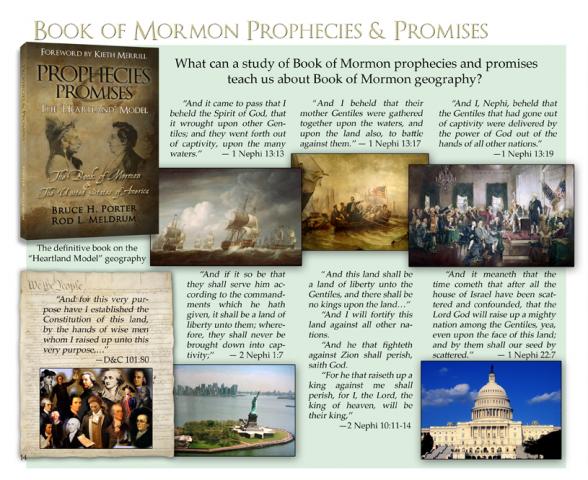 Sleeping


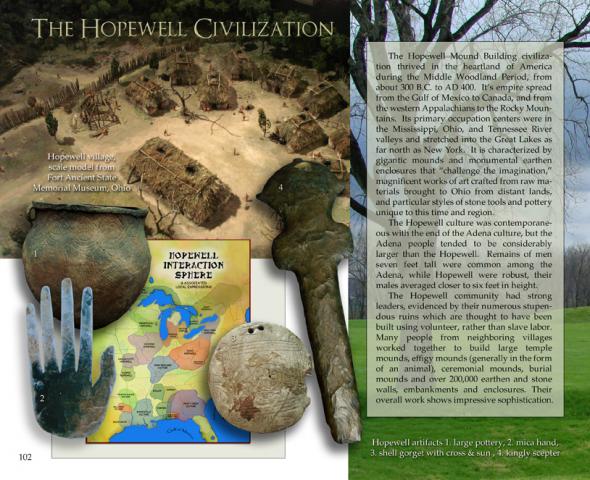

 “The Hopewell Culture was contemporaneous with the end of the Adena culture, but the Adena people tended to be considerably larger than the Hopewell. Remains of men seven feet tall were common among the Adena, while Hopewell were robust, their males averaged closer to six feet in height. There are four types of earthworks that were constructed by the ancient Hopewell civilization.
 The Hopewell Culture describes the common aspects of the Native American culture that flourished along rivers in the northeastern and midwestern United States from 300 BC to 400 AD, in the Middle Woodland period. The Hopewell tradition was not a single culture or society, but a widely dispersed set of related populations. They were connected by a network of trade routes, known as the Hopewell Exchange System.
 Parallels of the Hopewell Culture as described by William C. Mills, Chief Archaeologist of Ohio, with the Book of Mormon“[May 20, 1917; Sunday] Attended Sunday School and afternoon service in Hawthorne Hall, and was a speaker at each assembly. Evening meetings here, as also in Brooklyn, have been discontinued for the summer. The attendance both at Sunday School and afternoon meeting was surprisingly large in view of the fact that many of the Utah college students have left for the vacation period. This evening at the hotel I had a long and profitable consultation with Professor Wm. C. Mills, State Archaeologist of Ohio. He is continuing his splendid work of exploration in the Ohio mounds, and I went over with him again the remarkable agreement between his deductions and the Book of Mormon story. He has reached the following
 The people buried in the mounds include males and females, young and old. The Hopewell often cremated their dead, but extended burials in prepared tombs are also common. They often clothed or wrapped the bodies in fine textiles. Sometimes they would bury an array of ornaments and objects of ritual with the dead.
 There is some evidence to suggest the connections between ancient Newark and Chillicothe were formalized in a prehistoric roadway of long, straight parallel walls. Caleb Atwater, one of Ohio’s first archaeologists, suggested in 1820 that the parallel walls which ran southwestward from Newark’s octagon might extend thirty miles or more. In 1862 James and Charles Salisbury, early residents of Newark, traced these walls six miles “over fertile fields, through tangled swamps and across streams, still keeping their undeviating course.” They did not follow the road to its end, but noted the walls headed in the direction of Chillicothe.
 “The results of this study add to an already growing body of research dedicated to mtDNA analysis. In recent years, research utilizing Y- chromosome and STR analysis have also begun to add to what is known about the genetic variation present in Native Americans both ancient and modern. Combine that information with mtDNA, and a complete picture of migration, gene flow and kinship begins to take shape in North America. The Ohio Hopewell through an analysis of their mutations have revealed ancestral relationships with individuals in China, Korea, Japan, Taiwan, Mongolia, Russia and South America. The Ohio Hopewell also display mutations that are uniquely their own, such as haplotype A 16166, haplotype B 16247 and 16265. The unique mutations of the Ohio Hopewell of Hopewell Mound Group may have been lost through attrition or have yet to be discovered in other Native American populations. The Ohio Hopewell also share a unique mutation with the Cahokians of 72Sub2 Mound , utilized to denote a rare haplotype aligned with individuals of high status at Cahokia.
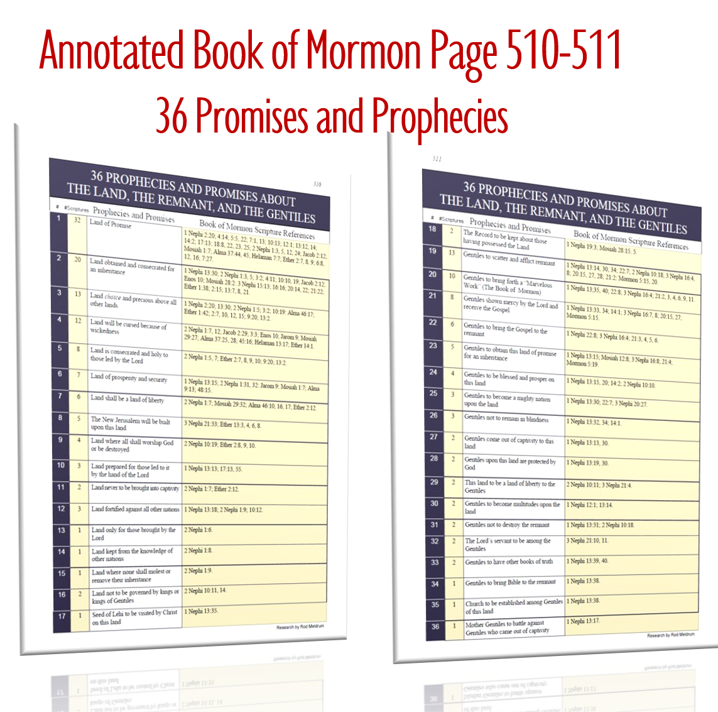 36 promises and prophecies as recorded in the Book of Mormon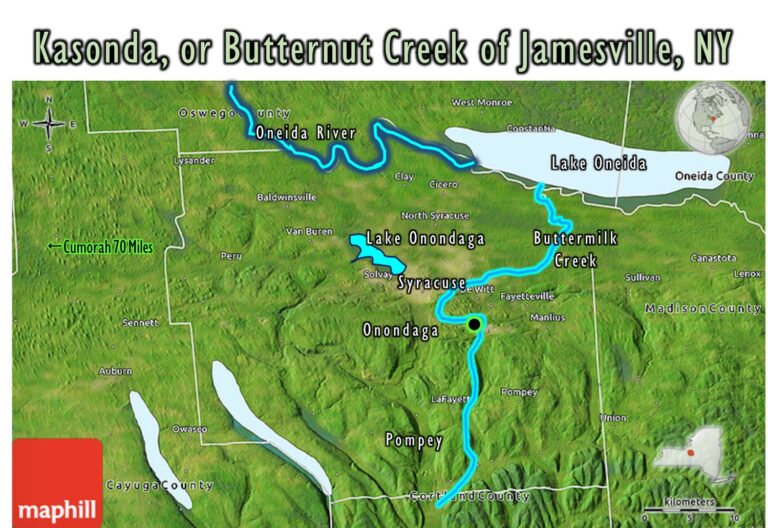
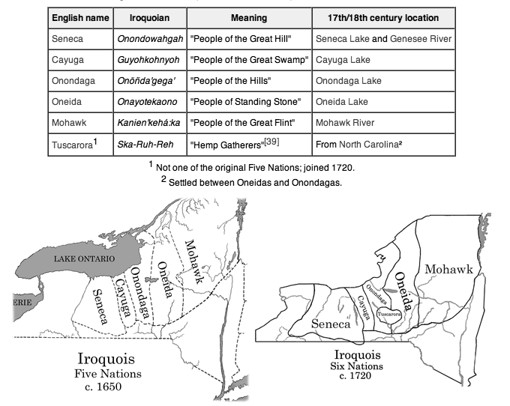 Joseph Smith Knew the Iroquois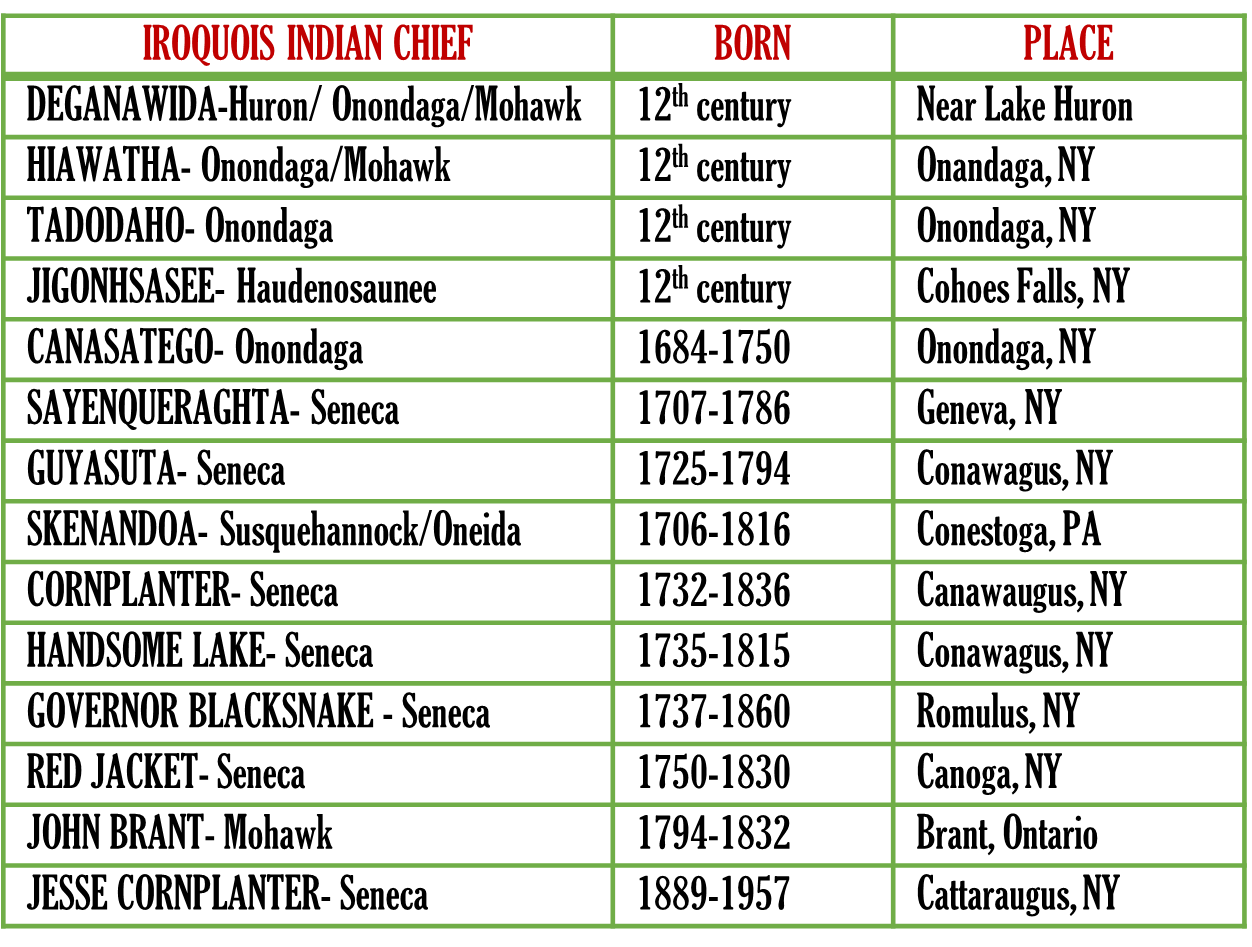
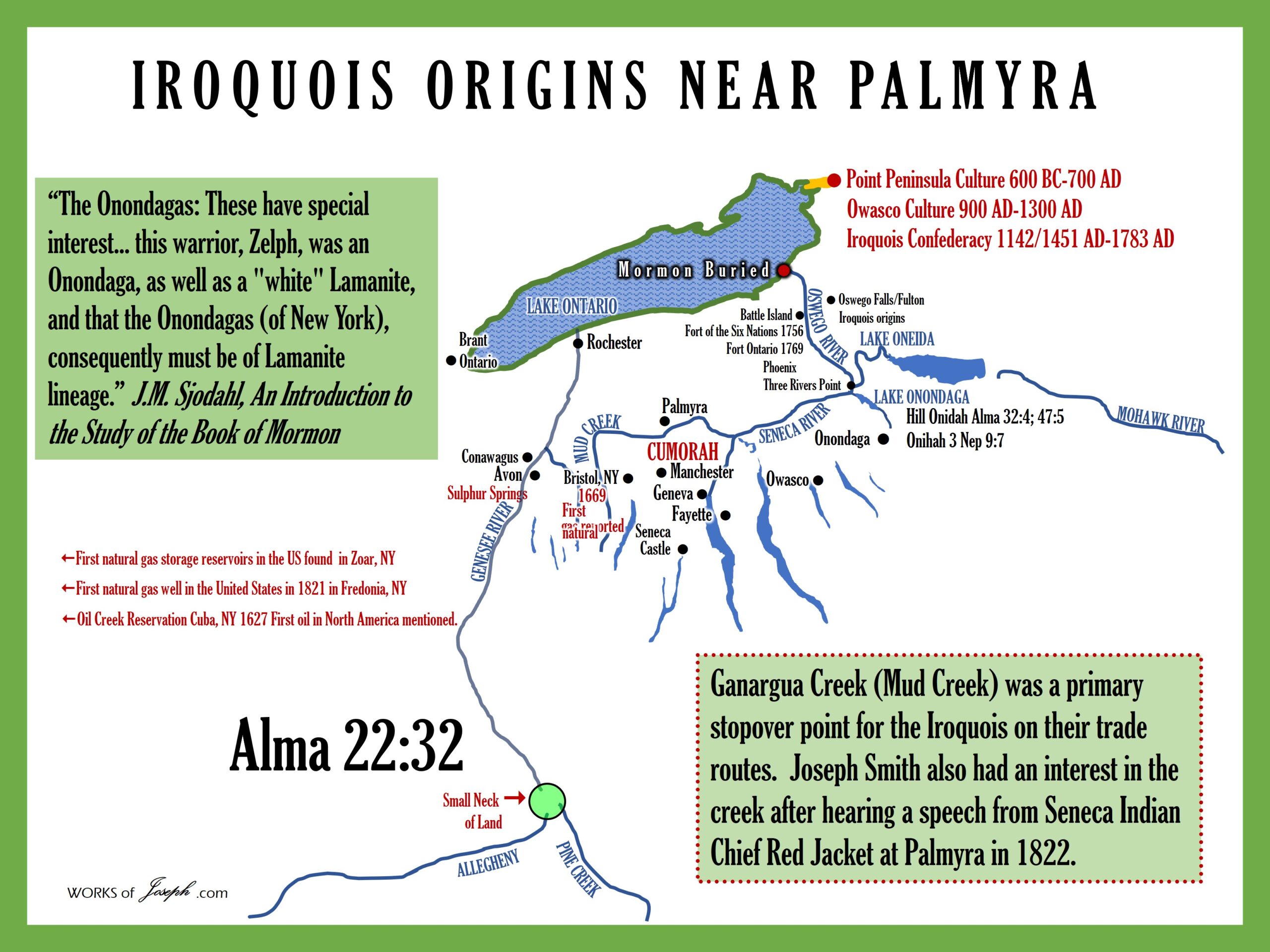
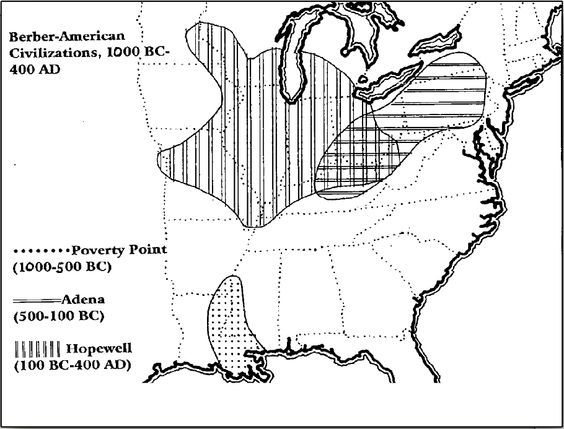
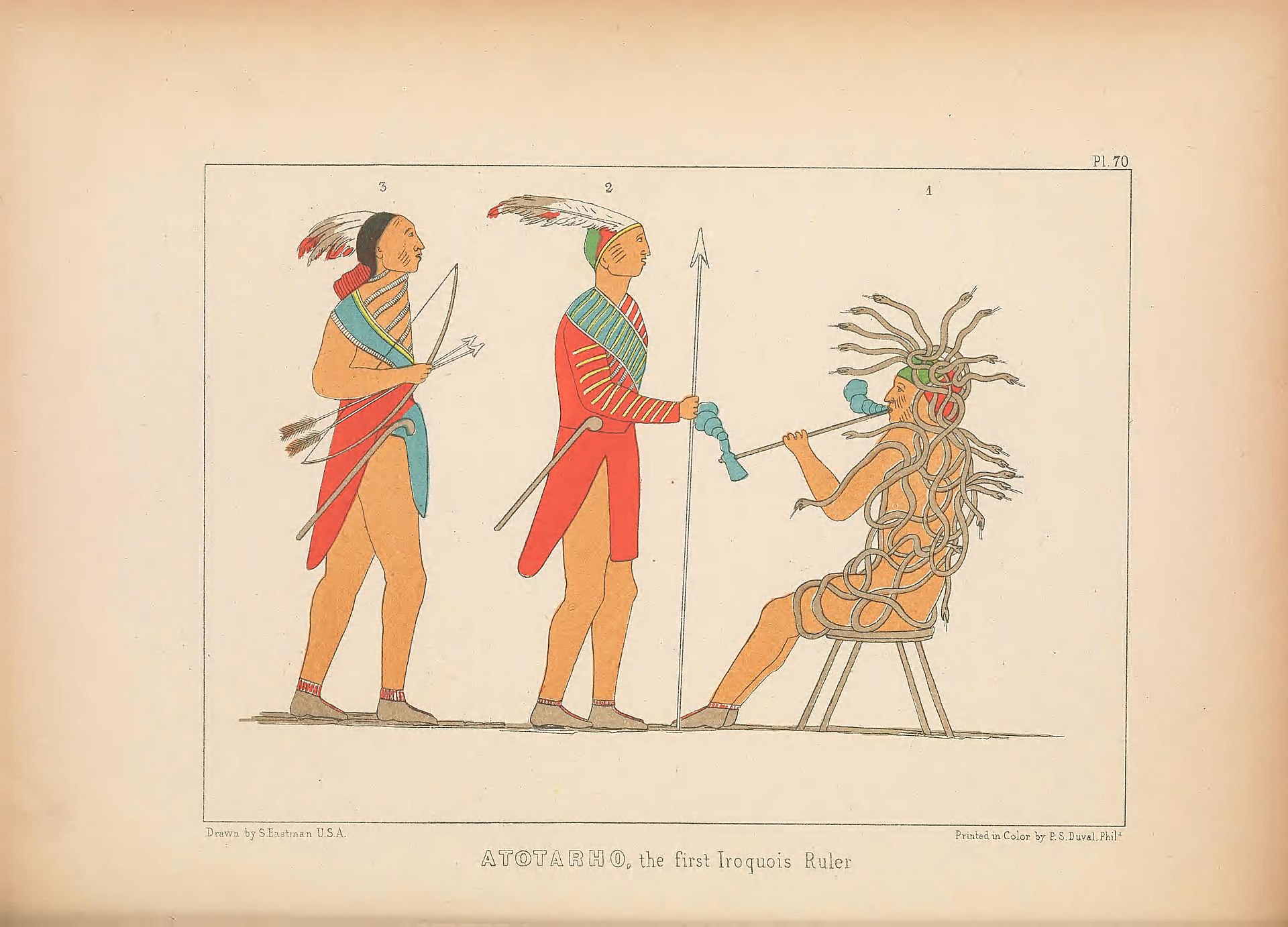

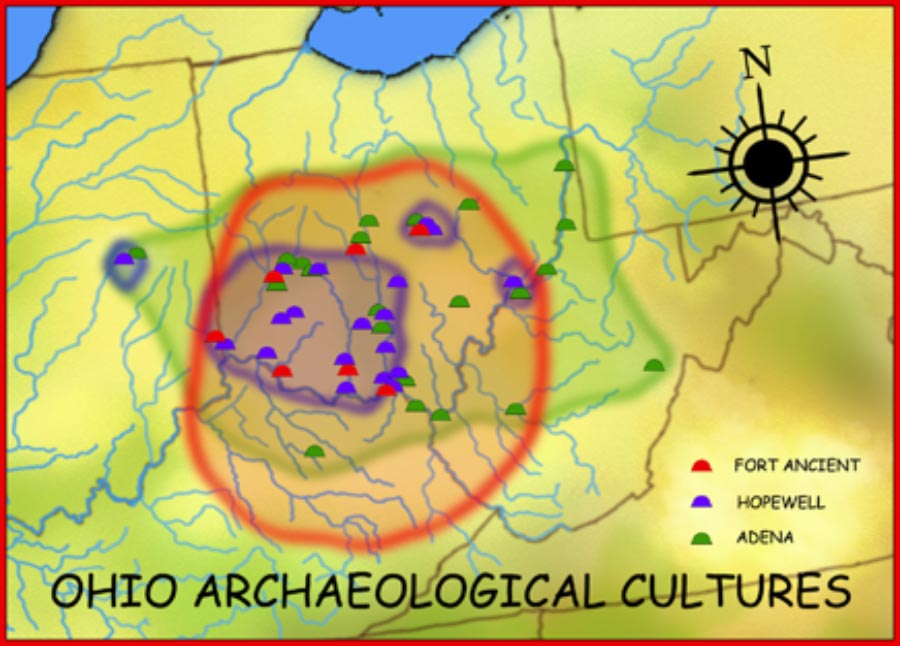

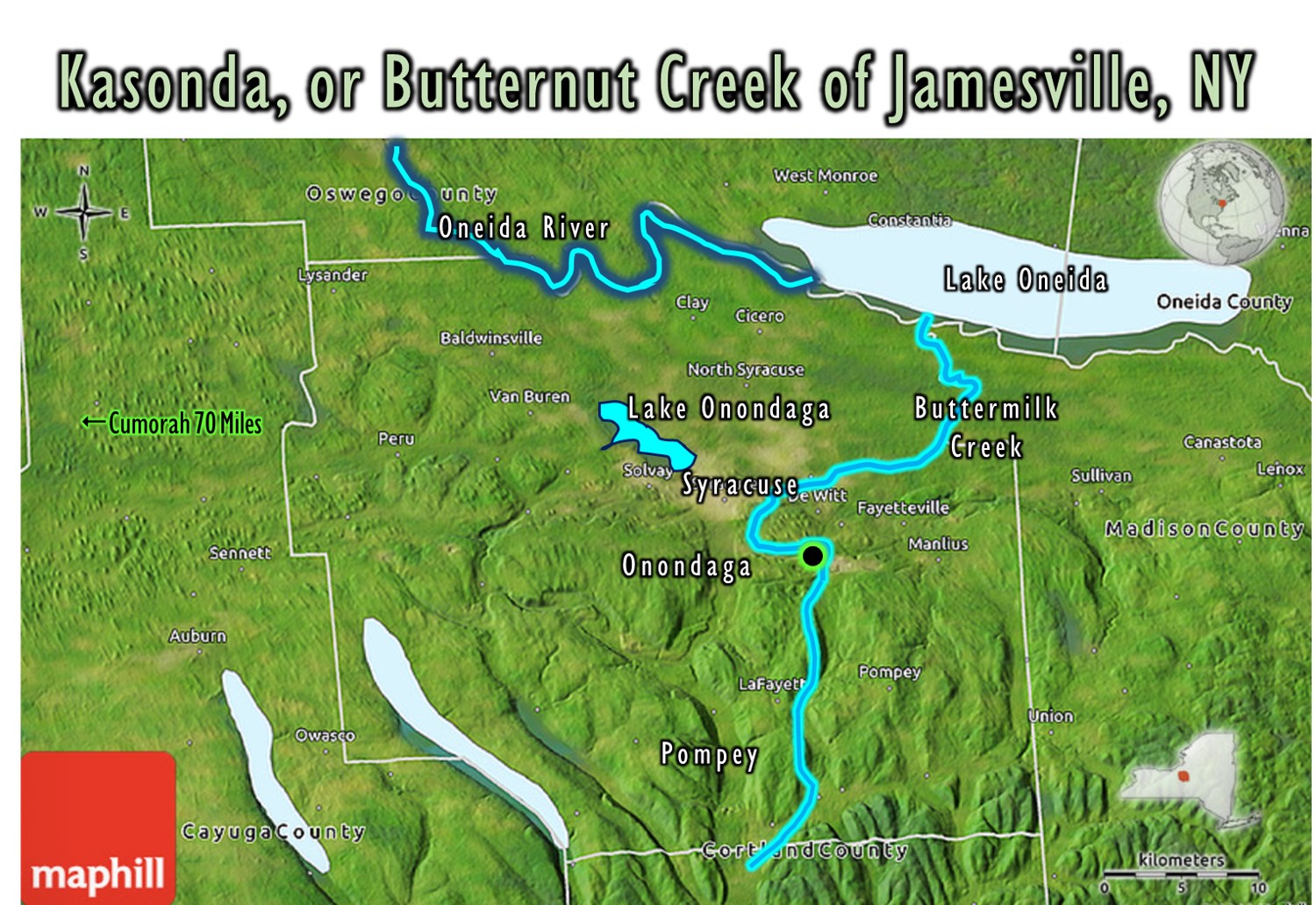
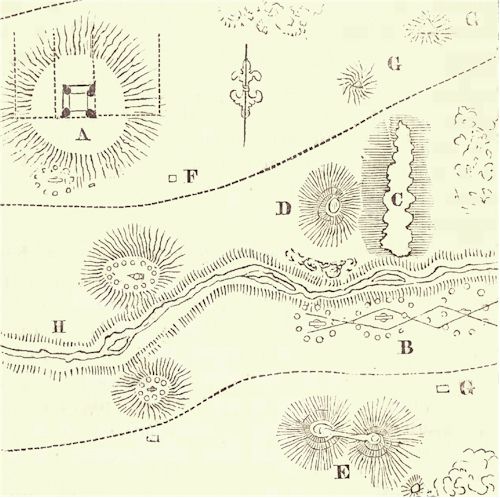
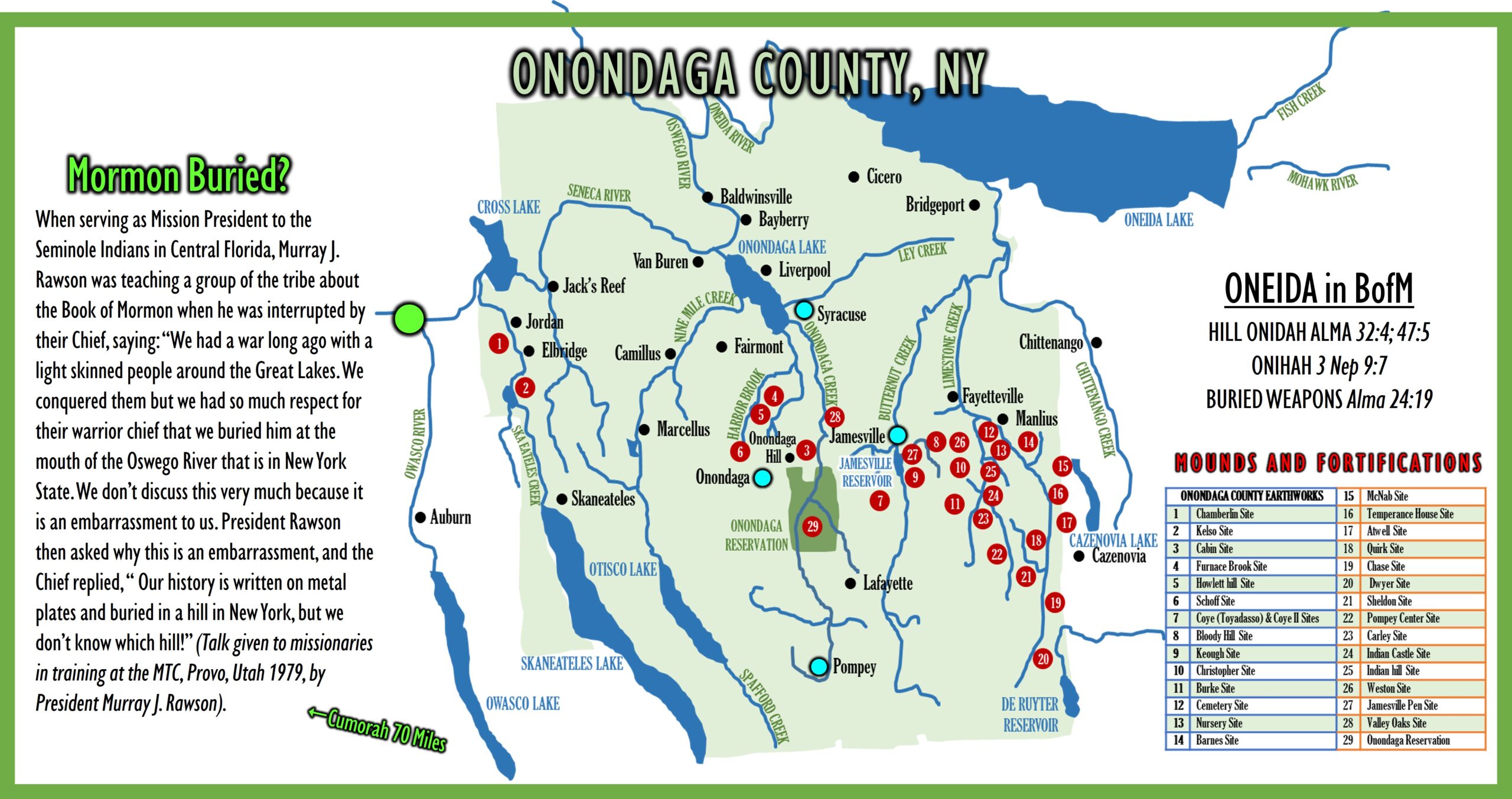
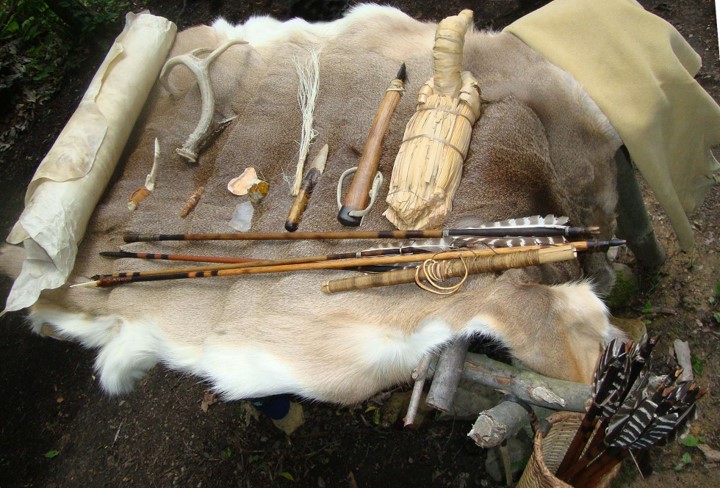
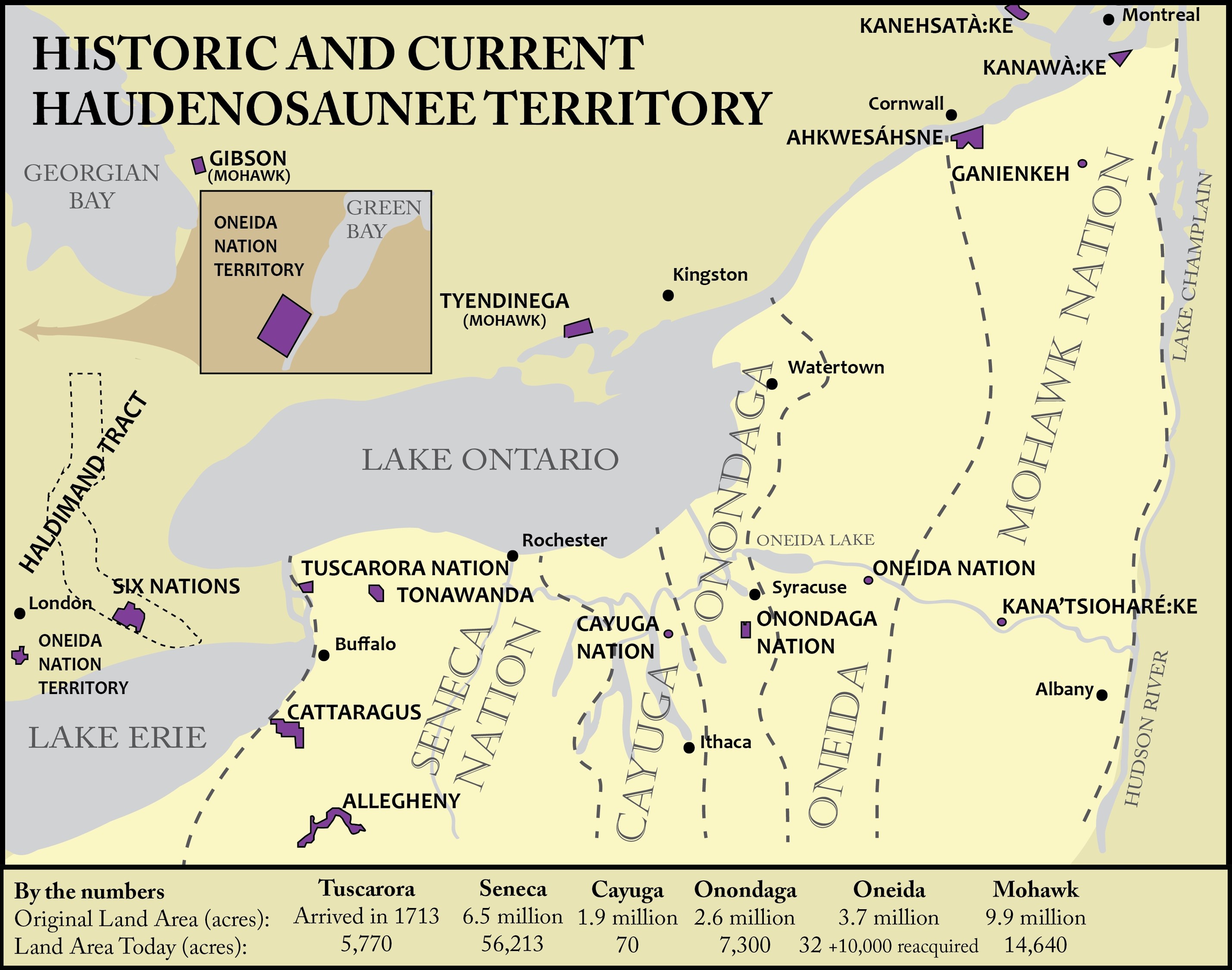
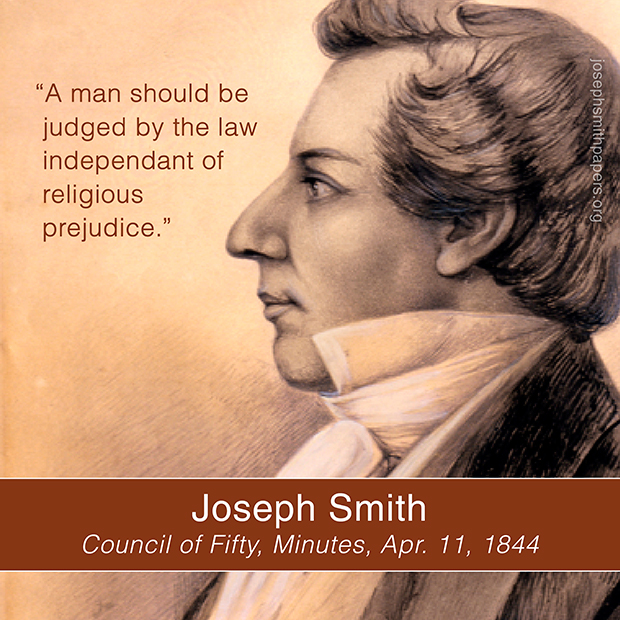




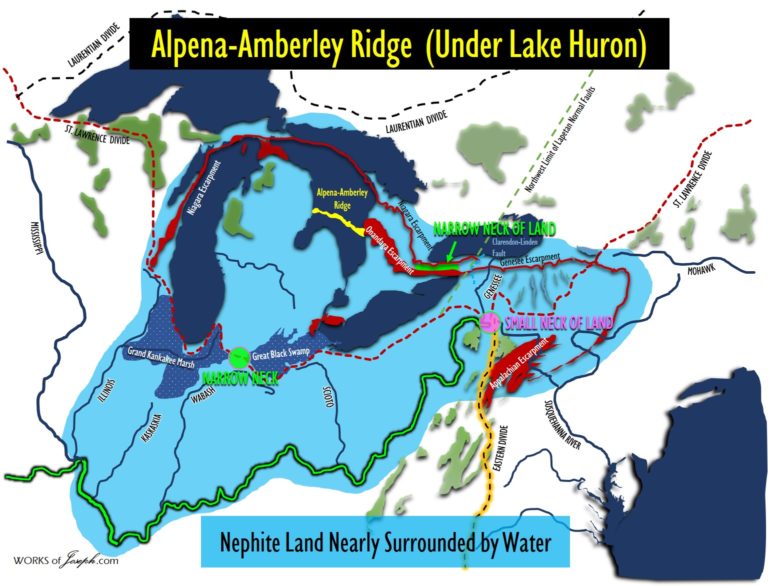


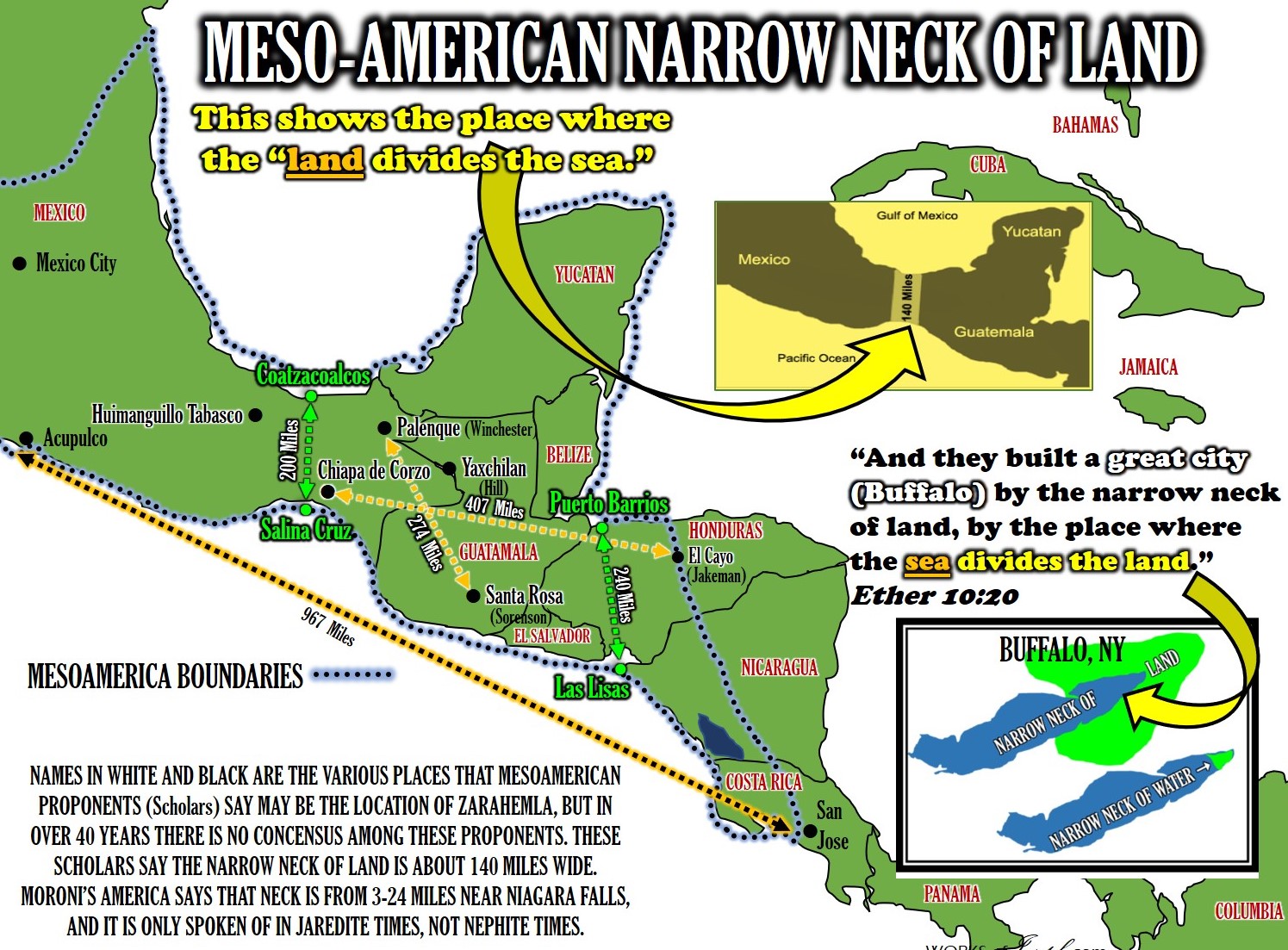
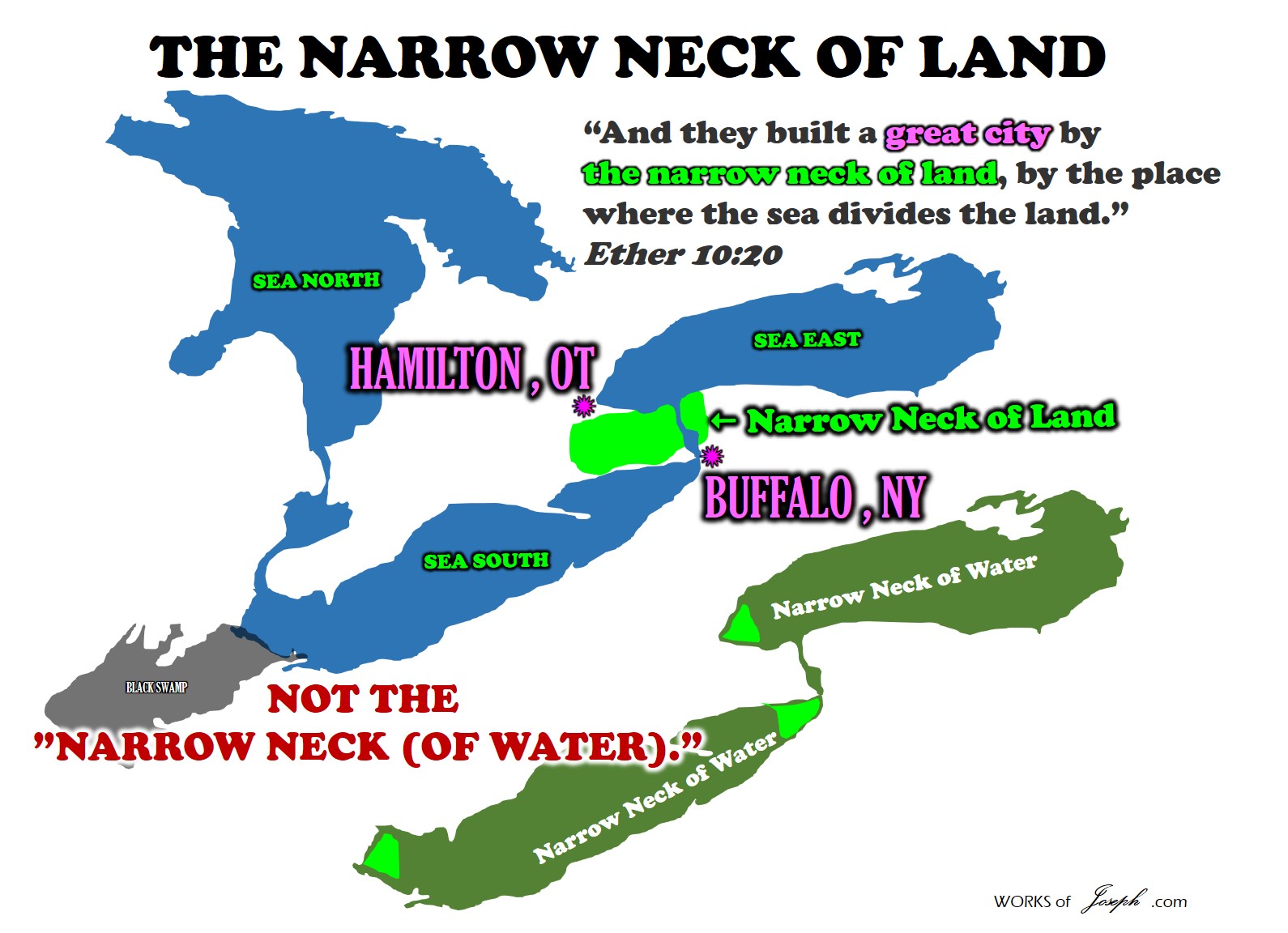
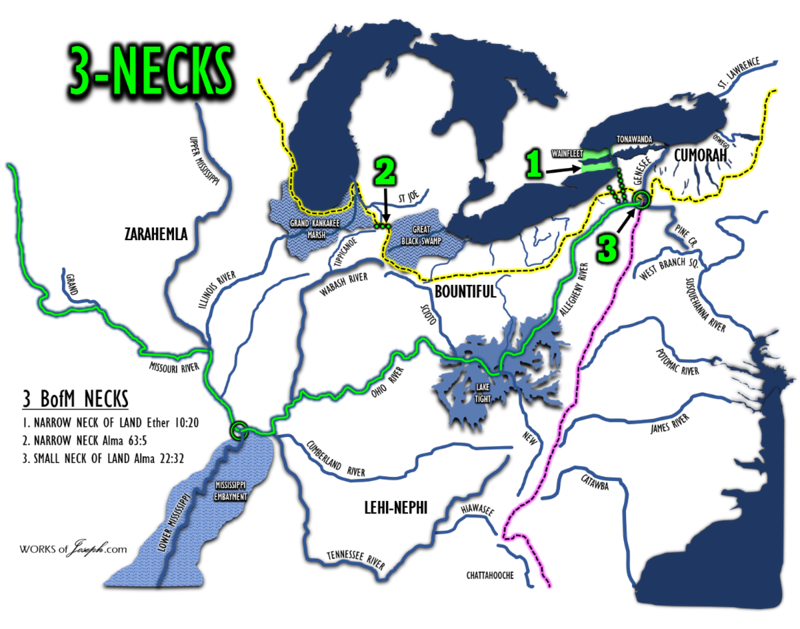

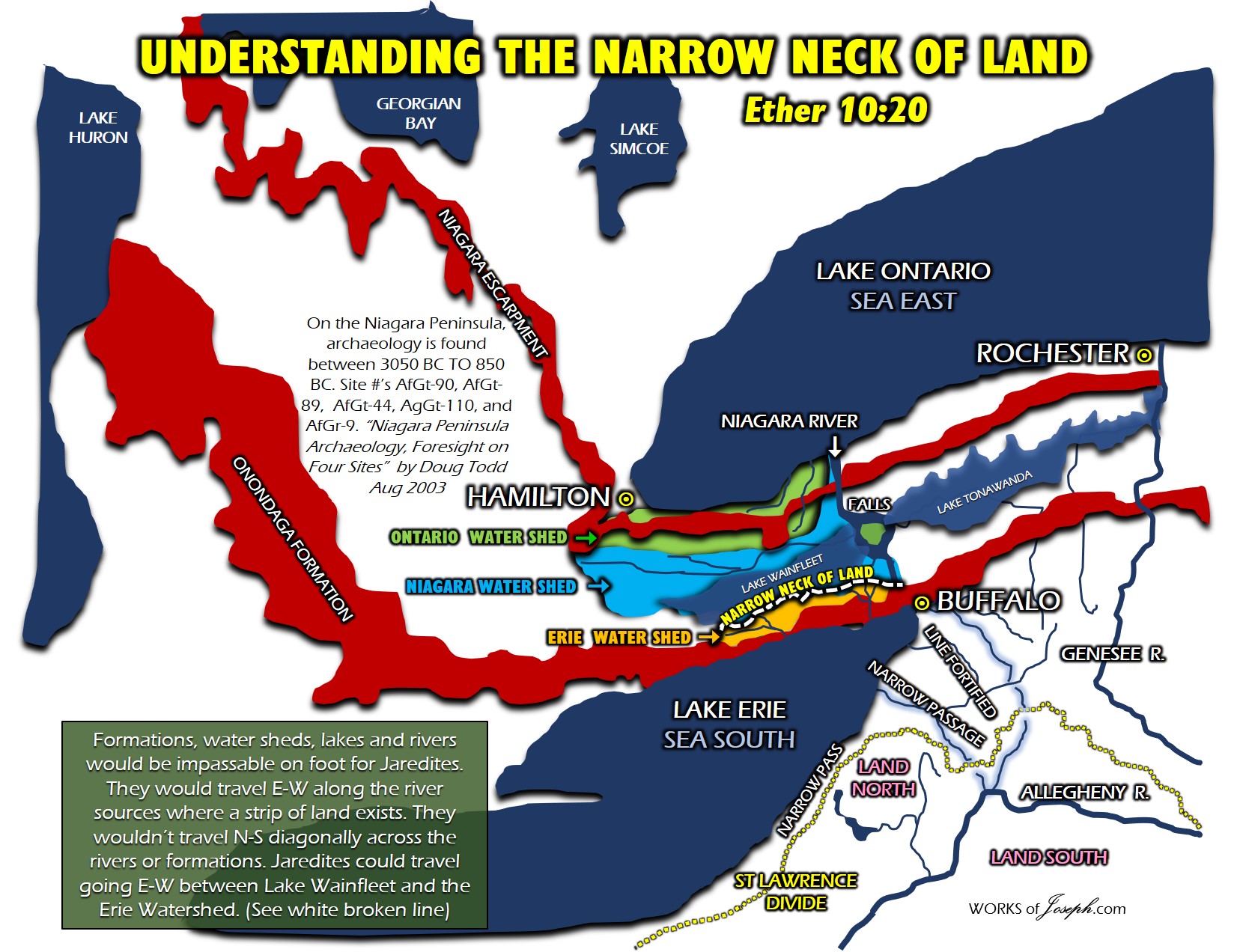










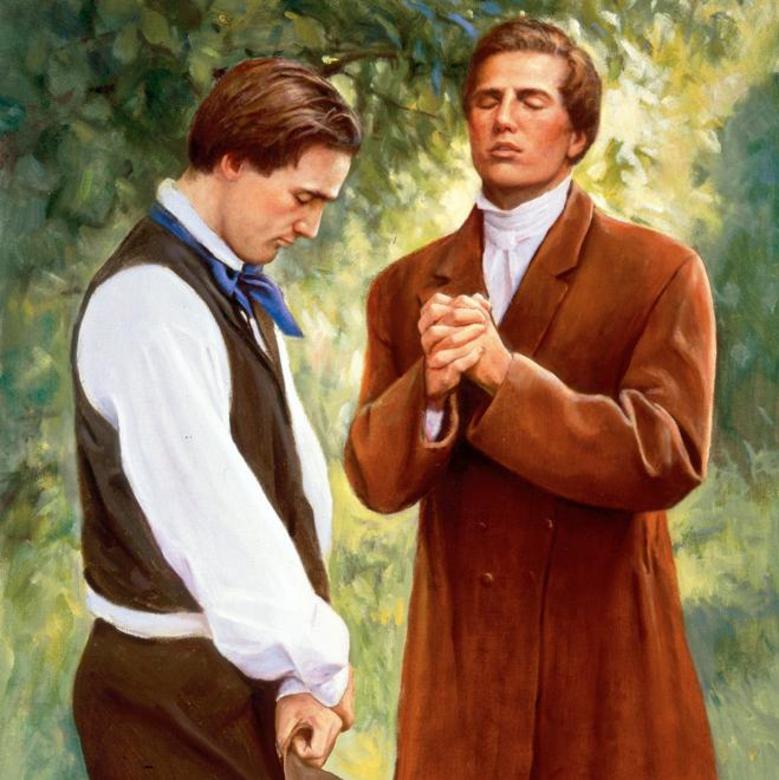


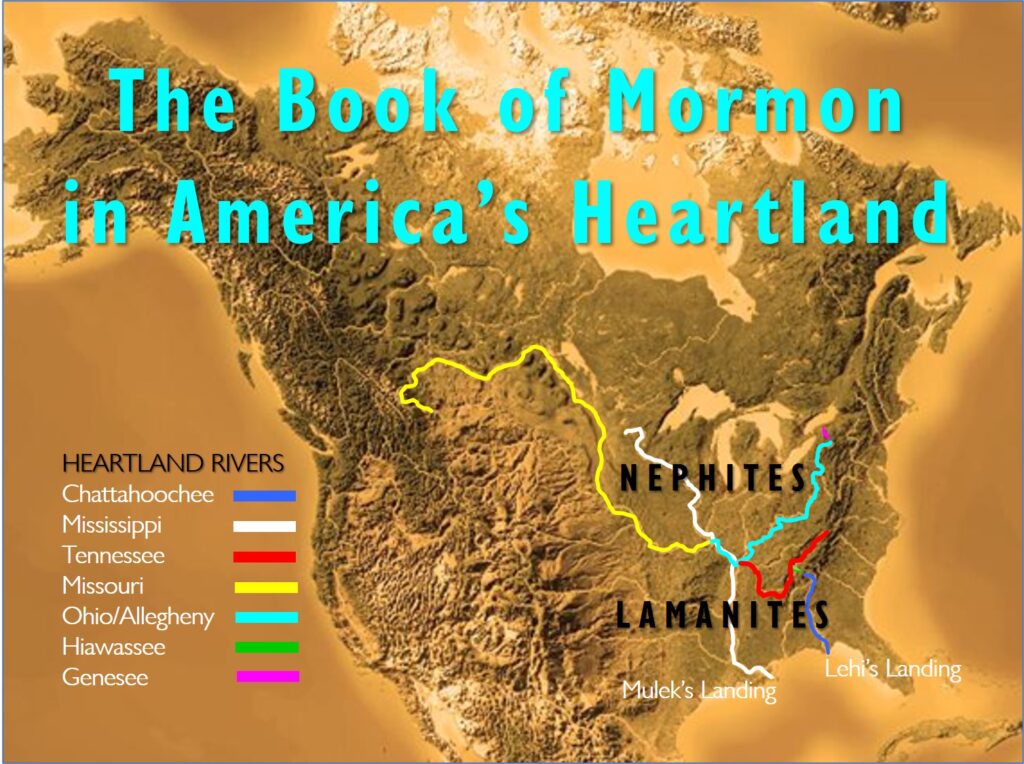

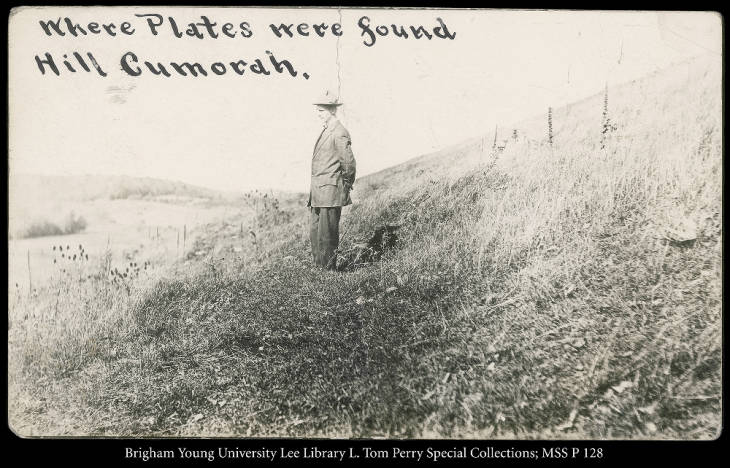


 Let’s support and follow Christ in all we do that we will win this battle against the Deep State of the world. May we keep our covenant with Christ, as we promised to follow Him as we came to earth to receive our body. We were each born with this “Light of Christ” that Satan is jealous of and wants our souls.


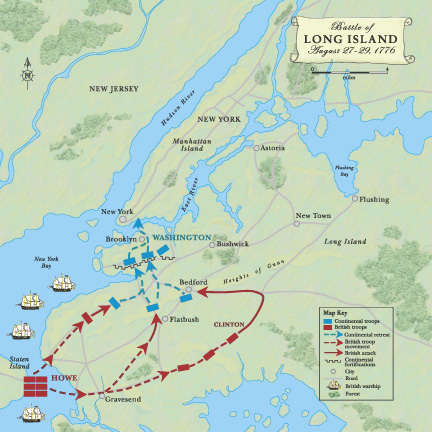


 “Why does the geography of the Book of Mormon matter? Think of that question if we are speaking about Israel. Does it matter where the Savior was born, or where the Biblical events happened? Yes. At Mount Moriah where Abraham was to sacrifice Isaac, the Lord made a special covenant with Abraham. The land around Mt Moriah was a covenant land and God’s people were given that covenant land as long as they are righteous. However, if they disobey the commandments, God’s people will be swept off that sacred land. The Jews, Muslims, and Christians fight over control over this one piece of land, why? Because it is a beautiful piece of real estate? No, because it is a covenant land. All three religions say Mt Moriah is sacred to them and they are willing to die over it.


 “It was not by chance that the Puritans left their native land and sailed away to the shores of New England, and others later followed. They were the advance guard of the army of the Lord, predestined to establish the God-given system of government under which we live and to make America, which is the land of Joseph, the gathering place of Ephraim, an asylum for the oppressed of all nations, and prepare the way for the restoration of the gospel of Christ and the establishment of his church upon the earth” – Heber J. Grant, Conference Report, [April 1930].
 “Certain lands were given to Israel for an inheritance in time and in eternity. America is the land of Joseph; it was the home of Nephite Israel, who were of Joseph, for a thousand years, and it is the headquarters of the Church in this final dispensation in which the church and kingdom of God are in the lands of Ephraim.” (McConkie, Bruce R., A New Witness for the Articles of Faith [1985], 511.)
 It is our firm belief, as Latter-day Saints, that the Constitution of this land was established by men whom the God of heaven raised up unto that very purpose. It is our conviction also that the God of heaven guided the founding fathers in establishing it for his particular purpose.




 Lost Lamb by Del Parson
 Written in Paleo-Hebrew and used from 1000 BC – 400 AD,
  represents the name “Jehovah”, or the tetragrammaton. All throughout the Old Testament, the word ‘LORD’ (all small caps), replaced the sacred name “Yahweh” as described above. “I Am” in Hebrew is “Yahweh” and “Adonai” is the Hebrew word for LORD.
 He won’t mince words. He won’t flatter people. He won’t twist the truth. And it will drive those who are in power absolutely bonkers. He’d be cancelled by churches, censored by tech companies, banned by social media, ridiculed and made fun of almost everywhere he goes. The most troubling thing to consider is that Christ would probably be hated the most among professing Christians. You know… the Christians who come out to church only on Easter and Christmas. The Christians who lower their standards and acquiesce to the secular and political demands of their politicized, secularized, sexualized, and sensualized culture. The Christians who would rather “fit in” and not make a scene. The Christians who secretly like to sneak a little flask of Babylon into the worship service. The Christians who would rather accept the world out of their so-called empathy and compassion instead of accept the teachings and example of Christ in their entirety. The Christians who have their Bible [and Book of Mormon] sitting on their night stand but couldn’t tell you whether Genesis is found in the Old or New Testament. The Christians who keep every commandment but forget to love others. And the Christians who say they “love everyone” but think that love is enough to make them exempt from striving to keep the actual commandments that prove their love for God and His children. Remember… “on these two laws hang all the law and the prophets.”
 So much of the world talks of Jesus Christ as if He was some kind of fun-loving, happy go lucky, anything goes kind of guy. It’s much easier to build yourself a custom Christ. It’s much easier to turn the Messiah into a good old fashion hippie friend. It’s much easier to think of him and his gospel like the Golden Corral, where you can pick and choose to live “your truth” according to your taste, as if you were picking between the shrimp scampi and some stale mac and cheese. Nothing in Christ’s teachings resemble that this is even close to what He expects from us. You can’t walk down the aisle and say, “I’ll take a little bit of this and a little bit of that. But hey… that over there… you know, that’s not for me. I’m not really into that. But ooooooooohhhh Jesus, I’ll make sure and mention your name at my next political convention, my next press conference, or the next time it makes me look good in front of a crowd.”
  When Jesus says, “If ye love me… keep My commandments,” the fair-weather Christians respond, “Well… Jesus cares more about my happiness than He does if I keep the commandments.” Jesus says, “blessed are they that hear the word of God, and keep it.” The world responds, “But I’m living ‘my truth’”. Jesus says, “Not every one that saith unto me, Lord, Lord, shall enter into the kingdom of heaven; but he that doeth the will of my Father which is in heaven.” The lazy disciple responds, “Well then you are a judgmental and vengeful God.” Jesus responds, “No I am a fair and loving God and My bowels are filled with mercy toward you. But if you don’t listen to Me, and don’t believe Me, then I can’t lead you toward happiness and away from the universally applicable laws of nature… laws that are even applicable to the gods.” Paul chimes in and says, “If we sin willfully after we have received the knowledge of the truth, there remaineth no more sacrifice for sins.” (Heb. 10:26) The fake disciple responds, “But His love is so boundless and His mercy so endless that I will be accepted by Him at the last day. Christ has too big a heart to ever reject me.”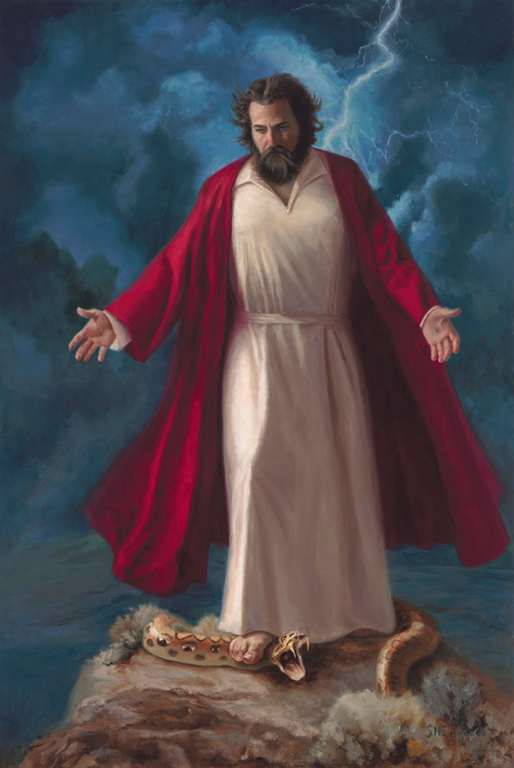
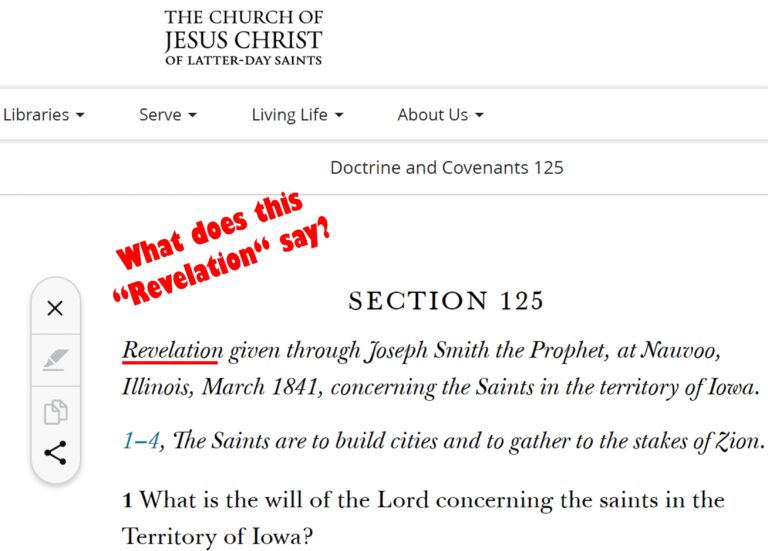
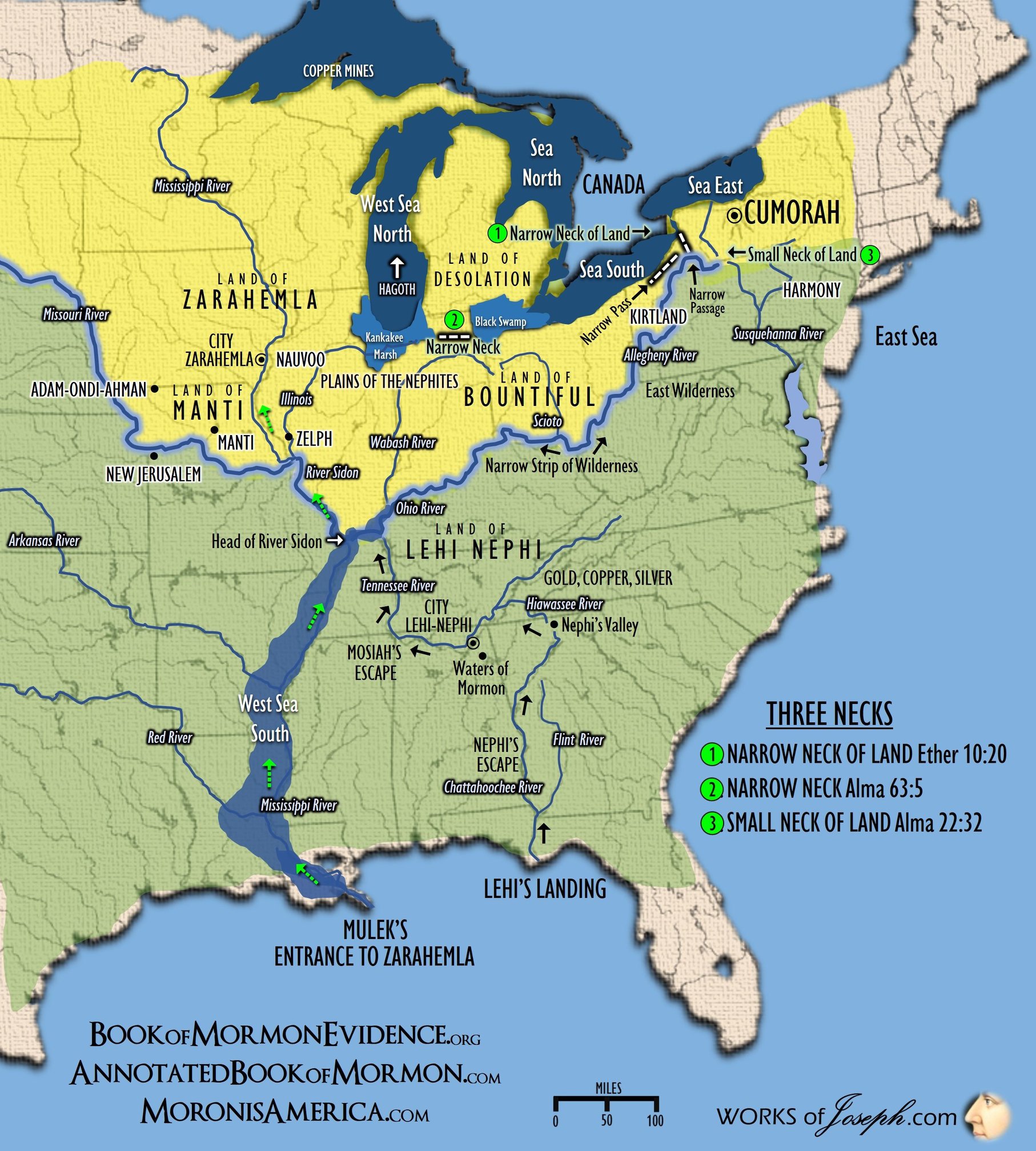
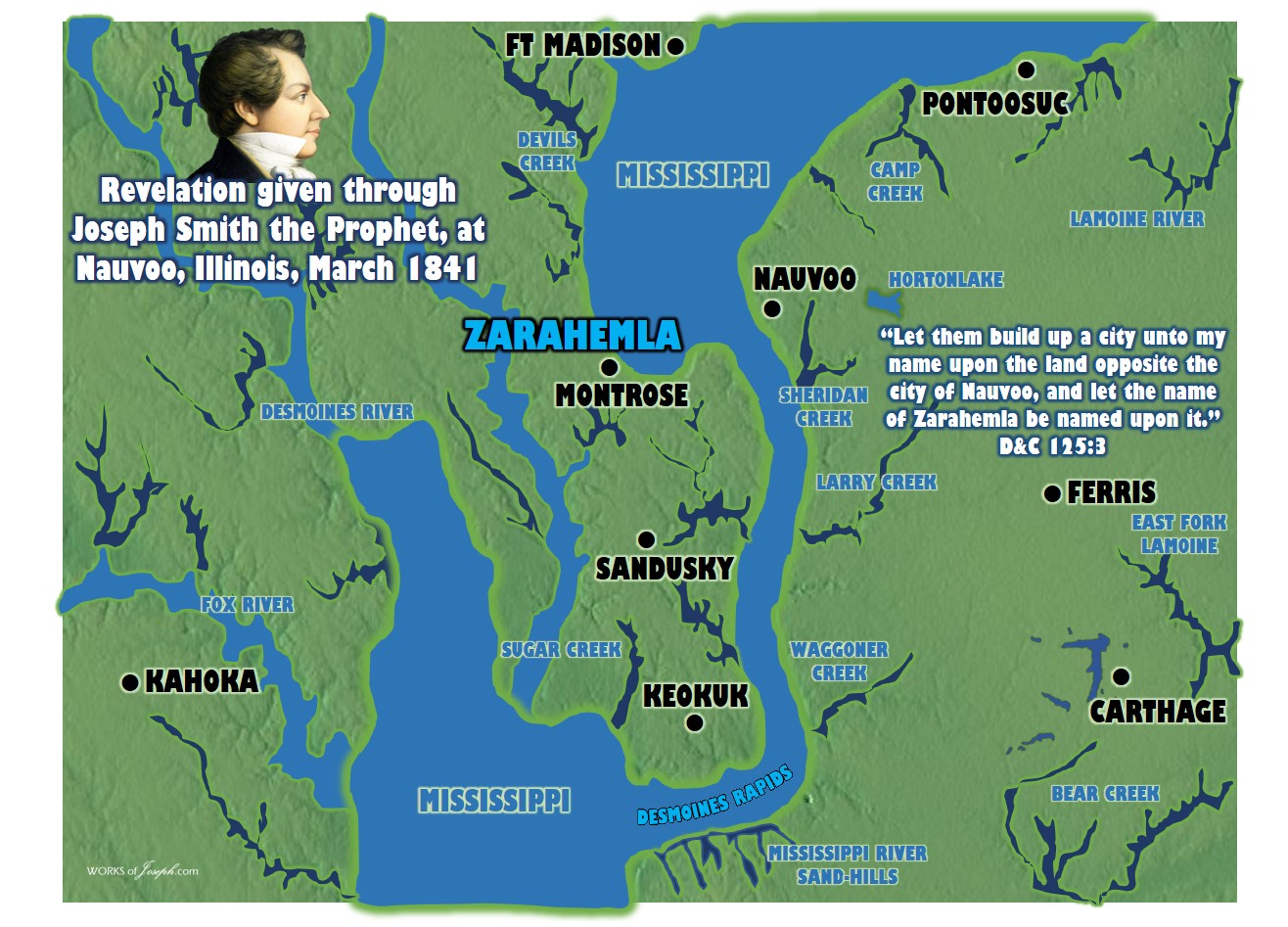
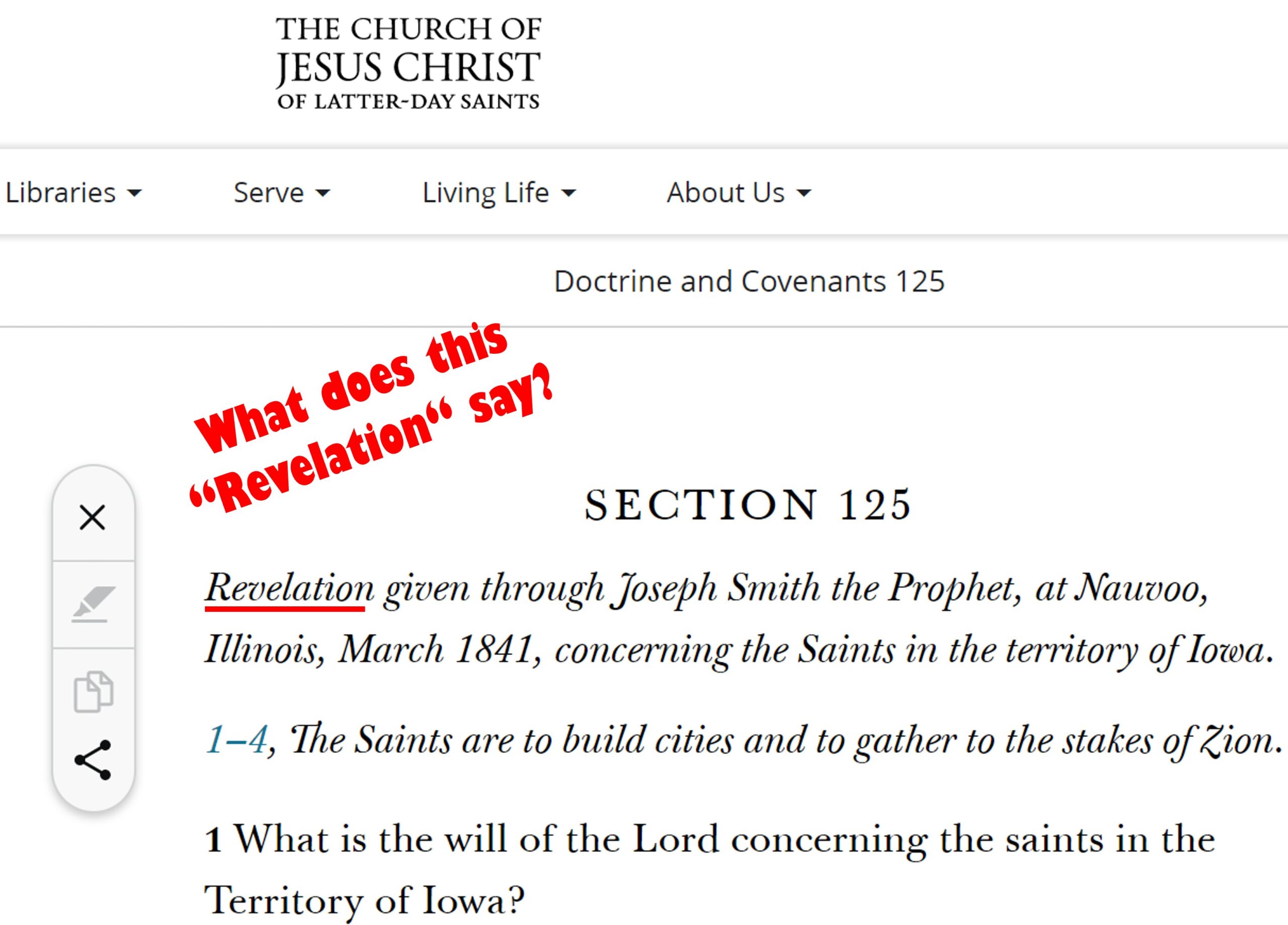 In March 1841, the Lord gave a revelation, known as Section 125 of the Doctrine and Covenants, to the Prophet Joseph Smith which was very specific as to the name and location for a city. While the Lord previously named Adam-ondi-Ahman and the New Jerusalem as being in the state of Missouri,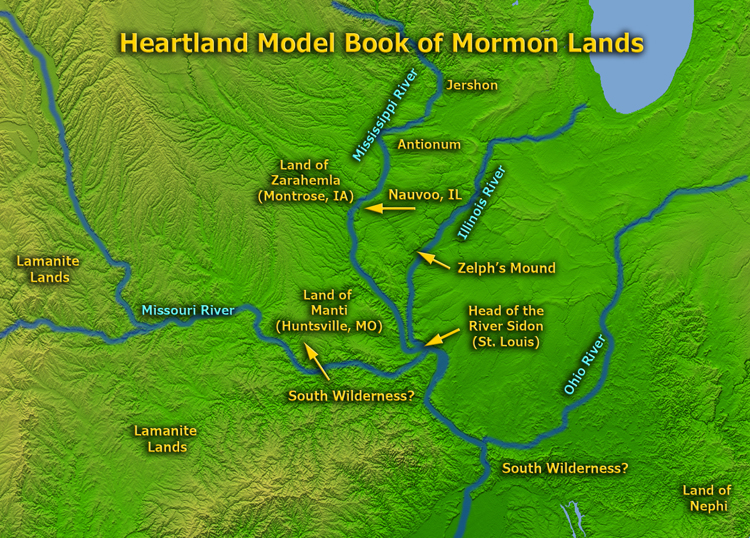
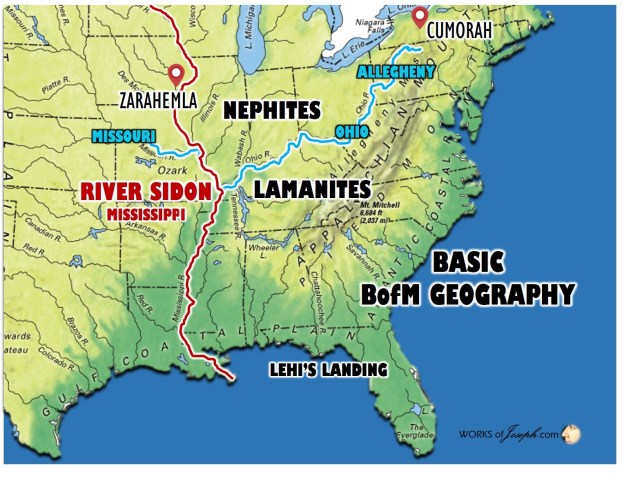
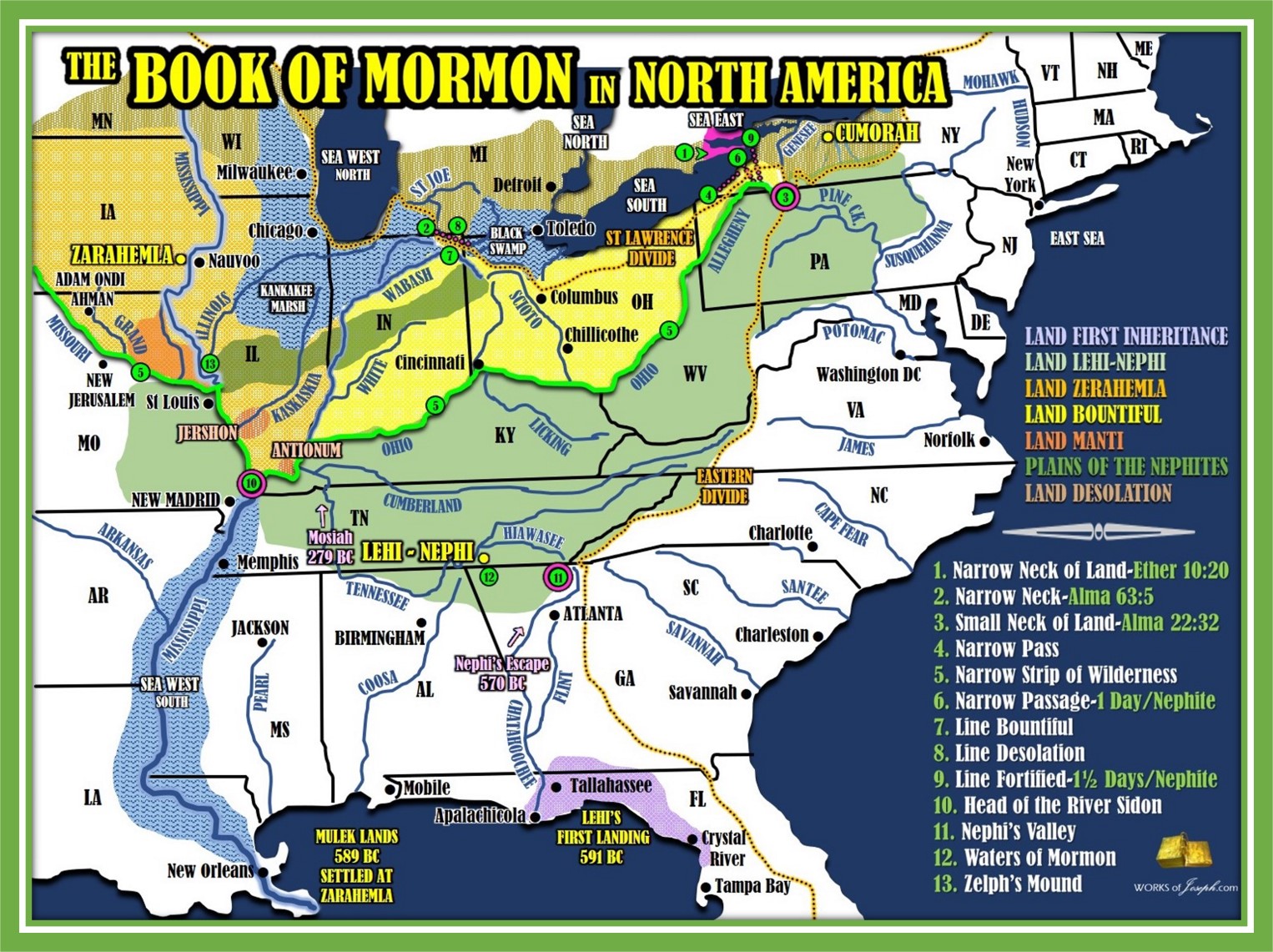
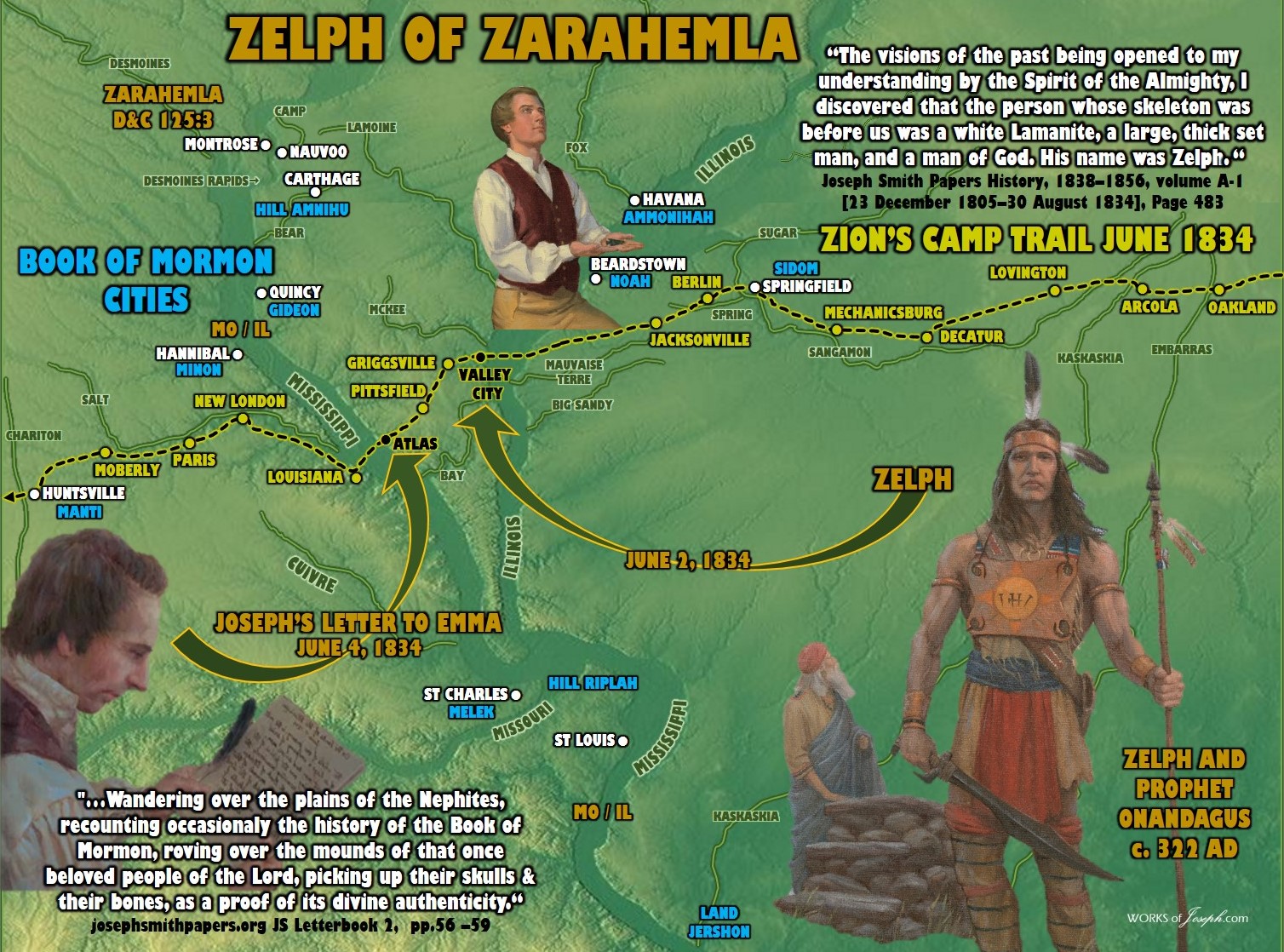
 The Lord only named three cities in the revelations of the Doctrine and Covenants. The New Jerusalem, Adam-ondi-Ahman, and Zarahemla.
 “And it came to pass that my sorrow did return unto me again, and I saw that the day of grace was passed with them,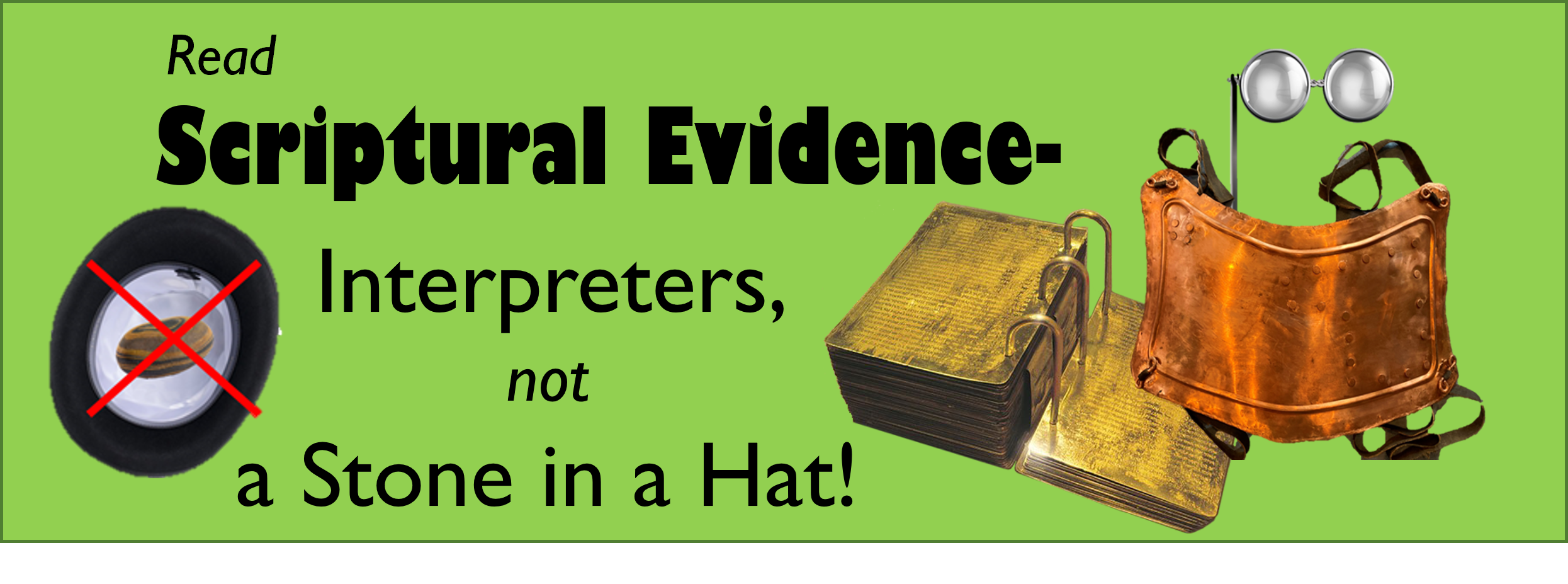
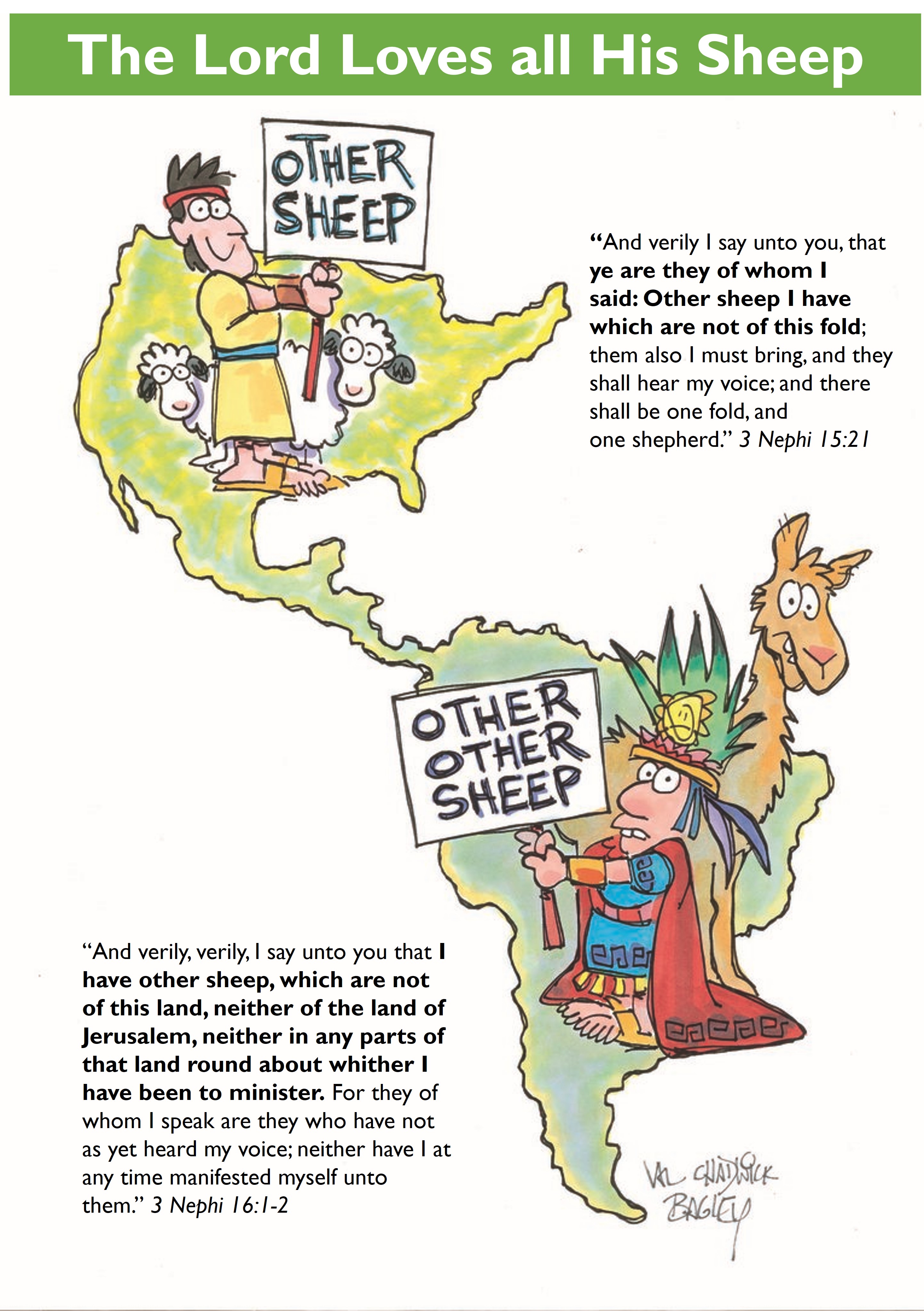

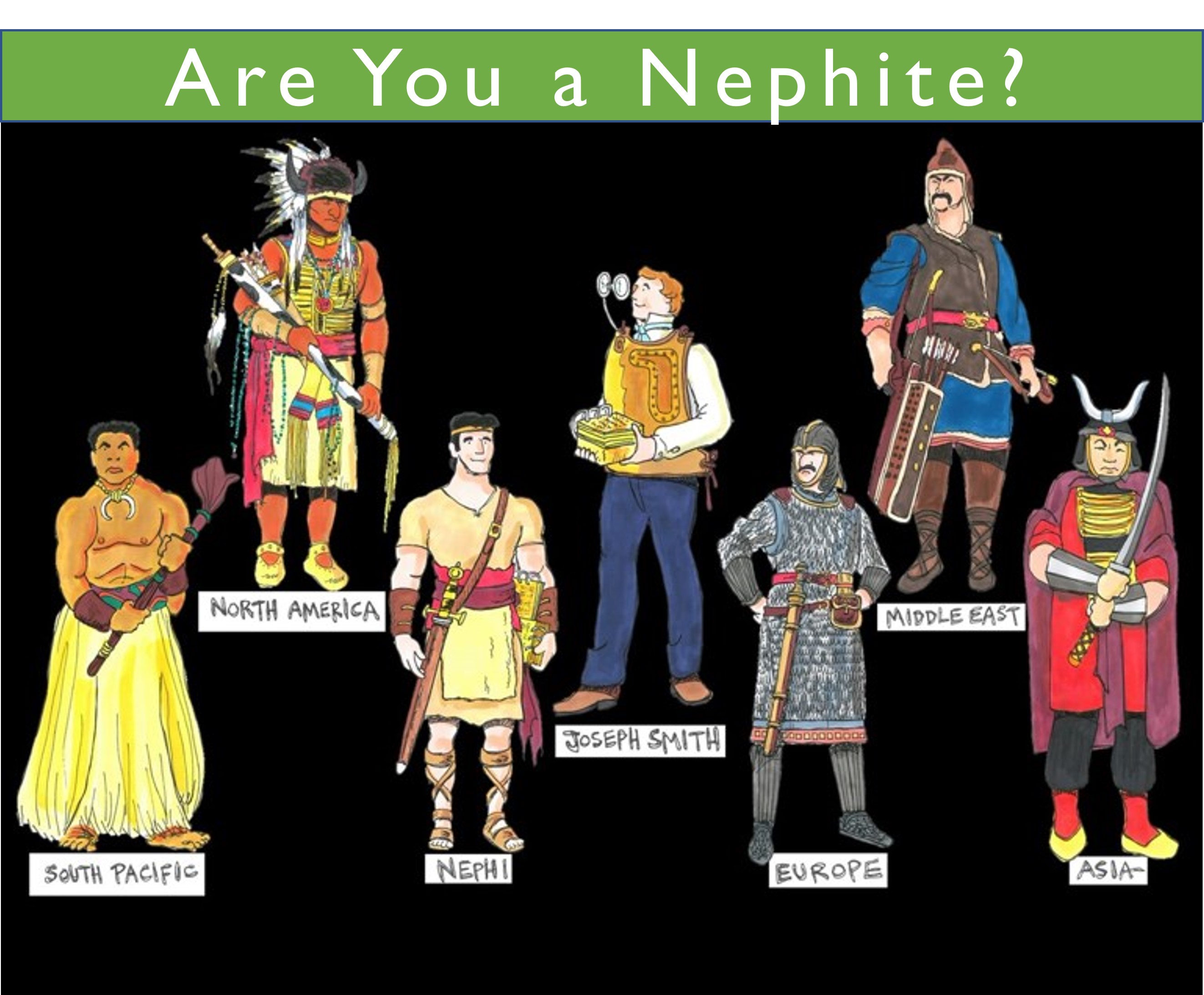





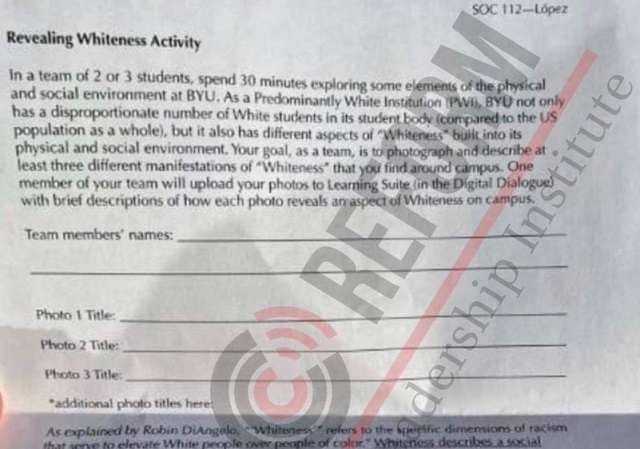


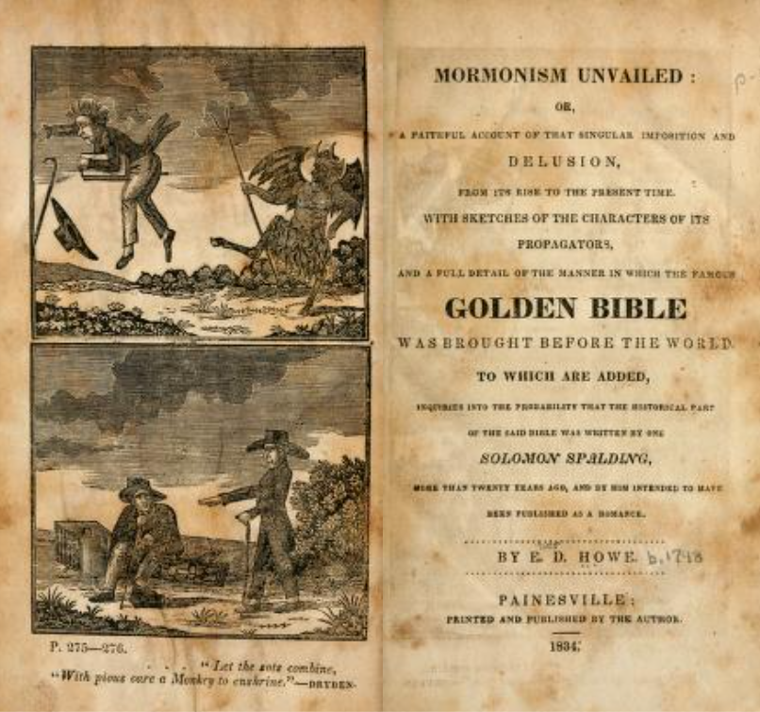


 After first returning late at night from Hill Cumorah after the 4th year mentioned by Angel Moroni, on Sept 22, 1827 Joseph ran into the house and his mother Lucy said, “I trembled so much with fear lest all might be lost again by some small failure in keeping the commandments, that I was under the necessity of leaving the room to conceal my feelings. Joseph saw this and followed me. “Mother,” said he. “Do not be uneasy. All is right. See here,” said he,
  The spectacles shown left, reflect the definition by Lucy above. The glasses probably looked like two magnifying glasses with a clear diamond shaped and clear crystal possibly embedded in something like a magnifying glass. I’m sure it would be difficult for Lucy to describe, but I am confident that however it looked, it was an amazing instrument which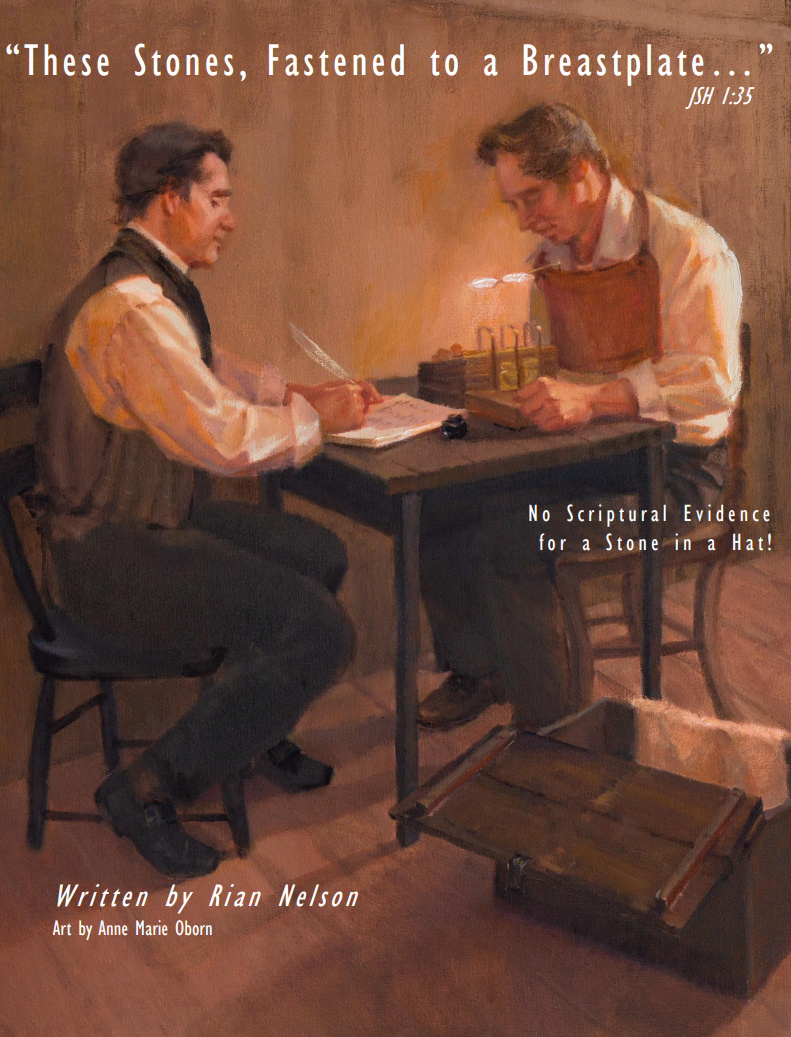
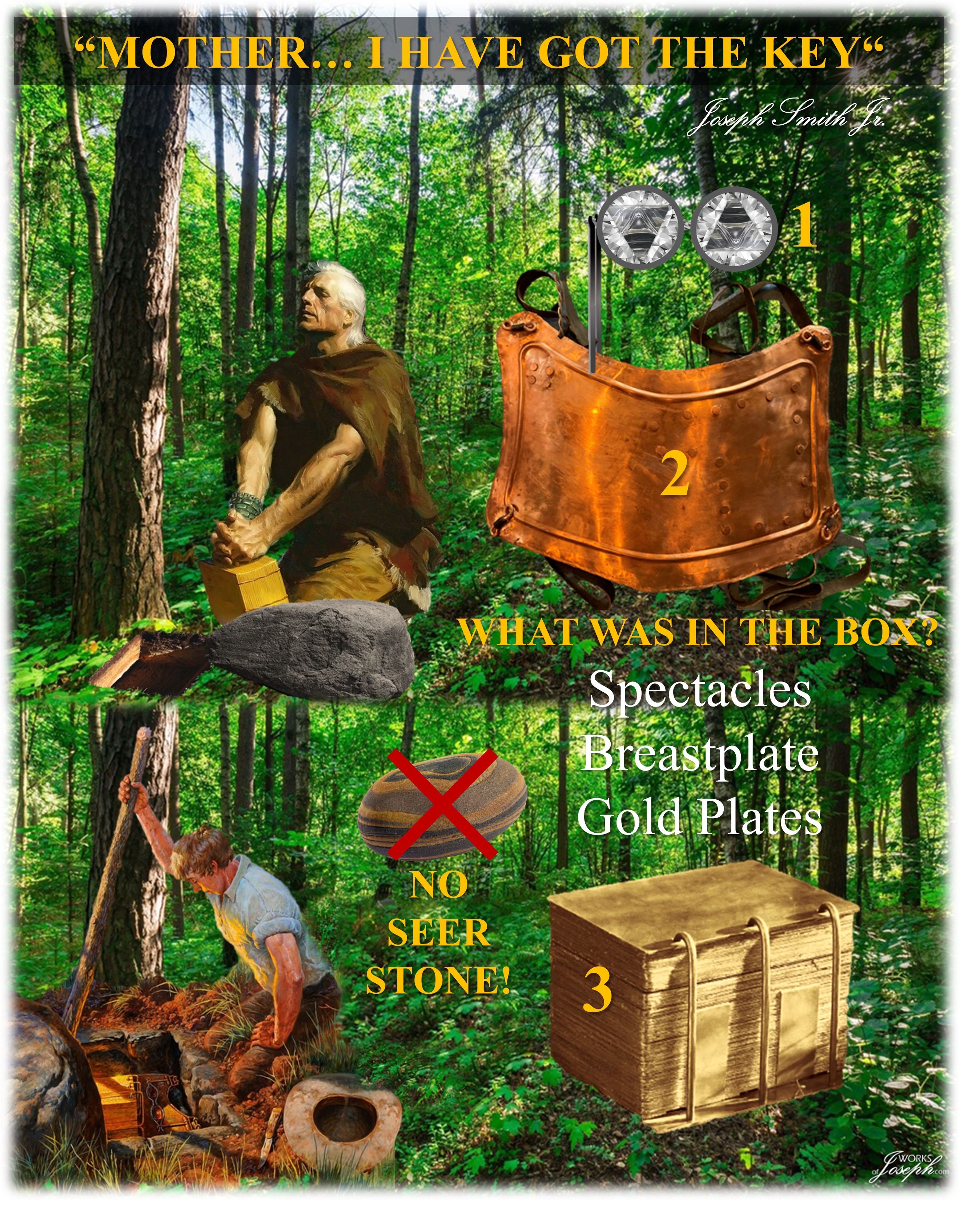
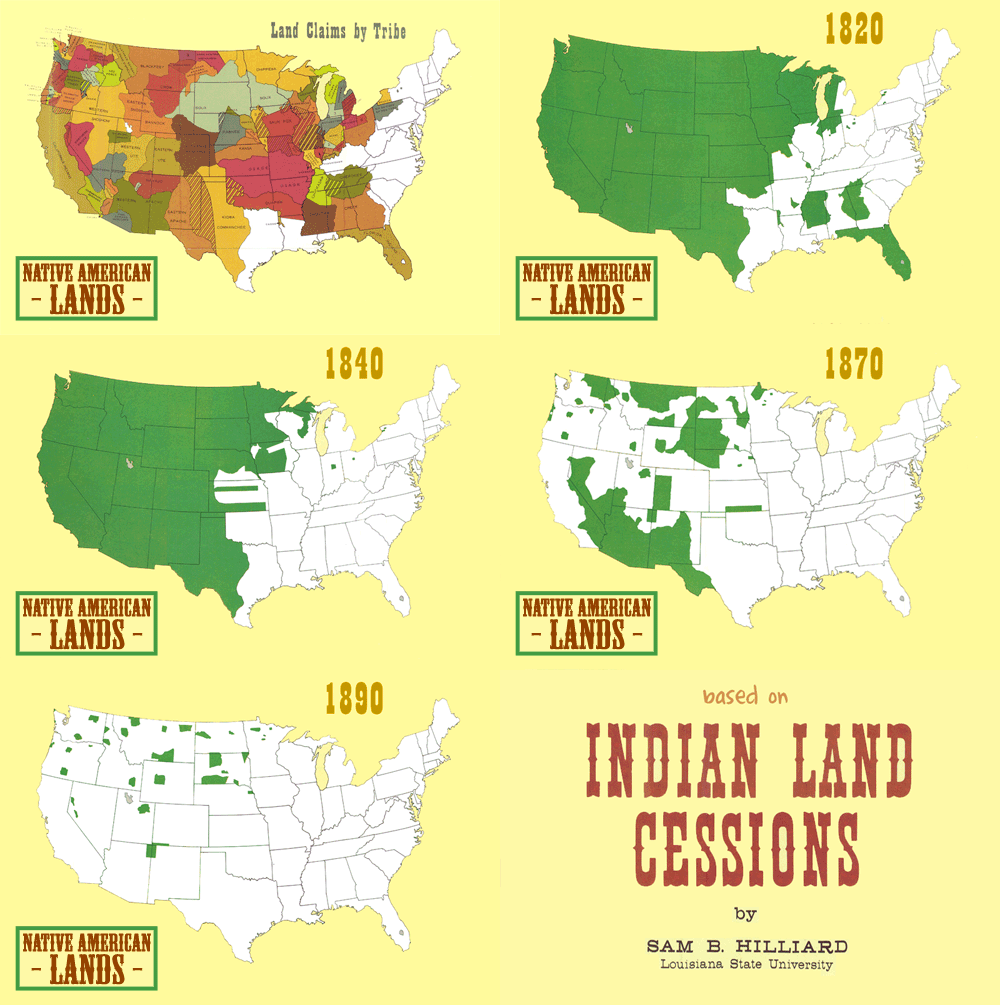


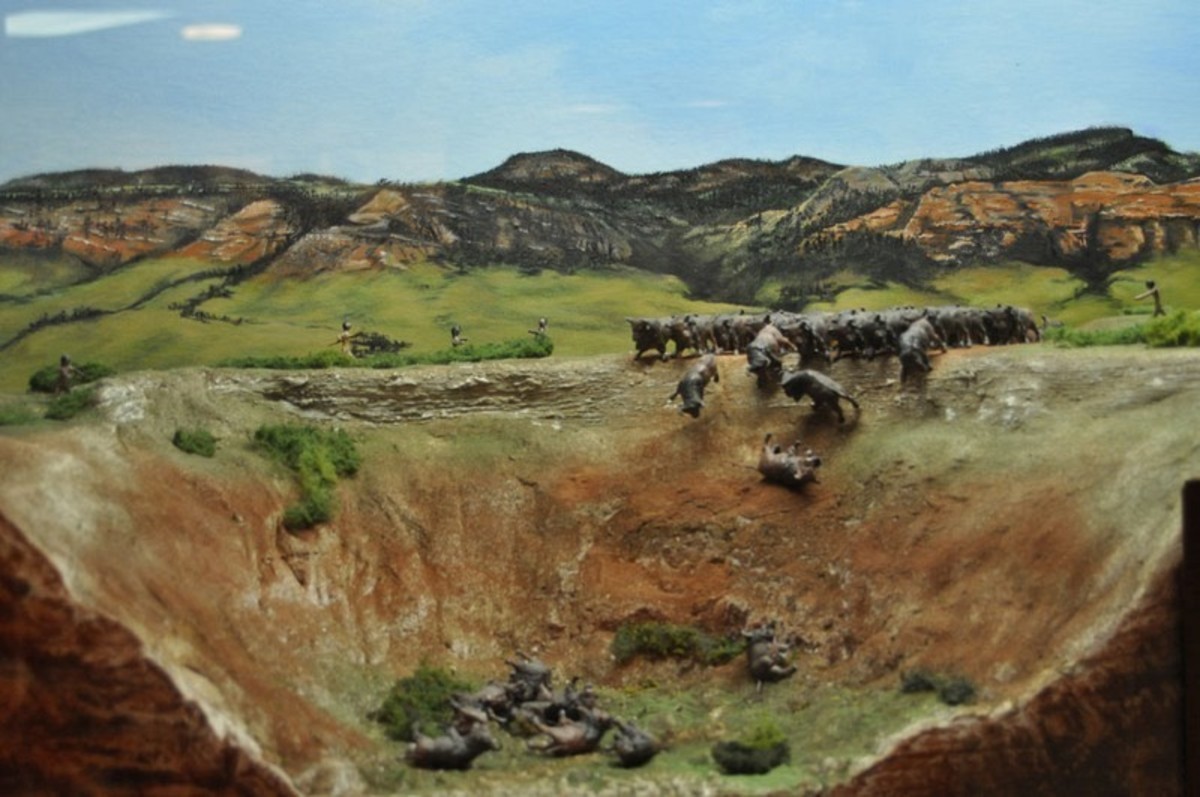





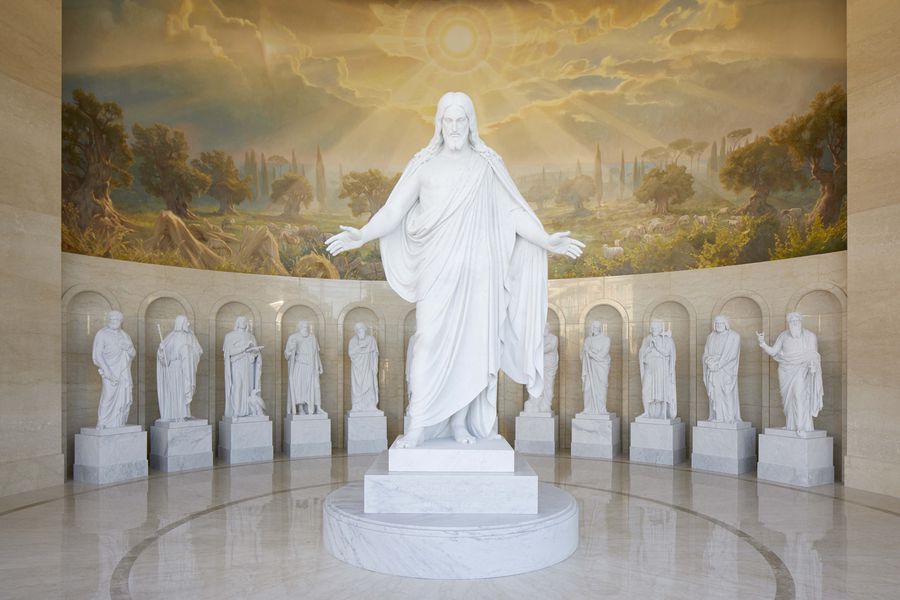



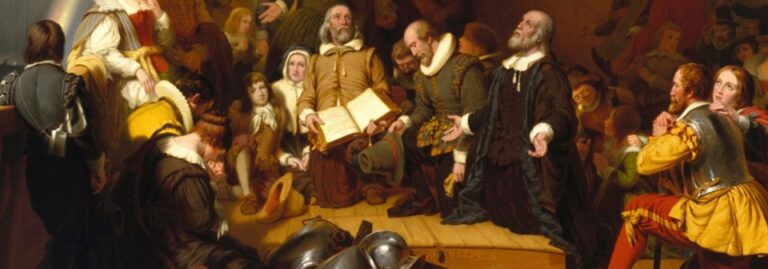
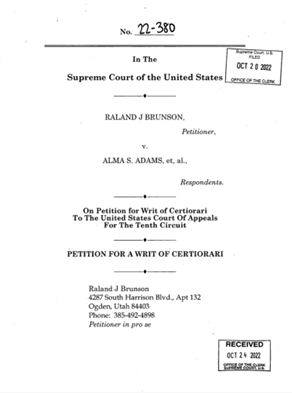 Speaking about the Constitution hanging by a thread, I want to also mention a law case that was just accepted before the Supreme Court of the United States on about Nov 24, 2022. The court had 4 Justices vote to move the case forward to be heard. Today is Dec 1, 2022 and I don’t have an update. Here is the Supreme Court
  The Brunson’s have a website that shows the story and timeline of the case, which will always be updated with any new developments.
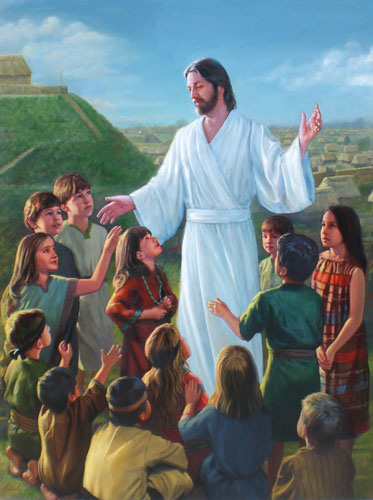
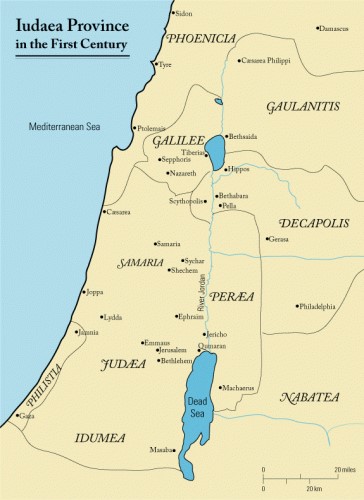
 Purchase Today