“You know there has been great discussion in relation to Zion–where it is, and where the gathering of the dispensation is, and which I am now going to tell you. The prophets have spoken and written upon it; but I will make a proclamation that will cover a broader ground. The whole of America is Zion itself from north to south.” President Joseph Smith’s Remarks–The Whole of America Zion–April Conference, 1844 Section Six 1843-44, p.362
Mesoamerican activists actually cite this above quote as evidence that the Book of Mormon took place in Central America. WRONG! They interpret the above quote in blue to mean North America to South America. It doesn’t say that however. It says America is Zion (speaking of America) and it means America (from its North to its South) Just like in the map below:
Center of America
This map explains the Joseph Smith quote above is that the very Zion is Eden, and the New Jerusalem, which are in the very center place of the United States of America. The Lord can’t be more accurate than that. In other words the cradle of society or its beginning is Eden in Missouri, and its location during the Book of Mormon times was Missouri [Zarahemla], and the New Jerusalem will be at Independence, Missouri. In other words, “The first shall be last and the last shall be first. The beginning and the end will be near Missouri. How beautiful is this information.
Civil War, North and South on Joseph’s Mind
“Have We Not Had a Prophet Among Us?” Joseph Smith’s Civil War Prophecy
“A month following the artillery rounds fired at Fort Sumter, South Carolina, signaling the start to the Civil War, the Philadelphia Sunday Mercury remarked, “We have in our possession a pamphlet, published at Liverpool, in 1851, containing a selection from the ‘revelations, translations and narrations’ of Joseph Smith, the founder of Mormonism.” Citing what is now Doctrine and Covenants 87, the paper continued, “The following prophecy is here said to have been made by Smith, on the 25th of December, 1832. In view of our present troubles, this prediction seems to be in progress of fulfilment, whether Joe Smith was a humbug or not.” Though early in the war’s advancement, the paper nevertheless speculated about the prophecy, concluding, “The war began in South Carolina. Insurrections of slaves are already dreaded. Famine will certainly afflict some Southern communities. The interference of Great Britain, on account of the want of cotton, is not improbable, if the war is protracted. In the meantime, a general war in Europe appears to be imminent. Have we not had a prophet among us?”[1] Scott C. Esplin
[1] Footnote Above: “A Mormon Prophecy,” Philadelphia Sunday Mercury, May 5, 1861, cited in Robert J. Woodford, “Historical Development of the Doctrine and Covenants” (Ph.D. dissertation, Brigham Young University, 1974), 2:1110, emphasis added.
Editors Note: On the 25th of December, 1832 Joseph received the Civil War Prophesy, (D&C 87) telling of the beginning war accurately, which began in Fort Sumter, SC on April 12, 1861. Then at April General Conference, 1844, Joseph mentioned the quote above stating, “The whole of America is Zion itself from north to south.” This shows the words “North and South” would be prevalent on the mind of Joseph, and he would definitely know and understand those two words, as he quotes them together. There is little question that Joseph did not mean to say, “The whole of America is Zion itself from north America to south America.” No, Joseph said what was on his mind that “the whole of America is Zion itself from north to south.
The United States is God’s Choice
The United States of America has been and is truly great. It is the Promised Land of the Book of Mormon. Today it is receiving relentless attacks from some very unpatriotic and evil people. We are in a World War 3 cyber battle and it is time to stand up and applaud the goodness of these United States. We know this land will not be possessed by a disobedient people. We have time to save our land, but it is becoming a challenge.
Prophets and Apostles have spoken of the Choice Land and the responsibility those of us who are citizens must act with more dignity, respect, honor, faith and righteousness than those living in any other country. Not because we are better people, but because far more is expected of us. The penalty for our sin and disobedience will be far greater than those who live in other countries, as more is expected of us. We welcome all into the United States that want to come here legally and adopt our way of life which is freedom to choose right or wrong and be willing to accept the blessings or the curse for disobedience. Love our neighbor as ourselves, and above all Love the Lord our God with all our Heart, Might, Mind and Strength.
Zion and Jerusalem by Joseph Fielding Smith
The following question is from a reader of the Improvement Era, in the Southern States: Referring to Isaiah 2:2-3, please explain whether it is the New Jerusalem that is to be built in the land of Zion, or Jerusalem that is to be built on the eastern continent, from whence the word of the Lord will go forth in the last days.“
The Scripture in Question is as Follows:
And it shall come to pass in the last days, that the mountain of the Lord’s House shall be established in the top of the mountains, and shall be exalted above the hills; and all nations shall flow unto it. And many people shall go and say, Come ye, and let us go up to the mountain of the Lord, to the house of the God of Jacob; and he will teach us of his ways, and we will walk in his paths: for out of Zion shall go forth the law, and the word of the Lord from Jerusalem.
The statement is very clear that two separate cities, or centers, are mentioned by Isaiah. In modern revelation this is confirmed, and we are informed just where the city of Zion — which is the New Jerusalem — shall be built.
In order to get a proper understanding of this question, it is necessary to explain the fact that Palestine is to be the gathering place of the tribe of Judah “and the children of Israel his companions,” after their long dispersion as predicted by the prophets. America is the land of Zion. It was given to Joseph, son of Jacob, and his descendants to be an everlasting inheritance. The children of Ephraim (son of Joseph) “and all the house of Israel his companions,” will be gathered to Zion, or America.
In the blessing given by Jacob to his son Joseph the inheritance of America is foreshadowed and predicted in the following words:
Joseph is a fruitful bough, even a fruitful bough by a well; whose branches run over the wall: * * * Genesis 49
The blessings of thy father have prevailed above the blessings of my progenitors unto the utmost bounds of the everlasting hills: they shall be on the head of Joseph, and on the crown of the head of him that was separate from his brethren.
Click to Purchase
Because of his faithfulness and integrity, Joseph received greater blessings than the progenitors of Jacob, and was rewarded with the land of Zion. [United States of America] His brothers, with malicious intent, separated him and cast him out from among them. The Lord, in rewarding him, separated him from his brothers — the other tribes of Israel — and gave him an inheritance in a land that is choice above all other lands, which, we have learned from the Book of Mormon and modern revelation, is America.
In this great day of gathering, the Lord has commanded that those of the house of Israel who are scattered among the Gentiles should flee unto Zion, and those who are of the house of Judah should flee unto Jerusalem, “unto the mountain of the Lord’s house,” which is their gathering place. (Doc. and Cov.133:12,13.)
In each land a holy city shall be built which shall be the capital from whence the law and the word of the Lord shall go forth to all peoples. The Savior said to the Nephites: “Behold, this people will I establish in this land, unto the fulfilling of the covenant which I made with your father Jacob; and it shall be a New Jerusalem. And the powers of heaven shall be in the midst of this people; yea, even I will be in the midst of you” (3 Nephi 20:22).
Moroni, writing of the Jaredites, has said: “Behold, Ether saw the days of Christ, and he spake concerning a New Jerusalem upon this land; and he spake also concerning the house of Israel, and the Jerusalem from whence Lehi should come; after it should be destroyed, it should be built up again a holy city unto the Lord, wherefore it could not be a New Jerusalem, for it had been in a time of old, but it should be built up again, and become a holy city of the Lord; and it should be built unto the house of Israel.” Zion and Jerusalem by Joseph Fielding Smith, Improvement Era Vol. 22 JULY 1919
Location of The New Jerusalem
“Joseph, the Prophet, told me that the Garden of Eden was in Jackson County, Missouri. When Adam was driven out he went to the place we now call Adam-ondi-Ahman, Daviess County, Missouri. There he built an altar and offered sacrifices.” Wilford Woodruff, Wilford Woodruff, His Life and Labors, comp. Matthias F. Cowley [Salt Lake City: Deseret News, 1916], 481
“The spot chosen for the garden of Eden was Jackson County, in the State of Missouri, where Independence now stands; it was occupied in the morn of creation by Adam and his associates who came with him for the express purpose of peopling this earth.” ournal of Discourses, 26 vols. [London: Latter-day Saints’ Book Depot, 1854-1886], 10: 235
In 1831, the Prophet Joseph Smith received a revelation designating the place called Independence, Jackson County, Missouri, as the center place of the kingdom of God on the western hemisphere. A city called Zion or the New Jerusalem would there be built. There also, the foremost temple to the Lord should be erected. From the temple in Zion the law of the Lord would issue, as the word of the Lord would come from Jerusalem.” John A. Widtsoe, Evidences and Reconciliations [Salt Lake City: Improvement Era], 395.
“At that very spot, Spring Hill, Davis County, Missouri, in the year 1838, the Latter-day Saints, by direction of the Prophet, began to build a city, naming it Adam-ondi-Ahman, afterwards abbreviated to Diahman. While engaged in making the survey, some of the brethren came upon the ruins of an ancient altar, which the Prophet, on beholding, declared to be the identical altar upon which Adam offered sacrifices after he was expelled from Eden. The Garden of Eden, Joseph said, was in Jackson County, Missouri, from which part the Saints had been driven, as if to typify reminiscently the original expulsion. In both instances, the tree of disobedience bore the same bitter fruit. In Jackson County the New Jerusalem is to be built, and a people prepared for the glorious coming of the Lord. That America is the Old World, not the New, science now affirms; but the fact was first proclaimed by revelation, whose other name, in this case, is Joseph Smith the Prophet.” Orson F. Whitney, Gospel Themes [Salt Lake City: n.p., 1914], 99 – 100.
“In a revelation to the Prophet, an early event in the history of mankind, occurring near Adam-ondi-Ahman, was told: Three years previous to the death of Adam, he called Seth, Enos, Cainan, Mahalaleel, Jared, Enoch, and Methuselah, who were all high priests, with the residue of his posterity who were righteous, into the valley of Adam-ondi-Ahman, and there bestowed upon them his last blessing. (D. & C. 107:5)” John A. Widtsoe, Evidences and Reconciliations [Salt Lake City: Improvement Era], 395.
“In accord with the revelations given to the Prophet Joseph Smith, we teach that the Garden of Eden was on the American continent located where the City Zion, or the New Jerusalem, will be built. When Adam and Eve were driven out of the Garden, they eventually dwelt at a place called Adam-ondi-Ahman, situated in what is now Daviess County, Missouri. Three years before the death of Adam he called the righteous of his posterity at this place and blessed them, and it is at this place where Adam, or Michael, will sit as we read in the 7th chapter of Daniel.” Joseph Fielding Smith, Doctrines of Salvation, 3 vols., edited by Bruce R. McConkie [Salt Lake City: Bookcraft, 1954-1956], 3: 74.
“Since Adam called together seven generations of his descendants at Adam-ondi-Ahman, it can well be believed that there was his old homestead. If so, the Garden of Eden was probably not far distant, for it was the entrance at the east of the Garden which was closed against them at the time of the “fall.” (Gen. 3:24) In fact, it has been commonly understood among the Latter-day Saints, from the teachings of the Prophet, that the temple was to be built in or near the location of the Garden of Eden.”John A. Widtsoe, Evidences and Reconciliations [Salt Lake City: Improvement Era], 396
“That the Prophet actually taught that the Garden of Eden was in or near Independence, Missouri, is amply testified to by many who knew and heard him.” pg. 379, Out of Captivity, Charles W. Allen Joseph Smith Foundation Stoddard’s
Why Zarahemla in D&C 125 refers to the Zarahemla of the Book of Mormon
Editors note: Let me substitute a few words of Elder Smith and say about Zarahemla in the Book of Mormon, “wherefore it could not be a New Zarahemla, for it had been in a time of old, but it should be built up again, and become a holy city of the Lord; and it should be built unto the house of Joseph.”
We are informed in the revelations given to Joseph Smith the Prophet, that the city of Zion and the New Jerusalem is one and the same. In a number of revelations the Lord speaks of the New Jerusalem which is to be built. (See sections 28, 42, 45, 84.) In Sec. 45:66, 67, we read: “And it shall be called the New Jerusalem, a land of peace, a city of refuge, a place of safety for the Saints of the Most High God; and the glory of the Lord shall be there, and the terror of the Lord also shall be there, insomuch that the wicked will not come unto it, and it shall be called Zion” (See also sections 57:2 and 58:7).
In section 84:2, we read: “Yea, the word of the Lord concerning his Church established in the last days for the restoration of his people, as he has spoken by the mouth of his prophets, and for the gathering of his Saints to stand upon Mount Zion, which shall be the city of New Jerusalem.“
Jerusalem of old, after the Jews have been cleansed and sanctified from all their sin, shall become a holy city where the Lord shall dwell and from whence he shall send forth his word unto all people. Likewise, on this continent, the city of Zion, New Jerusalem— shall be built, and from it the law of God shall also go forth. There will be no conflict, for each city shall be headquarters for the Redeemer of the world, and from each he shall send forth his proclamations as occasion may require. Jerusalem shall be the gathering place of Judah and his fellows of the house of Israel, and Zion shall be the gathering place of Ephraim and his fellows, upon whose heads shall be conferred “the richer blessings.”
“Because of his faithfulness and integrity, Joseph received greater blessings than the progenitors of Jacob, and was rewarded with the land of Zion. His brothers, with malicious intent, separated him and cast him out from among them. The Lord, in rewarding him, separated him from his brothers — the other tribes of Israel — and gave him an inheritance in a land that is choice above all other lands, which, we have learned from the Book of Mormon and modern revelation, is America… We are informed in the revelations given to Joseph Smith the Prophet, that the city of Zion and the New Jerusalem is one and the same. In a number of revelations the Lord speaks of the New Jerusalem which is to be built…” Zion and Jerusalem by Joseph Fielding Smith, Improvement Era Vol. 22 JULY 1919
Editors Note: This quote above by Elder Joseph Fielding Smith, “Because of his faithfulness and integrity, Joseph received greater blessings than the progenitors of Jacob”, verifies that the Lord blesses various people at different levels, probably based on their obedience and righteousness. Although the Lord loves all peoplethe same and will judge all people with a righteous judgement, there are people in the world that are more intelligent than others, as it says, “And the Lord said unto me: These two facts do exist, that there are two spirits, one being more intelligent than the other; there shall be another more intelligent than they; I am the Lord thy God, I am more intelligent than they all.” Abraham 3:19
The Most Misunderstood Quote by Mesoamerican Theorists in its Fullness
“It is as impossible for me to continue the subject of yesterday as to raise the dead. My lungs are worn out. There is a time to all things, and I must wait. I will give it up, and leave the time to those who can make you hear, and I will continue the subject of my discourse some other time. I want to make a proclamation to the Elders. I wanted you to stay, in order that I might make this proclamation. You know very well that the Lord has led this Church by revelation. I have another revelation in relation to economy in the Church–a great, grand, and glorious revelation. I shall not be able to dwell as largely upon it now as at some other time; but I will give you the first principles. You know there has been great discussion in relation to Zion–where it is, and where the gathering of the dispensation is, and which I am now going to tell you. The prophets have spoken and written upon it; but I will make a proclamation that will cover a broader ground. The whole of America is Zion itself from north to south, and is described by the Prophets, who declare that it is the Zion where the mountain of the Lord should be, and that it should be in the center of the land. When Elders shall take up and examine the old prophecies in the Bible, they will see it.” President Joseph Smith’s Remarks–The Whole of America Zion–April Conference, 1844 Section Six 1843-44, p.362
Jonathan Neville Explains North and South
Mesoamerican activists actually cite this above quote as evidence that the Book of Mormon took place in Central America. Others read the rest of the journal entry and get a better idea of what was intended.
“When the House is done, Baptism font erected and finished & the worthy are washed, anointed, endowed & ordained kings & priests, which must be done in this life, when the place is prepared you must go through all the ordinances of the house of the Lord so that you who have any dead friends must go through all the ordinances for them the same as for yourselves; then the Elders are to go through all America & build up Churches until all Zion is built up, but not to commence to do this until the Temple is built up here and the Elders endowed. Then go forth & accomplish the work & build up stakes in all North and South America. Their will be some place ordained for the redeeming of the dead. I think this place will be the one, so their will be gathering fast enough here.”
In modern times, we interpret this to mean the continents of North America and South America, but that’s now how it was meant in 1844. About a year later, in June 1845, Woodruff was back in England. He visited the exhibition of Madame Tussaud and Sons. One of the exhibits that most impressed him was this:
“George Washington dressed as the President of America taken from A bust executed from Life. This personage bespoke as much dignity as any member of the Group.”
Woodruff used the term “America” interchangeably with the United States, or the United States of America. He referred to it as America three times as often as he did the United States. Like his contemporaries, he was concerned about the division between the northern states and the southern states. For example, he made this comment in Volume 2 of his journal:
“After General Harrison was elected President of the United States A body of citizens suspended a line across the road in which the President was to walk. This line contained or supported 27 flags one for each of the states. As General Harrison was passing under these colors the line parted in the centre. One half fell into the street towards the north & the other half towards the south as much as to say the states would be divided.”
When we think about Joseph Smith’s statement from the April 1844 conference, he was referring to the Nauvoo temple, which was built “in the centre of North and South America” if we’re referring to the United States of America. It’s nearly as central as possible in a literal sense, given the unknown extent of the western territories.
When Joseph said the Elders were to go through “all America” “& build up stakes in all North and South America,” he was referring to the United States, as we can see not only from the ordinary use of the term “America” at the time, but also from the reality of what actually happened. The Elders were already in Europe. They didn’t go to South America until much later. But it was important for the members to know they would build the Church in both North and South America. They were not going to focus just on the northern states, where most of them had come from.
It’s always important to read historical documents in the context of the times in which they were written.” Jonathan Neville Blog Here
As you research the map to the right, you will realize that Joseph Smith was referring to north and south in regards to the USA not in relationship to north and south America, if not, New Jerusalem is not in the middle of north and south America, but New Jerusalem or MO. IS in the middle of the USA.
Quotes that Support the Land Joseph and Promised Land in the Book of Mormon, as the United States of America!
How Many Quotes about Mesoamerica as the Promised Land, can you find?
Thomas S. Monson
Thomas S. Monson by Ken Corbett
“The Lord gave a divine promise to the ancient inhabitants of this favored country (the United States): ‘Behold, this is a choice land, and whatsoever nation shall possess it shall be free from bondage, and from captivity, and from all other nations under heaven, if they will but serve the God of the land, who is Jesus Christ” (Ether 2:12).
“Our Heavenly Father inspired the leaders of…the United States of America, that they might together, under His direction, having been raised up by God for the purpose, establish the Constitution of this country and…Bill of Rights, that by the year of our Lord 1805 [there would be] a climate where our Heavenly Father could send into this period of mortality a choice spirit who would be known as Joseph Smith, Jr.” 2011 President Thomas S. Monson (ordained an Apostle, 1963; ordained President of the Church, 2008: (United States) is printed in the book just as shown in the quote above).
Gordon B. Hinckley
“I would that all men could believe in the destiny of America as did the early pioneers: that it is the land of Zion; that the founders of this nation were men of inspired vision; that the Constitution as written by the inspiration of heaven must be preserved at all costs. “I make a further plea that the citizens of this favored land live righteously that they might enjoy the fruits of their righteousness in this land of promise.” Let Not Your Heart Be Troubled Gordon B. Hinckley of the Quorum of the Twelve Apostles Oct. 29, 1974 • Devotional
“I marvel at the miracle of America, the land which the God of Heaven long ago declared to be a land choice above all other lands and concerning which He has made a promise and given a warning in these remarkable words: ‘Behold, this is a choice land, and whatsoever nation shall possess it shall be free from bondage, and from captivity, and from all other nations under heaven, if they will but serve the God of the land, who is Jesus Christ’(Ether 2:12.) “God bless America, for she is His creation.” (Hinckley, Gordon B., National Advisory Council of BYU College of Business [November 2, 1973]).
“I should like to say a few words about America…No land is without its beauty, no people without their virtues, and I hope that you who come from elsewhere will pardon my saying a few words concerning my own native land, America…surely this is a good land, a choice land, a chosen land. To me it is a miracle, a creation of the Almighty.” Gordon B. Hinckley Let Not Your Heart Be Troubled”, BYU Speeches of the Year, October 29, 1974, pp. 267-68 )
Heber J Grant)
“It was not by chance that the Puritans left their native land and sailed away to the shores of New England, and others later followed. They were the advance guard of the army of the Lord, predestined to establish the God-given system of government under which we live and to make America, which is the land of Joseph, the gathering place of Ephraim, an asylum for the oppressed of all nations, and prepare the way for the restoration of the gospel of Christ and the establishment of his church upon the earth” – Heber J. Grant, Conference Report, [April 1930].
Russell M. Nelson
“The Book of Mormon reveals the important interrelationships between the Creation, the Fall, and the Atonement. One cannot fully comprehend the Atonement without first understanding the Fall; and the Fall of Adam cannot be fully understood without first understanding the Creation. These three great doctrinal pillars sustain each other in God’s eternal plan.
The Book of Mormon reveals that Joseph, the son of Jacob who was once sold into Egypt, foresaw the Prophet Joseph Smith and his day and noted that there would be many similarities in their lives. Centuries later, the Prophet Joseph stated, “I feel like Joseph in Egypt.” The Book of Mormon reveals that the inheritance of Joseph, son of Israel, was not forgotten when land was distributed to the tribes of Israel, as promised in the Abrahamic covenant. Joseph’s inheritance was to be a land choice above all others. It was choice not because of beauty or wealth of natural resources, but choice because it was chosen to be the repository of sacred writings on golden plates from which the Book of Mormon would one day come. It was choice because it would eventually host the world headquarters of the restored Church of Jesus Christ in the latter days. And it was choice because it is a land of liberty for those who worship the Lord and keep His commandments.” President Russell M. Nelson President of the Quorum of the Twelve Apostles June 23, 2016.
Bruce R. McConkie
“Certain lands were given to Israel for an inheritance in time and in eternity.America is the land of Joseph; it was the home of Nephite Israel, who were of Joseph, for a thousand years, and it is the headquarters of the Church in this final dispensation in which the church and kingdom of God are in the lands of Ephraim.” (McConkie, Bruce R., A New Witness for the Articles of Faith [1985], 511.)
HC 1:301-315
The Book of Mormon is a record of the forefathers of our western tribes of Indians; having been found through the ministration of an holy angel, and translated into our own language by the gift and power of God, after having been hid up in the earth for the last fourteen hundred years, containing the word of God which was delivered unto them. By it we learn that our western tribes of Indians are descendants from that Joseph which was sold into Egypt, and that the land of America is a promised land unto them, and unto it all the tribes of Israel will come, with as many of the Gentiles as shall comply with the requisitions of the new covenant. But the tribe of Judah will return to old Jerusalem. The city of Zion spoken of by David, in the one hundred and second Psalm, will be built upon the land of America, “And the ransomed of the Lord shall return, and come to Zion with songs and everlasting joy upon their heads” (Isaiah 35:10); and then they will be delivered from the overflowing scourge that shall pass through the land. But Judah shall obtain deliverance at Jerusalem. See Joel 2:32; Isaiah 26:20-21;Jeremiah 31:12,Psalm 1:5; Ezekiel 34:11-13. These are testimonies that the Good Shepherd will put forth His own sheep, and lead them out from all nations where they have been scattered in a cloudy and dark day, to Zion, and to Jerusalem; besides many more testimonies which might be brought.
And now I am prepared to say by the authority of Jesus Christ, that not many years shall pass away before the United States shall present such a scene of bloodshed as has not a parallel in the history of our nation; pestilence, hail, famine, and earthquake will sweep the wicked of this generation from off the face of the land, to open and prepare the way for the return of the lost tribes of Israel from the north country. The people of the Lord, those who have complied with the requirements of the new covenant, have already commenced gathering together to Zion, which is in the state of Missouri; therefore I declare unto you the warning which the Lord has commanded to declare unto this generation, remembering that the eyes of my Maker are upon me, and that to him I am accountable for every word I say, wishing nothing worse to my fellow-men than their eternal salvation; therefore, “Fear God, and give glory to Him, for the hour of His judgment is come.” Repent ye, repent ye, and embrace the everlasting covenant, and flee to Zion, before the overflowing scourge overtake you, for there are those now living upon the earth whose eyes shall not be closed in death until they see all these things, which I have spoken, fulfilled. Remember these things; call upon the Lord while He is near, and seek Him while He may be found, is the exhortation of your unworthy servant. HC 1:301-315
W.W. Phelps
“This beautiful region of country is…the land of Joseph or the Indians, as they are called… The world will never value the land of Desolation, as it is called in the Book of Mormon, for any thing more than hunting ground, for want of timber and mill-seats: The Lord to the contrary notwithstanding, declares it to be the land of Zion which is the land of Joseph, blessed by him, for the precious things of heaven, for the dew… Thou [Jerusalem] shalt no more be termed Forsaken; neither shall thy land [Zion] any more be termed Desolate.” The Evening and Morning Star Vol. 1 No. 5 October 1832 Page 71 Editor WW Phelps
“To his steady drum roll about the Indian and his destiny, Phelps added his view of the land west of the Missouri settlements, which he called the “Far West.” Wasn’t this, the editor wondered, the land of the covenant, where the Book of Mormon Jaredites and Nephites had once roamed before meeting their destruction? While the world would never prize the area because of its want of timber and mill seats, Deity had a different view. This land was Zion, he argued, the land of Joseph, the receptacle of “the chief things of the ancient mountains, and for the precious things of the lasting hills.” In a few sentences, Phelps wove together some of the images that Joseph Smith had been using when speaking of the western Zion and the soon-to-be redeemed Indian” Quoted in Seeking The “Remnant”: The Native American During The Joseph Smith Period by Ronald W Walker: Evening and the Morning Star 1 (October 1832): 137] Phelps was citing Deuteronomy 3313-17 The editor later would help select Mormon settlement sites in Daviess County and may have had a role in choosing the name of the region’s most prominent town, Far West, thus giving another expression to his fascination with the western region.” WW Phelps
LeGrand Richards
“The Book of Mormon tells us that America is a land of promise, a land choice above all other lands. Nephi said that whosoever should possess it must serve the God of the land or they would be swept off. And we have read in the Book of Mormon of the nations that have been swept off because they ceased to worship the God who had led them and their forefathers here to this land. We have a great responsibility as citizens in this land, for the Lord said that he would fight its battles and be its king, if we will just serve him. So it’s appropriate at this time that we express our appreciation for this great land. I like the words Moses used when he gave a blessing to the twelve tribes of Israel. When he blessed Joseph he promised him a new land in the utmost bowels of the everlasting hills(see Deut. 33:15). Now that isn’t in Jerusalem because they don’t have everlasting hills over there, and the prophets have never predicted a regathering of all nations to the land of Israel. But they have predicted the gathering of Israel to this land of America, which is the land of Joseph. And we are the only people in the world who know what that land is that Moses promised to Joseph. It was so great in his eyes as he received the revelations of the Holy Spirit that in describing the land he used the word “precious” five times in just four verses…We have so much to be grateful for. We are not here by chance. We are here because of the sacrifices of our pioneer fathers who came to this choice land that the Lord, according to the Book of Mormon, had hidden away from the eyes of the world that it should not be overrun. He preserved it for us, for the day and time in which we now live here in these valleys of the mountains.” LEGRAND RICHARDS of the Quorum of the Twelve Apostles Nov. 18, 1980 • Devotional
BH Roberts-Prayer at Valley Forge
The painting and article “The Prayer at Valley Forge” [February insert] were very interesting and appropriate. There is another story, by B. H. Roberts, about George Washington and the Bible that really deserves retelling. It is found in the Contributor, vol. 10, p. 275:
A PROPHETIC INCIDENT: In the April number of the Century is a well-written and profusely illustrated article on the Inauguration of Washington, by Clarence Winthrop Bowen. Among the illustrations is a facsimile of the page of the Bible on which Washington laid his hand while taking the oath of office, and it is to this that I wish specially to call attention. … The Century article says:
“Secretary Otis of the Senate held before him (Washington) a red velvet cushion, upon which rested the open Bible. … ‘You do solemnly swear,’ said Livingston, ‘that you will faithfully execute the office of President of the United States and will, to the best of your ability, preserve, protect, and defend the Constitution of the United States’. … [Washington repeated the oath.] He then bowed his head and kissed the sacred book, and with the deepest feelings uttered the words, ‘So help me God!’”
The page of the Bible which Washington kissed, and on which his hand rested while taking the oath, is indicated in the Bible of the St. John’s Lodge [from which it was borrowed] by the leaf being turned down. A copper-plate engraving is on the opposite page illustrating the blessings of Zebulun and Issachar as pronounced upon them by the patriarch Jacob in Genesis 49, thirteenth and fourteenth verses respectively. The page on which Washington’s hand rested contains part of chapter forty-nine and also part of the fiftieth chapter down to verse eight inclusive.
The particular thing which struck me as being a remarkable circumstance is that the page indicated contains the blessing of Jacob upon the head of his favorite son Joseph, which reads as follows: “Joseph is a fruitful bough, even a fruitful bough by a well; whose branches run over the wall: “The archers have sorely grieved him, and shot at him, and hated him: But his bow abode in strength, and the arms of his hands were made strong by the hands of the mighty God of Jacob; (from thence is the shepherd, the stone of Israel:) Even by the God of thy father, who shall help thee; and by the Almighty, who shall bless thee with blessings of heaven above, blessings of the deep that lieth under, blessings of the breasts, and of the womb: The blessings of thy father have prevailed above the blessings of my progenitors unto the utmost bound of the everlasting hills: they shall be on the head of Joseph, and on the crown of the head of him that was separate from his brethren.” Genesis 49-50
To the Latter-day Saints the blessing of Joseph has a particular significance, for the reason that they, more than any other people, are familiar with his descendants, and the blessing promised them in which also they hope to participate. The Book of Mormon is a history, chiefly, of the descendants of Joseph; and in the mighty nations which have peopled the American continent, the Latter-day Saints see, in part, the fulfillment of the great blessings pronounced upon his head.
The article reviews Book of Mormon passages that refer to the seed of Jacob through Josephcoming to a promised land, including the comments made by the Savior when he visited them after his resurrection. Additional passages are reviewed that discuss the additional blessings pronounced upon Joseph by Moses. The author then says:
But what seems singular in connection with these promises made to Joseph and the account of their partial fulfillment in a portion of his posterity inhabiting America is, that after the nations, composed largely of his descendants, had been destroyed and other peoples from Europe—among whom, however, were also large numbers of the descendants of Joseph through the loins of Ephraim—had taken possession of the land, at the real establishment of that government which is destined to shape the destiny of the great continent of America—the land of Joseph—the very first executive chosen for that nation when being sworn to preserve, protect and defend the constitution of this land which God had inspired men to frame, he placed his hand upon the very page of the Bible containing the blessing pronounced upon the head of Joseph by the patriarch Jacob. …
Will men call this merely coincidence? Strange coincidence indeed it is, if that be all that it is. Observe that the forty-ninth chapter of Genesis is near the very first leaves of the Bible, and in laying the book open upon a velvet cushion for the use of one to be sworn, it would naturally be parted near the middle of the volume and not parted at the first few leaves.
Let others believe all this to be coincidence if they choose, but for my own part there is too much that is significant to assign it to that class of phenomena so conveniently disposed of by calling them coincidence … —B. H. Roberts.
Editor’s Note: I quote BH Roberts, “Let others believe all this to be coincidence if they choose, but for my own part there is too much that is significant to assign it to that class of phenomena so conveniently disposed of by calling them coincidence.” I say to all intellectuals scholars, professors and others in the great and spacious building, do you all believe this is a coincidence? Doesn’t it burn in your bosom that as Elder Perry said, “The United States is the promised land foretold in the Book of Mormon—a place where divine guidance directed inspired men to create the conditions necessary for the Restoration of the gospel of Jesus Christ.” Elder L. Tom promised Ensign Dec. 2012
Ether 13:5-7
“5 And he spake also concerning the house of Israel, and the Jerusalem from whence Lehi should come—after it should be destroyed it should be built up again, a holy city unto the Lord; wherefore, it could not be a new Jerusalem for it had been in a time of old; but it should be built up again, and become a holy city of the Lord; and it should be built unto the house of Israel—
6 And that a New Jerusalem should be built up upon this land, unto the remnant of the seed of Joseph, for which things there has been a type.
7 For as Joseph brought his father down into the land of Egypt, even so he died there; wherefore, the Lord brought a remnant of the seed of Joseph out of the land of Jerusalem, that he might be merciful unto the seed of Joseph that they should perish not, even as he was merciful unto the father of Joseph that he should perish not.” Ether 13:5-7
Marion G. Romney
Marion G. Romney by Ken Corbett
“Just as Jesus Christ has piloted to this land of America the vanguard of each succeeding civilization which has dwelt upon it, so has He made known to them His everlasting decree “that whoso should possess [it] should serve Him, the true and only God, or they should be swept off … when they … are ripened in iniquity” (Ether 2:8–9; emphasis added). “Our present civilization is no exception. We who live in America are under this everlasting decree. And the Lord has said, “My word shall be verified at this time as it hath hitherto been verified” (Doctrine and Covenants 5:20). Jesus Christ, the God of this land, led Columbus to it. He led the Pilgrims to Plymouth. He sustained and gave victory to the colonists. He established the Constitution of the United States (see Doctrine and Covenants 101:80). Over a period of some twenty-six centuries He directed the writing of the Book of Mormon, which contains the record of the former inhabitants of this land. At His command, Moroni finished the record and hid it up in the Hill Cumorah, where, under his surveillance, it was safely preserved for some fourteen hundred years. “By the power of Jesus Christ, the God of this land, the record was brought forth, translated, and in 1830 published. For nearly 150 years now it has been bearing its message to all who will receive it. “After setting forth the everlasting decree concerning this land and reviewing the destruction of two civilizations, Moroni, seeing the present inhabitants of America, and knowing by the power of God that we would have the record, penned this message directly to those who inhabit this land: ‘And this cometh unto you … that ye may know the decrees of God—that ye may repent, and not continue in your iniquities until the fulness come, that ye may not bring down the fulness of the wrath of God upon you as the inhabitants of the land have hitherto done’” (Ether 2:11). (Marion G. Romney, Second Counselor in the First Presidency, “America’s Promise,” Ensign [Sept. 1979]; emphasis added.) Quoted in Annotated Book of Mormon by Hocking and Meldrum Page 462.
Ezra Taft Benson
“…Once this nation was well established, then the Church was restored and from here the message of the restored gospel has gone forth. All according to divine plan. This then becomes the Lord’s base of operations in these latter days. And this base will not be shifted out of its place—the land of America. This nation will, in a measure at least, fulfil its mission even though it may face serious and troublesome days. The degree to which it achieves its full mission depends upon the righteousness of its people. God has, through his power, established a free people in this land as a means of helping to carry forward his purposes.
“It was his latter-day purpose to bring forth his gospel in America, not in any other place. It was in America where the Book of Mormon plates were deposited. That was no accident. It was his design. It was in this same America where they were brought to light by angelic ministry. It was” . . . [here] “where he organized his modern Church, where he, himself made a modern personal appearance” (Editorial, Church News).” The Lord’s Base of Operations” Elder Ezra Taft Benson Of the Council of the Twelve Apostles Conference Report, April 1962, pp. 103-106
2 Nephi 30:4
“And then shall the remnant of our seed know concerning us, how that we came out from Jerusalem, and that they are descendants of the Jews.” 2 Nephi 30:4 We need to look no further than the scriptures to know the Lamanites ARE DESCENDANTS of the JEWS.
D&C 19:26-27
And again, I command thee that thou shalt not covet thine own property, but impart it freely to the printing of the Book of Mormon, which contains the truth and the word of God— Which is my word to the Gentile, that soon it may go to the Jew, of whom the Lamanites are a remnant, that they may believe the gospel, and look not for a Messiah to come who has already come.” D&C 19:26-27
D&C 57:1-4
“Hearken, O ye elders of my church, saith the Lord your God, who have assembled yourselves together, according to my commandments, in this land, which is the land of Missouri, which is the land which I have appointed and consecrated for the gathering of the saints. Wherefore, this is the land of promise, and the place for the city of Zion. And thus saith the Lord your God, if you will receive wisdom here is wisdom. Behold, the place which is now called Independence is the center place; and a spot for the temple is lying westward, upon a lot which is not far from the courthouse. Wherefore, it is wisdom that the land should be purchased by the saints, and also every tract lying westward, even unto the line running directly between Jew and Gentile;” D&C 57:1-4 (At that time the Lamanites (or Jews) lived on the west and the Gentiles (or Whites) lived on the east. In this way you may interpret D&C 57:1-4 as separating the Jews and Gentiles or the Lamanites and Whites).
Wilford Woodruff
“I would say to the Lamanites, if I could speak to them understandingly, that you are also a branch of the house of Israel,and chiefly of the house of Joseph, and your forefathers have fallen through the same examples of unbelief and sins, as have the Jews, and you, as their posterity, have wandered in sin and darkness for many generations; and you, like the Jews, have been driven and trampled under the foot of the Gentiles, and put to death through your wars with each other, and with the white man, until you are almost destroyed. But there is still a redemption and salvation for a remnant of you in the latter days. It is time for you to cease shedding each other’s blood or making war upon your fellow-man. Cease to destroy one another, learn to cultivate the earth, and raise your food therefrom; call upon the Great Spirit to protect you and deliver you from bondage and darkness, and the Great Spirit will hear you and deliver you, and a remnant of you will again become a delightsome people as your forefathers were when they kept the commandments of God.”Wilford Woodruff History of His Life and Labors AS RECORDED IN HIS DAILY JOURNALS PREPARED FOR PUBLICATION BY MATTHIAS F. COWLEY Salt Lake City, Utah 1909
Bruce R. McConkie
Who, then, are the Jews, and what part shall they yet play in the gathering of Israel and the return of their King? There is a maze of fuzzy thinking and shoddy scholarship, both in the world and in the Church, that seeks to identify the Jews, both ancient and modern, and to expound upon what they have believed and do believe. It is not strange that the divines of the day-not knowing that the kingdom is to be restored to Israel at that glorious day; not having the Book of Mormon and latter-day revelation to guide them-it is not strange that they come up with false and twisted views about the mission and destiny of the Jews. It is a little sad that church members sometimes partake of these false views and of this secular spirit so as to misread the signs of the times.
The term Jew is a contraction of the name Judah, but the Jews are not the members of the tribe of Judah as such. After the reign of Solomon, the Lord’s people divided into the kingdom of Israel and the kingdom of Judah. Nearly ten tribes served Jeroboam in Israel and two and a half tribes served Rehoboam in Judah. The Levites were scattered among all the tribes. Judah, Simeon, and part of Benjamin comprised the kingdom of Judah. In actual fact, and considering blood lineage only, both kingdoms had in them people from all of the tribes. Lehi, who lived in Judah and was a Jew, was of the tribe of Manasseh. The Jews were nationals of the kingdom of Judah without reference to tribal ancestry. Thus the descendants of Lehi, both the Nephites and the Lamanites, were Jews because they came out from Jerusalem and from the kingdom of Judah. (2 Ne. 33:8.)
The Jews today are also those whose origins stem back to the kingdom of their fathers. Clearly the dominant tribe-dominant, however, only in the sense of political power and rulership-was Judah. As to the bloodlines, who knows whether there are more of Judah or of Simeon or of Benjamin or of some other tribe among the Jews as we know them? Paul, a Jew, was of the tribe of Benjamin. The name Judea, now used as a noun, is actually an adjective meaning Jewish and is the Greek and Roman designation for the land of Judah.
Since the Ten Tribes were taken into Assyria and lost from the knowledge of their fellows more than a century before the Jews went into Babylonian captivity, the prophets began to speak of Jews and Gentiles and to consider as a Gentile everyone who was not a Jew. This classifies Ephraim and the rest of scattered Israel as Gentiles. Everyone, in this sense, who is not a Jew is a Gentile, a concept that will enable us, in due course, to set forth what is meant by the fulness of the Gentiles. (The Millennial Messiah: The Second Coming of the Son of Man, p.221-222)
Larry Echo Hawk
“As I read the Book of Mormon, it seemed to me that it was about my American Indian ancestors. It tells the story of a people, a part of which were later described as “Lamanites,” who migrated from Jerusalem to a “land of promise” (1 Nephi 2:20) about 600 B.C.” Larry Echo Hawk, “Come Unto Me, O Ye House of Israel,” Ensign, [Nov. 2012].
Joseph Fielding Smith
“Because of his faithfulness and integrity, Joseph received greater blessings than the progenitors of Jacob, and was rewarded with the land of Zion. His brothers, with malicious intent, separated him and cast him out from among them. The Lord, in rewarding him, separated him from his brothers — the other tribes of Israel — and gave him an inheritance in a land that is choice above all other lands, which, we have learned from the Book of Mormon and modern revelation, is America… We are informed in the revelations given to Joseph Smith the Prophet, that the city of Zion and the New Jerusalem is one and the same. In a number of revelations, the Lord speaks of the New Jerusalem which is to be built…” Zion and Jerusalem by Joseph Fielding Smith, Improvement Era Vol. 22 JULY 1919
Alvin R. Dyer
Thus, from these brief accounts we see the reasons why America, or the continent of America, is the promised and choice land, choice above all other lands, for it was here that the habitation of man began, (Adam) and here that the covenants of God were first established. And it is from the center of this land that God has started his great latter-day work that will carry to the finish…America as Zion will not fail. Since America is the land choice above all other lands, and it is in the “Center Place” that Zion will be established, it will not fail. America as Zion will not fail, not simply because it is the land of our illustrious independence and constitutional fathers, but because it is the land of Joseph, the son of Jacob, and has been so established by God’s covenant. It is the land for the gathering of Israel in the culminating period of the last dispensation, which God has established through the Prophet Joseph Smith. I bear testimony of the fulfillment and the destiny of the land of America as Zion, and I do it in the name of Jesus Christ. Amen. Alvin R. Dyer, Conference Report, October 1968, Third Day: Morning Meeting, 110.
Once again I am amazed at all of the significant archaeology that has been found, that shows a Nephite or Jaredite timeline all over North America. How can anyone miss all of this information coming from the ground as was prophesized. I believe the biggest challenge in the past, has been that historians and Intellectuals were looking in Mesoamerica and not in the USA.
How Can a Person be so Wrong?
Latter-day Saint Thomas Stuart Ferguson was the founder of BYU’s archaeology division (New World Archaeological Foundation). NWAF was financed by the LDS Church. NWAF and Ferguson were tasked by BYU and the Church in the 1950s and 1960s to find archaeological evidence to support the Book of Mormon. After 17 years of diligent effort, this is what Ferguson wrote in a February 20, 1976 letter about trying to dig up evidence for the Book of Mormon: “…you can’t set Book of Mormon geography down anywhere – because it is fictional and will never meet the requirements of the dirt-archaeology. I should say — what is in the ground will never conform to what is in the book.” https://www.bookofmormoncentralamerica.com/2021/09/fair-lds-again-and-skousen-on-witnesses.html
Amazing Parallel of Hopewell and Nephites. Hard to deny!
If you live into the next century you will see evidence for the Book of Mormon come forth in droves.” Truman G. Madsen, speaking of what the Prophet Joseph Smith said to a colleague, in the opening statement of the 2005 video, “Journey of Faith.”
Elder Jeffery Holland said, “In one of the earliest such manifestations after His Resurrection, Jesus came to the eleven, inviting them to touch His hands and feet as He sat to eat meat and honeycomb. To those who doubted, Mark says He upbraided them with their unbelief and hardness of heart. The message is that if members of the Godhead go to the trouble of providing many infallible proofs of truth, then surely we are honor bound to affirm and declare that truth and may be upbraided if we do not. My testimony to you tonight is that the gospel is infallibly true and that a variety of infallible proofs supporting that assertion will continue to come until Jesus descends as the ultimate infallible truth of all. Our testimonies aren’t dependent on evidence; we still need that spiritual confirmation in the heart of which we have spoken but not to seek for and not to acknowledge intellectual, documentable support for our belief when it is available is to needlessly limit an otherwise incomparably strong theological position and deny us a unique, persuasive vocabulary in the latter-day arena of religious investigation and sectarian debate. Thus armed with so much evidence of the kind we have celebrated here tonight, we ought to be more assertive than we sometimes are in defending our testimony of truth.
To that point I mention that while we were living and serving in England, I became fond of the writing of the English cleric Austin Farrer. Speaking of the contribution made by C. S. Lewis specifically and of Christian apologists generally, Farrer said: Though argument does not create conviction, lack of it destroys belief. What seems to be proved may not be embraced; but what no one shows the ability to defend is quickly abandoned. Rational argument does not create belief, but it maintains a climate in which belief may flourish.
May we leave to Nephi, son of Helaman, the last word regarding our celebration of gospel scholarship tonight. Said he of that which God has given an infallible proof:
“And now, . . . ye know these things and cannot deny them [because of the] many evidences which ye have received; yea, even ye have received all things, both things in heaven, and all things which are in the earth, as a witness that they are true.” Heleman 8:24
When such revelation comes, when that complete witness is borne to our heart and our head, then surely we will know how Martin Harris felt when, after considerable struggle of both body and spirit, he was able to behold the angel Moroni holding the gold plates, turning their leaves one by one before his very eyes. In response to that spiritual and temporal evidence he shouted for all of us, “Tis enough, ‘tis enough; mine eyes have beheld, mine eyes have beheld.” Joseph Smith, History, 1838-1856, vol. A-1, 25, Church History Library
May our Father in Heaven bless us and an ever-larger cadre of young scholars around the Church to do more and more to discover and delineate and declare the reasons for the hope that is in us, that like those converted Lamanites, we may with bold conviction hold up to a world that desperately needs it “the greatness of the evidences which [we have] received,” Heleman 5:50, especially of the truthfulness of the Book of Mormon, the keystone of our religion. In the name of Jesus Christ, amen.” The Greatness of the Evidence By Elder Jeffrey R. Holland, August 16, 2017
Elder Holland speaks above about the importance that, “if members of the Godhead go to the trouble of providing many infallible proofs of truth, then surely we are honor bound to affirm and declare that truth.” [Could infallible truths be found in artifacts and archaeological findings? I say yes.] Then Elder Holland continues to say we should “acknowledge intellectual, documentable support for our belief” [I have found many of the archaeological findings to be intellectual and documentable in my search for truth], and as I add the power of prayer and the spirit, I have received many personal revelations for the truth of the Book of Mormon found in the ground all over North America. Let’s now discover some of that infallible truth in the mounds all around Cleveland and Kirtland, Ohio.
Indian Point Cleveland, OH
“Indian Point, located just 14 miles northeast of the Kirtland Temple. This ancient Indian enclosure features two earthen walls bordered by ditches and protected on two sides of a triangle by steep cliffs. The walls were built around 140 B.C.” Jonathan Neville by reading the signage at the site.
“The most spectacular Cleveland area earthworks are surprisingly little known to many area residents. The prehistoric embankments are still sufficiently high as to be easily viewed. The site is Indian Point (33La2) located at the juncture of the Grand River and Paine Creek just east of Painesville, Ohio. The site is now part of the Lake Metro-park system. The archaeological community, who has been interested in the area long before it became a park, calls it the Lyman Site because it is on the former grounds of a military training camp operated by Charles Lyman. The site consists of three earthen enclosures atop a steep river bluff. (The western set of walls is severely eroded but the eastern two are easily viewed.) Indian Point did not have mounds; mound-like structures found there have more recently been determined not to be of prehistoric human origin. Until recently the Early Woodland date of Indian Point was not recognized; it was considered strictly a Late Prehistoric site (900 AD-1650 AD) because of the large amount of ceramics and bone tools of this period found there. Archaeologist James Murphy has long obtained radiocarbon dates prior to the First Millennium AD. He tested remains of cooking fires from deep within the inner earthworks. He also found an Early Woodland Stemmed point. The dates of specific portions of the site including the earthen walls still remain a matter of controversy. Murphy has proposed that the two sets of earthworks may have been constructed at different times.” 2011 LAURA PESKIN Prehistoric Indian Earthworks in the City of Cleveland and Environs
Indian Point
Once again this is a long blog about the Ohio area of the United States as the heart of the Heartland of the Nephites. I believe Ohio is their land and the Hebrew artifacts show amazing evidence. The mounds in just the area around Cleveland are immense and that is mainly what this blog is about. The sacred place of Kirtland, Ohio could very well be the land where the Savior visited the Nephites after His resurrection. Read and enjoy!
OHIO Mound Parallels with the NEPHITES
Parallels of the Hopewell Culture as described by William C. Mills, Chief Archaeologist of Ohio, with the Book of Mormon“[May 20, 1917; Sunday] Attended Sunday School and afternoon service in Hawthorne Hall, and was a speaker at each assembly. Evening meetings here, as also in Brooklyn, have been discontinued for the summer. The attendance both at Sunday School and afternoon meeting was surprisingly large in view of the fact that many of the Utah college students have left for the vacation period. This evening at the hotel I had a long and profitable consultation with Professor Wm. C. Mills, State Archaeologist of Ohio. He is continuing his splendid work of exploration in the Ohio mounds, and I went over with him again the remarkable agreement between his deductions and the Book of Mormon story. He has reached the following (10) conclusions: The area now included within the political boundaries defining the State of Ohio was once inhabited by two distinct peoples, representing two cultures, a higher and a lower. These two classes were contemporaries; in other words, the higher and the lower culture represented distinct phases of development existing at one time and in contiguous sections, and furnish in no sense an instance of evolution by which the lower culture was developed into the higher. These two cultural types or distinct peoples were generally in a state of hostility one toward the other, the lower culture being more commonly the aggressor and the higher the defender. During limited periods, however, the two types, classes, or cultures, lived in a state of neutrality, amounting in fact to friendly intercourse. The numerous exhumations of human bones demonstrate that the people of the lower type, if not indeed both cultures, were very generally affected by syphilis, indicating a prevalent condition of lasciviousness. Their (are) two peoples or cultures…the lower culture was most commonly the assailing party, while the people of the higher type defended as best they could but in general fled. As a further consequence of this belligerent status they buried their dead, with or without previous cremation, in such condition as to admit of expeditious covering up of the cemeteries by the heaping of earth over the sepulchers [sic], in which hurried work the least skilled laborers and even children could be employed. From a careful collating of data it is demonstrated that the general course of migration through the area now defined as the State of Ohio was inward from the west and outward toward the east. Professor Mills states that no definite data as to the age of these peoples have as yet been found, but that the mounds may date back a few hundred years or even fifteen hundred or more. Several years ago I placed a Book of Mormon in the hands of Professor Mills and, while he is reticent as to the parallelism of his discoveries and the Book of Mormon account, he is impressed by the agreement.” James E. Talmage 20 May 1917
“I would say to the Lamanites, if I could speak to them understandingly, that you are also a branch of the house of Israel, and chiefly of the house of Joseph, and your forefathers have fallen through the same examples of unbelief and sins, as have the Jews, and you, as their posterity, have wandered in sin and darkness for many generations; and you, like the Jews, have been driven and trampled under the foot of the Gentiles, and put to death through your wars with each other, and with the white man, until you are almost destroyed. But there is still a redemption and salvation for a remnant of you in the latter days.” History of His Life and Labors By Wilford Woodruff
A Survey of Prehistoric People in the Cuyahoga Lands
In this essay the term Greater Cleveland means Cuyahoga County and all areas from its heart to its periphery. The Cuyahoga River divides the city and county roughly down the middle. Its terminus at Lake Erie, its floodplains and its high bluffs have always enticed Native peoples as well as later Europeans. The Cuyahoga River Valley refers to the deep gorge system cut by the river south of downtown Cleveland and extending all the way to the glacial escarpment in the northern part of the city of Akron. Here the river makes its “Big Bend” to the east and ultimately to its source 30 miles to the northeast in Hambden Township, Geauga County, Ohio.
The Cleveland region has rich prehistory that goes back over 11,000 years. On a less grand scale than the spectacular ruins in Southern Ohio, remains of Adena and Hopewell ceremonialism and mortuary ritual are common in Northeast Ohio. There are also relics present of the Mississippian culture which flourished to a greater extent in Southern Ohio in the Late Prehistoric Period (900 to 1650 AD).
The geology of the Cuyahoga lands, right where the Allegheny Plateau, Central Till Plains and Great Lakes Plain meet, could have been significant for the proliferation of human activity in this region in all eras. The eroding Allegheny escarpment has provided ready Paleozoic building material in the form of the Euclid Bluestone, Berea Sandstone, and Cleveland Siltstone. Another geological feature that shaped human activity in the region is its position directly southeast of a large lake (Erie). Thus storms from the Northwest have battered the region since time immemorial, leaving precipitation that has carved its way into swift moving streams teeming with fish. Unbeknownst to many Northeast Ohioans today, the region is also strategically located on a continental divide; waters north of the so-called Great Bend in northern Akron flow ultimately into Lake Erie; those eight miles to the south (today Lake Nesmith in Coventry Township), flow into the Tuscarawas River and ultimately into the Gulf of Mexico. As this book will point out, the continental divide provided transportation advantages in this region from ancient times all the way up to the advent of railroads in the mid-19th Century.
The region south of Lake Erie was important in the Archaic period (7,000 to 1,000 BC). There have been more revealing Archaic findings in Northeast Ohio than interesting artifacts from later prehistoric Indians. Key Archaic developments in the region that is now Northeastern Ohio were commencement of atlatl or spear thrower use 5., and greater dependence on both wild plants and fish in the diet.
PREHISTORIC INHABITANTS. Following the melting of the last glacial advances, ca. 15,000 years ago, northeast Ohio was an area of slow, gravel-choked rivers, high bogs, and ice-ponded lakes. Vegetation was a mixture of near-Arctic tundra, roamed by herd of caribou, as well as mastodon, giant beaver, moose, lynx, and wolves. Source
Northeast Ohio’s prehistoric peoples distinguished themselves in the following millennium (Early, Middle Woodland periods) by commencing the region’s first agriculture. More important in Ohio prehistory are their followers, the Late Woodland people of 500 to 900 AD. Northeastern Ohio holds a large percentage of the state’s significant Late Woodland archaeology. The Late Woodland period saw transitions to localism and improved food procurement, storage and preparation.
As recently as 1650 there was a distinct population of prehistoric Native Americans roughly between Conneaut, Ohio on the east and the Black River on the west. This people are referred to as Whittlesey Culture after Col. Charles Whittlesey, civic leader, archaeologist and first president of the Western Reserve Historical Society. He was the first person to describe and map much prehistoric Indian activity in Northeast Ohio. No-one knows exactly why the archaeological record indicates an abrupt cessation of Whittlesey culture. (Some theories of its demise will be discussed at the close of this article). Changes in pottery style and a transition to a more sedentary lifestyle characterized Whittlesey culture. Other features included reliance on local resources rather than trade goods. Mortuary ritual appears simple from the lack of mounds and grave goods found. Some Mississippian influences took hold.
Until around 1650 northeast Ohio entirely belonged to the native peoples who had long inhabited it. The lucrative Colonial-era fur trade and the 1539 formation of the Iroquois Confederacy brought outsiders into the region, if largely of Native American blood themselves. The great Iroquois Confederacy, one of the foremost historic powers on the North American continent, until 1726 controlled the lands around the Cuyahoga River which the Iroquois used for hunting. Lake Erie in its entirety was so remote that Champlain’s 1634 map of New France properly named and drew the other three Great Lakes within its province; Erie the map distorted and failed to name.
In 1726 the Iroquois made a treaty which ceded their southeastern Lake Erie holdings to the British. The French vied for control, and obtained it, although for all intents and purposes they shared their dominion over Lake Erie with the Indians. A 1690 treaty between the French and the Iroquois, previously enemies, had allowed the French to establish posts on the lake. The first Europeans to familiarize themselves with the Cuyahoga lands were anonymous French missionaries who described the area to 1650 map-maker Nicholas Sanson. The first European resident on the Cuyahoga was French fur trader Francois Saguin who established a post in 1742. It was in the Cuyahoga Valley though on which side of the river is uncertain.
The first Briton to show familiarity with the Cuyahoga lands was Christopher Gist, surveyor for Virginia’s Ohio Company. The first British resident on the Cuyahoga was Col. George Croghan. He traded with area Indians in the 1740s as well as establishing other trading posts in the Ohio country. His friendliness with the Cuyahoga Valley Indians led many of them to favor the Briitsh. During most of the years between 1744-1760 the French and British fought over disputed portions of present-day Ohio and neighboring states in the Western Hemisphere correlates of King George’s War and the Seven Years’ War, both between Britain and France. In the United States the latter war is referred to as the French and Indian War. After these wars ended, a new alliance continued to make the area dangerous for the British, save a few missionaries and traders; in the 1760s great Ottawa chief Pontiac formalized a land-holding organization of the so-called Northwest Indian nations: the Ottawa, Chippewa, Wyandot and Delaware.
The Ottawas, a nation originating north of the Great Lakes, gradually migrated into the sparsely populated and loosely held southern Erie shores, reaching the vicinity of the Cuyahoga River in the Mid-18th Century. An area of settlement lasting about 50 years from around 1760 to about 1810 was near both the river and what is now Columbia Road in Boston Township, Summit County. During the latter years the site grew into a village under the locally well known Chief Ponty (not to be confused withe the great Ottawa Chief Pontiac.) Their confederates the Chippewa, closely related in language, gravitated to what’s now Brecksville after they settled into the Cuyahoga Valley. A French official also reported Chippewa living at “Mingo Town” in the mid-1840s. Though the word “Mingo” referred to Iroquois, both Iroquois and non-Iroquois lived in this large village. Mingo Town was in the general Cuyahoga Valley area, but archaeology has still not pinpointed the location with certainty. Nonetheless at its height, it was home to as many as 2,000 Indian individuals as estimated from the reports of the French official, Robert Navarre.
The Ottawas became better acquainted with another of their fellow Algonquian speakers, the Delaware, as both defended Fort Duquesne in the French and Indian War. Pontiac and other Ottawa may have already known the Delaware from the Ohio country; The Delaware, dispossessed of their homelands further east, had settled along the Cuyahoga River, both in the River Valley and around the strategic Great Bend region. John Hecklewelder, missionary and explorer to Northeast Ohio, recalled Delaware visionary leader Neolin in the Mid-18th Century living at a time on the Cuyahoga fairly close to Lake Erie, and then also for a time on the Tuscarawas River, at the southern end of the great canoe portage 1.
Few Whites were to be found in the Cuyahoga lands from the end of the French and Indian War to the end of the American Revolution. Afterwards from 1785 to 1795 treaties between the new American government and Ohio country Indians left the area east of the Cuyahoga River to the White Man. In 1796 Moses Cleaveland with a party of several men landed on the mouth of the Cuyahoga River to survey the area for the Connecticut Land Company. The land investments in Northeast Ohio were on territory called Connecticut’s Western Reserve. Connecticut had claimed the Reserve and then sold it part of it to private speculators. Connecticut retained ownership of the western portion of the Reserve called the Firelands. As its name implied, Connecticut gave this land away to its citizens whose homes had burned in the American Revolution. The city of Cleveland which sprouted on the mouth of the Cuyahoga River is of course named after Moses Cleaveland.
The Greenville Treaty of 1795 prohibited Indian settlement east of the Cuyahoga River. The Indians who continued to frequent the East Side mainly were hunters and fisherman who set up camp. Indians land claims were permitted on the West Side of Cleveland until the signing of another treaty in 1805. They stayed on afterward too due to the low land pressure; Cleveland in its first 25 years had less than 150 White settlers. It took the beginning of a canal system a few years later to finally bring immigrants into Cleveland. 1825 marked the opening of the Erie Canal to the east. The Ohio and Erie Canal, completed in 1832, connected Cleveland and Lake Erie with the Virginia settlements in southern Ohio.
Relics Remembered by Cleveland’s Early Settlers
The first mounds mentioned in this study as follows were unknown to all but Cleveland’s earliest settlers. Some ambiguity surrounds the authenticity of these relics. Their descriptions relied on the fading memories of Cleveland’s founders when they realized many years later that details of the city’s early history might be something worth committing to writing. Also the tendency for the human mind to think events occurred longer ago than actuality is operative here. Finally since these mounds of memory have never been examined for artifacts, it is possible that they were naturally occurring features and not constructed by human inhabitants. This is not to say that there was not human activity in the Late Prehistoric or Woodland periods in what is now downtown Cleveland. The area’s location at the mouth of a major river suggests that the area probably attracted humans in all eras. For example artifacts found in the vicinity of East Ninth Street, some mentioned in this study, support the existence of prehistoric inhabitants in what is Cleveland’s downtown area.
An Indian mound at the mouth of the Cuyahoga
A mound at the mouth of the Cuyahoga River was quite sizable, perhaps up to 150 feet in diameter and 75 feet tall. It was gradually lost after Clevelanders rechanneled the mouth of the Cuyahoga River too close to it. The rechanneling occurred in the 1820s as an infrastructure improvement for the simultaneous building of the Erie Canal. Before the rechanneling the mound was in fact not at the mouth of the river as pictured below; the mouth was around a mile to the west, at the terminus of what is known as the Old Riverbed. The painting below, created for Cleveland’s 1896 Centennial, depicts the rechanneled river directly east of the mound. The painting is based on an 1820s woodcut of the same scene. The woodcut in turn is based on a drawing by Captain Allen Gaylord.
There was at least one other Indian mound near what is now Cleveland’s Public Square. It stood on what became Ontario Street, just south of Prospect Avenue. This point in our present-day is just east of Tower City Center and just west of Myers University. Isham Morgan, an original area settler, had a good view of the mound around 1812 when he rode on horseback to Cleveland with his father.
Morgan observed over a period of “several” years that the mound became leveled. He noted that in 1812 Ontario Street was in a forested region which stretched east, south and west. Ontario Street only ran south of Public Square and even there, it was merely a path through woods. (Newburgh Township, four miles to the southwest, where Morgan then resided, was more developed; Cleveland in a comparative context was a clearing in the woods.) Thus in the early days of Cleveland not much disturbance came to the mound. As Cleveland transitioned from a little New England Village to an industrial center, the mound gave way to urban settlement. Its location is in the heart of the city’s commercial activity.
Below is a detail of the area south of Public Square in 1834 at which time it was still little developed. (See Whelpley, Thos. “Cleveland from Brooklyn Hill”, engraving, Milo Osborne, NYC, from 1833 drawing, image courtesy of Clvlnd. Publ. Libr. Digital Collections.)
The Garlick and Gaylord Mounds to be discussed shortly were also in the downtown area of Cleveland. Then come a small cluster of mounds around East 55th Streets that perhaps followed the course of the Cuyahoga River south-eastward. These include the Mound Avenue site and the following two sites on which much was written in the 19th Century: “Ancient Forts 1 and 2, Newburg.”
“Ancient Forts 1 and 2, Newburg” (33Cu4, 33Cu5)
For many years time had forgotten the precise location of the earthen enclosure that Charles Whittlesey named “Fort 1 Newburg.” The best that could be said about the fort site was that it was in the old Newburgh Township, a part of the county that was annexed by the city of Cleveland around 1880. The leading theory relating the site to 20th Century landmarks placed it in the old Forest Hill Park, an area now in the industrial Cuyahoga River Valley east of the river, west of Independence Road, south of Pershing Avenue and north of Washington Park. This approximation of the site’s location is understandable because it does resemble Whittlesey’s survey of the location (Figure A) in that there is a north facing narrow promontory south of a small stream with deep ravines on the east and west sides. This theory of the earthworks’ location however omitted a key piece of evidence prominent in Whittlesey’s survey; that is that the earthworks occupied Lot 313, about one and a half miles southeast of the Forest Hill Park promontory. Eight years after Whittlesey’s 1850 survey this lot consisted of 105.5 acres divided between three landholders. See Figure D. Today the location corresponds to Harvard Grove Cemetery on the banks of Burk Branch stream, just north of Harvard Avenue, and between East 55th and East 65th Streets.
Fort 1 consisted of two earthen walls with two corresponding trenches. See Figure A . When Whittlesey observed the earthworks in the mid-1800s, the walls were so badly weathered that only two feet of their height remained. Whittlesey noted there was an entranceway at the west end of the inner wall. This casts the site’s utility for defense in doubt. Today archaeologists believe that such sites were ceremonial rather than defensive.
Whittlesey also mentioned a mound one fourth to one half mile to the east or southeast of Fort 1. It can be seen in Figure E above. Whittlesey indicated that the mound was 10 feet high in 1847 and quickly disappearing thereafter thanks to agriculture. Today this mound site would be in the Harvard-71st Street- Broadway area. See Figure F below. Interestingly this same area is one of the Cleveland metropolitan region’s oldest area’s for significant early settler habitation and once had working quarries.
Pictures here
Additional pictures here: Another Newburgh prehistoric site well described by Whittlesey is now in Cuyahoga Heights in the Cleveland Metroparks Ohio and Erie Canal Reservation. Whittlesey named this site Ancient Fort #2, Newburg. Today the site corresponds to a park location on the western bluffs of the Cuyahoga River floodplain. This places the site just northwest of the main park entrance at East 49th Street and Whittlesey Way. This location fits Whittlesey’s description that the site be one and a half miles downstream of Ohio and Erie Canal Mile Marker 8 Lock, also known as Willow Lock or Lock 40. Whittlesey gave an additional requirement that the site be on a high isthmus surrounded by ravines on all but the south side. The location near the park entrance fulfills this requirement as well.
Like Fort 1 not a trace of the Cuyahoga Heights site remains. Like Fort 1 the Cuyahoga Heights site has never been analyzed and dated. Whittlesey noted the enclosure consisted of a single wall and trench on the land side. Its accessibility was different from Fort 1; at Cuyahoga Heights the wall did not have an opening but the outer trench did. This did not seem like much of an entrance to Whittlesey or to anyone who views his drawing The only other point of access was a narrow passageway along the southern portion of the ravine. Whittlesey noted in 1850 that only five feet of the wall’s height remained, as the site had just recently came under cultivation.
Cleveland’s Most Well Known Indian Mound
Cleveland’s most well-known Indian mound just like the nearby earthen enclosures over time has been flattened. The mound’s builders have never been determined; no-one knows if they were Woodland or Late Prehistoric. The mound site, in the Slavic Village section of Cleveland, is appropriately marked by Mound Avenue on the south. The mound has further been memorilaized by the building of Mound Elementary School just west of old county lot 317 that held the mound. Lot 317 was at least 100 acres and was bounded approximately by Union Avenue on the north, East 65th Street on the east, the future Fleet Avenue on the south and the future Wilson Avenue (present-day East 55th Street) on the west. At the time of Whittlesey’s writing lot 317 was the homestead of Dr. Horace Ackley. The area was still rural until the early 1870s when the city’s expanding Czech population gradually built up the Broadway/ East 55th Street area. An 1874 atlas of Cuyahoga County shows the street layout virtually as it still stands today. Undoubtedly the flattening of the earthworks, cliffs and ravine that accompanied the area’s urbanization dates to the same time period. On Whittlesey’s non-scale map of Cleveland area Indian earthworks, the mound is a dot south of Morgan Run stream.
Timeline Point I, Early Woodland Period: 700 BC – 100 BC, and Moundbuilder Culture near Cleveland
In 1894 when many mounds had not yet been flattened from agriculture, erosion and development, archaeologist W.C. Mills counted 5,396 in the state. The earliest of these mounds belong to Early Woodland people who thrived from 500 BC to 100 AD. In some locales outside of Ohio, burial mounds and pottery showed up in the Late Archaic Period, from 3,000 BC to 1,000 BC.
The Adena people who radiated outward from the Chillicothe, Ohio region had the highest mounds and most elaborate ceremonial culture. The highest Adena mounds were over 70 feet and the widest 300 feet in diameter. Northeast Ohio’s Early Woodland mounds are smaller.
It is important to note that not all Ohio Early Woodland burials involved mounds. Most Early Woodland burials in northern Ohio were not in mounds, but in oval earthen enclosures such as atop steep bluffs of a creek. Seaman’s Fort in Erie County is a good example. There were also Adena burials of this type in southern Ohio and northern Kentucky. One good example is the Colerain Works near present-day Cincinnati.
Many Early Woodland burials contained objects relating to the deceased’s status, both temporal and spiritual. Such buried objects were most commonly projectile points, sandstone tablets (perhaps used for stamping body tattoos) and personal adornments — head dresses, and jewelry such as rings, bracelets and beads. Some burials, probably of lower status individuals, contained no adornments.
Another object sometimes found in Early Woodland burials, including some near Cleveland, is the tubular clay pipe, used for tobacco smoking or as a pipe with which a shaman would suck out evil spirits which they thought were causing symptoms in sick people. This practice involved cutting the sick person, either superficially or enough to let blood, then placing the tube at the point of the cut mark, and sucking. Truthfully smoking and shamanistic sucking have been inextricably bound since Early Woodland times and continue to be so among Native Americans.. A related practice to smoking and shamanistic sucking is the shamanistic practice of blowing tobacco smoke on a sick person. Symbolically the blowing of smoke signified the transfer of spiritual power from shaman to patient. A shaman sucking out disease through a similar pipe was viewed as likewise transferring power. As inhaling and exhaling go together in smoking, sucking out disease and blowing medicine (smoke) go together in shamanistic practice. Thus the tube pipe, whether designed for smoking or sucking, was a sacred object with significance for mortuary practice and the afterlife. The width and construction of the end of the tube pipes and the materials with which they were made offer clues as to whether individual specimens were used for smoking or sucking.
Another important trait of the Early Woodland Period in Ohio is the commencement of pottery in this region. It was mainly simple and thick walled. Such a pottery found in Northern Ohio that shows little Adena influence is the Leimbach type after the Leimbach archaeological site on the Vermillion River in Lorain County. Leimbach ware in Northeast Ohio exhibited cordmarking on the outside. Cordmarking is a feature of much Woodland pottery. It refers to a pottery surface that was texturized with a wooden paddle wrapped with cord. Whatever purely decorative function cordmarking may have served, it also, from a strictly practical standpoint, made pottery easier to handle and harder to drop.
The Leimbach ware also has massive crude rectangular lug- type handles not found on Adena pottery. Some archaeologists think the Leimbach ware’s simple design reflects its utilitarian, non-ceremonial nature as well as the fact that specimens were designed as single-use items. In contrast some Adena pottery was used for ceremonial purposes. Adena pottery such as Adena Plain and Montgomery Incised was sleeker and more stylized. Very little if any of this fancier pottery has been found in Northeast Ohio.
Additional attributes of the Early Woodland people include but are not limited to:
a) elliptical or hyperbolic shaped ornaments for hanging as pendants. These are often referred to as gorgets. This term is however misleading because they were not body armor. In fact Adena people scarcely knew war; their world is considered a peaceful one.
b) exotic materials obtained through a large trade network
— native copper from present-day northern Michigan, often made into beads, bracelets and rings.
–marine shells from Atlantic Ocean, Gulf of Mexico, often fashioned into, but not limited to, spherical beads.
For an example of an Adena shell artifact more elaborate than a bead, look to the Adena Mound in Chillicothe, Ohio.
A realistic portrait in shell of a raccoon was found there– mica from southern Appalachia. While rarely creating such elaborate form as the later Hopewell people’s famous mica representations of human hands and faces to name a few artifacts, the Adena often cut the mica into simpler shapes such as crescents which were used in a plume-like manner in head-dresses, or pierced and worn on necklaces . If the Adena had had more mica, they might have put it to greater use. By contrast one later mound in Hopewell Culture National Historical Park yielded 3,000 sheets of mica !!
Most of the Early Woodland people in Northern Ohio were not Adena but other moundbuilders. The Woodland people, Early, Middle and Late, occupied what became the Eastern United States. Most Early Woodland people did not participate in the Adena cultural revolution. For these non-Adena Early Woodland people, life continued much as it had for centuries. Food continued to be procured by hunting and gathering if of a more sedentary type supplemented by agricultural experimentation with squash and more efficient use of native grain resources such as maygrass. Cultivation of maize was very limited though experimentation with it probably occurred.
For Adena people some key lifestyle changes occurred. The Adena culture saw the beginning in Ohio of a true sedentary lifestyle and agriculture that included the cultivation of maize. Still wild foods remained an important part of the diet. For example Adena people ate hickory nuts, black walnuts and beechnuts Some of these nuts were in the process of being replaced by local grains. Native maygrass was one of the first cultivated Ohio grains. Its seeds though small were ready in spring, much earlier than many previous dietary staples. Another small seeded, labor intensive early grain enjoyed by Adena was goosefoot, related to the South American grain quinoa.
The Koth Cache (33Cu58)
Quantities of Adena artifacts with neither skeletons nor mounds have been found in Ohio wetlands. Such concentrations of material goods are called caches. These are usually found in boggy areas that may have been wetter in former times. Prehistoric people may have lowered items into the water for ceremonial purposes. Sometimes remains of the vessels which held the items are found with the cache.
The Luchens Cache in Portage County, a particularly large one in Northeast Ohio, contained over 300 trademark Adena leaf-shaped flint blades This type of blade is considered to be as much ceremonial as functional. The bog where found is thought to have been an actual lake in Adena times. Also found were remains of a wooden bucket which is thought to have held the blades. In Cuyahoga County is the remarkably little known Koth Cache which yielded 150 leaf shaped blades.
Koth’s Cache was found on high ground in the Cuyahoga Valley south of Tinker’s Creek and east of the Cuyahoga River. The location is currently in the National Park, north of Alexander Road. At the time of the find, the 1930s, the area was described as boggy.
Specific Early Woodland Mounds and Sites around Cleveland
The most spectacular Cleveland area earthworks are surprisingly little known to many area residents. The prehistoric embankments are still sufficiently high as to be easily viewed. The site is Indian Point(33La2) located at the juncture of the Grand River and Paine Creek just east of Painesville, Ohio. The site is now part of the Lake Metropark system. The archaeological community, who has been interested in the area long before it became a park, calls it the Lyman Site because it is on the former grounds of a military training camp operated by Charles Lyman. The site consists of three earthen enclosures atop a steep river bluff. (The western set of walls is severely eroded but the eastern two are easily viewed.) Indian Point did not have mounds; mound-like structures found there have more recently been determined not to be of prehistoric human origin. Until recently the Early Woodland date of Indian Point was not recognized; it was considered strictly a Late Prehistoric site (900 AD-1650 AD) because of the large amount of ceramics and bone tools of this period found there.
Archaeologist James Murphy has long obtained radiocarbon dates prior to the First Millennium AD. He tested remains of cooking fires from deep within the inner earthworks. He also found an Early Woodland Stemmed point. The dates of specific portions of the site including the earthen walls still remain a matter of controversy. Murphy has proposed that the two sets of earthworks may have been constructed at different times.
Charles Whittlesey drew this representation of the Lyman site in the middle of the 19th Century when the westernmost embankment was one and half feet high and eastern embankments were at least eight feet high. Now the latter are not even three feet high; the western embankment has all but disappeared. See Whittlesey (1850) 39.
Early Woodland site: Garlick Mound,33Cu3, Cleveland, Ohio This mound was at the southeast corner of East Ninth Street and Euclid Avenue on the future site of the Wesleyan Methodist Church built in 1839. The site has been known since the first decade of the 20th Century as the location of the George Post-designed Cleveland Trust Company. Landowner Dr. Theodatus Garlick and his brother Abel partially opened the mound in 1820. A slate piercing tool and slate gorget were recovered .
The Garlick property where an Early Woodland mound stood was close to the Erie Street Cemetery founded in 1826. Abel B. Garlick was a well-known Cleveland stone cutter who made gravestones similar to the ones pictured here from the cemetery. Garlick worked the fine-grained Euclid bluestone available on Mill Creek in Newburgh Township southeast of Cleveland. He particularly favored stone from a quarry owned by Dr. David Long, a neighbor and stone house builder to another early Clevelander with a mound on his property– Erastus Gaylord. (See Gaylord Mound below.) Garlick may have also made millstones. The Garlick brothers, Abel and Theodatus were natives of Vermont who came to Cleveland in the young town’s second decade of history. (Photo: Clay Herrick “Erie Street Cemetery and Gray’s Armory” 1978, used courtesy of the C. Herrick Slide Collection of the Michael Schwartz Library, Cleveland State University.)
Early Woodland site: Gaylord Mound, Cleveland, Ohio. This was a mound at 374 Woodland Avenue, the 11 acre country estate of the Erastus Gaylord family. Erastus Gaylord came to Cleveland from Connecticut in 1834 and established Cleveland’s first pharmacy Stickland and Gaylord. (Erastus perhaps is better known along with members of the Severance family, his neighbors on Woodland Avenue, as a founder of the Canal Bank, a troubled and dishonest Mid 19thCentury financial house which served Ohio and Erie Canal shippers.) In the late 1800s, a member of the Gaylord family retrieved from the mound an “Adena type” projectile point of eight inches in length. The only other known archaeological investigation of the area which yielded prehistoric findings merely turned up unfinished or broken tools from local cherts. There was not enough information from the finds for temporal and cultural assignment. The street number changes of 1905-1906 place the mound in the 3200 block of present-day Woodland Avenue. The mound’s environs have been highly developed for the last 100 years. A gas station occupied the property from about 1922 to 1973. Directly to the east was the St. Ann’s Maternity Hospital/ DePaul Infant Home. Since 1973 the site has belonged to Cuyahoga Community College and has comprised a park and recreation buffer zone between college facilities to the west and the dilapidated Longwood public housing complex on the east. From 2004 to 2009 the Finch Group, who are known for beautiful work at the luxurious Park Lane Villa in University Circle, tore down Longwood and launched a national award-winning innovation in public housing called the New Arbor Park Village. The colorful, gleaming complex simulates vibrant city blocks of mixed development. The mound site is under construction as of 2010 for a parking lot for nearby college buildings that are also under construction.
The 1874 JD Lake Atlas of Cuyahoga County, page 12 shows the abutting Gaylord, Severance and Long properties.
The Gaylord property, the mound site, was also the site of the distinguished Gaylord stone-built home. Erected in 1836, it came from the pre-industrial era when building stone was quarried locally. Its location atop the Kingsbury Run creekbed, in former times attractive to Native Americans for shelter, placed it near stone outcrops which in the era of early white settlement, provided another shelter-related advantage. It is hardly a coincidence that the Gaylord property held both a prehistoric mound and an early stone house. The topographical detail below shows the Gaylord mound and house site as on a high bluff at the juncture of the Cuyahoga River and Kingsbury Run (USGS 1916).
Early Woodland site: Sawtell (Avenue) mound, 33Cu6, Cleveland, Ohio. This mound was located at East 53rd Street and Woodland Avenues. The part of Sawtell Avenue that it occupied no longer exists. The one block of the street that still remains is appropriately called Sawtell Court. The mound site is now part of the Ohio Food Terminal facility. An alley leading from Crayton Avenue to the vicinity of the mound site is fittingly named Indianola.
A 19th Century viewer stated that the Sawtell Mound was five feet high, 40 feet long and 25 feet wide. Whittlesey and Judge C.C. Baldwin, also active in the Western Reserve Historical Society, opened the mound slightly in 1870. They found ornamental beads, copper rings, a spherical hematite gorget and a clay tube pipe. Andrew Freese, the owner of the land with the mound, did not want it destroyed, so no further investigation was conducted at that time. The mound was finally opened entirely in 1909. The report of the mound’s excavation did not take note of what was found, but said a few items were donated to the Western Reserve Historical Society.
Early Woodland site: Collinwood Mound Although the exact location of this prehistoric work has been lost to time, a logical choice would be where St. Clair Avenue meets Euclid Creek. In 1851 when the Lakeshore Railroad was being constructed, a large tubular tobacco pipestem was found in the mound. It was in the range of three to eight inches long. A clay ball was found inside it. Archaeologist MC Read, who first reported the finding, thought it was used as a horn. He may have been mistaken; sometimes Early Woodland smokers of clay tube pipes placed small pebbles and the like inside the pipes to keep the smoking materials from coming out. Still Read tested his Collinwood find out as a horn and found it worked quite well. He also referred the reader to prolific archaeologist and naturalist Charles Conrad Abbott who had had similar experiences with like pipestems found in New Jersey. Abbott noted blowing on the pipestems he found would produce a noise so shrill it could be heard for a good ways away. He then hypothesized that Indians had used broken tobacco pipestems as sound signaling devices over vast distances.
Charles Whittlesey reported that the clay tube pipe taken from the Sawtell Avenue Mound was a “whistle.” His description and picture of it give no indication why he thought it was a musical instrument and not a pipe. Whittlesey did not indicate it was broken. Whittlesey did however mention that he had seen other such pipes or pipestems employed as whistles because they had flute-like holes on the side.
Recent accounts of the pipestems being used as whistles among prehistoric inhabitants of Ohio are wanting. In fact the few other mentions in the recent archaeological literature of clay tobacco pipestems being recycled into whistles pertain to the occurrence among the17th and 18th Century Dutch and English.
Excavations at 17th Century Dutch Colonial Fort Orange in upstate New York revealed that colonists made good use of broken white clay tobacco pipe stems; they drilled or carved blow-holes into the fragments and used them perhaps for signaling, but chiefly for musical entertainment. Archaeologist P.R. Huey found over 30 of them.
Early Woodland (or perhaps Middle Woodland) site: Dundon Mound, 33Cu255, Hunting Valley, Ohio. The site is west of the Hunting Valley Village Hall, and south of the University Upper School campus. As of 1980 the Dundon Mound was over four feet tall and forty feet wide.
Early Woodland site: Wing Farm(no OAI number), Auburn Township, Geauga County. The site is in the vicinity of Wing Road- south of Stafford Road, east of Munn Road, west of Auburn Road, north of Washington Street. There are perhaps fewer Early to Middle Woodland archeological artifacts from Geauga County than the Northeast Ohio counties of Cuyahoga, Lake and Summit. Geauga County is further northeast of the epicenter of Moundbuilder culture in Chillicothe, Ohio. Wing Road is appropriately in the southwest part of Geauga County. The Cuyahoga River is not far off.. The Geauga County Historical Society has recently cataloged its prehistoric artifacts, and found many Woodland age items coming from Wing Road area. Some large Early and Middle Woodland projectile points were found there. Some were brought up during plowing over the decades.
The Wing Farm is on a plateau at the juncture of Bridge Creek and one of its tributaries. This strategic location helps make it a good location for prehistoric human activity. (Ohio Digital Elevation Model, S. Titchenal, http://railsandtrails.com)
Early Woodland Site: Parkman Mound, 33Ge2, Parkman Township, Ohio. The extreme southeast of Geauga County would be too far from Cleveland for inclusion here if it weren’t for a combination of standout natural features that have made this locale attractive to humans throughout the ages. Here lie the headwaters of the Grand River above which tower massive cliffs. Nearby is a salt seep. All around are quarries. The Nelson Ledges quarrying area is just two miles to the southeast. In fact the prehistoric human occupation of this area seemed to revolve around stone. The Parkman burial mound contained large stones to separate graves and smaller ones that furnished level surfaces or pavements on which to construct the crypts.
The Parkman and Nelson Township stone outcrops are part of the Berea Sandstone formation. Nearby Nelson-Kennedy Ledges State Park has rockshelters where Native Americans are believed to have dwelt in all eras. Within a two mile radius of the Parkman Mound in a non-public location within Geauga County is the Mohawk Rockshelter which has yielded Early Woodland Leimbach Plain sherds.
Cornelius Baldwin of the Western Reserve Historical Society excavated the Parkman Mound in 1879. He described it as at that point in a state of ruin, having been looted numerous times by relic seekers. The best information he could get from longtime residents was that the mound before disturbance was eight feet high, 60 feet long and 15 feet wide. In addition to the stone crypts, Baldwin found projectile points and slate gorgets in the mound. From what he was able to gather from area residents who had looted the site over the years, they had had similar findings of relics.
Early Woodland Site: Chagrin Mound 1, 33Cu2, Hunting Valley, Ohio. (No-one ever recorded the exact latitude and longitude coordinates for this site. Hobbyists living on the property or adjacent properties conducted the dig.)
The site also has a companion mound to which has been assigned a Hopewell cultural affiliation. See Hopewell sites on this webpage. The Chagrin Mounds, 1 and 2, were on the old Orange Township homestead of James Graham. Today the property would be located just north of the juncture of South Woodland (Ohio 87) and Falls Road. It is just northeast, across South Woodland Road from the Cleveland Metroparks’ South Chagrin Reservation.
Robert Graham, James’s brother, along with a neighbor opened Mound 1 in 1878. Stone slabs covered a central burial. There was red ochre or hematite in the mound and slate elliptical shaped gorgets were recovered. Red ochre burials with gorgets in fact in Ohio go back to Archaic times. Archaeologists believe that prehistoric Indians found red ochre sacred. They note that sprinkling a corpse with red ochre was part of Early Woodland mortuary ritual. Furthering an assignment of the site to the Early Woodland period were finely chiseled Robbins points.
The Chagrin mounds and surrounding area were rich in artifacts. Robert Graham was a prolific Indian relic collector in the late 1800s with a collection of around 2,000 objects. A few pieces from the 1878 excavation, such as a six by six inch piece of mica, found their way into museum collections shortly thereafter. The Grahams kept most of the numerous artifacts from both of the Chagrin mounds in a private museum on their property. The collection included in addition to gorgets beads, knives, projectile points, grinding stones and all sorts of other tools and ceremonial objects. After Graham’s death in 1817, Graham’s collection was donated to an Ohio museum. This was a move that furthered science. Over the years archaeologists have gleened beneficial information from Graham’s former collection.
Early Woodland site:Southern Solon. In an unnamed locale in this area at an unknown date a farmer while plowing brought up an eight inch “Adena-type” projectile point. In and of itself, this finding is not significant. Probably agriculture has led to most amateur finds of prehistoric materials. What may be interesting about this finding is that it is in the open accessions catalog of an important regional museum. This study includes this site mainly to illustrate the breadth of what has been found and where findings may be kept.
Early Woodland/ Archaic sites: Merkle 1 and 2, 33Cu38, 33Cu41, Independence, Ohio. This is one of several sites that were revealed by the 1975 installation of the Cuyahoga Valley Interceptor Sewer and the archaeological survey connected to the sewer upgrade. Like most of the other sites uncovered during the sewer project, Merkle consists of campsites at the point where the Cuyahoga River bluff meets the river’s floodplain. (See topographical map below.)
Woodland site or not manmade at all. Now we journey to Avon, Ohio, to the southeast corner of the intersection of State Routes 83 and 254; this is the site of the Avon Cemetery. Local legend has it that this cemetery was built on the site of an Indian mound. There is a large hill of earth in the cemetery, predating it, that resembles an Indian mound. In 1900 the sexton of the cemetery, Alfred Walker, reported finding projectile points and beads in the mound. His motivation for this report or what he actually found and how it got there remain a mystery. The mound has not piqued the interest of professional archaeologists.
Those most knowledgeable believe that the mound is thousands of years old and came into existence naturally. The last ice age created a glacial lake, Lake Warren, of which Lake Erie is one portion. Lake Warren partially dried up in the hotter Xerothermic period 4,000 to 8,000 years ago, following the retreat of the glaciers. In Avon, Ohio the new shoreline after Lake Warren’s retreat corresponds to that of present-day Lake Erie. It is hypothesized that the cemetery mound was a sand dune on a beach of ancient Lake Warren. Certainly the location is plausible. It is south of the North Ridge, the former location of Detroit Road. Prior to European settlement, the North Ridge had marked the boundary of the former lake Warren and also had been the site of an ancient path which the early Detroit Road followed.
Timeline Point II, The Middle Woodland Period: 100 BC – 700 AD, and Hopewell Mound Culture near Cleveland
Before delving into the specifics of Hopewell Culture, it is necessary to point out that Hopewell culture was not the only Middle Woodland culture in Northeast Ohio. However other Middle Woodland cultures, besides Hopewell, are hard to detect because life went on much as before. One such Middle Woodland, non-Hopewell site in Northeast Ohio is the
Huntington Road Site (33La160).
The Huntington Road site is in Painesville Township, Ohio. It is on the north bank of the Red Creek just east of where the creek enters the Grand River. This places the site a half mile west of the intersection of Fairport Nursery and Mantle Roads. Chesser and Snyder projectile points were found there. These were used by a number of Middle Woodland people besides the Hopewell. The pottery recovered from professional digging at Huntington was undecorated. The remains of vegetable matter were mainly nutshells. No evidence of the following prominent Hopewell traits were found:
a) agriculture with emphasis on tobacco b) ample earthen enclosures of a more elaborate nature than Adena predecessors 2. c) continent-wide trade networked) a wider variety and more elaborate decoration in functional art including pottery The Hopewell people (100-700 AD) were more agricultural and sedentary than their Adena predecessors. The large number of tobacco pipes that have been found in their burials suggest extensive tobacco farming. The characteristic Hopewell tobacco pipe is the animal effigy platform pipe. These pipes are truly works of art where the Hopewell displayed fine detail and realism. It would not be an exaggeration to say that among the Hopewell platform pipes found, hundreds of different animals and birds were depicted. This interest in animals was probably not mere design; it represented the elaborate spiritual belief system governing every aspect of Hopewell life. The Hopewell trade network was discriminating and extensive. The Hopewell people obtained obsidian from the Colorado area, marine shell from the Gulf of Mexico, native silver from Canada, large supplies of copper from upper Michigan and sizable quantities of mica from Appalachia. What materials from the Hopewell epicenter of Ohio the Hopewell in turn traded to others is less clear. The main native Hopewell material that has been found far away from Ohio was flint from Flint Ridge, a quarrying area in Licking County, southwest of what is now Newark. Archaeologist Brad Lepper thinks demand for this mediocre quality flint may have been for its “swirly”, multicolored appearance which may have assumed spiritual characteristics in the same way light-throwing mica did . People have marveled at the skill and imagination with which the Hopewell worked copper. The Hopewell hammered the native metal into highly decorative armor. One particularly ornate piece is a double eagle breastplate recovered at a Michigan Hopewell site. Similarly in the museum at Hopewell Culture National Historical Park there is a hammered copper three dimensional bear or pig that is believed to have been part of a headdress.
The Hopewell made their beautiful pottery without the aid of even a rudimentary potter’s wheel. They continued to use the stacked coil method of Adena times. The Hopewell also continued to cordmark their pottery and employed new decorative techniques such as stamping special ceremonial pieces with wood carvings.The perhaps most well known and most exquisite northern Ohio Hopewell artifact is an effigy-pipe found in the Esch Mound in Huron County. Though highly stylized, the effigy may represent an alligator. Like other Woodland Indians, the Hopewell built ceremonial earthen enclosures, near which mounds were sometimes located. At one time archaeologists thought Hopewell earthworks were built primarily for defense but recently have backed away from that hypothesis. For example at Ohio’s Fort Ancient and other Hopewell earthworks, trenches and moats were inside rather than outside the enclosure, and thus could not have served a defensive purpose.
Some Hopewell earthworks exhibited complex features not seen in earlier enclosures. For example some were built in an octagonal shape such as the Newark Octagon. Some earthworks served as calendars, both solar and lunar. This is true of Fort Ancient in Southwestern Ohio.
North Benton Mound
One Hopewell mound burial in Northeastern Ohio near Alliance in Mahoning County had an unusual and intriguing feature: Inside the earth mound some of the burials were organized around a floor mosaic in the shape of an eagle spreading its wings. The effigy was first sculpted in puddled clay; then white stones were laid over the clay form. The effigy was 32 feet by 16 feet in size. This Hopewell burial site is also known more picturesquely as the Temple of the Effigy. The eagle may have represented a particular Hopewell clan as other animal and bird imagery in burials represented other clans.
In Chillicothe, Ohio, the epicenter of Hopewell activity, archaeologists have found stone mosaic effigies on floors of mounds. In addition animal effigies made out of larger stones have been found directly under the outer layer of mounds’ soil.
Specific Hopewell Mounds and Sites around Cleveland
Hopewell sites in Northern Ohio are few and far between. There are other less elaborate Middle Woodland sites in the area, such as the previously described Huntington Road site that fairly could not be considered Hopewell. The following attempts to be a reasonably complete list of truly Hopewell sites in Cuyahoga County and beyond. Hopewell site: Chagrin Mound 2, 33Cu2, Hunting Valley. This site also has a companion mound, Chagrin Mound 1 to which has been assigned an Adena cultural affiliation See Chagrin Mound 1 under Adena sites on this webpage for more precise site location infomation. Chagrin Mound 2 was also on James Graham’s property. On Sunday October 24, 1886 Robert Graham and family invited fellow relic collectors to the property for excavation of Mound 2. (The literature does not note whether Mound 2 was investigated prior to this date as well.) The dig was undertaken chiefly in a hobbiest spirit and in the interest of swelling the Grahams’ private artifact museum. A local newspaper reported that “the neighbors served refreshments and all reported a fine time.” The main evidence for assigning this mound to the Hopewell culture is the particular points found there. They displayed corner-notching and were made from the preferred pink and white flint from the Flint Ridge near what is now Newark, Ohio. Also contributing to the Hopewell identification were “a finely wrought pipe”, a piece of galena, a perforated piece of sandstone, several knives of chalcedony, and some stone discs found in the mound. One collector, known only as R. Evans, donated one of the knives to a local museum. See picture below.
Hopewell site (or perhaps Adena):The Holtkamp Site, 33Cu78, Bentleyville, Ohio. This site with a colorful history overlooks the Chagrin River just south of where the river’s two branches split. The site was originally on Julius Kent’s land, several hundred feet southeast of his palatial residence. While the house if it still stood today would be on the west side of the Chagrin River in the metropark near the marked vistas for the bridal trail, the mound was on the portion of his property on the east side of the Chagrin River. Alltogether this property, that included land on both sides of the river, was 211 acres in 1878. Its legal designation was Chagrin Falls Township Lot 4.
By 1878 Martin Bentley owned the land. By the 1900s the Foster family had acquired the property with the mound. Today it abuts Cleveland Metroparks’ South Chagrin reservation. The site consists of a mound that was opened in about 1840. Four stone unlidded coffins were found. One was child sized. The others were built for adults of larger size than the Indians that European settlers had encountered. Their large size and sophisticated stone technology, similar to certain other moundbuilders relics, fuelled prominent 19th Century racist ideology. This theorized incorrectly that the Ohio moundbuilders were somehow related to the Egyptians or members of other great Eurasian civilizations, perhaps a lost tribe of Israel. Euro-Americans who held such notions were also likely to be among the large group of believers that historic Indians encountered by Europeans were indeed “savage” and had wiped out the Moundbuilders.
The idea that the historic Indians were actually descended from the moundbuilders struggled to find an audience in the early19th Century. Crisfield Johnson, editor of History of Cuyahoga County, the source on the Chagrin “Crypt”, writing in 1879, voiced the more modern opinion, that the moundbuilders were in fact ancestors of historic Indians. This author however in his article also mentioned the competing idea that the moundbuilders were an “advanced” group unrelated to historic American Indians.
Perhaps the reason that the mound was first opened in 1840 but only added to a regional history some 39 years later was that in 1878 another excavation was undertaken at the mound and written up in a local newspaper. This later dig revealed a fifth coffin and also banded slate gorgets and at least one projectile point. The literature on the 1840 excavation mentioned no artifacts.
In the early 1900s prominent citizens Howard and Homer Foster attempted to do additional explorations at the mound site, but being superstitious types, curtailed their efforts only after a little digging; they thought they heard strange noises coming from the mound. As of the 1970s the mound stood over eight feet high and 20 feet wide.
Julius Kent’s sumptuous Greek Revival house, pictured here, was torn down in the 1940s as it was in the way of a Miles Road bridge improvement project. See “Bridges Unsafe in Bentleyville.” Chagrin Valley Herald. 11/28/1946. 1.
Hopewell or Middle Woodland site: Gleeson Mound and Gleeson Village, 33Cu19, Valley View, Ohio. These sites are east of the Cuyahoga River and Canal Towpath. One is on the north side of Gleeson Drive, and the other is on the south side. They are not far from the Valley View municipal complex on Hathaway Road. Due to agriculture, not much of a mound remains. Snyder’s projectile points, indicative of Middle Woodland but not necessarily Hopewell occupation, were found at Gleeson’s Mound. Hopewell diagnostic ceramics were found at nearby Gleeson Village.
Hopewell site: Everett Mound, 33Su14. The Cleveland area’s most spectacular Hopewell site is the Everett Mound. It is in northern Summit County in the Cuyahoga Valley National Park. It is on a creek bluff off Everett Road on the north side of the Everett Covered Bridge and on the north side of Furnace Run creek. Less than a mile to the east is the Cuyahoga River, Riverview Road and the Ohio and Erie Canal/ Towpath. In 1856 during excavations to build a schoolhouse, copper tools, many sheets of mica and most interestingly a mound with a crypt-like hexagonal limestone enclosure were found at the site. MC Read in his important archaeological work of 1888, gave the location special attention. Whittlesey may have also taken note of it.
Archaeologist David Brose professionally excavated the Everett Mound site in 1974. He did not find native copper tools or additional quantities of mica, but did salvage artifacts which further corroborate a Hopewell association for the site. For example Brose found pottery sherds similar to those from major Hopewell sites downstate such as the Seip Mound in Bainbridge, Ohio and the elaborate Turner Mound group in Hamilton County, Ohio
Timeline Point III, The Late Woodland Period near Cleveland: 500 AD – 900 AD
The land area corresponding to Northeast Ohio played a more prominent role in the Late Woodland Period than in the Early or Middle Woodland. A Late Woodland period site in Northeast Ohio, Greenwood Village, is one of the most important Late Woodland sites in what is now Ohio 4. The Late Woodland period occurred in last part of the first in Millennium AD, around the time of the perhaps parallel European “Dark Ages.” One possible reason for Woodland cultural decline at this time was scarcity of large game. Trade goods from afar such as obsidian vanished. Mica ceremonialism ceased. Art became simple. Yet in the Late Woodland period advancements in agriculture and technology took place, rendering the period no “dark ages” at all. Several important changes in applied technology occurred at the end of Late Woodland Period. One was the decline of maygrass in dietary importance. A second was the rise of underground pits for prolonged food storage. Both of these changes in diet resulted in freeing up energy previously used for food procurement. Pottery changed too by shifting to thinner, simpler types. This shift enabled cooking with pottery to occur at higher temperatures with longer times. In turn porridge became a dietary staple. Fed to infants, porridge enabled them to be weaned earlier; mothers could then have more children; human populations mushroomed. Another sign of progress in the Late Woodland Period was entrance into Ohio of the bow and arrow. Points launched by bows moved more swiftly and could be sent forth in greater succession than those launched by atlatl, the former chief hunting weapon 5. This change allowed for greater hunting success. Additionally bow-launched points had greater impact, further maximizing wild game harvesting.
Military and sacred earthworks continued to be erected in the Late Woodland period. Some Late Woodland and Late Prehistoric Period earthworks have remains of log stockades, and thus are considered to be more defensive than the Hopewell earthworks which preceded them. (Defensive use of the Greenwood Village earthworks is doubted however. See next paragraph) Burial mounds continued to be built though their building material transitioned from earth to stone. Grave goods became few and far between.
Late Woodland site: Greenwood Village, 33Su93, Sagamore Hills, Ohio.Greenwood Village is located atop a high narrow wooded plateau east of the Cuyahoga River and south of the intersection of Route 82 and Holzhauer Roads in present-day Sagamore Hills, Summit County. The site is within national park boundaries. In the 1970s archaeologists conducting reconnaissance in the Cuyahoga Valley realized that Greenwood Village corresponded to a site Charles Whittlesey had extensively described in the 19th Century and named Whittlesey Fort #5. (It is easy to overlook the site based on Whittlesey’s description because the earthen embankments he reported are now only two feet high.) Whittlesey himself, though naming the site a “fort”, had doubts to its military character:”There are no evidences of attacks by a foe, or of the destruction or overthrow of any of them….” He wrote. Archaeologist Stephanie Belovich, a chief excavator of the Greenwood site, found posthole-mold evidence of wooden palisades in front of certain of the earthen walls. Though these in a cursory analysis could be assumed to be ramparts, Belovich, also finding no further evidence of military activity at Greenwood, and substantial evidence of an erosion problem, theorized that the wooden structure was used in prehistoric times to forestall erosion. One piece evidence that the site may have been ceremonial rather than defensive lies in the fact that, as with other “Whittlesey Forts,” the users could have easily walked right in. Secondly evidence of domestic activity is limited to fire-pits used only a short time. There would have been no need to fortify such an area. On the other hand erosion has been an ongoing problem at the Greenwood site. It has been such a problem with increased use of the site in historic times that the plateau is even much narrower than it had been in Whittlesey’s day. Belovich in her survey of the area, strongly suspected that the two earth mounds that Whittlesey reported there were now part of a large slippage slope 20 feet lower than the rest of the plateau. The latest archaeological evidence gathered at Greenwood, largely by Belovich, challenge early 1970s evidence from a larger general area that Greenwood was primarily used in the Late Prehistoric period. Belovich finally found a stone floor reported by Whittlesey. Archaeologists often associate such use of stone in Ohio with the Woodland period. For example Fort Ancient, a Hopewell enclosure in southwest Ohio, has ample stone pavements. The radiocarbon dates obtained for Greenwood in the 1980s corresponded to a few centuries later with a mean date of 750 AD. The Greenwood stone artifacts by that time, the Early Late Woodland period, were in turn more simple than any Hopewell artifacts. Another feature of Greenwood is trademark Late Woodland pottery lacking decoration. The particular projectile point styles found also correspond to the Late Woodland. Nor is Greenwood Village an isolated Late Woodland phenomenon in the Cuyahoga Valley. At least one other nearby site has yielded lithic assemblages of similar appearance
Late Woodland site: Fort Hill, OH57. This site is in present-day North Olmsted, Ohio overlooking the Rocky River in Rocky River Metropark. The site consists of three earthen walls that acted to cordon off a point of land surrounded on the other three sides by water. The walls date to about 800 AD. Since no post-mold holes for any structure were found at the site, as with Greenwood, it is assumed to be ceremonial, not defensive. There is also evidence at Fort Hill for later use by Whittlesey people.
Timeline Point IV, The Late Prehistoric Period: 900 AD – 1650 AD, and Whittlesey Culture near Cleveland
The Late Prehistoric period in northern Ohio between the Conneaut River in eastern Ashtabula County and the Black River in Lorain is distinguished by a marked culture that archaeologist Emerson Greenman named the Whittlesey Focus after Charles Whittlesey. Changes in pottery style and a transition to a more sedentary lifestyle characterized the Whittlesey Focus. In some ways the Whittlesey Focus displayed the insularity and isolation of the Late Woodland period. Local flint as opposed to that quarried far away became more popular for points and blades. The Hopewell level of trade was never re-established. Mounds and elaborate burials were rare in the Whittlesey Focus. Yet the Mid-Continental cultural blossoming inspired by Native Mexican developments, and called Mississippian culture, was present in the Whittlesey Focus. Two hallmarks of Mississippian culture seen in Northeast Ohio were rich ceremonialism and continued agricultural advancement. The flowering of Mississippian culture in Ohio is most associated with the Fort Ancient people near the Ohio River. In turn Fort Ancient civilization spread to the Whittlesey Focus and other cultures further north. Through Fort Ancient culture and the Mississippian influence, beans, originally from Mexico, came to dominate northern Ohio agriculture. Maize, also originally from Mexico, showed improved varieties among Whittlesey people. The Reeve Road site suggests increased tobacco culture; more smoking pipes were recovered there than at any other Ohio prehistoric site except the Mound City group, a well-known Hopewell complex in central Ohio.
Pottery found at some Whittlesey sites shows tempering with shell. Shell tempered pottery is more durable and heat resistant than grit-tempered pottery. Handles and stamped designs are other enhancements observed in Whittlesey pottery. Archaeologists found a Fort Ancient influence in the Whittlesey pottery at least four Northeast Ohio sites: Reeve Road, Fairport Harbor, Tuttle Hill and South Park. South Park and perhaps other local Whittlesey sites displayed further Mississippian influence in their elaborate art: Brose unearthed engravings with the trademark Fort Ancient “weeping eyes” as well as statuettes, headdresses and conch shell masks.
Specific Whittlesey Sites in and around Cleveland
Whittlesey site:Reeve Road, 33La4, 33La186, Eastlake, Ohio. Already in the 19th Century Charles Whittlesey knew of this artifact-rich site near the mouth of the Chagrin River in Eastlake, Ohio. In 1888 Whittlesey described the site as on a river bluff 35 feet high. He observed earthen walls of about 660 feet in length. The walls were so worn down as to be barely visible in height. Longtime artifact collectors on the site, the Worden Brothers, informed Whittlesey of two distinct walls about 16 1/2 feet apart in between which there had been a trench. The Wordens gave Whittlesey several bone awls, one of the most numerous artifacts in their collection from the site. Bone awls continued to be a prominent feature of Reeve site excavations which peaked in the 1970s. The Indian Museum of Lake County, a major repository of Reeve artifacts, counts 397 bone awls in their collections. The only Reeve site artifacts in the Museum’s collection more numerous than the awls are flint projectile points of which the Museum owns 707 and pottery sherds of which it holds 1216. Numerous bone awls also characterize the Fairport Harbor Whittlesey site in Lake County. By 1929 the Reeve site had come to the attention of the professional archaeological community. Mid-20th Century excavations revealed the many projectile points and tobacco pipes that now characterize the site. The largest artifact discoveries however were not made until 1973 when the property was sold to a condominium developer and water and gas lines dug. Local collectors descended on the site, taking all of interest that they could find until the site was closed off and the development completed. Several collectors formed the Lake County Chapter of the Ohio Archaeological Society which in 1980 started the Indian Museum of Lake County as a repository and display area for Reeve and other local artifacts.
At least two types of pottery were named after the Reeve Road site, for example Reeve Horizontal and Reeve Filleted. Reeve Horizontal is usually horizontally cordmarked with a distinguishing rim. Reeve’s Filleted is similar but with an additional strip of clay around the rim.
Whittlesey site:Chagrin Long House, Hunting Valley, Ohio. This site is near an unidentified falls of the Chagrin River. This site illustrates Whittlesey construction. (For more information see “Whittlesey Site VI: Board of Education Building.”) Researchers found post-mold holes for a 50-foot long structure.
Whittlesey site:South Park Village, 33Cu8, Independence, Ohio. This site consists of forty acres now in Cuyahoga Valley National Park; they’re on the west side of the Cuyahoga River, south of Tinker’s Creek, north of Pleasant Valley Road. South Park is one of the most revealing Whittlesey sites in Northeast Ohio. It has an extensive literature. The South Park site is so important that the descriptions in this article of both Whittlesey culture and specific sites could not have been written without South Park as a guide. One highlight of South Park is insight into the appearance of Fort Ancient cultural traits in northern Ohio. Extensive pottery with such Fort Ancient influences as handles and symmetrical decoration has been recovered from South Park. Pipes with the weeping eye motif have been found at South Park as well.
Whittlesey site:Tuttle Hill, 33Cu7, Independence, Ohio. This site is east of Brecksville Road (State Route 21), north of Interstate 480, south of Granger Road and west of the Cuyahoga River. This is another of the earthen hilltop enclosures that Charles Whittlesey investigated in the 19th Century. Whittlesey called the site the Ancient Fort #3, Independence. The current name stems from Henry Tuttle, the owner of property in Whittlesey’s time. Twentieth Century industrialization totally wiped out the earthworks, the location of which presently is the Cloverleaf Bowling Alley on Brecksville Road. Whittlesey lamented about the wear from agriculture on the earthwork in his own time, describing the area as “mercilessly cropped.”
Tuttle Hill was the site of Emerson’s Greenman’s 1930 work which identified the Whittlesey Focus. Tuttle Hill also lends its named to a style of pottery which David Brose identified and called Tuttle Hill Notched. This style characterizes much of the pottery in the entire area. Far more of the type was uncovered at the larger nearby South Park Whittlesey site. It is a late pottery style, perhaps as recent as 1650 AD, the era of the last of the Whittlesey people. The style shows likely Fort Ancient influence. It has strap handles and decorations on the lip of the vessels corresponding to the handle points. The rim displays symmetrically placed decoration. The body can be stamped, cordmarked or plain. (To a layman the Tuttle Hill Notched type of pottery looks “fancier” than average Whittlesey pottery, and appear to have a “tee-pee” design on the body.) Despite their late date, and the recovery of well-preserved shell tempered specimens, actually local Tuttle-Notched pieces were not tempered with shell more than the slightly earlier Reeve pottery.
Whittlesey site: (private property) 33Cu20, Valley View, Ohio. Charles Whittlesey knew of this site and called it Ancient Fort #4, Southeast Independence. It is another upland riverside site. It has an ideal location at the southeastern juncture of the Tinker’s Creek and the Cuyahoga River. Whittlesey saw a single embankment and a mound, but no trench. Neighbors near the site could also not recall a trench by the embankment. Professional archaeological investigations over the years have determined that the site has been continuously occupied from the Archaic through Late Prehistoric periods. The embankment may be still visible.
Whittlesey site:Outdoor Education Center (OEC) . This is an upland location in Independence, Ohio on Independence School System property; the location was once a Nike Missile Site. Fittingly for a site on school grounds, students as part of a joint university/ Cleveland Museum of History class in archaeological field methods, helped excavate OEC.
This site illustrates Whittlesey building construction. Post-mold holes near Whittlesey Focus diagnostic artifacts (pottery, Late Prehistoric triangular arrowheads) indicated Whittlesey building. The structures’ frames used uprooted saplings that were stuck in the ground, and then pulled to a central point and tied near the top. Whittlesey people then sided the structures with bark. Most such structures were used as permanent homes. Furthermore OEC was not only occupied in Late Prehistoric times, but continuously from the Late Archaic.. For example the Middle Woodland period is represented at the site via findings of “raccoon notched” projectile points.
Whittlesey site: Hillside, 33Cu30, Independence, Ohio, Cuyahoga Valley National Park. Exploration of this site suggests it was a Whittlesey deer hunting camp. The site has also yielded Fort Ancient influenced ceramics.
Whittlesey site:Birdsell, 33Cu252, Independence, Ohio, within Cuyahoga Valley National Park. This is one of the Cuyahoga River floodplains that have been attractive to humans in all eras for agriculture; in fact it has been cultivated in the last 20 years. Excavations suggest it was also a farm in Whittlesey times. Characteristic Whittlesey pottery sherds were found, as well as evidence that the Whittlesey people had contact with Prehistoric Iroquoian groups from further north.
Whittlesey site:Cary’s Field/ Valley View 16, 33Cu23. This site in Valley View, Ohio is across Tinker’s Creek from the just-described “Ancient Fort #4.” It is bounded by the Canal on the west and Tinker’s Creek Road on the north. The site has yielded Fort Ancient influenced ceramics. Archaeologists think the site was a Whittlesey farm.
Whittlesey site:Golf, 33Cu 29, Walton Hills, Ohio. The present-day parking lot of Astorhurst Golf Course south of Tinker’s Creek and west of Dunham Road in Walton Hills, Ohio was the site of a small Whittlesey village.
Whittlesey sites: Vaughn and Riverview, 33Cu64, 33Cu65, 33Cu492,Brecksville, Ohio. The very southeast of Cuyahoga County holds at least three Whittlesey sites. One of these sites is an unaltered floodplain farm. Its present-day appearance may be close to what the Whittlesey people saw a millennium ago. One highlight of diagnostic artifacts from this site were three worked tortoise shells. Whittlesey sherds have also been found in the vicinity of the Brecksville sites.
Vaughn, Cu65, is in a quiet part of the national park on overgrown farm land, land that has been used agriculturally since time immemorial. (Photo courtesy of Google Maps.)
Whittlesey site:Gillie Rockshelter, 33Su20, Twinsburg, Ohio. This site just outside of Cuyahoga County north of Tinker’s Creek and east of Route 91 in an area park, furnishes further evidence for the Late Prehistoric habitation pattern in Northeast Ohio consisting of agricultural villages with satellite seasonal hunting camps along local streams. Gillie Rockshelter was such a camp.
Whittlesey site:Krill Cave, 33Su18, Bath, Ohio. Krill Cave is a misnomer. It is actually a rockshelter, in other words a natural rock overhang that offers shelter to humans on the otherwise open ground underneath. Krill Cave is less than a mile east of the Medina County line and just west of where Ira Road ends at Hametown Road. The site is a good ways southwest of the Cleveland area. I am including it in the study because of its uniqueness as a Northeast Ohio cave or rocksehlter that was continuously occupied by prehistoric people from the Late Archaic to the Late Prehistoric (Whittlesey) periods. Rockshelters such as Krill also should be mentioned because as a rich source of floral and faunal remains, they shed light on the diets of preshistoric people. Remains of 25 types of mammals and 10 species of birds have been found at Krill. These have shown that the diets of prehistoric people were more diverse than previously thought. Among the dietary remains found at Krill were bobcat, hawk, owl, passenger pigeon, ruffed grouse and woodcock.
More Whittlesey sites: Many locations in Valley View, Independence and Brecksville, Ohio have borne Whittlesey-type artifacts. However the locations are too hard to describe, the data too inconclusive or specifics too lacking for inclusion in this article. The greater Cuyahoga Valley region literally contains more than 200 archaeological sites. They are too numerous to mention in this small article
The End of Prehistoric People in Northeast Ohio
Seventeenth Century French explorers and missionaries in what is now Ohio wrote of an absence of native peoples in the lands near the Cuyahoga River. The only Indians they knew of in the region between 1650-1730 were Iroquois hunting parties. Theories have long circulated as to what happened to the Whittlesey people whose artifacts date to as late as 1650. Some theory on the end of people indigenous to Northeast Ohio implicates the Iroquois. Other theory does not. While there are many ideas as to what happened to the Northeast Ohio natives, this study will describe the four that I think are the most convincing. The first theory revolves around the so-called Indian Beaver Wars. Iroquois power peaked in about 1700. The Iroquois confederacy derived much of its material wealth and influence from fur-trapping and trading the pelts to the British, Dutch and to a lesser extent, French.. The Iroquois were always on the lookout for new territories in which to hunt beaver for their desirable fur. The Iroquois and indigenous Ohio Indians battled over fur hunting territories from around 1650 to around 1700. The Iroquois attacked weaker nations and usually won. European contact had vastly altered life among the six Iroquois nations, the Seneca, Cayuga, Oneida, Onondaga, Mohawk and Tuscarora, transforming them into commercial fur trappers. This level of trapping depleted animals valued for their fur in the Iroquois’ New York homelands. The Jesuit Relation group of missionary documents from New France relayed Iroquois people as saying that their travels revealed a stone age indigenous population near the Cuyahoga River that knew neither guns nor Europeans. Iroquois people allegedly stated that they planned to make war on these newly discovered people, and easily wipe them out with their modern arsenal of weapons. Whether or not the Whittlesey were the victims of a specific Iroquois campaign, archaeologists believe that Whittlesey society which was traditional, non-hierarchal and patriarchal would have had a difficult time adjusting to the arrival of Europeans and the shifting Native alliances that ensued. A best-case scenario is one of gradual out-migration of Whittlesey people to past points of contact with other people. The Whittlesey then would have been absorbed into other societies and ceased to be a distinct culture.
A third theory emphasizes that the isolated Whittlesey could not have survived diseases Europeans brought with them, and surely would have succumbed to illness. A fourth theory of Whittlesey disappearance entails some combination of the three just-mentioned theories. The Whittlesey could have been crushingly defeated by the Iroquois. Residual populations could have assimilated. Other survivors of war could have been wiped out by disease.
Notes
nd = no date or date unknown wrhs = Western Reserve Historical Society ESAWR = Early Settlers Association of the Western Reserve 1. The Great Bend of the Cuyahoga River is south of the Cuyahoga Valley. It marks the northernmost point of the eight mile canoe portage between the Lake Erie and Ohio River watersheds. Today the Bend is within the city of Akron. The first few northern miles of the ancient canoe-toting path have evolved into a major Akron thoroughfare aptly named North Portage Path. The portage is important because it allowed a canoeist to paddle non-stop from Lake Erie to the Gulf of Mexico if he was willing for eight miles to port his boat overland. The strategic portage held forts both in the French and Indian War and the war of 1812. The canoe portage marks a local portion of the continental divide. 2. Limited DNA evidence suggests that Hopewell people descended from Adena people. See Mills (2003) online resource. 3. One trademark Hopewell artifact are flint “bladelest.” They are found in large quantities at Hopewell sites and outside the Hopewell interaction sphere as well, as trade pieces. The bladelets were small blades of about one inch in length. They were very sharp, having been whittled to a point. Researchers believe the few instances of these bladelets at Early Woodland cultural sites indicates Adena people copying the ascendant Hopewell culture in their midst. Lepper likens the bladelets to today’s disposable razors, tools that required heavy initial resource commitment relative to their time in use. This is one reason the bladelets may have disappeared in the more difficult and less organized Late Woodland period to follow. Another reason pertains to their likely use in the well-developed Hopewell ceremonial culture. See Byers, 238; Lepper et al. (2001) online pages 8,9; Lepper (2005) 122. 4. The name Greenwood Village is strictly an archaeological formality; occupations of this size are called villages rather than mere campsites. The word “village” is not to imply a permanent sedentary settlement; the archaeological evidence for prolonged intermittent seasonal use of Greenwood Village is much stronger.
5. The atlatl, also known as a spear-thrower, is basically a cup attached to a handle, in which a spear fits. A flicking motion of thewrist launches the spear farther and with greater accuracy than throwing the spear directly by hand would achieve.
A Survey of Prehistoric People in the Cuyahoga Lands
“The geology … mid-18th Century.” See Larick and Busta-Peck (2011) online resource. “As recently as 1650 … Mississippian influences took hold..” See Murphy (1968) 26. “The region south …. diet.” Redmond (no date) online resource “Until around 1650 … failed to name” Wheeler 24, 27, 32; Whittlesey (1867) 73-85. “In 1726 … uncertain.” ibid; Brose (1997) online resource. “The first Briton … canoe portage.” Upton, 345-346; Mills, WS 24-26; Wheeler, 31; Finney 36-43; Dowd 31-53, 101. “Few Whites … southern Ohio” Sicha, 141.
Relics Remembered by Cleveland’s Early Settlers “A mound at the mouth … first two decades.” See Rice, Harvey (1889) 296; Rice, Harvey (1884) 79. Miggins, 6 depicts the well-known wood carving of the mound at the mouth of the Cuyahoga. In this depiction, the mound is stylized and less obviously a man-made earthwork. The Western Reserve Historical Society holds the earliest known print from the carving.
“There was … other Indian Mound … commercial activity.” “Pioneers’ Day ….” , 6; “Oldest Resident”, 65-74; Chapman, 10-12; “Several” quote excerpted in Johnson, C., 155-156. ANCIENT FORTS 1 and 2 NEWBURG: Bluestone Heights “Native American Sites” online resource ; Whittlesey (1871) 10-12, 41, 49ff; Belovich (1998) pages not noted. CLEVELAND’S MOST WELL KNOWN MOUND: Bluestone Heights, “Native American Sites ” online resource; Whittlesey (1871) 10-12, 41, 49ff; Busta-Peck, online resource; Rose, 296, 352, 362, 384-388 Timeline I: Early Woodland CultureAbrams (2005a) 84-87.Brose (1998) online resource.Fowke 576-581. Grooms, 88.Jones, 8Keener, 23Lepper, 79-106McCauley et al., online resource.Moorehead, 82, 92, 178OHS (nd) online resource.O’Neill, 245.Otto, 2008a, vii-iv.Redmond, online resource. Selig, (1988a) 175-182.Shane (1975) 98-99, 111Stothers, 79-90. Webb, 68, 86-87, 163-164Winter, 73.
“Luchens cache … boggy” See Finney, 135-136. “Most spectacular … Late Prehistoric Period” See Murphy, “Anc. History …”, 16-17; Lakus (2009) online resource; Whittlesey (1850) 19-20, 39.”For almost 40 years … Late Prehistoric Period.” Also see Murphy 1971b, 12-14, 21; Kollecker, online resource. . Whittlesey people are not thought to have used the Lyman Site as a village, but instead as a seasonal campsites, perhaps in connection with hunting or fishing. Lakus, online resource, Murphy (1971b) 12-14. Early Woodland site: Garlick. See Whittlesey (1871) 25, 40; (Whittlesey (1867) 33; Brose (1998) online resource photo caption to Garlick Mound: Joe Hannibal et al., “The Euclid Bluestone of Northeast Ohio …,” Indiana Geological Survey Occ. Paper 67 (2004) 72; Kennedy (1896) 199; EO Randall, History of Ohio vol. 5 (NYC: Century, 1912) 276; M. Joblin, Cleveland Past and Present (Clvlnd: Fairbanks and Benedict, 1869) Project Gutenberg online, Accessed Mar. 1, 2011 at http://www.gutenberg.org/wiki/; Margaret Manor Butler, PictorialHistory of the Western Reserve (Clvlnd: wrhs and ESAWR, 1963) 140; Rose, 80.
Early Woodland site: Gaylord. See wrhs “Point” acc. record, online resource ; Old and New Street Numbers, 115; Whittlesey (1871) 25, 39; Cleveland Illustrated, 142; Gaylord, Mrs. EF, 45-46; Hopkins, Griffin. (1922) Plate 9; Insurance Maps of Cleveland, Ohio. (1952) Sheet 59; Insurance Maps of Cleveland, Ohio (1983) Sheet 59; Miggins, 66-67. Jarboe, Michelle. “Florida Developer plans …. Renovation ..,” Plain Dealer, March 12, 2010. online edition. Accessed Dec. 28, 2010 at http://www.cleveland.com/business/index.ssf/2010/03/florida_developer_plans_12_mil.html; “Canal Bank.” ECH. Case Western Reserve University webpages, 1997. Accessed 12/28/2010; “Arbor Park Village”, Builder. Oct. 2004. 186-187, available online at www.thebuilderonline.com; Arbor Park Village, a Renaissance of Community Living. website. 2009. http://www.arborparkvillage.com; Sisters of Charity Fndn. Births and Rebirths. 17, website of Sisters of Charity Foundation. Accessed Dec. 28, 2010 at www.socfndncleveland.org. For caption see Larick and Busta-Peck (2011) online resource.
Early Wdld. site: Sawtell Avenue. See Whittlesey (1871), 25, 42; Art Work of Cleveland (1911) 4; Brose (1998) online resource; Shane (1967) 164.
Early Wdld. site: Collinwood
“Vicinity of St. Clair … tobacco smoking” : See Read (1888), 43-44; Abbott (1881), 340; Abbott, (1875) 314-315; Fowke 578-582.
“Charles Whittlesey …side.” Whittlesey (1871) 25. “Recent … Dutch English” See Walker, 124″Excavations … New York” See Huey, Lynn Minor 17. Early Wdld. site: Wing Farm. See Fath, 10-11 Early Wdld. site: Parkman Mound. Baldwin, 159-166; Ohio Department of Natural Resources (ODNR) Nelson-Kennedy Ledges State Park page of of Ohio State Parks site, accessed 6/10/2011 at http://www.dnr.state.oh.us/parks/nelsonk/tabid/775/Default.aspx; Shane (1975) 112. Early Wdld. site: Chagrin Mound 1. See “Discovery of Skeletons….”, 55-56; Webb, 19-22, 74, 154,279-281; Lepper, 74; “32nd Meeting …”, 560; Shane (1967) 162-163; Chagrin Falls Exponent- July 19, 1917,5; July 26, 1917,5; Jessie C. Glasier ” … all that’s left of the Indians,” Plain Dealer, unknown date; List of Ohio archaeological collectors, Ohio History I (1887) 395; Harris Blackmore, map of Cuyahoga County {Stoddard and Everett, 1852} railsandtrails.com); Graham/ Bray deed transfer, Cuyahoga County Recorder, 1855, accessed Mar. 16, 2011 at http://recorder.cuyahogacounty.us/searchs/generalsearchs.aspx. Early Wdld. site: Southern Solon. See wrhs “Projectile Point, online resource Early Wdld. site: Merkle. See Miller, 7; Finney, 132 Woodland … or not manmade … Lake Warren. See Gardner, 1.
Timeline II: Hopewell Culture “Before delving … much as before” See Lepper, 113-114; Stothers, 94ff.
“Huntington Road” Redmond (nd) online resource; Nolan, 2-3, 10ff, 36, 42-43, 52-54. “Hopewell people …. Hopewell life” See Jones, chapter 1; Moorehead, 178; Lepper, 124. “Hopewell trade … mica did.” Lepper, 123, 144. “People have marveled.” Lepper 123-124; personal visit to Hopewell Culture National Historical Park Chillicothe, Ohio, August 8, 2010. “Some Hopewell earthworks … Southwestern Ohio” personal trip Fort Ancient State Memorial, Oregonia, OH, Aug. 6, 2010. “Like other Woodland Indians … defensive purpose” Redmond (nd) online resource; Moorehead, 176. “One Hopewell mound … North Benton Mound.” See McGrath, Willis H., 40-46; Case and Carr 27, 232; 379ff. “In Chillicothe … mounds’ soil” See Moorehead 103-115.
Hopewell site: Chagrin Mound 2. News quote from Chagr. Falls Exponent, Oct 28, 1886, 5; see also “Discovery of Skeletons ..,” 55-56; Shane (1967) 160ff; “Arch. Collection” (1886) 221. Hopewell site: Holtkamp/Chagrin “Crypt.” See Johnson, C. 16; Webb, 116-118; Cram Atlas of Cuyahoga County, 1892; “Another Mound Exploration,” Chagr. Falls Exponent, July 11, 1878; Barmann, Geo., “Chagrin D.A.R.’s send Home News to Yanks …,” PD, Oct. 15, 1944, 26; “Chagrin to mark 100th Birthday …,” PD, Aug. 13, 1933, 4; marriage and engagement notices, PD, Jan 25, 1942, 51, July 12, 1942, 40. Hopewell site: Gleeson. See Finney, 125. Hopewell site: La-Lo. Finney, 136; Justice, 42-43 Hopewell site: Everett. See Brose (1974) 36-47; Whittlesey (1871) 20; Conservation Dept., online resource; Read (1888) 80.
Timeline III: Late Woodland Period “The Late Woodland period … Dark Ages.” Belovich, 126 “Several important changes … procurement.” See Lepper, 176 “Pottery … mushroomed.” Lepper Another sign … harvesting.” Lepper 185-186. “Military and sacred earthworks … few and far between.” Redmond (2001) online resource.
Late Woodland Site: Greenwood Village. Whittlesey (1850) quoted in Belovich 17-18; Belovich, (1985) 13, 42, 50-70, 90-120 162-168 171, 173; Belovich (1998) 167ff; personal visit to site, autumn, 2010.
Timeline IV: Late Prehistoric period, Whittlesey Focus
“The Late Prehistoric … Whittlesey Focus.” See Lepper, 195, 198-201; Redmond (2001) online resource.
“Yet the … cultural blossoming … central Ohio. ” Lepper, 195-196; O’Rourke et al, online resource; Jones, 9; Greenman (1935a) online resource; Murphy (1971a) 302;”Pottery … masks.” Brose, (1971) 16-18; Brose (1994) 7, 165; Brose (1976) 28-33, 38-39; Lepper 195, 198-201; Redmond (2001) online resource Whittlesey site: Reeve Road. See Whittlesey (1888) 86-87; King 20-30, 34-40; “Two types … rim” Murphy (1971a) 298, 302 Whittlesey site: Chagrin Long House. See Tittle, 13. Whittlesey site: South Park. See Brose (1971a) 17 Whittlesey site: Tuttle Hill. See Murphy (1968) 27; Murphy (1971a) 299, 302; Whittlesey (1871) 11; King, 24; OHS (nd) online resource; Prufer (2006) 337. Whittlesey site: private property/ “Ancient Fort #4”. See Whittlesey (1871) 11-12, 47; Finney, 130ff. Whittlesey site: Independence BOE. See Kollecker, online resource; Redmond (2001) online resource Whittlesey sites: Hillside, Birdsell, Cary’s Field, Golf. See Finney, 130ff. Whittlesey sites: Brecksville. Hopewell people fashioned shells of tortoises such as the Blanding’s, found on the Great Lakes, not only into combs but more commonly cups, bowls and spoons which they sometimes engraved. See for example Griffin et al. (1970) 141. Whittlesey site: Gillie Rockshelter. See Burnhardt and Prufer, 239-249
Whittlesey site: Krill Cave. See Prufer (2006) 329-330; Whitman, Linda et. al. Rpt. of Historical and Archaeological Investigations at Nature Realm… and Sand Run Metropark … Akron, OH: Dept. of Classical Studies, Anthropology and Archaeology — Univ. Akron, 2008. 5.
The End of Prehistoric People in Northeast Ohio
Brose (1994) 182-185; Redmond (2002) 59-77.
References
ECH=Encyclopedia of Cleveland History wrhs = Western Reserve Historical Society
Abbott, Charles C. Primitive Industry. Salem, MA: Bates, 1881.
Abbott, Chas. C. Clay Hunting-whistles. American Naturalist 9:5. (1875): 314-315.
Abrams, Elliot. “The Eastern Agricultural Complex” in Lepper.
“Archaeological Collection: Knives.” Western Reserve Historical Society (wrhs) Tract 85-91 (1886-1894): 220-223.
Belovich, Stephanie. “The Greenwood Village Site: an Early Late Woodland Site along the Cuyahoga River.” master’s thesis, Kent State University, 1985.
———. Defensive or Sacred ? An Early Late Woodland Enclosure in Northeast Ohio in Ancient Earthen Enclosures of the Eastern Woodlands, edited by Robt. C. Mainfort. Gainesville, FL: Univ. Press of FL, 1998.
Brose, David. The Southeastern Ceremonial Complex in Northern Ohio. Ohio Archaeologist 21:4 (1971): 16-19.
———. Everett Knoll: a Late Hopewellian Site in Northeast Ohio. Ohio Jnl. Science 74:1 (1974): 36-47.
———. An Initial Summary of the Late Prehistoric Period in Northeast Ohio in The Late Prehistory of the Great Lakes Drainage Basin : a 1982 Symposium Revisited, edited by D. Brose. Cleveland: CMNH, 1976.
———. South Park Village….Whittlesey Tradition of Northeast Ohio. Madison, WI: Prehistory Press, 1994.
Burnhardt, Jack and O. Prufer. Gillie Rockshelter, Summit County, Ohio in Caves and Culture: 10,000 Years of Ohio History, edited by Linda Spurlock et. al. Kent, OH: Kent State Univ. Press, 2006. 239-249.
Busta-Peck, Christopher. Cleveland Area History, online resource. 2007-2013. clevelandareahistory.com, accessed May 9, 2011
Byers, A. Martin. The Ohio Hopewell Episode: Paradigm Lost and Paradigm Gained. Akron, OH: Univ. Akron Press, 2004.
Carr, Christopher and D. Troy Case, editors. Gathering Hopewell: Society, Ritual, and Ritual Interaction. NYC: Kluwer, 2005.
Chagrin Falls Exponent (Chagrin Falls, OH) 1877-1917.
Chapman, Edmund. Cleveland: Village to Metropolis. Cleveland: wrhs, 1964
Conservation Department, Peabody Museum. “Technical Examination of a Mica Cut-Out” http://140.247.102.177/conservation/mica.html (accessed Sept. 18, 2010).
Cuyahoga County Planning Commission. “Cuyahoga River Watershed” http://www.cuyahogavalley.net/topography.html (accessed Sept 27, 2010).
Discovery of Skeletons: Interesting Examination of a Mound in Chagrin … Am. Antiquarian & Oriental Jnl. 1 (1878) 55-56.
Dowd, Gregory Evans. War under Heaven: Pontiac, the Indian Nations and the British Empire. Baltimore: Johns Hopkins Univ. Press, 2002.
Fath, Michael. “Two Large Blades from Geauga County.” Ohio Archaeologist 57, no.1 (2007): 10-11.
Finney, Fred. Calumet, Canal, and Cuyahoga : an Archaeological overview and Assessment of the Cuyahoga Valley National Park. St Paul: Upper Midwest Archaeology, 2002.
Fowke, Gerard. Archaeological History of Ohio: Mound Builders & Later Indians. Columbus: Ohio State Archaeological and History Scty., 1902
Gardner, R. Our Prairie Past: Remnants … Bygone … in Ohio. Natural Ohio 27:3 (2005): 1-2.
Gaylord, Mrs. EF. 1886 Interview. Annals of the Early Settlers’ Assn. of Cuyahoga County (ESACC). Cleveland: ESACC, 1891. 45-46.
Griffin Jas et al. Burial Complexes of the Knight and Norton Mounds. Memoirs of the Museum of Anthropology, UMI, 2 (1970).
Greenman, Emerson F. Seven Prehistoric Sites in Northern Ohio. Ohio History 44 (1935): 220-237.
Grooms, Thomas. Ohio’s First True Pottery in Lepper, 88-89.
Hopkins, Griffith. Map of Cuyahoga County from Actual Surveys, 1858. Phila: Mathews, 1868. at Cleveland Public Library, Digital Online Library. http://cplorg.cdmhost.com/cdm4/item_viewer.php?CISOROOT=/p4014coll24&CISOPTR=510&CISOBOX=1&REC=8 (accessed Sept. 28, 2010).
———. City Atlas of Cleveland, Ohio. Phila: GM Hopkins, 1881.
———. Plat Book of Cuyahoga County, 4. Phila: GM Hopkins , 1922.
Huey, Lois Minor American Archaeology Uncovers the Dutch Colonies. Tarrytown, NY: Marshall Cavenish, 2009.
Insurance Maps of Cleveland, Ohio, 2. NYC: Sanborn Map. Co.,1952.
Johnson, Crisfield. History of Cuyahoga County. Phila: Ensign, 1879.
Jones Robt. Leslie. History of Agriculture in Ohio to 1880. Kent, OH: KSU Press, 1983.
Justice, Noel and Suzanne Kudlaty. Field Guide to Projectile Points of the Midwest. Bloomington: Indiana Univ. Press, 1999.
Keener, Craig et al. The Settler’s Ridge Site, An Early Woodland Leimbach Phase Upland Encampment in Northern Ohio. North American Archaeologist 30:1 (2009): 23-55.
Kennedy, JH. History of the City of Cleveland. Cleveland: Imperial Press, 1896.
King, Gwen. What Indians lived in Ohio. Painesville, OH: Indian Museum of Lake Cnty., 2006.
Kollecker, Marc. “Excavations at the Outdoor Education Center-1 Site,” Cleveland Museum of Natural History- Archaeology. http://www.cmnh.org/site/ResearchandCollections/Archaeology/Research/GeneralAudienceNontechnicall/OEC1Site.aspx (accessed 7/20/10).
Lakus, Karen. “Rewriting History at Indian Point.” lakemetroparks.com/news/pub…yatIndianPoint_PPFall09.pdf (accessed 7/25/2010).
Larick, Roy. Native American Sites Google Earth application. Bluestone Heights, online resource. http://bluestoneheights.org/bsh/?page_id=513 Accessed May 6, 2011
Larick, Roy and Christopher Busta-Peck.“Western Reserve Stone House Locations. Bluestone Heights online tool. Cleveland: Neo Places, 2011. http://bluestoneheights.org/bsh/?page_id=95 (accessed Jan. 27, 2011).
Lepper, Bradley, Ohio Archaeology. Wilmington, OH: OF Press, 2005.
———. Prehistoric Flint Procurement Strategies at Flint Ridge, Licking County, Ohio. Midcontinental Jnl. of Archaeology (spring 2001). http://findarticles.com/p/articles/mi_qa3904/is_200104/ai_n8941369/pg_8/ .
McGrath, Willis H. The North Benton Mound: A Hopewell Site in Ohio. American Antiquity 11:1 (1945): 40-46
Miggins, Edw. M., ed. Cuyahoga Community College, Responding to the Challenge: the First Twenty-Five Years. Cleveland: Cuyahoga Community College, 1991.
McAuley, Adam et. al. Phase I C.R.M. Survey for the Proposed Lake O’ Spring Village Housing Development, Jackson Twp., Stark County, Ohio. Canton,OH: Ohio Vedic Homes, 2010. http://webcache.googleusercontent.com/search?q=cache:l_Pz7gL1yssJ:www.ohiovedichomes.com/images/CRS.pdf+Paleo+Crossing+site+in+Medina+County&cd=9&hl=en&ct=clnk&gl=us&source=www.google.com#84 (ac-
cessed April 3, 2011).
Miller, Grace et al. The Story of Independence. Indep., OH: Indep Historical Scty., 1979.
Mills, Lisa. “Mitochondrial DNA analysis of the Ohio Hopewell of the Hopewell Mound Group,“ PhD dissertation, Ohio State University, 2003, http://ohio-archaeology.blogspot.com/2006/06/ancient-dna-from-ohio-hopewell.html (accessed Aug 11, 2010).
Moorehead, Warren K. The Hopewell Mound Group of Ohio. (Field Museum of Natural History Publ. 211, VI:5 in Anthropology) Chicago: Field Museum, 1922 (reprinted Salinas, CA: Coyote Press).
Murphy, Jas. Ancient History: the Age of the Indian Point (Lyman) Earthworks, 33-LA-2. Lake County, Ohio. Ohio Archaeologist 57: 3 (2007):16-17.
———. Colonel Charles Whittlesey and Cleveland’s Forgotten Hilltop Forts.Explorer 10:4 (1968): 26-29.
Nolan, Kevin. The Huntington Road Site: A Middle Woodland Habitation in Northeastern Ohio, Cleveland: Cleveland Archaeological Society, 2004
Old and New Street Numbers. Cleveland: 1905.
“Oldest resident.” Annals of Early Settlers’ Assn. (ESA). 2. Clvlnd: Exec Cmte. ESA. 1881. 65-74.
O’Neill, Denis. Shamans’ Sucking Tube from San Diego County, California. Jnl. of California and Gr. Basin Anthropology 5: 2 (1983): 244-246.
O’Rourke, Dennis et al. Ancient DNA Studies in Physical Anthropology. Annual Rvw of Anthropology 29 (2000:) 231-232.
Otto, Martha Potter. Transitions: Archaic and Early Woodland Research in the Ohio Country, Columbus: Ohio State Univ. Press, 2008, vii-x.
Peet, Stephen Denison. The Mound Builders: Their Works and Relics. Chicago: Ofc. of the Antiquarian, 1903.
‘‘Pioneers’ Day: Anniversary Meeting of the Early Settlers’ Association.” Plain Dealer. July 23, 1890, 6: column 2.
Prufer, Olaf. Krill Cave, Summit County, Ohio in Caves and Culture … , edited by Linda Spurlock et al. Kent: Kent State Univ. Press, 2006. 329-265.
Read, Matthew Canfield. Archaeology of Ohio. Cleveland: Western Reserve Historical Scty, 1888.
Redmond, Brian “Before the Western Reserve : an Archaeological History of Northern Ohio,” (no date) http://www.cmnh.org/site/ResearchandCollections/Archaeology/Research/GeneralAudienceNontechnicall/HistoryNEOhio.aspx (accessed Aug 18, 2010).
———. “2001 Archaeology at the OEC 1 Site (33CU462),” 2001 Ohio Archaeological Cncl., online resource. http://www.ohioarchaeology.org/joomla/index.php?option=com_content&task=view&id=52&Itemid=32 (accessed Sept. 15, 2010).
Redmond, Brian G and KC Ruhl. Rethinking the “Whittlesey Collapse” : Late Prehistoric Pottery Migrations in Eastern Ohio. Archaeology of Eastern N. America 30, (2002): 59-80
Rice, Harvey. Lorenzo Carter. Magazine of Western History 1:2 (1884) 78ff.
———. “Early Settlers’ Assn. (ESACC) Anniversary.” Annals of the Early Settlers’ Assn. 1-2. Cleveland: ESACC, 1889. 295-302.
Rose, Wm. Ganson. Cleveland: the Making of a City. Cleveland: World Publ., 1950.
Shane, Orrin III. “The Leimbach Phase and its Position in Eastern North American Prehistory.” Ph.D. dissertation, Case Institute of Technology, 1967.
———. The Leimbach Site: an early Woodland Village in Lorain County, Ohio in Studies in Ohio Archaeology. Kent, OH: Kent State Univ. Press, 1975. 98-120.
Sicha, Richard. East versus West, the Industrial Valley in Canal Fever, edited by Lynn Metzger and Peg Bobel. Kent, OH: Kent State Univ. Press, 2009, 141-160.
Stothers, David and TJ Abel. Early Woodland Prehistory in the Western Lake Erie Drainage Basin in Otto , 79-116.
32nd Meeting of the Ohio Archaeological Society. Ohio History 26 (1917) 560.
Tittle, Diana & Mark Gottlieb. Hunting Valley: a History. Hunting Vly, OH: Hunting Vly Hist. Scty,1999.
Walker, Iain. Alternative Uses for Clay Tobacco Pipes and Tobacco Pipe Fragments: some Notes. Historical Archaeology 10 (1976): 124-127.
Webb, Wm. and Chas. Snow. The Adena People. Lexington, KY: Univ. KY, 1945.
Wheeler, Robt. A., ed. Visions of the Western Reserve : Public and Private Documents of Northeastern Ohio, 1750-1860. Columbus : Ohio State Univ. Press.
Whittlesey, Chas. Descr. of Anc. Works in Ohio. Smithsonian Contribtns. to Knowledge 1 (1850).
———. Descr. of Anc. Works in Ohio. Smithsonian Contribtns. to Knowledge 2 (1858).
———. Early History of Cleveland Ohio. Cleveland: Fairbanks & Benedict, 1867.
———. Ancient Earth Forts of the Cuyahoga Valley. Cleveland: Fairbanks & Benedict, 1871.
———. Western Reserve Historical Society Tract 41: Ancient Earth Works of Northern Ohio (1888).
Works Project Adm. (WPA). Annals of Cleveland: a Digest and Index of the Newspaper Record 3. Clvlnd: WPA , 1938, 4. [abstracted from Cleveland Herald Oct. 10, 1820 page 2, column].
COPYRIGHT 2011 LAURA PESKIN All Rights Reserved
Moroni’s America-Heartland Map Package- BOTH MAP Book’s + TRAVEL MAP Save 18%
Heartland Map Package: Moroni’s America-Maps Edition 150 Pages, AND Moroni’s America-Land Bountiful Edition 60 Maps. 210 Total Maps, PLUS receive the All-New 20″ x 30″ Folding Travel Map. Buy ALL THREE and Save 18%.
For me the amount of archaeology found in North America is simply amazing. We thank the pioneers, Wayne May, Rod Meldrum and others for their dedication for continuing research in North America for secondary evidences of the Book of Mormon. I have the privledge of working with Rod often, searching and reading about the home of my heroes, Nephi and Mormon in the Heartland of the United States.
Florida Archaeology Abounds
Adamic Time Period Brain Tissue?
This is a huge find. In 1982 a backhoe operator found a human skull in his hands. Several intact brains have been recovered hidden in “peat.” The results of the testing found the bones of the remains were over 7,000 years old – more than 2,000 years older than the Egyptian pyramids. Of course carbon dating can be inaccurate at times, but that means this person found either lived during the time of Adam or before the flood and during the historic Clovis period.
These burials were preserved because of the remarkable properties of the substance in which they were sub-merged – peat. Made up of layer upon layer of decomposing organic materials (mainly vegetation), peat provided an oxygen- and acid-free environment that allowed bones and artifacts to survive for thousands of years.
What is amazing to me is, archaeologists were able to find DNA from Haplogroup X in soft brain tissue. That is DNA of Native Americans in the Great Lakes region as well as in the area around Israel. Absolutely amazing!
Windover: Prehistoric Past Revealed at Ancient Pond Cemetery
JANUARY 13, 2021 By Lesleyanne Drake, from the Winter 2018 edition of Reflections Magazine
It was a warm, spring day in 1982 when backhoe operator Steve Vanderjagt paused to examine a pale rock he had uncovered while working construction near the edge of a pond at Windover Farms in Brevard County, Florida. Turning the object over in his hands, Vanderjagt saw two eye sockets and realized he was holding a human skull. His first thought was, “Oh shit!”
What Vanderjagt did not know at the time was that he had stumbled across a prehistoric cemetery that would prove to be one of the most amazing archaeological discoveries of the 20th century.
Developers Jack Eckerd (son of the famous drugstore founder) and his stepson Jim Swann had planned for Windover Farms to become a housing development serving the growing community of Titusville. To help draw people to the area, Swann built a restaurant called the Roost, with a small lunch counter and offices on the second floor. Swann was working at the Roost when Vanderjagt walked in carrying a bucket of bones. Not knowing whom to contact, Swann walked the bones over to a nearby Florida Highway Patrol station.
“According to Swann,” archaeologist Rachel Wentz later wrote in her book Life and Death at Windover, “they were met with a chilly reception. The troopers took one look at the skeletons and said, ‘We only do car wrecks.’ ”
After an examination by the county coroner showed the bones were not the remains of modern humans and, thus, of little value to law enforcement, Swann had to fight for them to be returned to him. When he did get them back, the remains resided in Swann’s garage, then in the tiny trailer on the Windover Farms construction site, where workers repeatedly stubbed their toes on the large containers. But Swann was intrigued by what else might be hidden beneath the layers of pond muck, and that would have remained a mystery if not for Swann’s next decision – to call in archaeologist Glen Doran.
Doran was a young, up-and-coming professor at Florida State University in Tallahassee, and although he was not the first archaeologist to visit Windover, he was the first to recognize the site’s potential and not be daunted by the challenges it presented.
He was immediately fascinated by the age of the bones – heavy wear on the teeth provided evidence of a prehistoric diet – but he didn’t have the funds to have them radiocarbon dated. Swann volunteered the money, and when the results of the testing came back, both men were astounded. The bones were over 7,000 years old – more than 2,000 years older than the Egyptian pyramids.
Archaeologist Dave Dickel “pedestalling” a burial (working the muck away from a bone until it is entirely exposed in place) before it is mapped, photographed, and removed. Photo courtesy of R. Brunck.
Archaeologist Dave Dickel “pedestalling” a burial (working the muck away from a bone until it is entirely exposed in place) before it is mapped, photographed, and removed. Photo courtesy of R. Brunck.
WET-SITE ARCHAEOLOGY
Wet sites have yielded some of the most spectacular archaeological finds in the world. Prior to Windover’s discovery, ancient human remains had been uncovered at four others in Florida: Little Salt Springs (Sarasota County), Warm Mineral Springs (Sarasota County), Republic Groves (Hardee County), and Bay West (Collier County). Known as mortuary ponds, these sites served as cemeteries during the Early and Middle Archaic periods, roughly 10,000 to 5,000 years ago.
These burials were preserved because of the remarkable properties of the substance in which they were sub-merged – peat. Made up of layer upon layer of decomposing organic materials (mainly vegetation), peat provided an oxygen- and acid-free environment that allowed bones and artifacts to survive for thousands of years. However, as soon as the materials are excavated and exposed to the air, they begin decomposing rapidly. This is one of the many factors that make wet-site archaeology especially slow, expensive, and challenging.
Doran recruited an old friend from college, archaeologist Dave Dickel. They designed a demucking system that would remove enough water to excavate, but not too much. It was essential that the peat stay moist to protect the materials buried within. Over the course of three field seasons, in 1984, 1985, and 1986, Doran and Dickel perfected the process. They in-stalled 158 well points around the edge of the pond to capture water from both the top and bottom of the pond and eject it away from the site, creating an excavation area about the size of an Olympic swimming pool.
Digging in peat was not like digging in soil. The peat had a clay-like consistency that had to be sliced using sharpened trowels and shovels. Thin layers were slowly shaved away until the peat changed color, a sign that archaeologists were nearing a burial. Then wooden tools were used to gently scrape the muck away from the bones. Chopsticks that the archaeologists hoarded from nearby Chinese restaurants worked best. However, their most important tool was water. Bones can crack when they dry out too quickly, so archaeologists used spray bottles of water to keep the bones wet and to help remove adhered peat.
Archaeologists adapted their excavation strategy to the unique challenges of digging in dense peat. Photo courtesy of R. Brunck.
Archaeologists adapted their excavation strategy to the unique challenges of digging in dense peat. Photo courtesy of R. Brunck.
BRAAAAINS!
Toward the end of the first field season, Doran and Dickel made an astonishing discovery: a mushy, greasy, tan substance inside one of the skulls. Speculating on what the material might be, Doran joked that maybe it was only “snail poop.” But doctors at the University of Florida’s Shands Medical Center soon confirmed that a sample was actually human brain tissue. By the end of that year, several intact brains had been recovered. Though shrunken to a quarter of their original size, they still retained the shape and surface features of a typical human brain. According to Wentz, an editorial in a local paper ran the headline, “Brains finally discovered in Titusville!”
Though these were not the first ancient skulls found with preserved brain matter, this was the first time such a discovery coincided with advances in technology that would allow researchers to analyze the tissue on a molecular level. To ensure the preservation of the brain matter for future study, it was removed from the skulls in the field, sealed in nitrogen-filled containers at minus 4 degrees Fahrenheit and transferred to the lab at the University of Florida, where the containers were frozen at minus 94 degrees. By comparing the DNA in these tissues with the genetic sequences of other populations – particularly mitochondrial DNA (passed down maternally) and Y-chromosome DNA (passed down paternally) – it is possible to trace the history of human migration.
While researchers have determined that DNA did survive in the brain tissue, the samples are still extremely fragile. Instead, an analysis of DNA extracted from the skeletal remains has yielded the most interesting results. Conducted decades after the excavation, the study revealed that the people buried at Windover migrated to North America from Asia but are not related to any living Native American tribes or to any other known prehistoric peoples. This leaves one of two possibilities: either their descendants died out, or their population bottle-necked (was reduced sharply) before the genetic markers we find in modern humans evolved.
WHAT CAN WINDOVER TELL US?
Despite the remarkable discovery of the intact brains, Doran and Dickel were initially disappointed by the results of their excavation. The finds uncovered during the first two field seasons in 1984 and 1985 were either too commingled or too isolated to draw many conclusions. But during the third and final field season in 1986, as the team began digging in the northern part of the pond, they suddenly started finding undisturbed burials with distinct, nearly complete skeletons. This, Wentz writes, is when “the graves began to speak.”
The story they tell begins 9,000 years ago when ancient humans began using Windover as a cemetery. As the indigenous people moved through the area seasonally, they would bury their dead in the pond during late summer and early fall. We do not know where they lived the rest of the year, but we can tell from the level of decomposition that the bodies were interred within 48 hours after death, so they were probably living nearby during the autumn months. The bodies were tucked into a “flexed” position, bundled in fabric along with a variety of grave goods, and submerged beneath the water, typically on their left sides, facing west. Wooden stakes driven through the cloth kept them anchored to the bottom of the pond. Generation after generation returned to the pond to bury their dead in this manner for the next 1,000 years.
Life in prehistoric Florida was not easy. The bones at Windover show signs of numerous ailments, including disease, broken bones, and malnutrition. About half of the individuals died before the age of 18, and many more did not live past their late forties. By that time, the high level of grit in their diet (caused by using stone tools and surfaces to prepare food), combined with the use of their teeth as tools, had worn their teeth down to nubs. Arthritis and abscesses were common. It makes sense, then, that several were found with large quantities of plant seeds known to have pain-relieving properties in their stomach region, potentially representing the first archaeological evidence of the medicinal use of plants.
The people of Windover probably also splinted broken bones, performed amputations, and cared for their sick and elderly. Only one skeleton showed signs of violence: a young man with an antler tine embedded in his hip – and a missing skull.
The artifacts buried with the bodies can tell us just as much as the bones themselves. In addition to a variety of wooden artifacts, archaeologists recovered 119 objects made from animal parts, many of which would have been used as tools to fish, hunt, and butcher meat. Deer antler was used to make projectile points and barbed fishing hooks. Scrapers and other tools were made from the teeth of sharks, opossums, and canids (mammals in the dog family). Containers made of turtle shell, too small for use in cooking food, were possibly used to prepare medicinal plants.
In one burial, archaeologists also found a bottle gourd that may have been used as a container. The oldest-known example of a bottle gourd north of Mexico, this find may support the theory that some of the earliest cultivated plants in the New World were not sources of food, but utilitarian plants that provided light, durable containers, and tools. Though very few stone artifacts were found, the points that were recovered can be traced to quarries in Sumter County, more than 80 miles away.
In addition, awls, perforators, punches, and pins made from animal bones and antler would have been used in the preparation of hides, baskets, cordage, clothing, and other fabrics. Remarkably, 87 fragments of these handwoven, palm-fiber textiles survived. Extremely fragile and nearly indistinguishable from the surrounding peat, the cloth had to be removed with the entire burial in a single, large block and transported back to the laboratory where specialists in preserving ancient fiber worked to carefully extract and conserve them. Although their production and use certainly predate Windover, these woven textiles represent the oldest surviving examples of this type in the New World.
Not all of the grave goods had a utilitarian purpose. Three necklaces adorned the neck of a woman in her early twenties, each made from a different material – fish vertebrae, Sabal palm seeds, and shells. Two more were found draped over a 2-year-old.
An artist’s rendering of a cutaway of Windover pond shows how the burials were originally positioned. Image courtesy of G. Doran.
An artist’s rendering of a cutaway of Windover pond shows how the burials were originally positioned. Image courtesy of G. Doran.
LEGACY
Garnering international fame, the archaeological finds at Windover were greeted by public demand for information so overwhelming that Doran was forced to hire a full-time communications specialist to respond to media inquiries, organize volunteers, and spearhead educational initiatives such as tours and school programs. The Brevard Artists’ Association even held a contest, challenging artists to produce the best Windover-inspired artwork, with Dickel, much to his dismay, to serve as the judge.
By the end of the third field season, Doran, Dickel, and their team had uncovered a minimum of 168 skeletons, including 91 with preserved brain tissue. It is the largest, most demographically diverse skeletal discovery from this time period in the New World, with ages ranging from newborn to over 65, and both sexes equally present.
Such a broad, well-preserved sample has allowed archaeologists to learn about prehistoric burial practices, lifeways, health, migration, and much more, and the materials will continue to be studied for years to come as new technologies open up fresh avenues for research.
Windover may also be one of the last prehistoric cemeteries ever excavated in the United States because, several years later, federal and state laws were passed that protect indigenous human remains, funerary items, and sacred objects – a response to the long history of stripping Native Americans of their material culture.
Although excavations of wet sites are notoriously challenging, a convergence of timing, technology, funding, and interest made the Windover excavation possible. As Doran wrote in his 2002 anthology about the site, “Our investigations at Windover were a once-in-a-lifetime opportunity. . . . Never in my wildest dreams would I have been so bold as to envision excavations of a site like this. It was phenomenal. Being in the right place at the right time, and not knowing excavation of such sites was considered to be both unproductive and essentially impossible, has certainly made me one of the luckiest archaeologists of all time.”
There are almost certainly other Windovers in Florida, Doran claims. But whether or not another site will ever offer up so many of its secrets still remains to be seen.
https://www.thehistorycenter.org/windover/ Dr. Rachel Wentz, author of Life and Death at Windover, as she explores the discovery and excavation of Windover on Sunday, January 24, 2021, at 2 p.m.
Jaredites Route from Babel?
Some researchers believe that the Jaredites may have come from the Near East and traveled the Atlantic and arrived up the St Lawrence River near the Great Lakes. Some believe the Jaredites traveled on foot east from the Tower of Babel across Asia and traveled the Pacific arriving at the Columbia River. The Book of Mormon does mention two different sets of barge travel for the Jaredites.
With the information dating Louisiana and Georgia as places of the oldest North American known civilizations, I am beginning to consider that the Jaredites may have taken the same route to North America as Lehi near Tallahassee Florida, and/or Mulek up the Mississippi River locating near Montrose, Iowa. The most important fact we know is as the Book of Mormon said, the Jaredites “were driven forth, three hundred and forty and four days upon the water.” Ether 6:11
I believe information is so ancient as to not be very accurate in determining the correct route of the Jaredites, but it is very interesting to speculate on the plausibility of each location.
Why was the United States of America the location of, Adam, the Garden of Eden, Adam Ondi-Ahman, the city of Enoch, and Noah? Because it was a chosen land.
Why was the United States of America the location of the Brother of Jared, and Ether, Lehi, Mulek and the Lamanites?
Why is the United States of America the location for the coming forth of the gold plates, the place of translation, the Hill Cumorah, the land of the first modern Temples and the headquarters of the Church of Jesus Christ of Latter-day Saints which has brought forth the huge missionary force to share the Book of Mormon with the world?
Why is the Unites States of America the place where the New Jerusalem will be built in the latter-days?
Why? Because it was Chosen!
By whom? The Lord Jesus Christ!
Seeking the One by Liz Lemon Swindle
In answer to why was the USA chosen, I quote from Orson F. Whitney, “We believe that this was His object in creating the Republic of the United States; the only land where his work could be commenced or the feet of his people find rest. No other land had such liberal institutions, had adopted so broad a platform upon which all men might stand.” JD 26 Page 201
Elder Russell M. Nelson added, “Now, what of the promise of possession of certain lands? Territorial inheritance destined for the sons of Israel provided property in the Holy Land for Reuben, Simeon, Judah, Issachar, Zebulun, Gad, Asher, Dan, Naphtali, and Benjamin. But where was the inheritance for Joseph? From the Book of Mormon we learn that his inheritance was this land in the American hemisphere (see Ether 13:8)—identified as being choice above all other lands (see Ether 1:42, 10:28, 13:2; D&C 38:20). It was choice,but not necessarily from the standpoint of scenery or wealth. It was choice because it was chosen. America was to serve as the repository of sacred records written on metallic plates. It one day was to become the location for the restoration of the gospel. It was to host headquarters of the Lord’s restored church”. Russell M. Nelson was a member of the Quorum of the Twelve Apostles of The Church of Jesus Christ of Latter-day Saints when this devotional address was delivered at Brigham Young University on 22 November 1988. I believe the most important answer is this. The United States of America is the place that God personally chose to be His Promised Land. It was not chosen because it was better as a land, or that it was superior to any other place. It was not chosen because the people are better, or there are more plush gardens and forests. No, God Chose this Land, because, He Chose it, period. This is where He thought was best to preserve or save for the people of the last days to congregate and receive the blessings of the priesthood and prepare for His return.
He didn’t chose Brazil, or Guatemala, or Britain, or Russia. God knows all, and He chose the USA to be the gathering place of Israel in the last days. If the Lord chose this land of America, and He did, then the most important book for the world would have to be about people that lived and fought and proceeded us here, on this land. As Elder Perry said, “The United States is the promised land foretold in the Book of Mormon—a place where divine guidance directed inspired men to create the conditions necessary for the Restoration of the gospel of Jesus Christ.” Elder L. Tom Perry Ensign Dec. 2012
The Land & Covenant Remain
If the Lord CHOSE the United States, (which He did), then He will save it and the Constitution shall not fail, and the Land shall remain. The wicked may be swept off this chosen land, but the covenant and the land remain, and only righteous and chosen people of God will ever dwell on this Land. Those righteous of the Lord will dwell here during the Millennial reign, as this land of the USA is the place of the New Jerusalem.
Editors Opinion: Faith not Fear should lead us. According to prophets and Apostles below, America will not fail, but if we don’t obey the Commandments, we will lose this great country of America. Today in Nov 2022 we are close to being swept off this land. The 2020 and 2022 election’s were stolen and this is truly Satan’s world. Our government has been infiltrated by foreign and evil Satanic leaders, but the Lord has a plan, and as we love and serve Him, He will allow us to remain.
There are good people in our current U.S. Space Force and Combatant Commanders who are still fighting for us behind the scenes. That is wonderful and amazing. Be patient and Pray, as the Lord is with us!
By a Thread
Many documents show that Joseph Smith did prophesy a number of times that the United States and the Constitution would be imperiled and that the elders would have a hand in saving them. The first known record of the prophecy dates to July 19, 1840, in Nauvoo, when the prophet spoke about the redemption of Zion. Using Doctrine & Covenants 101 as a text, he said, “Even this nation will be on the verge of crumbling to pieces and tumbling to the ground and when the Constitution is on the brink of ruin this people will be the staff upon which the nation shall lean and they shall bear the Constitution away from the very verge of destruction.” (Joseph Smith Papers, LDS Church Historical Archives, Box 1, March 10, 1844.)
There are also other documents in Church History files that show that five different early Saints recorded some remarks by the Prophet Joseph Smith on this same prophecy, perhaps voiced by the Prophet a number of times in a number of ways after 1840. Parley P. Pratt wrote in 1841 that the prophet said, “The government is fallen and needs redeeming. It is guilty of Blood and cannot stand as it now is but will come so near desolation as to hang as it were by a single hair!!!!! Then the servants goes [sic] to the nations of the earth, and gathers the strength of the Lord’s house! A mighty army!!!!!! And this is the redemption of Zion when the saints shall have redeemed that government and reinstated it in all its purity and glory!!!!!!!!!!!!!!!!” (George A. Smith Papers, Church Archives, Box 7, Folder 5, January 21, 1841.)
James Burgess related that the Prophet, while addressing the Nauvoo Legion several miles east of Nauvoo in May 1843, said that “the time would come when the constitution and government would hang by a brittle thread and would be ready to fall into other hands but this people the latter-day saints will step forth and save it.” (James Burgess Journal, 1818–1904, Church Archives, vol. 1—found among loose sermons.) More quotes at my blog here:
“America Will Not Fail: Men may fail in this country, earthquakes may come, seas may heave beyond their bounds, there may be great drought, disaster, and hardship, but this nation, founded on principles laid down by men whom God raised up, will never fail. This is the cradle of humanity, where life on this earth began in the Garden of Eden. This is the place of the New Jerusalem. This is the place that the Lord said is favored above all other nations in all the world. This is the place where the Savior will come to His temple. This is the favored land in all the world. Yes, I repeat, men may fail, but this nation won’t fail. I have faith in America; you and I must have faith in America, if we understand the teachings of the gospel of Jesus Christ. We are living in a day when we must pay heed to these challenges. “I plead with you not to preach pessimism. Preach that this is the greatest country in all the world. This is the favored land. This is the land of our forefathers. It is the nation that will stand despite whatever trials or crises it may yet have to pass through. President Harold B. Lee, 1974 Ye are the Light of the World, pp. 350-351
With this quote above, how can anyone think the Book of Mormon events happened in Guatemala or South America, or Baja, or anywhere else? It’s hard to fathom in my opinion.
“I should like to say a few words about America…No land is without its beauty, no people without their virtues, and I hope that you who come from elsewhere will pardon my saying a few words concerning my own native land, America…surely this is a good land, a choice land, a chosen land. To me it is a miracle, a creation of the Almighty.” Gordon B. Hinckley Let Not Your Heart Be Troubled”, BYU Speeches of the Year, October 29, 1974, pp. 267-68 )
“We have a great message to tell the world. We have to live it, and then we have to tell it, too. If you’re interest in history and in geography, just think what you can get out of the Book of Mormon! The Book of Mormon is the most tangible evidence that we have the truth, for no man could have written it at the time that it was written—except the story of the Prophet Joseph be a true story. Just imagine what that book has to tell us about America. Go back to the promises of Jacob and Moses and Joseph, who was sold into Egypt and who was promised a new land in the utmost bounds of the everlasting hills. Nobody in this world, outside of this Church, can tell you where that new land is, and yet Moses, in describing that land, used the word precious five times in just four short verses in the bible (see Deuteronomy 33:13–16). He called it a precious land, and we read the history of how Lehi and his people came here and how they were told that it was a land choice above all other lands. This fact is repeated over and over again in the scriptures.
From a historical standpoint, it ought to be worth something to people to know about this land of America or when Columbus discovered it. The knowledge that we get through the Book of Mormon is a knowledge that we can’t get any other way in all this world. It not only tells us of the great destiny of this land of America, but it also gives the promises of the Lord through his prophets that it would be a land choice above all other lands and that it would be the land upon which God would build his New Jerusalem in the latter days. It was hidden away from the eyes of the world that it might not be overrun, and the Spirit of the Lord moved upon a man across the great waters to come here. We understand and know that man was Columbus. You see what a marvelous thing it is to have understanding.” LeGrande Richards, “You’re Fringe Benefits” 1975 Devotional
America’s Past Uncovered
“On Sept. 10, 1925 what are believed to be bodies of a royal family of the ancient mound builders were unearthed in a group of mounds near Bainbridge, Ohio. With these remains were found strands of pearls, some of extraordinary size and perfection; also ornaments of silver and copper and some sculptured objects of exquisite workmanship.
This is a highly interesting find. It shows that these mound builders in the Mississippi valley were wealthy and civilized, and that they must have had commercial connections with distant places where pearl oysters were procured.
Scientists know nothing certain about the time when the mound builders lived, whence they came and what became of them.
However, when Zion’s Camp, in the year 1834, was temporarily located on the western bank of the Illinois river, the Prophet Joseph and others ascended a high mound, on the top of which three altars had once stood. On removing some soil, they uncovered a skeleton, between the ribs of which there was an arrowhead. To the Prophet it was later made known that this was the remains of a Lamanite warrior, by the name of Zelph, who served the great Onandagus, a prophet known from the Hill Cumorah to the Rocky Mountains. Zelph was slain during the last struggle between the Lamanites and Nephites. May not this furnish a key to the mystery of the mound builders in the Mississippi valley? Besides this, at various points, from Maine to California, we find evidences of a race, or perhaps more than one race, that, like the Jaredites, who from their point of departure, carried with them “the fish of the waters,” depended largely upon sea food for their sustenance. The evidence of this they have left in numerous shell mounds, which consist almost entirely of oyster shells, some of gigantic size.
Some tell us American archaeology does not corroborate the Book of Mormon. As I see it, American Archaeologists will never unravel the mysteries of this country without the Book of Mormon.”THE JUVENILE INSTRUCTOR, Vol. 60, No. 10 October 1925 Janne M. Sjodahl
“I testify that America is a choice land. (See 2 Nephi 1:5.) God raised up the founding fathers of the United States of America and established the inspired Constitution. (See D&C 101:77–80.) This was the required prologue for the restoration of the gospel. (See 3 Nephi 21:4.) America will be a blessed land unto the righteous forever, and is the base from which God will continue to direct the worldwide latter-day operations of His kingdom.” (See 2 Nephi 1:7.) “Ezra Taft Benson,” in Latter-day Prophets and the United States Constitution, ed. by Donald Q. Cannon (Provo, Utah: Religious Studies Center, Brigham Young University, 1991), 163–210.
“…Once this nation was well established, then the Church was restored and from here the message of the restored gospel has gone forth. All according to divine plan. This then becomes the Lord’s base of operations in these latter days. And this base will not be shifted out of its place—the land of America. This nation will, in a measure at least, fulfil its mission even though it may face serious and troublesome days. The degree to which it achieves its full mission depends upon the righteousness of its people. God has, through his power, established a free people in this land as a means of helping to carry forward his purposes.
“It was his latter-day purpose to bring forth his gospel in America, not in any other place. It was in America where the Book of Mormon plates were deposited. That was no accident. It was his design. It was in this same America where they were brought to light by angelic ministry. It was” . . . [here] “where he organized his modern Church, where he, himself made a modern personal appearance” (Editorial, Church News).” The Lord’s Base of Operations” Elder Ezra Taft BensonOf the Council of the Twelve Apostles Conference Report, April 1962, pp. 103-106
“[The Constitution] is the keystone of our nation. It is the guarantee of our liberty. That original document, with the Bill of Rights, constitutes the charter of our freedom. Through all of the years that have followed we have had some ambitious men who have sought to subvert the great principles of the Constitution, but somehow we have endured one crisis after another. We have been involved in terrible wars during this, the bloodiest of all centuries in the history of man. All of this is part of the miracle that is America, the struggle, the travail, the bitterness, the jealousies, the cynicism, and the criticism. But beyond and above it all is the wonder of a nation that for more than two centuries has remained free and independent and strong, the envy of the world, the hope of the world, the protection of free men everywhere, the manifestation of the power of the Almighty. Source: Gordon B. Hinckley“ Keep Faith with America”, commencement address at Weber State University, Ogden, Utah on 6 May 1999
“Certain lands were given to Israel for an inheritance in time and in eternity. America is the land of Joseph; it was the home of Nephite Israel, who were of Joseph, for a thousand years, and it is the headquarters of the Church in this final dispensation in which the church and kingdom of God are in the lands of Ephraim.” 1985 – Elder Bruce R. McConkie
“The Lord gave a divine promise to the ancient inhabitants of this favored country (the United States): ‘Behold, this is a choice land, and whatsoever nation shall possess it shall be free from bondage, and from captivity, and from all other nations under heaven, if they will but serve the God of the land, who is Jesus Christ” (Ether 2:12).
“Our Heavenly Father inspired the leaders of…the United States of America, that they might together, under His direction, having been raised up by God for the purpose, establish the Constitution of this country and…Bill of Rights, that by the year of our Lord 1805 [there would be] a climate where our Heavenly Father could send into this period of mortality a choice spirit who would be known as Joseph Smith, Jr.” 2011 President Thomas S. Monson (ordained an Apostle, 1963; ordained President of the Church, 2008)
“I would that all men could believe in the destiny of America as did the early pioneers: that it is the land of Zion; that the founders of this nation were men of inspired vision; that the Constitution as written by the inspiration of heaven must be preserved at all costs. “I make a further plea that the citizens of this favored land live righteously that they might enjoy the fruits of their righteousness in this land of promise.” Let Not Your Heart Be Troubled Gordon B. Hinckley of the Quorum of the Twelve Apostles Oct. 29, 1974 • Devotional
The United States Government’s Relationship with Native Americans
A brief overview of relations between Native Americans and the United States Government.
The history of relations between Native Americans and the federal government of the United States has been fraught. To many Native Americans, the history of European settlement has been a history of wary welcoming, followed by opposition, defeat, near-extinction, and, now, a renaissance. To Europeans and Americans, it has included everything from treatment of Native American nations as equals (or near-equals) to assimilation to exile to near-genocide, often simultaneously…
Treaty-Making?
After the Revolutionary War, the United States maintained the British policy of treaty-making with the Native American tribes. In general, the treaties were to define the boundaries of Native American lands and to compensate for the taking of lands. Often, however, the treaties were not ratified by the Senate, and thus were not necessarily deemed enforceable by the U.S. government, leaving issues unresolved.
On occasion, the representatives of Native American tribes who signed the treaties were not necessarily authorized under tribal law to do so. For example, William McIntosh, chief of the Muskogee-Creek Nation, was assassinated for signing the Treaty of Indian Springs in violation of Creek law.
Treaty-making as a whole ended in 1871, when Congress ceased to recognize the tribes as entities capable of making treaties. The value of the treaties also came to be called into question when the Supreme Court decided, in 1903, Congress had full power over Native American affairs, and could override treaties. Many of the treaties made before then, however, remained in force at least to some extent, and the Supreme Court was occasionally asked to interpret them.
One notable treaty with ongoing repercussions is the Treaty of Fort Laramie of 1868. Under that treaty, the United States pledged, among other things, that the Great Sioux [Lakota] Reservation, including the Black Hills, would be “set apart for the absolute and undisturbed use and occupation” of the Lakota Nation.
Although neither side fully complied with the treaty’s terms, with the discovery of gold in the area, the United States sought to buy back the Black Hills. The Lakota rejected the offer, resulting in the Black Hills War (1876-1877), which included Custer’s Last Stand at the Battle of Little Bighorn (June 25-26, 1876).
Finally, in 1877, Congress went back on the original treaty and passed an act reclaiming the Black Hills. In 1923, the Lakota sued. Sixty years later, the Supreme Court determined the annulment was a “taking” under the Fifth Amendment and that the tribe was owed “just compensation” plus interest starting from 1877. The tribe has refused to accept payment, however, and is still seeking return of the land. As of 2018, the amount due appears to be around $1 billion.” National Geographic https://education.nationalgeographic.org/resource/united-states-governments-relationship-native-americans
Joseph Smith and Many Misled by our Government
HISTORY OF THE CHURCH OF JESUS CHRIST OF LATTER-DAY SAINTS Period I History of Joseph Smith, the Prophet by Himself Volume II An Introduction and Notes by B. H. Roberts CHAPTER XXVI. OPENING OF THE YEAR 1836–THE AMERICAN INDIANS–SPECIAL COUNCIL MEETINGS IN KIRTLAND.
January 6, 1836 “Much has been said and done of late by the general government in relation to the Indians ( Lamanites) within the territorial limits of the United States. One of most important points in the faith of the Church of the Latter Day Saints, through the fullness of the everlasting Gospel, is the gathering of Israel (of whom the Lamanites constitute a part)—that happy time when Jacob shall go up to the house of the Lord, to worship Him in spirit and in truth, to live in holiness; when the Lord will restore his judges as at the first, and His counselors as at the beginning; when every man may sit under his own vine and fig tree, and there will be none to molest or make afraid; when He will turn to them a pure language, and the earth will be filled with sacred knowledge, as the waters cover the great deep; when it shall no longer be said, the Lord lives that brought up the children of Israel out of the land of Egypt, but the Lord lives that brought up the children of Israel from the land of the north, and from all the lands whither He has driven them. That day is one, all important to all men.
In view of its importance, together with all that the prophets have said about it before us, we feel like dropping a few ideas in connection with the official statements from the government concerning the Indians. In speaking of the gathering, we mean to be understood as speaking of it according to scripture, the gathering of the elect of the Lord out of every nation on earth, and bringing them to the place of the Lord of Hosts, when the city of righteousness shall be built, and where the people shall be of one heart and one mind, when the Savior comes; yea, where the people shall walk with God like Enoch, and be free from sin. The word of the Lord is precious; and when we read that the vail spread over all nations will be destroyed, and the pure in heart see God, and reign with Him a thousand years on earth, we want all honest men to have a chance together and build up a city of righteousness, where even upon the bells of the horses shall be written Holiness to the Lord. The Book of Mormon has made known who Israel is, upon this continent. And while we behold the government of the United States gathering the Indians, and locating them upon lands to be their own, how sweet it is to think that they may one day be gathered by the Gospel...” HISTORY OF THE CHURCH OF JESUS CHRIST OF LATTER-DAY SAINTS Period I History of Joseph Smith, the Prophet by Himself
Editors Note: Unfortunately that “one day” is not in 2022 or previous to now. The Prophet Joseph Smith was hoping shortly during his time, that our government was gathering the Lamanites to help them and begin their gathering to Zion. Latter on Joseph Smith knew our government was driving them out of their homeland, which was a disgrace. Latter on in this same article, Joseph Smith said the following.
“The joy that we shall feel, in common with every honest American, and the joy that will eventually fill their bosoms on account of nationalizing the Indians,will be reward enough when it is shown that gathering them to themselves,and for themselves, to be associated with themselves, is a wise measure, and it reflects the highest honor upon our government. [Unfortunately there was very little honor among many in our government].
Joseph Smith continues,“May they all be gathered in peace, and form a happy union among themselves, to which thousands may shout, Esto perpetua. “Let it be eternal” HISTORY OF THE CHURCH OF JESUS CHRIST OF LATTER-DAY SAINTS Period I History of Joseph Smith, the Prophet by Himself Volume II An Introduction and Notes by B. H. Roberts
We have learned many things since:
The Book of Mormon, which contained Lehi’s prophecies, was published in March, 1830. The infamous “Indian Removal Act” was passed by Congress on May 28, 1830.
In speaking to the Lamanites and others who are disobedient, the Book of Mormon said, “and he will take away from them the lands of their possessions, and he will cause them to be scattered and smitten.” 2 Nephi 1:10-11 [Mayan and Aztecs were not smitten and driven as they came from India. See my blog here].
At the beginning of the 1830s, nearly 125,000 Native Americans lived on millions of acres of land in Georgia, Tennessee, Alabama, North Carolina and Florida–land their ancestors had occupied and cultivated for generations. By the end of the decade, very few natives remained anywhere in the southeastern United States. Working on behalf of white settlers who wanted to grow cotton on the Indians’ land, the federal government forced them to leave their homelands and walk thousands of miles to a specially designated “Indian territory” across the Mississippi River. This difficult and sometimes deadly journey is known as the “Trail of Tears.”
Indian removal took place in the Northern states as well. In Illinois and Wisconsin, for example, the bloody Black Hawk War in 1832 opened to white settlement millions of acres of land that had belonged to the Sauk, Fox and other native nations.
Gather Israel
The Lord said, “Wherefore, this land is consecrated unto him whom he shall bring. And if it so be that they shall serve him according to the commandments which he hath given, it shall be a land of liberty unto them; wherefore, they shall never be brought down into captivity; if so, it shall be because of iniquity; for if iniquity shall abound cursed shall be the land for their sakes, but unto the righteous it shall be blessed forever.” 2 Nephi 1:7
Unfortunately the Lamanites were scattered for disobedience and some Americans sinned against God in the horrible things we did to them. We hope and pray this reuniting will return quickly as we Gather Israel. Much of the so-called “day of the blossoming as a rose” began in St George Temple Aug 29, 1877. See my blog here].
A Redemption for the Remnant Lamanites
“I would say to the Lamanites, if I could speak to them understandingly, that you are also a branch of the house of Israel, and chiefly of the house of Joseph, and your forefathers have fallen through the same examples of unbelief and sins, as have the Jews, and you, as their posterity, have wandered in sin and darkness for many generations; and you, like the Jews, have been driven and trampled under the foot of the Gentiles, and put to death through your wars with each other, and with the white man, until you are almost destroyed. But there is still a redemption and salvation for a remnant of you in the latter days.” History of His Life and Labors By Wilford Woodruff
Evil Against the Native American
Civilized Indians had been destroyed by barbarians who remained, and Indians-as-hostile-savages was a familiar motif in the Palmyra press during the period: Indians massacring anglos (Palmyra Register, 3 May 1820); white women falling captive to Indian savages (Wayne Sentinel, 17 Aug. 1824); children captured and raised by Indians (Palmyra Register, 3 July 1822); Indians fighting with each other (Palmyra Register, 19 July 1820). Even the Cherokees, (Iroquois) who had long been regarded as one of the most Christianized Indian nations, threatened to kill their own delegates to a peace conference upon their return from Washington because the tribe did not like the treaty the delegates had signed (Wayne Sentinel, 15 Aug. 1828).
Colonial attitudes toward Indians survived into the nineteenth century. There was the desire to get their lands, to kill or drive them [p.53] away. But there coexisted a guilty awareness that this was wrong and with this guilt a sense of obligation: convert and civilize them, or at least civilize them.” Joseph Smith’s Response to SkepticismRobert N. Hullinger
Editors Note: Read D&C 28, 30, and 32. Joseph Smith sent the first missionaries to the Lamanites (Native Americans of North America), who were the Cattaraugus (Iroquois) in Buffalo NY, the Wyandot, (Iroquois) in Ohio, and the Shawnee and Delaware (Algonquin) in Missouri. The Book of Mormon was to be shared with the Lamanites as it was written for them.
It is our duty to love the Hebrews and Lamanites and put in their hands the Book of Mormon. This is our duty.
Greatness With the Native American
George Washington Friendship sculpture at National Museum of the American Indian. Edward Hlavka depicts Oneida Chief Oskanondohna and Oneida woman (Polly Cooper), and General George Washington. The statue is a commemoration of the bonds between the Oneida Nation and the United States.
Sagwitch The Corinne Scare
Chapter 4 1999 Sagwitch by Scott R. Christensen
“The white man is roaming all over my country and killing my game. Still I make no objection to his doing so, and all I want is to be let alone, with the privilege of making a small farm for the benefit of my people, and to be allowed to live on it in peace. I have not gone into the white man’s country and intruded on him, and I do not think it is fair for him to come into mine and drive me from my own lands without any cause, and I ask the government to take the matter in hand and reinstate me and mine on our own lands, that we may live there in peace and friendship with all men. “Sagwitch” August 31, 1875Continued
As Brigham Young announced new missionary assignments at the Mormon Church’s general conference in April 1875, he signaled his resounding support of George Washington Hill’s work among the Indians by calling fifteen men for a season of work among the “Lamanites” of northern Utah—eight more men than he called to labor in all the rest of the United States and Canada.1[Read more about George Washington’s work among the Native American’s in the following section called Native American Policy]. Young was willing to dedicate so much manpower to the Indian cause he anticipated a large return in Indian converts. He had been greatly impressed by the positive reports forwarded to his office in 1873 and 1874 concerning Native American converts to Mormonism. Now he wanted to see them transformed from nomadic hunters to sedentary and self-supporting farmers. As Mormonism’s prophet, he was undoubtedly anxious to support a movement that seemed to fulfill scriptural injunctions concerning the “redemption” of the remnants of the “House of Israel,” interpreted by the Mormons to be America’s indigenous peoples. Another practical benefit of the Lamanite Mission, if implemented successfully throughout the Great Basin, was much hoped for relief of white settlers from the temporal demands associated with Young’s “feed rather than fight” policies.
George Washington Hill was one of those called to labor among the Indians, and Young assigned him to head the mission. Hill’s first task was to find a suitable location for a continuation of the farming experiment begun at Franklin the summer before. The search took him north and west of Brigham City to an area about halfway between present-day Plymouth and Tremonton. In a report to President Young, Hill commented, “I went to look for a location[.] selected for permanent location a section of country lying betwen bear river and malad about twenty miles from corinne with good land and plenty of grass[.] water plenty but a heavy job to get it out.”2 The site had merit, including thousands of acres of fertile land needing only a plow and the diverted waters of the Malad River to make it productive. Young approved the location and asked the missionaries to gather there.
Sagwitch and his band of approximately seventy lodges returned from the Promontory region sometime in late winter. On February 22, 1875, Sagwitch and his wife, listed as Mogogah, but probably Beawoachee, along with fellow Shoshone Ohetocump and his wife, Minnie, entered the Mormon Endowment House located in the northwest corner of the temple block in Salt Lake City. They participated in sacred temple rituals and received the Mormon endowment. Afterward, Apostle Wilford Woodruff performed another ceremony that, according to Mormon belief, “sealed” each couple’s marriage in an everlasting union.3 Only a few Native Americans had received the Mormon endowment, and none had ever been sealed. Woodruff recorded the significant event in his journal: “This is not only the birthday of George Washington. But it was the day when the first Couple of Lamanites were together as man and wife for time & Eternity at the Alter in the Endowment Houseaccording to the Holy Priesthood in the last dispensation & fulness of times. Wilford Woodruff Sealed at the Altar two Couple of Lamanites. The first Couple was Indian Named Ohetocump But Baptized and Sealed by the name of James Laman. His wife Named Mine. 2d Couple Isiqwich [Sagwitch] & Mogogah.4“
Native American Policy by Richard Harless George Mason University
“Near the beginning of his first term as President, George Washington declared that a just Indian policy was one of his highest priorities, explaining that “The Government of the United States are determined that their Administration of Indian Affairs shall be directed entirely by the great principles of Justice and humanity.”1 The Washington administration’s initial policy toward Native Americans was enunciated in June of 1789. Secretary of War Henry Knox explained that the Continental Congress had needlessly provoked Native Americans following the Revolution by insisting on American possession of all territory east of the Mississippi River. Congress had previously argued that by supporting the British during the war Native Americans had forfeited any claim to territory on the western frontier of American settlement. However, this perspective ignored the fact that only a portion of tribes had actually supported the British.
In 1787, the Confederation Congress enacted the Northwest Ordinance, opening the Ohio Valley to new American settlement. Members of the Western Lakes Confederacy reacted by utilizing armed resistance to protect their land. These events increased the urgency for Washington to develop a formal method for managing Indian affairs. In referring to the constitutional grant of treaty-making powers to the chief executive—with the “advice and consent” of the Senate—Washington declared that a similar practice should also apply to agreements with Native Americans. The Senate acceded to the President’s wishes and accepted treaties as the basis for conducting Indian relations.
In response, Congress proceeded to approve a treaty with seven northern tribes (the Shawnee, Miami, Ottawa, Chippewa, Iroquois, Sauk, and Fox). This agreement, however, lacked meaningful protection of tribal land. To the northern tribes this ineffectual treaty and the constant intrusion into their lands by droves of settlers meant that the American government had little control over its own citizens. Members of the northern tribes believed it was necessary to deploy force to prevent further incursions.
Washington’s desire to protect American citizens led to an American military response. In 1790 and 1791, Washington dispatched armies to confront native forces, and in both instances the Americans were soundly defeated. Responding to these two embarrassing setbacks, Congress authorized a five-thousand man regular army to quell resistance. Led by General “Mad Anthony” Wayne, the Legion inflicted a crushing defeat on the Indian confederation in the Summer of 1794. This decisive battle and the ensuing Treaty of Greenville brought a tentative peace to the northwest in 1795.
Simultaneously, as momentous events in the north unfolded, Washington also faced challenges from the four southern tribes. For the Cherokees and the more distant Choctaws and Chickasaws, Washington sought messages of assurance, friendship, and plans for trade. The formidable Creeks were the fourth southern tribe. Washington regarded the Creek with considerable apprehension because of their disagreement with the state of Georgia’s interpretation of three treaties that had been negotiated by that state during the 1780s. These treaties included significant cessions of land from the Creeks to Georgia that the tribe did not recognize.
The Creeks’ leader was Alexander McGillivray, a mixed-race chief who spoke fluent English and was a shrewd negotiator. Twenty-eight Creek chiefs led by McGillivray accepted Washington’s invitation to travel to New York in the summer of 1790 to negotiate a new treaty. The result was the Treaty of New York which restored to the Creeks some of the lands ceded in the treaties with Georgia, and provided generous annuities for the rest of the land. It also established a policy and process of assimilation called “civilization,” aiming to attach tribes to permanent land settlements. Under the policy tribal members would be given “useful domestic animals and implements of husbandry” to encourage them to become “herdsman and cultivators” instead of “remaining in a state as hunters.”2
In August 1790 the Creek chiefs formally approved the Treaty of New York. The Creek chiefs agreed to place themselves under the protection of the United States. In return the United States confirmed the sanctity of the Creek land lying within the boundaries defined by the treaty. However, the Treaty of New York failed to achieve its goals, as the federal government could not stem the relentless incursion of American settlers onto “protected” Indian lands. In a letter to Washington, Knox agonized over the possibility of Indian extermination. He observed that in the most populous areas of the United States, some tribes had already become extinct. “If the same causes continue,” he explained, “the same effects will happen and in a short period the idea of an Indian on this side of the Mississippi will only be found in the page of the historian.”3
Washington and Knox sought to provide safe havens for native tribes while also assimilating them into American society. Washington and Knox believed that if they failed to at least make an effort to secure Indian land, their chances of convincing Native Americans to transform their hunting culture to one of farming and herding would be undermined. As the two reluctantly came to recognize, however, it was the settlers pouring into the western frontier that controlled the national agenda regarding Native Americans and their land. By 1796 even Washington had concluded that holding back the avalanche of settlers had become nearly impossible, writing that “I believe scarcely anything short of a Chinese wall, or a line troops, will restrain Land jobbers, and the encroachment of settlers upon the Indian territory.”4Richard Harless George Mason University
“In the forepart of the last month, about three hundred and sixty Indian, of the Kickapoos and Pattowattamies, pitched their tents on the east before this town, and tarried one night. They were on their way to the place assigned them for the land of their inheritance, being gathered by the government of the United States, fulfilling that scripture spoken by the mouth of Isaiah, which says, Behold thus saith the Lord God, I lift up my hand to the Gentiles, and set up my standard to the people, and they shall bring thy sons in their arms, and thy daughters shall be carried upon their shoulders. Their agent remarked that “they drunk no spiritous liquors,” and those who saw them can bear testimony that they were quiet and inoffensive, and different from any other tribes that have been gathered. They have a prophet, in whom they place great confidence, and he instructs them that the day is nigh, when the Great Father will send his Son on the earth; then (as he says) white man and red man be one. Their idea of what is to come to pass in the last days, the resurrection of the righteous, and their living on earth with the Lord while wickedness ceases to trouble the saints, seem to be correct as far as we could ascertain. They are very devout apparently and pray night and morning; even children and all. They have two flat sticks about one foot long, tied together, on which are several characters, which, they say, the Great Father gave to their prophet, and mean as much as a large book. They say one of these sticks, is for the old book that white man has, (the Bible) the other for the new book, (Book of Mormon) white man has it written on paper, Great Father writes it in red man’s heart. They seem to Pray from these sticks– and worship on the Sabbath with great solemnity, commencing with a salutation from the greatest or oldest to the least that can walk, and ending with the same token of friendship. Should we have time to make them a visit, we may be more particular hereafter. *From Arkansas to the Missouri, the remnants are gathering together in rapid succession, and all, as far as we have been able to ascertain, have an idea that the Great Spirit is about to do something great and good for the red man.” Evening and Morning Star (Kirtland 1835-1836 ISRAEL WILL BE GATHERED. Page 201
Today, I am writing about several remarkable events in the lives of Latter-day Saints. These events took place in the St. George Temple in 1877. One event will be very familiar to you, but the other two miraculous events will hopefully bring an added joy to your lives.
Most of you are aware of the appearance of our Founding Fathers to Wilford Woodruff in the St George Temple on Aug 22, 1877, where 100 requested their ordinances to be completed. I will share more about that below, along with the 70 Eminent Women who were also baptized. I will then discuss and show you the Temple Records of 5 familiar and prominent men who were ordained to the Office of High Priest in the Temple. Then I will discuss the list of 85 prominent Native American Chieftains who were baptized one week after the Founding Fathers on Aug 29, 1877, in the same St. George Temple. An amazing story of opening up additional missionary work to be done today, with the help of our Lamanite brothers and sisters.
Jacob Loved the Lamanites
“O all ye that are pure in heart, lift up your heads and receive the pleasing word of God, and feast upon his love; for ye may, if your minds are firm, forever.
But, wo, wo, unto you that are not pure in heart, that are filthy this day before God; for except ye repent the land is cursed for your sakes; and the Lamanites, which are not filthy like unto you, nevertheless they are cursed with a sore cursing, shall scourge you even unto destruction.
And the time speedily cometh, that except ye repent they shall possess the land of your inheritance, and the Lord God will lead away the righteous out from among you.” Jacob 3:2-4
These wonderful Lamanites have possessed this promised land as it says in the Book of Mormon. We know the righteousness of the ancient Lamanite has allowed their people to remain on this Land of Promise even the Land of Joseph or as it is called the United States of America. What have we learned from these Native Americans? How can we emulate them?
We have heard, “But before the great day of the Lord shall come, Jacob shall flourish in the wilderness, and the Lamanites shall blossom as the rose.” D&C 49:24. As you read about these wonderful brothers and sisters, the Native Americans below, there has been a time in the not so distant past that they HAVE blossomed as a rose. Do you realize with the faith and dedication of these Native Americans who joined the early Church, they have passed on with their righteousness and shared the Gospel with many in the next life. As Peter said, “By which also he went and preached unto the spirits in prison” 1 Peter 3:19 What is not to say, there are millions of choice Lamanites just waiting for the day they can come down and join others in this world, to build the House of the Lord in the New Jerusalem?
Wilford Woodruff and the St. George Temple
The St. George Utah Temple, originally named the St. George Temple, and the only temple completed during Brigham Young’s 30-year tenure as President of The Church of Jesus Christ of Latter-day Saints, is the oldest operating temple of the Church and the first built in Utah. It was privately dedicated on 1 January 1877 in a series of three dedicatory prayers: the baptistry by Wilford Woodruff, the main floor by Erastus Snow, and the sealing room by Brigham Young, Jr. The St. George Utah Temple is also the first temple where endowments for the dead were performed, and it is also there that temple ordinances were put into a written form for the first time.
Elder Bruce C. Hafen, former president of the St. George Utah Temple and emeritus General Authority, during a presentation titled “Brigham Young, Wilford Woodruff, and the St. George Temple” at the Church History Museum in 2014 noted that “the temples in Kirtland, Nauvoo and St. George were all necessary for bringing about the restoration of important priesthood keys and ordinances.” Wilford Woodruff and the Temple Work of the Founding Fathers by Keith L. Brown | May 25, 2015 | Early History
Michael Bedard’s Founding Fathers & Ladies
A Miraculous Request to President Wilford Woodruff – Saint George Temple 1877 by Michael Bedard
A Salute to Michael Bedard -Artist of the Eminent Men and Women and 85 Native American Chiefs
Michael Bedard has created countless pieces of fine art, built three art studios, and raised a family of seven kids. He is a man who is confident in his abilities and always looking to improve them. He worked several jobs and served in the national guard while obtaining his BFA at Brigham Young University and MFA at Washington State University, all while raising a growing family. Michael is now living in Nauvoo, Illinois, with his wife and youngest son, establishing another gallery there. He has come a long way, developing his art over the years and through life’s challenges. The simple desire to create something greater popped into existence when a little Michael saw a mural made of tiny tiles at the public pool one summer. The flippant thought came to him, “I can do that!” This little boy looked at a simple piece of art and grew to create masterpieces that shape and are shaped by the world around him. With support from his young single mother, encouragement from schoolteachers eager to get the rebel to do something productive, and later many more people, the young man began to doodle, grow, draw, and paint. From that point he began his mission to change himself and the world. “When you create great art that literally frees people, it lifts them up and gives them wings.”
Christopher Columbus: A Latter-day Saint Perspective
Arnold K. Garr With a foreword by DeLamar Jensen Published by the Religious Studies Center, Brigham Young University, Provo, Utah http://rsc.byu.edu
While many books have been written about the life of Christopher Columbus and his New World discoveries, this one has a different thrust—that Columbus was not just a skilled, courageous sailor but was also a chosen instrument in the hands of God. This book profiles the man from Genoa who apparently yearned from childhood for the seafaring life and who early began to acquire the nautical knowledge and experience that would make him the most widely traveled seaman of his day and would help him rise to the top ranks in that career.
Arnold K. Garr, Christopher Columbus A Latter-Day Saint Perspective, (Provo, Utah: Religious Studies Center, Brigham Young University, 1992), 71–72.
For Latter-day Saints, the story of Christopher Columbus does not begin with his birth in 1451; nor does it end with his death in 1506. Because they believe that everyone associated with this earth lived as spirit children of our Heavenly Father in a premortal state before they came to earth, they believe that Columbus lived before he came here. And because they believe that life continues after death, they believe he is now in the Spirit World awaiting the resurrection with millions of other spirits who have passed from this life.
But Latter-day Saints are more involved in Columbus’ life than just believing that he lived in a premortal state and waiting for him to be resurrected. They believe that he was an instrument in the Lord’s hand to discover the Americas to the Europeans. That in turn brought the Founding fathers here to establish the United States of America. Its freedoms made it possible to restore the Church of Jesus Christ to the earth. And there is still more.
They have a tradition that President Wilford Woodruff, while he was serving as the President of the St. George Temple, was visited by the spirits of several great men who requested him to perform vicarious baptism for them in the temple. Speaking of that experience, President Woodruff said:
“The spirits of the dead gathered around me, wanting to know why we did not redeem them. Said they, “You have had the use of the Endowment House for a number of years, and yet nothing has ever been done for us. We laid the foundation of the government you now enjoy, and we never apostatized from it, but we remained true to it and were faithful to God.” These were the signers of the Declaration of Independence, and they waited on me for two days and two nights. I thought it very singular , that notwithstanding so much work had been done, and yet nothing had been done for them. The thought never entered my heart, from the fact, I suppose, that heretofore our minds were reaching after our more immediate friends and relatives. I straightway went into the baptismal font [in the temple] and called upon brother McCallister to baptize me for the signers of the Declaration of Independence, and fifty other eminent men, making one hundred in all, including John Wesley, Columbus, and others.” (JD 19:229)
On the same day these ordinances were performed, President Woodruff records in his journal that he baptized brother McCallister “for 21, including Gen Washington & his forefathers and all the Presidents of the United States that were on my list except Buchanan Van Buren & Grant Sister
Lucy Bigelow Young went forth into the font and was Baptized for Martha Washington and her family and seventy (70) of the Eminent women of the world. . . . There were Baptized in all to day 682” (Woodruff, Journal 7:367–69). All these proxy ordinances are performed for the dead so they as spirits in the Spirit World may accept or reject them.
As President Ezra Taft Benson presided over the Church in 1992, the 500th anniversary of Columbus’ epic voyage, it seems appropriate to quote his appraisal of the man and the other “eminent men” whose temple ordinances were performed by President Woodruff:
The temple work for the fifty-six signers of the Declaration of Independence and other founding fathers has been done. All these appeared to Wilford Woodruff when he was President of the St. George Temple. President George Washington was ordained a High Priest at that time. You will also be interested to know that according to Wilford Woodruff’s journal, John Wesley, Benjamin Franklin, and Christopher Columbus were also ordained High Priests at the time. When one casts doubt upon the character of these noble sons of God, I believe he or she will have to answer to the God of heaven for it. (Benson 604)[I have a friend named Oak Norton who has a copy of the St. George temple records and Lord Nelson from Britain was also ordained a High Priest. It’s written out to the side as Elder Benson must have missed it.] You can clearly see below how High Priest is written for Lord Nelson.
See John Wesley and Christopher Columbus but here is says Elder only.
Arnold K. Garr continues, “Notwithstanding the mistakes he made in his life and the human faults he had, Christopher Columbus was a man of notable spiritual sensitivity. Given the powers of repentance and forgiveness, it should come as no surprise that President Wilford Woodruff vicariously had his endowments done and ordained him a High Priest three days after he was baptized for him.” Arnold K. Garr
5 Ordained High Priests
Question: According to Wilford Woodruff’s journal, President George Washington, John Wesley, Benjamin Franklin, and Christopher Columbus were ordained high priests when they appeared within the sacred walls of the St. George Temple. Why did these ordinations take place in our sphere by a mortal man?
Answer: These ordinations took place in our sphere, by a mortal man because these ordinances must be performed in this life. After the resurrection comes the judgment, when the books will be opened and it will be eternally too late to enter ordinance work into the ledger. The ordination to the Melchizedek Priesthood, along with sealings, endowments, baptisms, and confirmations, all must happen in this life, and must be recorded in this life. Thus, the dead will “be judged according to men in the flesh, but live according to God in the spirit” (1Peter 4:6). askgramps.com
Finding the Temple Records
In speaking of the Lamanites “Blossoming as a Rose”, remember the amazing miracle in about 2015 discovered by Rod Meldrum?
Page 196, St. George Temple Records August 29, 1877, LDS Church Archives, Copied by Rod Meldrum
Rod Meldrum said, “The deep understanding of the proper role and procedures in good government exemplified by Canassatego in his discourses with many of the Founding Fathers may have contributed to his being included in a little-known account in the history of the Church. I have recounted many times this story of how a Native American chief by the name of Canassatego had instructed some of the Founding Fathers during a particularly difficult negotiation, thereby being an instrument in establishing the inspired Constitution of the United States.
Many Latter-day Saints are aware that in August 1877 at St. George, Utah, Wilford Woodruff, the temple president, and his recorder received visions that vicarious temple ordinances for the Founding Fathers and other eminent men and women were to be performed. On August 21, 1877, temple ordinance work was undertaken for them. However, few church members are aware that baptisms by proxy were also performed for 85 Native American Chieftains. That was done August 29, 1877, only a few days following the ordinance work that had been done for the Founders. One of the historically significant chieftains of that illustrious group was Canassatego. The death of President Brigham Young on that same day resulted in the temple presidency leaving for Salt Lake City with only the chieftains’ baptismal work accomplished. Their remaining temple work seems to have been accidentally forgotten until I showed images of the temple registry during a presentation at St. George. In that audience was Delores Kahkonen, a Cayuga of the Six Nations/Iroquois. She literally jumped from her chair exclaiming, “Those are my people!” During the next two years she would be instrumental in researching each of those chieftains and facilitating the completion of their temple ordinance work including sealings to their spouses.” (January 26, 2019 email to Rian Nelson from Rodney Meldrum.)
Rod Meldrum and Michael Bedard. Montrose, Iowa Phoenicia Museum First Unveiling 2022- 85 Native Chiefs
Michael is continuing to paint the 85 Indian Chiefs. See him paint live in Nauvoo, IL. Below is a preview from Sept 2021
The stories about the Founding Fathers and other Prominent Men and Women and Native American Chiefs, in our early history cannot be told too often. I believe a true miracle has happened. First on August 22, 1877 when the Founders and prominent men and women were baptized for the dead in the St George Temple. Just one week later on August 29, 1877, in the same temple 85 Native American Chiefs were baptized.
“It is with great pleasure that I can report all of the eighty-five Chiefs’ ordinances, including sealings, were completed by the 25th of Aug. 2017, four days before the deadline that I had set. I cannot begin to tell all the incredible spiritual events that I experienced and the many others that were reported to me. It further testifies of the great importance that the Lord has placed on this noble work.
What a glorious feeling it was to know that these illustrious Indian Chiefs can now go and teach their people in the spirit world. It thrills me to think of how many Lamanites will be ready to have their temple work done when the millennium is ushered in. Additionally, these Indian Chiefs now have the ability to influence those here on earth as well. Oh, the joy one is continually immersed in when engaged in the Lord’s work is indeed reward enough. And those who have helped in the vicarious work of these honorable Chiefs will know that it is partly due to their efforts along with the labors of the above mentioned Lamanite Chieftains that so many will be brought into the Lord’s fold.” Delores Kahkonen Cayuga Iroquois Native. See Delores’ own story here.
Canassatego-Great Iroquois Chieftain
“The deep understanding of the proper role and procedures in good government exemplified by Canassatego in his discourses with many of the Founding Fathers may have contributed to his being included in a little-known account in the history of the Church. I have recounted many times this story of how a Native American Chief by the name of Canassatego had instructed some of the Founding Fathers during a particularly difficult negotiation, thereby being an instrument in establishing the inspired Constitution of the United States. Many Latter-day Saints are aware that in August 1877 at St. George, Utah, Wilford Woodruff, the temple president, and his recorder received visions that vicarious temple ordinances for the Founding Fathers and other eminent men and women were to be performed. On August 21, 1877, temple ordinance work was undertaken for them.
However, few church members are aware that baptisms by proxy were also performed for 85 Native American Chieftains. That was done August 29, 1877, only a few days following the ordinance work that had been done for the Founders. One of the historically significant chieftains of that illustrious group was Canassatego. The death of President Brigham Young on that same day resulted in the temple presidency leaving for Salt Lake City with only the chieftains’ baptismal work accomplished. Their remaining temple work seems to have been accidentally forgotten until I showed images of the temple registry during a presentation at St. George.
In that audience was Delores Kahkonen, a Cayuga of the Six Nations/Iroquois. She literally jumped from her chair exclaiming, “Those are my people!” During the next two years she would be instrumental in researching each of those chieftains and facilitating the completion of their temple ordinance work including sealings to their spouses.” (January 26, 2019 email to Rian Nelson from Rodney Meldrum.) As written in “Joseph’s Remnant” by Allen Christiansen Purchase here:
In just a short time, Delores called Rod Meldrum on the phone and asked him to come down to St George to do some temple work for the 85 Chiefs. Wen he arrived to do some work to for these names from Delores, Rod glanced down and read the name on his endowment card which said, Canessetego. Rod and Delores couldn’t stop crying and hugged each other for a very long time. Now the door was opened for this great man, Canessetego, to exercise the Priesthood Keys for his people on earth and in the Spirit World. What a blessing.
“On the same day that the Iroquois appeared in Congress and named John Hancock, plans for a confederation based on Franklin’s Albany Plan of Union were formulated in committee. Twenty two years after the Albany Plan had been formulated with Iroquois advice, the image of the American Indian held by founders such as Franklin, Jefferson and Paine was helping shape the ideas that kindled the American revolution. Within a month, Jefferson’s Declaration of Independence would demand the same rights for the colonists that prominent Americans, as well as European savants, had seen illustrated in the native.” David T. Ratcliffe
Eminent Men and Women, and Native Americans Baptized in the St. George Temple
Temple work was performed on behalf of the following well-known and respected men and women in the St. George Utah Temple in August 1877 Compiled By Glen W. Chapman- January 2002)
Founding Fathers: William Hooper(NC), Joseph Hewes (NC), John Penn(NC), Button Gwinnett(GA), Lyman Hall(GA), George Walton(GA), Edward Rutledge(SC), Thomas Heyward Jr.(SC), Thomas Lynch(SC), Arthur Middleton(SC), Samuel Chase(MD), William Paca(MD), Thomas Stone(MD), Charles Carrol(MD), George Wythe(VA), Richard Henry Lee(VA), Thomas Jefferson(VA), Benjamin Harrison(VA), Thomas Nelson Jr.(VA), Francis Lightfoot Lee(VA), Carter Braxton(VA), Robert Morris (PA), Benjamin Rush(PA), Benjamin Franklin(PA), John Morton(PA), George Clymer(PA), James Smith(PA), George Taylor(PA), James Wilson(PA), George Ross(PA), Caeser Rodney(DE), George Read(DE), Thomas McKean(DE), Philip Livingston(NY), Francis Lewis(NY), Lewis Morris(NY), Richard Stockton (NJ), John Witherspoon(NJ), Francis Hopkinson(NJ), John Hart(NJ), Abraham Clark(NJ), Josiah Bartlett(NH), William Whipple(NH), Matthew Thornton(NH), Samuel Adams(MA), John Adams(MA), Robert Treat Paine(MA), Elbridge Gerty(MA), Stephen Hopkins(RI), William Ellery(RI), Roger Sherman(CN), Samuel Huntington(CN), William Williams(CN), and Oliver Wolcott(CN).
Note: Temple work was not done for John Hancock or William Floyd as it had already been completed previously.
Presidents of the United States: George Washington, John Adams, Thomas Jefferson, James Madison, James Monroe, John Quincy Adams, Andrew Jackson, William Henry Harrison, John Tyler, James Knox Polk, Zachary Taylor, Millard Fillmore, Franklin Pierce, Abraham Lincoln, and Andrew Johnson.
Note: Temple work was not done for James Buchanan, Martin Van Buren, or Ulysses S. Grant. Buchanan, and Van Buren were not found to be honorable to be baptized at that time and Ulysses S. Grant was living at this time and not able to have ordinance work done yet.
Other eminent men baptized by Wilford Woodruff in the St. George Utah Temple in August 1877 include: Sir Edward Gibbon, Johann Wolfgang von Goethe, Oliver Goldsmith, Henry Grattan, Humboldt, Alexander von Irving, Washington Jackson, Thomas Jonathan “Stonewall” Johnson, Samuel Ju~rez, Benito Pablo Kemble, John Philip Liebig, Baron Justus von Livingstone, David Macaulay, Thomas Babington Nelson, Lord Horatio O’Connell, Daniel Peabody, George Powers, Hiram Reynolds, Sir Joshua Schiller, Johann Christoph Friedrich von Scott, Sir Walter Seward, William Henry Stephenson, George Thackeray, William Makepeace, Vespucci, Amerigo Webster, Daniel Wesley, John Wordsworth, William Parepa, Count Dimitrius, Martha Washington and her family, John Washington(Great Grandfather of George Washington), Sir Henry Washington, Lawrence Washington (Brother of George Washington), Augustine Washington (Father of George Washington), Lawrence Washington (Father of Augustine), Lawrence Washington, Daniel Park Custis, John Park Custis (Son of Daniel and Martha Parke Custis), and Martin Luther.
Eminent Women baptized include: Jean Armour (1767—1834) of Scotland, Jean Armour Burns (Wife of Robert Burns) (1759—1796), Jane Austen (1775—1817) of England, novelist, Mary Ball (1708—1789) of America, Mary Ball Washington (Mother of George Washington) (1732—1799), Sarah Bernard (1800—1879) of England, Sarah Barnard Faraday (wife of Michael Faraday (1791—1867), Charlotte Bronte (1816—1855) of England, novelist, Felicia Dorothea Browne (1793—1835) of England, Elizabeth Barrett Browning (1806—1861) of England, poet, (wife of Robert Browning) (1812—18?), Martha Caldwell Calhoun (d. 1802) of America (mother of John Caldwell Calhoun) (1782—1850), Martha Parke Custis (1755—1773) of America (Daughter of Martha Washington) (1732—1802), Martha Dandridge Washington (1732—1802) of America (wife of George Washington) (1732—1799), Rachel Donelson Jackson (1767—1828) of America (wife of Andrew Jackson (1767—1845), and Abigail Eastman Webster (1737—1816) of America (mother of Daniel Webster (1782—1852), to name but a few. Temple work was performed for a total of 70 eminent women.
85 Indian Chiefs baptized Aug 29, 1877 at the St. George Temple, one week after the Founding Fathers. Read the Annotated Book of Mormon by David Hocking and Rod Meldrum page 554.
Detailed story at my blog here:https://www.bofm.blog/85-native-american-chiefs-baptized-at-the-st-george-temple/
Photo copy of page 196 St George Temple Baptisms Aug 29, 1877. Picture taken by Rod Meldrum
Why are Mesoamerican Pictures in My Book of Mormon?
Why did many of the previous copies of our Book of Mormon’s contain pictures, art, and artifacts that were always about Mesoamerica? What was the Church of Jesus Christ of Latter-day Saints telling us? That the Book of Mormon events began in Mesoamerica? It seemed that way.
For over 40 years of my life I had been looking to validate that seeming claim of the church for a Mesoamerican beginning. The sad thing is, I could never really find any connection, so I stopped looking. I couldn’t square the fact, that how could Moroni carry so many plates, swords, Liahona, and breastplates over 3,500 miles from Guatemala to New York(See cartoon below). I could not understand why the Maxwell Institute and FARMS and Book of Mormon Central could tell me there was a Hill Cumorah in Mexico and one in New York. For what purpose? These scholars also told me that the final battles could not and did not happen on the New York hill which I thought was ridiculous. Nothing fit, and I remained confused for most of my life.
I finally gave up my search when I convinced myself that the Lord probably moved the plates from Mexico to New York for Mormon and Moroni. That never answered things for me, but that’s all I could come up with.
When I met Rod Meldrum in 2011 at an art exhibit I was holding, he showed me one of his books and I didn’t think much of it for several months. Rod had advertised his book (Below), in one of my Art Magazines, so Rod was basically a client of mine. He became a great friend as well.
One day Rod was at my home discussing my magazine and his ad that he would put in it, and we began discussing where the location of the Book of Mormon happened. He pointed to the picture on his book above and said, (pointing at the mound on the cover), “these Indian Mounds are all over North America, many are larger than any pyramid in Egypt or Mesoamerica, which shows the Book of Mormon people could be from right here in North America.”
When Rod left my home, I immediately went to my computer and began searching for these “so-called” mounds in North America. To my surprise, Rod was correct and my journey of research into the real location of Nephi and Lehi was here to stay. I began finding many logical validations, that indeed the Book of Mormon events began in the Heartland of the USA. What a wonderful journey that has been for these past 11 years or more. I now believe strongly that there is only One Cumorah and it makes absolute sense to me.
Why Guatemala?
My 1975 Copy
My intent is not to pit the USA vs Guatemala, when it comes to which is or is not a Promised Land, but contrast them in the Lord’s eyes and why He chose the United States and not Guatemala, or Baja, or Chile or any other place. I ask those of other theories to come to the table and realize that a second hill in Cumorah makes no sense and there is no scriptural reason for it.
I think the following quote from Orson F. Whitney gives great commentary about why the Lord chose the USA as a Chosen Land. “…in culmination of the grand scheme of schemes, this great nation, the Republic of the United States, might be established upon this land as an asylum for the oppressed; a resting place, it might be said, for the Ark of the covenant, where the temple of our God might be built; where the plan of salvation might be introduced and practiced in freedom, and not a dog would wag his tongue in opposition to the purposes of the Almighty. We believe that this was His object in creating the Republic of the United States; the only land where his work could be commenced or the feet of his people find rest. No other land had such liberal institutions, had adopted so broad a platform upon which all men might stand. We give glory to those patriots for the noble work they did; but we give the first glory to God, our Father and their Father, who inspired them. We take them by the hand as brothers. We believe they did nobly their work, even as we would fain do ours, faithfully and well, that we might not be recreant in the eyes of God, for failing to perform the mission to which He has appointed us.” Bishop Orson F. Whitney, delivered in the Tabernacle, Salt Lake City, Sunday Afternoon, April 19, 1885. Reported by John Irvine. Journal Discourses Volume 26 Page 201
Learn below about the Colonization of Guatemala and our 1957 Book of Mormon
“America… it is God’s land”
Mark E. Petersen said, “You from other lands don’t need to become jealous of America. Who is jealous of Palestine, where Jesus was born? We are not jealous of the country; we merely recognize the hand of God in sending him there. We must also recognize the hand of God in sending the gospel to this land. We learn to love America because it is God’s land!”
Now, I think The Church of Jesus Christ of Latter-day Saints is the true church on the earth and I love the Church with all my heart. I also know people in the Church are not perfect and make mistakes, but our Historians, Intellectuals, and Publishers have made some real silly and reckless mistakes. Take for example the Book of Mormon that was published during my mission to the great people of Fiji, and of the Kiribati Islands, and many more Islands. While on my mission in 1975 we of course had those light blue copies of the Book of Mormon, (picture above left) with the large Angel Moroni on the cover. (Similar to the one in this article but this one in the article was the larger edition and the 1957 version which meant I was 1 year old when printed. My Father-in-law Robert Mehl, today 90 years old gave me this 1957 version.) I do remember my 1975 edition had many of the same pictures you will see in this 1957 edition which was printed in 1976.
1957 Version of the Book of Mormon printed in 1976
Why is the House of the Magician Uxmal, Yucatan, Mexico-Temple Crowned Pyramid, pictured in color in our Church published 1957 copy of the Book of Mormon? (Picture Below)
You can see some of the art above and also inside was art of Arnold Friberg’s famous paintings, mostly in the setting of Central America. The Church had pictures in our copies of the Book of Mormon of Chechen Itza and gold plates found in Mexico and pearls and trinkets from Central America which all indicated a belief, that our Church thought the events of the Book of Mormon happened in Mesoamerica. It seemed to me the Church was not neutral but actually presenting a Mesoamerican probability for the events of the Nephites and Lamanites.
Why were the Arnold Friberg Paintings (which by the way I love and they are beautiful), show a Central American location for the Book of Mormon, printed in our church published 1957 Book of Mormon? (Pictured Below)
During my time after a mission I would look everywhere to find the connection of the Book of Mormon with Central America, and I finally gave trying as to where the Book of Mormon events happened and I turned to ignoring the entire situation for over 20 years. In about 2011 I met Rod Meldrum and him just mentioning in passing about an ancient mound site in North America that ties to Book of Mormon time frames, is all I needed to begin this wonderful discovery that I now believe deeply. The events of the Book of Mormon happened in the United States, that Joseph Smith did indeed tell his wife while in Illinois during Zion’s Camp in 1834 that he was on the Plains of the Nephites, and in D&C 125 the Lord in a Revelation to Joseph told him that Montrose, Iowa was indeed Zarahemla and the inspiration of Joseph telling us about Zelph in Illinois as a great warrior who fought in one of the last great battles of the Book of Mormon, and hundreds of Prophets and Apostles witnessing and revealing (Quotes Here) that the Hill Cumorah of NY is the only place the final battles of the Nephites and Jaredites happened. My common sense and spirit say all of this is true, and Mesoamerica is simply a man made idea that makes no sense anymore.
Joseph Fielding Smith said it best, “…This modernistic theory of necessity, in order to be consistent, must place the waters of Ripliancum and the Hill Cumorah some place within the restricted territory of Central America, notwithstanding the teachings of the Church to the contrary for upwards of 100 years. Because of this theory some members of the Church have become confused and greatly disturbed in their faith in the Book of Mormon. It is for this reason that evidence is here presented to show that it is not only possible that these places could be located as the Church has held during the past century, but that in very deed such is the case… It is known that the Hill Cumorah where the Nephites were destroyed is the hill where the Jaredites were also destroyed. This hill was known to the Jaredites as Ramah. It was approximately near to the waters of Ripliancum, which the Book of Ether says, “by interpretation, is large, or to exceed all…
It must be conceded that this description fits perfectly the land of Cumorah in New York, as it has been known since the visitation of Moroni to the Prophet Joseph Smith, for the hill is in the proximity of the Great Lakes and also in the land of many rivers and fountains. Moreover, the Prophet Joseph Smith himself is on record, definitely declaring the present hill called Cumorah to be the exact hill (See Letter VII Here) spoken of in the Book of Mormon. Further, the fact that all of his associates from the beginning down have spoken of it as the identical hill where Mormon and Moroni hid the records, must carry some weight. It is difficult for a reasonable person to believe that such men as Oliver Cowdery. Brigham Young, Parley P. Pratt, Orson Pratt, David Whitmer, and many others, could speak frequently of the Spot where the Prophet Joseph Smith obtained the plates as the Hill Cumorah, and not be corrected by the Prophet, if that were not the fact. That they did speak of this hill in the days of the Prophet in this definite manner is an established record of history.” Doctrines of Salvation Joseph Fielding Smith Chapter 12
Why is a Gold Breastplate and Jewelry from the Guatemala National Museum pictured in our 1957 Book of Mormon? And, why do we also see pictured Gold Objects taken from Ancient Peruvian Tombs from The National Museum of Lima, Peru? (Below)
Yes I agree with Joseph Fielding Smith which says, “It is difficult for a reasonable person to believe… that they (Church Leaders) did speak of this hill in the days of the Prophet in this definite manner is an established record of history.” This Meso theory has been perpetuated by the maps of LE Hills of the RLDS Church since 1917, by a statement of Orson Pratt or others about landing in Chile at 30 degrees, by Benjamin Winchester who put articles in the Times and Seasons about how the new book from Stephens and Catherwood said they found ancient pyramids in Central America so they MUST be related to our Book of Mormon. Winchester simply wanted hard proof and evidence that he could tie some real pyramids to our book even though those pyramids dated at 800 AD long after the Nephites were destroyed.
How did this picture of an “Elephant or Mammoth Skeleton from the Denver Museum” (Picture below bottom left) get in the Book of Mormon? It isn’t from Mesoamerica. Did our church editors get it correct when including the North American Animal? We know there were no elephants, in Mesoamerica as there were no animals to practice the “Law of Moses” either. There were no sheep, goats, rams, bullocks, doves, wheat, barley or wine in Mesoamerica during the times of the Nephites. We know the Nephites practiced the Law of Moses but they didn’t have the necessary animals, plants or wine to perform their rituals. There were no horses or elephants or mastodons or mammoths in Mesoamerica. Isn’t that a witness of it’s own that the Book of Mormon events had to happen in North America where all of these animals were available? Of course!
If you look at the picture above in the bottom left corner, you will see something unusual in my opinion. What is a picture of a Mammoth in Denver Colorado doing in our Book of Mormon surrounded by Mesoamerican pictures? It seems so out of place doesn’t it? What are the Church Historians telling us?
Neutrality
First of all I hope you realize our church is neutral on where they say Book of Mormon events took place. They just say “Somewhere in the Americas.” Our Church is also neutral about the age of the earth, age of dinosaurs, evolution, and type of instruments used for the translation of the Book of Mormon. I am not neutral, as I have a strong belief that the Book of Mormon events began in North America, the Prophet Joseph used “these stones fastened to a breastplate”, JSH 1:35 to translate the plates, Dinosaurs lived at the time of Adam, the age of the earth is thousands of years not millions, humans cannot evolve from apes, and the material of the earth was not and never could be created out of nothing. If the Church told us these things it would be too easy, and not allow each of us an opportunity to grow and exercise our free agency. I am thankful I know these things by personal revelation and I never depend on historians or intellects, and I also validate any personal opinion of the brethren through the spirit.
Our church hires historians and educators and then allows them to suggest their opinions on matters of secondary importance to the doctrine of the Church. In other words, our wonderful Prophet and Apostles trust the opinions of good people they have hired. However I do have a quote from a very ideological Book of Mormon Central employee that shows me why I can’t trust many of the opinions of these so-called historians. This Ideologue said, “The Church hires us to help them guide the church.” That is egotistical and sad. This man thinks a lot of himself, and that is why I trust my own research and then a confirmation with the spirit for truth.
The entire early church and historians figured in a “Hemispheric Model” for the Book of Mormon originally, in thinking all of North and South America were Nephite lands. They reasoned that all of South America was the home of the Lamanites and all of North America was the land of the Nephites and Panama was the narrow neck of land. (almost all church members Meso and Heartlanders, began believing this ridiculous idea without facts, just speculation, including me). That speculation was around for years until both of those on the side of Mesoamerica and those on the side of the Heartland, both agreed that the Hemispheric model just doesn’t work because of the vast distances of travel. In about 1978 John Sorensen in his book “An Ancient American Setting for the Book of Mormon” began saying the Hemispheric Model didn’t work any more. Heartlanders as well believed in a “Limited Geography Theory” Between Iowa and New York down to Florida. This is also called The Hinterlands idea. We believe the area of the Nephites is pictured in the map below in green:
Defining Hinterlands
“Hinterlands is defined here as meaning the unknown area of North and South America that are not within the scope of the writings of the Book of Mormon. In other words, since we believe main events of the Book of Mormon happened in a limited area of North America around the Great Lakes in the east, and Ohio, Indiana, Iowa and Missouri to the west, and south in Tennessee, West Virginia, Georgia, and Florida, all other areas will be discussed as “The Hinterlands”. We propose that Mesoamerica is the Hinterlands along with many other areas of the continent. As Mormon has said, “…I shall take from the plates of Nephi; and I cannot write the hundredth part of the things of my people (Words of Mormon 1:5). There are many people in South and Central America that are Lamanites and part of the Hinterlands.” Jonathan Neville
The Meso groups say today all events began in Mesoamerica somewhere, probably Guatemala and those Natives of North America were simply offshoots or remnants of the original Nephites in Guatemala. On the other side, those of us in the Heartland movement conclude that the events of the Book of Mormon began in Florida and Tennessee then to Missouri, and Indiana, and to Ohio and finally to Cumorah in NY. (The same trail as the Hopewell Culture) and some Nephites in South America have migrated there or through marriage and curiosity went other places to establish. Isn’t is amazing that Archaeologists and Historians all over the world and not of our faith know as a fact that the Hopewell Culture abruptly ended near the Great Lakes in about 400 to 500 AD. Coincidence? No. What does common sense say?
Below is the BYU fantasy map and the old 1917 LE Hills map of the RLDS that Mesoamericans have used. Below it also shows how the Meso map had continued to rotate so the new fantasy map shows a direct N to S configuration like the Book of Mormon talks about. Their old Meso map is configured E to W and never fit the dialogue in the Book of Mormon, which is why they rotated it 45 degrees.
THE HOPEWELL CULTURE (100 BC TO AD 400)
“Great new inspirations marked the coming of Ancient Ohio’s “Golden Age.” People began to assemble over many generations, creating complex earthworks, enormous in scale, precise in geometry, and often aligned with celestial events. And beneath carefully mounded layers of earth they left elaborate burials and beautifully crafted objects, evidence of their artistic skill and the great reach of their trade networks. This culture is called “Hopewell” because its richest ceremonial site was part of Mordecai Hopewell’s farm, just west of Chillicothe, at the end of the 19th century. From its southern Ohio heartland, Hopewell practices and interactions spread across much of North America. By about AD 400, forests were reclaiming the geometric earthworks, and the communities’ focus shifted from these vast ceremonial centers to growing villages, and new ways of life.” Ohio Earthworks Timeline.
Here is the bottom line. Believe what you would like. The Church is neutral which is just fine. They are also neutral on Evolution and Adam-God Theory, and DNA, and dates of dinosaurs, which is just fine. Knowing the answer to many of these so-called controversies will not determine whether I receive exaltation, but they will tell me more “truth of all things”, that Moroni promised me from the Lord. Today, you know where the Savior grew up, and where Abraham was told to sacrifice Isaac, and I now feel strongly I know where Nephi grew up and where Moroni fought and it was not in Mexico, it was in the Heartland and near Hill Cumorah the place Joseph said it was, and the place Prophets and Apostles have testified of, over and over again.
I love and respect those good members of the church who believe differently than I do about the location of the Book of Mormon. Until the next life or unless the Brethren receive geographical revelation, I know there is only one Hill Cumorah and that is just how it is. The silliness of two Cumorah’s is like the great cartoon of my dear friend Val Chadwick Bagley below. One Cumorah just makes sense!
By Val Chadwick Bagley
President Russell M. Nelson
“Does God really want to speak to you? Yes! “As well might man stretch forth his puny arm to stop the Missouri river in its decreed course … as to hinder the Almighty from pouring down knowledge from heaven upon the heads of the Latter-day Saints.”
You don’t have to wonder about what is true. You do not have to wonder whom you can safely trust. Through personal revelation, you can receive your own witness that the Book of Mormon is the word of God, that Joseph Smith is a prophet, and that this is the Lord’s Church. Regardless of what others may say or do, no one can ever take away a witness borne to your heart and mind about what is true.
I urge you to stretch beyond your current spiritual ability to receive personal revelation, for the Lord has promised that “if thou shalt [seek], thou shalt receive revelation upon revelation, knowledge upon knowledge, that thou mayest know the mysteries and peaceable things—that which bringeth joy, that which bringeth life eternal.” Revelation for the Church, Revelation for Our Lives by President Russell M. Nelson (Bold and italic added)
By Val Chadwick Bagley
Prophets Quotes
“I do not believe that the classrooms or the pulpits of our Church are for laboratory purposes in which to experiment with new doctrines and speculative notions. They are exclusively for the use of those who are willing to convert men and women and boys and girls to the truth. . . . I do not believe we should give credence to the highly speculative theories about Book of Mormon geography. I do not believe that there were two Hill Cumorahs, one in Central America and the other one up in New York, for the convenience of the Prophet Joseph Smith, so that the poor boy would not have to walk clear to Central America to get the gold plates. I do not believe we can be good Latter-day Saints and question the integrity of Joseph Smith. I do not believe we can be good Latter-day Saints and question the testimony of the eleven witnesses of the Book of Mormon. I do not believe you have a testimony of the truth if you question the accuracy of the translation of the Book of Mormon.”Mark E. Petersen LDS Conference Reports, Sunday afternoon, April 5, 1953 (Color and italics added)
“I will give you a lesson today that the Lord has taken great pains to bring to us… In the western part of the state of New York near Palmyra is a prominent hill known as the “hill Cumorah” (Mormon. 6:6). [There] perished at the foot of Cumorah the remnant of the once mighty Jaredite nation, of whom the Lord had said, ‘There shall be none greater… upon all the face of the earth’ (Ether 1:43, p. 461). “As I contemplated this tragic scene from the crest of Cumorah and viewed the beautiful land of the Restoration as it appears today, I cried in my soul, how could it have happened?… This second civilization to which I refer, the Nephites, flourished in America between 600 B.C. and A.D. 400. Their civilization came to an end for the same reason, at the same place, and in the same manner as did the Jaredites…I bear you my personal witness that I know that the things I have presented to you today are true—both those pertaining to past events and those pertaining to events yet to come.” (President Marion G. Romney of the First Presidency 145th Semiannual Conference, Saturday Morning Session, October 4, 1975; emphasis added.)
“The Lord gave a divine promise to the ancient inhabitants of this favored country (the United States): ‘Behold, this is a choice land, and whatsoever nation shall possess it shall be free from bondage, and from captivity, and from all other nations under heaven, if they will but serve the God of the land, who is Jesus Christ” (Ether 2:12). “Our Heavenly Father inspired the leaders of…the United States of America, that they might together, under His direction, having been raised up by God for the purpose, establish the Constitution of this country and…Bill of Rights, that by the year of our Lord 1805 [there would be] a climate where our Heavenly Father could send into this period of mortality a choice spirit who would be known as Joseph Smith, Jr.” Monson, Thomas S., Teachings of Thomas S. Monson, 2011, pp. 14-15, 157-158
I Believe Joseph Smith and the Prophets and Apostles, not Historians and Intellectuals!
As you read this interesting article below about Guatamala, think to your self, does this sound like the Nephite people and does it look and sound like places and cities and buildings of the Nephites?
Hugh Nibley said, “The Book of Mormon is a history of a related primitive church, and one may well ask what kind of remains the Nephites would leave us from their more virtuous days. A closer approximation to the Book of Mormon picture of Nephite culture is seen in the earth and palisade structures of the Hopewell and Adena culture areas than in the later stately piles of stone in Mesoamerica…
Though such piles as the great pyramid-temple of Chichén Itzá yield to few buildings in the world in beauty of proportion and grandeur of conception, there is something disturbing about most of these overpowering ruins. Writers describing them through the years have ever confessed to feelings of sadness and oppression as they contemplate the moldy magnificence—the futility of it all: “They have all gone away from the house on the hill,” and today we don’t even know who they were
The great monuments do not represent what the Nephites stood for; rather, they stand for what their descendants, “mixed with the blood of their brethren,” descended to. But seen in the newer and wider perspective of comparative religious studies, they suggest to us not only the vanity of mankind and the futility of man’s unaided efforts, but also something nobler; the constant search of men to recapture a time when the powers of heaven were truly at the disposal of a righteous people.” Ancient Temples: What Do They Signify? By Hugh Nibley September 1972
The Colonization of Guatemala by Christopher Minster
Christopher Minster
June 08, 2019
The lands of present-day Guatemala were a special case for the Spanish who conquered and colonized them. Although there was no powerful central culture to contend with, such as the Incas in Peru or the Aztecs in Mexico, Guatemala was still home to the remnants of the Maya, a mighty civilization that had risen and fallen centuries before. These remnants fought hard to preserve their culture, forcing the Spanish to come up with new techniques of pacification and control.
Guatemala Before the Conquest
The Maya Civilization peaked around 800 and fell into decline shortly thereafter. It was a collection of powerful city-states who warred and traded with one another, and it stretched from Southern Mexico to Belize and Honduras. The Maya were builders, astronomers, and philosophers with a rich culture. By the time the Spanish arrived, however, the Maya had degenerated into a number of small fortified kingdoms, the strongest of which were the K’iche and Kaqchikel in Central Guatemala.
Editor’s Note: The DNA of those in Central and south America and even those of the Western United States is Asian, not Hebrew as you would expect a Nephite of Lehite to be. DNA of Native Americans has been found to match West Eurasian’s. See blog here, and I believe the Mayans are from India. See my blog here:
The Conquest of the Maya
The conquest of the Maya was led by Pedro de Alvarado, one of the top lieutenants of Hernán Cortés, and a veteran of the conquest of Mexico. Alvarado led fewer than 500 Spanish and a number of native Mexican allies into the region. He made an ally of the Kaqchikel and warred upon the K’iche, whom he defeated in 1524. His abuses of the Kaqchikel caused them to turn on him, and he spent until 1527 stamping out various rebellions. With the two strongest kingdoms out of the way, the other, smaller ones were isolated and destroyed as well.
The Verapaz Experiment
One region still held out: the cloudy, misty, north-central highlands of modern-day Guatemala. In the early 1530s, Fray Bartolomé de Las Casas, a Dominican friar, proposed an experiment: he would pacify the natives with Christianity, not violence. Along with two other friars, Las Casas set off and did, in fact, manage to bring Christianity to the region. The place became known as Verapaz, or “true peace,” a name it carries to this day. Unfortunately, once the region was brought under Spanish control, unscrupulous colonists raided it for enslaved people and land, undoing just about everything Las Casas had accomplished.
The Viceroyalty Period
Guatemala had bad luck with provincial capitals. The first, founded in the ruined city of Iximche, had to be abandoned due to persistent native uprisings, and the second, Santiago de los Caballeros, was destroyed by a mudslide. The present-day city of Antigua was then founded, but even it suffered major earthquakes late in the colonial period. The region of Guatemala was a large and important state under the control of the Viceroy of New Spain (Mexico) until the time of independence.
Encomiendas
Conquistadores and governmental officials and bureaucrats were often awarded encomiendas, large tracts of land complete with native towns and villages. The Spaniards theoretically were responsible for the religious education of the natives, who in return would work the land. In reality, the encomienda system became little more than an excuse for legalized enslavement, as the natives were expected to work with little reward for their efforts. By the 17th century, the encomienda system was gone, but much damage had already been done.
Native Culture
After the conquest, the natives were expected to give up their culture to embrace Spanish rule and Christianity. Although the Inquisition was forbidden to burn native heretics at the stake, punishments could still be very severe. In Guatemala, however, many aspects of native religion survived by going underground, and today some natives practice an odd mishmash of Catholic and traditional faith. A good example is Maximón, a native spirit that was sort of Christianized and is still around today.
Editor’s Note: The Native Americans of North America are very religious and only believe in one God, The Great Spirit. They have been compared to the Lost 10 Tribes and the Jews. Those of South America just don’t fit this mold. See my blog here It is about my belief that the Native Americans are descendants of the Jews.
The Colonial World Today
If you’re interested in the colonization of Guatemala, there are several places you might want to visit. The Mayan ruins of Iximché and Zaculeu are also sites of major sieges and battles during the conquest. The city of Antigua is steeped in history, and there are many cathedrals, convents and other buildings that have survived since colonial times. The towns of Todos Santos Cuchumatán and Chichicastenango are known for their blending of Christian and native religions in their churches. You can even visit Maximón in various towns, mostly in the Lake Atitlán region. It is said that he looks with favor on offerings of cigars and alcohol!
Preserving the Western Hemisphere by Mark E. Petersen
There was no religious freedom for many years, and God knew that. But he knew also that this restoration of the gospel was to come, and he prepared for it by reserving the Western Hemisphere as a place where he would work out the conditions under which the gospel could be restored. He did not allow any colonization of the Western Hemisphere until he was ready for it.
We know that various explorers discovered America anciently, well before Christopher Columbus. The Norsemen came over to what they called Vinland, as you remember, and there were others. It is interesting to read about them, but, mark you, not one of them established permanent colonies. God would not allow them here. Colonization was reserved for the people whom the Lord himself would bring to this country. Even though there were earlier discoveries of America, none of them counted so far as God was concerned because he had his eye upon Columbus.
I hope that when you read the Book of Mormon you will read carefully the last chapter of first Nephi, which refers to the day in which we are living. In this chapter Nephi talked about this land and the gentiles who in latter days would be brought here. Then he said:
And it meaneth that the time cometh that after all the house of Israel have been scattered and confounded [the scattering of the ten tribes and the Jews to all parts of the world], that the Lord God will raise up a mighty nation among the Gentiles, yea, even upon the face of this land [the United States]; and by them shall our seed be scattered. [Through the Indian wars the Indians were scattered by the early Americans.]
And after our seed is scattered the Lord God will proceed to do a marvelous work among the Gentiles, which shall be of great worth unto our seed; wherefore, it is likened unto their being nourished by the Gentiles and being carried in their arms and upon their shoulders.
And it shall also be of worth unto the Gentiles; and not only unto the Gentiles but unto all the house of Israel, unto the making known of the covenants of the Father of heaven unto Abraham, saying: In thy seed shall all the kindreds of the earth be blessed. [1 Nephi 22:7–9]
What does that language mean? It means that in the latter days upon this Western Hemisphere a great nation of the gentiles would be established and that from this nation of the gentiles the true restored gospel would be taken to all the house of Israel all over the world. The Savior said essentially the same thing, and I would like to read just one verse that he said in regard to this subject. He also was talking about the gentiles who would occupy this land in these latter days:
For it is wisdom in the Father that they [the gentiles] should be established in this land, and be set up as a free people by the power of the Father, that these things [the gospel] might come forth from them unto a remnant of your seed, that the covenant of the Father may be fulfilled which he hath covenanted with his people, O house of Israel. [3 Nephi 21:4]
Here is the Savior of the world talking to these Nephites in America after his resurrection, telling them that in the latter days many gentiles would come to this land and that the Lord God would establish a mighty nation among them here in this land for one purpose: that these gentiles to whom the gospel would be restored would take it to the rest of the world. Isn’t this significant scripture? The Great Prologue by Mark E. Petersen.
E. Cecil McGavin and Willard W. Bean
E. Cecil McGavin and Willard W. Bean argue that the Hill Cumorah and the Hill Ramah as geographical locations in the Book of Mormon were located in upstate New York. It therefore challenges the theory that the Hill Cumorah was located somewhere in Latin America. In the preface we find the following: “In recent years there has been a tendency among certain students of the Book of Mormon to orientate Book of Mormon cultures far to the south. Many students of the subject are convinced that the three colonies that came to America had their existence in Central America and Mexico. They are thought to have lived within a radius of a few hundred miles of Zarahemla, never pushing northward many miles, certainly not thrusting out their branches as far north as the Great Lakes along our Canadian border. . . .
Most students who accept this theory do not consider the Hill Cumorah in western New York as the hill where the gold plates were originally deposited, nor the area immediately south of the Great Lakes as the site of the Jaredite and Nephite battlefields. This theory leads to the assumption that Moroni buried the gold pates in a hill in Middle America known as Cumorah. After Joseph Smith’s family moved to Palmyra, New York, it is thought that the Angel Moroni took the plates from the Hill Cumorah in Central America and deposited them in the largest hill near the Smith homestead in western New York. .
The following pages are a plea in defense of the old theory–the interpretation of Joseph Smith, Oliver Cowdery, Orson Pratt, and a countless number of the Authorities of the Church. It is our humble opinion that there is no occasion to fling aside the old interpretation and accept the new, thus restricting the Book of Mormon races to the restricted confines of Central America.
We are indebted to Elder Mark E. Petersen, of the Quorum of the Twelve, for reading the manuscript and encouraging us to hasten its publication. He wrote these lines after reading it:” “I greatly enjoyed my perusal of your manuscript, and was very much impressed with the array of information you have gathered together from archaeological and other sources to prove your points. I recall that many of our people who have made studies in the region of the Hill Cumorah in western New York are convinced that the Nephites and Lamanites fought their last battles there because of the discovery of so many evidences of an ancient battle in that region. I am glad for anything that strengthens the faith of our people, and I believe that this new book will do that, particularly with respect to their attitude toward the Book of Mormon. I hope many people will read it and enjoy it as I did.” E. Cecil McGavin and Willard W. Bean
As our colleague Wayne May says often, “We report, you decide”. USA or Mesoamerica, or somewhere else? Review, Study and Pray.
According to Bruce R. McConkie and Joseph Fielding Smith, “Because of this theory [2 Cumorah’s] some members of the Church have become confused and greatly disturbed in their faith in the Book of Mormon.”
How is your faith? I truly believe there is only ONE Hill Cumorah and it is in Ontario, County, NY. Unfortunately in my opinion, many in our midst are very confused and looking in the wrong place for Cumorah or are not looking at all. If you are one who says it doesn’t matter where the actual hill Cumorah is located, you are free to feel that way of course. I however, believe with a strong witness that the final battles of Cumorah happened near Hill Cumorah, NY and not in Mexico as many intellectuals at Book of Mormon Central and FAIRLDS think.
I have always known by the Spirit, that the Book of Mormon is true, and now with secondary evidences, I believe that Spirit as much as I ever have. I also know that the Promised Land of the Book of Mormon is the Unites States of America as Elder Perry said, “The United States is the promised land foretold in the Book of Mormon—a place where divine guidance directed inspired men to create the conditions necessary for the Restoration of the gospel of Jesus Christ.” Elder L. Tom Perry Ensign Dec. 2012
Not Mesoamerica
Joseph Smith has never said that Cumorah was in Mexico, but Joseph during Zion’s Camp near Atlas, Illinois on June 2, 1834 in a letter to his wife Emma, said this: “The whole of our journey, in the midst of so large a company of social honest and sincere men, wandering over the plains of the Nephites, recounting occasionally the history of the Book of Mormon, roving over the mounds of that once beloved people of the Lord, picking up their skulls & their bones, as a proof of its divine authenticity… During our travels we visited several of the mounds which had been thrown up by the ancient inhabitants of this country-Nephites, Lamanites, etc.” Joseph Smith Papers Letter to Emma Smith, 4 June 1834 Page 56
Wow, this quote says Everything!
Joseph Fielding Smith said, “Within recent years there has arisen among certain students of the Book of Mormon a theory to the effect that within the period covered by the Book of Mormon, the Nephites and Lamanites were confined almost entirely within the borders of the territory comprising Central America and the southern portion of Mexico—the isthmus of Tehuantepec probably being the “narrow neck” [Picture left] of land spoken of in the Book of Mormon rather than the Isthmus of Panama (See Alma 50:34; 52:9; 63:5; Mormon 2:29; 3:5). This theory is founded upon the assumption that it was impossible for the colony of Lehi’s to multiply and fill the hemisphere within the limits of 1,000 years, or from the coming of Lehi from Jerusalem to the time of the destruction of the Nephites at the Hill Cumorah. Moreover, they claim that the story in the Book of Mormon of the migrations, building of cities, and the wars and contentions, preclude the possibility of the people spreading over great distances such as we find within the borders of North and South America.
“If we are willing to accept the Bible record, which is confirmed by the Doctrine and Covenants, the entire civilization of the earth was destroyed in the flood except Noah and his family (See Gen 6; 7; 8; Moses 7:36–43). Moreover, this destruction took place less than 5,000 years ago, and today the population of the earth, notwithstanding wars and destructions, is estimated [in 1954] at over 2,000,000,000 souls [2018 population estimated at 7,600,000,000, has nearly quadrupled in just 64 years]. The population of Europe, based upon the best records available, is vastly increased over that at the time of the discovery of America; yet upon this hemisphere are to be found hundreds of millions of people, descendants of European and Asiatic ancestors who knew nothing of this land before the discovery by Columbus. The rapid increase of posterity is known to every genealogist who has traced the record of the early settlers in this western country.
This is a replica of the flag placed at NY Cumorah in 1923 by President Heber J. Grant See here.
“This modernistic theory of necessity, in order to be consistent, must place the waters of Ripliancum and the Hill Cumorah some place within the restricted territory of Central America, notwithstanding the teachings of the Church to the contrary for upwards of 100 years. Because of this theory some members of the Church have become confused and greatly disturbed in their faith in the Book of Mormon.It is for this reason that evidence is here presented to show that it is not only possible that these places could be located as the Church has held during the past century, but that in very deed such is the case. It is known that the Hill Cumorah where the Nephites were destroyed is the hill where the Jaredites were also destroyed. This hill was known to the Jaredites as Ramah. It was approximately near to the waters of Ripliancum, which the Book of Ether says, ‘by interpretation, is large, or to exceed all’ – Ether 15:8. Mormon adds: ‘And it came to pass that we did march forth to the land of Cumorah, and we did pitch our tents round about the hill Cumorah; and it was in a land of many waters, rivers, and fountains; and here we had hope to gain advantage over the Lamanites,’ (Mormon 6:4)” – Joseph Fielding Smith, Doctrines of Salvation, Edited by Bruce R. McConkie, Vol. 3 [1999] 232–243.As stated on page 441 SPECULATION ABOUT BOOK OF MORMON GEOGRAPHY Read complete Chapter here:
Wow, this 2nd quote says Everything the first Quote didn’t
Elder Mark E. Petersen also said, “I do not believe that the classrooms or the pulpits of our Church are for laboratory purposes in which to experiment with new doctrines and speculative notions. They are exclusively for the use of those who are willing to convert men and women and boys and girls to the truth. . . . I do not believe we should give credence to the highly speculative theories about Book of Mormon geography. I do not believe that there were two Hill Cumorahs, one in Central America and the other one up in New York, for the convenience of the Prophet Joseph Smith, so that the poor boy would not have to walk clear to Central America to get the gold plates. I do not believe we can be good Latter-day Saints and question the integrity of Joseph Smith. I do not believe we can be good Latter-day Saints and question the testimony of the eleven witnesses of the Book of Mormon. I do not believe you have a testimony of the truth if you question the accuracy of the translation of the Book of Mormon.” Mark E. Petersen LDS Conference Reports, Sunday afternoon, April 5, 1953
Lehi Landed in Florida
There exists many differences of opinion about the landing site of Lehi. There has been general agreement that Lehi probably began his exodus to the Promised Land near Khor Karfot, Oman before sailing to the New World. Those who believe in the Mesoamerican theory (M2C) think they sailed east towards India. Those of the Heartland Model (HM) feel Lehi sailed west toward the tip of Africa. You will see more about the discussion below. Those of M2C think Lehi landed somewhere on the west coast of South America and the HM think they landed near Florida. Those of M2C feel Lehi landed amongst a large population of Mayans. They also believe the Mayan civilization absorbed the Lehites and that is why today you find only Asian DNA amongst those people of South America. Those of us in the HM feel that Lehi landed amongst a few native hunter gathers in North America. We also believe there has been found Hebrew DNA in the Natives near the Great Lakes.
As the scripture says, “this land should be kept as yet from the knowledge of other nations; for behold, many nations would overrun the land, that there would be no place for an inheritance.” 2 Nephi 1:8. This is why the Vikings and others were not allowed to remain upon the land. We would expect a smaller group that Lehi would greet. I can’t imagine how Nephi could be a King amongst just a few of Lehi’s people, if there was a large contingency of natives on the land previously.
Mound City Group Chillicothe, OH
Mound City Group in Ohio
Before reading the quote below about “how many mounds”, understand definitions. “A Mound” does not necessarily mean one clump of dirt. Sometimes there are 5-50 mounds in one group that is designated as a mound, a group, a system, a culture etc. There are 23 mounds at the Mound City Group in Ohio.
“Mound City Group is the only fully restored Hopewell earthwork complex. As such, it is a national treasure. Here, visitors who walk quietly through the enclosure and among the mounds can still experience a sense of what it may have been like to gather at a Hopewell ceremonial site two thousand years ago.
This earthwork consist of a 13-acre rectangular earth enclosure with at least 23 mounds. The height of the earth walls of the enclosure is about 3 to 4 feet, with an entrance or gateway on both the east and west sides. All the mounds are dome shaped except for one that is elliptical. The largest mound of the group was described by early explorers as 17.5 feet high and 90 feet in diameter. There are two additional mounds just outside the enclosure. All the walls and mounds have been reconstructed and are clearly visible.” Source:
How Many Mounds Existed? (Millions)
“The most common question that is asked about mounds is, “How many exist?” In the 1800’s the Smithsonian sponsored many expeditions to identify mound sites across America. A map (shown below) was produced by Cyrus Thomas in 1894 in a Bureau of Ethnology book. They found approximately 100,000 mound sites, many with complexes containing 2 to 100 mounds. The figure of 100,000 mounds once existing— based on Cyrus Thomas map revealing 100,000 sites—is often cited by others, but that estimate is far, far too low. After visiting several thousand mounds and reviewing the literature, I am fairly certain that over 1,000,000 mounds once existedand that perhaps 100,000 still exist. Oddly, some new mound sites are discovered each year by archaeological surveys in remote areas. But in truth, a large majority of America’s mounds have been completely destroyed by farming, construction, looting, and deliberate total excavations” – Gregory L. Little, Ed.D., The Illustrated Encyclopedia of Native American Mounds & Earthworks, Eagle Wing Books, Inc., Memphis, TN [2009].Gregory L. Little, Ed.D., is the author of over 30 books, including Edgar Cayce’s Atlantis and The Illustrated Encyclopedia of Native American Indian Mounds and Earthworks. His research has been featured on the National Geographic Channel, MSNBC, Discovery, and the History Channel. He lives in Collierville, Tennessee.
Thomas Jefferson the Father of American Archaeology
The Mesoamerican Theorists constantly tell me that there are thousands of civilizations and millions of people in the Mesoamerica area and North America offers not even one civilization so large. They mention the large Cahokia Earthworks near St Louis but it was begun around 1,000 AD so they accurately say that Cahokia existed way after the Nephites. Yes that is correct. I don’t include Cahokia in the quotes in this blog. Archaeologists, Scientists and others agree that the Hopewell and Adena Cultures in North America contain many thousands of occupants. The difference between Mesoamerica and the Hopewell Mounds, was when each was discovered by Archaeologists, and how much publicity they received at that given time. The big book for the Mesoamerica Theory was the book in 1842 called “Incidents of Travel in Central America, Chiapas, and Yucatan” by John Lloyd Stephens and Frederick Catherwood. It was a best setter in that time. However did you know that Thomas Jefferson is called Father of American Archaeology? He first discovered thousands of Indian Mounds in Virginia in about 1774. Article here: Just think if we Americans knew about Jefferson before the Catherwood book of 1842. We would be talking about Nephite mounds in America and not pyramids in Mesoamerica.
The Catherwood book was the one Benjamin Winchester used to try and prove that those Mesoamerican ruins were proof of Book of Mormon people. We know Winchester started out as a great and zealous missionary and ended up as Joseph Smith predicted, with a rotten heart. See details in Jonathan Neville’s Book we call “The Smoking gun of Book of Mormon Geography called “The Lost City of Zarahemla”, purchase here:
“I think it’s important to realize that the title page of the Book of Mormon says, “written to the Lamanites. That’s one of the very first things it says. I think Latter-day Saints today think well, the Book of Mormon is written for us. Well it was, written for the entire world, but of course Mormon, Moroni in their understanding of the coming forth of the Book of Mormon, they fully realized that this book, this record, would eventually come forth to their descendants to the descendants of Lehi, and his family. And, this is clear to Joseph Smith. There’s no question in my mind that Joseph Smith knows from the very beginning this record needs to be received and given to and accepted by Lamanite descendants. And in 1830, to Joseph Smith and the Church members, a Lamanite meant to them, a North American Indian. There’s just no question.” Alexander L. Baugh BYU Church History Department; transcribed from the documentary “History of the Saints” Mission to the Lamanites Part 1.
The White Man
“As yet I know of no species that was exterminated until the coming of the white man … The white man considered animal life just as he did the natural man life upon this continent as “pests.” There is no word in the Lakota vocabulary with the English meaning of this word … Forests were mown down, the buffalo exterminated, the beaver driven to extinction and his wonderfully constructed dams dynamited … and the very birds of the air silenced … The white man has come to be the symbol of extinction for all things natural in this continent. Between him and the animal there is no rapport and they have learned to flee from his approach, for they cannot live on the same ground.” Chief Luther Standing Bear, Land of the Spotted Eagle, Houghton Mifflin, Boston & New York, 1933.
I truly believe the Spirit of Christ was given to all men and women as we each chose to live on this earth. Our challenge is, who will live up to that “Great Spirit’s desires which He has for each of us, and who will not?
We are all equal in God’s eyes, both male and female, bond and free, black and white, and I believe the Lord’s greatest desire is to see all of His children live together in love and peace. It’s unfortunate how the White Man has treated the Native American and their descendants the Hebrews. As you read below, you will come to realize the true Spirit contained within these special Lamanites of North America and all other nationalities on this beautiful Earth. I share the quote below as a tribute to Mike and Betty LaFontaine who truly know they are people from the East.
Thankful to the East
“We are thankful to the East because everyone feels good in the morning when they awake, and sees the bright light coming from the East; and when the Sun goes down in the West we feel good and glad we are well; then we are thankful to the West. And we are thankful to the North, because when the cold winds come we are glad to have lived to see the leaves fall again; and to the South, for when the south wind blows and everything is coming up in the spring, we are glad to live to see the grass growing and everything green again. We thank the Thunders, for they are the Manitou’s that bring the rain, which the Creator has given them power to rule over. And we thank our mother, the Earth, whom we claim as mother because the Earth carries us and everything we need.” Charley Elkhair, quoted in M. R. Harrington, Religion and Ceremonies of the Lenape, Indian Notes and Monographs, Museum of the American Indian, Heye Foundation, vol 19 (1921).
1830
“The Book of Mormon was published the same year the Indian Removal Act passed. It gave Church members a different perspective on the past history and future destiny of American Indians. The early Saints believed that all American Indians were the descendants of Book of Mormon peoples, and that they shared a covenant heritage connecting them to ancient Israel. They often held the same prejudices toward Indians shared by other European Americans, but Latter-day Saints believed Native Americans were heirs to God’s promises even though they now suffered for once having rejected the gospel. This belief instilled in the early Saints a deeply felt obligation to bring the message of the Book of Mormon to American Indians.
Within months of the founding of the Church in 1830, Latter-day Saint missionaries journeyed to Indian Territory, on the borders of the United States. Parley P. Pratt reported that William Anderson (Kik-Tha-We-Nund), the leader of a group of Delaware (Lenape) who had relocated to the area near Independence, Missouri, warmly received the missionaries, and an interpreter told Oliver Cowdery that the “chief says he believes every word” of the Book of Mormon. However, a government agent soon barred them from further evangelizing among Indians in the area because they had not secured proper authorization. Latter-day Saint interactions with American Indians remained sparse for the next few years, though Pratt and others still spoke of a day when Indians would embrace the Book of Mormon.” Church History Topics
Lamanite Tradition
“We can learn much from the Native Americans. At one time they each had the true gospel with the priesthood in their homes. We know through transgression they lost those blessings, but retain many of the oral traditions of the gospel.
We have heard it said “the first shall be last and the last shall be first”. What can we learn from the Native Americans? I have always known the Native American believe in only one God. They worship the Great Spirit. They are a humble and proud people with a wonderful sense of humor. They only allow their High Priest to speak the sacred things of God.
“It is interesting to note, in closing, that I know of no Indian language in which one can take the name of the Lord in vain. Indeed, I do not know of an Indian language in which they can even swear. They have to learn English or some white man’s language before they can defile the name of Deity.” LAMANITE TRADITION by Golden R. Buchanan PRESIDENT, SOUTHWEST INDIAN MISSION IMPROVEMENT ERA APRIL 1955 SPECIAL LAMANITE ISSUE
Turtle Island
Artistic interpretation of an island growing atop a turtle’s back.
For some Indigenous peoples, Turtle Island refers to the continent of North America. The name comes from various Indigenous oral histories that tell stories of a turtle that holds the world on its back. For some Indigenous peoples, the turtle is therefore considered an icon of life, and the story of Turtle Island consequently speaks to various spiritual and cultural beliefs.
Origin and Definition
Turtle Island is the name many Algonquian- and Iroquoian-speaking peoples mainly in the northeastern part of North America use to refer to the continent. In various Indigenous origin stories, the turtle is said to support the world, and is an icon of life itself. Turtle Island therefore speaks to various spiritual beliefs about creation and for some, the turtle is a marker of identity, culture, autonomy and a deeply-held respect for the environment.
Story of Turtle Island
The story of Turtle Island varies among Indigenous communities, but by most accounts, it acts as a creation story that places emphasis on the turtle as a symbol of life and earth. The following versions are brief reinterpretations of stories shared by Indigenous peoples. In no way do these examples represent all variations of the tale; they merely seek to demonstrate general characteristics and plots of different stories. Source
North American Indians: the Spirituality of Nature
Every seed is awakened and so is all animal life. It is through this mysterious power that we too have our being and we therefore yield to our animal neighbours the same right as ourselves, to inhabit this land. Sitting Bull
The environmental wisdom and spirituality of North American Indians is legendary.
Animals were respected as equal in rights to humans. Of course they were hunted, but only for food, and the hunter first asked permission of the animal’s spirit. Among the hunter-gatherers the land was owned in common: there was no concept of private property in land, and the idea that it could be bought and sold was repugnant. Many Indians had an appreciation of nature’s beauty as intense as any Romantic poet.
Religious beliefs varied between tribes, but there was a widespread belief in a Great Spirit who created the earth, and who pervaded everything. This was a panentheist rather than a pantheist belief. But the pantheistic tone was far stronger than among Christians, and more akin to the pantheism of William Wordsworth. It was linked to an animism which saw kindred spirits in all animals and plants.
The Indians viewed the white man’s attitude to nature as the polar opposite of the Indian. The white man seemed hell-bent on destroying not just the Indians, but the whole natural order, felling forests, clearing land, killing animals for sport.
Of course, not everything that every Indian tribe did was wonderfully earth-wise and conservation-minded. The Anasazi of Chaco Canyon probably helped to ruin their environment and destroy their own civilization through deforestation. In the potlatch the Kwakiutl regularly burned heaps of canoes, blankets and other possessions simply to prove their superiority to each other; the potlatch is the archetypal example of wanton overconsumption for status. Even the noble plains Indians often killed far more bisons than they needed, in drives of up to 900 animals.
In other words, the Indians were not an alien race of impossibly wonderful people. They were human just like the rest of us. And in that lies hope.
Wisdom derives from way of life, and is as fragile as nature. Many Indians shared their animism, their respect for nature and their attitude to the land with other hunter-gatherers. But when ways of life change, beliefs change to support them. The advent of agriculture and then industry brought massive shifts in attitudes to nature (see How we fell from unity.)
Beliefs can also change ways of life. Our present way of life is laying waste to the environment that supports us. New beliefs can help us to change that way of life, and in arriving at those beliefs, we can learn immensely from the beliefs of the North American Indians. Source North American Indians: the spirituality of nature
Our Brothers and Sisters: 5 Sacred Animals and What They Mean in Native Cultures
Marco Crisari/Thinkstock The turtle is but one of many sacred animals throughout Native cultures.
Indigenous cultures carry precious knowledge about the world around us, including human relationship with animals.
Without a doubt, animals are a huge part of Native culture. They are considered our brothers and sisters, among our winged, four-legged and swimming family members. They are part of our creation stories, they are messengers to the ancestors and the Creator, and they are our teachers on this world.
In an attempt to give a bit of respect to our sacred animals, we have compiled a bit of cultural information about our brother and sister brethren. Here are six sacred animals and what they mean.
The Eagle
Because the eagle is the animal that flies the highest in the animal kingdom, many tribes have believed they are the most sacred, the deliverers of prayers to the Creator. Additionally, the eagle feather as a gift is considered the highest honor to be given.
The eagle is an animal of leadership, and in most cultures it is considered a dishonor to kill one. As a certain Cherokee legend demonstrates, you simply don’t mess with an eagle. One night, according to The Eagle’s Revenge as recounted on the website FirstPeople.us, a hunter kills an eagle that he finds eating a deer hung on the drying pole. The following day seven warriors are felled mid-dance by seven whoops from a warrior who enters in the middle of the ceremony. The tribe later learns that it was the eagle’s brother, come to avenge the death.
The Coyote
Most commonly viewed as the trickster by many tribes, the coyote figure is also called Isily by the Cahuilla, Yelis by the Alsea and Old Man Coyote by the Crow Tribe, which views the animal as both creator and trickster. Regarded by some tribes as a hero who creates, teaches and helps humans, the coyote also demonstrates the dangers of negative behaviors such as greed, recklessness and arrogance in other tribes.
Overall, the coyote is often referred to as a creature of both folly and intelligence that seeks to fulfill its own needs at the expense of others. The coyote is also known as a master of disguise.
The Buffalo
As one of the most important life sources for the Plains tribes, the American buffalo, or bison, is a sacred and strong giver of life. Their horns and hides were used as sacred regalia during ceremony. They are also tied to creation, medicine and bringers of sacred messages by the ancestors such as White Buffalo Calf Woman, the bearer of the peace pipe to the Lakota people.
In an Apache story, a powerful being by the name of Humpback had always kept the buffalo from the tribes of Earth, thanks to Coyote, who tricked Humpback and his son into believing that he was a dog, waited for them to fall asleep and then barked to scare the buffalo. The buffalo in turn trampled Humpback’s house flat, which allowed the bison to roam the Earth and feed the people.
The Raven
Another trickster, the raven is a big part of many tribes including the Tlingit of Alaska, who tell many stories about how the raven created the stars and the moon. The raven is the creator god of Gwich’ in mythology—mischievous and loud, and in many ways a sarcastic troublemaker, he is also known as a thief.
In one Tlingit story the raven changes himself into a small piece of dirt, and a young girl, the daughter of a rich man, swallows the transformed raven in a drink. The girl has a child, who cries until bundles are opened to create the stars and the moon. Finally the child takes the bundle, which is in fact daylight, and the raven is revealed.
In the trickster vein, this one hilarious, the Raven places dog feces near the rear end of his brother-in-law in order to trick him. While he is distracted, the Raven takes all of the water in his brother-in-law’s nearby spring.
The Turtle
Known as the carrier of Turtle Island by the Great Spirit, the turtle plays a fundamental role in the creation stories of many East Coast tribes. The name Turtle Island is literal: Having placed a large amount of dirt on a great turtle’s back in order to create North America, the Creator designated the turtle as its eponymous caretaker.
While Plains tribes associate the turtle with long life and fertility, other tribes associate the turtle with healing, wisdom, spirituality and patience. The Hopi know the turtle spirit as Kahaila, while it is Mikcheech to the Micmac and Tolba to the Abenaki.
A bobkitten, perhaps resembling the one Native Americans buried 2000 years ago. ROBERT SHANTZ/ALAMY
About 2000 years ago in what is today western Illinois, a group of Native Americans buried something unusual in a sacred place. In the outer edge of a funeral mound typically reserved for humans, villagers interred a bobcat, just a few months old and wearing a necklace of bear teeth and marine shells. The discovery represents the only known ceremonial burial of an animal in such mounds and the only individual burial of a wild cat in the entire archaeological record, researchers claim in a new study. The villagers may have begun to tame the animal, the authors say, potentially shedding light on how dogs, cats, and other animals were domesticated.
“It’s surprising and marvelous and extremely special,” says Melinda Zeder, a zooarchaeologist at the Smithsonian Institution’s National Museum of Natural History in Washington, D.C. But Zeder, who was not involved in the study, says it’s unclear whether these people treated the bobcat as a pet or invested the animal with a larger spiritual significance.
The mound is one of 14 dirt domes of various sizes that sit on a bluff overlooking the Illinois River, about 80 kilometers north of St. Louis. Their builders belonged to the Hopewell culture, traders and hunter-gatherers who lived in scattered villages of just a couple of dozen individuals each and created animal-inspired artwork, like otter-shaped bowls and ceramics engraved with birds. “Villages would come together to bury people in these mounds,” says Kenneth Farnsworth, a Hopewell expert at the Illinois State Archaeological Survey in Champaign. “It was a way to mark the area as belonging to your ancestors.”
Ancient Native Americans buried these bone pendants and shell beads together with the bobcat. KENNETH FARNSWORTH
Archaeologists rushed to excavate the mounds in the early 1980s because of an impending highway project. When they dug into the largest one—28 meters in diameter and 2.5 meters high—they unearthed the bodies of 22 people buried in a ring around a central tomb that contained the skeleton of an infant. They also discovered a small animal interred by itself in this ring; marine shells and bear teeth pendants carved from bone lay near its neck, all containing drill holes, suggesting they had been part of a collar or necklace. The Hopewell buried their dogs—though in their villages, not in these mounds—and the researchers assumed the animal was a canine. They placed the remains in a box, labeled it “puppy burial,” and shelved it away in the archives of the Illinois State Museum in Springfield.
Decades later, Angela Perri realized that the team had gotten it wrong. A Ph.D. student at the University of Durham in the United Kingdom, Perri was interested in ancient dog burials and came across the box in 2011 while doing research at the museum. “As soon as I saw the skull, I knew it was definitely not a puppy,” says Perri, now a zooarchaeologist at the Max Planck Institute for Evolutionary Anthropology in Leipzig, Germany. “It was a cat of some kind.”
When Perri analyzed the bones, she found that they belonged to a bobcat, likely between 4 and 7 months old. The skeleton was complete, and there were no cut marks or other signs of trauma, suggesting to Perri that the animal had not been sacrificed. When she looked back at the original excavation photos, she saw that the bobcat had been carefully placed in its grave. “It looked respectful; its paws were placed together,” she says. “It was clearly not just thrown into a hole.”
When Perri told Farnsworth, he was floored. “It shocked me to my toes,” he says. “I’ve never seen anything like it in almost 70 excavated mounds.” Because the mounds were intended for humans, he says, somebody bent the rules to get the cat buried there. “Somebody important must have convinced other members of the society that it must be done. I’d give anything to know why.”
Perri, who reports the discovery with Farnsworth and another colleague this week in the Midcontinental Journal of Archaeology, has her suspicions. The pomp and circumstance of the burial, she says, “suggests this animal had a very special place in the life of these people.” And the age of the kitten implies that the villagers brought it in from the wild—perhaps as an orphan—and may have tried to raise it. Bobcats, she notes, are only about twice the size of a housecat and are known to be quite tamable. The necklace seals the deal for her. She thinks it may have been a collar, a sign that the animal was a cherished pet. “This is the closest you can get to finding taming in the archaeological record,” says Perri, who believes the find provides a window into how other animals—whether they be dogs or livestock—were brought into human society and domesticated. “They saw the potential of this animal to go beyond wild.”
That’s certainly possible, Zeder says. “Taming can be a pathway to domestication.” But she cautions against reading too much into one find. “It’s just a single specimen in a very special context. Talking about domestication might be stretching it.” If the Hopewell really viewed the bobcat as a pet, she says, they would probably have buried it in the same place as their dogs. Instead, she suspects that the cat may have had a symbolic status, perhaps representing a connection to the spiritual world of the wild. “This could be more of a cosmological association.”
Jean-Denis Vigne, a zooarchaeologist at the National Museum of Natural History in Paris, calls the find “a very unique and important discovery.” He says it reminds him of hunter-gatherer societies in South America that bring young monkeys and other wild animals into their homes, rearing and sometimes breastfeeding them as a way to thank nature for bountiful game and crops. Still, Vigne says he’s not aware of people burying these animals. “There’s a lot that still needs to be explored.”
Unfortunately, further work on the bobcat may not be possible. The museum where the bones are housed is facing a shutdown due to state budget cuts, and Perri says she can no longer access the samples. Public groups and museum staff are fighting hard to stop the closure, she says.” Science Magazine
“The Lord gave a divine promise to the ancient inhabitants of this favored country (the United States): ‘Behold, this is a choice land, and whatsoever nation shall possess it shall be free from bondage, and from captivity, and from all other nations under heaven, if they will but serve the God of the land, who is Jesus Christ” (Ether 2:12).
“Our Heavenly Father inspired the leaders of…the United States of America, that they might together, under His direction, having been raised up by God for the purpose, establish the Constitution of this country and…Bill of Rights, that by the year of our Lord 1805 [there would be] a climate where our Heavenly Father could send into this period of mortality a choice spirit who would be known as Joseph Smith, Jr.” Teachings of Thomas S. Monson by Thomas S. Monson2011 (Ordained an Apostle, 1963; ordained President of the Church, 2008)
My Questing Spirit
“I admire men and women who have developed the questing spirit, who are unafraid of new ideas as stepping stones to progress. We should, of course, respect the opinions of others, but we should also be unafraid to dissent – if we are informed. Thoughts and expressions compete in the marketplace of thought, and in that competition truth emerges triumphant. Only error fears freedom of expression.”
“And while all members should respect, support, and heed the teachings of the authorities of the church, no one should accept a statement and base his or her testimony upon it, no matter who makes it, until he or she has, under mature examination, found it to be true and worthwhile; then one’s logical deductions may be confirmed by the spirit of revelation to his or her spirit, because real conversion must come from within.” – Apostle Hugh B. Brown, “A Final Testimony,” from An Abundant Life, 1999
My questing spirit says, the Book of Mormon events began in the heartland of the United States of America. There is only one Hill Cumorah and it is in Ontario, New York, Dinosaurs lived during the time of Adam. Concerning evolution, a dog cannot ever become a cat, Socialism and Communism are evil, and Joseph used the spectacles and breastplate found with the gold plates to translate as scripture says, “these stones, fastened to a breastplate” JSH 1:35, Joseph Smith never used a stone in a hat to translate. I urge you to seek for your own personal revelation on these and any other subjects you seek answers to. The doctrine of The Church of Jesus Christ of Latter-day Saints is true, and I know this is the Lord’s only true church, and the Book of Mormon is the word of God.
Joseph Smith’s Historically Verifiable Written Statements
“Nearly all those familiar with the early statements by the Prophet touching on potential Book of Mormon lands know that he clearly indicated them to be in North America. This is evident in the historically verified accounts wherein he declared revelation such as in the Wentworth Letter, the American Revivalist Account, the Zelph Accounts and Joseph’s handwritten letter to Emma while on Zion’s camp. In addition, the prophet revealed a Nephite altar at Adam-ondi-Ahman, mentioned the land of Manti was near Huntsville, Missouri, and revealed that this land was “the borders of the Lamanites” (see D&C 54:8). Furthermore he received revelation from the Lord for the location of Zarahemla (see D&C 125:3) and New Jerusalem (see D&C 84:1-6) which Christ Himself declared to be on Book of Mormon lands (3 Nephi 20:22), both of which are absolutely located in North America. These accounts and their indications are not speculation based, but historically documented.” By Rod Meldrum
Faithful Question
Let me ask you a question. If you have a great great… grandfather (Let’s call him Bill), who lived during the time of Joseph Smith, and Bill personally knew and loved Joseph as a true prophet of God, wouldn’t that be exciting to explore the relationship of Bill and Joseph? Maybe some of you already have that relative. As you researched and find out about the close relationship that Bill has with Joseph and the other Apostles, and Bill’s testimony of these men, wouldn’t you be so pleased to find out all you could know about their relationship? (I know some of your relatives maybe didn’t like Joseph but we are not talking about those relatives).
What if you found out Bill was present with Wilford Woodruff in Nauvoo when he told Bill, as Wilford pointed out a spot to on the opposite side of the Mississippi River about a mile and a half above Montrose, IA, and said “there would be a city and a temple built there and the place would be called Zarahemla.” Would you believe Bill? Of course you would, as you had studied and found out Bill was a good active member of The Church of Jesus Christ of Latter-day Saints and had prayed about it. What if it was Bill’s witness after Joseph had passed away, that he saw the countenance of Brigham Young as “it appeared that Joseph had returned and was speaking to the people?” Bill said, As Brigham Young commences speaking, hundreds in the audience believe “in every possible degree it is Joseph’s voice, and his person, in look, attitude, dress and appearance it is Joseph himself, personified.” You want want to and probably would believe Bill after prayer correct? Let’s say you prayed earnestly about that fact, and you received a personal witness that you indeed know that Bill believed Wilford Woodruff and Bill was present at the talk by Brigham Young and Bill knew that Brigham was to be the next Prophet. Is that even possible? Of course it is. I can hear the non-believers say, “I don’t believe Bill”, or “he was lying”, or “Joseph didn’t mean it was a Book of Mormon city”, or “I still believe Zarahemla was somewhere in Mesoamerica.” What is the difference between you believing Bill and others not believing him? Is it because you are related to Bill and you are biased. Or is it because you have prayed about it and studied it out and you thought it was very important to know, and you believed what Moroni told you and that you could “know the truth of all things?”
Why do many people in the Church today not want to believe Bill, or Edward Phillips, or D&C 125? Why is their heart so hard? Why is it that you believe so strongly in Bill and Joseph and others in the church don’t? It’s probably because you want to believe, and you pray in faith to believe and others may only think of their bias that Zarahemla was in Mexico or some other place. You see, to believe it takes faith, study, and prayer. This is what I believe, that the Zarahemla of the Book of Mormon was indeed across the river near Montrose, Iowa. It is a part of my testimony and I don’t have a relative named Bill, but through faith I really believe this.
Now you know The Church of Jesus Christ of Latter-day Saints has not spoken on whether the Zarahemla of D&C 125 means it was a city in the Book of Mormon, but some of the General Authorities and many members believe personally that Iowa is the place of the ancient Zarahemla. In other words knowing this is not church doctrine but it is true all the same. Is it that important you know the answer? Maybe. To me it is very important as I look for additional evidences of the Book of Mormon not just my witness of the spirit, but as Elder Holland said, “Truth borne by the Holy Spirit comes with, in effect, two manifestations, two witnesses if you will—the force of fact as well as the force of feeling.” In the same talk Elder Holland said, “but not to seek for and not to acknowledge intellectual, documentable support for our belief when it is available is to needlessly limit an otherwise incomparably strong theological position and deny us a unique, persuasive vocabulary in the latter-day arena of religious investigation and sectarian debate.” The Greatness of the Evidence By Elder Jeffrey R. Holland August 16, 2017
I believe the Book of Mormon Zarahemla is near Montrose, Iowa, just as I believe there is only one Hill Cumorah in upstate New York.
City Opposite of Nauvoo
Below is a revelation, not a statement, not an idea, not conjecture, a revelation. If the Lord planned the name Zarahemla as just another name and not one in the Book of Mormon, the Lord may have called it in D&C 125 the New Zarahemla, signifying a different location as in the city of the New Jerusalem.
D&C 125:3-4
“Revelation given through Joseph Smith the Prophet, at Nauvoo, Illinois, March 1841, concerning the Saints in the territory of Iowa.” (Heading of D&C 125)
“Let them build up a city unto my name upon the land opposite the city of Nauvoo, and let the name of Zarahemla be named upon it.
And let all those who come from the east, and the west, and the north, and the south, that have desires to dwell therein, take up their inheritance in the same, as well as in the city of Nashville, or in the city of Nauvoo, and in all the stakes which I have appointed, saith the Lord.” D&C 125:3-4
Zarahemla According to Neville
“When Joseph Smith purchased the land for Nauvoo, he actually purchased far more land across the river in Iowa, as this map (left) from the Joseph Smith papers shows. If this area–designated in the 1800s as the “half-breed tract”–was the location of the ancient city of Zarahemla, the location could explain why the people were wealthy and why they had problems with pride, etc. (Of course, every human society has problems of pride, envy, etc.
However, Alma focuses particularly on this when he’s in the city of Zarahemla.) People ask if there is archaeological evidence for a city in this area. There is archaeological evidence of settlements along the river, north and south of this site, that date to Book of Mormon times, but nothing that can be identified as the city of Zarahemla, per se. The city of Zarahemla and its inhabitants were burned (3 Nephi 8:8). Later, the city was built again (4 Nephi 1:8) but the city is not mentioned afterward. It could have been destroyed again, of course. The river could have flooded the city, deposited sand over it, or any number of other possibilities.”
[The Heartland Research Group headed by Wayne May, John Lefgren PhD, and Kevin Price PhD, has been doing research near Nauvoo and Montrose, Iowa for several years now looking for evidence of Zarahemla. They have found evidence for ancient fires pits in the area and a possible location of a temple mound. See their website here: https://zarahemla.site/]
Neville continues, “For now, I note that it’s a location that seems to fit the text nicely. Another consideration is that D&C 125 hints at this site as the location of ancient Zarahemla. Another interesting aspect of Alma 5 is the mention of sheep, shepherds, and wolves. There must have been sheep in the city of Zarahemla. We’ve already stipulated that, because the Nephites “strictly” observed the Law of Moses, but Alma emphasizes the point is repeated here.
v. 37: ye that have professed to have known the ways of righteousness nevertheless have gone astray, as sheep having no shepherd, v. 38: ye are not the sheep of the good shepherd. v. 39: And now if ye are not the sheep of the good shepherd, of what fold are ye? v. 59: For what shepherd is there among you having many sheep doth not watch over them, that the wolves enter not and devour his flock? v. 60: if you will hearken unto his voice he will bring you into his fold, and ye are his sheep; and he commandeth you that ye suffer no ravenous wolf to enter among you, that ye may not be destroyed.
These metaphors would be ineffective if the people living in Zarahemla did not have sheep. In verse 59, Alma abandons the metaphorical use and speaks directly to actual shepherds. Some species of sheep that are indigenous to North America have survived to the present day, including the Bighorn and Dall. Anciently, their populations were in the millions. Although confined mainly to the western US, Canada, and northern Mexico. Wolves are indigenous to North America and were ubiquitous throughout North America before the Europeans arrived. They were part of Native American Indian legends and mythology. Their devastating impact on domesticated animals led to federal government programs to eradicate wolves from grazing areas. See this article.
Because Alma discussed wolves in this sense, I think it’s possible that whatever domesticated sheep the Nephites had–whether related to the other indigenous North American species or species Lehi brought with him–were killed off after the destruction of the Nephite society. The situation could be similar to that of horses, where recent research has shown the traditional explanation for horses–that the Spanish brought them all–is not consistent with the actual records. See excellent article on horses:https://byustudies.byu.edu/system/files/pdfs/54_3JohnsonHard.pdf.”
Source: 2016 Gospel Doctrine Resource by Jonathan Neville
Law of Moses
No Sheep, Goats, Bullocks, Rams, Doves, Wheat, or Barley in Mesoamerica during the time of the Nephites. They couldn’t practice the Law of Moses unless they lived in North America.
“If my insistent harping on central Asia annoys you, let me remind you again that the book of Ether gives us no choice. It never lets us forget that what the Jaredite kings did was a conscious imitation and unbroken continuation of the ways of “the ancients,” of “them of old” on the other side of the water. This, incidentally, is another indication that we are not to regard the Jaredite migration as taking place immediately after the flood, for the fall of the tower saw the destruction of an ancient and established order. The Jaredites left their homeland driving great herds of cattle before them in the immemorial Asiatic manner, and even if they had never been nomads before, they certainly lived the life of the steppes during those many years before they set sail (Ether 3:3), and when they embarked, they crammed all they could of their beasts into their small boats, “flocks and herds” and other beasts (Ether 6:4), and upon reaching the New World continued to cultivate “all manner of cattle, of oxen, and cows, and of sheep” just as their ancestors had in the old country (Ether 9:18). Now you know, how the Nephites could have had sheep in North America brought to this land by the Jaredites. The Nephites could continue practicing the Law of Moses in the land of The New Jerusalem.” (2 Nephi 25:24 Mosiah 2:3) Hugh Nibley from Lehi in the Desert; The Great Open Spaces
3 Essential Truths about Nephite Observance of the Law of Moses
By Kendra Burton
“First Truth: Not only did the Nephites “strictly” keep the law of Moses (as indicated in 37 verses in the Book of Mormon (see Alma 30:3, Mosiah 13:29-30, Jarom 1:5), but they did so with delight as it was seen by them as both a collection of types of Christ and a means of coming unto Him. Occasionally even the Lamanites were known to “strictly” observe the law (Hel. 13:1). Second: In “observing to keep the commandments of the Lord in all things, according to the Law of Moses” (2 Ne. 5:10), the Nephites would have necessarily observed all the feasts or “holy days” given to Moses by Jehovah. These are recorded in Exodus and Leviticus and are known as “holy convocations” or “rehearsals” and they typify the life and mission of Jesus Christ in profoundly beautiful ways. Third: It was absolutely essential for these Jewish Lehites to be brought to a land that would provide an abundance of all the plants and animals required to keep the Law of Moses, with its concomitant Holy Days or festivals. Based on the latest archeological findings, it can now be irrefutably shown that the Heartland of North America is the only location in the Western Hemisphere where all ten of the essential items were found anciently including; lambs, oxen, goats, doves, barley, wheat, grapes, and altars made of stacked, unhewn stones. These aforementioned items have not been found in the archaeological record of the pre-Columbian peoples of Mesoamerica.” Amberli Nelson MBA Hebrew/Jewish Symbology Expert
Edward Phillips- Saint and Witness of Zarahemla
“I was one of the forty-six preachers that Brother Woodruff speaks of in his “Leaves of My Journal.” The forty-six were baptized except one, that was Phillip Holdt. Brother Woodruff baptized me at Hill Farm where he baptized six hundred. He told me not long ago, that less had apostatized out of that lot than any other of the same number in the church.” Edward Phillips
“I was standing by the temple talking to Brother Woodruff and he pointed out a spot to me on the opposit[e] side of the river about a mile and a half above Montrose, and said there would be a city and a temple built there and the place would be called Zarahemla.” Edward Phillips. More from his autobiography below.
Mesoamerican Theories of Zarahemla
Mesoamerica “Book of Mormon Lands” tour promoter Dr. John L. Lund, released a historically incorrect and misleading article in a newsletter and paid advertisement eblast (http://ldsliving.com/e/2012/db02_29_2012.html ) published Feb. 29, 2012. Lund’s piece, Joseph Smith Identified Zarahemla as Being in Guatemala, proclaims that an article appearing in the Times and Seasons on October 1, 1842 in Nauvoo, Illinois was emphatically “written by Joseph Smith.” Read more here:
In March 1841, a revelation known as Section 125, gave a name and location of a city. While the Lord had previously named Adam – ondi – Ahman and the New Jerusalem as being in the state of Missouri, perhaps this revelation has named yet another city in ancient America. The Lord said to Joseph: “Let them build up a city unto my name upon the land opposite the city of Nauvoo, and let the name of Zarahemla be named upon it”. We first learned of the name Zarahemla in the Book of Mormon. However, very early in Church History documents, the name Zarahemla was disassociated with the revelation. Writers of the history of this period began to attribute the naming of Zarahemla to other persons who were contemporary with the Prophet Joseph or even to the Prophet himself rather than to the Lord and they made it appear that the word Zarahemla was used pre-1841 when the Lord actually gave the revelation to Joseph. We have learned from historic and current Church History publications the following clarifications about the naming of Zarahemla:
1. Joseph Smith DID NOT use the word Zarahemla in 1839. (Joseph Smith Papers, Journals, vol. 1, p. 336)
Thus, we have learned, that any use of the name Zarahemla prior to March 1841 is not correct and was inserted in historical accounts after 1841. Surely, further investigation is warranted as to why the Lord used such a name in the revelation.
Again do you remember Bill? Read study and pray and you will know the truth.
Autobiography of Edward Phillips (1813-1896)
This sketch was written by Sylvia Phillips, then a fourteen year old granddaughter of Edward Phillips, as he dictated it to her in the year 1889. Italicized portions are apparently Phillips’ corrections/additions. Typescript in hands of family.
Edward Phillips, son of William and Mary Phillips, born in Oxenhall Parrish [Parish], Glouscestershire [Gloucestershire], England, April 2, 1813. He was christened April 3, 1813.
When [I was] six months old my father moved to Leigh, Worcestershire, Upper Sandlin, and there rented a farm of one hundred acres for three years. From there moved to Black House, Creadley, Herefordshire, and rented a farm of seventy-five acres for four years then returning to Upper Sandlin and rented that farm again for three years. From there he moved to Creadley and rented another farm. While working there he was taken sick and died at Longley Groen [Green], Suckley, Worcestershire, November 29, 1825, at the age of sixty-two. He married Mary Ann Pressdee in Worcestershire, being about ten years her senior. She was the mother of eleven children. From that time I employed myself farming and learning blacksmithing. I joined the society called the “United Brethern” whose president and leader was Thomas Kington. Everything worked well with us until within a year of the time Brother Wilford Woodruff arrived in our neighborhood. It seemed to me that we had come to a precipice and could not go any farther until Brother Wilford Woodruff placed a bridge over that precipice and we went on with glad hearts rejoicing. I went to hear him preach at Ridgeway Crossing on or about March 15, 1840. A day or two following I went to Hill’s Farm to hear him speak. When I started my good old mother said, “Edward, I should think you will not come back without being baptized.” I obeyed this council. I was the only male member of my father’s family who received the gospel. My sister Susan followed suite.I was one of the forty-six preachers that Brother Woodruff speaks of in his “Leaves of My Journal.” The forty-six were baptized except one, that was Phillip Holdt.Brother Woodruff baptized me at Hill Farm where he baptized six hundred. He told me not long ago, that less had apostatized out of that lot than any other of the same number in the church.
I[n] a few days after I was baptized, I was ordained a priest and put in charge of two branches, Ashfield and Crocutt, with George Brooks as my addistant [assistant]. This was near Sherrage, Leigh, Worcestershire. In the fall of that year, I was ordained an elder at the conference, under the hands of Brother Woodruff, and was sent to preach the gospel with Elder John Gaily to the Forest of Deane and Glouscestershire [Gloucestershire]. There I had the privilege of visiting my father’s family. We traveled and preached nearly a year and many were brout [brought] into the church under our administration. My mother embraced the gospel about this time under the hands of Brother Woodruff at a place called Moorings Cross, Maythen Parrish [Parish], Herfordshire [Herefordshire], 1841.
I left my home to emigrate to America. I went to Gloucester and in company with one hundred saints went to Bristol and boarded the “Carolina” for America. We set sail for Quebec, August 8th, 1841. We had a tedious voyage of eight weeks and three days, but landed safely. Thomas Richardson was our President. We set sail for Quebec, from Quebec we went to Montreal by steamer, and from Montreal through the lock to Kinston and then we sailed along Lake Ontario to Lewiston. We had a fine view of the city of Toronto. From Lewiston we boarded the train (which was drawn by mules) from Niagara Falls.
The next day we boarded the train for Buffalo and arrived at that place after dark. We put up at the Farmer’s Exchange for a week because of sickness. We then boarded the Chespeake [Chesapeake] for where now stands the great city of Chicago. We hired a man there to take us to Nauvoo with a team which contract he filled. We arrives [arrived] at Nauvoo in the latter part of October, 1841, on Saturday. On Sunday, I was anxious to see the Prophet. I attended meeting there and saw him for the first time. I did not need an introduction for I knew him the moment I saw him. He preached the gospel of salvation to us that morning which caused my heart to rejoice. Next day, Monday, I went to work in quarrying rock for the temple, (that was my first days work in America) near the upper Stone House on the Mississippi River. I continued to work on the temple and the Nauvoo House, most of the winter. I boarded with an old friend by the name of Jenkins, a shoemaker. There I fell in love with my present wife, who had preceeded [preceded] me a few weeks to America. On the 2nd of August of the next year, being one year from the time I left home, we were married by Heber C. Kimball near Camp Creek in Hancock County. She bore me fifteen children, nine of whom are still living, three of whom were born in Illinois, and the two first, a boy and a girl, died there. We were driven from their graves at the point of a bayonet, which was very grievous to us. I had some land and made me a nice home near where they were buried. I was working in the field near the house when the news came that the Prophet and his brother were killed at Carthage Jail.This made me shed bitter tears for I felt they were two good friends and I knew Joseph was a true prophet of God. He had said that he would go and die for the people. I was under arms in Nauvoo when he gave himself up to die for the people. He discharged us and told us to go home and he would go and die for us. We would gladly have gone and stood between him and death, but he would not let us. I was ready and willing to go. We were quartered at the tithing yard and slept in the Nauvoo Exposition Building. We went one day for foliage for our horses, and met Gen. Joseph Smith with his staff in the street. He cheered us and said, “Well done, boys.” We had been out inspecting the ground where we expected to meet our enemies. Word came to our Captain one night that the pickett guard was driven in and we were ordered out in the dead of night to go and meet the mob. I was determined to go and assist, so I borrowed a horse from a boy who did not like to go himself. Nevertheless this proved to be a false alarm and I went back disappointed. The prophet said he would go and die for us. He did and was butchered in cold blood. I was not there when he was killed, but I went later and took my wife with me to show her the well, curb, and the window where he jumped out when he was shot.
I have a Patriarchal blessing hanging in a frame in my room, which was pronounced upon my head by the prophet and patriarch, Hyrum Smith, in the fall of 1844[1843?], which is worth more than gold to me – Gold is no name for it. The predictions are being literally fulfilled every day. I know if I prove faithful it will all come to pass. I knew then and also know now that Joseph was a true prophet of God, and that the mantle of Joseph fell on Brigham Young who was his legal successor.
We all thought Joseph had come back to us!
I was present at the meeting when this took place (Read about that meeting below with the *) and heard with my own ears and saw with my own eyes. We all thought Joseph had come back to us although we knew he was in his grave. I was standing by the temple talking to Brother Woodruff and he pointed out a spot to me on the opposit[e] side of the river about a mile and a half above Montrose, and said there would be a city and a temple built there and the place would be called Zarahemla. I was at Nauvoo when the temple was finished and dedicated. I went up into the tower and wrote my name there. As I understand, the wicked have burned that temple to the ground and it is all destroyed like the Jerusalem temple. But I expect to see that temple re-erected and the one built on the opposite side of the river to match. Source Here and Here
Art by Ken Corbett and Rian Nelson
*Is there evidence for the transfiguration of Brigham Young?
James F. Stoddard IV and Aaron R. Halsell
“The day is Thursday, August 8, 1844. Six weeks to the day have passed since the martyrdom of the Prophet Joseph Smith on June 27, 1844. The majority of the Twelve Apostles have recently returned from missions1 and some are still stunned and disheartened by the loss of their Prophet. Upon their arrival they find “Sidney Rigdon busy among the Saints, trying to establish his claim to the presidency of the Church.”2 According to a report issued by the Times and Seasons:
[A] special meeting of the Church of Jesus Christ of Latter Day Saints, convened at the stand in the city of Nauvoo, President Brigham Young, called the audience to order, and arranged the several quorums according to their standing, and the rules of the church. The meeting had been previously called, as stated, to choose a guardian, or trustee for said church.3
Sidney Rigdon
Opinions differ,4 either Sidney Rigdon, former First Counselor in the First Presidency,5 or the Quorum of the Twelve with Brigham Young at their head. The audience is divided as the polished and eloquent Sidney Rigdon commences his message. The old gentleman is charismatic and the arguments are compelling to some of the flock.6
Brigham Young, a man fiercely loyal to the Prophet Joseph Smith, current President of the Twelve and later to become known as the “Lion of the Lord”, takes the stand. Suddenly, the people arise “en-masse to their feet astonished.”7 One eyewitness later remembered, “it appeared that Joseph had returned and was speaking to the people.”8 As Brigham Young commences speaking, hundreds in the audience believe “in every possible degree it [is] Joseph’s voice, and his person, in look, attitude, dress and appearance [it is] Joseph himself, personified”.9 William Hyde later remembers:
[Brigham Young] then called upon the saints to know if they would receive the Twelve and let them stand in their place as the First Presidency of the Church in the absense of Joseph. The vote was unanimous in the affirmative. On this day it was plainly manifest that the mantle of Joseph had rested upon President Young.10James F. Stoddard IV and Aaron R. Halsell
Here are other evidences to pray about as you decide where the Book of Mormon Events happened. I believe the events happened right here in the USA.
Nephitish Altar
“…The remains of an old Nephite altar’” read from the sign at Adam-Ondi-Ahman
“George W. Robinson, a scribe of Joseph Smith who was with him at the time, writes: “We next kept [traveling] up the river mostly in the timber for ten miles, until we came to Colonel Lyman Wright’s who lives at the foot of Tower Hill. A name appropriated by President Smith in consequence of the remains of an old Nephitish Altar and Tower where we camped for the Sabbath.” (Scott H. Faulring ed., An American Prophet’s Record: The Diaries and Journals of Joseph Smith, SLC: Signature Books, 1989, p. 184.) 1838 Joseph Smith, Jr. History of the Church of Jesus Christ of Latter-day Saints, 3:34-35 Quoted in Step by Step through the Book of Mormon by Alan C. Miner
“So what did Robinson mean when he said they discovered the remains of a “Nephtish” structure? It is important to note that the early Latter-day Saints clearly believed that the native North American tribes were descendants of the earlier Nephite-Lamanite civilization. With this belief, Robinson probably used the word “Nephitish” to indicate that the structure or altar was built by, or originated with, the North American Indians. He may have also used “Nephitish” to mean that the altar was of ancient origin. Therefore, what Robinson was attempting to describe were the remains of what appeared to be a sacred altar structure erected by early Native Americans.” (Alexander L. Baugh, “Joseph Smith in Northern Missouri,” in Joseph Smith, the Prophet and Seer, ed. Richard Neitzel Holzapfel and Kent P. Jackson (Provo, UT: Religious Studies Center, Brigham Young University; Salt Lake City: Deseret Book, 2010), 291–346.) See article here about other Altars
Hopewellian Stone Tower
“We have been to Adam-Ondi-Ahman, and there are large stones scattered around on top of Tower Hill that are the remains of a structures, so it was apparently a Hopewellian stone tower or altar as indicated by Joseph. In connection with this, George W. Robinson in 1838 also wrote: “President Smith and myself . . . returned to the camp in Robinson’s Grove . We next scouted west in order to obtain some game to supply our necessities but found or killed none. We [found] some ancient antiquities about one mile west of the camp, which consisted of stone mounds , apparently laid up in square piles, though somewhat decayed and obliterated by the almost continual rains. Undoubtedly these were made to seclude some valuable treasures deposited by the aborigines of this land.” Faulring, Scott H. ed., 1989, An American Prophet’s Record: The Diaries and Journals of Joseph Smith, Salt Lake City, Utah: Signature Books, p. 185, spelling corrected
Zelph of Zarahemla
Zelph a Man of God by Ken Corbett
“Before breaking camp the morning of June 3, the Prophet Joseph Smith, accompanied by several of the men, went to observe a large mound which was located approximately one mile below the Phillip’s Ferry crossing. It was of unusual size and lay within the proximity of a number of smaller mounds. Heber C. Kimball and Wilford Woodruff recorded in their journals that the mound was one hundred feet high and three hundred feet above the level of the river. The height of the mound enabled the men to look over the tops of the trees and view the surrounding area. At the crest of the mound, human bones were strewn around the base of what appeared to be a three-tiered altar. Heber C. Kimball wrote that the arrangement of the stones resembled the ancient order or altars..
Zelph in vision by Ken Corbett
The men were curious about the area, the mounds, and particularly about the scattered bones. As they began to descend the mound, Joseph Smith suddenly stopped, pointed to the ground, and said, “Brethren, dig in there.” When the earth had been removed to the depth of one or two feet, the men found the skeleton of a large man. Journal accounts state that, “the bones were all there and in a good state of preservation.” Buried in the backbone, between the ribs of the man was a stone arrowhead which Milton Holmes took. Examining the skeleton more closely, it was noted that one of the thigh bones had been previously broken and knitted together. The thigh bones and the arrowhead were taken back to camp and placed in Wilford Woodruff’s wagon. The skeleton was unusually large . It was estimated to be over eight feet tall.” James L. Bradley, Zion’s Camp 1834: Prelude to the Civil War (Salt Lake City: Publishers Press, 1990), p. 207.
Letter to Emma by Ken Corbett
“The whole of our journey, in the midst of so large a company of social honest and sincere men, wandering over the plains of the Nephites, recounting occasionally the history of the Book of Mormon, roving over the mounds of that once beloved people of the Lord, picking up their skulls & their bones, as a proof of its divine authenticity… During our travels we visited several of the mounds which had been thrown up by the ancient inhabitants of this country-Nephites, Lamanites, etc.” Joseph Smith Papers Letter to Emma Smith, 4 June 1834 Page 56
“On the top of the mound were stones which presented the appearance of three altars having been erected one above the other, according to the ancient order; and the remains of bones were strewn over the surface of the ground. The brethren procured a shovel and a hoe, and removing the earth to the depth of about one foot, discovered the skeleton of a man, almost entire, and between his ribs the stone point of a Lamanitish arrow, which evidently produced his death. Elder Burr Riggs retained the arrow. The contemplation of the scenery around us produced peculiar sensations in our bosoms; and subsequently the visions of the past being opened to my understanding by the Spirit of the Almighty, I discovered that the person whose skeleton was before us was a white Lamanite, a large, thick-set man, and a man of God. His name was Zelph. He was a warrior and chieftain under the great prophet Onandagus, who was known from the Hill Cumorah, or eastern sea to the Rocky mountains. The curse was taken from Zelph, or, at least, in part-one of his thigh bones was broken by a stone flung from a sling, while in battle, years before his death. He was killed in battle by the arrow found among his ribs, during the last great struggle of the Lamanites and Nephites.” Joseph Smith Papers History, 1838–1856, volume A-1 [23 December 1805–30 August 1834], Page 483
Book of Mormon City Manti
“The camp passed through Huntsville, in Randolph County, which has been appointed as one of the stakes of Zion, and is the ancient site of the City of Manti…” Millennial Star, vol. 16, p. 296 “September 25, 1838. We passed through Huntsville, Co, seat of Randolph Co, Pop. 450, and three miles further we bought 32 bu. of corn off one of the brethren who resides in this place. There are several of the brethren round about here and this is the ancient site of the City of Manti, which is spoken of in the Book of Mormon and this is appointed one of the Stakes of Zion, and it is in Randolph County, Missouri, three miles west of the county seat.” Journal of Samuel D. Tyler, filed in Church Historian’s Office. Joseph Fielding Smith, Doctrines of Salvation 3: 239 History of Joseph Smith page 296
“We came through Huntsville, the county seat of Randolph county . . . A mile and a half west of Huntsville we crossed the east branch of Chariton (River), and one and a half miles west of the river we found Ira Ames and some other brethren near the place where the city of Manti is to be built, and encamped for the night on Dark creek, six miles from Huntsville. Traveled this day seventeen miles. Distance from Kirtland, seven hundred and fifty-five miles.” Joseph Smith Documentary History of the Church, 3:10:144:1
Joseph Smith accompanied several Church members in exploring the area around Lyman Wight’s northern Missouri home. In his journal, A. Jenson wrote: “The [Kirtland] camp passed through Huntsville, in Randolph County, which has been appointed as one of the stakes of Zion, and is the ancient site of the City of Manti.” A. Jenson, Historical Record, Book 1, p. 601Millennial Star 16:296
Indians that now Inhabit this Country
“In this important and interesting book the history of ancient America is unfolded, from its first settlement by a colony that came from the Tower of Babel at the confusion of languages to the beginning of the fifth century of the Christian era. We are informed by these records that America in ancient times has been inhabited by two distinct races of people. The first were called Jaredites and came directly from the Tower of Babel. The second race came directly from the city of Jerusalem about six hundred years before Christ. They were principally Israelites of the descendants of Joseph. The Jaredites were destroyed about the time that the Israelites came from Jerusalem, who succeeded them in the inheritance of the country. The principal nation of the second race fell in battle towards the close of the fourth century. The remnant are the Indians that now inhabit this country…” Wentworth Letter reprinted in Ensign July 2002
Joseph said that “the Book of Mormon is a record of the forefathers of our western tribes of Indians . . . By it we learn that our western tribes of Indians are descendants from that Joseph that was sold into Egypt, and that the land of America is a promised land unto them.” Joseph Smith’s Letter to The American Revivalist Feb 2, 1833 (Quoted in Dean C. Jessee, The Personal Writings of Joseph Smith (Salt Lake City: Deseret Book Co., 1984), p. 273)
“He told me of a sacred record which was written on plates of gold, I saw in the vision the place where they were deposited, he said the Indians were the literal descendants of Abraham…” Joseph Smith Journal, November 9, 1835; The Joseph Smith Papers: Journals Volume 1:1832-1839 (Salt Lake City: Church Historian’s Press, 2008), 88-89.
“Wherefore, it is an abridgment of the record of the people of Nephi, and also of the Lamanites—Written to the Lamanites, who are a remnant of the house of Israel;” BofM Title Page
“You shall go unto the Lamanites and preach my gospel unto them;… and no man knoweth where the city Zion shall be built, but it shall be given hereafter. Behold, I say unto you that it shall be on the borders by the Lamanites. D&C 28:8-9
The Lamanites that were first taught the gospel, as Parley Pratt says were the Native American Indians of the United States. There were two tribes of the Iroquois, Wyandot, and Cattaraugus, and two from the Algonquian, the Delaware or Leni Lape, and the Shawnee.
“Once the red men were many; they occupied the country from sea to sea — from the rising to the setting sun; the whole land . . . Thousands of moons ago, when the red men’s forefathers dwelt in peace and possessed this whole land the Great Spirit talked with them, and revealed His law and His will and much knowledge to their wise men and prophets. This they wrote in a Book . . . written on plates of gold and handed down from father to son for many ages and generations. It was then that the people prospered and were strong and mighty; they cultivated the earth, built buildings and cities and abounded in all good things, as the pale faces now do . . . This Book, which contained these things was hid in the earth by Moroni, in a hill called by him Cumorah, which hill is now in the state of New York, near the village of Palmyra, in Ontario county . . . Thus ended our first Indian mission, in which we had preached the Gospel in its fullness and distributed the record of their forefathers among three viz.: the Cattaraugus Indians, near Buffalo, N.Y., the Wyandots, of Ohio and the Delawares, west of Missouri.”Autobiography of Parley P. Pratt, pp. 56-6; Documentary History of the Church Vol 1: Footnotes 183:2-18
“Thus ended our first Indian mission, in which we had preached the Gospel in its fullness and distributed the record of their forefathers among three tribes… west of Missouri.” Autobiography of Parley P. Pratt, p 56-61
“Now, to my story again. Besides the Delawares, Shawnees, Kickapoos, Wyandots, Pottowattomies, Senecas, Osages, Choctaws, Cherokees, Kaskaskias, Kansas, &c. &c. which our nation and the missionaries are domesticating as they are gathered, upon the southern limits of the land of Israel, the Pawnees, the Sioux, the Rickarees, the Mandans, the Nespersees, the Blackfeet, the Sacs, the Foxes, and many other tribes, rove and hunt from prairie to prairie, from river to river, from hill to hill, and from mountain to mountain, and live, and are blessed before the face of heaven daily as well as their contemporary whites; and, perhaps I may add, are as justifiable before God, as any people on the globe, called heathens. No church bell from its elevated steeple, rings “Go to meeting; it is Sunday,” while a dozen lesser ones, for stages and Steam boats, peal a ding dong “for parties of pleasure, as a holiday,” among these rude sons of the west.—And it is a difficult matter to make one soul of them believe the Great Spirit ever said, “Remember the Sabbath day to keep it holy,” while they know, that the majority of the white nation, use it for a holiday. No politicians boast of freedom and equal rights, while thousands are imprisoned for debt, or are in bondage: No; when the tribes are at peace, the Indian is free; his land is free; his game is free; his time is free, and all is free.” LETTER NO. II. From WW Phelps to Oliver Cowdery Liberty, Mo. Nov. 6, 1834
“I accordingly went down, and met Keokuk, Kis-Ku-Kosh, Appenoose, and about one hundred chiefs and braves of those tribes (Sac, Fox), with their families.” … and instructed them in many things which the Lord had revealed unto me concerning their fathers, and the promises that were made concerning them in the Book of Mormon.” Joseph Smith Papers; History, 1838–1856, volume C-1 Addenda page 10-11
Joseph Knew where the Book of Mormon took Place
“From this time forth, Joseph continued to receive instructions from the Lord, and we continued to get the children together every evening, for the purpose of listening while he gave us a relation of the same. I presume our family presented an aspect as singular as any that ever lived upon the face of the earth–all seated in a circle, father, mother, sons, and daughters, and giving the most profound attention to a boy, eighteen years of age, who had never read the Bible through in his life: he seemed much less inclined to the perusal of books than any of the rest of our children, but far more given to meditation and deep study… During our evening conversations, Joseph would occasionally give us some of the most amusing recitals that could be imagined. He would describe the ancient inhabitants of this continent, their dress, mode of traveling, and the animals upon which they rode, their cities, their buildings, with every particular; their mode of warfare; and also their religious worship. This he would do with as much ease, seemingly, as if he had spent his whole life with them.” Lucy Mack Smith, History, 1844–1845 Book 4 Joseph Smith Papers
One Cumorah
“I do not believe that the classrooms or the pulpits of our Church are for laboratory purposes in which to experiment with new doctrines and speculative notions. They are exclusively for the use of those who are willing to convert men and women and boys and girls to the truth. . . . I do not believe we should give credence to the highly speculative theories about Book of Mormon geography. I do not believe that there were two Hill Cumorahs, one in Central America and the other one up in New York, for the convenience of the Prophet Joseph Smith, so that the poor boy would not have to walk clear to Central America to get the gold plates. I do not believe we can be good Latter-day Saints and question the integrity of Joseph Smith. I do not believe we can be good Latter-day Saints and question the testimony of the eleven witnesses of the Book of Mormon. I do not believe you have a testimony of the truth if you question the accuracy of the translation of the Book of Mormon.” Mark E. Petersen LDS Conference Reports, Sunday afternoon, April 5, 1953
“…This modernistic theory of necessity, in order to be consistent, must place the waters of Ripliancum and the Hill Cumorah some place within the restricted territory of Central America, notwithstanding the teachings of the Church to the contrary for upwards of 100 years. Because of this theory some members of the Church have become confused and greatly disturbed in their faith in the Book of Mormon. It is for this reason that evidence is here presented to show that it is not only possible that these places could be located as the Church has held during the past century, but that in very deed such is the case… It is known that the Hill Cumorah where the Nephites were destroyed is the hill where the Jaredites were also destroyed. This hill was known to the Jaredites as Ramah. It was approximately near to the waters of Ripliancum, which the Book of Ether says, “by interpretation, is large, or to exceed all…
It must be conceded that this description fits perfectly the land of Cumorah in New York, as it has been known since the visitation of Moroni to the Prophet Joseph Smith, for the hill is in the proximity of the Great Lakes and also in the land of many rivers and fountains. Moreover, the Prophet Joseph Smith himself is on record, definitely declaring the present hill called Cumorah to be the exact hill spoken of in the Book of Mormon. Further, the fact that all of his associates from the beginning down have spoken of it as the identical hill where Mormon and Moroni hid the records, must carry some weight. It is difficult for a reasonable person to believe that such men as Oliver Cowdery. Brigham Young, Parley P. Pratt, Orson Pratt, David Whitmer, and many others, could speak frequently of the Spot where the Prophet Joseph Smith obtained the plates as the Hill Cumorah, and not be corrected by the Prophet, if that were not the fact. That they did speak of this hill in the days of the Prophet in this definite manner is an established record of history.” Doctrines of Salvation Joseph Fielding Smith Chapter 12
The United States is the Land of the Book of Mormon
“The United States is the promised land foretold in the Book of Mormon—a place where divine guidance directed inspired men to create the conditions necessary for the Restoration of the gospel of Jesus Christ.” Elder L. Tom promised Ensign Dec. 2012
“The Lord gave a divine promise to the ancient inhabitants of this favored country (the United States): ‘Behold, this is a choice land, and whatsoever nation shall possess it shall be free from bondage, and from captivity, and from all other nations under heaven, if they will but serve the God of the land, who is Jesus Christ” (Ether 2:12).
“Our Heavenly Father inspired the leaders of…the United States of America, that they might together, under His direction, having been raised up by God for the purpose, establish the Constitution of this country and…Bill of Rights, that by the year of our Lord 1805 [there would be] a climate where our Heavenly Father could send into this period of mortality a choice spirit who would be known as Joseph Smith, Jr.” Teachings of Thomas S. Monson by Thomas S. Monson2011 (Ordained an Apostle, 1963; ordained President of the Church, 2008)
President Monson believes the United States is the Promised Land of the Book of Mormon. Why do Mesoamericanists believe the entire continent of the Americas is the Promised land? You mean Greenland, Guatemala, and the Northwest Territories are the Promised Lands? I love all of God’s children in the entire world and God loves us all the same, but seriously? If a person from Greenland comes to the United States legally as a citizen that person can also live in the Promised Land, correct? I’m sure Greenland has much beauty on its own, but it is not the Promised Land, is it? I am not belittling other lands. I’m just making a factual statement. Why is the United States and Israel the two Promised Lands? Because Christ said so. See 3 Nephi 20:22,29 Rian Nelson
Gadianton Robbers
“Upon one occasion President Brigham Young was in the Tabernacle at St. George and was speaking on the spirit world. He stated that it was not far from us and if the veil could be taken from our eyes there wouldn’t be either a man, woman or child who would dare go out of “this tabernacle as the spirits of the Gadianton robbers were so thick out there. This is where they lived in these mountains,” said he.” Crowther, Duane S., 1967, Life Everlasting, Bookcraft, SLC, UT, p. 165, as quoted from N. B. Lundwall, Temples of the Most High, p. 89.
“Of course, the significance of this statement makes sense only in light of the land of Zarahemla being in the United States. The Nephites wouldn’t have gone all the way from Mexico into the United States to hunt the Gadianton Robbers, nor would the Gadiantons have gone into the United States to hide from Nephites in Mexico. It is clear that since the Gadianton Robbers were hiding out in Utah in the St. George region, the Land of Zarahemla must have been in the United States as well. The “mountains” mentioned in the following scriptures, therefore, are the Rocky Mountains of the United States.” Josephsmithacademy.org
Who are the Nephites, Jacobites, & Zoramites and the Lamanites, Lemuelites, and Ishmaelites?
16 Nevertheless, my work shall go forth, for inasmuch as the knowledge of a Savior has come unto the world, through the testimony of the Jews, even so shall the knowledge of a Savior come unto my people— 17 And to the Nephites, and the Jacobites, and the Josephites, and the Zoramites, through the testimony of their fathers— 18 And this testimony shall come to the knowledge of the Lamanites, and the Lemuelites, and the Ishmaelites, who dwindled in unbelief because of the iniquity of their fathers, whom the Lord has suffered to destroy their brethren the Nephites, because of their iniquities and their abominations. 19 And for this very purpose are these plates preserved, which contain these records—that the promises of the Lord might be fulfilled, which he made to his people; 20 And that the Lamanites might come to the knowledge of their fathers, D&C 3:16-20
They “among the American Indians and the Polynesians who are mostly the descendants of the Lamanites, is also a sprinkling of the descendants of the Nephites who may have escaped” D&C 3:19 D&C Commentary Page 22
FIRST PRESIDENCY 1923- ABOUT BOOK OF MORMON GEOGRAPHY
The First Presidency in 1923 of Heber J Grant, Charles W. Penrose and Anthony W. Ivins and again in 1950 The Publication Committee of Joseph Fielding Smith, Harold B. Lee and Marion G. Romney, assigned by Pres George Albert Smith, approved some historical information from Church History that has much to do with Book of Mormon Geography. The last edition of the commentary was also published in 1978 by Deseret Book and approved by Pres Spencer W. Kimball, N. Eldon Tanner and Marion G. Romney. Other BofM geography items about the Cave at Cumorah and the visit of Nephi to Joseph in the wagon headed to Fayette, are found in my other blog here.
Between 1913 and 1916 Hyrum Smith of the Quorum of the 12 Apostles along with Elder Janne M. Sjodahl articulated a commentary of the Doctrine of Covenants which was approved by these two Presidencies as accurate and approved history as contained in the D&C Commentary of 1923 and 1950.
[The Doctrine and the Covenants Commentary] “A doctrinal and exegetical commentary on the book of scripture, known as the “Doctrine and Covenants” (the “D&C”), sacred to the Church of Jesus Christ of Latter-day Saints” The Doctrine and the Covenants Commentary by Hyrum M. Smith (Picture left)
Exegetical Definition:
The message finds its sole source in Scripture. The message is extracted from Scripture through careful exegesis. The message preparation correctly interprets Scripture in its normal sense and its context. The message clearly explains the original God-intended meaning of Scripture. The message applies the Scriptural meaning for today.
The Doctrine and Covenants Containing Revelations Given To Joseph Smith, Jr., The Prophet, with an Introduction and Historical and Exegetical Notes By Hyrum M Smith, of the Council of the Twelve Apostles. And Janne M. Sjodahl.
“Commentaries on the Doctrine and Covenants follow the pattern of many biblical commentaries, supplying the historical context, that is, the time, circumstances, and situation of the revelations. In the most recent (1981) edition of the Doctrine and Covenants, headnotes for each section have been added or enlarged, with a brief synopsis of the historical setting. Additional notes and explanations are provided by the various separately published commentaries discussed here. Commentaries written by members of the Quorum of the Twelve Apostles are given special consideration. Others are recommended as helps to the membership of the Church to provide historical insight to their study of the scriptures.
An early (1916) and still useful one-volume commentary was written by Hyrum M. Smith, a member of the Quorum of the Twelve Apostles, and Janne M. Sjodahl. Doctrine and Covenants Commentary contains the text of the Doctrine and Covenants and gives historical background and commentary for each section. It is extensively footnoted with exegetical notes. The volume was later supplemented and expanded under the direction of Joseph Fielding Smith, Harold B. Lee, and Marion G. Romney of the Quorum of the Twelve in 1950.” Doctrine and Covenants Commentaries Author: Garrett, H. Dean
Preface To the Revised Edition of the Doctrine and Covenants Commentary
In the preface to the 1950 Revised Edition of the Doctrine and Covenants Commentary, we find the following:
“While laboring in the European Missions, Elder Hyrum M. Smith, of the Council of the Twelve Apostles, and Elder Janne M. Sjodahl, were impressed very fervently with the desire to prepare a commentary dealing with the revelations given by the Lord to the Prophet Joseph Smith. In their odd moments, when not otherwise engaged, during the years 1913-1916, these brethren carried on a careful research and study and prepared this volume which has met with popular favor.
For a number of years, the commentary has been out of circulation, and because of the increasing demand for it, the First Presidency instructed the Publication Committee to take the matter in hand and revise the volume ready for a re-printing. This the committee has done and after many months of labor has fulfilled the assignment given.
Since the time of the first publication many world-wide events of the greatest importance have occurred many of which have a bearing on the fulfillment of the prophecies found in the Doctrine and Covenants; these have been noted. The Doctrine and Covenants is a sacred volume of Scripture, and in the revision and preparation of the book, the members of the committee have felt their weakness in commenting on these sacred commandments and revelations coming from the Lord.”
The Urim and Thummim WAS Returned to Joseph
Most of the Mesoamerican theorists and revisionist historians say that when Joseph had the Urim and Thummim taken from him because of losing the 116 pages, it was never returned and Joseph then used the peep stone. Wrong!
I quote: “During this period Joseph made a short visit to his parents in Manchester, New York, and then returned again to Pennsylvania. “Immediately after my return home,” he recounted, “I was walking out a little distance, when, behold, the former heavenly messenger appeared and handed to me the Urim and Thummim again for it had been taken from me in consequence of my having wearied the Lord in asking for the privilege of letting Martin Harris take the writings, which he lost by transgression and I inquired of the Lord through it, and obtained the following [section 3]” (Smith, History of the Church, 1:21-22).
So in July 1828 Joseph received Section 3 of the D&C as a Revelation with the use of the very Urim and Thummim which had been lost. Why then would Joseph use a peep stone.? He wouldn’t. He received the Urim and Thummim again to continue to translate.
The Lord tells Joseph to continue the translation here. “Nevertheless, it is now restored unto you again; therefore see that you are faithful and continue on unto the finishing of the remainder of the work of translation as you have begun.” D&C 10:3
Read the 6-page article above of the proper translation, using the correct instruments found in Hill Cumorah.
Annotated Book of Mormon Information about a page 117?
After Joseph finished translating the original Book of Mormon Plates that were found in the stone box, Joseph asked if he should re translate the 116 lost pages and he was told, “Now, behold, I say unto you, that because you delivered up those writings which you had power given unto you to translate by the means of the Urim and Thummim, into the hands of a wicked man, you have lost them. And you also lost your gift at the same time, and your mind became darkened. Nevertheless, it is now restored unto you again; therefore see that you are faithful and continue on unto the finishing of the remainder of the work of translation as you have begun. D&C 10:1-3
“And now, because the account which is engraven upon the plates of Nephi is more particular concerning the things which, in my wisdom, I would bring to the knowledge of the people in this account— Therefore, you shall translate the engravings which are on the plates of Nephi, down even till you come to the reign of king Benjamin, or until you come to that which you have translated, which you have retained.* And behold, you shall publish it as the record of Nephi; and thus I will confound those who have altered my words. D&C 10:40-42
*Retained: Joseph apparently retained some of what he translated with Martin Harris; i.e., page 117. This may be Words of Mormon 1:12-18, which flow into Mosiah 1. The current Mosiah 1 was originally Mosiah 3; i.e., the first chapter and a half of Mosiah was included on the 116 pages that were stolen.” Annotated Book of Mormon by David Hocking and Rod Meldrum page xxxi (Also, see Appendix, “Two Sets of Plates,” p. 557.)Blog here
Quotes from D&C Commentary 1950
D&C Sec 3:19 Page 22 Commentary
The First Presidency in 1923 of Heber J Grant, Charles W. Penrose and Anthony W. Ivins and again in 1950 The Publication Committee of Joseph Fielding Smith, Harold B. Lee and Marion G. Romney, assigned by Pres George Albert Smith, approved some historical information from Church History that has much to do with Book of Mormon Geography. The last edition of the commentary was also published in 1978 by Deseret Book and approved by Pres Spencer W. Kimball, N. Eldon Tanner and Marion G. Romney.
Notice what D&C 3:19 says: “And for this very purpose are these plates preserved, which contain these records—that the promises of the Lord might be fulfilled, which he made to his people;”
Notice what the Commentary from these inspired Prophets says:
(See Left) 19. For this very purpose)The Book of Mormon plates were preserved and translated in order that all these should be brought to a knowledge of the Savior. It may be concluded, then, that among the American Indians and the Polynesians who are mostly the descendants of the Lamanites, is also a sprinkling of the descendants of the Nephites who may have escaped the general destruction.D&C Sec 3 page 22 Doctrine and Covenants Commentary by Sjodahl and Smith
So the plates were preserved and translated in order that the Lamanites should be brought to a knowledge of the Savior and we understand that among the American Indians, not the South American or the Central American Indians, but the “American Indians” which lived right in the area of the Heartland during the restoration, were Lamanites.
Who were some of the Lamanites?. Those in the Pacific among the Maori’s.
Mormon missionaries in Māori village
“Polynesians are descendants of Lehi and blood relatives of the American Indians.” Peterson, Mark E., General Conference, April 1962.
“I would like to say to you brethren and sisters from New Zealand, you are some of Hagoth’s people, and there is no perhaps about it!” Joseph F. Smith As written in Robert E. Parsons, “Hagoth and the Polynesians,
“The best known and most important prophecy, as far as most New Zealand members of the Church are concerned, is that from Paora Potangaroa. In March 1881, Elder Matthew Cowley reported, a large convention was held among the Ngatikahungunu tribe. Many Maori chiefs assembled at Te Ore Ore, near Masterton, to discuss political, social, and religious problems. The established churches were well represented, but the chiefs shared a feeling of discontent about the lack of unity among them. Why, the natives asked, were there so many different churches within the bounds of Christianity?
Kamariera Te Hau Takiri Wharepapa
Which one should the Maoris join so that unity could again be restored among them? After considerable debate and discussion, the chiefs decided to place the questions—specifically “Which of the churches is the church for the Maori race? Which of them should we join?”—before the most respected and wisest chief among them. This was Potangaroa, who, when asked the questions, answered with one word, “Taihoa,” which means “wait.” He retired to his own home and meditated, fasted, and prayed about the problem for three days. When he returned to the convention, he addressed his people, saying: “My friends, the church for the Maori people has not yet come among us. You will recognize it when it comes.Its missionaries will travel in pairs. They will come from the rising sun. They will visit with us in our homes. They will learn our language and teach us the gospel in our own tongue. When they pray they will raise their right hands.”Potangaroa then asked Ranginui Kingi to write his words as he continued to answer the questions which had been put to him. He called the transcription of his words “A covenant for remembering the hidden words which were revealed by the Spirit of Jehovah to Paora Potangaroa.” We again quote from Elder Cowley, who translated the document:
“First, this is the day of the fulness (1881).” Brother Cowley points out that later that year the fulness of the gospel was taken to the Maoris. Actually, President Bromley and his colleagues first visited a Maori village, Orakei, on March 6, 1881, ten days before the “covenant” was given to the Maoris at Te Ore Ore. “Second, the year 1882 would be the year of the ‘sealing’ (or the year they would learn the sealing ordinances). Third, the year 1883 will be the year of ‘the honoring’—of ‘great faith’—as it is written: ‘render therefore to all their dues: tribute to whom tribute is due; custom to whom custom; fear to whom fear; honor to whom honor.’ (Rom. 13:7)” In that year the Maoris began to honor the true God by rendering their dues to him and entering The Church of Jesus Christ of Latter-day Saints. Members of the Ngatikahungunu tribe, especially, began to enter the Church in large numbers. The Te Ore Ore Branch was organized on December 16, 1883.The document concludes in these words: “This covenant is to be remembered by the generations which follow after us. And the fruits of that which is set forth above [in the covenants] are—we are the lost sheep of the House of Israel. [We will learn of] the scepter of Judah; of Shilo; of the king of peace; of the day of judgment; of the kingdom of heaven; of the sacred church with a large wall surrounding; of the increase of the race; of faith, love, peace, patience, judgment, unity. All this plan will be fulfilled by the people of Ngatikahungunu Tribe during the next forty years. “March 16, 1881Ranginui Kingi ”New Era 1981 by by R. Lanier BritschSee my blog here:https://www.bofm.blog/maoris-you-are-some-of-hagoths…/
Proof of the Existence of the Plates and the Urim and Thummim
D&C Sec 5 Page 30
(See bottom of picture right) “31. Except Thou do this] Unless the Prophet followed the instructions here given, the plates and the sacred instrument would be taken from him.
This is a remarkable Revelation. It furnishes an irrefutable proof that the Prophet Joseph actually had the plates. He promised that Martin Harris, on certain conditions, which he could easily comply with, should obtain a view of them. Such a promise, if the records had not been in existence, would have been impossible to redeem. It would have been mere buffoonery. The fraud would have been detected at once. The promise was repeated a few months later (Sec 17) to two more witnesses. Joseph had the plates and the Urim and Thummim, and this Revelation proves the truth of that assertion.” D&C Sec 5 Page 30
A Clear Message- NO SEER STONE
“Cowdery Wrote the Entire Book (Save a few pages)…by the means of the Urim and Thummim, or, as it is called by that Book, ’Holy Interpreters‘…”
D&C 6 Page 32-33
“According to his own statement at Council Bluffs on October 21st, 1848, Oliver Cowdery wrote the entire Book (save a few pages) as the words fell from the lips of the Prophet, “as he translated it by the gift and power of God, by the means of the Urim and Thummim, or, as it is called by that Book, ’holy interpreters.’” So that the testimony of Oliver Cowdery was as firm in 1848, two years before his death as it was in 1829, when he first accepted the gospel, although he had been outside the Church for eleven years. When Joseph and Oliver had been engaged on the Book of Mormon a few days, this Revelation was received.” So section 6 of the D&C was also received through the Urim and Thummim along with many other sections.
This is proof itself that Joseph could not only translate using the gift and power of God using the Urim and Thummim, but he did receive revelation as well. If you also look at section 7 in the preface it says, “Revelation given to Joseph Smith the Prophet and Oliver Cowdery, at Harmony, Pennsylvania, April 1829, when they inquired through the Urim and Thummim as to whether John, the beloved disciple, tarried in the flesh or had died. The revelation is a translated version of the record made on parchment by John and hidden up by himself.” D&C 7: Preface. It says “they inquired“, did Oliver and Joseph both see this revelation using the Urim and Thummin? Who knows!
In the preface to the Original Edition, we find the following:
Before laying aside the pen, I may be permitted to express my grateful acknowledgment of the services rendered by Elder Orson F. Whitney and Elder Joseph Fielding Smith, of the Council of the Twelve, who, together with Elder Hyrum M. Smith, carefully read the manuscript of this Commentary before it was given to the printer; also to Elder George F. Richards, of the Council of the Twelve and President of the European mission, and to Elders John E. Cottam, George F. Richards, Jr., and Junius F. Wells, fellow-laborers int he British mission, for most valuable assistance.
Liverpool, May 1, 1919. J. M. Sjodahl.
Janne M. Sjodahl Deseret News Press, 1923, 1932. Reprinted in 1950, 1951, 1960, 1961, 1962, 1971, 1978.
Remember several other BofM geography items about the Cave at Cumorah and the visit of Nephi to Joseph in the wagon headed to Fayette, are found in my other blog here. A North American Setting fot the Book of Mormon is everywhere.
“Certain lands were given to Israel for an inheritance in time and in eternity. America is the land of Joseph; it was the home of Nephite Israel, who were of Joseph, for a thousand years, and it is the headquarters of the Church in this final dispensation in which the church and kingdom of God are in the lands of Ephraim.” 1985 – Elder Bruce R. McConkie
President Monson believes the United States is the Promised Land of the Book of Mormon. Why do Mesoamericanists believe the entire continent of the Americas is the Promised Land. You mean Greenland, Guatemala, and the Northwest Territories are the Promised Lands? I love all of God’s children in the entire world and God loves us all the same, but seriously??? If a person from Greenland comes to the United States legally as a citizen that person can also live in the Promised Land? I’m sure Greenland has muc beauty on its own, but it is not the Promised Land, is it? Please respondents be respectful. I am not belittling other lands. I’m just making a factual statement. Why is the United States and Israel the two Promised Lands? Because Christ said so. See 3 Nephi 20:22,29 By Rian Nelson
“The Lord gave a divine promise to the ancient inhabitants of this favored country (the United States): ‘Behold, this is a choice land, and whatsoever nation shall possess it shall be free from bondage, and from captivity, and from all other nations under heaven, if they will but serve the God of the land, who is Jesus Christ” (Ether 2:12). “Our Heavenly Father inspired the leaders of…the United States of America, that they might together, under His direction, having been raised up by God for the purpose, establish the Constitution of this country and…Bill of Rights, that by the year of our Lord 1805 [there would be] a climate where our Heavenly Father could send into this period of mortality a choice spirit who would be known as Joseph Smith, Jr.” Teachings of Thomas S. Monson by Thomas S. Monson 2011 (Ordained an Apostle, 1963; ordained President of the Church, 2008) See my blog here about “Carefully Selected” Land
Your vote today to save our Constitutional Republic, is needed now more than ever. Please vote for righteous, value driven candidates. This is a fight of God vs. Satan. The Lord will win, but we need to do our part or He can’t bless us.
Communism: A Statement of the Position of The Church of Jesus Christ of Latter-day Saints by David O. McKay
A statement by President David O. McKay concerning the position of The Church of Jesus Christ of Latter-day Saints on Communism.
“In order that there may be no misunderstanding by bishops, stake presidents, and others regarding members of the Church participating in nonchurch meetings to study and become informed on the Constitution of the United States, Communism, etc., I wish to make the following statements that I have been sending out from my office for some time and that have come under question by some stake authorities, bishoprics, and others.
Church members are at perfect liberty to act according to their own consciences in the matter of safeguarding our way of life. They are, of course, encouraged to honor the highest standards of the gospel and to work to preserve their own freedoms. They are free to participate in nonchurch meetings that are held to warn people of the threat of Communism or any other theory or principle that will deprive us of our free agency or individual liberties vouchsafed by the Constitution of the United States.
The Church, out of respect for the rights of all its members to have their political views and loyalties, must maintain the strictest possible neutrality. We have no intention of trying to interfere with the fullest and freest exercise of the political franchise of our members under and within our Constitution, which the Lord declared he established “by the hands of wise men whom [he] raised up unto this very purpose” (D&C 101:80) and which, as to the principles thereof, the Prophet Joseph Smith, dedicating the Kirtland Temple, prayed should be “established forever.” (D&C 109:54.) The Church does not yield any of its devotion to or convictions about safeguarding the American principles and the establishments of government under federal and state constitutions and the civil rights of men safeguarded by these.
The position of this Church on the subject of Communism has never changed. We consider it the greatest satanical threat to peace, prosperity, and the spread of God’s work among men that exists on the face of the earth.” Latter-day Conservative
Intellectuals and Scholars
Why is it that many intellectuals and scholars in The Church of Jesus Christ of Latter-day Saints seem to promote many Liberal ideas? (I also acknowledge many other Universities and Churches do the same). There are of course some uneducated or less educated members that do the same, but being smart makes it easier it seems to me to be part of that Great and Spacious building. I am not trying to cause contention, I am trying to awaken many of we who are, less educated members, scholarly speaking not spiritually speaking, of the true Church. Even though I don’t posses a college degree I believe I am a huge believer in common sense. You don’t need college education to feel in your heart right from wrong. The Holy Ghost has guided me all my life. Our education system has been overrun by cabals, and communists and agenda driven organizations. I include the liberal organization called the NEA.
It seems to me, “we have learned by sad experience that it is the nature and disposition of almost all men, as soon as they get a little authority, as they suppose, they will immediately begin to exercise unrighteous dominion.“ D&C 121:39. This is one of the most true statements I have ever heard. I have struggled with being judgmental and seeking for glimpses of power at times in my life, and I fully understand the danger the Lord is speaking about. We must all remain repentant of wrong doing.
Drifting Towards Apostasy – Education in America and the Church by Russ Barlow-
You will receiving fantastic insight to the challenges our world is having with what our children are being taught. Our friend Russ Barlow, gave an outstanding talk on the subject at our just completed conference.
All October presentations were recorded, and some are available now, and a few every week will be added. Subscribe or watch all 800 Current Videos NOW!
To me, Communism is included in many common evils in the world. It is in politics, business, families and governments. Communism is rampant in our education system and is the Gadianton robbers of our day. Why don’t we listen to our Prophets? Why is it that many think that the Prophet Joseph Smith, Pres Benson, Pres Kimball, Pres McKay and others are too conservative and simply as Leonard Arrington says, a “Holy Ghoster”, which means a silly conservative, or a religious zealot or something like that. They also claim David O. McKay, Joseph Fielding Smith, and other spiritual men are “Holy Ghoster’s”. (See the James and Hannah Stoddard Books on Faith Crisis 1 and Faith Crisis 2)
There is a new “Latter-day Saint Radical Orthodoxy” a Manifesto- WHAT? It’s a new liberal document created by many intellectuals. The “manifesto” says, “This polarization is driving members of the Church to spiritually dangerous extremes, tempting some Latter-day Saints to reduce fidelity to knee-jerk traditionalism and others to abandon fidelity for worldly philosophies.” I think good old traditionalism should be adhered to far more (90-10) than worldly philosophies. I am afraid that a 50/50 split with both has a better chance of making you a worldly philosophizer than keeping you as a wonderful traditionalist.” Latter-day Saint Radical Orthodoxy a Manifesto
This manifesto reminds me of what Elder Packer said, “To you who may have lost your way, come back! We know how that can happen; we have walked that path of research and study. Come help us!—you with your scholarship and your training, you with your bright, intelligent minds, you with your experience and with your academic degrees.” The Mantle Is Far, Far Greater Than the Intellect Elder Boyd K. Packer
Traditionalists vs Progressives
“Traditionalists believe that progressives are destined to inherit ignorance because they reject revelation. Progressives believe that traditionalists are mired in ignorance because they do not fully accept and embrace the philosophies and teachings of the learned. Regardless of which position one takes, nearly all agree—an unbridgeable gulf separates the two.” FAITH CRISIS: Did the LDS Church Lie? (Part 1) We Were NOT Betrayed! By James and Hannah Stoddard” One-Footers” vs Traditionalists
Do you want to hear an amazing Traditionalist’s podcast? His name is Jaren O’Driscoll and he will be a special guest at our FIRM Foundation Conference. He will have a vendor table and will be interviewing many of you at his table. He is a true Mormon Traditionalist. His amazing podcast can be heard here: https://mormon-traditionalist-podcast.simplecast.com/episodes/episode-1-is-this-for-you
Jaren is a fellow Heartlander and one who loves the Lord and refutes the belief of the Mesoamerican theory and to those who believe it as “one footers” One foot in the gospel and one foot in Progressivism. You will love his humor and candor.
Mormon Traditionalist Podcast
“In relation to the Kingdom of God-the devil always sets up his kingdom at the very same time in opposition to God…” Joseph Smith Jr. Satan wasted no time in setting up his kingdom of lies and deception as God began to establish His. He has corrupted the mainstream narrative of the restoration of the gospel, Joseph Smith’s character, Book of Mormon Geography, history and science. He twists all of these topics by avoiding proper context through lies of omission to draw people from the truth. And the engine he has selected to run his assault in the last days is progressivism.
Prophets of the Book of Mormon exposed the values of Progressivism as evil and modern day prophets have called out the progressive movement as evil directly. Socialism. Communism. Humanism. Darwinism. All labeled as evil by God’s chosen mouthpiece in the latter days, yet still promoted by many church members and even taught unapologetically at BYU. Alma testified that all things denote that there is a God. The evidence is there for everyone to see. But you have to be willing to see it. And you better be bold and stand for that truth when you find it, especially when the mainstream narrative (Satan’s narrative) attacks it. “The devil shall send forth his mighty winds, yea, his shafts in the whirlwind, yea, when all his hail and his mighty storm shall beat upon you, it shall have no power over you to drag you down to the gulf of misery and endless wo, because of the rock upon which ye are built…” Helaman 5:12 The truth is increasingly unpopular, and members of the church are far too often eager to compromise their beliefs to appease the views of others. It’s time for members to decide what’s more important to them, the gospel or their world view?” Jaren O’Driscoll
Ezra Taft Benson
The Ezra Taft Benson talk from 25 Oct 1966, at a BYU Devotional is a sobering reminder of some evil people in the church with an agenda (revising church history by quoting the intellectuals and apostates and ignoring the prophets). Ezra Taft Benson said to avoid being deceived, look to the Prophet. Listen to his entire talk at https://speeches.byu.edu/talks/ezra-taft-benson/immediate-responsibility/
At the 32:07-33:02 mark, just before the above quote, President Ezra Taft Benson states the following.
“We all have stewardships for which we must account to the Lord. Unfortunately, some men who do not honor their stewardships may have an adverse effect on many people. Often the greater the man’s responsibility, the more good or evil he can accomplish. The Lord usually gives a man a long enough rope and sufficient time to determine whether that man wants to pull himself into the presence of God or drop off somewhere below. There are some regrettable things being said and done by some people in the church today. As President Clark so well warned, the ravening wolves are amongst us. From our own membership and they more than any others are clothed in sheep’s clothing because they wear the habiliments of the priesthood. We should be careful of them.”
A question for the Elders 55 Years Ago
“For years we have heard of the role the elders could play in saving the Constitution from total destruction. But how can the elders be expected to save it if they have not studied it and are not sure if it is being destroyed or what is destroying it.” Ezra Taft Benson
Do we Love and Understand our Role as Enos did?
“…I began to feel a desire for the welfare of my brethren, the Nephites; wherefore, I did pour out my whole soul unto God for them.
And while I was thus struggling in the spirit, behold, the voice of the Lord came into my mind again, saying: I will visit thy brethren according to their diligence in keeping my commandments. I have given unto them this land, and it is a holy land; and I curse it not save it be for the cause of iniquity; wherefore, I will visit thy brethren according as I have said; and their transgressions will I bring down with sorrow upon their own heads.
And I had faith, and I did cry unto God that he would preserve the records; and he covenanted with me that he would bring them forth unto the Lamanites in his own due time. Enos 1: 9-10, 16
Are Gadianton’s Among Us?
“The Book of Mormon teaches that secret combinations engaged in crime present a serious challenge, not just to individuals and families but to entire civilizations. Among today’s secret combinations are gangs, drug cartels, and organized crime families. The secret combinations of our day function much like the Gadianton robbers of the Book of Mormon times. They have secret signs and code words. They participate in secret rites and initiation ceremonies. Among their purposes are to “murder, and plunder, and steal, and commit whoredoms and all manner of wickedness, contrary to the laws of their country and also the laws of their God.”
If we are not careful, today’s secret combinations can obtain power and influence just as quickly and just as completely as they did in Book of Mormon times.” M. Russell Ballard Standing for Truth and Right
The warnings below from Elder Benson are unbelievably accurate. Who better to learn from than a Prophet of God who also served in our government? In this article when Elder Benson speaks about 1966, I add something from 2021 which is an amazing 55 years ago. Both the counsel from Elder Benson and the news I share today are the same. If they were and are problems at both times, then it means now in 2021 we are more evil than ever before. Why haven’t we heeded the warnings? How can we improve?
“President Wilkinson, distinguished members of the faculty, members and friends of this great student body, my brothers and sisters. This is a signal honor, a very great pleasure and a challenging responsibility. Humbly and gratefully I stand before you this morning.
Personal Convictions
Because of the nature of the message I bring to you, I have committed most of it to writing. I shall speak to you frankly and honestly. What I shall say are my personal convictions born out of an active life which has taken me into some forty-five nations and brought me close to the insidious forces that would destroy our way of life in this choice land. I express these convictions and warnings today because of my love for you and our beloved country.
Insidious describes something as being sneaky or being secretly dangerous or harmful. Insidious also describes something as being corrupting or intending to entrap. The word insidious is used to describe something as being stealthy, treacherous, or operating in the shadows. Dictionary.com
A Message of Warning
“The message I bring is not a happy one, but it is the truth – and time is always on the side of truth. I take as my theme the words of President David O. McKay, God’s mouthpiece on the earth today, a Prophet of God,
“The position of this church on the subject of communism has never changed. We consider it the greatest satanical threat to peace,prosperity and the spread of God’s work among men that exists on the face of this earth.” (Conference Report, April, 1966, p. 109.)
“No greater immediate responsibility rests upon the members of the church, upon all citizens of this republic and of neighboring republics than to protect the freedom vouchsafed by the Constitution of the United States.” (The Instructor, August, 1953)
In the days of the Prophet Noah, men had no greater immediate responsibility than to repent and board the Ark. Now in our day, the day of the Prophet David O. McKay, he has said that we have no greater immediate responsibility than to protect the freedom vouchsafed by the Constitution of the United States.
At the last general conference of the church (October 1966), President McKay, in his opening address, said,
“Efforts are being made to deprive man of his free agency – to steal from the individual his liberty…. There has been an alarming increase in the abandoning of the ideals that constitute the foundation of the Constitution of the United States.”Ezra Taft Benson
Does BYU Teach Truth or Theory? Both!
“I do not know all of the providences of the Lord, but I do know that he permits false doctrine to be taught in and out of the Church and that such teaching is part of the sifting process of mortality.” Bruce R. McConkie, McConkie’s 1981 letter to BYU
Get ready to be blown away. More evidence has come forth about Hebrew DNA in North America. You know our wonderful FIRM Foundation presenter named Lenet Hadley Read? Now meet her amazing son. Read about Lent’s article, How the Bible Came to Be.
Lenet Hadley Read is well known for her articles in the Ensign, especially her eight-part series on the Bible that ran from January to September 1982. Her first published article won the Silver Award for Religious Literature competition offered by Dialogue: A Journal of Mormon Thought. In high school and college, the author was an active debater, winning the state high school debate championship and competing and placing in regional and national tournaments. In 1959 she received a B.A. in English from Brigham Young University.
This Is My Sign: Seven Heavenly Signs Manifest It Is “The Last Days”
David Read JD law, Patent Attorney, Judge
Presentation Just completed Oct. 22, 2022 “Why Lehi’s Y-Chromosome DNA was Likely Y-DNA Haplogroup Q or R, and What that Means for the Book of Mormon”
Look for it to be on our streaming site in a few weeks here: bookofmormonevidence.org/streaming Also see his talk called, Nephites in North America: New DNA Evidence”
Despite popular belief, the currently available DNA evidence supports the Book of Mormon. Critics who attempt to rely on DNA evidence to attack the truth of the Book of Mormon misinterpret or misconstrue what the DNA evidence actually shows.
In his presentation, Mr. Read will present more DNA evidence that has recently come to light supporting Book of Mormon claims. As one example, Mr. Read will discuss further scientific studies which again confirm that mitochondrial DNA haplogroup X (previously publicized by Rod Meldrum) is found among Native Americans and originated in the Middle East. Indeed, one recent study found a variety of haplogroup X in Egypt that is just one mutation away from the type found in Native Americans, which undermines the critics’ previous claims that Native American haplotype X2a has “too many mutations” from the haplogroup X haplotypes found in the Middle East to fit a Book of Mormon time frame for a migration from the Middle East to the Americas.
Mr. Read will also present new DNA evidence regarding Y DNA haplogroup R, which is a second non-Asian DNA type found in large numbers among some Native American groups. Mr. Read will present evidence showing that this non-Asian DNA type also predates Columbus and has a distribution pattern in common with haplogroup X. This means that there is now a second and separate line of DNA evidence that corroborates the haplogroup X information and is again consistent with the Book of Mormon. Finally, Mr. Read will explain the significance of recent findings about an ancient Native American skeleton known as Kennewick Man, whose DNA is haplogroup X, but whose carbon dating has been commonly reported as being over 8,000 years old. Because of the reported carbon dating, Kennewick Man is now often used by critics to argue that haplogroup X in the Americas predates Book of Mormon timeframes. However, this again misconstrues the evidence. Mr. Read will demonstrate that a more complete analysis of the carbon dating for Kennewick Man shows that his correct age is within Book of Mormon time frames and once again supports the DNA evidence in favor of the Book of Mormon.
David possesses many intellectual interests. Before finishing his Juris Doctorate in law and becoming a patent attorney and later a judge, he earned undergraduate degrees in chemistry and philosophy. Over the past 10 years, he has completed a considerable amount of research into the historical authenticity of the Book of Mormon with a particular emphasis on DNA evidence related to the Book of Mormon. Through this research, he has recently uncovered additional DNA evidence that corroborates and supports the historical authenticity of the Book of Mormon.
David is an accomplished researcher. Over his career as a patent attorney, he has collaborated with inventors in numerous scientific fields. These include pharmaceuticals, medical devices, firearms, computer software, hybrid vehicles, battery technologies, pollution control technologies, textile manufacturing equipment, diesel and gasoline engines, chemical testing equipment, agricultural chemicals, turbocharging systems, fuels, coal gasification, and power plant technologies. In each of these areas, he researched and came up to speed on the state-of-the-art knowledge in the field to thoroughly understand the new invention and the scientific consensus, interacted with experts in that field, and assessed and argued whether an invention was new or would be obvious to other experts in that scientific field. His work required him to reliably evaluate the state of established scientific knowledge in various scientific fields. He has taken that experience and applied it here to the DNA evidence related to Native Americans.
David lives in Michigan. He and his wife Barbara have five children: Amy, Charlotte, Sarah, Seth, and Matthew. David currently serves as the Sunday School President in his ward.
David Read Face of a Nephite Kennewick Man Has Haplogroup X DNA
“Nephites in North America: New DNA Evidence” Despite popular belief, the currently available DNA evidence supports the Book of Mormon. Critics who attempt to rely on DNA evidence to attack the truth of the Book of Mormon misinterpret or misconstrue what the DNA evidence actually shows. In this presentation, Mr. Read will present more DNA evidence that has recently come to light supporting Book of Mormon claims.
As one example, Mr. Read will discuss further scientific studies which again confirm that mitochondrial DNA haplogroup X (previously publicized by Rod Meldrum) is found among Native Americans and originated in the Middle East. Indeed, one recent study found a variety of haplogroup X in Egypt that is just one mutation away from the type found in Native Americans, which undermines the critics’ previous claims that Native American haplotype X2a has “too many mutations” from the haplogroup X haplotypes found in the Middle East to fit a Book of Mormon timeframe for a migration from the Middle East to the Americas.
Mr. Read will also present new DNA evidence regarding Y DNA haplogroup R, which is a second non-Asian DNA type found in large numbers among some Native American groups. Mr. Read will present evidence showing that this non-Asian DNA type also predates Columbus and has a distribution pattern in common with haplogroup X. This means that there is now a second and separate line of DNA evidence that corroborates the haplogroup X information and is again consistent with the Book of Mormon.
Finally, Mr. Read will explain the significance of recent findings about an ancient Native American skeleton known as Kennewick Man, whose DNA is haplogroup X, but whose carbon dating has been commonly reported as being over 8,000 years old. Because of the reported carbon dating, Kennewick Man is now often used by critics to argue that haplogroup X in the Americas predates Book of Mormon timeframes. However, this again misconstrues the evidence. Mr. Read will demonstrate that a more complete analysis of the carbon dating for Kennewick Man shows that his correct age is within Book of Mormon timeframes and once again supports the DNA evidence in favor of the Book of Mormon. David possesses many intellectual interests. Before finishing his juris doctorate in law and becoming a patent attorney and later a judge, he earned undergraduate degrees in chemistry and philosophy. Over the past 10 years, he has completed a considerable amount of research into the historical authenticity of the Book of Mormon with a particular emphasis on DNA evidence related to the Book of Mormon. Through this research, he has recently uncovered additional DNA evidence that corroborates and supports the historical authenticity of the Book of Mormon. David is an accomplished researcher. Over his career as a patent attorney, he has collaborated with inventors in numerous scientific fields. These include pharmaceuticals, medical devices, firearms, computer software, hybrid vehicles, battery technologies, pollution control technologies, textile manufacturing equipment, diesel and gasoline engines, chemical testing equipment, agricultural chemicals, turbocharging systems, fuels, coal gasification, and power plant technologies. In each of these areas, he researched and came up to speed on the state-of-the-art knowledge in the field to thoroughly understand the new invention and the scientific consensus, interacted with experts in that field, and assessed and argued whether an invention was new or would be obvious to other experts in that scientific field. His work required him to reliably evaluate the state of established scientific knowledge in various scientific fields. He has taken that experience and applied it here to the DNA evidence related to Native Americans.
David lives in Michigan. He and his wife Barbara have five children: Amy, Charlotte, Sarah, Seth, and Matthew. David currently serves as the Sunday School President in his ward.
“Joseph Smith’s 1843 sermon. On April 16, 1843, Joseph Smith’s journal relates that he gave a sermon at the temple at 10 a.m. He read a letter about the death of Lorenzo Barns and discussed the topic of burial.
“I referred to it is to have the privilige [sic] of having our dead buried on the land where god has appointed to gather his saints together.— & where there will be nothing but saints, where they may have the privilege of laying their bodies where the Son will make his appearance. & where they may hear the sound of the trump that shall call them forth to behold him, that in the morn of the resurrection they may come forth in a body. & come right up out of their graves, & strike hands immediately in eternal glory & felicity rather than to be scattered thousands of miles apart. There is something good & sacred to me in this thing. The place where a man is buried has been sacred to me. –this subject is made mention of In Book of Mormon & Scriptures to the aborigines regard the burying places of their fathers is more sacred than any thing else.” Joseph Smith (emphasis added)
The portion in bold is of interest for two reasons. First, there is no place in the current Book of Mormon that mentions that the place where a man is buried is sacred. Joseph seems to be recalling a passage from the lost 116 pages, which, in his mind, were part of the Book of Mormon he translated.
Second, the sacred nature of a burial place is the basic premise for Native American Indian reverence for the burial mounds. Joseph alludes to this in the next passage when he refers to the “aborigines,” whom he considered Lamanites.This sermon may be a direct link between the 116 pages and the Native American Indian mounds.
Click to Enlarge
The journal (left) is in the handwriting of Willard Richards. He apparently inserted the phrase “this subject is made mention of” after he wrote the main phrase, probably when he found a moment to catch up with what Joseph was saying.” Mormon History Association – Mounds and Mormons by Jonathan NevilleJournal, December 1842-June 1844; Book 2, 10 March 1843-14 July 1843, p. 141. Online at http://www.josephsmithpapers.org/paper-summary/journal-december-1842-june-1844-book-2-10-march-1843-14-july-1843/149.
The Mormons and the Mounds Abstract-
Nauvoo, Illinois
“Mormonism sprang from the mounds,” wrote Roger Kennedy, former director of the Smithsonian National Museum of American History. Even before the Book of Mormon was published, Mormonism was linked to the Moundbuilder civilizations of North America. One man who claimed to have heard a reading of the lost 116 pages said “It was a description of the mounds about the country and similar to the Book of Mormon. In 1843, Joseph Smith apparently alluded to the 116 pages when he said the Book of Mormon spoke about sacred burial places. Several authors have placed the Book of Mormon among other 19th century books about the origins of the Moundbuilders. At one time, *there were over a million ancient earth mounds in North America; approximately 100,000 remain today. Many of these mounds are located in the territory from western New York through western Missouri where early Mormon history took place.
*After visiting several thousand mounds and reviewing the literature, I am fairly certain that over 1,000,000 mounds once existed and that perhaps 100,000 still exist. Oddly, some new mound sites are discovered each year by archaeological surveys in remote areas. But in truth, a large majority of America’s mounds have been completely destroyed by farming, construction, looting, and deliberate total excavations” – Gregory L. Little, Ed.D., The Illustrated Encyclopedia of Native American Mounds & Earthworks, Eagle Wing Books, Inc., Memphis, TN [2009].
Zelph’s Mound Valley City, Illinois Picture from “Red Ant” 2018
Jonathan Neville continues, “Three specific mounds figure prominently in LDS history: Zelph’s mound in Illinois, the Kinderhook mound, also in Illinois, from which the six brass plates were taken, and Enon mound in Ohio. Until the early Saints leveled them to build homes and farms, Indian mounds dominated Nauvoo. Joseph Smith purchased one and resorted to it from time to time. Less well known are the mounds located just north of Nauvoo that have recently been discovered and preserved. The connections between Mormonism and the mounds of North America have yet to be fully explored. …The increasing awareness of the numerous Hopewell mounds in the Nauvoo area may give renewed attention to the connection between Mormons and the mounds. When workers dug a utility trench between the Red Brick Store and the Joseph Smith Homestead, the equipment churned up Hopewell bones and artifacts. This area is adjacent to the Smith Family Cemetery, leading to the possibility that Joseph Smith, his wife Emma, his brother Hyrum and his parents are buried in a Hopewell burial site.” The Mormons and the Mounds – Jonathan Neville Mormon History Association June 2017.
Indian Burial Mounds
Indian Burial Mounds in this area
“Nauvoo appears to have been a destination for the living and the dead for centuries. According to Community of Christ Historic Sites Coordinator Lachlan Mackay, workmen digging a power wiring trench between the Smith Cemetery and Red Brick Store during the 1970s uncovered bones and artifacts, including a cardinal platform pipe from the Hopewell era (ca. 200 BC to 500 AD). This means that the Smith Family Cemetery was most likely built over an ancient graveyard. Lachlan Mackay referred to Gustavus Hills 1840 map of Nauvoo which revealed ancient tumuli, or burial mounds, including some on Partridge Street below the temple hill. In 1844, Henry Brown quoted John C. Bennetts 1842 description of Nauvoo: “The surface of the ground upon which Nauvoo is built, is very uneven. . . A number of tumuli, or ancient mounds, are found within the limits of the city, proving it to have been a place of some importance with the extinct inhabitants of this Continent” (History of Illinois, 1844, p. 490). Settlers, however, leveled the land for houses and gardens….
Smith Family Cemetery
Burial Place of Joseph, Hyrum, and Emma East of the Red Brick Store, Nauvoo, Illinois
The Joseph Smith Homestead became a graveyard for the Smith family, including Joseph and Lucy Mack Smith and their sons Don Carlos, Hyrum, Joseph, and Samuel. Those who died before 1846 were buried elsewhere in Nauvoo and later moved to the Smith Family Cemetery. When Don Carlos Smith and Joseph and Emma’s baby Don Carlos died in 1841, their bodies were buried near the temple and later reinterred on the Smith property. Joseph, Emma, and Hyrum’s bodies were laid to rest on the Homestead property in 1928 (Lachlan Mackay, Mormon Historical Studies, Fall 2002, pp. 240-252)…
Cemetery Impressions
The Prophet Joseph Smith said, “The place where a man is buried is sacred to me.” Each grave has a story to tell of a persons life and the time and place in which he or she lived. Visits to cemeteries offer reflection on the meaning of life, the inevitability of death, and the promise of resurrection. LDS visitors to Nauvoo feel the Spirit in the historic homes and the holy temple. Sometimes they search for ancestors in the cemetery on Parley Street and contemplate their lives. But other burial sites in Nauvoo have voices, too. Perhaps their voices will tell us why they came to Nauvoo and what they learned about life and death, joy and sorrow, faith, family, and community. They might whisper, “When you’re here, were here because we are in you–for we are all Heavenly Fathers children.” Laid to Rest in Nauvoo By Rosemary G. Palmer · July 17, 2014 Meridian Magazine https://latterdaysaintmag.com/article-1-14629-2/
Alvin Smith’s Death
It is very likely that Alvin Smith was buried on an ancient burial mound as his brother Joseph Smith was. There is something sacred about this possibility. The connection between the Nephites and Joseph Smith’s family must have been incredible. What joy during the resurrection to see the many wonderful saints arise next to each other.
Alvin’s Burial Mound, Palmyra, NY
“We took hold of the child [Lucy], but she clenched hold of him [Alvin] with such a desperate grasp that it was very difficult to disengage her hands.
As I turned with the child, Alvin said, “Father, Mother, brothers, sisters, farewell! I can now breathe out my life as calmly as a clock,” and immediately closed his eyes in death.[7]
The child still cried to go back to Alvin. One present said to her, “Alvin is gone. An angel has taken his spirit to heaven.” When the babe heard this, she renewed her cries, and as I bent over his corpse with her in my arms, she again threw her arms around him and kissed him repeatedly, screaming as before. And until the body was taken from the house, she continued constantly crying and showing such manifestation of affection mingled with terror at the scene before her as is seldom witnessed in a child.[8]…
Alvin buried on top of the mound, Palmyra NY
When the time for interment arrived, the inhabitants of the surrounding country gathered together, and during the funeral obsequies they gave the most affectionate manifestations of their sympathy; but there was one that felt our grief more deeply than the rest-a lovely young woman who was engaged to be married to my son. The disconsolate girl was rendered most desolate by his unexpected death, and as long as we knew her, she never recovered her wonted animation and good spirits…
Alvin had ever manifested a greater zeal and anxiety, if it were possible, than any of the rest with regard to the record which had been shown to Joseph, and he always showed the most intense interest concerning the matter. With this before our minds, we could not endure to hear or say one word upon that subject, for the moment that Joseph spoke of the record it would immediately bring Alvin to our minds with all his kindness, his affection, his zeal, and piety. And when we looked to his place and realized that he was gone from it, to return no more in this life, we all wept with one accord over our irretrievable loss, and we could “not be comforted, because he was not.”[10]…
[10] See Matt. 2:18; Jeremiah 31:15. The Smiths had now lost three children; that is, Alvin, Ephraim, and their firstborn son. The vision given in the Kirtland Temple, January 21, 1836 (twelve years after Alvin’s death), was especially powerful to Joseph: “The heavens were opened upon us, and I beheld the celestial kingdom of God, and the glory thereof. . . . I saw the transcendent beauty of the gate through which the heirs of that kingdom will enter; . . . also the blazing throne of God, whereon was seated the Father and the Son. . . . I saw Father Adam and Abraham; and my father and my mother; my brother Alvin, that has long since slept; and marveled how it was that he had obtained an inheritance in that kingdom, seeing that he had departed this life before the Lord had set his hand to gather Israel the second time, and had not been baptized for the remission of sins. Thus came the voice of the Lord unto me, saying: All who have died without a knowledge of this gospel, who would have received it if they had been permitted to tarry, shall be heirs of the celestial kingdom of God; also all that shall die henceforth without a knowledge of it, who would have received it with all their hearts, shall be heirs of that kingdom; for I, the Lord, will judge all men according to their works, according to the desire of their hearts.” (D&C 137:1, 2, 3, 5-9.)
Alvin Smith’s grave is located in the Swift Cemetery just south of Four Corners in Palmyra, New York. (See red circle left). It is located just a half mile from the Grandin Press. See the Directions here:
See the Ancient Tumuli Bluffs in Nauvoo Illinois on the map below:
Define Tumuli:
A tumulus (plural tumuli) is a mound of earth and stones raised over a grave or graves. Tumuli are also known as barrows, burial mounds, or kurgans. When composed largely or entirely of stones they are usually referred to as cairns. The phenomenon appears early in human history, during the Neolithic era, and although used almost universally tumuli differ in size, structure, and usage with each culture. In one aspect, the tumulus is a simple way to bury the dead and honor them with a memorial, for it requires little sophistication or technology. On the other hand, though, the size of many of these mounds is impressive by today’s standards, and far more so considering the lack of technology available in ancient times. Their appearance throughout the world in unrelated cultures indicates a universal appreciation for the dead members of their society, and a desire to mark their life permanently in the physical world. New World Encyclopedia
Don Bradley’s new book, The Lost 116 Pages, is exceptional. He has done an outstanding job accumulating and explaining what we know about the translated pages Martin Harris lost from the original Book of Mormon.
This week I’m going to discuss several aspects of the book and offer some additional thoughts on specific topics. In important ways that are not apparent at first, Don’s book addresses the geography and historicity issues that we discuss on this blog.
A few years ago Don gave me some material to use in my presentation at the Mormon History Association titled “Mormons and the Mounds.” He mentions this material on page 218:
While memorializing Elder Lorenzo Barnes on April 16, 1843, Joseph made reference to a detail from the Book of Mormon text:
“[T]he place where a man is buried has been sacred to me.–this subject is made mention of In Book of Mormon & Scriptures. to the aborigines regard the burying places of their fathers is more sacred than any thing else.”
Joseph appears to refer to a description from the Book of Mormon that its peoples regarded the burial places of their fathers as sacred… if Joseph Smith cited an unknown Book of Mormon text, he was not speaking from inferior knowledge to ours but from superior knowledge [i.e., the lost 116 pages]… by Jonathan Neville, continued blog here: http://www.moronisamerica.com/the-lost-116-pages-part-1/
Why do many insist that the final battle of the Nephites and Lamanites didn’t happen at the one and only Hill Cumorah in New York? Many yell the words, “It’s a clean hill”, meaning there are no arrowheads found there, or they say, “where are all the bones?” Bones from 1,400 years ago that weren’t even buried? No breastplates or head-plates? I Even hear where are all the spoils of the war? Too small of a hill? It’s a tiny hill and on and on it goes.
If you really would like a lot of information and possible answers, I have overloaded this blog with amazing information. I hope you will take time to read it extensively, so you never have to wonder about Cumorah questions again. I am confident with the research, study and prayer the correct answers can come for each of us.
I Believe Oliver. A Fact!
What did Oliver Cowdery say under the editorship of Joseph Smith in Letter VII written in 1835? I quote: “Here, between these hills [Not on top of this hill], the entire power and national strength of both the Jaredites and Nephites were destroyed. [See the two hills in map below:]
Yellow area is “Between these two hills.”Cowdery continues,At about one mile west rises another ridge of less height, running parallel with the former, leaving a beautiful vale between. The soil is of the first quality for the country, and under a state of cultivation, which gives a prospect at once imposing, when one reflects on the fact [Who would dispute a fact from the second Elder of the church?], that here, between these hills, the entire power and national strength of both the Jaredites and Nephites were destroyed.
“By turning to the 529th and 530th pages of the Book of Mormon, you will read Mormon’s account of the last great struggle of his people, as they were encamped round this hill Cumorah. In this valley [Not ON this Hill] fell the remaining strength and pride of a once powerful people, the Nephites—once so highly favored of the Lord, but at that time in darkness, doomed to suffer extermination by the hand of their barbarous and uncivilized brethren. From the top of this hill, Mormon, with a few others, after the battle, gazed with horror [NO battle on top, just “gazing”] upon the mangled remains of those who, the day before, were filled with anxiety, hope, or doubt.” Oliver Cowdery’s Letter VII Joseph Smith Papers “Letter VII,” LDS Messenger and Advocate, July 1835, 1:155–159 . (Brackets and color and bold added)
Wow, did Oliver with Joseph’s editing just say “between these hills‘ and “round this hill” and simply “gazed” from the top? Yes he did.
Would you like proof from the Joseph Smith papers, that Joseph was a key editor of Oliver’s letters and it was Joseph who asked Oliver to write this history, and it was Joseph who liked the information so much, he had it added into his personal journal?
Below is the quote. I have highlighted the pertinent information in red.
“The following section includes transcripts of eight letters Oliver Cowdery wrote in 1834 and 1835 regarding JS’s visions of an angel and his discovery of the gold plates of the Book of Mormon. Cowdery addressed the letters to William W. Phelps and published them as a series in the Latter Day Saints’ Messenger and Advocate between October 1834 and October 1835. The titles and formatting employed in this history are similar to those in the published series of articles, indicating that the Cowdery letters were copied into the history from the Messenger and Advocate, not from a manuscript version of the letters. Frederick G. Williams could have begun the transcription in JS’s history as early as 6 December 1834, the date of Cowdery’s last historical entry in the preceding section of the history. However, Cowdery probably gave the history to Williams around 2 October 1835, when he gave Williams JS’s journal. On 29 October 1835, JS retrieved the history from Williams and delivered it to Warren Parrish, who continued copying the Cowdery letters. It is likely that Parrish finished copying the letters by early April 1836, when he gave JS’s journal (and presumably the 1834–1836 history along with it) to Warren Cowdery.25
In the first letter, Oliver Cowdery recounted his experiences with JS beginning when the two first met in April 1829. The letter includes an account of the vision he and JS had of John the Baptist, who gave them the authority to baptize. After composing this letter, but before its publication, Cowdery developed a new history-writing plan: he decided that in subsequent letters he would relate the “full history of the rise of the church,” beginning with JS’s early life and visions. As editor of the Messenger and Advocate, Cowdery prefaced the published version of the first letter with an explanation (also transcribed into the history) of the new plan. Although he had no firsthand knowledge of church history prior to April 1829, Cowdery assured his readers that “our brother J. Smith Jr. has offered to assist us. Indeed, there are many items connected with the fore part of this subject that render his labor indispensible.” Some passages in the ensuing narrative seem to have been related to Cowdery by JS, since Cowdery recounts events in which only JS participated.
Cowdery composed the letters to inform the Latter-day Saints of the history of their church, but he also wrote for the non-Mormon public. Employing florid romantic language, frequent scriptural allusions, and much dramatic detail, he clearly intended to present a rhetorically impressive account of early Mormon history. He placed the rise of the church in a dispensational framework, characterizing the time between the end of the New Testament and JS’s early visions as a period of universal apostasy. He included the revivalism of various denominations during the Second Great Awakening, which JS experienced in his youth, as an example of the doctrinal confusion and social disharmony present in Christendom. Throughout the series of letters, he defended JS’s character and that of the Smith family, and his explicitly apologetic statements include apparent allusions to both Alexander Campbell’s Delusions (1832) and Eber Howe’s Mormonism Unvailed (1834).
Beginning in the third letter, Cowdery provided the most extensive account of the origins of the Book of Mormon published up to that time. He related JS’s initial visions of the angel Moroni and, using biblical prophecies, elaborated on the angel’s message concerning the gathering of Israel in the last days in preparation for the Millennium. Cowdery continued his narrative up to, but did not include, JS’s receiving the gold plates in September 1827.
The transcription of the Oliver Cowdery letters into JS’s history was evidently conceived in terms of the entire series, not as a piecemeal copying of the individual letters. As noted above, Cowdery probably gave the “large journal” containing the history begun in 1834 to Williams in October 1835, the month of the Messenger and Advocate issue in which his final installment was published.26 By the time Williams received the history, Cowdery may have already written the final letter; he had at least conceived of it as the final installment in his series. With the serialized Cowdery letters complete or nearing completion, the new history kept in the “large journal” could serve as a repository—more permanent than unbound newspapers—for a copied compilation of the entire series.” Editorial Note from JS Papers More information is here if you would like to read it.
At Cumorah in NY the Last Battles Occured
I say to those who don’t think the final battles happened in the Land of Cumorah. Not True in my opinion! The final battles didn’t happen on just on a little hill, but in the Land of Cumorah. See Mormon 6:2. Oliver Cowdery said in Letter VII it was the hill of the final battles. Good enough for me. It makes sense. I believe the final battles happened in the Land of Cumorah, near the hill.
Many thanks to Wayne May’s and some of his collection of information about bones found near Hill Cumorah. I ask people who believe in the Mesoamerican theory if they have found bones in their many possible locations in Mesoamerica including, Huimanguillo Tabasco, Yaxchilan, Palenque, Chiapa de Corzo, Quirigua, Santa Rosa, El Cayo, plus many other possible locations for Cumorah as they claim? See map above to see the suggested locations for Cumorah from the Mesoamerican perspective.
Where are all the Bones and Artifacts in Mesoamerica?
I ask you of the Mesoamerican camp, where are all the artifacts? Where are the head plates and breastplates, where are the heaps of bodies buried near Palenque, or near El Cayo, or near any of these proposed Central America hills? Where are the defensive fortifications and the trenches and battlegrounds, please show me your artifacts. Why do you always ask me for Heartland artifacts and then we show them and you then are quiet?
I will list 5 or 6 blogs I have done at the very bottom of this blog, with links to many blogs all about Heartland artifacts near and around the Hill Cumorah in New York. If you don’t’ believe me, it is only because you don’t want to, or your issue is more about something besides artifacts. Figure that out through prayer and you can also “know the truth of all things.” I have a firm personal revelation that the final battles of the Nephites took place near the very Hill Cumorah our Church has owned since 1923.
Page 303 Annotated Book of Mormon
CHARACTER OF INDIAN DEFENSES From ScienceViews.com
Moroni Fortifies Lands of the Nephites by Clark Kelley Price
THE fortifications of the savage or hunter tribes of North America are uniformly represented to have been constructed of rows of pickets, surrounding their villages, or enclosing positions naturally strong and easy of defence. The celebrated stronghold of the Narragansetts in Rhode Island, destroyed in 1676 by the New England colonists under Winthrop and Church, was an elevation of five or six acres in extent, situated in the centre of a swamp, and strongly defended by palisades. It was of extraordinary size, and enclosed not far from six hundred lodges.
Of like character was the fort of the Pequots, on the Mystic River, in Connecticut, destroyed by Captain Mason. According to Hackluyt, the towns of the Indians on the St. Lawrence were defended in a similar manner. The first voyagers describe the aboriginal town of Hochelaga, now Montreal, as circular in form, and surrounded by three lines of palisades. Through these there was but a single entrance, well secured by stakes and bars; and upon the inside of the defence, were stages or platforms, upon which were placed stones and other missiles, ready for use, in case of attack. The town contained about fifty lodges.—(Hackluyt, Vol. III., p. 220.)
Charlevoix observes, that “the Indians of Canada are more expert in erecting their fortifications than in building their houses.” He represents that their villages were surrounded by double and frequently by triple rows of palisades, interwoven with branches of trees, and flanked by redoubts.—(Canada, Vol. II., p. 128.) Champlain also describes a number of fortified works on the St. Lawrence, above Trois Riviéres, which “were composed of a number of posts set very close together.” He also speaks of “forts which were great enclosures, with tiers joined together like pales,” within which were the dwellings of the Indians.—(Purchas, Vol. IV., pp. 1612, 1644.) Says La Hontan, “their villages were fortified with double palisades of very hard wood, which were as thick as one’s thigh, fifteen feet high, with little squares about the middle of the courtines (curtains).—(Vol. II., p. 6.) The Indians on the coasts of Virginia and North Carolina are described as possessing corresponding defences. “When they would be very safe,” says Beverly, “they treble the pales.”—(Hist. Vir., p. 149. See also Amidas and Barlow, in Pink., Vol. XII., p. 567; Heriot, ib. p. 603; Lafitau, Vol. III., p. 228, etc. etc.)
Among the Floridian tribes, the custom of fortifying their villages seems to have been more general than among the Indians of a higher latitude. This may readily be accounted for from the fact that they were more fixed in their habits, considerably devoted to agriculture, and less averse to labor than those of the north. The chronicler of Soto’s Expedition speaks of their towns as defended by “strong works of the height of a lance,” composed of “great stakes driven deep in the ground, with poles the bigness of one’s arm placed crosswise, both inside and out, and fastened with pins to knit the whole together.” Herrara, in his compiled account of the same expedition, has the following confirmation. “The town of Mabila or Mavila (Mobile) consisted of eighty houses seated in a plain, enclosed by piles driven down, with timbers athwart, rammed with long straw and earth between the hollow spaces, so that it looked like a wall smoothed with a trowel; and at every eighty paces was a tower, where eight men could fight, with many loop-holes and two gates. In the midst of the town was a large square.”—(Hist. America, Vol. V., p. 324.) Du Pratz also gives a corresponding account of the defences of the Natchez and neighboring tribes. “Their forts are built circularly, of two rows of large logs of wood, the logs of the inner row being opposite to the joinings of those of the outer row. These logs are about fifteen feet long, five feet of which are sunk in the earth. The outer logs are about two feet thick, the inner ones half as much. At every forty paces along this wall, a circular tower juts out, and at the entrance of the fort, which is always next the river, the two ends of the wall pass beyond each other, leaving a side opening. In the middle of the fort stands a tree, with the branches lopped off within a short distance of the trunk, and this serves as a watch-tower.—(Hist. Louisiana, p. 375.) The sub- joined description and illustrative engraving, copied from De Bry, no doubt convey a correct idea of the character of the Floridian defenses.
“The Indians build their towns in this wise. Having made choice of a spot near a running stream, they level it off as even as they can. They next draw a furrow of the size of the intended town in the form of a circle, in which they plant large round stakes, twice the height of a man, and set closely together. At the place where the entrance is to be, the circle is somewhat drawn. in, after the fashion of a snail-shell, making the opening so narrow as not to admit more than two at a time. The bed of the stream is also turned into this entrance. At the head of the entrance, a small round building is usually erected; within the passage is placed another. Each of them is pierced with slits and holes for observation, and is handsomely finished off after the manner of the country. In these guardhouses are placed those sentinels who can scent the trail of enemies at a great distance. As soon as their sense of smelling tells them that some are near, they hasten out, and, having found them, raise an alarm. The inhabitants on hearing the shouting immediately fly to the defence of the town, armed with bows, arrows, and clubs.
“In the middle of the town stands the king’s palace, sunk somewhat below the level of the ground, on account of the heat of the sun. Around it are ranged the houses of the nobles, all slightly covered with palm branches; for they make use of them only during nine months of the year, passing, as we have said, the other three months in the woods. When they return, they take to their houses again; unless, indeed, they have been burnt down in the meantime by their enemies, in which case they build themselves new ones of similar materials. Such is the magnificence of Indian palaces.”
Among the Indians to the westward of the Mississippi, particularly among the Mandans and kindred tribes, a somewhat different system of defence prevailed. The serpentine courses of the rivers, all of which have here high steep banks, leave many projecting points of land on elevated peninsulas, protected on nearly all sides by the streams, and capable, with little artificial aid, of being made effective for defensive purposes. Mr. Catlin describes the principal village of the Mandans, while that remarkable tribe existed, as protected upon three sides by the river, and upon the fourth “by a strong picket, with an interior ditch, three or four feet in depth.” The picket was composed of timbers a foot or more in diameter and eighteen feet high, set firmly in the ground, at a sufficient distance from each other to admit guns to be fired between them. The warriors stationed themselves in the ditch during an attack, and were thus almost completely protected from their assailants. These practices seem, however, to be of comparatively late introduction.—(N. A. Indians, Vol. I., p. 81.)
Brackenridge (Views of Louisiana, p. 242) mentions the ruins of an Indian town upon the Missouri River, fifty miles above the mouth of the Shienne. The spot was marked by “great piles of Buffalo bones and quantities of earthen-ware. The village appeared to have been scattered around a kind of citadel or fortification, enclosing from four to five acres, in an oval form.” The earth was thrown up about four feet, and a few of the palisades were remaining. The Shienne River is 1300 miles above the mouth of the Missouri. Lewis and Clark also mention a number of remains of Indian fortifications of like character, but it is to be observed that they distinguish between them and the larger and more imposing ancient works which fell under their notice in the same region. They describe an abandoned village of the Riccarees, called Lahoocat, which was situated in the centre of Goodhope Island. It contained seventeen lodges, surrounded by a circular wall, and is known to have been occupied in 1797.—(Exp., p. 72.) They also mention the remains of a deserted village, erected by Petit Arc or Little Bow, an Omahaw chief, on the banks of a small creek of the same name, emptying into the Missouri. It was surrounded by a wall of earth about four feet high.—(Exp., p. 41.) A circular work of earth, formerly enclosing a village of the Shiennes, was noticed by these explorers, a short distance above the mouth of the Shienne River.—(Exp., p. 80.) The ancient villages of the Mandans, nine of which were observed in the same vicinity, within a space of twenty miles, were indicated by the walls which surrounded them, the fallen heaps of earth which covered the huts, and by the scattered teeth and bones of men and animals.—(Exp., p. 84.) Another defensive work, probably designed for temporary protection, was observed by these gentlemen in the vicinity of the mouth of the Yellowstone. “It was built upon the level bottom, in the form of a circle, fifty feet in diameter, and was composed of logs lapping over each other, about five feet high, and covered on the outside with bark set upright. The entrance was guarded by a work on each side of it, facing the river.” These entrenchments, they were informed, are frequently made by the Minaterees and other Indians at war with the Shoshonees, when pursued by their enemies on horseback.—(Exp., p. 622.) Lieut. Fremont found similar constructions in the vicinity of the Arkansas. A much more feasible method of protection, under such circumstances, is mentioned by Pike. He states that the Sioux, when in danger from their enemies in the plains, soon cover themselves by digging holes with their knives, and throwing up small breastworks.—(Exp., p. 19.) They are represented as being able to bury themselves from sight, in an incredibly short space of time.
The numerous traces upon the Missouri of old villages occupying similar positions, and having evidently been defended in a like manner with those above described, place it beyond doubt that this method of fortification was not of recent origin among those Indians. Mr. Catlin mentions that there are several ruined villages of the Mandans, Minaterees and Riccarees, on the banks of the river, below the towns then occupied, which have been abandoned since intercourse became established with the whites.
Prince Maximilian notices a feature in the defences of the Mandan village of Mih-tutta-hang-kush, which does not seem to have been remarked by any other traveler. This village is represented to have consisted of about sixty huts, surrounded by palisades, forming a defence, at the angles of which were “conical mounds, covered with a facing of wicker-work, and having embrasures, completely commanding the river and plain.” In another place, however, our author adds, that these bastions were erected for the Indians by the whites.—(Travels in the Interior of North America, by Maximilian, Prince of Weid, pp., 173, 243.)
Page 287 Annotated Book of Mormon by David Hocking and Rod Meldrum Purchase Here
ANCIENT WORKS IN PENNSYLVANIA AND NEW HAMPSHIRE from ScienceViews.com
WITHOUT the boundaries of the State of New York, there are works composed of earth, closely resembling those described in the preceding pages. Among these may be named the small earth-works of Northern Ohio, which the author himself was at one time led to believe constituted part of the grand system of the mound builders.19 The more extensive and accurate information which he has now in his possession concerning them, as also concerning those of Western New York, has led to an entire modification of his views, and to the conviction that they are all of comparatively late date, and probably of common origin.
Some similar works are said to occur in Canada; but we have no account at all satisfactory concerning them. One is mentioned by Laing (Polynesian Nations, p. 109) upon the authority of a third person, as situated upon the summit of a precipitous ridge, near Lake Simcoe, and consisting of an embankment of earth, enclosing a considerable extent of ground. Mr. Schoolcraft also states that there are some ancient enigmatical walls of earth in the vicinity of Dundas, which extend several miles across the country, following the leading ridges of land. These are represented to be from five to eight miles in length, and not far from six feet high, with passages at intervals, as if for gates (Oneota, p. 326). Our knowledge concerning these is too limited to permit any conjecture as to their design.
In the State of Pennsylvania, there are some remains, which may be regarded as the “outliers” of those of New York. They are confined to the upper counties. Those in the Valley of Wyoming are best known. They have, however, been lately so much obliterated, that it is probable they can be no longer traced. One of the number was examined and measured in 1817 by a gentleman of Wyoming, whose account is published by Mr. Miner, in his “History of Wyoming.”
“It is situated in the town of Kingston, Luzerne county, upon a level plain, on the north side of Toby’s Creek, about one hundred and fifty feet from its bank, and about half’ a mile from its confluence with the Susquehanna. It is of an oval or elliptical form, having its longest diameter from northeast to southwest, at right angles to the creek. Its diameters are respectively 337 and 272 feet. On the southwest side appears to have been a gateway, twelve feet wide, opening towards the great eddy of the river into which the creek falls. It consisted of a single embankment of earth, which in height and thickness appears to have been the same on all sides. Exterior to the wall is a ditch. The bank of the creek upon the side towards the work is high and steep. The water in the creek is ordinarily sufficiently deep to admit canoes to ascend to the fortification from the river. When the first settlers came to Wyoming, this plain was covered with its native forests, consisting principally of oak and yellow pine; and the trees which grew upon the work are said to have been as large as those in any part of the valley. One large oak, upon being cut down, was found to be 700 years old. The Indians have no traditions concerning these fortifications; nor do they appear to have any knowledge of the purposes for which they were erected.”—(Miner’s History if Wyoming, p. 25.) Traces of a similar work existed on “Jacob’s Plains,” on the upper flats of Wilkesbarre. “It occupied the highest point on the flats, which in the time of freshets appears like an island in the sea of waters. In size and shape it coincides with that already described. High trees were growing upon the embankment at the period of the first settlement of the country. It is about eighty rods from the river, towards which opened a gateway; and the old settlers concur in stating that a well [cache ?] existed in the interior near the southern line. On the banks of the river is an ancient burial-place, in which the bodies were laid horizontally in regular rows. In excavating the canal through the bank bordering the flats, perhaps thirty rods south of the fort, another burial-place was disclosed, evidently more ancient, for the bones crumbled to pieces almost immediately upon exposure to the air, and the deposits were far more numerous than in that near the river. The number of skeletons are represented to have been countless, and the dead had been buried in a sitting posture. In this place of deposit no beads were found, while they were common in the other.”—(Miner’s History, p. 28.)
Near this locality, which seems to have been a favorite one with the Indians, medals bearing the head of the First George, and other relics of European origin, are often discovered.
Still further to the northwest, near the borders of New York, and forming an unbroken chain with the works of that State, are found other remains. One of these, on the Tioga River, near Athens, was ascribed by the Duke de Rochefoucauld to the French, in the time of De Nonville! He describes it as follows: “Near the confines of Pennsylvania, a mountain rises from the banks of the River Tioga, in the shape of a sugar loaf, upon which are to be seen the remains of some entrenchments. These are called by the inhabitants the ‘Spanish Ramparts,’ but I judge that they were thrown up against the Indians, in the time of De Nonville. A breast-work is still remaining.”—(Travels in America.) A similar work, circular or elliptical in outline, is said to exist in Lycoming county. Near it are extensive cemeteries.—(Day’s Hist. Coll., p. 455.)
In the New England States few traces of works of this kind are to be found. There are, however, some remains in the State of New Hampshire, which, whatever their origin, are entitled to notice. The subjoined plan of one of these is from a sketch made in 1822 by Jacob ll. Moore, Esq., late Librarian of the Historical Society of New York, who has also furnished the accompanying description.
“According to your request, I send the enclosed sketch and memoranda of an ancient fortification, supposed to have been the work of the Penacook Indians, a once powerful tribe, whose chief seat was in the neighborhood of Concord, New Hampshire. The original name of the town was derived from that of the tribe. The last of the Penacooks long since disappeared, and with them have perished most of the memorials of their race. Enough has come down to us, however, in tradition, added to the brief notes of our historians, to show that the Penacooks were once a numerous, powerful, and warlike tribe. Gookin places them under the general division of the Pawtucketts, which he calls ‘the fifth great sachemship of Indians.’20 Under the name of Penacooks, were probably included all the Indians inhabiting the valley of the Merrimack, from the great falls at the Amoskeag to the Winnepiseogee Lake, and the great carrying place on the Pemigewasset. That they were one and the same tribe, is rendered probable from the exact similarity of relics, which have been found at different places, and from the general resemblance of the remains of ancient fortifications, which have been traced near the lower falls of the Winnepiseogee, in Franklin and Sanbornton, and on the table-land known as the Sugar-Ball Plain, in Concord. Tradition ascribes to each the purpose of defence against a common enemy, the Maquaas or Mohawks of the west.
“The accompanying sketch was taken in pencil, on a visit to the spot, in company with the Hon. James Clark and several friends in the month of September, 1822. The remains are on the west side of the Winnepiseogee, near the head of Little Bay, in Sanbornton, New Hampshire. The traces of the walls were at that time easily discerned, although most of the stones had been removed to the mill-dam near at hand, on the river. On approaching the site, we called upon a gentleman (James Gibson) who had lived for many years near the spot, and of whom we learnt the following particulars: He had lived in Sanbornton fifty-two years, and had known the fort some time previous to settling in the place. When he came to the town to reside, the walls were two or three feet high, though in some places they had fallen down, and the whole had evidently much diminished in height, since the first erection. They were about three feet in thickness, constructed of stones outwardly, and filled in with clay, shells, gravel, &c., from the bed of the river and shores of the bay. The stones of which the walls were constructed were of no great size, and such as men in a savage state would be supposed to use for such a purpose. They were placed together with much order and regularity, and when of their primitive height, the walls must have been very strong-at least, sufficiently strong for all the purposes of defence against an enemy to whom the use of fire-arms was unknown.
“The site of the fortification is nearly level, descending a little from the walls to the bank of the river. West, for the distance of nearly half a mile, the surface is quite even. In front or east, on the opposite side of the river, are high banks, upon which at that time stood a thick growth of wood. When the first settlers discovered the fort, there were oak trees of large size standing within the walls. Within the enclosure, and in the mound and vicinity, were found innumerable Indian ornaments, such as crystals cut into the rude shapes of diamonds, squares, pyramids, &c., with ornamental pipes of stone and clay,—coarse pottery ornamented with various figures,—arrow-heads, hatchets of stone, and other common implements of peace and war.
“The small island in the bay appears to have been a burial-place, from the great quantity of bones and other remains disclosed by the plough, when settlements were commenced by the whites. Before the island was cultivated, there were several large excavations, resembling cellars or walls discovered, for what purpose constructed or used, can of course only be conjectured. There is a tradition that the Penacooks, at the time of their destruction by the Maquaas, had three hundred birch canoes in Little Bay.
“After writing thus far, I addressed a note to the Hon. James Clark, of Franklin, New Hampshire, with inquiries as to the present state of these ruins. Mr. Clark was kind enough at once to make a special visit to the site of the ruins, in company with Mr. Bamford, son of one of the first settlers. The following is an extract from his reply:
“‘The remains of the walls are in part plainly to be traced; but the ground since our former examination has been several years ploughed and cultivated, so as to now give a very indistinct view of what they were at our previous visit, when the foundation of the whole could be distinctly traced. No mounds or passage-ways can now be traced. A canal to convey water to a saw and grist mill occupies the place of the mound marked m. The stones used in these walls were obtained on the ground, and were of such size as one man could lift; they were laid as well as our good walls for fences in the north, and very regular; they were about three feet in thickness and breast high when first discovered. The stones have been used, to fill in the dam now adjoining. There were no embankments in the interior. The distance between the outer and inner wall was about sixty feet; the distance from the north to the south wall was about 250 feet, and from the west wall to the river about 220 feet. There were two other walls extending south to Little Bay. The general elevation of the ground was about ten feet above, and gently sloping to the river bank, which is about five feet above the water of the river. The distance between Great Bay and Little Bay is about 160 rods, with a gradual fall of fifteen feet. Here was a great fishing-place for the Indians.’ Mr. Bamford states that he has heard his father and Mr. Gibson say, that on their first acquaintance with this place, they have seen three hundred bark canoes here at a time. This may have been in consequence of the number of bays and lakes near this place. Sanbornton was laid out and surveyed in 1750; but Canterbury, adjoining the bay, was settled as early as 1727.
“The remains of a fortification, apparently of similar construction to that above described, were some years since to be seen on the bluffs east of the Merrimack River, in Concord, on what was formerly known as Sugar-ball Plain. The walls could readily be traced for some distance, though crumbled nearly to the ground, and overgrown with large trees.”21
21. “A mound 45 or 50 feet in diameter is situated on the northern shore of Ossipee Lake, New Hampshire. It is ten feet high, and was originally covered with timber. The earth is not like that of the meadow in which it stands, but of the adjacent plain. A slight excavation was made in it a number of years ago, in the course of which three entire skeletons were found, accompanied by two tomahawks and some coarse pottery. On the surrounding meadow were to be seen, when the ground was first cleared, the hills where the corn had anciently grown.”—Hist. and Mis. Coll. of N. H., Vol. II., p. 47: New Hampshire Gazetteer, p. 207.
Lost American Antiquities: A Hidden History – Silencing the Ancient Mound Builders by Stephen E. Smoot
Chapter 10: Fortifications, Armor and Bone-heaps
E. G. Squier authored three books which would each give a different perspective into the daily lives of these ancient Mound Building cultures. In his 1848 book, Ancient Monuments of the Mississippi Valley, that he co-authored with the help of Dr. Davis, he would become famous, as it was the first publication of the Smithsonian. His second Book, Aboriginal Monuments of New York was a book that Squier had been hired by the Smithsonian to do separate from Davis. Then in 1851, Squier would publish, Antiquities of the State of New York, in which he included, A Supplement on the Antiquities of the West, printed in Buffalo, New York, by Geo H. Derby and Company, without the oversight and the aggressive editing of the Smithsonian. As a result, there is a good number of grammatical errors, as he gives more open, candid and revealing insights into the lives and decline of these ancient cultures.
Drawing on the wealth of knowledge he gained in his research over many years, Squier in his 1851 book gives expanded inferences into the lives of these ancient mound-building cultures. In writing on the strategic locations of these mounds and earthwork structures he states: “In respect of position, a very great uniformity is to be observed throughout. Most occupy high and commanding sites near the bluff edges of the broad terraces by which the country rises from the level of the lakes.”… “In nearly all cases they are placed in close proximity to some unfailing supply of water, near copious springs of running streams. Gateways, opening toward these, are always to be observed, and in some cases guarded passages are also visible.”67
Fortified Embankments
“Those works, which are incontestably defensive, usually occupy strong natural positions. …The natural strength of such positions, and their susceptibility of defenc[s]e would certainly suggest them as the citadels of a rude people, having hostile neighbors or pressed by foreign invaders. Accordingly, we are not surprised at often finding these heights occupied by strong and complicated works, the design of which is indicated no less by their position than by their heights occupied by strong and complicated works, the design of which is indicated no less by their position than by their peculiarities of construction.”68 Many of the fortifications as described by Mr. J. V. H. Clark “had been[e] inclosed with palisades of cedar.”69
“Occasional works are found on the hill-tops, overlooking the valleys, or at a little distance from them; but these are manifestly, in most instances, works of defen[s]e or last resort, or in some way connected with warlike purposes. And it is worthy of remarks, that the sites selected for settlements, towns, and cities, by the invading Europeans, are often those which were the especial favorites of the mound-builders, and the seats of their heaviest populations. Marietta, Newark, Portsmouth, Chillicothe, Circleville, Cincinnati, in Ohio; Frankfort in Kentucky; and St. Louis in Missouri, may be mentioned in confirmation of the remark. The cent[er] of population are now where they were at the period when the mysterious race of the mounds flourished.”70
A.J. Conant gave an account of a Captain Carver in the Preface of his 1879 book, Foot Prints of Vanished Races in the Mississippi Valley, which he entered according to an act of Congress into the office of the Librarian of Congress in Washington. Speaking of Captain Carver he stated:
His testimony is selected from that of a multitude of early writers, because he could not have been prejudiced by the preconceived opinions or notions of others, and also because he was a man of military training, being a captain in the British army, whose conclusions would not be mere guess-work. The judgment of Brackenridge, Atwater, William Wirt and many distinguished men, is in perfect agreement upon this point, namely: that they [the mounds/cities] could not have been built by the Indians as we know them, nor any people (living) in a like condition.71
Captain Carver, in the account of his travels in the year 1766-78, describes what he was convinced was a military work, which he accidently discovered upon the bank of Lake Pepin. This was long before it was known that America had any antiquities. Concerning it he says that its form was somewhat circular, and its flanks reached the river. Though much defaced by time, every angle was distinguishable, and appeared as regular and fashioned with as much military skill as if planned by Vauban himself.’ Again: ‘I was able to draw certain conclusions of its great antiquity.’ “How a work of this kind could exist in a country that has hitherto (according to generally-received opinion) been the seat of war to untutored Indians alone, whose whole stock of military knowledge has only till within two centuries, amounted to drawing the bow and whose only breastwork, even at present, is the thicket I know not.72
O. Turner in his 1850 book, Pioneer History of the Holland Purchase of Western New York—Embracing Some Account of Ancient Remains, provides an analysis of the lack of knowledge of Native American communities and ancient civilizations. He believed that they were not responsible for the existence of the mound structures, forts, and other artifacts found in western New York. He would go on to say, of the Indians:
If their own history is obscure; if their relations of themselves after they have gone back but little more than a century beyond the period of the first European emigration, degenerates to fable and obscure tradition; they are but poor revelators of a still greater mystery. We are surrounded by evidences that a race preceded them, farther advanced in civilization and the arts, and far more numerous. Here and there upon the brows of our hills, at the head of our ravines, are their fortifications; their locations selected with skill, adapted to refuge, subsistence and defence [sic]. The uprooted trees of our forest, that are the growth of centuries, expose their mouldering [sic] remains; the uncovered mounds masses of their skeletons promiscuously heaped one upon the other, as if they were the gathered and hurriedly entombed of well contested fields. In our vallies [sic] upon our hill sides, the plough and the spade discover their rude implements, adapted to war, the chase, and domestic use. All these are dumb yet eloquent chronicles of by-gone ages.
We ask the red man to tell us from whence they came and whither they went? And he either amuses us with wild and extravagant traditionary legends, or acknowledges himself as ignorant as his interrogators. He and his progenitors have gazed upon these ancient relics for centuries, as we do now,—wondered and consulted their wise men, and yet he is unable to aid our inquires. We invoke the aid of revelation, turn over the pages of history, trace the origin and dispersion of the races of mankind from the earliest period of the world’s existence, and yet we gather only enough to form the basis of vague surmise and conjecture.
Turner then draws in the 1850’s these observations from their findings:
“I believe we may confidently pronounce that all the hypotheses which attribute those works to Europeans are incorrect and fanciful—first, on account of the present number of the works; secondly, on account of their antiquity; having from every appearance, been erected a long time before the discovery of America; and finally, their form and manner are totally variant from European fortifications, either in ancient or modern times.
It is equally clear that they were not the work of the Indians… It is apparent that Turner did not believe the American Indians were responsible, or connected with the ancient civilization that was responsible for the mounds. Would this culture of thinking deny the American Indians their rightful heritage?
What knowledge is left that might enable society to unlock the enigma of the Mound-Builders’ existence? Many of the giant earthworks, temple mounds, and effigy constructions show signs of a central government and of a spiritual and religious turning, built in times of peace and prosperity where ceremonies and religious rituals were shared. In their later constructions are found evidences of a time when the populations were motivated by fear, building hill-top fortifications and defenses. They incorporate ingenious military design and constructions and give signs of a time of ongoing conflicts, where the motivation behind these types of constructions was that of survival.
See these locations.
Angel Mounds, Indiana Palisade Fortification Covered with Clay Plaster
Places of EntranceAdvancing and Receiving Armies
Ancient Monuments of the Mississippi Valley, 1848, Squier and Davis, Plate VI Fortified Hill, Butler County, Ohio three miles below the town of Hamilton
Ancient Monuments of the Mississippi Valley, 1848, Squier and Davis, Plate VII Fort Ancient is located on the east bank of the Little Miami River
Fort Ancient, an account of this work was first published in a magazine entitled “Port Folio” in Philadelphia in 1809. In 1820 Mr. Atwater included it in his report to the American Antiquarian Society. It was also mapped and described by a Cincinnati Professor, John Locke in 1843.
E. J. Squier went on to write: “The vast amount of labor necessary to the erection of most of these works precludes the notion that they were hastily constructed to check a single or unexpected invasion. On the contrary, there seems to have existed a system of defenc[s]es, extending from the mouth of the Alleghany diagonally across the country, through Ohio to the Wabash. Within this range, those works which are regarded as defensive are large and most numerous.” 74
“It is clear that the contest was a protracted one, and that the race of the mounds were for a long period constantly exposed to attack. This conclusion finds its support in the fact that, in the vicinity of those localities, where, from the amount of remains, it appears the ancient population, was most dense, we almost invariably find one or more works of a defensive character, furnishing ready places of resort in times of danger.”75
Ancient Hopewell, Copper Celt
Among the implements recovered from the mounds, are several copper axes as shown in Fig. 81 and 82 of chapter XI, Implements of Metal, Squier and Davis, Ancient Monuments.
Fortifications
Artistic renditions. Top Left Ft. Carlise Germantown, Ohio , Top Right Pollock Earthworks Cedarville, OH Bottom left Ft Merom Indiana, Middle Right Interior Ft Hill Hillsboro, OH , Bottom Right, South Gate Ft. Ancient Lebanon, OH. Art by Wayne May.
Metalworking
“There is almost positive evidence that the mound-builders were an agricultural people, considerably advanced in the arts, and possessing great uniformity, throughout the whole territory which they occupied in manners, habits and religion—a uniformity sufficiently marked to identify them as a single people having a common origin, common modes of life and as a consequence, common sympathies, if not a common and consolidated government.”76 Squier’s gave this assessment in his third report, Antiquities of the State of New York, which, unlike the earlier reports, gives a greater insight into the human psychic, giving insight into their motivations and solemn ceremonies, and into their proficiencies in the shaping and hardening of metals. Of there proficiencies in metalworking, Squier said:
“They possessed the secret of hardening the metal […] so as to make it sub serve most of the uses to which iron is applied. Of it they made axes, chisels and knives. The mound-builders also worked it into similar implements, although it is not yet certain that they contrived to give any extraordinary hardness.”… “A specimen found in a mound near Chillicothe, Ohio consists of a solid, well-hammered piece of copper, and weighs two pounds and five ounces.” … “Silver has also been found, but in small quantities, reduced to great thinness and closely wrapped around copper ornaments. The ore of lead, galena, has been found in considerable abundance, and some of the metal itself under circumstances implying a knowledge of its use on the part of the ancient people. The discovery of gold has been vaguely announced, but is not well attested. It is not impossible that articles of that metal have been found.” 77
Metal Headplate “The Mound Builders” Henry Clyde Shetrone, 1930, Fig. 61, p. 115 Copper plate with copper ear flaps and pearls attached.
Fig. 123. A HOPEWELL BURIAL ACCOMPANIED BY A TROPHY SKULL “With the skeleton of a venerable male, accompanied by many implements and ornaments, there was found the separate skull of a young male wearing a copper headplate. The latter probably was a trophy skull, either that of an enemy captured in battle or that of a relative retained as a family relic,” p. 199.
“It has already been remarked that the mounds are the principal depositories of ancient art, and that in them we must seek for the only authentic remains of the builders. In the observance of a practice almost universal among barbarous or semi-civilized actions, the mound-builders deposited various articles of use and ornaments with their dead. They also, under the prescriptions of their religion, or in accordance with customs unknown to us, and to which perhaps no direct analogy is afforded by those of any other people, placed upon their alters numerous ornaments and implements– which remain there to this day, attesting at once the religious zeal of the depositors and their skill in the minor arts.” 78
“In one case which fell under my observation, and in another which I have an account from the person who discovered it, the altar was of stone. … It was a simple elevation of earth packed hard, and was faced, on every side and on top, with slabs of stone of regular form, and nearly uniform thickness. They were laid evenly, and as a mason would say, ‘with close joints.’…This altar bore the marks of fire, and fragments of the mound-builders’ ornaments were found on and around it.”
“The Mounds of this class are most fruitful in relics of builders. On the altars have been found, though much injured and broken up by action of fire, instruments and ornaments of silver, copper, stone and bone; beads of silver, copper, pearls, and shells, galena, sculptures of the human head, and of numerous animals; pottery of various kinds, and a large number of interesting articles, some of which evi[de]nce great skill in art.” 79
Bone Heaps
In the History of the Holland Purchase (1849), in a location a mile north of Aurora Village, New York, there are several small lakes and ponds, around and between which are knobs of elevations, thickly covered with a tall growth of pine; upon them are several mounds where many human bones have been excavated. There are in the village and vicinity, gardens and fields where relics are found at each successive plowing. Few cellars are excavated without discovering them. In digging a cellar upon the farm of P. Pierson, a skeleton was exhumed, the thighbones of which would indicate great height; exceeding by several inches, that of the tallest of our own race. 80
“The mounds which formerly existed in Erie, Genesee, Monroe, Livingston, St. Lawrence, Oswego, Chenango, and Delaware counties, all appear to have contained human bones, in greater or less quantities, deposited promiscuously, and embracing the Skeletons of individuals of all ages and both sexes. They, probably, all owe their origin to a practice common to many of the North American tribes, of collecting together, at fixed intervals, the bones of their dead, and finally depositing them with many and solemn ceremonies. They were some times heaped together so to constitute mounds.”81
The “bone pits” which occur in some parts of Western New York, Canada and Michigan, etc., have unquestionably a corresponding origin…. They are of various sizes, but usually contain a large number of skeletons. In a few instances the bones appear to have been arranged with some degree of regularity. One of these pits discovered some years ago, in the town of Cambia, Niagara County, was estimated to contain the bones of several thousand individuals. …This locality was visited and examined by Mr. O. Turner, of Buffalo, in 1823. The account of this gentleman is published in his history of the “Holland purchase,” page 27 as follows: “The location commands a view of Lake Ontario and the surrounding country. An area of six acres of level land seems to have been occupied; fronting which, upon the circular verge of the mountain, were the distinct remains of a wall. Nearly in the centre of the area was a depository of the dead. It was a pit excavated to a depth of four or five feet, filled with human bones, over which were piles of sandstone. Hundreds seem to have been thrown in promiscuously, of both sexes and all ages. Numerous barbs or arrow-points were found among the bones and in the vicinity. It has been conjectured that this had been the scene of some sanguinary battle, and that these are the bones of the slain.”82
Dickson Mounds is a Native American settlement site near Lewistown, Illinois where more than 3,000 burials are estimated to have taken place. “Showing the interior of the house erected over the burials in a portion of the mound. More than 200 skeletons have been carefully uncovered, care being taken to leave them in the original position. It is thought that some epidemic caused these burials as there are groups of 8 or 9 skeletons in one place, apparently an entire family. Around the walls are many other artifacts found in the vicinity.”
PUBLISHER Abraham Lincoln Presidential Library and Museum
Another which I [Squier] visited in the town of Clarence, Erie County, contained not less than four hundred skeletons. A deposit of bones comprising a large number of skeletons was found, not long since, in making some excavations in the town of Black Rock, situated on Niagara River, in Erie county…In Canada similar deposits are frequent. Accounts of their discovery and character appeared in various English publications, among which may be named the “British Colonial Newspaper” of September 1847, and the “Edinburgh New Philosophical Journal,” for July 1848. From a communication in the latter by Edward W. Bawtree, M.D., the subjoined interesting facts are derived. “A quantity of human bones was found in one spot in 1846 near Barrie, and also a pit containing human bones near St. Vincent’s. Great numbers were found in the latter, with several copper and brass kettles, and various trinkets and ornaments in common use among the Indians.”83
“The large cemeteries which have been discovered in Tennessee, Kentucky, Missouri and Ohio, seem to have resulted from a similar practice.”84 The practice of mounding dirt over their dead or in burying their dead in mounds above the natural terrain of the land, has all served to give evidence of their existence. We now understand that there were large populations found in North America anciently, as evidenced by their ruins, giant earth works structures, artifacts and fortifications. Their bone pits and the abundance of their abandoned ancient ruins also give signs of their rapid demise. As history has shown, most massive and rapid declines in populations are usually associated with the introduction of disease to a culture or the result of devastating wars.
Dickson Mound Excavation
_______________________
67 E. G. Squier: Antiquities of the State of New York: Buffalo, Geo. H. Derby and Co. 1851, 12
68 Ibid. 300, 301
69 Ibid. 38
70 Ibid. 208
71 A. J. Conant, A.M., Foot Prints of the Vanished Races of the Mississippi Valley, (St. Louis: Chancy R. Barns, 1879; reprinted Colfax, WI: Hayriver Press, 2007) Preface, iv, v.
72 Ibid.
73 O. Turner, Pioneer History of the Holland Purchas of Western New York, Jewett, Thomas & Co., Buffalo, N.Y., 1850, 18-22.
74 E. G. Squier: Antiquities of the State of New York: (1851), 303
75 Ibid. 304
76 Ibid. 304
77 Ibid. 328
78 Ibid. 326
79 Ibid. 317, 318
80 See; Fritz Zimmerman; The Nephilim Chronicles, Fallen Angels in the Ohio Valley: 80,81
81 E. G. Squier: Antiquities of the State of New York: (1851), 98
We have been given tremendous blessings with which the Lord has prepared us, the Children of Israel, to do a great work. The importance of the Old Testament, New Testament and, Another Testament, all three come together for us to understand that the Land of Joseph is indeed the united States of Americaand through Joseph’s two sons Ephraim and Manasseh, we will build the New Jerusalem. Understanding where Ephraim and Manasseh are located today, is critical in knowing our divine heritage and what part we will play in the gathering of Israel. A most important duty according to our Prophet Russell M. Nelson, said, “My dear young brothers and sisters, these surely are the latter days, and the Lord is hastening His work to gather Israel. That gathering is the most important thing taking place on earth today.Nothing else compares in magnitude, nothing else compares in importance, nothing else compares in majesty.” Hope of Israel By President Russell M. Nelson June 3, 2018
Elder McConkie also said, “A great nation (the United States of America) shall be set up… by the power of God, so that the gospel may be restored, the Book of Mormon come forth, its message go to the American remnant of Jews, that the eternal covenants of the Lord with his people might be fulfilled.” “The remnant of Jacob, including the Lamanites in the Americas”, will assist in the gathering of Israel to the promised land New Jerusalem.” McConkie, Bruce R., Mortal Messiah, Book 4, 1981, pp. 348-349, 358
The Land of Joseph
“The Book of Mormon tells us that America is a land of promise, a land choice above all other lands. Nephi said that whosoever should possess it must serve the God of the land or they would be swept off. And we have read in the Book of Mormon of the nations that have been swept off because they ceased to worship the God who had led them and their forefathers here to this land. We have a great responsibility as citizens in this land, for the Lord said that he would fight its battles and be its king, if we will just serve him. So it’s appropriate at this time that we express our appreciation for this great land. I like the words Moses used when he gave a blessing to the twelve tribes of Israel. When he blessed Joseph, he promised him a new land in the utmost bowels of the everlasting hills (see Deut. 33:15).
Now that isn’t in Jerusalem because they don’t have everlasting hills over there, and the prophets have never predicted a regathering of all nations to the land of Israel. But they have predicted the gathering of Israel to this land of America, which is the land of Joseph. And we are the only people in the world who know what that land is that Moses promised to Joseph. It was so great in his eyes as he received the revelations of the Holy Spirit that in describing the land, he used the word “precious” five times in just four verses…We have so much to be grateful for. We are not here by chance. We are here because of the sacrifices of our pioneer fathers who came to this choice land that the Lord, according to the Book of Mormon, had hidden away from the eyes of the world that it should not be overrun. He preserved it for us, for the day and time in which we now live here in these valleys of the mountains.” Thanksgiving LEGRAND RICHARDS of the Quorum of the Twelve Apostles Nov. 18, 1980 • Devotional
Elder Russell M. Nelson said, “Now, what of the promise of possession of certain lands? Territorial inheritance destined for the sons of Israel provided property in the Holy Land for Reuben, Simeon, Judah, Issachar, Zebulun, Gad, Asher, Dan, Naphtali, and Benjamin. But where was the inheritance for Joseph? From the Book of Mormon we learn that his inheritance was this land in the American hemisphere (see Ether 13:8)—identified as being choice above all other lands (see Ether 1:42, 10:28, 13:2; D&C 38:20). It was choice, but not necessarily from the standpoint of scenery or wealth. It was choice because it was chosen. America was to serve as the repository of sacred records written on metallic plates. It one day was to become the location for the restoration of the gospel. It was to host headquarters of the Lord’s restored church”. Russell M. Nelson was a member of the Quorum of the Twelve Apostles of The Church of Jesus Christ of Latter-day Saints when this devotional address was delivered at Brigham Young University on 22 November 1988.
“His glory is like the firstling of his bullock, and his horns are like the horns of unicorns: with them he shall push the people together to the ends of the earth: and they arethe ten thousands of Ephraim, and they are the thousands of Manasseh.” Deut 33:17
Abraham, Covenant of
“Abraham first received the gospel by baptism (which is the covenant of salvation). Then he had conferred upon him the higher priesthood, and he entered into celestial marriage (which is the covenant of exaltation), gaining assurance thereby that he would have eternal increase. Finally he received a promise that all of these blessings would be offered to all of his mortal posterity (D&C 132:29–50; Abr. 2:6–11). Included in the divine promises to Abraham were the assurances that: (1) Christ would come through his lineage, and that (2) Abraham’s posterity would receive certain lands as an eternal inheritance (Gen. 17; 22:15–18; Gal. 3; Abr. 2).
These promises taken together are called the “Abrahamic covenant.” It was renewed with Isaac (Gen. 26:1–4, 24) and again with Jacob (Gen. 28; 35:9–13; 48:3–4).
The portions of the covenant that pertain to personal salvation and eternal increase are renewed with each individual who receives the ordinance of celestial marriage (see D&C 132:29–33). Those of non-Israelite lineage, commonly known as Gentiles, are adopted into the house of Israel and become heirs of the covenant and the seed of Abraham through the ordinances of the gospel (Gal. 3:26–29).
Being an heir to the Abrahamic covenant does not make one a “chosen person” per se but does signify that such are chosen to responsibly carry the gospel to all the peoples of the earth. Abraham’s seed have carried out the missionary activity in all the nations since Abraham’s day. (Matt. 3:9; Abr. 2:9–11.)” LDS Bible dictionary Abrahamic, Covenant
The Gospel 4-Principles, 2-Ordinances
4 Principles Faith Repentance Baptism Gift of Holy Ghost 2 Ordinances Endowment Sealing
Before we speak about Great Britain, we will address the division of land in the Old World. We know that Ephraim and Manasseh were the two sons of Joseph who was one of the twelve sons of Jacob or Israel. Below we read about the blessing given to Ephraim and Manasseh and then the blessing given to their father Joseph by Jacob.
Blessing of Manasseh and Ephraim
17 And when Joseph saw that his father laid his right hand upon the head of Ephraim, it displeased him: and he held up his father’s hand, to remove it from Ephraim’s head unto Manasseh’s head.
18 And Joseph said unto his father, Not so, my father: for this is the firstborn; put thy right hand upon his head.
19 And his father refused, and said, I know it, my son, I know it: he also shall become a people, and he also shall be great: but truly his younger brother shall be greater than he, and his seed shall become a multitude of nations.
20 And he blessed them that day, saying, In thee shall Israel bless, saying, God make thee as Ephraim and as Manasseh: and he set Ephraim before Manasseh.Genesis 48:17-20
What was Joseph’s Blessing?
“Joseph is a fruitful bough by a well—His branches (the Nephites and Lamanites) will run over the wall” Genesis 49 Content Header
22 Joseph is a fruitful bough, even a fruitful bough by a well; whose branches run over the wall:
No Joseph or Levi on Map
23 The archers have sorely grieved him, and shot at him, and hated him:
24 But his bow abode in strength, and the arms of his hands were made strong by the hands of the mighty God of Jacob; (from thence is the shepherd, the stone of Israel:)
25 Even by the God of thy father, who shall help thee; and by the Almighty, who shall bless thee with blessings of heaven above, blessings of the deep that lieth under, blessings of the breasts, and of the womb:
26 The blessings of thy father have prevailed above the blessings of my progenitors unto the utmost bound of the everlasting hills: they shall be on the head of Joseph, and on the crown of the head of him that was separate from his brethren. Genesis 49:22-26
“To the Latter-day Saints the blessing of Joseph [in Genesis 49] has a particular significance, for the reason that they, more than any other people, are familiar with his descendants, and the blessing promised them in which also they hope to participate. The Book of Mormon is a history, chiefly, of the descendants of Joseph; and in the mighty nations which have peopled the American continent, the Latter-day Saints see, in part, the fulfillment of the great blessings pronounced upon his head.
The article reviews Book of Mormon passages that refer to the seed of Jacob through Joseph coming to a promised land, including the comments made by the Savior when he visited them after his resurrection. Additional passages are reviewed that discuss the additional blessings pronounced upon Joseph by Moses. The author then says:
But what seems singular in connection with these promises made to Joseph and the account of their partial fulfillment in a portion of his posterity inhabiting America is, that after the nations, composed largely of his descendants, had been destroyed and other peoples from Europe—among whom, however, were also large numbers of the descendants of Joseph through the loins of Ephraim—had taken possession of the land, at the real establishment of that government which is destined to shape the destiny of the great continent of America—the land of Joseph—the very first executive chosen for that nation when being sworn to preserve, protect and defend the constitution of this land which God had inspired men to frame, he [George Washington] placed his hand upon the very page of the Bible containing the blessing pronounced upon the head of Joseph by the patriarch Jacob. …B. H. Roberts.Contributor, vol. 10, p. 275: (Emphasis added)Source:
“Certain lands were given to Israel for an inheritance in time and in eternity. America is the land of Joseph; it was the home of Nephite Israel, who were of Joseph, for a thousand years, and it is the headquarters of the Church in this final dispensation in which the church and kingdom of God are in the lands of Ephraim.” 1985 – Elder Bruce R. McConkie
12 Tribes of Israel
We understand there were 12 Tribes of Israel. Two Tribes didn’t receive a Land inheritance! (Joseph and Levi)
“Only unto the tribe of Levi he gave none inheritance; the sacrifices of the Lord God of Israel made by fire are their inheritance, as he said unto them.” Joshua 13:14
By Ken Corbett
“So the children of Joseph, Manasseh and Ephraim, took their inheritance.” Joshua 16:4. The House of Ephraim and the House of Manasseh each received a land inheritance.
In other words because Levi and Joseph didn’t receive one of 12 portions of land, that left only 10 portions given. As Joshua 16:4 says those two portions were given to Joseph’s two sons, Ephraim and Manasseh. And as Pres. Nelson said in his quote below, “Joseph’s inheritance was to be a land choice above all others. [USA] Pres. Russell M. Nelson
Land of Joseph Again
“The Book of Mormon reveals that Joseph, the son of Jacob who was once sold into Egypt, foresaw the Prophet Joseph Smith and his day and noted that there would be many similarities in their lives. Centuries later, the Prophet Joseph stated, “I feel like Joseph in Egypt.” The Book of Mormon reveals that the inheritance of Joseph, son of Israel, was not forgotten when land was distributed to the tribes of Israel, as promised in the Abrahamic covenant. Joseph’s inheritance was to be a land choice above all others.It was choice not because of beauty or wealth of natural resources, but choice because it was chosen to be the repository of sacred writings on golden plates from which the Book of Mormon would one day come. It was choice because it would eventually host the world headquarters of the restored Church of Jesus Christ in the latter days. And it was choice because it is a land of liberty for those who worship the Lord and keep His commandments.” President Russell M. Nelson, President of the Quorum of the Twelve Apostles, addresses new Mission Presidents June 22 through June 26, 2016 (Emphasis added)
This quote to me clearly shows that the Land chosen for Joseph of Egypt was indeed CHOICE above all others including any land in Canaan and indeed it was to be the United States of America, the place of Joseph Smith, the gold plates, Salt Lake City and this choice land of liberty.
“Wherefore, the remnant of the house of Joseph shall be built upon this land; [North America] and it shall be a land of their inheritance; and they shall build up a holy city[New Jerusalem] unto the Lord, like unto the Jerusalem of old; and they shall no more be confounded, until the end come when the earth shall pass away.” Ether 13:8 Bold and Parentheses added.
“The Lord gave a divine promise to the ancient inhabitants of this favored country (the United States): ‘Behold, this is a choice land, and whatsoever nation shall possess it shall be free from bondage, and from captivity, and from all other nations under heaven, if they will but serve the God of the land, who is Jesus Christ” (Ether 2:12).
The article below makes a lot of sense. I urge you to read, ponder, and pray and see the value it may have for your understanding of the brotherhood between Great Britain and the United States of America.
Great Britain….The Blessing Given to Manasseh, Not Ephraim
By Joey Thompson
“To most Believers in The Most High and His Son, the debate as to which country matches which of Joseph’s sons (Ephraim or Manasseh) simply isn’t all that important. Fact is, Most Believers wouldn’t care…..but they should. For, wrapped up in this debate is, what I would call, the greatest mystery in all of scripture, which if a Believers comes to understand, it opens up the entirety of the Bible. Suddenly, the Bible makes sense, far more than it ever could before.
I have chosen to deal with Great Britain first because Manasseh was first born and Great Britain was a nation first, long before America.
We’ll begin by stating an often overlooked point. The meaning of the name Manasseh, which is forgetful or he who forgets. This is so important because Great Britain has so much symbolism right before their very eyes and yet, they have forgotten who they are……And when I say, they have forgotten, I mean, the last few generations have forgotten. Generations of Brits long ago certainly did know. Here is evidence of that fact.
The Declaration of Arbroath
Have you ever heard of The Declaration of Arbroath? We today, might call it The Scottish Declaration of Independence. Scotland declared its independence from Great Britain in 1320 of the common era and in the third paragraph, the authors, Robert the Bruce, Sir James Douglas, and Sir Thomas Randolph, and others, very plainly state the following:
“Thence they came, twelve hundred years after the people of Israel crossed the Red Sea, to their home in the west where they still live today.”
The full English text of The Declaration of Arbroath can be seen here:
Staying on the Scottish theme, Joseph’s coat of many colors hold the pattern of the plaid kilt. The following article is an excellent source on this subject: http://www.britam.org/tartan.html#Term
Thus is it suffice to say, as a subheading to Great Britain, Scotland lends itself to the tribe of Joseph specifically more than any of the other nations.
Now, let’s identify another characteristic of Manasseh which I believe to be proof positive of who the Brits are in this Genesis 48 prophecy. Take a look at how the 12 tribes were to be laid out right after Israel settled in the middle eastern promised land given to Abraham (which is not the same promise made to Israel in Deuteronomy 8, by the way).
Do you see how the Jordan river divides east Manasseh from west Manasseh? As we shall see in our studies, The Jordan is a type of the Atlantic Ocean. There is an eastern Manasseh, Great Britain and there is a western Manasseh, which is one half of British Canada, and Ephraim is on the western side of that typological Atlantic Ocean, which would be America.
Next, take a look at Deuteronomy 33:17. This should clinch the matter as to which nation is Manasseh and which is Ephraim. The text is the last verse of the blessing Moses pronounced on Joseph and His two sons. It says this:
“As the firstborn of his ox, majesty is his, And his horns are the horns of the wild ox; With them he will push the peoples, All at once, to the ends of the earth. And those are the ten thousands of Ephraim, And those are the thousands of Manasseh.”
The firstborn of Joseph was of course Manasseh. He was the one who pushed the envelope for conquering the entire world. At one point, it could be said of The British Empire, The sun never sets…..Meaning, their conquered territory was so vast, there was always a country governed by Great Britain, on which the sun was shining at any given point in the day. This is what is meant by “All at once, to the ends of the earth.”
However, Moses then makes a pronouncement of numbers which can only be understood at this end time (in the last 100 years). As Great Britain systematically lost all that vast territory as the New World of America opened up and became great, and the territory of America grew and over-spread throughout the world. The territory of people governed by America to that of The UK is ten times more, just as Moses prophesied it would be.
A few other facts concerning Great Britain which point to a tie with Jacob/Israel, apart from the debate of which nation is Ephraim or Manasseh…
1 — The word British is a compound Hebrew word. BRT in Hebrew means Covenant. Ish in Hebrew means man. Thus Britishish means Covenant Man, pointing back to the Abrahamic and Israelite covenants found in scripture.
2 — The flag of Great Britain is called The Union Jack. Jack is a nickname for Jacob. Thus the Union Jack flag is representative of the Union of Jacob/Israel.
3 — The Union Jack is an overlay of two symbols. The Christian Cross and the crossed X symbol which symbolized the crossed arms of Jacob as he blessed Joseph’s sons Ephraim and Manasseh.
4 — All the Kings and Queens of Scotland and England have been coronated on the throne, which is said to be the throne of King David, which has The Stone of Scoon (Jacob’s Pillar Stone), sitting in its base, at the times each country had the throne in their possession. The two countries fought over this very throne for many, many years and it was overturned several times. Here is a picture of the throne of England:
The Stone of Scone
“Scottish Gaelic: An Lia Fàil; Scots: Stane o Scuin)—also known as the Stone of Destiny, and often referred to in England as The Coronation Stone—is an oblong block of red sandstone that has been used for centuries in the coronation of the monarchs of Scotland. It is also known as Jacob’s Pillow Stone and the Tanist Stone, and as clach-na-cinneamhain in Scottish Gaelic.
Replica of the Stone of Scone at Scone Palace
Historically, the artefact was kept at the now-ruined Scone Abbey in Scone, near Perth, Scotland. It was seized by Edward I’s forces from Scone during the English invasion of Scotland in 1296, and was used in the coronation of the monarchs of England as well as the monarchs of Great Britain and the United Kingdom, following the Treaty of Union of 1707. Its size is 26 in (66 cm) by 16.7 in (42 cm) by 10.5 in (26.7 cm) and its weight is approximately 335 lb (152 kg). A roughly incised cross is on one surface, and an iron ring at each end aids with transport.[1] Monarchs used to sit on the Stone of Scone itself until a wooden platform was added to the Coronation Chair in the 17th century.[2]
In 1996, the British Government decided to return the stone to Scotland, when not in use at coronations, and it was transported to Edinburgh Castle, where it is now kept with the Scottish Crown Jewels. However, it has been announced that the stone is to be used for the coronation of Charles III at Westminster Abbey in 2023.” Wikipedia
5 — Throne of England (Picture Right)
6 — The Anglo Saxon tie to Great Britain is undeniable in history. The meanings of the words, Anglo and Saxon tell the story. Anglo means messenger and Saxon means Sons of Isaac, Sac’s sons. Thus the Anglo Saxons are messengers of the sons of Isaac. Take a look at Genesis 21:12:
“But YHWH said to Abraham, “Do not be distressed because of the lad and your maid; whatever Sarah tells you, listen to her, for through Isaac your descendants shall be named.”
There is so much more evidence pointing to the fact, not only that Great Britain is an Israelite nation, but more specifically, how it is the fulfillment of the blessing Jacob/Israel gave to His Grandson, Manasseh.
The more we understand our lineage and our role in the Lord’s kingdom, the more we can assist the Lord in His work. A few quotes from a great article that explains our role in the House of Israel is below from Daniel Ludlow. Source Here
Who Is a Literal Descendant of Abraham by Birth?
In the scriptures, a literal descendant of Abraham is often referred to by the word Hebrew, a word derived from the same root as Eber. (See Gen. 10:21.) The first time the word is used in the Bible (in Gen. 14:13) it refers to Abraham himself. In Genesis 39:14 [Gen. 39:14] it refers to Joseph, a great-grandson of Abraham. Rather consistently throughout the remainder of the scriptures, Hebrews is used to refer to those who are direct, literal descendants of Abraham.
The descendants of Abraham (Hebrews) include anyone whose lineage goes back to any of the sons born to Abraham and his three wives. These wives and their sons, listed in the order of the wives’ marriages to Abraham, are as follows: from Sarah—Isaac; from Hagar—Ishmael; from Keturah—Zimran, Jokshan, Medan, Midian, Ishbak, and Shuah.
Please note that the descendants of Abraham include many, many more peoples than those who are descended from Isaac, the son who is discussed most in the Bible. Entire nations are directly descended from Abraham, including citizens of the numerous Arab countries and those from multitudinous groups who have intermarried into other cultures and races.
“What special responsibilities are held by Ephraimites in this dispensation?”
President Joseph Fielding Smith and others have made it abundantly clear that the descendants of Ephraim hold the presiding keys to carry forth the work of the Restoration and of the gathering of Israel in the last days. His statement is as follows:
“The members of the Church, most of us of the tribe of Ephraim, are of the remnant of Jacob. We know it to be the fact that the Lord called upon the descendants of Ephraim to commence his work in the earth in these last days. We know further that he has said that he set Ephraim, according to the promises of his birthright, at the head. Ephraim receives the ‘richer blessings,’ these blessings being those of presidency or direction. The keys are with Ephraim.It is Ephraim who is to be endowed with power to bless and give to the other tribes, including the Lamanites, their blessings. All the other tribes of Jacob, including the Lamanites, are to be crowned with glory in Zion by the hands of Ephraim. …
“That the remnants of Joseph, found among the descendants of Lehi, will have part in this great work is certainly consistent, and the great work of this restoration, the building of the temple and the City of Zion, or New Jerusalem, will fall to the lot of the descendants of Joseph, but it is Ephraim who will stand at the head and direct the work.” (Doctrines of Salvation, 2:250–51; italics in original removed.)
From what the prophets have said, then, most members of the Church come from Gentile nations, but they have some Israelite ancestors in their lineage. Therefore, they are not “assigned to” or “adopted into” the house of Israel. They are legal heirs of the covenant, and the lineage proclaimed in their patriarchal blessings identifies the blood line that ties them back to Abraham.
While identifying the Lamanites as some of the children of Abraham, President Spencer W. Kimball wrote:
“The Lamanite is a chosen child of God, but he is not the only chosen one. There are many other good people including the Anglos, the French, the German, and the English, who are also of Ephraim and Manasseh. They, with the Lamanites, are also chosen people, and they are a remnant of Jacob. The Lamanite is not wholly and exclusively the remnant of Jacob which the Book of Mormon talks about. We are all of Israel! We are of Abraham and Isaac and Jacob and Joseph through Ephraim and Manasseh. We are all of us remnants of Jacob.” (The Teachings of Spencer W. Kimball, Salt Lake City: Bookcraft, 1982, pp. 600–601.)
“The Lord gave a divine promise to the ancient inhabitants of this favored country (the United States): ‘Behold, this is a choice land, and whatsoever nation shall possess it shall be free from bondage, and from captivity, and from all other nations under heaven, if they will but serve the God of the land, who is Jesus Christ” (Ether 2:12).
“Our Heavenly Father inspired the leaders of…the United States of America, that they might together, under His direction, having been raised up by God for the purpose, establish the Constitution of this country and…Bill of Rights, that by the year of our Lord 1805 [there would be] a climate where our Heavenly Father could send into this period of mortality a choice spirit who would be known as Joseph Smith, Jr.” 2011 President Thomas S. Monson (ordained an Apostle, 1963; ordained President of the Church, 2008)
“We are not told where Lehi was born and raised, but we do know that he was not a member of the tribe of Judah. Lehi’s tribe was Manasseh(Alma 10:3), one of the tribes of the northern kingdom of Israel, whose population had been deeply humiliated and partially taken into captivity by the Assyrians in 722 B.C.” They Came from Jerusalem: Some Old World Perspectives on the Book of Mormon By John W. Welch
Proof Scotland is Judah It was prophesied that Ephraim and Manasseh would go to war against Judah. This has happened many times. The Milesians who settled Ireland were a tribe of Judah. We know the Irish people moved into the land of Scotland. For further proof see our teaching on the Trojan Kings. Ephraim and Manasseh both lived in the land of Britain and for many centuries went to war with Scotland. Also many of the Scottish Irish people moved to America and settled in the Mountains of Tennessee. The American Civil War was a war between Ephraim in the north and Judah in the South!!
Isa_9:21 Manasseh, Ephraim; and Ephraim, Manasseh: and they together shall be against Judah. For all this his anger is not turned away, but his hand is stretched out still.
Why was the United States of America the location of, Adam, the Garden of Eden, Adam Ondi-Ahman, the city of Enoch, and Noah? Because it was a chosen land.
Why was the United States of America the location of the Brother of Jared, and Ether, Lehi, Mulek and the Lamanites?
Why is the United States of America the location for the coming forth of the gold plates, the place of translation, the Hill Cumorah, the land of the first modern Temples and the headquarters of the Church of Jesus Christ of Latter-day Saints which has brought forth the huge missionary force to share the Book of Mormon with the world?
Why is the Unites States of America the place where the New Jerusalem will be built in the latter-days?
Because it was Chosen!
By whom? The Lord Jesus Christ!
In answer to why was the USA chosen, I quote from Orson F. Whitney, “We believe that this was His object in creating the Republic of the United States; the only land where his work could be commenced or the feet of his people find rest. No other land had such liberal institutions, had adopted so broad a platform upon which all men might stand.” JD 26 Page 201
Elder Russell M. Nelson added, “Now, what of the promise of possession of certain lands? Territorial inheritance destined for the sons of Israel provided property in the Holy Land for Reuben, Simeon, Judah, Issachar, Zebulun, Gad, Asher, Dan, Naphtali, and Benjamin. But where was the inheritance for Joseph? From the Book of Mormon we learn that his inheritance was this land in the American hemisphere (see Ether 13:8)—identified as being choice above all other lands (see Ether 1:42, 10:28, 13:2; D&C 38:20). It was choice,but not necessarily from the standpoint of scenery or wealth. It was choice because it was chosen. America was to serve as the repository of sacred records written on metallic plates. It one day was to become the location for the restoration of the gospel. It was to host headquarters of the Lord’s restored church”. Russell M. Nelson was a member of the Quorum of the Twelve Apostles of The Church of Jesus Christ of Latter-day Saints when this devotional address was delivered at Brigham Young University on 22 November 1988.
I believe the most important answer is this. The United States of America is the place that God personally chose to be His Promised Land. It was not chosen because it was better as a land, or that it was superior to any other place. It was not chosen because the people are better, or there are more plush gardens and forests. No, God Chose this Land, because, He Chose it, period. This is where He thought was best to preserve or save for the people of the last days to congregate and receive the blessings of the priesthood and prepare for His return.
He didn’t chose Brazil, or Guatemala, or Britain, or Russia. God knows all and He chose the USA to be the gathering place of Israel in the last days. If the Lord chose this land of America, and He did, then the most important book for the world would have to be about people that lived and fought and proceeded us here, on this land. As Elder Perry said, “The United States is the promised land foretold in the Book of Mormon—a place where divine guidance directed inspired men to create the conditions necessary for the Restoration of the gospel of Jesus Christ.” Elder L. Tom Perry Ensign Dec. 2012
President Hinckley said, “If the Book of Mormon is true, then America is a choice land, but if it is to remain such the inhabitants of the land must worship the God of the land, the Lord Jesus Christ. The histories of two great nations, told with warning in this sacred volume, indicate that while we must have science, while we must have education, while we must have arms, we also must have righteousness if we are to merit the protection of God.” Gordon B. Hinckley The Power of the Book of Mormon Ensign June 1988
President Hinckley also said, “I should like to say a few words about America…No land is without its beauty, no people without their virtues, and I hope that you who come from elsewhere will pardon my saying a few words concerning my own native land, America…surely this is a good land, a choice land, a chosen land.To me it is a miracle, a creation of the Almighty.” Gordon B. Hinckley Let Not Your Heart Be Troubled”, BYU Speeches of the Year, October 29, 1974, pp. 267-68 )
Also President Monson said, “The Lord gave a divine promise to the ancient inhabitants of this favored country (the United States): ‘Behold, this is a choice land, and whatsoever nation shall possess it shall be free from bondage, and from captivity, and from all other nations under heaven, if they will but serve the God of the land, who is Jesus Christ” (Ether 2:12).
“Our Heavenly Father inspired the leaders of…the United States of America, that they might together, under His direction, having been raised up by God for the purpose, establish the Constitution of this country and…Bill of Rights, that by the year of our Lord 1805 [there would be] a climate where our Heavenly Father could send into this period of mortality a choice spirit who would be known as Joseph Smith, Jr.”Teachings of Thomas S. Monson by Thomas S. Monson 2011 (Ordained an Apostle, 1963; ordained President of the Church, 2008)
Isn’t this above information enough “Common Sense” and truth spoken by our leaders, for you and I to say without a doubt, The Book of Mormon began in the United States of Americaand no where else? Why don’t we accept the Lord’s Choice for where He was to gather Israel?
The answer to this question must be what our dear leader Joseph Fielding Smith said about this choice land in comparison to the two Cumorah theory in Mesoamerica, “…This modernistic theory of necessity, in order to be consistent, must place the waters of Ripliancum and the Hill Cumorah some place within the restricted territory of Central America, notwithstanding the teachings of the Church to the contrary for upwards of 100 years. Because of this theory some members of the Church have become confused and greatly disturbed in their faith in the Book of Mormon. It is for this reason that evidence is here presented to show that it is not only possible that these places could be located as the Church has held during the past century, but that in very deed such is the case… It is known that the Hill Cumorah where the Nephites were destroyed is the hill where the Jaredites were also destroyed. This hill was known to the Jaredites as Ramah. It was approximately near to the waters of Ripliancum, which the Book of Ether says, “by interpretation, is large, or to exceed all…
It must be conceded that this description fits perfectly the land of Cumorah in New York, as it has been known since the visitation of Moroni to the Prophet Joseph Smith, for the hill is in the proximity of the Great Lakes and also in the land of many rivers and fountains. Moreover, the Prophet Joseph Smith himself is on record, definitely declaring the present hill called Cumorah to be the exact hill spoken of in the Book of Mormon. Further, the fact that all of his associates from the beginning down have spoken of it as the identical hill where Mormon and Moroni hid the records, must carry some weight. It is difficult for a reasonable person to believe that such men as Oliver Cowdery. Brigham Young, Parley P. Pratt, Orson Pratt, David Whitmer, and many others, could speak frequently of the Spot where the Prophet Joseph Smith obtained the plates as the Hill Cumorah, and not be corrected by the Prophet, if that were not the fact. That they did speak of this hill in the days of the Prophet in this definite manner is an established record of history.” Doctrines of Salvation Joseph Fielding Smith Chapter 12
I ask again, why the United States of America? Because God Chose it! That is the simple answer.
What has happened in Nov 2022 and the several difficult years preceding it?
In the midst of all this past few years of government turmoil and so-called pandemic, our mission as members of The Church of Jesus Christ of Latter-day Saints has not changed. I still pray for a minor miracle to keep Trump as President, or someone like Michael Flynn or General Mike Rogers, and I don’t agree with liberal governments shutting us down and infringing on our rights. We must serve the Lord our God with all our heart. Christ’s mission hasn’t changed which says, “For behold, this is my work and my glory—to bring to pass the immortality and eternal life of man.” Moses 1:39
I feel strongly this 2020 election was stolen by evil people both Republican, Democrat and Independent. Satan has his grip tightly upon this chosen nation and the world, and the only way we can survive is to prove election theft, revert back to the true constitution of freedom of speech and worship, to abolish this evil Satanic Cabal that has our world wrapped up in it, and pray for enough righteous people in order for us to keep our covenant with the Lord in being a righteous people again. It’s up to us and our faith and prayers.
Still Found Faith on the Earth
Orson F. Whitney says, “This is a glance at the mission of the Latter-day Saints. These are some of the views we cherish and which we cannot recede from; we would be unworthy of our lineage as the sons and daughters of Abraham, the sons and daughters of Liberty,if we should forsake the things for which our forefathers lived and died, and suffered all manner of persecution. We leave the issue with God.” JD 26 page 201
“At a time when the divine character and mission of the world’s Redeemer are being questioned, even by many professing Christians, it is a cause for congratulation and rejoicing that there is still found “faith on the earth” [Luke 18:8]—faith in Jesus Christ as the very Son of God, as the virgin-born Savior of mankind, as the anointed and foreordained messenger of Him who “so loved the world, that he gave his only begotten Son, that whosoever believeth in him should not perish, but have everlasting life” (John 3:16). The Divinity of Jesus Christ By Elder Orson F. Whitney (1855–1931) Of the Quorum of the Twelve Apostles Published in Improvement Era, Jan. 1926, 219–27;
In my opinion “the divine character and mission of the world’s Redeemer” has not changed. The world has changed. We have changed. We have generally drawn further away from His mission. We as a society keep looking for our savior, (rock star, athlete, singer, politician, world leader). The Lord Jesus Christ is crying and praying for us to repent. He loves us.
Why do people pretend it to be easier to follow man than to follow Godand His leaders on earth? It is true you can buy anything for money and this world in my opinion has now reached a place of no return. Satan’s day is almost over and the Lord will come soon. Are we prepared for Him? Are we repenting daily? Don’t give up for we with the Lords help prevail in these last days.
First Presidency 1916 Anthon H. Lund, Joseph F. Smith, Charles W. Penrose
This blog is based on Orson F. Whitney’s amazing quote below from the Journal of Discourses/Volume 26/God the Source of All Intelligence.
This great nation, the Republic of the United States, might be established upon this land asan asylum for the oppressed; a resting place, it might be said, for the Ark of the covenant, where the temple of our God might be built; where the plan of salvation might be introduced and practiced in freedom, and not a dog would wag his tongue in opposition to the purposes of the Almighty.We believe that this was His object in creating the Republic of the United States; the only land where his work could be commenced or the feet of his people find rest. No other land had such liberal institutions, had adopted so broad a platform upon which all men might stand.”JD 26 Page 201
“A Constitution liberal in its provisions, extending the utmost freedom to all men”JD 26 Page 199
“The name of thepatriotwill live forever, because he had the courage to die for his convictions; but the name of the traitor will go down to oblivion, because to save himself he deserted in the hour of danger the cause of his country, thinking it was of no use to stand up against the great power which had lifted its mighty arm to crush out the colonies.“JD 26 page 201
Isn’t it unique to this land of America that we needed liberal institutions which would have very broad platforms for our freedom? In other words, we needed the secular society to allow a free country under God to thrive. Now these same liberal institutions have taken us over. Today these liberal institutions and broad platforms are controlled by evil and immoral people. They have become progressive and idealistic in nature, they seek CRT, Loss of Freedom, Nazi style rule, no borders, drugs that kill us and don’t heal us, evil institutions like the CIA and FBI and WHO, and other totalitarian groups. We need to repent.
2020 USA Vote was a Fraud
Orson Ferguson Whitney (1 July 1855 – 16 May 1931) born in Salt Lake City, Utah Territory, was a member of the Quorum of the Twelve Apostles of The Church of Jesus Christ of Latter-day Saints (LDS Church) from 1906 until his death.
God the Source of All Intelligence
DISCOURSE BY BISHOP ORSON F. WHITNEY, Delivered in the Tabernacle, Salt Lake City, Sunday Afternoon, April 19, 1885.(REPORTED BY JOHN IRVINE.)
“I HAVE been called upon, my brethren and sisters and friends, to address you for a portion of the time which belongs to this meeting, and I assure you that in responding to that call I have no desire in my heart but to be led to say those things which will be pleasing and acceptable to God our Father, and beneficial to ourselves.
I have always been taught to regard our Father in heaven as the source of all intelligence, and that wherever intelligence is manifested throughout the earth, among His creatures, it has its primal origin in Him who is the fountain of life and light; and that if men are qualified to perform any great or good work, it must necessarily be by reason of the power from God which rests upon them. The Latter-day Saints take this view of the relationship of God with mankind; that He is not simply the Father, or creator of a part of the human race, or a portion of earth’s creatures, but He is the creator of all things—the maker of the earth, the maker of heaven, and that the children of men are the sons and daughters of one common parentage; that He feels for them all the day long; that He has their welfare constantly in view, and He makes no movement, so far as His children upon this earth are concerned, but He does it for their salvation and their good here and hereafter.
The Latter-day Saints are said to be exclusive, and are called selfish and presumptuous because they maintain that a certain mission has been given unto them; that they have received revelations from God; that the Maker of the world has deigned to speak in these last days, and raise up men and women whom He knew before-hand would do His will. This unfavorable view arises from the fact that our motives are misunderstood; that our mission, which we continually proclaim to the world is not believed in, and we are looked upon as an assembly of upstarts, enthusiasts and fanatics, who, in our blindness and our narrowness think that God has only regarded us; that we are His favorites, and that He cares nothing at all for the rest of mankind. This is a wrong idea of our position, and it is because our position is thus misconceived—one cause at least—that we are persecuted and abused, derided, oppressed and trampled upon as we are. However, I do not believe that we could escape the common fate of those whom God has chosen for a peculiar work in all ages of the world. For, while we acknowledge that God is the Father of the human race, and interested in the salvation of all, we do maintain that our mission as a part of the human family is peculiar, separate and distinct from the missions which have been given to others. God is the author of many plans and purposes, but all his plans, all his purposes and designs converge to one point, have one focus, whether He uses the Christian world, the heathen world, or even this little handful of Latter-day Saints; no matter whom He uses to accomplish His ends, these purposes blend and have but one grand object. They are like rivers or streams of different kinds and sizes flowing towards one ocean into which they all must empty. And though men deem themselves independent—and it is true that in one sense they are—while they fail, many of them, to take God into consideration, and seem to think they can do about as they please, and accomplish what ends they desire, all their independence, all their freedom, simply amounts to this; that they have the privilege to do right or do wrong, but the results of their actions God will over-rule to suit himself. “Man proposes but God disposes,” and the history of this world, or any other world which has passed through a similar probation and been redeemed and glorified by the power of God and obedience to the principles of righteousness, is one vast exemplification of that great truth. While man is left free to propose, to adopt what plans he chooses, to exercise his agency, and to carry, so far as he is permitted, the thoughts and desires of his heart to their conclusion, God has never declared that He would not overrule the results of men’s acts to accomplish His own purposes.
We are placed in this world measurably in the dark. We no longer see our Father face to face. While it is true that we once did; that we once stood in His presence, seeing as we are seen, knowing, according to our intelligence, as we are known; the curtain has dropped, we have changed our abode, we have taken upon ourselves flesh; the vail of forgetfulness intervenes between this life and that, and we are left, as Paul expresses it, to “see through a glass darkly,” to “know in part and to prophesy in part;” to see only to a limited extent, the end from the beginning. We do not comprehend things in their fullness. But we have the promise, if we will receive and live by every word that proceeds from the mouth of God, wisely using the intelligence, the opportunities, the advantages, and the possessions which He continually bestows upon us—the time will come, in the eternal course of events, when our minds will be cleared from every cloud, the past will recur to memory, the future will be an open vision, and we will behold things as they are, and the past, present and future will be one eternal day, as it is in the eyes of God our Father, who knows neither past, present or future; whose course is one eternal round; who creates, who saves, redeems and glorifies the workmanship of His hands, in which He Himself is glorified.
The earth upon which we dwell is only one among the many creations of God. The stars that glitter in the heavens at night and give light unto the earth are His creations, redeemed worlds, perhaps, or worlds that are passing through the course of their redemption, being saved, purified, glorified and exalted by obedience to the principles of truth which we are now struggling to obey. Thus is the work of our Father made perpetual, and as fast as one world and its inhabitants are disposed of, He will roll another into existence, He will create another earth, He will people it with His offspring, the offspring of the Gods in eternity, and they will pass through probations such as we are now passing through, that they may prove their integrity by their works; that they may give an assurance to the Almighty that they are worthy to be exalted through obedience to those principles, that unchangeable plan of salvation which has been revealed to us.
It is one of the grandest attributes of Deity that He saves and exalts the human family upon just and eternal principles; that He gives to no man, or no woman that which they have not been willing to work for, which they have not deserved, which they have not expanded themselves to receive, by putting in practice the principles He reveals, against all opposition, facing the wrath and scorn of the world—the world which cannot give a just cause, a reasonable pretext for the opposition it has ever manifested to the truths of heaven. It is a characteristic of our Father, a principle of His divine economy to exact from every soul a fitting proof of its worthiness to attain the exaltation to which it aspires. There are no heights that may not be surmounted, but they must be reached in the way that God has ordained. Man may think to accomplish his salvation by carrying out the selfish desires of his own heart; but when he fails to take God into consideration, his Creator, and the framer of the laws whereby we mount unto exaltation and eternal life, he knocks the ladder from under him whereby he might climb to that glorious state.
Council of the Twelve in 1916: Francis M. Lyman, Heber J. Grant, Rudger Clawson, Reed Smoot, Hyrum M. Smith, George Albert Smith, George F. Richards, Orson F. Whitney, David O. McKay, Anthony W. Ivins, Joseph Fielding Smith, and James E. Talmage
The exclusiveness which the Latter-day Saints exhibit is this: they maintain that the Lord has but one way to save the human race; that the term “everlasting gospel” is not a misnomer, but means exactly what it says, and that it is eternal as its maker or framer is eternal. It can no more change than He can change. A man must obey the same principles now that were obeyed two thousand years ago, or six thousand years ago, or millions of ages ago, in order to attain the presence of His Father and God. [Or today in 2022]. There is but one way, one plan of life and salvation, and there need be but one; for God, being an economist, does not create that which is superfluous; and there can be, in the very nature of things, only one true plan of eternal life, for if there were two they must necessarily differ, since no two things can be exactly alike, and if one of these two things is perfect that which differs from it, must be imperfect. Of a necessity God is the author of perfection; His works are not deficient in any respect; and what He ordains for the salvation of man is the only way for man to be saved. Thus it is that the Latter-day Saints preach the everlasting Gospel, the unchangeable way of eternal life, and to corroborate it, they point to the Scriptures which are now being fulfilled. Among other things, to the vision of the Prophet John upon the isle of Patmos, who saw “another angel fly in the midst of heaven, having the everlasting Gospel to preach unto them that dwell on the earth, and to every nation, and kindred and tongue, and people, saying with a loud voice, fear God and give glory to Him for the hour of his judgment is come.” This is the exclusiveness of the Latter-day Saints; it is as far as it extends. There is but one way to eternal life, and while there are many systems extant called plans of salvation, yet they differ from each other as the stars of heaven differ in magnitude, or as the sands of the seashore, or as the countenances of the children of men;nay, more than this, for most of them are lacking in features which are necessary in order to form a perfect whole. If the Latter-day Saints are in possession of the everlasting Gospel, all sects, creeds and parties that preach a Gospel which differs from it, must be wrong; or vice versa, if the Saints preach any other Gospel than that which was preached in the days of the apostles, which was delivered to them by the Sons of God, then the Latter-day Saints must be wrong also.
The selfishness which this people exhibit is of the same character that might be evinced in the case of a man who was lost and had the right way pointed out to him by another. If a traveler had lost his way and should meet one who professed to know the direction he desired to pursue; or, if the traveler should ask which was the way to such and such a place, and the guide should tell him, and he in his self-will and obstinacy should persist in taking a contrary course, how in the name of consistency could he blame his guide if he did not reach his destination; or how could he charge him with being selfish or presumptuous, when he himself confessed his ignorance and appealed to this man who testified in all earnestness that he knew which was the right way? Yet this is similar to the position of the world in relation to the Latter-day Saints, who solemnly testify that the God of heaven has revealed to them the only way to life and salvation, a claim which no other sect, church or party advance at the present time. They deny revelation; they say the heavens are closed; that God no longer speaks to the human family; that He has left them with a Bible, the record of a people who are dead; which speaks of commandments given to an ancient people, who like ourselves were the children of God. This is the claim of the Christian world—that this book is the canon of scripture, and that it is full, and we need no more revelation, no more light than is contained within the lids of this book. They take that position, and yet say we are exclusive, we are presumptuous, narrow-minded and contracted, because we testify that God does speak, and has revealed a newer revelation than this Bible which I hold.
It is true that our testifying of this does not make it true, in and of itself. Nevertheless, men are responsible if they do not carefully weigh and consider the testimonies of those who claim to have more light than they have. I would hold myself ready, as a speaker after truth, if not certain that I already possessed it, and I hold myself ready now, while believing that my feet are planted upon the rock of truth, and that this is the only Gospel of the Lord Jesus Christ; to pay due respect to the honest opinions of my fellow creatures, proving all things and holding fast that which is good. If the Christian world shall bring forth something better, if they have it, or ever will have it, than Mormonism, I hope I will not be so bigoted as to turn a deaf ear to their honest testimonies, claiming that I have light already, and that I want no more light. I would at least examine their professions, whatever they were, and try them by “the law and the testimony;” for if men “speak not according to that, it is because there is no light in them.”
The Bible is a blessing; we do not depreciate its value, for it enables us to meet the Christian world upon their own ground, using this Bible as the touch-stone of truth, in relation to their doctrines and those that we advance, which are taught and confirmed by this very Book in which C[h]ristians profess to believe. There is no doctrine preached or believed by the Latter-day Saints, but they can find confirmatory proof of its authenticity within the lids of the Holy Bible; and when their views are not received, and they are laughed to scorn and derided by the Christian world, it is simply an acknowledgment on the part of those who mistreat them that they do not believe their own Bible, that they have no faith in the record which they claim is all-sufficient—the be-all and the end-all of revelation. They profess great reverence for this good Book, yet they do not believe or practice what it inculcates. It is a prevalent idea in the world, with those who are in possession of the Scriptures, that it is only necessary to believe on the name of the Son of God, and that constitutes salvation, taking I suppose as a basis for it, the Scriptural passage which declares that “God so loved the world that He gave His Only Begotten Son, that whosoever should believe in Him should not perish but have everlasting life.” Now, we take this position. We hold that belief in God and the Savior of mankind is absolutely essential to salvation.But we do not stop there. We claim that if men believe in Jesus Christ they will keep His commandments; they will live His laws; they will not repudiate any of the doctrines He preached; they will not say baptism is unessential; that Apostles and Prophets are no longer needed; they will not wrest the Scriptures; they will not say the blessings of the Holy Ghost are done away with; they will not say it is not in the province of inspired men bearing the Holy Priesthood to cast out devils, to speak in new tongues, to lay hands upon the sick and administer those spiritual blessings as they are empowered by the Priesthood bestowed upon them for that purpose. The Christian world would not repudiate these these things if they believed their own Bible; for I nowhere read within the lids of this sacred volume that the time would ever come, except through transgression and apostacy,when these things would be done away with, and it would be said they were no longer needed.
It is true that the Apostles of old predicted there would come a time when men would wander from the truth, when they would heap to themselves teachers, and have itching ears, desiring to hear simply the things which suited their selfish natures; that the day would come when they would not endure sound doctrine, but would hire teachers to preach for the commandments of God the precepts of men; when the world would be turned upside down and be emptied of its inhabitants, because they had transgressed the law, changed the ordinances and broken the everlasting covenant. This was to be the condition of the world when these gifts and blessings would be said to be no longer needed. [2022] They could no longer lay claim to them because they would persecute oppress and put to death those who preached sound doctrine; and having destroyed the temporal Church from the face of the earth, its spiritual counterpart would necessarily depart, just as naturally as the spirit of man will depart when the body ceases to live. The body is but a lump of clay without the enlivening agency of the spirit within it. When the body returns to dust, the spirit is free to soar away. When the body of Christ was dead, the spirit returned to God, passed into the spirit world. So it is with the Church, which is called the body of Christ. Kill the temporal Church, and the spirit Church will take its departure; it will be received into the heavens.
This is our belief; that the Christian Church, established in the days of Christ and His Apostles, apostatized and turned from the truth, it became paganized, mixed up with the religion and traditions of pagan Rome, and that that is the cause of this wide diversity of beliefs and conjectures, these many forms of godliness, denying the power thereof; which are said to be the Church of Christ, yet bear little or no semblance to the Church which He established; all claiming to be one, yet divided innumerably; to have the same Gospel, yet not able to stand the test of comparison with the Gospel preached in former days; claiming the same power, yet repudiating and denying that power and trampling upon those who still maintain that it ought to exist. This is the consistency of the position of the opponents of “Mormonism,” which claims to be the old Gospel brought back again, the old Church resurrected, no new religion, no new plan, but simply the everlasting Gospel revealed anew.
I might occupy your time citing evidences almost innumerable to show how the Christian world have departed from the teachings of this sacred Book.[Including we as Mormons]. I might appeal to it, also, to confirm the teachings of the Latter-day Saints. It is an old story, many times told, and perhaps I had better not dilate upon it this afternoon. Suffice it that we claim that God has spoken from heaven; that He has re-opened the long-closed portals of eternity, and has raised up a people to usher in the dispensation of Gospel grace as He has headed every dispensation which has preceded it; raising up inspired men to do His bidding; to preach to the world the principles of everlasting life; to establish upon the earth a system which will foreshadow and usher in the millennial reign of universal peace and righteousness. We believe that we are living in the last days; that these are the days when God said He would perform a marvelous work and a wonder; that He would set His hand the second time to recover the remnant of his people; that He would gather them from the north and from the south, from the east and from the west, and would bring them to Zion, and give them pastors after His own heart, to teach them the law of the Lord, and that the law should go forth from Zion to the inhabitants of the earth, and the word of the Lord from Jerusalem.
Orson F. Whitney
We believe that we are living in the evening of history, that we are closing the Saturday of the great week, each day of which is a thousand years, the period preordained in which this earth should accomplish the purpose appointed by its creator.We believe that when God spake to Adam and told Him he should die in the day that He partook of the forbidden fruit, that He kept His word, and that Adam did die within the day; but it was not a day of twenty-four hours, one revolution of our little earth; the day of which He spake was based upon a revolution of the planet upon which God dwells, which we are taught revolves once in a thousand years. This world was appointed a probation through which to pass, six working days, before it should have a rest, or sabbath. We believe we are living in the Saturday night of this world’s history, that we are closing the six thousand years of its mortal probation, and that the dawn of the seventh day, or the seventh thousand years, now nearly upon us, will be the millennium, the reign of peace, when Christ the Ruler and Lord of this world, who labored and suffered and died to redeem its inhabitants from death, will be here in His glory to reign upon the earth King over His people and over the human race.
These simple truths, most of which are plainly spoken of in this holy word of God, the Bible, are distorted by the enemies of the Saints to indicate that they are treasonable to the government under which they live. They say we are traitors because we speak of the Kingdom of God; that a kingdom cannot exist within a republic; that it is imperium in imperio; that there is no room in this broad land for the Kingdom of our God. They might as well say there is no room in Christianity for the love of God. Why, this great government was established for the very purpose of introducing this work.Inspired men like Washington and Jefferson were raised up to framea Constitution liberal in its provisions, extending the utmost freedom to all men, Christian or heathen,who desired to make this glorious land their home; that they might have the unrestricted right to worship God according to the dictates of their consciences. We believe that God raised up George Washington, that He raised up Thomas Jefferson, that He raised up Benjamin Franklin and those other patriots who carved out with their swords and with their pens the character and stability of this great government which they hoped would stand forever, an asylum for the oppressed of all nations, where no man’s religion would be questioned, no man would be limited in his honest service to his Maker, so long as he did not infringe upon the rights of his fellow men. We believe those men were inspired to do their work, as we do that Joseph Smith was inspired to begin this work; just as Gallileo, Columbus, and other mighty men of old, whom I have no time to mention, were inspired to gradually pave the way leading to this dispensation; sentinels, standing at different periods down the centuries, playing their parts as they were inspired of God; gradually freeing the human mind from error, gradually dispelling the darkness as they were empowered by their Creator so to do, that in culmination of the grand scheme of schemes, this great nation, the Republic of the United States, might be established upon this landas an asylum for the oppressed; a resting place, it might be said, for the Ark of the covenant, where the temple of our God might be built; where the plan of salvation might be introduced and practiced in freedom, and not a dog would wag his tongue in opposition to the purposes of the Almighty. We believe that this was His object in creating the Republic of the United States; the only land where his work could be commenced or the feet of his people find rest.No other land had such liberal institutions, had adopted so broad a platform upon which all men might stand. We give glory to those patriots for the noble work they did; but we give the first glory to God, our Father and their Father, who inspired them. We take them by the hand as brothers. We believe they did nobly their work, even as we would fain do ours, faithfully and well, that we might not be recreant in the eyes of God, for failing to perform the mission to which He has appointed us.
This is the “treason” of the Latter-day Saints. They preach the coming of the King of Kings, whom all Christians ought to worship; whom all Christians ought to welcome; and instead of passing laws to prohibit, and prevent, if possible, the growth of this work, which has as its object the blessing of all mankind, they should join hands with the Latter-day Saints in consummating it;for as sure as there is a God in heaven it is His work, and He will accomplish it. Haling men before magistrates; immuring them in dungeons; driving them from city to city, or shedding their blood, will no more stamp out this work than it will blot out the glory of the sun.They who take up the sword to fight against Zion will perish by the swordbefore she perishes; they who leave God out of the question in dealing with the “Mormon problem” will find before they get through that it is suicide to run against Jehovah’s buckler.
The Name of the Patriot will Live Forever
We, to all appearances are helpless. We make no boast of our own strength. We are only a handful in the midst of millions. But God has given us a mission to perform. We can no more shrink from that mission than the fathers of the revolution could shrink from theirs. That indeed would be treason, treason to God, treason to humanity, and we should justify the charges which are now so utterly false. We might be complimented, “patted upon the back,” if we would play the part of traitors and recreants, but we cannot afford to buy the compliments of the world, the good opinion of mankind,at such a terrible sacrifice. Men who died to found this nation, have their names held in everlasting remembrance, while the name of the traitor, who would have betrayed his country, and deserted it in the hour of peril, is loaded with opprobrium. He lived while many of the patriots died; but who are living to-day in the true sense of the term? The name of the patriot will live forever, because he had the courage to die for his convictions; but the name of the traitor will go down to oblivion, because to save himself he deserted in the hour of danger the cause of his country, thinking it was of no use to stand up against the great power which had lifted its mighty arm to crush out the colonies. We think of these things, but we do not propose to fight. We are a people who have peace as our object—the ushering in of a reign of peace. We are a people who build temples. We must not imbrue our hands in blood. But it is not through fear of man that the Latter-day Saints take this position. They have shown their bravery; they have proved their courage by coming out of the world and forsaking it, patiently enduring its scorn and opposition; it is a braver part sometimes to live than to die.
There are sacrifices which would try the souls of some men more than to face death in a thousand forms. But the Latter-day Saints have taken a stand; they cannot recede from it with honor. They are prepared to meet the consequences, and leave the result in the hands of God. We do not look to man for our preservation. If there is no God in “Mormonism” then it will fail, then will our minds be undeceived; but if there is a God in it, woe! to those who fight against Him, who fight against their Creator, and suppose that they can trample upon the rights of their fellow-men and not endanger their own rights and liberties as well.
The old fable which Aesop tells of the woodman who went into the forest to get a handle for his axe, describes accurately the position in which we find ourselves. The woodman went and consulted the trees of the forest, asking them to give him a handle for his axe. The other trees, the stronger ones, arrogating to themselves authority and ignoring the rights of others, thought that they could dispose of them as they pleased. They conferred together and decided to grant the request, and they gave to the woodman the ash. The ash fell; but the woodman had no sooner fitted the handle to his axe, than he began upon the other trees. He did not stop with the ash, but he hewed down the oaks and the cedars, and the great and mighty monarchs of the forest who had surrendered in their pride, the rights of the humble ash. An old oak was heard to complain to a neighboring cedar, “if we had not given away the rights of the ash we might have stood forever; but we have surrendered to the destroyer the rights of one, and now we are suffering from the same evil ourselves.”
This nation may think that it is strong enough—powerful enough—to treat the people of Utah as they please.They are; we do not pretend to compare with them so far as that is concerned. But if there is any truth in eternal justice; if there is such a thing as retributions, woe! be unto this forest of States if they surrender into the hands of tyranny the rights of the Utah ash! It cannot be done with safety. If they trample upon the rights of their fellow men, there must come a time in the eternal revolutions of the wheels of justice when their own necks will be beneath the tyrant’s heel. They will suffer themselves from the laws they have passed against the maligned, misunderstood, down-trodden people of Utah. I hope to God, as an American patriot, that this never need come.
I hope the eyes of this nation will be opened, that they may see the danger in which they stand from afar; but if I were a prophet I would prophesy in the name of God thatif they give away our rights, if they trample upon our liberties, and surrender us as a sacrifice to popular clamor, the day will come when their own necks will feel the galling yoke;the laws they pass now to deprive us of our rights as American citizens, will deprive them of their rights, and they will drink the cup heaped up, pressed down, and running over. I hope this never need be; but I dare predict it on that condition, in all humility, with no spirit of treason, or of ill will to my country; but with a feeling of sorrow that some of our fellow-citizens have it in their hearts to treat us in this cruel manner.
We are a people of peace. We only desire to be let alone to accomplish our mission in peace. God would not permit us to build temples, any more than He permitted David, if we imbrued our hands in blood. David was forbidden to build the temple of God at Jerusalem, because he had been a man of blood. It was reserved for his son Solomon, a man of peace, to build the temple. So it is with us. We will not need to fight, we do not propose to take up arms, we do not desire and will not be compelled to shed the blood of our fellow-men. We may have our own blood shed in instances, though the work of God will not be trampled ont [on]; but we will let them monopolize that part; they may shed our blood, but we must not shed theirs. We must build temples to the honor of our God, and administer in them for the salvation of the living and the dead; and thus go onward, spreading peace, pouring oil upon the troubled waters; and while there will be wars and rumors of wars, while nation will clash against nation and go down in the whirlpool of fury, the Latter-day Saints must preach peace on earth and good will to men, and be exemplars in all righteousness; seeking to let their light so shine that the glory of God will radiate from them to others.
This is the treason which we preach. We desire to benefit our country; benefit our fellow-citizens; benefit our fellow-men. We believe this world is the Lord’s, and that He is coming to reign upon it as it is His right to reign. I care not how soon it is accomplished. The reign of Christ will rob no man of his rights; no righteous government need fear it; neither the United States, nor the nations of Europe, if their consciences are clear, need dread the coming of the King of Kings. They must acknowledge if they are Christian nations, that they owe their allegiance to Him whose right it is to reign. They should be proud to lay their crowns and sceptres at His feet, and acknowledge Him to be Lord of Lords, and crown Him King of Kings.
This is a glance at the mission of the Latter-day Saints. These are some of the views we cherish and which we cannot recede from; we would be unworthy of our lineage as the sons and daughters of Abraham, the sons and daughters of Liberty, if we should forsake the things for which our forefathers lived and died, and suffered all manner of persecution. We leave the issue with God. Let the world persecute us, if they desire to assume that responsibility;we will seek to return good for evil. When they come with the sword we will meet them with the olive branch. We will say peace on earth when they have war on earth. We will do our duty as God shall give us strength, and leave the result with Him who over-rules the acts of all men and all nations for the ultimate redemption of the human family, of which we are some of the humble representatives.
May God speed the day. May He bless those who are persecuted, who are driven and imprisoned for righteousness’ sake. May He bless the honest, the good, the pure and the patriotic among the American people; the honest and the upright among all nations, who desire to enjoy their own rights and liberties, and are willing that others should enjoy theirs. May God bless all fair-minded people, and may He have mercy upon those who seek to trample upon the rights of their fellow creatures, and oppose the great and glorious purposes which have been foreordained. This is my prayer in the name of Jesus Christ. Amen.” JD 26 pp 195 to 204
This speech by Elder Whitney, was written us today in Nov 2022, and has everything to do with our evil deeds in this nation and in the world. We are near the second coming of our Savior and the time to repent is minimal. I believe our form of government will be saved as today it is hanging by that thread we have all heard about.
I believe the Lord may bring in what I call the “Second Harvest”, which means the evil nations of the world including this current United States as it stands, will become free enough before the second coming to allow the gospel to be preached in Israel, Saudi Arabia, China, Iran and other countries just before that final cleansing for the millennial reign begins. I pray I am correct.
I have strong opinions that have been formed as personal revelation to me on important subjects. Not doctrine for The Church of Jesus Christ of Latter-day Saints, not absolute truth, as I am only a man of the flesh, but as very strong opinion of the spirit that is hard for me to deny. I only expect you to agree as you feel so personally inspired to do so. I am sharing some things here that are very personal, but I feel many of you may be struggling with some issues or questions yourself that this information may be comforting to you, or allow the spirit to work with you directly about sensitive issues of importance. Some may feel these glimmers of personal revelation are silly and not important, but that is only your opinion. I feel this blog is of vital importance to one or many who may read it. I appreciate you listening.
President Nelson said, “I urge you to stretch beyond your current spiritual ability to receive personal revelation, for the Lord has promised that “if thou shalt [seek], thou shalt receive revelation upon revelation, knowledge upon knowledge, that thou mayest know the mysteries and peaceable things—that which bringeth joy, that which bringeth life eternal.” Revelation for the Church, Revelation for Our Lives by President Russell M. Nelson.I trust our Prophet and love him and our Savior.
Book of Mormon Geography Matters
“God intends us to find and use the evidence He has given—reasons, if you will—which affirm the truthfulness of His work….” The Greatness of the Evidence By Elder Jeffrey R. Holland August 16, 2017
Art by Ken Corbett. Visit kencorbettart.com
“The Book of Mormon reveals the inheritance of Joseph, son of Israel, who was not forgotten when land was distributed to the tribes of Israel. This was promised in the Abrahamic covenant… Josephs inheritance was to be a land choice above all others. Choice because it was chosen to be the repository of sacred writings on golden plates from which the Book of Mormon would one day come. Choice because it would eventually host the world headquarters of the Restored Church of Jesus Christ in the latter days. And it was choice because it was a land of liberty for those who worship the Lord and keep His commandments.”Russell M Nelson President, Quorum of 12 June, 2016 Provo Missionary Training Center
“It was not by chance that the Puritans left their native land and sailed away to the shores of New England, and others later followed. They were the advance guard of the army of the Lord, predestined to establish the God-given system of government under which we live and to make America, which is the land of Joseph, the gathering place of Ephraim, an asylum for the oppressed of all nations, and prepare the way for the restoration of the gospel of Christ and the establishment of his church upon the earth” – Heber J. Grant, Conference Report, April 1930.
Letter I to Letter VIII 1835 Written by Oliver Cowdery and Joseph Smith CLICK HERE
Below we share with you many examples of Scriptures, Prophets, Apostles, Leaders, and Saints who have firm beliefs in the Geography of the Book of Mormon in North America. In Joseph Smith’s own words (letter to Emma June 4, 1834) he expresses his feelings that many of the Book of Mormon events were located in North America and more specifically the Heartland of the United States.
“The United States is the promised land foretold in the Book of Mormon—a place where divine guidance directed inspired men to create the conditions necessary for the Restoration of the gospel of Jesus Christ.” Elder L. Tom Perry Ensign January 2012
Elder Jeffrey R. Holland said, “…Truly rock-ribbed faith and uncompromised conviction comes with its most complete power when it engages our head as well as our heart… Truth borne by the Holy Spirit comes with, in effect, two manifestations, two witnesses if you will—the force of fact as well as the force of feeling… I believe God intends us to find and use the evidence He has given—reasons, if you will—which affirm the truthfulness of His work… Evidence is still evidence even if it is not immediately observable… “My testimony to you tonight is that the gospel is infallibly true and that a variety of infallible proofs supporting that assertion will continue to come until Jesus descends as the ultimate infallible truth of all. Our testimonies aren’t dependent on evidence—we still need that spiritual confirmation in the heart of which we have spoken—but not to seek for and not to acknowledge intellectual, documentable support for our belief when it is available is to needlessly limit an otherwise incomparably strong theological position and deny us a unique, persuasive vocabulary in the latter-day arena of religious investigation and sectarian debate. Thus armed with so much evidence of the kind we have celebrated here tonight, we ought to be more assertive than we sometimes are in defending our testimony of truth… Farrer [English cleric Austin Farrer] said: “Though argument does not create conviction, lack of it destroys belief. What seems to be proved may not be embraced; but what no one shows the ability to defend is quickly abandoned. Rational argument does not create belief, but it maintains a climate in which belief may flourish.”… May our Father in Heaven bless us and an ever-larger cadre of young scholars around the Church to do more and more to discover and delineate and declare the reasons for the hope that is in us, that like those converted Lamanites, we may with bold conviction hold up to a world that desperately needs it “the greatness of the evidences which [we have] received,” especially of the truthfulness of the Book of Mormon, the keystone of our religion. In the name of Jesus Christ, amen.” The Greatness of the Evidence By Elder Jeffrey R. Holland August 16, 2017 (Color added) Full article HEREVideo HERE
More information about Book of Mormon Geography here.
Elder Dallin H. Oaks – while a member of the Quorum of Twelve Apostles – wrote, “The historicity—historical authenticity—of the Book of Mormon is an issue so fundamental that it rests first upon faith in the Lord Jesus Christ, which is the first principle in this, as in all other matters. However, on the subject of the historicity of the Book of Mormon, there are many subsidiary issues that could each be the subject of a book. Those lesser issues are worthy of attention. Elder Neal A. Maxwell quoted Austin Farrer’s explanation: ‘Though argument does not create conviction, the lack of it destroys belief. What seems to be proved may not be embraced; but what no one shows the ability to defend is quickly abandoned. Rational argument does not create belief, but it maintains a climate in which belief may flourish.”
Elder B. H. Roberts wrote in 1909: “[The Holy Ghost] must ever be the chief source of evidence for the truth of the Book of Mormon. All other evidence is secondary to this, the primary and infallible. No arrangement of evidence, however skillfully ordered; no argument, however adroitly made, can ever take [the] place [of the Holy Ghost].
Secondary evidences in support of truth, like secondary causes in natural phenomena, may be of first rate importance, and mighty factors in the achievement of God’s purposes” (New Witnesses for God, Salt Lake City, Deseret News, 1909, pp. vi–vii).
Buy 1 DVD get 6 FREE! Share with your Friends.
“Does the geography of the Book of Mormon matter?By Rod Meldrum The book is true no matter where it happened. Right? This is a response I have heard many others say and one I have said myself many times. But reading in 3 Nephi this morning made me change my mind. I think the Book of Mormon geography does matter. When Christ appeared to the Nephites as the resurrected Savior, He blessed them, He taught them He prayed with them and for them. He also quoted to them the words of Isaiah. He reminded them that they had been given THIS LAND for their inheritance and were warned that they would not be allowed to remain on THIS LAND if they did not remain faithful. This emphasis shows the significance of the LAND to the Book of Mormon people, and the people who would be brought by the hand of God to THIS LAND and now occupy THIS LAND.
Christ himself said, “great are the words of Isaiah” and He commanded the Nephites and all who read the Book of Mormon to search his words. If the words of Isaiah are great and we are commanded to read them and study them and ultimately understand them, then I believe we most certainly should understand where THIS LAND is and we should understand who the Lord is taking to when he talks about the inhabitants of THIS LAND. Because he is in fact talking directly to those who are on THIS LAND and if you don’t know where that is you can’t fully understand the message.
Does the geography of the Book of Mormon matter? With over 1400 references to “this land” in the Book of Mormon I’m not sure how the Book of Mormon prophets could have made it clearer. THIS LAND matters. Geography matters. Those of us on THIS LAND the “promised land,” the Land of Liberty, the Land of the New Jerusalem need to know who we are. America is THIS LAND. America is a covenant land. I live on THIS LAND. Even the chapter heading of 3 Nephi also confirms this truth.
Israel will be gathered when the Book of Mormon comes forth–The Gentiles will be established as a free people in America–They will be saved if they believe and obey; otherwise, they will be cut off and destroyed–Israel will build the New Jerusalem, and the lost tribes will return.
I am learning more each day about what the prophecies say about me, my fellow Gentiles and my House of Israel sisters and brothers on THIS LAND. I desire to understand my covenant that I have made with the Lord and the Book of Mormon is the “voice crying from the dust” helping me understand it. The geography of the Book of Mormon matters to me.” Rod Meldrum FIRM Foundation President
Moroni’s America-Great explanation of Book of Mormon Lands. Click to purchase- Just $9.95
I believe the following secondary evidences of the truth and veracity of Book of Mormon geography. My belief of these quotes shows solid support of a North American setting of the Book of Mormon with only “One Cumorah” clearly in Manchester, NY. This opinion is my own and not endorsed by The Church of Jesus Christ of Latter-day Saints. I am a lifelong devoted member of the The Church of Jesus Christ of Latter-day Saints and I love the Prophet Joseph Smith and the Lord Jesus Christ, and fully support President Russell M Nelson as the only holder of all Keys of the true Gospel of Jesus Christ, even The Church of Jesus Christ of Latter-day Saints. We believe the Book of Mormon is the word of God. It is a comfort to know that additional knowledge of many of the events of the Book of Mormon Geography happened right here in the Untied States. This makes us love the Book of Mormon even more. Rian Nelson
Secondary Evidences of The Book of Mormon in North America
1.“Let them build up a city unto my name upon the land opposite the city of Nauvoo, and let the name of Zarahemla be named upon it.” D&C 125:3
2.“…Here, between these hills, the entire power and national strength of both the Jaredites and Nephites were destroyed. By turning to the 529th and 530th pages of the Book of Mormon, you will read Mormon’s account of the last great struggle of his people, as they were encamped round this hill Cumorah. In this valley fell the remaining strength and pride of a once powerful people, the Nephites—once so highly favored of the Lord, but at that time in darkness, doomed to suffer extermination by the hand of their barbarous and uncivilized brethren. From the top of this hill, Mormon, with a few others, after the battle, gazed with horror upon the mangled remains of those who, the day before, were filled with anxiety, hope, or doubt.” Oliver Cowdery’s Letter VII
3. “And again, what do we hear? Glad tidings from Cumorah! Moroni, an angel from heaven, declaring the fulfilment of the prophets—the book to be revealed. A voice of the Lord in the wilderness of Fayette, Seneca county, declaring the three witnesses to bear record of the book! The voice of Michael on the banks of the Susquehanna, detecting the devil when he appeared as an angel of light! The voice of Peter, James, and John in the wilderness between Harmony, Susquehanna county, and Colesville, Broome county, on the Susquehanna river, declaring themselves as possessing the keys of the kingdom, and of the dispensation of the fulness of times!” D&C 128:20
4. “The whole of our journey, in the midst of so large a company of social honest and sincere men, wandering over the plains of the Nephites, recounting occasionally the history of the Book of Mormon, roving over the mounds of that once beloved people of the Lord, picking up their skulls & their bones, as a proof of its divine authenticity… During our travels we visited several of the mounds which had been thrown up by the ancient inhabitants of this country-Nephites, Lamanites, etc.” JS Papers Letter from Joseph to Emma. June 4, 1834
5. “The camp passed through Huntsville, in Randolph County, which has been appointed as one of the stakes of Zion, and is the ancient site of the City of Manti…” Millennial Star, vol. 16, p. 296 “September 25, 1838. We passed through Huntsville, Co, seat of Randolph Co, Pop. 450, and three miles further we bought 32 bu. of corn off one of the brethren who resides in this place. There are several of the brethren round about here and this is the ancient site of the City of Manti, which is spoken of in the Book of Mormon and this is appointed one of the Stakes of Zion, and it is in Randolph County, Missouri, three miles west of the county seat.” Journal of Samuel D. Tyler, filed in Church Historian’s Office. Joseph Fielding Smith, Doctrines of Salvation 3: 239
“We came through Huntsville, the county seat of Randolph county . . . A mile and a half west of Huntsville we crossed the east branch of Chariton (River), and one and a half miles west of the river we found Ira Ames and some other brethren near the place where the city of Manti is to be built, and encamped for the night on Dark creek, six miles from Huntsville. Traveled this day seventeen miles. Distance from Kirtland, seven hundred and fifty-five miles.” 1838 Joseph Smith Documentary History of the Church, 3:10:144:1
Joseph Smith accompanied several Church members in exploring the area around Lyman Wight’s northern Missouri home. In his journal, A. Jenson wrote: “The [Kirtland] camp passed through Huntsville, in Randolph County, which has been appointed as one of the stakes of Zion, and is the ancient site of the City of Manti. . . .” 1838 A. Jenson, Historical Record, Book 1, p. 601Millennial Star 16:296
6. “I was also informed concerning the aboriginal inhabitants of this country, and shown who they were, and from whence they came…I was also told where there was deposited some plates on which were engraven an abridgment of the records of the ancient prophets that had existed on this continent…. The principal nation of the second race fell in battle towards the close of the fourth century. The remnant are the Indians that now inhabit this country.” History of the Church 1: 301
7.Joseph said that “the Book of Mormon is a record of the forefathers of our western tribes of Indians . . . By it we learn that our western tribes of Indians are descendants from that Joseph that was sold into Egypt, and that the land of America is a promised land unto them.” Joseph Smith’s Letter to The American Revivalist Feb 2, 1833 (Quoted in Dean C. Jessee, The Personal Writings of Joseph Smith (Salt Lake City: Deseret Book Co., 1984), p. 273)
8. “He told me of a sacred record which was written on plates of gold, I saw in the vision the place where they were deposited, he said the Indians were the literal descendants of Abraham…” Joseph Smith Journal, November 9, 1835; The Joseph Smith Papers: Journals Volume 1:1832-1839(Salt Lake City: Church Historian’s Press, 2008), 88-89.
9. “From this time forth, Joseph continued to receive instructions from the Lord, and we continued to get the children together every evening, for the purpose of listening while he gave us a relation of the same. I presume our family presented an aspect as singular as any that ever lived upon the face of the earth–all seated in a circle, father, mother, sons, and daughters, and giving the most profound attention to a boy, eighteen years of age, who had never read the Bible through in his life: he seemed much less inclined to the perusal of books than any of the rest of our children, but far more given to meditation and deep study… During our evening conversations, Joseph would occasionally give us some of the most amusing recitals that could be imagined. He would describe the ancient inhabitants of this continent, their dress, mode of traveling, and the animals upon which they rode, their cities, their buildings, with every particular; their mode of warfare; and also their religious worship. This he would do with as much ease, seemingly, as if he had spent his whole life with them.” History of Joseph Smith by his mother, 1954, pp. 82-83
10. “Wherefore, it is an abridgment of the record of the people of Nephi, and also of the Lamanites—Written to the Lamanites, who are a remnant of the house of Israel;” BofM Title Page
11.” You shall go unto the Lamanites and preach my gospel unto them;… and no man knoweth where the city Zion shall be built, but it shall be given hereafter. Behold, I say unto you that it shall be on the borders by the Lamanites. D&C 28:8-9
12. “Thus ended our first Indian mission, in which we had preached the Gospel in its fullness and distributed the record of their forefathers among three tribes… west of Missouri.” Autobiography of Parley P. Pratt, p 56-61
13. “I accordingly went down, and met Keokuk, Kis-Ku-Kosh, Appenoose, and about one hundred chiefs and braves of those tribes (Sac, Fox), with their families.” … and instructed them in many things which the Lord had revealed unto me concerning their fathers, and the promises that were made concerning them in the Book of Mormon.” Joseph Smith Papers; History, 1838–1856, volume C-1 Addenda page 10-11
14. “I do not believe that the classrooms or the pulpits of our Church are for laboratory purposes in which to experiment with new doctrines and speculative notions. They are exclusively for the use of those who are willing to convert men and women and boys and girls to the truth. . . . I do not believe we should give credence to the highly speculative theories about Book of Mormon geography. I do not believe that there were two Hill Cumorahs, one in Central America and the other one up in New York, for the convenience of the Prophet Joseph Smith, so that the poor boy would not have to walk clear to Central America to get the gold plates. I do not believe we can be good Latter-day Saints and question the integrity of Joseph Smith. I do not believe we can be good Latter-day Saints and question the testimony of the eleven witnesses of the Book of Mormon. I do not believe you have a testimony of the truth if you question the accuracy of the translation of the Book of Mormon.” Mark E. Petersen LDS Conference Reports, Sunday afternoon, April 5, 1953
Purchase 150 Maps of The Book of Mormon in North America
15.“On the top of the mound were stones which presented the appearance of three altars having been erected one above the other, according to the ancient order; and the remains of bones were strewn over the surface of the ground. The brethren procured a shovel and a hoe, and removing the earth to the depth of about one foot, discovered the skeleton of a man, almost entire, and between his ribs the stone point of a Lamanitish arrow, which evidently produced his death. Elder Burr Riggs retained the arrow. The contemplation of the scenery around us produced peculiar sensations in our bosoms; and subsequently the visions of the past being opened to my understanding by the Spirit of the Almighty, I discovered that the person whose skeleton was before us was a white Lamanite, a large, thick-set man, and a man of God. His name was Zelph. He was a warrior and chieftain under the great prophet Onandagus, who was known from the Hill Cumorah, or eastern sea to the Rocky mountains. The curse was taken from Zelph, or, at least, in part-one of his thigh bones was broken by a stone flung from a sling, while in battle, years before his death. He was killed in battle by the arrow found among his ribs, during the last great struggle of the Lamanites and Nephites.” History of the Church, ed. B. H. Roberts, 7 vols. 2:79-80
16. “…This modernistic theory of necessity, in order to be consistent, must place the waters of Ripliancum and the Hill Cumorah some place within the restricted territory of Central America, notwithstanding the teachings of the Church to the contrary for upwards of 100 years. Because of this theory some members of the Church have become confused and greatly disturbed in their faith in the Book of Mormon. It is for this reason that evidence is here presented to show that it is not only possible that these places could be located as the Church has held during the past century, but that in very deed such is the case… It is known that the Hill Cumorah where the Nephites were destroyed is the hill where the Jaredites were also destroyed. This hill was known to the Jaredites as Ramah. It was approximately near to the waters of Ripliancum, which the Book of Ether says, “by interpretation, is large, or to exceed all… It must be conceded that this description fits perfectly the land of Cumorah in New York, as it has been known since the visitation of Moroni to the Prophet Joseph Smith, for the hill is in the proximity of the Great Lakes and also in the land of many rivers and fountains. Moreover, the Prophet Joseph Smith himself is on record, definitely declaring the present hill called Cumorah to be the exact hill spoken of in the Book of Mormon. Further, the fact that all of his associates from the beginning down have spoken of it as the identical hill where Mormon and Moroni hid the records, must carry some weight. It is difficult for a reasonable person to believe that such men as Oliver Cowdery. Brigham Young, Parley P. Pratt, Orson Pratt, David Whitmer, and many others, could speak frequently of the Spot where the Prophet Joseph Smith obtained the plates as the Hill Cumorah, and not be corrected by the Prophet, if that were not the fact. That they did speak of this hill in the days of the Prophet in this definite manner is an established record of history.” Doctrines of Salvation Joseph Fielding Smith Chapter 12
17. Other scriptures that reference the Book of Mormon in America or North America.
A. Mormon 6:6; B. D&C 128:20; C. D&C 10:48-52; D. Triple combination Index: (look under America, American) -prophets blessed land in prayers: D&C 10:49–50 -America to be free: D&C 10:51 -Zion to be built upon American continent: A of F 1:10 E. Ether 13; Ether speaks of a New Jerusalem to be built in America by the seed of Joseph.
To Purchase the Annotated Book of Mormon visit here:
Combine the original text of the “most correct book on earth”, with the secondary evidences of archaeology, artifacts, geology and geography in the Heartland of the United States. Shipping is not included in the price.
Edited by David R. Hocking & Rodney L. Meldrum. Nearly 600 pages of Prophetic Testimony, Evidences, Pictures, & Maps. Hardbound, Gold Embossed, 8½” X 11” and in Full Color!
Original Lamanites had to begin somewhere. I believe it was in Florida where Lehi landed, and his sons, Laman and Lemuel rejected the Lord’s words near that area. Wayne May like the 500 BC area of Crystal Springs, FL and Rod Meldrum likes Clearwater FL, where a dear Native Friend of his named Blue Dolphin, told Rod about many years ago. Personally I love the Apalachicola, FL area where is found pure tupelo honey, 600 BC artifacts and Mounds everywhere, including Turtle Mound, and Pierce Mounds.
Wakulla Springs, FL
It is very likely Lehi landed near Apalachicola where close by is also Wakulla Springs, an amazing natural spring and a location that today you can see actual giant Mastodons under the water on a glass bottom boat cruise. See my blog here:
“Wakulla cave is a branching flow-dominated cave that has developed in the Floridan Aquifer under the Woodville Karst Plain of north Florida. It is classified as a first magnitude spring and a major exposure point for the Floridan Aquifer. The spring forms the Wakulla River which flows 9 miles to the southeast where it joins the St. Mark’s River. After a short 5 miles the St. Mark’s empties into the Gulf of Mexico at Apalachee Bay.
Scientific interest in the spring began in 1850, when Sarah Smith reported seeing the bones of an ancient mastodon on the bottom. Since that time, scientists have identified the remains of at least nine other extinct mammals that date to the last glacial period, deposited as far as 1,200 feet (360 m) back into a cave. Today, at a depth of about 190 feet (58 m), the fossilized remains of mastodons are in full view along with other fossils.
Wakulla Springs
Flow rate of the Wakulla Spring is 200–300 million US gallons (760,000–1,140,000 m3) of water a day. A record peak flow from the spring on April 11, 1973 was measured at 14,324 US gallons (54,220 L) per second – equal to 1.2 billion US gallons (4,500,000 m3) per day.
Almost as impressive as Big Spring, Missouri which Rod Meldrum initially thought may be the Waters of Mormon may be located. Rod, along with myself now believe the Waters of Mormon are more likely located in part of the over 700 natural springs in Northern Georgia, with Catoosa Springs and Crawfish Springs being two great possibilities of being that famous place of the Book of Mormon.
Lamanites possibly settled south of the Ohio river where Nephi passed away, then Mosiah in about 300 BC took the Nephites north of the Ohio River and found the Mulekites near Illinois, Missouri, and Iowa, which is where the principle history of the Nephites begins. This is common sense to me, mixed with tons of research, scriptures, artifacts and other common sense ideas, that have led me to personal revelation on many unanswered questions in the politically correct society we live in.
My personal revelations are just that, “personal” and have nothing to do with the opinions of Firm Foundation, and nothing to do with Doctrine of The Church of Jesus Christ of Latter-day Saints. I listen to and love Prophets and Apostles personal opinions, and consider them often, and I also hold sacred the Doctrine they give by revelatory means about all doctrinal issues to help us in these troubles times.
Joseph KNEW Original Lamanites and was Taught by Angels
“It is impossible to determine the number of “interviews” Joseph had with Moroni, but twenty-two visits are often identified.” Moroni—Joseph Smith’s Tutor By H. Donl Peterson
The importance of Moroni and Joseph Smith communicating with each other is of vital importance. How could a young unlearned farm boy become a great Prophet of the Lord? Being taught by angels and having a personal tutor in the form of Moroni and many others is the answer.
Joseph’s life seemed surrounded with Native Americans of North America. This is the first common sense question about whether the Book of Mormon began in Mesoamerica or in the Heartland. This is not a discussion about where the Lamanites live today. I believe their blood is all over the world and especially all over Western USA, Central America and South America. This is obvious.
Common Sense is Key to Personal Revelation
No, the purpose of this blog is to show you how close Joseph Smith and his family were to Native Americans and their culture during their lifetime. Joseph learned from Native Americans such as this huge list below. It makes sense the beginning of the Lamanites was right here in North America, not some far away place that Joseph never visited, or an place he never interacted with people, like in Central America. Common sense is the key,to finding personal revelation in my opinion. Don’t be deceived by lack of common sense before you explore further. An important common sense question has been answered by prophets like Pres Monson below. And Elder Perry here, “The United States is the promised land foretold in the Book of Mormon—a place where divine guidance directed inspired men to create the conditions necessary for the Restoration of the gospel of Jesus Christ.” Elder L. Tom Perry Ensign Dec. 2012
President Monson said, “The Lord gave a divine promise to the ancient inhabitants of this favored country (the United States): ‘Behold, this is a choice land, and whatsoever nation shall possess it shall be free from bondage, and from captivity, and from all other nations under heaven, if they will but serve the God of the land, who is Jesus Christ” (Ether 2:12). “Our Heavenly Father inspired the leaders of…the United States of America, that they might together, under His direction, having been raised up by God for the purpose, establish the Constitution of this country and…Bill of Rights, that by the year of our Lord 1805 [there would be] a climate where our Heavenly Father could send into this period of mortality a choice spirit who would be known as Joseph Smith, Jr.” Teachings of Thomas S. Monson by Thomas S. Monson 2011 (Ordained an Apostle, 1963; ordained President of the Church, 2008)
This is where common sense begins, with solid evidence that I am on the right track. Joseph Smith loved, lived close to, and learned from, North American Native Americans, and our Prophets say that the Book of Mormon is, and was, the history of “this land” of the United States of America, and not any other place in the world. It began in “this land” of North America.
Joseph Learned from Many Native Americans
A non Common-Sense Statement
I believe a friend of the Mesoamerican theory is wrong in his assessment below. Michael Ash said, “To the critics (and some members) this suggests that Joseph knew everything about the Book of Mormon peoples, saw exactly what their lives were like, and would know where the events took place. Firstly, Lucy dictated her thoughts nearly two decades after Joseph’s vision. Her retelling may not have been as accurate as if she had recorded the event immediately after it transpired… Secondly, just because Joseph saw such things in vision does not mean that Joseph knew the location of the events.” Book of Mormon Geography Author(s): Michael R. Ash Source: Shaken Faith Syndrome: Strengthening One’s Testimony In the Face of Criticism and Doubt Published: Redding, CA; FairMormon, 2013 (2nd Edition)
How could an inspired Prophet of God, not know the very places of the Nephites as he lived among them and saw them? They lived in the same, “this land”, that Joseph lived in. Joseph had visions and angel visits, and common sense disputes the comment above that says, “Joseph saw such things in vision does not mean that Joseph knew the location of the events.”Wow, that has NO common sense as all. I am not disputing Brother Ash’s testimony, or his love of the gospel, just his words which make no sense to me. I honestly don’t care what other Historians and Intellects believe about Book of Mormon Geography, as it is their decision. I only know what I feel deeply, as I share it with my readers.
Lucy Mack Smith whose journal is known as one of the most accurate journals in the Church along with Wilford Woodruff’s journal said, “We were now confirmed in the opinion that God was about to bring to light something upon which we could stay our minds, or that would give us a more perfect knowledge of the plan of salvation and the redemption of the human family. This caused us greatly to rejoice, the sweetest union and happiness pervaded our house, and tranquility reigned in our midst. During our evening conversations, Joseph would occasionally give us some of the most amusing recitals that could be imagined. He would describe the ancient inhabitants of this continent, their dress, mode of traveling, and the animals upon which they rode; their cities, their buildings, with every particular; their mode of warfare; and also their religious worship. This he would do with as much ease, seemingly, as if he had spent his whole life among them.” Lucy Mack Smith, History of Joseph Smith by His Mother, pp. 82-83.
Speaking about the quote from Lucy above, Eldred G. Smith our former long standing Patriarch of the Church said, “This was before he received the plates. He must have received this by revelation, for he knew the whole story of the content of the record that is now the Book of Mormon. He had had five long visits with Moroni, and his mother says he received many revelations.” Eldred G. Smith, Conference Report, October 1967, pp. 82-84 To me this is undisputable common sense.
Facts and Common Sense about Book of Mormon Geography:
) Joseph Smith grew up near Native Americans ) Joseph read about and heard from many Native Americans during his life ) Joseph lived just 3 miles from the most important Hill in the history of the Lord’s kingdom which was located in Ontario county New York. ) Joseph and his family are likely buried in a Hopewell Mound in Nauvoo which has been dated to Book of Mormon times. (See map and quote below)
“Nauvoo appears to have been a destination for the living and the dead for centuries. According to Community of Christ Historic Sites Coordinator Lachlan Mackay, workmen digging a power wiring trench between the Smith Cemetery and Red Brick Store during the 1970s uncovered bones and artifacts, including a cardinal platform pipe from the Hopewell era (ca. 200 BC to 500 AD). This means that the Smith Family Cemetery was most likely built over an ancient graveyard. Lachlan Mackay referred to Gustavus Hills 1840 map of Nauvoo which revealed ancient tumuli, or burial mounds, including some on Partridge Street below the temple hill. In 1844, Henry Brown quoted John C. Bennetts 1842 description of Nauvoo: “The surface of the ground upon which Nauvoo is built, is very uneven. . . A number of tumuli, or ancient mounds, are found within the limits of the city, proving it to have been a place of some importance with the extinct inhabitants of this Continent” (History of Illinois, 1844, p. 490). Settlers, however, leveled the land for houses and gardens.” Laid to Rest in Nauvoo By Rosemary G. Palmer · July 17, 2014 Meridian Magazine
) Joseph shared his witness of a Prophet named Onandagus who was known from the Rocky Mountains to the Hill Cumorah. Onondaga Tribes live near Syracuse NY. ) Joseph named in vision a man named Zelph, who was a White Lamanite fighting for the Nephites in one of the great last struggles of the Book of Mormon. ) It’s also a fact that young Mormon in 321 AD began the great last battle between the Lamanites and Nephites in the “Land of Zarahemla”. ) In D&C 125:3, Joseph receives a revelation telling the brethren in Nauvoo, “Let them build up a city unto my name upon the land opposite the city of Nauvoo, and let the name of Zarahemla be named upon it.” ) Oliver Cowdery said, “At about one mile west rises another ridge of less height, running parallel with the former, leaving a beautiful vale between. The soil is of the first quality for the country, and under a state of cultivation, which gives a prospect at once imposing, when one reflects on the fact, that here, between these hills, the entire power and national strength of both the Jaredites and Nephites were destroyed.” Letter VII ) Joseph in his letter during Zion’s Camp on the banks of the Mississippi River, said to his wife Emma, “The whole of our journey, in the midst of so large a company of social honest and sincere men, wandering over the plains of the Nephites, recounting occasionally the history of the Book of Mormon, roving over the mounds of that once beloved people of the Lord, picking up their skulls & their bones, as a proof of its divine authenticity… During our travels we visited several of the mounds which had been thrown up by the ancient inhabitants of this country-Nephites, Lamanites, etc.” Joseph Smith Papers Letter to Emma Smith, 4 June 1834 Page 56 )Joseph and Oliver entered a “Cave of Records” in the hill cumorah and found wagon loads of Jaredite and Nephite records and the sword of Laban. ) The Lord’s Law of Moses could not be practiced in Mesoamerica as they would not have had the proper wheat, barley, wine, doves, lambs, bullock, or goats required in the Lord’s law, as none of the previous grains and animals did not exist n the time frame or location of Mesoamerica. ) No where in scripture does it ever say that Joseph used a stone in a hat to translate. In over 9 scriptures it says he used the Interpreters or Urim and Thummim attached to a breastplate. JSH 1:35,75 ) The Hopewell Culture in history began in 600 BC in Florida and ended in 400 AD New york just as the events of the Book of Mormon happened. This is the world’s largest coincidence of common sense in history. ) In Ether when Mormon abridges the Jaredite record the says “this land”, not “that land”, not “the land over there”, not “this land all over the place”, but “this land” referring to the very land where the Jaredites and Mormon together stood, even the land of the United States of America where the New Jerusalem will be built in Independence Missouri. which constitutes “this land.” Ether 13:2-4 ) Thus ended our first Indian mission, in which we had preached the Gospel in its fullness and distributed the record of their forefathers among three viz.: the Cattaraugus Indians, near Buffalo, N.Y., the Wyandots, of Ohio and the Delawares, west of Missouri.” Autobiography of Parley P. Pratt, pp. 56-6; Documentary History of the Church Vol 1: Footnotes 183:2-18
If that preceding list is not enough of “common sense” belief that the Heartland is more than likely the land of the first Nephites, that is hard to believe for me. But if that is how you feel that is fine with me.
Red Jacket
“On the one hand, there are parallels between Handsome Lake’s teachings and Book of Mormon, economic and social interactions between Iroquois and white settlers at the time were still extensive during the early decades of the 19th century, and Lucy Mack Smith wrote that Joseph talked about Indians “as if he had spent his whole life among them.” Lucy Mack Smith, Biographical Sketches of Joseph Smith, the Prophet, and His Progenitors for Many Generations (Liverpool: S.W. Richards, 1853. “Joseph Smith was interested in the people who lived around him. Young Joseph was a member of the juvenile debating club in Palmyra during 1822 when Red Jacket, arguably the most widely-known Seneca of this period, delivered a speech in town. Joseph also liked to hang out on Ganargua Creek (Mud Creek Map Above) in the area where Iroquois travelers camped. He had interest and access.” Joseph Smith and the Code of Handsome Lake Lori Taylor, Ph.D.
“The Onondagas: These have special interest… this warrior, Zelph, was an Onondaga, as well as a “white” Lamanite, and that the Onondagas (of New York), consequently must be of Lamanite lineage.” J.M. Sjodahl, An Introduction to the Study of the Book of Mormon
Now, to my story again. Besides the Delawares, Shawnees, Kickapoos, Wyandots, Pottowattomies, Senecas, Osages, Choctaws, Cherokees, Kaskaskias, Kansas, &c. &c. which our nation and the missionaries are domesticating as they are gathered, upon the southern limits of the land of Israel, the Pawnees, the Sioux, the Rickarees, the Mandans, the Nespersees, the Blackfeet, the Sacs, the Foxes, and many other tribes, rove and hunt from prairie to prairie, from river to river, from hill to hill, and from mountain to mountain, and live, and are blessed before the face of heaven daily as well as their contemporary whites; and, perhaps I may add, are as justifiable before God, as any people on the globe, called heathens. No church bell from its elevated steeple, rings “Go to meeting; it is Sunday,” while a dozen lesser ones, for stages and Steam boats, peal a ding dong “for parties of pleasure, as a holiday,” among these rude sons of the west.—And it is a difficult matter to make one soul of them believe the Great Spirit ever said, “Remember the Sabbath day to keep it holy,” while they know, that the majority of the white nation, use it for a holiday. No politicians boast of freedom and equal rights, while thousands are imprisoned for debt, or are in bondage: No; when the tribes are at peace, the Indian is free; his land is free; his game is free; his time is free, and all is free.” LETTER NO. II. From WW Phelps to Oliver Cowdery Liberty, Mo. Nov. 6, 1834
This is part 1 on a six part series of information from a man called Maggid ben Yoseif , who posts many articles of Jewish, Native American, and Christian information. The post is called Jerusalem Torah Voice in Exile. I will be adding my opinion of these articles in the next few months as I feel they are a good source of information. Although Maggid is not a member of The Church of Jesus Christ of Latter-day Saints, his parallels and interpretation of Joseph Smith among the New York Indians is noteworthy. He says the Book of Mormon is fiction, but it is interesting how much value and credence he at times gives it. I feel we need to listen to others opinions to solidify our own feelings of truth.
My notes in orange below:
Bio: Maggid ben Yoseif
ELDERSGATE-BRIGHTSTAR Hebrew Native American Council; Gileadite School of Theological Research; House of Joseph Beit Din. Currently constructing Eldersgate Hebrew-Native American Council promoting restoration of Native American spiritual sovereignty on about 25 acres in rural Brightstar, Arkansas. However, we continue our intercession for the LAND wherever Creator takes us.
We also help ministries and pastors align w/ the “Spirit of Reconciliation” and with the “other flocks” in the Kingdom, especially Native American flocks influenced by the migration of 38 Athap(b)ascan Language Group nations. Traced to ancient pre-Jewish “Gilead” and widely assimilated across Turtle Island (the Americas) this Hebrew priesthood has “evolved” into an End-Times voice of Elijah THE Gileadite to help protect our LIVING Earth Mother, reconcile the factions of the House of Joseph and restore Native American spiritual sovereignty.
Research below links these nations with the migration of DAN, (the “Na Dene”) JOSEPH EAST M’NASHE and priests and Levites of GILEAD. Exiled from their home east of the Jordan River 17-23 years before the 10 Northern Tribes of Israel, unlike the 10 Tribes they were never severed from Covenant. Thus the Sundance and other Native ceremonial chants permute the Divine Name, YHW and H. Restoration of Native spiritual sovereignty is found in Scripture pertaining to purification lodges (sweats) in Hosea 2:18ff, a covenant with the four legged, winged and creatures who crawl to end “sword, bow and violence (FRACKING) in the Earth.” “Goring with the horn of a re’eim” (buffalo) found in Deut 33:15ff describes the buffalo horn used in the lodge by the “n’zir” (East M’nashe). Isaiah 49:6 refers to the RESTORATION — NOT SALVATION — of the “n’zirei Yisrael” as a major part of the assignment of the servant-messiah.
We are eager to share these and many other truths communicated by Elijah over the past 33 years, to lodge with elders and sundancers and perform ceremony that ministers to Mother Earth
A’Ho mitakuye oyasin “All My Relations” – is a greeting from the Lakota (Sioux) people reflecting their worldview of oneness, interconnectedness, and harmony with all living things: people, animals, plants, even wind, rocks, and rivers. To most people, a “relation” means a family member – a blood relative.
Names: ben Yoseif(son of Joseph) . Although ben Yoseif is a “junior”, who shares the given name of his late father, neither are named “Joseph.” Rather the name ben Yoseif was given by a bat Kol (voice from Heaven) in 1994, confirmed in Torah code of ben Yoseif’s father’s and his given name in 1998 and has been validated by a number of rabbis in Jerusalem since 2000. ben Yose’(south of the border); Tohokwahu (used primarily between he and a few Hopi friends, this is ben Yoseif’s given name — Griffin or Lioneagle — in Hopi).
ben Yoseif holds a B.A. degree in journalism, an M.B.A. degree in business administration and the equivalent of a Ph.D in theology and advanced Pentateuch (Torah) including three years of study at the ORU Graduate School of Theology, where he pursued Hebrew and Aramaic.More bio information here:
Joseph Smith knew the Iroquois
There is a belief that the Iroquois Nation played an important role in the life of Joseph Smith. He lived in an area with many Iroquois chiefs and may have even met many of these great men. Ganargua Creek (Mud Creek) was a primary stopover point for the Iroquois on their trade routes. Joseph Smith also had an interest in the creek after hearing a speech from Seneca Indian Chief Red Jacket at Palmyra in 1822.
Moroni’s America-Maps Edition page 109. Purchase Here
Many historians believe that Iroquoian ideas of federalism, and balance of power directly influenced the US system of government. Benjamin Franklin admired native American government structures. In 1744, Canassatego advocated in Washington the federal union of the American colonies. See Here
The Iroquois or Haudenosaunee (People of the Longhouse) are a historically powerful northeast Native American confederacy. They were known during the colonial years to the French as the Iroquois League, and later as the Iroquois Confederacy, and to the English as the Five Nations, comprising the Mohawk, Onondaga, Oneida, Cayuga, and Seneca. After 1722, they accepted the Tuscarora people from the Southeast into their confederacy and became known as the Six Nations.
Names and Tribes of the Iroquois
“The Iroquois or Haudenosaunee. (“People of the Longhouse”) are a historically powerful northeast Native American confederacy in North America. They were known during the colonial years to the French as the Iroquois League, and later as the Iroquois Confederacy, and to the English as the Five Nations, comprising the Mohawk, Onondaga, Oneida, Cayuga, and Seneca. After 1722, they accepted the Tuscarora people from the Southeast into their confederacy, as they were also Iroquoian-speaking, and became known as the Six Nations.
The Iroquois have absorbed many other individuals from various peoples into their tribes as a result of warfare, adoption of captives, and by offering shelter to displaced peoples. Culturally, all are considered members of the clans and tribes into which they are adopted by families.
The historic St. Lawrence Iroquoians, Wyandot (Huron), Erie, and Susquehannock, all independent peoples, also spoke Iroquoian languages. In the larger sense of linguistic families, they are often considered Iroquoian peoples because of their similar languages and cultures, all descended from the Proto-Iroquoian people and language; politically, however, they were traditional enemies of the Iroquois League.[2] In addition, Cherokee is an Iroquoian language: the Cherokee people are believed to have migrated south from the Great Lakes in ancient times, settling in the backcountry of the Southeast United States, including what is now Tennessee” Wikipedia
Iroquois Confederacy Leaders from five Iroquois nations (Cayuga, Mohawk, Oneida, Onondaga, and Seneca) assembled around Dekanawidah c. 1570, French engraving, early 18th century.From Second Annual Report of the Bureau of Ethnology to the Secretary of the Smithsonian Institution, 1880-1881, edited by J.W. Powell, 1883
Part III: Haudenosaunee Corn Clan Mother first to propose ‘moneyless society’ Six Nations ties to Smith family examined
“If the European settlers, including followers of Joseph Smith had listened to the Yagowaneh of the Haudenosaunee, there may not be an economic recession at this writing, no Federal Reserve System even a currency other than money running this nation.
Elements of the Book of Mormon and Smith’s later doctrine of the Law of Consecration agree with the “moneyless society” taught by the Yagowaneh (YAH-GO-WAN’-EH), the Corn Clan Mother. This was also the lifestyle among the Haudenosaunee (HO-D’NO-SAW-NEE) also known as the Iroquois or Six Nations for centuries before the Europeans arrived. The Europeans’ failure to adopt the moneyless society and other tenets of the Great Law has resulted in the present usury-driven capitalism regulated by the suppliers of money. Consequently, we have a system that takes advantage of the impoverished and the wage-earner, which was never the America envisioned by Native Americans or our Peacemaker.
This picture shows one of the Interpreters of The Canandaigua Treaty of 1794 is Joseph Smith. We know Joseph Smith Sr died in 1840 and this plaque is dated 62 years later. However it it seems the words on the plaque are from 1794.
At the time Joseph Smith wrote that he first made contact with the angel, Moroni, he was living in West Central Upstate New York, in the heart of the Seneca, one of the six nations of the Haudenosaunee (Iroquois). The Canandaigua Treaty of 1794was interpreted for theHaudenosauneeby four men, including a “Joseph Smith,” who is believed by geneaologists to be Joseph Smith, Sr. (before Joe Jr. was born). The same Smith, interpreted three such treaties for the Haudenosaunee. Such an intimate link to the Haudenosauneeby the Smith family means that Joseph Smith Jr., would surely have been told the story of Daganawida, (the Peacemaker born of a virgin, andhis Jikohnsaseh. The proximity of the Smith home to Ganondagan (GAN-NON’-DAY-GON), the Haudenosaunee House of Peace from which the Jikohnsaseh ruled, assures that the entire Smith family was probably familiar with this story and its tie to a moneyless society. This would apply as well to Oliver Cowdery and the Harrises, Whitmers and Pages who lived nearby and comprised the 11 witnesses who stated they saw and held all of the plates that Smith had translated at that time (presumably the autographs of the 116 pages Smith translated, which was later stolen). *However, none were witness to the plates when the text of the Book of Mormon was received by Smith while gazing inside of a deep hat at his “seer stone.” And no one — not even the 11 witnesses listed in the front of the Book of Mormon whose witness was “in the form of visions” actually saw physical writings on physical plates “for fear of death.”Maggid
*Editors note: Of course we don’t agree with Maggid about the stone in the hat, but know Joseph Smith used the Urim and Thummim to translate the gold plates. Also see The Canandaigua Treaty of 1794 at the bottom of this blog signed by “A” Joseph Smith. We know Joseph Smith Sr. (July 12, 1771 – September 14, 1840) was the father of Joseph Smith Jr.
Maggid continues,
“Do plates validate Kingdom established by Daganawida?
Looking beyond the Six Nations across the Americas, many stories emerge of the *Great White Brother and his message of Peace, including the Hopi prophecy of the return of Pahana in the American Southwest. Christian missionaries have told us this is “the God, Jesus.” But Native Americans know the one who has walked across the Americas by many names, as others have documented. And he has appeared to many Native American prophets and seers and grandmothers — many, not as Grandfather our Creator but as our “Big Brother.” Within the circles of the Sundance lodge of the Membreno Apache is such a prophet, who has had several conversations with his “Bro.” Daganawida is believed to be only one of the many names of this Great White Brother whose message is always Peace.” Maggida
*Editors note:As you read in the Book of Mormon from Alma Chapter 18 that King Lamoni supposes that Ammon is the Great Spirit. As we read in verse 24 to 29 the King does not know the name “God”, but when Ammon said that is the same as the Great Spirit, the King now believed. We each may know the name of God differently in various cultures. Also in Alma Chapter 22, Aaron teaches Lamoni’s father about the Creation, the Fall of Adam, and the plan of redemption through Christ, and in verse 9-12, Aaron calls the Great Spirit by the name “God” which is strange to King Lamoni’s father. Again when he ties the name God as the same as the Great Spirit, he is converted. This is very similar to what the Six Nations Tribes may call the Great White Brother or Big Brother or the God, Jesus. We know Jesus has hundreds of names just in the Book of Mormon. See page 115 in Annotated Book of Mormon by David Hocking and Rod Meldrum.
Maggida continues, “Confident that Smith knew the story of Daganawida and his Jikohnsaseh, these questions follow:
1) Do the plates record a history leading up to the “second coming” of Daganawida? (Assuming the Book of Mormon accurately reflects the writing on the plates — even though as explained above, it cannot technically be called a translation* — the book already refers to Jesus‘ earlier appearance in Jerusalem. Anything but Peace resulted in the interim, according to the outcome of the book). This means the plates could validate — as a glimpse of Kingdom Rule — the precedent established at his later appearance as Daganawida. That precedent gave the Native Americans the Great Law of the Haudenosaunee, the propriety of matriarchal rule and the command to leave the decision of going to war only in the hands of clan mothers and grandmothers as instruments of making and protecting the peace. The Great Law would naturally flow out of the dismal failure of the partriarchal rule of the sons of Lehi. Mary Jemison, for instance, was a captive of the Haudenosaunee, but refused to leave as she had more rights as an adopted Iroquois under matriarchal rule, than she had as a free American white woman.
*Editors note: See how others in the Church and non-members will get a mixed message if the intellectuals say Joseph didn’t use the plates and he didn’t translate, where I say Joseph did use the plates and DID translate with the Urim and Thummim by the gift and power of God. Mixed messages don’t teach correctly.
Story of ‘messiah figure’ living among Native Americans 15 miles from Smith’s front door
2) Is the Book of Mormon an attempt to retell the story of Daganawida? A story that possibly told of Jesus living among the Native Americans and setting up his kingdom less than 15 miles from Smith’s front door would certainly have impressed any young, impressionable and inquiring mind. Young Smith was all of that when the plates were first revealed to him. All a Peacemaker would need would be wars to resolve and people to reunite. This presupposes that the plates were never correctly translated and were used as a “backdrop” or “platform” for Smith’s *imagination and/or his inspired writings and doctrine.” Maggid
*Editor’s note. Why do people have to say the Book of Mormon is fiction? As I was a missionary in 1975 in Fiji, one of our flip chart pages said “Ask yourself this question, could any man have written this book?” As our investigators would sit and ponder that question for a few minutes, and then answer, no!
Maggid continues,
3) Whether or not the translation is genuine, is Grandfather using this book in the Latter Days among the Saints to point to the story of Daganawida at a time when war drums are again beating on a global scale?
Any of these three possibilities mandate that the plates be brought forth so they may be translated by skilled Native American translators. Joseph Smith Jr. was initially told to bring the Book of Mormon (some say the plates themselves) to the Native population. It is hard to imagine that the Iroquois in the area, when presented with the Book, would not demand to have the plates since they were on Iroquois land. If the Great Law is a miniature of Kingdom Rule, presented by the Anointed One, any writings found in proximity of the Haudenosaunee where he appeared may be of global importance. Show me the plates!” Maggid
Representatives from various Native American tribes: from left to right, an Iroquois, an Assiniboine, a Crow, a Pawnee, an Assiniboine in gala dress, a Dakota or Sioux warrior and a Dakota or Sioux woman. (Original artwork engraved by JJ Crew after a drawing by A Huttula.) HULTON ARCHIVE/GETTY
Maggid reverts to ask the question that Laman and Lemuel would ask. “Prove it to me.” I say, “oh ye of little faith?” This information about similarities between the Book of Mormon teachings and the Law of Peace are intriguing. I believe the ancient Native Americans were the Lamanites of the Book of Mormon and they did have the true gospel at some point in the Book of Mormon. We know the Lamanites kept no records so this oral tradition of the Great Peacemaker Daganawida seems a good fit as an oral tradition haned down.
The Canandaigua Treaty of 1794
November 11, 1794
The President of the United States having determined to hold a conference with the Six Nations of Indians, for the purpose of removing from their minds all causes of complaint, and establishing a firm and permanent friendship with them; and Timothy Pickering being appointed sole agent for that purpose; and the agent having met and conferred with the Sachems, Chiefs and Warriors of the Six Nations, in a general council: Now in order to accomplish the good design of this conference, the parties have agreed on the following articles, which, when ratified by the President, with the advice and consent of the Senate of the United States, shall be binding on them and the Six Nations.
Signing of the Canandaigua Treaty of 1794
Article I. Peace and friendship are hereby firmly established, and shall be perpetual, between the United States and the Six Nations.
Article II. The United States acknowledge the lands reserved to the Oneida, Onondaga and Cayuga Nations, in their respective treaties with the state of New York, and called their reservations, to be their property; and the United States will never claim the same, nor disturb them or either of the Six Nations, nor their Indian friends residing thereon and united with them, in the free use and enjoyment thereof: but the said reservations shall remain theirs, until they choose to sell the same to the people of the United States who have right to purchase.
Article III. The land of the Seneca nation is bounded as follows: Beginning on Lake Ontario, at the north-west corner of the land they sold to Oliver Phelps, the line run westerly along the lake, as far as O-yong-wong-yeh Creek at Johnson’s Landing-place, about four miles eastward from the fort of Niagara; then southerly up that creek to its main fork, then straight to the main fork of Stedman’s Creek, which empties into the river Niagara, above Fort Schlosser, and then onward, from that fork, continuing the same straight course, to that river; (this line, from the mouth of O-yong-wong-yeh Creek to the river Niagara, above Fort Schlosser, being the eastern boundary of a strip of land, extending from the same line to Niagara River, which the Seneca Nation ceded to the King of Great Britain, at a treaty held about thirty years ago, with Sir William Johnson;) then the line runs along the river Niagara to Lake Erie; then along Lake Erie to the north-east corner of a triangular piece of land which the United States conveyed to the state of Pennsylvania, as by the President’s patent, dated the third day of March, 1792; then due south to the northern boundary of that state; then due east to the south-west corner of the land sold by the Seneca nation to Oliver Phelps; and then north and northerly, along Phelps’ line, to the place beginning on Lake Ontario. Now, the United States acknowledge all the land within the aforementioned boundaries, to be the property of the Seneca nation; and the United States will never claim the same, nor disturb that Seneca nation, nor any of the Six Nations, or their Indian friends residing thereon and united with them, in the free use and enjoyment thereof: but it shall remain theirs, until they choose to sell the same to the people of the United States, who have the right to purchase.
Article IV. The United States having thus described and acknowledged what lands belong to the Oneidas, Onondagas, Cayugas, and Senecas, and engaged never to claim the same, nor to disturb them, or any of the Six Nations, or their Indian friends residing thereon and united with them, in the free use and enjoyment thereof: Now the Six Nations, and each of them, hereby engage that they will never claim any other lands within the boundaries of the United States; nor ever disturb the people of the United States in the free use and enjoyment thereof.
Treaty of Canandaigua Wampum Belt, given to George Washington as a symbol of continuing friendship
Article V. The Seneca Nation, all others of the Six Nations concurring, cede to the United States the right of making a wagon road from Fort Schlosser to Lake Erie, as far south as Buffalo Creek; and the people of the United States shall have the free and undisturbed use of this road, for the purposes of traveling and transportation. And the Six Nations, and each of them, will forever allow to the people of the United States, a free passage through their lands, and the free use of their harbors and rivers adjoining and within their respective tracts of land, for the passing and securing of vessels and boats, and liberty to land their cargoes when necessary for their safety.
Article VI. In consideration of the peace and friendship hereby established, and of the engagements entered into by the Six Nations; and because the United States desire, with humanity and kindness, to contribute to their comfortable support; and to render the peace and friendship hereby established strong and perpetual; the United States now deliver to the Six Nations, and the Indians of the other nations residing among and united with them, a quantity of goods of the value of ten thousand dollars. And for the same considerations, and with a view to promote the future welfare of the Six Nations, and of their Indian friends aforesaid, the United States will add the sum of three thousand dollars to the one thousand five hundred dollars, heretofore allowed them by an article ratified by the President, on the twenty-third day of April 1792; making in the whole, four thousand five hundred dollars; which shall be expended yearly forever, in purchasing clothing, domestic animals, implements of husbandry and other utensils suited to their circumstances, and in compensating useful artificers, who shall reside with them or near them, and be employed for their benefit. The immediate application of the whole annual allowance now stipulated, to be made by the superintendent appointed by the President for the affairs of the Six Nations, and their Indian friends aforesaid.
Article VII. Lest the firm peace and friendship now established should be interrupted by the misconduct of individuals, the United States and Six Nations agree, that for injuries done by individuals on either side, no private revenge or retaliation shall take place; but, instead thereof, complaint shall be made by the party injured, to the other: By the Six Nations or any of them, to the President of the United States, or the Superintendent by him appointed: and by the Superintendent, or other person appointed by the President, to the principal chiefs of the Six Nations, or of the nation to which the offender belongs: and such prudent measures shall then be pursued as shall be necessary to preserve our peace and friendship unbroken; until the legislature (or great council) of the United States shall make the equitable provision for the purpose.
Note: It is clearly understood by the parties to this treaty, that the annuity stipulated in the sixth article, is to be applied to the benefit of such of the Six Nations and of their Indian friends united with them as aforesaid, as do or shall reside within the boundaries of the United States: for the United States do not interfere with nations, tribes or families, of Indians elsewhere resident.
IN WITNESS WHEREOF, the said Timothy Pickering, and the sachems and war chiefs of the said Six Nations, have hereunto set their hands and seals.
Done at Canandaigua, in the State of New York, in the eleventh day of November, in the year one thousand seven hundred and ninety-four.
Timothy Pickering
Witnesses: Israel Chapin William Shepard, Jr. James Smedley John Wickham Augustus Porter James H. Garnsey William Ewing Israel Chapin, Jr. Interpreters: Horatio Jones Joseph Smith(Joseph Smith Sr that we know, lived 1771- 1840. Could this be him?) Jasper Parrish Henry Abeele
Signed by fifty-nine Sachems and War Chiefs of the Six Nations Canandaigua, New York — November 11, 1794 O-no-ye-ah-nee Kon-ne-at-or-tee-ooh (Handsome Lake) To-kenh-you-hau (Capt. Key) O-nes-hau-ee Hendrich Aupaumut David Neessoonhuk Kanatsoyh (Nicholas Kusik) Soh-hon-te-o-quent Oo-duht-sa-it Ko-nooh-qung Tos-song-gau-lo-luss John Sken-en-do-a O-ne-at-or-lee-ooh (Handsome Lake) Kus-sau-wa-tau E-yoo-ten-yoo-tau-ook Kohn-ye-au-gong (Jake Stroud) Sha~qui-ea-sa Teer-oos (Capt. Printup) Soos-ha-oo-wau Henry Young Brant Sonh-yoo-wau-na (Big Sky) O-na-ah-hah Hot-osh-a-henh Kau-kon-da-nai-ya Non-di-yau-ka Kos-sish-to-wau To-he-ong-go Oo-jau-gent-a (Fish Carrier) Oot-a-guas-so Joo-non-dau-wa-onch Ki-yau-ha-onh Oo-tau-je-au-genh (Broken Axe) Tau-ho-on-dos (Open the Way) Twau-ke-wash-a Se-quid-ong-guee (Little Beard) Ko-djeoto (Half Town) Ken-jau-au-gus (Stinking Fish) Soo-noh-qua-kau Twen-ni-ya-na Jish-kaa-ga (Green Grasshopper, Little Billy) Tug-geh-shot-ta Teh-ong-ya-gau-na Teh-ong-yoo-wush Kon-ne-yoo-we-sot Ti-oo-quot-ta-kau-na (Woods on Fire) Ta-oun-dau-deesh Ho-na-ya-wus (Farmer’s Brother) Sog-goo-ya-waut-hau (Red Jacket) Kon-yoo-tai-yoo Sauh-ta-ka-ong-yees (Two Skies of Length) Oun-na-shatta-kau Ka-ung-ya-neh-quee Soo-a-yoo-wau Kau-je-a-ga-onh (Heap of Dogs) Soo~nooh-shoo-wau Tha-og-wau-ni-as Soo-nong-joo-wau Ki-ant-whau-ka (Corn Planter) Kau-neh-shong-goo
See my blog about the large contribution of the Iroquois Confederacy toward becoming a big part of our Constitution and more about Joseph Smith and the Onondaga Indians here.
Also a blog about the 85 Native Americans who were baptized for the dead in 1877 at the St George Temple here. IT IS AWESOME!
The missionaries visited the Wyandots (Hurons), the Delaware’s, the Cattaraugus (Seneca Iroquois), and the Shawnees during this first Lamanite mission. While we do not know for sure why these groups were chosen for proselyting, Lori Taylor has noted that each of these Native nations claimed prophetic traditions. The Hurons spoke of Deganawidah, the Master of Things and the Peacemaker, a Huron prophet who taught the Iroquois Confederacy a new social order of cooperation. The Delaware’s followed Neolin, a prophet who encouraged his people to reject European ways in favor of the old ways, in order to gain favor with the Great Spirit. Neolin was associated with Pontiac and his war in 1763-1764. The Iroquois believed in Handsome Lake, a prophet who received heavenly visitations in 1799-1800 from four visitors who encouraged him and his people to embrace traditional practices and to observe the ceremonial cycle. He encouraged his people to give up alcohol, witchcraft, and other vices. And lastly, the Shawnees followed Tenskwatawa, brother of the famous Tecumseh, who taught that the Shawnee needed to reject white ways in order to push back white settlement. Tenskwatawa learned from Handsome Lake and taught some things that appears to be influenced by Christianity. Although it is unclear how much the early Mormons knew about these prophets or the Native peoples who claimed them, Taylor’s speculation that the missionaries proselyted the Wyandots, Delaware’s, Cattaraugus, and Shawnees for this reason remains intriguing. Equally fascinating is Taylor’s analysis of a story told by some contemporary Iroquois that JS knew about Handsome Lake’s teachings (who was active in western New York until his death in 1815) and that the Book of Mormon was shaped by Handsome Lake’s ideas.[7] Whether there is any truth to such accounts awaits further investigation by ethnohistorians, but one thing is certain, the Book of Mormon and early white Mormon interpretations of it had more in common with the apocalyptic visions of Neolin, Tenskwatawa, and other Native prophets than with the views of most other white Americans of the nineteenth century. _______ [1] Deloria, Indians in Unexpected Places, 15-16. [2] Duffy, ?The Use of ‘Lamanite’ in Official LDS Discourse,? Journal of Mormon History 34, no. 1 (Winter 2008): 131. [3] Walker, “?Seeking the ‘Remnant’: The Native American during the Joseph Smith Period,? Journal of Mormon History 19, no. 1 (1993): 1-33. Walker argues that historians have largely failed to recognize the centrality of Native Americans in early Mormonism. Mormon historians are not alone in marginalizing the importance of Native Americans when writing about nineteenth-century America. See Susan Scheckel’s The Insistence of the Indian: Race and Nationalism in Nineteenth-Century American Culture for a discussion of the centrality of Natives in nineteenth-century America and the tendency of twentieth-century historians to emphasize slavery as the central race question of the century. Much of the new New Indian History of the last two decades has recovered the power and agency of Native peoples in early American history. See Richard White, The Middle Ground, Alan Taylor, The Divided Ground, Ned Blackhawk, Violence Over the Land, and Pekka Hamalainan, The Comanche Empire, for some of the best examples of this new literature. [4] As quoted in Underwood, The Millenarian World of Early Mormonism, 80. [5] ?The Book of Mormon,? The Painesville Telegraph, 30 November 1830, 3. [6] Thanks to Robin Jensen, the 2004 Joseph Smith Papers Student Researcher of the Year, for checking the reference for me. [7] Taylor, ?Telling Stories About Mormons and Indians,? PhD. Diss, State University of New York at Buffalo, 2000, 141-60, 306-51. Taylor notes that Handsome Lake’s nephew, Red Jacket, spoke in Palmyra in 1822. Native Americans and early Mormonism. Juvenile Instructor
As I said many times, Common Sense is how Personal Revelation begins. Thanks for reading.
As you see the featured picture of this blog called, “BofM- Jungles of Mayans or Plains of Nephites”, I ask you, how can the cities of Nephites in North America be hidden in plain sight, as many people have said? Yes in plain sight, just not to me and millions of others. In North America there are many open spaces and plains and prairie locations for cities without clearing land much at all. There are hundreds of thousands of Indian Mounds in North America, (Map left) that I never even knew about, until 53 years of age. Yet, the mounds, and cities and cultures of the Native Americans in North America were hidden, so to speak from the world in open spaces with thousands of artifacts in museums all over the land? Here is what a Historian said about this map left: “The most common question that is asked about mounds is, “How many exist?” In the 1800’s the Smithsonian sponsored many expeditions to identify mound sites across America. A map (shown below) was produced by Cyrus Thomas in 1894 in a Bureau of Ethnology book. They found approximately 100,000 mound sites, many with complexes containing 2 to 100 mounds. The figure of 100,000 mounds once existing— based on Cyrus Thomas map revealing 100,000 sites—is often cited by others, but that estimate is far, far too low. After visiting several thousand mounds and reviewing the literature, I am fairly certain that over 1,000,000 mounds once existed and that perhaps 100,000 still exist. Oddly, some new mound sites are discovered each year by archaeological surveys in remote areas. But in truth, a large majority of America’s mounds have been completely destroyed by farming, construction, looting, and deliberate total excavations” – Gregory L. Little, Ed.D., The Illustrated Encyclopedia of Native American Mounds & Earthworks, Eagle Wing Books, Inc., Memphis, TN [2009]. This map has been hidden in plain site since 1894, WOW!
Whereas, in Mesoamerica with jungles and ancient buildings taught about in school and science, I certainly knew about the enormous pyramid structures in Mesoamerica. These ruins however seem to be more hidden in jungles and dense forests than the ancient cities of the Heartland of the USA. Why do we know so much about these hidden in the jungle buildings? I believe it is the Intellectuals who hide behind the trail of tears and the dumbing down of our Native Americans as ancient pyramids of Natives far away from the so-called white people of the USA, making their point, that the Native Americans of the USA were not as smart nor as important as these white settlers thought of themselves. The savages in our USA were smitten and spit upon by many who thought the were just ignorant savages.
Now I realize there are many historians and intellectuals who love the Native Americans as I do, and there are many who love the culture of Mesoamerica and the beautiful ruins of South America. I just believe political correctness is such, that many wonderful so-called Christians, atheists and ornery Americans just think too much of themselves. As I say, truth is hidden and hard to find evil is not, in other words it is easy to follow Satan and not to follow the Savior. In a simplistic way I believe the truth of North America as the Promised Land of the Book of Mormon has been hidden by evil, and the incorrectness of the Mesoamerican setting has been in full display as the way the world should see it. I sincerely believe our wonderful Prophet Joseph Fielding Smith who spoke truth about USA vs Mesoamerica, for the correct location of the Book of Mormon, who said the following.
“…This modernistic theory of necessity, in order to be consistent, must place the waters of Ripliancum and the Hill Cumorah some place within the restricted territory of Central America, notwithstanding the teachings of the Church to the contrary for upwards of 100 years. Because of this theory some members of the Church have become confused and greatly disturbed in their faith in the Book of Mormon. It is for this reason thatevidence is here presented to show that it is not only possible that these places could be located as the Church has held during the past century, but that in very deed such is the case… It is known that the Hill Cumorah where the Nephites were destroyed is the hill where the Jaredites were also destroyed. This hill was known to the Jaredites as Ramah. It was approximately near to the waters of Ripliancum, which the Book of Ether says, “by interpretation, is large, or to exceed all…
It must be conceded that this description fits perfectly the land of Cumorah in New York, as it has been known since the visitation of Moroni to the Prophet Joseph Smith, for the hill is in the proximity of the Great Lakes and also in the land of many rivers and fountains. Moreover, the Prophet Joseph Smith himself is on record, definitely declaring the present hill called Cumorah to be the exact hill spoken of in the Book of Mormon. Further, the fact that all of his associates from the beginning down have spoken of it as the identical hill where Mormon and Moroni hid the records, must carry some weight.It is difficult for a reasonable person to believe that such men as Oliver Cowdery. Brigham Young, Parley P. Pratt, Orson Pratt, David Whitmer, and many others, could speak frequently of the Spot where the Prophet Joseph Smith obtained the plates as the Hill Cumorah, and not be corrected by the Prophet, if that were not the fact. That they did speak of this hill in the days of the Prophet in this definite manner is an established record of history.” Doctrines of Salvation Joseph Fielding Smith Chapter 12
Is this man lying? Is he pretending? Is he misquoted? Is this just an opinion or is it his personal revelation? I have read and studied a lot, but not even close to the amount of time Elder Smith did, but I have to come to the same conclusion as he and Elder Perry who said, “The United States is the promised land foretold in the Book of Mormon—a place where divine guidance directed inspired men to create the conditions necessary for the Restoration of the gospel of Jesus Christ.” Elder L. Tom Perry Ensign Dec. 2012
Joseph’s letter to Emma June 2, 1834. Background: Wilford Woodruff shows oversized thigh bone of Zelph he carried in his wagon during Zion’s Camp March. Art by Ken Corbett
The Book of Mormon indeed speaks of the land of the United States of America. Not Russia, not Guatemala, not England, not Canada or Mexico, but the choice land of the United States of America where Adam was placed and the same place the New Jerusalem will be built. I cannot and will not doubt the hundreds (list here) of prophets and apostles that have agreed that the Book of Mormon began in the Heartland. I can’t find one quote where Joseph Smith said the Book of Mormon began in Mesoamerica. Not even the quote in the Times and Seasons found in the Gospel Essay’s, (Linked below) is proven to be Joseph’s words. But the quote in the letter from Joseph to his wife Emma on June 2, 1834 when he said, “a proof of its divine authenticity“, also quoted later, says it all.
I have strong opinions that have been formed as personal revelation to me on important subjects. Not doctrine for The Church of Jesus Christ of Latter-day Saints, not absolute truth as I am only a man of the flesh, but as very strong opinion of the spirit that is hard for me to deny. I only expect you to agree as you feel so personally inspired to do so. I am sharing some things here that are very personal but I feel many of you may be struggling with some issues or questions, that this information may be comforting to you, or allow the spirit to work with you directly about sensitive issues of importance. Some may feel these glimmers of personal revelation are silly and not important, but that is only your opinion. I feel sharing this blog today is of vital importance to one or many who read it. I appreciate you listening.
Incidents of Travel in Central America, Chiapas, and Yucatan
The cities of the Mayans were mostly brought to light in 1841 with a book called Incidents of Travel in Central America, Chiapas, and Yucatan, by Stephens and Catherwood
Stephens and Catherwood were not the first explorers of the ancient Mayan sites (though they are routinely designated so). They were, however, the first to visit so many sites and, more importantly, to document what they found there with precision and accuracy.
“A detailed description of Stephens and Catherwood treacherous journey, along with their amazing discoveries, appeared in their joint two-volume book, Incidents of Travel in Central America, Chiapas, and Yucatan, published in 1841. Their travel book became an instant best seller with 12 editions printed in only three months which was unheard of at that time. Stephen’s first-person account and lively text revealed the scoop and complexity of the Maya cities; Catherwood’s colorful artworks illustrated the variety of buildings, the precise details of their carvings and the intricacy of hieroglyphic writings. These ruins were indeed created by a totally unknown culture. Stephens and Catherwood uncovered not merely new architectural wonders and buried cities but an entire unknown civilization, buried in the tropical jungles for over 1,000 years.” Source
Many members of The Church of Jesus Christ of Latter-day Saints became enamored with these Mayan pictures and many began (inaccurately as I feel), associating the newly found civilization with the Book of Mormon cities, especially Benjamin Winchester and Joseph Smith’s brother William. To them it was proof that the Book of Mormon really existed and that it was probably in Central America.
Our friend Stephen Reed of Mesa, AZ, Blog here, points out however, the original Mesoamerican craze came from LE Hills and the RLDS Church clear back in 1917.
It seems more likely that hidden cities of Mayan Nephites would be hidden in the vast and deep jungles, more than hidden cities of the Heartland Nephites in their open spaces and plains, correct? The reasoning is not as much about “hidden” as it is about “unique”, “new”, “never before seen”, and “beautiful design” of the newly found Mayan structures. The dull drab and ugly mounds of dirt in North American were unimpressive and just a “mound of dirt” to most people. Yet, inside the Mayan structures were just nice designs and concrete walls and rooms with not much personality in them. Maybe you would find hidden gold and treasures but they were things of the world and not things of the spirit necessarily.
Whereas, the inside of the uncovered mounds was excavated, copper, head plates, and pearls, and iron and brass, and ornaments, and arrowheads, and animal teeth, and skeletons of all types of animals and people, as if the North America mounds held treasures of respect and honor and prized possessions of a spiritual people of the Nephite cultures, not prized possessions of wealth and power as in many ancient pyramids.
Hugh Nibley Loves Hopewell Buildings
Hugh Nibley insightfully said, “The Book of Mormon is a history of a related primitive church, and one may well ask what kind of remains the Nephites would leave us from their more virtuous days. A closer approximation to the Book of Mormon picture of Nephite culture is seen in the earth and palisade structures of the Hopewell and Adena culture areas than in the later stately piles of stone in Mesoamerica.
C. Northcote Parkinson has demonstrated with withering insight how throughout history really ornate, tasteless, and pompous building programs have tended to come as the aftermath of civilization. After the vital powers are spent, then is the time for the super-buildings, the piling of stone upon stone for monuments of staggering mass and proportion. It was after the disciples of the early church decided to give up waiting for the Messiah and to go out for satisfaction here and now that the Christians of the fourth century took to staging festivals and erecting monuments in the grand manner, covering the whole Near East with structures of theatrical magnificence and questionable taste.
How unlike the building program of the Church today which can barely erect enough of our very functional, almost plain chapels to keep abreast of the growing needs of the Latter-day Saints. Though such piles as the great pyramid-temple of Chichén Itzá yield to few buildings in the world in beauty of proportion and grandeur of conception, there is something disturbing about most of these overpowering ruins. Writers describing them through the years have ever confessed to feelings of sadness and oppression as they contemplate the moldy magnificence—the futility of it all:“They have all gone away from the house on the hill,” and today we don’t even know who they were.[It makes sense that Nibley could mean, we don’t know who the Mayan are like we do the Nephites of North America, as we know through the spirit the Native Americans were most likely those spiritual Lamanites and Nephites we read about in the Book of Mormon].
Nibley continues, “The great monuments do not represent what the Nephites stood for; rather, they stand for what their descendants, “mixed with the blood of their brethren,” descended to. But seen in the newer and wider perspective of comparative religious studies, they suggest to us not only the vanity of mankind and the futility of man’s unaided efforts, but also something nobler; the constant search of men to recapture a time when the powers of heaven were truly at the disposal of a righteous people.” Ancient Temples: What Do They Signify? By Hugh Nibley September 1972
Lidar images in Mesoamerica
Are these Lidar images in Mesoamerica proof of an amazingly large culture of Nephites, or a large and populace leftover evidence of huge numbers of people somewhere in Central America? You decide!
In Feb. 2018 Lidar images in Mesoamerica have caused many Mesoamericanists to say how this new archeological information corroborates the Book of Mormon in Mesoamerica, since it shows the abundance of people who lived in Central America. I believe it shows just the opposite. (Note: Before Mesoamericanists tell you the featured picture of North America for proof of the Nephites in North America is Cahokia (picture below), [which isn’t a city in the time-frame of the Book of Mormon], let me tell you for them the following:
Cahokia, near St Louis MO
The featured picture of Cahokia was an ancient Mississippian Earthwork near St. Louis, MO dated from 1050 to 1200 AD), and has little to do with the correct time frame of the Nephites in North America and has more to do with the type of civilization the Nephites may have had in North America.
Lidar in Mesoamerica
Many Mesoamericanist’s say, “These new LiDAR images have revealed 60,000 previously unknown structures, leading experts to new population estimates as high as 15–20 million for the lowland Maya during the Classic period. This means Maya civilization was much more dense, complex and advanced than previously thought. This is consistent with the situation described by Mormon: “The whole face of the land had become covered with buildings, and the people were as numerous almost, as it were the sand of the sea” (Mormon 1:7). Early Book of Mormon authors made similar descriptions” (Mosiah 27:6; Jarom 1:8).” 4 Ways the New Maya Discoveries May Relate to the Book of Mormon This post is based on an article by Kirk Magleby of Book of Mormon Central who believes in the Mesoamerican Theory of the Book of Mormon. View the original article at the Book of Mormon Resources blog
In the BofM quote above that says, “The whole face of the land had become covered with buildings, and the people were as numerous almost, as it were the sand of the sea” (Mormon 1:7), I feel my art by Ken Corbett of Mormon with young Mormon on the Ohio River near Grave Creek Mound in Moundsville, WV (below), is a better representation of Nephite Mounds “covered with buildings”, than the Lidar showing millions of people and buildings for the Nephites in Mayan country as Magleby says above.
Jonathan Neville
“Now that we are learning from LiDAR that the Mayan civilization was even larger, more densely populated, and more sophisticated than we previously realized, the Book of Mormon seems even less plausible in that setting. IOW, the grander the Mayan civilization, the less likely it is that Lehi landed anywhere near that civilization.
The Mesoamericanists say that Lehi landed on the west coast of Mesoamerica and they found a large indigenous population already living there which describes what the Book of Mormon says.They also say that this population was large enough that the DNA of Lehi basically was absorbed and had become extinct.”
Remember this blog is my personal opinion and or revelation, and has nothing to do with Church doctrine or the opinions of Firm Foundation. I speak for myself and feel very secure in the opinions and beliefs I have formed. However, I continue to learn, and study and may add to my opinion or to my personal witness as I gather additional information. That is how the Lord works, line upon line!
The Lord’s Chosen DNA Absorbed?
To me it is not credible about absorbing and DNA becoming extinct. Why would the DNA of the Lord’s chosen people disappear? Why would so-called DNA remain today in Central and South America and even in the Western USA of just Asian people and not of Hebrew people through the Savior’s lineage. Not credible at all would you say?]. We will explain these ideas in this blog and we will discuss the ancient cities of North America that did exist. These cities in North America are being searched for and discovered regularly.
“Thus, the blessings of Lehi’s seed can and should be extended to native peoples from both North and South America. As stated in the Introduction to the Book of Mormon, Lehi’s family is “among the ancestors of the American Indians.” BOMC KnoWhy #280
This quote from BOMC seems an obvious determination of almost all people. The blessings of both descendants from North and South America have Lehi’s blood, but that is not the issue at hand. The determining issue at hand is where did the Nephite and Lehite Civilization begin after Jerusalem? I believe strongly Nephites or as historians call them Hopewell culture, began in Florida and Nephites or Hopewell’s ended in New York in 400 AD. The blood of these people remain through mingling and intermarriage all over the Americas.
BOMC takes your attention away from the truth, that Lehi’s people are all over both lands, so they can not have to reason why the Nephites landed in Florida and not in Guatemala or Chile. They seem to offer you an option, that takes your mind off of the main issue.
Opinion vs Personal Revelation
BOMC comments below in black. My comments in green:
I quoted above BOMC KnoWhy #280, and it continues to say, “These kinds of limitations led DNA scientist Michael F. Whiting to conclude, “It would be the pinnacle of foolishness to base one’s testimony” of the Book of Mormon “on the results of a DNA analysis.”18[I don’t base my testimony on DNA, I base it on personal revelation and the Evidence of DNA near the Great Lakes of the Heartland with the DNA of Hebrews in Israel and Turkey additional validate my strong feelings that North America is the place of first landing of Lehi See National Geographic Article Here].#280 continues, “With all the complexities of DNA science in mind, even defenders of the Book of Mormon must be cautious not to claim evidence where none exists.19[I am not only cautious, but I don’t claim absolute evidence, but a very likely scientific evidence]. #280 continues, “As concluded in the essay published by the Church, [This essay here was not published by the Church, it was published by the Historians and Intellects the Church hired and depends on them being honest and credible in their conclusions, and then the Church puts their stamp of approval that they trust the historians. I am not saying these historians are lying, but they have their own bias and theories which I do not believe, that our wonderful Prophet and Apostles approve without doctrine, but based on trust and opinions],#280 continues, “DNA studies cannot be used decisively to either affirm or reject the historical authenticity of the Book of Mormon.”20 [That is correct, but personal revelation can. The doctrine of The Church of Jesus Christ of Latter-day Saints is true, and I know that President Nelson is our Prophet, and the Church doctrine is neutral about where BofM Geography happened, along with its neutrality on Evolution, age of the earth, translation method and instruments, and many other things. But just as I can say part of my testimony says that dinosaurs lived at the time of Adam, and there was no such thing as pre-Adamites, and the age of the earth is thousands and not millions years of age, I can also say I believe strongly the Book of Mormon events began in North America. Not doctrine, but personal revelation in my opinion.
President Nelson said, “I urge you to stretch beyond your current spiritual ability to receive personal revelation, for the Lord has promised that “if thou shalt [seek], thou shalt receive revelation upon revelation, knowledge upon knowledge, that thou mayest know the mysteries and peaceable things—that which bringeth joy, that which bringeth life eternal.” Revelation for the Church, Revelation for Our Lives by President Russell M. Nelson. I trust our Prophet and love him and our Savior.
#280 continues, “Faithful Latter-day Saints should not be afraid to honestly admit that DNA analysis is inconclusive. The Book of Mormon holds up well under scrutiny and does not need to be propped up by improper use of science. [It is not being propped up by improper use, but added to the spirit of witness of certain truths]. #280 continues, “While genetic studies do not offer the evidence some have hoped for, many other disciplines such as archaeology, anthropology, linguistics, geography, geology, literary studies, and ancient legal studies continue to yield fruitful evidence which both supports and sheds light on Book of Mormon narratives.21
[Yes that fruitful evidence is in the many artifacts, cities and writing of Hebrew found in North America, decalogue stone, bat creek stone, Los Lunas stone and Hebrew earthworks near Cincinnati, OH, the fact that the proper animals to fulfill the Law of Moses were not present in Mesoamerica, i.e., bullocks, lambs, goats, doves, and wine. The Prophet Joseph said during Zion’s camp, “The whole of our journey, in the midst of so large a company of social honest and sincere men, wandering over the plains of the Nephites, recounting occasionally the history of the Book of Mormon, roving over the mounds of that once beloved people of the Lord, picking up their skulls & their bones, as a proof of its divine authenticity… During our travels we visited several of the mounds which had been thrown up by the ancient inhabitants of this country-Nephites, Lamanites, etc. ”Joseph Smith Papers Letter to Emma Smith, 4 June 1834 Page 56 “
There is also the fact that in Ether 13 it says, “For behold, they rejected all the words of Ether; for he truly told them of all things, from the beginning of man; and that after the waters had receded from off the face of this land it became a choice land above all other lands, a chosen land of the Lord; wherefore the Lord would have that all men should serve him who dwell upon the face thereof; And that it was the place of the New Jerusalem, which should come down out of heaven, and the holy sanctuary of the Lord. Behold, Ether saw the days of Christ, and he spake concerning a New Jerusalem upon this land.” [What is this land? The same place the New Jerusalem would be, in Missouri] Ether 13:2-4
About the “Shot” Opinion vs Personal Revelation
As bold as these above statements are, I stand by them as my relationship with the Savior is very personal and enlightening. I saw our Prophet and Apostles take a shot during what I call a fake pandemic, and our leaders understandably said, “Vaccinations administered by competent medical professionals protect health and preserve life. The Church urges its members, employees and missionaries to be good global citizens and help quell the pandemic by safeguarding themselves and others through immunization. Individuals are responsible to make their own decisions about vaccination.” (Underline and bold are my own). Source
I believe and trust our Prophet and Apostles and what they said above. On this personal decision however, I made the decision to not take this particular shot, which I believed would quell the pandemic for myself and others by not taking it. I evaluated and listened to many medical professionals, and read scientific information and watched many videos, and I determined there were possible deadly ingredients inside certain shots, that I did not want to take the chance of injecting. I have never been anti-vaccine, but with this one I was. Personal revelation, not disobedience on my part. I agree with what our Prophet said, “In coming days, it will not be possible to survive spiritually without the guiding, directing, comforting, and constant influence of the Holy Ghost.” Russell M. Nelsonhttps://www.churchofjesuschrist.org/church/news/heed-warnings-from-president-nelson-a-modern-day-watchman-on-the-tower?lang=eng
“Belief in prophets and apostles at the head of the Church does not mean that members blindly follow their leaders. While the prophet of God receives revelation and inspiration to guide the Church as a whole, revelation flows at every level, including to the leaders of congregations and to individual families and members. In fact, individual members are expected to seek that kind of divine guidance to help them in their own lives, in their responsibilities in the Church and even in temporal pursuits, including their occupations. Members are also expected to prayerfully seek their own “testimony” or conviction of the principles their leaders teach them. https://newsroom.churchofjesuschrist.org/article/modern-prophets-and-continuing-revelation?fbclid=IwAR3PcuLglKsRNLIqfWeHiD3e3WZ9_cQxyJMZ5nRoVRISLpcBIyR6uADDw
Ka-Boom> This is HUGE to me. Personal Revelation, not blind obedience!
“If you live into the next century you will see evidence for the Book of Mormon come forth in droves.” Truman G. Madsen, speaking of what the Prophet Joseph Smith said to a colleague, in the opening statement of the 2005 video, “Journey of Faith.”
“HIDDEN CITIES” IN NORTH AMERICA
Exploring the Book of Mormon in America’s Heartland by Rod Meldrum Page 116
“…When…first commanded to testify of these things they [The Three Witness] demurred and told the Lord the people would not believe them for the book concerning which they were to bear record told of a people who were educated and refined, dwelling in large cities; whereas all that was then known of the early inhabitants of this country was the filthy, lazy, degraded and ignorant savages that were roaming over the land. The Lord told us, in reply that he would make it known to the people that the early inhabitants of this land had been just such a people as they were described in the book, and he would lead them to discover the ruins of great cities, and they should have abundant evidence of the truth of that which is written in the book…” – David Whitmer, Interview with James H. Hart (Richmond, Mo., 21 August 1883), as printed in Deseret Evening News, Salt Lake City, Utah as published in Annotated Book of Mormon by David Hocking and Rod Meldrum page 560.
Roger G. Kennedy, Director Emeritus, Smithsonian National Museum of American History, author, “Hidden Cities, The Discovery and Loss of Ancient North American Civilization,” The Free Press, New York, [1995], stated, “Very, very few of us were conscious of these immense cities of a place like Monk’s Mound and Cahokia, opposite St. Louis, which is bigger in its footprint than the Great Pyramid at Giza [city in Egypt]. We didn’t know that.” Dr. Kennedy coined the phrase, “Hidden Cities,” because he states, “I use the term because these were very big places. There were more people, that we now know, in Cahokia, across from St. Louis, than there were in London or Rome. There were major population centers in what is now Nashville and Cincinnati and Pittsburgh and St. Louis. Few realize that some of the most complex structures of ancient archaeology were built in North America, home of some of the most highly advanced and well organized civilizations in the world.”
In his book, Hidden Cities, he writes: “Eighteenth century pioneers passing over the Appalachians into the Ohio Valley wrote often of [the] feeling of being freed of encumbrances, of fresh beginnings. Judging from what they said, and from what has been said of them subsequently, most of them shared the misconception that they were entering an ample emptiness intended to be theirs alone. “In fact… [t]he western vastness was not empty. Several hundred thousand people were already there, and determined to resist invasion….Even along the headwaters of the Ohio, on the banks of mountain brooks, there were signs of ancient habitation…As the streams grew larger, so did the buildings. “In the Ohio and Mississippi
valleys, tens of thousands of structures were built between six and sixty-six centuries ago. Some, as large
as twenty-five miles in extant, required over three million person hours of labor” – Roger G. Kennedy, Hidden Cities, page 560 Annotated Book of Mormon
Few realize that some of the oldest, largest, and most complex structures of ancient archaeology were built of earth, clay, and stone right here in America, in the Ohio and Mississippi valleys. From 6,000 years ago until quite recently, North America was home to some of the most highly advanced and well organized civilizations in the world – complete with cities, roads, and commerce. From the lost city of Balbantsha, near New Orleans, to the Great Hopewell Road, a causeway for religious pilgrims along the Ohio River in the thirteenth century, these cultures built hundreds of thousands of structures, of which a small but tantalizing portion still remain. Like the Druids of Salisbury Plain, they patterned extraordinarily precise geometry according to the rising and setting of the moon. Like the ancient Egyptians, they organized millions of hours of human labor to construct pyramids, platforms, and plazas. In Hidden Cities, Roger G. Kennedy sets out on a bold quest of recovery – a recovery of the rich heritage of the North American peoples, and a reimagination of the true relations of their modern-day successors and neighbors. From the Spanish and French explorers to the present, very few Euro-Americans have paid attention to the evidence and meaning of this heritage.
Building on recent work of many archaeologists and historians, Roger Kennedy presents a fascinating picture of these American antiquities as well as their reception among leading citizens of the young United States. On missions of exploration, politics, and even piracy, men such as George Rogers Clark, George Washington, Albert Gallatin, and Thomas Jefferson frequently chanced upon the architecture of the past. As Kennedy shows us the magnificence of the mound-building cultures through the sometimes-prejudiced eyes of the Founding generation, he reveals not only the astounding history of our continent, but also the reasons why we have refused to credit Native American predecessors with the greatness. Roger G. Kennedy, Director Emeritus, Smithsonian National Museum of American History, author, “Hidden Cities, The Discovery and Loss of Ancient North American Civilization,” The Free Press, New York, [1995]
Etzanoa Ancient Mississippian Era City of 20,000 Indians
“Wichita State archaeologist and anthropologist Donald Blakeslee points out man-made depressions on a boulder in what would have been the lost city of Etzanoa, a home to ancestors of the Wichita tribe. Researchers like Blakeslee believe that the area was a sprawling city of 20,000 people… ” TRAVIS HEYINGTHE WICHITA EAGLE
Dr. Don Blakeslee, Wichita State University professor of anthropology and archaeologist, has shed new light on the significance of the Great Plains in the history of pre-historic North America.
“Etzanoa has remained a mystery for 400 years. Archaeologists could not find it. Historians thought reports of a permanent settlement with 20,000 Native Americans in it were exaggerated. But here in Arkansas City, at the confluence of the Walnut and Arkansas Rivers, Blakeslee, an anthropologist and archaeologist at Wichita State University, has found evidence of a massive town stretching across thousands of acres of bluffs and rich bottomland along two rivers. What clinched it was the discovery, by a high school kid, of a half-inch iron cannon ball. He even found a still-functional water shrine, depicting communication with the spirit world, carved into a limestone boulder in Tami and Greg Norwood’s backyard.
It’s a good story, all true, Blakeslee said: A lost city, a forgotten mythology — and the story of the once-great Wichita Nation, decimated by European diseases, then pushed aside by American settlers and the United States Army. With the discovery, Arkansas City leaders are hoping to turn their town into a tourist destination.
“We always knew we once had a whole bunch of Indians living around here, because we had found way too many artifacts to think otherwise,” said Jay Warren, an Arkansas City council member. “But we had no idea until Dr. Blakeslee came along about how big it was.” Etzanoa might have been comparable in size to Cahokia, Blakeslee said. That alone should bring world attention…
“The Spaniards were amazed by the size of Etzanoa,” Blakeslee said. “They counted 2,000 houses that could hold 10 people each. They said it would take two or three days to walk through it all.” But for four centuries, the story of a big Native American town in Kansas made no sense to historians…. Onate sent armed patrols into the empty town.
What his soldiers saw unnerved them. They told Onate they’d counted 2,000 big beehive-shaped homes — clusters of these homes surrounded by cornfields. Nervous about the size of the place, they turned around. Indians told them later that the settlement extended for miles past where the Spaniards stopped, meaning the true population might have been higher than the 20,000 Spanish estimate.” Source: Its location a mystery for centuries, huge Indian city may have been found in Kansas By Roy Wenzl Kansas city Star Full Article Here: Etzanoa
“…the bodies of many thousands are moldering in heaps upon the face of the earth…” (Alma 28:11). See Annotated Book of Mormon page 260
How many Mounds were there?
As I quoted above, I think it is important enough to quote again. “The most common question that is asked about mounds is, “How many exist?” In the 1800’s the Smithsonian sponsored many expeditions to identify mound sites across America. A map (shown left) was produced by Cyrus Thomas in 1894 in a Bureau of Ethnology book. They found approximately 100,000 mound sites, many with complexes containing 2 to 100 mounds. The figure of 100,000 mounds once existing— based on Cyrus Thomas map revealing 100,000 sites—is often cited by others, but that estimate is far, far too low. After visiting several thousand mounds and reviewing the literature, I am fairly certain that over 1,000,000 mounds once existed and that perhaps 100,000 still exist. Oddly, some new mound sites are discovered each year by archaeological surveys in remote areas. But in truth, a large majority of America’s mounds have been completely destroyed by farming, construction, looting, and deliberate total excavations” – Gregory L. Little, Ed.D., The Illustrated Encyclopedia of Native American Mounds & Earthworks, Eagle Wing Books, Inc., Memphis, TN [2009].
“We have an outstanding new example of how confirmation bias works in the arena of Book of Mormon geography and historicity.
Last week, researchers announced a major discovery about Mayan civilization based on LiDAR scanning of jungles in Central America. This discovery will probably confirm your bias no matter what you believe; i.e., it will support your position whether:
1. You accept the New York Cumorah as taught in President Cowdery’s Letter VII and reaffirmed by the prophets and apostles, which I refer to as Moroni’s America (MA);
OR
2. You accept the Mesoamerican/two-Cumorahs (M2C) theory taught by BYU/CES intellectuals, which repudiates Letter VII and the prophets and apostles.
Another way to say this:
M2C seeks to repudiate Letter VII and the prophets and apostles. MA seeks to support Letter VII and the prophets and apostles.
You decide which bias you share and then interpret the scriptures accordingly.
I’ll have lots more to say about bias confirmation in upcoming posts because it fascinates me that two groups can derive such dramatically different expectations from the same text.
Because this news about the Mayans is so fresh, let’s start by looking at the discovery. Then we’ll look at how the scriptures are interpreted to confirm the respective biases.
_____
Here’s one report, along with an image from the article:
A comparison of LiDAR data showing the ancient Maya site of El Zotz covered in trees (left), and with the trees digitally removed. Credit: Ithaca College
The image on the left shows what the area looks like with tree coverage. On the right, the trees are removed, showing a complex of buildings and roads that are not visible naturally.
The new data revealed a much more extensive, sophisticated, and densely-populated civilization than was previously known or estimated.
One of the researchers, Thomas Garrison, will appear in a documentary on the National Geographic channel tomorrow (Feb 6). The article notes this: “Especially telling to Garrison are newly revealed agricultural features that would be necessary to support the lowland Maya population during their centuries of civilization—population estimates have now expanded from a few million to 10-20 million—and defensive structures that suggest warfare was far more prevalent than previously known.”
As an MA supporter, my bias is this: I accept the New York Cumorah as taught by Letter VII and the prophets and apostles. I interpret the text and relevant scientific and historical evidence in a manner that corroborates and confirms my bias.
M2C supporters (those affiliated with BYU Studies, BookofMormonCentral, FairMormon, the Interpreter, Meridian Magazine, BMAF, etc.) have a bias expressed candidly by BMAF: “to increase understanding of the Book of Mormon as an ancient Mesoamerican codex.” They interpret the text and relevant scientific and historical evidence in a manner that corroborates and confirms their bias.
Big Mound City, Florida
After I started writing this post, Meridian Magazine posted an article about this finding titled “How an Incredible New Archaeological Discovery Corroborates the Book of Mormon.” Now I don’t have to infer what M2C intellectuals would think about this discovery: I can use their actual words. You can see why I’ve referred to this source as Meridian Mesoamerican Magazine. They will never, ever tell their readers about President Cowdery’s Letter VII because their owners don’t want their readers to know what the prophets and apostles have taught. I consider this deceitful, of course, and you can decide for yourself whether you agree, but I don’t blame them for seeking to confirm their biases because everyone does it–even when, in this case, they are trying to persuade members of the Church to disbelieve the prophets and apostles.
You can see the bias confirmation in the very title of this article!
_____
There is nothing inherently right or wrong about bias. Everyone has biases. It’s a question of whether we honestly recognize our own and those of others, and then recognize that we interpret the world (and the scriptures) to confirm our biases.
Once we recognize the biases of the various players, the rest is easy.
Here’s an example. My first job out of law school was as a law clerk to the Chief Justice of the Supreme Court of New Mexico. After oral argument on a case, the Justices would vote on the outcome they wanted. Whichever outcome the majority voted for became the Court’s position, and the Justices assigned us, as the law clerks, to write the opinions accordingly.
Any of us law clerks could have written the opinion to reach whichever conclusion the Justices wanted. In close cases, it’s not a question of what the law is, but rather what the Justices want it to be. Then we write the opinion to make it look like the desired outcome was obvious all along. You always want the Court’s opinion frame the issue as a pursuit of the “correct law,” but everyone knows these opinions are anything but that. They are always a reflection of the personal philosophies of the judges. That’s why it makes such a big difference whether a conservative or a liberal is appointed to a court.
The reason lawyers charge clients so much money is not because they know what the law is, but because they know how to use the law to get what the clients want.
BYU fantasy map designed to teach students that the
apostles and prophets are wrong about the New York Cumorah
It’s really no different in scholarly work. The idea that one side or the other is pursuing “the truth” is a ruse. Everyone is seeking purely to confirm his/her biases. When you look at the fantasy map currently being taught at BYU, for example, it has nothing to do with seeking the truth, and everything to do with teaching the students that the prophets and apostles are wrong about the New York Cumorah. Otherwise, the BYU map would show Cumorah in New York.
The same thing is going on in the Church History department, btw, which I’ll be demonstrating in upcoming posts. The scholars there are colluding with the M2C proponents to portray Joseph Smith as a confused speculator who was wrong about the New York Cumorah.
This is why the semantic arguments about interpreting the Book of Mormon are pointless. LDS literature on this topic is full of subjective interpretations about such topics as what constitutes a “narrow neck,” and whether that is different from a “narrow neck of land.” You will agree or disagree with a particular interpretation depending on whether you agree or disagree with the bias of the person proposing that interpretation.
Actually, this is why the M2C proponents oppose Letter VII so vehemently. You can’t mistake President Cowdery’s meaning when he states it is a fact that the final battles of the Jaredites and Nephites took place in the mile-wide valley west of Cumorah. There’s no wiggle room there.
To reiterate this again:
MA proponents seek interpretations of the text and relevant science, history, etc. that corroborate Letter VII and the prophets and apostles because they want to demonstrate their teachings are correct. M2C proponents seek interpretations of the text and relevant science, history, etc. that refute Letter VII and the prophets and apostles because they want to demonstrate their teachings are false.
Everything you read about this topic reflects these respective biases. Meridian Magazine has an agenda of teaching members of the Church that the prophets and apostles are wrong about Cumorah, so they published this article to reinforce that agenda.
My agenda is to teach members of the Church that the prophets and apostles are correct about Cumorah, so I publish this blog to reinforce that agenda.
This is all very basic, but it is usually overlooked.
Now, let’s look at how the new data about the Mayans confirms these respective biases.
Key Information
MY position. If you believe in the New York Cumorah, you will likely view this LiDAR discovery as additional evidence that the Nephites could not possibly have lived among the Mayans.
I think the text shows Lehi’s colony landing in the promised land, planting their own seeds, finding animals and ore in the wilderness, all while completely unimpeded by any existing civilization. (1 Ne. 18:23-5). ; i.e., that there were no “other nations” in the promised land where they landed, “for behold, many nations would overrun the land, that there would be no place for an inheritance” (2 Nephi 1:8). I do think there were some indigenous people who went with Nephi when he fled (2 Nephi 5:6), but I infer they were unorganized hunter/gatherers that did not qualify as any sort of “nation” and were impressed by the Jewish immigrants’ technology, language, etc.
In my view, it is difficult enough to believe that Lehi’s family, a relative handful of immigrants from a distant culture speaking a different language, could have arrived and started planting crops on unclaimed land in Mesoamerica, encountering no resistance, but it is even more difficult to believe Lehi’s descendants could have managed to rule as kings and chief judges over even a part of a Mayan civilization, and that in the midst of this Mayan civilization, King Mosiah could have escaped with the Nephites into the wilderness and found a much larger group of illiterate people (the people of Zarahemla) who possessed exactly one engraven stone.
Now that we are learning from LiDAR that the Mayan civilization was even larger, more densely populated, and more sophisticated than we previously realized, the Book of Mormon seems even less plausible in that setting. IOW, the grander the Mayan civilization, the less likely it is that Lehi landed anywhere near that civilization.
This view is based on the text and has nothing directly to do with the New York Cumorah, but it does confirm my bias in favor of the New York Cumorah. _____
M2C position. If you believe the M2C position that Cumorah is not in New York and that the entire Book of Mormon took place in Mesoamerica, you will likely view this LiDAR discovery as additional evidence that the Nephites must have lived among the Mayans.
Mound City, Ohio
The basic M2C concept is described in the Meridian Magazine article. It is the idea that the Nephites were absorbed into Mayan culture. That’s why there is no Israelite DNA in Central America, no traces of Nephite languages or the law of Moses or Christian beliefs and practices, etc. M2C proponents believe there were bottlenecks (both DNA-related and cultural) that screened out Nephite cultural influence.
Let’s look at some of the verses cited in the Meridian Magazine article to demonstrate how the respective interpretation confirm the respective biases.
M2C proponents generally believe the Nephites lived among a much larger culture (i.e., Mayan culture in Mesoamerica). The Meridian article cites Mormon 1:7 as evidence of a huge Nephite population, possibly in the millions, with intensive agriculture, etc.
6 And it came to pass that I, being eleven years old, was carried by my father into the land southward, even to the land of Zarahemla. 7 The whole face of the land had become covered with buildings, and the people were as numerous almost, as it were the sand of the sea.
If you look at the published LiDAR images, and you want to confirm your M2C bias of a large, dense civilization, you will eagerly conclude that (i) Mayan buildings literally “covered” the land, and (ii) Mormon somehow knew this without the benefit of satellite images.
But if you’re not seeking to confirm your M2C bias, you look at the selected LiDAR images and notice they do not show the land to be “covered with buildings.” There are more structures than archaeologists realized, for sure, but most of the terrain remains uninhabited, just like in the much more heavily populated modern world.
The National Geographic article points out that “The results suggest that Central America supported an advanced civilization that was, at its peak some 1,200 years ago, more comparable to sophisticated cultures such as ancient Greece or China than to the scattered and sparsely populated city states that ground-based research had long suggested.”
No ancient civilizations in Greece, China, Mesoamerica, or anywhere else, covered the land with buildings. The LiDAR articles themselves don’t make any such claim. Instead, they note that “Complex irrigation and terracing systems supported intensive agriculture capable of feeding masses of workers who dramatically reshaped the landscape.”
LiDAR shows us that the “face of the land” was mainly covered with agricultural activities and wilderness, with some areas containing a concentration of buildings, just as the land today is throughout the world, even in densely populated countries such as Taiwan, South Korea, Lebanon, and Israel.
Only a bias-confirming M2C proponent would delude himself/herself into thinking that these LiDAR images show “the whole face of the land covered with buildings.”
Am I saying Mormon was wrong?
Not at all.
Let’s look at the scripture. He says he was 11 years old when his father took him on this trip. Why would he say the face of the land was “covered with buildings,” when such a description, if taken literally, is impossible as we just saw.
1. First, we have to consider this from the perspective of an 11-year-old boy.
2. Second, we have to consider what someone on the ground would see, without the benefit of satellite images.
3. Third, we have to consider what the term “building” means.
I’ve addressed all of this before in my book, Moroni’s America, but I’ll quickly summarize it here.
1. The perception of an 11-year-old differs from the perception of an adult. Think of Mormon as a Cub Scout. He wasn’t even old enough to be a Deacon. How would a Cub Scout perceive the world? To children, everything looks bigger. Who hasn’t revisited a childhood home and been surprised at how small it was compared with what you remembered?
Tikal viewed from the air
2. Without the benefit of satellite or aerial imagery, how would ancient people know what “the face of the land” was like? If you’ve climbed to the top of the Mayan ruins in Yucatan as I have, you know you can look over the relatively flat terrain and see the peaks of other ruins, many of them still covered with jungle. Let’s assume that in Mormon’s day the jungle was cut back so you could see the structures clearly.
What would Mormon see from the top of one of these temples?
He would see mostly agricultural land, just as the LiDAR images show.
The Meridian Magazine article, paradoxically, recognizes the inconsistency of its own argument. Look at these two applications of Mormon 1:7:
“Maya lowland population at apogee could have reached 15 million Mormon 1:7” (we can all see that Mormon 1:7 gives no population numbers).
“land use was intensive – nearing 100% utilization is some areas Mormon 1:7” (we can all read that Mormon 1:7 describes buildings covering the whole face of the earth, not “intensive land use”).
Besides reading into the text the M2C bias, these two claims are inconsistent. Which is it? “The whole face of the earth is covered with buildings” (Mormon’s description)” or “intensive land use in some areas” for agriculture (Meridian Magazine’s M2C description)? Do you see how bias confirmation can lead to absurd interpretations of the text?
_____
So what could Mormon have meant in these verses?
He could only have reported what he saw (or was told). I think this means that on his way to Zarahemla, he traveled in heavily populated areas.
I think everyone can agree that he did not have an aerial view.
So let’s think. How would an 11-year-old boy taking what was essentially a long field trip travel through a heavily populated area that was “covered with buildings” with so many people that it seemed to him like “the people were as numerous almost, as it were the sand of the sea?”
One thing is for sure; Mormon either did not describe his experience accurately, or he could not have been traveling through the areas captured in these LiDAR images, because most of the land he would have traveled through was agricultural or wilderness.
National Geographic is going to show the most spectacular LiDAR images of stone structures, including temples and roads. They will show indicia of irrigation, including canals, dykes and reservoirs (none of which are mentioned in the text, btw). But by far, most of the land even in this “densely populated” ancient Mayan world captured by LiDAR is not covered by buildings.
Again, I’m not saying Mormon reported his observations inaccurately. I’m saying just the opposite.
Distribution of mounds and earthworks in the eastern United States.
Red dots indicate relative occurrence and comparative distribution
rather than individual major remains.
I think Mormon was traveling along the Allegheny and Ohio rivers on his way to the land of Zarahemla (Illinois and Iowa). In ancient North America, people lived along these rivers.
This map shows how the ancient moundbuilders in North America located mostly along rivers. This makes sense; rivers provided water, fish, and other wildlife. They were transportation corridors. They also served as boundaries between competing groups.
If, as I have proposed, Mormon was traveling along these rivers, he would have seen little more than buildings and people. (One non-LDS experts reports there were over a million mounds in ancient North America.)
Had Mormon instead been walking through Mesoamerica, he would have seen mostly agricultural and wilderness areas, occasionally interspersed with the Mayan structures.
From my perspective, confirming my bias in favor of Letter VII and the New York Cumorah, young Mormon was describing a long-distance journey through a heavily populated area where the “face of the land” (as opposed to the rivers he was on) appeared to be “covered with buildings” along with lots and lots of people.
From my perspective, a person traveling through the lands depicted in the Mayan LiDAR photos would never have described the land as “covered with buildings” because most of it was agricultural and wilderness.
3. What does the term “building” mean in the first place?
First, we have to recognize that not a verse in the Book of Mormon says any “buildings” were made of stone. We are told they were made of wood and, for one brief period in one location, of wood and cement (Helaman 3). But the only stone buildings in the text are in the imagination of the reader.
If you want to confirm an M2C bias, then you can read “stone” into the text wherever you want. People who share your bias will undoubtedly agree with you.
But because I don’t share the M2C bias, I don’t see any stone buildings.
However, I do see “their shipping and building of ships,” which Mormon didn’t take the time to describe in detail but was just as much a part of Nephite society as “their building of temples, and of synagogues and their sanctuaries” (Helaman 3:14). I take this to mean they lived along rivers.
So what could Mormon have meant by “buildings” in verse 7?
In my presentation at the 2017 Mormon History Association in St. Louis (you can read it here), I pointed out that Dr. Roger Kennedy, the former director of the Smithsonian’s American History Museum, addressed a misperception about earth mounds, noting that earth mounds are actually buildings. “Build and building are also very old words, often used in this text [his book] as they were when the English language was being invented, to denote earthen structures. About 1150, when the word build was first employed in English, it referred to the construction of an earthen grave. 350 years later, an early use of the term to build up was the description of the process by which King Priam of Troy constructed a “big down to bare earth.” So when we refer to the earthworks of the Ohio and Mississippi Valleys as buildings no one should be surprised.”
Even today when you drive along the Ohio River you see lots of ancient mounds that have been preserved. I’ve taken photos of many of these. By far, most have been destroyed and replaced by modern roads and structures. But as the map above shows, in ancient times if you traveled along these rivers, there were mound cities and defensive positions along the banks.
MORMON, “CARRIED BY MY FATHER… TO THE LAND OF ZARAHEMLA.” by Ken Corbett
Most of the modern depictions of the moundbuilder sites illustrate Mississippian or later culture because these were built over earlier settlements that dated to Book of Mormon times, but they give a rough idea of what Mormon would have seen during his field trip.
[This painting again shows young Mormon on his way to Zarahemla. [They are traveling south west on the Ohio River at Moundsville, WV, and you can see Grave Creek Mound].
A Cub Scout seeing this would definitely conclude that the “whole face of the land” was “covered with buildings.”
Nevertheless, if your bias is that Letter VII and the prophets and apostles are wrong, then you cannot accept my interpretation of the text because it would contradict your bias. It would generate cognitive dissonance you seek to avoid.
Instead, you must persuade yourself that traveling through agricultural and wilderness land, by foot, occasionally passing through areas of dense human habitation, would lead you to write that the “whole face of the land had become covered with buildings, and the people were as numerous almost, as it were the sand of the sea.”
_____
You can also pretend that you don’t have a bias; i.e., you don’t have an opinion on whether or not Letter VII and the prophets and apostles are correct. You just want to look at the “facts” and decide.
If so, I’m interested in an explanation of how these Mayan LiDAR images show anything like the “whole face of the land covered with buildings.”
_____
There’s one more aspect of this passage we should examine.
The M2C proponents claim the Book of Mormon describes a Nephite civilization numbering in the millions (or at least in the midst of millions of Mayans). The LiDAR discoveries have increased population estimates to as high as 15 million, which confirms the M2C bias.
The MA bias sees it differently. I read the text as describing a Nephite civilization of tens of thousands, not millions, of people. (I’m not discussing the Jaredites here.) Because of my bias, when I read LiDAR discoveries that there were many millions more Mayan than previously believed, that takes the Mayan civilization even further away from the descriptions in the text.
I keep reading in Mormon 1. During the same year as Mormon’s field trip, he says there began to be a war (verse 8). 8 And it came to pass in this year there began to be a war between the Nephites, who consisted of the Nephites and the Jacobites and the Josephites and the Zoramites; and this war was between the Nephites, and the Lamanites and the Lemuelites and the Ishmaelites. 9 Now the Lamanites and the Lemuelites and the Ishmaelites were called Lamanites, and the two parties were Nephites and Lamanites. 10 And it came to pass that the war began to be among them in the borders of Zarahemla, by the waters of Sidon.
Sounds like a lot of people involved, doesn’t it? Seven separate groups, allied into two camps: the Nephites and the Lamanites.
In fact, Mormon says “the Nephites had gathered together a great number of men” for this war. They had a number of battles during which the Nephite “did slay many of” the Lamanites.
Now, how many men did Mormon consider to be a “great number?”
30,000.
Well, “even to exceed the number of thirty thousand.”
Look at how that is phrased. Mormon seeks to impress the reader with the size of this Nephite army by calling it “a great number of men, even to exceed the number of thirty thousand.”As if the reader can hardly imagine a number as great as 30,000.
“…Here, between these hills, the entire power and national strength of both the Jaredites and Nephites were destroyed. By turning to the 529th and 530th pages of the Book of Mormon, you will read Mormon’s account of the last great struggle of his people, as they were encamped round this hill Cumorah. In this valley fell the remaining strength and pride of a once powerful people, the Nephites—once so highly favored of the Lord, but at that time in darkness, doomed to suffer extermination by the hand of their barbarous and uncivilized brethren. From the top of this hill, Mormon, with a few others, after the battle, gazed with horror upon the mangled remains of those who, the day before, were filled with anxiety, hope, or doubt.” Oliver Cowdery’s Letter VII Joseph Smith Papers “Letter VII,” LDS Messenger and Advocate, July 1835, 1:155–159 .
In the context of a civilization of 15 million people, how would this be at all impressive?
Do you see why, in my interpretation of the text, a Nephite civilization in the midst of 15 million people makes no sense?
Later, Mormon tells us that after he gathered in his people “together in one body” he was able to recruit an army of 42,000. (Mormon 2:7-9). That’s even more impressive than the 30,000, but still insignificant in the midst of 15 million people.
For these and similar reasons, the larger the Mayan civilization turns out to be, the less likely it has anything to do with the Book of Mormon.
_____
So far, I’ve only addressed Mormon 1:7 to show how confirmation bias drives one’s interpretation of the text. I could do the same with the rest of the Meridian Magazine article.
I freely admit my bias: I seek to corroborate and support President Cowdery’s Letter VII and the prophets and apostles who have consistently affirmed it.
M2C proponents also freely admit their bias: they seek “to increase understanding of the Book of Mormon as an ancient Mesoamerican codex,” which requires them to refute and reject President Cowdery’s Letter VII and the prophets and apostles who have consistently affirmed it.
In my view, the intellectuals who push M2C don’t really care what the text actually says, so long as they can construe it–or make stuff up–up to confirm their biases.
They are so obsessed with proving the prophets and apostles wrong that they resort to strained interpretations of the text and seeing terms and concepts that don’t appear in the text anywhere. That’s how they come up with the 3 Js (Jaguars, Jungles and Jade) and the three Ms (Mayans, Mountains and Massive stone temples) that are characteristic of Mesoamerica but not the Book of Mormon. (Not to mention volcanoes…).
_____
Every time you read Meridian Magazine (or BYU Studies, or anything produced by any other members of the citation cartel), you need to recognize that the authors are confirming their biases.
If you share their biases, then you will probably accept what they write, no problem.
If you don’t share their biases, you will see right through their rhetoric.
May the Lord bless you all in your patience to read another one of my long blogs. My intent is not to bore you, but to be inclusive of all the data I can find pertaining to a specific idea. I hope you will mark this blog, share it and re-read it as I know it is difficult to retain so much information.
As I said earlier, I do feel a reason to include some of my personal beliefs above, which I feel were shared to enlighten and help someone, to come to a better understanding of the Book of Mormon and a deeper love of our Savior.
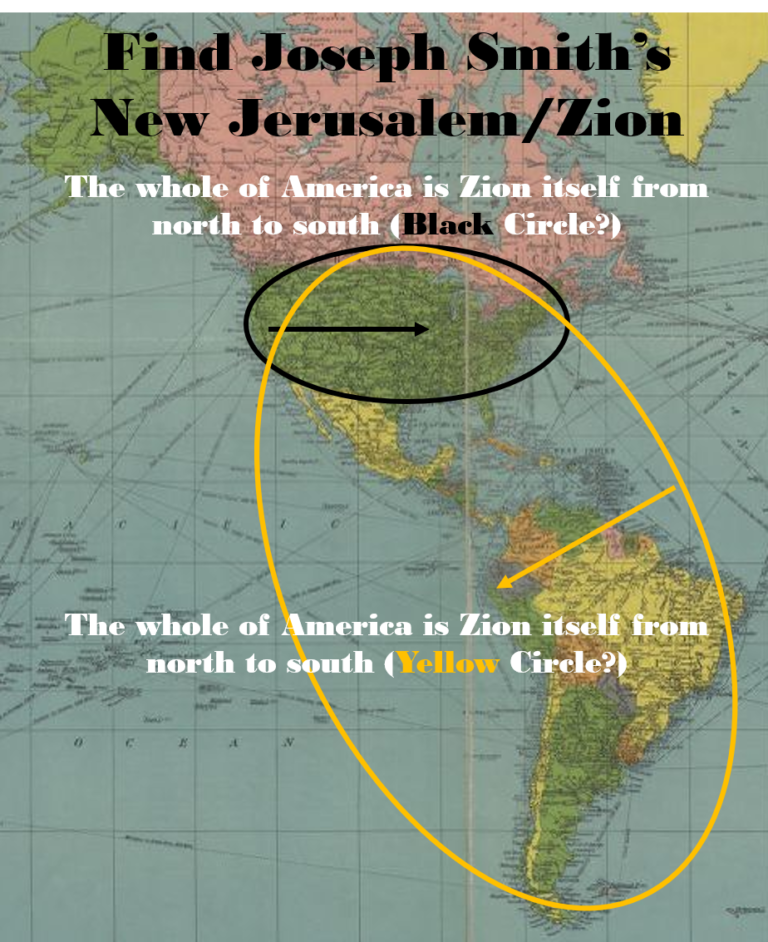
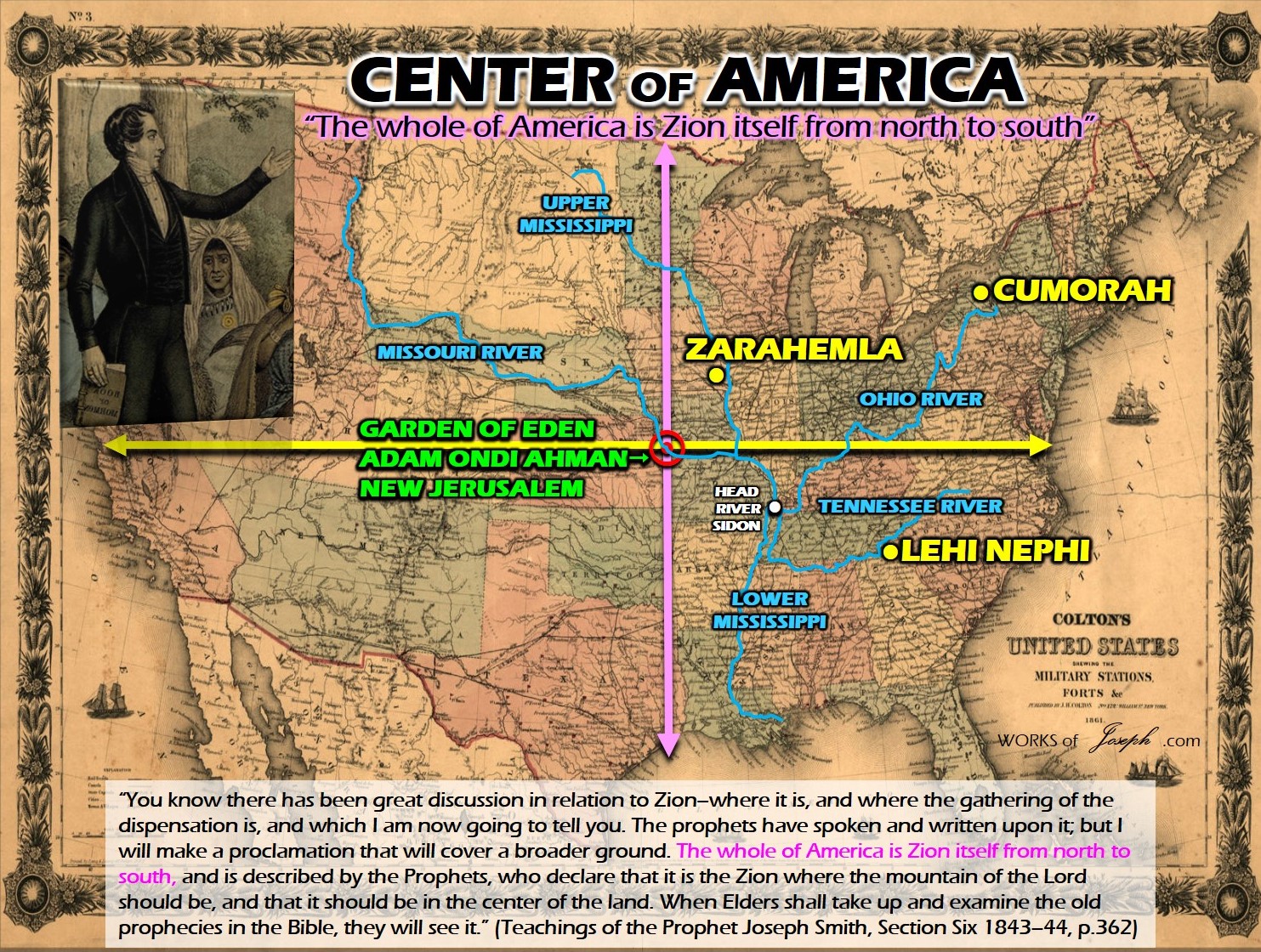


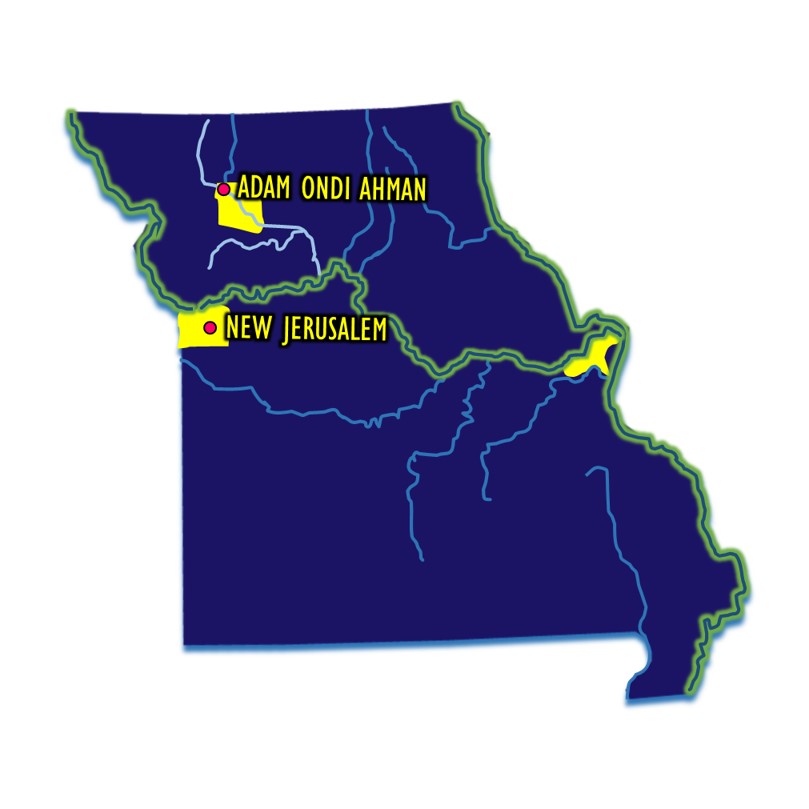 “Joseph, the Prophet, told me that the Garden of Eden was in Jackson County, Missouri. When Adam was driven out he went to the place we now call Adam-ondi-Ahman, Daviess County, Missouri. There he built an altar and offered sacrifices.” Wilford Woodruff, Wilford Woodruff, His Life and Labors, comp. Matthias F. Cowley [Salt Lake City: Deseret News, 1916], 481

 When we think about Joseph Smith’s statement from the April 1844 conference, he was referring to the Nauvoo temple, which was built “in the centre of North and South America” if we’re referring to the United States of America. It’s nearly as central as possible in a literal sense, given the unknown extent of the western territories.

 “I would that all men could believe in the destiny of America as did the early pioneers: that it is the land of Zion; that the founders of this nation were men of inspired vision; that the Constitution as written by the inspiration of heaven must be preserved at all costs. “I make a further plea that the citizens of this favored land live righteously that they might enjoy the fruits of their righteousness in this land of promise.” Let Not Your Heart Be Troubled Gordon B. Hinckley of the Quorum of the Twelve Apostles Oct. 29, 1974 • Devotional
 “It was not by chance that the Puritans left their native land and sailed away to the shores of New England, and others later followed. They were the advance guard of the army of the Lord, predestined to establish the God-given system of government under which we live and to make America, which is the land of Joseph, the gathering place of Ephraim, an asylum for the oppressed of all nations, and prepare the way for the restoration of the gospel of Christ and the establishment of his church upon the earth” – Heber J. Grant, Conference Report, [April 1930].
 “The Book of Mormon reveals the important interrelationships between the Creation, the Fall, and the Atonement. One cannot fully comprehend the Atonement without first understanding the Fall; and the Fall of Adam cannot be fully understood without first understanding the Creation. These three great doctrinal pillars sustain each other in God’s eternal plan.
 “Certain lands were given to Israel for an inheritance in time and in eternity. America is the land of Joseph; it was the home of Nephite Israel, who were of Joseph, for a thousand years, and it is the headquarters of the Church in this final dispensation in which the church and kingdom of God are in the lands of Ephraim.” (McConkie, Bruce R., A New Witness for the Articles of Faith [1985], 511.)
 The Book of Mormon is a record of the forefathers of our western tribes of Indians; having been found through the ministration of an holy angel, and translated into our own language by the gift and power of God, after having been hid up in the earth for the last fourteen hundred years, containing the word of God which was delivered unto them. By it we learn that our western tribes of Indians are descendants from that Joseph which was sold into Egypt, and that the land of America is a promised land unto them, and unto it all the tribes of Israel will come, with as many of the Gentiles as shall comply with the requisitions of the new covenant. But the tribe of Judah will return to old Jerusalem. The city of Zion spoken of by David, in the one hundred and second Psalm, will be built upon the land of America, “And the ransomed of the Lord shall return, and come to Zion with songs and everlasting joy upon their heads” (Isaiah 35:10); and then they will be delivered from the overflowing scourge that shall pass through the land. But Judah shall obtain deliverance at Jerusalem. See Joel 2:32; Isaiah 26:20-21; Jeremiah 31:12, Psalm 1:5; Ezekiel 34:11-13. These are testimonies that the Good Shepherd will put forth His own sheep, and lead them out from all nations where they have been scattered in a cloudy and dark day, to Zion, and to Jerusalem; besides many more testimonies which might be brought.
 “This beautiful region of country is…the land of Joseph or the Indians, as they are called… The world will never value the land of Desolation, as it is called in the Book of Mormon, for any thing more than hunting ground, for want of timber and mill-seats: The Lord to the contrary notwithstanding, declares it to be the land of Zion which is the land of Joseph, blessed by him, for the precious things of heaven, for the dew… Thou [Jerusalem] shalt no more be termed Forsaken; neither shall thy land [Zion] any more be termed Desolate.” The Evening and Morning Star Vol. 1 No. 5 October 1832 Page 71 Editor WW Phelps
 “The Book of Mormon tells us that America is a land of promise, a land choice above all other lands. Nephi said that whosoever should possess it must serve the God of the land or they would be swept off. And we have read in the Book of Mormon of the nations that have been swept off because they ceased to worship the God who had led them and their forefathers here to this land. We have a great responsibility as citizens in this land, for the Lord said that he would fight its battles and be its king, if we will just serve him. So it’s appropriate at this time that we express our appreciation for this great land. I like the words Moses used when he gave a blessing to the twelve tribes of Israel. When he blessed Joseph he promised him a new land in the utmost bowels of the everlasting hills (see Deut. 33:15). Now that isn’t in Jerusalem because they don’t have everlasting hills over there, and the prophets have never predicted a regathering of all nations to the land of Israel. But they have predicted the gathering of Israel to this land of America, which is the land of Joseph. And we are the only people in the world who know what that land is that Moses promised to Joseph. It was so great in his eyes as he received the revelations of the Holy Spirit that in describing the land he used the word “precious” five times in just four verses…We have so much to be grateful for. We are not here by chance. We are here because of the sacrifices of our pioneer fathers who came to this choice land that the Lord, according to the Book of Mormon, had hidden away from the eyes of the world that it should not be overrun. He preserved it for us, for the day and time in which we now live here in these valleys of the mountains.” LEGRAND RICHARDS of the Quorum of the Twelve Apostles Nov. 18, 1980 • Devotional
 A PROPHETIC INCIDENT: In the April number of the Century is a well-written and profusely illustrated article on the Inauguration of Washington, by Clarence Winthrop Bowen. Among the illustrations is a facsimile of the page of the Bible on which Washington laid his hand while taking the oath of office, and it is to this that I wish specially to call attention. … The Century article says:
 Editor’s Note: I quote BH Roberts, “Let others believe all this to be coincidence if they choose, but for my own part there is too much that is significant to assign it to that class of phenomena so conveniently disposed of by calling them coincidence.” I say to all intellectuals scholars, professors and others in the great and spacious building, do you all believe this is a coincidence? Doesn’t it burn in your bosom that as Elder Perry said, “The United States is the promised land foretold in the Book of Mormon—a place where divine guidance directed inspired men to create the conditions necessary for the Restoration of the gospel of Jesus Christ.” Elder L. Tom promised Ensign Dec. 2012
 “…Once this nation was well established, then the Church was restored and from here the message of the restored gospel has gone forth. All according to divine plan. This then becomes the Lord’s base of operations in these latter days. And this base will not be shifted out of its place—the land of America. This nation will, in a measure at least, fulfil its mission even though it may face serious and troublesome days. The degree to which it achieves its full mission depends upon the righteousness of its people. God has, through his power, established a free people in this land as a means of helping to carry forward his purposes.
 “Hearken, O ye elders of my church, saith the Lord your God, who have assembled yourselves together, according to my commandments, in this land, which is the land of Missouri, which is the land which I have appointed and consecrated for the gathering of the saints. Wherefore, this is the land of promise, and the place for the city of Zion. And thus saith the Lord your God, if you will receive wisdom here is wisdom. Behold, the place which is now called Independence is the center place; and a spot for the temple is lying westward, upon a lot which is not far from the courthouse. Wherefore, it is wisdom that the land should be purchased by the saints, and also every tract lying westward, even unto the line running directly between Jew and Gentile;” D&C 57:1-4 (At that time the Lamanites (or Jews) lived on the west and the Gentiles (or Whites) lived on the east. In this way you may interpret D&C 57:1-4 as separating the Jews and Gentiles or the Lamanites and Whites).
 “I would say to the Lamanites, if I could speak to them understandingly, that you are also a branch of the house of Israel, and chiefly of the house of Joseph, and your forefathers have fallen through the same examples of unbelief and sins, as have the Jews, and you, as their posterity, have wandered in sin and darkness for many generations; and you, like the Jews, have been driven and trampled under the foot of the Gentiles, and put to death through your wars with each other, and with the white man, until you are almost destroyed. But there is still a redemption and salvation for a remnant of you in the latter days. It is time for you to cease shedding each other’s blood or making war upon your fellow-man. Cease to destroy one another, learn to cultivate the earth, and raise your food therefrom; call upon the Great Spirit to protect you and deliver you from bondage and darkness, and the Great Spirit will hear you and deliver you, and a remnant of you will again become a delightsome people as your forefathers were when they kept the commandments of God.” Wilford Woodruff History of His Life and Labors AS RECORDED IN HIS DAILY JOURNALS PREPARED FOR PUBLICATION BY MATTHIAS F. COWLEY Salt Lake City, Utah 1909
 Who, then, are the Jews, and what part shall they yet play in the gathering of Israel and the return of their King? There is a maze of fuzzy thinking and shoddy scholarship, both in the world and in the Church, that seeks to identify the Jews, both ancient and modern, and to expound upon what they have believed and do believe. It is not strange that the divines of the day-not knowing that the kingdom is to be restored to Israel at that glorious day; not having the Book of Mormon and latter-day revelation to guide them-it is not strange that they come up with false and twisted views about the mission and destiny of the Jews. It is a little sad that church members sometimes partake of these false views and of this secular spirit so as to misread the signs of the times.
  Larry Echo Hawk
 “Because of his faithfulness and integrity, Joseph received greater blessings than the progenitors of Jacob, and was rewarded with the land of Zion. His brothers, with malicious intent, separated him and cast him out from among them. The Lord, in rewarding him, separated him from his brothers — the other tribes of Israel — and gave him an inheritance in a land that is choice above all other lands, which, we have learned from the Book of Mormon and modern revelation, is America… We are informed in the revelations given to Joseph Smith the Prophet, that the city of Zion and the New Jerusalem is one and the same. In a number of revelations, the Lord speaks of the New Jerusalem which is to be built…” Zion and Jerusalem by Joseph Fielding Smith, Improvement Era Vol. 22 JULY 1919
  Thus, from these brief accounts we see the reasons why America, or the continent of America, is the promised and choice land, choice above all other lands, for it was here that the habitation of man began, (Adam) and here that the covenants of God were first established. And it is from the center of this land that God has started his great latter-day work that will carry to the finish…America as Zion will not fail. Since America is the land choice above all other lands, and it is in the “Center Place” that Zion will be established, it will not fail. America as Zion will not fail, not simply because it is the land of our illustrious independence and constitutional fathers, but because it is the land of Joseph, the son of Jacob, and has been so established by God’s covenant. It is the land for the gathering of Israel in the culminating period of the last dispensation, which God has established through the Prophet Joseph Smith. I bear testimony of the fulfillment and the destiny of the land of America as Zion, and I do it in the name of Jesus Christ. Amen. Alvin R. Dyer, Conference Report, October 1968, Third Day: Morning Meeting, 110.
 Joseph Smith’s Letter to Emma is True! Click the letter above to see for yourself

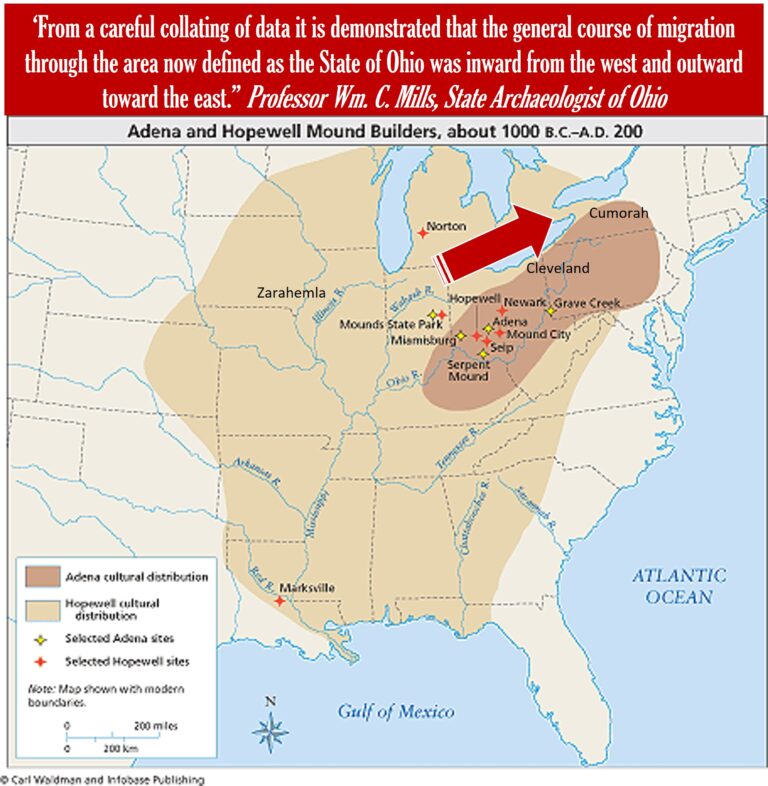
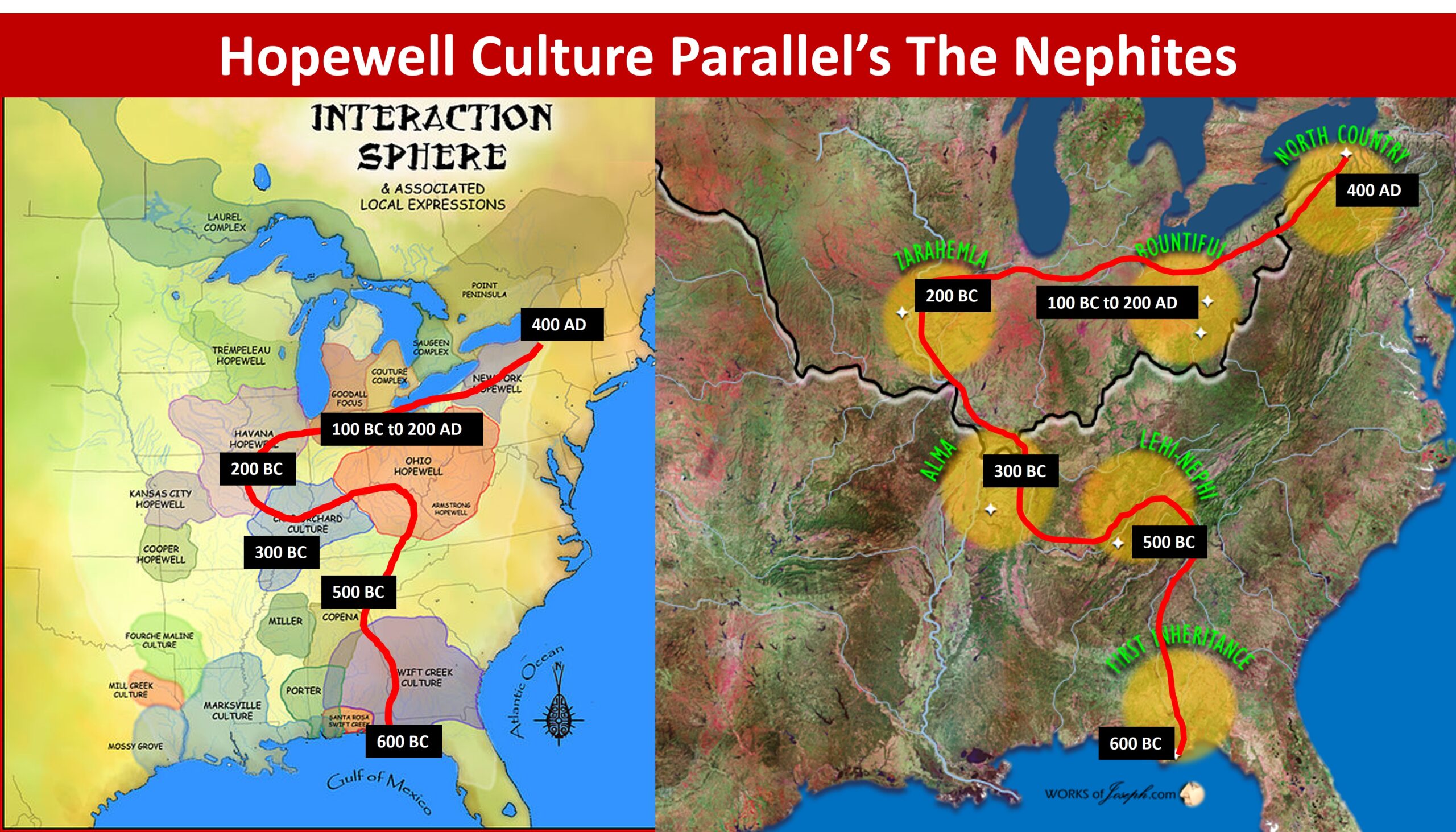
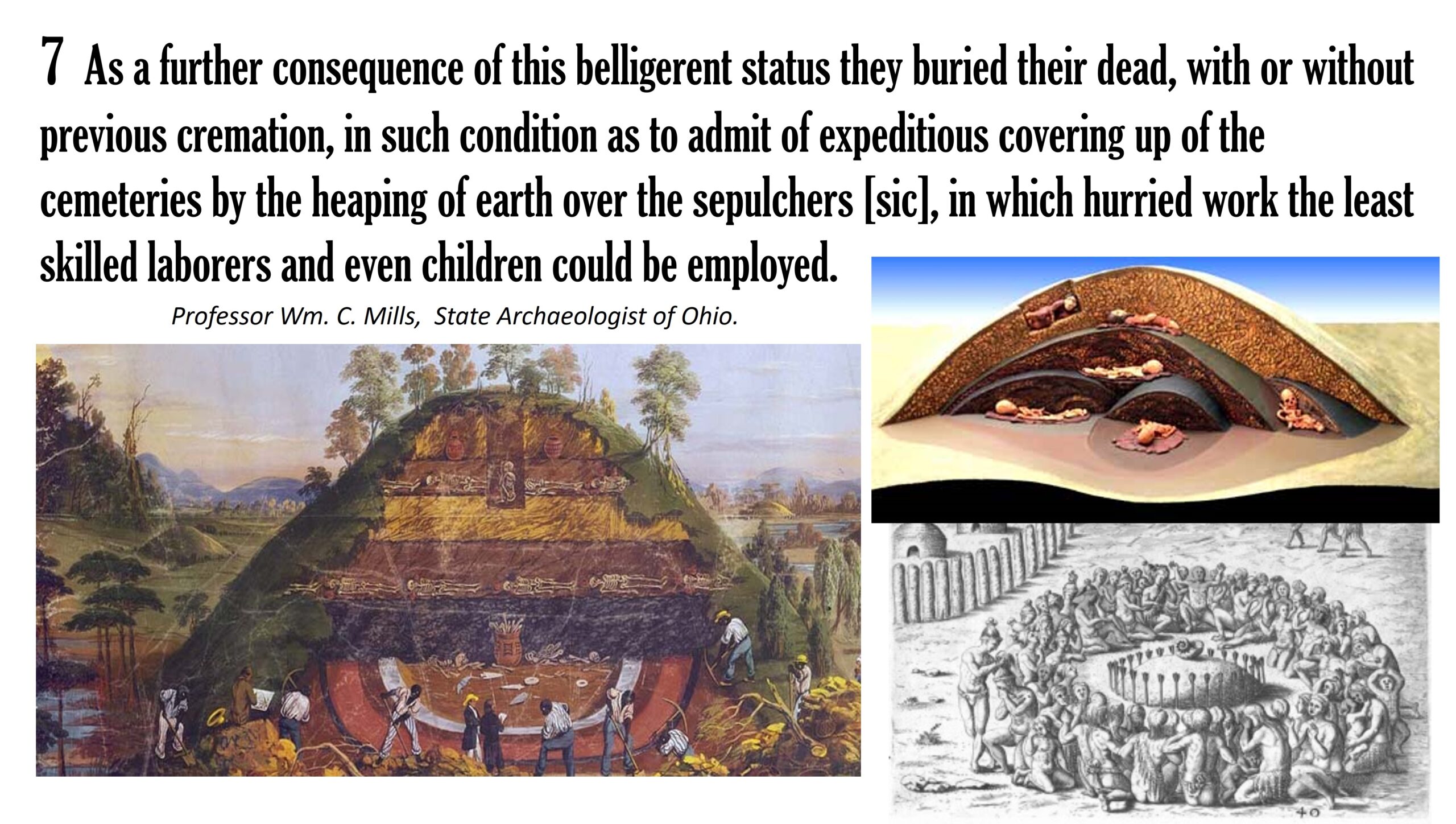

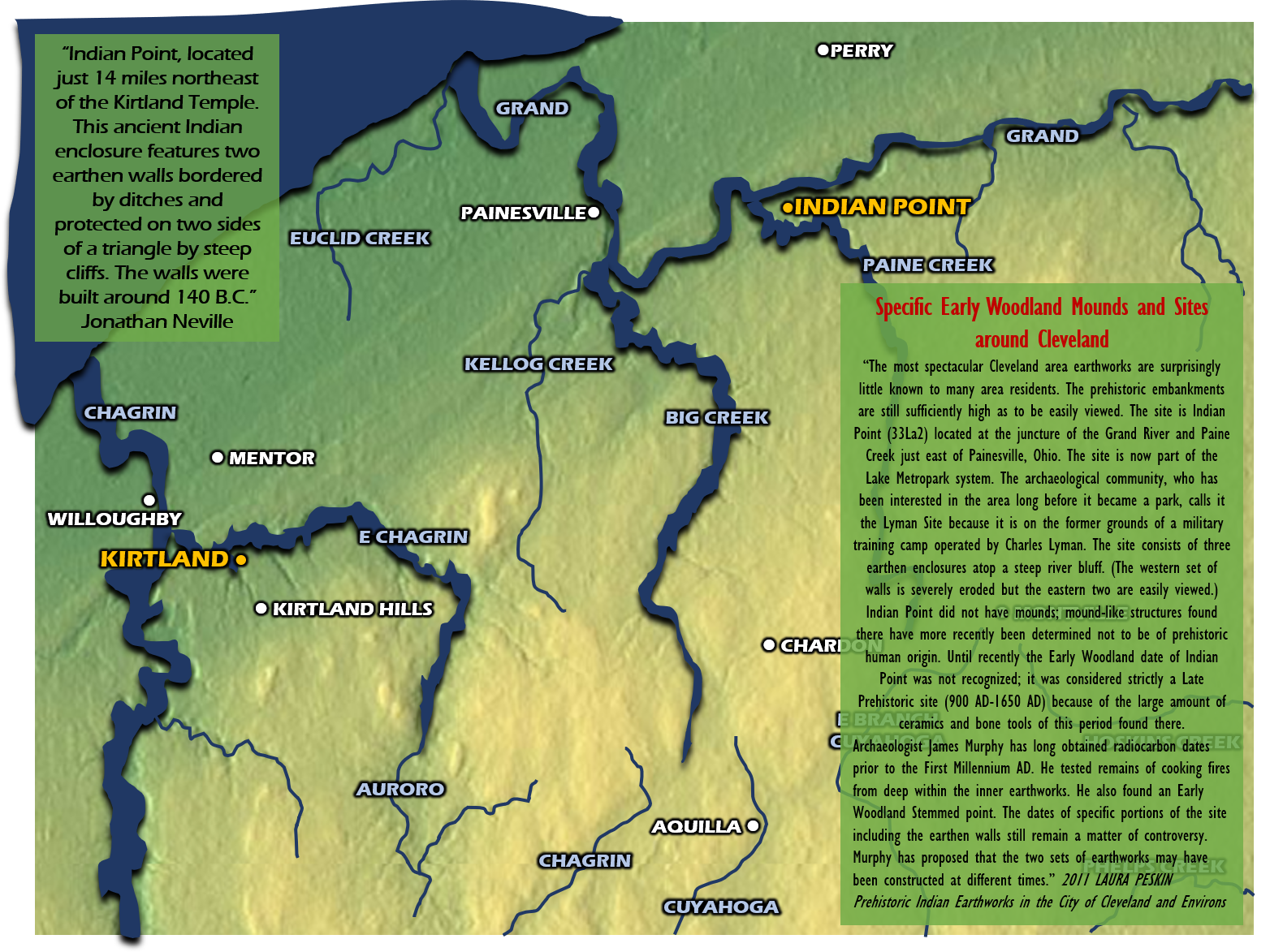
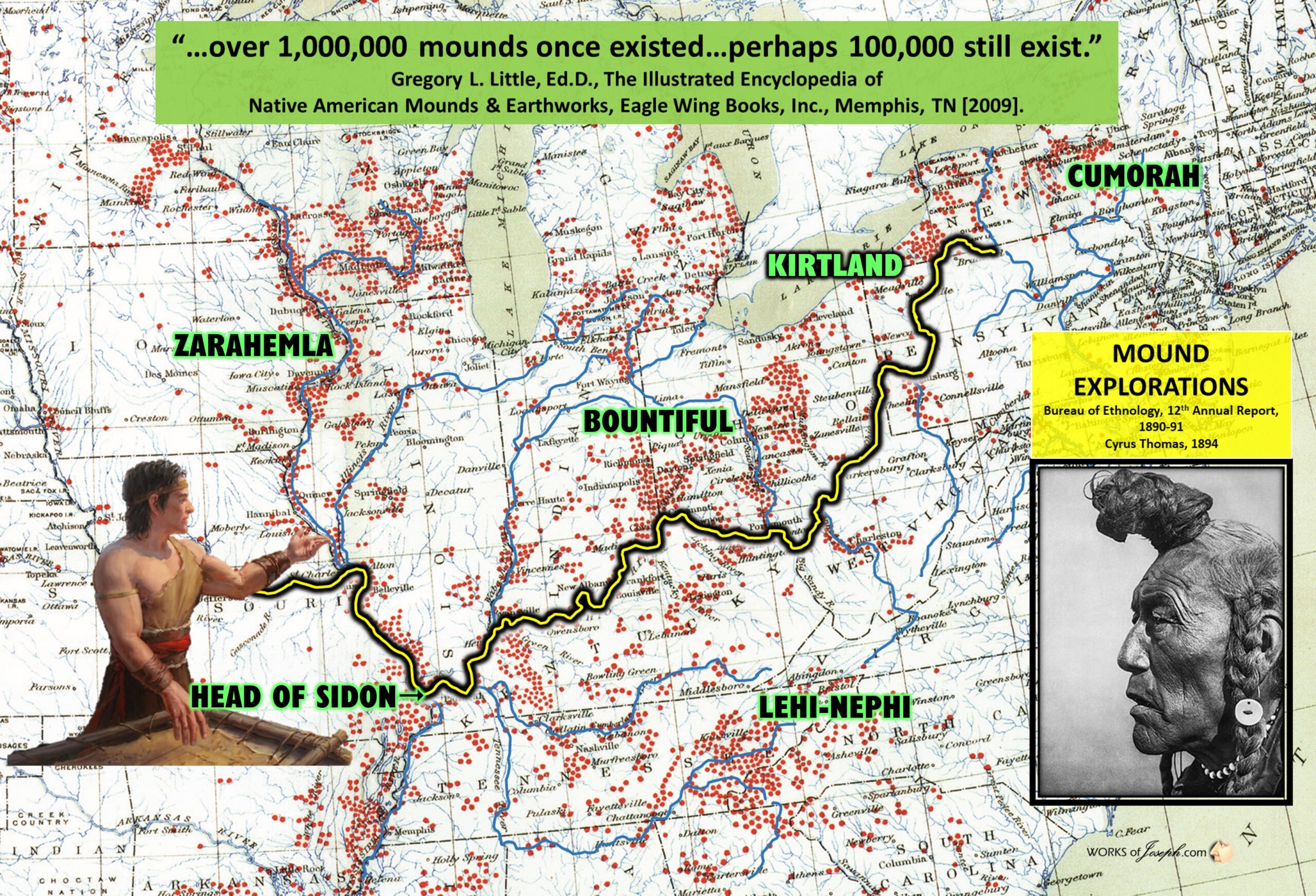
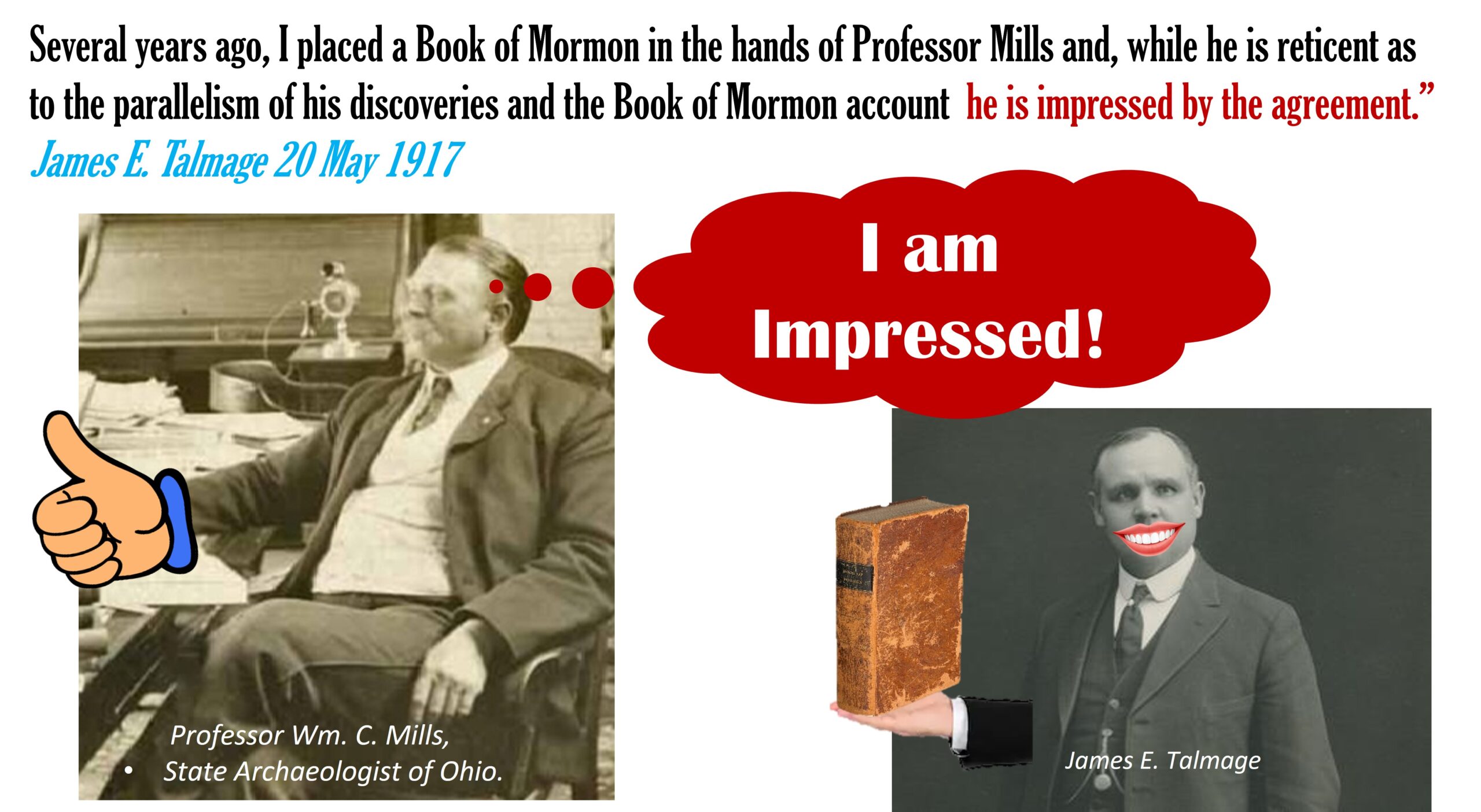
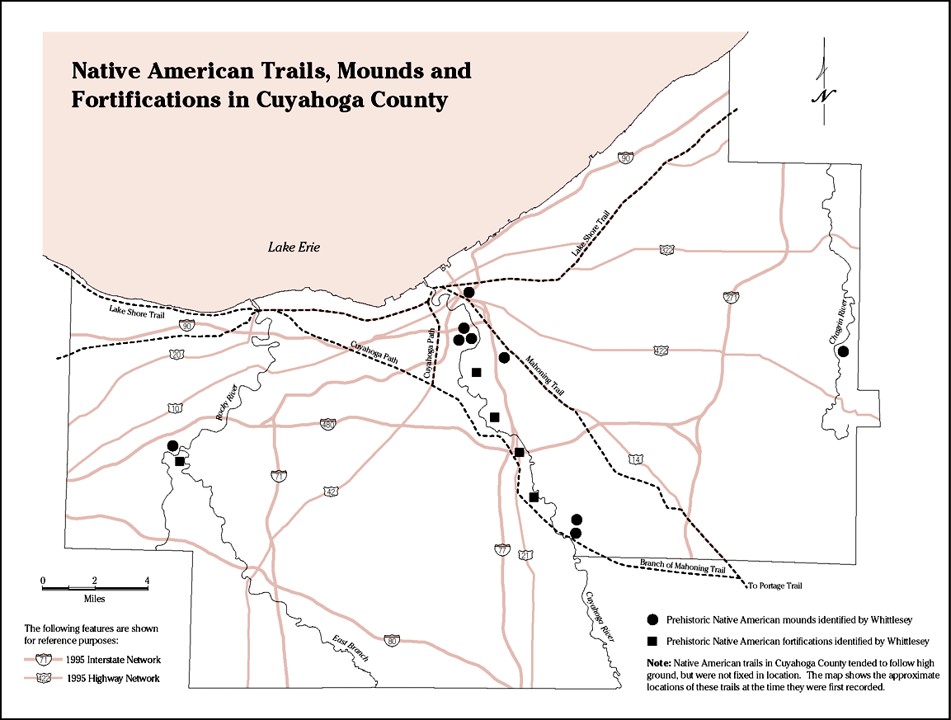
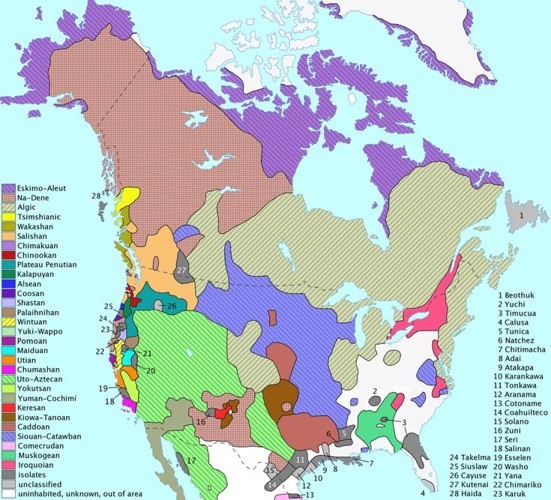
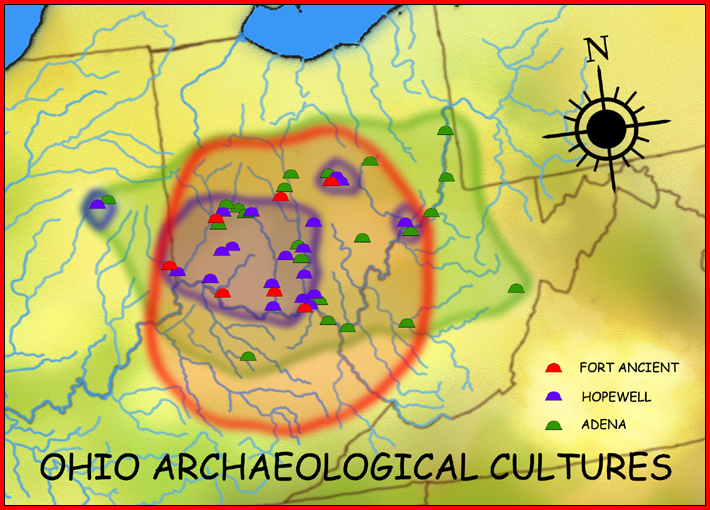
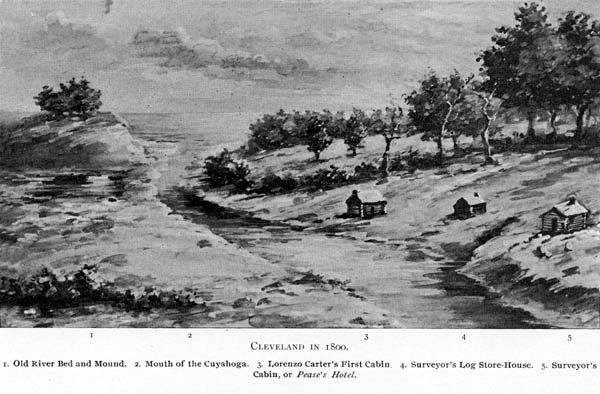


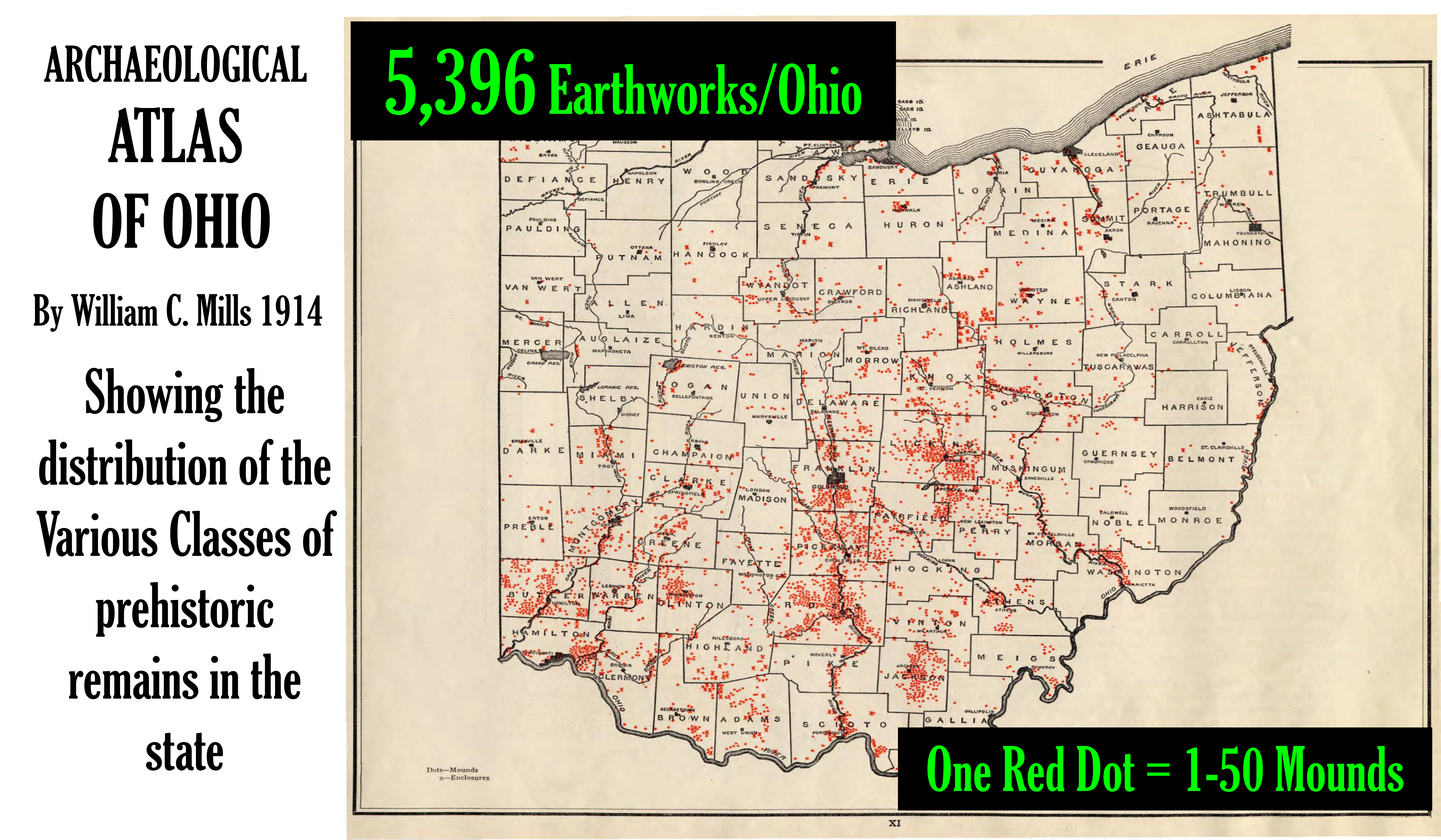


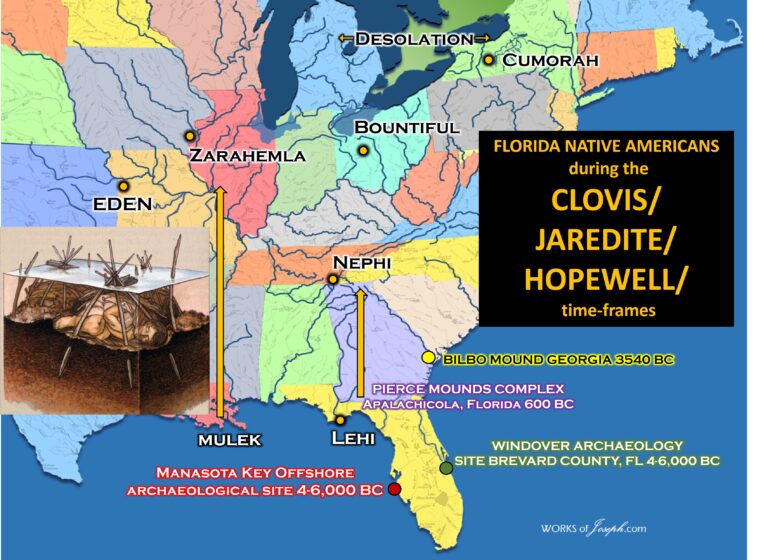
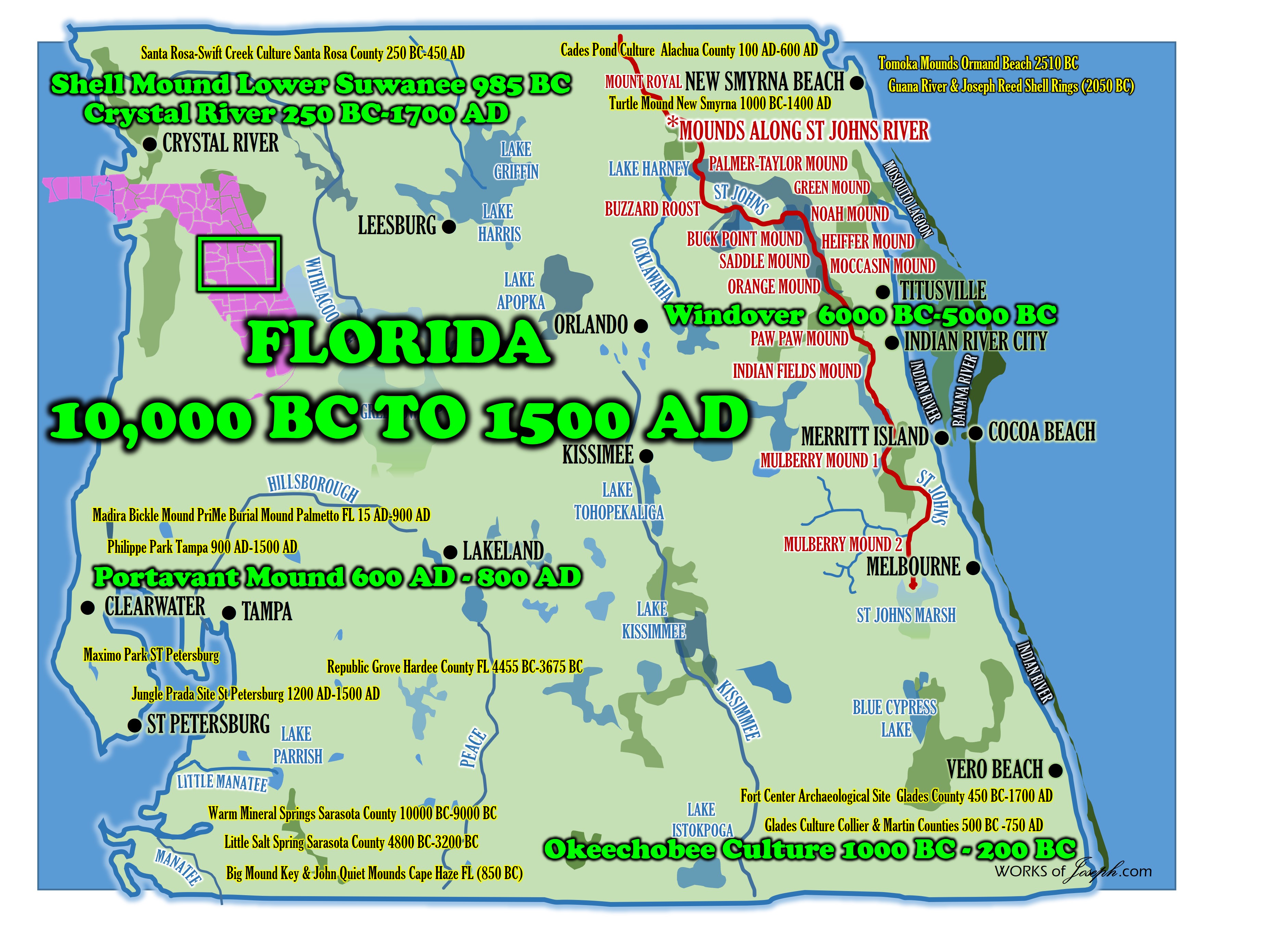
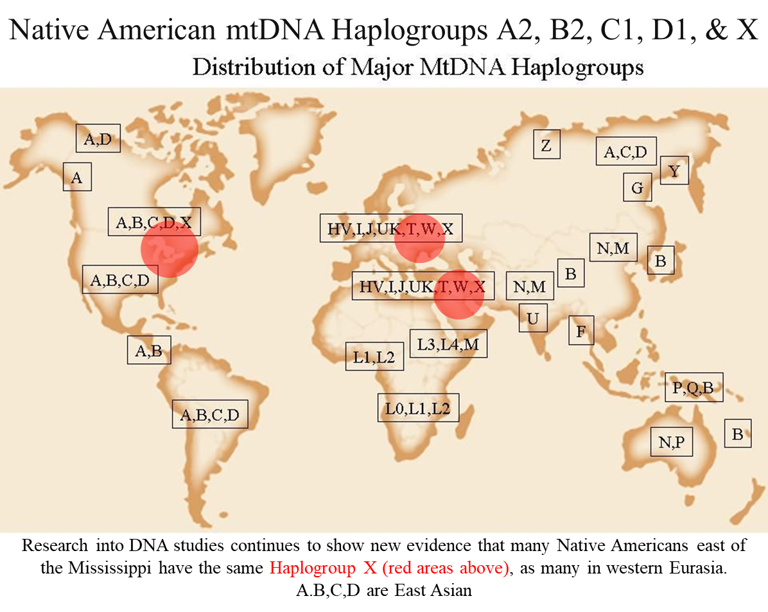
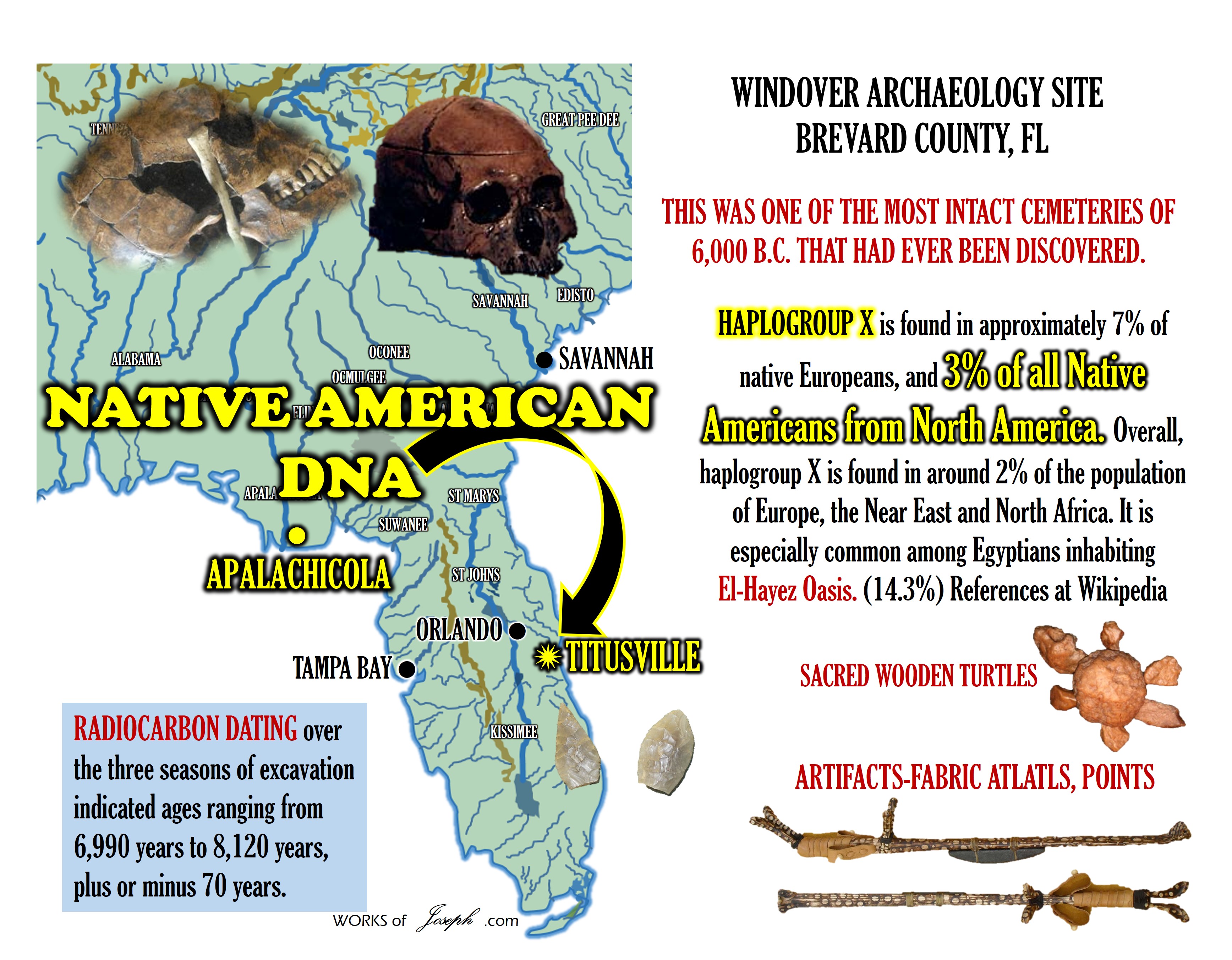
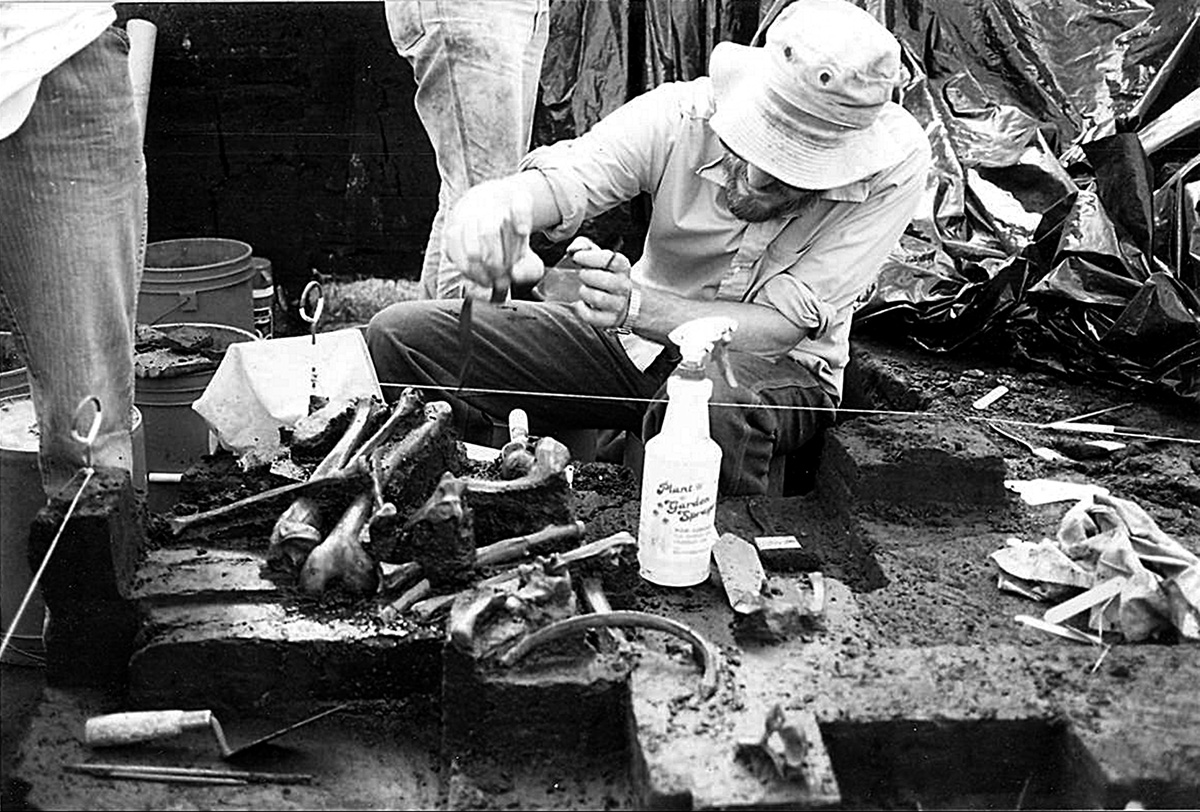
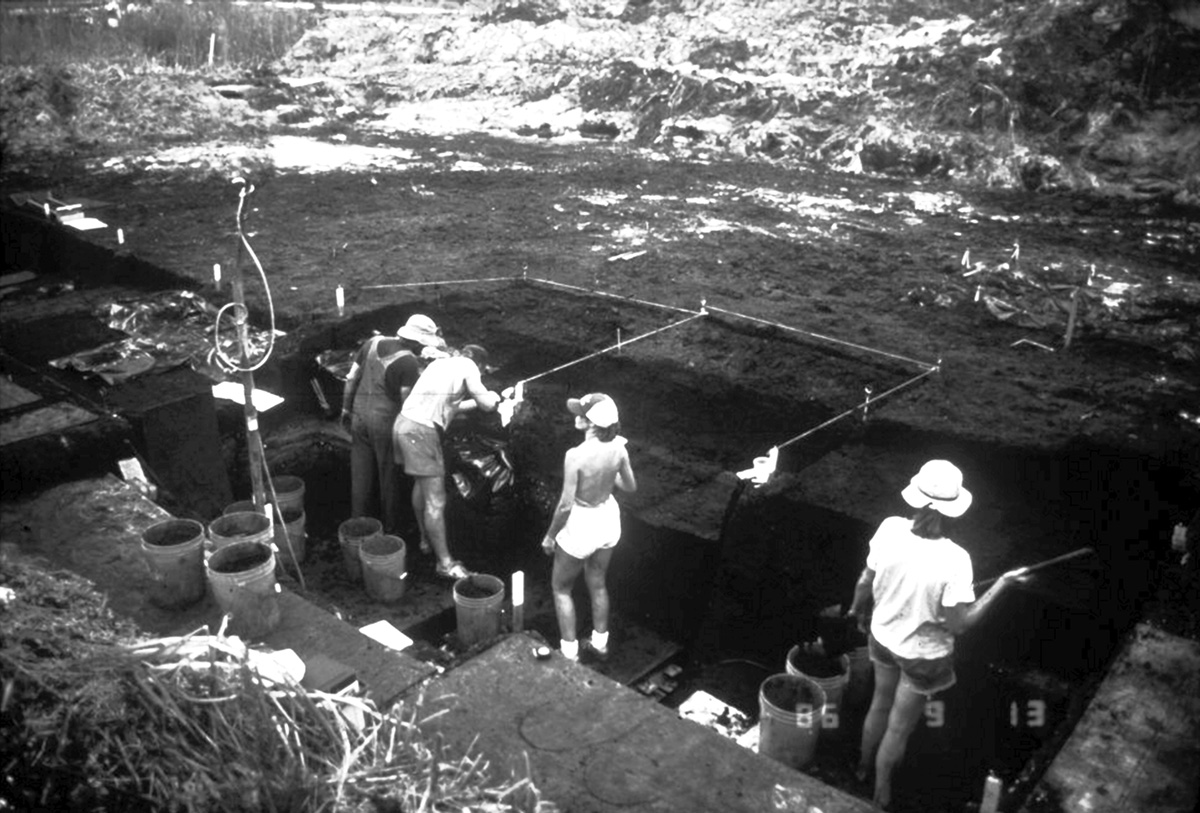
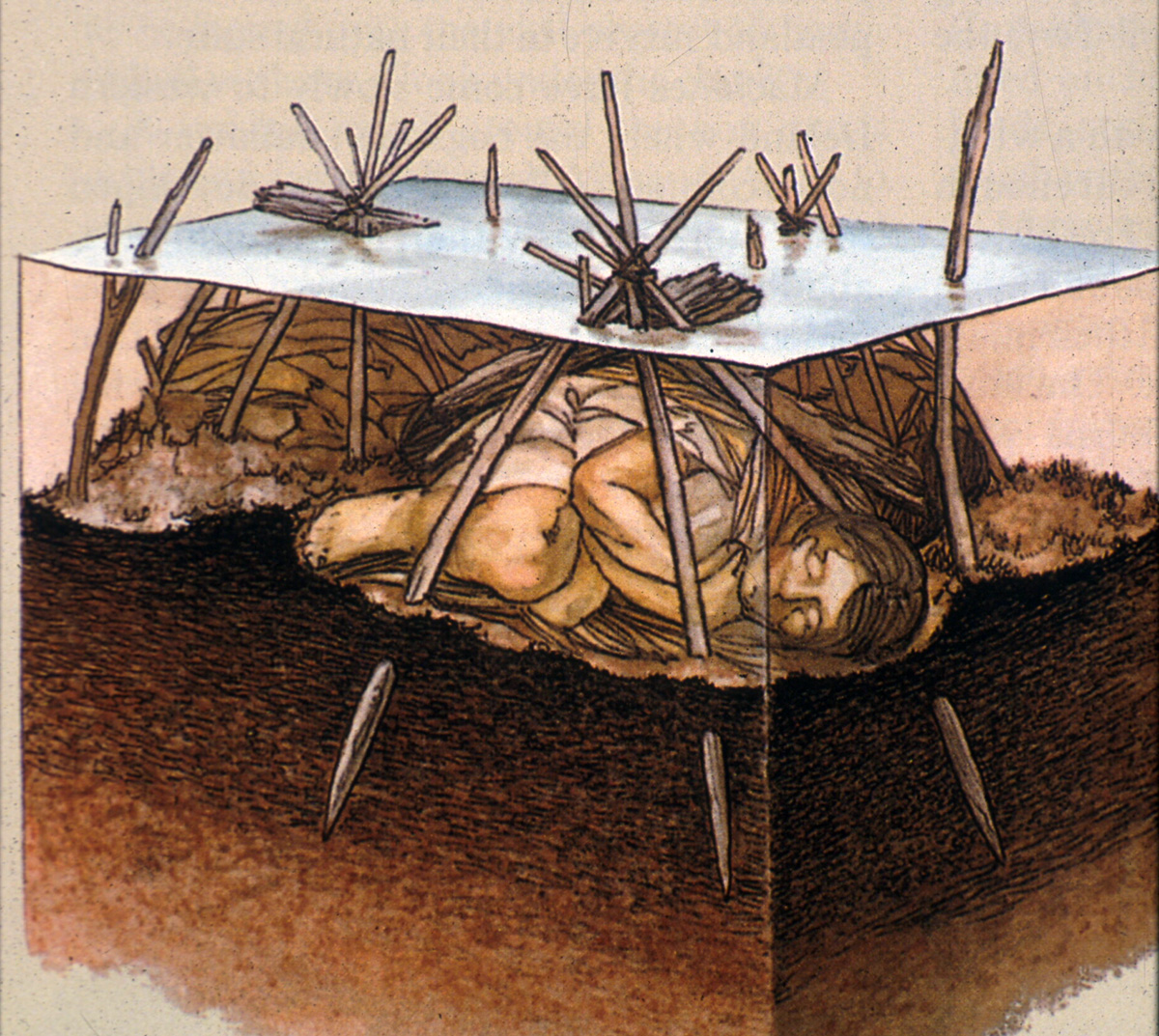
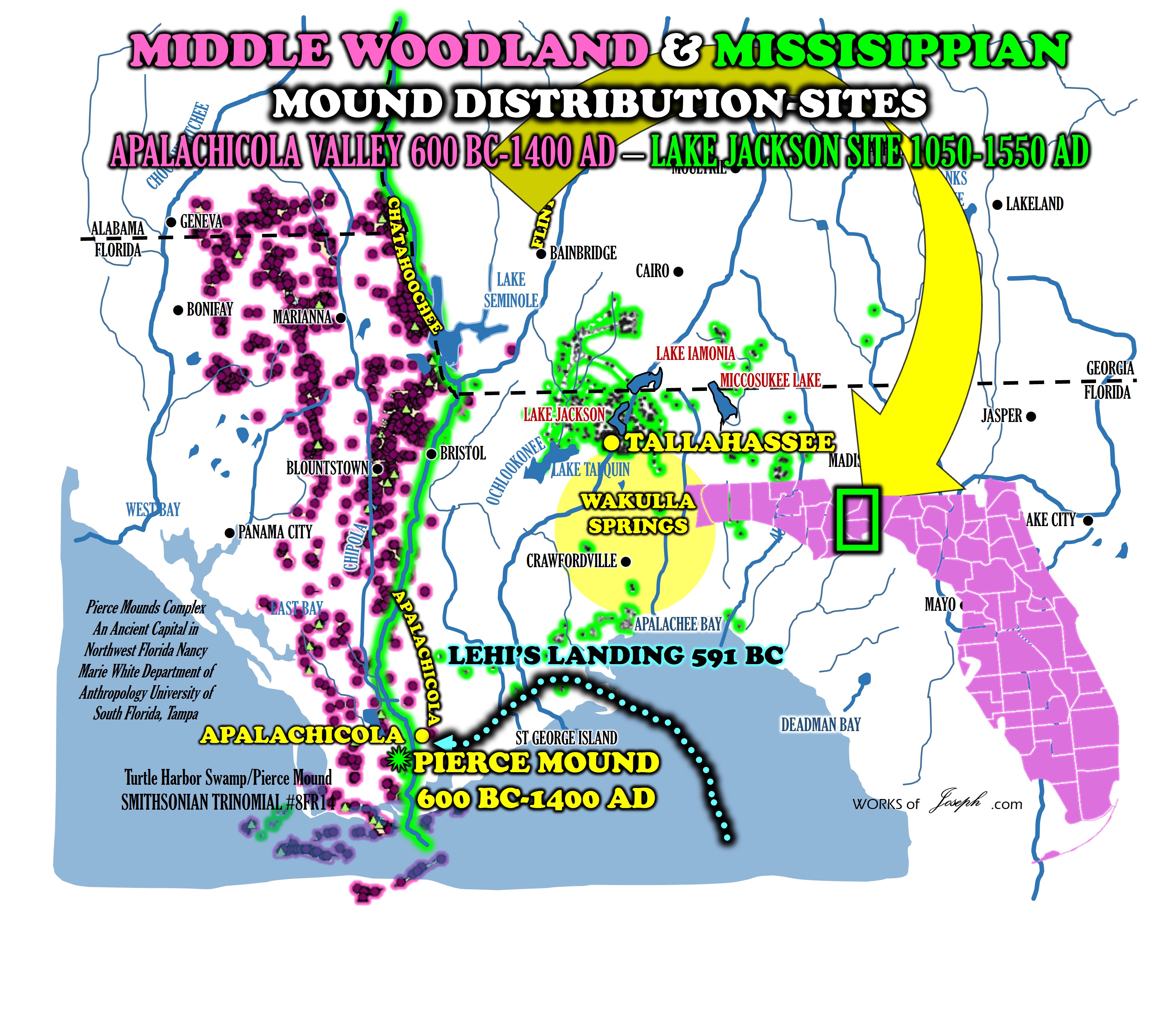

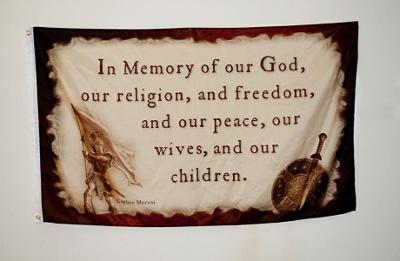 I believe the most important answer is this. The United States of America is the place that God personally chose to be His Promised Land. It was not chosen because it was better as a land, or that it was superior to any other place. It was not chosen because the people are better, or there are more plush gardens and forests. No,


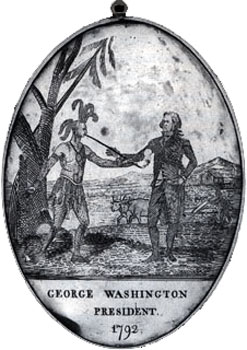
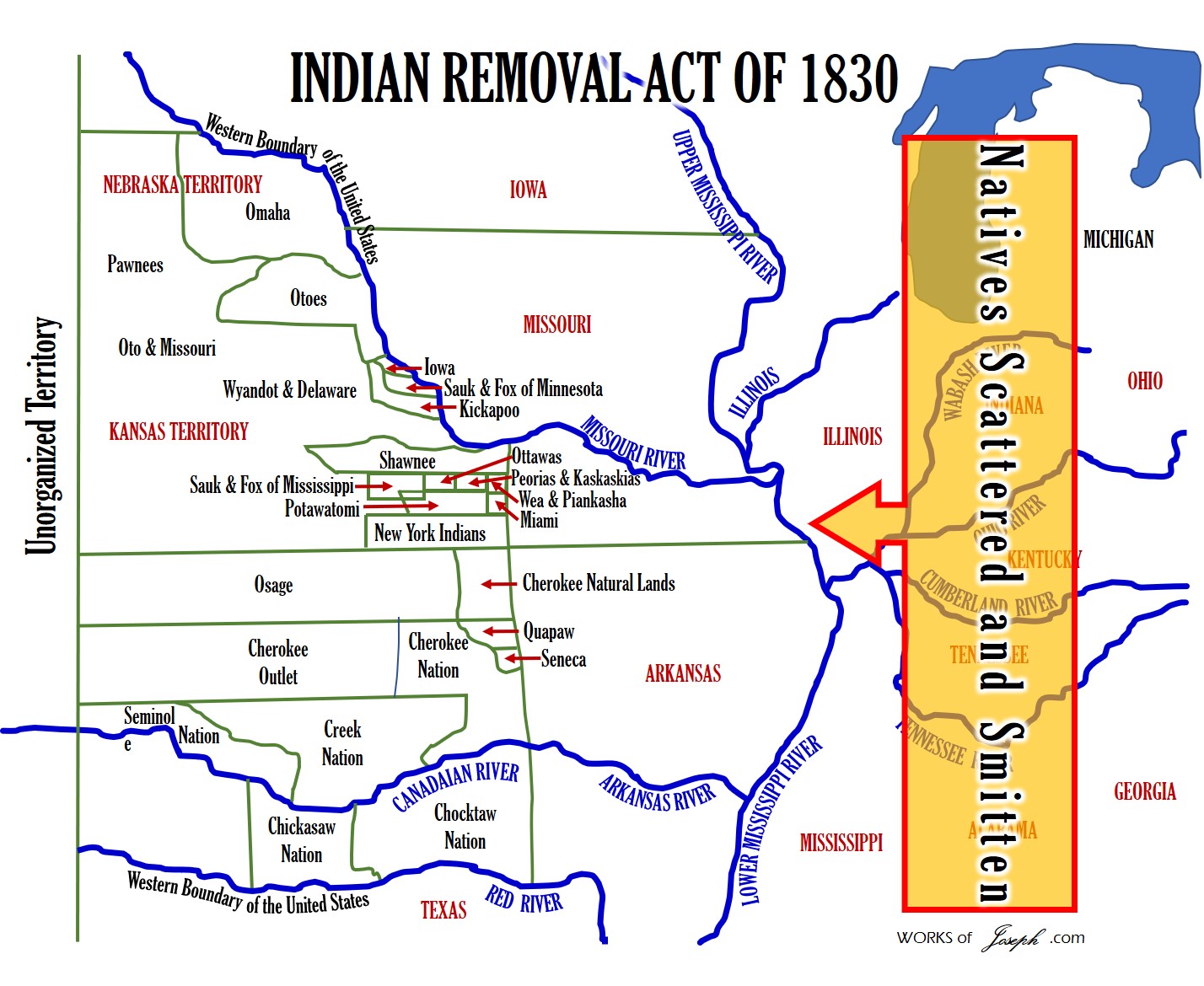
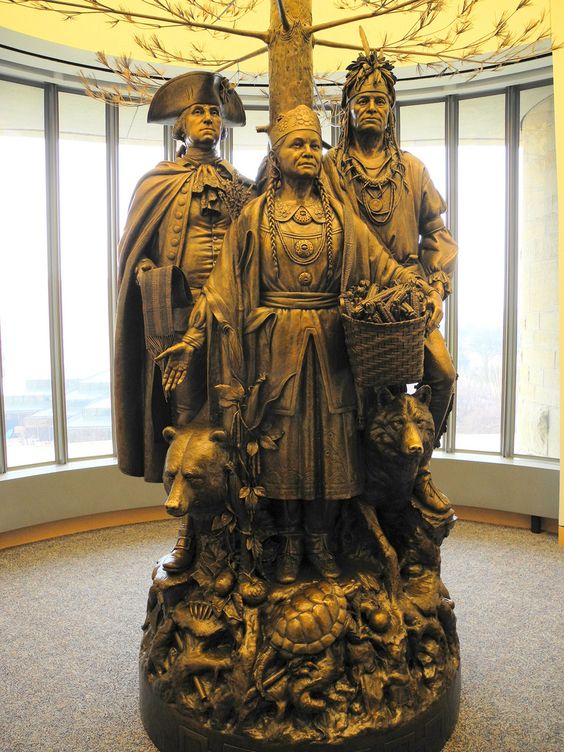


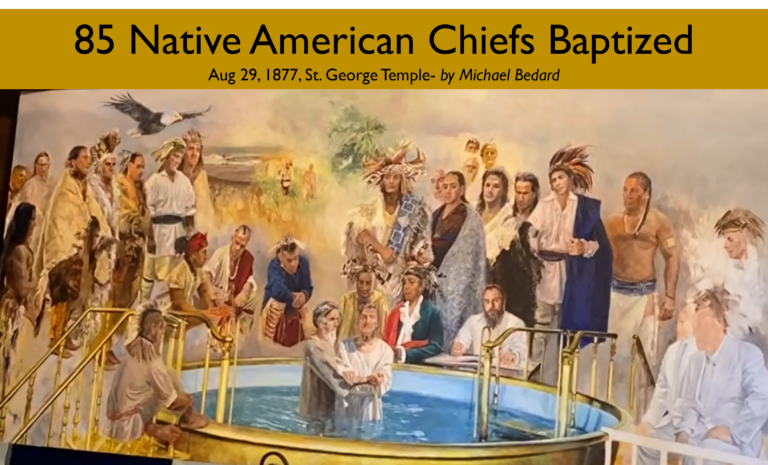
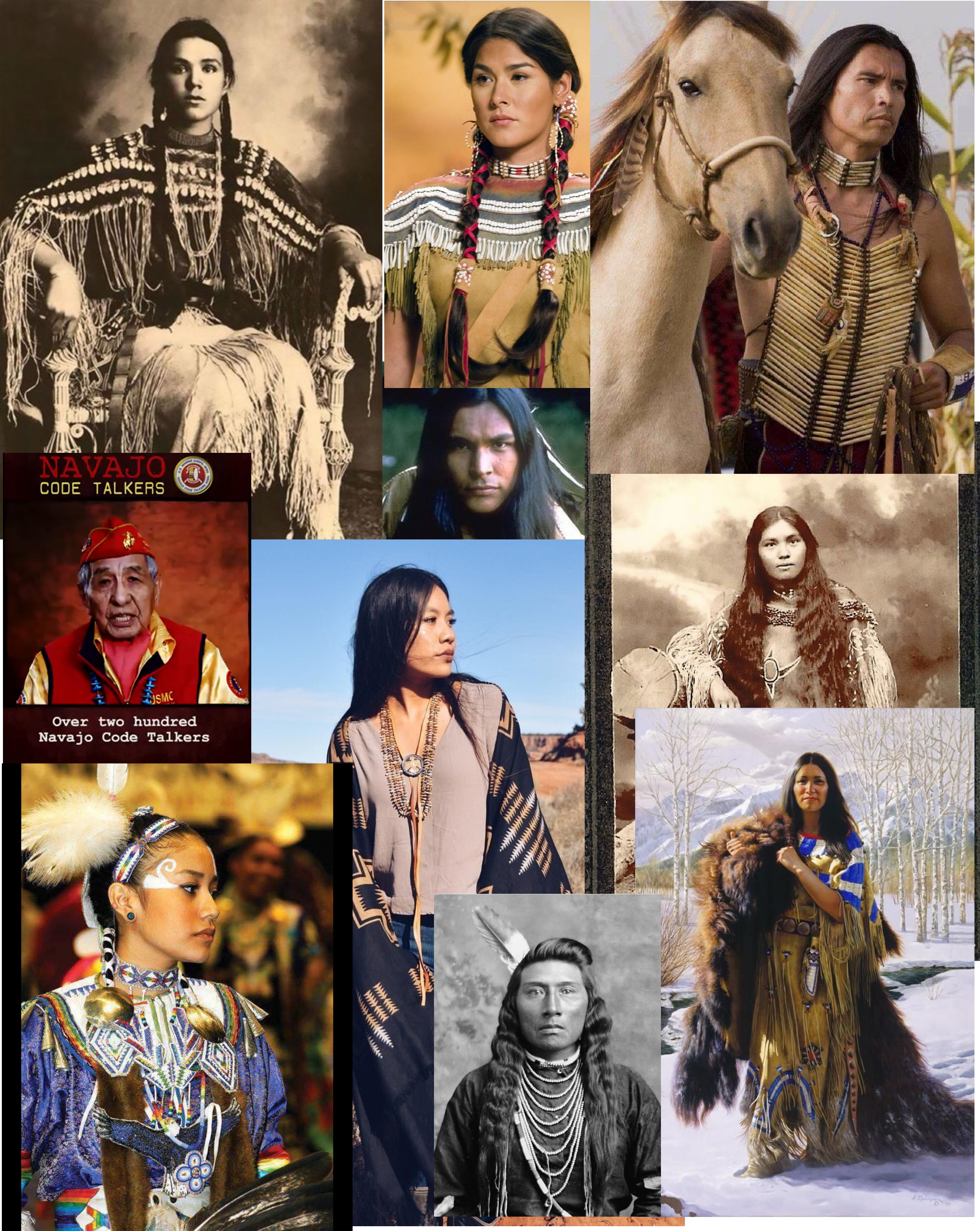

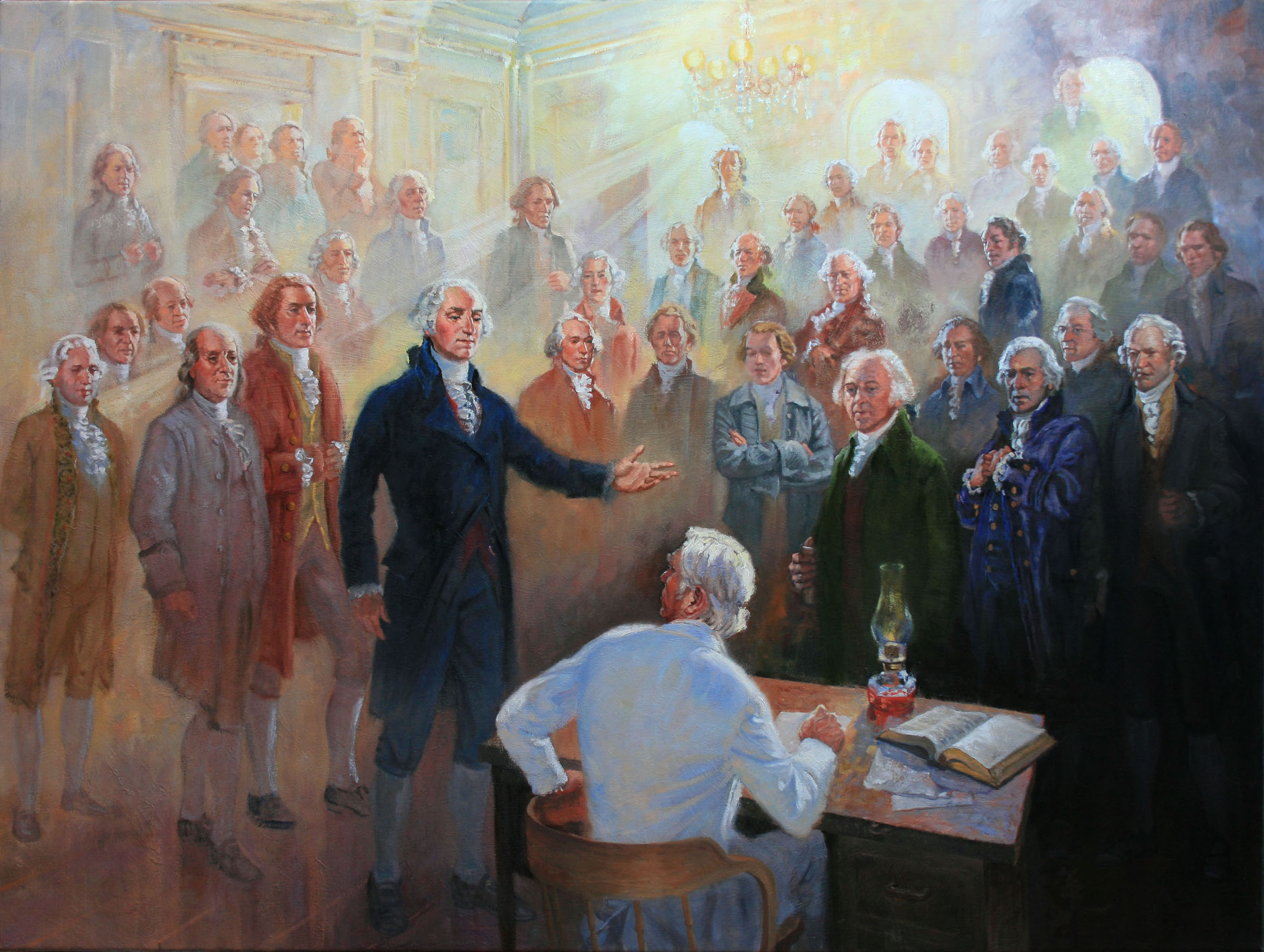


 Michael Bedard has created countless pieces of fine art, built three art studios, and raised a family of seven kids. He is a man who is confident in his abilities and always looking to improve them. He worked several jobs and served in the national guard while obtaining his BFA at Brigham Young University and MFA at Washington State University, all while raising a growing family. Michael is now living in Nauvoo, Illinois, with his wife and youngest son, establishing another gallery there. He has come a long way, developing his art over the years and through life’s challenges. The simple desire to create something greater popped into existence when a little Michael saw a mural made of tiny tiles at the public pool one summer. The flippant thought came to him, “I can do that!” This little boy looked at a simple piece of art and grew to create masterpieces that shape and are shaped by the world around him. With support from his young single mother, encouragement from schoolteachers eager to get the rebel to do something productive, and later many more people, the young man began to doodle, grow, draw, and paint. From that point he began his mission to change himself and the world. “When you create great art that literally frees people, it lifts them up and gives them wings.”
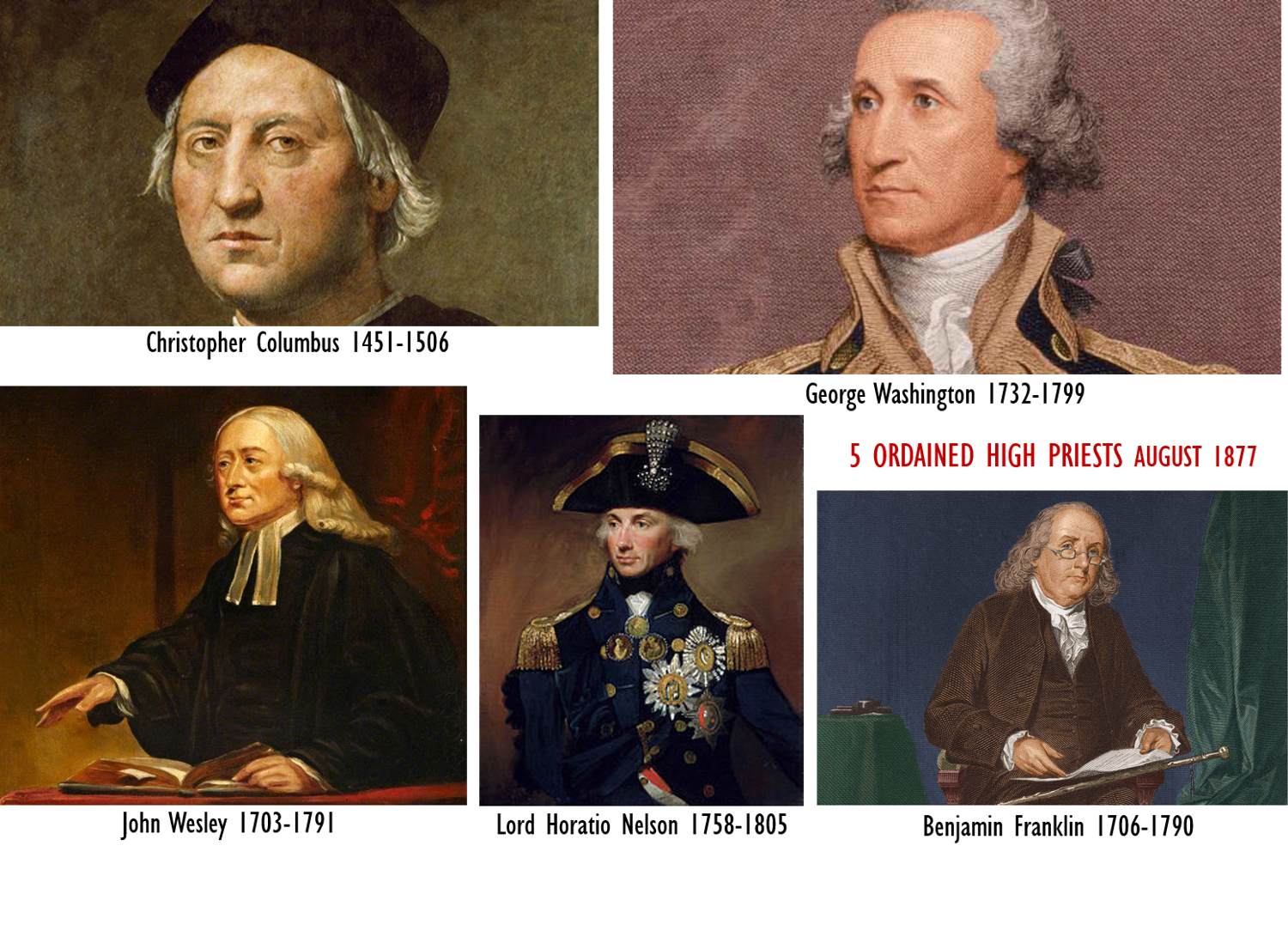


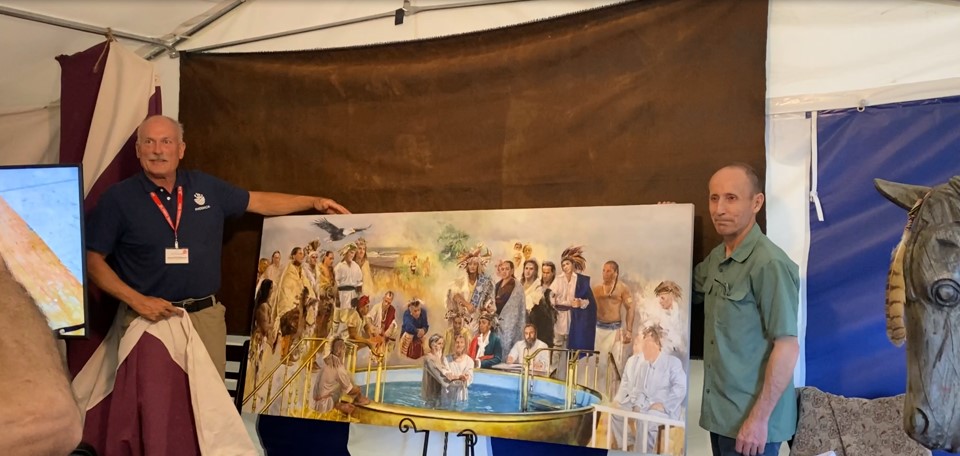
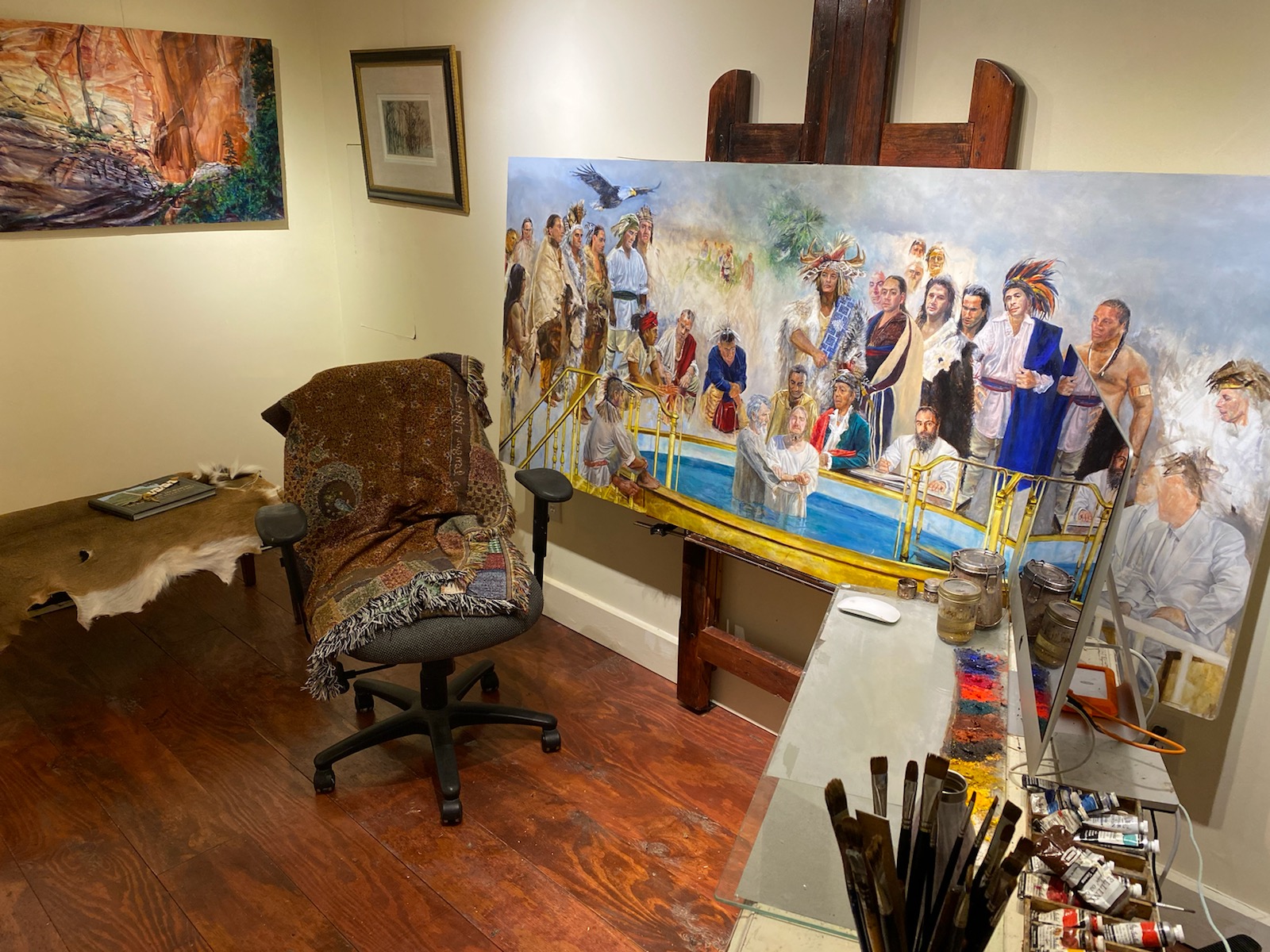
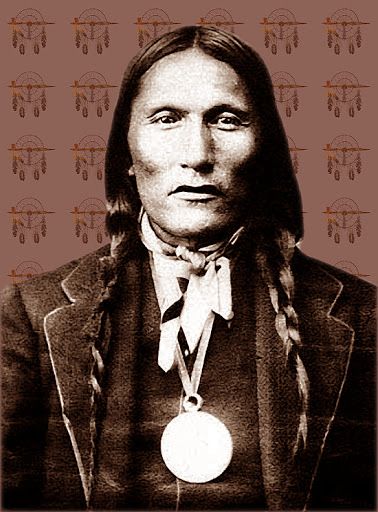 “The deep understanding of the proper role and procedures in good government exemplified by Canassatego in his discourses with many of the Founding Fathers may have contributed to his being included in a little-known account in the history of the Church. I have recounted many times this story of how a Native American Chief by the name of Canassatego had instructed some of the Founding Fathers during a particularly difficult negotiation, thereby being an instrument in establishing the inspired Constitution of the United States. Many Latter-day Saints are aware that in August 1877 at St. George, Utah, Wilford Woodruff, the temple president, and his recorder received visions that vicarious temple ordinances for the Founding Fathers and other eminent men and women were to be performed. On August 21, 1877, temple ordinance work was undertaken for them.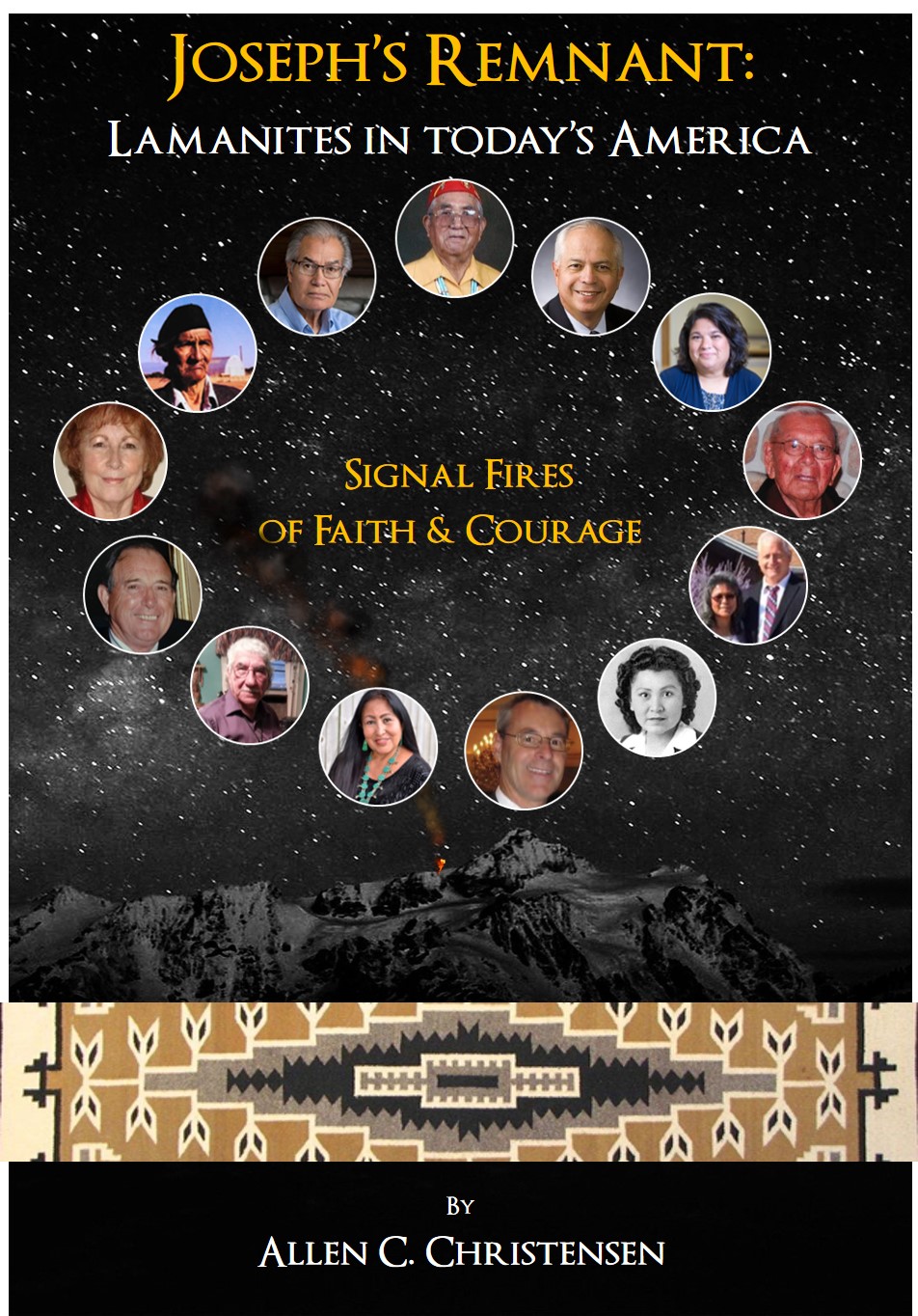
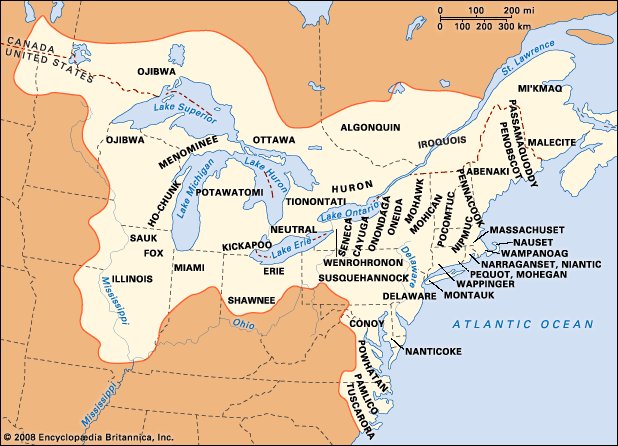





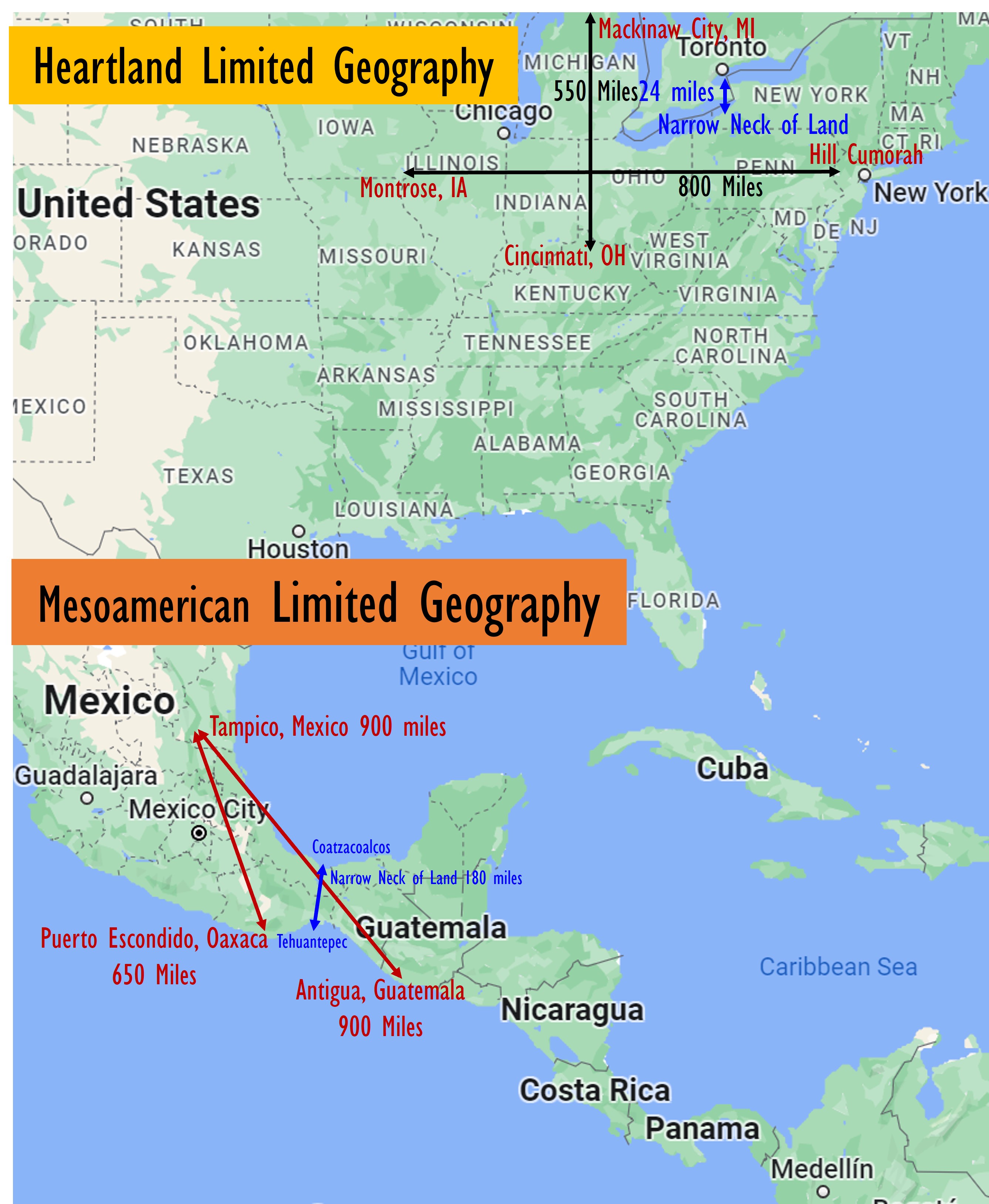 That speculation was around for years until both of those on the side of Mesoamerica and those on the side of the Heartland, both agreed that the Hemispheric model just doesn’t work because of the vast distances of travel. In about 1978 John Sorensen in his book “An Ancient American Setting for the Book of Mormon” began saying the Hemispheric Model didn’t work any more. Heartlanders as well believed in a “Limited Geography Theory” Between Iowa and New York down to Florida. This is also called The Hinterlands idea. We believe the area of the Nephites is pictured in the map below in green:


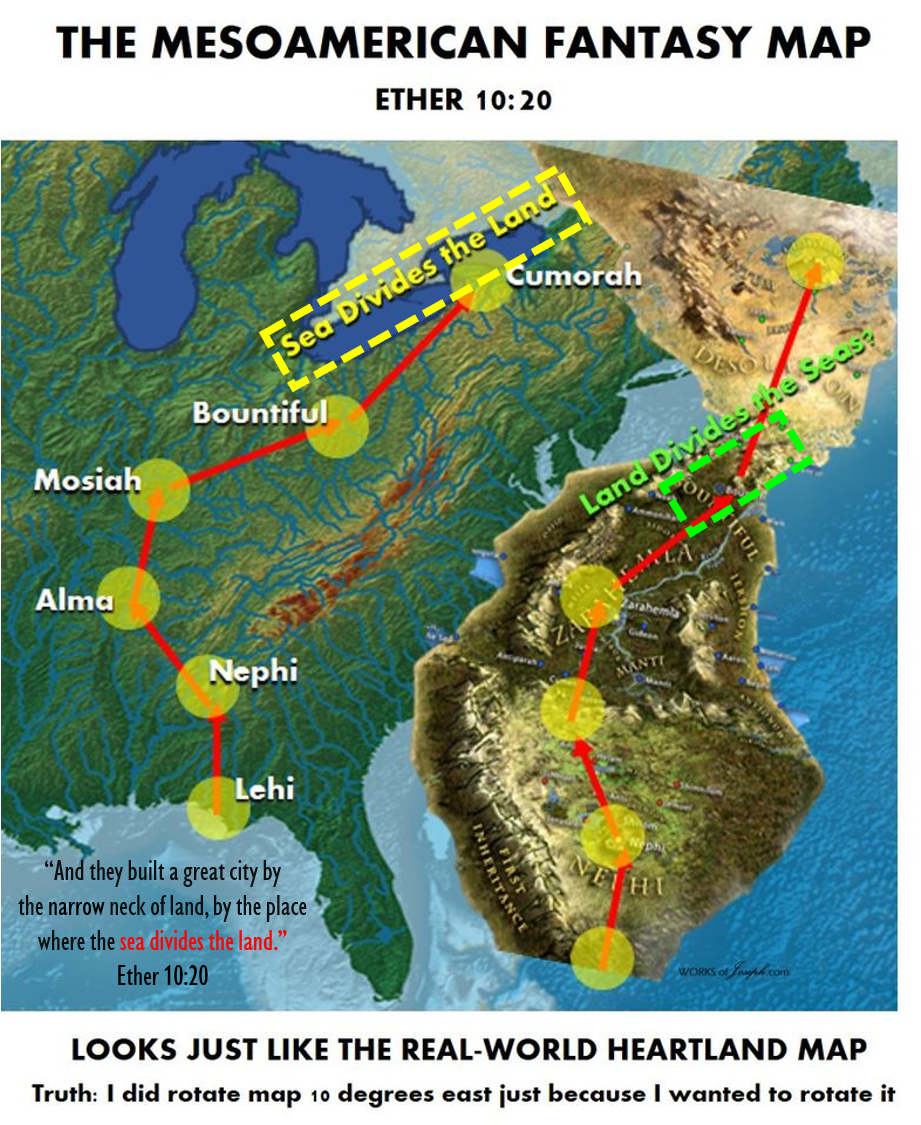


:max_bytes(150000):strip_icc():format(webp)/guateconvent-56c339225f9b5829f86b44f5-6f5a78a81a2f41139425607ea5342faf.jpeg)
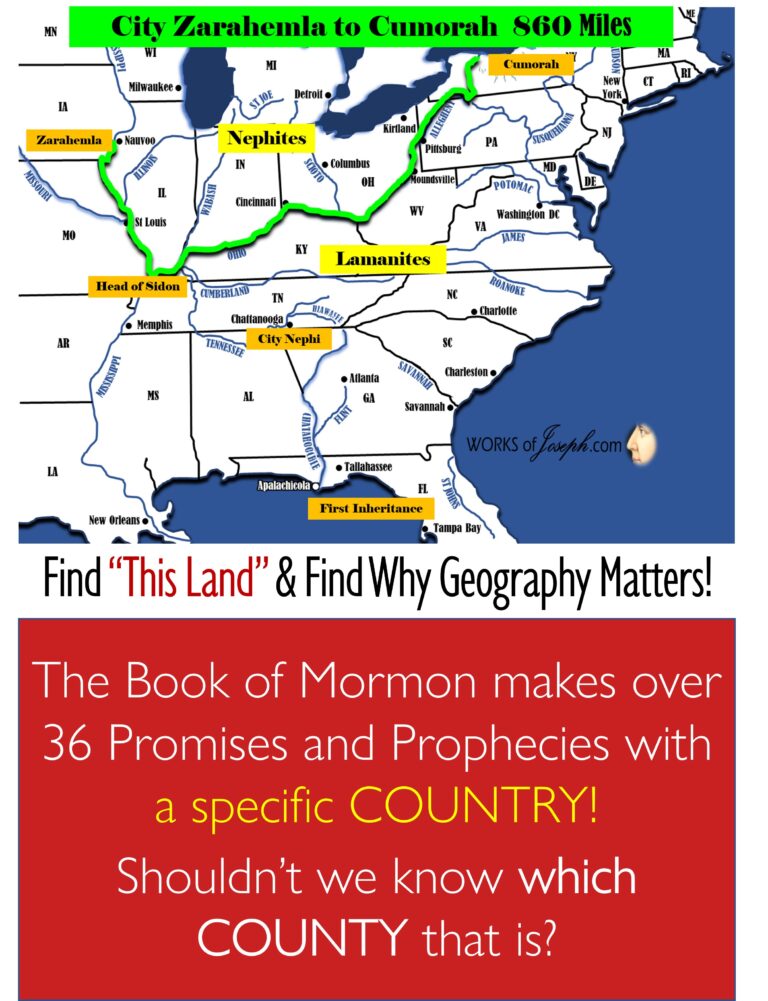


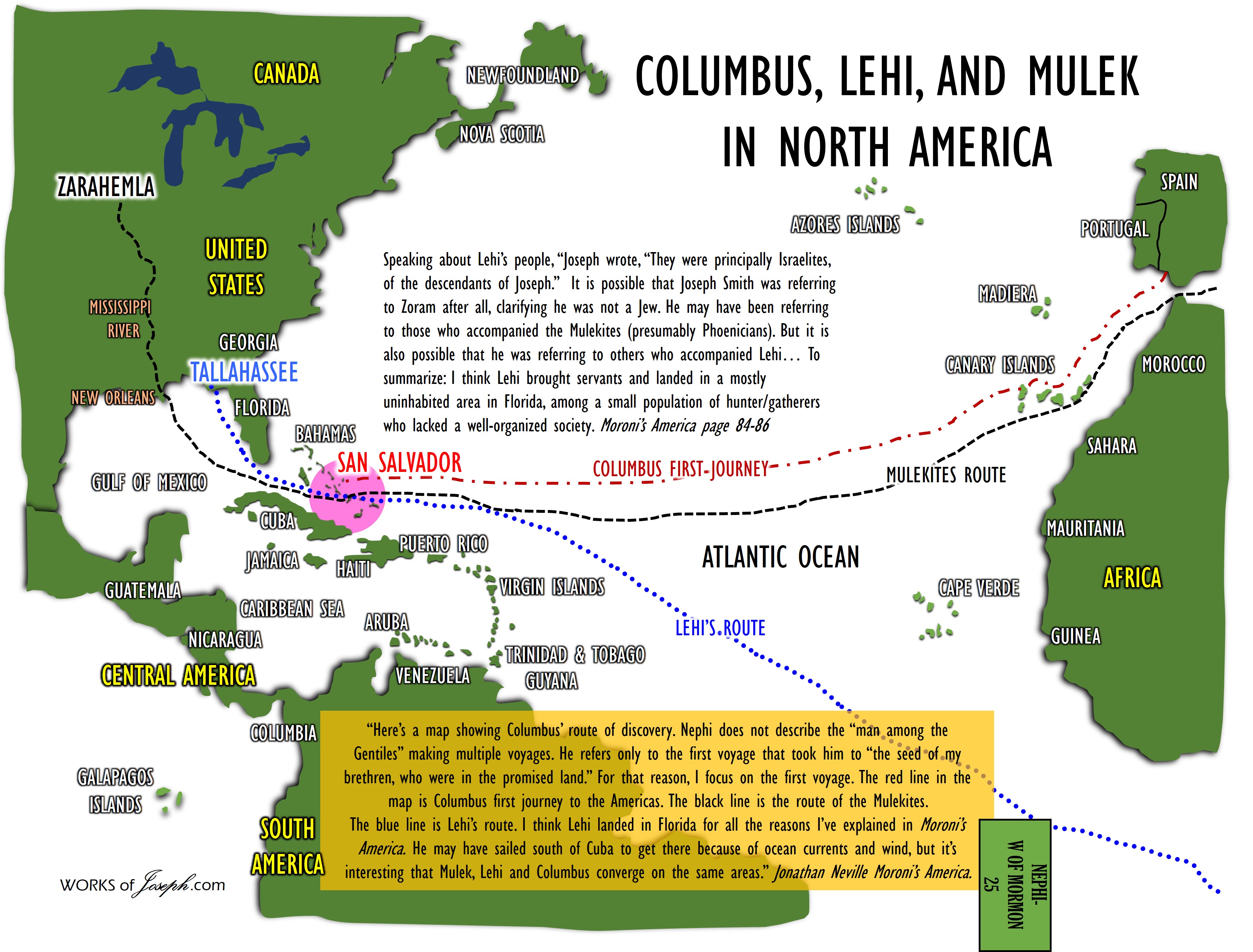


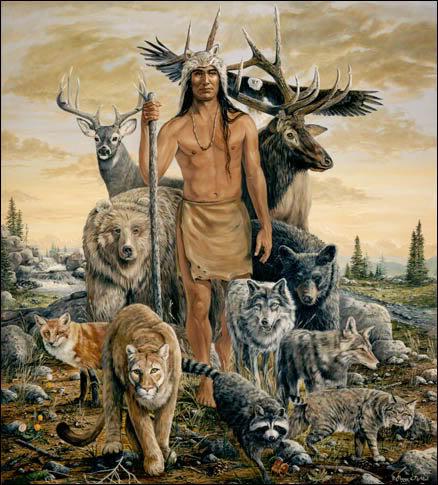

 Origin and Definition


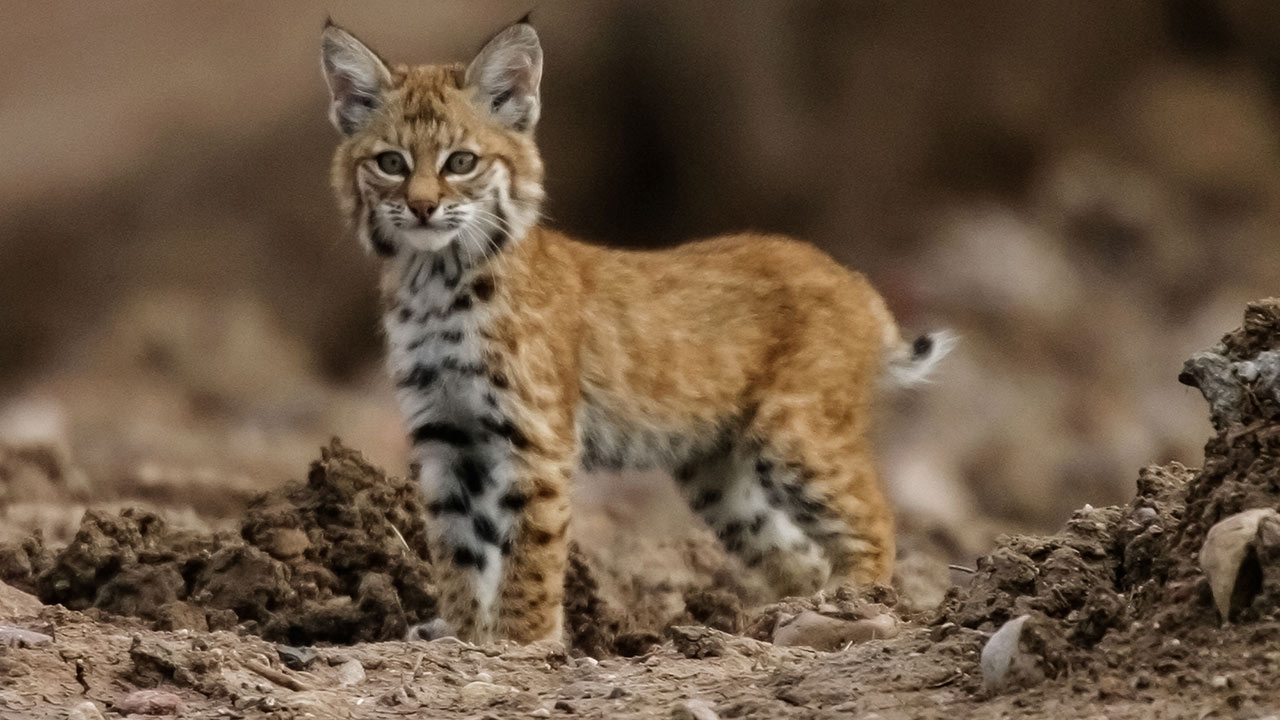
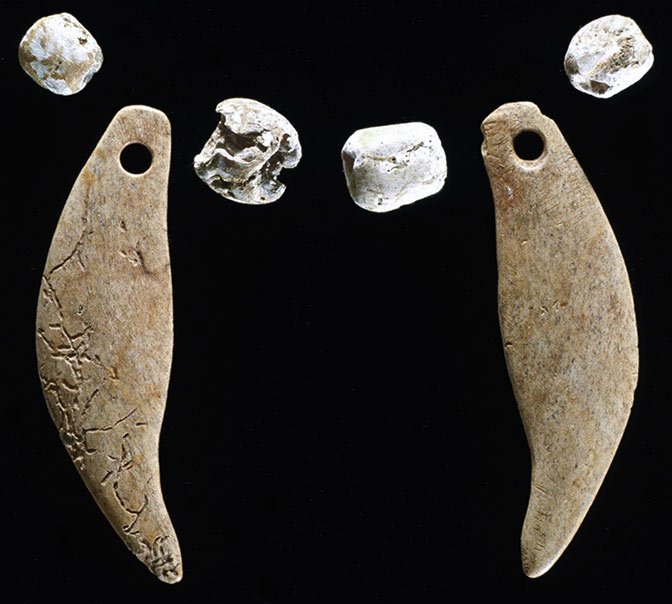

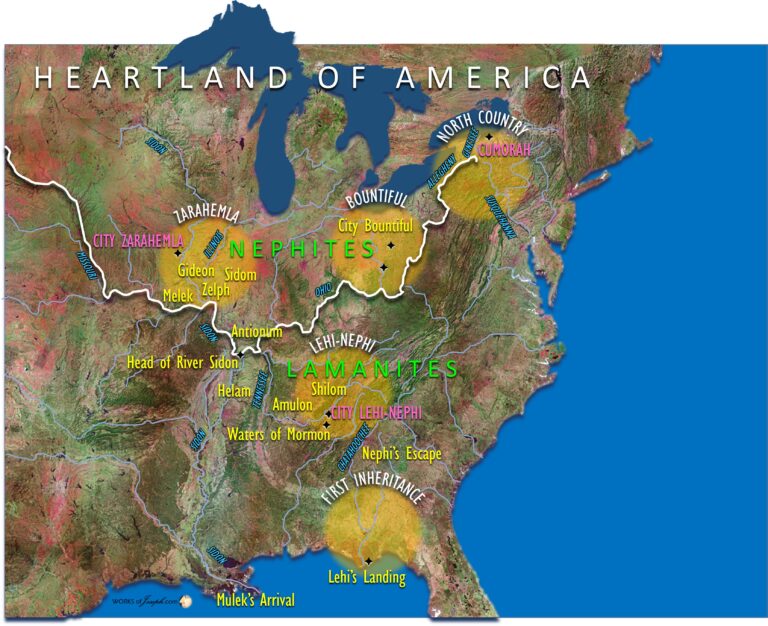
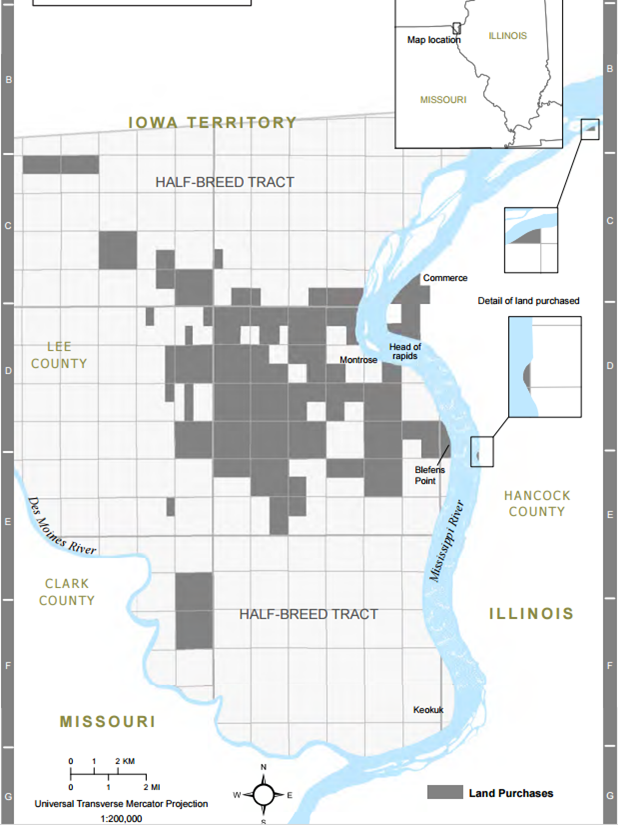


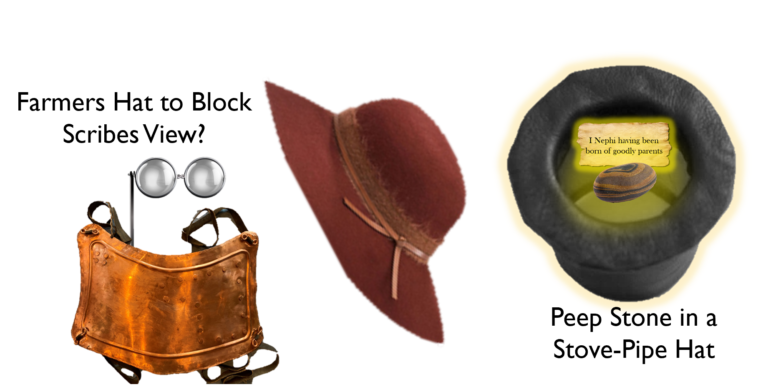


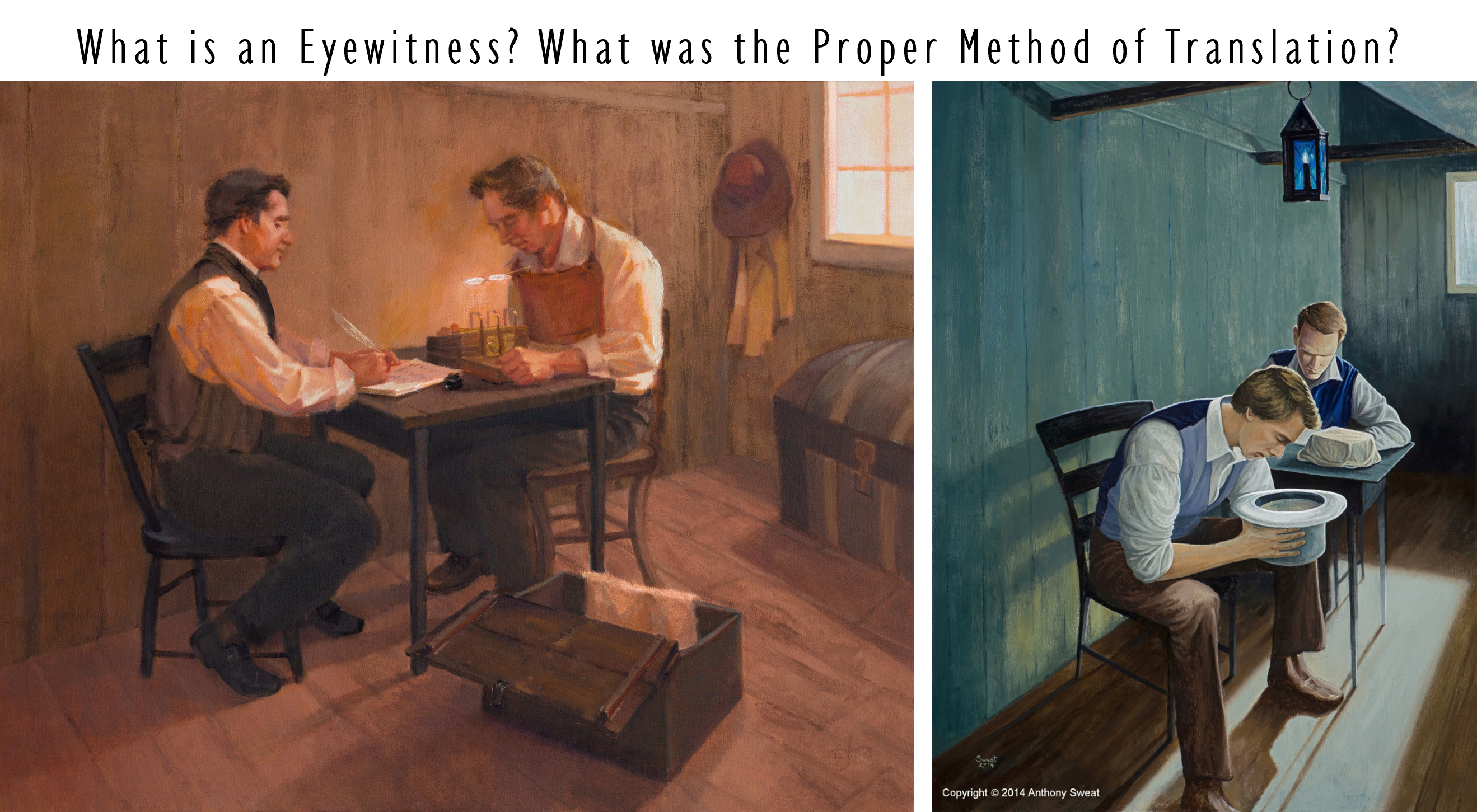
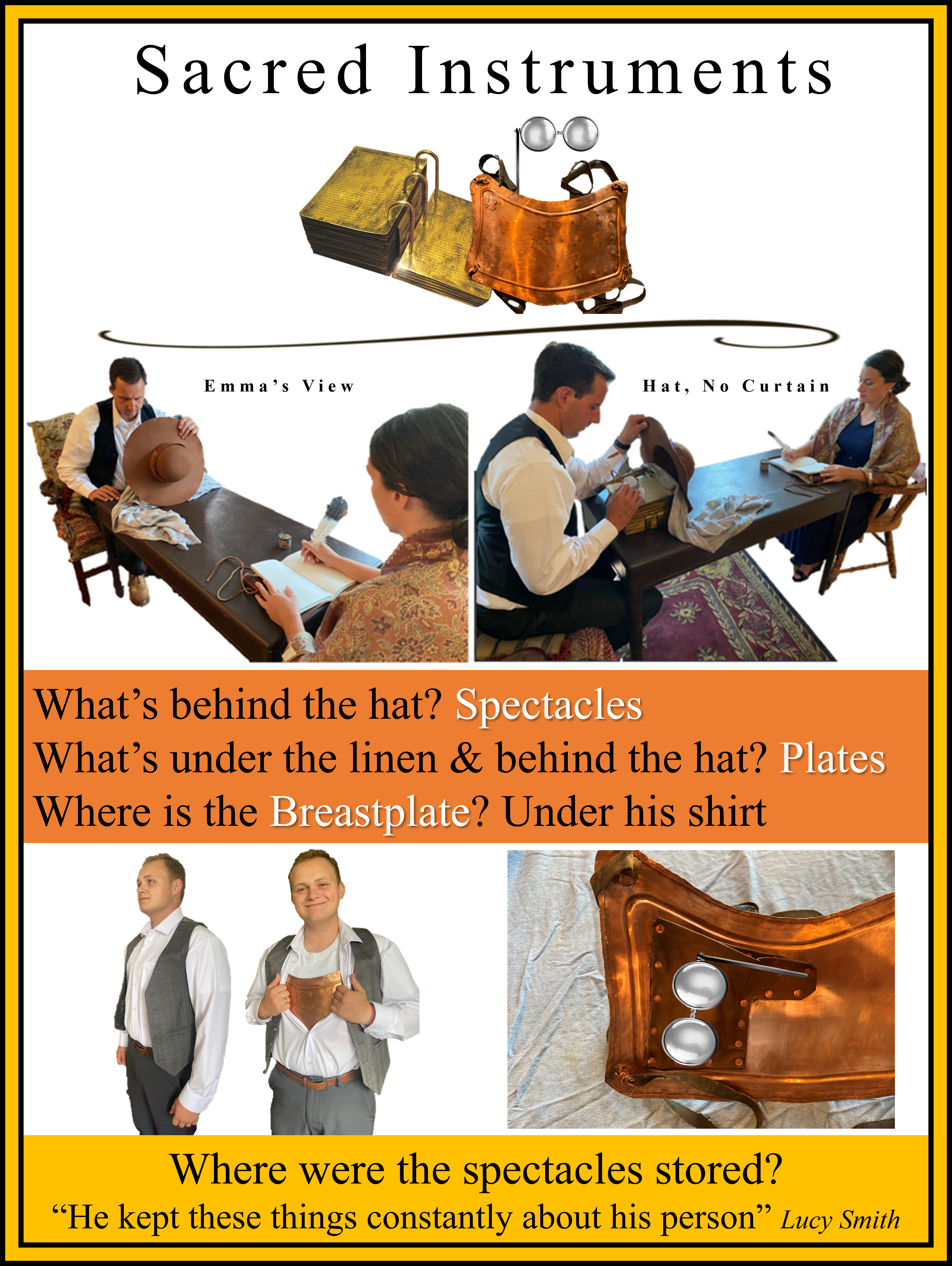


 A statement by President David O. McKay concerning the position of The Church of Jesus Christ of Latter-day Saints on Communism.

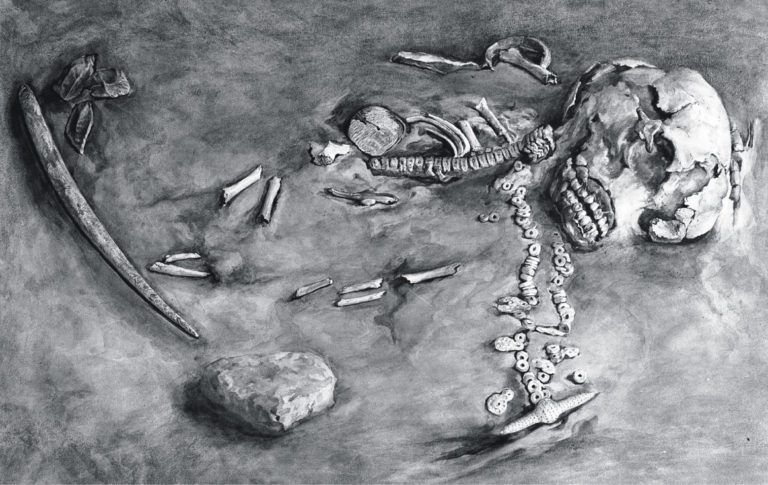

 Presentation Just completed Oct. 22, 2022
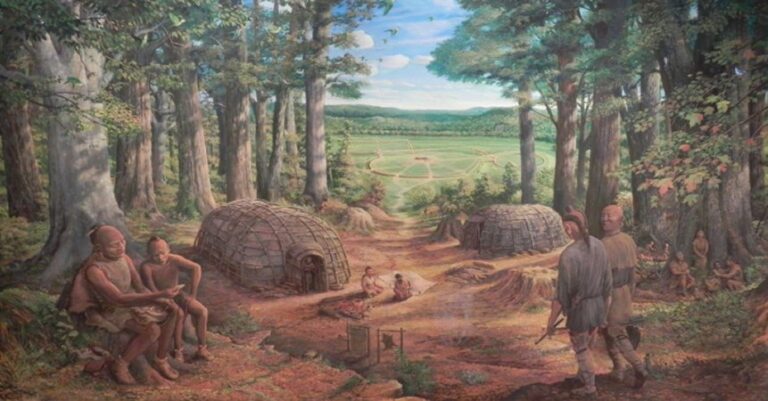


 Alvin Smith’s grave is located in the Swift Cemetery just south of Four Corners in Palmyra, New York. (See red circle left). It is located just a half mile from the Grandin Press. See the

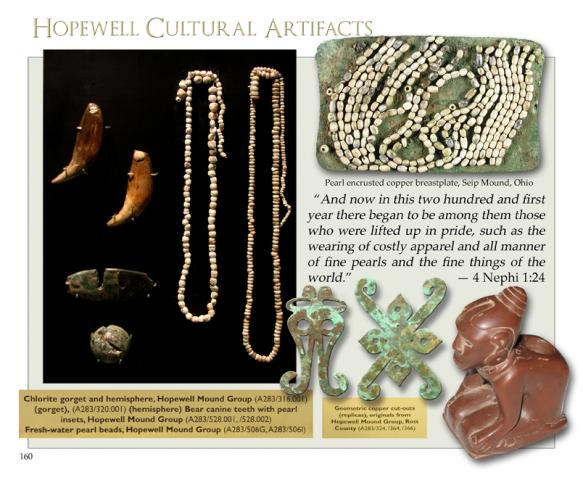
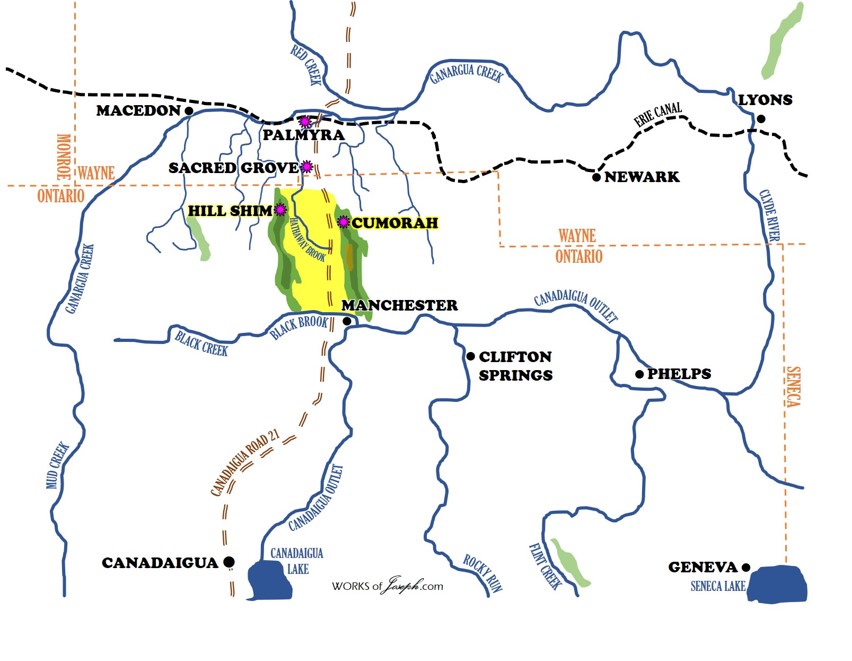


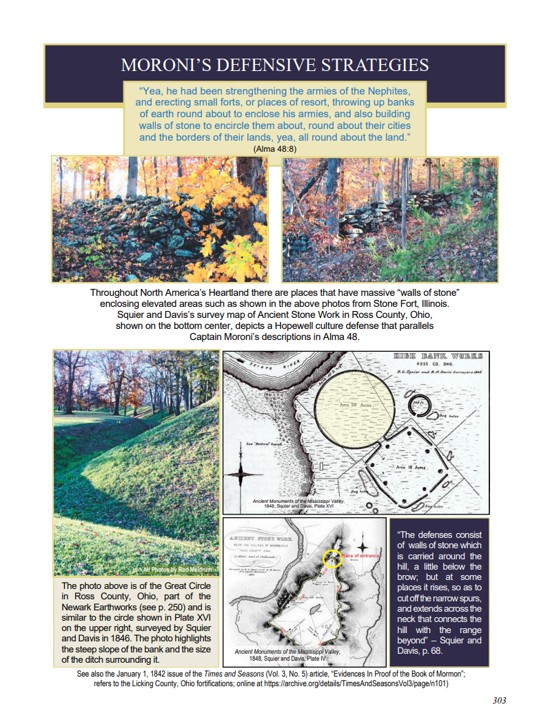
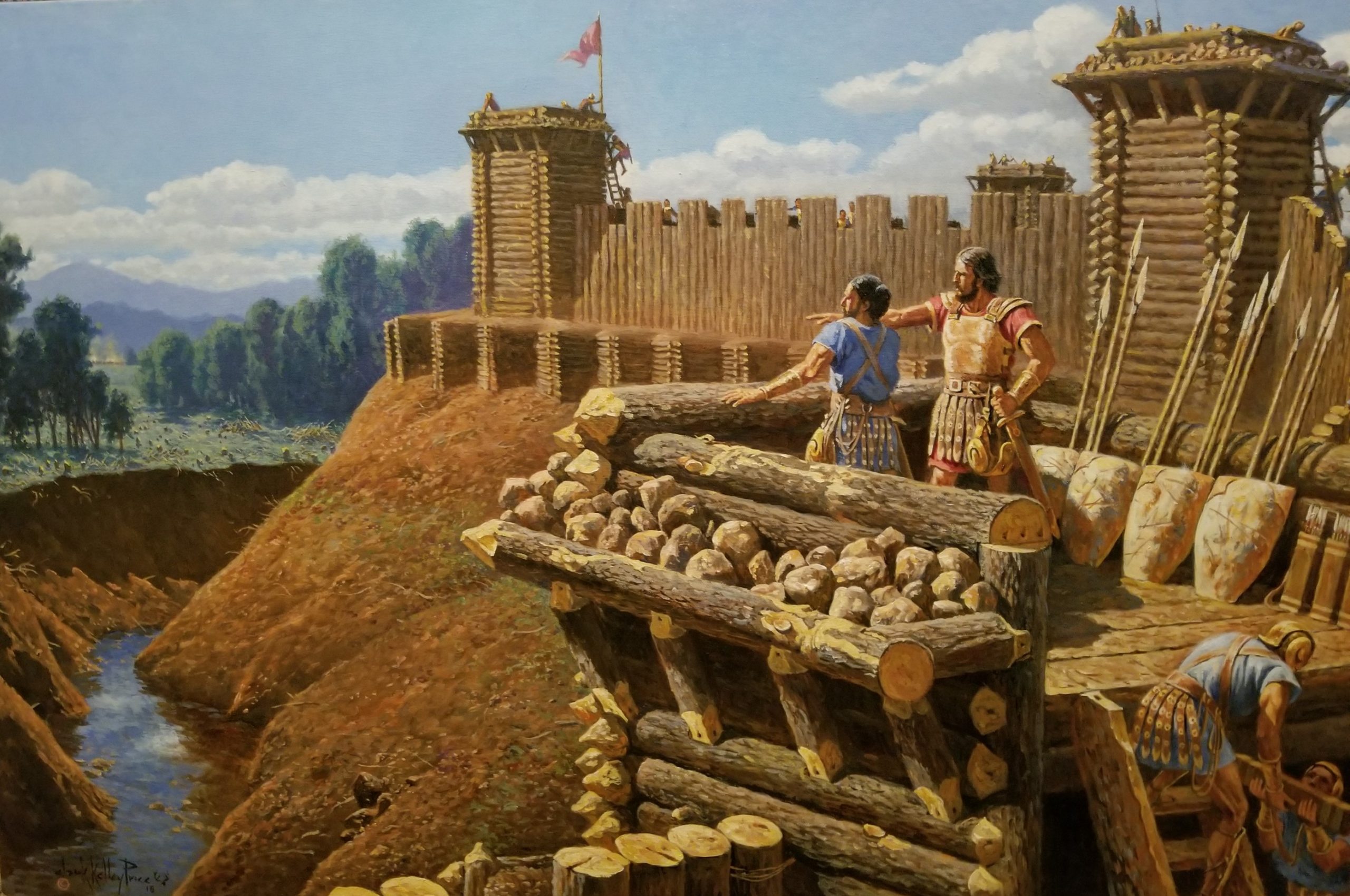
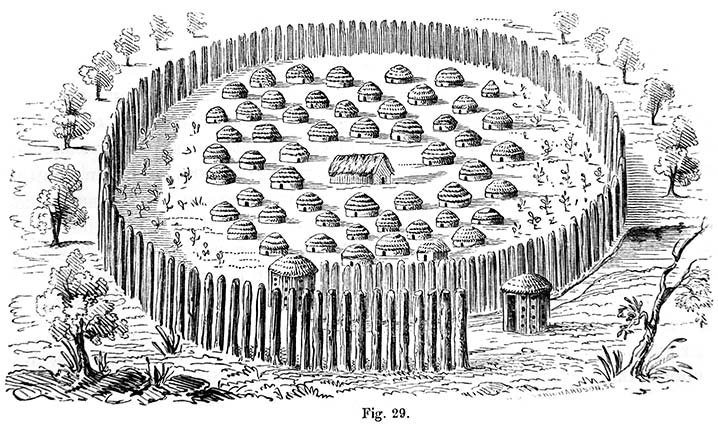

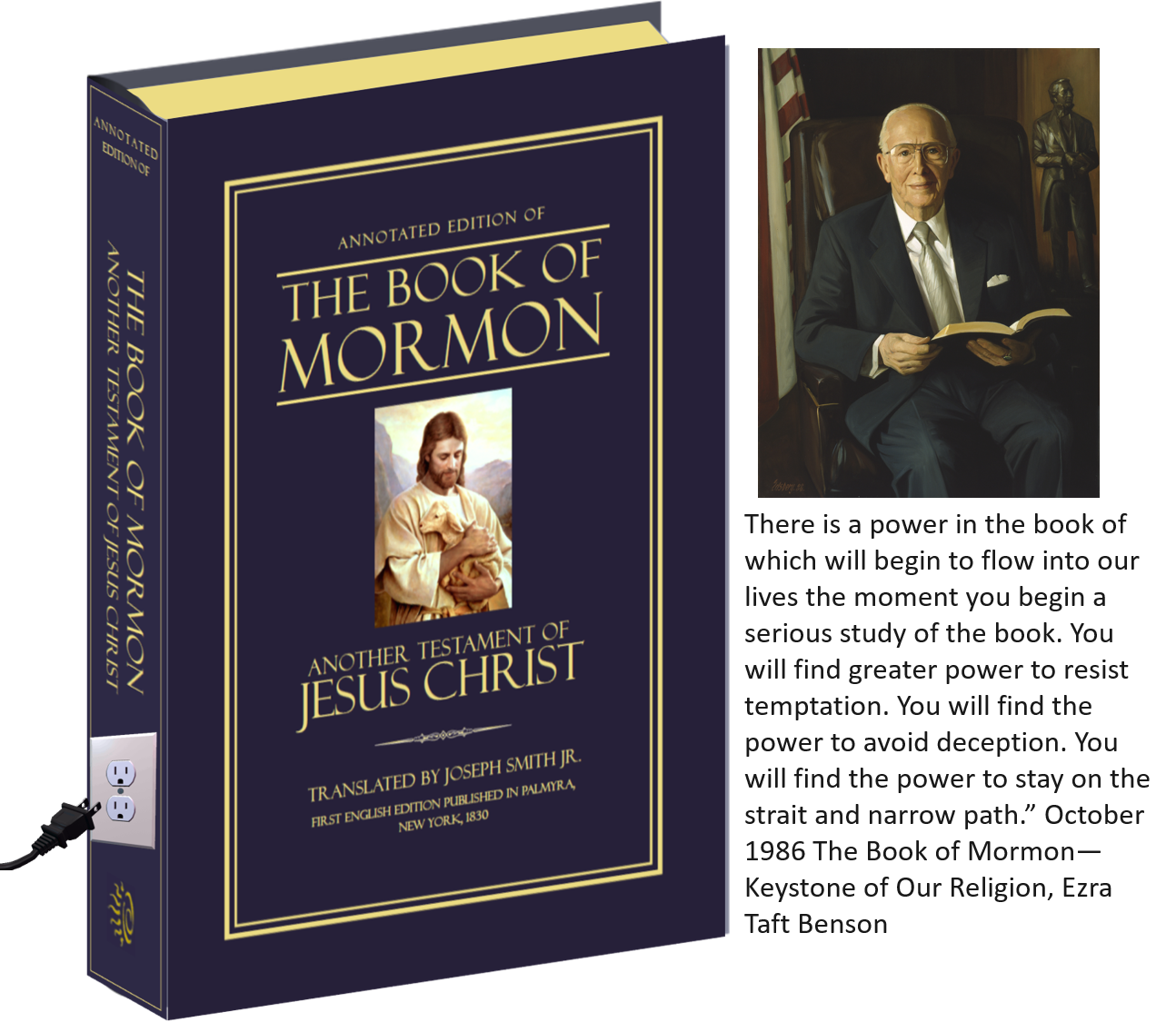
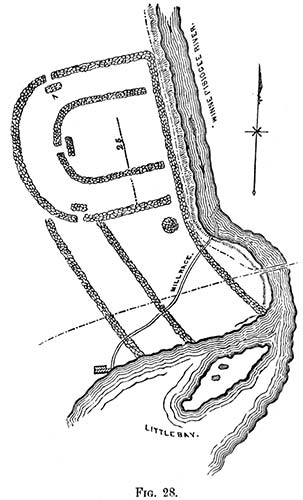

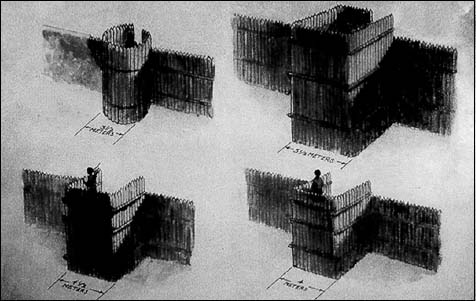


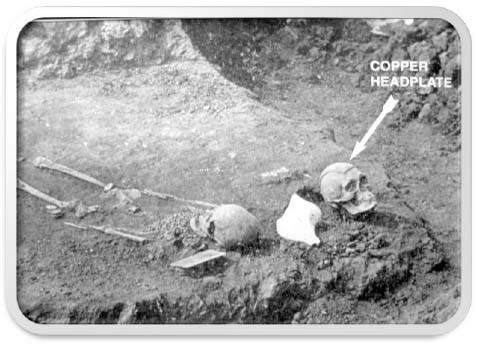
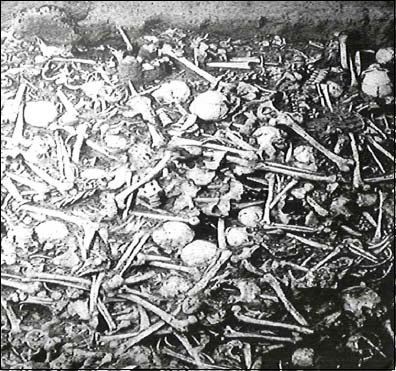


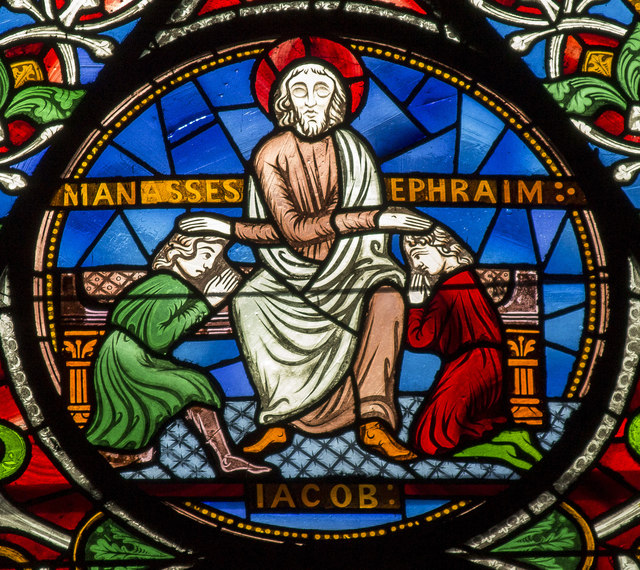
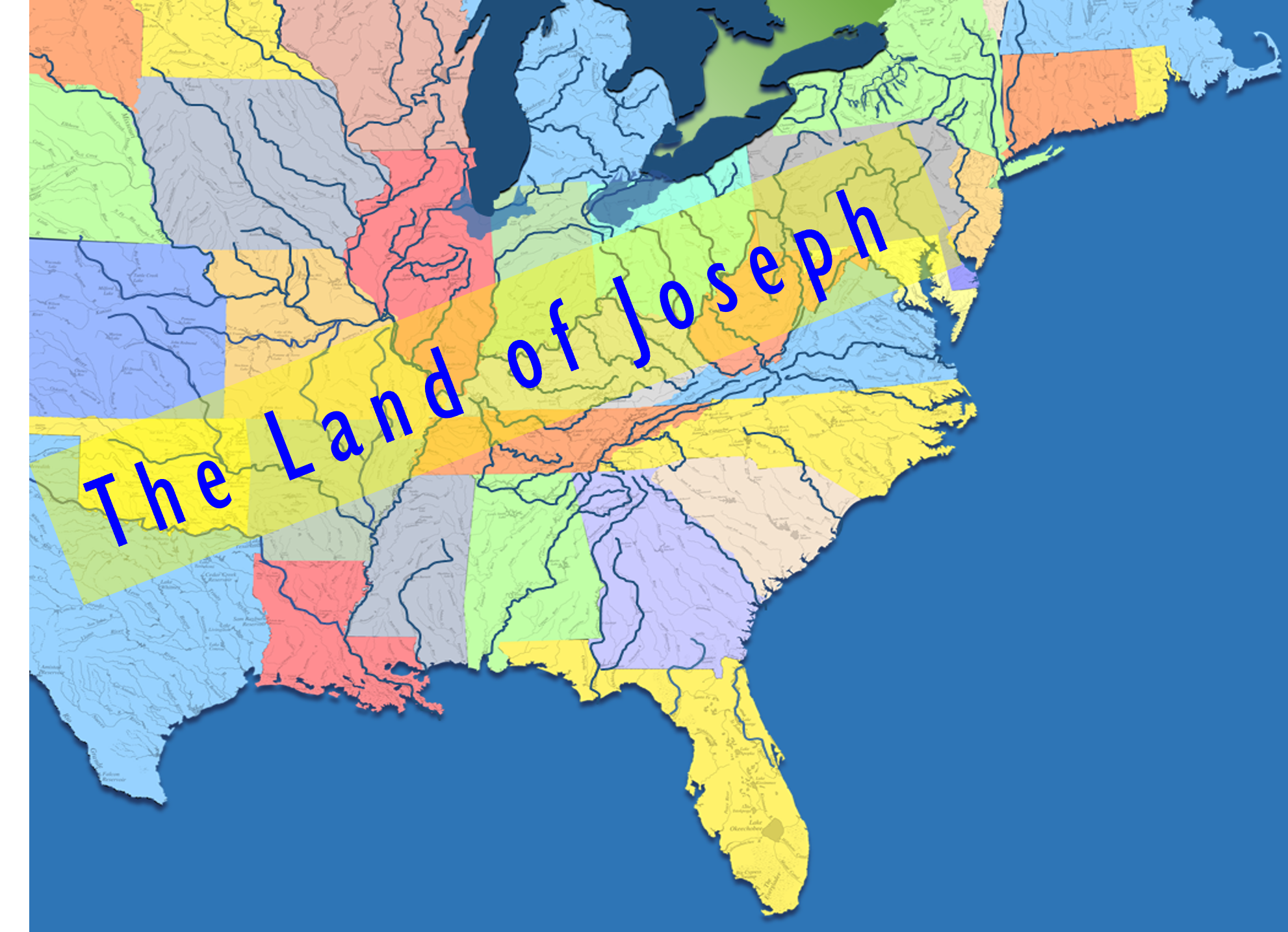 Elder Russell M. Nelson said, “Now, what of the promise of possession of certain lands? Territorial inheritance destined for the sons of Israel provided property in the Holy Land for Reuben, Simeon, Judah, Issachar, Zebulun, Gad, Asher, Dan, Naphtali, and Benjamin. But
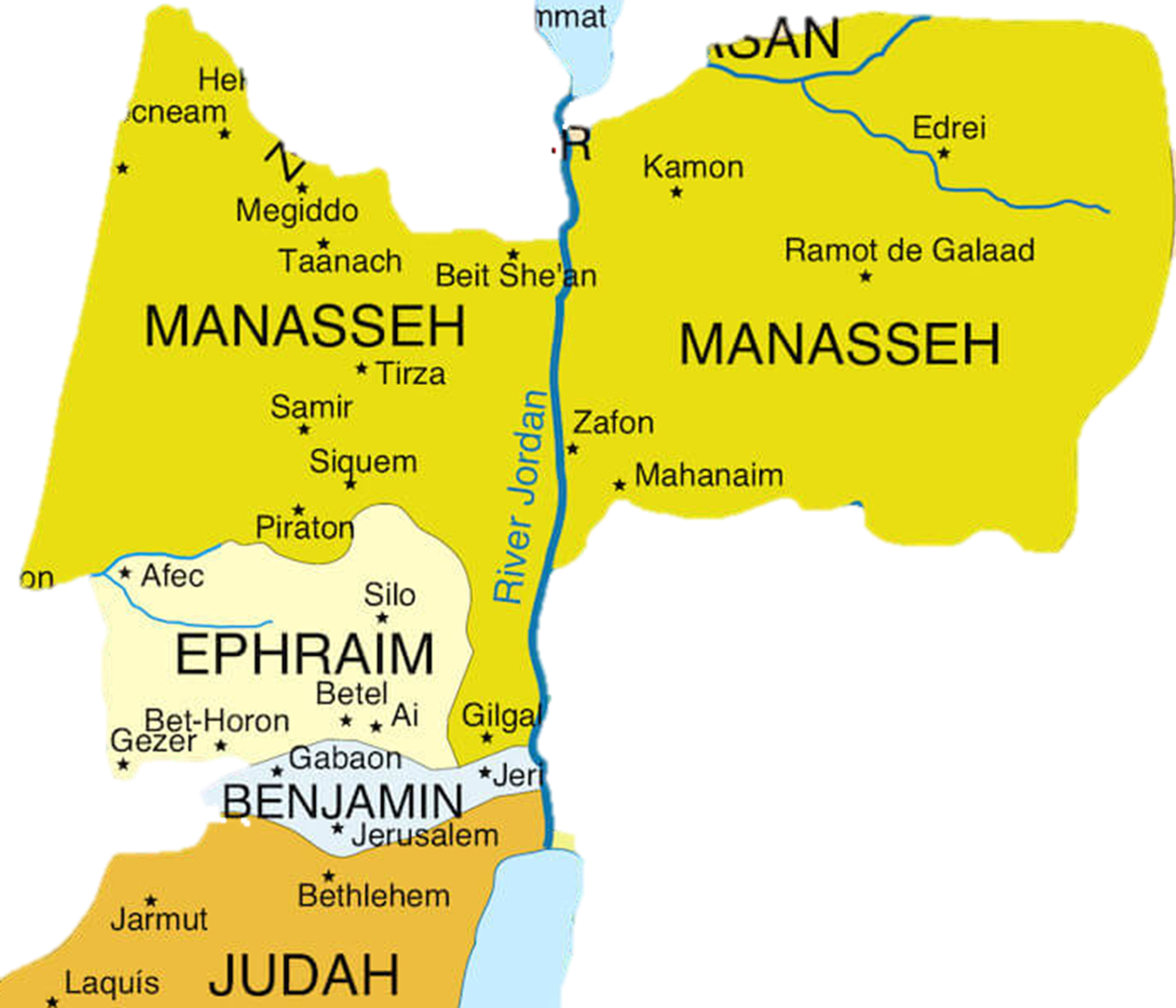







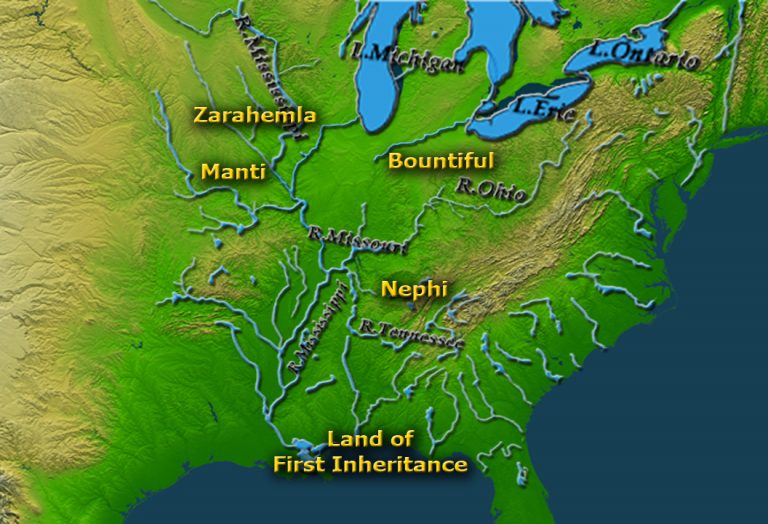

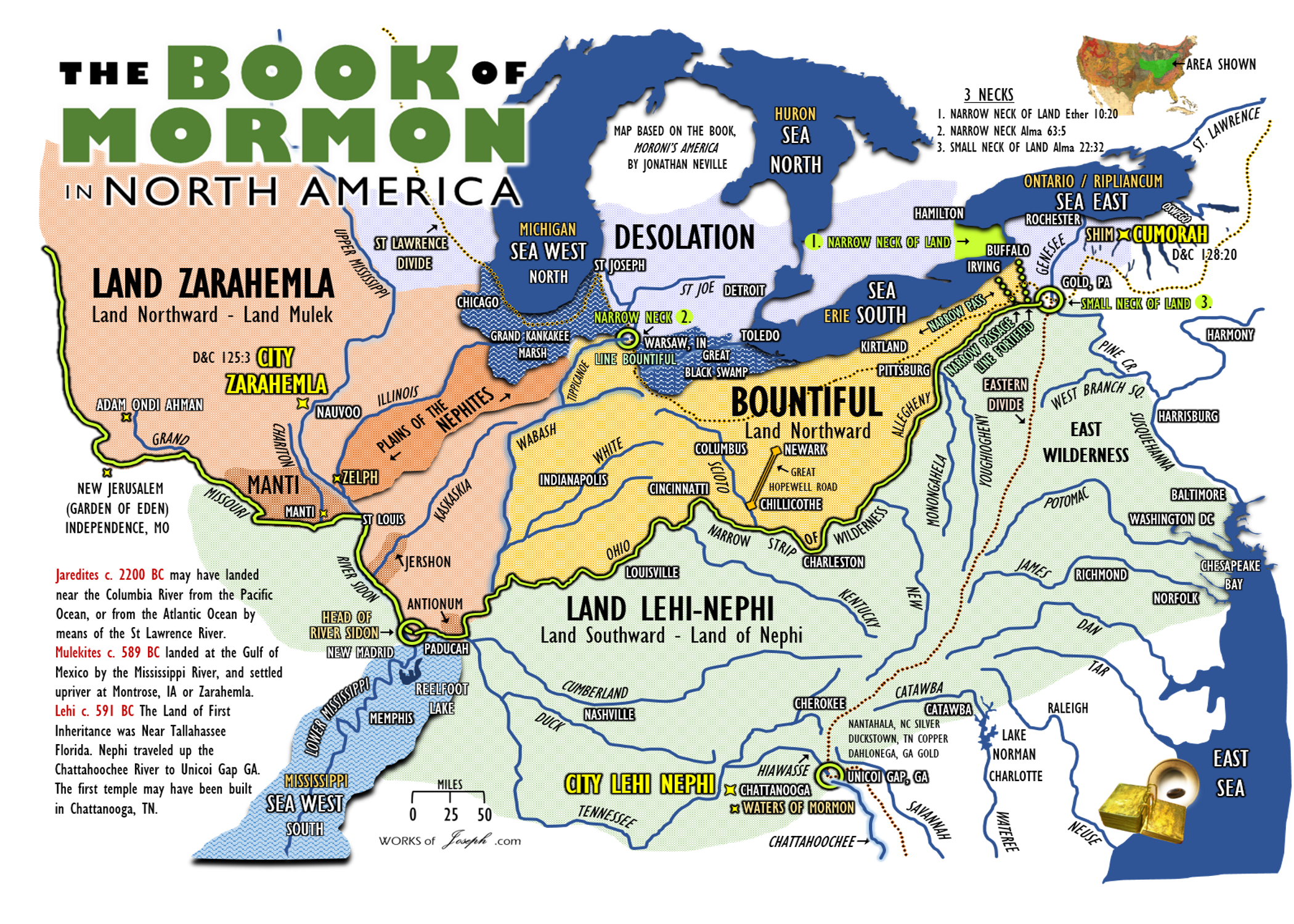
 Elder Jeffrey R. Holland said, “…Truly rock-ribbed faith and uncompromised conviction comes with its most complete power when it engages


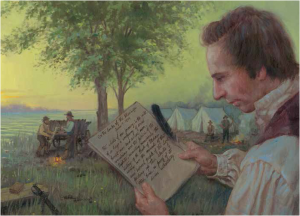
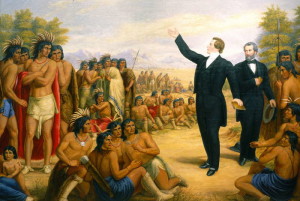

 To Purchase the Annotated Book of Mormon visit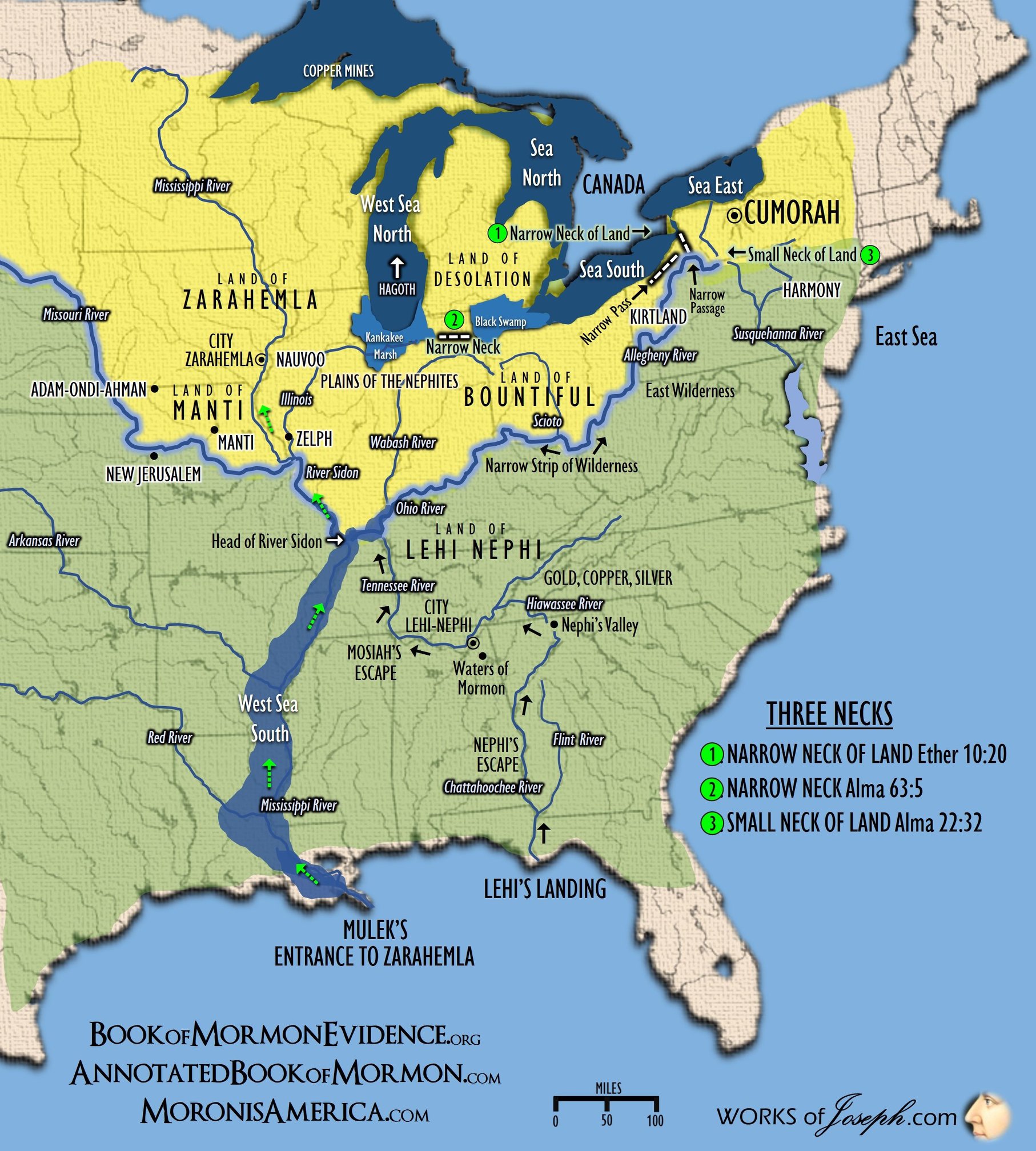


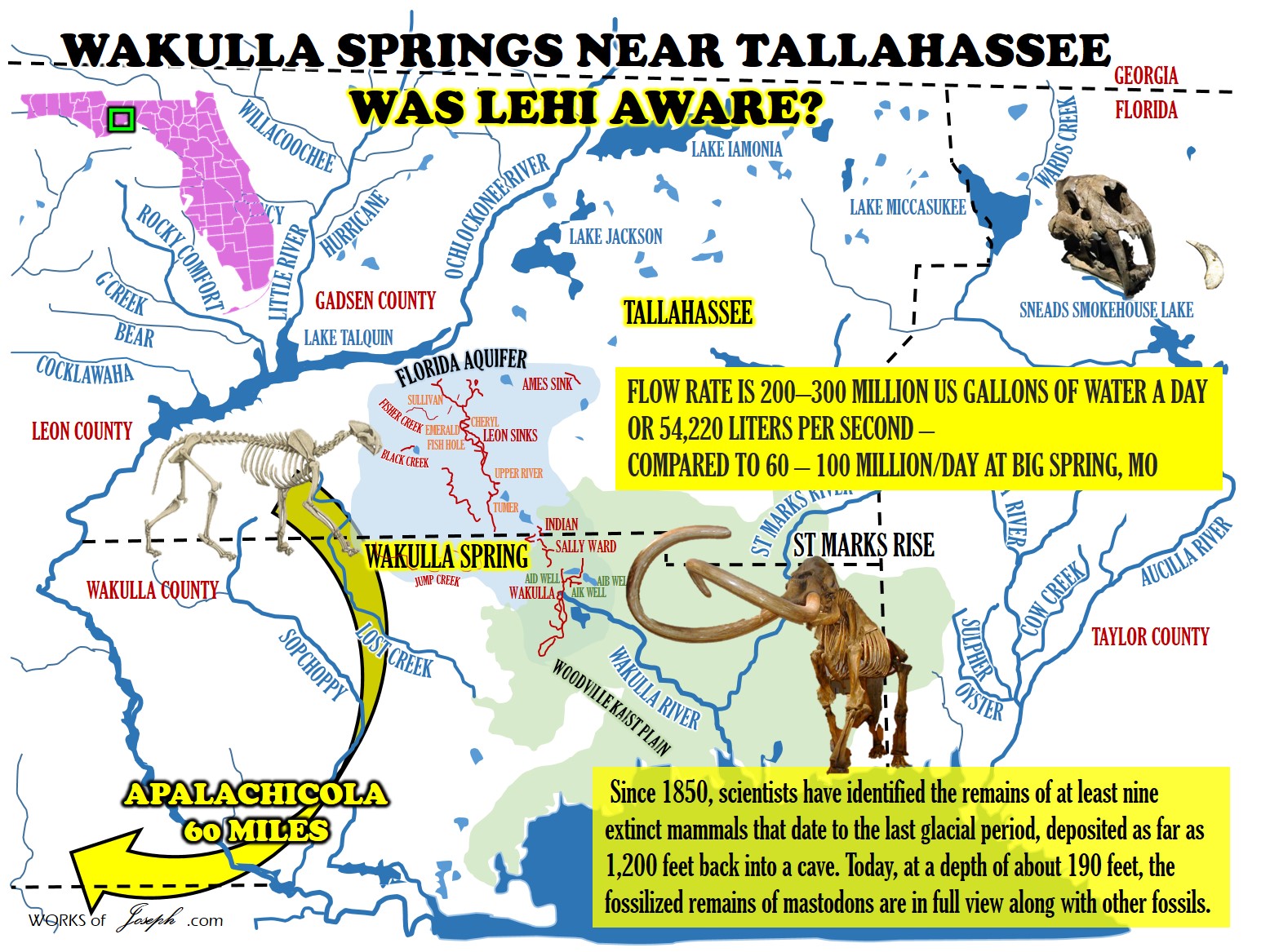




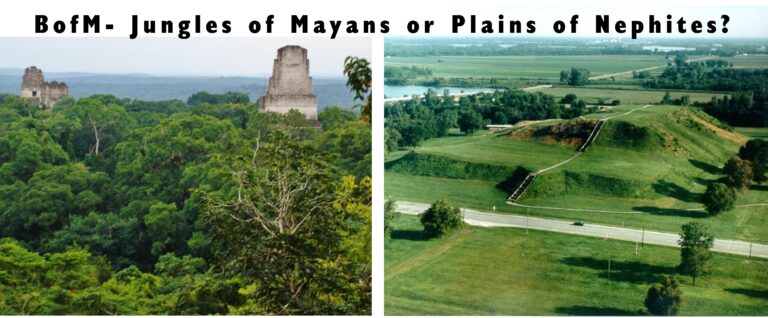
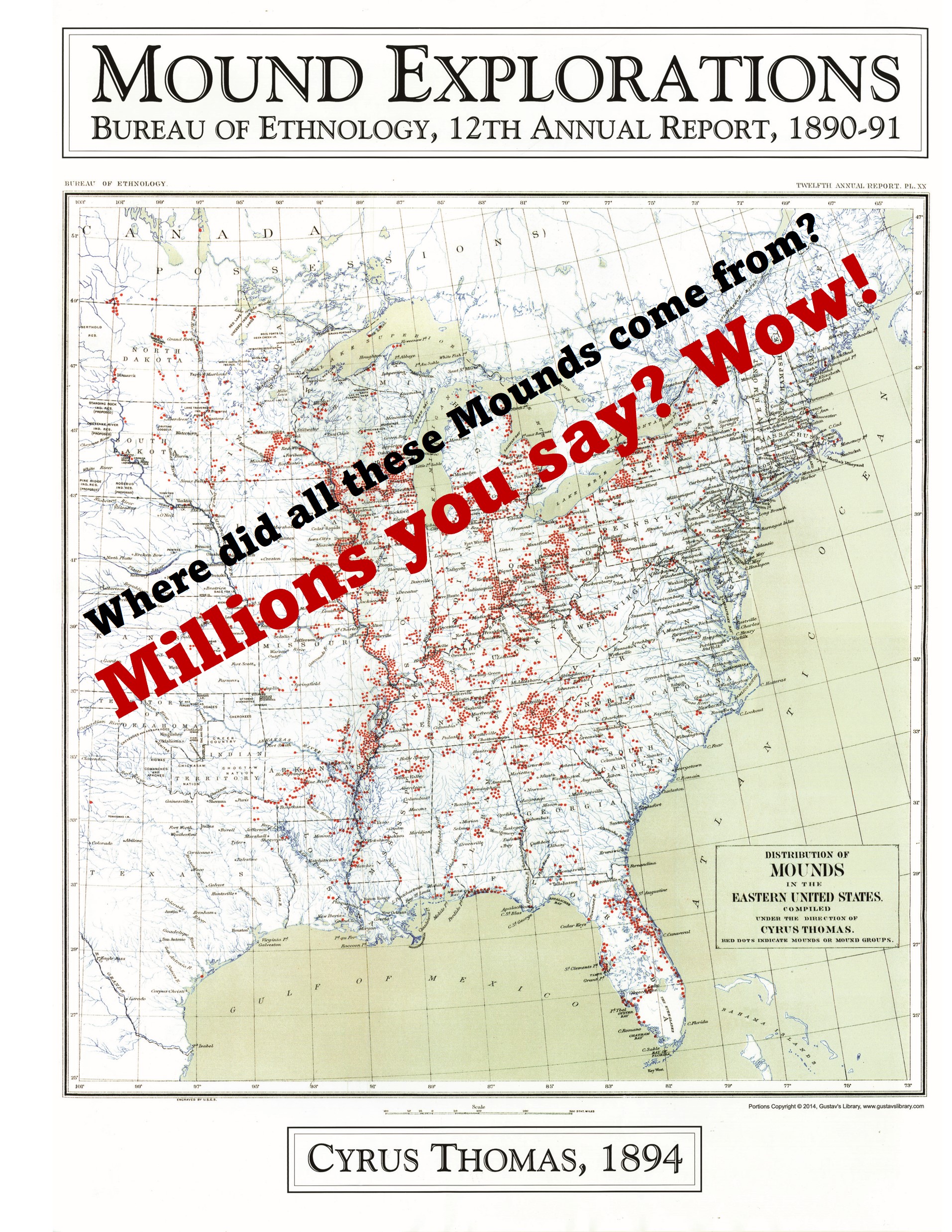 There are hundreds of thousands of Indian Mounds in North America, (Map left) that I never even knew about, until 53 years of age. Yet, the mounds, and cities and cultures of the Native Americans in North America were hidden, so to speak from the world in open spaces with thousands of artifacts in museums all over the land? Here is what a Historian said about this map left: “The most common question that is asked about mounds is, “How many exist?” In the 1800’s the Smithsonian sponsored many expeditions to identify mound sites across America. A map (shown below) was produced by Cyrus Thomas in 1894 in a Bureau of Ethnology book. They found approximately 100,000 mound sites, many with complexes containing 2 to 100 mounds. The figure of 100,000 mounds once existing— based on Cyrus Thomas map revealing 100,000 sites—is often cited by others, but that estimate is far, far too low. After visiting several thousand mounds and reviewing the literature, I am fairly certain that over 1,000,000 mounds once existed
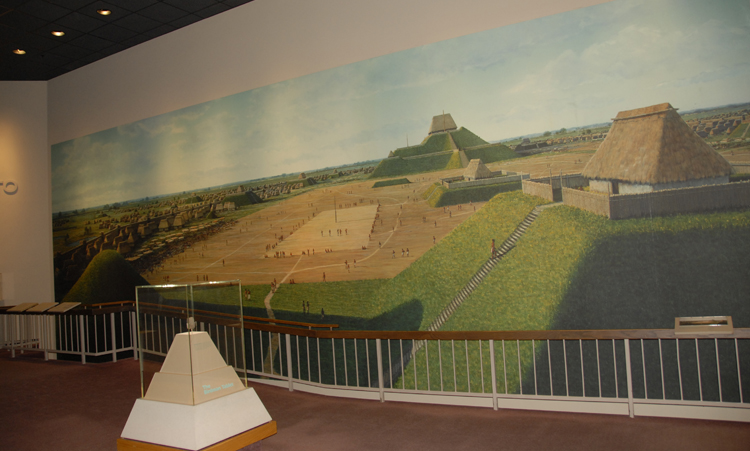
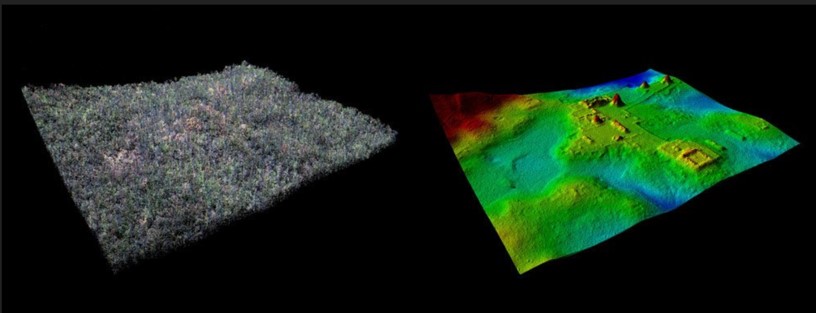
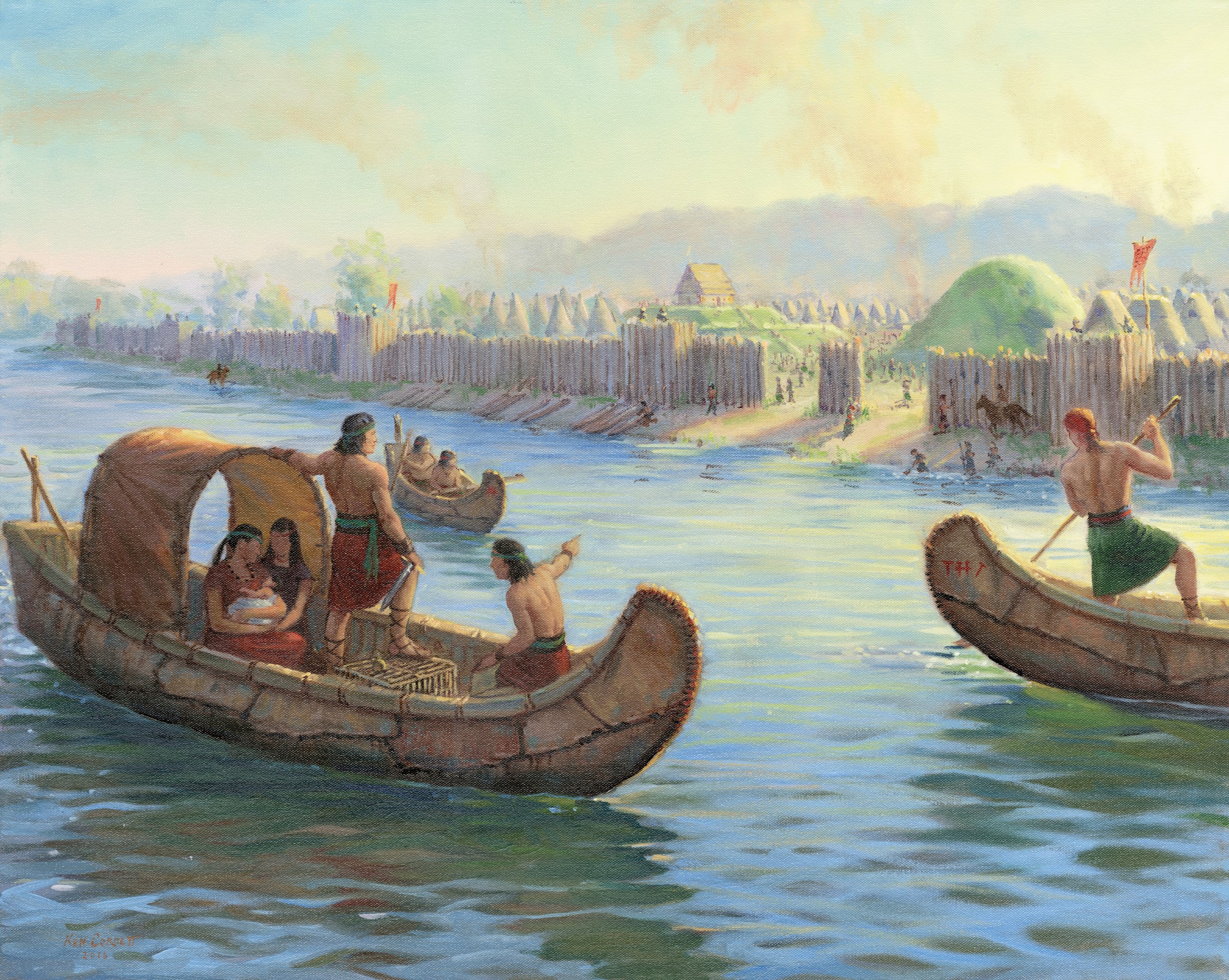
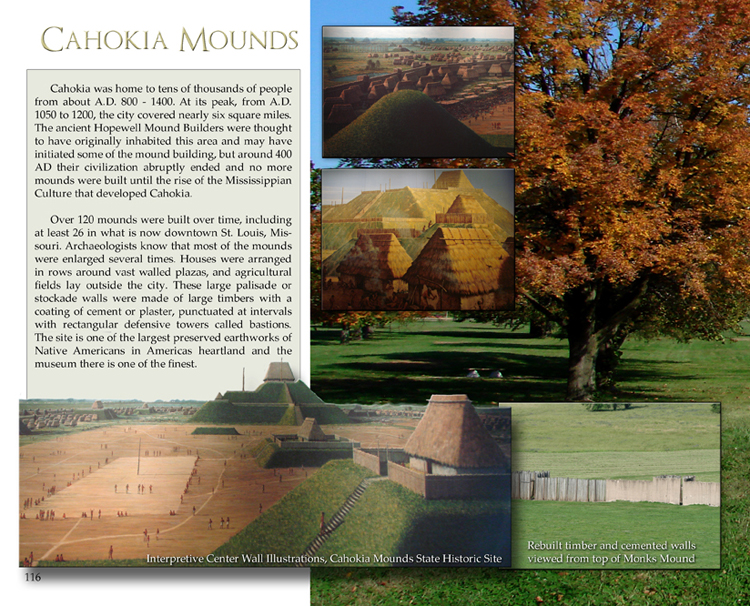
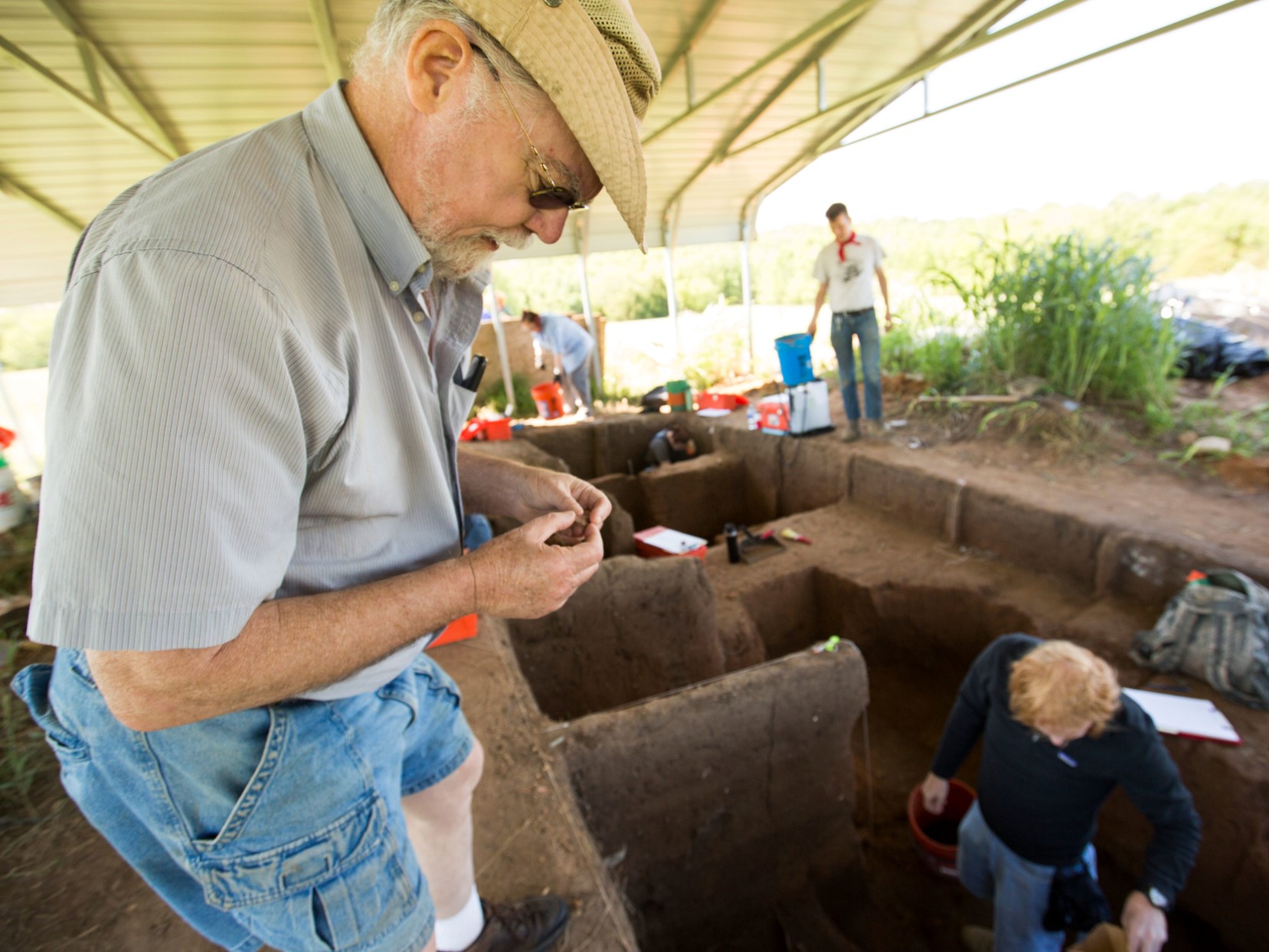
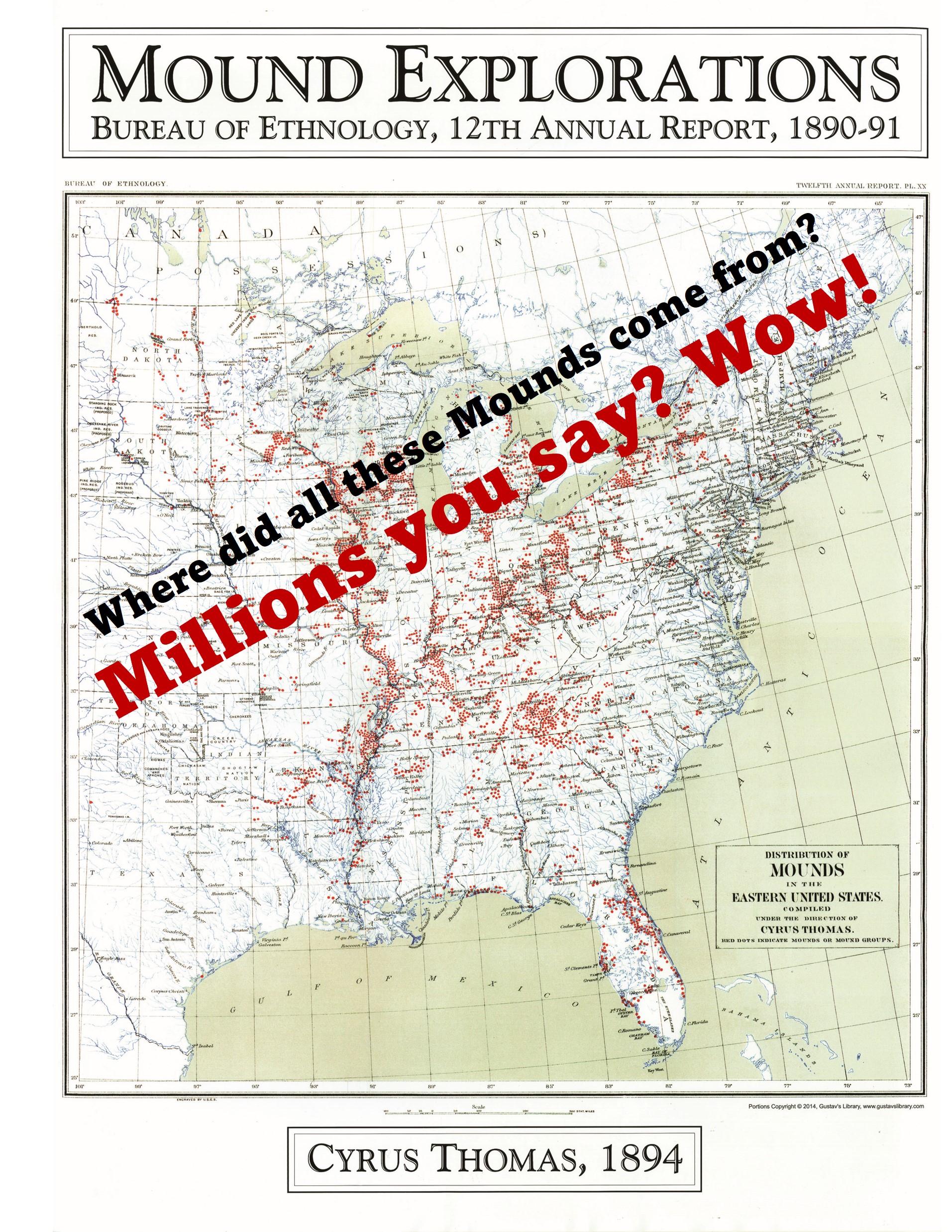

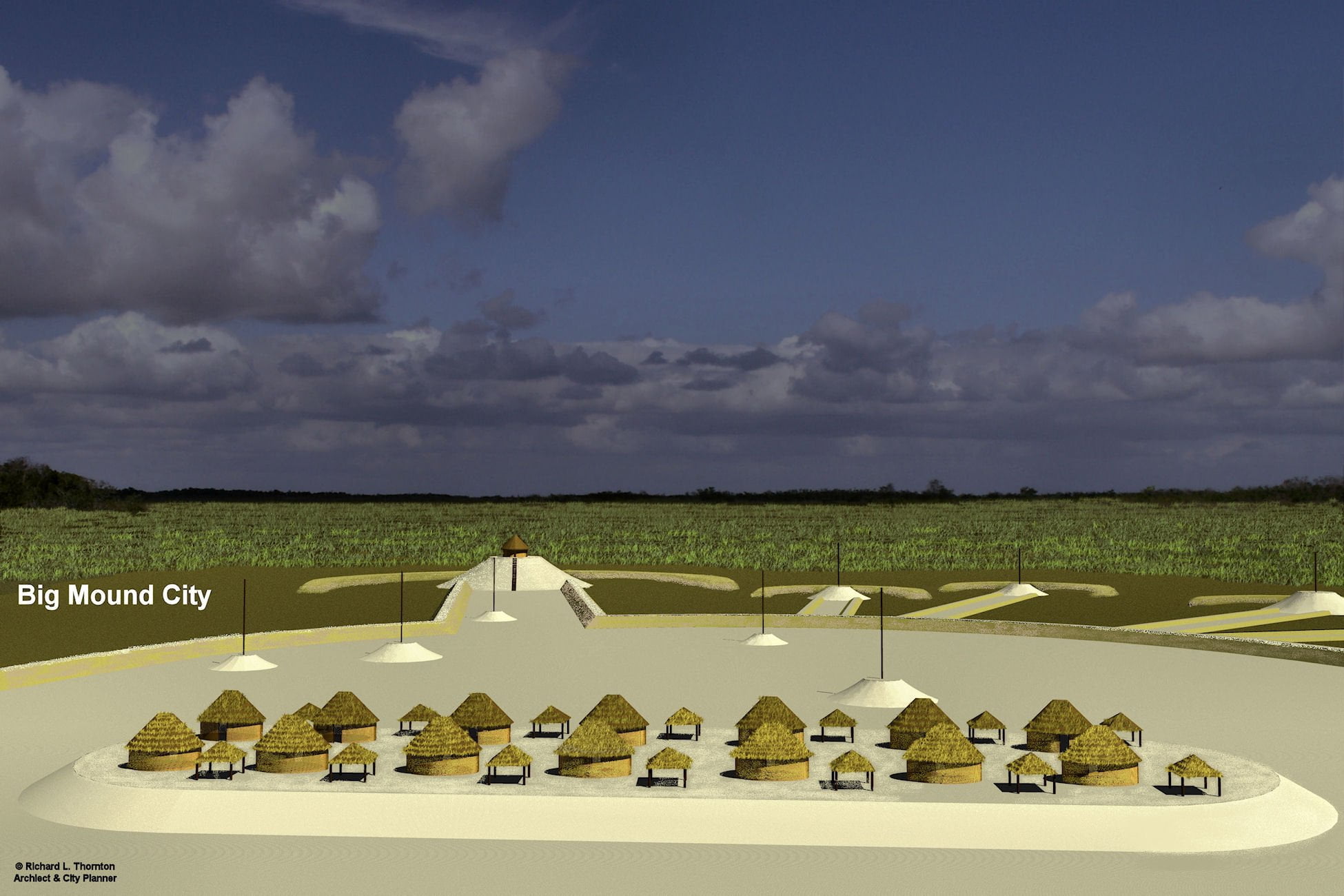

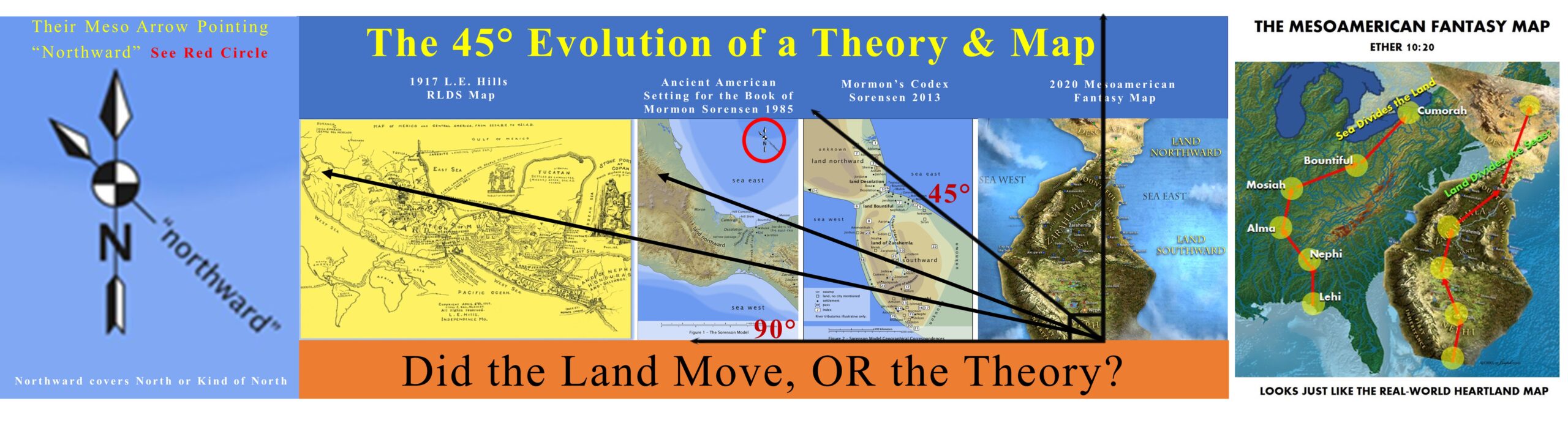 Meridian Magazine has an agenda of teaching members of the Church that the prophets and apostles are wrong about Cumorah, so they published this article to reinforce that agenda.