Summary Remarks from 2020 FIRM Foundation Virtual Expo By Rod Meldrum April 14, 2020
Dear friends,
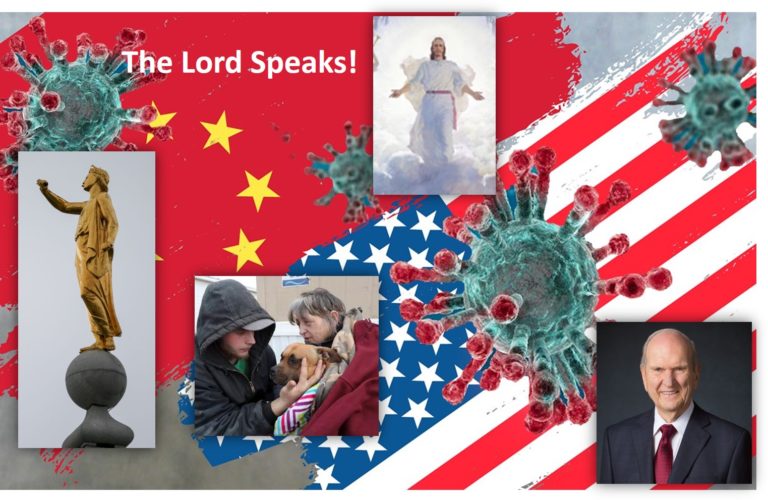
As I’ve contemplated the events of the past few weeks I’ve been struck by how suddenly lives have been disrupted and how quickly everything that seemed “normal” has been shown to be tenuous. Symbolic events that might even be considered as “signs of the times” have been seen.
First, a new pandemic enters the world stage, causing panic and lockdown of several of the world’s largest economies. Then an earthquake causes Angel Moroni atop the Salt Lake Temple to “drop” his horn/trumpet. Then a world-wide fast and an unprecedented Solemn Assembly is conducted.
Thursday (April 9, 2020) was Passover, symbolic of Israel’s deliverance by God from bondage under Egypt which was later celebrated by Christ with His Disciples.
Friday was Good (Sacred) Friday, the day of Christ’s crucifixion. Sunday was Easter, the day of His resurrection.
Many have wondered about the symbolism of Moroni’s trumpet being removed by an act of God through the recent earthquake…following which I wrote this article in response. Posted on the website the next morning. https://bookofmormonevidence.org/the-last-days-finally-2/
“15 ¶ Blow the trumpet in Zion, sanctify a fast, call a solemn assembly:” Joel 2:15-16
In a few short weeks, church meetings and temples were closed, earthquakes shook. Moroni’s trumpet fell, missionaries returned home, a worldwide fast called, and an unprecedented solemn assembly and Hosanna Shout given!
The Hosanna Shout was given upon Christ’s entering into Jerusalem on Palm Sunday. Temple dedication Hosanna Shout’s implore the Savior to enter His Holy House. Because of the pandemic each family – in their own home – were imploring Christ to enter in! Think of it.
President Nelson invited us to fast on Good Friday for an end to this pandemic. Incredibly, Thursday evening would be OUR last supper before we petitioned the Savior of the World for deliverance, corresponding to HIS Last Supper. Passover’s sader meal is THE symbol of divine rescue from death.
The God we prayed to for deliverance, is the one who’s Passover reminds us He will deliver.
I hope that each of you enjoyed a happy Easter. HE IS RISEN!
Because of the many projects we’ve been introducing, many have asked for some easy links to take full advantage of these resources. Below are some of the latest happenings, but these are just the ‘tip of the iceburg’ so to speak.
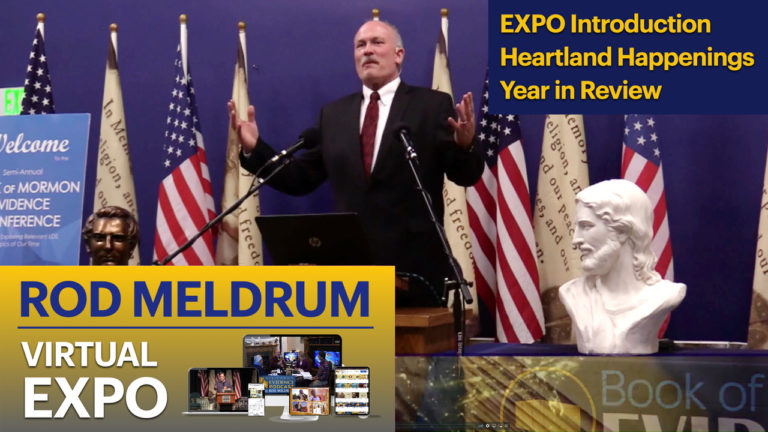
I hope you will make the time to watch my introduction to the just released Firm Foundation Expo and 25th International Book of Mormon Evidence Conference (Full 90-minute Video at the bottom of this article). I think you will find many wonderful presentations to give us hope and excitement during these trying times. (Subsribe now. 70 presentations- $40 for 3 full months to view, only $10 per month after).
My personal presentations for this event were focused primarily on how we can stay positive, uplifted and enlightened as we face adversity and challenges in our lives. My hope is to provide encouragement and help to strengthen those whose burdens seem unbearable and whose shoulders are weary from the weight of their difficulties.
Hopefully, after you watch the presentation I titled ‘Do Bad Things Happen…for Good Reasons’ – or as I was going to call it – ‘My Miserable, Horrible, Terrible Life of Trials!,’ you’ll find comfort in realizing that God is in control, He loves you, and many times in order to bless you with greater things he needs you to change directions in your life, which can be done through trials. Better things are in store on the other side of trials, if we put our trust in Him and go forward in faith!
In the introduction you’ll hear about the exciting happenings since our last Expo through my Heartland Happenings report.
Video Highlights include;
– Heartland Presentations Stats
– Survey showing Heartland acceptance in members
– Review of Italy and Book of Mormon Tours in 2019
– National and regional conferences
– 1st Universal Model Geotour
– Annotated Edition Book of Mormon in Costco & Deseret Book
– New Streaming Video website
– New ‘Come Follow Me’ supplemental learning podcasts
– Mulekite voyage demonstrated
– Recent Symbolic “Signs of the Times” from the earthquakes, General Conference, Solemn Assembly and the Hosanna Shout!
– New website update
– New Book of Mormon Answers pages
– Book of Mormon Video’s page
I hope you enjoy all of the wonderful tools now available to enhance your ongoing study of the Book of Mormon!
Your friend and brother in the gospel,
Rod Meldrum
Video Below- Heartland Happenings Kick-off Presentation FIRM Foundation Innaugural Virtual Expo By Rod Meldrum April 9, 2020 90-Minutes
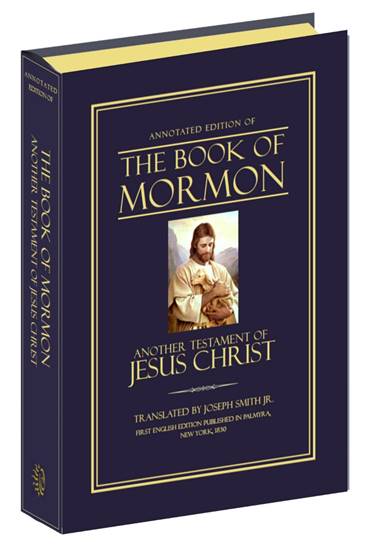
THE ANNOTATED EDITION OF THE BOOK OF MORMON Page v, vii, ix, and 585
THE OLD TESTAMENT:
“I will gather the remnant of My flock out of all countries whither I have driven them.” (Jeremiah 23:3) THE NEW TESTAMENT:
“I am the Good Shepherd, and know My sheep, and am known of Mine. As the Father knoweth Me, even so know I the Father, and I lay down My life for the sheep. And other sheep I have, which are not of this fold: them also I must bring, and they shall hear My voice; and there shall be one fold, and one Shepherd.”
(John 10:14-16) THE BOOK OF MORMON: “And verily I say unto you, that ye are they of whom I said: ‘Other sheep I have which are not of this fold; them also I must bring, and they shall hear My voice; and there shall be one fold, and one Shepherd.’” (3 Nephi 15:21) “…for behold, I know My sheep and they are numbered.” (3 Nephi 18:31)
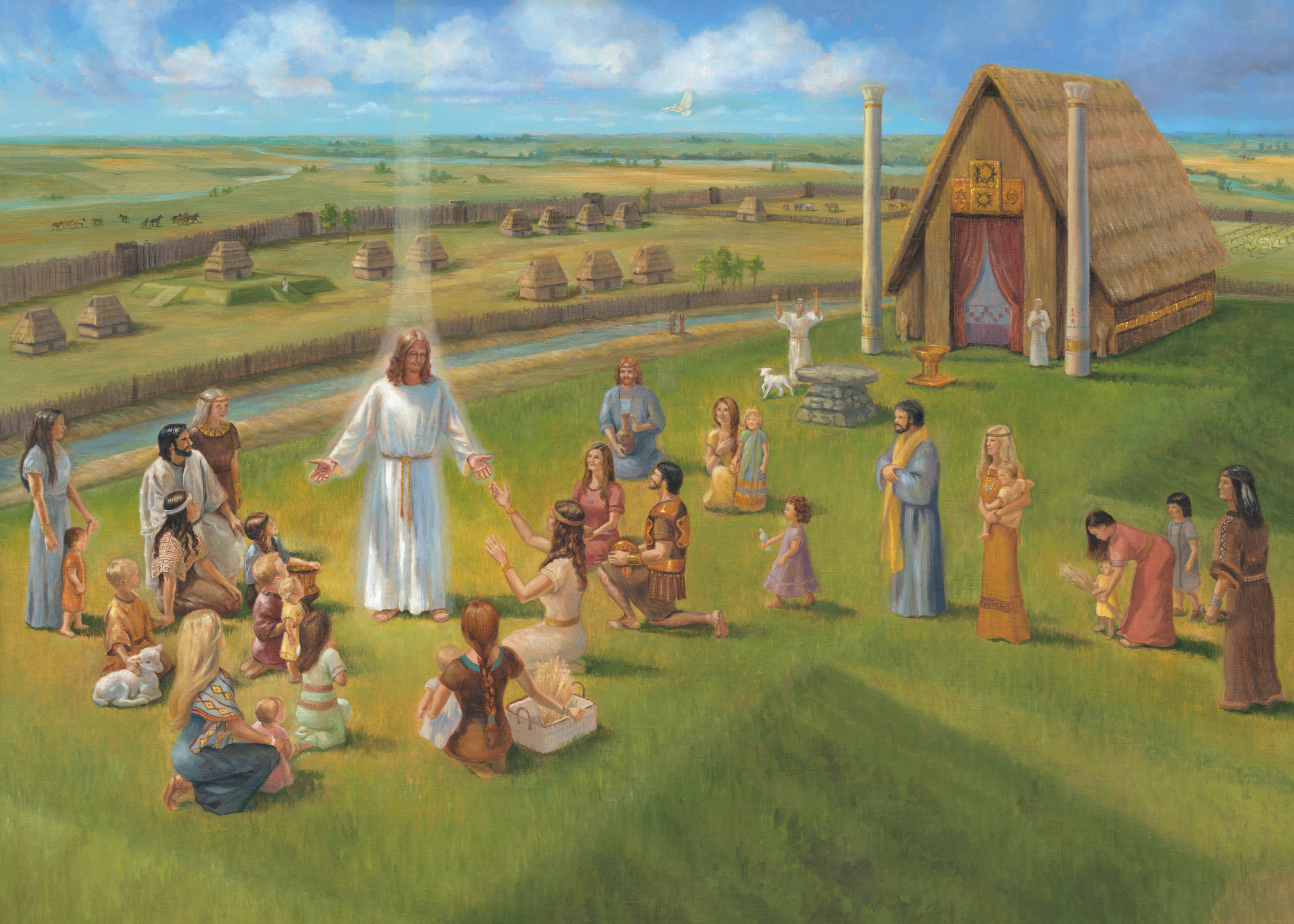
Above: Christ Appears to the Nephites in North America by Kendra Burton
YEA, come unto Christ, and be perfected in Him,
and deny yourselves of all ungodliness;
and if ye shall deny yourselves of all ungodliness,
and love God with all your might, mind and strength,
then is His grace sufficient for you,
that by His grace ye may be perfect in Christ;
and if by the grace of God ye are perfect in Christ,
ye can in nowise deny the power of God.
(Moroni 10:32)
ND He shall go forth, suffering pains and afflictions
and temptations of every kind;
and this that the word might be fulfilled which saith,
‘He will take upon Him the pains and the sicknesses of His people.’
And He will take upon Him death,
that He may loose the bands of death which bind His people;
and He will take upon Him their infirmities,
that His bowels may be filled with mercy,
according to the flesh,
that He may know according to the flesh how to succor His people
according to their infirmities.
(Alma 7:11–12; see Isaiah 53:4)
The Book of Mormon—a Book from God
Elder Tad R. Callister Oct 2011(Emphasis Added)
But why is the Book of Mormon so essential if we already have the Bible to teach us about Jesus Christ? Have you ever wondered why there are so many Christian churches in the world today when they obtain their doctrines from essentially the same Bible? It is because they interpret the Bible differently. If they interpreted it the same, they would be the same church. This is not a condition the Lord desires, for the Apostle Paul declared that there is “one Lord, one faith, one baptism” (Ephesians 4:5). To help bring this oneness about, the Lord established a divine law of witnesses. Paul taught, “In the mouth of two or three witnesses shall every word be established” (2 Corinthians 13:1).
The Bible is one witness of Jesus Christ; the Book of Mormon is another. Why is this second witness so crucial? The following illustration may help:How many straight lines can you draw through a single point on a piece of paper? The answer is infinite. For a moment, suppose that single point represents the Bible and that hundreds of those straight lines drawn through that point represent different interpretations of the Bible and that each of those interpretations represents a different church.
What happens, however, if on that piece of paper there is a second point representing the Book of Mormon? How many straight lines could you draw between these two reference points: the Bible and the Book of Mormon?Only one. Only one interpretation of Christ’s doctrines survives the testimony of these two witnesses.
Again and again the Book of Mormon acts as a confirming, clarifying, unifying witness of the doctrines taught in the Bible so that there is only “one Lord, one faith, one baptism.” For example, some people are confused as to whether baptism is essential for salvation even though the Savior declared to Nicodemus, “Except a man be born of water and of the Spirit, he cannot enter into the kingdom of God” (John 3:5). The Book of Mormon, however, eliminates all doubt on that subject: “And he commandeth all men that they must repent, and be baptized in his name, … or they cannot be saved in the kingdom of God” (2 Nephi 9:23). https://www.lds.org/general-conference/2011/10/the-book-of-mormon-a-book-from-god?lang=eng
Book of Mormon References to Deity by Charles D. Tate
In a day when many claim that the “Mormon Church” is a cult and certainly not a Christian church, it is interesting to note that the Book of Mormon has 476 references to the Lord Jesus Christ by name. With 531 pages in the text of the 1981 LDS edition, that averages nearly one reference per page. Of all the other Christian scriptures, only the Gospels, which abundantly use the name Jesus because they present synopses of his life, have more references to him by name.
Lee Crandall and Susan Easton Black did studies on the frequency of all references to Deity in both the Book of Mormon and the New Testament. They found that even with 1,349 fewer verses than the New Testament, the Book of Mormon makes 108 more references to the Lord. (Because Jehovah was actually the premortal Christ, and because the Savior directs the affairs of the world, most of the references to Deity in the Book of Mormon refer to Jesus Christ.)
I, too, had long known that almost every page of the Book of Mormon refers to Deity. In my Book of Mormon classes I would have the students let their copies of that scripture fall open randomly to any page. We would see how many times the books would fall open before we found one of the few pages that did not contain a specific name of God. Pronoun references did not count.
We learned a great lesson—the Book of Mormon is a Christ-oriented book. I had heard estimates that there are fewer than 50 of the 531 pages in the Book of Mormon on which a name of God does not appear. Not satisfied with guesswork, I set out to count the pages that did not contain a name of Deity.
To my delight, I found that only 30 of the 531 pages contain no specific name reference to Deity. Furthermore, many of those 30 pages make references to God without using names.
For instance, two pages record catastrophes and “a voice heard among all the inhabitants of the earth” (3 Ne. 9:1), but the source, Jesus Christ, is not identified by name until the third page.
Two more pages describe Lehi’s vision of the tree of life. (1 Ne. 8:1–35.) Nephi later tells us that the tree and the rod of iron in the vision are the love of God and the word of God. (1 Ne. 11:21–22; 1 Ne. 15:23–24.)
To those who say Latter-day Saints don’t respect Christ or don’t worship him, we need simply point to the Book of Mormon. If they read only the book of Moroni, they will encounter 215 references to him in its thirteen and one-half pages. Page 519 alone has 26 references to Deity. The Book of Mormon is a volume of scripture that centers on God the Father and his Son, Jesus Christ. It records the Lord’s dealings with the Nephites and witnesses to the world that the Bible is true, that Jesus is the Christ, and that God still speaks from the heavens.
Names of Christ in the Book of Mormon By Susan Ward Easton
Even statistically, he’s the dominant figure of the Book of Mormon.
The Book of Mormon was preserved to come forth in these latter days to convince “the Jew and Gentile that Jesus is the Christ, the Eternal God.” Its purpose is to verify the divine Sonship of the Nazarene to those who “ask with a sincere heart, with real intent, having faith in Christ.” (Moro. 10:4.)
The divinity of Christ is proclaimed by prophets in the Book of Mormon. They had a conviction of his divinity because the Holy Ghost had revealed it unto them.
Through the instrumentality of the Holy Ghost, these prophets also knew that their writings were to bear testimony that Jesus is the Christ. This they solemnly did, more than I had ever realized. In a word-by-word study, I have found some form of the Lord’s name mentioned an average of every 1.7 verses in the Book of Mormon. (See Table 1.)
I have found that the Savior is referred to by one hundred different names—from the first reference to him as “Lord” in 1 Nephi 1:1 [1 Ne. 1:1] to the final reference to him as “the Eternal Judge” in Moroni 10:34. [Moro. 10:34] (See Table 2.) Each of the one hundred names signifies a different attribute or characteristic of the Lord and was used appropriately to convey the prophets’ recognition of who he is and what his mission represents. For example, “Savior” means that Christ came to save his people from their sins. “Holy One” signifies that he is holy and without sin, being perfect in all things. “God of the Whole Earth” reflects his universal interest in all men and their redemption. “Lord of Hosts” indicates that Christ is a God of battles. And “Lord Omnipotent” means that Christ is the Lord of all, possessing all power. The names given to our Lord take on new significance when they are approached through a thoughtful and sensitive study of their meanings. His profound character, his singular mission, and his divine relationship to man are thereby more clearly revealed.
Further understanding of man’s relationship to Christ, the central figure of the Book of Mormon, occurs through a study of the periods of apostasy, contention, and war. Fewer references to Christ are made during these periods of darkness, probably because his influence is lessened due to the unrighteous actions of man. (See Alma 50–59, for example.) During periods of peace, joy, and prosperity, which come through man’s keeping the commandments, the names of Christ are used profusely, indicating the abundant presence of his Spirit. (See 4 Ne. 1, for example.) Thus, the righteous actions of the people brought the influence and blessings of Christ among them.
Being aware of the number of references to Christ, having an understanding of the meanings for each name, and knowing when his influence can be greatest upon the earth can inspire reverential awe for our Savior. The witness of his divinity, however, must come personally to each of us—we cannot rely exclusively on the testimonies of others. The conviction that Jesus is the Christ occurs only when God, the Eternal Father, manifests the truth of it “by the power of the Holy Ghost.” (Moro. 10:4.) To the prayerful and the sincere, the Book of Mormon bears a powerful testimony that “Jesus is the Christ, the Eternal God.” https://www.lds.org/study/ensign/1978/07/discovery/names-of-christ-in-the-book-of-mormon?lang=eng
Charts adapted from Susan Easton’s
2 Nephi 25:26
“And we talk of Christ, we rejoice in Christ, we preach of Christ, we prophesy of Christ, and we write according to our prophecies, that our children may know to what source they may look for a remission of their sins.”
Yea, even so He shall be led, crucified, and slain,
the flesh becoming subject even unto death,
the will of the Son being swallowed up in the will of the Father.
And thus God breaketh the bands of death,
having gained the victory over death,
giving the Son power to make intercession for the children of men—
having ascended into heaven,
having the bowels of mercy,
being filled with compassion towards the children of men,
standing betwixt them and justice,
having broken the bands of death,
taken upon Himself their iniquity and their transgressions,
having redeemed them, and satisfied the demands of justice.”
The Prophet Abinadi
(Mosiah 15:7-9)
“There are no people in the world who understand the Jews like the Mormons.”
All my life I have loved the Jewish people. I was always drawn to information about what was happening in Israel. Even before my mission I had a strong love and admiration for them. I watched how they acted and dressed and how important family was to them. It seems I always understood they are part of our Christian family.
After my mission I began to realize why I was so drawn to them. They are Judah and we are Israel and both brothers of Joseph who was sold into Egypt. I began to realize that they rejected Christ as their Savior and they continued to seek for their true Messiah. That always intrigued me as I knew without a doubt that Christ has come and is the Savior of all. I was always looking for the time when the Jews would convert to the true Church of Jesus Christ of Latter-day Saints. The few converts I had met were so nice and deep in their beliefs.
During the past 8 years or so I have now realized that those wondeful Jewish people are part and parcel the same people as the Navite Americans whom I love. I find more and more proof this is so. One of my favorite scriptures is:
” And now, I would prophesy somewhat more concerning the Jews and the Gentiles. For after the book of which I have spoken shall come forth, and be written unto the Gentiles, and sealed up again unto the Lord, there shall be many which shall believe the words which are written; and they shall carry them forth unto the remnant of our seed. And then shall the remnant of our seed know concerning us, how that we came out from Jerusalem, and that they are descendants of the Jews. And the gospel of Jesus Christ shall be declared among them; wherefore, they shall be restored unto the knowledge of their fathers, and also to the knowledge of Jesus Christ, which was had among their fathers.” 2 Nephi 30:3-5
William Penn
William Penn said, “I am ready to believe them [the American Indians] of the Jewish race—I mean of the stock of the Ten Tribes—and that for the ollowing reasons: First, they were to go to a land not planted or known, which, to be sure, Asia and Africa were, if not Europe, and he that intended that extraordinary judgment upon them might make the passage not uneasy to them, as it is not impossible in itself, from the eastermost parts of Asia to the westermost parts of America. In the next place, I find the of the like countenance, and their children of so lively resemblance that a man would think himself in Duke’s Place, or Berry Street, London, when he seeth them. But this is not all; they agree in rites, they reckon by moons, they offer their first fruits, they have a kind of feast of tabernacles, they are said to lay their altar upon twelve stones…” – William Penn, “A letter from William Penn, proprietary and governour of Pennsylvania in America, to the committee of the Free society of traders of that province, residing in London,” Printed and sold by A. Sowle [1683]; emphasis added.
Benjamin Netanyahu
“The remarkable alliance between Israel and the United States has always been above politics. It must always remain above politics. Because America and Israel, we share a common destiny, the destiny of promised lands that cherish freedom and offer hope. Israel is grateful for the support of American — of America’s people…” Benjamin Netanyahu’s Speech to U.S. Congress MARCH 3, 2015
Cherished Associations with Jewish People
Ezra Taft Bensen said, “My brethren and sisters—I use that as an inclusive greeting to all assembled, for it is a part of my faith that we are all children of one Father. To our Jewish friends I say, “Shalom Haverim,” which is to say, “Good evening, brothers.” It is a privilege and honor to be with you tonight.
Ezra Taft Bensen
Among some of my most cherished experiences and recollections are the fond association I have enjoyed in past years with the Jewish people in the United States and the land of Israel. I have visited Israel three times. I have met hundreds of government officials, farmers, business and trade people, and leaders in professions. No visits have been more impressive than the visits with David Ben-Gurion, Levi Eshkol, and Moshe Dayan.
During a luncheon given in my honor, chaired by Mr. Eshkol in the King David Hotel in Jerusalem, Mr. Ben-Gurion sent a handwritten note to me from the hospital, asking would I call on him if my time permitted. This I did. He was sitting in a rocker with one leg elevated as I walked into his hospital room. You may recall that some crank threw a bomb into Parliament and his ankle was injured. As we greeted each other, he said, “Would you mind if the press came in while we visit? They’ve been trying to see me, but I haven’t seen anyone except my wife and the nurse.” I told him I would have no objection. The press came in, and then he began talking to me and asking questions. He wanted to know what the attitude of the Mormons was toward the Jews. We had a most interesting conversation.
On my second visit to Palestine, I toured the entire country by small plane, helicopter, and automobile, and was shown every possible courtesy and consideration. I had a further meeting with Ben-Gurion and Levi Eshkol, and then met with General Moshe Dayan, the man who had led their forces against the Egyptians.
Dayan, former minister of agriculture, gave a buffet dinner in my honor, served on the patio and lawn at his home. As we walked around the lawn, he told of the campaign they had against the Egyptians. He said in substance, “I’m not what people would call a spiritual man, but no one will ever convince me that there wasn’t a higher power with us as we met the Egyptians down on the Sinai.” I could not help but be reminded of Zechariah’s great prophecy:
“Jerusalem shall be inhabited again in her own place. …
“In that day shall the Lord defend the inhabitants of Jerusalem; and he that is feeble among them at that day shall be as David; and the house of David shall be as God.” (Zech. 12:6, 8.)
The Vision of Zechariah (J. Paul Getty Museum)
My next visit was while serving my church as a General Authority over Europe in 1964. We had two congregations at Beirut, Lebanon. I was visiting those branches and wrote in advance to Mr. Eshkol, who had become prime minister when Ben-Gurion had retired. I indicated that I would like to come to Jerusalem again, and if his time permitted I would be happy to call and pay my respects. He wrote back immediately urging me to come and sent me a handwritten note from Ben-Gurion, asking that I set aside one night that my wife and I might spend an evening with them.
We had two visits with these men at that time. We spent an evening with Ben-Gurion and his wife in their apartment in Tel Aviv. Most of the time was spent in the library, where there were books from the floor to the ceiling on three walls. During the evening he said, “I want you to pray to God that he’ll spare me for a few more years. I’m writing a history of the Jewish people, and it will take time to finish it.” As we were leaving at the door that evening, he said, “You know, there are no people in this world who understand the Jews like the Mormons.”
We Have Cosuffered with the Jews
Yes, there is a great affinity for the Jews by the Mormons. The Jews have endured great persecution and suffering. This we understand, for our people have also undergone severe persecution and extermination. Indeed, the man we revere as a modern prophet, Joseph Smith, was martyred for his testimony in 1844. In 1846 our people had to exodus from the United States because of the threat of annihilation.We settled in a desert region similar to the topography around the Dead Sea and the Sea of Galilee. There we have developed our “land of promise.”
Jewish Immigrants
Yes, we can empathize with the suffering of the Jews, for we have cosuffered with them. But our affinity toward modern Judah is not prompted merely out of mutual suffering; it is prompted out of a knowledge of our peculiar relationships together—relationships which claim a common heritage. Jeremiah has prophesied that in the latter times “the house of Judah shall walk with the house of Israel, and they shall come together.” (Jer. 3:18.) My prayer is that because of evenings spent together like this one, this prophecy will come to be fulfilled. We need to know more about the Jews, and the Jews ought to know more about the Mormons. When we understand one another, then perhaps you will understand why Ben-Gurion said, “There are no people in the world who understand the Jews like the Mormons.”
Kindred Doctrines of the Mormons and the Jews
Among the kindred doctrines of the Mormons and the Jews is our mutual belief in Jehovah, a God of revelation. We share a common belief in the Messiah who will come. We further hold reciprocal beliefs in prophets. We hold a common commitment to the return of the Jews to the “land of Jerusalem,” in fulfillment of the words of the ancient prophets. There are many other doctrinal and social similarities.
Foundation of the Church Known as “the Mormons”
The foundation of the Church, which is sometimes referred to by nonmembers as the “Mormon” Church, is a belief in revelation—modern revelation by God of his purposes and directions to living prophets.
We believe as Amos declared: “Surely the Lord God will do nothing, but he revealeth his secret unto his servants the prophets.” (Amos 3:7.)
We declare that secrets long since hidden through the ages have been revealed again through a prophet by the revelation of “a new and everlasting covenant” to Israel. That prophet’s name was Joseph Smith. These are the words of his own testimony:
“On the evening [of] the 21st of September, A.D. 1823, while I was praying unto God, and endeavoring to exercise faith in the precious promises of Scripture, on a sudden a light like that of day, only of a far purer and more glorious appearance and brightness, burst into the room, indeed the first sight was as though the house was filled with consuming fire; the appearance produced a shock that affected the whole body; in a moment a personage stood before me surrounded with a glory yet greater than that with which I was already surrounded. This messenger proclaimed himself to be an angel of God, sent to bring the joyful tidings that the covenant which God made with ancient Israel was at hand to be fulfilled. … I was informed that I was chosen to be an instrument in the hands of God to bring about some of His purposes in this glorious dispensation.” (History of The Church of Jesus Christ of Latter-day Saints, 4:536–37.)
The Mormons’ Interest in the Jews
From the very inception of this latter-day work, which claims to be a restoration of the covenants given by God to Abraham, Isaac, and Jacob, this church has had a deep interest in the remnant of the house of Israel, the descendants of Judah.
In 1836, the Mormons completed their first temple at Kirtland, Ohio. In the dedicatory prayer which was offered on that occasion, Joseph Smith petitioned the “Lord God of Israel”:
“O Lord … thou knowest that thou hast a great love for the children of Jacob, who have been scattered upon the mountains for a long time. …
“We therefore ask thee to have mercy upon the children of Jacob, that Jerusalem, from this hour, may begin to be redeemed;
“And the yoke of bondage may begin to be broken off from the house of David;
“And the children of Judah may begin to return to the lands which thou didst give to Abraham, their father.” (D&C 109:60–64.)
This was said during the Passover season, March 27, 1836.
The Orson Hyde Expedition to Israel
Before Joseph Smith was killed, he dispatched a Jewish apostle by the name of Orson Hyde to dedicate the land of Palestine for the return of the Jews. This concern for a homeless people and the sending of this apostle was done at a time when the Mormons themselves were virtually homeless, having been dispossessed of their lands and possessions in Missouri.
Orson Hyde in Israel by Clark Kelley Price
Orson Hyde left on his assignment in the fall of 1840. He arrived in Palestine in October 1841. On October 24, 1841, he ascended the Mount of Olives all alone, built an altar to the Lord, and offered a dedicatory prayer. Here are some portions of that prayer:
“Thy servant … has safely arrived in this place to dedicate and consecrate this land unto Thee, for the gathering together of Judah’s scattered remnants, according to the predictions of the holy Prophets—for the building up of Jerusalem again after it has been trodden down by the Gentiles so long, and for rearing a Temple in honor of Thy name. …
“O Thou, Who didst covenant with Abraham, Thy friend, and Who didst renew that covenant with Isaac, and confirm the same with Jacob with an oath, that Thou wouldst not only give them this land for an everlasting inheritance, but that Thou wouldst also remember their seed forever. Abraham, Isaac, and Jacob have long since closed their eyes in death, and made the grave their mansion. Their children are scattered and dispersed abroad among the nations of the Gentiles like sheep that have no shepherd, and are still looking forward for the fulfillment of those promises which Thou didst make concerning them. …
“Let the land become abundantly fruitful when possessed by its rightful heirs; let it again flow with plenty to feed the returning prodigals. … Incline them to gather in upon this land according to Thy word. Let them come like clouds and like doves to their windows. [This was uttered before the airplane was invented.] Let the large ships of the nations bring them from the distant isles; and let kings become their nursing fathers, and queens with motherly fondness wipe the tear of sorrow from their eye. …
“Let them know that it is Thy good pleasure to restore the kingdom unto Israel—raise up Jerusalem as its capital, and constitute her people a distinct nation and government, with David Thy servant, even a descendant from the loins of ancient David to be their king.” (HC, 4:456–57; italics added.)
This was said at a time when Jewish immigration was but a trickle. Today the gathering has been realized in part with over three million Jews back in the land of their fathers.
On at least two separate occasions, leaders of the nation of Israel have requested that I relate to them the story of Orson Hyde. The first occasion was at the luncheon to which I alluded previously. Mr. Eshkol asked me to tell the luncheon audience about Orson Hyde and his visit to Palestine. I replied, “Do you mean that?” He said that he did. So I related that account to them.
Another occasion was my last visit with David Ben-Gurion. He requested, “I would like you to send me all the information you have about Orson Hyde and his visit to Palestine in 1841. I would like to include it in my history.” We subsequently sent that information to him.
The Mormon Interest in the Jews Is Based on Kinship
Historically, we must recognize that this interest in the restoration of the Jews to their homeland is older than modern Zionism and the great work of Theodor Herzl and others. There were a number of Christian sects in the nineteenth century which held millennial views and saw the return of the Jews to their homeland as a “sign of the times” which would precede the second advent of Jesus Christ. The Mormon interest was and is more than this. Our concern and interest is a kinship to our Jewish brothers.
Herzl formed the Zionist Organization and promoted Jewish immigration to Palestine in an effort to form a Jewish state
Our common heritage goes back to Abraham, Isaac, and Jacob. God reiterated to Jacob the same promises which were given to Abraham, and then gave Jacob the new name of Israel. His posterity—all those who descended through his twelve sons—were known by this designation. They were variously referred to as the “house of Israel,” “children of Israel,” or “tribes of Israel.” I emphasize that all of his posterity received the family name designation through the twelve sons. Today it has become common practice to identify only one of his twelve sons, Judah, with the family designation “Israelite” because they have maintained their separate identity.
Israel’s Blessing to Joseph
As you carefully read the forty-ninth chapter of Genesis, you will find that Jacob, or Israel, pronounced blessings on all his twelve sons. Each was given a peculiar and distinctive blessing. Time will only permit a consideration of the blessings to two of these sons, whose blessings were preeminent above the blessings of the others. I refer to the blessings pronounced on Judah and Joseph. May I read first the blessing pronounced on Joseph:
“Joseph is a fruitful bough, even a fruitful bough by a well; whose branches run over the wall:
Joseph of Egypt
“The archers have sorely grieved him, and shot at him, and hated him:
“But his bow abode in strength, and the arms of his hands were made strong by the hands of the mighty God of Jacob; (from thence is the shepherd, the stone of Israel:)
“Even by the God of thy father, who shall help thee; and by the Almighty, who shall bless thee with blessings of heaven above, blessings of the deep that lieth under, blessings of the breasts, and of the womb:
“The blessings of thy father have prevailed above the blessings of my progenitors unto the utmost bound of the everlasting hills: they shall be on the head of Joseph, and on the crown of the head of him that was separate from his brethren.” (Gen. 49:22–26.)
There are several points which we should note carefully about this blessing:
1. Joseph’s posterity would be numerous; that is, he would be a “fruitful bough.”
2. His posterity or “branches” would “run over the wall.”
3. His descendants would be sorely persecuted, which is the meaning of the phraseology “the archers have sorely grieved him, and shot at him, and hated him.”
4. The blessings on Joseph’s posterity were to prevail “above the blessings of my progenitors unto the utmost bound of the everlasting hills.”
Later I shall comment on the interpretation of this blessing as it affects the relationships of the present-day Mormons and Jews; but first it will be instructive to review the history of the descendants of Israel after they came into the land promised to Abraham as “the land of Canaan … an everlasting possession.” (Gen. 17:8.)
The Scattering of Israel
For a time the confederated tribes were a united monarchy under Saul, David, and Solomon, but ultimately they divided into two major kingdoms. The kingdom to the north—which comprised 10 1/2 tribes, including the descendants of Joseph—retained the designation Israel. The kingdom to the south—made up primarily of the tribe of Judah—adopted the name of Judah. (See 1 Kgs. 11:31–32; 1 Kgs. 12:19–24.)
Prophets were raised up among these two nations to call them to repentance because of their idolatry and wickedness. The prophet Amos predicted the results of this disobedience to God.
“Now shall they [Israel] go captive with the first that go captive.” (Amos 6:7.)
“I will sift the house of Israel among all nations, like as corn is sifted in a sieve, yet shall not the least grain fall upon the earth.” (Amos 9:9.)
The northern kingdom, Israel, was subsequently taken into captivity by the Assyrians 721 years B.C.E., or Before Common Era. The Old Testament contains no history of Israel, nor of Joseph’s descendants after this date. Are we to believe that God’s promises to Joseph were for naught, that the prophecy of his posterity being numerous, “running over the wall,” being sorely persecuted, and going to the “utmost bound of the everlasting hills” would not be fulfilled?
Separate Records to Be Kept
Because of the division which occurred between the two kingdoms, the Lord made special provision that separate records were kept. The prophet Ezekiel spoke of these records in these words:
“The word of the Lord came again unto me, saying,
“Moreover, thou son of man, take thee one stick, and write upon it, For Judah, and for the children of Israel his companions: then take another stick and write upon it, For Joseph, the stick of Ephraim, and for all the house of Israel his companions:
“And join them one to another into one stick; and they shall become one in thine hand.
“And when the children of thy people shall speak unto thee, saying, Wilt thou not shew us what thou meanest by these?
“Say unto them, Thus saith the Lord God; Behold, I will take the stick of Joseph, which is in the hand of Ephraim, and the tribes of Israel his fellows, and will put them with him, even with the stick of Judah, and make them one stick, and they shall be one in mine hand.
“And the sticks whereon thou writest shall be in thine hand before their eyes.” (Ezek. 37:15–20.)
From this commandment from God to the prophet Ezekiel, these provisions should be noted:
1. That a stick or record was to be kept for Judah, and that a stick or record was to be kept for Joseph;
2. That the two records were to be joined together into “one stick,” or record, in the hands of that prophet.
Where is the fulfillment of this important commandment? Who claims to have the record of Joseph today?
The Book of Mormon Fulfills Joseph’s Prophecy
The record of Joseph has been brought forth in this day to Joseph Smith by a messenger sent from God. That record is called the Book of Mormon, named after one of the seed of Joseph who abridged the records of his people. The record tells the account of a colony of Israelites, descended from Joseph, who left Jerusalem before its great destruction during the Babylonian siege under King Nebuchadnezzar. It tells how these descendants of Joseph came “over the wall”—a metaphoric expression which denoted a barrier to them. That barrier was the great ocean between the continents of Asia and the Americas. This record tells how they were guided by the hand of the Lord to the land of America, a land of promise to Joseph and his descendants, a land “of everlasting hills.” It tells how Joseph’s posterity became very numerous upon the land until they filled it with a mighty nation. All this was in fulfillment of Joseph’s blessing! The Book of Mormon further records the destruction of this mighty civilization because of their departure from the commandments of the God of Israel.
The records of these people lay buried in the earth for centuries. Then in 1827, a heavenly messenger turned them over to Joseph Smith. They were subsequently translated from their ancient reformed Egyptian writing into the English language and were published to the world in the year 1830.
The Judean prophet Ezekiel had declared that these records were to be “one in thine hand.” I witness before you the fulfillment of that prophecy—the record of Judah in one hand, the record of Joseph in the other—one in our hands today.
Judah’s Scattering and Persecution
But what about the prophecies that pertain to the house of Judah? The northern tribes of Israel were not the only ones to be dispersed according to prophecy. Judah, the southern kingdom, was also to be scattered:
“And the Lord said, I will remove Judah also out of my sight, as I have removed Israel, and will cast off this city Jerusalem which I have chosen, and the house of which I said, My name shall be there.” (2 Kgs. 23:27; italics added.)
The history of the scattering of the nation Judah is so well known as to be regarded proverbial. Under the seizure of Babylon, the nation was taken into exile. A remnant returned to rebuild Jerusalem and the temple after the Persians came into power. Since that time, except for a short period of independence under the Maccabbees, Judah has been under the yoke of foreign domination: the Macedonian Empire; the tripartite government rule by Egypt, Syria, and Macedonia; Syrian domination; then the Roman rule, and a final dispersion among all nations.
Time will not permit extensive comment about the depth of the suffering and their persecution among many nations. Some of the most evil of those deeds were perpetrated upon the remaining Jews in Palestine in the name of Christianity during the Crusades. Will Durrant has correctly written of this sad chapter of human suffering, “No other people has ever known so long an exile, or so hard a fate.”
I remember standing on the ruins of what was the largest Jewish ghetto in Europe in the Jewish section of Warsaw, Poland, in August 1946. There we were given a description of what had transpired as being somewhat typical of that which had gone on in various parts of Europe through the establishment of the medieval ghetto.
Here 250,000 descendants of Judah had lived prior to the war. Under the Nazi rule, through forced labor, Jews were required to build a wall around the ghetto. Later some 150,000 Jews from other parts of Europe were brought into that area. The Germans first tried to starve them out, but when that did not work, they transported over 310,000 Jews to the extermination camps. When Himmler found that there were still some 60,000 Jews alive in the ghetto, he ordered their “resettlement.” When they forcibly resisted, the German S. S. General Stroop ordered the tanks, artillery, flamethrowers, and dynamite squads on the ghetto. The extermination which was to have taken three days lasted four weeks. The final report by the general read, “Total number of Jews dealt with: 56,065, including both Jews caught and Jews whose extermination can be proved.” This report left 36,000 Jews unaccounted for which were no doubt claimed by the gas chambers. (William L. Shirer, The Rise and Fall of the Third Reich, Greenwich, Conn.: Fawcett Publishers, 1965, p. 1272.)
As we stood on the crumbled brick and mortar and the rubble some fifteen feet deep, with only the spire of one burned synagogue showing—no other building in that vast area—we were told that thousands of bodies still remained under the rubble of those once great buildings in this section of Warsaw.
I have visited some of the concentration camps, the mass graves, and the crematoriums where, it is estimated, six million of the sons and daughters of Judah lost their lives, reducing their world population from seventeen to eleven million.
I have been impressed to tears as I visited some of these wanderers, those persecuted and driven sons of our Heavenly Father, my brethren of Judah. Yes, the prophecies regarding the dispersion and suffering of Judah have been fulfilled. But the gathering and reestablishment of the Jews was also clearly predicted.
Prophecies Concerning the Gathering of Israel and the Jews
This predicted gathering has three phases: the gathering of Israel to the land of Zion, the American hemisphere; the return of the Ten Tribes from the north countries; and the reestablishment of the Jews in Palestine which had been long ago predicted by the prophets in these words:
“It shall come to pass in that day, that the Lord shall set his hand again the second time to recover the remnant of his people. …
“And he shall set up an ensign for the nations, and shall assemble the outcasts of Israel, and gather together the dispersed of Judah from the four corners of the earth.” (Isa. 11:11–12; italics added.)
“For, lo, the days come, saith the Lord, that I will bring again the captivity of my people Israel and Judah, … and I will cause them [plural] to return to the land that I gave to their fathers, and they shall possess it.” (Jer. 30:3; italics added.)
“Behold, the days come, saith the Lord, that I will make a new covenant with the house of Israel, and with the house of Judah.” (Jer. 31:31.)
And hear the words of Zechariah:
“I will strengthen the house of Judah, and I will save the house of Joseph, and I will bring them again to place them. …
“I will hiss for them, and gather them; for I have redeemed them.” (Zech. 10:6, 8.)
I have witnessed this spirit work upon the Jews. In 1946, I was impressed as we interviewed many to find how determined they were to return to Palestine. As they would come to the relief agencies and the displaced-person camps to get temporary help, we would ask them why they did not settle nearby, and often would invite them to stay. But most had but one desire—to return to the land of their fathers.
The Book of Mormon is no less explicit in its prophecy concerning Israel’s and Judah’s gathering from a long dispersion:
“And it shall come to pass that they shall be gathered in from their long dispersion, from the isles of the sea, and from the four parts of the earth; and the nations of the Gentiles shall be great in the eyes of me, saith God, in carrying them forth to the lands of their inheritance.
“Yea, the kings of the Gentiles shall be nursing fathers unto them, and their queens shall become nursing mothers.” (2 Ne. 10:8–9.)
I saw the fulfillment of this prophecy with my own eyes in war-torn Europe in 1946 when ships of Great Britain smuggled the Jews to Palestine in response to the powerful spirit of gathering. The Mormon people understand this spirit.
Here is a further prophecy from the Book of Mormon regarding the scattering and the restoration of Judah:
“Wherefore, the Jews shall be scattered among all nations; yea, and also Babylon shall be destroyed; wherefore, the Jews shall be scattered by other nations.
“And after they have been scattered, and the Lord God hath scourged them by other nations for the space of many generations …
“And the Lord will set his hand again the second time to restore his people from their lost and fallen state. Wherefore, he will proceed to do a marvelous work and a wonder among the children of men.” (2 Ne. 25:15–17.)
Since 1948, the people of the world have witnessed a marvelous drama taking place before their eyes; and yet it is a miracle that has gone rather unnoticed and unappreciated. One of the greatest events in history is the literal gathering of the Jews to their homeland from “the four corners of the earth.” It is, as Isaiah prophesied, “a marvelous work and a wonder.” (See Isa. 29:14.)
In 1950, I said, “There has been much confusion over the Palestine question—much talk of division of the land, of quotas, import restrictions—but out of it all I cannot help feeling that we will see a complete fulfilment of the prophecies which have been made regarding this people. These prophecies are in rapid course of fulfilment before our very eyes today.” (Conference Reports, April 1950, p. 77.)
Since that time, the nation of Israel has fought three wars, regained Jerusalem and the western wall (Wailing Wall), and added the Golan Heights and much of the Sinai Peninsula to its territory.
The Blessing of Israel Pronounced on Judah
We previously considered the blessing that Jacob, or Israel, pronounced on Joseph. Let us now consider the blessing pronounced on Judah:
“Judah, thou art he whom thy brethren shall praise: thy hand shall be in the neck of thine enemies; thy father’s children shall bow down before thee.
“Judah is a lion’s whelp: from the prey, my son, thou art gone up: he stooped down, he couched as a lion, and as an old lion; who shall rouse him up?
“The sceptre shall not depart from Judah, nor a lawgiver from between his feet, until Shiloh come; and unto him shall the gathering of the people be.
“Binding his foal unto the vine, and his ass’s colt unto the choice vine; he washed his garments in wine, and his clothes in the blood of grapes:
“His eyes shall be red with wine, and his teeth white with milk.” (Gen. 49:8–12.)
The great blessing to Judah is that it contemplated the coming of Shiloh who would gather his people to him. This prophecy concerning Shiloh has been subject to several rabbinic and Christian interpretations and the object of considerable controversy. The interpretation given this passage by the Mormon Church is one based on revelation to modern prophets, not on scholarly commentary. It was revealed to Joseph Smith that Shiloh is the Messiah. (See JST, Gen. 50:24.)
President Wilford Woodruff, the apostle who became the fourth President of the Church I represent, said this to the Jews in the year 1879:
“And this is the will of your great Elohim, O house of Judah, and whenever you shall be called upon to perform this work, the God of Israel will help you. You have a great future and destiny before you and you cannot avoid fulfilling it; you are the royal chosen seed, and the God of your father’s house has kept you distinct as a nation for eighteen hundred years, under all the oppression of the whole Gentile world. You may not wait until you believe on Jesus of Nazareth, but when you meet with Shiloh your king, you will know him; your destiny is marked out, you cannot avoid it. It is true that after you return and gather your nation home, and rebuild your City and Temple, that the Gentiles may gather together their armies to go against you to battle … ; but when this affliction comes, the living God, that led Moses through the wilderness, will deliver you, and your Shiloh will come and stand in your midst and will fight your battles; and you will know him, and the afflictions of the Jews will be at an end, while the destruction of the Gentiles will be so great that it will take the whole house of Israel who are gathered about Jerusalem, seven months to bury the dead of their enemies, and the weapons of war will last them seven years for fuel, so that they need not go to any forest for wood. These are tremendous sayings—who can bear them? Nevertheless they are true, and will be fulfilled, according to the sayings of Ezekiel, Zechariah, and other prophets. Though the heavens and the earth pass away, not one jot or tittle will fall unfulfilled.” (Matthias F. Cowley, Wilford Woodruff, Bookcraft, 1964, pp. 509–10; italics added.)
The Book of Mormon, which was also written to the Jew, testifies who the Shiloh is, “for there is save one Messiah spoken of by the prophets.” (2 Ne. 25:18.)
“The sceptre shall not depart from Judah, nor a lawgiver from between his feet, until Shiloh come.” (Gen. 49:10.) We see the fulfillment of the Shiloh prophecy this way: Judah came to power when David was exalted to the throne. Even after the division of the northern and southern kingdoms, the kings of Judah sat on the throne. Following the Babylonian captivity, “lawgivers” were provided to the Jewish remnant who returned to Jerusalem. Zerubbabel, Ezra, and Nehemiah are examples. Subsequently, the Sanhedrin was established, and it continued as the ruling body of the Jews until the destruction of Jerusalem and the scattering of the Jews. From that time, the Jews had no lawgiver to whom they could turn. Shiloh had come. He was Jesus of Nazareth, who was later crucified as “King of the Jews.”
Christian history has emphasized the point that the Jews as a nation rejected their Messiah. Overlooked has been the fact that many Jews did believe him to be the Messiah. Among those Jews who did so were his twelve apostles and thousands of other Jews who were converted by their ministry. We declare that after his ministry in Palestine, the resurrected Messiah personally visited the house of Joseph in this land of America, taught them, blessed them, and renewed the everlasting covenant with them. His ministry to America is recorded in the Book of Mormon.
The Story of Joseph Revisited
You will recall the episode of Joseph and his brethren in the Old Testament, and how he was sold into Egypt. You will remember that, because of a famine in the land of Canaan, his brethren were compelled to go to Egypt to purchase corn from the granaries. Joseph had risen to the position of governor over the land, and was in charge of those granaries. One of the most touching scenes recorded in the Torah is when Joseph made himself known to his brethren: “I am Joseph your brother …” (Gen. 45:4.)
To you, our friends of modern Judah, we declare, “We are Joseph, your brothers.” We claim kinship with you as descendants from our fathers, Abraham, Isaac, and Jacob. We belong to the same family. We, too, are the house of Israel.
There is yet another parallel to this story of Joseph.
The brethren of Joseph in times past came to him during a famine for physical sustenance. Today there is another famine in the land, “not a famine of bread, nor a thirst of water, but of hearing the words of the Lord.” (Amos 8:11.)
Has not the Lord God said through Isaiah, “Every one that thirsteth, come ye to the waters. …
“[I will] satisfy thy soul in drought, and make fat thy bones: and thou shalt be like a watered garden, and like a spring of water, whose waters fail not.” (Isa. 55:1; Isa. 58:11.)
We are also cognizant of God’s charge to Judah through his prophet Jeremiah:
“For my people have committed two evils; they have forsaken me the fountain of living waters, and hewed them out cisterns, broken cisterns, that can hold no water.” (Jer. 2:13.)
Of far greater value than the physical sustenance that Joseph of old provided his brethren is the sustenance that modern Joseph has to offer modern Judah today. We offer freely bread to eat and water to drink. I repeat, our interest in Judah is one of kinship, for we are your brothers. We come with a message and say, “We have ‘living water’ from its true source and well, which, if a man will drink it, ‘shall be in him a well of living water, springing up unto everlasting life.’” (D&C 63:23.)
In Jacob’s blessing to Judah, he declared: “Judah is … as an old lion; who shall rouse him up?” (Gen. 49:9; italics added.) We come as messengers bearing the legitimate authority to arouse Judah to her promises. We do not ask Judah to forsake her heritage. We are not asking her to leave father, mother, or family. We bring a message that Judah does not possess. That message constitutes “living water” from the Fountain of living water.
Our prophet, Joseph Smith, was given a commandment by the Lord to turn “the hearts of the Jews unto the prophets, and the prophets unto the Jews.” (D&C 98:17.) We are presently sending our messengers to every land and people whose ideology permits us entrance. We have been gathering Joseph’s descendants for 146 years. We hope you, who are of Judah, will not think it an intrusion for us to present our message to you. You are welcome to come to our meetings. We display no crosses. We collect no offerings. We honor your commitment to your unique heritage and your individuality. We approach you in a different way than any other Christian church because we represent the restored covenant to the entire house of Israel.
Yes, we understand the Jews, as David Ben-Gurion said. We understand them because we belong to the same house of Israel. We are your brothers—Joseph. We look forward to the day of fulfillment of God’s promise when “the house of Judah shall walk with the house of Israel.” (Jer. 3:18.)
A Blessing on Judah
As one who, by special assignment, has been given authority in the house of Israel today, I ask the God of Abraham, Isaac, and Jacob to bless my brethren of Judah and have mercy on them; that the land to which Judah has returned after a long night of dispersion shall be fruitful, prosperous, and become the envy to her neighbors; that the nation Israel shall be delivered from all her oppressors and enemies; that Judah will “draw water out of the wells of salvation” (Isa. 12:3) and fulfill all those prophecies that God declared through his prophets Isaiah, Ezekiel, and Jeremiah, even that prophecy through Zechariah that “the Lord shall inherit Judah his portion in the holy land, and shall choose Jerusalem again” (Zech. 2:12).
I witness to you, my brothers and sisters of all the house of Israel, that I know that the God of heaven presides over the destinies of all his children. I witness that he has set his hand a second time to recover his people from the four corners of the earth to the lands of their inheritance. I testify that he has restored his new covenant with Israel. I know the Book of Mormon is a truthful account of God’s dealings with the house of Joseph, that its testimony is true, and that it is the word of the Lord to the Gentiles, Jews, and all the house of Israel. I further witness that Joseph Smith was what he represented himself to be, a prophet of the living God and a messenger of the new covenant to Israel. I would urge all to give heed to the message given by God through him.
Perhaps now, our friends of Judah, you will appreciate the sincerity of our declaration to you, “Shalom Haverim.” I pray God’s blessings upon us all. In the name of Jesus Christ—the Messiah. Amen.”
“And he [Alma] beheld with great joy; for he beheld that their afflictions had truly humbled them, and that they were in a preparation to hear the word.” Alma 32:6
I love what Alma said when he spoke to the humble and poor in spirit in about 74 BC, as it says above. Are we humble and poor in spirit? Why? Are you being forced to be humble, or are you just a humble person by nature? What a wonderful quality if you posses that ability to be humble. I am learning daily how to be made even more humble. With the recent earthquake in Utah and the horrible COVID-19 are we becoming more humble?
Today I am very proud to be an American. I just finished listening to the White House Press Briefing of March 30, 2020. I am so thankful for a great nation and great people. We truly live in a country that God has blessed for an amazing people. I can honestly say there is a Spirit over this land that is unique in all the World. Having this “Choice Land” reserved for us, as long as we are righteous, is a tremendous blessing. I feel this earthquake in Utah on March 18, and the Pandemic that has spread all throughout the World has made many of us more humble and able to be taught. I find more people are living and loving just as we were after the 9-11 catastrophe. Trials really do make us humble.
Liz Lemon Swindle Art Here
During this Virus pandemic we have been hit with a very difficult challenge. One that affects the World. It’s so sad to see what’s happening in New York, Italy, Spain, Washington State and may other places. We are losing great people to this deadly virus but there is hope in this loss. All tragedy will instill only one of two feelings inside. One of grief, sorrow and fear, or one of hope, humility and looking to God. It is my choice to look to God. He is the answer.
Many people believe the worst thing in life is death, misery, pain, and tragedy. I don’t think these are the worst things in life. The worst thing by far to me, is losing our faith in God, and not following Him. If we choose to follow the Savior, He has removed the sting of death and the sorrow of physical pain. He has died for us that we may live with Him again. He truly loves us. If you don’t believe this, I urge you to figure it out. Read the Bible and Book of Mormon, pray to Him, He is real and He will answer you. If you are fearful of death it most likely means you are fearful of life! Fear and Faith are not compatible. If you are angry and hate God, you just don’t understand the purpose of life. All of us die, but remember we are made alive again through Christ. Death IS NOT the worst thing in life. Turn to humility not to anger or fear.
When people ask me “why does God allow bad things to happen?.” As if bad things are so bad and God is so mean? Isn’t that the purpose of life to learn how to overcome obstacles and grief? Once we figure this out, we in essence are prepared to die. Death is not fearful to me; it is only challenging to know that when I die I want to be prepared to meet my Savior. I jokingly tell my wife I don’t fear death and know I will probably live until 110 because there are so many things I need to learn, I will need at least that much time to learn my lessons of life. It seems each day I live I learn to repent a little more. Hugh Nibley said, “Who is righteous? Anyone who is repenting. No matter how bad he has been, if he is repenting he is a righteous man. There is hope for him. And no matter how good he has been all his life, if he is not repenting, he is a wicked man. The difference is which way you are facing. The man on the top of the stairs facing down is much worse off than the man on the bottom step who is facing up. The direction we are facing, that is repentance; and that is what determines whether we are good or bad.”Hugh Nibley, Approaching Zion, pg. 301-302
Liz Lemon Swindle
At today’s press conference I saw men and women of America that I am truly proud of. These people are the leaders of great American companies like United Technologies, or Raytheon, Proctor and Gamble, My Pillow, Jockey International, Walmart, CVS and many more. One by one each one of these great Americans stood up and thanked the President and Vice President and members of the FDA, EPA, and other government agencies for working hand in hand with them to fight this fight of this evil pandemic the invisible enemy. We have come together as a nation and as people who love this country to support and help people we don’t even know, in places we have never visited and we still serve them. I had tears in my eyes as these leaders of huge companies said they will provide millions of masks, hundred of ventilators, nurses and doctor gowns, medical equipment, clothing and so much more as gifts to our nation. One of the CEO’s gave their hourly and salaried workers 15 million dollars in their fund to help his 500 employees. What generosity.
It is easy to be humble when forced to be. The biggest thing to learn is to be humble simply because of the word even during the good times. Alma 32:14
I have a wonderful aunt who always told me that she never worried in life when she had a trial. She only feared when she had no trial. She said she always turns to the Lord during trials and they strengthen her. I love my dear Aunt Beth who passed away at 93 just a year ago. She is a rock of hope and faith.
I just heard that Israel has donated 6 million doses of hydroxychloroquine which was just approved by the FDA to treat Corona Virus 19. Israel loves our country. I saw that hundreds of American pharmacies donated over 16 million doses of the same drug to help us heal. GM and Ford have converted their factories to make ventilators. I heard Pres Trump say America donated millions of dollars’ worth of medical supplies that America doesn’t need and shipped them to Italy. Two huge Navy hospital ships with over 1,000 beds are now in NY and California. The Army Corp of engineers just built a 2,900-room hospital in NY in 4 days, amazing. Red Cross donations are up, service is up, love is stronger, and people are coming together just like during the 9-11 attacks. I love being an American we have been blessed with the Spirit of the Lord to lead out in these days of tribulation. Of course, other countries and people are just as important as Americans. We are all special in the Lords’ eyes. We American have just been asked to do more for many.
My wife and I have had sacrament in our home the last few weeks as many of you, and they have been some of the best moments I have ever shared with my dear eternal companion. We felt such humility and grace as we partook of the bread and water representing our dear Savior. The spirit taught us both, of how import we are as partners in this wonderful world. I am thankful for the opportunity to share the sacrament in my home. That may have never happened if we didn’t have this virus. In that sense the virus has blessed my life. I pray harder and weep often on how I can help the Lord’s people during this difficult time. The fast that President Nelson called for was a great blessing in my life.
Liz Lemon Swindle
I have ministered more; I have checked up on my neighbors more and I have asked for more forgiveness as I see so many others seeming to do more during this crisis than I am doing. I am so blessed and need to wake up even now to give back to the Lord all that He has given me. I have been forced to be humble once again. If only I could learn to be humble just because of the word. I had a great bishop who told me over 30 years ago, that all the Lord wants is a humble people, and if we aren’t humble we will be forced to be humble, or die without Christ in our lives.
During this difficult time for small business I have felt their pain. I have the great privilege of working with Rod Meldrum. His love and desire to bless the lives of others is huge and sincere. He is a simple warrior who loves the Lord and shares His gospel with millions. I help Rod during the times we have the FIRM Foundation Expos and I see how challenging it is, but how rewarding it is. I see people so touched by the messages of hope and love at our conferences, it makes me want to be around these great people forever. We usually have thousands come live to our conferences every six months and this time because of the virus we just didn’t know what to do. Our Conference Center was closed. Rod and I and many others thought and prayed on what we should do. We looked at just cancelling the whole thing, but the more we talked about that, the more I heard from our friends and guests say they sure hope we still have our conference. They would say do what the Church is doing and have a virtual conference which is what we finally decided to do. Now we can enjoy two weekends of wonderful messages. As the Prophet has told us, “this will be the best conference ever.” I am so excited to hear our leaders share their testimonies with us.
During our FIRM conference we are having amazing speakers video tape themselves and we are filming some of them as we produce over 60 new videos available by internet to the world with great information to be shared the week after General Conference. Our guests and friends are ecstatic as they get two wonderful weekends of the Gospel now. Our speakers obvisously are not Prophets nor Apostles, but they are great people who have the Spirit of God in them. We will have amazing speakers like Tim Ballard a true American hero, former congressman Chris Cannon, Jewish Scholar Avraham Gileadi, the founder of the atomic clock, David Allan, BYU Professor Craig Ostler, former Super Bowl champion Burgess Owens, Archaeology expert Wayne May, the wonderful son of Sister Mary Ellen Smoot, Steve Smoot, a truly spiritual Navajo teacher, Betty Red Ant LaFontaine, Publisher and ship sailor Boyd Tuttle, health expert Cindy Jorgensen, Attorney and Historian Jonathan Neville, emergency medical expert, Jeff Midgley, Authors and speakers Rhonda and Ferrell Pickering, Jewish convert, David Kay and many more. Please see a bio of them all here.
For information about our “Virtual Expo” visit our website https://bookofmormonevidence.org/, or to purchase tickets which are just $40 to view over 60 new presentations and over 250 total presentations from the comfort of your home on any computer and over a 3 month period of time here.
Liz Lemon Swindle
It is a great time to be alive. We thank the Lord for these challenges. We don’t believe the worst thing is physical death but spiritual death. Many cynics scoff and say many Christians, “all they do when there is a tragedy is pray. Prayers can’t help!” These cynics are wrong, prayers really do help. They help us be humble and give it to the Lord. We can’t fix innocent people dying but we can be humble and pray for others and hope they never experience spiritual death. The Lord will take those who die needlessly unto His Own Bosom and bless them and live forever with them. We that are left on earth need to still learn and read and study and pray so we may be worthy when we die, to have such a privilege as to live with the Savior forever.
Yes, I say to the Lord, “thank you for the challenges and trials of life and may I become stronger in my love of Thee during these difficult times.” It’s ok to be forced to be humble, but I am learning more and more to try and be humble just because of the word.
UPDATE: Just as I was preparing this article My friend Ron Gloshen sent me the following news! 3/31/2020
“A 6.5-magnitude earthquake has reportedly hit central Idaho. The quake was felt in Boise, around 70 miles from the epicenter, 44 miles west of Challis, Idaho.
The U.S. Geological Survey reports the magnitude 6.5 temblor struck just before 6 p.m. MDT. It was centered 73 miles northeast of Meridian, Idaho. The depth of the quake was 10 kilometers according to the USGS.” KIRO 7 News
Let’s just be humble. This forcing to be humble can really challenge our faith.
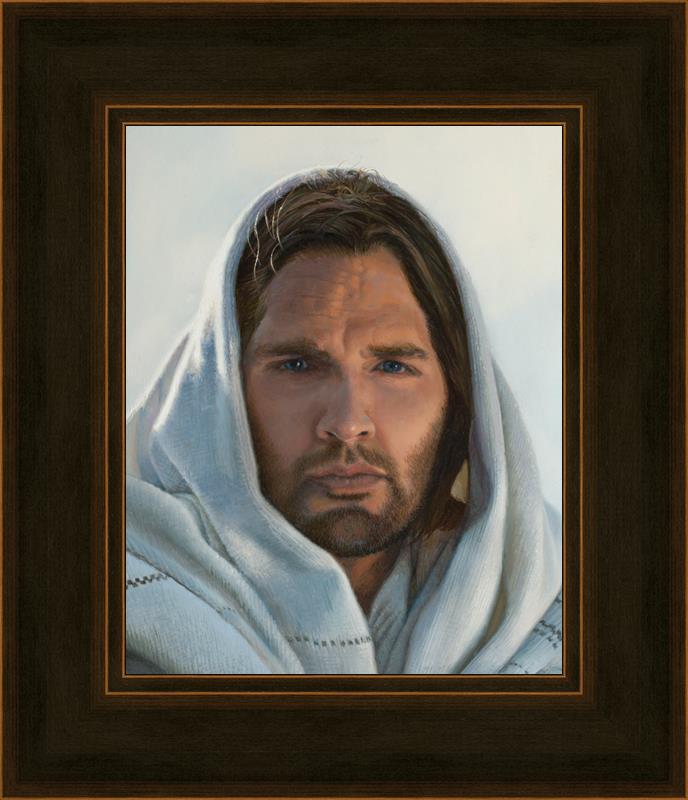
Thanks to Liz Lemon Swindle who is one of my favorite artists. Does the picture below capture the Love of the Savior? Absolutely!
What is truly missing in the world? What have the newsmakers, politicians, students, homemakers, tycoons, children, and overall our entire world and society forgotten?
Jesus Christ!
“This is my church, and I will establish it; and nothing shall overthrow it, save it is the transgression of my people.” Mosiah 27:13
It was the Savior Himself who said, “For thus shall my church be called in the last days, even The Church of Jesus Christ of Latter-day Saints…
“And how be it my church save it be called in my name? For if a church be called in Moses’ name then it be Moses’ church; or if it be called in the name of a man then it be the church of a man; but if it be called in my name then it is my church.”
Thus, the name of the Church is not negotiable. When the Savior clearly states what the name of His Church should be and even precedes His declaration with, “Thus shall my church be called,” He is serious. And if we allow nicknames to be used or adopt or even sponsor those nicknames ourselves, He is offended.” President Russell M Nelson
What is the word missing in today’s world?
Jesus Christ!
In the world today when the politicians and pundits, and broadcasters act like they know God, they use the name, god, not JESUS CHRIST. Why” Because saying god is politically correct becaause god could mean Mohammed, or Buddah, or god as three in the same body, or it could mean simply a belief in something, a higher power, our conscious, or to atheists it could mean no one in particular. Yes in the world today we rarely hear His name, even Jesus Christ. We substitue His name with god and the politically correct think they are doing good to even mention god.
Brothers and sisters, let’s not forget the name Jesus Christ! Let’s use it now more than ever. The only words I substitute for Jesus Christ is “The Lord” or “The Savior” as these names don’t say god to me but say Eloheim and My Father as well as Jesus Christ.
The NAME Which is Given
D&C 18:23 Behold, Jesus Christ is the namewhich is given of the Father, and there is none other name given whereby man can be saved; 24 Wherefore, all men must take upon them the name which is given of the Father, for in that name shall they be called at the last day; 25 Wherefore, if they know not the name by which they are called, they cannot have place in the kingdom of my Father.
Anoynomous Words
This is circulating via email and text. I DO NOT KNOW the author but his/her thoughts are profound.
My great friend Tonya Meldrum sent this to me and said, “I don’t believe in coincidences either…”
“It is officially spring, the sun is beginning to shine, the snow is almost gone, and it is 2020.
200 years exactly since the spring of 1820, when a young man went into the woods to pray. I know so many great people who have been trying to focus on this miraculous event. So many who have been trying to prepare for this upcoming general conference, that it might be unforgettable.
And then, so shortly before this incredible time, many of our lives have been turned on their sides. The world is currently full of fear, and panic.
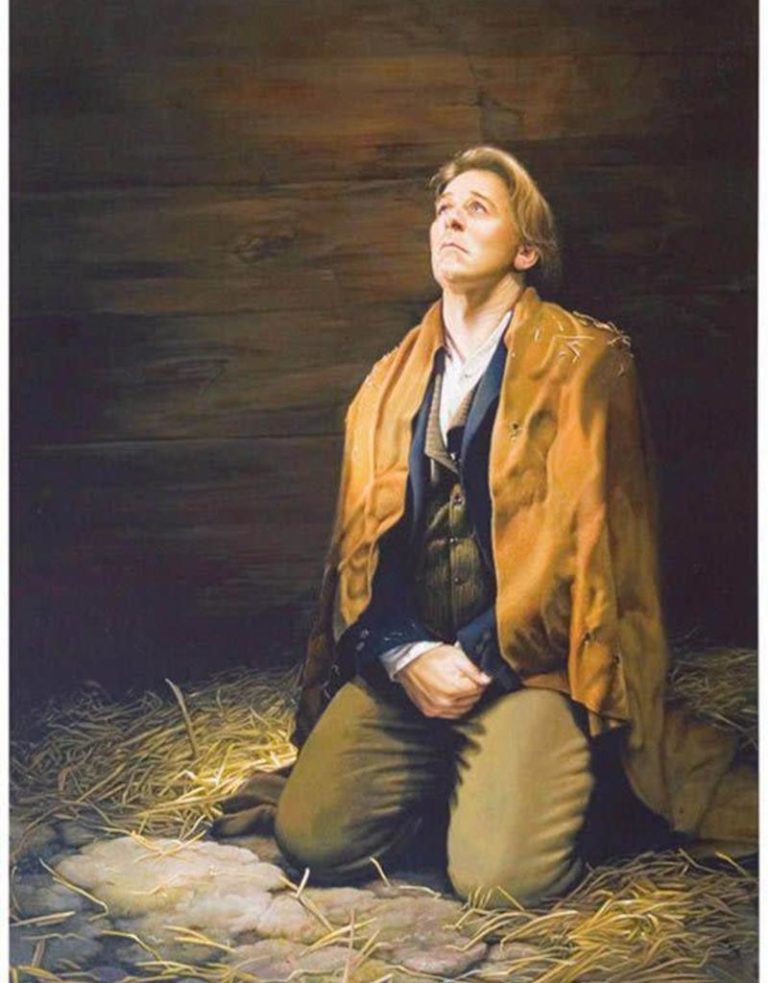
I do not believe this is a coincidence. As Joseph Smith knelt in prayer, what proceeded his wondrous answer? Darkness, fear, and panic. The Lord allowed this, I know without a shadow of a doubt that He did not have to, but He did.
I have often pondered why. I believe it had many purposes. Possibly to show the stark contrast between light and dark. To teach us the reality of that opposition. I also believe it allowed Joseph to prove he was ready to receive such great light.
How did Joseph prove himself? How did he escape? He continued, as he had started, to turn to the Lord “Exerting all his powers to call upon God.”
How do we escape the uncertainty and fear that proceeds this unforgettable conference? Continue, as so many of us started. Turn to the Lord, call upon Him, focus on the light that is coming. That light is always found in “Hearing Him.” Prepare to hear Him in all the words spoken and sung.
As we prepare to celebrate that glorious day where a “pillar of light” delivered this young man, have we forgotten what immediately preceded it? Often, the answer is yes, because it pales in comparison to the glory that followed.
From the Dedicatory Prayer of the Salt Lake Temple, 6 April 1893
In 1893, three years before Utah became a state, the Salt Lake Temple was completed after 40 years of sacrifice-filled construction. As is customary, a dedicatory prayer was offered by Wilford Woodruff, then president of The Church of Jesus Christ of Latter-day Saints.
“Heavenly Father, when Thy people shall not have the opportunity of entering this holy house to offer their supplications unto Thee, and they are oppressed and in trouble, surrounded by difficulties or assailed by temptation and shall turn their faces towards this Thy holy house and ask Thee for deliverance, for help, for Thy power to be extended in their behalf, we beseech Thee, to look down from Thy holy habitation in mercy and tender compassion upon them, and listen to their cries. Or when the children of Thy people, in years to come, shall be separated, through any cause, from this place, and their hearts shall turn in remembrance of Thy promises to this holy Temple, and they shall cry unto Thee from the depths of their affliction and sorrow to extend relief and deliverance to them, we humbly entreat Thee to Turn Thine ear in mercy to them; hearken to their cries, and grant unto them the blessings for which they ask.
Almighty Father, increase within us the powers of that faith delivered to and possessed by Thy Saints. Strengthen us by the memories of the glorious deliverances of the past, by the remembrance of the sacred covenants that Thou hast made with us, so that, when evil overshadows us, when trouble encompasses us, when we pass through the valley of humiliation, we may not falter, may not doubt, but in the strength of Thy Holy name may accomplish all Thy righteous purposes with regard to us, fill the measure of our creation, and triumph gloriously, by Thy grace, over every besetting sin, be redeemed from every evil, and be numbered in the kingdom of heaven amongst those who shall dwell in Thy presence forever.” This was emailed to me by my friend David Hocking. https://www.churchofjesuschrist.org/temples/details/salt-lake-temple/prayer/1893-04-06?lang=eng
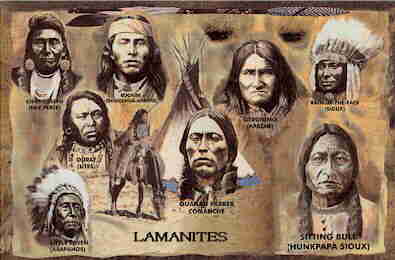
Joseph Smith during his lifetime more than likely knew about many of the Indian Chiefs below, who were from the same vicinity as him. Some lived at the same time as Joseph Smith and he may have also spent time with many of them. I share some unique articles below that you may find interesting in understanding young Joseph and his opportunities to learn from Native Americans.
“Use of Ganargua Creek dates back to pre-colonial times. It was a primary stopover point for the Iroquois on their trade routes. Mormonism founder Joseph Smith also had an interest in the creek after hearing a speech from Seneca Indian Chief Red Jacket at Palmyra in 1822. Before the Erie Canal was constructed in 1817, Ganargua Creek originally met the Canandaigua Outlet in Lyons to form the Clyde River.” https://en.wikipedia.org/wiki/Ganargua_Creek
“The Iroquois Confederacy had been a functioning democracy for centuries by Benjamin Franklin’s day. Sometime between 1000 and 1450, the Cayuga, Mohawk, Oneida, Onondaga, and Seneca Nations came together to become the Iroquois Confederacy, and in the early 18th century they were joined by the Tuscaroras. Referred to as the Six Nations by the English, and the Iroquois by the French, the Confederacy called themselves the Haudenosaunee, or People Building a Long House.” By Cynthia Feathers and Susan Featherswww.upenn.edu/gazette/0107/gaz09.html
“Contrary, then, to widespread assumptions during Joseph Smith’s lifetime that the Onondaga migrated to the New York region, it becomes clear that they originated here as a small, narrowly localized amalgamation of a few villages near Onondaga Lake, during the century before Columbus’ discovery of America” Beauchamp’s Aboriginal Place Names of New York;
“How America Was Discovered is a story told by Handsome Lake (Seneca Prophet), and documented by Arthur C. Parker, about a young minister who meets the one he perceives to be the Lord, who then asks him to go to a new land and bring with him cards, money, a fiddle, whiskey, and blood corruption. In return the young minister will become rich. The young minister sought out Christopher Columbus, and with the help of his crew, traveled to the Americas. They turned back to report what they had seen, which caused an immigration of people from Europe to the Americas. Along with the people came the five things that aided in destroying the natives. The end reveals that the “Lord” in the gold castle was actually the devil, and that even he knew what he had caused was wrong.” Rudes, B. Tuscarora English Dictionary Toronto.
“On the one hand, there are parallels between Handsome Lake’s teachings and Book of Mormon, economic and social interactions between Iroquois and white settlers at the time were still extensive during the early decades of the 19th century, and Lucy Mack Smith wrote that Joseph talked about Indians “as if he had spent his whole life among them.” Lucy Mack Smith, Biographical Sketches of Joseph Smith, the Prophet, and His Progenitors for Many Generations (Liverpool: S.W. Richards, 1853. “Joseph Smith was interested in the people who lived around him. Young Joseph was a member of the juvenile debating club in Palmyra during 1822 when Red Jacket, arguably the most widely-known Seneca of this period, delivered a speech in town. Joseph also liked to hang out on Ganargua Creek (Mud Creek) in the area where Iroquois travelers camped. He had interest and access.” Joseph Smith and the Code of Handsome Lake Lori Taylor, Ph.D.
The Onondaga Nation at the great white pine tree in Syracuse NY on the shores of Onondaga Lake is where the message of peace was planted, and the hatchets were buried according to many researchers. Similarly, the Lamanites , “…buried the weapons of war, for peace.” (“a peacemaker crossed Onondaga Lake in a stone canoe, how he convinced warring nations to bury their weapons beneath a tree of peace.”) Sean Kirst Syracuse.com (Compare Alma 24:19)
“The Onondagas: These have special interest… this warrior, Zelph, was an Onondaga, as well as a “white” Lamanite, and that the Onondagas (of New York), consequently must be of Lamanite lineage.” J.M. Sjodahl, An Introduction to the Study of the Book of Mormon
Red Jacket
INDIAN SPEECH, Delivered before a Gentleman Missionary, from Massachusetts, by a Chief, commonly called by the white people RED JACKET. His Indian name is SAGU-Y A-WHAT-HATH, which being interpreted, is KEEPER-AWAKE.
In the summer of 1805, a number of the principal chiefs and warriors of the Six Nations of Indians, principally Senecas, assembled at Buffaloe Creek, in the State of New-York, at the particular request of a gentleman missionary, (Rev. Mr. Cram,) from the State of Massachusetts. The missionary being furnished with an interpreter, and accompanied by the agent of the United States, for Indian Affairs, met the Indians in council, and had a talk with them; when their Chief delivered the following answer:
Friend & Brother. —It was the will of the Great Spirit that we should meet this day. He orders all things and has given as a fine day for our council. He has taken his garment from before the sun, and caused it to shine with brightness upon us. Our eyes are opened, that we see clearly; our ears are unstopped, that we have been able to hear distinctly the words you have spoken. For all these favors we thank the Great Spirit, and HIM only.
Brother. This council fire was kindled by you. It was at your request that we came together at this time. We have listened with attention to what you have said. You requested us to speak our minds freely. This gives us great joy; for we now consider that we stand upright before you, and can speak what we think. All have heard your voice, and all speak to you as one man. Our minds are agreed.
Brother. You say you want an answer to your talk before you leave this place. It is right you should have one, as you are at a great distance from home, and we do not wish to detain you. But we will first look back a little, and tell you what our fathers have told us, and what we have heard from the white people.
Brother. Listen to what we say. There was a time when our forefathers owned this great island. Their feats extended from the rising to the setting of the sun. The Great Spirit had made it for the use of the Indians. He had created the buffaloe, the deer, and other animals for food. He had made the bear and the beaver. Their skins served us for clothing. He had scattered them over the country, and taught us how to take them. He had caused the earth to produce corn for bread. All this He had done for his red children because he loved them. If we had some disputes about our hunting ground, they were generally settled without the shedding of much blood. But an evil day came upon us. Your fore-fathers crossed the great water and landed upon this island. Their numbers were small. They found friends, not enemies. They told us they had fled from their own country for fear of wicked men, and had come here to enjoy their religion. They asked for a small seat. We took pity on them, we granted their request, and they sat down amongst us. We gave them corn and meat, they gave us poison [alluding, it is supposed to ardent spirits] in return.
The white people had now found our country. Tidings were carried back and more came amongst us. Yet we did not fear them. We took them to be friends. They called us brothers. We believed them, and gave them a larger seat. At length their numbers had greatly increased. They wanted more land; they wanted our country. Our eyes were opened and our minds became uneasy. Wars took place. Indians were hired to fight against Indians, and many of our people were destroyed. They also brought strong liquors amongst us. It was strong and powerful and has slain thousands.
Brother. Our seats were once large and yours were small. You have now become a great people, and we have scarcely a place left to spread our blankets. You have got our country, but are not satisfied; you want to force your religion upon us.
Brother. Continue to listen.
You say you are sent to instruct us how to worship the Great Spirit agreeably to his mind, and, if we do not take hold of the religion which you white people teach, we shall be unhappy hereafter. You say that you are right and we are lost. How do we know this to be true? We understand that your religion is written in a book. If it was intended for us as well as you, why has not the Great Spirit given to us, and not only to us, but to our forefathers, the knowledge of that book, with the means of understanding it rightly? We only know what you tell us about it. How shall we know when to believe, being so often deceived by the white people.
Brother. You say there is but one way to worship and serve the Great Spirit. If there is but one religion, why do you white people differ so much about it? Why not all agreed, as you can all read the book?
Brother. We do not understand these things. We are told that your religion was given to your forefathers, and has been handed down from father to son. We also have a religion, which was given to our forefathers, and has been handed down to us their children. We worship in that way. It teaches us to be thankful for all the favors we receive: to love each other, and to be united. We never quarrel about religion.
Brother. The Great Spirit has made us all, but he has made a great difference between his white and red children. He has given us different complexions and different customs. To you he has given the arts. To these he has not opened our eyes. We know these things to be true. Since he has made so great a difference between us in other things; why may we not conclude that he has given us a different religion according to our understanding? The Great Spirit does right. He knows what is best for his children; we are satisfied.
Brother. We do not wish to destroy your religion, or take it from you. We only want to enjoy our own.
Brother. We are told that you have been preaching to the white people in this place. These people are our neighbors. We will wait a little while and see what effect your preaching has upon them. If we find it does them good, makes them honest and less disposed to cheat Indians; we will then consider again what you have said.
Brother. You have now heard our answer to your talk, and this is all we have to say at present. As we are going to part, we will come and take you by the hand, and hope the Great Spirit will protect you on your journey, and return you safe to your friends.
As the Indians began to approach the missionary, he rose hastily from his seat and replied, that he could not take them by the hand, that there was no fellowship between the religion of God and the works of the devil.
It being afterwards suggested to the missionary that his reply to the Indians were rather indiscreet; he observed, that he supposed the ceremony of shaking hands would be received by them as a token that he assented to what they had said. Being otherwise informed, he said he was sorry for the expression.
NATHANIEL COVERLY, Printer, Milk St. Boston.
Early Mormon Lamanism, Forgotten Apocalyptic Visions, and the Indian Prophet
The year 1890 looms large in American history. It ranks up there with 1776, 1877, and 1945 as important dates that historians have used to organize our past. It also shapes collective memory. Mormons most readily associate 1890 with the Woodruff Manifesto and the ?official? end of polygamy. For Americans, and westerners more specifically, 1890 represents the end of the Frontier, the most American part of our history, to paraphrase Frederick Jackson Turner. According to C. Vann Woodward, the 1890s marked the hardening of segregation in the South.
1890 also marked the date of the last significant massacre of between 150 and 300 Oglala Lakota Indians (Sioux) at Wounded Knee, South Dakota. As the last major altercation between a Native group and the U.S. military, Wounded Knee has taken on great significance in Western and Native histories, marking the symbolic date of the last time that Native peoples had the potential to rise up militarily to define their own destinies. As Philip Deloria has noted, ?Some people?especially white Americans?dated the end of the old days to 1890, when U.S. soldiers had surrounded and slaughtered Big Foot’s band at Wounded Knee Creek. . . . Wounded Knee seemed to mark a. . .division across time. It split old days apart from new days (even as memory and shared culture stitched them together again).?[1] For white America,
Wounded Knee marked the end of the ?Indian Wars? of the late nineteenth-century, the last of the ?heroic yet doomed? military struggles over the fate of the continent. Wounded Knee also had significant consequences for what might be called ?Lamanism,? or the cultural production of Lamanites among white Latter-day Saints. As John-Charles Duffy suggests, the massacre ended ?armed resistance to the U.S. government. . . .[and] Indians’ submission to the reservation system dulled apocalyptic expectations about Lamanites violently reclaiming their promised land.?[2] In truth, it is doubtful that most white Mormons today, or even most Mormon historians for that matter, recognize the full significance of Lamanites/Native Americans in early Mormon history.[3] When The Book of Mormon appeared in 1830, it was a radical document, one that envisioned the eradication of much of white America by Native Americans and the absorption of a small group of converted Gentiles into the chosen remnant of Jacob (see especially 3 Nephi 21). Much of Joseph Smith’s Zion project centered around the promise of the large-scale conversion of Lamanites and rumors circulated from the 1830s through the 1890s of a white Mormon/Native American alliance that would wipe out white America. Parley P. Pratt, in his highly influential Voice of Warning, addressed Native America in saying that the very places of their [that is, white Americans] dwellings will become desolate except such of them as are gathered and numbered with you; and you will exist in peace, upon the face of this land, from generation to generation. And your children will only know, that the Gentiles once conquered this country, and became a great nation here, as they read it in history; as a thing long since passed away, and remembrance of it almost gone from the earth.[4]
Perhaps due to the rampant rumors of the white Mormon-Native alliance, Pratt deleted this passage from subsequent editions. Ironically, with the possibility of such Indian violence existing only in memory or distant millennialism after 1890, it has been white Mormons who have largely forgotten the violent Lamanism of the early church.
White Mormons have also forgotten that some early Saints looked for the Lord to raise up a great Indian prophet. In late 1830, Ohio newspaperman Eber D. Howe noted that Oliver Cowdery and his companions continued ?on their mission to the Indians (or Lamanites, as they term them) in the ‘far west,’ where they say a Prophet is to be raised up, in whom the tribes will believe.?[5] This is intriguing. Unfortunately, surviving evidence has not been located to flesh out what else Cowdery, JS, or others thought of this Indian prophet. However, when Orson Pratt prepared annotations for the 1879 edition of the Book of Mormon, his footnote for 2 Nephi 3:24, And there shall rise up one mighty among them, who shall do much good, both in word and deed, being an instrument in the hands of God, with exeeding faith, to work mighty wonders, and do that which is great in the sight of God, unto the bringing to pass much restoration unto the house of Israel, and unto the seed of thy brethren.
Pratt noted that the one to be risen up would be ?an Indian prophet.?[6] Howe’s use of the phrase ?to be raised up? suggests that Cowdery and others had this verse in mind when talking about this Indian prophet, although without more evidence, we can’t know for certain.
The missionaries visited the Wyandots (Hurons), the Delawares, the Catteraugus (Seneca Iroquois), and the Shawnees during this first Lamanite mission. While we do not know for sure why these groups were chosen for proselyting, Lori Taylor has noted that each of these Native nations claimed prophetic traditions. The Hurons spoke of Deganawidah, the Master of Things and the Peacemaker, a Huron prophet who taught the Iroquois Confederacy a new social order of cooperation. The Delawares followed Neolin, a prophet who encouraged his people to reject European ways in favor of the old ways, in order to gain favor with the Great Spirit. Neolin was associated with Pontiac and his war in 1763-1764. The Iroquois believed in Handsome Lake, a prophet who received heavenly visitations in 1799-1800 from four visitors who encouraged him and his people to embrace traditional practices and to observe the ceremonial cycle. He encouraged his people to give up alcohol, witchcraft, and other vices. And lastly, the Shawnees followed Tenskwatawa, brother of the famous Tecumseh, who taught that the Shawnee needed to reject white ways in order to push back white settlement. Tenskwatawa learned from Handsome Lake and taught some things that appears to be influenced by Christianity. Although it is unclear how much the early Mormons knew about these prophets or the Native peoples who claimed them, Taylor’s speculation that the missionaries proselyted the Wyandots, Delawares, Catteraugus, and Shawnees for this reason remains intriguing. Equally fascinating is Taylor’s analysis of a story told by some contemporary Iroquois that JS knew about Handsome Lake’s teachings (who was active in western New York until his death in 1815) and that the Book of Mormon was shaped by Handsome Lake’s ideas.[7] Whether there is any truth to such accounts awaits further investigation by ethnohistorians, but one thing is certain, the Book of Mormon and early white Mormon interpretations of it had more in common with the apocalyptic visions of Neolin, Tenskwatawa, and other Native prophets than with the views of most other white Americans of the nineteenth century.
_______
[1] Deloria, Indians in Unexpected Places, 15-16.
[2] Duffy, ?The Use of ‘Lamanite’ in Official LDS Discourse,? Journal of Mormon History 34, no. 1 (Winter 2008): 131.
[3] Walker, “?Seeking the ‘Remnant’: The Native American during the Joseph Smith Period,? Journal of Mormon History 19, no. 1 (1993): 1-33. Walker argues that historians have largely failed to recognize the centrality of Native Americans in early Mormonism. Mormon historians are not alone in marginalizing the importance of Native Americans when writing about nineteenth-century America. See Susan Scheckel’s The Insistence of the Indian: Race and Nationalism in Nineteenth-Century American Culture for a discussion of the centrality of Natives in nineteenth-century America and the tendency of twentieth-century historians to emphasize slavery as the central race question of the century. Much of the new New Indian History of the last two decades has recovered the power and agency of Native peoples in early American history. See Richard White, The Middle Ground, Alan Taylor, The Divided Ground, Ned Blackhawk, Violence Over the Land, and Pekka Hamalainan, The Comanche Empire, for some of the best examples of this new literature.
[4] As quoted in Underwood, The Millenarian World of Early Mormonism, 80.
[5] ?The Book of Mormon,? The Painesville Telegraph, 30 November 1830, 3.
[6] Thanks to Robin Jensen, the 2004 Joseph Smith Papers Student Researcher of the Year, for checking the reference for me.
[7] Taylor, ?Telling Stories About Mormons and Indians,? PhD. Diss, State University of New York at Buffalo, 2000, 141-60, 306-51. Taylor notes that Handsome Lake’s nephew, Red Jacket, spoke in Palmyra in 1822. Native Americans and early Mormonism. Juvenile Instructor
Joseph Smith and the Code of Handsome Lake by Lori Taylor, Ph.D.
Lori Taylor has three degrees in American Studies: Ph.D. from the SUNY at Buffalo, M.A. from The George Washington University, and B.A. from Brigham Young University. Through all of those degrees, she chased down the ways people frame and reframe the cultural and historical tidbits from which they make deep meaning. The joy in historiography for Lori is the story that makes THEN interesting NOW.
In 1994, sitting in a Western-themed lodge in Billings, Montana, a friend and colleague told me a story that I spent the next several years hunting down. I’m trained as a folklorist and oral historian, so the play of story, memory, and forgetting influence my understanding of histories. Whether the concept of “truth” plays any part in an exploration of this story, I’m not so sure. If the concept of “fact” is slippery for historians, “truth” is even more so.
“You’re a Mormon?” Nicholas said to me. “Oh, boy, do I have a good story to tell you.”
He spent more than an hour telling me about a sundance at Turtle Mountain in 1987 when dancers were talking as they prepared for the dance. It was here that he first heard the story he told me.
“Hey, you guys ever hear the story of how the Mormons came to be?” Wabanimkee had asked Nicholas and the other dancers. “The real story?”[1]
He told them about hard times in western New York after the War of 1812. The Senecas’ transition from their pre-white-settlement lives to the new reality after two generations was not going well. Iroquois have long been farmers, but crops had failed during the year of no summer in 1816. The local Indian agent wrote, “The situation of the Indians is truly deplorable.”[2]
During this period of transition and difficulty, the story goes, a young Joseph Smith worked as a field hand. He met Seneca field hands who were not like the other Senecas who were “into alcohol and debauchery and stuff.” He asked them why they were “so solid, so stable, so strong. And they say, well, they were followers of Handsome Lake.” Who was Handsome Lake? They told him.
Handsome Lake spent the last 15 years of his life, from 1800 to 1815, encouraging his people to turn away from alcohol, gambling, promiscuity, witchcraft, and the worst excesses that came with the settlers. He asked them to follow a code and a ceremonial cycle that maintained their Haudenosaunee identity while also embracing elements white Christian values. He preached of the need to adjust in order to survive. It wasn’t until 1826 that the women Faithkeepers of Tonawanda asked Handsome Lake’s grandson to recall the words of the teacher.[3] From these recollections, they created the Code of Handsome Lake, which has since evolved into the Gaiwiio (Good Word), the syncretic American religion practiced today as the longhouse religion of the Haudenosaunee. For most Iroquois, Handsome Lake is a prophet.
The Seneca field hands told Joseph Smith that Handsome Lake “found a way of blending” the best of Iroquois traditions and the best of Christian traditions “because his vision told him that they only way his people were going to survive is if they held on to the root, the main root of who they were throughout time that gave them a sense of identity and strength and consistency of heritage.” They had to incorporate the new into the old “in order for them to get along in this new society that was forming.”
Hearing the story of mixing two world views into a New World view, Joseph Smith said, “this is just what the white people need because they’re just as pitiful as the Indians are. And, because it’s a new world for everybody, what the white people need to do is to take the best of their Christian heritage and traditions and stuff that come out of their European ways and mix it with the indigenous ways of the people who have lived on this land for a long time.”
“And, so what he decided, what was really needed was an equivalent of Handsome Lake’s Gaiwiio, but for the white people, maybe with a little more Christian emphasis.”
What about all of the books and gold, the dancers asked the storyteller. The Senecas helped Joseph Smith, he said. “We’ll be better, us Indians will be better off if you white people do just like we did to get along here in this new world. We’ll be better off if you folks can understand us a little bit more by taking in some of our world view, too. So, we will help you. We will help you bring this new word. We will help you bring the Word to your own people.”
The teller of the story goes on to outline melting of the gold paid Tonawanda Senecas by the British for their help during the War of 1812 into tablets like Moses’ commandments, a story that bears no resemblance to reports of thin, brass plates found in construction of the Erie Canal during that generation. They told their stories in their own writing, taught him how to read it, then told him how he would make the discovery of his golden book a media event.
The story ends, and the sundance went on. Nicholas told me the story, and he told a few others, just as Wabanimkee had told a few others before.
In the years I spent asking whether such events could be possible let alone plausible—years I spent in graduate school in western New York with Haudenosaunee teachers, students, and friends—I heard a few much shorter versions of the story.
Among the questions I asked during my research was, what other comparisons have been made by those familiar with both the Iroquois longhouse and Mormonism? Edmund Wilson, on a tour of the Six Nations for the New Yorker in the 1950s, visited Philip Cook, Mohawk of Akwesasne. Cook was a convert to the LDS church. He told Wilson that he wondered whether Joseph Smith might have been influenced by Handsome Lake through Senecas in western New York, but “he concluded that no white man at the time could ever have had access to their ceremonies or understood what was said if he had.”[4]
Tracing the lines of acquaintances of all the people I know who know this story (at least, those who told me they know this story),[5] I find that one man knew them all or knew who told them. In another of Edmund Wilson’s articles for the New Yorker, he wrote of Wallace “Mad Bear” Anderson, in 1958 a dynamic man of 31 years old. Mad Bear become one of those elders who for young people in the 1960s and 1970s imparted Indian wisdom and stories. He also, in his extensive travels, made connections with indigenous peoples around the world and worked to bring them together. He spread Iroquois stories and his contemporary interpretations far and wide as a merchant seaman then as a travelling elder.
Mad Bear Anderson is the trickster figure in the story of Handsome Lake followers and Joseph Smith—possibly a source, possibly just a very strong teller of the tale.
Could these events have happened?
On the one hand, there are parallels between Handsome Lake’s teachings and Book of Mormon, economic and social interactions between Iroquois and white settlers at the time were still extensive during the early decades of the 19th century, and Lucy Mack Smith wrote that Joseph talked about Indians “as if he had spent his whole life among them.”[6] Joseph Smith was interested in the people who lived around him. Young Joseph was a member of the juvenile debating club in Palmyra during 1822 when Red Jacket, arguably the most widely-known Seneca of this period, delivered a speech in town. Joseph also liked to hang out on Ganargua Creek (Mud Creek) in the area where Iroquois travelers camped. He had interest and access.
On the other hand, melting down gold for thick tablets seems unlikely for quite a few reasons, including economic reality and cultural skill sets, and a coordinated cross-cultural media event is more of our day than of the 19th century. Even if such an event as described in the story actually happened in time, it is unlikely there would be any historically useful trace beyond memory through story.
Is the story possible? Sure. Is it plausible? Probably not, at least not in the specifics. After 200 years, a story can stretch to meet a lot of different needs. I’ve frequently heard people say after hearing the story, “I always wondered about that.” This story makes connections between peoples, connecting a few dots of curiosity. That may be the need it meets. Then again, it may bring up more questions than it claims to answer as it sparks an interest in what happened hundreds of years ago between early Mormons and their Haudenosaunee neighbors.
A generation ago, after scholars went through New York, turned it upside down and shook it out, someone asked if there is “anything new to be found in the history of the Church in New York.”[7]
Scholars have looked for influences on Mormonism in Puritan roots, evangelical revivals, hermetic traditions, folk magic, and in various social movements. Given the fact that Joseph Smith lived in Iroquoia—New York, Ontario, and beyond—we can include those historical sources for another potential area of influence. There is plenty “anything new” in Mormon history where it meets the parallel space of Indian Country. I’m confident more areas of influence will be added to the list in time as well.
Of course there is an endless new history to be written. We look in different places. We find different traces of the past. We ask different questions as we ourselves change. And, we rewrite histories we thought we knew when they no longer answer the questions we ask about our past. If history weren’t so fluid, there wouldn’t be much point in our discussing it here.
NOTES
The story and the questions come from my PhD dissertation, Telling Stories about Mormons and Indians (State University of New York at Buffalo, 2000).
[1] Nicholas C. P. Vrooman, “Handsome Lake, Joseph Smith, and the Word,” recorded 7 November 1994. For clarity, I’ve made my paraphrase and quotation of the story italics.
[2] Erastus Granger to Acting Secretary of War, George Graham, 20 January 1817. In Charles M. Snyder, ed., Red and White on the New York Frontier: A Struggle for Survival. Insights from the Papers of Erastus Granger, Indian Agent, 1807-1819 (Harrison, New York: Harbor Hill Books, 1978): 85.
[3] Elisabeth Tooker, “Iroquois Since 1820,” in Handbook of North American Indians, Volume 15, Northeast, ed. Bruce G. Trigger (Washington, D.C.: Smithsonian Institution, 1978): 452. There were others who contributed to the codification of the teachings of Handsome Lake as well.
[4] The New Yorker articles were published as Edmund Wilson, Apologies to the Iroquois (1959, 1960; Syracuse: Syracuse University Press, 1991): 123.
[5] Even as a colleague read over this post before I sent it, he said, “Now I understand better what my grandfather said to me about Seneca gold.” People I’ve known for years sometimes come up with pieces around the edges of this story.
[6] Lucy Mack Smith, Biographical Sketches of Joseph Smith, the Prophet, and His Progenitors for Many Generations (Liverpool: S.W. Richards, 1853): 85. If she told her stories in chronological order, the dates of these recitals would be 1823 or 1824.
[7] Chad Flake, review of The Restoration Movement: Essays in Mormon History, eds. F. Mark McKiernan, Alma R. Blair, Paul M. Edwards, BYU Studies 15/3 (Spring 1975): 373.
New theory connects a Native American prophet with Joseph Smith and the Book of Mormon by Jana Riess on Religion News Service
“Peter Manseau published a wonderfully engaging book on American religious history. One Nation, Under Gods is chock-full of “Aha!” moments, but for purposes of this blog I wanted to talk with Peter about his chapter on early Mormonism’s interplay with Native Americans.
In particular, I was intrigued by a theory about the origins of the Book of Mormon that I had not heard before. (As you can read below, Peter is eager to point out that he was not the first to make a connection between Joseph Smith and the Seneca prophet Handsome Lake, but it was certainly new to me.) — JKR
RNS: First off, you say in the book that Joseph Smith “came to look upon Native Americans not merely as an evangelical challenge but as a key to understanding the Christian scriptures . . . . Why did Smith alone see the New World as a missing piece in the story the Old World told about itself?” Great question. What do you think?
Peter Manseau: The biggest theological problem Europeans faced when they arrived in America was what to do with Native Americans, whose existence suggested God created a population that didn’t fit into their biblical worldview. This prompted questions: “Do they have souls?”, “Are they of the devil?” For Joseph Smith, it was “Are these people mentioned in the Bible after all?” If they were, it solved a theological puzzle.
RNS: So you see Joseph Smith as being interested in the Hebraic origins of Native Americans. What is the connection with Handsome Lake?
Manseau: Handsome Lake was of the Seneca people, the brother of a chief called Cornplanter, who became known in the late 18th century as someone who had welcomed the Quakers in his village. Handsome Lake meanwhile was known as a ne’er-do-well and a drunk. One winter, he became sick and it seemed like he was going to die. While he lay dying, he had a vision of several figures who came to him and told him to reform his life. They instructed him to write down the visions as a message that came to be known as the Code of Handsome Lake.
Handsome Lake’s vision blended Native American and Quaker religious ideas. It really took hold among the Seneca, the Iroquois. He became quite well known for it.
Handsome Lake’s revival might be considered the Native American outgrowth of the Second Great Awakening that began in the region. This of course is where we find Joseph Smith as well, who grows up very much interested in Native American culture and the lore that existed all around him. He, too, was interested in the general question: what do you do religiously with Native Americans as a people not accounted for in the original revelation? Whether through revelation or imagination, he proposed an alternate story that accounts for them.
What scholars now are beginning to do is investigate how Joseph Smith was influenced by Native American culture, and specifically by a movement such as Handsome Lake’s.
RNS: Interesting. You note in the book that Handsome Lake’s nephew lectured in Palmyra just one month before Smith claimed to have found the golden plates.
Manseau: Handsome Lake’s nephew was another Iroquois leader named Red Jacket. He presented his ideas — not quite the Code of Handsome Lake, but something similar — when he was in Palmyra lecturing very shortly before Joseph Smith claimed to have discovered this new scripture that incorporated Native Americans into biblical history.
RNS: Did Joseph attend that lecture?
Manseau: It’s likely. It seems that given who he was at the time — a teenage boy very interested in Native Americans — the arrival of this renowned chief would have been a big deal. It was publicized in the Palmyra Gazette and other newspapers.
RNS: How did you first learn about this connection?
Manseau: I came across an unpublished dissertation by Lori Taylor, who wrote about the idea of Handsome Lake having potential influence on Joseph Smith. I had seen it referenced on Juvenile Instructor.
RNS: Bottom line: Was Joseph Smith influenced by Handsome Lake, even indirectly, in writing the Book of Mormon?
Manseau: Maybe. But the other side of the coin that apologetics would offer is that the Book of Mormon, being an ancient text, had influenced Native Americans from generation to generation so that there was already a remnant of Book of Mormon truth in Seneca culture. Then it becomes a question of in which direction influence might have moved.” Jana Riess
When serving as Mission President to the Seminole Indians in Central Florida, Murray J. Rawson was teaching a group of the tribe about the Book of Mormon when he was interrupted by their Chief, saying: “We had a war long ago with a light skinned people around the Great Lakes. We conquered them but we had so much respect for their warrior chief that we buried him at the mouth of the Oswego River that is in New York State. We don’t discuss this very much because it is an embarrassment to us. President Rawson then asked why this is an embarrassment, and the Chief replied, “ Our history is written on metal plates and buried in a hill in New York, but we don’t know which hill!” (Talk given to missionaries in training at the MTC, Provo, Utah 1979, by President Murray J. Rawson).
“In 1837, Elder Parley P. Pratt, one of the early defenders of the church, wrote a work entitled, “A Voice of Warning,” which has been published in many different editions in Europe and America. In the edition of 1885, published at Lamoni, Iowa, page 82, there is a quotation from Mr. Boudinot, which reads as follows: Mr. Boudinot in his able work, remarks concerning their language: “Their language in its roots, idiom, and particular construction, appears to have the whole genius of the Hebrew; and what is very remarkable, and well worthy of serious attention, has most of the peculiarities of the language, especially those in which it differs from most other languages. There is a tradition related by an aged Indian of the Stockbridge Tribe, that their fathers were once in possession of a ‘Sacred Book’ which was handed down from generation to generation, and at last hid in the earth, since which time they have been under the feet of their enemies. But those oracles were to be restored to them again, and then they would triumph over their enemies and regain their. ancient country, together with their rights and privileges.” JOURNAL OF HISTORY APRIL, 1909 Published by Reorganized Church of Jesus Christ of Latter-day Saints.
(Above) In 1844 A.D. a newspaper called the “Prophet” published to the world in 1844 this broadside page declared that the Stick of Joseph had been translated and published into English for the first time. Notice the quote at the bottom from the aged Indian.
Noah3 lays tax of fifth part of people’s ziff, Mosiah 11:3.
Noah3 ornaments buildings with ziff, Mosiah 11:8. LDS Topical Guide
ZIFF. A metal, kind unknown, used by the artificers of king Noah in the land of Lehi-Nephi (Mosiah, 11:3, 8), The word ziff means, in the Hebrew, brightness—metallic brightness. (The word is used in Daniel, 2:31, also in Isaiah, 30:22, where it means overlaying metal.) Wikisource
The Story of the Book of Mormon by George Reynolds
“There are but few Nephite words handed down to us in the Book of Mormon, as wherever an English equivalent could be found, it has been given by the Prophet in his inspired translation. Those words are:
Neas and Sheum—Kinds of grain. Ziff—A metal. Rameumptom—A holy stand. Gazelem—A name given to a servant of God. Liahona—A director or compass. Rabbanah—A title, meaning powerful king.
It has been wisely said, It is very evident that pure words of either the Hebrew or Egyptian tongues could hardly be expected in the Book of Mormon, for the reason that the Nephites had altered the Hebrew, and their language was so completely changed, that their speech could not be understood by other races. But although the structure of their language had thus changed, it does not follow that all the words had been replaced by others entirely unlike the former language spoken and written by them. It is logical to expect many remnants of the ancient roots, which, however much changed, may retain so much of their original types as to be capable of identification. Thus, in the word Ziff, which the Prophet Joseph tells us was a metal, we find a word of the same sound as the Hebrew word ziph or zeph, which means a metal. The metal laid over statues was so called. It is true that the word ziff is not spelled the same, but in its orthography is like the name of the Hebrew month, Ziff. But the word ziff means brightness—metallic brightness. (The word is used in Daniel ii., 31, also in Isaiah xxx., 22, where it means overlaying metal.)” The Story of the Book of Mormon by George Reynolds SLC 1888 page 372-373
Bluish-silver zinc is a workhorse element, crucial to life and important in many industrial processes that often go unseen.
This metal is positioned on the Periodic Table of the Elements with the atomic number of 30, and was used by Greeks and Romans in ancient times, according to the Royal Society of Chemistry. But zinc was not as popular as copper or iron, according to a 2006 paper in the open-access journal Ancient Asia; it boils away at a lower temperature than is required to extract it from its ore, so ancient smelting techniques were not up to the task of isolating zinc.
Nevertheless, archaeologists have found a handful of zinc artifacts, including a sheet of zinc from Athens that dates back to 300 B.C. Today, the metal is used mostly as coating for steel and iron to prevent rusting, a process called galvanization. Incredibly, galvanization dates back centuries — The Royal Armouries of Great Britain include a collection of armor from India made in the 1680s which was galvanized by dipping in molten zinc. source:
Alloys Ancient use
Large black bowl-shaped bucket on a stand. The bucket has incrustation around its top. Late Roman brass bucket – the Hemmoorer Eimer from Warstade, Germany, second to third century AD Various isolated examples of the use of impure zinc in ancient times have been discovered. Zinc ores were used to make the zinc–copper alloy brass thousands of years prior to the discovery of zinc as a separate element. Judean brass from the 14th to 10th centuries BC contains 23% zinc.
Knowledge of how to produce brass spread to Ancient Greece by the 7th century BC, but few varieties were made. Ornaments made of alloys containing 80–90% zinc, with lead, iron, antimony, and other metals making up the remainder, have been found that are 2,500 years old. A possibly prehistoric statuette containing 87.5% zinc was found in a Dacian archaeological site.
The oldest known pills were made of the zinc carbonates hydrozincite and smithsonite. The pills were used for sore eyes and were found aboard the Roman ship Relitto del Pozzino, wrecked in 140 BC.
The manufacture of brass was known to the Romans by about 30 BC. They made brass by heating powdered calamine (zinc silicate or carbonate), charcoal and copper together in a crucible. The resulting calamine brass was then either cast or hammered into shape for use in weaponry. Some coins struck by Romans in the Christian era are made of what is probably calamine brass…
Strabo writing in the 1st century BC (but quoting a now lost work of the 4th century BC historian Theopompus) mentions “drops of false silver” which when mixed with copper make brass. This may refer to small quantities of zinc that is a by-product of smelting sulfide ores. Zinc in such remnants in smelting ovens was usually discarded as it was thought to be worthless.
A widely used zinc alloy is brass, in which copper is alloyed with anywhere from 3% to 45% zinc, depending upon the type of brass.Brass is generally more ductile and stronger than copper, and has superior corrosion resistance. These properties make it useful in communication equipment, hardware, musical instruments, and water valves. Wikipedia
Etymology
Given that ZIFF is mentioned twice in the Book of Mormon, once in the middle of a list of metals that were taxed, “a fifth part of their gold and of their silver, and a fifth part of their ziff, and of their copper, and of their brass and their iron” (Mosiah 11:3), and the second time in a list “of all manner of precious things, of gold, and of silver, and of iron, and of brass, and of ziff, and of copper,” it is likely that ZIFF is a precious or semiprecious metal.
The fact that this Lehite word is not translated but rather transliterated, probably indicates that Joseph Smith did not have an English word for it. Two metals that are natively found in the Americas with which the Prophet might not have been acquainted are platinum and the gold alloy tumbaga.[1]
The biblical GN Ziph in Joshua 15:24 and the PNs in 1 Chronicles 4:16 and 2:42 (King James Bible has Ziph for both the GN and the PN name; the masoretic text has zîp for both)[2] would seem to offer the closest analog to Book of Mormon ZIFF. However, no etymology is given for either the GN or the PN.
If ZIFF were shiny, like many metals, it would be tempting to equate ZIFF with the HEBREW vocable ziw, “glow, complexion.”[3] It is possible that this is the source of the HEBREW month name Zif (King James Bible 1 Kings 6:1 for the HEBREW ziw), meaning, the month of blooming. It is probably related to Akkadian zīmu, “appearance, luster, glow.” As tempting as this suggestion might be, it is not without its difficulties. Book of Mormon clearly ends in a consonant, /f/, and none of the Semitic cognates of HEBREW ziw end in a consonant, except possibly Punic zyb. Furthermore, none of the translations of the 1 Kings 6:1 transliterate the HEBREW ziv with a final /f/ or a /p/, until the Matthew Bible, Zif, the Geneva Bible, Zif, and then the King James.[4]
Less likely is that Book of Mormon ZIFF may be something other than a metal, in which case we should consider the possibility of HEBREW zepet, “pitch, bitumen, asphalt” (Exodus 2:3; Isaiah 34:9), which appears also in Samaritan (zefet) (Rosenthal, Aramaic Handbook II/2, 4) and in Arabic as dift. Cf. EGYPTIAN sft, name of one of the seven oils, Demotic syf/sfy, resin of coniferous trees, and Coptic sife, “tar” (JAT). https://bookofmormonevidence.org/wp-content//index.php/ZIFF
Inside mine looking at copper, zinc, quartz
Middle and east Tennessee districts
In middle and east Tennessee, six mines produced zinc from Mississippi Valley-type deposits. The mines were: the Coy, Immel, and Young mines in east Tennessee, and the Gordonsville, Elmwood, and Cumberland mines in middle Tennessee.
Smelting
Primary smelters produce metal from ore. The only American primary zinc smelter, the Nyrstar smelter at Clarksville, Tennessee, produced 115 metric tons of zinc, from a mix of ore from six mines in middle and east Tennessee, and recycled zinc products.
Secondary zinc smelters produce zinc from recycled materials. A secondary zinc smelter in Pennsylvania closed in 2014, the operations being shifted to a new smelter in North Carolina using solvent extraction/electrowinning (SX/EW). In addition, some non-smelting zinc recycling operations produced small amounts of zinc. The total amount of zinc produced from secondary operations was 70 tons. For primary and secondary smelters taken together, recycled products accounted for 52 percent of the refined zinc produced in US in 2014.[3]
Through 1940, the production of primary zinc by US smelters approximated the mined production of zinc ore. When zinc demand increased during World War II, US smelters turned to foreign zinc ore. US-smelted zinc reached a high of 926,000 metric tons in 1970, then dropped as smelters closed. There were 12 primary zinc smelters in 1970, but only 7 in 1980, 3 in 1990, and two in 2000. Today, there is only one operating primary zinc smelter, in Clarksville, Tennessee, which produces zinc from mines in the East Tennessee and Middle Tennessee districts. All other zinc ore is exported, and smelted abroad.
Summary: It seems the word Ziff only existed since the year 1746, just after Joseph Smith used the word in translation. However the metal that was used to galvanized copper and steel was in use anciently under another name, possibly Zinc as we see above. In Hebrew, the word zîw means “splendor” or “brightness” which very well could be Zinc.
March 26. Same date, 10 years apart. Could that be significant? March 26, 1820 First Vision March 26, 1830 Book of Mormon first sold (See at the bottom of the blog)
Dr. John C. Lefgren lives in Pennsylvania and owns his own business. He has a PhD in economics, served as a Foreign Service Officer with the US Department of State and was an officer with a major bank in New York. In 1980 his book April Sixth was published by Deseret Book. Since his youth he has had an active interest in Church History. He has developed a property in Vermont near the Joseph Smith Birthplace Memorial and has a business producing maple syrup. (It’s called “Land of Joseph” syrup, available in Utah grocery stores)
In his book from 1980, “April Sixth”, John Lefgren said that “On Tuesday, April 6, 1830, The Church of Jesus Christ of Latter-day Saints was organized according to the commandment of the Lord. Why was that date chosen? What was special about the sixth of April?
“For the last century and a half,” the author wrote, “Latter-day Saints have continued to believe that the timing of the restoration of the Church of Christ has an association with the birth of Christ.” April Sixth shows justification for this belief as it links three historic events: the birth of Christ, the death and resurrection of Christ, and the nineteenth-century restoration of the Church of Christ. His friend Dr. John P. Pratt said the following about the book. “Lefgren states that his intent is “to show how the modern revelation concerning the significance of April 6th is in perfect harmony with other sacred writings” (p. 12). That is, he proposes that the belief that Jesus was born on 6 April 1 B.C. is consistent with all LDS scripture, but not necessarily with all secular sources. (All dates refer to our Gregorian calendar.) The reviewers claim that Lefgren also believes the “resurrection of Jesus fell on April sixth. He does not; his date for the Resurrection is 3 April A.D. 33 (p. 61).”
Purchase Dr Lefgren’s book here
Thirty-eight years after the publication of his first book, Dr. Lefgren again looks to the Mosaic Law for the ordering of days and how this calendar connects to the birth of Christ as synchronized by the world’s largest geometric clock. He examines the very minute for the numeric harmony of the sign for the birth of Christ — a sign which ancient people witnessed in the Heartland of America. The identification of this moment is found in a time line from more than 2000 years ago and relies on 6 primary sources: (1) the exact movements of the earth around its axis; (2) the exact movements of the earth around the sun; (3) the exact movements of the moon around the earth; (4) the exact physical alignment of 3,000 acres of ancient earthworks in Newark, Ohio; (5) the exact 5-year prophecy of the coming of Christ by Samuel, the Lamanite; and (6) the exact eyewitness testimony of the fulfillment of the prophecy by Nephi, the Son of Nephi. All these sources point to the same moment in time and place.
At the FIRM Foundation Conference in April, 2018 in Layton, Utah, Lefgren spoke about his new book which is entitled “The Sign Before the Birth of Jesus Christ; As Witnessed in Newark, Ohio, 6:29 P.M., Tuesday April 6th, 1 B.C.; The 5-Year Prophecy of Samuel, the Lamanite; The Sun and the Moon Keeping Ancient Time at the Newark Earthworks.” He has an amazing story of why he feels the Book of Mormon events happened in the United States, which I will share with you at a later date.
Oh, How Lovely Was the Morning: Sun 26 Mar 1820? By John C. Lefgren
First Vision by Ken Corbett
Two researchers working independently have come up with evidence pointing toward a date for the First Vision. Detailed weather reports coupled with maple sugar production cycles point to the compelling possibility.
[Editor’s Note: John P. Pratt, who proposed the Sun 26 Mar 1820 date for the First Vision based on evidence from the Enoch calendar, was not aware of these results for either the March weather of 1820, nor that maple sugar production might be a factor in determining the date. In fact, Pratt’s article had already been reprinted as part of his new book Divine Calendars before he received any word of this corroborating evidence.]
What was the date of the First Vision? What is the most important date in Church history? There have been days on which some very important visitors have come. John the Baptist, as well as Peter, James and John all came to restore the priesthood. The Savior, Moses, Elias and Elijah all came on the same Easter Sunday in 1836 to restore important priesthood keys, and that day has been shown to have important calendrical significance.[1] But there was one day on which Heavenly Father himself appeared to man in the latter-days. Has there been a more important day in LDS Church history than the day of the First Vision?
In the October 1998 General Conference President Gordon B. Hinckley stated:
Our entire case as members of The Church of Jesus Christ of Latter-day Saints rests on the validity of this glorious First Vision. It was the parting of the curtain to open this, the dispensation of the fulness of times. Nothing on which we base our doctrine, nothing we teach, nothing we live by is of greater importance than this initial declaration. I submit that if Joseph Smith talked with God the Father and His Beloved Son, then all else of which he spoke is true. This is the hinge on which turns the gate that leads to the path of salvation and eternal life.[2]
Review the contents of the new Annotated Book of Mormon by clicking on the picture.
The First Vision is fundamental to our religion, but what was the date on which it occurred? All that we have known about the date is that it “was on the morning of a beautiful, clear day, early in the spring” of 1820 (JSH 1:14). It has been assumed that this brief description could only be used to narrow down the date to have been within the period of late March to early April, with a Sunday being the most likely day on which a farm boy would have been able to actually go to the woods to pray.[3]
Meridian Magazine has published an article by Dr. John P. Pratt which stated that evidence from the Enoch calendar implied that by far the most likely date for the First Vision was Sunday, March 26, 1820.[4] When I learned of his proposed date, my interest in this problem was immediately rekindled. Two decades ago, about the time my book April Sixth[5] was published, it occurred to me that the First Vision might have happened on April 6, 1820. Knowing that the vision had been on a beautiful day, I sought weather records to verify whether that date was at least a candidate. To my delight I found that detailed weather records had been kept only eighty miles from Palmyra, but to my disappointment I found it had snowed the night before April 6, and had been cloudy and freezing weather all that day. I did not pursue the study further. Thus, when I recently learned of Pratt’s proposed date in March, I immediately sent to the National Archives for the microfilms of the weather journal, which resulted in the results published here.
Let us now attempt to identify the precise day of the Prophet Joseph Smith’s First Vision. My approach is divided into two parts. First, let us make a selection of all plausible days in early spring which are identified from original 1820 weather records. Second, from the set of possible days, let us consider maple sugar production, which leads to identifying Sunday, March 26, 1820, as by far the most likely day for the First Vision to have occurred.
March 1820 Weather
Early Spring Weather, 1820 According to Joseph Smith’s account, there are five conditions which relate to the time of the First Vision: (1) “On the morning of”, (2) “a beautiful”, (3) “clear day”, (4) “early in the spring” (5) “of eighteen hundred and twenty” (JSH 1:14). Using these conditions, I offer the following criteria for selecting a set of possible days from an 1820 weather diary which would satisfy his statement. Here are the selection criteria:
Weather at Sackets Harbor is similar to Palmyra.
“Morning” is a time after sunrise and before midday. This means that I will examine weather conditions which are reported for the morning. “Beautiful” is an indication of a moderate temperature and no strong wind. I propose to look for mornings when the temperature is higher than 40 Fahrenheit with no strong wind. “Clear” relates to the sky. In the mornings of the possible days there are no clouds, no snow, no sleet, and no rain. “Spring” in North America is March, April, and May. For my examination, I propose that “in early spring” means a time which is after March 1st and before April 15th. “Of eighteen hundred and twenty” means a day in the year 1820.
My research begins at the eastern end of Lake Ontario. In the early part of the nineteenth century, Sackets Harbor, New York, was a shipbuilding center for the United States Navy. During the war of 1812 this place played an important role in defending the northern border of the United States from British invasion. Sackets Harbor was once the location for one third of the country’s Army and one quarter of its Navy.
In 1820 Dr. W. Wheaton was an officer and surgeon who was stationed with the United States Second Infantry at Madison Barracks in Sackets Harbor. He was located on a bay where the Black River flows into Lake Ontario, about eighty miles from Palmyra. Sackets Harbor and Palmyra are generally in the same weather system which is influenced and homogenized by Lake Ontario (see map).
At the time of Dr. Wheaton’s assignment, the U.S. Surgeon General required medical officers to keep weather diaries. At Madison Barracks in 1820 Dr. Wheaton observed and recorded temperatures and weather conditions for each day at 7:00 a.m., 2:00 p.m., and 6:00 p.m. At the end of each month he filed his weather reports to the Office of the Surgeon General, Washington, D.C. In 1953 the United States Weather Bureau collected climatological records and asked the National Archives and Records Administration to microfilm weather diaries. As a part of this effort, Dr. Wheaton’s original 1820 weather diaries from Madison Barracks were included.
[6] This record is the source to determine daily weather conditions and to select a set of possible days for the First Vision. The record is included in full in the notes at the end of this article,[7] with the column for the temperatures and morning weather shown in the accompanying reproductions of the microfilm image.
The weather for early spring is summarized in Figure 1, which shows the 7 a.m. temperatures as well as whether the weather was clear (yellow) or cloudy/rainy/snowy (grey)
Figure 1, 1820 Early Spring Weather
March in 1820 came in like a lion. During the first two weeks of March there were five snow days for a total accumulation of 23 inches. During these two weeks there were only three of forty-two temperature readings above freezing. It seems appropriate to exclude the first half of March from any consideration for the First Vision. There was an increase in the average temperature during the third week of March with daily readings above freezing. Nevertheless, the weather was mostly cloudy and at no time in the early morning was the temperature above freezing. Beginning on March 22 there is a break in the weather with rising temperatures. Friday March 24 the weather is clear and the morning temperature is above 40. This day is the first day in the set of possible days for the First Vision. Saturday March 25 is also clear and warm and is the second day in the set of possible days. Sunday morning March 26 is clear with a temperature of 56, the highest of any day that early spring. This day is the last of three consecutive clear days and is included in the set of possible days. The 2 p.m. temperature for both March 25 and 26 was 64, so they were both “beautiful days” that might stand out in young Joseph’s memory has having been unusually pleasant. Monday morning March 27 the weather becomes cloudy and the temperature begins to drop. During the last four days of March average temperature readings decline and during the first week of April there is snow, sleet and rain. On Thursday April 13 the ice breaks up on Lake Ontario and by Saturday April 15 the weather is clear with morning readings above forty degrees. This day is too late in the spring to be included in the set of possible days.
Now let us turn to a brief overview of how maple syrup is produced, which will indicate that the first two of those days would most likely have been long, arduous work days producing maple syrup. Moreover, that same cycle indicates that there would have been no more sap to gather nor process on Sunday, March 26, leaving it the sole and ideal candidate to have been the date of the First Vision.
Maple Sugar Production
The Smith family produced maple sugar which was an important source of their food, as well as a commodity which was traded for other foods and services. Maple sugar was about the only source of sugar at that time; cane sugar was rare and expensive. By the late 1800’s, cane sugar became much less expensive and replaced maple sugar for most purposes.
Sugar Maple Leaves
Lucy Mack Smith wrote of her years in Palmyra, “In the spring after we moved onto the farm we commenced making maple sugar of which we averaged one thousand pounds per year.”[8] That’s a lot of sugar, and it was all produced during a few weeks of spring. It was not a hobby or casual endeavor for them, it was an important source of sustenance which engaged their full time effort for brief periods entirely governed by the weather. Let’s review the production of maple sugar to understand why two of the three possible days for the
The harvesting of maple sugar is extremely temperature dependent. Maple sugar comes only from the northeast of North America and is part of our early history. The English settlers learned maple syrup and sugar production from the Native Americans.[9] The harvest of maple sugar occurs in the early spring. For hundreds of years farmers in New England have tapped millions of trees and have observed that the flow of maple sap is governed by a cycle of freezing and thawing temperatures. In recent years scientists have developed a theory to explain a mechanism by which sap runs. Their investigation includes the measurement of negative and positive pressures in the tree’s sapwood. When the temperature is below freezing the cells have a negative pressure relative to the atmosphere. The negative pressure causes water in the ground to move into the roots. The incoming water becomes sap as enzymes in the roots convert starch into sugar. When the temperature rises above freezing the cells develop positive pressure which causes the sap to rise up the tree. Over this cycle the pressures in the sapwood fluctuate from a low of twenty pounds to a high of forty-five pounds per square inch. Thus, negative pressure brings water into the root system and positive pressure pushes sap up the tree.
In an effort to understand the pump effect of a maple tree’s negative and positive pressures, scientists measure the dissolution rate of carbon dioxide. When temperatures are below freezing, carbon dioxide has a high dissolution and causes negative pressure. When temperatures are above freezing the dissolution rate falls releasing gas into the sap which produces positive pressure. Sometimes the release of carbon dioxide is so quick that the sap becomes a carbonated “spring tonic”. (It is pressurized carbon dioxide which is used to carbonate soft drinks.) This cycle of freezing and thawing temperatures is required for the sap to continue its flow. If temperatures stay above freezing for more than thirty hours, positive pressures fall as the sapwood literally runs out of gas. When this happens farmers are happy to take a break.
Figure 1
Sugar makers in 1820 gathered maple sap in wooden buckets. They boiled the sap in a series of iron kettles which hung over an open fire. At one end, where the fire was highest, water boiled off. As the sap thickened into syrup they ladled it into the second kettle, where the fire was lower, and added fresh sap to the first kettle. In this way, they removed the water without burning the sugar. In the last kettle they stirred liquid sugar until it crystallized and then poured it into wooden molds to form blocks.
The early settlers considered maple sugar a wonder of the New World. To produce one thousand pounds of maple sugar, as Lucy Smith recorded, the Smith Family in 1820 tapped more than 500 trees, collected 60,000 pounds of sap, and boiled off water by burning 10,000 pounds of wood.
From Figure 1 it is possible to determine that the family’s sugaring would have started in earnest on Saturday, March 18, and continued until Saturday, March 25. Because sap can go sour like milk, the family has to make sugar while the sap runs. All the members of the Smith Family would have been fully involved with sugar production. Even if the sap ran for only a few hours, the boiling fire could burn for as much as twenty hours.
Each family member understood that the spring harvest of maple sugar was a vital source of food and no other activity was as important.
By Saturday noon March 25 at the latest, the temperature readings would have been above freezing for more than thirty hours and the maple sap had stopped running. The boiling fires would have had to be fed for the rest of that day to finish the process. By Saturday night, every one would have been exhausted. Thus, Sunday would have been a rest day even if it had not been the weekly Sabbath day.
April 1820 Weather
In preparation for the final draft of this article and to independently verify that scenario, on October 5, 2002 I traveled to the Joseph Smith Birthplace Memorial in Vermont. On that day I arranged to meet John and Shirley Pease as well as Bruce Johnson. These people come from families who have been involved in maple sugaring for as many as seven generations. They have first-hand experience with the effects temperature and weather have on sugar production. Each spring for the last fifty years these New Englanders have “sugared” and they know the intense effort required to collect and to boil sap. I presented to them copies of the March and April 1820 weather diaries and I asked them to describe what the Smith Family would have done to make one thousand pounds of maple sugar. Their review of the weather diaries identified the first “run” as beginning on Sunday, March 5. They estimated that the “run” lasted one day and produced less than one fourth of the season’s sugar. The second “run” started on Monday, March 13, and lasted for two or three days. This “run” produced more than one fourth of the season’s sugar. It was clear to them that the big “run” started on Saturday, March 18 and with sap running through Friday, March 24. They said that during this “run” the Smith Family would have kept boiling fires for twenty-four hours a day, through Saturday, and that they would have produced about half of the season’s sugar. They also said that some members of the family would have worked as much as twenty hours per day as they tried to keep pace with the flow of the sap, so that it would not go sour. They claimed that no other harvest or agricultural activity is as intense and demanding as maple sugaring. Thus they verified the conclusion in detail.
One note from one of Joseph’s several accounts of the First Vision implies that he had indeed been cutting timber on the day prior. The editor of the Pittsburg Gazette visited Nauvoo in 1843 and interviewed the Prophet. His rendition of what the Prophet said included the following:
“I immediately went out into the woods where my father had a clearing, and went to the stump where I had stuck my axe when I had quit work, and I kneeled down, and prayed, saying, O Lord, what Church shall I join?”[10]
If that account is accurate, then it would seem to be both an indication that the axe had been left there on the previous day, and that he had been clearing trees with it. Those trees would have been used as the firewood needed to boil down the sugar.
Conclusion
Combining all of this evidence, there were three days of early spring on which the weather qualified as being possible for the First Vision. On the first two of them the Smith family would almost certainly have been totally occupied in producing maple sugar. On the third of those days, there would have been no more work to do in producing maple sugar, and it would have been a day of rest. That day coincided with Sunday, the weekly Sabbath. Thus it is one day which is indicated as being far more likely than any other for the First Vision. It must have been on the morning of Sunday, March 26, 1820, that Joseph Smith reached out to God and the glorious response changed the course of history. The brief statement that the marvelous event occurred “on the morning of a beautiful, clear day, early in the spring” of 1820 was enough to pinpoint the very day it occurred.
Notes Pratt, J.P. “Symbolism of Passover and of Elijah’s Return,” Ensign 15, No. 7 (July, 1985), pp. 55-64. Hinckley, Gordon B., “What Are People Asking About Us?” Ensign (Nov. 1998), p. 71. Enders, Donald L., “The Sacred Grove,” Ensign, Apr. 1990, p. 15. Pratt, John P. Enoch Calendar: Another Witness of the Restoration,” Meridian Magazine (5 Aug 2002). Lefgren, John C., April Sixth (Salt Lake City: Deseret Book, 1980). Microfilm T907-358, New York Reel No. 1-152.
The following table is taken from Dr. Wheaton’s weather diary. Each numbered line represents a day. Temperatures in degrees Fahrenheit for 7:00 a.m., 2:00 p.m., and 6:00 p.m. are in the columns labeled 7, 2, 6. The “Morning” and “Evening” columns are short statements about sky’s condition and the direction of the wind. The last column is for “General Remarks.”
Marc – 7 – 2 – 6 – Morning – Evening – General Remarks Wed 1 25 31 37 Cloudy – N Cloudy – W Thu 2 10 15 21 Clear – W Clear – W Fri 3 18 16 23 Cloudy – N Snowing – SW Sat 4 23 25 31 Clear – NW Clear – W Some Snow last night – 3 inches Sun 5 39 40 40 Cloudy – S Cloudy – S Mon 6 20 21 12 Snowing – N Cloudy – W Snow last night – 6 inches Tue 7 7 16 17 Cloudy – W Snowing – N Wed 8 9 14 14 Snowing – N Snowing – N Heavy fall of snow – 16 inches Thu 9 16 22 20 Snowing – N Hail – N Fri 10 24 26 29 Clear – N Clear – W Snow continues until this morning Sat 11 22 28 23 Clear – N Clear – N Sun 12 12 29 27 Clear – N Cloudy – N Mon 13 31 37 34 Cloudy – N Cloudy – NW Tue 14 35 39 35 Snowing – NE Snowing – N This night high winds with snow Wed 15 30 36 34 Clear – NW Cloudy – WNW Thu 16 30 35 32 Cloudy – WNW Cloudy – NW Fri 17 26 34 32 Cloudy – NE Clear – NW Sat 18 38 42 38 Cloudy – N Clear – WNW Sun 19 32 43 48 Cloudy – NE Clear – SW Last night high winds from S and SW Mon 20 48 46 40 Cloudy – SW Snowing – NE Last night high winds from NW Tue 21 36 40 41 Cloudy – SW Clear – NW Wed 22 30 32 34 Cloudy – S Clear – NW Thu 23 40 46 44 Cloudy – NNE Clear – SW Pleasant night with moon light Fri 24 44 50 49 Clear – NE Clear – SW Sat 25 54 64 50 Clear – SSW Clear – S Sun 26 56 64 64 Clear – SSW Clear – SW Mon 27 55 44 42 Cloudy – W Clear -W&NW high High winds this night from W & NW Tue 28 42 45 40 Clear – W Clear – NW Wed 29 31 34 36 Clear – W Cloudy – Thu 30 22 26 25 Clear – NW Clear Fri 31 30 34 34 Snowing-NW Snowing – NE April 7 2 6 Morning Evening General Remarks April 7 2 6 Morning Evening General Remarks Sat 1 31 32 30 Clear – NW 5 Cloudy – NW High winds Sun 2 30 32 23 Clear – NNW Cloudy – NW Mon 3 22 32 30 Clear – NE Clear – WSW High winds from W and NW Tue 4 30 40 40 Clear – NE Clear – WSW Wed 5 40 49 49 Cloudy – ESE 6 Cloudy – SSE Snow and rain this evening Thu 6 32 33 36 Cloudy – NE Cloudy – W Fri 7 38 39 36 Cloudy – SE Snowing – ENE Snow and sleet this evening Sat 8 36 33 38 Cloudy – ENE Cloudy – W Sun 9 32 40 38 Clear – NE Clear – W Mon 10 36 38 37 Clear NW Clear – NW High winds Tue 11 36 38 37 Clear – WSW 6 Clear – SW High Pleasant evenings Wed 12 48 52 56 Cloudy – SW Clear – SW High Thu 13 40 44 44 Clear – W Clear – SW High This day the ice in the lake is broken up Fri 14 42 48 46 Clear – N Clear – SSW Pleasant Sat 15 40 58 57 Clear – N Clear – W Fine pleasant evening
Coray, Martha J. , “Biographical Sketches of the Mack Family and Autobiography of Lucy Mack Smith,” c. 1845, LDS Church Historical Department, Salt Lake City, Utah, as quoted in footnote 2 of Enders’ article referenced above in footnote 3. One current reference on the internet for Native American maple sugar production methods is at http://www.kstrom.net/isk/food/maple.html. Backman, Milton V., Jr., Joseph Smith’s First Vision (Salt Lake City: Bookcraft, 1971, Appendix G, quoting the editor of the Pittsburg Gazette in an account published in the New York Spectator, Sept. 23, 1843. Above article appeared in Meridian Magazine March 25, 2011.
To purchase our new Annotated Book of Mormon click here:
March 26, 1830 Exactly 10 years after the First Vision
“On Friday, March 26th, 1830, the world’s most important publishing event in the 19th Century took place at the Egbert B. Grandin Bookstore in Palmyra, New York. Eight months prior, eight men and boys began to work 12 hours a day, six days a week, to print and leather-bind 5,000 copies of the Book of Mormon. The book became available for the public to read. This was a great event. The book is the clearest physical evidence that God had stretched forth His hand to prepare a people for the Second Coming of His Son. After the publication of the book, Joseph Smith said he was then able to return the gold plates to Moroni.
The publication of the Book of Mormon occurred before the organization of the Church of Christ. Every new member in this dispensation would be asked to accept the Book of Mormon before going into the waters of baptism.
The life of Joseph Smith can be divided into three periods of time. The first period was from his birth in Sharon, Vermont until the day of his First Vision on Sunday, March 26th, 1820, in Palmyra, New York. The second period was from the day of his First Vision until the day when the Book of Mormon was printed and made available to the world on Friday, March 26th, 1830.
Let’s consider four dates that divide the life of Joseph Smith into these three parts.
From the date of the publishing of the Book of Mormon until his death at Carthage, Joseph was in constant motion. With the Book of Mormon as his major witness, he would organize the Church of Christ, create branches in tens states and four foreign countries, reveal God’s Word to the Saints, and build the largest city in Illinois.
(4) Death of Joseph Smith, Thursday, June 27th, 1844. (See article at bottom about Josephs birth and death dates)
According to heaven’s grand plan, it was essential that God the Father and His Son, Jesus Christ, would appear to the fourteen-year-old farm boy in the Sacred Grove on the beautiful morning of Sunday, March 26th, 1820. Exactly ten years later in the same city of Palmyra, the Book of Mormon became a witness that God’s Hand was once again moving to increase the faith of people who would become members of the Church and Kingdom of God in the Last Dispensation. All this was done through a divine plan that God directed through the life of Joseph Smith. Looking back on his life, we imagine that Joseph Smith remembers two great days in his life. The first day was when he went into the woods to pray. The second great day was when he had finished the printing of the Book of Mormon. Both of these days took place on the same day of the calendar and in the same area of Palmyra.
Let’s rejoice that in God’s grand plan, Joseph was true and faithful to his calling. Because of the First Vision and because of the publishing of the Book of Mormon, faith has increased in the world and many souls have come unto Christ as God prepares a people for the Second Coming of His Son.” by John C. Lefgren PhD
Joseph Smith’s Birth: 1 Tebeth
“The Prophet Joseph Smith was born on Mon 23 Dec 1805. That is close to the winter solstice, which usually occurs on 21 December, which has led to the suggestion that his birth symbolized the time when darkness would begin to recede and that the light would return to the earth.[5] But that date is about two days off, according to our calendar. When we looked at the Savior’s birth and death dates, we saw that his birth was timed down to the quarter-day period before the midnight which commenced Thu 6 Apr 1 BC. Similarly, his resurrection must have been after midnight and before dawn on the morning of Sun 3 Apr AD 33. If the Savior’s birth and death were timed so precisely, we might expect that of Joseph Smith to have been also. At this point it might be well to remember that the Lord tends to use the calendars which he has revealed, rather than the one originating with Julius Caesar, which we currently employ. On the Hebrew Calendar, the four seasonal markers are the first days of the months Nisan (spring), Tammuz (summer), Tishri (autumn) and Tebeth (winter).
What was the day 23 Dec 1805 on the Hebrew Calendar? While the true Hebrew Calendar is not yet perfectly understood, all indications are that the evening of 23 Dec 1805 began the Hebrew day 1 Tebeth, the precise day of the winter solstice on that calendar.[6] The identification of Joseph Smith as one of the four angels associated with the four seasons suggests that his birth date was carefully planned to coincide with one of the four seasonal markers on a calendar which God has endorsed. On the Hebrew calendar, the first day of every month is considered a holy day, so Joseph Smith was not only born on a holy day, but apparently was the standard bearer for the day of the winter solstice throughout all time.” by John Pratt
Joseph Smith’s Martyrdom: 10 Tammuz
“The two Testators of the Dispensation of the Fulness of Times died about 5 p.m. on Thu 27 Jun 1844. Was that a date of significance on the Hebrew Calendar? That date was 10 Tammuz. Is that a holy day on the Hebrew Calendar? Yes and No.
The answer is “No” because currently it is not a holy day, but the answer should be “Yes” because it is tied to the fall of Jerusalem and fits the pattern of four Days of Atonement. Let us consider each of these aspects in more detail.
Currently on the Hebrew calendar there is a period of 3 weeks during the summer, often called simply “The Three Weeks.” They begin with a fast day on 17 Tammuz and end with a fast day on 9 Ab, three weeks later. Those three weeks tend to begin in late June or early July, depending on the moon’s phase, which is the basis of beginning the Hebrew month. Both of those days are associated with the fall and destruction of Jerusalem, both by Nebuchadnezzar in 587 BC and also by Titus in AD 70. The three weeks are observed as a “dark time”, a time to contemplate the fall of their holy city and temple. During those three weeks, traditionally no weddings or other joyous celebrations are observed, particularly those involving music.[8]
The fact is that the actual day of burning of the temple both times is believed to have occurred on the last day of the fast, 9 Ab. I have researched this claim, and accept it as true. The temple was apparently burned the first time on Sat 23 Jul 587 BC, 9 Ab on the Hebrew Calendar. It was destroyed again on Sat 2 Aug AD 70, which was also 9 Ab.[9] Hence, there is strong reason to remember the day 9 Ab as a fast day of mourning, and as the end of a period of sadness.
What about the first day of the Three Weeks, being 17 Tammuz? It turns out that it is only known to be associated with the fall of the second temple, being the day on which the daily sacrifice was stopped.[10] In a way, that was the beginning of the destruction of that temple. Most scholars do not believe, however, that the date was associated in any way with the first fall of Jerusalem. Instead they point to the day 9 Tammuz when the city of Jerusalem fell (2 Kings 25:3, Jer. 39:2, 52:6). Shortly after the fall, there was a fast held in the fourth month (Tammuz) and most scholars feel it was held on either the 9th or 10th of Tammuz at that time. If it was the 10th, then it would have coincided with Joseph and Hyrum’s martyrdom date on their calendar.
Tempting as that might be, I don’t think it was the case. I believe the ancient fast of the fourth month was indeed held on 17 Tammuz, just as it is today. There is reason to believe that it commemorated the day on which Nebuchadnezzar first took captives from Jerusalem, including Daniel, on Sat 18 Jun 605 BC, 17 Tammuz, shortly after he won the Battle of Carchemish in Syria.[11] The very day probably marked the official beginning of the 70 years of captivity to Babylon according to the Lord’s reckoning on the Hebrew Calendar. That data point would have been well known during the captivity, and would represent the beginning of the days of mourning.
So if the Hebrew fast days are correct, what about Joseph Smith’s death date? It turns out that it completes the pattern of Four Days of Atonement on the Hebrew calendar. Currently there are three out of four possible days, which are associated with the four seasons. The official “Day of Atonement” is on the tenth day of the seventh month, Tishri, in the fall. It is a fast day, and the holiest day of the year on the Hebrew Calendar. It has a counterpart in the spring, which is the tenth day of the first month, Nisan. That is the day on which the lamb was to be chosen to be the Passover sacrifice. There is also a corresponding fast day in the winter, being the tenth day of the tenth month. That was the day on which Nebuchadnezzar began his siege of Jerusalem, and the Lord commanded Ezekiel to write it down to remember it (Ezek. 20:1, 2 Kings 25:1, Jer. 52:4). The fourth such day to complete the set of one atonement day for each season would be the tenth day of the fourth month, being 10 Tammuz, the day on which the two witnesses were martyred.
Thus, even as the birthday of the Prophet Joseph Smith marks one of the big four season starters, so also does his death date mark one of the big four days of atonement. Even as the holy days on the Hebrew Calendar often were not recognized until the key event of that day occurred, such as the siege of Nebuchadnezzar, so also has this holy day not been recognized until after the martyrdom.” by John Pratt
“THERE ARE SYMBOLIC EVENTS GOING ON ALL AROUND US.” March 18, 2020 By Rod Meldrum
“Salt Lake Temple’s Moroni statue damage from yesterday’s (3/18/2020) earthquake is most ominous.
Why is there an Angel Moroni statue blowing a trumpet on the top of the Salt Lake Temple?
Joseph Smith saw in vision the first two temples of this dispensation, the Kirtland and later Nauvoo temples. Each had atop the temple’s spire a horizontally ‘flying’ Moroni holding outstretched his trumpet, heralding the commencement of the going forth of the restored gospel to all the nations of the earth, the final gathering to the House of Israel of people from every nation and kindred. The Salt Lake Temple at the site of Church headquarters is the iconic structure representing the church itself, symbolically. The trumpet once held by gold-leafed Moroni was removed from his lips by an act of God…yesterday’s earthquake. The possible symbolism of such an event is truly amazing…and ominous.
Was this a sign that God’s directive to preach the gospel to all the earth is coming to a close? Have we crossed a threshold, a point in which the missionary efforts of the Church are about to or are being withdrawn?
The Law of Moses, set up by God to keep Christ ever in the minds and hearts of his people, included seven festivals or Holy Convocations which symbolically rehearsed His life and mission each year. The Feast of Trumpets (also known as Rosh Hashanah) is the 5th feast of the 7 and the first of the fall festivals representing the final gathering before His coming.
During this event ritual trumpet, or Shofar, blasts are made long and loud that signify the call for scattered Israel to gather. Set at the time of Israel’s final agricultural harvest, the day also symbolizes the Lord’s final harvest of souls.
Hebrew symbology expert, Amberli Nelson wrote, “The trump is all about the Feast Of Trumpets! The Holy Day that proceeds the day of Judgement 10 days later and known as Yom Kippur. It declares: If you’re not right with God, – you have 10 days to do it! From a symbology perspective…this is HUGE!”
Yom Kippur, also known as the Day of Atonement, is the holiest day of the year in Judaism. Its central themes are atonement and repentance. Significance: Atonement for personal and national sins, the fate of each person is sealed for the upcoming year.
Amos 3:14 That in the day that I shall visit the transgressions of Israel upon him I will also visit the altars of Beth-el :(the temple) and the horns (trump) of the altar shall be cut off, and fall to the ground.
The trumpet is the sound of warning in the scriptures before every event, especially the tribulation period John warns of in the book of Revelations for our time. It was put in Moroni’s hands in anticipation of the second coming.
Below, the Lord warns those of us in the last days that “upon mine house shall it begin and from my house shall it go forth.”
The Temple is His house.
23 Verily, verily, I say unto you, darkness covereth the earth, and gross darkness the minds of the people, and all flesh has become corrupt before my face. 24 Behold, vengeance cometh speedily upon the inhabitants of the earth, a day of wrath, a day of burning, a day of desolation, of weeping, of mourning, and of lamentation; and as a whirlwind it shall come upon all the face of the earth, saith the Lord. 25 And upon my house shall it begin, and from my house shall it go forth, saith the Lord; 26 First among those among you, saith the Lord, who have professed to know my name and have not known me, and have blasphemed against me in the midst of my house, saith the Lord.
After careful and prayerful consideration, and with a desire to be responsible global citizens, we have decided to suspend all temple activity Churchwide at the end of the day on March 25, 2020. This is a temporary adjustment, and we look forward to the day when the temples will reopen.
Please be assured of our sincere love and appreciation for your devotion and faith.
Sincerely, The First Presidency
29 Behold I speak for mine elect’s sake; for nation shall rise against nation, and kingdom against kingdom; there shall be famines, and pestilences, and earthquakes, in divers places.
Joseph Smith – Matthew 1: 29
The missionary efforts of the Church has been deeply effected by the Coronavirus response of affected nations all over the earth. Many are quarantined, some missionaries have been sent home early.
(Update: after having posted this article, the very next day, Friday, March 20th, the brethren announced that missionaries around the globe would be sent to their family homes and nations until further notice.)
First Presidency Update
March 20, 2020.
Dear Brothers and Sisters,
We take very seriously the health and safety of our missionaries and of those they teach. The rapidly developing travel advisories and restrictions that are emerging around the world present significant logistical and other challenges. Therefore, the following temporary adjustments are being made: In the coming weeks, based upon world conditions, substantial numbers of missionaries will likely need to be returned to their home nations to continue their service. This will be done in a systematic way based on the urgency of travel restrictions, level of COVID-19 concern, and other considerations. Returning missionaries will go through a 14-day period of self-isolation and then may be assigned to serve within their home country, based on local conditions. The term of service for missionaries returning to or serving within the United States will likely be reduced to accommodate the large number of missionaries returning from around the world. Missionary training centers worldwide will not receive new missionaries. MTC training for missionaries will take place through technology, and missionaries will be sent to their assigned mission as soon as possible. As we evaluate changing conditions, further necessary adjustments will be made.
We love and pray for our missionaries and their families. We are grateful for the continued prayers and support of parents, loved ones, and Church members as we make every effort to help them remain safe and well in these challenging times.
Sincerely,
The First Presidency and Quorum of the Twelve Apostles
Most of the departing missionaries left the Pacific Island nation aboard five Church-chartered commercial planes arriving throughout the day Sunday, March 22, at the Salt Lake City International Airport.” LDS Church News3/23/20
Update; “And so it begins. First Moroni’s trumpet is removed from the SLC temple by an act of God (earthquake), heralding the end of the preaching of the gospel to the world or the times of the Gentiles and the possible beginning of the time of the Jews. Two days later this….” Rod Meldrum
Update Easter, April 12, 2020. Thoughts about recent symbolic signs…by Rod Meldrum
The past few weeks represent some of the most symbolic events I have ever seen.
First, a new pandemic enters the world stage, causing panic and lockdown of several of the world’s largest economies. Then an earthquake causes Angel Moroni atop SLC temple to “drop” his horn/trumpet. Then a world-wide fast and unprecedented Solemn Assembly is conducted.
Thursday (April 9) was Passover, symbolic of Israel’s deliverance by God from bondage under Egypt and celebrated by Christ with His Disciples. Friday was Good (Sacred) Friday, the day of Christ’s crucifixion. Today (Sunday) is Easter, the day of His resurrection.
And here we are…again! As prophesied concerning the latter day signs by Joel.
“15 ¶ Blow the trumpet in Zion, sanctify a fast, call a solemn assembly:” Joel 2:15-16
In a few short weeks, church meetings and temples were closed, earthquakes shook. Moroni’s trumpet fell, missionaries returned home, a worldwide fast called, and an unprecedented solemn assembly and Hosanna Shout given!
The Hosanna Shout was given upon Christ’s entering into Jerusalem on Palm Sunday. Temple dedication Hosanna Shout’s implore the Savior to enter His Holy House. Because of the pandemic each family – in their own home – was imploring Christ to enter in! Think of it!
President Nelson invited us to fast on Good Friday for an end to this pandemic. Incredibly, Thursday evening would be OUR ‘Last Supper’ before we petition the Savior of the World for deliverance, corresponding to HIS Last Supper. Passover’s Sader meal is THE symbol of divine rescue from death.
The God we are praying to for deliverance from this pandemic, is the one who’s Passover reminds us that He will deliver.
HAPPY EASTER!! HE IS RISEN!
My brothers and sisters, I believe that the time has come to repent and prepare in earnest for the coming of the Lord! Let us be diligent and courageous and determined to follow the guidance of the Holy Spirit as we face with eager anticipation the return of the Lord of Lords and King of Kings. Read your scriptures. Follow the inspired direction of our beloved prophet, President Nelson, whose prophetic words first prepared us for better personal worship by reducing Church meetings by one hour in lieu of an hour of study at home, which included a warning that the day may come when we may not be able to attend Church services. Then he announced (prophesied?) in October that April Conference would be “different from any previous conference” and would be “not only memorable; it will be unforgettable.” Truly such was the case!
13 If I shut up heaven that there be no rain (Australian wildfires?), or if I command the locusts to devour the land (African locust devastation?), or if I send pestilence among my people (Coronavirus?);
14 If my people, which are called by my name (who are the people/religion called by His name?), shall humble themselves, and pray, and seek my face, and turn from their wicked ways; then will I hear from heaven, and will forgive their sin, and will heal their land.
2 Chronicles 7 13-:14
As we prepare for the upcoming General Conference let us remember to repent, humble ourselves and be ready for further light and knowledge from our leaders.
God bless you all…and God bless America and all the nations effected by this pandemic.”
Mark of the Michigan Mound Builders Yod-Hey-Vau (Ojibwa Tongue) The Creator’s Son Deity or God Son of the Right Hand Egyptian Discovery of America
Wayne May publisher of Ancient American Magazine says, “I first learned of this Son of the Great Spirit from Ricardo Baeza, an Ojibwa medicine man in Golden Valley, Minnesota. He approached me after my lecture about the Michigan Plates. Collectively, they were associated with Daniel Soper and Father Savage, early preservers of a large group of copper artifacts and stone tablets unearthed from numerous mounds throughout the state of Michigan, beginning in the 1840’s.
The objects, today scattered across the
United States and Canada in mostly private collections, feature portrayals of
familiar scenes from mostly the Old Testament and three or more, undeciphered,
written scripts, together with depictions of what appear to be persons from
Europe or Near East in hostile interaction with Native Americans. Although
condemned out of hand as fraudulent by the archaeologists, the so-called
“Michigan Plates” or “Soper- Savage Collections” continue
to intrigue independent antiquarians, who believe the artifacts were made by an
Old World religious community in the upper Midwest during the 4th Century A.D
or earlier. In the 1950’s, Henrietta Mertz was the first researcher to identify
the “tribal mark or mystic symbol” which commonly appears throughout
the collection.
Following my Golden Valley slide
presentation of the Michigan Plates, Mr. Baeza told me that he could actually
read some of the glyphs that appeared on the Soper- Savage tablets, explaining
that their symbolic meaning was part of his tribe’s sacred tradition. He added
that the so-called “mystic symbol” represented the name of the
Creator’s Son, pronounced in the Ojibwa tongue (reading the cuneiform
characters from right to left) as “Yod-hey-vau”. This name, he said
really has an additional syllable, but the fourth is pronounced only once a
year in a sacred ceremony and then only by a tribal holy man in the great
lodge. Mr. Baeza’s explanation sparked my memory of an article by Ancient
American author, David Deal, in Ancient American’s Stone, Clay, Copper, Archives of the Past, March/April, 1994 Issue #5, entitled, “The Mystic Symbol
Demystified”.
In the midst of her investigation
(Henriette Mertz), and the Father with whom she had been working on the
Michigan tablets was coincidentally contacted by missionaries from the Church
of Jesus Christ of Latter Day Saints. Aware of their second scriptural book (the
Book of Mormon) that testified to the presence of Christ in America, the priest
invited them to inspect the Soper-Savage collection. Intrigued, the
missionaries wasted no time in contacting Milton R. Hunter of Salt Lake City,
Utah, a researcher of American antiquities.
After several months of communication and
visits to Notre Dame, the school officials chose to turn over the collection to
Hunter rather than Henriette. She was nonetheless afforded enough time with the
artifacts to complete her research for The Mystic Symbol. Elliot Soper, son of
Daniel Soper, offered his father’s collection to Hunter after having learned of
Notre Dame’s transference of its artifacts. Hunter’s expanded collection of
Michigan plates and related items was kept warehoused in the historical
archives of the Church of Jesus Christ of Latter Day Saints in Salt Lake City,
Utah for a period of time where the historical department allowed Ancient
American staff and Triple A Productions to photograph Mr. Hunter’s collection
in its entirety for continued study. Today the collection is kept by the
Michigan Historical Society.
The evidence of the Michigan Tablets and
Burrows Cave stones suggests that some fundamentally important culture-bearer
visited our Western Hemisphere in pre-Columbian times. Was it actually the
Christ? Or one of his disciples? Whatever his true identity, the arrival of
this person left a deep impact on the tribal memories of Native Americans.
Their “Yod-hey-vau” is remarkably similar to the biblical Je-ho-vah
who seems to be portrayed throughout the Michigan plates. Was the East Star Man
and Peace-Maker known to so many indigenous North American tribes really Jesus
Christ? Perhaps the imminent translation of the Illinois and Michigan artifacts
will answer that question.” The Mystic Symbol by Wayne N. May Publisher of
Ancient American Magazine.
“One of the most important events in
prehistory is the early discovery of America by the ancient Egyptians. Recently
an article appeared in Ancient American magazine, describing it. However, the
source of this article was a large petroglyph from Europe. It appears that the
Mystic Symbol is the first known American petroglyph, which confirms this early
discovery. So, apparently, it is a combination of a time glyph and a geographic
glyph. The spikes appear to represent dynasties or kings, but also important
crossings of the Oceans.” Dr. R.M de
Jong
“Father and Sons” (Tablet Picture Below) “God the Father’s face is never shown. To his right is Son of the Right Hand (Jesus Christ) and to his left is Son of the Left Hand (Lucifer). Sometime during the First Council of Nicaea in 325 A.D. to the Council in 381A.D., the Gospels were decided as to what and which would comprise the Holy Bible. At this time the understanding of the two sons of God was well known. However, the Holy men of the day decided that God could not have such an evil son as Lucifer. So the two Sons of God was changed to one Son and the other would become the Devil. It was also decreed that any church that kept the two son doctrine would be subject to excommunication, or even burned at the stake for preaching false doctrine. The two sons of God were no longer preached. This information was first brought forward by David Allen Deal in the publication of Ancient American magazine. This very doctrine of the Two Sons resurfacing in North America in the western woods of the State of Michigan was another support for the authenticity of the Michigan Plates. This doctrine was buried and hidden when the Nicene Creed was accepted and enforced by Roman Catholic Church by the year 381A.D.” Wayne May, ldsarchaeology.com 877-494-0044
Father and Sons (Michigan Tablets)
My blog is one of interesting information. I don’t claim it is all truth for I don’t know everything of course. I know the story behind those Michigan plates and I think there is some truth to them. There are many forgeries as well I believe. I have seen with many artifacts the so called experts rarely say anything but that they are all fake. I find very little truth behind many of these so called experts. I share the information and then expect each of us to study and pray about what is truth just as I do. I always say on my blog, don’t believe me, I am just an instrument for information and ideas that many have never considered. I want you to make up your own mind.
“We are frequently told that Jesus Christ is the God of the Old Testament (see Bible Dictionary, “Jehovah,” 710–11). But when we open our Bibles, we find little evidence that this is so. What is missing in the translations is clear in the original Hebrew text, where Jehovah, the Savior’s Old Testament name, appears over 5,000 times!
Why then is Jehovah missing from our Bible translations? The answer can be found in the way His name has been treated by Jews since the days of Malachi and Zechariah. Jehovah is the name of God, and devout Jews, out of reverence for Him, never say His name. Instead they substitute Adonai, a Hebrew title meaning “Lord.” So whenever they speak of Him or read aloud His name from scripture, they substitute Adonai (Lord).
LORD (in small capital letters)
King James translators of the Hebrew Bible followed Jewish practice. Instead of printing Jehovah, the name of God, they substituted the English title LORD, printed in small capitals, every time the name Jehovah appeared in the Hebrew text.
Lord (in lowercase letters)
Lord is also printed in lowercase letters (as Lord and lord) in the King James Version of the Bible. Lord is a title that refers to rulers of various kinds—heavenly and earthly—such as God, king, husband, governor, prince, prophet, father, captain, and angel. The heavenly ruler is designated by Lord, the earthly ruler by lord. Neither of these titles, printed in lowercase letters, is a substitution for the name Jehovah.Simply put, LORD equals Jehovah, while Lord or lord refers to an earthly or heavenly ruler.
Knowing the distinction between LORD and Lord helps us understand the story of Hannah and Eli in 1 Samuel 1:1–28. In verse 11, Hannah makes a vow with the LORD for a child. Then when Eli, the high priest, accuses her of being drunk (v. 14), Hannah says, “No, my lord.” Her use of lord shows her reverence for the high priest. Her calling upon the LORD shows her pleading with Jehovah. When we understand the distinctions between LORD, Lord, and lord, we can see what publishers have done. We can find Jesus Christ in the Old Testament by substituting Jehovah for LORD whenever it appears. Then something wonderful happens. Jehovah, who is Jesus Christ, appears from beginning to end of this great book as the God of the Old Testament.
The Savior’s ministry on earth did not begin with His birth. He is “the eternal I AM,” the Lord God Omnipotent who appeared to the patriarchs and prophets of old, who delivered Israel from Egypt, who gave the law on Sinai, and who guided and inspired the righteous prophets, priests, seers, judges, and kings of the Old Testament.” Keith H. Meservy is an emeritus professor of ancient scripture at Brigham Young University and a member of the Pleasant View Third Ward, Provo Utah Sharon East Stake.
Elder Jeffrey R. Holland said, “To the Lord’s covenant people, names—particularly proper names—have always been very important. Adam and Eve themselves bore names that suggested their roles here in mortality (see Moses 1:34; 4:26) and, when important covenants were made, men like Abram and Jacob took on new names that signaled a new life as well as a new identity. (See Gen. 17:5; 32:28). Because of this reverence for titles and the meanings they conveyed, the name Jehovah, sometimes transliterated as Yahweh, was virtually unspoken among that people. This was the unutterable name of Deity, that power by which oaths were sealed, battles won, miracles witnessed. Traditionally, he was identified only through a tetragrammaton, four Hebrew letters variously represented in our alphabet as IHVH, JHVH, JHWH, YHVH, YHWH…
Repentance and faith, service and compassion—now is always the right time for these. The past is to be learned from, not lived in, and the future is to be planned for, not paralyzed by. God has declared himself in the present tense. I am the Great I AM.
The prescribed method for coming to knowledge (and subsequent freedom) is to “give diligent heed to the words of eternal life” (D&C 84:43), yet many of us spend precious little time with those words.” Whom Say Ye That I Am? Jeffrey R. Holland Ensign Sept. 1974.
Written in Paleo-Hebrew and used from 1000 BC – 400 AD, represents the name “Jehovah”, or the tetragrammaton. All throughout the Old Testament, the word ‘LORD’ (all small caps), replaced the sacred name “Yahweh” as described above. “I Am” in Hebrew is “Yahweh” and “Adonai” is the Hebrew word for LORD.
“Astrology and astronomy were archaically treated together (Latin: astrologia), and were only gradually separated in Western 17th century philosophy (the “Age of Reason”) with the rejection of astrology. During the later part of the medieval period, astronomy was treated as the foundation upon which astrology could operate.
Since the 18th century they have come to be regarded as completely separate disciplines. Astronomy, the study of objects and phenomena originating beyond the Earth’s atmosphere, is a science and is a widely studied academic discipline. Astrology, which uses the apparent positions of celestial objects as the basis for the prediction of future events, is a form of divination and a pseudoscience having no scientific validity.” Wikipedia
“What should our attitude be regarding zodiac signs, astrology, and horoscopes?”
Basically our attitude should be the same as it is about fortune-telling, reading tea leaves, crystal ball gazing, or palm reading. To put it bluntly, any trust in such things is sheer superstition.
Historically there has developed a problem of discrimination that centers around the failure of otherwise straight-thinking people to distinguish between astronomy as a bona fide science and astrology, which is a counterfeit or pseudoscience. This is more complicated by the fact that the science may have grown out of the superstition. That is to say, belief in the theory that stars influence human affairs could have been the motivation for serious study of the heavenly bodies by those who eventually developed a basis for the ancient knowledge of astronomy.
By the time of the Middle Ages, astrology and astronomy were often regarded as one and the same and were closely associated with alchemy, magic, and other occult practices. Since the time of Copernicus in the sixteenth century, however, the two have diverged, and up until a decade ago it appeared that modern science had all but destroyed the influence of astrology. In recent years, much to the dismay of scientists and rational theologians alike, there has been a great revival of the fraud, consistent with the general irrationality of our times.
The astrologer, by using a chart of the zodiac and referring to the sign in the ascendant at the time of one’s birth, plots a map of the heavens. This is a horoscope and is supposed to determine one’s temperament, liability to accident, fortune, success, calamity, even susceptibility to disease.
Our reason tells us that God, who recognized the free will of man as basic to his nature and gave him freedom of agency to manifest it, would not have left man’s destiny bound up and governed by the relationships and movements of astronomical bodies. There is no reasonable way of establishing any direct cause and effect relationship between the character and personality of human beings and astronomical phenomena except as we may react to climate or our physical environment in general.
The people of several great nations of antiquity believed in and perpetuated this myth for centuries, giving it more dignity than it deserved. Even the Magian priests of the Zoroastrian religion who came to Palestine from Persia at the time of the birth of Jesus to observe from that ideal vantage point the precalculated appearance of an unusual star believed in astrology. Nevertheless, scripture does not affirm the truth of such a notion; it merely reports that this was their belief. In fact, the Judeo-Christian tradition has, from ancient times to the present, repudiated such things.
Moses was inspired to instruct his people with reference to the will of the Lord in such matters as follows:
“There shall not be found among you any one that maketh his son or his daughter to pass through the fire, or that useth divination, or an observer of times, or an enchanter, or witch,
“Or a charmer, or a consulter with familiar spirits, or a wizard, or a necromancer.
“For all that do these things are an abomination unto the Lord. …” (Deut. 18:10–12.)
In similar manner the prophet Isaiah scorned these practices in his own day when he announced that astrologers, stargazers, and monthly prognosticators should not be able to “deliver themselves from the power of the flame.” (Isa. 47:13–14.)
The batting average of so-called astrologers, fortune-tellers, soothsayers, and others of their ilk is no better than the law of averages would allow anyway. Daniel and his companions had a much better record to show by relying on the influence of the Spirit of the Lord in their lives.
“And in all matters of wisdom and understanding, that the king inquired of them, he found them ten times better than all the magicians and astrologers that were in all his realm.” (Dan. 1:20.)
It is also interesting to note that astrologers are referred to as unreliable in other places in scripture, including at least three places in the Book of Daniel alone.
We need to have our attitudes rationally as well as spiritually grounded and not be influenced and sustained by superstition and myth.”
BY DR. JOHN A. WIDTSOE, OF THE UTAH STATE AGRICULTURAL COLLEGE, LOGAN.
Pseudo-science means false science. It is a monster that fills every searcher with dismay. Science is built on truth; it experiments, observes, classifies, and shows the unchanging relation of numerous isolated facts. Pseudo-science is built on error, without experiment or careful observation; it assumes something to be true, and on this imaginary foundation builds a complex system of relations, in which men are asked to believe. Science is careful, plodding, and states all its conclusions with caution; pseudo-science has little thought for accuracy, but lays down far-reaching laws with a positive assurance. Science is modest and unpretentious. Pseudo-science knows no limit to its pretensions; in borrowed garments, enveloped with an air of mysticism, and full of bravado, it stalks about under the stolen title of science. Science is truth; pseudo-science is error.
There would be no need to burden the pages of the Era, whose readers regard truth as the end of their existence, with a discussion of one of the pseudo-sciences, were it not that untruth, clad in the pilfered garments of verity, and with the authority of respected men, is insinuating itself into the lives of some Latter-day Saints. Insidious and insinuating doctrines are leading even some of the young men astray, temporarily, from that unyielding faith in the Gospel which is our strength and our glory. There are men among- us, holding the Holy Priesthood, who in events of their lives would rather stare into a bit of flint-glass that enterprising dealers name a seer-stone, for the solution of their troubles, than to go with the power and authority of their Priesthood to the Almighty Father in prayer. There are persons among us who, after receiving the ordinances of The Church, will place more confidence in the fortune teller with his deck of cards, than in the promises given them as children by the Priesthood. Others, in the direction of their affairs, will give greater heed to the twaddle of a phrenologist, than to the earnest council of an Apostle of the Lord. And, I grieve to say, there are men holding the Holy Melchizedek Priesthood, whose books on astrology are worn with much use, while their patriarchal blessings, clean and bright, are mislaid with other antiquated documents. True, the number of those who can harmonize such beliefs with their faith in the Gospel is small; and true, too, few of those who have been deceived are long led away. However, to forewarn is to forearm; hence, this article has been written for those who may be tempted.
In the list of pseudo-sciences stands, hoary-headed with its high antiquity, the folly of astrology. It has a great power to mislead, for it insists on a near relationship with one of the most accurate of the sciences, namely, astronomy. Astronomy studies with exhaustive care, the motions of the planets and other bodies in space; it measures their distances from the earth and from each other; it determines their chemical composition; and predicts the places that they will occupy at some future time. Astrology, on the other hand, accepts the facts as determined by astronomy, and busies itself with predicting events in the individual lines from the positions of the planets. Claudius Ptolemy, who wrote perhaps the best treatise on astrology, held that in human lives, “all accidents, good or bad, general or particular, originate in the motions of the planets and of the luminaries, and may be foretold by taking into consideration the positions and configurations of the planets.” That is also the belief of the modern astrologers.
Astronomy and astrology are both built upon fundamental laws; and the truth or falsity of these sciences will depend upon the reliability of their foundations. The planets have been studied: from the earliest times, and many correct laws for their motions, were discovered early in the history of the world. It is not much more than two hundred years, however, since the fundamental law of astronomy was recognized, that connected in a reasonable manner all previously discovered laws. Sir Isaac Newton, the celebrated mathematician, physicist and astronomer, elaborated after many years of thought and study, the famous law of gravitation.
It reads as follows: “Every body attracts every other body with a force which varies directly as the product of their masses, and inversely as the square of the distance by which they are separated.” In other words, the earth is attracting every star in the universe, and all the stars are attracting the earth and each other and every man and beast in the world are attracting the earth, and the earth in turn is attracting them. This attraction becomes greater as the attracting bodies become larger; it becomes smaller as the distance between them increases. Now, be it remembered, that this law was not the product of Newton’s imagination, he took only the observations of hundreds of men who had gone before him, and by his keener intellect drew out of them this great law. Since Newton’s day, hundreds of astronomers have tested the truth of the law of gravitation, and have found it to be invariable. It is therefore held to be an eternal truth.
Astrology claims, also, that there is a force by which all things in space are held together. It imagines that a child, at the moment of its birth, is independently attracted by the countless objects in space. The earth attracts the new born child; so does the moon, the planets and all the heavenly bodies. As a result, there arises in the body of the child a peculiar strain, due to these attractions. Now, as the planets move onward in their courses, and approach or recede from the child, the strains to which it is subject change in a corresponding degree. So far, there may be a little truth in the hypothesis; though the counterbalancing attraction of the body, would naturally make any strains imperceptible.
Astrology goes still further and assumes that not only does this law hold for material things, but it is also valid for spiritual things. So important is this attraction that the ruling planet, at the time of birth, will govern the new life until its last days; and all events in the lives of men are the results of the influences of the planets.
In short, man, with his individuality and free agency, is more perfectly a slave to the measured motions of the stars, than are the lifeless rocks of the mountains or the waters of the rivers.
This fundamental law of astrology was not founded on facts, or, if supporting facts existed at the time of its origin, they are not now known. Besides, although astrologers for many centuries have been trying desperately to prove its truth, yet no facts sufficient to establish the fundamental law have been adduced. The fundamental law of astrology is a product of the imagination, and in that respect differs essentially from the law of gravitation which was built upon thousands of observations, made for thousands of years. Guesses are always allowable in science, but, until their truth is established, they should be considered only as guesses; or if they do not stand the tests, they should be discarded immediately.
That the lives of men and women are governed by the planets, may or may not be true; certain it is that astrology, by its predictions, has not proved the truth of the assumption. Test cases, in which the moments of birth of men were stated, have been given eminent professors of astrology at various times, but never have they been able to recount the important details of the lives. Any intelligent man, with some world-knowledge and insight into the natures of men, can make shrewd guesses concerning the events that are likely to overtake his friends. The predictions of the best astrologers have never risen above shrewd guesses. Astrologers themselves realize their inability to foretell events with any great accuracy, but rather than to give up their so-called science, they insist that, while the fundamental principle is correct, the true key has been lost to mankind. A lost science is no science, as far as the world is concerned; and thus by their own statements a science of astrology does not now exist. As an evidence, I may quote the following paragraphs written to astrologers by Raphael, who is the most popular astrologer of the century:
The most difficult and least understood part of astrology is the directional, or the calculation of future events. There are Zodiacal directions, Mundane directions, secondary directions, progressed cusps, revolutional figures, eclipses, new moons, etc., etc., until, in short, if they were all calculated in detail, there would be at least an important influence every week on the average. The stem facts of life do not bear out such copious influences, and it is practically a waste of time to work out the primaries, as they are called, when not more than ten per cent will be found to coincide with an event. I regret that I must adhere to the opinion so often expressed, which is that none of our systems of directions are correct, but that the secondary as taught in my key, comes nearer the truth than any, yet it is sadly deficient and unreliable. I do not take the planets as symbols but as forces, producing or causing the events that occur during our pilgrimage on this earth. The true key to astrology was lost centuries ago, and has not yet been found.
Our knowledge of the Zodiac is sadly deficient, and it is this deficiency that causes so many failures.*
Lines more destructive to astrology could hardly have been written. Any clever deceiver can make ten per cent of his guesses concerning any ordinary subject come true.
Other devotees of fortune-telling by stars argue with great vigor that astrology must be true, if for no other reason, because it existed as far back as history goes. This is a shallow argument; for error has always existed, and an error, no matter, how old it is, can never become a truth. It was believed for centuries that iron, lead, and other base metals, could be transmitted into gold; but we know today that the notion is false. Alchemy is nearly six thousand years old, yet is false; chemistry is little over one hundred years old, but is true. Errors, like garden weeds, will live on and flourish when truth and things useful perish.
There is another argument for astrology, which has influenced many people in their beliefs, but which fails to regard fundamental principles. Astrologers claim that not only has astrology existed from early times, but great men of all ages have believed in it. History informs us that many men (including some astronomers) who have benefited the world by their labors, have been advocates of astrology. It is noteworthy, however, that their scientific work was sharply separated from their astrological beliefs. The number of men of high learning, who have investigated astrology and have rejected it, is much larger than the number of those who have accepted it. Among those who have studied the subjects, astronomy has stood the test of time, while from the first, astrology has been condemned by the majority of scholars.
History relates also that many kings and emperors, when in sore distress, have called in astrologers to their aid. It must be remarked, however, that astrologers, sooth-sayers, and other deceivers, have not found constant favor at the courts, as they have usually failed to make correct predictions. Besides, a king’s favor does not add to the truth of astrology, for a king may be the most ignorant man in the kingdom, and in that case, is as much subject to superstition as the humblest peasant.
The argument, however, by which the astrologer, who is also a theist, clinches his case is, that many of the holy men of old, who knew God, practiced astrology. As the most famous of astrologers are mentioned Solomon, David and Abraham. In fact, Abraham is looked upon as the great master of telling fortunes from the stars. The absurdity of the belief that men who talked with God would have need to go to the stars for their knowledge of coming events is stupendous, yet, some of our brethren and sisters, without close inquiry, have accepted it as a fact. Take, as an instance, the career of Abraham. It is well known that he was a man whose learning far exceeded that of his age, and that he studied with care the heavenly bodies. There is, however, nothing in history that says definitely that Abraham derived all or a part of his wisdom from this study of the stars. There is not even a clear indication that he practiced astrology. Of course, in common with all great men of the far past, Abraham is surrounded by a mythical atmosphere in which all kinds of wild fancies float; but no reasonable men will believe myth instead of fact. We who have been blessed to live in this age know with an absolute certainty that Abraham did not derive his knowledge from his acquaintance with the motions of the planets, for the Lord, speaking to the Prophet Joseph Smith, has said that “Abraham received all things, whatsoever he received, by revelation and commandment, by my word, saith the Lord, and hath entered into his exaltation, and sitteth upon his throne.” * All the holy men of old received “all things, whatsoever they received” in just the same way.
“The true key to astrology was lost centuries ago,” says Raphael, the “astrologer of the Nineteenth century.” He is wrong, for astrology has never had a true key. Falsehood, emanating from the Father of Lies, has been the hope and mainstay of the art in all ages. But if this great Raphael will define astrology as the art of fortelling events, regardless of the stars, then he is correct, for the key of this power has been lost and found again several times during the world’s history; it is the Holy Priesthood, “which continueth in the Church of God in all generations, and is without beginning of days or end of years.” Abraham received this Priesthood, and was a High Priest before God. Therefore did he have a right to call upon the Lord and to learn of the events of his future. This power of the Priesthood is the only one sanctioned of the Father, that can look into the past and the present, and discover the multitudinous relations of human lives. All other powers, with like claims, emanate from the source of error. Modern science, which is based on truth, claims no such power.
The Church of God is upon the earth, and the Priesthood with all its powers. In our midst are prophets, seers and revelators; apostles, high priests and elders. If we must look into the future or the unknown past, let us go to these men, from whom we will get satisfaction; or, if we ourselves hold the Priesthood, then let us call upon the Lord in humility, according to the divine formula, “in fasting and prayer,” and our hearts’ desires will be granted us according to our needs.
The evil one wishes that error should be supreme among the children of God, and he does all he can to support the false and to destroy the true. His snares are manifold. Young men of Zion, defy Satan; spurn all lies; there is truth enough in the universe to keep us busy through all eternities. Let us cast out from amongst us the folly of astrology.
Doctrine and Covenants, section 84; verse 14. Pearl of Great Price, page 50.
This article is not intended for a systematic argument against astrology: it sounds only a note of warning, and in so doing, touches lightly on several objections against the art. I doubt very much that it merits greater notice.
290 IMPROVEMENT ERA
According to LDS Church doctrine, is the Universe Geocentric or Heliocentric?
Astronomy, Scriptural Reference Author: Paul, Erich Robert
Latter-day Saint scriptures indicate that both biblical and latter-day prophets and seers were shown visions of the heavenly realms to orient them to God’s dominion and eternal purposes. These visions gave information about (1) the governing of systems of worlds and stellar objects; (2) a heliocentric, planetary cosmology;(3) the plurality of worlds; (4) the spiritual and physical creation of the earth and the universe; and (5) the role of Jesus Christ as creator.
The book of Abraham states that God’s physical dominion (throne) is located near a star called Kolob (Abr. 3:2-3). While it might seem reasonable to suppose that this refers to some distinguishing feature of the universe, all efforts to identify it are speculative and not authoritative. Wherever Kolob is located, its purpose is to “govern” all planets that are of the same “order” as the Earth (Abr. 3:9). Since Abraham says no more than that, it is not clear whether he is speaking physically, metaphorically, or allegorically. Thus, “to govern” might mean a physical bonding as with gravity, while “order” could conceivably mean planets similar to the Earth in size, or planets in the same region of this galaxy or even in the entire Milky Way galaxy. Kolob was also said by the Egyptians to provide the light for all stars, including that for our sun (Abr. Facsimile 2). Even so, Latter-day Saints have made no definitive comment on the meaning of these passages.
In contrast to some interpretations of biblical scholars who attribute a geocentric cosmology to the words of Joshua (10:12-14), Job (9:6-7), Isaiah (38:7-8), and other Old Testament passages, the Book of Mormon affirms the sun-centered (heliocentric) view accepted by modern planetary physics. The prophets Nephi 2 (Hel. 12:13-15) and Alma 2 agree that “surely it is the earth that moveth and not the sun” (Alma 30:44).
Psalm 8:3-4has been the classic text for discussion of the “plurality of worlds.” LDS scriptures give even more direct support for modern astronomers’ search for extraterrestrial intelligence. The prophets Enoch, Moses, and Joseph Smith all received revelations dealing with the existence of sentient life on other planets. Moses revealed both the spatial and temporal existence of countless worlds: that God had created “worlds without number,” that “many worlds…. have [already] passed away,” and that other worlds are yet to be created (Moses 1:33-38). Joseph Smith received revelations explaining that through Jesus Christ these worlds are created and inhabited (D&C 76:22-24;93:9-10; Moses 1:33), that all kingdoms are bound by certain laws and conditions (D&C 88:36-38, 42-47), and that resurrected beings reside on celestialized planets (D&C 130:4-7).
The various creation accounts in LDS scripture outline a spirit creation of the heavens and the earth that preceded the physical creation, thus affirming the spiritual nature of the cosmos (Moses 2-3; Abr. 4-5); spirit is indeed “matter” of a different order (D&C 131:7-8). While Moses calls creation periods “days,” Abraham speaks of “times” and of thousand-year days (Abr. 3:4;5:13), suggesting a complex physical creation process.
Bibliography Athay, R. Grant. “Worlds Without Number: The Astronomy of Enoch, Abraham, and Moses.” BYU Studies 8 (Spring 1968):255-69.
Hansen, H. Kimball. “Astronomy and the Scriptures.” In Science and Religion: Toward a More Useful Dialogue, ed. W. Hess and R. Matheny, Vol. 1, 181-96. Geneva, Ill., 1979.
Salisbury, Frank B. The Creation. Salt Lake City, 1976.
“…When…first commanded to testify of these things they [The Three Witness] demurred and told the Lord the people would not believe them for the book concerning which they were to bear record told of a people who were educated and refined, dwelling in large cities; whereas all that was then known of the early inhabitants of this country was the filthy, lazy, degraded and ignorant savages that were roaming over the land. The Lord told us, in reply that he would make it known to the people that the early inhabitants of this land had been just such a people as they were described in the book, and he would lead them to discover the ruins of great cities, and they should have abundant evidence of the truth of that which is written in the book…” – David Whitmer, Interview with James H. Hart (Richmond, Mo., 21 August 1883), as printed in Deseret Evening News, Salt Lake City, Utah as published in Annotated Book of Mormon by David Hocking and Rod Meldrum page 560.
This abundant evidence of the truth is here. It is in the art and archaeology, the geopgraphy, records, science, and philosophy, and every known learning of the people of today. The Native Americans are and were indeed Children of God who had trugth among them and will be theirs again. We know this and preach this.
“Wherefore, this land is consecrated unto him whom he shall bring. And if it so be that they shall serve him according to the commandments which he hath given, it shall be a land of liberty unto them; wherefore, they shall never be brought down into captivity; if so, it shall be because of iniquity; for if iniquity shall abound cursed shall be the land for their sakes, but unto the righteous it shall be blessed forever.” 2 Nephi 1:7
The duty we Americans have for living in this wonderful land is to simply obey the Commandments. As we do this we are then able to bless the lives of others, especially our brothers and sisters the Lamanites and the Jews. I am impressed with the deep love the Prophet Enos had for his brethren the Lamanites.
Enos 1:10 “And while I was thus struggling in the spirit, behold, the voice of the Lord came into my mind again, saying: I will visit thy brethren according to their diligence in keeping my commandments. I have given unto them this land, and it is a holy land; and I curse it not save it be for the cause of iniquity; wherefore, I will visit thy brethren according as I have said; and their transgressions will I bring down with sorrow upon their own heads.
11 And after I, Enos, had heard these words, my faith began to be unshaken in the Lord; and I prayed unto him with many long strugglings for my brethren, the Lamanites.”
Our Prophet today, Presiden Nelson has warned us, “Whenever I hear anyone, including myself say, I know the Book of Mormon is True, I want to exclaim that’s nice but it isn’t enough. We need to feel deep the inmost parts of our hearts that the Book of Mormon is unequivocally the word of God. We must feel it so deeply that we wouldn’t want to live even one day without it. I might paraphrase President Brigham Young in saying, I wish I had the voice of seven thunders to wake up the people to the truth and power of the Book of Mormon.” Elder Russell M. Nelson Sept 30, 2017 General Conference.
As the Lord began to bring His people back to the Promised Land, we know other Israelites were already here although they didn’t have the priesthood amongst them.
A big test was now upon the New Settlers. How would we treat the people who already occupied this land? Even as we had been promised this land would we reach out to the Native Americans and help bless their lives, or would our greed take over and would we destroy this great people? We know what happened. What are we doing today to give back to these wonderful Natives so they may have the blessings of the Book of Mormon that we have?
1492: Extensive civilizations and religions were established across the continent by Native Inhabitants. 1790: Numbers of settlers where on the increase (pop. 4 million), demand for land forced the Indians westward. 1830: The Indian Removal Act saw the Indians east of the Mississippi River moved to the west. 1860: Discovery of gold in the west and establishment of reservations, diminished the Native land base. 1890: A further 90 million acres of Indian land was lost due to allotment policies.
Green=Native Americans in 1784
It is simply sad to see what has happened to our Native brothers and siters.
Trail of Tears
Trail of Tears
The Book of Mormon, which contained Lehi’s prophecies, was first offered for sale in Grandin’s Bookstore March 26, 1830. The infamous “Indian Removal Act” was passed by Congress on May 28, 1830.
In speaking to the Lamanites and others who are disobedient, the Book of Mormon said, “and he will take away from them the lands of their possessions, and he will cause them to be scattered and smitten.” 2 Nephi 1:10-11
At the beginning of the 1830s, nearly 125,000 Native Americans lived on millions of acres of land in Georgia, Tennessee, Alabama, North Carolina and Florida–land their ancestors had occupied and cultivated for generations. By the end of the decade, very few natives remained anywhere in the southeastern United States. Working on behalf of white settlers who wanted to grow cotton on the Indians’ land, the federal government forced them to leave their homelands and walk thousands of miles to a specially designated “Indian territory” across the Mississippi River. This difficult and sometimes deadly journey is known as the “Trail of Tears.”
Indian removal took place in the Northern states as well. In Illinois and Wisconsin, for example, the bloody Black Hawk War in 1832 opened to white settlement millions of acres of land that had belonged to the Sauk, Fox and other native nations.
If we as Americans don’t wake up and strive more diligently to obey the Lord we will have the same horrible fate of our good brethren the Lamanites.
The promise of a blessed land is only to those who are righteous.
A Jewish Duty: Creating A More Representative Judiciary
By RABBI SHMULY YANKLOWITZ January 2, 2014,
Of all the wisdom and political theory from the great Thomas Paine that has endured perhaps some of his wisest words were those he imparted on the eve of the American revolution: “Those who expect to reap the blessings of freedom must… undergo the fatigue of supporting it.” (The American Crisis, Number IV: Philadelphia, September 12 [1777]). Paine’s words are both thoughtful and inspiring and serve as a reminder that we must constantly defend and enhance our justice system in America to support freedom.
President Obama has nominated Diane J. Humetewa to serve on the U.S. District Court for the district of Arizona as a federal judge. Humetewa, Professor of Practice at the Sandra Day O’Connor College of Law at Arizona State University and a member of the Hopi tribe, helped establish one of the nation’s first programs for victim services, and was later appointed by President George W. Bush to be the first Native American woman to serve as the U. S. Attorney for the District of Arizona.
Diane Humetewa
Update: “Confirmed in 2014 as the first Native American woman and enrolled tribal member to serve as a federal judge, Humetewa is one of three Native Americans in history to serve in this position.” Source
Continued from RABBI SHMULY YANKLOWITZ, “She previously served as counsel for the Senate Committee on Indian Affairs and to the Deputy Attorney General for the U.S. Justice Department, and was a member of the U.S. Sentencing Guideline Commission, Appellate Court Judge for her tribe, and chairperson for the Arizona U.S. Magistrate Judge Merit Selection Committee. If she is confirmed, she will be the first Native American woman to serve as a federal judge, and the only active judge. Senator John McCain is among those who are supporting her candidacy, making it likely that she will receive at least some bipartisan support.
Native American tribes have been grossly mistreated by the United States for centuries, with hundreds of broken treaties, stolen land, brutal violence and even murder characterizing our relationship with America’s native peoples. One of the grossest examples of this miscarriage of justice occurred to the Cherokee nation, which had been located in the state of Georgia and some other areas of the southeast.Wary of the intentions of Georgia to seize its land, the Cherokee undertook numerous efforts to maintain their land by attempting to assimilate into American culture, including abandoning their traditional lifestyle, adopting the Christian religion, establishing a written language, a constitution, school system, and negotiating treaties with the United States in 1785, 1790, 1791, 1792, 1794, 1804, 1805, 1807, 1816, and 1819. Unfortunately for the Cherokee, President Andrew Jackson, who hated Native Americans, was elected President in 1828. President Jackson had Congress pass the Indian Removal Act of 1830, which authorized the removal of all Native Americans in the east to land west of the Mississippi river. In addition to the President and Congress’ efforts, Georgia also passed laws that facilitated the confiscation of Cherokee land.
In the spirit of assimilation, the Cherokee Nation utilized the American justice system and sued the State of Georgia. The case eventually reached the Supreme Court, where the Chief Justice, the Federalist John Marshall, was a strong political opponent of President Jackson (as he had also opposed President Thomas Jefferson 30 years earlier), possibly indicating a fairer solution to the forced removal. Contrarily, however, Chief Justice Marshall refused to intervene on behalf of the Cherokee, and evidenced the paternalistic, racist philosophy of his era in his infamous decision Cherokee Nation v. the State of Georgia (1831). In the opinion, Marshall wrote that the Cherokee did not qualify as a foreign nation deserving treaty rights, in spite of the numerous treaties that had been ratified by the Senate, and that they constituted “domestic dependent nations.” In Marshall’s words:
They occupy a territory to which we assert a title independent of their will, which must take effect in point of possession when their right of possession ceases; meanwhile, they are in a state of pupilage. Their relations to the United States resemble that of a ward to his guardian. They look to our Government for protection, rely upon its kindness and its power, appeal to it for relief to their wants, and address the President as their Great Father.
The Cherokee were the fifth Native American tribe pushed west in 1838, in a forced march that became known as the “Trail of Tears.” According to historians, the march resulted in the deaths of over 5,000 Cherokees. Originally, the U.S. government promised land and aid to Native American tribes. However, the United States officially began to view Native land as “unassigned territory,” and subsequently in 1885, 1889, and 1893, land in Oklahoma was opened to thousands of “settlers” who quickly journeyed west and claimed the land for their own. This mass repurposing further eroded Native American lands, and in 1907 Oklahoma was formally recognized as a state. While Native American tribes, to this day, have some land (reservations), these lands are almost invariably located on marginal land that has little value and little agricultural productivity.
While this all seems like distant history, the difficulty of obtaining any justice for Native Americans remains a problem; likewise, resistance to considering members of Native American tribes as equal citizens is still strong. Today, the House of Representatives is resisting efforts to reauthorize the Violence Against Women Act because, among other things, it would allow Native American tribal police the right to apprehend non-natives who attack women on tribal land. As a result of gap between State and tribal law, female victims of violence are left to suffer at the hands of violent offenders without legal recourse. For example, Diane Millich, a Southern Ute Native American living on tribal land, was the victim of domestic violence by her husband, a white man. The Southern Ute Tribal Police were not allowed to arrest her husband because he was not a Native, and the local County Sheriff’s office could not go on the tribal land to arrest him. When Millich’s husband traveled onto Federal Bureau of Land Management land and wounded another person with a firearm, he was finally arrested, but then only after the authorities literally measured the area of the crime with a tape measure to ensure the crime was committed on non-tribal land. Native American women are 2.5 times more likely to be raped than other American women, and about 60 percent will experience the horrors of domestic violence. The loopholes in State, Federal, and Tribal law are what allow Native women to be victimized; it is imperative that action be taken by Congress to pass the Violence Against Women Act.
As Jews, we know that justice for oppressed individuals and populations is at the core of the Jewish tradition and built into human conscience. This was our core commitment, even prior to the Sinai revelation, as Rabbi Abraham Joshua Heschel explained:
The moral imperative was not disclosed for the first time through Abraham or Sinai. The criminality of murder was known to men before…What was new was the idea that justice is an obligation to G-d, His way not only His demand; that injustice is not something G-d scorns when done by others but that which is the very opposite of G-d; that the rights of humans are not legally protected interests of society but the sacred interest of G-d. G-d is not only the guardian of moral order, ‘the Judge of all the earth,’ but One who cannot act unjustly (Genesis 18:25,” (G-d in search of Man, 136).
We must approach communities that we do not understand with humility. Political philosopher Jean-Jacques Rousseau wrote that we fail to truly understand and comprehend what others have to offer, be it Africans, Peoples of the East Indies, or Native Americans, when we exploit, beat into submission, and judge others through our perceived understandings of right/wrong and enlightened/savage. We are, in Rousseau’s language, “pretend[ing] to judge mankind:”
Although the inhabitants of Europe have for the past three or four hundred years overrun the other parts of the world and are constantly publishing new collections of travels and reports, I am convinced that the only men we know are Europeans…we do not know the Peoples of the East Indies, who are exclusively visited by Europeans more interested in filling their purses than their heads. All of Africa and its numerous inhabitants, as remarkable in character as they are in color, still remain to be studied; the whole earth is covered with Nations of which know only the names, and yet we pretend to judge mankind!
Tragically for Native Americans, our legal system reflected the ignorance and violence of our singular perspective of justice. The consequences of that reverberate not only in our history books but are currently being experienced on tribal lands and in the halls of our political and legal institutions.
One important way of ensuring that the American legal system is more fair and representative of all of our nation’s citizens is by having more diverse judicial nominees and appointees. Native Americans are a minority group that has infamously and tragically been ignored and left without adequate representation. President Obama has stated that when considering judicial nominees he looks for individuals who understand “that justice isn’t about some abstract legal theory” and who “identif(y) with people’s hopes and struggles as an essential ingredient for arriving at just decisions and outcomes.” Justice is not all intellect. It requires empathy, personal narrative, and being deeply connected to the people. Confirming Professor Diane J. Humetewa as a District Judge, and reauthorizing the Violence Against Woman Act, will be at least a positive step toward equal justice.
Rabbi Dr. Shmuly Yanklowitz is the Executive Director of the Valley Beit Midrash, the Founder & President of Uri L’Tzedek, the Founder and CEO of The Shamayim V’Aretz Institute and the author of “Jewish Ethics & Social Justice: A Guide for the 21st Century.” Newsweek named Rav Shmuly one of the top 50 rabbis in America.”https://jewishweek.timesofisrael.com/a-jewish-duty-creating-a-more-representative-judiciary/
The painting above was created to show the plausibility of the First Nephite Temple built near Chattanooga, Tennessee. In several articles below in the year 1935, an ancient Egyptian Temple actually was found on the Clinch River between Chattanooga and Knoxville Tennessee.
The tools of faith shown in this painting above, were likely utilized by Nephi and subsequent Prophets, and delivered to Joseph Smith in our day. The Lord said through Joseph Smith, “Behold, I say unto you, that you must rely upon my word, which if you do with full purpose of heart, you shall have a view of the plates, and also of the breastplate, the sword of Laban, the Urim and Thummim, which were given to the brother of Jared upon the mount, when he talked with the Lord face to face, and the miraculous directors which were given to Lehi while in the wilderness, on the borders of the Red Sea. And it is by your faith that you shall obtain a view of them, even by that faith which was had by the prophets of old.” D&C 17:1-2.
Nephi’s breastplate in this painting represents Nephi’s readiness for the protection of his people and was not necessarily the one that Joseph Smith found at Cumorah. The breastplate at Cumorah was possibly one of those mentioned in Mosiah 8:10, given to Mosiah by Limhi’s explorers. This Jaredite breastplate was handed down to Alma (Mosiah 28:20), and eventually to Moroni to be buried with the other tools of faith at Cumorah. Mosiah (the second) used seer stones or interpreters, to translate the twenty-four Jaredite plates (Mosiah 28:13), as his grandfather Mosiah (the first) interpreted the Jaredite stone record (Omni 1:20). These seer stones are represented in the painting and may have been handed down from Lehi or Nephi. Moses and the Israelites were also blessed with similar tools of faith that physically represented spiritual things. “…The ark of the covenant overlaid roundabout with gold, wherein was the golden pot that had manna, and Aaron’s rod that budded, and the tables of the covenant; And over it the cherubims of glory shadowing the mercy seat; of which we cannot now speak particularly.” Hebrews 9:4-5.
After Nephi and his people were driven into the wilderness and found a place to settle, Nephi continued to instruct and serve his people. “And I did teach my people to build buildings, and to work in all manner of wood, and of iron, and of copper, and of brass, and of steel, and of gold, and of silver, and of precious ores, which were in great abundance. And I, Nephi, did build a temple; and I did construct it after the manner of the temple of Solomon save it were not built of many precious things; for they were not to be found upon the land, wherefore, it could not be built like unto Solomon’s temple. But the manner of the construction was like unto the temple of Solomon; and the workmanship thereof was exceedingly fine.” 2 Nephi 5:15-16 italics added.
Nephites built mainly of wood, and earth as you can see quotes below. At times they waited for trees to grow up and they used cement. Cement is not stone. There is no indication of building with large cut stone as shown in Central America. Hewn or cut stone would be against the Law of Moses. Only one place mentions stone in the Book of Mormon and it says, “Yea, he had been strengthening the armies of the Nephites, and erecting small forts, or places of resort; throwing up banks of earth round about to enclose his armies, and also building walls of stone to encircle them about, round about their cities and the borders of their lands; yea, all round about the land. ” Alma 48:8 Notice it says “walls of stone” not “stone walls” as compared in the cartoon below:
Heleman 3:11 “And thus they did enable the people in the land northward that they might build many cities, both of wood and of cement.”
Jarom 1:8 “And we multiplied exceedingly, and spread upon the face of the land, and became exceedingly rich in gold, and in silver, and in precious things, and in fine workmanship of wood, in buildings, and in machinery, and also in iron and copper, and brass and steel, making all manner of tools of every kind to till the ground, and weapons of war—yea, the sharp pointed arrow, and the quiver, and the dart, and the javelin, and all preparations for war.”
Mosiah 11:8 “And it came to pass that king Noah built many elegant and spacious buildings; and he ornamented them with fine work of wood, and of all manner of precious things, of gold, and of silver, and of iron, and of brass, and of ziff, and of copper;
9 And he also built him a spacious palace, and a throne in the midst thereof, all of which was of fine wood and was ornamented with gold and silver and with precious things.
10 And he also caused that his workmen should work all manner of fine work within the walls of the temple, of fine wood, and of copper, and of brass.”
How Manifest Destiny Destroyed Book of Mormon Evidence
January 12, 2015 by JA Benson
Newspaper photo graph of the Hopewell Temple site on the Clinch River East Tennessee
In 1934, the Tennessee Valley Authority (TVA), was constructing a dam which would flood a portion of the Clinch River in East Tennessee. Because the area to be flooded included a Hopewell Native American mound, a group of archeologists were called in to excavate the site. The archeologists came upon an amazing discovery when they uncovered the ruins of a large stone and wood structure. So unlike any other find found at a Hopewell site, British Egyptologist, James Rendel Harris from the London Museum, was consulted. At the site, Harris identified the structure as an “Egyptian Temple”. A single newspaper article documents this account.
I know! Amazing! An Egyptian temple in East Tennessee of all places, AND why is this fact not widely known??!! I’ll tell you why, Dear Reader, our ignorance of the Egyptian temple ruins in East Tennessee is the consequence of Manifest Destiny.
EPHRAIM GEORGE SQUIER
When European colonists settled North America they found immense earth mounds and earthwork enclosures, larger than Giza in Egypt. Manifest Destiny and all that, it seemed prudent to plow it all under.The vanquished Native inhabitants were deemed ignorant savages. In regards to the Native Americans, consequentialism was the morality of the day, in other words “the ends justify the means”.
JOHN WESLEY POWELL
LEWIS HENRY MORGAN
“The geography of the Book of Mormon has been a complex issue with multiple factors involved. For example, when the book was first published, it was commonly thought that Native American Indians had never achieved the level of “civilization” as defined in the book Ancient Society by Lewis Henry Morgan which had become the handbook of instruction for the US government in dealing with the Indians. Morgan proposed that all human societies evolve through three stages of development, from being ignorant savages (a term he then used to label the Native Americans) to barbarism and finally on towards civilization. John Wesley Powell, Ephraim George Squier and Morgan were three highly influential men in science, politics and Native American affairs, governing such organizations as the AAAS (American Association for Advancement of Science), the Bureau of Ethnology, the Smithsonian Institution, the Bureau of Indian Affairs and were very active politically. Both Powell and Squier’s fathers happened to be Methodist ministers in Palmyra New York in the 1820’s when the Book of Mormon was first published and these men began what non-Mormon scholars have called the “wanton destruction” of the ancient history of the Mound Builder civilization.” -Rod L. Meldrum
Over parts of the eastern half of the United States, farmers put their plows to what they wanted to believe was virgin turf. They uncovered arrowheads by the bucketfuls, clay pots, long metal “knives” and occasional stone boxes with the bones of the dead. Thousands of mounds and earthwork stockades were leveled with shovels. Native American pottery, and other artifacts, and even the bones themselves sometimes made it into private collections. For the most part the metal was melted down and recycled. For a time, bones were ground up into fertilizer, and the unwanted artifacts were thrown into trash piles. European civilization was the victor, and it was in the best interest to promote a Anglo-Saxon version of history. As the immense earthworks were leveled, the North American Native population was completely conquered by wiping away the history and accomplishments of the ancient inhabitants.
Least we frown and waggle our forefingers at our European ancestors with our modern 21st century morality; this conquering business was nothing new to humanity. One group of humans subduing another group of humans seems to me pretty typical human behavior. Conquerors all over the world, throughout recorded history, and across all civilizations, have made it part of their conquering to erase the traces of the previous dynasties.
Battle of Franklin
A perfect example of what occurred in the eastern US, both north and south and including the mid-west, happened where I live. Just south of the town of Franklin Tennessee, on the southern edge of the Eastern flank of the Battle of Franklin where the Army of the Ohio soundly beat the Army of Tennessee on that fateful afternoon of November 30, 1864, is a completely demolished Hopewell Mound Site of the Mississippian period (900-1450AD) identified as the DeGraffenreid Site.
Our house sits on the edge of a ridge just a few yards from a large bend in the Harpeth River, right outside of the approximately 20 acre DeGraffenreid Site in a quiet middle-class subdivision of modest red brick homes. Most people would never guess the rich and varied history of land which has been inhabited by humankind for at least a thousand years. I, in fact did not know about the DeGraffenreid site literally right under us, until very recently, and we have lived here for 22 years.
Harpeth River
To give you a little history lesson, Dear Reader, the first known inhabitants of our little piece of heaven were the Hopewell Natives of the Mississippian period. Later American settlers, most notably a family of moonshiners who spanned several generations, before, during and after the Civil War, who proudly claimed to be the “biggest moonshining outfit in the county” lived on our property situated between a narrow neck of land between the 20 acre DeGraffenreid site and 5 Mile Creek which empties into the Harpeth River. The moonshiners were shut down in the 1930’s by a no-nonsense county sheriff who filled the family car with bullet holes and threatened to do the same to the family if they didn’t cease and desist with the illegal distillery. During the Civil War, several skirmishes happened nearby and a Confederate Calvary regiment commanded by Major General Nathan Bedford Forrest camped on our property after the Battle of Franklin.
The DeGraffenreid mounds, one large and eight significantly smaller, were enclosed by an immense stockade. Farmers in the 1800’s greatly damaged the site by leveling the mounds and the stockade. Amateur archeologists shortly after the Civil War carted off some of the artifacts. At the turn of the last century, an early Monsanto company mined the area for phosphate, so by 1919 all traces of the mounds were gone.
Red dot is where the Benson homestead is probably located
After extensive damage was done, during the late 1960’s, we can thank University of Tennessee-Knoxville archeologist H.C. (Buddy) Brehm who visited the site and conducted a meager salvage of the remaining items and more importantly provided documentation of the DeGraffenreid site. Without Mr Brehm we would know, even less, of the DeGraffenreid site. Unfortunately where these relics are today, cannot be determined. An interesting bit of information from burial mound H1:
“four copper crosses (copper plates embossed with a copper cross design)”. From Potash From Pyramids: Reconstructing Degraffenreid (40WM4)–A MIssissippian Mound Complex in Williamson County Tennessee
I did a little digging to find out more about Buddy Brehm and I came across this forehead slapping tidbit:
SIAS members Bob Ferguson (center) and Buddy Brehm (right) discussing the sabertooth cat find with an unidentified worker, summer 1971. Photo courtesy of Les Leverett.
“During this time there was not a State Archaeologist or antiquities laws in Tennessee, nor were there any universities interested in the archaeology of the region. State laws did not yet protect prehistoric human remains, and when an ancient graveyard was encountered during development, the graves were open to whoever wanted to dig them. My memories from that time include seeing Boy Scout troops digging graves to earn their “Indian Lore” badges, and housewives digging with their kitchen utensils. SIAS members were also present on these sites, though with the intention of recording as much information as possible before graves were bulldozed away. ” John T Dowd
If this all weren’t so tragic, it would be really hilarious in a Keystone Cops kinda way. Think about it, Dear Reader, if this chunk of tantalizing history could exist unknown to me, a person who loves history, right under my nose for two decades….
This brings us to Wayne May and Rod Meldrum. Neither of these gentlemen hold degrees in history or archeology, but instead are Book Of Mormon enthusiasts who are able to think outside the box and have spent many years studying and visiting the Hopewell Civilizations, documenting their discoveries. They maintain that the destruction of other Hopewell sites, similar to the DeGraffinreid site, was repeated over much of the eastern half of the United States, including the mid-west. May and Meldrum believe the North American Hopewell civilizations were the People of Lehi and the Jaredites, and the events described in the Book of Mormon played out not in Mesoamerica, but right here in the United States. May and Meldrum have amassed an amazing amount of data to support their claims.
You can look at the vast evidence they have collected in two presentations available on Youtube. These presentations by Wayne May are long, but well worth your time. We popped a whole lotta popcorn and watched the videos for a couple of Family Home evenings (parent, young adult, high school and elementary age family members). I am happy to report a good time was had by all. Sourcehttps://www.millennialstar.org/tag/degraffenreid-stie/
“The project identified 23 sites in the area that soon became the bottom of a series of lakes created by the dam. There were 29 mounds at the sites: 20 earth mounds, 9 stone mounds, and several village areas. Twelve of the mounds were found to be burial mounds and 17 had prehistoric structures associated with them. A total of 54 wooden structures were identified. The subsequent report on the project related that all of important sites were excavated and all of the artifacts and other archaeologically important materials were preserved. The full report was published by the Smithsonian as “Ethnology Bulletin 118” and was written by Webb. The report contains dozens of intriguing photos of the mounds, excavations, artifacts, and skeletal remains.
One mound, the “Irvin Mound,” had a row of 10 standing stones, most of which were about 2-4 feet in height. Adjacent to the line of standing stones was the remains of a rectangular building formed by cedar posts. Inside this rectangular building was another line of small standing stones.
Oddly, a copper coin, button, and bead were found at a depth of 18 inches inside another structure under a smaller adjacent mound”. Ancientpages.com Aug 15, 2018
Prehistoric American Indians in Tennessee
The following essay was sponsored in part by the National Endowment for the Humanities in 2009 and the Tennessee State Museum. For more on Tennessee history visit: http://www.tn4me.orgDownload PDF by Jefferson Chapman, McClung Museum, The University of Tennessee, Knoxville
The state of Tennessee is long and narrow, stretching 432 miles from the high mountains of the Appalachians and the Great Smoky Mountains on the east to the Mississippi River on the west. Moving from east to west, the state is divided into six major physiographic provinces (Figure 1): the Unaka Mountains (Appalachians), the Great Valley, the Cumberland Plateau, the Highland Rim which surrounds the fifth, the Central Basin, and the Gulf Coastal Plain of West Tennessee (Folmsbee, Corlew, and Mitchell 1969). The Tennessee and Cumberland rivers and their tributaries flow through the state and a number of rivers in West Tennessee are tributaries of the Mississippi River. These physiographic provinces and river valleys provide a diversity in natural resources and environments that have affected human settlement and adaptation for millennia. While there are many differences in the prehistoric Indian cultures found in East, Middle, and West Tennessee, there are general characteristics that they shared over time.
Figure 1. Physiographic provinces of Tennessee (Luther 1977).
Our knowledge of the prehistoric Indians of Tennessee is a result of over 150 years of archaeological investigations. Archaeology is the scientific discipline responsible for the recovery and interpretation of the remains of past cultures. Modern archaeology has three basic objectives: first, employing excavations and analysis based on scientific principles, archaeologists seek to develop temporal sequences of past cultures; second, archaeologists seek to reconstruct the lifeways of past human societies; and third, archaeologists address the evolution and operation of cultural systems—topics such as the origins of agriculture and changes in political organization. Places where cultural remains are found are called sites, and these may be as simple as a location where several arrowheads are found and as complex as a ten acre village and mound complex.
Scanty written information about the Indians of Tennessee and the Southeast come from chronicles of the sixteenth-century Spanish (Hudson 1990), seventeenth-century French (Williams 1928), and eighteenth-century British expeditions (King 2007). As Euro-American settlers moved westward across Tennessee in the late eighteenth and early nineteenth centuries, the many mounds and earthworks they encountered became a focus of speculative interpretation, often based on scripture or comparison to cultures in other parts of the world. The most pervasive was the theory of the Mound Builders which held that the ancient mounds were the remains of an extinct culture, likely the Canaanites and Lost Tribes of Israel (Silverberg 1968).
By the 1870s, antiquarian collecting and speculation were replaced with more systematic excavations in Middle (Jones 1876, Putnam 1878, Thruston 1890) and East (Thomas 1894) Tennessee and these clearly demonstrated that the prehistoric mounds and villages were constructed by the American Indians and that the occupants may have been ancestors of historic tribes of the Southeast. By the 1920s, excavations made it clear that many sites were occupied over time by successive Indian groups (Harrington 1922).
With the creation of the Tennessee Valley Authority in 1933, there began a massive archaeological recovery program using federal relief workers (CWA, WPA) in valleys to be inundated. Between 1934-1942, surveys and excavations were conducted in the Pickwick, Guntersville, Chickamauga, Kentucky, Watts Bar, Douglas, and Fort Loudoun reservoirs. In addition, limited excavations were conducted at the Obion, Link, Pack, and Mound Bottom sites in Middle and West Tennessee. This period saw the establishment of professional archaeology in the state and increased enormously our understanding of the prehistoric Indian occupations locally.
In the 1940s a technique to date organic material (charcoal, wood, bone, shell) from archaeological sites was developed. Called radiocarbon dating (Libby 1955), archaeologists were now able to determine how long ago sites had been occupied—and suddenly the Indian occupation of Tennessee became very long.
The 1960s and 1970s saw a series of state and federal laws enacted that are designed to protect, preserve, and manage archaeological sites (TCA 11-6-101 et seq., The Reservoir Salvage Act of 1960, National Historic Preservation Act of 1966, National Environmental Policy Act of 1969, The Archaeological and Historic Preservation Act of 1974, and the Archaeological Resources Protection Act of 1979). Among other things, these laws required that for any project on state or federal land, or that is funded by or permitted by state or federal agencies, the project must identify and mitigate the impact on archaeological sites. Consequently, there has been an enormous amount of archaeological work done in Tennessee over the past 40 years ranging from major reservoir projects such as the Tellico, Normandy, and Columbia, to road, bridge, sewer line, and transmission line projects.
Archaeologists divide the time humans have been in eastern Tennessee into periods. These periods are both references to some span of time, and to some stage in a continuum of increasing social complexity.
The result of the past 150 years of archaeological work is that we now know a lot about the prehistoric Indian occupation of Tennessee. Archaeologists divide the time people have been in Tennessee into a series of major periods (Figure 2). These periods are both references to a span of time and to a stage in a continuum of increasing social complexity. Ancient native peoples formed numerous and varied social and political groupings that changed through time during each of the archaeological periods. Although ancestral to native peoples of today, the ethnic and tribal affiliations of these ancient societies are unknown. The prehistoric peoples of Tennessee may well be the ancestors of several southeastern tribes.
The First Tennesseans: The PaleoIndian Period
Figure 3. Clovis type spear points, lengths 5.4 and 4.7 inches. Ernest J. Sims Collection
One of the big issues in American archaeology is the peopling of the New World. The traditional explanation has been that during the last Ice Age, the sea levels were as much as 300 feet lower than today thus exposing a dry land bridge across the Bering Strait from Siberia to Alaska. Around 13,000 years ago, bands of hunters with their families crossed into North America and radiated across the continent, their presence recorded by Clovis points (Figure 3)—a distinctive lanceolate stone spear point with flutes or grooves on each face and named for the Clovis site in New Mexico where they were found in association with extinct mammoths.
In the last two decades evidence has mounted that suggest an earlier, pre-Clovis arrival of people into the New World (Malakoff 2008). Monte Verde, a site in Chile, is dated 14,500YBP (Dillehay 1989, 1997). Human feces from Paisley Caves, Oregon, have been dated 14,300YBP (Curry 2008); and genetic studies comparing modern Native American genes to native Siberians show that the populations diverged 15-20,000 years ago (Goebel et al. 2008). These and other data indicate a date of 15,000+ YBP for the beginning of the PaleoIndian period.
Figure 4. Mastodon molar and bones at the Coats-Hines site.
Evidence for PaleoIndians in Tennessee comes primarily from finds of fluted spear points and other distinctive cutting and scraping stone tools. Over 1,000 fluted points have been found across the state and over 100 sites identified. Concentrations of these artifacts may indicate the location of base camps where a number of activities would have occurred. A particularly good example is the Carson-Conn-Short site in Benton County (Broster and Norton 1993), which contains over forty hearths. The greatest concentration of evidence for PaleoIndian occupation is the western valley of the Tennessee River and the Central Basin particularly along the Cumberland River. This may be due to the high-quality chert resources in the western valley and the availability of mineral-rich soils, springs, and licks in the Central Basin where animals such as the mastodon, an extinct Ice Age elephant, likely congregated (Breitburg and Broster 1994).
Two sites show the direct association of humans with mastodons, At the Coats-Hines site in Williams County, thirty-four stone artifacts were found with the remains of a juvenile male mastodon (Figure 4); stone tool cut marks were present on a vertebra (Breitburg et al. 1996). At the Trull site in Perry County (Norton, Broster, and Breitburg 1998), a modified section of a mastodon tusk was found.
PaleoIndians have been often referred to as big game hunters, focusing on the now-extinct large animals of the last Ice Age (Figure 5). A more accurate description would be to call them generalized foragers who supplemented their diet of plant foods and small game with an occasional opportunistic killing of a mastodon. To understand the cultural organization of the PaleoIndians, archaeologists look at studies of living groups of foragers and construct theoretical models. Thus we believe that PaleoIndians were organized into bands in which several related families occupied and exploited a certain territory. A typical band may have numbered twenty to twenty-five persons and been comprised of a mother and father, their unmarried children, their married sons with their families, a few uncles and aunts, and a grandparent or two (this assumes that the society was organized along male lines; later societies were organized along female lines).
This social group had little political organization except for a nominal leader chosen perhaps for his hunting prowess. The band moved occasionally to take advantage of the seasonal availability of certain plants and animals, but probably also had a base camp where a greater portion of their time was spent. Bands would join with other bands from time to time to hunt game, to exchange items, or for marriage between groups. Religious beliefs probably focused heavily on a respect for and an explanation of various natural forces. Of particular importance would be ceremonies designed to assure success in the hunt and continued abundance of game. In times of sickness or stress, the band looked to a shaman who was thought to have received power from supernatural forces.
Clothing can be assumed to have been sufficient for the environment in which the group lived. Similarly housing would range from simple lean-tos to more elaborate enclosures as the weather and mobility warranted. One must realize that these bands did not wander aimlessly. Their culture was an adaptation to whatever situation they encountered, and although band level society seems “primitive” when compared to later more complex groups, it provided all the physical and spiritual needs of the group.
References
Breitburg, Emmanuel and John B. Broster 1994 Paleoindian Site, Lithic, and Mastodon Remains in Tennessee. Current Research in the Pleistocene 11:9-11.
Broster, John B. and Mark R. Norton 1993 The Carson-Conn-Short Site (40BN190): An Extensive Clovis Habitation in Benton County, Tennessee. Current Research in the Pleistocene 10:3-5.
Curry, Andrew 2008 Ancient Excrement. Archaeology 61(4):42-45.
Folmsbee, Stanley J, Robert Corlew and Enoch L. Mitchell 1969 Tennessee: A Short History. The University of Tennessee Press, Knoxville.
Goebel, Ted, Michael C. Waters, and Dennis H. O’Rourke 2008 The Late Pleistocene Dispersal of Modern Humans in the Americas. Science 319(5869):1497-1502.
Harrington, M.R. 1922 Cherokee and Earlier Remains on Upper Tennessee River. Museum of the American Indian, Heye Foundation, Indian Notes and Monographs, Miscellaneous Series No.24.
Hudson, Charles 1990 The Juan Pardo Expeditions: Exploration of the Carolinas and Tennessee, 1566-1568. Smithsonian Institution Press, Washington.
Jones, Joseph 1876 Explorations of the Aboriginal Remains of Tennessee. Smithsonian Contributions to Knowledge No. 259. Washington, DC
King, Duane H. (editor) 2007 The Memoirs of Lt. Henry Timberlake: The Story of a Soldier, Adventurer and Emissary to the Cherokees, 1756-1765. Museum of the Cherokee Indian Press, Cherokee, NC.
Libby, Willard 1955 Radiocarbon Dating. University of Chicago Press, Chicago.
Luther, Edward T. 1977 Our Restless Earth: The Geologic Regions of Tennessee. The University of Tennessee Press, Knoxville.
Malakoff, David 2008 Rethinking the Clovis. American Archaeology 12(4): 26-31.
Morgan, William N. 1999 Precolumbian Architecture in Eastern North America. University Press of Florida, Gainesville.
Norton, Mark R., John B. Broster, Emmanuel Breitburg 1998 The Trull Site (40PY276). Current Research in the Pleistocene 15:50-51.
Putnam, Fredrick W. 1878 Archaeological Explorations in Tennessee. Eleventh Annual Report of the Trustees of the Peabody Museum of American Archaeology and Ethnology 2 (2):305-360).
Silverberg, Robert 1968 Mound Builders of Ancient America: The Archaeology of a Myth. New York Graphics Society, Ltd.
Simek, Jan F. and Alan Cressler 2008 On the Backs of Serpents: Prehistoric Cave Art in the Southeastern Woodlands. In David Dye, Cave Archaeology of the Eastern Woodlands: Essays in Honor of Patty Jo Watson, pp. 169-191. The University of Tennessee Press, Knoxville.
Thomas, Cyrus 1894 Report on the Mound Explorations of the Bureau of Ethnology. Twelfth Annual Report of the Bureau of Ethology, Washington.
Thruston, Gates P. 1897 Antiquities of Tennessee and the Adjacent States. Second Edition. The Robert Clarke Company, Cincinnati.
Williams, Samuel Cole (editor) 1928 Early Travels in the Tennessee Country, 1540-1800. The Watauga Press, Johnson City, Tennessee.
Yarnell, Richard A. 1993 The Importance of Native Crops during the Late Archaic and Woodland Periods. In Foraging and Farming in the Eastern Woodlands, edited by C. Margaret Scarry, pp. 13-26. University Press of Florida, Gainesville.
“In the Church we are not neutral. We are one-sided. There is a war going on, and we are engaged in it. It is the war between good and evil, and we are belligerents defending the good. We are therefore obliged to give preference to and protect all that is represented in the gospel of Jesus Christ, and we have made covenants to do it.
Some of our scholars establish for themselves a posture of neutrality. They call it “sympathetic detachment.” Historians are particularly wont to do that. If they make a complimentary statement about the Church, they seem to have to counter it with something that is uncomplimentary.
Some of them, since they are members of the Church, are quite embarrassed with the thought that they might be accused of being partial. They care very much what the world thinks and are very careful to include in their writings criticism of the Church leaders of the past.
They particularly strive to be acclaimed as historians as measured by
the world’s standard. They would do well to read Nephi’s vision of the iron rod
and ponder verses 24–28.,,,
And I want to say in all seriousness that there is a limit to the patience of the Lord with respect to those who are under covenant to bless and protect His Church and kingdom upon the earth but do not do it…
…Those of you who are employed by the Church have a special responsibility to build faith, not destroy it. If you do not do that, but in fact accommodate the enemy, who is the destroyer of faith, you become in that sense a traitor to the cause you have made covenants to protect…
I would not contribute to publications, nor would I belong to organizations, that by spirit or inclination are faith destroying. There are plenty of scholars in the world determined to find all secular truth. There are so few of us, relatively speaking, striving to convey the spiritual truths, who are protecting the Church. We cannot safely be neutral.” The Mantle Is Far, Far Greater Than the Intellect Elder Boyd K. Packer
“We have learned by sad experience that it is the nature and disposition of almost all men, as soon as they get a little authority, as they suppose, they will immediately begin to exercise unrighteous dominion.” D&C 121:39
BYU and Organic Evolution
“In the mid-20th century, President Joseph Fielding Smith published a large volume expressing his concerns regarding Darwinism and the theory of evolution, in part because several of his colleagues among the general authorities desired it of him. He taught regularly that Darwin’s philosophies were “a trick of the devil inspired by Lucifer” as a way to deceive both Christian and non-Christian alike. He taught that the Darwinian doctrines remove the three foundations upon which the Gospel is built:; namely, the Creation, the Fall, and the Atonement of Jesus Christ. President Smith further taught that those who are guilty of promoting organic evolution will be held accountable before God, and will receive the fruits of their spiritually-destructive labors.[footnote] Finally, President Smith taught that organic evolution stands as Satan’s chief weapon against the Gospel of Jesus Christ in our day: “. . . organic evolution is Satan’s chief weapon in this dispensation in his attempt to destroy the divine mission of Jesus Christ. It is a contemptible plot against faith in God and to destroy the effective belief in the divine atonement of our Redeemer through which men may be saved from their sins and find place in the Kingdom of God. There is not and cannot be any compromise between the Gospel of Jesus Christ and the theories of evolution. Were evolution true, there could be no remission of sin.” Quoted by “FAITH CRISIS: Did the LDS Church Lie? (Part 1 )” by James and Hannah Stoddard chapter 9
Why did President Joseph F. Smith dismiss three professors from Brigham Young University in 1910 for teaching organic evolution?
Please see Boyd K. Packer’s speech that touches heavily on this event. A source for the history on this subject is Brigham Young University: A School of Destiny, compiled by Ernest L. Wilkinson and W. Cleon Skousen or Brigham Young University: The First One Hundred Years, vol. 1, by Ernest L. Wilkinson.
The First Presidency in 1905. From left to right: John Rex Winder, Joseph Fielding Smith, and Anthon Hendrik Lund.
Note to reader: In researching information on this subject, please be careful to find a history of this incident that is not negative toward President Joseph F. Smith and the history of the Church. Most modern writers take the position of the modernist/evolutionist and feel that President Joseph F. Smith was in error and that the true heroes of this story are the professors who contended with the Prophet. Brigham Young University has had a very interesting history when it comes to the teaching of Darwinian evolution. Brigham Young Academy, the forerunner of BYU was established to refute the false theories of Charles Darwin, Thomas Huxley and Louis Compton Miall all prominent biologists who dedicated much of their lives to establishing the doctrine of organic evolution as the solution to the mystery of life. Please see this FAQ for details. Later during the presidency of Joseph F. Smith the University moved far from its moorings. New highly educated professors were hired who desired to move the teaching environment far from the foundation laid by President Brigham Young and Karl G. Maeser. President Boyd K. Packer explained the situation:
. . . we must go back to 1910. George Brimhall, having already served 19 years as president of BYU, determined to establish a recognized teachers college. He had hired three professors: one with a master’s degree from Harvard, one with a doctorate from Cornell, and the other with a doctorate from Chicago. They hoped to transform the college into a full-fledged university. They determined that practicality and religion, which had characterized the school, must now give way to more intellectual and scientific philosophies. The professors held that “the fundamentals of religion could and must be investigated by extending the [empirical] method into the spiritual realm,” and they “considered evolution to be a basic, spiritual principle through which the divinity in nature expressed itself.” The faculty sided with the new professors and the students rallied to them.1
The three BYU professors mentioned above taught these concepts, as well as other false scientific and philosophical theories including:
The Bible contains many myths and large portions of scripture should not be taken literally.
The accounts in scripture of the Creation, Fall, Flood, Confusion of Tongues and other events should not be considered actual events.
The theory of evolution should be treated as a demonstrated law and applications of it to gospel truths give rise to many curious and conflicting explanations of scripture.
The writings of prophets should not be held as fixed eternal truth, but as evolving over time.
The scriptures should be interpreted in the light of modernism.
George Brimhall, President of BYU, was apprised of the influence that this teaching was having on the BYU students. Some of the students “frankly told him they had quit praying because they learned in school there was no real God to hear them.”2. After learning of the weakening of the students’ faith, President Brimhall had this dream:
He saw several of the BYU professors standing around a peculiar machine on the campus. When one of them touched a spring a baited fish hook attached to a long thin wire rose rapidly into the air. . . . Casting his eyes around the sky he [President Brimhall] discovered a flock of snow-white birds circling among the clouds and disporting themselves in the sky, seemingly very happy. Presently one of them, seeing the bait on the hook, darted toward it and grabbed it. Instantly one of the professors on the ground touched a spring in the machine, and the bird was rapidly hauled down to the earth. On reaching the ground the bird proved to be a BYU student, clad in an ancient Greek costume, and was directed to join a group of other students who had been brought down in a similar manner. Brother Brimhall walked over to them, and noticing that all of them looked very sad, discouraged and downcast, he asked them: Why, students, what on earth makes you so sad and downhearted?” Alas, we can never fly again!” they replied with a sigh and a sad shake of the head. Their Greek philosophy had tied them to the earth. They could believe only what they could demonstrate in the laboratory. Their prayers could go no higher than the ceiling. They could see no heaven—no hereafter.”
The issues surrounding the three professors became more serious. President Brimhall defended his professors, but as time continued the pressure became great. Eventually, President Joseph F. Smith had the professors removed from the faculty. President Smith gave this reasoning for his actions in the matter:
Recently there was some trouble…in one of the leading Church schools—the training college of the Brigham Young University—where three of the professors advanced certain theories on evolution as applied to the origin of man, and certain opinions on “higher criticism,” as conclusive and demonstrated truths. This was done although it is well known that evolution and the “higher criticism” . . . are in conflict on some matters with the scriptures, including some modern revelation . . . The Church, on the contrary, holds to the definite authority of divine revelation which must be the standard; and that, as so-called “science” has changed from age to age in its deductions, and as divine revelation is truth, and must abide forever, views as to the lesser should conform to the positive statements of the greater; and, further, that in institutions founded by the Church for the teaching of theology, as well as other branches of education, its instructors must be in harmony in their teachings with its principles and doctrines . . . as teachers in a Church school they could not be given opportunity to inculcate theories that were out of harmony with the recognized doctrines of the Church, and hence [they were] required to refrain from so doing . . . ”3
President Smith clearly understood the consequences of allowing teaching to occur on Church campuses that destroys faith. He also clearly understood the contradictions between the theories of Darwinian Evolution and the Gospel of Jesus Christ. Some of these consequences have been illustrated by President Boyd K. Packer. President Packer explained the result of this experience on one of the professors:
And now to Sunday, January 8, 1956. President David O. McKay came to Brigham City to dedicate a chapel built for students of the Intermountain Indian School. I stood next to him to introduce those who came forward to shake his hand. A very old man, a stranger to me, came forward on the arm of his daughter. He had come some distance to speak to President McKay. It was impossible for me not to hear their conversation. He gave President McKay his name and said that many years ago he had taught at BYU. President McKay said, “Yes, I know who you are.” Tears came as the old man spoke sorrowfully about the burden he had carried for years. President McKay was very tender in consoling him. “I know your heart,” he said. That old man was one of the three professors who had been hired by President Brimhall in 1910.”4
This is the experience of one of those “learned” professors who strayed from holding to the rod of iron. What of the consequences to the President who hired the learned professors and weakened the faith of unsuspecting students? For unknown reasons President Brimhall ended his own life with a hunting rifle. These are all tragic experiences, but the true casualties are the students and those that have been influenced through the years by these subtle philosophies. President Boyd K. Packer has taught that these issues are serious:
The knowledge that we are the children of God is a refining, even an exalting truth. On the other hand, no idea has been more destructive of happiness, no philosophy has produced more sorrow, more heartbreak, more suffering and mischief, no idea has contributed more to the erosion of the family than the idea that we are not the offspring of God, but only advanced animals. There flows from that idea the not too subtle perception that we are compelled to yield to every carnal urge, are subject to physical but not to moral law. The man-from-animal theory has been passed about enough to be pronounced true on the basis of general acceptance. Because it seems to offer logical explanations for some things, it is widely taught and generally accepted as the solution to the mystery of life. I know there are two views on the subject. But it is one thing to measure this theory soley against intellectual or academic standards, quite another to measure it against moral or spiritual or doctrinal standards. When the theory that man is the offspring of animals is planted in young minds, it should be accompanied by careful instruction to set it in isolation in the garden of the mind until faith is well rooted. Otherwise, seeds of doubt may spring up and choke out the seedling of faith, and the harvest will be bitter fruit and the giver will have served the wrong master.”5
President Howard W. Hunter also spoke strongly of where we should stand on the issue of modernism:
The Old Testament unfolds the story of the creation of the earth and mankind by God. Should we now disregard this account and modernize the creation according to the theories of the modernists? Can we say there was no Garden of Eden or an Adam and Eve? Because modernists now declare the story of the flood is unreasonable and impossible, should we disbelieve the account of Noah and the flood as related in the Old Testament? Let us examine what the Master said when the disciples came to him as he sat on the Mount of Olives. They asked him to tell them of the time of his coming and of the end of the world. Jesus answered: “But of that day and hour knoweth no man, no, not the angels of heaven, but my Father only. But as the days of Noe were, so shall also the coming of the Son of man be. For as in the days that were before the flood they were eating and drinking, marrying and giving in marriage, until the day that Noe entered into the ark, and knew not until the flood came, and took them all away; so shall also the coming of the Son of man be.” (Matthew 24:36–39). In this statement the Master confirmed the story of the flood without modernizing it. Can we accept some of the statements of the Lord as being true and at the same time reject others as being false? When Martha heard that Jesus was coming, she went out to meet him, and they discussed the matter of the death of her brother and the resurrection. Jesus said to her, “I am the resurrection, and the life: he that believeth in me, though he were dead, yet shall he live.”(John 11:25) . Both of these statements, the one regarding Noah and the fact of the flood and the one in which he declared himself to be the resurrection and the life, were made by the Lord. How can we believe one and not the other? How can we modernize the story of the flood, or refer to it as a myth, and yet cling to the truth of the other? How can we modernize the Bible and still have it be a guiding light to us and a vital influence in our beliefs? There are those who declare it is old-fashioned to believe in the Bible. Is it old-fashioned to believe in Jesus Christ, the Son of the Living God? Is it old-fashioned to believe in his atoning sacrifice and the resurrection? If it is, I declare myself to be old-fashioned and the Church to be old-fashioned. In great simplicity, the Master taught the principles of life eternal and lessons that bring happiness to those with the faith to believe.” 6
Gospel Classics: The Origin of Man
By the First Presidency of the Church From Improvement Era, Nov. 1909, 75–81; capitalization, punctuation, paragraphing, and spelling standardized and color added.
In the early 1900s, questions concerning the Creation of the earth and the theories of evolution became the subject of much public discussion. In the midst of these controversies, the First Presidency issued the following in 1909, which expresses the Church’s doctrinal position on these matters. A reprinting of this important First Presidency statement will be helpful as members of the Church study.
“Inquiries arise from time to time respecting the attitude of The Church of Jesus Christ of Latter-day Saints upon questions which, though not vital from a doctrinal standpoint, are closely connected with the fundamental principles of salvation. The latest inquiry of this kind that has reached us is in relation to the origin of man. It is believed that a statement of the position held by the Church upon this subject will be timely and productive of good.
In presenting the statement that follows we are not conscious of putting forth anything essentially new; neither is it our desire so to do. Truth is what we wish to present, and truth—eternal truth—is fundamentally old. A restatement of the original attitude of the Church relative to this matter is all that will be attempted here. To tell the truth as God has revealed it, and commend it to the acceptance of those who need to conform their opinions thereto, is the sole purpose of this presentation.
“God created man in his own image, in the image of God created he him; male and female created he them.” In these plain and pointed words the inspired author of the book of Genesis made known to the world the truth concerning the origin of the human family. Moses, the prophet-historian—“learned,” as we are told, “in all the wisdom of the Egyptians”—when making this important announcement was not voicing a mere opinion, a theory derived from his researches into the occult lore of that ancient people. He was speaking as the mouthpiece of God, and his solemn declaration was for all time and for all people. No subsequent revelator of the truth has contradicted the great leader and lawgiver of Israel. All who have since spoken by divine authority upon this theme have confirmed his simple and sublime proclamation. Nor could it be otherwise. Truth has but one source, and all revelations from heaven are harmonious with each other. The omnipotent Creator, the maker of heaven and earth, had shown unto Moses everything pertaining to this planet, including the facts relating to man’s origin, and the authoritative pronouncement of that mighty prophet and seer to the house of Israel, and through Israel to the whole world, is couched in the simple clause: “God created man in his own image” (Gen. 1:27; see Moses 1:27–41).
The creation was twofold—first spiritual, secondly temporal. This truth, also, Moses plainly taught—much more plainly than it has come down to us in the imperfect translations of the Bible that are now in use. Therein the fact of a spiritual creation, antedating the temporal creation, is strongly implied, but the proof of it is not so clear and conclusive as in other records held by the Latter-day Saints to be of equal authority with the Jewish scriptures. The partial obscurity of the latter upon the point in question is owing, no doubt, to the loss of those “plain and precious” parts of sacred writ, which, as the Book of Mormon informs us, have been taken away from the Bible during its passage down the centuries (see 1 Ne. 13:24–29). Some of these missing parts the Prophet Joseph Smith undertook to restore when he revised those scriptures by the spirit of revelation, the result being that more complete account of the Creation which is found in the book of Moses, previously cited. Note the following passages:
“And now, behold, I say unto you, that these are the generations of the heaven and of the earth, when they were created, in the day that I, the Lord God, made the heaven and the earth,
“And every plant of the field before it was in the earth, and every herb of the field before it grew. For I, the Lord God, created all things of which I have spoken, spiritually, before they were naturally upon the face of the earth. For I, the Lord God, had not caused it to rain upon the face of the earth. And I, the Lord God, had created all the children of men; and not yet a man to till the ground; for in heaven created I them, and there was not yet flesh upon the earth, neither in the water, neither in the air;
“But, I, the Lord God, spake, and there went up a mist from the earth, and watered the whole face of the ground.
“And I, the Lord God, formed man from the dust of the ground, and breathed into his nostrils the breath of life; and man became a living soul, the first flesh upon the earth, the first man also; nevertheless, all things were before created; but spiritually were they created and made according to my word” (Moses 3:4–7; see also Moses 1 and Moses 2, and compare with Gen. 1 and Gen. 2).
These two points being established, namely, the creation of man in the image of God, and the twofold character of the Creation, let us now inquire: What was the form of man, in the spirit and in the body, as originally created? In a general way the answer is given in the words chosen as the text of this treatise. “God created man in his own image.” It is more explicitly rendered in the Book of Mormon thus: “All men were created in the beginning after mine own image” (Ether 3:15). … If, therefore, we can ascertain the form of the “Father of spirits,” “The God of the spirits of all flesh,” we shall be able to discover the form of the original man.
Jesus Christ, the Son of God, is “the express image” of His Father’s person (Heb. 1:3). He walked the earth as a human being, as a perfect man, and said, in answer to a question put to Him: “He that hath seen me hath seen the Father” (John 14:9). This alone ought to solve the problem to the satisfaction of every thoughtful, reverent mind. The conclusion is irresistible, that if the Son of God be the express image (that is, likeness) of His Father’s person, then His Father is in the form of a man; for that was the form of the Son of God, not only during His mortal life, but before His mortal birth, and after His Resurrection. It was in this form that the Father and the Son, as two personages, appeared to Joseph Smith, when, as a boy of 14 years, he received his first vision. Then if God made man—the first man—in His own image and likeness, He must have made him like unto Christ, and consequently like unto men of Christ’s time and of the present day. That man was made in the image of Christ is positively stated in the book of Moses: “And I, God, said unto mine Only Begotten, which was with me from the beginning, Let us make man in our image, after our likeness; and it was so. …
“And I, God, created man in mine own image, in the image of mine Only Begotten created I him; male and female created I them” (Moses 2:26–27).
The Father of Jesus is our Father also. Jesus Himself taught this truth when He instructed His disciples how to pray: “Our Father which art in heaven,” etc. Jesus, however, is the firstborn among all the sons of God—the first begotten in the spirit, and the only begotten in the flesh. He is our elder brother, and we, like Him, are in the image of God. All men and women are in the similitude of the universal Father and Mother and are literally the sons and daughters of Deity.
“God created man in His own image.” This is just as true of the spirit as it is of the body, which is only the clothing of the spirit, its complement—the two together constituting the soul. The spirit of man is in the form of man, and the spirits of all creatures are in the likeness of their bodies. This was plainly taught by the Prophet Joseph Smith (see D&C 77:2).
Here is further evidence of the fact. More than 700 years before Moses was shown the things pertaining to this earth, another great prophet, known to us as the brother of Jared, was similarly favored by the Lord. He was even permitted to behold the spirit-body of the foreordained Savior, prior to His incarnation; and so like the body of a man was gazing upon a being of flesh and blood. He first saw the finger and then the entire body of the Lord—all in the spirit. The Book of Mormon says of this wonderful manifestation:
“And it came to pass that when the brother of Jared had said these words, behold, the Lord stretched forth his hand and touched the stones one by one with his finger. And the veil was taken from off the eyes of the brother of Jared, and he saw the finger of the Lord; and it was as the finger of a man, like unto flesh and blood; and the brother of Jared fell down before the Lord, for he was struck with fear.
“And the Lord saw that the brother of Jared had fallen to the earth; and the Lord said to him: Arise, why hast thou fallen?
“And he saith unto the Lord: I saw the finger of the Lord, and I feared lest he should smite me; for I knew not that the Lord had flesh and blood.
“And the Lord said unto him: Because of thy faith thou hast seen that I shall take upon me flesh and blood; and never has man come before me with such exceeding faith as thou hast; for were it not so ye could not have seen my finger. Sawest thou more than this?
“And he answered: Nay; Lord, show thyself unto me.
“And the Lord said unto him: Believest thou the words which I shall speak?
“And he answered, Yea, Lord, I know that thou speakest the truth, for thou art a God of truth, and canst not lie.
“And when he had said these words, behold, the Lord showed himself unto him, and said: Because thou knowest these things ye are redeemed from the fall; therefore ye are brought back into my presence; therefore I show myself unto you.
“Behold, I am he who was prepared from the foundation of the world to redeem my people. Behold, I am Jesus Christ. I am the Father and the Son. In me shall all mankind have life, and that eternally, even they who shall believe on my name; and they shall become my sons and my daughters.
“And never have I showed myself unto man whom I have created, for never has man believed in me as thou hast. Seest thou that ye are created after mine own image? Yea, even all men were created in the beginning after mine own image.
“Behold, this body, which ye now behold, is the body of my spirit; and man have I created after the body of my spirit; and even as I appear unto thee to be in the spirit will I appear unto my people in the flesh” (Ether 3:6–16).
What more is needed to convince us that man, both in spirit and in body, is the image and likeness of God and that God Himself is in the form of a man?
When the divine Being whose spirit-body the brother of Jared beheld took upon Him flesh and blood, He appeared as a man, having “body, parts and passions,” like other men, though vastly superior to all others, because He was God, even the Son of God, the Word made flesh: in Him “dwelt the fulness of the Godhead bodily.” And why should He not appear as a man? That was the form of His spirit, and it must needs have an appropriate covering, a suitable tabernacle. He came into the world as He had promised to come (see 3 Ne. 1:13), taking an infant tabernacle and developing it gradually to the fulness of His spirit stature. He came as man had been coming for ages and as man has continued to come ever since. Jesus, however, as shown, was the Only Begotten of God in the flesh.
Adam, our first progenitor, “the first man,” was, like Christ, a preexistent spirit, and like Christ he took upon him an appropriate body, the body of a man, and so became a “living soul.” The doctrine of the preexistence—revealed so plainly, particularly in latter days—pours a wonderful flood of light upon the otherwise mysterious problem of man’s origin. It shows that man, as a spirit, was begotten and born of heavenly parents and reared to maturity in the eternal mansions of the Father, prior to coming upon the earth in a temporal body to undergo an experience in mortality. It teaches that all men existed in the spirit before any man existed in the flesh and that all who have inhabited the earth since Adam have taken bodies and become souls in like manner.
It is held by some that Adam was not the first man upon this earth and that the original human being was a development from lower orders of the animal creation. These, however, are the theories of men. The word of the Lord declared that Adam was “the first man of all men” (Moses 1:34), and we are therefore in duty bound to regard him as the primal parent of our race. It was shown to the brother of Jared that all men were created in the beginning after the image of God; whether we take this to mean the spirit or the body, or both, it commits us to the same conclusion: Man began life as a human being, in the likeness of our Heavenly Father.
True it is that the body of man enters upon its career as a tiny germ embryo, which becomes an infant, quickened at a certain stage by the spirit whose tabernacle it is, and the child, after being born, develops into a man. There is nothing in this, however, to indicate that the original man, the first of our race, began life as anything less than a man, or less than the human germ or embryo that becomes a man.
Man, by searching, cannot find out God. Never, unaided, will he discover the truth about the beginning of human life. The Lord must reveal Himself or remain unrevealed; and the same is true of the facts relating to the origin of Adam’s race—God alone can reveal them. Some of these facts, however, are already known, and what has been made known it is our duty to receive and retain.
The Church of Jesus Christ of Latter-day Saints, basing its belief on divine revelation, ancient and modern, proclaims man to be the direct and lineal offspring of Deity. God Himself is an exalted man, perfected, enthroned, and supreme. By His almighty power He organized the earth and all that it contains, from spirit and element, which exist coeternally with Himself. He formed every plant that grows and every animal that breathes, each after its own kind, spiritually and temporally—“that which is spiritual being in the likeness of that which is temporal, and that which is temporal in the likeness of that which is spiritual.” He made the tadpole and the ape, the lion and the elephant, but He did not make them in His own image, nor endow them with godlike reason and intelligence. Nevertheless, the whole animal creation will be perfected and perpetuated in the Hereafter, each class in its “distinct order or sphere,” and will enjoy “eternal felicity.” That fact has been made plain in this dispensation (see D&C 77:3).
Man is the child of God, formed in the divine image and endowed with divine attributes, and even as the infant son of an earthly father and mother is capable in due time of becoming a man, so the undeveloped offspring of celestial parentage is capable, by experience through ages and aeons, of evolving into a God.” Joseph F. Smith John R. Winder Anthon H. Lund First Presidency of the Church of Jesus Christ of Latter-day Saints November 1909
Brigham Young
President Young saw the dangers of false philosophies and desired Church schools to combat them. The two primary concerns that rested upon President Young were evolution (Darwinian evolution) and Marxism (socialism/communism). The Presidents of the Church have continually warned of the dangers of teaching that man descended from lower forms of life and President Young was no exception. President Young felt that the theories of Charles Darwin and Thomas Huxley, who was known as “Darwin’s Bulldog” for his advocacy of the theories of organic evolution, were corrupting the youth among the Saints in his day. Another prominent Darwinist, Louis Compton Miall, was also noted as a threat to the youth. Because of this, President Young used his own financial means to create an academy where these false philosophies could be refuted. This Academy was named Brigham Young Academy and later became Brigham Young University. Brother Hugh Nibley once commented that the purpose of Brigham Young University as envisioned by Brigham Young was to confront the false doctrines promoted in Darwinian evolution.
“The purpose of the BYU, then, is to challenge the reigning philosophies of Darwinism and what today is commonly called Social-Darwinism[1]—not to forbid their teaching but to present the gospel alternatives to it. Instead of which we still embrace both with uncritically open arms . . .” [2] Additionally, President Young felt that socialism, the political outgrowth of evolution, should also be countered. Currently, there is no institution of higher learning in the world today that we are aware of that is dedicated to the refutation of these dangerous philosophies using the doctrines of the gospel as contained in latter-day revelation. President Young envisioned schools that fit these criteria:
False philosophies, including Darwinism and Marxism, should be expressly countered.
The doctrines of the Gospel, as contained in Latter-day revelation, should be used to counter these false philosophies.
The primary text of the school should be the standard works of the Church, and no doctrines contrary to the scriptures should be promoted.
All textbooks or teaching materials would be created by individuals with complete faith in the doctrines of the Gospel as contained in the scriptures and taught by latter-day prophets of God.
All teaching materials would be manufactured by the Saints assuring that all of the above criteria were met.
President Young saw the dangers of false philosophies and desired Church schools to combat them.” Source: Joseph Smith Academy
Heritage is defined as:
a) Something that is handed down from the past, as a tradition:
b) Something that comes or belongs to one by reason of birth; an inherited lot or portion:
c) Something reserved for one:
Lineage is defined as:
a) direct descent from an ancestor
b) ancestry; family; stock
c) descendants from a common ancestor
Below is some very interesting information about heritage and lineage. Just as Lehi may have several heritages, Joseph Smith in a like manner has several heritages. There is also some interesting information about Joseph Smith’s DNA and showing he is of Irish descent.
LEHI’S MANY HERITAGES by Hugh Nibley.
“The caravans of Egypt and Israel pass each other, guided through the sands by those men of the desert (Arabs) who were the immemorial go-between of the two civilizations.
ARAB: Arab designates a way of life, and was applied by the Jews to their own relatives who remained behind in the wilderness. , Manasseh lived furthest out of Jerusalem and had contact with Arabs the most.
ISRAELI: Of Manasseh through Joseph and the 12 tribes of Israel.
EGYPTIAN: Language of Lehi consists of learning of Jews and language of Egyptians: Heritage, culture. Ammon was Manasseh’s nearest neighbor and is an Egyptian name.
HEBREW: Lehi means Jaw Bone in Hebrew. From Eber, Jewish because they live near and around Jerusalem. Learning of the Jews.
CHRISTIAN: Through Christ, and lived the law of Moses
Lehi in the Desert by Hugh Nibley Chapter 2 (numbering and subheadings added)
Joseph Smith was a pure Ephraimite
Book Preview
“It is the house of Israel we are after, and we care not whether they come from the east, the west, the north, or the south; from China, Russia, England, California, North or South America, or some other locality. … The Book of Mormon came to Ephraim, for Joseph Smith was a pure Ephraimite, and the Book of Mormon was revealed to him.” (Brigham Young Journal of Discourses 2:268–69.)
“Is it possible for the same person to be an Israelite by birth and yet be considered a Gentile?”
Although President Young identified Joseph Smith as a “pure Ephraimite” in the above quotation, so far as the Prophet’s family or blood lines were concerned, Brigham Young and others have recognized that (1) Joseph Smith was from a Gentile nation and (2) some of Joseph Smith’s progenitors may have come from bloodlines other than that of Ephraim. (See Journal of Discourses, 2:268.)
President Joseph Fielding Smith also provided insight on how the term Gentile could apply to Joseph Smith even though he was a descendant of Jacob (Israel) through Joseph, the father of Ephraim:
“In this Dispensation of the Fulness of Times, the gospel came first to the Gentiles and then is to go to the Jews. However, the Gentiles who receive the gospel are, in the greater part, Gentiles who have the blood of Israel in their veins. There is a very significant statement in the words of Moroni as recorded on the title page of the Book of Mormon that it was ” … ‘To come forth … by way of the Gentile. …’
“How did the Book of Mormon come forth? By the hand of Joseph Smith. Yet we read in the Book of Mormon [see 2 Ne. 3:7–15] that Joseph Smith is the descendant of Joseph who was sold into Egypt by his brethren, nevertheless he came by ‘way of the Gentile,’ according to Moroni’s prediction.” (Answers to Gospel Questions, 4:39.)
Thus, Joseph Smith was of the house of Israel so far as his family or blood lines were concerned, but he came from a Gentile nation and thus might also be considered a Gentile in the political or geographical sense.
Lehi= Manasseh; Ishmael= Ephraim; Mulek= Judah;
Click to Enlarge
“Whoever has read the Book of Mormon carefully will have learned that the remnants of the house of Joseph dwelt upon the American continent; and that Lehi learned by searching the records of his fathers that were written upon the plates of brass, that he was of the lineage of Manasseh. The Prophet Joseph informed us that the record of Lehi, was contained on the 116 pages that were first translated and subsequently stolen, and of which an abridgement is given us in the first Book of Nephi, which is the record of Nephi individually, he himself being of the lineage of Manasseh; but that Ishmael was of the lineage of Ephraim, and that his sons married into Lehi’s family, and Lehi’s sons married Ishmael’s daughters, thus fulfilling the words of Jacob upon Ephraim and Manasseh in the 48th chapter of Genesis, which says: “And let my name be named on them, and the name of my fathers Abraham and Isaac; and let them grow into a multitude in the midst of the land.” Thus these descendants of Manasseh and Ephraim grew together upon this American continent, with a sprinkling from the house of Judah, from Mulek descended, who left Jerusalem eleven years after Lehi, and founded the colony afterwards known as Zarahemla and found by Mosiah—thus making a combination, an intermixture of Ephraim and Manasseh with the remnants of Judah; and for aught we know, the remnants of some other tribes that might have accompanied Mulek.” (Erastus Snow, JD 23:184) Also see page 9 of the Annotated Book of Mormon by David Hocking and Rod Meldrum Purchase Here
“Speaking about Lehi’s people, “Joseph wrote, “They were principally Israelites, of the descendants of Joseph.” It is possible that Joseph Smith was referring to Zoram after all, clarifying he was not a Jew. He may have been referring to those who accompanied the Mulekites (presumably Phoenicians). But it is also possible that he was referring to others who accompanied Lehi… To summarize: I think Lehi brought servants and landed in a mostly uninhabited area in Florida, among a small population of hunter/gatherers who lacked a well-organized society.” Jonathan Neville Moroni’s America page 84-86
“DNA research into Joseph Smith Jr.’s genealogy has turned up a surprise, according to Ugo Perego, director of operations at the Sorenson Molecular Genealogy Foundation: A rare DNA marker shows that the assumption Smith’s family line came from England is probably wrong.
SANDY, Utah — DNA research into Joseph Smith Jr.’s genealogy has turned up a surprise, according to Ugo Perego, director of operations at the Sorenson Molecular Genealogy Foundation: A rare DNA marker shows that the assumption Smith’s family line came from England is probably wrong.
The Smiths were Irish.
Perego was speaking at the 10th annual Mormon Apologetics Conference presented by the Foundation for Apologetic Information & Research this week at the South Towne Exposition Center in Sandy. He recounted the investigation into Joseph Smith’s DNA and some of the results.
The primary means used to investigate Joseph Smith’s DNA was the Y chromosome — a part of DNA that is only passed from father to son and has few mutations.
Elaine Nichols, a specialist in Joseph Smith’s genealogy, according to Perego wrote in 1991 that Smith’s line can only be followed with confidence back to Robert Smith, possibly born in 1626. Robert Smith showed up in 1638 in Boston, Mass., as an indentured servant to another man. No parents known. No siblings known.
“At that time we thought: ‘Wouldn’t it be cool if we can reconstruct the Joseph Smith genetic signature, the paternal-line signature … and then, somehow,… collect samples from Smiths in England, particularly in the area where we think (Robert Smith) came from, see if we find similar genetic signatures there, and perhaps bridge the gap between the Utah or Mormon Smiths and those in England — and find a way to bridge this genealogical gap using DNA,'” Perego said.
By using DNA samples from several known Joseph Smith Jr. and his father’s descendants, an accurate example of his Y chromosome DNA profile was identified. There was no need to test his blood or bones or hair or anything.
“If I had Joseph Smith standing by me and be able to (take a sample of his cells) and get some DNA from him, I wouldn’t know any additional information than what I already know based on the (samples) of his descendants. That is how accurate this information is,” Perego said.
Having this accurate DNA profile also enabled testing of his alleged descendants through polygamous or plural wives.
Perego showed part of a list of alleged children of Joseph Smith through other wives. The DNA of a number of the alleged children was identified and compared:
Moroni Pratt was not his child, contrary to what Fawn Brodie speculated in her critical biography of Joseph Smith, “No Man Knows My History.”
Zebulon Jacobs was not his child.
Oliver Norman Buell was claimed by Brodie to be a son of Joseph Smith. She had compared his photograph with Joseph Smith III. “Even the hairstyle was the same,” Perego said, eliciting some laughter from the crowd. But notwithstanding the physical similarities, Buell was not Smith’s child.
“My testimony of Joseph Smith has absolutely nothing to do with to what extent he practiced polygamy,” Perego said. “But there is an interesting situation in which there are literally thousands of people descended of these individuals that are wondering, based on what has been written, whether or not they are descendants of Joseph Smith, and so here you have a chance to tell these people how things are.”
Whether Joseph fathered some of the other children on the list may never be known, because some of them died too young to have any children themselves. “I’m not really in the business of going around and digging up graves and testing,” Perego said.
Perego then returned to his search for Joseph Smith’s ancestor in England. Because Joseph Smith’s last certain ancestor on the Smith paternal line, Robert Smith, was indentured to a man who had property in Kirton, Lincolnshire, England, the assumption was made that Robert Smith was also from Kirton.
Another Robert Smith was found there who had a son named Robert at about the correct time. This new Robert Smith was assumed to be the father of the younger indentured servant Robert Smith who came to America — even though the connection was weak. Smith is a common name, of course, and Robert was the most popular first name at the time.
This is where the trail goes completely cold using standard genealogical methods. Perego’s goal was to see if any traces of the Smith family DNA were still in the area. If Robert Smith came from that area, some matching DNA should remain in living Smiths. This would add some support to the genealogical record.
Perego wrote letters to 1,100 Smiths in the Lincolnshire area asking for DNA samples. Thirty-three people responded, but testing showed zero matches with Joseph Smith’s DNA.
The Joseph Smith DNA was unusual for Smiths — even among Smiths in the United States.
Without any success in the target area, Perego cast a wider net — using both Joseph Smith’s specific DNA Y chromosome profile and a “haplogroup” to look for matches. A haplogroup is a grouping of Y chromosome profiles that share similar characteristics. These haplogroups are usually very geographically specific.
First, Perego put the Joseph Smith DNA profile into the Sorenson Molecular Genealogy Foundation database of 23,403 Y chromosome DNA samples. He was looking for matches from about the time when Robert Smith came to America. He found close matches, many of which were Irish.
From there, Perego identified a part of Joseph Smith’s DNA that had a very rare marker called M222. With this “higher resolution” he found that the same marker was found in Northwest Ireland — with a little bit in Lowland Scotland.
Finally, Perego looked at a study published in 2006 that dealt with this same area of Ireland. A Y chromosome profile had been found that was attributed to the many descendants of “Niall of the Nine Hostages,” a fifth-century Irish warlord who was the ancestor of the kings of Ireland up to the 10th century. Perego compared that Y chromosome with Joseph Smith’s profile and found they matched very closely. This was another indication that Smith’s ancestors along his paternal line were not just Irish, but probably related to Irish royalty.
“Perhaps this indentured servant, this 12-year-old boy, was an Irish descendent, perhaps only one or two generations before they were living in Ireland … and moved to England,” Perego said. “Irish people were not viewed too well in England, perhaps there was a surname change. Perhaps Smith was not a Smith, was something else at some point.”
Perego speculated the Irish Smiths were likely not in England for many generations, otherwise he would have found a lot of genetic matches from the samples he collected from the English Smiths who live now in that area.
“I hope that that doesn’t change anybody’s testimony here,” he joked. “I feel OK about the Irish people.” E-mail: [email protected]
DNA tests rule out 2 as Smith descendants – Scientific advances prove no genetic link
By Carrie A. Moore, Deseret News Published: Saturday, Nov. 10 2007
LDS Church founder Joseph Smith married as many as 30 women.
Summary
Page 554 Annotated Book of Mormon
After more than a century of speculation about whether LDS Church founder Joseph Smith had children with any of his plural wives, a local geneticist said he recently has crossed two such purported descendants off the list of potential candidates.
Ugo Perego, director of operations at the Sorenson Molecular Genealogy Foundation, told the Deseret Morning News that technological advances in DNA testing during the past couple of years have helped prove with “99.9 percent certainty” that two early Latter-day Saints thought by some to be Smith’s children are not his descendants. They are:
Mosiah Hancock, son of Clarissa Reed Hancock, who was married to Levi Hancock.
Oliver Buell, son of Prescindia Huntington Buell, who was married to Norman Buell.
Perego said that brings to five the number of people that some believed were Smith descendants whose paternal DNA does not match up with his. To date, at least seven other early Latter-day Saints have been identified in various historical documents or in later writings as potential Smith offspring, he said.
In 2005, Perego said DNA testing also ruled out three other alleged male descendants — Moroni Llewellyn Pratt (son of Mary Ann Frost Pratt, married to Parley P. Pratt), Zebulon Jacobs (son of Zina Diantha Huntington Jacobs Smith, married to Henry Bailey Jacobs) and Orrison Smith (son of Fanny Alger).
Some candidates are surrounded by what he called “strong historical evidences like journal entries,” while other alleged descendants have little historical basis to be related, other than “speculation based on conclusions that sometimes may have been too rushed,” Perego said.
In Hancock’s case, “historically, there is nothing about him. In fact, another son of Levi Hancock is more in question, named John Reed Hancock.” Mid-20th century historian and author Fawn Brodie, in her book “No Man Knows My History,” had “quite a lot about John Reed Hancock,” he said.
Brodie also believed Buell was Smith’s child, born during the early church’s days in Far West, Mo., he said. “She goes quite far to explain why she thought this was the case. The time was perfect because (Prescindia’s) husband was gone from the church, and there was a plural marriage that took place while he was gone.”
Brodie also offered as evidence a photo of Buell resembling two of Joseph and Emma Smith’s sons, writing that his “physiognomy … seems to weigh the balance overwhelmingly on the side of Joseph’s paternity.”
Historians say Smith was married to as many as 30 women before he was killed by a mob in June 1844.
Perego also has gathered DNA samples on about 120 descendants of Josephine Rosetta Lyon, daughter of Sylvia Sessions Lyon, who was one of Smith’s wives. But Y chromosome evidence, used to determine paternal relationships from father to son, is not present for Lyon because she is female. The effort to determine Lyon’s parentage is ongoing, he said.
His most recent findings were presented as a paper at the annual John Whitmer Historical Association conference in Kirtland, Ohio, in late September. The group’s officers since have asked Perego to put his presentation into an article format suitable for publication in their next annual journal.
The list of approximately 12 people alleged to have been Smith’s children “may grow over time,” Perego said, noting historical documents continue to surface. “I’m not saying the list I have is definitive or complete at all. But out of those we have data for, there is no evidence from DNA at this point that Joseph Smith had any children from women other than Emma Smith.
“In the future, if DNA data will be able to be collected and tested, we might know otherwise. But right now, we’re able to eliminate five children from that list. There may be some cases we might never be able to test at all.”
While Y chromosome DNA is passed from father to son and is most accurate in identifying living people, mitochondrial DNA is passed from mother to daughter and is more often used in paleontology and archaeology, Perego said. As a result, there are distinct limitations on the testing that can be done to date because such testing on a living — and cooperative — male descendant requires an unbroken male line.
Perego has mapped Smith’s DNA by retrieving samples from living descendants of two sons he had with Emma Smith — Joseph Smith III and Alexander Hale Smith. “Their Y chromosomes were identical, so we know for 100 percent sure what Joseph Smith’s Y chromosome looked like. We can now use that standard to verify any other alleged sons,” which he did with those who have been eliminated as possible descendants.
Page 555 Annotated Book of Mormon
“For 160 years people have been writing in books or speculating that these people could have been Joseph Smith’s children. When people write something in a book, many people refer to that almost as a fact. Brodie went on and on about Buell, talking about the timing and the picture — everything seems to indicate Buell was Joseph Smith’s son. But the DNA says otherwise.”
Perego said he was not only able to eliminate Smith as their father, but also was able to confirm that the men who were married to Hancock’s and Buell’s mothers were actually their biological fathers.
As he finds living descendants of people in question, Perego said he will be happy to continue to test them. “I think this will always be a work in progress. Hopefully, someday we’ll be able to test some of the girls as well, when genetic testing is developed to accurately conclude if some of these girls were or were not his descendants.”
Plural wife Sylvia Sessions Lyon left a deathbed affidavit for her daughter, Josephine, telling her that her father was Joseph Smith. In terms of circumstantial evidence, “that is probably the strongest case out there, but it involves a daughter. I’ve collected maybe 120 samples from descendants of Josephine, but as of today, there is not an accurate method” to prove parentage. (See 2016 results here. “Joseph Smith apparently was not Josephine Lyon’s father, Mormon History Association speaker says.”)
Perego’s work is an independent project that Sorenson has allowed him to work on, rather than something the foundation does full-time, he said. His motive, he said, is truth, not glory.
“As a scientist, I like to look for truth. If there is a book that says this person was Joseph’s son, and I have evidence that’s not right, it’s important for me to offer an alternative explanation from science that people can refer to. New authors in the future can then take that new genetic evidence into consideration.
“My goal is not at all a crusade to prove or disprove either that Joseph Smith practiced polygamy or that he had children from women other than Emma. I have no agenda to prove or disprove.
“There are legitimate cases of individuals studying family history who have a pedigree chart in front of them that shows” Smith as a third-great-grandfather.
“Because there is some evidence like a book or a rumor in the family, individuals don’t know who to put on their pedigree chart. We’re talking about real people who want to know who they are descended from.
“Most have told me they don’t really care if they come from Joseph Smith or from someone else. They just want to know which one.”
For information on DNA testing for family history research, see Sorenson’s Web site at www.SMGF.org.
Dr. Kevin Price grew up in the small town of Green River, Utah (watermelon country). He served as a missionary for two years in the California, Anaheim mission under the leadership of Elder Rex C. Reeves. He attended Rick’s College (now BYU-Idaho), then transferred to BYU in Provo where he met his wife, Melinda and was married in the Salt Lake Temple. He has two daughters; Kaylie is director of marketing for a company in Wisconsin and Julia is in her last semester at BYU in the School of Business. Kevin severed in his Kansas ward as the High Priest’s Group Leader, Gospel Doctrine Instructor and Secretary to the Young Men’s program. He now serves as the Emergency Preparedness Coordinator.
He did his Bachelor’s and Master’s degrees at BYU in Rangeland Ecology and Ph.D. at the University of Utah in Geography specializing in biogeography (plant ecology), remote sensing and geographic information systems (GIS) (or computerized mapping and analysis). He was a professor for 3 years at Utah State University, 19 years at the University of Kansas and 6 years at Kansas State University. He has conducted research throughout the world and has been the Keynote or Invited speaker on drone applications in agriculture and natural resource management throughout the world at over 100 conferences. He served as a scientific advisor to NASA, NOAA and a former US Secretary of State.
Kevin is currently the Chief Emerging Technologies Officer for Air Data Solutions with offices throughout the US. He analyzes drone and airplane acquired imagery including natural color, color infrared, thermal and LiDAR.
During his presentation he will introduce attendees to emerging mapping technologies and demonstrate how they can be applied to a variety of challenges with emphasis in archaeology. His ultimate desire is to help find the Great City of Zarahemla which he believes to be in the US.
Come and see Dr. Price speak on Fri April 10 at 1:30 pm and he will be followed by Wayne May. See complete schedule here.
Kevin Price, PhD biogeography (plant ecology)
FIRM Foundation Presentation: Fri April 10- 1:30 to 2:25 pm Main Stage “Rapidly Emerging Technologies for Archaeological Site Surveys and Virtual Reality 3D Modeling: Looking for the Great City of Zarahemla”
An Email from Dr. Price to Heartlanders
Dear Colleagues,
“In reading comments from time-to-time even on John’s [Lefgren] new Facebook page, people say geography is not important to the Book of Mormon. When they make this statement, I know they have probably never had a class in geography. The art and science of map making testifies they are absolutely incorrect. Most geographers would have a fit if they heard such an ignorant comment.
If it is not important, then the church should stop printing maps of the Holy Land in the backs of all our Bibles. I taught gospel doctrine for several years and while teaching Old and New Testament, I projected maps onto a screen of the Holy Land to give my class members a mental map of where these events took place. I got LOTS of positive feedback from class members about how much the maps helped them better understand and love the Bible. Guess which maps I used when I started teaching Book of Mormon – NONE. A correct visual image of the Geography of the Book of Mormon is missing for our Book of Mormon and it is very sad.
I pray that we as a group [Heartlanders] will be blessed by the Lord to change this lack of geographic understanding for the Book of Mormon. We are missing a critical component for deeper understanding of the Book of Mormon and that is a “Sense of Place.” Geographers often say that without a sense of place, the story is classified as a fairytale. All of us know the Book of Mormon is NOT a fairytale, but many do not yet have the spiritual testimony of the Book of Mormon, and to them, without a map of known locations, the stories in the Book of Mormon may seem like a fairytale.
There is no reason that I can think of, that the Lord would not want us to know the locations of Book of Mormon events. Most of you have presented extremely compelling evidence for the Book of Mormon events taking place in the Heartland, yet we still struggle to show the evidence many need to believe our views are correct – if we had made such a compelling case, the church would announce our findings to the world. Is the church under a curse because we have NOT believed the words of the prophets when they have CLEARLY told us the Book of Mormon events took place in the USA? If so, I am glad to be a part of those working to remove this curse.
I do not have the depth of experience and understanding in the writings of past prophets or the archeology and anthropology, but I do have an understanding and access to the instruments and data analyses need to begin uncovering greater evidence. Thank you for letting me be a part of this team.
We have GOT to find Zarahemla.” Best wishes, Kevin Price
Another Email from Dr. Price
“Thanks Rian. I do not know what sparked that outburst, but I suspect spending time teaching my 25 year old daughter to beware of the false prophets at BYU she set me off. The more I talk to people about the Central [America] model in contrast to the Heartland model, the more my blood boils. I have heard of people who left the church when the anti-Mormon literature started publishing the DNA findings showing that the MesoAmerica peoples have Asian DNA connections.
Had the Centralists not lead so many members to believe the BoM events transpired in Central America, we would not have been vulnerable to the anti-Mormon attacks on this one. I sent my daughter the links to Wayne’s [May] video on Geography of the Book of Mormon and Rod’s [Meldrum] video on DNA. Thank goodness she is very receptive to the Heartland model and I have caught her before she got indoctrinated with falsehoods of the Central model. The Central model is much more insidious than many people may imagine. We have got to get this one turned around and put these priests of Baal out of business.”
Best wishes, Kevin Price
More From Kevin Price
“The big thanks goes to all of you for taking up this issue years ago. Your work is making significant inroads to many who have been confused by the M2C priest craft for years. That model is so flawed. I remember about 15 years ago talking to an active member of the church in my Lawrence, Kansas Ward about archeological supporting evidences for the Book of Mormon coming out of Mesoamerica. He was doing his Ph.D. in archeology at the University of Kansas. He studies focused on Mesoamerica. I figured he would have all kinds of interest finds or know of interesting finds, so I asked him if they are finding archeological evidence in Mesoamerica that supports the Book of Mormon and his answer was “NO.” I was shocked, but never forgot his response. He offered no caveats, no buts, just flat out NO.
Since that time, I became more attentive to what was being discovered in Mesoamerica and found the M2C model like eating cotton candy – it looks big and beautiful, but when you take a bite, there is nothing there.
Everyone is entitled to their opinion about the importance of geography to the Book of Mormon, but as I said, I have not seen the church remove the maps of the old world from the back of our Bibles. So why is geography important to Bible studies and not to Book of Mormon studies?
When I first started teaching in 1986 in the Department of History and Geography at Utah State University, the big thing in Geography was the recent study findings of the shocking level of geographic illiteracy in the US. This illiteracy started in the 1960s when Harvard eliminated the Department of Geography thinking it was not important. Many universities followed Harvard’s lead, and this trickled down to many public schools.
America lacks knowledge and appreciation for geography and this illiteracy is manifest in our political leaders who make huge political mistakes that takes us into wars and destroys our countries lives and treasure.
I was among those who lacked education in geography because I was an ecologist. It was not until I started collecting field data and learned how big the world really is that I realized the inadequacies of traditional ecology field work. In a lab or classroom it seems easy to quantify ecosystem biophysical and biochemical characteristics but this quickly changes when you get into the field and start laying down 1.0 meter square quadrats (area from which samples are taken) on the ground from which to extract samples and you soon realizing there is not enough money or time to collect a representative same for your area in interest.
As an example, the Konza Prairie is a National Science Foundation Ecological Site in which millions of dollars are funneled for research of the Tallgrass Prairie. They have one watershed that is a favorite study area for many. Each year they collect plant and animal data on this prairie. They lay down forty 0.1 meter quadrats in this watershed and collect biomass and species composition samples. Forty times 0.1 = 4.0 square meters, or in other words, they used samples from 4.0 square meters to describe the condition of the 300,000 square meter watershed. This is a common situation and one of the reasons I ended up doing a Ph.D. in geography – I knew I needed a better way of studying the world.
Who knows, maybe the Lord is directing me to get a Ph.D. in Geography and develop skills in using space age imaging technologies so I could work with a team like we have to bring forth the Book of Mormon geography. Anyone who says Geography is not important does not understand geography and should not be expressing such an opinion.”
Best wishes, Kevin Price
SENSYS Technology on the Fields in the Heartland
Complete Report below on the Fort Glenford Magnetometry Survey December 2018 By Richard D. Moats, Project Archaeologist and Calvin J. Hamilton, Imaging Specialist and Wayne May Research specialist. Heartland Research Group, Finding 270 BC Adena Roundhouses.
Thought you might enjoy this interesting Prayer given in Kansas at the opening session of their Senate some years ago.
I have found several versions of this prayer on the internet. The exact quote isn’t as important as how it relates to our life today.
It seems prayer still upsets some people. When Minister Joe Wright was asked to open a session of the Kansas Senate Congress in about 1996, everyone was expecting the usual generalities; But this is what they heard:
Here is that Kansas Senate Prayer, with Restored Names/Title:
Except for words in the brackets, Joe Wright spoke these words when he prayed at the Kansas Senate opening ceremony on January 23, 1996. SOURCE
“Heavenly Father, we come before you today to ask your forgiveness and seek your direction and guidance. We know your Word says, “Woe to those who call evil [pleasant],” but that’s exactly what we’ve done. We have lost our spiritual equilibrium and inverted our values.
*We confess that we have ridiculed the absolute truth of your Word and called it moral pluralism. *We have worshiped other [latter day mighty ones] and called it multiculturalism.
*We have endorsed perversion and called it an alternative lifestyle. *We have exploited the poor and called it the lottery.
*We have neglected the needy and called it self-preservation. *We have rewarded laziness and called it welfare.
*We have killed our unborn and called it choice. *We have shot abortionists and called it justifiable.
*We have neglected to discipline our children and called it building esteem. *We have abused power and called it political savvy.
*We have coveted our neighbors’ possessions and called it ambition. *We have polluted the air with profanity and pornography and called it freedom of expression.
*We have ridiculed the time-honored values of our fore-fathers and called it enlightenment.
Search us O [YaHuWaH our ELoHiYM] and know our hearts today; try us and see if there be some wicked way in us; cleanse us from every sin and set us free.
Guide and bless these men and women who have been sent here by the people of Kansas, and who have been ordained by you, to govern this great state.
Grant them your wisdom to rule and may their decisions direct us to the center of your will. I ask it in the name of your son, the living Savior, [YaHuWShu’A HaMaShiYaCx.] [Amaen].”
Below is a video that differs from the above quote as it adds more insight and vigor. I think you will enjoy it.
Remember the words of Moroni to us? He saw us in OUR DAY as did Nephi, Joseph Smith and other great Prophets. What did they see? What would they say to us? Let’s review the amazing words of Moroni below.
Moroni’s Words to Us
35 Behold, I speak unto you as if ye were present, and yet ye are not. But behold, Jesus Christ hath shown you unto me, and I know your doing.
36 And I know that ye do walk in the pride of your hearts; and there are none save a few only who do not lift themselves up in the pride of their hearts, unto the wearing of very fine apparel, unto envying, and strifes, and malice, and persecutions, and all manner of iniquities; and your churches, yea, even every one, have become polluted because of the pride of your hearts.
37 For behold, ye do love money, and your substance, and your fine apparel, and the adorning of your churches, more than ye love the poor and the needy, the sick and the afflicted.
38 O ye pollutions, ye hypocrites, ye teachers, who sell yourselves for that which will canker, why have ye polluted the holy church of God? Why are ye ashamed to take upon you the name of Christ? Why do ye not think that greater is the value of an endless happiness than that misery which never dies—because of the praise of the world?
39 Why do ye adorn yourselves with that which hath no life, and yet suffer the hungry, and the needy, and the naked, and the sick and the afflicted to pass by you, and notice them not?
40 Yea, why do ye build up your secret abominations to get gain, and cause that widows should mourn before the Lord, and also orphans to mourn before the Lord, and also the blood of their fathers and their husbands to cry unto the Lord from the ground, for vengeance upon your heads?
41 Behold, the sword of vengeance hangeth over you; and the time soon cometh that he avengeth the blood of the saints upon you, for he will not suffer their cries any longer. Mormon 8:35-41
Elder Gordon B. Hinckley, 1st Counselor to President Ezra Taft Benson, proclaimed that the Book of Mormon “is as current as the morning newspaper”, in its descriptions of the problems of today’s society. The Power of the Book of Mormon, Ensign June 1988
The American Prophet Moroni testified that “Jesus Christ hath shown you unto me, and I know your doing.” Mormon 8:35
Using these two quotations as a guide, author Rod Meldrum explores some of the Book of Mormon prophecies that pertain to our day and compare them directly with news headlines from the mainstream media of the USA.
To understand the signs of our day, we must read the Book of Mormon!
The Book of Mormon Prophets warned a very specific nation about the consequences of being wicked, upon God’s Promised Land. In Rod Meldrum”s latest DVD, he clearly demonstrates how the Book of Mormon is as “Current as the Daily News.”
In his 2-hour presentation Rod discusses the 4 Sacred Covenants that George Washington invoked at St. Paul’s Cathedral during his inauguration – the same sacred ground the New York Twin Towers collapsed on during 911. Take a trip through current news headlines and see why America’s promised blessings are now being revoked, leaving her in grave peril and judgment from God. With this warning will the people living in our nation, foretold by ancient prophets in the Book of Mormon, still serve Jesus Christ, the God of this sacred covenant land?
Purchase multiple copies of the same DVD to share with your friends and you will receive a huge discount. Let’s share the message! Purchase The Book of Mormon Current as the Daily News below: 1 DVD for $20 4 DVD’s for $40 10 DVD’s for $50
The Land of Jerusalem is desolate and yet also beautiful. The Land of Jerusalem is beautiful and it is called wonderful. The Land of Adam and Eve is low and flat with no mountains, and yet it is also lush and green with gardens all around. How are the two lands of promise both beautiful and desolate?
places of Israel’s dwellings shall become desolate until fulfilling of covenant, 3 Ne. 10:7.
Israel’s seed shall make desolate cities to be inhabited, 3 Ne. 22:3 (Isa. 54:3).
Saints are gathered to prepare against day when desolation is sent forth, D&C 29:8.
nothing to be shown forth except desolations upon Babylon, D&C 35:11.
Desolation; not because the land is not desirable, but because of the sadness of events that transpired there. At Cumorah, the sadness is in reference to the end of two once righteous nations, making it a place called Desolation. In the Bible the place Abomination of Desolation was speaking of Jerusalem, not because it wasn’t a beautiful land. The prophecy referred ultimately to the destruction of Jerusalem by the Romans, and consequently the “abomination” must describe some occurrence connected with that event. Webster dictionary says. “extreme sadness caused by loss or loneliness” “the condition of a place or thing that has been damaged in such a way that it is no longer suitable for people to live in : the state or condition of being desolate”
As you look at the map below, you will see desolation as spoken of in the Book of Mormon as the far north country of the United States and a little into Canada. In fact the Hill Cumorah is in the “Land Desolation.” At any moment in time a place that was once full of animals, trees, people and great harvests, could bcome a land of desolation because of a curse, or a war or as a designation of the Lord. Understanding this will help you as your read the Book of Mormon on what is meant when you hear the word “desolation.”
Prairies as Lands of Desolation?
On Shoal creek, where there is water, there are some tolerable mill seats, but, the prairies,— those “old clearings,”— peering one over another, as far as the eye can glance, flatten all common calculation, as to timber for boards, rails, or future wants, for a thick population, according to the natural reasonings of men. The Book of Mormon terms these prairies the land of Desolation; & When I get into prairie so large that I am out of sight of timber, just as the seaman is “out of sight of land in the ocean,” I have to exclaim what is man and his works, compared to the Almighty and his creations? Who hath viewed his everlasting fields? who hath counted his Buffaloes; – who hath seen all his deer on a thousand prairies? .. The pinks variegate these wide spread lawns, without the hand of man to aid them; and the bees of a thousand groves, banquet on the flowers unobserved, and sip the honey-dews of heaven. Nearly every skirt of timber to the state line on the north, I am informed has some one in it. The back settlers are generally very honorable, and more hospitable than any people I ever saw, you are, in most instances. welcome to the best they have. W. W. Phelp’s
People today when they see land in Jerusalem and Jackson County, Missouri see it as “desolation”, or a less desired place to live. The world doesn’t value this land as anything more than land to pass by, that seems somewhat barren, lacking in beautiful large trees, with few gardens, and only small streams that run through. Though that may be true today, these two sacred areas of land will be made whole once again and today’s people will rue the day, that they once called it desolate. For the Saints of the Lord will inhabit these sacred grounds as “CHOICE” Lands forever.
What we may call beautiful today, such as the large mountains in the Rocky’s or Appalachians, may one day be made low and replaced by those rolling hills of a beautiful garden, even as Eden was. “We apply mountain to the largest eminences on the globe; but sometimes the word is used for a large hill.” Webster’s 1828 English Dictionary
“This beautiful region of country [Missouri] is…the land of Joseph or the Indians, as they are called…The world will never value the land of Desolation, as it is called in the Book of Mormon, for anything more than hunting ground, for want of timber and mill-seats: The Lord to the contrary notwithstanding, declares it to be the land of Zion which is the land of Joseph, blessed by him, for the precious things of heaven, for the dew… Thou [Jerusalem] shalt no more be termed Forsaken; neither shall thy land [Zion] any more be termed Desolate.” The Evening and Morning Star Vol. 1 No. 5 October 1832 Page 71
“And the desolate land shall be tilled, whereas it lay desolate in the sight of all that passed by. And they shall say, this land that was desolate is become like the garden of Eden; and the waste and desolate and ruined cities are become fenced, and are inhabited. Then the heathen that are left round about you shall know that I the Lord build the ruined places, and plant that that was desolate: I the Lord have spoken it, and I will do it. Thus saith the Lord God; I will yet for this be inquired of by the house of Israel, to do it for them; I will increase them with men like a flock. As the holy flock, as the flock of Jerusalem in her solemn feasts; so shall the waste cities be filled with flocks of men: and they shall know that I am the Lord.” Ezekiel 36:34-38
The simple rolling hills of today’s Missouri are chosen. Today they are “plains” tomorrow they will be “Zion”. The rocks and grasslands of Jerusalem today are barren and desolate, and tomorrow they will be called “Blessed”.
“…The mountains of Adam-ondi-Ahman, and on the plains of Olaha Shinehah, or the land where Adam dwelt…” D&C 117:8
“This is Shinehah, which is the sun. And he said unto me: Kokob, which is star. And he said unto me: Olea, which is the moon.” Abraham 3:13
“The plains of Olaha Shinehah, or the place where Adam dwelt,” wrote President Joseph Fielding Smith, “must be a part of, or in the vicinity of Adam-ondi-Ahman. This name Olaha Shinehah, may be, and in all probability is, from the language of Adam. We may without great controversy believe that this is the name which Adam gave to this place, at least we may venture this as a probable guess. Shinehah, according to the Book of Abraham, is the name given to the sun. (Abraham 3:13.) It is the name applied to Kirtland when the Lord desired in a revelation to hide its identity. (Sec. 82.) Elder Janne M. Sjodahl commenting on the name, Olaha Shinehah, has said: ‘Shinehah means sun, and Olaha is possibly a variant of the word Olea, which is “the moon.” (Abraham 3:13.) If so the plains of Olaha Shinehah would be the Plains of the Moon and the Sun, so called, perhaps because of astronomical observations there made.’ We learn from the writings of Moses that the Lord revealed to the ancients great knowledge concerning the stars, and Abraham by revelations and through the Urim and Thummim received wonderful information concerning the heavens and the governing planets, or stars. It was also revealed by the Prophet Joseph Smith that Methuselah was acquainted with the stars as were others of the antediluvian prophets including Adam. So, it may be reasonable that here in this valley important information was made known anciently in relation to the stars of our universe.” (Church History and Modern Revelation, 2:97–98.)
The Covenant of the Lord is upon both lands forever. These lands will be the eternal lands of the Lord’s chosen. Those of us who live by the Lord’s law will be blessed on the lands He has set apart for our good. From Jackson County to Far West, to Adam-ondi-Ahman is Desolate to those who see it only as barren lands, and it is Promised to those of us who understand the Covenant on the land. As further evidence of this land being blessed, we read the following:
“Section 116, taken from an inspired entry in the Prophet’s history, was first placed in the Doctrine and Covenants in 1876 under the direction of President Brigham Young:
Friday, May 18. —I left Far West, in company with Sidney Rigdon, Thomas B. Marsh, David W. Patten, Bishop Partridge, Elias Higbee, Simeon Carter, Alanson Ripley, and many others, for the purpose of visiting the north country, and laying off a stake of Zion; making locations, and laying claim to lands to facilitate the gathering of Saints, for the benefit of the poor, in upholding the Church of God. …
Saturday, 19. —This morning we struck our tents and formed a line of march, crossing Grand River at the mouth of Honey Creek and Nelson’s Ferry. Grand River is a large, beautiful, deep and rapid stream, during the high waters of Spring, and will undoubtedly admit of navigation by steamboat and other watercraft. At the mouth of Honey Creek is a good landing. We pursued our course up the river, mostly through timber, for about eighteen miles, when we arrived at Colonel Lyman Wight’s home. He lives at the foot of Tower Hill (a name I gave the place in consequence of the remains of an old Nephite altar or tower that stood there), where we camped for the Sabbath.
In the afternoon I went up the river about half a mile to Wight’s Ferry, accompanied by President Rigdon, and my clerk, George W. Robinson, for the purpose of selecting and laying claim to a city plat near said ferry in Daviess County, township 60, ranges 27 and 28, and sections 25, 36, 31, and 30, which the brethren called ‘Spring Hill,’ but by the mouth of the Lord it was named Adam-ondi-Ahman, because, said He, it is the place where Adam shall come to visit his people, or the Ancient of Days shall sit, as spoken of by Daniel the Prophet.” (History of the Church, 3:34–35.)
Indeed, the Land’s of Promise are in Jackson County Missouri, and Jerusalem. Both are forever blessed and will be the dwelling places of the Lord’s people in the last days. The Lord will make the Desolate, blessed again.
To understand the land of Missouri and its sacredness, here is what Wilford Woodruff said.
“During our travels we visited many mounds thrown up by the ancient inhabitants, the Nephites and Lamanites. This morning, June 3rd, we went on to a high mound near the river. From the summit we could overlook the tops of the trees as far as we could see. The scenery was truly beautiful. On the summit of the mound were stones which presented the appearance of three altars, they having been erected, one above the other, according to the ancient order of things. Human bones were seen upon the ground. Brother Joseph requested us to dig into the mound; we did so; and in about one foot we came to the skeleton of a man, almost entire, with an arrow sticking in his backbone. Elder Milton Holmes picked it out, and brought it into the Camp, with one of the leg bones, which had been broken. I brought the thigh bone to Missouri. I desired to bury it in the Temple Block in Jackson County; but not having this privilege, I buried it in Clay County, Missouri, near the house owned by Col. Arthur and occupied by Lyman Wight.” The arrowhead referred to is now in the possession of President Joseph F. Smith, Salt Lake City, Utah. “Brother Joseph,” continues Wilford, “feeling anxious to learn something of this man, asked the Lord, and received an open vision. The man’s name was Zelph. He was a white Lamanite, the curse having been removed because of his righteousness. He was a great warrior and fought for the Nephites under the direction of the Prophet Onandagus. The latter had charge of the Nephite armies from the Eastern sea to the Rocky Mountains. Although the Book of Mormon does not mention Onandagus, he was a great warrior, leader, general, and prophet. Zelph had his thigh bone broken by a stone thrown from a sling but was killed by the arrow found sticking in his backbone. There was a great slaughter at that time. The bodies were heaped upon the earth, and buried in the mound, which is nearly three hundred feet in height.” History of the Life and Labors of Wilford Woodruff. As recorded in his daily journals prepared for publication by Matthias Cowley The Deseret News Salt Lake City, Utah 1909 page 41 (See also Joseph Smith Papers History, 1838–1856, volume A-1 [23 December 1805–30 August 1834] page 483)
Zelph in Vision by Ken Corbett
On another occasion the Prophet wrote: “Adam-ondi-Ahman is located immediately on the north side of Grand River, in Daviess county, Missouri, about twenty-five miles north of Far West. It is situated on an elevated spot of ground, which renders the place as healthful as any part of the United States, and overlooking the river and the country round about, it is certainly a beautiful location.” (History of the Church, 3:39.)
Concerning Adam-ondi-Ahman, Zerah Pulsipher, a member of the First Council of Seventy, wrote:
Daviess County was a beautiful place situated on Grand River. First rate land and plenty of good timber where we supposed there had been an ancient city of the Nephites, as the hewn stone were already there in piles also the mound or alter built by Father Adam, where he went to offer sacrifices when he was old. Leaning upon his staff, prophesying the most noted thing that should take place down to the latest generation therefore it was called Adam-ondi-Ahman.11
The Far West
The far west, as the section of country from the Mississippi to the Rocky Mountains may justly be styled, is not only distant from the Atlantic States, but different. Its principle river, running rapidly from the 48th to the 39th degree of north latitude, is always rily, always wearing away its banks and always making new channels: It is rightly named Missouri; for in plain English, it looks like the waters of misery,-or troubled water:-even as the sea which the prophet said, Casts up mire and dirt. With the exception of the skirts of timber upon the streams of water, this region of country is one continued field, or prairie, (as the French have it, meaning meadows,) and there is something ancient as well as grand about it, too; for while the eye takes in a large scope of clear field, or extensive plains, decorated with here and there a patch of timber, like the orchards which beautify the farms in the east, the mind goes back to the day, when the Jaredites were in their glory upon this choice land above all others, and comes on till they, and even the Nephites, were destroyed for their wickedness: Here pause and look to the east, and read the words of the prophet: Wo to the crown of pride, to the drunkards of Ephraim, whose glorious beauty is a fading flower, which is on the head of the fat valleys of them that are overcome with wine! Behold, the Lord hath a mighty and strong one, which as a tempest of hail and a destroying storm, as a flood of mighty waters overflowing, shall cast down to the earth with the hand.-The crown of pride, the drunkards of Ephraim, shall be trodden under feet: and the glorious beauty, which is on the head of the fat valley, shall be a fading flower, and as the hasty fruit before the summer; which when he that looketh upon it seeth, while it is yet in his hand he eateth it up. In that day shall the Lord of hosts be for a crown of glory, and for a diadem of beauty, unto the residue of his people, and for a spirit of judgment to him that sitteth in judgment, and for strength to them that turn the battle to the gate.
To return: this beautiful region of country is now mostly, excepting Arkansas and Missouri, the land of Joseph or the Indians, as they are called, and embraces three fine climates: First, like that of New-York; second, like Missouri, neither northern nor southern; and third, like the Carolinas. This place may be called the centre [center] of America; it being about an equal distance from Maine, to Nootka sound; and from the gulf of St. Lawrence to the gulf of California; yea, and about the middle of the continent from cape Horn, south, to the head land at Baffin’s Bay, north. The world will never value the land of Desolation, as it is called in the book of Mormon, for any thing more than hunting ground, for want of timber and mill-seats:(See Map Below for a description) The Lord to the contrary notwithstanding, declares it to be the land of Zion which is the land of Joseph, blessed by him, for the precious things of heaven, for the dew, and for the deep that coucheth beneath, and for the precious fruits brought forth by the sun, and for the precious things put forth by the moon, and for the chief things of the ancient mountains, and for the precious things of the lasting hills, and for the precious things of the earth and fulness [fullness] thereof, and for the good will of him that dwelt in the bush: let the blessing come upon the head of Joseph, and upon the top of the head of him that was separated from his brethren. His glory is like the firstling of his bullock, and his horns are like the horns of unicorns: with them he shall push the people together from the ends of the earth: and they are the ten thousands of Ephraim, and they are the thousands of Manasseh.
When we consider that the land of Missouri is the land where the saints of the living God are to be gathered together and sanctified for the second coming of the Lord Jesus, we cannot help exclaiming with the prophet, O land be glad! and O earth, earth, earth, hear the word of the Lord: For Zion’s sake will I not hold my peace, and for Jerusalem’s sake I will not rest, until the righteousness thereof go forth as brightness, and the salvation thereof as a lamp that burneth. And the Gentiles shall see thy righteousness, and all kings thy glory: and thou shalt be called by a new name, which the mouth of the Lord shall name. Thou shalt also be a crown of glory in the hand of the Lord, and a royal diadem in the hand of thy God. Thou [Jerusalem] shalt no more be termed Forsaken; neither shall thy land [Zion] any more be termed Desolate; but thou shalt be called Hephzi-bah, and thy land Beulah: for the Lord delighteth in thee, and thy land shall be married, [joined together] so that the land of Zion, and the land of Jerusalem will be one, as they were before the days of Peleg: For in his days the earth was divided or separated to receive the oceans, on account of wickedness. Peleg died 305 years after Noah’s flood: Abram’s father was born 210 years after the flood, and Abram 288 after, which brings to mind Joshua’s words unto all the people, Thus saith the Lord God of Israel, Your fathers dwelt on the other side of the flood in old time, even Terah the father of Abraham, and the father of Nachor, and they served other gods. The building of Babel was wickedness, and serving other gods was wickedness: so that dividing, or opening the earth to let in the waters, which were in the beginning gathered unto one place, is one of the Lord’s great miracles, and shows to the world that them that look for signs among the wicked, have them to their own condemnation in all ages.
But, reader, stop and pause at the greatness of God; and remember that even Moses, when on the top of Pisgah, lifted up his eyes and looked westward first, to view the promised land.
Evening and Morning Star Vol. 1 No. 5 October 1832 Page 71
The poem was published on November 10, 1855, by Ticknor and Fields and was an immediate success. In 1857, Longfellow calculated that it had sold 50,000 copies.[6]
Longfellow chose to set The Song of Hiawatha at the Pictured Rocks, one of the locations along the south shore of Lake Superior favored by narrators of the Manabozho stories. The Song presents a legend of Hiawatha and his lover Minnehaha in 22 chapters (and an Introduction). Hiawatha is not introduced until Chapter III.
In Chapter I, Hiawatha’s arrival is prophesied by a “mighty” peace-bringing leader named Gitche Manito.
Chapter II tells a legend of how the warrior Mudjekeewis became Father of the Four Winds by slaying the Great Bear of the mountains, Mishe-Mokwa. His son Wabun, the East Wind, falls in love with a maiden whom he turns into the Morning Star, Wabun-Annung. Wabun’s brother, Kabibonokka, the North Wind, bringer of autumn and winter, attacks Shingebis, “the diver”. Shingebis repels him by burning firewood, and then in a wrestling match. A third brother, Shawondasee, the South Wind, falls in love with a dandelion, mistaking it for a golden-haired maiden.
In Chapter III, in “unremembered ages”, a woman named Nokomis falls from the Moon. Nokomis gives birth to Wenonah, who grows to be a beautiful young woman. Nokomis warns her not to be seduced by the West Wind (Mudjekeewis) but she does not heed her mother, becomes pregnant and bears Hiawatha.
In the ensuing chapters, Hiawatha has childhood adventures, falls in love with Minnehaha, slays the evil magician Pearl-Feather, invents written language, discovers corn and other episodes. Minnehaha dies in a severe winter.
The poem closes with the approach of a birch canoe to Hiawatha’s village, containing “the Priest of Prayer, the Pale-face.” Hiawatha welcomes him joyously; and the “Black-Robe chief” brings word of Jesus Christ. Hiawatha and the chiefs accept the Christian message. Hiawatha bids farewell to Nokomis, the warriors, and the young men, giving them this charge: “But my guests I leave behind me/ Listen to their words of wisdom,/ Listen to the truth they tell you.” Having endorsed the Christian missionaries, he launches his canoe for the last time westward toward the sunset and departs forever.
Book of Mormon as compared with Longfellow’s “Song of Hiawatha”
Thanks to my good friend Jayne Corbett for sharing this article with me.
This particular article is a reprint from an early Foundation for Research on Ancient America newsletter no. 36 dated January 14, 1981 pg. 4 written by Gordon W. Harrison, of Sharon, Pennsylvania:
There is an incident told in Alma 14, of the people of Anti-Nephi-Lehi taking their swords and all their weapons which were used for the shedding of man’s blood and burying them deep in the earth. They made a covenant with God that they would never again shed the blood of man.
It is an unlikely story, isn’t it? So unlikely, in fact, that I would be willing almost to wager that there is only one other place in all this world that such a story as that can be found. That is in Longfellow’s “Song of Hiawatha.”
I had a little of “Hiawatha” in high school. About all I could remember of it was their God Gitche Manito, Nokomis and the shores of Gitche Gumee, Hiawatha’s birch bark canoe and Minnehaha. I had never read all of the poem but I liked what I read so well that I could not forget it. Many years later, after I had become a member of the Reorgnized Church of Jesus Christ of Latter Day Saints, and had become familiar with the Book of Mormon, thoughts of Hiawatha came back to me and I inquired about it at the library. I took home a book of Longfellow’s poems with “The Song of Hiawatha” in it.
I began reading, without the slightest idea of what I was going to find. I had not read very far before I discovered that I was receiving one of the greatest surprises of my life, for I was actually reading a short version of much of the Book of Mormon. With poetic license, Longfellow tells what the Indians believed in the way of legends and traditions as they were handed down through the ages, and of the things that had happened in the lives of their forefathers in the long ago.
They believed in God who was their Creator and Master of Life. It was he who gave them everything. Hiawatha was their prophet and teacher and deliverer. He had a wondrous birth and being, much different from anyone else’s. In the first chapter God calls all the Indian tribes together and reprimands them for their fighting. He commands them to be at peace with one another and to live toghther as brothers, and counsels them in these words:
“I will send a Prophet to you, a Deliverer of the nations, who shall guide you and shall teach you, who shall toil and suffer with you. If you listen to his counsels, you will multiply and prosper; if his warnings pass unheeded, you will fade away and perish!”
He commanded them to bathe in the stream before them and wash themselves clean, which they did. This referred, no doubt, to their baptism, as it was remembered. God commanded them at the same time to bury their war-clubs and weapons (so like the people of Anti-Nephi-Lehi):
“Then upon the ground the warriors threw their cloaks and shirts of deer-skin, threw their weapons and their war-gear, leaped into the rushing river, washed the war-paint from their faces. Clear above them flowed the water, clear and limpid from the footprints of the Master of Life descending; dark below them flowed the water, soiled and stained with streaks of crimson, as if blood were mingled with it!” If we could see the water after our baptism, as God sees it, maybe it would look that way, too.
“From the river came the warriors, clean and washed from all their war-paint; on the banks their clubs they buried, buried all their warlike weapons. Gitche Manito, the mighty, the Great Spirit, the creator, smiled upon his helpless children!” Where else can you read a story like that except in the Book of Mormon? And about the same people!
I suggest that you read “The Song of Hiawatha” studiously. You will find many things in it similar to the Book of Mormon. Longfellow said he got these legends and traditions from the Indians and he published his poem in 1855. Joseph Smith got his record from God and published it in 1830.
Longfellow’s poem, Chapter 5, tells about Hiawatha’s prayer and fasting. Chapter 6 tells about the singer, singing of death, and life undying, in the land of the Hereafter. So the Indians knew about that. Chapter 13 says, “Buried was the bloody hatchet,” and “the dreadful war-club,” and all the “war-like weapons.” The warcry was forgotten and there was peace among the nations. They went about their hunting and their possessions were unmolested. Was this the “Golden Age” of the Nephites?