Home Blog Page 74

Sharing the Book of Mormon with the Lamanites

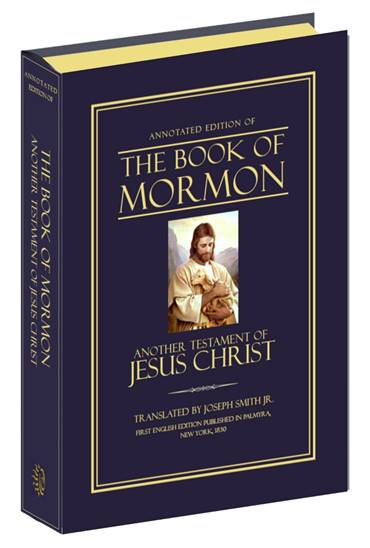
Easter is the time we remember the Savior’s resurrection which made it possible for all on earth to be resurrected. That turns our heart to the Lord Jesus Christ which we can read about in The Book of Mormon Another Testament of Jesus Christ. Of course it is “Written to the Lamanites, who are a remnant of the house of Israel; and also to Jew and Gentile” Title Page Book of Mormon


Thoughts on the location of Book of Mormon Peoples by Franklin Keel

“First, I must say that, based upon the words of the Prophet Joseph Smith and my experiences with contemporary American Indians, I believe that the events of the Book of Mormon occurred in what is now the United States.
Having said that, I must also say that I also believe that Jesus Christ visited other people in this hemisphere and elsewhere (who, much like the Mulekites, were not descendants of Father Lehi) and taught them his doctrine. He speaks of this in 3 Nephi 16: 1-3:
1 And verily, verily, I say unto you that I have other sheep, which are not of this land, neither of the land of Jerusalem, neither in any parts of that land round about whither I have been to minister.
2 For they of whom I speak are they who have not as yet heard my voice; neither have I at any time manifested myself unto them.
3 But I have received a commandment of the Father that I shall go unto them, and that they shall hear my voice, and shall be numbered among my sheep, that there may be one-fold and one shepherd; therefore I go to show myself unto them.
These people undoubtedly would have preserved a record of His visits–depending on the culture– through stories, legends, or writings. (I also believe that it is reasonable that the other sheep of this hemisphere might have subsequently interacted and/or intermarried with the Nephite and Lamanite descendants.) Now, millennia later, when the posterity of those people learn of the Book of Mormon, it strikes a chord with their preserved ancestral memories, as intended by the Savior. That, with the assistance of the Holy Ghost, helps them know that our Church is true.
However, simply because they have those memories through legends, stories, or even written records of a bearded white god, does not require that they be related to the people who are chronicled in the Book of Mormon. Nor does it mean that because their ancestors were also visited by the Savior that the Book of Mormon events had to occur in their particular lands of inheritance. As I noted above, in addition to legends or other stories passed down orally, the other sheep may also have had written records of His visit to their ancestors. I think that this is borne out in 2 Nephi 29:11, 13, where the Lord says:
11 For I command all men, both in the east and in the west, and in the north, and in the south, and in the islands of the sea, that they shall write the words which I speak unto them; for out of the books which shall be written I will judge the world, every man according to their works, according to that which is written.
13 And it shall come to pass that the Jews shall have the words of the Nephites, and the Nephites shall have the words of the Jews; and the Nephites and the Jews shall have the words of the lost tribes of Israel; and the lost tribes of Israel shall have the words of the Nephites and the Jews.

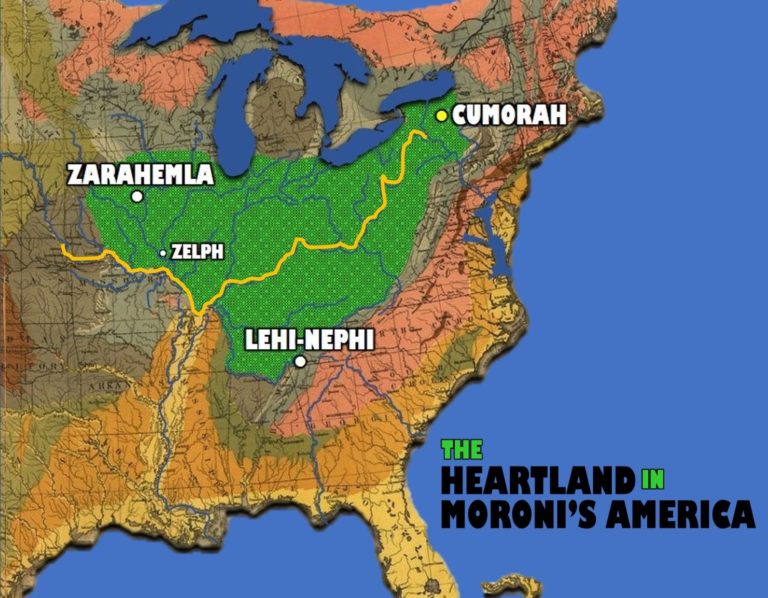
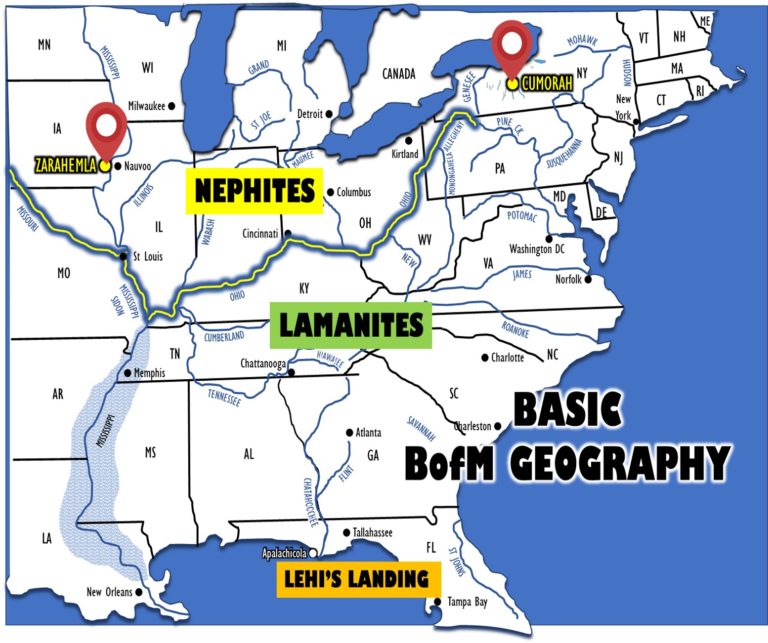
To summarize, based upon the words of Joseph Smith and the Book of Mormon, I believe other peoples, not just Lehi’s posterity, were visited and taught by the Savior. But the events of Book of Mormon (Father Lehi’s posterity) happened in only one place—the land now known as the United States—where the Prophet Moroni led the young Joseph Smith to the Hill Cumorah. As these prophecies are fulfilled, other records will come to the fore because the Lord has spoken it.” Franklin Keel a citizen of the Chickasaw Nation.


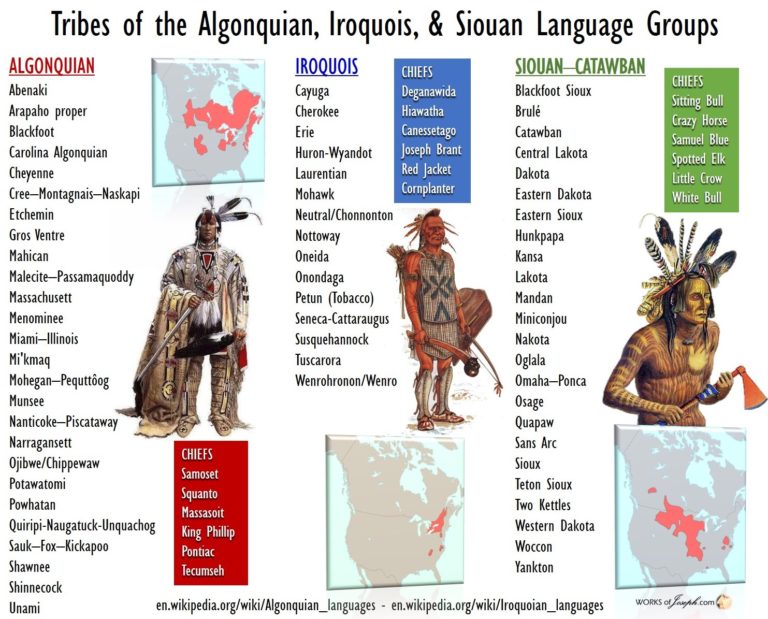
Golden R. Buchanan Mission President, Southwest Indian Mission said, “The Hopis say that they came across the ocean. The Navajos believe they came up from the other side of the earth through a tube. The Papago’s believe they were guided to this land by divine means.

Click to Enlarge

Recently I was on the Papago Reservation. One of our new converts to the Church there told me
this story:

“I had never joined any church because the ministers and the priests did not teach the Bible as I read it.
I couldn’t read it and make it say the same things the other churches said it did. I speak the Papago language. I have lived among them all my life. I know their story and their traditions. And as I read the Book of Mormon that was placed in my hands by missionaries, I recognized the stories of the Papagos, and I knew the book was true. Your missionaries read the Bible the same way I did. These are the reasons I joined the Church. The Papago’s believed they crossed the ocean and came to this land, that in the ships and on the trails, they were guided by a ball. In this ball was a needle that pointed the direction they were to go. In the Papago language yet today, the name of this ball is ‘Liahona.’

Navajo tradition tells that a man and his wife and four sons came to this land a long time ago. They have, in their native language, the names of these four sons, but I cannot write them. The oldest two of these sons rebelled against the youngest two who were the appointed leaders. The older sons and their children lived in the forest. They made their living by hunting and by the use of the weapons of warfare.
They warred and preyed upon their two younger brothers. They covered their bodies with mud and thus became a dark people. The two younger sons became builders and built cities and houses of stone. They
planted gardens and fields. They did not place mud upon themselves and thus remained white. For generations there were fighting, wars, and difficulties, the children of the older sons being the aggressors.

Then came a night in which the sun didn’t go down, and it was light all night, and the people were much
disturbed and’ distressed. But still there were troubles. Some years after this, came an extended period of darkness…

Papago Indians

Indian tribes have their own ceremonies. They have their own religions. This was particularly true
before the advent of the so-called Christian churches among them. Even today the faithful still cling to
their native tradition. Some of them profess Christianity and give token obedience to the so-called Christian churches, but deep in their hearts they still are waiting for the return of the Great White Spirit and the truth.

In many dances, which are largely prayers, significant handclasps are sometimes given. Connected with
some of these kiva ceremonies is the wearing of certain types of clothing, and in these clothing are certain marks sacred to the people. I have been told that only the faithful may wear these marks in their clothing, and that only the very good and true may receive these ordinances.

Certain washings and anointings are common in many tribes. Usually these are done with water and corn pollen or corn meal, all of which are sacred to the Indian. If it were not for violating confidences, I could take you among the Utes and Paiutes, and tell of certain “ordinances for the dead.” Among many of the tribes there is a tradition that some day the people will lose their dark color and become white…

It is interesting to note, in closing, that I know of no Indian language in which one can take the name of
the Lord in vain. Indeed, I do not know of an Indian language in which they can even swear. They have to
learn English or some white man’s language before they can defile the name of Deity.”
Lamanite Tradition By Golden R. Buchanan President, Southwest Indian Mission. Improvement Era April 1955

Read these and other inspiring stories in the new book, Joseph’s Remnant published by the FIRM Foundation in April 2019 HERE


Sharing the Book of Mormon with the Lamanites

Annotated Book of Mormon page 116- Click to enlarge

Joseph Smith and the church knew the importance of sharing the Book of Mormon with their Native American brothers and sisters. As you read the Joseph Smith Papers and other accounts you will find many instances of the Church reaching out to the Lamanites. As you read D&C 28, 30, and 32, you will see how important it was to the Lord to have Joseph Smith and others share the Book of Mormon message, which was the Lamanites forefathers speaking to them today.

D&C Section 84 was a revelation from the Prophet to the Saints in Ohio. The Lord told the Saints they must testify of those things they have received;
54 “And your minds in times past have been darkened because of unbelief, and because you have treated lightly the things you have received—
55 Which vanity and unbelief have brought the whole church under condemnation.
56 And this condemnation resteth upon the children of Zion, even all.
57 And they shall remain under this condemnation until they repent and remember the new covenant, even the Book of Mormon and the former commandments which I have given them, not only to say, but to do according to that which I have written—
58 That they may bring forth fruit meet for their Father’s kingdom; otherwise there remaineth a scourge and judgment to be poured out upon the children of Zion.” D&C 84:54-58

NEW April 2019. Click to Purchase

Are we sharing the message of the Book of Mormon with our neighbors and especially with the Native Americans we may know? The purpose of this article is to get us thinking about the importance of sharing the Book of Mormon with all people, but especially with the Lamanites.

SEEKING THE “REMNANT”: THE NATIVE AMERICAN DURING THE JOSEPH SMITH PERIOD
by Ronald W Walker

Important quotes from article above:

These statements, typical of the Mormons of northeastern Ohio, flowed as easily in western Missouri, as members of the new faith began to settle in the area after Joseph Smith’s 1831 tour. Paulina E. Phelps, whose family was among the first recruits, remembered Joseph Smith, Jr., blessing her when visiting the area the following year. Told she would go to the Rocky Mountains in her lifetime, the young girl became alarmed. “I did not know at the time what the term ‘Rocky Mountains’ meant,” she later said, “but I supposed it to be something connected with the Indians.” Her fear of the Native American froze the event in her mind. 45

Some of the Mormon Indian interest in Missouri lay in the public domain, The Church’s periodical, the Evening and the Morning Star, printed numerous pieces about the Native Americans, provided the text of Smith’s several revelations regarding them, and rhapsodized how these pieces fit into the latter-day prophetic mosaic. “What beauty to see prophecies fulfilled so exactly,” wrote editor W. W. Phelps. In his eyes, the government’s Indian resettlement policy was a “marvelous,” now-at-hand reality of the old predictions that the Indians were to be gathered. Phelps believed federal agents were acting as “nursing fathers unto. ..[their Indian) children,” as Book of Mormon prophecy had foretold. From all indication, the times of the gentiles were “short” and the promises to Jacob imminent. Something “great and good” lay in store for the benighted Lamanite, Phelps believed, as the red man’s last days certainly would be his “best.”46

Annotated Book of Mormon page 117- Click to enlarge

To his steady drum roll about the Indian and his destiny, [WW] Phelps added his view of the land west of the Missouri settlements, which he called the “Far West.” Wasn’t this, the editor wondered, the land of the covenant, where the Book of Mormon Jaredites and Nephites had once roamed before meeting their destruction? While the world would never prize the area because of its want of timber and mill seats, Deity had a different view. This land was Zion, he argued, the land of Joseph, the receptacle of “the chief things of the ancient mountains, and for the precious things of the lasting hills.” In a few sentences, Phelps wove together some of the images that Joseph Smith had been using when speaking of the western Zion and the soon-to-be redeemed Indian 47

Understandably, none of this talk set well with the Missourians. Already uneasy over the several thousand potentially hostile natives on their frontier, many angry over their forced relocation, old-line Missourians saw Phelps’s articles and the underlying Book of Mormon prophecies on which they were based as provocative and menacing. Weren’t the Mormons anxious to ally themselves with these dangerous red men? The reaction of the Missourians was not without cause. These hardy settlers of the border fully understood themselves to be counted among the imperiled “gentiles” spoken of in the Mormon revelations.

45 Affidavit, 31 July 1902, LOS Church Archives For this source and several others dealing with the
Mormon fixation with the West, I am indebted to Lewis Clark Christian, “A Study of Mormon Knowledge
of the American Far West Prior to the Exodus,” (MA. thesis, Brigham Young University, 1972), 65; and
Ronald K Esplin, “‘A Place Prepared’ Joseph, Brigham and the Quest for Promised Refuge,”Journal of
Mormon History 9 (1982) 85-111
46 Evening and the Morning Star 1 (December 1832): (54), (January 1833): 162]; 2 (June 1833)101; W.
Phelps to Oliver Cowdery, 13 November 1834, Letter III, Latter Day Saint Messenger and Advocate 1
(1 December 1834): 33-34
47 Evening and the Morning Star 1 (October 1832): 137] Phelps was citing Deuteronomy 3313-17 The
editor later would help select Mormon settlement sites in Daviess County and may have had a role in
choosing the name of the region’s most prominent town, Far West, thus giving another expression to his fascination with the western region

More than a dozen of his followers later said that Smith spoke similar things to them during the Church’s stay in Nauvoo, Illinois. But the Mormon leader did more than predict future events. Perhaps for the first time since his 1831 trip to Missouri, Smith had the chance to meet Native Americans first hand. One of the most important of these encounters involved an Oneida Indian, who traveled several hundred miles to Illinois with his wife and daughter to visit the Mormons. The native styled himself as “an Interpreter of six tribes,” whom he confidently predicted would “receive the work.” He himself did, being “joyfully” baptized in May 1840. The unnamed Indian may have been Lewis Dana and his wife Mary Gont. During the next decade, the two were at the heart of the Mormons’ Lamanite effort.83

83 Wilford Woodruff, Diary, 13 July 1840, Woodruff Papers, LDS Archives; Millennial Star 1(August
1840): 89; Women’s Exponent 15 (May 1883), 1883; and William G. Hartley, John Lowe Butler: History
and Autobiography of a Mormon Frontiersman (Provo: John Lowe Butler Family Organization, 1992), pp.
156–62. Mormon records usually use the spelling “Dana,” but there are other variations such as “Denna,” “Denny,” and “Dany.” He was born 1 January 1800, in Oneida County, New York, the son of Jonathan Dana. Missionary File, Historical

https://www.lds.org/ensign/1988/07/a-place-prepared-in-the-rockies?lang=eng

Quote from link above

Less than a year after founding Nauvoo, the Prophet sent missionaries among the Indians west of the Missouri River. Immediately after the Prophet’s death, the Council of the Twelve confirmed that this action involved settlement as well as missionary work. They dispatched missionaries, including Jonathan Dunham (who had been sent previously by the Prophet among the western tribes in 1839–40), to “fill Joseph’s original measures” by “proceeding from tribe to tribe, to unite the Lamanites and find a home for the Saints.” Even in 1840, Dunham understood; he spoke of great things “in the west, in fulfillment of prophecy,” including “a place of safety preparing … away towards the Rocky Mountains.”7

7. William Clayton Diary, 1 Mar. 1845, as reproduced in Andrew F. Ehat, “‘It Seems Like Heaven Began on Earth’: Joseph Smith and the Constitution of the Kingdom of God,” BYU Studies, 20 (Spring 1980): 253–80; and Thomas Burdick to Joseph Smith, 28 Aug. 1840, Joseph Smith Collection, Church Archives.

https://rsc.byu.edu/archived/window-faith-latter-day-saint-perspectives-world-history/place-prepared-joseph-brigham-and

Quote from link above

Annotated Book of Mormon page 120- Click to enlarge

Early Mormon expectations for the West were clearly related to Book of Mormon prophecies about the redemption and future power of the Lamanites, or American Indians. This connection is explicit in the 1832 The Evening and the Morning Star article. And in 1834 E. D. Howe characterized the belief that the Native Americans “in a very few years, will be converted to Mormonism” and take possession of their ancient inheritance as a leading article of Mormon faith. [10] Brigham Young believed that from the first time Joseph Smith stood on the banks of the Missouri River looking westward across Indian country, he de­sired to go further west among the American Indians but “there was a watch placed upon him continually to see that he had no communication” with them. [11] Govern­ment regulations enforced by Indian agents forbade dwelling among the American Indians and attempted to regulate all intercourse with them, and Missourians were suspicious very early on of supposed Mormon meddling with the Native Americans. Whatever Joseph Smith’s hopes and plans for the American Indians and the West in the 1830s, he could not implement them from Missouri. Only when he had access to the American Indians through Iowa in 1839–40 could he and did he begin imple­mentation.

https://drloritaylor.com/elder-nigeajasha-other-mormon-indians/

The rumor was that Mormons had “ten hundred thousand” Indian allies ready to avenge Joseph’s death,2 but these were not Mormon Indians.3 There were not many more than 10 Indians who had joined the early church. Penina Cotton (Cherokee)4, William McCary (Choctaw)5, Anthony Navarre (Potawatomi)6, William Clute (Seneca)7, Solomon Zundel (Delaware)8, Moses Otis, Edward Whiteseye, Peter Cooper9,  and, by some accounts, William McLellin (Cherokee).10 Among the Mormon Indians, a few served as guides for the westward movement. They were: Lewis Dana (Oneida)11,  George Herring (Mohawk), and his brother Joseph Herring, called Nigeajasha. These three men were baptized, ordained, and intimately involved with Mormon insiders.

SEEKING THE “REMNANT”: THE NATIVE AMERICAN DURING THE JOSEPH SMITH PERIOD Ronald W Walker

Quote from above

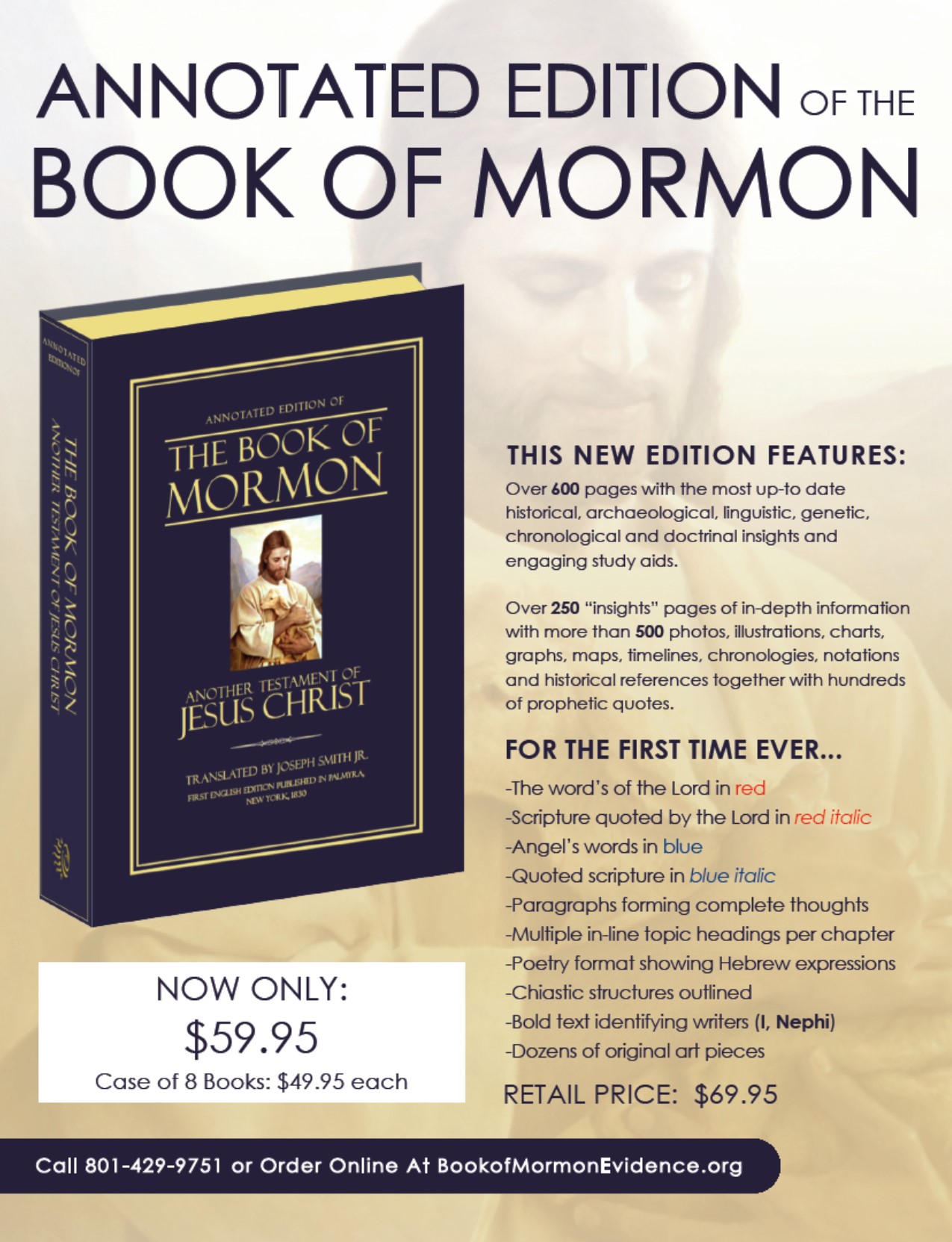
Purchase Today! Just $59.95

“Six weeks later, Smith’s interest in the Native Americans had not cooled. He and his Council of Fifty met with eleven Native Americans. “We had a very pleasant and impressive interview,” secretary William Clayton wrote without providing detail. In another session the Council of Fifty discussed Wight’s southwest proposal. A Mormon colony led by Wight should be placed near the “Cordilleras,” or Rocky Mountains, at the headwaters of the Red and Colorado Rivers, Smith concluded, perhaps somewhere in the expansive American Southwest. After the meeting, Smith met privately with Wight and again confirmed the mission. His instructions on these two occasions, Wight recalled, were designed to bring the Lamanites the “knowledge of the truth, [thus] paving the way for the redemption of Zion and building the Temple in Jackson County.” After Smith’s final charge, given with “great zeal,” the two men shook hands and said good-bye. The event carried a special poignancy and power. It was Wight’s last meeting with his Prophet.

This last Council of Fifty meeting may have been the event that another apostle, Amasa Lyman, later referred to. Joseph had given the leading elders a “frank relation” about their Lamanite mission and said “don’t stop” till it was accomplished. Such advice was difficult for even Smith to follow. With events in Nauvoo pressing hard upon him and his campaign for the American presidency requiring the labor of the Church’s elders, Smith postponed the western expedition until fall.

The halt did not end Smith’s Native American activity. There were a few last events that gave his career a symmetry. He had begun preoccupied by the Lamanite and interested in the West, and his final days had similar themes. Five days before his death, Smith and his closest associates passed over the Mississippi River. They thought they might find refuge from their troubles in the Rocky Mountains, they explained.  Then they returned to Nauvoo, where Smith, dressed in his Nauvoo Legion uniform and standing on a “small house frame,” spoke to his followers before going to fateful Carthage. Only reminiscent accounts remain, but their reports appear faithful to themes that had compelled Smith during his life. You will yet be called upon to go the “strongholds of the Rocky Mountains,” Smith predicted. “You will gather the Red Man.. . from their scattered and dispersed situation to become the strong arm of Jehovah.” At that time, he continued, the Lamanite would become “a strong bulwark of protection from your foes.”

http://digitalcommons.usu.edu/cgi/viewcontent.cgi?article=1020&context=mormonhistory

https://www.scribd.com/document/44089685/Seeking-the-Remnant

Seeking the Remnant-Ronald W Walker PDF

The Dangers of a Modern Constitutional Convention

Scott N. Bradley Founder, The Constitutional Commemoration Foundation

Find this article and many others at LDSanswers.org


As you are aware, there is a highly organized, cleverly disguised, and powerfully promoted effort to call some sort of convention empowered “to proposing amendments to the Constitution of the United States that impose fiscal restraints on the federal government, limit the power and jurisdiction of the federal government, and limit the terms of office for its officials and for members of Congress.”  Because constitutions, by definition, establish the power and jurisdiction of a government, seeking to change the Constitution with the intention of “limit[ing] the power and jurisdiction of the federal government” as is proposed, this is tantamount to opening the entire constitution to revision or replacement.

Those who seek this power undertake this effort because, they say, “THEY are violating the Constitution, therefore WE must change it.”  While this violates all logic, reason, and intelligence, this mantra has gained traction in many state legislatures, and has the advocacy of many prominent personalities.  I fear the nation is fast approaching a time when a convention, by whatever name they denominate it, will be called.

One of the many “spins” promoted regarding this effort is denominated a “convention of states.”

This proposed effort to re-write the Constitution purports to invoke Article V of the United States Constitution as authority to do this, but yet claims the effort will not be a constitution convention, perhaps to mitigate the perceived dangers and concerns many rightfully associate with a constitution convention.  Interestingly, Black’s Law Dictionary (printed edition) defines a constitution convention thus:

“A duly constituted assembly of delegates or representatives of the people of a state or nation for the purpose of framing, revising, or amending its constitution.  Art. V of U.S. Const. provides that a Constitutional Convention may be called on application of the Legislatures of two-thirds of the states.”

Therefore, by definition, this nationwide effort is to call a “Constitution convention.”

Generally, legislative resolutions calling for a convention of states read as follows:

“ . . .  the Legislature of the state of _________________  hereby applies to Congress, under the provisions of Article V of the Constitution of the United States, for the calling of a convention of the states limited to proposing amendments to the Constitution of the United States that impose fiscal restraints on the federal government, limit the power and jurisdiction of the federal government, and limit the terms of office for its officials and for members of Congress.”

Throughout the United States, advocates of the Resolution Calling for a Convention to Amend the Constitution of the United States make many false claims to promote this most dangerous resolution.  Arguably, this is the most dangerous resolution of its type which has been brought forth to date.  It TRULY opens the entire United States Constitution to revision. If the convention proposed in this resolution is convened, there are no limits or bounds to the power granted to modify the Constitution.  As noted above, because constitutions by definition establish the power and jurisdiction of a government, seeking to change the Constitution with the intention of “ limit[ing] the power and jurisdiction of the federal government” (as this resolution purports to do) is tantamount to opening the entire constitution to revision or replacement.

The United States Constitution already does a magnificent job of defining and restraining the power of the national government.  Those in power are egregiously and constantly violating their oath of office, and we, the people, allow and encourage it by being complicit and complacent.  Putting the Constitution at risk by opening it to the likes of those currently violating it is the height and epitome of lunacy.

Unfortunately, many delusional assertions are used to promote the resolution and to assuage the fears of danger which thinking legislators perceive.

Following is a BRIEF review of the falsehoods used to deceive legislators into passing the resolution:

Assertion 1. Article V of the Constitution allows the STATES to CALL a “convention of the states” to modify the Constitution.

Fact: The words  “convention of the states” are not found in the United States Constitution.  This term is a fabrication of the current convention promoters to facilitate their deception that the states have all power in the matter.

Article V of the Constitution allows the states to APPLY for a convention, NOT CALL a convention to modify the Constitution.  This distinction is critically important, as will be explained herein afterwards. Following are the specific pertinent words as embodied in Article V of the Constitution:

“The Congress . . . on the Application of the Legislatures of two thirds of the several States, shall call a Convention for proposing Amendments . . .” 1

It is UNEQUIVOCALLY STATED within the body of the Constitution that the states APPLY, the congress CALLS such a convention.

Assertion 2.  The U.S. Congress has no power in the matter once the states “call” the convention.

Fact: As noted above, congress is empowered within Article V of the Constitution to call the convention once the required number of states have applied.  Article I, Section 8, clause 18 of the United States Constitution delegates to the congress the power to do all that is necessary to carry out the powers delegated to it within the Constitution:

“The Congress shall have Power . . .  To make all Laws which shall be necessary and proper for carrying into Execution the foregoing Powers, and all other Powers vested by this Constitution in the Government of the United States, or in any Department or Officer thereof.” 2

Per Article V, congress has power to call the convention, and per Article I, Section 8, clause 18 congress has the power to carry out ALL that is associated with the fulfillment of that power.

Congress will not acquiesce that power to the states.  In July 2012, April 2014, and March 2016 the official non-partisan “think tank” of congress, the Congressional Research Service (CRS), published detailed reviews of the duty of the congress in the matter of constitutionconventions, and concluded that congress has this authority and will not acquiesce it.

Assertion 3. The states may collude among themselves by prior agreement, compact, or arrangement to call a convention for their purposes according to their prior discussions, and thereafter call a convention by the Article V application process that supercedes and supplants the congressional prerogative and power in the matter.

Fact: The United States Constitution precludes such a usurpation by the states, unless the congress gives prior consent:

“ No State shall, without the Consent of Congress . . .  enter into any Agreement or Compact with another State . . .”  3

Congress has not given such prior agreement for such a purpose, and will not.  If such actions have been taken by the individuals and states fostering the so-called “convention of the states,” they are in violation of the Constitution and should be recognized as such.

Assertion 4. Once the states have called the convention, they will be completely in charge of the “rules of engagement” associated with the convention; including defining and calling delegates, the number of delegates, one-state-one-vote voting allotment, control of the matters and issues upon which delegates may vote, etc.

Fact: The aforementioned 2012, 2014, and 2016 CRS studies review this matter in detail.  The location of the convention, the dates of the convention, the delegate-count allotted to the states, the state-by-state vote allocation arrangement (additional details found below), the protection of the delegates from punitive action based upon their activities/votes in the convention (additional details found below), etc. were all considered.  Congress will exercise their constitutionally-mandated prerogative in these matters. These matters are not left in the hands of the states according to the view held within the congress.

Assertion 5. The convention promoters assure us that the voting on proposed changes to the Constitution will be done on a One-State-One-Vote basis.

Fact: California has a population of over 38,000,000, Wyoming less than 600,000.  One-State-One-Vote would give each citizen of Wyoming 63 time more influence than each citizen of California.  California’s Governor, Senators, Congressmen, Legislature, and citizens will never allow this. They will surely demand “equal representation” in the convention.  The aforementioned 2012, 2014, and 2016 CRS studies address this matter, and suggest that a system analogous to the Electoral College be implemented for voting in the convention.  Such a system would give California 55 votes and Wyoming 3. The CRS studies suggest that this approach still unfairly biases the outcome in favor of the small states, and suggests that the appropriate solution may be one that purely reflects the populations of the states.  The influence of the smaller states would diminish to near zero under such an arrangement, but in today’s democracy-prone environment, such an arrangement is not outside the realm of possibility.

Assertion 6.  Advocates of the convention assure us that the delegates to the convention will be kept under the strict control of their states.  They propose to do this through Voting Instructions, Delegate Recall by their State, Criminal Penalties Pre-Defined by the States for Violations (including: Misdemeanor Charges, Felony Charges, Fines, Prison Terms).

Fact: Interestingly, the aforementioned 2012, 2014, and 2016 CRS reports address this matter, and suggest that when the congress calls the convention, they need to protect the delegates from such actions by their home states.  It is recommended that when the congress calls the convention that they include in the call some wording similar to that found in U.S. Constitution Article I, Section 6, clause 1 that protects the US Congressional Representatives from legal harassment during the fulfillment of their duty:

“They shall in all Cases, except Treason, Felony and Breach of the Peace, be privileged from Arrest during their Attendance at the Session of their respective Houses, and in going to and returning from the same; and for any Speech or Debate in either House, they shall not be questioned in any other Place.”  4

The belief that all convention delegates may be controlled and manipulated is contradictory to the concept that a convention is an autonomous body.  Conventions become autonomous by definition. In addition, there is the strong likelihood that the pardon process of the offices of the president or the governors could or would be exercised as needed.

“Recall Plans” by states (plans to remove convention delegates from the convention and call them home if they do not perfectly follow the wishes of their home states) if a delegate does not “toe the line” with the state’s wishes are immeasurably foolish!  Think for moment: the state’s application for a convention counts toward the Article V requirement that two thirds apply before congress calls the convention, and then when the convention is called and underway, the state recalls and withdraws their representation.  How foolish! The state is then left without a voice at the convention, and is completely left out of the debate.

Assertion 7.  Promoters of the proposed convention resolution foster the falsehood that amendments could not be proposed during the convention that could result in modification of the amendment ratification process.  They assert that because the Supreme Court would not allow the ratification window for the so-called Equal Rights Amendment to be extended from seven years to ten years that it would be impossible to ever change the current amendment ratification requirement of 3/4’s of the states.

Fact: How disingenuous and absurd!  Their example about the ERA is completely unrelated to what might occur in a convention called for the purpose of modifying the Constitution.  If ANY part of the Constitution may be modified during a convention by amendment, ALL parts of the Constitution would be vulnerable to attempts to modification.

Interestingly, the Convention of 1787 was chartered by the Congress to “revise” the then-existing constitution, the “Articles of Confederation.”  Revise means “amend.” Even with the seemingly limited charge to simply amend the constitution, the 1787 Convention set the existing constitution aside, wrote an entirely new constitution, and wrote a ratification process into the new constitution that greatly enhanced and facilitated the probability that the new constitution would be ratified.  We have an undeniable precedent from the only truly similar convention that has been held in this nation, but the convention promoters refuse to admit its possibility.

Assertion 8.  Term Limits are proposed as a justification for calling a convention to change the Constitution.  We are told that this is necessary because so many representatives are constantly being re-elected.

Fact:  Do we need a “Term Limits” Amendment?  NO! We already have term limits. It is called the ballot box.  The truth of the matter is that in our November elections we could remove ALL of our U.S. Congressmen, and 1/3 of our Senators.  Two years later we could do the same thing again and also cleanse the Executive department. The problem is that the electorate is so caught up in the “incumbent” mentality that for many years every incumbent has been virtually assured re-election.  It is a sad truism that we get the type of government we deserve.

The problem really is an apathetic and ignorant electorate that has embraced an “entitlement” mentality.  It would be dangerous to think that if we term-limited the office-holder we would assure the nation of a better, more soundly-founded representative.  In today’s political environment there is always another socialist waiting in the wings to step into any vacant office. Look at Amendment 22, which term limits the president.  This amendment has not assured the nation of higher quality presidents. And a six year “lame duck” in the senate during his final term could wreak untold damage to the nation! And think how, in today’s perverse agenda-driven-party-system, how the Supreme Court would become an even greater political plumb with regular Supreme Court Justice selections driven by the false philosophy that the Constitution is what the Supremes say it is!

Additionally, why would we want to remove representatives that are operating within their oath of office?  The key is an electorate that understands correct principles and is willing to hold our representatives to their oath of office to abide within the limits and constraints of the United States Constitution.

Interestingly, the American Founding Fathers knew of and considered term limits when they wrote the Constitution in 1787.  The first United States Constitution, the Articles of Confederation, had term limits. The experience the Founding Fathers had with term limits under that document had been unsatisfactory.  They knew about term limits and purposefully left them out of the new United States Constitution they wrote in 1787. The people should not be denied the privilege of choosing their representatives.

Assertion 9.  Those who seek a convention through this resolution purport to seek to limit the power and jurisdiction of the federal government through the amendments they hope to proposed in their convention.

Fact: Founding Father Noah Webster defined constitution thus:

“The established form of government in a state, kingdom or country; a system of fundamental rules, principles and ordinances for the government of a state or nation. In free states, the constitution is paramount to the statutes or laws enacted by the legislature, limiting and controlling its power; and in the United States, the legislature is created, and its powers designated, by the constitution.”

The United States Constitution conformed exactly to this definition.  The specific powers of each of the departments of government were specifically spelled out within the Constitution, and “in order to prevent misconstruction or abuse of its powers,” as explained in its Preamble, the Bill of Rights added “further declaratory and restrictive clauses.”  The national government has no other powers than those so spelled out within the Constitution! As noted in Webster’s definition, “the constitution is paramount to the statutes or laws enacted by the legislature, limiting and controlling its power.”  Nobody in government is legally allowed to violate the limits and bounds established by the Constitution, but today it is constantly violated on every whim.  A convention to re-write the Constitution will not solve the base-line reasons the nation is struggling, and, based upon the proposed amendments which are currently in the public eye, many of the proposed amendments will make constitutional practices that are currently unconstitutional, such as spending money for whatever whim is offered, as long as there is money (as opposed to spending money ONLY for purposes delegated within the current Constitution), and for allowing the executive to legislate and regulate as long as the costs are below the threshold established in the new amendment (as opposed to the president and his branch being entirely prohibited from creating legislation by our current Constitution).

Assertion 10.  Numerous concerns are enumerated by promoters of the convention which purportedly justify the necessity of changing the Constitution.  Matters such as the ballooning federal deficit, onerous laws and regulations created by the Executive Branch, federal destruction of protections vouchsafed in the Bill of Rights, etc. are bandied about as requiring the Constitution to be changed.

Fact:  In EVERY instance noted by the convention promoters, the problem is that the Constitution is being violated.  The cry of the convention promoters is: “They are violating the Constitution, so we must change it!” This position violates all logic, reason, and intelligence!  The problem is not in the Constitution! The problem is that our representatives and the people have stopped abiding by it. The solution is not to change it, but to return to it.  Changing it will not solve the problems, and will likely exacerbate them because the new “solutions” will be manipulated into the perverse view of what current politicians desire government should be.  Given adequate space and time, numerous examples of these dangers could be elucidated, citing specific examples of dangerous changes promoted by such so-called “luminaries” as Mark Levin.

The Constitution of 1787 created a national government whose powers are few and defined.  The powers delegated to the national government are enumerated, divided and subdivided, checked, and balanced, and are prohibited from expansion by legislation, executive action, judicial pronouncement, practice, or wish.  The Ninth Amendment protects all God-given rights of the people, whether listed or not, and the Tenth Amendment equivocally states that if a power was not delegated to the national government in the plain English words of the Constitution, the national government DOES NOT Have Those POWERS!

Assertion 11.  Three Fourths of the states would not ratify a bad amendment.

Fact: The Constitution Convention of 1787 was called by the congress to “revise” (amend) the then-existing constitution: The Articles of Confederation.  In 1787 the convention set aside the existing Constitution and wrote a new one, changing the ratification process that was contained in the Articles of Confederation.  

And talk about how states would never ratify “Bad” amendments!  Does anyone remember:

The 14th Amendment: Most litigated Amendment

The 16th Amendment:  Income Tax

The 17th Amendment:  Direct Election of Senators

The 18th Amendment:  Prohibition

Much to the detriment of the entire nation, all of these horribly flawed amendments were ratified by three fourths of the states.  Somehow principle was set aside (in an era wherein constitutional principles were much more widely understood than they are today), and we have been saddled with these egregious mistakes ever since (except the 18th Amendment, which was amended out of existence in the way we have thus far amended the Constitution, with the ratification of the 21st Amendment).

I cannot help but wonder:  Could such a ratification disaster happen today???  Could the convention process either change the ratification threshold, or dupe the states and people?

Assertion 12.  Delegates to the proposed convention will be highly qualified representatives of the people who are soundly founded in the science of government, and will bring forth solutions to that which vexes the nation today.

Fact: Tragically, the only delegates that could possibly serve in such a modern convention would be called from our current crop of political figures, who are guilty of creating the constitutional confusion that currently exists in the nation.  In his day James Madison warned against holding another constitution convention, stating that such a convention “would probably consist of the most heterogenous characters,” certainly from both parties. We may be absolutely assured that NONE of the American Founding Fathers will be delegates to this proposed convention.  Where in the entire world today may we find even one or two statesmen of the character and understanding exhibited by George Washington, Benjamin Franklin, George Mason, James Madison, James Wilson, and the others who, under the inspiration of God, framed our marvelous Charter of Liberty: The United States Constitution? We will search the world in vain for such individuals.  Who, today, will sit in the seats occupied by those who brought forth the Constitution of 1787? NONE I would trust!

Conclusion

Rather than try to change what is not flawed, the promoters should seek to make popular the sound and good principles defined within our magnificent Constitution, and overthrow the false philosophies which are currently embraced by the people and leaders alike!

In his magnificent Farewell Address Washington wisely counseled:

“If . . . the constitutional powers be in any particular wrong, let it be corrected by an amendment in the way which the Constitution designates.”5

He said if it is WRONG, amend it, not if it is being violated.  There is nothing wrong with theConstitution.  We have simply stopped applying it. Willful violation of the Constitution does not indicate it is wrong, nor is it in any way a justification for changing it.

It would seem to me that a more appropriate approach to restoring our sound foundation would be to apply Article VI of the Constitution: Insisting that ALL who hold office uphold their sacred oath and keep their actions within the bounds established within the Constitution.  As Jefferson said: we must “bind them down from mischief by the chains of the Constitution.”6

Delusional logic and wishful thinking do not justify tampering with our magnificent Constitution, nor do they assure that further injustice will not be wrought upon this long-suffering nation as a result of the proposed convention.

Numerous other egregious false assertions could be noted and refuted, but surely the twelve above-noted issues must suffice for the honest inquirer, and the danger of this proposed resolution must be fully apparent.  ANY effort for a convention of states MUST be defeated!

  1. USC Art. V
  2. USC Art. I, Sec. 8, cl. 18
  3. USC Art. I, Sec. 10, cl. 3
  4. USC Art. I, Sec. 6, cl. 1
  5. George Washington, Farewell Address, 19 September 1796
  6. Jefferson’s Fair Copy of the Kentucky Resolutions of 1798

Scott Bradley and his wife Tamara have five children and eleven grandchildren.For thirteen years Scott worked as an executive at AT&T managing cutting-edge telecommunications projects and all facets of corporate projects; including strategic planning, and a leadership assignment responsible for delivery of secured communications for the U.S. Department of Defense (North American Air Defense Command—NORAD). A candidate for the United States Senate in 2006 and 2010, Scott holds a Bachelor of Science, a Masters of Public Administration, and a PhD in Constitutional Law. For 16 years Scott served as an administrator at Utah State University as a Department Head and Director. He is Founder and Chairman of The Constitution Commemoration Foundation, Inc., an educational organization which fosters increased understanding of the U.S. Constitution in the tradition of the Founding Fathers, and also encourages a return to the original intent of proper government as understood and practiced at the time of America’s founding.He is the author of a book and DVD/CD lecture series titled “To Preserve the Nation” in which he reviews the foundation principles upon which this great nation was established, and which he hopes will foster a renewed dedication to those principles.

Scott will be at the FIRM Foundation Expo April 11-13, 2019. Tickets HERE

Beware of Political Correctness and Moral Relativism

In this world of right and left, good and evil, hero and villain, and victim and survivor, it is a good idea to remember our purpose in life. All the Lord wants from us is to be humble and loving. If we focus more on the Lord and less on ourselves, the happier we will be.

When someone is wronged there are two things we can do. Lash out and blame others, or look deep within and see what lesson may be learned. When a tragedy happens we can blame the Lord or love the Lord. When a friend offends us we can become defensive, or humble yourself and try and understand what just happened.

When we are politically correct in this life that is the easy thing to be. To act as the Savior would have us be, is the hard thing and takes a tremendous amount of patience. To be tolerant is a wonderful quality, but not at the expense of tolerating sin or evil.

If we think of the victim as being the subject of trauma or violent crime, the opposite is the perpetrator; although, from what we know in today’s world the victim can turn into the perpetrator.

Victim mentality is an acquired personality trait in which a person tends to recognize themselves as a victim of the negative actions of others, and to behave as if this were the case in the face of contrary evidence of such circumstances. Victim mentality depends on clear thought processes and attribution. It is so much easier to turn to the Lord than staying as a victim.

The influence of Satan is becoming more acceptable. When tragedy happens we always ask, “Why did he do it”, or “What made her act that way”. Remember what the Lord said, “For I say unto you that whatsoever is good cometh from God, and whatsoever is evil cometh from the devil.” Alma 5:40

Beware of Political Correctness
“Sadly enough, my young friends, it is a characteristic of our age that if people want any gods at all, they want them to be gods who do not demand much, comfortable gods, smooth gods who not only don’t rock the boat but don’t even row it, gods who pat us on the head, make us giggle, then tell us to run along and pick marigolds.11

Talk about man creating God in his own image! Sometimes—and this seems the greatest irony of all—these folks invoke the name of Jesus as one who was this kind of “comfortable” God. Really? He who said not only should we not break commandments, but we should not even think about breaking them. And if we do think about breaking them, we have already broken them in our heart. Does that sound like “comfortable” doctrine, easy on the ear and popular down at the village love-in?

And what of those who just want to look at sin or touch it from a distance? Jesus said with a flash, if your eye offends you, pluck it out. If your hand offends you, cut it off.12 “I came not to [bring] peace, but a sword,”13 He warned those who thought He spoke only soothing platitudes. No wonder that, sermon after sermon, the local communities “pray[ed] him to depart out of their coasts.”14 No wonder, miracle after miracle, His power was attributed not to God but to the devil.15 It is obvious that the bumper sticker question “What would Jesus do?” will not always bring a popular response.” Holland, Jeffery R. “The Cost—and Blessings—of Discipleship.” Conference, April 2014.

The fact is that in our world, we are encouraged to worship the God of Political Correctness who has become so large that he entirely eclipses the place of righteous indignation and/or a bold stand for truth. If our world wants a soft god, wouldn’t it make sense that we would also tend to criticize those from the scriptures who are examples of God’s pro-active righteousness and justice?”

Beware of Moral Relativism

“It is well to worry about our moral foundation. We live in a world where more and more persons of influence are teaching and acting out a belief that there is no absolute right and wrong, that all authority and all rules of behavior are man-made choices that can prevail over the commandments of God. Many even question whether there is a God.

The philosophy of moral relativism, which holds that each person is free to choose for himself what is right and wrong, is becoming the unofficial creed for many in America and other Western nations. At the extreme level, evil acts that used to be localized and covered up like a boil are now legalized and paraded like a banner. Persuaded by this philosophy, many of the rising generation—youth and young adults—are caught up in self-serving pleasures, pagan painting and piercing of body parts, foul language, revealing attire, pornography, dishonesty, and degrading sexual indulgence” Truth and Tolerance Elder Dallin H. Oaks September 11, 2011

What does it mean that The Church of Jesus Christ of Latter-day Saints is the only true Church?

“Our first responsibility and purpose is to testify of Jesus Christ to a world that suffers to know of His divine mission. As my response to that great responsibility, I will speak about The Church of Jesus Christ of Latter-day Saints as the only true and living Church. In doing so I know I speak against the powerful tide of what is called “political correctness.”

The fashionable opinion of this age is that all churches are true. In truth, the idea that all churches are the same is the doctrine of the anti-Christ, illustrated by the Book of Mormon account of Korihor (see Alma 30). That account was given to teach us a vital lesson in our day.

A revelation given to the Prophet Joseph Smith in 1831, soon after the organization of The Church of Jesus Christ of Latter-day Saints, spoke of those who had been given “power to lay the foundation of this church.” The Lord then referred to the Church as “the only true and living church upon the face of the whole earth, with which I, the Lord, am well pleased” (D&C 1:30).

Because of this declaration of the Lord, we refer to this, His Church—our Church—as the “only true Church.” Sometimes we do this in a way that gives great offense to people who belong to other churches or who subscribe to other philosophies. But God has not taught us anything that should cause us to feel superior to other people. Certainly all churches and philosophies have elements of truth in them, some more than others. Certainly God loves all of His children. And certainly His gospel plan is for all of His children, all according to His own timetable.

So what does it mean that The Church of Jesus Christ of Latter-day Saints is the only true Church?

Three features—(1) fulness of doctrine, (2) power of the priesthood, and (3) testimony of Jesus Christ—explain why God has declared and why we as His servants maintain that this is the only true and living Church upon the face of the whole earth.” The Only True and Living Church elder Dallin H. Oaks of the Quorum of the Twelve Apostles June 25, 2010   Complete Article Here

Political Correctness Isn’t Correct, LDS Official Says
By Jeff Vice, Staff Writer Deseret News Published: November 16, 1994

In all the furor over social and political correctness, people may be losing sight of values and what is truly good, Elder James E. Faust said at a devotional at Brigham Young University on Tuesday.

“Your generation lives in a day when many things are measured against the standard of social and political correctness,” warned Elder Faust, a member of the Council of the Twelve of The Church of Jesus Christ of Latter-day Saints. “I challenge that false doctrine of human behavior. The influence of Satan is becoming more acceptable.”Speaking on “Trying to Serve the Lord Without Offending the Devil,” Elder Faust said that he and other LDS leaders hope young people, “unfamiliar with the sophistries of the world, can keep themselves free of Satan’s enticements and evil ways.”

New York Yankees great Yogi Berra reportedly once said, “If you come to a fork in the road, take it.” However, “It doesn’t work that way,” said Elder Faust during the morning devotional, which was simulcast on both KBYU-FM and KBYU-TV.

By embracing political correctness, unknowing people have been led to accept several actions that could be interpreted as being offenses against God – such as abortion, homosexuality and the so-called “zero population” movement, Elder Faust said.

“Any alternatives to the legal and loving marriage between a man and woman are helping to unravel the fabric of human society,” Elder Faust said. “These so-called alternative lifestyles must not be accepted as right because they frustrate God’s commandments for a life-giving union of male and female within a legal marriage as stated in (The Old Testament). If practiced by all adults, these lifestyles would mean the end of the human family.”

In other cases, the devil “takes some delight every time a home is broken up, even when there is no parent to blame,” Elder Faust said. “This is especially so where there are children involved. The physical and spiritual neglect of children is one of the spawning grounds for so many of the social ills of the world.”

Also, Elder Faust said that many “broad-minded” people are ignoring God’s commandments by taking the guise of “not imposing religious belief” – such as those who are challenging the “sin laws” on gambling, alcohol and drug consumption.

They are ignoring “the health and social costs to society of the vices,” Elder Faust said.


Teach Us Tolerance and Love
Russell M. Nelson Of the Quorum of the Twelve Apostles April 1994

“I have been impressed to speak on the subject of tolerance—a virtue much needed in our turbulent world. But in discussing this topic, we must recognize at the outset that there is a difference between tolerance and tolerate. Your gracious tolerance for an individual does not grant him or her license to do wrong, nor does your tolerance obligate you to tolerate his or her misdeed. That distinction is fundamental to an understanding of this vital virtue.

I attended a “laboratory of tolerance” some months ago when I had the privilege of participating in the Parliament of the World’s Religions. There I conversed with good men and women representing many religious groups. Again I sensed the advantages of ethnic and cultural diversity and reflected once more on the importance of religious freedom and tolerance.

I marvel at the inspiration of the Prophet Joseph Smith when he penned the eleventh article of faith: “We claim the privilege of worshiping Almighty God according to the dictates of our own conscience, and allow all men the same privilege, let them worship how, where, or what they may.” [A of F 1:11]

That noble expression of religious tolerance is particularly poignant in light of the Prophet’s personal persecution. On one occasion he wrote, “I am at this time persecuted the worst of any man on the earth, as well as this people, … all our sacred rights are trampled under the feet of the mob.”

Joseph Smith endured incessant persecution and finally heartless martyrdom—at the hands of the intolerant. His brutal fate stands as a stark reminder that we must never be guilty of any sin sown by the seed of intolerance.” Continued Here.

To Order The Annotated Book of Mormon Click Here!

Temperance Day and the Word of Wisdom 1833

“A Word of Wisdom Revealed” by Ken Corbett

Many important events happened at the Whitney store in Kirtland, Ohio. This article speaks of one of those events that happened on Feb 27, 1833. On the day before on Feb 26, 1833 a national event also happened in the United States, England and other countries. Most of us don’t understand the importance of these two closely related dates. One within the Church of Jesus Christ of Latter-day Saints, and one outside of the Church. It is quite amazing when you think about it. The Lord really does love us and shared a message with Joseph Smith on that date in Feb, 1833. a message that was not just for the Latter-day Saints, but for the entire world. “We Thank Thee O God for a Prophet.”


“To become “clean from the blood of this generation” and to set themselves apart from the world, the elders participated in ritual washings [At the Whitney Store]. After each elder washed his own face, hands, and feet, Joseph Smith washed the feet of each, following the example set by Jesus in John 13:4–17 and instructions in Doctrine and Covenants 88:138–141. Joseph washed the feet of each new member of the school and repeated the ceremony at other meetings of the School of the Prophets. Later washings and anointing’s, including foot washing, were part of preparations for the solemn assembly held in the newly dedicated Kirtland Temple, and these washings featured prominently in the solemn assembly itself.

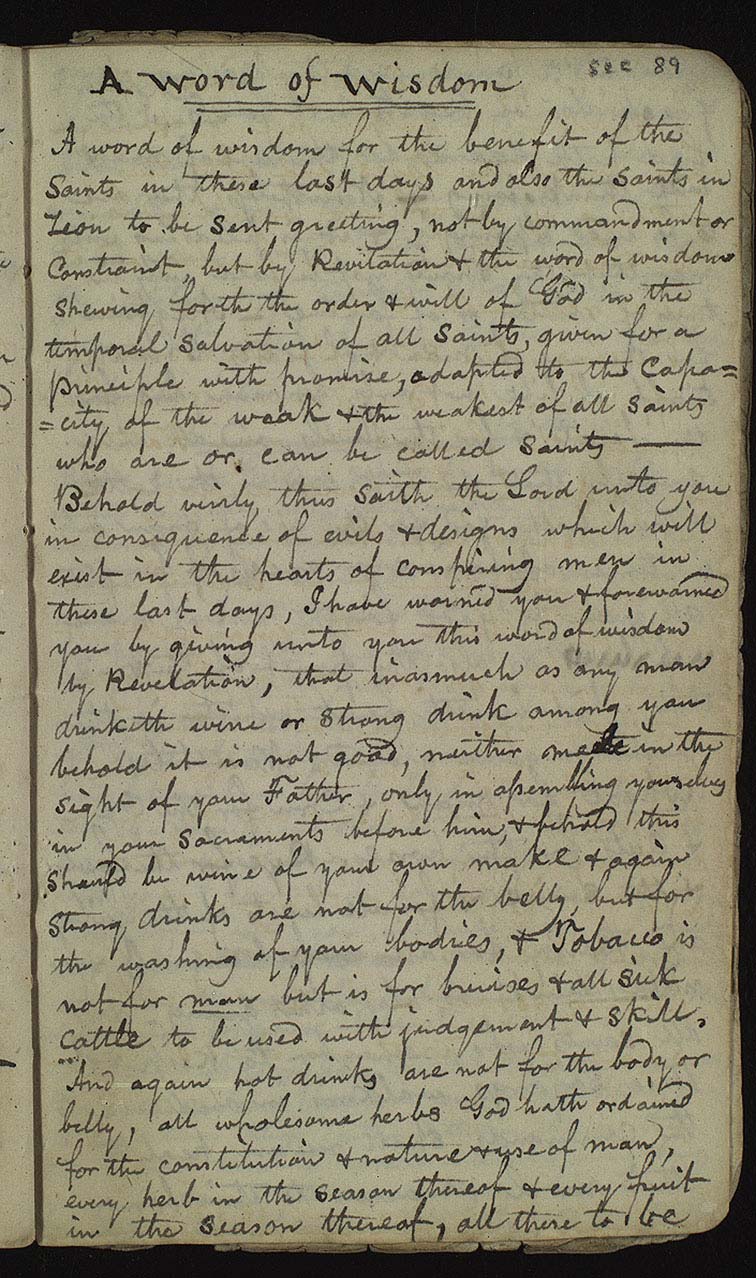
A more mundane concern with cleanliness also played a role in the School of the Prophets. One participant remembered that before each school day, “we washed ourselves and put on clean linen.” And Emma Smith’s complaints about the filth caused by the school members’ chewing tobacco led to the revelation known as the Word of Wisdom.” A School and an Endowment by Nathan Waite June 2015

I Will Pour Out My Spirit upon All Flesh

“Latter-day Saints who learn of the American health reform movements of the 1820s and 1830s may wonder how these movements relate to the Word of Wisdom. Did Joseph Smith simply draw upon ideas already existing in his environment and put them forward as revelation?

Such concerns are unwarranted. Remember that many early Latter-day Saints who took part in temperance societies viewed the Word of Wisdom as inspired counsel, “adapted to the Capacity of the weak & the weakest of Saints who are or can be called Saints.” Moreover, the revelation has no exact analog in the literature of its day. Temperance reformers often tried to frighten their hearers by linking alcohol consumption with a host of horrific diseases or social ills. The Word of Wisdom offered no such rationale. Strong drink, the revelation says simply, is “not good.” Similarly spare explanations are given for the injunctions against tobacco and hot drinks. The revelation can be understood more as an arbiter and less as a participant in the cultural debate.

Instead of arguing from a position of fear, the Word of Wisdom argues from a position of confidence and trust. The revelation invites hearers to trust in a God who has the power to deliver great rewards, spiritual and physical, in return for obedience to divine command. Those who adhere to the Word of Wisdom, the revelation says, shall “receive health in their navel and marrow to their bones & shall find wisdom & great treasures of wisdom & knowledge even hidden treasures.” These lines link body to spirit, elevating care for the body to the level of a religious principle.

In the end, some overlap between the Word of Wisdom and the health reform movement of the 19th century is to be expected. This was a time of “refreshing” (Acts 3:19), a moment in history where light and knowledge were pouring down from heaven. On the night Joseph Smith was visited by the angel Moroni for the first time, in the fall of 1823, the angel quoted a line from the book of Joel and said it was about to be fulfilled: “I will pour out my spirit upon all flesh,” the passage read (Joel 2:28; emphasis added). Insofar as temperance reform made people less dependent on addictive substances, prompting humility and righteous action, the movement surely was inspired by God. “That which is of God inviteth and enticeth to do good continually,” the Book of Mormon stated (Moroni 7:13).28 Rather than concerning themselves with cultural overlap, Latter-day Saints can joyously contemplate how God’s Spirit touched so many, so widely, and with such force. “Latter-day Saints can joyously contemplate how God’s spirit touched so many, so widely, and with such force.”

Soon after receiving the Word of Wisdom, Joseph Smith appeared before the elders of the School of the Prophets and read the revelation to them. The brethren did not have to be told what the words meant. They “immediately threw their tobacco pipes into the fire,” one of the participants in the school recalled. Since that time, the inspiration in the Word of Wisdom has been proven many times over in the lives of the Saints, its power and divinity cascading down through the years. In some ways, the American health reform movement has faded from view. The Word of Wisdom remains to light our way.”

Revelations in Context Word of Wisdom by Jed Woodworth 11 June 2013


“LIKE MANY COMMUNITIES across the nation, Kirtland, Ohio became a scene of strong temperance activity immediately before Joseph Smith dictated the Word of Wisdom, his revelatory health code (D&C 89, Kirtland, Ohio, February 27, 1833). Interestingly, the hot-bed for such reform in Ohio was the very
Western Reserve region where the Mormons lived, according to Paul H. Peterson who made a study of this phenomenon in 1972. Churches of the area became particularly interested, reports Peterson, and newspapers editorialized at length in favor of the movement. The Painesville Telegraph near Kirtland “frequently issued warnings against intemperance.” Three months before the Mormon revelation appeared, the Telegraph urged any leading citizens who still felt hesitant about this subject to set aside sectarian differences and to join in promoting temperance (P. H. Peterson, 12-13).

Christopher Crary, an early non-Mormon settler of Kirtland who was the same age as Joseph Smith, recalled that the Kirtland Temperance Society was organized on October 6, 1830. That organization proved to be “both active and influential,” and according to Crary, “‘prospered beyond the expectation of its most sanguine advocates.'” By February 1, 1833, twenty-six days before the Word of Wisdom was given, the local distillery at Kirtland, “which had existed since 1819 was closed for want of patronage . . .” (P. H. Peterson, 13, citing Christopher G. Crary, Pioneer and Personal Reminiscences [Marshalltown, Iowa:
Marshall Printing Co., 1893]

Two years later, D. Griffiths, Jr., a one-time resident of that region, reflected upon “. . . the changes wrought by the crusade and noted that many distillery houses closed down while numerous merchants gave up the sale of ardent spirits. ‘The inhabitants in general,’ said Griffiths, ‘who have much regard to their reputation practice total abstinence.’ ” (P. H. Peterson, 12, citing D. Griffiths, Residence in the New Settlements of Ohio [London: Westley and Davis, 1835], 129-30). In such a setting, the Mormon parallels which follow from the Temperance Recorder may possibly startle, but they should not surprise.

CHOLERA LINKED TO INTEMPERANCE
While analyzing the complete run of the Journal of Health in 1990, I concluded that, “. . . to some significant degree, the destroying angel in the final verse of the Word of Wisdom (D&C 89:21) can be argued to have been the cholera epidemic which swept the United States in 1832-33.” (See MP 204 for evidence, including a citation from the Temperance Recorder extra issue of November 6, 1832, examined
in this entry). Examples of this connection with cholera appeared throughout the Temperance Recorder. “We do not deem it necessary,” claimed the editor during the summer of 1832, to fill our paper with articles to prove that ardent spirit is the exciting cause to cholera; the most incredulous now acknowledge it, and the political and religious papers are filled with facts to prove it—and are spreading them before the public. Indeed every paper we receive at our office has become the advocate of the cause of temperance. The Cholera speaks out and let every tongue and pen reiterate the warning. [p. 43 (August 7, 1832 issue)] “Necessary” or not, cholera references abound in this volume: pages 15, 25 (left column), 28-29, 30 (“All spirit drinkers will be the first victims of the cholera.”), 38, 40 (illustrated below), 43 (quoted above), 44, 52, 52-53, 55, 59, 59-60, 60-61, 61, 74 and 77. [Mormon Parallels: A Bibliographic Source © 2014 Rick Grunder]

The November EXTRA issue was devoted to a presentation of statistical evidence that cholera was precipitated by intemperate behavior. It showed that of 336 persons sixteen years of age or older recorded dying from cholera in Albany during the summer of 1832, no more than ten could be shown to be nondrinkers. This study was then cited throughout subsequent temperance literature across the nation. The Journal of Health called this “a document of the highest value to those who would shun the visitations of pestilence and subsequent death.” The Journal published extracts from it in January 1833, with the speculation “that returns of a very similar nature might be made from all the places in which the cholera has prevailed.” (Journal of Health IV:152-53) Mormon Parallels: A Bibliographic Source © 2014 Rick Grunder page 1771

A notice on page 40 grabbed readers’ attention by headlining the dreaded word:

TOTAL ABSTINENCE
For the relevance of “total abstinence” to early Mormonism, see (Temperance Almanac, For . . . 1836) and related entries in this bibliography. Examples in the present Temperance Recorder occur on the printed presentation slip described in my bibliographic notes above and on pp. 20, 26, 54, 85 and 87. In addition, an article on page 36 argues that even people who are capable of temperate drinking must abstain completely, in order to support those who might otherwise drink too heavily; compare to D&C 89:3, 5.

TOTAL ABSTINENCE” was indeed the slogan of the day. In the woodcut (below left) on the title page of this 1836 almanac, the doctrine assumed an almost revelatory character: This engraving also appeared on the back of the very widely-circulated Temperance Recorder for February 1835 (see MP 434, entry for the Temperance Recorder issue of April 2, 1833, note at end).” Mormon Parallels: A Bibliographic Source © 2014 Rick Grunder

“SIMULTANEOUS TEMPERANCE MEETINGS TO BE HELD TUESDAY, FEBRUARY 26, 1833
Among Mormon parallels that I discovered in the early 1980s, none startled me more than the simple fact that the Word of Wisdom was dictated one day following the most dramatic temperance event of the nineteenth century, America’s first nationwide anti-drinking rally. The volume of the Temperance Recorder considered here contains powerful references and advertisements to that event: Page 64 reports that this event has been proposed by the Executive Committee of the American Temperance Society, convened at Boston on September 21, 1832: . . . unanimously resolved:

1. That it is highly desirable that meetings of temperance societies and friends of temperance, be holden simultaneously on some day that may be designated, in all the cities, town and villages throughout the United States.
2. That Tuesday the 26th day of February, 1833, be designated for that purpose.
3. That measures be immediately taken to accomplish the above-mentioned object. [p. 64; for full text, see MP 13 (American Temperance Almanac for 1833)] Ministers of all denominations are enjoined to read the national circular from their pulpits, calling for this February 26 meeting to be held “in all the cities, towns and villages of our country . . .” “Editors of papers and periodicals” are requested to “give publicity to this circular” in their columns. Five days later, the New York society agrees eagerly: “The President and the Executive Committee of the New-York State Temperance Society, cordially approve of the proposal . . . and . . . will immediately commence making preparations for carrying into full effect the recommendation of the National Society . . .” (at head of this entire notice: “Office New-York State Temperance Society, Albany, September 26, 1832.” p. 64)

A notice in the next issue sees the upcoming rally “as the commencement of a new era in the temperance reform, and as the first shinings of that light which shall soon cast its cheerful and happy influence over all our country . . . ,” p. 70. February 26, 1833, will be a memorable occasion . . . The spectacle which that day will present, will indeed be one of glory, and calculated to swell with emotion the breast of every one who loves his country, and who feels for the woes of those whom intemperance has made wretched. A whole nation—powerful, free, enlightened—will then rise up and with one united effort, crush beneath its feet a hideous monster, which has annually demanded the immolation of thousands and tens of thousands of victims upon its bloody and cruel altar. On that day will be solved, we trust and believe, that problem which has so long baffled the skill of European politicians, whether a
nation can govern itself, and the world be convinced that Americans can conquer, not others, but themselves. . . . . .

Fellow citizens: As one man let us rise and subdue the deadliest foe to our prosperity and happiness. Let us make such an advance as shall consecrate the 26th of February as a national jubilee, to be ever after commemorated as the day on which Americans burst the shackles of a degrading and destroying vice, and regained a moral freedom which shall perpetuate their cherished institutions till the very end of time. [p. 71]

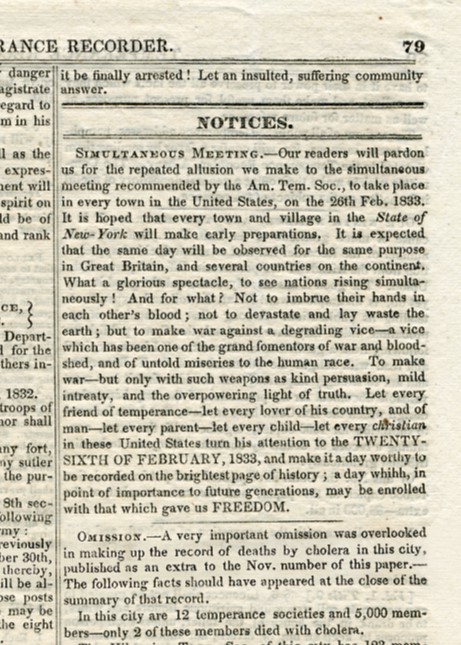
Another notice, placed prominently on page 79 (left)(December 4 issue), enjoins, . . . Let every friend of temperance—let every lover of his country, and of man— let every parent—let every child—let every Christian in these United States turn his attention to the TWENTY-SIXTH OF FEBRUARY, 1833, and make it a day worthy to be recorded on the brightest page of history; a day which in point of importance to future generations, may be enrolled with that which gave us FREEDOM. [p. 79; early state illustrated (left) has a typo, “whihh gave us . . .”] Mormon Parallels: A Bibliographic Source © 2014 Rick Grunder page 1773

In an age of conservative typography and restrained composition, this was an assertive ad: Page 81 (the front page of the January 1 issue) promotes an urgent membership drive to increase temperance society membership in the state “before the 26th of February.” Each county society should send at least three delegates “to attend the annual meeting of the State Society on the 26th of FEBRUARY next, . . .” In the annual report, town and county societies will be asked to answer eleven questions, including: “10. Did you observe the 26th of Feb.?” Page 96: “. . . No society should suffer the day to pass without notice; but even if an address cannot be had, meet and converse together respecting the evils and the remedies of intemperance; read the constitution, and devise means for the still farther [sic] progress of the work.” For examples of such addresses which were delivered, see MP 104 (Proceedings and Speeches at a Meeting for the Promotion of the Cause of Temperance . . .) and MP 198 (Ingram). Other mentions of this watershed event occur on pp. 70-71 and 87-88.

TEMPERANCE RECORDER. Published Monthly, by the Executive Committee of the New-York State Temperance Society. Albany, [New York], for April 2, 1833 [II:2]. Quarto. Paged 9-16. With strong relevance to the timing of the Word of Wisdom (D&C 89) which Joseph Smith dictated in Kirtland, Ohio, on February 27, 1833: The simultaneous meeting of the 26th February, presented a spectacle of deep interest . . . a large and cheerful audience, filled at an early hour, every part of the 2d Presbyterian Church, and many could not find room within the walls of this spacious edifice. . . . we must congratulate the friends of the cause every where, on the efforts of that day. Letters from every state in the union speak the same language, and all unite in giving this simultaneous meeting an importance that will, it is believed, result in one of the most successful efforts that has yet been devised to perfect the reform. [p. (9). The pastor of the Second Presbyterian Church, Albany, was William Buell Sprague (see DAB), who corresponded with Chief Justice John Marshall – presumably about this event – at this very time; see MP 433 (Temperance Recorder, Volume I)]

The 26th of Feb. was observed as a day of special united effort in behalf of temperance, in, we believe, every part of the Union. A whole nation then called up its energies, and the cry . . . was heard reverberating from hill to hill, and from vale to vale. It was an interesting day, and as such, will be referred to in later ages by those who shall come after us . . . [p. 14] On the 26th inst. the day appointed by the American Temperance Society for simultaneous meetings in all the cities, towns and villages of the United States, a meeting of members of Congress was holden in the Senate Chamber, at the Capitol in Washington, for the purpose of forming a Congressional Temperance Society. [p. 16; see MP 104 (Proceedings and Speeches at a Meeting for the Promotion of the Cause of Temperance . . .]

SUBSEQUENT ISSUES of the Temperance Recorder continued to enshrine this date as a sacred anniversary to be observed. The December 1834 issue reminded readers that February 26 was still “the day of simultaneous meeting of all societies throughout the Union. We need not state the vast importance of these yearly meetings. . . . friends of the cause in various parts of the world, unite with us on the same day to promote this great work . . . ,” p. 80. — The February 1835 issue reminded readers of the February 26 meeting on its page 89. On its back page appeared the “TOTAL ABSTINENCE” engraving which lent a religious, revelatory tone to this movement (see MP 431, Temperance Almanac, For . . . 1836, for illustration and discussion). Below that engraving in  this issue was reproduced a certificate endorsed with the facsimile signatures of then-living Presidents Madison, Jackson and John Quincy Adams, advocating temperance, though not specifying if they themselves abstained.

TEMPERANCE RECORDER. Albany, [New York], September, 1834 [III:7]. 27 X 21½ cm. Paged [49]-56. One of the several copies examined was unopened and untrimmed, and bore a contemporary manuscript distribution note in the upper margin of the first page, “Doct T M Nott 8 Copies.” Contains an engaging, first-hand account of a poor family’s rescue from ruin, thanks to a local temperance meeting. As in the Word of Wisdom’s warning about “evils and designs . . . of conspiring men in the last days” leading people to drink (D&C 89:4), we read of similar “wicked and designing men” in this story of a reformed drunkard who was nearly destroyed by his old companions who plotted carefully to get him drunk again. Once stimulated, he called for more and yet more, till these wretches had the pleasure of seeing him who had so long stood firm, reeling from the shop, to mar at once all that was pleasant and peaceful at home. . . . The dram-seller knew my husband—knew of his reform—that from being a nuisance to the town, he had become an orderly and respectable citizen—and now that he had been seduced from the right way, instead of denying him the cause of all our former misery instead of a little friendly advice—with his usual courteous smile, he put the fatal glass into his hand. . . . But he was not thus to become the dupe of wicked and designing men. . . . He called one evening to see the president of the temperance society, confessed his weakness in yielding to temptation . . . requested to have his name, which had been erased from the temperance list, renewed, and promised never again to violate the pledge. [p. 51]

My source for much of this information above is a 2,307 page book called Mormon Parallels: A Bibliographic Source © 2014 Rick Grunder. It is a fantastic resource of Mormon related events paralleling with modern day events. 


The following is from Revelations in Context Word of Wisdom by Jed Woodworth 11 June 2013

Tobacco

“This episode in the Whitney store occurred in the middle of a massive transformation within western culture. In 1750, personal cleanliness and hygiene were infrequent, haphazard practices, mostly the concern of the wealthy and aristocratic. By 1900, regular bathing had become routine for a large portion of the population, especially the middle classes, who had adopted gentility as an ideal.5 Tobacco spitting shifted from being a publicly acceptable practice among most segments of the population to becoming seen as a filthy habit beneath the dignity of polite society. In the midst of this cultural shift, at the very moment when everyday people started to concern themselves with their own cleanliness and bodily health, the Word of Wisdom arrived to light the way.

D&C 89 on JosephSmithPapers.orgD&C 89 on JosephSmithPapers.org

Review the Annotated Book of Mormon Here:


The scene in the School of the Prophets would have been enough to give any non-tobacco user like Joseph Smith cause for concern. Joseph’s wife, Emma, told him that the environment concerned her. He and Emma lived in the Whitney store, and the task of scrubbing the spittle from the hardwood fell upon her. She may have complained of being asked to perform this thankless task, but there was also a more practical consideration: “She could not make the floor look decent,” Brigham Young recalled. The stains were impossible to get out. The whole situation seemed less than ideal for those who were called of God as these elders were, especially when we remember that the room with the filthy floor was Joseph’s “translation room,” the same place where he received revelations in the name of God. Joseph began inquiring of the Lord about what could be done, and on February 27, scarcely a month after the school started, he received the revelation later canonized as Doctrine and Covenants 89. The answer was unequivocal: “Tobacco is not for man but is for bruises & all sick cattle; to be used with judgement & skill.”

Strong Drinks

Tobacco was just one of a host of substances pertaining to bodily health and cleanliness whose merits were hotly debated on both sides of the Atlantic Ocean at the time the Word of Wisdom was received. Discussion was so frequent because abuse was so widespread. Frances Trollope, a British novelist, reported disdainfully in 1832 that in all her recent travels in the United States, she hardly ever met a man who was not either a “tobacco chewer or a whisky drinker.”

Drinking, like tobacco chewing, had clearly gotten out of hand. For centuries nearly all Americans had consumed large quantities of alcoholic beverages, much like their European counterparts. The Puritans called alcohol the “Good Creature of God,” a blessing from heaven to be imbibed in moderation. Alcohol was consumed at virtually every meal, in part because the unpurified water of the time was so unhealthy. Home-brewed beer was a favorite, and after 1700, British-American colonists drank fermented peach juice, hard apple cider, and rum either imported from the West Indies or distilled from molasses made there. By 1770, per capita consumption of distilled spirits alone—to say nothing of beer or cider—stood at 3.7 gallons per year.

The American Revolution only exacerbated this reliance on alcohol. After molasses imports were cut off, Americans sought a substitute for rum by turning to whiskey. Grain farmers in western Pennsylvania and Tennessee found it cheaper to manufacture whiskey than to ship and sell perishable grains. As a consequence, the number of distilleries grew rapidly after 1780, boosted by settlement of the corn belt in Kentucky and Ohio and the vast distances to eastern markets. To the astonishment of observers like Trollope, Americans everywhere—men, women, and children—drank whiskey all day long. American consumption of distilled spirits climbed precipitously, from two and a half gallons a person in 1790 to seven gallons in 1830, the highest amount of any time in American history and a figure three times today’s consumption rate.

This elevated alcohol consumption offended religious sensibilities. As early as 1784, both Quakers and Methodists were advising their members to abstain from all hard liquor and to avoid participation in its sale and manufacture. A more aggressive temperance movement took hold among the churches in the early decades of the 19th century. Alcohol became viewed more as a dangerous tempter and less as a gift from God. In 1812, the Congregational and Presbyterian churches in Connecticut recommended strict licensing laws limiting the distribution of alcohol. Lyman Beecher, a leader in this reform movement, advocated even more extreme measures, endorsing full abstinence from alcoholic beverages. The idea soon became a central plank of the American Temperance Society (ATS), organized in Boston in 1826. Members of the organization were encouraged to sign a temperance pledge not just to moderate their alcohol intake but to abstain altogether. A capital “T” was written next to the names of those who did so, and from this the word “teetotaler” was derived. By the mid-1830s, the ATS had grown to well over a million members, many of them teetotalers.

Encouraged by the ATS, local temperance societies popped up by the thousands across the U.S. countryside. Kirtland had its own temperance society, as did many small towns. Precisely because alcohol reform was so often discussed and debated, the Saints needed a way of adjudicating which opinions were right. Besides rejecting the use of tobacco, the Word of Wisdom also came down against alcoholic beverages: “Inasmuch as any man drinketh wine or Strong drink among you behold it is not good, neither mete in the sight of your Father.”

Nevertheless, it required time to wind down practices that were so deeply ingrained in family tradition and culture, especially when fermented beverages of all kinds were frequently used for medicinal purposes. The term “strong drink” certainly included distilled spirits such as whiskey, which thereafter the Latter-day Saints generally shunned. They took a more moderate approach to milder alcoholic beverages like beer and “pure wine of the grape of the vine, of your own make.” For the next two generations, Latter-day Saint leaders taught the Word of Wisdom as a command from God, but they tolerated a variety of viewpoints on how strictly the commandment should be observed. This incubation period gave the Saints time to develop their own tradition of abstinence from habit-forming substances. By the early 20th century, when scientific medicines were more widely available and temple attendance had become a more regular feature of Latter-day Saint worship, the Church was ready to accept a more exacting standard of observance that would eliminate problems like alcoholism from among the obedient. In 1921, the Lord inspired President Heber J. Grant to call on all Saints to live the Word of Wisdom to the letter by completely abstaining from all alcohol, coffee, tea, and tobacco. Today Church members are expected to live this higher standard.

Hot Drinks

American temperance reformers succeeded in the 1830s in no small part by identifying a substitute for alcohol: coffee. In the 18th century, coffee was considered a luxury item, and British-manufactured tea was much preferred. After the Revolution, tea drinking came to be seen as unpatriotic and largely fell out of favor—the way was open for a rival stimulant to emerge. In 1830, reformers persuaded the U.S. Congress to remove the import duty on coffee. The strategy worked. Coffee fell to 10 cents a pound, making a cup of coffee the same price as a cup of whiskey, marking whiskey’s decline. By 1833, coffee had entered “largely into the daily consumption of almost every family, rich and poor.” The Baltimore American called it “among the necessaries of life.” Although coffee enjoyed wide approval by the mid-1830s, including within the medical community, a few radical reformers such as Sylvester Graham and William A. Alcott preached against the use of any stimulants whatsoever, including coffee and tea.

The Word of Wisdom rejected the idea of a substitute for alcohol. “Hot drinks”—which Latter-day Saints understood to mean coffee and tea—“are not for the body or belly,” the revelation explained. Instead, the revelation encouraged the consumption of basic staples of the kind that had sustained life for millennia. The revelation praised “all wholesome herbs” and explained that “all grain is for the use of man & of beasts to be the staff of life . . . as also the fruit of the vine that which beareth fruit whether in the ground or above ground.” In keeping with an earlier revelation endorsing the eating of meat, the Word of Wisdom reminded the Saints that the flesh of beasts and fowls was given “for the use of man with thanksgiving,” but added the caution that meat was “to be used sparingly” and not to excess.”

Revelations in Context Word of Wisdom by Jed Woodworth 11 June 2013


“Like many other revelations in the early Church, Doctrine and Covenants 89, also known today as the Word of Wisdom, came in response to a problem. In Kirtland, many men in the Church were called to preach in various parts of the United States. They were to cry repentance unto the people and gather in the Lord’s elect. To prepare these recent converts for their important labors, Joseph Smith started a training school called the School of the Prophets, which opened in Kirtland on the second floor of the Newel K. Whitney mercantile store in January 1833.

Every morning after breakfast, the men met in the school to hear instruction from Joseph Smith. The room was very small, and about 25 elders packed the space. The first thing they did, after sitting down, was “light a pipe and begin to talk about the great things of the kingdom and puff away,” Brigham Young recounted. The clouds of smoke were so thick the men could hardly even see Joseph through the haze. Once the pipes were smoked out, they would then “put in a chew on one side and perhaps on both sides and then it was all over the floor.” In this dingy setting, Joseph Smith attempted to teach the men how they and their converts could become holy, “without spot,” and worthy of the presence of God.”

Revelations in Context Word of Wisdom by Jed Woodworth 11 June 2013 (I organized this information to hopefully give the reader a combined and organized narration of the article by Jed Woodworth and the bibliography by Rick Grunder)


Mormons and Masons

I believe the truthfulness of the Church of Jesus Christ of Latter-day Saints. I believe there are many things in this world that attempt to imitate the truth of the Gospel of Jesus Christ. Whenever there is truth there is error and the adversary has a desire to make evil look good. We read in Alma 41:10, “Behold, I say unto you, wickedness never was happiness.” I feel there are important reasons to seek the good things of this world. Understanding Freemasonry and some of the good contained in this organization can benefit us. All truth the Lord has given us from the beginning is constantly under attack from the other side. It’s important we learn to discern truth from error in all that we study. I offer some information below about Freemasonry that may assist you in understanding why some early Church leaders of the Church of Jesus Christ of Latter-day Saints respected many tenets of this ancient fraternity.

<img class=”wp-image-1268″ src=”https://www.bofm.blog/wp-content/uploads/2018/09/aa-mason1.jpg” alt=”” width=”151″ height=”198″> Brigham Young wearing a Mason pin on his shirt

“Joseph Smith, Brigham Young, John Taylor, Wilford Woodruff, and Lorenzo Snow all were members of the fraternity. All joined while living with the Saints in Nauvoo… Joseph Smith joined the Masons in Nauvoo in March 1842…” <em>LDS Living “Mormons and Masons: 5 Fascinating Connections</em>

<img class=”alignleft wp-image-1269″ src=”https://www.bofm.blog/wp-content/uploads/2018/09/aaa-mason-freemason_washington-440×300-468×312.jpg” alt=”” width=”206″ height=”138″>”George Washington a young Virginia planter, becomes a Master Mason, the highest basic rank in the secret fraternity of Freemasonry. The ceremony was held at the Masonic Lodge No. 4 in Fredericksburg, Virginia. Washington was 21 years old and would soon command his first military operation as a major in the Virginia colonial militia. Freemasonry evolved from the practices and rituals of the stonemasons’ guilds in the Middle Ages. With the decline of European cathedral building, “lodges” decided to admit non-stonemasons to maintain membership, and the secret fraternal order grew in popularity in Europe. In 1717, the first Grand Lodge, an association of lodges, was founded in England, and Freemasonry was soon disseminated throughout the British Empire. The first American Mason lodge was established in Philadelphia in 1730, and future revolutionary leader Benjamin Franklin was a founding member.

<img class=” wp-image-1274″ src=”https://www.bofm.blog/wp-content/uploads/2018/09/aaa-mason-29561.jpg” alt=”” width=”355″ height=”241″> Grunge illuminati freemasonry emblem on dramatic background – masonic square and compass symbol, closeup of old architectural building decoration

There is no central Masonic authority, and Freemasons are governed locally by the order’s many customs and rites. Members trace the origins of Masonry back to the erecting of King Solomon’s Temple in biblical times and are expected to believe in the “Supreme Being,” follow specific religious rites, and maintain a vow of secrecy concerning the order’s ceremonies. The Masons of the 18th century adhered to liberal democratic principles that included religious toleration, loyalty to local government, and the importance of charity. From its inception, Freemasonry encountered considerable opposition from organized religion, especially from the Roman Catholic Church.

For George Washington, joining the Masons was a rite of passage and an expression of his civic responsibility. After becoming a Master Mason, Washington had the option of passing through a series of additional rites that would take him to higher “degrees.” In 1788, shortly before becoming the first president of the United States, Washington was elected the first Worshipful Master of Alexandria Lodge No. 22.”&nbsp;<em>Washington Becomes Master Mason: Author History.com Staff</em>

<hr>
<p style=”text-align: left;”><strong>1820 MASONIC APRON (artifact below)</strong>.</p>
Engraving printed in blue, on white leather. At base of design in minuscule letters: “J. T. Porter. Sc[ulpt]. Middletown. Con[necticut].” No date, but ca. 1820.

15 X 14¾ inches. The printed image is identical to an example preserved at St. John’s Lodge No. 1, Free and Accepted Masons, Portsmouth, New Hampshire, illustrated in <em>Bespangled, Painted &amp;</em> <em>Embroidered; Decorated Masonic Aprons in America, 1790-1850. </em>(Lexington, Massachusetts: Scottish Rite Masonic Museum of Our National Heritage, [c.1980]), item 54 (pp. 92-93; illus., p. 92), saying “c[a]. 1810-1830.” Their dating is based on other known work by this engraver while he was in Middletown, 1815 and 1823; Porter is listed there in the 1820 census only (ibid., p. 93). OCLC shows two items engraved by Porter and published in Middletown, in 1815 and 1825. The apron examined retained original hand coloring in green, red, yellow and brown, with bright gilt highlights. It was surrounded except along the top edge by a pleated scarlet silk border. It was in fine condition, with some minor restoration.

<img class=”aligncenter size-full wp-image-1266″ src=”https://www.bofm.blog/wp-content/uploads/2018/09/aaapron.jpg” alt=”” width=”1005″ height=”981″>

[ILLUSTRATION above:&nbsp; A ca.1820 Masonic apron engraved by James T. Porter of Middletown, Connecticut.&nbsp; Described in&nbsp;<em>Mormon Parallels</em>, pp. 1282-83.]

“Displaying numerous familiar “Mormon” symbols, somewhat resembling the apron worn by a certain evil figure in the endowment ceremony as presented live in the Salt Lake Temple in the twentieth century. Covering the apron flap at the top is a large all-seeing eye, beneath which is engraved, “HOLINESS TO THE LORD.” Below the flap appear the sun, moon and stars, and below them the Masonic arch supported by the two pillars between which may be seen a large gold triangle and an altar (on a checkered floor) upon which lies a compass and square. Resting on the ground are the Ark of the Covenant and the triangular plate of gold engraved with the name of God which in Masonic lore was buried underground beyond a stone door by Enoch. In the foreground are the rough and smooth ashlars (stones) to which Joseph Smith compared himself (see <em>Popular Philosophy</em> below). This apron is made of lambskin or similar white leather, referred to as being worn by the Gadianton robbers in the Book of Mormon (3 Nephi 4:7).” <em>MORMON PARALLELS: A Bibliographic Source. Second Edition, with Index. By Rick Grunder. Lafayette, New York: Rick Grunder – Books, 2014.</em>
<p style=”text-align: left;”><strong>POPULAR PHILOSOPHY</strong></p>
“Joseph Smith spoke of himself as a rough stone. The elaborate analogy to a rough stone rolling down a hill, however (found in the History of the Church 5:401), appears to be a creation of Church historians, based on the meager phrase,&nbsp; “Rough stone roling down hill” in Joseph’s diary entry by Willard Richards for May 21, 1843 (see American Prophet’s Record, 379; for commentary, see Words of Joseph Smith, 282 n. 7). Another diary entry, however, for June 11, 1843, makes a much different “rough stone” analogy:
. . . I [am] a rough stone. The sound of the hammer and chisel was never heard on me nor never will be. I desire the learning and wisdom of heaven alone. [American Prophet’s Record, 383]

Similar thinking had appeared in the Masonic writings of Jeremy Cross: The rough ashler is a stone as taken from the quarry in its rude and natural state. The perfect ashler is a stone made ready by the hands of the workmen, to be adjusted by the working tools of the Fellow Craft. [p. 16] By the rough ashler, we are reminded of our rude and imperfect state by nature; by the perfect ashler, that state of perfection at which we hope to arrive by a virtuous education, our own endeavours, and the blessing of God.”&nbsp;<em>A Bibliographic Source. Second Edition, with Index. By Rick Grunder. Lafayette, New York: Rick Grunder – Books, 2014.</em>

“Ashlar is finely dressed (cut, worked) stone, either an individual stone that has been worked until squared or the structure built of it. Ashlar is the finest stone masonry unit, generally cuboid, mentioned by Vitruvius as opus isodomum, or less frequently trapezoidal. Precisely cut “on all faces adjacent to those of other stones”, ashlar is capable of very thin joints between blocks, and the visible face of the stone may be quarry-faced or feature a variety of treatments: tooled, smoothly polished or rendered with another material for decorative effect.” <em>Ching, Francis D.K.; Jarzombek, Mark M.; Prakash, Vikramaditya (2007). A Global History of Architecture. Hoboken, New Jersey</em>

<img class=”wp-image-1267″ src=”https://www.bofm.blog/wp-content/uploads/2018/09/aaapron.jpg-stones.jpg” alt=”” width=”450″ height=”103″> Ashlar Stone
<p style=”text-align: left;”><strong>THE CHISEL</strong></p>
<p style=”text-align: left;”>”Morally demonstrates the advantages of discipline and education. The mind, like the diamond in its original state, is rude and unpolished; but as the effect of the chisel on the external coat soon presents to view the latent beauties of the diamond; so education discovers the latent virtues of the mind . . . [p. 461]”&nbsp;<em>A Bibliographic Source. Second Edition, with Index. By Rick Grunder. Lafayette, New York: Rick Grunder – Books, 2014.</em></p>

<p style=”text-align: left;”><strong><img class=”wp-image-1281 alignleft” src=”https://www.bofm.blog/wp-content/uploads/2018/09/aaa-masonPicture1.jpg” alt=”” width=”228″ height=”194″>THE RING OR CIRCULAR JEWEL TO SYMBOLIZE ETERNITY
</strong>”. . . Joseph Smith used his ring to signify eternity . . .” (Allen D. Roberts, 29). “I take my ring from my finger,” proclaimed Joseph in his famous King Follett Discourse, “and liken it unto the mind of man—the immortal spirit—because it has no beginning or end.” (Larson, 204). In Cross’ chapter on the High Priesthood, we find reference in a “CHARGE to the Chaplain” to “this circular jewel, the badge of your office. It is emblematical of eternity . . . ,” p. 149; see also Henry Dana Ward’s mention of Adam holding the Masonic ring symbol for eternity in Cross’s plate of the small temple (Picture Left- Ward, Free Masonry, Its Pretensions, with illustration).

<hr>

<strong>MORMONS AND MASONS</strong>

<img class=”size-medium wp-image-1280 alignright” src=”https://www.bofm.blog/wp-content/uploads/2018/09/aaa-mason-slc-temple-right-hand-of-fellowship-300×225.jpg” alt=”” width=”300″ height=”225″>Below is some abbreviated information from an article by LDS Living titled “Mormons and Masons: 5 Fascinating Connections” By Jamie Armstrong

“Joseph Smith, Brigham Young, John Taylor, Wilford Woodruff, and Lorenzo Snow all were members of the fraternity. All joined while living with the Saints in Nauvoo… Joseph Smith joined the Masons in Nauvoo in March 1842…

Why would the Prophet join the Masons? In his essay “Freemasonry and the LDS Temple Endowment,” as found in the new book A Reason for Faith, Stephen C. Harper writes, “Joseph likely pondered the fraternal ceremony as he contemplated how he could prepare his followers for what awaited them in the new temple, how he might best teach them what he had learned over time from angels, from translating ancient records by the power of God, and from what he called ‘time, and experience, and careful and ponderous and solemn thoughts.’”

He continues, “Joseph knew that preparing hearts and minds to receive all that God had in store couldn’t be done easily. But he was not one to conclude that it couldn’t be done at all. So, as angels had done with him, and he had done with his followers before, he started with what he had and used what the Saints found familiar to lead them to further light and knowledge.”

“Some people reason that Joseph Smith initiated men and women into the endowment ordinances after he was initiated into Freemasonry; therefore, the temple rituals derived from Masonry. One problem in this theory is that Freemasonry itself borrowed much of its ritual and ceremony from elements preserved since antiquity,” Harper explains in his essay “Freemasonry and the LDS Temple Endowment,” as found in A Reason for Faith.

Though the same symbols are used, there are many references to these symbols in LDS history occurring well before Joseph Smith became a Freemason. In fact, Matthew B. Brown, author of Exploring the Connections Between Mormons and Masons, has found several references prior to 1842. For example:

<strong><img class=” wp-image-1277 alignleft” src=”https://www.bofm.blog/wp-content/uploads/2018/09/aaa-mason35031-300×184.jpg” alt=”” width=”212″ height=”130″>All-Seeing Eye</strong>
1828–29: “I pray the God of my salvation that He view me with His all-searching eye” (2 Nephi 9:44).
May 1836: “God is not mocked with impunity. His all-seeing eye beholds you at all times. . . . His all-seeing eye surveys the whole of His vast creation” (remark by John Whitmer).

<strong>Handclasp</strong>
27 June 1839: Joseph Smith taught the members of the First Presidency and Quorum of the Twelve Apostles one of “the keys of the kingdom of God,” which was how to detect the nature of an otherworldly visitor by means of a handclasp.
22 July 1840: Joseph Smith Jr. had a scribe write in a letter to William W. Phelps, “I shall be happy once again to give you the right hand of fellowship.”

<strong><img class=”alignright wp-image-1279″ src=”https://www.bofm.blog/wp-content/uploads/2018/09/aaa-masonp46588278-3.jpg” alt=”” width=”206″ height=”137″>Holiness to the Lord</strong>
April 1830: “walking in holiness before the Lord” (D&amp;C 20:69).
25 June 1833: The First Presidency of the Church wrote in a letter that each of the 24 temples in Jackson County, Missouri, was to be adorned with the inscription, “HOLINESS TO THE LORD” (History of the Church, 1:359).
<strong><img class=” wp-image-1275 alignleft” src=”https://www.bofm.blog/wp-content/uploads/2018/09/aaa-mason-salt-lake-temple-lds-661115-wallpaper-300×225.jpg” alt=”” width=”174″ height=”131″>Bees</strong>
1829: Honeybees called “deseret” (Ether 2:3).
November 1832: The disciple of Jesus Christ is to have “industry” like the “bees” (Evening and Morning Star, vol. 1, no. 6).”

To read the full article <span style=”text-decoration: underline;”><span style=”color: #0000ff; text-decoration: underline;”><a style=”color: #0000ff; text-decoration: underline;” href=”http://www.ldsliving.com/Mormons-and-Masons-5-Fascinating-Connections/s/80329?page=1#story-content”>visit here</a></span></span> LDS Living called Mormons and Masons: 5 Fascinating Connections By Jamie Armstrong

The Gospel of Jesus Christ is Faith, Repentance, Baptism and the gift of the Holy Ghost. As we research and study from the best books may we remember to keep our eye on these simple truths as taught by the Church of Jesus Christ of Latter-day Saints. Speaking of best books, the Book of Mormon is true and a very special witness of the Lord Jesus Christ. This blog is intended to witness to these truths.

Tapir’s or Horses in the Book of Mormon?

Many people who believe in the Mesoamerican theory try very hard to explain why horses are mentioned in the Book of Mormon, when they can’t show horses anciently in Mesoamerica. I believe Hearlanders have an easy answer. We find ancient horses all over in North America.

Below is one way scholars explain horses in Mesoamerica!

“Several theories that attempt to address the issue of pre-Columbian horses are examined in this article, some of which are mutually exclusive. Therefore, not all can be correct. Evidence presented in this article includes (1) archeological evidence for large animals used for draft and transportation; (2) wheeled artifacts showing a person or animal riding on an obviously artificial wheeled platform; (3) the possibility that Book of Mormon peoples referred to native animals such as the Baird’s tapir with names such as horse that they were familiar with; (4) early accounts suggesting that Native Americans had horses too early for them to come from strays that escaped the Spanish conquistadors, especially since the Spanish kept very careful records of their horses; (5) the prevalence of the pinto or piebald horse among Native Americans and its relative absence among Spanish expeditions; (6) images in Mesoamerican art that might depict horses; (7) evidence that horses survived far longer after the last ice age than previously thought; and (8) the question of the Bashkir Curly…

The topic of horses in the Book of Mormon’s depiction of the ancient New World is undoubtedly a controversial one. Although hard evidence is available to consider, so far no incontrovertible proof of Book of Mormon horses exists—that is to say, physical remains conclusively dated to around 500 BC (and earlier) from supposed Book of Mormon lands in Mesoamerica are yet to be found. Because of this, more than any other criticism of the Book of Mormon, its inclusion of horses has generated greater accusation of its supposedly fraudulent nature. The horse is still used in this day and age to cast doubt on the book’s divine origins. Critics have long pointed to the mention of horses as an anachronism and evidence of its modern invention. Since 1830, their mention has seemed a bit problematic, but everyone should remember that the prevailing belief during Joseph Smith’s time (and to some degree, still in ours) was that there were no horses in America before the arrival of the Spanish. Therefore, why mention them at all, especially since they are not an integral part of the storyline?” “Hard” Evidence of Ancient American Horses Author Daniel Johnson BYU Studies Journal 54:3

Below is Jonathan Neville’s way of explaining horses in Mesoamerica!


“One of the basic premises of M2C (Mesoamerican 2 Hill Cumorah Theory), is that Joseph Smith didn’t know that much about the Book of Mormon. He was an ignorant farm boy who knew nothing about Mesoamerica, so he didn’t use the Mesoamerican terminology; i.e., he said “horses” when he should had said “tapirs,” he said “tower” when he should have said “pyramid,” etc.” Jonathan Neville

If you would like, you can celebrate World Tapir Day here

In this blog we are having some fun with our fellow friends at Book of Mormon Central. They laugh at us and we at times laugh at them, but we all love the Book of Mormon.


See my blog about Horses in North America below:

https://www.bofm.blog/bofm-horses-in-north-america/

Hopewell Ancient Armies

Conflict and Displacement of Hopewellian People In the 4th Century in Western New York

Draft 02/24/18 – Focus of Research in the Heartland of North America- Prepared by Dr. John Lefgren

All serious conflict results in the displacement of people.  Indeed, much of the movement of people in the ancient as well as the modern world is the result of conflict.  The proposed research would examine the movements and the encampments of the Hopewellian people who were in conflict in Western New York during the late 4th century.  The paper examines associated themes such as the dislocation and displacement of people who came from the river valleys of Ohio and Illinois.  There would be a review of the accounts by the first Europeans of fortifications and artifacts of war including bones of a people who were in Western New York a thousand years before Columbus.  The research would examine sites where the archaeological record shows artifacts from the rich agricultural lands of the Mississippi river valleys.  The research would examine various aspects of ancient life in these sites and their particular ‘wilderness’ settings, framing the discussion within the themes of movements and dislocations, and especially their multiple impacts on the Hopewellian people who came to a land removed from their origins.  A particular emphasis for the research would be movements and dislocations of people in conflict.  The Hopewellian people became in effect ‘stuck’ in the northeastern wilderness.  The inhabitants of these ancient sites were in conflict and they coped with the situation as well as they could.  The conflict is reflected in the different features of the sites and the archaeological material which the fieldwork produces.  The research would focus on how conflict pushed the Hopewellian people from one region to another.  The research will compare the multi-generational construction of large and numerous earthworks of these people in Ohio to the immediate construction of hundreds of fortifications in Western New York.   Considering the displacement of people in our time the research will note how conflicts have pushed hundreds of millions of people from one region to another in Europe, Africa, the Middle East, the Indian Subcontinent and Asia.  In this context the research examines how in the ancient world one conflict pushed one people from the Heartland of America into the northeastern lands of Western New York.


Purchase Dr Lefgren’s Book and DVD Below!


Lands, Peoples, and Armies In Ancient America During the Fourth Century
John C. Lefgren, PhD March 7, 2017

Statement of Thesis
This paper supports the Heartland Geography for the lands of the Book of Mormon. The primary arguments are based on the knowledge (1) that large armies need large populations, (2) that large populations need large amounts of food, and (3) that large amounts of food need large amounts of land and water. The historic setting for the Book of Mormon is a place which is epic in size and significant in location. Moroni confirmed the grandeur of his people. Moroni’s father, Mormon, was the leader of armies which were larger than those under the command of George Washington. The armies of Mormon operated in areas which were comparable to those of Ulysses S. Grant and Robert E. Lee. The history of this true story entails 1,500,000 square miles where the waters of the Mississippi and St. Lawrence flow.

Mormon wrote in AD 385 that he had under his command 230,000 men. He placed his armies in defensive positions because his armies were numerically less than his opposition. In the final battles, the two sides had more than 500,000 combatants. This war required huge amounts of material and food. The methods of production were pre-industrial. In the final stages of the war the combatants needed more than 1,000,000 tons of food and supplies per year. How did these nations organize themselves? Does pre-modern history in other parts of the world help us to understand what Mormon experienced? These are the important questions of this paper.

Click to Enlarge

The conclusion of the study is that in the final battles of the late fourth century the Lamanite armies had
access to the resources of the world’s largest contiguous arable land while the Nephite armies had access to the resources of the world’s largest system of fresh water lakes. The Mississippi Basin has an area of about 1,000,000 square miles and the St. Lawrence Basin has an area of about 500,000 square miles. The study explains that the theory of war for a large theater of operation gave good reasons why Mormon would gather the Nephite armies into defensive positions near the southern shores of Lake Ontario.

The final battles of the Book of Mormon required the resources of the basins of the Mississippi River and the St. Lawrence River. In the battle of AD 385 there were combatants who came from the 31 states which are connected to the Mississippi as well as from the 9 states and 6 provinces which are connected to the St. Lawrence. The armies of the Lamanites destroyed the armies of the Nephites. The final battles required more than 1,000,000 tons of food and material which were produced by a population of about 30,000,000 who were working in an area of 1,500,000 square miles. The men and material necessary to execute this war were moved on the major waterways of North America.

Given available historical sources, it is possible to estimate how lands, waterways, people and armies were interrelated in the pre-modern societies of Europe and Asia. These interrelationships help to establish how similar parameters related to people who were preparing for battle in North America in AD 380.

Large or Small

After making its thesis known, the study now frames these questions. Where did the events of the Book of Mormon take place? Were they on the large stage of Heartland Geography or on the small stage of Limited Geography? Heartland Geography places the book’s history on lands which can support the large armies of the Book of Mormon. The Limited Geography tries to place the events of the Book of Mormon into a small space which would never have been sufficient to support large armies.

John Sorenson, the most ardent defender of Limited Geography, wrote in the Ensign in 1984 that “the
immediate land covered by the book’s events was probably only hundreds rather than thousands of miles long and wide”.

The figure on the left is an illustration of John Sorenson’s comparative statement of the two theories for the geography of the Book of Mormon. In this figure the large area is a square of 1000 x 1000 and the small area is a square of 100 x 100.

Sorenson’s view of limited geography is possibly more limited than what he may have expected. The land areas of Mesoamerica when compared to the land areas of the Mississippi and St. Lawrence are a ratio of 1:12. His statement of 1000 x 1000 compared to 100 x 100 is a ratio of 1:100. In this view the lands of the Book of Mormon are limited even when compared to the total lands of Mesoamerica.

Click to Enlarge

Armies in Pre-Modern History

Pre-modern history identifies times and places when societies organized large armies. The following figure lists 16 large armies which existed from 1000 BC to AD 420. The figure divides these armies between those of the West and those of the East.

During the 1,420 years represented in the figure for pre-industrial armies there were 6 empires and dynasties which had armies of about 500,000 men. These were (1) the Persian Empire of 500 BC, (2) the Mauryan Empire of 300 BC, (3) the Han Dynasty of AD 1, (4) the Nephite-Lamanite Nations of AD 385, (5) the Gupta Dynasty of AD 350, and (6) the Roman Empire of AD 425.

This paper focuses on the Nephite-Lamanite armies from AD 320 to AD 385. Before going to that point it
is useful to review the histories of pre-modern armies which are comparable to the sizes of the armies found in the last battles of the Book of Mormon. The following world map shows locations of large pre-modern armies numbered from 1 to 4. Number 5 is Mesoamerica. It is too small to support a pre-modern army of 500,000 men. It is presented as a counterpoint for other areas in the world where there were large armies.

The Persian Empire of 500 BC, also called the Achaemenid Empire, was founded by Cyrus the Great.
Ranging at its greatest extent from the Balkans of Eastern Europe in the West to the Indus Valley of India
in the East, it was one of the largest empires in history, spanning 2.1 million square miles. It was also larger than any previous empire in history.

The Han Dynasty of AD 1 had an army of 500,000 men and a population of 50,000,000 people. This empire in the East rivaled that of the contemporary Roman Empire in the West. With only minor interruptions it lasted a span of four centuries and was considered a golden age in Chinese history especially in arts, politics and technology. All subsequent Chinese dynasties have looked to the Han period as an inspiring model of a united empire and self-perpetuating government. The Han Dynasty controlled three major rivers with an area of 1.1 million square miles.

The Gupta Dynasty of AD 375 had about 40,000,000 people which supported an army of 500,000. Based
in northern India, the Gupta Empire was one of the largest political and military empires in world history.
Distinguished by peace and security at home and abroad, as well as by religious freedom and flourishing
trade, the rule of the Guptas led to a remarkable flowering of art and culture that is often referred to as India’s golden age. The Gupta Dynasty had a territory of 1.4 million square miles and including the major
waterways of India such as the Ganges River.

The Roman Empire of AD 420 had arguably one of most effective fighting forces in the history of premodern armies. It had 450,000 men in 33 legions and 400 auxiliary regiments. A population of more than 40,000,000 was necessary to keep these forces in the field. The Empire had a land area of about 1.7 million square miles which included the waterways of the Mediterranean Sea, the Nile River as well as major rivers in Europe and Asia Minor.

The table to the left examines the land and water systems required to support large armies found in
pre-modern history. The table shows that before the modern era a population of at least 30,000,000 living in a land area of 1,000,000 square miles where rivers discharge at least 1,000,000 cubic feet of water per second could support military forces of 500,000 men. The table shows that these conditions for supporting 500,000 armed forces were satisfied for (1) the Persian Armies in Eurasia in 500 BC, (2) for the Mauryan Empire in India in 300 BC, (3) for the Han Dynasty in China in AD 1, (4) for the Nephite-Lamanite Nations in North America in AD 385, (5) for the Gupta Dynasty in India in AD 375, and (6) for the Roman Empire in Eurasia of AD 420. All these cases there were pre-industrial societies. In all these cases there were armies of about 500,000 men.

Mississippi and St. Lawrence Basins and Mesoamerica Land Areas and Water Discharges

The land areas and water discharges are important for comparing the demographic structures of populations in other areas of the world and when estimating the potential for raising and maintaining military forces which are consistent to the record which Mormon made of his final battles around Cumorah.

The construction of the comparisons in attached table to the right, of the Mississippi and St. Lawrence Basins to Mesoamerican lands are based on the number of square miles in the actual areas of the two geographies. The figures in the table are particularly important when comparing the accounts of the Book of Mormon to the histories of Europe, India, and China.

Assumptions and Sources

Every historic account needs assumptions and sources. Here is an outline of how I look at the final battle in the region of Cumorah. The best account of what happened there is found from the plates which Mormon engraved and from the geographical links to the ground where the battles occurred. The Book of Mormon is the primary source. Wayne May knows how to look for traces of these battles. Many important sources from the ground will still come forth.

I offer this as a list of my assumptions and sources.

(1) I believe that the account of the people in the Book of Mormon mainly took place where the waters of the Mississippi and St. Lawrence flow. I do not subscribe to the view which includes both North and South America. I do not subscribe to the view that the setting was in Mesoamerica.

(2) I believe that the chronology of the Book of Mormon is very accurate. In the case of Christ’s death and birth, it is accurate to the very day. (Purchase his Book here!) Mormon knew how to count. He was very careful in keeping track of time and space. It is his book which is the primary source for Cumorah.

(3) I believe that Mormon’s account in 385 AD is a firsthand account. He was the commander-in-chief of
large armies and he required his field commanders to give him accurate reports so that he could control his armies. When Mormon was in battle or preparing for battle he would absolutely require subordinates to report on the number of men who were ready for action. Of course, the 10,000 could have been a figure which was a starting point for a field command. Of course, the actual number for each field command could have been less than 10,000. Perhaps the reported numbers for some units were as low as 6,000. The total men under Mormon’s command during the last battles at Cumorah was 200,000 – 230,000. From the hilltop of his central command Mormon saw 20,000 dead soldiers. Mormon personally witnessed these deaths. He was surprised that he was still alive. He received reports from his field commanders on the destruction of the remaining 210,000 men which were in the area but not in his sight. Mormon certainly knew so much more than we will ever know about this time and place. He and his staff knew the battle order for the Lamanite armies. They knew the resources of the Mississippi River Basin. But even with all this knowledge when the battles began they were surprised at the size of the Lamanite armies. If the size of the Lamanite armies surprised the people who were at central command, is it any wonder that today we have a hard time to appreciate how large this final battle really was?

(4) I have personal experience with the chaos of war. For six years I was a staff officer in Military
Intelligence. My commander wanted to know what was going on and I had to give him good numbers. For six years I was a Foreign Officer and in May 1975 I was on the eighth floor at the head office of the US State Department. Vietnam was falling apart and that war was coming to a close. On a Sunday morning I was the only person on the Guam Desk. On that day there were tens of thousands of refugees in the South China Sea. The Secretary of State wanted to know the number of refugees and these numbers were hard to find. I had to rely on firsthand reports from military commanders in Guam and in Saigon. I have some knowledge of how hard it is to provide good numbers to headquarters when people are dying in war. The commander of any army wants to know every day how many of his men are still alive. Mormon received reports from the field until he found out that his armies were completely destroyed.

(5) In AD 385 Mormon was the supreme commander of great armies. He was not a historian who was trying to estimate the number of men in a war which happened generations before his time. Mormon was commander-in-chief and his staff gave to him reports on the number of men in his armies. How else would he be able to control his armies? To bring it to a closer time. General Grant knew the number of men in his armies. General Lee knew the number of men in his armies. General Eisenhower knew the number of men in his armies. I think that it would be an insult to General Mormon to think that he did no know the number of men under his command. He had firsthand knowledge and he made a record of his armies. No other historical source could possibly be as good as Mormon’s account. We have no right to discount what he wrote. Consider the source and accept it as true. To do otherwise diminishes the heroic effort which Mormon made so that we could have the book which we have received by the gift and power of God.

(6) Based on the primary source of the Book of Mormon, General Mormon had 200,000 – 230,000 men under his command. General Mormon had firsthand knowledge that the Lamanite armies were more numerous than his. The total number of men in the final battles of the Nephite and Lamanite nations was more than 500,000 men. All the resources of the Mississippi and St. Lawrence Basins were organized to support these great armies. This was no small effort. The history of the Book of Mormon took place in an area which had about 1,500,000 square miles. The last battle took place in an area which was maybe 100 x 100 = 10,000 square miles. There is no space in Mesoamerica which could have supported armies as large as Mormon’s account.

When we look at the histories of China, India and Rome we find that there were armies of 500,000 men.
These armies required about a million square miles with world-class rivers to support food production.
Mesoamerica has no rivers which compare to the Nile, to the Yangtze, or to the Ganges. The battle at
Cumorah required the resources of lands where the Mississippi and St. Lawrence flow. Cumorah was one
of the great battles of history.

Mormon’s book has 1,000 years of history and with the exception of the 200 years after Christ’s visit much of Mormon’s history of ancient America was during times when the people were involved in wars. The cycle of wars and more wars is common with the histories of all nations but it was particularly noteworthy among the children of Lehi.

Mormon was a careful student of the history of wars in which his people participated. Many of these wars included large armies. Here is a list of the wars which he mentioned in his book.

– Wars in the time of Jacob.
– Wars in the time of Enos.
– Many battles in the time of Jarom.
– Omni mentions warfare in his time.
– In the time of Amaron, there was destruction and in Abinadom’s time.
– The the people of Zarahemla mentioned that they had wars and contentions amongst themselves.
– War in King Benjamin’s time.
– Zeniff’s battle with his own comrades.
– Zeniff’s wars with the Lamanites.
– King Noah’s battle with the Lamanites
– Lamanite invasion at the end of King Noah’s reign.
– War during Limhi’s rule.
– War with Amlicites.
– Massacres of the Ammonites.
– Destruction of Ammonihah and the war that followed.
– War with Zerahemnah.
– Amalickiah’s war against the Nephites.
– Battle against Morianton.
– Ammoron’s war against the Nephites. Coupled with the Kingmen’s insurrection and rebellion.
– Battles with Lamanites, Moronihah leads the Nephites.
– Repealing of Coriantumr’s invasion.
– Civil wars in the time of Nephi, the son of Helaman.
– Wars with Gadianton robbers.
– Wars against King Jacob by Nephite tribes.
– Wars after the Division of the people. (After the time of Christ.)
– War during Mormon’s childhood.

With all this as background, when Mormon saw the Lamanite armies he wrote “and it came to pass that they came to battle against us, and every soul was filled with terror because of the greatness of their numbers” (Mormon 6:8). The battles at Cumorah were the appalling climax of Mormon’s history. The people of Nephi who had been favored of the Lord fell into a state of wickedness and that wickedness led to their destruction in senseless acts of violence and carnage. Never before had such acts of slaughter been seen among the children of Israel. This was the sad tale which Mormon wrote. I repeat from Mormon’s book that “every soul was filled with terror because of the greatness of their numbers”. This was not just another war in a long list of wars. This was a war of annihilation. Mormon was careful to give us the numbers of men so that his readers might in some small measure appreciate what he experienced when his nation was completely destroyed. At his command post Mormon saw the destruction of 10,000. Next to his command post Mormon saw the destruction of his son’s 10,000. Mormon received dispatches from 21 field commanders where he learned of the destruction of their armies. Wayne May has identified more than 200 ancient fortifications in Western New York. He has a map which shows their locations. Was there an average of 1,000 men per fortification? I do not know the arrangement of these ancient fortifications. It would be interesting to see if there is a cluster or grouping of 10 fortifications which would have reflected a layout of 21 separate field command posts. The map below shows the locations and movements of the Nephite armies and the Lamanite armies from AD 320 to AD 385.

Starting Position – AD 320

The first left quadrant has a map which places Zarahemla on the left and Cumorah on the right. Between these two points seas and rivers. The Lamanites were pushing up from the south across the Ohio River and from the west across the Missouri River. They were trying to cut the Nephite nation in two by overtaking the Land of Bountiful. The Lamanites understand that the plains were open and that it would be difficult for them to engage the Nephite armies in a decisive battle. The Lamanites wanted to destroy the Nephites and they could only do this by crushing them in a final battle. Mormon was familiar with the terrain and feared that his nation would be cut in half. If the Nephite lands were divided in two, Mormon feared that he would only have one last chance before his people could be completely destroyed.

Click to Enlarge

Mormon in AD 380 knew that the forces of the Lamanites were greater than the forces of the Nephites. His first line of defense consisted of forts and earthworks on the Ohio River. Mormon planned that his armies could fall back to a succession of prepared positions to extract a high price from the advancing Lamanite armies. Nevertheless, Mormon wanted to avoid the danger that the Lamanite armies would overrun or outflank his armies.

Delaying the Lamanite armies’ advance would mitigate any advantage of surprise and would allow time for Mormon to move his armies to a second line of defense where he could regroup and take his last stand.

Mormon’s defense in depth strategy deployed his forces in mutually supportive positions and in appropriate roles. For example, he could have put poorly trained troops in static defenses on the front line, whereas better trained and equipped troops could form a mobile reserve. Mormon’s defense in depth would have allowed his armies to maximize the possibilities of natural terrain.

The disadvantage of Mormon’s defense in depth was that it would be difficult for Nephites to give up
important ground to the attacking Lamanites. The Land of Bountiful was close to the front line and was a
vital military and economic resource. If the Lamanite armies were to break through the Land of Bountiful,
the Nephite nation would be cut in half which would make it impossible for Mormon to defend the right flank of the city of Zarahemla. As Mormon’s armies retreated they would have to show a high degree of mobility and Mormon would have to deal with the morale of his own armies after they had lost the first round of battles.

By AD 381 the Lamanites had broken Mormon’s first line of defense and the City of Zarahemla was no
longer defensible. Mormon made an agreement with the leader of the Lamanite armies. Mormon wanted to move his armies to a better position of defense.

Mormon calculated that the best chances for his nation’s survival would be to move his armies into defensive positions where he would force the Lamanite armies to deal with difficult terrain and weather. His defensive plan was similar to the Russians who gave up land and relocated their armies to positions were the armies of Napoleon in 1812 and of Hitler in 1943 would have to deal with the vastness of the land and the coldness of the winter. So, Mormon moved his armies to a place where Lamanties would have to deal with the narrowness of land and the coldness of winter. The large Lamanite armies were on the move to annihilate the Nephite armies. Mormon knew it and he chose Cumorah to make his last stand.

There are mountains south of Cumorah which meant that the Lamanite armies would have to come to him over narrow strips of land along the shore of the South Sea. Mormon understood that by building defensive positions on the many drumlin hills in the region of Cumorah the Lamanites would have a hard time cutting down his armies.

The Lamanites made a deal and they gave Mormon time to move his armies. The Lamanites understood the importance of the last battle and the difficulty of engaging the Nephite armies on the open plains in the Land of Bountiful. The Lamanites agreed to Mormon’s proposal for a last stand and they gave him time to move his forces to the lands around Cumorah.

And so the final battle of the destruction of the Nephites was at Cumorah at a place next to the East Sea, at a place chosen by Mormon and at a place where the great Jaredite nations centuries before were destroyed. This is a sad tale. The details for this fallen people are taken from the Book of Mormon and from the geography of the lands of the Book of Mormon.


As this article began by Dr. Lefgren saying, “All serious conflict results in the displacement of people.  Indeed, much of the movement of people in the ancient as well as the modern world is the result of conflict.  The proposed research would examine the movements and the encampments of the Hopewellian people who were in conflict in Western New York during the late 4th century”, the statement below from Joseph Fielding Smith adds to that information.

NEPHITE AND JAREDITE WARS IN WESTERN NEW YORK. In the face of this evidence coming from the Prophet Joseph Smith, Oliver Cowdery, and David Whitmer, we cannot say that the Nephites and Lamanites did not possess the territory of the United States and that the Hill Cumorah is in Central America. Neither can we say that the great struggle which resulted in the destruction of the Nephites took place in Central America. If Zelph, a righteous man, was fighting under a great prophet-general in the last battles between the Nephites and Lamanites; if that great prophet-general was known from the Rocky Mountains to “the Hill Cumorah or eastern sea,” then some of those battles, and evidently the final battles did take place within the borders of what is now the United States.

There were no righteous prophets, save the Three Nephites, after the death of Moroni, and we learn that Zelph was slain during one of these battles during the great last struggle between the Nephites and Lamanites and was buried near the Illinois River.

In the Book of Mormon story the Lamanites were constantly crowding the Nephites back towards the north and east. If the battles in which Zelph took part were fought in the country traversed by the Zion’s Camp, then we have every reason to believe from what is written in the Book of Mormon, that the Nephites were forced farther and farther to the north and east until they found themselves in the land of Ripliancum, which both Ether and Mormon declare to us was the land of Ramah or Cumorah, a land of “many waters,” which “by interpretation, is large, or to exceed all. “240. 32

This being true, what would be more natural then that Moroni, like his father Mormon, would deposit the plates in the land where the battles came to an end and the Nephites were destroyed? This Moroni says he did, and from all the evidence in the Book of Mormon, augmented by the testimony of the Prophet Joseph Smith, these final battles took place in the territory known as the United States and in the neighborhood of the Great

Lakes and hills of Western New York. And here Moroni found the resting place for the sacred instruments which had been committed to his care. 241. 33.” Joseph Fielding Smith Doctrines of Salvation Volume 3 Chapter 12


Dr. John C. Lefgren lives in Pennsylvania and owns his own business. He has a PhD in economics, served as a Foreign Service Officer with the US Department of State and was an officer with a major bank in New York. In 1980 his book April Sixth was published by Deseret Book. Since his youth he has had an active interest in Church History. He has developed a property in Vermont near the Joseph Smith Birthplace Memorial and has a business producing maple syrup.

In his book, April Sixth, John Lefgren said that “On Tuesday, April 6, 1830, The Church of Jesus Christ of Latter-day Saints was organized according to the commandment of the Lord. Why was that date chosen? What was special about the sixth of April?

“For the last century and a half,” the author wrote, “Latter-day Saints have continued to believe that the timing of the restoration of the Church of Christ has an association with the birth of Christ.” April Sixth shows justification for this belief as it links three historic events: the birth of Christ, the death and resurrection of Christ, and the nineteenth-century restoration of the Church of Christ. His friend Dr. John P. Pratt said the following about the book. “Lefgren states that his intent is “to show how the modern revelation concerning the significance of April 6th is in perfect harmony with other sacred writings” (p. 12). That is, he proposes that the belief that Jesus was born on 6 April 1 B.C. is consistent with all LDS scripture, but not necessarily with all secular sources. (All dates refer to our Gregorian calendar.) The reviewers claim that Lefgren also believes the “resurrection of Jesus fell on April sixth. He does not; his date for the Resurrection is 3 April A.D. 33 (p. 61).”

Purchase Today!

Thirty-eight years after the publication of his first book, Dr. Lefgren again looks to the Mosaic Law for the ordering of days and how this calendar connects to the birth of Christ as synchronized by the world’s largest geometric clock. He examines the very minute for the numeric harmony of the sign for the birth of Christ — a sign which ancient people witnessed in the Heartland of America. The identification of this moment is found in a timeline from more than 2000 years ago and relies on 6 primary sources: (1) the exact movements of the earth around its axis; (2) the exact movements of the earth around the sun; (3) the exact movements of the moon around the earth; (4) the exact physical alignment of 3,000 acres of ancient earthworks in Newark, Ohio; (5) the exact 5-year prophecy of the coming of Christ by Samuel, the Lamanite; and (6) the exact eyewitness testimony of the fulfillment of the prophecy by Nephi, the Son of Nephi. All these sources point to the same moment in time and place.

He has a new book here which is entitled The Sign Before the Birth of Jesus Christ; As Witnessed in Newark, Ohio, 6:29 P.M., Tuesday April 6th, 1 B.C.; The 5-Year Prophecy of Samuel, the Lamanite; The Sun and the Moon Keeping Ancient Time at the Newark Earthworks.

Purchase here!

Dr Lefgren along with Dr John Pratt have created a wonderful new DVD called, “Oh How Lovely was the Morning”  This is the true story about two people who were on the same search for important dates associated with the History of the Church. Little did they know that their paths would come together many years later in such an important way. The event of the First Vision and the appearance of the Father and the Son to the Prophet Joseph Smith, stands alone as the pivotal event from the Lord in these last days! John Lefgren and John Pratt conclude the date of The First Vision was March 26, 1820.

THE AMERICAN INDIANS-Trail of Tears & Blessings

  1. The Book of Mormon, which contained Lehi’s prophecies, was published in March, 1830. The infamous “Indian Removal Act” was passed by Congress on May 28, 1830.
  2. In speaking to the Lamanites and others who are disobedient, the Book of Mormon said, “and he will take away from them the lands of their possessions, and he will cause them to be scattered and smitten.” 2 Nephi 1:10-11
  3. At the beginning of the 1830s, nearly 125,000 Native Americans lived on millions of acres of land in Georgia, Tennessee, Alabama, North Carolina and Florida–land their ancestors had occupied and cultivated for generations. By the end of the decade, very few natives remained anywhere in the southeastern United States. Working on behalf of white settlers who wanted to grow cotton on the Indians’ land, the federal government forced them to leave their homelands and walk thousands of miles to a specially designated “Indian territory” across the Mississippi River. This difficult and sometimes deadly journey is known as the “Trail of Tears.”
  4. Indian removal took place in the Northern states as well. In Illinois and Wisconsin, for example, the bloody Black Hawk War in 1832 opened to white settlement millions of acres of land that had belonged to the Sauk, Fox and other native nations.

“Wherefore, this land is consecrated unto him whom he shall bring. And if it so be that they shall serve him according to the commandments which he hath given, it shall be a land of liberty unto them; wherefore, they shall never be brought down into captivity; if so, it shall be because of iniquity; for if iniquity shall abound cursed shall be the land for their sakes, but unto the righteous it shall be blessed forever.” 2 Nephi 1:7

Click to Enlarge

HISTORY OF THE CHURCH OF JESUS CHRIST OF LATTER-DAY SAINTS
Period I History of Joseph Smith, the Prophet by Himself
Volume II An Introduction and Notes by B. H. Roberts
CHAPTER XXVI. OPENING OF THE YEAR 1836–THE AMERICAN INDIANS–SPECIAL
COUNCIL MEETINGS IN KIRTLAND.

January 6, 1836
Much has been said and done of late by the general government in relation to the Indians ( Lamanites) within the territorial limits of the United States. One of most important points in the faith of the Church of the Latter Day Saints, through the fullness of the everlasting Gospel, is the gathering of Israel (of whom the Lamanites constitute a part)—that happy time when Jacob shall go up to the house of the Lord, to worship Him in spirit and in truth, to live in holiness; when the Lord will restore his judges as at the first, and His counselors as at the beginning; when every man may sit under his own vine and fig tree, and there will be none to molest or make afraid; when He will turn to them a pure language, and
the earth will be filled with sacred knowledge, as the waters cover the great deep; when it shall no longer be said, the Lord lives that brought up the children of Israel out of the land of Egypt, but the Lord lives that brought up the children of Israel from the land of the north, and from all the lands whither He has driven them. That day is one, all important to all men.

In view of its importance, together with all that the prophets have said about it before us, we feel like dropping a few ideas in connection with the official statements from the government concerning the Indians. In speaking of the gathering, we mean to be understood as speaking of it according to scripture, the gathering of the elect of the Lord out of every nation on earth, and bringing them to the place of the Lord of Hosts, when the city of righteousness shall be built, and where the people shall be of one heart and one mind, when the Savior comes; yea, where the people shall walk with God like Enoch, and be free from sin. The word of the Lord is precious; and when we read that the vail spread over all nations will be destroyed, and the pure in heart see God, and reign with Him a thousand years on earth, we want all honest men to have a chance together and build up a city of righteousness, where even upon the bells of the horses shall be written Holiness to the Lord. The Book of Mormon has made known who Israel is, upon this continent. And while we behold the government of the United States gathering the indians, and locating them upon lands to be their own, how sweet it is to think that they may one day be gathered by the Gospel! Our venerable President of these United States (Andrew Jackson) speaks of the Indians as follows: President Andrew Jackson’s Views on the Policy of the General Government with Reference to the Indians. The plan of removing the aboriginal people who yet remain within the settled portions of the United States, to the country west of the Mississippi River, approaches its consummation. It was adopted on the most mature consideration of the condition of this race, and ought to be persisted in till the object is accomplished, and prosecuted with as much vigor as a just regard to their circumstances will permit, and as far as their consent can be obtained. All preceding experiments for the improvement of the Indians have failed. It seems now to be an established fact, that they cannot live in contact with a civilized community and prosper. Ages of fruitless endeavors have at length brought us to a knowledge of this principle of intercommunication with them. The past we cannot recall, but the future we can provide for, Independently of the treaty stipulations into which we have entered with the various tribes for the usufructuary rights ceded to us, no one can doubt the moral duty of the government of the United States to protect, and, if possible, to preserve and perpetuate the scattered remnants of this race which are left within our borders. In the discharge of this duty, an extensive region in the west has been assigned for their permanent residence. It has been divided into districts, and allotted among them. Many have already removed, and others are preparing to go; and, with the exception of two small bands, living in Ohio and Indiana, not exceeding fifteen hundred persons, and of the Cherokees’ all the tribes on the east side of the Mississippi, and extending from Lake Michigan to Florida, have entered into engagements which will lead to their transplantation.

Click to Enlarge

The plan for their removal and re-establishment is founded upon the knowledge we have gained of their character and habits, and has been dictated by a spirit of enlarged liberality. A territory exceeding in extent to that relinquished has been granted to each tribe. Of its climate, fertility, and capability to support an Indian population, the representations are highly favorable. To these districts the Indians are removed at the expense of the United States, and with certain supplies of clothing, arms, ammunition, and other indispensable articles; they are also furnished gratuitously with provisions for the period of a year after their arrival at their new homes. In that time, from the nature of the country, and of the products raised by them, they can subsist themselves by agricultural labor, if they choose to resort to that mode of life. If they do not, they are on the skirts of the great prairies, where countless herds of buffalo roam, and a short time suffices to adapt their own habits to the changes which a change of the animals destined for their food may require.

Ample arrangements have also been made for the support of schools; in some instances, council houses and churches are to be erected, dwellings to be constructed for the chiefs, and mills for cotton use. Funds have been set apart for the maintenance of the poor, the most necessary mechanical arts have been introduced, and blacksmiths, gunsmiths, wheelwrights, millwrights, etc., are supported among them. Steel and iron, and sometime salt are purchased for them; and plows and other farming
utensils.

Domestic animals, looms, spinning wheels, cards, etc., are presented to them; and besides these beneficial arrangements, annuities are in all cases paid, amounting in some instances to more than thirty dollars for each individual of the tribe, and in all cases sufficiently great, if justly divided and prudently expended, to enable them, in addition to their own exertions, to live comfortably. And as a stimulus for exertion, it is now provided by law, that in all cases of the appointment of interpreters, or other persons employed for the benefit of the Indians, a preference shall be given to persons of Indian descent, if such can be found, who are properly qualified for the discharge of the duties.

Such are the arrangements for the physical comfort and for the moral improvement of the Indians. The necessary measures for their political advancement and for their separation from our citizens have not been neglected. The pledge of the United States has been given by Congress, that the country designated for the residence of this people shall be “forever secured and guaranteed to them.” A country west of Missouri and Arkansas has been assigned to them, into which the white settlements are not to be pushed. No political communities can be formed in that extensive region, except those that are established by the Indians themselves, or by the United States for them and with their concurrence. A barrier has thus been raised for their protection against the encroachments of the citizens, and guarding the Indians as far as possible, from those evils which have brought them to their present condition.

Summary authority has been given by law, to destroy all ardent spirits found in their country without waiting the doubtful result and slow process of a legal seizure.

I consider the absolute and unconditional interdiction of this article, among these people, as the first great step in their amelioration. Half-way measures will answer no purpose. These cannot successfully contend against the cupidity of the seller and the overpowering appetite of the buyer; and the destructive effects of the traffic are marked in every page of the history of our Indian intercourse.

Click to Enlarge

Some general legislation seems necessary for the regulation of the relations which will exist in this new state of things between the government and people of the United States and those transplanted Indian tribes, and for the establishment among the latter, with their own consent, some of the principles of intercommunication which their juxtaposition will call for; that moral may be substituted for physical force; the authority of a few simple laws, for the tomahawk; and that an end may be put to those bloody wars, whose prosecution seems to have made a part of their social system.

After the further detail of the arrangements are completed, with a very general supervision over them, they ought to be left to the progress of events. These, I indulge the hope, will secure their prosperity and improvement; and a large portion of the moral debt we owe them will be paid.

In addition to the above, we extract the following from the report on Indian affairs, made to Congress at the present session. We add and arrange according to circumstances:

The United Nation–Chippewas, Ottowas and Pottawatamies –about 1,000 in number, removed since September, 1834–possess 5,000,000 of acres of land on the east side of the Missouri and lying north-west of the north-west corner of Missouri; [All these tribes may be rated at about 7,000]…………………………1,000

The Choctaws, about 19,000, in number, have 15,000,000 of acres, lying between the Red River and the Canadian………. 19,000

A small band of Quapaws, 200 or 300, perhaps near 95,000 acres, between the western boundary of the State of Missouri and the eastern boundary of the Osages………………………….300

The Creeks, about 3,000 or 4,000, have 13,140,000 acres on Arkansas and Canadian rivers……………………………………… 4,000

The Seminoles, and other Florida Indians, to the number of say 25,000, included as the owners of the above 13,140,000 acres……………………………………………………………………25,000

The Cherokees, amounting to say 16,000, have 13,000,000 of acres, near the 36th degree of north latitude…………………. 16,000

The Kickapoos, something less than 1,000, have 160,000 acres north of Fort Leavenworth …………………………………………1,000

The Delawares, nearly 1,000, have 200,000 acres west and south of the Kickapoos………………………………………….1,000

The Shawnees, 1,200 or 1,400, have 1,600,000 acres south side of Kansas River…………………………………………………1,400

The Ottawas, about 200, have 30,000 acres south of the Shawnees……………………………………………200

The Weas, Pinkeshaws, Peoria, and Kashaskias, say 500 in all, have 260,000 acres south of the Shawnees……………………500

The Senecas and Shawnees, say 500, have 100,000 acres on the western boundaries of the State of Missouri………………….500

Of the native tribes west of the Mississippi, the report is as follows:

Sioux.. …………………………………….. 27,000
Iowas……………………………………….. 12,000
Sacs of the Missouri…………………….500
Omahas………………………………………1,400
Ottoes and Missourias……………..1,600
Pawnees…………………………………….10,000
Camanches………………………………….7,000
Mandans ……………………………………15,000
Minatares……………………………………15,000
Assinaboins…………………………………..8,000
Crees………………………………………..     3,000
Gros Ventres…………………………………3,000
Crows………………………………………..    3,500
Quapaws………………………………………    450
Caddoes………………………………………  2,000
Poncas……………………………………….      800
Arickarees…………………………………… 3,000
Cheyenes…………………………………….. 2,000
Blackfeet……………………………………. 30,000
Foxes………………………………………..     1,600
Anepahas, Kioways, etc…………….14,000
Osages…………….. ……………………….. 5,120
Kansas……………………………………….   1,471
Sacs…………………………………………      4,800

The joy that we shall feel, in common with every honest American, and the joy that will eventually fill their bosoms on account of nationalizing the Indians, will be reward enough when it is shown that gathering them to themselves, and for themselves, to be associated with themselves, is a wise measure, and it reflects the highest honor upon our government.

May they all be gathered in peace, and form a happy union among themselves, to which thousands may shout, Esto perpetua. “Let it be eternal” HISTORY OF THE CHURCH OF JESUS CHRIST OF LATTER-DAY SAINTS Period I History of Joseph Smith, the Prophet by Himself Volume II An Introduction and Notes by B. H. Roberts

Click to Purchase

“Whenever I hear anyone, including myself say, I know the Book of Mormon is True, I want to exclaim that’s nice but it isn’t enough. We need to feel deep the inmost parts of our hearts that the Book of Mormon is unequivocally the word of God. We must feel it so deeply that we wouldn’t want to live even one day without it. I might paraphrase President Brigham Young in saying, I wish I had the voice of seven thunders to wake up the people to the truth and power of the Book of Mormon.” Elder Russell M. Nelson Sept 30, 2017 General Conference.

Rebecca Bean’s Vision of the Savior

I just returned from viewing a wonderful move called “Fighting Preacher” about Willard and Rebecca Bean and their 25 year mission to Palmyra New York. I highly recommend it to you. I was moved by a special dream sister Bean had and I share it here.

Here is also a great quote from Elder Holland. “Through these years, mothers go longer on less sleep and give more to others with less personal renewal for themselves than any other group I know at any other time in life. . . Do the best you can through these years, but whatever else you do, cherish that role that is so uniquely yours and for which heaven itself sends angels to watch over you and your little ones.” Because She Is a Mother Jeffrey R. Holland Of the Quorum of the Twelve Apostles

Rebecca Bean’s experience

Willard and Rebecca Bean served for 25 years on the Palmyra farm- from 1915 to 1940Willard and Rebecca Bean served for 25 years on the Palmyra farm- from 1915 to 1940. Visions are not limited to prophets or to those in positions of authority. A special vision occurred to Rebecca Bean, who with her husband, Brother Willard Bean, serve a mission in Palmyra, New York from 1915 to 1940. They were instrumental in the purchase by the Church of the Hill Cumorah and its replanting of 65,000 trees. Everyone who came east wanted to see the Joseph Smith Home, and the hill Cumorah, and they all stayed to visit, from a few days to several weeks. Sister Bean was responsible for caring for these visitors as well as for her own family. The following is an account given by her at a Salt Lake City fireside in 1964: It was a hot summer day and we had a lot of visitors that day. It had been a hard day for me. I had a baby just a year old, and I had carried my baby around on my arm most of the day to get my work done. It was too warm. Everything had gone against us. We had had lunch for our visitors, and we had had supper at night, and I had put my children to bed. Dr. (James E.) Talmage was there and some missionaries, and we had really had a wonderful evening talking together. They all seemed tired and I took them upstairs and showed them where they could sleep, and I came down and thought, Well, I’ll pick up a few things and make things easier in the morning.
Rebecca Bean, age 20. Source: Realintent.org
Rebecca Bean, age 20. Source: Realintent.org

But I was so weary and so tired that I was crying as I went straightening things around a little. Everybody was in bed and asleep but me. I looked at the clock and it was eleven o’clock. I said, “I’d better call it a day.” I went into my room and … it was peaceful and quiet. I got ready for bed, and I was crying a little. I said my prayers and I got into bed and I was crying on my pillow. And then this dream or vision came to me.

I thought it was another day. It had been a wonderful morning. I had prepared breakfast for my visitors and my children were happily playing around, and I had done my work and cared for the baby, and he was contented and happy. I prepared lunch, and I called my visitors in to lunch and we were all seated around the table, my little baby in the high chair. Everything was peaceful and wonderfully sweet. There was a knock at the front door, and there was a very handsome young man standing there. I just took it for granted that he was another new missionary come to see us, and I said, “You’re here just in time for lunch. Come with me.”

As I walked through the little hall into the dining room, I noticed he laid some pamphlets down on the table there. I introduced him around, and then I said, “Now you sit right here by Dr. Talmage, and I’ll set a place for you…” I thought he was strange to all of us, and yet he and Dr. Talmage seemed so happy to see each other, and they talked about such wonderful things while we were eating. Some of them we could hardly understand. But the spirit that was there in the meal was so peaceful and nice, and everyone seemed so happy to be together. After the meal was over, Dr. Talmage said to the missionaries, “Now let’s go outside and just linger here and enjoy the spirit of this wonderful place, because.

He thanked me for having him to dinner, and told me how much it meant for him to be there, and he told me he thought that the children were so sweet and well trained, and I felt happy about that, and then we walked in the hall together. He said, “I have to go, so I must be on my way.” Then I turned from him just a moment to pick up these little pamphlets that he had laid on the table, and when I turned back to him it was the Savior who stood before me, and he was in his glory. And I could not tell you the love and sweetness that he had in his face and in his eyes. Lovingly, he laid his hands on my shoulders, and he looked down into my face with the kindest face that I have ever seen, and this is what he said to me: “Sister Bean, this day hasn’t been too hard for you, has it?” And I said, “Oh no, I have been so happy in my work and everything has gone on so well.” Then he said, “I promise you if you will go about your work as you have done it this day you will be equal to it. Oh, remember these missionaries represent me on this earth, and all that you do unto them you do unto me.

And then I remember I was crying as we walked through the hall onto the porch, and he repeated the same thing: “These missionaries represent me on the earth, and all that you do unto them you do unto me.” And then he started upwards. The roof of the porch was no obstruction for him to go through, nor for me to see through. He went upward and upward and upward, and I wondered and wondered how I could see him so far away. And then all at once he disappeared, and I was crying on my pillow like I was when I went to bed.

I bear humble testimony to you that never again was there any frustration in my soul. Never again did too many missionaries come that I couldn’t find beds for them to sleep or enough food to give them, and the great love I had for missionaries even then became greater after what the Savior had said to me. And how I wish that every missionary that went out into the world could feel that his love and his guidance is only a prayer away. They teach his gospel and how much they mean to him.

Notes

Rebecca Rosetta Peterson Bean, recorded talk at Salt Lake City fireside, fall 1964. See also Frederick W. Babbel, To Him That Believeth: Claiming Heaven’s Blessings, Bookcraft, 1982, p. 76-79.

Nephite Seers and Today’s Seers

“Seers” of the Lord

Mahonri:Ether 3:6, 19
Enoch: Moses 6:36
Lehi: 1 Nephi 2:1
Nephi: 1 Nephi 10:7
Mosiah: Mosiah 8:13
Alma: Mosiah 29:42
Benjamin: Onmi 1:25
Abinadi: Mosiah 17:20
Samuel: Helaman 14:1
Mormon: Words of Mormon 1:9
Joseph of Egypt: 2 Nephi 3:15-16
Moroni: Moroni 1:1-4
Joseph Smith: D&C 21:1 2 Nephi 3:6
Hyrum: D&C 124:94
President of the Church: D&C 107:91-92


“Behold, there shall be a record kept among you; and in it thou shalt be called a seer, a translator, a prophet, an apostle of Jesus Christ, an elder of the church through the will of God the Father, and the grace of your Lord Jesus Christ.” D&C 21:1

“Behold, here is wisdom; yea, to be a seer, a revelator, a translator, and a prophet, having all the gifts of God which he bestows upon the head of the church.” D&C 107:92


The gifts of the Lord will be glorious for those who live a worthy life. It is hard to image when the Lord says that we can have all the He has, what that really means? Because of the things of the world, our eyes have been blinded to the things of the Spirit. If we open our Spiritual eyes we may one day be blessed with the ability to see even as the Lord sees. We can be a “seer” to ourselves and use our seership as a tool to bless our families and others. The purpose of this post is to get us all thinking of the wonderful blessings the Lord has in store for us. To look into a “White Stone” to see all, would be an amazing blessing whether figuratively or in actuality.

White Stone:
Revelation 2:17 “He that hath an ear, let him hear what the Spirit saith unto the churches; To him that overcometh will I give to eat of the hidden manna, and will give him a white stone, and in the stone a new name written, which no man knoweth saving he that receiveth it.”

D&C 130:10-11 “Then the white stone mentioned in Revelation 2:17, will become a Urim and Thummim to each individual who receives one, whereby things pertaining to a higher order of kingdoms will be made known;” And a white stone is given to each of those who come into the celestial kingdom, whereon is a new name written, which no man knoweth save he that receiveth it. The new name is the key word.”

Dieter F. Uchtdorf 
“Not long ago, the Church published photos and background information on seer stones. People have asked me, “Do you really believe that Joseph Smith translated with seer stones? How would something like this be possible?” And I answer, “Yes! That is exactly what I believe.” This was done as Joseph said: by the gift and power of God.

In reality, most of us use a kind of “seer stone” every day. My mobile phone is like a “seer stone.” I can get the collected knowledge of the world through a few little inputs. I can take a photo or a video with my phone and share it with family on the other side of our planet. I can even translate anything into or from many different languages!

If I can do this with my phone, if human beings can do this with their phones or other devices, who are we to say that God could not help Joseph Smith, the Prophet of the Restoration, with his translation work? If it is possible for me to access the knowledge of the world through my phone, who can question that seer stones are impossible for God?

Many religions have objects, places, and events that are sacred to them. We respect the sacred beliefs of other religions and hope to be respected for our own beliefs and what is sacred to us. We should never be arrogant, but rather polite and humble. We still should have a natural confidence, because this is the Church of Jesus Christ.” Dieter F Uchtdorf @lds.dieter.f.uchtdorf June 21, 2016

“Seership”  -by Brigham Young, Des. News, June 18, 1873

Brigham by Ken Corbett. Click to see his art.

“The power of seership is one of the greatest gifts ever given to man; and the time is not far distant when every man who bears the Priesthood will be a seer. But it can only be when men have proved themselves able to withstand all of the false deceptions of the devil.

Today the powers of crystal ball gazers, astrologers, ouija boards, etc., are abounding because men have forsaken or rejected the true seers of God.

Thousands of people seek unto `wizards who peep and mutter’ etc., but they will not seek unto the living God. I can say to all the inhabitants of the earth that before what is called spiritualism was ever known in America, I told the people that if they would not believe the revelations that God had given, He would suffer the devil to give revelations that they–priests and people would follow after. . . . I told the people that as true as God lived, if they would not have the truth they would have error sent to them, and they would believe it.” (Brigham Young, Des. News, June 18, 1871, p. 308)

“Even those who accept the revelations of God are susceptible to deception. Perhaps the channels from God can be more easily doubted and rejected when those channels are more vivid and direct.

Some are not fully satisfied, but will doubt the revelation that God has given them. You think you would not. I have known many who have. Oliver Cowdery received revelations and wrote them; so did David Whitmer, and so did Thomas B. Marsh. (H. C. Kimball, J.D. 5:28) For although a man may have many revelations, and have power to do many mighty works, yet if he boasts in his own strength, and sets at naught the counsels of God, and follows after the dictates of his own will and carnal desires, he must fall and incur the vengeance of a just God upon him. (D. & C. 3:4) This indicates that every person should be a seer to himself and thereby “stand or fall by himself not trusting another.” Each member should be able to “see” for himself. Orson Pratt infers that the Saints will some day become “more fully” seers.

Shall we stop here? No, the time will come when this people will become more fully revelators, and prophets, and seers themselves, and the earth will be filled with the knowledge of God, and even out of the mouth of babes and sucklings will the spirit of God reveal things that–have been kept secret from the foundation of the world; they will utter forth the things of God, helping to fill the earth with the knowledge of God, as the waters cover the great deep.” (Orson Pratt, J.D. 19:219)

“The ability and powers of seership will also be magnified in the next world. Powers of light and seership shall be absorbed into the whole body of man.

I long for the time that a point of the finger, or motion of the hand will express every idea without utterance. When a man is full of eternity, then the eye is not only the medium through which he sees, his ear is not the only medium by which he hears, nor the brain the only means by which he understands. When the whole body is full of the Holy Ghost, he can see behind him with as much ease, without turning his head, as he can before him. If you have not that experience, you ought to have. It is not the optic nerve alone that gives the knowledge of surrounding objects to the kind, but it is that which God has placed in man–a system of intelligence that attracts knowledge, as light cleaves to light, intelligence to intelligence, and truth to truth. It is this which lays in man a proper foundation for all education. I shall yet see the time that I can converse with this people, and not speak to them, but the expression of my countenance will tell the congregation what I wish to convey, without opening my mouth.” (Brigham Young, J.D. 1:70-71)

Elder Dallin H. Oaks

“It should be recognized that such tools as the Urim and Thummim, the Liahona, seerstones, and other articles have been used appropriately in biblical, Book of Mormon, and modern times by those who have the gift and authority to obtain revelation from God in connection with their use.”96

https://www.lds.org/ensign/1987/10/recent-events-involving-church-history-and-forged-documents


Old White Stone By W. W. Phelps

O keep my old “White stone,” Father,
O keep it till I come;
The stone I had of thee at home,
Before this world was known;

For lo! in it is my “new name”–
The name thou gavest me,
When I was wash’d and set apart
For the glory yet to be.

Eternity is thine, Father,
Age after age has gone,
And yet, among thy sons, as one,
My spirit moves divine
With light and life, and sense and love,
Through realms where wisdom’s known,
To find, by faith, my path back home,
To my gem–my old “white stone.”

The sweetest joy that seems, Father,
Is now and then a view,
Of that eternal world and you,
That flashes through my dreams,
In some blest spot that’s still and pure,
Where virtue’s bliss is known,
And where my spirit eyes can see,
For themselves, my old “white stone.”


Deseret News, Vol. 6, p. 416
“. . . the `sea of glass’ upon which John saw the Saints standing, will be the earth in its sanctified and immortal state; and that in this glorified state, it will be a Urim and Thummim to all the celestial inhabitants who dwell upon it. If a small stone or other material in Aaron’s breastplate could be made, by the power of God, to shine forth and illuminate the vision of the seer, then by the same power, the whole earth could be filled with the Spirit of God, and be made to shine with celestial glory, like the sun in the firmament of heaven.” (Masterful Discourses of Orson Pratt, p. 557)


To preview our Annotated Book of Mormon visit here:
To purchase the Annotated Book of Mormon visit here:

The Annotated Edition of the Book of Mormon-1


Now Available at Deseret Book!

THIS NEW EDITION FEATURES – FOR THE FIRST TIME EVER
-The words of the Lord in red
-Scripture quoted by the Lord in red italic
-Angel’s words in blue
-Quoted scripture in blue italic
-Paragraphs forming complete thoughts
-Multiple in-line topic headings per chapter
-Poetry format showing Hebrew expressions
-Chiastic structures outlined
-Bold text identifying writers (I, Nephi)
-Dozens of original art pieces
-Over 600 pages with the most up-to date historical, archaeological, linguistic, genetic, chronological and doctrinal insights
-Engaging study aids
-Over 250 “insights” pages of in-depth information.
-More than 500 photos, illustrations, charts, graphs, maps, timelines, chronologies,
notations and historical references together with hundreds of prophetic quotes.
-Deluxe large format full color book comes in navy blue
-Leatherette hardcover with gold gilding and embossing,
-Smyth-sewn binding, and two ribbon bookmarks.


The Book of Mormon is an account of the “former inhabitants of this continent” that contains “the fulness of the everlasting gospel….as delivered by the Savior to the ancient inhabitants,” (Joseph Smith-History, 1:34) who were the “other sheep” Jesus spoke of during His ministry in Jerusalem.


The Annotated Book of Mormon has been created to help readers understand the everlasting gospel as explained in the text, together with what the modern prophets and apostles have taught about it. The text has been formatted so readers can identify natural conversations, poetic speech patterns, prophecies, and the words of God.The annotations include prophetic commentaries on quoted scripture and the use of colored text. (See “A Text Formatting Guide,” pp. xxv and xxvi). These elements bear witness to the divinity of this ancient text by drawing upon Hebrew tradition—much different from the nineteenth century rural America known to Joseph Smith.


The Annotated Book of Mormon also focuses on an important part of Moroni’s introduction; i.e., the “former inhabitants of this continent.” Joseph Smith, writing in Nauvoo, Illinois, in 1842, explained that “the remnant [of these ancient inhabitants] are the Indians that now inhabit this country.” (See Appendix, “Church History—Wentworth Letter,” pp. 546-549.) Oliver Cowdery mentioned this in his Letter VII (see p. 515).


There are “insight pages” inserted throughout the text. These include illustrations, images, maps and prophetic statements that support the proposition that the ancestors of the “Indians that now inhabit this country” closely fit the time frames and events described in the Book of Mormon. As such, their identity is an additional witness of the divine authenticity of the text. 

The “insight pages” are provided to enhance understanding of the text as an authentic history of the ancestors of the Indians who live in this country, not to establish a specific geography. It is recognized that, apart from the New York Cumorah, Church leaders have declined to correlate Book of Mormon sites with modern locations. It is left to individuals to do their own research and reach their own conclusions. In 1929, Anthony W. Ivins, counselor in the First Presidency, added, ‘There has never been anything yet set forth that definitely settles that question [of overall Book of Mormon geography]…We are just waiting until we discover the truth’ – Conference Report [April 1929], 16.


Regarding Cumorah, however, Church leaders have consistently taught the New York setting. President Cowdery’s Letter VII unambiguously declared that the New York hill was (i) the location of Moroni’s stone box from which Joseph obtained the plates; (ii) the scene of the final battles of the Nephites and Jaredites; and (iii) the site of Mormon’s depository of Nephite records (Mormon 6:6). Joseph Smith had Letter VII copied into his personal history as part of his life story. Letter VII was re-published in early Church publications including the Times and Seasons, the Gospel Reflector, the Millennial Star, the Prophet, and the Improvement Era. Prophets and apostles have reaffirmed this teaching, including Brigham Young, Wilford Woodruff, Heber C. Kimball, Joseph F. Smith, Joseph Fielding Smith, Anthony W. Ivins, James E. Talmage, LeGrand Richards, Marion G. Romney, and Mark E. Petersen.


Pursuant to the acquisition of the Hill Cumorah in Manchester, New York in 1928, President Anthony Ivins declared in General Conference, “It was here that two once-powerful nations were exterminated so far as their national existence was concerned. It was here that these nations gathered together for the last great struggles…all of the sacred records of the Nephite people, were deposited by Mormon in that hill.” (Improvement Era [June 1928]; see also “Celebration of the Purchase of the Hill Cumorah,” p. 440.


Beyond Cumorah, there have been a few other statements by Joseph Smith, Jr. and his contemporaries that readers may find interesting and useful. Incorporated in this Annotated Edition are maps that depict specific locations given through revelation, in journal entries, or in an official Church publication. These maps help explain how the Book of Mormon is a history of the ancestors of the Indians who live in this country, but they are not to be considered official Church doctrine.


—————————–FOOTNOTE——————————————————-

*Letter IV is the one of eight letters written by Oliver Cowdery under the direction of Joseph Smith, Jr. The letters were written in response to the first anti-Mormon publication “Mormonism Unvailed” in the fall of 1834, which claimed that the Book of Mormon was fiction, plagiarized from other then-extant publications. These eight letters are significant to Latter-day Saints because parts of them have been canonized in the Pearl of Greet Price, other parts are quoted widely in historical research and excerpted into many Church publications and Conference talks. All eight letters were republished on multiple occasions and distributed widely during the first 100 years of the Church’s development. Letter VII is particularly significant because it provides the greatest amount of detail regarding the Hill Cumorah (see Mormon 6:2-6; pp. 438-439) that has ever been documented by the First Presidency in this dispensation. For more about these important letters turn to pp. 491, 512-16 and 522.

INTRODUCTION TO FORMATTING STYLE ELEMENTS

THE ANNOTATED EDITION OF THE BOOK OF MORMON has been formatted to enlarge our understanding of and give reverence to this unique and sacred volume of scripture. The reader will immediately note that the text is structured and formatted differently from the versions currently in print.

THE ANNOTATION OF THE TEXT utilizes several style elements:
▪ Use of quotations when there is speech
▪ Use of paragraphs for complete thoughts
▪ Use of color for clarity of voice spoken: Red for Deity; Blue for angels; Blue for quoted scripture
▪ Use of capitalized references to Deity, i.e. Thee, Thou, Thine, Me, Mine, Spirit, etc.
▪ Use of style elements for emphasis, i.e. prophecies are indented with a smaller type font
▪ Use of capitalized nouns (i.e. Plates of Brass, Valley of Lemuel, House of Israel, etc.)
▪ Use of bold text for I, Nephi; I, Lehi; I, Jacob; I, Mormon, etc. to highlight personal records
▪ Use of italics for paraphrased quotes; the voice of the Master (Lord of the vineyard) in Jacob 5

John H. Gilbert typeset the original 1830 edition for the publisher, Mr. Egbert B. Grandin, printer of the Wayne Sentinel. His recollections of the events are instructive: “After working a few days, I said to [Hyrum] Smith on his handing me the manuscript in the morning, ‘Mr. [Hyrum] Smith, if you would leave this manuscript with me, I would take it home with me at night and read and punctuate it, and I could get along faster in the daytime, for now I have frequently to stop and read half a page to find how to punctuate it.’ [For an example see Background, p. xxvi.] His reply was, ‘We are commanded not to leave it.’ A few mornings after this, when [Hyrum] Smith handed me the manuscript, he said to me, ‘If you will give your word that this manuscript shall be returned to us when you get through with it, I will leave it with you.’ I assured Smith that it should be returned all right when I got through with it. For two or three nights I took it home with me and read it, and punctuated it with a lead pencil. This will account for the punctuation marks in pencil, which is referred to in the Mormon Report, an extract from which will be found below. “Names of persons and places were generally capitalized, but sentences had no end. The character or short ‘&’ was used almost invariably where the word ‘and’ occurred, except at the end of a chapter. I punctuated it to make it read as I supposed the author intended, and but very little punctuation was altered in proofreading. The Bible [Book of Mormon] was printed sixteen pages at a time, so that one sheet of paper made two copies of sixteen pages each, requiring 2,000 sheets of paper for each form of sixteen pages. There were thirty-seven forms of sixteen pages each—570 pages in all.” – Recollections of John H. Gilbert [Regarding printing the Book of Mormon], 8 September 1892, Palmyra, New York, typescript, Harold B. Lee Library, Brigham Young University, Provo, UT (http://www.boap.org/LDS/Early Saints/JHGilbert.html). Over the years, changes in how The Book of Mormon has been formatted have resulted in several editions being published. Currently, The Book of Mormon has been divided into chapters and verses, and many key words have been marked for cross-referencing, with the original punctuation marks inserted by Mr. Gilbert left largely unchanged throughout the varied publications.


The editors wish to thank the many who contributed to this publication, through their own attentive research, uniquely individual talents and personal dedication to their craft. In particular, we express appreciation to the scholars, students of the scriptures, artists, photographers and proofreaders who have generously shared their gifts and talents in providing timely, relevant content, critical feedback and constructive criticism—for these contributions we are most grateful. Finally, we thank our spouses, our families and our colleagues, whose intimate support has enabled this work to fill the measure of its creation. – David R. Hocking, Rodney L. Meldrum, Editors

“And we talk of Christ,
we rejoice in Christ,
we preach of Christ,
we prophesy of Christ,
and we write according to our prophecies,
that our children may know to what source
they may look for a remission of their sins.”
(2 Nephi 25:26)

Order Today!

Prophetic Witnesses of Final Battles at Cumorah

I want to share with you some brief quotes from prophets and apostles that clearly speak about the Hill Cumorah in New York being the only Hill Cumorah. The Church Education System (CES) for years has taught about the two Cumorah theory which I believe is just not accurate. I know many in the Church, like me have been looking to make sense of why Mexico has occupied the minds of Saints in the Church for so many years. I feel I have found answers that “just make sense.” I know wonderful Lamanites are found in many places of North and South America, but I feel the main events spoken of in the Book of Mormon happened in the Heartland of North America.

I have researched and studied and found secondary evidences about the Book of Mormon in North America. My testimony is based on solid spiritual confirmation of this Church and the truthfulness of the Book of Mormon. I am not trying to prove my point or to prove anyone wrong. It is fine with me for others to believe Book of Mormon geography happened in Central America, and there are those who really don’t care either way. I have been trying for over 40 years to find the other Cumorah somewhere in Central America and I had become complacent as I had never found any answers.

I know if you read these few quotes below, you will be able to feel the power of these brethren and as you study and pray about it, I feel you will learn some new truths about the Hill Cumorah. I haven’t found one quote of Joseph Smith speaking about a Hill Cumorah in Mexico, yet I have found hundreds of Apostles, Prophets, and Saints discuss just One Cmuorah in New York, as you will see below. Editor Rian Nelson


“The Hill Cumorah is situated in western New York. . . . It is distinguished as the great battlefield on which, and near which, two powerful nations were concentrated with all their forces, men, women and children, and fought till hundreds of thousands on both  sides were hewn down, and left to molder upon the ground. . . . The Hill Cumorah is remarkable also as being the hill on which and around which, a still more ancient nation perished, called Jaredites. . . . Millions fought millions, until the Hill Ramah, and  the land round about, was soaked with blood.” Orson Pratt Millennial Star 28 (16 June 1866)

“On the top of the mound were stones which presented the appearance of three altars having been erected one above the other, according to the ancient order; and the remains of bones were strewn over the surface of the ground. The brethren procured a shovel and a hoe, and removing the earth to the depth of about one foot, discovered the skeleton of a man, almost entire, and between his ribs the stone point of a Lamanitish arrow, which evidently produced his death. Elder Burr Riggs retained the arrow. The contemplation of the scenery around us produced peculiar sensations in our bosoms; and subsequently the visions of the past being opened to my understanding by the Spirit of the Almighty, I discovered that the person whose skeleton was before us was a white Lamanite, a large, thick-set man, and a man of God. His name was Zelph. He was a warrior and chieftain under the great prophet Onandagus, who was known from the Hill Cumorah, or eastern sea to the Rocky mountains. The curse was taken from Zelph, or, at least, in part-one of his thigh bones was broken by a stone flung from a sling, while in battle, years before his death. He was killed in battle by the arrow found among his ribs, during the last great struggle of the Lamanites and Nephites.” Joseph Smith Papers History, 1838–1856, volume A-1 [23 December 1805–30 August 1834], Page 483

“The final struggles between Nephites and Lamanites were waged in the vicinity of the Hill Cumorah, in what is now the State of New York, resulting in the destruction of the Nephites as a nation, about 400 A.D. The last Nephite representative was Moroni, who, wandering for safety from place to place, daily expecting death from the victorious Lamanites, wrote the concluding parts of the Book of Mormon, and hid the record in Cumorah. It was this same Moroni who, as a resurrected being, gave the records into the hands of Joseph Smith in the present dispensation.” James Talmage Articles of Faith

“For many decades the Nephites retreated before their aggressive foes, making their way north-eastward through what is now the United States. About 400 A.D. the last great battle was fought near the hill Cumorah; and the Nephite nation became extinct. The degenerate remnant of Lehi’s posterity, the Lamanites or American Indians, have continued until this day. Moroni, the last of the Nephite prophets, hid away the record of his people in the hill Cumorah, whence it has been brought forth by divine direction in the current dispensation. That record is now before the world translated through the gift and power of God, and published to the edification of all nations, as the BOOK OF MORMON.”  Jesus the Christ, p. 743

“Joseph then went to the locality specified by the angel, on the side of a hill called in the record Cumorah, and immediately identified the spot that had been shown him in vision. By the aid of a lever he removed a large stone, which proved to be the cover of a stone box wherein lay the plates and other articles described by Moroni. The angel appeared at the place, and forbade Joseph to remove the contents of the box at that time. The young man replaced the massive stone lid and left the spot. Four years later, the plates, the Urim and Thummim, and the breastplate were delivered into Joseph’s keeping by the angel Moroni. This Moroni, who now came as a resurrected being, was the last survivor of the Nephite nation; he had completed the record, and then shortly before his death had hidden away the same in the hill Cumorah, whence it was brought forth through his instrumentality and delivered to the modern prophet and seer, Joseph Smith, September 22, 1827. That record, or, strictly speaking a part thereof, is now accessible to all; it has been translated through divine instrumentality and is now published in many languages as the Book of Mormon.” Jesus the Christ, p. 767

Click to Enlarge

“In the face of this evidence coming from the Prophet Joseph Smith, Oliver Cowdery, and David Whitmer, we cannot say that the Nephites and Lamanites did not possess the territory of the United States and that the Hill Cumorah is in Central America. Neither can we say that the great struggle which resulted in the destruction of the Nephites took place in Central America. If Zelph, a righteous man, was fighting under a great prophet-general in the last battles between the Nephites and Lamanites; if that great prophet-general was known from the Rocky Mountains to “the Hill Cumorah or eastern sea,” then some of those battles, and evidently the final battles did take place within the borders of what is now the United States. There were no righteous prophets, save the Three Nephites, after the death of Moroni, and we learn that Zelph was slain during one of these battles during the great last struggle between the Nephites and Lamanites and was buried near the Illinois River. In the Book of Mormon story the Lamanites were constantly crowding the Nephites back towards the north and east. If the battles in which Zelph took part were fought in the country traversed by the Zion’s Camp, then we have every reason to believe from what is written in the Book of Mormon, that the Nephites were forced farther and farther to the north and east until they found themselves in the land of Ripliancum, which both Ether and Mormon declare to us was the land of Ramah or Cumorah, a land of “many waters,” which “by interpretation, is large, or to exceed all.” This being true, what would be more natural then that Moroni, like his father Mormon, would deposit the plates in the land where the battles came to an end and the Nephites were destroyed? This Moroni says he did, and from all the evidence in the Book of Mormon, augmented by the testimony of the Prophet Joseph Smith, these final battles took place in the territory known as the United States and in the neighborhood of the Great Lakes and hills of Western New York. And here Moroni found the resting place for the sacred instruments which had been committed to his care.” Joseph Fielding Smith, Doctrines of Salvation Vol. 3 Ch. 12

“At one time a fierce battle was fought near where Buffalo, N.Y., now stands, wherein two million were lying strewn upon the earth, slain in battle and no one to bury them, till the stench drove them southward to the Hill Ramah, which was called Cumorah by the Nephite race.” Reminiscences of Joseph the Prophet, by Edward Stevenson 1893

“Just before the Camp passed from Illinois across the Mississippi river into Missouri, Joseph with Brigham Young and others went up on one of the mounds in the neighborhood to obtain a view of the great river, called the Father of Waters. Here they found an altar built according to the ancient style, and from its foot they dug up the skeleton of a man. They were surprised to find an arrow-head between the ribs. It was revealed to the Prophet that this was the remains of Zelph, a white Lamanite and a mighty man of God, who had fought as a chieftain under the Prophet Omandagus [sp].  He was killed in battle during the last great struggle of the Lamanites and Nephites. Of course, we know it was not in the last battle of the struggle because that was fought around the hill Cumorah. What a glorious gift is the inspiration of God!” The Latter-day Prophet, History of Joseph Smith, Written for Young People page 100-101 by George Q. Cannon Illustrated and Published at Juvenile Instructor Office Salt Lake City, Utah 1900

“The passages which I have quoted from the Book of Mormon… definitely establish the following facts: That the Hill Cumorah, and the Hill Ramah are identical; that it was around this hill that the armies of both the Jaredites and Nephites, fought their great last battles; that it was in this hill that Mormon deposited all of the sacred records which had been entrusted to his care by Ammaron, except the abridgment which he had made from the plates of Nephi, which were delivered into the hands of his son, Moroni. We know positively that it was in this hill that Moroni deposited the abridgment made by his father, and his own abridgment of the record of the Jaredites, and that it was from this hill that Joseph Smith obtained possession of them.” President Anthony W. Ivins of the First Presidency, April 1929 General Conference:

“The Book of Mormon tells us that America is a land of promise, a land choice above all other lands. Nephi said that whosoever should possess it must serve the God of the land or they would be swept off. And we have read in the Book of Mormon of the nations that have been swept off because they ceased to worship the God who had led them and their forefathers here to this land. We have a great responsibility as citizens in this land, for the Lord said that he would fight its battles and be its king, if we will just serve him. So it’s appropriate at this time that we express our appreciation for this great land. I like the words Moses used when he gave a blessing to the twelve tribes of Israel. When he blessed Joseph he promised him a new land in the utmost bowels of the everlasting hills (see Deut. 33:15). Now that isn’t in Jerusalem because they don’t have everlasting hills over there, and the prophets have never predicted a regathering of all nations to the land of Israel. But they have predicted the gathering of Israel to this land of America, which is the land of Joseph. And we are the only people in the world who know what that land is that Moses promised to Joseph. It was so great in his eyes as he received the revelations of the Holy Spirit that in describing the land he used the word “precious” five times in just four verses…We have so much to be grateful for. We are not here by chance. We are here because of the sacrifices of our pioneer fathers who came to this choice land that the Lord, according to the Book of Mormon, had hidden away from the eyes of the world that it should not be overrun. He preserved it for us, for the day and time in which we now live here in these valleys of the mountains.” Thanksgiving LEGRAND RICHARDS of the Quorum of the Twelve Apostles Nov. 18, 1980 • Devotional

“…Here, between these hills, the entire power and national strength of both the Jaredites and Nephites were destroyed. By turning to the 529th and 530th pages of the Book of Mormon, you will read Mormon’s account of the last great struggle of his people, as they were encamped round this hill Cumorah.  In this valley fell the remaining strength and pride of a once powerful people, the Nephites—once so highly favored of the Lord, but at that time in darkness, doomed to suffer extermination by the hand of their barbarous and uncivilized brethren. From the top of this hill, Mormon, with a few others, after the battle, gazed with horror upon the mangled remains of those who, the day before, were filled with anxiety, hope, or doubt.” Oliver Cowdery’s Letter VII Joseph Smith Papers “Letter VII,” LDS Messenger and Advocate, July 1835, 1:155–159 . 

“On the top of the mound were stones which presented the appearance of three altars having been erected one above the other, according to the ancient order; and the remains of bones were strewn over the surface of the ground. The brethren procured a shovel and a hoe, and removing the earth to the depth of about one foot, discovered the skeleton of a man, almost entire, and between his ribs the stone point of a Lamanitish arrow, which evidently produced his death. Elder Burr Riggs retained the arrow. The contemplation of the scenery around us produced peculiar sensations in our bosoms; and subsequently the visions of the past being opened to my understanding by the Spirit of the Almighty, I discovered that the person whose skeleton was before us was a white Lamanite, a large, thick-set man, and a man of God. His name was Zelph. He was a warrior and chieftain under the great prophet Onandagus, who was known from the Hill Cumorah, or eastern sea to the Rocky mountains. The curse was taken from Zelph, or, at least, in part-one of his thigh bones was broken by a stone flung from a sling, while in battle, years before his death. He was killed in battle by the arrow found among his ribs, during the last great struggle of the Lamanites and Nephites.” Joseph Smith Papers History, 1838–1856, volume A-1 [23 December 1805–30 August 1834], Page 483

. “We visited the Hill Cumorah and were accorded the courtesy of going thereon by the wife of Mr. George Sampson, a brother of Admiral Wm. Sampson, who before his death owned the property. When we went up there and looked around, we felt that we were standing on holy ground. The brethren located, as near as they thought was possible, the place from which the plates of the Book of Mormon were taken by the Prophet. We were delighted to be there. Looking over the surrounding country we remembered that two great races of people had wound up their existence in the vicinity, had fought their last fight, and that hundreds of thousands had been slain within sight of that hill. Evidence of the great battles that have been fought there in days gone by are manifest in the numerous spear and arrow-heads that have been found by farmers while plowing in that neighborhood. We were fortunate enough to obtain a few of the arrowheads.” (George Albert Smith, Conference Report, April 1906, Third Day—Morning Session p. 56)

“Aug. 11, Wed: President McCune and I went early to the Grove. Later we were conveyed by auto to the Hill Cumorah by Brother Bean. We climbed the hill and traversed it back and fore and examined it with interest and care. It is the largest of the many glacial drumlins of the locality, and is the most prominent of all the elevations in the neighborhood. Aside from the fact that the plates of the Book of Mormon were taken from this hill, I was greatly interested in looking from its summit over the surrounding region and in contemplating the tremendous battle-scenes of the past, whereby first the Jaredites and later the Nephites were exterminated as nations. I believe the Book of Mormon account without reservation or modification. I believe, also, and express it as my personal conviction, that many ancient records, possibly those from which Mormon made his abridgment, are still concealed in that hill. I believe also that they will be brought forth in the Lord’s due time, and that until that time no man will succeed in finding them.” (James E. Talmage Journal Entries, 1920, pg 132-133; Special Collections, Harold B. Lee Library, BYU: MSS 229, Box 6, Folder 1, Journal 23.)

“The far west, as the section of country from the Mississippi to the Rocky Mountains may justly be styled, is not only distant from the Atlantic States, but different. Its principle river, running rapidly from the 48th to the 39th degree of north latitude, is always rily, always wearing away its banks and always making new channels: It is rightly named Missouri; for in plain English, it looks like the waters of misery, -or troubled water:-even as the sea which the prophet said, Casts up mire and dirt. With the exception of the skirts of timber upon the streams of water, this region of country is one continued field, or prairie, (as the French have it, meaning meadows,) and there is something ancient as well as grand about it, too; for while the eye takes in a large scope of clear field, or extensive plains, decorated with here and there a patch of timber, like the orchards which beautify the farms in the east, the mind goes back to the day, when the Jaredites were in their glory upon this choice land above all others, and comes on till they, and even the Nephites, were destroyed for their wickedness: Here pause and look to the east, and read the words of the prophet: Wo to the crown of pride, to the drunkards of Ephraim, whose glorious beauty is a fading flower, which is on the head of the fat valleys of them that are overcome with wine! Behold, the Lord hath a mighty and strong one, which as a tempest of hail and a destroying storm, as a flood of mighty waters overflowing, shall cast down to the earth with the hand.-The crown of pride, the drunkards of Ephraim, shall be trodden under feet: and the glorious beauty, which is on the head of the fat valley, shall be a fading flower, and as the hasty fruit before the summer; which when he that looketh upon it seeth, while it is yet in his hand he eateth it up. In that day shall the Lord of hosts be for a crown of glory, and for a diadem of beauty, unto the residue of his people, and for a spirit of judgment to him that sitteth in judgment, and for strength to them that turn the battle to the gate…

Click to Enlarge

To return: this beautiful region of country is now mostly, excepting Arkansas and Missouri, the land of Joseph or the Indians, as they are called, and embraces three fine climates: First, like that of New-York; second, like Missouri, neither northern nor southern; and third, like the Carolinas. This place may be called the centre [center] of America; it being about an equal distance from Maine, to Nootka sound; and from the gulf of St. Lawrence to the gulf of California; yea, and about the middle of the continent from cape Horn, south, to the head land at Baffin’s Bay, north. The world will never value the land of Desolation, as it is called in the Book of Mormon, for anything more than hunting ground, for want of timber and mill-seats: The Lord to the contrary notwithstanding, declares it to be the land of Zion which is the land of Joseph, blessed by him, for the precious things of heaven…” Editor WW Phelps Evening and Morning Star Vol. 1 No. 5 October 1832 Page 71

“In this important and interesting book the history of ancient America is unfolded, from its first settlement . . . to the beginning of the fifth century of the Christian era. We are informed by these records that America in ancient times has been inhabited by two distinct races of people. . . . The principal nation of the second race fell in battle towards the close of the fourth century. The remnant are the Indians that now inhabit this country.” 1842 Joseph Smith, Jr The Times and Seasons 3 (1 March 1842), pp. 707-8 History of the Church of Jesus Christ of Latter-day Saints 4:537-8   

The Hill Cumorah is situated in western New York. . . . It is distinguished as the great battlefield on which, and near which, two powerful nations were concentrated with all their forces, men, women and children, and fought till hundreds of thousands on both sides were hewn down, and left to molder upon the ground. . . . The Hill Cumorah is remarkable also as being the hill on which and around which, a still more ancient nation perished, called Jaredites. . . . Millions fought millions, until the Hill Ramah, and the land round about, was soaked with blood.”  1866 Orson Pratt Millennial Star 28 (16 June 1866)

In 1873, apostles Brigham Young Jr. and George Q. Cannon visited the New York Hill Cumorah and wrote up an account of the same which was published. “Undoubtedly great changes had occurred in the appearance of the surrounding country[side] since the days when Mormon and [his son] Moroni had trod the spot where we stood. Still we could readily understand, even now, how admirable a position this would be [from the hilltop] for a general to occupy in watching and directing the movements of armies and in scrutinizing the position of an enemy.

Around Cumorah is yet a land of many waters, rivers and fountains [just] as Mormon said it was in his day. Our emotions on treading on this sacred hill were of the most peculiar character. They were indescribable. This was the hill Ramah of the Jaredites. In this vicinity, Coriantumr and Shiz, with the people whom they led, fought their last battle. For this great battle they were four years preparing, gathering the people together from all parts of the land, and arming men and women, and even children. The battle lasted eight days, and the result was the complete extermination of the Jaredite nation, none being left but the Prophet Ether and Coriantumr, who succeeded in slaying his mortal enemy Shiz. [Ether] and Coriantumr alone, of all that mighty race which had flourished upwards of fifteen hundred, were left. Who can imagine the feelings which he must have had on such an occasion?

From the summit of this hill, Mormon and his great son Moroni had also witnessed the gathering of hosts of the Nephites, and the dusky and myriad legions of their deadly enemies, the Lamanites. Around this hill they had marshaled their forces–their twenty-three divisions of ten thousand men each, commanded by the most skillful of their generals, all to be swept away except Moroni.

Mormon in the Heartland by David Lindsley

It was here that [Mormon] hid the abridgement which he made of the records [of his people], and which is know known by his name [Book of Mormon]. And it was here, thirty-six years after this tremendous battle, that his son Moroni also hid his abridgment of the book of Ether, and the record which he had made from which we learn the fate of his father, Mormon, and his other companions.

It was to this spot that about fourteen hundred years after these events, Joseph Smith, the Prophet, was led by Moroni in person, and here the records, engraved on plates, were committed to him for translation. Who could tread this ground and reflect upon these mighty events, and not be filled with indescribable emotion?” Brigham Young, Jr. and George Q. Cannon The Latter-Day Saints’ Millennial Star,(35 (33): 513-16), Tuesday, August 19th, 1873

In 1900, George Reynolds finally published his Complete Concordance to the Book of Mormon, much of which (25,000 entries) had been completed while in prison in 1880. Until the age of computers, this monumental work would become the standard for students of the Book of Mormon. “CUMORAH- A hill and the district immediately surrounding it in Ontario County, State of New York. It was known as Ramah to the Jaredites. In its vicinity both the Jaredite and the Nephite races were destroyed in battle. Within its bosom the sacred records of the latter race were concealed.” George Reynolds Complete Concordance of the Book of Mormon, SLC: Deseret Book, 1900

McGavin and Bean explain their point of view concerning the identity of the Hill Cumorah as an ancient battlefield. The authors conclude that the scholars “need not search for [Cumorah] in Mexico or Yucatan” E. Cecil McGavin and Willard W. Bean “Cumorah-Land, An Ancient Battlefield,” The Improvement Era 44, September 1941, 526, 571-72.

Purchase Today- $7.95

The book, Book of Mormon Geography, SLC: Bookcraft, argues that the Hill Cumorah and the Hill Ramah as geographical locations in the Book of Mormon were located in upstate New York. It therefore challenges the theory that the Hill Cumorah was located somewhere in Latin America. In the preface we find the following: “In recent years there has been a tendency among certain students of the Book of Mormon to orientate Book of Mormon cultures far to the south. Many students of the subject are convinced that the three colonies that came to America had their existence in Central America and Mexico. They are thought to have lived within a radius of a few hundred miles of Zarahemla, never pushing northward many miles, certainly not thrusting out their branches as far north as the Great Lakes along our Canadian border. . . .

Most students who accept this theory do not consider the Hill Cumorah in western New York as the hill where the gold plates were originally deposited, nor the area immediately south of the Great Lakes as the site of the Jaredite and Nephite battlefields. This theory leads to the assumption that Moroni buried the gold pates in a hill in Middle America known as Cumorah. After Joseph Smith’s family moved to Palmyra, New York, it is thought that the Angel Moroni took the plates from the Hill Cumorah in Central America and deposited them in the largest hill near the Smith homestead in western New York. .

The following pages are a plea in defense of the old theory–the interpretation of Joseph Smith, Oliver Cowdery, Orson Pratt, and a countless number of the Authorities of the Church. It is our humble opinion that there is no occasion to fling aside the old interpretation and accept the new, thus restricting the Book of Mormon races to the restricted confines of Central America.

We are indebted to Elder Mark E. Petersen, of the Quorum of the Twelve, for reading the manuscript and encouraging us to hasten its publication. He wrote these lines after reading it:” “I greatly enjoyed my perusal of your manuscript, and was very much impressed with the array of information you have gathered together from archaeological and other sources to prove your points. I recall that many of our people who have made studies in the region of the Hill Cumorah in western New York are convinced that the Nephites and Lamanites fought their last battles there because of the discovery of so many evidences of an ancient battle in that region. I am glad for anything that strengthens the faith of our people, and I believe that this new book will do that, particularly with respect to their attitude toward the Book of Mormon. I hope many people will read it and enjoy it as I did.” 1948 E. Cecil McGavin and Willard W. Bean Book of Mormon Geography, SLC: Bookcraft

“Cumorah in the Book of Mormon refers to a hill and surrounding area where the final battle between the Nephites and Lamanites took place, resulting in the annihilation of the Nephite people. Sensing the impending destruction of his people, Mormon records that he concealed the plates of Nephi and all the other records entrusted to him in a hill called Cumorah to prevent them from falling into the hands of the Lamanites. He delivered his own abridgment of these records, called the plates of Mormon, and the small plates of Nephi, which he placed with them, to his son Moroni (W of M 1:5; Morm. 6:6), who continued writing on them before burying them in an unmentioned site more than thirty-six years later (Moro. 10:1-2).

Cumorah had also been the site of the destruction of the Jaredites roughly 900 years earlier. Moroni states in the book of Ether that the Jaredites gathered for battle near “the hill Ramah,” the same hill where his father, Mormon, hid up “the records unto the Lord, which were sacred” (Ether 15:11). It was near the first landing site of the people of Mulek (Alma 22:30), just north of the land Bountiful and a narrow neck of land (Alma 22:32).

The more common reference to Cumorah among Latter-day Saints is to the hill near present-day Palmyra and Manchester, New York, where the plates from which the Prophet Joseph Smith translated the Book of Mormon were found. During the night of September 21, 1823, Moroni appeared to Joseph Smith as an angel sent from God to show him where these plates were deposited (JS–H 1:29-47).

In 1928 the Church purchased the western New York hill and in 1935 erected a monument recognizing the visit of the angel Moroni. A visitors center was later built at the base of the hill. Each summer since 1937, the Church has staged the Cumorah Pageant at this site. Entitled America’s Witness for Christ, it depicts important events from Book of Mormon history. This annual pageant has reinforced the common assumption that Moroni buried the plates of Mormon in the same hill where his father had buried the other plates, thus equating this New York hill with the Book of Mormon Cumorah. Because the New York site does not readily fit the Book of Mormon description of Book of Mormon geography, some Latter-day Saints have looked for other possible explanations and locations, including Mesoamerica. Although some have identified possible sites that may seem to fit better (Palmer), there are no conclusive connections between the Book of Mormon text and any specific site that has been suggested.” 1992 David A. Palmer “Cumorah” in Daniel H. Ludlow ed. Encyclopedia of Mormonism, vol. 1. New York: Macmillan Publishing Company, 1992, pp. 346-347.

“From the time Father Bosley located near Avon, he found and plowed up axes and irons, and had sufficient to make his mill irons, and had always abundance of iron on hand without purchasing. In the towns of Bloomfield, Victor, Manchester, and in the regions round about, there were hills upon the tops of which were entrenchments and fortifications, and in them were human bones, axes, tomahawks, points of arrows, beads and pipes, which were frequently found; and it was a common occurrence in the country to plow up axes, which I have done many times myself.

I have visited the fortifications on the tops of those hills frequently, and the one near Bloomfield I have crossed hundreds of times, which is on the bluff of Honeyoye River, at the outlet of Honeyoye Lake. In that region there are many small deep lakes, and in some of them the bottom has never been found. Fish abound in them. The hill Cumorah is a high hill for that country, and had the appearance of a fortification or entrenchment around it. In the State of New York, probably there are hundreds of these fortifications which are now visible, and I have seen them in many other parts of the United States. Readers of the Book of Mormon will remember that in this very region, according to that sacred record, the final battles were fought between the Nephites and Lamanites. At the hill Cumorah, the Nephites made their last stand prior to their utter extermination, A. D., 385. Thus was Heber preaching the Gospel to the Gentiles, above the graves of the ancients of Israel, whose records with the fullness of that Gospel, and the relics of their prowess and civilization, were now whispering from the dust.” Life of Heber C. Kimball by Orson F. Whitney Mounds at Cumorah

The importance of this statement lies in the fact that it is made by the second elder of the Church, when it was organized; he was Joseph Smith’s amanuensis in the translation of Mormon’s record. It is written and published in the life time of the Prophet Joseph Smith, with his knowledge and approval; It is published in the Saints Messenger and Advocate, the organ of the Church at that time, 1834; and it is inconceivable that the Prophet Joseph would permit the publication of such an article identifying this hill where he found the record called the Book of Mormon with the hill called Ramah by the Jaredites, and Cumorah by the Nephites, and the scene of the successive battles which destroyed both of these nations in the region; and also identifying it with the hill in which Mormon deposited “all of the Nephite records” which had been given into his custody–if it did not state the truth.

A testimony also comes from David Whitmer, one of the three witnesses to the truth of the Book of Mormon. When Joseph Smith and Oliver Cowdery found it necessary to move from Harmony, Pennsylvania, to Fayette, New York, David Whitmer drove them from Harmony to the home of his father in Fayette. Before starting on this journey Moroni came to the Prophet and took possession of the plates in order to insure their safety in transit to the Whitmer home. On the way the three brethren, Joseph, Oliver and David overtook Moroni carrying the plates. (see note#1) Joseph suggested to David that he ask the “stranger” to ride. David stopped his team and invited him to ride, if by chance he would be going in their direction. “No,” said the one addressed, very pleasantly, “I am going to Cumorah.” “This name was somewhat new to me,” says David, “and I did not know what ‘Cumorah’ meant.” They all gazed at him and at each other. When David looked around again, after turning to Joseph for instruction or information, the man had disappeared. “It was the Messenger (Moroni) who had the plates, who had taken them from Joseph just prior to our starting form Harmony.” says David Whitmer in closing the story of the incident. (See Orson Pratt and Joseph F. Smith’s report of an interview with David Whitmer. Millennial Star, Vol,. 40, pp. 769-774. The report bears date of September 17, 1878.

Another circumstance which verifies all that is here said about this hill in western New york from which Joseph Smith obtained the Book of Mormon, being identical with Ramah-Cumorah of the Book of Mormon, is the fact of agreement between the description in the Book of Mormon of the Hill Ramah-Cumorah and the region round about, and the topography of western New York. It is a region of “many waters”–“Ripliancum” by interpretation “large, or to exceed all”; and here in western New York, immediately to the north of Cumorah, is Lake Ontario; to the west and northwest are Lake Erie, Lake Huron, Lake Michigan and Lake Superior–the greatest group of fresh water lakes in the world, while immediately to the south of Cumorah are the noted “finger lakes” of New York, beginning on the east side of the region is the lake bearing the modern name of Otisco; and moving westward the following named lakes: Skaneateles Lake, Owasco Lake, Cayuga Lake, Seneca Lake–with its elongation, Keuka Lake; Canadaigua Lake and a number of others westward in the same line. All these, and beside them numerous streams and rivers throughout the whole region.

The identification both in the recorded facts of the Book of Mormon about the Hill Ramah-Cumorah and the physical characteristics of this region of western New York–extending westward to include the whole great five lake basin–“Rippliancum[sic]”–“to exceed all”–is sufficient to eliminate all doubt about the hill recently purchased by the Church, being the very site of the destruction of both the Jaredite and the Nephite people, also the place where Mormon deposited the great collection of sacred records which had been entrusted to him and where later his son Moroni kept concealed the gold plates of the Book of Mormon.

And now, behold, how fortunate it is that the Church has possessed herself of so many of the sacred places connected with the coming forth of the new dispensation of the gospel in these last days. . . . The Smith farm near Palmyra, New York . . . Scant three miles away is the Hill Cumorah, surrounded by several hundred acres of farm lands including the whole of the hill Ramah-Cumorah, the sacred depository of Jaredite and Nephite records, including the Book of Mormon gold plates given to Joseph Smith to translate for the enlightenment of the world and also the site of the destruction of the two great peoples of ancient America–the Jaredites and Nephites.

Eastward less than a score of miles is the old “Peter Whitmer Farm,” in Fayette township near the present prosperous town of Waterloo, where the Church of Jesus Christ of Latter-day Saints was organized on the sixth of April, 1830, with its six charter members, an event soon to be a century old. The Carthage prison . . . How complete is the circle of sacred places, now in possession of the Church, connected with the life and mission of the prophet of the new dispensation! The Saints should be thankful for possession of these sacred places.” Note#1 See the notation on 1829 and 1878. B. H. Roberts The Deseret News, 3 March 1928

Let’s see, two great battles of extermination took place near the Hill Cumorah. The first occurred sometime before 600 BC in which some two million warriors were, along with their wives and children. The second occurred in 385 AD, in which 150,000 warriors were killed. And you did your search I would imagine somewhere near the year 2000 AD. The area that you searched has been gone over by others for the last 200 years or more, and do think 1) that those arrow heads would still be on the surface after that period of time, and 2) that by searching around the area you could pick up a bunch of arrow heads that all the others who have poured over the area for the last 200 years have missed?

You should have been there when the place was first settled when the American frontier was expanding. At that time there were arrow heads all over the place.

Here’s a statement by President George Albert Smith who reported in 1906 of visiting the Hill Cumorah and of hearing the reports of farmers finding arrow heads while plowing in the region. He reports that he obtained a few himself. “We visited the Hill Cumorah and were accorded the courtesy of going thereon by the wife of Mr. George Sampson, a brother of Admiral Wm. Sampson, who before his death owned the property. When we went up there and looked around, we felt that we were standing on holy ground. The brethren located, as near as they thought was possible, the place from which the plates of the Book of Mormon were taken by the Prophet. We were delighted to be there. Looking over the surrounding country we remembered that two great races of people had wound up their existence in the vicinity, had fought their last fight, and that hundreds of thousands had been slain within sight of that hill. Evidence of the great battles that have been fought there in days gone by are manifest in the numerous spear and arrow-heads that have been found by farmers while plowing in that neighborhood. We were fortunate enough to obtain a few of the arrowheads” (Conference Report, April 1906, p.56).

Further, Elder Claude Taylor and others visited the area in 1901, and Susan Young Gates recorded the following:

“Outside the farmhouse Elder Taylor and myself noted several bushel baskets filled with arrow heads and I asked Mrs. Samson (local resident) what they were. She said they had just begun to plow up the hill Cumorah and around the hill, to plant some crops, and they turned up these arrow heads by the basket full” (J. M. Sjodahl, An Introduction to the Study of the Book of Mormon , p.7)

Had Joseph done nothing more than translate the Book of Mormon, his contribution would have been greater than all other efforts to help the Native Americans; yet an examination of his life indicates his concern for and involvement with them went much further. But his time and energy were limited. He was faced with continual personal persecution, legal battles, and imprisonment. He conducted the defense, movements, and growth of the Church and the founding of cities. The Lord gave him many assignments including the new translation of the Bible, the translation of the Egyptian papyri, the organization of the Priesthood, the revelation of temple ordinances and their dissemination, etc. All of these required concentrated effort and substantial time. Spencer W. Kimball summarized:

The very first thing before the Church was organized, Joseph Smith caught the vision of this work. He sent Oliver Cowdery, Ziba Peterson, and Parley P. Pratt and Peter Whitmer to the Indians immediately. They didn’t do very much. The brethren had their hands full: there were persecutions and the expulsions and the exodus and the settlement of this country. So missionary work with the Indians was limited in the Church to whom the great responsibility came. (Kimball, “The Children” 6)

Brigham Young indicated that “there was a watch placed upon [Joseph] continually to see that he had no communication with the Indians” (Journal of Discourses 4:41; hereafter JD). Perhaps the Lord inspired Joseph to proceed cautiously in the face of false accusations which so negatively impacted the Saints. One wonders if the Lord also revealed to him that as important as this work was, only the seeds thereof were then being planted, that the fulfillment of the promises awaited a future day. Whereas this effort had originally been a primary objective of Joseph’s ministry, as the flood of revelation broadened his assignments, it became one of the principal objectives in the midst of many others. In the Proclamation of the Twelve Apostles issued 6 April 1845, many of the 115 paragraphs discuss the Lamanites, giving a more balanced perspective of their place in the overall picture than perhaps would have been the case had such a mission statement been issued in 1829 (see Clark 252–66).

Works of Joseph Website

In Nauvoo, Joseph was heavily occupied in the restoration of the blessings given to Abraham as part of the gathering of the house of Israel, the initial stages of which were just then beginning. Who, in Joseph’s mind, would have fit more prominently into the family of Abraham (for whom the blessings were being restored) than the Lamanites? It seems Joseph knew they were of Israel before he knew he was. Was it not the spirit of the Book of Mormon and the continual leadership of the Prophet in this regard that led individual members of the Church to have special personal encounters with the Lamanites? (see Johnson 76). Contrary to general assumption, there were a few Lamanites baptized in his day. Panina S. Cotton, a Cherokee, and Lewis Dana, an Oneida, received their temple blessings in Nauvoo (Black 11:760, 13:194).”

Ultimately, what did Joseph accomplish? By the gift and power of God, he translated the Book of Mormon which revealed who the Native Americans are, their heritage of prophets and priests, of repentance and righteousness, and of pride and destruction. It discloses promises to this remnant of Israel, so diligently sought by their ancestors and vouchsafed by the covenants of the Lord. It proclaims their glorious future in the face of their state of poverty. In a personal way, Joseph seemed to feel a kinship to this people whose culture was so very distant from his own. He knew he and they were both descendants of Joseph of old, the son of Israel. He knew that Joseph of old, their prophet ancestor, had foretold that a mighty seer would be raised up from his posterity to bring to pass much restoration to the remnant of his seed (2 Nephi 3:6–12). From his early tutoring by Moroni to his personal visits with numerous Native American chiefs, Joseph Smith sought to bring to this chosen people the glad tidings of the restoration.

But what did he see in the way of fulfillment for his efforts? In mortality he saw very little, but in vision he must have seen the Lamanites “blossom as a rose” (D&C 49:24). Byron R. Merrill, “Joseph Smith and the Lamanites,” in Joseph Smith: The Prophet, The Man, ed. Susan Easton Black and Charles D. Tate Jr. (Provo, UT: Religious Studies Center, Brigham Young University, 1993), 187–202


Cumorah first known in 1827

Understanding the word Cumorah and when it was first understood as the hill in upstate New York seems to be an area of discussion lately. I believe there is only one Hill Cumorah in upstate New York and that name “Cumorah” was understood by Joseph Smith before he translated the plates. I believe near and around the Hill Cumorah the final battles were fought by the Nephites, and so were the final battles of the Jaredites, hundreds of years earlier. (Hill Ramah). I believe not only was there the place of the stone box where Joseph found the plates at Hill Cumorah, but there was also a separate cave in Hill Cumorah, where Joseph Smith and others visited and saw wagon loads of plates in a large room. You will read below this information about Cumorah from the blogs of Jonathan Neville.

Chapter 4 – Be Watchful

Chapter 4 of Saints, titled “Be Watchful,” covers the events leading up to the time when Joseph obtained the plates. You can read Chapter 4 here:
At one point, the chapter relates an account of Joseph being chastised.
Here’s the quotation:
One day, Joseph went to town on an errand. Expecting him back for dinner, his parents were alarmed when he did not return. They waited for hours, unable to sleep. At last Joseph opened the door and threw himself into a chair, exhausted.
Lucy Mack Smith, History, 1844-5
the part quoted and cited in Saints is lined out
“Why are you so late?” his father asked.
“I have had the severest chastisement that I ever had in my life,” Joseph said.
“Who has been taking you to task?” demanded his father.
“It was the angel of the Lord,” Joseph replied. “He says I have been negligent.” The day of his next meeting with Moroni was coming soon. “I must be up and doing,” he said. “I must set myself about the things which God has commanded me to do.”19
This is Lucy Mack Smith’s history from 1844-5. If you go to the link, you’ll see that the quoted section is lined out.

We wonder, why would Saints misquote and cite a source that was lined out in the original?
 
Here is the later, corrected version from 1845:
Lucy Mack Smith, History, 1845
The revision that quotes Joseph referring to
Cumorah before he even got the plates is not
mentioned, quoted or cited in Saints.

Presently he smiled, and said in a very calm tone, “I have taken the severest chastisement, that I have ever had in my life”.

My husband, supposing it was from some of the neighbors, was quite angry; and observed, “I would would like to know what business any body has to find fault with you.”
“Stop, father, Stop.” said Joseph, “it was the angel of the Lord— as I passed by the hill of Cumorah, where the plates are, the angel of the Lord met me and said, that I had not been engaged enough in the work of the Lord; that the time had come for the record to <​be​> brought forth; and, that I must be up and doing, and set myself about the things which God had commanded me to do: but, Father,’ continued he, ‘give yourself no uneasiness concerning the reprimand that I have received; for I now know the course that I am to pursue; so all will be well.”
This statement about Cumorah completely supports the teachings of the prophets that Cumorah is in New York. Here Lucy explains that Joseph knew the name Cumorah even before he got the plates. He could only have learned this from Moroni.
_____
Saints should have used Lucy’s later version. In fact they cite the later version in note 22!.
Using the later one should be obvious.
So why did Saints use the old version?
I think the editors of Saints avoided the corrected version because they realize it refutes M2C.*
The editors will say that they are neutral on the question of Book of Mormon geography, including the New York Cumorah.
But is that a reason to quote and cite a passage they know Lucy later corrected, especially without telling readers what they’re doing?
_____
The M2C intellectuals always have a rationale for disbelieving early Church history accounts that contradict their theory. They have said we should disbelieve Oliver Cowdery, David Whitmer, and Lucy Smith, among others.
In this case, they claim we should disbelieve Lucy because she must have added this comment about Cumorah because she was confused; i.e., by the time she dictated this history in 1845, the New York Cumorah was well established by Letter VII, D&C 128, etc. Therefore, according to the M2C intellectuals, we can’t believe what Lucy wrote here.
And, apparently, the editors of Saints agreed with their M2C friends.
But consider this.
Just because the original sources are not “neutral” on Book of Mormon geography, does that give the editors of Saints the right to revise Church history?
I think not.
One of the tragedies of Saints is that it is teaching the world the revisionist Church history, not what the original documents actually say.
_____
Here is one of the practical consequences of this revisionist history.
Had Saints explained what Lucy said–what she directly quoted Joseph Smith as saying–readers would understand that Joseph knew the name of the hill before he even translated the plates.
Readers would realize that Joseph could have learned that only from Moroni.
And readers would realizes that all the prophets and apostles who have taught that Cumorah is in New York were correct, while the M2C scholars who have taught that Cumorah cannot be in New York were not correct.
That would go a long way toward building unity in the Church.
Members everywhere would align themselves to what the prophets have taught instead of being misled by the teachings of the M2C intellectuals.
Now you see why the M2C intellectuals and their citation cartel don’t want members of the Church to even know about this. 
_____

This may appear to be nit-picking, but I think this is a serious problem.

Even people fairly familiar with Church history would have passed this by unawares.

 
The millions of Church members around the world, in all languages, plus future generations, have no hope of learning the truth when Saints is deliberately suppressing and changing Church history this way. 
_____
BTW, the same M2C intellectuals who cite Lucy’s account for other details–Lucy is the sole source for many important events in early Church history–insist she was wrong about this. She had a poor memory, they say, or she conflated this account with another account.
Those of us who accept Lucy’s account point to two important indicia of credibility and reliability.
First, the earlier draft was lined out and replaced with more detail. Lucy directed the revisions, an indication that when she read the first draft, she realized it was not completely accurate. For example, the first account has the angel telling Joseph he was “negligent,” but the revised account has the angel telling Joseph he “had not been engaged enough in the work of the Lord.” Which sounds more like the words of Moroni?

Second, Lucy’s account of Joseph learning the name Cumorah from Moroni has corroboration in other historical accounts. For example, the Autobiography of Parley P. Pratt, a source cited in Saints (note 4 to Chapter 4), includes this quotation from Oliver Cowdery’s teachings to the Lamanites in Kansas: “This Book, which contained these things, was hid in the earth by Moroni, in a hill called by him, Cumorah, which hill is now in the State of New York, near the village of Palmyra, in Ontario county.” p. 57.

It’s possible Lucy knew what Oliver was teaching, but she didn’t get it from Pratt’s autobiography because it was not published until many years after this 1845 version of Lucy’s account was written. ____

To summarize: Saints presented an opportunity to inform Church members about the truth. 
 
The historians claim they are neutral on the New York Cumorah. That appears to be the reason they chose to mislead readers by not citing and quoting Lucy’s corrected account.
 
What they’re really saying is, the original sources are not neutral. They clearly taught that Cumorah is in New York. 
 
The problem is not limited to Saints. The M2C ideology has been inserted throughout the commentary to the Joseph Smith Papers.
 
As a result, future generations will have no chance to learn the actual history and what the prophets have taught.
 
Critics of the Church will continue to point out the disparity between what the prophets have taught and the revisionist Church history as a weapon to undermine faith.
 
I think it would be far better to report the truth in the first place. 
 
Of course, I also think it would be better to sustain the teachings of the prophets about the New York Cumorah, but the exact opposite is going on at BYU/CES/COB.
_____
*M2C is the acronym for the Mesoamerican/two-Cumorahs theory. Here is some background on the M2C Academic Cycle.
Church leaders have consistently and persistently taught that the Hill Cumorah (Mormon 6:6) is in New York. However, a few decades ago, certain LDS intellectuals decided the prophets were wrong about the New York Cumorah. According to these intellectuals, the following Church leaders were ignorantly speculating, expressing their personal opinions, and were wrong. This is a partial list:
Joseph Smith, Oliver Cowdery, David Whitmer, Brigham Young, Wilford Woodruff, Heber C. Kimball, Orson Pratt, Joseph F. Smith, Joseph Fielding Smith, George A. Smith, James E. Talmage,
LeGrand Richards, Marion G. Romney, Mark E. Petersen, etc.
The academic cycle:
how students learn to repudiate the prophets
Instead, according to these intellectuals, the “real” Hill Cumorah (Mormon 6:6) is somewhere in southern Mexico. They call this the Mesoamerican/two-Cumorahs theory, the idea being that the “hill in New York” is merely the place where Joseph obtained the plates and not the hill referred to in Mormon 6:6. This directly repudiates the teachings of the Church leaders listed above.
These intellectuals have been teaching at BYU and CES for decades now. They have trained thousands of students to accept M2C, including most of the employees in the Church Office Building, the Church History Department, etc.
As a result, for the last few decades, we have had a steady diet of M2C in art, media, lessons, and even visitors centers.
Mormon abridging a Mayan codex
M2C is explicitly on display at the North Visitors Center on Temple Square, as I’ve pointed out several times, such as here:
The exhibit actually portrays Mormon abridging the Nephite records from a Mayan codex!
Meanwhile, Moroni is off in the distance in upstate New York, burying the plates (along with the sword of Laban and the Liahona, which contradicts all the historical accounts but is shown this way to promote M2C and to repudiate what Oliver Cowdery told Brigham Young and other Church leaders).
Theoretically, all of this could be attributed to a policy of “neutrality” about Book of Mormon geography, but we can all see there is nothing neutral about it. BYU/CES/COB have been steadfastly promoting M2C for decades, with no thought of even informing Church members what the prophets have actually taught, let alone portraying those teachings in artwork, media, visitors centers, etc.

Presidents Joseph F. Smith and George Albert Smith on Cumorah

by Jonathan Neville

The LDS scholars who continue to promote the Mesoamerican setting like to say Joseph Fielding Smith didn’t know what he was talking about when he denounced the two-Cumorah theory. They say the same about two other Presidents of the Church: Joseph F. Smith and George Albert Smith. See my comments at the end of this post.

“We visited the Hill Cumorah and were accorded the courtesy of going thereon by the wife of Mr. George Sampson, a brother of Admiral Wm. Sampson, who before his death owned the property. When we went up there and looked around, we felt that we were standing on holy ground. The
brethren located, as near as they thought was possible, the place from which the plates of the Book of Mormon were taken by the Prophet. We were delighted to be there. Looking over the surrounding country we remembered that two great races of people had wound up their existence in the vicinity, had fought their last fight, and that hundreds of thousands had been slain within sight of that hill.
Evidence of the great battles that have been fought there in days gone by are manifest in the numerous spear and arrow-heads that have been found by farmers while plowing in that neighborhood. We were fortunate enough to obtain a few of the arrowheads. Upon the hill, near a
little grove of timber, the party stood and sang that glorious hymn:

An angel from on high
The long, long silence broke;

Descending from the sky,
These gracious words he spoke:

Another report of the trip explained that President Smith’s prayer was not recorded:

“They visited the Hill Cumorah, from which place a most excellent view of the country round is afforded. The party of course was reminded of the great and final battle of the Jaredites which took place around this hill, and later between the Lamanites and Nephites, and as souvenirs some of them brought flint arrow heads, which are continually being gathered now and sold as souvenirs. Prayer was offered on the hill and the site was pointed out as near as possible where the plates from which the Book of Mormon was translated were concealed. President Smith offered the prayer, but much to the regret of all it was not reported.”

http://lds-church-history.blogspot.com/2012/01/george-albert-smith-january-4-1906.html

For more history about Cumorah, go here:
http://publications.mi.byu.edu/publications/jbms/13/1/5101b46407de713-1-2.pdf

Another report of the trip explained that President Smith’s prayer was not recorded:

“They visited the Hill Cumorah, from which place a most excellent view of the country round is afforded. The party of course was reminded of the great and final battle of the Jaredites which took place around this hill, and later between the Lamanites and Nephites, and as souvenirs some of them brought flint arrow heads, which are continually being gathered now and sold as souvenirs. Prayer was offered on the hill and the site was pointed out as near as possible where the plates from which the Book of Mormon was translated were concealed. President Smith offered the prayer, but much to the regret of all it was not reported.”

http://lds-church-history.blogspot.com/2012/01/george-albert-smith-january-4-1906.html

For more history about Cumorah, go here:
http://publications.mi.byu.edu/publications/jbms/13/1/5101b46407de713-1-2.pdf

Lo! in Cumorah’s lonely hill,
A sacred record lies concealed.

“And then, under the inspiration of the Lord, President Smith offered one of the most profound and beautiful prayers I have ever listened to. Everyone present was melted to tears. We felt the presence of the Spirit of our Father; and all who were there can testify that it was one of the most supremely happy moments of their lives.”
____________________________

Over a hundred years later, some prominent LDS scholars still insist Parley P. Pratt, who wrote the words to that hymn (which is still in our hymnal), was merely repeating a false tradition started by unknown early Church members, because the “real” Hill Cumorah is somewhere in Mexico.

These scholars insist Joseph F. Smith, George Albert Smith, and Joseph Fielding Smith didn’t know what they were talking about. They insist these men, like Joseph Smith himself, adopted and embraced the false tradition that Cumorah is in New York.

These scholars insist the hill in New York is “clean” with no artifacts.

These scholars, including the contributors to FairMormon, Book of Mormon Central, theInterpreter, and the rest of the scholarly publications, insist the hill Cumorah is actually somewhere in Mexico, although they’re not sure where. Other scholars insist the hill Cumorah is in Baja, or Panama, or elsewhere–just so long as it is not in New York.

Again, regarding the Hill Cumorah in New York, it’s a clear choice: Joseph Smith, Oliver Cowdery, Joseph F. Smith, George Albert Smith, and Joseph Fielding Smith vs. modern LDS scholars.
____________________________

Source: Letter VII

Jonathan Neville | URL: http://wp.me/p741A5-iJ

Plato’s Cave and Cumorah

Who is a Literal Descendant of Abraham?

Of the House of Israel by Daniel H. Ludlow

Are most members of the Church literal descendants of Abraham, Isaac, and Jacob, or are they Gentiles who have been adopted into the house of Israel?

The question is raised hundreds of times each year throughout the Church: Are Church members literal descendants of Israel, as most patriarchal blessings state? Or are we Gentiles and belong to the house of Israel only by adoption?

The answer is important, for the literal seed of Abraham are the natural heirs to the remarkable promises given anciently to Abraham, Isaac, and Jacob.

Most members of the Church understand the principles of heirship and adoption, but they often misunderstand the meaning of some key terms in the scriptures. Terms like literal descendants of Abraham by birth, tribe of Israel, house of Israel, lineage, and Gentiles are sometimes confused, and some terms have a range of meanings, referring to different ideas in different contexts.

Let’s review these terms, then, and examine what the prophets, both ancient and modern, have said about the topic.

Enlarge

Who Is a Literal Descendant of Abraham by Birth?

In the scriptures, a literal descendant of Abraham is often referred to by the word Hebrew, a word derived from the same root as Eber. (See Gen. 10:21.) The first time the word is used in the Bible (in Gen. 14:13) it refers to Abraham himself. In Genesis 39:14 [Gen. 39:14] it refers to Joseph, a great-grandson of Abraham. Rather consistently throughout the remainder of the scriptures, Hebrews is used to refer to those who are direct, literal descendants of Abraham.

The descendants of Abraham (Hebrews) include anyone whose lineage goes back to any of the sons born to Abraham and his three wives. These wives and their sons, listed in the order of the wives’ marriages to Abraham, are as follows: from Sarah—Isaac; from Hagar—Ishmael; from Keturah—Zimran, Jokshan, Medan, Midian, Ishbak, and Shuah.

Please note that the descendants of Abraham include many, many more peoples than those who are descended from Isaac, the son who is discussed most in the Bible. Entire nations are directly descended from Abraham, including citizens of the numerous Arab countries and those from multitudinous groups who have intermarried into other cultures and races.

Who Belongs to a “Tribe of Israel” or to the “House of Israel”?

Isaac, the son of Abraham and Sarah, had a son called Jacob, whose name was subsequently changed to Israel. Jacob had four wives, by whom he had twelve sons: from Leah—Reuben, Simeon, Levi, Judah, Issachar, and Zebulun; from Rachel—Joseph and Benjamin; from Bilhah—Dan and Naphtali; from Zilpah—Gad and Asher. The descendants of these twelve sons have been divided into separate family tribes, each carrying the name of the son of Israel through whom they were born: Reuben, Simeon, etc. Collectively, the descendants of the tribes of Israel are known as the house of Israel and are called Israelites. Obviously, all Israelites (descendants of Jacob) are Hebrews (descendants of Abraham), but not all Hebrews are Israelites.

Additional family names are used for some groups in the house of Israel. The descendants of Judah (the fourth-born son of Jacob), for example, are known as Jews, and the descendants of Ephraim (a son of Joseph) are called Ephraimites. (See Judg. 12:4–6.)

In summary, then, the literal descendants of Abraham (Hebrews) include the descendants of Jacob (Israelites), Judah (Jews), and Ephraim (Ephraimites), all of whom are mentioned extensively in the scriptures. However, the descendants of Abraham also include many additional peoples who would be included in the Lord’s promise to Abraham: “I will multiply thee, and thy seed after thee, like unto these [stars]; and if thou canst count the number of sands, so shall be the number of thy seeds.” (Abr. 3:14.)

Enlarge

Who Is a “Gentile”?
The basic meaning of the word Gentile is “foreign,” “other,” or “non.” Thus, to a Hebrew, a Gentile is a non-Hebrew; to an Israelite, a Gentile is a non-Israelite; and to a Jew, a Gentile is a non-Jew. In this sense, some Latter-day Saints have referred to those who are not members of the Church as Gentiles, even though the nonmembers might be Jews!

The word Gentile might also be used in several different ways to refer to family, religious, political, or even geographical relationships. For example, a person might be considered an Israelite in a family or blood sense, but might be called a Gentile in a political or geographical sense because he lives in a land or nation that is primarily Gentile, or non-Israelitish.

What Does the Term Lineage Mean As It Pertains to Patriarchal Blessings?
The basic meaning of lineage is “descent in a line from a common progenitor.” Thus, in a patriarchal blessing, lineage is being declared (from Abraham, or Israel, or Ephraim, etc.) when terms indicating direct descent are used, such as “son of,” “daughter of,” “seed of,” “blood of,” “descendant of,” or “from the loins of.”

Concerning the responsibility of the patriarch to declare such lineage, the First Presidency of Heber J. Grant, J. Reuben Clark, Jr., and David O. McKay announced: “Patriarchal blessings contemplate inspired declaration of the lineage of the recipient.” (Messages of the First Presidency, 6 vols., Salt Lake City: Bookcraft, 1975, 6:194.)

Patriarchs have also been counseled: “A vital part of every patriarchal blessing is the declaration of lineage. … The patriarch should be responsive to the whisperings of the Spirit as he identifies lineage and the special promises and blessings attendant thereto. … The declaration of lineage is to come by the promptings of the Holy Ghost. This inspiration can come to the patriarch regardless of the race or nationality of the person receiving the blessing.” (Information and Suggestions for Patriarchs, p. 4; quoted by permission.)

In view of the foregoing statements, we can see that the lineages declared in patriarchal blessings are almost always statements of actual blood lines; they are not simply tribal identifications by assignment.

In light of these definitions and explanations, let’s examine some statements from the scriptures and from prophets of this dispensation that relate to the question of adoption and lineage, which in turn relates to the gathering of Israel in the latter days.

References from the Scriptures

Many scriptures address the question of lineage directly (which is indicative of its importance), but only a relatively few selected ones can be listed here; pay particular attention to those marked with an asterisk:

Genesis: Gen. 12:1–3*; Gen. 13:14–17; Gen. 15:1–6; Gen. 17:1–8; Gen. 21:12–13; Gen. 22:15–18; Gen. 25:1–2; Gen. 26:1–5*; Gen. 28:1–4; Gen. 32:27–28; Gen. 35:9–12*; Gen. 48:1–20 (JST, Gen. 48:5–11); Gen. 49:1–28 (JST, Gen. 50:24–38).

Deuteronomy: Deut. 32:8*; Deut. 33:13–17.

Isaiah: Isa. 5:26–30; Isa. 11:10–16*; Isa. 14:1–3; Isa. 27:6, Isa. 12–13; Isa. 49:8–16; Isa. 52:1–12; Isa. 60:1–22; Isa. 61:1–11; Isa. 66:5–13.

Jeremiah: Jer. 3:14–18; Jer. 16:14–21; Jer. 23:5–8*; Jer. 31:chapter heading of LDS edition.

Daniel: Dan. 2:44–45.

Amos: Amos 9:8–9*.

Micah: Micah 5:7–8*.

Zechariah: Zech. 8:1–23; Zech. 10:1–12*.

Romans: Rom. 11:13–36.

Galatians: Gal. 3:6–29 (Gal. 3:8–9*).

Ephesians: Eph. 1:10.

1 Nephi: 1 Ne. 22:1–28.

2 Nephi: 2 Ne. 6:5–18; 2 Ne. 9:1–3; 2 Ne. 30:1–8.

Jacob: Jacob 5:1–77; Jacob 6:1–4.

Helaman: Hel. 15:1–17.

Mormon: Morm. 7:10.

Doctrine and Covenants: D&C 45:24–25; D&C 58:45; D&C 86:8–9*; D&C 90:8–11*; D&C 96:7; D&C 109:57–67 (D&C 109:57–58, 60, 67*); D&C 110:11–12; D&C 113:7–8; D&C 132:30.

Abraham: Abr. 2:8–11*; Abr. 3:14.

Joseph Smith—Matthew: JS—M 1:26–31*.

Joseph Smith—History: JS—H 1:41.

Space will permit only brief quotations from three of these scriptures (italics added for emphasis):

Abraham 2:9–11: “Thou shalt be a blessing unto thy seed after thee, that in their hands they shall bear this ministry and Priesthood unto all nations; and I will bless them through thy name; for as many as receive this Gospel shall be called after thy name, and shall be accounted thy seed, and shall rise up and bless thee, as their father; … and in thy seed after thee (that is to say, the literal seed, or the seed of the body) shall all the families of the earth be blessed, even with the blessings of the Gospel, which are the blessings of salvation, even of life eternal.” [Abr. 2:9–11]

Doctrine and Covenants 86:8–9: “Therefore, thus saith the Lord unto you, with whom the priesthood hath continued through the lineage of your fathers—for ye are lawful heirs, according to the flesh, and have been hid from the world with Christ in God.” [D&C 86:8–9]

Doctrine and Covenants 109:57–58, 60, 67: “That all the ends of the earth may know that we, thy servants, have heard thy voice, and that thou hast sent us; that from among all these, thy servants, the sons of Jacob, may gather out the righteous. … Now these words, O Lord, we have spoken before thee, concerning the revelations and commandments which thou hast given unto us, who are identified with the Gentiles. … And may all the scattered remnants of Israel, who have been driven to the ends of the earth, come to a knowledge of the truth, believe in the Messiah, and be redeemed from oppression, and rejoice before thee.” [D&C 109:57–58, 60, 67]

Statements from Church Leaders

Several leaders of the Church in this dispensation have discussed various aspects of the topic of heirship and adoption.

“Are most members of the Church literal descendants of Abraham by birth?”

Enlarge

President Joseph Fielding Smith made it clear that a majority of the members of the Church today are descendants of Israel and thus of Abraham:

“The Lord said he would scatter Israel among the Gentile nations, and by doing so he would bless the Gentile nations with the blood of Abraham. Today we are preaching the gospel in the world and we are gathering out, according to the revelations given to Isaiah, Jeremiah, and other prophets, the scattered sheep of the House of Israel. These scattered sheep are coming forth mixed with Gentile blood from their Gentile forefathers. Under all the circumstances it is very possible that the majority, almost without exception, of those who come into the Church in this dispensation have the blood of two or more of the tribes of Israel as well as the blood of the Gentiles.” (Answers to Gospel Questions, 5 vols., Salt Lake City: Deseret Book Co., 1957–66, 3:63.)

On another occasion President Joseph Fielding Smith emphatically stated: “The great majority of those who become members of the Church are literal descendants of Abraham through Ephraim, son of Joseph.” (Improvement Era, Oct. 1923, p. 1149.)

While identifying the Lamanites as some of the children of Abraham, President Spencer W. Kimball wrote:

“The Lamanite is a chosen child of God, but he is not the only chosen one. There are many other good people including the Anglos, the French, the German, and the English, who are also of Ephraim and Manasseh. They, with the Lamanites, are also chosen people, and they are a remnant of Jacob. The Lamanite is not wholly and exclusively the remnant of Jacob which the Book of Mormon talks about. We are all of Israel! We are of Abraham and Isaac and Jacob and Joseph through Ephraim and Manasseh. We are all of us remnants of Jacob.” (The Teachings of Spencer W. Kimball, Salt Lake City: Bookcraft, 1982, pp. 600–601.)

Concerning the subject of the gathering of Israel, President Brigham Young stated:

“The set time is come for God to gather Israel, and for His work to commence upon the face of the whole earth, and the Elders who have arisen in this Church and Kingdom are actually of Israel.

“Take the Elders who are now in this house, and you can scarcely find one out of a hundred [who is not] of the house of Israel. …

“Will we go to the Gentile nations to preach the Gospel? Yes, and gather out the Israelites, wherever they are mixed among the nations of the earth. … Ephraim has become mixed with all the nations of the earth, and it is Ephraim that is gathering together. …

“If there are any of the other tribes of Israel mixed with the Gentiles we are also searching for them. … We want the blood of Jacob, and that of his father Isaac and Abraham, which runs in the veins of the people. …

“It is the house of Israel we are after, and we care not whether they come from the east, the west, the north, or the south; from China, Russia, England, California, North or South America, or some other locality. … The Book of Mormon came to Ephraim, for Joseph Smith was a pure Ephraimite, and the Book of Mormon was revealed to him.” (Journal of Discourses 2:268–69.)

“Is it possible for the same person to be an Israelite by birth and yet be considered a Gentile?”

Although President Young identified Joseph Smith as a “pure Ephraimite” in the above quotation, so far as the Prophet’s family or blood lines were concerned, Brigham Young and others have recognized that (1) Joseph Smith was from a Gentile nation and (2) some of Joseph Smith’s progenitors may have come from bloodlines other than that of Ephraim. (See Journal of Discourses, 2:268.)

President Joseph Fielding Smith also provided insight on how the term Gentile could apply to Joseph Smith even though he was a descendant of Jacob (Israel) through Joseph, the father of Ephraim:

“In this Dispensation of the Fulness of Times, the gospel came first to the Gentiles and then is to go to the Jews. However, the Gentiles who receive the gospel are, in the greater part, Gentiles who have the blood of Israel in their veins. There is a very significant statement in the words of Moroni as recorded on the title page of the Book of Mormon that it was ” … ‘To come forth … by way of the Gentile. …’

“How did the Book of Mormon come forth? By the hand of Joseph Smith. Yet we read in the Book of Mormon [see 2 Ne. 3:7–15] that Joseph Smith is the descendant of Joseph who was sold into Egypt by his brethren, nevertheless he came by ‘way of the Gentile,’ according to Moroni’s prediction.” (Answers to Gospel Questions, 4:39.)

Thus, Joseph Smith was of the house of Israel so far as his family or blood lines were concerned, but he came from a Gentile nation and thus might also be considered a Gentile in the political or geographical sense.

“How can a Gentile by birth be ‘adopted’ into the house of Israel?”

In considering the principle of adoption, the Brethren consistently refer to the significant allegory of the tame and wild olive tree contained in Jacob, chapter 5. [Jacob 5] It is instructive to read and ponder that chapter in company with the following quotations pertaining to those who might be of Gentile blood who have been baptized into the Church:

BRIGHAM YOUNG: “If any of the Gentiles will believe, we will lay our hands upon them that they may receive the Holy Ghost, and the Lord will make them of the house of Israel. They will be broken off from the wild olive tree, and be grafted into the good and tame olive tree, and will partake of its sap and fatness. … It is so with the House of Israel and the Gentile nations; if the Gentiles are grafted into the good olive tree they will partake of its root and fatness.” (Journal of Discourses, 2:269.)

Joseph Fielding Smith: “Every person who embraces the gospel becomes of the house of Israel. In other words, they become members of the chosen lineage, or Abraham’s children through Isaac and Jacob unto whom the promises were made. The great majority of those who become members of the Church are literal descendants of Abraham through Ephraim, son of Joseph. Those who are not literal descendants of Abraham and Israel must become such, and when they are baptized and confirmed they are grafted into the tree and are entitled to all the rights and privileges as heirs.” (Doctrines of Salvation, 3 vols., Salt Lake City: Bookcraft, 1954–56, 3:246.)

The clear teaching of the prophets is that few persons not of the blood of Abraham have become members of the Church in this dispensation; the terms “adopted into the house of Israel” or “assigned to a tribe of Israel” pertain only to those relatively few members.

It is important to remind ourselves that the blessings of eternity are guaranteed for all who are faithful to the gospel of Jesus Christ, regardless of their lineage. Furthermore, those blessings are withheld from anyone who is disobedient and unfaithful, again regardless of ancestry. As Nephi stated: “Behold, the Lord esteemeth all flesh in one; he that is righteous is favored of God.” (1 Ne. 17:35.) And Paul reminds us, “They are not all Israel, which are of Israel.” (Rom. 9:6.)

“What special responsibilities are held by Ephraimites in this dispensation?”

President Joseph Fielding Smith and others have made it abundantly clear that the descendants of Ephraim hold the presiding keys to carry forth the work of the Restoration and of the gathering of Israel in the last days. His statement is as follows:

Purchase Today!

“The members of the Church, most of us of the tribe of Ephraim, are of the remnant of Jacob. We know it to be the fact that the Lord called upon the descendants of Ephraim to commence his work in the earth in these last days. We know further that he has said that he set Ephraim, according to the promises of his birthright, at the head. Ephraim receives the ‘richer blessings,’ these blessings being those of presidency or direction. The keys are with Ephraim. It is Ephraim who is to be endowed with power to bless and give to the other tribes, including the Lamanites, their blessings. All the other tribes of Jacob, including the Lamanites, are to be crowned with glory in Zion by the hands of Ephraim. …

“That the remnants of Joseph, found among the descendants of Lehi, will have part in this great work is certainly consistent, and the great work of this restoration, the building of the temple and the City of Zion, or New Jerusalem, will fall to the lot of the descendants of Joseph, but it is Ephraim who will stand at the head and direct the work.” (Doctrines of Salvation, 2:250–51; italics in original removed.)

From what the prophets have said, then, most members of the Church come from Gentile nations, but they have some Israelite ancestors in their lineage. Therefore, they are not “assigned to” or “adopted into” the house of Israel. They are legal heirs of the covenant, and the lineage proclaimed in their patriarchal blessings identifies the blood line that ties them back to Abraham.

Daniel H. Ludlow, editor-in-chief of the Encyclopedia of Mormonism, teaches the Gospel Doctrine class in the Pleasant View Fifth Ward, Sharon Utah East Stake.

Heartland Model Declared a Movement

What a whirlwind the past two months have been! There have seen signs of a significant shift in the minds of members of the Church all over the country, and this ‘paradigm change’ has not gone unnoticed by the media. Both LDS and non-LDS people are now officially calling the “Heartland Model” research a “movement” within the membership of the Church!

With this in mind, you might find the following quotes regarding this ‘movement’ encouraging.

Click the Martin Marty Center logo above to read the article! (The Martin Marty Center for the Advanced Study of Religion)

“There is a swelling movement within the Church, though, that prefers to believe that the story took place in Illinois, among other North American locales. …’Prophecies and Promises: The Book of Mormon and the United States of America’ is the latest salvo in this argument. …When and if such features begin to shift, the impulse discernible in the Heartland Model is only likely to grow stronger.

– Seth Perry – History of Christianity PhD candidate, The Martin Marty Center for the Advanced Study of Religion, University of Chicago Divinity School

The article was picked up by several publications including…

University of Wyoming, Pastor Bob Cornwall, Casper, Wyoming Tribune and Religion News!

That such a dramatic ‘movement’ or shift is occurring within an organization as large as the Church, and that it has been brought about primarily by the work of only one or two people, is remarkable. How could a couple of individuals, working from their homes, who hold no advanced degrees, are without the aid of any large organization, have received no outside funding or have support from a sympathetic media, have accomplished such a monumental task? That such is the case is especially amazing when one considers the obstacles presented by the widely accepted, long held and heavily promoted belief that Mesoamerica was the setting for the Book of Mormon by many highly educated, respected and influential individuals for well over 60 years.

The influence that they have had on the membership of the Church pertaining to ideas of where this sacred history took place is undeniable. From photographs of Mesoamerican structures embedded within the printed pages of the book itself, Church sponsored research in the area, innumerable Church firesides, artistic depictions of Mesoamerican pyramids, promotion of “Book of Mormon” tours, and hundreds of books, articles, and films portraying this region as the ‘lands of the Book of Mormon.’ Hence came the establishment of several organizations. While their purpose may have been to show forth the evidences of the Book of Mormon, at least to some extent their purpose has increasingly become to indoctrinate this theory in the minds of latter-day saints. That the premise of this well-entrenched, highly organized group is now thought to be seriously challenged after less than three years by a virtually unknown person with no scholarly credentials and armed with only a rather rudimentary DVD presentation of his personal research is astounding.

The overwhelmingly positive response to this refreshing new research on Book of Mormon geography has been truly exciting.

Source: https://divinity.uchicago.edu/sightings/here-be-nephites

Reply to…A Few Objections to Mormonism, by Professor D. Kline

A Reply to…A Few Objections to Mormonism, by Professor D. Kline

by Rod L. Meldrum as requested by Jay Osmond

A series of objections to Mormonism were emailed by a professor friend of music superstar Jay Osmond (drummer of the world famous Osmond Brothers and Osmond family musical dynasty) requesting Jays response and answers to his challenges.  The questions, which were to be used in conjunction with a course being taught by professor D. Kline in a prominent eastern university, were forwarded to researcher and author Rod L. Meldrum, an advocate for the Book of Mormon who has also conducted scientific research in several related fields of science and DNA, for a response.  Meldrum’s responses are written in blue directly after each of Mr. Kline’s objections for convenience and clarity.  Most of what Mr. Meldrum is stating is based upon non-Mormon sources (especially the archaeology portions) and where time and space are sufficient, references and/or links are given within the body of the text or at the end of each individual response, rather than mixing with Mr. Kline’s references.

Historical Objections:

1

One of the first major historical objections is the geography of the Book of Mormon (BOM). The LDS Church has no official stance on where the events of the BOM actually occurred. No one knows the locations of the cities, rivers, and mountains described in the BOM[ref]With the single exception of the Hill Comurrah, which we address later.[/ref] yet the BOM claims to be a historical account. If the BOM were a historical account that took place on the Americas as claimed, then we would be able to locate the major cities and identify the geographical features described in the BOM.  However, Nephi, Sidon, Bountiful, and Zerahemla [Zarahemla] are all major cities mentioned in the BOM, but their location is completely unknown. None of the rivers, mountains or other geography fits on either South America or North America. Contrast this with the geography described in the Bible – it is entirely consistent with geography today. You can go and visit places mentioned in the Bible like Capernaum, Bethsaida, Beersheba, Bet Shem, Jericho, Jerusalem, Bethlehem, Nazareth, the Jordan river, the Dead Sea, Sea of Galilee, the Nile river, and much more.[ref]Michael D. Coe, a prominent Mesoamerican archaeologist and Professor Emeritus of Anthropology at Yale University, 1973 A Journal of Mormon Thought.[/ref]

The geography of the Book of Mormon has been a complex issue with multiple factors involved.  For example, when the book was first published, it was commonly thought that Native American Indians had never achieved the level of “civilization” as defined in the book Ancient Society by Lewis Henry Morgan which had become the handbook of instruction for the US government in dealing with the Indians.  Morgan proposed that all human societies evolve through three stages of development, from being ignorant savages (a term he then used to label the Native Americans) to barbarism and finally on towards civilization.  John Wesley Powell, Ephraim George Squier and Morgan were three highly influential men in science, politics and Native American affairs, governing such organizations as the AAAS (American Association for Advancement of Science), the Bureau of Ethnology, the Smithsonian Institution, the Bureau of Indian Affairs and were very active politically.  Both Powell and Squier’s fathers happened to be Methodist ministers in Palmyra New York in the 1820’s when the Book of Mormon was first published and these men began what non-Mormon scholars have called the “wanton destruction” of the ancient history of the Mound Builder civilization.

The Mound Builders (hereafter termed the Hopewell civilization) correlate in the most profound ways the Nephite history described in the Book of Mormon.  They begin to show up in the archaeological record with the earliest of their earthworks being in the gulf states of the United States dating near 500 B.C.  The Book of Mormon indicates Lehi’s family arrived near 600 B.C., but they were a small group and it would take a few generations before the group would become large enough to leave an archaeological signature on the land.  The Hopewell then moved inland into what is now Tennessee where they built huge mounds, walls of stone (such as Old Stone Fort, TN) and mined the southern Appalachians for metals such as gold, copper, silver and iron as well as mica, which they used to adorn their burials.  They then appear to have expanded northward into the northern Mississippi River valley and the Ohio River Valley, building massive earthworks that rival any civilization on earth at the time and that were built primarily for ceremonial purposes.  For example, their astronomically aligned Great Octagon and Great Circle, which has been recently found to have been built using an ancient Egyptian unit of measurement called the “stade.” The Hopewell built dozens, if not hundreds of other similar geometric enclosures throughout America’s heartland.  They built massive 200 ft. wide roads at least 60 miles long, perfectly straight and leveled, interconnecting some of their cities.  Their interaction sphere extended from Canada to the Gulf of Mexico and from the western Appalachians to the Rocky Mountains as testified to by the archaeological artifacts recovered from their earthworks.  The civilization encompassed the entire heartland of North America, building over 200,000 earthen structures, embankments, mounds and fortifications all of which has been verified today by modern archaeology.

The early leaders of the fledgling Church were eager to show forth the evidences described by the Book of Mormon, that of a highly sophisticated civilization with cities, temples, walled fortifications, a written Hebrew or Egyptian language, roads, mining, smelting and the use of metals, defensive armor such as headplates and breastplates, highly decorative textiles, understanding of calendaring, astronomy and that were practicing the Laws of Moses, which require certain materials to be available for their traditions and ceremonies. At the same time the magnificent ruins of Mesoamerica were being for the first time introduced to Americans through a two book set written by explorer John Lloyd Stevens called Incidents of Travels in Central America Chiapas and Yucatan which indicated highly advanced ancient civilizations in Mesoamerica with impressive stone temples and a written language.  However, it was unknown at the time that the vast majority of these stone temples date long after the Book of Mormon time frames of the Nephites and that the Maya were Asiatic, not Semitic as Lehi’s family is understood to have been from the text itself.  The Hopewell Mound Builder civilization was virtually unknown at the time and some of the early brethren of the Church (but interestingly NOT Joseph Smith) began to speculate that these Mayan ruins were those of the Nephites of the Book of Mormon.  This became, after the death of Joseph Smith, more accepted among these early leaders as they pointed to these majestic ruins as the evidence for highly advanced civilization that seemed to be lacking in Northern Native Americans.  However, nowhere in the Book of Mormon is there any mention of buildings made of stone (the text clearly indicates wooden structures), palm tree’s monkeys, or iguanas which are ubiquitous in Central America. Grapes, barley, and sheep are required for practitioners of the Mosaic law, but which are completely lacking in Mesoamerica.  However, all of these are found in North America.  The Hopewell civilization matches the Book of Mormon’s Nephite civilization in nearly every particular, which will be discussed further below.

2

The Lamarites [Lamanites] where supposedly Jewish people who sailed over to the Americas. However, there are no traces of Jewish DNA in any Native American peoples. Furthermore, there are no significant cultural similarities.  If Jewish people did indeed settle in the America’s and form such large empires, there would be both DNA and cultural traces.[ref]Simon G. Southerton. 2004. Losing a Lost Tribe: Native Americans, DNA, and the Mormon[/ref]

The Book of Mormon itself prophecies no less than seven times that there would be a “remnant of the house of Israel” remaining on their Promised Land in the future.  It is also clear that Lehi and his family were of Semitic lineages, having descended from Abraham, Isaac, Jacob, Joseph and Manasseh according to the text. Back in 2004 when Simon Southerton wrote his book, it was thought that all the indigenous peoples of America were of Asian origins.  However, in 2003-2004, after Southerton’s book was published, geneticists found a DNA haplogroup (lineage) among the Algonquian language groups of Native Americans found primarily in the Great Lakes region which were distinguished by five specific DNA markers, called haplogroup X.  These same five markers have also been found in European populations and most importantly in Semitic populations such as the Druze, and even Jewish populations such as the Ashkenazi, Sephardic, Libyan, Tunisian, Moroccan and Iraqi.  The significance of the latter is monumental because the Iraqi Jewish population can trace their ancestry back to 586 B.C. when they were removed from Jerusalem by force and taken to Babylon, which is today Iraq.  Because of their Jewish marriage customs and traditions, they tend not to intermarry with outside groups, thus maintaining a relatively “pure” DNA lineage and they do indeed have haplogroup X DNA.  In 2008 geneticists were successful in gaining access to and sequencing DNA directly from the archaeologically removed bones of some Hopewell Mound builders from Ohio and Illinois and what was found is astounding…they found the earliest verified occurrence of haplogroup X here in the heartland of America and it dates directly into Book of Mormon time frames!

3

The BOM mentions three huge empires, but there is no historical or archeological evidence. Archeology never lies – if these empires did exist, then there would be tombs, houses, temples, money. The lack of archeological and other historical evidence of these empires is absolutely devastating to the viability of the BOM. Contrast this with the Bible, which mentions all sorts of people groups that no longer exist today (e.g. Philistines). However, these people groups are easily verified by archeology and other historical accounts.

The BOM account is of three huge civilizations and there is overwhelming evidence when looking for said evidence in the right place!  As mentioned in #2 above, there should also be cultural evidence.  Such cultural evidence might take the form of materials necessary for a people practicing the Laws of Moses, symbolism within their ruins matching their Semitic origins and of course DNA.

The Book of Mormon mentions archaeologically verifiable goods such as copper headplates and breastplates, gold, silver, copper and iron artifacts, all of which has been verified among the Hopewell civilization of North America.  It mentions cities built with ditches and earthbanks and palisades of timbers, roads, and textiles and ornaments and pearls, again all of which has been verified. Wood was the primary building material of the Nephites, according to the record, yet it doesn’t last long in mid-west weather.  Still, post molds have been used to determine that the Hopewell did in fact build large homes, they built huge platform “temple mounds” and their burial mounds are found through the entire region.  The Book of Mormon never claims to have had coinage, but only a system of currency, which most likely was the case since they traded far and wide across the continent as seen in their burial goods.

Archaeological artifacts never lie, but archaeologists can ‘hide’ unwanted evidence, as in the case of the Smithsonian Institution’s declaration that it is “illegitimate to consider any written language prior to Columbus” which was established  by none other than John Wesley Powell, the director of the Smithsonian’s Bureau of Ethnology and son of a Methodist minister.  Powell knew too well the Book of Mormon claims of highly advanced civilizations and set out to discredit Joseph Smith and the Book of Mormon using his scientific and political influence.  This official position by the Smithsonian was used to squelch findings of ancient Hebrew inscriptions on stones found by farmers clearing their land, calling and labeling them as forgeries and fakes without justifiable cause.

Within the past year (2011) a stone recovered by the Smithsonian Institution itself in a 1889 official archaeological dig of an undisturbed Hopewell burial mound in eastern Tennessee during their Mound Survey Project has undergone a full scientific analysis by American Petrographic Services of St. Paul, MN.  The stone has been found to be ancient and thus authentic…and it is inscribed with an ancient form of Hebrew that when translated states emphatically “for the Judeans” according to non-Mormon Hebrew scholars.  The Smithsonian tried to hide this stone, today called the Bat Creek stone, once it was discovered that they had published the stone upside down, and had incorrectly labeled the inscription as “paleo-Cherokee” rather than recognizing the truth, that it was in fact ancient Hebrew! This stone resides today in the McClung Museum on the campus of the University of Tennessee.

Archaeologists are still trying to find ways of dismissing this stone in order to maintain their long-held dogma that Native American’s had never achieved anything beyond “Ignorant Savages” which played nicely into the American Manifest Destiny doctrine of the 1800’s era US political agenda with the Indians.

When combined with the Newark Holy Stones and the hundreds, if not thousands of stones which were summarily declared as fakes and forgeries due to the Smithsonian’s declaration of illegitimacy of the Indians possessing a written language, it is little wonder these truths have been kept secret for so long.

Found also in the McClung Museum is a wonderfully preserved pouch made of finely woven fabric.  Archaeologists have found textiles with advanced colorants preserved by the copper implements in which they were in contact. Again, the Book of Mormon directly speaks of the people having these things.In addition, the Hopewell produced monumental ruins such as the “Hebrew Works” found in Clermont County, Ohio which early surveyors found to have mysterious Hebraic symbology including a 9 stick menorah, a Mediterranean oil lamp and even Masonic symbols such as a compass and a square, all encoded within its massive 12 ft. tall earthen walls extending over 400 yards in length. This site was, unfortunately, bull-dozed due to its controversial nature and this may have been the result of pressure from the Smithsonian to remove this evidence. Its existence is only known today from those who surveyed the site, which just happened to have been recorded in the very first publication of the newly organized Smithsonian Institution.

In addition, the Hopewell produced monumental ruins such as the “Hebrew Works” found in Clermont County, Ohio which early surveyors found to have mysterious Hebraic symbology including a 9 stick menorah, a Mediterranean oil lamp and even Masonic symbols such as a compass and a square, all encoded within its massive 12 ft. tall earthen walls extending over 400 yards in length. This site was, unfortunately, bull-dozed due to its controversial nature and this may have been the result of pressure from the Smithsonian to remove this evidence. Its existence is only known today from those who surveyed the site, which just happened to have been recorded in the very first publication of the newly organized Smithsonian Institution.

People practicing the Laws of Moses would require such items as sheep/lambs for their Shofar’s and for sacrifice, barley, cows/bullocks, goats, and a lunar calendaring system.  Amazingly all of these are found in the time frames of the Book of Mormon in North America.  There is even a copper sheep/goats horn effigy made of copper on display at the Hopewell Culture National Historical Center in Chillicothe, OH.  It is known archaeologically that the Hopewell were agrarian and cultivated barley, corn and other crops.  Non-Mormon anthropologists have now found that the walls of the Great Octagon in Newark, Ohio have encoded the rise and set points of the moon over its entire 18.6 year lunar cycle.  The Book of Mormon states that the last Jaredite lived with the Mulekites for the space of “nine moons” which clearly illustrates that the Hopewell and the Book of Mormon peoples had explicit knowledge of the moons astronomical cycles, which is another nice parallel.

In truth, the absolute evidence provided archaeologically and historically that supports the Book of Mormon record is absolutely devastating to the claims against it.  One must simply look in the right place!

4

1 Nephi 18:25 mentions gold, silver, copper, and steel in the American empires. The smelt locations of such metals are easy to locate even today, because they leave permanent scars on the land. However, there are no such smelt locations in the Americas.  Furthermore, there is also no record of Native American metal use until the arrival of Europeans in the late 16th century. If there were metallic weapons in the early Americas, the Native Americans would have to have used them to survive. Contrast this with the Native Americans in the 16th century and beyond; they quickly adopted the use of metal knifes, arrowheads, etc.

The ores, indications of mining of those ores, smelting furnaces and the artifacts themselves of gold, copper, silver and iron/steel have all been verified in the Hopewell civilizations ruins.  All of these ores are found in the southern Appalachian Mountains (our proposed Land of Nephi of the Book of Mormon) and evidence of ancient mining, complete with tunnels and mine shafts, of these ore deposits was noted in the books and histories of the earliest settlers in these areas. Over 35 iron and copper smelting furnaces have been located within the Ohio river valley by non-Mormon William Connor and discussed in his new book Iron Age America Before Columbus, yet after 25 years of pleading for an official archaeological dig on any of 20 of these undisturbed mound sites (yes, these furnaces are generally associated with the mounds of the Hopewell) he has been stonewalled and no one will come and conduct an official dig on these furnaces. If it was found that the Hopewell were indeed smelting metals, then archaeologists could hardly continue in their classification of ancient Native Americans as “ignorant savages” which would require a complete rethinking, rewriting, and re-educating of the entire archaeological establishment of North America.  They don’t want to accept this fact.

5

The BOM describes the Nephites as great writers. However, writing cultures always leave records. There should be thousands of metal plates (the claimed writing medium of the Nephites), but there are none. Contrast this with the ancient writings found from the many empires that surrounded ancient Israel – and none as much as the Israelites themselves. There is an abundance of manuscripts and writings used to verify the Biblical account.It may be somewhat circular reasoning but the Book of Mormon itself is overwhelming evidence that these ancient people did leave records.  According to historical accounts of men who experienced entering a “room of records” in the Hill Cumorah in New York with Joseph Smith they described “wagon loads of plates” within this room.  Because of the difficulty of making metal plates, it makes sense that they would do their utmost to protect them, and would most likely gather them together to places of safety as was seen by the cave of the Dead Sea Scrolls and others.  They were ‘caches’ of writings.  They ancients didn’t just leave such precious writings lying around helter-skelter. One must also take into account the dry climate of Israel as compared to the wet and humid climate of America’s heartland.  Dry climates are more conducive

It may be somewhat circular reasoning but the Book of Mormon itself is overwhelming evidence that these ancient people did leave records.  According to historical accounts of men who experienced entering a “room of records” in the Hill Cumorah in New York with Joseph Smith they described “wagon loads of plates” within this room.  Because of the difficulty of making metal plates, it makes sense that they would do their utmost to protect them, and would most likely gather them together to places of safety as was seen by the cave of the Dead Sea Scrolls and others.  They were ‘caches’ of writings.  They ancients didn’t just leave such precious writings lying around helter-skelter. One must also take into account the dry climate of Israel as compared to the wet and humid climate of America’s heartland.  Dry climates are more conducive of the preservation of organic materials such as wood, leather, clay and parchment.  The freeze-thaw cycling of the heartland quickly destroys many such materials, along with the abundance of insects and bugs that devour such organics.  The Hopewell were very skilled at producing metallic sheets with smooth surfaces, which can be seen in nearly any Hopewell museum.  They made all sorts of thin sheet metallic items such as pan pipes, knives, scrolls, beads, bracelets, necklace ornaments, etc. While the majority of those recovered were of copper, artifacts of gold, silver and iron have also been recovered from the mounds of the Hopewell.  See the aforementioned Bat Creek stone for further evidence of not only written language, but the exact (Hebrew) language claimed by the Book of Mormon!

6

There are no old manuscripts of the BOM; there is a 1400 year gap between the BOM and its latest events.  This gap in the timeline makes it very difficult to consider the BOM a historical book. Contrast this with the Bible; we have manuscripts for portions of the Bible that are over 2000 years old. Many go back to within 70 years of the actual events – which is unprecedented by historical standards.

The Book of Mormon clearly explains these ‘gaps’ in its history as their history ended when the Nephite civilization was exterminated at the close of the narrative.  This is a faulty argument on its face, since the lack of ‘continuous’ recorded history is hardly considered evidence that the history did not occur.

7

Mormon 9:32 mentioned the Nephites spoke “reformed Egyptian” in the Americas. No non-Mormon historians or archeologists have any idea what this is. There is no trace of Hebrew or Egyptian in any of the Native American dialects.[ref]Cecil H. Brown. 1999. Lexical Acculturation in Native American Languages. Oxford Studies in Anthropological Linguistics, 20. Oxford[/ref]

The Great Octagon and Great Circle, both of them being Hopewell ceremonial centers, were built using Egyptian measurements.  There was an archaeological dig conducted in Tennessee that had so much “Egyptian” influence that Egyptologists were brought in from Europe to complete the dig and they wrote an article titled “An Egyptian Temple in Tennessee” for the local newspaper.  Why would it surprise anyone that a people who left their native lands with a particular written language would not be capable of maintaining that language, unchanged, for over a thousand years? Language fluctuates and is heavily influenced by culture.  Why would anyone think a language which evolved over time could not be considered “reformed” or “altered” by those people?  Both of these words are used by Book of Mormon prophets to describe what was happening with their language.   Also, the Micmac Book of Prayers has many examples of the use of exactly identical symbols with the Book of Mormon characters recorded on the Anthom Transcript which was written by Joseph Smith from the characters on the gold plates he was translating.  One cannot simply assume that just because one is not familiar with these facts, that they don’t exist.  More research is required before forming a cogent and well-informed opinion. 

8

According to Alma 11, there should be Nephite coins everywhere. In fact, there should be coins from all three of the empires described in the BOM. Their money systems were in use for at least 1000 years! The lack of ancient coins in the Americas is a huge objection to the BOM. Contrast this with Biblical archeology; coins from empires mentioned in the Bible are common finds. Most digs turn up hundred of such coins that are thousands of years old.

Nowhere in the Book of Mormon does it mention coinage.  It only mentions the use of gold and silver “measure” which most likely involved weight such as a gram, an ounce, a pound or a ton of the material.  There is nothing that claims metallic coins.

9

There should be over 230,000 bodies around the Hill Comorrah [Cumorah]. The place Joseph Smith saw his vision, and the one geographical site confirmed by the Mormon Church. There should be mass burial sites, steel swords, bones, and much more.  Such an epic battle would have left behind vast amounts of archaeological evidence, yet all that has been found is a few stone weapons. And as if the lack of archaeological confirmation is not enough of a problem, the LDS Church refuses to allow outside excavation. Contrast this with Biblical archaeology, where any known Biblical sites have been excavated and verified.

Really? There were 60,000,000 bison exterminated on the plains, most of which were left where they lay when they died.  Where is the evidence for this massive slaughter, today? And these were not small 150 pound human’s but 1800 pound animals with much heavier bones and bodies.  Yet there is nothing left of them today to show they were indeed here.Any dead body quickly deteriorates to nearly nothing in short order in these wet/humid climates.  The only way anything from a human body would be preserved is through burial and the Nephites specifically record that the Lamanites left the bodies of the fallen Nephites “and their flesh, and bones, and blood lay upon the face of the earth, being left by the hands of those who slew them to molder upon the land, and to crumble and to return to their mother earth.”   This is clearly indicative of non-burial and therefore no one should expect such remains.

Some have incorrectly assumed that the final battles of the Book of Mormon occurred in one single relatively small location or even on the Hill Cumorah itself, but the book, as well as the archaeological evidence, suggests otherwise.  In 1851, the Smithsonian Institution published the book Antiquities of the State of New York which provides overwhelming evidence of massive burials all over the western portion of the state of New York. Here are a few quotes from this authoritative and informative book.

Page 79 “A mile to the eastward…is another of the ‘bone pits,’ already several times referred to, which is estimated, by those who excavated it originally, to have contained four hundred skeletons heaped promiscuously together.  They were individuals of every age and sex.”

Page 99 “The “bone pits” which occur in some parts of Western New York, Canada, Michigan, etc., have an unquestionably corresponding origin.  They are of various sizes, but usually contain a large number of skeletons. One of the pits discovered some years ago, in the town of Cambria, Niagara County, was estimated to contain the bones of several thousand individuals…”

Page 100 “…the area was a depository of the dead.  It was a pit excavated four or five feet deep and filled with human bones…  Hundreds seem to have been thrown in promiscuously, of both sexes and all ages.  Numerous bits of arrow-points were found among the bones and in the vicinity…”

Page 103 “Among them were a few fetal bones. Many of the skulls bore marks of violence, leading to the belief that they were broken before burial…”

Page 144 “In excavating the canal [Erie Canal] through the bank… another burial place was disclosed, evidently more ancient, for the bones crumbled to pieces almost immediately upon exposure to the air… The number of skeletons is represented to have been countless…”

Steel swords?  Why would anyone expect to find steel swords in a wet/humid climate? The massive iron cannons of the revolutionary war, if left out in nature, have long since crumbled to dust, yet steel swords would be even faster to erode away.  The Book of Mormon even mentions that among the ruins of the earlier civilization, the Jaredites, they found that their swords were “cankered with rust.”  Rusting is the reality of steel and iron and even keeping the metals dry cannot prevent them from rusting in the humidity of western New York.  This is another faulty argument by those who have simply not thought it through.

10

According to 2 Nephi 5:16, Nephi built temples like Solomon’s temple. Structures this large don’t just disappear without a trace. If they did exist, there would be remains of some sort; perhaps a foundation or a quarry site. Another smaller (but still significant) problem with this claim is that no genuine Jew would have built a temple anywhere other than Jerusalem – yet Nephi was supposedly Jewish. Contrast this with the Biblical temple; the Wailing Wall left from the temple in Jerusalem is over 2000 years old – destroyed nearly that long ago by Herod. However, you can go there today and lay hands on the remains.Yes, the Book of Mormon claims that Nephites built temples, and at least the first one mentioned was built like unto Solomon’s temple, with a very important caveat… “save it were not built of so many precious things; for they were not to be found upon the land, wherefore, it could not be built like unto Solomon’s temple.”  It was apparently not built out of the same materials as Solomon’s temple because those materials were not available.  The Egyptian temple mentioned previously had two massive stone pillars in its front which is very much like Solomon’s temple.  There was indeed a significant stone foundation at this site and again the archaeological community has done its best to cover it up, taking the artifacts and either reburying them or removing them to an undisclosed museum in Europe, where they claim they can no longer be found today.  Wayne May of Ancient American magazine has photographs and documentation of this dig and site.

Yes, the Book of Mormon claims that Nephites built temples, and at least the first one mentioned was built like unto Solomon’s temple, with a very important caveat… “save it were not built of so many precious things; for they were not to be found upon the land, wherefore, it could not be built like unto Solomon’s temple.”  It was apparently not built out of the same materials as Solomon’s temple because those materials were not available.  The Egyptian temple mentioned previously had two massive stone pillars in its front which is very much like Solomon’s temple.  There was indeed a significant stone foundation at this site and again the archaeological community has done its best to cover it up, taking the artifacts and either reburying them or removing them to an undisclosed museum in Europe, where they claim they can no longer be found today.  Wayne May of Ancient American magazine has photographs and documentation of this dig and site.

The claim that no Jew would build a temple other than Jerusalem is on its face fallacious because the Lord provided the Jews with a temple (the tabernacle) within which they were able to conduct their sacred rituals and ceremonies just as performed in the later Solomon’s temple.  Temples are the right of God and he can and has instructed his covenant people to build temples as needed to perform their sacred ordinances and ceremonies.

11

There is overwhelming historical evidence that Jesus was a real figure in the Middle East around 30 A.D. However, there is no evidence He visited the America’s, and there is no evidence for the BOM claim of massive converts to Christianity in the Americas. It is impossible that the same Jesus would leave so much evidence in the Middle East, but no evidence in the Americas.

The evidence for Christ’s recorded visit the America’s so permeates almost every one of its ancient cultures that such a statement is patently false.  The book, He walked the America’s, written by non-Mormon L. Taylor Hansen, found evidence in almost every indigenous population in the America’s she studied for their overwhelming belief in a “white God” who came and taught the people how to live in peace.  He has been called many names, from the “Feathered Serpent” or “Quetzelquatel” among the Central American’s to Deganawidah among the Algonquians in North America.  Evidence abounds of the results of Christ’s visit within the Hopewell ruins.

The largest ceremonial centers of the Hopewell, which according to main-stream archaeology, were built around 100-150 A.D. were built in Newark, Ohio (our proposed Land Bountiful) without the customary palisades of timbers to thwart intrusion as seen in other Hopewell defensive fortifications.  Such massive construction projects required a huge amount of labor and non-Mormon archaeologists have commented that these structures must have been built during a time of great peace, since the Hopewell seemed much more concerned with ceremony than security.  This is completely consistent with the recorded 200 years of peace between the Nephites and Lamanites from the Book of Mormon.  People living in peace could be a definite sign of a Christian population.

Stones inscribed with a man hanging on a cross and others with a man wearing a full-length robe were recovered from Hopewell mounds and burials, but again most of these were declared as fakes and forgeries out of hand by the Smithsonian authorities.

There is ample and robust evidence of Christ’s visit to the America’s, and even of the destruction near the time of Christ as recorded in the Book of Mormon.  A similar event occurred in 1811-1812 on the New Madrid fault zone in the Mississippi River Valley, in which the river was forced to run backwards, 3,000 sq. miles of land subsided with the river running into the depression and forming a massive lake in just a few hours.  Over 2,000 earthquakes, three of which were 8.0 magnitude or larger, occurred over the course of five months, making this the “most intense sequence of quakes ever experienced in North America” according the History Channel documentary, Earthquake in the Heartland.  Interestingly, there are recorded accounts of darkness associated with those earthquakes in the heartland, and Paleoseismologist Martitia Tuttle has found absolute evidence that a similar event did occur near the time of Christ.  In fact, sand blows buried a Hopewell Mound builder occupation horizon under several feet of sand according to Tuttle in the film.  Of the 28 observations of destruction made by the ancient prophet Nephi at the time of Christ in the Book of Mormon, those who experienced the New Madrid events of 1811-1812 record these same 28 observations.  Coincidence?  I think not.  Yet Joseph Smith could not have possibly known about these observations because they were not compiled nor printed until many years after his death! Nor could the recorded observations of those who witnessed these events have been influenced in any way by the Book of Mormon account because at this point Joseph Smith has not yet even had the First Vision that started it all. The observations were made independent of each other.  That is another evidence that the account is an actual record… There is simply no way that Joseph Smith could have so accurately imagined the effects observed by these massive earthquakes in the heartland.

12

Joseph Smith claimed that “The BOM is the most correct of any book on earth.” However, the BOM claims that Jesus was born in Jerusalem – which completely contradicts the overwhelming historical (and Biblical!) evidence that Jesus was born in Bethlehem.

This argument is also fallacious in that while it is true that Christ was born in Bethlehem and the Book of Mormon says He was born in Jerusalem, one must take into account that the entire area around Jerusalem would be considered by others to have been the region of Jerusalem.  Bethlehem is only about 6 miles from Jerusalem.  Using a similar analogy, I would be incorrect if I mentioned Salt Lake City rather than Rose Park in describing where the I-15 freeway is located.  Such a distinction is rarely made because the one (i.e. SLC/Jerusalem) is so much more influential and better known than the other (Rose Park/Bethlehem) that its influence overshadows its name usage. Bethlehem at the time was a tiny little suburb, if you will, of Jerusalem, with most likely more sheep, since historians have indicated that this is where the majority of the flocks used for temple sacrifice in Jerusalem were raised, than people. It would make perfect sense, then that Book of Mormon writers would have referenced the more widely known city of Jerusalem. This hardly indicates a serious contradiction.  It has to do with perspectives.

13

Thomas Stuart Ferguson was one of the most noted defenders of Book of Mormon archaeology. Mr. Ferguson planned the New World Archaeological Foundation which he originally hoped would prove The Book of Mormon through archaeological research. The Mormon Church granted hundreds of thousands of dollars to this organization, but in the end, Thomas Stuart Ferguson admitted that although the Foundation made some important contributions to New World archaeology, all his work with regard to the Book of Mormon was in vain. He admitted, in fact, that he had wasted twenty-five years of his life trying to prove the Book of Mormon. In 1975 Ferguson prepared a 29-page paper in which he wrote: ‘I’m afraid that up to this point, I must agree with Dee Green, who has told us that to date there is no Book-of-Mormon geography.’ In a letter to Mr. & Mrs. H.W. Lawrence, dated Feb. 20, 1976, Thomas Stuart Ferguson plainly stated: ‘…you can’t set Book of Mormon geography down anywhere – because it is fictional and will never meet the requirements of the dirt-archeology.

This entire account is painful.  The difficulty is that Ferguson was almost correct.  The fact is that he is correct in that nowhere in Mesoamerica does the geography, cultures, DNA or artifacts match the Book of Mormon record, however had he instead looked at the Hopewell he would have had a completely different experience!  Thomas Ferguson’s son Larry was brought up with his father’s ideas and influence, but when Larry conducted his research into the Heartland Model Book of Mormon geography, which proposes the Hopewell to be the Nephites, he said that had his father had this level of evidence, and all of it coming from non-Mormon sources, he would have never made that statement.  He only wished his father could have lived to see this evidence.

14

The three original witnesses to the golden plates (from which J. Smith supposedly translated the BOM before they were conveniently taken up into heaven) were all excommunicated from the church. In 1838, Joseph Smith called Cowdery, Harris, and Whitmer “too mean to mention; and we had liked to have forgotten them.”[ref]B.H. Roberts, ed. History of the Church (Salt Lake City: Deseret News, 1905), 3: 232.[/ref] The later eight witnesses were all family members of either Smith or David Whitmer (and thus had family pressure and financial incentive). Furthermore, in 1838 a former Mormon leader Stephen Burnett, claimed Martin Harris had told him that “the eight witnesses never saw [the plates] & hesitated to sign that instrument for that reason, but were persuaded to do it.”[ref]Stephen Burnett letter to Lyman E. Johnson dated April 15, 1838. Typed transcript from Joseph Smith Papers, Letter book, April 20, 1837 – February 9, 1843, microfilm reel 2, pp. 64-66, LDS archives; quoted in “Facts On The Book Of Mormon Witnesses,” Institute for Religious Research, retrieved from the Internet on 2/16/08[/ref] Contrast this with the original twelve disciples of Jesus, who left their families behind to follow Christ, and nearly all of whom nearly all were brutally martyred for their unshakable testimony that Jesus Christ was who He said He was.

Isn’t it interesting that even though several of these men became bitter enemies of Joseph Smith and left the Church he organized, not one of them ever denied their written testimonies of having witnessed the plates?  What financial incentive would Joseph Smith or any of these witnesses have?  None were being paid to be witnesses, and all were upstanding, honorable people in the community.  This is nothing more than hearsay and speculation, including the dubious “account” of Stephen Burnett who hated Joseph Smith and was a known liar.  What he claims is unverifiable at best.  Also, none of these men abandoned Christ or discontinued following Him, in fact several went on to establish their own Churches based on the Book of Mormon and their interpretations of how they thought the Church itself should be run.  As with Christ’s early disciples, none of them turned their back on Christ, even though they too were severely persecuted.

Some observations:

1

Moroni 10:4 claims you can know the BOM is true by a “burning in the bosom.” Jeremiah 17:9 warns that the heart is deceitful. Proverbs 28:26 warns that “He who trusts in his own heart is a fool.” Emotions are no basis to validate truth claims. Emotions should be a result of good evidence, not used as evidence themselves.

It is true that a spiritual witness of something’s truthfulness is preferable to an intellectual one, because while the heart may be deceived the mind is orders of magnitude more likely to succumb to false claims, poor information, sloppy research, improper reasoning and the list could go on and on.  Can spiritual issues be settled by assuming one has attained intellectual perfection? Is not the mind more often deceived than the heart?  Jude 1 “10 But these speak evil of those things which they know not: but what they know naturally, as brute beasts, in those things they corrupt themselves.” The idea that the witness is “emotional” in nature is also fallacious according to those of us who have actually experienced it.  It is not like a happy thought or joyful occasion, but an actual witness at the level of the soul.  Perhaps an example of this witness was best expressed by Cleopas in Luke, Chapter 24 “32 And they said one to another, Did not our heart burn within us, while he talked with us by the way, and while he opened to us the scriptures?” Was not this a more powerful and true witness of Jesus Christ than attempts to intellectually determine if he really was the son of God and was properly expounding the scriptures unto them? Were Christ’s disciples being deceived because they felt their hearts burn within them?  I think not. Their hearts burned with the witness that Christ was who he claimed he was, and the scriptures are true… and I have felt and do testify of this same type of experience.

2

Mormon prophet Gordon B. Hinckley said (April 2002, General Conference) “As a church, we have critics – many of them. They say we do not believe in the traditional Christ of Christianity. There is some substance to what they say. Our faith, our knowledge, is not based on tradition. Our faith, our knowledge comes from the witness of a prophet of this dispensation.” The Apostle Paul had some words for Gordon B. Hinckley: “I am amazed that you are so quickly deserting (12) Him who called you by the grace of Christ, for a (13) different gospel; which is really not another; only there are some who are (14) disturbing you and want to distort the gospel of Christ. But even if we, or (15) an angel from heaven, should preach to you a gospel contrary to what we have preached to you, he is to be (16) accursed!”  Mormonism is not an extension or correction of Christianity; it is a complete distortion of Christianity.

Are you sure that Paul’s words were directed at President Hinckley, who claims our knowledge comes from a prophet of God, rather than those who used their positions within the Catholic Church to construct their own theories and doctrines which were never given by Christ?  When it comes down to it, the Catholic Church is the only Church who can claim direct authority from the ancient disciples of Christ, yet they took it upon themselves to interpret the scriptures and determine doctrine, thinking that they know for themselves the will and mind of God.  All other Christian religions are break offs from the Catholic Church. So who is a true extension of Christianity, the Church that creates their own doctrines based on their own theories and ideas, or the Church that follows a living prophet who guides and directs Christ’s Church?  Who is the most likely to have things distorted?

3

Orson Prat (major prophet in Mormonism) said of Mormonism “If false, it is one of the most cunning, wicked, bold, deep-laid impositions ever palmed upon the world; calculated to deceive millions who will sincerely receive it as the word of god and will suppose themselves securely built upon the rock of truth until they are plunged, together with their families into hopeless despair.  (O.P Divine Authority of BOM, Liverpool 1851). Jesus warns in Math 24:24 that “ false Christ’s and (28) false prophets will arise and will show great (29) signs and wonders, so as to mislead, if possible, even (30) the elect.”

Orson Pratt was never a prophet of the Church, much less a “major prophet in Mormonism.”  The statement is incorrect.  The key phrase here is “If false,” which Orson Pratt unequivocally denies, making the remainder of the statement of no real inherent value. St. Matthew is correct that there will be false prophets; the key is in knowing how to distinguish between real prophets, which I assume you don’t subscribe to, and false ones. In Mormonism we have a way of making such a determination… and Matthew provides the basis for doing so.  He writes in Mat 7 “16 Ye shall know them by their fruits. Do men gather grapes of thorns, or figs of thistles?” Both Matthew and Mark wrote that a house divided against itself cannot stand, yet the Church is standing very well. It is not divided, but is growing ever larger and stronger as it fills its mission to preach the true gospel of Christ to all the world.

Philosophical objections:

1

The principle of eternal progression is self-contradictory. Brigham Young defined eternal progression as follows “There is no such thing as principle, power, wisdom, knowledge, life, position, or anything that can be imagined, that remains stationary – they must increase or decrease.”[ref]Young, JD 1:350[/ref] But if this is true than the principle of eternal progression itself doesn’t remain stationary, it is changing. But that implies every principle is not changing, so the principle of eternal progression is false. This is a knock-down refutation of a fundamental aspect of the Mormon worldview. Another huge problem with eternal progression is the laws and commands of the Mormon god; they would fall prey to change as well. Also, eternal progression seems to knock out any hope of objective morality, which we address later.

One can argue philosophical questions forever and still never come any closer to truth.  These kinds of objections are generally theoretical and idealistic, rather than factual and realistic.  They are typically an attempt to show forth ones superior intellectual training or skills, rather than an attempt to come to truth.  Too often science and philosophy is like that in my opinion.  I prefer actual empirical experimentation and observation over flowery theoretical concepts based on imagination.

Your first philosophical objection seems more of a rehash of the Heisenberg principle than a real objection to Mormonism.  Does the act of observing something effect the observation itself?  One can go on and on with such reality bending exercises.

First, one must ascertain whether Brigham Young was speaking as a prophet or as a man with an opinion.  Mormon’s believe prophets are allowed to have their own personal opinions and a prophet’s words are his only… unless he is being directed by the Holy Spirit, in which case he is obliged to so indicate.

In a hypothetical world isn’t it possible for something to be in motion and yet seem to be stationary?  For example, the phone on my desk appears to be travelling at exactly zero mph, yet from the perspective of space it is hurtling around the surface of the earth at thousands of miles an hour.  From the perspective of the universe it is moving but hardly enough to be noticed compared to everything else in motion in the universe.  There is much to be learned from perspective.  You are using a circular argument fallacy in this case.

Eternal = constant/unchanging
Progression = movement/change
Therefore Eternal Progression is self-contradictory, but then so is “jumbo shrimp” yet they taste great and are real!

2

There is no first-cause in Mormonism. Each god was created by a previous god, and so on. Without a self-existent Being (the Christian God) for a first-cause you fall prey to the fallacy of infinite regress. The age old question – “Who made God” can be answered by Christians, but not by Mormons. Christians say, that’s a silly question since God is self-existent (i.e. “un-created). Mormons must say, another god, another god, forever. (Not only is the answer inadequate, but any hope of adequacy is in the law of eternal progression, which we have shown to be necessarily false).
a. Mormon Apostle Orson Pratt taught, “We were begotten by our Father in Heaven; the person of our Father in Heaven was begotten on a previous heavenly world by His Father; and again, He was begotten by a still more ancient Father, and so one, from one generation to generation” (The Seer, pg. 132).

The “Christian God” you imagine is, as you say, “uncreated” which means that He cannot exist.  In order for anything to exist it must first be organized or created from something, right?  Even thoughts must be created and organized before becoming reality.  The God you are describing is non-reality, and not even a figment of your imagination since he is as yet “uncreated.” This is one of the most inane arguments I think I’ve ever seen.

At least the Mormon God provides a “real” actual and personal God, even if His ancestry harkens back to eternity. Our finite minds may not be able to comprehend how this could have happened, but then again our minds are not at the same level as God’s.  Maybe there are some things we simply don’t yet understand that God does, but one of those isn’t that God doesn’t exist, which is what you appear to be arguing.

3

The Mormon god does not provide an adequate basis for objective morality. According to Mormonism, there is more than one god – there are many gods governing many worlds like ours.

  1. If they are all bound to some moral standard, then where did this standard come from? It can’t just exist on its own[ref]If “justice” existed eternally, it wouldn’t itself be just. Furthermore, why would we have any moral obligation to practice these things, even if they do exist?[/ref]. Also, the law of eternal progression seems to kill any idea of objection morality since everything is changing, including morality.
  2. If all the gods aren’t all bound to the same moral standards, then objective morality ceases to exist. The god of our world might not like my actions; he might even boot me out of the highest heaven, but that’s because he is whimsical, not because I am truly wrong. Maybe a different god of a different world would have approved.
    Contrast this problem with the Christian God, whose nature is the basis for objective morality. All the problems go away, and the existence of objective morality actually serves as existence for God.

Most of the moral standards that have come down through prophets of God are self-evident, meaning that defying it would impose on another’s rights of self governance were you to go further or even impose upon your own ability to act under your own self-governance.  For example, “thou shalt not kill” is a moral issue in which it is understood that in order to kill someone else you are taking away their right to self governance.  Suicide is immoral because you are imposing something upon yourself which takes away your own self governance. A similar idea albeit a less drastic one is the moral issue of taking drugs or getting drunk; even if you don’t hurt anyone else you are still doing damage to your body which you did not create and it therefore is technically not yours to impose damage at your whim.

Who is to say whether or not all God’s are not bound by the same (natural) laws?  Are God’s subject to such things as gravity, molecular forces, etc?  Who said that everything is changing, evolving?
Yikes! this is getting into philosophical gobbly-gook…  and getting nowhere.

4

Every “good deed” done by a Mormon is necessarily selfish:

  1.  An action is selfish if one has ulterior, self-serving motives for doing it.
  2. According to Mormonism, our point in being on earth is to see if we qualify to become gods ourselves. You qualify by being an outstanding moral person and doing all sorts of good deeds.
  3. But the motivation to do good deed is ultimately self-serving, so all Mormon good deeds are ultimately selfish (It’s not really about being kind to you, it’s about them scoring extra points) . Contrast this with Christianity, where the love of Christ – not some religious need to perform – motivates and compels us to love others.

This is a completely skewed and unrealistic view of Mormonism based on presuppositions of what is actually the motivation.  No one knows the actual motivations behind others actions, often not even the person themselves. Is it not possible that a Mormon’s motive for doing good deeds is because that Mormon loves God and desires to do His will and obey his commandments/ golden rule to do good unto others?  You are using a red herring, or inductive informal fallacy, as you generalize that the motives of all Mormon’s is self-serving and then claim that any action taken by a Mormon is therefore selfish.  This is merely an irrelevant association, since Mormon’s don’t all go around thinking “How can I get more ‘points’ with God.  I know I don’t.

5

The Mormon god is not:

    1. Eternal
      1. Joseph Smith “We have imagined and supposed that God was God from all eternity. I will refute that idea, and take away the veil, so that you may see” [ref]Teachings, pg. 345[/ref]
      2. Contrast this with the Christian God: “Before the mountains were brought forth, or ever you had formed the earth and the world, from everlasting to everlasting you are God.” (Psalms 90:1-4)

Your Christian God never even existed according to your previous definition, so how can he now exist from everlasting to everlasting?  The Mormon God exists throughout eternity through eternal offspring, much like how it works for us humans here on earth.

    1. Immutable
      1. Lorenzo Snow: As man is God once was, as God is man may be. The Mormon god changed from a man to some sort of exalted man.

He also seems to change his mind when it comes to morality:

      1. Abandonment of polygamy in 1890
      2. Reversal of the ban which withheld the LDS Priesthood from Blacks in 1978
      3. Changes in the LDS temple ceremony in 1980.

Have you never heard of hierarchy of laws?  For example, can one defy the law of gravity?  No you say?  Then why doesn’t an airplane fall from the sky?  It is utilizing a higher law.  It is not defying gravity, is working within it using other laws that overcome it.  The same might be said of God.  Can God have a law such as “thou shalt not shed innocent blood” and yet instruct someone to slay another by His order, as God commanded several times in the Old Testament?  If God’s order is carried out, did that person shed innocent blood?  Did David shed innocent blood as he killed Goliath?  It would appear that the lower law (thou shalt not kill) was superseded by a higher law (God is the giver and taker of life and this life is only a stage in our development), but that does not mean that God “changed his mind” now does it?  It only means that Goliath’s death was less important in God’s plan for his children than David’s obedience to the commandment.  Lower laws are subject to higher laws, just as the laws of lift, pressure, drag, etc. work in concert to overcome gravity, is it simply our lack of understanding about the nature of God that causes us to assume he is changing, rather than simply applying another level of law.

Sometimes, as in the case for polygamy, God’s children are not ready or able to accept the higher laws.  This does not mean that God’s laws changed, only that his requirement for obedience to it has changed.  Which brings up another important question, is “blind” obedience to whatever God requires more important that strict obedience to lower laws?

In my Mormon view (I don’t speak for the Church) a God is someone who has learned everything and has all knowledge (at least within His particular sphere).  When one progresses in knowledge is there ever an end to learning?  Is it possible to learn everything that there is to know?  My thought is that yes, for all intents and purposes, it is possible to learn everything.  But then again, if everything is continually changing, can one maintain one’s knowledge to keep up with the changes?  Once God becomes a God is he subject to natural laws?  My personal answer to that is yes, God is subject to the natural laws previous God’s organized and He works within that framework.

    1. Self-existent
      1. Orson Pratt: “We were begotten by our Father in Heaven; the person of our Father in Heaven was begotten on a previous heavenly world by His Father; and again, He was begotten by a still more ancient Father, and so one, from one generation to generation” (The Seer, pg. 132). The Mormon god was created.

Yes, God was created just as we, his children, were created, both spiritually and physically.  How else could we be considered his children?  Isn’t self-existent also a logical fallicy?  How did God create himself?  Wouldn’t he need to exist before he could make anything else exist? I guess that works if you believe that God has never existed, as you have suggested previously.

      1. Joseph Smith : “The Father has a body of flesh and bones as tangible as man’s” (D&C 130:22).

God is made out of nothing?  That sounds an awful lot like Big Bang theory, the idea that everything in the universe came from nothing.  Can we be any more nonsensical than that?  Immaterial by its very definition means made from nothing materially, or in other words, non-existent.  An immaterial God does not exist.  A Father of flesh and bones at least has the advantage of being real and being a Father of children.

    1. Omnipresent
      1. Brigham Young:  “Some would have us believe that God is present everywhere. It is not so” (Journal of Discourses 6:345).

I have a body of flesh and bones and yet the air around my body is influenced by my body.  My influence in other people’s lives goes on all over the world, yet here I sit at this keyboard typing away.  Doesn’t this mean that I am in a small way omnipresent around the globe, yet my body is not thus spread globally?  Could it be that God’s influence is similar, that he does in fact have a physical, tangible body, that he really is our Heavenly FATHER and that he is real and has the capacity to love and nurture and care for us, his children?

    1. The Creator
      1. The Mormon god was created himself and does not have the ability to create ex nihilo.

Joseph Smith revealed that matter cannot be created nor destroyed.  Mormon’s reject the false notion of creation of something from nothing.  This is the problem with modern science as well; they believe that everything came from nothing.  It is utterly illogical and nothing more than a flight of fancy and imagination.  Every school child knows that something cannot come from nothing.  Demonstrate to me otherwise…if you can.

These completely contradict the Christian God, who is self-existent, eternal, immutable (unchanging), incorporeal (non-physical), omnipresent, and the creator of everything. This again shows that Mormonism is not a correction or offshoot of Christianity (as the LDS Church so badly wants to claim), it is a new cultish religion with an entirely different god than the Christian God.

You and the false teachings of other self-proclaimed Christians have made a grave error in your reasoning.  You see, you have a non-existent God by your own definition!  What you have is a God of nothing more than fairy tales and never land, even less because at least these concepts are real ideas.  Such concepts did not come from the scriptures or from Christ, but rather from wicked men under the Nicene Creed who got together in 325 AD to determine for themselves how THEY wanted to view God.  They determined to make up their own ideas about God and coerce or force others to conform to those false ideas.  Moses met with God face to face.  It was not a dream, God existed.  Christ said that if you’ve seen him, you’ve seen the Father, since he was made in the Fathers similitude.  This means that God exists, in contrast with your non-existent God.  God loves us, and we are his children.  To love or have children one must of necessity exist first.  To consider otherwise is to be utterly irrational.  You have made a fatal logical fallacy in your argument since God does in fact exist. This fact utterly refutes the notion you claim as being “Christian” that God does not exist in reality.  This is a knock-down refutation of a fundamental aspect of your false so-called Christian (this view actually came from Catholic priests, not God) worldview.

6.

The Mormon god is not worthy of worship. Why should we worship someone who used to be just like us, and who we (some of us at least) are going to be just like in the feature. And why worship the Mormon god of our world when there are (infinitely many?) other gods of other worlds far older than he is. There is nothing about the Mormon god that makes him worthy of our worship. Again, contrast this with the Christian God, who is eternal (no beginning or end), who never changes, who is completely self-existent, who is the greatest conceivable being, whose very nature forms the basis of right and wrong; and who manifested His love by becoming one of us and satisfying His own justice, knowing we never could. The Christian God is truly worthy of worship.

This is another logical fallacy.  Why would we worship someone who was once just like us?  For the same reasons we have greater respect for people who’ve gone through trials such as we have experienced, that can understand our pain, that has been there and can relate to us.  For the same reason we look up to and revere those who have progressed beyond our own capabilities, such as religious leaders, sports stars, cancer survivors or abuse victims. Isn’t it natural to want to emulate those who have overcome adversity and trials in their lives and yet love and trust God and seek to serve others?  Why wouldn’t we want to worship a God who has ‘treaded the winepress alone’ for our sake, as did his Son.  Isn’t that a portion of why we worship Jesus Christ, because he was the perfect example for the rest of us to try to emulate?  He overcame the world and sin to stand as an example of what may not be possible, but that we should nevertheless strive for.  This is the existing, loving, honorable God of Mormonism.  He is our Father and loves us.

Why would anyone want to worship a God who does not exist?  You have caught yourself in a serious contradiction in this article.  Earlier you claimed that God doesn’t exist, but in the statement above you claim that he is “the greatest conceivable being” which refutes your earlier argument of God’s non-existence.  You mention “His very nature” yet you stated earlier that “God is self-existent (i.e. “un-created),” which clearly indicates that he has no nature and is not a being because natural things and beings both exist!  The Christian God of which you speak is incapable of being worshiped because He DOES NOT EXIST!  He is not a person, not even an idea according to your definition because ideas are created, they exist. It is utterly illogical to think that something can come from nothing or that this “nothing” can love or be a true Father or can ever be worshiped.  It is a cruel hoax, foisted upon men by men whose dream it was to conquer or control the world through religious adherents under their control.  Is it any wonder the world roiled in wickedness during the “dark ages” while Catholicism ruled Europe.  The God you claim to believe in is nothing more than a cobbled up group of imaginary incomprehensible non-sense intended to keep God’s children ignorant of their actual relationship to Him, our true and real eternal Father in heaven.

7

If Mormonism is true, there is really no reason for a Christian to convert: you might not become a god yourself, but you’ll at least be in semi-heaven sort of state. Most of us could be happy with that – so why convert us?

If Mormonism is true, there is really no reason for a true Christian NOT to convert.  What could it hurt to believe as Mormons do, that God is real and He is our loving heavenly parent; that we can progress and become as He is; that we can be together as families eternally?  Real joy for most Mormon’s comes from obeying His words and learning the things He knows so that one day we, his children can stand side-by-side with Him, our actual Father in organizing additional worlds that continuously increases His joy and happiness and posterity forever.  This is our (Mormon) idea of eternal progression…as we strive to become like He is, he is further exalted and joyous to have us, His children, succeed.  What real Father wouldn’t want that for His children?  All God’s family then continues to progress, yet there is no indication that God has lost any of his influence or position as our father, he just continues to have more and more of his grandchildren, great-grandchildren, and so on forever, who continue to progress, which we Mormon’s believe He claimed when he revealed the following. Pearl of Great  Price, Moses 1 “39 For behold, this is my work and my glory—to bring to pass the immortality and eternal life of man.”  If this really is what God does for both work and glory, then it stands to reason our eternal life and immortality is foremost on God’s mind.

In addition, true Christians MUST convert in order to obtain the ordinances, done with proper priesthood authority, that are recognized by God as valid.  Christ did not organize dozens of competing religions, but one, and He understood the proper role and necessity of priesthood authority.  He put his hands on the heads of his disciples and he ordained them to this priesthood, which gave them the authority to do miracles in Christ’s name and through the power of His father.  The Catholic Church lost this authority when Christ’s original disciples were killed and it was not properly bestowed to others.  In contrast, the Mormon Church (Church of Jesus Christ of Latter-day Saints) claims something no other so-called Christian Church can claim…that is an unbroken chain of priesthood passage from Christ’s hands, which restored the true priesthood again on the earth to Joseph Smith, to every worthy male member of the Church throughout the world who each in their turn has received this priesthood by direct laying on of hands just as Christ taught.  It is an ever expanding, ever growing, ever progressing expansion of God’s priesthood to his children here on earth.

A few responses to common Mormon tricks:

  1. Jesus’ warning of false prophets in Matthew proves there must be true prophets also.  This is false – completely fallacious; false prophets in no way necessitate true ones. There could be lots of false prophets but no true ones. Christianity does leave room for modern prophets –but Biblical prophecy seems to simply be clear exposition of God’s truth (found in full in the Bible). The mark of a true prophet (both today and in the OT) is consistency with the rest of God’s revealed message. God is not going to contradict himself.

If God is not going to contradict himself, please explain how David didn’t actually kill Goliath or how his killing of Goliath didn’t constitute killing.  The only contradiction is in our inability to understand things the way God understands them.  No tricks.  Just facts.

  1. There are 5,000 plus denominations of Christianity. This proves some new revelation is needed to clear up all the confusion. That may be true, but the vast majority of denominations agree on the fundamentals of Christianity: who God is, that He has completely revealed Himself to man through the Bible, that Jesus is fully God, etc. Also, Mormonism is not without its denominations (over major issues) and Mormonism has been around for less than 200 years. Give it another 1800 years and it will most likely catch up.

The only thing that all this splitting up and dividing proves is that men’s interpretations of scripture and differing motivations make them imperfect and we constantly need God’s guidance. God has ordained prophets in nearly every previous dispensation, so if you really believe in an unchangeable God, you must of necessity believe that he would continue this practice of ordaining prophets.  Or is your God now magically “changeable?”

The splinter groups of Mormonism are all dying a slow death.  None of them are prospering as is the Church of Jesus Christ of Latter-day Saints.  Some of them have come back to the mainstream Church as their congregations have fragmented.  Many of them are lost to any organized religion as they see their leaders doing the same thing as other Christian religions, which is to subvert God’s teachings and gospel by substituting their own ideas, and theories.

  1. Have you prayed and asked God if the BOM is true? Most Christians have absolutely no need to ask such a question and would even feel wrong in asking the holy God about such an evil book. A good response seems to be something like “I’ve asked God to reveal truth to me – and He has done so through the Bible.” If you say no you haven’t asked God about the BOM, they will probably make a big deal about how you’re not open to truth, etc.

Well, have you?  Most Christians have been taught by their leaders (not the scriptures or God) that they should not read or ask the Lord about the truthfulness of the Book of Mormon.  So what is God’s advice to His children?  Mat. 7 “7 Ask, and it shall be given you; seek, and ye shall find; knock, and it shall be opened unto you:”  or Luke 11 “9 And I say unto you, Ask, and it shall be given you; seek, and ye shall find; knock, and it shall be opened unto you.”  Isn’t it interesting that Christian preachers would so blatantly disregard and ignore this scriptural advice?  What could be wrong with simply asking the Lord for answers?  Do you not believe He is able to answer (since he doesn’t exist anyway, in your minds)?  Or, do you consider yourself incapable of receiving an answer to prayer from the Lord?  Or, do you believe that if you did receive an answer, you might then be expected to accept and embrace that answer? What is it that you self-proclaimed Christians are so afraid of?  Ask!  It’s the Lords way of guiding and blessing his children.  Who do you follow more, the Holy Scriptures, or your “Christian” leaders opinions?

  1. Mormons are notorious for pulling verses extremely out of context. Being aware of this, explaining proper hermeneutics and exegesis, and having a few examples of the same thing from the BOM will really go a long way.

OK, so when I, as a Mormon, quote a scripture directly, I’ve taken it out of context, but when you as a self-proclaimed Christian completely contradict your own scriptures, such as the case above with asking God for answers or denying that God is an actual being, it is looked upon as somehow being enlightened, am I correct?

  1. Mormons often claim that for Christians, heaven is nothing more than “a state of eternal, inactive joy. In the presence of God they would worship him and sing praises to him eternally, but do nothing more.[ref]Widtsoe, p. 142[/ref]”  They then use this to try and argue for the Mormon concept that we actually can become gods ourselves (if we live good lives). There are at least two important points to make here: that is a false concept of heaven; and even if it were true it wouldn’t be an objection since the Christian God is infinitely more worthy of worship than the Mormon god. (This then allows you to expound on who the true God is and what He did for us through Jesus).

Are we wrong?  Isn’t that exactly what is in store for exalted Christians, day after monotonous day of singing praises to a non-existent God without end?  Wouldn’t a loving Heavenly Father want more from his children than simply vocal admiration forever and ever.  Think about this, how would you like it if your children were to want to do nothing more with their lives than sit and sing your praises day and night forever and ever!  Wouldn’t you consider it quite a waste of their lives when they could be out doing something more productive, like, lets say, go help you build a world for their children…who are your grandchildren?  Now doesn’t that make a whole lot more sense to you?  I personally couldn’t stand my children sitting around singing my praises eternally.  Isn’t that whole idea just a little bit crazy?  Well, it is because it makes no sense in reality.  Now, I’m sure that there will be a twinge of “that’s blasphemy” entering your mind about now, but please don’t misunderstand, if God really is our Father in heaven, why would He be that much different from what we are?  If we really were created in His image, doesn’t that mean that he has an image, that He does actually exist, and that we are his actual spiritual offspring?  Such a loving, nurturing, real and actual God is far more in alignment with the prophets and the scriptures than the incomprehensible mess Christians have created in their attempts to re-create Him in their image.

  1. It’s impossible Joseph Smith could have made up such a long and complex story, so it must be true. Some even say that literature analysis backs this up. You don’t have to change your opinion that Joseph Smith was a liar, but consider the following for a second: what if he wasn’t lying. What if he really did see the tablets, record them, etc. Does that prove the BOM is true? Absolutely not! It’s quite possible he was deceived by a demon, or even hallucinating. The real issue is the logic, it’s simply false. But you can help them see this by positing the possibility that he was deceived by Satan.

This is the oldest and quite possibly the dumbest argument in the book. When one cannot defend his position based on scripture and prophets, then resort to simple name calling and ad hominem personal attacks against their character…  Ol’ Joe Smith was deceived!; you shout, without so much as a single thread of evidence that such was the case.  That’s nothing more than typical, self-proclaimed “Christian” logic; not that of the scriptures nor of Christ who said that by their fruits you should know him.

So what are Joseph Smith’s fruits?

Joseph Smith’s fruits are the establishment of what is now a world-wide multiethnic religion of over 14 million members that is growing faster than most any other Christian religion.  Joseph’s fruits are the Book of Mormon, which is this very day being proved out beyond any doubt that it is a real, factual and historical account of real people, places and things and this is all being borne out by non-Mormons.  Joseph Smith’s fruits are the restoration of the original gospel of Jesus Christ in all its fullness and with all of its authority and priesthood blessings.  Joseph Smith’s fruits are the fulfillment of prophecies made both anciently and in modern times that have come to pass such as the prediction of the Civil War and countless other prophecies and revelations as recorded in the Doctrine & Covenants.  Joseph Smith’s fruits are a clearing up of the false precepts of men about the true nature of God, that He is real, that He is a person, that He is a man, that He lives and loves each of us, his children.  Joseph Smith’s fruits lie in the fact that families can be sealed together for time and all eternity, rather than for this short earth life only and that we can live again as families with our Heavenly Father and grow and develop ourselves so that we can become like He is.  Joseph Smith’s fruits are a happy, prosperous people who love the Lord, follow his commandments, sacrifice their time and talents to serving others, give generously of their labors to others, help others in need across the world and bless the lives of millions upon millions of people who don’t know where to find the truth because of the false teachings, false accusations, inaccurate understandings and just plain ol’ fashioned ignorance exhibited by their self-proclaimed Christian leaders who are more concerned about keeping their “sheep” away from finding the truth about Mormonism and the Book of Mormon than they are about trying to find the truth for themselves. Why not encourage your members to look at both sides, study them both out in their minds, and then ask God which is right?  What could be the harm in that?  It seems to me the only harm would be that other Christians are afraid that by doing so the Lord will reveal it and then that person will no longer be a part of that “Christian” Church. If the Christian Church is the true one, why wouldn’t Christians have enough faith that the Lord will reveal that to those who honestly seek for the truth?  Don’t you have faith that God will provide answers to prayers?

7

Mormons often claim to have had religious experience that proves the BOM. In fact, these religious experiences seem to be the sole basis for their beliefs. There are a couple of important things to keep in mind.

  1. As a Christian, we can know Christianity is true through the testimony of the Holy Spirit alone. The fact that other religions (such as Mormonism) have false religious experiences in no way infringes on our true experience of the living God.

So are you NOW saying here that you DO believe in gaining a testimony of your Christian beliefs through the Holy Spirit rather than, as you wrote in the beginning, Proverbs 28:26 warns that “He who trusts in his own heart is a fool.” Previously you indicated rather strongly that a testimony that came from a witness of the Spirit was foolhardy, but now you apparently are attempting to embrace that idea.

  1. Note: we aren’t necessarily denying the experiences, we are denying that they are in any way connected to the religion – a bad case of heartburn could easily be mistaken for a burning in the bosom.

So let’s see… you are saying that you are not denying that Mormon’s have claimed to have had personal experiences with the Holy Spirit, but when a Mormon has such an experience, it is probably related to what they had for dinner.  In contrast, when a Christian has one of those experiences (which they are afraid to ask for apparently) it undoubtedly means that their non-existent God magically caused them to feel….what?  What exactly is it that helps a self-proclaimed Christian know that what he/she is receiving is from God and not Satan?  Since you don’t believe in the New Testament’s account of having a true ‘burning in the bosom’ then what kind of acknowledgement do you expect to receive from your non-existing God?

  1. However, the fact that other religions claim false religious experiences means that Christians should not appeal to religious experience alone when trying to convince someone else of the truth of Christianity.

Anyone can claim anything and some people will.  That is why the gaining of a testimony of the truthfulness of things through the proper channels is vital.  The Holy Spirit will not deceive you, but people can delude themselves into thinking that they somehow know more than the witness of the Holy Spirit.  I personally think those kinds of people are far more dangerous to the spiritual well-being of others than those who simply suggest that you ask God yourself if something is true.  What are you so afraid of?  Why not take the scriptures at face value and ask in faith, knowing that a loving Heavenly Father would want to bless and help his child find the truth.  Don’t be deceived by those who would encourage you NOT to ask your Father in Heaven.  They are ones who are the deceivers and are trying to keep others from finding the truth.

  1. The same idea holds for Mormonism (even though their religious experiences are false) – they should not appeal to religious experience alone, since multiple religions claim to have them.

We don’t rely on religious experiences alone…often we must go on faith.  For some members of the Church their faith has sustained them for years before they finally had their spiritual confirmation and the Church strongly and hardily admonishes its members to be diligent in continually learning, reaching and growing in the gospel and our lives.   As you have seen, we Mormon’s have more than plenty of solid, profound, and irrefutable physical evidence to support the claims of the Book of Mormon.  While it is important and nice to have such evidence, such evidence is miniscule in its strength of conversion compared to the beautiful, powerful, wonderful witness of the truth through the power of the Holy Spirit.

  1. Furthermore, if religious experience does prove things first and foremost, and no other evidence is needed (which many Mormons try to claim), then Christianity has yet again won the day: we’ve had religious experience, we have experienced the living God. So we shouldn’t listen to whatever objections the Mormons may offer, since they themselves argue that experience comes before evidence.

The witness of the Holy Spirit supersedes any other physical evidence for us Mormons, but as you have seen, we don’t shy away from evidence either.  We also understand that we cannot and do not know everything as human beings right now and must accept the fact that some things are yet unknown.  For those things yet unknown we Mormon’s have faith.   We have faith that the Lord does hear and answer our prayers.  We have faith that the Lord has prepared a life for us after this life.  We have faith that his gospel is true and that if we obey his commandments and repent of our sins his grace will be sufficient to allow us entrance into his kingdom so that we might live with him again.  Mormon’s have faith in ancient and modern prophets who have lead his Church over the centuries.  We have faith in our Savior, Jesus Christ’s atoning sacrifice for our sins and that he died for us and that he lives again as a resurrected, glorified being as he so indicated during and after his ministry.  We have faith that our families can be together for eternity.  And finally we have faith that God is our literal spiritual Father and that He is real, He is full of love for all of His children and He dearly wants us to come back and live with Him again. And yet we know that the sure knowledge which is given by the testimony of the Holy Spirit can replace our faith with knowledge of these things.  I testify to you that I have received of this knowledge which comes only from the Holy Spirit and that it is not mere heartburn nor Satan because I have felt both of these influences in the past and the witness of the spirit is nothing at all like them.  It is unique, unquestionable and powerful.  It is what makes many Mormon’s unflinching in their faith and desire to live the gospel.  It is the glue that holds the Church together and binds us all in the bonds of unity and love for each other and our fellow man.  Do not underestimate these spiritual gifts.  They are real and you can know for yourself if they are true by asking our mutual Father in Heaven for yourself.

Enjoy the journey!

Rod L. Meldrum
President
The FIRM Foundation (Foundation for Indigenous Research and Mormonism)

Reply: Meso vs Heartland Models: Only One Right?

See the article in Meridian Magazine by Lenet Read titled Mesoamerican Model or Heartland Model: Must Only One of Them Be Right?, which makes an attempt to bridge the gap between the two “most predominant” models of Book of Mormon geography.

As one of the principal researchers of the Heartland Model proposed geography, I applaud Sister Read’s plea for coming to some agreement between the two prevailing theories.  As historians know, many early brethren viewed the entire hemisphere as Book of Mormon lands.  Later research indicated that the distances between primary lands such as Nephi and Zarahemla were only 20 days travel apart, which could not support a hemispheric view.  A more limited geography necessitated choosing between North or Central America.

One of the foundations of the Heartland Model is that the text also limits the Nephites “Promised Land” to a “nation” (1 Ne. 13:30) that would be “set up,” (3 Ne. 21:4) “lifted up,” (1 Ne. 13:30) “raise[d] up,” (1 Ne. 22:7) “established,” (3 Ne. 21:4) and “delivered by the power of God out of the hands of all other nations” (1 Ne. 13:19) in the latter days.  Eight times the text refers to this land as a “land of liberty” which would, in the latter days, be a mighty Gentile nation above all other nations.  Being a “nation” is the scriptural limiting factor.  We believe that these prophecies are making reference to the establishment of the United States on the Nephite land of promise.  This is the only nation wherein the Lord claimed to have raised up men for the very purpose of its establishment (D&C 101:80) so that the gospel could be restored again to the earth as so many latter-day prophets have attested.  The Lord Himself stated that the New Jerusalem, which we know by revelation will be built in Missouri, USA, would be built on these same lands (3 Ne. 20:22, Ether 13:2-6, D&C 57:1-3).  These lands are the sacred sites of events throughout history and prophecy, from the Garden of Eden and the restoration, to the New Jerusalem and Adam-ondi-Ahman.  These are all New World sacred sites, and are located within the United States.

Personally I would relish being able to reconcile between the Heartland Model and other theories.  Our research has indicated that the “Promised Land” where the majority of Nephite history took place was centered in what is customarily called the heartland of North America, more specifically the entire Mississippi river system with all its tributaries.  Lamanite migrations, Nephite missionary efforts and post Book of Mormon era migrations could have expanded their influence north into Canada and south into Central and South America.  Their ships could have sailed the Atlantic, the Gulf and even the Pacific Oceans bringing the gospel to people the world over.

Several comments have been made about the embarrassment to the Church of the bickering and virulence that has been expressed in this regard.  I wholeheartedly agree.  I would ask where this animosity is coming from?  If you visit our websites, www.bookofmormonevidence.org and www.FIRMLDS.org you will not find ANY articles tearing down, attacking, discrediting or deriding the organizations, personal character or intelligence of those with differing viewpoints.  In contrast, literally thousands of pages of such attack articles have now been published online by organizations that promote Mesoamerican theories.  They have publically attacked us on their websites individually, and organizationally, calling into question our understanding of the material, motives, commitment to the Church/gospel and other nefarious implications.

If there is any embarrassing infighting going on in the virtual world, it is demonstrably not coming from us.  For over three years we have borne the oft times very personal and vitriolic attacks by these organizations without responding online, without directly defending our positions or research for this very reason.  Instead, we have endeavored to answer those critiques indirectly by addressing them in subsequent educational materials, but not published online.  We don’t want anti-Mormon forces pointing to Book of Mormon geography research and exclaiming “Watch the Mormon High Priests slug it out online!”  As members of the Church both sides of this debate know the gospel is true and anti-Mormon groups will always be looking to find fodder for their attacks, therefore we should strive not to offer more fuel to energize them by limiting or eliminating such online attacks.

Unfortunately, many members of the Church have mistakenly thought that our lack of direct refutation or response to these attacks is a result of not having answers.  That is not the case.  If the attacks continue, we may at some time feel compelled to respond.  We are hoping to avoid this but as can be shown in the political realm, even unfounded and baseless attacks do cause damage and at times it becomes necessary to directly address those attacks.  If we “Heartlanders” eventually choose to respond with well researched, documented and respectful rebuttals, we are confident the Church’s reputation will not be harmed but ultimately may be made stronger by allowing these new evidence to be openly explored and discussed, just as an honest political candidate is often benefited by scrutiny of his or her record through forthright discussion.  Both sides should be looking objectively at the evidence and information, but the critical question remains, are we more interested in seeking consensus or in finding the truth?

We “Heartland” researchers would enjoy greater cooperation with the LDS organizations that advocate Mesoamerican theories.  With our combined research and resources, we could quite possibly transform the way the non-Mormon scholarly world looks at LDS scholarly research and the Church.  So far, the organizations referenced above have been less than excited about taking advantage of our “white flag” offers of cooperation in coming to a more respectful, helpful dialogue.  We hope this article will invite a new spirit of cooperation and encourage a change of heart for everyone involved.

Rod L. Meldrum
President
Foundation for Indigenous Research and Mormonism  aka – The FIRM Foundation

“Red Man” by WW Phelps & “Red Ant”

In Diné (Navajo), the word for warrior is naabaahii. 

“Navajo, a warrior means someone who can get through the snowstorm when no one else can. In Navajo, a warrior is the one that doesn’t get the flu when everyone else does—the only one walking around, making a fire for the sick,giving them medicine, feeding them food, making them strong to fight the flu. In Navajo, a warrior is the one who can use words so everyone knows they are part of the same family. In Navajo, a warrior says what is in the people’s hearts.Talks about what the land means to them. Bring them together to fight for it.1In Diné (Navajo), the word for warrior is naabaahii. The naabaahii were men and women who fought an enemy and/or an illness/disease. These individuals worked bravely and tirelessly to protect their families and communities. When in battle, they used their mind, body, and spirit. Unfortunately, most of their knowledge have been lost,but some stories remain to draw upon.

The naabaahii were men and women who fought to protect the peoples, the land,and way of life. They worked bravely and without reservation to sustain their families and communities; their tools, ways, and knowledge helped them to survive and win battles. The lessons learned from the naabaahii and the twin warriors are needed. By reviewing Diné history and cultural knowledge especially the creation narratives and how warriors prepared and fought for the peoples is useful in developing and implementing strategies. The naabaahii used their mind, body, and spirit to fight and defeat their enemies and illnesses/diseases; their strategies and intelligence helped them to be successful. Numerous young Diné are graduating from colleges and professional schools where their intelligence and contemporary knowledge is needed.Naayéé’ Neezghání and Tó Bájísh Chíní fought and defeated most of the monsters roaming the Earth in their time; their stories are fundamental to Diné peoples. The lessons of service, teamwork, using appropriate tools, setting goals, compassion,preparation, adaptability, discipline, belief, consistency, organization, and following a spiritual approach provide strategies to use and expand on.Decolonization and rebuilding the Navajo Nation is attainable and starts with the individual. He or she can look at past warriors who sacrificed, protected, and worked forDiné peoples. He or she can use tools such as the Fundamental Laws, the concept ofh0zh=, communication, and a critical mind. Diné peoples are resilient and they have stories to rely on. Now is the time to get to work!” Decolonizing
the Navajo Nation: The Lessons of the Naabaahii By Lloyd L. Lee, Ph.D. Native American Studies University of New Mexico October 27-­‐30, 2011

Betty “Red Ant” LaFontaine

“In about 2017 while I was researching the Joseph Smith papers website, I entered in the search bar for ‘Lamanites”, and to my great surprise the Lyrics to a special hymn came up. Joseph had asked Emma to put together a church hymnal so she and WW Phelps went to work. As I read the Lyrics written by WW Phelps a flood of emotions and the Spirit filled my soul! Here is a hymn written about our ancestors the Lamanites over 100 years old, I had never heard or seen this song before. My husband Mike and I were immediately touched by the words and Mike said, “Betty you have to sing it!” There was no music that I could find! As we are sitting down at the dinner table Mike said to me, “I’ve got it, I know what music you could sing it too.” I thought wow, here is my husband who does not know much about music, as he always says to me all the time, “I don’t play anything but the radio!” But inspiration kicked in, and Mike said, “the hymn you could sing it to is your favorite song!” I picked up the hymnal and my drum as I turned to page 284 of the LDS Hymn Book, and saw my favorite song, “If You Could Hie to Kolob.” The name of the Indian song written by WW Phelps is titled, “O Stop and tell me, Red Man. Below is the letter WW Phelps wrote to Oliver Cowdery about how the inspiration that WW Phelps found, while writing this beautiful song about the Lamanites. I have been singing this song with my drum for several years now.” Quote by Betty “Red Ant” LaFontaine

Liberty, Mo. Nov. 6, 1834. LETTER NO. II.

DEAR BROTHER:

WW Phelps

“I am one, but the world has many, and the many so various and extensive that every mind and body may have its portion, and satisfaction, even of truth: wherefore I continue the sketches of the western wilds. And let me begin with that section of land which lies between the Missouri river, and the north western counties of this State. This fine tract of territory embraces land enough for two or three counties, and contrary to the observation which I wrote you last August about it, there will be a further effort for annexation to this State, as soon as matters can move.

The appearance of this tract, as far as I know, is much the same, of the other contiguous country, as described in my last: Extensive prairies, fringed with timber upon the streams. The streams have generally a small assortment of fish, such as large cat, carp, buffalo—shad, hickory—shad, gars, and a few other small pan fish. About three or four miles west of the boundary line, there is a beautiful creek of living water, pebble bottom, running northwardly and empties into the Little Plat.. It is called “Tod’s Creek,” and is sufficient for light mills. Passing some dry branches, in dry times, the Little Platt comes next, and a fine looking river it is, too, about eight or ten rods wide, with a grand fall for mills, of say six or seven feet, at the ford and ferry. Like other western waters, however, it sometimes rises very high, (fifty or sixty feet,) on short notice; and to use it for mill privileges and purposes, would require a stamina and capital equal to what brought the grand canal, by an aqueduct across the Genesee at Rochester, New York.

On the great garrison road, near five miles westerly of the Platt, is a precious rivulet, called “Clear Creek,” along which the Indians camp, in hunting seasons, by scores.—This route to the garrison, from the Platt west, is timber land, and has fine appearance: in fact, from what I can learn, some of this section looks as rich and fertile as Jackson. At the distance of sixty or eighty rods from Clear Creek, as you come down upon the Missouri bottom, is a Jordan—like, deep sluggish stream, bridged, named “Bee Creek,” from the great quantities of bees that have been found in its woods. The Missouri bottom from this creek to the garrison, about three miles, is covered with an unparalleled phalanx of rushes, four or five feet high, presenting one of the stiffest pastures I ever beheld. The cattle live and fatten upon these rushes, year in and year out, without any other fodder. One Mr. Martin, who has a permit from the garrison, has the benefit of all this spontaneous feed, together with a farm and ferry at the Platt, a farm and ferry at the Missouri, opposite the garrison, and a boarding house in the garrison, or cantonment, more properly, an account of which will be given hereafter. This permission with the facilities, without money or price, gives him a chance to amass a fortune with little trouble, little competition, and in a little time.

But to my subject. The last Congress, if I am not mistaken, extended the limits, jurisdiction and laws, of the territory of Michigan, to all “the district of country north of the State of Missouri, and west of the Mississippi,” so that the “far west,” or western world of territory, laid down on some of the maps, as the Missouri Territory, is now bounded, south by the Arkansas Territory; and Mexican States; west by the Rocky Mountains: north by the British line, as it shall be established according to the treaty of Ghent, cornering on the north—east, at the Lake of the Woods: and east by Michigan Territory, and the State of Missouri: comprising more land than did the old “Thirteen United States,” and may emphatically be called the heart of North America. It is about nine hundred miles long and eight hundred miles broad, containing, at estimates, four hundred and sixty millions, and eight hundred thousand acres, spread over thirteen degrees of north latitude, and embracing all the beauty and variety of season and climate, that may be found from the south line of Virginia, to the gulf of St. Lawrence! It is a great place, and every thing about it is GREAT. The Missouri, than which a large or more dreadful river, (with its muddy face always scowling,) is not on earth, rushes rapidly from near the 49th to about the 39th degree of north latitude, hurrying along with it, its numerous relatives, and tributaries, from the vast prairies, that lay spread out like an empire, and passes into the State of Missouri, as the President of rivers.

Notwithstanding, this great country may be ranked as a part of the realm of the United States, yet, the title to the land, is held by the Indians that hunt upon it; or, at least, the most of it, is theirs; and as the general government, has already commenced gathering and settling the various tribes upon the south eastern limits of this grand region, I shall be justified on that point, and because we have the word of the Lord, that these Indians are a remnant of the seed of Joseph, I certainly shall write truth, on another

point, when I call it THE LAND OF ISRAEL. Time will tell whether the United States will be so humane as to gather all the wandering tribes of the forest, and extinguish their title to such lands as they do not want. If the government should succeed in its philanthropic operation to ameliorate the condition of the Indians, and honorably purchase much of their land: if the Lord should permit timber to grow upon the prairies, like corn stalks upon the cultivated fields, so that towns and cities might speckle the west as they now do the east, still, when “Jacob takes root,” according to the prediction of Isaiah, “and blossoms and buds and fills the face of the world with fruit,” this country will then be The Land of Israel.

I should do injustice to the subject, were I to omit a notice of the Indians that inhabit the territory, of which I am writing. When I was at the garrison, I saw a noble looking, portly Indian, dressed and harnessed in fine style for hunting, and for the life of me, I could not help composing the following lines for The Red Man.”


Click the music below as you sing the words of “The Red Man”

Handmade “Red Man” drum by Mike LaFontaine. Click to enlarge.

THE RED MAN
O stop and tell me, Red Man, “And long they’ve liv’d by hunting,
Who are ye? why you roam? “Instead of work and arts,
And how you get your living? “And so our race has dwindled
Have you no God;—no home? “To idle Indian hearts.
With stature straight and portly, “Yet hope within us lingers,
And decked in native pride, “As if the Spirit spoke:—
With feathers, paints, and broaches, “He’ll come for your redemption,
He willingly replied:—— “And break your Gentile yoke:

“I once was pleasant Ephraim, “And all your captive brothers,
“When Jacob for me pray’d; “From every clime shall come,
“But oh! how blessings vanish, “And quit their savage customs,
“When man from God has stray’d; “To live with God at home.
“Before your nation knew us, “Then joy will fill our bosoms,
“Some thousand moons ago, “And blessings crown our days,
“Our fathers fell in darkness, “To live in pure religion,
“And wander’d to and fro. “And sing our Maker’s praise.”


WW Phelps continues. “Now, to my story again. Besides the Delawares, Shawnees, Kickapoos, Wyandots, Pottowattomies, Senecas, Osages, Choctaws, Cherokees, Kaskaskias, Kansas, &c. &c. which our nation and the missionaries are domesticating as they are gathered, upon the southern limits of the land of Israel, the Pawnees, the Sioux, the Rickarees, the Mandans, the Nespersees, the Blackfeet, the Sacs, the Foxes, and many other tribes, rove and hunt from prairie to prairie, from river to river, from hill to hill, and from mountain to mountain, and live, and are blessed before the face of heaven daily as well as their contemporary whites; and, perhaps I may add, are as justifiable before God, as any people on the globe, called heathens. No church bell from its elevated steeple, rings “Go to meeting; it is Sunday,” while a dozen lesser ones, for stages and Steam boats, peal a ding dong “for parties of pleasure, as a holiday,” among these rude sons of the west.—And it is a difficult matter to make one soul of them believe the Great Spirit ever said, “Remember the Sabbath day to keep it holy,” while they know, that the majority of the white nation, use it for a holiday. No politicians boast of freedom and equal rights, while thousands are imprisoned for debt, or are in bondage: No; when the tribes are at peace, the Indian is free; his land is free; his game is free; his time is free, and all is free.

Mel, Mike LaFontaine’s Chippewa father.

But the glory of the whole matter is yet to be told; and that is, that the hour is near, when the Lord will gather his elect, even Israel; that the righteous may come flocking to the standard of God like doves to the windows. This is the glory of the children of the promise. This is the expectation of the faithful. This is they joy of the saints, that they may be gathered and live and reign a thousand years on earth with Christ. And who would not be full of hope, faith, and charity, at such a grand prospect. Or in other words, Is there an heir of the celestial kingdom, that would take this world as a mite towards the glory and blessings, after much tribulation, that he can receive in the one to come? No!

The generations generally, except the saints, as they have passed by, from the beginning, have had their measure, of glory, fame and power, because they have eagerly sought for it—but where are the mightiest of them? Numbered with the dead! The Nephites who once had the Lord personally among them, where are they? Numbered with the dead! And the present generation, with the knowledge of six thousand years in advance, after a little, where will all its chiefest be? Numbered with the dead! O grave! grave! how many mysteries thou hidest!—but the hour of revelation is nigh, and who is prepared to hear it? And the time to renew the earth is not far off, and who will then possess it? And the time is soon at hand, when the Lord can be seen, and who shall see him? Yea, who can enjoy all these sublime privileges? The pure in heart.

Helen, Betty’s Navajo Mother

No wonder the Saints endured martyrdom! No wonder the Son of God suffered upon the cross, it was for the sake of eternal life in a world of perfection, where the order and the power, and the realm, are unchangeable, and the enjoyment unutterable, (in this world.) Away with crowns and kingdoms; away with grandeur and gold; away with fame and fassions [fashions]—all are vanity: seek first the kingdom of heaven and its righteousness, and when the Lord comes, the riches of eternity will be given to the saints; and the curse will be taken off of the earth, and the land will yield its increase, and the whole world will become the garden of God and his people. The land of the north, the land of the east, the land of the south, and the land of the “West,” will be the land of Israel, the home of the blessed, and the seat of the beloved city: and though oceans shall roll back, and mountains sink down; though worlds may be created, and disappear, and ages come and go, yet, amidst my littleness, and nothingness, compared with the vastness of God’s works, I hope to enjoy an inheritance in that city.”

As ever, W. W. PHELPS.

To OLIVER COWDERY, Esq.

LETTER NO. II. From WW Phelps to Oliver Cowdery Liberty, Mo. Nov. 6, 1834

Emma’s Hymnbook

Shortly after her baptism in July 1830, Emma Smith was called by God to compile a hymnbook to edify the Church. The Lord says in Doctrine and Covenants 25:12, “My soul delighteth in the song of the heart; yea, the song of the righteous is a prayer unto me, and it shall be answered with a blessing upon their heads.”

A Collection of Sacred Hymns for the Church of the Latter Day Saints was published in 1835. These hymns had a great influence on the Saints during the early days of the Church. Some of them are still included in the current hymnbook that was published 150 years later in 1985.

If You Could Hie to Kolob

“The hymn “If You Could Hie to Kolob” was written by William W. Phelps and was first published in the Deseret News in 1856.

Originally, the hymn was placed in the Choir section of the 1940 hymnal of The Church of Jesus Christ of Latter-day Saints because it was too difficult to sing the original tune by Joseph Daynes. This was resolved in the 1985 hymnbook when the Church music committee chose an alternate hymn tune called Kingsfold.” Source

“O Stop and tell me, Red Man”

W. W. PHELPS. wrote the words to the song “O Stop and tell me, Red Man” as he wrote a letter to OLIVER COWDERY, Esq, which was part of the 8 Letters that Oliver Cowdery wrote to WW Phelps. WW Phelps answered with about 12 letters back to Oliver Cowdery and in LETTER NO. II. From WW Phelps to Oliver Cowdery Liberty, Mo. written Nov. 6, 1834, The Red Man song was penned by WW Phelps while at an Indian Garrison.

This song was first published in Emma smith’s first Hymbook of 1835 on page 83 as Hymn number 63.

Joseph’s Remnant- Lamanites in Today’s America

Join us at the 31st International Book of Mormon Evidence Conference. Register here; We will be selling a book called “Joseph’s Remnant: Lamanites in Today’s America.” It is written by Allen C. Christensen who recently passed away and includes the faith promoting stories of the wonderful LDS Lamanites listed below:

Franklin Keel
Larry Echo Hawk
John Brown Jr.
Sam Little
John Bluesalt
Delores Kahkonen
Michalyn Steele
Samuel Taylor Blue
Christopher Brent Chaney
James A. Cooper
Betty “Red Ant” LaFontaine
Lucy Morris Gishi
Ollie & Aneta Talker Whaley

Even the Very Elect will be Deceived

The prophets and apostles have warned us to follow the Spirit found in the Standard Works and the teachings of the Apostles and Prophets. Remember that Satan is near the end of his power and knowing this. Even the very elect will be deceived. I am no different than each of you. We must push harder and stronger than we ever have to secure our own witness of truth. We should utilize all the tools the Lord has given us, but never relinquish our own witnesses by trusting others too much. In this day and age don’t simply believe the learned and those of intellect.  Many are always trying to “sell” me on their pet theories, or “just trust me”, they say. The Lord has no agenda, many others do. I share the following words of our leaders with hope that what they say will support what I am suggesting. The Brethren are even saying, “don’t just depend on us.”  These leaders want us to trust completely in the Lord Jesus Christ.

Does God really want to Speak to you?

Does God really want to speak to you? Yes! “As well might man stretch forth his puny arm to stop the Missouri river in its decreed course … as to hinder the Almighty from pouring down knowledge from heaven upon the heads of the Latter-day Saints.”

You don’t have to wonder about what is true. You do not have to wonder whom you can safely trust. Through personal revelation, you can receive your own witness that the Book of Mormon is the word of God, that Joseph Smith is a prophet, and that this is the Lord’s Church. Regardless of what others may say or do, no one can ever take away a witness borne to your heart and mind about what is true.

I urge you to stretch beyond your current spiritual ability to receive personal revelation, for the Lord has promised that “if thou shalt [seek], thou shalt receive revelation upon revelation, knowledge upon knowledge, that thou mayest know the mysteries and peaceable things—that which bringeth joy, that which bringeth life eternal.” Revelation for the Church, Revelation for Our Lives by President Russell M. Nelson

“Now those men, or those women, who know no more about the power of God, and the influences of the Holy Spirit, than to be led entirely by another person, suspending their own understanding, and pinning their faith upon another’s sleeve, will never be capable of entering into the celestial glory, to be crowned as they anticipate; they will never be capable of becoming God” Brigham Young – Journal of Discourses, 1:312)

“It makes no difference what is written or what anyone has said, if what has been said is in conflict with what the Lord has revealed, we can set it aside. My words, and the teaching of any other member of the Church, high or low, if they do not square with the revelations, we need not accept them. Let us have this matter clear. We have accepted the four standard works as the measuring yardsticks, or balances, by which we measure every man’s doctrine. You cannot accept the books written by the authorities of the Church as standards in doctrine, only in so far as they accord with the revealed word in the standard works. If Joseph Fielding Smith writes something which is out of harmony with the revelations, then every member of the Church is duty bound to reject it. If he writes that which is in perfect harmony with the revealed word of the Lord, then it should be accepted.” (Joseph Fielding Smith, Doctrines of Salvation, 3 vols., edited by Bruce R. McConkie [Salt Lake City: Bookcraft, 1954-1956], 3: 203.)

“Give your leaders a little leeway to make mistakes, as you hope your leaders will give you a little leeway to profit by your errors.” (President Russell M. Nelson, press conference, Tuesday, January 16, 2018)

“Who has influence over any one of you, to cause you to miss salvation in the celestial kingdom of God? I will answer these questions for myself. If brother Brigham and I shall take a wrong track, and be shut out of the kingdom of heaven, no person will be to blame but brother Brigham and I. I am the only being in heaven, earth, or hell, that can be blamed.

“This will equally apply to every Latter-day Saint. Salvation is an individual operation. I am the only person that can possibly save myself. When salvation is sent to me, I can reject or receive it. In receiving it, I yield implicit obedience and submission to its great Author throughout my life, and to those whom He shall appoint to instruct me; in rejecting it, I follow the dictates of my own will in preference to the will of my Creator. There are those among this people who are influenced, controlled, and biased in their thoughts, actions, and feelings by some other individual or family, on whom they place their dependence for spiritual and temporal instruction, and for salvation in the end. These persons do not depend upon themselves for salvation, but upon another of their poor, weak, fellow mortals. “I do not depend upon any inherent goodness of my own,” say they, “to introduce me into the kingdom of glory, but I depend upon you, brother Joseph, upon you, brother Brigham, upon you, brother Heber, or upon you, brother James; I believe your judgment is superior to mine, and consequently I let you judge for me; your spirit is better than mine, therefore you can do good for me; I will submit myself wholly to you, and place in you all my confidence for life and salvation; where you go I will go, and where you tarry there I will stay; expecting that you will introduce me through the gates into the heavenly Jerusalem.

“I wish to notice this. We read in the Bible, that there is one glory of the sun, another glory of the moon, and another glory of the stars. In the Book of Doctrine and Covenants, these glories are called telestial, terrestrial, and celestial, which is the highest. These are worlds, different departments, or mansions, in our Father’s house. Now those men, or those women, who know no more about the power of God, and the influences of the Holy Spirit, than to be led entirely by another person, suspending their own understanding, and pinning their faith upon another’s sleeve, will never be capable of entering into the celestial glory, to be crowned as they anticipate; they will never be capable of becoming Gods. They cannot rule themselves, to say nothing of ruling others, but they must be dictated to in every trifle, like a child. They cannot control themselves in the least, but James, Peter, or somebody else must control them. They never can become Gods, nor be crowned as rulers with glory, immortality, and eternal lives. They never can hold scepters of glory, majesty, and power in the celestial kingdom. Who will? Those who are valiant and inspired with the true independence of heaven, who will go forth boldly in the service of their God, leaving others to do as they please, determined to do right, though all mankind besides should take the opposite course. Will this apply to any of you? Your own hearts can answer.

“Do you know what is right and just, as well as I do? In some things you do, and in some things you [p. 313a]may not know as well; but I will explain what I mean, in the following words—I will do all the good I can, and all I know how to do, and I will shun every evil that I know to be an evil. You can all do that much. I will apply my heart to wisdom, and ask the Lord to impart it to me; and if I know but little, I will improve upon it, that tomorrow I may have more, and thus grow from day to day, in the knowledge of the truth, as Jesus Christ grew in stature and knowledge from a babe to manhood; and if I am not now capable of judging for myself, perhaps I shall be in another year. We are organized to progress in the scale of intelligence, and the least Saint by adhering strictly to the order of God, may attain to a full and complete salvation through the grace of God, by his own faithfulness.” (Brigham Young – Journal of Discourses, 1:312)

“Sometimes from behind the pulpit, in our classrooms, in our Council meetings and in our church publications we hear, read or witness things that do not square with the truth. . . . Now do not let this serve as an excuse for your own wrongdoing. The Lord is letting the wheat and the tares mature before he fully purges the Church. He is also testing you to see if you will be misled. The devil is trying to deceive the very elect.” Ezra Taft Benson, “Our Immediate Responsibility” (BYU Devotional, Provo, October 25, 1996)

“I attended sessions of meetings for the institute teachers, held in the assembly room on the fourth floor of the Church Office Building. I cannot say that I was very greatly edified. Too much philosophy of a wordly nature does not seem to mix well with the fundamentals of the gospel. In my opinion many of our teachers employed in the church school system have absorbed too much of the paganism of the world, and have accepted too readily the views of uninspired educators without regard for the revealed word of the Lord. What to do about it I do not know. It is a problem for the Presidency to consider. It is a very apparent fact that we have traveled far and wide in the past 20 years [since his father’s death]. What the future will bring I do not know. But if we drift as far afield from fundamental things in the next 20 years, what will be left of the foundation laid by the Prophet Joseph Smith? It is easy for one who observes to see how the apostasy came about in the Primitive Church of Jesus Christ. Are we not traveling the same road? The more I see of educated men—I mean those who are trained in the doctrines and philosophies now taught in the world, the less regard I have for them. Modern theories which are so popular today just do not harmonize with the gospel as revealed to the prophets, and it would be amusing if it were not a tragedy to see how some of our educated brethren attempt to harmonize the theories of men with the revealed word of the Lord. Thank the Lord, there is still some faith left and some members who still cherish the word of the Lord and accept the prophets. Surely the world is ripening rapidly for the destruction, and Satan has power and dominion over his own. If any are saved surely the Lord must soon come and have power over his Saints and reign in their midst, and execute ‘judgment upon Idumea, or the world.” The Life of Joseph Fielding Smith 212. Deseret Book Co., 1972

Guardian Angels of America!

Is there any truth to the idea that we have guardian angels who watch over and protect us?
Larry E. Dahl, associate professor of Church history and doctrine, Brigham Young University.

Guardian Angels by James Tissot 1904

The topical guide and Bible dictionary in the LDS edition of the Bible both contain numerous references to “Angels,” and the topical guide also lists references to “Ministering Angels.” However, the term “guardian angel” is not used in the scriptures. The closest the scriptures come to the concept is in expressions such as “I have given the heavenly hosts and mine angels charge concerning you” (D&C 84:42; see also D&C 109:22), and “Mine angels shall go up before you” (D&C 103:20).

The scriptures are clear about the role of “ministering angels,” as Mormon testified:

“It is by faith that angels appear and minister unto men; wherefore, if these things have ceased wo be unto the children of men, for it is because of unbelief.” (Moro. 7:37.)

Just what do angels do when they “appear and minister unto men?” The scriptures show that they:

—announce and testify of events pertaining to God’s work and glory (see Matt. 1:20–21; 28:1–6; Luke 1:11–20; 2:8–14; Rev. 14:6ff; D&C 88:92–110);

—preach the gospel and minister “unto the children of men, to make manifest concerning the coming of Christ” (Moro. 7:22; see also Moses 5:58);

—declare “the word of Christ unto chosen vessels of the Lord, that they may bear testimony of him” (Moro. 7:31; see also Mosiah 3:1–27);

—bring to earth “their rights, their keys, their honors, their majesty and glory, and the power of their priesthood” (D&C 128:21; see also 27:12; 110:11–16; JS—H 1:68–70);

—protect and guide the servants of God in times of trouble so that they may accomplish his purposes (see Acts 5:18–20; Dan. 3:28; 1 Ne. 3:29; Hel. 5);

—bring comfort, instruction, and warnings to faithful individuals in times of need (see Gen. 16:7; Ex. 23:20–23; Matt. 2:13, 19–20; 1 Ne. 11:14–15:30; Alma 8:14–18).

Who are these angels? The Lord has revealed that “there are no angels who minister to this earth but those who do belong or have belonged to it.” (D&C 130:5.) Such personages may be spirits—who have not yet been born into mortality or have lived on the earth but who have not yet been resurrected—or beings with tangible bodies who have been either resurrected or translated. (D&C 129:1–9 gives one of the meanings of the term angels as “resurrected personages” and distinguishes between them and “spirits,” acknowledging that either may appear. Many additional scriptures illustrate that the term angels may refer both to spirits and to resurrected or translated beings.)

President Joseph F. Smith gave us some insight about angels who minister to those on the earth:

“When messengers are sent to minister to the inhabitants of this earth, they are not strangers, but from the ranks of our kindred, friends, and fellow-beings and fellow-servants. The ancient prophets who died were those who came to visit their fellow creatures upon the earth. They came to Abraham, to Isaac, and to Jacob; it was such beings—holy beings if you please—who waited upon the Savior and administered to him on the Mount. The angel that visited John, when an exile, and unfolded to his vision future events in the history of man upon the earth, was one who had been here, who had toiled and suffered in common with the people of God. … In like manner our fathers and mothers, brothers, sisters and friends who have passed away from this earth, having been faithful, and worthy to enjoy these rights and privileges, may have a mission given them to visit their relatives and friends upon the earth again, bringing from the divine Presence messages of love, of warning, or reproof and instruction, to those whom they had learned to love in the flesh.” (Gospel Doctrine, Salt Lake City: Deseret Book Co., 1970, pp. 435–36.)


The Brazen Serpent by James Tissot 1902

It makes sense that our previous prophets and apostles who have lived on this Earth, are currently ministering to us today. Think about that. Adam, Noah, Enoch, Abraham, Israel, Moses, Joseph, Lehi, Nephi, Alma, Moroni, Mormon, and hundreds of others, are all actively involved in the lives of each of us currently on earth. We have their help and support.

We hear about the return of the Lost 10 Tribes and they will bring their records with them. I feel those tribes have already begun coming back. Think about the Pilgrims and Puritans who returned to this land. I believe they count as part of this return. How about the many converts to the Church today? We are baptising thousands from the lost tribes.

Think of whom are some of the most important angels who are helping us today. I name three essential ones. Moroni, George Washington, and Joseph Smith. As it says in D&C 27:5 “Behold, this is wisdom in me; wherefore, marvel not, for the hour cometh that I will drink of the fruit of the vine with you on the earth, and with Moroni, whom I have sent unto you to reveal the Book of Mormon, containing the fulness of my everlasting gospel, to whom I have committed the keys of the record of the stick of Ephraim.” This Book of Mormon we are so blessed with, is being spread across the world under the stewardship of Moroni. He is the critical angel for us today.

“We look upon George Washington, the father of our country, as an inspired instrument of the Almighty; we can see the all-inspiring Spirit operating upon him. And upon his co-workers in resisting oppression, and in establishing the thirteen colonies as a confederacy; and then again the workings of the same Spirit upon those men who established the constitution of the United States.” (Lorenzo Snow Journal of Discourses 14:304)

Think of the calling of our Prophet Joseph Smith. The Lord said, “For behold, I will be with him, and I will sanctify him before the people; for unto him have I given the keys of this kingdom and ministry. Even so. Amen.”

“The Prophet Joseph Smith was called of God to restore these great blessings to earth and to stand at the head of the dispensation of the fulness of times. During the Prophet’s ministry, all things were restored that were necessary to lay the foundation of the greatest dispensation of all time. The priesthood, with its essential keys, was restored; the Book of Mormon was translated; the Church was organized; and doctrines, ordinances, and covenants were revealed, including the ordinances and covenants of the endowment and the marriage sealing. The Lord declared that He had committed unto Joseph Smith “the keys of my kingdom, and a dispensation of the gospel for the last times; and for the fulness of times, in the which I will gather together in one all things, both which are in heaven, and which are on earth” (D&C 27:13).” The Restoration of All Things: The Dispensation of the Fulness of Times
“Chapter 44: The Restoration of All Things: The Dispensation of the Fulness of Times,” Teachings of Presidents of the Church: Joseph Smith (2011), 507–16

Moroni Guardian Angel of America

“…By whose power victory so often perched on our banner? It was by the agency of that same angel of God that appeared unto Joseph Smith, and revealed to him the history of the early inhabitants of this country, whose mounds, bones, and remains of towns, cities, and fortifications speak from the dust in the ears of the living with the voice of undeniable truth. This same angel presides over the destinies of America, and feels a lively interest in all our doings. He was in the camp of Washington; and, by an invisible hand, led on our fathers to conquest and victory; and all this to open and prepare the way for the Church and kingdom of God to be established on the western hemisphere, for the redemption of Israel and the salvation of the world. This same angel was with Columbus, and gave him deep impressions, by dreams and by visions, respecting this New World…Under the guardianship of this same angel, or Prince of America, have the United States grown, increased, and flourished, like the sturdy oak by the rivers of water… When Justice is satisfied, and the blood of martyrs atoned for, the guardian angel of America will return to his station, resume his charge, and restore the Constitution of our country…One positive decree of Jehovah, respecting this land, is, that no king shall ever be raised up here, and that whosoever seeketh to raise up a king upon this land shall perish…” Moroni Guardian Angel of America Orson Hyde  Journal of Discourses 6:65.

George Washington’s Title of Liberty

Just think about it. We have the honorable and wonderful man named George Washington as one of the great angels who is serving us today.

“We have taken up Arms in Defence of our Liberty, our Property, our Wives, and our Children, we are determined to preserve them, or die.” George Washington’s Address to the Inhabitants of Canada (14 September 1775) See Annotated Book of Mormon page 297 Purchase Here

May 1973 Ensign-Comments Prayer at Valley Forge-The painting and article “The Prayer at Valley Forge” [February insert] were very interesting and appropriate. There is another story, by B. H. Roberts, about George Washington and the Bible that really deserves retelling. It is found in the Contributor, vol. 10, p. 275 (Below)

A PROPHETIC INCIDENT
“In the April number of the Century is a well-written and profusely illustrated article on the Inauguration of Washington, by Clarence Winthrop Bowen. Among the illustrations is a facsimile of the page of the Bible on which Washington laid his hand while taking the oath of office, and it is to this that I wish specially to call attention.

It was Chancellor Robert R. Livingston, one of the committees of five appointed to draft the Declaration of Independence, who administered the oath of office to Washington. “Just before the oath was to be administered,” says Mr. Bowen, “it was discovered that no Bible was in Federal Hall. Luckily Livingston, a Grand Master of Free Masons knew that there was one at St. John’s Lodge in the City Assembly Rooms near by, and a messenger was dispatched to borrow the Bible, which is to-day the the third oldest lodge in the United States.”

George Washington takes the oath of office at Federal Hall in lower Manhattan, April 30, 1789.

In further describing the solemn ceremonies of that occasion the Century article says: “Secretary Otis of the Senate held before him [Washington] a red velvet cushion, upon which rested the open Bible of St. John’s Lodge. ‘You do solemnly swear,’ said Livingston, ‘that you will faithfully execute the office of President of the United States and will, to the best of your ability, preserve, protect and defend the Constitution of the United States.’ ‘I do solemnly swear,’ said Washington, ‘that I will faithfully execute the office of President of the United States, and will, to the best of my ability, preserve, protect and defend the Constitution of the United States.” He then bowed his head and kissed the sacred book, and with the deepest feelings uttered the words, ‘So help me God!’ ”

Mural by Allyn Cox in the U.S. Capitol depicts George Washington taking the oath of office

The page of the Bible which Washington kissed, and on which his hand rested while taking the oath, is indicated in the Bible of St. John’s Lodge by the leaf being turned down. A copper-plate engraving is on the opposite page illustrating the blessings of Zebulun and Issachar as pronounced upon them by the patriarch Jacob in Genesis xlix, thirteenth and fourteenth verses respectively. The page on which Washington’s hand rested contains part of chapter forty-nine of Genesis, beginning with the thirteenth verse; and also part of the fiftieth chapter down to verse eight inclusive. The particular thing which struck me as being a remarkable circumstance is that the page indicated contains the blessing of Jacob upon the head of his favorite son Joseph, which reads as follows:
“22. Joseph is a fruitful bough, even a fruitful bough by a wall, whose branches run over the wall.
“23. The archers have sorely grieved him, and shot at him, and hated him.
“24. But his bow abode in strength, and the arms of his hands were made strong, by the hands of the mighty God of Jacob; from thence is the shepherd the stone of Israel.
“25. Even by the God of thy father, who shall help thee, and by the Almighty, who shall bless thee with blessings of heaven above, blessings of the deep that lieth under, blessings of the breasts and of the womb.
“26. The blessings of thy father have prevailed above the blessings of my progenitors, unto the utmost bound of the everlasting hills; they shall be on the head of Joseph, and on the crown of the head of him that was separated from his brethren.”

To the Latter-day Saints the blessing of Joseph [son of Jacob] has a particular significance, for the reason that they, more than any other people, are familiar with his descendants, and the blessing promised them in which also they hope to participate. The Book of Mormon is a history, chiefly, of the descendants of Joseph; and in the mighty nations which have peopled the American continent, the Latter-day Saints see, in part, the fulfillment of the great blessings pronounced upon his head.

“My Soul Delighteth in the Scriptures” (2 Nephi 4:15) Nephi Searches the Plates of Brass by Clark Kelley Price

The brass plates which were taken by the colony of Lehi from Jerusalem, and which they brought with them to America, contained a genealogy and from that Lehi learned he was a descendant of Joseph. Nephi describes the matter thus:

“And it came to pass that my father, Lehi, also found upon the plates of brass, a genealogy of his fathers; wherefore he knew he was a descendant of Joseph; yea even that Joseph who was the son of Jacob, who was sold into Egypt, and who was preserved by the hand of the Lord, that he might preserve his father Jacob, and all his household from perishing with famine.” — I Nephi v, 14.

In the early wanderings of the above-named colony, before it had left the wilderness of Arabia for America, the Lord in speaking with Nephi said to him: “Blessed art thou, Nephi, because of thy faith, for thou hast sought me diligently, with lowliness of heart. And in as much as ye shall keep my commandments ye shall prosper, and shall be led to a land of promise; yea, even a land which I have prepared for you, yea a land, which is choice above all other lands.” — I Nephi ii, 19, 20.

Ever after this time the land to which this colony was being led, and upon which it finally located, was spoken of among them as the land of promise. When the Messiah appeared among the descendants of this colony in America, which he did after his resurrection and shortly after he left his disciples in Jerusalem, he referred to these people being descendants of Joseph and also to this land of promise which they had received. He chose twelve apostles on the continent of America as he had chosen a like number in Judea to be special witnesses for him, and in a conversation, he had with them he said:
“Ye are my disciples; and ye are a light unto this people, who are a remnant of the house of Joseph, and behold, this is the land [America] of your inheritance; and the father hath given it unto you. And not at any time hath the father given me commandment that I should tell it unto your brethren at Jerusalem. *
This much did the father command me, that I should tell unto them: That other sheep I have which are not of this fold; them also I must bring, and they shall hear my voice, and there shall be one fold and one
shepherd. And verily, I say unto you, that ye are they of whom I said other sheep I have who are not of this fold, etc.” — III Nephi xv, 11 — 22.

Nothing can be clearer than that the family of Lehi and his posterity, which grew into a mighty people, a great nation upon the continent of America, were descendants of Joseph, the son of Jacob. And now let us consider this fact in connection with the blessing pronounced upon the head of Joseph by his father Jacob; but before doing so I wish to call attention to the blessings which Moses also pronounced upon the descendants of Joseph just previous to his death; it is recorded in Deuteronomy chapter xxxiii.
“And of Joseph he said; Blessed of the Lord be his land, for the precious things of heaven, for the dew, and for the deep that croucheth beneath, and for the precious fruits brought forth by the sun, and for the precious things put forth by the moon, and for the chief things of the ancient mountains and for the precious things of the everlasting hills, and for the precious things of the earth and the fulness thereof, and for the good will of him that dwelt in the bush, let the blessing come upon the top of the head of him that was separated from his brethren.”

It will be observed both in this blessing pronounced upon Joseph by Moses and in the one given him of Jacob, that special stress is laid upon the excellent character of the land to be inhabited by Joseph. Jacob said his own blessings had prevailed (i.e. were more extended, more excellent) above the blessings of his progenitors, unto the utmost bounds of the everlasting hills— his inheritance was to be more extended than that given to his progenitors, and all those blessings he gave unto Joseph, and his land was to be blessed with the blessings of heaven and earth; with blessings of the breast and of the womb. While Moses tells us that his land shall be blessed with the precious fruits brought forth by the sun, with the precious things of the ever- lasting hills, with the precious things of the earth and the fulness thereof. All this leads us to believe that the land to be inhabited by the descendants of  Joseph is to be a rich, fruitful and there- fore a choice land; more excellent than that given to his brethren. Now look, I pray you, upon the continent of America, north and south. Consider its varied climate, embracing as it does the torrid zone near the center of it, and then extending to the frigid zones north and south. Think of its vast wealth and variety of fruits and flowers, grains and vegetables; the bread fruits, figs, limes, oranges, bananas, pine apples, dates, rice, maize and other fruits and vegetables of the tropics too numerous to enumerate; and with them remember the hardier fruits and grains and vegetation of the colder climates. Call to mind the mighty forests, inhabited by an infinite variety of birds and beasts. Remember its extensive plains, the Llanos of the South and the great rolling prairies and plains of the North, capable of sustaining innumerable herds of sheep and cattle and horses. Forget not the precious things of the chief mountains, the wealth of the everlasting hills — the gold, the silver, the lead, the copper, the iron, the inexhaustible coal fields, the underground petroleum lakes, the precious stones. Think of the great rivers that afford easy entrance into the interior of this mighty continent — the great high-ways of commerce; view from the mountain tops the splendid harbors which abound along the shores; remember the fruitful seas surrounding this blessed continent, and, as all these things are called to mind, tell me, is not the land of Joseph blessed with the precious things of the earth and the fulness thereof? With the precious fruits brought forth by the sun and the precious things of the everlasting hills, and with the precious things of the deep?

But not only were the descendants of Joseph to be blessed with a goodly land, and an abundance of the good and precious things of the earth, but they were to be blessed also with the “precious things
of heaven;” according to Moses, and according to Jacob Joseph was to be helped by the God of his father, who would bless him with the “blessings of heaven above.” What may more appropriately be regarded as “blessings of heaven above,” the “precious things of heaven” than the revelations of God, the Gospel of the Lord Jesus Christ? Surely nothing! And according to the Book of Mormon the descendants of Joseph on the continent of America had both. They carried with them from Jerusalem the writings of Moses and the prophets whom the Lord raised up to Israel up to the time of their departure for America. Furthermore, the Lord sent prophets among them to teach them the way of truth, to admonish them of -their sins, to warn them of approaching calamity when their iniquity required the chastening hand of Almighty God to correct it, that peradventure some would repent. Then after his resurrection the Son of God came among them, taught them the fulness of the Gospel and organized his Church in their midst — truly then the descendants of Joseph were blessed with the “precious things of heaven,” and they preserved the words of their prophets and teachings of the Messiah in their records; and these things, in part, have come to us in the Book of Mormon.

Again, the family of Lehi was but a part and a very small part of the descendants of Joseph; the greater number of his descendants remained in Judea until, in connection with the ten tribes, and forming a part of that body of people, they were led away. But when Lehi and his colony left Jerusalem and planted themselves in America, the figure used by Jacob in blessing Joseph, was completed — Joseph was indeed “a fruitful bough by a well whose branches ran over the wall.” And though the great nations which sprang into existence on the American continent, consisting in the main of his posterity, have been destroyed, and broken up, until nothing is left of them but a few wandering tribes and the ruins of their once grand civilization — still many millions of them have been very faithful to the Lord and his truth in the days of their probation, and have doubtless died with a lively hope of a glorious resurrection.

Thus, in very many particulars the blessing of Joseph has been realized by his posterity upon the land given to them of the Lord — the continent of America — both north and south. And if any one should doubt the truth of what is here stated; if he should regard the Book of Mormon as being untrue and insist that the aborigines of America are not the descendants of Joseph, then we may ask when, where, and in what way have the blessings pronounced upon the head of Joseph been fulfilled.

Washington’s Inauguration at Independence Hall, 1793 by Jean Leon Gerome Ferris, oil on canvas, 1793 National Museum of American History, Smithsonian Institution, Behring Center

But what seems singular in connection with these promises made to Joseph and the account of their partial fulfilment in a portion of his posterity inhabiting America is, that after the nations, composed largely of his descendants, had been destroyed and other peoples from Europe — among whom, however, were also large numbers of the descendants of Joseph through the loins of Ephraim* — had taken possession of the land, at the real establishment of that government which is destined to shape the destiny of the great continent of America — the land of Joseph — the very first executive chosen for that nation when being sworn to preserve, protect and defend the constitution of this land which God had inspired men to frame, he placed his hand upon the very page of the bible containing the blessing pronounced upon the head of Joseph by the patriarch Jacob, and kissed it in token that he swore by God’s holy word that he would preserve inviolate the constitution which God prepared for this land.
Will men call this merely coincidence? Strange coincidence indeed it is, if that be all that it is. Observe that the forty-ninth chapter of Genesis is near the very first leaves of the Bible, and in laying the book open upon a velvet cushion for the use of one to be sworn, it would naturally be parted near the middle of the volume and not parted at the first few leaves.

Let others believe all this to be coincidence if they choose, but for my own part there is too much that is significant to assign it to that class of phenomena so conveniently disposed of by calling them coincidents. And I believe that the men who opened the old masonic bible at the page containing the blessing of Joseph were unwittingly prompted by the powers of heaven, and it heralded an era big with promise for the descendants of Joseph,’ — the establishment of a grand government under which they would eventually attain to the full enjoyment of all that was pronounced upon their great progenitor by the inspired patriarchs Job and Moses.” B. H. Roberts.

* “The very great majority of the patriarchal blessings given to the Latter-day Saints so far, proclaims them to be the descendants of Joseph through his son Ephraim“—B. H. Roberts. May Ensign 1973 Comments


George Washington’s 1789 Thanksgiving Proclamation

“Whereas it is the duty of all nations to acknowledge the providence of Almighty God, to obey His will, to be grateful for His benefits, and humbly to implore His protection and favor; and Whereas both Houses of Congress have, by their joint committee, requested me to “recommend to the people of the United States a day of public thanksgiving and prayer, to be observed by acknowledging with grateful hearts the many and signal favors of Almighty God, especially by affording them an opportunity peaceably to establish a form of government for their safety and happiness:”

Now, therefore, I do recommend and assign Thursday, the 26th day of November next, to be devoted by the people of these States to the service of that great and glorious Being who is the beneficent author of all the good that was, that is, or that will be; that we may then all unite in rendering unto Him our sincere and humble thanks for His kind care and protection of the people of this country previous to their becoming a nation; for the signal and manifold mercies and the favorable interpositions of His providence in the course and conclusion of the late war; for the great degree of tranquility, union, and plenty which we have since enjoyed; for the peaceable and rational manner in which we have been enable to establish constitutions of government for our safety and happiness, and particularly the national one now lately instituted for the civil and religious liberty with which we are blessed, and the means we have of acquiring and diffusing useful knowledge; and, in general, for all the great and various favors which He has been pleased to confer upon us.

And also that we may then unite in most humbly offering our prayers and supplications to the great Lord and Ruler of Nations and beseech Him to pardon our national and other transgressions; to enable us all, whether in public or private stations, to perform our several and relative duties properly and punctually; to render our National Government a blessing to all the people by constantly being a Government of wise, just, and constitutional laws, discreetly and faithfully executed and obeyed; to protect and guide all sovereigns and nations (especially such as have shown kindness to us), and to bless them with good governments, peace, and concord; to promote the knowledge and practice of true religion and virtue, and the increase of science among them and us; and, generally to grant unto all mankind such a degree of temporal prosperity as He alone knows to be best.
Given under my hand, at the city of New York, the 3d day of October, A.D. 1789.”

G. Washington (his actual signature)

NOTE:
Shortly after the Thanksgiving Proclamation was written, it was lost for 130 years. The original document was written in long hand by William Jackson, secretary to the President, and was then signed by George Washington. It was probably misplaced or mixed in with some private papers when the US capitol moved from New York to Washington, D.C. The original manuscript was not placed in the National Archives until 1921 when Dr. J. C. Fitzpatrick, assistant chief of the manuscript’s division of the Library of Congress found the proclamation at an auction sale being held at an art gallery in New York. Dr Fitzpatrick purchased the document for $300.00 for the Library of Congress, in which it now resides. It was the first official presidential proclamation issued in the United States.
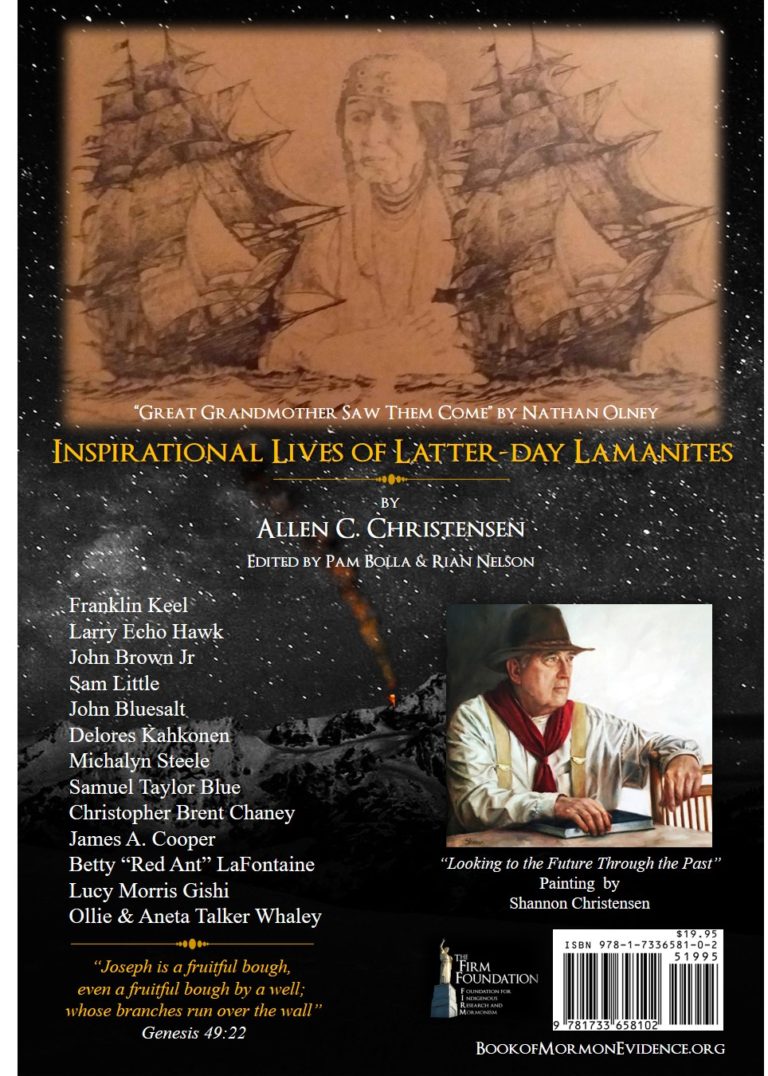
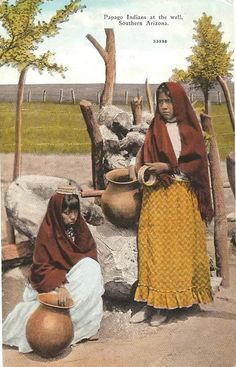
But, behold, verily, verily, I say unto thee, no one shall be appointed to receive commandments and revelations in this church excepting my servant Joseph Smith, Jun., for he receiveth them even as Moses. D&C 28:2

First Vision by Ken Corbett

“Joseph Smith, the Prophet and Seer of the Lord, has done more, save Jesus only, for the salvation of men in this world, than any other man that ever lived in it. In the short space of twenty years, he has brought forth the Book of Mormon, which he translated by the gift and power of God, and has been the means of publishing it on two continents; has sent the fulness of the everlasting gospel, which it contained, to the four quarters of the earth; has brought forth the revelations and commandments which compose this book of Doctrine and Covenants, and many other wise documents and instructions for the benefit of the children of men; gathered many thousands of the Latter-day Saints, founded a great city, and left a fame and name that cannot be slain. He lived great, and he died great in the eyes of God and his people; and like most of the Lord’s anointed in ancient times, has sealed his mission and his works with his own blood; and so has his brother Hyrum. In life they were not divided, and in death they were not separated!” D&C 135:3