“This section of the text bears the heading “The prophecy of Samuel, the Lamanite, to the Nephites.” Helaman 13:1 explains the context:
“And now it came to pass in the eighty and sixth year, the Nephites did still remain in wickedness, yea, in great wickedness, while the Lamanites did observe strictly to keep the commandments of God, according to the law of Moses.”
Throughout the Book of Mormon, the law of Moses was an important part of the culture. Obedience of the law was a key indicator of the righteousness of the people, as this passage shows. Presumably the Lamanites began living the law of Moses as part of their conversion by Nephi and Lehi. (See Helaman 15:5, where Samuel emphasizes this point).
In about 6 B.C., “Samuel, a Lamanite, came into the land of Zarahemla and began to preach unto the people” (Helaman 13:2). He preached “many days” but was rejected. He was going to return home but the Lord told him to “return again” and preach. When the people would not let him into the city—Samuel identifies it as “this great city of Zarahemla”—he “got upon the wall thereof” (Helaman 13:4, 12). What kind of a wall could a man “get upon” the way the scripture describes Samuel’s action? Certainly not the wall depicted in the iconic painting by Arnold Friberg. (Picture Right)
Although the painting depicts an undoubtedly dramatic scene, it is nothing remotely comparable to what the text describes. Arnold Friberg specifically set his artwork in Central America, and many if not most LDS have been raised with this understanding of the setting for the Book of Mormon. Overcoming these long-held mental images is one of the challenges of changing the paradigm from Central America to North America.
What would be a more accurate image? [See Below] The text speaks of “throwing up banks of earth… and also building walls of stone to encircle them about, round about their cities and the borders of their lands” (Alma 48:8).
Scene depicting an Early Woodland/Adena (2800-2000 B.P. gathering at a ceremonial earthwork in the Hocking River Valley. The Adena people of this period constructed circular earthen enclosures which were used as sites for ceremonies and social events. A hunter can be seen holding spears and an atlatl as he oversees the ceremony taking place, with Adena men and women performing a ritual using wolf skins. In the distance can be seen the encampment which would be constructed for use during ceremonial periods until participants returned to their home settlements in the region. The large enclosure seen here is modeled on similar earthworks along the Hocking River in Athens County, Ohio.Tickets Here
Moroni’s America continued, “They built breastworks of timbers; “they had encircled the city of Bountiful round about with a strong wall of timbers and earth to an exceeding height” (Alma 53:4). These are good descriptions of Hopewell sites. They built mostly with earth and timber, but sometimes they built walls of stone by piling stones. Perhaps the actual wall Samuel “got upon” was more like the one shown in the painting (above), although more likely topped with timber, (as shown below left).
The likelihood that Samuel stood on a typical Hopewell wall is attested later in the account. After Samuel had prophesied, many Nephites became angry.
Recreated Hopewell Wall by Wayne May
“But as many as there were who did not believe in the words of Samuel were angry with him; and they cast stones at him upon the wall, and also many shot arrows at him as he stood upon the wall; but the Spirit of the Lord was with him, insomuch that they could not hit him with their stones neither with their arrows” (Helaman 16:2). The inability of the Nephites to hit Samuel had to be quite miraculous, because “when they saw that they could not hit him, there were many more who did believe on his words, insomuch that they went away unto Nephi to be baptized” (Helaman 16:2).
Had Samuel been standing on a wall such as the one in the Friberg painting, it would have been a miracle for the people to hit him, not to miss him. Furthermore, when they saw that they could not hit him with their stones and their arrows, they cried unto their captains, saying: Take this fellow and bind him, for behold he hath a devil; and because of the power of the devil which is in him we cannot hit him with our stones and our arrows; therefore take him and bind him, and away with him. And as they went forth to lay their hands on him, behold, he did cast himself down from the wall, and did flee out of their lands, yea, even unto his own country, and began to preach and to prophesy among his own people (Helaman 16:6-7).
Samuel had to be close enough that the people could seize him and bind him. And the wall had to be low enough that he could “cast himself down” from it. This entire description suggests the kind of wall built by Hopewell Indians, and not a high wall made of carved blocks of stone.
When Samuel gets upon the wall, he introduces himself and declares an alarming prophecy:
Behold, I, Samuel, a Lamanite, do speak the words of the Lord which he doth put into my heart; and behold he hath put it into my heart to say unto this people that the sword of justice hangeth over this people; and four hundred years pass not away save the sword of justice falleth upon this people… And four hundred years shall not pass away before I will cause that they shall be smitten; yea, I will visit them with the sword and with famine and with pestilence. (Helaman 13:5, 9), emphasis added.”
“What is the significance of the four hundred years? (Note 190) Genesis chapter 15 provides a Hebrew background.
13 And he said unto Abram, Know of a surety that thy seed shall be a stranger in a land that is not theirs, and shall serve them; and they shall afflict them four hundred years;
14 And also that nation, whom they shall serve, will I judge: and afterward shall they come out with great substance.
The Nephites to whom Samuel was preaching would recognize the symbolic significance of his prophecy. There are several references in the Book of Mormon to the children of Israel being in bondage and being freed. Ancient Israel was afflicted for four hundred years before the nation that subjected them would be judged; now the sword of justice would fall on the Nephite nation in four hundred years. Samuel’s prophecy, particularly in the context of the law of Moses referenced just a few verses earlier, demonstrates the Book of Mormon is a Hebrew text and should be interpreted with that in mind.
Samuel tells the people of Zarahemla that, “if it were not for the righteous who are in this great city, behold, I would cause that fire should come down out of heaven and destroy it” (Helaman 13:13). Later we see that the city of Zarahemla was burned (3 Nephi 9:3).
He names the city of Gideon, and then says “wo be unto all the cities which are in the land round about, which are possessed by the Nephites” (Helaman 13:16). Because Zarahemla and Gideon are on opposite sides of the River Sidon, Samuel’s prophecy suggests the cities destroyed in 3 Nephi are along that river.
Samuel condemns the people for having their hearts set on their riches, so the judgment that takes place in 3 Nephi is appropriate. These cities are buried in the earth and the water, and covered with earth, and burned—completely destroying the material wealth that the people valued over living the gospel.
I will address the actual destruction in the chapter on 3 Nephi, but it’s important to note that Samuel’s prophecy is not necessarily limited to the immediate vicinity of Zarahemla. For example, Samuel prophesied that “there shall be many mountains laid low, like unto a valley, and there shall be many places which are now called valleys which shall become mountains, whose height is great” (Helaman 14:23). Yet when the destruction is described in 3 Nephi, only one mountain is mentioned, and it is formed when “the earth was carried up upon the city of Moronihah that in the place of the city there became a great mountain” (3 Nephi 8:10). This suggests fulfillment of Samuel’s prophecy in other parts of the world; even in the case of the mountain on Moronihah, a “great mountain” is not the same as a mountain “whose height is great.” Moroni’s America page 206-9 by Jonathan Neville.
Note 190: “Proponents of a Mesoamerican theory claim the 400 year prophecy should be viewed in the context of a Mayan culture the text never mentions. For example, in Mormon’s Codex, Sorenson writes, “An intriguing possibility of a detailed Mesoamerican correspondence with the Book of Mormon arises in connection with the prophecy of Samuel. He had announced that “four hundred years pass not away save the sword of justice falleth upon this people” the Nephites (Helaman 13:5, 9). (Here he nearly echoes Alma in Alma 45:10…) Another cycle in the numeration of some [Mayan] groups was 400 years. The 400-year prophecies by Alma and Samuel would be on a potentially correct calendrical target, even though so far we lack documentation form secular sources that prophecies occurred for a like period.” In my view, this is an illusory correspondence that is much better explained by the passage in Genesis, as are the other references to 400 years (Alma 45:10, Mormon 8:6, and Moroni 10:1).” Moroni’s America page 208
About Hopewell Walls
Reconstructed Hopewell Timber Stockade at Hopewell Mound Group, Ohio, covered with a type of cement.
The website JosephKnew.com said, “This [Hopewell Culture] was a Native American culture that developed and spread throughout the Midwest. It is not associated with any specific tribe, but rather is a way of life that was common throughout the heartland of North America, Indiana, Minnesota, Nebraska, Mississippi, and the Ohio Valley. The main concentration was found in these areas, but evidence of them can be found in other areas as well.
They built their cities mainly near waterways such as rivers and lakes that could support their trade system. They created large enclosures of earthen walls 2 -3 meters high. These walls outlined shapes such as squares, circles and octagons. They created entire cities using geometry and astronomy. Their sacred enclosures often occupied spaces of over 100 acres and were laid out in distinctive patterns aligned with the sun, moon and stars.”
Samuel the Lamanite and additional Information including the Indian Removal Act
The Book of Mormon, which contained Lehi’s prophecies, was published in March, 1830. The infamous “Indian Removal Act” was passed by Congress on May 28, 1830.
In speaking to the Lamanites and others who are disobedient, the Book of Mormon said, “and he will take away from them the lands of their possessions, and he will cause them to be scattered and smitten.” 2 Nephi 1:10-11
At the beginning of the 1830s, nearly 125,000 Native Americans lived on millions of acres of land in Georgia, Tennessee, Alabama, North Carolina and Florida–land their ancestors had occupied and cultivated for generations. By the end of the decade, very few natives remained anywhere in the southeastern United States. Working on behalf of white settlers who wanted to grow cotton on the Indians’ land, the federal government forced them to leave their homelands and walk thousands of miles to a specially designated “Indian territory” across the Mississippi River. This difficult and sometimes deadly journey is known as the “Trail of Tears.”
“Samuel [The Lamanite] here gives important keys to identifying the Lamanites in the latter days. We should be looking for a people who were “driven to and fro upon the face of the earth.” They will have been “hunted, and smitten and scattered abroad, having no place for refuge.” This is an accurate description of the fate of the American Indians, as is well known in history. The Lord sent Oliver Cowdery, Parley P. Pratt and others to the Lamanites—Indian tribes—in New York, Ohio, Missouri and Kansas.
Although Indians had been “to and fro” ever since the Europeans arrived, the Indian Removal Act—enacted in 1830 after the Book of Mormon was translated—gave President Andrew Jackson authority to negotiate removal treaties with Indian tribes who lived east of the Mississippi. Before becoming President, Jackson had waged war against the Indians, including the Creek nation that lost 22 million acres of land in Georgia and Alabama. By 1837, most of the southeastern tribes had been removed from their homeland, “smitten and scattered abroad,” with no place for a refuge other than government-operated reservations that were, in many cases, difficult places to live and without resources. The legacy of this treatment continues today, with many Indian nations suffering from high levels of poverty, substance abuse, and poor health.” By contrast, Mayan peoples in Central America generally occupy their ancestral homes.”Jonathan Neville, Moroni’s America
Map by Worksofjoseph.com
The southern Kingdom of Judah was taken into Babylonian captivity about 570 BC. Since that time they have been scattered all over the world similar to the Native Americans who were scattered during the middle of 19th century.
Today 2021, there are just over 15 million Jews in the world and about 2 million Native Americans. Have we forgotten that the Hebrew and the Native Americans are blood relatives. A scattering has happened to both as well as their numbers are few as they are truly scattered everywhere.
The Jew, of whom the Lamanites are a Remnant
“And again, I command thee that thou shalt not covet thine own property, but impart it freely to the printing of the Book of Mormon, which contains the truth and the word of God—Which is my word to the Gentile, that soon it may go to the Jew, of whom the Lamanites are a remnant, that they may believe the gospel, and look not for a Messiah to come who has already come.” D&C 29:26-27
“Which is my word to the Gentile, that soon it may go to the Jew, of whom the Lamanites are a remnant, that they may believe the gospel, and look not for a Messiah to come who has already come.” D&C 19:27
“And then shall the remnant of our seed know concerning us, how that we came out from Jerusalem, and that they are descendants of the Jews.” 2 Nephi 30:4
Other Rock and Earth Walls in North America
“Scattered throughout the woods and fields of New England lie the remains of an ancient civilization. These remnants are enigmatic stone structures that predate European settlement. Standing stone circles, hundreds of impressive and elaborate stone chambers, massive balanced stones, over one million stone cairns, stone animal effigies, solstice and equinox markers and many other unexplained structures litter the landscape. Historical texts, colonial reports, carbon dating, astro-archeological research and Native American oral traditions all support this contention. Written by Jim Vieira a stone mason, researcher, freelance writer and member of the Northeast Antiquities Research Association… The Adena, Hopewell and Mississippian mound building cultures built earthen mounds, pyramids and geometric enclosures that showed an extremely high degree of engineering and mathematical skill. Shell and midden mounds were built from Florida to Maine. Mystery stone walls and forts were built throughout the midwestern states…
America’s Stonehenge in Salem, New Hampshire is probably the most elaborate and controversial site in New England. It has been described by Dr. Edward J. Kealy, professor of History at Holy Cross University as “potentially the most important stone complex in the Northern Hemisphere”. Featured on the History Channel and other programs, this 30 acre complex is a mixture of stone chambers, stone solstice and equinox markers, cairns, chimneys, fireplaces and stone drains. The two largest stones here weigh 45 and 70 tons. The site has been carbon dated to at least 2000 B.C. by scientists at Geochron Labs of Cambridge, Mass after dating 13 different test pits. That dates it’s construction half a millenia before the final construction phase of Stonehenge, and like Stonehenge it possesses many precise astronomical alignments. Stone markers throughout the site provide over 200 alignments with the sun, moon and 45 different stars which have been verified by independent researchers. One alignment wall allows a person to observe the southern most standstill of the moon on its 18.61 year metonic cycle. A period of 18.61 is required to carry the moon to all of its possible positions in respect to the sun. This event is marked at Mystery Hill as the moon passes above the winter solstice stone and then aligns with the terminal of this wall…
Thomas Jefferson, Yale President Ezra Stiles, Cotton Mather, Roger Williams and countless others described the different structures they saw and theorized about who the builders might be. There is certainly a mystery here and the closer you look, the stranger it gets.”
Library of Congress and NIST Build a Case for Waldseemüller Map Display
America’s birth certificate—the only known copy of cartographer Martin Waldseemüller’s 1507 world map depicting the continental landmasses in the Western Hemisphere and naming them “America”—survived out of sight in southwestern Germany for nearly five centuries. Through the combined efforts of Librarian of Congress James H. Billington; Margrit Krewson, the Library’s former German and Dutch area specialist, and other members of the Library’s staff over a 15-year-period, the map was able to leave Germany and come to the Library of Congress in April 2007. (See Information Bulletin, June 2007.)
“America” is identified in the top portion of this segment of the 1507 Waldseemüller map. Geography and Map Division.
To preserve and protect the map while millions view it in the “Exploring the Early Americas” exhibition, the Library is displaying it in a sealed oxygen-free encasement filled with argon, an inert gas.
A crane was used to hoist the map case into the Thomas Jefferson Building, where it took its place as part of the “Early Americas” exhibition. – Dianne van der Reyden
The Library’s Preservation Directorate experts and National Institute of Standards and Technology (NIST) engineers spent nearly a year designing the encasement. Although NIST developed the same technology for the National Archives to preserve and display the Declaration of Independence, the Constitution, the Bill of Rights and their transmittal letters, this will be “the largest encasement ever built for a single paper document,” according to Dianne L. van der Reyden, the Library’s director for preservation.
Printed from inked wood blocks onto 12 sheets of sturdy rag paper, the “America” map measures 4-by-8 feet when the sheets are assembled. According to van der Reyden, the challenge was to fabricate an encasement large enough to house the map, light enough to meet Jefferson Building floor-load limits and flexible enough to withstand atmospheric pressure changes.
The answer was an aluminum monolithic block, which was machined to create the encasement base that van der Reyden said “can be best described as a tray.”
A team of conservators mounted the map on an archival-quality backing board, which in turn was mounted to an aluminum platform, secured within the encasement base and covered with a sheet of laminated, tempered, nonreflective glass.
An aluminum frame holding the glass was secured to the base with 96 bolts; when tightened, the bolts seal the case. The encasement measures about 116-by-73-by-4 inches and weigh about 2,200 pounds; the glass alone weighs between 400 and 500 pounds.
The base containing the map rests on a specially designed support structure that will enable the map to be displayed upright.
This detail of the map shows an image of explorer Amerigo Vespucci.
Library preservationists supervised installation of the map within the encasement, which was assembled and tested at NIST in August and September and then transported to the Library and hoisted through a second-floor Jefferson Building window. Installation and final testing were completed the end of October.
The hermetically sealed encasement includes valves for the replacement of oxygen with argon gas. (Oxygen reacts with and degrades organic material such as the map’s paper and ink.) The encasement contains monitoring devices to measure internal environmental conditions. The seals are expected to last a minimum of 20 years.
The Waldseemüller Support Fund, established by Virginia Gray and the Gray family in memory of Martin Gray, provided funding for the design and fabrication of the map encasement. The Alcoa Company, the world’s largest aluminum producer, donated the monolithic aluminum blocks from which the encasement base and frame were machined. The Alcoa Foundation provided funds to help fabricate the encasement and enable the Library to incorporate the needed environmental monitoring capabilities.
Understanding the Many Names of AMERICA! Amerigo Vespucci Richard Amerike Christopher Columbus John Cabot Amalric Himmelreich Ommerike Oh-ma-reeg-eh Pilgrims Mayflower Compact Language of the Vikings Lands beyond Greenland Amteric, or the Land of (Leif) Eric
Gordon B. Hinckley
“I should like to say a few words about America…No land is without its beauty, no people without their virtues, and I hope that you who come from elsewhere will pardon my saying a few words concerning my own native land, America…surely this is a good land, a choice land, a chosen land. To me it is a miracle, a creation of the Almighty.” Gordon B. Hinckley Let Not Your Heart Be Troubled”, BYU Speeches of the Year, October 29, 1974, pp. 267-68 )
N. Eldon Tanner
“Nephi saw in vision also the coming of the Pilgrims, who came to escape religious persecution. He foresaw the coming to America of peoples from many nations, their wars and contentions. As Nephi said, they did humble themselves before the Lord. Thus the American colonies attained their independence and set up the government of the United States, all under the divine intervention of God in preparing this land for its divine destiny. We believe that both freedom and the continuing reformation that flourished here occurred in preparation for the restoration from heaven of the full gospel of Jesus Christ. That restoration began in the United States of America in the 1820s, through the [assistance] of the Prophet Joseph Smith, who was chosen by the Lord and who, through [visits] from heavenly messengers, received … records that contained the authentic record of early American peoples and God’s dealings with them. He received the priesthood and authority to reestablish the church of Jesus Christ in these latter days. At the time of this restoration, God the Father and His Son Jesus Christ actually appeared to Joseph Smith, as they had appeared to leaders of previous dispensations. They announced to him that Christ’s church would be reestablished upon the earth. … This restoration was the greatest event in the history of mankind since the birth, death, and resurrection of our Savior, Jesus Christ.” A Choice Land President N. Eldon Tanner, First Counselor in the First Presidency
Wilford Woodruff
“This work will fill the Rocky Mountains with tens of thousands of Latter-day Saints, and there will be joined with them the Lamanites who dwell in those mountains who will receive the gospel of Christ from the elders of Israel, and they will be united with the Church and the kingdom of God, and bring forth much good” (Discourses of Wilford Woodruff, p. 30).
George Q. Cannon
“Upon the land of North America, four hundred years after the birth of our Savior and Master, there stood at least one man who knew the Lord God Almighty as a distinct personality, a Being capable of communicating Himself to man. That man was Moroni, the son of Mormon, whose testimony abides now and must abide through all the ages to come.”—George Q. Cannon, Life of Joseph Smith, p. 21.
Alvin R. Dyer
While the Reformation and the surge for freedom were gaining momentum in Europe and England, events were transpiring that led to the rediscovery of the land of America, for God touched the heart of a mariner by the name of Christopher Columbus, who eventually pioneered a passageway to the promised land in 1492. But neither Columbus, the Nephites, nor the Jaredites were its original discoverers, nor did they establish the purpose of America’s destiny. This had already been established in the infancy of earth’s habitation. In these migrations they were but directed to the land of man’s beginning upon the earth…. In the course of time from the creation, in the days of Peleg (Gen. 10:16 (JST)), or about the year 2200 B.C., Just prior to the confusion of the languages, the single continent of land that had continued from creation was divided to produce the hemispheres as we now know them. But notwithstanding this, the geographic location of the Garden of Eden was made known to the Prophet Joseph Smith by revelation as here in the land of America, in Jackson County, Missouri, with Independence as the center place.” The Destiny of America by President Alvin R. Dyer October 1968
AMERICA (Look Unto the Rock Whence Ye are Hewn!) By Reverend Ken Kemble
“Hearken unto me, ye that follow after righteousness, ye that seek the LORD: look unto the rock whence ye are hewn, and to the hole of the pit whence ye are digged. Look unto Abraham your father, and unto Sarah that bare you: for I called him alone and blessed him, and increased him.’ – (ISAIAH 51:1-2)
IT is generally assumed and taught that America is named after the explorer Americus Vespucci (1451-1512). Others claim that America is named after Richard Ameryke, enthusiastic supporter and financier of the explorer John Cabot (1450-1498).
Thus, America (amalric, himmelreich) literally means Kingdom of Heaven.” Reverend Ken Kemble
Amerigo Vespucci
Amerigo Vespucci
The name America, however, is actually much older, and has been attached to this great land since the time of the Vikings and before, hundreds of years before the time of Columbus, Cabot or Vespucci.
Amerigo Vespucci March 9, 1454 – February 22, 1512) was an Italian explorer, financier, navigator, and cartographer who was born in the Republic of Florence. Sailing for Portugal around 1501–1502, Vespucci demonstrated that Brazil and the West Indies were not Asia’s eastern outskirts (as initially conjectured from Columbus’ voyages) but a separate, unexplored land mass colloquially known as the New World. In 1507, the new continent was named America after the Latin version of Vespucci’s first name. Vespucci became a citizen of the Crown of Castile and died in Seville (1512). Wikipedia
Richard Amerike (or Ameryk)
Richard Amerike
“Richard ap Meryk, anglicised to Richard Amerike (or Ameryk) (c. 1440–1503) was an Anglo-Welsh merchant, royal customs officer and, at the end of his life, sheriff of Bristol. Several claims have been made for Amerike by popular writers of the late twentieth century. One was that he was the major funder of the voyage of exploration launched from Bristol by the Venetian John Cabot in 1497, and that Amerike was the owner of Cabot’s ship, the Matthew. The other claim revived a theory first proposed in 1908 by a Bristolian scholar and amateur historian, Alfred Hudd. Hudd’s theory, greatly elaborated by later writers, suggested that the continental name America was derived from Amerike’s surname in gratitude for his sponsorship of Cabot’s successful discovery expedition to the ‘New World’. However, neither claim is backed up by hard evidence, and the consensus view is that America is named after Amerigo Vespucci, the Italian explorer.” Wikipedia
John Cabot
Aalric or Amalaric
Amalric or Amalaric (also Americ, Almerich, Emeric, Emerick and other variations) is a personal name derived from the tribal name Amal (referring to the Gothic Amali) and ric (Gothic reiks) meaning “ruler, prince”.
Equivalents in different languages include: French: Amaury (surname/given name), Amalric (surname), Amaurich (surname), Maury (surname) German: Amalrich, Emmerich Italian: Amerigo, Arrigo Hungarian: Imre Latin: Amalricus, Americus, Almericus, Emericus Greek: Emerikos Polish: Amalaryk, Amalryk, Emeryk Dutch: Emmerik, Amerik, Hamelink Portuguese: Amauri, Américo, América Spanish: Américo Serbo-Croatian: Mirko Wikipedia
Himmelsreich
Alternative forms Reich der Himmel (“kingdom of the heavens; literal translation from Koine Greek: βασιλεία τῶν οὐρανῶν (Matthew 20:1)”)
German to English: Himmelreich: kingdom of Heaven Wiktionary
Reverend Ken Kemblen continues, “A marvelous appellation,’ wrote Miskovsky, ‘and calculated to make us thoughtful.’ Indeed, one might almost believe that this name, apparently given to our land by mere accident, was in reality prophetic, looking forward to a bright day to come.
America … Kingdom of Heaven! God’s country!
Ommerike’ (oh-meh- ric-eh)
It has been suggested that ‘America’ is derived from the old Norse word ‘Ommerike’ (oh-meh- ric-eh), that was evidently in common use among the North Atlantic sailing fraternity from around the beginning of the 11th century.
Voyages of Christopher Columbus
Omme means ‘out there,’ ‘final,’ or ‘ultimate’ Rike (spelled a number of ways in ancient Norse manuscripts such as rige, rega, rike, rikja, and reykja) means ‘great land’, ‘kingdom’, ’empire’. It is the equivalent of the Gaelic ‘righ’ and the German ‘reich’.
The old Norse ommerike, however, is simply a slightly corrupted form of the still more ancient Visigothic term amalric.(2)
In fact, Professor Louis Miskovsky of Oberlin College wrote in the 1920’s that America is ‘simply another form of the old Gothic Amalric’. Amal means ‘heaven’; and ric means ‘Kingdom’, just as in the old Norse rike. We find the same old word handed down to us today in the modern German term ‘Himmelreich’, used for, the Biblical ‘Kingdom of Heaven.’ (3)
Throughout our history men and women have fought all manner of trouble to come to this great land. It was a new mysterious ‘Promised Land’; a land flowing with milk and honey, prepared for us by the Hand of the Almighty. They came usually at risk of life, and sometimes lost it. But in their hearts was a righteous fervor. They wanted not only to be free, but to establish a place where they could live for God unfettered by the chains of religious persecution!
Pilgrims Mayflower Compact
The Pilgrims were Separatists (a dirty word nowadays, but highly scriptural – II Corinthians 6:17). They settled here in the early 1600’s and established a ‘Civil body Politick’, and it is made very clear in the Mayflower Compact that they did so under God, referring to God and the Christian Faith repeatedly throughout the Compact. The Compact even begins with the words ‘In the name of God, Amen.’ They lived their lives according to the Word of God, and to them this was truly America, the Kingdom of Heaven.
Pilgrims Landing
By the early 19th century, the United States of America was a marvel and a wonder to all the world. Our God had placed us above all the other nations of the earth, just as He had promised to do if we were obedient (Deuteronomy 28: 1). We were so blessed of God and so full of strength, liberty and bounty that one almost had to come to America and see it to believe it. And that they did; by the hundreds.
Alexis de Tocqueville
One of those who curiously came over for a visit to see this great new wonder called the United States of America was a French historian and researcher named Alexis de Tocqueville. He came to see what made America ‘tick’. In 1826, after he had been here for a tirne, he came to a conclusion. He said: ‘I sought for the greatness and genius of America in her commodious harbours and her ample rivers, and it was not there; in her fertile land and boundless prairies, and it was not there. Not until I went to the churches of America and heard her pulpits aflame with righteousness did I understand the secret of her genius and power. America is great because she is good, and if America ceases to be good America will cease to be great.’
Back in those days, there were indeed many mighty men of God in the pulpits across America. Men like Jonathan Mayhew, Samuel West and countless others stirred their congregations on to holy living. They preached righteousness. They preached obedience to God. They preached the Kingdom of Heaven. The pulpits of America were, as de Tocqueville states from firsthand experience, aflame!
Sadly, I see a totally different America when I look around me and when I listen to the news on the radio. Lawlessness abounds in the land of the free and home of the brave. In fact, it becomes more and more evident if we take an honest look at life in America today that we are neither free nor brave. We are in bondage. A bondage of our own making. The bondage that results from turning away from God.
Matthew 24:12, in speaking of our present day, says: And because of the abundance of lawlessness (rebellion against God’s Law), the love of many shall become cold.’
We have indeed become cold, and have lost our first love. We have become a wicked and adulterous generation, calling evil good and good evil. We accept all manner of wickedness in the name of tolerance, and are called ‘un-christian’ if we don’t. Forgiveness of the wicked seems to be the principal concern, while the cries for the re-establishment of righteousness in the land are made out to be the ravings of an ogre.
We have brazenly turned our back on God and despised the inestimable treasure of His Holy Word. We have become a nation of infidels, reprobates and debauchees. We allow our unborn to be slaughtered without the blink of an eye, and talk about it as though it were merely some trivial political issue. We accept decadent sexual perverts as normal and castigate anyone who dares suggest that they are what they are; wicked
Our nation’s Capitol is filled, even at it’s highest levels, with sexual deviants, liars and felons; and nobody even seems to care.
More and more, the lovers of righteousness and those that love God’s Holy Word are called ‘hate mongers’ and the wicked are smothered with sympathy and called simply ‘human’ or even ‘good!’
Righteousness is more and more becoming a relic of the distant past. It is now an undesirable trait. It simply doesn’t fit in to the communistic New World Order that everyone seems to want.
Jesus and Barabbas
Just as the angry mob so long ago shouted ‘Give us Barabbas’ and ‘Crucify Jesus’, we have said ‘Away with Christ’, ‘Away with His Word’, ‘Away with Christian ideals’, and we have welcomed Barabbas with open arms! Just as in the days of Ezra and Nehemiah, we have married strange wives and have begotten a whole new order, both in our society and in our churches, that is contrary to the Divine order! Just as the mighty Samson, we have laid our head in the lap of Delilah, and have been lulled to sleep by the constant subtle stroking of the world upon our mind. We have lost our vision and our strength.
America, look around. You have ceased being good; and whether you realize it or not, you are no longer great; not like you once were. And you have only yourselves to blame. De Tocqueville’s prophetic words loom ominously overhead. Your demise is sure if you do not repent with a humble and contrite heart, and look unto the Rock whence ye are hewn for grace and mercy.
The God of Heaven is the God of your fathers as far back as the history of the faith goes. He is the Lord your God, and He is a jealous God. He will not tolerate this wanton rebellion and harlotry! Submit yourselves under the Mighty Hand of God! Forsake all of this foul wickedness! Turn back to your God (‘In God We Trust!) and obey His Commandments and Statutes. Serve Him with your whole heart. Draw nigh to God, and He will draw nigh to you! Humble yourselves in the sight of the Lord, and He will, once again, lift us up!
For He hath said: ‘If My people, which are called by My Name, shall humble themselves, and pray, and seek My Face, and turn from their wicked ways; then will I hear from heaven, and will forgive their sin, and will heal their land.’(II Chronicles 7:14)
Amen, Lord! Let It be! May America be truly America, Kingdom of Heaven, once again!” Reverend Ken Kemblen
Did The Vikings Name America? by Dick Wicken
A number of theories regarding the origin of the name “America” have been advanced, but none have been proved true.
First, and most generally accepted, is that the name “America” is derived from the first name of Amerigo Vespucci, an Italian mapmaker and self-promoter who explored the seacoasts of North America in the decade following Christopher Columbus’ “discovery” of the New World for her most Catholic majesty, Isabella of Spain.
However, there has been no substantiation that this derivation of the name “America” is correct: and there is other evidence indicating that Amerigo Vespucci was not above turning to personal advantage an odd coincidence of phonetics in the sound of his first name and a composite word of ancient Norse invention, evidently in very current use by the North Atlantic sailing fraternity from about the year 1000 until well past the times of Columbus, Cabot and Vespucci.
The claim that the name of the entire continent, North and South, was derived from a given name is odd in itself, for common practice at the time would indicate using a man’s family name to derive an identity for a locality.
Secondly, and less generally accepted, is a theory emanating from Bristol, England, submitting that the name “America” was derived from name of one Richard Ameryke, a tax collector for King Henry VII as well as the city’s leading lumber merchant. Ameryke was an enthusiastic supporter and financial backer of the Italian navigator, John Cabot. Under letters-patent from Henry VII, dated 5 March 1496, Cabot set sail from Bristol in 1497, accompanied by his three sons.
Richard Ameryke
On 24 June 1497 he sighted Cape Breton Island and Nova Scotia, thus “discovering” the mainland of North America – about 600 years after the Vikings had done so.
There is no more factual substantiation of the Bristol theory of the origin of the name “America” than the highly questionable claims of Amerigo Vespucci.
Thirdly, the theory has been advanced that America was named for a Spanish sailor bearing the ancient Visigothic name of “Amalrick”.
Since these unproved – and quite possibly, unprovable – claims and theories are being advanced and accepted, it seems only right to submit a fourth unproven, equally logical and far more possible theory of the origin of the name “America”.
Therefore, it is herewith submitted that the word “America” is simply a phonetic derivation of an ancient Norse compound word “omme-rike“. In its simplest translation from the largely four-letter language of the Viking discoverers of the New World, it means “the remotest land”. The various parts of the New World were referred to in the Icelandic Sagas as Helluland (Stoneland), Markland (Woodland) and Vineland (Wineland). “Omme-rike” would have been the logical name to apply to the great land mass as a whole.
Norsemen
In support of this submission the following facts are listed for consideration:
The long-used and familiar name occurring in classic writings, “Ultima Thule,” designating a mysterious distant land. The meaning of these two words is singularly interesting in itself. Ultima means “the end,” “remotest,” and Thule is derived from, not Latin, but from the old Norse word “Thyle,” which means to “speak”. It is safe to assume that when the Norse word meaning speech is used, the speech being referred to is Norse. The simplest translation of “Ultima Thule” is “the farthest out land where Norse is spoken”. The obvious conclusion is simply that “Ultima Thyle” means what it says. The analysis of the word in question, “America,”as to its possible meaning in old Norse, the language of the Vikings, still current in a slightly changed form in Iceland and in isolated parts of Norway.In old Norse, the word “America” strongly suggests two separate words, “omme” and “rike”. “Omme” means “over,” “out,” “out there,” “the end,” “final,” “furthest out,” “most remote,” “very last,” or “ultimate” Rike” appears in lively existence today both in contemporary Norse, and its use by the Vikings to designate large land masses is amply attested to today in the names of places in the areas of Viking operations. Sometimes the word is slightly modified, but its presence is as easily recognized as its meaning. In old Norse it is pronounced rica as in America, It is spelled in a number of ways, but always pronounced the same: rige, rega, rike, rikja, reykja. In German it appears as “reich”. It always means the same thing: country, land, kingdom empire. Examples of the use of this ancient Norse word can be found in the following:
Norege, pronounced nor-reeg-eh, meaning Norway. Sverige, pronounced sver-reeg-eh, meaning Sweden. Frankrike, pronounced frankr-reeg-eh, meaning France. Osterike, pronounced oste-reeg-eh, meaning Austria.
The above should be sufficient to prove that it was common practice for Vikings to use this word to designate countries.
Combined, the old Norse words “omme” and rike” would be pronounced “Oh-ma-reeg-eh” – virtually identical to “America” – and would translate into an almost identical meaning with the oft repeated classic term “Ultima Thule (Thyle)” when one considers that Norse was a spoken, not a written, tongue, and that Latin was the only written language of the time; additional inferences are obvious.
On one of Verrazzano’s maps, the coast of New England is oddly named “Norumbega”. Naturally, one cannot expect a “segener” like Verrazzano to pronounce Norse words correctly, much less spell or understand them. Basic study on the possible Norse origin of the word “Norumbega,” bastardized by an ignorant Latin, suggests much support for the idea advanced: “Norum” is nothing else than the Norse word “naerom,” meaning “near under” (and contains the stem word “om” from “omme”) and “bega” is merely a misspelled-and-mispronounced Italian version of the Norse word “rege” or “rike”. I believe it is obvious that “Norumbega” is an Italianized version of the Norse word “Naerom-rega,” “Naeromrike,” or, possibly, “Naerom-vikja” which would translate into the meaning of “the near-under regions” or “the near-under-harbor”. But its real meaning is even clearer: It is only a slightly modified version of “omme-rike”.
Finn Magnussen has established that Columbus did visit Iceland at least once in 1477, fifteen years before undertaking his first voyage to the New World. He could have easily heard of Ommerike and could even have visited there in a Norse ship. Previous to the great plague, Iceland and Greenland – and the lands beyond – are believed to have supported a population numbering into the hundreds of thousands. One of the major ports doing business in this area was Bristol, England. It was the home base for John Cabot and source of the Bristol Theory of the origin of the name “America”. The first White man to see America was Bjarne Herulfssen, wind-blown upon it while bringing a cargo of wood (reader please make note of the cargo) from Norway to Iceland, 600 miles across open seas. It is rather naive to assume that what happened to Bjarne Herulfssen did not happen to others, Bristol traders as well as Norsemen. It is, I believe, quite safe to assume that Bristol ships had sailed the Ommerike coast long before John Cabot – if only by accident – and referred to the place by its Norse name. The key to the main reason that the Icelanders and Greenland Norse would never have abandoned contact with Ommerike can be found in the cargo of Bjarne Herulfssen’s ship. As there are no forests on either Iceland or Greenland and wood was needed to sustain life (both to keep warm in the rigorous winter and as building material for shelter for humans and livestock as well as for building and repairing ships), a source of supply of lumber had to be maintained. It had to come either from Europe or Ommerike. Europe meant a six hundred mile voyage across the open seas, with plenty of chance of disaster from the elements, desertion of the crews on arrival and payment of some kind to secure lumber; while a voyage to Ommerike meant a two hundred and fifty mile open sea voyage from Iceland to Greenland with landfall almost certain, another two hundred and fifty miles to certain landfall on the Ommerike coast, and from there on a cold but relatively safe coastal voyage to endless forests that were free for the taking – with little chance that the crew would desert or refuse to return to Iceland. Any present Icelander, given a similar choice of voyages, would set his sails for Ommerike, not Europe.
Vatican records in Rome are reported to establish that a Bishop Eric Gnuptson (probably Knutssen), Bishop of Greenland and neighboring regions, arrived in Ommerike in the last year of Pope Pashal II, stayed for at least one year and then returned to Rome via Greenland and Iceland. His ministry is said to have included seventeen parishes. There is also a reported Norwegian record granting the King’s authority to one George Knutsen to recruit the sons of leading Norwegian families to go to the lands beyond Greenland to search out and induce to return to the fold those colonists that had drifted off to live with the natives. The Vatican could well have had very real practical reasons to be reluctant to place too great an importance to the Norse adventures in the New World or to publicize them. The Church’s authority always diminished in direct proportion to the northward distance from Rome. The grip on the countries around the Norwegian sea was always precarious, and any real hold in Iceland or Greenland was virtually non-existent. Undoubtedly it seemed – and proved to be – to the Vatican’s advantage that the discovery and all ensuing “rights” to the New World be credited to the enterprise and operation of nations ruled by devout Christians.
Columbus
The name of this wondrous land, Ommerike, was so well established, so totally known and accepted, such common knowledge that none of the Italian navigators, not Cabot, Vespucci or even Columbus himself, ever thought of calling the place by any other name but the already long established Ommerike – America. The political expedients employed in this great delusion worked very well indeed, for both the nations of Spain and Portugal and for the Catholic Church. However, the days of such reasoning and shenanigans are long past and no reason remains, except indifference, to continue to deny that someplace in forgotten archives of the Vatican exist maps and written reports of Bishop Erie Knutssen and many others who visited the New World long before Columbus, voyaging over the Icelandic-Greenland route, and perhaps even as far as the islands of the Gulf of Mexico or even Mexico itself.
Bit by bit, in unexpected ways, the truth of the discovery of the New World surfaces, the last example of which is the authenticated Yale University Vinland map. There will be many more such scholastic breakthroughs and it is safe to predict that in some future rediscovered map or written report predating both the Italian Amerigo Vespucci and the Englishman Richard Ameryke, a name for the new lands will appear very close to “Ommerike”.
As stated before, these submissions are mere theories, with no more substantiation than the theories of other origins of the name “America”. Proof of them must be left to better and more thorough scholars than the writer. But the meaning of the word “omme-rike” in ancient Norse is sound, and should provide a new and different source to explore in searching out and authenticating a page of human history replete with all the ingredients of enchantment and subterfuge of a mystery novel.” Did The Vikings Name America? by Dick Wicken http://www.orange-street-church.org/text/viking.htm
Moundbuilders-Not from the Bering Strait!
“Traditional history lessons about the discovery of America also raise questions about the meaning of discovery itself. It is now universally recognized that neither Vespucci nor Columbus “discovered” America. They were of course preceded by the pre-historic Asian forebears of Native Americans, who migrated across some ice-bridge in the Bering Straits or over the stepping stones of the Aleutian Islands. A black African discovery of America, it has been argued, took place around 3,000 years ago, and influenced the development of Mayan, Aztec, and Inca civilizations. The records of Scandinavian expeditions to America are found in sagas — their historic cores encrusted with additions made by every storyteller who had ever repeated them. The Icelandic Saga of Eric the Red, the settler of Greenland, which tells how Eric’s son Leif came to Vinland, was first written down in the second half of the 13th century, 250 years after Leif found a western land full of “wheatfields and vines”; from this history emerged a fanciful theory in 1930 that the origin of “America” is Scandinavian: Amt meaning “district” plus Eric, to form Amteric, or the Land of (Leif) Eric.” THE NAMING OF AMERICA: FRAGMENTS WE’VE SHORED AGAINST OURSELVES BY JONATHAN COHEN
“Our Heavenly Father inspired Christopher Columbus in his discovery of America. Our Heavenly Father inspired the leaders of the renaissance period. Our Heavenly Father inspired men and caused that they would dream dreams and see visions and discover marvelous instruments and inventions which would enable them to set forth upon the oceans and to be led to the place where our Father in Heaven would have them led. Our Heavenly Father inspired the man who invented movable type, that His holy word, as found in the Bible, could be printed and disseminated widely to the people. Our Heavenly Father inspired the leaders of . . . the United States of America, that they might together, under His direction, having been raised up by God for the purpose, establish the Constitution of this country and . . . Bill of Rights, that . . . by the year of our Lord 1805 [there would be] a climate where our Heavenly Father could send into this period of mortality a choice spirit who would be known as Joseph Smith, Jr. His life’s mission would alter the course of all future events. Thus, came Joseph into the world.” Teachings of Thomas S Monson 2011 (Twenty-First Annual Joseph Smith Memorial Sermon, December 11, 1963) Read my Blog titled
ABSTRACT A STUDY OF THE HILL CUMORAH: A SIGNIFICANT LATTER-DAY SAINT LANDMARK IN WESTERN NEW YORK Cameron J. Packer Religious Education Master of Arts
“Early Church member W. W. Phelps wrote, “Cumorah.. .is well calculated to stand in this generation, as a monument of marvelous works and wonders” (Latter-day Saints’ Messenger and Advocate, November 1835, 2:221). With a stately monument of the Angel Moroni cresting its summit, and a yearly pageant commemorating salient events associated with the coming forth of the Book of Mormon, it is fulfilling the exact role that Phelps envisioned. However, the general population of the Church is relatively unfamiliar with the history of this significant Latter-day Saint landmark. The following thesis is an in depth study and documentation of certain historical aspects of the Hill Cumorah as a significant, sacred geographic location to members of The Church of Jesus Christ of Latter-day Saints.
Drumlins are common in central New York (between the south shore of Lake Ontario and Cayuga Lake
BACKGROUND INFORMATION “Man becomes aware of the sacred because it manifests itself, shows itself, as something wholly different from the profane.”1 To Latter-day Saints, the Hill Cumorah is an example of a place that has become different from its surrounding area. The following briefly outlines the pertinent information regarding the land that contains the hill held in reverence by The Church of Jesus Christ of Latter-day Saints. Physical Description Although the state of New York is currently one of the most eastern of the United States, in the early colonial days, western New York was still Indian territory and considered the western frontier of that day. One of the earliest descriptions of this frontier, which contained the Hill Cumorah, comes from Lewis Evans, a geographer and mapmaker of the early 18th Century. After observing the terrain that was occupied by the Iroquois Indians that included western New York, he wrote: To look from these Hills into the lower Lands, is but, as it were, into an Ocean of Woods, swelled and deprest [sic] here and there by little Inequalities, not to be distinguished, one Part from another, any more than the Waves of the real Ocean. The Uniformity of these Mountains, tho’ debarring us of an Advantage in this Respect, makes some Amends in another. They are very regular in their Courses, and confine the Creeks and Rivers that run between; and if we know where the Gaps are, that let through these Streams, we are not at a Loss to lay down their most considerable Inflections.2 From a higher vantage point, the land that contains the Hill Cumorah does, indeed, appear to be filled with “waves.” These waves, of course, are the hills of upstate New York. These hills, technically referred to as drumlins, are “regular in their courses” in that almost all of their long axes run in a north/south direction. The prevailing theory for this phenomenon is that drumlins are a result of glacial movement across the surface of the earth. When the glacier came in contact with a friction point, it deposited the sand, gravel, clay, and other debris along behind the friction point.3
Figure 1. Diagram of drumlin formation
In further describing drumlins, one geology text states the following: Individual drumlins come in all sizes. Mostly they are highly elongated, stretching parallel with the direction of ice movement for 3 km or more. They may be over 100 m or less than 10 m in height. Generally they have rather blunt rounded up-glacier ends and more elongated ‘tails’…. Quite often drumlins exist in dense ‘swarms’, showing that they probably grow in response to a particular set of subglacial environmental conditions.4 It is within these “swarms” of drumlins that we find the Hill Cumorah. The area between Rochester and Syracuse contains around 10,000 drumlins, with about 1,000 in the Palmyra vicinity alone, making it one of the largest drumlin fields in the world.5 A geo-hydrology report in the Church’s Real Estate Department gives further information regarding this specific drumlin field: Hill Cumorah and the surrounding terrain are remnant deposits of the great ice cap which covered the northern part of North America during the early. Quaternary time. Linear shaped hills of clayey and silty alluvium called till because of their ice origin, have been deposited over northern New York State in the form of drumlins. These drumlins are aligned near parallel to magnetic north and vary in height up to as much as 200 feet. Hill Cumorah is one of these being a little over 100 feet high (elevation 700 feet above mean sea level), and surrounded by moderately sloping small valleys with elevations ranging from 570-580 feet. The unconsolidated sediments of silt, clay, sand and gravel with interspersed boulders, comprising the valley bottom and slopes, and the drumlins are a mantle approximately 40-200 feet thick. The larger number includes the higher and thicker section of the drumlins. The ancient topography of the underlying bedrock is moderate within the Hill Cumorah part of Ontario County, but the southern and especially southwestern part of the county is comprised of many ancient ravines and ridges… Apparently, the drumlins represent the filling of crevasses within the ice mass which were aligned in the direction of ice movement. After the confining ice melted away, the drumlins slumped along their sides, with the northerly ends to be the last to have their supports removed, and thus, today the steeper slopes.6 The topographical map in the Appendix, page 155 of this work, shows the Hill Cumorah and some of the surrounding drumlins that are part of this particular drumlin field. As far as the appearance of the Hill Cumorah in the early Eighteenth Century, Oliver Cowdery provided some of the earliest accounts. In 1830, he visited the hill and wrote at least two descriptions. The first, in the July 1835 issue of the Latter-day Saints Messenger and Advocate states: “You are acquainted with the mail road from Palmyra, Wayne county, to Canandaigua, Ontario county, New York, and also as you pass from the former to the latter place, before arriving at the little village of Manchester, say from three to four, or about four miles from Palmyra, you pass a large hill on the east side of the road. Why I say large, is because it is as large perhaps, as any in the country. To a person acquainted with this road a description would be unnecessary, as it is the largest and rises the highest of any on that route. The north end rises quite sudden until it assumes a level with the more southerly extremity, and I think I may say an elevation higher than at the south a short distance, say half or three fourths of a mile. As you pass toward Canandaigua it lessens gradually until the surface assumes its common level, or is broken by other smaller hills or ridges, water-courses and ravines. I think I am justified in saying that this is the highest hill for some distance round, and I am certain that its appearance, as it rises so suddenly from the plain on the north, must attract the notice of the traveler as he passes by.” 7 A few months later, in October 1835, he again elaborated: “The hill of which I have been speaking, at the time mentioned, presented a varied appearance: the north end rose suddenly from the plain, forming a promontory without timber, but covered with grass. As you passed to the south you soon came to scattering timber, the surface having been cleared by art or by wind; and a short distance further left, you are surrounded with the common forest of the country. It is necessary to observe, that even the part cleared was only occupied for pasturage its steep ascent and narrow summit not admitting the plow of the husbandman, with any degree of ease or profit.” 8 The Christian Register, in 1831, corroborates Cowdery’s description: “This hill has since been called by some, the Golden Bible Hill. The road from Canandaigua to Palmyra runs along its western base, at the northern extremity the hill is quite abrupt and narrow. It runs to the south for half a mile then spreads out into a piece of broad table land, covered with beautiful orchards and wheat fields. On the east, the Canandaigua outlet runs past it on its way to the beautiful village of Vienna in Phelps. It is profusely covered to the top with Beech, Maple, Bass, and Whitewood—the northern extremity is quite bare of trees.” 9 These three accounts are all very similar, especially with their description of the rather barren, northern end of the hill. According to Dr. James L. Baer, emeritus professor of geology at Brigham Young University, this lack of natural forestation is due to the steep angles characteristic of the northern ends of drumlins. The northern exposure that this end of the drumlin receives is also not conducive to the growth of the sub-alpine variety of trees that grows indigenous to the Palmyra-Manchester region.10
Figure 2. ca. 1920 photograph from the north ascent of Cumorah, looking north. Palmyra Bean Packer Collection, Provo, Utah.
The hill lies about 3.0 miles southeast of the Joseph Smith, Sr., farm, and 4.0 miles south of the village of Palmyra (road distance). When traveling north from Canandaigua to Palmyra on New York State Highway 21 (also known as Canandaigua Road) the hill is on the east side.11 Pre-Colonial and Colonial Era After Moroni buried the gold plates in the side of the drumlin called Cumorah, it, and its hidden record, became lost to the knowledge of humankind. The first human contact with the hill after Moroni seems to be that of the Native Americans that assumed control of the area prior to the colonization of America. This region of western New York containing the Hill Cumorah was formerly known as “Genesee Country,” and when the first Dutch settlers arrived in this area in 1609, it was controlled by the Seneca tribe of Indians.12 The Seneca tribe was the strongest of several Indian nations that formed an alliance or league sometimes referred to as the Iroquois confederacy. The other tribes included in this alliance were the Mohawks, Oneidas, Onondagas, Cayugas, and later, the Tuscaroras. Together they dominated the New York area and formed a type of chain across the central part of New York with each tribe making up a link.14
Figure 3. Map of the Iroquois Nation, Harper’s Atlas of American History
These Indians, specifically the Seneca tribe that inhabited the land that now makes up Wayne and Ontario counties of New York, were intimately connected to the hills that made up their territory. In fact, the Seneca tribe’s original title was the “Great Hill People” due to the legend that they claim explains their origination. The legend states: The base of Genundewah Mountain, as it is usually called, they believed to have been encircled, when their nation was in its infancy, by a huge serpent, so vast in proportions as to coil himself entirely around the mountain. The head and tail of the monster united at the gateway of the path leading to and from the steep summit, and there were few who attempted to pass that escaped his voracious jaws. Thus environed, a long time elapsed, during which the people were not only besieged and reduced in numbers, but made to suffer from the poisonous breath of the reptile. Finally, their torment being beyond endurance, the Indians resolved to attempt a sally. Armed with such weapons as were at hand, they rushed down the hill towards the dreaded portal, where all were seized and swallowed with the exception of two children, who somehow contrived to overleap this fearful line of circumvallation, and so avoid the terrible fate of the tribe. These children, thus spared and orphanized, were reserved for a high destiny,—the destruction of the serpent. Mysteriously the information was imparted how this object could be accomplished. Direction was given to form a bow from a specified kind of willow, and an arrow from the same material. The barb of the arrow was to be dipped in poison and shot obliquely, to allow of penetration beneath the scales. Obeying divine injunction, the death of the serpent was effected. As the deadly arrow penetrated the skin, the huge monster was seized with violent convulsions. Uncoiled from around the mountain, and writhing in the most frightful contortions, the reptile threw up the heads of the people he had devoured, and rolled down the steep into the lake, sweeping down the timber in his course… From these two survivors sprang the new race of Senecas.15
While this well known Genundewah hill is at the head of Canandaigua Lake, it is probably safe to assume that this same group of Indians were aware of the Hill Cumorah just a few miles north. John D. Giles, director of the Hill Cumorah Bureau of Information in the 1940’s, and one who did considerable research on the Hill Cumorah wrote about the connection between the Senecas and the Hill Cumorah: It is of more than ordinary interest, if not of real significance, that Hill Cumorah is in the heart of the lands of the League of the Iroquois, the Six Nations, with its federal system of government that made it not only the most influential of all Indian groups, but that the Hill is in the heart of the lands of the Senecas, most powerful and influential of the Six nations in the League of the Iroquois. To what purpose if any, early Senecas put the Hill, with its overview of surrounding country, is not known, but it seems reasonable to believe that, although it was not near any of the larger Indian villages it served as a lookout in times of trouble. One of the old Indian Trails which became the route of the first road of the white man in this area, from Canandaigua Lake, two miles south of the Hill to Lake Ontario twenty-two miles north passing the “nose” of the Hill Cumorah. The finding of Indian arrow and spearheads in great quantities on the slopes of the Hill and in the fields surrounding it indicates that long after the great battle in which the Nephites were annihilated Hill Cumorah has been an important battle ground.16 Willard Bean’s17 experience coincides with Giles’ conclusion as he found many arrowheads and artifacts as he visited and worked on the Hill Cumorah in the early 1900’s. Some of these are shown below.
Figure 4. Collection of arrowheads found at or near the Hill Cumorah, Palmyra Bean Packer Collection.
Phelps/Gorham Purchase According to the Treaty of 1763, the land upon which the Hill Cumorah stood was still part of Indian territory, although title to the land had long been in dispute by the English, French, and the Dutch who each granted it out to different colonists.18 After the War of Independence, both the Massachusetts and New York colonies laid claim to the Genesee Country (western New York including the Finger Lakes region). On 16 December 1786, representatives of both colonies met at Hartford, Connecticut to work out an agreement over the disputed land. Part of the settlement “gave to New York the sovereignty of all the disputed territory within her chartered limits, at the same time giving Massachusetts title in the soil, or the right to buy the soil from the Indians, who were then in actual possession.”19 This gave Massachusetts the right to sell the land after which it would revert back to the control of the colony of New York. Massachusetts then sold this pre-emption right to all six million acres to two men named Oliver Phelps and Nathaniel Gorham for $1,000,000.21
Figure 5. Map of Phelps and Gorham Purchase, Vanderhoof, Historical Sketches of Western New York, 233. Although Phelps and Gorham had purchased the pre-emption rights they still had to officially purchase the land from the current inhabitants, the Iroquois, namely Seneca, Indians.22 Oliver Phelps was put in charge of negotiating with the Indians and a meeting was scheduled with them at Kanadesaga, which is now the city of Geneva.23 On July 4, 1788, Phelps and his party met with a group of Indian chiefs headed by Red Jacket, representing the Senecas, Oneidas, and Tuscaroras whose lands were the principal object of the purchase.24 After several days of bargaining the Indian chiefs agreed to sell 2,600,000 of the 6,0000,000 acres to Phelps and Gorham for the price of $5,000 down and an annual payment of $500 forevermore.25 In 1789, Oliver Phelps opened the first official land office in Canandaigua and began dividing the land into townships and ranges.26 Ontario County, which includes Manchester township where the Hill Cumorah lies, was formed from Montgomery County in 1789. 27 (Manchester township was not organized until March 31,1821). From the time the land office was opened, settlers came in rapidly to this new area, attracted by the beautiful country and fertile soil.28 The early settlers to Ontario County were mostly from New England. According to one source, three fourths of all the men were former Revolutionary War soldiers. Some of these men had previous knowledge of the Genesee country as they had been with General Sullivan on his 1779 campaign through the area to quell hostile Indian activity. While there, they had taken note of the fertility and beauty of the Indian lands they traveled through, and were amongst some of the first settlers when the land opened up for settling.30 This 2,600,000 acres of land purchased by Oliver Phelps and Nathaniel Gorham and settled in large part by former Revolutionary War veterans included the hill out of which the Prophet Joseph Smith would remove the gold plates in 1827.
Notes 1 Eliade, The Sacred and the Profane, 11. 2 Lewis Evans, Geographical, Historical, Political, Philosophical and Mechanical Essays. The First, Containing an Analysis of a General Map of the Middle British Colonies in America; and of the Country of the Confederate Indians: A Description of the Face of the Country; the Boundaries of the Confederates; Several Rivers and Lakes Contained Therein. (Philadelphia: B. Franklin, and D. Hall, 1755), 5-6. 3 Richard H. Jackson, “Hill Cumorah,” in Historical Atlas of Mormonism, ed. Donald Q. Cannon, S. Kent Brown, Richard H. Jackson (New York: Simon & Schuster, 1994), 8. When the glacier retreats, it is smaller and lighter and, therefore, melts around the drumlins it had previously formed rather than scraping or flattening them down. Personal Interview with Dr. James L. Baer, emeritus professor of Geology, Brigham Young University, 13 August 2002. 4 Brian S. John, The Ice Age: Past and Present (London: William Collins Sons & Co Ltd., 1977), 73. 5 P. Jay Fleisher, “Geology of the Wine Country of New York,” in Glacial Geology and Geomorphology of North America, ed. Penelope M. Hanshaw, Glacial Geology and Geomorphology of North America (Washington D.C.: American Geophysical Union, 1989), 29. 6 Geo-Hydrology Report contained in the “Hill Cumorah” files, file number 505-4907, located in the Real Estate Department of The Church of Jesus Christ of Latter-day Saints, Salt Lake City. See also, Jackson, “Hill Cumorah,” As far as an exact measurement of the height of Cumorah, Larry C. Porter, with the aid of a Global Positioning System, has calculated the height of the peak to be about 117 feet above ground level, see LaMar C. Berrett, ed.. Sacred Places: A Comprehensive Guide to Early LDS Historical Sites, vol. 2, New York and Pennsylvania (Salt Lake City: Deseret Book Company, 2000), 155. 7 Oliver Cowdery, Latter-day Saints Messenger and Advocate, July 1835,1:158. 8 Cowdery, Latter-day Saints Messenger and Advocate, October 1835,2:195 196. 9 “Mormonism,” Christian Register, 24 September 1831. 10 James L. Baer, Personal Interview, 13 August 2002. Dr. Baer explained that the trees mentioned in the Christian Register are known as “sub-alpine” and struggle to grow on the steep, northern exposed ends of drumlins in that area, but thrive on the other, more lenient slopes. 11 Larry C. Porter, “A Study of the Origins of the Church of Jesus Christ of Latter-Day Saints in the States of New York and Pennsylvania, 1816-1831” (Ph.D. diss., Brigham Young University, 1971), 24-5. 12 E.W. Vanderhoof, Historical Sketches of Western New York (New York: AMS Press, 1907), . 13 George W. Cowles, Landmarks of Wayne County, New York (Syracuse: D. Mason & Company, 1895), 19, and W.H. Mcintosh, History of Ontario Co., New York (Philadelphia: Everts, Ensign & Everts, 1876), 9, and Orsamus Turner, History of the Pioneer Settlement of Phelps and Gorham’s Purchase and Morris’ Reserve (Rochester: William Ailing, 1851), 109. See also, Willard W. Bean, A.B.C. History of Palmyra and the Beginning of “Mormonism” (Palmyra: Palmyra Courier CO., Inc., 1938), 5. 14 Vanderhoof, Historical Sketches of Western New York, 1, see also. Harper’s Atlas of American History (New York: Harper & Brothers Publishers, 1920), 6,11,13. 15 Mcintosh, History of Ontario Co., New York, 9. 16 John D. Giles personal writings, in John Davis Giles Collection (LDS Church Archives, Salt Lake City), Box 6, reel 5, folder 12, original spelling and punctuation retained. The writer has access to a number of arrowheads found on and around the slopes of the Hill Cumorah that were found in the early 1900’s (see visual), courtesy of the Palmyra Bean Packer Collection, Provo, Utah. Alvin P. Bean corroborates the finding of these arrowheads as he is one that personally found many on and around the hill in the 1920′s-30’s. Personal Interview, Orem, Utah, 24 October 2002. 17 Willard Washington Bean was the caretaker of the Joseph Smith farm from 1915-1939. 18 Harper’s Atlas of American History, 16. See also, Vanderhoof, Historical Sketches of Western New York, 7, and Cowles, Landmarks of Wayne County, New York, 15, and Turner, History of the Pioneer Settlement of Phelps and Gorham’s Purchase and Morris’ Reserve, 105. 19 Cowles, Landmarks of Wayne County, New York, 15. 20 Bean, A.B.C. History of Palmyra and the Beginning of “Mormonism”, 6. 21 Cowles, Landmarks of Wayne County, New York, 18, also Child, ed.. Gazetteer and Business Directory of Ontario County, N.Y.for 1867-8, 29-30. 22 Cowles, Landmarks of Wayne County, New York, 20. 23 Mcintosh, History of Ontario Co., New York, 16. 24 Mcintosh, History of Ontario Co., New York, 13. 25 Cowles, Landmarks of Wayne County, New York, 20, according to Cowles, this equaled about a half cent an acre. See also Child, ed.. Gazetteer and Business Directory of Ontario County, NY. for 1867-8, 29-30, also Bean, A.B.C. History of Palmyra and the Beginning of “Mormonism”, 6. 26 Mcintosh, History of Ontario Co., New York, 17. 27 Horatio Gates Spafford, A Gazetteer of the State of New York (Albany: H.C. Southwick, 1813), 91, Child’s Gazetteer gives the exact date as 27 January 1879, see Child, ed.. Gazetteer and Business Directory of Ontario County, NY. For 1867-8, 21,29-30. 28 Child, ed.. Gazetteer and Business Directory of Ontario County, N.Y. for 1867,21,29-30. Cowles claims that many soldiers who accompanied General Sullivan on his campaign through western New York in 1779 to quiet Indian troubles, saw this territory as “the Canaan of the wilderness,” and helped to portray the Genesee country as a favorable place to homestead to those in the colonies, see Cowles, Landmarks of Wayne County, New York, 14-15. 29 Vanderhoof, Historical Sketches of Western New York, 10. 0 Cowles, Landmarks of Wayne County, New York. 14-15. Bean states that another group of settlers into the northern part of Ontario County was the group led by Jonathan Swift and John Jenkins from the Wyoming Valley of Pennsylvania, see Bean, A.B.C. History of Palmyra and the Beginning of “Mormonism “, 9-11.
Great Article About Drumlins HereOne side of the drumlin is typically steeper and higher (called the ‘blunt end’) while the other tapers off in the direction of the ice movement. This indicates in which direction the glacier was moving at the time the drumlin was formed with the tapered end closest to the glacier. Source
If you are looking for plausible evidence of the Jaredites and Nephites in North America from 3000 BC to 500 AD, you will find all sorts of information by reputable archaeologists and scientists. The amazing thing for me is that the more you look, the more evidence of civilizations existing during the timeline of the Nephites and the Jaredites in North America. You will see some amazing videos below and other maps of evidence of the Hopewell and Adena in Florida.
The chart below shares a summary of reasons that Lehi’s group after traveling in the wilderness to the Saudi Arabia shore near Salalah, they then headed south-west around the continent of Africa and not east around India. They would of left Salalah after harvest in September and the trade winds would naturally take them south west around Africa. In a replica 600 BC ship called the Phoenicia, made a previous voyage in 2009 from Oman area around Africa, They tried hugging the coast of Africa, to return to Lebanon, but the ship was forced directly toward North America. In other words, Lehi’s possible route to Florida has already been proven by Captain Beale 2009 Phoenicia Expedition. Read Here.
GREAT NEWS. Our Heartland friends Mike and Betty LaFontaine, and John Lefgren now own the replica 600 BC ship called the Phoenicia, and they are restoring it for us to visit near Nauvoo, Illinois, where Mulek is also thought to have landed in Zarahemla which we believe is in Montrose, IA. D&C 125. Read all about it here:
DIGGING HISTORY Published February 28, 2018 By Travis Fedschun
A Native American burial spot has been found underwater off the Florida coast. Researchers say it’s been there for 7,000 years.
A Native American burial site hidden for 7,000 years beneath the Gulf of Mexico off the coast of Florida has been unearthed in what archaeologists are calling an “unprecedented” discovery.
Florida Secretary of State, Ken Detzner, said in a news release on Wednesday the unmarked site near Venice, which measures roughly 0.75 acres, was first discovered by a diver in June 2016, who then reported possible human remains on the continental shelf to the Bureau of Archaeological Research.
One of the stakes excavated at Manasota Key Offshore revealed a notch in its length. It is not yet known what the notch was for. (Ivor Mollema, Florida Department of State)
“Our dedicated team of underwater archaeologists has done an incredible job of documenting and researching the Manasota Key Offshore archaeological site, and I am extremely proud of the work,” Detzner said in a statement. “Our hope is that this discovery leads to more knowledge and a greater understanding of Florida’s early peoples.”
The site has been preserved in what appears to have been a “peat-bottomed freshwater pond” from thousands of years ago, according to the news release.
FPAN partner, Nicole Grinnan, measures the test unit’s depth using a laser level and folding ruler. (Ivor Mollema, Florida Department of State)
Researchers believe during that time period, when sea levels were lower, the indigenous people of Florida buried their family members at the site. As sea levels eventually rose, the pond was covered by the Gulf of Mexico but the peat bottom of the pond remained intact.
“Peat slows the process of organic decay, which allowed the site to stay well preserved,” state officials said.
The find off the coast of Florida is significant because the only known examples of submerged offshore prehistoric burial sites located in Israel and Denmark, according to researchers.
“Seeing a 7,000-year-old site that is so well preserved in the Gulf of Mexico is awe-inspiring. We are truly humbled by this experience,” said Dr. Ryan Duggins, an underwater archaeology supervisor for the Florida Bureau of Archeological Research.
An archaeologist uses a grid to map a section of the test unit. (Ivor Mollema, Florida Department of State)
“It is important to remember that this is a burial site and must be treated with the utmost respect. We now know that this type of site exists on the continental shelf. This will forever change the way we approach offshore archaeology,” he added.
State officials said they are now working to figure out how to best manage the site and protect it for generations to come.
“As important as the site is archaeologically, it is crucial that the site and the people buried there are treated with the utmost sensitivity and respect,” said Dr. Timothy Parsons, the director of Florida’s Division of Historical Resources. “The people buried at the site are the ancestors of America’s living indigenous people. Sites like this have cultural and religious significance in the present day.”
While the site may be accessible in the Gulf of Mexico, state officials warned that it is a first-degree misdemeanor in Florida to remove artifacts from an archaeological site without authorization, and a third-degree felony to disturb or vandalize an unmarked human burial.
The site is also monitored by law enforcement and “any suspicious or unusual activity will be reported,” according to state officials.Travis Fedschun is a reporter for FoxNews.com. Follow him on Twitter @travfed
If you are looking for plausible evidence of the Jaredites and Nephites in North America from 3000 BC to 500 AD, you will find all sorts of information by reputable archaeologists and scientists. More Information below
More Archaeological findings in Florida and Georgia below.
Windover Archaeological Site. Burial in a pond which later was completely covered by water. The covering was to keep Spirits of the living from disturbing the dead person.
Below see two videos about the Windover Bog People from Titusville, Florida who are dated from 6,000 to 7,000 BC. This video shows you fabric and textiles found in the bog pond and brain tissue that is European and shows the Natives came from Europe like Heartlanders believe.
The Windover Archaeologists have found skeletons that date similarly to Windover all over the United States. They estimate thousand’s of Natives who lived near each of these sites.
“He inviteth them all to come unto him and partake of his goodness; and he denieth none that come unto him, black and white, bond and free, male and female; and he remembereth the heathen; and all are alike unto God, both Jew and Gentile.”2 Nephi 26:33
Prophet Joseph Smith’s counsel: “A man filled with the love of God, is not content with blessing his family alone, but ranges through the whole world, anxious to bless the whole human race.” History of the Church, 4:227.
President Brigham Young echoed this sentiment when he said: “We are not here isolated and alone, differently formed and composed of different material from the rest of the human race. We belong to and are part of this family, consequently we are under obligations one to another, and the Latter-day Saints … are under obligations to their brethren and sisters scattered in the nations who, through indigent circumstances, are unable to gather to themselves … the comforts of life.” Discourses of Brigham Young, comp. John A. Widtsoe (1941), 271.
Join us with over 75 inspirational speakers and 125 amazing presentations. April 7-9 Davis County Conference Center in Layton, UT.
In the United States of America and in the entire world today, we are facing a serious war filled with many challenges. Whether it is of a virus, or of black vs white, love vs hate, party vs party and good vs evil, it is challenging to say the least. These signs of the times tell us that wickedness has reached a terrible extreme. Why is there so much hate? Because we are in a war. God vs Satan the war is coming to the end. Who is on the Lord’s side who? Now is the time to tell!
It’s easy to find challenges and hard to find solutions, unless we turn to the Lord Jesus Christ. A peaceful truckers protest vs the desire of government to take away our rights is on stage. The utter reckless killing (It seems this way although the jury hasn’t said) of George Floyd, an African American, by a White American policeman in Minneapolis has set off a fire storm of riots, protests and insurrection. I definitely believe in civil protests, but not riots. Why do some people hate so much? What spirit are we following in this life? Hostility has been fomenting a lot lately.
I still have total confidence and faith that the Lord is in control. As we turn to Him we will be blessed. That doesn’t mean we won’t face adversity, but we will be triumphant in the end. We must pray for all as the scripture above says, for the Jew and Gentile, the Bond and Free and the Black and White. We are all children of God who loves us all.
There is a lot to be learned from a friend of ours, Tim Ballard. He just hates, HATE! I do as well. Let us learn from the past and love each other. I am trying just to understand hate and slavery and by no means do I have all the answers. Pray and serve the Lord and do as He would do will go far in finding answers.
Tim Ballard
“Lincoln may not have started out to abolish slavery but he became a convert to the idea as he eventually grasped the magnitude of this egregious human rights violation. He was humbled and repentant and ready to take a stand.
Lincoln declared to the nation:
“It behooves us, then, to humble ourselves before the offended Power, to confess our national sins, and to pray for clemency and forgiveness…let us then rest humbly in the hope authorized by the Divine teaching, that the united cry of the nation will be heard on high, and answered with blessings no less than the pardon of our national sins, and the restoration of our now divided and suffering country….” (Lincoln, as quoted in Richardson ed., “A Proclamation by the President of the United States of America (March 30, 1863),” 164-165)
AMERICA IS A COVENANT LAND—AND THAT STILL MATTERS! Purchase Here:
The Civil War ended in 1865 with a shattered nation and the abolishment of slavery. Lincoln paid the ultimate price for his conviction, as have many before and after him. And although slavery may now be illegal, it has not been eliminated.
I invite you to join me in continuing the fight to free the enslaved. You may not be able to go in and free a child, but you can support those who do. As Edmund Burke so famously stated, “The only thing necessary for the triumph of evil is for good men to do nothing.”
“A day’s work ended,” drawn by Matt Morgan, depicts African Americans bringing cotton in from a field in Alabama. The image was published in Frank Leslie’s illustrated newspaper in 1887. (Wikimedia Commons)
Slavery has been around for a long time. It is wrong no matter who practices it. When you demean another child of God as inferior to you, that is a terrible sin. I know we as Latter-day Saints know and believe that. All people were born with a conscious of right vs wrong. We all chose to follow Christ in the pre-existence. We as a nation are better than this racist evil. Racism is surely an evil that Satan has used for generations now.
6800 B.C. The world’s first city-state emerges in Mesopotamia. Land ownership and the early stages of technology bring war—in which enemies are captured and forced to work: slavery.
2575 B.C. Temple art celebrates the capture of slaves in battle. Egyptians capture slaves by sending special expeditions up the Nile River.
550 B.C. The city-state of Athens uses as many as 30,000 slaves in its silver mines.
120 A.D. Roman military campaigns capture slaves by the thousands. Some estimate the population of Rome is more than half slave.
500 Anglo-Saxons enslave the native Britons after invading England.
1000 Slavery is a normal practice in England’s rural, agricultural economy, as destitute workers place themselves and their families in a form of debt bondage to landowners.
1380 In the aftermath of the Black Plague, Europe’s slave trade thrives in response to a labor shortage. Slaves pour in from all over the continent, the Middle East, and North Africa.
1444 Portuguese traders bring the first large cargo of slaves from West Africa to Europe by sea—establishing the Atlantic slave trade.
1526 Spanish explorers bring the first African slaves to settlements in what would become the United States. These first African-Americans stage the first known slave revolt in the Americas.
1550 Slaves are depicted as objects of conspicuous consumption in much Renaissance art.
1641 Massachusetts becomes the first British colony to legalize slavery.
The Age of Abolition
1781 Holy Roman Emperor Joseph II abolishes serfdom in the Austrian Habsburg dominions.
1787 The Society for the Abolition of the Slave Trade is founded in Britain.
1789 During the French Revolution, the National Assembly adopts the Declaration of the Rights of Man, one of the fundamental charters of human liberties. The first of 17 articles states: “Men are born and remain free and equal in rights.”
1803 Denmark-Norway becomes the first country in Europe to ban the African slave trade, forbidding trading in slaves and ending the importation of slaves into Danish dominions.
1807 The British Parliament makes it illegal for British ships to transport slaves and for British colonies to import them. U.S. President Thomas Jefferson signs into law the Act Prohibiting Importation of Slaves, forbidding the importation of African slaves into the United States.
1811-1867 Operating off the Atlantic coast of Africa, the British Navy’s Anti-Slavery Squadron liberates 160,000 slaves.
1813 Sweden, a nation that never authorized slave traffic, consents to ban the African slave trade.
1814 The king of the Netherlands officially terminates Dutch participation in the African slave trade. At the Congress of Vienna, the assembled powers proclaim that the slave trade should be abolished as soon as possible but do not stipulate an actual effective date for abolition.
1820 The government of Spain abolishes the slave trade south of the Equator—but it continues in Cuba until 1888.
1833 The Factory Act in Britain establishes a working day in textile manufacture, provides for government inspection of working conditions, bans the employment of children under age 9, and limits the workday of children between 13 and 18 years of age to 12 hours.
1834 The Abolition Act abolishes slavery throughout the British Empire, including British colonies in North America. The bill emancipates slaves in all British colonies and appropriates nearly $100 million in today’s money to compensate slave owners for their losses.
1840 The new British and Foreign Anti-Slavery Society calls the first World Anti-Slavery Convention in London to mobilize reformers and assist post-emancipation efforts throughout the world. A group of U.S. abolitionists attends, but Elizabeth Cady Stanton and Lucretia Mott, as well as several male supporters, leave the meeting in protest when women are excluded from seating on the convention floor.
1845 The British Navy assigns 36 ships to its Anti-Slavery Squadron, making it one of the largest fleets in the world.
1848 The government of France abolishes slavery in all French colonies.
1850 The government of Brazil ends the country’s participation in the slave trade and declares slave traffic to be a form of piracy.
1861 Alexander II emancipates all Russian serfs, numbering about 50 million. His decree begins the Great Reform in Russia and earns him the title “Czar Liberator.”
1863 President Abraham Lincoln issues The Emancipation Proclamation, freeing all U.S. slaves in states that had seceded from the Union, except for those in Confederate areas already controlled by the Union army.
1863 The government of the Netherlands takes official action to abolish slavery in all Dutch colonies.
1865 Congress gives final passage to, and a sufficient number of states ratify, the 13th Amendment to the U.S. Constitution to outlaw slavery. The amendment reads: “Neither slavery nor involuntary servitude, except as a punishment for crime whereof the party shall have been duly convicted, shall exist within the United States, or any place subject to their jurisdiction.”
1888 The Lei Aurea, or Golden Law, ends slavery in South America when the legislature of Brazil frees the country’s 725,000 slaves.
1865-1920 Following the American Civil War, hundreds of thousands of African Americans are re-enslaved in an abusive manipulation of the legal system called “peonage.” Across the Deep South, African-American men and women are falsely arrested and convicted of crimes, then “leased” to coal and iron mines, brick factories, plantations, and other dangerous workplaces. The formal peonage system slows down after World War I but doesn’t fully end until the 1940s. However, in recent years, activists have noted that the 13 Amendment to the U.S. Constitution does not outlaw prison slavery, and that requiring inmates to work in prison industries today constitutes a continuing form of modern slavery. Source:
Mapping Slavery in America Distribution of the Slave Population
Thanks to my friend Bruce Lloyd for directing me to these awesome maps
Edwin Hergesheimer, “Map Showing the Distribution of the Slave Population of the Southern States” (1861). Library of Congress.
Edwin Hergesheimer’s map of Southern slavery was printed in September of 1861 and sold to raise money for sick and wounded Union soldiers. It identified the percentage of the population enslaved in each county, and the total number of slaves—four million, up from 700,000 in 1790—was a figure that could not have gone unnoticed by Americans living through such violent upheaval. By using this relatively new “choropleth” technique of shading, Hergesheimer showed Americans their country through the lens of slavery.
The “slave map” was of particular interest to President Abraham Lincoln, as illustrated in a painting by Francis Bichnell Carpenter, First Reading of the Emancipation Proclamation of President Lincoln. [Offsite link: See an image of the painting on the U.S. Senate website.] The artist spent six months living at the White House in order to complete this work, and in that time repeatedly observed Lincoln studying the map. To master the detail on the map for his painting, Carpenter surreptitiously borrowed it; and when the president visited the artist in his White House studio a few days later he remarked, “You have appropriated my map, have you? I have been looking all around for it.” According to Carpenter, Lincoln was once again instantly absorbed by the map and used it to trace the recent progress of Union troops through Virginia. It gave Lincoln happy news, for the areas conquered by the Union just that week were densely populated with slaves. Thus Hergesheimer’s map appears in the corner of Carpenter’s painting, a detail as meticulously chosen as the artist’s arrangement of Lincoln’s cabinet: those sympathetic to emancipation appear on the president’s right, while the more conservative members are placed at his left. The map also appealed to Carpenter for its elegant organization of information. By just a glance, one could see the proportion of blacks to whites in the Southern states, which made it impossible to deny that slavery was at the heart of the rebellion. https://press.uchicago.edu/books/akerman/maps_slavery.html%C2%A0
Historical Geography
“The two English colonies that first settled in America furnish a moral lesson that is full of interest and in some respects without a parallel in the history of the world.
This map (below) represents those colonies by two trees whos striking contrast will be apparent to the most superficial observer, but not more so than the historical facts make them appear.
The student of history can here see at a glance that it would require him years of hard study to glean from textbooks, and many will see the moral of the subject here for the first time.
It is said that history repeats itself. We do not claim that it does; but there is a similarity between the first colony of the old world and the first colonies of the new world. The first colony of the old world was established in the Garden of Eden where good and evil existed and the evil cause the down-fall of man; so it was in the new world. Good and evil came here also, the good to Plymouth and the bad to Jamestown. As the tree which bore the forbidden fruit caused the curse to be brought upon man in Eden, so did the tree of Slavery in Jamestown.
There was a constant warfare in the old world between good and evil, so there has been in the new world. The evil of Jamestown has always been and is today at war with the good of Plymouth.
Much of the trouble in the new world was caused in this way. In 1620 EACH COLONY PLANTED A TREE. The tree of Liberty, then quite small, was planted by the Pilgrims upon the Bible, at Plymouth, where it received God’s blessing, which accounts for its wonderful growth and the excellent quality of its fruit.
The tree of slavery was brought from the old world and the people of Jamestown planted it upon mammon.
In time a dispute arose between the two colonies as to whose tree should grow so large that it would occupy all the land.
Slavery with its attendant evils would overshadow the land with darkness, while Liberty with its manifold blessings would send a flood of light over the whole country.
At one time it appeared that the tee of Slavery would gain the supremacy, but God cursed that tree and is soon began to lean southward. Its friends then tried to prop it up, but it still continued to lean and showed signs that it would fall. This made the Southern mind jealous and he decided to murder his Northern brother, as Cain of old had done his brother Abel. For this sin God set a black mark upon Cain and sent Father Abraham with his big emancipation axe to cut the tree of Slavery down.
Editor’s Note: This curse above is spoken of in the Bible in Genesis 4:14-16. “Behold, thou hast driven me out this day from the face of the earth; and from thy face shall I be hid; and I shall be a fugitive and a vagabond in the earth; and it shall come to pass, that every one that findeth me shall slay me. And the Lord said unto him, Therefore whosoever slayeth Cain, vengeance shall be taken on him sevenfold. And the Lord set a mark upon Cain, lest any finding him should kill him.” Genesis 4:14-15
It is a remarkable fact that so far as the influence of the two colonies has been felt in the affairs of our country that of the Jamestown colony has been bad, and that of the Plymouth colony good.
The grand and noble thoughts recorded, the wonderful inventions, our free schools, the many blessings we enjoy today and all that tends to elevate mankind are heirlooms handed down from the Puritans and their children. While nearly every evil which exists in the political economy of our beloved country can be traced back to the pernicious teachings of the Jamestown settlers and their children.
Jamestown is no more but the colony still lives in the form of the Democratic party. Plymouth is a flourishing city and her children now form the Republicans party of this great country. For a verification of these facts study the history of the United States.” John F. Smith, “Historical Geography” (1888). Library of Congress (Quoted from the bottom of the map below)
“The map is divided North and South by two lightning-like trees, “God’s Blessing, Liberty” and “God’s Curse, Slavery.” The limbs of the tree of Liberty read “Light, Joy, Hope, Faith, Charity, Patience, Benevolence, Philanthropy, Love of Country, Equal Rights, Obedience to Law, Peace, Honor, Truth, Virtue, Sobriety, Industry, Contentment, Free Speech, Knowledge, Free School.”
The limbs of the dark, crooked tree of slavery read: “Murder, War, Rebellion, Treason, Secession, Sedition, Superstition, Ignorance, Avarice, Lust” and of course “Hades”. these are hosted on the spikes of the Missouri Compromise, the Compromise of 1850, Fugitive Slave Laws, Kansas-Nebraska Act, Dred Scott.”
See Hades on the bottom left of map near the E in Texas.
“Hades” might not be that far off, at least for the heat/difficulty index, as this one seems to be located right about at the eastern boundary of the Llano Estacado, which in centuries past was a very highly difficult place to navigate.” Edited by James R. Akerman and Robert W. Karrow, Jr.
We know the story of Nephi and his brothers Laman and Lemuel. They were separated from each other because of sin and wickedness. The Book of Alma Chapter 3 says,
“And the skins of the Lamanites were dark, according to the mark which was set upon their fathers, which was a curse upon them because of their transgression and their rebellion against their brethren, who consisted of Nephi, Jacob, and Joseph, and Sam, who were just and holy men.
And their brethren sought to destroy them, therefore they were cursed; and the Lord God set a mark upon them, yea, upon Laman and Lemuel, and also the sons of Ishmael, and Ishmaelitish women.
And this was done that their seed might be distinguished from the seed of their brethren, that thereby the Lord God might preserve his people, that they might not mix and believe in incorrect traditions which would prove their destruction.
And it came to pass that whosoever did mingle his seed with that of the Lamanites did bring the same curse upon his seed.”Alma 3:6-9
The Church in an American Racial Culture
The Church of Jesus Christ of Latter-day Saints was restored amidst a highly contentious racial culture in which whites were afforded great privilege. In 1790, the U.S. Congress limited citizenship to “free white person[s].” Over the next half century, issues of race divided the country—while slave labor was legal in the more agrarian South, it was eventually banned in the more urbanized North. Even so, racial discrimination was widespread in the North as well as the South, and many states implemented laws banning interracial marriage. In 1857, the U.S. Supreme Court declared that blacks possessed “no rights which the white man was bound to respect.” A generation after the Civil War (1861–65) led to the end of slavery in the United States, the U.S. Supreme Court ruled that “separate but equal” facilities for blacks and whites were constitutional, a decision that legalized a host of public color barriers until the Court reversed itself in 1954. Not until 1967 did the Court strike down laws forbidding interracial marriage…” Gospel Essays Race and the Priesthood 20013
“Today, The Church of Jesus Christ of Latter-day Saints disavows the theories advanced in the past that black skin is a sign of divine disfavor or curse, or that it reflects unrighteous actions in a premortal life; that mixed-race marriages are a sin; or that blacks or people of any other race or ethnicity are inferior in any way to anyone else. Church leaders today unequivocally condemn all racism, past and present, in any form.” Gospel Essays Race and the Priesthood 20013
Book of Mormon Geography
According to the Heartland Theory about Book of Mormon Geography, the Lehites landed near Florida originally, (Map Below) and the Nephites eventually fled for their lives toward the north and settled near Tennessee. Eventually, Mosiah left that area and headed further north into Missouri, Iowa and Illinois along the Mississippi River. This is the area of Nauvoo where we believe the Mulekites arrived from the Gulf of Mexico, up the Mississippi River and stopped near Nauvoo in a place they called Zarahemla. From that time forward the Nephites lived north of the Ohio River and the Lamanites lived south of the Ohio River.
This designation of lands looks very similar to the John F. Smith, “Historical Geography” (1888) map above by the Library of Congress, that separates the Northern States from the Southern States. This could be an amazing coincidence comparable to the founding of Jamestown, VA, by treasure seekers vs the founding of Plymouth, MA where the Puritans arrived.
From Annotated Edition of the Book of Mormon by David Hocking and Rod Meldrum page 415History of the Church, Volume 6, Chapter 15, p. 318
I fully understand I am generalizing. In no way do I mean the Nephites are always good and the Lamanites are always bad. Look at Samuel the Lamanite who was the most righteous on the American soil as he preached against the sins of the evil Nephites. At the end of the Book of Mormon all were wicked and only Lamanites remained. The end was at 385-421 AD which coincides with the end of the Hopewell Culture in historical North America.
Most understand all are created equal, and all are loved equally by God. Part of this life is to take what we have been blessed with, and turn our life over to God and He will pour out abundantly, additional blessings we could never dream of, whether we are Black, White, Asian, Polynesian, or Indian. We all have equal potential and opportunity to be with our Father in Heaven again. We shouldn’t blame our past history on our future possibilities. If we repent daily and look to God through Jesus Christ we will win in the end against all this racism, sin and darkness we are experiencing.
Notice the North South division similar to the maps above. In this comparison, the Pilgrims and Nephites lived in the North part of the United States.
Mormon Fun
Find the “Mormon Swamp” on the Gospel Temperance Railroad Map Below.
The “Gospel Temperance Railroad Map” (See Below) is an example of an allegorical map. It was published in 1908 by G. E. Bula and looks very much like the typical American railroad map of its day. It presents the traveler with three main lines diverging from Decisionville in the State of Accountability at the left-hand side of the map. The routes of the lower two lines, the Way That Seemeth Right Division and the Great Destruction Way Route, pass at first through towns representing relatively minor vices and self-deceptions of alcohol use, but lead inevitably to more serious “states” of Depravity, Intemperance, and Bondage. A River of Salvation offers hope for some, but those who stubbornly remain on the path of drink and debauchery end, without escape, in the City of Destruction. The upper line from Decisionville, the Great Celestial Route, is not without its trials, represented by such station stops as Bearingcross, Abandonment, and Long Suffering; but the final destination, The Celestial City, is clearly more desirable than its counterpart.
The Mormon Swamp is found on the “Way That Seemeth Right” in the State of Vanity, right next door to Infidel Park. This is a fun little map. I’m glad they don’t label us as “drunkards.” We Mormons know a tiny bit of racism compared to the African Americans! May we love one another.
Directions: From the Mormon Swamp, go east to Confusionpoint, then turn north and visit Fort Confidence then travel NE to Fort Whosoeverville, then take the River of Life directly to the Celestial City! We Mormon’s made it. Hallelujah!
In Joseph Smith’s Own Words, “Proof of its Divine Authenticity”
End of Story, North America is the land of the Book of Mormon.
See Joseph Smith Papers Here:
“On the banks of the Mississippi, June 4th. 1834. My Dear Companion, I now embrace a few moments to dictate a few words that you may know how it is with us up to this date. We arrived this morning on the banks of the Mississippi, and were detained from crossing the river, as there was no boat that we could cross in, but expect a new one to be put into the river this evening, so that we are in hopes, to be able to cross tomorrow, and proceed on our journey. A tolerable degree of union has prevailed among the brethren or camp up to the present moment, and we are all in better circumstances of health apparently than when we started from Kirtland… The whole of our journey, in the midst of so large a company of social honest men and sincere men, wandering over the plains of the Nephites, recounting occasionaly the history of the Book of Mormon, roving over the mounds of that once beloved people of the Lord, picking up their skulls & their bones, as a proof of its divine authenticity…” Signed, Joseph Smith Jr. Joseph to Emma, 6.4.1834. Retained copy in handwriting of James Mulholland, Joseph Smith Letterbook 2, pp. 56–58, LDS Church Archives
In this personal love letter to Emma, Joseph says Zion’s Camp traveled on the same plains as those Nephites of the Book of Mormon. Joseph also explains these “once beloved people of the Lord” built these mounds. These are the same lands as the Hopewell Mound Builder Civilization that thrived in the heartland of the United States from 100 BC to 500 AD according to archaeologists and scientists.
What better description from Joseph Smith than “the plains of the Nephites” when speaking about the heartland of North America. Imagine rolling hills, vast prairies, rivers, lakes, streams, majestic meadows, areas of wilderness, pastures, flatlands and timberland, just as spoken of in places of scripture. “…And it came to pass that when they had come to the city of Nephihah, they did pitch their tents in the plains of Nephihah, which is near the city of Nephihah.” Alma 62:18 (see D&C 117:8, Ether 14:15). It seems very unlikely that you could confuse these plains with the jungles of South and Central America.
I Believe Joseph Smith
“Do you who trust and believe Joseph Smith, believe his words when he said to Emma that he was “wandering over the Plains of the Nephites?” Do you trust the fact that Joseph was camped on the Mississippi River near a small landing near the town of Atlas, Illinois? Do you indeed believe Joseph wrote said letter of June 4, 1834 as shown in the Joseph Smith papers? Was Joseph telling Emma the truth? Did he have any reason to be making something up here? Do you really think that Joseph was traveling on the very plains that the Nephites had once walked on, some 2,000 years ago? If he wasn’t why would Joseph say he was walking on those very plains of the Nephites? Was he really roving over the Nephite mounds and was it indeed a proof of the divine authenticity of the Book of Mormon?
Mark Wright a Mesoamerican friend once wrote while trying to downplay Joseph’s letter, “in a letter to his wife Emma dated June 4, 1834, he gave a general account of what they encountered on their excursion:” Does Mark mean generally true or generally false, or he doesn’t know? What did they encounter on their excursion? Bones of real Nephites? Did they really see physical mounds? Did Joseph really say this, “proof of [the Book of Mormon’s] divine authenticity?” Yes, and Yes. So, Joseph spoke a FACT, not a FEELING. Joseph spoke the truth and I believe Joseph, and I know that Joseph knows that the plains of the Nephites in the Book of Mormon are in Ohio, Indiana, and Illinois.
Zion’s Camp brethren said they picked up the bones of ancient Nephites on the plains. From the mound they visited just a day or so earlier, they brought with them some bones of Zelph in their wagon. “Some of his bones were brought into the Camp and the thigh bone which was broken was put into my wagon and I carried it to Missouri.” Wilford Woodruff’s Journal, ed. Scott G. Kenney, 1:10. “We took the leg and thigh bones and carried them along with us to Clay County. All four appeared sound.” Heber C. Kimball, Times and Seasons, 6:788. “…We came to the bones of an extraordinary large person or human being, the thigh bones being 2 inches longer from one Socket to the other than of the Prophet who is upwards of 6 feete high which would have constuted some 8 or 9 feete high.” Moses Martin Diary, LDS Church Archives, spelling not corrected).
“As we look into the record, we find that after the first visit to the Hill Cumorah, Joseph told the story of the history of the early American inhabitants to his family. His mother wrote: “From this time forth, Joseph continued to receive instructions from the Lord, and we continued to get the children together every evening for the purpose of listening while he gave us a relation of the same. I presume our family presented an aspect as singular as any that ever lived upon the face of the earth—all seated in a circle, father, mother, sons and daughters, and giving the most profound attention to a boy, eighteen years of age.” This sounds like the first family home evening of this dispensation.
Art by Val Chadwick Bagley
Then she continued to say: “We were now confirmed in the opinion that God was about to bring to light something upon which we could stay our minds, or that would give us a more perfect knowledge of the plan of salvation and the redemption of the human family. This caused us greatly to rejoice, the sweetest union and happiness pervaded our house, and tranquility reigned in our midst. During our evening conversations, Joseph would occasionally give us some of the most amusing recitals that could be imagined. He would describe the ancient inhabitants of this continent, their dress, mode of traveling, and the animals upon which they rode; their cities, their buildings, with every particular; their mode of warfare; and also their religious worship. This he would do with as much ease, seemingly, as if he had spent his whole life among them.” Lucy Mack Smith, History of Joseph Smith by His Mother, pp. 82-83. This was before he received the plates. He must have received this by revelation, for he knew the whole story of the content of the record that is now the Book of Mormon. He had had five long visits with Moroni, and his mother says he received many revelations.” Eldred G. Smith, Conference Report, October 1967, pp. 82-84
“From the time Father Bosley located near Avon, he found and plowed up axes and irons, and had sufficient to make his mill irons, and had always abundance of iron on hand without purchasing. In the towns of Bloomfield, Victor, Manchester, and in the regions round about, there were hills upon the tops of which were entrenchments and fortifications, and in them were human bones, axes, tomahawks, points of arrows, beads and pipes, which were frequently found; and it was a common occurrence in the country to plow up axes, which I have done many times myself.
I have visited the fortifications on the tops of those hills frequently, and the one near Bloomfield I have crossed hundreds of times, which is on the bluff of Honeyoye River, at the outlet of Honeyoye Lake.
In that region there are many small deep lakes, and in some of them the bottom has never been found. Fish abound in them. The hill Cumorah is a high hill for that country, and had the appearance of a fortification or entrenchment around it. In the State of New York, probably there are hundreds of these fortifications which are now visible, and I have seen them in many other parts of the United States. Readers of the Book of Mormon will remember that in this very region, according to that sacred record, the final battles were fought between the Nephites and Lamanites. At the hill Cumorah, the Nephites made their last stand prior to their utter extermination, A. D., 385. Thus was Heber preaching the Gospel to the Gentiles, above the graves of the ancients of Israel, whose records with the fullness of that Gospel, and the relics of their prowess and civilization, were now whispering from the dust.” Life of Heber C. Kimball by Orson F. Whitney Mounds at Cumorah
Other verses of the Book of Mormon that have “plains of…”:
“The plains of Nephihah.” (Alma 62:18)
“The plains of Heshlon.” (Ether 13:28)
“The plains of Agosh.” (Ether 14:15)
Scott Wolter of the History Channel, investigates a 3000-pound boulder hidden inside the Chicago History Museum’s secret storage location. The Wabaunsee Stone used to be even bigger when it sat along the Chicago River outside Fort Dearborn. Known as the city’s oldest piece of art, the stone features the face of a man with closed eyes, parted lips and a chin beard. Some think it was an homage to a local Native American chief, but others believe the stone may have had a more sinister use hundred of years earlier. Scott’s search for the truth about the Wabaunsee stone results in a wild romp through important events in the history of Chicago–from ancient to modern times–in which the Wabaunsee Stone always seems to have played a role.
The ‘Sea Market Altar Stone’
South of St. Petersburg, Florida, someone discovered a stone carving like the Waubonsie Stone, the show claims. It’s called the Sea Market Altar Stone. Both stones have a large impression on the top, seemingly used for sacrifices.
Judging by their resemblance to each other and Tophet’s, Olsen believes the Phoenicians created both objects. By sacrificing someone or something on the altars, they may have been trying to bless their journey back across the ocean.
An Egyptian or Phoenician Relic Found in Michigan?
Next, Wolter travels northwest to Colfax, WI, to talk to Wayne May, publisher of “Ancient American.” May claims to hold an Egyptian-style Ushabti funerary figurine. These small statues were placed in burial mounds.
May claims he purchased the Ushabti from a woman after her husband passed. The man supposedly found the figurine in a mound along the Des Plaines River north of Chicago. Since the Phoenicians copied Egyptian art, Wolter is convinced it’s more evidence they were once in the area.
If the story is true, it certainly confirms there were artifacts from other parts of the world reaching the Chicago area long ago. Either through trade or direct human arrival, the influence in North America is there.
Scott Wolter, field producer, Paula Engelking (left side) and guest, Dr. Scott Mastores, with his daughter Katie, pose with the Wabaunsee Stone at a secret location outside of Chicago.
Both Wolter and May came to believe the evidence points to the Phoenicians carving the Waubonsie Stone.
“As reprehensible as it may be, those Phoenicians may have sacrificed babies on the Waubonsie Stone,” said Wolter.
By making sacrifices, they hoped to have a safe crossing back to their homes in the Middle East.
However, there’s no definite proof. Perhaps the sacrifice would be attributed to some other culture known for sacrifices like the ancient Druids? Also, the Vikings arrived 500 years before Columbus? Could they have some connection? Some have noted the rounded triangular holes are similar to those of Viking mooring stones.
On the other hand, the face bears a striking similarity to the giant faces carved by the mysterious Olmec of Mesoamerica.
Of course, Ancient Astronaut theorists will have their own ideas. Maybe, the face represents the bearded Anunnaki?
Despite all of the possible explanations, the Wabaunsee Stone remains a total mystery. Perhaps, rather than sitting in a warehouse, it’s time for experts to look at it with renewed interest? (and seriousness) If that were done, it’s possible the stone could radically change conventional timelines. As we see with some other artifacts, that may be why it tends to remain in obscurity.
See the America Unearthed, Season 3, Episode 9, “The Blood Stone” below:
Watch our friend Wayne May visits with Scott Wolter in his home.
In case you didn’t see my post of the following two videos in the past few days, I wanted others to get an opportunity to watch these below.
Back Story of America Revealed
Here is the back story and how America Revealed got the inspiration to be made. Most of those of us involved in the North America setting of the Book of Mormon find much of the unknown archaeological finding or mysteries fun, inspirational, and part of the search for truth. It seems most of the “smart people” or intellects, think anything that doesn’t fit their agenda is fake and wrong. They cry conspiracy in most things that are outside of their belief system.The seem to have no room for the Spirit of things but believe the old adage, “prove all things by the evidence.
Elder Maxwell said, “The Lord has made the Lamanites—the Indians, a scourge; but if this people will turn to and do just as they have been told, their wrath will be turned away in a short time, but not until the Lord God sees that this people are determined to do right. It is the author’s opinion that all the scriptures, including the Book of Mormon, will remain in the realm of faith. Science will not be able to prove or disprove holy writ. However, enough plausible evidence will come forth to prevent scoffers from having a field day, but not enough to remove the requirement of faith. Believers must be patient during such unfolding.” Neal A. Maxwell, Plain and Precious Things, 1983 page 4
I am one who loves to look outside and find truth in any form. I have a “Questing Spirit” as Hugh B. Brown said, “I admire men and women who have developed the questing spirit, who are unafraid of new ideas as stepping stones to progress. We should, of course, respect the opinions of others, but we should also be unafraid to dissent – if we are informed. Thoughts and expressions compete in the marketplace of thought, and in that competition truth emerges triumphant. Only error fears freedom of expression.” – Apostle Hugh B. Brown, “A Final Testimony,” from An Abundant Life, 1999
We have wonderful friends who own the LDS Film Festival, Kels and Stephanie Goodman. He a wonderful filmmaker, her a witty and talented actress. They had a wonderful idea to do a “spoof” video making fun of Scott Wolter’s “America Unearthed” and called it, “America Revealed”, with Stephanie as our lead expert in the field. The results is this fantastic 2nd video you see below.
Since Wayne May knows Scott Wolter he had some fun with him. Ask Wayne about the details. Scott is an Atheist and we think that is a huge reason he will never tie his findings to the Book of Mormon. Wayne did send a copy of the America Revealed to Scott, who I understand thought it was a very funny and great video spoof.
Book of Mormon Evidence in North America
“On Sept. 10, what are believed to be bodies of a royal family of the ancient mound builders were unearthed in a group of mounds near Bainbridge, Ohio. With these remains were found strands of pearls, some of extraordinary size and perfection; also ornaments of silver and copper and some sculptured objects of exquisite workmanship.
This is a highly interesting find. It shows that these mound builders in the Mississippi valley were wealthy and civilized, and that they must have had commercial connections with distant places where pearl oysters were procured.
Scientists know nothing certain about the time when the mound builders lived, whence they came and what became of them.
However, when Zion’s Camp, in the year 1834, was temporarily located on the western bank of the Illinois river, the Prophet Joseph and others ascended a high mound, on the top of which three altars had once stood. On removing some soil, they uncovered a skeleton, between the ribs of which there was an arrowhead. To the Prophet it was later made known that this was the remains of a Lamanite warrior, by the name of Zelph, who served the great Onandagus, a prophet known from the Hill Cumorah to the Rocky Mountains. Zelph was slain during the last struggle between the Lamanites and Nephites. May not this furnish a key to the mystery of the mound builders in the Mississippi valley? Besides this, at various points, from Maine to California, we find evidences of a race, or perhaps more than one race, that, like the Jaredites, who from their point of departure, carried with them “the fish of the waters,” depended largely upon sea food for their sustenance. The evidence of this they have left in numerous shell mounds, which consist almost entirely of oyster shells, some of gigantic size.
Some tell us American archaeology does not corroborate the Book of Mormon. As I see it, American Archaeologists will never unravel the mysteries of this country without the Book of Mormon.”THE JUVENILE INSTRUCTOR, Vol. 60, No. 10 October 1925 Janne M. Sjodahl
I was very pleased when our wonderful friend and associate Leslie Rees showed me this article. I am so thankful there are great researchers out there, so we can share together these amazing historical events.
Researchers from the University of Cincinnati have found evidence of a cosmic cataclysm 1,500 years that may be responsible for the downfall of the Hopewell Culture, they say occurred between the years of 252-383 AD, at 11 Hopewell archaeological sites in three states stretching across the Ohio River Valley in the United States.
What is a Cosmic Cataclysm?
Did these ancient cities suffer the wrath of God or a cosmiccataclysm?
“…current model of galaxy formation, the Hierarchical Merger model of galaxy formation, which supports, and is heavily reliant on the existence of Galactic Interactions, collisions, and “cannibalism”, thus these components of different ages and movement patterns are from different galaxies.
In this model, galaxies are believed to grow by ingesting smaller, dwarf galaxies and the regions of dark matter that envelop them. In the process, some of these dwarf galaxies are shredded by the gravitational forces when they move too close to the center of the “host” galaxy’s enormous halo. This, in turn, leaves star-streams behind, as relics of the original event and these star-trails are of the many pieces of evidence for this theory.” Source
Since this Cosmic Cataclysm is spoken of as destroying the Hopewell culture, I believe we must consider this event, as we believe the Hopewell Culture is the exact same as the Nephite Culture and this cosmic event happened to correspond with the end of the Nephite and Hopewell Civilization in the United States of America. What a cool event or as many non-believers would say, OH, just a coincidence! Yeah right? The Lord provides these clues to look at seriously without dismissing them outright, as we study and pray about their truthfulness.
“Certain aspects of their geometry seem to indicate that the Hopewell Culture was keenly aware of long-range astronomical events. For example, throughout the year, the location of the moonrise changes.
During the annual moonrise cycle, the point where the moon rises on the horizon cycles through being either north or south of due east. However, once every 18 years, the moon will rise at a point further north than at any other time during this 18 year cycle. The Hopewell Earthworks are so constructed that obvious sight lines running directly through the center of these massive works, is in a direct line with the moonrise on this 18 year cycle.” Source
Validating Beginning and End of Hopewell Culture
“Over many thousands of years, the people who eventually settled into the Ohio Valley developed a unique civilization. Between AD 1 and 400, Ohio’s Indigenous people created monumental earthen architecture that incorporated in its design and construction a deep knowledge of geometry and astronomy.
The finest extant examples of this architecture are the Great Circle and Octagon Earthworks at Newark, the Fort Ancient Earthworks near Lebanon, and five of the earthworks that make up Hopewell Culture National Historical Park in Chillicothe.” Source
National Geographic said, “The Hopewell Interaction Sphere was centered around mysterious burial mounds in what is today southern Ohio. The Hopewell tradition, an affiliation of many Native American tribes, flourished from around 200 BCE to 500 CE.” Source
“When did the Hopewell start and end? Hopewell culture, notable ancient Indian culture of the east-central area of North America. It flourished from about 200 bce to 500 ce chiefly in what is now southern Ohio, with related groups in Michigan, Wisconsin, Indiana, Illinois, Iowa, Kansas, Pennsylvania, and New York.” Source
“What purpose this served is not known for certainty. It does however, shed additional light on what many thought to be a primitive culture, showing it is now precisely the opposite. The remaining earthworks today are more than just piles of dirt, but a reminder that their creators were highly ordered and precise.” Source
Book of Mormon Timeline During the Cosmic Cataclysm
of 252-383 AD
As you read from the Book of Mormon below, think of the timing of the events therein, compared with the time dating of the Cosmic Cataclysm. While the Nephites were becoming more wicked, what better incident to help them wakeup than a Cosmic Cataclysm. Between this event and the prayers of our battle tested and faithful Moroni, you would have thought the Nephites may have repented. But no! I am sure in many ways the Lord allows natural events from the earth and sky to occur that may assist the people of the Lord to repent and come back to Him, just as this Comet may have done?
4 Nephi 1
231 AD
35 And now it came to pass in this year, yea, in the two hundred and thirty and first year, there was a great division among the people.
36 And it came to pass that in this year there arose a people who were called the Nephites, and they were true believers in Christ; and among them there were those who were called by the Lamanites—Jacobites, and Josephites, and Zoramites;
37 Therefore the true believers in Christ, and the true worshipers of Christ, (among whom were the three disciples of Jesus who should tarry) were called Nephites, and Jacobites, and Josephites, and Zoramites.
38 And it came to pass that they who rejected the gospel were called Lamanites, and Lemuelites, and Ishmaelites; and they did not dwindle in unbelief, but they did wilfully rebel against the gospel of Christ; and they did teach their children that they should not believe, even as their fathers, from the beginning, did dwindle.
39 And it was because of the wickedness and abomination of their fathers, even as it was in the beginning. And they were taught to hate the children of God, even as the Lamanites were taught to hate the children of Nephi from the beginning.
244 AD
40 And it came to pass that two hundred and forty and four years had passed away, and thus were the affairs of the people. And the more wicked part of the people did wax strong, and became exceedingly more numerous than were the people of God.
250-260 AD
41 And they did still continue to build up churches unto themselves, and adorn them with all manner of precious things. And thus did two hundred and fifty years pass away, and also two hundred and sixty years.
42 And it came to pass that the wicked part of the people began again to build up the secret oaths and combinations of Gadianton.
43 And also the people who were called the people of Nephi began to be proud in their hearts, because of their exceeding riches, and become vain like unto their brethren, the Lamanites.
44 And from this time the disciples began to sorrow for the sins of the world.
300 AD
45 And it came to pass that when three hundred years had passed away, both the people of Nephi and the Lamanites had become exceedingly wicked one like unto another.
46 And it came to pass that the robbers of Gadianton did spread over all the face of the land; and there were none that were righteous save it were the disciples of Jesus. And gold and silver did they lay up in store in abundance, and did traffic in all manner of traffic.
305 AD
47 And it came to pass that after three hundred and five years had passed away, (and the people did still remain in wickedness) Amos died; and his brother, Ammaron, did keep the record in his stead.
320 AD
48 And it came to pass that when three hundred and twenty years had passed away, Ammaron, being constrained by the Holy Ghost, did hide up the records which were sacred—yea, even all the sacred records which had been handed down from generation to generation, which were sacred—even until the three hundred and twentieth year from the coming of Christ.
49 And he did hide them up unto the Lord, that they might come again unto the remnant of the house of Jacob, according to the prophecies and the promises of the Lord. And thus is the end of the record of Ammaron.” 4 Nephi 1:35-49
Mormon 6
384 AD
4 And it came to pass that we did march forth to the land of Cumorah, and we did pitch our tents around about the hill Cumorah; and it was in a land of many waters, rivers, and fountains; and here we had hope to gain advantage over the Lamanites.
5 And when three hundred and eighty and four years had passed away, we had gathered in all the remainder of our people unto the land of Cumorah.
11 And when they had gone through and hewn down all my people save it were twenty and four of us, (among whom was my son Moroni) and we having survived the dead of our people, did behold on the morrow, when the Lamanites had returned unto their camps, from the top of the hill Cumorah, the ten thousand of my people who were hewn down, being led in the front by me.” Mormon 6:4-5, 11
385 AD
15 …yea, even all my people, save it were those twenty and four who were with me, and also a few who had escaped into the south countries, and a few who had deserted over unto the Lamanites, had fallen; and their flesh, and bones, and blood lay upon the face of the earth, being left by the hands of those who slew them to molder upon the land, and to crumble and to return to their mother earth.
16 And my soul was rent with anguish, because of the slain of my people, and I cried:
17 O ye fair ones, how could ye have departed from the ways of the Lord! O ye fair ones, how could ye have rejected that Jesus, who stood with open arms to receive you!
18 Behold, if ye had not done this, ye would not have fallen. But behold, ye are fallen, and I mourn your loss.” Mormon 6:15-18
The Hopewell airburst event,1699-1567 years ago 252-383 CE
Meteorites, Fe and Si-rich microspherules, positive Ir and Pt anomalies, and burned charcoal-rich Hopewell habitation surfaces demonstrate that a cosmic airburst event occurred over the Ohio River valley during the late Holocene. A comet-shaped earthwork was constructed near the airburst epicenter. Twenty-nine radiocarbon ages establish that the event occurred between 252 and 383 CE, a time when 69 near-Earth comets were documented. While Hopewell people survived the catastrophic event, it likely contributed to their cultural decline. The Hopewell airburst event expands our understanding of the frequency and impact of cataclysmic cosmic events on complex human societies.
Introduction
Direct positive evidence of catastrophic cosmic airburst and impact events have been found in the Western Hemisphere at the Cretaceous and Tertiary (KT) boundary ~ 65 million years ago and at the Younger Dryas (YD) boundary ~ 12,800 years ago1,2. Both of these events are associated with global mass extinctions and they occurred before humans culturally evolved into complex, sedentary, agricultural-based societies. The recent discovery of two Holocene cosmic impact events in Argentina (~ 6000 B.P. and ~ 3000 B.P.), and one in Jordan (~ 3,700 B.P.), suggests that these natural catastrophes are far more common than previously suspected3,4. Between 1,800 and 1431 years ago (220 and 589 CE), Chinese astronomers documented 69 near-Earth comets (< 1.3 au and a period of revolution < 200 years), including Haley’s, which came within 0.09 au of earth in 374 CE (1646 B.P.)5. At this time, human communities and the resources they needed for survival were at a heightened risk of being destroyed by a comet airburst event. https://www.nature.com/articles/s41598-022-05758-y
Image Credit : Christoph Burgstedt – Shutterstock
Cosmic Cataclysm may have caused downfall of the Hopewell Culture
Researchers from the University of Cincinnati have found evidence of a cosmic cataclysm 1,500 years that may be responsible for the downfall of the Hopewell Culture.
The Hopewell Culture was a widely dispersed set of pre-Columbian Native American populations connected by a common network of trade routes from 100 BC to AD 500 in the Middle Woodland period.
The researchers found evidence of a cosmic airburst at 11 Hopewell archaeological sites in three states stretching across the Ohio River Valley in the United States, which rained debris down into the Earth’s atmosphere creating a fiery explosion around 1,500 years ago based on radiocarbon and typological dating.
The airburst affected an area bigger than New Jersey, setting fires across 9,200 square miles between the years AD 252 and 383. This coincides with a period when 69 near-Earth comets were observed and documented by Chinese astronomers and witnessed by Native Americans as told through their oral histories.
The study, published in the Nature journal Scientific Reports found an unusually high concentration and diversity of meteorites at Hopewell sites compared to other time periods. The meteorite fragments were identified from the tell-tale concentrations of iridium and platinum they contained. They also found a charcoal layer that suggests the area was exposed to fire and extreme heat.
In his lab, lead author Kenneth Tankersley, a professor of anthropology in UC’s College of Arts and Sciences, held up a container of tiny micrometeorites collected at the sites. A variety of meteorites, including stony meteorites called pallasites, were found at Hopewell sites.
“These micrometeorites have a chemical fingerprint. Cosmic events like asteroids and comet airbursts leave behind high quantities of a rare element known as platinum,” Tankersley said. “The problem is platinum also occurs in volcanic eruptions. So we also look for another rare element found in non-terrestrial events such as meteorite impact craters — iridium. And we found a spike in both, iridium and platinum.”
The Hopewell people collected the meteorites and forged malleable metal from them into flat sheets used in jewellery and musical instruments called pan flutes.
Beyond the physical evidence are cultural clues left behind in the masterworks and oral histories of the Hopewell. A comet-shaped mound was constructed near the epicenter of the airburst at a Hopewell site called the Milford Earthworks.” Scientific Reports
Milford Earthworks
Does it Look Like a Comet?
William Lytle’s Drawing prior to 1803. William Lytle was the founder of Williamsburg Oh and the Father of Clermont County Ohio he surveyed most of the County for the Virginia Military in order to provision land for Virginian Revolutionary War Veterans. As he surveyed the land he found several Earthworks of which he drew the illustration seen here. William Lytle became wealthy moved to Cincinnati and founded Cincinnati Medical College, now the University of Cincinnati. Milford Earthworks was published in, Observations on the Climate in Different Parts of America by Hugh Williamson, Published 1811 in England.
PLATE XXXIV. No. 1.ANCIENT WORK, CLERMONT COUNTY, OHIO.
The work here presented is situated near the western border of Clermont county, Ohio, about one mile east from the town of Milford, which is built near the junction of the East fork with the Little Miami river. It occupies the third terrace, which is here broad and fertile, and consists of those constantly recurring figures, the square and the circle. The plan will give a correct idea of its outline. In its form and combination, it closely resembles some of the more remarkable structures of the Scioto valley, and was doubtless erected for a common purpose with them. It has, however, one novel and interesting feature. The parallels which lead off from the large irregular circle extend upon an isolated hill to the left, which is elevated perhaps fifty feet above the plain, where they end in a small circle, not more than three hundred feet in diameter. From this circle diverging lines extend to the south-west, terminating in a maze of walls unlike any others which have yet fallen under notice. A portion of the parallels and the diverging lines just mentioned are much reduced, and when the crops are on the ground, are hardly traceable.
From the hill an extensive prospect is afforded, bringing in view the sites of several large groups of works in the vicinity. It has been suggested that the structures upon the hill were devoted to rites analogous to those attending the primitive hill or grove worship of the East.
An inspection of this work shows clearly that the irregularity of the great circle is due to the nature of the ground, and that the terrace bank bordering the old bed of the East fork existed at the period of the construction of the work. The river now flows a considerable distance to the southward.” Source
Scientific Reports continues, “Various Algonquin and Iroquoian tribes, descendants of the Hopewell, spoke of a calamity that befell the Earth, said Tankersley, who is Native American.
“What’s fascinating is that many different tribes have similar stories of the event,” he said.
“The Miami tell of a horned serpent that flew across the sky and dropped rocks onto the land before plummeting into the river. When you see a comet going through the air, it would look like a large snake,” he said.
“The Shawnee refer to a ‘sky panther’ that had the power to tear down forest. The Ottawa talk of a day when the sun fell from the sky. And when a comet hits the thermosphere, it would have exploded like a nuclear bomb.”
And the Wyandot recount a dark cloud that rolled across the sky and was destroyed by a fiery dart, Tankersley said.
“That’s a lot like the description the Russians gave for Tunguska,” he said of a comet airburst documented over Siberia in 1908 that levelled 830 square miles of forest and shattered windows hundreds of miles away.
“Witnesses reported seeing a fireball, a bluish light nearly as bright as the sun, moving across the sky. A flash and sound similar to artillery fire was said to follow it. A powerful shockwave broke windows hundreds of miles away and knocked people off their feet,” according to a story in EarthSky.
UC biology professor and co-author David Lentz said people who survived the airburst and its fires would have gazed upon a devastated landscape.
“It looks like this event was very injurious to agriculture. People didn’t have good ways to store corn for a long period of time. Losing a crop or two would have caused widespread suffering,” Lentz said.
And if the airburst levelled forests like the one in Russia, native people would have lost nut trees such as walnut and hickory that provided a good winter source of food.
“When your corn crop fails, you can usually rely on a tree crop. But if they’re all destroyed, it would have been incredibly disruptive,” Lentz said.
UC’s Advanced Materials Characterisation Centre conducted scanning electron microscopy and energy dispersive spectrometry of the sediment samples. Inductively coupled plasma mass spectrometry was employed at the University of Georgia’s Centre for Applied Isotope Studies. The U.S. Geological Survey provided stable carbon isotope analysis.
Despite what scientists know, there is still much they do not, Lentz said.
“It’s hard to know exactly what happened. We only have a few points of light in the darkness,” he said. “But we have this area of high heat that would have been catastrophic for people in that area and beyond.”
Now researchers are studying pollen trapped in layers of sediment to see how the comet airburst might have changed the botanical landscape of the Ohio River Valley.
Co-author Steven Meyers, a UC geology alumnus, said their discovery might lead to more interest in how cosmic events affected prehistoric people around the world.
“Science is just a progress report,” Meyers said. “It’s not the end. We’re always somewhere in the middle. As time goes on, more things will be found.” Find out more
Now Let’s Follow the Trail of the Nephites and learn about the Waters of Mormon
TRAIL OF THE NEPHITES- Lehi and Family Land near Apalachicola, FL
Book of Mormon Evidence.org believes The Book of Mormon events in the New World occurred in North America. The Church of Jesus Christ of Latter-day Saints is neutral on this subject. Our information is based on archaeology, anthropology, text of the Book of Mormon, distances, geology, and we believe the many rivers were the highways of the ancients including the Nephites. We believe Lehi landed in Florida near Tallahassee at a place called Apalachicola, FL right on the coast about 589 BC. See blog on Apalachicola here:
TRAIL OF THE NEPHITES- Apalachicola, FL to Chattanooga, TN
Later, after Lehi dies, Nephi escaped his brothers north possibly using the direct route on the Chattahoochee River to Unicoi Gap, GA which I call Nephi’s Valley as he traveled “many days” (7-9 days by river) and then “set up tents.” Nephi next could travel the Hiwassee River which flowed north and was only 1,700 feet from the mouth of the Chattahoochee River. From the Hiawassee River which connects to the Tennessee River is about 100 miles then, settling near Chattanooga, Tennessee which was the City of Nephi and the land around the City of Nephi called the Land Lehi-Nephi. As Nephi was on the Hiawassee Rive he would have seen the many precious ores all around the eastern mountains of Chattanooga, TN. Much later, Mosiah was told by the Lord to leave Tennessee (about 323 BC) and he traveled the Tennessee River west then north to the Ohio River then traveling north on the Mississippi River, to the land of Zarahemla (modern Illinois, Iowa, Missouri). Eventually Mosiah made his way to the city of Zarahemla at Montrose Iowa (D&C 125:3), where the Mulekites already lived.
Mulekites 586 BC and Mosiah 323 BC
Shortly after Lehi left Jerusalem for the new World, in about 586 BC the Mulekites (Descendants of King Zedekiah) came from Jerusalem by way of the Atlantic Ocean and ascended the lower and upper Mississippi Rivers until they stopped at the Des Moines river rapids near Nauvoo. They lived along the Mississippi river (the land of Zarahemla) until Mosiah arrived from the land of Nephi. Mosiah meets the people of Zarahemla and translated Coriantumr’s stone. (Read Omni 1:17, 21). See the rest of Timeline Here: “The Mulekites could have easily sailed up the river without encountering the Nephites or the Lamanites, who were several hundred miles east. Furthermore, the Mulekites would have sailed right past other civilizations that likely existed in the area, descendants of Jaredites or other groups who have come to the continent. This geography helps clarify why the Nephites never encountered Zarahemla until Mosiah was prompted to flee from the land of Nephi.” Moroni’s America page 101
Mosiah 11, 19-22 by Moroni’s America
“Mosiah 11:12 relates that King Noah, Zeniff’s son, built “a very high tower, (See Lookout Mountain in Chattanooga, TN in two pictures below) even so high that he could stand upon the top thereof and overlook the land of Shilom, and also the land of Shemlon, which was possessed by the Lamanites, and he could look over all the land round about.” If Noah wanted to look over all the land round about, there could hardly be a better place to do so than Lookout Mountain which rises out of the river valley above Chattanooga to a height of almost 2,400 feet. On clear days, mountains 100 miles away are visible from the summit. The tower was near the temple, but there is no description of where the temple was. It may have been enclosed in walls within the city, or it may have been built on a high place, which would explain why Noah built his tower near the temple. In Mosiah 19, Gideon chased King Noah to the tower, from which Noah saw “the army of the Lamanites were within the borders of the land” (verse 6). It is unlikely a tower could be high enough to provide such a panoramic view unless it was built on a high place, such as Lookout Mountain. If the Book of Mormon did not take place in or around Chattanooga, it had to have taken place somewhere with similar topographical features.
By Ken Corbett. Nephi’s Temple on Lookout Mountain in Chattanooga, TN. Moccasin Bend is in the background on the Tennessee River.
Mosiah 22 describes the escape of king Limhi and his people. They give wine to the Lamanite guards, and when the guards are drunk, they escape at night out the “back pass, through the back wall, on the back side of the city.” The text gives no hint of direction, but it does explain that “they went round about the land of Shilom in the wilderness, and bent their course towards the land of Zarahemla, being led by Ammon and his brethren.” This means Limhi’s people went to Zarahemla following the route Ammon took. (see map)
Nephites are feeding Limhi’s flocks near the river.
Their only chance to escape the Lamanites would be south towards Lehi-Nephi on the Tennessee River.
Remember Ammon’s possible routes would give him an advantage when escaping as he knew the best direction to leave. Caney’s, Duck, or Elk River. Moroni’s America page 126-27
The Lamanites would not have expected this, so apparently there were no guards along that route. A Lamanite army pursued Limhi’s people for two days, but then lost their tracks, probably at a river. This suggests that Limhi’s people traveled overland for a while before reaching a river, which is consistent with the proposed route Ammon took when he followed a river to its source and then crossed land to reach the hills overlooking the land of Shilom [Which is just north of Chattanooga]. With the Lamanite army in pursuit, it seems unlikely that the people of Limhi could have built boats quickly enough to accommodate all the people, their animals, and their provisions. Perhaps they walked down the river far enough to hide their tracks and then continued overland. The text implies the journey took a long time: “after being many days in the wilderness they arrived in the land of Zarahemla” (Mosiah 22:13). [Near Nauvoo, Illinois]
Mosiah 18, 23-24 Moroni’s America
These chapters focus on Alma. When Alma “fled from the servants of king Noah” (Mosiah 18:1), [See map below] he didn’t go far. He “went about privately among the people” to teach the gospel. Those who believed him went to the “place which was called Mormon, having received its name from the king, being in the borders of the land having been infested, by times or at seasons by wild beasts” (Mosiah 18:4). The place of Mormon seems unusual, being close enough to the city of Lehi-Nephi for Alma to go about privately teaching, yet also in the borders infested by wild beasts. It was notable enough that the King named it, another indication of its proximity. One possible location for the “infested” land is the mountain ranges east of Chattanooga, [See map above of where the ore is located] which are natural borders and would harbor migrating or hibernating animals such as bears or wolves.
Verse 5 offers more description of the place Mormon: [Waters of Mormon]
5 Now, there was in Mormon a fountain of pure water, and Alma resorted thither, there being near the water a thicket of small trees, where he did hide himself in the daytime from the searches of the king. There are plentiful natural springs in this area of Tennessee, [And Northern Georgia] some of which are tourist attractions today. The “thicket of small trees” suggests this particular fountain had been cleared, possibly to be developed as a water source.
I will speak more about the location of the Waters of Mormon below. We believe two great candidates are Catoosa Springs and Crawfish Springs, Georgia, both within 15 miles of the City Nephi or Chattanooga, TN.
Moroni’s America continues, “Eventually, the king sent spies and found out where Alma was assembling with his followers. (I think the spies took names and told the king, who sent his army to round up Alma’s followers.) The Lord warned Alma that the king’s army was coming, so he alerted the people (about 450 of them) and they “departed into the wilderness” (Mosiah 18:34) with their tents and families, as well as their flocks and grain (Mosiah 23:1). Although the text does not give us directional information, it seems likely that Alma would move in the direction of Zarahemla—north and west—instead of deeper into Lamanite territory. They “fled eight days’ journey into the wilderness and they came to a land, yeah even a very beautiful and pleasant land, a land of pure water” (Mosiah 23 3-4). They called the land Helam and “they built a city, which they called the city of Helam” (Mosiah 23: 19-20). There are many places in Tennessee that fit this description. One candidate that has been preserved and can be visited today is Pinson Mounds, located approximately 200 miles northeast of Chattanooga and 28 miles from the Tennessee River. The 400-acre site is elevated above wetlands and a river that form its southern border. Over 30 mounds were constructed here over a long period of time. The probable age of some features is between about 100 B.C. and A.D. 260,[i] a reasonable fit for Alma’s early development in about 145 B.C. As is typical of many sites, mounds were added and developed in later years. The site includes the “second-tallest mound in the United States (Saul’s Mound, at 72 feet) and a circular earthen enclosure similar to earthworks found in the Ohio Valley.”[ii] Could Alma and his people travel 200 miles in 8 days? That’s an average of 25 miles per day, or about 8-10 hours of walking (or canoeing) at 2.5 to 3 miles per hour. Because they were fleeing from the Lamanites, this seems a reasonable estimate, even for a large group with animals. Alma’s people settled in for two decades. About 20 to 24 years later, though, the army of Lamanites that was chasing Limhi’s people (and had found the priests of king Noah in the land of Amulon) came across Alma’s land of Helam. Alma surrendered to the army. An initially strange thing about this account is that this army chased the people of Limhi for two days before losing their tracks, at which point “they were lost in the wilderness” (Mosiah 22:16). How could they become lost after two days when they were following the tracks of a group of people? Even if they got lost, couldn’t they have simply turned around and made their way back to Lehi-Nephi? One possible answer is they feared being killed by the king of the Lamanites if they returned empty-handed. We learn in Mosiah 23 that they “had followed after the people of king Limhi” and “had been lost in the wilderness for many days” (Mosiah 23:30). This suggests they did not stop the pursuit of Limhi when they lost the tracks. Maybe they continued down the river. Every fork in a river must be explored, a laborious process. At some point, the Lamanites stumbled upon the priests of king Noah, led by Amulon. Amulon and his brethren joined the Lamanites, but for some reason, Amulon also didn’t know the way back to the land of Nephi.
Limhi’s people end up near Cumorah on the Allegheny River which connects to the Ohio River.
Continuing with the proposed geography, if the Lamanites had chased king Limhi’s people to the Duck River, they would have eventually reached the Tennessee River at a point about 30 miles downriver from a point due east of Pinson Mounds. They could have found Amulon in that area, a successful discovery that would have made it possible to return to their king. Hence, they “were traveling in the wilderness in search of the land of Nephi when they discovered the land of Helam” (Mosiah 23:35). This sequence suggests they didn’t recognize the Tennessee River—the way back to the land of Nephi. Maybe they followed tributaries into the land of Helam. Alma had no problem showing them “the way that led to the land of Nephi” (Mosiah 23:37), which suggests the “way” was obvious, even though the Lamanites had missed it. What obvious “way” could there be other than a river? Alma would simply have to lead the Lamanite army to the Tennessee River and explain they needed to go upriver. Of course, this is merely one of many scenarios possible in this area of the country. There are many other rivers and archaeological sites in Tennessee where the events described in the text could have taken place. Pinson Mounds is plausible, based on the text, and I like it because it can be visited today. Most ruins from this time period have been destroyed. Other plausible alternative settings for the land of Helam would likely be about the same distance northwest from the city of Nephi.” Moroni’s America by Jonathan Neville page126-130[i] Robert C. Mainfort, Jr., Pinson Mounds: Middle Woodland Ceremonialsim in the Midsouth (University of Arkansas Press, Fayetteville, 2013), p. 197. [ii] Robert C. Mainfort, Jr., and Mary L, Kwas, “Pinson Mounds State Archaeological Park,” The Tennessee Encyclopedia of History and Culture, online at http://bit.ly/Moroni72.
Why Chattanooga as the City of Nephi?
Let’s now speak more about the location of the Waters of Mormon below. We believe two great candidates are Catoosa Springs and Crawfish Springs both within 15 miles of the City Nephi or Chattanooga, TN. We will look at some of the history of both locations. Rod Meldrum and I used to think Big Spring MO was the Waters of Mormon, but we have now determined since we are confidant that the City Nephi is in Chattanooga, TN and that means Big Spring would be over 430 miles away for Alma to baptize nearby.1.City/land of Nephi is higher in elevation than land of Zarahemla and place of first landing. 2.Land of Zarahemla is north of Nephi, but downstream; Tennessee River is one of the few that flows north. 3.King Noah built a tower that let him see at least 3 lands, so it had to be high. (Lookout Mountain 2,400 FT) 4.Archaeology shows the area was inhabited during the relevant time periods.
Moccasin Bend National Archeological District
Moccasin Bend National Archeological District (Photo Taken From Point Park)
Moccasin Bend National Archeological District
Moccasin Bend is one of the most unique units found in the entire National Park Service system, spanning 12,000 years of continuous human habitation.
The Paleo-Indian Period (10,000 B.C.- 8000 B.C.) witnessed the first human inhabitants on Moccasin Bend. These nomadic tribes moved into the area due to the rich resources located in the valley.
The Archaic Period (8000 B.C.-700 B.C.) saw the development of stone tools. The various uses of these tools assisted in the establishment of permanent villages on Moccasin Bend.
The Woodland Period (700 B.C.-1000 A.D.) is possibly the best represented on Moccasin Bend. Archeological excavations have uncovered approximately twenty village sites on the bend. This period is notable for the introduction of ceramic pottery and the beginnings of agriculture.
The Mississippian Period (900 A.D. -1650A.D.) marked the time when the native people began building large mound complexes, farming larger tracts of land and having a strong socio-political structure based on kinship ties.
During the Mississippian Period, Spaniards under the charge of Hernando de Soto (1540) or Tristan de Luna (1560) possibly made contact with inhabitants of Hampton Place, a village located on the bend.
In 1838-39, Cherokees in the area were rounded up and placed in various deportation camps to await removal to Oklahoma. One of these camps was located at Ross’ Landing, near Chattanooga. Several groups of Cherokees that left Ross’ Landing traveled by water to Oklahoma and passed around the bend, while at least one group marched overland across the neck of Moccasin Bend. The Native American Removal to the West became known as the “Trail of Tears.”
During the siege and battles that took place in the area in the fall and winter of 1863, Union artillery entrenched on the bend and periodically exchanged fire with Confederate batteries on Lookout Mountain. This peninsula was also used as part of the Union army’s main supply line, known as the Cracker Line.
There are three areas for visitors to access Moccasin Bend National Archeological District. The “Gateway Site,” is a grassy meadow located along Hamm Road. The site is an open green space that overlooks the Tennessee River, and can be reached by taking the Manufacturers Road exit off of Highway 27 and turning left. Then turn left onto Hamm Road, and the Gateway Site will be on your left. Additionally there are two developed trails on Moccasin Bend – The Brown’s Ferry Federal Road and the Blue Blazes Trail.
Moccasin Bend reserve has produced many archaeological finds.
American Indians used this land as a place for a home as long as 12,000 years ago. During the Paleo-Indian Period (10500–8000 BC), Moccasin Bend served as a home for Paleo-Indians. These people evidently had a highly mobile hunting and gathering way of life. The artifact markers for this period include a variety of fluted, semi- fluted, and un-fluted lanceolate projectile points. The Paleo-Indian period corresponds to the end of the Pleistocene Era.[10] During the Woodland Period (700 BC-1000 AD,) there were major changes evolving with the needs of the Indian people. The use of bow and arrows became the primary way of hunting and pottery became widely popular throughout the Indian tribes. From the Woodland Period, artifacts have been found on Moccasin Bend. During the Mississippian Period (AD 1000–1630), the American Indians resided on Moccasin Bend in large villages enclosed by corn fields and other agricultural necessities. The Mississippian Period was also the time of interaction with the Spanish to the area, starting with Hernando de Soto‘s march through the area in 1540. Moccasin Bend was very important area of land at this time. “The bend’s history of human habitation, spanning 12,000 to 14,000 years, is unique. Research suggests that Moccasin Bend may be the nation’s most significant repository of Native American history… Americans of the Paleolithic and Archaic periods, and later the Woodlands and Mississippian periods, naturally gravitated there over millennia, establishing a succession of villages and major towns. Sparse and respectful exploration of 18 important sites on the bend have yielded abundant evidence of habitation across these eras. Tools, Clovis points, pottery shards, remains of houses, and innumerable burial sites document a concentration of Native American habitation virtually unmatched in the Southeast. Among the bend’s most celebrated archaeological sites are the Vulcan site, where midden deposits, hearths, and pit house features have been radiocarbon-dated to 1335 b.c., and Hampton Place, near the heel of the bend, where remains show that a large, palisaded Indian town existed for a time dating from at least 1430 a.d.” Retracing the Trail of Tears—Land & People, by Harry Austin editorial page editor of the Chattanooga Times . “At times of relatively high water flow, the bottomland was dissected to create an island on what is now the westernmost part of Moccasin Bend. This part-time island and other areas on the floodplain afforded the Archaic Indians attractive campsites so that during this period of first occupation the bend would have seen a series of camps constructed by bands of nomadic hunters and gatherers. In the later Archaic period, around 2000-1000 B.C., more permanent camps were present as shown by the remains of a dwelling at the Vulcan Site. Still later in time, during the archaeological Woodland Period, (1000 B.C. – A.D. 1000), the bend was occupied by Indians who had invented pottery making and primitive horticulture and had developed a complex social and political system in which extensive exotic material trade networks played a major role. During Woodland times, villages were established on the bend at the Vulcan, (40HA140), Mallards Dozen, (40HA147), and Hampton Place, (40HA146), sites. __ In the later part _of this period, a person would have seen various groups of Woodland Indians burying their dead by constructing mounds of earth over the deceased. At least seven of these mounds were constructed at sites 40HA133, 40HA141, 40HA142, 40HA143, 40HA144 and 40HA145. Later after periodic flood waters had deposited additional layers of sand and silt covering up the remains of previous camps and villages, the bend was occupied by agriculturally oriented Indians. During this period Mississippian (A.D. 1000 to first European contact), you would have seen clusters of houses built of vertical posts interwoven with cane and plastered with mud, roofed with native grasses surrounded by a palisade of vertical logs. Fields of corn, squash and beans would lie outside the palisade and there would also be a few individual houses scattered around the area. Sometime in the middle to late sixteenth century, many or all of the houses in the village areas now known as the Hampton Place site burned, preserving some of their contents and affording a glimpse of the way Indians lived at this critical time of first contact with European explorers. The river flood waters again covered the village remains and when the first settlers came, Moccasin Bend was attractive farm land. Its next period of historical significance came during the Civil War when U.S. Army troops constructed artillery positions on Stringers Ridge to protect supply routes leading into Chattanooga and to bombard Confederate positions it forms Moccasin Bend, a large open agriculturally productive area which has been intermittently occupied for the past 10,000 years. Geography has played a key role in the historical development of Moccasin Bend. At the time of earliest known human use, the archaeological Archaic Period (10,000 B.C. to 1000 B.C.), the river would sweep south along Stringers Ridge carrying sand and silt, then curve west around the foot of Lookout Mountain and continue northward. The impact with Lookout Mountain and influx of water and silt from Lookout Creek caused the river to slow down and release part of its sand and silt load on the west side of Stringer’s Ridge to protect supply routes leading into Chattanooga and to bombard Confederate positions.” Moccasin Bend Registration of Historic Places United States Department of the Interior National Park Service
Big Spring, MO Edit
Note: Rod Meldrum used to think Big Spring, MO was the Waters of Mormon as he mentions in his book, “Exploring the Book of Mormon in Americas Heartland”. It is a beautiful spring and you definitely can feel a special spirit nearby. But, Rod has over the past few years now, determined since he is confidant that the City Nephi is near Chattanooga, TN then that means Big Spring, MO would be over 430 miles away from the City of Nephi. That is too far for Alma to baptize in the borders. Rod likes both possibilities of Crawfish Springs or Catoosa Springs, GA. What do you think? Remember none of us know the exact location of most of these Book of Mormon locations. However, a few things we believe strongly are very evident that the only hill Cumorah is in Ontario, NY, Zarahemla is across the river from Nauvoo, IL, and the Plains of the Nephites are in Ohio, Indiana, and Illinois. We believe Joseph Smith knew these locations and shared them in Section 125 of the Doctrine and Covenants here and Section 128 here, and in his Letter to Emma that we have a copy of at the Joseph Smith Papers here. Also, read Rod’s article “The Scriptural Basis for Book of Mormon Geography” here.
Catoosa Springs
50 MINERAL SPRINGS USED FOR A HOSPITAL OF HEALING DURING THE CIVIL WAR INHABITED 1500 BC + “Due to its unique geological formation, there has always been an Indian village in the gap of White Oak Mountain and Taylor’s Ridge in Ringgold, Catoosa County, Georgia. This was a woodland village, primarily early to middle woodland, occupied roughly from 600 B.C. to about 700 A.D. There is a little bit of late archaic artifacts that go back to roughly 2000 B.C.,” Randall Frank The Catoosa County Historical Society
Catoosa ARTIFACTS 600 BC
Ringgold Stone Church
“The artifacts are in very good shape,” she said. “They are older than we realized they were.” Catoosa County Historian and former State Rep. William H.H. Clark, who is currently writing “The History of Catoosa County Volume 2,” recently went to West Georgia College in Carrollton with archaeologist Lawrence Alexander of Wildwood, Ga., and Society member Alva Crow to examine 13 boxes of artifacts recovered by the state archaeologist around 1960. Clark was a driving force behind retrieving the exhibit pieces. “In 1959, they were constructing I-75 through the gap of the mountain,” Clark said. “They got started and realized they were on top of a (Native American) village located between the south end of Anderson Cemetery and the Ford (dealership). They could not stop the development of the highway so the Georgia Department of Transportation and state archaeologist came in and for two summers did a salvage excavation. They hired quite a number of high school students to help them search.” According to Lawrence and Clark, they worked to get the most photogenic specimens. “While there, we discovered the Chieftain Museum in Rome had gone through and picked out the best (artifacts) and were displaying them in Rome, but they were going to give up the collection,” Clark said. Alexander, who has a Masters degree in anthropology from the University of Alabama, was on hand to assist with the design of the exhibit when it was placed March 12. “This was a woodland village, primarily early to middle woodland, occupied roughly from 600 B.C. to about 700 A.D.,” he said. “There is a little bit of late archaic artifacts that go back to roughly 2000 B.C., but 99 percent of (the artifacts are) woodland.” These woodland dates would roughly date the artifacts to around the time of the Hebrew Kings David and Solomon from Biblical times.” Randall Frank The Catoosa County Historical Society There was a significant mound near Ringgold Gap that was between the southern ends of Anderson Cemetery and where I-75 is now. It was described by Union officers in 1864 and seemed to be 50 to 60 feet across and 20 feet high. The mound was destroyed when I-75 was built in the early 1960s. Several Ringgold High School history classes assisted archeologists from West Georgia College in collecting artifacts from the mound that were reported to be extensive. One reports seeing a white marble alter at the site, suggesting there was a place of worship, or spiritual center at this mound site between the conjunction of the Little Chickamauga and the South Chickamauga Creeks. Artifacts retrieved from the site have been on a traveling exhibit and are now on display at the Stone Church Museum[ [From 600 BC]…. Other important sites in the county are Catoosa Springs, which were used as medicine springs by the Cherokees due to the minerals and healing properties of the water. The Catoosa County community of Graysville was once known as “Opelika,” and was a Cherokee village. The Cherokee ceremonial grounds were at the intersection of Temperance Hall Road and the Alabama road in Woodstation. Here the Cherokees held dances and would sing and dance for several days and nights at a time.“ Catoosa County Native American History” By Nancy Harris CroweDue to its unique geological formation, there has always been an Indian village in the gap of White Oak Mountain and Taylor’s Ridge in Ringgold, Catoosa County, Georgia. The gap in the mountains provided sanctuary for many years to several Southeastern tribes that preceded the Cherokee. The Napoche, Uchee, and Coosa Indians were among the first inhabitants of the region and were called the Mound Builders. Their mounds can be seen at the Etowah Mound site near present day Cartersville, GA. The descendants of the Mound Builders were the Muskogean, or Creek Indians. They built villages along the creek banks, and inhabited this region until encroaching white settlements pushed the Cherokees down from Virginia and Tennessee.
Crawfish Springs
20 MILLION GALLONS ON FRESH WATER PER DAY PURE WATER FOR CRAWFISH INHABITED 1,000 BC – 1,000 AD “Human occupation of the area that came to be the City of Chickamauga dates from the Woodland period (1000 BCE to 1000 CE) .” City of Chickamauga Historic Resources Survey, June 15, 2013 “In the “Fork-field,” as it was known, are a number of mounds built by earlier people of whom the Cherokees knew nothing.” Historic Chickamauga Georgia Sacred ground: History lives on at Crawfish Springs in Chickamauga By Jenni Frankenberg
Crawfish Springs
STRATEGIC CIVIL WAR LOCATION MCLEMORE COVE HISTORIC DISTRICT 1000 BC TO 1300 AD
Springs of Northern Georgia- Crawfish Springs- Waters of Mormon?
As you read below some of the spectacular history of Crawford and Catoosa Springs you will understand why we have selected these as possible locations for the Waters of Mormon. From the History of Walker County we read, “No section is favored with a greater variety of springs than this county. [Walker] The Medicinal Springs, owned by the Gordons, are situated at the base of Taylor’s Ridge. There are twenty springs within the space of a half mile; but the main springs are twelve in number, on a beautiful eminence of Taylor’s Ridge. The trees have been cut down. From this spot may be seen various mountains. Cherokee Springs are at the base of Taylor’s twenty-four miles from Chattanooga. Yate’s Spring is five miles from Gordon’s Spring. Crawfish Spring is twelve miles from Gordon’s Catoosa Springs are one and a half miles from the State Road. We give the following extracts concerning these springs from an account written by Mr. S. Rose, one of the editors of the Georgia messenger: Imagine to yourself an elevated cove, or basin, in the Blue Ridge, surrounded almost entirely by towering eminences. From the eastern slope a bold, clear brook comes tumbling into the valley, and passes rapidly westward, until it escapes between two abrupt mountain peaks, and dashes for half a mile over rocky barriers into a branch of the Chickamauga. On the borders of this brook, and in the center of this basin, which I shall designate “The Vale of Springs” there is a level spot about two acres in extent, within the limits of which I have counted no less that fifty-two distinct, bold, and well-defined springs. The waters are strongly mineral. “All these springs seem to issue either from the mountain side, upon a bed of hard, black slate, or boil up through the slate. They are perennial: the most severe and continued droughts make no perceptible difference in the quantity of water which they discharge. The country around is protected by its native forests. The atmosphere is pure, dry and bracing, and entirely free from disease, or from any cause which could product it. “Immediately in the rear of the springs there are two beautiful mountain peaks, from the summits of which visitors might enjoy an extensive prospect of the surrounding country. “There is a pond in Chattooga Valley called the Round Pond. It embraces four or five acres, forty-eight feet deep in the middle, of a sea green color. Tradition says two Indians were drowned in this pond. There is no visible outlet and the water never becomes stagnant. Long Pond is a beautiful sheet of water, famous for excellent fish. “Among the first settlers of this county were: X.G. McFarland, T. G. McFarland, Josh Spradlin, Mr. Allman, J.R. Brooks, General Newman, Mr. Acock, S. Marsh, S. Fariss, Jesse Land, J.T. Story, Robert Boyle, B. McCutchins, A. Hughes, S. Dunn, Lawson Black, Wm. Hardin, James Park, John Caldwell, John Wicker, Joseph P. McCullough. “Walker has many caves, among which the most remarkable is Wilson’s Cave. We extract from “Sears’ Wonders of the World” the description given by some persons of a visit which they make in 18— “The company being met, with lighted torches we entered the cave, through a small aperture, descending a flight of natural stairs, almost perpendicularly, some ten or twelve feet. Coming to the most magnificent room we ever beheld, and being desirous of viewing as minutely as we could, from the amplitude of this anomaly of nature, and illuminated the place as far as we were able b the means we had, when we discovered that an almost infinite number of stalactites had been formed bh the continual dripping of the water, resembling, in size and appearance, various animal bodies. “Being somewhat satisfied with our examination of the apartment, with our hearts glowing with wonder, love, and praise to the Architect of Nature, we moved slowly and rather pensively along this solitary and hitherto unexplored mansion, through devious wiles of incognita loca, in quest of new discoveries. “Having reached the extreme end of this spacious dome, we found that to proceed further, we had to ascend stupendous and almost inaccessible eminences, over craggy precipices and awning gulfs, to the height of some fifth or sixty feet, when, by the dim light of our tapers, we discovered through a small opening into another room, less extensive but far more beautiful and picturesque; for there appeared to the astonished beholder not only a representation of a part of the animal creation, but a true delineation of a great number on inanimate objects, such as cones, altars, pyramids, tables, candle-stands, with a facsimile of some of nature’s choicest productions; and it really appeared as if she, in her wild and playful moments, had intended to mock the curiosities of art.” “General Daniel Newman died in the county. He merits the remembrance and respect of the people of Georgia. In the Indian Wars he proved himself a good soldier. Besides holding many high offices in the State, he was a member of Congress from 1831 to 1833.” (History of Walker County, Georgia Chapter 30 page 204-206 White’s Historical Collections, published in 1854, devotes several pages to Walker County. For showing the changes since that time, and for its general interest, it is copied and reproduced herewith)“Human occupation of the area that came to be the City of Chickamauga dates from the Woodland period (1000 BCE to 1000 CE). This was a time of hunting, gathering, small-scale agriculture, modest villages, and burial mounds. The Mississippian period (900-1600 CE) succeeded the Woodland. These people cultivated maize on a large scale; lived in palisaded towns; and built prominent, platform-type mounds. The Etowah Mounds, north of Cartersville, GA, date from this period. The limestone springs have always been an attraction for human activity. Named for a Cherokee chief, Crawfish Springs emerges at the head of a ravine, just east of Cove Road. Approximately 20 million gallons of water are produced per day, and it currently serves as the back-up water supply for Walker County and the City of Chickamauga water systems.” City of Chickamauga Historic Resources Survey, June 15, 2013 Atlanta Preservation & Planning Services, LLC “The Cherokees cleared some of the lands in the fork made by the spring stream and the Chickamauga Creek, about four or five acres, which was as much as they usually cultivated. In the “Fork-field,” as it was known, are a number of mounds built by earlier people of whom the Cherokees knew nothing. This was James Gordon’s first home.” Historic Chickamauga Georgia Sacred ground: History lives on at Crawfish Springs in Chickamauga, Ga. By Jenni Frankenberg Veal
Crawfish Springs
History of Chickamauga published in 1979 by Espy Publishing Co., “Cherokee arrowheads were produced en masse downstream from Crawfish Springs on a piece of land formerly known as Fork Field. A large number of arrowheads were found there in the years before the field was cultivated.” 1.The Lithic stage 8000 BC 2.The Archaic stage 8000 TO 2000 BC 3.The Formative stage 1000 BC TO 500 AD ADENA, EARLY WOODLAND 4. Middle Woodland period (200 BC–500 AD) 5.The Classic stage 500 TO 1000 AD LATE WOODLAND MISSISSIPPIAN 6.The Post-Classic stage 1200 TO 1500 AD LATE MISSISSIPPIAM 7. HOPEWELL 200 BC TO 500 AD [Nephites]8.ADENA 1000 BC to 200 BC [Jaredites]
I personally love Crawfish Springs as my Waters of Mormon and Jonathan Neville loves Catoosa Springs as his location. Please do some research and see what you feel. That is how we learn. What are the pros and cons of each one and is there a better choice you can find? If you can find a better choice, or tell me where think the Waters of Mormon is located, and share it with me. To help you decide you can either copy pages on this blog or I can email you a few of my Waters of Mormon maps as you see in the blog, for FREE!
Crawfish Springs
History of Walker County
South of Kensington GA 12 miles south of Chickamauga. United States Department of the Interior National Park Service National Register of Historic Places Continuation Sheet Section 7 NPS Form 10-900-a 0MB Approved No. 1024-0018
The boundaries of Walker County were originally set in 1833, carved from neighboring Murray County and land once belonging to the Cherokee tribe. During its early years, the Georgia legislature changed Walker County’s boundaries four times. In 1837, Dade County was ceded from Walker’s extreme northwestern corner. In 1838, part of Walker and Floyd Counties became Chattooga County. In 1851, part of Walker and Murray Counties were combined to form Whitfield County. And, in 1857, Catoosa County was taken from portions of Walker and Murray Counties. The original center of Walker County government was shared by two communities, Benton and Chattooga. By 1835, these settlements had nearly grown together. So, in 1836 the town was renamed, LaFayette, in honor of the Marquis de LaFayette who assisted George Washington during the Revolutionary War. Walker County is home to 17 sites on the National Register of Historic Places, including the Courthouse, which was constructed in 1917. Several major battles have occurred in Walker County over the years, including the Battle of Chickamauga, the second bloodiest battle during the Civil War. From Chattooga Academy and the Marsh House to the Gordon-Lee Mansion and Coke Ovens, you’ll find a host of places where you can step back in time and see what life was like in the 1800’s. Visit our Attractions page for a sample of some of the historic sites available to visit on your next trip to Walker County. If you see something in Walker County that looks like it belongs in the Shire of Middle Earth, you’ve found the Coke Ovens. In the late 1800’s and early 1900’s, the ovens were used to turn coal into coke for foundries to use to make iron and steel. The ovens closed around the time of the Great Depression when a nearby seam of coal was exhausted.
Blue Hole Spring/Cherokee Trail of Tears Begins
Red Clay State Historic Park encompasses 263-acres of narrow valleys formerly used as cotton and pasture land. The park site was the last seat of Cherokee national government before the 1838 enforcement of the Indian Removal Act of 1830 by the U.S. military, which resulted in most of the Cherokee people in the area being forced to emigrate west. Eleven general councils were held between 1832 and 1837. Red Clay is where the Trail of Tears really began, for it was at the Red Clay Council Grounds that the Cherokee learned that they had lost their mountains, streams and valleys forever. The park is home to a natural landmark, Blue Hole Spring, which arises from beneath a limestone ledge to form a deep pool that flows into Mill Creek, a tributary of the Conasauga and Coosa River system. The spring was used by the Cherokee for their water supply during council meetings. Red Clay State Historic Park has a 100-person capacity picnic pavilion and 18 individual picnic tables. The picnic shelter may be reserved up to one year in advance and is equipped with a grill, a water fountain and restrooms. Individual picnic tables each have a grill and are available on a first-come, first-served basis. The park also features an amphitheater that can seat up to 500 people. The amphitheater can be reserved and often used for musical and theatrical performances. The James F. Corn Interpretive Facility contains exhibits on the 19th century Cherokee, the Trail of Tears, Cherokee art, a video theater, gift shop and small library. https://tnstateparks.com/parks/info/red-clayAt the time the first troops arrived at the park there were nine deep drilled wells, besides several wells at farmhouses and a number of cold springs which had been considered pure. These springs and wells were cleaned out and the wells provided with pumps by the park commissioners before the water was used. These wells and those subsequently sunk were piped to the bottom with six-inch iron tubing, which projected two or three feet above the surface of the ground. The pipes above the ground were protected by stone laid in cement for the purpose of preventing surface drainage getting into the wells. The principal springs outside the park are Crawfish Springs, capacity, say, 15,000,000 gallons per day, distance 1½ miles; Blue Springs, distance, 3 miles; Ellis Springs, distance, 4 miles. All furnished good and abundant water. The water supplied the camp was obtained from the springs above mentioned, hauled in barrels furnished by the Quartermaster’s Department to the different regimental organizations from the nine wells in existence in the park before the arrival of the troops, and thirty-six more that were rapidly sunk in convenient localities, and from Chickamauga Creek. The wells furnished one barrel per minute by vigorous pumping. The use of Crawfish Springs was discontinued about July 1 on account of disagreement with the owner as to compensation, and the direct supply from that source was cut off. The park commissioners put in a water system at Chickamauga Creek, where it touches the park on its northern and eastern corner. An intake was constructed at that point, a power house erected and furnished with steam pumping machinery, with a capacity of 1,800,000 gallons per day, and a reservoir with a capacity of 17,000 gallons was erected some distance from the pump house upon an elevation sufficiently high so that the water could be distributed through the various portions of the park by gravity. The water-pipe line was about 10 miles in length and extended to the camps of numerous regiments. Chickamauga Creek has its source some 20 miles distant from the park, in the highlands, and is fed by numerous springs, the most important of which are Pond, Gowdy, Owen, Lee, and Crawfish.
The Cherokee Nation Lands in 1830 Georgia, before the Trail of Tears
Red Clay Park and Blue Hole Springs Celebration
Filters were used to a limited extent, but their use amounted to but little, as they soon clogged with the large amount of solid substances which were held in suspension in the water. At first all the wells in the camp furnished cool and pure water, but later some of them became contaminated and their use was discontinued. Whether any of those which were not discontinued were contaminated may be a mooted question, but the evidence before us does not warrant the statement that such was the fact. A very considerable quantity of the water used for drinking during July and August was drawn from the springs above mentioned, which were located outside of the park, the procuring of which was at times a serious inconvenience. There were but few bathing houses, soldiers generally bathing below the intake in Chickamauga Creek. The troops washed their clothing in water obtained from the pipe system, from the wells and springs, and in Chickamauga Creek. The water supply at Camp Thomas was at times insufficient for comfort, especially when the largest number of troops were there. At these times of shortness of water considerable inconvenience and discomfort were caused, but it did not amount to distress. It is very difficult to determine from the evidence to what extent impure water contributed to the production of sickness, but it is probable that it did to a considerable degree. The men would drink any clear water without much thought as to its source, and it appears that they used water which was known to be impure and which was forbidden. In some cases this practice was induced no doubt by disinclination to drink the roily water from Chickamauga Creek.
Eternal Flames in Tennessee
The “Eternal Flame of the Cherokee Nation” at Red Clay State Park in Bradley County, Tennessee, United States. The plaque reads: Eternal Flame of the Cherokee Nation This fire is a memorial to those people who suffered and died on the infamous “Trail of Tears.” It also commemorates the reuniting of the Eastern and Western Cherokee Nations here at Red Clay. Aug. 7, 1837 — Apr. 6, 1984 The Cherokee maintained a fire at their seat of government, and carried coals to the Oklahoma Territory. Coals from that fire were used to relight the eternal flame at Red Clay State Park near Blue Hole springs, the last seat of the independent Cherokee Nation. The Cherokee People Eternal Flame, located on the Qualla Boundary in Cherokee, North Carolina, is another example of a flame first lit on the Oklahoma Cherokee Reservation and carried as hot coals back to the homeland. Memphis, at the grave of Elvis Presley at his home Graceland ia another one.
MCLEMORE COVE HISTORIC DISTRICT
The McLemore Cove Historic District is significant as a geographically well-defined rural area reflecting the patterns of agricultural and rural development in Northwest Georgia for more than a century. The mountain also contains an area known as “The Pocket.” Located in the northwest section of the mountain, this area contains several rare plant species. This “pocket” is a small patch of mesic hardwood forest in which grow at least eleven significant species found nowhere else in Georgia. Examples of some of these uncommon plants include bent trillium, nodding spurge, lance-leaf trillium, wild hyacinth, celandine poppy, Ohio buckeye, log fern, Virginia bluebells, hairy mock-orange, and blue ash. The Pocket is considered one of the most remarkable botanical areas in northwest Georgia.
ARCHAEOLOGICAL RESOURCES – PREHISTORIC
A 1986 reconnaissance level survey of an area in Back Valley between Lookout Mountain and Harp and Roland Ridges found a diversity of site types and time periods. The report concluded: “that this area was extensively utilized throughout the Archaic and Woodland periods. Archaic use was probably based in habitation camps and they probably maintained those locations for relatively long periods of time. Woodland use probably involved revisiting certain locations for specialized activities. Both occupations would have had brief hunting camps… Since raw material is so plentiful… expedient tool manufacture and use may be common… All aspects of tool manufacturing were evident on sites surveyed. There are extensive chert deposits which were used by the aboriginal population!” (Cedar Grove Alternative) The Cedar Grove Alternative study recorded sixty-eight prehistoric sites in the Back Valley area. About two-thirds of the sites require additional work to determine National Register eligibility and three sites were described as “the kinds of sites…which could offer much more information with little additional work.”
President Russell M. Nelson declared, “Anytime you do anything that helps anyone—on either side of the veil—take a step toward making covenants with God and receiving their essential baptismal and temple ordinances, you are helping to gather Israel. It is as simple as that” (Russell M. Nelson, “Hope of Israel,” worldwide devotional for youth, June 3, 2018, churchofjesuschrist.org/broadcasts).
“I think it’s important to realize that the title page of the Book of Mormon says, “written to the Lamanites.” That’s one of the very first things it says. I think Latter-day Saints today think well, the Book of Mormon is written for us. Well it was, written for the entire world, but of course Mormon, Moroni in their understanding of the coming forth of the Book of Mormon, they fully realized that this book, this record, would eventually come forth to their descendants to the descendants of Lehi, and his family. And, this is clear to Joseph Smith. There’s no question in my mind that Joseph Smith knows from the very beginning this record needs to be received and given to and accepted by Lamanite descendants. And in 1830, to Joseph Smith and the Church members, a Lamanite meant to them, a North American Indian. There’s just no question.” Alexander L. Baugh BYU Church History Department; transcribed from the documentary “History of the Saints” Mission to the Lamanites Part 1.
“I will always maintain a true principle, even if I stand alone in it.” Joseph Smith
“I would say to the Lamanites, if I could speak to them understandingly, that you are also a branch of the house of Israel, and chiefly of the house of Joseph, and your forefathers have fallen through the same examples of unbelief and sins, as have the Jews, and you, as their posterity, have wandered in sin and darkness for many generations; and you, like the Jews, have been driven and trampled under the foot of the Gentiles,[See chart below] and put to death through your wars with each other, and with the white man, until you are almost destroyed. But there is still a redemption and salvation for a remnant of you in the latter days. It is time for you to cease shedding each other’s blood or making war upon your fellow-man. Cease to destroy one another, learn to cultivate the earth, and raise your food therefrom; call upon the Great Spirit to protect you and deliver you from bondage and darkness, and the Great Spirit will hear you and deliver you, and a remnant of you will again become a delightsome people as your forefathers were when they kept the commandments of God.” Wilford Woodruff History of His Life and Labors AS RECORDED IN HIS DAILY JOURNALS PREPARED FOR PUBLICATION BY MATTHIAS F. COWLEY Salt Lake City, Utah 1909
Share the BofM to the World
I know it is important that we remember our brothers and sisters of Judah even the Lamanites of the Book of Mormon. There is such a similarity to these Lamanites, the Hebrew people, the Cherokee, and the Phoenician. Are doing our duty and sharing the gospel with all, and especially the house of Judah? Below are many scriptures that remind us of this duty and some amazing information about the Book of Mormon English translation from the Hebrew.
Another Testament of Yeshua the Messiah, Son of David, Son of God
The Book of Mormon, Hebrew & English by Tom Levine
For Zion’s sake will I not hold my peace, and for Jerusalem’s sake
I will not rest, until the righteousness thereof go forth as brightness, and the salvation thereof as a lamp that burneth. Isaiah 62:1
_______________________________
And also to the convincing of the Jew and Gentile that Jesus is the Christ, the Eternal God, manifesting himself unto all nations. Excerpt from Book of Mormon Title Page
Annotated Book of Mormon by David Hocking and Rod Meldrum page 253
Wherefore, the Jews shall be scattered among all nations; yea, and also Babylon shall be destroyed; wherefore, the Jews shall be scattered by other nations. And after they have been scattered, and the Lord God hath scourged them by other nations for the space of many generations, yea, even down from generation to generation until they shall be persuaded to believe in Christ, the Son of God, and the atonement, which is infinite for all mankind– and when that day shall come that they shall believe in Christ, and worship the Father in his name, with pure hearts and clean hands, and look not forward any more for another Messiah, then, at that time, the day will come that it must needs be expedient that they should believe these things. 2 Nephi 25:15-16
“Archaeologists excavating in Jerusalem discovered a small stamp seal (a clay emblem that would be used to mark documents with a signature) in the 1980s belonging to a certain Malkiyahu ben hamelek, or Malkiyahu son of the king. Dating to the late 7th to early 6th centuries BC, “The oval-shaped stamp seal of Malkiyahu ben hamelek was fashioned of bluish green malchite stone and is very small, measuring just 15 mm long by 11 mm wide (smaller than a dime) and only 7 mm thick.”[1] Although small, this stamp seal carries great importance for establishing the historical existence of one of the Bible’s more enigmatic figures, and potentially for a Book of Mormon personality.” Meridian Magazine
Mulek?
“The name rendered Malchiah in the Hebrew of this passage is Malkiyahu, exactly as the name on the stamp seal, meaning “Yahweh is king.” (This name is composed of the Hebrew elements mlk, “king,” and yhw, an abbreviation of the divine name Yahweh.) Accordingly, it is highly likely that the Malkiyahu on the stamp seal is none other than Malchiah in Jeremiah 38.” Meridian Magazine
_________________________________
And as I spake concerning the convincing of the Jews,
that Jesus is the very Christ . . . 2 Nephi 26:12
_____________________________
O ye Gentiles, have ye remembered the Jews, mine ancient covenant people? 2 Nephi 29:5
And it shall come to pass that the Jews shall have the words of the Nephites, and the Nephites shall have the words of the Jews; and the Nephites and the Jews shall have the words of the lost tribes of Israel; and the lost tribes of Israel shall have the words of the Nephites and the Jews. 2 Nephi 29:13
_______________________________
I have charity for the Jew. 2 Nephi 33:8
_______________________________
Yea, and they did keep the law of Moses; for it was expedient that they should keep the law of Moses as yet, for it was not all fulfilled. But notwithstanding the law of Moses, they did look forward to the coming of Christ, considering that the law of Moses was a type of his coming, and believing that they must keep those outward performances until the time that he should be revealed unto them. Alma 25:15
____________________________
… all things which are hid must be revealed upon the house-tops. Mormon 5:8
_______________________________
And behold, they (The Book of Mormon teachings) shall go unto the Jews; and for this intent shall they go — that they may be persuaded that Jesus is the Christ, the Son of the living God; that the Father may bring about, through his most Beloved, his great and eternal purpose, in restoring the Jews, or all the house of Israel, to the land of their inheritance, which the Lord their God hath given them, unto the fulfilling of his covenant; Mormon 5:14
____________________________________________________
For none can have power to bring it to light save it be given of him of God;
for God wills that it shall be done with an eye single to his glory, or the welfare of the ancient and long dispersed covenant people of the Lord. Mormon 8:15
… the stone that was cut out of the mountain without hands … Daniel 2:45
For the eternal purposes of the Lord shall roll on, until all his promises shall be fulfilled. …and none can stay it… Mormon 8:22,26
______________________________
And if our plates had been sufficiently large we should have written in Hebrew… Mormon 9:33
___________________________
Come unto me, O ye house of Israel, and it shall be made manifest unto you how great things the Father hath laid up for you, from the foundation of the world… Ether 4:14
_____________________
And awake, and arise from the dust, O Jerusalem; yea, and put on thy beautiful garments, O daughter of Zion; and strengthen thy stakes and enlarge thy borders forever, that thou mayest no more be confounded, that the covenants of the Eternal Father which he hath made unto thee, O house of Israel, may be fulfilled.
Annotated Book of Mormon by David Hocking and Rod Meldrum page 446
Yea, come unto Christ, and be perfected in him, and deny yourselves of all ungodliness; and if ye shall deny yourselves of all ungodliness and love God with all your might, mind and strength, then is his grace sufficient for you, that by his grace ye may be perfect in Christ; and if by the grace of God ye are perfect in Christ, ye can in nowise deny the power of God. Moroni 10:31-32
_____________________
Pray for the peace of Jerusalem: they shall prosper that love thee. Psalm 122:6
If I forget thee, O Jerusalem, let my right hand forget her cunning. Psalm 137:5
__________________________________________
And unto the Jews I became as a Jew, that I might gain the Jews. 1 Corinthians 9:20
_______________________________________
Wherefore, I must bring forth the fullness of my gospel from the Gentiles unto
the house of Israel. Doctrine & Covenants 14:10
And again, (seek diligently to turn) the hearts of the Jews unto the prophets, and the prophets unto the Jews; lest I come and smite the whole earth with a curse, and all flesh be consumed before me. Doctrine & Covenants 98:17
We therefore ask thee to have mercy upon the children of Jacob, that Jerusalem, from this hour, may begin to be redeemed;
And the yoke of bondage may begin to be broken off from the house of David;
And the children of Judah may begin to return to the lands which thou didst give to Abraham, their father.
And may all the scattered remnants of Israel, who have been driven to the ends of the earth, come to a knowledge of the truth, believe in the Messiah, and be redeemed from oppression, and rejoice before thee. Doctrine & Covenants 109: 62-64, 67
_______________________________________
Come, ye dispersed of Judah, Join in the theme and sing With harmony unceasing The praises of our King, Whose arm is now extended, On which the world may gaze, To gather up the righteous In these the latter days. Come, All Ye Saints of Zion, LDS Hymn no. 38
The phrase “House of Israel” is given 122 times in the Book of Mormon, and 160 times in the Bible KJV.
The Book of Mormon also references the following phrases
“House of Jacob” is given 15 times
“children of Israel” is given 8 times
“tribes of Israel” is given 6 times
“Jews” is given 76 times
“Judah” is given 22 times
“the Law of Moses” (translated as Torah) is given 43 times
“God of Abraham, and Isaac, and Jacob” is given 8 times, including variations
“Covenant” is given 154 times
Annotated Book of Mormon by David Hocking and Rod Meldrum page 117
Ongoing translation in pdf format for “personal study only”
Primary link: BofM_Hebrew.pdf
By faith all things are fulfilled. – Ether 12:3
Gumption, Chutzpah, Azut d’Kedusha, Mitzvah Tikkun Olam & Chidush-Torah.
Be a Nahshon! Pikuach Nefesh. L’Shalom,
– Tom Irvine Email: [email protected]
_______________________________
Oh my Lord, wherewith shall I save Israel? Judges 6:15 Canst thou translate? Mosiah 8:11 If thou wilt, save Israel by mine hand. Judges 6:36
And, verily I say unto you, that it is my will that you should hasten to translate my scriptures, and to obtain a knowledge of history, and of countries, and of kingdoms,
of laws of God and man, and all this for the salvation of Zion. Doctrine & Covenants 93:53
________________________________
And the Holy Ghost giveth authority that I should speak these things, and deny them not. 1 Nephi 10:22
Thou hast seen and heard all this; and will ye not declare them? 1 Nephi 20:6
For we cannot but speak the things which we have seen and heard. Acts 4:20
______________________________
I will always maintain a true principle, even if I stand alone in it. Joseph Smith
___________________________
In 1832, as some early missionaries returned from their fields of labor, the Lord reproved them for treating the Book of Mormon lightly. As a result of that attitude, he said, their minds had been darkened. Not only had treating this sacred book lightly brought a loss of light to themselves, it had also brought the whole Church under condemnation, even all the children of Zion. And then the Lord said, “And they shall remain under this condemnation until they repent and remember the new covenant, even the Book of Mormon” (D&C 84:54–57)– President Ezra Taft Benson, The Book of Mormon – Keystone of Our Religion, Ensign, November 1986
_______________________________ Elder Russell M. Nelson said, “You can invite a friend to read the Book of Mormon. Explain that it is not a novel or a history book. It is another testament of Jesus Christ. Its very purpose is “to the convincing of the Jew and Gentile that Jesus is the Christ, the Eternal God, manifesting himself unto all nations.”
Each exemplary follower of Jesus Christ can become an effective member missionary. Members and full-time missionaries may walk arm in arm in bringing the blessings of the gospel to cherished friends and neighbors. Many of them are of Israel, now being gathered as promised. This is all part of the preparation for the Second Coming of the Lord.
The Prophet Joseph Smith said “that the Book of Mormon was the most correct of any book on earth, and the keystone of our religion, and a man would get nearer to God by abiding by its precepts, than by any other book.” The Book of Mormon teaches of the Atonement of Jesus Christ and is the instrument by which God will fulfill His ancient promise to gather scattered Israel in these latter days. (Be Thou an Example of the Believers, October 2010 General Conference)
________________________________
Alvin Smith was the oldest brother of Joseph Smith Jr.
Alvin is portrayed in the film Joseph Smith: The Prophet of the Restoration (2011) as proclaiming to Joseph “I cannot believe that God would want to save but just a few of us.”
To Alvin’s words, I humbly append “I cannot believe that God would want to save but just Ephraim and Manasseh.”
Surely the Lord also desires to save Judah.
__________________________________
Hebrew Book of Mormon
Lesson Learned from Translating the Book of Mormon into Hebrew
1. HaMashiach, the Messiah, is used instead of Christ. Both titles refer to the “anointed one.” But the name Christ is Greek. The authors of the Book of Mormon would have been unfamiliar with Greek. Furthermore the Jews are well acquainted with the concept of a Messiah.
2. The Hebrew name for Jesus is: Yeshua, which means “He who saves.” (See Matthew 1:19-21)
3. The subtitle is changed to: Another Testament of Jesus the Messiah, Son of David, Son of God, or Yeshua HaMashiach, Ben David, Ben Elohim. The purpose is to emphasize that Jesus was Jewish and was of the lineage of David, following the example of Matthew 1.
4. Jesus the Messiah is the Torah made flesh and dwelt among us. Synthesis of 3 Nephi 15:9 & John 1:14.
5. YHWH is used for Lord. YHWH is a form of the Hebrew Hayah (I AM) and is pronounced as Yahweh. The equivalent name in English is Jehovah. See Exodus 3:14.
6. Elohim is plural, meaning Gods.
7. The condescension of God is explained using a Hebrew phrase for God will lower himself to mortal life. Thismay be the single most important concept for the Jews to understand. (1 Nephi 11:16)
8. Jacob bids farewell using the term adieu (Jacob 7:27). Shalom, or peace, is used for adieu.
9. Hosanna (Hoshea na) – Hebrew for Please save or save now. See 3 Nephi 11:17.
10. Yam Suph, the Sea of Reeds, is substituted for the Red Sea, per Jewish tradition.
11. The law of Moses is translated as the Torah of Moses. (1 Nephi 4:15 & elsewhere)
12. The verb shema means listen and obey. This verb is used throughout the translation.
13. The most common commandment in the Book of Mormon is to Behold, given 1651 times.
14. The Lord commands us to be baptized “that ye may be numbered with my people who are of the house of Israel.” See 3 Nephi 30:2.
15. Lashuv meets to return and repent. See Jacob 3:8 & elsewhere.
16. Teshuvah is the noun for return and repentance.
17. Adam also means man. The children of men is translated as the children of Adam. The name Adam comes from the Hebrew adamah, meaning earth.
Recall Genesis 2:7, Then the LORD God formed man of the dust of the ground, and breathed into his nostrils the breath of life; and man became a living soul.
18. Mary is Miriam in Hebrew. See Mosiah 3:8.
19. The phrase I would that ye should remember appears 15 times in the Book of Mormon. See 2 Nephi 31:4 and elsewhere.
20. Some of the Isaiah verses are quoted multiple times in the Book of Mormon. For example, Isaiah 52:9 is quoted four times:
Break forth into joy; sing together ye waste places of Jerusalem; for the Lord hath comforted his people, he hath redeemed Jerusalem;
21. The phrase how beautiful upon the mountains are the feet is used five times in the Book of Mormon, starting with Mosiah 12:21.
22. The imperative lift up your heads is given five times in the Book of Mormon beginning with 2 Nephi 9:3. It is followed by phrases such as rejoice and be comforted.
23. Tzedakah means charity, and the religious obligation to perform charity. It is based on the root tzedek which is justice. Tzedek also means righteous.
24. The phrase as the Lord liveth is given 17 times, starting with 1 Nephi 3:15.
25. The phrase keep the commandments is given 39 times.
26. The Lord declares “I am Alpha and Omega” in 3 Nephi 9:18. The Hebrew is “Ani aleph v’tav.” Aleph and Tav are the first and last letters of the Hebrew aleph-bet, respectively.
27. The phrases out of bondage and from bondage are used a total of 33 times.
28. The phrase bands of death is given 12 times. Christ will break of loosen the bands of death. See Alma 7:12 and elsewhere.
29. The phrase come unto me is given 37 times. In most of these cases, the Lord is inviting us to come unto him. See Ether 4:13-18 and elsewhere.
30. The phrase plan of redemption is given 17 times. See Alma 29:2 for example.
31. The phrase to the knowledge of the truth is given 14 times. See Jacob 7:24 for example.
32. The phrase stand before God is given 8 times, each in reference to judgment. See Alma 5:15 and elsewhere.
33. The phrase from the foundation of the world is given 22 times, starting with 2 Nephi 9:18.
34. Repent all ye ends of the earth, and come unto me is given in both Ether 4:18 and Moroni 7:34.
__________________________________
(Source: Institute of Archaeology, Hebrew University. Photos: Gaby Laron. Two clay bulla of King Zedekiah’s royal ministers, ‘Yehuchal [or Jehucal, or Jucal] ben Shelemyahu [Shelemiah]’ (left) and ‘Gedalyahu [Gedaliah] ben Pashur.’ (right) Source
Prophet Joseph Smith
Joseph Smith wrote, “Those engaged in seeking the outcasts of Israel, and the dispersed of Judah, cannot fail to enjoy the Spirit of the Lord and have the choicest blessings of Heaven rest upon them in copious effusions . . . He [the Lord] will endow you with power, wisdom, might, and intelligence, and every qualification necessary; while your minds will expand wider and wider, until you can circumscribe the earth and the heavens, reach forth into eternity, and contemplate the mighty acts of Jehovah in all their variety and glory” (History of the Church, 4:128-129).
This quote is from a letter to Orson Hyde and John E. Page, dated 14 May 1840.
Prophet Joseph Smith said, “A man filled with the love of God, is not content with blessing his family alone, but ranges through the whole world, anxious to bless the whole human race.”
_________________________________
Remember Nehemiah, who was charged with building a wall to protect Jerusalem. Some wanted him to come down and compromise his position, but Nehemiah refused. He was not intolerant of others; he simply explained, “I am doing a great work, so that I cannot come down: why should the work cease … ? Elder Robert D. Hales, Stand Strong in Holy Places, General Conference, April 2013
We live in times of great challenges and great opportunities. The Lord is seeking men like Nehemiah—faithful brethren who fulfill the oath and covenant of the priesthood. He seeks to enlist unfaltering souls who diligently go about the work of building the kingdom of God—those who, when faced with opposition and temptation, say in their hearts, “I am doing a great work and cannot come down.”
President Dieter F. Uchtdorf, We Are Doing a Great Work and Cannot Come Down General Conference, April 2009
____________________________________
(Source: members.bib-arch.org/biblical-archaeology-review/26/1/6 Replica of seal belonging to the royal minister, Shema, of King Jeroboam II. Original seal found in 1904, now lost save for pictures and replicas, was made of jasper and would have been encased in a ring.) Source
In this Church there is an enormous amount of room—and scriptural commandment—for studying and learning, for comparing and considering, for discussion and awaiting further revelation. We all learn ‘line upon line, precept upon precept,’ with the goal being authentic religious faith informing genuine Christlike living. In this there is no place for coercion or manipulation, no place for intimidation or hypocrisy. – Jeffrey R. Holland, “A Prayer for the Children,” Ensign, May 2003
________________________________________________
“I admire men and women who have developed the questing spirit, who are unafraid of new ideas as stepping stones to progress. We should, of course, respect the opinions of others, but we should also be unafraid to dissent – if we are informed. Thoughts and expressions compete in the marketplace of thought, and in that competition truth emerges triumphant. Only error fears freedom of expression.” Apostle Hugh B. Brown, “A Final Testimony,” from An Abundant Life, 1999
I remember as a young man after my mission in 1978 always looking for a unique place to take a date. I didn’t like the usual dinner and a movie. Unless I was meeting a girl for the first time and she only had a “sweet spirit”, then I definitely took her to a movie where it was dark. I’m just kidding. It’s a joke ladies. I met my current wife Stacy on a blind date and I wore a bag over my head in case she didn’t like what I looked like, then she wouldn’t have to see me. But that worked out in our 32 year marriage.
Gilgal Gardens Salt Lake, Utah
Anyway, I drove by this unusual tiny park in the middle of the block just east of Trolley Square in Salt Lake and I happened to see an old beat up sign that said “Gilgal Garden.” Out of curiosity I had to see this so-called Garden with an ugly sign. It was behind some old homes in Salt Lake and it all of a sudden opened up to a magnificent display of rock, gardens, scriptures and a sphinx of Joseph Smith. I was amazed. I remember the date who was with me, as we thoroughly loved the garden and spent 3 hours there enjoying and reflecting on the spirit and the many scriptures’ that were carved on rocks.
I think you will find the information here a breath of fresh air as the Pioneer Thomas Child shares his magnificent piece of art to the world. I hope you enjoy this unique place. (Take a date and impress them)
Gilgal- Bible Dictionary
Twelve tribes reach the promised land. And are camped at their first stop Gilgal. In order not to forget the miraculous crossing of the Jordan, Joshua commanded the people to bring the twelve stones on which the priests had stood and built a memorial at Gilgal.
GILGAL (Heb. גִּלְגָּל), name indicating an ancient sacred site on which a circle of large stones was erected. Gilgalim (“circles”) were constructed in Canaan from very early times; the Bible mentions several places called Gilgal which were named after gilgalim in their vicinity.
The place in “the plains of Jericho,” “in the east border of Jericho,” where the Israelites first encamped after crossing the Jordan ( Joshua 4:19 Joshua 4:20 ). Here they kept their first Passover in the land of Canaan ( 5:10 ) and renewed the rite of circumcision, and so “rolled away the reproach” of their Egyptian slavery. Here the twelve memorial stones, taken from the bed of the Jordan, were set up; and here also the tabernacle remained till it was removed to Shiloh ( 18:1 ). It has been identified with Tell Jiljulieh, about 5 miles from Jordan.
12 Stones at Gilgal near Jericho
A place, probably in the hill country of Ephraim, where there was a school of the prophets ( 2 Kings 4:38 ), and whence Elijah and Elisha, who resided here, “went down” to Bethel ( 2 Kings 2:1 2 Kings 2:2 ). It is mentioned also in Deuteronomy 11:30 . It is now known as Jiljilia, a place 8 miles north of Bethel. Source
Gilgal Sculpture Gardens in Salt Lake City
Talk about obscure: Gilgal Garden is a quirky little green space hidden in a residential neighborhood. Most notably, this tiny sculpture garden contains a giant stone sphinx wearing Mormon founder Joseph Smith’s face. A very unique and inspiring place to visit.
Located at 749 East 500 South in Salt Lake City, Gilgal Sculpture Garden was envisioned, designed and created by Thomas Battersby Child, Jr. in the mid-twentieth century.
Monument to the Priesthood, by Thomas Child, dedicated to the Church of Latter Day Saints, in the Gilgal garden, Salt Lake City Alamy Stock Photo
Tucked in the middle of the block behind houses and businesses, many are still unaware of its existence and enjoy a true sense of discovery when they visit the garden for the first time.
Gilgal Sculpture Garden contains 12 original sculptures and over 70 stones engraved with scriptures, poems, and literary texts. As a whole, Gilgal Sculpture Garden is significant as the only identified “visionary art environment” in Utah.
The public is invited to visit the garden seven days a week. There is no admission charge. Walking tour brochures are available at the garden. Visiting hours: April/September – 8 am to 8 pm October/March – 9 am to 5 pm Closed New Year Day; Thanksgiving; Christmas.
This monument represents more of Child’s religious beliefs and consists of four parts: an arch, four books resting on a stone, a purple boulder, and a spire. The arch symbolizes sources of revelation. The white-quartz keystone engraved with Alpha and Omega represents Christ, while the stones on either side represent the prophets. The arch rests on two white boulders meant to symbolize Christ and Adam.
The four cast-stone books represent the standard scriptures used by the LDS Church, the Bible, the Book of Mormon, the Doctrine and Covenants, and the Pearl of Great Price. The stone on which they rest symbolizes the Rock of Revelation on which the LDS Church is built. Child planned to carve the large purple boulder as a globe and place it on top of the books. Unfortunately, Child died before completing this part of the monument.
The tall spire of quartzite aggregate represents the LDS Priesthood. The taller shaft symbolizes the Melchizedek priesthood while the shorter side represents the Aaronic Priesthood. Atop the spire is a wire sculpture of the Angel Moroni.
Hortense Child Smith
Hortense Child Smith was key in saving Salt Lake City’s Gilgal Garden
Woman who helped save unusual sculptural treasures at Gilgal Garden dies at age 93.
By Keira Dirmyer The Salt Lake Tribune May 23, 2012
Hortense Child Smith
Friends remember as a “magical storyteller,” and one of her best historical yarns remains on view in the rock at Salt Lake City’s Gilgal Sculpture Garden.
The longtime Salt Lake City resident, a mother of two, died at home on Thursday, May 17. In remembering her, friends and colleagues credited her as a key figure in saving and restoring the stone sculptures tucked away in one of the capitol city’s quirkiest corners, at 749 East 500 South, now a city park.
Hortense Hogan was born and raised on a family farm in Thatcher, Idaho, and moved to Logan to attend Utah State University, then earned a degree from Salt Lake City’s LDS Business College.
In 1939, Hortense married Robert Child, the son of Thomas Child, who owned the property and conceived of the Gilgal sculptures to tell an alternate history of his Mormon faith. The couple lived on the property, where she developed an intimate knowledge of its history. “Hortense was a truly astonishing woman,” said Catherine King, a former board member of Friends of Gilgal Garden, of which Hortense Smith was a founding member. “She was a magical storyteller.”
One story she told was about her father-in-law inviting visitors to tour Gilgal. “Quite often he had a portable organ, which he had moved from sculpture to sculpture to provide music as background to the stories he’d tell about the sculptures,” King recalled Hortense Child saying.
Hortense Child served as a Navy WAVE from 1943 to 1945 in Washington, D.C., where she learned the savvy sophistication that she later drew upon to promote the garden. “She had so many levels to her … one of those capable people,” King said.
Child raised money to restore Gilgal through garden tours, gathering people who would help with the cause, said sculptor Frank McIntire, a Utah artist and former art critic of The Salt Lake Tribune. “Her enthusiasm and historical knowledge of Gilgal was remarkable,” he said, recalling how Hortense Child said the purpose of Gilgal was to tell the Mormon story in a unique fashion.
Hyrum Smith’s Shirt after Martyrdom
After Robert Child died, Hortense married Mormon patriarch Eldred G. Smith in 1977. King recalls Hortense Child Smith recounting how she and her husband would drive to meetings to let church members see the clothes (right and below) Smith’s ancestor, Hyrum Smith, was wearing when he was killed, along with Church of Jesus Christ of Latter-day Saints founder Joseph Smith. Hortense thought it was important for people to see and touch the clothing — bullet holes and all.
Hyrum Smiths Martyrdom Clothing at the Church History Museum
“She was a great friend,” McIntire said. “I enjoyed her enthusiasm.”
When the leaders of this wonderful church urge us or recommend something, they are doing their duty of warning, preaching, and seeking to help us in this difficult world. My agreement with their counsel always includes my personal study, prayer, and personal revelation. Individual answers are all around each of us, and the Lord will guide us based on our faith, research, and study to know what is right. Personal revelation is most important as it comes directly from God. We must be careful to not be deceived as Satan wants us to choose wrong. I believe the Lord has given us freedom for an important reason. It really is totally up to us to choose right from wrong. Seldom will the Lord intervene with a type of miracle or with something we can work out on our own. In order to become more like He is, we much go through many of the things that eternal Gods have already gone through. When and if God intervenes in our life, it would be a blessing but it should not be expected.
I have read a little on this Christian man named Jeremy Myers’ site, and I definitely don’t agree with all of his doctrine, but I came upon his article entitled, God’s Policy of Non-Intervention and it made a lot of sense to me. I have always believed that our true test on earth is how we handle tragedy and success. I have a wonderful Aunt who always said to me, “when I’m not having a trial is when I most worry.” Meaning, that she learns from trials and only through trials and overcoming them is how we grow in this life. Instead of saying during a trial, “why did this happen”, say, “Help me Lord figure out what I am supposed to learn from this trial, and give me strength to overcome.”
This author Jeremy said, “Lots of people are enslaved by religion and don’t even know it. They think they are following God, but in reality, they are under the influence of religious rules, regulations, and requirements that have less to do with God than with some person’s attempt to gain cash, credit, or control for themselves.” I understand his point, but if he means we don’t need our leaders spiritual direction or guidance according to doctrine, then I disagree with him. As members of the true Church of Jesus Christ, we know our Prophet is inspired and he is a Prophet of the Living Christ, so it is much easier for we in our Church to understand our Prophet and the Apostles guidance.
Support Our Leaders
Of course we don’t believe our leaders are perfect and they tell us that as well. It’ hard however for me to imagine one of the 15 Brethren even making a small mistake, but I know it can and does happen. Elder Oaks said, “In order to perform their personal ministries, Church leaders cannot be suspicious and questioning of each of the hundreds of people they meet each year. Ministers of the gospel function best in an atmosphere of trust and love. In that kind of atmosphere, they fail to detect a few deceivers, but that is the price they pay to increase their effectiveness in counseling, comforting, and blessing the hundreds of honest and sincere people they see.It is better for a Church leader to be occasionally disappointed than to be constantly suspicious.” Elder Dallin H. Oakshttps://www.churchofjesuschrist.org/study/ensign/1987/10/recent-events-involving-church-history-and-forged-documents?lang=eng
J. Reuben Clark Jr., First Counselor in the First Presidency, 7 Oct. 1944 said, “I tell you we are beginning to follow along the course of the early Christian church. So long as that church was persecuted from without, it prospered, but when it began to be polluted from within, the church began to wither. There is creeping into our midst, and I warn you brethren about it, and I urge you to meet it, a great host of sectarian doctrines that have no place amongst us. The gospel in its simplicity, is to be found in the revelations, the teachings of the Prophet and the early leaders of the Church.” (In One Hundred Fifteenth Semi-annual Conference of The Church of Jesus Christ of Latter-day Saints[Conference Report, October 1944]
“Before we can look at specific Bible passages regarding the violence of God in Scripture, it is important to develop a framework which helps us understand what is going on within and behind these violent texts. I have six points of this framework, which I call “Choas Theory.”
The first point of this Chaos Theory is this:
God’s Policy of Non-Intervention
The first principle to recognize about the violent events that happen in this world, whether they are naturally occurring events such as earthquakes and tsunamis or man-caused events like war and terrorism, is that none of these are caused by God. God does not orchestrate suffering, cause death, send storms, destroy lives, or bring about death. He allows these things, He even uses these things toward His good ends, but He does not cause them.
In the Beginning…
In the beginning, God set up a universe with genuinely free creatures, which can truly impact their surroundings—for good or for evil. The reason God did this is because if God wanted real relationship with His creatures, ones He could love and who could love Him in return, there was no other way to do it. Relational love, if it is to be real love, must be free love. Love that is forced is not love; but something closer to psychological rape. Real love cannot force itself on others; nor can it force others to love in return.
Since God wanted true and genuine love with us, He gave us true and genuine freedom. God knew the risks of such a gift. In fact, based on His divine foreknowledge and His experience with the rebellion of the angels, God knew that His gift of freedom to humanity would likely result in our rebellion as well. And it did. But when Adam and Eve sinned, God did not step in to stop them. To do so would have been to deny their genuine freedom. Freedom isn’t freedom if God stepped in to stop things when freedom is used in wrong ways.
Like it or not, just as this was true of God letting Adam and Eve use their freedom as they did, it is also true of God letting each and every person on planet earth use their freedom as they will. Just as God did not stop Adam and Eve, He does not stop us from saying mean things to our spouses, cheating on our taxes, overeating, or letting a curse word slip every now and then. Nor does He stop murderers, thieves, rapists, and child molesters. We wish He would, but once God intervenes in the freedom He has given, it is no longer freedom. For God, freedom is worth the cost.
God Wants Freedom to Remain Free
This is what I call God’s policy of non-intervention. Because God has given freedom, He chooses to not intervene when we use this freedom in sinful and evil ways. In fact, He cannot interfere and allow freedom to remain free.
Maybe this is too strongly stated. It is not that God doesn’t intervene; He does intervene, probably more than we know. He just doesn’t intervene at the times we wish He would or in the ways we think He should. “If God’s role in the world was that of a perpetual Mr. Fixit, it has not, to say the least, been particularly self-evident” (Capon, Romance of the Word, 189). And when God does finally show up to “fix things,” it is not like Zeus—with thunder in His footsteps and lightning in His fists (as one Christian worship song so gleefully claims)—but with nails through His feet and hands and a spear through His side. “When the invisible hand that holds the stars finally does its triumphant restoring thing, it does nothing at all but hang there and bleed” (Capon, Romance of the Word, 221).
God is Involved, But Not In Ways We Expect
All of this reveals that when it comes to managing the world, either God does not seem to be doing much at all, or (more likely) God’s way of guiding and managing the universe does not look at all the way we expect or want. He gives freedom to His creatures, and then lets them live within the limits of their freedom, and only rarely intervenes or interferes. When He does interfere, it is only in ways we usually cannot see, or in response to our requests.
This first principle of the chaos theory helps us see that when evil things happen, it is not because God is causing them, nor is it because God was powerless to stop them. Quite to the contrary, God used His immense power to give genuine and real freedom to humans, and often, the evil things that happen are a result of our misuse and abuse of that freedom. God does not stop these actions because God cannot do so and still allow freedom to be free…” Jeremy Myers
I will always strive to follow the Prophet’s doctrine and revelations and church talks etc. But If I want personal answers I shouldn’t just depend on them, or even on my Bishop. The Lord needs leaders not followers. I will make up my own mind on things that are not doctrine or things that the Brethren really don’t have time to study, or they just give their opinion on. They don’t know everything, and they shouldn’t, why should we hold them to a standard that is impossible for a human?
This is due, possibly from Pres. Nelson stating, before the Pandemic, “In coming days, it will not be possible to survive spiritually without the guiding, directing, comforting, and constant influence of the Holy Ghost.” https://www.churchofjesuschrist.org/church/news/heed-warnings-from-president-nelson-a-modern-day-watchman-on-the-tower?lang=eng
“Belief in prophets and apostles at the head of the Church does not mean that members blindly follow their leaders. While the prophet of God receives revelation and inspiration to guide the Church as a whole, revelation flows at every level, including to the leaders of congregations and to individual families and members. In fact, individual members are expected to seek that kind of divine guidance to help them in their own lives, in their responsibilities in the Church and even in temporal pursuits, including their occupations. Members are also expected to prayerfully seek their own “testimony” or conviction of the principles their leaders teach them. https://newsroom.churchofjesuschrist.org/article/modern-prophets-and-continuing-revelation?fbclid=IwAR3PcuLglKsRNLIqfWeHiD3e3WZ9_cQxyJMZ5nRoVRISLpcBIyR6uADDw
I agree with the Prophet Joseph Smith Jr., along with our current Prophet, Russell M. Nelson. I love them both and I know this Church is true and the Book of Mormon is the word of God. I realize that when the Prophet gives a revelation, it becomes doctrine, and I will always follow it as led by the Spirit. When the Leaders of the Church urge us or recommend something, they are doing their duty of warning, preaching, and trying to help us in this difficult world. Individual answers are all around each of us, and the Lord will guide us based on our faith, research, and study to know what is right. Personal revelation is most important as it comes from God. However, we must be hesitant to share personal revelation as if we are speaking for the Church or any other individual or Church leader. We are all accountable to Christ individually, not collectively.” Rian Nelson
Beautiful Comments by Kimberly Smith
Kimberly Smith Joseph Smith Foundation
“Many people and churches accuse us of being a cult for believing in a living prophet. Of course, they don’t fully understand that prophets are a blessing from God and have always been his mouthpiece to guide his children, especially in times when the people were extremely wicked and did not have the companionship of the Holy Ghost.
But the difference between a prophet and cult leader (aside from the obvious calling from God) is that a prophet will tell you his message and encourage you to seek the guidance from the Lord. Whereas a cult leader expects and often demands absolute loyalty to his words.
Obviously, we all know that our beloved prophet has offered his guidance and support in regard to the ‘thingy’. But he very carefully stated that it should be a decision between you, your medical advisor, and the Lord.
However, it has become abundantly clear that many members of our church have fallen victim to a cult mindset. After this past year, and some very disturbing comments under Elder Holland’s recent message I realized how bad it truly is. That many in our church would willingly “poke” or poison themselves without thought purely on the basis that the Prophet “said to”. As upsetting as this realization was, it quickly opened my mind to the immense opportunity we have before us, to encourage and develop spiritual growth within ourselves and our church. We have so much to do you guys!
I think our prophet and the Lord’s apostles know this; they’ve been trying to teach this principle for a long time. That personal relationship with the Savior takes work! A cult mindset really does not. It is a lazy path. We have a duty to help our families and friends recognize the true role of the prophet and our relationship with our Savior.” Kimberly Smith joseph Smith Foundation
More than 200 People in the Old World Supported the Creation of the PHOENICIA – Now the New World Has the Chance to Restore the PHOENICIA
Two thousand six hundred years ago, the truth of the PHOENICIA’s original design was in the low oxygen mud of the ancient French seaport of Marseilles on the coast of the Western Mediterranean Sea.
In 1993 construction workers discovered the shipwreck, and she soon became known to the archaeological world as Jules Verne 7.
Twenty-two years ago, Royal Navy officer, Philip Beale, determined that he would use the design of the 600 BC shipwreck to show how the ancient Phoenicians built seaworthy vessels capable of crossing the Atlantic Ocean.
The shipwrights of Arwad, Syria, took on the challenge of handcrafting the ancient ship by using the same materials their forefathers had used to build the best ocean vessels of the ancient world.
Soon on the western banks of the Upper Mississippi River, the PHOENICIA will be on display for the world to see how in the Sixth Century Before Christ, the Prince of Judah, Mulek, came to America seeking refuge from the agents of the King of Babylon.
There is a clear connection to the PHOENICIA from accounts found in the Bible.
“This problem has affected some of those who have taught and have written about the history of the Church. These professors say of themselves that religious faith has little influence on Mormon scholars. They say this because, obviously, they are not simply Latter-day Saints but are also intellectuals trained, for the most part, in secular institutions. They would that some historians who are Latter-day Saints write history as they were taught in graduate school, rather than as Mormons.” The Mantle Is Far, Far Greater Than the Intellect Elder Boyd K. Packer
“Even our Latter-day Saint intellectuals are convinced that the way to impress the Gentiles is not to acquire a mastery of their critical tools, (how few even know Latin!), but simply to defer in all things to their opinions.” The WORLD Of The JAREDITES Improvement Era 1951-52 PART II The Tower By Hugh Nibley
Sound Doctrine
This is the last days and I have been trying hard to hear and obey sound doctrine. That means first I trust the Spirit of Revelation, next I read and ponder and pray about the scriptures, third I listen to our Church leaders especially with conference talks. Our Prophet said, “It is now time that we each implement extraordinary measures — perhaps measures we have never taken before — to strengthen our personal spiritual foundations. Unprecedented times call for unprecedented measures.” Oct 3, 2021 President Nelson
Our Biases
I feel it is significant to show some of the deeply held biases of some of our good members of the church. We should all be open minded to listen to differences in our opinions about the geography of the Book of Mormon. I believed in two Cumorah’s for over 40 years and I believe there is only one Hill Cumorah, and others are welcomed to keep their belief that there are two Cumorah’s. I’ve listened to Prophets and Joseph Smith carefully, and I have a personal witness that Joseph has it right. Prophets Quotes Here:
I Believe Joseph Smith
“Do you who trust and believe Joseph Smith, believe his words when he said to Emma that he was “wandering over the Plains of the Nephites?” Do you trust the fact that Joseph was camped on the Mississippi River near a small landing near the town of Atlas, Illinois? Do you indeed believe Joseph wrote said letter of June 4, 1834 as shown in the Joseph Smith papers? Was Joseph telling Emma the truth? Did he have any reason to be making something up here? Do you really think that Joseph was traveling on the very plains that the Nephites had once walked on, some 2,000 years ago? If he wasn’t why would Joseph say he was walking on those very plains of the Nephites? Was he really roving over the Nephite mounds and was it indeed a proof of the divine authenticity of the Book of Mormon? Yes, Yes and Yes.
I believe events of the Book of Mormon happened in the USA and others who contribute to some of our Church publications such as “Saints”, believe events happened in Central America. The Church of Jesus Christ of Latter-day Saints is officially neutral about where the events took place. Since the Church is neutral, why do many intellectuals who correlate and edit Church History, promote a specific geography in Central America? It’s a subject worth learning more about. I believe Joseph Smith taught a North American setting for the Book of Mormon and never hinted at a Central American setting. You can decide what you believe.
Tickets for our next Book of Mormon Evidence Conference HERE No Tickets at the Door Register Now!
Our great friend Jonathan Neville has been sharing information for years about the importance of the one and only Hill Cumorah being located in New York. I agree with him. For 40 years I had believed a second Cumorah in Mexico, but now it just doesn’t make sense.
Click to Enlarge
Jonathan as a previous believer of the Mesoamerican theory, has amazing insight as he has studied Church History to show the importance of Cumorah in New York. Many of the friends of his who have stayed with their feelings about a second Cumorah have been upset with Jonathan as he continues to explain his position. Many of these historians claim Jonathan calls them offensive names. But I believe they are just concerned because of Jonathan’s solid information against the Meso theory. (Below you will see that Jonathan has a very favorable opinion of his friends on the other side. Jonathan’s opinion continues to show amazing information that supports his belief that Hill Cumorah indeed was the place that Joseph received the plates, and it was also the place where the final battles of the Jaredites (Ramah) and the Nephites, (Cumorah) occurred.
I have compiled below some of Jonathan’s research on how many of the Church Historians have edited, changed, or omitted important parts of historical documents in order to accommodate their version that there were two Cumorah’s; one hill where Joseph received the plates, and a different hill Cumorah in Mexico where the final battles of the Book of Mormon supposedly happened.
I share this information of course from the point of view of my own bias, as I believe the majority of prophets, apostles, and leaders of the church believe there is simply one Cumorah, which makes sense to me. For additional information about my views you can visit my website at www.worksofjoseph.com and read my list of Prophet and Apostle quotes here. Jonathan Neville’s website is www.moronisamerica.comHis blog site is here.
Jonathan Neville’s First Blog of 2019
“For my first post in 2019, I’m showing another instance of M2C* censorship. This one is from the Brigham Young lesson manual (Teachings of the Presidents of the Church – Brigham Young).
This is part of a well-established pattern of censorship by Church employees who follow the M2C (Mesoamerican 2 Cumorah Theory) intellectuals. Although these materials are approved by Church leaders, the materials are prepared by staff who are trusted to be accurate and truthful when they write these manuals.
I don’t believe any Church leaders would knowingly approve of the deliberate censorship of teachings of the prophets who preceded them, especially when the censorship is driven by the desire to promote M2C.
Look at the comparison below to see how the employees who wrote this manual changed Brigham Young’s clear teachings to accommodate M2C. The blue in the right column is the original. The red in the left column is the work of the censors.
Lesson manual
Original talk in Journal of Discourses
When Joseph first received the knowledge of the plates that were in the hill Cumorah, he did not then receive the keys of the Aaronic Priesthood, he merely received the knowledge that the plates were there, and that the Lord would bring them forth. … He received the knowledge that [early inhabitants of the Americas]were once in possession of the Gospel, and from that time he went on, step by step, until he obtained the plates, and the Urim and Thummim and had power to translate them.
When Joseph first received the knowledge of the plates that were in the hill Cumorah, he did not then receive the keys of the Aaronic Priesthood, he merely received the knowledge that the plates were there, and that the Lord would bring them forth, and that they contained the history of the aborigines of this country. He received the knowledge that they were once in possession of the Gospel, and from that time he went on, step by step, until he obtained the plates, and the Urim and Thummim and had power to translate them.
Notice: the original phrase “aborigines of this country” was censored and replaced with “early inhabitants of the Americas.” Jonathan Neville post from Moroni’s America Jan 2, 2019
“I again emphasize that I have great respect for Brother Sorenson; I acknowledged him in Moroni’s America as a major–and positive–contributor to the study of the Book of Mormon. Although I disagree with his premises and arguments in many respects, his practical, real-world approach to understanding the text has been highly influential on me and thousands of other Latter-day Saints.” Jonathan Neville
Purchase Today!
“For thousands of members of the Church, the censorship of Cumorah has become a serious enough issue that the editors of Saints responded publicly (although they haven’t yet responded to the other revisionist problems in Saints). Their response confirmed that they’ve been revising Church history to accommodate M2C. They now characterized their editorial policy as their effort to “uphold” what they perceive to be “neutrality” regarding Book of Mormon geography, a euphemism for accommodating 20th century theories about two-Cumorah’s. All along, I’ve emphasized that the censorship of Cumorah is an issue of accuracy in Church history, not a question of Book of Mormon geography.
The New York Cumorah says nothing about where the other events took place. In fact, for decades, Church leaders have consistently taught two things:
1. The hill Cumorah of Mormon 6:6 is in New York. 2. We don’t know where the other events took place (i.e., neutrality).
M2C intellectuals (including the historians) confuse members of the Church by conflating these two teachings. What they now characterize as “neutrality” is actually an explicit repudiation of the prophets and apostles, including members of the First Presidency speaking in General Conference.
Because M2C contradicts the plain teachings of the prophets and apostles, M2C intellectuals don’t want Church members to know what the prophets and apostles have taught. Saints is just the latest iteration of this effort.” Jonathan Neville
Church Historians Censor Other Information Below
Wentworth Letter Omission Here! “The Prophet Joseph Smith shared with us important information regarding the Lamanites spoken of in the Book of Mormon and how they were the Native Americans of this land of North America.” Jonathan Neville
Church historians concede they censored Cumorah in Saints “I’ve asserted that the editors of Saints censored Cumorah not to “suppress” or “speak against” a “heartland” model, but to accommodate (make room for) M2C. As you’ll see in a moment, they admit that’s exactly what they did.”Jonathan Neville
Cumorah – 8b, M2C in the Ensign
Few Church members realize the Ensign itself published the foundations for M2C (the Mesoamerican/two-Cumorahs theory). This brought M2C into the mainstream and gave cover for M2C intellectuals to openly defy the prophets and apostles. It helps explain why BYU/CES and other Church employees are so deeply invested in M2C, and why they refuse to look at the evidence that supports the teachings of the prophets and apostles regarding the New York Cumorah.
No-Wise #489 Where is the Hill Cumorah? No-Wise #489 is a definite keeper. It exposes the paucity of evidence to support M2C’s repudiation of the prophets. Let’s take a look. Here’s the link. Here’s the opening image: They chose an image that makes the Hill Cumorah in New York appear insignificant, which supports their M2C narrative. Notice how Book of Mormon Central Censor (BOMCC) superimposes their Mayan logo. This is the logo that conveys their corporate mission to “to increase understanding of the Book of Mormon as an ancient Mesoamerican codex.”
“…there is no historical evidence that Moroni called the hill “Cumorah” in 1823.” Editors of “Saints”
“This is a very carefully written sentence. It’s both another straw man fallacy and a deflection. The straw man is whether or not Moroni called the hill “Cumorah” in 1823. It’s an irrelevant point. Joseph could have learned the term from Moroni at any point between 1823 and 1827. What is important is that there is historical evidence that in 1827, before he got the plates, Joseph referred to the hill as “Cumorah.” These historians know this, but they word their statement here to deflect from that evidence, without overtly denying it exists. Joseph’s mother, Lucy Mack Smith, quoted Joseph referring to the hill Cumorah in 1827, in a passage these editors deliberately avoided when they wrote Saints, as I showed here.“ Jonathan Neville
“Chapter 4 of Saints, titled “Be Watchful,” covers the events leading up to the time when Joseph obtained the plates. You can read Chapter 4 here: At one point, the chapter relates an account of Joseph being chastised.” Jonathan Neville
Highlighted text left out of the Church Manual called Teachings of the Prophets-Joseph Smith. Page 549 of the Annotated Book of Mormon by David Hocking and Rod Meldrum- Purchase today
I encourage everyone to read/watch his talk. Critics such as the CES Letter are having a tremendous impact on members of the Church (and investigators), and Elder Corbridge gives some great advice.
_____
Here, I want to discuss why the critics are so successful. I think their success is largely attributable to the teachings of certain LDS intellectuals that are being promulgated by CES and BYU.
IOW, the CES Letter is persuasive to people because of the teachings of LDS intellectuals who teach the youth that the prophets are wrong. This includes not only M2C advocates but also the revisionist Church historians who support them.
For now, I’ll give just two examples.
M2C-approved BYU Fantasy map that teaches students
to think of the Book of Mormon in a fictional setting –
because the prophets are wrong
The Book of Mormon is the keystone of our religion. The critics know that, so naturally that’s where they focus.
But their job is made easy because both CES and BYU teach their students that Joseph Smith and Oliver Cowdery were ignorant speculators who misled the Church about the New York Cumorah.
To make sure students grasp the point, CES and BYU use fantasy maps in their Book of Mormon classes.
Really, when CES and BYU students are being indoctrinated to think of the Book of Mormon in terms of a computer-generated fantasy map that has no relevance to the actual planet Earth, the critics are redundant.
The critics claim that the Book of Mormon is fiction, but every student going through CES and BYU is learning that already.
By contrast, how did Joseph and Oliver respond to the early anti-Mormon claim that the Book of Mormon was fiction? Did they draw a fantasy map and publish it in Church literature?
Eight Letters
Of course not.
Instead, they wrote the first Gospel Topics Essays, published as letters, explaining the facts regarding the restoration of the Priesthood, the visit of Moroni, and the location of the Hill Cumorah in western New York.
They declared it was a fact that this is the very Hill Cumorah where (i) Joseph found the plates, (ii) Mormon concealed the repository of Nephite records, and (iii) both the Jaredite and Nephite nation waged their final battles. (See Mormon 6:6 and Letters IV and VII).
How do our intellectuals respond? Do they support and corroborate what Joseph and Oliver taught?
No. Instead, they side with the anti-Mormon critics and insist Joseph and Oliver were wrong. They teach people to disbelieve these declarations by Joseph and Oliver that were republished multiple times during Joseph’s lifetime. For example, Joseph’s brother William, a member of the Quorum of the Twelve, republished Letter VII in New York City just two days after Joseph’s martyrdom in Carthage. These LDS intellectuals proceed to teach their students to disbelieve the teachings of all the prophets who have reaffirmed the New York Cumorah, including members of the First Presidency speaking in General Conference.
_____
Joseph Smith Papers, M2C-approved
According to the M2C intellectuals, Joseph changed his mind about the setting of the Book of Mormon when he read a travel book in 1841-1842.
Look at this comment in the Joseph Smith Papers, for example. This is in the Historical Introduction to Orson Pratt’s 1840 missionary pamphlet titled “Interesting Account.”
Pratt’s association of Book of Mormon peoples with the history of all of North and South America matched common understanding of early Latter-day Saints. Shortly thereafter, when John Lloyd Stephens’s Incidents of Travel in Central America, Chiapas, and Yucatan became available in Nauvoo in about 1842, JS greeted it enthusiastically and church members used it to map Book of Mormon sites in a Central American setting.
In my view, this is an outrageously deceptive comment because Joseph Smith actually rejected Orson Pratt’s speculations.
If you’re a faithful member of the Church who reads the commentary in the Joseph Smith Papers, the Saints book, or even the Joseph Smith lesson manual, you will never know what Joseph actually taught.
Why?
Because the M2C intellectuals and their followers don’t want you to know what Joseph actually taught.
When he wrote the Wentworth Letter, Joseph Smith adapted parts of Pratt’s 1840 pamphlet. The Joseph Smith Papers comment explains it this way (same reference as above):
Interesting Account is not a JS document, because JS did not write it, assign it, or supervise its creation. However, two JS documents in this volume, “Church History” and “Latter Day Saints” (a later version of “Church History”), quote extensively from Pratt’s pamphlet. These documents made use of Pratt’s language to describe JS’s early visionary experiences and built on Pratt’s summary of the church’s “faith and doctrine” for the thirteen-point statement of church beliefs that came to be known as the Articles of Faith… Interesting Account is therefore included as an appendix to allow convenient comparison with JS’s histories.
“Church History” here refers to the 1842 Wentworth letter. While Joseph quoted from part of Pratt’s pamphlet when he wrote the Wentworth letter, he deleted all of Pratt’s speculation about the remnant of the Lamanites living in Central and South America and replaced it with this statement:
The remnant are the Indians that now inhabit this country.
This is the very passage that the Correlation/Curriculum Departments censored from the Joseph Smith Manual, as we’ve discussed before, such as here.
Why do the editors of the Joseph Smith Papers (JSP) claim Joseph “enthusiastically” “greeted” a travel book about Central America?
Because they continue to teach that Joseph Smith was the acting editor of the Times and Seasons, as opposed to merely the nominal editor. That teaching contradicts the historical evidence, as I’ve explained in detail in my three books about Nauvoo history. (This teaching causes other problems that I don’t have time to cover here.)
If you look at the footnote 6 to the JSP comment I linked to above, it references Terryl Givens for authority. Brother Givens also wrote the Foreword to John Sorenson’s Mormon’s Codex, in which he claims “So influential has Sorenson’s work on Book of Mormon Geography been that there is widespread consensus among believing scholars in support of what is now called the “Sorenson model,” which identifies the scripture’s setting with a Mesoamerican locale.”
Do you see how the M2C citation cartel works? Brother Sorenson writes M2C material, including Mormon’s Codex, which was published by Deseret Book and the Maxwell Institute. Brother Givens writes the Foreword. Then the Joseph Smith Papers cites Brother Givens to support the proposition that Joseph Smith enthusiastically greeted the very travel book that is the premise for Mormon’s Codex. It’s all circular reasoning, but it’s effective because most Church members rely on these intellectuals and historians to relate history accurately. They don’t realize this is all driven by the M2C agenda.
Recall, Mormon’s Codex is the book that teaches this: “There remain Latter-day Saints who insist that the final destruction of the Nephites took place in New York, but any such idea is manifestly absurd. Hundreds of thousands of Nephites traipsing across the Mississippi Valley to New York, pursued (why?) by hundreds of thousands of Lamanites, is a scenario worthy only of a witless sci-fi movie, not of history.”
Among these Latter-day Saints whose teachings are “manifestly absurd” according to the M2C intellectuals are these: Joseph Smith, Oliver Cowdery, Brigham Young, Heber C. Kimball, Wilford Woodruff, Joseph F. Smith, Anthony Ivins, Joseph Fielding Smith, Marion G. Romney, James E. Talmage, LeGrand Richards, and many others who have declared, in their writings and in General Conference, that Cumorah is in New York.
These influential LDS scholars, who all believe in M2C, have infiltrated every department of the Church, and their work is found throughout the Joseph Smith Papers, as well as Saints, the lesson manuals, and the ubiquitous artwork and media productions.
They successfully indoctrinate people into believing M2C because the M2C citation cartel continues to censor the teachings of the prophets.
This all makes is much easier for CES Letter and other critics to undermine the faith of the Latter-day Saints.
_____
This is the tip of the iceberg, but today’s students don’t have to read CES Letter or other critical literature to lose their faith in the divine authenticity of the Book of Mormon.
All they have to do is attend class at CES/BYU and learn how the prophets are wrong about so basic a fundamental as the location of the Hill Cumorah.
_____
“In the face of this evidence coming from the Prophet Joseph Smith, Oliver Cowdery, and David Whitmer, we cannot say that the Nephites and Lamanites did not possess the territory of the United States and that the Hill Cumorah is in Central America. Neither can we say that the great struggle which resulted in the destruction of the Nephites took place in Central America. If Zelph, a righteous man, was fighting under a great prophet-general in the last battles between the Nephites and Lamanites; if that great prophet-general was known from the Rocky Mountains to “the Hill Cumorah or eastern sea,” then some of those battles, and evidently the final battles did take place within the borders of what is now the United States.
There were no righteous prophets, save the Three Nephites, after the death of Moroni, and we learn that Zelph was slain during one of these battles during the great last struggle between the Nephites and Lamanites and was buried near the Illinois River. In the Book of Mormon story the Lamanites were constantly crowding the Nephites back towards the north and east. If the battles in which Zelph took part were fought in the country traversed by the Zion’s Camp, then we have every reason to believe from what is written in the Book of Mormon, that the Nephites were forced farther and farther to the north and east until they found themselves in the land of Ripliancum, which both Ether and Mormon declare to us was the land of Ramah or Cumorah, a land of “many waters,” which “by interpretation, is large, or to exceed all.” This being true, what would be more natural then that Moroni, like his father Mormon, would deposit the plates in the land where the battles came to an end and the Nephites were destroyed? This Moroni says he did, and from all the evidence in the Book of Mormon, augmented by the testimony of the Prophet Joseph Smith, these final battles took place in the territory known as the United States and in the neighborhood of the Great Lakes and hills of Western New York. And here Moroni found the resting place for the sacred instruments which had been committed to his care.” Joseph Fielding Smith, Doctrines of Salvation Vol. 3 Ch. 12
I Believe Rod Meldrum
“The book is true no matter where it happened. Right? This is a response I have heard many others say and one I have said myself many times. But reading in 3 Nephi this morning made me change my mind. I think the Book of Mormon geography does matter.
When Christ appeared to the Nephites as the resurrected Savior, He blessed them, He taught them He prayed with them and for them. He also quoted to them the words of Isaiah. He reminded them that they had been given THIS LAND for their inheritance and were warned that they would not be allowed to remain on THIS LAND if they did not remain faithful. This emphasis shows the significance of the LAND to the Book of Mormon people, and the people who would be brought by the hand of God to THIS LAND and now occupy THIS LAND.
Christ himself said, “great are the words of Isaiah” and He commanded the Nephites and all who read the Book of Mormon to search his words. If the words of Isaiah are great and we are commanded to read them and study them and ultimately understand them, then I believe we most certainly should understand where THIS LAND is and we should understand who the Lord is taking to when he talks about the inhabitants of THIS LAND. Because he is in fact talking directly to those who are on THIS LAND and if you don’t know where that is you can’t fully understand the message.
Does the geography of the Book of Mormon matter? With over 1400 references to “this land” in the Book of Mormon I’m not sure how the Book of Mormon prophets could have made it clearer. THIS LAND matters. Geography matters. Those of us on THIS LAND the “promised land,” the Land of Liberty, the Land of the New Jerusalem need to know who we are. America is THIS LAND. America is a covenant land. I live on THIS LAND. Even the chapter heading of 3 Nephi also confirms this truth.
Israel will be gathered when the Book of Mormon comes forth–The Gentiles will be established as a free people in America–They will be saved if they believe and obey; otherwise, they will be cut off and destroyed–Israel will build the New Jerusalem, and the lost tribes will return.
I am learning more each day about what the prophecies say about me, my fellow Gentiles and my House of Israel sisters and brothers on THIS LAND. I desire to understand my covenant that I have made with the Lord and the Book of Mormon is the “voice crying from the dust” helping me understand it. The geography of the Book of Mormon matters to me.” Rod Meldrum FIRM Foundation President
THIS LAND: Zarahemla and the Nephite Nation
by Wayne May and Edwin Goble. Published by Ancient American Archaeology Foundation P.O. Box 370, Colfax, Wisconsin 54730 www.ancientamerican.com
“A major question in Book of Mormon studies is, “Where was the Land of Zarahemla really?” There can be no real Book of Mormon Archaeology until the true real-world setting of the Book of Mormon is identified. It will not do to just dig up any archaeological site in the Americas and call it a Book of Mormon site. There have been many theories in the past about this, but none has been able to answer the question to the satisfaction of the authors. The theory that is presented in this book harmonizes things that were previously misunderstood. This book shows that the Hill Cumorah where the Nephites were destroyed really was in New York, and that the heartland of the Nephite culture, being the Land of Zarahemla, was not too far from it.
For over 100 years, the majority of people did not doubt that Cumorah was really in New York, and the prophets were consistent in their teachings about that fact. (See our list of quotes at the end). The only thing that was ever in doubt was how far south the rest of the lands mentioned in the Book of Mormon were from Cumorah in New York. The popular theory that the Land Southward including Zarahemla was in Mesoamerica (Southern Mexico and parts of Central America) started in 1842 with some speculation in the church. Later, certain people identified the Isthmus of Panama as the “obvious” narrow neck mentioned in the Book of Mormon. From this promiscuous mix of speculation spawned the idea that the Book of Mormon Lands covered the whole hemisphere.
Then the Mesoamericanists came along with the idea of a theory that the Book of Mormon Lands only took up a few hundred miles. They believe that Cumorah and all the rest of the lands were actually down in Mesoamerica, so they have dispensed entirely with a Cumorah in New York State.
This book in no way represents the official position of the Church of Jesus Christ of Latter-day Saints. This material is the result of painstaking research and the personal ideas of the authors, which we are solely responsible for. While our theory is different than most in many respects, we cannot take credit for all of the concepts in this book. Much of it builds on research of those who came before. We would like to give credit where credit is due.
First of all, thanks to the many hours of work from the Mesoamerican researchers, because one recognizes the Book of Mormon Lands didn’t take up the whole hemisphere. The text demands an introduction of a more limited area than that. Delbert Curtis was the first to recognize the Niagara Peninsula as the Narrow Neck of Land. He gave us a reason to “Return to Cumorah.” He was one of the pioneers. It was truly unfortunate, however, that Curtis dismissed the Manti site in Missouri, which could have led him much further along to the whole picture. Duane Aston was the first to recognize that the word Niagara means “neck.” Duane Erickson was probably the first to break away from the extremely limited and untenable models of the New York Geographies. He paved the way for the more broad, but still limited, geographies that fit much better with the internal evidence from the Book of Mormon.
The broader limited geographies help one to understand how people could fill the whole face of the land. One can also understand how there was “an exceedingly great distance” between the Zarahemla/Nephi area and the Land of Many Waters, but it was still a relatively limited area. Duane Erickson was the first to recognize the Sidon as the Mississippi. We have built on his pioneering to demonstrate that the place name indeed shows this to be the case. Duane recognized that Zarahemla, Iowa mentioned in D&C 125 was the ancient site of Zarahemla as well, or at least, was in the area of it.
Ron and Jeff Garff were innovative enough to put this North American story with scriptural support on four video cassettes and make them available to the serious students of the Book of Mormon geography. A wealth of information was laid open for anyone searching for the lands of the Nephites.
Each researcher has had his or her part in putting together puzzle pieces for a true picture of geography. This book may consist of little bits of inspiration here and there. Even so, we do not know our thesis is correct. We cannot make any claims. All we know is that this theory feels right to us. We believe that our book has cemented these puzzle pieces into a coherent whole and added to them. Yet, we are always open to new information as it comes forth.
It is unfortunate that all past researchers have failed to deal with the Manti in Missouri site for one reason or another. Finally, the true nature of the head of the Sidon in its vicinity has been identified. The Manti site is at least as important as Cumorah in New York is. Without the Manti site in Missouri, one cannot come to a correct understanding of where the river Sidon or Land Southward is. We are able to show how that Manti fits with the internal evidences and how it also fits with Erickson’s Zarahemla site in Iowa.
Moroni Fortifies the Lands of the Nephites, by Clark Kelley Price.
Another of our contributions is to further solidify Duane Aston’s completed research on the meaning of the word Niagara; to leave no doubt as to the identity of that landmark as the Narrow Neck of Land. Our theory is the first to show how the whole Great Lakes System is the West Sea spoken of. We have shown that the ancients did not regard these as separate bodies of water, but as one great whole; for it was the “sea” that divided the land, not seas.
Further, we have paved the way for understanding how to correctly identify what evidences can be used in a plausible argument. We have shown that things must actually date to the correct time period. The mistake made by others was to not take into consideration artifact dating. We have shown things are controversial and have not been redeemed by science yet. We recognize that these cannot be regarded as evidence… yet.
In spite of that, the artifacts still demand further research and cannot be dismissed out of hand. They have a high probability of being real. Just test them is all we ask. This book shows that the Adena-Hopewell were indeed the Book of Mormon peoples.
It also shows that the artifacts one uses as potential Book of Mormon artifacts, must date to the right time period and be from the right area. Unlike previous researchers, we have directly challenged the notions of the Mesoamerican researchers. We have taken their dogmatism head-on, that it is impossible that Book of Mormon Lands could be in the Great Lakes region. Previous researchers have not dared take on the Mesoamericanists. They seem to pretend that there was no need to challenge them. They seem to believe that it was enough that prophets said Cumorah was in New York, so that was all the evidence they needed, when it was only one of the spices in the soup, not all of the ingredients. The fact is, if the Mesoamericanists are never directly challenged, their theory will always dominate the scholarly opinion in The Church of Jesus Christ of Latter-day Saints. If there is never a paradigm shift in the scholarly opinion of the Church towards a Great Lakes setting, the Church will forever be held in the clutches of an incorrect theory. If any revelation is ever to be had on the geography by a prophet to tell us finally how it is, surely some kind of research would have to come out some time beforehand to show the plausibility of such a revelation, to prepare the minds of the people for it. Otherwise, such a revelation would probably be doubted because “everybody knows it’s in Mexico.” Such a thing would be a preparatory work. We make no special claims, but we do see the potential need for such a thing. If so, perhaps this book will fill the void, and show the need for further research in this long-ignored area of North America. If the Foundation for Ancient Research and Mormon Studies (FARMS) is going to spend large sums in their research in Mexico, all we ask is that they spend an equal amount of money on the United States. What they will find may surprise them. Perhaps they don’t take it seriously yet because of their pet theories. Eventually someone will have to give them a good enough reason.
Some people believe that the Lord doesn’t want anything to be found. Our conviction, on the other hand, is that the Lord has complete control over the evidence. They can only be found in His own due time. If we have found anything, it can only be because its time has come. It may be that it was always out there, and the time has just come for this data to be put together. The Lord may have been hiding it, and people’s minds simply needed to be opened to be able to see it.” Edwin G. Goble & Wayne N. May
Quotes from Apostles, Prophets, & Saints about ONE CUMORAH!
1. “I do not believe that the classrooms or the pulpits of our Church are for laboratory purposes in which to experiment with new doctrines and speculative notions. They are exclusively for the use of those who are willing to convert men and women and boys and girls to the truth. . . . I do not believe we should give credence to the highly speculative theories about Book of Mormon geography. I do not believe that there were two Hill Cumorahs, one in Central America and the other one up in New York, for the convenience of the Prophet Joseph Smith, so that the poor boy would not have to walk clear to Central America to get the gold plates. I do not believe we can be good Latter-day Saints and question the integrity of Joseph Smith. I do not believe we can be good Latter-day Saints and question the testimony of the eleven witnesses of the Book of Mormon. I do not believe you have a testimony of the truth if you question the accuracy of the translation of the Book of Mormon.” Mark E. Petersen LDS Conference Reports, Sunday afternoon, April 5, 1953
2. “…This modernistic theory of necessity, in order to be consistent, must place the waters of Ripliancum and the Hill Cumorah some place within the restricted territory of Central America, notwithstanding the teachings of the Church to the contrary for upwards of 100 years. Because of this theory some members of the Church have become confused and greatly disturbed in their faith in the Book of Mormon. It is for this reason that evidence is here presented to show that it is not only possible that these places could be located as the Church has held during the past century, but that in very deed such is the case… It is known that the Hill Cumorah where the Nephites were destroyed is the hill where the Jaredites were also destroyed. This hill was known to the Jaredites as Ramah. It was approximately near to the waters of Ripliancum, which the Book of Ether says, “by interpretation, is large, or to exceed all… It must be conceded that this description fits perfectly the land of Cumorah in New York, as it has been known since the visitation of Moroni to the Prophet Joseph Smith, for the hill is in the proximity of the Great Lakes and also in the land of many rivers and fountains. Moreover, the Prophet Joseph Smith himself is on record, definitely declaring the present hill called Cumorah to be the exact hill spoken of in the Book of Mormon. Further, the fact that all of his associates from the beginning down have spoken of it as the identical hill where Mormon and Moroni hid the records, must carry some weight. It is difficult for a reasonable person to believe that such men as Oliver Cowdery. Brigham Young, Parley P. Pratt, Orson Pratt, David Whitmer, and many others, could speak frequently of the Spot where the Prophet Joseph Smith obtained the plates as the Hill Cumorah, and not be corrected by the Prophet, if that were not the fact. That they did speak of this hill in the days of the Prophet in this definite manner is an established record of history.” Doctrines of Salvation Joseph Fielding Smith Chapter 12
3. “The United States is the promised land foretold in the Book of Mormon—a place where divine guidance directed inspired men to create the conditions necessary for the Restoration of the gospel of Jesus Christ.” Elder L. Tom Perry Ensign Dec. 2012
4. “Both the Nephite and Jaredite civilizations fought their final great wars of extinction at and near the Hill Cumorah (or Ramah as the Jaredites termed it), which hill is located between Palmyra and Manchester in the western part of the state of New York. It was here that Moroni hid up the gold plates from which the Book of Mormon was translated. (Morm. 6; Ether 15.) Joseph Smith, Oliver Cowdery, and many of the early brethren, who were familiar with all the circumstances attending the coming forth of the Book of Mormon in this dispensation, have left us pointed testimony as to the identity and location of Cumorah or Ramah.” (Doctrines of Salvation, vol. 3, pp. 232-241.) (Bruce R. McConkie, Mormon Doctrine “CUMORAH,” 1966, p. 175)
5. “We visited the Hill Cumorah and were accorded the courtesy of going thereon by the wife of Mr. George Sampson, a brother of Admiral Wm. Sampson, who before his death owned the property. When we went up there and looked around, we felt that we were standing on holy ground. The brethren located, as near as they thought was possible, the place from which the plates of the Book of Mormon were taken by the Prophet. We were delighted to be there. Looking over the surrounding country we remembered that two great races of people had wound up their existence in the vicinity, had fought their last fight, and that hundreds of thousands had been slain within sight of that hill. Evidence of the great battles that have been fought there in days gone by are manifest in the numerous spear and arrow-heads that have been found by farmers while plowing in that neighborhood. We were fortunate enough to obtain a few of the arrowheads.” (George Albert Smith, Conference Report, April 1906, Third Day—Morning Session p. 56)
6. “Aug. 11, Wed: President McCune and I went early to the Grove. Later we were conveyed by auto to the Hill Cumorah by Brother Bean. We climbed the hill and traversed it back and fore and examined it with interest and care. It is the largest of the many glacial drumlins of the locality, and is the most prominent of all the elevations in the neighborhood. Aside from the fact that the plates of the Book of Mormon were taken from this hill, I was greatly interested in looking from its summit over the surrounding region and in contemplating the tremendous battle-scenes of the past, whereby first the Jaredites and later the Nephites were exterminated as nations. I believe the Book of Mormon account without reservation or modification. I believe, also, and express it as my personal conviction, that many ancient records, possibly those from which Mormon made his abridgment, are still concealed in that hill. I believe also that they will be brought forth in the Lord’s due time, and that until that time no man will succeed in finding them.” (James E. Talmage Journal Entries, 1920, pg 132-133; Special Collections, Harold B. Lee Library, BYU: MSS 229, Box 6, Folder 1, Journal 23.)
7. “Millennia ago he declared: “There shall none come into this land [he was speaking of America] save they shall be brought by the hand of the Lord… In the western part of the state of New York near Palmyra is a prominent hill known as the “hill Cumorah.” (Morm. 6:6.) On July twenty-fifth of this year, as I stood on the crest of that hill admiring with awe the breathtaking panorama which stretched out before me on every hand, my mind reverted to the events which occurred in that vicinity some twenty-five centuries ago—events which brought to an end the great Jaredite nation… Thus perished at the foot of Cumorah the remnant of the once mighty Jaredite nation, of whom the Lord had said, “There shall be none greater … upon all the face of the earth.” (Ether 1:43.)… This second civilization to which I refer, the Nephites, flourished in America between 600 B.C. and A.D. 400. Their civilization came to an end for the same reason, at the same place, and in the same manner as did the Jaredites… The tragic fate of the Jaredite and the Nephite civilizations is proof positive that the Lord meant it when he said that this “is a land of promise; and whatsoever nation shall possess it shall serve God, or they shall be swept off when the fulness of his wrath shall come upon them. And the fulness of his wrath cometh upon them when they are ripened in iniquity.” (Ether 2:9.) This information, wrote Moroni, addressing himself to us who today occupy this land, “cometh unto you, O ye Gentiles” (now, Gentiles is the term used by the Book of Mormon prophets to refer to the present inhabitants of America and to the peoples of the old world from which they came)… Now my beloved brethren and sisters everywhere, both members of the Church and nonmembers, I bear you my personal witness that I know that the things I have presented to you today are true—both those pertaining to past events and those pertaining to events yet to come. The issue we face is clear and well defined. The choice is ours. The question is: Shall we of this dispensation repent and obey the laws of the God of the land, who is Jesus Christ, or shall we continue to defy them until we ripen in iniquity That we will repent and obey and thereby qualify to receive the blessings promised to the righteous in this land, I humbly pray in the name of Jesus Christ, our Redeemer. Amen.” America’s Destiny Marion G. Romney Oct 1975
8. “Oliver Cowdery wrote that the Ephraimites and the Lamanites were the “original settlers of this continent,” and that “an ancient prophet caused the plates from which the Book of Mormon was translated to be buried nearly two thousand years ago, in which is now called Ontario County, New York. In this same issue, W. W. Phelps wrote that it was “by that book [the Book of Mormon] I learned that the poor Indians of America were of the remnants of Israel.” Many other times editor Phelps identified the land of America as being the place where at least some Book of Mormon history took place, including the last battles of both the Jaredites and the Nephites (see Messenger and Advocate, vol. 2, October 1835, and the letter of W. W. Phelps to Oliver Cowdery in that same issue.) Oliver Cowdery Latter Day Saints’ Messenger and Advocate, July 1835, pp. 158-159
9. “We shall now introduce much circumstantial evidence, from American antiquities, and from the traditions of the natives, etc. First, says Mr. Boudinot: “It is said among their principal or beloved men, that they have it handed down from their ancestors, that the book which the white people have, was once theirs: that while they had it they prospered exceedingly, etc. They also say, that their fathers were possessed of an extraordinary Divine Spirit, by which they foretold future events, and controlled the common course of nature; and this they transmitted to their offspring, on condition of their obeying the sacred laws; that they did, by these means, bring down showers of blessings upon their beloved people; but that this power, for a long time past, had entirely ceased.” Colonel James Smith, in his journal, while a prisoner among the natives, says: “They have a tradition, that in the beginning of this continent, the angels or heavenly inhabitants, as they call them, frequently visited the people, and talked with their forefathers, and gave directions how to pray. Mr. Boudinot, in his able work, remarks concerning their language: “Their language, in its roots, idiom, and particular construction, appears to have the whole genius of the Hebrew; and what is very remarkable, and well worthy of serious attention, has most of the peculiarities of that language.” There is a tradition related by an aged Indian, of the Stockbridge tribe, that their fathers were once in possession of a “Sacred Book,” which was handed down from generation to generation; and at last hid in the earth, since which time they had been under the feet of their enemies. But these oracles were to be restored to them again; and then they would triumph over their enemies, and regain their rights and privileges.” Quoted from A Voice of Warning An introduction to the faith and doctrine of The Church of Jesus Christ of Latter-day Saints. Chapter IV by Parley P. Pratt
10. [Heber C. Kimball] “prophesied that when the final last struggle came to this nation it would be at the Hill Cumorah where both of the former Nations [Jaredite and Nephite] were destroyed” (abt. Heber C. Kimball) Wilford Woodruff’s Journal 6:305, December 17, 1866
11. “In 1873, apostles Brigham Young Jr. and George Q. Cannon visited the New York Hill Cumorah and wrote up an account of the same which was published. “Undoubtedly great changes had occurred in the appearance of the surrounding country[side] since the days when Mormon and [his son] Moroni had trod the spot where we stood. Still we could readily understand, even now, how admirable a position this would be [from the hilltop] for a general to occupy in watching and directing the movements of armies and in scrutinizing the position of an enemy. Around Cumorah is yet a land of many waters, rivers and fountains [just] as Mormon said it was in his day. Our emotions on treading on this sacred hill were of the most peculiar character. They were indescribable. This was the hill Ramah of the Jaredites. In this vicinity, Coriantumr and Shiz, with the people whom they led, fought their last battle. For this great battle they were four years preparing, gathering the people together from all parts of the land, and arming men and women, and even children. The battle lasted eight days, and the result was the complete extermination of the Jaredite nation, none being left but the Prophet Ether and Coriantumr, who succeeded in slaying his mortal enemy Shiz. [Ether] and Coriantumr alone, of all that mighty race which had flourished upwards of fifteen hundred, were left. Who can imagine the feelings which he must have had on such an occasion? From the summit of this hill, Mormon and his great son Moroni had also witnessed the gathering of hosts of the Nephites, and the dusky and myriad legions of their deadly enemies, the Lamanites. Around this hill they had marshaled their forces–their twenty-three divisions of ten thousand men each, commanded by the most skillful of their generals, all to be swept away except Moroni. It was here that [Mormon] hid the abridgement which he made of the records [of his people], and which is know known by his name [Book of Mormon]. And it was here, thirty-six years after this tremendous battle, that his son Moroni also hid his abridgment of the book of Ether, and the record which he had made from which we learn the fate of his father, Mormon, and his other companions It was to this spot that about fourteen hundred years after these events, Joseph Smith, the Prophet, was led by Moroni in person, and here the records, engraved on plates, were committed to him for translation. Who could tread this ground and reflect upon these mighty events, and not be filled with indescribable emotion?” Brigham Young, Jr. and George Q. Cannon The Latter-Day Saints’ Millennial Star,(35 (33): 513-16), Tuesday, August 19th, 1873
12. Just two months and twelve days before his death in 1877, Brigham Young was establishing a new stake in Farmington, Utah. In his discourse, he said the following: “Orrin P. Rockwell is an eyewitness to some powers of removing the treasures of the earth. He was with certain parties that lived nearby where the plates were found that contain the records of the Book of Mormon. There were a great many treasures hid up by the Nephites. Porter was with them one night when there were treasures, and they could find them easy enough, but they could not obtain them. When [Porter] tells a thing he understands, he will tell it just as he knows it; he is a man that does not lie. He said that on this night when they were engaged hunting for this old treasure, they dug around the end of a chest for some twenty inches. The chest was about three feet square. One man who was determined to have the contents of that chest took his pick and struck into the lid of it, and split through into the chest. The blow took off a piece of the lid, which a certain lady [Lucy Mack Smith, Joseph’s mother] kept in her possession until she died. That chest of money went into the bank. Porter describes it so he says this is just as true as the heavens are.” Brigham Young Journal of Discourses (Liverpool, 1878), vol. 19:36-39.
13. “Consider how very fortunate we are to be living in this land of America. Many great events have transpired in this land of destiny. This was the place where Adam dwelt; this was the place where the Garden of Eden was; it was here that Adam met with a body of high priests at Adam-Ondi-Ahman shortly before his death and gave them his final blessing, and the place to which he will return to meet with the leaders of his people (D&C 107:53-57). This was the place of three former civilizations: that of Adam, that of the Jaredites, and that of the Nephites.” The Teachings of Ezra Taft Benson pp. 587-588
14. McGavin and Bean explain their point of view concerning the identity of the Hill Cumorah as an ancient battlefield. The authors conclude that the scholars “need not search for [Cumorah] in Mexico or Yucatan” E. Cecil McGavin and Willard W. Bean “Cumorah-Land, An Ancient Battlefield,” in The Improvement Era 44, September 1941, 526, 571-72.
15. J. Golden Kimball is quoted as saying the following: “Heber C. Kimball said it was revealed to him that the last great destruction of the wicked would be on the lakes near the Hill Cumorah.” J. Golden Kimball (abt. Heber C. Kimball) N. B. Lundwall, Temples of the Most High, SLC: Bookcraft, 1941, p. 52.
16. “Once the red men were many; they occupied the country from sea to sea — from the rising to the setting sun; the whole land . . . Thousands of moons ago, when the red men’s forefathers dwelt in peace and possessed this whole land the Great Spirit talked with them, and revealed His law and His will and much knowledge to their wise men and prophets. This they wrote in a Book . . . written on plates of gold and handed down from father to son for many ages and generations. It was then that the people prospered and were strong and mighty; they cultivated the earth, built buildings and cities and abounded in all good things, as the pale faces now do . . . This Book, which contained these things was hid in the earth by Moroni, in a hill called by him Cumorah, which hill is now in the state of New York, near the village of Palmyra, in Ontario county . . . Thus ended our first Indian mission, in which we had preached the Gospel in its fullness and distributed the record of their forefathers among three viz.: the Cattaraugus Indians, near Buffalo, N.Y., the Wyandots, of Ohio and the Delawares, west of Missouri.” Autobiography of Parley P. Pratt, pp. 56-6; Documentary History of the Church Vol 1: Footnotes 183:2-18
17. “Two great American Christian civilizations—the Jaredites and the Nephites—were swept off this land because they did not “serve the God of the land, who is Jesus Christ” (Ether 2:12). What will become of our civilization?… I have faith that the Constitution will be saved as prophesied by Joseph Smith. It will be saved by the righteous citizens of this nation who love and cherish freedom. It will be saved by enlightened members of this Church—among others—men and women who understand and abide the principles of the Constitution.
I reverence the Constitution of the United States as a sacred document. To me its words are akin to the revelations of God, for God has placed His stamp of approval upon it.
I testify that the God of heaven sent some of His choicest spirits to lay the foundation of this government, and He has now sent other choice spirits to help preserve it.
We, the blessed beneficiaries of the Constitution, face difficult days in America, “a land which is choice above all other lands” (Ether 2:10)… Ezra Taft Benson “Our Divine Constitution Ensign Oct 1987
By Ken Corbett.
18. “It is as impossible for me to continue the subject of yesterday as to raise the dead. My lungs are worn out. There is a time to all things, and I must wait. I will give it up, and leave the time to those who can make you hear, and I will continue the subject of my discourse some other time. I want to make a proclamation to the Elders. I wanted you to stay, in order that I might make this proclamation. You know very well that the Lord has led this Church by revelation. I have another revelation in relation to economy in the Church–a great, grand, and glorious revelation. I shall not be able to dwell as largely upon it now as at some other time; but I will give you the first principles. You know there has been great discussion in relation to Zion–where it is, and where the gathering of the dispensation is, and which I am now going to tell you. The prophets have spoken and written upon it; but I will make a proclamation that will cover a broader ground. The whole of America is Zion itself from north to south, and is described by the Prophets, who declare that it is the Zion where the mountain of the Lord should be, and that it should be in the center of the land. When Elders shall take up and examine the old prophecies in the Bible, they will see it.” President Joseph Smith’s Remarks–The Whole of America Zion–April Conference, 1844 Section Six 1843-44, p.362
19. “What most impressed me last summer on my first and only expedition to Central America was the complete lack of definite information about anything. Never was so little known about so much… It is just a fact of life that no one knows much at all about these oft-photographed and much-talked-about ruins… Counterparts to the great ritual complexes of Central America once dotted the entire eastern United States, the most notable being the Hopewell culture centering in Ohio and spreading out for hundreds of miles along the entire length of the Mississippi River. These are now believed to be definitely related to corresponding centers in Mesoamerica… One thing that leads us to suspect that most of the great powerhouses whose traces still remain were never anything more than pompous imitations or replicas is their sheer magnificence. The archaeologist finds virtually nothing of the remains of the primitive Christian church until the fourth century, because the true church was not interested in buildings and deliberately avoided the acquisition of lands and edifices that might bind it and its interests to this world. The Book of Mormon is a history of a related primitive church, and one may well ask what kind of remains the Nephites would leave us from their more virtuous days. A closer approximation to the Book of Mormon picture of Nephite culture is seen in the earth and palisade structures of the Hopewell and Adena culture areas than in the later stately piles of stone in Mesoamerica… Though such piles as the great pyramid-temple of Chichén Itzá yield to few buildings in the world in beauty of proportion and grandeur of conception, there is something disturbing about most of these overpowering ruins. Writers describing them through the years have ever confessed to feelings of sadness and oppression as they contemplate the moldy magnificence—the futility of it all: “They have all gone away from the house on the hill,” and today we don’t even know who they were The great monuments do not represent what the Nephites stood for; rather, they stand for what their descendants, “mixed with the blood of their brethren,” descended to. But seen in the newer and wider perspective of comparative religious studies, they suggest to us not only the vanity of mankind and the futility of man’s unaided efforts, but also something nobler; the constant search of men to recapture a time when the powers of heaven were truly at the disposal of a righteous people.” Ancient Temples: What Do They Signify? By Hugh Nibley September 1972
20. “The passages which I have quoted from the Book of Mormon and the more extended discussion of this subject by Elder B. H. Roberts which was published in The Deseret News of March 3 definitely established the following facts: That the hill Cumorah, and the hill Ramah are identical. That it was around this hill that the armies of both the Jaredites and Nephites fought their great last battles. That it was in this hill that Mormon deposited all of the sacred records which had been entrusted to his care by Ammaron, except the abridgment which he had made from the plates of Nephi, which were delivered into the hands of his son, Moroni. We know positively that it was in this hill that Moroni deposited the abridgment made by his father, and his own abridgment of the record of the Jaredites, and that it was from this hill that Joseph Smith obtained possession of them.” Anthony Ivins Improvement Era June 1928
21. “On the title page I read that it is “written to the Lamanites, who are a remnant of the house of Israel; and also to Jew and Gentile.” In the introduction to the Book of Mormon: Another Testament of Jesus Christ, it says that the Lamanites “are among the ancestors of the American Indians.” As I read the Book of Mormon, it seemed to me that it was about my American Indian ancestors. It tells the story of a people, a part of which were later described as “Lamanites,” who migrated from Jerusalem to a “land of promise” (1 Nephi 2:20) about 600 B.C.” “Come unto Me, O Ye House of Israel” By Elder Larry Echo Hawk of the Seventy Ensign Oct 2012
22. “But while this direct testimony from the Prophet himself is lacking, it is not lacking from those who are competent to speak on the subject–and who did speak of it and who published their statements, and one of these in the life time of the prophet, Oliver Cowdery, close associate with Joseph Smith in bringing forth the Book of Mormon, and his chief amanuensis in the translation of it, declares this hill from which the Book of Mormon was taken to be the Hill Cumorah, the place where Mormon deposited “all the records in his possession, except his abridgment from the plates of Nephi which he gave to his son; and also emphatically declares it to be the scene of the destruction of both the Jaredite and Nephite people. This statement Oliver published in the Church organ at the time, called the “Saints Messenger and Advocate,” Kirtland, Ohio, 1834. There are nine letters published under the title of “Early Scenes and Incidents in the Church.” These letters were reproduced in the Improvement Era, Vol. II, 1898-9”. Written for the Deseret News by B. H. Roberts.
23. “From the time Father Bosley located near Avon, he found and plowed up axes and irons, and had sufficient to make his mill irons, and had always abundance of iron on hand without purchasing. In the towns of Bloomfield, Victor, Manchester, and in the regions round about, there were hills upon the tops of which were entrenchments and fortifications, and in them were human bones, axes, tomahawks, points of arrows, beads and pipes, which were frequently found; and it was a common occurrence in the country to plow up axes, which I have done many times myself. I have visited the fortifications on the tops of those hills frequently, and the one near Bloomfield I have crossed hundreds of times, which is on the bluff of Honeyoye River, at the outlet of Honeyoye Lake. In that region there are many small deep lakes, and in some of them the bottom has never been found. Fish abound in them. The hill Cumorah is a high hill for that country, and had the appearance of a fortification or entrenchment around it. In the State of New York, probably there are hundreds of these fortifications which are now visible, and I have seen them in many other parts of the United States. Readers of the Book of Mormon will remember that in this very region, according to that sacred record, the final battles were fought between the Nephites and Lamanites. At the hill Cumorah, the Nephites made their last stand prior to their utter extermination, A. D., 385. Thus was Heber preaching the Gospel to the Gentiles, above the graves of the ancients of Israel, whose records with the fullness of that Gospel, and the relics of their prowess and civilization, were now whispering from the dust.” Life of Heber C. Kimball by Orson F. Whitney Mounds at Cumorah
24- “In his heretofore unpublished letter, Elder Golden Jensen refers to statements made in his presence at the Hill Cumorah by the late Elder James E. Talmage, of the Council of the Twelve, as follows:
Dear Brother Dixon, In keeping with your request, I will endeavor to give you herein an account of an experience which I greatly enjoyed while laboring as secretary of the Eastern States Mission.
In the summer of 1920, I received an assignment to attend a special meeting with the missionaries laboring in Buffalo, New York. The day following the meeting I met George W. McCune, my mission president, and the late Dr. James E. Talmage who had driven to Buffalo from Detroit, Michigan. At their invitation I accompanied them to New York City. Enroute, however, we proceeded to Rochester, thence to the city of Palmyra, where we visited briefly. We then proceeded to the Joseph Smith Farm, where we left our car and walked to the sacred grove. As we were about to enter the grove, Dr. Talmage stopped, removed his shoes, and requested that President McCune and I remain where we were while he entered and prayed, alone in that sacred and holy spot, to the Living God.
After a while he called us to join him, whereupon he retold the story of the boy Prophet and of the glorious vision which Joseph had beheld, while President McCune and I sat and wept with joy. Leaving the grove, we went immediately to the Hill Cumorah and viewed the spot where the Angel Moroni had, ages before, deposited the golden plates according to the instructions of the Lord. These records were later revealed and delivered to Joseph the Prophet and were translated by him forth to the world The Book of Mormon. All the while I was being thrilled and edified by the continuous flow of information and wisdom that came from the marvelous store of knowledge of Elder Talmage. I think I shall never forget how he looked, standing with bared head on the crest of the Hill Cumorah and with outstretched arm describing as he seemed to visualize that last great battle between the armies of the Nephites and Lamanites, calling attention to the significance of the hill as a vantage point for the forces who might gain control of possession of it.
At this time, he stated that he had found as a result of a survey and extensive analysis made by him, while a student in an eastern university, the soils of the surrounding area to be very rich in calcium, and phosphate content, in the soils particularly adjacent to the Hill Cumorah. With further investigation he discovered that there was a lack of these elements in the land which lay further than a few miles in radius in any direction from the Hill Cumorah. To him, this discovery was indicative of the fact that there was decaying of bones of the Nephite and Lamanite armies that perished there. To Apostle Talmage there was no doubt as to the reality of those great events as related in the Book of Mormon, nor was there any doubt in his mind as to the place where they had occurred. Sincerely your brother, J. Golden Jensen” JUST ONE CUMORAH by Riley L. Dixon, P. 147-149
This FIVE book series by Wayne May contains valuable information about Book of Mormon archaeology, Native American oral history, and Church History relating to this subject material. This package includes one (1) each of Volume One; This Land: Zarahemla and the Nephite Nation, Volume Two; This Land: Only One Cumorah, Volume Three; This Land: They Came from the East, Volume Four; This Land: America 2000 B.C. to 400 A.D. and Volume Five; Willards Cumorah.
“He is the preeminent witness of Christ in this the final dispensation. Joseph Smith, the Mormon prophet, was little understood by the people of the nineteenth century and may be even more of a puzzle to those who live at the end of the twentieth. “No man knows my history,” he said once. “I cannot tell it: I shall never undertake it. I don’t blame any one for not believing my history. If I had not experienced what I have, I would not have believed it myself” (History of the Church, 6:317). Like his Master, Jesus Christ, Joseph Smith was called upon to endure a certain kind of loneliness in life. This farm boy who grew to become a prophet could bear a personal witness of the divine Redeemer, for, like Jesus, Joseph was also, to some degree at least, a man of sorrows and acquainted with grief (Isa. 53:3). His life was characterized not only by persecution and suspicion, but also by an isolation known only to those who walk in the glorious rays of the noonday sun and yet must minister among others content to walk in the fading light of dusk. “God is my friend,” he wrote to his wife Emma at a difficult time. “In him I shall find comfort. I have given my life into his hands. I am prepared to go at his call. I desire to be with Christ. I count not my life dear to me, only to do his will” (in The Personal Writings of Joseph Smith, compiled by Dean C. Jessee, Salt Lake City: Deseret Book Company, 1984, page 239
“The prophet which prophesieth of peace, when the word of the prophet shall come to pass, then shall the prophet be known, that the Lord hath truly sent him” Jeremiah 28:9
When a prophecy is fulfilled, that is a true test which has been applied through the ages to identify those who truly speak in the name of God. Joseph Smith is such a Prophet.
Prophecies of Joseph Smith
While most of the revelations Joseph Smith received gave instructions, counsel, and doctrinal teachings or recovered sacred stories from the ancient past, a few contained historically specific prophecies about impending events. Those that did usually focused on global events leading up to the Second Coming of Jesus Christ or on specific endeavors in which the Saints were commanded to participate.
One of Joseph Smith’s most well-known millennial prophecies related to the American Civil War. On December 25, 1832, Joseph Smith received a revelation prophesying that a war between the northern and southern U.S. states would begin in South Carolina and that wars and uprisings throughout the earth would finally result in the “end of all Nations” at the time of the Second Coming of Jesus Christ. At the time the revelation was received, South Carolina and the federal government of the United States were involved in a dispute, but it was peacefully resolved the next March. Years later, Joseph reiterated his prophecy that war would break out in South Carolina over slavery debates, as it did nearly 20 years after Joseph Smith’s death. Source: The Church of Jesus Christ of Latter-day Saints.
Joseph Smith has had over 400 prophesies as shown in a book by Duane Crowther called “The Prophesies of Joseph Smith.” We understand the first prophecy to be in 1823 and the last one to be June 26, 1844 at Liberty Jail as you see both of them below. What mortal man could be correct that many times over such significant issues? Only a Prophet named Joseph Smith the Prophet and Seer in this Last Dispensation.
Joseph’s first Prophecy from a You Tube Video HereJoseph’s Last Prophecy.
You will find many more prophecies at the end of the Civil War Prophesy information below.
First Shots of the Civil War Fired at Fort Sumter
“In late 1860 and early 1861, South Carolina and other southern states withdrew from the Union. They formed a new nation called the Confederate States of America.
But Abraham Lincoln, the president of the United States, said the southern states did not have right to secede. And he said he would not accept the South’s demand to remove U.S. soldiers from South Carolina. The soldiers defended a base in Charleston Harbor called Fort Sumter.
So, Confederate leaders ordered an attack. Just before sunrise on April 12, 1861, a shell exploded above Fort Sumter. It was the first shot fired in the American Civil War.
Confederate and Union troops fired at each other over one night and two days.
Major Robert Anderson led the small force of U.S. soldiers at Fort Sumter. Anderson could not use his most powerful cannons to answer the Confederate attack. The cannons were in the open at the top of the fort, where the gunners were not protected. Too many of his men would be lost if his force tried to fire these guns.
So Anderson had his men fire smaller cannons from better-protected positions. These, however, did not do much damage to the Confederate guns. A big cloud of smoke rose high in the air over Fort Sumter.
U.S. Navy sailors could see the smoke a few miles outside Charleston Harbor. They were protecting a ship bringing food for the men at Sumter.
But neither the sailors nor the food could reach the fort to help Major Anderson. Confederate boats blocked the entrance to the harbor. And powerful Confederate guns could destroy any ship that tried to enter.
Confederate shells continued to smash into Sumter throughout the night and into the morning of a second day. The fires burned higher. Smoke filled the rooms where U.S. soldiers attempted to fire their cannons.
About noon, three men arrived at the fort in a small boat. One of them was Louis Wigfall, a former United States senator from Texas, now a Confederate officer. He asked to see Major Anderson.
“I come from General Beauregard,” Wigfall said. Beauregard commanded the Confederate troops in Charleston.
“It is time to put a stop to this. The flames are raging all around you. And you have defended your flag bravely. Will you leave, sir?”
Anderson was ready to stop fighting. His men had done all that could be expected of them. They had fought well against a much stronger enemy. Anderson said he would surrender if he and his men could leave with honor.
Wigfall agreed. He told Anderson to lower his country’s flag and the firing would stop.
Down came the United States flag. And up went the white flag of surrender. The battle of Fort Sumter was history.
More than 4,000 shells had been fired during the 33 hours of fighting. But no one on either side had been killed – yet.
A month following the artillery rounds fired at Fort Sumter, South Carolina, signaling the start to the Civil War, the Philadelphia Sunday Mercury remarked, “We have in our possession a pamphlet, published at Liverpool, in 1851, containing a selection from the ‘revelations, translations and narrations’ of Joseph Smith, the founder of Mormonism.” Citing what is now Doctrine and Covenants 87, the paper continued, “The following prophecy is here said to have been made by Smith, on the 25th of December, 1832. In view of our present troubles, this prediction seems to be in progress of fulfilment, whether Joe Smith was a humbug or not.” Though early in the war’s advancement, the paper nevertheless speculated about the prophecy, concluding, “The war began in South Carolina. Insurrections of slaves are already dreaded. Famine will certainly afflict some Southern communities. The interference of Great Britain, on account of the want of cotton, is not improbable, if the war is protracted. In the meantime, a general war in Europe appears to be imminent. Have we not had a prophet among us?”[1]
Using Doctrine and Covenants 87 as proof of Joseph Smith’s prophetic nature, however, is only part of the section’s history. The prophecy’s use has changed over time, reflecting prophetic reinterpretation, geopolitical developments, and shifts in Church relations with the world. The receipt, recording, and publishing of section 87 reveals much about the Church, including how it uses Joseph Smith’s prophesies, how that use changes over time, and how it interacts with society. At the same time, society’s reporting of section 87 reflects reaction to the message of Mormonism and its central tenet, modern revelation.
Receiving, Recording, and Publishing the Revelation
Most analysis of Doctrine and Covenants 87 focuses on the historical context that led to its receipt.[2] Like so many other revelations of the Prophet, the section, received on December 25, 1832, is rooted in the history of his day. Unfortunately, Joseph Smith’s only surviving journal from the period reveals nothing of the event. Its daily entries, which began on November 28, 1832, inexplicably end after little more than a week, only to resume again ten months later on October 4, 1833.[3] However, working on the History of the Church a decade later in Nauvoo, Willard Richards penned, on behalf of the Prophet, an introduction to the section:
Appearances of troubles among the nations became more visible this season than they had previously been since the Church began her journey out of the wilderness. The ravages of the cholera were frightful in almost all the large cities on the globe. The plague broke out in India, while the United States, amid all her pomp and greatness, was threatened with immediate dissolution. The people of South Carolina, in convention assembled (in November), passed ordinances, declaring their state a free and independent nation; and appointed Thursday, the 31st day of January, 1833, as a day of humiliation and prayer, to implore Almighty God to vouchsafe His blessings, and restore liberty and happiness within their borders. President Jackson issued his proclamation against this rebellion, called out a force sufficient to quell it, and implored the blessings of God to assist the nation to extricate itself from the horrors of the approaching and solemn crisis.
Prefacing the text of the revelation itself, Richards concluded on behalf of the Prophet, “On Christmas day [1832], I received the following revelation and prophecy on war.”[4]
While world events, including cholera and plague, clearly contribute to the context, the revelation is most connected to the Nullification Crisis of 1832–1833. Latter-day Saint historian Donald Cannon summarized the conflict as follows:
This crisis grew out of the tensions existing between various geographic sections of the pre-Civil War United States. Specifically, the South felt itself threatened by the North. The state of South Carolina was the center of the unrest generated by this controversy. Southerners, and particularly South Carolinians, felt oppressed and disadvantaged by the high protective tariff of 1828, the so-called “‘Tariff of Abominations.”‘ This tariff imposed heavy duties on foreign manufactured goods, which favored the industrial North, while at the same time it worked against the interest of the agrarian South. In addition to the economic problems, the South was becoming increasingly wary of the nascent antislavery movement in the North. In order to protect itself from these threats, South Carolina passed an Ordinance of Nullification.[5]
That ordinance, founded on a philosophy of states’ rights, argued that because the states had created the federal government, an individual state could declare a federal law unconstitutional, something the state of South Carolina did on November 24, 1832, to the Tariff Act of 1828, together with its companion, the Tariff Act of 1832. Prohibiting the collecting of duties in the state after February 1, 1833, the stage was set for conflict. Clearly influenced by this issue, Joseph Smith received the revelation.
Though compromise was achieved and conflict averted in February 1833, the word of the Lord reached beyond the Nullification Crisis that precipitated it. An early reference to the revelation came little more than two weeks after its receipt when the Prophet referred to it in a January 4, 1833, letter to N. E. Seaton, editor of a Rochester, New York, newspaper. “I am prepared to say by the authority of Jesus Christ,” the Prophet declared, “that not many years shall pass away before the United States shall present such a scene of bloodshed as has not a parallel in the history of our nation; pestilence, hail, famine, and earthquake will sweep the wicked of this generation from off the face of the land.”[6]
Beyond referring to the warnings contained in the revelation, the recording of the text itself is unique. The revelation appears multiple times in what is known today as “Revelation Book 1” (also known as the “Book of Commandments and Revelations”), a collection containing revelations received between 1828 and 1834, and once in “Revelation Book 2” (formerly known as the “Book of Revelations” or the “Kirtland Revelation Book”), a volume containing revelatory text generally received by the Prophet between 1832 and 1834.[7] However, recording text in a scriptory book and disseminating it are two different matters. Importantly, the revelation, as recorded in Revelation Book 2, lacks the crosshatched symbol found at the beginning of the section that preceded it (D&C 86), together with the phrase “to go into th[e] covenants,” an indication that D&C 86 was approved for publication in the 1835 edition of the Doctrine and Covenants while section 87 was not. In fact, though recorded in multiple places, the revelation remained unpublished for nearly two decades and noncanonized for nearly forty-eight years.
While it was unpublished, the full text of section 87 was not unknown. In addition to his 1833 letter, the Prophet also publicly confirmed the revelation more than ten years later in a meeting in Ramus, Illinois, on April 2, 1843 (see D&C 130:12–13). Furthermore, he allowed the entire revelation to be copied by multiple individuals. A year into the Civil War, Wilford Woodruff affirmed, “I copied a revelation more than twenty-five years ago, in which it is stated that war should be in the south and in the north, and that nation after nation would become embroiled in the tumult and excitement, until war should be poured out upon the whole earth, and that this war would commence at the rebellion of South Carolina, and that times should be such that every man who did not flee to Zion would have to take up the sword against his neighbor or against his brother.”[8] A decade later, Woodruff added, “I wrote this revelation twenty-five years before the rebellion took place; others also wrote it.”[9]
In addition to Woodruff’s personal copy, historian Robert Woodford identified eight other manuscript copies of the prophecy on war, including reproductions in the handwriting of William W. Phelps, Thomas Bullock, Willard Richards, and Edward Partridge.[10] The most prominent individual regularly using a prepublication copy of this revelation was Orson Pratt, who later recalled, “When I was a boy, I traveled extensively in the United States and the Canadas, preaching this restored Gospel. I had a manuscript copy of this revelation, which I carried in my pocket, and I was in the habit of reading it to the people among whom I traveled and preached.” Continuing, Pratt detailed the response he received to this message, “As a general thing the people regarded it as the height of nonsense, saying the Union was too strong to be broken; and I, they said, was led away, the victim of an impostor. I knew the prophecy was true, for the Lord had spoken to me and had given me revelation. I knew also concerning the divinity of this work. Year after year passed away, while every little while some of the acquaintances I had formerly made would say, ‘Well, what is going to become of that prediction? It’s never going to be fulfilled.’ Said I, ‘Wait, the Lord has his set time.’” Concluding his experience, Pratt summarized, “By and by it came along, and the first battle was fought at Charleston, South Carolina. This is another testimony that Joseph Smith was a Prophet of the Most High God; he not only foretold the coming of a great civil war at a time when statesman even never dreamed of such a thing, but he named the very place where it should commence.”[11]
He suffered the revelations to be printed just when He saw proper!
In spite of its prominence, the revelation itself was never formally published in Joseph Smith’s lifetime. As noted, the Prophet and the rest of the scripture committee did not mark it for publication in the 1835 edition of the Doctrine and Covenants, nor was it included in the 1844 Nauvoo edition. In 1860, Brigham Young explained, “That revelation was reserved at the time the compilation for that book was made by Oliver Cowdery and others, in Kirtland. It was not wisdom to publish it to the world, and it remained in the private escritoire.”[12] Nine years later, Orson Pratt further explained the omission of this section from early editions of the Doctrine and Covenants, “Why did not the revelations in the Book of Doctrine and Covenants come to us in print years before they did? Why were they shut up in Joseph’s cupboard years and years without being suffered to be printed and sent broadcast throughout the land? Because the Lord had His own time again to accomplish His purposes, and He suffered the revelations to be printed just when He saw proper. He did not suffer the revelation on the great American war to be published until some time after it was given.”[13]
Joseph’s revelation was not only originally excluded from published scripture, it was also excluded from other public records. For example, though the manuscript version of the history of Joseph Smith, authored in Nauvoo in the 1840s, includes both the entire text of the revelation and the background the led up to it, the published accounts of the same history that appeared in Nauvoo’s Times and Seasons and later in Britain in the Latter-day Saints’ Millennial Star both printed the background of the section but omitted the revelation itself.[14]
The Pearl of Great Price, containing the first published account of the prophecy on war, rolled off the Church’s Liverpool presses on July 11, 1851.
While missionaries relied on manuscript copies of the text for decades, Church leaders finally moved to formally publish the revelation prior to its fulfillment, a development later stressed by Wilford Woodruff, “It was published to the world before there was any prospect of the fearful events it predicted coming to pass.”[15] Ironically, the first publication of the revelation occurred outside the continent where the Civil War began. In 1850, Church membership worldwide numbered more than fifty-seven thousand, nearly thirty-one thousand of whom lived in Great Britain.[16] Orson Pratt, the individual who seemingly used the prophecy on war most emphatically, presided over the British Mission from August 1848 to February 1851. The day Pratt left for America, his successor, fellow Apostle Franklin D. Richards, wrote his plan “of issueing a collection of revelations, prophecies &c., in a tract form of a character not designed to pioneer our doctrines to the world, so much as for the use of the Elders and Saints to arm and better qualify them for their service in our great war.” Included in the proposed publication later named the Pearl of Great Price was “the destiny of the American Union . . . Joseph’s prophecy of the Union,” a copy of which Richards indicated he received from Orson Pratt while in Liverpool.[17]The Pearl of Great Price, containing the first published account of the prophecy on war, rolled off the Church’s Liverpool presses on July 11, 1851. Noting that “a smaller portion of this work has never before appeared in print,” the book’s preface stressed that the contents, including what it called “A Revelation and Prophecy by the Prophet, Seer, and Revelator, Joseph Smith. Given December 25th, 1832” were designed primarily for members. “Although not adapted, not designed, as a pioneer of the faith among unbelievers,” editors acknowledged, “still it will commend itself to all careful students of the scriptures, as detailing many important facts which are therein only alluded to.”[18]
As British converts and returning missionaries immigrated to America, the Pearl of Great Price, together with its published account of the prophecy on war, became more familiar to the American Church membership. Ultimately, Orson Pratt again affected the history of the revelation when, as editor of the 1876 edition of the Doctrine and Covenants, he added it to that text for the first time. Two years later, he edited the first American edition of the Pearl of Great Price, keeping the revelation on war in both texts.[19]In the Church’s general conference on October 10, 1880, revised editions of both the Doctrine and Covenants and the Pearl of Great Price, each containing this revelation, were formally canonized. President George Q. Cannon, who as a youth anticipated the section’s fulfillment, declared at the time, “I hold in my hand the Book of Doctrine and Covenants and also the book The Pearl of Great Price, which books contain revelations of God. In Kirtland, the Doctrine and Covenants in its original form, as first printed, was submitted to the officers of the Church and the members of the Church to vote upon. As there have been additions made to it by the publishing of revelations which were not contained in the original edition, it has been deemed wise to submit these books with their contents to the Conference, to see whether the Conference will vote to accept the books and their contents as from God, and binding upon us as a people and as a Church.”[20]With that action, Joseph Smith’s prophecy on war became scripture.
Confirmation and Condemnation—The Prophecy during the Civil War
While the prophecy on war was working its way to publication and ultimately canonization from 1851 through 1880, the section experienced its most emphatic use as the conflict it prophesied erupted in South Carolina in 1861. The use of Joseph Smith’s prophecy prior to as well as during the Civil War reflects the Church’s feelings about the conflict, its relationship towards the government of the United States, its millennial fervor, and most importantly, its feelings for the prophetic ministry of Joseph Smith.
References to this revelation increased as war clouds loomed on the national horizon in 1860. Referring to the role South Carolina played in leading the insurrection, Orson Hyde noted in October 1860:
On the 25th day of December, 1832, the Lord spoke to Joseph Smith, and said—“Verily, thus saith the Lord, concerning the wars that will shortly come to pass, beginning at the rebellion of South Carolina, which will eventually terminate in the death and misery of many souls. The days will come that war will be poured out upon all nations, beginning at that place.” The Democratic party found it necessary to call a convention of delegates to nominate a successor to President Buchanan. No place but Charleston, South Carolina, could be agreed upon as the place for that body to assemble in. A most unlikely place, indeed!—entirely out of the political centre—a small town of about twenty or twenty-five thousand white inhabitants, accomodations very limited for such a body of men, and at a half-dozen prices. But to South Carolina they must go; for the prophecy, twenty-seven years before, said that the serious troubles of the land should begin at that place. The Democratic party of administration fell upon that stone of present revelation, and, according to our Saviour’s words, they must be broken. They had to go to Charleston to break. They did go there, and there they did break into several pieces—split asunder.[21]
For others, like Orson Pratt, the role South Carolina would play in secession seemed to be key. A decade after the war began, Pratt recalled, “When they were talking about a war commencing down here in Kansas, I told them that was not the place; I also told them that the revelation had designated South Carolina, ‘and,’ said I, ‘you have no need to think that the Kansas war is going to be the war that is to be so terribly destructive in its character and nature. No, it must commence at the place the Lord has designated by revelation.’” Pratt told their response, “What did they have to say to me? They thought it was a Mormon humbug, and laughed me to scorn, and they looked upon that revelation as they do upon all others that God has given in these latter days—as without divine authority. But behold and lo! in process of time it came to pass, again establishing the divinity of this work, and giving another proof that God is in this work.”[22]
Still others continued to use the prophecy in missionary opportunities, seeking to warn eastern inhabitants while proving that Joseph Smith was a prophet. George Q. Cannon recalled his experience just months before the outbreak of the war,
In 1860, Brothers Orson Pratt, Erastus Snow, myself, and others, were going on missions, and we arrived at Omaha in the month of November of that year. A deputation of the leading citizens of that city came to our camp and tendered to us the use of the Court House, as they wished to hear our principles. The invitation was accepted, and Elder Pratt preached to them. During the service, there was read the revelation to which I have referred—the revelation concerning the division between the South and the North. The reason probably, for reading it was that when we reached Omaha, the news came that trouble was alreading [sic] brewing, and several States were threatening to secede from the Union. Its reading made considerable impression upon the people. A good many had never heard of it before, and quite a number were struck with the remarkable character of the prophecy. It might have been expected, naturally speaking and looking at it as men naturally do, that the reading of such a revelation, at such a time, when the crisis was approaching, would have had the effect to direct men’s attention to it, and they would be led to investigate its truth and the doctrines of the Church and the foundation we had for our belief. But if there were any converted in that audience I am not aware of it. Good seed was sown, but we did not remain to see what effect it produced. The revelation being so remarkable, and the events then transpiring being so corroborative of its truth, one might naturally think, as there were present on that occasion the leading and thinking portion of that community, that a great number would have been impressed with the probability of its truth, and would have investigated and joined the Church.[23]
Missionary use of the revelation may have been the motivation for Orson Pratt’s arranging to have it published in the New York Times. During the war’s infancy, the newspaper reproduced the prophecy in its entirety on June 2, 1861, with a brief introductory commentary, “Elder Orson Pratt desires us to publish the following extract.”[24]
Though the Church certainly emphasized the prophecy the most, not all Civil War era references came from Latter-day Saint sources. As the war approached, an increase in its use from Latter-day Saint pulpits led observers to report the prediction. In 1858, San Francisco’s Daily Evening Bulletin published an account from its “Special Correspondent” in Utah, detailing talk of a “prophecy, the fulfillment of which [is] near at hand, . . . in which Joseph declared that the time should come when this nation should divide—when the South should rise up against the North, and the North against the South.” Calling the address “disjointed and incoherent,” the reporter downplayed the prediction as “full of holes as is a broken net.”[25] In a similarly negative tone, a correspondent reported in the New York Times Orson Pratt’s 1860 use of the prophecy. “At this fearful picture” painted by Pratt, the reporter cynically noted, “I saw upon every countenance a deep settled smile of malignity and savage delight, as the traitorous fiends glutted their imaginations upon the blood of my countrymen.”[26] As war approached, The New York Herald recorded another of Pratt’s talks involving the prophecy, causing the reporter to go “hunting for it for two days” and calling his interpretation of South Carolina’s pending actions “a very facetous turn and interpretation.”[27] Apparently those with faith in Joseph Smith’s ministry saw one thing in the prophecy, while those who doubted his calling found something very different.
For the Saints, the escalation of conflict between North and South was vindication of Joseph Smith’s words. “The revelation upon this subject had been written; it had been published. It was well known to the great bulk of the Latter-day Saints years previous to this,” George Q. Cannon later recalled. “I, when quite a child heard it, and looked for its fulfillment until it came to pass. And this was the case with the body of the people who were familiar with the predictions which had been uttered by the Prophet Joseph Smith.”[28] Later, he further speculated, “I suppose there is not a boy who has been brought up in this community who did not know of the revelation years before it was published, and, still longer, before it was fulfilled.”[29]
Latter-day Saint newspapers may have contributed most to Cannon’s conjecture that all were familiar with the prophecy. Orson Pratt’s short-lived Washington, DC, periodical, The Seer, produced the first newspaper account of the text in April 1854. Under the heading, “War,” Pratt cited the Pearl of Great Price account of the revelation, adding personal and scriptural commentary regarding its fulfillment.[30] In addition, Great Britain’s Latter-day Saints’ Millennial Star influenced interpretation of Joseph Smith’s prophecy as the United States raced to war. The paper made repeated reference to the revelation as war clouds gathered. In January 1860, the British periodical published the text, noting, “We have not quoted this revelation with the view to attempt to do justice to its many points and wonderful predictions; for, though but short in its wording, it is so full of matter, that a series of articles would not be too much to bring out its points and predictions, glancing at events since it was given in 1832, and looking into the dark future directly before us. The time is coming, and seems near at hand, when not only this revelation, but many others of Joseph’s revelations and prophecies must be brought before the world, and their truth forced upon nations by the course of events and the fulfilment of those prophecies.”[31]
Indeed, the tenor of Civil War references to Joseph Smith’s prophecy highlights the conflict as a condemnation upon the nation for having rejected the Lord. An ocean away from the fray, the most pointed attacks came from the British Church press. “That nation was once under ‘the special protection of Divine Providence,’ and God sent to them a ‘special’ message and a ‘special’ day of opportunities by one of the greatest of Prophets,” the Millennial Star opined in 1860. “But they rejected him, and the special message, and their special day of opportunities; and the cry of Saints, with their wrongs and their repeated drivings, and the cries of the blood of Saints and the blood of Prophets and Apostles, and finally, the injustice of the intended exterminating Utah Expedition, and the pleadings of the last exodus of the Church have gone up into the ears of the Lord of Sabaoth. . . . Because of their many ‘demerits’ and special sins, they have lost ‘the special protection of Divine Providence.’ The dark day of the United States has indeed come.”[32] As Southern states formally seceded throughout the winter of 1860–61, the paper reprinted the entire prophecy once more, laying the blame again at the feet of a nation who had rejected God’s word. Noting that “slavery on the one side and fanatical hostility on the other were some of the means” which led to war, the paper concluded, “But it was not the operation of these evils alone that brought so speedily the fulfillment of this prophecy. . . . It was crime the most gross and terrible in its consequences of any that man can commit. It was the shedding of the blood of innocence—it was the murdering of Prophets and Apostles and Saints. Whenever a man or nation was guilty of this crime in ancient times, the retributive justice of the Almighty speedily followed them, and their downfall was sure.” Emphasizing its distance from the conflict, the paper concluded, “Who can behold what is now taking place in that land and not feel that the Lord’s hand is in the events that have transpired? What power but His could so signally have brought to pass his word spoken by his Prophets?”[33]
Still smarting from the 1858 invasion by federal troops, Church leaders in Salt Lake likewise connected the Prophet’s revelation to national condemnation. “The ‘harmonious democracy’ that undertook to destroy this people,” Brigham Young blasted on the eve of war in October 1860, “broke in pieces in the State where the Lord, twenty-eight years ago, on the 25th of next December, revealed to the Prophet Joseph that the nation would begin to break. But I do not wish to make a political speech, nor to have anything to do with the politics and parties in our Government. They love sin, and roll it as a sweet morsel under their tongues. Had they the power, they would dethrone Jehovah; had they the power, they would to-day crucify every Saint there is upon the earth; they would not leave upon the earth one alive in whose veins runs the blood of the Priesthood. . . . They are broken in pieces. Do I wish to predict this? No, for it was predicted long ago.”[34] Interpreting the nation’s woes as condemnation for persecuting the Saints was so pervasive that even non-Mormon sources repeated the accusation. Mormons believe “the United States Government is being chastened for its sin of persecuting the Latter Day Saints,” a Colorado newspaper reported in 1862. “The nation, totally regardless of law and order, ran wild, and the natural result of such a state of things, was the Southern rebellion,” it continued. “The only means of cure,” the newspaper claimed, “is for the nation to go right back to where it commenced—to repair the wrongs from the beginning—that is, to reinstate the Mormons in their possessions in Missouri.”[35]
As the conflict continued, however, leaders eventually downplayed this rhetoric, emphasizing the revelation as a sign of Joseph Smith’s prophetic mission while trying to maintain loyalty to the Union. In 1864, Brigham Young stressed the Prophet’s prophecy as well as the consequences of sin:
The war now raging in our nation is in the providence of God, and was told us years and years ago by the Prophet Joseph; and what we are now coming to was foreseen by him, and no power can hinder. Can the inhabitants of our once beautiful, delightful and happy country avert the horrors and evils that are now upon them? Only by turning from their wickedness, and calling upon the Lord. If they will turn unto the Lord and seek after Him, they will avert this terrible calamity, otherwise it cannot be averted. There is no power on the earth, nor under it, but the power of God, that can avert the evils that are now upon and are coming upon the nation.
However, Young also expressed concern for the suffering:
It is distressing to see the condition our nation is in, but I cannot help it. Who can? The people en masse, by turning to God, and ceasing to do wickedly, ceasing to persecute the honest and the truth-lover. If they had done that thirty years ago, it would have been better for them to-day. When we appealed to the government of our nation for justice, the answer was:—“Your cause is just, but we have no power.” Did not Joseph Smith tell them in Washington and Philadelphia, that the time would come when their State rights would be trampled upon?
Joseph said, many and many a time, to us,—“Never be anxious for the Lord to pour out his judgments upon the nation; many of you will see the distress and evils poured out upon this nation till you will weep like children.” Many of us have felt to do so already, and it seems to be coming upon us more and more; it seems as though the fangs of destruction were piercing the very vitals of the nation.[36]
As the war neared its end in 1865, Church leaders emphasized that talk of the prophecy did not demonstrate disloyalty to the union. “We frequently hear, ‘You are not loyal,’” John Taylor observed. “Who is it that talks of loyalty?” he countered. “Those who are stabbing the country to its very vitals. Are they the men that are loyal? . . . We will stand by that constitution and uphold the flag of our country when everybody else forsakes it. We cannot shut our eyes to things transpiring around us. . . . But did not Joseph Smith prophecy that there would be a rebellion in the United States? He did, and so have I scores and hundreds of times; and what of that? Could I help that?,” Taylor concluded. “Could Joseph Smith help knowing that a rebellion would take place in the United States? Could he help knowing it would commence in South Carolina? You could not blame him for that.”[37]
Joseph Smith’s revelation on war was also presented as proof of the Prophet’s divine calling. “These things ought to be a warning to us. We comfort our souls sometimes on the fulfillment of the prophesies of God,” John Taylor noted in October 1863. “We say ‘Mormonism’ must be true because Joseph Smith prophesied thus and so concerning a division of this nation, and that the calamities which are now causing it so mourn should commence in South Carolina. That is true, he did prophecy that, and did foretell the events that have since transpired, and did tell where the commencement of those difficulties should originate. Well if this is true, are not other things true.”[38] Brigham Young similarly observed, “There is no man can see, unless he sees by the gift and power of revelation, that every move that has been made by the Government has been made to fulfil the sayings of Joseph Smith the Prophet, and all earth and hell cannot help it. The wedge to divide the Union was entered in South Carolina, and all the power of the Government could not prevent it.”[39] Of course, not everyone reached the same conclusion. Colorado’s Tri-Weekly Miner Register countered, “[Mormons] regard it as proof positive that Joseph Smith was a true prophet of the Lord, because that his prophecy is now being fulfilled to the letter. The old Abolition party might, perhaps, have the same reason for believing their leaders to be divinely inspired, for who does not remember . . . to have listened to prophecies in substance exactly the same as this one, from the lips of the earnest apostles of emancipation.”[40]
In spite of a skeptical nation’s response, Church leaders continued to turn to this section as evidence even after the war ended. A generation later, George Q. Cannon declared, “God has sent a mighty Prophet who predicted, among other things, the civil war that took place in 1861. It is on record in this book (the Book of Doctrine and Covenants). Joseph Smith warned this nation of it—twenty-eight years before it occurred. He told them the cause of it, and the consequences that would follow. This great Prophet has been in their midst, and they have slain him, and have destroyed as far as possible those who believe in his doctrine. God will hold this generation to a strict accountability for these acts.”[41]A Changing Emphasis—Post Civil War Use of the Prophecy
With the conclusion of the Civil War in April 1865, Joseph Smith’s prophecy entered a new phase. While Church leadership continued to reference the revelation, using its fulfillment as proof of the Prophet’s divine calling, they also began noting that the section went much further. Nearly twenty years after the war’s final shots, B. H. Roberts characterized the changing use of the prophecy. “Thus you see this prophecy, so far as we have read it, has been minutely fulfilled—fulfilled in every particular,” Roberts declared. Turning to future fulfillment, he continued, “And the rest of it will be, so fast as the wheels of time shall bring the events due; and the fulfillment of these prophecies prove beyond controversy, that Joseph Smith was a Prophet of God, and ‘spake as he was moved upon by the Holy Ghost.’”[42] The same year, Joseph F. Smith noted that only “a portion of that revelation has been literally fulfilled.”[43] Increasingly, attention turned to future conflicts in the last days. “This great war,” said Orson Pratt following the conclusion of the Civil War, “is only a small degree of chastisement, just the beginning; nothing compared to that which God has spoken concerning this nation, if they will not repent.”[44]
Following the conclusion of the Civil War, Church leaders increasingly looked beyond the first part of the section to the latter half, which prophesies conflicts that will culminate in “a full end of all nations” (D&C 87:6). Reflecting the apocalyptic fervor of the day, Orson Pratt answered the question, “Do you really believe that such judgments are coming upon our nation?” declaring, “I do not merely believe, but I know it, just as well as I knew, twenty-eight years before it commenced, that there would be war between the North and the South. . . . We know that these judgments are coming with the same certainty that we knew concerning the war of the rebellion.”[45] John Taylor made a similar interpretation, “Were we surprised when the last terrible war took place here in the United States?” Taylor queried. “No; good Latter-day Saints were not, for they had been told about it. Joseph Smith had told them where it would start, that it should be a terrible time of bloodshed and that it should start in South Carolina. But I tell you today the end is not yet. You will see worse things than that, for God will lay his hand upon this nation, and they will feel it more terribly than ever they have done before; there will be more bloodshed, more ruin, more devastation than ever they have seen before. Write it down! You will see it come to pass.”[46] Indeed, in the decades following the war, Church leaders seemed to echo Orson Pratt’s interpretation: “That war that destroyed the lives of some fifteen or sixteen hundred thousand people was nothing, compared to that which will eventually devastate that country. The time is not very far distant in the future, when the Lord God will lay his hand heavily upon that nation. ‘How do you know this? inquires one.’ I know from the revelations which God has given upon this subject,” Pratt countered. “I read these revelations, when they were first given. I waited over twenty-eight years and saw their fulfillment to the very letter. Should I not, then, expect that the balance of them should be fulfilled? That same God who gave the revelations to his servant Joseph Smith in regard to these matters, will fulfill every jot and every tittle that has been spoken, concerning that nation.”[47]
In addition to looking for future fulfillment, Church leaders also connected the revelation to other Joseph Smith prophecies, warning that they too would be fulfilled. “Just as sure as the Lord lives,” Brigham Young declared in 1868, “we are going to see times when our neighbors around us will be in want. But some may say, here have ten years, twenty years, thirty years gone, and the sayings of Joseph and the Apostles have not all come to pass. If they have not all been fulfilled, they all will be fulfilled. When we saw the flaming sword unsheathed in the terrible war between the north and the south, we could see in it the fulfillment in part of the prophecies of Joseph. But when peace comes for a short time we forget all about it, like a person who comes into the Church because of seeing a miracle.”[48] Wilford Woodruff reached a similar conclusion, citing the prophecy in 1881 while declaring, “Joseph Smith was a true Prophet of God. . . . That revelation was published to the world broadcast, and I merely refer to it because it is a thing that is clear to the minds of all men. All the revelations in the Book of Doctrine and Covenants, the Bible, and the Book of Mormon, will have their fulfilment in the earth.”[49]
While Church leaders discussed the future, others skeptically challenged the prophecy’s past. Aware of its acceptance among the Mormon faithful, the Salt Lake Tribune attacked the prophecy in 1874, claiming that Joseph merely used the succession crisis of 1833 as “a splendid show to build up a cheap reputation as a Prophet.” When war failed to immediately follow, the “unfortunate turn in affairs sent the inspired document to its tomb in the archives of the Church, there to await resurrection should circumstances ever favor,” something the paper claimed the “half crazed fanatic” Orson Pratt did beginning in 1854.[50] Brigham Young’s estranged wife Ann Eliza Young used the revelation to rile up an audience in San Francisco, claiming the “memorable prophecy of Joseph Smith that civil war would work the destruction of the United States” was “promulgated” by the Church so that “when the rebellion finally broke out the Mormons exulted greatly, and held a jubilee to congratulate over the expected destruction of the Government and total slaughter of the male population, when the Church would at once assume supreme control of the country.”[51]
Others, like Chicago’s Daily Inter Ocean newspaper, refused to directly confront the revelation. When asked, “Is it true that Joseph Smith predicted about the war of rebellion, and where it would commence?” the paper dodged an answer by tersely responding, “some of our readers may be able to contribute to this . . . query.”[52] In the South, the News and Observer in Raleigh, North Carolina, warned inhabitants of “two ‘unrighteous pastors’ spreading their doctrines in Wake County.” These Mormon Elders were circulating a pamphlet containing what “purports to be a prophecy made by Smith in 1832,” but which, after republishing the revelation in its entirety, the paper concluded, “No proof whatever of the authenticity of this prophecy is given. It is certainly an imposition on the credulity of intelligent people.”[53] Most viciously, Maine’s Bangor Daily Whig & Courier called for the extermination of the Church over its Civil War stance. “The Mormon leaders have discovered and published the ‘singular fact,’ that they have among them a prophetic account, written thirty-three years ago, of the great war between the North and South,” the paper sarcastically announced. “This is a fair specimen of the teachings of the Mormon Church,” it continued. “The audacious blasphemy of the leaders, and the wicked social practices of the people, should condemn them, were miracles wrought now a days, to the fate of Sodom and Gomorrah. The next best thing that can befall them is the vengeance of Congress, which, by the way, is no trifle. Measures should be taken for the thorough eradication of this monstrous and growing evil.”[54]
Though the nation followed through, in some measure, with “vengeance” against the Church, the two parties eventually reconciled themselves. The way the section has been used, therefore, reflects the changing relationship between the Church and society. Over time, the insinuation that the American Civil War was a chastisement for the nation rejecting the Latter-day Saint message has been downplayed. In 1981, Ezra Taft Benson characterized the softened tone. “The desire of the Prophet Joseph Smith was to save the Union from that bloody conflict,” Benson declared.[55]
The change in church and state relationships coincided with a decline in millennialism within the Church at the end of the nineteenth and beginning of the twentieth centuries.[56] The de-emphasis on the imminence of the millennium seems to have lessened the influence of this prophecy. In fact, whereas it was featured prominently throughout much of the nineteenth century, the prophecy was not cited in general conference in the first decade of the twentieth century and used only once in the second. Eventually, apocalyptic references to the “chastening hand of an Almighty God” making “a full end of all nations” (D&C 87:6) dropped off significantly, replaced by messages of salvation present in the revelation.
Furthermore, as subsequent conflicts have occurred, section 87 has been reinterpreted to reflect geopolitical tensions. “It received its widest coverage at the time of the Civil War,” Robert Woodford noted, “but it was revived again when the First World War began and seems to receive some mention with just about every war since then.”[57] Former Presiding Bishop Joseph L. Wirthlin exemplified the expanded interpretation section 87 has received. “In many cases,” Wirthlin declared, “I am quite sure we all think this has to do particularly with the slaves in the Southern States, but I believe, brethren and sisters, that it was intended that this referred to slaves all over the world, and I think of those, particularly in the land of Russia and other countries wherein they have been taken over by that great nation and where the people are actually the slaves of those individuals who guide and direct the affairs of Russia and China, and where the rights and the privilege to worship God and to come to a knowledge that Jesus Christ is his Son is denied them.” Connecting to post–Civil War conflicts, Wirthlin continued:
In the matter of famine and plague and earthquakes, we can go back to World War I, where 40,000,000 individuals lost their lives either through the war or through famine or plague. And in the world war just passed wherein our own nation was involved, we lost 408,789 of our men. In Korea, we lost 33,629.
The Prophet Joseph gave us this marvelous revelation in 1832. The Civil War came in 1861; the war between Denmark and Prussia in 1864; Italy and Austria in 1865 and 1866; Austria and Prussia in 1866; Russia and Turkey in 1877; China and Japan in 1894 and 1895; Spanish-American in 1898; Japan and Russia in 1904 and 1905; World War I in 1914–1918; then the next war was a comparatively small one, Ethiopia and Italy, when the people in that land of Ethiopia were taken over and controlled by Italy. I am grateful to the Lord that they now have their freedom. Then, the World War just passed and, of course, the Korean War.[58]
A generation later, Elder Neal A. Maxwell reached a similar interpretation, “War has been the almost continuing experience of modern man. There have been 141 wars, large and small, just since the end of World War II in 1945. As the American Civil War was about to begin, the Lord declared there would be a succession of wars poured out upon all nations, resulting in the ‘death and misery of many souls’ (D&C 87:1). Moreover, that continuum of conflict will culminate in ‘a full end of all nations’ (D&C 87:6).”[59]
The section’s references to additional wars led to one of the most interesting conflicts over the use of Joseph Smith’s prophecy. During debate regarding the League of Nations following the end of World War I, Utah senator and Apostle Reed Smoot apparently used the prophecy to lobby against the treaty’s passage. Fellow Apostle James E. Talmage recorded in his journal, “There is much agitation throughout the land over the question of the adoption of the Covenant of the League of Nations, and the ratification of the Treaty of Peace. Through an unwise and unwarranted misapplication of Scripture, many sensational newspapers are claiming that the ‘Mormon’ Church is opposed to the adoption of the Covenant of the League of Nations. Senator Reed Smoot tried to apply certain passages from the Book of Mormon and the Doctrine & Covenants to show that war is yet to come, and therefore that the League of Nations cannot be regarded as a preventative of war. We regret this misrepresentation, upon which the sensational press has seized.” In a newspaper account that had apparently reached four million readers, Smoot claimed, “You evidently think that when this covenant is ratified we will have no more wars. Do not be deceived, for such will not be the case. If so, the revelations of Prophet Joseph Smith as recorded in the Doctrine and Covenants are not true. I ask you to read the many passages of the Book of Mormon referring to this nation, as well as the many revelations given to the Prophet Joseph Smith, as to the destiny of the same.” A supporter of the League, Talmage retorted, “In this connection it is proper to say that the First Presidency and all members of the Quorum of the Twelve now at home hold unanimously that there is nothing to be found in the standard works of the Church that can in any reasonable way be construed as in opposition to the proposed League of Nations.”[60] Though the United States ultimately failed to join the League, the view that section 87 ought not to be used to lobby against it carried the day when, in the subsequent general conference, Talmage observed that “a point emphasized by all [speakers] was that none of the Scriptures accepted by the Church are in any way opposed to the adoption of the proposed League of Nations, but that on the contrary it is the duty of the Church to raise an ensign of peace and to proclaim peace among the nations.”[61]
The controversy over Smoot’s application of the prophecy to international politics highlights a final shift in the section’s use. Indeed, as the Church has become more international, the message of section 87 has broadened. Importantly, focus has turned to the gospel as the means of salvation from calamity. Even as the Civil War began, the Millennial Star declared, “What the length of the period may be before all these things be fulfilled, we cannot say; but this we can say, and verily know, that the rebellion of South Carolina is the beginning of wars which will surely ‘terminate in the death and misery of many souls’ and in the ‘consumption decreed,’ which is to make ‘a full end of all nations.’ These events convey this warning—one more powerful to the people of God and to all the world than any mortal voice is capable of giving—‘Stand ye in holy places, and be not moved, until the day of the Lord come; for behold it cometh quickly, saith the Lord. Amen.’”[62] Apostle Marion G. Romney summarized this emphasis, noting that “the Lord’s purpose in revealing these unhappy impending calamities was not to condemn but to save mankind is evidenced by the fact that with the warning he identified the cause and revealed the means by which the calamities may be turned aside.”[63]
Indeed, the greatest focus in recent decades has been on the phrase in the prophecy encouraging Church members to “stand ye in holy places, and be not moved” (D&C 87:8). Harold B. Lee, Marvin J. Ashton, Neal A. Maxwell, Dallin H. Oaks, Gordon B. Hinckley, Thomas S. Monson, and scores of other General Authorities have all cited D&C 87:8 in the past four decades.[64] Each emphasized that, in spite of difficulties ahead, safety can be found in righteousness. In many ways, Spencer W. Kimball’s 1979 plea typifies current use of Joseph Smith’s prophecy on war. “Our constant prayer and our major efforts,” Kimball announced, “are to see that the members are sanctified through their righteousness. We urge our people to ‘stand in holy places’ (D&C 87:8).”[65]Conclusion
The use of Joseph Smith’s “revelation and prophecy on war” has changed alongside the Church that continues to revere it. Unbounded by time, it reaches beyond the Nullification Crisis that precipitated it, the division between Southern and Northern States it most famously predicted, and even periods when war has been “poured out upon all nations” (D&C 87:3). The history of its receipt, recording, and publication demonstrates how the Church and its leaders have used it as a proof of Joseph’s prophetic mantle, a condemnation for a disobedient nation, a warning of future calamity, and even a reason to question international peace efforts.At the same time, the world has reacted with varying levels of wonder, skepticism, cynicism, or ridicule to the notion that a New York farm boy could know the future. However, though the revelation points to a time when the “chastening hand of an Almighty God” will make “a full end of all nations” (D&C 87:6), it also provides a singular solution for escaping the Lord’s wrath (see D&C 87:8). Standing in holy places, Saints have continually benefited from a prophecy on war, delivered to a Prophet of God on Christmas Day, 1832, by the Prince of Peace.Notes—
[1] “A Mormon Prophecy,” Philadelphia Sunday Mercury, May 5, 1861, cited in Robert J. Woodford, “Historical Development of the Doctrine and Covenants” (Ph.D. dissertation, Brigham Young University, 1974), 2:1110, emphasis added.
[2] Nearly every Doctrine and Covenants commentary discusses the Nullification Crisis of 1832. For examples, see Hyrum M. Smith and Janne M. Sjodahl, Doctrine and Covenants Commentary (Salt Lake City: Deseret Book, 1967), 533–34; Lyndon W. Cook, The Revelations of the Prophet Joseph Smith (Salt Lake City: Deseret Book, 1985), 180; Stephen E. Robinson and H. Dean Garrett, A Commentary on the Doctrine and Covenants (Salt Lake City: Deseret Book, 2004), 3:84–85; Steven C. Harper, Making Sense of the Doctrine and Covenants: A Guided Tour through Modern Revelations (Salt Lake City: Deseret Book, 2008), 310.
[3] Dean C. Jessee, Mark Ashurst-McGee, and Richard L. Jensen, eds., Journals, Volume 1: 1832–1839, vol. 1 of the Journals series of The Joseph Smith Papers, ed. Dean C. Jessee, Ronald K. Esplin, and Richard Lyman Bushman (Salt Lake City: Church Historian’s Press, 2008), 11.
[4]History of the Church of Jesus Christ of Latter-day Saints, ed. B. H. Roberts, 2nd ed. rev. (Salt Lake City: Deseret Book, 1980), 1:301. This citation uses Roberts’s published edition of History of the Church. Interestingly, the manuscript version in Willard Richards’s hand is nearly identical, except in one significant instance. The original states, “The people of North Carolina, in convention assembled ,” over the top of which someone clearly corrected, “The people of South Carolina, in convention assembled . . .” This error appeared in its original printing in the Times and Seasons on November 1, 1844 and the subsequent British reprinting in The Latter-day Saints’ Millennial Star on July 3, 1852.
[5] Donald Q. Cannon, “A Prophecy of War (D&C 87),” in Studies in Scripture, Vol. 1: The Doctrine and Covenants, ed. Robert L. Millet and Kent P. Jackson (Sandy, UT: Randall Book, 1984), 335; for an extended analysis, see William W. Freehling, Prelude to Civil War: The Nullification Controversy in South Carolina, 1816–1836 (New York: Harper & Row, 1965).
[6]History of the Church, 1:315. In addition to section 87, this statement by the Prophet may have been influenced by earlier revelations referring to destruction upon the American continent, including D&C 38:28–29, 42:64, and 45:63–64. Seaton apparently only published a portion of Joseph’s message in his newspaper, which drew the ire of the Prophet (see History of the Church, 1:326).
[7] Determining which copy is the earliest is problematic because the records were kept simultaneously. Revelation Book 1, kept by John Whitmer and used in Missouri during the publication of the Book of Commandments, generally appears to be the more complete record because it contains some revelations missing from Revelation Book 2. However, this particular revelation would have been delivered to Whitmer, as he was in Missouri while the Prophet was in Ohio in December 1832. Revelation Book 2, on the other hand, was kept in Kirtland by Joseph Smith and his scribes during the time this revelation was received. Interestingly, for some reason Oliver Cowdery made a second copy of the revelation, including it as the last item in Revelation Book 1, dated July 3, 1835. Also, though dated December 25, 1832, in Revelation Book 2, the text itself was likely copied into that collection by the Prophet’s scribe, Frederick G. Williams, sometime later because Williams referred to himself as “counceller” to Joseph Smith in the line immediately preceding this section. He was not appointed to that position until January 22, 1833. Robin Scott Jensen, Robert J. Woodford, and Steven C. Harper, eds., Revelations and Translations, Volume 1: Manuscript Revelation Books, vol. 1 of the Revelations and Translations series of The Joseph Smith Papers, ed. Dean C. Jessee, Ronald K. Esplin, and Richard Lyman Bushman (Salt Lake City: Church Historian’s Press, 2009), “Revelation Book 2,” 5-6, 290-1, 380-3, 409, and 476-9.
[8] Wilford Woodruff, in Journal of Discourses (London: Latter-day Saints’ Book Depot, 1854–86), 10:13. Woodruff’s writing down of the revelation was an idea he frequently repeated (see Journal of Discourses 10:219, 14:2, 22:175, and 24:242).
[10] Woodford, “Historical Development of the Doctrine and Covenants,” 2:1112–14. Of the eight copies, two are identified in Phelps’s hand (with a third also possibly his), two in the hand of Thomas Bullock, one each by Willard Richards and Edward Partridge, and a final one that is unidentified.
[11] Orson Pratt, Journal of Discourses, 18:224–25. Like Woodruff, Pratt frequently referred to his use of this section (see Journal of Discourses 13:135, 18:340–41.
[12] Brigham Young, Journal of Discourses, 8:58. An escritoire is a writing desk.
[13] Orson Pratt, Journal of Discourses, 13:193–94.
[14] See “History of Joseph Smith,” Times and Seasons, November 1, 1844, 688; “History of Joseph Smith,” Latter-day Saints’ Millennial Star, July 3, 1852, 296.
[16] H. Donl Peterson, The Pearl of Great Price: A History and Commentary (Salt Lake City: Deseret Book, 1987), 9.
[17] Franklin D. Richards to Levi Richards, February 1, 1851, cited in Peterson, Pearl of Great Price, 11, emphasis in original. See also Journal History of The Church of Jesus Christ of Latter-day Saint, April 10, 1896, 6, Church History Library, http://ldsarch.lib.byu.edu/CD%20Volume%202/Disc19/v322-323/seg8.htm.
[18] Preface to the Pearl of Great Price (Liverpool, 1851), cited in Peterson, Pearl of Great Price, 13–15.
[19] To eliminate duplication, the revelation on war was finally removed from the 1902 Pearl of Great Price edition (see Peterson, Pearl of Great Price, 23).
[20] Journal History, October 10, 1880, 4, http://ldsarch.lib.byu.edu/CD%20Volume%202/Disc8/v135-137/seg25.htm.
[23] George Q. Cannon, Journal of Discourses, 21:265–66. Like Woodruff and Pratt, Cannon made frequent reference both to this revelation and to his experience with it (see Journal of Discourses 12:41, 22:135, and 23:104–5).
[24] “A Mormon Prophecy,” New York Times, June 2, 1861, 3.
[25] “Continuation of Letter from Great Salt Lake,” Daily Evening Bulletin, July 23, 1858.
[26] “Affairs in Utah,” New York Times, June 7, 1860, 1.
[27] “Interesting News from Utah,” The New York Herald, November 18, 1860, 2.
[28] George Q. Cannon, Journal of Discourses, 22:135.
[29] George Q. Cannon, Journal of Discourses, 23:104.
[40] “Mormonism and the War,” Tri-Weekly Miner Register, October 15, 1862.
[41] George Q. Cannon, Journal of Discourses, 24:140. See also George Q. Cannon, Journal of Discourses, 25:176.
[42] B. H. Roberts, Journal of Discourses, 25:143. Interestingly, not only did B. H. Roberts characterize the changing use of D&C 87, he had a hand in changing slightly the wording of the text itself. Early print versions of D&C 87 concluded verse 3 with the phrase, “and thus war shall be poured out upon all nations” (emphasis added). During the height of World War I, Roberts remarked in the October 1916 General Conference, “It reads in the current print of the Doctrine and Covenants ‘and “thus” war shall be poured out upon all nations.’ But when revising the History of the Church some years ago, we found that in the manuscript, it read ‘then,’ that is, when Great Britain shall call upon other nations to defend herself against other nations, ‘then war shall be poured out upon all nations,’” thereby applying the verse to the present conflict. B. H. Roberts, in Conference Report, October 1916, 141. The Church changed the wording from “thus” to “then” beginning with the 1921 edition of the Doctrine and Covenants. See B. H. Roberts, A Comprehensive History of the Church of Jesus Christ of Latter-day Saints (Salt Lake City: Deseret News, 1948–57), 1:300–301. “Then” is, indeed, in the manuscript version of the History of the Church, as penned by Willard Richards in Nauvoo. However, earlier manuscript copies preserve both options. “Then” is used in John Whitmer’s version of the revelation, found in Revelation Book 1, but “thus” is used in Oliver Cowdery’s later copy in the same book and in Frederick G. Williams’s version recorded in Revelation Book 2. See note 7 and Jensen, Woodford, and Harper, eds., Revelations and Translations, Volume 1: Manuscript Revelation Books, 5–6, 290–91, 380–81, and 478–79.
[43] Joseph F. Smith, Journal of Discourses, 25:97.
[48] Brigham Young, Journal of Discourses, 12:242.
[49] Wilford Woodruff, Journal of Discourses, 22:175; see also Wilford Woodruff, Journal of Discourses, 24:242 and George Q. Cannon, Journal of Discourses, 22:178.
[50] “The Prophet Joe Smith,” Salt Lake Tribune, April 8, 1874, 2.
[51] “The Mormon Faith,” Daily Evening Bulletin, October 12, 1874.
[52] “Author of the Book of Mormon,” The Daily Inter Ocean, June 11, 1881.
[53] “Mormon Priests,” News and Observer, March 27, 1895, 5.
[55] Ezra Taft Benson, in Conference Report, October 1981, 83.
[56] See Thomas G. Alexander, Mormonism in Transition: A History of the Latter-day Saints, 1890–1930 (Urbana: University of Illinois Press, 1986), 288–290. See also Grant Underwood, The Millenarian World of Early Mormonism (Urbana: University of Illinois Press, 1993).
[57] Woodford, “Historical Development of the Doctrine and Covenants,” 2:1109.
[58] Joseph L. Wirthlin, in Conference Report, October 1958, 32–33.
[59] Neal A. Maxwell, in Conference Report, October 1982, 96.
[60] James E. Talmage, September 17, 1919, James E. Talmage Diary, in James Edward Talmage Collection, L. Tom Perry Special Collections, Harold B. Lee Library, Brigham Young University, Provo, UT.
[61] James E. Talmage, October 3, 1919, James E. Talmage Diary, in James Edward Talmage Collection; L. Tom Perry Special Collections.
[62] “Division of the United States—Causes Which Have Hastened It,” Millennial Star, February 16, 1861, 102.
[63] Marion G. Romney, in Conference Report, April 1965, 104.
[64] See Harold B. Lee, in Conference Report, October 1971, 62; Marvin J. Ashton, in Conference Report, April 1974, 52; Thomas S. Monson, “Pathways to Perfection,” Ensign, May 2002, 99; Neal A. Maxwell, in Conference Report, October 2002, 17; Dallin H. Oaks, in Conference Report, April 2004, 8; Gordon B. Hinckley, in Conference Report, October 2005, 65–66.
[65] Spencer W. Kimball, in Conference Report, April 1979, 115.
These pictures below come from a video at the link below and from a great book by Crowther shown here: https://www.youtube.com/watch?v=_M_3Dm2UwuQClick on any picture in the gallery to view.
I am one who searches out many ideas and truths of life. For sure I know a very small bit of real truth, but I keep searching. You might say as a wonderful Apostle said below, I have a “questing spirit.”
“I admire men and women who have developed the questing spirit, who are unafraid of new ideas as stepping stones to progress. We should, of course, respect the opinions of others, but we should also be unafraid to dissent – if we are informed. Thoughts and expressions compete in the marketplace of thought, and in that competition truth emerges triumphant. Only error fears freedom of expression.” – Apostle Hugh B. Brown, “A Final Testimony,” from An Abundant Life, 1999
My Search for Truth
I don’t fear searching for truth, but I fear not knowing truth. That is why I delve into many things that many others may not consider, including what people may call conspiracies’ or tall tales, or myths, or mysteries. That is not to say I believe many of these things, but I touch on them briefly on occasion as I pray and study the scriptures which are the two most important things to know truth by. My discovery of truth usually starts with my prying question of, “does it make sense”, and if it does I pursue it until I think it is a possible truth or simply a tall tale. Moroni did tell us that we man know the “truth of all things”, did he not?
I try and follow the admonition of a Prophet of God who said, “You don’t have to wonder about what is true. You do not have to wonder whom you can safely trust. Through personal revelation, you can receive your own witness that the Book of Mormon is the word of God, that Joseph Smith is a prophet, and that this is the Lord’s Church. Regardless of what others may say or do, no one can ever take away a witness borne to your heart and mind about what is true.” Revelation for the Church, Revelation for Our Lives by President Russell M. Nelson
Hebrews & Native Americans
As I search for truth I try and always include the truth about my dear Lamanite brothers and sisters. They are a huge part of the House of Israel and I love then as Jacob, Nephi’s brother did.
May we not forget our Hebrew brothers and sisters as we gather the dispersed of Israel. After all, Judah is Israel just as Joseph, Ephraim and Manasseh are.
I know the original Hebrews from the Tribe of Judah are also many of these Native Americans of the tribe of Manasseh and both are related as members of the House of Israel.
Many Jew and Gentile fall short of the kingdom of God in our day. We Gentiles who have been blessed with the Book of Mormon need to be sure and share it with the Jew and Lamanite. “But, behold, in the last days, or in the days of the Gentiles—yea, behold all the nations of the Gentiles and also the Jews, both those who shall come upon this land and those who shall be upon other lands, yea, even upon all the lands of the earth, behold, they will be drunken with iniquity and all manner of abominations.” 2 Nephi 27:1
Again my “questing spirit” pushes me to ask the question, were the Hebrew people baptized? Did they once truly understand who the God of Abraham, Isaac, and Joseph were? Did they ever believe in Christ as their Savior, or did they just misread the scriptures, or fall into unbelief? I know Christ loves us all so the plight of the Jew and the Lamanite will be rewarded one day. Below is some amazing information about the Hebrew and the Native American that I think you will enjoy.
Native American Population 2022
“The nation’s indigenous people had a population of nearly 10 million before European settlers explored America. Their numbers began to fall rapidly shortly after that due to war and diseases brought by the settlers. Native Americans faced centuries of persecution and discrimination, losing their land and resources and being forced onto reservations that lacked the soil and natural resources needed to build and sustain their communities.
Today, Native Americans still face threats from federal and state governments related to land-use and resource extraction. Native Americans have the highest poverty rate of any major racial group, with one in four people living below the poverty line.
According to the U.S. Census Bureau, the current total population of Native Americans in the United States is 6.79 million, which is about 2.09% of the entire population. There are about 574 federally recognized Native American tribes in the U.S.” Source
Jewish world population increases to 15.2 million with 45.3 percent living in Israel
(September 5, 2021 / JNS) The number of Jews worldwide stands at roughly 15.2 million, according to statistics released by the Jewish Agency for Israel on the eve of the Jewish new year 5782. That number is up from 15.1 million the last Jewish new year (5781).
The number of Jews in Israel is nearly 6.9 million (compared to 6.8 million in 5781). The number of Jews living in the Diaspora is 8.3 million, of which 6 million are in the United States, according to an Israeli government press statement.
The percentage of Jews living in Israel out of all the Jews in the world stands at 45.3 percent, an increase of half a percent over the previous year. The estimated number of Jews in the United States increased by 300,000 following a new survey by the Pew Research Center. The numbers include those who define themselves as Jews and don’t identify with another religion.” Source
Elder Russell M. Nelson
You can invite a friend to read the Book of Mormon. Explain that it is not a novel or a history book. It is another testament of Jesus Christ. Its very purpose is “to the convincing of the Jew and Gentile that Jesus is the Christ, the Eternal God, manifesting himself unto all nations.”
Each exemplary follower of Jesus Christ can become an effective member missionary. Members and full-time missionaries may walk arm in arm in bringing the blessings of the gospel to cherished friends and neighbors. Many of them are of Israel, now being gathered as promised. This is all part of the preparation for the Second Coming of the Lord. The Prophet Joseph Smith said “that the Book of Mormon was the most correct of any book on earth, and the keystone of our religion, and a man would get nearer to God by abiding by its precepts, than by any other book.” The Book of Mormon teaches of the Atonement of Jesus Christ and is the instrument by which God will fulfill His ancient promise to gather scattered Israelin these latter days. (Be Thou an Example of the Believers, October 2010 General Conference)
Alvin Smith was the oldest brother of Joseph Smith Jr.
“Alvin is portrayed in the film Joseph Smith: The Prophet of the Restoration (2011) as proclaiming to Joseph “I cannot believe that God would want to save but just a few of us.”
To Alvin’s words, I humbly append “I cannot believe that God would want to save but just Ephraim and Manasseh.”
Surely the Lord also desires to save Judah.” – Tom Irvine
Behold, I am the law, and the blight. Look unto me, and endure to the end, and ye shall live; for unto him that endureth to the end will I give eternal life. 3 Nephi 15:9
The Book of Mormon written in Hebrew by Tom Irvine Disclaimer: This translation is being made by Tom Irvine, an Indigo child and amateur student of Hebrew. Tom Irvine is neither a prophet nor an apostle. This is a partial translation which is part of an ongoing effort. This translation is not endorsed by The Church of Jesus Christ of Latter-day Saints. This document was last revised August 20, 2017. It should be used for prayerful, personal study only. Please provide feedback via Email: [email protected]
“Jesus the Messiah is the Torah made flesh and dwelt among us.” Synthesis of 3 Nephi 15:9 & John 1:14
Prophet Joseph Smith
Joseph Smith wrote, “Those engaged in seeking the outcasts of Israel, and the dispersed of Judah, cannot fail to enjoy the Spirit of the Lord and have the choicest blessings of Heaven rest upon them in copious effusions . . . He [the Lord] will endow you with power, wisdom, might, and intelligence, and every qualification necessary; while your minds will expand wider and wider, until you can circumscribe the earth and the heavens, reach forth into eternity, and contemplate the mighty acts of Jehovah in all their variety and glory” (History of the Church, 4:128-129). Source:
Adam’s Baptism
64 And it came to pass, when the Lord had spoken with Adam, our father, that Adam cried unto the Lord, and he was caught away by the Spirit of the Lord, and was carried down into the water, and was laid under the water, and was brought forth out of the water.
65 And thus he was baptized, and the Spirit of God descended upon him, and thus he was born of the Spirit, and became quickened in the inner man.
66 And he heard a voice out of heaven, saying: Thou art baptized with afire, and with the Holy Ghost. This is the record of the Father, and the Son, from henceforth and forever;
67 And thou art after the order of him who was without beginning of days or end of years, from all eternity to all eternity. Moses 6:64-67
What is the history of baptism or the baptismal ceremony?
“John the Baptist baptized Jews before Christ came on the scene. Where did he come by the practice of baptism?
Depending on which Reformer you agree with, most Christians view baptism either as the means of salvation and entry into the church or as a sign of Christ’s redemptive work in the converted. In both cases, the new believer is considered wholly regenerated, and baptism seals this radical change.
But in first-century Judaism, baptism had a different meaning. In the book of Leviticus, God instructs Jews to cleanse themselves from ritual impurities, contracted through such acts as touching a corpse or a leper. Washing primarily fulfilled the legal requirements of ritual purity so that Jews could sacrifice at the Temple. Later, as “God-fearers” or “righteous” Gentiles expressed their desire to convert to Judaism, priests broadened the rite’s meaning, and along with circumcision, performed baptism as a sign of the covenant given to Abraham.
While Christians may relate to baptism as a sign of covenant and purity before God, these still don’t bridge the gap to John the Baptist’s “baptism of repentance”-or to the messianic thrust of his message. While there’s still room for speculation, one possible bridge is the community at Qumran-the ascetic desert sect best known for creating the Dead Sea scrolls. Like orthodox Jews, the Qumran sectarians baptized for reasons of ritual purity. But their Manual of Discipline, or the community rule, also stated that a person could not become clean if he failed to obey God’s commandments.” Source
Editor’s Note: In my opinion there is no need to speculate. We believe the Church of Jesus Christ has been on the earth since the time of Adam. As we see scripture above, we know Adam was baptized and Christ was an eternal Spirit who helped create the world and has always been with us as the very God of Abraham, Isaac, and Jacob, just as today’s Hebrews believe from the Torah (First four books of the Old Testament written by Moses).
What is the symbolism of Noah and the flood?
“God uses symbols to teach gospel truths. In the New Testament, Peter explained that the flood was a “like figure” or symbol of baptism (1 Peter 3:20–21). Just as the earth was immersed in water, so we must be baptized by water and by the Spirit before we can enter the celestial kingdom. Also, Noah himself was a symbol of Christ. It was necessary for any living creature who wished to be saved to come “unto Noah into the ark” (Genesis 7:9, 15).” Source
HEBREW ORDINANCE OF WATER BAPTISM
The word “Baptism” is a transliteration of the Greek word BAPTIZO which means to immerse. In Hebrew it is referred to as a MIKVEH – an immersion. Basically it is an immersion into another substance, for the purpose of being saturated by it, such as water in this instance. The new covenant also presents the immersion of a believer “in the Spirit of God” and also “with Fire”. Matthew 3:11
THE ORDINANCE OF BAPTISM
Baptism, as it has been known in the gospel age, is not a new ordinance. In the text of Hebrews 6: 1-2, it is “baptisms” – plural, as there is more than one type of baptism in scripture. These are — 1. The baptism of creation to life – Genesis 1 & 7; 2 Peter 3: 6-7 2. The baptism of Moses from Egypt – Exodus 14:19-31; 1 Corinthians 10: 1-4 3. The baptism of Ritual Cleansing – Leviticus 8: 5-9; Numbers 8: 6-7; 19:13, 20 4. The baptism of John unto repentance – Matthew 3: 1-6 5. The baptism of Y’shua into His Body – Romans 6:3-5 6. The baptism in the Spirit of God for ministry – Matthew 3:11 & Luke 3:16 7. The baptism of fire for purification – Matthew 3:11 & Luke 3:16; 1 Peter 4:12-16In the beginning, the creation in its disordered state was immersed in water and it was through the operation of the Spirit brooding upon the waters that He brought forth order out of chaos, and created new life. Genesis 1:1-10The ordinance of immersion originated at creation in the birthing of the earth out of its submerged state under the water. When Yahweh gathered the waters together into seas, He caused the earth to be resurrected out of its watery grave which in effect, was the ‘womb’ from which it came forth. The word used for ‘gathered waters’ in verse 10 is “mikveh”. The mikveh waters were actually the womb of creation from which He brought forth new life out of its former state of ‘death’.Water is always used as a cleansing, purifying agent in His purposes to initiate a change from one state of existence to another. It was the element of water that was used in conjunction with the Spirit’s power upon the waters, initiated by the Word of God that effected the purposes of Father God. This is the prototype of all other forms of baptism or ritual immersions.The creation was again cleansed and purified by water with the flood of Noah’s day. Peter calls this a baptism of the earth. There are two elements used by Yahweh for cleansing – water and fire. The earth was cleansed by water the first time, during the flood. The second time it will be cleansed by fire (immersed in fire), as it is written in 2 Peter 3:6-7 and Matthew 3:12.The whole nation of Israel was baptised “into Moses” when they went through the Red Sea, which separated them and cleansed them from the influence of Egypt, which represented the world and its lifestyle, before being taken to the promised land. The waters of the Red Sea allowed them to pass from one state of existence to another, from the status of bondage and slavery to that of freedom with the status of sonship; to become a nation with a unique calling and destiny. Exodus Chs. 12-14; 19:10Having gone through the mikveh of the Red Sea, they were commanded to undergo ritual cleansing before approaching Yahweh and entering into covenant with Him at Sinai (Exodus 19:10). This became an ordained ritual for all necessary natural and spiritual cleansing, and for all acts of consecration and spiritual offerings. Leviticus 14:8-9; 13:54-58; 1:7-9, 10-13; 8:18-21It applied to all changes of status in life where one progressed from one state of existence to another, as a process of cleansing and renewal for the transition to the new appointment or position in life. It is an acknowledgment that Yahweh God is the source of all life and it is a commitment to live from the enabling which He imparts for the new status in life.It is undertaken before marriage and before the Bar Mitzvah, before deeper consecration or religious study, after life-changing experiences or enlightenment that initiate a change in one’s spiritual status or calling. It is also taken before consecrated days.In undergoing the mikveh waters, the person is considered to have been saturated by the Spirit of God and to be “re-born” or “born again” by His creative power, so as to enter into a more elevated state of spiritual life for their new status. John 3:3, 10
The priests were required to undergo ritual immersion when being consecrated into the priesthood and also after that, in cases where they would become defiled by contact with that which was unclean. Leviticus 8:5-9; Numbers 8:6-7; 19:13, 20
The Talmud, Mishnah tells us that the high priest immersed himself five times and washed his hands and feet ten times during the sacrifices and in ministering the office on Yom Kippur ( Moed, Yoma 3 Mishneh 3). The Mikveh was the means of maintaining a state of ritual purity before a holy God. https://en.m.wikibooks.org/wiki/Hebrew_Roots/The_original_foundation/Baptism
THE JEWISH ROOTS OF BAPTISM ONE FOR ISRAEL
A Jewish man called Yochanan was baptizing people in the Jordan River in first century Israel, including his cousin who would later become world famous: Yeshua of Nazareth. Many Jewish people responded to the call of this Jewish man to immerse themselves in the river as a sign of repentance, and a desire to get right with God. Some of the Pharisees were also among them. Did Yochanan invent baptism at this time? Or was it part of Jewish tradition and practice before that?
No he didn’t, and yes it was.
And the Hebrew word for an immersion pool built for this purpose, “mikveh”, also points us in the right direction in understanding deeper meaning in the practice.
IMMERSION IN JEWISH TRADITION
The Jewish laws which had been passed down orally from generation to generation had several things to say about the need for ritual washing, and the most desirable places to do it.[1] There are six different options suggested that satisfy the requirements, starting with pits or cisterns of standing water as acceptable but least desirable, moving up to pits that are refreshed by rainwater as slightly more desirable, then the custom-built ritual bath, or “mikveh” with 40 se’ahs (300 liters) or more of water, then fountains, then flowing waters.
But “living waters” (as found in natural lakes and rivers) which were considered to be the best possible situation.
The Mishnah specifies what makes the water clean or unclean, and expresses a preference for a larger, fresher body of water, “For in it persons may immerse themselves and immerse others”.
So Yochanan immersing people in the “Living waters” of the River Jordan was perfectly within Jewish law and practice at the time.
The Essenes, a strict Jewish sect, were doing it too out in the Judean Desert. But why were Jewish people immersing themselves in water? Is baptism in the Jewish Scriptures? Well, sort of, yes.
RITUAL BATHING IN THE BIBLE
“Then the LORD spoke to Moses, saying: You shall also make a laver of bronze, with its base also of bronze, for washing. You shall put it between the tabernacle of meeting and the altar. And you shall put water in it, for Aaron and his sons shall wash their hands and their feet in water from it. When they go into the tabernacle of meeting, or when they come near the altar to minister, to burn an offering made by fire to the LORD, they shall wash with water, lest they die. So they shall wash their hands and their feet, lest they die. And it shall be a statute forever to them– to him and his descendants throughout their generations.” Exod 30:17-21
The priests had to be ritually clean (tahor) in order to serve at the tabernacle, and Israelites who had become ritually unclean (tamay) had to restore their situation with the passing of time and bathing their whole body in fresh, ritually clean (tahor) water, according to Leviticus 15.
Later, when the temple had been built, it was necessary for everyone to be immersed in a mikveh to become ritually clean before entering the temple. There are many ancient mikva’ot (plural of mikveh) to be seen in Jerusalem, and it is clear to see the two sets of steps for each one – a set of steps going down to the mikveh in an impure (tamay) state on one side, and on the other side, steps where the pilgrim will emerge fresh and ritually clean (tahor).
WHAT DID IT LOOK LIKE IN THE TIME OF JESUS?
Following the upheaval of the 1967 war, archaeologists were presented with the opportunity to excavate parts of the upper city of Jerusalem, giving a new window into daily life in ancient times. Many of the houses were grand and spacious, with their own water cisterns and ritual baths in the basements.[2] Some houses were found to have had several of these mikva’ot, since it is thought that as well as providing for the household (which could even be up to fifty people) they would have been able to welcome and host pilgrims arriving for the Jewish feasts, catering for many more. Many of this upper city aristocracy were among the priestly class, who would have to stay in a state of ritual purity as much as possible, and so would have to immerse themselves in a mikveh frequently. Archaeologists also believe that the pools of Siloam and Bethsaida could have been used for ritual bathing in the Second Temple period for those visiting Jerusalem for the high holy days.
So immersion in a mikveh was quite common at the time of Yeshua, but the New Testament also describes baptisms taking place not only in rivers, but in any available body of water. In Acts 8, we read of a visiting pilgrim from Ethiopia, who came to believe in Yeshua as he read Isaiah on the way home:
“As they traveled along the road, they came to some water and the eunuch said, “Look, here is water. What can stand in the way of my being baptized?” (verse 36).
By this point baptism had come to signify a decision to accept Yeshua as Messiah and Lord.
M.M. Noah’s Gathering & the Mormon Gathering: 30 Parallels
In the near future a more extensive and fully documented tabulation of all the significant parallels between Major Noah’s “Ararat” plan and the Mormons’ “American Zion” plan will be posted on this web-page. What is now offered below is simply a preliminary list, compiled in no special order and without documented references to early Mormon history and scriptures.
Hopefully this preliminary listing will help to generate some interest in the subject among students of various American “gatherings of Israel” and of the Mormon “Israelite Gathering” in particular. Similar parallels might then be compiled for the early American gathering programs of Conrad Beissel, Israel Eckerlin, the Moravians, Nathaniel Wood, and even of the notions respecting pre-millennial gathering as expressed by writers such as Richard Brothers and the Rev. Ethan Smith. If enough people will submit their own comments and insights to the site host, perhaps this entire topic can eventually be put into a better perspective for future study and discussion.
Both plans made use of a member of the Jewish Siexas family of New York. (Major Noah’s private secretary was Mr. A. B. Siexas, while the Mormons employed Joshua Siexas as a teacher at Kirtland 9Letter Below)– both were grandsons of Isaac Siexas of Portugal.) The leaders of both plans studied Hebrew under a member of the Siexas family of New York. (Major Noah studied the language under the tutelage of Moses Siexas, while Joseph Smith’s Hebrew teacher was the nephew of Moses: Joshua Siexas.) http://www.olivercowdery.com/gathering/ararat2.htm
Introduction“I, Mordecai Manuel Noah… by the grace of God, Governor and Judge of Israel,
have issued this my proclamation, announcing to the Jews throughout the world
that an asylum is prepared and hereby offered to them…” (M. M. Noah, 1825)
Who Was Mordecai M. Noah and What Was “Ararat”?
Major Mordecai Manuel Noah (1785-1851) was a noted American journalist, playwright, diplomat, New York politician, and Jewish advocate. In 1825 this utopian proto-Zionist proposed and planned a gathering of the world’s “Israelites” to western New York state in order to establish a great city and a powerful theocracy — for the protection and advancement of God’s ” chosen people.” Although the goals of Noah’s 1825 project was never realized, many elements of his “City of Refuge” plan for the restoration of Israel were revived, Christianized, and implemented by the early Mormons in their own attempts to build a North American “Zion.” The Mormons originally planned the building of their “City of Refuge” at Independence, Missouri, but that goal was beset by various obstacles and they moved its location — first to Kirtland Ohio, then to Nauvoo, Illinois, and finally, to Salt Lake City in Utah.
Major Noah did not live to see his dreams for an Israelite gathering come true, either in the New World or in the Old. By the end of his life he, like the Mormons, had shifted his sacred geography but had not lost track of his original mission. Quietly abandoning his earlier hope to incorporate the American Indians into his Israelite utopia, Noah became a proto-Zionist whose eyes were finally fixed on Turkish Palestine as the proper place to gather his dispersed brethren. Mordecai M. Noah was not unaware of the Mormons’ imitative gathering activity on their own behalf and for the restoration of the supposed Israelite Indians. As a newspaper editor he now and then directed a few choice words in the direction of these Johnny-come-lately Saints, but mostly he simply chose to ignore them and their Christianized mutation of his old Grand Island scheme. Had Noah himself taken more trouble to respond to the Mormons’ zionic activities, perhaps their mimicry of his own failed “Restoration” would not have gone unnoticed for many decades. Noah avoided the chagrin of making such an admission and today practically everybody has forgotten both him and his land promotion of 1825. Now, 175 years later, the time has arrived for people to take a new look at Major Mordecai M. Noah and his proposed gathering of Israel to “the land shadowing with wings, which is beyond the rivers of Ethiopia,” — which he translated to read: “the land of the (American) Eagle!”
JEWISH RITES-BAPTISM.
New York, Nov. 20, 1845 M. M. Noah, Esq.,
M. M. Noah, Esq
Dear Sir: While reading your very interesting illustrations of Hebrew laws and usages, published in The Tribune, I was rather surprised to meet the declaration that baptism was a Hebrew rite; and I beg leave to say that I shall be gratified by being enabled to see the evidences of the fact, and to have your opinion of the origin of the rite. My attention having been directed to the investigation of the Ancient Mysteries, have become satisfied that a species of Baptism was practised [practiced] therein, before the foundations of the Hebrew Commonwealth, in India, Egypt, Greece and Britain; and as those Mysteries, in the remote antiquity of their institution, were intended to preserve a pure worship of the Deity, and the transmission of the traditions of the early ages of the human family, the ritual must have had one common origin, but I was not aware that baptism had been incorporated into the Jewish rites.
There is also another point which I wish to understand better. It is this: “If she still refused to change her faith, or become a proselyte of the gate, or to observe the seven precepts of the sons of Noah;” &c. What are the seven precepts referred to, and whence were they derived? The old Constitutions of the Freemasons speak of the “three principles of Noah,” and it seems probable that the three and the seven descend from the same source. Undoubtedly many of your sources of information are contained in what to me are sealed books, or I would only trouble you for the references, and hope you will pardon me for thus attempting to give you additional labor.
I am, dear sir, respectfully yours,
JAMES HERRING,
Grand Sec’y Grand Lodge S. N. Y. Howard House, N. Y.
M. M. Noah’s Reply.
I shall proceed cheerfully to reply to Mr. Herring’s questions seriatim.
Circumcision ands baptism were the initiatory rites for the admission of Hebrew children into the established religion; and these two rites were inseparable from the earliest periods, but they are not both of the same divine authority. The impression I know prevails, that baptism received its original form, and derived its observance from the apostle John, who baptized Jesus in the Jordan, but it is evident that the baptism by John was the induction to a new faith and not a new practice, Jesus, born a Jew, had received the initiatory rites in infancy, and understood them well;. Maimenides-great authority always among Jews and Christians, as a wise interpreter of the law- says, (Issue Biah Cap. 13.) Israel was admitted into the covenant by three things: by Circumcision, by baptism and by sacrifice. Circumcision was in Egypt, as it is said, none uncircumcised shall eat the passover. Baptism was in the wilderness, before the giving of the law, as it is said, “Thou shalt sanctify them to day and to morrow, and let them wash their garments;” and sacrifice as it is said, “and he sent the young men of the Children if Israel, and they offered burnt offerings, they offered them for all Israel.”
Jacob (Israel) and Baptism
The origin of baptism dated from the time of Jacob, when he received into the church the young women of Sichem, and other heathens who lived with him. Jacob said to his family, (Gen xxxv. 2,) and to all that were with him, “put away from you the strange Gods and be ye clean, and change your garments.” Eben Ezra, also a great authority, applies the words “be ye clean” to the washing and purification of the body;-hence the origin of baptism.
It is certain that heathens who become converts to the religion of the Jews, were admitted by circumcision, and baptism was inseparably joined to it.
“Whenever,” says Maimenides, “a Heathen is willing to be joined to the covenant of Israel, and place himself under the wings of the Divine majesty, and take the yoke of the law upon him voluntarily, Circumcision, Baptism, and Ablution are required.” This practice continued to the reign of Solomon; but at that period, other nations became proselytes in such vast numbers that they were received by baptism or washing only. Some time elapsed, say thirty days, between circumcision and baptism, in order to give time for the wound to heal; the child was then brought to a running stream, called “gathering of the waters,” and plunged in. If a man, the Triumviri or the Judicial Consistory charged with this duty, when placed in the water, instructed him in some of the weightier obligations of the law, and plunged him in, so that every part of the body was immersed, not the tip of a finger was left exposed;-hence the difference between sprinkling and immersion in baptism. If an Israelite, says Maimenides, finds a Heathen infant and baptizes him for a proselyte, he becomes a member of the church, and baptism was always administered by persons regularly ordained, or appointed for that purpose, and witnesses and written testimony were necessary to prove the fact. Proselytes however were unwillingly made at all times, for many were tenacious of their old customs, and fell again to idolatry, so that finally Baptism was gradually abandoned, and it is only now practiced when a christian female desires to become a Jewess, and then under very considerable restrictions and ceremonies.
You will thus perceive that the rite of baptism dates from the time of Jacob, and by the wisest interpreters of the law, was pronounced a Jewish rite and followed circumcision.
Editors note: This is very interesting that the Hebrew has believed that baptism began with Jacob. That would be as early as 1892 BC that Jacob and Esau were born according to Johnpratt.com. The prophet Eber who is the man where we get the name Hebrew from, lived in about 2275 BC and Abraham born in about 2052 BC to give you a reference.
“A Proselyte of the Gate,” is the next point about which you ask for information. There were two kinds of proselytes-the first of the covenant-the second of the Gate. The first, though of gentile birth, were admitted to all the privileges of the Jews; they worshipped in the same Court of the Temple with the Hebrews, while others were prohibited, and were partakers of all privileges, Divine and human. The proselytes of the Gate were Gentiles, who were admitted to the worship of the God of Israel, and the hopes of a future life, but who were not circumcised. These proselytes, although permitted to worship in the Temple, could not enter the same Court with the Proselytes of the covenant, but were deemed unclean and a special court assigned to them, called the “Court of the Gentiles”-they had a distinct place where the law was expounded to them, they were not denizens of Jerusalem. In the New Testament, Proselytes of the Covenants are called merely Proselytes, and Proselytes of the Gate are called worshipers [worshippers]; and it is a curious fact, and but little known, that the first proselytes to Christianity were the Proselytes of the Gate. Their condition being free and unconstrained, mere semi-Jews, the transition to another faith was easy and natural, and as they were most numerous in the Roman States, they were the first cause of the spreading of the gospel; although Jesus of Nazareth never addressed himself to them, but always to his brethren who, like himself, were born Jews, and were not so by adoption.
I. A Renunciation of all Idols;
II. The worship of the true and only God;
III. To commit no murder;
IV. Not to be defiled by incest;
V. To avoid rapine, theft and robbery;
VI. To administer justice;
VII. Not to eat flesh with blood in it.
This was the Common Law that prevailed from the time that Noah left the ark unto the arrival of the Jews at the foot of Mount Sinai. The law of Moses is the codification of the Common Law, as given by the sons of Noah, amplified, extended, and made to apply in justice and in mercy, in good faith and principle, to the whole civilized world which now live under those laws, with some immaterial local amendments.
I am, dear sir, Yours, &c., &c. M. M. N.
REMARKS.
There is so much said about the essentials for salvation, that we cannot well pass an article like the foregoing without remarks. The world, in its age, or dotage, seems to have lost the true points of salvation. Paul said to Timothy: “Be not thou therefore ashamed of the testimony of our Lord, nor of me his prisoner: but be thou partaker of the afflictions of the gospel, according to the power of God; Who hath saved us, and called us with a holy calling, not according to our works, but according to his own purposes and grace, which was given us in Christ Jesus before the world began; But is now made manifest by the appearing of our Savior Jesus Christ, who hath abolished death, and hath brought life and immortality to light through the gospel.”
Now if “life and immortality was brought to light through the gospel,” according to the purpose of grace, which was GIVEN TO US BEFORE THE WORLD BEGAN, all righteous men must have been partakers of the same glory. By reading and comparing the world of God we find that the ordinances of salvation never vary, though there may have been sundry temporal rites, and sacrifices, by the law, which were instituted in the days of the rebellion of Israel, and others, to act as a schoolmaster to bring persons back to the simplicity of the gospel.
The gospel, or tidings of salvation has never changed:Repentance and baptism for remission of sin; and the gift of the Holy Ghost, by the laying on of hands, as a comforter to guide unto all truth, are just as necessary to eternal life as the elements are to compose the globe. Paul very wisely says:
And the scriptures, foreseeing that God would justify the heathen through faith, preached before the gospel unto Abraham, saying, In thee shall all nations be blessed.
Noah was a preacher of righteousness, and, of course, must have understood what was necessary to save souls. Nor is it less a matter of fact that “righteous Abel,” had and practiced the same glorious knowledge. What a singular figure many of this generation cut, with all their boasted light and intelligence, in inquiring into the ancient modes of worship and discussing and doing away, or “changing the ordinances,” in order to show the people of these last days how wise, gracious and self saving they are?
Besides repentance, baptism, reception of the Holy Ghost, and many other essentials, the UNION of male and female, both temporal and spiritual, is of as much importance before God as all the rest; for the man is not without the woman, neither is the woman without the man in the Lord. And again what God hath joined together, let not man put asunder, for the especial reason, that all contracts for time and eternity, have to be made while we sojourn in the flesh: “In the resurrection they neither marry, nor are given in marriage, but the great lineage, through the priesthood, and the everlasting Covenant sealed on earth, and sealed in heaven, continues throughout generations.
Editor’s Note: What beautiful teachings from a dear Jewish Man, Mordecai M. Noah, who even believed as we do today in Faith, Baptism, the Holy Ghost and Eternal Marriage. This Church of ours, even The Church of Jesus Christ of Latter-day Saints is true. It was founded by the Savior himself before the world was known, and there are many wonderful faiths in Christianity and Judaism who believe some of these same truths.
Another important point which the Gentile world, have reduced to a practice beyond the Lord’s wisdom, is the disconnection of kindred. This has been done from the rules or statutes which governed Israel after they had rejected the gospel, which was broken upon the stone tables: and as we are afterwards informed, the Lord gave them statutes not good. All right; the law was added because of transgression.
Who does not know that Abel, Noah and Abraham, were as well qualified to teach the gospel, and the true principles of salvation, both temporal and spiritual, as Moses, Elijah, or Paul? Who does not know that Noah’s children, saved in the Ark, had to marry their own kindred: And who does not know that Adam’s children, brothers and sisters, were joined in holy matrimony, as well as their Father and Mother, who was “bone of my bone!”
Now, to do the Almighty justice, we suppose that he was just as wise in the beginning, or in the days of the flood, as in the days of Israel, or the apostles, and should the “great restitution of all things spoken of by the mouths of all the holy prophets since the world began,” begin to be realized before this generation ends, who will deny the right of God to fulfil [fulfill] his own words?
As to the cogitations of M. M. Noah, and ten thousand more, they are as the drop of the bucket; not one rises up and brings forth his strong reasons, to show that God is the same yesterday, to-day, and forever, and that His celestial laws are eternal.” M.M. Noah
“I rejoice in the work that is being accomplished both at home and abroad. I rejoice in the manifestations of the Spirit of God, that come to each and every one of our elders who faithfully perform the duties devolving upon them. I rejoice in the fact that God opens the way and prepares the hearts of the honest in every land and clime, wherever this Gospel of Jesus Christ has gone. It is also a source of joy and satisfaction to me that, in all my journeys at home and abroad, wherever I go, wherever I mingle with people, I am constantly receiving additional evidence and testimony regarding the divinity of this work in which we are engaged, As I journeyed away from home, and as I mingled with people, I would feel sorrowful if I had constantly been finding objections to the plan of life and salvation, that required exertion on my part to explain away. It would be a source of regret if I were constantly finding obstacles in the path, regarding the divinity of the work of God, which we have espoused. But, I have never found any such obstacles: I have never found anything that needed to be explained away: everything points to the divinity of the work.
“While listening to the remarks of Brother Ivins, referring to a book that was written by one of our enemies, in which the statement is made that there is not a particle of evidence to show that there is any trace of the Hebrew among the people who anciently inhabited this country, and that there is no evidence that would go to prove that the Book of Mormon is true. I was reminded of a little item of evidence that came under my observation while I was in the City of London. A gentleman there, to whom a very dear friend of mine, Col. Alex. G. Hawes, had given me a letter, kindly invited a number of newspaper men to his home to meet me. I am very sorry that the newspaper men declined the honor; but I had the privilege of meeting with this man and his family, and a few friends, and conversing with them. One of his friends had been a member of the British legation at Constantinople and had spent a considerable portion of his life there. He had traveled all over the holy land and was familiar with the people and their customs.
Among other things, he said: “Mr. Grant, I was astonished beyond measure, when I visited Canada, to find there oriental patterns woven in beads, by the American Indians. They were the same patterns that were woven in rugs, in the oriental countries. I have traveled extensively, and I had never seen those oriental patterns in any part of the world except in the holy land, until I found them among the North American Indians. Those patterns have been handed down for hundreds of years, from generation to generation ; they are kept in families, and can be found nowhere else; and how under the heavens those Indians, who have no connection with the people of the holy land, should have the same patterns is a mystery to me.”
“Well, mv friend,” I said, “if I were to inform you that the forefathers of these American Indians came from the city of Jerusalem, that would explain it, wouldn’t it?” He replied, “Well, of course, it would.” I asked him if he had ever read the Book of Mormon. He said, “No.” “Well, it will be my pleasure to send you a copy, and from it you will learn that the forefathers of the American Indians came from Jerusalem.“ “Well,” he said, “that explains the mystery; I am much obliged for the book.” Now, the one thing for us to do, as Latter-day Saints, is to be loyal, to be true, to be patriotic, to be honest with God; then we need have no fear of what the world may say about us. We have the truth, and we know it, thank God; we know it, though the world may not know it. Let us follow the admonition of the Savior, and let our light so shine that other men seeing our good deeds shall glorify God.” ELDER HEBER J. GRANT 79th Annual Conference of the Church of Jesus Christ of Latter- day Saints April 4th, 5th, and 6th, 1909, page 111-113
“I would say to the Lamanites, if I could speak to them understandingly, that you are also a branch of the house of Israel, and chiefly of the house of Joseph, and your forefathers have fallen through the same examples of unbelief and sins, as have the Jews, and you, as their posterity, have wandered in sin and darkness for many generations; and you, like the Jews, have been driven and trampled under the foot of the Gentiles, and put to death through your wars with each other, and with the white man, until you are almost destroyed. But there is still a redemption and salvation for a remnant of you in the latter days.” History of His Life and Labors By Wilford Woodruff
Jacob the Brother of Nephi Loves the Hebrews
14 But behold, the Jews were a stiffnecked people; and they despised the words of plainness, and killed the prophets, and sought for things that they could not understand. Wherefore, because of their blindness, which blindness came by looking beyond the mark, they must needs fall; for God hath taken away his plainness from them, and delivered unto them many things which they cannot understand, because they desired it. And because they desired it God hath done it, that they may stumble.
15 And now I, Jacob, am led on by the Spirit unto prophesying; for I perceive by the workings of the Spirit which is in me, that by the stumbling of the Jews they will reject the stone upon which they might build and have safe foundation.
16 But behold, according to the scriptures, this stone shall become the great, and the last, and the only sure foundation, upon which the Jews can build.” Jacob 4:14-16
It is our duty (Gentiles) to love the Jews and Lamanites and put in their hands the Book of Mormon. This is our duty. Let’s reflect on how we are doing in fulfilling this mission. Are we yet like Jacob who said, “But, wo, wo, unto you that are not pure in heart, that are filthy this day before God; for except ye repent the land is cursed for your sakes; and the Lamanites, which are not filthy like unto you, nevertheless they are cursed with a sore cursing, shall scourge you even unto destruction. And the time speedily cometh, that except ye repent they shall possess the land of your inheritance, and the Lord God will lead away the righteous out from among you.” Jacob 3:3-4
THE AMERICAN INDIAN (UH-NISH-IK-NA-BA) by ELIJAH M. HAINES
From this book, THE AMERICAN INDIAN (UH-NISH-IK-NA-BA) by ELIJAH M. HAINES we will show the similarity in some of the Indian languages, to the Hebrew, and that the former must have been derived from the latter. I have edited just one chapter of over 833 pages which focuses on Chapter IV, Affinity with the Jews. This may be a lengthy blog, but it is amazing how much information you will receive about the similarities of our Book of Mormon Lamanites with the Tribe of Judah from Israel. You will also enjoy some of the old pictures which come from this amazing book. I also share many online links to other wonderful books written long ago about the Native Americans of the United States. I know they are the honored brothers of Manasseh and it is our duty as Ephraim to bring us together again with the Book of Mormon. To Purchase the Annotated Book of Mormon Click Here!
THE AMERICAN INDIAN (UH-NISH-IK-NA-BA). The Whole Subject Complete in One Volume Illustrated with Numerous Appropriate Engravings. By ELIJAH M. HAINES. CHICAGO: THE MAS-SIN-NA’-GAX COMPANY, 1888. Page 99-114
The subject of the American Indian has ever been one of peculiar interest to the ethnologist and student of history; but at no time since the discovery of America has it attracted so much attention as is being given to it at the present day. Volumes upon volumes have been written concerning it in its varied relations, but still it is not exhausted; and indeed the changing circumstances of the American race present at this day a phase of this subject, calling for its renewed presentation in more complete and comprehensive form.
Amidst the vast number of books published concerning this mysterious people since the discovery of America, there seems to be none now in print presenting their history in a succinct classified form, at the same time reaching out and taking in every phase of the Indian subject, to the satisfaction of the general reader.
This book has therefore been prepared with reference to this long felt want, and is such a work as the public mind and student of history now seem to demand. As the title indicates, it comprises ‘the whole Indian subject in complete and comprehensive form. In other words, it is a sort of cyclopaedia on the subject of the’ American Indian in all its phases and bearings as shown by the table of contents following; grouping together in condensed form, and within such limited space as the subject will admit of, the varied information comprised in that vast field of research in American history, not to be found in any single work of this kind heretofore published, containing many special features, which are highly interesting and valuable to the general reader.
Photograph (Left) of Elijah M. Haines, Illinois politician from Lake County and former Speaker of the Illinois House.
CHAPTER IV. AFFINITY WITH THE JEWS.
Opinion of James Adair-The Indians Descended from the People of Israel-He Assigns Twenty-three Arguments for this Opinion— Similarity Between the Languages — Comparison of Words and Sentences— Opinion of Be v. Jedidiah Morse— Similarity of Religious Customs— Dr. Boudinot Favors this Theory— Rev. Ethan Smith— Evidence in Favor of this Theory— The Indians Acknowledge but One Great Spirit like the Jews— Father Charlevoix Presents Evidence in Support of this Theory— Indians Were Never Known to Worship Images— Evidence of William Penn — Features of the Face like the Hebrews — And so with Dress t Trinkets and Ornaments— Their Fasts and Feasts, like the Jews— They Reckon by Moons and Count Time like the Hebrews— Have their Prophets— Abstain from Unclean Things — Salute the Dawn of Morning by Devotional Ceremony — In their Lodge Tales and Traditions Twelve Brothers are Spoken of— Custom in Mourning for the Dead, like the Jews— Have a Custom of Burnt Offerings— Had a Custom like the Jews of Anointing the Head— The Indian Medicine Lodge Corresponded to the Jewish Synagogue — Had a Secret Order Resembling that of the Jews— Their Medicine Man Corresponded to the “Wise Men,” Matthew II, 1 — The Bow and Arrow was Common to the Jews— The Indian Tent was like that of the Jews — Lived in Tribes like the Jews.
Many writers have given special attention to an inquiry into the subject of the American aborigines, with reference to discovering an affinity of this people with the Jews, or people of Israel.
Among the class of writers aforesaid is Mr. James Adair, who resided forty years among the American tribes, and who wrote a book (here) on the subject, which was published about the year 1775, in which he, without hesitation, declares that the American aborigines are descendants from the Israelites, and so complete is his conviction on this head, that he declares he finds a perfect and undisputable similitude in each. He says: “From the most accurate observations I could make, in the long time I traded among the Indians of America, I was forced to believe them lineally descended from the tribes of Israel.”
AFFINITY WITH THE JEWS. Page 99
Among the early authorities cited, to show that the American Indians are descendants from the Israelites, Mr. Adair seems to be the principal one, and since his time, all writers who have favored his views, refer with unreserved confidence to the evidence furnished by him to this end.
One of the earnest writers in support of this theory in later times, is Rev. Ethan Smith, of Poultney, Vt. , as shown in his book entitled “ View of the Hebrew, or the Tribes of Israel in America,” published in 1825, wherein he undertakes to prove, citing Mr. Adair and others, that the American Indians are descendants from the Lost Tribes of Israel.
Mr. Smith sums up the arguments of Mr. Adair that the natives of this continent are of the ten tribes of Israel, to the following effect: 1. Their division into tribes. 2. Their worship of Jehovah. 3. Their notions of a theocracy. 4. Their belief in the administration of angels. 5. Their language and dialects. 6. Their manner of counting time. 7. Their prophets and high priests. 8. Their festivals, fasts and religious rites. 9. Their daily sacrifice. 10. Their ablutions and anointing’s. 11. Their laws of uncleanliness. 12. Their abstinence from unclean things. 13. Their marriage, divorces and punishments of adultery. 14. Their several punishments. 15. Their cities of refuge. 16. Their purifications and preparatory ceremonies. 17. Their ornaments. 18. Their manner of curing the sick. 19. Their burial of the dead. 20. Their mourning for the dead. 21. Their raising seed to a deceased brother. 22. Their change of names adapted to their circumstances and times. 23. Their own traditions; the account of English writers ; and the testimonies given by Spaniards and other writers of the primitive inhabitants of Mexico and Peru.
Many of those who contend for Jewish origin of the American Indian insist that evidence of this fact is found in the languages of the Indians, which appear clearly to have been derived from the Hebrew. This is the opinion expressed by Mr. Adair, in which Dr. Edwards having a good knowledge of some of the Indian languages, concurs and gives his reasons for believing this people to have been originally Hebrew.
The languages of the Indians and of the Hebrews, he remarks, are both found without prepositions, and are formed with prefixes and suffixes, a thing not common to other languages;and he says that not only the words, but the construction of phrases in both are essentially the same. The Indian pronoun, as well as other nouns, he remarks, are manifestly from the Hebrews. The Indian laconic, bold, and commanding figures of speech, Mr. Adair notes as exactly agreeing with the genius of the Hebrew language.
THE AMERICAN INDIAN. 100
Relative to the Hebraism of their figure, Mr. Adair gives the following instance from an address of a captain to his warriors, on going to battle: “I know that your guns are burning in your hands; your tomahawks are thirsting to drink the blood of your enemies ; your trusty arrows are impatient to be upon the wing ; and lest delay should burn your hearts any longer, I give you the cool refreshing words: Join the holy ark; and away to cut off the devoted enemy”
A table of words and phrases is furnished by Dr. Boudinot, Adair and others, to show the similarity, in some of the Indian languages, to the Hebrew, and that the former must have been derived from the latter. The following is an example afforded from the sources quoted:
Editors Note: Notice below the word for God (Ale) and the words for “to pray” (Phale). Together they would be Phale Ale or sounded out it is (pay-lay ell) Which may remind you of a very sacred phrase. The gospel is true my brothers and sisters.
Photocopy from THE AMERICAN INDIAN (UH-NISH-IK-NA-BA). By ELIJAH M. HAINES.
Rev. Jedidiah Morse, in big tour among the Western Indians, says of the Indians language: “It is highly metaphorical; and in this and other respects they resemble the Hebrew.” ” This resemblance in their language” he adds, “and the similarity of many of their religious customs to those of the Hebrews, certainly give plausibility to the ingenious theory of Dr. Boudinot, exhibited in his interesting work, the Star in the West”
Dr. Boudinot speaks of some Indians at a place called Cohocks, who called the high mountain at the west Ararat He says that the Penobscot Indians called a high mountain by the same name ; that he himself attended an Indian religious dance, concerning which he remarks:
“They dance one round; and then a second, singing hal-hal-hal, till they finished the round. They then gave us a third round, striking up the words le-le-le. On the next round it was the words, lu-lu-lu, dancing with all their might During the fifth round was yah-yah-yah. Then all joined in a lively and joyful chorus, and sung halleluyah ; dwelling on each syllable with a very long breath, in a most pleasing manner.” And he says, “there could be no deception in all this. Their pronunciation was very gutteral and sonorous, but distinct and clear.”
Rev. Ethan Smith, in his book before mentioned, remarking on this circumstance, says: “How could it be possible that the wild native Americans, in different parts of the continent, should be found singing this phrase of praise to the Great First Cause, or to Jah —exclusively Hebrew, without having brought it down by tradition from ancient Israel ? The positive testimonies of such men as Boudinot and Adair are not to be dispensed with nor doubted. They testify what they have seen and heard. And I can conceive of no rational way to account for this Indian song, but that they brought it down from ancient Israel, their ancestors.”
Dr. Boudinot further says of the Indians: ” Their languages in their roots, idioms and particular construction, appear to have the whole genius of the Hebrew; and what is very remarkable have most of the peculiarities of that language, especially those in which it differs from most other languages.”
It is also insisted by many, as further evidence showing the Jewish origin of the American Indian, that they have had their imitation of the ark of the covenant in ancient Israel. Rev. Ethan Smith says, that different travelers, and from different regions, unite in this, and refers to the fact that Mr. Adair is full in his account of it. He describes it as a small square box, made convenient to carry on the back; that the Indians never set it on the ground, but on rocks in low ground where stones were not to be had, and on stones where they are to be found. Mr. Adair, in reference to this matter, says:
“It is worthy of notice that they never place the ark on the ground, nor set it on the bare earth when they are carrying it against an enemy. On hilly ground, where stones are plenty, they place it on them. But in level land, upon short logs, always resting themselves (i. e. the carriers of the ark) on the same materials. They have also as strong a faith of the power and holiness of their ark as ever the Israelites retained of theirs. The Indian ark is deemed so sacred and dangerous to touch, either by their own sanctified warriors, or the spoiling enemy, that neither of them dare meddle with it on any account. It is not to be handled by any except the chieftain and his waiter, under penalty of incurring great evil; nor would the most inveterate enemy dare to touch it. The leader virtually acts the part of a priest of war, pro tempore, in imitation of the Israelites fighting under the divine military banner.”
It is said that among all the aboriginal tribes and nations of both North and South America, whatever may have been said by the Spaniards to the contrary, they acknowledged one, and only one God, and this again is taken by the advocates of the Jewish origin of the American Indians as further proof that this people are descendants of the Jews. Dr. Boudinot says of the Indians, that they were never known, whatever mercenary Spaniards may have written to the contrary, to pay the least adoration to images or dead persons, to celestial luminaries, to evil spirits, or to any created beings whatever ; in which Mr. Adair concurs, adding that none of the numerous tribes and nations, from Hudson Bay to them Mississippi, have ever been known to attempt the formation of any image of God. On this subject Rev. Ethan Smith says:
“Du Pratz was very intimate with the chief of those Indians called ‘ The Guardians of the Temple,’ near the Mississippi (Book Here). (He inquired of them the nature of their worship. The chief informed him that they worshipped the great and most perfect Spirit, and said: * He is so great and powerful, that in comparison with him all others are as nothing. He made all things that we see, and all things that we cannot see.’ The chief went on to speak of God as having made little spirits, called free servants, who always stand before the Great Spirit, ready to do his will. That ‘ the air is filled with spirits, some good, some bad, and that the bad have a chief who is more wicked than the rest.’ Here, it seems, is their traditional notion of good and bad angels, and of Beelzebub, the chief of the latter. This chief, being asked how God made man, replied that ‘ God kneaded some clay, made it into a little man, and, finding it was well formed, he blew on his work, and the man had life and grew up.’ Being asked of the creation of the woman, he said that ‘ their ancient speech made no mention of any difference, only that the man was made first Moses 9 account of the formation of the woman, it seems, had been lost 1 “
Charlevoix, speaking of the Indian traits and religious customs, and in reference to their resembling the Jews, says: ” The greatest Part of their Feasts, their Songs and their Dances, appear to me to have had their Rise from Religion, and still to preserve some Traces of it; but one must have good eyes, or rather a very lively imagination, to perceive in them all that some travelers have pretended to discover. I have met with some who could not help thinking that our savages were descended from the Jews, and found in everything some affinity between these barbarians and the people of God. There is, indeed, a resemblance in some things, as not to use knives in certain meals, and not to break the bones of the beast they ate at those times, and the separation of the women during the time of their usual infirmities. Some persons, they say, have heard them, or thought they heard them, pronounce the word Hallelujah in their songs. But who can believe that when they pierce their ears and noses they do it in pursuance of the law of circumcision ? On the other hand, don’t we know that the custom of circumcision is more ancient than the law that was given to Abraham and his posterity. The feast they made at the return of the hunters, and of which they must leave nothing, has also been taken for a kind of burnt offering, or for a remain of the passover of the Israelites ; and rather, they say, because when any one cannot compass his portion, he may get the assistance of his neighbors, as was practiced by the people of God, when a family was not sufficient to eat the whole Paschal Lamb.”
Rev. Ethan Smith, in his book before mentioned, refers to a letter from Mr. Calvin Cushman, missionary among the Choctaws, to a friend in Plainfield, Mass., in 1824, in which he says:
” By information received from Father Hoyt respecting the former traditions, rites and ceremonies of the Indians of this region, I think there is much reason to believe they are descendants of Abraham. They have had cities of refuge, feasts of first fruits, sacrifices of the firstlings of the flock, which had to be perfect, without blemish or deformity, a bone of which must not be broken. They were never known to worship images, nor to offer sacrifices to any God made with hands. They all have some idea and belief of the Great Spirit Their feasts, holy days, etc., were regulated by sevens, as to time, i. e., seven sleeps, seven moons, seven years, etc They had a kind of box containing some kind of substance which was considered sacred, and kept an entire secret from the common people. Said box was borne by a number of men who were considered pure or holy (if I mistake not, such a box was kept by the Cherokees). And whenever they went to war with another tribe they carried this box; and such was its purity in their view that nothing would justify its being rested on the ground. A clean rock or scaffold of timber only was considered sufficiently pure for a resting place for this sacred coffer. And such was the veneration of all of the tribes for it, that whenever the party retaining it was defeated and obliged to leave it on the field of battle, the conquerors would by no means touch it. “ The celebrated William Penn, who saw the Indians of the eastern shore of the continent before they had been affected by the ill-treatment of the white people, in a letter to a friend in England concerning this people, says:
” I found them with like countenances with the Hebrew race; and their children of so lively a resemblance to them that a man would think himself in Duke’s place, or Barry street, in London, when he sees them.” Here, without the least previous idea of those natives being Israelites, that shrewd man was struck with their perfect resemblance of them, and with other things which will be noted. He speaks of their dress and trinkets as notable like those of ancient Israel ; their earrings, nose jewels, bracelets on their arms and legs (such as they were), on their fingers, necklaces made of polished shells found in their rivers and on their coasts, bands, shells and feathers ornamenting the heads of females, and various strings of beads adorning several parts of the body.
Mr. Penn further adds that the worship of this people consists in two parts, sacrifices and cantos (songs). The first is with their first fruits, and the first buck they kill goes to the fire; and that all who go to this feast must take a piece of money, which is made of the bone of a fish. (” None shall appear before me empty.”) He speaks of the agreement of their rites with those of the Jews, and adds:
“They reckon by moons; they offer their first ripe fruits; they have a kind of feast of tabernacles; they are said to lay their altars with twelve stones; they mourn a year; they have their separation of women; with many other things that do not now occur.” Here is a most artless testimony given by that notable man, drawn from his own observations and accounts given by him, while the thought of this people’s being actually Hebrew was probably most distant from his mind. William Penn visits the Indians
Mr. Adair says that the southern Indians have a tradition that their ancestors once had a sanctified rod, which budded in one night’s time, which is held by some to be a tradition of Aaron’s rod. Some tribes of Indians, it is said, had, among their numerous feasts, one which they called the hunter’s feast, answering, it is claimed by some, to the Pentecost in ancient Israel, and which is described as follows:
“They choose twelve men, who provide twelve deer. Each of the twelve men cuts a sapling ; with these they form a tent, covered with blankets. They then choose twelve stones for an altar of sacrifice. Some tribes, he observes, choose but ten men, ten poles, and ten stones. Here seems an evident allusion to the twelve tribes, and also to some idea of the ten separate tribes of Israel. Upon the stones of their altar they suffered no tool to pass. No tool might pass upon a certain altar in Israel.”
Editors Note: The altars of the temples and buildings of the Nephite and Hopewell were made of stacked stone, not hewn stone. “And if thou wilt make me an altar of stone, thou shalt not build it of hewn stone: for if thou lift up thy tool upon it, thou hast polluted it.” Exodus 20:25 “The word in Exodus 20:25 which is translated as ‘tool’ is the Hebrew חרב which most literally means ‘sword’. There explains that a sword is designed to shorten life, while an altar is designed to lengthen life by being used to achieve atonement. It makes sense, therefore, that one should not be used in the formation of the other.” Rashi, Medieval French Rabbi.
Lehi Builds Altar of “Stacked Stone” by Clark Kelley Price
In their feasts of first ripe fruits, or green corn, the custom of the Indians is to eat none of their corn or first fruit till a part is given to God. In the Indian feasts they had their sacred songs and dances, singing Hallelujah, Tohewa, in syllables which compose the words, and it is asked what other nation besides the Hebrews and Indians ever attempted the worship of Jehovah.
Mr. Adair, in further support of his theory, says: “As the nation had its particular symbol, so each tribe has the badge from which it is denominated The sachem of each tribe is a necessary party in conveyances and treaties, to which he affixes the mark of his tribe. If we go from nation to nation among them we shall not find one who doth not lineally distinguish himself by his respective family. The genealogical names which they assume are derived either from the names of those animals whereof the cherubim are said in revelation to be compounded, or from such creatures as are most familiar to them. They call some of their tribes by the names of cherubimical figures that were carried on four principal standards of Israel.”
The Indians count time after the manner of the Hebrews. They divide the year into spring, summer, autumn and winter. They number their years from any of those four periods, for they have no name for a year, and they subdivide these and count the year by lunar months, like the Israelites who counted by moons. They begin a year at the first appearance of the first new moon of the vernal equinox, according to the ecclesiastical year of Moses. Till the so-called captivity the Israelites had only numeral names for the solar and lunar months except Abib and Ethamin ; the former signifying a green ear of corn, and the latter robust or valiant, and by the first of these the Indians (as an explicative) term their Passover, which the trading people call the green corn dance.
In conformity to, or after the manner of the Jews, the Indians of America have their prophets, high priests and others of a religious order. As the Jews had a sanctum sanctorum (holy of holies), so in general have all the Indian nations. There they deposit their consecrated vessels, none of the laity daring to approach that sacred place. Indian tradition says that their fathers were possessed of an extraordinary divine spirit, by which they foretold future things and controlled the common course of nature ; and this power they transmitted to their offspring, provided they obeyed the sacred laws annexed pertaining thereto.
Mr. Adair, it must be remembered, in referring to words in the Indian languages, has reference to those tribes which at that day were living in the southern colonies, classed by ethnologists as the Appalachians, and who were the Choctaws, Chickasaws, Cherokees, Seminoles and Muscogees. In speaking with reference to these Indians he says, Ishtoallo is the name of their priestly order, and their pontifical office descends by inheritance to the eldest. There are some traces of agreement, though chiefly lost, in their pontifical dress. Before the Indian Archimagus officiates in making the supposed holy fire for the yearly atonement for sin, the Sagan (waiter of the high priest) clothed him with a white ephod, which is a waistcoat without sleeves. In resemblance of the Urim and Thummim, the American Archimagus wears a breast plate made of a white conch shell with two holes bored in the middle of it, through which he puts the ends of an otter skin strap and fastens a buck-horn white button to the outside of each, as if in imitation of fche precious stones of the Urim.
[More about Ishtoallo here: SIMILARITY OF CUSTOMS OF THE ISRAELITES AND NORTH AMERICAN INDIANS. To the Editors of the Jewish Expositor. The Jewish Expositor, and Friend of Israel]
7. In conformity to or after the manner of the Jews, the Indian Americans have their prophets, high priests, and others of a religious order. As the Jews had a sanctum sanctorum, [Holy of Holies) so have all the Indian nations. There they deposit their consecrated vessels; none of the laity daring to approach that sacred place. The Indian tradition says, that their forefathers were possessed of an extraordinary divine spirit, by which they foretold things future, and controlled the common course of nature: and this they transmitted to their offspring, provided they obeyed the sacred laws annexed to it. Ishtoallo is the name of all their priestly order; and their pontifical office descends by inheritance to the eldest. There are some traces of agreement, though chiefly lost, in their pontifical dress. Before the Indian Archimagus officiates in making the supposed holy fire for the yearly atonement of sin, the Sagan clothes him with a white ephod, which is a waistcoat without sleeves. In resemblance of the Urim and Thummim, the American Archimagus wears a breast-plate made of a white conch-shell, with two holes bored in the middle of it, through which he puts the ends of an otter-skin strap, and fastens a buck horn white button to the outside of each, as if in imitation of the precious stones of the Urim.”— Upon this statement (says Mr. Faber,) I may observe, that Ishtoallo may perhaps be a corruption of Ish-di-Eloah, a man of God, (see 2nd Kings iv. 21, 22, 25. 27. 40. et alibi,; and that Sagan is the very name by which the Hebrews called the deputy of the high priest, who supplied his office, and who performed the functions of it in the absence of the high priest, or when any accident had disabled him from officiating in person. (See Calmet’s Diet. vox Sagan.)
“It is generally thought that Elohim is derived from eloah, the latter being an expanded form of the Northwest Semitic noun ’il.[5] The related nouns eloah (אלוה) and el (אֵל) are used as proper names or as generics, in which case they are interchangeable with elohim.)” Wikipedia Quote Here K. van der Toorn, Bob Becking, Pieter Willem van der Horst (eds), Dictionary of deities and demons in the Bible (revised 2nd edition, Brill, 1999)
In this statement, Rev. Ethan Smith thinks Mr. Adair exhibits evidence of which he himself seems unconscious, saying that the general name of all their priestly order is Ishtoallo, and the name of the high priest waiter is Sagan. It is thought by some that the former word is a corruption of Ish-da-elvah, a man of God ; see 2 Kings, iv, 21, 22, 25, 27, 40, and other places. That the latter word Sagan is the very name by which the Hebrews called the deputy of the high priest, who supplied his office, and performed the functions of it in the absence of the high priest.
The ceremonies of the Indians, in their religious worship, says Mr. Adair, were more after the Mosaic institutions than of Pagan imitation; which could not be if a majority of the old nations were of heathenish descent They were utter strangers to all the gestures practiced by the Pagans in their religious rites.
Mr. Adair further speaks of the sacred adjuration of the Indians by the great and awful name of God; the question being asked, and the answer given, Yah, with a profound reverence in a bowing posture of body immediately before the invocation of To-he-wah; this he considers to be Hebrew, adjuring their witnesses to give true evidence.
Jle says it seems exactly to coincide with the conduct of the Hebrew witnesses even now on like occasions.
Mr. Adair, in likening the Indians to the Jews on account of their abstinence from unclean things, says that eagles of every kind are esteemed an unclean food, likewise ravens, crows, bats, buzzards, swallows and every species of owl. This he considers as precisely Hebrew, as also their purifications of their priests, and purification for having touched a dead body or any other unclean thing. He further says that before going to war, the Indians have many preparatory ceremonies of purification and fasting, like what is recorded of the Israelites.
Bev. Mr. Chapman, missionary of the United States Foreign Missionary Society, at the Union Mission, in a letter of March 24th, 1823, gives an account of some of the manners and customs of the Osage Indians, which would seem to have some bearing on the question under consideration. He went with a large company of these Indians, whose object was to form a treaty of peace with the Cherokees, to Fort Smith. The evening before they arrived on a hill, the chiefs announced that in the morning they must make their customary peace medicine (a religious ceremony previous to a treaty) for the purpose of cleansing their hearts and securing their sincerity of thinking and acting. Ten of the principal warriors, including the priest of the Atmosphere, (a name of one of their clans) were selected and sent beneath a ledge, to dream or learn whether any error had been committed thus far, or (as they express it) to “watch the back track.” In proceeding to describe their ceremonies, prayers, sacred painting, anointings, etc, Mr. Chapman says: “About two feet in advance, and in a line with our path, were three bunches of grass, which had been cut and piled about three feet apart, as an emblem of him whom they worshipped.
“Here the priest stood with his attendants, and prayed at great length. Having finished his prayer, he again ordered the march on foot. The Indians from the right and left entered the path with great regularity, and, on wheeling forward, every individual was compelled to step upon each bunch of the grass. The company proceeded about forty rods, then halted and formed as before. The priest now ordered his senior attendant to form a circle of grass about four feet in diameter, -and to fix a handsome pile in the centre. By this he made another long prayer. Then stepping on the circle, and followed in this by his attendants, they passed on.”
Mr. Chapman further says: “It is a universal practice of these Indians to salute the dawn every morning with their devotion.” This custom, it may be remarked, seems to be universal among all the American tribes. In regard to the ceremonies which Mr. Chapman describes, he adds: “Perhaps the curious may imagine that some faint allusion to the lost ten tribes of Israel may be discovered in the select number of dreamers (they being ten), to the Trinity in Unity in the bunches (and the circle) of grass, to the Jewish anointings and purifications in their repeated paintings, to the sacred rite of the sanctuary in their secret consultations, and to the prophetic office in the office of their dreamers.”
A religious custom is related by Maj. Long, which some think goes to prove that the Omaha Indians are of Israel. He relates that from the age of between five or ten years their little sons are obliged to ascend a hill fasting once or twice a week, during the months of March and April, to pray aloud to Wahconda. When this season of the year arrives, the mother informs the little son that the ice is breaking up in the river, the ducks and geese are migrating, and it is time for you to prepare to go in clay.” The little worshipper then rubs himself over with whitish clay, and at sunrise sets off for the top of a hill, instructed by the mother what to say to the Master of Life.
From his elevated position he cried aloud to Wahconda, humming a melancholy tune, and calling on him to have pity on him and make him a great hunter, warrior, etc.
This, it is urged by some, has more the appearance of descending from Hebrew tradition than from any other nation in the earthy teaching their children to fast in clay as “in dust and ashes,” and to cry to Jah for pity and protection.
In part second of Mr. Schoolcraft’s general work on the Indian tribes of the United States, p. 135, is an article written by Mr. Wm. W. Warren, on the oral traditions respecting the history of the Ojibway nation. Mr. Warren, as Mr. Schoolcraft remarks, was a descendant, on his mother’s side, of one of the most respectable Indian families- at the ancient capital of this nation.
In this communication, Mr. Warren is inclined to the opinion, from the information derived from the manners and customs of the Ojibways, that the red race of America are descendants of the lost tribes of Israel, and he asserts that this is the belief of some eminent men and writers, and mentions this belief to say that he has noted much in the course of his inquiries that would induce him to fall into the same belief, besides the general reasons that are adduced to prove the fact Referring to the Ojibways, he says:
“I have noticed that in all their principal and oldest traditions and lodge tales, twelve brothers are spoken of that are the sons of Getube, a name nearly similar to Jacob. The oldest of these brothers
is called Mudjekeewis, and the youngest Wa-jeeg-e-wa-kon-ay, the name for his coat of fishers 9 skins, with which he resisted the machinations of evil spirits. He was the beloved of his father and the Great Spirit; the wisest and most powerful of his twelve brothers.”
The tradition in which also originated Ke-na-big-wusk, or snake-root, which forms one of the four main branches of the Me-da-win, is similar in character to the brazen serpent of Moses that saved the lives of the afflicted Israelites. In the Indian tradition, the serpent is made to show to man a root which saved the lives of the people of a great town, which was being depopulated by pestilence. Not only in these instances is the similitude of the Ojibway oral traditions and the written history of the Hebrews evident and most striking, but in part first of Mr. Schoolcraft’s work aforesaid, page 259, is some information by Mr. Thomas Fitzpatrick, a government agent of the higher Platte and Arkansas. In this, reference is made to the fact of a resemblance in the manners, customs and habits of the Indians with that of the Jews or Israelites, in which he says: “In regard to the manners, customs, habits, etc., of the wild tribes of the western territory, a true and more correct type than any I have ever seen may be found in the ancient history of the Jews or Israelites after their liberation from Egyptian bondage. The medicine lodge of the Indian may be compared to the place of worship or tabernacle of the Jews, and the sacrifices, offerings, purifications and anointings may be all found amongst and practiced by those people.”
It is to be noted, however, that Mr. Fitzpatrick is not inclined to adopt these evidences as proof that the Indians are descended from the Jews, but considers them as mere coincidences, liable to occur among the natives of any portion of the globe.
In an interview which the writer had several years ago with Rev. John Johnston, a native educated Ottawa Indian, and a minister of the gospel of the Episcopal Church among the Ojibways at White Earth Agency, Minn., he expressed his belief quite firmly that the aborigines were descendants from the Jews, and cited instances of their manners, customs and habits in support of this opinion.
There is a marked similarity between the customs of the Indians and the Jews in their mourning for the dead. Like the Jews, the Indians had a time or season for mourning for the dead. A custom among the Jews of loud lamentation over the dead was also a peculiar custom of the American tribes. In Gen. xxxii, 34, it is said that *’ Jacob rent his clothes, and put sackcloth upon his loins, and mourned for his son many days.” This is suggestive of a like custom among the American Indians. Among the Indians the friends of the deceased visited the graves of their departed relatives and there resumed their custom of weeping and shrieking. This was also a prominent custom among the Jews, as noticed in John xi, 31 : ” She goeth out to the grave to weep there.” The custom of engaging women to mourn over the bodies of the dead, which prevailed among the American tribes, was also a custom among the Jews, as mentioned in Jer. ix, 17 : ** Thus saith the Lord of Hosts, consider ye, and call for the mourning women that they may come.”
Among the Indians it was a custom for the bridegroom to make presents to the father or parents of the bride as a consideration in the transaction. This custom also prevailed among the . Jews; Jacob gave a term of service as a consideration for Eachel. Gen. xxix, 20.
Among the Jews, parents negotiated marriage between sons and daughters. Hagar chose a wife for Ishmael. Gen. xxi, 21. Judah selected a wife for Er. Gen. xxxviii, 6. The like custom prevailed among the American Indians.
The marriage ceremony among the American tribes was much the same as with the Jews. In Gen. xxiv, 67, it is said ” Isaac brought her into his mother Sarah’s tent, and took Eebekah, and she became his wife.” Rev. James Freeman, in his book entitled ” Manners and Customs,” says there is no evidence of any special religious forms in these primitive marriages. The marriage ceremony consisted of the removal of the bride from the father’s house to that of the bridegroom, or that of his father. The marriage ceremony among the American tribes was of like simplicity, and very much the same.
The Indians, like the Jews, had a custom of burnt offerings, as that of the burning of tobacco, as an offering to the Great Spirit They had also a custom like that of the meat offering of the Jews. See Lev. vi, 14. They also, like the Jews, had a sacrifice of animals. Num. xix, 2. Instead of the red heifer without a spot, as with the Jews, it was a white dog without a spot or blemish.
Like the Jews, they had their feasts for various occasions. Amongst others was a feast of first fruits, such as the strawberry feast of the Iroquois. The harvest feast was universal with all tribes who raised the Indian corn or zea maize. This corresponded to the like custom among the Jews. Ex. xxiii, 16.
Dancing on various occasions was a custom practiced among the American Indians as with the Jews, although not precisely in the same form. Dancing was performed at first among the Jews on sacred occasions only. Among the Hebrews it was joined with sacred songs and was usually participated in by the women only. When the men danced it was in company separate from the women. When Jeptha returned from his conquest over the Ammonites, his daughter came out to meet him with timbrels and with dances. When the men of Benjamin surprised the daughters of Shiloh, the latter were dancing at a feast of the Lord. Judges, xxi, 19-21. A corresponding custom of dances among the Hebrews, as given in scripture, is found among all the American tribes, the occasion for many of which is precisely the same.
The Israelites used the mortar for beating their manna. Num. xi, 8. It was by this means that the Indians of America from time immemorial beat their corn and thus prepared it for use.
The custom prevailing among the Jews of anointing the head, and in using oils on other parts of the body, also prevailed among the American tribes.
Sign language, so common among the American tribes, is also marked as a mode of communication among the Jews. In Proverbs, vi, 13, it is said “He speaketh with his feet; he teacheth with his fingers.”
The Indians, at the close of their speeches in council, used a word of like signification as the word Amen, common among the Jews as stated in 1 Chronicles, xvi, 36. U A11 the people said Amen, and praised the Lord.” Amen literally means firm, from Aman, to prop, to support Its figurative meaning is faithful ; its use is designated as affirmatory response, and the custom is very ancient among the Jews. See Num. v, 22, Deui xxvii, 15-16. The Iroquois, in closing their speeches, used the word Hiro, of the like import of the Jewish word Amen. The Pottawattamies, a tribe of the Algonquin group, used the word Hoa.
The Indian medicine lodge or council-house corresponds much to the ancient Jewish synagogues, which were originally places of instruction rather than of worship, and wherein, it is said, the Jews read and expounded the law. We find Christ publicly speaking in the synagogues, and so also the Apostles in their missionary travels addressing the people in the synagogues.
The secret order of medicine men and prophets of the Indians had a corresponding institution among the Jews called “sons of the prophets,”forming a peculiar order, whose mission seems to have been to assist the prophets in their duties, and in time to succeed them. 2 Kings, ii, 3-12; vi, 1.
A personage corresponding to the Indian medicine man is found in the ”wise men” or Magi of the Jews, spoken of in Mathew, ji, 1. We find in the Old Testament several references to the Magi. In Jer. xxxix, 3, 13, Nergal-sharezer is said to have been the Rab-mag, that is, the chief of the Magi. In Daniel’s time the Magi were very prominent in Babylon. In Dan. ii, 2, “magicians,” “astrologers,” “sorcerers,” and “Chaldeans” are mentioned, while in the twenty-seventh verse of the chapter “soothsayers” are named.
Some tribes of Indians had a custom of making images or a kind of idols, not as an object of worship, but to imitate or personate some particular spirit or god, to whom they paid some kind of adoration. A like custom seems to have prevailed among the Jews, mentioned in 1 Samuel, vi, 5.
A custom prevailed among western Indian tribes, who lived in villages of dirt houses, of assembling on the tops of their dwellings on festive or public occasions; this was likewise a custom among the Jews. See Judges, xvi, 27, wherein it is said, “there were upon the roof about three thousand men and women, that beheld while Samson made sport”
The Indians felt that menial service was degrading. Service of this kind among them was performed by the women. The same idea prevailed among the Jews, who considered it a degradation to be hewers of wood and drawers of water. Josh, ix, 21.
The bow and arrow, the common and efficient weapon with the primitive American Indian, was also in common use among the ancient Jews. See 2 Kings, xiii, 15.
The ancient Israelites lived in tents in the style of the most of the American tribes.
In notions of dress there was a striking similarity between the American Indians and the Jews, especially in regard to the outer garment thrown over the shoulders or wrapped around the body. The Indian medicine man or prominent chief possessed a peculiar vanity in regard to their dress, which was frequently gaudy and fantastic, and so with the high priests among the Jews where display in dress was a peculiar feature in Jewish custom among those high in authority. It was a custom among the Jews to sleep in their garments, Deut. xxiv, 12-13, and so with the American Indians.
The name Dorcas, Acts, ix, 36, it is said, means antelope or gazelle. According to some writers the Jews had a custom of giving to their daughters poetic names, or names significant of beauty or beautiful objects. This was a marked custom with the American Indians.
According to Mr. Freeman, it was an ancient custom among the Jews to give names to families from animals. This found a corresponding custom among the Indians, in adopting their totems to mark their families, as the bear, the deer, the elk, and the like. The custom is continued among the Israelites down to the present time, as found in the name of Wolf, Bear, Lion and other names from animals.
It was a custom among the Jews to give names to persons that have some special signification, as Reuben, ” See a Son.” This custom likewise prevailed among other eastern nations. This was a universal custom among the American Indians, as Sheeshebanee (Ojibway), “little duck.”
The change of names of persons in after life on particular occasions was a custom of the Jews. 2 Chron. xxxvi, 4; Gen. xxxii, 28 ; xxxv, 10. It was also a custom among the American Indians.
By an ancient mode of declaring war, practiced amongst the Jews, a herald came to the confines of the enemy’s territory, and, after observing certain solemnities, cried with a loud voice, ” I wage war against you,” at the same time giving reasons therefor. He then shot an arrow or threw a spear into the enemy’s country, which was significant of warlike intentions. The custom among the Indians, in declaring war, was to send a bundle of arrows to some representative chief of the enemy.
The Indian practice of lying in ambush to surprise an enemy, it seems, was also a practice to some extent among the Jews. In Judges, v, 11, is the following: “They that are delivered from the noise of archers in the places of drawing water, there shall they rehearse the righteous acts of the Lord.” This, it is said, refers to the practice of lying in ambush near wells and springs for the purpose of seizing flocks and herds when brought thither for water.
When a war party of Indians returned to their villages after the victory, it was customary for the women and children, with the old men remaining behind, to assemble and express their great joy by singing, shouting and other demonstrations. This was likewise a custom among the Jews, as appears 1st Sam. xviii, 6: “It came to pass as they came, when David was returned from the slaughter of the Philistine, that the women came out of all the cities of Israel, singing and dancing, to meet King Saul with tabrets, with joy, and with instruments of music.” See also Ex. xv, 20. Judges, xi, 34.
The war club and other weapons of the Indians were like those of the Jews. Jer. li, 20. With the Jews, the same as with the Indians, these weapons were buried with the dead. Ezek. xxxii, 27.
The custom of wearing buffalo horns by distinguished warriors, attached to their head dress, seems to have existed also among the Jews. In 1st Kings, xxii, 11, it is said ” the false prophet Zedekiah made him horns of iron,” and in Ps. lxxv, 5: ” Lift not your horns on high; speak not with a stiff neck.”
Rev. Peter Jones, an educated Ojibway Indian, in the appendix to his book, entitled “History of the Ojibway Indians,” quotes approvingly the following from a recent publication which he considers good authority, and wherein is summed up in general terms the most striking analogies between the American tribes and the ancient Israelites:
“They (the Indians) are living in tribes, with heads of tribes; they all have a family likeness, though covering thousands of leagues of land, and have a tradition prevailing universally that they connect that country at the northwest corner. They are a very religious people, and yet have entirely escaped the idolatry of the Old World. They acknowledge one God, the Great Spirit, who created all things seen and unseen. The name by which this being is known to them is Ale, the old Hebrew name of God; he is also called Tehowah, sometimes Yah, and also Abba; for this great being they possess a high reverence, calling him the head of their community, and themselves his favorite people. They believe that he was more favorable to them in old times than he is now; that their fathers were in covenant with him, that he talked with them, and favored them. They are distinctly heard to sing, with their. religious dances, Hallelujah and praise to Yah; other remarkable sounds go out of their mouth as shilu yo, shilu he ale yo he-wah, yohewah, but they profess not to know the meaning of these words, only that they learned to use them on sacred occasions. They acknowledge the government of a Providence overruling all things, and express a willing submission to whatever takes place. They keep annual feasts, which resemble those of the Mosaic ritual ; a feast of first fruits, which they do not permit themselves to taste until they have made an offering of them to God; also an evening festival, in which no bone of the animal that is eaten may be broken ; and if one family be not large enough to consume the whole of it, a neighboring family is called in to assist; the whole of it is consumed, and the relics of it are burned before the rising of the next day’s sun. There is one part of the animal which they never eat, the hollow of the thigh. They eat bitter vegetables, and observe severe feasts, for the purpose of cleansing themselves from sin ; they also have a feast of harvest, when their fruits are gathering in ; a daily sacrifice and a feast of love. Their forefathers practiced the rites of circumcision, but not knowing why so strange a practice wag continued, and not approving of it, they gave it up. There is a sort of jubilee kept by some of them. They have cities of refuge, to which a guilty man, and even a murderer, may fly and be safe.”
Rev. Jabez B. Hyde, a minister of the gospel, of prominence in Western New York, and of considerable experience among the Seneca Indians, writing in 1825 concerning his information derived from the aforesaid people on the subject of their manners and customs, says that of the meaning of words they used in their dances and divine songs, they were wholly ignorant They used the words T-O-He- Wah and Hal-le-lu-yak as represented of other Indians. Speaking further in regard to their apparent affinity with the Jews, he says: “In all their rites which I have learned from them, there is certainly a most striking similitude to the Mosaic rituals; their feast of first fruits; feasts of ingathering; day of atonement; peace offerings; sacrifices. They build an altar of stones before a tent covered with blankets ; within the tent they burn tobacco for incense, with fire taken from the altar of burnt offering.” Mr. Hyde further remarks that these Indians had formerly places like cities of refuge existing among them, and that an old chief had shown him the boundaries of one of them.
Art by George Catlin 1796 – 1872
On this subject the testimony of Mr. George Catlin may be considered as important, he having spent eight years amongst the wildest and most remarkable tribes then existing in North America, commencing in the year 1832, as an artist and student of Indian history and manners and customs. He describes at length and in detail the manners and customs of these tribes, in concluding which, he says:
“Amongst the list of their customs, however, we meet a number which had their origin, it would seem, in the Jewish ceremonial code, and which are so very peculiar in their forms, that it would seem quite improbable, and almost impossible, that two different people should ever have hit upon them alike, without some knowledge of each other. These I consider go farther than anything else as evidence and carry in mind conclusive proof that these people are tinctured with Jewish blood.”
To purchase the Annotated Book of Mormon Click Here:
Picture Gallery Below:
Native Americans are Remnants of the Jews
“And again, I command thee that thou shalt not covet thine own property, but impart it freely to the printing of the Book of Mormon, which contains the truth and the word of God—Which is my word to the Gentile, that soon it may go to the Jew, of whom the Lamanites are a remnant, that they may believe the gospel, and look not for a Messiah to come who has already come.” D&C 29:26-27
“A great nation (the United States of America) shall be set up… by the power of God, so that the gospel may be restored, the Book of Mormon come forth, its message go to the American remnant of Jews, that the eternal covenants of the Lord with his people might be fulfilled.” “The remnant of Jacob, including the Lamanites in the Americas”, will assist in the gathering of Israel to the promised land New Jerusalem.”McConkie, Bruce R., Mortal Messiah, Book 4, 1981, pp. 348-349, 358
“I hope that when you read the Book of Mormon you will read carefully the last chapter of first Nephi, which refers to the day in which we are living. In this chapter Nephi talked about this land and the gentiles who in latter days would be brought here. Then he said:
And it meaneth that the time cometh that after all the house of Israel have been scattered and confounded [the scattering of the ten tribes and the Jews to all parts of the world], that the Lord God will raise up a mighty nation among the Gentiles, yea, even upon the face of this land [the United States]; and by them shall our seed be scattered. [Through the Indian wars the Indians were scattered by the early Americans.]” The Great Prologue by Mark E. Petersen.
There are so many connections with the Ancient Jewish people and the Tribe of Judah here in the United States of America. We know Hebrew roots are all over the United States in the writings of amazing historians. Many connect the Hebrews in the USA from 1500 BC to 400 AD and many say the Native Americans speak of a earlier time where white people were a great culture before them. [Chief Joseph]
“There has been a lot of talk from intellectuals about various hoaxes purported to be associated with ancient Hebrew stones and script found in North America. It makes sense that when Lehi landed in North America he and his culture would have left behind evidence of his Jewish and Israelite heritage. Since nothing has been found in South and Central America, the intellectuals want to condemn anything that may have been found in North America. Of the 8-10 evidences found in North America related to Hebrew (See Below), the scholars refute ALL OF THEM as hoaxes!. That seems way to easy to just out of hand condemn any evidence. That’s what people do when they can’t explain things. Today’s science is not engaged in finding new truths, but in finding new pet theories. I believe Joseph Fielding Smith is referring to many of these intellectuals as he says, “One need not look far into science to discover it consists too generally of a maze of facts and theory so closely interwoven that even the most learned and honorable scientist (to say nothing of the intellectually dishonest one or the novice) may have difficulty in distinguishing readily between truth and theory.” — Joseph Fielding Smith Man, His Origin and Destiny
Since no new “Scientific Law” has been discovered and proven in over 100 years, the scientists are now propping up their new “theories” as if they are true. Take for example the theory of evolution. Last time I heard it is still a theory and has never been proven to be a law. What about the theory of magma in the center of the earth? It has been shown in Dean Sessions book that it is more likely that water is at the center of the earth? I’m not a scientist but just an ordinary man who likes to have science and history just “make sense”. What about the intellectuals that say Noah’s flood was not universal or was a myth? What about those who say Adam was not the first man created on this earth? I would rather ask the simple question of, “does it make common sense” rather than listen to many intellectuals who claim to know the unknown.
I offer this information below as wonderful information to take to heart. Learn and listen, search and pray and things will make sense to you. By all means I don’t want you to believe only me as I like you am only one who loves the Lord and tries daily to learn His truths that He is sharing with us. Stay close to the Church of Jesus Christ of Latter-day Saints and follow the Prophet and Apostles in all you do. I have a witness that the Book of Mormon is the word of God and I also know as Moroni promised that I, “may know the truth of all things.” Rian Nelson FIRM Foundation
The location of Lamanites has nothing to do with where the events of the Book of Mormon began. Today the blood of the Lamanites is all over North and South America.
Hopi, Navajo, Aztec and Mayan all have Asian DNA. Only the North American Tribes near the Great Lakes have Hebrew blood. See National Geographic link here.
The Mayans and Aztecs are not Hebrew as the BofM says the Lamanites are in the scriptures that follow. Experts and Historians have shown that the people all along the west coast of the United States from Alaska to California have Asian markers. The same is true of the Mesoamerican and Central and South American Natives.
Research into DNA studies continues to show new evidence that many Native Americans east of the Mississippi have the same Haplogroup X as many in western Eurasia. As the experts continue to try and explain away this evidence, the more I become excited about it. Those in the scientific arena continually want to push the narrative of their great theories about Evolution, Climate Change, Old Earth, Noah’s Flood Myth, etc. With the new information from our recent Book, The Annotated Edition of the Book of Mormon, I am excited to continue the path of learning. I am finding some amazing things about DNA and a connection between the Lamanites and the Hebrew. It just makes sense that they are related as we know the Mulekites were Hebrew and they surely left evidence of the Native Americans in North America didn’t they? We have also found many evidences of the Hebrew language and Hebrew artifacts in North America. See my blog with additional articles here, here, and here.
Remember there is a great mixing of people of various genetic types that happens regularly. There are wonderful Lamanites today living in North and South America through marriage and inter mingling. This is does not take away from the idea that the Book of Mormon Events began in the heartland of North America. After the Nephite destruction in 421 AD the Lamanites scattered all over North and Central and South American Continents. All of those Lamanites who live outside of the heartland where the Book of Mormon people first lived, we call those areas the Hinterlands. (See map above left)
The article below titled “Hebrew in Florida” explains many artifacts found mostly in North America and yet a few in South and Central America. That just validates for me that the Lamanites spread all over the Americas during the time of the Book of Mormon and after in later years. We know the Hopewell Culture began in Florida in 600 BC and ended in 400 AD, and we believe the Nephites and Lamanites are the Hopewell Culture.
We believe Lehi landed in Florida near Tallahassee about 589 BC. Later, after Lehi dies, Nephi escaped north possibly using the Chattahoochee River to Unicoi Gap, GA, and then traveling on the Hiawasee River which connects to the Tennessee River then, settling near Chattanooga, Tennessee. (Red lines above) This area became the land of Nephi and also called the Land Lehi-Nephi. (Follow the Lehi Nephi route in the map above)
Mosiah was told by the Lord to leave Tennessee (about 323 BC) and he traveled the Tennessee River west then north to the Ohio River then traveling north on the Mississippi River, to the land of Zarahemla (modern Illinois, Iowa, Missouri). Eventually Mosiah made his way to the city of Zarahemla at Montrose Iowa (D&C 125:3), where the Mulekites already lived. See complete timeline and route here:
Did ancient Hebrews reach the shores of the North and South American continents thousands of years before Christopher Columbus? What evidence is there for Hebrew and Israelite occupation of the Western Hemisphere even a thousand years before the Messiah? Was trans-Atlantic commerce and travel fairly routine in the days of king Solomon of Israel? Read here the intriguing, fascinating saga of the TRUE DISCOVERERS OF AMERICA!
by HOIM Staff
A stone in a dry creek bed in New Mexico, discovered by early settlers in the region, is one of the most amazing archaeological discoveries in the Western Hemisphere. It contains engraved on its flank the entire Ten Commandments written in ancient Hebrew script! Hebrew scholars, such as Cyrus Gordon of Brandeis University near Boston, have vouched for its authenticity. I visited the site of the huge boulder, near Las Lunas, New Mexico, in 1973 and photographed the Hebrew inscriptions. A local newspaper reporter guided me to the mysterious site, located out in the middle of the New Mexico desert. We watched for rattlesnakes, as we hiked in to the spot where the boulder lies, unmoved and in situ for who knows how many mysterious centuries. Who put it there? Who wrote the incredible inscription of the TEN COMMANDMENTS in an ancient Hebrew dialect. (See Below)
In December, 1989, it was reported that an American explorer in Peru’s highland jungles had found evidence that indicated king Solomon’s legendary gold mines may have been in that region. The explorer, Gene Savoy, declared that he had found three stone tablets containing the first writing found from the ancient civilizations of the Andes. The inscriptions, he reported, are similar to Phoenician and Hebrew hieroglyphs! Reports the San Francisco Chronicle: “The hieroglyphs on the tablets are similar to those used in King Solomon’s time and include one identical to the symbol that always appeared on the ships he sent to the legendary land of Ophir, which the Bible described as the source of his gold, Savoy said” (December 7, 1989). Savoy is no newcomer to archaeological discoveries. He was the discoverer of the last Inca city of Vilcabamba in 1964. Savoy declared that the three tablets each weigh several tons and measure about 5 by 10 feet. They were found in a cave near Gran Vilaya, the immense ruins of the Chachapoyas Indian civilization which he discovered in 1985.
Hebrews in the Americas 1,000 B.C.?
In 1973 I visited with Dr. Joseph Mahan in Atlanta, Georgia, an expert in ancient Indian ethnology of the southeastern Indians of the United States. He showed me samples of pottery uncovered from the waters around the Bahamas, and told me of Indian legends, including that of the Yuchis, stating they had migrated to the area of Florida and Georgia from the region of the Bahamas. According to their legends, the island sank beneath the sea and they fled for their lives. These same Yuchis later migrated to the Oklahoma territory, where they eventually settled down. Amazingly enough, they show strong evidence that they had contact with the Old World in historic times. They have a custom which is unique among the American Indians. They are racially and linguistically different from their neighbors. Every year on the fifteenth day of the sacred month of harvest, in the fall, they make a pilgrimmage. For eight days they live in “booths” with roofs open to the sky, covered with branches and leaves and foliage. During this festival, they dance around the sacred fire, and called upon the name of God. The ancient Israelites had the virtually identical custom, in many respects. In the harvest season in the fall, on the 15th day of the sacred month of harvest (the seventh month), they celebrate the “festival of booths” for eight days. During this time they lived in temporary booths, covered with branches, leaves, fronds. This festival goes back to the time of Moses and the Exodus from ancient Egypt (Leviticus 23). How is it that two totally separated peoples observed the identical custom? Dr. Cyrus Gordon, of Brandeis University in Boston, was privileged to sit in on one of the fall harvest festivals of the Yuchi Indians, and listened to their chants, songs, and sacred ceremonies. An expert in Hebrew, Minoan, and many Middle Eastern languages, he was incredulous. As he listened, he exclaimed to his companion, “They are speaking the Hebrew names for God!” Dr. Joe Mahan is a strong believer in cultural contacts between the Indians and the East, long before Columbus. He showed me a small tablet containing ancient cuneiform writing of the Babylonians. “This,” he said, “was found not long ago by a woman digging in her flower bed, here in Georgia. The inscription appears to be genuine. There is no reason not to believe it is authentic.”
Perplexing Mysteries
More and more, scholars are coming to admit that peoples from the Middle East reached the New World long before Columbus or the Vikings. One stone, found at Fort Benning, Georgia, has unusual markings all over it. I saw the stone myself, and took photographs of it. Professor Stanislav Segert, professor of Semitic languages at the University of Prague, has identified the markings on the stone as a script of the second millennium before the
“[Wayne] May was visiting his daughter whose husband is a military doctor stationed in Rome. Wayne was visiting the museum when he stumbled across the display above. (note the figure on the left and the second to the last figure on the right). The second picture (insert) shows how the decalogue stone matches very well with the statues on display. There WAS a precedent for the decalogue stone!” Jeff Downs
Messiah, from the Minoan civilization on the island of Crete! In Quest of the White God, Pierre Honore points out similarities between the ancient Minoan writing and the script of the ancient Mayas. Independently of him, other scholars have noted striking similarities between Aztec glyphs from Mexico, and Cretan glyphs on the Phaistos Disc from the island of Crete in the Mediterranean. In addition to these remarkable discoveries, Dr. Cyrus Gordon told me that Jews were in America in ancient times. The inscription on the stone, he asserts, is in the writing style of Canaan, the promised land of the Hebrews. Concludes Gordon, whom I interviewed at his old, New England style home in the suburbs of Boston:
Decalogue Stone found in Licking, County, Ohio 1860
“There is no doubt that these findings, and others, reflect Bronze Age transatlantic communication between the Mediterranean and the New World around the middle of the second millennium B.C.” In 1968 Manfred Metcalf was looking for slabs to build a barbeque pit. Several strange-looking, flat rocks caught his eye; he picked up a large flat piece of sandstone about nine inches long, brushed it off, and noticed odd markings on it. Metcalf gave the stone to Dr. Joseph B. Mahan, Jr., Director of Education and Research at the nearby Columbus Museum of Arts and Crafts at Columbus, Georgia. Mahan sent a copy of the stone to Cyrus Gordon. Gordon reported: “After studying the inscription, it was apparent to me that the affinities of the script were with the Aegean syllabary, whose two best known forms are Minoan Linear A, and Mycenaean Linear B. The double-axe in the lower left corner is of course reminiscent of Minoan civilization. The single verticle lines remind us of the vertical lines standing each for the numeral ‘1’ in the Aegean syllabary; while the little circles stand for ‘100.’”
Concluded Gordon: “We therefore have American inscriptional contacts with the Aegean of the Bronze Age, near the south, west and north shores of the Gulf of Mexico. This can hardly be accidental; ancient Aegean writing near three different sectors of the Gulf reflects Bronze Age translatlantic communication between the Mediterranean and the New World around the middle of the second millennium B.C.” Gordon offers the exciting thought, “The Aegean analogues to Mayan writing, to the Aztec glyphs, and to the Metcalf Stone, inspire the hope that the deciphered scripts of the Mediterranean may provide keys for unlocking the forgotten systems of writing in the New World. A generation capable of landing men on the moon, may also be able to place pre-Columbian Americas within the framework of world history” (Manuscripts, summer of 1969). Further proof that transatlantic travel and communication existed in the Bronze Age, in the middle of the second millennium B.C., during the time of David and Solomon, and before, comes to us from South America. In 1872 a slave belonging of Joaquim Alves de Costa, found a broken stone tablet in the tropical rain forests of Brazil’s Paraiba state.
Baffled by the strange markings on the stone, Costa’s son, who was a draftsman, made a copy of it and sent it to the Brazilian Emperor’s Council of State. The stone came to the attention of Ladislau Netto, director of the national museum. He was convinced of the inscription’s authenticity and made a crude translation of it. Contemporary scholars scoffed. The very thought of Phoenicians reaching Brazil thousands of years before Columbus was viewed with disdain. Few scholars took the stone at all seriously. In 1966 Dr. Jules Piccus, professor of romance languages at the University of Massachusetts, bought an old scrapbook at a rummage sale containing a letter written by Netto in 1874, which contained his translations of the markings on the stone and a tracing of the original copy he had received from Costa’s son.
Intrigued, Dr. Piccus brought the material to the attention of Cyrus H. Gordon. Dr. Gordon, the head of the Department of Mediterranean Studies at Brandeis and an expert in ancient Semitic languages, as well as author of some 13 books, was amazed. He compared the Paraiba inscription with the latest work on Phoenician writings. He discovered that it contained nuances and quirks of Phoenician style that could not have been known to a 19th century forger. The writings had to be genuine! Gordon translated the inscription as follows: “We are Sidonian Canaanites from the city of the Mercantile King. We were cast up on this distant shore, a land of mountains. We sacrificed a youth to the celestial gods and goddesses in the nineteenth year of our mighty King Hiram and embarked from Ezion-geber into the Red Sea. We voyaged with ten ships and were at sea together for two years around Africa. Then we were separated by the hand of Baal and were no longer with our companions. So we have come here, twelve men and three women, into New Shore. Am I, the Admiral, a man who would flee? Nay! May the celestial gods and goddesses favor us well!”
The Navy of King Solomon
Cyrus Gordon believes the king mentioned in the script can be identified as Hiram III who reigned 553-533 B.C. The inscription seems to verify an unusual statement found in the Old Testament. An ancient Biblical chronicler wrote: “And king Solomon made a navy of ships in Ezion-geber, which is beside Eloth, on the shore of the Red sea, in the land of Edom. And Hiram sent in the navy his servants, shipmen that had knowledge of the sea, with the servants of Solomon. And they came to Ophir, and fetched from thence gold, four hundred and twenty talents, and brought it to king Solomon” (I Kings 9:26-28). In the days of Solomon there was an alliance between Hiram, the king of Tyre and the Israelites under Solomon. They were not only allies, but very friendly toward one another (II Chronicles 2:2-12). Israelites and Phoenicians even worked together to build the Temple of YEHOVAH God in Jerusalem (vs.13-18).
This alliance included shipping together, although the Phoenicians were known to jealously guard the secrets of oceanic navigation from other nations. We read in II Chronicles 8, beginning verse 8: “Then went Solomon to Ezion-geber, and to Eloth, at the sea side in the land of Edom. And Huram sent him by the hands of his servants ships, and servants that had knowledge of the sea; and they went with the servants of Solomon to Ophir, and took thence four hundred and fifty talents of gold, and brought them to king Solomon” (v. 17-18). In the heyday of Solomon silver was “not any thing accounted of” (11 Chron. 9:20). We read, “And the king made silver in Jerusalem as stones, and cedar trees made he as the sycomore trees that are in the low plains in abundance” (v. 27). Solomon had his own personal fleets and dominated world trade. “And king Solomon passed all the kings of the earth in riches and wisdom” (v. 22). There is archaeological evidence, in fact, that the fleets of Solomon and Hiram of Tyre circumnavigated the globe, sailing from Ezion-geber, a port at tne terminus of the Red Sea, near modern Aqaba or Eliat! Hebrew customs, discovered by the early English settlers in the Americas, were found among some of the Indian tribes, including the wearing of phylacteries! Minoan and Phoenician coins have been found, and inscriptions of ancient Phoenician and Minoan scripts, in Tennessee, Alabama, Georgia, and the Star of David was even found in an ancient ruin of the Pueblo Indians in New Mexico! In the middle of the second millennium, B.C., and down to the time of Solomon, circa 1000 B.C., oceanic travel by maritime powers in the Middle East seems to have been fairly common.
Amazing Discoveries in Mexico
Were Hebrews in the Americas long before Columbus? More evidence comes from the investigations of Dr. Alexander von Wuthenau, whom I interviewed at his home in Mexico City. His living room was filled to overflowing with terra cotta pottery figures and objects d’ art. In his book The Art of Terra Cotta Pottery in Pre-Columbian Central and South America, Dr. Von Wuthenau published scores of photographs of these art objects. He tells of his astonishment, when he first noted that in the earliest, lower levels of each excavation he encountered — not typical Indian heads — but heads of Mongolians, Chinese, Japanese, Tartars, Negroes, and “all kinds of white people, especially Semitic Types with and without beards” (p. 49). At Acapulco, von Wuthenau found that early Semitic peoples lived in considerable numbers. “The curious points about these essentially primitive figures are that, first, there is an emphasis on markedly Semitic-Hebrew features,” he declared (p. 86). Female figures found in the region are also markedly Caucasian, with delicate eyebrows, small mouths and opulent coiffures. Cyrus Gordon, who has studied the collection, points out: “In the private collection of Alexander von Wuthenau is a Mayan head, larger than life-size, portraying a pensive, bearded Semite. The dolichosephalic (“long-headed”) type fits the Near East well. He resembles certain European Jews, but he is more like many Yemenite Jews.”
Near Tampico, the early Huastecan culture reveals portrait heads with a predominant Semitic, white element, but also Negroid features appear. At Veracruz, meanwhile, a figurine of a female dancer possesses the features just like those of a Frenchwoman of Brittany! She wears a headdress reminiscent of Phoenician fashion. Also at Veracruz a figure with a false beard, styled like an Egyptian beard, had a snake-like protrusion on the forehead. Again and again, figures with definite Semitic features have been found. A sample of Maya ceramic painting shows a lady with a flower who has an undeniable Negroid character. The figure has an affinity with Egyptian painting, says Wuthenau. yet it was not found along the Nile, but in Central America! On the Pacific coast of Ecuador, also, evidence for the presence of early Hebrews has been found. Also discovered was a figurine of a lovely girl who wore a headdress with a remarkable Phoenician affinity. Other Ecuadorian heads show definite Semitic features. Clearly, the Semites penetrated a large part of the American continent in “prehistoric” times!
Discoveries in South America
In the past century, several Brazilians have found inscriptions on rocks along the Amazon river. Over a period of 50 years, four men, including two who were scientists, uncovered inscriptions which they independently concluded were Phoenician in origin. The first man, Francisco Pinto, in 1872 found over 20 caves deep in the Brazilian jungle and uncovered about 250 strange inscriptions upon the rocks. He thought they were Phoenician, and Brazil’s Director of History and Geography corroborated his suspicions. A German philologist who studied the markings in 1911 felt they were genuine. In the 1880s, Ernest Ronan, a French scientist, combed the jungles and found several more inscribed stones. In the 1920s a scholar by the name of Bernardo da Silva discovered many more inscriptions along the Amazon. It makes good sense. It explains why the Mayans, who considered Quetzalcoatl as the bringer of their arts and laws, depicted him as being unusually blond!
Editors Note: I am confident the Savior Jesus Christ may have visited many people in the world to manifest his love for them. While the ressurrected Savior visited North America, He said, “And verily, verily, I say unto you that I have other sheep, which are not of this land, [North America] neither of the land of Jerusalem, neither in any parts of that land round about whither I have been to minister. For they of whom I speak are they who have not as yet heard my voice; neither have I at any time manifested myself unto them. But I have received a commandment of the Father that I shall go unto them, and that they shall hear my voice, and shall be numbered among my sheep, that there may be one fold and one shepherd; therefore I go to show myself unto them.” 3 Nephi 16:1-3
Hebrew in Florida continued, “When the Spaniards discovered the New World in the early sixteenth century, perhaps fifty million inhabitants lived in the Western Hemisphere, speaking over 900 languages. Such linguistic diversity has long puzzled scholars, and logically attests to a diversity of origins. Carleton S. Coon reported that the conquistadores “commented on Montezuma’s light skin, but did not remark that this ruler rarely exposed himself to the bright sun.” Coon adds: “George Catlin, in his portraits of the Mandan Indians, depicted some of them as blond. . . . Another case of allegedly aberrant Indians is that of the Pomo, Hupa, and neighboring tribes in north-central California whose beard growth seems to have been Caucasoid when they were first seen” (Coon, The Living Races of Man, p.154).
Another mystery to ethnologists is the existence of a white skinned, red-bearded tribe discovered by builders of Brazil’s Trans-Amazon Highway. Called the Lower Assurinis because they live south of the route of the highway, they have ear lobes (which is uncharacteristic of other tribes), and their language differs from traditional dialects in the region.
Sir Walter Raleigh in his History of the World mentioned that the Indians he encountered used many Welsh words long before the Welsh were known to have come to America. Linguistic studies prove that the Welsh language is very closely akin to ancient Hebrew!
The Mystery of New Zealand’s Maoris There is evidence among the Maori and people of eastern Polynesia that the sun was deified as Tane and that Ra, the sun god, was the tutelary god of Borabora. The Maoris, also, made use of ancient solar observatories. “At Kerikeri, in the Bay of Islands, New Zealand, there is a miniature Stonehenge, the blocks standing about 7 feet out of the ground; and near Atiamuri, north of Taupo, there are other great monumental blocks — some fifty of these still standing erect” (Maori Symbolism, p.137).
Interestingly, ancient Maori traditions relate that since antiquity the Maoris have observed ceremonial and dietary laws very similar to those of the ancient Hebrews. They even kept the seventh day “Sabbath” as a day of rest! Also, every 7 times 7 years — or 49 years — they observed a Jubilee Year similar to that of the ancient Hebrews.” These similarities simply cannot be explained away as “mere coincidence”! The Maoris, like the Hebrews, even had a “sacred month” given over to Harvest thanksgiving, corresponding to the Hebrew month of Tishri and the Festival of Tabernacles. How can these fascinating facts be explained? Such similarities must be more than mere coincidence. Like the Yuchi Indians of North America, the Maoris, at some very early stage of history, must have come in contact with ancient Hebrew mariners, roaming the seven seas, who taught them Hebrew customs and left behind signs of Hebraic influence! How was this contact achieved? Was the ancient world covered by a global cultural continuity, indicating a globe-girdling civilization?
Ancient Maps of the “Sea Kings”
In his book Maps of the Ancient Sea Kings, Charles H. Hapgood tells of the Piri Re’is map of 1513 A.D. Studies of this map show that it correctly gives latitudes and longitudes along the coasts of Africa and Europe, indicating that the original mapmaker must have found the correct relative longitude across Africa and across the Atlantic to Brazil. This amazing map gives an accurate profile of the coast of South America to the Amazon, provides an amazing outline of the Yucatan Peninsula in Mexico (supposedly not yet discovered!), and — incredibly enough — shows a part of the coast of the Antarctic Continent which was not discovered, in modern times, until 1818! This map does not stand alone. A world map drawn by Oronteus Finaeus in 1531 gives a truly authentic map of Antarctica, indicating the coasts were probably ice-free when the original map was drawn (of which Oronteus Finaeus’ map was a later copy).
The Oronteus Finaeus map was strikingly similar to modern maps of the Antarctic. How could this be? Another fascinating map is the map of Hadji Ahmed of 1559. It is evident that the cartographer had some extraordinary source maps at his disposal. Says Hapgood: “The shapes of North and South America have a surprisingly modern look, the western coasts are especially interesting. They seem to be about two centuries ahead of the cartography of the time. . . . The shape of what is now the United States is about Perfect” (p. 99). Another map of the Middle Ages, the Reinel Chart of 1510 — a Portuguese map of the Indian Ocean — provides a striking example of the knowledge of the ancients. Studying the identifiable geographical localities and working out from them, Hapgood was astounded to find that “this map apparently shows the coast of Australia . . . The map also appeared to show some of the Caroline Islands of the Pacific. Latitudes and longitudes on this map are remarkably good, although Australia is shown too far north” (ibid., p. 134).
How can such remarkable accuracy be explained on the basis of almost total ignorance of the earth during that time? Obviously, at an earlier period of earth’s history, sea-faring nations must have travelled around the world and accurately mapped the major continents, and fragments and copies of their ancient maps survived into the Middle Ages and were copied again. Concludes Hapgood: “The evidence presented by the ancient maps appears to suggest the existence in remote times . . . of a true civilization, of a comparatively advanced sort, which either was localized in one area but had worldwide commerce, or was, in a real sense, a worldwide culture” (p. 193). How advanced was this ancient culture? Says Hapgood, “In astronomy, nautical science, mapmaking and possibly ship-building, it was perhaps more advanced than any state of culture before the 18th Century of the Christian Era.” He continues: “It was in the 18th Century that we first developed a practical means of finding longitude. It was in the 18th Century that we first accurately measured the circumference of the earth. Not until the 19th Century did we begin to send out ships for purposes of whaling or exploration into the Arctic or Antarctic Seas. The maps indicate that some ancient people may have done all these things” (Maps of the Ancient Sea Kings, p. 193).
What ancient society could have been responsible? Is there really any doubt? The evidence is overwhelming. The Semitic features discovered in Mexico and South America, the Hebrew and Phoenicians inscriptions, the Hebrew religious customs found in the Americas, and similar customs in far off New Zealand among the Maories of ancient times, all attest to the fact that worldwide oceanic travel, trade and commerce was occurring during the time of the Solomonic Empire! Hapgood says such mapmaking would indicate economic motivations and vast economic resources.
Further, organized government is indicated, since the mapping of a continent such as Antarctica implies much organization, many expeditions, and the compilation of many local observations and maps into a general map under central supervision. He adds that it is unlikely that navigation and mapmaking were the only sciences developed by this ancient people. Such a comprehensive enterprise could only have been achieved during a relative time of world peace, and by a very powerful and extremely wealthy kingdom! What ancient kingdom could have accomplished this?
Biblical Evidence Confirms It
Based on Biblical evidence, from the Scriptures, there can be no doubt. The ancient Israelite kingdom of king Solomon, noted for its wealth, peace, and power, and incredible trade empire, must have been involved in leaving this ancient world-wide evidence behind — including Hebrew customs, language, and practices. YEHOVAH God told Ezekiel, “And say to Tyre, 0 you who dwell at entrance to the sea, who are merchants of the peoples of many islands and coastlands. . . The inhabitants of Sion and [the island] of Arvad were your oarsmen; your skilled wise men, O Tyre, were in you, they were your pilots. The old men of Gebal [a city north of Sidon] and its skilled and wise men in you were your calkers; all the ships of the sea with their mariners were in you to deal in your merchandise and trading” (Ezekiel 27:3, 8-9). Ezekiel goes on, “Your rowers brought you out into the great and deep waters; the east wind has broken and wrecked you in the heart of the seas . . . When your wares came forth from the seas, you met the desire, and the demand, and the necessity of many people; you enriched the KINGS OF THE EARTH with your abundant wealth and merchandise. Now you are shattered by the seas . . .” (vs. 26, 33-34, Amplified Bible).
This sounds like the description of a globe-girdling nautical nation — one which brings its wealth from afar! — one which travels throughout the entire earth in its quest for material goods and trade! We also read in the Bible: “For the king [Solomon] had at sea a navy of Tharshish with the navy of Hiram: once in three years came the navy of Tharshish, bringing gold, and silver, ivory, and apes, and peacocks” (I Kings 10:22). Is it not significant that Ferdinand Magellan circumnavigated the globe, requiring three years — from 1519-1522? Is it not meaningful that Sir Francis Drake, the first Englishman to circumnavigate the world, took three years to do so (1577-80)? But there’s even more evidence!
“You Resemble a Sinner of Canaan!” Mariano Edward Rivero and John James von Tschudi in Peruvian Antiquities (1857) point out that after the most thorough examination and minute comparison, the religious rites of the American Indians plainly present many points of agreement with those of the Hebrew people (p.9). Continue these authors: “Like the Jews, the Indians offer their firstfruits, they keep their new moons, and the feast of expiations at the end of September or in the beginning of October; they divide the year into four seasons, corresponding with the Jewish festivals. . . . In some parts of North America circumcision is practiced . . . There is also much analogy between the Hebrews and Indians in that which concerns various rites and customs; such as the ceremonies of purification, the use of the bath . . . fasting, and the manner of prayer. The Indians likewise abstain from the blood of animals, as also from fish without scales; they consider divers quadrupeds unclean, also certain birds and reptiles, and they are accustomed to offer as a holocaust the firstlings of the flock” (ibid.).
Surely, all these parallels are not mere coincidence! Can anyone in their right mind consign these similarities to mere “accident”? Say Rivero and von Tschudi: “But that which most tends to fortify the opinion as to the Hebrew origin of the American tribes, is a species of ark, seemingly like that of the Old Testament; this the Indians take with them to war; it is never permitted to touch the ground, but rests upon stones or pieces of wood, it being deemed sacrilegious and unlawful to open it or look into it.The American priests scrupulously guard their sanctuary, and the High Priest carries on his breast a white shell adorned with precious stones, which recalls the Urim of the Jewish High Priest: of whom we are also reminded by a band of white plumes on his forehead” (p. 9-10).
These two reputable scientists of the last century also point out, “The use of Hebrew words was not uncommon in the religious performances of the North American Indians, and Adair assures us that they called an accused or guilty person haksit canaha, ‘a sinner of Canaan’; and to him who was inattentive to religious worship, they said, Tschi haksit canaha, ‘You resemble a sinner of Canaan'” (ibid.).
Though such evidence does not prove that the Indians themselves were Jews or Israelites, it does show that long before Columbus, Hebrews had reached the New World and had left their imprint upon its inhabitants.[Mulekites 586 BC] There undoubtedly was some intermarriage. Such incredible parallels are beyond the remotest possibility of being due to mere chance! Why should it seem strange that peoples of the ancient world-in particular Phoenicians and Hebrews — reached the New World and travelled to South America, and even crossed the Pacific? Is it really so incredible? The trouble is, most of us of the present generation have been brainwashed to think that the ancients were merely superstitious savages, terrified of sailing out to sea lest they fall off the edge of the earth. But the Phoenicians had already sailed out beyond the “Pillars of Hercules” (Straits of Gibralter) by 1200 B.C. [Jaredites as well]
They developed the keel, streamlined their ships, covered the decks, and improved the sail. Their ships were from 80-100 feet long and used a single square sail besides oars. Their ships could average 100 miles in a day’s time (24 hours). [Phoenicia Expedition of 2009 and 2020 by Philip Beale Purchase subscription above right] They were busy traders. Commerce was their principal aim. Tyre and Sidon, their home ports, were cities of immense wealth. Did ancient Phoenicians reach the New World? The evidence is inescapable. Also interesting is the fact that the Quichua word for the sun, Inti, may very likely be derived from the Sanscrit root Indh, meaning “to shine, burn, or flame” and which corresponds to the East India word Indra, also meaning “the sun.” It is also significant that the pre-Incas worshipped the invisible, Creator God, the Supreme Being, by the appellative Con, very similar to the Hebrew Cohen, the word for “priest,” from the root Kahan meaning “to meditate in religious services, to officiate as a priest.” When all is said and done, Rivero and von Tschudi declare: “It cannot be denied, that the above tradition of the creation of the world, by the invisible and omnipotent Con, the primitive happy state of men, their corruption by sin, the destruction of the earth, and its regeneration, bears a distinct analogy to the Mosaic chronicle of the earliest epoch of the history of the human race . . .” (Peruvian Antiquities, p. 149).
The Gold of “Ophir”
In the book of Isaiah we read the enigmatic statement: “I will make a man more precious than fine gold; even a man than the golden wedge of Ophir” (Isa. 13:12). Where was the legendary “Ophir”? What was this “golden wedge”? The Hebrew word for “wedge” is leshonah and refers to a “tongue,” an instrument of some kind. The wedge of gold was, then, a bar or instrument of gold-literally, a “tongue of gold.” What could this “tongue” of gold have been? The gold of Ophir was not a scarce commodity since Solomon received 44 tons of it in a single year. Ophir was a place famous for its gold. Could it be that Isaiah was referring to a particular instrument of gold — something famous in Ophir? The Inca Empire was famous for the quantity and quality of the gold it produced. The Incas of modern Peru have a tradition that their earliest king was Pirua Paccari Manco. In modern Quichua Pirua means a granary or storehouse. The first dynasty of kings, called the Pirua dynasty, included the first eighteen kings in the king list. One of the commonest titles of the early kings was Capac which means “Rich.” One of the first kings was Manco Capac who founded the city of Cuzco (“Navel” in the special language of the Incas). Manco Capac is generally regarded as the progenitor of the Incas. Legends of the Incas tell us that he got rid of his three brothers and led the people of Cuzco. We read, “He took with him a golden staff. When the soil was so fertile that its whole length sank into the rich mould, there was to be the final resting place” (Markham,
The Incas of Peru, p. 50, 53). Another story calls this golden staff a “scepter of gold about a yard long and two fingers thick” (Markham, Royal Commentaries of the Yncas, p. 64). Could this have been the “golden wedge” or “tongue” of Ophir? John Crow relates another tradition of the ancient Incas. It is the story of “the Golden Wedge, according to which the Sun, wearied of the crude, barbaric ways of the uncivilized Indians, sent two of his children, a son and a daughter, to lift them from their primitive life. Placed on the earth near the banks of Lake Titicaca, these two children of the Sun were given a golden wedge which they were to carry with them wherever they wandered; and on the spot where this wedge sank without effort into the ground and disappeared they were told to found their mother city. When the divine pair reached the vicinity of Cuzco, their talisman slid into the earth and vanished from sight” (The Epic of Latin America, p. 25).
Was this mysterious talisman — this “golden wedge” — the same thing mentioned by the prophet Isaiah — the “golden wedge of Ophir”? There is a close resemblance between the Pirua dynasty and the Hebrew word Ophir. In Hebrew, Ophir (“ph” can be pronounced either as an “f” or a “p”) was the name of a place rich in gold (I Kings 9:28); sometimes the term Ophir was used for gold (Job 22:24). Ancient Peru would certainly fit the Biblical description of Ophir. It was famous for its gold. In the Temple of the Sun in Cuzco was a fantastic display of wealth. The four inside walls were covered with paper-thin sheets of gold. A giant golden figure of the Sun hung suspended over the main altar. A huge silver room was dedicated to the Moon. Surrounding the Temple of the Sun and several chapels was a huge stone wall, covered with a cornice or crest of gold a yard wide. Inside the Temple were decorations of gold and silver flowers, plants and animals. The Spaniards sacked the Temple and seized all the gold and silver ornaments. From 1492 to 1600 about two billion pesos’ worth of gold and silver flowed out of Spain’s New World colonies — at least three times the entire European supply of these precious metals up to that time. The total production of gold and silver in the Spanish colonies between 1492 and 1800 has been estimated at six billion dollars. Historian Fernando Montesinos visited Peru from 1629-1642, a century after the conquest by the Spaniards. He travelled fifteen years through the country collecting material for a history of Peru.
Los Lunas Decalogue Stone, New Mexico
Montesinos wrote Ophir de Espana, Memorias Historiales y Politicas del Peru. He believed Peru was the Ophir of Solomon. He contended that Peru was first settled by Ophir, the grandson of Noah (Gen. 10:29). Montesinos has been ridiculed and derided by historians. But since the early settlers of Peru were white-skinned and red bearded; since there was abundant gold in the region; since the name of the Pirua dynasty may correspond to the Hebrew Ophir; since the voyages of Solomon’s fleet took about three years to complete; and since the “golden wedge” of Ophir could very well correspond to the “golden wedge” of Manco Capac; and since there is so much overwhelming evidence of cultural contacts between the ancient Peruvians and the Israelites, with close affinities in cosmology; and since there is definite evidence of the presence of ancient Semitic peoples in Peru, Ecuador, and the Western Hemisphere — it seems very likely that Montesinos was right! Indeed, there is strong reason to believe that Peru was the ancient Ophir of the Bible! When we examine all the evidence, the picture comes startlingly clear. Ancient Semites — early Hebrews — sailed to the Western Hemisphere 2,500 years before Columbus. Much of this knowledge has been lost to mankind. But now a great deal of it is being re-discovered. The ancient Israelites were here before us! They left signs of their presence everywhere — in customs, language, religious similarities, archaeological artifacts, and even the Ten Commandments inscribed on a remote stone in a dry creek bed in New Mexico!
Hope of Israel Ministries — Preparing the Way for the Return of YEHOVAH God and His Messiah!
Just the other day I was speaking with my good friend Russ Barlow. He is the editor of the Universal Model and a great example of what a good righteous father should be. Russ and his wife Heidi and their amazing brood of wonderful children are the type of “Truth Seekers” you want to follow.
Russ had mentioned that on one of his tours he shows an amazing perspective in Missouri. On one side you see the Temple Lot, the sacred ground of where the New Jerusalem will be built, and then again you see, in my judgement a very misplaced memorial, to the United Nations. I can’t think of an institution any worse than the U.N. that represents so poorly the affairs of any type of unification. It seems anything the Lord is involved with, Satan is right there as well. Don’t allow Satan to cloud over the truly spiritual things the Lord has in store for us.
Here is a quote that sums up for me the evil behind the United Nations. I’m sure there may have been an intent to do good and there may be a few good leaders, but I think the UN is an evil organization, but you must decide for yourself. Ayn Rand said, “There is no margin for error about a monstrosity that was created for the alleged purpose of preventing wars by uniting the world against any aggressor, but proceeded to unite it against any victim of aggression. The expulsion of a charter member, the Republic of China [Taiwan]—an action forbidden by the U.N.’s own Charter—was a ‘moment of truth,’ a naked display of the United Nations’ soul.
What was Red China’s qualification for membership in the U.N.? The fact that her government seized power by force, and has maintained it for twenty-two years by terror. What disqualified Nationalist China [Taiwan]? The fact that she was a friend of the United States. It was against the United States that all those beneficiaries of our foreign aid were voting at the U.N. It was hatred of the United States and the pleasure of spitting in our face that they were celebrating, as well as their liberation from morality—with savages, appropriately, doing jungle dances in the aisles.” — AYN RAND
Forces at Odds in Missouri
By Russ Barlow
“Almost nine months after the organization of the Church of Christ (now the Church of Jesus Christ of Latter-day Saints), on January 2, 1831, Joseph Smith received a revelation from the Lord during a conference of the Church at Fayette, New York. The Lord told Joseph, “I hold forth and deign to give unto you greater riches, even a land of promise, a land flowing with milk and honey, upon which there shall be no curse when the Lord cometh.”[1] Six months later, in early June, 1831, Joseph was in Kirtland, Ohio where he presided over a four-day conference during which he received a revelation regarding the location of the next conference, “ I, the Lord, will make known unto you what I will that ye shall do from this time until the next conference, which shall be held in Missouri, upon the land which I will consecrate unto my people, which are a remnant of Jacob, and those who are heirs according to the covenant.”[2].
After the conference, Joseph and a few friends departed Ohio and headed toward Missouri to seek out this promised land, and along the way, asked the Lord “. . .where will thy Temple stand unto which all nations shall come in the last days?”[3] Joseph received an answer to this question on July 20, 1831 when the Lord told him, “Hearken, O ye elders of my church, saith the Lord your God, who have assembled yourselves together, according to my commandments, in this land, which is the land of Missouri, which is the land which I have appointed and consecrated for the gathering of the saints.” (D&C 57:1-3). At the time, the United States government held title to the land, but the Church would lay claim to the ground on August 3, 1831, when eight elders gathered at the site of the eventual temple. On that day, Sidney Rigdon dedicated the ground where the city is to stand, and the Prophet Joseph Smith laid a stone at the northeast corner of the future temple in the name of the Lord Jesus of Nazareth. The Church had purchased the land by the end of the year.
Two years later, in June of 1833, the Prophet Joseph Smith laid out a plan for the city. Drawn by President Fredrick G. Williams, the plat consisted of a square mile of land with the center of the city of Zion anchored by 24 temples—12 for Aaronic Priesthood use and 12 for the Melchizedek Priesthood. In August, a revised plat for a larger City of Zion, still with 24 temples, but now with one temple identified as the one that would be built first. Joseph Smith had received a command from the Lord to build a temple—the first such command delivered to man in the dispensation of the fulness of times. That revelation, received by the Prophet on July 20, 1831[4], identified Jackson County, Missouri as the center point of the great City of Zion, a location that corresponded to the area in which Adam, the Ancient of Days, had once traveled.
65 miles north of the Temple lot, at a place called Spring Hill in Missouri, Joseph Smith received a revelation that Adam would come to this place to visit his people. The name of the place, according to the Lord, is Adam-ondi-Ahman[5]. Nearby, in the town of Far West, the Saints had begun constructing a temple under the direction received by Joseph from the Lord on April 26, 1838[6]
These sacred places hold an important and lasting place in the annals of world history, and so it is without any surprise that Satan would do all he could to subvert and malign those who would build up Zion in the last days. During mid-1833, conflict between the Saints and the Missouri mobs had become bloody, and by December of that year, the Saints were driven mercilessly from their homes in Jackson County, enduring the most horrific treatment. This temporarily ended the dream of building the temple at the center point of Zion for the Saints. The property on which the temple lot sits was sold and divided up over the years. The Reorganized Church of Jesus Christ of Latter Day Saints (RLDS), now the Community of Christ, owns most of the original land. The Church of Jesus Christ of Latter-day Saints in Salt Lake City owns the next largest section, but the actual temple lot is owned by a small church, the Church of Christ – Temple Lot. They continue to hold firmly to the anticipated fulfilling of Joseph Smith’s revelation about the temple.
Satan continues to exert influence in ways that, to some people, might seem unrelated to the original attack on the Saints. After World War II, with the world languishing in the aftereffects of the rise of two evil regimes–Germany and Japan, the Allied nations formed an agreement uniting member nations under a common flag of world peace in San Francisco, on October 24th, 1945—the founding of the United Nations. This organization has led to the loss of rights and a subsequent transfer of some of America’s sovereignty. 50 years later, on the very place where Joseph Smith once stood to dedicate the land of Zion, members of the United Nations gathered on the 50th anniversary of the UN to pay homage to the Peacekeeping Forces of the UN, and to establish a permanent memorial in their honor. As is so often the case, there are two forces at odds with each other—right & wrong: Worship of the Creator or worship of the creation: Individual agency or groupthink—the establishment of Christ’s kingdom or the establishment of a new world order. These are things each of us must face. Where will you stand?” Russ Barlow, TruthSeekers Foundation
The temple lot and the UN Peace Plaza is one stop among many on the “Covenant Path Tour” led by Russ Barlow & Hannah Stoddard, as is a visit to the temple site in Far West and to the place of Adam-ondi-Ahman. Details of this and other tours are available at truthseekersadventures.com.
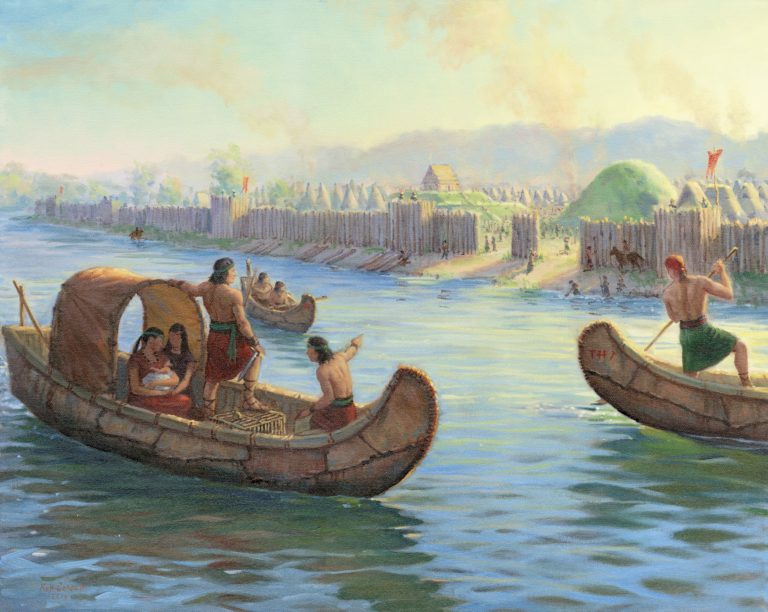


 The Nephites to whom Samuel was preaching would recognize the symbolic significance of his prophecy. There are several references in the Book of Mormon to the children of Israel being in bondage and being freed. Ancient Israel was afflicted for four hundred years before the nation that subjected them would be judged; now the sword of justice would fall on the Nephite nation in four hundred years. Samuel’s prophecy, particularly in the context of the law of Moses referenced just a few verses earlier, demonstrates the Book of Mormon is a Hebrew text and should be interpreted with that in mind.
 He names the city of Gideon, and then says “wo be unto all the cities which are in the land round about, which are possessed by the Nephites” (Helaman 13:16). Because Zarahemla and Gideon are on opposite sides of the River Sidon, Samuel’s prophecy suggests the cities destroyed in 3 Nephi are along that river.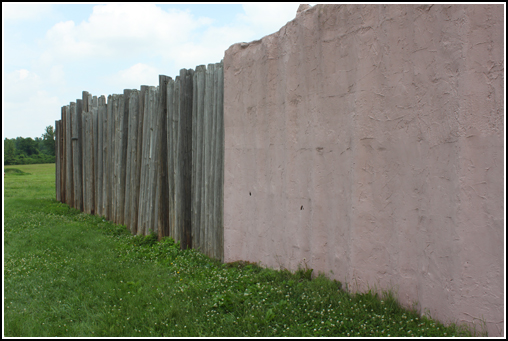


 America’s Stonehenge in Salem, New Hampshire is probably the most elaborate and controversial site in New England. It has been described by Dr. Edward J. Kealy, professor of History at Holy Cross University as “potentially the most important stone complex in the Northern Hemisphere”. Featured on the History Channel and other programs, this 30 acre complex is a mixture of stone chambers, stone solstice and equinox markers, cairns, chimneys, fireplaces and stone drains. The two largest stones here weigh 45 and 70 tons. The site has been carbon dated to at least 2000 B.C. by scientists at Geochron Labs of Cambridge, Mass after dating 13 different test pits. That dates it’s construction half a millenia before the final construction phase of Stonehenge, and like Stonehenge it possesses many precise astronomical alignments. Stone markers throughout the site provide over 200 alignments with the sun, moon and 45 different stars which have been verified by independent researchers. One alignment wall allows a person to observe the southern most standstill of the moon on its 18.61 year metonic cycle. A period of 18.61 is required to carry the moon to all of its possible positions in respect to the sun. This event is marked at Mystery Hill as the moon passes above the winter solstice stone and then aligns with the terminal of this wall…


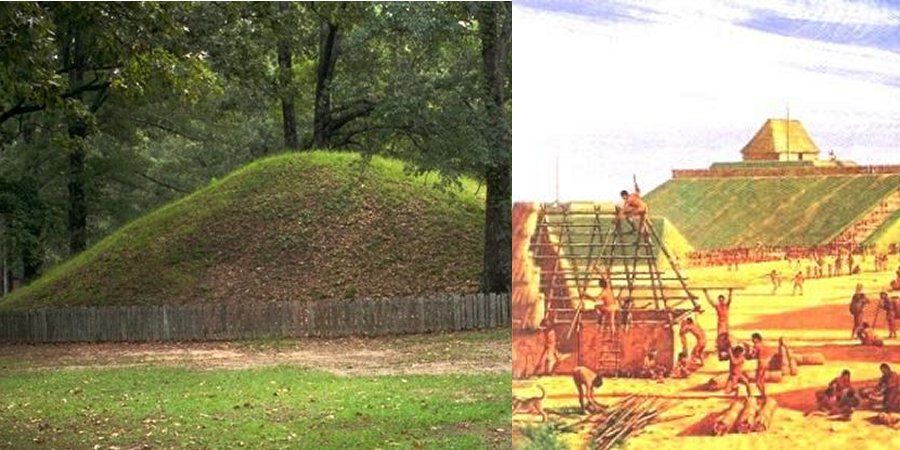

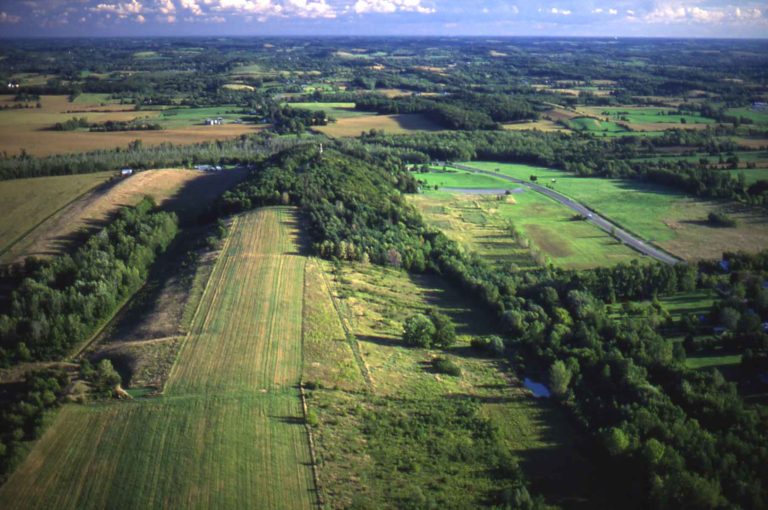

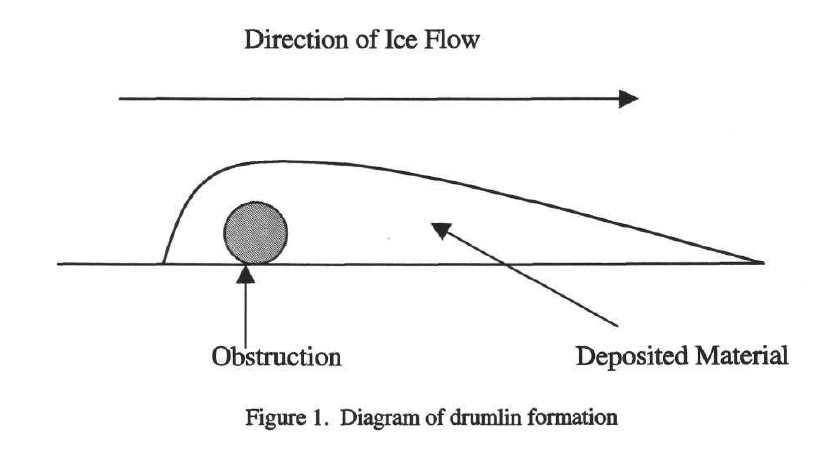


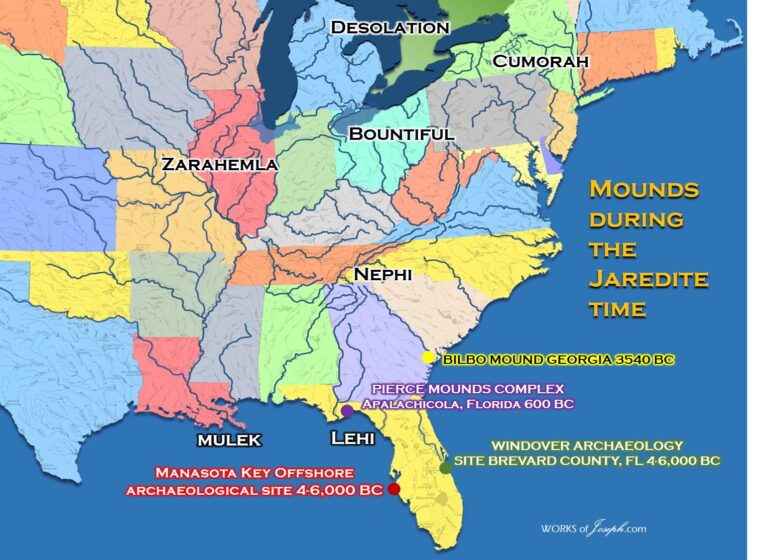


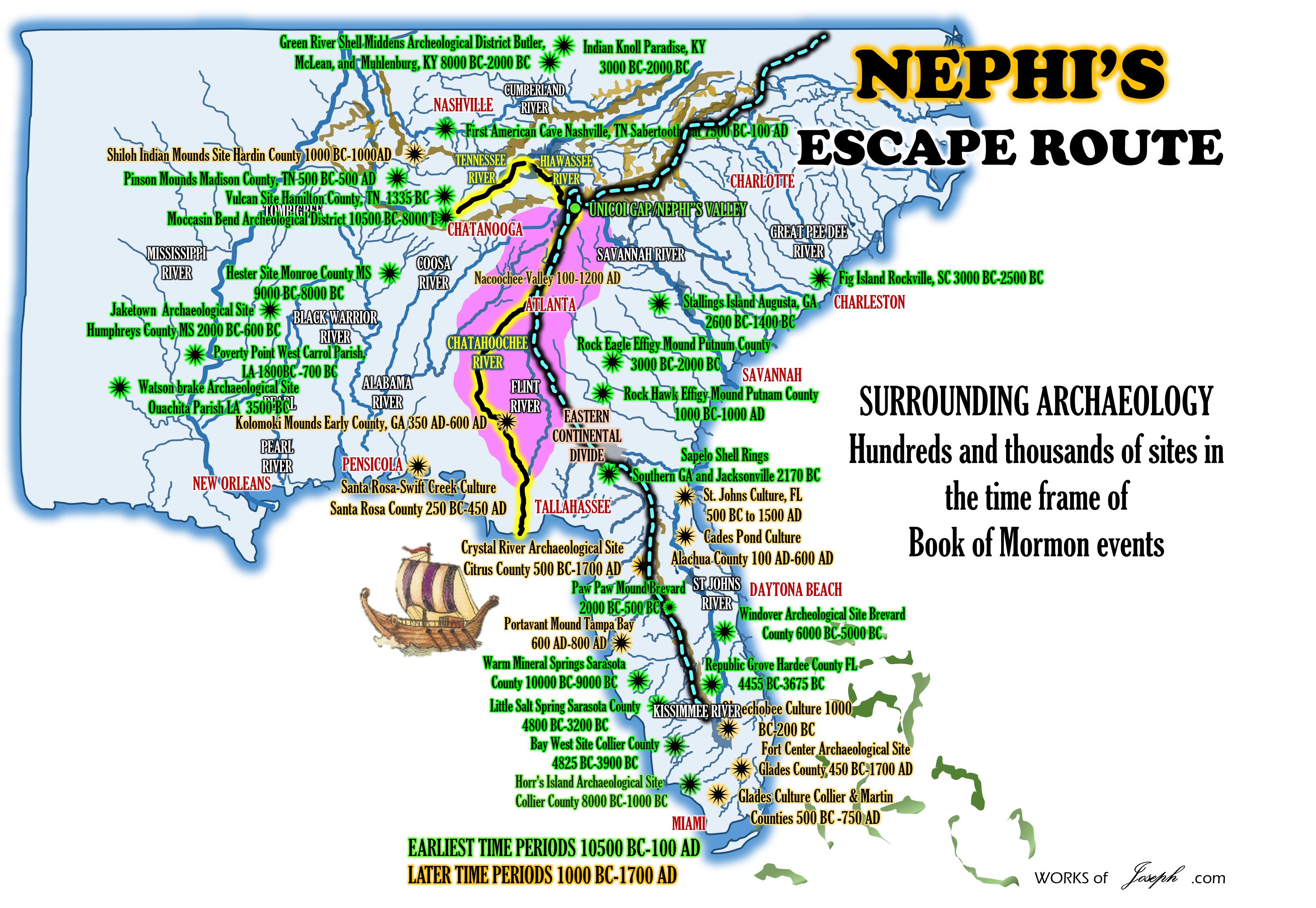







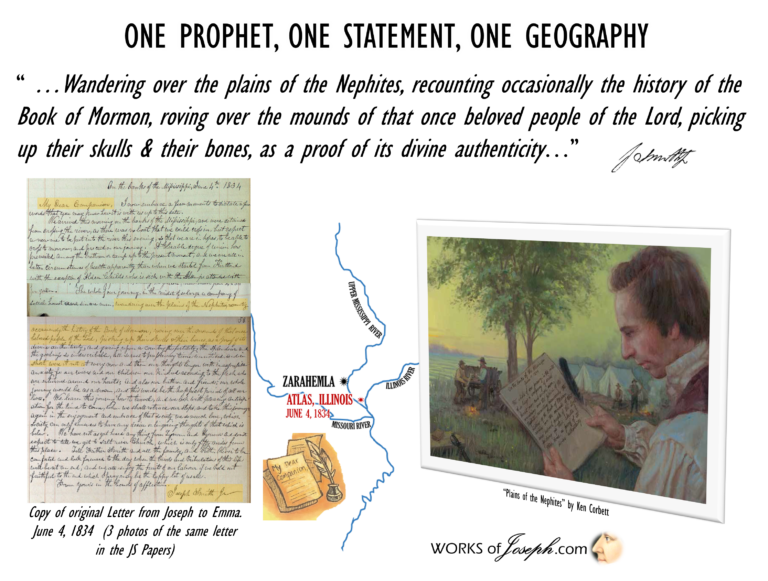
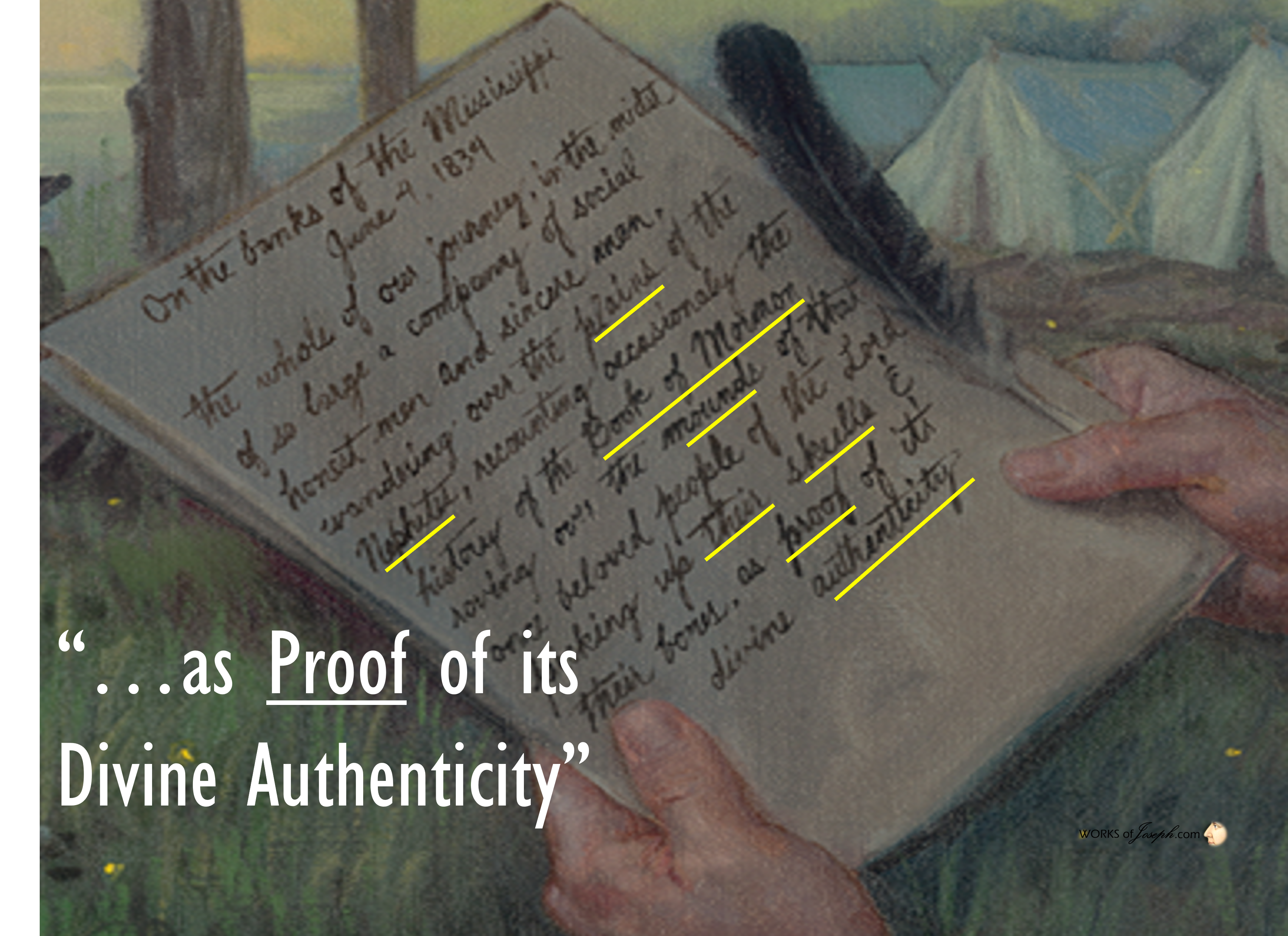
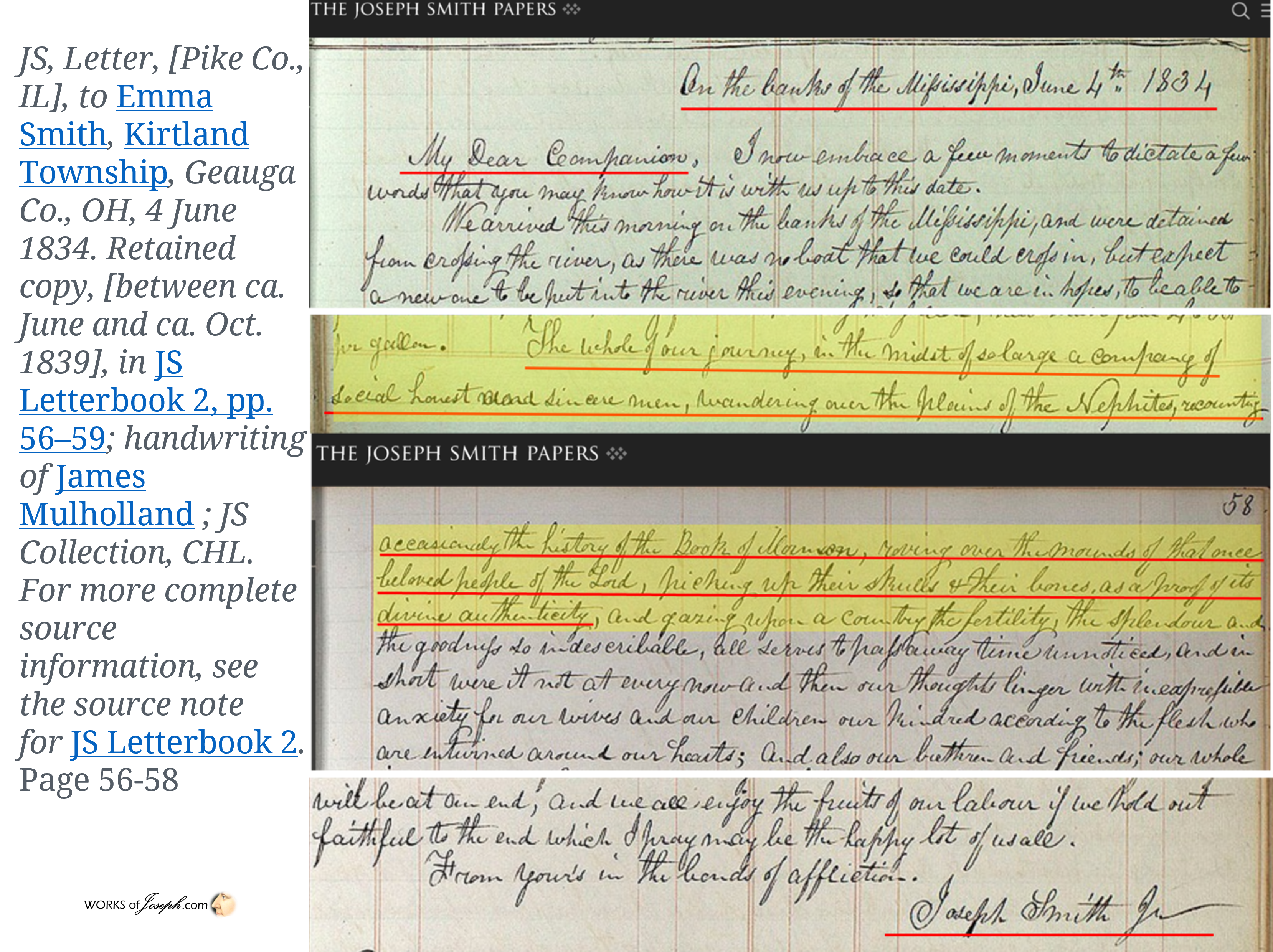

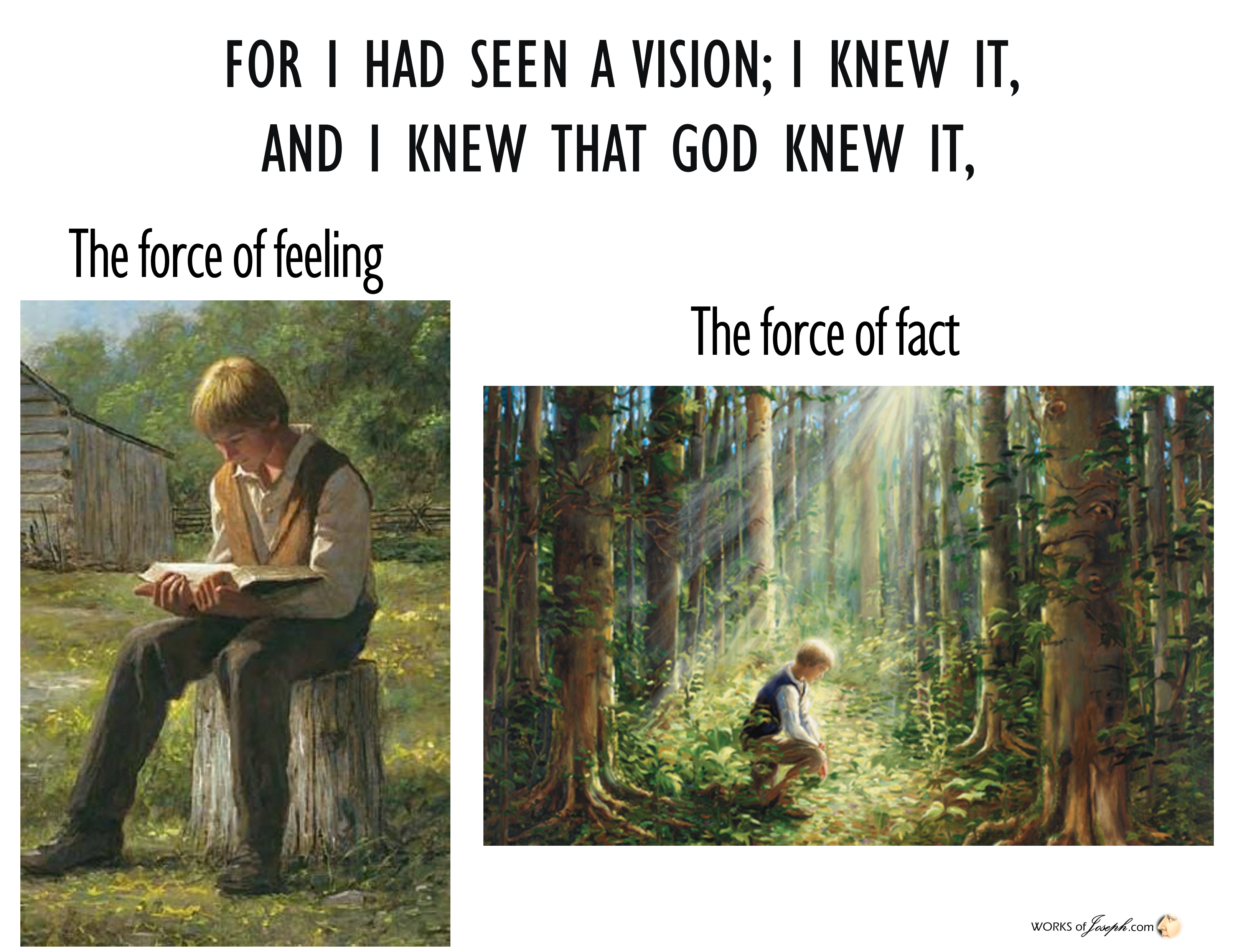
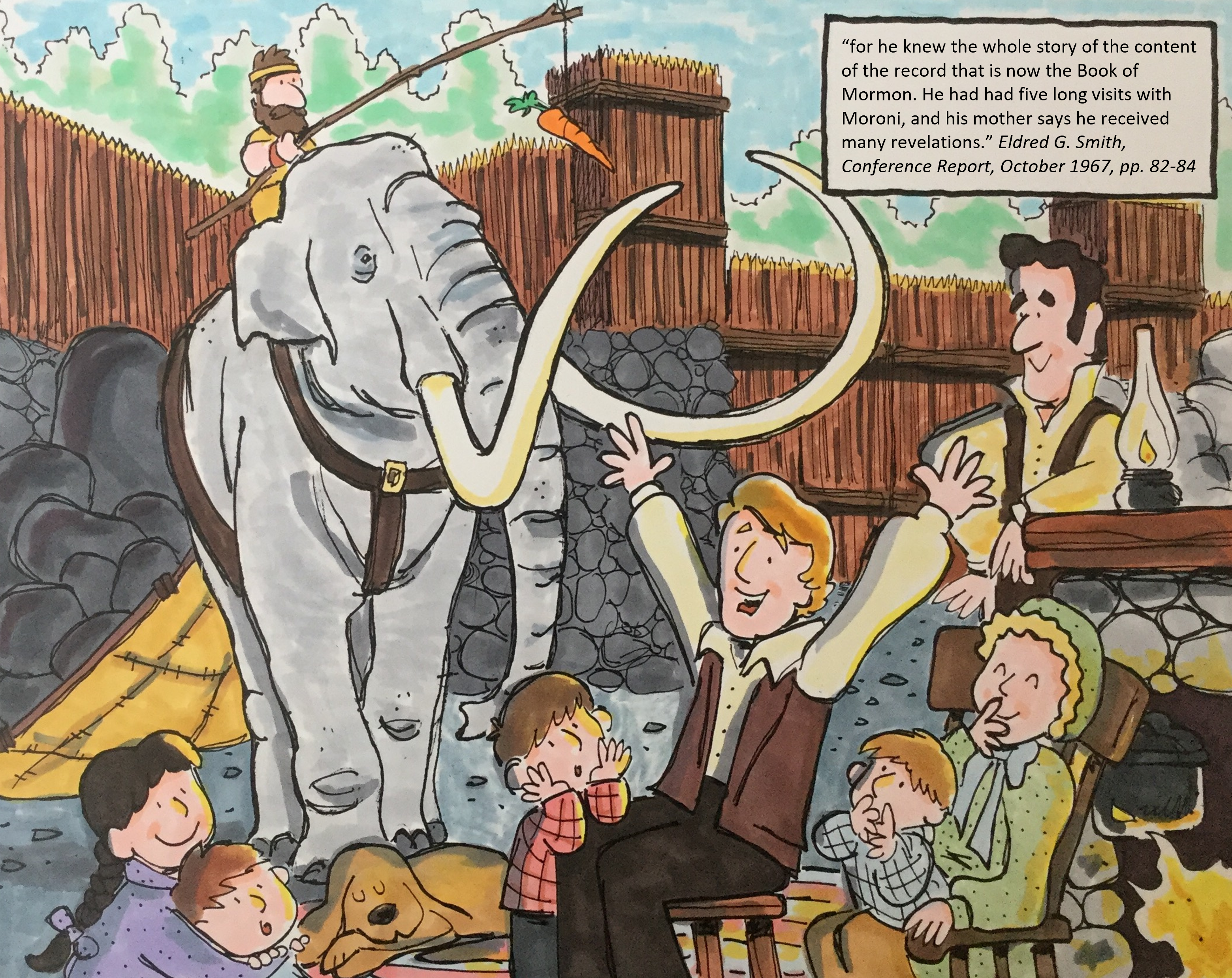
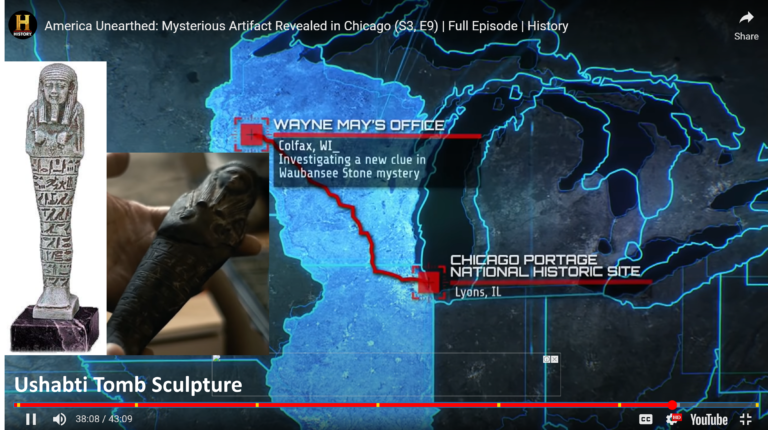






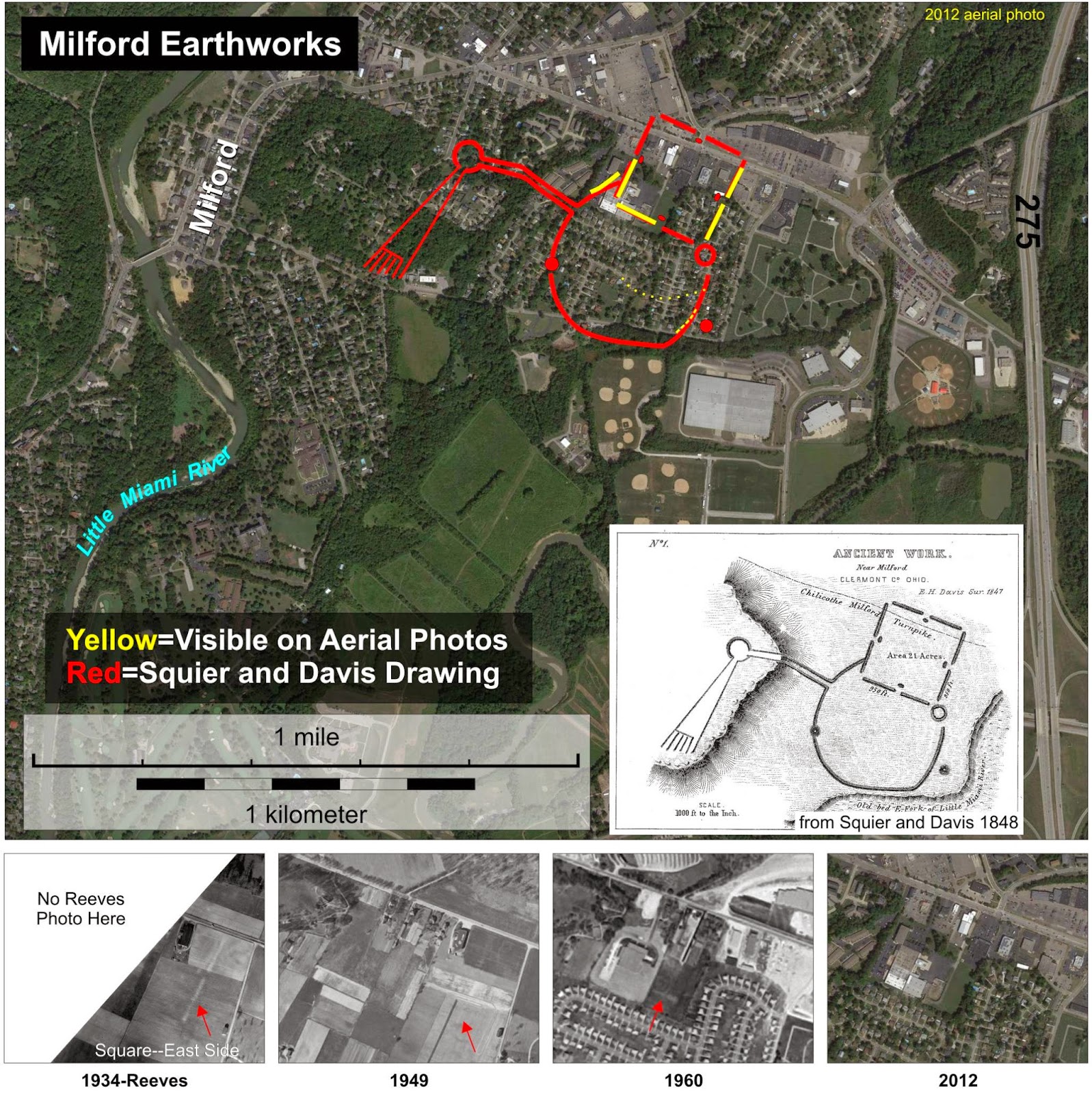
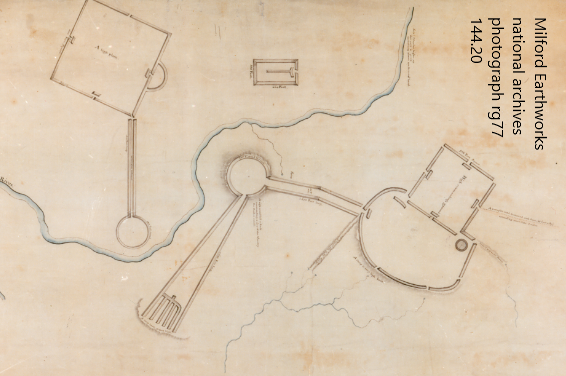
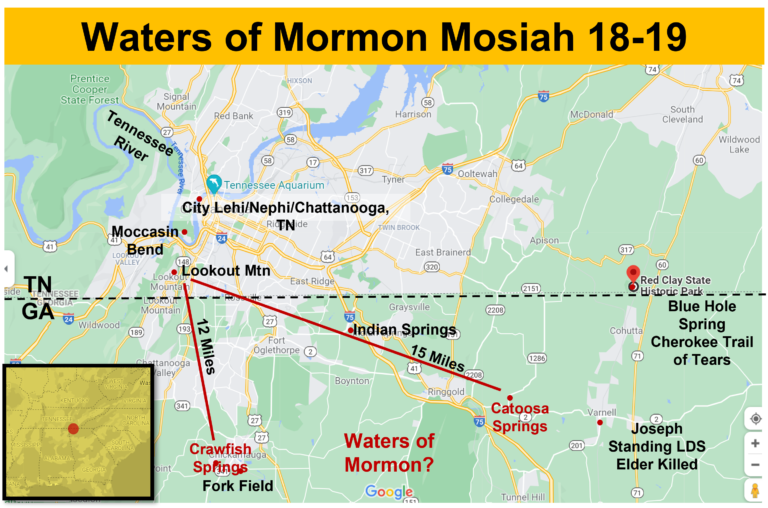


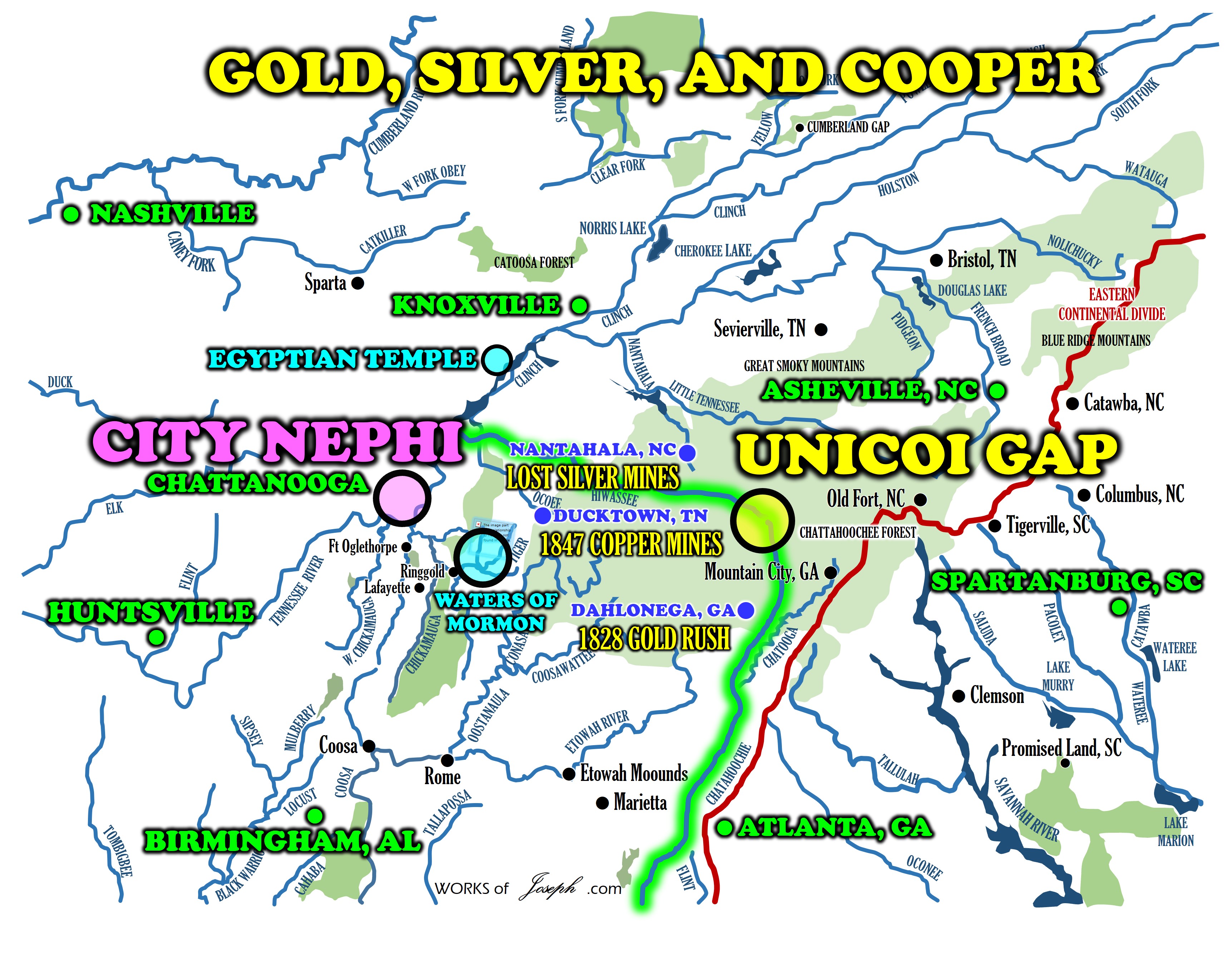

 If Noah wanted to look over all the land round about, there could hardly be a better place to do so than Lookout Mountain which rises out of the river valley above Chattanooga to a height of almost 2,400 feet. On clear days, mountains 100 miles away are visible from the summit. The tower was near the temple, but there is no description of where the temple was. It may have been enclosed in walls within the city, or it may have been built on a high place, which would explain why Noah built his tower near the temple.
 In Mosiah 19, Gideon chased King Noah to the tower, from which Noah saw “the army of the Lamanites were within the borders of the land” (verse 6). It is unlikely a tower could be high enough to provide such a panoramic view unless it was built on a high place, such as Lookout Mountain. If the Book of Mormon did not take place in or around Chattanooga, it had to have taken place somewhere with similar topographical features.
 The Lamanites would not have expected this, so apparently there were no guards along that route. A Lamanite army pursued Limhi’s people for two days, but then lost their tracks, probably at a river. This suggests that Limhi’s people traveled overland for a while before reaching a river, which is consistent with the proposed route Ammon took when he followed a river to its source and then crossed land to reach the hills overlooking the land of Shilom [Which is just north of Chattanooga]. With the Lamanite army in pursuit, it seems unlikely that the people of Limhi could have built boats quickly enough to accommodate all the people, their animals, and their provisions. Perhaps they walked down the river far enough to hide their tracks and then continued overland. The text implies the journey took a long time: “after being many days in the wilderness they arrived in the land of Zarahemla” (Mosiah 22:13). [Near Nauvoo, Illinois]


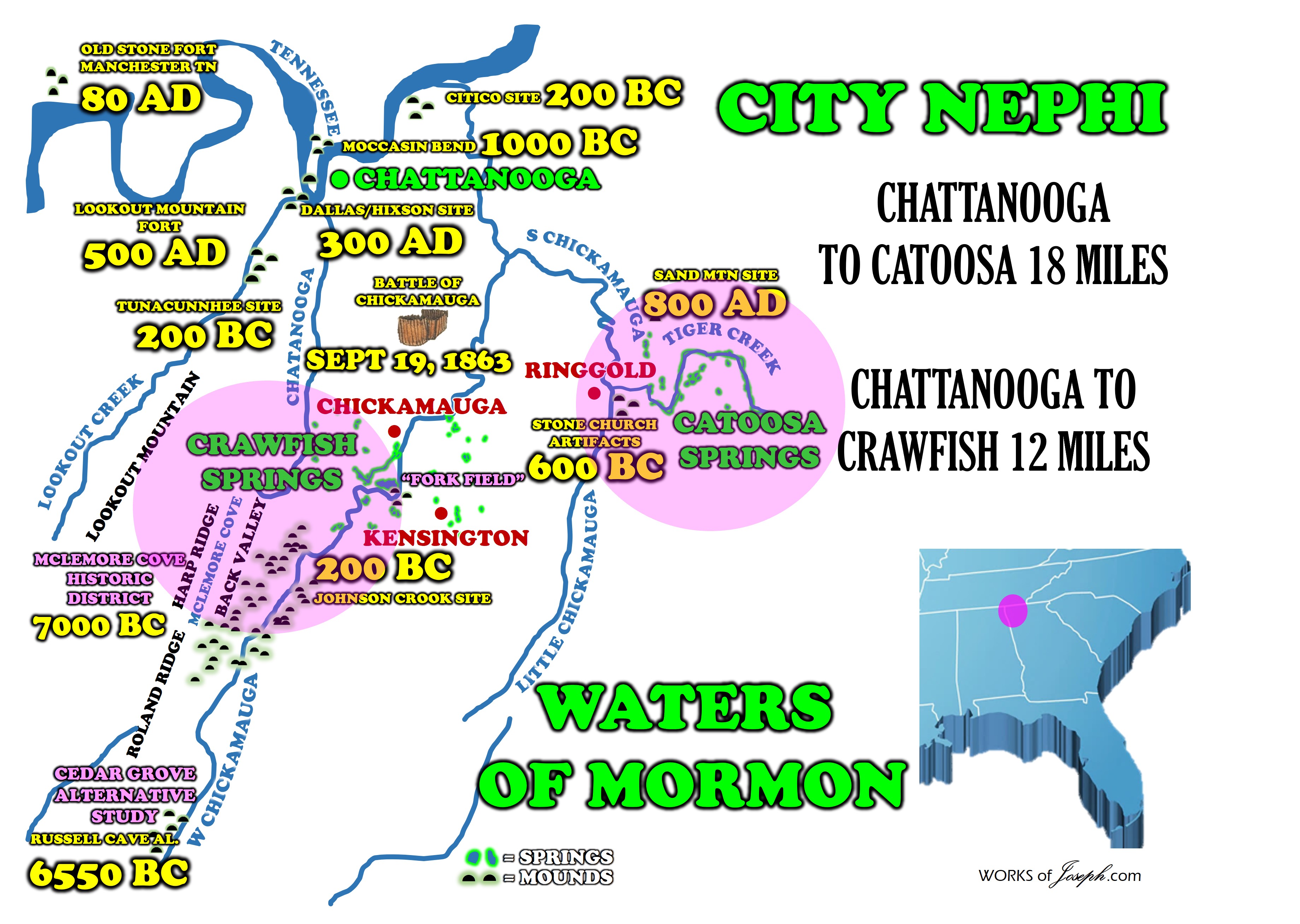


 Of course, this is merely one of many scenarios possible in this area of the country. There are many other rivers and archaeological sites in Tennessee where the events described in the text could have taken place. Pinson Mounds is plausible, based on the text, and I like it because it can be visited today. Most ruins from this time period have been destroyed. Other plausible alternative settings for the land of Helam would likely be about the same distance northwest from the city of Nephi.” Moroni’s America by Jonathan Neville page126-130
  1.City/land of Nephi is higher in elevation than land of Zarahemla and place of first landing. 2.Land of Zarahemla is north of Nephi, but downstream; Tennessee River is one of the few that flows north. 3.King Noah built a tower that let him see at least 3 lands, so it had to be high. (Lookout Mountain 2,400 FT) 4.Archaeology shows the area was inhabited during the relevant time periods.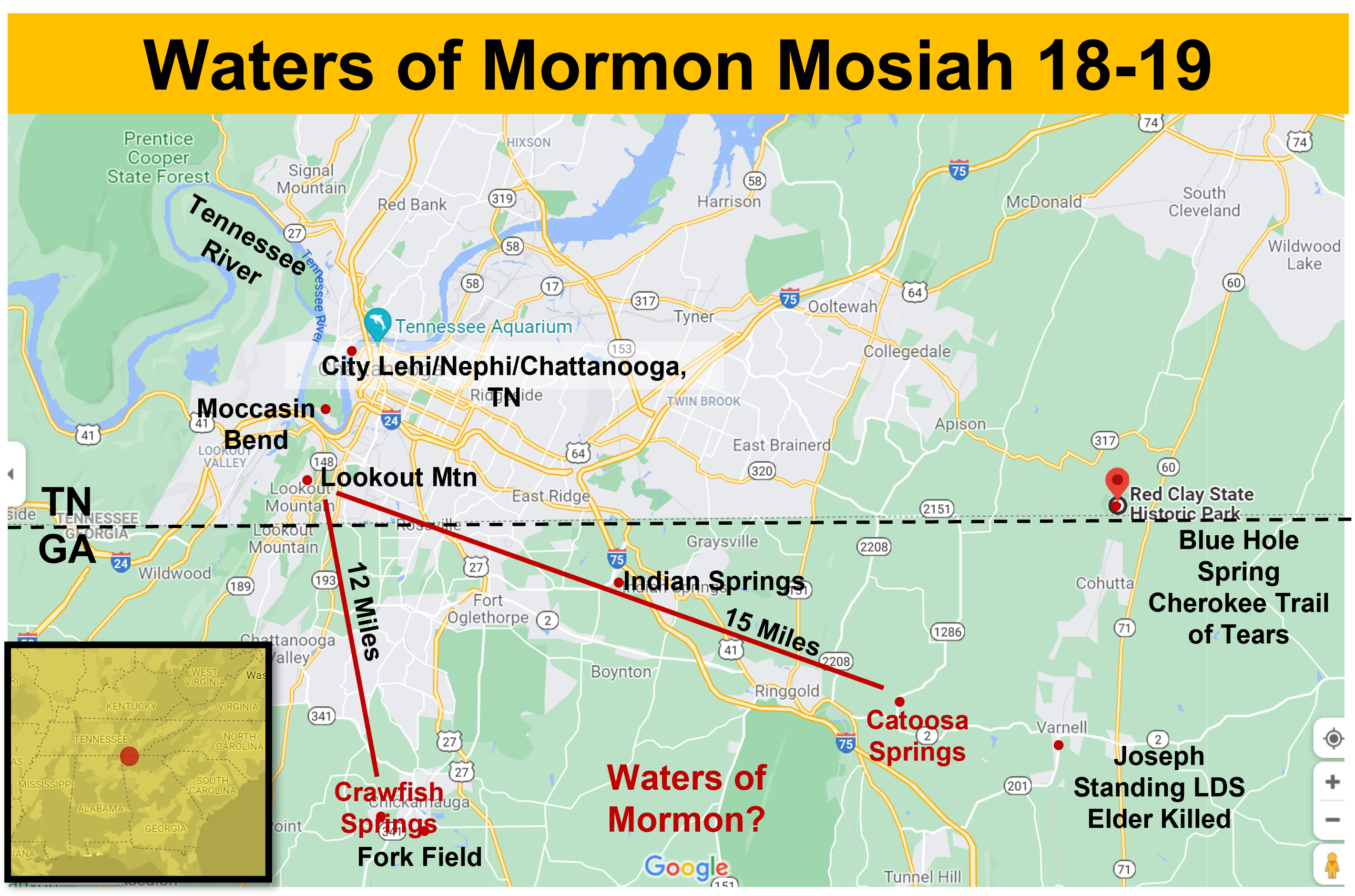
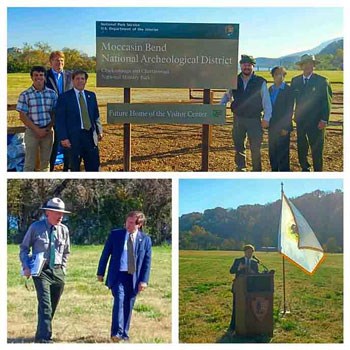

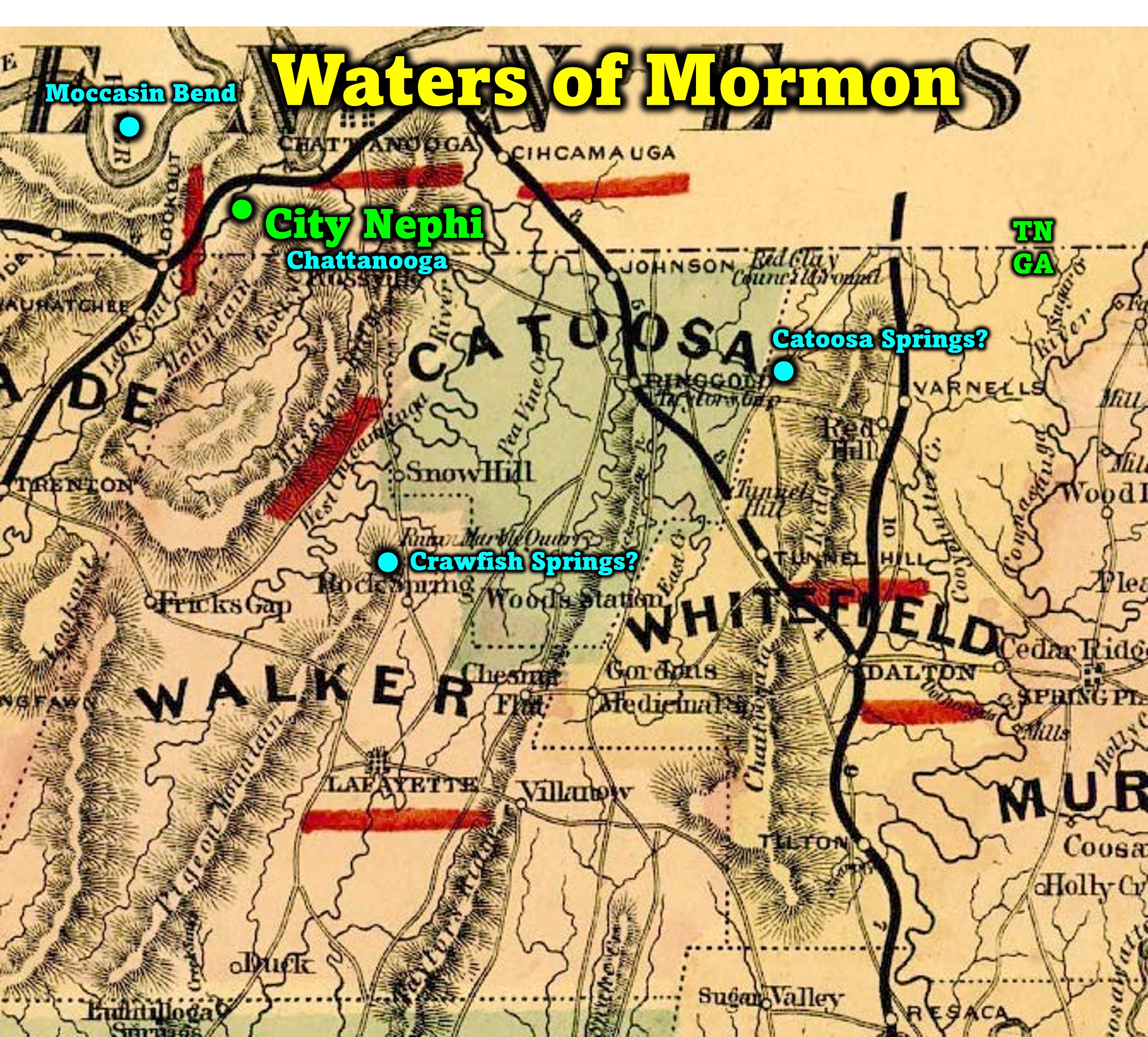 50 MINERAL SPRINGS USED FOR A HOSPITAL OF HEALING DURING THE CIVIL WAR INHABITED 1500 BC + “Due to its unique geological formation, there has always been an Indian village in the gap of White Oak Mountain and Taylor’s Ridge in Ringgold, Catoosa County, Georgia. This was a woodland village, primarily early to middle woodland, occupied roughly from 600 B.C. to about 700 A.D. There is a little bit of late archaic artifacts that go back to roughly 2000 B.C.,” Randall Frank The Catoosa County Historical Society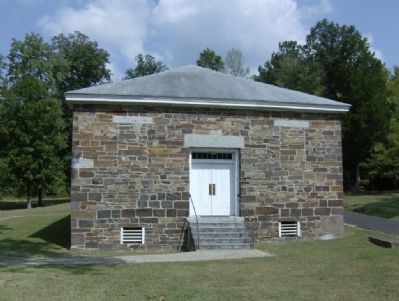
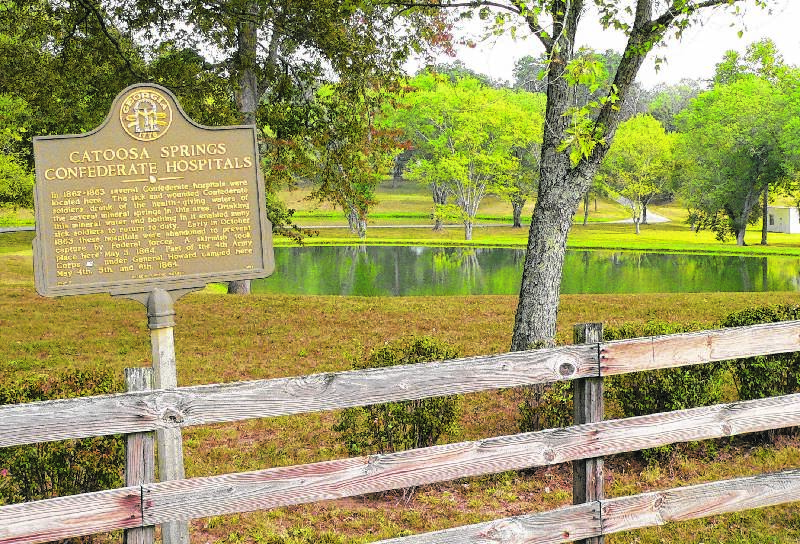

 Due to its unique geological formation, there has always been an Indian village in the gap of White Oak Mountain and Taylor’s Ridge in Ringgold, Catoosa County, Georgia. The gap in the mountains provided sanctuary for many years to several Southeastern tribes that preceded the Cherokee. The Napoche, Uchee, and Coosa Indians were among the first inhabitants of the region and were called the Mound Builders. Their mounds can be seen at the Etowah Mound site near present day Cartersville, GA. The descendants of the Mound Builders were the Muskogean, or Creek Indians. They built villages along the creek banks, and inhabited this region until encroaching white settlements pushed the Cherokees down from Virginia and Tennessee.




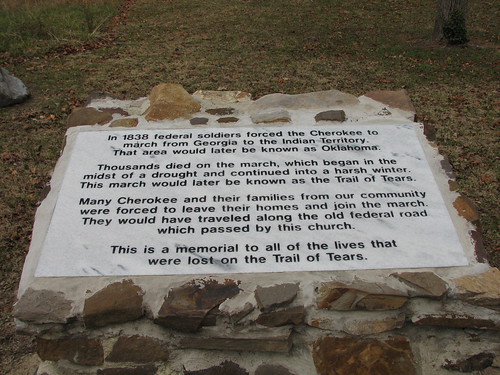
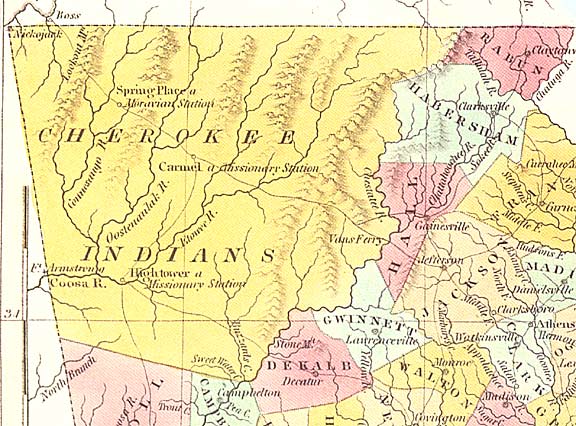
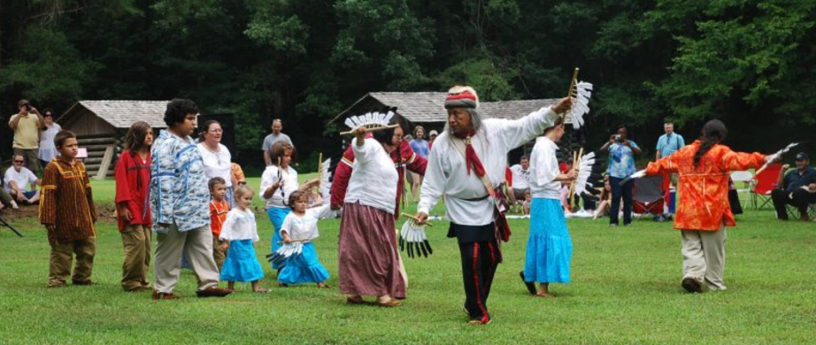
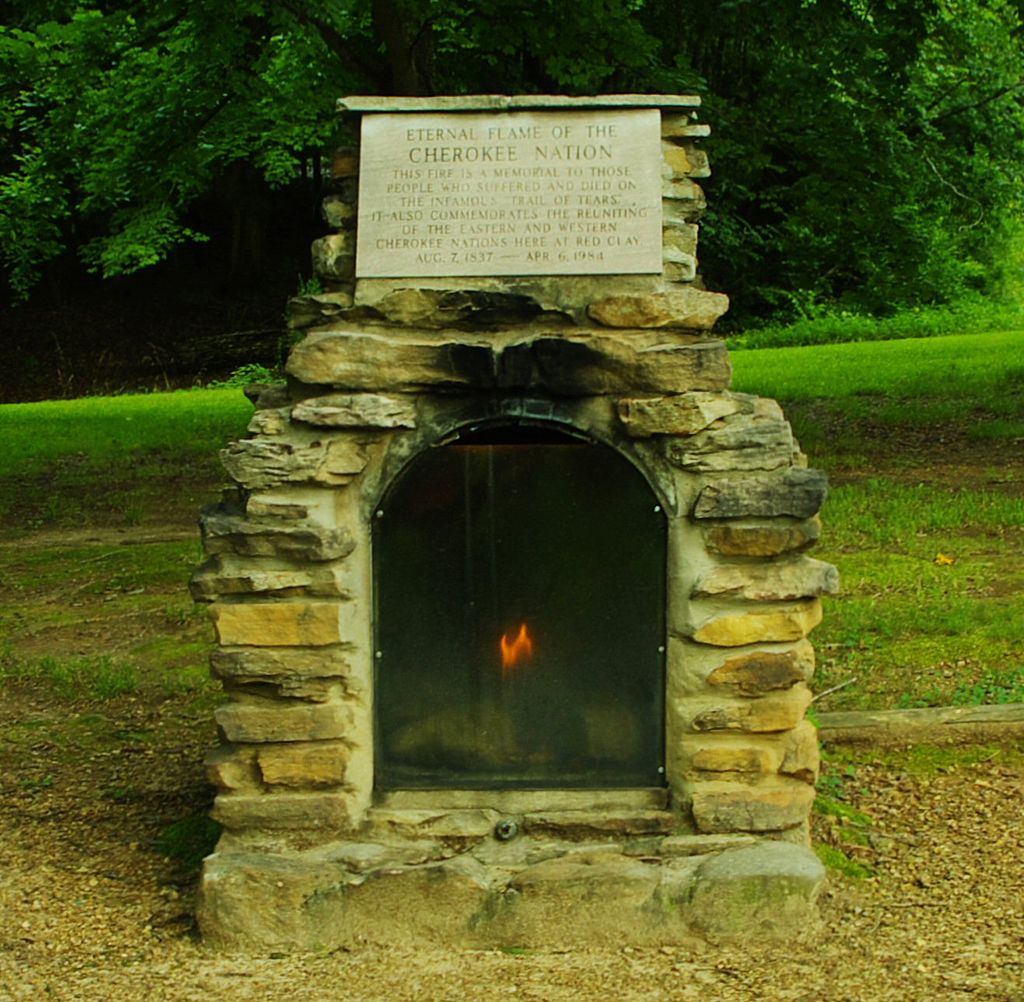
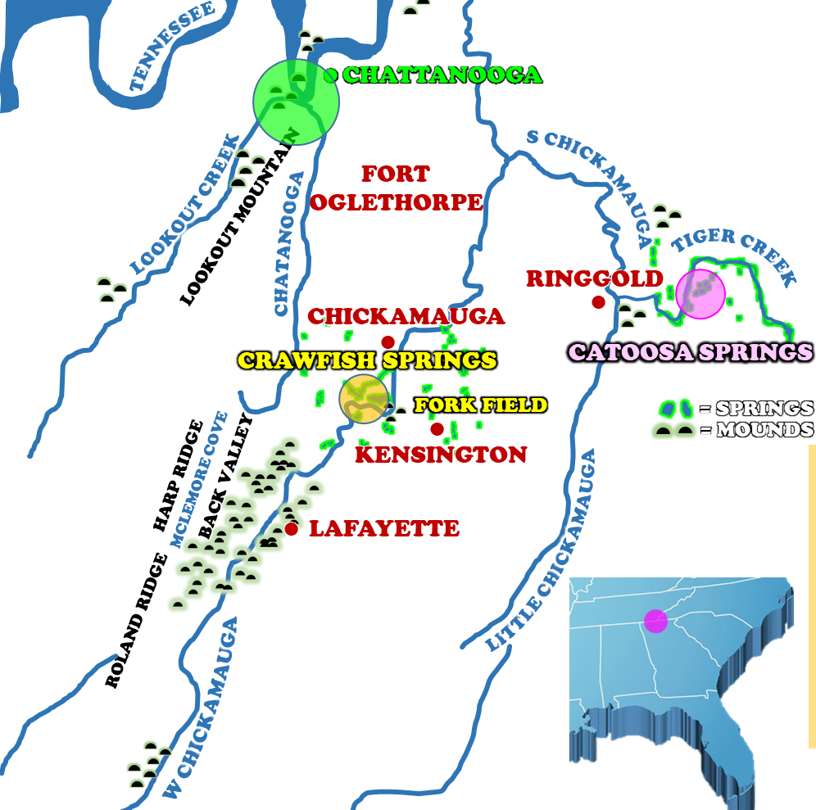
 A 1986 reconnaissance level survey of an area in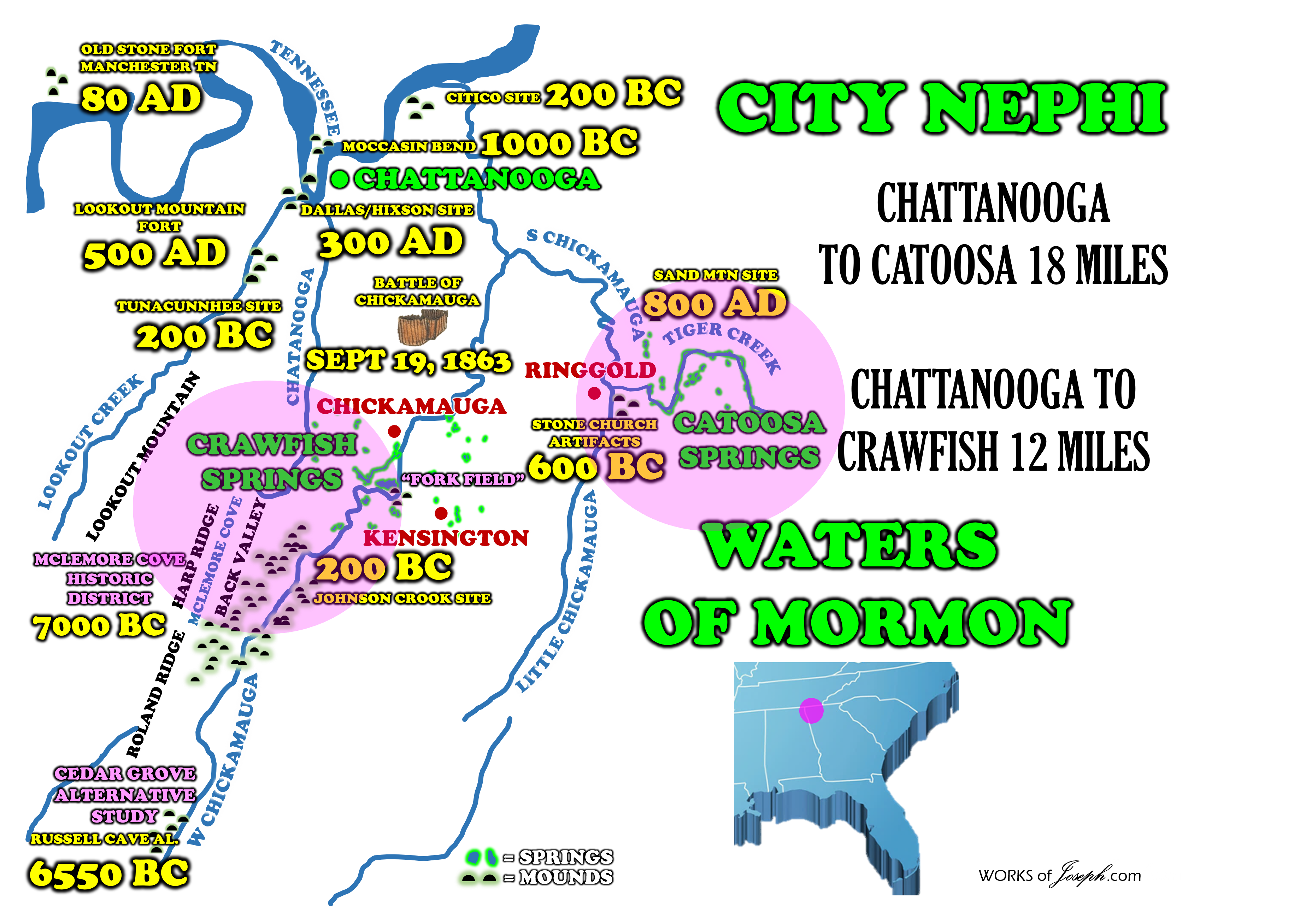
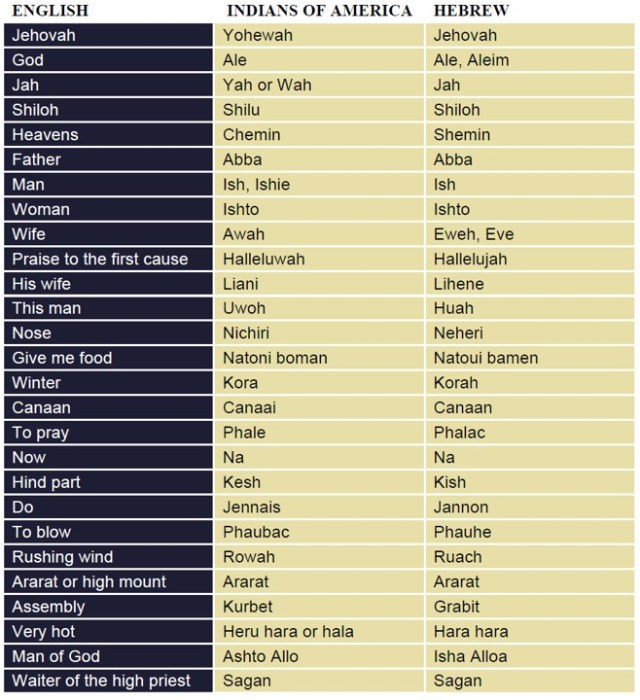

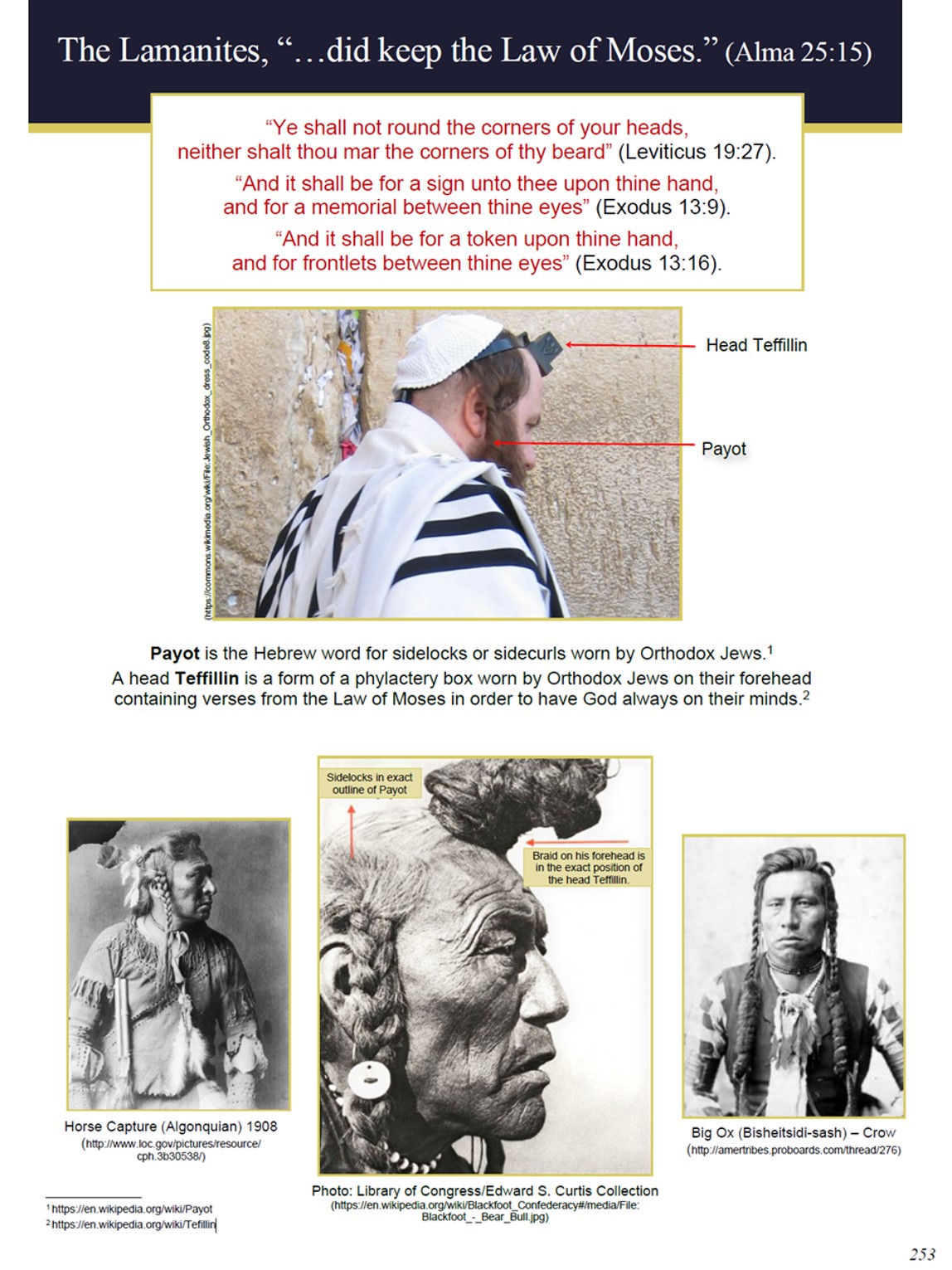
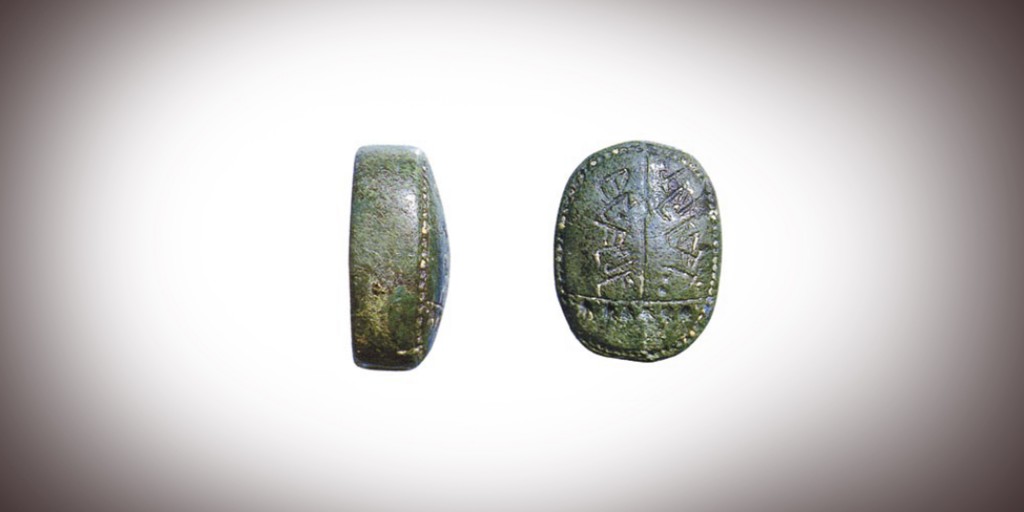
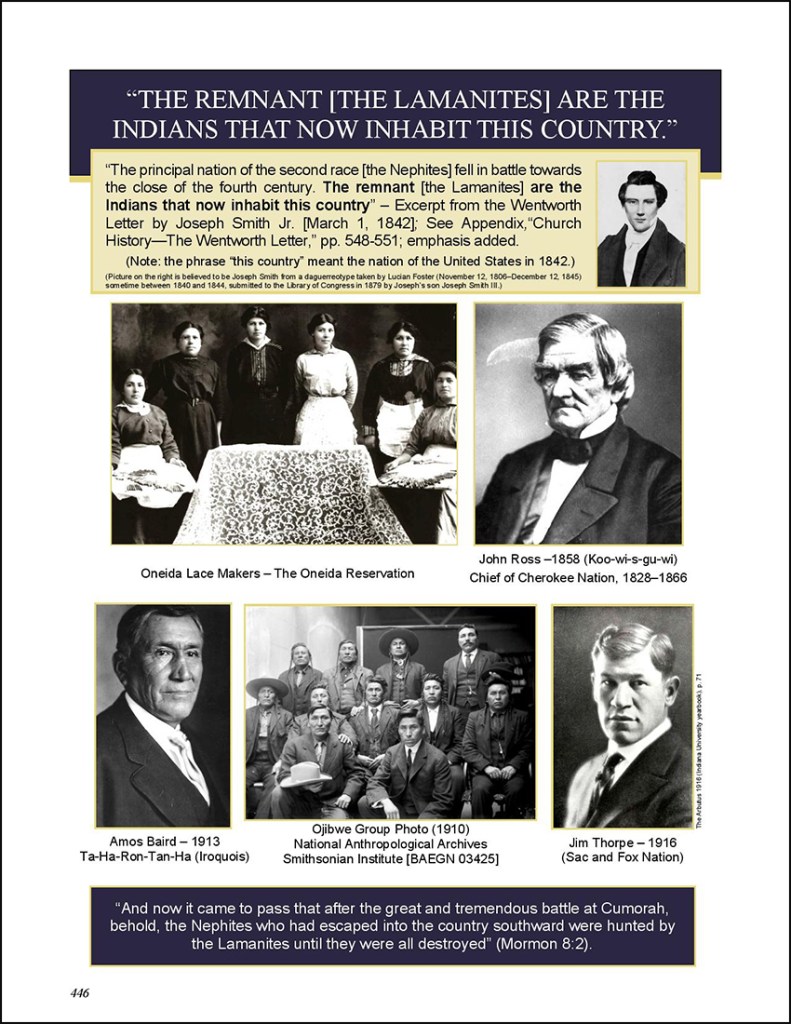
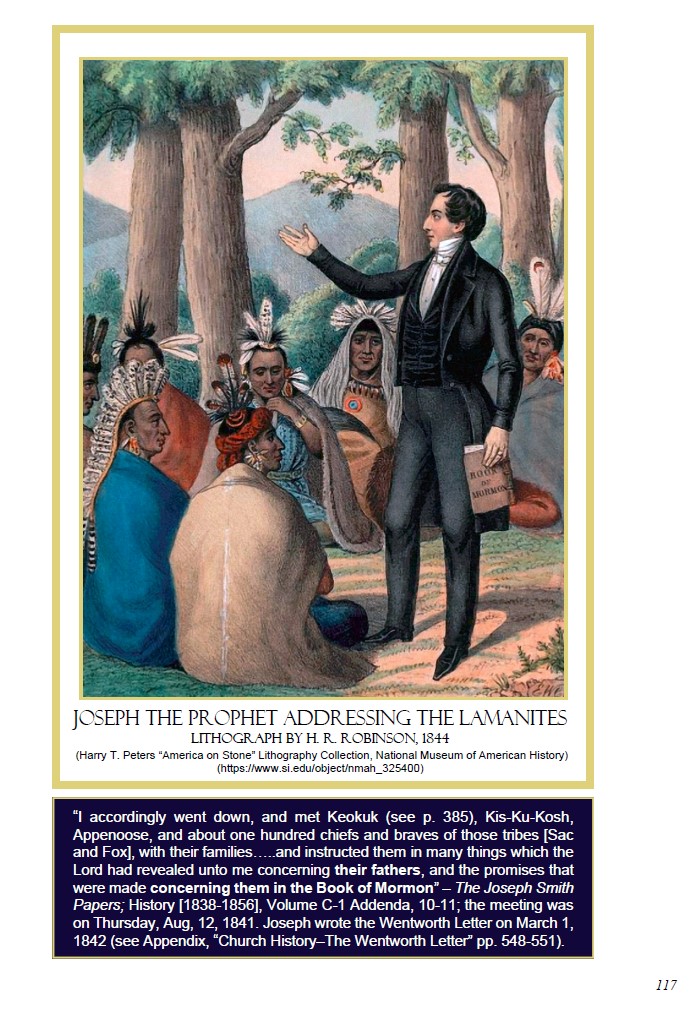
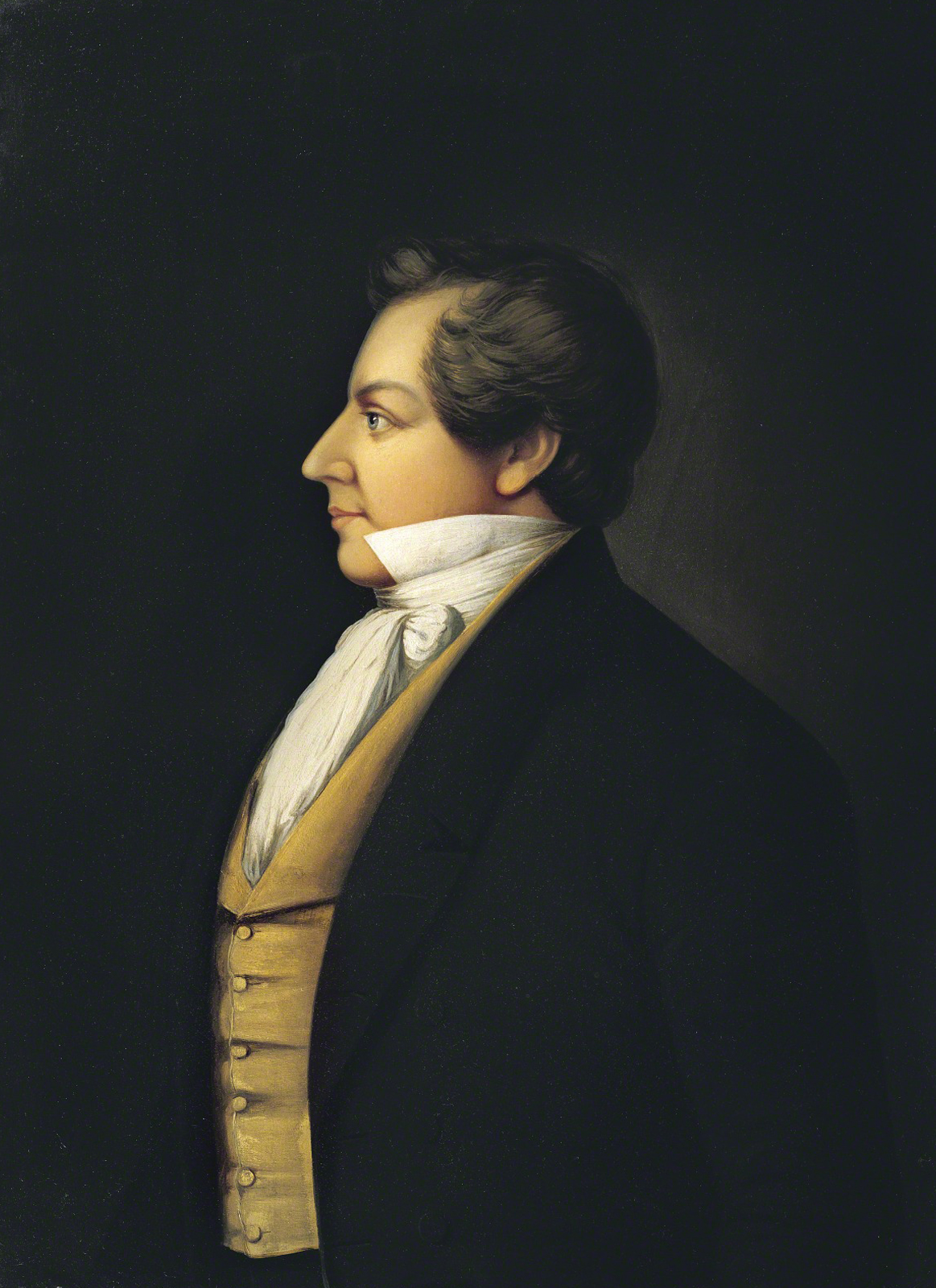
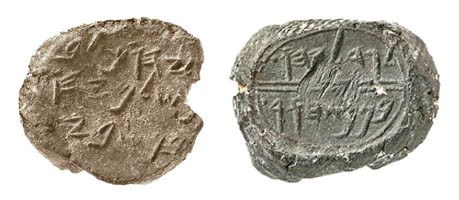
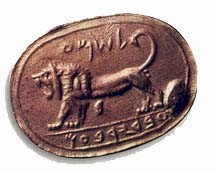
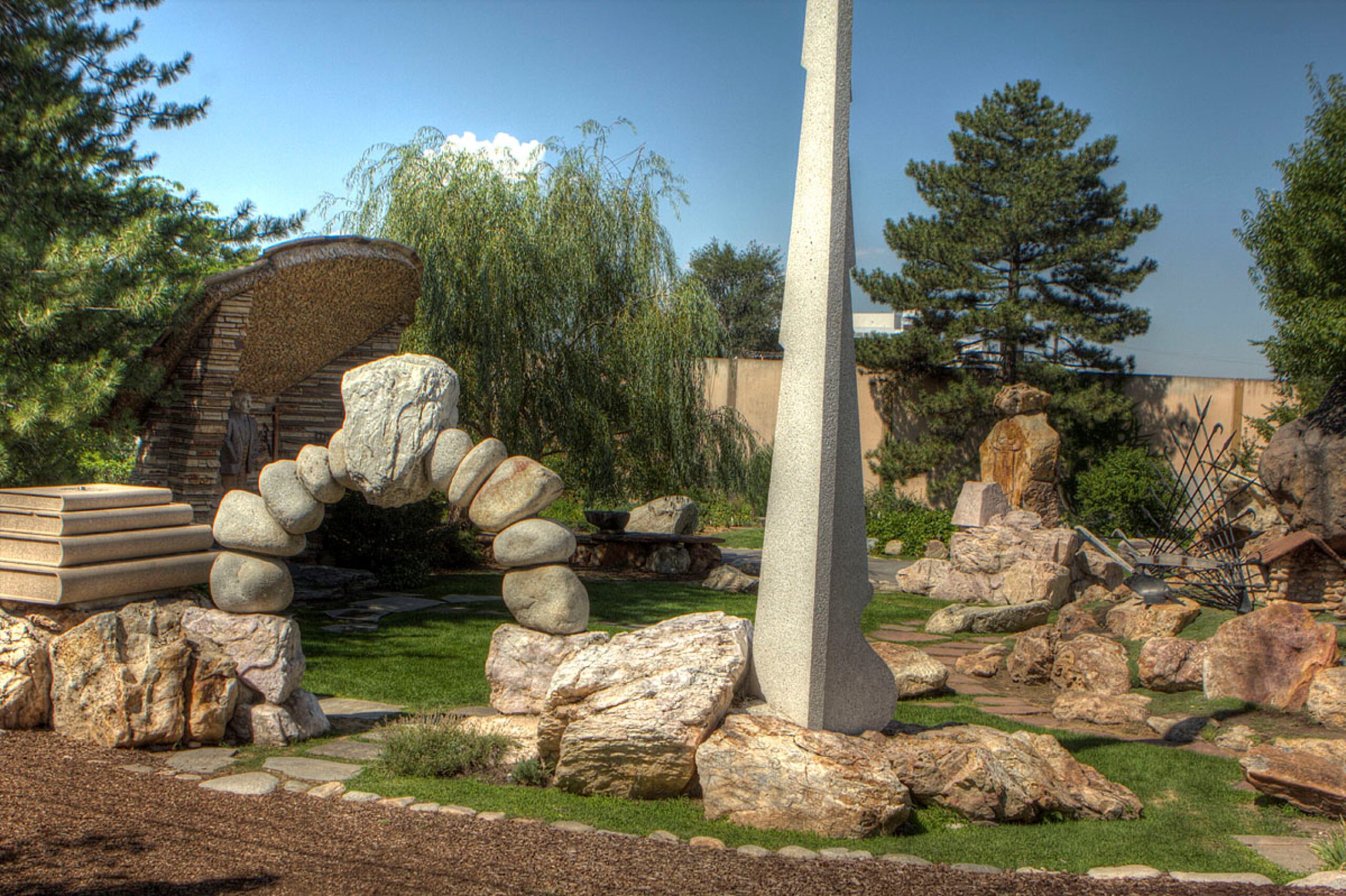
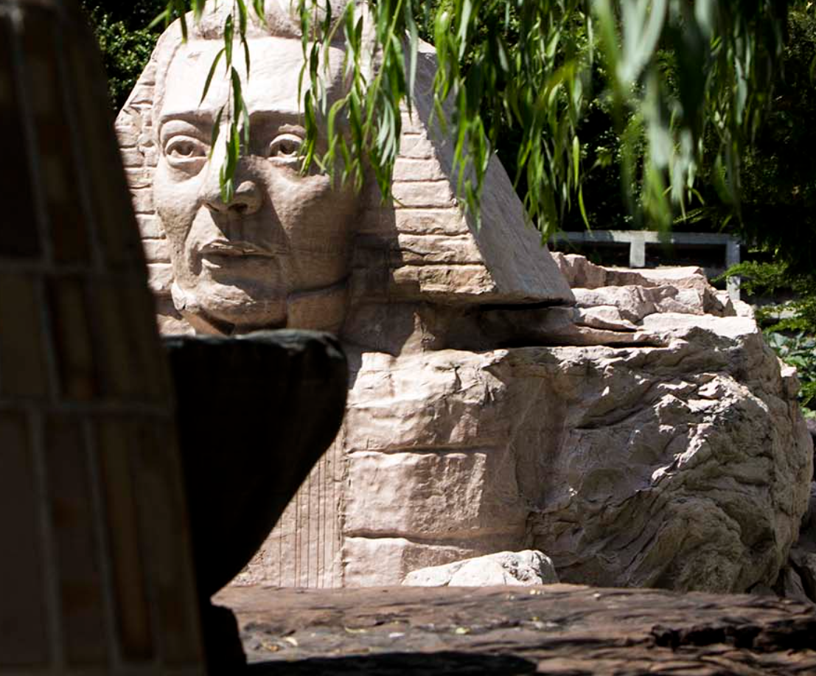
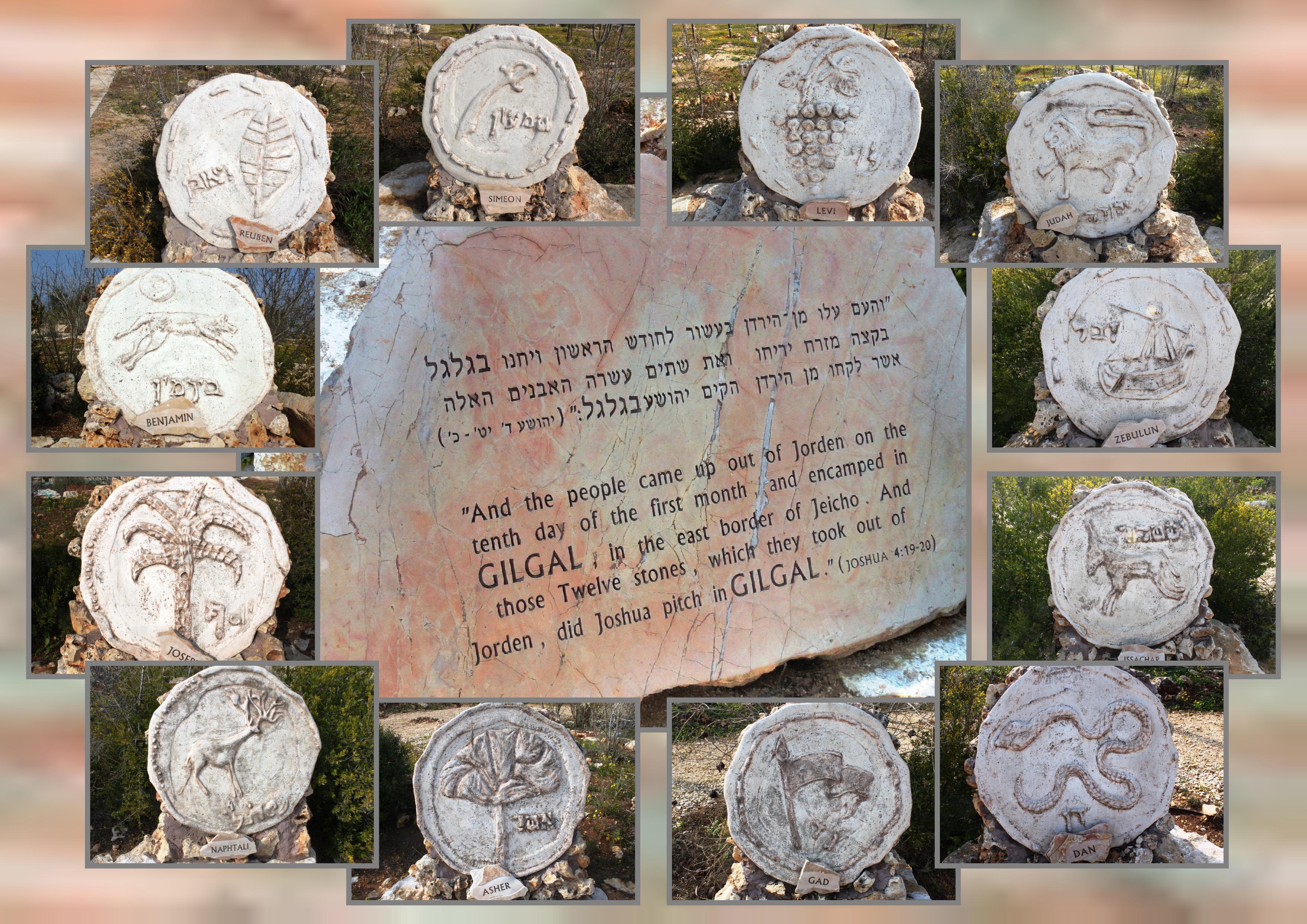
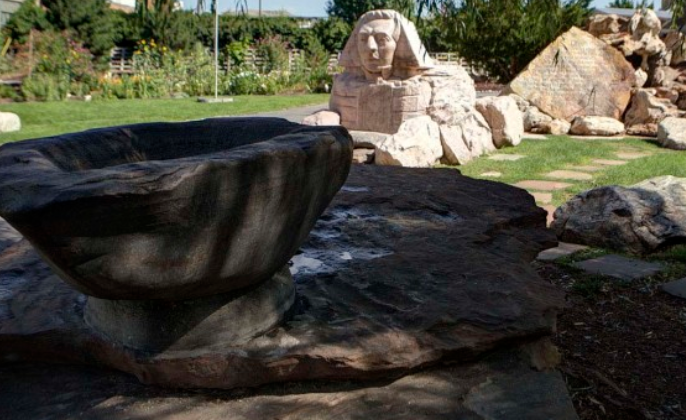
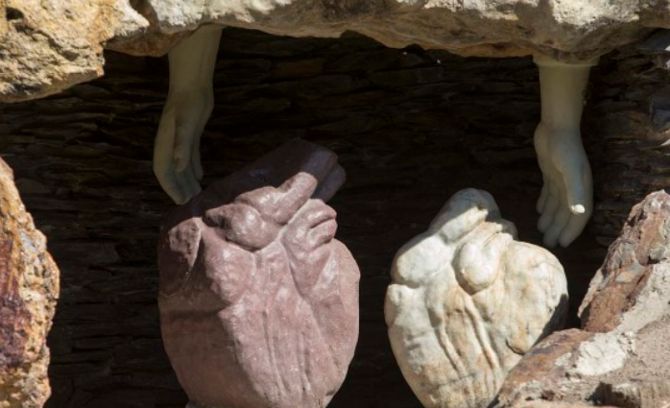

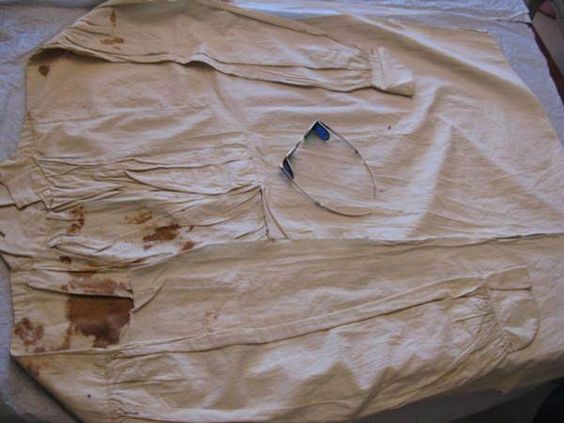

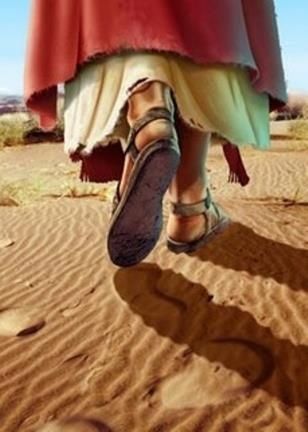
 “Before we can look at specific Bible passages regarding the violence of God in Scripture, it is important to develop a framework which helps us understand what is going on within and behind these violent texts. I have six points of this framework, which I call “Choas Theory.”
 Maybe this is too strongly stated. It is not that God doesn’t intervene; He does intervene, probably more than we know. He just doesn’t intervene at the times we wish He would or in the ways we think He should. “If God’s role in the world was that of a perpetual Mr. Fixit, it has not, to say the least, been particularly self-evident” (Capon, Romance of the Word, 189). And when God does finally show up to “fix things,” it is not like Zeus—with thunder in His footsteps and lightning in His fists (as one Christian worship song so gleefully claims)—but with nails through His feet and hands and a spear through His side. “When the invisible hand that holds the stars finally does its triumphant restoring thing, it does nothing at all but hang there and bleed” (Capon, Romance of the Word, 221).




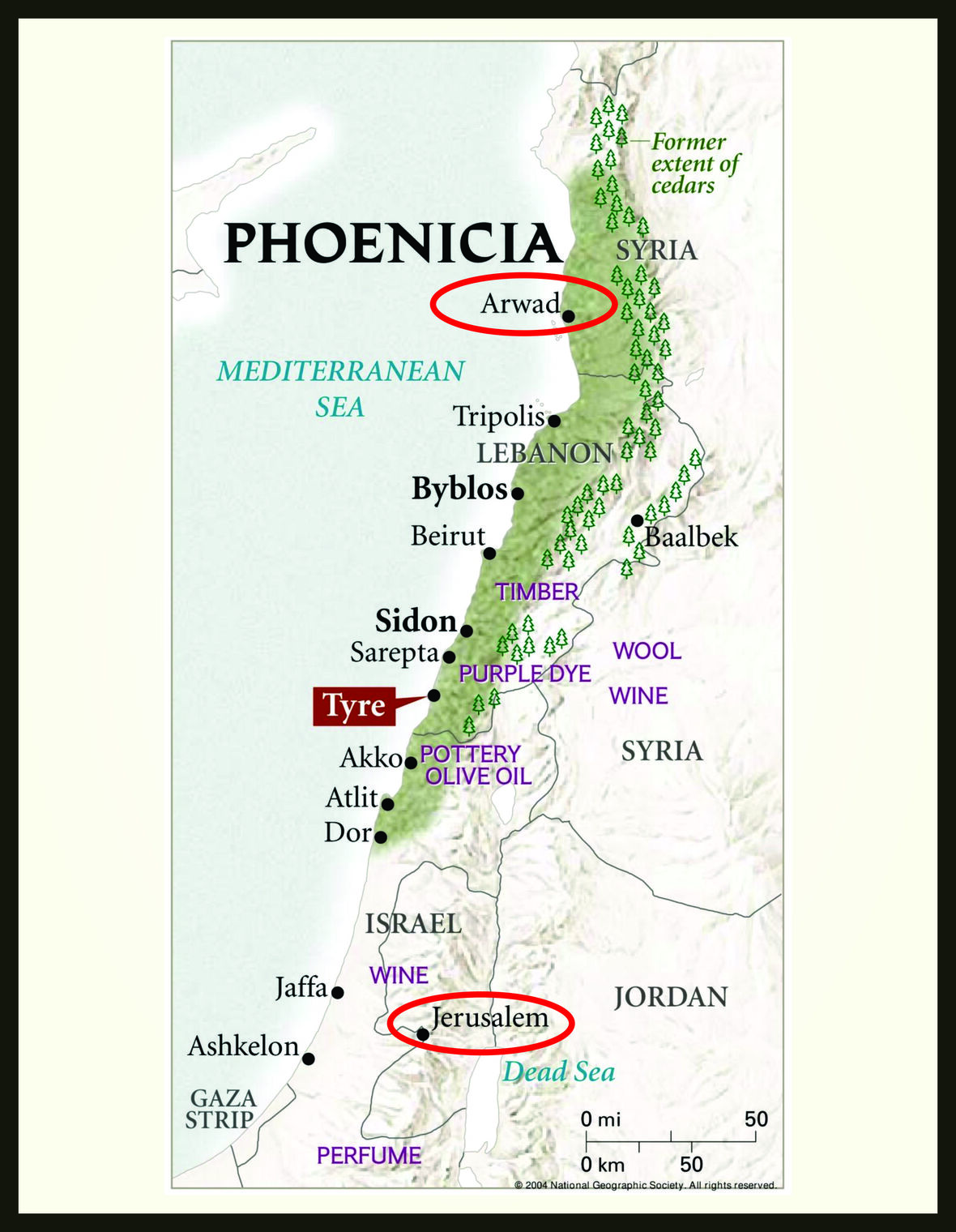
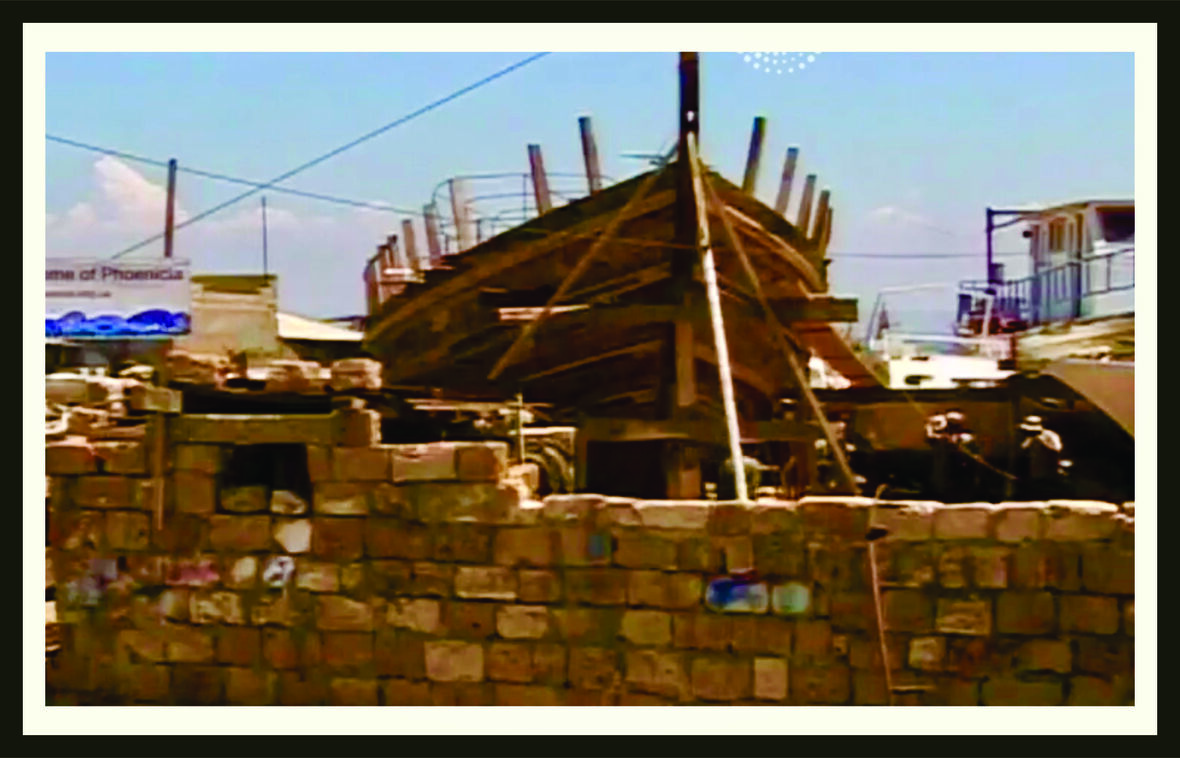
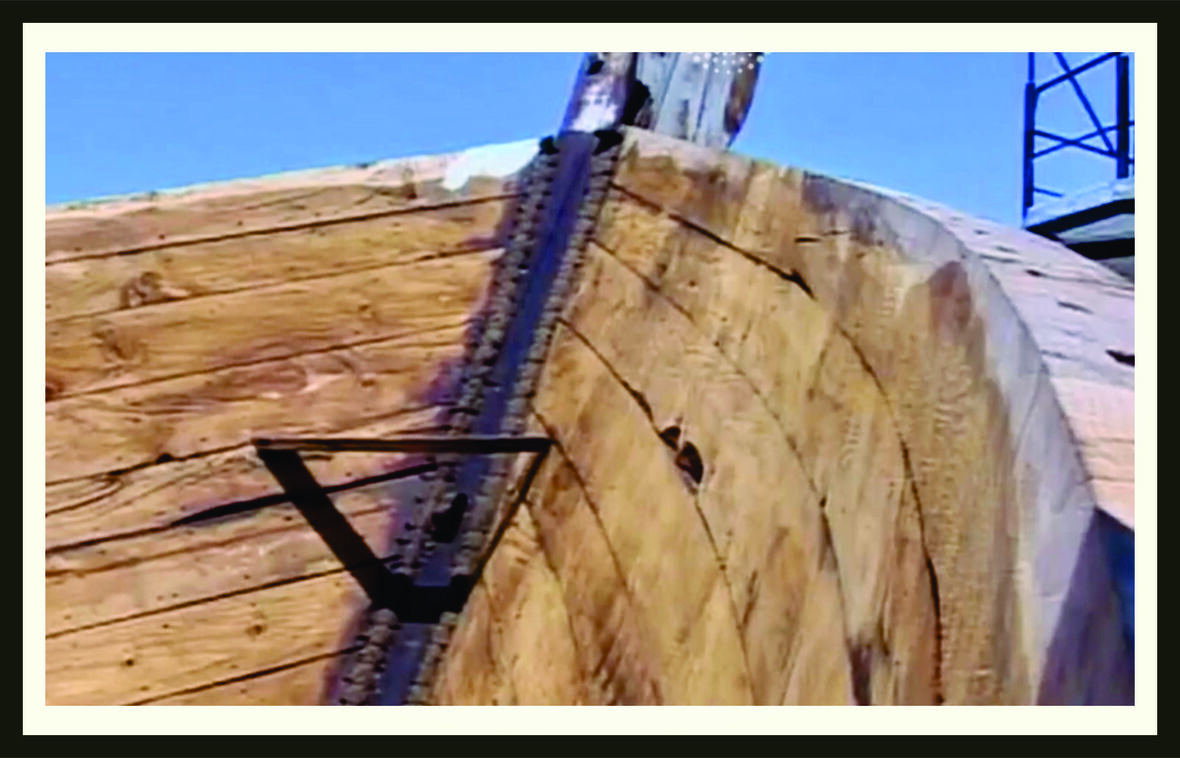
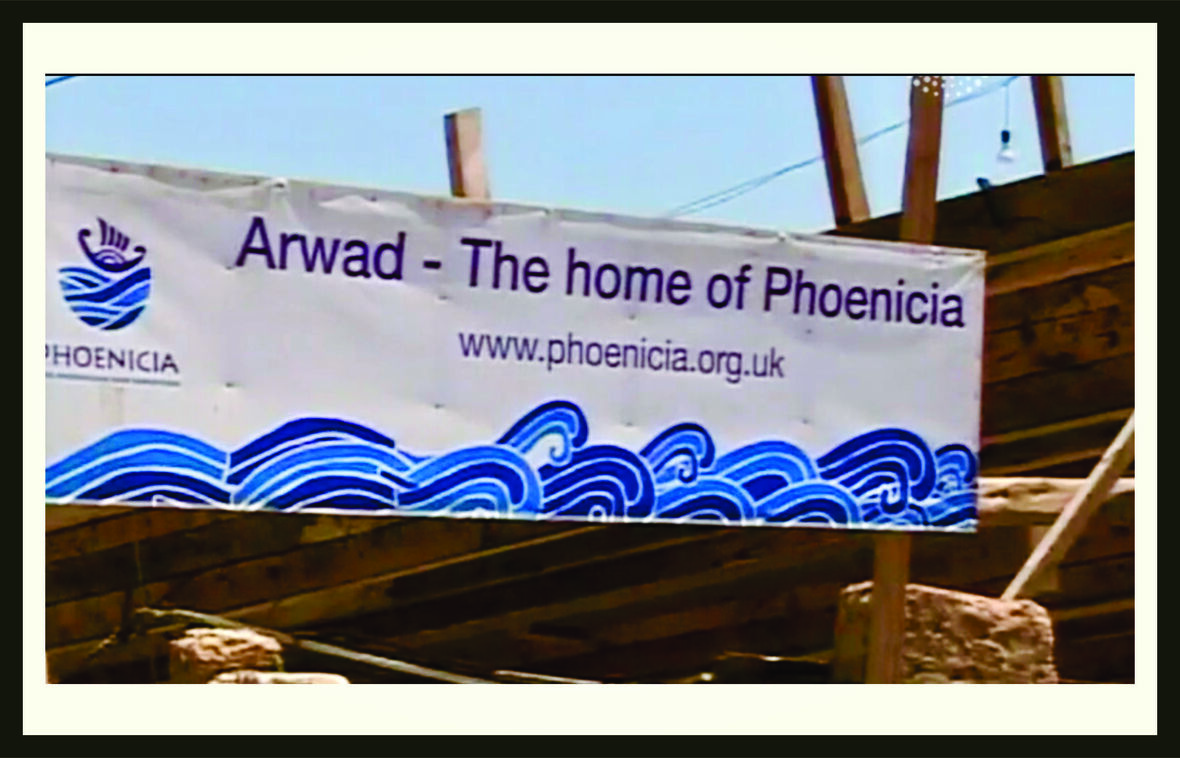
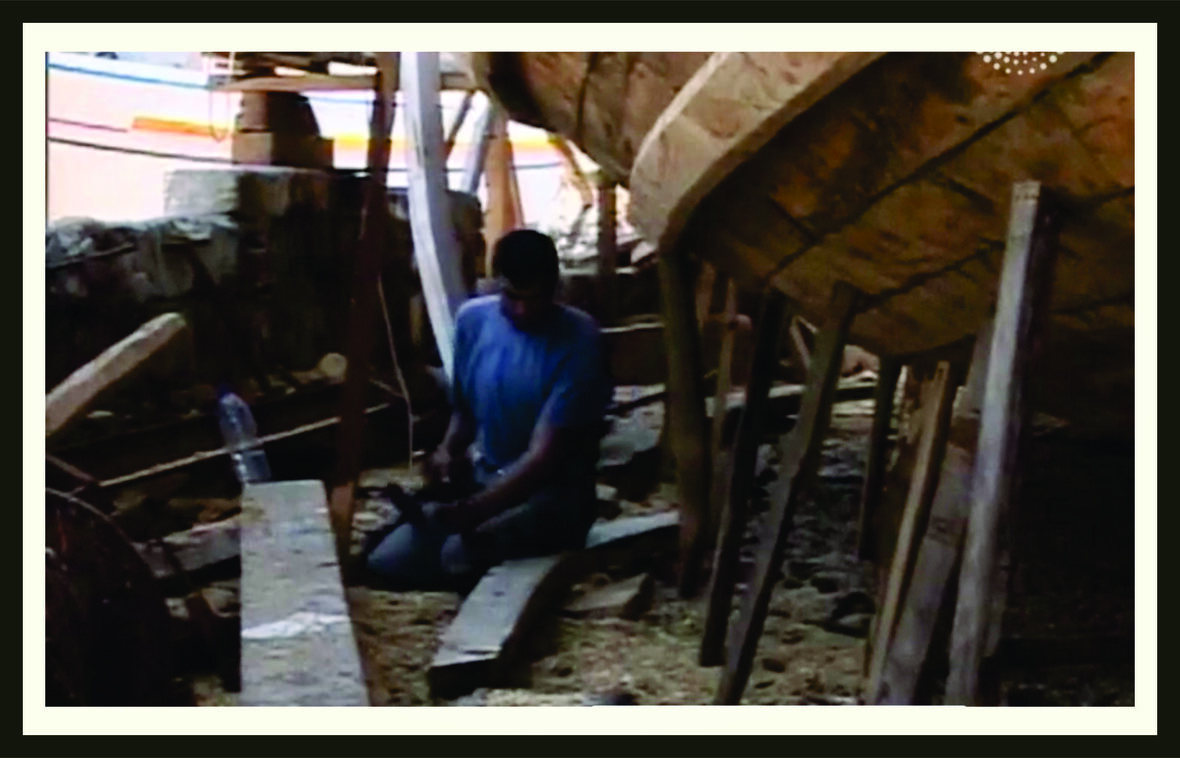
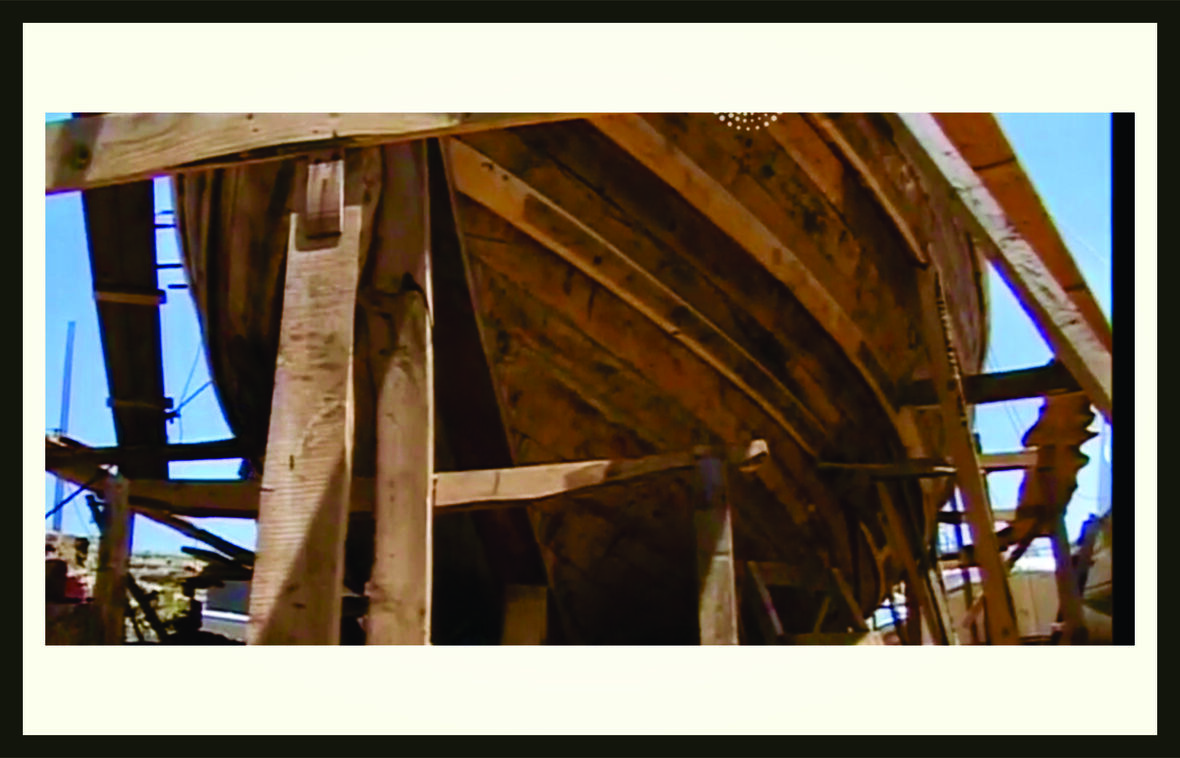
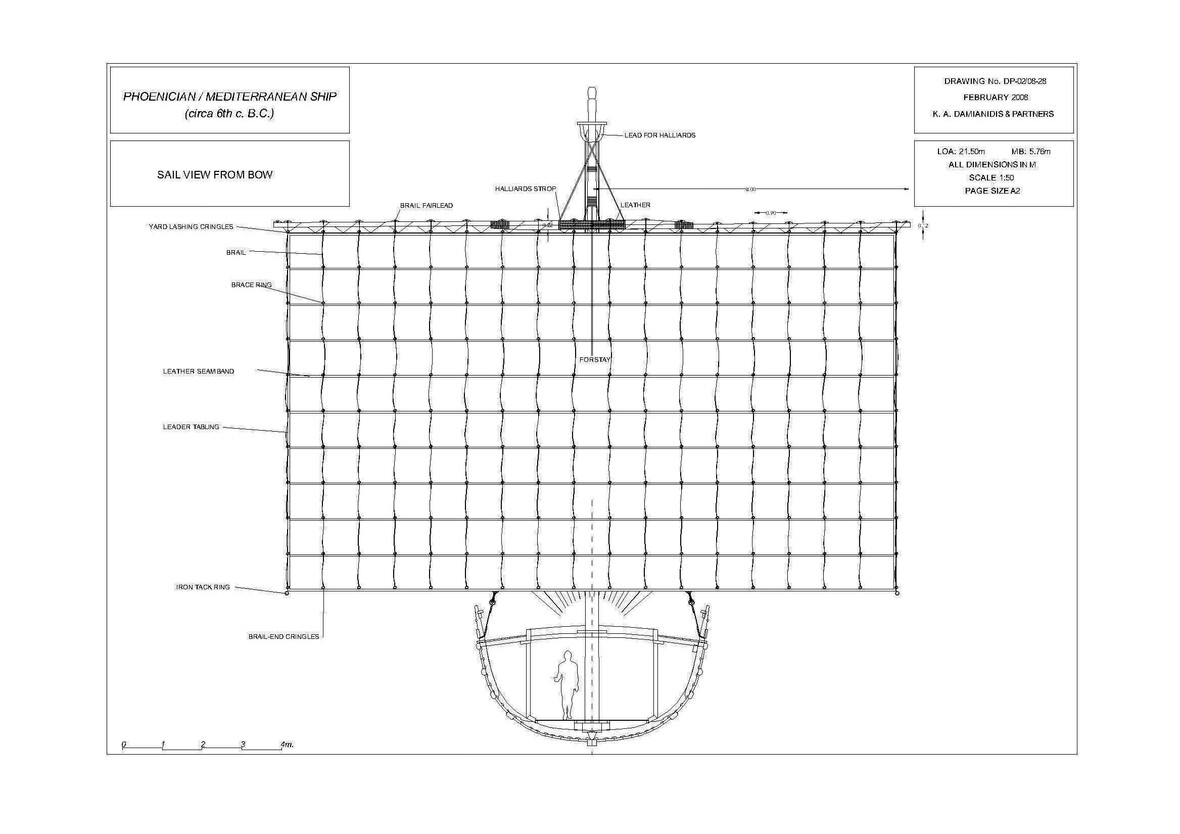
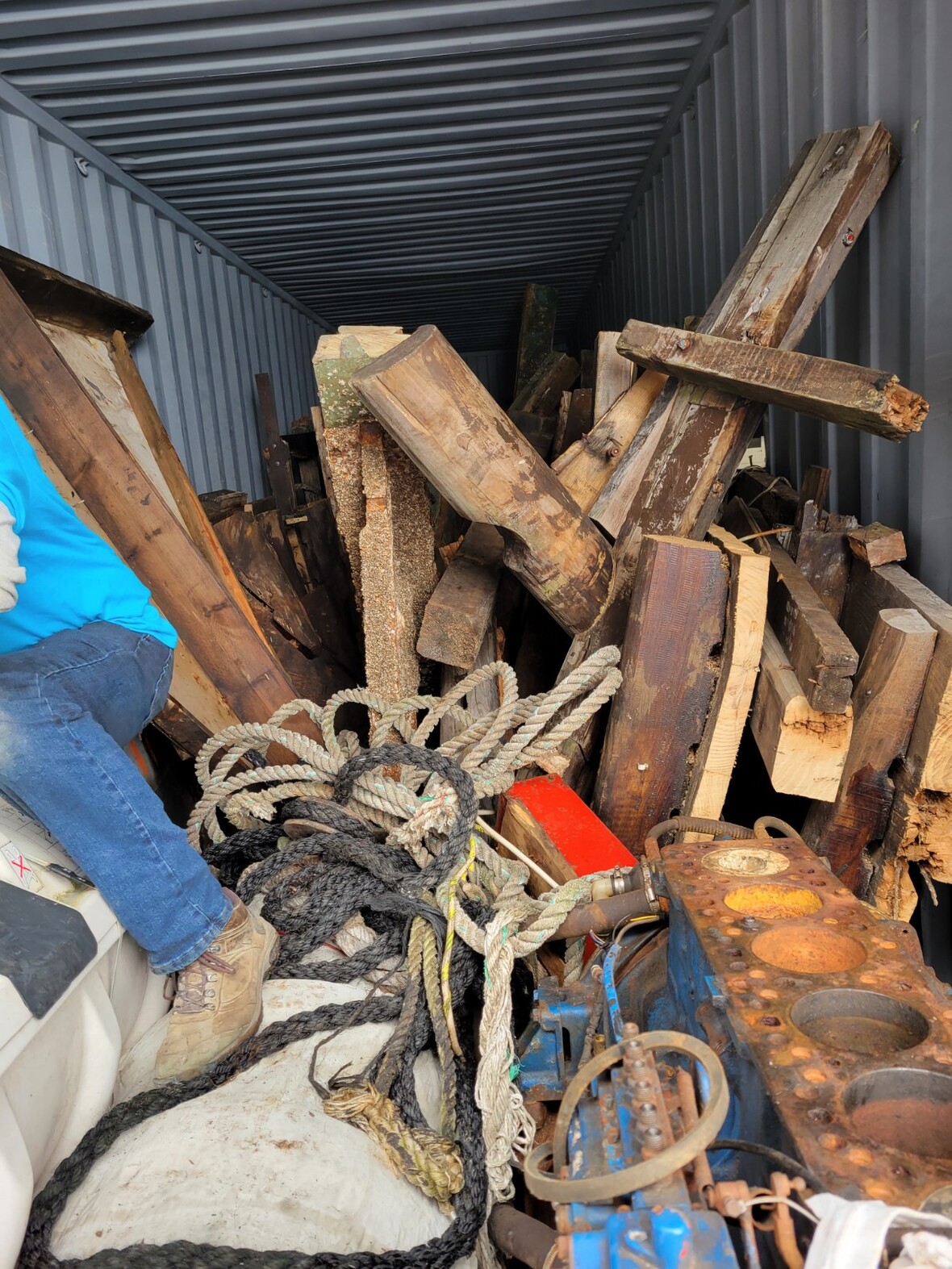
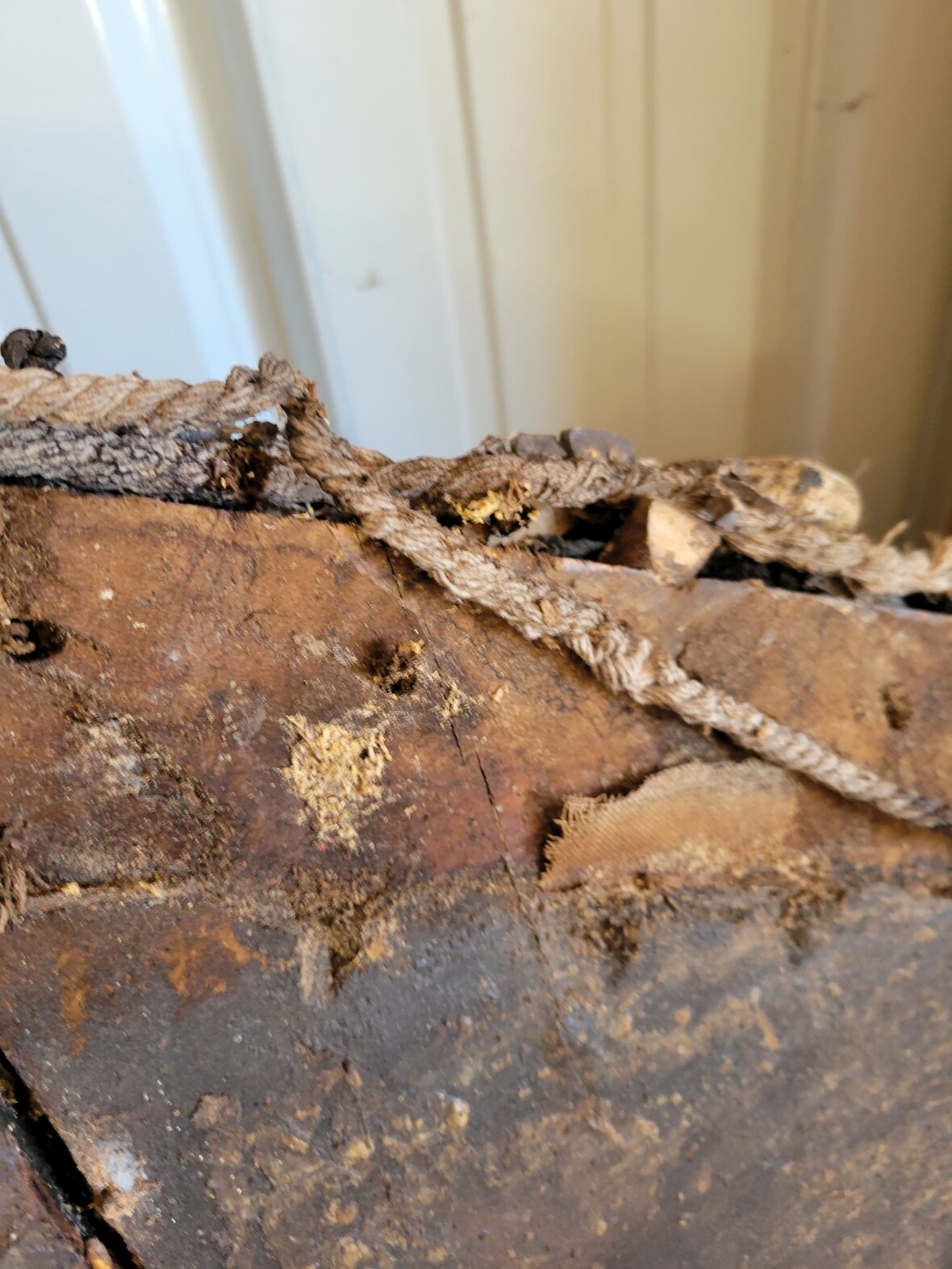
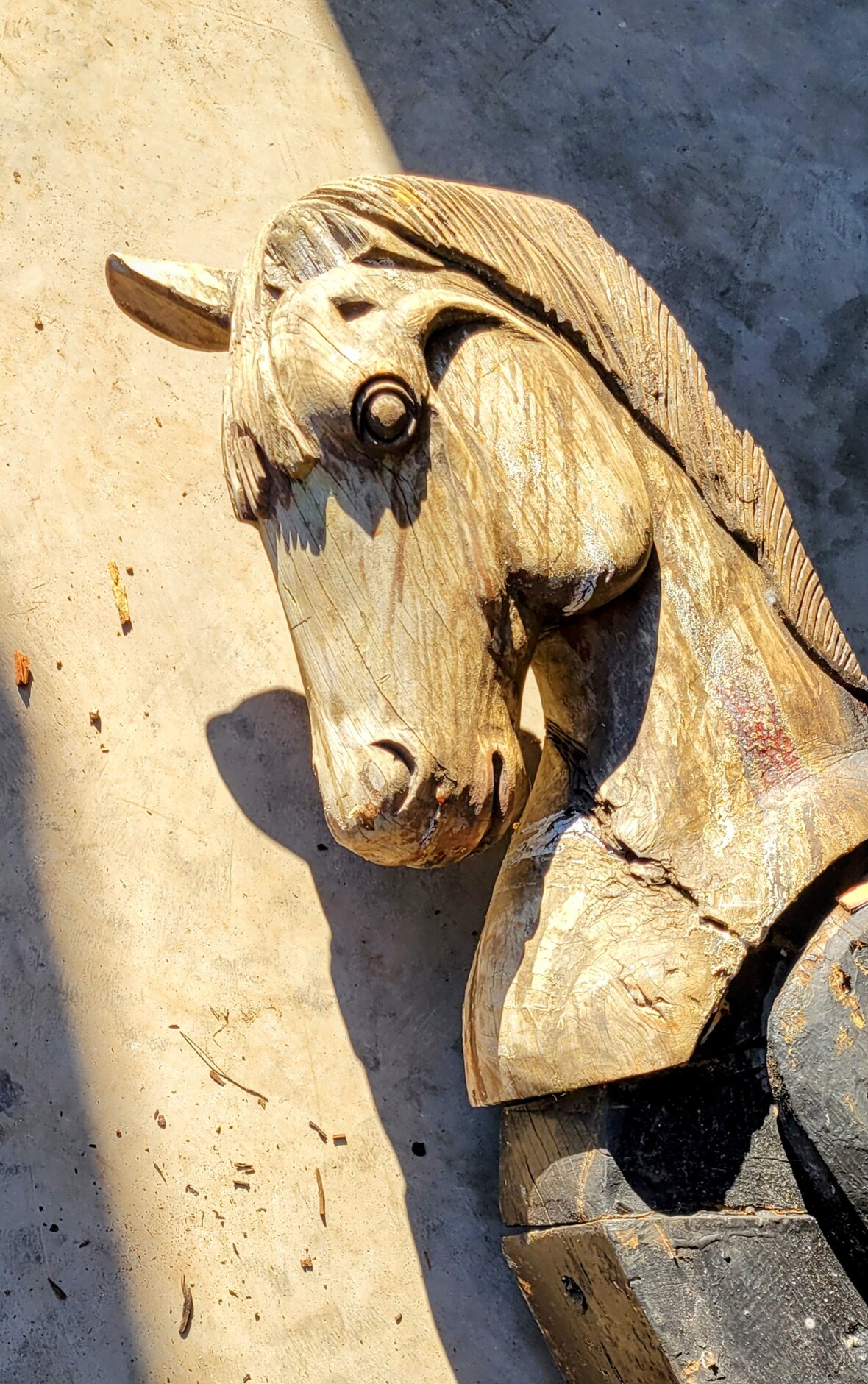


 “For my first post in 2019, I’m showing another instance of M2C* censorship. This one is from the Brigham Young lesson manual (Teachings of the Presidents of the Church – Brigham Young).
 Church historians concede they censored Cumorah in Saints


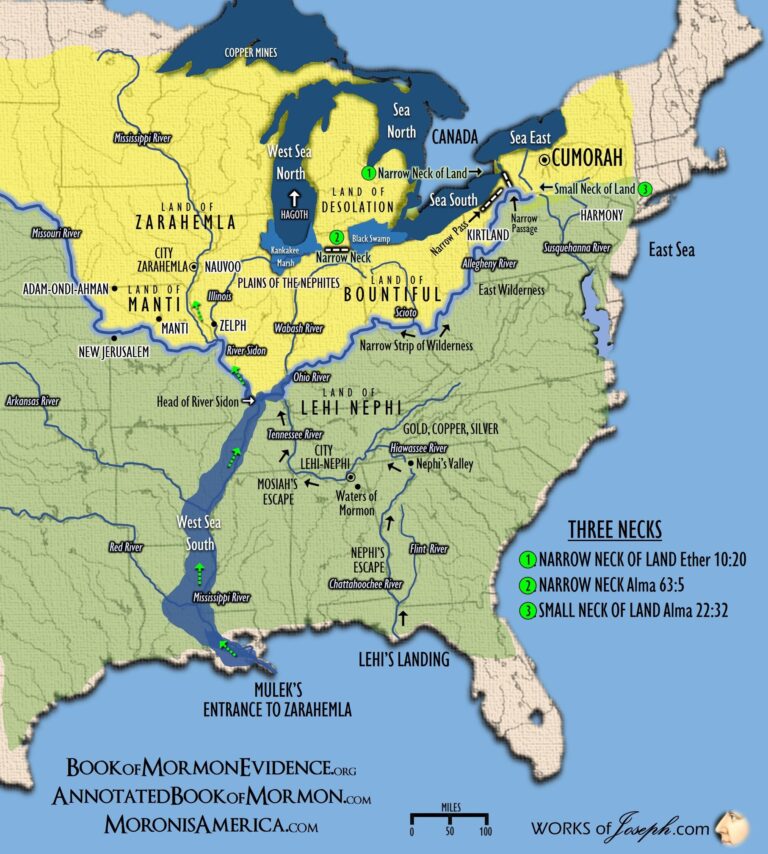


 Great Heartlander Books
 Along with “
 2. “…This modernistic theory of necessity, in order to be consistent, must place the waters of Ripliancum and the Hill Cumorah some place within the restricted territory of Central America, notwithstanding the teachings of the Church to the contrary for upwards of 100 years. Because of this theory some members of the Church have become confused and greatly disturbed in their faith in the Book of Mormon. It is for this reason that evidence is here presented to show that it is not only possible that these places could be located as the Church has held during the past century, but that in very deed such is the case… It is known that the Hill Cumorah where the Nephites were destroyed is the hill where the Jaredites were also destroyed. This hill was known to the Jaredites as Ramah. It was approximately near to the waters of Ripliancum, which the Book of Ether says, “by interpretation, is large, or to exceed all… It must be conceded that this description fits perfectly the land of Cumorah in New York, as it has been known since the visitation of Moroni to the Prophet Joseph Smith, for the hill is in the proximity of the Great Lakes and also in the land of many rivers and fountains. Moreover, the Prophet Joseph Smith himself is on record, definitely declaring the present hill called Cumorah to be the exact hill spoken of in the Book of Mormon. Further, the fact that all of his associates from the beginning down have spoken of it as the identical hill where Mormon and Moroni hid the records, must carry some weight. It is difficult for a reasonable person to believe that such men as Oliver Cowdery. Brigham Young, Parley P. Pratt, Orson Pratt, David Whitmer, and many others, could speak frequently of the Spot where the Prophet Joseph Smith obtained the plates as the Hill Cumorah, and not be corrected by the Prophet, if that were not the fact. That they did speak of this hill in the days of the Prophet in this definite manner is an established record of history.” Doctrines of Salvation Joseph Fielding Smith Chapter 12
 4. “Both the Nephite and Jaredite civilizations fought their final great wars of extinction at and near the Hill Cumorah (or Ramah as the Jaredites termed it), which hill is located between Palmyra and Manchester in the western part of the state of New York. It was here that Moroni hid up the gold plates from which the Book of Mormon was translated. (Morm. 6; Ether 15.) Joseph Smith, Oliver Cowdery, and many of the early brethren, who were familiar with all the circumstances attending the coming forth of the Book of Mormon in this dispensation, have left us pointed testimony as to the identity and location of Cumorah or Ramah.” (Doctrines of Salvation, vol. 3, pp. 232-241.) (Bruce R. McConkie, Mormon Doctrine “CUMORAH,” 1966, p. 175)
 7. “Millennia ago he declared: “There shall none come into this land [he was speaking of America] save they shall be brought by the hand of the Lord… In the western part of the state of New York near Palmyra is a prominent hill known as the “hill Cumorah.” (Morm. 6:6.) On July twenty-fifth of this year, as I stood on the crest of that hill admiring with awe the breathtaking panorama which stretched out before me on every hand, my mind reverted to the events which occurred in that vicinity some twenty-five centuries ago—events which brought to an end the great Jaredite nation… Thus perished at the foot of Cumorah the remnant of the once mighty Jaredite nation, of whom the Lord had said, “There shall be none greater … upon all the face of the earth.” (Ether 1:43.)… This second civilization to which I refer, the Nephites, flourished in America between 600 B.C. and A.D. 400. Their civilization came to an end for the same reason, at the same place, and in the same manner as did the Jaredites… The tragic fate of the Jaredite and the Nephite civilizations is proof positive that the Lord meant it when he said that this “is a land of promise; and whatsoever nation shall possess it shall serve God, or they shall be swept off when the fulness of his wrath shall come upon them. And the fulness of his wrath cometh upon them when they are ripened in iniquity.” (Ether 2:9.) This information, wrote Moroni, addressing himself to us who today occupy this land, “cometh unto you, O ye Gentiles” (now, Gentiles is the term used by the Book of Mormon prophets to refer to the present inhabitants of America and to the peoples of the old world from which they came)… Now my beloved brethren and sisters everywhere, both members of the Church and nonmembers, I bear you my personal witness that I know that the things I have presented to you today are true—both those pertaining to past events and those pertaining to events yet to come. The issue we face is clear and well defined. The choice is ours. The question is: Shall we of this dispensation repent and obey the laws of the God of the land, who is Jesus Christ, or shall we continue to defy them until we ripen in iniquity That we will repent and obey and thereby qualify to receive the blessings promised to the righteous in this land, I humbly pray in the name of Jesus Christ, our Redeemer. Amen.” America’s Destiny Marion G. Romney Oct 1975
 10. [Heber C. Kimball] “prophesied that when the final last struggle came to this nation it would be at the Hill Cumorah where both of the former Nations [Jaredite and Nephite] were destroyed” (abt. Heber C. Kimball) Wilford Woodruff’s Journal 6:305, December 17, 1866
 14. McGavin and Bean explain their point of view concerning the identity of the Hill Cumorah as an ancient battlefield. The authors conclude that the scholars “need not search for [Cumorah] in Mexico or Yucatan” E. Cecil McGavin and Willard W. Bean “Cumorah-Land, An Ancient Battlefield,” in The Improvement Era 44, September 1941, 526, 571-72.
 21. “On the title page I read that it is “written to the Lamanites, who are a remnant of the house of Israel; and also to Jew and Gentile.” In the introduction to the Book of Mormon: Another Testament of Jesus Christ, it says that the Lamanites “are among the ancestors of the American Indians.” As I read the Book of Mormon, it seemed to me that it was about my American Indian ancestors. It tells the story of a people, a part of which were later described as “Lamanites,” who migrated from Jerusalem to a “land of promise” (1 Nephi 2:20) about 600 B.C.” “Come unto Me, O Ye House of Israel” By Elder Larry Echo Hawk of the Seventy Ensign Oct 2012
 23. “From the time Father Bosley located near Avon, he found and plowed up axes and irons, and had sufficient to make his mill irons, and had always abundance of iron on hand without purchasing. In the towns of Bloomfield, Victor, Manchester, and in the regions round about, there were hills upon the tops of which were entrenchments and fortifications, and in them were human bones, axes, tomahawks, points of arrows, beads and pipes, which were frequently found; and it was a common occurrence in the country to plow up axes, which I have done many times myself. I have visited the fortifications on the tops of those hills frequently, and the one near Bloomfield I have crossed hundreds of times, which is on the bluff of Honeyoye River, at the outlet of Honeyoye Lake. In that region there are many small deep lakes, and in some of them the bottom has never been found. Fish abound in them. The hill Cumorah is a high hill for that country, and had the appearance of a fortification or entrenchment around it. In the State of New York, probably there are hundreds of these fortifications which are now visible, and I have seen them in many other parts of the United States. Readers of the Book of Mormon will remember that in this very region, according to that sacred record, the final battles were fought between the Nephites and Lamanites. At the hill Cumorah, the Nephites made their last stand prior to their utter extermination, A. D., 385. Thus was Heber preaching the Gospel to the Gentiles, above the graves of the ancients of Israel, whose records with the fullness of that Gospel, and the relics of their prowess and civilization, were now whispering from the dust.” Life of Heber C. Kimball by Orson F. Whitney Mounds at Cumorah
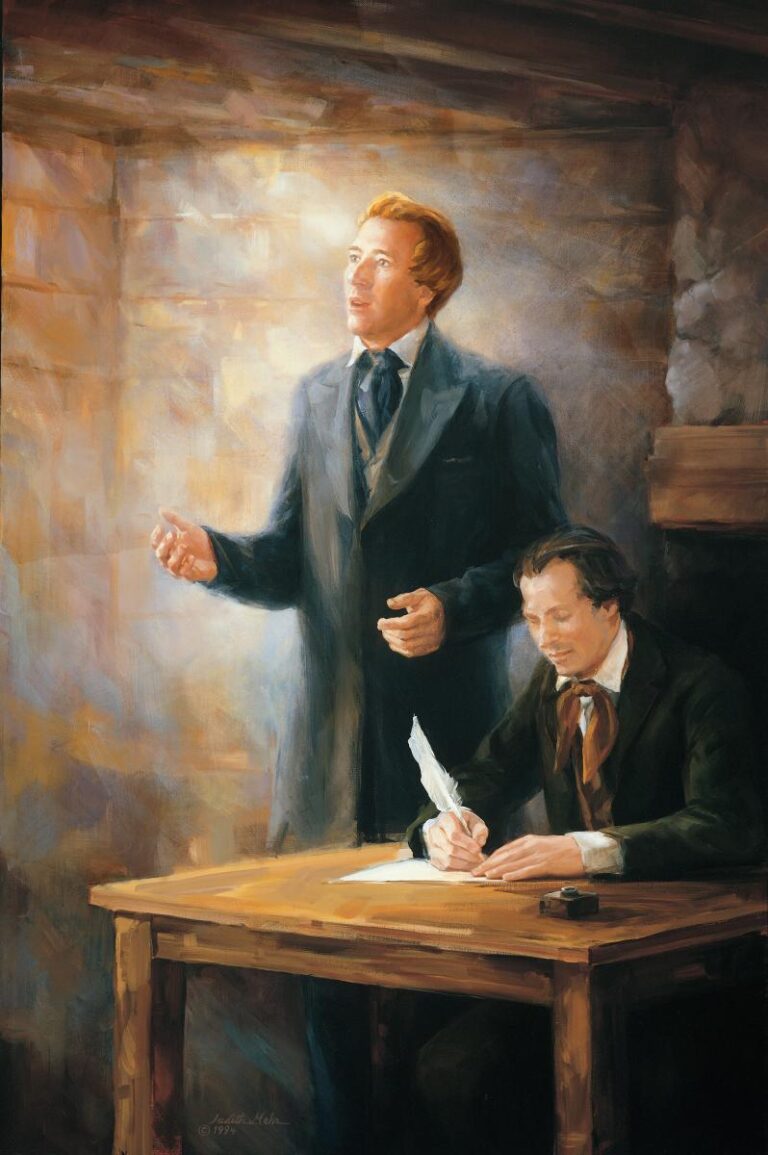



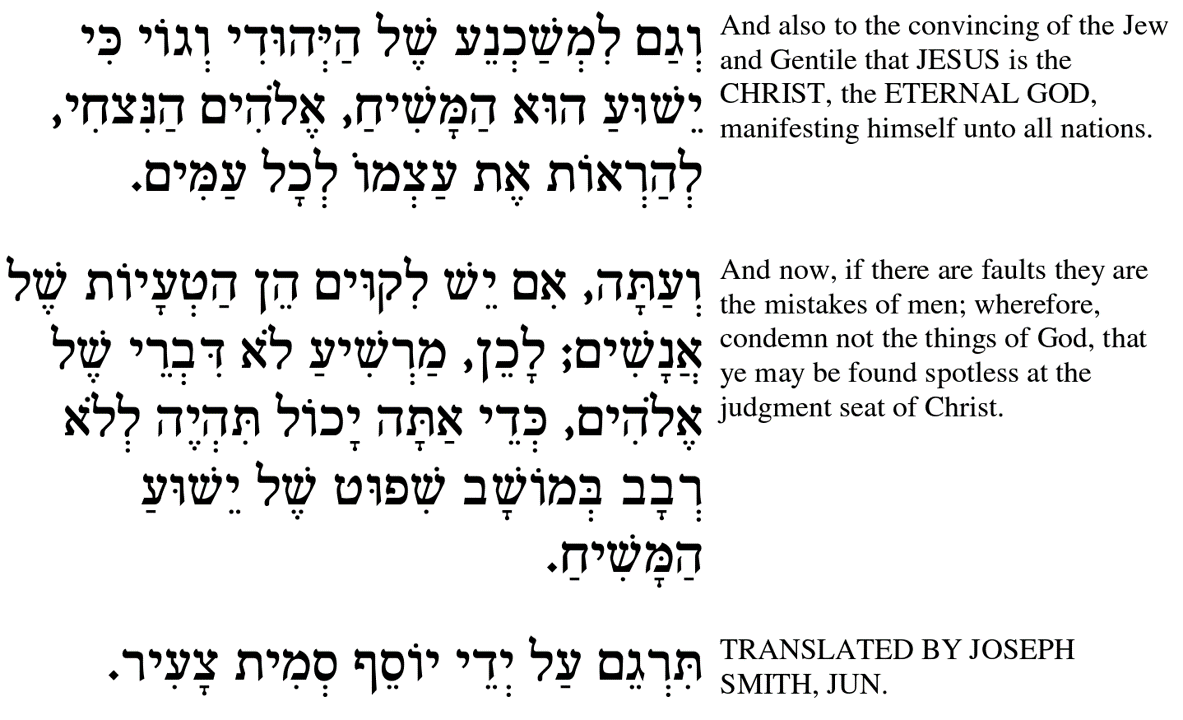
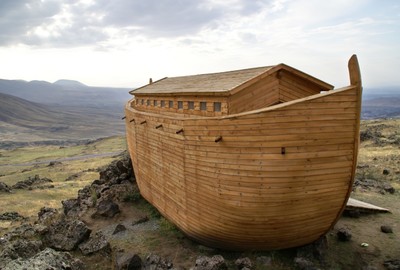
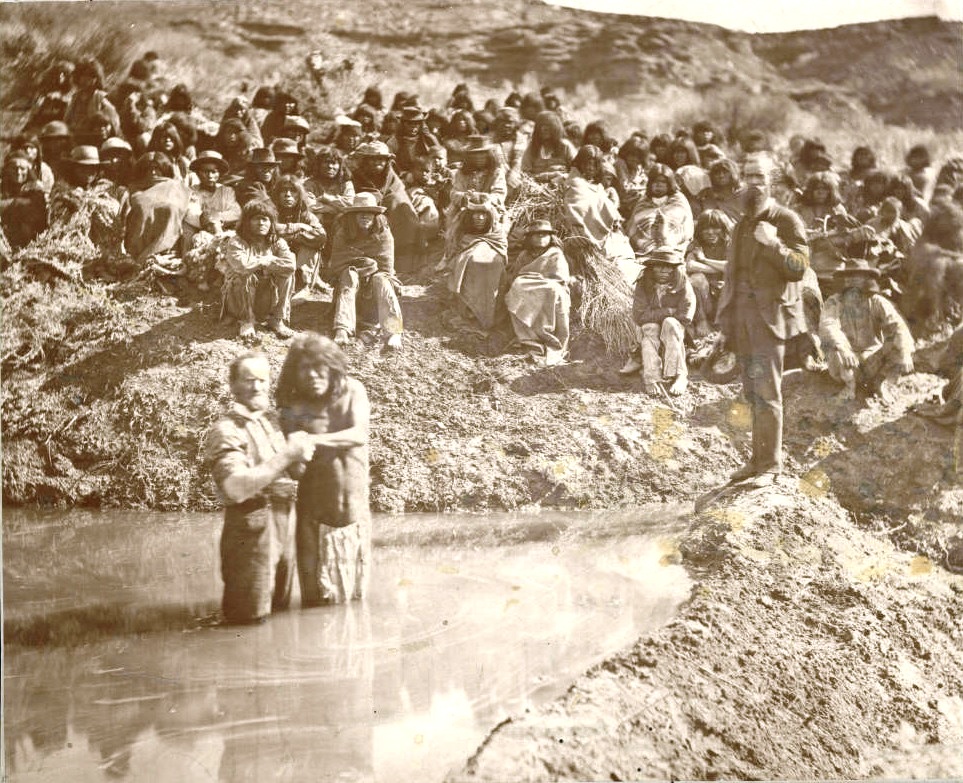
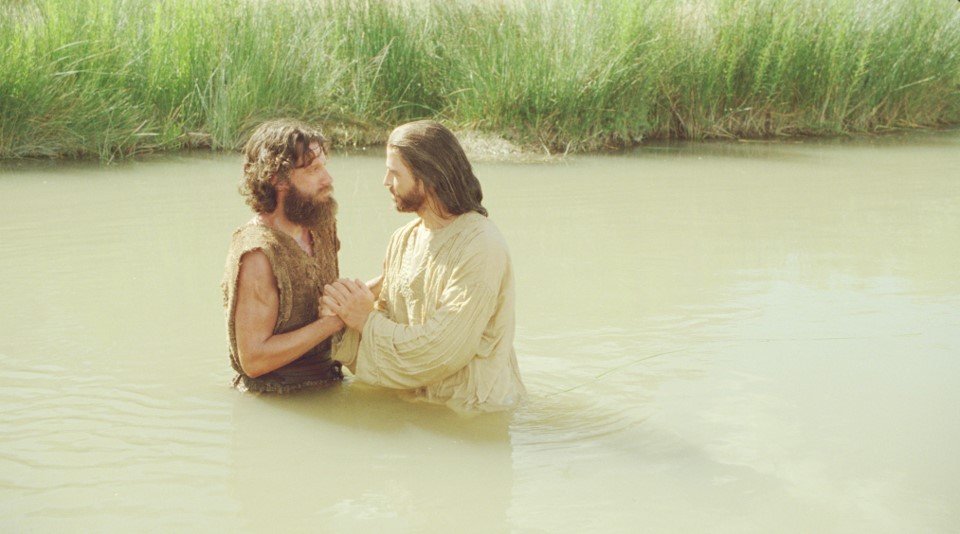
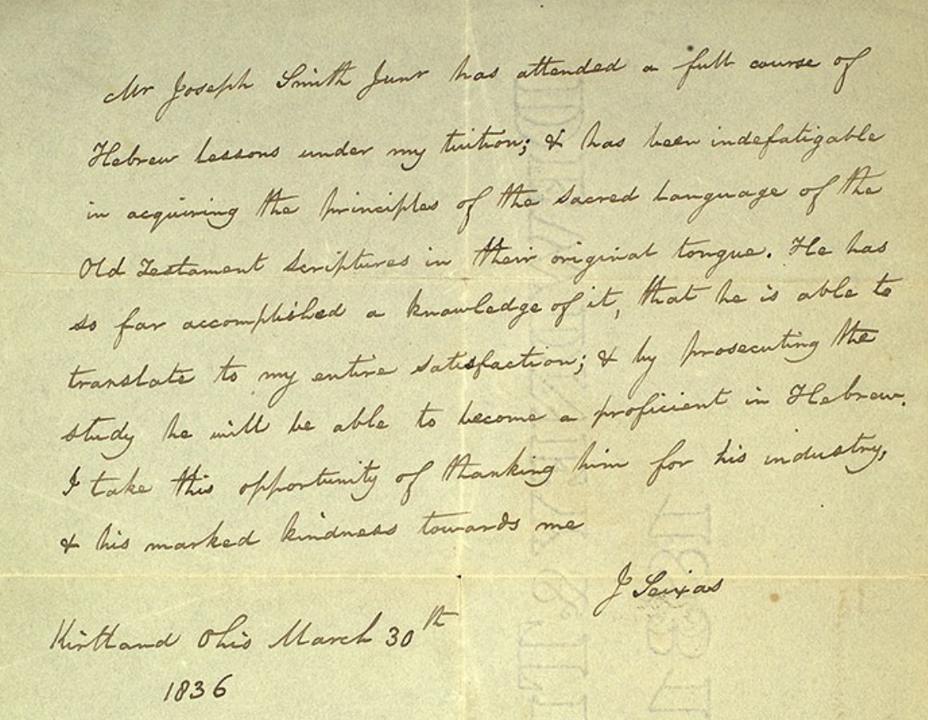
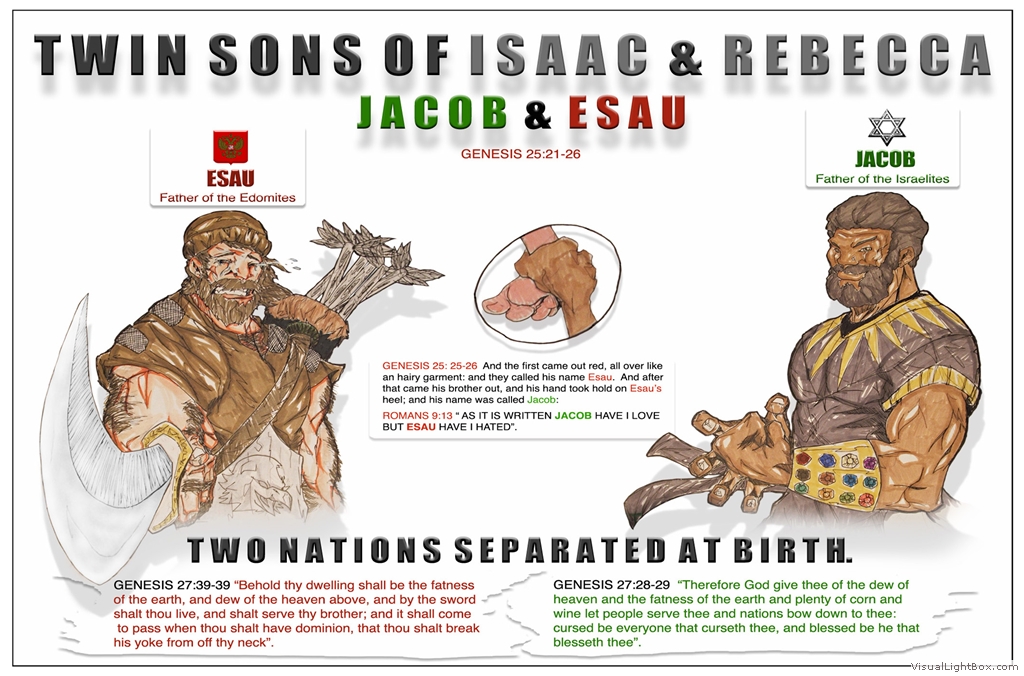




 From this book, THE AMERICAN INDIAN (UH-NISH-IK-NA-BA) by ELIJAH M. HAINES we will show the similarity in some of the Indian languages, to the Hebrew, and that the former must have been derived from the latter. I have edited just one chapter of over 833 pages which focuses on Chapter IV, Affinity with the Jews. This may be a lengthy blog, but it is amazing how much information you will receive about the similarities of our Book of Mormon Lamanites with the Tribe of Judah from Israel. You will also enjoy some of the old pictures which come from this amazing book. I also share many online links to other wonderful books written long ago about the Native Americans of the United States. I know they are the honored brothers of Manasseh and it is our duty as Ephraim to bring us together again with the Book of Mormon. To Purchase the Annotated Book of Mormon
 This book has therefore been prepared with reference to this long felt want, and is such a work as the public mind and student of history now seem to demand.

 Among the early authorities cited, to show that the American Indians are descendants from the Israelites, Mr. Adair seems to be the principal one, and since his time, all writers who have favored his views, refer with unreserved confidence to the evidence furnished by him to this end.
 Dr. Boudinot speaks of some Indians at a place called Cohocks, who called the high mountain at the west Ararat He says that the Penobscot Indians called a high mountain by the same name ; that he himself attended an Indian religious dance, concerning which he remarks:
 Dr. Boudinot further says of the Indians: ” Their languages in their roots, idioms and particular construction, appear to have the whole genius of the Hebrew; and what is very remarkable have most of the peculiarities of that language, especially those in which it differs from most other languages.”
 “Du Pratz was very intimate with the chief of those Indians called ‘
  Charlevoix, speaking of the Indian traits and religious customs, and in reference to their resembling the Jews, says: ” The greatest Part of their Feasts, their Songs and their Dances, appear to me to have had their Rise from Religion, and still to preserve some Traces of it; but one must have good eyes, or rather a very lively imagination, to perceive in them all that some travelers have pretended to discover. I have met with some who could not help thinking that our savages were descended from the Jews, and found in
  everything some affinity between these barbarians and the people of God. There is, indeed, a resemblance in some things, as not to use knives in certain meals, and not to break the bones of the beast they ate at those times, and the separation of the women during the time of their usual infirmities. Some persons, they say, have heard them, or thought they heard them, pronounce the word Hallelujah in their songs. But who can believe that when they pierce their ears and noses they do it in pursuance of the law of circumcision ? On the other hand,
  ” By information received from Father Hoyt respecting the former traditions, rites and ceremonies of the Indians of this region, I think there is much reason to believe they are descendants of Abraham. They have had cities of refuge, feasts of first fruits, sacrifices of the firstlings of the flock, which had to be perfect, without blemish or deformity, a bone of which must not be broken. They were never known to worship images, nor to offer sacrifices to any God made with hands.
  Mr. Penn further adds that the worship of this people consists in two parts, sacrifices and cantos (songs). The first is with their first fruits, and the first buck they kill goes to the fire; and that all who go to this feast must take a piece of money, which is made of the bone of a fish. (” None shall appear before me empty.”) He speaks of the agreement of their rites with those of the Jews, and adds:
 “They choose twelve men, who provide twelve deer. Each of the twelve men cuts a sapling ; with these they form a tent, covered with blankets. They then choose twelve stones for an altar of sacrifice. Some tribes, he observes, choose but ten men, ten poles, and ten stones. Here seems an evident allusion to the twelve tribes, and also to some idea of the ten separate tribes of Israel. Upon the stones of their altar they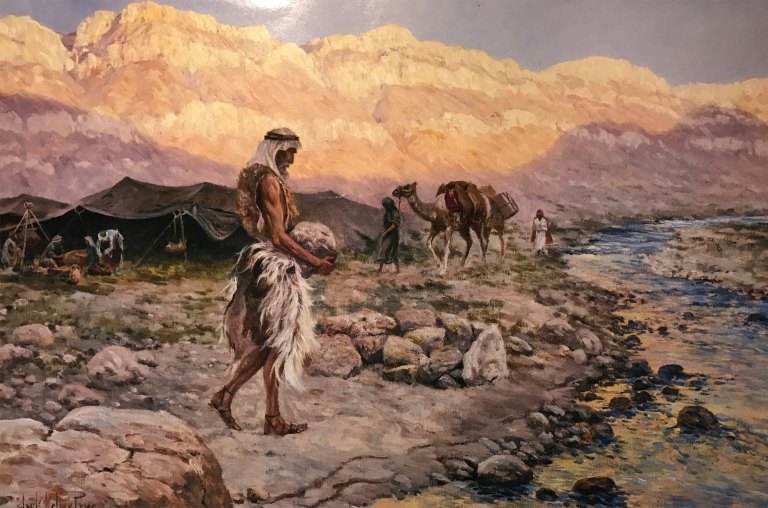
 Mr. Adair, in further support of his theory, says: “As the nation had its particular symbol, so each tribe has the badge from which it is denominated The sachem of each tribe is a necessary party in conveyances and treaties, to which he affixes the mark of his tribe. If we go from nation to nation among them we shall not find one who doth not lineally distinguish himself by his respective family. The genealogical names which they assume are derived either from the names of those animals whereof the cherubim are said in revelation to be compounded, or from such creatures as are most familiar to them. They call some of their tribes by the names of cherubimical figures that were carried on four principal standards of Israel.”
 The Indians count time after the manner of the Hebrews. They divide the year into spring, summer, autumn and winter. They number their years from any of those four periods, for they have no name for a year, and they subdivide these and count the year by lunar months, like the Israelites who counted by moons. They begin a year at the first appearance of the first new moon of the vernal equinox, according to the ecclesiastical year of Moses. Till the so-called captivity the Israelites had only numeral names for the solar and lunar months except Abib and Ethamin ; the former signifying a green ear of corn, and the latter robust or valiant, and by the first of these the Indians (as an explicative) term their Passover, which the trading people call the green corn dance.
 In conformity to, or after the manner of the Jews, the Indians of America have their prophets, high priests and others of a religious order. As the
  [
[ The ceremonies of the Indians, in their religious worship, says Mr. Adair, were more after the Mosaic institutions than of Pagan imitation; which could not be if a majority of the old nations were of heathenish descent They were utter strangers to all the gestures practiced by the Pagans in their religious rites.
 Mr. Adair, in likening the Indians to the Jews on account of their abstinence from unclean things, says that
  A religious custom is related by Maj. Long, which some think goes to prove that the Omaha Indians are of Israel. He relates that from the age of between five or ten years their little sons are obliged to ascend a hill fasting once or twice a week, during the months of March and April, to pray aloud to Wahconda. When this season of the year arrives, the mother informs the little son that the ice is breaking up in the river, the ducks and geese are migrating, and it is time for you to prepare to go in clay.” The little worshipper then rubs himself over with whitish clay, and at sunrise sets off for the top of a hill, instructed by the mother what to say to the Master of Life.
 “I have noticed that in all their principal and oldest traditions and lodge tales, twelve brothers are spoken of that are the sons of Getube, a name nearly similar to Jacob. The oldest of these brothers
 There is a marked similarity between the customs of the Indians and the Jews in their mourning for the dead. Like the Jews, the Indians had a time or season for mourning for the dead. A custom among the Jews of loud lamentation over the dead was also a peculiar custom of the American tribes. In Gen. xxxii, 34, it is said that *’ Jacob rent his clothes, and put sackcloth upon his loins, and mourned for his son many days.” This is suggestive of a like custom among the American Indians. Among the Indians the friends of the deceased visited the graves of their departed relatives and there resumed their custom of weeping and shrieking. This was also a prominent custom among the Jews, as noticed in John xi, 31 : ” She goeth out to the grave to weep there.” The custom of engaging women to mourn over the bodies of the dead, which prevailed among the American tribes, was also a custom among the Jews, as mentioned in Jer. ix, 17 : ** Thus saith the Lord of Hosts, consider ye, and call for the mourning women that they may come.”


 The secret order of medicine men and prophets of the Indians had a corresponding institution among the Jews called “
 A custom prevailed among western Indian tribes, who lived in villages of dirt houses, of
  In notions of dress there was a striking similarity between the American Indians and the Jews, especially in regard to the outer garment thrown over the shoulders or wrapped around the body. The Indian medicine man or prominent chief possessed a peculiar vanity in regard to their dress, which was frequently gaudy and fantastic, and so with the high priests among the Jews where display in dress was a peculiar feature in Jewish custom among those high in authority. It was a custom among the Jews to sleep in their garments, Deut. xxiv, 12-13, and so with the American Indians.
 According to Mr. Freeman, it was an
 Rev. Peter Jones, an educated Ojibway Indian, in the appendix to his book, entitled “