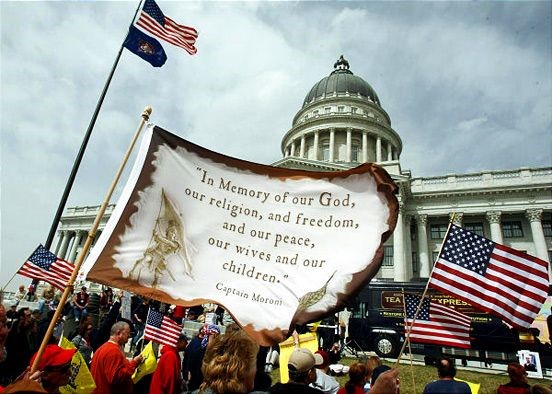
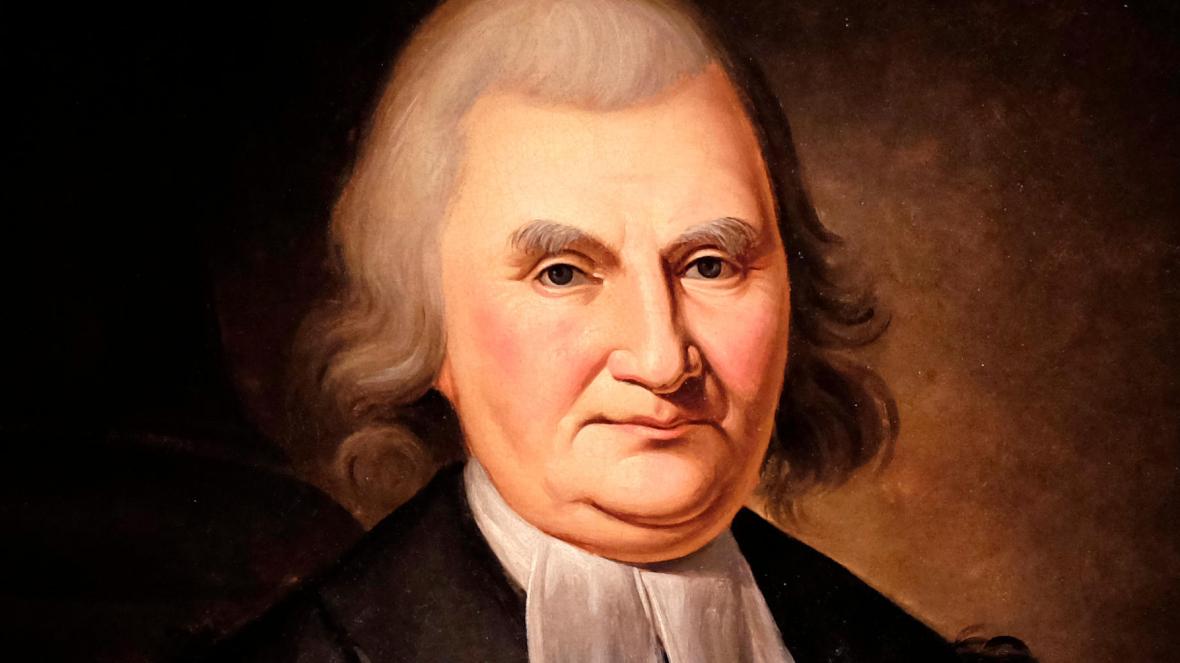
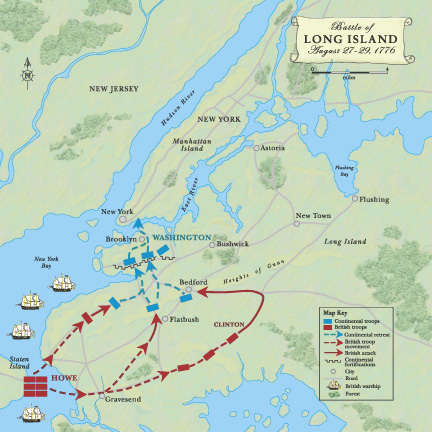
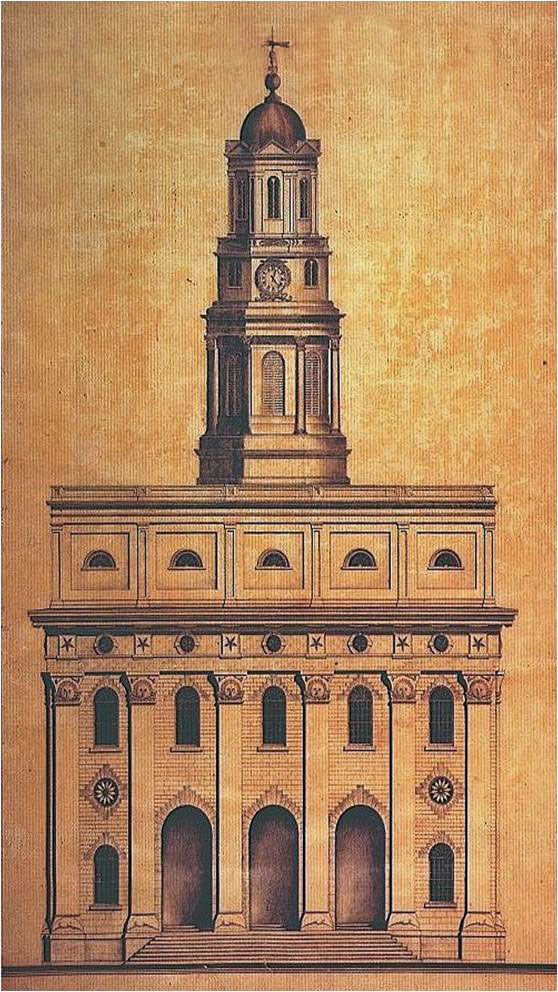
Every Heartlander needs to get a copy of Lemurs, Chameleons and Golden Plates. Was $16.44Now Just $13.00
This is the first illustrated book designed for young and new Latter-day Saints that relates what the prophets have taught about the New York Cumorah. The book uses colorful, fun illustrations to explain the history of the Church, the origins and setting of the Book of Mormon, and the blessings of missionary and temple work.
The book also teaches about Latter-day Saints in Africa, the fastest-growing area of the Church, giving young people a sense of the worldwide presence of the Church. The book was illustrated by an African Latter-day Saint and written by Jonathan Neville, a well-known LDS author.
Sadly, very few Latter-day Saints even know what the prophets have taught about the New York Cumorah and related issues.
Lemurs, Chameleons and Golden Plates can fix that. The book includes references to original sources in the Joseph Smith Papers that enables parents (and grandparents) to learn more about actual Church history instead of the revisionist Church history that so many scholars today promote.
Brother Neville discussed the book at our September conference, here:
“I was just sent a fantastic email from one of our great supporters here at The Firm Foundation, Laura Cooke from Australia. She wrote me a very insightful and heartfelt email about her experience with the current Covid situation we are encountering throughout the world. I felt her Spirit as she has struggled with many decisions in the past few years, and she wants to share some things she knows could help others.
I begin by saying, I agree with her heartfelt thoughts and by sharing her words, I pray that someone else may be guided by the Spirit on the choices they make. I don’t judge anyone who has taken the shot as we all have free agency. I am sure there are many that decided taking the shot was the right thing for them to do. My wife and I have strongly decided it is not right for us to take the shot. I have 5 or 6 family members who decided differently than I did, and they are good honorable members of our Church, as I am. This story is about relying on personal revelation for the important choices we are being asked to make.
I believe in our decision making process we need to take all information and research it then pray carefully about our personal answer. I believe Pres Nelson who said, “It is now time that we each implement extraordinary measures — perhaps measures we have never taken before — to strengthen our personal spiritual foundations. Unprecedented times call for unprecedented measures.” Oct 3, 2021 President Russell M. Nelson
I also strongly believe what the Prophet Joseph Smith said, “We have heard men who hold the priesthood remark that they would do anything they were told to do by those who preside over them even if they knew it was wrong; but such obedience is worse than folly to us; it is slavery in the extreme; and the man who would thus willingly degrade himself, should not claim a rank among intelligent beings, until he turns from his folly. A man of God would despise the idea. Others, in the extreme exercise of their almighty authority have taught that such obedience was necessary, and that no matter what the saints were told to do by their presidents, they should do it without any questions. When Elders of Israel will so far indulge in these extreme notions of obedience as to teach them to the people, it is generally because they have it in their hearts to do wrong themselves.” Joseph Smith, (Jr. Joseph Smith, the Millennial Star, Vol 14, # 38, pages 593-595)
Now is a critical time to receive “Personal Revelation” about major decisions in our life. Satan has unleashed all his weapons, especially within our Church. He wants us to fail. Pres Nelson also said, “Does God really want to speak to you? Yes! “As well might man stretch forth his puny arm to stop the Missouri river in its decreed course … as to hinder the Almighty from pouring down knowledge from heaven upon the heads of the Latter-day Saints.” You don’t have to wonder about what is true. You do not have to wonder whom you can safely trust. Through personal revelation, you can receive your own witness that the Book of Mormon is the word of God, that Joseph Smith is a prophet, and that this is the Lord’s Church. Regardless of what others may say or do, no one can ever take away a witness borne to your heart and mind about what is true. I urge you to stretch beyond your current spiritual ability to receive personal revelation, for the Lord has promised that “if thou shalt [seek], thou shalt receive revelation upon revelation, knowledge upon knowledge, that thou mayest know the mysteries and peaceable things—that which bringeth joy, that which bringeth life eternal.” Revelation for the Church, Revelation for Our Lives by President Russell M. Nelson
Thank you Laura for your inspiring and timely words. Rian Nelson
Laura Cooke
“These are my thoughts on the First Presidency’s message in August and how we can see clearly what is happening.
The last 2 years have been a trial of faith for many. There are some members who are awake to the evil conspiracy that has been foisted on the world in the name of a “pandemic”. My family are some of those members. We see this fake pandemic and the tyrannical measures (which is why the “pandemic” was instigated) as the beginning of the end. What is about to happen to the world is the manipulation of all humans to take the mark of the beast. The vaccines forced on us by our governments have been the pre-cursor to this mark of the beast system – which is a slavery system set up in the name of Satan to make sure all humans worship him. The vaccine passports are the next step and soon there will be micro chips in right hands and foreheads.
Because of this knowledge that we have – from prayer, temple worship, studying scriptures, social trends, reading international white papers and the actual science – we made a decision at the beginning of last year when we knew there would be “vaccines” brought forward to be the ‘saviour’ of the world and that we would not partake of these ‘vaccines’.
Since mandates have been illegally imposed by our tyrannical governments and since the First Presidency sent their August message out, there has been a white elephant in the room (in some rooms there is outright conflict) in church families and church relationships. I don’t see the tension in our ward, but we have experienced it in our extended family and in other church forums. It is not a nice feeling to be accused by other church members and family members that we are not following the prophet, but we have stood our ground. I am assuming there may be others out there who need this information to stand their ground and not take these shots.
Here is what I have learned:
In August, when the first presidency sent their message publicly to church membership urging them to be personally protected by getting vaccinated, we knew as a family that there was more to the message. If a prophet speaks to the members and says exactly what the world says (on the surface) – there must be more to the message. So we held out and did not get vaccinated (and still am not for the following reasons.)
From study and personal revelation we know that these shots are poisonous with evidence of mass deaths, mass maiming, mind control components and also containing aborted baby tissue and these shots are the beginning of the mark of the beast (Rev:13:16).
If you log into your church account and go to ‘quick links’ and click on “letters and notices” – scroll down from most recent official messages from the brethren and look for the August message urging members to be vaccinated. You won’t find it. It was not an official letter. The message from the first Presidency was a public message. There can be many inferences as to why, buy I don’t want to publicly speculate.
One must study messages from our prophets in their mind and in their heart. We knew there is no way the Lord would tell us to get these poisonous jabs that have killed and maimed so many already and that have all the hallmarks of the mark of the beast system. So we studied it out in our hearts and in our minds and found this interesting fact. The historical definition of vaccine centers is that vaccines are dead attenuated viruses/bacteria mixed with other ingredients. These vaccines would be administered to cause an immune response and thus preventing the person from getting the illness or getting symptoms. In 2021 the CDC under the direction of the WHO changed the definition of ‘vaccine’ and it’s related topics by necessity to include the scope of the toxic shots being offered to the world. The toxic shots by definition do not meet the historical vaccine definition because they are not dead attenuated viruses, they are MRNA gene therapies. So now, according to the CDC (who is advising all governments on covid and vaccine protocol) the definition of vaccine is this: Vaccine: A preparation that is used to stimulate the body’s immune response against diseases. Vaccines are usually administered through needle injections, but some can be administered by mouth or sprayed into the nose. So from this new definition we can ask some questions:
1. Can the shots that so many members are taking from their governments be classified as vaccines under the old definition? Ans: no
2. Can the shots that so many members are taking from their governments be classified as vaccines under the new definition? Ans: yes
3. Can other preparations that are not the shots being offered by the world government be classified as vaccines under the new definition? Ans: yes. Any preparation that stimulates a person’s immune system to prevent disease can now be classified as “vaccine” under the new definition. This means that members who do not want to take the poisonous shots from their governments can with a clear conscience take other vitamins, minerals, natural preparations and anything that will stimulate the immune system which are all considered ‘vaccines’ now. In this way – all those members can with clearly state that they are following the prophet perfectly.
Conclusion: Those members who choose not to take the poisonous shots forced by their tyrannical governments are following the Prophet by choosing to take different vaccines.
Learn of Me by Liz Lemon Swindle
I believe we will all be blessed as we follow the prophet in all that he has asked us to do and not focus on one hobby because we think we are perfect at it. I know the prophet has asked us to be kind, charitable, inclusive, be part of the Lord’s youth battalion, serve in the temple and make time for the Lord every day (to name a few invitations from his 31 general conference talks since being prophet). These are the things we are trying to do in our home because we know that theses are the things we need to be doing to accumulate oil for our lamps for when the Bridegroom returns soon.
I am hoping this information can be helpful to someone else, because coming to this knowledge has given us personal fortitude to withstand the persecution which continues because of our decisions. We know who we are, we know that we are following the prophet and the voice of the Lord and we have peace in these decisions.
I forgot to mention in my email another 2 points that could help those questioning the prophet’s calling.
1. From this info – we don’t know what “vaccine” the brethren took. The news article does not specify. This means they could have taken vitamin shots for all we know, so we can’t assume they took the poison shots. I know there are those out there saying the prophet is fallen because they believe the shots are the mark of the beast.
2. In the same thought – there are those who believe the prophet is fallen because he has urged the membership to take the poison mark of the beast shots leading them to their deaths and slavery to Satan, and hell.
So in our eyes – we never questioned him – President Nelson is the Lord’s prophet and if we follow the prophet we will be on the right hand of God.
We pray for you and the FIRM foundation and its work to increase peoples’ testimonies of Christ and his gospel. May the Lord’s blessings continue on your work.
About the Cooke Family
We are the Cooke family. Nathan and Laura and our children, Joseph, Reuben, Sarah and Henry. My parents were converts in the 70’s and Nathan’s family has a history of 4 generations of church members with his ancestors joining in 1920 in the north Brisbane Australia, City of Nambour. We have lived and loved the gospel our whole lives and planned from when we were married to be the best missionaries to our children as we possibly could. We have a firm foundation of studying scriptures and studying the words of modern and church history prophets. We had/have a firm testimony of the gospel and the Book of Mormon and nothing could have shaken that, but we realized that for our children, growing up in a different world to ours, we wanted to give them a solid foundation of testimony experiences that would carry them through their lives. Our lifestyle has been centered around temple worship, scriptures and prophets. Even when our children were young, we would take them to the temple just to visit regularly to help them know where they belong. Before they were baptized, we recommended they read the Book of Mormon and pray about it – which they all did, some of them had answers come when they were older. When we went on family holidays, we focused on visiting family (young and old and cemeteries) and gathering stories and having experiences together, having family reunions and visiting other temples. A few experiences during our early years of marriage helped us realize the tactics of the adversary in undermining testimonies. We recognized those tactics as:
The education system and the theory of evolution
The swamp that is media, and
The undermining of the truthfulness of the Book of Mormon and Joseph Smith the prophet of the restoration.
We chose to never have a TV in our house and never have pop music or magazines and our children could have devices when they could afford them. We controlled the media that came in our home and thus we could show our children what the Lord teaches, what the world teaches and how to defend their faith. After some time – Nathan set about setting up blogs and Facebook pages for our family members (including our children) to have quick access to answers needed to hold onto faith.
To date, we have:
A Book of Mormon Power FB page – with lots of article information from the FIRM foundation,
A Dragons and Dinosaurs page – with scripture, science and social information about the young age of the earth,
Our Cooke testimony building page – just sharing the trips we have had together to discover the Promised Land,
8 family history pages bringing together decedents of all of our great grandparents, and
Missionary blog pages for our sons, so we could share with family and friends their missionary journey and share the gospel at the same time.
Somewhere during that time (approx. 2015), we came across a YouTube video by Wayne May about Book of Mormon history. Before this time, I subconsciously assumed the Book of Mormon happened in Mesoamerica just because of church art – although my mind was always asking how Moroni moved all those plates to Cumorah. So when we watched that first 3 hr. video, we were just amazed and the reality of the Heartland model and all fell into place and our testimony was strengthened immediately. We immediately set about sharing all of this information with our family and friends. Our children put up with us reading scriptures and talking about these 3 topics above until they could bear no more. They understood. They believed. Then in 2017 Nathan was prompted to look at flights to the USA. We have never been wealthy, but we looked and found some cheap flights and decided to use our savings on a trip that we believed would cement our children’s testimony of all of these truths. We knew we couldn’t afford a Rod Meldrum tour, so we went about organizing our own. We packed in Church History and Book of Mormon History into 10 days – and were even blessed to change itinerary and attend a stake fireside with President Eyring and Elder Holland before the face to face they did at Palmyra. Every waking hour was spent visiting church history sites and sites that would strengthen our children’s testimony of the Book of Mormon and the science of Intelligent Design. We visited the Priesthood restoration site, all sites at Palmyra (including looking for mounds around the sacred grove and temple) and all sites at Kirtland and surroundings – realizing we were driving around many mounds in the area. On top of this, we fit in the great circle, Alligator Mound, Columbus Ohio Temple (which was the only temple open on our itinerary) and The Ark Encounter in Kentucky. The Ark Encounter is an amazing Ark museum built by Ken Ham who is an Australian. He may not be a church member, but I believe he definitely followed the spirit in the mission he is accomplishing which is to show what scripture says about the age of the earth and showing how science agrees with scripture, that the earth is very young. We had an amazing experience there and felt the spirit strongly. There were visitors from all over the world from all cultures and we all felt so united in that place knowing that we were all Christians (brothers and sisters) and that the scriptures are true and that we can trust the Lord in all he says. The only other places I have felt this feeling is attending general conference in person and in the temple.
So from that trip to the Promised Land – let me tell you the outcome. We had a family prayer of gratitude in the sacred grove together. We had a spiritual experience together that I cannot explain – it was like all of our hearts knew together without speaking that all of this is true, the church, the first vision, the Book of Mormon and our family relationships. We have never been the same since. We have 4 children. They all know without a doubt who they are, what their purpose is and what is right and wrong. Our 2 oldest sons have served missions and our youngest 2 are amazing temple and family history consultants in our ward. Without us stumbling onto Wayne May’s video that day, who knows how different our lives and our children’s lives would be. I am eternally grateful for you all; The FIRM Foundation team (And all associates – Joseph Smith Foundation, Isaiah Institute, Johnathan Neville, Darin Southam etc.) for your personal worthiness to be guided by the Holy Ghost to fulfill this personal mission and group mission which you have done. Although we have never met you in person, we feel like you are some of our best friends. We endeavor to share this with as many people as we can.
Thank you for all you do and may God bless your souls for your work and continue to reign his providence upon your personal and work lives to continue to help everyone in strengthening their testimonies of The Lord.
There are many differences in thought about where the Book of Mormon events happened. The Church of Jesus Christ of Latter-day Saints does not have a specific opinion. The main two ideas are, Mesoamerica and Heartland of the United States. There are over 100 other opinions that get a very small following such as Baja, South America and Peru.
The map below compares the two most followed theories and shows them side by side. You have all heard the main reason for even looking at Mesoamerica all these years most likely has to do with the Isthmus of Tehuantepec being misunderstood as the Narrow Neck of Land (Ether 10:20), which is where the “land divides the sea”, not the sea divides the land” as it says correctly in Ether. See blog here:
One Cumorah
“Because of this theory [Two Cumorah’s] some members of the Church have become confused and greatly disturbed in their faith in the Book of Mormon.”Doctrines of Salvation Vol. III by Joseph Fielding Smith (Author), Bruce R. McConkie (Editor)
This is a prophesy fulfilled in my opinion.
“I do not believe that there were two Hill Cumorah’s, one in Central America and the other one up in New York, for the convenience of the Prophet Joseph Smith, so that the poor boy would not have to walk clear to Central America to get the gold plates. I do not believe we can be good Latter-day Saints and question the integrity of Joseph Smith.” Mark E. Petersen LDS Conference Reports, Sunday afternoon, April 5, 1953
“I attended sessions of meetings for the institute teachers, held in the assembly room on the fourth floor of the Church Office Building. I cannot say that I was very greatly edified. Too much philosophy of a worldly nature does not seem to mix well with the fundamentals of the gospel. In my opinion many of our teachers employed in the church school system have absorbed too much of the paganism of the world and have accepted too readily the views of uninspired educators without regard for the revealed word of the Lord. What to do about it I do not know. It is a problem for the Presidency to consider. It is a very apparent fact that we have traveled far and wide in the past 20 years [since his father’s death]. What the future will bring I do not know. But if we drift as far afield from fundamental things in the next 20 years, what will be left of the foundation laid by the Prophet Joseph Smith? It is easy for one who observes to see how the apostasy came about in the Primitive Church of Jesus Christ. Are we not traveling the same road? The more I see of educated men—I mean those who are trained in the doctrines and philosophies now taught in the world, the less regard I have for them. Modern theories which are so popular today just do not harmonize with the gospel as revealed to the prophets, and it would be amusing if it were not a tragedy to see how some of our educated brethren attempt to harmonize the theories of men with the revealed word of the Lord. Thank the Lord, there is still some faith left and some members who still cherish the word of the Lord and accept the prophets. Surely the world is ripening rapidly for the destruction, and Satan has power and dominion over his own. If any are saved surely the Lord must soon come and have power over his Saints and reign in their midst, and execute ‘judgment upon Idumea, or the world.” Joseph Fielding Smith The Life of Joseph Fielding Smith 212. Deseret Book 1972
Final Battles
“…Here, between these hills, the entire power and national strength of both the Jaredites and Nephites were destroyed.” Oliver Cowdery’s Letter VIIJoseph Smith Papers “Letter VII,” LDS Messenger and Advocate, July 1835, 1:155–159
“Both the Nephite and Jaredite civilizations fought their final great wars of extinction at and near the Hill Cumorah (or Ramah as the Jaredites termed it), which hill is located between Palmyra and Manchester in the western part of the state of New York. It was here that Moroni hid up the gold plates from which the Book of Mormon was translated. (Morm. 6; Ether 15.) Joseph Smith, Oliver Cowdery, and many of the early brethren, who were familiar with all the circumstances attending the coming forth of the Book of Mormon in this dispensation, have left us pointed testimony as to the identity and location of Cumorah or Ramah.” (Doctrines of Salvation, vol. 3, pp. 232-241.) (Bruce R. McConkie, Mormon Doctrine “CUMORAH,” 1966, p. 175)
USA is the Promised Land of the Book of Mormon
“The whole of our journey, in the midst of so large a company of social honest and sincere men, wandering over the plains of the Nephites, recounting occasionally the history of the Book of Mormon, roving over the mounds of that once beloved people of the Lord, picking up their skulls & their bones, as a proof of its divine authenticity… During our travels we visited several of the mounds which had been thrown up by the ancient inhabitants of this country-Nephites, Lamanites, etc.” Joseph Smith Papers Letter to Emma Smith, 4 June 1834 Page 56
Joseph said that “the Book of Mormon is a record of the forefathers of our western tribes of Indians . . . By it we learn that our western tribes of Indians are descendants from that Joseph that was sold into Egypt, and that the land of America is a promised land unto them.” Joseph Smith’s Letter to The American Revivalist Feb 2, 1833 (Quoted in Dean C. Jessee, The Personal Writings of Joseph Smith (Salt Lake City: Deseret Book Co., 1984), p. 273)
Art by Val Chadwick Bagley
” You shall go unto the Lamanites and preach my gospel unto them;… and no man knoweth where the city Zion shall be built, but it shall be given hereafter. Behold, I say unto you that it shall be on the borders by the Lamanites. D&C 28:8-9
“Thus ended our first Indian mission, in which we had preached the Gospel in its fullness and distributed the record of their forefathers among three tribes… west of Missouri.” Autobiography of Parley P. Pratt, p 56-61
“On the top of the mound were stones which presented the appearance of three altars having been erected one above the other, according to the ancient order; and the remains of bones were strewn over the surface of the ground. The brethren procured a shovel and a hoe, and removing the earth to the depth of about one foot, discovered the skeleton of a man, almost entire, and between his ribs the stone point of a Lamanitish arrow, which evidently produced his death. Elder Burr Riggs retained the arrow. The contemplation of the scenery around us produced peculiar sensations in our bosoms; and subsequently the visions of the past being opened to my understanding by the Spirit of the Almighty, I discovered that the person whose skeleton was before us was a white Lamanite, a large, thick-set man, and a man of God. His name was Zelph. He was a warrior and chieftain under the great prophet Onandagus, who was known from the Hill Cumorah, or eastern sea to the Rocky mountains. The curse was taken from Zelph, or, at least, in part-one of his thigh bones was broken by a stone flung from a sling, while in battle, years before his death. He was killed in battle by the arrow found among his ribs, during the last great struggle of the Lamanites and Nephites.” Joseph Smith Papers History, 1838–1856, volume A-1 [23 December 1805–30 August 1834], Page 483
“The United States is the promised land foretold in the Book of Mormon—a place where divine guidance directed inspired men to create the conditions necessary for the Restoration of the gospel of Jesus Christ.” Elder L. Tom Perry Ensign Dec. 2012
This Chapter 12 below in Doctrines of Salvation is by far the best article that completely describes the Hill Cumorah in NY as the only Cumorah, the final place where the destruction of the Jaredites and the Nephites happened, and that the Unites States is indeed the Promised Land of the Book of Mormon. By reading this, there is no question that the heartland Model is the correct model of where the Book of Mormon occurred.
WHY PLATES WERE RETURNED TO MORONI. The question has been asked many times of our elders: Where are the plates? Does the Church have in its possession the plates from which the Book of Mormon was translated by Joseph Smith?
When the answer is given that the plates were received again by the Angel Moroni, who through the centuries since they were hid up unto the Lord has been their special guardian, the reply is generally made: What a wonderful aid it would be to your people in convincing the world of the truth of your story if you could show the plates to prove that Joseph Smith really had them.
Perhaps it is natural for a man who hears for the first time the story of Joseph Smith and the coming forth of the Book of Mormon to propound such a question and to think that the plates, if they had been placed in some museum where the public could examine them, would have added much to prove the authenticity of the Prophet’s story. With deeper reflection we discover that this would not have been the case, for it is not the way the Lord proves his truth, now or at any other time. However, in surprise, and in some cases with an incredulous smile, the propounder of this question turns away feeling that such an answer as he has received is an admission that Joseph Smith never had the plates and practiced a fraud upon the public.
EXISTENCE OF PLATES WOULD NOT PROVE DIVINITY OF BOOK. It is well in considering this matter to remember the words of the Lord to Isaiah: “For my thoughts are not your thoughts, neither are your ways my ways, saith the Lord. For as the heavens are higher than the earth, so are my ways higher than your ways, and my thoughts than your thoughts.” 228. 1
If the Lord had followed the thoughts of men and had commanded Joseph Smith to place the plates in some repository where they could have been inspected by the curious public, it would have led to endless disputations. Enemies of the Church would not have been convinced and would have contended most bitterly that the plates were spurious. No one could have read them for the characters engraved on them are unknown to the savants of the present age.
The Lord does not convince men of his truth by placing before their eyes and in their hands tangible evidence, as a lawyer may do before the court, marking it exhibit A and exhibit B, and then expect it to be accepted. The Lord expects the searcher after truth to approach him with a contrite spirit and with sincerity of purpose; if he will do this and keep the commandments of the Lord, he shall receive the witness through the Holy Spirit and shall know the truth. This testimony will come with such force and clearness that it cannot be denied. For this reason, the Lord said, “Whosoever speaketh a word against the Son of man, it shall be forgiven him: but whosoever speaketh against the Holy Ghost, it shall not be forgiven him, neither in this world, neither in the world to come.” 228. 2
WITNESSES OF BOOK OF MORMON TO BE RAISED UP. Nephi, one of the earliest prophets of the Israelitish colony, predicted nearly 600 years before the Christian era, that when the records containing the history of his people should be revealed from the dust, it would be in a day when the people would “deny the power of God, the Holy One of Israel,” and they would say: “Hearken unto us, and hear ye our precept; for behold there is no God today, for the Lord and the Redeemer hath done his work, and he hath given his power unto men.” 229. 3 Again, many among them would say when presented with a new volume of scripture containing the history of the people of this western world: “A Bible! A Bible! We have got a Bible, and there cannot be any more Bible.” 229. 4
Because of this attitude towards this new record the Lord promised to raise up “as many witnesses as seemeth him good,” to “establish his word; and wo be unto him that rejecteth the word of God.” In that day when these things should be accomplished the Lord would proceed to do a marvelous work and a wonder which would prove to be a testimony against those who “seek deep to hide their counsel from the Lord. “229. 5
Moreover, this new volume of scripture was to be a witness, not only for Christ and to contain the everlasting gospel but was also to be a witness for the Jewish scriptures, the Bible; and these two records — according to the prophesying of Nephi, his father, and also Joseph, son of Israel — were to grow together bearing testimony of the everlasting gospel. 229.6 As such a witness these records stand today testifying of the truth to the condemnation of all who reject their teachings. 229. 7
THE THREE WITNESSES. The three men called to serve as special witnesses of the coming forth of the Book of Mormon by the power of God are Oliver Cowdery, David Whitmer, and Martin Harris… They were associated with Joseph Smith in the establishing of this marvelous work in this dispensation. Later all three witnesses became estranged and left the Church. 229. 8 Oliver Cowdery and Martin Harris came back humbly seeking membership in the Church and both died in full fellowship. David Whitmer remained out of the Church; however, all three of these men remained faithful to the testimony they gave to the world which is found in each copy of the Book of Mormon.
Their testimony is that they received a visitation of an angel from the presence of the Lord, who laid before them the golden record from whence the Book of Mormon was translated, and who also instructed them. They beheld the engravings upon the plates as the leaves were turned one by one before them, and the voice of God was heard by them declaring from the heavens that the translation was by the gift and power of God and commanding them to bear record of it to all the world.230. 9 These three witnesses, through adversity, persecution, and all the vicissitudes of life, always remained true to their testimony that they beheld the plates in the presence of an angel and heard the voice of God speaking to them from the heavens.
TOTAL OF TWELVE WITNESSES. There were eight other witnesses who also beheld the plates, handled them, and examined carefully the engravings upon them as they were shown them by Joseph Smith. Their testimony is also given to the world and appears in each issue of the Book of Mormon. All of these eight men remained true to this testimony until death.
These twelve witnesses, four of whom beheld angels and had heavenly visions, and eight who beheld the record as it was shown to them by Joseph Smith, are all, it appears, that the Lord deemed necessary to establish the truth of the Book of Mormon, as he promised through Nephi that he would do. “And wo be unto him that rejecteth the word of God!” 230. 10 The testimonies of these men more than satisfy the law.230. 1 1
ALL MEN MAY BECOME BOOK OF MORMON WITNESSES. These are not all the witnesses who can speak of the divine mission of Joseph Smith, or of the truth of the Book of Mormon. The promise is made in the Book of Mormon that all who desire to know whether it is true and contains the word of the Lord may know that it is true if they will ask with a sincere heart, with real intent, having faith in Christ, for he will reveal it to them by the power of the Holy Ghost. 231. 12 There are hundreds of thousands who have put this promise to the test and can in all sincerity say that they have received that knowledge.231. 13
I am just as firmly convinced that this Book of Mormon is the word of God and was revealed, as Joseph Smith declared it was revealed, as I am that I stand here looking into your faces. Every soul on the face of the earth who has intelligence enough to understand may know that truth. How can he know it? All he has to do is to follow the formula that was given by the Lord himself when he declared to the Jews that they who would do the will of his Father should know of the doctrine, whether it was of God or whether he spoke of himself. 231. 14 My witness to all the world is that this book is true. I have read it many, many times. I have not read it enough. It still contains truths that I still may seek and find, for I have not mastered it, but I know it is true.
I know that the testimony of these witnesses recorded in each copy of the Book of Mormon is true, that they stood in the presence of an angel of God who declared unto them that the record as it was translated was correct, that their testimony that God spoke to them from the heavens calling upon them to bear witness of that fact is true, and there is not a soul who cannot receive that testimony if he desires to receive it. By reading this book prayerfully and faithfully, with a desire to know the truth as Moroni has declared by revelation, he shall know the truth regarding the restoration of this scripture given to the ancient inhabitants of this continent. 232. 15
WHERE IS THE HILL CUMORAH?
SPECULATION ABOUT BOOK OF MORMON GEOGRAPHY. Within recent years there has arisen among certain students of the Book of Mormon a theory to the effect that within the period covered by the Book of Mormon, the Nephites and Lamanites were confined almost entirely within the borders of the territory comprising Central America and the southern portion of Mexico — the isthmus of Tehauntepec probably being the “narrow neck” of land spoken of in the Book of Mormon rather than the isthmus of Panama.232. 16
This theory is founded upon the assumption that it was impossible for the colony of Lehi’s to multiply and fill the hemisphere within the limits of 1 ,000 years, or from the coming of Lehi from Jerusalem to the time of the destruction of the Nephites at the Hill Cumorah. Moreover, they claim that the story in the Book of Mormon of the migrations, building of cities, and the wars and contentions, preclude the possibility of the people spreading over great distances such as we find within the borders Of North and South America.
EARTH POPULATED RAPIDLY. If we are willing to accept the Bible record, which is confirmed by the Doctrine and Covenants, the entire civilization of the earth was destroyed in the flood except Noah and his family.232. 17 Moreover, this destruction took place less than 5,000 years ago, and today the population of the earth, notwithstanding wars and destructions, is estimated at over 2,000,000,000 souls.
The population of Europe, based upon the best records available, is vastly increased over that at the time of the discovery of America; yet upon this hemisphere are to be found hundreds of millions of people, descendants of European and Asiatic ancestors who knew nothing of this land before the discovery by Columbus. The rapid increase of posterity is known to every genealogist who has traced the record of the early settlers in this western country.
Hill Cumorah
LOCALE OF CUMORAH, RAMAH, AND RIPLIANCUM. This modernistic theory of necessity, in order to be consistent, must place the waters of Ripliancum and the Hill Cumorah some place within the restricted territory of Central America, notwithstanding the teachings of the Church to the contrary for upwards of 100 years. Because of this theory some members of the Church have become confused and greatly disturbed in their faith in the Book of Mormon. It is for this reason that evidence is here presented to show that it is not only possible that these places could be located as the Church has held during the past century, but that in very deed such is the case.
It is known that the Hill Cumorah where the Nephites were destroyed is the hill where the Jaredites were also destroyed. This hill was known to the Jaredites as Ramah. It was approximately near to the waters of Ripliancum, which the Book of Ether says, “by interpretation, is large, or to exceed all.”233. 18 Mormon adds: “And it came to pass that we did march forth to the land of Cumorah, and we did pitch our tents round about the hill Cumorah; and it was in a land of many waters, rivers, and fountains; and here we had hope to gain advantage over the Lamanites.” 233. 19
EARLY BRETHREN LOCATE CUMORAH IN WESTERN NEW YORK. It must be conceded that this description fits perfectly the land of Cumorah in New York, as it has been known since the visitation of Moroni to the Prophet Joseph Smith, for the hill is in the proximity of the Great Lakes and also in the land of many rivers and fountains. Moreover, the Prophet Joseph Smith himself is on record, definitely declaring the present hill called Cumorah to be the exact hill spoken of in the Book of Mormon. 234. 20
Further, the fact that all of his associates from the beginning down have spoken of it as the identical hill where Mormon and Moroni hid the records, must carry some weight. It is difficult for a reasonable person to believe that such men as Oliver Cowdery, Brigham Young, Parley P. Pratt, Orson Pratt, David Whitmer, and many others, could speak frequently of the Spot where the Prophet Joseph Smith obtained the plates as the Hill Cumorah, and not be corrected by the Prophet, if that were not the fact. That they did speak of this hill in the days of the Prophet in this definite manner is an established record of history.
OLIVER COWDERY PLACES CUMORAH IN WESTERN NEW YORK. The first reference of this kind is found in the Messenger and Advocate, a paper published by the Church in 1834-5. In a brief history of the rise of the Church prepared by Oliver Cowdery, he makes reference to this particular spot in the following words:
“By turning to the 529th and 530th pages of the Book of Mormon you will read Mormon’s account of the last great struggle as they were encamped round this hill Cumorah. 234. 21 In this valley fell the remaining strength and pride of a once powerful people, the Nephites — once so highly favored of the Lord, but at that time in darkness, doomed to suffer extermination by the hand of their barbarous and uncivilized brethren. From the top of this hill, Mormon, with a few others, after the battle, gazed with horror upon the mangled remains of those who, the day before, were filled with anxiety, hope, or doubt. A few had fled to the south, who were hunted down by the victorious party, and all who would not deny the Savior and his religion, were put to death. Mormon himself, according to the record of his son Moroni, was also slain.
“But a long time previous to this national disaster it appears, from his own account, he foresaw approaching destruction. In fact, if he perused the records of his fathers, which were in his possession, he could have learned that such would be the case. Alma, who lived before the coming of the Messiah, prophesied this. He, however, by divine appointment, abridged from those records, in his own style and language, a short account of the more important and prominent items, from the days of Lehi to his own time, after which he deposited, as he says, on the 529th page, 235. 22 all the records in this same hill, Cumorah, and after gave his small record to his son Moroni, who, as appears from the same, finished, after witnessing the extinction of his people as a nation. . . .
HILL RAMAH IN WESTERN NEW YORK. “This hill, by the Jaredites, was called Ramah; by it, or around it, pitched the famous army of Coriantumr their tents. Coriantumr was the last king of the Jaredites. The opposing army were to the west, and in this same valley, and nearby, from day to day, did that mighty race spill their blood, in wrath, contending, as it were brother against brother, and father against son. In this same spot, in full view from the top of this same hill, one may gaze with astonishment upon the ground which was twice covered with the dead and dying of our fellowmen. . . .
“In this vale lie commingled, in one mass of ruin, the ashes of thousands, and in this vale was destined to consume the fair forms and vigorous systems of tens of thousands of the human race — blood mixed with blood, flesh with flesh, bones with bones, and dust with dust.” 236. 23
PROPHET APPROVES OLIVER COWDERY’S VIEWS. The quibbler might say that this statement from Oliver Cowdery is merely the opinion of Oliver Cowdery and not the expression of the Prophet Joseph Smith. It should be remembered that these letters in which these statements are made were written at the Prophet’s request and under his personal supervision. Surely, under these circumstances, he would not have permitted an error of this kind to creep into the record without correction.
Geology
At the commencement of these historical letters is found the following: “That our narrative may be correct, and particularly the introduction, it is proper to inform our patrons, that our Brother J. Smith Jr., has offered to assist us. Indeed, there are many items connected with the fore part of this subject that render his labor indispensable. With his labor and with authentic documents now in our possession, we hope to render this a pleasing and agreeable narrative, well worth the examination and perusal of the saints. “236. 24
Later, during the Nauvoo period of the Church, and again under the direction of the Prophet Joseph Smith, these same letters by Oliver Cowdery, were published in the Times and Seasons, without any thought of correction had this description of the Hill Cumorah been an error. 236. 25
TESTIMONY OF DAVID WHITMER TO HILL CUMORAH. Another testimony of interest is that of David Whitmer given to Elders Orson Pratt and Joseph F. Smith in September 1878, when they paid him a visit at his home in Richmond. To these brethren he said: “When I was returning to Fayette, with Joseph and Oliver, all of us riding in the wagon. Oliver and I on an old- fashioned wooden spring seat and Joseph behind us — while traveling along in a clear open space, a very pleasant, nice-looking old man suddenly appeared by the side of our wagon and saluted us with, ‘Good morning, it is very warm,’ at the same time wiping his face or forehead with his hand. We returned the salutation, and, by a sign from Joseph, I invited him to ride if he was going our way; but he said very pleasantly, ‘No, I am going to Cumorah.’ This name was something new to me; I did not know what Cumorah meant. We all gazed at him and at each other, and as 1 looked around inquiringly of Joseph, the old man instantly disappeared, so that I did not see him again.”
This pile of bones comes from 200+ small Hopewell forts around Cumorah
Joseph F. Smith asked: “Did you notice his appearance?”
David Whitmer: “I should think I did. He was, I should think, about five feet eight or nine inches tall and heavy set. . . . His hair and beard were white, like Brother Pratt’s, but his beard was not so heavy. I also remember that he had on his back a sort of knapsack with something in, shaped like a book. “237. 26
“GLAD TIDINGS FROM CUMORAH.” Who can read the words of Joseph Smith as recorded in section 128 of the Doctrine and Covenants and not feel that he had reference to the Hill Cumorah in western New York?
“And again, what do we hear? Glad tidings from Cumorah! Moroni, an angel from heaven, declaring the fulfilment of the prophets — the book to be revealed. A voice of the Lord in the wilderness of Fayette, Seneca county, declaring the three witnesses to bear record of the book!” 237. 27
While in this statement it is not positively declared that the Hill Cumorah is the place where the plates were obtained, yet the implication that such is the case is overwhelming. Moroni declaring from Cumorah the book to be revealed!
JOSEPH SMITH LOCATES CUMORAH IN WESTERN NEW YORK. Perhaps this matter could rest at this point, but the question of the territory now embraced within the United States having been in possession of Nephites and Lamanites before the death of Mormon, carries some weight in the determining of this matter. In the tight of revelation, it is absurd for anyone to maintain that the Nephites and Lamanites did not possess this northern land. While Zion’s camp was marching on the way to Jackson County, near the bank of the Illinois River they came to a mound containing the skeleton of a man. The history of this incident is as follows:
“The brethren procured a shovel and a hoe and removing the earth to the depth of about one foot, discovered the skeleton of a man, almost entire, and between his ribs the stone point of a Lamanitish arrow, which evidently produced his death. Elder Burr Riggs retained the arrow. The contemplation of the scenery around us produced peculiar sensations in our bosoms; and subsequently the visions of the past being opened to my understanding by the Spirit of the Almighty, I discovered that the person whose skeleton was before us was a white Lamanite, a large, thickset man, and a man of God. His name was Zelph. He was a warrior and chieftain under the great prophet Onandagus, who was known from the Hill Cumorah, or eastern sea to the Rocky Mountains. The curse was taken from Zelph, or at least, in part — one of his thigh bones was broken by a stone flung from a sling, while in battle, years before his death. He was killed in battle by the arrow found among his ribs, during the last great struggle of the Lamanites and Nephites.” 238. 28
HEBER C. KIMBALL TELLS OL DEATH OE ZELPH. Elder Heber C. Kimball who was present recorded the following in his journal: “While on our way we felt anxious to know who the person was who had been killed by that arrow. It was made known to Joseph that he had been an officer who fell in battle, in the last destruction among the Lamanites, and his name was Zelph. This caused us to rejoice much, to think that God was so mindful of us as to show these things to his servant. Brother Joseph had inquired of the Lord, and it was made known in a vision.” 239. 29
ANCIENT CITY OF MANTI IN MISSOURI. The following is also taken from the history of the travels of the Kirtland Camp: “The camp passed through Huntsville, in Randolph County, which has been appointed as one of the stakes of Zion and is the ancient site of the City of Manti, and pitched tents at Dark Creek, Salt Licks, seventeen miles. It was reported to the camp that one hundred and ten men had volunteered from Randolph and gone to Far West to settle difficulties.” 239. 30
The following account of the same event is taken from the daily journal of the Kirtland Camp, and was written by Samuel D. Tyler: “September 25, 1838. We passed through Huntsville, Co. seat of Randolph Co, Pop. 450, and three miles further we bought 32 bu. of corn off one of the brethren who resides in this place. There are several of the brethren round about here and this is the ancient site of the City of Manti, which is spoken of in the Book of Mormon and this is appointed one of the Stakes of Zion, and it is in Randolph County, Missouri, three miles west of the county seat.” 239. 3 1
NEPHITE AND JAREDITE WARS IN WESTERN NEW YORK. In the face of this evidence coming from the Prophet Joseph Smith, Oliver Cowdery, and David Whitmer, we cannot say that the Nephites and Lamanites did not possess the territory of the United States and that the Hill Cumorah is in Central America. Neither can we say that the great struggle which resulted in the destruction of the Nephites took place in Central America. If Zelph, a righteous man, was fighting under a great prophet-general in the last battles between the Nephites and Lamanites; if that great prophet-general was known from the Rocky Mountains to “the Hill Cumorah or eastern sea,” then some of those battles, and evidently the final battles did take place within the borders of what is now the United States.
There were no righteous prophets, save the Three Nephites, after the death of Moroni, and we learn that Zelph was slain during one of these battles during the great last struggle between the Nephites and Lamanites and was buried near the Illinois River.
Cities of the BofM
In the Book of Mormon story the Lamanites were constantly crowding the Nephites back towards the north and east. If the battles in which Zelph took part were fought in the country traversed by the Zion’s Camp, then we have every reason to believe from what is written in the Book of Mormon, that the Nephites were forced farther and farther to the north and east until they found themselves in the land of Ripliancum, which both Ether and Mormon declare to us was the land of Ramah or Cumorah, a land of “many waters,” which “by interpretation, is large, or to exceed all. “240. 32
This being true, what would be more natural then that Moroni, like his father Mormon, would deposit the plates in the land where the battles came to an end and the Nephites were destroyed? This Moroni says he did, and from all the evidence in the Book of Mormon, augmented by the testimony of the Prophet Joseph Smith, these final battles took place in the territory known as the United States and in the neighborhood of the Great
Lakes and hills of Western New York. And here Moroni found the resting place for the sacred instruments which had been committed to his care. 241. 33
IMPRESSIONS AT CUMORAH
LORD LED PROPHET’S LAMILY TO CUMORAH-LAND. As I stood upon these sacred places I had peculiar feelings which I cannot describe. I always do have such feelings; I have visited the Hill Cumorah and the Sacred Grove on other occasions. As I stood at the Smith home, I thought of the early struggles of the family, and wondered what means the Lord might have used to get them to move from Vermont or New Hampshire, if they had not been forced from these states by poverty. Their poverty was not the result of indolence, as the wicked have proclaimed, but the poverty and reverses of Providence, sent to give experience and to lead the family to a better land where the Lord could perform his work through the youthful Seer, yet to be raised up.
When the Smith family arrived in Palmyra they immediately bargained for the purchase of 100 acres of land. This is known today as the Joseph Smith farm and is in the possession of the Church. In that day the land was covered with a heavy growth of timber. This had to be removed before the land could be planted and crops raised to pay for the farm. As I stood upon this ground, I thought of the struggles this entailed. My grandfather, Hyrum Smith, and his older brother, Alvin, were called upon to do much of this laborious task. The younger brother, Joseph, was too young at that time to give much help, being only about 10 years of age. Nevertheless, he was called to assist, and a few years later — at the time of the vision — was under the necessity of performing labor required of a man.
The house which stands upon the farm was built by these sons of Joseph Smith, Senior; but it is not the house, as many have been told, in which the Angel Moroni appeared to Joseph Smith. The older house has long since disappeared and stood several rods to the north of the present home. After the proclamation of the Angel’s visit persecution raged, and the family were not permitted long to enjoy the land which had cost them so much to prepare, because of others, who, through wickedness, for a season reaped the fruits thereof.
CUMORAH ONCE SITE OF CARNAGE AND DESTRUCTION. As I stood upon the summit of the Hill Cumorah, in the midst of a vast multitude, only a few of whom belonged to the Church, I tried to picture the scenes of former days. Here were assembled vast armies filled with bitterness and bent on destruction. I thought of the great promises the Lord had made through his prophets concerning those who should possess this choice land, and how those promises were not fulfilled because the people violated his commandments. Here a people perished because of their extreme wickedness.
There must be something in the destiny of things that would cause a repetition of this terrible scene on the same spot many centuries later. I reflected and wondered if this unhappy time would ever come when another still mightier people would incur the wrath of God because of wickedness and likewise perish. If so, would this same spot witness their destruction? I thought of the prophets, Ether, Mormon, Moroni, and tried to realize the sadness of their feelings as they witnessed the mad onrushing of their peoples to annihilation.
Moronis Battle
IMPORTANCE OF CUMORAH UNKNOWN TO WORLD. We sang the song, prepared for this celebration, 242 . 34 Zion-land, and I entered heartily, sincerely, into the spirit of the song:
God bless our Zion-land,
Firm may she ever stand,
Through storm and night;
When the wild tempests rave,
Ruler of wind and wave,
Do Thou Thy Zion save
By thy great might!
For her our prayers shall rise
To God above the skies,
With Him we stand;
Thou who art ever nigh,
Guarding with watchful eye,
To Thee aloud we cry,
God save Thy land.
Here it was that Moroni, commanded by the Lord, hid up the sacred records of his people. Here it was. 1,400 years later, that he, then a resurrected being, came to Joseph Smith and committed these same records to the young man’s care. At the time of the Prophet’s first visit to the hill, it was covered with trees; today (1923) it is stripped and bare, save for the grass which grows abundantly. This former scene of strife and bloodshed, where two nations perished, later the sacred repository of ancient records, today is the abode of peaceful cattle, reclining and chewing the cud. The many millions of inhabitants of the land, who, because they love darkness rather than light, will not believe, and although an angel has declared it unto them, they appear to have no more thought concerning the wonderful events that have taken place near and on the Hill Cumorah, than have these cattle.243. 35
FOOTNOTES 228-1 Isa. 55:8-9.
228- 2 Era, vol. 30. pp. 948-949; Matt. 12:32.
229- 3 2 Ne. 28:5.
229-4 2 Ne. 29:3.229-5 2 Ne. 27:14,26-27.
229-6 2 Ne. 3; 4; 25; 26; 27; 28; 29.
229-7 Era, vol. 26, pp. 958-959.
229- 8 It is well known that Oliver Cowdery and David Whitmer left the Church, but it has been generally supposed that Martin Harris was never excommunicated, he Journal History of the Church under date of Jan. 1, 1838. however, tells of his excommunication by the High Council in Kirtland in Dec. 1837. He was rebaptized Sept. 17, 1870. in Salt Lake City by Edward Stevenson and confirmed the same day by Orson Pratt. Journal History. Sept. 17,1870.
230- 9 History of the Church, vol. 1, pp. 52- 59.
230-10 2 Ne. 27:14.
230- 11 Deut. 17:6; 19:15; Matt. 18:15-16; 2 Cor. 13:1.
231- 12 Moro. 10:3-5.
231-13 Era, vol. 30. pp. 952-953.
231- 14 John 7:14-17.
232- 15 Conf. Rep., Oct., 1949. p. 89; Moro. 10:3-5.
232-16 Alma 50:34; 52:9; 63:5; Morm. 2:29; 3:5.
232- 17 Gen. 6; 7; 8; Moses 7:36-43, 51-52; 8:22-30; Alma 10:22; 3 Ne. 22:9; Ether 6:7.
233- 18 Ether 15:8-11.
233- 19 Morm. 6:4.
234- 20 History of the Church, 1948 ed., vol. 2, pp. 79-80.
234- 21 Morm. 5; 6.
235- 22 Morm. 6:6.
236- 23 Messenger and Advocate, July, 1835. pp. 158-159.
235- 24 Messenger and Advocate, Oct., 1834. p. 13.
236- 25 Times and Seasons, Apr. 15, 1841, vol. 2, p. 379.
237- 26 Millennial Star, vol. 40, p. 772.
237- 27 D. & C. 128:20.
238- 28 History of the Church, 1948 ed., vol. 2, pp. 79-80. Through error the part of this quotation naming the Hill Cumorah” and specifying that Zelph died in the last great struggle was omitted in editions prior to 1948. It was, however quoted correctly, as written by the Prophet and here given, in vol. 6 of the Times and Seasons of Jan. 1, 1846.
239- 29 Times and Seasons, vol. 6. p. 788.
239-30 Millennial Star. vol. 16. p. 296.
239- 31 Journal of Samuel D. Tyler, Sept. 25, 1838, filed in Church Historian’s Office.
240- 32 Ether 15:8-11.
241- 33 Church News, Sept. 10, 1938, pp. 1, 6; reprinted. Feb. 27, 1954, pp. 2-3.
242- 34 President Joseph Fielding Smith was attending the first general conference of the Eastern States Mission, convened at the Joseph Smith Farm near Palmyra, New York, on Sept. 21 to 23, 1923 — the one hundredth anniversary of the appearance of Moroni to Joseph Smith.
243- 35 Rel. Soc. Mag., vol. 10. pp. 586-587.
It can be shown that the Heartland of North America is the only location in the Western Hemisphere where all of the essential items necessary to practice the Law of Moses were found anciently, including; lambs, oxen, goats, rams, doves, barley, wheat, grapes, and altars made of stacked, unhewn stones. These aforementioned items have not been found in the archaeological record of the pre-Columbian peoples of Mesoamerica.
Common sense says, if the Lord directed Lehi to the Promised Land, that Land the Lord chose, would have the necessary items needed to practice the Law of Moses that the Lord asked the Lehites to practice. Correct? How can something this simple be confusing?. Those intellectuals who believe in Mesoamerica try and explain things by saying the Lord allowed the Lehites to use substitution for the Law of Moses. In other words, if you don’t have a lamb, use a llama, or if you don’t have doves, use turkey’s or substitute goats for agouti’s. It is an insane argument. This alone verifies North America in my opinion, to be where Lehi landed.
Art by Val Chadwick Bagley
Nearly all those familiar with the early statements by the Prophet Joseph Smith touching on potential Book of Mormon lands know that he clearly indicated them to be in North America. This is evident in the historically verified accounts wherein he declared revelation such as in the Wentworth Letter, the American Revivalist Account, the Zelph Accounts and Joseph’s handwritten letter to Emma while on Zion’s camp. In addition, the prophet revealed a Nephite altar at Adam-ondi-Ahman, mentioned the land of Manti was near Huntsville, Missouri, and revealed that this land was “the borders of the Lamanites” (see D&C 54:8). Furthermore he received revelation from the Lord for the location of Zarahemla (see D&C 125:3) and New Jerusalem (see D&C 84:1-6) which Christ Himself declared to be on Book of Mormon lands (3 Nephi 20:22), both of which are absolutely located in North America. These accounts and their indications are not speculation based, but historically documented fact.
John Sorenson the “Dean” so to say of Mesoamerican Geography says the following. “There remain Latter-day Saints who insist that the final destruction of the Nephites took place in New York, but any such idea is manifestly absurd. Hundreds of thousands of Nephites traipsing across the Mississippi Valley to New York, pursued (why?) by hundred of thousands of Lamanites, is a scenario worthy only of a witless sci-fi movie, not of history.” Mormon’s Codex, p. 688.
From Moroni’s America Chapter 28 by Jonathan Neville
For decades, LDS scholars have labored to establish and defend a Mesoamerican setting for the Book of Mormon because they believed they were vindicating what Joseph Smith wrote (or approved) in three articles published in the Times and Seasons on 15 September and 1 October 1842. The discovery that it was someone other than Joseph Smith, Wilford Woodruff, or John Taylor who wrote the articles,[i] led to the further discovery that Benjamin Winchester wrote the articles linking the Book of Mormon to Central America, and that William Smith edited and published them.[ii] These discoveries raise serious questions about the original premise for both hemispheric and Mesoamerican theories of Book of Mormon geography. Although now discredited, these Times and Seasons articles have influenced generations of Latter-day Saints—members, scholars, and leaders[iii]—and have been frequently cited by those who advocate a Mesoamerican setting.
In response to the Winchester saga, some proponents of the Mesoamerican setting now claim the Times and Seasons articles are ancillary, or even irrelevant, to Book of Mormon geography. This chapter accepts that premise for the sake of argument and examines Mesoamerican geography on the merits, without the implied imprimatur of Joseph Smith’s authorship—or editorial approval—of the Times and Seasons articles. As John Sorenson wrote, “If we are to progress in this task, we must chop away and burn the conceptual underbrush that has afflicted the effort in the past. We must stop asking, as so many do, what have the Brethren said about this in the past?”[iv]
[i] Matthew Roper, Paul J. Fields, Atul Nepal, “Joseph Smith, the Times and Seasons, and Central American Ruins,” Journal of the Book of Mormon and Other Restoration Scripture 22/2 (2013): 84-97. In that article, the authors present the results of a stylometric analysis that show none of the three candidates tested could have written the articles. The authors nevertheless conclude that “Joseph Smith is the most likely author of the composite text” because they erroneously assume that no one else was “said to be working in the printing office.” In fact, there were several employees, but most importantly, William Smith was publishing the Wasp from the same office and much—often most—of the content of the Times and Seasons consisted of articles mailed to Nauvoo or excerpted from other publications.
[ii] Jonathan Neville, The Lost City of Zarahemla (Legends Library, Rochester NY 2015).
[iii] For example, Joseph Fielding Smith included one of them in Teachings of the Prophet Joseph Smith, and they have been widely cited and quoted in books and articles about Book of Mormon geography, including Mormon’s Codex, cited below, and numerous articles published by FARMS and the Neal A. Maxwell Institute for Religious Studies, both affiliated with BYU.
[iv] John L. Sorenson, The Geography of Book of Mormon Events: A Source Book (FARMS 1990, 1992) p. 210.
Filters and Terms of Reference
Sorenson lists terms of references, or “filters,” that he believes must be applied to any real-world candidate for The Book of Mormon setting. This section examines his three “major filters,”[i] applies them to the text and evidence, and then performs the same assessment using three additional filters. The six filters are:
1. Scope of territory (Sorenson) 2. Destruction in 3 Nephi (Sorenson) 3. Sophisticated society (Sorenson) 4. Law of Moses(Discussed Below) 5. Promised land 6. Infrastructure (Ores, Towers, Fortresses, Buildings, Roads)
[i] Numbers 1-3 are copied verbatim from Mormon’s Codex, pp. 20-21.
Filter 4—Law of Moses. Criteria related to the law of Moses as described in the text must be accounted for in any acceptable theory. “Lehi and his people diligently kept the law of Moses. Nephi affirmed… that they did ‘keep the law of Moses, and look forward with steadfastness unto Christ, until the law shall be fulfilled’ (2 Nephi 25:24)…. The Nephites were to continue to keep the law of Moses until it was fulfilled.”[i]
The Book of Mormon people did not casually observe the Law of Moses. They “were strict in observing the ordinances of God, according to the law of Moses.” Alma 30:3. It was obedience to the law of Moses that Korihor criticized:
Lehi Offers Sacrifice
“Korihor said unto him: Because I do not teach the foolish traditions of your fathers, and because I do not teach this people to bind themselves down under the foolish ordinances and performances which are laid down by ancient priests, to usurp power and authority over them, to keep them in ignorance, that they may not lift up their heads, but be brought down according to thy words.” (Alma 30:23)
When groups failed to observe the law of Moses, they “had fallen into great errors.” Alma 31:9.
The law of Moses and its implications for Book of Mormon geography deserve an entire book, but this filter can serve its purpose with just a few of the key points.
Architecture
One major difference between the Mesoamerican and American settings is visible in architecture. Mayan architecture is typified by large stone temples, made of cut stones and featuring steps by which one ascends to altars or the tops of the temples. By contrast, Hopewell architecture relies on uncut stone and ramps to ascend. Altars and ramps of earth are also common.
According to the law of Moses, observers of the law must use ramps and uncut stones. “An altar of earth thou shalt make unto me, and shalt sacrifice thereon thy burnt offerings, . . . And if thou wilt make me an altar of stone, thou shalt not build it of hewn stone, for if thou lift up thy tool upon it, thou hast polluted it. Neither shalt thou go up by steps unto mine altar, that thy nakedness be not discovered thereon” (Exodus 20:24-26). Ramps were also important for leading animals to be sacrificed.
Altar of Stacked Stone.
“The altars of the temple were made of stacked stone, not hewn stone. “The word in Exodus 20:25 which is translated as ‘tool’ is the Hebrew חרב which most literally means ‘sword’. There explains that a sword is designed to shorten life, while an altar is designed to lengthen life by being used to achieve atonement. It makes sense, therefore, that one should not be used in the formation of the other.” Rashi, Medieval French Rabbi.
By Val Chadwick Bagley
Moroni’s America continued. “This distinction is apparent in Israel, where archaeologists can use the distinction between ramps and stairs to determine whether an ancient site was built according to the law of Moses. One archaeologist describing the discovery of Joshua’s Altar on Mt. Ebal, Israel, explains it this way:
Hebrew altars can be distinguished from pagan altars in 5 respects: 1. They are made of uncut natural stone. 2. Ramps, never stairs. 3. Hebrew altars are square. 4. Hebrew altars have their sides oriented to the 4 points of the compass (NSEW), as we see in the orientation of the tabernacle.[ii]
Altar at Copan
Nicknamed El Caracol (“the snail”) because of the stone spiral staircase inside
In Mesoamerican sites, there are no ramps; in the American setting, sites have no steps. In Mesoamerica, stones are carved; in the American setting, they are unhewn. Whoever created the Hopewell structures complied with this aspect of the Law of Moses, intentionally or not. Whoever created the Mesoamerican structures did not comply with the Law of Moses, even in the Nephite time period.”
Amberli Nelson Said,
3 Essential Truths about Nephite Observance of the Law of Moses
“WOLVES in SHEEP’S CLOTHING” is an hour and half video of Amberli Nelson taking a closer look at the animals in the Book of Mormon and what they reveal about its location.Purchase Today.
“First Truth: Not only did the Nephites “strictly” keep the law of Moses (as indicated in 37 verses in the Book of Mormon (see Alma 30:3, Mosiah 13:29-30, Jarom 1:5), but they did so with delight as it was seen by them as both a collection of types of Christ and a means of coming unto Him. Occasionally even the Lamanites were known to “strictly” observe the law (Hel. 13:1). Second: In “observing to keep the commandments of the Lord in all things, according to the Law of Moses” (2 Ne. 5:10), the Nephites would have necessarily observed all the feasts or “holy days” given to Moses by Jehovah. These are recorded in Exodus and Leviticus and are known as “holy convocations” or “rehearsals” and they typify the life and mission of Jesus Christ in profoundly beautiful ways. Third: It was absolutely essential for these Jewish Lehites to be brought to a land that would provide an abundance of all the plants and animals required to keep the Law of Moses, with its concomitant Holy Days or festivals. Based on the latest archaeological findings, it can now be irrefutably shown that the Heartland of North America is the only location in the Western Hemisphere where all ten of the essential items were found anciently including; lambs, oxen, goats, doves, barley, wheat, grapes, and altars made of stacked, unhewn stones. These aforementioned items have not been found in the archaeological record of the pre-Columbian peoples of Mesoamerica.” “An altar of earth thou shalt make unto me… in all places where I record my name I will come unto thee, and I will bless thee. And if thou wilt make me an altar of stone, thou shalt not build it of hewn stone: for if thou lift up thy tool upon it, thou hast polluted it. Neither shalt thou go up by steps unto mine altar…” Exodus 20:24 – 26Amberli Nelson MBA Hebrew/Jewish Symbology Expert
Calendar
Another aspect of the Law of Moses was determining the time for various religious events. The ancient Hebrews used a lunar calendar. Psalm 81:3-6 notes that the moon determined the time for feasts: “Blow up the trumpet in the new moon, in the time appointed, on our solemn feast day. For this was a statute for Israel, and a law of the God of Jacob.”
Jewish Calendar
Sorenson notes that “A lunar-based calendar was apparently basic to Nephite/Mulekite calendrical calculations (Omni 1:21). That being the case, a systematic record of moon phenomena would have been an element in their astronomy/calendar knowledge system… The moon-based calendar of the Jews of Jerusalem surely was carried forward by the Lehites and Mulekites when they emigrated from the near East to the New World.”[iii] He notes that some scholars believe the Mayans used lunar months at one time, but their primary calendar was solar. In fact, the Mayan lunar series was not incorporated until the 3rd Century AD.[iv] The best-known calendar, used by the lowland Maya, used 13 numbered days in connection with 20 named days, producing a 260-day cycle. Another version of Mayan calendars was based on the Haab’, a roughly solar calendar consisting of eighteen 20-day months plus five days at the end of the year. This resembled the Egyptian solar calendar.
Mesoamerican Calendar
Like the Hebrews (and presumably the Nephites), the Hopewell culture also used a lunar calendar to schedule feasts.[v] The largest geometric earthworks complex in the world is near Newark, Ohio, and is around 2,000 years old. The site’s “lunar alignments precisely encode the orb’s very complex cycle, with moonrises and moonsets rotating north and south over an 18.61-year cycle.”[vi]
To summarize, Mesoamerican culture was based primarily on a solar calendar, while the ancient American (Hopewell) culture, like the culture of ancient Israel, was based primarily on a lunar calendar.
Plants and Animals
Proof of the existence of species at the time and place mentioned in the Book of Mormon requires first, determining what species were mentioned, and second, where the species were encountered. Consideration of the Law of Moses is important because it filters out species that would not, and could not, be used as part of strict observance of the law. Specific species of plants and animals are essential for observing the law of Moses. Strict obedience to the law of Moses does not allow substitutions; for example, for a peace offering, the law specifies “a bullock, a sheep, or a goat,” (Leviticus 22:27). When he arrived in the land of promise, Nephi indicated that he found the animals they needed to observe the law of Moses. He wrote “we did find upon the land of promise… that there were beasts in the forests of every kind, both the cow and the ox, and the ass and the horse, and the goat and the wild goat.” 1 Nephi 18:25.
One unnamed animal pertains directly to the law of Moses. The Book of Mormon has sixty-six references to “flocks.” Mosiah 2:3 explains the significance: “And they also took of the firstlings of their flocks, that they might offer sacrifice and burnt offerings according to the law of Moses.” The flocks were so important that when Limhi prepared his people to escape from the Lamanites, he “caused that his people should gather their flocks together…the people of king Limhi did depart by night into the wilderness with their flocks and their herds.” Mosiah 22:10-11. When Alma led his people out of bondage, he “and his people in the night-time gathered their flocks together.” Mosiah 24:18. Presumably the reason they took their flocks when they escaped, despite the evident complications and the pursuit by the Lamanites, was because they needed them for their offerings and sacrifices.
The Hebrew term translated as “flock” ordinarily applies to sheep, but when used as the plural “flocks” it can include other kinds of domesticated animals. “Book of Mormon terminology fails to clarify what species composed Nephite ‘flocks’ and ‘herds,’” according to John Sorenson.[vii] However, Alma defines the term flock as meaning sheep. “For what shepherd is there among you having many sheep doth not watch over them, that the wolves enter not and devour his flock?” (Alma 5:59) Other uses of the term, such as “flocks of sheep” in 3 Nephi 20:16, could be interpreted as purely metaphorical, but if the people did not have sheep, what sense would the metaphor make? Christ is referred to as the Lamb of God throughout the text, from 1 Nephi through Ether.
Sheep, of course, are one of the animals required under the law of Moses, along with goats, bulls, and oxen. Enos reiterated that the people of Nephi did raise “flocks of herds, and flocks of all manner of cattle of every kind, and goats, and wild goats, and also many horses.” Enos 1:21. Mosiah emphasized that the people grew wheat and barley, both needed for the law of Moses. Mosiah 9:9. None of these species are found in Mesoamerica, which is why Mesoamerican advocates suggest the small Mexican brocket deer might be a goat and the tapir an ass.[viii] By contrast, there is evidence of each of these species in the American setting.
Barley
Pre-Columbian wheat and barley have both been documented in North America (but not in Mesoamerica). Wade E. Miller and Matthew Roper have noted, “beginning in the 1980s, discoveries of pre-Columbian barley started to be made, substantiating the Book of Mormon claim.”[ix] The Fort Ancient State Memorial Museum in Oregonia, Ohio, has this ancient barley on display. Miller and Roper also note that the Vikings claimed to find wheat in North America when they arrived in the year 1000 A.D. Despite this evidence in North America, because they are defending the Mesoamerican setting, Miller and Roper write, “while the Book of Mormon makes reference to wheat (e.g., Mosiah 9:9), it might have been another grain translated as ‘wheat.’”[x] Sorenson explains: “Exactly what species Nephite ‘wheat’ referred to is unclear, but it apparently was not the wheat familiar to us, which was unknown in Mesoamerica; presumably the name was applied to one of the aforementioned grains.”[xi] But if the Nephites were using a different grain, how did they comply strictly with the Law of Moses?
Animals that match the terms used in the Book of Mormon apparently existed in North America before Columbus. Nephi claimed he found “the goat and the wild goat.” (1 Nephi 18:25). These species were permitted as food under the Law of Moses (Deuteronomy 14:4-5). It’s interesting that Deuteronomy also specifies “the hart, and the roebuck, and the fallow deer… and the pygarg, and the wild ox, and the chamois,” but Nephi listed none of these. Early French explorers noted the presence of “wild goats” along the Mississippi River, in Indiana and Illinois, and in Florida.[xii] Miller and Roper suggest the “goat” may have been a species of domesticated deer that resembled a goat. They note that men accompanying De Soto observed “herds of tame deer”[xiii] in Ocale, a town in northern Florida. Another Spanish historian recorded a similar observation in Apalachicola[xiv]—right in the area where Lehi landed, according to the American model.
As evidence that ancient people in Ohio had goats, the Mound City Group Visitors Center, a Hopewell Culture National Historic Park near Chillicothe, Ohio, features a copper goat horn that dates to Book of Mormon times.
Sheep and lambs are mentioned 77 times in the Book of Mormon. Many references are figurative, but as Alma 5:59 indicates, the people were familiar with sheep and did tend to them. William Richie, an archaeologist, reported that he found remains of domestic sheep in western New York dating to 100 A.D., about 30 miles east of the Hill Cumorah.[xv] At least one Hopewell sculpture of an animal that looks like a sheep has been found.
Enos referred to “all manner of cattle of every kind,” a description similar to that of French explorers who described seeing “wild bulls, wild cows, wild cattle, and vaches sauvages” that are now considered to be terms used “as the designation of both the moose and the elk.”[xvi]Buffalo, or bison, were often described as cattle. There are several accounts from the 1500s of buffalo-like creatures in Florida, but it is not known what species the explorers were describing.[xvii]
Evidence of the specific animals required by the Book of Mormon is far more abundant in the American setting than it is in the Mesoamerican setting. Sorenson notes that there is evidence of other Book of Mormon animals from the right time period that fit the American model, such as the horse, mammoth and mastodon remains at St. Petersburg, Florida, that date around 100 B.C.[xviii]
Horses or Tapir’s?
Regarding Mesoamerica, Sorenson concludes that “there are plausible creatures to match each scriptural term.”[xix] He suggests that the deer or tapir may qualify as horse, ox, ass and goat, while the paca or agouti may qualify as sheep, his theory being that Joseph Smith didn’t know a more accurate term to translate the original word on the plates. But “deer” and “pygarg” (the term for antelope) were both terms used in Deuteronomy that presumably could have been used in the translation of the Book of Mormon and would have been better fits to the species in Mesoamerica. It is inconceivable that a paca or agouti, both of which are rodents and therefore unclean under the law of Moses, would have been considered “sheep” by the Nephites and used for their sacrifices.
At any rate, calendars, architecture, plants, and animals all tend to show that this important aspect of Nephite culture was feasible in America, but not in Mesoamerica.
Conclusion:
The American model passes filter #4 and Mesoamerica does not (unless one assumes the Book of Mormon was not translated accurately when it came to naming animal and plant species). Mormon’s America Chapter 28 by Jonathan Neville
[i] John W. Welch and Stephen D. Ricks, editors, King Benjamin’s Speech, (Foundation for Ancient Research and Mormon Studies, Provo, Utah 1998), pp. 150-151. [ii] Adam Zertal, Ph.D , Joshua’s Altar on Mt. Ebal, Israel, http://www.bible.ca/archeology/bible-archeology-altar-of-joshua.htm (accessed 29 April 2015). See another description of the altar at Mt. Ebal here: http://www.ucg.org/the-good-news/the-bible-and-archaeology-archaeology-and-the-book-of-joshua-the-conquest [iii] Mormon’s Codex, p. 432-435. [iv] See, e.g., http://mayan-calendar.com/ancient_supplementary.html [v] E.g., see Brad Lepper, Hopewell Astronomy, Ohio History Connection Archaeology Blog http://apps.ohiohistory.org/ohioarchaeology/hopewell-astronomy/ [vi] Stephanie Woodard, “Ohio’s Magnificent Earthworks, an Ancient Astronomical Wonder,” Indian Country Today, June 16, 2012, accessed April 29, 2015 at http://indiancountrytodaymedianetwork.com/2012/06/16/ohios-magnificent-earthworks-ancient-astronomical-wonder-118726 [vii] Mormon’s Codex, p. 313. [viii] Ibid. [ix] Wade E.Miller and Matthew Roper, “Animals in the Book of Mormon: Challenges and Perspectives,” Interpreter: A Journal of Mormon Scripture, (herein Animals), http://www.mormoninterpreter.com/animals-in-the-book-of-mormon-challenges-and-perspectives/, note 69, citing Daniel B. Adams, Last ditch archaeology. Science 83/4 (1983), 28-37; N. B. Asch and D. L. Asch, “Archaeobotany.” In C. R. McGimsey and M. D. Conner (eds.) Deer Track: A late Woodland Village in the Mississippi Valley (Kampsville, Illinois, Center for American Archaeology, 1985): 79-82. Note that this discovery was made in the Mississippi Valley. [x] Ibid. [xi] Mormon’s Codex, p. 306. [xii]Memoirs of the Museum of Comparative Zoology at Harvard College, Volume 4 (Harvard University, Museum of Comparative Zoology 1874) pp. 81, 88 and 133, available online on google books. (herein, Memoirs). [xiii]Animals, footnote 97, citing Hernando De Soto, Narratives of the Career of Hernando De Soto (New York: Allerton Book, 1922), 162. [xiv] Ibid. [xv] William Richie, The Archaeology of New York (The Natural History Press, Garden City, NY 1965), p. 242. [xvi] Memoirs, p. 87. [xvii] Memoirs, pp. 99-100. [xviii] John L. Sorenson, An Ancient American Setting for the Book of Mormon (Deseret Book Company, Salt Lake City, Utah, 1996), p. 298. [xix] Ibid, p. 299.
Heartland or Mesoamerican Animals?
Below is some information from the Book “New Approaches to the Book of Mormon”. They share how difficult it is to fit the animals of the Book of Mormon in Mesoamerican. Most animals of the Book of Mormon fit a North American geography and they are very difficult to place these animals into a Mesoamerican setting. Read below:
Like domesticated plants, domesticated animals form an important component of civilized life. The Book of Mormon mentions many different kinds of animals, for the most part those which would have been found in an Old World setting. Table 1 lists animals mentioned in the Book of Mormon and their possible Mesoamerican correlates as suggested by Sorenson (1985, 299). Animals such as the dog or honey bee, which present fewer problems for a Mesoamerican setting, are omitted.
Table 1. Book of Mormon Animals and Their Suggested Correlates19
Cattle, oxen, cows, calf
deer, bison, camelidae
sheep, lambs
sheep, camelidae, paca, or agouti
goats
brocket, deer
swine, sow
peccary (wild pig)
horses
horse, deer, tapir
asses
tapir, camelidae
elephants
mammoth, mastodon
curelom
sloth, bison, tapir, mammoth, mastodon
cumom
sloth, bison, tapir, mammoth, mastodon
Sorenson discusses the terminology used for animals in the Book of Mormon and notes that some labels are unclear. He mentions the frequent references to flocks and herds such as the following: “And they did raise many flocks and herds, yea, many fatlings” (Hel. 6:12). [p.303] He suggests that these flocks and herds could have included deer and pigs (peccary) and various fowls such as turkey, Muscovy duck, Tinamou duck,20 quail, pheasant, partridge, dove, currasow, cotinga, roseate spoonbill, macaw, chachalaca, and parrot (1985, 292-93). He also suggests that the term flocks could apply to hares, rabbits, pacas, agoutis, and even fattened dogs.
However, many of these animals may have been considered unclean for consumption by Nephites, who according to the Book of Mormon kept the Law of Moses (see, e.g., Jacob 4:5, Alma 30:3). We do not know if the Nephites kept the dietary laws but Nephi exhorted them to keep the performances and ordinances of the Law of Moses, inasmuch as it was expedient, until the law was fulfilled (2 Ne. 25:30). It is stated in 4 Ne. 1:12 that they “did not walk any more after the performances and ordinances of the law of Moses.” If they had been keeping the dietary laws, it is unclear whether they abandoned the laws at that point.
If the Nephites kept the dietary laws associated with the Law of Moses, their classification of animals could have been based on those laws. The dietary laws given in the Old Testament state that only animals which have split hooves and chew the cud may be eaten. Prominent among such animals are cattle, sheep, and deer. In the Old Testament, prohibited birds are listed and laws are given concerning fish and other categories of animals. For example, the hare is declared “unclean” because “he cheweth the cud, but divideth not the hoof” (Lev. 11:6). It is further noted: “Nevertheless these ye shall not eat of them that chew the cud, or of them that divide the cloven hoof; as the camel, and the hare, and the coney: for they chew the cud, but divide not the hoof; therefore they are unclean to you” (Deut. 14:7). A further clarification explains: “And whatsoever goeth upon his paws, among all manner of beasts that go on all four, those are unclean unto you: whoso toucheth their carcass shall be unclean until the even” (Lev. 11:27).
Such passages indicate that those who kept the Law of Moses and its dietary laws would not have kept flocks of either lagomorphs (hares and rabbits) or rodents (agoutis and pacas) because those animals would have been considered unclean. This also would suggest that the camelidae (llama and alpaca), even if they could be shown to have been present in Mesoamerica at the proper time and place, would not have been considered sheep-like. Their characteristics as measured by the dietary laws would likely have rendered them unclean for consumption. Chapter 8. Does the Shoe Fit? A Critique of the Limited Tehuantepec Geography Deanne G. Matheny
Below are some of my blogs about evidence of various animals and plants of the Book of Mormon fitting nicely in a North American setting.
How should we handle the laws of the land in our individual countries? Are they to be obeyed no matter what? That is a difficult question and the spirit of the law is as just as important as the letter of the law. Should we use a seat belt? Wear a mask? Drive over the speed limit? Have to pay taxes to causes that are against our right to free speech? What if we are demanded to take a vaccine? Do we need car insurance? A Drivers’ License? Pay taxes on money that supports abortion? Which do we obey, city, state or federal law if they are all different? Understand Obedience vs Sacrifice: 1 Samuel 15:22 Should we follow government if it is found to be evil? The key question is, what does the Lord expect of us?
Citizens of God’s Kingdom
“Citizens of many countries claim membership in the Church. Regardless of their flag or form of government, they find that allegiance to the Lord does not preclude their being loyal citizens of their nations. Fidelity to God enables one to develop a more profound patriotic allegiance and become a better citizen.
“In addition to their national citizenship, members of the Church are also citizens of God’s kingdom. (See Eph. 2:19.) Their commitment to it, however, may be variable. The great majority seek ‘first to build up the kingdom of God, and to establish his righteousness.’ (JST, Matt. 6:38.) Some allow their allegiance to God and His kingdom to slip below that of other interests in life. They have not yet determined which way they face. (See Joel 3:14.)” –Russell M. Nelson, “Thou Shalt Have No Other Gods,” General Conference April 1996 Click here to read or listen to the full talk
“Choice” can mean excellent or superior, but it can also mean carefully selected for a righteous people to dwell and prosper. The Book of Mormon uses it in the last connotation: ‘And the Lord would not suffer that they should stop beyond the sea in the wilderness, but he would that they should come forth even unto the land of promise, which was choice above all other lands, which the Lord God had preserved for a righteous people.’ (Ether 2:7; emphasis added.)
“This does not mean that the land of North America is ‘superior’ to all other lands. However, it was ‘carefully selected’ for a special purpose. For the Jaredites it was a land chosen for a‘righteous people.’ For the Nephites, it was ‘carefully selected’ as a land of promise and a covenant land for a remnant of the House of Israel.
“The covenant land can be a blessing and also a cursing in that, if the people don’t keep the covenant, they are worse off than had they never entered the covenant in the first place.In this sense, America has been carefully selected not only as a promised land for the Jaredite sand the Nephites, but as the central place for the Lord’s marvelous work and a wonder in our day. America has been chosen to host: a) the restoration of the Gospel, b) the translation and publication of the Book of Mormon, c) the establishment of the Church of Jesus Christ of Latter-day Saints; and d) the restoration of Priesthood authority and keys for the gathering of Israel and the salvation of the dead. These blessings come with great responsibilities. America is not “superior” to any other land created by God.
“This is consistent with the basic principle that God is no respecter of persons, that He speaks to all His children wherever they live: ‘Know ye not that there are more nations than one? Know ye not that I, the Lord your God, have created all men, and that I remember those who are upon the isles of the sea; and that I rule in the heavens above and in the earth beneath; and I bring forth My word unto the children of men, yea, even upon all the nations of the earth?’ (2 Nephi 29:7; emphasis added.)“
“In this sense, every land can be a promised land for the people who live there. We should appreciate all respective homelands for every nation or peoples in every continent. Understanding the history of Book of Mormon connections may help us recognize that all people can develop their own spiritual connections and traditions with their respective homeland” – Jonathan Neville.
“I should like to say a few words about America…No land is without its beauty, no people without their virtues, and I hope that you who come from elsewhere will pardon my saying a few words concerning my own native land, America… surely this is a good land, a choice land, a chosen land. To me it is a miracle, a creation of the Almighty” – Gordon B. Hinckley, “Let Not Your Heart Be Troubled,” BYU Speeches of the Year
“We believe in being subject to kings, presidents, rulers, and magistrates, in obeying, honoring, and sustaining the law” (Articles of Faith, 12)
Some Latter-day Saints take the 12th Article of Faith at face value without understanding the additional context provided in other scriptures and from statements of church leaders.
It’s not uncommon to hear this from a Latter-day Saint: “We are obeying _____ ordinance because it is the law and saints are required to sustain and uphold the law.”
It is important to consider a more complete context of LDS doctrine & teachings regarding obedience to law, lest we act in ignorance.
“And now, verily I say unto you concerning the laws of the land, it is my will that my people should observe to do all things whatsoever I command them. And that law of the land which is constitutional, supporting that principle of freedom in maintaining rights and privileges, belongs to all mankind, and is justifiable before me. Therefore, I, the Lord, justify you, and your brethren of my church, in befriending that law which is the constitutional law of the land; And as pertaining to law of man, whatsoever is more or less than this, cometh of evil.
“I, the Lord God, make you free, therefore ye are free indeed; and the law also maketh you free. Nevertheless, when the wicked rule the people mourn. Wherefore, honest men and wise men should be sought for diligently, and good men and wise men ye should observe to uphold; otherwise whatsoever is less than these cometh of evil. And I give unto you a commandment, that ye shall forsake all evil and cleave unto all good, that ye shall live by every word which proceedeth forth out of the mouth of God.” (D&C 98:4-11)
We are only required to obey that law which is constitutional and supports freedom. However, if we choose to disobey the dictates of evil men, we may also risk having to face the unjust punishment of man; nevertheless we would be justified before God in our actions.
“…it is my will that they should continue to importune for redress, and redemption, by the hands of those who are placed as rulers and are in authority over you — According to the laws and constitution of the people, which I have suffered to be established, and should be maintained for the rights and protection of all flesh, according to just and holy principles; That every man may act in doctrine and principle pertaining to futurity, according to the moral agency which I have given unto him, that every man may be accountable for his own sins in the day of judgment.
“Therefore, it is not right that any man should be in bondage one to another. And for this purpose have I established the Constitution of this land, by the hands of wise men whom I raised up unto this very purpose, and redeemed the land by the shedding of blood.” (D&C 101: 76-80)
Again we have more revelation from the Lord, to Joseph Smith, stating that though the wicked may rule it is our responsibility to stand up for our rights and for just and holy principles.
D&C 134
Consider these excerpts from Doctrine & Covenants section 134, which is a declaration of belief regarding governments and laws in general:
“We believe that governments were instituted of God for the benefit of man; and that he holds men accountable for their acts in relation to them…
“We believe that no government can exist in peace, except such laws are framed and held inviolate as will secure to each individual the free exercise of conscience, the right and control of property, and the protection of life.
“We believe that all men are bound to sustain and uphold the respective governments in which they reside, while protected in their inherent and inalienable rights by the laws of such governments; and that sedition and rebellion are unbecoming every citizen thus protected…”
Joseph Smith
Additionally, Joseph Smith made other statements regarding our duty to the law:
“The different states, and even Congress itself, have passed many laws diametrically contrary to the Constitution of the United States…
“Shall we be such fools as to be governed by its laws, which are unconstitutional? No! … The Constitution acknowledges that the people have all power not reserved to itself. … This is the doctrine of the Constitution, so help me God. The Constitution is not law to us, but it makes provision for us whereby we can make laws. Where it provides that no one shall be hindered from worshiping God according to his own conscience, is a law. No legislature can enact a law to prohibit it. The Constitution provides to regulate bodies of men and not individuals.” (Teachings of the Prophet Joseph Smith, 278)
It is quite clear that while we do believe in “obeying, honoring, and sustaining the law”, there is a requirement that those laws be just and do not infringe on the rights of the people. As Thomas Aquinas stated, “an unjust law is not really a law at all.”
The United States of America would not exist if the Founding Fathers believed, as many do today, in obeying the edicts of corrupt government officials.
Thomas Jefferson believed that “disobedience to tyrants is obedience to God” and he made it his personal seal. Virginia, home to a Bible believing society, with such men as George Washington and James Madison, had it as its official seal in 1776. Benjamin Franklin suggested it as the official motto of the United States.
“Whenever any Form of Government becomes destructive of these ends (defending the rights of the people), it is the Right of the People to alter or to abolish it, and to institute new Government.”
“…the proper function of government is limited only to those spheres of activity within which the individual citizen has the right to act. By deriving its just powers from the governed, government becomes primarily a mechanism for defense against bodily harm, theft and involuntary servitude. It cannot claim the power to redistribute the wealth or force reluctant citizens to perform acts of charity against their will. Government is created by man. No man possesses such power to delegate. The creature cannot exceed the creator.
“In general terms, therefore, the proper role of government includes such defensive activities, as maintaining national military and local police forces for protection against loss of life, loss of property, and loss of liberty at the hands of either foreign despots or domestic criminals.” (Ezra Taft Benson, The Proper Role of Government)
John Taylor
John Taylor explained our obligation to the laws of man, and of God, as he spoke of celestial and terrestrial laws:
“There are again celestial laws as before referred to, and terrestrial laws, and the question arises, what is the meaning of a celestial law; and what again is the meaning of a terrestrial law; a celestial law pertains to the law of heaven; and is a principle by which the intelligences in the celestial world are governed. The Gospel in its fulness places those who obey it, under its influences, while at the same time it does not relieve them from other obligations of a terrestrial nature.
“It is said in the Doctrine and Covenants, that he that keepeth the laws of God, hath no need to break the laws of the land. It is further explained in section 98, what is meant in relation to this. That all laws which are constitutional must be obeyed, as follows: ‘And now, verily I say unto you concerning the laws of the land, it is my will that my people should observe to do all things whatsoever I command them. And that the law of the land which is constitutional, supporting that principle of freedom in maintaining rights and privileges, belongs to all mankind, and is justifiable before me. Therefore, I, the Lord, justify you, and your brethren of the church, in befriending that law which is the constitutional law of the land; And as pertaining to law of man, whatsoever is more or less than this cometh of evil.’
“That is taking this nation as an example, all laws that are proper and correct, and all obligations entered into which are not violative of the constitution should be kept inviolate. But if they are violative of the constitution, then the compact between the rulers and the ruled is broken and the obligation ceases to be binding. Just as a person agreeing to purchase anything and to pay a certain amount for it, if he receives the article bargained for, and does not pay its price, he violates his contract; but if he does not receive the article he is not required to pay for it. Again we ask, what is this celestial law? The celestial law above referred to is absolute submission and obedience to the law of God. It is exemplified in the words of Jesus, who, when He came to introduce the Gospel said, ‘I came not to do my will but the will of the Father that sent me;’ and His mission was to do the will of the Father who sent him, or to fulfill a celestial law.”
(John Taylor, Remarks before the High Council of Salt Lake Stake of Zion, Feb 20, 1884. Journal of Discourse 26:350)
“In it is a declaration requiring obedience, loyalty to, and respect for duly constituted laws and the officials administering those laws. In justifying such loyal compliance, however, the Lord also promulgated certain safeguards and conditions which must be observed if freedom and liberty are to be preserved and enjoyed. These are emphasized primarily in the 98th and 134th sections of the Doctrine and Covenants. How I wish these fundamental concepts were emblazoned on the hearts of all our people!”
“We must be eternally vigilant as Latter-day Saints and inspire in the lives of our children a love for eternal principles and a desire to seek out honorable men—the best possible—to stand at the head of our political governments, local, state, and federal. Only in this way can we safeguard the liberties which have been vouchsafed to us as our inalienable rights. Unless we do so, we may very easily lose them because of our indifference, because of our failure to exercise our franchise, because we permit men who are unworthy to rise to positions of political power.”
All this being said, we live in a wicked world full of tyrants, corrupt politicians, and oppressive laws. In all that we do we must consider the risks and use the Holy Spirit as our guide.
Not Always Wise to Relate All the Truth
“Our lives have already become jeopardized by revealing the wicked and bloodthirsty purposes of our enemies; and for the future we must cease to do so. All we have said about them is truth, but it is not always wise to relate all the truth. Even Jesus, the Son of God, had to refrain from doing so, and had to restrain His feelings many times for the safety of Himself and His followers, and had to conceal the righteous purposes of His heart in relation to many things pertaining to His Father’s kingdom. When still a boy He had all the intelligence necessary to enable Him to rule and govern the kingdom of the Jews, and could reason with the wisest and most profound doctors of law and divinity, and make their theories and practice to appear like folly compared with the wisdom He possessed; but He was a boy only, and lacked physical strength even to defend His own person; and was subject to cold, to hunger and to death. So it is with the Church of Jesus Christ of Latter-day Saints; we have the revelation of Jesus, and the knowledge within us is sufficient to organize a righteous government upon the earth, and to give universal peace to all mankind, if they would receive it, but we lack the physical strength, as did our Savior when a child, to defend our principles, and we have a necessity to be afflicted, persecuted and smitten, and to bear it patientlyuntil Jacob is of age, then he will take care of himself.”
While there are some threats to liberty that we must bear patiently, we do have a responsibility to do something. Ezra Taft Benson spoke about our immediate responsibility, regarding freedom, stating:
“We have been warned again and again and again. The Lord’s spokesman has consistently raised his voice of warning about the loss of our freedom. Now he that has ears, let him hear, and ye who praise the Lord, learn to also follow His spokesman.
“‘No greater immediate responsibility rests upon the members of the church, upon all citizens of this republic and of neighboring republics than to protect the freedom vouchsafe by the Constitution of the United States.’
“In this mighty struggle each of you has a part. Be on the right side. Stand up and be counted.”
Sign up for our Book of Mormon Evidence Streaming Site. Watch over 700 videos from our previous FIRM Foundation Thought Leaders: Glenn Beck, Tim Ballard, Rod Meldrum, Burgess Owens, Wayne May, Alex Boye, Alan Osmond and many more!Subscribe Here
Ben McClintock – Defending UtahEducating Citizens on the Principles of Liberty
Also watch: “Secret Combinations and What YOU Can Do About It” Ben McClintock is co-founder of the leading local organization working to educate citizens on the principles of liberty and to expose those conspiring to take away your freedom. (They are also expanding into other states).
“Ben has been featured in USA Today, Fox News and many other regional news papers throughout the west. He is the co-founder, membership coordinator and investigative reporter for DefendingUtah.org. Ben is a popular guest and regularly appears on radio programs throughout the state of Utah due to over 15 years of experience in original research, writing, speaking and organizational leadership. Ben is also a regular host on the Defending Utah Radio show, as well as a regular guest host other radio shows throughout the state.”
Why does the geography of the Book of Mormon matter? Think of that question if we are speaking about Israel. Does it matter where the Savior was born, or where the Biblical events happened? Yes. At Mount Moriah where Abraham was to sacrifice Isaac, the Lord made a special covenant with Abraham. The land around Mt Moriah was a covenant land and God’s people were given that covenant land as long as they are righteous. However, if they disobey the commandments, God’s people will be swept off that sacred land. The Jews, Muslims, and Christians fight over control over this one piece of land, why? Because it is a beautiful piece of real estate? No, because it is a covenant land. All three religions say Mt Moriah is sacred to them and they are willing to die over it.
Because of unrighteousness God’s people were swept off the land Israel. Look at what happened to Lehi. They were righteous and told to leave for another promised land, the United States of America. Elder Perry said, “The United States is the promised land foretold in the Book of Mormon—a place where divine guidance directed inspired men to create the conditions necessary for the Restoration of the gospel of Jesus Christ.” Elder L. Tom Perry Ensign Dec. 2012
According to the Book of Mormon this Promised land must meet certain requirements to be the Promised Land. 1. No Kings upon the land 2. Land choice above all other lands 3. Land of Liberty 4. Land where sacred record is kept 5. Land kept from the knowledge of other nations. 6. Land of the New Jerusalem 7. Gentiles to scatter and afflict the Remnant. 8. The place where the “Marvelous Work and Wonder” happened. These are only 8 of 36 prophesies and promises in the Book of Mormon so it makes sense to me that the USA is the Promised Land. Not Canada, Mexico, England, or South America. See all 36 prophecies in the Annotated Book of Mormon page 510-511.
Just as Israel is a Promised Land forever, so the USA is a Promised Land forever and it does matter where this Promised Land is located. It is in the Heartland of North America. The Nephites practiced the Law of Moses. To do this they needed the following plants and animals to keep the Law. Sheep, Rams, Goats, Bullocks, Doves, Wheat, Barley, and Wine. None of these animals or items are found anywhere in Mesoamerica during the Nephites times, only in the USA. So, the specific land and where things happen is critical to us and especially to the Lord.
If we in the church cannot even decide among ourselves where the Book of Mormon happened, how confusing is that to our youth and adults? The Anti-Mormons love the idea that we don’t even know where our sacred scriptures happened. There are over 100 theories of where the Book of Mormon happened, including, Mesoamerica, Baja, Chile, Malaysia, Honduras, Peru, etc.
I know the Brethren of the Church take a neutral position on the geography of the Book of Mormon. There are many CES instructors and other BYU professors that teach the Two Cumorah theory or Mesoamerican theory, and they say a second Hill Cumorah exists somewhere in Mexico, but they aren’t sure where. I believe there is only one Hill Cumorah which is associated with the Heartland Model of the Book of Mormon. For you and I to take a neutral stand is not required. The Lord told us to read and study, and in the promise to Moroni, He said we may know the truth of ALL things, and that would include knowing the location of the Book of Mormon events. I believe knowledge of the Spirit and of the head, are both important in learning truth. I used to believe in the Mesoamerican theory, but after much research and prayer, I believe the Heartland Model just makes so much sense. Below is another witness of the Promised Land in Israel. Editor
Beit Lehi or House of Lehi near Jerusalem
“Beit Lehi is a buried city just a few miles southwest of Jerusalem, and is currently under excavation. It received its name from the Bedouin Arabs who reside in the area. There are some very interesting possible correlations with this site and the home of Lehi in the Book of Mormon.” Read more about the place called Biet Lehi which is where Samson killed 1,000 Philistines with the jawbone of a donkey, and likely it was the same location where Lehi and his family lived. This area is sacred to the Jews, Arabs, and Christians. [Editor’s note: Just as Mount Moriah is a sacred place where Isaac was offered as a sacrifice. Just as Adam-Ondi-Ahman and New Jerusalem in Missouri are sacred places. I find no sacred places like this in Mesoamerica or South America.]
Origins of the Name “Beit Lehi”
“Almost every town or city is named for something—a person, an event, or a nearby geographical wonder. Beit Lehi is no different. “Beit” in Hebrew means “house or dwelling of,” while “lehi” means “jawbone.” The name “Lehi” seems to have originated in biblical times, apparently referring to the traditional resting place of Samson after he slew one thousand Philistines with the jawbone of an ass. “But God clave an hollow place that was in the jaw, and there came water thereout; and when he had drunk, his spirit came again, and he revived: wherefore he called the name thereof En Hakkore, which is in Lehi unto this day” (Judges 15:19). Thus, Beit Lehi means “dwelling place of Lehi.
We suggest identifying the site of Beit Lehi with “Beit Tzedek”, or the “House of Righteousness” mentioned by the Jewish historian Josephus Flavius in the 1st century A.D. Josephus recounts how, during the time of the Great Revolt against Rome (66–70 AD), a group of Jewish rebels escaped to a village by this name.” beitlehi.org
LEHI MANY HERITAGES
“The stamp of Egypt on Lehi’s people may be clearly discerned in the names of those people and their descendants. Hebrew and Egyptian names together make up the overwhelming majority and occur in about equal strength, which is exactly what one would expect from Mormon’s claim that both languages were used among them (and which would certainly not be the case were Hebrew the only spoken language), but Hittite, Arabic, and Ionian elements are not missing…
Lehi Builds Altar by Clark Kelley Price
Now of all the tribes of Israel, Manasseh was the one which lived farthest out in the desert, came into most frequent contact with the Arabs, intermarried with them most frequently, and at the same time had the closest traditional bonds with Egypt. 38 And Lehi belonged to the tribe of Manasseh (Alma 10:3). The prominence of the name of Ammon in the Book of Mormon may have something to do with the fact that Ammon was Manasseh’s nearest neighbor and often fought her in the deserts east of Jordan; at the same time a prehistoric connection with the Ammon of Egypt is not at all out of the question. 39 The seminomadic nature of Manasseh might explain why Lehi seems out of touch with things in Jerusalem. For the first time he “did discover” (1 Nephi 5:16), from records kept in Laban’s house, that he was a direct descendant of Joseph. Why hadn’t he known that all along? Nephi always speaks of “the Jews who were at Jerusalem” (1 Nephi 2:13) with a curious detachment, and no one in First Nephi ever refers to them as “the people” or “our people” but always quite impersonally as “the Jews.” It is interesting in this connection that the Elephantine letters speak only of Jews and Aramaeans, never of Israelites…
The caravans of Egypt and Israel pass each other, guided through the sands by those men of the desert (Arabs) who were the immemorial go-between of the two civilizations.”Lehi in the Desert, I Hugh Nibley, Ph. D. Men of the East- Strange Names
The Man Lehi has ties with all 4 names below:
Arab: Arab designates a way of life, and was applied by the Jews to their own relatives who remained behind in the wilderness. , Manasseh lived furthest out of Jerusalem and had contact with Arabs the most.
Israeli: Of Manasseh through Joseph and the 12 tribes of Israel Egyptian: Language of Lehi consists of learning of Jews and language of Egyptians: Heritage, culture. Ammon was Manasseh’s nearest neighbor and is an Egyptian name. Hebrew: Lehi means Jaw Bone in Hebrew. From Eber, Jewish because they live near and around Jerusalem. Learning of the Jews. Christian: Through Christ, and lived the law of Moses
What names did Lehi and Sariah give to their children? Arabic Names: Laman, Lemuel Egyptian Names: Nephi, Sam Israeli Names: Jacob, Joseph
Biet Lehi Foundation Mission Statement:
“The Beit Lehi Foundation was organized to support the excavation of the Beit Lehi archaeological site, located 22 miles south of Jerusalem, for the benefit of the general public and to advance the understanding and awareness of the general public of ancient religious history associated with this site through scientific research and education. Additional objectives include protection and preservation of the archaeological site, education for visitors and to facilitate the opportunity for families and young people to work at the excavation site under the guidance of a qualified archaeologist and his staff.
In 1961 Israeli soldiers unearthed a cave that had inscriptions and drawings including the oldest known Hebrew writing of the word “Jerusalem” dated to approximately 600 B.C. by Dr. Frank Cross Moore, Jr. of Harvard University.
“I am Jehovah thy Lord. I will accept the cities of Judah and I will redeem Jerusalem”
“Absolve us oh merciful God. Absolve us oh Jehovah”
The drawings depicted men who appeared to be fleeing and two ships.
While investigating the cave, Dr. Joseph Ginat of The University of Haifa met a Bedouin who told him about the remains of an ancient oak tree about 1/4 of a mile away where, according to Bedouin legends and tradition, a prophet named Lehi blessed and judged the people of both Ishmael and Judah. The Bedouin told Dr. Ginat that Lehi had lived many years before Muhammad and that Arab people had built a wall of large rocks around the remains of the tree to protect it as a sacred spot, long known by arab inhabitants as “Beit Lehi”, meaning “Home of Lehi.”
Dr. Ginat shared this information with W. Cleon Skousen whom he had met while studying anthropology at University of Utah and teaching at Brigham Young University from 1970 through 1975.
In 1983 Dr. Skousen and Dr. Glenn Kimber worked with Dr. Ginat and Dr. Yoram Tsafrir of Hebrew University to secure permission and funding to excavate the site. The first excavations began in December 1983. By noon of the first day, archaeologists found an ancient village and well-preserved mosaic floor of a Byzantine era chapel. Since that time, “hewn subterranean installations, including columbaria, olive presses, water cisterns, quarries, a stable, and hideaways,” have been discovered along with pottery and other items suggesting that the area had been populated from 600 B.C. until the Mameluke period of 1500 A.D. The discovery has been featured in the book Ancient Churches Revealed, published in 1993 by the Israel Exploration Society.
After 1986 the site was covered to protect it until additional funds could be raised and conditions were right to continue future excavations.
In 1994 Dr. Kimber and about 40 others, including a number of students, joined Dr. Ginat and Dr. Tsafrir to re-open the site. Since 1994, many groups have visited the site and participated in the excavation.
Dr. Tsafrir, has since retired and according to Israeli law, passed responsibility for archaeological exploration to Dr. Oren Gutfeld of Hebrew University who continues to manage the excavation.
Name History
What’s in a name? Almost every town or city is named for something, a person, an event or a nearby geographical wonder. Beit Lehi is no different. Beit comes from the Arabic word meaning house or dwelling. Lehi means jawbone. Beit Lehi means the “house” or “dwelling” of the jawbone. An odd name without the rest of the story.
The story begins around 1160 B.C. As recorded in the Bible Judges chapters 13-15, Manoah and his wife have no children, but a man of Manoah’s means and stature in the community must have an heir. He and his wife traveled often to a holy place near their home to make sacrifice and pray for a child. That prayer is heard and answered when an angel appears to his wife and tells her that she will bare a son by God’s providence; that he should be a goodly child, of great strength; by whom the Israelites will be delivered from the hands of the Philistines. He was to be a Nazirite, one who takes a vow of dedication to God. At the time of Samson’s birth, the Israelites had been in bondage to the Philistines for more than 40 years.
Perhaps the strongest man in biblical history, Samson’s impetuous nature causes havoc among the Philistines. He ties torches to the tails of 300 foxes and releases them into the fields of the Philistines destroying all their crops. He kills 30 Philistines when they didn’t play fair in solving a riddle. The Philistines seek to remedy the situation by sending an army of one thousand men to capture Samson who is hiding in the cave of a rock at Etam. The army demands that 3,000 men of Judah capture Samson and deliver him into their hands. With Samson’s consent, the men of Judah bind him with rope and are about to hand him over to the Philistines when he breaks free. Using the jawbone of an donkey that lays at his feet, Samson slays 1,000 Philistines.
Exhausted and near death from thirst, Samson prays for water. Miraculously, a spring bursts forth from the ground to revive the champion. “And when he drunk, his spirit came again and he revived: wherefore he called the name thereof Enhakkore (meaning fountain of the crier), which is in Lehi unto this day.” (Judges 15:19). In writing “The Antiquities of the Jews”, the great Jewish historian Josephus (1st century A.D.) confirms the biblical account and notes that the spring remained vibrant in his day. Samson remained at Lehi for 20 years as a judge of the people of Israel.
More than 3100 years later, Jewish tradition suggests that the spring that gave life to Samson continues to this day near Beit Lehi.” bietlehifoundation.com
Samson’s Well
A deep stone-built well, long known as “Samson’s Well”, is located about a quarter of a mile east of the Jerusalem Cave. It apparently served as the primary source of water for the site throughout antiquity. Local tradition identifies the site with the spring mentioned in the Book of Judges that miraculously appeared to quench Samson’s thirst after he slew one thousand Philistines with the jawbone of an ass in the Valley of Lehi (Judges 15:14–19).
A Vandalized Tomb
This rock-hewn burial cave, which measures 7.5 × 10.5 feet, was discovered north of the Byzantine church. It contains three burial troughs and can be accessed by means of a stepped passageway. Four crosses are etched into the wall above the troughs. The cave’s dating was determined by its contents: 26 Early Islamic oil lamps, an intact glass bottle, and fragments of other glass vessels. Vandals apparently broke into the tomb sometime during the Mamluk period (13th–16th century A.D.), threw the contents of each burial trough into the center of the chamber, and left behind a typical juglet (container) of the time period.
Samson’s Well
Jesus is Here, in Hebrew
Lehi’s Tree at Samson’s Spring
Ritual Bath at Biet Lehi
In October 2005, at the beginning of the excavations in the site of Beit Lehi, one of the students from the Kimber Academy made a survey in the area and found a Hellenistic water cistern (Jesus is Here Cave) dating to the 3rd century BCE. When we entered this water system we couldn’t believe what we saw: a large ancient Greek inscription starting with a cross mentioning the name of Jesus “Yasoos Hodus” in ancient Greek, which means “Jesus is Here.” Below the inscription we found a graffiti of cross with the abbreviation of the two ancient Greek letters chi and rho for Cristos—Christ—and the above the inscription a graffiti of a boat with a person standing on the front of the boat holding the sail, probably Jesus, preaching in the Sea of Galilee. This was probably used as a hermit cell for one of the monks who lived in the site of Beit Lehi in the 5th century CE.
Book of Mormon Linked to Site in Yemen.
A group of Latter-day Saint researchers recently found evidence linking a site in Yemen, on the southwest corner of the Arabian peninsula, to a name associated with Lehi’s journey as recorded in the Book of Mormon. Aston, Lynn Hilton, and Gregory Witt located a stone altar that professional archaeologists dated to at least 700 B.C. This altar contains an inscription confirming “Nahom” as an actual place that existed in the peninsula before the time of Lehi. The Book of Mormon mentions that “Ishmael died, and was buried in the place which was called Nahom” (1 Ne. 16:34).This is the first archaeological find that supports a Book of Mormon place-name other than Jerusalem or the Red Sea, says Brother Witt.
The ancient Adena and Hopewell cultures created pipes in the images that they saw and experienced. Ancient cultures respected all that the Great Spirit created, animals, birds, people, and nature. The Adena culture represents the same time frame as the Jaredites (1500 BC – 200 AD) and the Hopewell culture (200 BC – 400 AD) parallels the time frame of the Nephites.
Annotated Book of Mormon page 166
You will read about all the various birds, animals and mammals that the Hopewell spoke about in their effigy design. The Hopewell would obviously create pipes about those things that lived around them including the horse, mammoth, elephant, bison, etc, Most all of these are animals found in North America and mentioned in the Book of Mormon. Another evidence of North America being the land of the Nephites.
Religious Pipes
“There is a bowl for the tobacco in their pipes in the top, and there is a small hole at one end to breathe in the smoke. The pipe was made by Native Americans living in what is today the US state of Ohio. These Native Americans were small-scale farmers who built large burial and ceremonial mounds. There were over 200 pipes buried in a collection of mounds known as the ‘Mound City Group’. The pipe was not simply smoked for pleasure but probably had a religious function. A shaman may have smoked it to evoke the otter as a representative of his clan, or as a spirit guide who would then accompany the shaman on a spiritual journey. Tobacco has been smoked in North America for at least 2300 years and pipe smoking still remains an integral part of modern Native American culture. Tobacco was first brought to Europe in the early 1500s, where it quickly spread across Europe, Africa and Asia.” A History of the World BBC
Henry C. Shetrone, archaeologist for the Ohio Archaeological and Historical Society (now the Ohio History Connection) uncovering effigy pipes during the excavation of Seip Mound in Ross County, Ohio, ca. 1925-1928
“On the authority of some older inhabitants of Onondaga, it is stated that on a ledge of rocks, about a mile south of Jamesville, (Near Syracuse and Oneida Castle) is a place which used to be pointed out by the Indians as a spot where the Great Spirit once came down and sat and gave good advice to the chiefs of Onondagas. That there are the prints of his hands and his feet, left in the rocks, still to be seen. In the former years the Onondagas used annually to offer, at this place, tobacco and pipes, and to burn tobacco and herbs as a sacrifice to the Great Spirit, to conciliate his favor and which was a means of preventing diseases.” Author L. Taylor Hansen He Walked the Americas
“Native accounts tell of his arrival [Christ] from the direction of the rising sun, after which he set up his priesthood among his followers known as the “Wau-pa-nu” (the spelling phonetic). They were said to have healed the sick and instituted new laws. Blood sacrifice was forbidden and replaced by the use of tobacco, today an important element in all traditional Native American ceremonies. Among many eastern tribes, East Star Man is regarded as the son of Great Spirit, the Creator.” Wayne May, Christ in North America.
Human effigy pipe also called the Adena Man or the Adena Pipe, from the Adena culture, Early Woodland period, 500 BC-1 AD. This photograph shows the pipe being excavated from Burial 21, Adena Mound, Ross County, in 1901
Woodland Animal Effigy Pipes
“During the Woodland period, artisans crafted many ceremonial pipes into the shapes of various animals and sometimes people. The remarkable animal effigy platform pipes of the Hopewell culture are among the most delicate and naturalistic of these sculpted effigies. Archaeologists have found them mainly in ceremonial deposits at two sites, Mound City and Tremper Mound.
The examples shown in the image include an owl, a toad, and a raccoon. The animals may represent the spirit guides of shamans who smoked the pipes to induce a trance state to assist with rituals of healing. Notice how the animal generally would be facing the shaman as he or she smoked the pipe.
It used to be thought that the Ohio effigy pipes had been made from Ohio pipestone, which occurs in Scioto County just across the river from Tremper Mound. Chemical studies of the Tremper Mound pipes, however, have shown that most of these are made from a pipestone found Illinois.” http://www.ohiohistorycentral.org/w/Woodland_Animal_Effigy_Pipes
Smoking Pipes and Tobacco
“The earliest archaeobotanical evidence of the use of tobacco in eastern North America comes from the central Mississippi Valley between AD 100 and 200 (uncalibrated RCYBP) (Asch 1991, 1994; Haberman 1984; Wagner 2000; Winter 2000), with dates for the rest of eastern North America falling several centuries later (Haberman 1984; Wagner 2000). These dates indicate that tobacco was a major intoxicant from the Early Woodland onward. However, ethnohistoric accounts indicate that a variety of plants were smoked in addition to tobacco, including Cornus sp. (Dogwood), Juniperus species (Juniper), Rhus glabra (Sumac), and Arctostaphylus uva-ursi (Bearberry) (Brown 1989; Hall 1977; Springer 1981; Yarnell 1964).
Although there remains much to be learned about the evolution of smoke plant use, what can be said is that smoking pipes were the primary means of intoxicant ingestion in prehistoric eastern North America…
Effigy of a dog
The Early Woodland Period and Adena (ca. 1000 BC–AD 200)
Tubular smoking pipes’ are widely known as characteristic Early Woodland period artifacts (Rafferty 2002, 2006, 2008; Rafferty et al. 2012; Salkin 1986). The typical morphology is that of a 1–2 cm wide cylinder with a wide hole at one end and a
narrower opening at the other. The narrow opening could be blocked with a pebble to prevent inhalation of tobacco (Gehlbach 1982; Meuser 1952; Stephens 1957) (Fig. 2.1). Earlier shapes of pipes are more conical in form. Alongside “plain” tubes, we also see during this early period tubes with beveled ends, compound forms with right angle bore extensions, as well as the early forms of platform and elbow pipes, though these are minority types. Pipes at this period are made from several different materials, including clay or soft stone, but iconic specimens are made of a soft limestone from the central Ohio River Valley (Stewart 1989; Thomas 1971, p. 77). These earliest pipes tend to be interred in burials, and often show signs of intentional destruction. Webb and Snow (1974, p. 86) suggested that not all “pipes” were used for smoking, and that some may have been sucking or pigment tubes for shamanic rituals (Frison and Van Norman 1993; Howes 1942). At least one researcher has even proposed that pipes may have served as primitive telescopes (Schoolcraft 1845), though this seems unlikely. I do not dispute the fact that some Early Woodland tubes may have had other uses besides smoking, but specimens in museum collections have sooting and sometimes carbonized residues, indicating a smoking function (Jordan 1959). As discussed in other published papers, there is chemical evidence that further supports a smoking function for early tube pipes (Rafferty 2002, 2006; Rafferty et al. 2012). Residues from five tubular pipes dating to between 500 and 300 BC have been analyzed by the author; three showed clear mass spectra for nicotine or related metabolites…
Three effigy pipes discovered in Mound 18 during the excavation of the Mound City Group of mounds in Ross County, Ohio, 1920
While early pipes have often been associated with Adena mound builder sites of the Ohio Valley and their local contemporaries (Bense 1994, p. 129), smoking pipes predate the Early Woodland (pre-ca. 1000 BC) and were more widely distributed geographically. Pipes have been recovered from Late Archaic Period (ca. 4000– 1000 BC) burials as well, indicating that smoking’s connection with burial rituals had an earlier origin than has been hypothesized for the entirety of Early Woodland mortuary practices (Concannon 1993, p. 74; Custer 1987, p. 42; Dragoo 1963, p. 241, 1976; Walthall 1980, p. 77). One of the earliest pipes documented in eastern North America was recovered from the Eva Site in Tennessee and dates to ca. 2000 BC (Lewis and Kneberg Lewis 1961, p. 66). Webb and Baby (1957, p. 22) reference tubular pipes from Late Archaic shell mounds in Alabama and Kentucky, which were also, at least in part, functioning as burial contexts (Claassen 1991, 1996). These early examples suggest that the ritualistic function of pipes has a long history in eastern North America…
I have attempted to briefly summarize the history of smoking pipes in the eastern half of North America from their earliest evidence to the eve of European contact. This is the merest scratch on a vast surface. Even so, several trends are clear. Smoking pipes were used quite early in the East, though not so early as in western regions of North America. As early as they were adopted, they became important artifacts for a range of significant social practices, including burial rituals and intersocietal trade and exchange. The earliest pipes were made of stone, and tended towards tubular or platform types, while late prehistory was dominated by numerous plain clay pipes with occasionally more elaborate, often effigy, specimens as well. Tobacco smoking likely began as a specialized practice associated with ritual practices, but over time became more ubiquitous and widespread. Smoking pipes remain socially significant artifacts to Native American traditional cultures to the present day. As always, more research is necessary into the earliest origins, chronological development, and cultural significance of smoking pipes from across the
Ohio History Central
Ohio History Central is an evolving, dynamic online encyclopedia that includes information about Ohio’s natural history, prehistory, and history. Ohio History Central is perfect for anyone wanting to learn more about Ohio! Ohio History Central was researched and written by staff at the Ohio History Connection. Pictures and descriptions below are from Ohio History Connection.
Effigy of a Dog
Description: Effigy of a dog with a long muzzle and pointed ears is depicted chewing on the remnant of human head, which he holds between his front paws. Paws are very blocky and stylized. Left front leg is broken, missing and restored. Part of right rear leg is broken and missing. Tail is tightly curved over the back and attached, forming a ring. Pipe bowl is a roughly rectangular projection in the middle of the dog’s back. Hole for pipe stem is in the dog’s posterior. Stylized human head is upside down. The nose is high relief. The lower jaw is missing. Dog is chewing on occipital region of the head. The artistic style is typical of the Copena Culture from Tennessee region. The effigy is made of dark grayish-brown steatite. Item was excavated from Seip Mound in Paxton Township, Ross County, Ohio.
Description: Large effigy pipe is in the shape of a male dog. It is made of steatite or granite that is mottled very dark grayish-brown and dark gray. The dog’s face has two deep eye sockets and a mouth with indication of teeth carved in the stone. There is a 7-mm hole drilled in the chin. Triangular ears fall forward. The tail curves up over the body and meets the pipe bowl. There is an oval-shaped space carved out between the tail and the body of the dog. The front legs are thinner (24 mm in diameter) than back legs (40.5 mm in diameter) and show distinctive joints. There are holes drilled from front to back in both front legs near the ends. Large chunks are missing from the back legs. There is a hole measuring 21.3 mm at the base of the tail that slopes upward toward the opening of the pipe bowl. Item was excavated from Seip Mound in Paxton Township, Ross County, Ohio.
Description: Front view of an effigy pipe in the form of a dog eating a human head that is grasped between its front paws. The pipe was created by the prehistoric Hopewell people during the Middle Woodland period. It was excavated from Seip Mound in Ross County, Ohio, and is part of the Archeology collections of the Ohio Historical Society.”
As we stated before, It seems the ancient Adena and Hopewell Cultures created pipes in the images in nature that they saw and experienced. Ancient cultures respected all that the Great Spirit created, animals, birds, people, and nature. In the Book of Mormon there are some amazing verses that indicate why the Native Americans may for example created pipes after the image of dogs eating humans.
Alma 16: 9-11 81-77 BC “And thus ended the eleventh year of the judges, the Lamanites having been driven out of the land, and the people of Ammonihah were destroyed; yea, every living soul of the Ammonihahites was destroyed, and also their great city, which they said God could not destroy, because of its greatness.But behold, in one day it was left desolate; and the carcasses were mangled by dogs and wild beasts of the wilderness. Nevertheless, after many days their dead bodies were heaped up upon the face of the earth, and they were covered with a shallow covering. And now so great was the scent thereof that the people did not go in to possess the land of Ammonihah for many years. And it was called Desolation of Nehors; for they were of the profession of Nehor, who were slain; and their lands remained desolate.”
Mosiah 12:1-3 148 BC “And it came to pass that after the space of two years that Abinadi came among them in disguise, that they knew him not, and began to prophesy among them, saying: Thus has the Lord commanded me, saying—Abinadi, go and prophesy unto this my people, for they have hardened their hearts against my words; they have repented not of their evil doings; therefore, I will visit them in my anger, yea, in my fierce anger will I visit them in their iniquities and abominations. Yea, wo be unto this generation! And the Lord said unto me: Stretch forth thy hand and prophesy, saying: Thus saith the Lord, it shall come to pass that this generation, because of their iniquities, shall be brought into bondage, and shall be smitten on the cheek; yea, and shall be driven by men, and shall be slain; and the vultures of the air, andthe dogs, yea, and the wild beasts, shall devour their flesh. And it shall come to pass that the life of king Noah shall be valued even as a garment in a hot furnace; for he shall know that I am the Lord.”
Description: This pipe in effigy (a likeness or representation) of a dog was excavated from Tremper Mound, a Hopewell culture site located five miles north of Portsmouth in Scioto County. The dog is seated with its head pointed upward and mouth partially open. A narrow section of bowl (from top edge nearly to the bottom of bowl just behind dog’s left shoulder) and the left forepaw have been restored. The effigy pipe measures approximately 1.5″ x 3.5″ x 1.25″ (3.81 x 8.89 x 3.18 cm). This pipe is part of a large collection of pipes found at Tremper Mound. The pipes were carved of Ohio pipestone, a silica-based material that can be easily carved when freshly quarried from the hills east of the Scioto River. The pipes represent a variety of animals significant to the Hopewell, including dogs, owls, wolves, deer and beaver. Skilled Hopewell craftsmen carved the pipes with flint knives and some are embellished with pearls or copper. (See map below on how the Hopewell had trade routes to bring mica, pearls, and volcanic rock into their area.) In Ohio, the Hopewell Indians (100 B.C.-A.D. 500) built burial mounds and large earthen enclosures in geometric shapes (circles, squares, and octagons) to mark the places where the people gathered periodically to participate in many social and ceremonial events. Some of these sites were quite large–the Newark Earthworks complex extends over a 4-square-mile area. The Hopewell people also maintained a large trade network extending as far as the Rocky Mountains of Wyoming, the Florida coast and Appalachians, and northern Lake Superior.
The Hopewell Interaction Sphere
Description: This is a plaster cast of an effigy pipe known as the Mound City Horned Head. There is a human face with ears on either side. A knob on the forehead and two knobs equidistant on the back of the head represent a headdress. The pipe base is slightly convex in shape. This piece is from Hopewell Culture. Skilled Hopewell craftsmen carved pipes with flint knives and some are embellished with pearls or copper. In Ohio, the Hopewell Indians (100 B.C.-A.D. 500) built burial mounds and large earthen enclosures in geometric shapes (circles, squares, and octagons) to mark the places where the people gathered periodically to participate in many social and ceremonial events. Some of these sites were quite large – the Newark Earthworks complex extends over a 4-square-mile area. The Hopewell people also maintained a large trade network extending as far as the Rocky Mountains of Wyoming, the Florida coast and Appalachians, and northern Lake Superior.
Description: This pipe in effigy (a likeness or representation) of a gray wolf was excavated from Tremper Mound, a Hopewell culture site located five miles north of Portsmouth in Scioto County. The animal is seated with all four legs incised in bas relief on bowl; only the front toes are indicated. Its facial features consist of an incised mouth and drilled eyes. The right eye is inset with copper. A section of the upper part of the bowl on the right side and small sections of anterior platform are restored. The effigy pipe measures approximately 1.5″ x 3.5″ x 1.25″ (3.81 x 8.89 x 3.18 cm). This pipe is part of a large collection of pipes found at Tremper Mound. The pipes were carved of Ohio pipestone, a silica-based material that can be easily carved when freshly quarried from the hills east of the Scioto River. The pipes represent a variety of animals significant to the Hopewell, including owls, wolves, deer and beaver. Skilled Hopewell craftsmen carved the pipes with flint knives and some are embellished with pearls or copper. In Ohio, the Hopewell Indians (100 B.C.-A.D. 500) built burial mounds and large earthen enclosures in geometric shapes (circles, squares, and octagons) to mark the places where the people gathered periodically to participate in many social and ceremonial events. Some of these sites were quite large–the Newark Earthworks complex extends over a 4-square-mile area. The Hopewell people also maintained a large trade network extending as far as the Rocky Mountains of Wyoming, the Florida coast and Appalachians, and northern Lake Superior
Description: This pipe in effigy (a likeness or representation) of a mink was excavated from Tremper Mound, a Hopewell culture site located five miles north of Portsmouth in Scioto County. The body of the mink winds around the top of the bowl with the animal’s head and tail facing the smoker. Parts of the platform have been restored. Made of dark olive gray stone, the pipe measures approximately .88″ x 1.67″ x 3.75″ (2.2 x 4.1 x 9.5 cm). This pipe is part of a large collection of pipes found at Tremper Mound. The pipes were carved of Ohio pipestone, a silica-based material that can be easily carved when freshly quarried from the hills east of the Scioto River. The pipes represent a variety of animals significant to the Hopewell, including owls, wolves, deer and beaver. Skilled Hopewell craftsmen carved the pipes with flint knives and some are embellished with pearls or copper. In Ohio, the Hopewell Indians (100 B.C.-A.D. 500) built burial mounds and large earthen enclosures in geometric shapes (circles, squares, and octagons) to mark the places where the people gathered periodically to participate in many social and ceremonial events. Some of these sites were quite large–the Newark Earthworks complex extends over a 4-square-mile area. The Hopewell people also maintained a large trade network extending as far as the Rocky Mountains of Wyoming, the Florida coast and Appalachians, and northern Lake Superior.
Description: This pipe in effigy (a likeness or representation) of an American crow was excavated from Tremper Mound, a Hopewell culture site located five miles north of Portsmouth in Scioto County. Effigy consists of the head and neck of the bird. Eyes are drilled. The pipe has been restored. Made of dark gray stone, the pipe measures approximately 1.5″ x 1.5″ x 3.4″ (3.6 x 3.6 x 8.7 cm). This pipe is part of a large collection of pipes found at Tremper Mound. The pipes were carved of Ohio pipestone, a silica-based material that can be easily carved when freshly quarried from the hills east of the Scioto River. The pipes represent a variety of animals significant to the Hopewell, including owls, wolves, deer and beaver. Skilled Hopewell craftsmen carved the pipes with flint knives and some are embellished with pearls or copper. In Ohio, the Hopewell Indians (100 B.C.-A.D. 500) built burial mounds and large earthen enclosures in geometric shapes (circles, squares, and octagons) to mark the places where the people gathered periodically to participate in many social and ceremonial events. Some of these sites were quite large–the Newark Earthworks complex extends over a 4-square-mile area. The Hopewell people also maintained a large trade network extending as far as the Rocky Mountains of Wyoming, the Florida coast and Appalachians, and northern Lake Superior.
Description: This pipe in effigy (a likeness or representation) of a raccoon, made of gray and brown mottled pipestone, was excavated from Tremper Mound, a Hopewell culture site located five miles north of Portsmouth in Scioto County. The animal is shown crouched on bowl of pipe with legs flexed, and its tail extends to the platform. The details of the face–“mask”, mouth, and nostrils–were carefully carved in low relief. The left front leg and adjoining section of bowl, right side of bowl, and right shoulder of effigy are restored, as is the section of the tail that is completely in the round and a small section of the platform. This pipe is part of a large collection of pipes found at Tremper Mound. The pipes were carved of Ohio pipestone, a silica-based material that can be easily carved when freshly quarried from the hills east of the Scioto River. The pipes represent a variety of animals significant to the Hopewell, including owls, wolves, deer and beaver. Skilled Hopewell craftsmen carved the pipes with flint knives and some are embellished with pearls or copper. In Ohio, the Hopewell Indians (100 BC-AD 500) built burial mounds and large earthen enclosures in geometric shapes (circles, squares, and octagons) to mark the places where the people gathered periodically to participate in many social and ceremonial events. Some of these sites were quite large–the Newark Earthworks complex extends over a 4-square-mile area. The Hopewell people also maintained a large trade network extending as far as the Rocky Mountains of Wyoming, the Florida coast and Appalachians, and northern Lake Superior.
Description: This pipe in effigy (a likeness or representation) of a porcupine was excavated from Tremper Mound, a Hopewell culture site located five miles north of Portsmouth in Scioto County. The animal stands with head extended forward and tail extending backward. Some restoration work has been done to the platform. The pipe measures approximately 1.25″ x 1.25″ x 3.75″ (3.1 x 3.1 x 9.5 cm). This pipe is part of a large collection of pipes found at Tremper Mound. The pipes were carved of Ohio pipestone, a silica-based material that can be easily carved when freshly quarried from the hills east of the Scioto River. The pipes represent a variety of animals significant to the Hopewell, including owls, wolves, deer and beaver. Skilled Hopewell craftsmen carved the pipes with flint knives and some are embellished with pearls or copper. In Ohio, the Hopewell Indians (100 B.C.-A.D. 500) built burial mounds and large earthen enclosures in geometric shapes (circles, squares, and octagons) to mark the places where the people gathered periodically to participate in many social and ceremonial events. Some of these sites were quite large–the Newark Earthworks complex extends over a 4-square-mile area. The Hopewell people also maintained a large trade network extending as far as the Rocky Mountains of Wyoming, the Florida coast and Appalachians, and northern Lake Superior.
Description: This pipe in effigy (a likeness or representation) of a saw-whet owl was excavated from Tremper Mound, a Hopewell culture site located five miles north of Portsmouth in Scioto County. The eyes of this owl are set are drilled and set with pearls. Some restoration work has been done to the pipe, which measures approximately 1.15″ x 2″ (2.8 x 4.9 x 7.2 cm). This pipe is part of a large collection of pipes found at Tremper Mound. The pipes were carved of Ohio pipestone, a silica-based material that can be easily carved when freshly quarried from the hills east of the Scioto River. The pipes represent a variety of animals significant to the Hopewell, including owls, wolves, deer and beaver. Skilled Hopewell craftsmen carved the pipes with flint knives and some are embellished with pearls or copper. In Ohio, the Hopewell Indians (100 B.C.-A.D. 500) built burial mounds and large earthen enclosures in geometric shapes (circles, squares, and octagons) to mark the places where the people gathered periodically to participate in many social and ceremonial events. Some of these sites were quite large–the Newark Earthworks complex extends over a 4-square-mile area. The Hopewell people also maintained a large trade network extending as far as the Rocky Mountains of Wyoming, the Florida coast and Appalachians, and northern Lake Superior.
Description: This pipe in effigy (a likeness or representation) of a duck was excavated from Tremper Mound, a Hopewell culture site located five miles north of Portsmouth in Scioto County. Archaeologist William C. Mills identified this as a Buffelhead duck. Made of mottled dark olive gray stone, the pipe measures approximately 1.75″ x 1.5″ x 3.25″ (4.2 x 3.6 x 8.25 cm). Some parts of the pipe have been restored. This pipe is part of a large collection of pipes found at Tremper Mound. The pipes were carved of Ohio pipestone, a silica-based material that can be easily carved when freshly quarried from the hills east of the Scioto River. The pipes represent a variety of animals significant to the Hopewell, including owls, wolves, deer and beaver. Skilled Hopewell craftsmen carved the pipes with flint knives and some are embellished with pearls or copper. In Ohio, the Hopewell Indians (100 B.C.-A.D. 500) built burial mounds and large earthen enclosures in geometric shapes (circles, squares, and octagons) to mark the places where the people gathered periodically to participate in many social and ceremonial events. Some of these sites were quite large–the Newark Earthworks complex extends over a 4-square-mile area. The Hopewell people also maintained a large trade network extending as far as the Rocky Mountains of Wyoming, the Florida coast and Appalachians, and northern Lake Superior.
Description: This pipe in effigy (a likeness or representation) of a mountain lion was excavated from Tremper Mound, a Hopewell culture site located five miles north of Portsmouth in Scioto County. Mountain lions are also known as pumas, cougars, catamounts, or panthers. The animal stands on platform with its tail extended onto the platform. Mouth is slightly open and ears extend from head. Parts of the pipe have been reconstructed. Made of mottled red and brownish-gray stone, the pipe measures approximately 1.34″ x 1.33″ x 3.6″ (3.3 x 3.25 x 9 cm). This pipe is part of a large collection of pipes found at Tremper Mound. The pipes were carved of Ohio pipestone, a silica-based material that can be easily carved when freshly quarried from the hills east of the Scioto River. The pipes represent a variety of animals significant to the Hopewell, including owls, wolves, deer and beaver. Skilled Hopewell craftsmen carved the pipes with flint knives and some are embellished with pearls or copper. In Ohio, the Hopewell Indians (100 B.C.-A.D. 500) built burial mounds and large earthen enclosures in geometric shapes (circles, squares, and octagons) to mark the places where the people gathered periodically to participate in many social and ceremonial events. Some of these sites were quite large–the Newark Earthworks complex extends over a 4-square-mile area. The Hopewell people also maintained a large trade network extending as far as the Rocky Mountains of Wyoming, the Florida coast and Appalachians, and northern Lake Superior.
Description: This pipe in effigy (a likeness or representation) of a black bear was excavated from Tremper Mound, a Hopewell culture site located five miles north of Portsmouth in Scioto County. Only the front quarters of the bear are represented. Eyes are drilled and inset with copper. Ears extend from head. Some parts of the pipe have been damaged and other parts have been restored. Made of light olive gray stone, the pipe measures approximately 1.87″ x 1.4″ x 3.33″ (4.8 x 3.6 x 8.5 cm). This pipe is part of a large collection of pipes found at Tremper Mound. The pipes were carved of Ohio pipestone, a silica-based material that can be easily carved when freshly quarried from the hills east of the Scioto River. The pipes represent a variety of animals significant to the Hopewell, including owls, wolves, deer and beaver. Skilled Hopewell craftsmen carved the pipes with flint knives and some are embellished with pearls or copper. In Ohio, the Hopewell Indians (100 B.C.-A.D. 500) built burial mounds and large earthen enclosures in geometric shapes (circles, squares, and octagons) to mark the places where the people gathered periodically to participate in many social and ceremonial events. Some of these sites were quite large–the Newark Earthworks complex extends over a 4-square-mile area. The Hopewell people also maintained a large trade network extending as far as the Rocky Mountains of Wyoming, the Florida coast and Appalachians, and northern Lake Superior.
Description: This composite photograph is a front, side and back view of the Adena Pipe. The Adena Pipe is carved out of Ohio pipestone into the likeness of an ancient American Indian man, and was discovered by William C. Mills in 1901 during an excavation of the Adena Mound in Chillicothe, Ohio. Tubular pipes such as this one were common in the Adena culture (800 B.C. – A.D. 1), although effigy pipes are unusual, rendering this particular pipe very unique. As of 2013, it is now recognized as the state artifact of Ohio.
Photograph by Rod Meldrum
Description: This pipe in effigy (a likeness or representation) of a deer(Or is it?) was excavated from Tremper Mound, a Hopewell culture site located five miles north of Portsmouth in Scioto County. Effigy consists of the upturned head of a deer resting on a platform. The bowl for tobacco is between the ears and eyes. Parts of the platform have been restored. Made of dark gray stone, the pipe measures approximately 1.25″ x 1.25″ x 3.33″ (3.2 x 3.3 x 8.5 cm). This pipe is part of a large collection of pipes found at Tremper Mound. The pipes were carved of Ohio pipestone, a silica-based material that can be easily carved when freshly quarried from the hills east of the Scioto River.
Overlaid photograph by Rod Meldrum
The pipes represent a variety of animals significant to the Hopewell, including owls, wolves, deer and beaver. Skilled Hopewell craftsmen carved the pipes with flint knives and some are embellished with pearls or copper. In Ohio, the Hopewell Indians (100 B.C.-A.D. 500) built burial mounds and large earthen enclosures in geometric shapes (circles, squares, and octagons) to mark the places where the people gathered periodically to participate in many social and ceremonial events. Some of these sites were quite large–the Newark Earthworks complex extends over a 4-square-mile area. The Hopewell people also maintained a large trade network extending as far as the Rocky Mountains of Wyoming, the Florida coast and Appalachians, and northern Lake Superior. View on Ohio Memory.
Is the above picture a Deer or a Horse? The Ohio History Connection lists this as a deer. I agree with Rod Meldrum and think it looks more like a horse.
“And it came to pass that we did find upon the land of promise, as we journeyed in the wilderness, that there were beasts in the forests of every kind, both the cow and the ox, and the ass and the horse, and the goat and the wild goat, and all manner of wild animals, which were for the use of men. And we did find all manner of bore, both of gold, and of silver, and of copper.” 1 Nephi 18:25
Tobacco has long played a significant role in the American Indian culture (Paper, 1988; Seig, 1971). Tobacco provides American Indian people a connection between their own culture and the spirit world (Flannery, Sisk-Franco, & Glover, 1995; Hirschfelder & Molin, 1992; Paper, 1988; Winter, 2000). Historically, tobacco was used in medicinal and healing rituals, in ceremonial or religious practices, and as an instructional or educational device. Sacred tobacco was seen as a gift of the earth. It was burned, and the rising smoke was used to cleanse and heal. Often, sacred tobacco was sprinkled around the bed of the ailing individual to protect and to act as a healing agent. Tobacco was also used for social and peaceful purposes to promote well-being and good thoughts (Linton, 1924). Prior to important meetings, sacred tobacco was smoked as a ritualistic exchange and was also used as a powerful teaching tool. Elders, healers, and tribal leaders used tobacco leaves in their storytelling. Symbolically, smoke from sacred tobacco was called “spirits paths” (Linton, 1924, p. 1). It served as a channel to the evil or bad spirits.
Specific rules are to be followed when smoking sacred tobacco, which are just as important as the act of smoking itself. Small puffs of smoke were taken and held in the mouth. Deep inhaling was not encouraged because the smoke was not to be enjoyed but was a symbolic gesture meant to cleanse the air, the heart, and the mind. It became a facilitator to the spirits so that peaceful exchange could be obtained and prayers could be heard (Hodge, 2001).
The Origin of Sacred Traditional Tobacco Kinnikinic
“The key informants on the three Ojibwe reservations talked about the origin of sacred traditional tobacco among their people. Tobacco was described as “one of the first things that the Creator [higher being] gave us to talk to him, was that spirit of tobacco.” All key informants could pinpoint the origin and the actual story of how tobacco came to Anishinabe (Ojibwe) people. However, due to oral tradition, the story or stories could not be told in an interview session like this one and could traditionally be articulated only during approved times of the year. All key informants agreed that a long time ago the original sacred tobacco the Anishinabe used was red willow (kinnikinic). One key informant shared the following:
I know a story that relates to Waynaboozhoo and when in the beginning the Creator told Waynaboozhoo that we wouldn’t be able to communicate directly with the Creator. And so he gave Waynaboozhoo a seed to plant the kinnikinic, which is the red willow. And he said to go and tell the Anishinabe people to plant the seed and that is where they would get the kinnikinic. Then that is the way we would talk to the Creator. That is the way we would communicate with him by smoking our pipes and whatever message we had to convey to the Creator, that the smoke would relay that message. And to put that tobacco, asemaa, on the ground also, near a tree, and this would serve the purpose also of communicating with our Creator.
Annotated Book of Mormon page 166 View pages here
Also, the Creator said that when we come into this world we have nothing. We come naked and we have nothing to offer. So that is why he gave Waynaboozhoo that seed to give to the Anishinabe people for that offering. Waynaboozhoo refers to the spirit of Anishinabe or original man (Benton-Benai, 1988). To obtain the original sacred tobacco, kinnikinic has to be gathered: “Get the bark off, then shave it down and dry it.” However, when commercial tobacco became available, because it was grown readily, it was easier for many Anishinabe people to just smoke it rather than gather and prepare the kinnikinic. “People just started using it [commercial tobacco] because it was a lot easier.” One key informant added that some quit gathering, preparing, and utilizing the traditional kinnikinic tobacco because “I think they eventually got addicted. So, the nicotine that is in here is the prime reason why they switched over. So that is what I feel like, that eventually this [commercial tobacco] just wiped out the original tobacco.”
Even though Winter (2000) speculated that tobacco may have been the first plant to be domesticated in the New World, one spiritual leader disagrees: I’ve been out in the woods for many years and I have never come across a tobacco plant other than red willow….I never heard my grandparents, they are the ones who raised all of us, ever talk about tobacco like that [commercial tobacco]. But they talked about kinnikinic. They taught us how to make it. I never heard them talk about tobacco or leaves. We never used it [commercial tobacco] or passed it on to the next generation. It is not our way. . . . I think the tobacco that we have nowadays, that started when they did the big tobacco farms. Another added that it seemed “if tobacco was natural, they would be perennials” that would not have to be “replanted every year, because our medicines and sacred plants grow in the bush [the woods] naturally.” There are a few Ojibwe who still harvest kinnikinic.
My husband will gather that kinnikinic for me again this summer. That is what we give to the ceremonies then, when we have ceremonies.” Another said that you will see right here on our reservation “that there is a lot of the elderly people that actually go out and make a daily offering of that original tobacco, kinnikinic. It is still used among the people.” Another key informant added that sacred tobacco “is pretty good tobacco, what the Indians make. They have varieties of tobaccos, too, that they made their own ways.” There are different mixes of sacred tobacco; one said dogwood may also be used. “I used to smoke pipe and my ma used to make a certain type of tobacco. That really smelled good and tasted good. I don’t remember what she used. It was some of the old stuff.” Irwin, Lee & Hirschfelder, Arlene & Molin, Paulette. (1993). The Encyclopedia of Native American Religions: An Introduction. The Western Historical Quarterly.
Natives only had One God
The Hopewell and Adena people had a strong religious affinity. The way they lived may seem unlike what we think of today, but in their own way they believed in “One God” or the “Great Spirit” and He was a central role in their lives. We know the Jaredites lived the gospel in righteousness for many years, as did the Nephites and Lamanites. In Ether 20 we read, “so great was his faith in God, that when God put forth his finger he could not hide it from the sight of the brother of Jared, because of his word which he had spoken unto him, which word he had obtained by faith.”
Ammon converted many of the Lamanites as we read in Alma 19:35-56, “And it came to pass that there were many that did believe in their words; and as many as did believe were baptized; and they became a righteous people, and they did establish a church among them. And thus the work of the Lord did commence among the Lamanites; thus the Lord did begin to pour out his Spirit upon them; and we see that his arm is extended to all people who will repent and believe on his name.”
The Ancient Hopewell and Adena utilized the pipe and tobacco as a way to worship the Great Spirit.
Native Traditions Today
Indian tribes have their own ceremonies. They have their own religions. This was particularly true before the advent of the so-called Christian churches among them. Even today the faithful still cling to their native tradition. Some of them profess Christianity and give token obedience to the so-called Christian churches, but deep in their hearts they still are waiting for the return of the Great White Spirit and the truth.
In many dances, which are largely prayers, significant handclasps are sometimes given. Connected with some of these kiva ceremonies is the wearing of certain types of clothing, and in these clothing are certain marks sacred to the people. I have been told that only the faithful may wear these marks in their clothing, and that only the very good and true may receive these ordinances.
Certain washings and anointing’s are common in many tribes. Usually these are done with water and corn pollen or corn meal, all of which are sacred to the Indian. If it were not for violating confidences I could take you among the Utes and Piutes, and tell of certain “ordinances for the dead.” Among many of the tribes there is a tradition that some day the people will lose their dark color and become white.
Some months ago I spent a few days in the hinterlands of the reservation. Among others that I visited was an old medicine man. His home was so remote that up to this time he had never heard the gospel. As we sat in his home, I began the story of the gospel, using his lovely daughter as an interpreter. As the story progressed, I could see his interest rising, and by the time our story reached the part of the visit of the Savior to this continent and his choosing of the Twelve, he could contain his eagerness no longer.
In his native tongue, for he could speak no English, he said, “I know of that,” and putting up his hands he named the Twelve disciples chosen by the Savior. He gave them all names and in order. As the story continued, more and more he entered into the discussion, supplying parts of it. He was so completely enthralled that he seemed not to notice that we were white people. He fitted in the stories of the people with the message of the restoration.
Later on in the day, as we sat in the shade visiting, I asked him if he would let me have and write the names of the Twelve as he had given them. He thought a while and then cautioned that should I write, I must never give them to the world. They were sacred, and not to be used lightly. But, since I was his friend and knew the story anyway, he would give them to me and I might write them if I would keep them to myself. He then named them one by one, each in its place; there could be no variation.
As we sat there visiting, I thought to try him on another point. “Which of these Twelve are the three that did not die?” I asked. His eyes flashed, he looked at me searchingly. I seemed to read the thoughts in his mind, which were something like this. “How could you white men know about such things?” I said further to him, “Yes, I know about it. It is here in your book, the Book of Mormon. It is no secret. Your forefathers wrote it, and we have it here. I just wanted to see if you could give me the names of the three.”
He sat for some time with his head bowed, and then finally looked up and said, “The names of the Twelve I have just given you, are not the Twelve that he chose on this continent, they are the Twelve that were with him across the waters before he came here. Their names are sacred and must not be used lightly.” After some little time I asked him if he would give me the names of the Twelve chosen here. He looked up at me with a twinkle in his eye and said, “My friend, you have had enough for one time. Come again some other time.” He got up from the log and hurried away and busied himself with some sheep that were in the pen. As I sat there pondering, his wife came over and warned me again of the sacredness of what I had learned and suggested that they should only be used on rare occasions.
On other occasions I have been told the story of the three who never died. Some of the old patriarchs claim that they have seen the three, that they have sat with them in conference and have discussed the program of the Navajo people. But, said one, “They are not just like us although they look like it. They are not dead, but something has happened to their bodies because they can sit with us in council and then, quick as a flash, they are clear across the reservation with another group of Navajos. I do not know how they do it, but I know them and have talked with them many times.” I have scarcely scratched the surface of even the few things that I know, and I am sure that there are countless items of interest and information that have not come to my attention.
It is interesting to note, in closing, that I know of no Indian language in which one can take the name of the Lord in vain. Indeed, I do not know of an Indian language in which they can even swear. They have to learn English or some white man’s language before they can defile the name of Deity.”LAMANITE TRADITION by Golden R. Buchanan PRESIDENT, SOUTHWEST INDIAN MISSION IMPROVEMENT ERA APRIL 1955 See Full Blog Here
In the Spirit of love and reconciliation I share this information with friends and fellow faithful Saints, who may believe the translation of the Book of Mormon was done using a stone in a hat, which is sometimes called by them, the Urim and Thummim. I hope and pray you may consider my opinion as the Prophet and Apostles have not yet received revelation about the method of translation.
I would like to share with you a feeling of joy and possibility. I know the Book of Mormon is the word of God by the Spirit of the Lord. That is a feeling every faithful member of The Church of Jesus Christ of Latter-day Saints has or could have in regard to the Gospel and the Book of Mormon.
It the past year or so, I have had a wonderful journey of reading and studying about what the phrase, “by the gift and power of God” means in relationship to Joseph’s translation of the plates.
The Lord’s Instrument
“We are awed by the perspicacity and discernment of the scientists, whose accumulated knowledge is great, but there is still greater knowledge; there are more perfect instruments; there is much more to learn. Most of us can but imagine how the great truths have been transmitted through the ages. Exactly how this precious instrument, the Urim and Thummim, operates we can only surmise, but it seems to be infinitely superior to any mechanism ever dreamed of yet by researchers. It would seem to be a receiving set, or instrument. For a set to receive pictures and programs, there must be a broadcasting set. The scripture above quoted indicates that the abode of God is a master Urim and Thummim, and the synchronization of transmitting and receiving apparatus of this kind can have no limitation.” (Spencer W. Kimball, Faith Precedes the Miracle, Pg.52 – Pg.53)
“In a short period man has so improved his communication techniques as to hear voices around the world. A few years ago, even with earphones, we could decode only part of the static over the newborn radio. Our first television pictures were very local and very amateurish. Today, we see in our homes a fight in Madison Square Garden, a football game in the Cotton Bowl, the Tabernacle Choir in Chicago, an astronaut on his way to the moon. Is it hard to believe that with such accomplishments by puny man Omnipotent God has precision instruments with which to enlarge the knowledge of those who have the skill to use them?Is it difficult to believe that the Urim and Thummim could be such a precision instrument to transmit messages from God to his supreme creation — man? Can God have limitations? Can atmosphere or distance or space hold back his pictures? Would it be so difficult for Moses or Enoch or Abraham or Joseph to see a colorful, accurate, moving picture of all things past and present, and even future? The Creator said to Moses, “ . . . look, and I will show thee the workmanship of mine hands; but not all, for my works are without end.” (Moses 1:4.) (Spencer W. Kimball, Faith Precedes the Miracle, Pg.53)
Complete Contents of the Stone Box in Hill Cumorah
Reading scriptures and other worthy books, such as the Elder’s Journal or History of Joseph Smith by His Mother, and others, has inspired me. “Thus, a close look at the Prophet’s comments is probably the most reliable method of understanding how he produced the Book of Mormon. As is generally known, Joseph Smith chose to speak in summary terms, though there are interesting reiterations in early but little-known sources. For instance, the Prophet gave a private account of his early visions in 1832, speaking of the Urim and Thummim in simple terms: “The Lord had prepared spectacles for to read the book; therefore, I commenced translating the characters…”
Joseph Smith used practically the same words in respond to a standard question on the ancient records in 1838: “I obtained them and the Urim and Thummim with them, by the means of which I translated the plates, and thus came the Book of Mormon.” Main source: Answers to Questions, Elders’ Journal of the Church of Jesus Christ of Latter-day Saints (July 1838): Secondary sources: Richard Lloyd Anderson By The Gift and Power of God
There is not even one place in the Scriptures that ever says Joseph used a stone in a hat to translate. Yet there are at least 8 references in the scriptures where Joseph used the Spectacles attached to the Breastplate for proper translation. Download PDF here to verify!
Joseph’s Key
Joseph’s Key, as spoken of by Lucy Mack Smith said, “Joseph termed a key, was indeed nothing more nor less than a Urim and Thummim” and in my opinion is certainly not a seer stone. It is the spectacles acting as a key to unlock the breastplate for an attached view of revealing “by the gift and power of God.”
We will call the Key with the Breastplate, “Interpreters” as Moroni first said, “I have sealed up the interpreters, according to the commandment of the Lord” (Ether 4:5).
As you read the Book of Mormon there is only one word that describes what to call the breastplate with the two stones in the rims of a bow.” INTERPRETERS. Nowhere in the entire Book of Mormon will you hear the term Urim and Thummim or seer stone or single stone in a hat. It also mentions Interpreters once in the PGP in JSH 1:75* That means whenever we say the word “Interpreters” we mean the breastplate with the spectacles attached.
There are millions of members of The Church of Jesus Christ of Latter-day Saints that believe the Interpreters are the instrument that Joseph Smith found with the gold plates buried in the hill Cumorah. These Interpreters began their journey near hill Ramah in upstate New York as the Lord touched these two stones and asked the Brother of Jared to seal these stones up with the interpreters to come forth at a later date to be translated, and as we know Joseph Smith was that person. Ether 3:22-24. We also know that Mosiah had these same Interpreters. Mosiah 8:13. Alma the Younger also had these identical Interpreters as they were probably handed down from prophet to prophet. Mosiah 28:20
Jonathan Neville’s View
My friend Jonathan Neville said, “We wonder, why do the revisionist Church historians prefer the stone-in-a-hat theory over the definitive, consistent explanations from Joseph and Oliver?
We can’t read minds, and so far, as I know the intellectuals have not articulated the rationale for their preference, but it is deliberate, as we’ve just seen from the selection of quotations in the Gospel Topics Essay on Book of Mormon Translation.
One possibility is that the revisionist historians think they have discovered something in Church history that was “covered up” for decades. In the interest of openness, they have brought forth the stone-in-a-hat theory.
That makes sense from an academic perspective. To get a PhD and have a career, historians have to contribute something new to their field, and because the prophets have consistently taught that Joseph translated with the Urim and Thummim, the idea that Joseph “really” used a seer stone instead would have appeal to an academic.
The problem, of course, is that the stone-in-a-hat theory is 185 years old. Those familiar with Church history have always known about Mormonism Unvailed.
Rather than contributing something new, these revisionist historians have resurrected an old, discredited claim made by critics to undermine faith in the accounts of Joseph and Oliver.” Jonathan Neville
I believe many historians and Intellectual men and women of the Church, who believe in a Mesoamerican geography and the use of a stone in the hat, have a strong testimony of the Book of Mormon, just as I do. I hold no ill will as I respect their opinions as I hope they respect mine. I have studied and prayed about the geography of the Book of Mormon in North America, and about the proper translation of the Book of Mormon using the Interpreters, and these feelings are part of my divine testimony of the truthfulness of the gospel. I also believe a feeling of truth with the New York Cumorah as the only Cumorah, and the place of the last battles of the Book of Mormon, along with a belief there was a great cave in a different part of hill Cumorah in New York in addition to the stone box, that Joseph Smith entered, which cave holds over 10 wagon loads of records as Brigham Young said, along with the Liahona and Sword of Laban which were not in the box with the gold plates. “Many have wondered what became of the golden plates following the translation and publication of the Book of Mormon. The plates were deposited in Cumorah’s cave, Cameron J. Packer wrote in an article for Journal of Book of Mormon Studies.
Packer’s article presents several accounts from church leaders and others about what happened to the plates. One account by Young in the Journal of Discourses, June 17, 1877, reports that Joseph Smith and Oliver Cowdrey walked into a cave at the hill and found themselves in a room full of other ancient records, “probably many wagon loads,” the account said.” May all pray about it and come to your own personal revelation.
This is for a 128-page PDF Download. After ordering you will be able to view it on your computer immediately. Feel free to copy and paste the pictures and information and share the entire file with family and friends. Purchase Now
No Curtain or Blanket (But some Prop or Item had to be used)
There has been a lot of information about whether Joseph had a curtain or blanket between him and the person who transcribed for him. I believe there may have been a curtain briefly during Martin’s translation of the Caractors, but not at any other time.
“With regard to the physical circumstances of the Prophet Joseph Smith and his scribe, Martin Harris was quoted as saying there was a blanket or curtain hung between himself and Joseph during the translation process. If Martin is accurately quoted, perhaps this occurred when the Prophet was copying characters directly from the plates in the sample to be taken to Professor Charles Anthon, since the dates mentioned are several months before Martin Harris’s brief scribal duties began. I say this because although David Whitmer mentions a blanket being used—it was only to partition off the living area in order to keep both the translator and scribe from the eyes of visitors (see David Whitmer Interviews: A Restoration Witness, ed. Lyndon W. Cook, [1991], 173).
In fact, Elizabeth Anne Whitmer Cowdery, Oliver’s wife, said, “Joseph never had a curtain drawn between him and his scribe” (quoted in John W. Welch and Tim Rathbone, “The Translation of the Book of Mormon: Basic Historical Information,” F.A.R.M.S. report WRR–86, p. 25). Emma likewise said of her days as scribe, early on, that Joseph dictated “hour after hour with nothing between us” (“Last Testimony of Sister Emma,” 289).” Truths Restored “By the Gift and Power of God” 1997 By Elder Neal A. Maxwell Of the Quorum of the Twelve Apostles
Harris declares, that when he acted as amanuensis, and wrote the translation, as Smith dictated, such was his fear of the Divine displeasure that a screen (sheet) was suspended between the prophet and himself. “Gold Bible, No. 6.” The Reflector (Palmyra, New York) 2, no. 16 (19 March 1831): 126–27. I believe Martin Harris was very superstitious and scared of the Lord. The way he acted would seem to me that he made Joseph put a curtain between them as Martin wanted no chance of himself accidently seeing the plates, breastplate, or spectacles, as he was afraid that he may meet his utter destruction as the Lord said to Joseph, if Joseph showed them to anyone.
Art by Anne Marie Oborn
I asked a wonderful artist named Anne Marie Oborn to paint a scene (Actor and Actress above) that showed on canvas, what my heart was feeling. When I visited her home and first saw her painting, I saw Joseph with the “Key” or the spectacles, and he looked perfect as he held his farmers hat between the spectacles and Emma’s view, so Emma couldn’t see them. The Lord had instructed Joseph that no one see the plates, the spectacles, or the breastplate, and all three of those issues were taken care of. I could see the spectacles were attached to a rod on Joseph’s right side and you could tell they were being held up with the breastplate that Joseph had “tightly on his person” and under his shirt. You can’t see the front of Joseph which is perfect as none of us know exactly what, “by the gift and power of God” means, but the one thing I do know through the spirit, is that the spectacles and the breastplate had to be attached as the scriptures say in order for Joseph to receive the proper translation of that most sacred record.
“With the records was found a curious instrument which the ancients called ‘Urim and Thummim,’ which consisted of two transparent stones set in the rim of a bow fastened to a breastplate. Through the medium of the Urim and Thummim I translated the record by the gift, and power of God.” Times and Seasons, 1 March 1842,” p. 707, The Joseph Smith Papers, accessed February 13, 2021, https://www.josephsmithpapers.org/paper-summary/times-and-seasons-1-march-1842/5
Elder Jeffrey Holland
Elder Holland has said, “Truly rock-ribbed faith and uncompromised conviction comes with its most complete power when it engages our head as well as our heart… “Two manifestations, two witnesses if you will—the force of fact as well as the force of feeling.” Jeffery R. Holland 2017. There was heart and head confirmation in this painting, you knew by both feelings that the breastplate and the spectacles represented this head and heart feeling, that the translation was indeed from the Lord. I know through the powerful words of my now favorite woman in the church, Lucy Mack Smith, that these, (meaning the spectacles and the breast plate) “remained constantly on his person.” as the quote in Lucy’s book says.”
Lucy Mack Smith
Lucy Mack Smith said, “I trembled so much with fear lest all might be lost again by some small failure in keeping the commandments, that I was under the necessity of leaving the room to conceal my feelings. Joseph saw this and followed me. “Mother,” said he. “Do not be uneasy. All is right. See here,” said he, “I have got the key.”
I knew not what he meant, but took the article in my hands and, examining it with no covering but a silk handkerchief, found that it consisted of two smooth three-cornered diamonds set in glass, and the glasses were set in silver bows connected with each other in much the same way that old-fashioned spectacles are made. He took them again and left me but did not tell me anything of the record…. (Picture left shows rough sketch of how Lucy described the spectacles).
That of which I spoke, which Joseph termed a key, was indeed nothing more nor less than a Urim and Thummim by which the angel manifested those things to him that were shown him in vision; by which also he could at any time ascertain the approach of danger, either to himself or the record, and for this cause he kept these things constantly about his person.” (History of Joseph Smith, Revised and Enhanced, p. 139, 145)
Joseph loved this “Key”, as through it he could see all things as prophets of old have as well. “After breakfast [on the day he received the plates and the Urim and Thummim] Joseph [Smith] called me into the other room and he set his foot on the bed and leaned his head on his hand and says,… “it is ten times better than I expected.” Then he went on to tell the length and width and thickness of the plates, and said he, “they appear to be gold.” But he seemed to think more of the glasses or the Urim and Thummim than he did of the plates, for, says he, “I can see anything; they are marvelous.” (Joseph Knight’s Recollection of Early Mormon History, BYU Studies, Vol. 17, No. 1; spelling modernized
Rod and Pocket on Back
Another account from William Smith: “Among other things we inquired minutely about the Urim and Thummim and the breastplate. We asked him what was meant by the expression “two rims of a bow,” which held the former. He said a double silver bow was twisted into the shape of the figure eight, and the two stones were placed literally between the two rims of a bow. At one end was attached a rod which was connected with the outer edge of the right shoulder of the breast-plate. By pressing the head a little forward, the rod held the Urim and Thummim before the eyes much like a pair of spectacles. A pocket was prepared in the breastplate on the left side, immediately over the heart. When not in use the Urim and Thummim was placed in this pocket, the rod being of just the right length to allow it to be so deposited. This instrument could, however, be detached from the breastplate and his brother said Joseph often wore it detached when away from home, but always used it in connection with the breastplate when receiving official communications, and usually so when translating as it permitted him to have both hands free to hold the plates.” (J. W. Peterson in The Rod of Iron I:3 (February 1924), 6—7.)
Spectacles Attached to the Breastplate
It makes sense to me, that a very big part of the phrase, “by the gift and power of God” means that Joseph used the spectacles attached to the breastplate to translate. That is why the Lord had told Moroni to bury the Interpreters in the same box with the gold plates. There is a large amount of scriptural confirmation that Joseph indeed used the Interpreters, and not a seer stone in a hat. Many can now say that the possible use of the farmer’s hat, not a stove pope hat, was no more than Joseph blocking the view of the transcriber. Since David Whitmer, Martin Harris, and Emma Smith never saw inside the hat, or for that matter ever saw what Joseph was hiding using the hat, the only guess the second-hand witnesses could share, is that the stone we know Joseph did find in a well many years earlier, remained in his pocket or hidden somewhere, and was never used as a translating instrument.
According to Oliver it seems he and Joseph are the only ones to see all three articles without a covering. When Cowdery returned to Church membership in 1848 he spoke to an Iowa conference. His words there were recorded by Reuben Miller: “I wrote with my own pen the entire Book of Mormon (save a few pages) as it fell from the lips of the Prophet as he translated it by the gift and power of God by means of the Urim and Thummim, or as it is called by that book, holy interpreters. I beheld with my eyes and handled with my hands the gold plates from which it was translated. I also beheld the Interpreters. That book is true. … I wrote it myself as it fell from the lips of the Prophet.” https://www.churchofjesuschrist.org/study/ensign/1977/09/by-the-gift-and-power-of-god?lang=eng If Oliver had the stone that Joseph gave him at the time of this conversation, wouldn’t he have held up that stone and told the audience that the stone he possessed is what Joseph used? You decide.
Elder Russell M. Nelson
Elder Russell M. Nelson has said, , “The details of this miraculous method of translation are still not fully known. Yet we do have a few precious insights. David Whitmer wrote…” After this quote, Elder Nelson quotes from David Whitmer and Emma Smith who are quoted as speaking about the stone in the hat. If Elder Nelson had a revelation or knew what David and Emma said was true, he wouldn’t have said, “The details of this miraculous method of translation are still not fully known. Yet we do have a few precious insights…” A Treasured Testament” by Russell M. Nelson 1992 This is a quote you can find in 1996 and 2002 as well as other times when Elder Nelson has shared “A Treasured Testament “
Conclusion
If the seer stone was used it would contradict all the scriptures, which we find that are the “true word of the Lord”, and that is what I rely upon when understanding the proper method of translation. This is the scripture that sums up the “Proper Translation” in my opinion. “He said there was a book deposited, written upon gold plates, giving an account of the former inhabitants of this continent, and the source from whence they sprang. He also said that the fulness of the everlasting Gospel was contained in it, as delivered by the Savior to the ancient inhabitants; Also, that there were two stones in silver bows—and these stones, fastened to a breastplate, constituted what is called the Urim and Thummim—deposited with the plates; and the possession and use of these stones were what constituted “seers” in ancient or former times; and that God had prepared them for the purpose of translating the book.” JSH 1:34-35. No Stone in a Hat is mentioned in Scripture!” Proper Translation of the Book of Mormon using the “Key” by Rian Nelson
In the Book of Mormon it says, “And it came to pass that I did slay wild beasts, insomuch that I did obtain food for our families.” I Nephi 16:31. In Ether 9:34 it says, “And it came to pass that the people did follow the course of the beasts, and did devour the carcasses.”
Bison vs. Jaguar?
The obvious question if you believe in the Mesoamerica theory would be, is that beast spoken of a Jaguar, a Monkey, or a Llama? If you believed in a Heartland setting for the Book of Mormon you would ask, is the beast an Elk, Deer, Bison, Moose, Rams, or Bear?
First you should determine which of the above mentioned beasts were migratory, as the scripture says, the people “did follow the course of the beast.” It would also have to be a very plentiful and large enough animal to feed hundreds or thousands of people.
There are two migratory animals in Mesoamerica, the Turkey and the Butterfly. In the Hartland the animal that makes most sense is the Bison, as we will discuss in this article.
Without knowing exactly which animal “beast” refers to in the Book of Mormon, let’s look at what today’s dictionaries say: Merriam-Webster defines a beast as, “a four-footed mammal as distinguished from a human being.” Oxford defines it as “an animal, especially a large or dangerous four-footed one.” Cambridge calls a beast, “an animal, especially a large or wild one.”
Webster’s 1828 dictionary which may have been used during the time of Joseph Smith’s translation, defines beast as follows: BEAST, noun [Latin bestia. See Boisterous.] 1. Any four footed animal, which may be used for labor, food or sport; distinguished from fowls, insects, fishes and man; as beasts of burden, beasts of the chase, beasts of the forest. It is usually applied to large animals.
The summary of the above dictionaries defining a “beast” as described in the Book of Mormon would be: Large 4-footed wild animal!
Let’s search google for some answers.
Google Search: What are some wild animals native to Central America? Answers below: PARROTS. COLORFUL MACAWS. DOLPHINS. MONKEYS. DRAGON-LOOKING LIZARDS. THE KINKAJOU. TOUCANS. HUMMINGBIRDS.
Google Search: What are some wild animals native to South America? Answer Below 15 Must See Unique Wild Animals of South America
Jaguar.
Sloth.
Guanaco. …
Capybara. …
Giant Anteater. …
Piraiba Catfish. …
Toco Toucan. …
Scarlet Macaw.
Google Search: What are some wild animals native to North America? Answer Below Top 15 Wild Animals of The United States of America
Bald Eagle.
Cougar.
American Alligator.
Grizzly Bear.
American Bison.
Moose.
Elk.
Wolverine.
As I evaluate the so called “Large 4-footed wild animal” from the above summary, it would seem that North America would have the best animals to eat for survival.
In Ether 9:34 it says, “And it came to pass that the people did follow the course of the beasts, and did devour the carcasses of them which fell by the way, until they had devoured them all.”
The above scripture would tell me that the Nephites and Jaredites would most likely survive by eating a large migrating animal which points to North America. Bison and Elk do migrate. I can’t think of any Large 4-Footed Wild Animal that migrates in South/Central America? Gorilla’s? Llama’s, Monkey’s? What large group of ancient people could survive on those types of animals? That doesn’t even include the many elephants, mammoths and mastodons found in ancient North America and not in Mesoamerica, that could be used for food and for work. Off on a small tangent, the Horse mentioned in the Book of Mormon was not found during Nephite times in Mesoamerica, but horses are found in North America during that time period. Blog Here:
Common Sense- Heartland
I will go out on a limb and conclude with some basic common sense, the Book of Mormon events happened in North America. Now let’s look at some archaeological evidence to show these animals existed during Jaredite and Nephite times.
“The first paleontological site in North America was probably at Big Bone Lick, which is now Big Bone Lick State Park near the Ohio River in Union, Kentucky. A French commander organized a dig there in 1739. Bone retrieved by him were sent to the Natural History Museum in Paris, France. In the 1960’s, the University of Nebraska conducted another dig and several mammal fossils were recovered including: possible wolf and black bear, modern bison, ancient bison, two types of musk ox, American moose, wapiti elk, common Virginia deer, extinct stag moose, caribou, flat-headed peccary, extinct North American horse, possible tapir, American mastodon,woolly mammoth, and two types of giant ground sloth. The most common fossil found at the Big Bone Lick dig was the modern bison.” https://parks.ky.gov/parks/historicsites/big-bone-lick/history.aspx Quoted from Annotated Book of Mormon by David Hocking and Rod Meldrum page 37
“The greater portion, both of the entire skeletons of extinct animals, and the separate bones, have been taken up from black mud [in Big Bone Lick, Kentucky], about twelve feet below the level of the creek. It is supposed that the bones of mastodons found here could not have belonged to less than one hundred distinct individuals, those of the fossil elephant (E.primigenius), to twenty, besides which, a few bones of a stag, horse, megalonyx, and bison, are stated to have been obtained….In regard to the horse, it may probably have differed from our Equus caballus as much as the zebra or wild ass, in the same manner as that found at Newberne [sic] in North Carolina appears to have done” – Sir Charles Lyell, Travels in North America in the Years 1841-1842, New York: Charles E. Merrill Co. [1909], 142. Quoted from Annotated Book of Mormon by David Hocking and Rod Meldrum page 37
Did Eat Nothing Save it was Raw Meat: One hundred and seventy-nine years after Lehi’s family left Jerusalem, the Lamanites were “feeding upon beasts of prey” and many were eating “nothing save it was raw meat.” This diet, consisting of meat only, would require a very large sustainable population of wild animals, or very large animals, or both. One 1,800 pound bison will feed a large number of people. It has been estimated that between 30-60 million bison once roamed the Great Plains of North America. Living in tents was a necessary part of the Indian culture of moving with bison herds and correlates well with Enos’ description of the Lamanite lifestyle. In an Ancient Archaeology article, Discovery Reveals Ancient Bison Hunting in Illinois, [2006] archaeologist Alan Harn found “bison remains with a spear point, indicating that humans hunted the animals as long as 2,300 years ago.” Enos 19-27 Quoted from Annotated Book of Mormon by David Hocking and Rod Meldrum page 121
Annotated Book of Mormon by David Hocking and Rod Meldrum page 246By Val Chadwick Bagley More Cartoons Here!
Shifting gears the chapter below will discuss the awful killing of millions of Bison in order to kill many Native Americans. Some of the smartest and intelligent American’s were horribly wrong about the Native American’s. They were not savages, but wonderful children of God who at one time in their lives were the brightest, most developed and spiritual culture ever living on the earth. We must help and love these Lamanites. We must share the Book of Mormon with them and help in any way we can.
Steve E. Smoot will also discuss the questions below.
How do we value children in today’s world? Do we value children as a blessing or as a burden on society? Or have we been so indoctrinated with the idea that the world is overcrowded and that there should be less carbon footprints to pollute mother earth, that we are now willing to sacrifice children, which have been the life-blood and the human capital necessary, for a country’s continued growth and economic prosperity?
CHAPTER 52 Lost American Antiquities by Steve E. Smoot
Population, Sustainability, Morgan, Malthus and the American Indian
On a quiet Saturday afternoon while traveling alone, I decided to take a scenic drive atop Bristol Mountain in the Finger Lake region of western New York. At the time, I was doing some research into the early years of Lewis Henry Morgan and John Wesley Powell, who both had been born and lived in that region of western New York. As I was driving up this quiet mountain road, I came upon a sign advertising a bookstore of old and rare books. I pulled into the driveway that led to the backside of an old farmhouse only to find an old turn-of-the-century barn, beautifully finished and temperature controlled, stocked with old and used books. One of the oldest books I found was dated 1888. It was the sixth printing of Thomas Malthus’ An Essay on the Principle of Population published in London in 1798. Malthus was a Cambridge political economist and history professor and his first essay on the principles of population was published as this book. In the preface to the second edition he states, “In the course of this inquiry, I found that much more had been done than I had been aware of when I first published the Essay. The poverty and misery arising from a too rapid increase of population had been distinctly seen, and the most violent remedies proposed, so long ago as Plato and Aristotle.” 412
Thomas Malthus was convinced there were too many people in the world and that further increases in population would lead to overcrowding, wars and mass starvation. “Malthus believed that, left unchecked, population growth would far outstrip increases infood production. This was in an age when the soil was tilled by horse or oxen-drawn plows.”413
While studying in England, Lewis Henry Morgan was heavily influenced by British evolutionary theorists of his day, who at that time would tout the intriguing works of Thomas Malthus. His ideas were growing in popularity and, even then, being proposed as a tool to perfect both man and society through population control measures. Malthus affirmed, “my object was to apply it, to try the truth of those speculations on the perfectibility of man and society, which at that time excited a considerable portion of the public attention.”414
The Bison and Indians Unique Relationship
One of his most daunting ideas found in Malthus’ 1798 book, Essay on thePrinciple of Population, in the forth chapter, titled The Check To Population Among the American Indian. In this chapter he would refer to the Indians as savages living in a barbaric country. He depicted the Indians as “tribes of hunters, like beasts of prey whom they resemble in their mode of subsistence, will consequently be thinly scattered over the surface of the earth… Under such circumstances, that America should be very thinly peopled in proportion to its extent of territory, is merely an exemplification of the obvious truth, that population cannot increase without the food to support it…I would wish particularly to draw attention of the reader, [to] the mode by which the population is kept down to the level of this scanty supply.”415
Over 30 to 60,000,000 Bison Killed!
Bison Skulls
One of the population controls measures in which Malthus would go on to suggest, “to keep populations in check” was that of controlling a population’s food supply. This practice was later used in America as massive herds of buffalo were killed in an attempt to drive the Indians to submit themselves to reservation life. Buffalo were the primary protein food source for the Indian populations of America’s heartland.
Destruction of the Bison
Malthus went on to make reference to the Indians as savages with barbaric instincts, a term that would also be used later over and over again by Morgan and Powell. He believed that what would govern their behavior in a time of scarcity would be the “great law of self-preservation.” The idea of keeping Indian populations in check as advised by Malthus, along with other social and political imperatives would help to influence the race legislation of the 1800s. These Malthusian ideas would be used to advance many population control measures, not only to curb populations of the Indians in the 1800s, but later these same ideas would be used to curb growth of populations around the world.
Thomas Malthus’ foundational theories on population, incorporating in it a scarcity mentality, that food production cannot keep pace with population growth. This later would be espoused, and readily embraced by key leaders of both the American and English scientific communities. Powell was left with an interesting dichotomy, for he and others were learning from western settlements that with new innovations and irrigation techniques, that in the near future there might not be any practical limits on how much food could be produced. With this divergent view to Malthus’s writings, Powell would be left to ponder how these Malthusian impressions as to the scarcity of resources might change society’s future perceptions.
Earlier in his career he had been a utopian, but one with his feet on the ground, his idealism tempered by science. Now he had given up expecting much from the West. The chance to plan a truly different society there had come and gone. He did not altogether give up on America or on the small farmer. If the public domain no longer offered much opportunity for agrarian democracy, the cities might. In an address to New York farmers, Powell predicted that the trend in agriculture was toward raising more food on smaller parcels of land. Farmers were intensifying their production, often in greenhouses, controlling the elements of nature to improve yields. So far this trend was limited to cultivating vegetables for local markets, but in the future farmers would grow even the cereal crops on very small plots, and under glass. Irrigation offered vital support to that trend all over the country, for it was capable of increasing every farmer’s output by five fold. The whole body of the ‘agricultural world will gather in the suburbs of the cities and towns,’ he declared, leaving the vast hinterland to livestock and forests. “There appears now to be no practical limit to the amount of food which can be produced by mankind.”416
Yet, even today with the advancements and new innovations in agricultural science, there still exists a scarcity mentality that society cannot sustain itself going forward. Don Feder, J.D. and former Boston Herald writer, in a speech on demographics pronounced the changes that are taking place around the world.
In a talk given at the 2011 Demographic Summit at the University of Moscow in Russia he stated:
The world now has seven times as many of us, as when Malthus made his apocalyptic forecast and [Paul] Ehrlich [author of the book, the Population Bomb] looked into his crystal ball and saw mass worldwide starvation. Neither of those failed predictions has deterred the population mystics, who continue to concoct end-of-the-world scenarios based on “overpopulation.” Over the past four decades (just as over the past 200 years), food production has far surpassed population growth. It always does.
Instead of starvation, it’s now an environmental cataclysm—mountains of trash, seas of pollution and an ever-widening hole in the ozone layer. Each person is said to have a “carbon footprint,” which leaves an indelible mark on the planet. And when the latest generation of population hysterics is proven wrong, once again, the next will come up with their own forecasts of gloom and doom. Thousands of years ago, when we were all living in caves or huts, the paleo Malthusians probably thought the world was overcrowded then and confidently predicted decimation of the herds of woolly mammoths if population growth continued unabated.
When Paul Ehrlich, a Stanford Professor and entomologist (someone who studies insects), published his book: The Population Bomb in 1968, he told his readers that there were far too many of us—a conclusion he reached on a trip to Calcutta. Unless population was drastically curtailed, Ehrlich predicted with total assurance: “In the 1970s and 1980s hundreds of millions of people will starve to death in spite of any crash programs.” If you missed hundreds of millions of people starving to death in the 1970s and 1980s, that’s because it never happened. The only starvation that occurred was due to civil war, collectivized agriculture or government mishandling of food supplies.417
Over 600 Video’s on our Subscription Site, including Steve Smoot. Visit Here:
To understand the sustainability dogma that exists in the world today, perspective is something that is important to comprehend. The following example helps to provide perspective as to whether there will be enough food and resources on this planet to sustain continued population growth going forward.
In this hypothetical example, one assumes that if you could take the entire world population, which is close to 6.8 billion, and give every man, women and child on earth a quarter of an acre of land, a family of four would have an entire acre of ground to live on and cultivate for food. This same calculation shows that the entire world population could be placed in just one of the eleven major countries of South America, Brazil, leaving the rest of South America uninhabited, while also leaving approximately a sixth of Brazil in open space. This would leave the rest of South America totally uninhabited along with all of Central and North America, Europe, Africa, India, China and all the other continents and islands of the sea totally without a inhabitant. 418
As a speaker and invited delegate at the World Congress of Families in countries as far away as Geneva Switzerland, Madrid Spain, Mexico City, Warsaw Poland, Amsterdam and Sydney Australia, I have been able to hear first-hand from many renowned scholars; economists, sociologists and demographers as they shared their research and findings on the serious social and economic consequences that were unfolding across the world.
These scholars pointed out the negative affects that the disintegration of the natural family and the population control measures would have on countries worldwide. Nearly all of these consequences stemming directly from government policy based upon a sentiment of unsustainability, and how society values children, marriage and family in today’s world.
Some of the questions that were continually being raised at these World Congresses were whether or not population growth is good for society. Can society continue to sustain the forecasted population growth? And if so, what conservation measures should be implemented to help to protect the environment? As a result of these concerns, there have been many population control measures implemented, which are now having a huge affect on many countries future growth. As the debate continues, many countries need to weigh the future impact that these conservation measures will have on the future development and economic prosperity of their country.
In attending many World Congress of Families and United Nation conferences, I have come to realize, that most Americans do not understand the implications of the philosophies and agendas that are being advanced at the United Nations. Nor do they realize that never before has there been more legal, historical, and scientific evidence demonstrating the crucial importance of reinforcing, supporting and stabilizing the natural family. At the same time, never before has the natural family, as well as public opinion regarding its meaning and importance, been more fragile.
The natural family, founded on an enduring marriage between a man and a woman that expands through the generations with children, grandchildren, uncles, aunts, cousins, and so on, is the cornerstone of a successful civilization. Without a concerted and effective effort, the world’s most essential social structures and ideas—marriage, family, parental responsibility, childhood innocence, respect for life and religious liberty, and constitutional freedoms—may erode beyond repair as many legal norms are being continually challenged.
As executive producer of three documentaries,Demographic Winter The Decline of the Human Family, Demographic Bomb, Demography is Destiny and The New Economic Reality, Demographic Winter(See Them Here), our production team endeavored to find and to interview the foremost demographers, economists and sociologists from around the world. In their collective research these scholars’ findings show the economic and social consequences that the disintegration of the natural family, below-replacement fertility rates will have on the future of society.
In the first of these documentaries Demographic Winter the decline of the human family, was the prediction, of the global economic decline that took place in 2009. We called this new season of economic and social decline, a “Demographic Winter.”
In a talk written for a World Congress of Families, given in Amsterdam in 2009, and in Madrid, Spain in 2012, I began by asking a number of questions: How do we value children in today’s world? Do we value children as a blessing or as a burden on society? Or have we been so indoctrinated with the idea that the world is overcrowded and that there should be less carbon footprints to pollute mother earth, that we are now willing to sacrifice children, which have been the life-blood and the human capital necessary, for a country’s continued growth and economic prosperity?
•Can this world sustain continued population growth?
•Is the world really overpopulated?
•If so, how overpopulated is it? And to what degree?
•Isn’t population growth essential for a country’s continued security, growth and economic prosperity?
•Why are there organizations intentionally working to reduce the number of children born into this world; children that may be considered as essential, for countries’ continued future growth and economic prosperity?
•How will population control policies and programs affect the fate and future of society?
After interviewing many scholars; demographers, economists and sociologists, our production team came to realize that the continued disintegration of the natural family and below replacement fertility would continue to lead the world towards a demographic tipping-point, that has and will continue to cause serious economic and social consequences.
Speaking at a European Parliament sponsored conference in Brussels, Belgium in October of 2012. I shared statistics showing that it takes a birth rate of 2.1 children per couple to replace the previous generation, and all of Europe, is estimated only at 1.36. Demographers who understand what is happening are predicting a worldwide birth dearth. In the world today there has been a 50% decline in birthrates over the last 50 years because approximately 90 countries from around the world are not producing enough children to replace the previous generation. Even the United Nations Population Division shows that there will be 248 million fewer children under the age of 5 in 2050 than there are today.
Over the last century the media, our public schools and universities, have consistently taught that the world is over populated and that more children and a growing population is bad for the environment and society, making it politically incorrect for politicians, teachers, and professors to talk about the need for population growth. For interwoven into the tapestry of human history is the thread of academic thought that warns that food supply cannot keep pace with world population growth.
Ancient American Forts
Social engineers, environmentalists, and politicians have referred to this as the “unsustainability problem.” This elite viewpoint, that the planet cannot sustain future population growth, is a claim that has been echoed around the world and throughout history. The first to make it famous was Thomas Malthus in the late 1700’s. Then in 1968 Paul Ehrlich, with his runaway bestseller book, The Population Bomb, made this idea famous once again, as he claimed that by the mid-1980’s hundreds of millions of people would starve to death due to overpopulation, resulting from his claim that there wasn’t enough resources to sustain future population growth. However, history has shown that with human ingenuity and new technology, food production can easily keep pace with population growth.
As Paul Ehrlich was making many absurd and unrealized prophecies of global starvation, Dr. Norman Borlaug, an American agricultural scientist, and a recipient of the Nobel Peace Prize and the Congressional Gold Medal for his work in developing a high yield disease-resistant wheat strains, helped farmers greatly increase the world’s wheat production. From 1965 through 1970, Dr. Borlaug introduced this seed to Pakistan and India, two of the most densely populated countries in the world. In Pakistan, wheat yields went from 4.6 million tons in 1965 to over 21 million tons by 2000. And in India wheat production grew from 12.3 million tons in 1965 to 76.4 million tons of wheat produced in 2000. This would greatly outpace the rate of population growth and making these countries not only self-sufficient but major exporters of wheat.
In our research and interviews with scholars we learned of the pronounced importance that children play as the lifeblood and the human capital needed for a country’s continued growth and economic prosperity. Statistical and technical analysis shows that consistent and sustained population growth fuels economic growth. So what will that mean to some 90 countries from around the world, which will not be able to replace their previous generation? Will there be enough young workers to pay the elderly pensions and medical care?
With most of Europe and Asia approaching a birthrate of one child per couple, the reality of this self-imposed one child policy leaves only one child to care for the needs of two retired parents and four elderly grandparents. This will leave an economic formula that will not work as one child will be left to pull the wagon while six are entering retirement and looking to ride. This is all happening in a time when the average age of nation’s populations are out of balance, with too few young to support the rapidly growing elderly population. At this time, the tax burden on the youth will be too great, to the point, that it will lead to serious and chilling economic consequences and social unrest.
Overpopulation is a myth and under-population could soon be a reality. When there aren’t enough of us to keep industries humming, to grow the food, develop the natural resources, manufacture the products and provide the services needed to keep society functioning —that’s under-population. More people equal a greater capacity for production, development of resources and innovation—which in turn leads to higher standards of living for all. As the late economist Julian Simon noted, people are the ultimate resource. Growing wealth is always accompanied by robust population growth. By the way, it’s no coincidence that the Industrial Revolution happened in Britain, which had the highest population density in Europe in the early 19th century.419
Graphic from the documentary, The New Economic Reality Demographic Winter, Designed by Director Rick Stout
_______________________
412 Thomas Malthus, The Principle of Population, London June 8, 1803, Preface to second addition: v, vi
413 Don Feder, excerpts from a talk given at Demographic Summit @ Moscow University, June 29, 2011
414 Malthus, The Principle of Population, London June 8, 1803, Preface
415 Malthus, The Principle of Population, London, Reeves and Turner, 1888 printing: 18
416 Donald Worster, A River Running West, the Life of John Wesley Powell: 532. (Referencing the Washington Post, May 25, 1902)
417 Feder, 2, 3
418 S. E. Smoot, Speech given at World Congress of Families, Madrid, Spain, 2012 (Population 6.8 Billion, Brazil 3,286,469 Sq. Miles = 2,103,340,160 Acres, Family of four would average 1.24 acres)
“Traditionalists believe that progressives are destined to inherit ignorance because they reject revelation. Progressives believe that traditionalists are mired in ignorance because they do not fully accept and embrace the philosophies and teachings of the learned. Regardless of which position one takes, nearly all agree—an unbridgeable gulf separates the two.” FAITH CRISIS: Did the LDS Church Lie? (Part 1) We Were NOT Betrayed! By James and Hannah Stoddard
Why are progressive historians creating a new history using sources from a man who vowed to wash his hands in the blood of Joseph Smith, while boasting that he had deceived the Prophet and his God? Purchase
“Today, progressive historians have initiated the same attack against our Church history.[1] Instead of heralding our early leaders as men of integrity, honor, and virtue—men worthy of respect—the revisionists have repackaged them into racist, chauvinist, treasure-digging, occultic, magic-dabbling, wicked men who were given “extraordinary callings.” Yes, “ordinary men with extraordinary callings.” Even the seemingly innocuous statement, “ordinary man,” transforms Joseph Smith from a holy prophet of God to a magician and “village seer,” dictating what may be only a heart-warming, parable-filled, literary tome from his treasure-hunting rock in a hat.” Seer Stone v. Urim & Thummim Book of Mormon Translation on Trial L. Hannah Stoddard James F. Stoddard III page 245
Do you have a loved one who is struggling with faith crisis? Do you want to know why? Discover empowering history and faith crisis through a safe book for understanding controversial issues without compromise! Purchase
“Today we are almost engulfed by this tide of self-criticism, depreciation, and defamation . . . . I know the philosophy behind this practice—“to tell it as it is.” All too often those who subscribe to this philosophy are not hampered by too many facts. . . . Some have termed this practice as “historical realism” or moderately call it “debunking.” I call it slander and defamation. I repeat, those who are guilty of it in their writing or teaching will answer to a higher tribunal. . . . This humanistic emphasis on history is not confined only to secular history; there have been and continue to be attempts made to bring this philosophy into our own Church history. Again the emphasis is to underplay revelation and God’s intervention in significant events . . . It is a state of mind and spirit characterized by one history buff, who asked: “Do you believe the Church has arrived at a sufficient state of maturity where we can begin to tell our real story?”Implied in that question is the accusation that the Church has not been telling the truth. Unfortunately, too many of those who have been intellectually gifted become so imbued with criticism that they become disaffected spiritually. . . . To those who have not sought after or received a testimony of Joseph Smith’s divine calling, he will ever remain what one called ‘the enigma from Palmyra.’ . . . My purpose further is to forewarn you about a humanistic emphasis which would tarnish our own Church history and its leaders.” Ezra Taft Benson
Holy Ghoster’s
During the 20th century, an organized objective to rewrite Latter-day Saint history from within, unbeknownst to the general Church membership, went head to head behind the scenes with traditional leaders of the Church. Meet the main players of this conflict: Leonard Arrington—progressive “Father of New Mormon History,” Ezra Taft Benson—traditionalist defender, and many other advocates of traditionalist and progressive Latter-day Saint history. Purchase
“What are the fruits of this “new narrative”? There are many thousands of men and women, returned missionaries, teens, and even ecclesiastical leaders who are abandoning their faith, losing their testimonies and finally, leaving the Church. And what of the millions more who now question their faith, who are confused and who cannot find the answers they are looking for?
To me, Communism is included in many common evils in the world. It is in politics, business, families and governments. Communism is rampant in our education system and is the Gadianton robbers of our day. Why don’t we listen to our Prophets? Why is it that many think that the Prophet Joseph Smith, Pres Benson, Pres Kimball, Pres McKay and others are too conservative and simply as Leonard Arrington says, a “Holy Ghoster”, which means a silly conservative, or a religious zealot or something like that. They also claim David O. McKay, Joseph Fielding Smith, and other spiritual men are “Holy Ghoster’s”. (See the James and Hannah Stoddard Books on Faith Crisis 1 and Faith Crisis 2)
“Ezra Taft Benson identified Charles Darwin as one of the five chief anti-Christs in our day (Ezra Taft Benson, “Strengthening the Family,” Conference Report [October 1970] 21-25) and nearly every President of the Church has taught that Darwinism is destructive to faith and contrary to the doctrines of the Gospel of Jesus Christ.” Seer Stone v. Urim & Thummim Book of Mormon Translation on Trial L. Hannah Stoddard James F. Stoddard III page 152
“Sometimes from behind the pulpit, in our classrooms, in our Council meetings and in our church publications we hear, read or witness things that do not square with the truth. . . . Now do not let this serve as an excuse for your own wrong-doing. The Lord is letting the wheat and the tares mature before he fully purges the Church. He is also testing you to see if you will be misled. The devil is trying to deceive the very elect.” Ezra Taft Benson, “Our Immediate Responsibility” (BYU Devotional, Provo, October 25, 1996),
Debunking the Progressive Lie About Ezra Taft Benson! by Jeremy Goff
“… I regularly share quotes and conference talks from apostles, prophets, and other Church leaders on a wide variety of topics. But I realized something, whenever I shared anything from Ezra Taft Benson I got hate mail demanding I stop sharing his talks or quotes, saying something along the lines of, “Don’t you know he was chastised by the First Presidency for denouncing Socialism? You should not share his talks/quotes.”
At first, I was amused by their comments, as the guilty always take the truth to be hard, and that it was simply people rejecting the parts of the gospel that disagree with their political ideology. But then I kept getting the comments/messages and I realized that this lie is far more believed than I thought. So, I decided I’d debunk this progressive lie once and for all. The claim? That socialism is OK. Ezra Taft Benson was a rogue. AND that when he denounced it that he got in trouble for talking about it.
This lie rests on four claims that rely on ignorance, half-truths, or bald-faced lies to be believed. Once each claim is resolved, this lie falls apart exposing those who repeat it as either ignorant or nefarious.
1st. Ignorance of how the official Conference Reports are created.
The Claim: “The Church editing of Ezra Taft Benson’s conference addresses is proof he was rogue” The Explanation: This is a classic example of a common tactic of Satan. Satan loves using something that is factually accurate but then manipulating it in such a way that it leads to a false conclusion. So let’s break it down. Were some of Ezra Taft Benson’s conference talks edited? Yes. They were. But you need to understand what that means, and to understand that, you need to understand the correlating council of the Church.
The Church has a correlating council whose membership includes the First Presidency and the Quorum of the Twelve Apostles. One of the jobs of this council is to approve the conference report. The Conference report is the official record of the General Conference. It is basically the First Presidency and the Quorum of the Twelve’s way of giving their stamp of approval for each talk. If there is something they feel needs to be edited (misspeak, something that is not correct, or simply something they don’t think should be published), then they invite the speaker to edit the talk before the official release of the Conference Report.
Nowadays, most talks are written before General Conference, reviewed, and approved before Conference even starts. Because of this, most members are not aware that talks, historically, have been edited. I have personally listened to all the recordings of General Conference (1969-2021), over 3600+ talks, I can’t tell you how many times I have heard AMAZING stories or quotes only to find that the text associated with them is missing or heavily edited. This includes Ezra Taft Benson, but also Thomas S. Monson, Boyd K. Packer, and others. In the case of one talk, they removed it completely from the conference report due to its sensitive nature, but then printed it as a pamphlet to be given to bishops. I highlight this to point out that we do NOT know the reasons for edits; so don’t assume.
With the knowledge of understanding how the correlating council compiles the official conference report, and how the editing of talks was routine, you are prepared to debunk the first pillar of ignorance that this lie rests upon. When you hear this claim that Ezra Taft Benson’s talks were edited as proof he was rogue, you will know it is NOT true.” Jeremy Goff
The purpose of the NEW Heartland Handbook below, is to frustrate the work of Satan and give readers some ammunition to further the work of the Lord. We as a people need ammunition to fight against evil. NOW! Is the Church in a foretold apostacy? Are we in a world war three? Is our Constitution hanging by a thread? Is the current socialistic culture upon us? You know your own answer and I think it is clear. Please read CREEPING INTO OUR CHURCH… GREAT HOST OF SECTARIAN DOCTRINES.
This Handbook is a PDF Download only. After ordering you will be able to view it on your computer immediately. Feel free to copy and paste the pictures and information for yourself or share it with family and friends. Purchase Here:
The Claim: “Only Ezra Taft Benson talked about Socialism. Everyone else talked about Communism” The Explanation: It is true that Benson talked a lot about Socialism. But it is false that he was the only apostle who did. In fact, understanding the above information about the correlating council means that the First Presidency and Quorum of the 12 approved of Ezra Taft Benson’s talks as recorded in the conference reports. Furthermore, there are multiple talks by others like Marion G. Romney, David O. McKay, and J. Reuben Clark Jr. absolutely undressing and attacking Socialism. There is even a First Presidency Statement (and we know how much progressives love those lately) denouncing Socialism!
A simple search on Conference Corpus shows the word “Socialism” being used over 100 times and as far back as 1850! With an additional 17 for “Socialist” (with 329 for “Communism” and another 138 for “Communist”) and this is just the OFFICAL Conference Reports, there are over 9 pages of results from a search of “Socialism” on the Church’s official website with 4 more pages if one searches “Socialist” For the abovementioned quotes including the First Presidency Statement see this amazing collection of quotes:
3rd. Those were Cold War Era statements and don’t apply anymore.
The Claim: “Because these quotes were given during the Cold War, they don’t apply anymore and can be ignored” The Explanation: Yes, many of these statements were given during the Cold War, and some even mention current events and the USSR/Russia. But, it is important to realize that many quotes, though they were given during the Cold War, are not about the Cold War. In many of these talks, they go on to explain the doctrinal reasons why Socialism or Communism are bad. For example, this talk Marion G. Romney gave at BYU. It compares Socialism to the United Order and goes over the doctrines of how the two are incompatible, he details and I quote:
If, in the meantime [while we wait for the Lord to command us to live the United Order again], socialism takes over in America, it will have to be displaced, if need be, by the power of God, because the United Order can never function under socialism or “the welfare state,” for the good and sufficient reason that the principles upon which socialism and the United Order are conceived and operated are inimical.
President Marion G. Romney, Conference Report, April 1966
Ezra Taft Benson
The Ezra Taft Benson talk from 25 Oct 1966, at a BYU Devotional is a sobering reminder of some evil people in the church with an agenda (revising church history by quoting the intellectuals and apostates and ignoring the prophets). Ezra Taft Benson said to avoid being deceived, look to the Prophet. Listen to his entire talk at https://speeches.byu.edu/talks/ezra-taft-benson/immediate-responsibility/
At the 32:07-33:02 mark, just before the above quote, President Ezra Taft Benson states the following.
“We all have stewardships for which we must account to the Lord. Unfortunately, some men who do not honor their stewardships may have an adverse effect on many people. Often the greater the man’s responsibility, the more good or evil he can accomplish. The Lord usually gives a man a long enough rope and sufficient time to determine whether that man wants to pull himself into the presence of God or drop off somewhere below. There are some regrettable things being said and done by some people in the church today. As President Clark so well warned, the ravening wolves are amongst us. From our own membership and they more than any others are clothed in sheep’s clothing because they wear the habiliments of the priesthood. We should be careful of them.”
4th. They have not been repeated recently, and therefore don’t apply anymore.
The Claim: “That was 40 years ago, no one has said it recently” The Explanation: This claim has been used to attack not just the statements of Ezra Taft Benson and other dead prophets, but almost anything not talked about in the last year or two. It stems from a false thesis: because something is old it is no longer applicable.
Let’s just talk about the thesis of their argument for a second. This thesis, that would throw away 40-year-old quotes from an apostle, by necessity would also justify throwing away any passage from any prophet ancient or modern that has not been repeated lately. Could you imagine this thesis being used and applied to the Book of Mormon? Doctrine and Covenants? Or the Bible? It could be used to discard everything! “Oh 2nd Nephi might be great, but that was not repeated by 4th Nephi, or in the D&C, it is not valid anymore.”
The entire argument sounds illogical. Not only that, Elder Bednar denounced this thesis just last year in General Conference when he said, “Some Church members opine that emergency plans and supplies, food storage, and 72-hour kits must not be important anymore because the Brethren have not spoken recently and extensively about these and related topics in general conference. But repeated admonitions to prepare have been proclaimed by leaders of the Church for decades. The consistency of prophetic counsel over time creates a powerful concert of clarity and a warning volume far louder than solo performances can ever produce.”
It does not matter if the statement was given in 2002, 1982, 1942, or even 600 BC. We adhere to the most recent revelations on the topic as the authority still.
There are so many connections with the Ancient Jewish people and the Tribe of Judah here in the United States of America. Long before the Tribe of Judah, we also know the word Hebrew comes from the name in Genesis of Eber. Abraham and Moses were from Eber. We also know Christ was a Judean of the House of David. There are roots all over the United States about Hebrews and Judah. Many connect the Hebrews in the USA from 1500 BC to 400 AD and many say the Native Americans speak of an earlier time where white people were a great culture before them.
The Hebrew come through Eber to Abraham to Israel to his 12 sons including Judah, through Moses through David to Christ who was from Judea.
Eber (Hebrews), Abraham, Israel, Moses, David and Christ came through the lineage of Shem
We will discuss the separation of Judah and Benjamin at about 586 BC from the other 10 tribes of Israel at another time.
We have another link in the chain, proving the Hebrew were here many years before the white man came to this continent, and that the present North American Indians are their descendants.” Ten Tribes of Israel or the True History of the North American Indians showing that they are descendants of the Ten Tribes of Israel. By Timothy R. Jenkins, Springfield, Ohio 1883 SourceWhere are the Hebrew Children of Israel
“If My people who are called by My name will humble themselves, and pray and seek My face, and turn from their wicked ways, then I will hear from heaven, and will forgive their sin and heal their land.” – (II CHRONICLES 7:14)
We of United Hebrew Congregationsbelieve that in order to understand who the Ancient of Days is and to understand His Plan for man we must understand who Israel is and where they are located in the earth today. We also believe that all the world needs to Quest for the knowledge of who He is. Why is it important to understand where the Hebrew Children of Israel are located? It is important because the prophecies of the Hebrew Scriptures (OT) are written primarily to or about these people. So what difference does that make? Simply that when the Calamities at the End of the Age (Tribulation or the Time of Jacob’s Trouble) begin to fall upon these people they need to know who they are, where they are mentioned in Scriptures, and why this is happening to them. The Hebrews consisted of twelve tribal nations that were taken into captivity by their enemies and ten of the tribes have not yet returned. To initiate the Quest for the Ancient of Days and the Lost Ten Tribes we will take the approach of tracing a single tribe in their many journeys over time. The tribe of Dan was prophesied to leave way marks along their trail and this is our attempt to follow that trail. We hope you enjoy the journey.
“Could there be the possibility that some of the “red” Indians of North America were Esau and the “white” Indians of Jacob? Some (myself included) have believed for years that ETERNAL gave America to Israel, the son of Isaac, for an inheritance. It is part of our “promised land.” Wasn’t Esau his son too? Perhaps some of the red Indians have a rightful claim to North America too. (Digression ended)” Walter
Book of Mormon Evidence 5 DVD Series
by Rod Meldrum (DVD) $59.95
DNA-IN NORTH AMERICA
HEARTLAND
+3 ADDITIONAL DVD’s
Book of Mormon Evidence Vol. II – 6 DVD Set by Rod Meldrum (DVD) Just $3.30 for each DVD– $19.95 Total Was $30.00 Hebrew in the Heartland The Phoenician Expedition + Four other complete DVD’s
“Send these the homeless, tempest-tossed to me, I lift my lamp beside the golden door.” When Emma Lazarus penned these famous lines in 1903, she might have been reflecting an ongoing situation through much of recorded history. This is that America, for well over 2,000 years, has served as a place of refuge for Old World peoples driven from their homes by conquest or persecution.1 Evidence abounds that many of these visitors to America were Israelites, Dan being just one tribe among them. A clay tablet found in a rock crevice near Big Bend, Texas, tells of Zoroastrians (followers of Mithraic sun worship) who came once to America, probably from Iberia. Dr. Henriette Mertz, Professors Cyrus Gordon and Cyclone Covey, and Dr. Robert Stieglitz discovered an immigration to Tennessee and Kentucky of homeless Jews after the many pogroms of Antiochus in Syria and Nero and Hadrian in Rome. Some were here already when, in 69, during the First Revolt of Jerusalem against the Romans, others came over. Flavius Josephus, who himself took part in this revolt, mentions that through the year 69 a great comet hung like a flaming sword over Jerusalem. Some Zealots took it to be the sign of the coming of the promised Messiah and rebelled. Today we know that it was Halley’s Comet, making one of its many returns. A stone excavated from a burial mound at Bat Creek in Tennessee tells us that Jews in Tennessee recognized the sign and inscribed the stone “The Comet for the Jews.”DAN IN AMERICA
The Bat Creek Stone’s inscription was translated into English by several Hebrew language scholars. What was the translation? ”For the Judeans,” or “For Judea,” a clear reference to ancient Israel. Blog and source here:
Or “Yuchi”
DAN IN AMERICA continues, “This strongly suggests that Tennessee and Kentucky became havens of refuge for these persecuted Hebrews. A later influx of Jews came to the same place after the next, and last, revolt against Rome over a hundred years later. Hebrew shekels dating from the Second Revolt in 132 occur in many parts of Kentucky and a nearby district of Arkansas. Dr. Joseph Mahan is presently researching these matters in the language and traditions of the southeastern tribes. He also is investigating Hebrew religious ceremonies found among the Yuchi Indians there.
Los-Lunas Decalogue Stone in New Mexico
At Los Lunas, near Albuquerque, is a version of the Ten Commandments engraved on rock and another similar inscription has been found on a stone tablet found in a burial mound at Newark, Ohio. These are ancient inscriptions using a north Canaanite script and old Hebrew language. 3
These petroglyphs date to 800-900 B.C.E. and are in the Old Hebrew language and using a Phoenician alphabet. 4
Note the date. This was in the times of King Solomon and the Phoenician King Hiram. The authors believe this region in New Mexico to have been the destination of the “Ships of Tarshish” in 1 Kings 10:22. The Old Hebrew language was not used by the Jews after the Babylonian exile. Aramaic replaced it. The old script was replaced in the last century B.C.E. by the quadratic script, which is still in use today. Rabbis, though, still understand the Old Hebrew, in which the first five books of Moses are written.
The Phoenician language and script had spread through the Mediterranean area by the turn of the first millennium B.C.E., was the basis of the Hebrew, Greek, and other alphabets, had been supplanted in the old Phoenician territory around Tyre and Sidon by the time of Alexander, but had remained dominant in Carthage (called Punic language) until the city’s destruction by Rome in 146 B.C.E. In other North African and American colonies of the Phoenician-Danites, the language remained in use until the 4th century C.E. Then it, along with Cuneiform writings and Egyptian hieroglyphs, vanished into oblivion. About 200 years ago the Phoenician script was deciphered.
The above authors wondered if the inscriptions were made by Jews (Israelites–probably Dan), who, together with Phoenicians, made long voyages for King Solomon. After an absence of three years, they delivered 420 talents of gold (1 Kings 9:28 and 10:22). The 420 talents would be about 11,000 kg. today with a value of about 100 million dollars. Nowhere in the Bible is there a clue to where “Ophir” is. The Phoenicians, we have learned, kept their trade routes a strict secret. 5
The authors decided to investigate further, specifically to check out the assertions by skeptics that they were a Mormon fake. At the Mormon Pioneer Museum in Salt Lake City, they found no evidence of Mormons having been in the Los Lunas area, except for one instance. The “Mormon Battalion,” which was part of the U.S. Army during the Mexican War, marched from Santa Fe down the Rio Grande Valley. They read diaries of the soldiers, reading that the officers commanding the battalion maintained strict discipline, allowing none of their soldiers to leave the column. Also, a Professor Charles S. Peterson, Mormon history specialist, told them that in the 19th century, no Mormon would have been able to write such an inscription. Joseph Smith had studied Hebrew, but had been murdered before the Mormons’ trek to the West.
Another possibility might have been when the Romans destroyed Carthage. Punic sailors and other Israelites living there might have fled across the ocean to avoid the burning of their ships, which has been reported by Livius in his History of the Punic Wars. 6
Micmac Natives
In 1558, a French churchman, the Abbe Amiot, became the literary sensation of Europe, having just discovered ancient Greek manuscripts by a historian named Plutarch in monastery libraries in Italy. In one segment of Plutarch, he discusses an ancient Carthaginian manuscript he says he found in the ruins of that city, one dealing with voyages across the Atlantic. The islands he mentioned perfectly fit the Orkneys, Shetlands, Faeroes, and Iceland (Ogygia). Then, he says, if you sail along this coast in a southward direction, you will pass a frozen sea and come to a land where Greeks have settled and intermarried with the native barbarians. 7 In analyses of Norse sailing routes, George Lechler pointed out that the southern part of Davis Strait, between Labrador and Greenland, becomes an impassable mass of floating ice during the summer season, when northern navigations could be performed. The land where the Greeks had settled and intermarried with the native barbarians, Nova Scotia and New England, lies in the position Plutarch gave, for he said they lay in the same latitudes as the Caspian Sea.
I won’t go into theprevalence of Greek roots of the Micmac language, but will remind the reader that many of the Greeks were Danite Israelites. Briefly, though, Barry Fell says the Greek of Micmac is more appropriately called Ptolemaic Greek, and it came to Nova Scotia and Maine from North Africa, where many Greek-speaking communities existed in Classical times.
In “Barry Fell and His Accomplishments,” we find that the ancient San Telmo Stone of Portugal, believed to have the oldest form of Basque writing on it, was unreadable until Fell deciphered it, using the Cree Indian alphabet of North America. 8
Plutarch records that the northern outward route followed by Carthaginian ships to America went by way of Iceland (Ogygia?), and the return route followed the anti-trade winds around latitude 40 degrees N. back to Spain and Carthage. Likely, many ships followed the outward route used later by Columbus, in tropical latitudes, thereby gaining the benefit of the westward-blowing trade winds. Diodorus of Sicily implies that this route was followed when he speaks of an island resembling Cuba that the Carthaginians discovered.
Barry Fell and others have found multiple evidence of Phoenicians in America. He and his colleagues visited the ancient sites of Carthaginian settlements in North Africa and Spain and the ruined cities of peoples who were allies of them, or whose mariners sailed on Carthaginian ships. They visited archaeologists and historians who work on Old World sites and discussed their American finds with them. Many of these came over to America to study the finds for themselves and to lend their skills.
Carthaginian coins have been found in the Azores and all over America. All have one characteristic in common. All belong to the earliest issues of Carthage, those of the fourth and early third centuries B.C.E. All are the work of highly skilled Greek artists.
According to legend, a horse’s head in the ground was the Oracle’s prediction of how the founders of Carthage would recognize the site destined for the city. It was used, with a palm tree, as the coat of arms of Carthage. Carved horse heads have been found in North Africa and America. A white limestone horse’s head was discovered in North Salem, New York, near stone chambers, both being quite ancient.
Symbols of the goddess Tanith (spouse of Baal) and related signs have been found on Carthaginian tombstones in North Africa and in Colorado, almost identical and being another symbol of Carthage.
We have shown earlier how the Tribe of Esau became the Phoenicians and how Dan was intermingled with them; how their most famous ancient cities were Sidon and Tyre; how around 800 B.C.E. they established strong trading posts on the North African coast, west of Egypt and as far afield as Morocco and southern Spain; how one of their posts grew into the powerful Kharkhedona (called by the Greeks and Romans “Carthage”) located in a bay at the northern tip of Tunisia; how they traded in purple dye and cloth and were called “Phoinikoi,” (The Purple People) by the Greeks (and from which word we get our name, Phoenician) and Punici by the Romans, which means the same. We usually restrict the use of the word “Punic” to serve as a synonym for Carthaginian and speak of them as using the “Punic” language. 9 They were famed mariners and established a complete monopoly on the tin trade, getting it from England and areas near the British Isles. They jealously protected their monopoly on it by blockading the Straits of Gibraltar so that no foreign vessel could leave or enter the Atlantic without their knowledge and permission.
Tin, remember, is used with copper to make bronze, which was in high demand by most of the Mediterranean world of that day. Tin was mined and smelted continuously in Cornwall from Bronze Age times onward, right through the Roman occupation and on through the Dark Ages and medieval times until the modern era. Because of the mixture of Danites with Phoenicians, wherever Phoenicians went, Dan went also.
Besides searching for tin and copper, other Old World peoples came for different reasons. Religious motives caused Egyptian equipped expeditions to be sent far and wide. Pharaoh Ramesses III, in his quest for immortality, sent out ships to find the celestial paradise, the Mountain of Manu, which supposedly lay in the far West. There is evidence to show that the ships reached Mexico during the 12th century B.C.E. and established the Olmec civilization, which in turn became the mother civilization of other American civilizations that followed.
Thor Heyerdahl, in the now-famous Ra-Expeditions, reported that the Palenque Pyramid in Mexico and the Egyptian pyramids are extraordinarily alike. In addition, he says, there was a priest king laid out in the coffin. “Its lid, and the walls of the tomb, were decorated with reliefs of human figures, some wearing false beards as a badge of rank, a custom duplicating an ancient Egyptian habit. Inside and outside, the sun king of Palenque had followed the ancient Egyptian formula for pyramid burial.” 10
Michigan Copper
Concerning the density of foreign traffic along the navigable coastal and riverine waterways of North America, a map shows that the main arteries into the interior were the St. Lawrence downward and into the Great Lakes, the Mississippi River upward and eastward and westward, and the Snake-Columbia outward. Petroglyphs depicting ancient coins extend the range to the ancient equivalent of the Oregon Trail, extending across the prairies to Moneta in Wyoming (center of the fur-trading center in ancient America during Roman times, believed by Fell and others). Moneta lies near the North Pass in the Great Divide, making it as convenient in those days as the nineteenth-century Wyoming markets were for trappers and buyers of the Astor Fur Trading Company. This route also gave access to Nevada and Californian silver and, in the north, the Michigan copper mines linked both the upper Mississippi traders and the ships on the Great Lakes.Fell opines that many furs were taken across to the Snake River near Rexburg, Idaho, then on downriver to the Columbia and to its mouth in the Pacific. There, Arab traders in their ocean-going dhows picked them up and sold them to Asian and European markets, especially to the Romans. Tons of evidence seems to support this theory, but time and space will not permit it here. The fact is that over 22,000 deep-earth copper mines, found in Michigan alone, also tend to support Fell’s and others’ theories that the Phoenicians exploited America for centuries during its monopoly on the tin and copper trade. Amerindians did not dig deep mines to gather copper.11
Everywhere they went along these river arteries, they left messages in the rocks for others coming after them. Having personally visited Wees Bar on a main trade artery, the Snake River, 25 miles below Boise, I have observed the highest concentration of petroglyphs in the state of Idaho. On one rock alone are engraved three different ancient languages: Arabic, Viking (runic), and Egyptian.
These written messages, with their proven alphabets, are called Great Basin Curvilinear by the ostrich archaeologists, many still believing them to be graffiti markings on rocks put there by bored Indians. Eventually, though, the inter-oceanic trade ceased.
“The conquest of Egypt by Darius I in 525 B.C.E. and the successive rise of the Greek and Roman empires effectively closed the eastern Mediterranean to Carthaginian shipping. Carthage retaliated by closing the Straits of Gibraltar to all European mariners. Under the guise of supposed Spanish and North African trade, Carthaginian merchants exploited the North Atlantic resources, bringing to Cadiz the copper of the Celtiberian settlements of North America, and the tin of Cornwall, to provide the raw materials of a bronze industry, whose products were re-exported to Britain, Gaul, North America, and West Africa. The Celts of New England obtained a share of the American imports by supplying furs and hides, both of which the Carthaginians re-exported to the eastern Mediterranean as supposed products of Gaul, the furs even reaching India. By the time the Romans conquered Spain and Carthage, they had adequate alternate sources of these materials, and they took no interest in overseas shipping, having no merchant navy. The North American trade dwindled, the last phases presumably being operated by the maritime Celts of Brittany until their conquest by Caesar in 55 B.C.E. For 400 years after the Battle of Actium in 31 B.C.E., the Romans had no navy, since they had no rivals, and the memory of America apparently was lost. By C.E. 200, geographers believed that a voyage westward from Spain would lead to India and China, and this was the inheritance of Columbus.” 12
Ojibwa/Huron Long House
There are definite indications of North African influences on the Algonkin “Indians” of North America. Fell notes that the Kyrie eleison (Lord have mercy) on a Kikapoo prayer stick preserved in the Smithsonian Institution appears three times written in Carthaginian (Semitic) letters and language. The omission of “Christ have mercy” suggested to Fell that this might be a pre-Christian formulation.
George Carter discusses cowry shells from the Mediterranean among the Objibwa. “What is indicated is some important contact with the Mediterranean, and more specifically with North Africa…. “…Jackson reporting that the same shell is used in the same way in West African society. “…when it is found that Cyprea moneta was found in an Adena mound.“ 13
The Adena were builders of great mounds that were earlier and different from the so-called temple mounds of the Southeastern United States. Alphabetic inscriptions, i.e., the Grave Creek Mound inscription of probable Libyan (Northwest African) origin, as well as other traits, suggest Old World connections for this Adena culture.
Linguists had classified the speech of the Atakapa, Tunica, and Chitimacha tribes of Southern Louisiana, Southern and Delta Mississippi, and Southeast Texas as unique, having no known relationship with any known language. Fell researched this thoroughly. “But my examination of the vocabulary, particularly that of the Atakapa, since it is better known than the other two, disclosed an all embracing affinity with the known languages of ancient Egypt and the peoples of the adjacent sections of the Nile Valley.”
Continuing, Fell says that whenever an Egyptian expedition to foreign lands was imminent, the Pharoah would initiate a massive slave raid on the black tribes of the Upper Nile to provide laborers and mariners. The speech of these tribes would indicate just such a scenario if Egypt had established a trading outpost in the Lower Mississippi in ancient times, and if the members had either been abandoned or had of their own volition remained behind. He believes such a small colony could have survived only by merging with local Indians to produce a mestizo population, speaking a tongue derived from the several different contributory dialects.
Their vocabulary is seen to span elements of virtually every aspect of life in a society such as an Egyptian-led trading community in the New World 2,000 years ago. The language includes elements of Memphitic (lower Nile), Thebaic, Nubian (Blue Nile), Nuer (White Nile), and Luganda and Nandi (area around Lake Victoria). 14
The Danite/Phoenician Transoceanic Trade
In a chapter entitled, “America and the Punic Wars,” Barry Fell makes a good case of America’s involvement in the three Punic wars Phoenicia fought with Rome. The dates of the Carthaginian coinage being found all over America match the sudden influx of gold in Carthage. While the initial issues of this coinage was silver, the nature of the coinage underwent a sudden and dramatic change around 300 B.C.E., when very large quantities of gold coins began to be minted. It actually was mostly gold, mixed with small amounts of silver, and which coins were called “electrum” by the ancients. Phoenician-made (or they had them made–many being traced to the workshops of Cyprus as the most-likely origins of many of these) art objects were undoubtedly held in high esteem by Amerindians, for many have been found in North and Central America. Fell further suggests that these art artifacts were offered for barter at landing points in Panama or the Caribbean coast of Colombia or Venezuela and were traded for gold. Gold was not highly regarded over here, save as a metal easy to work into complicated jewelry or cast or hammered into figurines. Nevertheless, the dates of Carthaginian contact with North America, yielded by the coinage now being recovered so massively, match the sudden influx of gold in Carthage. 15
So Fell proposes that an American source for the Carthaginian gold coinage should seriously be considered, and that the gold was bartered for the bronze art manufactures of the Cypriot Phoenicians. He further proposes the source of the pine lumber which built the great fleets of Carthage, and whose supply suddenly dried up at the end of the First Punic War in 241 B.C.E. Along with the bronze art replica-gold trade going on, the Phoenician ships also picked up shipments of large pine logs from the Algonquian tribes (Editor’s Note: These are the North American Tribes near the Great Lakes that show DNA from West Eurasia. See article here), of Northeastern North America, to whom they traded adequate stocks of iron cutting-tools, axes, and other desirable items. This included occasional bronze art replicas, since so many have been found in New York and other places, low-value Carthaginian coins of attractive appearance, glass beads, and so on. Such trade, profitable alike to the Amerindian and the Carthaginian, would result in a steady input of gold and lumber on the home markets in Carthage, would yield the timbers needed to build ships, and would provide them with straight masts and oars, plus the gold ingots required to produce the coinage that financed the military and naval operations of the Sicilian War and later the First Punic War.
Barry Fell goes much deeper into this than I will, including an excellent argument for their ships picking up gold in Central and northern South America, then swinging up to Maine and other northeast states in North America to pick up pine timbers for ballast as these ships carried both across the Atlantic. Archaeologists are quick to point out that all the coinage and bronze artifacts and pottery, etc. are forgeries. But archaeologists continue their tendency to call anything they do not understand a “forgery.”
Editors’ note: (See my blog here about why many Mesoamericanists call every Hebrew item found in North America a forgery
Dan in America CoMany of them still call the Ogam, runic, Tifinag, and other writings on stones in America marks made by the plowshares of early Pilgrims or etchings made by tree roots growing down into the ground. 16 (Bold is mine throughout)
Not only were Plutarch’s writings confirmed by the American examples of Carthaginian coinage and trade goods, but in his continuing investigation, Mr. Fell became further convinced that Plutarch was speaking the truth when he said that Greeks had settled among the barbarian peoples of the Western Epeiros (the continent that rims the Western Ocean, as Plutarch [AD 46–after AD 119 was a Greek Middle Platonist philosopher, historian, biographer],called it–we call it America). He says these Greeks had intermarried with these barbarians, had adopted their language, and had blended their own Greek language with it. The Greek settlements were about a bay in the same latitudes as the Caspian Sea, indicating New England, New Brunswick, and Nova Scotia. 17
“Plutarch was writing at the beginning of the second century C.E. At that time, the world had long been known to be a globe (My note: this later was forgotten during the “Dark Ages,” when knowledge, education, and books were forbidden the common people in Europe and many began believing the world was flat), and lines of latitude and longitude had been invented back in the third century C.E. by the North African mathematician-geographer-astronomer Eratosthenes. Because of the depth of ignorance into which Europe fell in the Dark Ages, at times we are apt to forget how advanced were the ideas of the ancients, and how much they knew about the earth and about astronomy and navigation.” 18Now a note to the reader. In an earlier section, “Dan in Greece,” I included some interesting information and conclusions. First of all, the Greeks of Europe said nothing about Plutarch’s comments. Secondly, since it was the Greeks of North Africa who took the path of science leading to the discovery that the earth was a globe, and who set about mapping the globe, I agree, along with Fell and others, that the Greeks of the American Epeiros would have to be North African Greeks. Plutarch regarded these Greeks as a people now considerably different from the Greeks of Greece. They called themselves Greeks, but (according to Polybius) were olive-skinned and were a fusion of Greek and North African (European, Arab, and Berber, according to Barry Fell–European Danites, Phoenician Danites, and Berber Danites, according to me). They were, then, Libyans. These people lived in a 2,000 mile stretch along the North African coast east of Egypt, encompassing today’s Libya, Tunisia, Algeria, and Morocco. This olive-skinned “mixed” race of people were totally different from the Aethiopes, the dark-skinned Africans whose homeland lay to the south of the Sahara Desert. Neither then, nor today, were the Mediterranean African people part of the Black race. How they loved the sea, how their white marble and limestone cities gleamed in the desert sun, how they conquered and ruled in Egypt for two centuries, how Egypt became a great maritime power under them, how the name Shishonq (carried by at least four Libyan pharaohs) has been found in American inscriptions, how they were a noble civilization–these have been mentioned already. (See “Dan in Greece”)
Time does not permit our “re-creating the wheel” by showing the labyrinth patterns, derived from the religious art of Knossos, in Crete, and with occurrences in the Mediterranean, Britain, Scandinavia, and North and South America; the “Plutarch’s Greek” vocabulary among such tribes as the northeastern Algonquians and including words of Coptic and Arabic derivation as well as recognizable Greek elements detected by Silas Rand over a century ago when he compiled the Micmac dictionary; identical (and similar) pottery decorations in Arizona and Greek Mediterranean sites (long after these styles had passed out of fashion in Greece itself)–such things as swastikas from Athenian vases, proto Corinthian Greek male dancing figures in geometric style, Greek meandering, sacaton red-on-buff paintings, Attic (Greece) geometric styles, plus many more styles; inscribed gold plates unearthed near Cuenca, Ecuador, bearing inscriptions in Libyan and hieroglyphic lettering the names of notable Numidian kings and their Mauritanian descendants of Roman times; identical beehive tombs (tholos), from Cyrene, Libya, and Crete, in Massachusetts; Spartan warriors of Libya depicted on vases from Cyrenian tombs (and dating from about 550 B.C.E.) dredged from Boston harbor; BAS reliefs in Utah identical to Libyan Shardana (or Sherden), called Sea Peoples and wearing leather kilts and crown-shaped feather ornaments; how various Amerindian tribes, the Arabs, the Phoenicians, and most of the nations on earth called the “Big Dipper” the Bear (bowl of the dipper) and the three hunters (or, the hunter and his two dogs–the three stars in the handle); the list could go on and on. A certain category of circular petroglyphs formerly thought to be “Indian shield designs” or “sun-symbols” comprise something very different: namely, representations of ancient coins. These petroglyphs are called numoglyphs and occur both in Europe and North Africa, as well as in North America. 19
CELTS AND BASQUES IN AMERICA
With much condensing, and much left out, we will now jump ahead in history to the reopening of crossings to America, this time by the Celts of Iberia and Britain. Both history and on-site investigations have shown that Celts from the Iberian peninsula were responsible for the Ogam inscriptions found on ancient stone buildings in New England. In all probability, the same Celts were the actual builders of the structures on which their inscriptions occur. These Celts, by virtue of their own skills or those of their Phoenician neighbors in Spain, were capable of sailing to America to colonize any lands that appealed to them. The overwhelming evidence shows they did indeed settle here, particularly in New England. America’s Celtic inscriptions could not have been an independent American invention. Celts came here to write them.
Ogham script found in Iberia (Spain) and in America
Ogam (Ogham–grooved writing) is said by scholars to be derived from an ancient Greek word, “ogme,” meaning “groove.” Note that Irish Ogham appears only in inscriptions believed to postdate the time of Jesus. The Ogham script found in Iberia (Spain) and in America has fewer consonants and omits the vowels and appears to date from around 800 B.C.E. and upwards. I.e., it is older in America than in Ireland. With all the studies by Barry Fell, et. al., it is easily seen that the Celts visited or settled in parts of the U.S. about the same time Celts started first moving into Ireland from Iberia, thus backing Fell’s studies that our history is as ancient as that of Ireland and Europe.20 For a thousand years or more, ancient Hebrew-Phoenicians, Libyan, and Egyptian mariners had visited, and in some instances established, small colonies over here. This is evident by the hundreds of lapidary (stone) inscriptions found in several languages (i.e., Phoenician, Iberian-Punic, Libyan, and Egyptian hieroglyphs) antedating the Celtic Ogham inscriptions. Descendants of these visitors are found among some of the eastern and central Indian tribes, several of which employ dialects in part from ancient Phoenician (Esau and Dan) and North African nations. 21
By the way, the Celtic language still exists, Capt reminds us. “Today, four Celtic dialects are spoken in Britain: Welsh, Gaelic, Erse (or Irish), and Manx. Welsh is used in Wales for religious services and is the official language for all documents of the Welsh Nationalist Party.” 22
“Iberes” (Gaelic name for Hebrews) was carried by Celtic peoples from Spain to Ireland. Ireland was named “Hibernai,” which name still exists. But ancient historians apply the name “Scotia” to it more than any other. Orosius (3rd Century geographer) used the term, “Hibernia, the nation of the Scoti.” Ancient poets and historians claim the name “Scotia” was derived from “Scota,” queen-mother of the Milesians. Undoubtedly this was Scota, the daughter of Zedekiah, the last king of Judah. She married a Milesian prince in Egypt and their son, Eochaidh (Heremon or Eremon) married Tea Tephi and founded a dynasty in Ireland. 23
Of course this is the same Zedekiah of the Book of Mormon who we think may have a son named Mulek who escaped Egypt or was born in North America about 580 BC and was a leader of the Mulekites More about Scota here: Also Geological Evidence for the British Throne of David
That the Sakka were a branch of the Gimiri (Israelites) is proved by (among others) a trilingual inscription found in the tomb of Darius in southwestern Persia. The inscription includes a list of the nations Darius ruled over. He listed three separate groups of “Sakkas,” the “Amyrgian Sakkas,” the “Sakkas with the pointed caps,” and the “Sakkas who are beyond the sea.” In each case, the name “Gimiri,” in the Babylonian text, is translated “Sakka” in the Persian.
Capt says these inscriptions have been known for years but the publications dealing with them have generally passed over the translation of “Gimiri” to “Sakka” with scarcely a comment, again showing the seemingly willing ignorance of many “scholars” of today.
The only conclusion that can be drawn from these inscriptions (plus the writings of Josephus) is that the Iskuza were called “Sakka” by the Persians. This solidifies the fact that the “Iskuza” (Israelites), the “Sakka,” and the “Gimiri” are the same people.Reviewing the Royal Correspondence of the Assyrian Empire, it is evident that the “Iskuza,” the “Sakka,” the “Scythians,” the “Cimmerians,” and the “Gimiri” are all Israelites.24
Caesar, Strabo, and Diodorus describe Celts as fair-haired, blue-eyed, high spirited, boastful, quarrelsome, courageous, and a race who loved ornamentation. These descriptions, though, relate to the Celts of France, Britain, northern Italy, and the lands north of Greece. In Iberia, the invading Celts came in contact with, and intermingled with, an earlier Iberian people. Wilhelm von Humboldt believes these “original” Iberians to have been the ancestors of the modern Basques. Fell buys into this theory, believing the dark-haired strain of Irish and Scot Gaels, as well as the other dark-haired Celts, are the product of ancient intermarriage of Celts with Iberian Basque stock, the language of the Basques having all but suffered extinction in the process of integration.
It further appears likely to him that the bands of Iberian Celts who crossed the Atlantic must have included many brunettes of original Basque Iberian extraction, though speaking the Goidelic branch of Celtic. They probably were equally mixed, blonde and brunette Celts. Although no skull or skeleton remains have been found, other similarities exist. The copper and bronze artifacts (points and knives) of New England almost perfectly match those found on the Iberian Peninsula. The dolmens (Breton word meaning “stone table”) of New England exactly match those known from Europe and the Middle East. Dolmens are memorials to chiefs or important events and take the form of a huge central boulder, sometimes ten tons or more in weight, supported on three, four, or five vertical stones like pegs. The stone, slab-roofed chambers over here match those in Europe. Dissenters, of course, believe the bronze knives and daggers were brought over here by modern collectors, then lost. (Collectors who pay thousands, even millions, for art and other collectibles usually lose them?)
They believe the American stone chambers to be the work of “colonial farmers,” termed “root cellars.” The absurdity of this is seen when it is found that these chambers are astronomical observatories, with solstice and equinox alignments and other Druid or priestly functions, and, again, matching those in Europe. The outer surfaces of the door lintels (or other similar surfaces) contain Ogam dedications to one of the Celtic gods, usually Bel (Beltane), the names of which are written in Phoenician letters as well as in Ogam.The inner walls or ceilings commonly carry other inscribed material, including phallic carvings. The rock cairns are the same. The “May Day” phallic stones are the same. The Druids’ seats are the same. The stone “Druid circles” (called sun circles atop the Great Divide and other high places in Eastern and Western America) are the same.
The idea that he had discovered evidence of ancient Europeans and Asians in the panhandle of Oklahoma was not unusual to Bill McGlone. He spent the better part of his life examining and researching the petroglyphs that were etched into the cliffs, peaks and caves all around his home in La Junta, Colorado. Source
Gloria Farley and others have discovered many Ogam inscriptions in Oklahoma, the voyagers apparently ascending the Mississippi, Arkansas, and Cimarron Rivers, leaving these inscriptions and burial mounds. Celtic art on walls, dishes, pottery, and burial urns from Iberia and North America are virtually identical.
Space does not permit all the evidence. The men of Tarshish established colonies in eastern North America, the settlers apparently drawn from the native Iberians (Celts and Basques) of the Guadalquivir Valley in Andalusia (Barry Fell calls these people Celtiberians) and other areas.
Editor’s note: See the many connections of the Phoenician voyages with the landing of Lehi to North America. Our friend Richard Beale from England has taken two trips one from Tunisia to Florida in 2020 and one from Oman that could have landed in Florida in 2009. Both journey’s were in the same replica Phoenician ship of 600 BC. They have proved it is possible forLehi to have landed in Floridaand it is possible thatMulek came up the Mississippi river to land near Zarahemlawhich is near Nauvoo, Illinois.
Dan in America Continued, “That they could not have included many Phoenicians is apparent from the lack of sophisticated material cultural objects at the sites so far investigated. Rather, these colonists must have been accustomed to the rude manner of life of the Iberians before the arrival of Phoenician traders in Spain but, like many colonial peoples, they had acquired the language of their colonizers, in this case the Phoenicians, and some at least of their chieftains were literate in the Tartessian manner of writing the Phoenician (or Punic) tongue. These inferences are drawn from the documents found in their chieftains’ burial mounds. Man-made burial mounds, or tumuli, are characteristic of many royal graves of the European Bronze Age.
“The first find of an engraved Phoenician tablet in America was that of a Tartessian inscription found in 1838, excavated from a burial chamber found at the base of Mammoth Mound, in Moundsville, West Virginia.” 25
The Pontotoc stele, found in Oklahoma by Gloria Farley and Weldon W. Stout, is the work of an early Iberian colonist in America–script is known only from the Cachao-da-Rapa region in northern Portugal. The Iberian Punic letters are an abstract from “Hymn to the Aton,” by Pharaoh Akhnaton, and says, “When Baal-Ra rises in the east, the beasts are content, and (when he hides his face?) they are displeased.” Although dated from the thirteenth century B.C.E., the American version can scarcely be older than about 800 B.C.E. 26 Fell says these Celtiberians came from Ireland and Wales, and even from Palestine.
Was there a Phoenician-Danite and American-Celtic connection? Very probably. A city built by people in Spain was called Tarshish (same name in “Old Testament”). The Greeks called it Tartessos, from which comes “Tartessian,” used by epigraphers to describe the script and dialect employed by the men of Tarshish. It is a dialectal variant of Phoenician. The Hebrew Scriptures say the ships of Tarshish were the largest seagoing vessels known to the Semitic world, the name eventually being applied to any large ocean-going vessel. These ships became proverbial as an expression of sea power. With their monopoly on the making of bronze, they traded with Celtic peoples in Europe and Britain, and probably with people in America, which thing they kept strictly secret. Some, including James Whittall (colleague of Fell), think that the American Celts were deliberately brought here by Phoenicians, who wanted mining communities to exploit American natural resources, and with whom they could then trade. (More on this later)
Inscriptions, for example, have been found in West Virginia and Ohio, where their association with large burial tumuli resembling those of the Iberian Bronze Age point to important American colonies of these Phoenician navigators and merchant princes. Merchants rather than mere explorers, they traded with the New England Celts, who by 700 to 600 B.C.E., would be well-established fur trappers already and very likely were mining precious metals on many sites where ancient workings have been discovered. 27
“The periodic arrival of Phoenician ships on the New England coast is attested by the Ogam inscription on Monhegan Island, off the coast of Maine. It is obvious that the flat-topped rocky islet would not have been set aside for the loading and unloading of Phoenician ships were they not regular visitors to America, with a predictable timetable of ports of arrival and departure at expected dates.” 28
These Monhegan inscriptions are given in old Goedelic and were intended as a notification for native American Celts and Amerindians too, probably, who had goods for sale or exchange, to inform them where to bring their merchandise. They suggest that organized international maritime commerce was well established in the late Bronze Age, that North American ports were listed on the sailing timetables of the overseas vessels of the principal Phoenician shipping companies, and that the same information was circulated to customers in America.
Another point of interest is that nearly all the rivers in the Northeast U.S. are named with European Celtic names, not Amerindian names. Also, in the state of Washington, alongside the Columbia River, some college students found a skull that turned out to be 9,200 years old, and that of a white man.Now called “Kenniwick Man,” further studies presently are being done on it. Whether the dating methods used (two different ones were used, both with the same age-result) are completely accurate, the find lends further credence to a Celtic presence over here much earlier than once believed.
Commander Gene Andress, who is a Muskogee (Creek) Indian from Alabama, writes:
“Late in the summer of 1942, when I had just turned fourteen, I went to visit relatives near Gadsden. On a nearby farm lived a lad of my own age named Doug Davis. He began to tell me the local Indian traditions. There were still many Cherokees and Muscogees who lived in the area, as well as numerous village sites and Indian mounds along the nearby Coosa River. We talked about ‘lost treasure,’ and met an old Muskogee chief who told us about ancient legends of white men who had sailed up the Coosa a thousand years ago to trade for wood, furs, and metals.
“Being even at that age of a skeptical academic bent, I checked in the local library and found references to Welsh princes having sailed the Coosa around 500 C.E. Even this vague literary confirmation greatly sparked my interest. Chief Tappawingow further told us of a cave near an ancient trading village known as Tulla, not too far away, where relics could still be found. Typically adventuresome teen-agers, we set out to find this place, some five miles to the south, from his fairly precise directions…I can yet feel the thrill of the search after these 36 years.” 29
He goes on to say that they found the cave and arrowheads, broken pieces of pottery and a small vase. These artifacts proved to be Roman, similar to some found on board a wrecked vessel dating from Republican times, about 100 B.C.E., found in the Mediterranean and carrying a cargo of ceramic lamps from a factory in Pompeii in Campania, south of Naples 30
America in the fifth century C.E. had become a land of haven and refuge for Christians all over the western part of the Old World. From Morocco, Libya, Spain, and Britain, people took ship for Asqa-Samal (as the Libyans called America, “The Great North Land”). 31
A version of the Ten Commandments engraved on a rock at Los Lunas near Albuquerque, New Mexico, and a similar one on a stone tablet from a burial mound at Newark, Ohio, are ancient inscriptions using a north Canaanite script and old Hebrew language. 32
An Ancient Hebrew inscription, “God is the Sun, Sacred is the Sun,” is found in the Andes Mountains, the script being early Iberic, and words being Hebrew. It is possible the black circular sun-symbol is a mystic sign for “Yahweh,” in which case the inscription is to be regarded as Iberian Hebrew.33
On p. 168 are discussed the Jews in Tennessee, Kentucky, and east Arkansas, which already have been commented on. A memorial stele in slightly illiterate North African Creed of the Byzantine period was found at Cripple Creek, Colorado, saying, “Herein is the last resting place of Palladis, the servant of God.” 34
Salvataore Michael Trento wrote an interesting thing in a chapter entitled, “Pennsylvania, New Jersey, Southern New York.” I quote:
“Colonel Joseph Brant was a Dartmouth-educated Mohawk sachem (chief) whose biography was written by William Stone in 1838. In the book Stone cites a lengthy and informative conversation between Brant and a questioning scholar: ‘Among other things relating to the western country,’ says Mr. Woodruff, ‘I was curious to learn in the course of my conversations with Captain Brant, what information he could give me respecting the tumuli (mounds) which are found on and near the margin rivers and lakes, from the St. Lawrence to the Mississippi. He stated, in reply, that the subject had been handed down time immemorial, that in an age long gone by, there came white men from a foreign country, and by consent of the Indians established trading houses and settlements where these tumuli are found. A friendly intercourse was continued for several years; many of the white men brought their wives, and had children born to them; and additions to their numbers were made yearly from their own country. These circumstances at length gave rise to jealousies among the Indians, and fears began to be entertained in regard to the increasing numbers, wealth, and ulterior views of the new comers; apprehending that, becoming strong, they might one day seize upon the country as their own. A secret council, composed of the chiefs of all the different nations from the St. Lawrence to the Mississippi, was therefore convoked; the result of which, after long deliberation, was a resolution that on a certain night designated for that purpose, all their white neighbors, men, women, and children, should be exterminated. The most profound secrecy was essential to the execution of such a purpose; and such was the fidelity with which the fatal determination was kept, that the conspiracy was successful, and the device carried completely into effect. Not a soul was left to tell the tale.'” 35
Jean Hunt, in her book, Tracking the Flood Survivors (1991), wrote about Prince Madoc. Madoc, Prince of Wales, is said to have established the first European colony in the continental U.S. A sailor who became head of the Welsh navy, he sailed during peaceful years to the Antilles, the Bahamas, Mexico, and possibly Venezuela and Florida. His last mission left Wales in 1170, which voyage was recorded in the ancient maritime log of missing ships of Britain in 1171. Olson believed Madoc, on one of his earlier voyages, to have been the white, bearded visitor to South America called Quetzalcoatl. He made the point that the Pope of that time had ruled that the first European explorer to visit a new land could claim ownership for his country. The French and Spanish, he believes, would have been very interested in suppressing evidence that a Welshman had been there earlier. He traced Madoc’s progress on his last voyage from the Gulf of Mexico inland, always meeting and being pushed further and further inland by hostile tribes. When the Spanish reached Mobile Bay, “they found evidence the Welsh had been there. They found Roman coins that had been minted in Wales, and some old coracles (the unique, round leather boats used in Wales) in a cave that was situated along the Dog River.”
Eventually, Madoc and his colonists reached Clark County, Indiana, where Olson believed they became known as the Mandan Indians. General George Rogers Clark reportedly found some skeletons in armor that he thought were ancient Welshmen. Other Welsh armor, marked with the mermaid and harp that appeared on Madoc’s coat of arms, was found near the Falls of the Ohio. Native Americans in the area spoke of yellow-haired giants, whose kings were buried in stone cists, and of a war of extermination waged against the “White Indians.”The final battle took place at the Falls of Ohio, where “nearly the whole of the White Indians were driven upon an island and slaughtered.” (excerpted from Jean Hunt, quoting from Dana Olson’s book, Prince Madoc: Founder of Clark County, Indiana)
Jean Hunt further says, “George Catlin, the painter, visited the Mandans (Jean Hunt’s words–I have heard from another source that he lived with them for two years) and painted them with blond hair and grey or blue eyes. Reportedly, Welsh speaking people were able to talk with them with no difficulty. They used boats like the coracles of Wales (My note: called “bull boats”), which were propelled in the same manner: by standing in them and drawing the paddle toward the boat, rather than with oars extended to the sides, as was the case with Indian canoes.” 36
Another source (of mine) adds that many were red-headed and freckled-faced and were required by the tribe to speak Welsh until age 12, after which they could learn an Indian language. May the writer interject something of interest at this point? We know that the Phoenicians very probably were Esau-ites, with Dan mixed in, but some evidence exists that they might just as well have been Israelites too. In Greek eyes, the Phoenicians-proper were the same as the Israelite tribes inhabiting the Phoenician coast. Romans called them “Poenes” or “Puni.” The Puni (or Phuni, the descendants of Phua) were a clan in the Tribe of Issachar (Numbers 26: 23, 24), who at one time had conquered the “Phoenician” mother city of Sidon. The Phoenicians also were known as the “Puni,” and “Puni” is a clan name among the Tribe of Issachar. “Of the sons of Issachar after their families…of Pua, the family of the Puni…” (Num. 26:23)
The Hebrew name Pua (Phua or “Puni”) is a root word denoting a plant used to make red dye. The name “Phoenician” has the same connotation. Even “Phoenix,” from which the term “Phoenician” is derived, is a Greek word meaning “red” after the dye Phoenicians were famous for producing.
Note too that Sidon once had been conquered by the “Shakalesh” or “Saddara.” Both were one and the same and were Israelites from the Tribe of Issachar. Issachar, like Dan, was linked to his brother Zebulon.In Gen. 49:13, Zebulon is blessed: “Zebulon shall dwell at the haven of the sea (on the sea shores) and he shall be for an haven of ships; and his borderland shall be unto Sidon.” (See also Deut. 33:18,19)
Yair Davidy writes, “The Talmud (Megilla 6a) understood the blessing of Zebulon to entail success in sea fishing, the production of purple dye from a sea mollusc, and the manufacture of glass from certain sands in the Tyre and Sidon areas. Zebulon was also considered a sea merchant. All the activities of Zebulon are those otherwise associated with the Phoenicians.“ 37
To digress further, Esau had twelve sons (Didn’t everybody back then?). An instructor of mine in graduate school, Dr. Ozerdin, himself a Turk, said that the Mongols were one of the Turkish tribes. He said these Esau-ites (my term, not his) had migrated into the interior of Asia. Later some of them came back to become the Turkish tribes we are most familiar with, the Seljuks, Ottomans, etc. In a book, The Dene and Na-Dene Indian Migration 1233 A.D.: Escape from Genghis Khan to America, the author, Ethel G. Stewart, makes an excellent case for the Navajo and other Athabaskan or Dene-speaking peoples in North America and the peoples of Central Asia being related, or even the same. The Navajo hogan, for example, is almost identical to the Mongolian yrta; the Apache’s one-stringed violin is similar to a Chinese and also a Mongolian musical instrument; Asiatics and many Indian tribes found barbecued dog a delicacy; the Dene peoples had knowledge of the crocodile and its habits, of caravans, of the coastal trade of Asia, of iron knives in pre-European times, even of iron ore; linguistically, there are 14 isomorphs (a specific word in one language meaning the same and sounding like a similar word in another) between Navajo and Mongolian. (The above excerpted from the book review)
While in Turkey, I was astounded at the similarity of the Turkish and Navajo weaving and color patterns of their rugs. Also strange to me were the definite “reddish” color of Turks and the overall shortness of them. Because of the blessing of Esau by Isaac, I have wondered if the Esau-ites not only sailed westward as Phoenicians and went eastward into Mongolia and China, but also if many of them continued onward, across the Pacific and the Bering Strait, and became the “Indians” (red men) of the North American continent. Some people believe Tiras, a son of Japheth, to be the father of the Indian tribes because of the similarity of names of his sons with Indian tribes in the western hemisphere. But every one of these tribes is in South and Central America, not North America.
Even skull types and physical builds have a message for us. Amerindian skulls on the western side of America are rounded, like Siberians and other Asians; those on the eastern side are oval, like the European Celtic. A mixture of the two (probably much interbreeding) is found in the Rocky Mountain states.
“…American Indian tribes varied widely in physical appearances, languages, and lifestyles, and represented different kinds of amalgamations of earlier peoples….East Coast native Americans resembled European and Middle Eastern populations physically more than they did Far Eastern peoples, while the reverse was true on the West Coast. Canadian Takhelne were related to Gaelic or some other Old World language. Pottery abruptly appearing in the Northeast about 1000 B.C.E. was closer in type to then-contemporary North European pottery (Vignette I) than to other American types.” 38
Could there be the possibility that some of the “red” Indians of North America were Esau and the “white” Indians of Jacob? Some (myself included) have believed for years that ETERNAL gave America to Israel, the son of Isaac, for an inheritance. It is part of our “promised land.” Wasn’t Esau his son too? Perhaps some of the red Indians have a rightful claim to North America too. (Digression ended)
Most of the evidence, though, points to Phoenicians being Esau. Note that “Ousoos” founded Tyre and is given the qualities of Esau, the brother of Jacob, according to Sanchuniathon (an early Phoenician writer).
Going back to Jean Hunt, re. Israel and Phoenicia being related and the Canaanites being (probably) Esau (Phoenicia), she mentions a talk with one of her sources, Ivan Lissner. Lissner told her he believed (the Masons) were wrong, that the ancient wisdom of the Masons did not begin with the Egyptians or with King Solomon, but that it went far back beyond that, to the megalith builders. The deciphering of the clay tablets of Ras Shamra has opened doors of knowledge about the Canaanite mythology not previously known. They date from the fourteenth century B.C.E., but their content is much older, probably passed down verbally for awhile. Since the Canaanites and Israelites inhabited the same country, led a similar life, were familiar with the same legends, and worshiped the same god (at times), we are forced to assume that both had a common origin. Thus the Ugarit tablets take us back to the earliest history of the Israelite people, making their discovery one of the most important events in “Biblical” research. The religion of the Canaanites was not primitive, just “pagan.” A tightly organized priesthood served regular spells of duty in their numerous temples. Their supreme deity was El, a word which means “god” in the Phoenician and other Semitic languages. 39
The Phoenicians, remember, brought the alphabet to Greece, and it became the same alphabet for all Europe. Herodotus says in the fifth book of his histories that the Greeks got their written script from the Phoenicians, who came to Greece with King Cadmus, bringing with them many branches of knowledge. Israel also was a seafaring race, renowned for their hardiness, daring, and commercial enterprises. The Ostimians, the spiritual ancestors of the Frisians, Saxons, Vikings, Dutch, and English, used large leather-covered boats. These boats also were used by the pre-Celtic inhabitants of Ireland, and the aboriginal Irish were called Fir-bolg (“people of the hide-boats”) by the Celts (these boats being the same as those used by St. Brendan, the Welsh, and the Mandan and other plains Indians).
“Apparent trips to America have been recorded in Viking sagas such as Hauksbok and Eyrbyggia, by Greek historians Plutarch and Diodorus Siculus, in several Chinese documents, and in medieval European accounts of voyages by Irish St. Brendan, Welsh Prince Madoc, and Scot Henry Sinclair. Artifacts have been found in America that accord with each of these accounts. Barry Fell deciphered also an in situ engraving on a large cliff face at Figuig, Morocco, that told of ‘A Fifth-Century Moroccan Emigration to North America.'” 40
Fell, Barry,Saga America, Times Books, 1980, chapter entitled, “Refuge America,” p. 166. 2. Ibid. 3. Ibid. p. 167. 4. Nollau, Dr. Guenther; Utriusque, Dr. Iuris, “Ten Commandments in the New Mexico Desert,” ESOP, 1986, p. 142 5. Ibid., p. 143. 6. Ibid. 7. Fell, Saga, p. 6. 8. McClone, William R.; Leonare, Phillip M., “The Epigraphic Controversy,” ESOP, 1986, p. 125. 9. Fell, Saga, p. 50. 10. Kraus, Gerhard, “In Honor of Elliot Smith & William James Perry, Founders of Diffusionist Theory,” ESOP, 1986, p. 183. 11. Fell, Saga, p. 35. 12. Fell, Barry, America B.C., Pocket Books, 1976, p. 13. Carter, George F., “The Money Cowry and the Midewiwin Society,” ESOP, 1986, p. 160. 14. Fell, Barry, “Etymology of the Lower Mississippian Languages–Part 1: Introduction,” ESOP, 1990. 15. Fell, Saga, p. 85. 16. Ibid., p. 87. 17. Ibid., p. 88. 18. Ibid. 19. Fell, Saga, pp. 93-114. 20. Capt, E. Raymond, Missing Links Discovered in Assyrian Tablets, U.S.A., 1995, p. 152. 21. Ibid., p. 154. 22. Ibid. 23. Capt, Op.cit., p. 150. 24. Ibid., p. 140. 25. Fell, ABC (America B.C.), p. 157. 26. Ibid., p. 159. 27. Ibid., pp. 53-54. 28. Ibid., pp. 100-101. 29. Fell, Saga, p. 118. 30. Ibid., p. 120. 31. Ibid., p. 121. 32. Ibid., p. 167. 33. Ibid. 34. Ibid., p. 168. 35. Trento, Salvataore Michael, The Search for Lost America: The Mysteries of the Stone Ruins, p. 93. 36. Hunt, Jean, Tracking the Flood Survivors, 1991, p. 128. 37. Lost Israelite Identity, Russell-Davis, 1996, p. 161. 38. Totten, Norman, “Old World Contacts with America,” ESOP, 1986, p. 81. 39. Hunt, Tracking, p. 38. 40. Totten, Op.cit., p. 83.
“Whenever the God of Heaven establishes by revelation his design, Satan always comes among men to pervert the doctrine, saying, ‘Believe it not.’ He often establishes a counterfeit system, designed to deceive the children of men” (“A Vision and a Hope for the Youth of Zion” [President Ezra Taft Benson Brigham Young University devotional, Apr. 12, 1977], 3, speeches.byu.edu).Are we individually, good getting better, or bad getting worse? If we repent and try to do right each day we are righteous, if we don’t feel a need to repent or change, we are wicked. Who is on the Lord’s side?
An Angel of Light
I truly believe our country is close to the end. I have no idea if that is a few months a few years or 10 years or more, but we are close to losing the blessings of this great country. Why? Because I feel there is so much wickedness and desire for money and power now in our world than ever before.
I believe Satan is appearing as that angel of light to deceive us. Our constitutional rights are being ripped from us. 2020 was a fraudulent election in my opinion, and I strongly feel the Lord will step in and help us overcome some of those consequences. I pray the Lord will spare us a little longer. At the core of most ideas today are evil ideas of abortion, no freedom of speech nor worship, losing our right to bear arms, and socialism. I believe this is not a fight between Republican and Democrat but a war of Good vs. Evil. I believe the Lord is still in charge. I believe he loves America and we as a people of the entire world. I pray the Lord will help our courts of law come to the correct and proper decisions, and each of us will be encouraged to stand up for our God-given rights and defend our freedom.
Watch Rod Meldrum’s Video’s on a Brand New Subject! “And the Earth Shall Be Rolled Together As A Scroll” Part 1 and part 2
“Can Satan or his hosts read our thoughts, and do they still have a knowledge of our pre-earth life, which would and could aid them in tempting us?”
Elder ElRay L. Christiansen
The account of Satan, or Lucifer as he came to be known, is a frightening example of rebellion against God and apostasy from that which is right and good.
All of us, including Lucifer, are sons and daughters of God. Before we were born into mortality, we lived in the premortal state as spirit children of our heavenly parents. We were taught there the plan of salvation.
We learn from the scriptures that Lucifer, a brilliant, influential character who had considerable authority in the premortal world, rebelled against the plan whereby Jesus Christ would become the Savior and Redeemer of mankind. Lucifer’s plan, which was proposed and rejected, was based on forcible compliance to law without the blessing of free agency. Along with Lucifer one-third of the heavenly host rebelled also and vowed their allegiance to him. Lucifer and his followers were cast out and denied forever the blessing of mortal bodies.
“And he became Satan, yea, even the devil, the father of all lies, to deceive and to blind men, and to lead them captive at his will, even as many as would not hearken unto my voice.” (Moses 4:4.)
We must realize that Lucifer, the devil, lives just as certainly as we live. Those who teach that there is no devil are simply unaware of the facts. Satan lives. The rebellious spirits who followed him live. Even though he and his hosts are denied the blessing of possessing mortal bodies, he and they possess great power to deceive and to destroy our free agency and take away peace. He has declared war against the saints and will destroy our standards and freedoms and even our souls, if he can.
“Wherefore, he maketh war with the saints of God, and encompasseth them round about.” (D&C 76:29.)
True Christians know that invisible forces are waging war against God and his people who are striving to do his will.
Being cast out of heaven, Lucifer and his satanic hosts turned in their abominable work to the tactics of temptation, deception, and lies. He commenced by intruding into the household of Adam and causing Cain to become a murderer—shedding the blood of his own brother Abel.
Satan tried to entice our Redeemer through tempting him, but Jesus resisted and Satan failed.
Because of his role in bringing about a restoration of the gospel in this dispensation, the Prophet Joseph Smith became Satan’s target, and he did all in his power to destroy Joseph just before the appearance of the Father and the Son in the sacred grove. The words of Joseph are as follows:
“I kneeled down and began to offer up the desire of my heart to God. I had scarcely done so when immediately I was seized upon by some power which entirely overcame me … as to bind my tongue so that I could not speak.” (JS—H 1:15.)
God allows Lucifer and his agents to tempt us so that we may more deliberately choose between good and evil. The Lord could banish Satan and his angels from the earth and remove temptations from men, but “it must needs be that the devil should tempt the children of men, or they could not be agents unto themselves; for if they never should have bitter they could not know the sweet.” (D&C 29:39.)
Satan knows all the tricks. He knows where we are susceptible to temptations and how to entice us to do evil. He and his messengers suggest evil, minimize the seriousness of sin, and make evil inviting.
“He will appear to us in the person of a friend or a relative in whom we have confidence. He has power to place thoughts in our minds and to whisper to us in unspoken impressions to entice us to satisfy our appetites or carnal desires and in various ways he plays upon our weaknesses and desires.” (Joseph Fielding Smith, Melchizedek Priesthood Course of Study, 1972–73, p. 298.)
Surely then Satan and his followers have some knowledge of our thoughts and tendencies. He has knowledge that is superior to man’s knowledge, but he lacks the wisdom to properly use his knowledge for good purposes. Some people are like that and often find themselves opposing even that which is right and true. Satan is a great deceiver, a liar. He appeared unto Korihor in the form of an angel and said unto him: “Go and reclaim this people [the faithful believers in God], for they have all gone astray after an unknown God. And he said unto me: There is no God; yea, and he taught me that which I should say. And I have taught his words; and I taught them because they were pleasing unto the carnal mind; and I taught them, even until I had much success, insomuch that I verily believed that they were true; and for this cause I withstood the truth, even until I have brought this great curse upon me.” (Alma 30:53.)
Satan and his aides no doubt may know our inclinations, our carnal tastes and desires, but they cannot compel a righteous person to do evil if he seeks help from the Lord. Too many try to blame Satan when in reality the fault lies within themselves because they yield to his enticements.
He delights in introducing to the world innovations and practices that lead to unhappiness and misery, all the while making it appear that such evil practices are now acceptable. “It is he who inspires every evil teaching, every evil thought even in false religions, creeds, and organizations.” (Teachings of the Prophet Joseph Smith, p. 297.)
In the words of that great prophet Alma, “For I say unto you that whatsoever is good cometh from God, and whatsoever is evil cometh from the devil.
“Therefore, if a man bringeth forth good works he hearkeneth unto the voice of the good shepherd, and he doth follow him; but whosoever bringeth forth evil works, the same becometh a child of the devil, for he hearkeneth unto his voice, and doth follow him.” (Alma 5:40–41.)
Hugh Nibley says, “that the “confounding” of language is necessarily connected with the “confounding” (mixing-up) of the covenant people with their unbelieving neighbors.” H. W. Nibley, Lehi 1988, pp. 172-173.
I think it is vital to understand the importance of the Tower of Babel story has as much to do with the confounding languages, as it does in rebuking we the people of evil doings amongst ourselves. In my opinion when un-righteous people get together, they simply come up with ways to out-do God. As my mother taught me “an idle mind is the devil’s workshop.”
This is how the world is acting today. In my opinion, there are a select few in the world that control the vast majority of wealth and power. I call them the Deep State of the World. They exist amongst all people of the world not just in the United States. I feel every country is controlled by an evil 10-20% of Deep State actors. These are the people building today’s tower, by doing things that God has not authorized nor things that go against the desires of God. You can see today how doctors and professors think they can create life just like God, that they can dominate people with their brand of medicine and pharmacology over we simple humans. Intellectuals create ways to heal people and then they don’t show the people how to use these new technologies so they can maintain control over even life and death, as they think. These Deep State evil doers feel they can force we free people to take things into our own body with out our consent. This is pure evil and against the great Constitution that was created by God.
“According to the laws and constitution of the people, which I have suffered to be established, and should be maintained for the rights and protection of all flesh, according to just and holy principles; And for this purpose have I established the Constitution of this land, by the hands of wise men whom I raised up unto this very purpose, and redeemed the land by the shedding of blood. D&C 101:77,80
Building a tower in today’s world also includes setting up a false priesthood as the Deep State force their believe system down our throat. Evil always imitates truth. That is why Alma said, “I say unto you, wickedness never was happiness.” Alma 41:10. They have made up their own laws of de-population, abortion, taking away our guns, usurping our freedom, taxing us to death, reducing belief in families, teaching our chidden evil with critical race theory and teaching them to hate America’s past history, tearing down statues, to not respect others opinions, and every other evil and diabolical practice you can think of. Isn’t it time to topple this great tower that has been built to Satan? I believe the Lord is still in charge and these freedoms will come back soon as we turn to God and love and obey Him.
Cursed Pertaining to the Priesthood
“Now the first government of Egypt was established by Pharaoh, the eldest son of Egyptus, the daughter of Ham, and it was after the manner of the government of Ham, which was patriarchal.
Pharaoh, being a righteous man, established his kingdom and judged his people wisely and justly all his days, seeking earnestly to imitate that order established by the fathers in the first generations, in the days of the first patriarchal reign, even in the reign of Adam, and also of Noah, his father, who blessed him with the blessings of the earth, and with the blessings of wisdom, but cursed him as pertaining to the Priesthood.
Now, Pharaoh being of that lineage by which he could not have the right of Priesthood, notwithstanding the Pharaohs would fain claim it from Noah, through Ham, therefore my father was led away by their idolatry;” Abraham 1:25-27
May we understand the sad story of the Tower of Babel and why every person on earth knows and remembers it. Maybe now we can focus more on what we can do to topple the existing tower (great and spacious building) and work to not allow it to happen again. Remember, the Book of Mormon, is the KEY of our religion and it is the core of learning and following the “Covenant Path” as President Nelson says repeatedly, to avoid the fate of the Jaredites and the Nephites.
What limitations are placed on Satan? Can he put thoughts into our minds? Can he perceive our thoughts?
The question of whether Satan can perceive our thoughts is not so easily answered. In a statement in the Doctrine and Covenants, the Lord says to Oliver Cowdery, “There is none else save God that knowest thy thoughts and the intents of thy heart.” (D&C 6:16.)
Some have interpreted the statement to mean that God is the only being who can know another’s thoughts. As support, they point to Moses 4:6 in the Pearl of Great Price, which says that Satan does not know the mind of God. Others suggest that in D&C 6:16 (and D&C 6:24) the Lord may be referring to man’s inability to know another’s thoughts, and that Moses 4:6 doesn’t say anything about Satan knowing man’s thoughts. The question is thus not addressed as to whether or not Satan can directly discern the thoughts and intents of our hearts.
Whatever the answer may finally be, it is possible that Satan can at least determine our susceptibility to a particular temptation from our words and actions, which reveal our thoughts. As the Savior taught, a tree is known by its fruit and “of the abundance of the heart [the] mouth speaketh.” (Luke 6:45–46.) Satan can see our fruits as well as any person—and we can be certain that he’ll be quick to take advantage of the weaknesses we exhibit.
The question of Satan’s ability to know our thoughts is an interesting one. But in the end, it probably doesn’t make much difference what seeming opportunities Satan has. We’re promised that we won’t be tempted beyond our ability to withstand (see 1 Cor. 10:13); we can consistently choose to resist all forms of temptation, if that is our desire.
President Kimball has written, “Temptations come to all people. The difference between the reprobate and the worthy person is generally that one yielded and the other resisted.” (The Miracle of Forgiveness, Salt Lake City: Bookcraft, 1969, p. 86.)
“Brigham Young over time grew to become an important Indian ally,” Elder Jensen said, noting that the church president, as territorial governor and superintendent of Indian affairs, exerted considerable influence over Indian-settler relations. “On balance, it appears that in those early years, Indians got along better with Mormons than they did with other white people,” he said. “Indian and Latter-day Saint relations with the United States government provided some common ground. At that time, government officials were concerned with the ‘Mormon question’ and the ‘Indian problem.’ So sometimes having a common enemy can produce a good relationship. Some Indians distinguished between what they called ‘Mormonees,’ whom they considered friendly, and other American settlers known as ‘Mericats.’ ” Remembering American Indian population of 1847 is important, Elder Marlin K. Jensen says by R. Scott Lloyd Deseret News 2010
More than 80 letters to Native American leaders provide great insight into the heart of President Brigham Young. June 1, 2001, is the 200th anniversary of the birth of President Brigham Young. An early convert to the restored gospel of Jesus Christ, he served as a missionary and an Apostle. He oversaw the westward migration of thousands of Latter-day Saints and by doing so helped to colonize the American West. A teacher of righteousness, he instructed Church members in the doctrines of the kingdom of God. And for more than 30 years, he presided over the Church as its prophet. One of President Young’s lesser-known contributions is his extensive communication with the Native American people as Church President, governor of Utah Territory, and superintendent of Indian Affairs.
Brigham by Ken Corbett
He met with Native American leaders in his office, toured their settlements, negotiated major and minor treaties, and sent missionaries to them. In addition, he spoke dozens of sermons in their behalf. His many sermons and hundreds of letters to and about the Native Americans reveal his interest and commitment to them. The detail and content of these documents have few equals in American history. Now at the 200th anniversary of his birth, President Young’s work with Native Americans deserves to be highlighted. “There [is] no people—no political party, no religious sect—that places the aborigines of this continent so high in the scale of humanity, as we do,” President Young wrote near the end of his life to one Native American leader. President Young believed that he and the Latter-day Saint people were the spokesmen, defenders, and “unflinching friends” of a people who, at the time, had few friends. It had not always been that way. At first, President Young, like many Americans at the time, misunderstood the Native American people, whose culture was so different from their own. Yet the gospel eventually gave him a different view. It taught him, he believed, that Native Americans were descendants of the Book of Mormon people and therefore a “remnant” of the house of Israel. Indeed, the Book of Mormon had been written partly to show to the remnant of the house of Israel “what great things the Lord hath done for their fathers; and that they may know the covenants of the Lord, that they are not cast off forever.”
Thus, President Young taught that the Native Americans were children of the Old Testament prophet Joseph—largely through his son Manasseh, but some through his son Ephraim. President Young believed this ancient heritage was the key to their eventual religious redemption and that a renewed belief in the gospel and right doing could make them again a “delightsome” people.
A Personal Charge to Help
During the 1830s, before Brigham Young started on a mission to Native Americans in the state of New York, the Prophet Joseph Smith laid his hands on Brigham’s head and committed unto him the keys necessary to open the “gospel to every Lamanite nation.” This priesthood blessing, which surprised and unsettled Elder Young, weighed heavily on him for the rest of his life. It gave him a lifelong duty to help the Native American people. One of President Young’s first opportunities to fulfill this responsibility came in 1846 as he led the first group of Saints (known as the “Camp of Israel”) west from Nauvoo. As they traveled among the Otoes, Potawatomi, and Omaha tribes, President Young needed to obtain permission to occupy Indian lands. One of the first encounters took place in western Iowa, where Church members put together two tents as a meeting place for President Young and leaders of the Potawatomi. There was plaintive and picturesque talk.
Would the “Great Spirit” always require us to be driven off our lands? asked the Native Americans, who were bedecked with beads and brass ornaments. President Young, the “white man’s Big Chief,” answered no and promised to help them. The Potawatomi reportedly responded, “We have both suffered. We must keep one another, and the Great Spirit will keep us both.” President Young obtained Potawatomi assurances that the Saints could use their land.
Land for Winter Quarters
Soon it became clear that the Saints would need to spend the winter of 1846–47 on the banks of the Missouri River. Some Saints stayed on the eastern side of the river in Iowa; however, most stayed on the western side of the river in what is now Nebraska but what was then Indian Territory. President Young negotiated with Big Elk, leader of the Omahas, for use of the land that became known as Winter Quarters and that served for two years as an established camp for Latter-day Saints en-route to the Great Basin. President Young suggested an agreement that traded permission for Latter-day Saints to use Indian lands for Mormon schools, employment, and farming in behalf of the Native Americans. “We can do you good,” the President said. “We are your friends and friends to all mankind.” Big Elk, speaking for the 80 assembled Native Americans, agreed to the compact.
Despite the best intentions of President Young and Big Elk, the agreement did not turn out to be entirely successful. The needy Omahas, who were rapidly breaking up as a community, showed little interest in the “white man’s” learning, or for that matter, in cooperating with the emigrants. Instead, many of the Omaha men raided the Saints’ livestock, which for these hungry men seemed a proper payment for the game, timber, and land the pioneers were using. However, Native Americans were not the only ones responsible for the growing tension between these two groups.
Although some Church members helped the Omahas harvest and mill their grain, repair their arms, and gave them provisions for their hunting parties, other emigrants were not respectful of the Omahas or their culture. When President Young learned that Church members had taken Indian property, he was quick with a reproof: “Brethren, this thing is not right,” he said. “We must show ourselves of more noble spirit.” In spite of these challenges, relationships between the two groups were good enough to have some outsiders comment about it.
The St. Louis newspaper the Missouri Republican reported: “It is represented that the Mormons are on friendly terms with the Indians and [the latter] rarely molest them, although they are accused of occasionally stealing cattle.” So unusual was the relationship that some outsiders began to spread the unfounded rumors that Church members and the Native Americans were cooperating in attacks on frontiersmen and that they were “conniving” against the U.S. government.
Building Relationships with the Utes
After the pioneer party reached the Great Salt Lake Valley, President Young set out to establish a peaceful relationship with the Indians of the Great Basin. During this process, President Young was sometimes impatient, as his language showed at times. In 1850, after repeated tension between settlers and Indians, he approved a military campaign against some of the Utes living near Utah Lake. In addition, President Young consistently encouraged the Native Americans to give up their hunting and food-gathering ways and become farmers, which, he believed, offered them the best hope for the future. In spite of these things, President Young’s policy and views toward Indians were uncommonly kind, especially for a man living in the 19th century.
From the outset, President Young sought to teach the Native Americans the restored gospel. In 1847, as many as 300 to 500 natives made their seasonal rounds through the Salt Lake Valley. President Young walked among them, raising his hand to greet them and later lowering it into a “white man’s” handshake. He then taught them about the Book of Mormon and suggested that they do “right.” He encouraged them to be baptized, and some were. A few even took President Young’s surname as a token of his teachings. The use of land was always a concern. “There was enough [land] for both them and us, that [instead of paying for the land] we would teach them to labor and cultivate the earth.” This promise of cooperation apparently was pleasing to two local leaders—Goship and Wanship. The remnants of these Salt Lake Valley bands continued to receive food from the settlers for at least a decade, in spite of the fact that “white man’s” diseases such as the common cold, smallpox, diphtheria, and the measles took a fearful toll among the Native Americans.
Urging Peace
Many of President Young’s ideas about the Native Americans were contained in a letter he wrote to Wakara, or Walker, as he was sometimes known. When the Saints were ready to explore and colonize southern Utah, President Young wanted Wakara’s support. He wrote: “We wish you to understand decidedly that if your Utahs [Ute Indians] and the different nations in this country do not injure any of our people, in any of our settlements, that you will all be blessed, for we are sent here by the Great Spirit to teach you and do all of you good. Be at peace one with another—don’t fight, but love one another, and you will soon be taught to become a great, united, and good people, and you will realize all the blessings that have been told you by your forefathers—and you will prove that we are the people whom you have long waited and looked for.”
The peace that President Young hoped to achieve was difficult to secure. Despite the good desires of both parties, different traditions and the desire of each to control the region’s resources sometimes brought strife. Wakara said, “There are bad Mormons as well as bad Indians.” The Sanpete County Church leader who recorded Wakara’s words added, “Too much truth for a smile.” When conflict did erupt between the old and new citizens, President Young usually urged peace.
In 1851 the settlers in Ogden and their Native American neighbors seemed ready for war. Each side had taken horses belonging to the other, and as tensions increased, an Indian had been killed, and local leaders were urging that the Indians be given “a good whipping.” While this kind of policy was used elsewhere on the frontier, President Young strongly rejected it. Could the loss of “a few horses” justify the killing of a single Indian? he asked. Why had not the settlers done a better job of guarding the animals? Was not a part of the problem the Saints’ own making? And did the stealing by a few Indians warrant an attack upon an entire people? To resolve the crisis, President Young urged the settlers to send out a peace party and not a war party. Perhaps 50 men might return the horses, explain the death of the Indian, and make amends by giving presents. “Do not the people know that it is cheaper by far, … to pay such losses than raise an expedition?” he wrote. President Young’s policy became a famous maxim, “It is cheaper to feed than fight the Indians.”
War and Forgiveness
Two years later, a conflict broke out in Utah County, the so-called Walker War. Members of Wakara’s band had attacked several Latter-day Saint settlements before fleeing into the mountains. Once more, President Young refused to fight. “I have not made war on the Indians, nor am I calculating to do it,” he told the Saints. “My policy is to give them presents and be kind to them. … [Wakara] is now at war with the only friends he has upon the earth.” To Wakara, President Young sent a letter that invited him, despite the recent conflict, to come into the settlements for “beef cattle and flour.” There was also a reproof and a reminder: “When you get good-natured again, I should like to see you. Don’t you think that you would be ashamed? You know that I have always been your best friend.”
At times, President Young’s letters had a note of weariness about them, a recognition that his own people were sometimes responsible for the conflicts that took place with the Native Americans. “I feel just as well with you as I ever did,” he reassured Arapeen, another Ute headman, when war threatened again in the mid-1850s. “I sometimes think that if we could get a valley a way off alone and could get all the Mormons that want to fight Indians and won’t hear, and all the Indians that want to fight and won’t listen to good talk such as you give them, and let them fight till they were satisfied, that it would be the means of making a good peace.”
Even during the Black Hawk War (1865–68)—the most costly of Utah’s Indian conflicts—President Young continued his policy of peacemaking. “The plan we now propose to adopt is to stop fighting altogether,” he said at the start of the war, “and as soon as possible establish communication with the disaffected Indians and endeavor to make peace with them by means of presents.” When this strategy failed to achieve a quick peace, President Young urged the settlers in the outlying areas to uproot their families and return to safer villages. This defensive policy emptied several Utah counties of most of their citizens and left the neutral observer John Wesley Powell “astonished” by the Latter-day Saints’ self-inflicted losses.
President Young understood that many settlers were impatient with his policy. “The evil passions that arise in our hearts would prompt us to do this,” he acknowledged, “but we must bring them into subjection to the law of Christ.” He then asked the Saints to forgive past depredations and allow the Indians to resume a place in the Utah communities. “When they come to live in your vicinity again, let them come in peace. … We should now use the Indians kindly, and deal with them so gently that we will win their hearts and affections to us more strongly than before; and the much good that has been done them, and the many kindnesses that have been shown them, will come up before them, and they will see that we are their friends.”
Praising Their Character
As the years progressed, President Young seemed to look upon the Native Americans with increasing favor, saying that they had as “noble spirits among them as there are upon the earth.” On other occasions, President Young praised the character of Native Americans. Their “simple heartedness and honesty” seemed superior to that of many whites, and he believed that their speech had not been profane until it had been corrupted by white men. Moreover, many had an “innate sense of honor,” he said. Especially, he admired many of their leaders. He called Wakara “a brave and shrewd man equaled by few” and, noting his dreams and visions, thought that the Indian leader had “the Spirit of the Lord” although without fully understanding it himself.
In turn, President Young thought Arapeen was a good man who talked straight and was industrious and friendly. Arapeen was in “every way worthy to secure the respect and esteem of all men.” The magisterial and intelligent Washakie, perhaps the leading man of the Shoshone people, was “one of the best Indians.” In making these judgments, President Young had his own gauge. He believed that men and women should be judged by how closely they lived according to their own thoughts and traditions, and he believed many Native Americans met this standard. “There is perfection among them,” he said, citing the example of Peteetneet, a chief who lived near Utah Lake. “He is perfect, and I do not believe a better man lives on earth. He will do good all the time and will not do an evil if he knows it.”
President Young, then, was a man who stood out among the men and women of his time by his good words and acts toward Native Americans. He wrote, “The ‘Great Spirit’ has a future for the red man and that is not in their grave, I as sincerely believe as the Indians do themselves.” Article above, “We Must Keep One Another” By Ronald W. Walker https://www.churchofjesuschrist.org/study/ensign/2001/06/we-must-keep-one-another?lang=eng
Tribe Joining the LDS Church by Baptism
On April 30, 1851, Brigham Young called [Welcome] Chapman to be part of the first High Council of the Manti Area Branch in Manti, Utah. On July 8, 1854, the High Council installed Chapman as the colony leader, replacing Isaac Morley, who had been “called to Salt Lake.” The next day, the settlers unanimously approved him as their leader. Later that month, on July 27, a stake was organized and Chapman was chosen as its president. That same day, the Mormons baptized (or rebaptized) Chief Wakara into the LDS Church in Manti’s City Creek, along with 120 other members of his tribe (103 males, 17 females).[20] After the Walker War had ended, on July 27, 1854, under the direction of stake president Welcome Chapman, 120 members (103 males, 17 females) of Walkara’s tribe were baptized as members of the LDS Church in Manti’s City Creek. Walkara was possibly re-baptized at this time. After his baptism, he was renamed Joseph Walker. After Wakara died in 1855, his brother, Arapeen, succeeded him as war chief. Although the brief Wakara War was over, tensions between the Mormons and the Ute Indians in Sanpete still existed. In early 1857 Arapeen reported having a vision in which Wakara came to him with a message of peace. In the vision Wakara specifically instructed him to pass this message on to Chapman and two others. B.H. Roberts believed it was the peace that ensued that enabled Arapeen to accompany Brigham Young on an expedition to present-day Idaho, where Young made peace with the Bannocks. Wikipedia Walkara
Brigham Young’s Council
“Some may say, “I have faith the Lord will turn them away.” What ground have we to hope this? Have I any good reason to say to my Father in heaven, “fight my battles,” when he has given me the sword to wield, the arm and the brain that I can fight for myself? Can I ask Him to fight my battles and sit quietly down waiting for Him to do so? I cannot. I can pray the people to harken to wisdom, to listen to counsel; but to ask God to do for me that which I can do for myself is preposterous to my mind.” (Brigham Young Journal of Discourses 12:241.)
In the past 5 or 6 years most of you have heard about the DNA studies that show the finding of Native American DNA around the Great Lakes matching the DNA of Sephardic Jews near Israel and other areas. The connection between the Native Americans and the Jew has also been discussed at length here and in the Annotated Book of Mormon. The Book of Mormon itself talks about this connection in D&C 19:26-27 which says, “And again, I command thee that thou shalt not covet thine own property, but impart it freely to the printing of the Book of Mormon, which contains the truth and works of God. Which is my word to the Gentile, that soon it may go to the Jew, of whom the Lamanites are a remnant that they may believe the gospel, and look not for a Messiah to come who has already come.”
There are two Large Tribes that were always at war with each other, the Algonquian and the Iroquois. The names on the list below each are various sub-tribes under that group of people. Sometimes in history the writer will use various names for the same group of people.
“There can be no reasonable doubt that the Alleghewi or Tallegwi, who have given their name to the Alleghany River and Mountains, were the mound-builders. The destiny which ultimately befell the Mound-builders can be inferred from what was known of the fate of the Huron themselves in their final was with the Iroquois. The greater portion of the Huron people were exterminated, and their towns reduced to ashes. Of the survivors many were received and adopted among the conquerors. A few fled to the east and sought protection from the France.” Archaeological History of Ohio: The Mound builders and Later Indians pg 438
“It is very difficult for us to communicate to the churches all that God has revealed to us, in consequence of tradition; for we are differently situated from any other people that ever existed upon this earth; consequently those former revelations cannot be suited to our conditions; they were given to other people, who were before us; but in the last days, God was to call a remnant, in which was to be deliverance, as well as in Jerusalem and Zion. Now if God should give no more revelations, where will we find Zion and this remnant? The time is near when desolation is to cover the earth, and then God will have a place of deliverance in His remnant, and in Zion.” —Joseph Smith, Jr.
Zion is The New Jerusalem
“Because of his faithfulness and integrity, Joseph received greater blessings than the progenitors of Jacob, and was rewarded with the land of Zion. His brothers, with malicious intent, separated him and cast him out from among them. The Lord, in rewarding him, separated him from his brothers — the other tribes of Israel — and gave him an inheritance in a land that is choice above all other lands, which, we have learned from the Book of Mormon and modern revelation, is America… We are informed in the revelations given to Joseph Smith the Prophet, that the city of Zion and the New Jerusalem is one and the same. In a number of revelations the Lord speaks of the New Jerusalem which is to be built…” Zion and Jerusalem by Joseph Fielding Smith, Improvement Era Vol. 22 JULY 1919
SCIENTISTS CLAIM CHEROKEES ARE FROM THE MIDDLE EAST – DNA SUPPORTS THIS FINDING
“The Cherokees have lived in the Southeastern United States for over 10,000 years. Cherokees developed and cultivated corn, beans and squash – “the three sisters” – along with sunflowers and other crops. Archaeological evidence, early written accounts, and the oral history of the Cherokees themselves show the Cherokees as a mighty nation controlling more than 140,000 square miles with a population of thirty-six thousand or more. Often the townhouse stood on an earthen mound, which grew with successive ceremonial re-buildings.”
“The History of the America Indians” written by explorer and trader John Adair expressed in the 18th Century how Cherokees who were living in the North Carolina Mountains were known to speak an ancient Jewish language. More so, this language was unintelligible to the Jews in England and Holland. Observing this, Adair extrapolated his belief that these native Americans were in fact descendants of the Ten Lost Tribes of Israel.
Married to a Chickasaw woman himself, Adair had a fond admiration for the Native Americans. Sadly, his observation was twisted during the American Revolution to something very different.
– In the new version, the Ten Lost Tribes of Israel had built the thousands of mounds that dotted the landscape of eastern North America, but the Indians had killed all the “civilized Jews.” Frontier preachers gave sermons which demanded that their parishioners go out and slaughter the evil savages, who had killed the “civilized Jews.”
By the late 20th Century, North Carolina was at a new extreme. 1976 saw the North Carolina government direct a team of professors to come to the finding that Cherokees had been in their state for at least the last 1000 years – better known as the “North Carolina History Project.” This saw masses of archaeologists and historians re-labeling all Native American archaeological sites in the western third of the state “Cherokee” or “Proto-Cherokee” to validate their bonus paychecks. The widespread Creek Indian place names were also re-labeled “ancient Cherokee words whose meanings have been lost.”
Academic fraud on this scale regarding the early Colonial archives saw other ethnic groups living in the region prior to 1715, but the Cherokees were forgotten. The word “Charaqui” first appeared on European maps after 1718.
Subsequently, two generations of archaeologists and historians thoroughly quoted each other in academic papers, not realizing that North Carolina possessed a different history before 1976. This absurdity lead to Coweeta, one mile north of Georgia’s state line to be labeled “Cherokee-Pisgah Phase town,” and it’s sister town south of the state line aptly labeled “Etowah and Lamar proto-Creek” towns by Georgia archaeologists. The proto-Creek pottery and architecture familiar with us all which is found in these towns has been named Coweta – being a Creek word having no meaning in the Cherokee language.
Taking the situation to a new extreme, some Cherokee and Cherokee wannabe’s agreed to send warriors to battle the French in New York in the 1700’s in return for the British Crown offering them a vast territory in the Southeast. This included all the territory belonging to the tribes who were allied with the French. Almost immediately thereafter, the Creek Confederacy won the 40 year long Cherokee-Creek war, taking back and forth the Cherokee core territory that was captured 40 years prior from the Creeks.
1757 saw the Cherokees attack their former British allies. Great Britain won the war, taking back most of the land formerly given to the Cherokees in 1754 PLUS almost all the Cherokee land in North and South Carolina. All other tribes inhabiting these areas were forced to leave. 1763 saw what is now known as the Cherokee Reservation.
The US Department created the map of traditional Native American territories in 1990 as part of the native America Graves and Repatriation Act (NAGPRA). Mapmakers labeled the vast “seven state” area handed to the Cherokee people in 1954 as traditional Cherokee territory. They added northwest Georgia along with northeast Alabama which is the land they inhabited from 1785 to 1838, along with huge sections of North carolina, South Carolina and Georgia – places they never lived. Frozen in stone, the NAGPRA laws incited that the Cherokees were descendants of the Indians who lived inhabited this territory since mankind first came to North America.
DNA tests do not currently exist which can accurately particularly label any particular tribe in eastern North America. Genetically, the people claiming themselves to be full-blooded Native Americans are not the same people who greeted early European explorers. Attempting to create reliable DNA markers for individual tribes, reputable laboratories are mounted with monumental obstacles.
Late into the 20th Century, Cherokee leaders repetitively said they never built mounds. Suddenly, a new generation of North Carolina Cherokees assumed the map meant that they had in fact built the mounds in the Southeast. This same line of thought was extended to the belief that they were also the first to domesticate corn, beans and squash. The film “the Mayans and Aztecs were the descendants of the Cherokees” claimed so.
Perceived as a vast market for millions of Americans claiming they descend from a great grandmother who was a Cherokee princess, DNA Consultants Inc. have begun a comprehensive DNA mapping of the Cherokees inhabiting the Qualla Reservation in western North Carolina. North Carolina Cherokees were selected as after 180 years inhabiting the west, they are thoroughly mixed with other ethnics, rendering any DNA test marker so far obtained useless. Doing so, they have stumbled on a hornet’s nest.
The Cherokee princess was most likely Jewish or North African. This has left the Cherokees more aptly labeled as Middle Eastern or North African. Their test markers strongly associate with the Berbers, native Egyptians, Turks, Lebanese, Hebrews and Mesopotamiams. This makes them genetically more likely to be Jewish than the typical American Jew of European ancestry. These so called “full-blooded” Cherokees possess high levels of European DNA with small traces of Asiatic (Native American) DNA. Even their skin color and facial features differ from Native American aesthetics, primarily looking more Semitic in origin.
Both DNA consultants and journalists now state that these research results apply to all Cherokees from the Qualla Reservation. In several countries, the Cherokees observed had profiles more likely representing Georgia Creeks, often carrying Maya DNA like the Georgia Creeks. In one country, the Cherokees were in fact predominantly Quechua from South America or at the least, mixed Quechua, Maya and Creek. Known as “Moon Faces” by the Cherokee, the residents of the Snowbird Reservation in Graham County possess features more like the Zoque of Mexico who created the Olmec Civilization.
Researchers at DNA Consultants seem currently unaware that throughout the 1600’s, Iberian Sephardic Jews along with Moorish Conversos colonized parts of the North Carolina and Georgia Mountains mining gold and silver.
It is a mystery as to how the North Carolina Mountains became such a mixed Semitic, North African, European and Native American population now known as the Cherokees. Slave raids may have contributed as the 18th Century Cherokees were known as the biggest players when it came to the slave trade. It is thought that young Sephardic females may have been captured by slave raiders to become concubines and wives.
It is known that the British around 1693 forged an alliance with 8 small Native towns holding Creek names along Northwest Carolina and the powerful Rickohockens of southwest Virginia, thwarting the French colonies expansion.
“Those who have a copy of the Annotated Book of Mormon edited by David Hocking and Rod Meldrum, please turn to page 528 and 529 and you will read text written by one of our friends who was an Associate in the Church History Department.(ACHD). I also include the text on page 528 and 529 of the Annotated Book of Mormon below.
While talking with ACHD about an hour ago (Nov 24, 2021), he told me he was in the room with editors chosen by The Church of Jesus Christ of Latter-day Saints, when some of the text from the Prophet Joseph Smith was being extracted for the “Joseph Smith Papers,” and he saw the text in Section 125 about the revelation concerning the location of the City of Zarahemla. ACHD was surprised at how little attention the editors and writers gave to this specific text, but he was greatly impressed by its importance. He felt this revelation was very important and made notes of the text that was later recorded by David Hocking and Rian Nelson in the Annotated Book of Mormon on the pages referenced above. I am surprised at how many members of the Church give little importance to the revelation in D&C 125:3. They have the attitude that the Lord revealed trivia. Trust me, the Lord NEVER reveals trivia. The Lord is opening great hidden treasures to those who are willing to learn and open their hearts and mind.
Why I was Called on the Phone
I tell my friends to call me Kevin and my critiques to call me Dr. Price. Many of my friends know my BS and MS degrees are in plant ecology with many hours also in wildlife management. My PhD is in Biogeography with specializations in satellite remote sensing and aerial image acquisition and processing acquired from aircraft and drones. I also work with Light Detection and Ranging (LiDAR) imagery collected using lasers mounted in aircraft. I was a professor at Utah State University, University of Kansas and Kansas State University and have published over a 100 refereed journal articles on the use of remotely sensed data for studying rangelands and forest lands all over the world. This is how I would know the typical cost of LiDAR image acquisition – it is very expensive. The scanner alone used in this acquisition is over 1.5 million dollars.
When I was called on the phone by ACHD who is closely following the work and research of the Heartland Research Group on the Zarahemla Temple site, he was very excited about the LiDAR data we just collected a few days ago. He knows my credentials as I mentioned above, and that I would know exactly how expensive it would be to fly a plane with Lidar equipment over our proposed area. When I mentioned to him how much we should have paid for the overflight, vs. how much we actually paid, he was shocked, and he knew the Lord had opened the blessings of Heaven to our group.
I am reminded of D&C 59:21 that says, “And in nothing doth man offend God, or against none is his wrath kindled, save those who confess not his hand in all things, and obey not his commandments.”
It also says in D&C 59:24, “I, the Lord, have spoken it, and the Spirit beareth record.” I apply this verse strongly to the revelation in D&C 125:3 – The Lord bore testimony to me when I read this passage, that Zarahemla is on the west bank of the Mississippi River (River Sidon), and we know according to the Book of Mormon, that Zarahemla had a temple. Those who doubt Wayne May’s location can look elsewhere, but I am sticking with his divining rod’s guided by the Spirit. (Wayne has known this location for over 5 years). I am not going to be a Laman or Lemuel doubting the Liahona as a guiding source. I have found nothing in my interaction with Wayne that would suggest he is not a tool in the hand of the Lord. I find the fact that the Zarahemla Temple site is exactly west of the current Nauvoo Temple more than coincidental – it is right where I would expect it to be.
I do not wish to offend the Lord, so I am testifying that the Lord, not me, was behind making the LiDAR mission possible for 88 cents per acre as opposed to $30 to $150 dollars per acre normally charged, just to collect the LiDAR data let alone process the data for us as well. I am blessed with great friends, who make important research possible, as we search for the Temple of King Benjamin. Best wishes.”
“We first learn of the name Zarahemla in Omni1:12: “Behold, I am Amaleki, the son of Abinadom. Behold, I will speak unto you somewhat concerning Mosiah, who was made king over the land of Zarahemla.” Zarahemla was the leader of his group who descended from Mulek, son of Zedekiah, king of Judah (Omni 1: 15, 18). Within the land, which was named after him, was the city of Zarahemla, eventually to become the Nephite capitol. The Book of Mormon has 164 references to either the land of, or the city of Zarahemla for many hundreds of years before and after the coming of Christ to the Promised Land.
Zarahemla
It is important then to understand the significance of the revelation given to the prophet Joseph Smith in March 1841. The revelation is in response to Joseph’s concern for the members of the church living in the territory of Iowa:
“What is the will of the Lord concerning the saints in the Territory of Iowa?‘
Verily, thus saith the Lord, I say unto you, if those who call themselves by My name and are essaying to be My saints, if they will do My will and keep My commandments concerning them, let them gather themselves together unto the places which I shall appoint unto them by My servant Joseph, and build up cities unto My name, that they may be prepared for that which is in store for a time to come. Let them build up a city unto My name upon the land opposite the city of Nauvoo and let the name of Zarahemla be named upon it. And let all those who come from the east, and the west, and the north, and the south, that have desires to dwell therein, take up their inheritance in the same, as well as in the city of Nashville, or in the city of Nauvoo, and in all the stakes which I have appointed, saith the Lord’” (Doctrine and Covenants 125:1-4).
Recent research has been conducted to determine if this revelation was the first indication that a Book of Mormon city would be associated with a location in North America. Previously Joseph had received revelations naming the New Jerusalem (D&C 45:64-67) in March 1831, and Adam-ondi-Ahman (D&C 116) in May 1838, with both being in the state of Missouri.
During the Nauvoo period of Church history between 1839, and 1844, Joseph Smith had many dealings with the Lamanites of the area. He was well acquainted with the Indian people of the Eastern United States during early Church History development. He had written in the early 1830s that “the Book of Mormon is a record of the forefathers of our western tribes of Indians.” (Teachings of the Prophet Joseph Smith [2002], 13). Even in the 1830s he had authorized special missions to the Native Indian people of the area (Sections 30 and 32 of the Doctrine and Covenants). Joseph escaped the Liberty jail in Missouri on April 16, 1839 and crossed the Mississippi River into Illinois by April 22, 1839. Within days the Prophet again crossed the river and “went to Ioway [sic] made purchases.” (Joseph Smith Papers, Journals, V. 1, 336.)
There are three different historic accounts from the 1839-1841 era that provide insights to when the name Zarahemla was first used.
First: Approximately eight weeks after his escape from jail, we read from The Joseph Smith Papers an entry as follows:
2 July 1839-Tuesday“Tuesday,
Spent this day on the Iowa side of the [Mississippi] river. Forenoon went in company with Elders Rigdon and Smith, Bishops Whitney and Knights and other to visit a purchase lately made by bro Knights as a location for a town, advised that a town be built there…” (Ibid., 344). Note however, the following entry from Joseph Smith, History of the Church of Jesus Christ of Latter-day Saints V. 3, [1948], 382: “Spent the forenoon of this day on the Iowa side of the river. Went in company with Elders Rigdon, Smith, and Bishops Whitney and Knight, and others, to visit a purchase lately made by Bishop Knight as a location for a town, and advised that a town be built there, “and called Zarahemla.”
Conclusion: The phrase “and called Zarahemla” was added to the narrative post 1841.
Second: In the Manuscript History account of another early Church leader, Brigham Young, we find a reference as follows: “July 2 (1839). Brothers Joseph, Hyrum, and others came over the river to Montrose, and went out on the prairie and looked out the sight for a city for the Saints, which was called Zarahemla.
”Significantly, however, the actual Brigham Young Journal in the possession of the Church History Library, and in the handwriting of Brigham Young, including brief notes in 1839 for only September and October, does not have a reference to Zarahemla. He only mentions visits to Montrose and Quincy during this period.
Conclusion: The phrase “which was called Zarahemla” was added to the narrative post 1841. This journal is in the Church History Department and several individuals have viewed or had view of this journal and have read the words penned by Brother Brigham Young.
Third: There are two different Elias Smith Journals of 1839-1841 (Smith, Elias, Journals 1839-1841) in the possession of the Church History Library. The first is a small 4 x 5 inch sheet of paper folded in half and forming a small booklet. Elias makes brief references in 1839 to October 12 and 19. He then makes entries for 1840. These include “April 6 conference in Nauvoo”, “July 12 conference at Ambrosia. chosen Bishop of the branch of the Church in Iowa”, and “July 18 ordained to that office.” Brief August entries are the 9th, 16th, 23rd, and 30th. He then makes reference to “Sept 6th meeting in Nashville”, “13th fyo” (word not decipherable), “14 Joseph Smith Senior died and buried 15th”, and “16th, Des Moines steamer came up from Quincy”.
The entries of this small record then skip forward to 1841 with three brief citations. “7 August Conference at Zarahemla. Don Carlos Smith died.” “8th Buried.” “16 Conference at Nauvoo.” There are no further references for 1841 and the record ends. It is important to know that the death date of Don Carlos Smith (cited above) occurred in August 1841. The entries on the same page as the 1840 events were actually added to that page as events occurring in August 1841.
The other Elias Smith journal consists of two 8 x12 inch pieces of paper for the year 1841. At the end of the references in February 1841, and at the bottom of the same page, he makes entries for March 1841, giving notations for eight days. Among these eight daily references are: “3rd Zarahemla surveyed about this time. Rained for the first time this spring or for two or three months.” “16th First locations made in Zarahemla by the citizens of Ambrosia.” These entries certify the revelation did indeed occur in 1841. It is interesting that Brother Smith says “about this time” because this allows for several days in early March in which the revelation could have occurred.
Conclusion: The use of the name Zarahemla is accurately associated with the March 1841 revelation in Section 125 of the Doctrine and Covenants from the Lord to the Prophet Joseph Smith. This is an important piece of information provided by these early journal historians. Therefore, we have learned that previous references to Zarahemla (as cited above), which were pre-March 1841, were inserted by scribes and writers who were not the actual writers—Joseph Smith, Brigham Young, and Elias Smith—after the true date of the revelation.
In History, 1838–1856, volume C-1 [2 November 1838–31 July 1842], p. 1173, The Joseph Smith Papers, on Saturday, March 20, 1841 Joseph records: “About this time I received a revelation in the City of Nauvoo..‘ …Let them build up a City unto my name upon the Land opposite to the City of Nauvoo and let the name of Zarahemla be named upon it.'”
Comment: The Lord has named three cities in the revelations of the Doctrine and Covenants: The cities of the New Jerusalem, Adam-ondi-Ahman, and Zarahemla. He has revealed the ancient location of Adam-ondi-Ahman and the future location of the New Jerusalem in America. In choosing to name Zarahemla, a city across the river from Nauvoo, is the Lord suggesting the location of the Book of Mormon city? This consideration is due to Zarahemla being the focal point of travel and commerce, the establishment of the church, missionary work, Nephite–Lamanite interaction, temple emphasis, and prophets of former generations. Placing a “pin in the map” on this location throughout the book aids in our understanding the significance of this sacred place.” Annotated Book of Mormon by David Hocking and Rod Meldrum pages 528-529
From Wayne May Nov 26, 2021
Go to www.zarahemla.site to get the latest information on our working at Iowa site across from Nauvoo (D&C 125:3). Last Monday I just purchased 9 acres to add to our site of 15 acres. The site is now protected the best I can do. All the best, Wayne
PS: You may share this with anyone you choose
More From Kevin Price Nov 26, 2021
“I would suggest that those who have a problem with the rods should show us their candidate temple site and tell us how they located their site so we can throw rocks at them. I would like to see their site and know the method they used to find it. It is really easy to be a skeptic, but very difficult to produce credible findings. There are many who have visited the site and felt the spirit manifest the sacredness of the site.
Why am I making such a big deal out of this, it is because we have skeptics in our own group throwing rocks at Wayne over the method he used to find it. They have never suggested an alternative location, but they are trying to sow seeds of doubt. This must stop.
Anyone who thinks the Russians are going to be able to prove or disprove the location of the temple site have not given this matter enough thought. The Russians can only record electroconductivity or resistivity of the soil substrate. We knew before they walked onto the site that the temple plot was sitting on a deep pile of sand – it was excavated down to over 20 feet in May of 2015. This is the most powerful proof one can have – direct observation. The test was actually to see if their technology could detect the sand – it was not to see if Wayne was right about the temple location. The electroconductivity proved that the sand is there for those who are skeptical beyond healthy reasoning and comprehension.”
What is happening in America today? Are you concerned that you won’t be able to afford your car? Are you nervous that inflation is eating up your money? Are your children being taught wisely at school? Are you fearful that you will not have the right to control your own body, or that we are be flooded with people entering the country illegally?This is Pamela Romney Openshaw, professional speaker and author of Promises of the Constitution: Yesterday, Today, Tomorrow and its accompanying constitution curriculum. I am deeply concerned about these things as well.
These problems originally began with John Adams and Thomas Jefferson, two of our greatest founding fathers. Both were intimately involved in writing the Declaration of Independence but neither attended the constitutional convention in Philadelphia in 1787. Both were emissaries for the colonies in Europe with John Adams in Great Britain and Thomas Jefferson in France. Adams served as our second president after George Washington with Thomas Jefferson as his vice president and the conflict between them developed at that time. Adams favoured a powerful federal government to control states that might rebel against federal law and Jefferson favoured strong states to protect themselves from federal overreach. History has proven that today Thomas Jefferson’s perspective was accurate. Political parties developed around each of these philosophies with Federalists favouring the central government and Anti-Federalists favouring strong states. I discuss this topic in greater detail in my first book, Promises of the Constitution. Through their conflict, Adams and Jefferson became political and personal enemies.
Adams served only one presidential term because many disagreed with the Federalist philosophy and Jefferson replaced him for two terms as president. They remained enemies for years after both left political office. They were reunited when Benjamin Rush, the surgeon general to the continental army during the Revolutionary war, and their mutual friend, encouraged them to begin writing letters to each other. Through more than a decade of their mutual exchange of letters, the two rebuilt their friendship. They discussed their activities in Europe, the writing of the Declaration of Independence, where John Adams was the Mouth and Thomas Jefferson the Pen of Independence, and their wives and children. They wisely avoided mention of topics that might disrupt their friendship again. More details are provided in podcasts on my website at promisesoftheconstitution.com.
A sweetness developed through their letters because of their love for their wives. Jefferson’s wife, Martha, known to him as Peggy, died in 1782; John Adams’ wife, Abigail, died in 1818. They shared in their letters their beliefs that they would see their wives and be with them after their deaths, and this information comforted and sustained both of them. Each deeply loved his spouse; each missed her terribly, and neither remarried.
It is a tender point of history that each of these presidents died on July 4, 1826, the 50th anniversary of the signing of the Declaration of Independence—that profound document that began our origination as a nation. Many, viewing this history, acknowledge their deaths as a testament to God’s acceptance and validation of our American independence.
Knowing these touching elements in the lives of two essential founding fathers helps us understand the power from which we came as a nation. Just as we learn to love our family ancestors through family history, we do the same with our founding fathers. We value the sacrifices they made and the love they had for those who would follow them in this great nation.
It is a tragedy today to see the rights and the protections of the Constitution being violated. It is also a tragedy that we and our children are not learning the sacrifices made by those who established our nation. The protections of our national law are sound, but the Constitution is being alternately re-written and ignored.
We will find safety through a return to our original document and its protections. It is essential that we each study and understand our United States Constitution and the God-given rights and protections it secures. We gain wisdom and protect ourselves through this understanding. It is also essential that we teach our families the Constitution and the principles of freedom upon which we are founded.
We are hearing multiple reports of teaching materials used in school that damage our children and that destroy their patriotism for the nation, and for God. This explains the movement towards homeschooling that is sweeping the nation. Parents everywhere are realizing that they can best teach their own children, whether through homeschooling or through independent family study in the home.
We urge you to review our website, promisesoftheconstitution.com to see our constitution materials. This includes our complete constitution curriculum for families and homeschools which is also popular with parents and senior citizens. This complete curriculum consists of Promises of the Constitution as a textbook, with an accompanying workbook and a resource volume which answers questions from the workbook and provides additional study. Thousands of families across the country are using this curriculum and applaud its success. There are also three DVD’s to accompany and expand our materials.
Christmas specials on our website make your Christmas shopping easy. Buy Promises of the Constitution by the case at wholesale prices for convenient gift-giving. Call us at 801-373-0240 for these bulk orders.
We wish you all a Merry Christmas and pray for a patriotic New Year for all of us. May our rights, our liberty, and our security be preserved. God bless us all, and God bless America!
I found my passion for the Constitution and developed a yearning for the politics of good, moral government serving as an elected delegate from Nebraska to President Carter’s 1980 White House Conference on Families.
I saw then, with fascination, how political forces can distort procedures and policies so they appear to represent the will of the American people. It became obvious to me that powerful forces for both good and evil operate in the hearts of those who lead.
My love of country, family, and life itself led me to do public speaking for the Right to Life movement and into a private study of the morality of public policy. It has been a fascinating journey-one that has left me concerned, yet hopeful, for the future of my country. I remain optimistic about the strength, integrity, and willingness to act of my fellow Americans in the conservative Christian cause.
My great desire is to plant a love of liberty, and the document that enshrined it, in the hearts of all Americans-to help them understand The Promises of the Constitution: Yesterday, Today, Tomorrow.
Is it possible that a Book of Mormon Temple in Zarahemla (Montrose, Iowa) may have been built across the river from Nauvoo, Illinois? Heartland Research Group has been focusing on that question for many years now. The most recent finding is a large pit of sand over 20 feet deep. This sand was found to not be natural like the surrounding earth in that area. Many Resistivity scans by Russian and American Scientists are developing their conclusions now. Stay tuned for their results.
First Images from Ground of Zarahemla Temple Site Confirm Features Not Natural.
We now have millions of times more data from the ground of the Zarahemla Temple Site.
Dr. Larisa Golovko and Dr. Yuri Manstein presented their results to the public on Monday afternoon, November 22nd, 2021, in the Conference Room of the Quality Inn & Suites in Montrose, Iowa.
Resistivity scans from last week confirmed that large areas in the ground of the Temple Site are not natural. The Russian scientists are among the world’s leading experts in the use of scanning technologies to discover ancient anomalies buried in the ground.
With the latest methods and best practices, they confirmed what Wayne May found at the site is not natural and is likely associated with the activities of people who lived and died on the west bank of the Upper Mississippi more than a thousand years before the European arrival.
These are the first digital images from the ground of the Zarahemla Expedition #3, November 2021. The Russian scientists will prepare formal reports in December 2021 for the Heartland and Research Group. We will make these reports available to scholars and other interested people.
In the future, scholars pushing the frontier of Book of Mormon studies will have to come to grips with the data that is now out of the ground. More data will soon be available from the LiDar scanning of the 34,000 acres tied to the ancient city of Zarahemla. These billions of data points will enlarge our understanding of North America’s most significant lost city.
We appreciate your interest and support. We are encouraged by these results and are determined to move forward as we advance the knowledge of Zarahemla.
So we ask the question, Were the Mayans & Aztecs Scattered by the Gentiles? The simple answer is No! However the Native American Lamanite in the USA was SMITTEN and SCATTERED during the “Trail of Tears.”
Mayans from Cambodia and India. Not Scattered by the Gentiles
“In the book The Conquest of the Maya by J. Leslie Mitchell, he explains that the basis of the old Maya empire was not of the work of the ancestors of the present day Maya, but was an import from the same foreigners that built the palaces and temples of the Chams and Khmers in Cambodia, and the temples in Java.
“The Mayan people, also known as technicians, were no doubt named as such because of being connected with this person named Maya or Mayasura and Maya Danava. They were a part of his clan or tribe. They had fallen away from the Vedic way of life and were sent or escaped to the region of Central America. They also carried with them much of the science of astronomy and navigation for which this Mayasura was known…
“South American pyramids are of course related to Egyptian pyramids. If the Mayans have much in common with the Egyptians, then they must share a common origin… Dr. Ganapati Sthapati of Chennai, a foremost expert on Vastu shatra, the ancient Hindu architecture, has visited the Mayan structures in Central America and found many similarities between the design and construction methods of the Mayans and that of the ancient Hindus.” Mayan Origins in Ancient Southern India Posted by The Editor | Bhaktivedanta Ashram
Smitten and Scattered- Native American Lamanites
Annotated Book of Mormon page 253. click to Purchase .
We believe the Lamanites and Jews (who were one in the same mixed race), were smitten and scattered for their unbelief. The Jews have been scattered all over the world. The Native Americans were pushed and scattered to lands west of the Mississippi. Who has smitten and scattered these groups? The Gentiles or the Europeans and others who were non-Jewish.
“Which is my word to the Gentile, that soon it may go to the Jew, of whom the Lamanites are a remnant, that they may believe the gospel, and look not for a Messiah to come who has already come.” D&C 19:27
“And then shall the remnant of our seed know concerning us, how that we came out from Jerusalem, and that they are descendants of the Jews.” 2 Nephi 30:4
We also know that Lehi was a direct descendant of Manasseh and the daughters of Ishmael were Ephraimites. Further we understand the people of Mulek to be from the tribe of Judah, and the Mulekites and Nephites combined together into a mixed race. We also know the Jaredites were of Asian descent. See article here:
Can you see the great mixture of people at Hill Cumorah? The most important thing was to know that the seed of Lehi was left at that hill. The Lamanites had a mixture of Joseph and Judah and they remained in North America previous to Columbus.
“And it came to pass that I beheld many multitudes of the Gentiles upon the land of promise, and I beheld the wrath of God, that it was upon the seed of my brethren, and they were scattered before the Gentiles and were smitten.” (1 Nephi 13:14)
“And also that a knowledge of these things must come unto the remnant of these people, and also unto the Gentiles, who the Lord hath said should scatter this people, and this people should be counted as naught among them—therefore write a small abridgment, daring not to give a full account of the things which I have seen, because of the commandment which I have received, and also that ye might not have too great sorrow because of the wickedness of this people.” (Mormon 5:9)
On the other hand have the Mayans and Aztecs been smitten and scattered? They may have been oppressed but not scattered. The Mayans of 700 AD are the fathers of the Mayans of 2021 today. Most of the Mayans have come from Asia, and they weren’t scattered by the Gentiles. There has been only Asian DNA found for the people of Central and South America. On the other hand DNA of the Native Americans near the Great Lakes has matched DNA among the Iraqi Jew, the Ashkenazi Jew and other Jews. See blog post here:DNA article here:
Elder Larry Echo Hawk
Elder Larry J. Echo Hawk, General Authority Seventy (left), talks about his great-grandfather (right) during his June 27 LDS Business College devotional address at the Assembly Hall on Temple Square. Click for Article
Elder Larry Echo Hawk, Emeritus General Authority, a descendant of the Pawnee Indian tribe describes his great-grandfather being forced from their native homeland in the Midwest and said,
“On the title page [of the Book of Mormon] I read that it is “written to the Lamanites, who are a remnant of the House of Israel; and also to Jew and Gentile.” In the introduction to the Book of Mormon: Another Testament of Jesus Christ, it says that the Lamanites “are among the ancestors of the American Indians.” As I read the Book of Mormon, it seemed to me that it was about my American Indian ancestors. It tells the story of a people, a part of which were later described as “Lamanites,” who migrated from Jerusalem to a “land of promise” (1 Nephi 2:20) about 600 B.C. It is an account of God’s dealings with these ancient inhabitants located somewhere on the American continents…Their prophets foretold that many multitudes of Gentiles would eventually come to this land of promise and the wrath of God would be upon the Lamanites and they would be scattered, smitten, and nearly destroyed.
Elder Echo Hawk’s grandfather. A photo taken by a photographer who traveled throughout Indian country taking pictures of Native Americans. Photo courtesy of Elder Larry J. Echo Hawk.
“My great-grandfather Echo Hawk, a Pawnee Indian, was born in the mid-1800s in what is now called Nebraska. When he was 19 years of age, the Pawnee people were forced to give up their 23-million-acre (9.3 million-hectares) homeland to make room for settlers. In 1874 the Pawnee people were marched several hundred miles south to a small reservation located in the Oklahoma Indian Territory… “The Book of Mormon has a special message for descendants of the Lamanites, a remnant of the house of Israel. Nephi expressed this message while interpreting his father’s vision of these latter days: “And at that day shall the remnant of our seed know that they are of the House of Israel, and that they are the covenant people of the Lord; and then shall they know and come to the knowledge of their forefathers, and also to the knowledge of the gospel of their Redeemer, which was ministered unto their fathers by Him…” (1 Nephi 15:14)” – Elder Larry Echo Hawk, “Come Unto Me, O Ye House of Israel,” Ensign, [Nov. 2012].
“The population of Pawnee people had declined from over 12,000 to less than 700 upon their arrival in Oklahoma. The Pawnee, like other tribes, had been scattered, smitten, and nearly destroyed” – Larry Echo Hawk, “Come Unto Me, O Ye House of Israel,” Ensign, [Nov. 2012].
Where did the Mayans come from?
Once again I ask the question, Were the Mayans & Aztecs Scattered by the Gentiles? The simple answer is No! They have always lived where they continue to live and before that migrated from India or Cambodia, and were not scattered by the Gentiles or anyone else. The Mayans can’t be the Lamanites spoken of in the Book of Mormon. However the Native American Lamanite in the USA was SMITTEN and SCATTERED during the infamous Trail of Tears. So where did the Mayans come from?
What does it mean that the DNA of those in Central and South America and Mesoamerica is from Asia? So is the DNA from the Hopi and the Navajo and Apache and the Utes and Shoshone from mostly Asia. Matching DNA with Israel is found amongst the Eastern tribes of Native Americans near the Great Lakes and West of the Mississippi River. Haplogroup X from the Iroquois, and Algonquin and Muskogean matches that Haplogroup X in the Ashkenazi Jews, the Sephardic Jews in west Eurasia and some in Turkey as National Geographic states here:
Posted by The Editor | Bhaktivedanta Ashram Oct 28, 2016
Note the temple pictured above and its resemblance in colour and style to that of the Egyptians. South American pyramids are of course related to Egyptian pyramids. If the Mayans have much in common with the Egyptians, then they must share a common origin.
The Egyptians come from Southern India.
“Under the reign of Viswamitra, first king of the Dynasty of Soma -Vanga, in consequence of a battle which lasted five days, Manu -Vina, heir of the ancient kings, being abandoned by the Brahmans , emigrated with all his companions, passing through Arya , and the countries of Barria, till he came to the shores of Masra [Cairo].” (History of India, by Collouca-Batta). Unquestionably this Manu-Vina and Menes , the first Egyptian King, are identical.
Arya , is Eran (Persia ); Barria, is Arabia, and Masra, was the name of Cairo, which to this day is called, Masr, Musr, and Misro. Phœnician history names Maser as one of the ancestors of Hermes .”
“Egypt herself had, in those unknown ages when Menes reigned received her laws, her social institutions, her arts and her sciences, from pre-Vedic India.”
Menes is undoubtedly the Manu of the second subrace (5.2 Ancient Egypt) and there is a close connection to India which persists to this day – as any traveler to both nations will attest. If the Mayans have a ‘perfect identity of the rites, ceremonies, traditions’ of Egypt then it is further proof that their genesis is in India, also known as ‘Bharata’ in ancient times.
”There is definitely an important connection between the old Vedic people and Maya-ancestors. The Mayas are actually referred to in The Mahabharata, one of the main Hindu scriptures, as a tribe having left the Indian subcontinent. There are sources who have revealed those people to be the same as the Nagas, one of the oldest Indian tribes recorded. Those Nagas seem to have been a people, later called Danavas, with a capital Nagapur. They are referred to in another main Hindu-scripture, the Ramayana, as belonging to a Naga-Maya tribe, who is said to have transmitted their culture towards Babylonia, Egypt and Greece.”
Naga is the Sanskrit word for serpent or snake. The feathered serpent represents the Mayan God Kukulcan or Quetzacoatl, a Christ/Krishna-like figure. In those days the ancient serpent religion referred to the Serpents of Wisdom. Mercury or Hermes (Narada – see further in text) – his symbol is the caduceus : two serpents entwined around a staff.
“The four principal groups in ancient India were the Asuras (Assyrians or Indus Valley people), Panis (Phoenicians), Yakhus or Yakshas (subjects of Kubera, god of gold and treasure a.k.a. Nagas) and Mayas. We know them today as the Dravidians (Tamils, Malayalam, etc.)
The non Indus Valley people in ancient days were exceedingly superstitious and fearful of the Mayans. The latter were excellent international shippers and traders, builders and astronomers. Their superstitious enemies thought their accomplishments had to be magic and beyond human ability. They were ultimately driven to Ceylon where they inhabited the province of Maya. Later, they went to the Americas, having been taken there by Kubera and his Yakshas.” ‘Ceylon’ in those ancient times was more than likely the now sunken land to the south of India and connected geographically to the Ceylon of today, Sri Lanka. This is the ancient Tamil country of which today’s Tamil Nadu in India is but a small remnant:
Ancient Map of Tamil Nadu and Kumari Kandam
Hindu America by Chaman Lal 1940 Reprint. 358 Pages From Wayne May’s Collection
Mr. Chaman Lal has bought together in their book many interesting parallels between the culture of the American Indians and that of the ancient Hindus. The analogies in the forms of worship, social customs and usages are quite impressive. It is difficult to be certain about direct influence on borrowing by one culture to another. After all, there is not one type of civilization among the American Indians and the ancient Hindu civilization is a vast and complex one with different articulations in it and to detect parallelisms between some aspects of the former and certain sides of the latter is not difficult.
If may be suggested that the similarities in tenets and practices are due to the fundamental oneness of the human mind. But Mr. Chaman Lal has brought together evidence, with great learning and discrimination which is in favor of an early colonization of America by the Hindus and has supported his thesis by quotations from competent authorities.
I have no doubt that his book is worth reading and his thesis deserves consideration. Darjeeling 22nd May 1940
Bhaktivedanta Ashram continued,
The skill of the Mayan astronomers is also well known:
“Recent studies suggests a link between Indus Valley and Mayans of Central America. The studies focused on the calendars of the two advanced civilizations. The Indus Valley inhabitants followed a calendar based on the movements of Jupiter, and the Mayans followed one based on the Venus. In the Puranas, a secondary Hindu scripture, Jupiter, Brihaspati, was acknowledged to be the leader of the gods, while Venus, Shukra, was the leader of the asuras. The texts further state that the devas and asuras lived on opposite sides of the Earth.
Mexico and India are at opposite sides in longitude. The correspondences were pointed out by B. G. Siddarth, director of the B. M. Birla Science Centre in Hyderabad. He also said the Hindu story of the churning of the ocean has been found in carvings in Mexico, as well Mayan representations of a tortoise carrying twelve pillars similar to Indian illustrations. Dr. Ganapati Sthapati of Chennai, a foremost expert on Vastu shatra, the ancient Hindu architecture, has visited the Mayan structures in Central America and found many similarities between the design and construction methods of the Mayans and that of the ancient Hindus.”
South of Mexico lays Guatemala, the major centre for the Mayans, yet they ventured north and south of this location, spreading their knowledge widely.
Mayan Language
Language is one of the major keys to determining the movement and migration of races. Two-thirds of all the aboriginal regional names of Mexico are either variations of the name of Lanka or Tamil names of West Indian regions. This is a major key to the understanding of their ancient Sri Lankan origins which, with southern Tamil India, extended much further south, now since sunk hundreds of thousands of years ago. When speaking of their origins, the Mayans (like the Hopis) had several names for their land: Shilanka (Xilanca) – an ancient name of Ceylon (Zeilan-Ka) Shikalanka (Xicalanca) – Ceylon. In Tamil, Shikalam.
A Mayan culture hero was Ishbalanka (Xbalanca) meaning in Tamil, “Shiva of Lanka” who was supposed to have made the footprint on top of Adam’s Peak in Sri Lanka; modernly, in line with the prevailing Buddhist culture, it is known as (Gautama) ‘Buddha’s footprint.’ Palenque, the ancient capital of Guatamala, Palenke (Palenque) derives from the Tamil Pal-Lanka, meaning “Protectorate of Lanka.” Guatemala (the main habitat of the Mayans) may derive from Gautemala, meaning “A Subsidiary Land of Gautama Buddha.” Ceren was a name of Ceylon, some Mayan ruins in El Salvador are called Ceren. Mayon was one of the names of Ceylon’s cult religions, still existing among a few aboriginals living on the island.
Asuramaya and the Mayans
“The ancient Hindu and Mayan civilizations exhibit other interesting convergences. Hindu records say that a member of a great race which preceded ours, a highly-developed personage known as Asuramaya, learned all the basic cosmic cycles and used his knowledge to determine the durations of the various geological and cyclical periods of human evolution.
The chronology and computations of their still used Tamil calendar, say the Brahmans, are based upon the works of Asuramaya and upon carefully maintained collateral zodiacal records. Their most ancient extant work on astronomy, the Surya Siddhanta, says that Asuramaya lived toward the end of the Krita-yuga, a former age that ended approximately 2,165,000 years before the present. This would place Asuramaya at something less than 2.5 million years ago.”
Editors Note: Of course it is very difficult for anyone to determine anything that is 2 million years old. I just don’t think this is correct. I will stick with my belief that Adam was placed on the earth at about 4,000 BC according to what I believe the scriptures say.
The figures above are commensurate with the esoteric doctrine, whose source is the same. When the date of the start of the Kali Yuga for the Fifth Rootrace is considered (3,102 BC), then working back from there gives the following table:
Readers can observe where the Satya or Krita age ends (2,165,100 years), about one million years before the start of the first (Hindu) subrace of the Fifth Rootrace. The death of Krishna was supposed to have heralded the Kali Yuga and there may well have been a Krishna (as there have been many Buddhas) in 3,102 BC. But the Krishna referred to in The Mahabharata heralded the Kali Age of the (Fourth) Atlantean race a few million years ago. The date of 3,102 BC is the Kali Yuga of this, our Fifth (Aryan) Rootrace. This fact has caused confusion amongst scholars and is partially responsible for Hindu and Western pundits diminishing the time-scales of the Hindu scriptures. Regarding Asuramaya, H.P. Blavatsky says:
“The best and most complete of all such calendars, at present, as vouched for by the learned Brahmins of Southern India, is the already mentioned Tamil calendar called the “Tirukkanda Panchanga,” compiled, as we are told, from, and in full accordance with, secret fragments of Asuramâya’s data. As Asuramâya is said to have been the greatest astronomer, so he is whispered to have also been the most powerful “Sorcerer of the WHITE ISLAND, which had become BLACK with sin,” i.e., of the islands of Atlantis….
The “White Island” is a symbolical name. Asuramâya is said to have lived (see the tradition of Jhána-bhaskara) in Romaka-pura in the West: because the name is an allusion to the land and cradle of the “Sweat-born” of the Third Race. That land or continent had disappeared ages before Asuramâya lived, since he was an Atlantean; but he was a direct descendant of the Wise Race, the Race that never dies. Many are the legends concerning this hero, the pupil of Surya (the Sun-God) himself, as the Indian accounts allege … Asuramâya, “as great a magician as he was an Astrologer and an Astronomer…
The Mayans: Master Astronomers
As noted earlier, The studies focused on the calendars of the two advanced civilizations. The Indus Valley inhabitants followed a calendar based on the movements of Jupiter, and the Mayans followed one based on the Venus. In the Puranas, a secondary Hindu scripture, Jupiter, Brihaspati, was acknowledged to be the leader of the gods, while Venus, Shukra, was the leader of the asuras.”
The Mayans are well known for their astronomical accuracy through their studies of the cycles of Venus, yet their whole system of astronomy and cycles derives from their ancient Hindu past: “Modern students of the ancient Mayan numerical glyphs have found that the dating of major series of events noted on Mayan stelae invariably give such reckonings in terms of the time elapsed since a date known as 4 Ahau 8 Cumhu. They know that for the Maya chroniclers this date represented a commencement point in time-reckoning of such awesome magnitude that it was central to all else in subsequent Maya history; but they don’t know what it meant or why it was so important to the latter.
Among other ancient nations only one, the Hindu peoples of the Indian subcontinent, is known to have developed a system of calendrics accounting for such vast periods of time. For computing the age of the earth and various geological and other epochs, as well as the age of mankind, the learned Brahman caste still employs a Tamil calendar derived from archaic astronomical data, known as the “Tirukkanda Panchanga” (The Secret Doctrine, II:49-51).”
Other diverse commentators corroborate these facts:
“The Mayan culture flourished in Mesoamerica during the early Christian era, before being completely wiped out by the Spanish conquest. Astronomy played a significant role in Mayan culture. Venus in particular had a pre-eminent status. Testimony to this rich tradition is borne out by Mayan temple art and the few available Codices, or sacred books, of the Mayans. Western scholars have attempted to relate the Mayan concepts to those of Greek astronomy. The sidereal Mayan astronomy is more akin to the Hindu system and does not easily fit into the Greek model.”
The theories about Greek astronomy are related to the misapprehension of cycles by historians and researchers down the ages – both east and west. Greece is a much more modern and recent culture, India and the Mayans are very ancient. Confusion has arisen do to cross fertilisation of ideas between Greece and India in the past few thousand years, as well as the ‘Greek-centric’ view held by many western historians.
”Striking similarity is found between certain Mayan and Puranic stories, and their related astronomical interpretation. In the Puranas, Lord Vishnu is represented as resting on the serpent Ananta or Sesa, after having dissolved all creation. The serpent represents the eternity of time (Ananta), and the “remainder” (Sesa) in subtle form, of prakriti, the germ of all that has been and will be. After waking up from the yoganidra, Vishnu rides on the eagle Garuda. Both Garuda and Sesa are shown in association with Vishnu in the temples of India.
It is said that Garuda represents the Vedas and the solar deities, and Sesa represents the watery deities. The serpent [Naga] is of great significance in the Mayan culture also. A supreme example is the serpent of sunlight and shadow seen at Chichén Itzá. At the time of the equinoxes, as the Sun moves from east to west, a pattern of light and shadow appears on the west balustrade of the north stairway of the Castillo at Chichén Itzá. This display resembles a descending snake whose head is the monumental serpent head carved out of stone at the foot of the stairs. The feathered serpent represents the Mayan God Kukulcan, who is associated with rain water and new life, among other things. Kukulcan appears to be Sesa and Garuda combined into one.”
“In the book The Conquest of the Maya by J. Leslie Mitchell, he explains that the basis of the old Maya empire was not of the work of the ancestors of the present day Maya, but was an import from the same foreigners that built the palaces and temples of the Chams and Khmers in Cambodia, and the temples in Java. He also points out the similarities between the Maya rain-god Chac and the Vedic Indian Indra, and the Maya monkey-god and the Vedic Hanuman. The Vedic origin is further enhanced by the frequency that the elephant motif is found in Maya art, especially the earlier works of the Maya, such as at Copan, although the elephant never existed in the region.”
The reader will note that the temples of Cambodia are commented upon in the newsletter “Ancient Cambodia: Angkor Wat and the Egyptian Connection.”
The ancient Khmer (Cambodian) culture probably belongs to the second subrace of the Fifth Rootrace (5.2), the same as the Egyptians and Mayans, but of a different branchrace lineage. One is reminded of the vast extent of the Indian empire that stretched from South East Asia to Persia (Iran); it also extended southward to the old Tamil country, since sunk.
“One reason for these similarities between the Americas and India is that in ancient Vedic times there were two great architects, Visvakarma of the demigods or Aryans, and Maya of the asuras. Surya Siddhanta was revealed to Mayasura by Sun. The Mayan people, also known as technicians, were no doubt named as such because of being connected with this person named Maya or Mayasura and Maya Danava. They were a part of his clan or tribe. They had fallen away from the Vedic way of life and were sent or escaped to the region of Central America. They also carried with them much of the science of astronomy and navigation for which this Mayasura was known.
Mayasura’s knowledge is more fully explained in the classic work of Indian Vedic astronomy known as the Surya Siddhanta for which he is given credit. Many people have wondered from where the Mayan acquired their astronomical knowledge. This would explain how the Mayan people had such a high degree of understanding in astronomy, from which they also developed their calendar. The Mayan calendar was a science they had long developed, carrying it with them from their previous location and civilization.”
Note the reversal of Asuramaya’s name but the same historical details are intact. The Mayans were known as ‘technicians’ a very interesting word that denotes strong influence of the Fifth Ray of Science, which of course is related to astronomy. This ‘fifth aspect’ not only corresponds to the Fifth Rootrace and ‘fifth continent’ mentioned earlier but to possibly a fifth branchrace (clan/tribe) ‘signature’ such as 5.2.5 – the 5th branchrace of the second subrace of the Fifth Rootrace.
The second subrace of the Fifth Rootrace (5.2) came forth around 860,000 years ago – at the second great Atlantean flood and coincident with the migration from India that established the Egyptian civilisation on the Nile.
Atlantean Islands
This map is one of many speculations of the location of the Atlantean islands. It has been included to illustrate how it would not have been very difficult for the ancient Mayans (renowned mariners), to ‘island hop’ their way across the Atlantic from Africa to where Guatemala is today; if they came the same route as the Egyptians from India and kept heading west.
“Like the Vedic culture, the Maya had a pantheon of demigods, many of which have similarities to the Vedic deities. Mayan gods like Xiuhtechutli and Xipe Totec have their Vedic counterparts in Indra and Agni. Indra, like Xiuhtechutli, was the rain god and guardian of the Eastern Quadrant, and Agni, similar to Xipe Totec, was the god of sacrificial fire, born in wood and the life force of trees and plants. Then there is the Vedic Ushas, the beautiful goddess of Dawn or Sky, who is similar to the Mayan view of Venus, goddess of Dawn … Furthermore, hymn 121 of the book ten in the [Hindu] Rig Veda is very similar to the description of creation as found in the [Mayan] Popul Vuh.”
None of this pantheon of gods would be complete without the legendary Quetzalcoatl:
”A Mesoamerican Christ: Quetzalcoatl is to the New World what Christ is to Europe [or Krishna to India]: the center of a religious cosmology and the pre-eminent symbol of the civilized nations of Mesoamerica. Both were considered to be men who ascended into heaven upon their death; Christ to sit at the right hand of God, Quetzalcoatl to become the Morning Star [Venus]. Both were tempted by evil powers; Christ by Satan, Quetzalcoatl by the wizard-god Tezcatlipoca.
And both were prophesied to one day return to earth, Christ as the Prince of the Kingdom of Heaven, Quetzalcoatl as a god-king returned to claim his kingdom in Central Mexico. To understand the life and teachings of Jesus Christ is to understand Christianity, the root religion of what we refer to as Western Civilization. To understand the life and mystery of Quetzalcoatl is to understand the religious thought of what we call Mesoamerica.”
Mayan Calendar
“The Vedic, Maya, and Hopi calendars all describe our current age as the fourth world. The Maya and Hopi calendars also describe the ending of a great age around the year 2000 (several Mayan calendar cycles end at winter solstice, 2012). Mayan cycles describe the Earth’s Great Year (a ~24,000-year cycle caused by the Earth’s wobble) as well as an additional rotation of our sun and galaxy around Alcyon, central star of the Pleiades. The Maya are one of many cultures (as far-flung as the Australian Aborigines, the ancient Greeks, and several Native American nations) with stories about the Pleiades.”
Editors Note:
We believe the events of the Book of Mormon happened in the Heartland of North America. We believe the areas outside of the Heartland is called the Hinterlands which also includes western United States and the relationship of the Hopi with the Mayan and with India.
Defining Hinterlands
“Hinterlands is defined here as meaning the unknown area of North and South America that are not within the scope of the writings of the Book of Mormon. In other words, since we believe main events of the Book of Mormon happened in a limited area of North America around the Great Lakes in the east, and Ohio, Indiana, Iowa and Missouri to the west, and south in Tennessee, West Virginia, Georgia, and Florida, all other areas will be discussed as “The Hinterlands”. We propose that Mesoamerica is the Hinterlands along with many other areas of the continent. As Mormon has said, “…I shall take from the plates of Nephi; and I cannot write the hundredth part of the things of my people (Words of Mormon 1:5). There are many people in South and Central America that are Lamanites and part of the Hinterlands.” Jonathan Neville
In other words, if the Book of Mormon events took place in Mesoamerica, then every other area would be the “Hinterlands” where other Lamanites may have migrated and lived. If however the events of the Book of Mormon took place in the Heartland of the United States (As we believe they did), then every other area outside of this limited Heartland area would contain migrating Lamanites, including the western United States, Canada, Mexico, and South and Central America. Heartland Core – Where the main Nephite and Lamanite events occured! Mesoamerican Periphery – Where Nephites and Lamanites migrated to outside of this core! (See map to the left)
“Incredibly, at the early Maya site of Izapa in southern Mexico, the galactic cosmology and a profound spiritual teaching are preserved. Izapa speaks to us of the Galactic Alignment in 2012 as a transformative nexus in time, a still-point turnabout, inviting us to reconnect with our cosmic heart and eternal source.” Editor: See complete blog on the Hinterlands here:
“The doctrine of the World’s Ages (from Hindu Yugas) was imported into Pre-Columbian America … the Mexican sequence is identical with the Hindus …The essential fact remains that they were derived from a common source … It would be ridiculous to assert that such a strange doctrine was of spontaneous origin in different parts of the Old and New Worlds.”
The above passage is a more exoteric view but nonetheless testifies to the origin of Mayan astronomy. These yugas contain other yugas within them, or cycles within cycles:
“The Dvapara Yuga differs for each Race. All races have their own cycles, which fact causes a great difference. For instance, the Fourth Sub-Race of the Atlanteans was in its Kali-Yuga, when destroyed, whereas the Fifth was in its Satya or Krita Yuga. [Approximately 4 million years ago.] The Aryan Race is now in its Kali Yuga [3,102 BC] , and will continue to be in it for 427,000 years longer, while various “family Races,” called the Semitic, Hamitic, etc., are in their own special cycles. The forthcoming 6th Sub Race [of the Fifth Rootrace or 5.6] — which may begin very soon—will be in its Satya (golden) age while we reap the fruit of our iniquity in our Kali Yuga.”
These dark and golden ages (Kali and Satya) overlap as one cycle finishes and another starts. The above statement is confirmed in the Puranas where Lord Krishna tells Ganga Devi that a Golden Age will come in the Kali Yuga. Lord Krishna predicted that this Golden Age will start 5,000 years after the begnning of the Kali Yuga, and will last for 10,000 years.
The Mayan Calendar measures the unfolding evolution of consciousness – as do all cycles that are impelled by the rays, planets, yugas or zodiac signs; they all embody a much higher consciousness it is actually two calendars that are closely inter-related: The Tzolkin (Daily Calendar) of 260 days, and the Tun (Prophetic Calendar) of 360 days. These two ‘calendars’ intermesh like gears, the smaller Tzolkin with 260 ‘teeth’ (days) intermeshing with the larger Tun (360 ‘teeth’/days), then as the Tzolkin turns so does the Tun.
It takes 72 turns of the Tzolkin calendar (‘gear’) and 52 turns of the Tun calendar (‘gear’) for each ‘tooth’ (day) of each ‘gear’ (calendar) to come into contact. i.e. 18,720 days (72 x 260 or 52 x 360), or approximately 51 Gregorian calendar years. (18,720/365).
Mayan Calendar or Sunstone
The carvings in the stone represent the four cycles of creation and destruction. The skull at the center depicts the god, Tonatiuh, the fifth sun. The calendar was also adopted by the Aztec and Toltec nations after renaming the days and months.
The Maya of the Mayan Calendar (Maya = Illusion)
“One of the secrets of initiation is concerned with the apprehension of cycles , and with their duration … before a man is considered a true occultist .”
One problem with comprehension of the Mayan Calendar is the hype about it in ‘New Age’ circles. Esoterically the whole subject is ‘glamoured’ – there have been so many speculations, claims and distortions by academics, mystics and ‘new agers’. The exact astronomical date in 2,012 is something that the general public tend to get somewhat fixated upon, creating confusion, fear and much futile speculation; this is a perennial problem and other ‘significant dates’, including the yearly cycle of eclipses, that continually attract superstitious and uninformed reactions. John Major Jenkins, a leading scholar of the Mayan Calendar, has the following to say:
“So, in point of fact, we have a previous testimonial of Don Alejandro, from an interview he did with reporters that was published as “The Mayan Worldview of the Universe” by Patrisia Gonzales and Roberto Rodriguez, Universal Press Syndicate. The Denver Post, January 2, 2000. In it, we read: “Based on thousands of years of astronomical observation, a cataclysm is indeed predicted by indigenous elders, as opposed to “prophesized.” No one is predicting that at the strike of midnight, Dec, 20, 2012, the world will end. Instead, Mayan elders predict that the cataclysm can occur within a year or 100 years—and the cause would be something astronomical as opposed to metaphysical.”
[Jenkins continues…] I’ve always agreed with this idea, that we should think of the 2012 end date as being a “zone” stretching on the order of decades. I don’t agree with the above view that the end date is only an astronomical event, for the physical dimension and the metaphysical (or spiritual) dimension unfold in parallel. We further read in the interview that:
“We don’t know what will happen in the next few days or in the next 12 years. What we do know is that it wouldn’t hurt to listen to the worlds of Don Alejandro who said that on Dec. 20, 2012 Mother Earth will pass inside the center of a magnetic axis and that it may be darkened with a great cloud for 60 or 70 hours and that because of environmental degradation, she may not be strong enough to survive the effects. ‘It will enter another age, but when it does, there will be great and serious events. Earthquakes, marimotos (tsunamis), floods, volcanic eruptions, and great illness on the planet Earth. Few survivors will be left.’”
[Jenkins continues…] “Thus, beginning on December 20, as stated, the events stretch almost three full days (“60 or 70 hours”) through December 21st. The Earth passing “inside the center of a magnetic axis” is a striking description and sounds like the way I described the alignment in the last chapter to Maya Cosmogenesis 2012. “Darkened by a great cloud” almost sounds like a reference to the dark-rift in the Milky Way. Notice the difference between this conception of “earth in the darkness” and my alignment description — where I describe it as the sun passing through the dark-rift, through the “galactic axis,” with different magnetic or gyroscopic effects on either side. I suppose Don Alejandro’s wording works fine, it’s just a translation or interpretation of where the effect is really to be felt (on Earth, ultimately) …
“He [Carlos] said Mayan Daykeepers view the Dec. 21, 2012 date as a rebirth, the start of the World of the Fifth Sun. It will be the start of a new era resulting from and signified by the solar meridian crossing the galactic equator, and the earth aligning itself with the center of the galaxy. At sunrise on December 21, 2012 for the first time in 26,000 years the Sun rises to conjunct the intersection of the Milky Way and the plane of the ecliptic. This cosmic cross is considered to be an embodiment of the Sacred Tree, The Tree of Life, a tree remembered in all the world’s spiritual traditions. Some observers say this alignment with the heart of the galaxy in 2012 will open a channel for cosmic energy to flow through the earth, cleansing it and all that dwells upon it, raising all to a higher level of vibration.””
Interesting to note that the winter solstice period (in the northern hemisphere) will have its inherent symbolism of the ‘greatest darkness’ of winter extraordinarily amplified within the cosmic macrocosm in 2012. The winter solstice is a time of initiation where the candidate to the mysteries must ‘find their way through the dark’. The conjunction of the Sun with Pluto in December 2012 signifies the darkness of the underworld experience, transformation and initiation. The Moon is conjunct Uranus in Aries, reflecting the new revolutionary cycle that will begin in consciousness. Perhaps Humanity has an opportunity to do this en masse? A shift that may occur several years around this date is confirmed by other sources:
“In the time of the Buddha and through the stimulation He produced there was a great gathering in of Arhats [4th degree Initiates]. These were men who had achieved liberation through self initiated effort. This period, in our Aryan race, marked a climax for the East . Since then the tide of spiritual life has steadily flowed westward, and we may now look for a corresponding climax in the West , which will reach its zenith between the years 1965 and 2025.”
Maya Civilization of Mexico. Baffling Links with Ancient India
The Aztec Calendar is known as the Aztec Chakra to Hindu Astronomers. (National Museum of Anthropology, Mexico.)
The possibility of links of these people with Old World civilizations and particularly with ancient India is not acceptable to many historians. However, there are those who hold a different view. Eminent scholar-writers like Mackenzie, Hewitt, Tod, Pococke and Mrs. Nuttal have collected plenty of data to show that ancient American civilizations were influenced by Old World civilizations. We have to remember that the post-Columbus history of America for 300 years was the story of ruthless destruction and fanatics like Bishop Diego da Landa burnt a huge bonfire of valuable documents and nothing but the three codices of ‘Chilam Balam’
could survive the holocaust.
There are two specific archaeological discoveries pertaining to 761 AD, about which most Mexican historians are silent, that attract our attention as possible links of Maya civilization to ancient India. The first one is a wall panel (Panel No. 3 of Temple 0-13, at Piedras Negras, Guatemala; reproduced as Plate 69, page 343 of ‘The Ancient Maya’ by S.G. Morley) belonging to the Later Classic Stage of Mexican history, associated with the peaking of Maya architecture and sculpture. Mexican historians have not given any interpretation of this panel. It appears that the scene depicted in the panel relates to the great Indian epic ‘Ramayana’. It shows a king sitting on the throne and one maidservant with two children standing on the right side of the throne. A guard stands behind the three. On the other side of the king, three important personages are standing whereas the vassal chiefs and important feudatories are sitting in front of the throne. The king on the throne is believed to be Suryavanshi Ram with his three illustrious brothers standing by his side. The two little children are his two sons with a maid and a guard behind them. Amongst the three persons on the right, two are engaged in a discussion whereas the third one, apparently Lakshman, is standing with a bold, brave and confident demeanour which was characteristic of him. The above panel is a beautiful piece of sculpture and an evidence of great Mayan heritage, their artistic taste and superior creative ability and, above all, an archaeological evidence to prove India’s link with Mexico in the 8th century at least…
The temples of India (pict. 1-2) are built according to the ancient Vedic architectural science. There are striking similarities between Mayan temples and those in India. Pict. 3-4: Two Mayan temples from Palenque, Mexico and Central America.
There is a beautiful image of a deity with eight hands (ashtabhuja). The art style is discernibly Indian as in no other religion of the world deities of this type were worshipped. It may be mentioned that the ruling dynasty of Mexico at the time of the conquest by Spaniards was ‘Aztec’ or Ashtak (Eight). The evidence in the form of such images leaves little doubt about the presence of Indian culture amongst the ancient Mexicans. The stela pertains to the period of more than eight centuries before Columbus set foot on the soil of the so-called New World. Ancient India and Mayan Civilization By Anand Sharma
The Olmecs or Olman were the first civilization in Meso-America. Although there are abundant physical and linguistic artifacts of their existence, only the Nahuatl-speaking tribes and the Mayans knew something about the Olmecs or Olman as a people. For certain, we know that they were Turks because Olmak and Olman are the Turkish names for Adam. Perhaps they called themselves thusly because they were the first inhabitants of Mexico.
[Right: ArtistÃs idea of what the ancient Olmec city of La Venta looked like.] The Olmecs supposedly entered Western Mexico in boats, crossing the then navigable Isthmus of Tehuantepec. They first settled on the east coast of Veracruz by the river Papaloapan. The Nahuatl-speaking people couldnÃt pronounce ìB.î Papaloapan was probably Babalu-apan (Babylonian Crossing).
The Olmecsà Zikhari (Temple Mounts) were similar to those of the Sumerian Zigurrats and with virtually the same name: Zicualli and Zacualli. Because the Nahuatl tribes couldnÃt say ìL,î it was probably a dialectical version of Zigurrat: Zicuari.
“It is proper here to observe, that at the time of the reformation, when religion began to revive, nothing contributed more to facilitate its reception and increase its progress than the violence of its persecutors...
There is not a greater evidence either of the reality or the power of religion, than a firm belief of God’s universal presence, and a constant attention to the influence and operation of his providence. It is by this means that the Christian may be said, in the emphatical scripture language, “to walk with God, and to endure as seeing him who is invisible.” John Witherspoon 1776 “Dominion of Providence over the Passions of Men (Sermon)”
John Witherspoon was a delegate from New Jersey to the Second Continental Congress and a signatory to the July 4, 1776, Declaration of Independence. He was the only active clergyman and the only college president to sign the Declaration. Later, he signed the Articles of Confederation and supported ratification of the Constitution. In 1789 he was convening moderator of the First General Assembly of the Presbyterian Church in the United States of America.
This quote above lets us know that evil persecutors facilitate reformation, (Deep State or Cabal today Dec 2022), as we sustain our moral character. In the midst of all this government turmoil, illegal immigration, riots, mandating, unconstitutional laws, and a Deep State, our mission as members of The Church of Jesus Christ of Latter-day Saints has not changed. We must serve the Lord our God with all our heart. Christ’s mission hasn’t changed which says, “For behold, this is my work and my glory—to bring to pass the immortality and eternal life of man.” Moses 1:39
We make a covenant with the Lord to obey His commandments and in return we receive Freedom, Protection, a Posterity, and a blessed country called the United States of America. The Book of Mormon Covenant Land is the United States of AmericaRead Rod Meldrum’s The Scriptural Basis for Book of Mormon Geography
Book of Mormon Prophets and Covenants
The Lord covenanted with Enos to bring forth the Book of Mormon to the Lamanites. “And I, Enos, knew it would be according to the covenantwhich he had made; wherefore my soul did rest.” (Enos 1:17).
“…King Benjamin thought it was expedient, after having finished speaking to the people, that he should take the names of all those who had entered into a covenant with God to keep his commandments. Mosiah 6:1
Captain Moroni said …”whosoever will maintain this title [Title of Liberty] upon the land, let them come forth in the strength of the Lord, and enter into a covenant that they will maintain their rights, and their religion, that the Lord God may bless them.” Alma 46:20
Nephi said… ”we have obtained a land of promise, a land which is choice above all other lands; a land which the Lord God hath covenanted with me should be a land for the inheritance of my seed. Yea, the Lord hath covenanted this land unto me, and to my children forever, and also all those who should be led out of other countries by the hand of the Lord. 2 Nephi 1:5
The Lord has said …”repent and remember the new covenant, even the Book of Mormon…” D&C 84:57
“…I, the Lord, will make known unto you what I will that ye shall do from this time until the next conference, which shall be held in Missouri, upon the land which I will consecrate unto my people, which are a remnant of Jacob, and those who are heirs according to the covenant.” D&C 52:2
“And this shall be my covenant with you, ye shall have it for the land of your inheritance, and for the inheritance of your children forever, while the earth shall stand, and ye shall possess it again in eternity, no more to pass away.” D&C 38:20
Mosiah 12:32 “And now since the coming of Ammon, king Limhi had also entered into a covenantwith God, and also many of his people, to serve him and keep his commandments.”
Even the Puritans who came from Holland to England and then to America made covenants with God. The Book of Mormon speaks of the Pilgrims and Puritans who landed in 1620 at Plymouth, MA.
“17 And I beheld that their mother Gentiles were gathered together upon the waters, and upon the land also, to battle against them. 18 And I beheld that the power of God was with them, and also that the wrath of God was upon all those that were gathered together against them to battle. 19 And I, Nephi, beheld that the Gentiles that had gone out of captivity were delivered by the power of God out of the hands of all other nations.” 1 Nephi 13:17-19
Annotated Book of Mormon by David Hocking and Rod Meldrum page 22 Buy Now
“When the Pilgrims came to America, they landed in unchartered territory, in present-day Massachusetts. Realizing they were outside England’s chartered bounds, some non-Pilgrims or “strangers” on board the Mayflower talked of leaving the group and venturing out on their own. But the Pilgrims had selected every man on the trip according to his particular skills. They depended on one another for survival. So, while aboard the Mayflower vessel, they made an unprecedented decision to draft and sign their own charter. The “Mayflower Compact,” as it became known, was a written agreement or covenant among themselves under God to stick together, create a civil body, and enact just laws in their new colony of Plymouth. The contract was signed on November 11, 1620, by all heads of households, Pilgrims and non-Pilgrims alike.
With their Mayflower Compact, the Pilgrims applied the principle of covenants to found their new colony of Plymouth in America.A covenant is a voluntary, moral agreement or pact between two or more free and consenting parties, usually for a religious or civil purpose. The Pilgrims derived this idea from the Bible—which tells the story of the ancient Israelites in the Old Testament and the early Christians in the New Testament. Covenants are the means by which God often relates with humans and how humans may effectively relate with one another. They are found in the Bible, for example, in Genesis, Exodus, Matthew, and Hebrews.
Moses Descends from Mount Sinai with the Ten Commandments by Ferdinand Bol, 1662 In the Old Testament, for example, God covenants with Moses and the Israelites. The Israelites receive from God at Mount Sinai the terms of this covenant to be God’s people. These terms—the Ten Commandments—are found in Exodus 20 and 34.
The Pilgrims had, for a long time, practiced covenants in their churches, and they applied this principle when creating their first civil covenant, the Mayflower Compact, in America.” American Heritage Education
Mayflower Compact
In the name of God, Amen. We, whose names are underwritten, the Loyal Subjects of our dread Sovereign Lord King James, by the Grace of God, of Great Britain, France, and Ireland, King, defender of the Faith, etc.:
Having undertaken, for the Glory of God, and advancements of the Christian faith, and the honor of our King and Country, a voyage to plant the first colony in the Northern parts of Virginia; do by these presents, solemnly and mutually, in the presence of God, and one another; covenant and combine ourselves together into a civil body politic; for our better ordering, and preservation and furtherance of the ends aforesaid; and by virtue hereof to enact, constitute, and frame, such just and equal laws, ordinances, acts, constitutions, and offices, from time to time, as shall be thought most meet and convenient for the general good of the colony; unto which we promise all due submission and obedience.
In witness whereof we have hereunto subscribed our names at Cape Cod the 11th of November, in the year of the reign of our Sovereign Lord King James, of England, France, and Ireland, the eighteenth, and of Scotland the fifty-fourth, 1620.
The Fog That Saved An Army
Scanned from the plate facing page 123 in Geo. P. Hays’ volume, The Presbyterians (1892).
John Witherspoon’s The Dominion of Providence Over the Passions of Men caused a great stir when it was first preached in Princeton and published in Philadelphia in 1776, about a month before he was elected to the Continental Congress on June 22. He reminds his auditors that the sermon is his first address on political matters from the pulpit: ministers of the Gospel have more important business to attend to than secular crises, but, of course, liberty is more than a merely secular matter.
“Incredibly, yet again, circumstances – fate, luck, Providence, the hand of God, as would be said so often – intervened.” – Historian David McCullough from his book 1776.
Most Americans are not aware of how precarious the situation was at times for the American Continental Army during the Revolutionary War. I wrote about one such time during the Battle of Trenton December 1776: The Month That Saved America. Four months before the Battle of Trenton, the Continental and British armies met in the Battle of Brooklyn, or what is also called the Battle of Long Island or the Battle of Brooklyn Heights, in one of the largest battles of the Revolutionary War. The fate of the American Revolution and the future of our planet were forever changed by what transpired.
After the British abandoned Boston in March 1776, their next campaign was in New York. Their plan was to isolate New York and New England from the rest of the colonies. A large British force of approximately 32,000 soldiers opposed about 19,000 soldiers of the Continental Army. After the British force landed on Stanton Island, General George Washington moved much of his army across the East River from Lower Manhattan to defend Brooklyn.
A map of the battle
On August 27, 1776, the British attacked Brooklyn on three fronts. The British attacked American forces directly on two fronts, but sent a force of about 10,000 men through a little used pass and outflanked the Americans. Caught off guard and outnumbered, only a series of fortuitous events saved the American Revolution.
First, a small group of 400 soldiers from Maryland were able to fight and save the army from a complete rout. This allowed a larger group of Americans to retreat to Brooklyn Heights and avoid capture. Rather than press their advantage, British General William Howe ordered his men to stop the attack and instead dig trenches around the Continental Army. He expected the Americans to surrender. He also expected British ships to sail around and cut off the Americans from their only line of retreat across the river to Manhattan. But the ships never came. Why? Because there was not enough wind to get them there.
Washington had the night to secretly get 9,000 men to safety and keep his army intact. He ordered every available boat to be taken and used to get his army across the East River. Working throughout the rainy night, the oarsmen in the boats crossed the river multiple times to deliver soldiers across to the other side. The only problem was that as the sun rose, there was still a large part of the Continental Army left in Brooklyn. These men likely would have been killed or captured if they did not cross the river, losses the Americans could not afford.
But the final fortune would smile down on the Americans from Above. A heavy fog settled over the area and the rest of the Continental Army was able to conceal their movements from the British. As the fog lifted, the British were left in amazement as the Continental Army was gone.
The British went on to capture New York on September 15, 1776, but they did so without destroying the Continental Army. The Revolutionary War would continue and with it ultimate American victory. Without a few hundred soldiers, a lack of wind and some heavy fog, there may have never been a United States of America. Source
On the first day of spring, a look back at a heavy fog, a propitious hurricane and a sound-sucking heat that changed the course of the American Revolution , the War of 1812 and the Battle of Gettysburg.
But sometimes, weird weather can be a boon, particularly when it comes to the existence of one United States of America. Here are three times when the movements of the heavens helped Americans here on earth. This isn’t really what the secret evacuation of Brooklyn on Aug. 30, 1776, looked like, because that torch would have been seen by British troops and foiled the plot. (Library of Congress/Library of Congress) The fog of (Revolutionary) war.
On the face of it, it may not look like America was “saved” during the Battle of Long Island; Gen. George Washington and the Continental Army he commanded lost badly. They were outnumbered by the British 2 to 1. One-fifth of Washington’s force had been lost to death, injury or capture. And on the evening of Aug. 29, 1776, they were pinned down in Brooklyn between the East River and the British army.
Though rain had ruined Washington’s earliest military pursuits, on this night, Mother Nature did him a solid — in the form of liquid and gas. First, rain slowed down the British advance. That gave Washington time to plot an escape. As the sun went down, Washington gathered every boat available to the shore and began to — very quietly — evacuate his men across the shore. As Ron Chernow describes in “Washington: A Life,” cloth was wrapped around oars to mute their sound, and winds miraculously shifted so sailboats could silently glide across the river. Washington ordered campfires to stay lit all night to trick British guards into thinking they hadn’t moved.
[The plot to assassinate George Washington — and how it was foiled] But they still weren’t fast enough to beat the sun, which, in these pre-daylight-saving years, rose at about 5:20 a.m. Dozens of men were still waiting to leave, including Washington, when a glorious fog rolled in. It was so thick, one soldier reported, that you couldn’t see more than 20 feet away. That was all the Americans needed to evacuate the rest of their troops. Washington was the last one to board a boat to safety, and he and his army were free to fight another day.
“Say, do you smell rain?” (Library of Congress/Library of Congress) The singeing of Washington Frequently, when an invading army captures a city, they occupy it. (For example, when Washington’s troops evacuated New York, the British occupied it for seven years.) But not so when the British invaded Washington during the War of 1812.
Why? The weather, probably. Sure, when the British invaded on Aug, 24, 1814, they set the Capitol building on fire — which at the time housed not only Congress, but the Supreme Court and the Library of Congress. Then they set the White House alight, famously sending first lady Dolley Madison running (though not with a painting in hand, as you may have heard).
[Canada didn’t burn the White House. And Dolley Madison needs a fact check, too.] The next morning, with the previous day’s fires still smoldering, British troops continued their arson. And that’s when a severe thunderstorm, possibly a hurricane, came barreling in. A pounding rain put all the fires out. Wind sent debris flying, killing several British soldiers. Then a tornado touched down in the middle of Constitution Avenue, sending cannons into the air, which landed right on top of them.
Terrified British troops regrouped on Capitol Hill and decided to bail. The wind and rain continued, and as they headed for their damaged ships to sail away, a British admiral exclaimed to a resident: “Great God, Madam! Is this the kind of storm to which you are accustomed in this infernal country?”
Some historians say the British never intended to occupy the city, only to raze it; others disagree. In any case, they were in and out in 26 hours, and the incident soon became known as “the storm that saved Washington.”Two children play by a cannon on Little Round Top Hill on Nov. 18, 2013. (Michel du Cille/The Washington Post) Longstreet’s silent charge
Heading into the Battle of Gettysburg in July 1863, Confederate Gen. Robert E. Lee was aiming for a decisive win, one so big it would drive the Union to seek peace terms. Among Lost Cause apologists, Lt. Gen. James Longstreet is the villain whose dawdling foiled that plan.
Battle of Gettysburg
But, according to one theory, a bizarre phenomenon known as an “acoustic shadow” may have played a bigger role in the defeat. As the summer heat bore down on the second day of fighting, Lee ordered Longstreet to attack Union troops at Cemetery Hill and take the virtually empty Little Round Top. Lt. Gen. Richard S. Ewell’s men were to make a show of force opposite them to split the Union troops and draw them away from the hill. Ewell was to begin his action at the sound of Longstreet’s artillery barrage.
Yes, Longstreet did take a long time to gather his men before attacking in the late afternoon. But, according to physicist and military expert Charles D. Ross, “for a long time after Longstreet had begun his attack, Ewell heard nothing and hence did not move his troops.” When the fighting that day was over, Longstreet’s men were narrowly defeated, and the Union had yet another high tactical advantage.
[Her image had been buried near a Civil War battlefield for 100 years. Then I found her.] So why didn’t Ewell hear Longstreet’s barrage? According to Ross, Ewell was likely in the middle of an acoustic shadow, an atmospheric phenomenon caused by a combination of geography, heat and wind by which sound is “stopped” from traveling in one direction, even while it travels perfectly well in others.
The hillsides of Gettysburg are just the sort of place where acoustic shadows can develop. “More importantly, the hot temperatures near the ground probably caused a dramatic upward refraction of sound waves,” wrote Ross.The next day, when Maj. Gen. George Pickett went on his doomed charge, his men were cut down by Union troops positioned perfectly on Little Round Top, the very place Longstreet had barely lost. From then on, the Union had the upper hand in the Civil War.
Because of this and other acoustic shadows during the war, Ross wrote, “One might even go so far as to say the acoustical shadows determined the course of the entire war.” Read more Retropolis The truth about Confederate Gen. Robert E. Lee: He wasn’t very good at his job.
The worst Fourth of July George Washington ever had — and how it led to a new nation The rise, set and rise of daylight saving time.
1776: Witherspoon, Dominion of Providence over the Passions of Men (Sermon)
“Religion began to revive, nothing contributed more to facilitate its reception and increase its progress than the violence of its persecutors.”
In all after ages, in conformity to this, the deepest laid contrivances of the prince of darkness, have turned out to the confusion of their author; and I know not, but considering his malice and pride, this perpetual disappointment, and the superiority of divine wisdom, may be one great source of his suffering and torment. The cross hath still been the banner of truth, under which it hath been carried through the world. Persecution has been but as the furnace to the gold, to purge it of its dross, to manifest its purity, and increase its lustre. It was taken notice of very early, that the blood of the martyrs was the seed of Christianity; the more abundantly it was shed, the more plentifully did the harvest grow.
So certain has this appeared, that the most violent infidels, both of early and later ages, have endeavored to account for it, and have observed that there is a spirit of obstinacy in man which inclines him to resist violence, and that severity doth but increase opposition, be the cause what it will. They suppose that persecution is equally proper to propagate truth and error. This though in part true, will by no means generally hold. Such an apprehension, however, gave occasion to a glorious triumph of divine providence of an opposite kind, which I must shortly relate to you. One of the Roman emperors, Julian, surnamed the apostate, perceiving how impossible it was to suppress the gospel by violence, endeavored to extinguish it by neglect and scorn. He left the Christians unmolested for sometime, but gave all manner of encouragement to those of opposite principles, and particularly to the Jews, out of hatred to the Christians; and that he might bring public disgrace upon the Galileans, as he affected to stile them, he encouraged the Jews to rebuild the temple of Jerusalem, and visibly refute the prophecy of Christ, that it should lie under perpetual desolation. But this profane attempt was so signally frustrated, that it served, as much as any one circumstance, to spread the glory of our Redeemer, and establish the faith of his saints. It is affirmed by some ancient authors, particularly by Ammianus Marcellinus, a heathen historian, that fire came out of the earth and consumed the workmen when laying the foundation. But in whatever way it was prevented, it is beyond all controversy, from the concurring testimony of heathens and Christians, that little or no progress was ever made in it, and that in a short time, it was entirely defeated.
It is proper here to observe, that at the time of the reformation, when religion began to revive, nothing contributed more to facilitate its reception and increase its progress than the violence of its persecutors. Their cruelty and the patience of the sufferers, naturally disposed men to examine and weigh the cause to which they adhered with so much constancy and resolution. At the same time also, when they were persecuted in one city, they fled to another, and carried the discoveries of popish fraud to every part of the world. It was by some of those who were persecuted in Germany, that the light of the reformation was brought so early into Britain.
The power of divine providence appears with the most distinguished lustre, when small and inconsiderable circumstances, and sometimes, the weather and seasons, have defeated the most formidable armaments, and frustrated the best concerted expeditions. Near two hundred years ago, the monarchy of Spain was in the height of its power and glory, and determined to crush the interest of the reformation. They sent out a powerful armament against Britain, giving it ostentatiously, and in my opinion profanely, the name of the Invincible Armada. But it pleased God so entirely to discomfit it by tempests, that a small part of it returned home, though no British force had been opposed to it at all.
We have a remarkable instance of the influence of small circumstances in providence in the English history. The two most remarkable persons in the civil wars, had earnestly desired to withdraw themselves from the contentions of the times, Mr. Hampden and Oliver Cromwell. They had actually taken their passage in a ship for New England, when by an arbitrary order of council they were compelled to remain at home. The consequence of this was, that one of them was the soul of the republican opposition to monarchical usurpation during the civil wars, and the other in the course of that contest, was the great instrument in bringing the tyrant to the block.
The only other historical remark I am to make, is, that the violent persecution which many eminent Christians met with in England from their brethren, who called themselves Protestants, drove them in great numbers to a distant part of the world, where the light of the gospel and true religion were unknown. Some of the American settlements, particularly those in New-England, were chiefly made by them; and as they carried the knowledge of Christ to the dark places of the earth, so they continue themselves in as great a degree of purity, of faith, and strictness of practice, or rather a greater, than is to be found in any protestant church now in the world. Does not the wrath of man in this instance praise God? Was not the accuser of the brethren, who stirs up their enemies, thus taken in his own craftiness, and his kingdom shaken by the very means which he employed to establish it.*https://oll.libertyfund.org/page/1776-witherspoon-dominion-of-providence-over-the-passions-of-men-sermon
I believe in the truthfulness of the Church of Jesus Christ of Latter-day Saints. I believe there are many things in this world that attempt to imitate the truth of the Gospel of Jesus Christ. Whenever there is truth there is error and the adversary has a desire to make evil look good. We read in Alma 41:10, “Behold, I say unto you, wickedness never was happiness.” We also know there are symbols of light and darkness. We see the beautiful stars around the Salt Lake and Nauvoo Temple as a reflection of Heavenly things. We understand the significance of the Holy Priesthood and yet we understand that Evil has tried to develop its own false priesthood. Deception is slight, and we must be in tune with the Spirit to discern good vs evil.
A connection between the “inverted pentagram” and Satan “is almost certainly a 19th century invention by Eliphas Levi”
“Some critics of the LDS Church claim that the inverted five-pointed star on some of its temples are a symbol of evil and thereby demonstrate that Mormonism is not really a Christian religion.
The Prophet Joseph Smith indicated that he received the pattern for the Nauvoo Temple by revelation (cf. D&C 124:42). He told the architect of the project, “I have seen in vision the splendid appearance of that building illuminated, and will have it built according to the pattern shown me.” The Prophet also stated that he had seen at least one of the exterior symbols of that temple in this vision.
The inverted five-pointed star was first displayed on the exterior of an LDS temple in Nauvoo, Illinois in the early 1840s. One of the foremen who helped to build the Nauvoo Temple recorded what the emblems on its exterior represented. He said,
Nauvoo Temple
“The order of architecture was unlike anything in existence; it was purely original, being a representation of the Church, the Bride, the Lamb’s wife. John the Revelator, in the 12 chapter [and] first verse of [the book of Revelation,] says, ‘And there appeared a great wonder in heaven; a woman clothed with the sun, and the moon under her feet, and upon her head a crown of twelve stars.’ This is portrayed in the beautifully cut stone of this grand temple.”
Joseph Smith revealed the connection between the heavenly woman of the apostle John’s vision and the restored Church. In the Prophet’s revision of the King James Bible he modified Revelation chapter 12 verses 1 and 7 to read: “And there appeared a great sign in heaven, in the likeness of things on the earth; a woman clothed with the sun, and the moon under her feet, and upon her head a crown of twelve stars . . . the woman . . . was the Church of God.” (JST Revelation 12:1,7).
This is the same arrangement of the symbols on the exterior pilasters of the Nauvoo Temple — moon (bottom), sun (middle), and stars (top).
Éliphas Lévi Zahed, born Alphonse Louis Constant
The stars are associated in the book of Revelation passage with a “crown” which is a symbol of royalty. In another section of the book of Revelation Jesus Christ proclaims His descent through the royal lineage that is within the house of Israel and then pronounces one of His titles: “I am the . . . offspring of David, and the bright . . . morning star” (Revelation 22:16). This is the title that nineteenth century Latter-day Saints assigned to the inverted five-pointed star. One of these emblems was put into place on the east tower of the Logan, Utah temple in 1880. An eyewitness to the event reported the following which was printed in a major newspaper: “Carved upon the keystone is a magnificent star, called the Star of the Morning.”
In 1985 LDS Church Architect Emil B. Fetzer stated that the inverted stars on early LDS temples were not sinister but were “symbolic of Christ.” He said that when the LDS Church “uses the pentagram or sunstone in an admirable, wholesome and uplifting context, this does not preclude another organization’s using the same symbols in an evil context.”
A connection between the “inverted pentagram” and Satan “is almost certainly a 19th century invention by Eliphas Levi,” who was a “defrocked priest.” He did not begin publishing references to this idea until 1854, a decade after the death of the Prophet Joseph Smith.” Source
Follow the True Priesthood
Brigham Young wearing a Mason pin on his shirt
I feel there are important reasons to seek the good things of this world and try and understand the counterparts as to avoid evil. Understanding Freemasonry and some of the good contained in this organization can benefit us as long as we understand without the Priesthood of God there are many things it does not have truth in it. All truth the Lord has given us from the beginning is constantly under attack from the other side. It’s important we learn to discern truth from error in all that we study. I offer some information below about Freemasonry that may assist you in understanding why some early Church leaders of the Church of Jesus Christ of Latter-day Saints respected many tenets of this ancient fraternity.
“Joseph Smith, Brigham Young, John Taylor, Wilford Woodruff, and Lorenzo Snow all were members of the fraternity. All joined while living with the Saints in Nauvoo… Joseph Smith joined the Masons in Nauvoo in March 1842…” LDS Living “Mormons and Masons: 5 Fascinating Connections
Masonry and the Endowment
Square, compass, beehive on Spring City, UT Endowment House, 1876
On May 3, 1842, Joseph Smith enlisted a few men to prepare the space in his Red Brick Store in which the Nauvoo Masons met, “preparatory to giving endowments to a few Elders. ”The next day, Joseph introduced the temple endowment for the first time to nine men, all of whom were also Masons. One of these men, Heber C. Kimball, wrote of this experience to fellow Apostle Parley P. Pratt, who was on a mission in England. “We have received some precious things through the Prophet on the priesthood,” Kimball wrote of the endowment, noting that “there is a similarity of priesthood in masonry.” He told Pratt that Joseph believed Masonry was “taken from priesthood but has become degenerated.” Joseph Fielding, another endowed Latter-day Saint and a Mason, noted similarly in his journal that Masonry “seems to have been a Stepping Stone or Preparation for something else,” referring to the endowment…
Masonic ceremonies promote self-improvement, brotherhood, charity, and fidelity to truth for the purpose of making better men, who in turn make a better society.During temple ordinances, men and women covenant with God to obey His laws for the purpose of gaining exaltation through the Atonement of Jesus Christ.“Masonry,” Church History Topics, saints.lds.org
Early Church leaders agreed that Freemasonry could be traced back to the priesthood. In his book Exploring the Connection Between Mormons and Masons, Matthew B. Brown includes several statements from prominent Latter-day Saints in the early Church. He writes: “[Such quotes] establish the viewpoint of some 19th century Mormons with regard to the origin of Freemasonry. The first statement comes from Joseph Smith’s scribe Willard Richards and was written by him on or very near the day when the Prophet was raised to the degree of Master Mason. The statements by Heber C. Kimball (a contemporary record) and Benjamin F. Johnson (a reminiscent account) reflect the thought of Joseph Smith on the matter.
Willard Richards
Heber C. Kimball
“The message behind all of these statements is consistent—there are similarities between Freemasonry and the Mormon endowment because Masonry is a product of apostasy or degeneration from a priesthood-based prototype. Latter-day Saints possess the authentic version.” Consider the following examples: Willard Richards (16 March 1842): “Masonry had its origin in the Priesthood. A hint to the wise is sufficient.”
Heber C. Kimball (17 June 1842):“ There is a similarity of priesthood in Masonry. Brother Joseph [Smith] says Masonry was taken from priesthood.” Benjamin F. Johnson (1843): Joseph Smith “told me Freemasonry, as at present, was the apostate endowments, as sectarian religion was the apostate religion.” Joseph Fielding (December 1843): The LDS temple ordinances are “the true origin of Masonry.” Heber C. Kimball (9 November 1858): “The Masonry of today is received from the apostasy. . . . They have now and then a thing that is correct, but we have the real thing.” Complete Article LDS Living.com See my Detailed Blog about Masonry here:
Following the announcement of President Hinckley architects and designers began working to rebuild this magnificent pioneer temple. Charles W. Allen was commissioned to construct the glass star windows that encircle the structure. True to the design revealed by the Prophet Joseph Smith, Allen placed the stars in their original position, inverted.
” …Ron Prince, Cory Karl and Keith Stepan were in the shop this morning to see how I [Charles W. Allen] was doing and to take a look at the colored glass in the star sash. They really liked what they saw. Keith asked me whether, if President Hinckley wanted to have the star pointed in an up position, that would be possible? I said yes, that all I had to do is to rotate the sash. He made a recorded note of that for his next meeting with President Hinckley. There is some concern by members of the Temple Committee that the upside down star would be interpreted as a Satanic symbol which some cults believe in today.”
The inverted pentagram remained on the temple. Many were and are confused as to why a symbol, connected to Satanism and the occult, could be found on our temple. However, when one studies the history behind this ancient symbol, one understands that it is truly a symbol of the Savior and Divine Revelation to man. Lucifer simply hijacked the pentagram, mocking a very sacred symbol by corrupting it for his own purposes. (See Trailer Video Below)
https://youtube.com/watch?v=90OThOa59cI%3Frel%3D0
Nauvoo Temple- Physical and Historical Description
After the exterminating order of Governor Lilburn W. Boggs of Missouri which was dated October 27, 1838 (see History of the Church, Vol. 3, p. 175), the Saints were compelled to flee from that State, and made Illinois their refuge from the blood-thirsty Christian mobocats who had burned, pillaged and destroyed thousands of homes and murdered many hundreds of men, women and children. Coming to Commerce, Illinois, later named Nauvoo, in 1839, the swampy and uninhabitable regions were soon reclaimed and Nauvoo became a thriving, prosperous and beautiful commonwealth.1
On October 30, 1842, the construction of the walls of the Temple had so far progressed that the first meeting was held in it. On May 24, 1845, the capstone was laid under the direction of President Brigham Young and the other members of the Twelve, the Prophet Joseph and Hyrum having been murdered in cold blood on June 27, 1844. By October 5, 1845, the construction had progressed to the extent that the autumnal conference was held within its walls. During the month of December, 1845, and the early months of 1846, many of the Saints received their blessings and endowments, and on April 30th of that year, the Temple was privately dedicated by Joseph Young, senior president of the First Seven Presidents of Seventy, now known as the First Council of the Seventy. On the following day, May 1st, the building was officially dedicated by Apostles Orson Hyde and Wilford Woodruff according to the order of the Holy Priesthood as revealed through Joseph the Prophet. The approximate cost of this magnificent structure was $1,000,000, paid for by tithing of money, labor, and from free will offerings.
After the Saints had left Nauvoo, in the severity of winter, in February and March, 1846, enroute to the Rocky Mountains, the mob took possession of Nauvoo and the Temple. The Temple was most sacred to the Saints and the mobocrats feared that if it continued to stand it would be a bond between its exiled builders and the city from which they had been so cruelly driven. On November 18, 1848, one Joseph Agnew set fire to this sacred structure, at which time all was destroyed except the walls. An attempt was made by the Icarians, a French communistic society, to rebuild the walls, but on May 27, 1850, a tornado leveled them completely, and the stones were removed to other places for building and souvenir purposes, until not one stone was left upon another. After the removal of the Saints from Nauvoo the fields and gardens reverted well nigh to the primitive wilderness and swampy conditions which the Saints had first met with in the settling of this beautiful location.
The Temple was 128 feet long by 88 feet wide and 65 feet high in the clear. The top of the spire was 165 feet above the ground and bore the figure of a flying herald sounding a trumpet. The plan of construction was that of a solid and stable four walled building, two and a half stories high, with a hexagonal tower at the front rising in four terraces and a dome. It was constructed of a light-gray limestone, of a hardness that permitted it to be easily tooled and adapted to ornamental finish.
On the outside were thirty pilasters, nine on each side and six at each end. At its base each pilaster presented in hewn relief the crescent moon, and ended above in a capital of cut-stone depicting the face of the sun allegorically featured, with a pair of hands holding horns. Above the capitals was a frieze or cornice in which appeared thirty star stones. Further details of construction are incorporated in the other articles in this Chapter.
The architecture of the Temple was revealed of God to Joseph as will be noted in the revelation that is herein printed. On pages 196-7 of the Documentary History of the Church, Vol. 6, is the following interesting item:
“In the afternoon, Elder William Weeks (whom I had employed as architect of the Temple), came in for instruction. I instructed him in relation to the circular windows designed to light the offices in the dead work of the arch between stories. He said that round windows in the broad side of a building were a violation of all the known rules of architecture, and contended that they should be semi-circular — the building was too low for round windows. I told him I would have the circles, if he had to make the Temple ten feet higher than it was originally calculated; that one light at the center of each circular window would be sufficient to light the whole room; that when the whole building was thus illuminated, the effect would be remarkably grand. I wish you to carry out my designs. I have seen in vision the splendid appearance of that building illuminated, and will have it built according to the pattern shown me.” 2 The Lord gave a commandment that a Temple should be built to His name. It seemed almost impossible for so poor a people to build such a temple in their poverty, but the Lord never requires more of men than they can perform if they will go to with their might and trust in Him. At the conference on the 6th of April, I witnessed the laying of the cornerstones of the Temple which was done according to the order of the Priesthood. An immense crowd of people were present on that occasion—all filled with joy and rejoicing. The Temple progressed with the Saints that could work at it steady. The Prophet Joseph worked with his own hands, quarrying the stone for its walls when his enemies were not pursuing him. No man knows what he suffered through persecution.
Joseph Smith did more for the salvation of the human family in the short time that he lived than any other man that ever lived in the world, Jesus Christ excepted. He lived to be 39 years old and endured a continued scene of persecution and oppression from the time that the Angel of the Lord appeared to him, until the time of his death. He bore testimony to the work of the Lord through life and sealed his testimony with his own blood. I have been with the Prophet Joseph and heard his instruction weekly and sometimes daily. The last time I heard him speak in public he spoke to the Legion (Nauvoo Legion). After telling what he had passed through and what he had suffered from men because he preached the Gospel of Jesus Christ, he said: “From my boyhood up to the present time I have been hunted like a roe upon the mountains. I have never been allowed to live like other men. I have been driven, chased, stoned, whipped, robbed, mobbed, imprisoned, persecuted, accused falsely of everything bad. I have suffered till the Lord knows I have suffered enough.”
The teaching of the Twelve was to build the Temple and finish the work that Joseph had begun. The people were obedient to counsel and exerted themselves to do all they could do to accomplish the work. Our enemies were not satisfied with what they had done, so they continued their depredations. In the small settlements in the country the mobs collected, drove our brethren from their homes, burned their houses and grain and killed some who could not get out of the way. In the fall, the mob collected in the south part of the country and in about two weeks they burned 200 houses to ashes. The inhabitants had to flee to Nauvoo to save their lives. A great amount of grain and property was destroyed, cattle and hogs were stolen and killed almost without number. Old Father Durfee was shot and killed by the mob while he was trying to save his property from the flames. Many others died from exposure after being robbed and driven into the wood. Their sufferings were so great that they could not endure it.
The Saints gathered into Nauvoo, labored and toiled to finish the Temple. Our enemies at the same time were planning to drive us from our city and from the United States. In the fall the Temple was dedicated to the Lord, thus far completed. Prayer pronounced by President B. Young. The building was finished with the exception of a little inside work which was done during the winter.
President Gordon B. Hinckley applies mortar to the coverstone at the Nauvoo LDS Temple June 27th, 2002. Allred/photo (Submission date: 06/27/2002)
Most of the Saints, men and women, had the privilege of receiving their endowments, learning the order of the Priesthood, the fall and redemption of man, in the Temple, in the city of Joseph. Nauvoo was called by that name after the death of Joseph. I think it was in the month of January that I and my brother, Charles, received our endowments. The building was filled up in the nicest style. It was built according to the pattern that the Lord gave to Joseph. It was accepted of the Lord, and His holy angels have ministered unto many therein and now because of persecution we must leave it and in leaving it we leave a monument of our industry which was reared in our poverty. It was the finest building in all the western country.
At the west end about one hundred feet from the ground was the following inscription in large gold letters: THE HOUSE OF THE LORD, BUILT BY THE CHURCH OF JESUS CHRIST OF LATTER-DAY SAINTS COMMENCED APRIL 6TH, 1841. HOLINESS TO THE LORD
At the east end of the House, inside, was arched the following sentence: “THE LORD HAS BEHELD OUR SACRIFICE, COME AFTER US” 3
Laying of Cornerstones
On the eleventh anniversary of the organization of the Church, April 6, 1841, approximately 10,000 people from Nauvoo and surrounding sections were present to witness the laying of the four cornerstones of this Temple. It was an occasion marked by military display, sixteen companies of the Nauvoo Legion being assembled about the Temple foundation in a hollow square, within which were the visitors, the choir and band. The First Presidency of the Church laid the southeast cornerstone, the Prophet Joseph laying the stone in its proper place, and saying:“This principal cornerstone in representation of the First Presidency, is now duly laid in honor of the Great God; and may the same be accompanied speedily; that the Saints may have a place to worship God, and the Son of Man have where to lay His head.
The southwest cornerstone was placed by officers of the High Priests; the northwest cornerstone was laid by the High Council, and the northwest stone by the Bishops.4
Baptismal Font
The Lord had revealed that baptisms for the dead in the Mississippi River were acceptable only in the days of their poverty when no baptismal font was available for that purpose, but as soon as the font was available in the Temple, baptisms in the river should be discontinued. At the conference of the Church held in Nauvoo, on October 2, 1841, the Prophet made this announcement: “There shall be no more baptisms for the dead, until the ordinance can be attended to in the Lord’s House, and the Church will not hold another General Conference until they can meet on said house, for thus saith the Lord.”
On November 8, 1841, the baptismal font was ready for dedication in the Temple, baptisms in the river having been discontinued.
On Sunday, November 21, 1841, “The council met in council at Brigham Young’s house, and at four o’clock they repaired to the baptismal font in the Temple, where President Brigham Young, Elders Heber C. Kimball and John Taylor baptized about forty persons for their dead, Elders Willard Richards, Wilford Woodruff and George A. Smith confirmed them. These were the first baptisms for the dead in the font in the Lord’s House. From this time forth, as long as the Saints remainded in Nauvoo, baptisms for the dead were performed in the Temple.” 5
Sacred Experiences in the Nauvoo Temple
“After the dancing had continued about an hour, several excellent songs were sung, in which several of the brethren and sisters joined… I called upon Sister Whitney who stood up and invoking the gift of tongues, sang a beautiful song of Zion in tongues. The interpretation was given by her husband, Bishop Whitney, and me, it related to our efforts to build this house to the privilege we now have of meeting in it, our departure shortly to the country of the Lamanites, their rejoicing when they hear the gospel and of the ingathering of Israel. I spoke in a foreign tongue; likewise, Brother Kimball. After a little conversation of a general nature I closed the exercises of the evening by prayer.” 6
“I stayed all night in the Temple of the Lord. The Spirit of God seemed to fill the House and cause every heart to rejoice with a joy unknown to the world of mankind, for the Lord manifested himself to his saints.” 7
“I labored in the Temple assisting in the endowments. The Spirit of the Lord filled the House insomuch that the brethren shouted for joy. Brother Orson Spencer said he could no longer contain himself. President Young told him to speak; and he opened his mouth and spake in power and demonstration of the Spirit of God.” 8
“At sundown went to the Temple. 14 partook of the Sacrament after which we had a most glorious time. Some of the brethren spoke in tongues. Bro. Z. Coltrin and Brown held a talk in tongues which was afterwards interpreted and confirmed. Some prophesied. Bro. Anderson related a vision. And all of us rejoiced with exceeding great gladness. A light was flickering over br. Anderson’s head while relating his vision, Phinehas Richards face shone with great brightness. Two men arrayed all in priestly garments were seen in the n.e. corner of the room. The power of the Holy Ghost rested down upon us. I arose full of the Spirit and spoke with great animation, which was very cheerfully responded to by all, and prophesied of things to come. A brother testified that our meeting was accepted of God. And we continued our meeting until after midnight, which was the most profitable, happy, and glorious meeting I had ever attended in my life, and may the remembrance be deeply rooted in my soul for ever and ever. Beautiful day.” 9
“At sundown went to the Temple to pray. While there heard last night Chester Loveland was called out of bed by his mother in Law stating that the Temple was again on fire. He dressed as quick as lightening and ran out of doors and saw the Temple all in a blaze. He studied a few seconds, and as it did not appear to consume any, and there was no others running, he was satisfied it was the glory of God, and again went to bed. Another brother saw the belfry all on a fire at a 1/4 to 10. He ran as hard as he could, but when he came to the Temple he found all dark and secure…. Thus was the Spirit, power and glory to God manifest, not only at the Temple while we were there but also in our families for which my soul rejoices exceedingly.” 10
“About the same time Sister Almira Lamb while in her own room saw a vision of her dead child. It appeared to her in great glory and filled the room with light. She was afraid. It went away and after she was calmed down, her child appeared again to her and told the mother to remove her bones from where they were buried among the Gentiles, and bury them among the Saints, and again disappeared.” 11
“At sundown went to the Temple to pray…. The Spirit was upon me and we all had a most glorious meeting. The glory of God again resting on the Temple in great power.” 12
“Sunday, March 22nd, 1846. I went to my Seventies Quorum meeting in the Nauvoo Temple. The whole Quorum being present consisting of fifteen members…. Dressing ourselves in the order of the Priesthood we called upon the Lord, his spirit attended us, and the visions were opened to our view. I was, as it were, lost to myself and beheld the earth reel to and fro and was moved out of its place. Men fell to the earth and their life departed from them, and great was the scene of destruction upon all the face of the land, and at the close thereof, there appeared a great company as it were of saints coming from the west, as I stood with my back passing to the east and the scripture was fulfilled which saith, `Come, see the desolation which the Lord hath made in the earth’; and the company of the saints who had been hid as it were, from the earth; and I beheld other things which were glorious while the power of God rested down upon me. Others also beheld angels and the glory of God…. The sacrament was administered. Our joy increased by the gift of tongues and prophecy by which great things were spoken and made known to us.” 13
Inverted Stained Glass Star Windows
The beautiful inverted stained glass star windows that adorn the top of the Nauvoo Temple have a very meaningful history dating back to the early Christian church. Known as the “Morning Star” in Rev 22:16 it is a symbol of Jesus Christ. When the actual Morning Star’s (Venus) orbit is tracked each morning it creates a mathematically perfect inverted five-point star. Read entire article here.
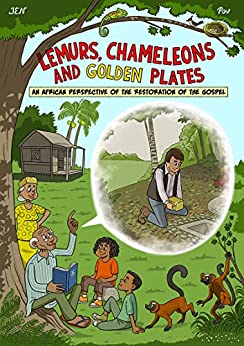
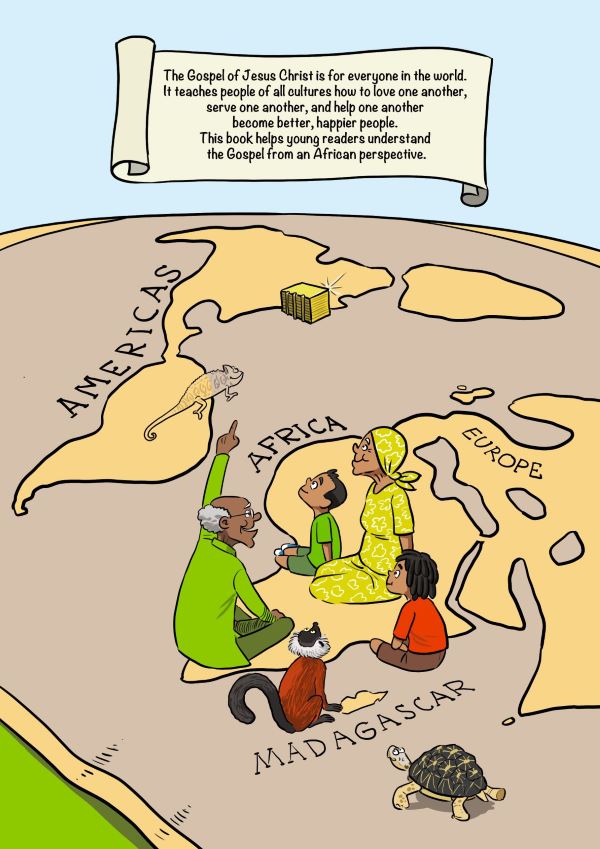

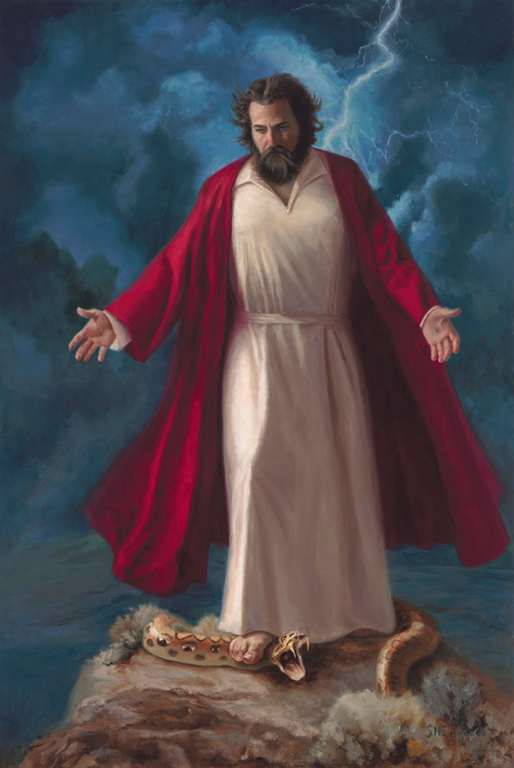
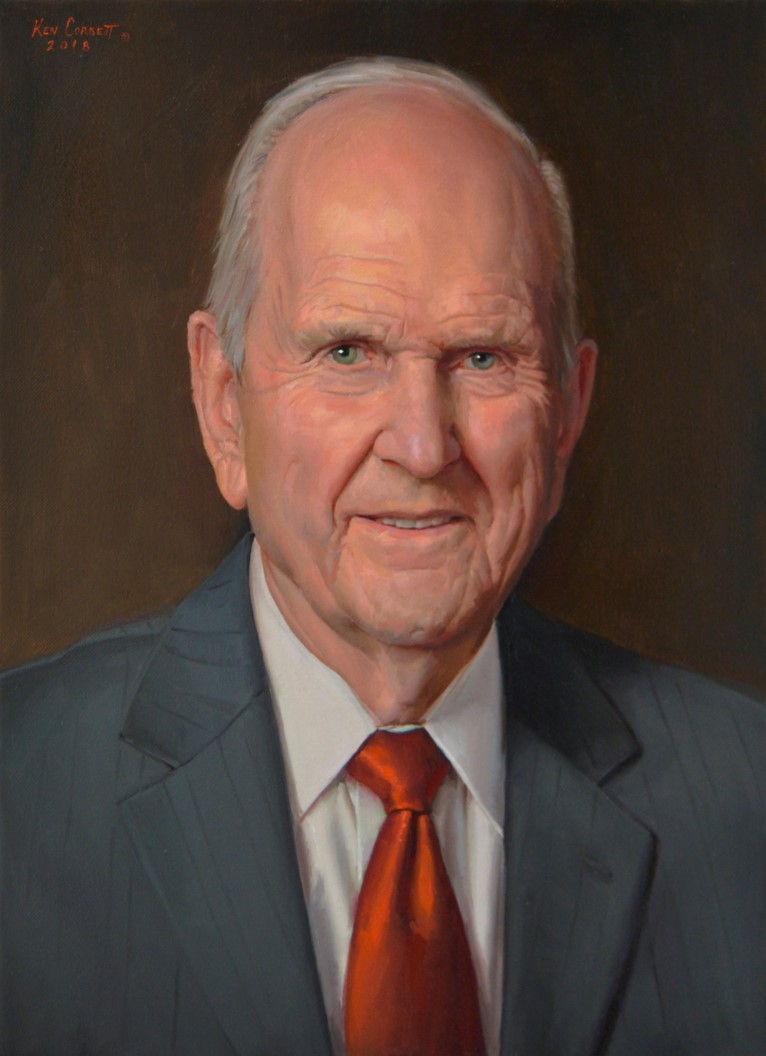
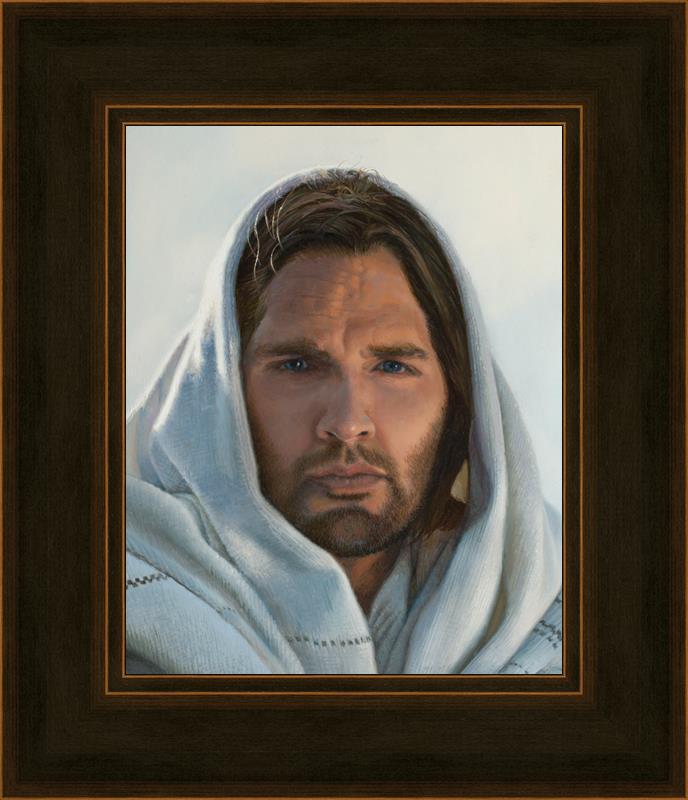

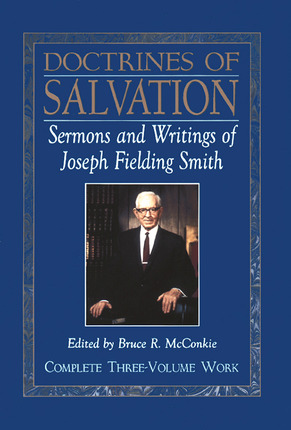
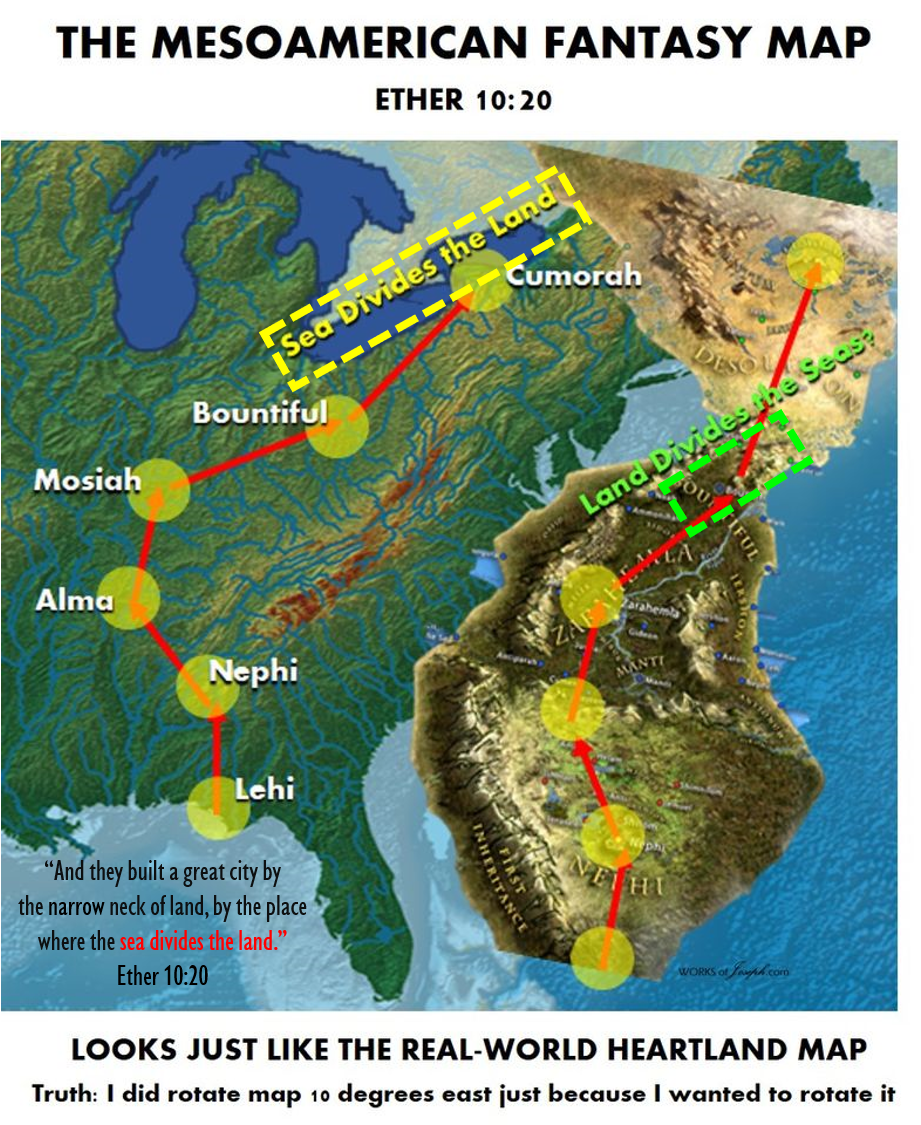
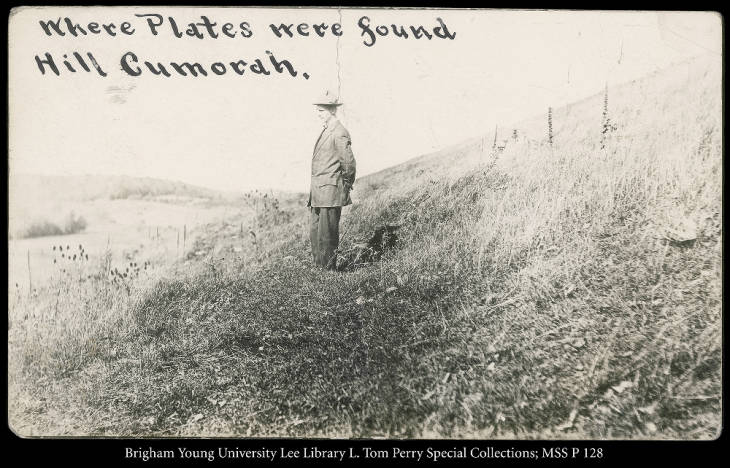
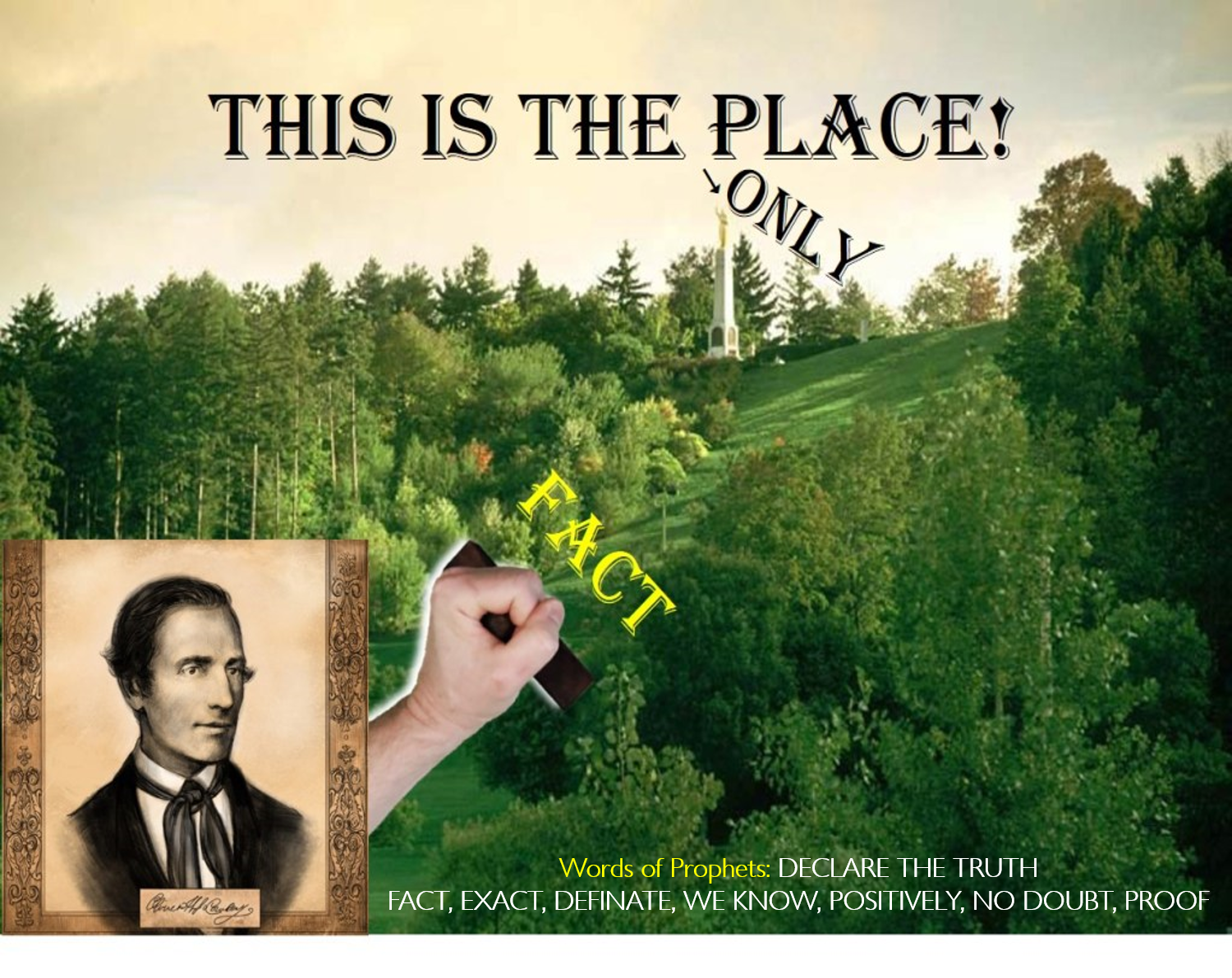

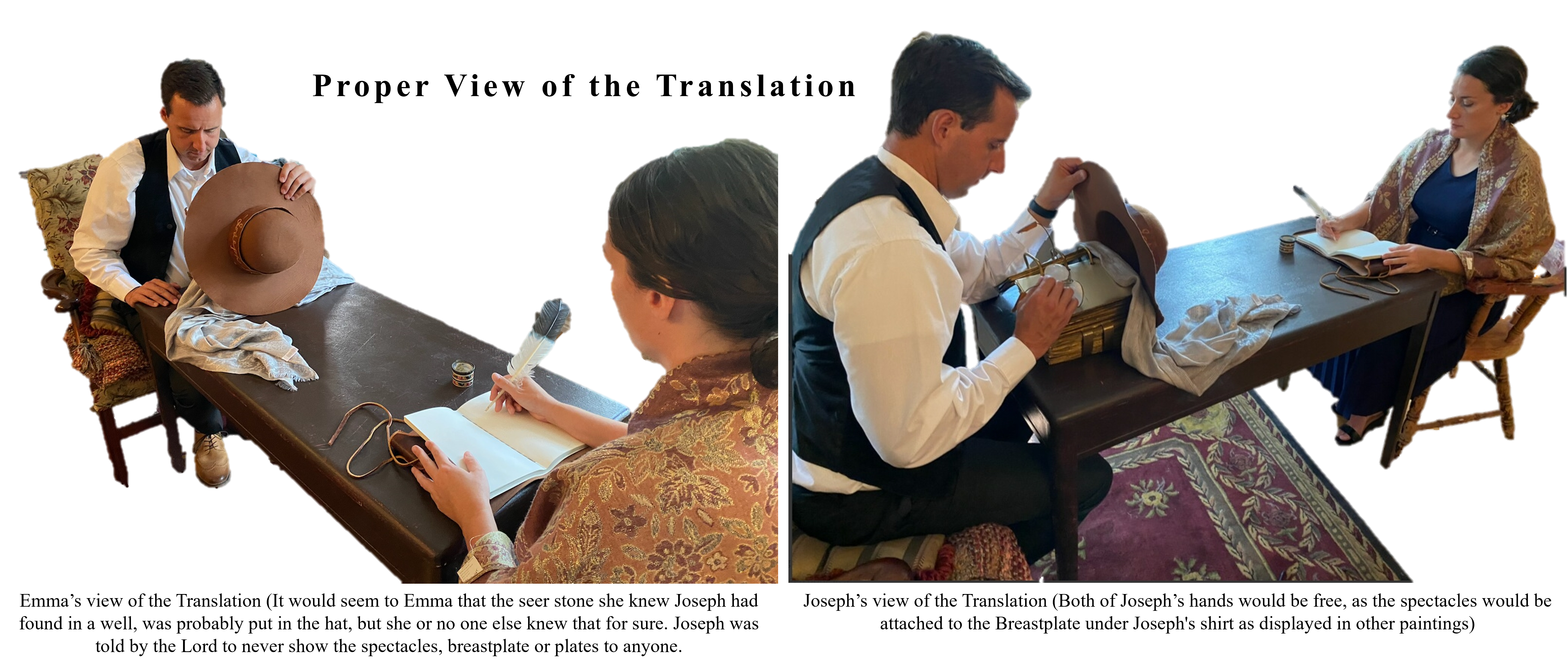
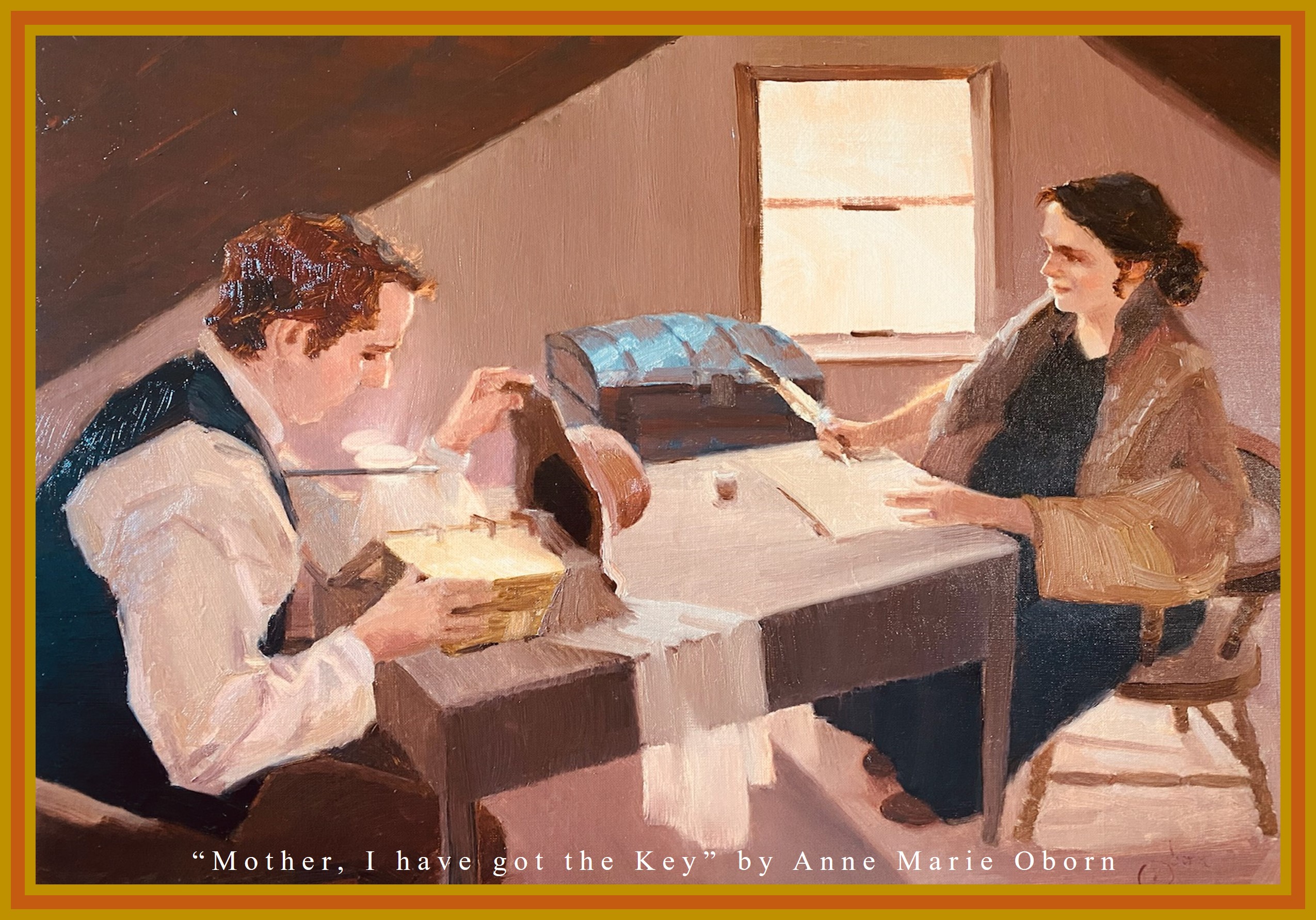
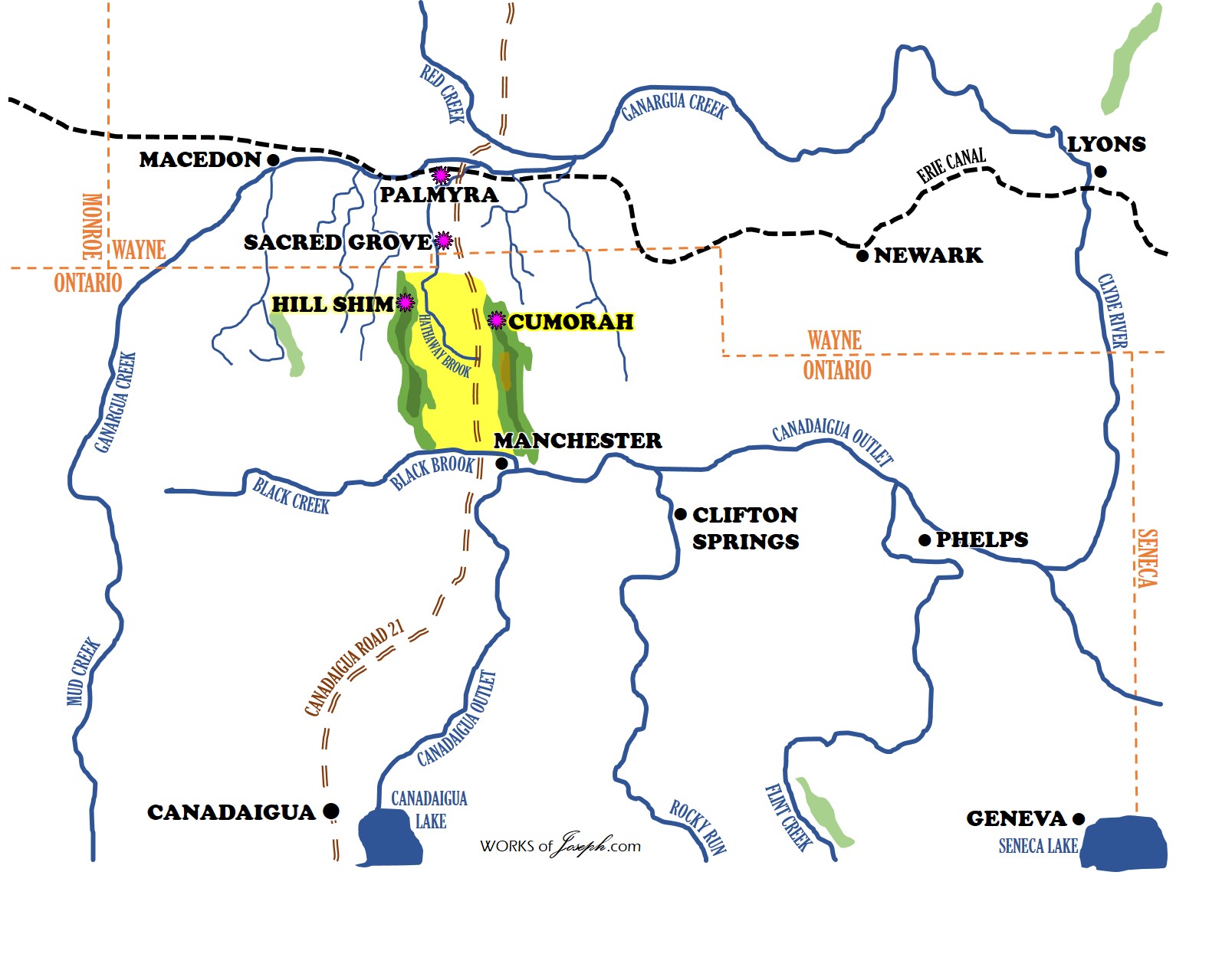
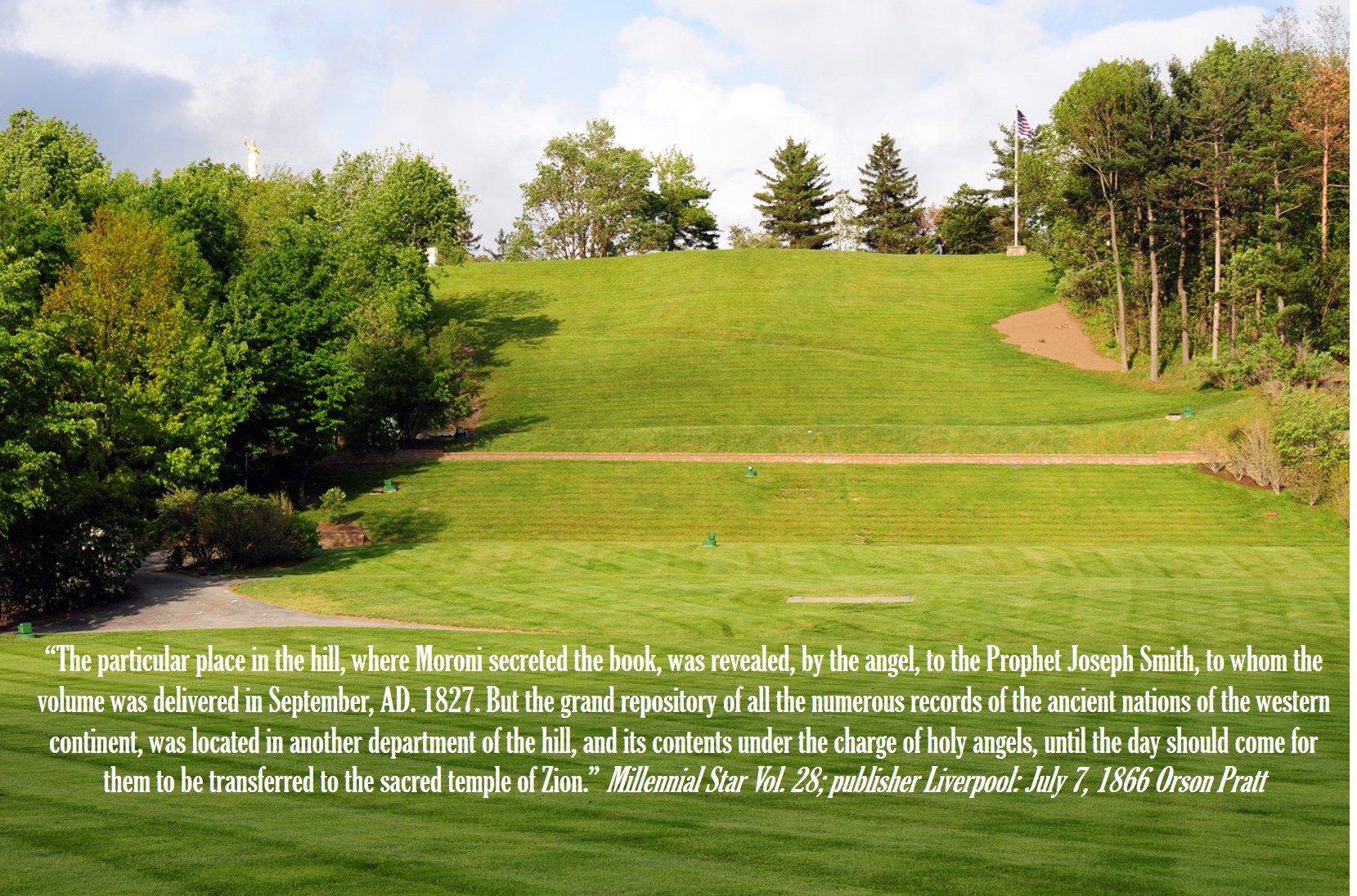
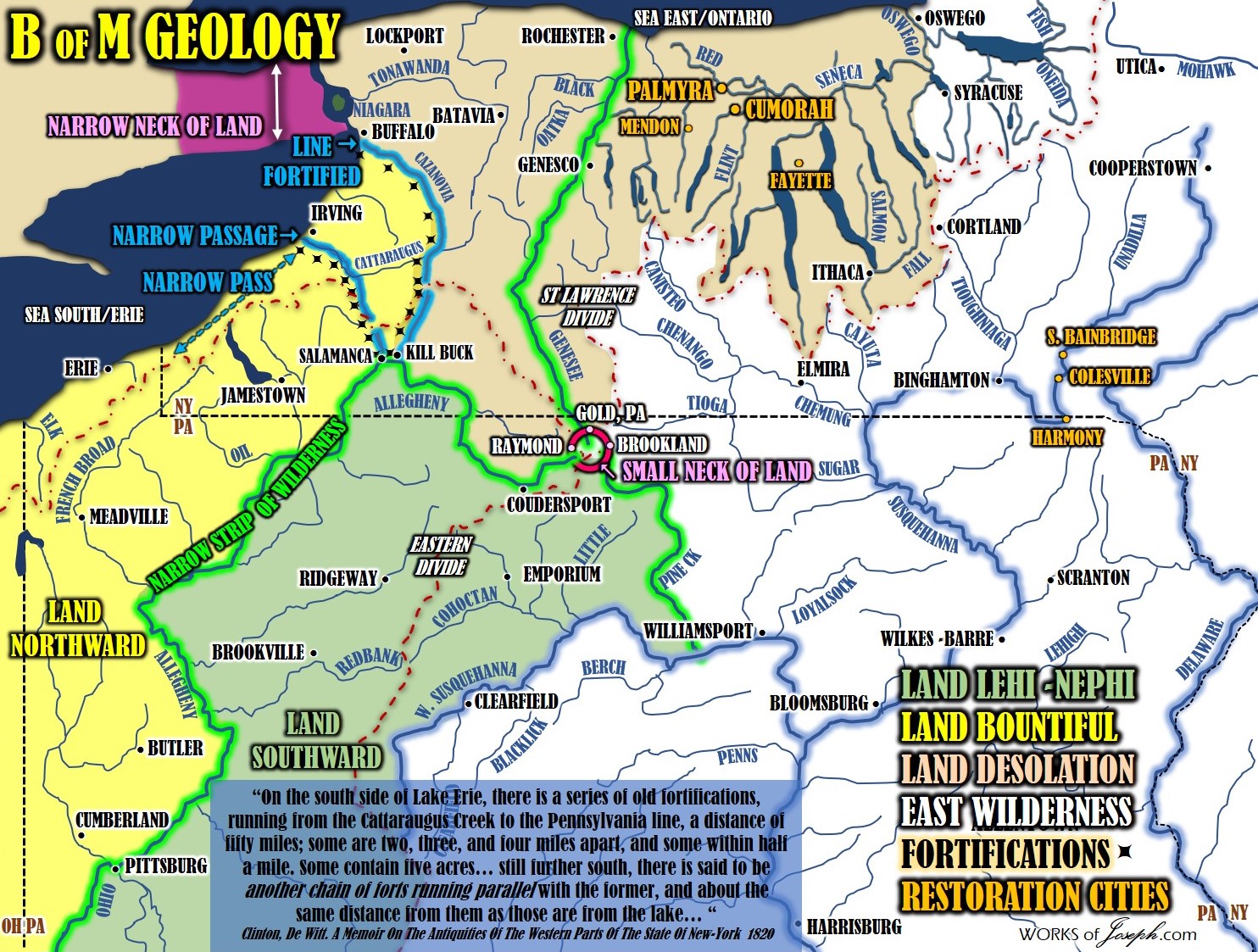
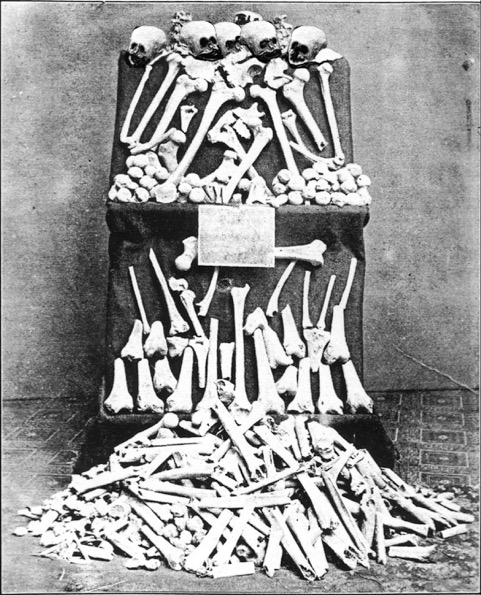
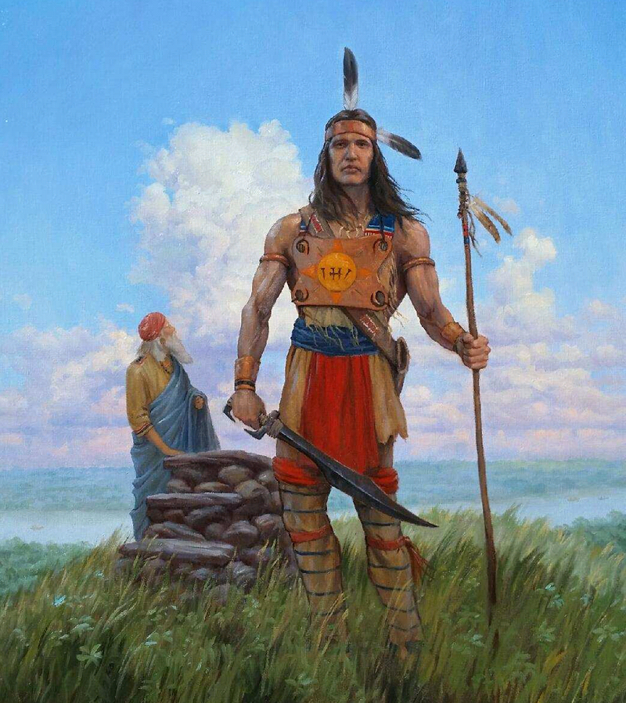
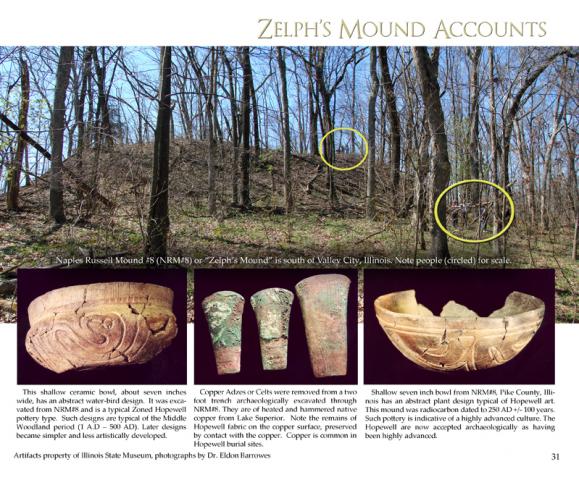
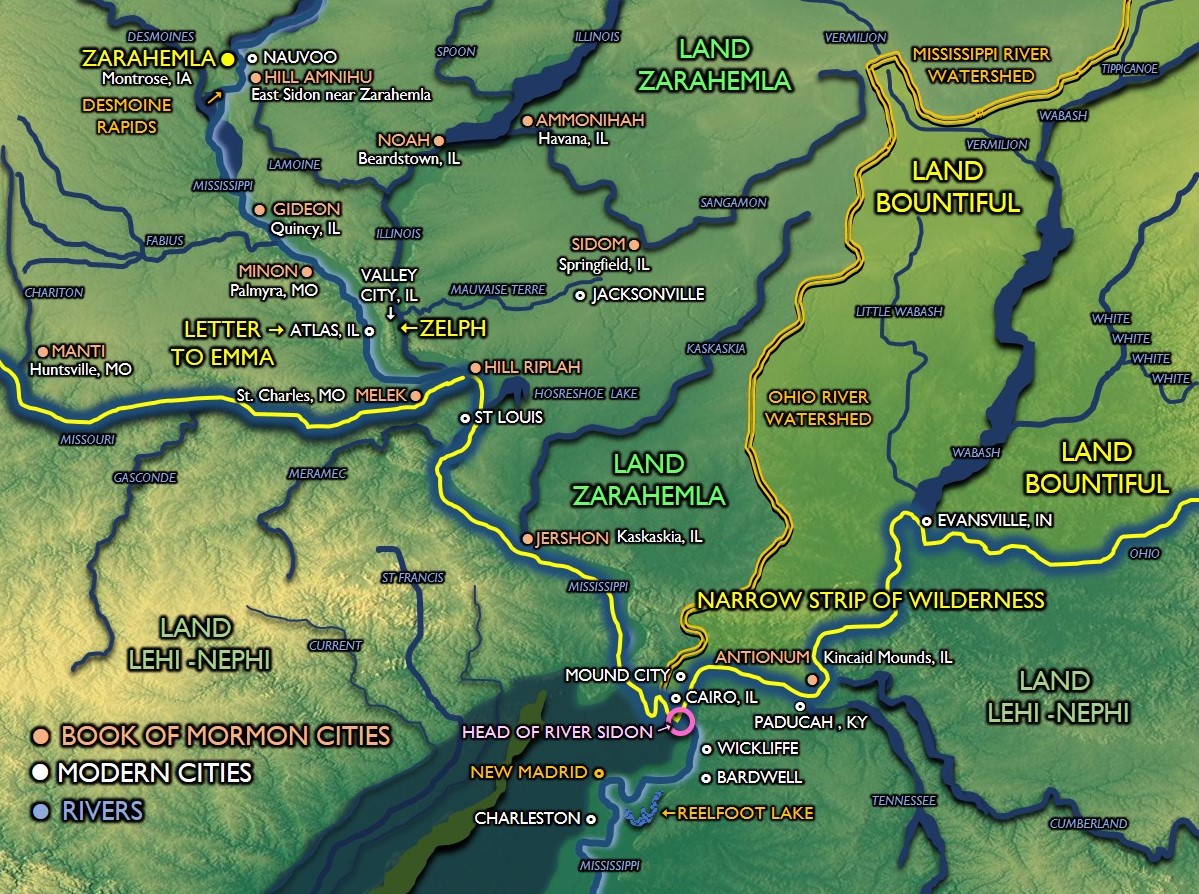
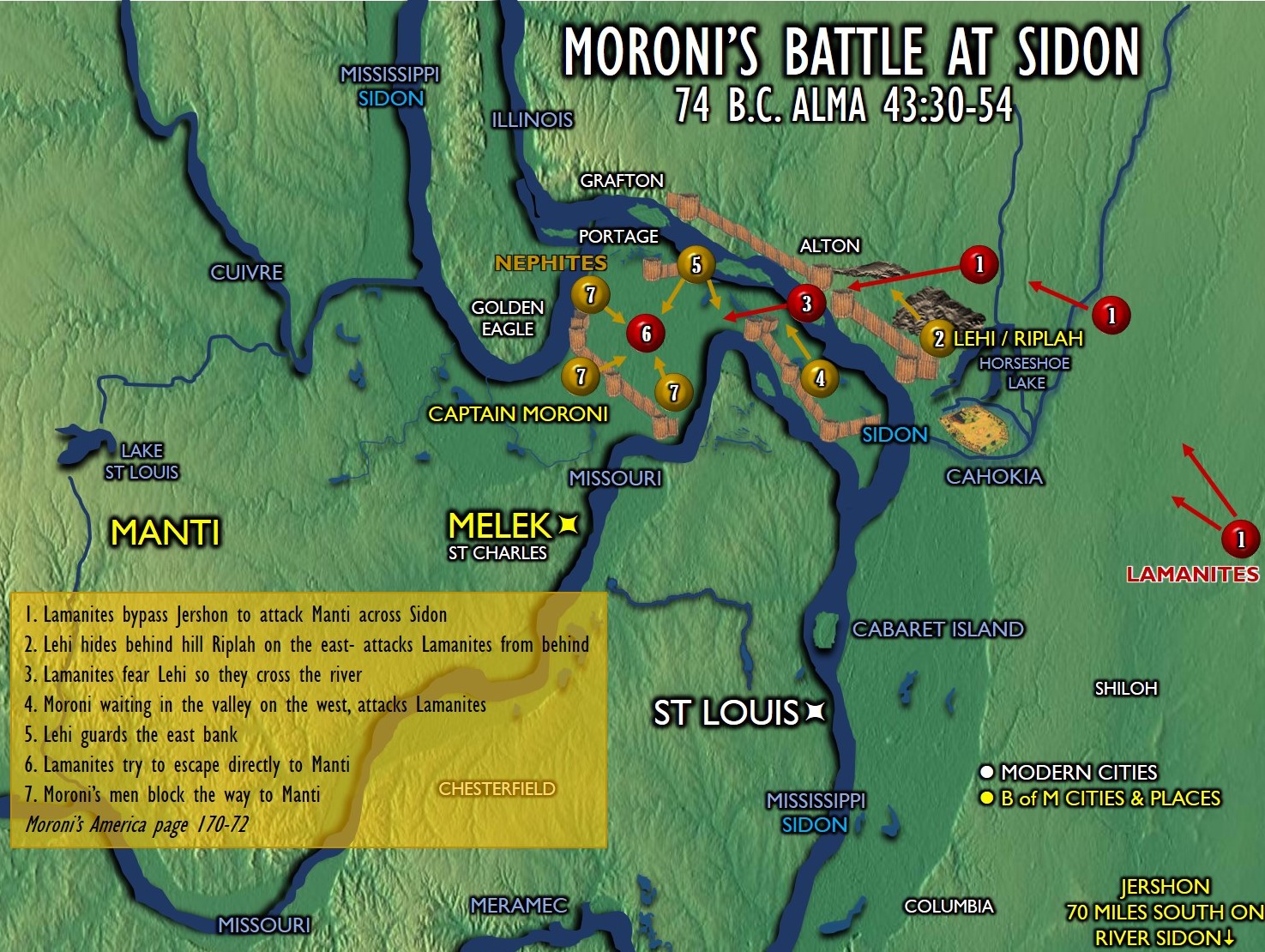
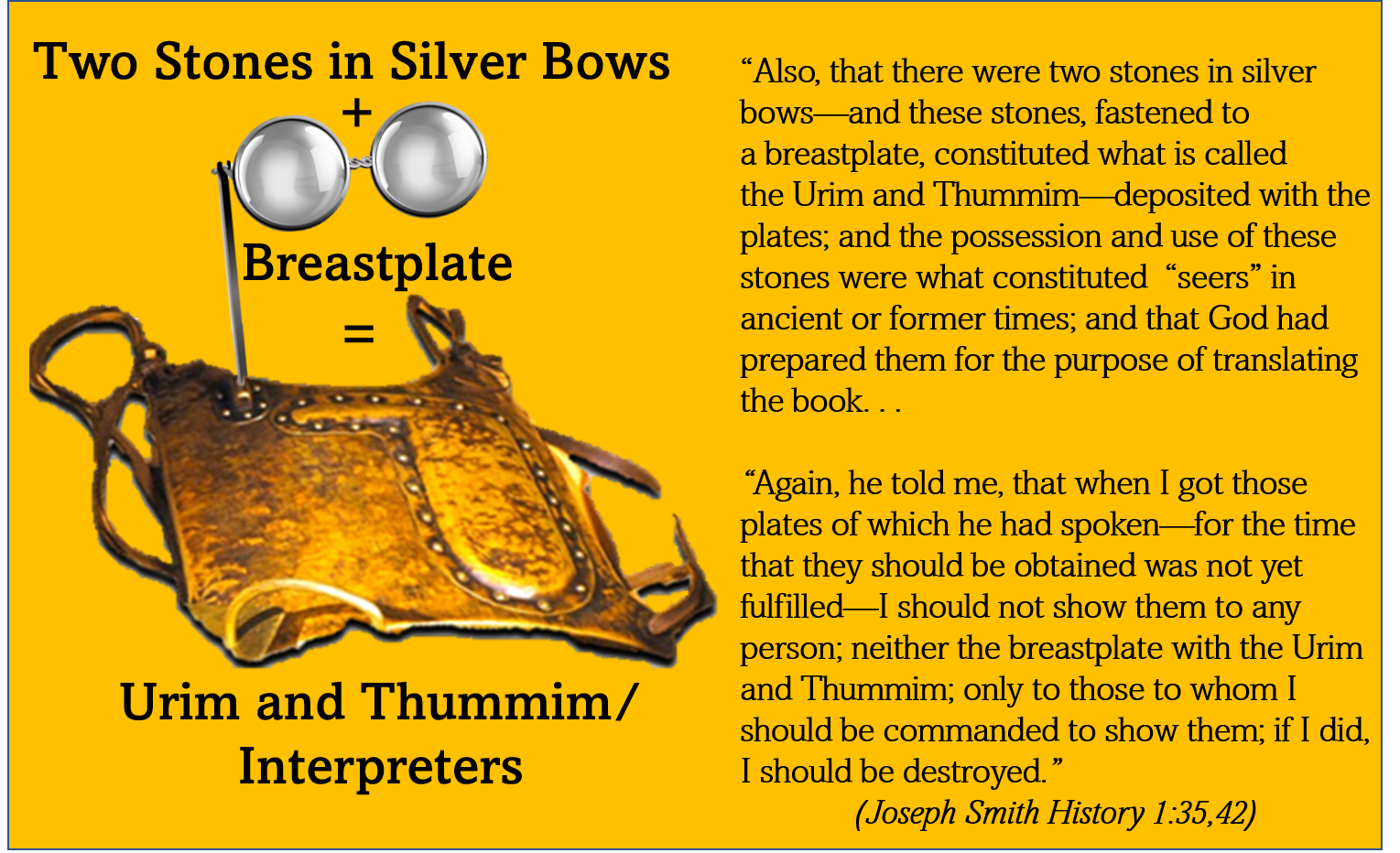

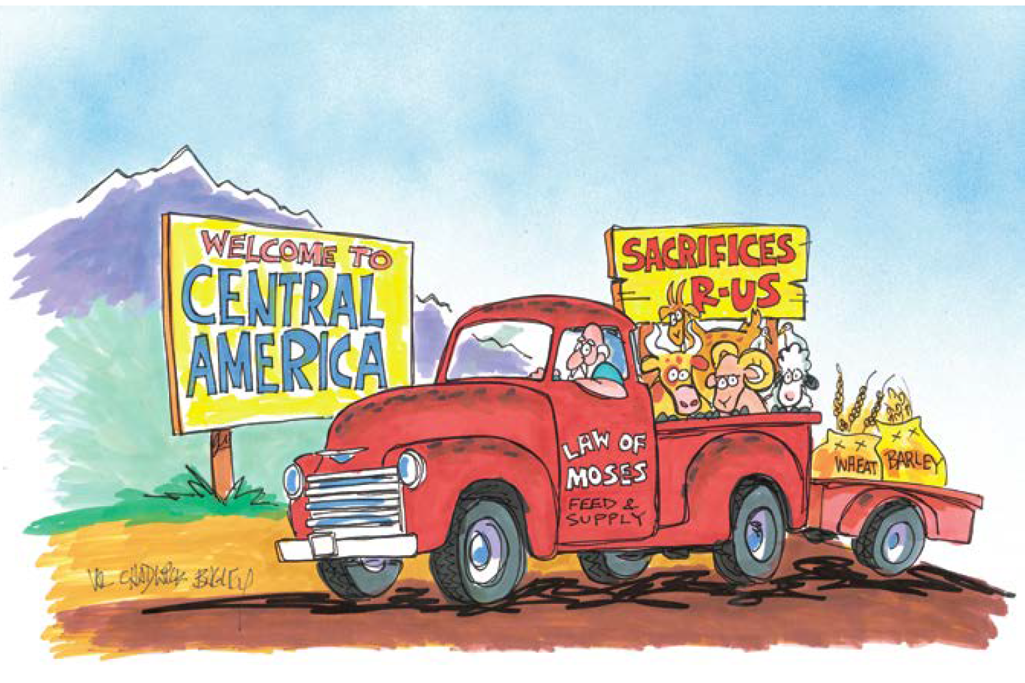









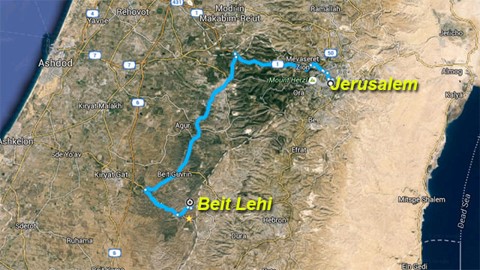
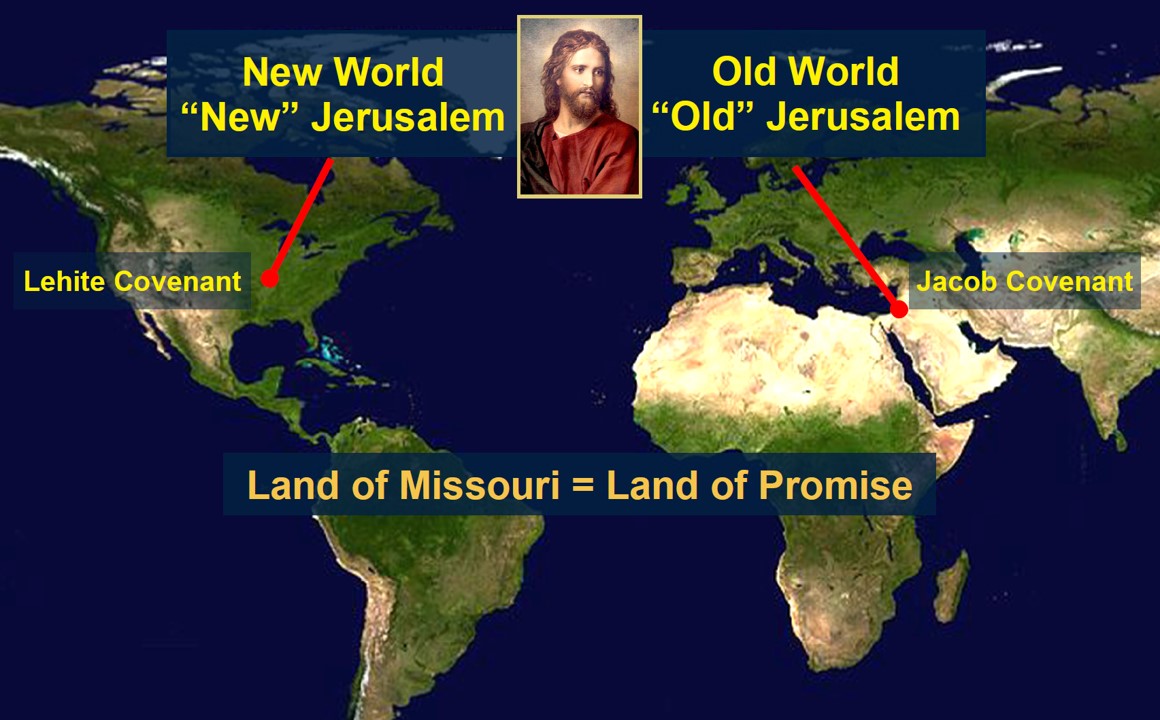
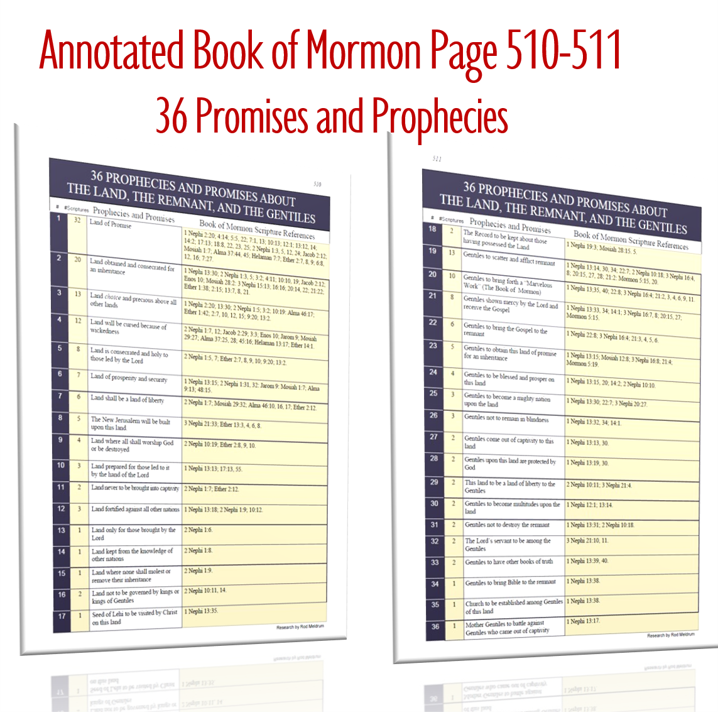
 “Beit Lehi is a buried city just a few miles southwest of Jerusalem, and is currently under excavation. It received its name from the Bedouin Arabs who reside in the area. There are some very interesting possible correlations with this site and the home of Lehi in the Book of Mormon.” Read more about the place called Biet Lehi which is where Samson killed 1,000 Philistines with the jawbone of a donkey, and likely it was the same location where Lehi and his family lived. This area is sacred to the Jews, Arabs, and Christians.
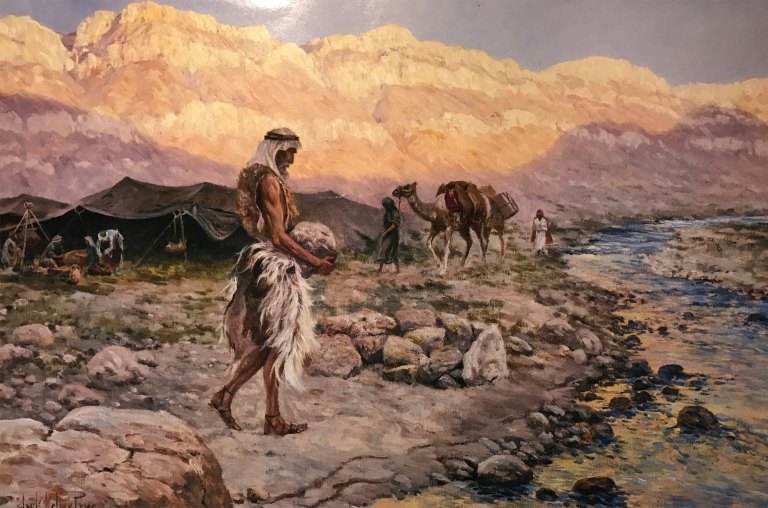
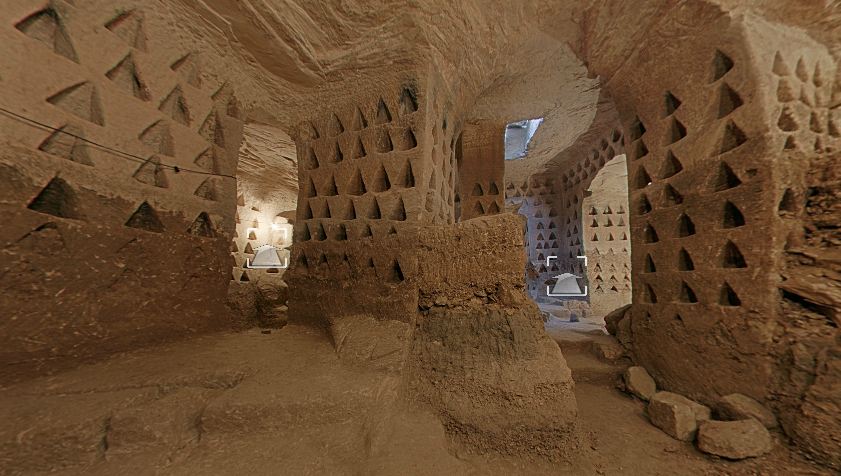


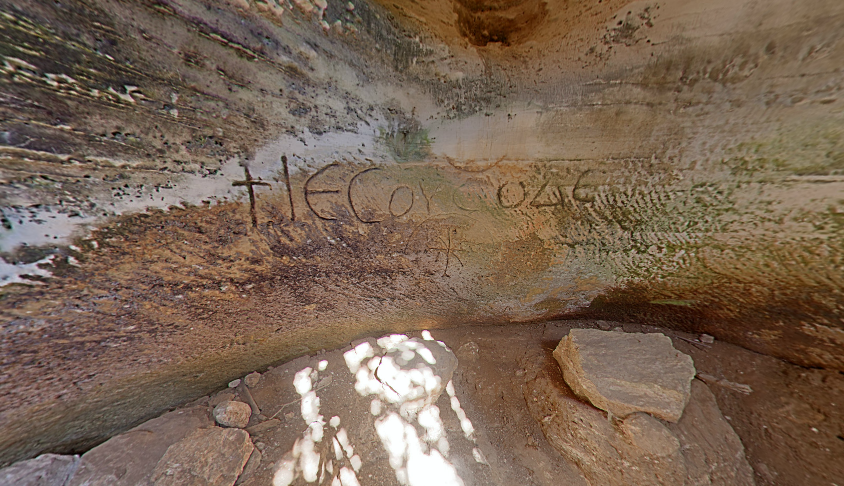
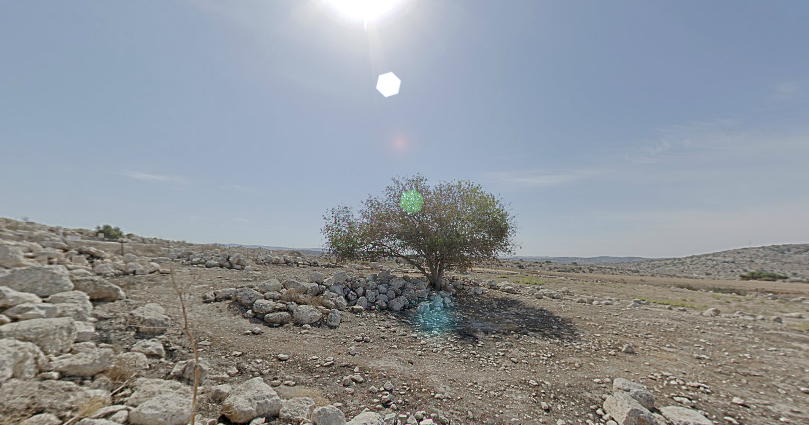
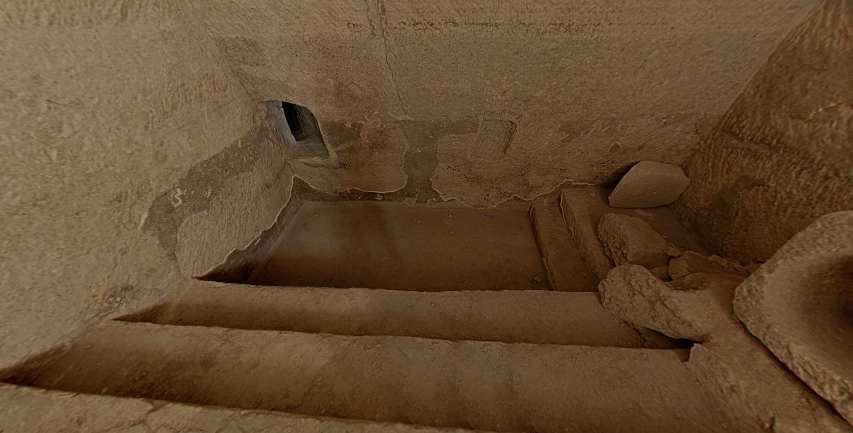
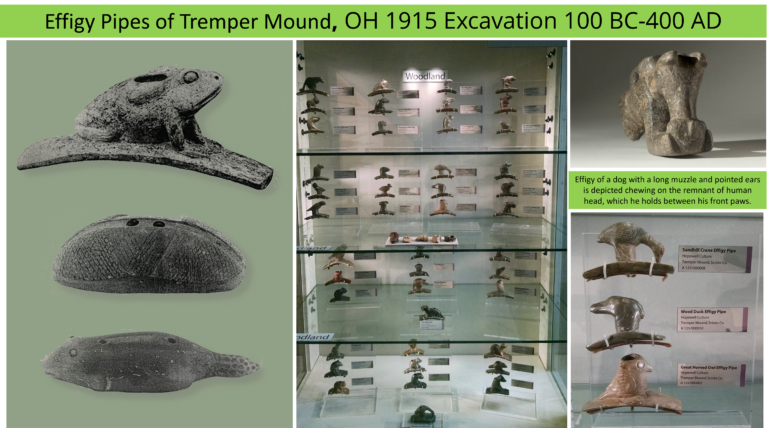
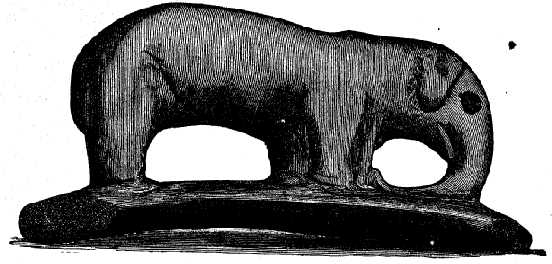
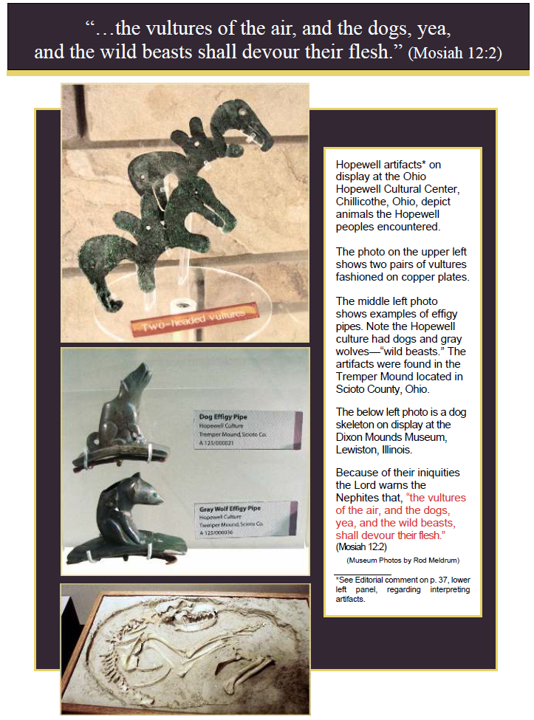


 Ohio History Central is an evolving, dynamic online encyclopedia that includes information about Ohio’s natural history, prehistory, and history. Ohio History Central is perfect for anyone wanting to learn more about Ohio! Ohio History Central was researched and written by staff at the Ohio History Connection. Pictures and descriptions below are from Ohio History Connection.
 Description
 Description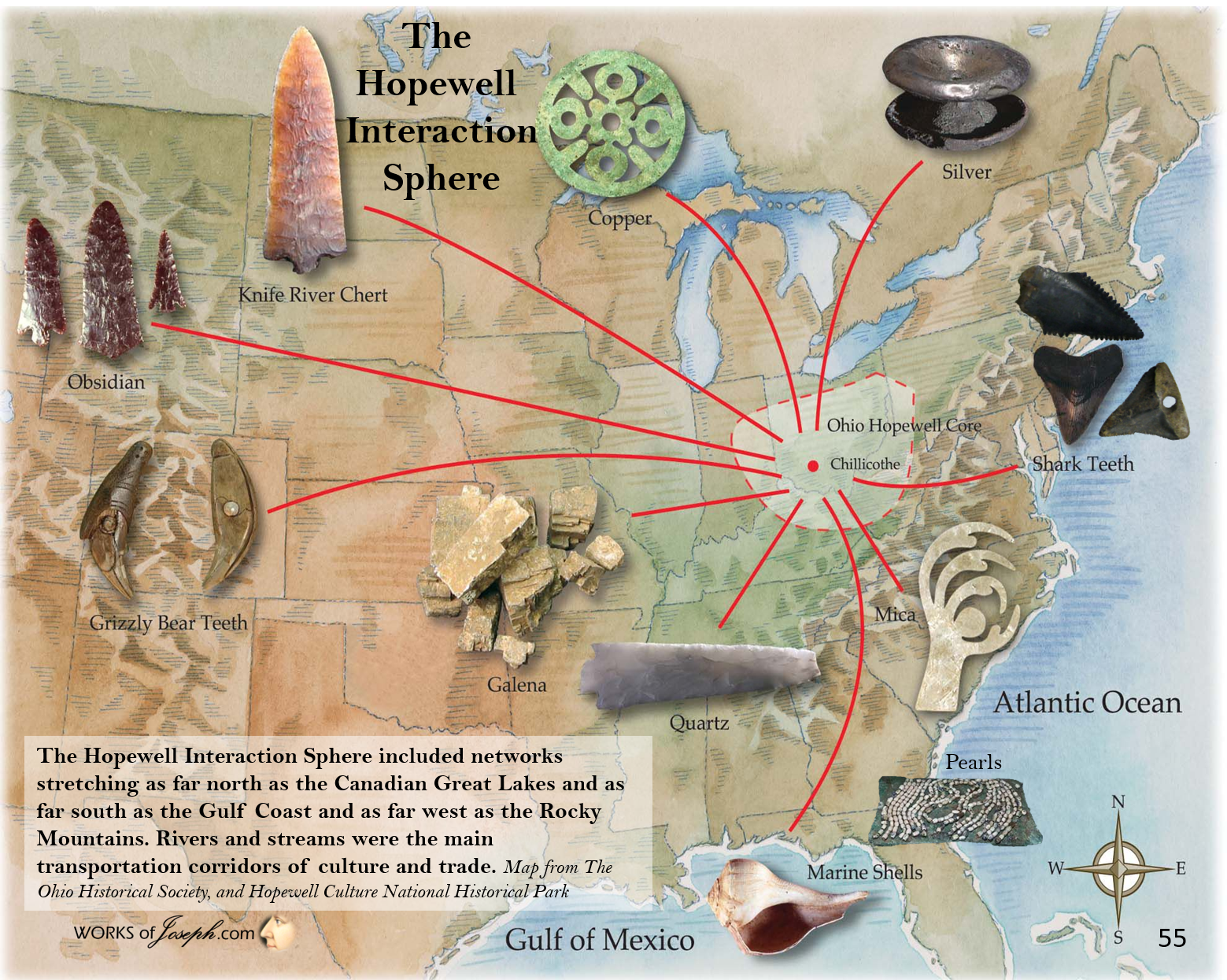
 Description: This is a plaster cast of an effigy pipe known as the Mound City
  Description
 Description
 Description
 Description
 Description
 Description
 Description
 Description
 Description
 Description



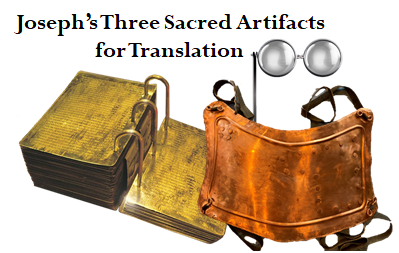

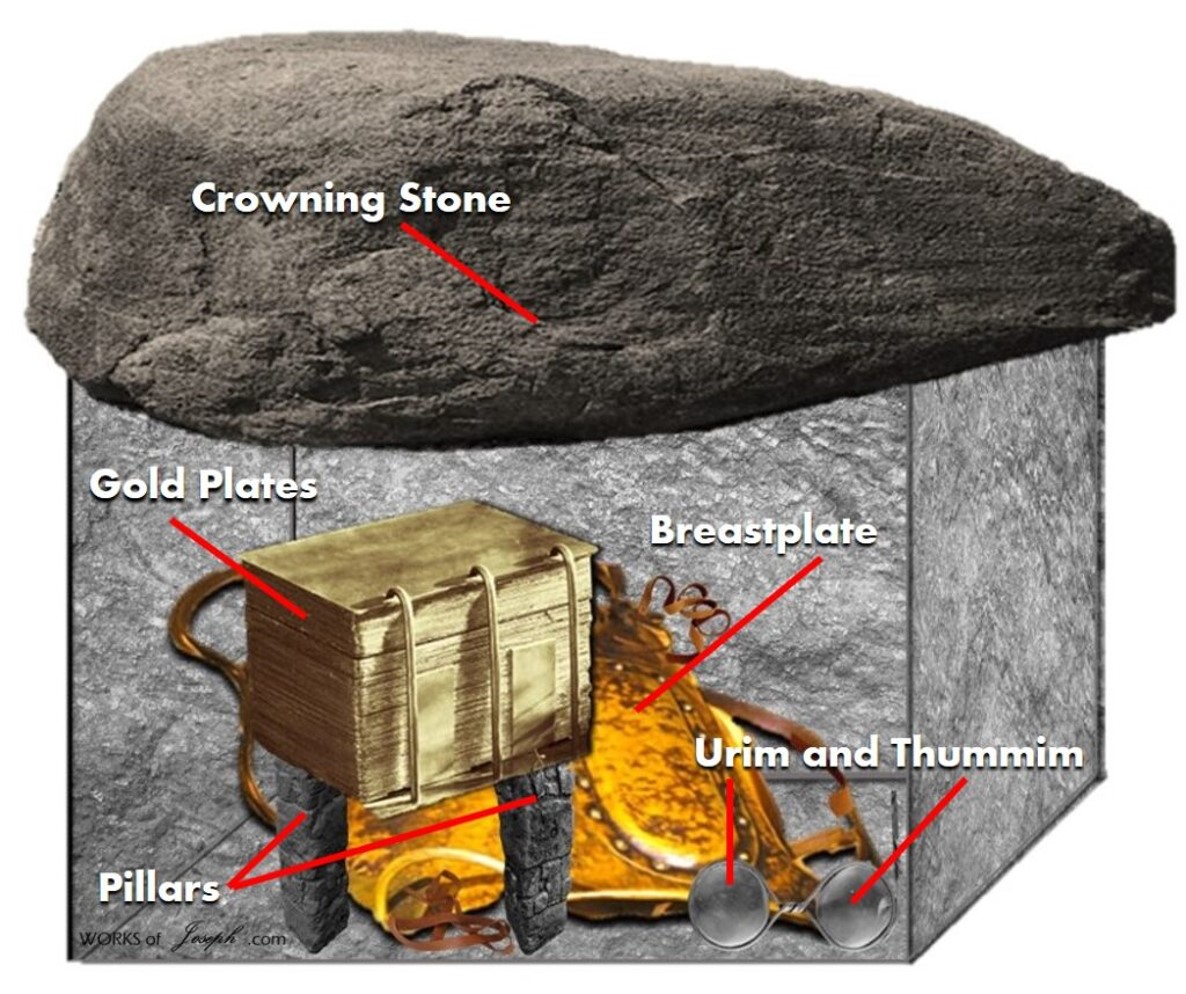
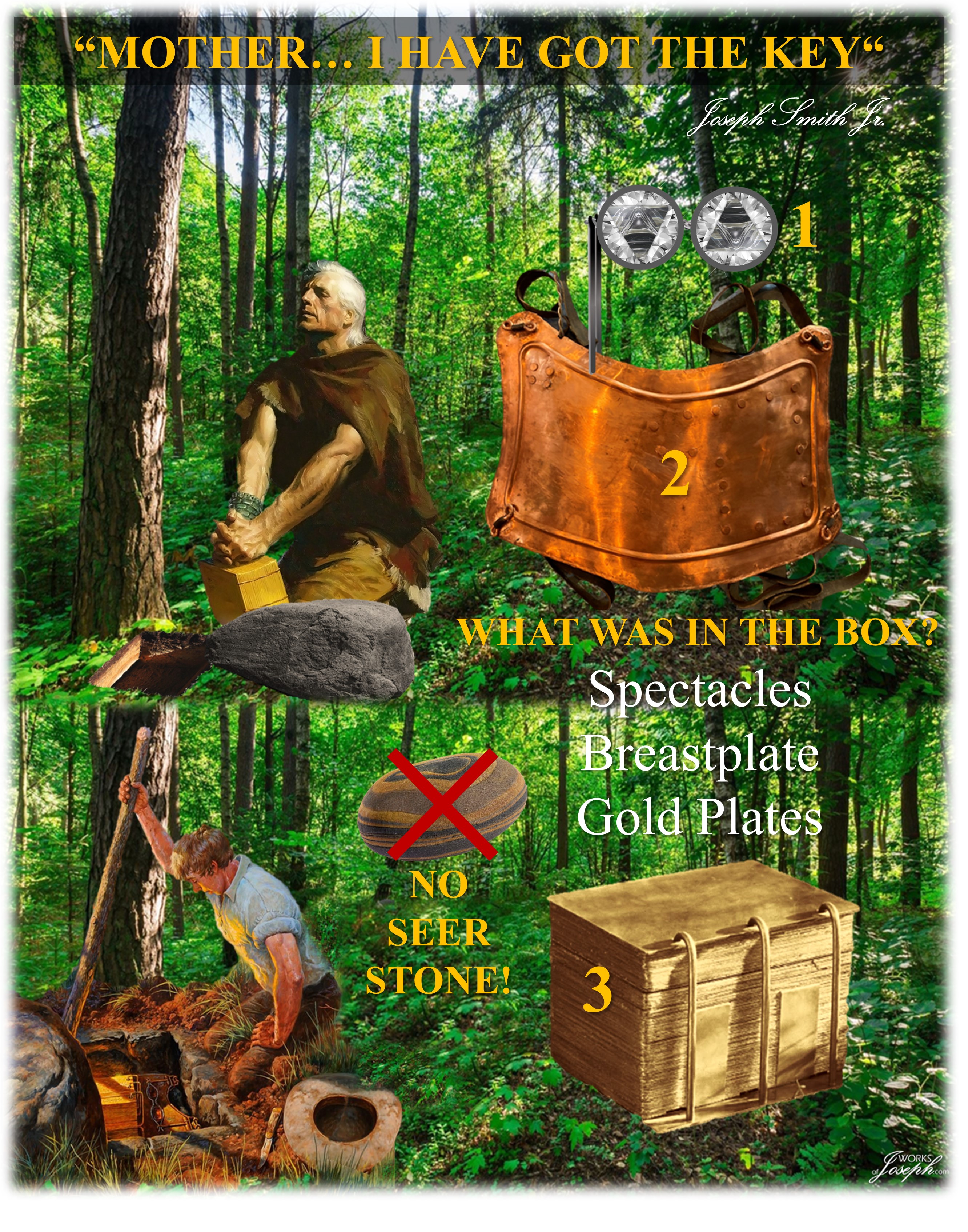

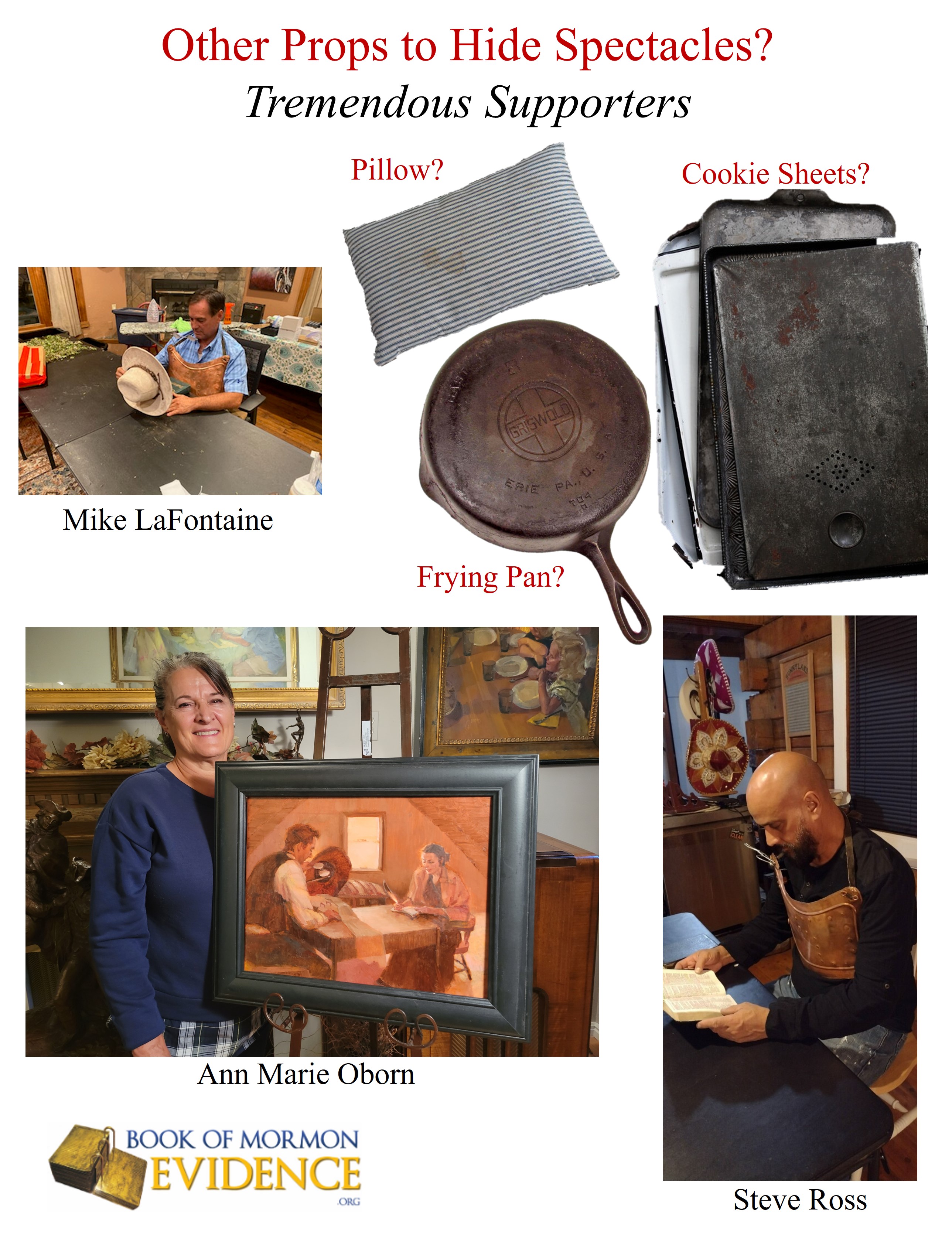


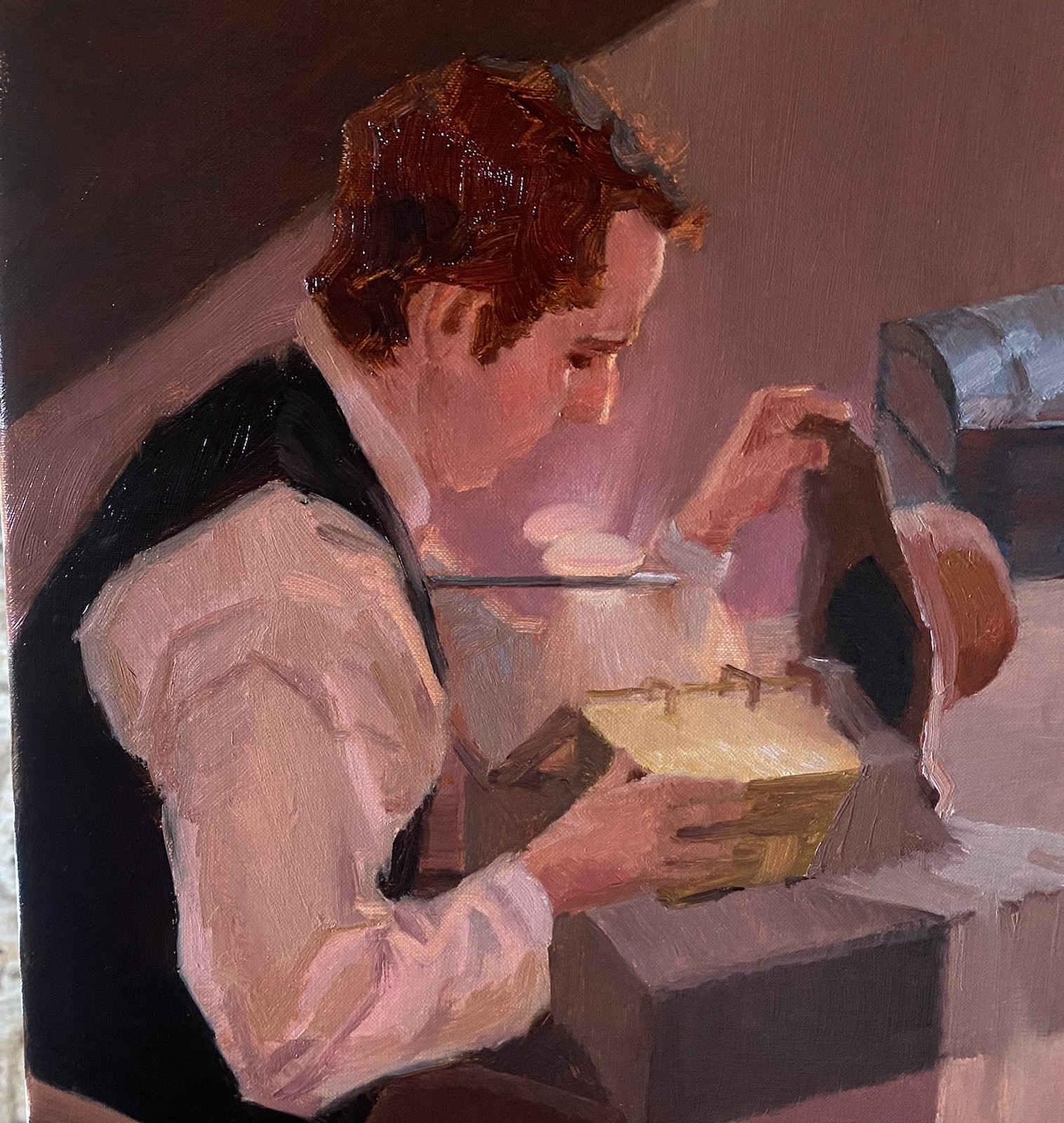
![I did Slay Wild Beasts- People Followed the Course of the Beasts [Bison]](https://bookofmormonevidence.org/wp-content/uploads/2020/01/bison-11-768x544.jpg "I did Slay Wild Beasts- People Followed the Course of the Beasts [Bison]")


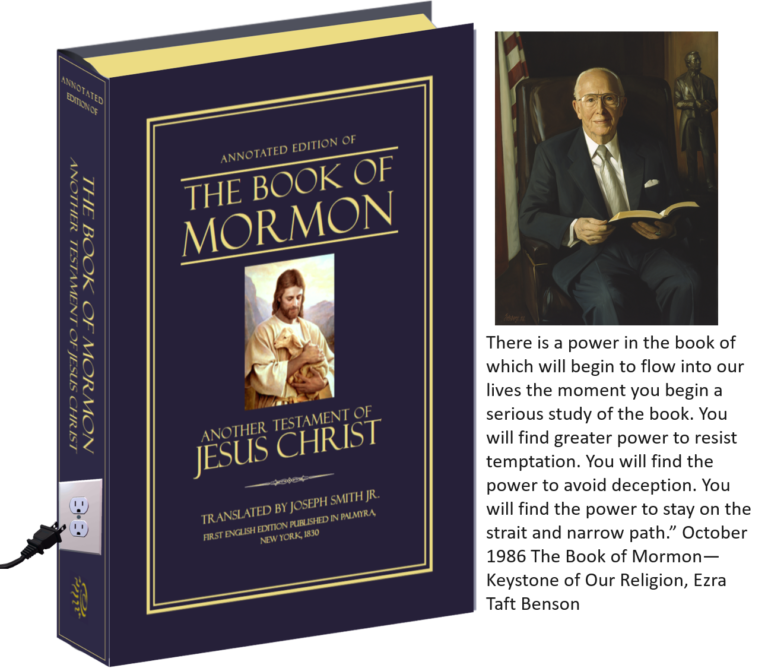
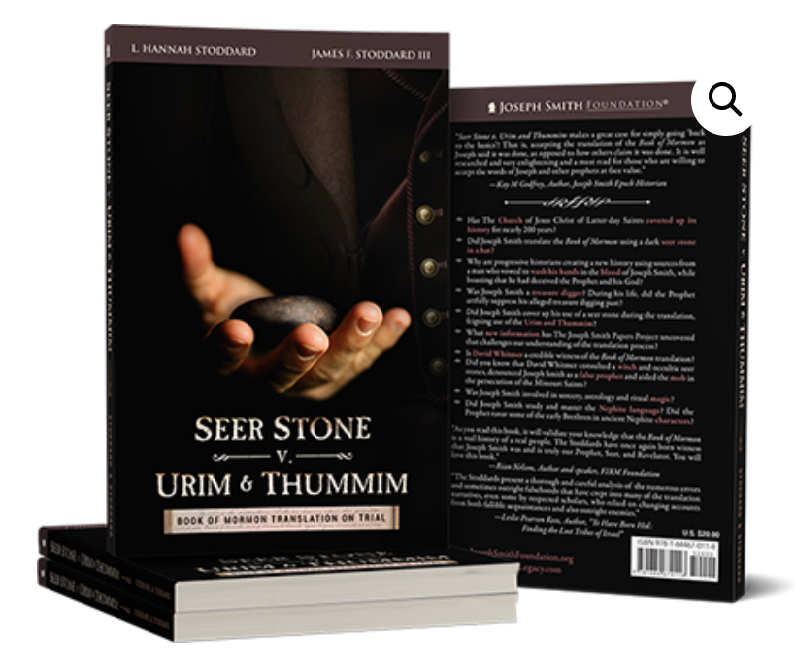


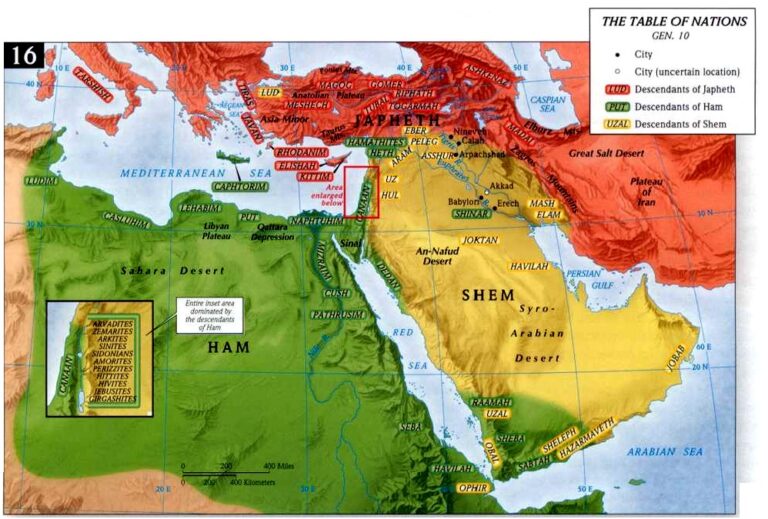
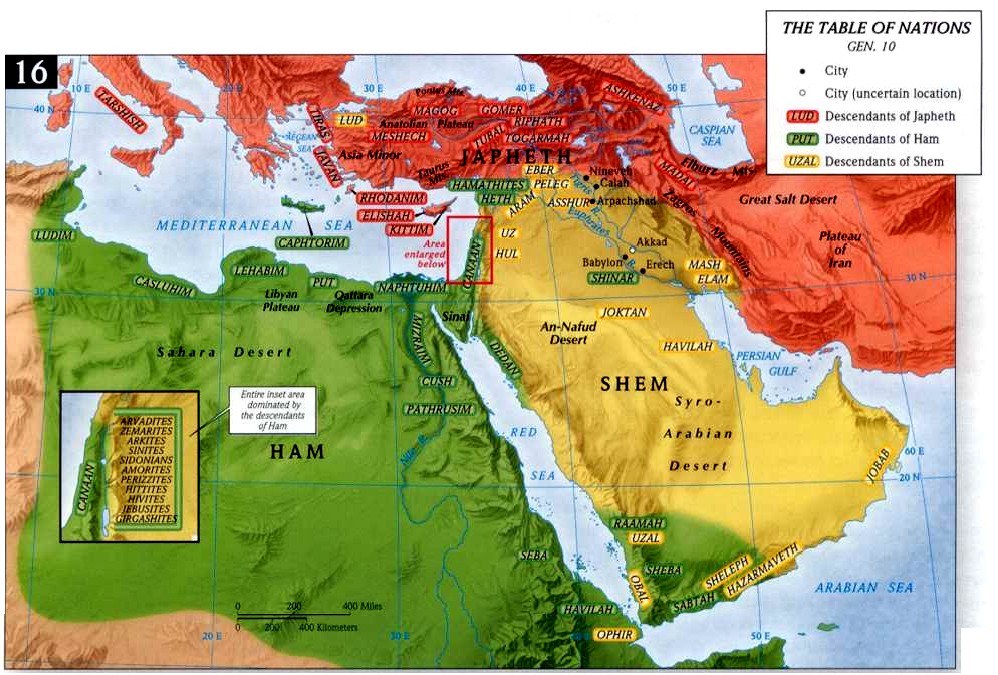
 James Adair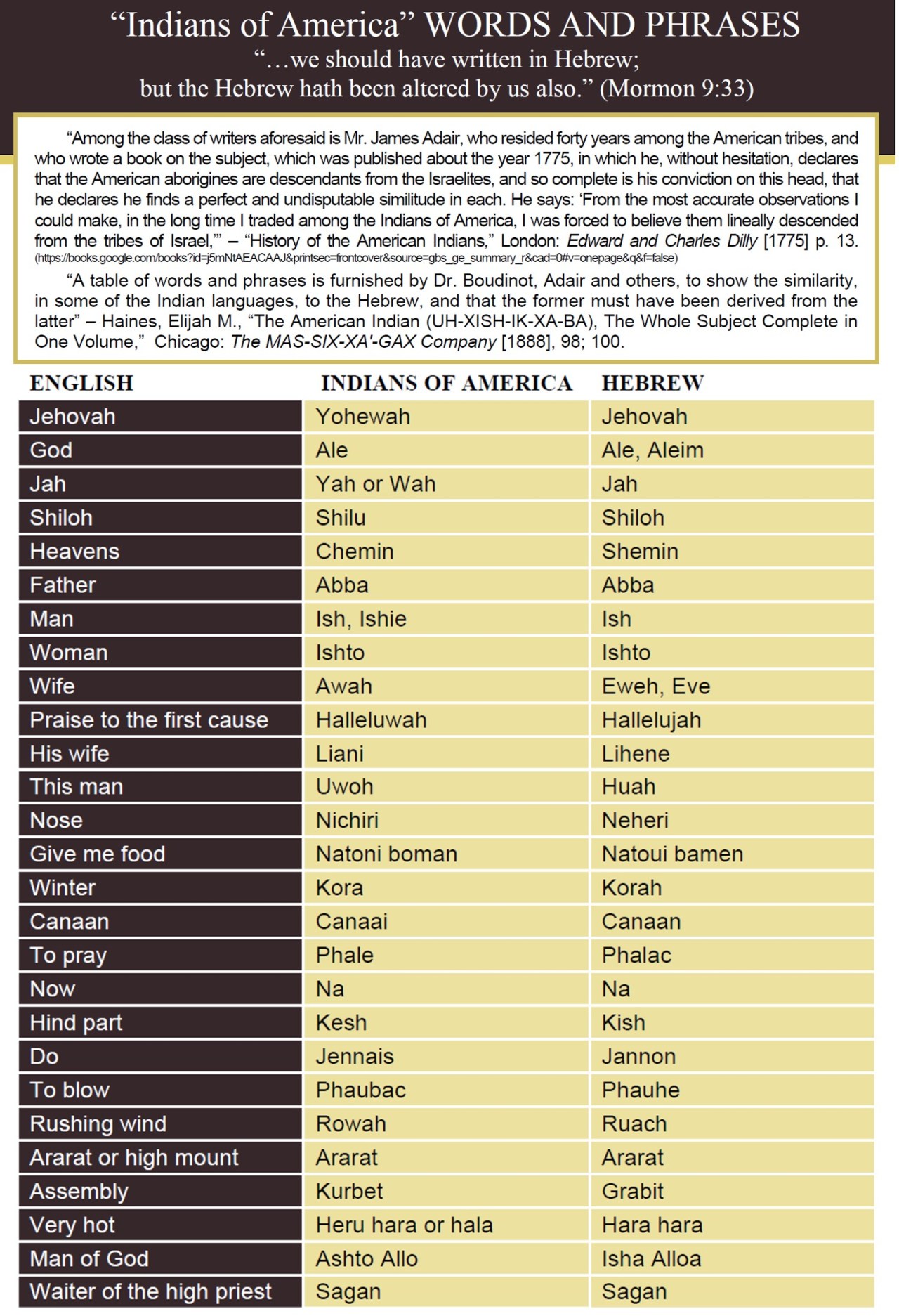
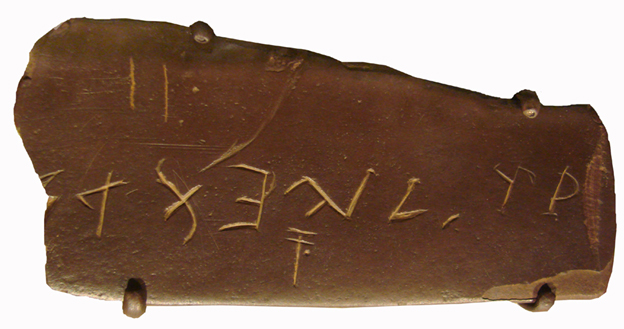
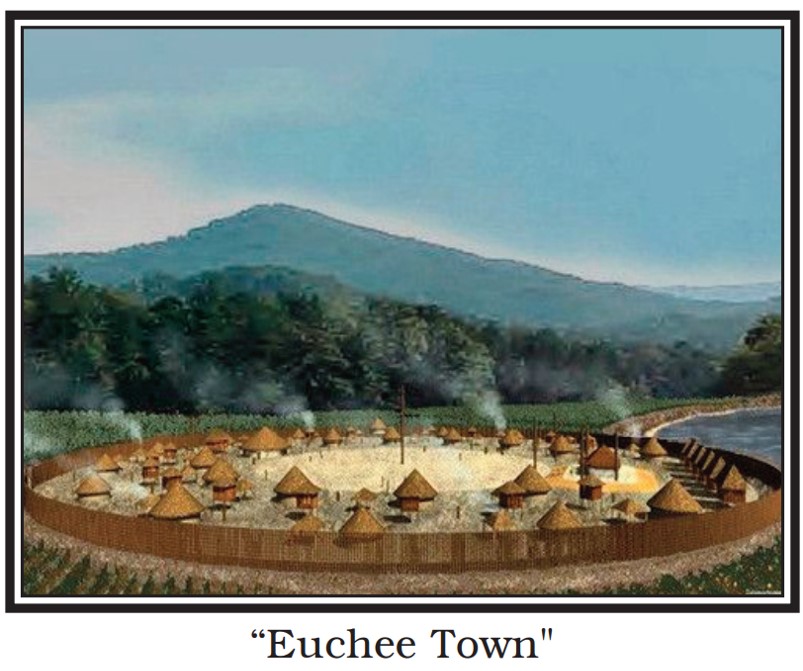
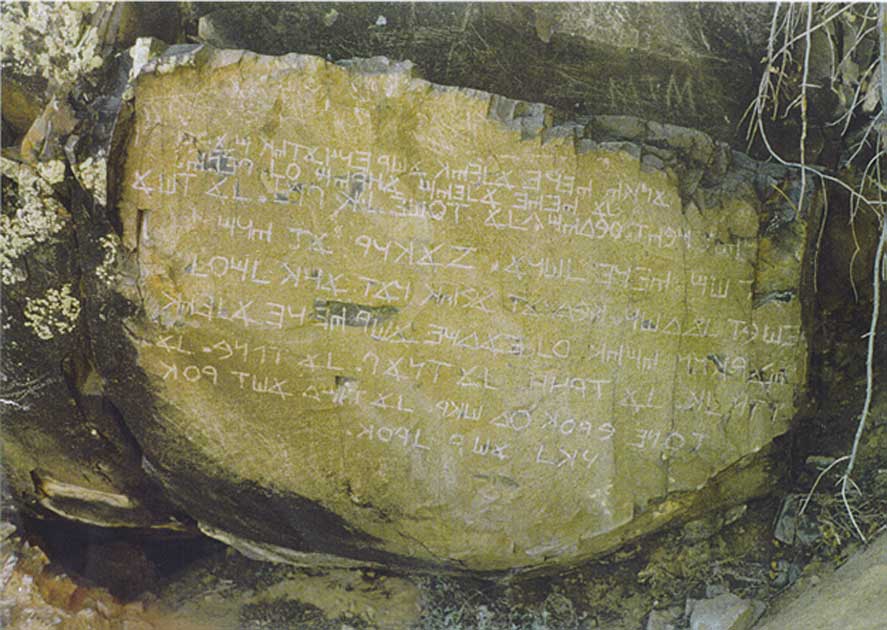
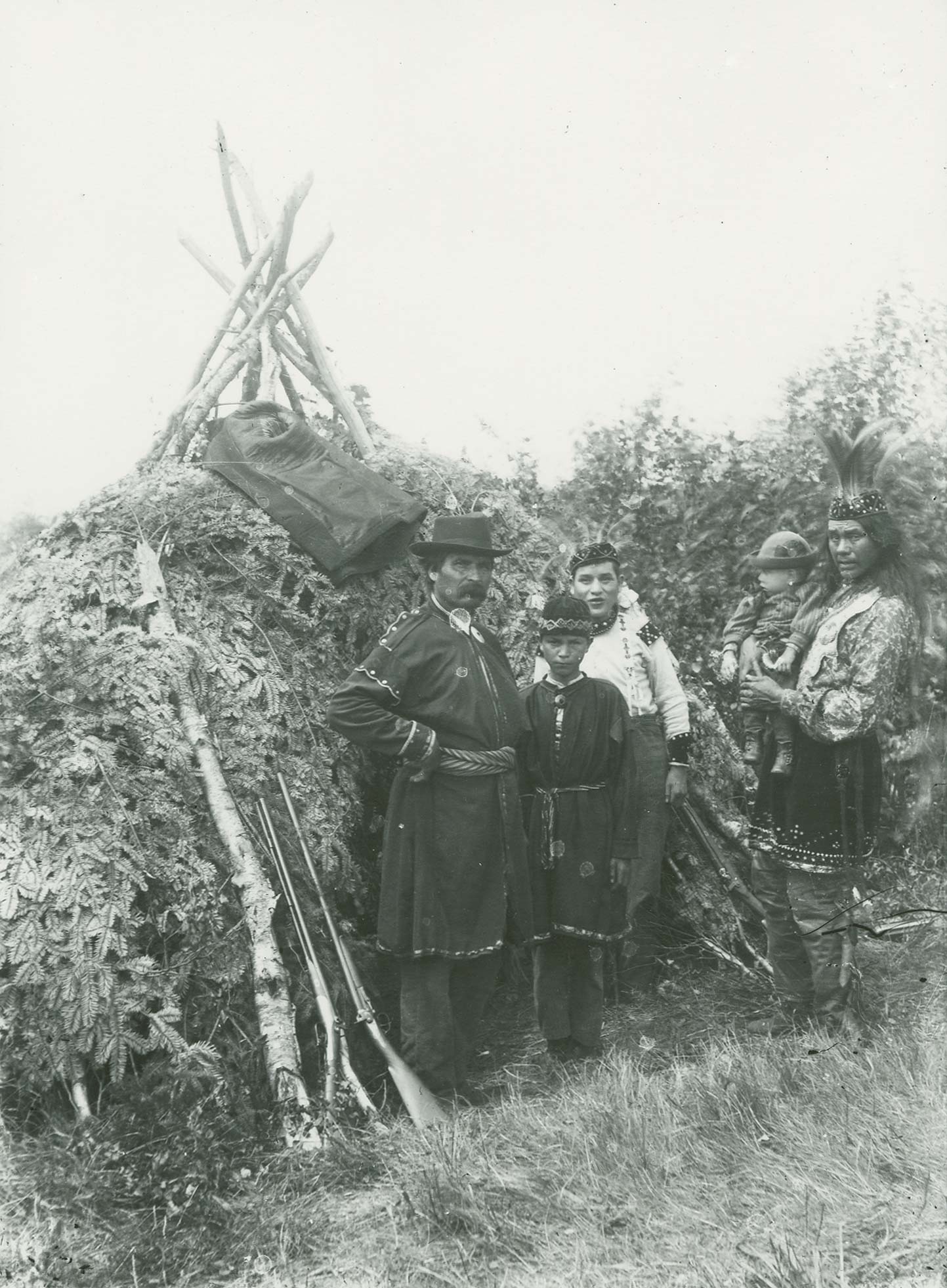
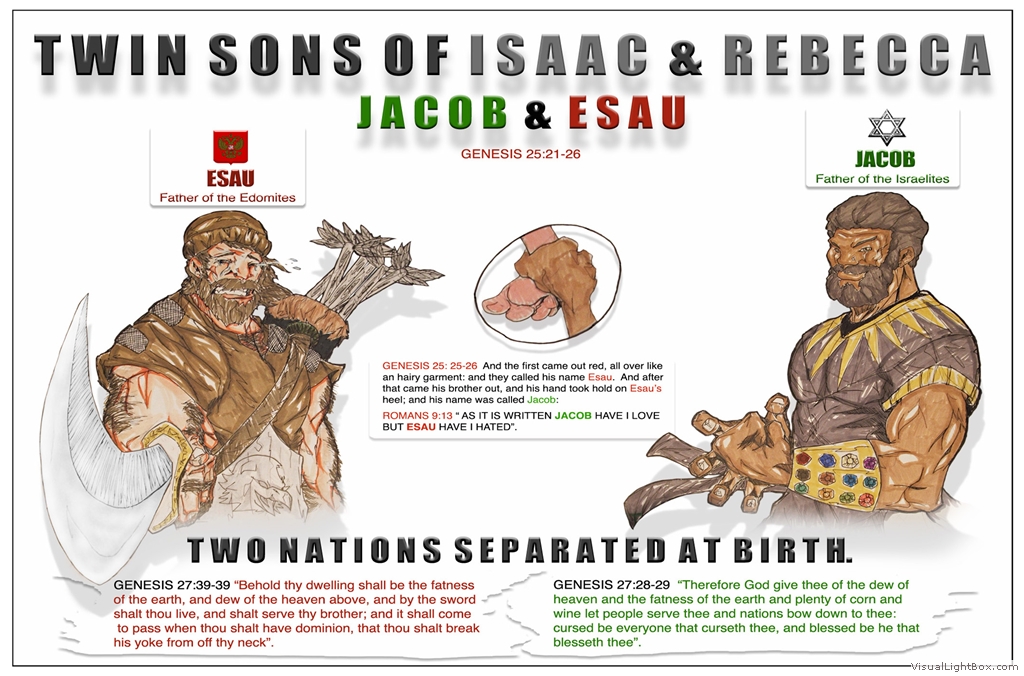
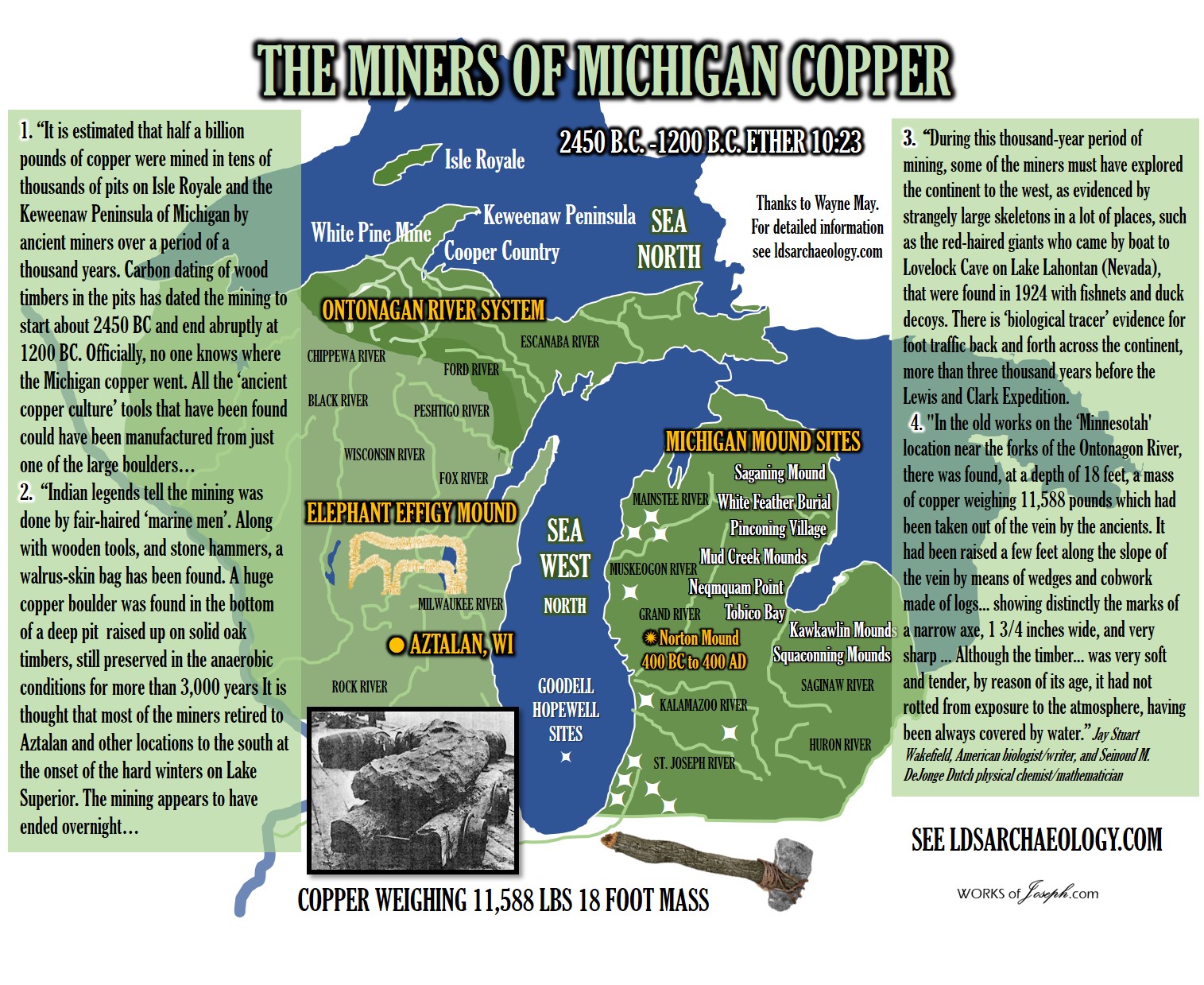
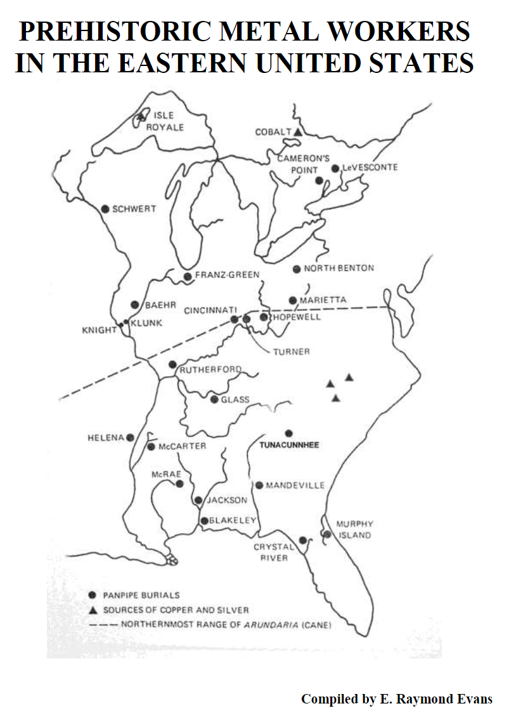 Everywhere they went along these river arteries, they left messages in the rocks for others coming after them. Having personally visited Wees Bar on a main trade artery, the Snake River, 25 miles below Boise, I have observed the highest concentration of petroglyphs in the state of Idaho. On one rock alone are engraved three different ancient languages: Arabic, Viking (runic), and Egyptian.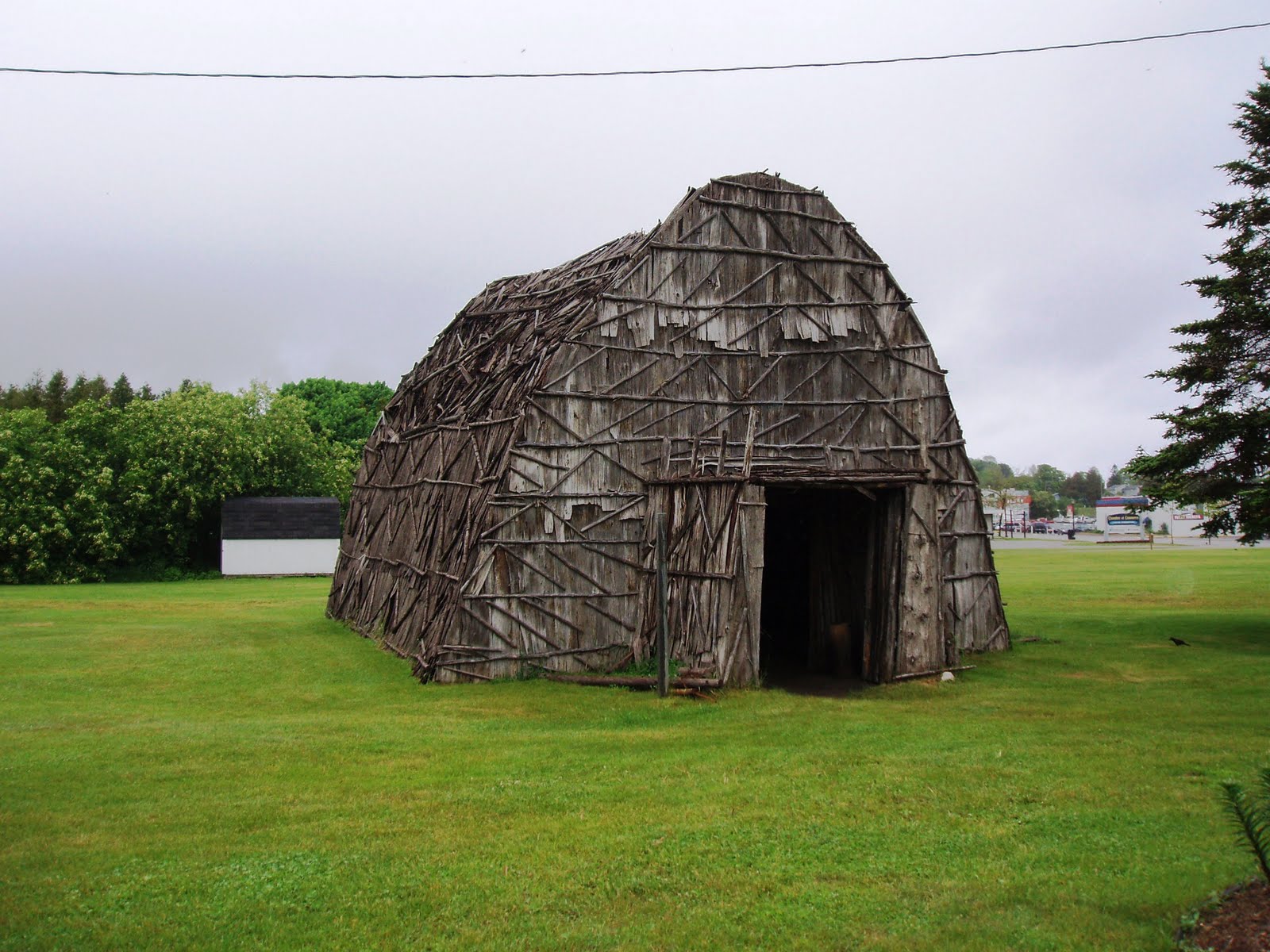
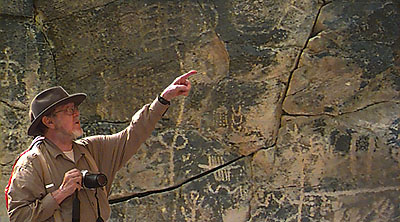
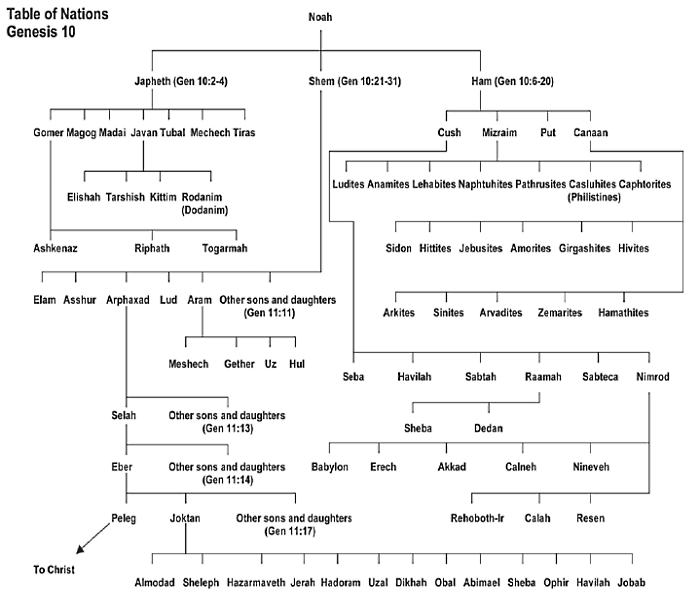





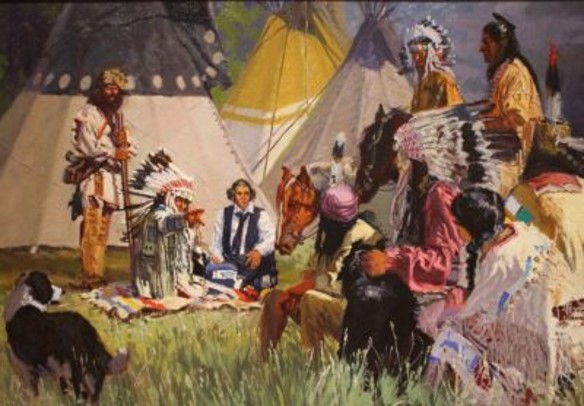
 “Brigham Young over time grew to become an important Indian ally,” Elder Jensen said, noting that the church president, as territorial governor and superintendent of Indian affairs, exerted considerable influence over Indian-settler relations. “On balance, it appears that in those early years, Indians got along better with Mormons than they did with other white people,” he said. “Indian and Latter-day Saint relations with the United States government provided some common ground. At that time, government officials were concerned with the ‘Mormon question’ and the ‘Indian problem.’ So sometimes having a common enemy can produce a good relationship. Some Indians distinguished between what they called ‘


 On other occasions, President Young praised the character of Native Americans. Their “
 After Wakara died in 1855, his brother, Arapeen, succeeded him as war chief. Although the brief Wakara War was over, tensions between the Mormons and the Ute Indians in Sanpete still existed. In early 1857 Arapeen reported having a vision in which Wakara came to him with a message of peace. In the vision Wakara specifically instructed him to pass this message on to Chapman and two others. B.H. Roberts believed it was the peace that ensued that enabled Arapeen to accompany Brigham Young on an expedition to present-day Idaho, where Young made peace with the Bannocks. Wikipedia Walkara


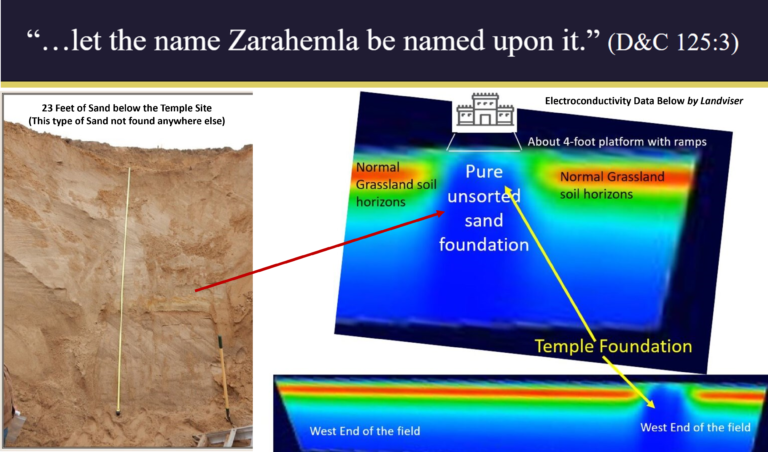
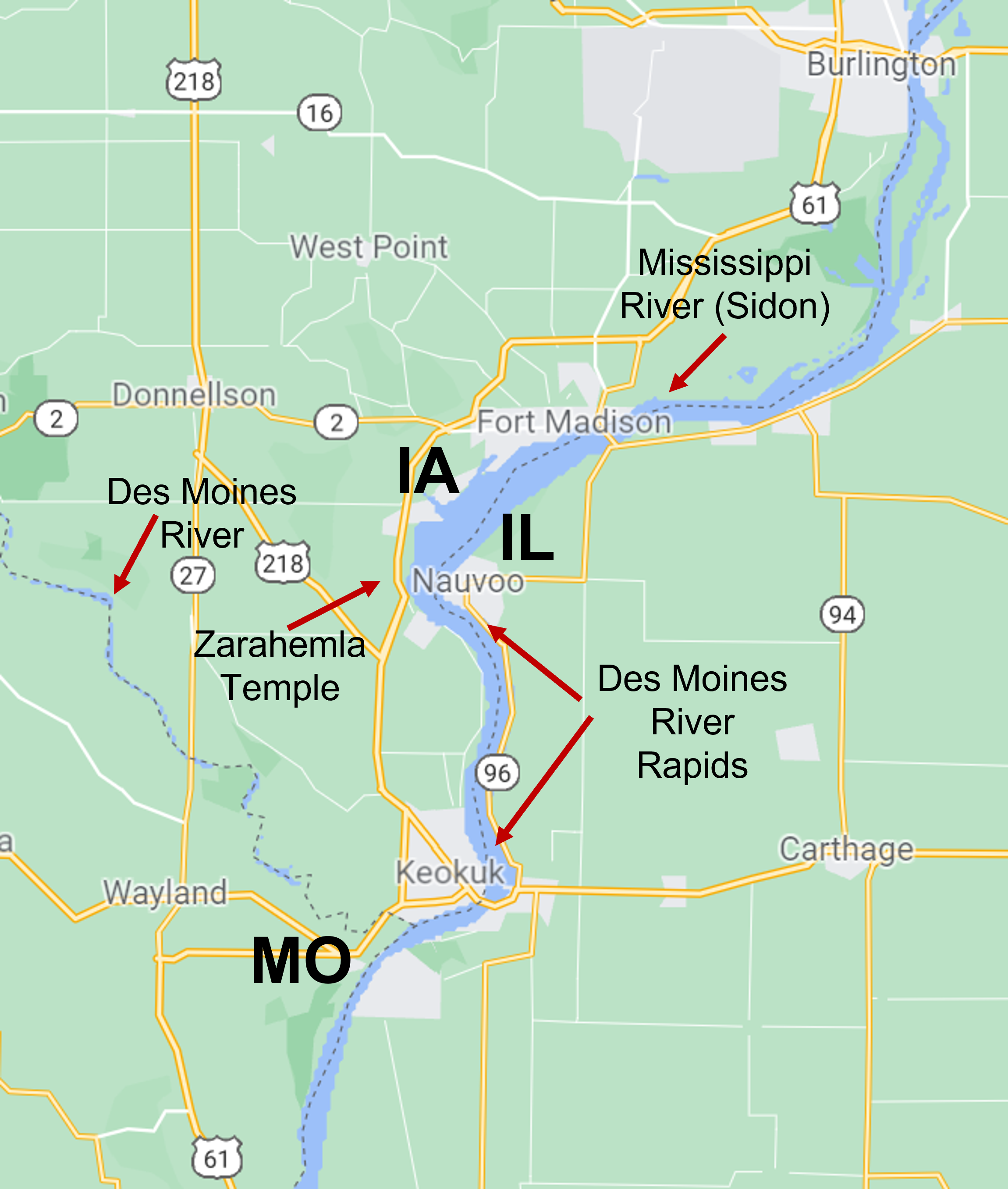

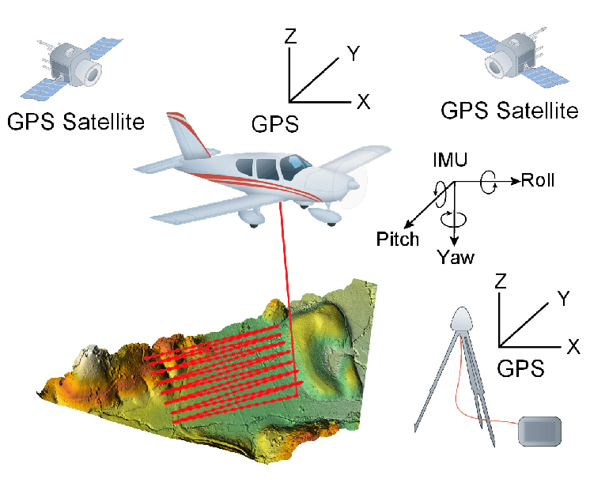
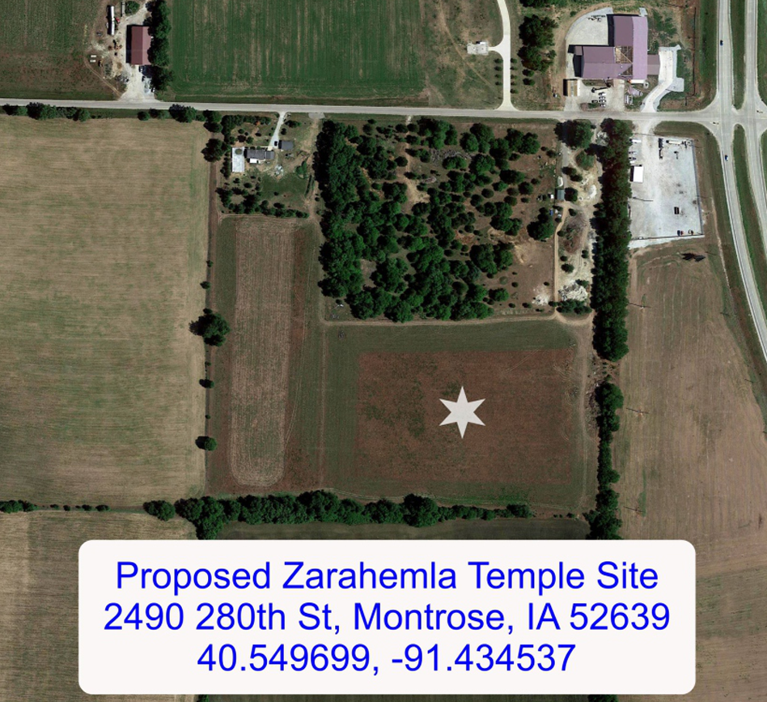
 Best wishes.”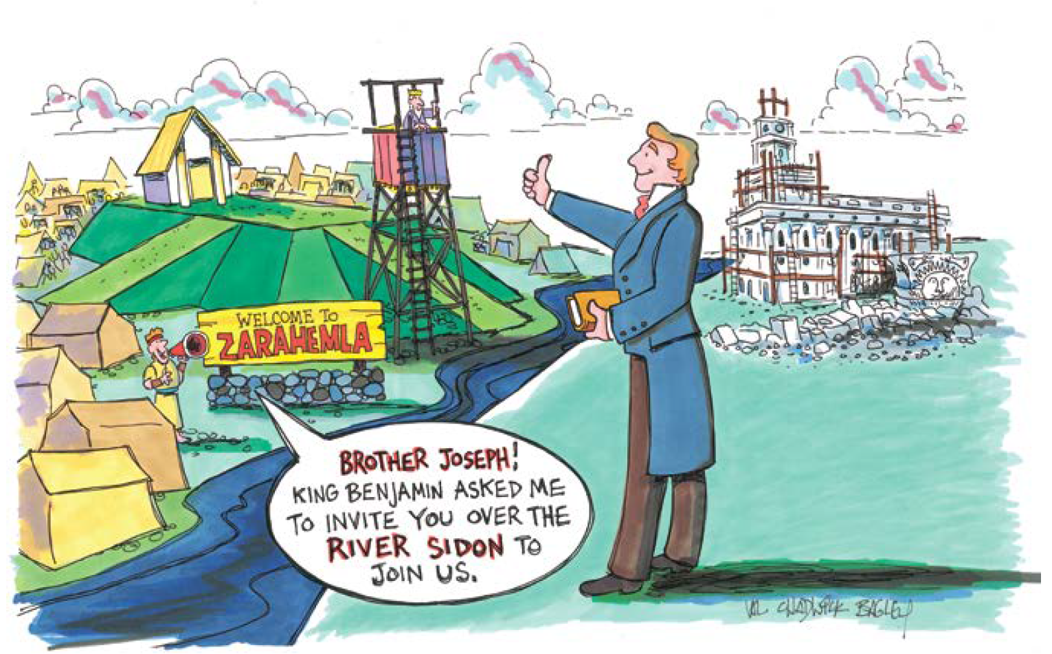
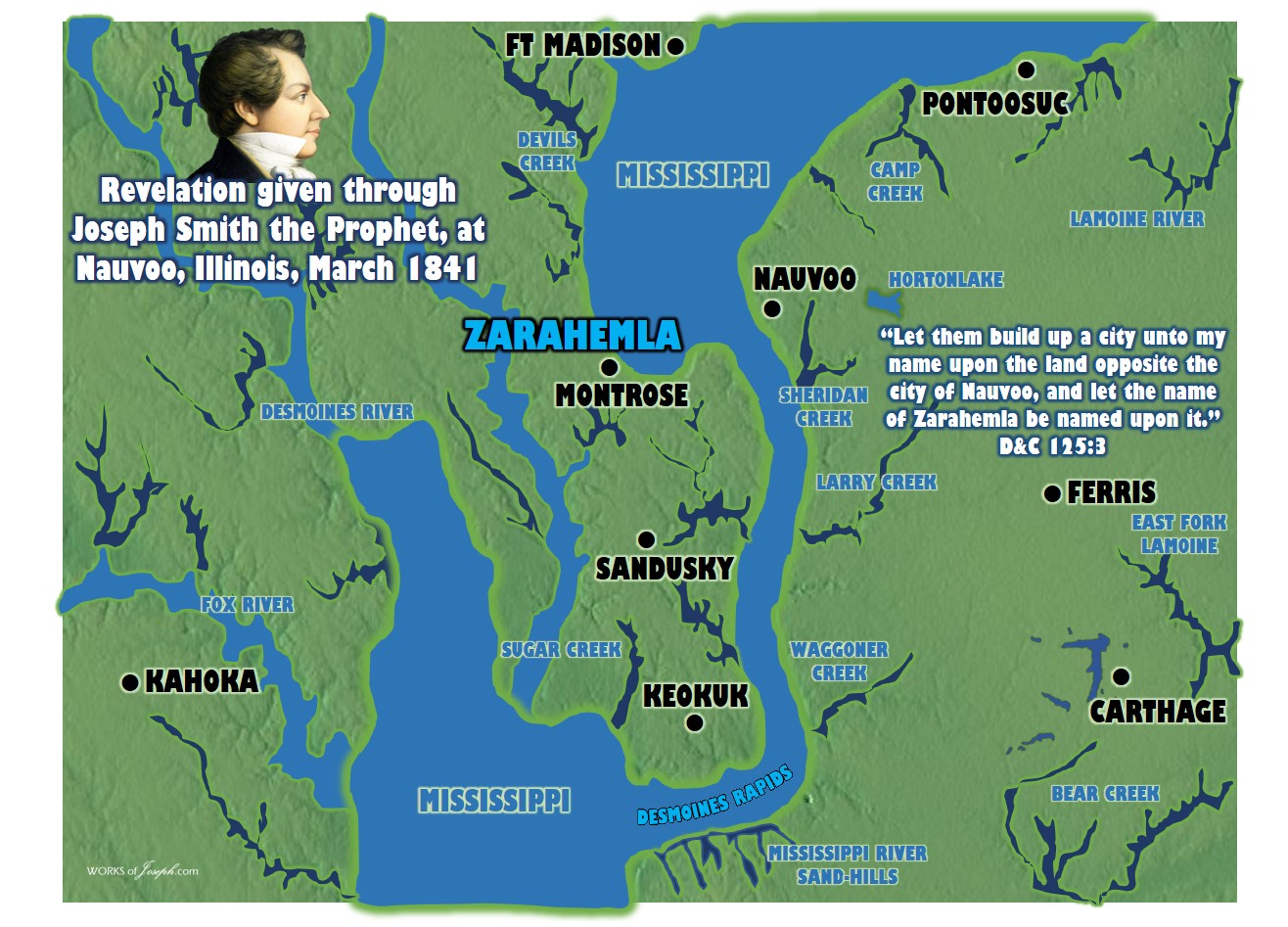
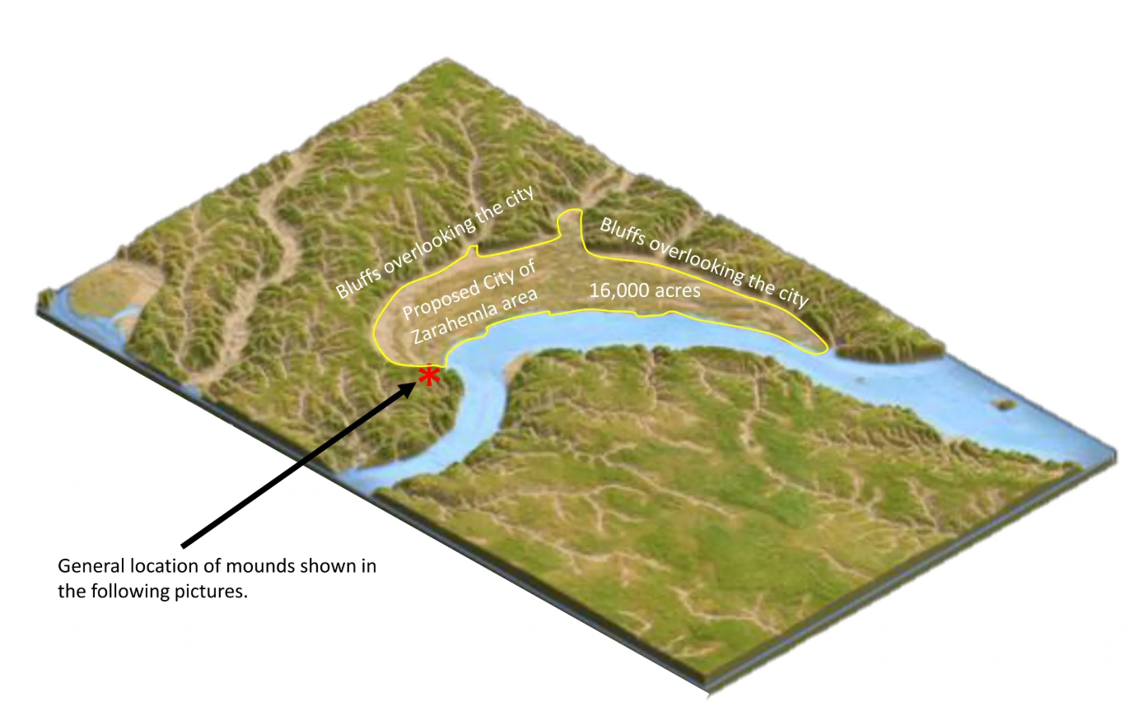
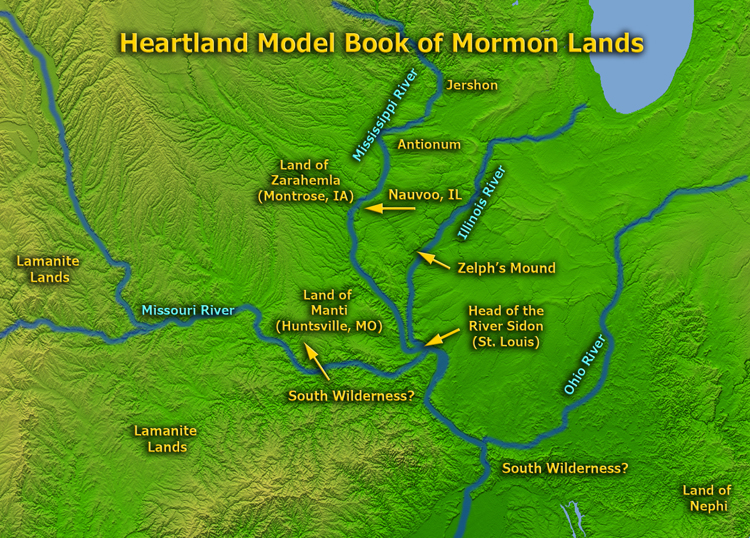
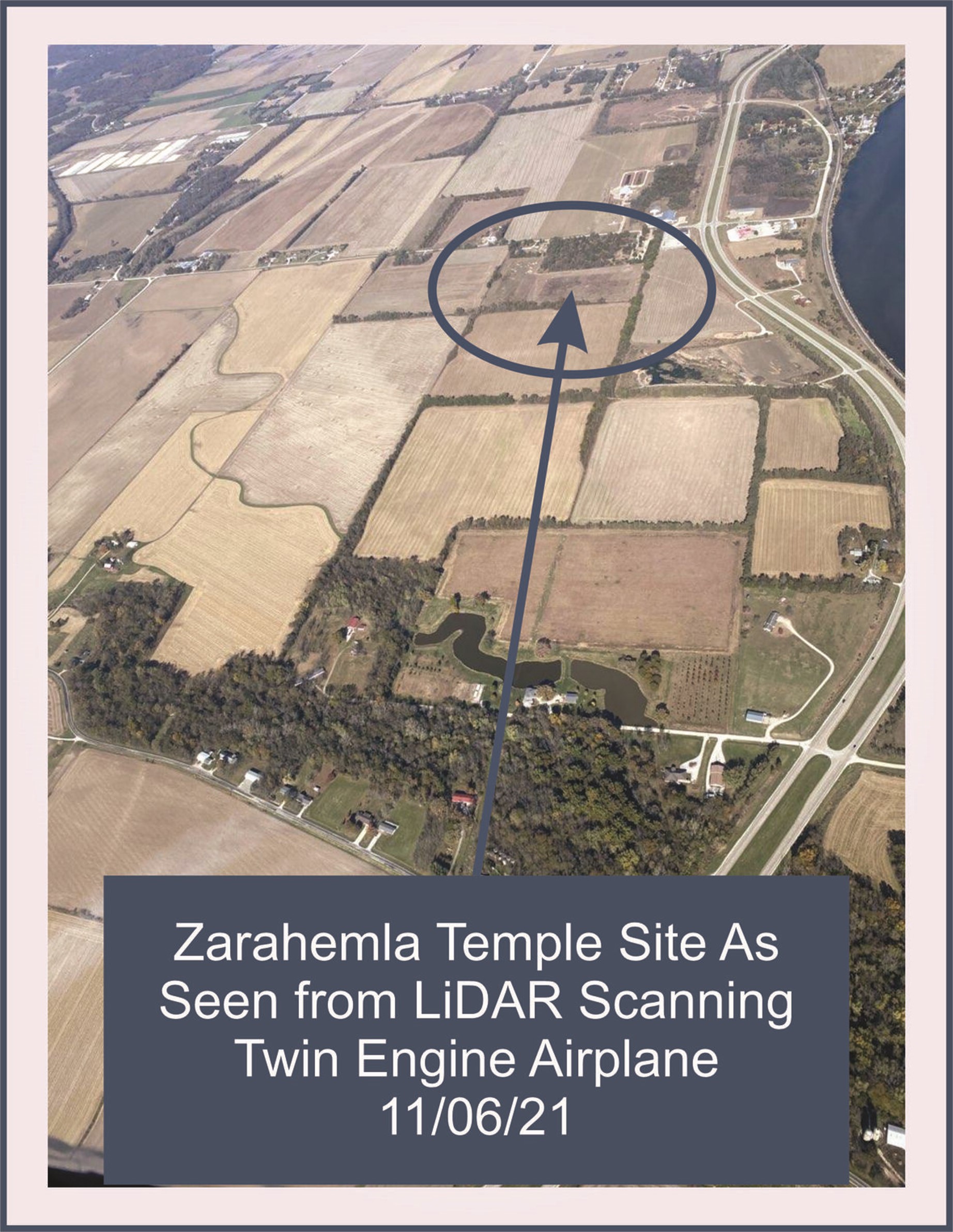
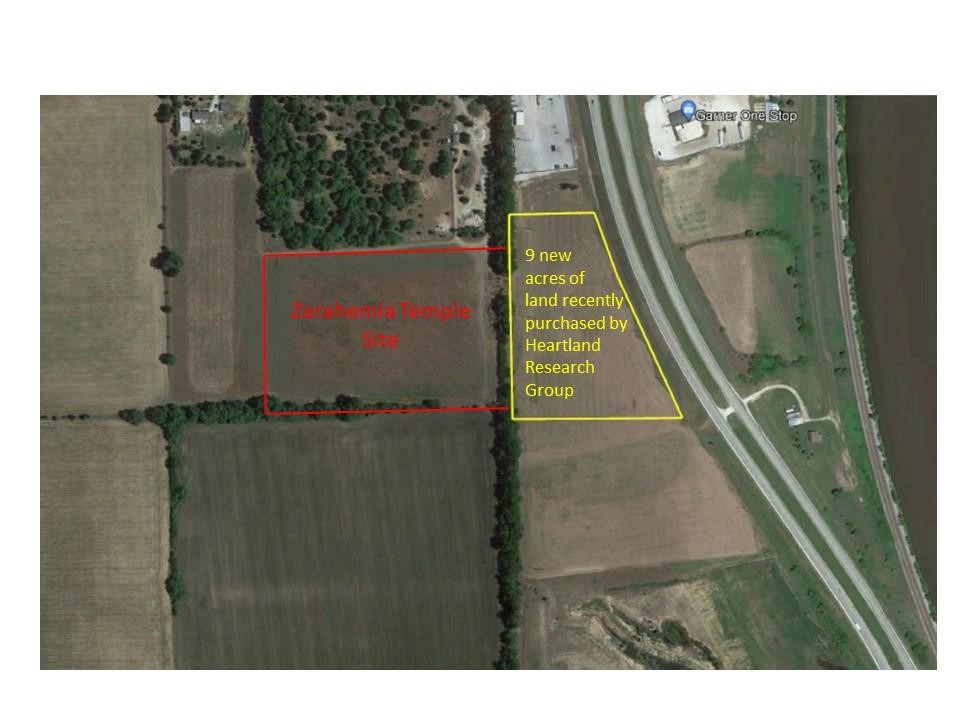
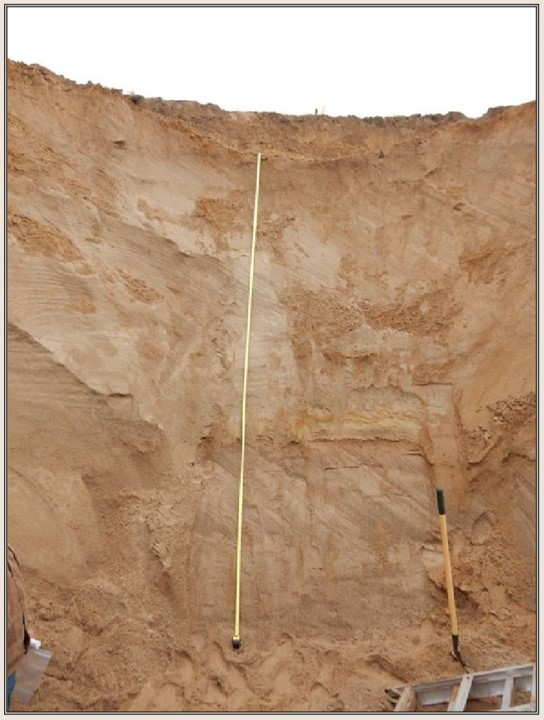




 Once again I ask the question, Were the Mayans & Aztecs Scattered by the Gentiles? The simple answer is No! They have always lived where they continue to live and before that migrated from India or Cambodia, and were not scattered by the Gentiles or anyone else. The Mayans can’t be the Lamanites spoken of in the Book of Mormon. However the Native American Lamanite in the USA was SMITTEN and SCATTERED during the infamous Trail of Tears. So where did the Mayans come from?

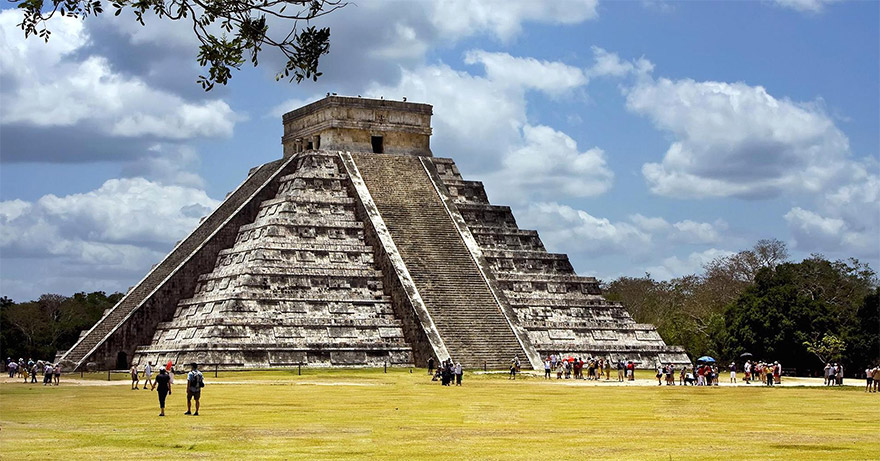
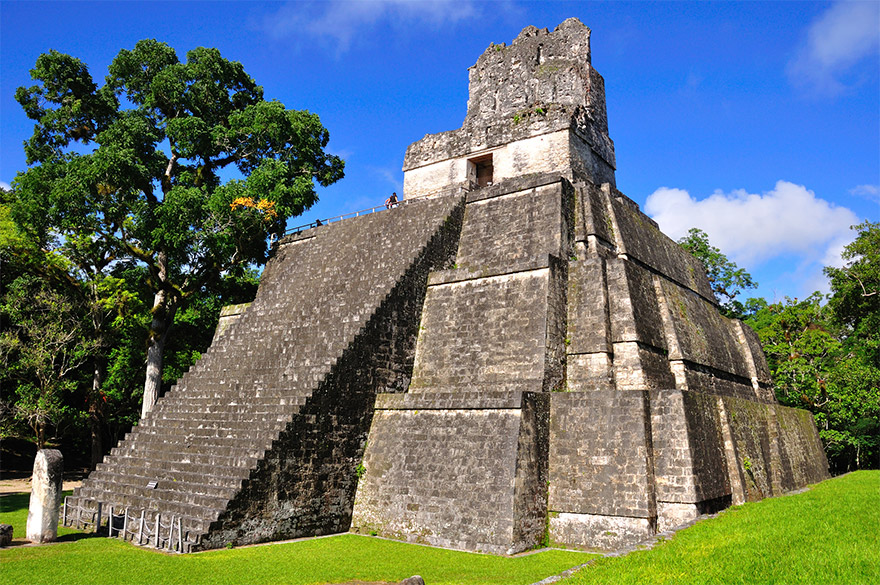

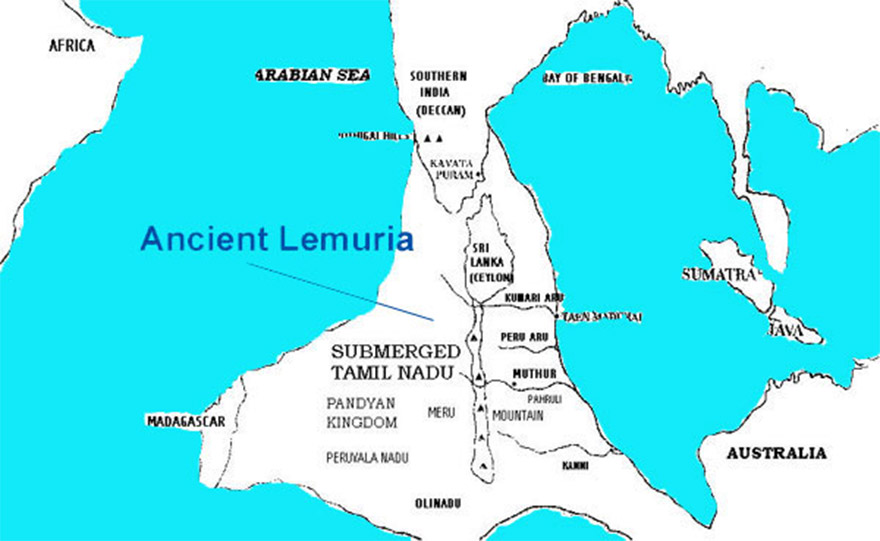

 culture of the American Indians and that of the ancient Hindus. The analogies in the forms of worship, social customs and usages are quite impressive. It is difficult to be certain about direct influence on borrowing by one culture to another. After all, there is not one type of civilization among the American Indians and the ancient Hindu civilization is a vast and complex one with different articulations in it and to detect parallelisms between some aspects of the former and certain sides of the latter is not difficult.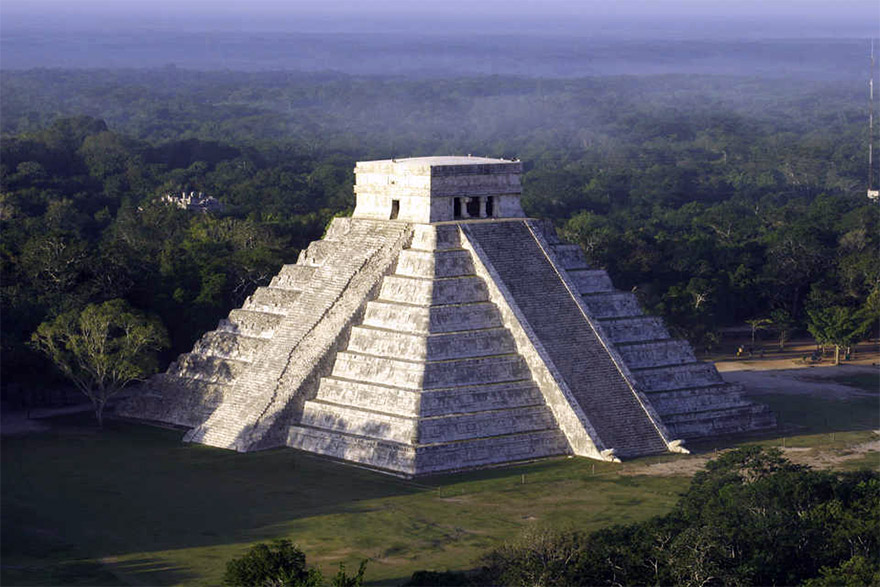

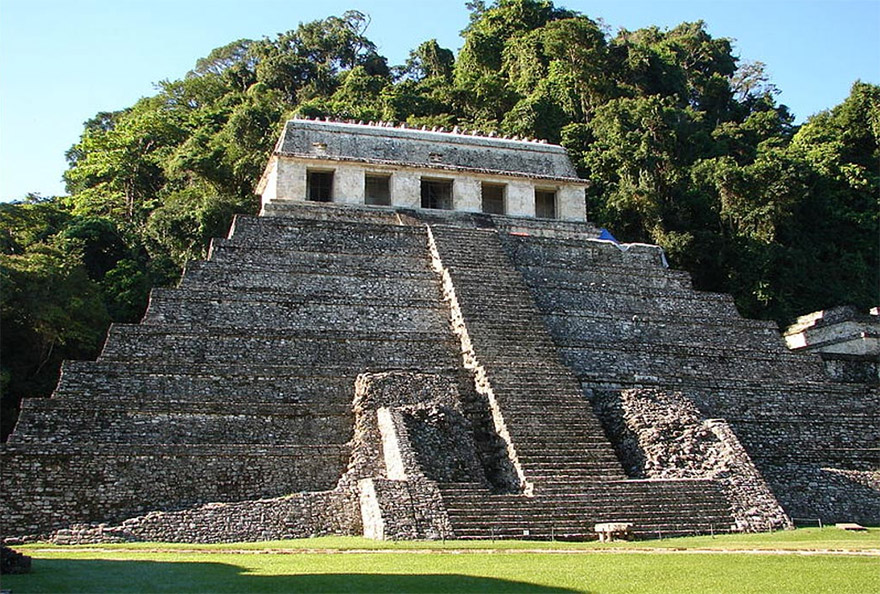

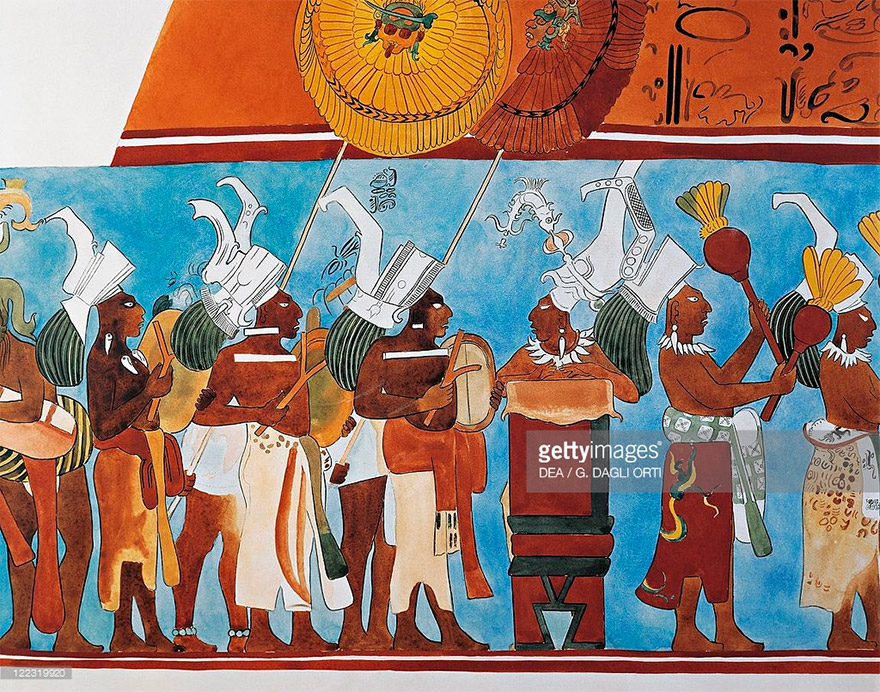
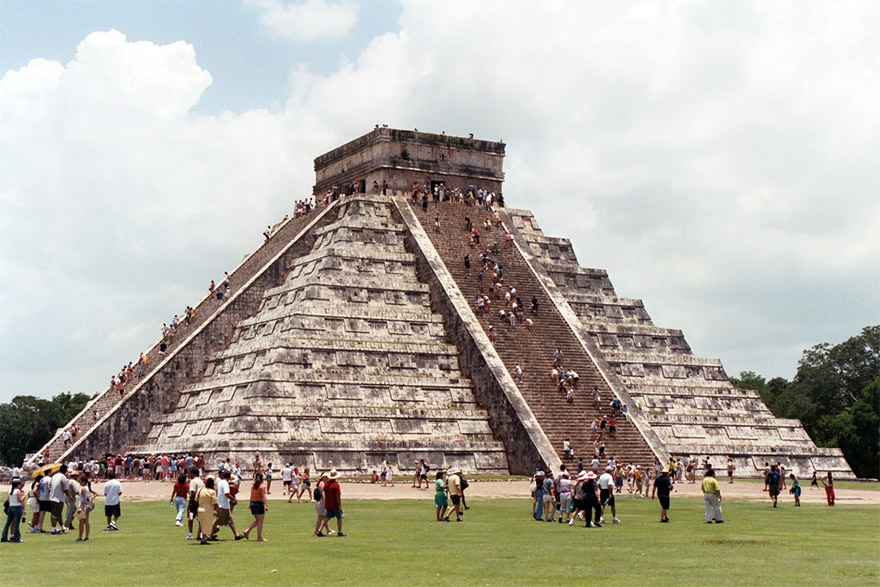
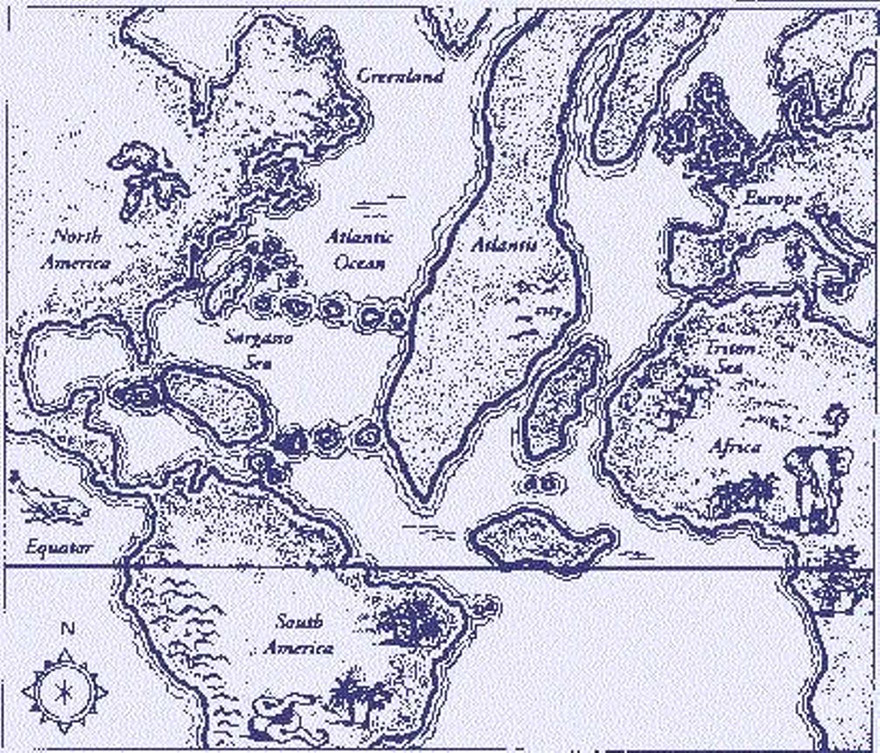
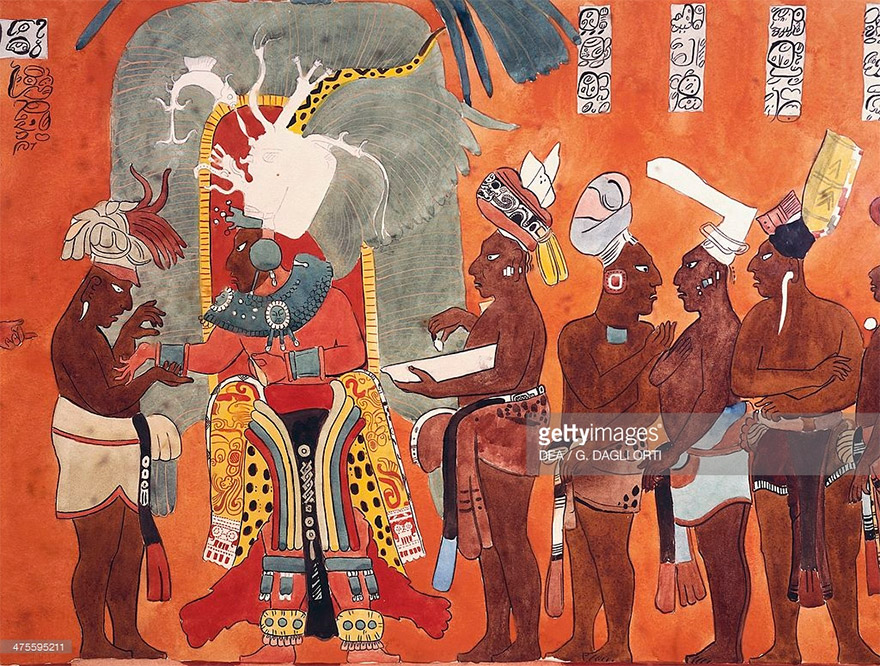

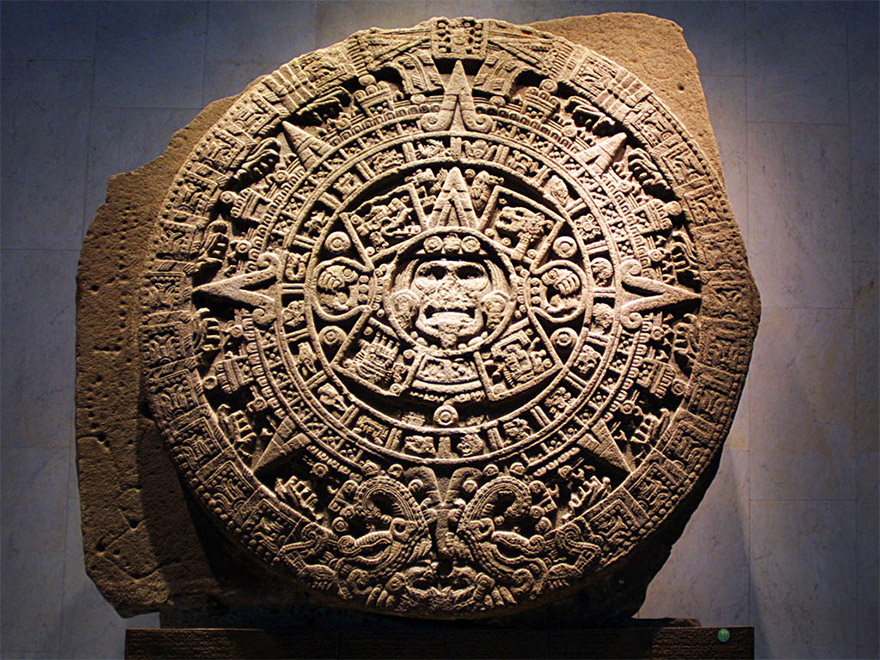
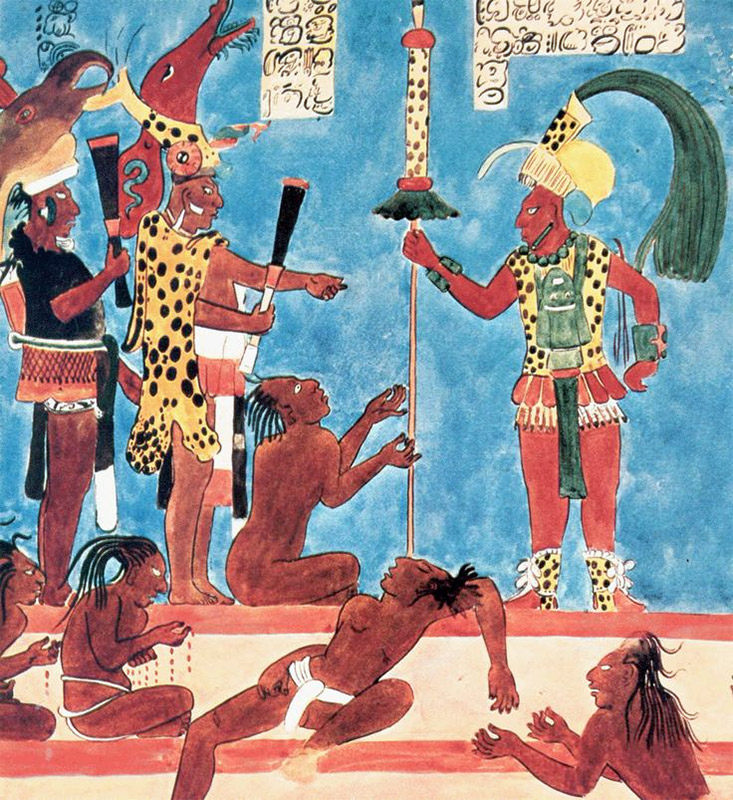


 [Right: ArtistÃs idea of what the ancient Olmec city of La Venta looked like.] The Olmecs supposedly entered Western Mexico in boats, crossing the then navigable Isthmus of Tehuantepec. They first settled on the east coast of Veracruz by the river Papaloapan. The Nahuatl-speaking people couldnÃt pronounce ìB.î Papaloapan was probably Babalu-apan (Babylonian Crossing).