“We have the fulness of the everlasting gospel, meaning that we have all that is needed to gain the fulness of salvation. We have every truth, doctrine, and principle, every rite, power, and ordinance — all that is needed — to gain exaltation in the highest heaven of the celestial world. But we do not know all things; there are doctrines in endless array of which we know next to nothing; indeed, there are more things in the darkness of the unknown than there are in the light of the known. We do not even know what the faithful knew in Enoch’s Zion, nor among the Nephites when they dwelt in righteousness for generations. We do not know what is on the sealed portion of the plates from which the Book of Mormon came. Ours is a day for drinking milk; the day when we, as a people at least, can partake of the meat of the word is in the future.
That future is millennial. In that day, “all things shall become new,” saith the Lord, “that my knowledge and glory may dwell upon all the earth. . . . Yea, verily I say unto you, in that day when the Lord shall come, he shall reveal all things — Things which have passed, and hidden things which no man knew, things of the earth, by which it was made, and the purpose and the end thereof — Things most precious, things that are above, and things that are beneath, things that are in the earth, and upon the earth, and in heaven.” (D&C 101:25, 32-34.) As we ponder these heaven-sent words, we are led to exclaim: Thanks be to him who is the Way, the Truth, and the Life, who knows all things and who seeks to pour out his revelations, and all the knowledge of eternity, upon all who will receive them. Ere long the dark veil of ignorance and unbelief that covers the earth and blinds the minds of men shall be pierced. Light and truth will fall from heaven as does rain from the clouds above.
The knowledge of God, the knowledge of those Gods whom it is life eternal to know, shall be in every heart. No longer will theologians suppose that God is a spirit essence that fills immensity while he dwells in the human heart. No longer will philosophers pontificate about some great first cause that inexplicably brought order into a chaotic universe. No longer will Babylonish churches place crucifixes in the hands, or the images of Diana of the Ephesians, as it were, and no longer will they worship the works of their own hands in the great cathedrals of Christendom. The knowledge of God, the truth about God, the fact that he is a Holy Man, will come by revelation into every human heart. The knowledge of God will cover the earth.
All things are to be revealed in the millennial day. The sealed part of the Book of Mormon will come forth; the brass plates will be translated; the writings of Adam and Enoch and Noah and Abraham and prophets without number will be revealed. We shall learn a thousand times more about the earthly ministry of the Lord Jesus than we now know. We shall learn great mysteries of the kingdom that were not even known to those of old who walked and talked with the Eternal One. We shall learn the details of the creation and the origin of man and what fools mortals are to follow the fads of the evolving evolutionary nonsense that litters the textbooks of academia. Nothing in or on or over the earth will be withheld from human [kind], for eventually man, if he is to be as his Maker, must know all things.
Hear in this connection these words of Nephi: In that day, “the earth shall be full of the knowledge of the Lord as the waters cover the sea. Wherefore, the things of all nations shall be made known; yea, all things shall be made known unto the children of men. There is nothing which is secret save it shall be revealed; there is no work of darkness save it shall be made manifest in the light; and there is nothing which is sealed upon the earth save it shall be loosed.
Significant Cities of Today and During Book of Mormon Times
Wherefore, all things which have been revealed unto the children of men shall at that day be revealed.” (2 Ne. 30:15-18.) Surely man could not ask for more than this in the way of light and truth and knowledge, and yet expect to remain in the flesh as a mortal and be in process of working out his salvation. Surely this is the day in which the Lord shall fulfill the promise of holy writ that says: “God shall give unto you knowledge by his Holy Spirit, yea, by the unspeakable gift of the Holy Ghost, [knowledge] that has not been revealed since the world was until now; which our forefathers have awaited with anxious expectation to be revealed in the last times, which their minds were pointed to by the angels, as held in reserve for the fulness of their glory; a time to come in the which nothing shall be withheld, whether there be one God or many gods, they shall be manifest.” (D&C 121:26-28.) That this outpouring of divine goodness has already commenced is not open to question. That it will continue, in far greater measure, after our Lord comes again, who can doubt?” (Bruce R. McConkie The Millennial Messiah, pp.675-677)
MUST READ:
Dr. LARISA GOLOVKO from Russia article by Dr. John Lefgren, PhD of the Heartland Research Group at the end of this blog.
I believe in what the Heartland Group is doing. They are faithful Saints who love the Lord and they are endeavoring to bring things from the ground that will (help validate, or reshape ones focus, or get a person to look deeper) into the truth of the Book of Mormon to receive a Spiritual confirmation. The Book of Mormon needs only validation of the Spirit which I have received and which the Heartland Research Group have received.
Elder Jeffrey R. Holland said, “…Truly rock-ribbed faith and uncompromised conviction comes with its most complete power when it engages our head as well as our heart… Truth borne by the Holy Spirit comes with, in effect, two manifestations, two witnesses if you will—the force of fact as well as the force of feeling… I believe God intends us to find and use the evidence He has given—reasons, if you will—which affirm the truthfulness of His work… Evidence is still evidence even if it is not immediately observable… “My testimony to you tonight is that the gospel is infallibly true and that a variety of infallible proofs supporting that assertion will continue to come until Jesus descends as the ultimate infallible truth of all. Our testimonies aren’t dependent on evidence—we still need that spiritual confirmation in the heart of which we have spoken—but not to seek for and not to acknowledge intellectual, documentable support for our belief when it is available is to needlessly limit an otherwise incomparably strong theological position and deny us a unique, persuasive vocabulary in the latter-day arena of religious investigation and sectarian debate.” The Greatness of the Evidence By Elder Jeffrey R. Holland August 16, 2017
This quote by Elder Holland is very significant. The Heartland Research group along with each of us individually must seek for “the force of fact as well as the force of feeling“as Elder Holland has said. They don’t need to have physical evidence that the most correct book is indeed true, they just seek additional answers that very well could be shown to assist others, if the good Lord desires us to know them. By faith are all things possible. It never hurts to attempt and it never hurts to try hard, in the end it is always up to what the Lord wants to reveal and does reveal that makes all the difference. The Light of Christ gives me hope and desire to look into truth. Common Sense tells me if I should pursue that truth then Personal Revelation may be given to me PERSONALLY, not necessarily for the benefit of others or for the benefit of the Church, but just to assist me in my journey on this earth.
“And if it so be that you should labor all your days in crying repentance unto this people, and bring, save it be one soul unto me, how great shall be your joy with him in the kingdom of my Father! And now, if your joy will be great with one soul that you have brought unto me into the kingdom of my Father, how great will be your joy if you should bring many souls unto me” D&C 18:15-16. I can also say if just one artifact or one pile of dirt or one huge temple is found and assists just ONE Person and it assists that person exercise faith into believing, and common sense into striving towards, how great will be John and Wayne’s reward in heaven if just one soul is helped by this physical evidence.”
I believe the Book of Mormon which speaks of Zarahemla, is near Montrose, Iowa, just as I believe there is only one Hill Cumorah in upstate New York.Rian Nelson
Kevin Price, PhD Biogeography (Plant Ecology)
Dr. Kevin Price grew up in the small town of Green River, Utah (watermelon country). He served as a missionary for two years in the California, Anaheim mission under the leadership of Elder Rex C. Reeves. He attended Rick’s College (now BYU-Idaho), then transferred to BYU in Provo where he met his wife, Melinda and was married in the Salt Lake Temple. He has two daughters; Kaylie is director of marketing for a company in Wisconsin and Julia is in her last semester at BYU in the School of Business. Kevin severed in his Kansas ward as the High Priest’s Group Leader, Gospel Doctrine Instructor and Secretary to the Young Men’s program. He now serves as the Emergency Preparedness Coordinator.
He did his Bachelor’s and Master’s degrees at BYU in Rangeland Ecology and Ph.D. at the University of Utah in Geography specializing in biogeography (plant ecology), remote sensing and geographic information systems (GIS) (or computerized mapping and analysis). He was a professor for 3 years at Utah State University, 19 years at the University of Kansas and 6 years at Kansas State University. He has conducted research throughout the world and has been the Keynote or Invited speaker on drone applications in agriculture and natural resource management throughout the world at over 100 conferences. He served as a scientific advisor to NASA, NOAA and a former US Secretary of State.
Kevin is currently the Chief Emerging Technologies Officer for Air Data Solutions with offices throughout the US. He analyzes drone and airplane acquired imagery including natural color, color infrared, thermal and LiDAR.
During his presentation (above) he will introduce you to emerging mapping technologies and demonstrate how they can be applied to a variety of challenges with emphasis in archaeology. His ultimate desire is to help find the Great City of Zarahemla which he believes to be in the US.
Update from Dr. Kevin Price
“As many of you know, this week (Nov 14-18, 2021) the Heartland Research Group has been in the Montrose/Fort Madison area working with the Landviser (See Company Information Below) scientists who are collecting the most advanced electroconductivity data possible. Electroconductivity is used in this case to measure how electricity conducts through the soil profile down to as much as 90 feet.
As many know, Wayne May with others in the area including the Curlees and Cal Christensen started looking for the Zarahemla Temple site years ago and Wayne identified a very specific location in a field just west of the Mississippi River about ½ mile. This site has been the source of much controversy and so research has continued to try and prove or disprove the location. Today, the evidence appears to be sustaining the site as the Zarahemla Temple site (the conductivity data alone is not proof, but there are many other supporting fact and evidence that need to be taken into consideration).
This picture I have attached (above), you see back over 5 years ago, actual excavation work on the site was undertaken and the site was excavated down to over 20 feet (not shown in the attached picture) and it was pure unsorts sand not deposited by wind or water, but laid in place by something not natural (we believe Hopewell people). Some have suggested it was a Sand Blow, but I personally strongly reject this idea because the sand of the sand deposit is not natural in the way it is deposited, and Sand Blows do not blow up only sand of the same particle size and there are no sorting layers as the sand would have fallen in place, but the biggest reason I reject it is because there are no recorded sand blows in Iowa. They are found in southeast Missouri but not Iowa or Illinois.
I have also attached a picture (above) of the Zarahemla site that shows a rectangular area in the area many believe is the temple site. This image is an enhanced Color Infrared Image to which I applied a vegetation index that enhanced subtle differences in vegetation.
Electroconductivity Data Belowby Landvisor
Finally, the last attachment is my crude attempt to help others visualize what they MIGHT be seeing, but this is VERY early, and I wanted to share with you early possibilities, but much more analyzes remaines to be done by our Russian Scientist friends. This graphic (Pictured Above) should not be assumed to be an official graphic of the Heartland Research Group or Landviser, it is my personal interpretation of what I think I am seeing.” Advisory: We are this very day creating pictures from the actual Electromagnetic data and Lidar data still being processed as this is written.
November 19, 2021 Best wishes, Kevin Price [email protected] Mobile 785-393-5428
Dr. LARISA GOLOVKO article by Dr. John Lefgren, PhD of the Heartland Research Group Below!
Our unique LandMapper device was featured in 2nd edition of Solid Earth Geophysics Encyclopedia as the best small scale portable and accurate electrical resistivity/conductivity meter. To cite this publication use: Loke, M.H., J.E. Chambers, and O. Kuras. “Instrumentation, electrical resistivity.” In Solid Earth Geophysics Encyclopedia (2nd Edition), Electrical & Electromagnetic, Gupta, Harsh (ed), 599–604. 2nd ed. Berlin: Springer, 2011.
Landviser develops innovative non-invasive technologies (geophysical equipment and software) for mapping and monitoring core biosphere components: soils, plants, groundwater, and climate. We deliver efficient strategic geospatial solutions through our proprietary hardware and software combined with expertise in:
International Business/IT Consulting with a focus on GIS Web Maps & Apps for Market Analysis, Risk Management, ERP & Supply Chain Logistics
Custom Software and Data Pipeline Development including Machine Learning, Artificial Intelligence, and Blockchain technologies
Geophysical Instruments R&D for Agriculture and Natural Resource Mapping/Monitoring
Remote Sensing Analytics for Satellite and UAV Imagery, integration with on-the-ground IoT Sensor Networks
Larisa invented (2001) and marketed first in industry hand-held geophysical meter –LandMapper® – for precision agriculture, environmental assessment, archaeology & civil engineering, and founded Landviser LLC in USA. During her career she worked as a researcher and geo-data scientist for Moscow State University (Russia), Rutgers University (NJ), hybrid rice seed company RiceTec, Inc (TX), and, currently, Bayer Crop Science IT.
Dr. Larisa Golovko – Recognized World Leader in GEODATA SCIENCE (20+ Years) and Artificial Intelligence for Remote Sensing.
Some time ago, Dr. Larisa Golovko came to Salt Lake City to present her paper at an international conference of scientists. Before this conference, she had attended other conferences to discuss the development of Python Apps for image processing and feature recognition. While in Utah, she was with her peers. She was surprised when the state’s major newspaper wanted to interview her. The newspaper wanted to print an article about Larisa as a Russian scientist who had come to Utah for an international conference.
The Utah newspaper wrote about Russian technology for the preservation of the Kiev-Pechersk Lavra near the Church of Holy Cross. A place that is known by over 100 million Russian Orthodox believers as the Monastery of Caves. The is the center place of Russian Christianity. The church was built in 1700 above the holy caves, a place of pilgrimage of Russian Christians since the 11th Century. The caves have historical treasuries including 1,000-year-old frescoes, the living cell of Nester, the first annalist, as well as the burial niches for the remains of civil and religious leaders.
In Soviet times, there was groundwater seepage into the caves. It became necessary to analyze accurately hydrological conditions in the Patriarch garden to prevent any damage to the historical artifacts. With Larisa’s father’s help, the Orthodox Church was able to protect their sacred site. The site is now on the UNESCO Heritage List and is considered one of the 7 Wonders of Ukraine. This story was of sufficient interest that the major newspaper in Salt Lake City presented to thousands of its readers.
Last week Dr. Larisa Golovko from Landviser LLC brought even better technology to the Zarahemla Site on the west bank of the Upper Mississippi. Utah newspapers have shown total indifference to the possibilities that Russian technology could discover Zarahemla. It is as though too few people in Utah are interested in discovering North America’s largest city of the 4th Century.
We are happy to report that other scientists are interested in what we have done. Professor Loke, the developer of RES2DINV/RES3DINV software, wants to use the ERT images from the Zarahemla Temple Site in his presentation at a virtual conference from Asia where he will promote SibER to a gathering of geophysical scientists.
We regret that there are so few scientists in Utah who have any interest in finding Zarahemla. We are grateful to receive recognition from a virtual gathering of world experts in Malaysia, India, and China. Fortunately, professionals will have a chance to become familiar with the first results from Zarahemla at the International Conference on Recent Advances in Geotechnics sponsored by INDIAN SOCIETY OF ENGINEERING GEOLOGY.” Dr. John Lefgren PhD Heartland Research Group
Russian Scientists Meet Native People in Iowa.
Zarahemla According to Jonathan Neville
“When Joseph Smith purchased the land for Nauvoo, he actually purchased far more land across the river in Iowa, as this map (left) from the Joseph Smith papers shows. If this area–designated in the 1800s as the “half-breed tract”–was the location of the ancient city of Zarahemla, the location could explain why the people were wealthy and why they had problems with pride, etc. (Of course, every human society has problems of pride, envy, etc.
However, Alma focuses particularly on this when he’s in the city of Zarahemla.) People ask if there is archaeological evidence for a city in this area. There is archaeological evidence of settlements along the river, north and south of this site, that date to Book of Mormon times, but nothing that can be identified as the city of Zarahemla, per se. The city of Zarahemla and its inhabitants were burned (3 Nephi 8:8). Later, the city was built again (4 Nephi 1:8) but the city is not mentioned afterward. It could have been destroyed again, of course. The river could have flooded the city, deposited sand over it, or any number of other possibilities.”
[The Heartland Research Group headed by Wayne May, John Lefgren PhD, and Kevin Price PhD, have been doing research near Nauvoo and Montrose, Iowa for several years now looking for evidence of Zarahemla. They have found evidence for ancient fires pits in the area and a possible location of a temple mound. See their website here: https://zarahemla.site/]
Neville continues, “For now, I note that it’s a location that seems to fit the text nicely. Another consideration is that D&C 125 hints at this site as the location of ancient Zarahemla. Another interesting aspect of Alma 5 is the mention of sheep, shepherds, and wolves. There must have been sheep in the city of Zarahemla. We’ve already stipulated that, because the Nephites “strictly” observed the Law of Moses, but Alma emphasizes the point is repeated here.
v. 37: ye that have professed to have known the ways of righteousness nevertheless have gone astray, as sheep having no shepherd, v. 38: ye are not the sheep of the good shepherd. v. 39: And now if ye are not the sheep of the good shepherd, of what fold are ye? v. 59: For what shepherd is there among you having many sheep doth not watch over them, that the wolves enter not and devour his flock? v. 60: if you will hearken unto his voice he will bring you into his fold, and ye are his sheep; and he commandeth you that ye suffer no ravenous wolf to enter among you, that ye may not be destroyed.
These metaphors would be ineffective if the people living in Zarahemla did not have sheep. In verse 59, Alma abandons the metaphorical use and speaks directly to actual shepherds. Some species of sheep that are indigenous to North America have survived to the present day, including the Bighorn and Dall. Anciently, their populations were in the millions. Although confined mainly to the western US, Canada, and northern Mexico. Wolves are indigenous to North America and were ubiquitous throughout North America before the Europeans arrived. They were part of Native American Indian legends and mythology. Their devastating impact on domesticated animals led to federal government programs to eradicate wolves from grazing areas. See this article.
Because Alma discussed wolves in this sense, I think it’s possible that whatever domesticated sheep the Nephites had–whether related to the other indigenous North American species or species Lehi brought with him–were killed off after the destruction of the Nephite society. The situation could be similar to that of horses, where recent research has shown the traditional explanation for horses–that the Spanish brought them all–is not consistent with the actual records. See excellent article on horses: https://byustudies.byu.edu/system/files/pdfs/54_3JohnsonHard.pdf.”
Source: 2016 Gospel Doctrine Resource by Jonathan Neville
More exciting news from Zarahemla near Montrose, Iowa. Our friends from the Heartland Research Group continue to search for any evidence of the most popular city spoken of in the Book of Mormon, Zarahemla.
Over the past 3 or 4 years the team has launched river boats with underwater cameras, sent many core samples to Lithuania from the site opposite the Nauvoo Temple, created videos of information about Robert E. Lee and other surveyors in the area, brought over from Germany Sensys Magnetometry, flown million dollar equipment from a two million dollar plane to do Lidar Imaging of thousands of acres, and now with technology from Russia they are doing resistivity analysis. They have found ancient fire pits, clam shells dated to 300 AD, ancient charcoal from deep core samples and continue to look for evidence of this great city spoken of in D&C 125.
If evidence is here and the Lord willing, this team will find it. Just as the Gold Plates have spoken to us from the ground at Cumorah, so too may the ancient civilization do the same near Nauvoo the Beautiful. Volunteers are welcome and prayers are asked for. The Lord has said, “we may know the truth of all things.” May the search for Zarahemla continue for this dedicated and hard working group of explorers as their faith strengthens day to day.
Permission to Dig on Archaeologically Rich Site Nov 16, 2021 This morning we met the landowner of a property in Montrose that goes from the bluff into the Mississippi River. The landowner gave us the right to dig into his ground. He retains all rights to any artifacts that we may find. The arrangement allows us to search for knowledge of Zarahemla that will come out of the ground.
The landowner has lived in Montrose for 70 years. He is confident that his property has more ancient artifacts per acre than other property in Iowa. European settlers in the 1700s built their first house on the site. The property is located in one of the richest fishing spots on the river. During times of low water, the Des Moines Rapids stopped traffic. The property is next to clean water that comes down the bluff. All these factors in ancient times supported human life and activities.
We are grateful for the chance to search on such a spot directly across the river from the Nauvoo Temple. Members from Heartland Group at Site on the West Bank of the River Sidon Property Owner and Wayne May
Radioactive Carbon-14 Charcoal from Fire Pit at a depth of 60 Inches. Nov 18, 2021
Today we were in the field close to the River Sidon. Last year we found from our magnetometry scans evidence of hundreds of ancient fire pits. In December 2020, we drilled by hand down 48 inches and found charcoal samples from fire pits. Hand drilling was difficult. At that depth, the fire pits were 1,000 years old.
Today, we took a gas-powered drilling machine into the field where we had located fire pits. We drilled down 60 inches, and found excellent samples of ancient charcoal. We will now prepare samples and send them to the radiocarbon laboratory, where the dates will be determined.
We expect that we are now at a point in time that connects to the chronology of Zarahemla as found in the ancient record.
Human Hand Effigy, Hopewell Culture, Hopewell Mound Group, Ross Co.,
Native Hand Symbols
The Righteous Nephites and Lamanites are Spared Destruction
And it came to pass that in the ending of the thirty and fourth year,* behold, I [Mormon] will show unto you that the people of Nephi, who were spared, and also those who had been called Lamanites, who had been spared, did have great favors shown unto them, and great blessings poured out upon their heads, insomuch that soon after the ascension of Christ into heaven He did truly manifest Himself unto them, showing His body unto them[Symbolic Hands] and ministering unto them; and an account of His ministry shall be given hereafter; therefore for this time I make an end of my sayings.” 3 Nephi 10:18
“The first month, Nisan, of the Hebrew Calendar is fixed so that the first full moon of the year will be after the spring equinox. When Mormon wrote that in the ending of the 34th year Christ came to America, he was using the language of Moses to describe that it is was at the time of the Feast of Ingathering or Tabernacles” – John C. Lefgren Ph.D.
“The world’s largest earthen temple complex is located in Newark, Ohio (see p. 250 below from the Annotated Book of Mormon). The central axis of the portion known as the Great Octagon (Fig. 6 on p. 250) is fixed at 58.1 degrees east of true north which is the azimuth for the maximum northern moonrise. This event occurs only once every 18.6 years. The moon rise for Saturday, October 3rd, A.D. 33 was in alignment with the central line of the earthwork. At this time the Calendar of Moses required the Children of Israel to gather at the temple. On the rising of the sun of the next morning, the Nephites gathered at the temple in Bountiful (3 Nephi 11:1, p. 399) to observe the 7th day of the Feasts of Tabernacles. This alignment points to Christ coming to the Nephites in His resurrected glory on this day.” – John C. Lefgren, Ph.D. page 408 Annotated Book of MormonDigital image by CERHAS, University of Cincinnati Cleveland Museum of Natural History
Annotated Book of Mormon David Hocking and Rod Meldrum Page 250
Purchase John Lefgren’s 44-Page PDF titled “The Sign before the Birth of Christ- As Witnessed at the Newark Earthworks in Ohio”HERE
Hopewell/Nephites Important Similarities
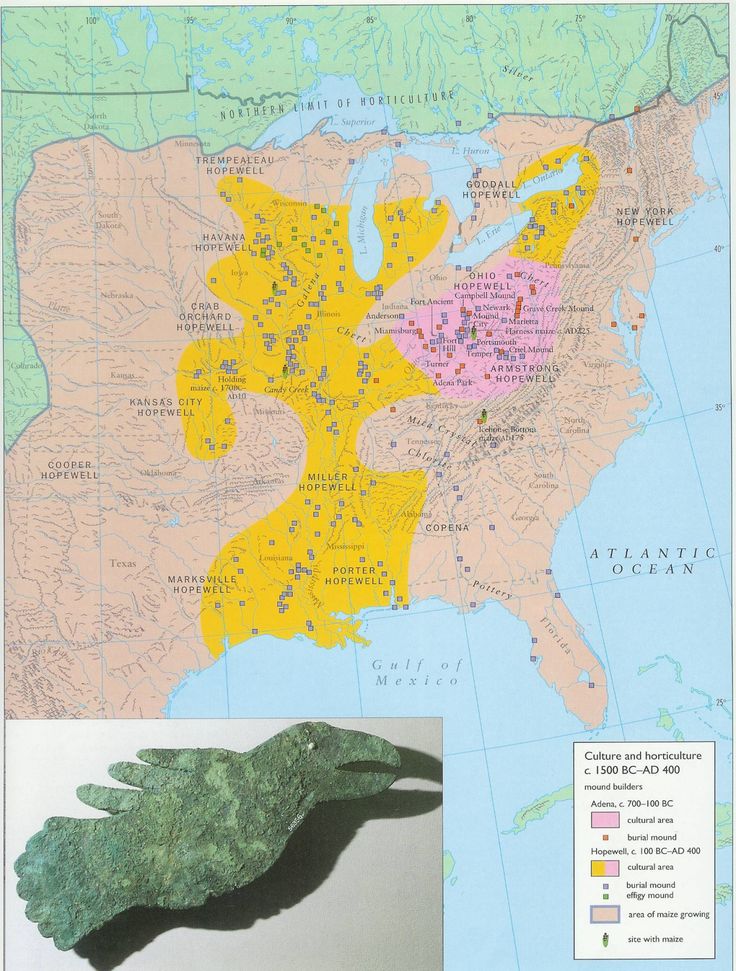
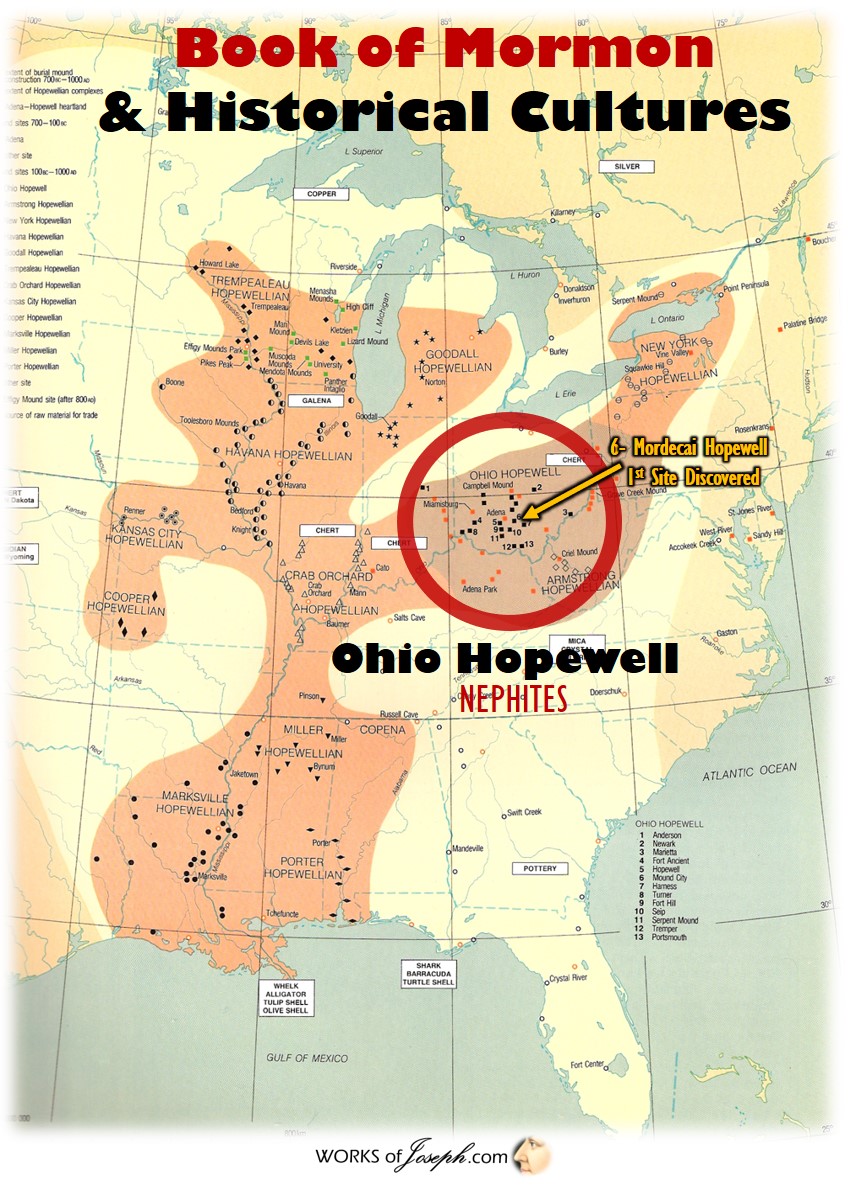
The Hopewell Culture describes the common aspects of the Native American culture that began in the Florida panhandle in 600 – 500 BC that flourished along rivers in the northeastern and Midwestern United States from 300 BC to 400 AD, in the Middle Woodland period.
As you can see in the map below, and as you read history, the proven historical location and timelines of the Hopewell Culture are facts. Just think about it. If we found a people that had a history following this same beginning and ending pattern in North America and we called it the Book of Mormon, we would have validation that indeed the Hopewell people are the same as the Nephites. So as we surmise, Lehi landed in Florida, Nephi was chased by his brothers into Tennessee, then Mosiah left and went north on the Tennessee River (which by the way, flows north) to Missouri and Illinois where he met up with the Mulekites near the Mississippi River. Remember the Mulekites began their civilization at the same place they were found by Mosiah. (read here) “And they [Mulekites] journeyed in the wilderness, and were brought by the hand of the Lord across the great waters, into the land where Mosiah discovered them; and they had dwelt there from that time forth.” Omni 1:16
Because of being found where they landed, (See Omni 1:16), we show a great probability that the Mulekites followed the same path as Lehi to the Gulf of Mexico, with the Mulekites following the Mississippi River all the way up to Montrose Iowa, where the Des Moines river rapids halted their journey, as was restricted boat traffic until the Army Corps of Engineers opened that waterway in the 19th century.
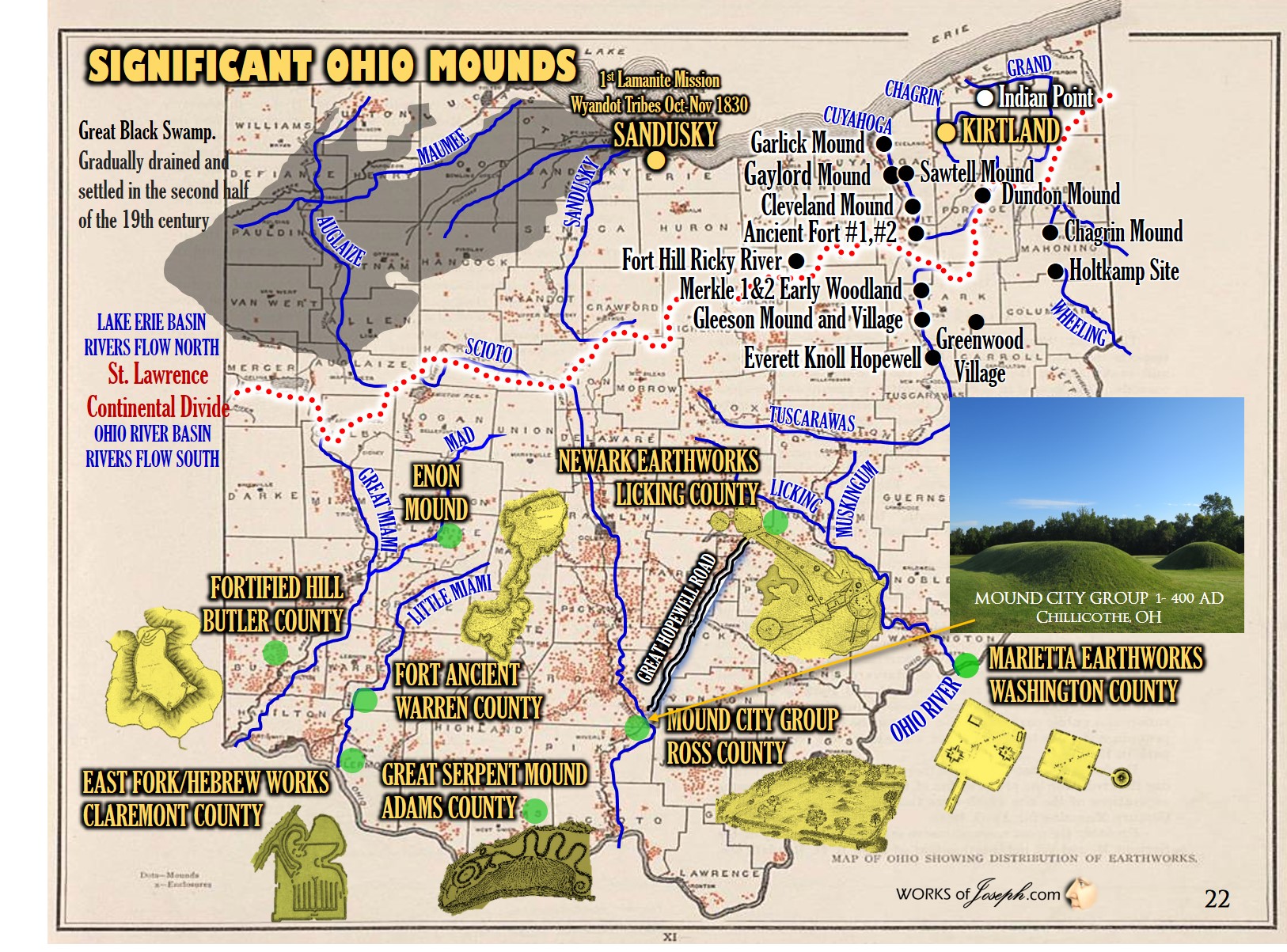
The area of Ohio is known as the Cultural Center of both the Adena and the Hopewell People with the Great Hopewell road running from Chillicothe, OH to Newark OH, the place of the amazing Newark Earthworks.
In the Land Zarahemla (WI, IA, MO, IL), there were many battles as well as in the Land Bountiful, (IN, OH, PA, NY) from Illinois to Indiana to Ohio and finally at Cumorah. What happened near Cumorah historically? Historians have found a sudden end to Hopewell civilization and pottery in that area from about 400-500 AD. We Latter-day Saints know what happened in that time range as the Lamanites destroyed the Nephites.
The 300-acre Hopewell Mound Group is the type site for the Hopewell culture. Early archeologists named the site for its owner, Mordecai C. Hopewell. The artifacts in the picture below were found in Mound 25 called a double burial site in the Hopewell Mound Group in Ross County, OH. The significance of the better known mica hand placed between the skulls of the double burial and two mica eagle talons which were placed on each chest is not understood.
Hopewell Mica Cutouts
The native peoples of Ohio may have begun to use mica during the Early Woodland period, but its use in the crafting of ceremonial objects became especially important during the Middle Woodland period.
Mica is a shiny mineral that occurs in layers, which can be split apart into thin, translucent sheets. Sometimes called isenglass, plates of mica have been used historically as windows for stoves.
Human face effigy, Hopewell culture, Turner Group, Mound 3, altar, Little Miami Valley, Ohio, 200 BC to 500 AD, mica – Native American collection – Peabody Museum, Harvard University – DSC06093.jpg (Made of Mica)
Hopewell culture spiritual leaders used small slabs of mica for a kind of mirror, possibly used in divination ceremonies, and artisans cut sheets into a variety of delicate shapes that may have been sewn onto garments to serve as personal ornaments.
Mica does not occur naturally in Ohio. Its source is in the Appalachian Mountains of North and South Carolina. Ohio’s Hopewell people may have obtained the mica in trade with the Middle Woodland cultures in this region, or perhaps pilgrims brought offerings of mica and other rare and precious materials to the great earthwork centers of southern Ohio.
Mica continued to be used by some Late Woodland cultures in Ohio, but only in much smaller quantities and these later peoples did not cut it into the elegant effigies so characteristic of the Hopewell culture.
Human Hand Effigy, Hopewell Culture, Hopewell Mound Group
Actual artifact at Ohio History Connection Museum, Columbus, OH (14 cm x 28 cm) Mica hand cutout excavated at the Hopewell Site from Mound 25. T
Human Hand Effigy, Hopewell Culture, Hopewell Mound Group, Ross Co., A 283/000294 Hopewell Culture: Double Burial Mica Set artifacts Time period: 100 BC-AD 400 Provenience: Hopewell site (Mound 25), Ross County, Ohio USA Original artifact size: 8-31 cm (3-12 inches) Original artifact material: Mica
Hopewell Double Burial Context and Interpretation:
“Mica cutouts were produced by the Hopewell culture (100 BC-AD 400) which thrived in the American Midwest and southern Ohio more than two thousand years ago. The artifacts that the replicas pictured above were based upon were excavated from a double burial in Mound 25 that was part of a complex of earthworks known as the Hopewell site. The site name honored Mordecai C. Hopewell who in the 1800s owned the farm which the 44.5 hectare (110 acre) mound complex was located. Since excavations on the Hopewell site produced artifacts that were previously unknown, the culture was also named after Hopewell. Complex geometric earthworks, some the largest in the world, were a trademark of the Hopewell culture. Usually Hopewell mound complexes comprise of very regular geometric shapes: a combination of circular, square and octagonal earthen walls that lined the site perimeter. The Hopewell site is unusual in that it has a mound geometry that is irregular in shape. The site has two orthogonal walls on the south and east sides with a j-shaped curve forming the remaining north and western walls. There is however a smaller square walled complex sharing the eastern wall of this larger complex that conforms to the classic Hopewell plan. A survey of the Hopewell site in 1847 described more than 20 smaller mounds within the enclosure of the perimeter walls. Many contained multiple burials with abnormally large amounts of burial objects.
8,000 palm-sized discs of flint, about 5.4 metric tons
In 1891, Warren K. Moorehead was employed by Harvard University to excavate the site. His methods have been described euphemistically as “cavalier” by modern standards. Mosaics of colored sand, one represented a panther, were uncovered and then destroyed as his investigation cut through stratigraphy of the mounds. Mound 2 had 8,000 palm-sized discs of flint, about 5.4 metric tons (6 tons) uncovered. He must have been overwhelmed by the shear number of artifacts for a famous picture taken at the time (right) showed these discs recklessly piled outside one of his field camp tents. Mound 17 had 3,000 sheets of mica excavated, “enough to fill two barrels”. The same mound had 5,000 copper objects, of which Moorehead thought 4,000 were copper ear spools, 100 were breast plates, and another 120 were “cut into numerous designs”. He also found in Mound 17 by his estimates over 100,000 fresh water pearls from the various species mussels and clams that inhabit Ohio streams (they were at the time worth one million dollars).
Mound 25, the largest in the Hopewell site enclosure, was composed of the Central Mound and two side mounds that over time, due to additional burials, merged to become one conjoined mound 9 m (30 ft) high and 152 m (500 ft) long. There were a total of 69 copper and (meteoritic) iron celts and 92 copper breastplates found in all the features of this mound. The significance of the better known mica hand placed between the skulls of the double burial and two mica eagle talons which were placed on each chest is not understood. Evidence of incising has been found on one of the mica talons. No pigment is observed on the surface of these artifacts as has been found on painted mica artifacts. The burial also had smaller two mica circular discs, a pierced claw and two other mica geometric forms placed at their waist. The photograph (above right) has the mica replicas positioned as they were found in the Hopewell grave (relative distances between replicas not accurate). The geographical origins of grave goods from this and other excavations indicated the Hopewell culture had trade sophisticated trade networks extending to the Gulf of Mexico (marine shells), Rocky Mountains (obsidian), and Michigan (native copper). North Carolina is one source of mica where one pre-Columbian mine was reported to have blunt excavation makings on its wall characteristic of stone tools. Cause for the Hopewell culture decline about AD 400 is not known.” Jack Corbo Cleveland Ohio
“On the title page I read that it is “written to the Lamanites, who are a remnant of the house of Israel; and also to Jew and Gentile.” In the introduction to the Book of Mormon: Another Testament of Jesus Christ, it says that the Lamanites “are among the ancestors of the American Indians.” As I read the Book of Mormon, it seemed to me that it was about my American Indian ancestors. It tells the story of a people, a part of which were later described as “Lamanites,” who migrated from Jerusalem to a “land of promise” (1 Nephi 2:20) about 600 B.C.” “Come unto Me, O Ye House of Israel” By Elder Larry Echo Hawk of the Seventy Ensign Oct 2012
Remember the Mississippian Culture was in North America from about 1000 AD to 1500 AD, after the Nephites and just before the Historical Native Americans took over North America. This is the time period when the Lamanites who were spared migrated all over including down into Mexico and Central America. This is how the blood of Lehi became mixed all over the Americas. See my blog here for more details.
First Americans Museum Brings Dignity to Indigenous Art and History
Historical Natives Americans in Oklahoma
After many years of sitting partially finished, the grand opening is Sept 18-19By Devraat Awasthi -September 5, 2021 Share11 minute read
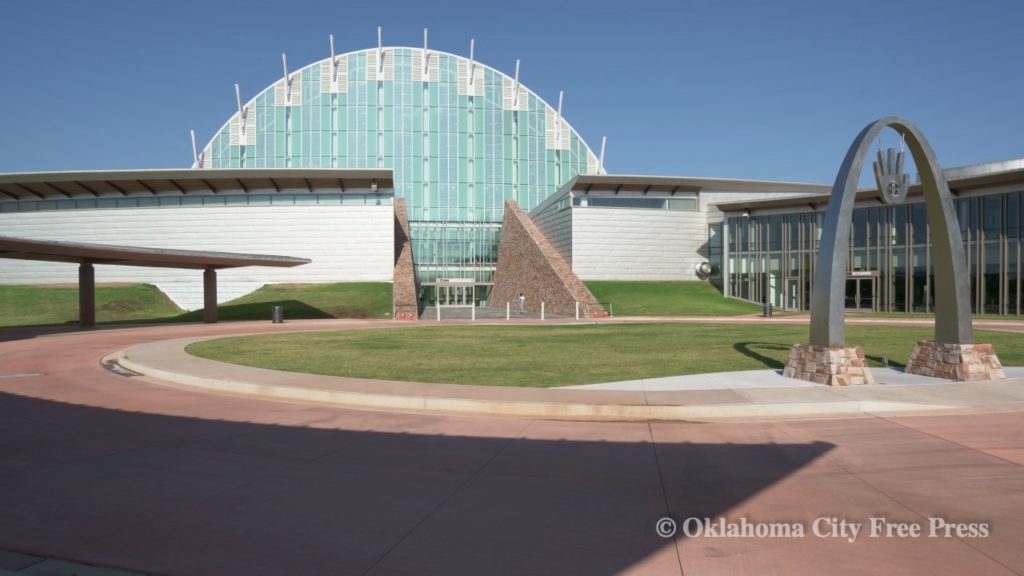
OKLAHOMA CITY (Free Press) — Crowning the southern skyline of Oklahoma City with an epic half-dome, the First Americans Museum will open its doors to the public this month in a much-anticipated grand opening.
The millennia-long history of America’s Indigenous people will be jointly told in a place built by them and for them – making the museum a unique historical moment in itself.
The museum leaves no stone unturned in its effort to elucidate the stories of First Americans. Artifacts from ancient sources stand only feet away from art made by contemporary creators, and the stories of the Modoc Nation from the Pacific Northwest are told right next to the Great Plains tribes of the Comanche and Kiowa.
Together, the thirty-nine tribes that form the core of the First American Museum have created a place of dignified reflection that promises a thorough and respectful survey of the history of the First Americans…
…“Thank goodness for a subsidiary of the Chickasaw Nation!” said Wasserman. After the various failings of federal, state, and local governments, the Chickasaw Nation agreed to fulfill the operating deficit of the museum and received the right to purchase and develop the surrounding property. Wasserman credits Governor Bill Anoatubby of the Chickasaw Nation, who is also the chair of the NACEA with saving the project, saying he “has been steadfast all these many years in making sure that this is a world-class institution, that it never lost its original mission or intent, and what it set out to do. We’re eternally grateful.”
Wasserman also expressed the museum’s excitement for the planned development in the area, and although exact details were withheld, she described future plans in which the museum would be an anchor for a nationally oriented destination. First Americans Museum 8-31-21 (BRETT DICKERSON/Okla City Free Press)
Arrival
Today, the joint venture of the Oklahoma City government and the Chickasaw Nation stands proudly along the southern bank of the Oklahoma River. The glittering glass and steel that now adorns the southside, however, took more than a decade to complete. The land on which the museum sits has a story as well. “This was oil field number one!” explains Executive Director James Pepper Henry (Kaw/Muscogee). Thirty percent of the world’s oil supply and 60% of the nation’s oil came from the Oklahoma City Oil Field.
This history entailed ecological and ethical difficulties that the First Americans Museum undertook. “By building this center, we’ve healed the land. We mitigated all those issues, cleaned up this site, and so in a way, it’s kind of beautiful that it took Native people to come in here, to heal this place, and get it back into balance,” said Henry. According to Wasserman, “We had to cap oil wells to current standards, we had to locate oil wells . . . it took a full year to do the site remediation. We removed over 7,000 tires, box springs, all kinds of things. It became a dumping ground for a period of time.”
Part of the process of reclaiming the land was a ground blessing ceremony in 2005, where 39 tribes brought ashes from the ceremonial fires of their original homelands as a new fire was lit, the ashes of which now sit in the OKLA HOMMA exhibition.
Architectural symbolism
The history of the First Americans Museum enhances the physical beauty of its building. “A lot of symbolism has gone into the design of this building,” said Henry. The building was co-designed by Johnson Fain of Los Angeles and Hornbeek Blatt of Edmond, Oklahoma.
Artists conception of the Caddoan Mississippian culture Spiro Mounds Site in eastern Oklahoma on the Arkansas River. Occupied between 800 to 1450 CE, the site was a major regional power. The illustration shows the large Brown Mound at the center of the site next to the oval shaped the plaza to the west ringed by smaller house mounds. To the southeast is the famous Craigs Mound, or “The Great Mortuary Mound”, with its distinctive profile.
The most remarkable aspect of the museum’s design, however, is the “cosmological clock.” According to Pepper Henry, on the winter solstice every year, the setting sun will shine perfectly through a tunnel cutting under the mound. On the summer solstice, the sun will set at the peak of the mound. On the equinoxes, the sun will shine through a hand symbol marking the entrance and center of the museum. “The amazing thing about it is the architects and the engineers were trying to figure all this out, and even with all the computers they had, it was still very difficult to figure this out, and they were amazed at how the ancients could figure this out, without sophisticated computers.”
The entrance to the museum is marked by the Remembrance Walls, which “acknowledges that there were always original Native inhabitants here, living in this place, there were several tribes that have always been here,” said Wasserman. “It also acknowledges those that were on the Removal – many different removal paths here – and did not survive, and it celebrates those of us that are the descendants of those who made that courageous journey and are here today.”
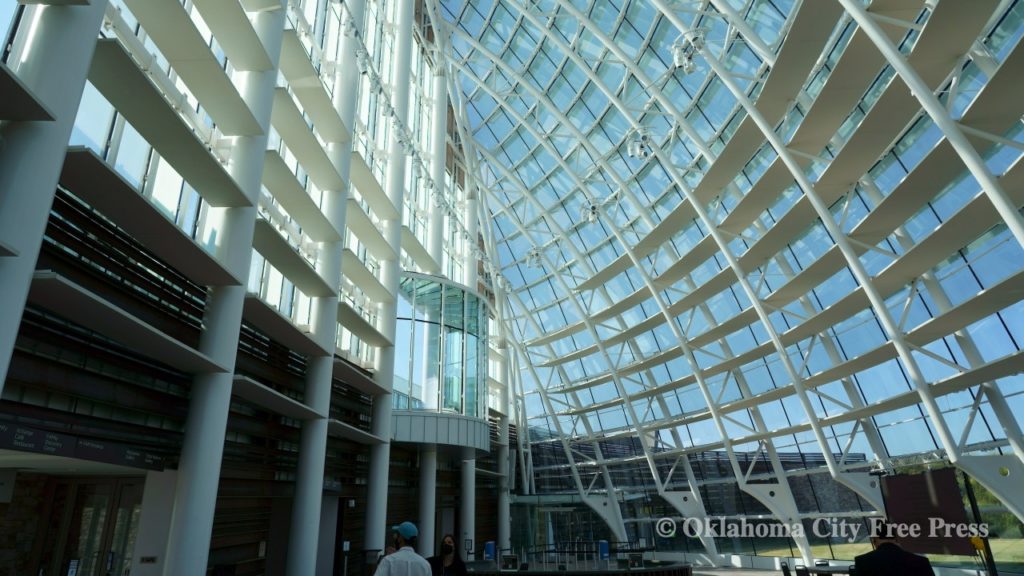
Past the Remembrance Walls and inside the museum is the signature half-dome of the museum, known as the Hall of the People. Modeled after the grass lodges of the Caddo people, the Hall stands 90 feet tall and is shielded with 800 panes of inch-thick glass. “In theory, it’s weather-proof,” according to Henry. The half-dome entry hall, First Americans Museum 8-31-21 (BRETT DICKERSON/Okla City Free Press)
Groundbreaking curation methods
The beauty and history of the museum, however, are overshadowed by the groundbreaking curation methods that the museum has developed. As Wasserman points out, the museum prioritizes a “first-person” perspective to curation and emphasizes storytelling from primary sources.
Like clockwork: First Americans Museum’s design tells more than time
Brandy McDonnell Oklahoman
The First Americans Museum’s time has finally come.
And the long-awaited landmark boasts a built-in mechanism for keeping that time.
“This whole complex is a giant cosmological clock — and it’s really ingenious,” said James Pepper Henry, the museum’s director and CEO and a member of the Kaw Nation. “I love to talk a little bit about the symbolism.”
The museum is expected to be open from 10 a.m. to 5 p.m. Mondays, Wednesdays, Thursdays and Fridays and 11 a.m. to 5 p.m. Saturdays and Sundays. It will be closed on Tuesdays.
“We want local Oklahomans to shop with us and to come and eat with us and to come to our demonstrations,” said Ginny Underwood, the museum’s marketing and communications manager, who is Comanche. “So, you don’t have to have a ticket to enter … through the Xchange gate.”
First Americans Museum Director and CEO James Pepper Henry, a member of the Kaw Nation, explains the meaning behind the outdoor sculpture “Touch to Above” by Cherokee artists Demos Glass and Bill Glass Jr. Tuesday August 31, 2021. The open hand is the universal welcome greeting for Native Americans, and the cross represents the four directions, meaning all are welcome. DOUG HOKE/THE OKLAHOMAN
That entrance leads into the 75-seat Xchange Theater, so named because it’s envisioned as a space where an exchange of cultures will take place.
“We can get schoolkids in here and do storytelling. We can have dance demonstrations in here. We have cameras up here, and if somebody is doing a basket-weaving demonstration, we can zoom in on their hands and put it up onscreen so people can see the detail,” Pepper Henry said. “At night, we’ve got this incredible lighting system in here. … We can turn it into a dance floor; we can put a small band in here. It’s a really great, flexible space for us. But the idea is for this place to come alive with programming — and this is all free in this part.”
“We broke ground in 2006 … and you can see, there’s basically two circles that intersect with each other,” Pepper Henry explained during a recent preview tour. “The first circle is made of earth, and that is our mound.”
“It’s an homage to our ancestors that were here before us. One of the great civilizations of North America was right here in Oklahoma before the Europeans arrived, and that was the Spiro Mounds,” Pepper Henry said. “Spiro Mounds was bigger than London before the arrival of Europeans. And we wanted to honor our ancestors and remind people that there have been great cities — and this land has been occupied — for thousands of years before the arrival of Europeans.”
Craig Mound, the Spiro burial mound that was referred to as the “Great Mortuary” by archaeologists conducting the early scientific research at the site
The second circle is formed by the steel-and-glass building itself.
“So, we’ve got the ancient world and the modern world intersecting with each other. And that intersection point is the Hall of the People, this glass structure,” Pepper Henry said. “The Hall of the People is a modern version … of a Wichita grass lodge. And the reason why we picked that particular structure is because the Wichitas, along with the Caddo and a few other tribes are indigenous to Oklahoma. … And we wanted to honor the original peoples of this land.”
“On Dec. 21 of every year, which is the shortest day of the year, the sun will set perfectly in that tunnel, and it’ll shine a light through. So, that’s the winter solstice,” Pepper Henry said. “In the wintertime, the sun tracks to the south and then it starts to move to the north. So, on the summer solstice, on June 21, the sun will reach its apex … and set perfectly on the point of the mound on the longest day of the year.”
The fall and spring equinoxes will silhouette Cherokee artists Demos Glass and Bill Glass Jr.’s outdoor artwork “Touch to Above” a towering metal arch topped by an open hand.
“So, we have this seasonal clock that tells us when the equinoxes are and then when the solstices are. It’s really amazing engineering when you think about it. The architects were trying to figure this out, and engineers were like, ‘How do we make this happen? How did the ancients figure this out without all the computers and everything?'” Pepper Henry said.
“They were able to figure it out. But they had much more respect for our ancestors after going through this process and understanding the complexities of trying to make something like this work.”
Mica cutouts, specifically this hand-shaped cutout is iconic of all the artifacts produced by the Hopewell culture (100 BC-AD 400) that thrived in southern Ohio more than two thousand years ago. The original artifact the replica pictured above is based was excavated from a double burial in Mound 25 that was part of a complex of earthworks known as the Hopewell site.
“The scriptures show the convincing power of nail prints in the hands of Christ. It is important to develop the Fibonacci Series and the Golden Spiral so as to show how the Hopewell used this framework to cut the mica sheet with precision and exactness.” John C. Lefgren.
(See 3 Nephi 11: 13-17, Zechariah 13:6, John 20:24-29, and D&C 45:52). In July of 2018 Dr. John C. Lefgren of Bethlehem, PA was the person who first made the association of the Fibonacci Series to this Hopewell artifact which shows the nail print in the hands of Christ. Of course this is a plausible possibility and I urge all to read, study and pray about this information. To me it makes sense and that is why I share it.
“In mathematics, the Fibonacci numbers are the numbers in the following integer sequence, called the Fibonacci sequence, and characterized by the fact that every number after the first two is the sum of the two preceding ones: 1,1, 2, 3, 5, 8, 13, 21, 34, 55, 89, 144… Fibonacci numbers appear to have first arisen in perhaps 200 BC in work by Pingala on enumerating possible patterns of poetry formed from syllables of two lengths.” Wikipedia (To understand the Fibonacci, see videos at the end of this blog)
“Effigy of a human hand cut from sheet mica, Ohio Hopewell culture, 100 BC-500 AD. Excavated from Hopewell Mound Group, Ross County, Ohio ca.1922-1925. The Hopewell obtained mica from western North Carolina. This object is 11” x 7” and is held in the Ohio History Connection Archaeology Collection. Hopewell culture spiritual leaders used small slabs of mica for a kind of mirror, possibly used in divination ceremonies, and artisans cut sheets into a variety of delicate shapes that may have been sewn onto garments to serve as personal ornaments. Around 400 A.D Hopewell culture began to decline for an unknown reason according to archaeologists.” Ohio History Connection Archaeology.
The photograph was taken during an excavation of the Mound City Group in Chillicothe, Ohio, Ross County. The Mica was originally discovered by Squire and Davis in 1846 and later completely exposed in 1920 when this photograph was taken.
In addition to the Human Hand Effigy, there have been thousands of artifacts found from mounds all over the United States including pearls, breastplates, pottery, etc. From page 429 of the Annotated Book of Mormon you will read the following information;
Brigham Young University student Kate Lunnen joins several hundred students protesting near The Church of Jesus Christ of Latter Day Saints church headquarters Friday, March 6, 2020, in Salt Lake City, to show their displeasure with a letter this week that clarified that “same-sex romantic behavior” is not allowed on campus. (AP Photo/Rick Bowmer)
I have seen so much intellectualism seep into the Church and it is very disturbing to me. Most members seem to understand that more and more today.
I have become very concerned at how seemingly good men like Richard Bushman, Leonard Arrington, and the group called the Swearing Elders, spread small falsehoods that destroy faith at times. I am also aware of the Snuffers, CES Letter, Doctrine of Christ, and other apostates who are having a hay day destroying faith.
As an example of destroying faith, I feel too many in the Church are teaching about Joseph’s translation using a stone in a hat which I don’t believe. There are over 8 scriptures that say that Joseph used the spectacles attached to the breastplate as the method of translation. I know the Brethren are neutral on this issue as on many others like geography, evolution, creation etc., but I enjoy finding truth through personal revelation while continually adhering to revelation, scriptures and doctrine from the Brethren.
I also can’t understand how anyone could believe there is a hill Cumorah in Mexico or after reading D&C 125 you can’t believe Zarahemla is across the river from Nauvoo. I understand others have their own opinions which is fine, but I feel differently.
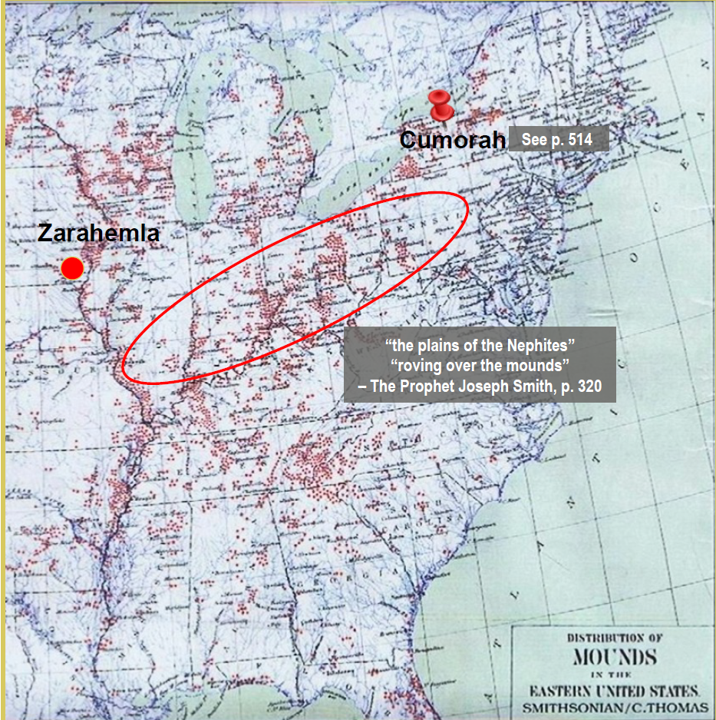
To me the most clear teaching of Joseph Smith about the geography comes in his letter he sent to his dear wife Emma as Joseph said, “wandering over the plains of the Nephites, recounting occasionally the history of the Book of Mormon, roving over the mounds of that once beloved people of the Lord, picking up their skulls & their bones, as a proof of its divine authenticity” Joseph Smith Papers Letter to Emma Smith, 4 June 1834 Page 56
“I attended sessions of meetings for the institute teachers, held in the assembly room on the fourth floor of the Church Office Building. I cannot say that I was very greatly edified. Too much philosophy of a worldly nature does not seem to mix well with the fundamentals of the gospel. In my opinion many of our teachers employed in the church school system have absorbed too much of the paganism of the world, and have accepted too readily the views of uninspired educators without regard for the revealed word of the Lord.
What to do about it I do not know. It is a problem for the Presidency to consider. It is a very apparent fact that we have traveled far and wide in the past 20 years [since his father’s death]. What the future will bring I do not know. But if we drift as far afield from fundamental things in the next 20 years, what will be left of the foundation laid by the Prophet Joseph Smith? It is easy for one who observes to see how the apostasy came about in the Primitive Church of Jesus Christ. Are we not traveling the same road? The more I see of educated men—I mean those who are trained in the doctrines and philosophies now taught in the world, the less regard I have for them. Modern theories which are so popular today just do not harmonize with the gospel as revealed to the prophets, and it would be amusing if it were not a tragedy to see how some of our educated brethren attempt to harmonize the theories of men with the revealed word of the Lord. Thank the Lord, there is still some faith left and some members who still cherish the word of the Lord and accept the prophets. Surely the world is ripening rapidly for the destruction, and Satan has power and dominion over his own. If any are saved surely the Lord must soon come and have power over his Saints and reign in their midst, and execute ‘judgment upon Idumea, or the world.” Joseph Fielding Smith, Jr., and John J. Stewart, The Life of Joseph Fielding Smith [Salt Lake City: Deseret Book Co., 1972], 210 – 211.
“I do not know all of the providences of the Lord, but I do know that he permits false doctrine to be taught in and out of the Church and that such teaching is part of the sifting process of mortality.” Bruce R. McConkie, McConkie’s 1981 letter to BYU
“A desire to follow a prophet is surely a great and appropriate strength, but even this has its potentially dangerous manifestations. I have heard of more than one group who are so intent on following the words of a dead prophet that they have rejected the teachings and counsel of the living ones.… Following the prophet is a great strength, but it needs to be consistent and current lest it lead to the spiritual downfall that comes from rejecting continuous revelation. Under that principle, the most important difference between dead prophets and living ones is that those who are dead are not here to receive and declare the Lord’s latest words to his people. If they were, there would be no differences among the messages of the prophets.” Our Strengths Can Become Our Downfall DALLIN H. OAKS Of the Quorum of the Twelve Apostles
Joseph Smith, Next only to the Savior in this Life
“Joseph Smith, the Prophet and Seer of the Lord, has done more, save Jesus only, for the salvation of men in this world, than any other man that ever lived in it.” D&C 135:3
For those concerned how this occultic “Joseph Smith” could make its way into Church publications, President Ezra Taft Benson offered this advice, “Sometimes from behind the pulpit, in our classrooms, in our Council meetings and in our church publications we hear, read or witness things that do not square with the truth. . . . Now do not let this serve as an excuse for your own wrong-doing. The Lord is letting the wheat and the tares mature before he fully purges the Church. He is also testing you to see if you will be misled. The devil is trying to deceive the very elect.” Ezra Taft Benson, “Our Immediate Responsibility” (BYU Devotional, Provo, October 25, 1996), https://speeches.byu.edu/talks/ezra-taft-benson_immediateresponsibility
“There have been some who have belittled [Joseph Smith], but I would like to say that those who have done so will be forgotten and their remains will go back to mother earth, . . . and, the odor of their infamy will never die, while the glory and honor and majesty and courage and fidelity manifested by the Prophet Joseph Smith will attach to his name forever.” George Albert Smith, Conference Report, April 1946, p. 182
Since Jack Welch left his post as editor and Steven Harper took over, we have seen a steady decline in the quality and soundness and strength of BYU Studies Quarterly. BYU Studies has long had a deserved reputation for strong academic rigor beautifully blended with belief and faith and loyalty. While there were occasional exceptions, this has long been mostly true. I think Jack Welch is largely creditable for that former success. Sure he made some mistakes and poor decisions at times, but by and large he did a great job for three decades plus selecting strong pieces for publication therein.
Then Welch retired and someone made the decision to replace him with an unorthodox liberal, Steven Harper. (I wonder if it was the same person who made the decision to destroy NAMI by hiring a liberal unorthodox director for that formerly fine organization.) Since then, clue after hint after shout have now arisen that BYU Studies has gone into a sharp decline in quality and doctrinal soundness. This has been a result of BYU’s highly public troubles with their poor administration hiring liberal activist (even some dissident) faculty and staff.
Elder Jeffrey R. Holland has twice gone to BYU in the last five years to rebuke and correct erring administration, faculty, and staff. They seem deaf to his message and continue pouring out publications that do not reflect the teachings of their sponsoring institution well, sometimes outright contradicting gospel truths and foundational events.
But in this case we are specifically looking at BYU Studies, that Steven Harper is subtly sabotaging with unorthodox liberal paper selections and publishing (and guest editor selection—unorthodox liberals like Terryl Givens and Ben Spackman).
So what are the hints and shouts found in recent issues that unmistakably portray this decline?
– A book review in issue 60:2 that lauds and applauds a couple of books written by a dangerous dissident historian that denigrate President Ezra Taft Benson’s life and teachings. These books label him an “ultra” conservative that spouted political rhetoric instead of teaching the gospel of Jesus Christ to the Church and acting as an inspired watchman on the tower. I am a student of Pres. Benson’s life and teachings, and while it is true that he became somewhat obsessed with Communism and was told by the First Presidency to back off it in speeches or be dropped from the Quorum, by and large his teachings, from the beginning of his apostleship to his death, were inspired, truthful, prophetic, and best of all, what the Lord wanted said to the Saints.
Many of Elder Benson’s 1960s and 1970s general conference addresses are almost more applicable today than the day they were given, containing warnings for that day that also fit our later day like a glove. He came in his true identity as an Apostle of the Lord Jesus Christ, and warned the Church of the evils of the world as the true and authorized prophet of God. If one digs, one can find a few extremist discourses relating to some political matters, but those are the exception, not the rule, and are not what most church members are familiar with or have access to.
Liberals today (like Matt Harris) try to paint Pres. Benson as a racist and (again) as a runaway ultraconservative extremist that tried to lead the Church into his own (somehow evil) political views. This is absurd nonsense. This great Apostle received revelation, lead a clean, upright and moral life, was highly thought of by most, including some political enemies, and did a great work for both his church and government. (See what Pres. Hinckley had to say about Pres. Benson here.) Shame on those who say otherwise and on BYU Studies for publicizing and commending their slander. What they are attempting to do is this: by making Elder Benson’s politics look scary, to thereby marginalize and weaken his gospel teachings. I hope it won’t work.
– Issue 60:1 has a few really poor articles. “Event or Process?: How “the Chamber of Old Father Whitmer” Helps Us Understand Priesthood Restoration” is a false title in the first place. It is not an “or” proposition. The restoration is a combination of events that taken together became a process (or sequence of restoration events). It is an “and” proposition. The author of this piece uses the false conclusions of another mistaken author, Jonathan Stapley, to reach further erroneous conclusions about the priesthood. The priesthood is what the scriptures and the prophets and apostles say it was and is, not what some alleged historian’s book says it is. Anyone that piggybacks off Stapley’s interpretive blundering will reach their own false conclusions. No!, there is no such thing as a “Cosmological” priesthood, and Stapley doesn’t get to define priesthood (wrongly) for the Church. There have been many apostles and prophets that have already defined the priesthood (correctly) and I encourage all to stay with their definitions and teachings on the subject, instead of looking to imperfect and incomplete historical research and problematic and erroneous conclusions found in BYU Studies or elsewhere (like Stapley’s book).
All priesthood was restored by Peter, James, and John to Joseph and Oliver. After that, further keys or rights of directing (presidency) and specific work or usages were restored on subsequent specific occasions. President Joseph F. Smith was so strong on that point. So first the complete priesthood itself, and then rights and authorization regarding how and when and where it could be used were given. People can mess with the semantics, and how language was used then and today, but that is how it worked. Let us not buy the theories being peddled by authors making suspect interpretations. It is the Spirit that guides our understanding and use of priesthood in this church (from the top down), not some historian’s interpretations of various historical documents or occurrences.
Outlining a Possible Apostasy Narrative.” This is a clever title for saying—”we are going to tell you that the great apostasy never really happened and that the church has been wrong to teach it as it has.” Well then why did the Church need to be restored? Anything with Joseph Spencer’s name attached to it immediately raises and then confirms suspicions. He is a philosophy teacher masquerading as a religion teacher (same thing Terryl Givens does). Here is a reason why the BYU Religion Department has recently had to adjust their hiring standards and processes.
Yes, there really was a complete apostasy (among the Meridian Saints in the old world, among Book of Mormon peoples, and among the lost tribes of Israel); and yes, the true Church of Jesus Christ really did need to be completely restored. Spencer and others can wrest Nephi’s words (in 1 Nephi) all they want to concoct an interpretation that there was no great and abominable church, and no great apostasy, but they do so at their spiritual peril and in opposition to the long-settled teachings of the Church. Always compare any liberal unorthodox writer’s interpretations of the scriptures with that of approved church publications and general conference reports to see the wide and alarming disparity involved—then believe the church produced and approved materials. Believe the doctrine taught in the Restoration of the Gospel Proclamation by the First Presidency and Quorum of the Twelve.
Yes, BYU Studies really is publishing articles saying there wasn’t an apostacy: “To be sure, we fully recognize that the picture of the apostasy we have drawn up here is different from traditional ways of imagining what occurred.” The “traditional” way (not ways) are not “imagining” but settled doctrine and history. And yes, they are teaching “different” imaginings (to use their word) or falsehoods, in BYU Studies.
Regarding the “Gospel Ethics” piece in this same issue, I have only this quotation to share, from Pres. J. Reuben Clark: “These students fully sense the hollowness of teachings that would make the gospel plan a mere system of ethics. They know that Christ’s teachings are in the highest degree ethical, but they also know they are more than this. They will see that ethics relate primarily to the doings of this life, and that to make of the gospel a mere system of ethics is to confess a lack of faith, if not a disbelief, in the hereafter. They know that the gospel teachings not only touch this life, but the life that is to come, with its salvation and exaltationas the final goal.” Amen and amen!
Armand Mauss
– Steven Harper, in issue 59:3, writes a glowing eulogy for Armand Mauss, a dissident that died in 2020. Harper extolls this dissenter as having been a great mentor to him. All one has to do is glance over some of Mauss’s writings and one quickly finds his pieces anything but faith-building. I first read something by Mauss in Sunstone, a dissident/apostate publication, in 1988, and found Mauss giving counsel to fellow Sunstone dissidents on how to write articles critical of the church while also avoiding excommunication. And Harper loved the guy and extolled him as his mentor? And let’s be clear, a person can be a nice guy and shoot some pool and go bowling and tell some great jokes and buy you dinner and dessert afterward, but still be a subtle wolf in sheep’s clothing. So many alleged “theologians” today are marvelous and clever teachers of the philosophies of men mingled with a little scripture; they are philosophers masquerading as Religion teachers; spiritually dangerous to be sure. I wish there were none employed by BYU, but some have infiltrated the school (even the Religious Education Department).
Steven Harper
– Issue 60:3 is where the deviousness and falseness really shouts out loud. Harper has here turned over the editorship to guests, a couple of liberal dissidents trying desperately to appear innocent and sheepish (pun intended). Almost every paper they selected for inclusion, including their own, is by an unorthodox liberal/progressive that has a modern liberal agenda to push. Name after name with bad reputations for incorrect teachings is found herein. And most of them have connections to BYU. A who’s-who of people one would expect to see in Sunstone, Dialogue, and/or Signature Books, but not in BYU Studies. All of the subjects are about doctrines the editors and authors think are speculative and for which nothing has been revealed—which is rot. These unorthodox liberals and semi-believers may not know the answers, but capable studious orthodox gospel scholars that have studied the scriptures and how they are interpreted by apostles and prophets know otherwise.
Terryl Givens
Remember, just because Eliason and Givens say something is NOT YET REVEALED doesn’t mean they are right or have a clue what they are talking about. I hope I am wrong, but I suspect they are trying to open these old questions up again so they can come to the rescue later with their own (wrong) answers and solutions, taken from the philosophies of men instead of the revelations of the Lord.
Sound, stable, orthodox, well-read gospel scholars who are steeped and soaked in the teachings of apostles and prophets know things these poor academics don’t and won’t. A quick survey of selected bits of church history on these issues, that these papers supposedly provide, along with some bias and spin, is insufficient and not very helpful. But Harper has allowed and approved and published it.
– In some coming months or year, whenever it is, BYU Studies will unfortunately be publishing an issue on evolution, basically proclaiming it as true. Harper has already said he believes evolution instead of the teachings of prophets and apostles, on the subject of the origin of man.
I suggest one of two solutions, the later being preferential to the former. 1) rename BYU Studies Quarterly to BYU Sunstone. That way the title will reflect the journal content accurately. Also, allow no tithing to be used for anything connected with it and move it all off campus).
2) Put in an editor that can select papers to publish that really are informed by the restored gospel of Jesus Christ instead of by the theories and philosophies of men and poor theologians. Select papers that don’t try to revise settled doctrine and church history using the liberal ideologies of these professors and academics so steeped in the notions of modern society. Their attempts to make the Church look respectable to the world and match its doctrines to that of modern society are pathetic and foolish and dangerous.
Sunstone/Ridiculous Magazine
I therefore recommend that instead of wasting time on BYU Studies, that readers consume materials that have been approved by Church Correlation; by reading old and new general conference talks; by studying church manuals, both for Sunday classes and for use by CES. Go to materials that have the stamp of approval of the prophets and apostles or that are privately published by them. Such is where the undiluted gospel can be found, instead of the imaginings of theologians looking to change the church into their own beliefs and thinking. All of the universities of the world already look like that, we don’t need or want BYU to reflect the world/Babylon. Elder Holland said BYU should not have a “Mormon Studies” program like other universities.
I recommend following Elder Holland’s counsel given in August 2021, as he sought to rebuke and correct erring BYU administration, faculty and staff, including those in NAMI and BYU Studies, who have been shooting musket fire at the church instead of defending it. Study and follow the counsel given in other recent apostles’ talks to the same BYU people, who keep ignoring it. That is where spiritual and doctrinal safety lies, not in the notions of academics publishing in BYU Studies since 2019.
Elder Holland said that if BYU doesn’t get its act together, BYU might end. In that case, BYU Studies will end also (and NAMI), and its false teachings will be gone. So one way or another, I hope we can hope for major solutions soon.
I for one would prefer a return to the days previous to 2019 when we could (normally) count on a decent journal that contained some interesting articles that were doctrinally and historically sound; that brought out fresh discoveries or knowledge or insights while also remaining orthodox and loyal to the scriptures and the prophets.
This new BYU Sunstone Quarterly is headed down the path of disaster and demise, whether it be sooner or later.
Dennis B. Horne grew up in south Davis County and he served in the Independence Missouri mission. He attended BYU and Weber State Universities, earning a degree in Communications. After working in television broadcasting for a number of years he became a technical writer for the LDS Church Material Management Department. He became an independent researcher/author because of his love of church history and doctrine. This pursuit led him to write a biography of Elder Bruce R. McConkie, an edited publication of the diaries of Abraham H. Cannon, and biographies of President Lorenzo Snow and Orson F. Whitney. He also wrote about callings to serve in the church, the doctrine of giving healing blessings, and a compilation of the teachings of prophets and apostles about how to determine doctrinal authority.
Below is a wonderful dialogue with Dennis Horne. My personal revelation about his goodness and honor has been strengthened as I read with the Spirit all of these comments and articles. I love his answers and feel he is a man of honor, and one who loves the Lord and respects the Prophets and Apostles.
In the past 5 or 6 years most of you have heard about the DNA studies that show the finding of Native American DNA around the Great Lakes matching the DNA of Sephardic Jews near Israel and other areas. The links to these articles are at the very end of this blog. The connection between the Native Americans and the Jew has also been discussed at length here and in the Annotated Book of Mormon. The Book of Mormon itself talks about this connection in D&C 19:26-27 which says, “And again, I command thee that thou shalt not covet thine own property, but impart it freely to the printing of the Book of Mormon, which contains the truth and works of God. Which is my word to the Gentile, that soon it may go to the Jew, of whom the Lamanites are a remnant that they may believe the gospel, and look not for a Messiah to come who has already come.”
The Cherokee are an important connection between the Old World and the New World. There are many names that the Cherokee are related to:
Apalachee are a Native American people who historically lived in the Florida Panhandle. “They derived their name from Palaza, a name of ancient Magadha, a powerful Yadava kingdom in what is now today’s state of Bihar. When the Palazis came to America, they came with the intention of staying. Therefore, they became the Apalizis (Ex-Palazis). Without a doubt, these “Apalazis” were the founders of the mound-building cultures, for in other parts of the world they built the Egyptian pyramids, became the founding fathers of Greek civilization, and the like.” Source; and Additional Information>
Magadha was an ancient Indian kingdom in southern Bihar, and was counted as one of the sixteen Mahajanapadas, ‘Great Countries’ of ancient India. Magadha played an important role in the development of Jainism and Buddhism, and two of India’s greatest empires, the Maurya Empire and Gupta Empire, originated in Magadha.
Looking into the Cherokee heritage is exciting. They are a very important part of the history in our world. It is amazing how many cultures they have influenced and are part of.
“The laboratory immediately stumbled into a scientific hornet’s nest. That Cherokee princess in someone’s genealogy was most likely a Jewish or North African princess. Its scientists have labeled the Cherokees not as Native Americans, but as a Middle Eastern-North African population. Cherokees have high levels of test markers associated with the Berbers, native Egyptians, Turks, Lebanese, Hebrews and Mesopotamians. Genetically, they are more Jewish than the typical American Jew of European ancestry. So-called “full-blooded” Cherokees have high levels of European DNA and a trace of Asiatic (Native American) DNA. Their skin color and facial features are primarily Semitic in origin, not Native American.” Native News Online
“DNA haplogroup X2a is a major mtDNA subclade in North America; among the Algonquian peoples, it comprises up to 25% of mtDNA types which is also found in a similar percentage among the Druze in the Hills of Galilee.”(“The peopling of the Americas: Genetic ancestry influences health,” Scientific American, 14 August 2009.
Harvard University professor Barry Fell in his book Saga America first published in 1980 presented historical, epigraphic, archeological and linguistic evidence suggesting links between Greeks and Egyptians and the Algonquian Indians of Nova Scotia, Acadia and surrounding regions around the mouth of the St. Lawrence Seaway, particularly the Abnaki (“White”) and Micmac Indians. See here: https://dnaconsultants.com/acadian-anomalies/ “Map of Algonquian Language Distribution” in Appendix, “Native America DNA Studies” pp. 556-57.)
Annotated Book of Mormon by David Hocking and Rod Meldrum page 91
LDS scholar and surgeon, Dr. David Stewart in his online article found on the Church’s LDS.org website titled “DNA and the Book of Mormon,” quotes fellow LDS scholar Martin Tanner, contributor to the Neil A. Maxwell Institute for Religious Scholarship (formerly FARMS), who explains his position:
The idea haplogroup X has been in the Americas for 10 to 35 thousand years is based solely upon the assumptions of the Hardy-Weinberg equilibrium, which include: (1) completely neutral variants, (2) no mutation, (3) no migration, (4) constant near infinite population size, and, (5) completely random mate choice. In the Book of Mormon account, most of the Hardy-Weinberg equilibrium assumptions are inapplicable. The wilderness journey, the ocean voyage, and the colonization of the new world, result in patterns of genetic selection and DNA migration different from that found in Lehi’s home environment. Closely related individuals married and we are dealing with an [initially] very small group, not a nearly infinite population which would dramatically alter DNA marker distribution and inheritance over time. If we take these assumptions about haplogroup X instead of the Hardy-Weinberg assumptions, haplogroup X could have been introduced into the Americas as recently as one to two thousand years ago, far less than the ten to thirty-five thousand years under the Hardy-Weinberg assumptions. Ref 96
Haplogroup X plausibility in relation to the Book of Mormon Is there any possible correlation of Haplogroup X with the Book of Mormon and Lehi’s group? Can we narrow down the potential connections? Is it possible, or even probable, that there will ever be any evidence in favor or support of the Book of Mormon’s claim of being a historical account of real people? The understanding, of course, is that DNA cannot “prove” the historicity of the Book of Mormon, but rather a case is being built that may support its authenticity. After reading the information presented here it should be clear that each of these questions may now be answered with a resounding “Yes!” Rod Meldrum Rediscovering the Book of Mormon Remnant through DNA 2009
Connecting the Cherokee and the Phoenician’s DNA
CHEROKEE UNLIKE OTHER INDIANS Monday, May 28, 2018
Dorene Soiret’s mother, Alice Gound, about 1960. Soiret is a participant in DNA Consultants’ Phase III Cherokee Studies.
Photo used by permission of Alice Gound and Dorene Soiret.
Dorene Soiret always knew there was something different about her ancestry. She had been on a fruitless quest to prove her family’s Cherokee heritage for many years until she joined Phase III of DNA Consultants’ Cherokee DNA Studies Project. She will have to wait a little longer for all the answers. But in the meantime, she is enrolled as Participant 52 and matches one other woman in the unique study, their rare lineage labeled American Indian H1z1.
Historically, H1 is centered in Libya and Tunisia among the Tuareg people, concentrated around the site of ancient Carthage. In the first millennium BCE, this was the homeland of the sea-roving Phoenicians, who sent teeming colonies westward composed of natives from the Maghreb interior. The Cherokee Paint Clan, it has been suggested by Donald Yates and others, preserves their name, Paint or *Punic People, given to them because of their monopoly in making purple dye and trading luxury goods.
Article about the *Punic People at the end of this blog.
The Phoenicians’ name in their own Semitic language translates as “Canaanite,” a reflection of their origins in the East Mediterranean. James Adair, who wrote the first book about American Indians in 1775, suggested this ethnonym (national identity) appears in the name of the Kanawha River and as the name of a now-extinct Indian tribe in Kentucky and West Virginia. Phoenicians are probably also the source of haplogroup X in the New World, and they are implicated in the mystery of the Melungeon people, with court cases mentioning them by name.
Soiret’s direct female line, like all the others in the program, goes back to a historical Cherokee woman, in this case the wife of Lycan Adkins who lived between 1829 and 1908 and whose maiden name was Murray. The test subject has several other multiply intermarried Adkinses in her ancestry.
Phase III of Cherokee DNA Studies is now closed, with 57 participants enrolled over the past three years. It began in 2007 and went through two phases before the publication of the book CHEROKEE DNA STUDIES: REAL PEOPLE WHO PROVED THE GENETICISTS WRONG. The results of Phase III will be published in a sequel, Cherokee DNA Studies, Volume 2: More Real People Who Proved the Geneticists Wrong (forthcoming 2018). See CHEROKEE STUDY CLOSED.
Although ignored by most tribal bibliographies and Native American journals, CHEROKEE DNA STUDIES: REAL PEOPLE WHO PROVED THE GENETICISTS WRONG was favorably reviewed by Stephen C. Jett, a noted geographer, who endorsed it with the screed, “Revolutionary DNA findings.” He went on to say in his academic book, ANCIENT OCEAN CROSSINGS (University of Alabama Press 2017): “Donald N. Yates and collaborators… characterized the mtDNA of fifty-two individuals of partial Cherokee ancestry who did not display any of the usual Native American mtDNA haplogroups A through D… identifying (in order of the frequency) haplogroups T, U, X, J, H, L and K. T, X, and J are essentially Levantine (eastern Mediterranean) in origin….”
The Warriors of AniKituhwa This dance group brings to life the Cherokee War Dance and Eagle Tail Dance as described by Lt. Henry Timberlake in 1762. They are designated as official cultural ambassadors by the Tribal Council of the Eastern Band of Cherokee Indians and are sponsored by the Museum of the Cherokee Indian.
Further, Jett noted that the East Mediterranean haplogroup showings were interesting for several reasons:
Hg T seems to have emerged in Mesopotamia and later spread into Europe. This Hg occurred in nearly 27 percent of Yates’ sample. None of the Cherokee Ts exactly matched any other known T haplotype, and the Cherokee percentage of T was three times as high as that of the general US population. Cherokee/*Melungeon-associated J haplotypes are not precisely duplicated elsewhere, either, suggesting the passage of much time to allow differentiation…. Hg U is largely European….and is generally absent among Native Americans. However, it reached a level of approximately 25 percent among those Cherokee descendants, whose Hts (haplotypes) turned out to be very diverse and to include some mutations unique to American Indians, again implying considerable elapsed time since introduction… the Cherokee descendants shared some haplotypes with Jews. Too, the Jewish ‘Cohen gene’ has been traced back within the Cherokee to no later than about AD 1640.”
Information at the end about *Melungeon People
Jett concluded that the distribution of haplogroups was evidently ancient and not the result of recent European or Middle Eastern admixture in America:
Yates’ genetically remarkably diverse Cherokee sample, the unique haplotypes represented therein, and the frequencies of the haplogroups found—quite different from those of the larger US populations—are striking: ‘Similar proportions of these haplogroups are noted in the populations of Egypt, Israel and other parts of the East Mediterranean … No such mix could result from post-1492 European gene flow into the Cherokee Nation.’” (pp. 353f.)
Preliminary results from Phase III (closed in May 2018) confirm the “non-American Indian,” or anomalous Native American component of Cherokee descendants. The updated haplogroup findings across Phases I-III are as follow:
Haplogroup
N=
Percent
New in Phase III
U
40
22.7
17
T
31
17.6
4
H
30
17
16
J
17
9.7
10
A-D
13
7.4
3
K
11
6.3
5
X
9
5.1
0
Total Participants
151
85.8
55
All Others
25
14.2
2
Grand Total
176
100.0
57
As can be seen, U emerges as the most common anomalous type of Cherokee, modally U5 (n=23, one of the oldest forms of U and MOST COMMON IN MIDDLE EASTERNERS AND EUROPEANS), followed by T and H. The expected haplogroups A-D account for only 7.4 percent of Cherokee lineages according to the DNA Consultants study, suggesting a very divergent type from other American Indians. Mesopotamian and Old European types (including Greek, Egyptian, Israeli, Levantine and others) represent 81.8 percent of lineages. (Here, X is grouped with Levantine, as no firm separation can be established between Old and New World types.)
The Adkinses appear to be part of a little-studied phenomenon of Welsh or British Jews. Their surname means “kin of Arthur (or Adam).” In 2012, Donald Yates wrote about the pioneer family in his book OLD WORLD ROOTS OF THE CHEROKEE (pp. 144-45):
Adkins . . . is a family heavily intermarried with the pioneer Coopers, Blevinses and Burkes from Wayne County, Kentucky. They came from Pittsylvania County, Virginia, an important staging area for the movement of Melungeon families along the northern and eastern boundaries of the Overhill Cherokee. The family is traced to a James Atkinson, a Quaker who came to Philadelphia in the 1600s, probably from a seaport in Wales. His great-grandson William Adkins left a will dated Jan. 22, 1784 and probated March 15, 1784, detailing an accumulation of wealth, and was buried near Cooper’s Old Store, Pittsylvania County. William’s son Owen was born about 1750 in Lunenberg County, Virginia (parent county of Pittsylvania) and died in Watauga, Hawkins County, Tennessee about 1790. He married Agnes Good/Goad, from the same family that provided a spouse to Valentine Sevier (1701/02-1803). Good is the English equivalent of Shem Tov, Buen, Boone, Le Bon and other names for those bearing the “good name” of King David. Valentine and Agnes were the parents of John Sevier, the first governor of Tennessee. One of his sons, Valentine, married Sarah Cooper. The Seviers can be traced to Don Juan de Xavier of a Sephardic family who took refuge in Navarre during the Spanish Inquisition.
In 1836, Benjamin Adkins built a log mill on the Little South Fork of the Cumberland near Parmleysville, Kentucky, made of huge squared logs. This mill, with rifle slits on two levels, is still standing. He left a will in 1839 showing $10,000 in debts owed him and an estate of great value. Numerous family members moved first to Sequatchee (Marion County, Tennessee) and subsequently to Sand Mountain and to a hidden cove at the foot of Fox Mountain (named after Black Fox) called Anawaika, or Deerhead, on the Georgia state line. Some proceeded west to Arkansas. William E. Adkins (about 1828-1862) married Susan E. (Sukie) Cooper (about 1831-1901), the daughter of Isaac and Mahala Jane (Blevins) Cooper, April 20, 1847, in Henry County, Tennessee, and descendants filed unsuccessful applications to be enrolled as Cherokee in Indian Territory. Memories of their Cherokee ancestors ran thin, but Steve Adkins of Arkansas recalled in 2001, “When I was little my Great Grandma Adkins (Virgie Stanley) use to tell me stories about my Great Grandfather’s (Arthur ‘Aud’ Adkins) Grandmother. She said her name was Sukie and she was a Cherokee Indian. I later found out that ‘Sukie’ was a nickname for Susan. She also mentioned the name Mahala Blevins.”
The Adkins family in America exhibits a familiar pattern of trading and land development on the Southern frontier, intermarriage with the Cherokee Indians and Crypto-Jewish or Melungeon connections. In these respects, their history echoes that of the Coopers, Blevinses, Walkers, Gists, Troxells, Adairs and others in genealogical literature. The genetics of their Indian marriage partners forms the main interest of Cherokee DNA Studies.
Although Dorene Soiret’s story is unusual compared to most Americans it is completely typical when placed beside the Cherokee descendants profiled in DNA Consultants’ Cherokee DNA Studies.
Be open-minded and continue your journey! Dohiyi!
Disclaimer: Our genetic findings about Cherokee people have not been submitted for peer-reviewed scientific or historical publication.
The connection of the Cherokee and the Phoenician is amazing information. The Cherokee seem to be well connected to the Phoenicians and the Jewish people. You may know our friend Boyd Tuttle has spent some time on the replica Phoenicia ship guided by British Sailor Philip Beale as they sail from ancient Carthage toward Florida. We believe the voyage of Mulek followed this route and the Phoenicians brought the People of Zarahemla or the Mulekites to this land. They traveled up the Mississippi River to eventually be stopped by the Des Moines river rapids near Nauvoo, Illinois. See LDS Living article about Mr Beale’s voyage here>
Punic People
Punic praying statuette, c. 3rd century BC
“The Cherokee Paint Clan, it has been suggested by Donald Yates and others, preserves their name, Paint or *Punic People, given to them because of their monopoly in making purple dye and trading luxury goods.” DNA Consultants’ Cherokee DNA Studies. “The Punic language, also called Canaanite or Phoenicio-Punic, is an extinct variety of the Phoenician language, a Canaanite language of the Semitic family. It was spoken in Northwest Africa and several Mediterranean islands by the Punic people throughout Classical antiquity, from the 8th century BC to the 6th century AD? Wikipedia
The Punics (from Latin punicus, pl. punici), also known as Carthaginians, were a people from Ancient Carthage (modern Tunisia and Northeastern part of Algeria) who traced their origins to the Phoenicians. Punic is the English adjective, derived from the Latin adjective punicus to describe anything Carthaginian. Their language, Punic, was a dialect of Phoenician.
Empire of Carthage
History 814–146 BCE The Punic religion was based on that of their Phoenician forefathers, who worshiped Baal Hammon and Melqart, but merged Phoenician ideas with Numidian and some Greek and Egyptian deities, such as Apollo, Tanit, and Dionysus, with Baal Hammon being clearly the most important Punic god.[3] Punic culture became a melting pot, since Carthage was a big trading port, but the Carthaginians retained some of their old cultural identities and practices.
The Carthaginians carried out significant sea explorations around Africa and elsewhere from their base in Carthage. In the 5th century BCE, Hanno the Navigator played a significant role in exploring coastal areas of present-day Morocco and other parts of the African coast, specifically noting details of indigenous peoples such as at Essaouira.[4][5] Carthaginians pushed westerly into the Atlantic and established important settlements in Lixus, Volubilis, Chellah and Mogador, among other locations.
Greek–Punic and Roman–Punic Wars Being trade rivals with Magna Graecia, the Carthaginians had several clashes with the Greeks over the island of Sicily in the Sicilian Wars from 600 to 265 BCE.
They eventually also fought Rome in the Sicilian Wars of 265–146 BCE but lost because they were outnumbered, had a lack of full governmental involvement, and relied too much on their navy. That enabled Roman settlement of Africa and eventual domination of the Mediterranean Sea. Cato the Elder famously ended all his speeches, regardless of their subject, with the imperative that Carthage be utterly crushed, a view summarised in Latin by the phrase Praeterea censeo Carthaginem esse delendam meaning, “Moreover, I declare, Carthage must be destroyed!”. Although the Carthaginians were eventually conquered in 146 BCE, with their city destroyed, Cato never got to see his victory, having died 3 years earlier.
146 BCE–700 CE The destruction of Carthage was not the end of the Carthaginians. After the wars, the city of Carthage was completely razed and the land around it was turned into farmland for Roman citizens. There were, however, other Punic cities in Northwest Africa, and Carthage itself was rebuilt and regained some importance, if a shadow of its ancient influence. Although the area was partially Romanized and some of the population adopted the Roman religion (while fusing it with aspects of their beliefs and customs), the language and the ethnicity persisted for some time.
People of Punic origin prospered again as traders, merchants and even politicians of the Roman Empire. Septimius Severus, emperor of Rome and a proud Punic, was said to speak Latin with a Punic accent. Under his reign Carthaginians rose to the elites and their deities entered their imperial cult. Carthage was rebuilt about 46 BCE by Julius Caesar and settlements in the surrounding area were granted to soldiers who had retired from the Roman army. Carthage once again prospered and even became the number-two trading city in the Roman Empire, until Constantinople took over that position.
As Christianity spread in the Roman Empire, it was especially successful in Northwest Africa, and Carthage became a Christian city even before Christianity was legal. Saint Augustine, born in Thagaste (modern-day Algeria), considered himself Punic, and left some important reflections on Punic cultural history in his writing.[6] One of his more well known passages reads: “It is an excellent thing that the Punic Christians call baptism itself nothing else but ‘salvation’, and the sacrament of Christ’s body nothing else but ‘life’”.[7]
The last remains of a distinct Punic culture probably disappeared somewhere in the chaos during the fall of the Western Roman Empire. The demographic and cultural characteristics of the region were thoroughly transformed by turbulent events such as the Vandals’ wars with Byzantines, the forced population movements that followed and the early Muslim conquests in the 7th century CE. https://en.wikipedia.org/wiki/Punics
Melungeon Heritage
“Phoenicians are probably also the source of haplogroup X in the New World, and they are implicated in the mystery of the Melungeon people.” DNA Consultants’ Cherokee DNA Studies.
1. Who Are the Melungeons?
Melungeon is a term that first appeared in print in the 19th century, used in Virginia, Tennessee, and North Carolina to describe people of mixed ancestry. Melungeons were considered by outsiders to have a mixture of European, Native American, and African ancestry. Researchers have referred to Melungeons and similar groups as “tri-racial isolates,” and Melungeons have faced discrimination, both legal and social, because they did not fit into America’s accepted racial categories.
2. Are there other groups of people similar to the Melungeons?
As many as 200 different mixed ethnic groups have been identified in the eastern and southern United States, ranging from New York to East Texas. These include the Chestnut Ridge People of West Virginia, the Piscataway of Maryland, the Nanticokes and Moors of Delaware, the Ramapough Lenape Nation of New York and New Jersey, the Cubans and Portuguese of North Carolina, the Sumter Tribe of Cheraw Indians, and the Wassamasaw Tribe of Varnertown Indians of South Carolina, and the Creoles and Redbones of South Carolina, Alabama, Mississippi, Texas, and Louisiana. These groups share a “mysterious” origin and have historically been stigmatized by neighbors. While each of the various groups possesses its own unique history and culture, historical and cultural evidence suggests a broad kinship between the groups and a possible common origin (especially for some families), though centuries of population dispersion and admixture have influenced the ethnic and social character of each of the separate populations.
Through intermarriage and migration away from their home regions, many of these groups have lost their collective identity in the last half-century and have blended into the majority population. Some groups with a predominantly Indian heritage have organized as tribes, and a few have gained limited government recognition. Others, like the Melungeons, are recognizing and celebrating their unique multi-ethnic heritage.
4. What does the word “Melungeon” mean?
The traditional explanation for the word “Melungeon” is the French mélange, meaning “mixture.” Another proposed theory for the origin of “Melungeon” is the Afro-Portuguese term melungo, supposedly meaning “shipmate.” Yet another is the Greek termmelan, meaning “black.” Other researchers have speculated that “Melungeon” derives from the Turkish melun can, (meaning “cursed soul”); the Italian melongena (“eggplant,” referring to one with dark skin), or the old English term “malengin” (“guile; deceit”). Nearly everyone who has written about the Melungeons agrees that they fiercely resented the name. However, in recent years, many Melungeons proudly bear the name and acknowledge their heritage.
5. What do Melungeons look like?
The earliest descriptions of the Melungeons varied widely, so it is unlikely there was ever a “typical” Melungeon appearance. They were described variously as having European, Native American, or African features, a reflection of the mixed ethnic nature of the Melungeons. Over the years, Melungeons intermarried primarily with whites, so most of today’s Melungeons appear “white.” However, some Melungeons consider themselves African-American, while others have a distinctly Native American or Mediterranean appearance.
6. How do people know who is a Melungeon?
Melungeons, like most of the other tri-racial groups, are known by family names. The surnames of the first recorded Melungeons included Collins, Gibson, Mullins, Goins, Bunch, Bowlin, and Denham. Over the generations, many other surnames have become associated with the Melungeons. Of course, these surnames are common names in America, and are only considered “Melungeon” names in the areas where Melungeons live.
7. Where do Melungeons live?
During the 19th century the name Melungeon was applied to people of mixed ancestry in Virginia and the Carolinas, but in the 20th century it was used mostly in northeastern Tennessee. Land and tax records show that some of the earliest Melungeon families in this region migrated from the tidewater and Piedmont regions of Virginia and North Carolina. The best-known Melungeon area is Hancock County, Tennessee, and particularly Newman’s Ridge and Blackwater (or Vardy) Valley. Other Melungeon communities or family groups were found in neighboring Hawkins County and Lee, Scott, and Wise Counties in Virginia. From these areas, Melungeons migrated and established communities in southeastern Kentucky, southeastern and middle Tennessee, southwestern Virginia, southern West Virginia, and as far north as eastern Ohio. Of course, not all Melungeon families stayed within their communities; many moved away where they would not face discrimination because of their ethnic heritage. During the 20th century, many Melungeons joined the outmigration from Appalachia to urban manufacturing centers.
8. What sort of discrimination did Melungeons face?
In a society where people were classified according to European concepts of race, the Melungeons, like other, similar groups, were in an awkward position. Neither white, black, nor Indian, their social status was below that of whites, but usually somewhat above that of African-Americans. Different groups faced different social and legal restrictions, depending on local customs and attitudes. In the 1840’s, several Melungeons were tried for illegal voting on the grounds that they were not white, and therefore ineligible to cast a ballot. However, they were acquitted. In Virginia, Melungeons were classified as “colored” by the Racial Integrity Act, which was in effect from 1924 to 1971. Most of the discrimination faced by Melungeons was social rather than legal; they were considered low-class, untrustworthy, and “tainted” by their African ancestry.
9. Where did the Melungeons originate?
Melungeon Family
That is the million-dollar question, the one that has fueled the imagination of journalists since the mid-19th century. Until recently, most scientists studying the Melungeons believed them to be – like most of the other tri-racial groups – the product of intermarriage between Anglo/Celtic Americans, Indians, and free African-Americans along the American frontier. Hancock County Melungeons, when first interviewed by outsiders about their heritage around 1890, defined themselves as Indian and Portuguese, but also acknowledged English and African ancestry. While most whites discounted the claim of Portuguese ancestry, believing it to be a means of denying African ancestry, generations of feature writers tapped into folklore and their own imaginations to develop theories to explain the origins of the Melungeons. Various writers suggested they were descendants of the “Lost Colony” of Roanoke Island, descendants of deserters from Hernando de Soto’s expedition, one of the Lost Tribes of Israel, descendants of shipwrecked pirates, or descendants of Carthaginian sailors. In each of these suggested scenarios, these overseas visitors intermarried with Indians and moved inland. Genetic studies have shown that Melungeons share genetic traits with populations in the Mediterranean, South Asia, and Middle East, as well as with northern Europeans, Native Americans, and African-Americans. Not all Melungeons share all these genetic traits; every family has its own unique ethnic history. These studies do not answer all of the questions about the origins of the Melungeons, of course. We cannot tell when these various ethnic components entered a particular family line. However, these findings do open the door to further speculation and study; the Melungeons’ origins are almost certainly more complex than originally thought.
10. Was there a unique Melungeon culture?
The Melungeons, like nearly all the other tri-racial groups, were culturally almost identical to their neighbors. Some Melungeons were fairly well off economically, but most worked on small farms – just like the whites in that region.
11. Why are people now discovering their possible Melungeon ancestry?
Even those who lived in Melungeon communities, or had close ties to those communities, often never heard the word “Melungeon” applied to themselves or their families; the term was considered an insult and was rarely said directly to the person it was describing. As Melungeon families and individuals migrated away from their home areas, they frequently wanted to leave the stigma of their ethnic heritage behind them. Their children and grandchildren were not told of their family’s heritage, since many considered it shameful, something to be hidden. Over the years, family legends about “an Indian great-grandmother” or “a Portuguese grandfather” seemed to explain the swarthy appearance of ancestors and descendents, but many genealogists found inexplicable gaps in their families’ histories, census designations for ancestors indicating “mulatto” or “free person of color,” and other mysteries.
The rise of the Internet in the mid-1990s coincided with the publication of The Melungeons: The Resurrection of a Proud People by Brent Kennedy. This book suggested Turkish, Moorish, Jewish, Spanish, Portuguese, African, northern European, and Native American ancestry for the Melungeons, and theorized that the population of Melungeon descendents was much larger than previously assumed. Web pages and e-mail groups were devoted to the study of Melungeons, and the first Melungeon Union celebration was held in 1997. The Melungeon Heritage Association was formed in 1998 to facilitate research and disseminate information. In 2002 a joint resolution signed by presidents of MHA and the Vardy Community Historical Society agreed to cooperation between the two organizations, and made a statement of principles affirming kinship among all mixed ancestry groups.
12. How can I find out if I have Melungeon ancestry?
If you have a connection to a documented Melungeon family, you obviously have Melungeon ancestry. However, it can be very difficult to find a “documented” Melungeon family. Prior to 1900, the entire written record of Melungeons consisted of less than a dozen newspaper and magazine articles, nearly all focusing on the Hancock County group, and only a few individual Melungeons were identified in these articles.
Researchers have identified several surnames as “Melungeon” names (see the surname lists elsewhere on this website). Again, these names are common in America, and only in areas where Melungeons lived were they associated with that population. If you find records of ancestors in these areas who have “Melungeon surnames,” there is a strong possibility you have Melungeon ancestry – particularly if some family members are listed as non-white in census reports.
Remember, Melungeons did not begin to identify themselves as such until the mid-1960s. Their neighbors imposed the name on them, and their neighbors defined who was and who was not a Melungeon – and those definitions were not always consistent. There were no tribal rolls, no records identifying a certain group of people as Melungeons. As a result, most people will find it difficult to establish a Melungeon ancestry with any certainty.
13. Can DNA testing establish a Melungeon ancestry?
There is no “Melungeon gene.” Melungeons are an ethnic and racial mixture and genetic tests reflect that mixture. Furthermore, this mixture is different in each Melungeon family. DNA testing, combined with genealogical research, can provide clues that might suggest Melungeon ancestry.
As you can imagine, there were many groups of people with mixed origin, but none more fabled and romanticized than the dark skinned, blue eyed Melungeons of the Appalachian region. Legends were that they were survivors from the lost colony of Roanoke, or one of the lost Tribes of Israel. They were also speculated to be of Cherokee, gypsy, Turkish, Spanish, Phoenician, etc. decent. The legend also is that Elvis Presley descended from the melungeons.
The following is taken from “The Melungeons: The Resurrection of A Proud People; An Untold Story of Ethnic Cleansing in America,”by Dr. N. Brent Kennedy (p. 140) Source: Local Lore
The Spanish, of course left behind a multitude of place names and a populace descended from them. Even today, there can be found in New Mexico descendants of conversos who once came to New Mexico secretly practicing a truncated and furtive form of Judaism under a Christian veneer. Some are thank G-d returning to their Jewish roots.
It would be an injustice not to mention the Native Americans, an assortment of many nationalities and languages who are the poorest of America’s ethnic groups. It would be a service to America if their traditions could be preserved and their economic foundation built up.
Was he a Melungeon?
Along with the many imigrants to America, are there other groups whose presence passes unnoted in the official histories of our country?
It seems so. How many people give thought to the Melungeons ? Who are they? One of their web sites, Melungeons.com offers articles and links to the scholarship revolving around this fascinating group, whose origins are shrouded in mystery…
“With his team of researchers, Dr Kennedy has found hundreds of words in local Indian dialects that have almost the same meaning in Turkish or Arabic. The Cherokee word for mother for example, is Ana Ta. In Turkish, the word for mother is also Ana-Ta.”
The early records of non English immigration to North America help explain this phenomenon. The BBC article elaborates as follows.
“When he began to research his ancestry, Dr Kennedy found evidence that first people to arrive in Appalachia, were not northern Europeans, but may have been Ottoman Turks. Portuguese settlers brought Turkish servants with them in the 16th Century. Sir Francis Drake unloaded hundreds of other Turks after he liberated them from the Spanish in 1587. Blood typing has confirmed close similarities between present day Melungeons and people of the Mediterranean region. What has now become known as the Kennedy theory is that these people pushed inland and settled down with American Indian women, to begin life as farmers.” Source Globe Tribune
It is claimed that Abraham Lincoln, who became America’s 16th President on this day in 1860, was a Melungeon; a person of European, African-American and Native American ancestry.
Melungeons are typically believed to come from East Tennessee, Southwest Virginia, and eastern Kentucky. Some come from the Appalachian region of the U.S. which spans over Canada and numerous states in the U.S.
Like African-Americans, Melungeons also have a painful past in America – “have been maligned and denied their basic rights. They have been pushed off of fertile land. They have been barred from schools. They have been prohibited from voting,” according to The Washington Post.
A Melungeon family circa 1900; teacher and nurse…Johnson City Press
Lincoln’s Melungeon ancestry is said to come from his mother as explained in Melungeons: The Last Lost Tribe in America by Elizabeth Hirschman. The author stated, “That Abraham Lincoln was of Melungeon descent was first suggested, to my knowledge, by Brent Kennedy.” “Kennedy comments that Lincoln’s mother, Nancy Hanks, was in all likelihood of Melungeon heritage, given several facts of her background.”
According to Appalachian Histories & Mysteries, “Melungeons are considered to be bi- or tri-racial individuals, of varying and debatable ethnicities ranging from African to Jewish to European, living in the Appalachian region. These people have been particularly famous for living in small enclaves in Hawkins and Hancock Counties of Eastern Tennessee, Lee, Scott, and Wise Counties of Southwest Virginia, and Western North Carolina. Smaller communities of family groups were once known to live in Western South Carolina, Southern West Virginia, and Eastern Kentucky. According to the Melungeon Heritage Association, at least 200 other mixed-ethnic groups have been identified in the Eastern United States, such as the Guineas of West Virginia, the We-Sorts of Maryland, the Nanticokes and Moors of Delaware, the Jackson Whites of New York and New Jersey, the Cubans and Portuguese of North Carolina, the Turks and Brass Ankles of South Carolina, and the Creoles and Redbones of Alabama, Mississippi, Texas, and Louisiana.”
CHEROKEE ARE MOORS
DNA: PROOF CHEROKEE ARE MOORS (Berber is a name given to Native Moors (Mauri) of north Africa by Greco/Romans.) AND THAT MOORS TRAVERSED THIS LAND LONG BEFORE THE EUROPEAN! Posted on January 14, 2016 by mmwnews
“The term “Moors” refers primarily to the Muslim inhabitants of the Maghreb, the Iberian Peninsula, Sicily, and Malta during the Middle Ages. The Moors initially were the indigenous Maghrebine Berbers. The name was later also applied to Arabs.” Wikipedia
Moros y Cristianos festival in Oliva.
DNA: PROOF CHEROKEE ARE MOORS AND THAT MOORS TRAVERSED THIS LAND LONG BEFORE THE EUROPEAN!
“A Berber Connection to Cherokee Ancestry? By genealogy.com user September 04, 2009
Thought I’d pass this along since Cherokee ancestry is fairly common in some lines of the Cross lineage.
I was just reading an article by Brian Wilkes, a Cherokee language instructor, concerning the Cherokee/Berber connection. Here’s an excerpt and perhaps something to think about if you’re Cherokee mixed blood, considering DNA testing, or have gone through the DNA testing process.
“Old Cherokee migration legends suggest an ancient connection with the Berbers of North Africa, Morocco.
Moors on the North African coast, as depicted in Britain in 1739
The Berbers are a tribal people whose lands once stretched from Mauritania on the Atlantic Ocean to Libya on the Mediterranean Sea and are related to the Phoeicians and Carthaginians.
According to Mr. Wilkes, the DNA markers in most Cherokee mixed-bloods supports the legend of the Cherokee surviving a volcano and flood by sailing west on reed boats, following a seven-pointed star. The mountains were called Attala and since that time, the Cherokee have believed it’s best to live in or near mountains near cedar trees in case the world floods again..” http://www.genealogy.com/forum/surnames/topics/cross/7344/
Anomalous Mitochondrial DNA Lineages in the Cherokee Tuesday, October 13, 2009
READ “Rediscovering the Book of Mormon Remnant through DNA“
This short version article is here and the long version may be downloaded here, titled “Rediscovering the Book of Mormon Remnant through DNA” by Rod Meldrum effectively and powerfully addresses, and provides supporting evidence about the DNA questions you may have.
Rhinoceros- one-horned species called UNICORN, two-horned species was called BICORNIS
The unicorn you may be thinking of that is a horse with a single horn that you read about in fairy tales is not the unicorn found in the Bible. The Bible is all about truth. We as Latter-day Saints also believe that the Bible is the word of God “as far as it is translated correctly.”
Great Britain Coat of Arms
“The word unicorn is mentioned in the King James Bible, but that is a mistranslation; the animal referred to is actually some kind of wild ox or other form of Bovidae.” Unicorns, Soul Mates, and Other Mythical Creatures By David A. Edwards and David Dickson LDS Church Magazines
Scotland Coat of Arms
“Unicorns are a mythical beast, no more real than dragons, which incidentally are also mentioned in the Bible (see Revelations). But what are we to make of this? With so many references to the creature, could the unicorn actually have existed?
Most experts say no, and they also say that the original manuscripts shouldn’t lead us to believe they did. The source text for each of these references gives us the Hebrew “re’em,” which the Jewish Encyclopedia describes as “a wild, untamable animal of great strength and agility, with mighty horns.” If this sounds less like a unicorn and more like a rhinoceros, that’s because many scholars believe these verses likely refer to the African mammal.
Other translations sometimes designate the re’em as a type of antelope, while still other scholars believe it refers to a one-horned ox…” 8 Times Unicorns Were Mentioned in the Bible by Jeff Hampton LDS Living
UNICORN: LDS Bible Dictionary says, “A wild ox, the Bos primigenius, now extinct, but once common in Syria. The KJV rendering is unfortunate, as the animal intended is two-horned.”
The Book of Deuteronomy says, “And for the precious things of the earth and fulness thereof, and for the good will of him that dwelt in the bush: let the blessing come upon the head of Joseph, and upon the top of the head of him that was separated from his brethren. His glory is like the firstling of his bullock, and his horns are like the horns of unicorns: (HEB. the Wild Ox) with them he shall push the people together to the ends of the earth: and they are the ten thousands of Ephraim, and they are the thousands of Manasseh.” Deut. 33:16-17
Note: After reading this article a good friend named Tim Adams, shared with me some corrections to this article. I appreciate additional feedback and what Tim says below makes a lot of sense. His notes in Red.
The Correct Answer lies in the Text itself, starting in verse 13 by Tim Adams
“and of Joseph he said….” This is the blessing of Joseph. Who is likened to a “Bullock” verse 17
17His gloryis likethe firstling of his bullock, and his hornsare likethe horns of unicorns: with them he shall pushthe people together to the ends of the earth: and theyarethe ten thousands of Ephriam, and theyarethe thousands of Manasseh.
1 “His” (that is Joseph) is like the “firstling” (singular) of his “Bullock” (also singular) the Hebrew is “sor” meaning bullock, bull, oxen,
2 His “horns” (whos horns? the Bull, his horns (plural) meaning two horns. Are “like” the horns (plural) of “Unicorns”
3 Unicorns the Hebrew word is “reem” translated as “wild Ox”
4 With “them” Plural the bull’s horns will push the people together to the ends of the earth
5 “They” this verse conveys two horns are two brothers Ephriam and Manasseh
When has this verse ever been fulfilled in History? It is occurring right now! Ephraim and Manasseh are our Elders of the tribe of Joseph in modern times going out to the four quarters of the earth to push the elect of the Lord’s together. We bring them together through baptism into the house of Israel. In our Temples we have a font on the back or twelve “OXEN” so that when we bring them in; those who come unto Christ are brought in on the backs of Ephraim and Manasseh. There is no room for a Rhino with one horn! Do you not realize that Joseph as in ancient times saved his family from a famine in the land; instead today is saving his family once again. Not from a real famine though I believe one is almost here, but a famine of hearing the words or the Lord. Joseph’s role is to be a savior on Mt Zion. He is doing the same thing today through His son’s as he did himself in ancient times!
11¶Behold, the days come, saith the LordGod, that I will send a famine in the land, not a famineof bread, nor a thirst for water, but of hearing the wordsof theLord: Amos 8:11
(Picture Above) Famous Minoan fresco from palace of Knossos, currently in Herakleion museum. This is the Reem or Ream that and my wife saw while in Crete. I marveled to see a depiction of one that represent Joseph and his two sons or horns from a bullock! The King James version is the translation that inserted Unicorn for Rhino. Think of it.. Joseph had two sons, not one. The singular one horn is senseless to this scripture.”Tim Adams
Continued from Tim Adams, “Hey Rian I forgot to tell you the other part about the wild Ox. In the Book Of Mormon we are taught that Manasseh came to this country and hunted another wild Ox on this continent, we call them buffalo.
Then later Ephriam came here and killed them nearly to extinction, a very sad story so that they could control the Indians. But before they did this unnatural waste, a Prophet of God by the name of Brigham Young, uses the skulls as His company journey westward as milepost markers directing the Saints to the great Salt Lake. This (picture right) is a skull I have on my office wall at home.
They traveled as ancient Israel across the plains; and truly saw themselves as His chosen people as they were fed in the wilderness by Quail. They ended up in a place that had a dead sea, attached to a freshwater lake by a river that the saints named the river Jordan. They left a Prophet of God behind (Joseph Smith) and his brother Hyrum who were not allowed to enter the valley, Then they built a Temple to their God. Later on as the Church grew and developed a scouting program an award was set up for those who followed Godly principles. They called it the duty to God award with the replaced wild Ox of Joseph and his two sons Ephriam and Manasseh.” Tim Adams
Unicorns in the Bible—Mythical, Fairy Tale Creatures?
Unicorns are mentioned in the Bible nine times in the books of Numbers, Deuteronomy, Job, Psalms, and Isaiah and have become one of the “problematic” creatures referred to in Scripture. From our 21st-century understanding as presented in books and movies, we have come to think of this creature as a beautiful, magical, mythical horse. Thus, it has become an excuse for scoffers to dismiss the Bible as a book of fairy tales. However, a closer examination of the word’s origin and original English definition may give us a different picture.
The very first edition of Noah Webster’s dictionary in 1828 lists “unicorn” with the following definition: “an animal with one horn, the monoceros. This name is often applied to the rhinoceros.” Notice that this definition says absolutely nothing about a horse, or a horse-like animal, or Greek mythology, or a mythical or fictitious creature. This definition simply states that this is a name that is often applied to the rhinoceros.
Yet, our present-day understanding of a rhinoceros is that of a two-horned animal. If we look up the word “rhinoceros” in the same 1828 dictionary, it defines rhinoceros as: “A genus of quadrupeds of two species, one of which, the unicorn, has a single horn growing almost erect from the nose. This animal when full grown is said to be 12 feet in length. There is another species with two horns, the bicornis.
They are natives of Asia and of Africa.” According to Noah Webster, back in the early 1800s, it was understood that there were two species of the rhinoceros. The one-horned species was called unicorn and the two-horned species was called bicornis.
Still today, the scientific name of the Asian one-horned rhinoceros is rhinoceros unicornis, and the scientific name for a two-horned rhinoceros is diceros bicornis.
Both unicornis and bicornis are Latin words. Let’s look at these two words as found in the Latin Bible in two different Bible passages.
In Psalm 92:10, the psalmist is praying and says, “But my horn shalt thou exalt like the horn of an unicorn.” Looking at this verse in a Latin Bible, the word “unicorn” is unicornis, the same scientific Latin name of the present-day Asian one-horned rhinoceros. The King James Bible translators transliterated this word “unicornis” as “unicorn.”
Looking at Deuteronomy 33:17 in a Latin Bible, this verse uses the Latin word rinocerotis, referring to a two-horned rhinoceros.
“His glory is like the firstling of his bullock, and his horns are like the horns of unicorns: with them he shall push the people together to the ends of the earth: and they are the ten thousands of Ephraim, and they are the thousands of Manasseh.”
The King James translators transliterated this word, “rinocerotis” as “unicorn;” exactly the same as they transliterated unicornis as “unicorn.” We must be careful when referring to transliterated words in the text, as in this case two different words were transliterated as the same word.
In this Deuteronomy passage which uses the word rinocerotis, Moses is giving a blessing to each of the 12 sons of Jacob. When he gives a blessing to Joseph, he declares that Joseph’s sons would be like the horns of the rinocerotis. Joseph’s two sons did become as the two horns of a rhinoceros with one big horn and one little horn. Moses prophecies that Manasseh, the elder son, would become the father of thousands, and Ephraim, the younger son, would become the father of tens of thousands. The use of this particular word actually clarifies the passage, because the two-horned rhinoceros has a larger horn and a smaller horn. This prophecy seems backwards, giving the greater blessing to the younger son rather than to the elder son, the first-born. Let’s investigate further.
The King James Bible translators used “unicorns,” (plural with an “s”) in this Deuteronomy passage where a marginal note appears. It reveals that in the Hebrew text, the word is actually a singular word, “unicorn.” However, while the word being translated “unicorn” is singular, the word being translated “horns” is a plural possessive. It’s saying that these plural horns are possessed by the singular unicorn, which would mean that in the Latin, it’s not actually an unicornis, but a rinocerotis. In the English, it’s not actually a unicorn (one animal with one horn), but a rhinoceros (one animal—Joseph, with two horns—two sons.)
Back in Genesis 48:19, Jacob prophesied that Ephraim (the younger) would be greater than Manasseh (the elder, the first-born.) He said that Manasseh “shall be great,” but that Ephraim “shall be greater.” He said that Manasseh “shall become a people,” but that Ephraim “shall become a multitude of nations.” That is exactly what happened, and the prophecy was fulfilled, exactly as the Bible predicted, exactly as the picture the rinocerotis, transliterated as unicorn, visualized.
With this knowledge of the meaning of the biblical unicorn, each of the nine passages in which we find an animal called a “unicorn” or “unicorns” may be studied with a far greater understanding of the text’s meaning. Each passage hones in on how powerful God, the creator of the universe, truly is.
While the perfect identity of the creatures called “unicorn” and “unicorns” in the English King James Bible may be explored even further, far more important is the reality that the creatures existed. The Bible clearly describes real animals—not fantasy animals as have been popularized by many books and movies—and uses these strong creatures to further demonstrate the power of God.
When we read the word “unicorn” in the Bible with its original meaning and intent, it presents the biblical unicorn as a powerful animal possessing one or two strong horns. Rather than making the Bible seem unworthy of trust due to referencing some mythical, fairy tale creatures, the biblical unicorn authenticates the reality that this miraculous book accurately records prophecies which are meticulously fulfilled in every detail! Thus, the biblical unicorn yet further demonstrates the Bible as the trusted, ultimate source of truth and authority.
About the Author: Eric Hovind
Eric Hovind grew up immersed in the world of apologetics and following college graduation in 1999, he began full-time ministry. President and Founder of Pensacola-based organization, Creation Today, Eric’s passion to reach people with the life-changing message of the Gospel has driven him to speak in five foreign countries and all fifty states. He lives in Pensacola, Florida with his wife Tanya and three children and remains excited about the tremendous opportunity to lead an apologetics ministry in the war against evolution and humanism.
Other Names Associated with Unicorn or Beasts
RE’EM
The Elasmotherium, also known as the “Giant Unicorn,” a 7-foot tall, shaggy Eurasian rhinoceros indigenous to Eurasia
“A re’em, also reëm (Hebrew: רְאֵם), is an animal mentioned eight times in the Hebrew Bible[1] and variously translated as a unicorn or a wild ox. It was first identified in modern times with the aurochs by Johann Ulrich Duerst who discovered it was based on the Akkadian cognate rimu (? in cuneiform), meaning Bos primigenius, the aurochs, progenitor of cattle.[2] This has been generally accepted,[3] as it is today even among religious scholars. It has been translated in some Christian Bible translations as “oryx” (which was accepted as the referent in Modern Hebrew) and as “unicorn” in the King James Version, possibly referring to a one-horned rhinoceros such as Rhinoceros unicornis.[4],,,
Some Bible translations into English, including the American Standard Version and New American Standard Bible, interpret re’em as “wild ox”. Re’em is also speculated to refer to the Arabian Oryx.
Some Christian translations once identified the re’em with the legendary unicorn. Detail of a former floor mosaic dating from year 1213, Basilica of San Giovanni Evangelista, Ravenna.
In Jewish folklore, the re’em was larger than a mountain and could dam the river Jordan with its dung. To survive during the deluge, Noah had to strap its horns to the side of the Ark so that its nostril could protrude into the Ark allowing the animal to breathe. King David, while still a shepherd, mistook its horn for a mountain and climbed it, then the re’em got up, carrying David up to the heavens. He prayed to God to save him, so a lion passed in front of the re’em. As the re’em bowed down to the king of beasts, David climbed off, but was threatened by the lion. He prayed again and an animal passed by so the lion could chase it and leave David unharmed.[5] These stories are fables and do not appear in the Biblical narrative.
The Re’em is also mentioned in metaphorical terms in Tractate Zebahim 113b saying in short that it took a tremendous miracle for one to actually survive the deluge. The association may be linked to the mythical beast, Behemoth, described in other areas of Jewish mythology, aggada, and Kabbala due to the striking parallels between the two beasts.” Wikipedia Re’em
The Eurasian wild aurochs (Bos primigenius). Brehms Tierleben, Small Edition, 1927
Aurochs, (Bos primigenius), also spelled auroch, extinct wild ox of Europe, family Bovidae (order Artiodactyla), from which cattle are probably descended. The aurochs survived in central Polanduntil 1627. The aurochs was black, stood 1.8 metres (6 feet) high at the shoulder, and had spreading, forward-curving horns. Some German breeders claim that since 1945 they have re-created this race by crossing Spanish fighting cattle with longhorns and cattle of other breeds. Their animals, however, are smaller and, though they resemble the aurochs, probably do not have similar genetic constitutions.
The name aurochs has sometimes been wrongly applied to the European bison, or wisent (Bison bonasus).” EXTINCT MAMMAL WRITTEN BY: The Editors of Encyclopaedia Britannica
“Assyrian archaeology provides one other possible solution to the unicorn identity crisis. The biblical unicorn could have been an aurochs (a kind of wild ox known to the Assyrians as rimu).7 The aurochs’s horns were symmetrical and often appeared as one in profile, as can be seen on Ashurnasirpal II’s palace relief and Esarhaddon’s stone prism.8 Fighting rimu was a popular sport for Assyrian kings. On a broken obelisk, for instance, Tiglath-Pileser I boasted of slaying them in the Lebanese mountains.9
Extinct since about 1627, aurochs, Bos primigenius, were huge bovine creatures.10 Julius Caesar described them in his Gallic Wars as,
. . . a little below the elephant in size, and of the appearance, color, and shape of a bull. Their strength and speed are extraordinary; they spare neither man nor wild beast which they have espied. . . . Not even when taken very young can they be rendered familiar to men and tamed. The size, shape, and appearance of their horns differ much from the horns of our oxen. These they anxiously seek after, and bind at the tips with silver, and use as cups at their most sumptuous entertainments.11 The aurochs highly prized horns would have been a symbol of great strength to the ancient Bible reader.” Answers in Genesis
Arabian Oryx
Arabian oryx (Oryx leucoryx)
The Arabian oryx or white oryx (Oryx leucoryx) is a medium-sized antelope with a distinct shoulder bump, long, straight horns, and a tufted tail.[2] It is a bovid, and the smallest member of the genus Oryx, native to desert and steppe areas of the Arabian Peninsula. The Arabian oryx was extinct in the wild by the early 1970s, but was saved in zoos and private preserves, and was reintroduced into the wild starting in 1980. Wikipedia Arabian Oryx
The scientific name of the Asian one-horned rhinoceros is rhinoceros unicornis, and the scientific name for a two-horned rhinoceros is diceros bicornis.
Comparison of sizes between extant and extinct rhinos
Hyracodontidae, also known as “running rhinos”, showed adaptations for speed, and would have looked more like horses than modern rhinos. The smallest hyracodontids were dog-sized; the largest was Paraceratherium, one of the largest known land mammals that ever existed. The hornless Paraceratherium was almost seven metres high, ten metres long, and weighed as much as 15 tons. Like a giraffe, it ate leaves from trees. Hyracodontids spread across Eurasia from the mid-Eocene to early Miocene. https://en.wikipedia.org/wiki/Rhinoceros
First published restoration (1878) of E. sibiricum, by Rashevsky, under supervision of A.F. Brant
Elasmotherium (“thin plate beast”) is an extinct genus of large rhinoceros endemic to Eurasia during the Late Pliocene through the Pleistocene, existing from 2.6 Ma to at least as late as 39,000 years ago in the Late Pleistocene.[2] A more recent date of 26,000 BP[3] is considered less reliable.[2] https://en.wikipedia.org/wiki/Elasmotherium
Three species are recognised. The best known, E. sibiricum, or Siberian unicorn was the size of a mammoth and is thought to have borne a large, thick horn on its forehead. Theories about the function of this horn include defense against predators, attracting mates, driving away competitors, sweeping snow from the grass in winter, and digging for water and plant roots.[4][5] Like all rhinoceroses, elasmothereswere herbivorous. Unlike any other rhinos, its high-crowned molars were ever-growing. Its legs were longer than those of other rhinos and were adapted for galloping, giving it a horse-like gait.
Narwhal
Illustration of a narwhal and a beluga, its closest living relative
The narwhal (Monodon monoceros), or narwhale, is a medium-sized toothed whale that possesses a large “tusk” from a protruding canine tooth. It lives year-round in the Arctic waters around Greenland, Canada, and Russia. It is one of two living species of whale in the Monodontidae family, along with the beluga whale. The narwhal males are distinguished by a long, straight, helical tusk, which is an elongated upper left canine.
The most conspicuous characteristic of the male narwhal is a single long tusk, a canine tooth[15][16] that projects from the left side of the upper jaw, through the lip, and forms a left-handed helix spiral. A tusk grows throughout life, reaching a length of about 1.5 to 3.1 m (4.9 to 10.2 ft). It is hollow and weighs around 10 kg (22 lb). Wikipedia Narwhal
Why Does the Bible Mention Unicorns? (Video)
Unicorn Webster’s 1828 Dictionary
UNICORN, noun [Latin unicornis; unus, one, and cornu, horn.]
1. an animal with one horn; the monoceros. this name is often applied to the rhinoceros.
2. The sea unicorn is a fish of the whale kind, called narwal, remarkable for a horn growing out at his nose.
MONOCEROS
The monoceros as pictured in the Bodleian Library, Ashmole Bestiary, Folio 21r.
“The monoceros (Greek: μονόκερως) is a legendary animal with only one horn related to the unicorn.
It derives from the Greek word μονόκερως (monokerōs), a compound word from μόνος (monos) which means “only one” / “single” and κέρας (keras) (neuter gender), which means “horn”.
The monoceros was first described in Pliny the Elder’s Natural History as a creature with the body of a horse, the head of a stag (minus the antlers), the feet of an elephant, and the tail of a wild boar. It has one black horn in the middle of its forehead, which is two cubits (about 1 m or 3 feet) in length, and is impossible to capture alive.[1]
Cosmas Indicopleustes in the Christian Topography writes that he hasn’t seen the animal, but he has seen brazen figures of it at the palace of the King of Aethiopia and from these figures he was able to draw it. He also mentions that the people speak of it as a terrible beast and invincible and all its strength lies in his horn. When it is pursued by many hunters and is about to being caught, it springs up to the top of some precipice whence and falls down and while failing it turns so that the horn sustains all the shock of the fall, and it escapes unhurt.[2]
In today’s English language, the term monoceros typically refers to a unicorn or similar one-horned creature.[3]” Wikipedia Monoceros
RHINOCEROS, noun [Latin rhinoceros; Gr. nose-horn.]
A genus of quadrupeds of two species, one of which, the unicorn, as a single horn growing almost erect from the nose. This animal when full grown, is said to be 12 feet in length. There is another species with two horns, the bicornis. They are natives of Asia and Africa. The scientific name of the Asian one-horned rhinoceros is rhinoceros unicornis, and the scientific name for a two-horned rhinoceros is diceros bicornis. https://creationtoday.org/why-does-the-bible-mention-unicorns/
“The ZIZ (Hebrew: זיז) is a giant griffin-like bird in Jewish mythology, said to be large enough to be able to block out the sun with its wingspan.
Clockwise from left: Behemoth (on earth), Ziz (in sky), and Leviathan (under sea).
It is considered a giant animal/monster corresponding to archetypal creatures. Rabbis have said that the Ziz is comparable to the Persian Simurgh, while modern scholars compare the Ziz to the Sumerian Anzû and the Ancient Greek phoenix.[1]
There is only passing mention of the Ziz in the Bible, found in Psalms 50:11 “I know all the birds of the mountains and Zīz śāday is mine” and Psalms 80:13-14 “The boar from the forest ravages it, and Zīz śāday וְזִיז שָׂדַי feeds on it”, and these are often lost in translation from the Hebrew.[1] The Jewish aggadot say of the Ziz: Wikipedia Ziz https://en.wikipedia.org/wiki/Ziz
Behemoth (/bɪˈhiːməθ, ˈbiːə-/; Hebrew: בהמות, behemot) is a beast mentioned in Job 40:15–24. Suggested identities range from a mythological creature to an elephant, hippopotamus, rhinoceros, or buffalo.[1] Metaphorically, the name has come to be used for any extremely large or powerful entity.
Leviathan (/lɪˈvaɪ.əθən/; Hebrew: לִוְיָתָן, Livyatan) is a creature with the form of a sea monster from Jewish belief, referenced in the Hebrew Bible in the Book of Job, Psalms, the Book of Isaiah, and the Book of Amos.
The Leviathan of the Book of Job is a reflection of the older Canaanite Lotan, a primeval monster defeated by the god Hadad. Parallels to the role of Mesopotamian Tiamat defeated by Marduk have long been drawn in comparative mythology, as have been wider comparisons to dragon and world serpent narratives such as Indra slaying Vrtra or Thor slaying Jörmungandr,[1] but Leviathan already figures in the Hebrew Bible as a metaphor for a powerful enemy, notably Babylon (Isaiah 27:1), and some scholars have pragmatically interpreted it as referring to large aquatic creatures, such as the crocodile.[2] The word later came to be used as a term for “great whale” as well as of sea monsters in general. Wikipedia Levianthan
Beasts and wild beasts are mentioned many places in the scriptures. In the LDS Bible Dictionary it gives the following list of some of the terms titled as Beasts.
Beast
6 “Fantastic Beasts” in the Bible & Book of Mormon by Katharine Lyon LDS Living
“While J.K. Rowling masterfully created a world based on mythology and magic, her novels are not the only books to mention these mystical beasts—some are also mentioned in the Bible and the Book of Mormon.
Magical creatures, whether that includes unicorns, dragons, or other fantastic beasts, don’t just live in the Harry Potter universe. While J.K. Rowling masterfully created a world based on mythology and magic, her novels are not the only books to mention these mystical beasts.
When we think of the Bible and Book of Mormon, we tend to think of lions, serpents, and lambs. However, the scriptures have their fair share of magical-sounding beasts. Here is a list of fantastic beasts mentioned in the Bible and the Book of Mormon:
1. Unicorns
Mentioned at least nine times in the Bible, unicorns make an appearance in the Old Testament books of Job, Numbers, Psalms, Isaiah, and Deuteronomy.
Deuteronomy 33:17 reads, “His glory is like the firstling of his bullock, and his horns are like the horns of unicorns,” while Numbers 23:22 reads, “God brought them out of Egypt; he hath as it were the strength of an unicorn.”
Those who are familiar with the mythical unicorns, whether from Harry Potter or another source, may find it interesting to see unicorns mentioned in the scriptures. However, most Bible scholars agree that the creature mentioned in these verses is more likely a rhinoceros, buffalo, wild ox, or bison.
Unicorn was translated from the Hebrew word re’em, meaning “a wild, untamable animal of great strength and agility, with mighty horns.”
2. Dragons
Dragons are mentioned at least 48 times in the Bible. Occurring in the Old Testament and the book of Revelation, dragons appear just as fearsome as the beasts we’re familiar with in Harry Potter (excluding baby Norbert). However, instead of defeating these dragons by simply retrieving our brooms, these dragons often refer to the adversary.
Revelation 12:7 reads, “And there was war in heaven: Michael and his angels fought against the dragon; and the dragon fought and his angels.” Dragons seem to act as a symbol in their scriptural use, rather than an actual beast, and may even reference crocodiles or other dangerous reptiles.
However, in Jeremiah 9:11, which reads, “And I will make Jerusalem heaps, and a den of dragons,” the Hebrew translation refers to jackals instead of dragons. So while references to dragons appear in the scriptures, they don’t usually represent the mythical beasts.
3. Fiery Flying Serpents
Similar to dragons, fiery flying serpents have four scriptural references, including two references in the Book of Mormon. Whether these beasts are dragons or other mythical beasts, they seem to share similar qualities with dragons.
In 1 Nephi 17:41, Nephi declares, “He sent fiery flying serpents among them; and after they were bitten he prepared a way that they might be healed.” The footnote references Deuteronomy 8:15, which references “fiery serpents, and scorpions,” which may be more along the line of how “fiery flying serpents” really appear. (This is how the article appears with number 1,2,3,5, and 6)
5. Cureloms and Cumoms
Moroni briefly mentions beasts called “cureloms and cumoms” in Ether 9:19, mentioning that they are “useful unto man.” While they only make a brief appearance in the Book of Mormon, these unknown beasts might as well be mythical creatures to most scholars, who have little to no evidence of which beasts cureloms and cumoms reference.
6. Satyrs
Satyrs are mythical creatures who are half-man, half-goat. Mentioned at least three times in the Bible and the Book of Mormon, satyrs appear in 2 Nephi and Isaiah.
Speaking of destruction, 2 Nephi 23:21 reads, “But wild beasts of the desert shall lie there; and their houses shall be full of doleful creatures; and owls shall dwell there, and satyrs shall dance there.”
While satyrs may represent wild goats, the same verse in Isaiah includes the Hebrew translation as “he-goats, or demons.” While these satyrs are no Mr. Tumnus, their Greek mythological background makes them another fantastic beast in the scriptures.
It’s important to note, however, the scriptures don’t exactly testify of magical beasts, but instead, according to Nephi: “[We] talk of Christ, we rejoice in Christ, we preach of Christ, we prophesy of Christ, and we write according to our prophecies, that our children may know to what source they may look for a remission of their sins” (2 Nephi 25:25).
While it may be fun to look for magical beasts in the scriptures, it’s even more important to read the Bible and Book of Mormon as testaments of Jesus Christ.
Let us know if we missed any fantastic beasts in the comments below.” LDS Living Here
Biblical Evidence: The Joseph Aspect The Lion and Unicorn by Yair Davidiy
The Coat of Arms of Britain
“The Lion and Unicorn were representative of Israel in its aspect of power in the End Times. The lion and unicorn are on the coat of arms officially symbolizing Britain. Bilaam the heathen prophet foresaw that in the End Times the descendants of Israel would be very powerful. He likened them to a lion and a raem or unicorn.
“God brought them out of Egypt; he hath as it were the strength of an unicorn. Surely there is no enchantment against Jacob, neither is there any divination against israel: according to this time it shall be said of Jacob and of Israel, what hath god wrought! Behold, the people shall rise up as a great lion, and lift up himself as a young lion: he shall not lie down until he eat of the prey, and drink the blood of the slain.” [Numbers 23:22-24].
The Coat of Arms of Scotland
The symbols of Scotland had two unicorns and that of the United Kingdom of Great Britain had a lion and a unicorn. The Midrash (Numbers Rabah) says that the raem (unicorn) was the symbol of MANASSEH. In our passage Israel is likened to a unicorn. Only in Britain does the unicorn appear as a national symbol. On the other hand the unicorn came to Britain from Scotland which is still represented by two unicorns. More than 80% of the founding settlers of the USA came from Scotland and related areas in the North and West of Britain.
How Many Horns Did the Unicorn Have? “His horns are like the Horns of unicorns.” [Deuteronomy 33:17]. This phrase in the Hebrew says, Karnei [the Horns of] Raem [a unicorn] Karnov [are his horns]. The expression in the Hebrew can in effect be understood to say that the raem (unicorn) has more than one horn. Rabbinical Commentators however (and the King James Translation after them) chose to interpret it as consistent with the Raem having only one horn. In this their opinion was consistent with that of the major Rabbinical Commentators. There is in fact a Biblical verse that could justify this view:
He hath as it were the strength [Hebrew: TOYAFOTH] of a unicorn.” [Numbers 23:22].
The word translated above from the Hebrew as strength is TOYAFOTH and literally means that which he is exalted by (lifted up) and appears to be referring to the horns. This word is spelt one way and traditionally pronounced another. It is spelt in the singular and pronounced in the plural. The expression of strength (Toyafoth), meaning the horns which are normally plural, in this case have become ONE [TOYAFATH: in the singular instead of TOYAFOTH in the plural]. Perhaps it is an animal that in some cases has one horn and in other cases has two?
The Classical Opinion
Rabbi David Kimchi (Safer HaShorashim, RAEM): “His horns are like the horns of unicorns.”(Deuteronomy 33:17). It is intended to mean that his horns are like the horns of (several) unicorns for the Raem has only one horn. [Psalms 29:6] “He maketh them also to skip like a calf; Lebanon and Sirion like a young unicorn.” [Psalms 22:21] Save me from the Lion’s mouth’ for thou hast heard me from the horns of the unicorns.” i.e. A wild beast of the wilderness, extremely strong.
The Greek Translation of the Bible (Septuagint) translates Raem (Numbers 23:22) as monoceros i.e. one-horned. Saadia, Yehudah HaLevi, and Ibn Ezra also considered the “Raem” to be a unicorn (see Kaplan in the “Living Torah”), as did Menasseh ben Israel.
Did the Unicorn Exist? In our magazine Brit-Am Truth no.7 there is an article discussing this question in depth. There were animals with one horn such as the narwal (a small whale with a long horn); the “sakea” which was a kind of goat like deer depicted by the Assyrians with one horn. In some opinions the sakea was a mythical animal (THE ARAB FRINGE. AN ENQUIRY CONCERNING Mutsri, KUSH, MELUHHA AND MAGAN by Michael Banyai http://www.abara2.de/chronologie/fringe.php);
The Prehistoric Elasmotherium:
“This was a gigantic rhinoceros the size of an elephant, with a horn that may have measured up to six feet long. Unlike the contemporary rhinoceros, the horn of the elasmotherium was situated on its forehead rather than on its nose.” (Mysterious Creatures. Intriguing Torah Enigmas of Natural and Unnatural History, Nosson Slifkin, Israel, 2003 p.62). This animal was reportedly extinct long before the age of man, but who knows?
The auroch which was a gigantic wild bull of immense strength and only recently extinct has also been suggested as representing the “raem” and in Akkadian (the language of Ancient Assyria) the word “rimu” appears to mean an auroth.
Whatever the “raem” originally was it became identified with the unicorn and together with the lion these two were used as symbols of Britain.
Detail from synagogue ceiling, in Hodorov (in Poland?), 17th-c. reconstruction. (Left) The lion is kissing the horn of the unicorn -perhaps indicating the reunification of Judah and Joseph?” Biblical Evidence: The Joseph Aspect The Lion and Unicorn by Yair Davidiy
Did some of the beasts and creatures of the Bible become the beasts and creatures of Mythology, or did some of the beasts and creatures of Mythology become the beasts and creatures of the Bible? The way you look at this question should determine your belief in God or not. Which came first, God or Man?
Whenever you are in doubt between science and scripture, believe scripture through prayer.
The Prophet Joseph Smith stated, “On the west side of this hill not far from the top, under a stone of considerable size, lay the plates, deposited in a stone box.” “Having removed the earth, I obtained a lever, which I got fixed under the edge of the stone, and with a little exertion raised it up. I looked in, and there indeed did I behold the plates, the Urim and Thummim, and the breastplate…” Joseph Smith-History 1:51-52
1- The Key On the night of Sept 22, 1837, after Joseph returned from the Hill Cumorah (End of 4th year of Moroni’s instructions), Lucy Mack Smith said, “I trembled so much with fear lest all might be lost again by some small failure in keeping the commandments, that I was under the necessity of leaving the room to conceal my feelings. Joseph saw this and followed me. “Mother,” said he. “Do not be uneasy. All is right. See here,” said he, “I have got the key.”
I knew not what he meant, but took the article in my hands and, examining it with no covering but a silk handkerchief, found that it consisted of two smooth three-cornered diamonds set in glass, and the glasses were set in silver bows connected with each other in much the same way that old-fashioned spectacles are made. He took them again and left me but did not tell me anything of the record….
That of which I spoke, which Joseph termed a key, was indeed nothing more nor less than a Urim and Thummim by which the angel manifested those things to him that were shown him in vision; by which also he could at any time ascertain the approach of danger, either to himself or the record, and for this cause he kept these things constantly about his person.” History of Joseph Smith, by Lucy Mack Smith
Joseph loved this “Key”, as through it he could see all things as prophets of old have as well. “After breakfast [on the day he received the plates and the Urim and Thummim] Joseph [Smith] called me into the other room and he set his foot on the bed and leaned his head on his hand and says… “it is ten times better than I expected.” Then he went on to tell the length and width and thickness of the plates, and said he, “they appear to be gold.” But he seemed to think more of the glasses or the Urim and Thummim than he did of the plates, for, says he, “I can see anything; they are marvelous.”Joseph Knight’s Recollection of Early Mormon History, BYU Studies, Vol. 17, No. 1; spelling modernized
2- Breastplate “After bringing home the plates, Joseph now commenced work with his father on the farm in order to be as near as possible the treasure that was committed to his care.
Soon after this, he came in from work one afternoon, and after remaining a short time, he put on his greatcoat and left the house. I was engaged at the time in an upper room in preparing some oilcloths for painting. When he returned, he requested me to come downstairs. I told him that I could not leave my work just then, yet upon his urgent request, I finally concluded to go down and see what he wanted, upon which he handed me the breastplate spoken of in his history. It was wrapped in a thin muslin handkerchief, so thin that I could see the glistening metal and ascertain its proportions without any difficulty.
It was concave on one side and convex on the other and extended from the neck downwards as far as the center of the stomach of a man of extraordinary size. It had four straps of the same material for the purpose of fastening it to the breast, two of which ran back to go over the shoulders, and the other two were designed to fasten to the hips. They were just the width of two of my fingers (for I measured them), and they had holes in the end of them to be convenient in fastening. The whole plate was worth at least five hundred dollars. After I had examined it, Joseph placed it in the chest with the Urim and Thummim.” History of Joseph Smith, by Lucy Mack Smith
3- Gold Plates
“I have myself seen and handled the golden plates; they are about eight inches long, and six wide; some of them are sealed together and are not to be opened, and some of them are loose. They are all connected by a ring which passes through a hole at the end of each plate and are covered with letters beautifully engraved. I have seen and felt also the Urim and Thummim. They resemble two large bright diamonds set in a bow like a pair of spectacles. My son puts these over his eyes when he reads unknown languages, and they enable him to interpret them in English. I have likewise carried in my hands the sacred breastplate. It is composed of pure gold and is made to fit the breast very exactly.” Lucy Mack Smith (in Henry Caswall, The City of the Mormons; or, Three Days at Nauvoo, in 1842, 2nd ed. revised and enlarged, London: J. G. F. & J. Rivington, 1843
Interpreters (Spectacles + Breastplate Combined) Joseph’s “Key” is certainly not a seer stone. It is the spectacles acting as a key to unlock the breastplate for a connected view of revealing “by the Gift and Power of God.”“And behold, these two stones will I give unto thee, and ye shall seal them up also with the things which ye shall write” Ether 3:23. We will call the Key with the Breastplate, “Interpreters” as Moroni first said, “I have sealed up the interpreters, according to the commandment of the Lord”Ether 4:5.
As you read the Book of Mormon there is only one word that describes what to call the breastplate with the two stones in the rims of a bow.” INTERPRETERS. Nowhere in the entire Book of Mormon will you hear the term Urim and Thummim or seer stone or single stone. It also mentions Interpreters once in the PGP in JSH 1:75* That means whenever we say the word “Interpreters” we mean the breastplate with the spectacles as one unit.
There are thousands of Members of the Church of Jesus Christ of Latter-day Saints that believe the Interpreters are the instrument that Joseph Smith found with the gold plates buried in the hill of Cumorah. These Interpreters began their journey near hill Ramah in upstate New York as the Lord touched these two stones and asked the Brother of Jared to seal these stones up with the interpreters to come forth at a later date to be translated and as we know Joseph Smith was that person.
“Again, he told me, that when I got those plates of which he had spoken—for the time that they should be obtained was not yet fulfilled—I should not show them to any person; neither the breastplate with the Urim and Thummim; only to those to whom I should be commanded to show them; if I did I should be destroyed.”(Joseph Smith History 1:35,42)
In order for Joseph to conceal all three items from Emma or Martin from seeing the 3 sacred items while translating could be:
1- There was a curtain between them. (This I discount in additional articles)
2- Joseph could have been in another room. (Seems hard to hear and unlikely)
3- Joseph or Emma could be under the table. (Difficult to write or translate in this position)
4- Emma could have her back turned to Joseph. The transcriber would have to have an additional table to write on. Not very likely)
5- Emma could have promised to not look. (Very difficult for the transcriber to keep this promise)
The most feasible idea has been found in the writings of Joseph’s mother, Lucy Mack Smith who said, “[Joseph] kept these things CONSTANTLY about his person.” I believe it is most likely Joseph wore the breastplate under his shirt and the attached spectacles would only be visible. In order to keep the spectacles out of sight, there would need to be a prop held by Joseph to block the transcribers’ view. What better prop to use than Joseph’s farmers hat, held between the spectacles and Emma to block her vision. (Read more in other articles I wrote. See the painting below)
“I have likewise carried in my hands the sacred breastplate. It is composed of pure gold and is made to fit the breast very exactly.” Lucy Mack Smith
“That of which I spoke, which Joseph termed a key, was indeed nothing more nor less than a Urim and Thummim by which the angel manifested those things to him that were shown him in vision; by which also he could at any time ascertain the approach of danger, either to himself or the record, and for this cause, he kept these things [Spectacles & Breastplate] constantly about his person.” (History of Joseph Smith, Revised and Enhanced, p. 139, 145)
Prepared from the Beginning “And now he translated them by the means of those two stones which were fastened into the two rims of a bow. Now these things were prepared from the beginning, and were handed down from generation to generation, for the purpose of interpreting languages; And they have been kept and preserved by the hand of the Lord, that he should discover to every creature who should possess the land the iniquities and abominations of his people; And whosoever has these things is called seer, after the manner of old times.” Mosiah 28: 13-16
Conclusion
If the seer stone was used it would contradict all the scriptures, which we find that are the “true word of the Lord”, and that is what I rely upon when understanding the proper method of translation. This is the scripture that sums up the “Proper Translation” in my opinion. “He said there was a book deposited, written upon gold plates, giving an account of the former inhabitants of this continent, and the source from whence they sprang. He also said that the fulness of the everlasting Gospel was contained in it, as delivered by the Savior to the ancient inhabitants; Also, that there were two stones in silver bows—and these stones, fastened to a breastplate, constituted what is called the Urim and Thummim—deposited with the plates; and the possession and use of these stones were what constituted “seers” in ancient or former times; and that God had prepared them for the purpose of translating the book.”JSH 1:34-35. No Stone in a hat is mentioned! Joseph’s Three Sacred Artifacts for Translation by Rian Nelson
This beautiful art was done by Anne Marie Oborn of Bountiful. You may read additional information about the method of translation below:
4-Page Summary Below Proper translation Using “The Key”
President Gordon B. Hinckley once issued the following warning to the nation. In light of what American history teaches us, there can be no better national counsel than this:
For a good while there has been going on in this nation a process that I have termed the secularization of America….we as a nation are forsaking the Almighty, and I fear that He will begin to forsake us. We are shutting the door against the God whose sons and daughters we are….Future blessings will come only as we deserve them. Can we expect peace and prosperity, harmony and goodwill, when we turn our backs on the Source of strength? If we are to continue to have the freedoms that evolved within the structure that was the inspiration of the Almighty to our Founding Fathers, we must return to the God who is their true Author….God bless America, for it is His creation. Gordon B Hinckley, Standing for Something (New York: Times Books, Random House, Inc., 2000)
This describes the United States of America today in November 2021 doesn’t it? Pres. Hinckley was quoted 21 years ago just before the tragedy of 9-11 happened. Under our current Government we are definitely hanging by a thread as our Constitution is being ignored by Pres Biden and both sides of the House and Senate, Republicans and Democrats. What can we do? REMEMBER THE COVENANT! “And they shall remain under this condemnation until they repent and remember the new covenant, even the Book of Mormon and the former commandments which I have given them, not only to say, but to do according to that which I have written.” D&C 84:57.
Here is a fantastic article by an Ambassador of Christ and Freedom, Timothy Ballard. See his videos filmed at our Firm Foundation Conferences. Current Subscribers here:New Subscribers here.
Tim Ballard Family. My Ideal as “White and Delightsome” Tim Ballard
AMERICA IS A COVENANT LAND—AND THAT STILL MATTERS! by Tim Ballard
“I do declare that I thought all London was afloat.”[i] So exclaimed one witness who, in August 1776, stood on the shores of New York harbor awaiting sure destruction. What the witness beheld was the largest naval fleet ever sent from one nation to another nation at that point in history. The British were coming in grand style to quash the American rebellion once and for all. When the British first arrived in with 400 sleek British ships and 32,000 men under the command of General William Howe, he offered a pardon to the rebels, to which Washington answered, “Those who have committed no fault want no pardon.”1
The Battle of Long Island by Alonzo Chappel
What was America to do? Her cause was all but lost. Certainly General Washington, waiting in relative safety in New York City, would not walk into this British trap. Certainly he would not lead his men—his citizen-soldiers—eastward across the mile-wide East River, to meet the foe in direct combat. Certainly he would not allow his army to become trapped on Long Island with such a lethal and fearsome enemy. The British not only outnumbered the Americans 2 to 1, and not only did the British overwhelm them in terms of skill and resources, but the Red Coats were en route to surround Long Island. Land troops rushed westward toward Washington, while state-of-the-art British war ships made their way up the East River.
Map showing Howe’s attack upon Washington’s forces on Long Island – Library of Congress
And yet, inexplicably, Washington did just that. Virtually all of the Continental soldiers found themselves—at the behest of their leader—caught in the ultimate British trap. The Red Coats proceeded to brutalize the Americans at Long Island in the first major battle of the war. All the Americans could do was flee with all their might westward back toward the river in hopes of escaping back into the city. Caught! The British ships were already positioning themselves in the East River to cut off the evacuation.
At this point, it might have been said that George Washington was one of the most foolhardy military commanders in history. Or perhaps there was something else. Perhaps George Washington was in possession of a secret—a secret that would be responsible not only for liberating the Americans at Long Island, but for securing American independence and creating the greatest nation ever known to mankind.
Washington directed a few of his soldiers to stoke the campfires and make the British believe the Americans were bedding down for the night. Confidently, the British went to sleep knowing they would fully conquer the rebels—whom they called the “ramble in arms”—in the morning. In the meantime, however, Washington ordered his thousands of troops to evacuate across the river, under the cover of darkness.
At this very moment, while the British fleet was racing up the East River intending to crush any such rebel evacuation attempt, a ferocious wind began pushing the British vessels backwards. A total of five ships carrying over seventy-two guns attempted—but failed—to advance up the river to cut off the Americans.[ii] Washington thus gained a small window of opportunity to evacuate his troops from this would-be British slaughterhouse. Though at first the same wind that disrupted the British was also obstructing the American effort to cross the river, a little after nine, the wind miraculously shifted to a westerly direction, facilitating the exodus with most favorable conditions.[iii]
Washington overseeing the retreat from Long Island
But even with the favorable wind, the night was fading fast. The rising sun would soon expose Washington’s scheme to the full view of the British. Another miracle was needed. Pulitzer Prize-winning historian, David McCullough, explains:
Troops in substantial number had still to be evacuated and at the rate things were going, it appeared day would dawn before everyone was safely removed. But again the “elements” interceded, this time in the form of pea-soup fog. It was called “a peculiar providential occurrence,” “manifestly providential,” “very favorable to the design,” “an unusual fog,” “a friendly fog,” “an American fog.” “So very dense was the atmosphere,” remembers Benjamin Tallmadge, “that I could scarcely discern a man at six yards’ distance.” And as daylight came, the fog held, covering the entire operation no less than had the night…while over on the New York side of the river there was no fog at all.[iv]
The Americans had escaped! The Revolution would live on! It was a miracle!
“That the rebel army had silently vanished in the night right under their very noses,” according to McCullough, “was almost inconceivable.” British Major Stephen Kemble wrote in his diary that “[i]n the morning, to our great astonishment, [we] found they had evacuated…and the whole escaped to…New York.” British General James Grant wrote, “We cannot yet account for their precipitate retreat.”[v]
THE MIRACLE BEHIND THE MIRACLE
Indeed, Washington knew a secret. It was the secret responsible for the miracle. That secret was his knowledge of God’s covenant upon the land America.
On May 15, 1776, shortly after the Continental Army’s initial arrival at New York, months before the British invasion, Washington prepared his men. Not only did he prepare them physically, but spiritually also. He called them to the covenant. In a General Order, he declared:
Instant to be observed [on Friday the 17th] as a day of fasting, humiliation and prayer, humbly to supplicate the mercy of Almighty God, that it would please him to pardon all our manifold sins and transgressions, and to prosper the Arms of the United Colonies, and finally establish the peace and freedom of America, upon a solid and lasting foundation.[vi]
Then again on July 2, Washington in another General Order would remind his men that “the fate of unborn Millions will now depend, under God, on the courage and conduct of this army…Let us therefore rely upon the goodness of the Cause, and the aid of the Supreme Being, in whose hands Victory is.”[vii] Two days later, in Philadelphia, these same sentiments would be immortalized by the Continental Congress in the Declaration of Independence, which concludes, “And for support of this Declaration, with firm reliance on the protection of divine Providence, we mutually pledge to each other our Lives, our Fortunes, and our sacred Honor.”
Washington was so convinced of his utter dependence upon this covenant relationship with God that he would continue to extend reminders and calls to repentance. On July 9, Washington issued another General Order in which he called for chaplains in each regiment to ensure that the soldiers “attend carefully upon religious exercises.” The order concluded with the following: “The blessing and protection of Heaven are at all times necessary but especially so in times of public distress and danger—the General hopes and trusts, that every officer and man, will endeavor so to live, and act, as becomes a good Christian soldier defending the dearest Rights and Liberties of his country.”[viii] Just days before battle would commence, Washington issued yet another General Order in which he recommended the keeping of the Sabbath and pleaded with his men to shun the immoral temptations that abounded in the city, exhorting them to “endeavor to check [such behavior] and…reflect, that we can have little hopes of the blessing of Heaven on our Arms, if we insult it by our impiety and folly.”[ix]
Washington Praying Credit: Library of Congress
That Washington was assured the Lord would provide in the upcoming battle is evidenced by the army’s positive response to their commander-in-chief’s spiritual encouragements. One observant New Yorker, unaccustomed to seeing a pious group of soldiers, wrote of his surprise to see how Washington’s men attended prayers “evening and morning regularly.” “On the Lord’s day,” commented the observer, “they attend public worship twice, and their deportment in the house of God is such as becomes the place.” Washington’s trusted officer, Henry Knox, wrote to his wife that he would daily “rise with or a little before the sun and immediately, with part of the regiment attend prayers, sing a psalm or read a chapter [from the Bible].”[x] They were trying diligently to keep their end of the covenant.
The faith and influence of Washington was extended through other revolutionary leaders who caught his vision and acted upon it. One such leader, Connecticut Governor Jonathon Trumbull, upon learning of Washington’s impending battle, called for nine fresh regiments to march in support of Washington (and this was in addition to the five regiments he had already sent). Trumbull’s call to arms sounded much like something Joshua might have said in the camp of Israel: “Be roused and alarmed to stand forth in our just and glorious cause. Join…march on; this shall be your warrant: play the man for God, and for the cities of our God! May the Lord of Hosts, the God of the armies of Israel, be your leader.”[xi]
THE NEPHITES KNEW
Captain Moroni raised up his constitution [declaration?], even the Title of Liberty. As the banner unfurled, he had something profound to say to his nation: “Come forth in the strength of the Lord, and enter into a covenant that they [we] will maintain their [our] rights, and their [our] religion, that the Lord God may bless them [us].”[xii] As he raised the banner, Moroni provided proof to the Nephites as to why they were a covenant people living on a covenant land. “[We must] preserve our liberty as a remnant of Joseph; yea let us remember the words of Jacob, before his death.”[xiii]
CAPTAIN MORONI AND TITLE OF LIBERTY
These words of Jacob included a promise to his son Joseph, that his seed would be “a fruitful bough, even a fruitful bough by a well, whose branches run over the wall.” It was a promise of a new land across the sea from the Old World—a land of peace and prosperity. It was a Promised Land protected by “the hands of the mighty God of Jacob” and blessed with blessings “that prevailed…unto the utmost bound of the everlasting hills.” In our seminary manuals and Church curriculum, we learn of modern revelation that teaches us that this land promised to the seed of Joseph was in the New World—in the Americas. The marvelous blessing from Jacob to Joseph is found in Genesis 49.[xiv]
So important is this blessing of Joseph’s promised land, that it was first suggested by the Lord to Joseph’s great-grandfather Abraham, at the conception of his great covenant that was to bless the world. Part of that Abrahamic covenant promises that the great patriarch would be the “father of many nations” and many lands, and that “in [his] seed shall all the kindreds of the earth be blessed.”[xv]
Father Lehi understood as well. Before he crossed “over the wall” of water to the Promised Land, he sent his boys back to Jerusalem to acquire the Brass Plates. Why? Was he afraid he would not have material for Sunday School lessons in the New World? No, he was afraid his people would forget who they were, and thus forget the covenant they would need to live by. In explaining to his sons why they needed to return for the plates, he stated:
I am a descendant of Joseph who was carried captive into Egypt. And great were the covenants of the Lord which he made unto Joseph. Wherefore, Joseph truly saw our day. And he obtained a promise of the Lord, that out of the fruit of his loins the Lord God would raise up a righteous branch unto the house of Israel.[xvi]
Like Captain Moroni, Lehi knew who he was. He would fulfill the prophecies and promises given to Joseph in Genesis 49. He was to possess a Promised Land. “And if it so be that they shall serve him according to the commandments” declares the Book of Mormon, “…it shall be a land of liberty unto them; wherefore, they shall never be brought down into captivity.”[xvii] The Book of Mormon nations were continually told: “Inasmuch as ye shall keep my commandments, ye shall prosper in the land.”[xviii]
THEREFORE….WHAT?
Why does the Book of Mormon include all this talk of a covenant land? There are at least two reasons. First, the Lord desires to show that it is this covenant upon the land that will protect and preserve the people, thus allowing them to live in liberty. When they are righteous, the blessings flow. When they are not, captivity becomes their reality. This is the constant theme and trend laced throughout the Book of Mormon. And second, the Lord wants to teach us today that America is still a covenant land, and that the rules still apply.
The Nephites knew that without a covenant land and a covenant people in the world, the adversary would have free reign to buy up armies and navies and rule with blood and horror upon this earth. He will crush the agency of man, as was his goal from the beginning. For without full agency, man can hardly access the gospel of salvation. Satan has been successful. But God has not been idle in this fight. He would provide another promised land, as He had for the Nephites, for His latter-day children. He would not let His gospel fall victim to the adversary’s attack on liberty. That promised land was always to be the United States of America!
Consider how even a cursory review of American history reveals a consistent pattern: where goes the adversary, with its political and military tools of oppression and thus spiritual obstruction, there goes America to confront and defeat it; and where goes America to confront and defeat it, there goes the heavenly influence of the constitutional principles of liberty and free agency; and where go these divine principles, there goes man’s opportunity for personal growth and the introduction and advancement of God’s restored gospel. Wherever America has engaged evil in the world (whether through example, diplomacy, or even war), temples have eventually followed.
It should be of little wonder that God Himself declared that He had “established” the American nation for the very purposes outlined above: for the “rights and protection of all flesh…that every man may act…according to the moral agency which I have given unto him.”[xix]
So important is the United States to God’s plan, that its covenant status is clearly described in the Book of Mormon. The resurrected Christ, while administering to the Nephite nation, pronounced that latter-day America would “be set up as a free people by the power of the Father…that the covenant of the Father may be fulfilled.”[xx] Nephi knew that these national covenant blessings would provide the foundation for the Restoration of the gospel in the latter days. He describes that latter-day Restoration in his concluding prophecies recorded in 1 Nephi 13. But shall we forget how Nephi began 1 Nephi 13? He understood that a foundation would first be laid before the Restoration could be launched. That foundation would be the American Covenant.
THE AMERICAN COVENANT RESTORED
Nephi had a vision of latter-day America. That vision culminated in the Restoration of the gospel. But first his eyes were opened to the latter-day national covenant-makers who would make it all possible.
In his vision, Nephi “beheld a man among the Gentiles.” Nephi declared, “I beheld the Spirit of God, that it came down and wrought upon the man; and he went forth upon the many waters, even unto the seed of my brethren, who were in the promised land.”[xxi] Some two thousand years later, Christopher Columbus boarded a ship for that promised land and recorded words that might cause us to wonder if somehow he had accessed Nephi’s prophecy even before it had been made available to mankind. For he declared, “Our Lord unlocked my mind, sent me upon the sea, and gave me fire for the deed. Those who heard of my enterprise called it foolish, mocked me, and laughed. But who can doubt but that the Holy Ghost inspired me?”[xxii]
Christopher Columbus
Astonishingly, Columbus declared that his discovery of the New World “came to pass as Jesus Christ our Savior had predicted and as He had previously announced through the mouths of His holy prophets.”[xxiii] With the discovery completed, Columbus believed, and thus stated, that “the gospel must now be proclaimed to so many lands in such a short time.”[xxiv] More specifically, Columbus taught that his work would lead to what he called “the recovery of God’s Holy City and Mount Zion, and…the evangelization of the isles of the Indies and of all other peoples and nations.”[xxv] No wonder he had been seen in vision by an ancient prophet of God.
Nephi also beheld the latter-day settlers of the land. He saw that they “had gone forth out of captivity [and] did humble themselves before the Lord.”[xxvi] He saw that they brought the Bible with them to the New World. Nephi declared that the book they had was “a record of the Jews, which contains the covenants of the Lord, which he hath made unto the house of Israel.”[xxvii] In fulfillment of Nephi’s prophecy, over two thousand years later, the Pilgrims and Puritans did come to the land and they did invoke the covenant. They even referred to themselves as the “New Israel.”[xxviii]
Pilgrims praying on shores of Promised Land
They followed the words of their inspired leader, John Winthrop, who echoed the words of Father Lehi, declaring: “Thus stands the cause between God and us, we are entered into Covenant with him for this work….if we shall deal falsely with our God in this work we have undertaken and so cause Him to withdraw his present help from us, we shall be made a story and a byword through the world.” Winthrop called upon his people to live the commandments that God might make them a “City upon a Hill.”[xxix]
Nephi’s vision extended into the American Revolution. Declared Nephi, “And I beheld that their mother Gentiles were gathered together upon the waters, and upon the land also, to battle against them. And I beheld that the power of God was with them…[they] were delivered by the power of God.”[xxx] The evidence of this prophetic fulfillment is overwhelming.
We discussed one such miracle at Long Island. But this was not the exception to the Revolution—this was the rule. Similar miracles (even more amazing, in some instances, than Long Island) were witnessed on the battlefields at Boston, Trenton, Princeton, Yorktown, and others. These stories have been intentionally hidden from us by secular historians—but these stories were very real to those who lived them. In the middle of the war, George Washington stood and said, as he did so often, that “Providence has heretofore saved us in remarkable manner and on this we must principally rely.”[xxxi] Covenant words.
THE GREATEST DAY NEVER CELEBRATED
“The smiles of Heaven can never be expected on a nation that disregards the eternal rules of order and right, which Heaven itself has ordained.”[xxxii] With independence secured, George Washington stood in Federal Hall, New York City, and declared these covenant words while being inaugurated as the first president of the United States. The date was April 30, 1789—the day the Constitution, even that document which, according to revelation, was based in “holy principles” established to protect “moral agency” for “all flesh,”[xxxiii] came into being. But it was clearly much more than an inauguration. It was the day the covenant was officially invoked over all the land.
Washington taking oath—Allyn Cox
Just before Washington invoked the national covenant through his “Smiles of Heaven” speech, he was sworn in as the first president of the United States. The details of this ceremony were profound. He called for a Bible. He raised his right arm to the square (making the sign of a covenant/oath) while placing his left hand upon the sacred book. After repeating the constitutional oath, he declared, “So help me God,” then bowed down reverently and kissed the Bible.
Few have cared to notice what biblical passage Washington chose to place his hand upon. In fact, historians and commentators, if they choose to note anything about the particular scripture, simply muse at why a deliberate man like Washington, who knew posterity would be watching, did not choose a more important scripture. For the scripture he chose seems irrelevant to most—just some Old Testament babble. In a move almost too astonishing to believe, Washington had placed his hand directly upon Genesis 49—his fingers literally laying upon the words “Joseph is a fruitful bough, whose branches run over the wall…”[xxxiv]
It was the same covenant and prophecy Father Lehi recognized as the purpose of his migration to the Promised Land. It was the same covenant and prophecy Captain Moroni directly referenced as he raised the Title of Liberty, while invoking the national covenant. George Washington did the same thing. Like Moroni, he invoked the covenant using language that was undeniably covenant language, then he hoisted up America’s Title of Liberty (indeed, it marked the day the Constitution came into effect), and then he referenced the exact same ancient prophecy that speaks of America and her covenant.
After the ceremony, Washington descended to the street to be greeted by throngs of Americans. He then led a procession through the streets of New York City. The newly elected congressmen and senators followed close behind. They entered St. Paul’s Chapel. The first joint session of congress commenced. It consisted of a prayer in a church.
Many secularists believe today that such government-sponsored invocations to God are unconstitutional—that they violate the separation of church and state. But they are wrong. The Founders understood the great difference between “separation of church and state” and “separation of God and state.” The former is a righteous principle that keeps the government out of religious denominations and religious denominations out of the government. The latter, however, leaves us vulnerable and unprotected. It exposes us to the designs of the Evil One.
As Ronald Reagan declared, “Freedom prospers only where the blessings of God are avidly sought and humbly expected.” Quoting William Penn, Reagan continued, “If we will not be governed by God, we must be governed by tyrants.”[xxxv] As evidenced through their words and deeds, the Founding Fathers understood this point clearly.
If secularists are correct, then they would have to admit that the Constitution was violated on April 30, 1789. They would have to make the outrageous claim that on the very day the Constitution was activated, it was simultaneously violated by the very people who brought it to light. Are they willing to say that?
Perhaps we should turn our hearts to the Founders of the nation who understood truth. Or we can ignore them to our own national demise.
WHERE DO WE GO FROM HERE?
Today we face serious trouble in this nation. Our economic collapse calls for a new domestic policy. Real threats from hateful terrorist nations and groups call for a new foreign policy. We can debate and discuss policy options all day long (and we should), but it means absolutely nothing if we ignore what the founders left for us—even the key to national salvation. That key is God and covenant. They understood it. They used it to defeat the most powerful military force on the planet, which had landed on their shores (talk about serious trouble!). They used it to create the most powerful and prosperous nation the world has ever known. Against all odds, it worked for them! And, even against all odds, it will work for us today to accomplish our righteous national goals.
So here we are over 200 years later. Next week, we have choices to make that will affect the direction of this nation. It is bigger than one man or one party. This is not about politics—it is about the salvation of this nation and the covenant that built it. The main questions Americans should ask themselves as they enter the polling place are, Which option brings this nation closer to God and covenant? Which potential leaders will more likely turn the nation to righteousness, thus allowing us to merit the covenant blessings from the God of this land? If we can’t get this part right, no policy plans or initiatives will matter anyway.
We here repeat a great quote. President Gordon B. Hinckley once issued the following warning to the nation. In light of what American history teaches us, there can be no better national counsel than this:
“For a good while there has been going on in this nation a process that I have termed the secularization of America….we as a nation are forsaking the Almighty, and I fear that He will begin to forsake us. We are shutting the door against the God whose sons and daughters we are….Future blessings will come only as we deserve them. Can we expect peace and prosperity, harmony and goodwill, when we turn our backs on the Source of strength? If we are to continue to have the freedoms that evolved within the structure that was the inspiration of the Almighty to our Founding Fathers, we must return to the God who is their true Author….God bless America, for it is His creation.” [xxxvi]
[i] David McCullough, 1776, 134, 148.
[ii] McCullough, 1776, 184.
[iii] David McCullough, “What the Fog Wrought,” What If? The World’s Foremost Military Authorities Imagine What Might Have Been, James Cowley, ed., 197.
[iv] McCullough, “What the Fog Wrought,” 198; McCullough, 1776, 191.
[v] McCullough, 1776, 191-192.
[vi] Bennett, The Spirit of America, 393.
[vii] Novak, Washington’s God, 71.
[viii] Bennett, The Spirit of America, 390.
[ix] Novak, Washington’s God, 89.
[x] McCullough, 1776, 123, 147.
[xi] Jonathon Trumbull, as quoted in Marshall and Manuel, 394.
[xiv] For more information on how this prophecy connects to the New World, see LDS Church Old Testament Student Manuel, Second Edition, Revised (Salt Lake City: The Church of Jesus Christ of Latter-day Saints, 1981), 98-99; LDS Church Old Testament Seminary Student Study Guide (Salt Lake City: The Church of Jesus Christ of Latter-day Saints, 2002), 40-41.
[xxii] Columbus, as quoted in Jacob Wasserman, Columbus, Don Quixote of the Seas, translated by Delno C. West and August Kling (Gainseville, FL: 1991).
[xxiii] Columbus, as quoted in Christopher Columbus, Libro de las profecias , translated by Delno C. West and August Kling (Gainseville, FL: 1991).
[xxiv] Christopher Columbus, as quoted in Steven Waldman, Founding Faith: Providence, Politics and the Birth of Religious Freedom in America (New York: Random House, 2008), 4.
[xxv] Carol Delaney (2006), “Columbus’s Ultimate Goal: Jerusalem.” Comparative Studies in Society and History,48, p. 268.
[xxviii] See William J. Bennett, The Spirit of America (New York: Simon and Schuster, 1997), 366.
[xxix] John Winthrop, “A Model of Christian Charity,” Winthrop Papers, 1498-1649, Vol. 2 (Boston: The Massachusetts Historical Society), 282-95; See also H. Sheldon Smith et al, American Christianity, An Historical Interpretation with Representative Documents, Vol.1: 1607-1820 (New York: Charles Scribner’s Sons, 1960), 102.
Is there a difference between “walls of stone” and “stone walls”? Is there a difference between stacked stone and hewn stone?
Stone Altars, not Altars of Stone
After Nephi and his people were driven into the wilderness and found a place to settle, Nephi continued to instruct and serve his people. “And I did teach my people to build buildings, and to work in all manner of wood, and of iron, and of copper, and of brass, and of steel, and of gold, and of silver, and of precious ores, which were in great abundance. And I, Nephi, did build a temple; and I did construct it after the manner of the temple of Solomon save it were not built of many precious things; for they were not to be found upon the land, wherefore, it could not be built like unto Solomon’s temple. But the manner of the construction was like unto the temple of Solomon; and the workmanship thereof was exceedingly fine.” 2 Nephi 5:15-16
Moroni prepares his people to defend the cause of the Christians
Below is the only scripture in the Book of Mormon that mentions walls of stone, or anything about stone. The building materials of the Nephites were earth and wood, and at times of no trees they used some cement, which is not stone! See my blog here: https://www.bofm.blog/nephite-building-materials-wood-dirt-cement/
“Yea, he had been strengthening the armies of the Nephites, and erecting small forts, or places of resort; throwing up banks of earth round about to enclose his armies, and also building walls of stone to encircle them about, round about their cities and the borders of their lands; yea, all round about the land.” Alma 48:8
What makes most sense to you? Did the Nephites cut stone walls, or stack stone walls? Would the Nephites create magnificent stone carvings, and ornate designed walls for pleasure or beauty, or communicating, or would the Nephites build simple walls for protection and survival? We report you decide as our friend Wayne May would say.
Stonehenge in North America (See Below)
Like Stonehenge in England, America’s Stonehenge was built by ancient people well versed in astronomy and stone construction. Jaredites? Nephites?
By Ken Corbett. Nephi’s Temple on Lookout Mountain in Chattanooga, TN
The Nephite Temple would probably be built on the highest point of the Nephite settlement. It would be facing directly east symbolic of the Savior’s coming. If it was to be built similar to Solomon’s, the altars of the temple were made of stacked stone, not hewn stone. “The word in Exodus 20:25 which is translated as ‘tool’ is the Hebrew חרב which most literally means ‘sword’. There explains that a sword is designed to shorten life, while an altar is designed to lengthen life by being used to achieve atonement. It makes sense, therefore, that one should not be used in the formation of the other.” Rashi, Medieval French Rabbi.
The outside of the temple may have been finished with a mortar cement made of limestone which was prevalent in the Promised Land. “Lime mortar is a type of mortar composed of lime and an aggregate such as sand, mixed with water. It is one of the oldest known types of mortar, dating back to the 4th century BC and widely used in Ancient Rome and Greece.” Lucas, A. 2003 Ancient Egyptian Materials and Industries. After processing, products derived from limestone have the unique ability to return quickly to their original chemical form.
“An altar of earth thou shalt make unto me… in all places where I record my name, I will come unto thee, and I will bless thee. And if thou wilt make me an altar of stone, thou shalt not build it of hewn stone: for if thou lift up thy tool upon it, thou hast polluted it. Neither shalt thou go up by steps unto mine altar…” Exodus 20:24 – 26
“There is a temple mound situated above the Ohio River near Cincinnati. “Fragments of burnt limestone may still be seen on the top. The mound is a rectangle two hundred and twenty-five feet long by one hundred and twenty feet broad, and seven feet high.” In contrast to the hewn stone buildings and altars of Mexico, the Ohio mound has the right dimensions to have accommodated a timber and burnt lime plaster (“cement”) building of the size and proportions of Solomon’s Temple.” J. P. Maclean, The Mound Builders – Archaeology of Butler County, Ohio, 1904, pp. 222-223.
“Few realize that some of the oldest, largest and most complex structures of ancient archaeology were built of earth, clay, and stone right here in America, in the Ohio and Mississippi valleys. From 6,000 years ago until quite recently, North America was home to some of the most highly advanced and well organized civilizations in the world – complete with cities, roads, and commerce.” Dr. Roger Kennedy, former director of the Smithsonian’s American History Museum
Hugh Nibley Said…
“What most impressed me last summer on my first and only expedition to Central America was the complete lack of definite information about anything. Never was so little known about so much… It is just a fact of life that no one knows much at all about these oft-photographed and much-talked-about ruins…
Counterparts to the great ritual complexes of Central America once dotted the entire eastern United States, the most notable being the Hopewell culture centering in Ohio and spreading out for hundreds of miles along the entire length of the Mississippi River. These are now believed to be definitely related to corresponding centers in Mesoamerica…
The Book of Mormon is a history of a related primitive church, and one may well ask what kind of remains the Nephites would leave us from their more virtuous days. A closer approximation to the Book of Mormon picture of Nephite culture is seen in the earth and palisade structures of the Hopewell and Adena culture areas than in the later stately piles of stone in Mesoamerica.
C. Northcote Parkinson has demonstrated with withering insight how throughout history really ornate, tasteless, and pompous building programs have tended to come as the aftermath of civilization. After the vital powers are spent, then is the time for the super-buildings, the piling of stone upon stone for monuments of staggering mass and proportion. It was after the disciples of the early church decided to give up waiting for the Messiah and to go out for satisfaction here and now that the Christians of the fourth century took to staging festivals and erecting monuments in the grand manner, covering the whole Near East with structures of theatrical magnificence and questionable taste.
How unlike the building program of the Church today which can barely erect enough of our very functional, almost plain chapels to keep abreast of the growing needs of the Latter-day Saints. Though such piles as the great pyramid-temple of Chichén Itzá yield to few buildings in the world in beauty of proportion and grandeur of conception, there is something disturbing about most of these overpowering ruins. Writers describing them through the years have ever confessed to feelings of sadness and oppressionas they contemplate the moldy magnificence—the futility of it all: “They have all gone away from the house on the hill,” and today we don’t even know who they were
. The great monuments do not represent what the Nephites stood for; rather, they stand for what their descendants, “mixed with the blood of their brethren,” descended to. But seen in the newer and wider perspective of comparative religious studies, they suggest to us not only the vanity of mankind and the futility of man’s unaided efforts, but also something nobler; the constant search of men to recapture a time when the powers of heaven were truly at the disposal of a righteous people.” Ancient Temples: What Do They Signify? By Hugh Nibley September 1972
Now let’s consider the following information about the incredible stacked stone walls of North America. They were built for protection, hiding, concealment of records, and other practical things. Why don’t we find in North America a grand pyramid, or a gorgeous temple of hewn stone, or a palace of stone, built up to worship some evil king or dictator? The Nephites were disciples of God who lived simply without aggrandizement or pride. They built earthworks for burial, temple worship, or representation of a special mountain or animal. They built works that represented the heavens where the Great Spirit dwelt. They held sacred the moon, sun, and stars as a spiritual way of worship. Remember the Nephites had the true Gospel of Jesus Christ as we do today. Remember also they lost the blessing of this Gospel. Let us learn from their mistakes.
Stonehenge of North America Salem, NH
Sacrificial Table
What is America’s Stonehenge?
Built by a Native American Culture or a migrant European population? No one knows for sure. A maze of man-made chambers, walls and ceremonial meeting places, at over 4,000 years old America’s Stonehenge is most likely the oldest man-made construction in the United States.
Like Stonehenge in England, America’s Stonehenge was built by ancient people well versed in astronomy and stone construction. It has been determined that the site is an accurate astronomical calendar. It was, and still can be, used to determine specific solar and lunar events of the year.
Various inscriptions have been found throughout the site including Ogham, Phoenician and Iberian Punic Script. Dr. Barry Fell of Harvard University did extensive work on the inscriptions found at the site. They are detailed in his book America B.C.” source: https://www.stonehengeusa.com/
Stonehenge Salem, NH
Scattered throughout the woods and fields of New England lie the remains of an ancient civilization. These remnants are enigmatic stone structures that predate European settlement. Standing stone circles, hundreds of impressive and elaborate stone chambers, massive balanced stones, over one million stone cairns, stone animal effigies, solstice and equinox markers and many other unexplained structures litter the landscape. Historical texts, colonial reports, carbon dating, astro-archeological research and Native American oral traditions all support this contention.
The Adena, Hopewell and Mississippian mound building cultures built earthen mounds, pyramids and geometric enclosures that showed an extremely high degree of engineering and mathematical skill. Shell and midden mounds were built from Florida to Maine. Mystery stone walls and forts were built throughout the midwestern states. In the Southwest the Anasazi and Hopi built star cities on the ground that are a perfect reflection of all the major stars in the Orion system. While all this construction and more was happening in ancient America, we are told that in New England there was nothing occurring of note other than scattered native tribes involved in a fairly primitive lifestyle. Archeologists continue to claim that stone chambers are root cellars, elaborate cairns, sometimes up to 9 feet high and conical or in the case of the 25 foot high 200 foot long, Hopkinton, MA cairn, are farmer’s clearing piles and dolmens and balanced rocks are glacial erratics.
The Historical Blackout
It is as if a large circle is drawn around New England which represents a complete absence of pre- colonial construction. This is the conventional wisdom proposed by the Archaeological community, however the evidence does not seem to support this notion. Let us look at several enigmatic stone sites in New England and what they tell us about its mysterious past. America’s Stonehenge in Salem, New Hampshire is probably the most elaborate and controversial site in New England. It has been described by Dr. Edward J. Kealy, professor of History at Holy Cross University as “potentially the most important stone complex in the Northern Hemisphere”. Featured on the History Channel and other programs, this 30 acre complex is a mixture of stone chambers, stone solstice and equinox markers, cairns, chimneys, fireplaces and stone drains. The two largest stones here weigh 45 and 70 tons. The site has been carbon dated to at least 2000 B.C. by scientists at Geochron Labs of Cambridge, Mass after dating 13 different test pits. That dates it’s construction half a millenia before the final construction phase of Stonehenge, and like Stonehenge it possesses many precise astronomical alignments. Stone markers throughout the site provide over 200 alignments with the sun, moon and 45 different stars which have been verified by independent researchers. One alignment wall allows a person to observe the southern most standstill of the moon on its 18.61 year metonic cycle. A period of 18.61 is required to carry the moon to all of its possible positions in respect to the sun. This event is marked at Mystery Hill as the moon passes above the winter solstice stone and then aligns with the terminal of this wall.
Gungywamp
Gungywamp stone circle
In a letter dated November 30, 1654 by John Pynchon (founder of Springfield, Mass.) lends strong support to the idea that many stone structures existed here before the colonists arrived. Here is a portion of his letter. “Honored Sir, Understanding you are now at New Haven and supposing there will be opportunity from Hartford for conveyance thither, I make bold to scribble a few lines to you… Sir, I hear a report of a stonewall and strong fort (chamber) within it, made all of stone, which is newly discovered at or near Pequet (presently known as the Gungywamp Range), I should be glad to know the truth of it from your self, here being many strange reports about it”. Gungywamp in Groton Conn. is another site that has been thoroughly researched and has generated equally perplexing questions. Also featured recently on the History Channel in the special “Who really discovered America”. The complex has stone chambers, precolonial walls, a bird petroglyph, a double concentric ring of 21 large quarried stones and has been carbon dated to 600 A.D. Nearby there are several large standing stones that have been carefully positioned along astronomical site lines. The main chamber has a stone lined shaft that was designed precisely to permit the Equinoctial sunset to fully penetrate the chambers dark interior only on the spring equinox. The high density of the granite in the stones magnifies the intensity of the sunlight entering the chamber. Archeo-astronomers have determined that New England is replete with stone chambers. There are some 105 astronomically aligned chambers in Massachusetts, 51 in New Hampshire, 41 in Vermont, 62 in Connecticut, 12 in Rhode Island and 4 in Maine. Suffice it to say, it is obvious that the alignments found at Gungywamp and America’s Stonehenge are not random. Orthodox archaeologists routinely claim that the chambers are colonial root cellars. At the Pound Ridge Historical Museum in New York exists a faded letter dated July 1742. It is from a priest writing back to a local farmer who had just discovered a stone chamber near his property in the woods. The priest instructed the man to stay away from the chamber because it was the work of the devil and was a place where the devil enters this world. Why would this admonishment take place if it was a colonial root cellar as modern archaeologists insist? These stone chamber sites often have large standing stones, stone animal effigy mounds, wells, cairns and wall complexes associated with them.
Mystery in Vermont
Stone Chambers, Indians and Astronomy: A Critique of Vermont’s Stone Chambers By Byron E. Dix and James W. Mavor, Jr.
James Mavor and Byron Dix led a seven year investigation into stone sites in New England with much of the focus on two sites in Vermont they named Calendar 1 and Calendar 2. Mavor received a masters degree in naval architecture from MIT, taught marine engineering at the U.S. Naval academy and taught mechanical engineering at Northeastern University. As a research specialist in applied physics he was the lead designer of the famous deep sea submersible “Alvin”. Dix was a brilliant optical designer and an expert in archeo-astronomy, surveying, precise measuring and was eminently qualified for the research they undertook measuring the movements of heavenly bodies. Their results were eye opening. The Calendar Two stone chamber was built with the exact 2 to 1 ratio found at many worldwide sacred sites, it’s roof is constructed with nine 14 foot long expertly joined roof stones that weigh over 3 tons apiece. But even more sophisticated, the size of the doorway entrance is such that it’s limits mark the declination angles 18.3 and 28.6 of the moons major and minor standstills, thus providing a means of accurately predicting eclipses. This form of ecliptic prediction requires advanced astronomical, mathematical and engineering knowledge. Down the road at Vermont’s Calendar One site 8 stone chambers, 14 standing stones, 5 cairn groupings and many other stone structures were meticulously and painstakingly excavated, mapped, and studied. There turns out to be 32 astronomical alignments from one single location at the complex. These two Vermont sites are 14 miles apart but they exist on a perfect north/south alignment accurate to within 200 feet. Mavor and Dix concluded, based on their research that the sites were at least several thousand years old .
Carbon dates and astounding feats
The stone chambers of New England like all the precolonial stonework are dry laid. When you examine any of these chambers you will see that they were not easy to construct, their design is quite complex. The walls are built using a technique called corbelling. This sophisticated architectural design is used to support arches, parapets and floors. In this case corbelling is used in the walls which are made up of piles of stones arched inward to support the ceiling lintel stones. At the New Salem Mass. chamber, the roof is one stone slab which is 10 ft. x 5 ft, several feet thick and weighs over fifteen thousand pounds. Forgetting about the mathematics and geometry of solar orientations for a moment, the organization, engineering and force required to construct some of these chambers is very impressive. In Upton, Mass. there is an enormous stone chamber which was built completely underground and carved into the side of a hill. A 4 ½ foot high 14 foot long tunnel leads into a 12 foot diameter 11 foot high chamber. The irregular stones were meticulously fitted and many roof stones are ovals weighing over ten thousand pounds apiece.This chamber also possesses many precise astronomical alignments with a focus on the Pleiades. Charcoal remains in a stone chamber in Putney, Vermont have been carbon dated to 492 A.D. by Geochron labs.
Turtle Effigy Mound – Andover, MA |
In 1951, Yale archaeologist Frank Glynn studied the massive stone turtle mound in Andover, Mass. The stone mound has two chambers in it and Glynn found charcoal and human bone remains in them that were carbon dated to 2000 B.C. Glynn also found tools and artifacts that he dated to 3000 B.C. Lastly, in 1981 a team of Harvard archaeologists studied and dated an ancient stone wall at the Flagg Swamp rock shelter in Westborough, Mass. to 2700 B.C. This site was later destroyed to make a cloverleaf for the I-495 interstate highway. Putting aside carbon dating evidence for a minute, are we to believe that colonists built these elaborate and time consuming structures and had the means and desire to orient them to predict eclipses and mark equinoxes and solstices?
The stone walls of New England, to the moon and back
Let us now examine the stone walls of New England. Again conventional wisdom states that every stone wall you see was built sometime in the last 400 years. This seems like a reasonable claim at first glance, colonials definitely built walls for property boundaries and agricultural uses. Timber eventually became scarce in the colonies and fencing was needed as land was farmed and livestock raised. We are told that the majority of the walls were built in a 75 year window between the revolutionary and civil wars. How many walls did and does New England actually have? An 1872 U.S. Department of Agriculture report estimated there were over 240,000 miles of stone walls east of the Hudson river right after the civil war. This very conservative estimate was done using incomplete data and didn’t account for other areas in the northeast that possess large amounts of stone walls. The actual figure is well over 500,000 miles, many researchers estimate. That is a stone wall that circles the earth 20 times or all the way to the moon and back. Reflect on that staggering reality for a minute. Does it seem likely that a colonial population struggling for survival, involved in several all encompassing wars and working difficult and unforgiving land could have accomplished this feat? The average colonial home burned between 20 and 40 hand cut cords of wood yearly. Processing this amount of wood, among other overwhelming tasks, in a harsh environment with long and difficult winters left little time for activities like wall building which had very little utility. Take the town of Hawley, Mass., an isolated community in the rugged highlands of Western MA, which has an area of 30.9 square miles. First settled in 1770 it has over one thousand miles of stone walls. However, it’s population at the time in question was 539 in 1790, 1089 in 1820 and back down to 600 in 1879. Could this meager population be responsible for such an impressive feat? To build all the walls of New England would have been the most costly and labor intensive undertaking in colonial history. An enormous venture but with little mention in the historical texts other than the assumption that it was done. The total sheer tonnage of New England’s stone walls represents an amount greater than all the worlds pyramids, stone temples, stone complexes and ancient stone structures combined.
Walls without colonial purpose
A Maine cairn
An indication of the antiquity of many walls is their seemingly irrational construction and placement. If the only purpose of walls was for agricultural uses such as livestock containment and boundary markers then a massive amount fall into some unknown realm. There are stone walls 12 feet high with 20 foot bases, walls that undulate wildly, tying into glacial erratics, beginning and ending without seeming purpose and defining no boundary. There are walls that are balanced with exact precision and have holes throughout their entire length, walls that have precise geometric shapes such as squares, triangles and rectangles embedded in them. There are walls that have the exact same odd building techniques used from Martha’s Vineyard to Pennsylvania and all around New England. There are walls that enclose huge swamps, climbing up 30 foot cliffs, using precariously perched stones weighing 5 and 10 thousand pounds apiece, boulder walls with stones built off the ground weighing 50 thousand pounds and more. We find walls that consist of quartz that geologists determined had to be brought from miles away because the area in question possessed none, stones actually quarried and used in construction when there is ample stone in close proximity, if the purpose was to clear land or build boundaries. There are walls that end abruptly with serpent and effigy heads, walls that have massive amounts of stone cairns and effigy mounds right next to them that have exactly the same weathering and construction techniques. There are walls over mountains that were never settled or farmed, walls that head straight up such extreme slopes that your lungs burn just to walk them. Many, many walls that use stones weighing tons in total inaccessible areas that could not have been done with the benefit of beasts of burden. Finally, an inordinate amount of walls are located on a path that leads to the setting sun on the solstices. In the northeast the angle of that path is approximately 123 degrees southeast for the winter solstice sunrise and 303 degrees northwest for the summer solstice sunset. Standing along this line, one would see the sun rising on the southeast horizon on the shortest day of the year, the winter solstice and six months later, if you turned around 180 degrees, you would see the sun setting at that point on the horizon, on the longest day of the year, the summer solstice
Underneath the Hudson
Ships and Walls found by Sonar
The following news item is an example of under reporting that takes place when new information arises that doesn’t fit the existing paradigm. On December 18, 2002 the New York Times reported the following. “Scientists mapping the bottom of the Hudson River with sonar say that they have found nearly every single ship that ever foundered in the river over the last 400 years or more.The surveys have also turned up more mysterious structures, including a series of submerged walls more than 900 feet long that scientists say are clearly of human construction. They say the walls are probably 3000 years old because that was the last time the river’s water levels were low enough to have allowed construction on dry land. “I think there are going to be really significant findings”, said Warren Riess, a research associate professor of history and marine science at the University of Maine”. Or maybe there won’t be because no one will hear about this story again. This is how the information filter works, maybe something might rarely slip by once but never twice. Someone who posted a comment online after the article sums up my sentiments, “The heck with the ships, who was building 900 ft. long stone walls in the Northeast North America in 1000 B.C. or earlier”. Shouldn’t this report rewrite the history books, instead of getting scant attention and then disappearing?” YES Jaredites and Nephites did it!
The records don’t lie
Nashoba Brook Chamber
Vieira stone mason, researcher, freelance writer continues, “If many stone walls already existed in the New World when colonists arrived then there must have been documented evidence. This is most certainly the case and many of the reports are matter of fact, as if this were fairly well known and taken for granted. Let’s look at a few of the reports describing Indian “stone fences” and stone walls. The colonists attributed the stone work to Native Americans because they were the culture present at the time but Native American oral tradition does not include stone wall building. Henry Baker, History of Montville, CT. 1896 p 31. “Owanecco…. afterwards gave them each (two Englishmen who rescued him from drowning) One hundred acres of land, which transaction was afterwards confirmed by the General Court, and ordered to be surveyed and laid out “about a mile or two west northerly of the Ancient Indian Fence”. Stonington, CT Deeds 1664-1714. Book 2; Part 3; 2-79: “and from thence were run north northeast northerly 288 rod where we marked a small walnut tree and marked seven notches on it a little within the Indian fence at Qualquetoye. The above written act of surveyors was entered Jan. 4th 1680. Ancestors and descendant of Johnathan Abell, P.11 (Rehoboth, MA) The 26th of the 12th month 1651, it was agreed that Robert Abell and Richart Bullock should burn the commons round about, from the Indian Fence. The Smithsonian also documented one of the ancient stone wall complexes found in New Hampshire. Here is part of E. G. Squire’s report. Smithsonian Contribution to Knowledge, Vol 2 1851; p 145-146. “when the first settlers discovered the fort, there were oak trees of large size standing within the stone walls. Within the enclosure and in the mound and vicinity were found innumerable ornaments, such as crystals cut into shapes of diamonds, squares, pyramids, etc…” This site had stone blocking mounds and horseshoe shaped stone walls, both Mississippian mound building features but done with stone and not earth. There are numerous accounts in the historical texts of chambers, cairns and other enigmatic creations existing before the colonists arrived. Thomas Jefferson, Yale President Ezra Stiles, Cotton Mather, Roger Williams and countless others described the different structures they saw and theorized about who the builders might be. There is certainly a mystery here and the closer you look, the stranger it gets.”
The Queen’s Fort and Queen’s Bed Chamber in Exeter, R.I.
Byron E. Dix, James W. Mavor, Manitou: The Sacred Landscape of New England’s Native Civilization, Inner Traditions International, 1989.
Francis Hutching, Earth Magic, William Morrow and Co. 1977. pp. 151-159
Philip Imbrogno, Marianne Horrigan, Celtic Mysteries: Windows To Another Dimension In America’s Northeast, Llyewllyn Publications. 2000. pp. 10-14, 92-93
Byron E. Dix, James W. Mavor, Heliolithic Ritual Sites In New England, Northeast Antiquities Research Association Journal, Volume 42 #2 Winter 2008. pp. 2-20
Robert Ellis Cahill, New England’s Ancient Mysteries, Old Saltbox Publishing, 1993. pp. 27-30, 37-43
Gregory L. Little, The Illustrated Encyclopedia of Native American Mounds And Earthworks, Eagle Wing Books, Inc. 2009. pp. 2-9
Louis H. Everts, History of The Connecticut Valley in Massachusetts, Volume 2, 1879.
Tom Draheim “A Look at Andover Turtle Mound”, Andover Guide Spring 2007.
Six Mysterious Stone Structures of New England
Upton, Massachusetts
Stone Chamber
Everyone knows that stone walls cover the New England landscape like honeycombs. But far fewer people know about the region’s hundreds of mysterious stone structures.
In the 1930s, someone estimated that New England had 250,000 miles of stone walls. In the following decades came inventories of the region’s stone structures, which some believed to be ancient.
A stone chamber in Leverett, Mass.
Some of those ancient stone structures are oriented to the stars and planets. They also stand near megaliths, cairns or dolmens. A few have what are probably stone beds or sacrificial altars.
Speculation now runs rampant about the origins of the mysterious stone structures. Did medieval Irish monks, American Indians or Vikings build them? Or did the English colonists just built them as root cellars?
Most noteworthy, just three Northeast counties account for the majority of stone structures in North America: Putnam County, N.Y.; New London County, Conn.; and Windsor County, Vt.
Massachusetts has the densest concentration of beehive-shaped stone chambers like those built by Culdee monks in Ireland. The state has 105 sites containing stone structures.
Connecticut also has quite a few at 62, New Hampshire has 51 and Vermont has 41. Tiny Rhode Island has only 12 stone structures, but still more than Maine, which has only four.
E. G. Squier, Antiquities of the State of New York, Smithsonian Contributions to Knowledge, Vol. II, 1851; p. 145-6: “There are . . . some remains in the State of New Hampshire, which, whatever their origin, are entitled to notice. The subjoined plan of one of these is from a sketch made in 1822 by Jacob B. Moore, Esq., late Librarian of the Historical Society of New York, who has also furnished the accompanying description.
‘According to your request, I send the inclosed sketch and memoranda of an ancient fortification, supposed to have been the work of the Penacook Indians, a once powerful tribe, whose chief seat was in the neighborhood of Concord, New Hampshire. . . . Under the name of Penacooks, were probably included all the Indians inhabiting the valley of the Merrimack, from the great falls at the Amoskeag to the Winnepiseogee Lake, and the great carrying-place on the Pemiqewasset. That they were one and the same tribe, is rendered probable from the exact similarity of relics, which have been found at different places, and from the general resemblance of the remains of ancient fortifications, which have been traced near the lower falls of the Winnepiseogee, in Franklin and Sanbornton, and on the table-land known as the Sugar-Ball Plain in Concord. . . . The accompanying sketch was taken in pencil, on a visit to the spot, in company with the Hon. James Clark and several friends in the month of September, 1822. The remains are on the west side of the Winnepiseogee, near the head of Little Bay, in Sanbornton, New Hampshire. The traces of the walls were at that time easily discerned, although most of the stones had been removed to the mill-dam near at hand, on the river. On approaching the site, we called upon a gentleman (James Gibson) who had lived for many years near the spot, and of whom we learnt the following particulars: He had lived in Sanbornton fifty-two years, and had known the fort some time previous to settling in the place. When he came to the town to reside, the walls were two or three feet high, though in some places they had fallen down, and the whole had evidently much diminished in height, since the first erection. They were about three feet in thickness, constructed of stones outwardly, and filled in with clay, shells, gravel, etc., and such as men in a savage state would be supposed to use for such a purpose. They were placed together with much order and regularity, and when of their primitive height, the walls must have been very strong–at least, sufficiently strong for all the purposes of defence against an enemy to whom the use of firearms was unknown. . . . When the first settlers discovered the fort, there were oak trees of large size standing within the walls. Within the inclosure, and in the mound and vicinity, were found innumerable Indian ornaments, such as crystals cut into rude shapes of diamonds, squares, pyramids, etc., with ornamental pipes of stone and clay–coarse pottery ornamented with various figures–arrowheads, hatchets of stone, and other common implements of peace and war. The small [adjacent] island in the bay appears to have been a burial-place, from the great quantity of bones and other remains disclosed by the plough, when settlements were commenced by the whites. Before the island was cultivated, there were several large excavations resembling cellars or wells discovered, for what purpose constructed or used, can of course be only conjectured. . . . After writing thus far, I addressed a note to the Hon. James Clark, of Franklin, New Hampshire, with inquiries as to the present state of these ruins. Mr. Clark was kind enough at once to make a special visit to the site of the ruins, in company with Mr. Bradford, son of one of the settlers. The following is an extract from his reply:
The remains of the walls are in part plainly to be traced; but the ground since our former examination has been several years ploughed and cultivated, so as to now give a very indistinct view of what they were in our previous visit, when the foundation of the whole could be distinctly traced. No mounds or passage-ways can now be traced. . . . The stones used in these walls were obtained on the ground, and were of such size as one man could lift; they were laid as well as our good walls for fences in the north, and very regular; they were about three feet in thickness and breast high when first discovered. The stones have been used to fill in the dam now adjoining. There were no embankments in the interior. The distance between the outer and inner wall was about sixty feet; the distance from the north to the south wall was about 250 feet, and from the west wall to the river about 220 feet. There were two other walls extending south to Little Bay. . . . The remains of a fortification, apparently of similar construction to that above described, were some years since to be seen on the bluffs east of the Merrimack River, in Concord, on what was formerly known as Sugar-Ball Plain. The walls could readily be traced for some distance, though crumbled nearly to the ground, and overgrown with large trees.’ ”
The sketch referenced above can be viewed below. The green arrow indicates a cairn, while the three red arrows point to the blocking mounds opposite the entrances, a common theme in Mississippian architecture, although usually constructed of earth. The horseshoe design is a common Native religious architectural practice as well. It should be noted that some of the walls (both in the horseshoe and the portion south of it) are parallel, common features in Native wall complexes.
Source: http://nativestones.com/walls.htm
Documentation of Native stone walls
As reported in late 2002 in the NY Times, high-resolution sonar surveys of the Hudson river revealed ancient stone walls: “The surveys have also turned up more mysterious structures, including a series of submerged walls more than 900 feet long that scientists say are clearly of human construction. They say the walls are probably 3,000 years old because that was the last time the river’s water levels were low enough to have allowed construction on dry land.” Note this is a conservative age estimate, at least one of the researchers believes a 7,000-year-old age is more likely. Scattered accounts of Native stone walls (a.k.a. “fences”) occur in early records, several of which are reproduced below:
Carl Bridenbaugh, editor, The Letters of John Pynchon; Vol. 1, 1984; John Pynchon (founder of Springfield, Massachusetts), in a letter to John Winthrop Jr. (then at New Haven, Connecticut), dated Nov. 30, 1654:
“Sir I heare a report of a stonewall and strong fort in it, made all of Stone, which is newly discovered at or neere Pequot, I should be glad to know the truth of it fro yourselfe, here being many strange reports about it.”
Queen’s “Fort” (a.k.a. Quaipan’s Fort) in Exeter, RI is a massive stone construction of Native American origin, listed on the National Register of Historic Places since 1980. The contention that it was a fort makes no sense, it is a religious complex.
Donald Q.Cannon, Church History Regional Studies, BYU Department of Church History and Doctrine, Regional Studies, Illinois,-Zelph Revisited, 97-109
Probably most Latter-day Saints would not recognize the name Zelph. However, serious students of LDS Church history and Book of Mormon geography would likely know Zelph as the white Lamanite whose remains were found by Zion’s Camp as they traveled through central Illinois.
The name Zelph first appears in LDS history in connection with Zion’s Camp. The most familiar version of the story is in the History of the Church. The story of Zelph from that source follows:
Our enemies had threatened that we should not cross the Illinois river, but on Monday the 2nd we were ferried over without any difficulty. The ferryman counted, and declared there were five hundred of us, yet our true number was only about one hundred and fifty. Our company had been increased since our departure from Kirtland by volunteers from different branches of the Church through which we had passed. We encamped on the bank of the river until Tuesday the 3rd.
During our travels we visited several of the mounds which had been thrown up by the ancient inhabitants of this country-Nephites, Lamanites, etc., and this morning I went up on a high mound, near the river, accompanied by the brethren. From this mound we could overlook the tops of the trees and view the prairie on each side of the river as far as our vision could extend, and the scenery was truly delightful.
On the top of the mound were stones which presented the appearance of three altars having been erected one above the other, according to the ancient order; and the remains of bones were strewn over the surface of the ground. The brethren procured a shovel and a hoe, and removing the earth to the depth of about one foot, discovered the skeleton of a man, almost entire, and between his ribs the stone point of a Lamanitish arrow, which evidently produced his death. Elder Burr Riggs retained the arrow. The contemplation of the scenery around us produced peculiar sensations in our bosoms; and subsequently the visions of the past being opened to my understanding by the Spirit of the Almighty, I discovered that the person whose skeleton was before us was a white Lamanite, a large, thick-set man, and a man of God. His name was Zelph. He was a warrior and chieftain under the great prophet Onandagus, who was known from the Hill Cumorah, or eastern sea to the Rocky mountains. The curse was taken from Zelph, or, at least, in part-one of his thigh bones was broken by a stone flung from a sling, while in battle, years before his death. He was killed in battle by the [p.98] arrow found among his ribs, during the last great struggle of the Lamanites and Nephites.1
The primary source material for the Zelph story comes from diaries kept by some members of Zion’s Camp.2 Six men wrote diary accounts concerning Zelph: Wilford Woodruff, Heber C. Kimball, George A. Smith, Levi Hancock, Moses Martin, and Reuben McBride.
What do these six contemporary accounts tell us about Zelph? The answer to that question is based upon a careful analysis of the primary sources. Each diary account is reproduced herein as it appeared in the original, without changes in spelling or grammar. Following the printed text of each diary account is a paragraph summarizing the account and including my own interpretations.
Wilford Woodruff, who was the preeminent LDS journal-keeper of the entire nineteenth century, prepared a characteristically detailed record of the events surrounding the discovery of Zelph. Woodruff’s reputation and stature is further attested to by his decade of church service as a member of the Quorum of the Twelve and as president of the Church during a crucial period in its history. His journal entry about his experience in Zion’s Camp under the date May-June 1834 follows:
While on our travels we visited many of the mounds which were flung up by the ancient inhabitants of this continent probably by the Nephites & Lamanites. We visited one of those Mounds and several of the brethren dug into it and took from it the bones of a man.
We visited one of those Mounds: considerd to be 300 feet above the level of the Illinois river. Three persons dug into the mound & found a body. Elder Milton Holmes took the arrow out of the back bones that killed Zelph & brought it with some of the bones in to the camp. I visited the same mound with Jesse J. Smith. Who the other persons were that dug in to the mound & found the body I am undecided.
Brother Joseph had a vission respecting the person. He said he was a white Lamanite. The curse was taken from him or at least in part. He was killed in battle with an arrow. The arrow was found among his ribs. One of his thigh bones was broken. This was done by a stone flung from a sling in battle years before his death. His name was Zelph. Some of his bones were brought into the Camp and the thigh bone which was broken was put into my waggon and I carried it to Missouri. Zelph was a large thick set man and a man of God. He was a warrior under the great prophet /Onandagus/ that was known from the hill Camorah /or east sea/ to the Rocky mountains. The above knowledge Joseph receieved in a vision.3
Wilford Woodruff tells us that these mounds were probably built by the Nephites and Lamanites. He also records that Joseph had a vision concerning the skeleton, learning that he was a white Lamanite, who had been killed in battle. His name was Zelph, “a large thick-set man and a man of God, he was a warrior under the great prophet that was known from the Hill Cumorah to the Rocky Mountains.”
Heber C. Kimball’s journal has a good reputation, a fact supported by the numerous times it has been published, both in extracts and in book form. The Zelph episode is found in one of these published versions in the Times and Seasons under the title “Extracts from H. C. Kimball’s Journal.” His comments on Zelph include the following:
On Tuesday the 3rd, we went up, several of us, with Joseph Smith jr. to the top of a mound on the bank of the Illinois river, which was several hundred feet above the river, and from the summit of which we had a pleasant view of the surrounding country: we could overlook the tops of the trees, on to the meadow or prairie on each side the river as far as our eyes could extend, which was one of the most pleasant scenes I ever beheld. On the top of this mound there was the appearance of three altars, which had been built of stone, one above another, according to the ancient order; and the ground was strewn over with human bones. This caused in us very peculiar feelings, to see the bones of our fellow creatures scattered in this manner, who had been slain in ages past. We felt prompted to dig down into the mound, and sending for a shovel and hoe, we proceeded to move away the earth. At about one foot deep we discovered the skeleton of a man, almost entire; and between two of his ribs we found an Indian arrow, which had evidently been the cause of his death. We took the leg and thigh bones and carried them along with us to Clay county. All four appeared sound. Elder B. Young has yet the arrow in his possession. It is a common thing to find bones thus drenching upon the earth in this country.
The same day, we pursued our journey.-While on our way we felt anxious to know who the person was who had been killed by that arrow. It was made known to Joseph that he had been an officer who fell in battle, in the last destruction among the Lamanites, and his name was Zelph. This caused us to rejoice much, to think that God was so mindful of us as to show these things to his servant. Brother Joseph had enquired of the Lord and it was made known in a vision.4
From Heber C. Kimball’s account we learn that several men went with Joseph Smith to visit the mound, which was several hundred feet above the Illinois River. He tells of altars being located on top of the mound. They discovered a human skeleton about one foot below the surface. There was an Indian arrow between his ribs. He said that Brigham Young had the arrow in his possession.
George A. Smith’s church experience was similar to that of Woodruff and Kimball. He served as a member of the Quorum of the Twelve and as a counselor in the First Presidency. He is known as a reliable witness. He recorded the event in his journal; however, the text which follows was prepared later in connection with the History of the Church: “Monday, 2 June 1834: Some of us visited a mound on a bluff about 300 feet high and dug up some bones, which excited deep interest among the brethren. The President and many others visited the mound on the following morning.”5
The record from George A. Smith is much shorter than the other accounts. He gives the full date (Monday, June 2, 1834), tells of the height of the mound, and indicates Joseph Smith visited the mound the following morning.
Another Church leader, Levi Hancock, served as one of the presidents of the Seventy. His account is the most detailed and complete of any of the six accounts. His diary is regarded as a reliable and accurate source for events he experienced.
On the way to Illinois River where we camped on the west side in the morning, many went to see the big mound about a mile below the crossing, I did not go on it but saw some bones that was brought with a broken arrow, they was layed down by our camp Joseph addressed himself to Sylvester Smith, “This is what I told you and now I want to tell you that you may know what I meant; this land was called the land of desolation and Onendagus was the king and a good man was he, there in that mound did he bury his dead and did not dig holes as the people do now but they brought there dirt and covered them untill you see they have raised it to be about one hundread feet high, the last man buried was Zelf, he was a white Lamanite who fought with the people of Onendagus for freedom, when he was young he was a great warrior and had his th[igh] broken and never was set, it knited together as you see on the side, he fought after it got strength untill he lost every tooth in his head save one when the Lord said he had done enough and suffered him to be killed by that arrow you took from his brest.” These words he said as the camp was moving of[f] the ground; as near as I could learn he had told them something about the mound and got them to go and see for themselves. I then remembered what he had said a few days before while passing many mounds on our way that was left of us; said he, “there are the bodies of wicked men who have died and are angry at us; if they can take the advantage of us they will, for if we live they will have no hope.” I could not comprehend it but supposed it was all right.6
From Levi Hancock we learn some things previously known as well as some new information. Hancock identifies the Illinois River and says they were camped on the west side of the river. Further, he says the mound was a mile below the crossing, i.e., south [p.101] of the ferry. Following a vision, Joseph told the members of the camp, especially Sylvester Smith, about the bones. He told them this was the Land of Desolation and that Onandagus was their king. Zelph was a white Lamanite who fought for freedom. This mighty warrior was killed by an arrow.
Moses Martin, who was on site when the skeleton was excavated, wrote the following:
This being in the Co of Pike, here we discovered a large quantity of large mounds. Being filed with curiosity we excavated the top of one so[m]e 2 feete when we came to the bones of an extraordinary large person or human being, the thigh bones being 2 inches longer from one Socket to the other than of the Prophet \whi\ who is upwards of 6 feete high which would have constuted some 8 or 9 feete high. In the trunk of this skeleton near the vitals we found a large stone arrow which I suppose brougt him to his end. Soon after this Joseph had a vision and the Lord shewed him that this man was once a mighty Prophet and many other things concerning his people. Thus we found those mounds to have be[en] deposits for the dead which had falen no doubt in some great Batles. In addition to this we found many large fortifications which als[o] denotes siviliseation and an innumberable population which has falen by wars and comotion and the Banks of this Beautiful River became the deposit of many hundred thousands whose graves and fortifications \have\ are overgrown with the sturdy oak 4 feete in diameter.7
From Moses Martin the following is reported. They were in Pike County, and there were several large mounds. He furnishes details such as the excavation being two feet deep, the skeleton being extra large. He estimated the skeleton to be eight or nine feet tall because of the size of the thigh bone. There was a stone arrow in his rib cage. Joseph had a vision concerning the event and learned that this was a mighty prophet. These mounds were graves for the dead who had fallen in great battles.
Reuben McBride’s account is important because it was written close to the time of the event. It is, however, somewhat confusing because the information on Zelph is written in two different parts of his journal. In order to clarify the meaning, the entries relating to Zelph have been compressed together and the intervening, extraneous information has been deleted.
Tuesday 3 visited the mounds. A skeleton was dug up. Joseph, said his name was Zelph a great warrior under the Prophet Omandagus. An arrow was found in his Ribs which he said he suposed ocaisoned his death \Said\ he was killed in battle. Said he was a man of God and the curse was taken off or in [p.102] part he was a white Lamanite was known from the atlantic to the Rocky Mountains.8
From Reuben McBride we learn that the date was Tuesday, the third, when they visited the mounds. They dug up a skeleton and Joseph identified the remains as Zelph, a warrior under the prophet Onandagus.
What do these six contemporary accounts tell us about Zelph and Book of Mormon geography? In order to answer this question, I will present the following summary containing the basic facts followed by the sources of information in parentheses. A key to abbreviations is also included.
Proposed Last Battle Chart
SUMMARY
Key to Abbreviations:
GAS = George A. Smith HCK = Heber C. Kimball
LH = Levi Hancock MM = Moses Martin
RM = Reuben McBride WW = Wilford Woodruff
Dates of Visits to Mounds
Group: Monday, June 2, 1834 (GAS)
Smith: Tuesday, June 3, 1834 (HCK, RM) May-June 1834 (WW)
Place Where Mounds are Located
Illinois River (WW, HCK, LH)
Pike County (MM)
Description of Mounds
300 feet above River (WW, GAS)
Flung up by ancient inhabitants (WW)
Several 100 feet above River (HCK)
Three alters on top of Mound (HCK)
Big Mound (LH)
Large Quantity of Mounds (MM)
Fortifications (MM)
Artifacts Found
Body (WW)
Arrow (WW, HCK, LH, MM, RM)
Human Bones (HCK, GAS, LH, MM)
Skeleton of a man (HCK, RM)
Zelph Identified
Name Zalph (WW, HCK, LH, RM)
Large, thick-set man (WW)
Warrior (WW, HCK, LH, RM)
White Lamanite (LH, RM)
Mighty Prophet (MM)
Man of God (RM)
Killed in Battle (WW, HCK, MM, RM)
Nephite-Lamanite References
Nephite (WW)
Lamanite (WW, HCK, LH, RM)
Joseph Smith’s Vision of Zelph
Vision received (WW, HCK, MM)
Onandagus Identified
Name (various spellings) (WW, LH, RM)
Great Prophet (WW, RM)
Known from Atlantic to Rocky Mountains (WW, RM)
From the foregoing summary it seems evident that these accounts indicate the possibility of some Book of Mormon events being located in North America.
The evidence in these journal accounts should be taken seriously for two reasons. First, there is a remarkable harmony and good agreement between the accounts. They are certainly not contradictory. Second, these are credible, competent witnesses. When one refers to the journal of Wilford Woodruff, for example, one is working with material which has been described by the experts as among the best nineteenth century journals. Indeed, [p.104] Woodruff’s journals constitute basic source material for the published history of the Church. Heber C. Kimball and George A. Smith are also well-known for the accuracy and integrity of their journals. These records have also been included in the History of the Church. While not as well known as the three mentioned above, the other three writers are also reliable witnesses of historical events.
Additional information is available to us beyond these diary accounts. Just two days later Joseph Smith wrote to his wife, Emma Smith, telling her about his experiences, and recounting, specifically, the experience at “Zelph Mound.” In the letter he writes that they were “wandering over the plains of the Nephites, recounting occasionaly the history of the Book of Mormon, roving over the mounds of that once beloved people of the Lord, picking up their skulls & their bones, as a proof of its divine authenticity.”9
This letter to his beloved Emma not only tells about the general news of the progress of Zion’s Camp, it specifically deals with Book of Mormon matters. Joseph Smith was obviously very excited about the findings. He refers to the geographic area in Illinois as “the plains of the Nephites.” He reports that the mounds belonged to the people of the Book of Mormon, and, further, that these discoveries were proof of the authenticity of the Book of Mormon. This letter shows that Joseph Smith firmly believed that some Nephites had inhabited North America before their final destruction at the hands of the Lamanites.
Neither Joseph Smith nor the six journal writers associated with the Zelph incident were alone in writing and speaking about Book of Mormon geography. Nineteenth century Church members commonly referred to Book of Mormon locations in North America. Many of these people sincerely believed that at least some of the events described in the Book of Mormon took place in North America. The Times and Seasons, published by the Church in Nauvoo, often carried stories and statements about Book of Mormon geography. An example is this statement from Oliver Cowdery (original spelling has been preserved).
You are aquainted with the mail road from Palmyra, Wayne Co. to Canandaigue, Ontario Co., NY…you pass a large hill on the east side of the road…[a discription of the hill follows]. At about one mile west rises another ridge of less height, running parallel with the former leaving a beautiful vale between. The soil is of the first quality for the country and under a state of [p.105] cultivation which gives a prospect at once imposing, when one reflects on the fact, that here, between these hills, the entire power and national strength of both the Jaradites and the Nephites were destroyed. By turning to the 529th and 530th pages of the Book of Mormon you will read Mormon’s account of the last great struggle of his people, as they were encamped round this hill Cumorah…. This hill by the Jaredites was called Ramah: by it or around it, pitched the famous army of Coriantumr their tents.10
Concerning Adam-ondi-Ahman, Zerah Pulsipher, a member of the First Council of Seventy, wrote:
Daviess County was a beautiful place situated on Grand River. First rate land and plenty of good timber where we supposed there had been an ancient city of the Nephites, as the hewn stone were already there in piles also the mound or alter built by Father Adam, where he went to offer sacrifices when he was old. Leaning upon his staff, prophesying the most noted thing that should take place down to the latest generation therefore it was called Adam-ondi-Ahman.11
Orson Pratt, a member of the Quorum of the Twelve Apostles and a leading intellectual figure in nineteenth century Mormonism, said the following about Book of Mormon geography:
They landed to the south of this, just below the Gulf of California, on our western coast. They inhabited North America, and spread forth on this Continent, and in the course of some sixteen hundred years’ residence here, they became a mighty and powerful nation. Although they became a great and mighty people, they were oftentimes very much chastened because of their sins. Here let me observe that before they arrived on this land the Lord said to them, “I design to lead you forth to a land that is choice above all other lands on the face of the whole earth; and this is my decree concerning the land which you are to occupy, that whatever nation shall possess the land from this time henceforth and forever shall serve me, the only true and living God, or they shall be swept off from the face thereof, when they are fully ripened in their iniquity.” The Jaredites had this decree before them, before they set foot on this Continent. It was before them during the whole term of their existence here, that inasmuch as they would serve God they would be prospered, and inasmuch as they would not serve Him great judgments were upon them. Hence they were afflicted oftentimes because of their wickedness. On a certain occasion there were a very few individuals, Omer and his family and some few of his friends, that were righteous enough to be spared out of a whole nation. The Lord warned them by a dream to depart from the land of Moran, and led them forth in an easterly direction beyond the hill Cumorah, down into the eastern countries upon the sea shore. By this means a few families were saved, while all the balance, consisting of millions of people, were overthrown because of their wickedness. But after they were destroyed the Omerites, who dwelt in the New England States, returned again and dwelt in the land of their fathers on the western coast.12
Brigham Young said much about Book of Mormon geography and especially the Hill Cumorah. The following comment concerns the records stored in the Hill Cumorah:
When Joseph got the plates, the angel instructed him to carry them back to the hill Cumorah, which he did. Oliver says that when Joseph and Oliver went there, the hill opened, and they walked into a cave, in which there was a large and spacious room. He says he did not think, at the time, whether they had the light of the sun or artificial light; but that it was just as light as day. They laid the plates on a table; it was a large table that stood in the room. Under this table there was a pile of plates as much as two feet high, and there were altogether in this room more plates than probably many wagon loads; they were piled up in the corners and along the walls. The first time they went there the sword of Laban hung upon the wall; but when they went again it had been taken down and laid upon the table across the gold plates; it was unsheathed, and on it was written these words: “This sword will never be sheathed again until the kingdoms of this world become the kingdom of our God and his Christ.” I tell you this as coming not only from Oliver Cowdery, but others who were familiar with it, and who understood it just as well as we understand coming to this meeting, enjoying the day, and by and by we separate and go away, forgetting most of what is said, but remembering some things. So is it with other circumstances in life. I relate this to you, and I want you to understand it. I take this liberty of referring to those things so that they will not be forgotten and lost.13
These four quotations are a powerful statement concerning a North American location for events in Book of Mormon history. This belief of a North American location for certain Book of Mormon events was a certainty for these people.
There is still another body of evidence that is entirely independent of the Church. I refer to the evidence from archaeological and anthropological studies of the area near Zelph Mound.
Several studies have been undertaken, beginning in the nineteenth century. One of the earliest studies of this area took place in the 1870s and 1880s. The Smithsonian Institution published the results of these investigations in 1884 in its Annual Report. This report provides useful information on excavation undertaken directly on the site now identified as Zelph Mound. It describes the work of the mound builders who occupied the Illinois River Valley. Among the relics unearthed were clay pipes, copper axes, and arrow heads. No attempt was made to establish a precise date for the mound builders of the area. They did find some connection with other geographic areas such as Michigan and Mexico.14
Many studies of the area have been conducted during the twentieth century. Zelph Mound is referred to in scientific terms in [p.107] most of these reports as Naples-Russell Mound Number 8. Highway construction has prompted several recent archaeological investigations of the area. In order for the new state highway, Route 36, to span the Illinois River Valley, large cement and steel supports had to be constructed. The base of these supports on the west side of the river are located on the bluffs near Naples-Russell Mound Number 8. Before any major excavation began, teams of archaeologists came on site to conduct exploratory excavation and identify any artifacts recovered from the mounds. The results of these studies conducted by the state of Illinois, the University of Chicago, and other organizations are very revealing and interesting for Latter-day Saints. Although they use terminology such as Woodland and Hopewell Culture, which is not derived from Book of Mormon terms, the dates are clearly within the scope of Book of Mormon history. Some of the fabric recovered from the archaeological digs conducted on the bluffs dates between 100 BC and AD 400.15 I find this data to be absolutely astonishing. The various cultures and peoples which occupied the lower Illinois River Valley span several hundred years. Remarkably, items discovered in the Zelph Mound area fit precisely within the parameters of the Book of Mormon historical chronology. It seems to me that this general collection of evidence points to a possible North American Book of Mormon geographic location. At least it should be seriously considered and not ignored.
Stating that there is a North American location for some Book of Mormon events does not exclude the possibility of other Book of Mormon events having occurred elsewhere. It seems possible to have Book of Mormon history occurring in both Central America and North America. This raises the feasibility of a connection between Central America and North America.
Some studies link the people and culture of Central America with those in North America.16 These studies have been conducted by people who are not LDS and, consequently, do not share the same beliefs about the Book of Mormon and its origins. Nevertheless, they have made a connection between Meso-America and the Mississippi Valley, a connection which is potentially useful for Latter-day Saints.
One of the most convincing of these studies which link Central America to North America is the one conducted by Robert Silverberg, a scholar who has published over 130 books and articles. His [p.108] investigation shows a direct link between the mound builders of the Midwest and the cultures found in pre-classic Mexico. The presence of corn in both areas is one of several connections which exist between these two areas. As Silverberg explains: “The corn that is being found increasingly more often at Hopewell village sites seems to argue in favor of direct or indirect contact between Hopewell and Mexico.” 17
A recent book on the archaeology of North America adds corroborating evidence on the cultural connections between Mexico and North America. Specifically, temple mounds in Mississippian villages show evidence of Mexican influence.18
Conclusion
Where does all this lead us? What can we conclude about Zelph? What does the Zelph incident tell us about LDS Church history, Book of Mormon geography, and Joseph Smith?
We know for certain that some members of Zion’s Camp were on the west bank of the Illinois River in Pike County on 2 and 3 of June 1834. While in the area these men climbed up on a 300-foot earthen burial mound, overlooking the Illinois River. While on the mound on 2 June they uncovered a large skeleton. On 3 June Joseph Smith accompanied some of the men to the same burial mound. Later in the day he received a vision in which he learned that these skeletal remains belonged to Zelph, a white Lamanite, who had been a warrior under a leader named Onandagus.
On 4 June on the banks of the Mississippi River, Joseph Smith wrote a letter to his wife Emma. In that letter he told her they had been wandering among the land of the Nephites. According to Joseph Smith this experience attested to the authenticity of the Book of Mormon.
The journal accounts of Joseph Smith’s activities and his letter indicate that he believed that Book of Mormon history, or at least a part of it, transpired in North America. What does one do with such a prophetic statement? Some have dismissed it as a joke or playful exercise of Joseph’s imagination.19 Others have chosen to emphasize discrepancies and possible contradictions in the source accounts, thereby discrediting what Joseph Smith said.20
It seems to me that either approach carries heavy risks. When one chooses to state that Joseph Smith can’t be taken seriously on [p.109] this issue, the door is opened to question his statements on other issues. Where does it stop? Does the First Vision, with the discrepancies in the primary source accounts, also come under the doubt and skepticism applied here to Zelph? Why can’t we simply take Joseph Smith at his word?
As I have shown, there is additional evidence which can be employed to support these claims. Statements made by nineteenth century Mormons about a North American location for the Book of Mormon can be used to support this position. Also, there is a considerable body of archaeological evidence concerning the people who lived in the Illinois Valley in ancient times.
A North American location for some Book of Mormon events does not rule out a Central American location for others. The two are not mutually exclusive. The Book of Mormon is a book of scriptures, a religious record-not a geography book. Why not link Meso-America and North America? There are, after all, studies which already connect these two areas of the world.
It seems to me that the foregoing conclusions dictate several challenges and tasks. It is important for Latter-day Saint scholars to further investigate the connections between Central America and North America. More work also needs to be done on nineteenth century LDS statements concerning Book of Mormon geography. There are interesting possibilities and much yet to be learned. I suggest we not reject the story of Zelph and its relationship to Book of Mormon geography until all these areas have been fully investigated. As things stand now we are still uncertain about any of the theories concerning Book of Mormon geography.
Zelph of Zarahemla
Notes:
History of the Church,ed. B. H. Roberts, 7 vols. (Salt Lake City: Deseret Book, 1932-51), 2:79-80; hereafterHC.
Kenneth W. Godfrey, “The Zelph Story,”BYU Studies(Spr 1989): 31-56. This useful article contains a complete text of each of the six men who wrote diaries during the Zion’s Camp experience. The arrangement of the texts, however, differs from those used in this article.
Wilford Woodruff’s Journal,ed. Scott G. Kenney, 9 vols. (Midvale, UT: Signature Books, 1988), 1:10. Original Journal in the LDS Church Archives. I have deleted the note on the interlinear entry.
Times and Seasons6 (1 Feb 1845): 788.
George A. Smith Journal (2 June 1834), LDS Church Archives.
Levi Hancock Diary, LDS Church Archives.
Moses Martin Diary, LDS Church Archives.
Reuben McBride Diary (3 June 1834), LDS Church Archives.
Dean C. Jessee,The Personal Writings of Joseph Smith(Salt Lake City: Deseret Book Company, 1984), 324.
Times and Seasons2 (15 Apr 1841): 378.
Zera Pulsipher Autobiography, BYU Library.
Journal of Discourses12:338; hereafterJD.
JD19:38.
Annual Report of the Board of Regents of the Smithsonian Institution, Showing the Operations, Expenditures, and Condition of the Institution for the Year 1882(Washington: Government Printing Office, 1884), 684-721. See especially the report by John G. Henderson, “Aboriginal Remains Near Naples, Illinois.”
A general report is found in Douglas K. Charles, Steven R. Leigh, and Jane E. Buikstra, eds.,The Archaic and Woodland Cemeteries at the Elizabeth Site in the Lower Illinois Valley(Kampsville: Illinois Department of Transportation by the Center for American Archeology, Kampsville Archeological Center, 1988). A brief account is in the Quincy Whig Herald (7 Nov 1975).
Clarence H. Webb, “The Extent and Content of Poverty Point Culture,”American Antiquity, No. 3, 33 (July 1968): 297-321; Robert Wauchope, General Editor, Handbook of Middle American Indians, Gordon F. Ekholm and Gordon R. Willey, eds., Archaeological Frontiers and External Connections (Austin, TX: The University of Texas at Austin Press, 1986), 4:110-131; Charles R. Wicke, “Pyramids and Temple Mounds: Mesoamerican Ceremonial Architecture in Eastern North America,” American Antiquity, No. 4, 30 (April 1965): 409-21; Robert Silverberg, Mound Builders of Ancient America (Athens, Ohio: Ohio University Press, 1986), 2-3, 6-7, 20-21, 24-25, 88-97, 202-11, 214-23, 226-27, 236-39, 242-49, 252-55, 260-69, 278-79, 282-85, 288-89, 292-95, 339-51.
Silverberg,Mound Builders,285.
Dean R. Snow,The Archaeology of North America in Indians of North America,Frank W. Porter III, General Editor (New York: Chelsea House Publishers, 1989), 83.
See, for example, the comments in Klaus Hansen,Mormonism and the American Experience(Chicago, IL: University of Chicago Press, 1981), 36. Hansen says Joseph Smith was seeking relief from the burden of his office at the expense of his gullible followers. He was not serious about Zelph.
Godfrey, “Zelph Story,” 31-56. The differences between my arrangement of the sources and Godfrey’s arrangement underscores the possibility of using the same sources to prove different points of view. He has sought to discredit the Zelph story while I have tried to support it.(Spelling not corrected)
If one searches for the word Zarahemla in the Triple Combination Index, they will discover over 60 references. All of which are located in The Book of Mormon, save one.
In March 1841, the Lord gave a revelation, known as Section 125 of the Doctrine and Covenants, to the Prophet Joseph Smith which was very specific as to the name and location for a city. While the Lord previously named Adam-ondi-Ahman and the New Jerusalem as being in the state of Missouri, this revelation names a third city in America…in Iowa. The revelation goes as follows: “Let them build up a city unto my name upon the land opposite the city of Nauvoo, and let the name of Zarahemla be named upon it.” It is important to note, the Lord did not call the city “New Zarahemla”, just Zarahemla.
We wonder about the significance of this revelation which was given over 170 years ago. Let us seek to understand the naming of this land and this city more deeply.
Zarahemla is used in the scriptures in four ways. 1) a land; 2) a city; 3) a people; and 4) the name of a king leader. The majority of the uses of the word Zarahemla referenced herein refer to “the land of Zarahemla” and “the city of Zarahemla.” It was the name of the Mulekite, and later the Nephite Capitol city for many hundreds of years before and after the coming of Christ to the Promised Land. The use of Zarahemla occurs only once in the Doctrine and Covenants.
Very early in Church History documents, the name Zarahemla was disassociated with the revelation. Writers of the histories of this period began to attribute the naming of Zarahemla to other persons who were contemporary with the Prophet Joseph or even to the Prophet himself rather than to the Lord. Perhaps it is time to shed new understanding on the fact that the Lord named the place of Zarahemla in 1841 by revelation.
During the Nauvoo period of Church history between 1839 and 1844, Joseph Smith had many dealings with Native American tribes of the area. He was also well acquainted with the Indigenous people of the Eastern United States. He had written in the early 1830’s that: “the Book of Mormon is a record of the forefathers of our western tribes of Indians.”[1] Even in the 1830’s he had authorized special missions to the Native people of the area (Sections 30 and 32 of the Doctrine and Covenants).
Joseph escaped the Liberty Jail in Missouri on April 16, 1839 and crossed the Mississippi River into Illinois by April 22, 1839. Within days the Prophet again crossed the river back into Iowa for the purpose “of making locations for the Church.”[2] We can draw upon three different historic accounts from the 1839-1841 era. Approximately eight weeks after his escape from jail, we read from the Joseph Smith Papers an entry as follows,
2 July 1839-Tuesday
“Tuesday, Spent this day on the Iowa side of the [Mississippi] river. Forenoon went in company with Elders Rigdon and Smith, Bishops Whitney and Knights and other to visit a purchase lately made by bro Knights as a location for a town,
Advised that a town be built there,”
Note however, the following entry from Joseph Smith, History of the Church of Jesus Christ of Latter-day Saints, V. 3:382.[3] “Spent the forenoon of this day on the Iowa side of the river. Went in company with Elders Rigdon, Smith, and Bishops Whitney and Knight, and others, to visit a purchase lately made by Bishop Knight as a location for a town, and advised that a town be built there, and called Zarahemla.”
Thus we learn that the phrase “and called Zarahemla” was added to the narrative post 1841.
In the Manuscript History account of another early Church leader, Brigham Young, we find a reference as follows: “July 2 (1839). Brothers Joseph, Hyrum, and others came over the river to Montrose, and went out on the prairie and looked out the sight for a city for the Saints, which was called Zarahemla.”
Significantly, however, the actual Brigham Young Journal in the possession of the Church History Library, and in the handwriting of Brigham Young, including brief notes in 1839 for only September and October, does not have a reference to Zarahemla. He does mention visits to Montrose and Quincy during this period.
This is a second instance where the phrase “which was called Zarahemla” was added to the narrative post 1841. We can view this journal and read the words penned by Brother Brigham Young in the archives of the Church History Department.
In addition, ready access to entries from two different Elias Smith Journals of 1839-1841[4] are located in the Church History Library. The first is a small 4×5 inch sheet of paper folded in half and forming a small booklet. He makes brief references in 1839 to October 12 and 19. He then makes entries for 1840. These include “April 6 conference in Nauvoo”, “July 12 conference at Ambrosia. chosen Bishop of the branch of the Church in Iowa”, and “July 18 ordained to that office.” Brief August entries are the 9th, 16th, 23rd, and 30th. He then makes reference to “Sept 6th meeting in Nashville”, “13th fyo” (word not decipherable), “14 Joseph Smith Senior died and buried 15th”, and “16th, Des Moines steamer came up from Quincy”.
The entries of this small record then skip forward to 1841 with three brief citations. “7 August Conference at Zarahemla. Don Carlos Smith died.” “8th Buried.” “16 Conference at Nauvoo.” There are no further references for 1841 and the record ends.
The reference to the” 7 August Conference at Zarahemla” entry seems to be misplaced. The actual journal citing events of 1839 and 1840, appeared to have been written in 1840. As we verify the death date of Don Carlos Smith (cited above), however we then realize that this event occurred in August 1841. The entries on the same page as the 1840 events were actually added to that page as events occurring in August 1841. This is an extremely important finding in this small Elias Smith journal. In addition to the small Elias Smith Journal, there is another and larger-sized journal that can be studied in the Church archives.
This other Elias Smith journal only consists of two 8×12 inch pieces of paper for the year 1841. In this version of his journal he makes a full page of entries for January. He then records entries for February at the bottom of the first page. On the second page he makes reference to more than a dozen days in February. At the end of the references in February 1841, and at the bottom of the same page, he made entries for March 1841, giving notations for 8 days. Among these 8 daily references are: “3rd Zarahemla surveyed about this time. Rained for the first time this spring or for two or three months.” “16th First locations made in Zarahemla by the citizens of Ambrosia.” These entries certify the revelation did indeed occur in 1841. It is interesting that Brother Smith says “about this time” because this allows for several days in early March in which the revelation could have occurred.
There are no further entries ascribed to this journal. The fact that this journal of 2 full pages illustrates a small block of time (January-March 16, 1841), helps to understand the skipping of approximately a year in the earlier and smaller account (cited above) of 1840-1841.
In a review of the website of Joseph Smith Papers History, Volume C-1, 1838-1856, beginning with 5 October 1839 and dealing with the Church and a stake in Iowa territory, not once is the location referred to as Zarahemla until March 1841.
On page 345 of the website version, we read the following: “20 March 1841, about this time, I received a revelation given in the city of Nauvoo, in answer to the following interrogatory….” Joseph then gives the entire content of Section 125. Every reference thereafter with respect to the location cited above in Iowa is referred to as Zarahemla, including the change of the name of the stake to Zarahemla at a conference of the Church by August 1841. The last reference to Zarahemla in these writings is to the stake being discontinued on 6 January 1842. This finding corresponds to the other three findings mentioned earlier herein.
Finally, we are able to read the John Smith Journals/Papers and the Hardcopy/Manuscript/ Typescript of that material. He was the stake president of the original Iowa Stake in 1839. Please note the following important information:
The typescript of the John Smith Journal is a record dating from January 1833 to 6 March
Brother Smith began living in Iowa in the summer of 1839. He was called to preside over a branch of the Church which was later named the Iowa Stake in October 1839. At no time in this journal is the area or town or Church unit referred to as Zarahemla.
In the small 4 x 7 handwritten journal of John Smith, which includes entries from 1839 and concludes with 6 March 1840, there is no reference to Zarahemla.
In the badly damaged (a hole in the last several pages) handwritten journal of John Smith from 24 October 1838 to early March 1841, we find the following names: Nauvoo, Warsaw, Commerce, Iowa Territory, Nashville, Montrose, Ambrosia, Hawley settlement, Sugar Creek, Micham Branch, and a county seat. Zarahemla is not mentioned.
Zarahemla is mentioned on 6 March 1841 as follows: “Had an interview with Brother Ripley came over to inform me that Joseph said it was the will of the Lord the brethren in generally in Ambrosia should move in and about the city of Zarahemla with all convenient speed which the Saints are willing to do because it is the will of the Lord. The Lord help thy people to gather out of Babylon.”
It is clear from Church History sources the use of the name Zarahemla is accurately associated with the March 1841 revelation in Section 125 of the Doctrine and Covenants from the Lord. This is an important piece of information provided by these early journal historians. Therefore, we have learned that previous references to Zarahemla (as cited above), which were pre-March 1841, were inserted by scribes and writers who were not the actual writers- Joseph Smith, Brigham Young, and Elias Smith- after the true date of the revelation.
The heading of Section 125 of the Doctrine and Covenants reads: “Revelation given through Joseph Smith the Prophet, at Nauvoo, Illinois, March 1841, concerning the saints in the Territory of Iowa. HC 4: 311-312.” Verse 3 states: “Let them build up a city unto my name upon the land opposite the city of Nauvoo, and let the name of Zarahemla be named upon it.”
The first Stake in Iowa was named the Iowa Stake and organized on 5 October 1839. After the above referenced revelation, the Stake was renamed the Zarahemla Stake in August 1841 and then discontinued on 6 January 1842.[5] (Joseph Smith Papers, Journals, Volume 2, page 426, Zarahemla, Montrose Township, Lee County, Iowa Territory (now state). Since the dissolution of the Zarahemla Stake, the Revelation, and the importance of the city across from Nauvoo seems to fade from history. But should it have? Is there any relevance or reason to take another look at Zarahemla? Could it possibly be a hint at where the promised land truly is, and the covenants associated with the land?
The Lord only named three cities in the revelations of the Doctrine and Covenants. The New Jerusalem, Adam-ondi-Ahman, and Zarahemla.He revealed the ancient location of Adam-ondi-Ahman and the future location of the New Jerusalem in Missouri. In choosing to name Zarahemla, a city across the river from Nauvoo, is the Lord suggesting the location of the Book of Mormon city? If not, why wouldn’t he have called it New Zarahemla in order to distinguish it from the ancient city, similar to Jerusalem, and New Jerusalem? The Lord has given us the revelation for His purposes. We must honor this revelation as we do any and all other revelations He has given in these last days and seek to know His will. We believe the day will come when truth will spring forth from the earth, and we will learn the purposes of the Lord regarding Zarahemla.
[1]Teachings of the Prophet Joseph Smith, 2002, p. 13).
Just a note from the FIRM Foundation about the work moving forward by the Heartland Research Group. Some of you may receive this information from Wayne May, Dr. John Lefgren, and Dr. Kevin Price, and their Heartland Research Group. This is research being done to discover physical evidence of the City or Land of Zarahemla spoken of in the Book of Mormon and also clearly spoken about in D&C 125:3, as being across the river from Nauvoo, Illinois. There are many working on this project and if you visit the site zarahemla.site, you can read more information and donate to their cause.
Nov. 6th 2021, a historic flyover near Nauvoo, Illinois of 34,000 acres has been completed, obtaining Lidar Data to continue searching for more evidence about the Montrose, IA, or the Zarahemla area. In the Nauvoo Heartland Research is finding ancient fire pits and artifacts, doing core hole drilling, magnetometry, lidar, archaeological digging, drone exploring, and many other new world scientific studies from experts all over the world. You will be fascinated with their work below. They would love to have guests, visitors, speakers, and other experts that may want to help. Email John or Wayne at the information on their website.
Heartland Research is also continuing study of the Michigan plates that Wayne May has been researching over 30 years, and continuing to research information about the Spotted Bee Balm plant growing in the Montrose, Iowa area.
Every historical event has at a minimum three sets of data.
(1) The framework for tensions that always exist within societies.
(2) The data set for the timing of an event.
(3) The coordinates that give meaning to the place for the event.
We are looking for the truth of Zarahemla on the Mississippi River within and around Montrose, Iowa. The reality of the ancient city will come out of the ground. We are focusing our search on 13,200 acres bordered on the east by the river and surrounded by the high bluffs on the west that form a “bean” shaped area in Lee County.
We are using scientific tools for the discovery of the ancient city. Today we began to negotiate the terms for making ultra-high-resolution digital maps from the air by using the most modern LiDar equipment available. Within the next few months, we will have digital maps with ten times more data per square foot than anything currently available.
Last year we scanned 220 acres with the SENSYS equipment. After three weeks, we will begin to scan for Zarahemla with the latest technologies that come from Moscow. We will soon have tens of billions of data points. The data will be brought together as map layers that will allow us to visualize anomalies in the ground associated with the habitation and civic life of ancient people.
We have already identified locations for hundreds of fire pits that burned thousands of years ago from an area of a few hundred acres. We will now look for patterns from new scans that will confirm the reality of Zarahemla from the 4th Century.
Map layers illustrating Hopewell Habitation Sites and the Ancient Medicine from Spotted Bee Balm Plant.
News Nov 2, 2021
Flightpath for $3.5 million of assets in the air over Zarahemla.
Today Air Data Solutions has scheduled the flightpath to put $3.5 million of LiDAR scanning assets over Zarahemla. The above photo identifies 34,000 acres for scanning with the world’s best LiDAR technologies the discovery of Zarahemla.
The ultra-high-resolution scans offer new opportunities for finding the reality of ancient habitation and civic life on the banks of the Upper Mississippi. Soon we will have previously unattainable details and depth of analysis. The truth will come out of the ground as we layer scans from magnetometry and resistivity on digital maps. We will use the maps to locate exact spots to take soil cores containing charcoal from ancient fire pits for the laboratory to determine the Carbon-14 dates of Zarahemla.
News Nov 5, 2021
Today’s Email from Kevin Price Concerning LiDAR Scans
“Many of us have watched in wonder as amazing images of ancient civilizations hidden beneath the jungle forest canopy appear before our eyes. Light Detection and Ranging (LiDAR) remote sensing technologies are allowing scientists to “peel back” forest canopies that have hidden wonders of the world for thousands of years.
Today, the Heartland Research Group (HRG) is excited to announce that ULTRA HIGH-RESOLUTION LiDAR imagery will soon be flown over 34,000 acres of the Land of Zarahemla. The flight plan can be seen in the accompanying image. Years and thousands of hours of work on the ground have revealed remnants of an ancient people who once occupied the land of interest. We believe the great City of Zarahemla was once in this area.
Members of the HRG have used existing LiDAR imagery to look for patterns on the ground that are indicative of these ancient people. A common name used to describe these people is Adena and Hopewell cultures, and modern people have been gathering their artifacts for over 100 years. Many of these artifacts are now in museums all over the world. Areas that have been less disturbed by modern farming are still hiding under the forest canopy of the area. In the past, 1.0-meter resolution LiDAR imagery has been used for discovery, but often lacks sufficient under-canopy penetration so that these hidden wonders can be identified and used in professional manners to learn more about these ancient inhabitants.
The flight plan you see with this post shows where we will be soon acquiring custom flown LiDAR data over the area. For most LiDAR acquisitions, 2-to-4-point (laser beam) measurements are acquired for each meter on the ground. With so few points, these measurements are often blocked by forest canopy resulting in reduced observational detail under the canopy. The HRG is working with Air Data Solutions out of Louisiana to acquire 20 points per square meter over the entire area that will result in a 3-to-4-inch (as opposed to a 1.0 meter) resolution dataset. The vertical resolution of the data will be about 1.5 to 2 inches allowing the HRG to identify even subtle ground surface elevational differences as might be associated with features made by these ancient people. Deliverable products will be a point cloud file, digital surface model, and digital terrain model. Using these ultra-high-resolution LiDAR data, the HRG anxiously anticipates the discovery of many new and exciting archaeological features of interest.”
Weather conditions have the flight on hold so it might be tomorrow before we can fly the area, but it will be flown soon.” Dr. Kevin Price
News Nov 6, 2021
Soil Cores from the Ground of Zarahemla
We are getting ready for the week of November 15th, when we will go to the fields of Montrose, Iowa. During the November Expedition, nearly two dozen professionals will come from many states and Moscow, Russia.
The technologies and tools are coming together to discover the truth as it comes out of the earth. Today we tested the drilling machine that came with the necessary attachments to make 12-foot deep soil core samples from the spots precisely located from the scans on digital maps.
The ultra-high-resolution scans offer new opportunities for finding the reality of ancient habitation and civic life on the banks of the Upper Mississippi. We have data that give us previously unattainable details and depth of analysis. The truth will come out of the ground as we layer scans from magnetometry and resistivity on LiDAR digital maps.
The scans and maps are from tens of thousands of acres with GPS accuracies of +/- 0.25 inches. We will drill soil cores and will find charcoal from the ancient fire pits. The charcoal will go to world-class laboratories to determine Carbon-14 dates for Zarahemla.
We are focusing on those locations that connect to the early 4th Century. We are particularly interested in linking a point when as a young man Mormon at age eleven, came down the River Sidon with his father and entered the city in AD 322.
News Nov 6, 2021
Tonight Dr. Yuri Manstein is flying into New York from Moscow. He and Dr. Larisa Golvoko are preparing to meet Heartland Research scientists for the November Expedition in Montrose.
For the last week, Larisa has taken an active role in professional meetings in America dealing with the geophysical aspects of Russian sensing technologies. Take a look at the attached link.
We are fortunate to have Russian scientists involved with our search. Yuri’s flight will soon land in New York. He and Larisa will join us for the week of November 15th in Montrose.
The Russians have clear ideas on how they can help us in our discovery of Zarahemla. Larisa said that she intends to make 3-D images that will show the man-made foundation for the Zarahemla Temple. I told her that we would have one public event in Montrose from 10 am to noon on Wednesday, November 17th. Otherwise, we want them to concentrate on our top priority — the location and delineation of the sand foundation for the Temple.
Click the link below to get more information about the Russian technologies that Larisa presented two days ago at a professional conference.
LiDAR Flightpath Over Zarahemla November 6th, 2021
Leica LiDAR Scanner – Estimated Cost $1.5 Million
River Sidon from Zarahemla Temple Site
LiDAR Twin Engine Flight Over Zarahemla 11/06/21
Today Heartland Research Incurred its Highest Expense Ever … Ultra-High-Definition LiDAR Scanning of 34,000 Acres from the Land of Zarahemla … The Important Job is Done.
The skies were clear. The Leica LiDAR Scanner sent billions of laser light pulses to the ground and measured how long it took for each pulse to come back to the airplane.
The return times of the laser pulses are the basis for computing the images on the ground. The GPS and IMU units determine the precise location and attitude of the scanner as the pulse of laser light moved from the air to the ground and back again. The exact coordinates for each laser pulse are now in the database. Next week technicians will begin working with the collected data to create ultra-high-definition digital maps.
The Leica Scanner used an oscillating mirror or rotating prism so that the light pulses swept across a swath of landscape below the aircraft. The large area of 34,000 acres came into the survey with a series of 29 parallel flight lines.
The laser pulses were safe and the flight crew has safely returned to their motels.
The point cloud from the LiDAR scans will allow us to determine the truth of Zarahemla in a way that heretofore was never possible.
George Washington: Was he ARROW and BULLET Proof?
You Decide!
George Washington and Belief in Divine Providence
This following story of the young George Washington was standard in textbooks before the modern, liberal atheists and secularists took it out, seeking to accomplish their agenda to rid our kids of patriotism, and belief in God and our Founding Fathers’ belief in God.
The French and Indian War: Account of a British Officer July 9, 1755
The American Indian chief looked scornfully at the soldiers on the field before him. How foolish it was to fight as they did, forming their perfect battle lines out in the open, standing shoulder to shoulder in their bright red uniforms. The British soldiers—trained for European war—did not break rank, even when braves fired at them from under the safe cover of the forest. The slaughter continued for two hours. By then 1,000 of 1,459 British soldiers were killed or wounded, while only 30 of the French and Indian warriors firing at them were injured.Not only were the soldiers foolish, but their officers were just as bad. Riding on horseback, fully exposed above the men on the ground, they made perfect targets. One by one, the chief’s marksmen shot the mounted British officers until only one remained.
“Quick, let your aim be certain and he dies,” the chief commanded. The warriors leveled their rifles at the last officer on horseback. Round after round was aimed at this one man. Twice the officer’s horse was shot out from under him. Twice he grabbed a horse left idle when a fellow officer had been shot down. Ten, twelve, thirteen rounds were fired by the sharpshooters. Still, the officer remained unhurt.
The native warriors stared at him in disbelief. Their rifles seldom missed their mark. The chief suddenly realized that a mighty power must be shielding this man. “Stop firing!” he commanded. “This one is under the special protection of the Great Spirit.” A brave standing nearby added, “I had seventeen clear shots at him…and after all could not bring him to the ground. This man was not born to be killed by a bullet.”
As the firing slowed, the lieutenant colonel gathered the remaining troops and led the retreat to safety. That evening, as the last of the wounded were being cared for, the officer noticed an odd tear in his coat. It was a bullet hole! He rolled up his sleeve and looked at his arm directly under the hole. There was no mark on his skin. Amazed, he took off his coat and found three more holes where bullets had passed through his coat but stopped before they reached his body.
Nine days after the battle, having heard a rumor of his own death, the young lieutenant colonel wrote his brother to confirm that he was still very much alive.
As I have heard since my arrival at this place, a circumstantial account of my death and dying speech, I take this early opportunity of contradicting the first and of assuring you that I have not as yet composed the latter. But by the all-powerful dispensations of Providence I have been protected beyond all human probability or expectation; for I had four bullets through my coat, and two horses shot under me yet escaped unhurt, although death was leveling my companions on every side of me!This battle, part of the French and Indian War, was fought on July 9, 1755, near Fort Duquesne, now the city of Pittsburgh. The twenty-three-year-old officer went on to become the commander in chief of the Continental Army and the first president of the United States. In all the years that followed in his long career, this man, George Washington, was never once wounded in battle.
Fifteen years later, in 1770, George Washington returned to the same Pennsylvania woods. A respected Indian chief, having heard that Washington was in the area, traveled a long way to meet with him.
He sat down with Washington, and face-to-face over a council fire, the chief told Washington the following:
I am a chief and ruler over my tribes. My influence extends to the waters of the great lakes and to the far blue mountains. I have traveled a long and weary path that I might see the young warrior of the great battle. It was on the day when the white man’s blood mixed with the streams of our forests that I first beheld this chief [Washington].I called to my young men and said, “Mark yon tall and daring warrior? He is not of the red-coat tribe—he hath an Indian’s wisdom and his warriors fight as we do—himself alone exposed. Quick, let your aim be certain, and he dies.”
Our rifles were leveled, rifles which, but for you, knew not how to miss—’twas all in vain, a power mightier far than we shielded you.
Seeing you were under the special guardianship of the Great Spirit, we immediately ceased to fire at you. I am old and shall soon be gathered to the great council fire of my fathers in the land of the shades, but ere I go, there is something bids me speak in the voice of prophecy:
Listen! The Great Spirit protects that man [pointing at Washington], and guides his destinies—he will become the chief of nations, and a people yet unborn will hail him as the founder of a mighty empire. I am come to pay homage to the man who is the particular favorite of Heaven, and who can never die in battle.
* * * * *This story of God’s divine protection and of Washington’s open gratitude could be found in virtually all school textbooks until 1934. Now few Americans have read it. Washington often recalled this dramatic event that helped shape his character and confirm God’s call on his life. Though a thousand fall at your side, though ten thousand are dying around you, these evils will not touch you.
The American Covenant Vol. I – Discovery Through Revolution by Timothy Ballard
REVIEWS: “An absorbing read into the nature of the American Covenant, how the world’s history, with its many philosophical and religious movements, serves to inform and sometimes define the Restoration that crowns the Covenant. This book compels honest scholars to open their minds and hearts to the cumulative effect of history on the Restoration…. Rather than being some new religion revealed by an angel and taught by a prophet, Mormonism is actually the crowning achievement of a long historical record. By rereading American history in light of the Restoration, Ballard has given readers a clear path to follow in understanding just how God has guided history, resulting in the ushering in of the Dispensation of the Fullness of Times.” –Jeffrey Needle, Book Review Editor, The Association for Mormon Letters
The American Covenant Vol. II – The Constitution by Timothy Ballard
These two softcover books are organized into two parts. Volume I tells the covenant story from the time of Abraham to America’s discovery through the Revolutionary War. Volume II picks up at the end of the Revolution and takes us through the creation of the Constitution, the tragedy of the Civil War and on through to the present day.
REVIEWS: “By rereading American history in light of the Restoration, Ballard has given readers a clear path to follow in understanding just how God has guided history, resulting in the ushering in of the Dispensation of the Fullness of Times.” -Jeffrey Needle, Book Review Editor, The Association for Mormon Letters
“Tim Ballard’s The American Covenant is an inspiring and thought-provoking work that will cause Latter-day Saints to think more profoundly about their role in America’s destiny, and better understand America’s place in God’s plan. The American Covenant will stir any God-fearing patriot to reflect anew on the divine origin and destiny of this remarkable nation.” -Mayor Mike Winder, author of Presidents and Prophets: The Story of America’s Presidents and the LDS Church.
George Washington Lived in an Indian World, But His Biographies Have Erased Native People
Colin G. Calloway | an excerpt adapted from The Indian World of George Washington | Oxford University Press COPYRIGHT (c) 1977 Cambridge Theological Seminary
Telling Washington’s story without erasing the people and lands that preoccupied him leads to important new questions; like, just how consequential for American history was the first president’s addiction to land speculation?
Nevertheless, Indian people and Indian country loomed large in Washington’s world. His life intersected constantly with them, and events in Native America shaped the direction his life took, even if they occurred “offstage.” Indian land dominated his thinking and his vision for the future. Indian nations challenged the growth of his nation. A thick Indian strand runs through the life of George Washington as surely as it runs through the history of early America.
Washington’s first trips westward were as a surveyor, and he looked on Indian lands with a surveyor’s eye for the rest of his life. Surveyors transformed “wilderness” that disoriented and threatened settler colonists into an ordered landscape they could understand and utilize. In colonial Virginia surveyors enjoyed status; in Indian country they met with suspicion if not outright hostility. Armed with compass, chains, and logbooks, surveyors were the outriders of an advancing settler society intent on turning Indian homelands and hunting territories into a commodity that could be measured and bounded, bought and sold, and Indians knew it. When the frontier trader Christopher Gist did some surveying near the Delaware town of Shannopin, on the southeast side of the Allegheny River, in the fall of 1750, he did so on the quiet: “I… set my Compass privately, & took the Distance across the River, for I understood it was dangerous to let a Compass be seen among these Indians.”
In reality, young Washington found himself out of his depth in a complex world of rumors, wampum belts, and tribal agendas. As events spiraled out of his control, he received a crash course in Indian diplomacy, intertribal politics, and frontier conflict under the tutelage of a formidable Seneca named Tanaghrisson.
Washington never moved west himself, but the West beckoned him and the nation he led. His long association with the region as surveyor, speculator, soldier, landowner, and politician shaped his career and his vision of America’s future tied to western development. As a young man, he pursued wealth in land and a military reputation in the West; in his later years, the West became a key to building national unity. By the end of his life, according to one of the editors of the monumental Papers of George Washington, he probably knew more than any other man in America about the frontier and its significance to the future of his country. He had also accumulated more than 45,000 acres of prime real estate in present-day Kentucky, Ohio, Pennsylvania, the Shenandoah Valley, and West Virginia. It was the West, says another of his editors, that “made the Virginia farmer lift his eyes to prospects beyond his own fields and his native Virginia”; the West that “stretched his mind” to embrace an expansive vision of a republican empire; the West that, more than anything else except the Revolutionary War, prepared him for his role as nation builder.
Washington himself was given or assumed an Indian name, Conotocarious, meaning ‘Town Destroyer’ or ‘Devourer of Villages.’
The Annotated Book of Mormon by David Hocking and rod Meldrum Page 298 Order Today.
Washington knew that the frontier was Indian country and that the future he envisioned would be realized at the expense of the people who lived there. He presided over and participated in their dispossession. He dispatched armies into Indian country; he lost an army in Indian country. The bulk of the federal budget during his presidency was spent in wars against Indians, and their affairs figured regularly and prominently in the president’s conferences with his heads of departments. He promoted policies that divested Indians of millions of acres; he sent treaty commissioners into Indian country and signed the treaties they made, even as he sometimes studiously avoided conversations about purchasing land with Indian delegates who came to the capital. His conduct of Indian affairs shaped the authority of the president in war and diplomacy. He participated in, indeed insisted on, the transformation of Indian life and culture. In the course of his life, he met many of the most prominent Native Americans of his day: Shingas, Tanaghrisson, Scarouady, Guyasuta, Attakullakulla, Bloody Fellow, Joseph Brant, Cornplanter, Red Jacket, Jean Baptiste DuCoigne, Alexander McGillivray, Little Turtle, Blue Jacket, Piominko. He also met many lesser-known individuals, who cropped up time and again in dealings between Indians and colonists, men like the Seneca messenger Aroas or Silver Heels, the Oneida-French intermediary Andrew Montour, and the Seneca Kanuksusy, who appeared in colonial negotiations under his English name, Newcastle. Having more than one name was not uncommon. Washington himself was given or assumed an Indian name, Conotocarious, meaning “Town Destroyer” or “Devourer of Villages,” and an Indian messenger who arrived at Fort Harmar in July 1788 was identified as “George Washington, a Delaware.” He was not the only Indian to bear Washington’s name.
In Washington’s administration, the process of creating the “United States” occurred “in dialogue with other nations,” including Native nations. Establishing the sovereignty of the United States required wrestling with the sovereignty of Indian nations and their place in American society. By the time Washington died, Indian power remained formidable in many areas of the continent, and American sovereignty remained contested in many spaces, but the United States had become a central presence in the world of all Indian peoples east of the Mississippi, and American expansion into Indian country was well under way. Washington, in association with men like Henry Knox, developed and articulated policies designed to divest Indians of their cultures as well as their lands and that would shape US-Indian relations for more than a century.
Washington’s paths through Indian country connected his story to indigenous peoples who told their own stories, organized and lived their lives in distinct ways, and had different visions of America and its possibilities. But theirs was not the Indian world Washington saw and knew; the Indian world he saw was the world most Americans saw. He found little to admire in Indian life. Few of its ways of living or thinking rubbed off on him. No gallery of Native American artifacts graced Mount Vernon as it did Monticello.When Washington looked at Indian country, he saw colonial space temporarily inhabited by Indian people. What he regarded as new lands were in fact quite ancient, but he showed little awareness that the ancestors of Shawnees and Cherokees had walked those lands for thousands of years before he set foot or his surveyor’s gaze on them. Jefferson was interested in the ancient petroglyphs on the banks of the Kanawha River; Washington was more interested in the extent and fertility of his lands on those riverbanks. When he looked at Indian people, he saw either actual or potential enemies or allies. They and their lands feature recurrently and prominently in Washington’s correspondence, and on occasion he expressed sympathy for Indian people. But his writings tell us little or nothing about Indians’ family life, clan affiliations, kinship networks, gender relations, languages, subsistence strategies, changing economic patterns, consensus politics, traditional religious beliefs and ceremonial cycles, distinctive Christianity, or social ethics. There was much he did not see or understand. He did not — could not — comprehend how mythic stories, clan histories, and spiritual forces shaped how Indian people perceived their world. He did not understand many of the words and sounds he heard in Indian country. Rarely if ever did he show any appreciation that the societies there functioned according to their own rules, rhythms, beliefs, and values. He demonstrated no understanding of the roles of women in Native society, beyond being farmers, and he wished to see Indian men take over that role. In all of that, he was not much different from most of his contemporaries.
A British officer traveling in the Wabash country in the 1760s was called a ‘D—d son of a b—ch’ by one Indian and given a copy of Shakespeare’s ‘Antony and Cleopatra’ by another.
By the time Washington encountered Cherokees, Iroquois, or Delawares, he met men who wore deerskin leggings and moccasins and displayed body and facial tattoos but who also often wore linen shirts and wool coats, and even the occasional three-cornered hat. He spoke with chiefs who wore armbands of trade silver and displayed European symbols of distinction like the officer’s crescent-shaped silver gorget he himself wore around his neck when he posed for his portrait by Charles Willson Peale in 1772. He would have seen women who wore calico blouses and kept their children warm with blankets of red-and-blue stroud, a durable woolen cloth produced in England’s Cotswolds. Some of the Catholic Indians Washington encountered from the St. Lawrence or the Great Lakes wore crucifixes, spoke French, and had French names. Like anyone else who spent much time on the eighteenth-century frontier, he would also have met white men who wore breechcloths, moccasins, and hunting shirts and bore facial tattoos. Constantly pressing the edges of Indian country were Scots-Irish, Anglo-American, and German settlers, the kind of people that Washington and his kind of people — Tidewater planters and gentlemen — characterized as more savage than savages. He might have seen black faces; at a time when buying and selling people was as common as buying and selling land, traders, Indian agents, army officers, and settler colonists took African slaves with them when they crossed the Appalachians. Indians also sometimes owned and trafficked in African slaves and harbored runaways. Some of the chiefs who ate dinner with Washington in New York or Philadelphia would not have been surprised to be waited on by black slaves; like Washington, they were slaveholders.
Washington sometimes spent days at a time in Indian villages. He would have seen cows, pigs, and chickens: Indians got pigs from Swedish settlers in the Delaware Valley in the seventeenth century, and Delaware people called chickens tipas, mimicking the sound Swedish settlers used to call poultry. If he entered Indian lodges he would have seen many familiar objects: brass kettles, copper pots, candles, looking glasses, awls, needles, and threads. If he shared a meal, he would have eaten indigenous food — corn, beans, squash, pumpkin, venison, elk, bear’s meat, fish, hominy cakes, berries, nuts, acorns, wild onions, maple sugar — perhaps supplemented by beef, chicken, pork, milk, apples, peaches, watermelon, turnips, peas, potatoes, honey, and many European imports that Indians had added to their diets. He might have met Indian people who had developed a taste for tea and sugar; he certainly met people with a taste for rum. He would have spoken with Native people who could speak English and who, their own languages lacking profanity, had learned to swear in it. (A British officer traveling in the Wabash country in the 1760s was called a “D—d son of a b—ch” by one Indian and given a copy of Shakespeare’s Antony and Cleopatra by another.)
Washington is the “father of the nation,” and he assumed the role of “great father” to Indian people as well. Yet the Iroquois called him “Town Destroyer,” and with justification. Washington’s dealings with Indian people and their land do him little credit, but on the other hand his achievement in creating a nation from a fragile union of states is more impressive when we appreciate the power and challenges his Indian world presented. Washington’s life, like the lives of so many of his contemporaries, was inextricably linked to Native America, a reality we have forgotten as our historical hindsight has separated Indians and early Americans so sharply, and prematurely, into winners and losers.
George Washington dominates the formative events of American nation-building like no one else. He commanded the Continental Army that secured American independence, he presided over the convention that framed the Constitution of the United States, and he was the nation’s first president, serving two terms and setting the bar by which all subsequent presidents have been measured in terms of moral character and political wisdom. Ignoring or excluding Native America from Washington’s life, like excluding it from the early history of the nation, contributes to the erasure of Indians from America’s past and America’s memory. It also diminishes our understanding of Washington and his world. Restoring Indian people and Indian lands to the story of Washington goes a long way toward restoring them to their proper place in America’s story.
With the exception of his expeditions in the Ohio Valley during the French and Indian War, the key events of Washington’s life occur in the East — Mount Vernon, Philadelphia, Yorktown. But Washington’s involvement with the West was lifelong, and he consistently looked to western land for his own personal fortune and for the nation’s future. Securing Indian country as a national resource was essential to national consolidation and expansion, and few people knew more about securing Indian land than he did.
In one of the most iconic images in American history, Washington stands resolutely in the prow of a boat facing east. Emanuel Leutze’s epic 1851 painting, Washington Crossing the Delaware, captures a pivotal moment during the War of Independence. After a string of demoralizing defeats and with the rebel army on the verge of disintegration, the Revolution faced its darkest hour. Then, on Christmas night 1776, Washington led what was left of his army in a daring and desperate attack. In the teeth of a storm, they crossed the ice-clogged Delaware River from Pennsylvania to New Jersey and roundly defeated a garrison of Hessian soldiers at Trenton. A week later, they defeated a British force at Princeton. The Revolution, for the moment, was saved, and the twin victories breathed life into a cause that had seemed lost. After he died, Washington achieved almost godlike status as the savior of the Revolution and the father of the Republic,
But the Revolution was not only a war for independence and a new political order; it was also a war for the North American continent. Washington and the emerging nation faced west as well as east. If Washington did resemble a god, he perhaps most resembled the Roman Janus. Depicted with two faces, looking in opposite directions, Janus was not “two-faced” in the modern, negative sense of the term as duplicitous. As the god of passages and transitions, beginnings and endings, he looked simultaneously to the past and to the future. As America’s god of the passage from colony to nation, Washington looked east to the past and west to the future. And when he faced west, he faced Indian country.
*Note from the Author: There is no general agreement about the appropriate collective term to apply to the indigenous peoples of North America. Although I occasionally, throughout my book, use Native, Native American, indigenous, or, as in the title, First Americans, I most often use Indians or Indian people, which was the term most commonly used at the time. In writing a book aimed at a broad readership, I have used the names for Indian nations that seem to be the most readily recognizable to the most people: Iroquois rather than Haudenosaunee; Mohawks rather than Kanienkehaka; Delawares rather than Lenni Lenapee; and Cherokee, which derives from other people’s name for them, rather than how Cherokees referred to themselves, Ani-Yunwiya, “the principal people.” Applying the same criteria to individuals necessarily involves some inconsistencies, such as Joseph Brant rather than Thayendanegea and White Eyes instead of Quequedegatha or Koquethagechton, but Attakullakulla rather than Little Carpenter and Piominko rather than Mountain Leader.
Colin G. Calloway is John Kimball Jr. 1943 Professor of History and Native American Studies at Dartmouth College. His previous books include A Scratch of the Pen and The Victory with No Name. Longreads Editor: Dana Snitzky
The French and Indian War took place from 1754 to 1763. During this time, a significant amount of land was disputed, and fighting took place primarily in these regions and in borderlands. The Native American tribes were key players, often because they already lived in these regions, understood the lay of the land, and had been recruited through promises of their lands being returned if the French won.
We often don’t think of George Washington as a player in the French and Indian War, more often in conjunction with the Revolutionary War, but he was clearly involved. In the letter below, he wrote to the Tuscarora Indians of North Carolina asking for their support. An underscored word means I couldn’t read it clearly, or at all in some cases.
George Washington Papers, 1741-1799
To King Blount, Capt Jack and the rest of the Tuscarora Chiefs.
Brothers and Friends. This will be delivered you by our brother Tom, a warrior of the Nottoways who with others of that nation have distinguished themselves in our service this summer against our great and perfidious enemies.
The intent of this is to assure you of our real friendship and love and to confirm and strengthen that chain of friendship which has subsisted between us for so many years past….a chain like ours founded on sincere love and friendship must be strong and lasting and will I hope endure while the sun and stars give light.
Brothers you can be no strangers to the many murders and cruelties committed on our countrymen and friends by that false and faithless people the French who are constantly endeavoring to corrupt the minds of our friendly Indians and Lord have stirred up the Shawnee and Delaware with several other nations to take up the hatchet against us and at the head of many of their Indians have invaded our country, laid waste our lands, plundered our plantations, murdered defenseless women and children, burnt and destroyed wherever they came….which has enraged friends the Six Nations, Cherokees, Nottoways, Cattawbas, and all our Indian allies and prompted them to take up the hatchet in our defense against these disturbances of the common peace.
Purchase Now! The Miracle of America, Birth of a Nation is a one-of-a-kind book written by Brian P. Trotter and William S. Norton with incredible fine art photography by Helen Thomas Robson that will touch the heart and inspire you to stand up and make your voice heard for freedom. Put yourself amidst miraculous moments of faith and unity, sacrifice and triumph in Americas heritage as never before. Your children will not hear these stories of God in school anymore.
I hope Brothers you will likewise take up the hatchet against the French and their Indians as our other friends have done and send us some of your young men to protect our frontiers and go to war with us against our notiss and ambitious Frenchmen and to encourage your warriors, I promise to furnish them with arms, ammunition, clothes, provision and ever necessary for war…and the sooner you send them to our assistance the greater ___ will give us of your friendship and the better shall we be enabled to take just revenge on the cruelties.
May you live a happy prosperous people and may we act with sincere love and friendship and while rivers run and trees grow is the sincere wish of your friend and Brother.
Signed with George Washington’s signature
In confirmation of the above and in hopes of your compliance with my request…I give you this string of wampum.
During the year of 1754. United States first president was colonel of the Virginia colonial militia, while he was colonel he headed a project to build fort London in Winchestor Virginia.
During the French and Indian War, Colonel George Washington designed and supervised the construction of a fort in Winchester, Virginia. Named Fort Loudoun, after John Campbell, the fourth Earl of Loudoun and Commander-in-Chief of British forces in North America, the fort was constructed to protect citizens from attack and served as a headquarters for Washington and his militia.
During excavation for the fort’s foundation, Washington’s men dug up skeletons—skeletons which measured seven feet in length.
The first written report of such large Indians dates back to 1707, when Swiss explorer Louis Michelle visited the Shenandoah Valley. Local Indians who lived or hunted in the Winchester area, showed Michelle huge stones, thought to be sacrificial altars. He was also shown burial mounds of ancient warriors known to have been over seven feet tall. Michelle’s diaries and maps relating to his adventures in the Shenandoah Valley are currently stored in the Royal Archives in London.
A monument that mentions the Indian grave site is located in Virginia but the artifacts and skeletons have not been seen since.
George Washington was an American politician and soldier who served as the first President of the United States from 1789 to 1797 and was one of the Founding Fathers of the United States. He served as Commander-in-Chief of the Continental Army during the American Revolutionary War, and later presided over the 1787 convention that drafted the United States Constitution. He is popularly considered the driving force behind the nation’s establishment and came to be known as the “father of the country,” both during his lifetime and to this day.
During the year of 1754. United States first president was colonel of the Virginia colonial militia, while he was colonel he headed a project to build fort London in Winchestor Virginia.
During the French and Indian War, Colonel George Washington designed and supervised the construction of a fort in Winchester, Virginia. Named Fort Loudoun, after John Campbell, the fourth Earl of Loudoun and Commander-in-Chief of British forces in North America, the fort was constructed to protect citizens from attack and served as a headquarters for Washington and his militia.
During excavation for the fort’s foundation, Washington’s men dug up skeletons—skeletons which measured seven feet in length.
The first written report of such large Indians dates back to 1707, when Swiss explorer Louis Michelle visited the Shenandoah Valley. Local Indians who lived or hunted in the Winchester area, showed Michelle huge stones, thought to be sacrificial altars. He was also shown burial mounds of ancient warriors known to have been over seven feet tall. Michelle’s diaries and maps relating to his adventures in the Shenandoah Valley are currently stored in the Royal Archives in London.
A monument that mentions the Indian grave site is located in Virginia but the artifacts and skeletons have not been seen since.
George Washington and the Cherry Tree
George Washington is known for telling the truth. What was once taught as an eyewitness account of young Washington’s “honesty” has been pushed into the fable section by deconstructionists. Here is one account of Washington’s honesty: “One day, in the garden, where he often amused himself hacking his mother’s pea-sticks, he unluckily tried the edge of his hatchet on the body of a beautiful young English cherry-tree, which he barked so terribly, that I don’t believe the tree ever got the better of it. The next morning the old gentleman finding out what had befallen his tree, which, by the by, was a great favourite, came into the house, and with much warmth asked for the mischievous author, declaring at the same time, that he would not have taken five guineas for his tree. Nobody could tell him any thing about it. Presently George and his hatchet made their appearance. George, said his father, do you know who killed that beautiful little cherry-tree yonder in the garden? This was a tough question; and George staggered under it for a moment; but quickly recovered himself: and looking at his father, with the sweet face of youth brightened with the inexpressible charm of all-conquering truth, he bravely cried out, “I can’t tell a lie, Pa; you know I can’t tell a lie. I did cut it with my hatchet.”–Run to my arms, you dearest boy, cried his father in transports, run to my arms; glad am I, George, that you killed my tree; for you have paid me for it a thousand fold. Such an act of heroism in my son, is more worth than a thousand trees, though blossomed with silver, and their fruits of purest gold.” Story by Mason Locke Weems, 1809
George Washington “first in war, first in peace, and first in the hearts of his countrymen”
Extract from ‘Presidents and Giants‘ Chapter in Giants On Record: America’s Hidden History, Secrets in the Mounds and the Smithsonian Files by Jim Vieira and Hugh Newman. Available on Amazon: http://amzn.to/1MrVH5L (US), http://amzn.to/1OxghHM (UK). Facebook Page: www.facebook.com/giantsonrecord #giantsonrecord
I have received a lot of feedback in the comments section on my recent blog heretitled, “WHY DO MANY CHURCH HISTORIANS INSIST THAT THE FINAL BATTLE OF THE NEPHITES AND LAMANITES DIDN’T HAPPEN AT THE ONE AND ONLY HILL CUMORAH?” There is a good discussion with friends of the Mesoamerican Theory and the Heartland Theory that I think is informative and you will enjoy reading at a latter time.
I believe it is important to understand both sides of the issue as we search for truth. From the earliest age until I was well into my 40’s I always thought the Hill Cumorah was in Mexico somewhere. With much reading and studying and prayer on my own, after hearing a message from Rod Meldrum, and through much prayer, I now believe strongly there is only one Cumorah in upstate New York.
Elder Todd Christofferson says, “It is commonly understood in the Church that a statement made by one leader on a single occasion often represents a personal, though well-considered, opinion, not meant to be official or binding for the whole Church.’ ”This quote saying “made by one leader” above is absolutely true, but it does not account for the hundreds of leaders who speak about North American geography. Do you who trust and believe Joseph Smith, believe his words when he said to Emma that he was “wandering over the Plains of the Nephites?” Do you trust the fact that Joseph was camped on the Mississippi River near a small landing near the town of Atlas, Illinois? Do you indeed believe Joseph wrote said letter of June 4, 1834, as shown in the Joseph Smith papers? Was Joseph telling Emma the truth? Did he have any reason to be making something up here? Do you really think that Joseph was traveling on the very plains that the Nephites had once walked on, some 2,000 years ago? If he were not, why would Joseph say he was walking on those very plains of the Nephites? Was he really roving over the Nephite mounds and was it indeed a proof of the divine authenticity of the Book of Mormon? Joseph was speaking to his wife, and he would have no reason to make something up or lie to her, would he? Did Zion’s Camp travelers really see physical mounds? Did Joseph really say this, “proof of [the Book of Mormon’s] divine authenticity?” Yes, and yes.
So, Joseph spoke a FACT, not a FEELING. Joseph spoke the truth and I believe Joseph, and I know that Joseph knows that the plains of the Nephites in the Book of Mormon are in Ohio, Indiana, and Illinois. Today not one of the maps representing all the various geography of the Book of Mormon believe in the Hemispheric Model anymore. Not even the Mesoamericans or the Heartlanders believe the Hemispheric Model (Map Left) anymore because the vast distance in miles make it impossible to say all of North America is where the Nephites lived, and the Lamanites lived in South America. Also, if the Nephites really lived somewhere as I know they did, why do we need a CES fantasy map (Left side of picture below) pretending we don’t know where they lived? If the Mesoamerican theorists really believe their theory, they would continue to use a real map of Central America, wouldn’t they?
My friend Jonathan Neville said, “For decades, LDS scholars have labored to establish and defend a Mesoamerican setting for the Book of Mormon because they believed they were vindicating what Joseph Smith wrote (or approved) in three articles published in the Times and Seasons on 15 September and 1 October 1842. The discovery that it was someone other than Joseph Smith, Wilford Woodruff, or John Taylor who wrote the articles, led to the further discovery that Benjamin Winchester wrote the articles linking the Book of Mormon to Central America, and that William Smith edited and published them. These discoveries raise serious questions about the original premise for both hemispheric and Mesoamerican theories of Book of Mormon geography. Although now discredited, these Times and Seasons articles have influenced generations of Latter-day Saints—members, scholars, and leaders—and have been frequently cited by those who advocate a Mesoamerican setting.” Moroni’s America Page 317
Joseph Fielding Smith said about the theory of Book of Mormon Geography in Mesoamerica; “Because of this theory some members of the Church have become confused and greatly disturbed in their faith in the Book of Mormon.” Joseph Fielding Smith, Doctrines of Salvation, Edited by Bruce McConkie, Vol. 3 [1999] 232–243.
“The Prophet Joseph Smith here declares that “this land” shall be the place of the New Jerusalem and adds that it is to be “established on this continent.” Here the prophet links “this continent” with the “very spot of land” for the New Jerusalem indicating that it was not a hemispherical setting of which he was thinking. Joseph knew where the New Jerusalem was to be built, what “continent” and what “spot of land” that was prophesied of in the Book of Mormon, and they are all within the confines of North America and the United States.” Prophesies and Promises by Rod Meldrum and Bruce Porter
Dr. Kevin Price said, “For years I looked to Mesoamerica to find the scientific evidence for Book of Mormon Geography and it was a big nothing burger for over 30 years. The ruins they look to in Mesoamerica area were constructed hundred of years after the Nephites were destroyed, the ruins are not Israelite in structure but solid Hindu, the DNA of the Maya is Asian. The remains of human bone powder covering large areas have been found around the Hill Cumorah in New York as confirmed by Cornell University, the metals from the battles were carried off long ago and Parley Pratt said his father, who was a blacksmith found all the scrap metal he needed around Hill Cumorah. More importantly, however, we do not find Adam-ondi-Ahman, New Jerusalem, the restored gospel, the Land of Liberty, nor the Promised Land in Mesoamerica. The Church headquarters is not found in Mesoamerica. Why did Thomas Stuart Ferguson leave the church after exploring for Book of Mormon evidence in Mesoamerica for decades and after spending hundreds of thousands of members money in Mesoamerica. To me, Meso is like eating cotton candy, it looks beautiful (Pagans have been very good at building temples, but they used them for Human blood sacrifices, and used stairs and ornately carved stone altars forbidden by God), but take a bite of the cotton candy and there is NOTHING there. The good news is many members are abandoning Meso and coming back to North America. Every member I talk to tells me they never believed in Meso and was waiting for the evidence to be found in North America. As we find more evidence, increasing numbers of members are coming to the truth. The avalanche of truth is near and it is exciting.” Kevin Price PhD, University of Kansas
The purpose of my information below is to share with you significant archaeological evidence for the ancient Hopewell and Adena Culture nearby the Hill Cumorah. There is evidence of fortifications, pottery, copper, weapons, palisades, forts, mass burials, mounds, tools and other artifacts all around this area. I believe the Hopewell culture matches up with the Nephite culture extraordinarily well. The Hopewell originated in 600 BC at the panhandle of Florida from Crystal River to Pensacola, Florida. History documents this. The Hopewell then traveled north into Georgia and Tennessee. There is evidence of a huge society of the Hopewell from Missouri to Illinois to Indiana and then to Ohio which was the dominant historical area of this people. History shows the end of the Hopewell civilization around the year 400 AD. Historians say the Hopewell just disappeared and historians have no idea what happened. I feel I have a good idea. The final battle at Cumorah was 385 AD. This is some of the best evidence of a possible link to the Hopewell and the Nephites.
My friend who is a very loving Christian and Preacher named Richard D. Moats is an Avocational Archaeologist, who has lived in Ohio his entire life and jokes with me and says, “I know the people of Ohio as Hebrews and you know them as Nephites. We have found the same people.” Doesn’t it really make sense that there has to be traces of Hebrew where Lehi and Nephi lived? Search for yourself. Many signs show Hebrew influence in North America and especially in Ohio. It’s sad that many professionals say all the artifacts are a hoax. They have to say that for over 20 various items that have been discovered. See my blog here and here:
After reading the material from only these two sources, you will come away with amazing enthusiasm that ancient people lived in North America during the same time period as the Nephites and the Jaredites. Those that lived from about 1,500 BC to 200 BC in North America near the Great Lakes were historically called the Adena culture, and those who historically are called the Hopewell Culture lived all over North America, with Ohio as their center culture from 600 BC to 400 AD. See my blog here.
If you really want to see and know about the many thousands of proofs about civilization, wars, artifacts, and battles, I will share more information than you need, to tell your Mesoamerican friends, there are indeed thousands of evidences that the final battles of the Book of Mormon happened near Hill Cumorah in New York.
To access these two sources I will speak about, visit the links below:
THE ARCHEOLOGICAL HISTORY OF NEW YORK BY ARTHUR C. PARKER, ARCHEOLOGIST
New York State Museum JOHN M. CLARKE, Director
List of Sites Page 654 Ontario County, NY (Time Period 100 BC to 1700 AD)
1 Village and palisaded hilltop stronghold on Boughton hill 1 1/ 4 miles south of the village of Victor. This famous site is on the farms of M. E. McMahon, W. B. Moore and W. J. Greene. It occupies the top of Boughton hill and lies along the 800 feet contour line, which is 250 feet above the village of Victor. The hill points northward and is bounded on the eastern, western and northern sides by precipitous slopes that drop to the valleys of two brooks, both of which flow into the Mud creek. The westmost brook is known as White brook and takes its beginning in a spring on the side of a hill. This site is that of the Gandagora which was destroyed by DeNonville in 1687. It was visited by Greenhalgh in 1677 who said it resembled Onondaga. Before its destruction the Jesuits had established in this village, a mission which they called St Jacques, so that there are fairly adequate contemporaneous accounts of the village and its occupants. The site was excavated by Frederick Houghton for the Buffalo Society of Natural Sciences. His excavations are described in volume 10, number 2, of the bulletin of the society.
2 Fort and stronghold site known as Fort hill 11/2 miles west of Boughton hill in an air line. This corresponds with DeNonville’s account of the ” picket fort at the top of a little mountain, scarped on all sides.” Some fifty years ago traces of the earthwork or palisaded bases were to be seen, but this wall has now been destroyed by cultivation.
Fig. 84 Pottery vessel found in a grave on the site of Gandougarae, East Bloomfiel
3 Burial place I mile from Boughton hill on the John Bunce farm ‘his is directly south and on the east side of the Bloomfield road near the county line. This site was excavated by Frederick Houghton who found more than fifty pits containing human remains and many objects of European manufacture intermixed with articles of native lake.
4 Village site on the farms of Jesse and George Marsh, and a burial site on Ira DeLong and David Thompson’s farms. This site is near the northeast corner of East Bloomfield and on lot 13. It is about one-fourth of a mile east of Mud creek and on the eastern slope of brook running into it. Without doubt it is the site of the Jesuit mission of St Michel, which was occupied mostly by the captive Neuter and Huron converts after the destruction of their nations, in historical accounts the site is known as Gandougarae.
5 Burial place near this village on the farm of Ira DeLong, excavated by Frederick Houghton.
6 Burial place also connected with the Gandougarae site on le farm of George Marsh, which has been excavated by Heman Coates, Fred Hamlin, William L. Bryant and Frederick Houghton. Mr. Houghton has described the site on page 42 of his monograph in the ” Seneca nation, from 1655 to 1687.”
7 Village and burial site on lot 35, East Bloomfield, on the Henry Fox farm. It is on the bank of Mud creek and most of the graves are found in the heavy red clay.
8 Village site on the Appleton farm on the eastern bank of Fish creek, at the forks of the road 2 miles northeast of Holcomb station. The village tract covers a considerable area of land and European objects have been found.
9 Village and burial site on the Beale farm, lot 7, East Bloomfield. This is on the south side of Cherry street one-half of a mile west of the road from Victor to Holcomb and just south of the Victor Township line. It is 1 1/ 2 miles south of Boughton hill and occupies an irregular knoll surrounded on three sides by small streams. Mr Houghton estimates the area as 15 acres. The usual material found on sites of the early historic period are present. Burials were located by Houghton on a knoll on the western edge of the village. They were- deep in the clay and sand and sometimes as many as six bodies were found in the burial pits. Houghton records thirty-four graves and describes the site on page 239 of the ” Seneca Bulletin.”
Sketch map of the Marsh site, East Bloomfield (after Follett) (Site 4} The Factory Hollow Site
10 Extensive village site on the Augusta Warren farm, lot 75, West Bloomfield, near the railroad station. The site occupies the rolling land along the eastern site of Honeoye creek. Between the site which lies on the hill some 50 feet above the creek and the stream itself are wide flats some 200 to 300 feet from the base of the hill. The site seems to have been occupied for an extended period and has two cemeteries. More than twenty entire pottery vessels were found in the burials, together with many articles of shell, bone, stone and wood.
11 Village and burial site at Factory Hollow on lot 64, West Bloomfield. The site occupies the abrupt terrace above the Honeoye outlet and above the eastern slope. The hill is very steep ; a village i burial site lay upon its top 100 feet above the valley. The burials were found along the western edge of the hill a little distance from the main village site. Here more than one hundred graves have been opened but very few objects of European occupation have been found except brass kettles. The village site proper occupied the wider portion of the hill at the southern end and all along the edge of the numerous refuse deposits that contained many bone implements, notched and serrated potsherds, and other discarded and broken material. Locally the place is known as the ” Shattock site ” and the hill as ” Fort hill.” The period is the beginning of European contact.
12 On his map of the Seneca country, Gen. J. S. Clark placed an Indian village almost in the center of the town of East Bloomfield. Mr Hildburgh reported a cemetery there.
13 Village site reported by Fred H. Hamlin on lot 16, East Bloomfield, on the Nead farm.
14 Village site on the Andrews farm at the north angle of the road northwest of Bristol.
15 Just southeast of this in the upper portion of the valley of Mud creek is a river site on the Sears farm.
16 Site on the Jackson farm in the northeast corner of Bristol township, just south of the Richmond Mills road and southwest of Bristol hill.
17 Village and hilltop stronghold on the George Reed farm near the western boundary of Richmond township and on the southeast side of the Hemlock lake outlet. This site is on a sand hill that lies between two small streams running into the outlet; on the north side is a high slate bank running down into the brook. A pathway down the upper slope of this bank leads to a fine spring which probably supplied water for the village. The opposite ravine is less deep but separates the tract of land from the gradual sloping hillside beyond. Throughout the site, especially the lower portion facing the valley, many pits have been found from which excavators have taken numerous objects of flint and bone. The hillside refuse deposit are especially rich, but no object of European origin has yet been discovered. The site seems in every way a precolonial Seneca village; the type of the potsherds discovered are similar to those found on the sites of the colonial period throughout the region. The State Museum has a collection of some one thousand specimens taken from the site by Alva H. Reed. For detailed description
18 Burial site on lot 25 on the John C. Briggs farm west of the site of Honeoye, in the town of Richmond. About twenty skeletons have been found in a gravel pit. A small village site is just to the northeast.
19 Burial site on lot 23 in Richmond, on the Blackner farm, reported by Albert Van Buren.
20 Honeoye, at the foot of Honeoye lake one-half of a mile east of the outlet and south of Mill creek, was burned in 1779 (Sullivan, p. 130). There were recent articles on Phelp’s flat near the old Indian castle at the foot of the lake (Turner, P. & G., p. 199, 203). Clark placed the village on his map west of the outlet, but there are two older sites there, one village and one cemetery.
21 A small cemetery was 3 miles south of Canandaigua, west of the lake.
22 Randall reported a small cemetery 3 miles west of Canandaigua on a flattened ridge.
23 A mile east of Canandaigua was an oval work on a hillside overlooking the lake, with one gateway and half the wall remaining. The turnpike road from Canandaigua to Geneva passed through it. An early cemetery also (Squier, p. 55, pi. 6, no. 2). This appears in figure 66. Schoolcraft placed it on Fort Hill a mile north of Canandaigua and 1000 feet around (Schoolcraft, Report, p. 109).
24 Mr Hildburgh located a village and cemetery on Arsenal hill one-half of a mile west of Canandaigua, lot 32.
25 Village or camp at the north end of the lake near the outlet and camps along that stream.
26 There was an early site on the east side of the lake a little south of this.
27 On the west shore, just south of Canandaigua, was another early site with caches. A small burial site (21) is nearby (Clark).
28 Graves have been found near the courthouse and a cemetery just west of the village.
29 Ossuary containing eighteen skeletons was found in the park at the outlet. Mrs F. F. Thompson has erected a marker to these ” unknown graves. ”
30 Relics have been reported from Squaw island, at the foot of Canandaigua lake.
31 A grave of burned clay was opened on the east side of Canandaigua lake in July 1893. It was 4 miles south of Canandaigua and one-half of a mile east of Gage’s landing. ” Many early relics were found in the vicinity.”
32 Village site on Darwin McClure’s farm, lot 20, Hopewell, 3 miles southeast of Canandaigua, one-half of a mile north of the turnpike. A recent cemetery is not far away, and modern relics have been found. The site is probably that of one of the Onaghee villages.
33 Burial site on the Albert Rose farm I mile north of Machester. Several graves have been opened and relics believed by Mr Follett to be of ” mound-builder origin ” have been found. Mr Follett describes a native copper axe from this site and says it is of an unusual type.
34 A small village was west of Manchester Center, on the south bank of Canandaigua outlet, nearly 21/2 miles northwest of the village west of Clifton. Earthenware and articles of stone occur. It was probably a fishing camp.
35 A large fortified town was in the town of Phelps, on the south side of the bluff facing Canandaigua outlet. A wall has been described there. No recent articles have been found; all are of stone or clay. The .site is northwest of the village of Phelps.
36 Five miles northwest of Geneva, in Phelps, was a stockade on Fort hill. This was not far from a hill on which was an earthwork. It was a long parallelogram through which the road ran, on one side of which the post holes remained. There were caches and early relics (Squier, p. 87, 88, pi. 13, no. 2).
37 Large village site just northeast of Naples, and lying between Naples and Old creek. The occupation is Algonkian. No bone articles are found. D. D. Luther has collected a large number of implements from this and adjacent sites.
38 Burial site in Naples village. Iroquoian. Pipes have been found.
39 Small village site with burials on the west side of Honeoye lake on the California ranch. Four skeletons were exhumed here during highway excavations.
40 Earthwork 3 1/2 miles northwest of Geneva, east of the Castle road. It was 800 feet long and an early site on high ground (Squier, p. 55, pi. 7, no. 1). There are graves in the southern part.
41 Among the pine barrens on Mr Swift’s farm 3 miles north of Geneva is a small site, with early relics, reported by Dr W. G. Hinsdale.,
42 In Geneva, on the old DeZeng place, west of Main street, were many early relics and also camps near the south end of Main street on the south side of Glass Factory bay.
43 Kashong, on Kashong creek, 7 miles south of Geneva, was burned in 1779, but the recent site is hardly well defined. A recent cemetery was opened near the lake in 1889.
44 Village and burial site on Wilson creek, lot 32, Seneca.
45 A small cemetery was opened near Melvin hill in 1896. The heads of skeletons were to the west.
46 There is a scattered site with early relics on the farm of John Laws on the county line north of the Waterloo road.
47 George S. Conover reported a group of recent sites on Burrell creek, which are here placed under one number. The creek is very crooked and the lots are not in regular order.
48 There was an orchard and a small cemetery on lot 36, Seneca, east of the creek on the Rupert farm. Fireplaces have been found.
49 A mile east of this and south of the creek was a recent village and cemetery on the old Wheadon farm, on lot 12.
50 A recent cemetery without relics and with longitudinal burial was on the Rippey farm, lot 9, south of the creek.
51 A trail from the southeast came to the center of the old Brother farm on which there was a village. It followed the highway north- westerly.
52 Site west of Flint on Flint creek. Stone age material. Reported by H. C. Follett.
53 Canaenda was removed to lot 32 on Burrell creek where there, was a large cemetery mostly on N. A. Read’s farm about 25 rods southwest of the creek. On that farm and east of the creek was one of the principal sites of the town.
54 On lot 31, west of the creek, was another recent cemetery.
55 Lodge sites and a cemetery were on the Hazlet farm, lot west of Burrell creek.
56 Burial mound, recent, at Clifton Springs ; explored by J. Sanborn.
57 Early village site just south of Clifton Springs, nearly a mil south of the Canandaigua outlet. It occupied a little over 2 acres. Explorations by J. W. Sanborn in 1889 revealed fireplaces very numerous and close together. It seems to have been long inhabited and was of early date. There are fragments of decorated pottery fine celts and arrowheads. Articles of bone have been found, none of shell. Reported by Irving W. Coates.
58 Early village, reported by Mr Coates, is 1 l / 2 miles west of one at Clifton Springs. The relics are similar to those found the site above mentioned excepting that no bone articles have been found. It was a small village, but the few fireplaces are large and deep. The site is a mile south of the Canandaigua outlet one-fourth of a mile west of Fall brook.
59 Skeletons have been exhumed and relics found at Littleville, a hamlet on the creek south of Shortsville. Some of the latter indicate early visitors, and several trails converged at the ford there.
60 Three-fourths of a mile south of Chapinville, near the creek, was a workshop. Flint chips, unfinished weapons and fine stone articles were once frequent there. Some other reputed Indian sites which he had not personally examined, Mr Coates did not describe.
61 Small village site reported by J. H. V. Clarke.
62 Village of Kanadesaga, situated just west of the city of Geneva. This was one of the important Seneca towns burned by General Sullivan in the punitive raid of 1779. Squier, who visited the site in 1840, said that the palisade traces were distinct, due to the fact that the Indians in ceding the lands stipulated that this, their famous town site, should not be used for cultivated ground. Their plea was, ” Here sleep our fathers, and they can not rest well if they hear the plow of the white man above them.” When Sullivan destroyed the village it consisted of fifty houses with adjacent fields of corn and large orchards. The raiders destroyed the corn, hay and other stored food and cut down the orchards. In robbing the houses they found many trinkets, pelts and other things of value. Near the village was a mound in which the body of a giant Seneca was reputed by tradition to be buried. In the center of the village was a stockade built by Sir William Johnson. Morgan and Squier have written in an interesting manner concerning Ga-nunda-sa-ga and the records of Sullivan’s expedition give a contemporary description of it. The Rev. Samuel Kirkland spent some time here and had an interesting adventure. It was here that the great
Gaiyengwahtoh or Disappearing Smoke lived.
63 Village site and stockade site 2 miles southwest of Geneva.
64 Small village site a mile east of Littleville, and southwest of Manchester, on the southern portion of lot 25. Here have been found many beautiful specimens of chalcedony points. Mr Follett says that here in a lump of hard clay found 3 feet below the surface were found five ancient looking and crude chert points.
65 Camp site, evidently an extensive and permanent one, is situated just one-fourth of a mile north of
64. There is a fine spring here known as ” The Indian spring.” Relics of many sorts are found in the adjacent fields, but mostly on the Follett farm. There are places where the arrow and spear points are crude and primitive; other places where there is plain evidence of European contact, as Mr Follett points out in the instance of the finding of a copper spoon with a bullet hole through the bowl.
66 Village and camp sites at the head of Honeoye lake on the farm of Delevan Alger. Bolo stones or grooved weights have been found here, according to Mr Follett, who also reports several perforated disks of sandstone. Mr Dewey has two specimens of these from this site.
67 Village and camp sites on the east side of Honeoye lake, where hammer stones and notched points have been found.
This is the end of information about Ontario County, in THE ARCHEOLOGICAL HISTORY OF NEW YORK BY ARTHUR C. PARKER. There are hundreds of other pages of additional counties in New York as well. It’s amazing information.
Aboriginal Monuments of New York by E.G. Squier 1849 (Book) Faithful reprint of the original 1849 book Aboriginal Monuments of New York by E. G. Squire. This book is the forerunner to the updated Antiquities of the State of New York which was released two years later in 1851. It is larger format with larger type that makes it easier reading. Purchase Now
RESOURCE #2
THE ARCHAEOLOGY OF NEW YORK STATE BY WILLIAM A. RITCHIE
Antiquities of the State of New York by E.G. Squier 1851 (Book) Purchase Now
This is a direct reprint of Rod Meldrum’s original 1851 edition of E.G. Squire’s extensive surveys and explorations commissioned by the Smithsonian Institution of Washington and the Historical Society of New York. It is in the original type fonts and is faithfully reproduced in paperback. Click on the thumbnail for additional information about this amazing book, filled with descriptions of ancient inhabitants of this region.
E-G-Squire Antiquities of New York In earlier articles we have discussed the skillful and precise construction of great cities, large temple mounds and military defenses. The information in these articles has come from a variety of sources, including personal visits to the sites. Some of the best information on the ancient civilizations of North America has been provided by Ephraim George Squier (1821 – 1888). Along with his research and publishing partner Edwin Hamilton Davis (1811 – 1888), he unknowingly provided us with great insight into the lives, religions, cities and social networks of the people of the Book of Mormon.
In his book, Antiquities of the State of New York, Squier chronicles something much different than is found in his previous publications, Ancient Monuments of the Mississippi Valley and Aboriginal Monuments of the State of New York. Instead of descriptions of beautifully aligned cities, or carefully laid out military forts, he reports of works “constructed in haste for temporary purposes”. He details evidence of “indiscriminate massacres” and “bone-pits”.
Connections to the Book of Mormon
Joseph Knew Mormon Media Network Final Battle near Buffalo NYIn the Book of Mormon, in the 6th chapter of Mormon, the Nephites gather to the land Cumorah for the final battles with the Lamanites. If, as we have proposed in a previous article, the land Cumorah was in upstate New York near the Hill Cumorah, Rochester, and Buffalo, then the following passage from Squier’s chapter Ancient Work near Buffalo takes on significant meaning.
“Tradition fixes upon this spot as the scene of the final and most bloody conflict between the Iroquois and the ‘Gah-kwas’ or Erie — a tradition which has been supposed to derive some sanction from the number of fragments of decayed human bones which are scattered over the area.” (Antiquities of the State of New York, E. G. Squire, M. A., 1851, page 74)
Tens of Thousands Killed
“And Lamah had fallen with his ten thousand; and Gilgal had fallen with his ten thousand; and Limhah had fallen with his ten thousand; and Jeneum had fallen with his ten thousand; and Cumenihah, and Moronihah, and Antionum, and Shiblom, and Shem, and Josh, had fallen with their ten thousand each.” (Mormon 6:14)
The number of people slaughtered at Cumorah seems incomprehensible. Many non-believers cite these passages as evidence of Joseph Smith’s great imagination. Surely there would be evidence today of such large numbers of dead people. While excavating along the banks of the Erie Canal the following was recorded:
“In excavating the canal through the bank bordering the flats, perhaps thirty rods south of the fort, another burial-place was disclosed, evidently more ancient, for the bones crumbled to pieces almost immediately upon exposure to the air, and the deposits were far more numerous than in that near the river. The number of skeletons are represented to have been countless, and the dead had been buried in a sitting posture.” (Antiquities of the State of New York, E. G. Squier, M. A., 1851, page 144)
“One of these pits discovered some years ago, in the town of Cambria, Niagara County, was estimated to contain the bones of several thousand individuals.” (Ibid, page 99)
Squier uncovered evidence of savage warfare, which left “bone-heaps” and “bone-pits” throughout the Finger Lakes region of New York (Cumorahland).
“Besides the various earth-works, there are a number of other interesting objects of antiquarian interest in this county. Among them may be mentioned the ‘bone-pits’ or deposits of human bones. One is found near the village of Brownsville, on Black River. It is described as a pit, ten or twelve feet square, by perhaps four feet deep, in which are promiscuously heaped together a large number of human skeletons.” (Ibid, page 29 – italics in the original)
“Near the town of Fulton, on the west side of Oswego River, is an eminence called ‘Bone Hill’ in which have been found great numbers of human bones promiscuously heaped together. They are much decayed. Intermixed with them were discovered a number of flint arrow-heads.” (Ibid, page 31 – italics in the original)
In Genesee County the ruins of a large enclosure were discovered.
“It was called the ‘Bone Fort’ from the circumstance that the early settlers found within it a mound, six feet in height by thirty at the base, which was entirely made up of human bones slightly covered with earth. A few fragments of these bones, scattered over the surface, alone mark the site of the aboriginal sepulcher. The popular opinion concerning this accumulation is, that it contained the bones of the slain, thus heaped together after some severe battle.”
“There have also been discovered some heaps of small stones; which have been supposed to be the missiles of the ancient occupants of the hill, thus got together to be used in case of attack.” (Ibid, pages 66 and 69)
VIctor-New-York The “bone-pits” found in New York differ in one important way from burial grounds in the Mississippi Valley. Unlike those in Mississippi, the Cumorahland pits and mounds appear to be created in great haste. A mound near Greene Township, NY, near the Chenango River was discovered and excavated.
“Great numbers of human bones were found ; and beneath them, at a greater depth, others were found which had evidently been burned. No conjecture could be formed of the number of bodies deposited here. The skeletons were found lying without order, and so much decayed as to crumble on exposure. At one point in the mound a large number, perhaps two hundred, arrowheads were discovered, collected in a heap. They were of the usual form, and of yellow or black flint.” (ibid, pages 47 and 48)
The End of Two Great Nations
The Book of Mormon tells of two great battles of genocide that took place in Cumorahland, the Jaredites and centuries later the Nephites. Could the two layers of burials described above be evidence of the end of these great civilizations?
In a previous article, we discussed the bones, arrowheads, and weapons that continue to be found in the Finger Lakes region of New York. There are many contemporary firsthand accounts of massive graves throughout the area known as Cumorahland. Students of the Book of Mormon looking for evidence of the great battles of the Jaredites and the Nephites can look in the Land of Many Waters in Upstate New York.
Where are the bones and steel?
“In short, a bone is a living, self-maintaining, self-repairing organ—not an inert, cement-like substance that would tend to passively disintegrate with the passage of time.bone is quite resistant to degradation but will eventually be broken down by physical breaking, decalcification, and dissolution. The rate at which bone is degraded, however, is highly dependent on its surrounding environment. When soil is present, its destruction is influenced by both abiotic (water, temperature, soil type, and pH) and biotic (fauna and flora) agents.” Ken Saladin, Textbook author, human anatomy and physiology.
How long for a sword to decompose: “It mostly depends on where it’s been stored. Wood, leather and iron materials don’t do well with moisture. If left in the rain or in a moist humid place, after a few months The sword will be completely worthless. Is long as it’s kept in a dry relatively clean location away from scavengers, years. Most iron swords are found under the dirt or mud where they fell during battle, and are completely useless by the time they are found. The metal would survive intact the longest, and if the location is wet it’s best for to be either underground or underwater completely. Trust is a byproduct of oxidation, and water speeds up the process. Underwater the oxygen available is limited to whatever is suspended in water, so counterintuitively it’s better to be at the bottom of the lake then laying in a puddle.” Greg Pavelka, Biomedical Technician
Bone Heaps on the Genesee River
“My flats were cleared before I saw them; and it was the opinion of the oldest Indians that were at Genishau, at the time that I first went there, that all the flats on the Genesee river were improved before any of the Indian tribes ever saw them. I well remember that soon after I went to Little Beard’s Town, the banks of Fall-Brook were washed off, which left a large number of human bones uncovered. The Indians then said that those were not the bones of Indians, because they had never heard of any of their dead being buried there; but that they were the bones of a race of men who a great many moons before, cleared that land and lived on the flats”. A Narrative of the Life of Mrs. Mary Jemison Author: James E. Seaver 1823 Chapter VII page 61
“About three hundred acres of my land, when I first saw it, was open flats, lying on the Genesee River, which it is supposed was cleared by a race of inhabitants who preceded the first Indian settlements in this part of the country. The Indians are confident that many parts of this country were settled and for a number of years occupied by people of whom their fathers never had any tradition, as they never had seen them. Whence those people originated, and whither they went, I have never heard one of our oldest and wisest Indians pretend to guess. When I first came to Genishau, the bank of Fall Brook had just slid off and exposed a large number of human bones, which the Indians said were buried there long before their fathers ever saw the place; and that they did not know what kind of people they were. It however was and is believed by our people, that they were not Indians.” A Narrative of the Life of Mrs. Mary Jemison Author: James E. Seaver 1823 Chapter IX
See Mary Jameson (Gardeau) on the Genesee River below.
To satisfy the critic who believes the archaeological record of Western New York is complete, with no anomalies, we offer the fact that large bones, i.e. GIANTS were discovered there, which leaves a gapping hole in the status quo:
Some skeletons, almost entire have been exhumed, many of giant size, not less than seven to eight feet in length. (O. Turner, Pioneer History of the Holland Purchase of Western New York, p. 35)
Human bones of gigantic proportions were discovered in such a state of preservation as to be accurately described and measured. The cavities of the skulls were large enough in their dimensions to receive the entire head of a man of modern times, and could be put on one’s head with as much ease as a hat or cap. (Harvery Rice, Pioneers of the Western Reserve, p. 303)
Erie County has yielded a vast store of ancient monuments, including many giant skeletons, spear points, war hatchets, and other weapons that seem too large for an average sized man to wield. Bones of “giant size” have been uncovered. (C. H. Johnson, History of Erie County, p. 124)
In 1922 “on the Rose farm, one half mile from Mormon Hill” a number of large skeletons, stone implements, copper ornaments, a copper axe of unusual type, and other articles were found. At this historic spot were found “many of unusual physique, tall, long-limbed, finely formed skulls, teeth finely shaped.” (Fred Haughton, Seneca Nation, p. 48)
Brine lists “large skulls” among the skeletons he examined. (Lindsay Brine, American Indians, – Their Ancient Earthworks, p. 97)
In the position of the skeletons, there was none of the signs of ordinary Indian burial; but evidences that the bodies were thrown in promiscuously, and at the same time. The conjecture might well be indulged that it had been the theatre of a sanguinary battle, terminating in favor of the assailants, and a general massacre, A thigh bone of unusual length, was preserved for a considerable period by a physician of Lockport, and excited much curiosity. (Turner, p. 27)
Were there giants in the Book of Mormon, if so, where?
Jaredites in the Land Northward:
And the brother of Jared being a LARGE and mighty man…(Ether 1:34)
And they were LARGE and mighty men as to the strength of men. (Ether 15:26)
Zarahemlaites in the Land Southward:
And they came down again that they might pitch battle against the Nephites. And they were led by a man whose name was Coriantumr; and he was a descendant of Zarahemla; and he was a dissenter from among the Nephites; and he was a LARGE and a mighty man. (Helaman 1:15)
My personal Works of Joseph websitewas started in 2011 as a way for me to honor the Prophet Joseph Smith. Everything he has done, will do, and continues to do, has been and always will be focused on testifying of the Lord Jesus Christ. Therefore my belief is, AllWorks of Joseph, Testify of Christ.”
As the scripture says in D&C 135:3, “Joseph Smith, the Prophet and Seer of the Lord, has done more, save Jesus only, for the salvation of men in this world, than any other man that ever lived in it. In the short space of twenty years, he has brought forth the Book of Mormon, which he translated by the gift and power of God, and has been the means of publishing it on two continents; has sent the fullness of the everlasting gospel, which it contained, to the four quarters of the earth; has brought forth the revelations and commandments which compose this book of Doctrine and Covenants, and many other wise documents and instructions for the benefit of the children of men; gathered many thousands of the Latter-day Saints, founded a great city, and left a fame and name that cannot be slain. He lived great, and he died great in the eyes of God and his people; and like most of the Lord’s anointed in ancient times, has sealed his mission and his workswith his own blood; and so has his brother Hyrum. In life they were not divided, and in death they were not separated!”
What ever Joseph Smith possessed, spoke of, acted out, preached, served, translated, worshiped, revealed, and testified of; witnesses as a testimony of the Lord Jesus Christ. He is the Prophet of this Last Dispensation and holds the keys in these last days. It will be well with us to learn about him and speak of him as he will lead us to the Savior.
Along with Moroni holding the keys of the Stick of Ephraim (D&C 27:5), Joseph Smith and Hyrum I believe, will lead us during the millennium. May the Lord help each of us to become more familiar with these amazing prophets and strive to follow the Lord Jesus Christ in all we do.
Read all about how much Joseph Smith loved the Lamanites of North America as much or more than any other group of people on my site here: You can also find out about over 25 different tribes of Indians and some of their spiritual experiences.
If we could take the words of Joseph Smith directly from his mouth to our hearts, we would understand the importance of the Savior Jesus Christ and we would strive to abide by His teachings forever. Editor: worksofjoseph.com, Rian Nelson – [email protected]
Joseph Loved All
While mayor of Nauvoo, Joseph passed an ordinance “that the Catholics, Presbyterians, Methodists, Latter-day Saints, Quakers, Episcopals, Universalists, Unitarians, Mohammedans [Muslims], and all other religious sects and denominations whatever, shall have free toleration, and equal privileges in this city.” (Ordinance in Relation to Religious Societies, Nauvoo, Illinois, March 1, 1841.)
Brigham Young about Joseph Smith
“Who can say aught against Joseph Smith? I do not think that a man lives on the earth that knew him any better than I did, and I am bold to say that, Jesus Christ excepted, no better man ever lived or does live upon this earth. I feel like shouting Hallelujah all the time, when I think that I ever knew Joseph Smith, the Prophet.” Millennial Star, XXI (July 11, 1863)
Wilford Woodruff about Joseph Smith
“The Prophet called the Quorum of the Twelve together several months before his death, and informed them that the Lord had commanded him to hasten their endowments; that he did not expect to remain himself to see the Temple completed; that he wished to confer the keys of the Kingdom of God upon other men, that they might build up the Church and Kingdom according to the pattern given. The Prophet stood before the Twelve from day to day, clothed with the spirit and power of God, and instructed them in the oracles of God, in the pattern of heavenly things, in the keys of the Kingdom, in the power of the priesthood, and in the knowledge of the last dispensation of the fulness of times.
In his last charge to the Quorum of the Twelve, he rose up in all the majesty, strength, and dignity of his calling, as a prophet, seer, and revelator, out of the loins of ancient Joseph, and exhorted and commanded the brethren of the Twelve to rise up, and go forth in the name of Israel’s God, and bear off the keys of the Kingdom of God in righteousness and in honor in all the world. They were instructed to walk in all holiness, godliness, faith, virtue, temperance, patience, and charity; to do honor to the cause of God in this last dispensation and fulness of times; and when their work was finished, to follow his example by boldly sealing their testimony with their blood, for the word of God, and the testimony of Jesus Christ, if necessity required it, that they might be prepared for the reward, which is beyond the veil.
Those who were present on those occasions cannot forget the teachings that fell from the lips of that noble, but now martyred Prophet of God. Though his body sleeps in the tomb, his testimony lives, not only in the hearts of men, but is on record and will remain in force, while his persecutors will reap a just reward for all their works. And I hereby bear my testimony unto all men into whose hands these lines may fall, that I have been acquainted with Joseph, and Hyrum Smith, the Prophet and the Patriarch of the Church of Jesus Christ of Latter-day Saints; have attended their private and public counsels from time to time, during the last ten years of my life; and notwithstanding their enemies have caused the earth to be deluged, as it were, with lies, slanders, and fabrications, with the intent to injure their character and destroy their influence among men; that I have never heard either of those men teach, counsel, or advocate, or practice any principle that was contrary to the word of God, virtue, or temperance, or unbecoming men standing in their high and holy calling. On the contrary, I have been astonished at the patience, forbearance, long-suffering, philanthropy, and charity manifested in the lives of those men. I have been filled with joy by the beauty, order, knowledge, principles, intelligence, and glory manifest in the teachings, counsels, and revelations of Jesus Christ given through those servants of God, for the benefit of the children of men in this last dispensation.” WILFORD WOODRUFF FOURTH PRESIDENT OF THE CHURCH OF JESUS CHRIST OF LATTER-DAY SAINTS History of His Life and Labors AS RECORDED IN HIS DAILY JOURNALS “To him that overcometh will I grant to sit with me in my throne, even as I also overcame, and am set down with my Father in his throne.”—Rev. 3:21. PREPARED FOR PUBLICATION BY MATTHIAS F. COWLEY Salt Lake City, Utah 1909
Below From: Teachings of Presidents of the Church: Chapter 45, Joseph Smith
Joseph Smith’s Feelings about His Prophetic Mission
“I have no desire but to do all men good.” Joseph Smith
From the Life of Joseph Smith
From the beginning of the Prophet Joseph Smith’s ministry, his life was often in peril. Though the Lord delivered him many times from his enemies, the Prophet knew that once he had completed his earthly mission, he could die. “Some have supposed that Brother Joseph could not die,” he said at a funeral in Nauvoo in 1842, “but this is a mistake: it is true there have been times when I have had the promise of my life to accomplish such and such things, but, having now accomplished those things, I have not at present any lease of my life. I am as liable to die as other men.”
The Prophet was well aware that he and all of the Saints living in Nauvoo were in an increasingly dangerous situation. As Nauvoo grew larger, some of the people who lived in the area began to fear the growing political and economic power of the Saints, and mobs began again to harass them. The Prophet was in particular danger, for authorities from Missouri made repeated efforts to capture him, and apostates from the Church became increasingly hostile in their efforts to destroy him. On August 6, 1842, the Prophet declared that the time would come when Church members would be forced to leave Nauvoo:
“I prophesied that the Saints would continue to suffer much affliction and would be driven to the Rocky Mountains, many would apostatize, others would be put to death by our persecutors or lose their lives in consequence of exposure or disease, and some of you will live to go and assist in making settlements and build cities and see the Saints become a mighty people in the midst of the Rocky Mountains.”
In the sermons and writings of the last few years of the Prophet’s life, there is a sense of urgency in his words. Knowing that his time was short, he labored earnestly to teach the Saints the things that God had revealed to him and encouraged them to prepare to receive these truths. He also expressed his great love for the Saints, even declaring that he was willing to lay down his life for them: “I am ready to be offered up a sacrifice in that way that can bring to pass the greatest benefit and good.”
It is remarkable that while the Prophet was enduring so much persecution and was pressured by the constant demands of the growing Church, he found time to show that he cared for each Church member as an individual. Many Saints in later years remembered the love and kindness the Prophet Joseph showed to them.
Liz Lemon Swindle
Aroet L. Hale recalled: “The Prophet … frequently used to come out of the Mansion [House] and play ball with us boys, his son Joseph being near my age. [The Prophet] Joseph would always conform to the rules. He would catch till it came his turn to take the club, then, being a very stout [strong] man, would knock the ball so far that we used to holler to the boy that was going for the ball to take his dinner. This used to make the Prophet laugh. Joseph was always good natured and full of fun.”
Margarette McIntire Burgess recalled another experience with the Prophet in Nauvoo: “My older brother and I were going to school, near to the building which was known as Joseph’s brick store. It had been raining the previous day, causing the ground to be very muddy, especially along that street. My brother Wallace and I both got fast in the mud, and could not get out, and of course, child-like, we began to cry, for we thought we would have to stay there. But looking up, I beheld the loving friend of children, the Prophet Joseph, coming to us. He soon had us on higher and drier ground. Then he stooped down and cleaned the mud from our little, heavy-laden shoes, took his handkerchief from his pocket and wiped our tear-stained faces. He spoke kind and cheering words to us, and sent us on our way to school rejoicing. Was it any wonder that I loved that great, good and noble man of God?”
Prophets teach what God reveals to them; we strive to understand and give heed to their words.
“It is my meditation all the day, and more than my meat and drink, to know how I shall make the Saints of God comprehend the visions that roll like an overflowing surge before my mind. Oh! how I would delight to bring before you things which you never thought of! But poverty and the cares of the world prevent. …
“Hosanna, hosanna, hosanna to Almighty God, that rays of light begin to burst forth upon us even now. I cannot find words in which to express myself. I am not learned, but I have as good feelings as any man. Oh, that I had the language of the archangel to express my feelings once to my friends! But I never expect to in this life.”
“There has been a great difficulty in getting anything into the heads of this generation. It has been like splitting hemlock knots with a corn-dodger [a piece of corn bread] for a wedge, and a pumpkin for a beetle [a wooden mallet]. Even the Saints are slow to understand.
“I have tried for a number of years to get the minds of the Saints prepared to receive the things of God; but we frequently see some of them, after suffering all they have for the work of God, will fly to pieces like glass as soon as anything comes that is contrary to their traditions: they cannot stand the fire at all. How many will be able to abide a celestial law, and go through and receive their exaltation, I am unable to say, as many are called, but few are chosen [see D&C 121:40].”
“I am not like other men. My mind is continually occupied with the business of the day, and I have to depend entirely upon the living God for everything I say on such occasions as these [a funeral]. …
Liz Lemon Swindle
“Had I inspiration, revelation, and lungs to communicate what my soul has contemplated in times past, there is not a soul in this congregation but would go to their homes and shut their mouths in everlasting silence on religion till they had learned something.
“Why be so certain that you comprehend the things of God, when all things with you are so uncertain? You are welcome to all the knowledge and intelligence I can impart to you.”
“Some people say I am a fallen Prophet, because I do not bring forth more of the word of the Lord. Why do I not do it? Are we able to receive it? No! not one in this room.”
“I will from time to time reveal to you the subjects that are revealed by the Holy Ghost to me. All the lies that are now hatched up against me are of the devil, and the influence of the devil and his servants will be used against the kingdom of God. The servants of God teach nothing but principles of eternal life, by their works ye shall know them. A good man will speak good things and holy principles, and an evil man evil things. I feel, in the name of the Lord, to rebuke all such bad principles, liars, etc., and I warn all of you to look out whom you are going after. I exhort you to give heed to all the virtue and the teachings which I have given you. …
“I enjoin for your consideration—add to your faith virtue, love, etc. I say, in the name of the Lord, if these things are in you, you shall be fruitful [see 2 Peter 1:5–8]. I testify that no man has power to reveal it but myself—things in heaven, in earth and hell. … I commend you all to God, that you may inherit all things; and may God add His blessing.”
Although prophets are men with human frailties, they are called of God to teach and lead His people.
The Prophet’s journal for November 6, 1835, records: “I was this morning introduced to a man from the east. After hearing my name, he remarked that I was nothing but a man, indicating by this expression, that he had supposed that a person to whom the Lord should see fit to reveal His will, must be something more than a man. He seemed to have forgotten the saying that fell from the lips of St. James, that [Elijah] was a man subject to like passions as we are, yet he had such power with God, that He, in answer to his prayers, shut the heavens that they gave no rain for the space of three years and six months; and again, in answer to his prayer, the heavens gave forth rain, and the earth gave forth fruit [see James 5:17–18]. Indeed, such is the darkness and ignorance of this generation, that they look upon it as incredible that a man should have any [dealings] with his Maker.”
“When did I ever teach anything wrong from this stand? When was I ever confounded? I want to triumph in Israel before I depart hence and am no more seen. I never told you I was perfect; but there is no error in the revelations which I have taught. Must I, then, be thrown away as a thing of naught?”
“Although I do wrong, I do not the wrongs that I am charged with doing: the wrong that I do is through the frailty of human nature, like other men.No man lives without fault.Do you think that even Jesus, if He were here, would be without fault in your eyes? His enemies said all manner of evil against Him—they all watched for iniquity in Him.”
Joseph Smith’s journal for October 29, 1842, records: “I … went over to the store [in Nauvoo, Illinois], where a number of brethren and sisters were assembled, who had arrived this morning from the neighborhood of New York. … I told them I was but a man, and they must not expect me to be perfect; if they expected perfection from me, I should expect it from them; but if they would bear with my infirmities and the infirmities of the brethren, I would likewise bear with their infirmities.”
Despite opposition, prophets fulfill the missions given to them by God.
“I am happy and thankful for the privilege of being present on this occasion. Great exertions have been made on the part of our enemies to carry me to Missouri and destroy my life; but the Lord has hedged up their way, and they have not, as yet, accomplished their purpose. God has enabled me to keep out of their hands. I have warred a good warfare. …
“I shall triumph over my enemies: I have begun to triumph over them at home, and I shall do it abroad. All those that rise up against me will surely feel the weight of their iniquity upon their own heads.”
“I speak boldly and faithfully and with authority. … I know what I say; I understand my mission and business. God Almighty is my shield; and what can man do if God is my friend? I shall not be sacrificed until my time comes; then I shall be offered freely. … I thank God for preserving me from my enemies; I have no enemies but for the truth’s sake. I have no desire but to do all men good. I feel to pray for all men.”
“If I had not actually got into this work and been called of God, I would back out. But I cannot back out: I have no doubt of the truth.”
“I am a rough stone. The sound of the hammer and chisel was never heard on me until the Lord took me in hand. I desire the learning and wisdom of heaven alone.”
“I prophesy and bear record this morning that all the combined powers of earth and hell shall not and cannot ever overthrow or overcome this boy, for I have a promise from the eternal God. If I have sinned, I have sinned outwardly; but surely I have contemplated the things of God.”
“When men come out and build upon other men’s foundations, they do it on their own responsibility, without authority from God; and when the floods come and the winds blow, their foundations will be found to be sand, and their whole fabric will crumble to dust.
“Did I build on any other man’s foundation? I have got all the truth which the Christian world possessed, and an independent revelation in the bargain, and God will bear me off triumphant.”
Prophets love those they serve and desire to lead them well, even if doing so requires reproving them.
“There is no greater love than this, that a man lay down his life for his friends [see John 15:13]. I discover hundreds and thousands of my brethren ready to sacrifice their lives for me.
“The burdens which roll upon me are very great. My persecutors allow me no rest, and I find that in the midst of business and care the spirit is willing, but the flesh is weak. Although I was called of my Heavenly Father to lay the foundation of this great work and kingdom in this dispensation, and testify of His revealed will to scattered Israel, I am subject to like passions as other men, like the prophets of olden times. …
“I see no faults in the Church, and therefore let me be resurrected with the Saints, whether I ascend to heaven or descend to hell, or go to any other place. And if we go to hell, we will turn the devils out of doors and make a heaven of it. Where this people are, there is good society.”
“The Saints need not think because I am familiar with them and am playful and cheerful, that I am ignorant of what is going on.Iniquity of any kind cannot be sustained in the Church, and it will not fare well where I am; for I am determined while I do lead the Church, to lead it right.”
“If I am so fortunate as to be the man to comprehend God, and explain or convey the principles to your hearts, so that the Spirit seals them upon you, then let every man and woman henceforth sit in silence, put their hands on their mouths, and never lift their hands or voices, or say anything against the man of God or the servants of God again. … If I am bringing you to a knowledge of Him, all persecutions against me ought to cease. You will then know that I am His servant; for I speak as one having authority. …
“… I can taste the principles of eternal life, and so can you. They are given to me by the revelations of Jesus Christ; and I know that when I tell you these words of eternal life as they are given to me, you taste them, and I know that you believe them. You say honey is sweet, and so do I. I can also taste the spirit of eternal life. I know that it is good; and when I tell you of these things which were given me by inspiration of the Holy Spirit, you are bound to receive them as sweet, and rejoice more and more. …
“I have intended my remarks for all, both rich and poor, bond and free, great and small. I have no enmity against any man. I love you all; but I hate some of your deeds.I am your best friend, and if persons miss their mark it is their own fault. If I reprove a man, and he hates me, he is a fool; for I love all men, especially these my brethren and sisters.
“… You don’t know me; you never knew my heart. No man knows my history. I cannot tell it: I shall never undertake it. I don’t blame any one for not believing my history. If I had not experienced what I have, I would not have believed it myself. I never did harm any man since I was born in the world. My voice is always for peace.
“I cannot lie down until all my work is finished. I never think any evil, nor do anything to the harm of my fellow-man. When I am called by the trump of the archangel and weighed in the balance, you will all know me then. I add no more. God bless you all.”
Suggestions for Study and Teaching
Consider these ideas as you study the chapter or as you prepare to teach. For additional help, see pages vii–xii.
On page 517, read about the persecution Joseph Smith faced in Nauvoo. Then turn to page 519 and review the stories of him serving and playing with the children in Nauvoo. Why do you think he was able to maintain such a cheerful, caring attitude? Think about what you can do to remain happy and loving during times of trial.
Read the third and fourth paragraphs on page 520, noting the Prophet Joseph’s disappointment when the Saints were not ready to receive all he wanted to teach them (see pages 520–21). What can interfere with our ability to receive more truth? What can we do to be “prepared to receive the things of God”?
Review the paragraph that begins on the bottom of page 521 and the two following paragraphs. What counsel could you give someone who refuses to follow a Church leader because the leader has some kind of character flaw? Read the third full paragraph on page 522, and think about how this statement applies in all our relationships.
Joseph Smith expressed faith that God would protect him and enable him to accomplish his mission in life (pages 522–23). What experiences have you had in which God has helped you to fulfill your responsibilities in your family or in a Church calling?
Study the first two paragraphs on page 525. When have you tasted the sweetness of the truth? How can we rejoice in the words of a prophet or other Church leader even when he reproves us for our misdeeds?
Quickly review the entire chapter, looking for one or two statements that are particularly helpful for you. What do you appreciate about the statements you have chosen? How has this chapter influenced your testimony of the Prophet Joseph Smith?”
Teachings of Presidents of the Church: Chapter 45, Joseph Smith
Joseph Smith found time to show that he cared for the Saints individually. Margarette McIntire Burgess remembered the Prophet, whom she called “the loving friend of children,” helping her and her brother when they were stuck in the mud.
“I have intended my remarks for all, both rich and poor, bond and free, great and small. … I love all men, especially these my brethren and sisters.”
The world is in turmoil. Who do I trust in making the correct decision?
Government?
Doctors?
Parents?
Best Friends?
Newspaper and TV?
School Teachers?
Ecclesiastical Leader?
Myself?
Indecision is nothing more than a decision to not decide!
Think of a time you have been out to eat at a restaurant with some friends. You receive your menu and casually ignore it as you are excited about speaking with each other and enjoying each others company. You continue to speak and in a few minutes the server comes by to ask you what you would like to drink, and a few of you order your beverages. The menu is still sitting by you, and usually it hasn’t been opened as you continue to enjoy time with your friends. The server returns and asks, “would you like a little more time to review the menu”, and most of you say “yes”, as you have barely even looked at the menu.
Each of you then pick up your menu and begin glancing over it and invariably someone will say to another, “what is good here”, or what are you going to order”? Now many of you are asking the same question to others.
Why is it that most people just take so much time to order an item? You don’t want to rush and enjoy the evening, or you don’t want to order something you don’t like so you hopefully have a friend help, so you don’t make a bad choice? Or many of us just don’t want to make a decision on our own. We delay until all of a sudden the majority of the group orders the same thing with only one or two getting something different.
What is it about decision making about some of the most simple things of life? Why don’t people like making decisions. Your first option in decision making, is to decide on what to decide to order. Indecision is a decision to not decide. Why do we care so much about what someone else suggests in helping us make a decision? Why not just read the menu and decide on your own? Are we seeking for someone’s approval, if so why? Why do we seek so much input for such a simple decision?
We do this same thing with major decisions in life to an even greater extent. Who should I marry, What college should I attend, What religion should I join? Who should I hang out with as a good friend? A huge part of making decisions is how people we love and trust may feel. But after asking others and reading and studying on our own, I believe the ones that should help us decide the most are:
1- Myself: Your own intuition and what we feel makes most sense. 2- God: What would the Lord say? Does He support my decision? Don’t leave it up to the Lord, but reason it out and ponder, and then the Lord will confirm or not your decision.
The one we should depend on the least to answer our questions, is someone else whether we trust them or not. People are imperfect and mean the best, but the more important decision making is between yourself and the Lord. That’s why the Prophets and Apostles talk so much about receiving personal revelation. Nothing is better than personal revelation when it comes to making decisions.
Moroni 10:4-18
Joseph Smith and the Angel Moroni by Tom Holdman (Stained glass) Hill Cumorah Visitors Center, Palmyra, New York
1 “Now I, Moroni, write somewhat as seemeth me good; and I write unto my brethren, the Lamanites… 4 … I would exhort you that ye would ask God, the Eternal Father, in the name of Christ, if these things are not true; and if ye shall ask with a sincere heart, with real intent, having faith in Christ, he will manifest the truth of it unto you, by the power of the Holy Ghost. 5 And by the power of the Holy Ghost ye may know the truth of all things. 6 And whatsoever thing is good is just and true; wherefore, nothing that is good denieth the Christ, but acknowledgeth that he is. 7 And ye may know that he is, by the power of the Holy Ghost; wherefore I would exhort you that ye deny not the power of God; for he worketh by power, according to the faith of the children of men, the same today and tomorrow, and forever. 8 And again, I exhort you, my brethren, that ye deny not the gifts of God, for they are many; and they come from the same God. And there are different ways that these gifts are administered; but it is the same God who worketh all in all; and they are given by the manifestations of the Spirit of God unto men, to profit them. 9 For behold, to one is given by the Spirit of God, that he may teach the word of wisdom; 10 And to another, that he may teach the word of knowledge by the same Spirit; 11 And to another, exceedingly great faith; and to another, the gifts of healing by the same Spirit; 12 And again, to another, that he may work mighty miracles; 13 And again, to another, that he may prophesy concerning all things; 14 And again, to another, the beholding of angels and ministering spirits; 15 And again, to another, all kinds of tongues; 16 And again, to another, the interpretation of languages and of divers kinds of tongues. 17 And all these gifts come by the Spirit of Christ; and they come unto every man severally, according as he will. 18 And I would exhort you, my beloved brethren, that ye remember that every good gift cometh of Christ.” Moroni 10:4-18
The Prophets and Apostles have warned us to follow the Spirit found in the Standard Works and the teachings of the Apostles and Prophets. Remember that Satan is near the end of his power, and knowing this even the very elect will be deceived. I am no different than each of you. We must push harder and stronger than we ever have to secure our own witness of truth. We should utilize all the tools the Lord has given us, but never relinquish our own witnesses by trusting others too much. In this day and age don’t simply believe the learned and those of intellect. Many are always trying to “sell” me on their pet theories, or “just trust me”, they say. The Lord has no agenda, many others do. I share the following words of our leaders with hope that what they say will support what I am suggesting. The Brethren are even saying, “don’t just depend on us.” Ourleaders want us to trust completely in the Lord Jesus Christ.
Think about some of these very difficult decisions we are being asked to make today?
Decisions about our health, employment, virtue, freedom, conscious, religion, values, and ethics. God would be the best one to help us today. May we choose wisely in this difficult world, with His overwhelming assistance.
“Whenever I hear anyone, including myself, say, “I know the Book of Mormon is true,” I want to exclaim, “That’s nice, but it is not enough!” We need to feel, deep in “the inmost part” of our hearts, that the Book of Mormon is unequivocally the word of God. We must feel it so deeply that we would never want to live even one day without it. I might paraphrase President Brigham Young in saying, “I wish I had the voice of seven thunders to wake up the people” to the truth and power of the Book of Mormon ” President Russell M. Nelson The Book of Mormon: What Would Your Life Be Like without It?
Does God really want to Speak to you?
“Does God really want to speak to you? Yes! “As well might man stretch forth his puny arm to stop the Missouri river in its decreed course … as to hinder the Almighty from pouring down knowledge from heaven upon the heads of the Latter-day Saints.”
You don’t have to wonder about what is true. You do not have to wonder whom you can safely trust. Through personal revelation, you can receive your own witness that the Book of Mormon is the word of God, that Joseph Smith is a prophet, and that this is the Lord’s Church. Regardless of what others may say or do, no one can ever take away a witness borne to your heart and mind about what is true.
I urge you to stretch beyond your current spiritual ability to receive personal revelation, for the Lord has promised that “if thou shalt [seek], thou shalt receive revelation upon revelation, knowledge upon knowledge, that thou mayest know the mysteries and peaceable things—that which bringeth joy, that which bringeth life eternal.” Revelation for the Church, Revelation for Our Lives by President Russell M. Nelson
“Now those men, or those women, who know no more about the power of God, and the influences of the Holy Spirit, than to be led entirely by another person, suspending their own understanding, and pinning their faith upon another’s sleeve, will never be capable of entering into the celestial glory, to be crowned as they anticipate; they will never be capable of becoming God” Brigham Young – Journal of Discourses, 1:312)
“It makes no difference what is written or what anyone has said, if what has been said is in conflict with what the Lord has revealed, we can set it aside. My words, and the teaching of any other member of the Church, high or low, if they do not square with the revelations, we need not accept them. Let us have this matter clear. We have accepted the four standard works as the measuring yardsticks, or balances, by which we measure every man’s doctrine. You cannot accept the books written by the authorities of the Church as standards in doctrine, only in so far as they accord with the revealed word in the standard works. If Joseph Fielding Smith writes something which is out of harmony with the revelations, then every member of the Church is duty bound to reject it. If he writes that which is in perfect harmony with the revealed word of the Lord, then it should be accepted.” (Joseph Fielding Smith, Doctrines of Salvation, 3 vols., edited by Bruce R. McConkie [Salt Lake City: Bookcraft, 1954-1956], 3: 203.)
“Give your leaders a little leeway to make mistakes, as you hope your leaders will give you a little leeway to profit by your errors.” (President Russell M. Nelson, press conference, Tuesday, January 16, 2018)
“Who has influence over any one of you, to cause you to miss salvation in the celestial kingdom of God? I will answer these questions for myself. If brother Brigham and I shall take a wrong track, and be shut out of the kingdom of heaven, no person will be to blame but brother Brigham and I. I am the only being in heaven, earth, or hell, that can be blamed.
“This will equally apply to every Latter-day Saint. Salvation is an individual operation. I am the only person that can possibly save myself. When salvation is sent to me, I can reject or receive it. In receiving it, I yield implicit obedience and submission to its great Author throughout my life, and to those whom He shall appoint to instruct me; in rejecting it, I follow the dictates of my own will in preference to the will of my Creator. There are those among this people who are influenced, controlled, and biased in their thoughts, actions, and feelings by some other individual or family, on whom they place their dependence for spiritual and temporal instruction, and for salvation in the end. These persons do not depend upon themselves for salvation, but upon another of their poor, weak, fellow mortals. “I do not depend upon any inherent goodness of my own,” say they, “to introduce me into the kingdom of glory, but I depend upon you, brother Joseph, upon you, brother Brigham, upon you, brother Heber, or upon you, brother James; I believe your judgment is superior to mine, and consequently I let you judge for me; your spirit is better than mine, therefore you can do good for me; I will submit myself wholly to you, and place in you all my confidence for life and salvation; where you go I will go, and where you tarry there I will stay; expecting that you will introduce me through the gates into the heavenly Jerusalem.
“I wish to notice this. We read in the Bible, that there is one glory of the sun, another glory of the moon, and another glory of the stars. In the Book of Doctrine and Covenants, these glories are called telestial, terrestrial, and celestial, which is the highest. These are worlds, different departments, or mansions, in our Father’s house. Now those men, or those women, who know no more about the power of God, and the influences of the Holy Spirit, than to be led entirely by another person, suspending their own understanding, and pinning their faith upon another’s sleeve, will never be capable of entering into the celestial glory, to be crowned as they anticipate; they will never be capable of becoming Gods. They cannot rule themselves, to say nothing of ruling others, but they must be dictated to in every trifle, like a child. They cannot control themselves in the least, but James, Peter, or somebody else must control them. They never can become Gods, nor be crowned as rulers with glory, immortality, and eternal lives. They never can hold scepters of glory, majesty, and power in the celestial kingdom. Who will? Those who are valiant and inspired with the true independence of heaven, who will go forth boldly in the service of their God, leaving others to do as they please, determined to do right, though all mankind besides should take the opposite course. Will this apply to any of you? Your own hearts can answer.
“Do you know what is right and just, as well as I do? In some things you do, and in some things you may not know as well; but I will explain what I mean, in the following words—I will do all the good I can, and all I know how to do, and I will shun every evil that I know to be an evil. You can all do that much. I will apply my heart to wisdom, and ask the Lord to impart it to me; and if I know but little, I will improve upon it, that tomorrow I may have more, and thus grow from day to day, in the knowledge of the truth, as Jesus Christ grew in stature and knowledge from a babe to manhood; and if I am not now capable of judging for myself, perhaps I shall be in another year. We are organized to progress in the scale of intelligence, and the least Saint by adhering strictly to the order of God, may attain to a full and complete salvation through the grace of God, by his own faithfulness.” (Brigham Young – Journal of Discourses, 1:312)
“Sometimes from behind the pulpit, in our classrooms, in our Council meetings and in our church publications we hear, read or witness things that do not square with the truth. . . . Now do not let this serve as an excuse for your own wrongdoing. The Lord is letting the wheat and the tares mature before he fully purges the Church. He is also testing you to see if you will be misled. The devil is trying to deceive the very elect.” Ezra Taft Benson, “Our Immediate Responsibility” (BYU Devotional, Provo, October 25, 1996)
“I attended sessions of meetings for the institute teachers, held in the assembly room on the fourth floor of the Church Office Building. I cannot say that I was very greatly edified. Too much philosophy of a worldly nature does not seem to mix well with the fundamentals of the gospel. In my opinion many of our teachers employed in the church school system have absorbed too much of the paganism of the world, and have accepted too readily the views of uninspired educators without regard for the revealed word of the Lord. What to do about it I do not know. It is a problem for the Presidency to consider. It is a very apparent fact that we have traveled far and wide in the past 20 years [since his father’s death]. What the future will bring I do not know. But if we drift as far afield from fundamental things in the next 20 years, what will be left of the foundation laid by the Prophet Joseph Smith? It is easy for one who observes to see how the apostasy came about in the Primitive Church of Jesus Christ. Are we not traveling the same road? The more I see of educated men—I mean those who are trained in the doctrines and philosophies now taught in the world, the less regard I have for them.Modern theories which are so popular today just do not harmonize with the gospel as revealed to the prophets, and it would be amusing if it were not a tragedy to see how some of our educated brethren attempt to harmonize the theories of men with the revealed word of the Lord. Thank the Lord, there is still some faith left and some members who still cherish the word of the Lord and accept the prophets. Surely the world is ripening rapidly for the destruction, and Satan has power and dominion over his own. If any are saved surely the Lord must soon come and have power over his Saints and reign in their midst, and execute ‘judgment upon Idumea, or the world.” The Life of Joseph Fielding Smith 212. Deseret Book Co., 1972
As quoted above, “Modern theories which are so popular today just do not harmonize with the gospel.” Do you want to be popular and take the easy road? Or, do you want to take the righteous road and learn how to become a better person?
In the past 5 or 6 years most of you have heard about the DNA studies that show the finding of Native American DNA around the Great Lakes matching the DNA of Sephardic Jews near Israel and other areas. The links to these articles are at the very end of this blog. The connection between the Native Americans and the Jew has also been discussed at length here and in the Annotated Book of Mormon. The Book of Mormon itself talks about this connection in D&C 19:26-27 which says, “And again, I command thee that thou shalt not covet thine own property, but impart it freely to the printing of the Book of Mormon, which contains the truth and works of God. Which is my word to the Gentile, that soon it may go to the Jew, of whom the Lamanites are a remnant that they may believe the gospel, and look not for a Messiah to come who has already come.”
The Cherokee are an important connection between the Old World and the New World. There are many names that the Cherokee are related to:
Apalachee are a Native American people who historically lived in the Florida Panhandle. “They derived their name from Palaza, a name of ancient Magadha, a powerful Yadava kingdom in what is now today’s state of Bihar. When the Palazis came to America, they came with the intention of staying. Therefore, they became the Apalizis (Ex-Palazis). Without a doubt, these “Apalazis” were the founders of the mound-building cultures, for in other parts of the world they built the Egyptian pyramids, became the founding fathers of Greek civilization, and the like.” Source; and Additional Information>
Magadha was an ancient Indian kingdom in southern Bihar, and was counted as one of the sixteen Mahajanapadas, ‘Great Countries’ of ancient India. Magadha played an important role in the development of Jainism and Buddhism, and two of India’s greatest empires, the Maurya Empire and Gupta Empire, originated in Magadha.
Looking into the Cherokee heritage is exciting. They are a very important part of the history in our world. It is amazing how many cultures they have influenced and are part of.
DNA SCIENTISTS CLAIM THAT CHEROKEES ARE FROM THE MIDDLE EAST
“The laboratory immediately stumbled into a scientific hornet’s nest. That Cherokee princess in someone’s genealogy was most likely a Jewish or North African princess. Its scientists have labeled the Cherokees not as Native Americans, but as a Middle Eastern-North African population. Cherokees have high levels of test markers associated with the Berbers, native Egyptians, Turks, Lebanese, Hebrews and Mesopotamians. Genetically, they are more Jewish than the typical American Jew of European ancestry. So-called “full-blooded” Cherokees have high levels of European DNA and a trace of Asiatic (Native American) DNA. Their skin color and facial features are primarily Semitic in origin, not Native American.” Native News Online
“DNA haplogroup X2a is a major mtDNA subclade in North America; among the Algonquian peoples, it comprises up to 25% of mtDNA types which is also found in a similar percentage among the Druze in the Hills of Galilee.”(“The peopling of the Americas: Genetic ancestry influences health,” Scientific American, 14 August 2009.
Harvard University professor Barry Fell in his book Saga America first published in 1980 presented historical, epigraphic, archeological and linguistic evidence suggesting links between Greeks and Egyptians and the Algonquian Indians of Nova Scotia, Acadia and surrounding regions around the mouth of the St. Lawrence Seaway, particularly the Abnaki (“White”) and Micmac Indians. See here: https://dnaconsultants.com/acadian-anomalies/ “Map of Algonquian Language Distribution” in Appendix, “Native America DNA Studies” pp. 556-57.)
Annotated Book of Mormon by David Hocking and Rod Meldrum page 91
LDS scholar and surgeon, Dr. David Stewart in his online article found on the Church’s LDS.org website titled “DNA and the Book of Mormon,” quotes fellow LDS scholar Martin Tanner, contributor to the Neil A. Maxwell Institute for Religious Scholarship (formerly FARMS), who explains his position:
The idea haplogroup X has been in the Americas for 10 to 35 thousand years is based solely upon the assumptions of the Hardy-Weinberg equilibrium, which include: (1) completely neutral variants, (2) no mutation, (3) no migration, (4) constant near infinite population size, and, (5) completely random mate choice. In the Book of Mormon account, most of the Hardy-Weinberg equilibrium assumptions are inapplicable. The wilderness journey, the ocean voyage, and the colonization of the new world, result in patterns of genetic selection and DNA migration different from that found in Lehi’s home environment. Closely related individuals married and we are dealing with an [initially] very small group, not a nearly infinite population which would dramatically alter DNA marker distribution and inheritance over time. If we take these assumptions about haplogroup X instead of the Hardy-Weinberg assumptions, haplogroup X could have been introduced into the Americas as recently as one to two thousand years ago, far less than the ten to thirty-five thousand years under the Hardy-Weinberg assumptions. Ref 96
Haplogroup X plausibility in relation to the Book of Mormon Is there any possible correlation of Haplogroup X with the Book of Mormon and Lehi’s group? Can we narrow down the potential connections? Is it possible, or even probable, that there will ever be any evidence in favor or support of the Book of Mormon’s claim of being a historical account of real people? The understanding, of course, is that DNA cannot “prove” the historicity of the Book of Mormon, but rather a case is being built that may support its authenticity. After reading the information presented here it should be clear that each of these questions may now be answered with a resounding “Yes!” Rod Meldrum Rediscovering the Book of Mormon Remnant through DNA 2009
Connecting the Cherokee and the Phoenician’s DNA
CHEROKEE UNLIKE OTHER INDIANS Monday, May 28, 2018
Dorene Soiret’s mother, Alice Gound, about 1960. Soiret is a participant in DNA Consultants’ Phase III Cherokee Studies.
Photo used by permission of Alice Gound and Dorene Soiret.
Dorene Soiret always knew there was something different about her ancestry. She had been on a fruitless quest to prove her family’s Cherokee heritage for many years until she joined Phase III of DNA Consultants’ Cherokee DNA Studies Project. She will have to wait a little longer for all the answers. But in the meantime, she is enrolled as Participant 52 and matches one other woman in the unique study, their rare lineage labeled American Indian H1z1.
Historically, H1 is centered in Libya and Tunisia among the Tuareg people, concentrated around the site of ancient Carthage. In the first millennium BCE, this was the homeland of the sea-roving Phoenicians, who sent teeming colonies westward composed of natives from the Maghreb interior. The Cherokee Paint Clan, it has been suggested by Donald Yates and others, preserves their name, Paint or *Punic People, given to them because of their monopoly in making purple dye and trading luxury goods.
Article about the *Punic People at the end of this blog.
The Phoenicians’ name in their own Semitic language translates as “Canaanite,” a reflection of their origins in the East Mediterranean. James Adair, who wrote the first book about American Indians in 1775, suggested this ethnonym (national identity) appears in the name of the Kanawha River and as the name of a now-extinct Indian tribe in Kentucky and West Virginia. Phoenicians are probably also the source of haplogroup X in the New World, and they are implicated in the mystery of the Melungeon people, with court cases mentioning them by name.
Soiret’s direct female line, like all the others in the program, goes back to a historical Cherokee woman, in this case the wife of Lycan Adkins who lived between 1829 and 1908 and whose maiden name was Murray. The test subject has several other multiply intermarried Adkinses in her ancestry.
Phase III of Cherokee DNA Studies is now closed, with 57 participants enrolled over the past three years. It began in 2007 and went through two phases before the publication of the book CHEROKEE DNA STUDIES: REAL PEOPLE WHO PROVED THE GENETICISTS WRONG. The results of Phase III will be published in a sequel, Cherokee DNA Studies, Volume 2: More Real People Who Proved the Geneticists Wrong (forthcoming 2018). See CHEROKEE STUDY CLOSED.
Although ignored by most tribal bibliographies and Native American journals, CHEROKEE DNA STUDIES: REAL PEOPLE WHO PROVED THE GENETICISTS WRONG was favorably reviewed by Stephen C. Jett, a noted geographer, who endorsed it with the screed, “Revolutionary DNA findings.” He went on to say in his academic book, ANCIENT OCEAN CROSSINGS (University of Alabama Press 2017): “Donald N. Yates and collaborators… characterized the mtDNA of fifty-two individuals of partial Cherokee ancestry who did not display any of the usual Native American mtDNA haplogroups A through D… identifying (in order of the frequency) haplogroups T, U, X, J, H, L and K. T, X, and J are essentially Levantine (eastern Mediterranean) in origin….”
The Warriors of AniKituhwa This dance group brings to life the Cherokee War Dance and Eagle Tail Dance as described by Lt. Henry Timberlake in 1762. They are designated as official cultural ambassadors by the Tribal Council of the Eastern Band of Cherokee Indians and are sponsored by the Museum of the Cherokee Indian.
Further, Jett noted that the East Mediterranean haplogroup showings were interesting for several reasons:
Hg T seems to have emerged in Mesopotamia and later spread into Europe. This Hg occurred in nearly 27 percent of Yates’ sample. None of the Cherokee Ts exactly matched any other known T haplotype, and the Cherokee percentage of T was three times as high as that of the general US population. Cherokee/*Melungeon-associated J haplotypes are not precisely duplicated elsewhere, either, suggesting the passage of much time to allow differentiation…. Hg U is largely European….and is generally absent among Native Americans. However, it reached a level of approximately 25 percent among those Cherokee descendants, whose Hts (haplotypes) turned out to be very diverse and to include some mutations unique to American Indians, again implying considerable elapsed time since introduction… the Cherokee descendants shared some haplotypes with Jews. Too, the Jewish ‘Cohen gene’ has been traced back within the Cherokee to no later than about AD 1640.”
Information at the end about *Melungeon People
Jett concluded that the distribution of haplogroups was evidently ancient and not the result of recent European or Middle Eastern admixture in America:
Yates’ genetically remarkably diverse Cherokee sample, the unique haplotypes represented therein, and the frequencies of the haplogroups found—quite different from those of the larger US populations—are striking: ‘Similar proportions of these haplogroups are noted in the populations of Egypt, Israel and other parts of the East Mediterranean … No such mix could result from post-1492 European gene flow into the Cherokee Nation.’” (pp. 353f.)
Preliminary results from Phase III (closed in May 2018) confirm the “non-American Indian,” or anomalous Native American component of Cherokee descendants. The updated haplogroup findings across Phases I-III are as follow:
Haplogroup
N=
Percent
New in Phase III
U
40
22.7
17
T
31
17.6
4
H
30
17
16
J
17
9.7
10
A-D
13
7.4
3
K
11
6.3
5
X
9
5.1
0
Total Participants
151
85.8
55
All Others
25
14.2
2
Grand Total
176
100.0
57
As can be seen, U emerges as the most common anomalous type of Cherokee, modally U5 (n=23, one of the oldest forms of U and MOST COMMON IN MIDDLE EASTERNERS AND EUROPEANS), followed by T and H. The expected haplogroups A-D account for only 7.4 percent of Cherokee lineages according to the DNA Consultants study, suggesting a very divergent type from other American Indians. Mesopotamian and Old European types (including Greek, Egyptian, Israeli, Levantine and others) represent 81.8 percent of lineages. (Here, X is grouped with Levantine, as no firm separation can be established between Old and New World types.)
The Adkinses appear to be part of a little-studied phenomenon of Welsh or British Jews. Their surname means “kin of Arthur (or Adam).” In 2012, Donald Yates wrote about the pioneer family in his book OLD WORLD ROOTS OF THE CHEROKEE (pp. 144-45):
Adkins . . . is a family heavily intermarried with the pioneer Coopers, Blevinses and Burkes from Wayne County, Kentucky. They came from Pittsylvania County, Virginia, an important staging area for the movement of Melungeon families along the northern and eastern boundaries of the Overhill Cherokee. The family is traced to a James Atkinson, a Quaker who came to Philadelphia in the 1600s, probably from a seaport in Wales. His great-grandson William Adkins left a will dated Jan. 22, 1784 and probated March 15, 1784, detailing an accumulation of wealth, and was buried near Cooper’s Old Store, Pittsylvania County. William’s son Owen was born about 1750 in Lunenberg County, Virginia (parent county of Pittsylvania) and died in Watauga, Hawkins County, Tennessee about 1790. He married Agnes Good/Goad, from the same family that provided a spouse to Valentine Sevier (1701/02-1803). Good is the English equivalent of Shem Tov, Buen, Boone, Le Bon and other names for those bearing the “good name” of King David. Valentine and Agnes were the parents of John Sevier, the first governor of Tennessee. One of his sons, Valentine, married Sarah Cooper. The Seviers can be traced to Don Juan de Xavier of a Sephardic family who took refuge in Navarre during the Spanish Inquisition.
In 1836, Benjamin Adkins built a log mill on the Little South Fork of the Cumberland near Parmleysville, Kentucky, made of huge squared logs. This mill, with rifle slits on two levels, is still standing. He left a will in 1839 showing $10,000 in debts owed him and an estate of great value. Numerous family members moved first to Sequatchee (Marion County, Tennessee) and subsequently to Sand Mountain and to a hidden cove at the foot of Fox Mountain (named after Black Fox) called Anawaika, or Deerhead, on the Georgia state line. Some proceeded west to Arkansas. William E. Adkins (about 1828-1862) married Susan E. (Sukie) Cooper (about 1831-1901), the daughter of Isaac and Mahala Jane (Blevins) Cooper, April 20, 1847, in Henry County, Tennessee, and descendants filed unsuccessful applications to be enrolled as Cherokee in Indian Territory. Memories of their Cherokee ancestors ran thin, but Steve Adkins of Arkansas recalled in 2001, “When I was little my Great Grandma Adkins (Virgie Stanley) use to tell me stories about my Great Grandfather’s (Arthur ‘Aud’ Adkins) Grandmother. She said her name was Sukie and she was a Cherokee Indian. I later found out that ‘Sukie’ was a nickname for Susan. She also mentioned the name Mahala Blevins.”
The Adkins family in America exhibits a familiar pattern of trading and land development on the Southern frontier, intermarriage with the Cherokee Indians and Crypto-Jewish or Melungeon connections. In these respects, their history echoes that of the Coopers, Blevinses, Walkers, Gists, Troxells, Adairs and others in genealogical literature. The genetics of their Indian marriage partners forms the main interest of Cherokee DNA Studies.
Although Dorene Soiret’s story is unusual compared to most Americans it is completely typical when placed beside the Cherokee descendants profiled in DNA Consultants’ Cherokee DNA Studies.
Be open-minded and continue your journey! Dohiyi!
Disclaimer: Our genetic findings about Cherokee people have not been submitted for peer-reviewed scientific or historical publication.
It is not widely known that haplogroup X is one of the 12 primary Jewish lineages, and is found in the Cherokee.
Cherokee/Phoenician Connection
The connection of the Cherokee and the Phoenician is amazing information. The Cherokee seem to be well connected to the Phoenicians and the Jewish people. You may know our friend Boyd Tuttle has spent some time on the replica Phoenicia ship guided by British Sailor Philip Beale as they sail from ancient Carthage toward Florida. We believe the voyage of Mulek followed this route and the Phoenicians brought the People of Zarahemla or the Mulekites to this land. They traveled up the Mississippi River to eventually be stopped by the Des Moines river rapids near Nauvoo, Illinois. See LDS Living article about Mr Beale’s voyage here>
Punic People
Punic praying statuette, c. 3rd century BC
“The Cherokee Paint Clan, it has been suggested by Donald Yates and others, preserves their name, Paint or *Punic People, given to them because of their monopoly in making purple dye and trading luxury goods.” DNA Consultants’ Cherokee DNA Studies. “The Punic language, also called Canaanite or Phoenicio-Punic, is an extinct variety of the Phoenician language, a Canaanite language of the Semitic family. It was spoken in Northwest Africa and several Mediterranean islands by the Punic people throughout Classical antiquity, from the 8th century BC to the 6th century AD? Wikipedia
The Punics (from Latin punicus, pl. punici), also known as Carthaginians, were a people from Ancient Carthage (modern Tunisia and Northeastern part of Algeria) who traced their origins to the Phoenicians. Punic is the English adjective, derived from the Latin adjective punicus to describe anything Carthaginian. Their language, Punic, was a dialect of Phoenician.
Empire of Carthage
History 814–146 BCE The Punic religion was based on that of their Phoenician forefathers, who worshiped Baal Hammon and Melqart, but merged Phoenician ideas with Numidian and some Greek and Egyptian deities, such as Apollo, Tanit, and Dionysus, with Baal Hammon being clearly the most important Punic god.[3] Punic culture became a melting pot, since Carthage was a big trading port, but the Carthaginians retained some of their old cultural identities and practices.
The Carthaginians carried out significant sea explorations around Africa and elsewhere from their base in Carthage. In the 5th century BCE, Hanno the Navigator played a significant role in exploring coastal areas of present-day Morocco and other parts of the African coast, specifically noting details of indigenous peoples such as at Essaouira.[4][5] Carthaginians pushed westerly into the Atlantic and established important settlements in Lixus, Volubilis, Chellah and Mogador, among other locations.
Greek–Punic and Roman–Punic Wars Being trade rivals with Magna Graecia, the Carthaginians had several clashes with the Greeks over the island of Sicily in the Sicilian Wars from 600 to 265 BCE.
They eventually also fought Rome in the Sicilian Wars of 265–146 BCE but lost because they were outnumbered, had a lack of full governmental involvement, and relied too much on their navy. That enabled Roman settlement of Africa and eventual domination of the Mediterranean Sea. Cato the Elder famously ended all his speeches, regardless of their subject, with the imperative that Carthage be utterly crushed, a view summarised in Latin by the phrase Praeterea censeo Carthaginem esse delendam meaning, “Moreover, I declare, Carthage must be destroyed!”. Although the Carthaginians were eventually conquered in 146 BCE, with their city destroyed, Cato never got to see his victory, having died 3 years earlier.
146 BCE–700 CE The destruction of Carthage was not the end of the Carthaginians. After the wars, the city of Carthage was completely razed and the land around it was turned into farmland for Roman citizens. There were, however, other Punic cities in Northwest Africa, and Carthage itself was rebuilt and regained some importance, if a shadow of its ancient influence. Although the area was partially Romanized and some of the population adopted the Roman religion (while fusing it with aspects of their beliefs and customs), the language and the ethnicity persisted for some time.
People of Punic origin prospered again as traders, merchants and even politicians of the Roman Empire. Septimius Severus, emperor of Rome and a proud Punic, was said to speak Latin with a Punic accent. Under his reign Carthaginians rose to the elites and their deities entered their imperial cult. Carthage was rebuilt about 46 BCE by Julius Caesar and settlements in the surrounding area were granted to soldiers who had retired from the Roman army. Carthage once again prospered and even became the number-two trading city in the Roman Empire, until Constantinople took over that position.
As Christianity spread in the Roman Empire, it was especially successful in Northwest Africa, and Carthage became a Christian city even before Christianity was legal. Saint Augustine, born in Thagaste (modern-day Algeria), considered himself Punic, and left some important reflections on Punic cultural history in his writing.[6] One of his more well known passages reads: “It is an excellent thing that the Punic Christians call baptism itself nothing else but ‘salvation’, and the sacrament of Christ’s body nothing else but ‘life’”.[7]
The last remains of a distinct Punic culture probably disappeared somewhere in the chaos during the fall of the Western Roman Empire. The demographic and cultural characteristics of the region were thoroughly transformed by turbulent events such as the Vandals’ wars with Byzantines, the forced population movements that followed and the early Muslim conquests in the 7th century CE. https://en.wikipedia.org/wiki/Punics
Melungeon Heritage
“Phoenicians are probably also the source of haplogroup X in the New World, and they are implicated in the mystery of the Melungeon people.” DNA Consultants’ Cherokee DNA Studies.
1. Who Are the Melungeons?
Melungeon is a term that first appeared in print in the 19th century, used in Virginia, Tennessee, and North Carolina to describe people of mixed ancestry. Melungeons were considered by outsiders to have a mixture of European, Native American, and African ancestry. Researchers have referred to Melungeons and similar groups as “tri-racial isolates,” and Melungeons have faced discrimination, both legal and social, because they did not fit into America’s accepted racial categories.
2. Are there other groups of people similar to the Melungeons?
As many as 200 different mixed ethnic groups have been identified in the eastern and southern United States, ranging from New York to East Texas. These include the Chestnut Ridge People of West Virginia, the Piscataway of Maryland, the Nanticokes and Moors of Delaware, the Ramapough Lenape Nation of New York and New Jersey, the Cubans and Portuguese of North Carolina, the Sumter Tribe of Cheraw Indians, and the Wassamasaw Tribe of Varnertown Indians of South Carolina, and the Creoles and Redbones of South Carolina, Alabama, Mississippi, Texas, and Louisiana. These groups share a “mysterious” origin and have historically been stigmatized by neighbors. While each of the various groups possesses its own unique history and culture, historical and cultural evidence suggests a broad kinship between the groups and a possible common origin (especially for some families), though centuries of population dispersion and admixture have influenced the ethnic and social character of each of the separate populations.
Through intermarriage and migration away from their home regions, many of these groups have lost their collective identity in the last half-century and have blended into the majority population. Some groups with a predominantly Indian heritage have organized as tribes, and a few have gained limited government recognition. Others, like the Melungeons, are recognizing and celebrating their unique multi-ethnic heritage.
4. What does the word “Melungeon” mean?
The traditional explanation for the word “Melungeon” is the French mélange, meaning “mixture.” Another proposed theory for the origin of “Melungeon” is the Afro-Portuguese term melungo, supposedly meaning “shipmate.” Yet another is the Greek termmelan, meaning “black.” Other researchers have speculated that “Melungeon” derives from the Turkish melun can, (meaning “cursed soul”); the Italian melongena (“eggplant,” referring to one with dark skin), or the old English term “malengin” (“guile; deceit”). Nearly everyone who has written about the Melungeons agrees that they fiercely resented the name. However, in recent years, many Melungeons proudly bear the name and acknowledge their heritage.
5. What do Melungeons look like?
The earliest descriptions of the Melungeons varied widely, so it is unlikely there was ever a “typical” Melungeon appearance. They were described variously as having European, Native American, or African features, a reflection of the mixed ethnic nature of the Melungeons. Over the years, Melungeons intermarried primarily with whites, so most of today’s Melungeons appear “white.” However, some Melungeons consider themselves African-American, while others have a distinctly Native American or Mediterranean appearance.
6. How do people know who is a Melungeon?
Melungeons, like most of the other tri-racial groups, are known by family names. The surnames of the first recorded Melungeons included Collins, Gibson, Mullins, Goins, Bunch, Bowlin, and Denham. Over the generations, many other surnames have become associated with the Melungeons. Of course, these surnames are common names in America, and are only considered “Melungeon” names in the areas where Melungeons live.
7. Where do Melungeons live?
During the 19th century the name Melungeon was applied to people of mixed ancestry in Virginia and the Carolinas, but in the 20th century it was used mostly in northeastern Tennessee. Land and tax records show that some of the earliest Melungeon families in this region migrated from the tidewater and Piedmont regions of Virginia and North Carolina. The best-known Melungeon area is Hancock County, Tennessee, and particularly Newman’s Ridge and Blackwater (or Vardy) Valley. Other Melungeon communities or family groups were found in neighboring Hawkins County and Lee, Scott, and Wise Counties in Virginia. From these areas, Melungeons migrated and established communities in southeastern Kentucky, southeastern and middle Tennessee, southwestern Virginia, southern West Virginia, and as far north as eastern Ohio. Of course, not all Melungeon families stayed within their communities; many moved away where they would not face discrimination because of their ethnic heritage. During the 20th century, many Melungeons joined the outmigration from Appalachia to urban manufacturing centers.
8. What sort of discrimination did Melungeons face?
In a society where people were classified according to European concepts of race, the Melungeons, like other, similar groups, were in an awkward position. Neither white, black, nor Indian, their social status was below that of whites, but usually somewhat above that of African-Americans. Different groups faced different social and legal restrictions, depending on local customs and attitudes. In the 1840’s, several Melungeons were tried for illegal voting on the grounds that they were not white, and therefore ineligible to cast a ballot. However, they were acquitted. In Virginia, Melungeons were classified as “colored” by the Racial Integrity Act, which was in effect from 1924 to 1971. Most of the discrimination faced by Melungeons was social rather than legal; they were considered low-class, untrustworthy, and “tainted” by their African ancestry.
9. Where did the Melungeons originate?
Melungeon Family
That is the million-dollar question, the one that has fueled the imagination of journalists since the mid-19th century. Until recently, most scientists studying the Melungeons believed them to be – like most of the other tri-racial groups – the product of intermarriage between Anglo/Celtic Americans, Indians, and free African-Americans along the American frontier. Hancock County Melungeons, when first interviewed by outsiders about their heritage around 1890, defined themselves as Indian and Portuguese, but also acknowledged English and African ancestry. While most whites discounted the claim of Portuguese ancestry, believing it to be a means of denying African ancestry, generations of feature writers tapped into folklore and their own imaginations to develop theories to explain the origins of the Melungeons. Various writers suggested they were descendants of the “Lost Colony” of Roanoke Island, descendants of deserters from Hernando de Soto’s expedition, one of the Lost Tribes of Israel, descendants of shipwrecked pirates, or descendants of Carthaginian sailors. In each of these suggested scenarios, these overseas visitors intermarried with Indians and moved inland. Genetic studies have shown that Melungeons share genetic traits with populations in the Mediterranean, South Asia, and Middle East, as well as with northern Europeans, Native Americans, and African-Americans. Not all Melungeons share all these genetic traits; every family has its own unique ethnic history. These studies do not answer all of the questions about the origins of the Melungeons, of course. We cannot tell when these various ethnic components entered a particular family line. However, these findings do open the door to further speculation and study; the Melungeons’ origins are almost certainly more complex than originally thought.
10. Was there a unique Melungeon culture?
The Melungeons, like nearly all the other tri-racial groups, were culturally almost identical to their neighbors. Some Melungeons were fairly well off economically, but most worked on small farms – just like the whites in that region.
11. Why are people now discovering their possible Melungeon ancestry?
Even those who lived in Melungeon communities, or had close ties to those communities, often never heard the word “Melungeon” applied to themselves or their families; the term was considered an insult and was rarely said directly to the person it was describing. As Melungeon families and individuals migrated away from their home areas, they frequently wanted to leave the stigma of their ethnic heritage behind them. Their children and grandchildren were not told of their family’s heritage, since many considered it shameful, something to be hidden. Over the years, family legends about “an Indian great-grandmother” or “a Portuguese grandfather” seemed to explain the swarthy appearance of ancestors and descendents, but many genealogists found inexplicable gaps in their families’ histories, census designations for ancestors indicating “mulatto” or “free person of color,” and other mysteries.
The rise of the Internet in the mid-1990s coincided with the publication of The Melungeons: The Resurrection of a Proud People by Brent Kennedy. This book suggested Turkish, Moorish, Jewish, Spanish, Portuguese, African, northern European, and Native American ancestry for the Melungeons, and theorized that the population of Melungeon descendents was much larger than previously assumed. Web pages and e-mail groups were devoted to the study of Melungeons, and the first Melungeon Union celebration was held in 1997. The Melungeon Heritage Association was formed in 1998 to facilitate research and disseminate information. In 2002 a joint resolution signed by presidents of MHA and the Vardy Community Historical Society agreed to cooperation between the two organizations, and made a statement of principles affirming kinship among all mixed ancestry groups.
12. How can I find out if I have Melungeon ancestry?
If you have a connection to a documented Melungeon family, you obviously have Melungeon ancestry. However, it can be very difficult to find a “documented” Melungeon family. Prior to 1900, the entire written record of Melungeons consisted of less than a dozen newspaper and magazine articles, nearly all focusing on the Hancock County group, and only a few individual Melungeons were identified in these articles.
Researchers have identified several surnames as “Melungeon” names (see the surname lists elsewhere on this website). Again, these names are common in America, and only in areas where Melungeons lived were they associated with that population. If you find records of ancestors in these areas who have “Melungeon surnames,” there is a strong possibility you have Melungeon ancestry – particularly if some family members are listed as non-white in census reports.
Remember, Melungeons did not begin to identify themselves as such until the mid-1960s. Their neighbors imposed the name on them, and their neighbors defined who was and who was not a Melungeon – and those definitions were not always consistent. There were no tribal rolls, no records identifying a certain group of people as Melungeons. As a result, most people will find it difficult to establish a Melungeon ancestry with any certainty.
13. Can DNA testing establish a Melungeon ancestry?
There is no “Melungeon gene.” Melungeons are an ethnic and racial mixture and genetic tests reflect that mixture. Furthermore, this mixture is different in each Melungeon family. DNA testing, combined with genealogical research, can provide clues that might suggest Melungeon ancestry.
As you can imagine, there were many groups of people with mixed origin, but none more fabled and romanticized than the dark skinned, blue eyed Melungeons of the Appalachian region. Legends were that they were survivors from the lost colony of Roanoke, or one of the lost Tribes of Israel. They were also speculated to be of Cherokee, gypsy, Turkish, Spanish, Phoenician, etc. decent. The legend also is that Elvis Presley descended from the melungeons.
The following is taken from “The Melungeons: The Resurrection of A Proud People; An Untold Story of Ethnic Cleansing in America,”by Dr. N. Brent Kennedy (p. 140) Source: Local Lore
The Spanish, of course left behind a multitude of place names and a populace descended from them. Even today, there can be found in New Mexico descendants of conversos who once came to New Mexico secretly practicing a truncated and furtive form of Judaism under a Christian veneer. Some are thank G-d returning to their Jewish roots.
It would be an injustice not to mention the Native Americans, an assortment of many nationalities and languages who are the poorest of America’s ethnic groups. It would be a service to America if their traditions could be preserved and their economic foundation built up.
Was he a Melungeon?
Along with the many imigrants to America, are there other groups whose presence passes unnoted in the official histories of our country?
It seems so. How many people give thought to the Melungeons ? Who are they? One of their web sites, Melungeons.com offers articles and links to the scholarship revolving around this fascinating group, whose origins are shrouded in mystery…
“With his team of researchers, Dr Kennedy has found hundreds of words in local Indian dialects that have almost the same meaning in Turkish or Arabic. The Cherokee word for mother for example, is Ana Ta. In Turkish, the word for mother is also Ana-Ta.”
The early records of non English immigration to North America help explain this phenomenon. The BBC article elaborates as follows.
“When he began to research his ancestry, Dr Kennedy found evidence that first people to arrive in Appalachia, were not northern Europeans, but may have been Ottoman Turks. Portuguese settlers brought Turkish servants with them in the 16th Century. Sir Francis Drake unloaded hundreds of other Turks after he liberated them from the Spanish in 1587. Blood typing has confirmed close similarities between present day Melungeons and people of the Mediterranean region. What has now become known as the Kennedy theory is that these people pushed inland and settled down with American Indian women, to begin life as farmers.” Source Globe Tribune
It is claimed that Abraham Lincoln, who became America’s 16th President on this day in 1860, was a Melungeon; a person of European, African-American and Native American ancestry.
Melungeons are typically believed to come from East Tennessee, Southwest Virginia, and eastern Kentucky. Some come from the Appalachian region of the U.S. which spans over Canada and numerous states in the U.S.
Like African-Americans, Melungeons also have a painful past in America – “have been maligned and denied their basic rights. They have been pushed off of fertile land. They have been barred from schools. They have been prohibited from voting,” according to The Washington Post.
A Melungeon family circa 1900; teacher and nurse…Johnson City Press
Lincoln’s Melungeon ancestry is said to come from his mother as explained in Melungeons: The Last Lost Tribe in America by Elizabeth Hirschman. The author stated, “That Abraham Lincoln was of Melungeon descent was first suggested, to my knowledge, by Brent Kennedy.” “Kennedy comments that Lincoln’s mother, Nancy Hanks, was in all likelihood of Melungeon heritage, given several facts of her background.”
According to Appalachian Histories & Mysteries, “Melungeons are considered to be bi- or tri-racial individuals, of varying and debatable ethnicities ranging from African to Jewish to European, living in the Appalachian region. These people have been particularly famous for living in small enclaves in Hawkins and Hancock Counties of Eastern Tennessee, Lee, Scott, and Wise Counties of Southwest Virginia, and Western North Carolina. Smaller communities of family groups were once known to live in Western South Carolina, Southern West Virginia, and Eastern Kentucky. According to the Melungeon Heritage Association, at least 200 other mixed-ethnic groups have been identified in the Eastern United States, such as the Guineas of West Virginia, the We-Sorts of Maryland, the Nanticokes and Moors of Delaware, the Jackson Whites of New York and New Jersey, the Cubans and Portuguese of North Carolina, the Turks and Brass Ankles of South Carolina, and the Creoles and Redbones of Alabama, Mississippi, Texas, and Louisiana.”
CHEROKEE ARE MOORS
DNA: PROOF CHEROKEE ARE MOORS (Berber is a name given to Native Moors (Mauri) of north Africa by Greco/Romans.) AND THAT MOORS TRAVERSED THIS LAND LONG BEFORE THE EUROPEAN! Posted on January 14, 2016 by mmwnews
“The term “Moors” refers primarily to the Muslim inhabitants of the Maghreb, the Iberian Peninsula, Sicily, and Malta during the Middle Ages. The Moors initially were the indigenous Maghrebine Berbers. The name was later also applied to Arabs.” Wikipedia
Moros y Cristianos festival in Oliva.
DNA: PROOF CHEROKEE ARE MOORS AND THAT MOORS TRAVERSED THIS LAND LONG BEFORE THE EUROPEAN!
“A Berber Connection to Cherokee Ancestry? By genealogy.com user September 04, 2009
Thought I’d pass this along since Cherokee ancestry is fairly common in some lines of the Cross lineage.
I was just reading an article by Brian Wilkes, a Cherokee language instructor, concerning the Cherokee/Berber connection. Here’s an excerpt and perhaps something to think about if you’re Cherokee mixed blood, considering DNA testing, or have gone through the DNA testing process.
“Old Cherokee migration legends suggest an ancient connection with the Berbers of North Africa, Morocco.
Moors on the North African coast, as depicted in Britain in 1739
The Berbers are a tribal people whose lands once stretched from Mauritania on the Atlantic Ocean to Libya on the Mediterranean Sea and are related to the Phoeicians and Carthaginians.
According to Mr. Wilkes, the DNA markers in most Cherokee mixed-bloods supports the legend of the Cherokee surviving a volcano and flood by sailing west on reed boats, following a seven-pointed star. The mountains were called Attala and since that time, the Cherokee have believed it’s best to live in or near mountains near cedar trees in case the world floods again..” http://www.genealogy.com/forum/surnames/topics/cross/7344/
Anomalous Mitochondrial DNA Lineages in the Cherokee Tuesday, October 13, 2009
READ “Rediscovering the Book of Mormon Remnant through DNA“
This short version article is here and the long version may be downloaded here, titled “Rediscovering the Book of Mormon Remnant through DNA” by Rod Meldrum effectively and powerfully addresses, and provides supporting evidence about the DNA questions you may have.
“Do you who trust and believe Joseph Smith, believe his words when he said to Emma that he was “wandering over the Plains of the Nephites?” Do you trust the fact that Joseph was camped on the Mississippi River near a small landing near the town of Atlas, Illinois? Do you indeed believe Joseph wrote said letter of June 4, 1834 as shown in the Joseph Smith papers?Was Joseph telling Emma the truth? Did he have any reason to be making something up here? Do you really think that Joseph was traveling on the very plains that the Nephites had once walked on, some 2,000 years ago? If he wasn’t why would Joseph say he was walking on those very plains of the Nephites? Was he really roving over the Nephite mounds and was it indeed a proof of the divine authenticity of the Book of Mormon?
Actual Letter in the JSP from Joseph to Emma. Handwriting of James p. Mulholland
Joseph Near the Mississippi at Atlas, Illinois wrote this letter to Emma.. Joseph said, roving over the mounds and picking up Nephite bones in this area, is PROOF of the Divine Authenticity of the Book of Mormon. Only a Mesoamerican in a bubble could think differently. Why deny it, embrace it my intellectual friends.
Mark Wright a Mesoamerican friend once wrote while trying to downplay Joseph’s letter spoken of above, “in a letter to his wife Emma dated June 4, 1834, he gave a general account of what they encountered on their excursion:” That’s about all he said. Does Mark mean generally true or generally false, or he doesn’t know? What did they encounter on their excursion? Bones of real Nephites? Did they really see physical mounds? Did Joseph really say this, “proof of [the Book of Mormon’s] divine authenticity?” Yes, and Yes. So, Joseph spoke a FACT, not a FEELING. Joseph spoke the truth and I believe Joseph, and I know that Joseph knows that the plains of the Nephites in the Book of Mormon are in Ohio, Indiana, and Illinois. Letter to Emma Smith, 4 June 1834 Joseph Smith Papers
Rod Meldrum Asks, “Why do Intellectuals conflate when Joseph Smith does or does not have a revelation? The Mission to the Lamanites as declared and described by the Lord in the Doctrine and Covenants clearly reflects that Joseph sent the missionaries to the areas revealed and directed by the Lord. The scriptures imply that not only were they to preach to the Native Americans on this North American continent, but that they are a remnant of the seed of Lehi and “Lamanites” as described in the Book of Mormon and Doctrine and Covenants.” Rod Meldrum Prophecies and Promises page 94
“The writers of the articles at fairlds.org and Book of Mormon Central, have concluded that perhaps these revelations were not directly from the Lord but just Joseph’s choice of words and therefore cannot be taken at face value without secondary interpretation. FAIR writes: “Many readers assume that revelations in the Doctrine and Covenants in which Joseph Smith speaks in “God’s voice” are direct “quotations” from God. Joseph didn’t claim to be hearing a voice, and he didn’t claim to be quoting God or “taking dictation.” Rather, impressions would come to him, which he would put into words. Joseph clearly did not consider them “direct quotations” from God, since he was quite happy to revise them, edit them later, etc.…This means that “Lamanites” to describe the American Indians was Joseph’s word choice.” It would appear that there is a need by FAIR to maintain a legitimacy for the Limited Geography Theory (LGT) by also writing “The few personal statements he made on Book of Mormon geography indicate that he believed it took place on a hemispheric scale, so it would be natural for him to believe that all Native Americans were pure descendants of Laman, and hence were literal “Lamanites.” See also http://en.fairmormon.org/ Lamanites in the Doctrine and Covenants” Note 54 by Rod Meldrum Prophecies and Promises
Why are more and more people of the world claiming that Noah’s flood was fictional or just a good story? More people are saying that Adam wasn’t the first man on this earth. Why are more and more members of the Church of Jesus Christ of Latter-day Saints claiming that the Book of Mormon contains a lot of great parables that aren’t real stories, but just parables that can teach us good things? Is the Bible the Word of God? We answer yes as far as it is translated correctly. We do know however that the stories in the Bible are actual accounts of real people in real places, just as the Book of Mormon is.
Why would we believe anything else? Because Satan’s plan is in full force. Remember this is Satan’s world right now. It won’t be Christ’s until the second coming. The craftiness of man is constantly being mixed with scripture and folklore. The “Great and Spacious building” is truly coming from the halls of academia. Many intellectuals continue pointing their fingers at humble followers of God from the heights of those house’s of cards. “Who’s on the Lord’s side who?” There are “save two churches”, one that speaks the truth of the Savior and all others who teach of man and his so-called wisdom.
Click to enlarge a Heartland version of the Book of Mormon
As you read this recent blog of Jonathan’s, don’t be discouraged, be bold! Don’t allow fear to affect your faith! The truth shall be known and we must continue steadfastly in living and teaching the truth of the Book of Mormon to the world. The Book of Mormon is real and true and it speaks of one amazing hill Cumorah in upstate New York. The “Plains of the Nephites” as Joseph said to Emma are in Ohio, Illinois, and Indiana, in the United States of America. I don’t speak for the Church of Jesus Christ of Latter-day Saints, but I do speak of common sense and truth as I understand it. I love this Church and the Brethren are true messengers of Christ. The Church remains neutral on geography, but they didn’t say I had to be. I know the land spoken of in the Book of Mormon, is the United States of America, and I am so blessed to live in this country. May we continue to share this true message of the Book of Mormon with the world.
Only 49% of LDS believe Book of Mormon is a literal, historical account? by Jonathan Neville
“Jana Reiss published a fascinating detail recently about the beliefs of Church members about whether the Book of Mormon is a literal, historical account:
More religiously orthodox. Utah Mormons were more devout on almost every testimony question. These differences were less pronounced on questions of basic Christian belief (God, Jesus, etc.) and more visible on specifically Mormon questions about the Book of Mormon, Joseph Smith, and the role of apostles and prophets today. For example, there’s a twenty-point difference between the Utah Mormons who strongly agree that the Book of Mormon is a “literal, historical account” (69%) and the non-Utah Mormons who do (49%). In many cases on these testimony questions, non-Utah folks would choose the second option of “somewhat” agree rather than “strongly” agree. So it doesn’t mean they don’t believe in Mormon teachings, but they may hold them less tightly than Utah Mormons tend to.
Purchase Today
This indicates that 1/3 of devout Utah Mormons don’t strongly believe the Book of Mormon is a literal, historical account, and less than 1/2 of non-Utah Mormons believe that.
I suspect that the difference between the Utah and non-Utah Mormons is partly attributable to Utah Mormons having fewer interactions with people who challenge their faith in the Book of Mormon; i.e., they let bias confirmation guide them.
Those who make inquiries on the Internet quickly realize that outside of a handful of M2C intellectuals and their followers, no Mesoamerican scholars see any links between actual Mayan culture and the Book of Mormon. As I’ve shown many times, the so-called “correspondences” touted by the M2C intellectuals are illusory and unpersuasive to those who are outside the M2C bubble..
_____
The difference could also be attributed to demographics; i.e., non-Utah Mormons are generally younger, and younger LDS are less likely to believe the Book of Mormon is a literal history because of what LDS youth are being taught in CES and at BYU.
As LDS youth go through CES and BYU and learn the Book of Mormon by referring to the fantasy map, even fewer will believe it is a literal, historical account.
BYU fantasy map that teaches the prophets are wrong about the New York Cumorah This map is the work of fine scholars at BYU who claim it is the best representation of the geography-related passages in the text. Of course, they really mean it’s the best representation of their M2C-driven interpretation; other interpretations of the text fully support the teachings of the prophets.
BYU fantasy map that teaches the prophets are wrong about the New York Cumorah
Church members must realize that these fine scholars also teach that the prophets are wrong about the New York Cumorah. That’s why, in their map, they place Cumorah at the upper part of this fantasy map, as far from the real-world New York as possible.
This BYU map has been taught for several years now. Every new student has to learn this map in their introductory Book of Mormon classes. CES uses a similar map.
My question is, how could any trusting youth in the Church believe the Book of Mormon is a literal, historical account when his/her CES/BYU teachers claim a fantasy map is the best fit for the geography?
Especially when these CES/BYU teachers are telling the youth that the prophets are wrong?
_____
The M2C intellectuals, who claim to have been hired by the prophets to guide the Church, do, in fact, seem to be guiding the Church through their influence on the youth.
The inevitable result of this course will be rejection of the historicity of the Book of Mormon. What impact will that have? I’ll discuss that in an upcoming post.
_____
Meanwhile, let’s consider what course we’re on.
The de-literalizing of the Book of Mormon became apparent to me when I took a closer look at the lesson manuals, the CES/BYU curriculum, the Saints book, the visitors centers, etc. These all repudiate the teachings of the prophets about the New York Cumorah. I attribute all of those to the M2C Church employees.
True, members of the Quorum of the Twelve do approve all of this, at some level. But they can only review what the employees show them, and the employees only show them M2C approved material.
So far, not one Apostle or President of the Church has repudiated or even questioned the teachings of prior prophets about the New York Cumorah.
_____
Lately, lds.org has linked to the groups who are promoting the fictional fantasy maps of the Book of Mormon. At BYU Education Week, they offer courses in Lessons from the Book of Mormon and Lessons from the Chronicles of Narnia back-to-back.
And it has been 40 years since anyone speaking in General Conference declared the Book of Mormon is a real history.
When I go back and re-read the conference talks and other messages, they mostly emphasize the content of the book, not it’s historical reality. The parables in the Bible are discussed in the same way; i.e., stories that teach true principles.
Buy the Annotated Book of Mormon today!
Of course we all stipulate that the message of the Book of Mormon is more important than its history, but it is the literal, divine authenticity of the Book of Mormon–its historicity–that makes it a miraculous manifestation of God’s involvement with the world. As an inspired parable, it may have power like the Biblical parables, but the power of the book is, in my view, greatly diminished.
The Church History Department is instructing their staff and volunteers to tell people that Joseph never actually used the plates; instead, he kept them covered with a cloth while he read the words on a stone in a hat. Now Skousen and Carmack are saying Joseph didn’t even translate the plates, an idea that is getting zero pushback from Church leaders and a warm welcome from the intellectuals, in part because it corroborates their view that Joseph Smith was merely an ignorant farm-boy speculator who misled the Church about the New York Cumorah.
People tell me that when they ask Church leaders about Book of Mormon geography, the standard response is “We don’t talk about that.” That’s also the response missionaries are instructed to give whenever the question arises.
I realize the historicity doesn’t matter to those who already want to believe; bias confirmation always conquers lack of evidence. I’m more interested in the people who want at least some touchstone with reality.
Purchase Here!
During his lifetime, Joseph Smith emphasized the literal, historical reality of the Book of Mormon. He helped Oliver Cowdery write Letter VII, which teaches it was a fact that the final battles of the Nephites and Jaredites took place in the valley west of the hill Cumorah in western New York and that the repository of Nephite records (Mormon 6:6) was in the same hill. Joseph endorsed Letter VII and made sure it was widely distributed so all Church members could read it.
Today, few Church members have ever heard of Letter VII.
Instead, they’re learning that the Book of Mormon took place in a fictional fantasyland.
“The final struggles between Nephites and Lamanites were waged in the vicinity of the Hill Cumorah, in what is now the State of New York, resulting in the destruction of the Nephites as a nation, about 400 A.D. The last Nephite representative was Moroni, who, wandering for safety from place to place, daily expecting death from the victorious Lamanites, wrote the concluding parts of the Book of Mormon, and hid the record in Cumorah. It was this same Moroni who, as a resurrected being, gave the records into the hands of Joseph Smith in the present dispensation.” James Talmage Articles of Faith
That seems incredible and unheard of to most people of the world. This fact has just not been taught in our historical circles. Why not? Well think about it. It does not go along with the prevailing wisdom of the world to say the Land of North America is so new and not the old world. Oh really?
Did you know that Adam was placed on this so-called New World in Missouri? North America should really be called the Old World. Our existence began in Missouri and it will end with the New Jerusalem in Missouri. The Smithsonian also has hidden the history of the Natives from us as they and other historians say the Natives were not as smart as the White people, which gave them terrible justification of killing, spitting on and driving the Natives out of the land that the White people wanted as their own.
I ask often, “why is it that I personally never even knew or heard about a Native American Indian Mound until I was 50 years old? I wasn’t taught this truth, as many educators didn’t think it was important. Well, it IS IMPORTANT, and I will spend the rest of my days sharing with others why it is important. The Book of Mormon is a history of the Native Americans in the United States of America.
That knowledge has driven me to share that information with the world. There are still today many BYU scholars who say events of the Book of Mormon happened in Mesoamerica and that is very wrong in my opinion. We need to wake them up. With such an important book as the Book of Mormon, we should know all things about it. My testimony comes from the spirit of God, but having this secondary knowledge validates the truthfulness of this wonderful book even more to me. How can we discus the Bible without knowing where it happened, and I ask how can we fully talk about the Book of Mormon without knowing where it came from? After all the references to “A Promised Land” occur in the Book of Mormon so many times, shouldn’t we today know the land that it is referring to? It’s NOT Mesoamerica.
I Believe the Prophets
According to Bruce R. McConkie and Joseph Fielding Smith, “Because of this theory [2 Cumorah’s that many BYU Scholars teach, one hill being in Mesoamerica] some members of the Church have become confused and greatly disturbed in their faith in the Book of Mormon.” Doctrines of Salvation Vol 3 Chapter 12.How is your faith? I truly believe there is only ONE Hill Cumorah and it is in Ontario County, NY.
Elder L. Tom Perry said, ““The United States is the promised land foretold in the Book of Mormon—a place where divine guidance directed inspired men to create the conditions necessary for the Restoration of the gospel of Jesus Christ.” Elder L. Tom Perry Ensign Dec. 2012.
Pres Thomas L. Monson said, “The Lord gave a divine promise to the ancient inhabitants of this favored country (the United States): ‘Behold, this is a choice land, and whatsoever nation shall possess it shall be free from bondage, and from captivity, and from all other nations under heaven, if they will but serve the God of the land, who is Jesus Christ” (Ether 2:12). Our Heavenly Father inspired the leaders of…the United States of America, that they might together, under His direction, having been raised up by God for the purpose, establish the Constitution of this country and…Bill of Rights, that by the year of our Lord 1805 [there would be] a climate where our Heavenly Father could send into this period of mortality a choice spirit who would be known as Joseph Smith, Jr.” Teachings of Thomas S. Monson by Thomas S. Monson2011 (Ordained an Apostle, 1963; ordained President of the Church, 2008)
Hugh Nibley said, “The Book of Mormon is a history of a related primitive church, and one may well ask what kind of remains the Nephites would leave us from their more virtuous days. A closer approximation to the Book of Mormon picture of Nephite culture is seen in the earth and palisade structures of the Hopewell and Adena culture areas than in the later stately piles of stone in Mesoamerica...
Ohio Mounds
Though such piles as the great pyramid-temple of Chichén Itzá yield to few buildings in the world in beauty of proportion and grandeur of conception, there is something disturbing about most of these overpowering ruins. Writers describing them through the years have ever confessed to feelings of sadness and oppression as they contemplate the moldy magnificence—the futility of it all: “They have all gone away from the house on the hill,” and today we don’t even know who they were. The great monuments do not represent what the Nephites stood for; rather, they stand for what their descendants, “mixed with the blood of their brethren,” descended to. But seen in the newer and wider perspective of comparative religious studies, they suggest to us not only the vanity of mankind and the futility of man’s unaided efforts, but also something nobler; the constant search of men to recapture a time when the powers of heaven were truly at the disposal of a righteous people.” Ancient Temples: What Do They Signify? By Hugh Nibley September 1972
President J. Reuben Clark famously said, “If we have the truth, it cannot be harmed by investigation. If we have not the truth, it ought to be harmed.”
Firm Foundation believes along with nearly every non-Mormon archaeologist, these amazing mounds of the Hopewell and Adena people must be researched and not ignored as most of those with so-called LDS scholarship ignore. The Hopewell Culture began in Florida in 600 BC and ended in New York in 400 AD. (Historical Fact). The Adena Culture began near the Great Lakes in 1500 BC, with the most activity in the Ohio area, and ended at the same hill Cumorah in NY that the Hopewell did (See Ether 15:11), in about 300 BC. (Historical Fact). As part of history it is also verified that the Hopewell Culture built right on top of many of the old Adena mound sites, which validates the importance of this area of the United States to both of these cultures. The Heartland of the United States with the Mississippi Valley and the Ohio and Missouri Rivers is some of the best land in the world to have a large civilization of people. It just makes sense that the Hopewell were the Nephites and the Adena were the Jaredites. You can’t make this stuff up. Nibley also said, “The cornerstone of “sound scholarship” in our day is the comfortable doctrine that the answer no can never be quite as wrong as the answer yes, a proposition which to my knowledge has never been demonstrated. Excuse me if I seem recalcitrant, but I find it odd that the one skill most appreciated and rewarded in those circles where one hears everlastingly of “the inquiring mind” and the importance of “finding out for one’s self” is the gift and power of taking things for granted. Even our Latter-day Saint intellectuals are convinced that the way to impress the Gentiles is not to acquire a mastery of their critical tools, (how few even know Latin!), but simply to defer in all things to their opinions.”The WORLD Of The JAREDITES Improvement Era 1951-52 PART II The Tower By Hugh NibleyNow we will look at just a few of the Million or more mounds that existed in North America, and see how they related to the timeline of the Nephites and Jaredites.
Mound City Group Chillicothe, OH
Mound City Group in Ohio
Before reading the quote below about “how many mounds”, understand definitions. “A Mound” does not necessarily mean one clump of dirt. Sometimes there are 5-50 mounds in one group that is designated as a mound, a group, a system, a culture etc. There are 23 mounds at the Mound City Group in Ohio.
“Mound City Group is the only fully restored Hopewell earthwork complex. As such, it is a national treasure. Here, visitors who walk quietly through the enclosure and among the mounds can still experience a sense of what it may have been like to gather at a Hopewell ceremonial site two thousand years ago.
This earthwork consist of a 13-acre rectangular earth enclosure with at least 23 mounds. The height of the earth walls of the enclosure is about 3 to 4 feet, with an entrance or gateway on both the east and west sides. All the mounds are dome shaped except for one that is elliptical. The largest mound of the group was described by early explorers as 17.5 feet high and 90 feet in diameter. There are two additional mounds just outside the enclosure. All the walls and mounds have been reconstructed and are clearly visible.” Source:
How Many Mounds Existed? (Millions)
“The most common question that is asked about mounds is, “How many exist?” In the 1800’s the Smithsonian sponsored many expeditions to identify mound sites across America. A map (shown below) was produced by Cyrus Thomas in 1894 in a Bureau of Ethnology book. They found approximately 100,000 mound sites, many with complexes containing 2 to 100 mounds. The figure of 100,000 mounds once existing— based on Cyrus Thomas map revealing 100,000 sites—is often cited by others, but that estimate is far, far too low. After visiting several thousand mounds and reviewing the literature, I am fairly certain that over 1,000,000 mounds once existedand that perhaps 100,000 still exist. Oddly, some new mound sites are discovered each year by archaeological surveys in remote areas. But in truth, a large majority of America’s mounds have been completely destroyed by farming, construction, looting, and deliberate total excavations” – Gregory L. Little, Ed.D., The Illustrated Encyclopedia of Native American Mounds & Earthworks, Eagle Wing Books, Inc., Memphis, TN [2009].Gregory L. Little, Ed.D., is the author of over 30 books, including Edgar Cayce’s Atlantis and The Illustrated Encyclopedia of Native American Indian Mounds and Earthworks. His research has been featured on the National Geographic Channel, MSNBC, Discovery, and the History Channel. He lives in Collierville, Tennessee.
Annotated Book of Mormon by David hocking and Rod Meldrum page 320, 514
Mounds in North America Joseph Smith Visited
“Mormonism sprang from the mounds,” wrote Roger Kennedy, former director of the Smithsonian National Museum of American History. Even before the Book of Mormon was published, Mormonism was linked to the Moundbuilder civilizations of North America. One man who claimed to have heard a reading of the lost 116 pages said “It was a description of the mounds about the country and similar to the Book of Mormon. In 1843, Joseph Smith apparently alluded to the 116 pages when he said the Book of Mormon spoke about sacred burial places. Several authors have placed the Book of Mormon among other 19th century books about the origins of the Moundbuilders. At one time, there were over a million ancient earth mounds in North America; approximately 100,000 remain today. Many of these mounds are located in the territory from western New York through western Missouri where early Mormon history took place. Three specific mounds figure prominently in LDS history: Zelph’s mound in Illinois, the Kinderhook mound, also in Illinois, from which the six brass plates were taken, and Enon mound in Ohio. Until the early Saints leveled them to build homes and farms, Indian mounds dominated Nauvoo. Joseph Smith purchased one and resorted to it from time to time. Less well known are the mounds located just north of Nauvoo that have recently been discovered and preserved. The connections between Mormonism and the mounds of North America have yet to be fully explored. …The increasing awareness of the numerous Hopewell mounds in the Nauvoo area may give renewed attention to the connection between Mormons and the mounds. When workers dug a utility trench between the Red Brick Store and the Joseph Smith Homestead, the equipment churned up Hopewell bones and artifacts. This area is adjacent to the Smith Family Cemetery, leading to the possibility that Joseph Smith, his wife Emma, his brother Hyrum and his parents are buried in a Hopewell burial site.” The Mormons and the Mounds– Jonathan Neville Mormon History Association June 2017.
This paper by Wittorf below, is quite good and detailed. I insert my comments as well. The conclusion it comes to I don’t agree with everything, but there is much to study. The idea that in Joseph Smith’s life he saw and discussed ancient mounds is fantastic. When speaking of “this country” and “this land” and “here”, Joseph was not ever in Mesoamerica so we know Joseph was speaking about the land he lived in and touched, even the land of the United States.
JOSEPH SMITH AND THE PREHISTORIC MOUND-BUILDERS OF EASTERN NORTH AMERICA By John H. Wittorf
“During the nineteenth century, considerable excitement and speculation raged about the antiquity and identity of the builders of the numerous prehistoric burial mounds, earthworks, and fortifications which were encountered by the settlers west of the Allegheny Mountains, it was to be expected that the Book of Mormon, with its claim to being a historical record of ancient American peoples, would be drawn into the controversy. In fact, it has been almost as common-place among non-Mormon writers to regard that record as a history of the “Mound Builders” as to consider it a narration of the travels of the “Lost Ten Tribes.”
That this belief has persisted to the present day, in spite of the efforts of Mormon writers to emphasize the parallels between the Middle American archaeological record and the Book of Mormon, may be seen in the recent (1968) statement by the author of an otherwise excellent account of the “Mound Builder” controversy:
The legend of the Mound Builders achieved its apotheosis when a major religious creed was founded upon it by Joseph Smith and made lasting by his successor Brigham Young.”’
The noted anthropologist, James B. Griffin, in a recent summary of the archaeology of eastern North America, felt it necessary to lecture his readers as follows:
“In this presentation of the prehistory of Eastern North America there are no vanished races; no wandering Welshmen, Lost Tribes of Israel, Irish Monks,.., or angels and golden tablets in New York.
These concepts of the 18th and 19th centuries, with unfortunate hangovers up to the present, were a product of the ignorance of that period.”2
IN MIDDLE AMERICA
The Book of Mormon itself, interestingly enough, does not mention the term “mound” at all and refers only twice to “heaps of earth” having been dug up, once in connection with the fortification of cities and the other in connection with mining operations.’3 Joseph Smith appears to have regarded the main centers of occupation of the Book of Mormon peoples as being situated in the Middle American area when he editorialized two years before his death in the Times and Seasons, commenting on the then-recent rediscovery of the Maya civilization by John Lloyd Stephens:4
Editors note: The Lost City of Zarahemla is destined to become one of the most important discoveries in church history in decades… the definitive answer to the question of Joseph Smith’s knowledge of Book of Mormon geography and the origins of Central American theories. An attorney, novelist, and careful scholar, Jonathan Neville has created a historical account that reads like a first-rate novel. Discover the ‘smoking gun’ of Book of Mormon geography…his name? Winchester. 362 pgs
In March of 1841, the Prophet Joseph Smith received a revelation naming the area of Iowa across from Nauvoo as Zarahemla. That same month, a man Joseph described as rotten at heart, who would injure the Church as much as he could, began a scheme to move Zarahemla to Guatemala. His efforts culminated in an article in the Church’s Times and Seasons on 1 October 1842. From that date until now, this man’s scheme succeeded.
Wittorf continues, “Central America, or Guatemala [sic] , is situated north of the Isthmus of Darien and once embraced several hundred miles of territory from north to south.— The city of Zarahemla. . . stood upon this land We are not going to declare positively that the ruins of Quirigua are those of Zarahemla, but when the land and the stones, and the books tell the story so plain, we are of the opinion, that it would require more proof than the Jews could bring to prove the disciples stole the body of Jesus from the tomb, to prove that the ruins of the city in question, are not one of those referred to in the Book of Mormon..”5
The somewhat overzealous claims made in behalf of the Book of Mormon by other Latter-day Saint commentators, such as Orson Pratt and certain members of the Reorganized LDS church,6 undoubtedly contributed greatly to the belief that it is a history of the “Mound Builders.” Since it was Joseph Smith who brought forth the Book, however, it may be considered useful to examine his own observations in regard to the mounds in Ohio and Illinois which came to his attention, and attempt to place these in a proper context.
ENON MOUND
The main references in Joseph Smith’s journal occur in connection with the march of “Zion’s Camp” from Kirtland, Ohio, to Missouri in the spring of 1834 for the purpose of assisting the Saints who had been driven from their homes by mobs several months earlier. The route taken by Zion’s camp is known only approximately.7
The first mention of a mound encountered on this journey is an entry in Joseph’s journal under the date of May 16, 1834. The party was en route from Springfield to Dayton, Ohio.
“About nine o’clock . . . we came into a piece of thick woods of recent growth, where I told them that I felt much depressed in spirit and lonesome, and that there had been a great deal of bloodshed in that place, remarking that whenever a man of God is in a place where many have been killed, he will feel lonesome and unpleasant, and his spirits will sink.
“In about forty rods from where I made this observation we came through the woods, and saw a large farm, and there near the road on our left, was a mound sixty feet high, containing human bones. The mound was covered with apple trees, and surrounded with oat fields, the ground being level for some distance around.”8
The reference made by Joseph to bloodshed may have some connection with the battle of Piqua, in which General George Rogers Clark and his force defeated some Shawnees in August of 1780. The Shawnee village of Piqua was situated about five miles west of Springfield.9 The large mound referred to is undoubtedly the mound at Enon, Clark County, Ohio, about seven miles west of Springfield on the south side of the present Springfield-Dayton road.
A recent publication of the Ohio Historical Society includes a photograph of the mound and describes it as follows:
“ENON MOUND, east edge of Enon.This is the second largest conical mound in Ohio. Its base covers one acre. Reported to have been partially excavated many years ago, the mound was said to have contained a cave or chamber about 30 feet down, kiln-shaped and high enough for a man to stand. A few Adena Culture artifacts have been removed from the mound…. Authorities have called the mound the most beautifully proportioned of its type in existence.”10
Levi Hancock, writing about two weeks after Joseph Smith, may also have referred to this incident when he recorded the following:
“I . . . remembered what he (i.e. Joseph Smith) had said a few days before while passing many mounds on our way that was left of us. Said he, ‘these are the bodies of wicked men who have died and are angry at us…“11
The Enon mound appears not yet to have been scientifically examined. Some caution will have to be exercised in interpreting any finds, however, if credence may be given to a letter to Science magazine in 1893:
“Near Enon, in Clark County, Ohio, is a well-known artificial mound, commonly called ‘Prairie Knob,’ while the level tract on which it is situated is called ‘Knob Prairie.’ A former pupil of mine informed me that when he was a boy his grandfather sunk a shaft in the centre of the mound down to the underlying black soil, without finding any thing of consequence. The old gentlemen was disappointed not to say disgusted, to find this cherished landmark . . . so utterly barren. He thereupon determined, in the generosity of his heart, that future explorers should not go un-rewarded. He therefore deposited in the hole a miscellaneous collection of stone implements, pottery, shells, old bones, etc., such as he imagined a properly constructed mound ought to contain. This done, he carefully refilled the shaft, and restored the mound to its former appearance.
“Imagine the sensation that such a find as this is likely to make when brought to light by some enterprising mound explorer of the twentieth century!” 12
ZELPH MOUND (Havana Hopewell Period)
On June 2, 1834, Zion’s Camp crossed the Illinois River and camped on the west bank. The next morning, Joseph Smith and others visited a prominent mound on top of the bluffs overlooking the river which appears to have been located the previous day by a reconnaissance party.’3 Joseph wrote that on top of the mound were ….. stones which presented the appearance of three altars having been erected one above the other, according to the ancient order; and the remains of bones were strewn over the surface of the ground.”’4
Title; “Zelph in Vision” by Ken Corbett See the 3-Tiered Altar behind Joseph? Wilford Woodruff finds human bones on the ground.
It appears that it was this particular altar-like configuration of stones which attracted the attention of the discoverers and occasioned the visit. Joseph requested that the mound be dug into. He further recorded:
“The brethren procured a shovel and a hoe, and removing the earth to the depth of about one foot, discovered the skeleton of a man, almost entire, and between his ribs the stone point of a Lamanitish arrow, which evidently produced his death. Elder Burr Riggs retained the arrow. . . . the visions of the past being opened to my understanding by the Spirit of the Almighty, I discovered that the person whose skeleton was before us was a white Lamanite, a large, thick-set man, and a man of God. His name was Zelph. He was a warrior and chieftain under the great prophet Onandagus, who was known from the eastern sea to the Rocky Mountains. . . . He was killed in battle by the arrow found among his ribs during a great struggle with the Lamanites.”15
Wilford Woodruff gave a similar account and added that although the Book of Mormon does not mention Onandagus, he was “a great warrior, leader, general, and prophet. . . . There was a great slaughter at that time. The bodies were heaped upon the earth and buried in the mound 16 Heber C. Kimball, who also recorded this event, stated that Zelph fell in battle “in the last destruction among the Lamanites,”17 presumably indicating a period about the time of, or subsequent to, the battle of Cumorah in AD 385, as Joseph Smith’s opinion as to the antiquity of the remains.
LOCATION
The “Zelph Mound,” as it is sometimes referred to, has never been definitely located. [Editors Note: Yes it has been located in 1975 near Valley City Illinois] One writer has placed it at Alton, Illinois, near St. Louis, Missouri,’8 while a more recent commentator suggested a location near Beardstown, Illinois, about 80 miles to the north.’19 George Albert Smith recorded the crossing point of the Illinois River on June 2 at “Phillips ferry.”20 The History of Pike County, Illinois, places “Phillips’ Ferry” at Valley City, Illinois, on the west bank of the Illinois River, it being named after Nimrod Phillips, who operated the ferry for a number of years.2’
The location of the mound from “Phillips Ferry” has fortunately been preserved in the journal of Levi Hancock, who gives an additional account of this event (see appendix). He wrote:
“On the way to Illinois River where we camped on the west side. In the morning many went to see the big mound about a mile below the crossing. I did not go on it but saw some bones that was brought back with a broken arrow.”22
In the early 1950’s, under the direction of the Illinois State Museum, archaeological sites along the Illinois River were located as part of a statewide archaeological survey. The site corresponding closest to the above account is listed as Pk-5, the “Blue Creek site” (Figs. 1 and 2). A brief description is given as follows:
“Pk-5. Blue Creek site. Hopewell. Location: Southeast quarter of section 33, Griggsville Twp. Surface survey.”23
Referring to the US Geological Survey topographic map of the area, the Griggsville Quadrangle (see Fig. 2), one may see that the site is located about two and one-half miles south of Valley City, Illinois. Just south of the site is Blue Creek, which flows into the Illinois River. It might be presumed that the reconnaissance party that discovered the “Zelph mound” was searching for fresh water.
The discrepancy of a mile and a half from the figure given by Hancock could easily be accounted for by the fact that he had not visited the mound personally, but merely recorded what was reported to him, which may have been an underestimation of the actual distance. It may also be supposed that the Illinois State Museum survey missed the “Zelph mound” altogether, in which case it may be closer to Valley City, as Hancock recorded. In a brief visit to this area about five years ago, I noted that the bluffs were covered with a thick vegetation, which might have contributed to overlooking some sites. For the present, however, with the information available, Pk-5 appears to be the best candidate for the “Zelph mound.”
Exact Location of Zelph’s Mound
Editor’s Note: A Hopewell culture mound site is located in Pike County, Illinois three miles east of the city of Griggsville. The mound today is known as Naples-Russell Mound #8, or Zelph Mound. Dated 62 AD to 128 AD. Thomas E. Emerson, PhD. Principal Investigator, Survey Director, and State of Illinois Archaeologist. GPS Here
ADENA AND HOPEWELL CULTURES
Wittorf continues, “It might be useful at this point to interject a few words about the principal cultures to which the burial mounds of the “Mound Builders” are ascribed. The terms “Adena” and “Hopewell” are commonly used to indicate the prehistoric societies responsible for the Early and Middle Woodland archaeological horizons, respectively, in Ohio and neighboring states.24
Adena mounds, generally characterized by their conical shape, are found in a limited area including the states of Ohio, Indiana, West Virginia, Pennsylvania, and Kentucky, although Adena influence has been noted in western New York, Alabama, and Maryland as well. The earliest Adena artifacts date to the period 1000-800 BC, according to radiocarbon and other indications; but Adena traditions persisted well into Hopewell times (AD 400-500). In some areas, the Adena appears to have been absorbed into the Hopewell, while in other areas farther removed from the main Hopewell occupation centers, it appears to have continued with little dilution.
Editor’s Note: “Adena burial mounds are common in the Ohio River Valley region. It was not, however, until 1901 that the first Adena mound was excavated for historical purposes by William C. Mills of the Ohio State Museum (Mills, 1902). This mound was on the estate of Thomas Worthington (Governor of Ohio, 1814- 18) in Ross County, a mile northwest of Chillicothe, Ohio. Governor Worthington gave the name “Adena” (probably from the Hebrew “Adinah”) Presumably he meant to imply “nothing lacking” or, freely translated, “paradise.” The name “Adena” was adopted by archeologists to refer to the prehistoric Indians who built such mounds…This area became one of the favored locations of these people between 800 B.C. and A.D. 800…” SMITHSONIAN INSTITUTION Volume 112 1960 Number 3441 WELCOME MOUND AND THE EFFIGY PIPES OF THE ADENA PEOPLE By Frank M. Setzler
Wittorf continues, The Hopewell culture, with its clusters of large mounds surrounded by earthworks in geometrical patterns, is the highest prehistoric cultural development in the eastern United States. Centered in southern Ohio, in the Scioto, Miami, and Muskingum river valleys, it extended as far west at Kansas City. Obsidian from the Yellowstone area of the Rocky Mountains, native copper from Lake Superior, marine shells from both the Atlantic and the Gulf coasts of Florida, and mica from the southern Appalachians indicate the sources of some of the materials from which Hopewell artifacts were manufactured. Griffin mentions his belief that these objects were obtained through visits to these areas rather than intertribal barter.25
The earliest Hopewell assemblages appear in Illinois about 300-200 BC, with a cultural apex being reached in Ohio from about 100 BC to AD 200. The decline of the Hopewell appears to have been quite rapid in Ohio, being essentially complete by about AD 500. Neither the origin nor the decline of the Hopewellian culture has been adequately explained.
Editor’s Note: “The Hopewell Culture was contemporaneous with the end of the Adena culture, but the Adena people tended to be considerably larger than the Hopewell. Remains of men seven feet tall were common among the Adena, while Hopewell were robust, their males averaged closer to six feet in height. There are four types of earthworks that were constructed by the ancient Hopewell civilization. 1- Defensive Enclosure Mounds 2- Burial Mounds 3- Effigy (Shaped) Mounds 4- Ceremonial and Temple Mounds The name “Hopewell” was applied by Warren K. Moorehead after his explorations of the Hopewell Mound Group in Ross County, Ohio in 1891 and 1892. The mound group itself was named for the family that owned the earthworks at the time named Mordecai Hopewell.
Wittorf continues, “It was noted in the surface survey of the “Blue Creek” site that there was a Hopewellian occupation. Assuming this site to be identical with the “Zelph site,” this would place Zelph and Onandagus in the Middle Woodland or Hopewell context. The range of Hopewellian contacts mentioned earlier, from the Florida coast to the Yellowstone area of the Rockies, would provide a world in which Joseph Smith’s statement about Onandagus being known from the eastern sea, or Atlantic Ocean, to the Rocky Mountains could be more easily understood.
Replica of Zelph’s Arrow Head
Another possibility in elucidating the “Zelph incident” may be found in the arrowhead which is supposed to have caused Zelph’s death. This artifact appears to have been taken by the Saints to Utah, as Matthias F. Cowley, who edited Wilford Woodruff s journal, remarked in 1909:
“The arrowhead referred to is now in the possession of President Joseph F. Smith, Salt Lake City, Utah.”26
Presumably, this artifact is still in existence today, either in the Smith family, or in the Church archives. If it could be retrieved and its typology ascertained, it would undoubtedly contribute toward elucidating the “Zelph incident” in terms of the archaeological record.
KINDERHOOK PLATES
On April 23, 1843, six brass, bell-shaped plates were taken from a mound near the village of Kinderhook, Illinois (see Fig. 1). Upon the plates being cleaned with dilute acid, each was found to be covered on both sides with what appeared to be inscribed characters. A short time after the discovery, the plates were taken to Joseph Smith in Nauvoo, Illinois, for examination. The Prophet made no public comment on the plates at the time, but his journal entry for May I, 1843, records the following:
“I insert facsimiles of the six brass plates found near Kinderhook, in Pike County, Illinois, on April 23, by Mr. Robert Wiley and others, while excavating a large mound.
“I have translated a portion of them, and find they contain the history of the person with whom they were found. He was a descendent of Ham, through the loins of Pharaoh, king of Egypt, and that he received his kingdom from the Ruler of heaven and earth.”27
The publication of the discovery in the Quincy Whig at Quincy, Illinois,28 appears to have been picked up by other newspapers in the country.29 It has not yet been determined whether facsimiles of the inscriptions on the plates were also published at the time. They may have had their first publication on February 15, 1845, in an issue of The Prophet, a weekly periodical of the Church published by John Taylor in New York City.30 Joseph Smith’s journal entry also appears to have been first published in this issue.
This publication by John Taylor may have occasioned Squier and Davis to include, in their explorations of the mounds in the Mississippi valley, an investigation of the Kinderhook find. Squier, in a paper on the “Aboriginal Monuments of the Mississippi Valley,” read before the American Ethnological Society in 1846 and published two years later, said, speaking of fraudulent finds:
“That similar impositions have been practiced, under no stronger inducement than the malicious gratification of hoaxing credulous mound-diggers, is well known. A notable example is furnished in the six inscribed copper plates, said to have been found in a mound near the village of Kinderhook, Pike Co., Ill. Engravings of these and a minute description were published in due time. They were extensively circulated, and there are doubtless many well-informed persons, who, to this day, repose a degree of confidence in the pretended discovery. The characters were supposed to bear, in the language of the printed announcement, ‘a close resemblance to the Chinese.’
They proved to have been engraved by the village blacksmith, who probably had no better suggestion to his antiquarian labors than the lid of a Chinese tea-box. Each plate, it should be remarked, had an orthodox ‘ideographic sign,’ quite after the fashion of its more famous counterpart.”3’
A similar statement appears in Squier and Davis’ monumental work, published in 1848.32 The fraud story was repeated in a letter in l855~~ and in an affidavit by one of the supposed participants in l879.34
Editor’s Note: I personally will not discount these plates out of hand. I have heard many made up stories of the Holy Stones are fake, Hebrews didn’t live in Ohio, The Book of Mormon happened in Mesoamerica, Zelph is a made up story, Joseph Smith was involved with the occult, the Bat Creek Stone is a fake and so are the Tucson Lead artifacts. I have come to believe that when an intellectual says something is fake, it is usually because it doesn’t fit his belief system. It goes against what their little echo chamber says so they dismiss it. I tend to believe most of the items are indeed real and are little clues the Lord has provided to validate what we already know by the spirit.
REDISCOVERY
Wittorf continues, “Upon the rediscovery of one of the Kinderhook Plates about twenty years ago, an examination was made of the claim in the 1879 affidavit that the inscriptions had been etched with acid. In 1953, two professional engravers signed a notarized statement to the effect that “to the best of our knowledge this plate was engraved with a pointed instrument and not etched with acid,” indicating the possibility that the plate was genuine.35 However, a report of a physical examination of the plate in 1965 by George M. Lawrence, a Mormon physicist, contained the conclusion that:
“The plate is neither pure copper nor ordinary brass. It may be a low zinc brass or a bronze. The dimensions, tolerances, composition and workmanship are consistent with the facilities of an 1843 blacksmith shop and with the fraud stories of the original participants. The characteristics of the inscription grooves can be reproduced in great detail using the simple acid-wax technique, contrary to the judgement of the engravers.”36
In view of present archaeological evidence, neither brass nor bronze appears to have been known in North America until European times. It is thought that the first bronze in the New World was probably made in Bolivia about AD 700. 37 Native copper was the principal metal known to the Hopewellian’s, and in its use they were remarkably skilled. Silver, meteoric iron, and gold were also known, but appear to have had only limited use. In light of the known use of metal in North America, brass or bronze plates in an Illinois mound, bound together with what was reported to be a rusted iron ring, should be regarded with suspicion. However, this would not preclude the possibility of their having been brought into North America from elsewhere.
An analysis of the metal content of the extant plate would be necessary before definite conclusions could be made. This would involve destruction of some of the metal, but with the sophisticated techniques of chemical and physical analysis available today, such as spectrographic and neutron activation methods, the amount of metal needed would be minimal.
LOCATION OF MOUND
The mound in which the Kinderhook Plates were found has not been definitely located. It appears, however, to have been on the bluffs overlooking the Mississippi River, as the journal of Joseph Holbrook indicates:
Zelph’s Mound Near Valley City, Illinois
“In the spring went grafting trees with Anson Call down in Pike County and saw the mound on the bluffs of the Mississippi near a little town by the name of Kinderhook, where Mr. Wiley with others took some plates a week or so before.”38
For the contents of the mound to include ‘human bones that appeared as though they had been burned”39 indicates a Hopewellian burial, as cremation was a common practice in that culture.
Joseph Smith’s behavior with regard to the Kinderhook Plates is quite interesting when viewed in perspective. He made no attempt to purchase these artifacts on behalf of the Church, as he did in the case of the papyri from which the Book of Abraham was translated; he forwarded no specific claims for the plates with respect to the Book of Mormon, although he evidently approved of John Taylor’s Times and Seasons editorial on the plates as evidence for the authenticity of the Book; and he left no indication that he was planning to utilize them for the production of another work of scripture as the Quincy 1Vhig, with its headline “Material for Another Mormon Book,” apparently expected him to do.
Accepting the find as genuine, Joseph had facsimile drawings of the plates made, presumably for future study. The brevity of his translation of “a portion of the plates” precludes the possibility that—if the plates are ultimately demonstrated to be fraudulent—his abilities as a translator of ancient scripts and languages can be called into question. His interpretation may have resulted from the recognition of resemblances between several characters on the plates and those on the Egyptian papyri, with which he had been laboring.
SUMMARY
In summary, in only one of three cases where Joseph Smith encountered the remains of the “Mound Builders”—the “Zelph incident”— did he even suggest a relationship between these peoples and those described in the Book of Mormon, the exact nature of which however, is still uncertain. It is nevertheless quite probable that, through migrations and inter-tribal contacts, a large proportion of the peoples of North America acquired sufficient Nephite or Lamanite ancestry to be considered Lamanites, as the Delaware tribe appears to have been. Of considerable interest in this connection is the conclusion some investigators have recently reached, that on the basis of archaeological and anthropological evidence the Hopewellians are to be regarded as ancestral to the Algonquian tribal family, of which the Delawares constitute an important segment.
THE “ZELPH INCIDENT”: APPENDIX
“Zelph a Man of God” by Ken Corbett
“Monday, June 2 (1834). Traveled 27 miles, crossed the Illinois River at Phillips ferry and camped on the west bank near a skirt of timber.. . . Some of us visited a mound on a bluff about 300 feet high and dug up some bones, which excited deep interest among the brethern. The President and many others visited the mound on the following morning, a notice of which is published in the Church History.” George A. Smith, in Instructor (1946), 81, 184.
“On the way to Illinois River where we camped on the west side. In the morning many went to see the big mound about a mile below the crossing. I did not go on it but saw some bones that was brought back with a broken arrow. They were laid down by our camp. Joseph Smith addressed himself to Sylvester Smith and said, ‘This is what I told you and now I want to tell you that you may know what I meant. This land was called the land of desolation and Onedages was the King and a good man was he. There in that mound did he bury his dead and did not dig holes as people do now, but they brought their dirt and covered them until you see they have raised it to be about one hundred feet high. The last man buried was Zelf or Telf he was a white lamanite who fought with the people of Onedagus for freedom, when he was young he was a great warner and had his thigh broken and never was set. It knitted together as you see on the side. He fought after it got strength until he lost every tooth in his head save one when the Lord said he had done enough and suffered him to be killed by that arrow you took from his breast. These words he said as the camp was moving off the mounds as near as I could learn he had told them something about the mound and got them to go see it for themselves. I then remembered what he had said a few days before while passing many mounds on our way that was left of us. Said he these are the bodies of wicked men who have died and are angry at us and if they can take advantage of us they will, for if we live they will have no hope. I could not comprehend it but supposed it was alright.” Levi Ward Hancock, The Lift’ of Levi W Hancock, p.79. Typewritten copy in the Brigham Young University library.” JOSEPH SMITH AND THE PREHISTORIC MOUND-BUILDERS OF EASTERN NORTH AMERICA By John H. Wittorf
REFERENCES
1. Robert Silverberg, Mound Builders of Ancient America: The Archaeology of a Myth (Greenwich, Connecticut: New York Graphic Society, Ltd., 1968),p.96.
2. James B. Griffin, in Science (1967), 156, 175-191.
3. Alma 50:1; Ether 10:23. Alma 28:11 and Ether 11:6 should be taken in a figurative sense with regard to the term “heaps.”
4. “See John Lloyd Stephens, Incidents of Travel in Central America, Chiapas, and Yucatan (1841).
5. Times and Seasons, Vol. III (Oct. 1, 1842), p. 927.
6. Orson Pratt, Remarkable Visions (Liverpool, 1848), p. 8, in Orson Pratt, Series of Pamphlets (Liverpool, 1851); and in Journal of Discourses (1871), 13, 130-131. See also C. W. Clark, in Ohio State Archaeological and Historical Quarterly (1918), 26, 267.292.
7. lncidentally, it would be a worthwhile project for someone working toward an advanced degree in LDS church history to gather the various journal accounts of the participants and attempt to trace the exact route of the march.
8. Joseph Smith, Jr., History of the Church of Jesus Christ of Latter-day Saints, B. H. Roberts, ed., (Salt Lake City: Deseret Book Co., 1967), Vol. 2, p. 66. This is more familiarly known as the Documentary History of the Church and will hereafter be referred to as DHC
9. William A. Rockel, 20th Century History of Springfield and Clark County, Ohio, and Representative Citizens (Chicago: 1908), p. 49.
11. Levi Ward Hancock, The Life of Levi W Hancock, p. 79. Typewritten copy in the Brigham Young University library.
12. Science (Old Series) (1893), 21, 246.
13. George A. Smith, in Instructor (1946), 81, 184.
14. DHC, Vol. 2, pp. 79-80.
15. DHC (1904 edition), Vol. 2, pp. 79-80. Later editions of the DHC have added the following phrases (italics mine): “. . . the great prophet Onandagus, who was known from the Hill Cumorah, or eastern sea to the Rocky Mountains…. He (Zelph) was killed in the battle during the last great struggle of the Lamanites and the Nephites.” Fletcher B. Hammond examined the original journal account and found the added phrases to be absent. See his discussion in his Geography of the Book of Mormon (Salt Lake City: Utah Printing Co., 1959), pp. 100-103. (These changes are also discussed at length in the Newsletter, 85.00. Ed.)
16. Matthias F. Cowley, Wilford Woodruff: History of His Life and Labors (Salt Lake City: Bookcraft, 1964), pp. 40-41. This is a photomechanical reprint of the 1909 edition.
17. Orson F. Whitney, Life of Heber C Kimball (Salt Lake City: Bookcraft, 1967), pp. 46-47. (Italics added.)
18. Harry M. Beardsley, Joseph Smith and His Mormon Empire (1932), p. 147.
19. Riley L. Dixon, Just One Cumorah (Salt Lake City: Bookcraft, 1958), p. 125. (This work was reviewed in the Newsletter, 80.1. The review was reprinted in Progress in Archaeology, pp. 107-108. Ed.)
20. George A. Smith, bc. cit.
21. History of Pike County, Illinois (Chicago, 1880), p. 417.
22. Hancock, bc. cit.
23. John C. McGregor, The Pool and Irving Villages (Urbana: University of Illinois Press, 1959), p. 191.
24. Cf. Silverberg, op. cit., pp. 96, 222ff.; Griffin, bc. cit.; Olaf H. Prufer, in Scientific American (December, 1964), 211, 90-102; and Martha A. Potter, Ohio’s Prehistoric Peoples (Columbus: Ohio Historical Society, 1968).
25. Griffin, bc. cit.
26. Cowley, bc. cit.
27. DHC, Vol. 5, p. 372. (The Kinderhook Plates were discussed briefly in an SEHA publication in 1963. See Newsletter, 85.02. The subject was also referred to by J. Henry Baird in 1968 in a paper read at the Eighteenth Annual Symposium on the Archaeology of the Scriptures and considered at length by Paul R. Cheesman in 1969 in a paper read at the Nineteenth Annual Symposium. See Newsletter, 109.1, 116.1. See also a photograph of Dr. Cheesman holding one of the Plates, in Newsletter 116, p. 1. Dr. Cheesman has published a preliminary report of his findings in pamphlet form, An Analysis of the Kinderhook Plates [BYU, March, 1970, 19 pp.]. Ed.)
28. DHC, Vol. 5, p. 377.
29. Cleveland Herald and Gazette (Cleveland, Ohio) (May 17, 1843) Vol. 24, No. 49, p. 2.
30. DHC, Vol. 5, p. 379.
31. E. G. Squier, in Transactions of the American Ethnological Society (1848), 2, 131-207. Reference to the Kinderhook Plates is on pp. 206-207.
32. E. G. Squier and F. H. Davis, Ancient Monuments of the JIIississippi Valley, Smithson ian Contributions to Knowledge, No. I (1848), p. 247.
33. Journal of the Illinois State historical Society (1912-1913), 5, 271-273.
34. William A. Linn, The Story of the Mormons (New York: Macmillan, 1902), pp. 86-87.
35. lmprovement Era (September, 1962), 65, 636. (This reference is found in a four-page article by Dr. Welby W. Ricks, present president of the SEHA, entitled “The Kinderhook Plates.” Reprints of the article were mailed to all Society members in 1962. See Newsletter, 84.21. Ed.)
36. George M. Lawrence, Report of a Physical Study of the Kinderhook Plate Number 5 (Princeton, May, 1966). Typewritten copy in the Brigham Young University library.
37. Dudley T. Easby, Jr., in Scientific American (April, 1966), 214, 73-83..
38. Joseph Holbrook, The Lift’ of Joseph Holbrook, p. 58. Typewritten copy in the Brigham Young University library.
39. DHC, Vol. 5, p. 375.
40. Doctrine and Covenants, 32:2; Parley P. Pratt, Autobiography of Parley Parker Pratt, 5th ed. (Salt Lake City: Deseret Book Co., 1961), pp. 47, 53-57.
41. Olaf H. Prufer, in “Hopewellian Studies,” Illinois State Museum, Scientific Papers (Springfield, 1964), Vol. 12. See also Robert Silverberg, op. cit., p.293 By John H. Wittorf, editor, Biochemical Indexing Department, Chemical Abstracts Service, and former president of the SEHA Campus Chapter. A paper read at the Nineteenth Annual Symposium on the Archaeology of the Scriptures, held at Brigham Young University on October 18, 1969.
Here is some (March 30, 2021) information about the Michigan Tablets just presented to me yesterday by Wayne May and John Lefgren. Like these two friends, I believe the Michigan Tablets are mostly authentic. The Church of Jesus Christ of Latter-day Saints used to own them in 1975 with Milton R. Hunter looking at them. Our Church Historians said these were forgeries and gave them all to the University of Michigan. You can see below John Lefgren’s recent information that he sees a huge break in the plate below, after it was in the hands of our Church. He is investigating why it looks like a hammer may have broken one of the plates which would be an absolute travesty. See my Blog HereArticle Here:
Solar Eclipse Cut In Stone from Ancient America.
“For more than one hundred years, the Michigan Relics have had a long and complicated history with believers of the Book of Mormon.
We bring to your attention an astronomical event in the skies over Michigan that occurred 1,669 years ago.
The details of this event came from the exact movements of the sun and the moon. Perhaps some of you during your lifetimes have had the excitement of personally witnessing the moon in its ordinary course cover the face of the sun. Of course, no one can change the movements of the sun and the moon. Scientists know a lot about the cycles of the sun. Past solar eclipses are certain points in time, providing essential coordinates of time and place for history. Future solar eclipses always come as predicted, making them one of the few events that we know will happen.
The best thing that anyone can do is stand as a witness to one of the most incredible events he will ever see in his lifetime in the sky. Anyone who sees a solar eclipse never forgets it. Such an event is a matter of exact calculation.
Please consider the following facts:
(a) ANCIENT SOLAR ECLIPSE at 1:20 p.m. Central Time, July 27th, AD 352;
(b) Latitude is 40.7442 West and Longitude is 84.2115 North;
(c) Magnitude of the Solar Eclipse is 98.8%;
(d) Duration of the Eclipse is 2 minutes 4.5 seconds; and
(e) the ALTITUDE OF THE SUN WAS AT 67 DEGREES AS SEEN FROM THE HORIZON.
These facts come from careful calculations, and they are available online from NASA computer programs. Go and make similar astronomical calculations with NASA or another program.
What does any of this have to do with one of the nearly thousand artifacts from Michigan that Milton R. Hunter gave to the Church of Jesus Christ of Latter-day Saints in the 1970s and that the Church later would give to the State of Michigan in the early 2000s?
Take a look at two different pictures of the ancient stone that is part of the Michigan Relics today controlled by Michigan’s State.
The first picture was taken when Brother Hunter placed the artifacts in the care and keeping of the Church in the 1970s. For the last 50 years, BYU scholars have had an active contempt and no interest in the Michigan Relics. The Ancient Solar Eclipse Stone broke in two while it was in the custody of the Church. The second picture showed the broken artifact when the Church turned it over to the State of Michigan. So sad.
In any case, it is possible to measure on the face of the stone the sun’s altitude from the earth’s horizon. Mark it down – the angle of the sun to the horizon is 67 degrees. It is the same angle that NASA’s calculation confirmed for the solar eclipse in the Fourth Century.
With confidence, we can say that the moon darkened the sun’s face for 2 minutes and 4.5 seconds and made a total eclipse of 98.8% at 1:20 p.m. Central Time on July 27th in the year of AD 352.
The ancient person who cut this drawing saw stars in the sky when the sun’s darkening. Any child knows that when the sun shines, it is impossible to see the stars. Nevertheless, this artifact, as another confirmation of its authenticity, there were stars in the sky over Michigan in the Fourth Century at the time of the solar eclipse.
In short, the ancient person who cut this stone saw stars when the sun was dark and, as a witness, he made sure to include in his drawing the stars that he saw for only two minutes when the light of the summer’s sun was no longer in the sky.
A solar eclipse always comes when predicted. When it comes, the only thing to do is stand as a witness to one of the significant events that any person will have a chance to see in the sky. Those who see a total eclipse never forget it. Such an event is a matter of exact calculation.
The ancient person who cut this stone made sure that there was space in his drawing for stars at the time of the total eclipse time. This is another confirmation that stone has an accurate image of the ancient solar eclipse in the summer’s sky. In short, the person who cut the stone saw stars when the sun was dark, and, as a witness, he drew those stars next to the sun.” John C. Lefgren PhD
There are so many connections with the Ancient Jewish people and the Tribe of Judah here in the United States of America. We know Hebrew roots are all over the United States in the writings of amazing historians. Many connect the Hebrews in the USA from 1000 BC to 400 AD and many say the Native Americans speak of a earlier time where white people were a great culture before them.
“There has been a lot of talk from intellectuals about various hoaxes purported to be associated with ancient Hebrew stones and script found in North America. It makes sense that when Lehi landed in North America he and his culture would have left behind evidence of his Jewish and Israelite heritage. Since nothing has been found in South and Central America, the intellectuals want to condemn anything that may have been found in North America. Of the 8-10 evidences found in North America related to Hebrew, the scholars refute ALL OF THEM as hoaxes!. That seems way to easy to just out of hand condemn any evidence. That’s what people do when they can’t explain things. Today’s science is not engaged in finding new truths, but in finding new pet theories.
Since no new “Scientific Law” has been discovered and proven in over 100 years, the scientists are now propping up their new “theories” as if they are true. Take for example the theory of evolution. Last time I heard it is still a theory and has never been proven to be a law. What about the theory of magma in the center of the earth? It has been shown in Dean Sessions book that it is more likely that water is at the center of the earth? I’m not a scientist but just an ordinary man who likes to have science and history just “make sense”. What about the intellectuals that say Noah’s flood was not universal or was a myth? What about those who say Adam was not the first man created on this earth? I would rather ask the simple question of, “does it make common sense” rather than listen to many intellectuals who claim to know the unknown.
I offer this information below as wonderful information to take to heart. Learn and listen, search and pray and things will make sense to you. By all means I don’t want you to believe me as I like you am only one who loves the Lord and tries daily to learn His truths that He is sharing with us. Stay close to the Church of Jesus Christ of Latter-day Saints and follow the Prophet and Apostles in all you do. I have a witness that the Book of Mormon is the word of God and I also know as Moroni promised that I. “may know the truth of all things.” Rian Nelson FIRM Foundation
Annotated Book of Mormon by David Hocking and Rod Meldrum Page 546
The following is from Alexander’s Messenger, page 16. Published in 1883, in Philadelphia, Pennsylvania. “A government officer stationed at Lake Superior, at an early day, before any white settlers had invaded that part of the country, after becoming acquainted with a number of the Indian tribes, found one tribe in possession of a copper tube, tightly soldered; and when asked what it contained they said they were not able to tell, but they had received it from their ancestors a long time ago. The officer finally prevailed upon them to let him open the article, and when he did so he found it filled with parchment, with inscriptions that he could not read, but he sending the parchment to Washington City where it was examined by competent Hebrew scholars, it was declared to be part of the five books of Moses.”
Here we have another link in the chain, proving the Hebrew were here many years before the white many came to this continent, and that the present North American Indians are their descendants.” Ten Tribes of Israel or the True History of the North American Indians showing that they are descendants of the Ten Tribes of Israel. By Timothy R. Jenkins, Springfield, Ohio 1883https://chroniclingamerica.loc.gov/lccn/sn86072017/
An Ancient Jewish Phylactery found in Massachusetts
Phylacteries and Borders of their Garments (Matt. 23)
Pictures from Rabbi Hayim Halevy Donin shows what tefillin are:
In reprimanding the Pharisees, the Savior said: “But all their works they do for to be seen of men: they make broad their phylacteries, and enlarge the borders of their garments” (Matthew 23:5). What are phylacteries? What are the borders of their garments?
Phylacteries
The Hebrew word for phylactery is tefillin. In the following command, note that the Lord states that Israel is to keep the law before their eyes and heart. As a sign they are to bind the law on their hand and between their eyes.
Hear, O Israel: The LORD our God is one LORD: And thou shalt love the LORD thy God with all thine heart, and with all thy soul, and with all thy might. And these words, which I command thee this day, shall be in thine heart: And thou shalt teach them diligently unto thy children, and shalt talk of them when thou sittest in thine house, and when thou walkest by the way, and when thou liest down, and when thou risest up. And thou shalt bind them for a sign upon thine hand, and they shall be as frontlets between thine eyes. And thou shalt write them upon the posts of thy house, and on thy gates. (Deuteronomy 6:4-9; emphasis added)
A tefillin is a literal representation of the Lord’s command to bind the law on the hand and between the eyes. In his excellent book, To Be a Jew, Rabbi Hayim Halevy Donin describes what tefillin are:
The tefillin (translated phylacteries) consist of two small black boxes, containing small scrolls of parchment upon which are written four Biblical passages [Exodus 13:1-10; 13:11-16; Deut. 6:4-9; and 11:13-21]. These four passages from the Torah [five books of Moses] all include the commandment to don tefillin as a sign, as a symbol of Jewish faith and devotion. Each of the black boxes comes with leather straps (Hebrew: retzuot) so designed as to enable one to be bound upon the hand and for the other to be worn above the forehead. (p. 145)
Borders of the Garments
Pictures from Rabbi Hayim Halevy Donin shows what borders of their garments are;
The phrase “borders of their garments” as reference to what is called in Hebrew the tallit or prayer shawls. The Lord gave the following commandment to the children of Israel:
37 And the LORD spake unto Moses, saying, 38 Speak unto the children of Israel, and bid them that they make them fringes in the borders of their garments throughout their generations, and that they put upon the fringe of the borders a ribband of blue: 39 And it shall be unto you for a fringe, that ye may look upon it, and remember all the commandments of the LORD, and do them; and that ye seek not after your own heart and your own eyes, after which ye use to go a whoring: 40 That ye may remember, and do all my commandments, and be holy unto your God. (Numbers 15:37-40)
Rabbi Donnin says of this passage:
The commandment in [Numbers 15:37-40] calls for the attachment of fringes (tzitzit) to four-cornered garments as a reminder of all the commandments of the Lord … Garments not possessing four or more corners are not required to have the special fringes. ….
Although in ancient times four-cornered garments or robes were common, the development of clothing not having four corners would have rendered this mitzvah [Heb. for commandment] totally obsolete, with the full sanction of the law. To prevent the total disappearance of a mitzvah that possessed such great symbolic significance (since it serves as a reminder to observe all the commandments), the Sages encouraged the wearing of a specially-made four-cornered garments so as to provide the opportunity to observe and implement this commandment.
Says Maimonides: “Although one is not obligated to buy a garment and wrap himself in it just so as to provide it with fringes, it is not proper for a devout or pious person to exempt himself from observing this precept. He should strive to wear a garment that requires fringes so as to perform this precept. And during times of prayer, one should take special care to do so” (Hil. Tzitzit 3:11)
The tallit, a four-cornered robe with the required tzitzit, has thus become the garment traditionally worn by men during morning prayer services. In English, it is commonly called a “prayer shawl.” (pp. 155-6) Source: BYU Idaho
The Annotated Book of Mormon by David Hocking and Rod Meldrum page 253
When Joseph Merrick, local farmer and innkeeper, purchased a tract of land in west Pittsfield in 1800, he had no expectation that it would prove such fertile ground for growing mystery. Indeed, it was not until 15 years later that a seemingly innocuous piece of refuse found there would go on to arouse the interest of the town’s most prominent citizens, and to serve as a potentially crucial clue in controversy surrounding the origins of the Book of Mormon.
In June of 1815, a boy Merrick had employed to clear a piece of yard presented him with a leather strap found among the debris left by plowing. Merrick at first threw it in a box and paid little attention. Only looking at it later did he realize that there was something inside the strap. He cut it open to find several tightly scrolled pieces of parchment. Each was inscribed with Hebrew characters of some sort. Perplexed, Merrick shared the discovery with some of the most learned men at the First Congregational Church, where he served as a deacon. He didn’t have to try very hard to get their attention. He had only barely mentioned the find when he found himself called on by a number of curious visitors. Rumors of the object quickly reached Elkanah Watson, father of the American Agricultural Society and probably Pittsfield’s most illustrious citizen at the time. Watson wrote in a letter “immediately on hearing of the discovery, I repaired to the house of Mr. Merrick, where I found several clergymen whose curiosity was [also] greatly excited by the strange incident..”
Among those present when Watson arrived was 20-year-old Sylvester Larned, fresh from seminary but already “greatly distinguished for talents and moving eloquence.” Larned, though exceedingly well educated for the times, lacked any knowledge of Hebrew. This required the help of William Allen, son of “Fighting Parson” Thomas Allen, and the minister of First Congregational Church at the time. Allen identified the object as a Jewish phylactery, containing four pieces of parchment inscribed with verses from Deuteronomy and Exodus.
Now that they knew what it was, the question of where it came from became all the more exciting to them. No Jewish family or individual had ever lived at that location, so far as anyone knew. Before Merrick it had been the site of “Fort Hill” or Fort Ashley, a blockhouse built by colonial militia during the French and Indian War. Prior to that the area was called “Indian Hill,” in reference to it being the site of a former Mohican settlement, and it was this earlier occupation that most intrigued the Pittsfield scholars. In their mind, the phylactery fit quite perfectly into a debate that had begun more than a century and a half before. The theory that the American Indians were descendants of the lost tribes of Israel had first been advanced in 1650, with the publication of Thorowgood’s “Jewes in America” and had been a subject of perennial interest in Puritan New England ever since. Watson had already leaped to this conclusion, stating “the artifact must have found its way into this recent wilderness by the agency of some descendants of Israel. this discovery forms another link in the evidence by which our Indians are identified with the ancient Jews.” After his initial inspection, Allen was inclined to agree that the phylactery “furnished proof that our Indians were descendants of the ancient chosen people.” Adding weight to this conclusion was the late testimony of Dr. West of Stockbridge that “an old Indian” had told him that his ancestors had once “been in the possession of a book which they had, not long since, carried with them, but having lost the knowledge of reading it, they buried it with an Indian Chief.”*
Shortly thereafter, Allen sent the artifact to Abiel Holmes, a scholar in Cambridge. There is no record of Holmes’ opinion, only that he delivered the phylactery to the American Antiquarian Society, on Allen’s urging. Nothing much was said or done about the phylactery for several years after that. Most of the parties who had viewed it (and many who hadn’t) believed it to be evidence of the Hebrew origins of Native Americans, but by 1816 or so no one outside of select sectarian circles seemed much interested in proving that point. In the early 1820s, Ethan Smith, a congregational minister in Poultney, Vt., became interested in the Pittsfield phylactery. Though he never actually saw it personally, he described it in his 1823 book “View of the Hebrews: The Lost Tribes of Israel in America.” That same year, a young man in Palmyra, N.Y., announced that he was to receive a set of plates from an angel. The man was Joseph Smith and the plates were said to contain a history of ancient America.
Later, when these plates were being translated, Oliver Cowdery, one of original “Three Witnesses” of Mormonism’s Golden Plates, joined Smith and became the major scribe who assisted in Smith’s translation. Cowdery hailed from Poultney, where he had been a parishioner of Ethan Smith’s congregational flock and quite likely owned a copy of his book. For this reason, nearly two centuries of skeptics and opponents to Mormonism have theorized that Ethan Smith’s ideas, along with certain elements of his style (e.g., his heavy quotation of the Book of Isaiah) may have been one of two major sources of influence on the Book of Mormon (the other being a fictional manuscript by Solomon Spaulding that Smith friend and follower Sidney Rigdon may have provided. It is certain that Joseph Smith did become aware of View of the Hebrews at some point, for he cites it and the artifact found in Pittsfield as supporting evidence of the “Lost Tribes” in America. Furthermore, it is entirely conceivable that Smith could have already have heard of the phylactery prior to 1823.
By then, though, no on was sure where the darned thing was. Isaiah Thomas, the first president of the antiquarian society, told Ethan Smith that he didn’t know where it was, or even where to go about looking. Several historians have made attempt over the years to track its whereabouts after being delivered to the society, coming up with only fragmentary possible scenarios. It may or may not have been returned to Sylvester Larned, who in 1818 expressed disappointment that nothing had come of the find. Larned may or may not in turn have sent it to Elias Boudinot, another interested scholar. Larned died of Yellow Fever two years later in New Orleans, at the age of 25, and there is no sign of the phylactery in Boudinot’s papers, housed at the Historical Society of Pennsylvania. I tend to think that the Hebrew inscriptions are still in the hands of the Antiquarians – in fact, one AAS librarian in 1917 said that he seemed to remember seeing the scrolls but not didn’t know where. As such, it is one of hundreds of fascinating, potentially paradigm-shaking artifacts which resides in a Library Limbo, lost, uncataloged or misfiled in one of the country’s major archives or museums.
What relevance does the Pittsfield discovery have today, anyway? Scientific knowledge has advanced, well, let’s say slightly, since the early 1800s, at least to a point where belief in Native American groups as descendants of lost Israelite tribes can be effectively dismissed. On the other hand, scholarly opinion over the past decade has increasingly shifted toward the concept of the Americas being an occasional stopping point of many different world groups prior to Columbus. In 1924, some lead artifacts, mostly crosses and swords, with Hebrew and early Latin inscriptions were dug up in Tucson, Ariz. The inscriptions told of a group of Romanized Jews who left the Empire and whose ship (apparently) came to shore in the Gulf of Mexico, from which point they followed the Colorado River inland, establishing a briefly flourishing colony. Of course, questions were raised about the authenticity of the artifacts and, like the Pittsfield phylactery, the “Tucson Crosses” went missing for many years before finally showing up on display at the University of Arizona campus in 2003.
For those who prefer to get somewhat cleaner shave out of old Ockham’s razor, an alternate explanation was offered by William Allen, some time after the object left his care, though no one paid much attention. Allen noted that the strap was found in a place where wood chips and dirt had been collecting for years, and he was unable to find out whether it had come from the old earth beneath or from among the recent debris. He did learn that Merrick had employed British and German prisoners during the War of 1812, one of whom could have dropped it there. For my contribution, I’d append that it could have been lost there even earlier. The entire county was suddenly inundated with Hessian deserters following Burgoyne’s defeat at Saratoga in 1777 – some of whom never left – and any one of whom could have been the owner of the 18th-century equivalent of a scriptural fanny pack.
Of course, modern forensics could probably provide snappy answers to almost all of the questions surrounding the legendary scripts, if one could only put one’s finger on the troublesome strip. “Or,” as Charles Fort more eloquently put it, “there could be a real science, if there were really anything to be scientific about.” Full Article here. http://mysterious-hills.blogspot.com/2006/03/pittsfields-hebrew-scrolls-spark.html
Ancient Hebrew in North America
There is so much Hebrew influence as shown in the chart below, that has been found in North America. Most artifacts are called hoaxes by the intellectuals because is doesn’t fit with their theory. Most of these intellectuals still believe the New World was peopled on land via the Bering Strait. We haven’t found even one Hebrew item in the Mesoamerica area. An amazing number of ancient Hebrew items are all over the United States.
According to Wikipedia under Bering Strait it says, “The Strait has been the subject of the scientific hypothesis that humans migrated from Asia to North America across a land bridge known as Beringia when lower ocean levels – perhaps a result of glaciers locking up vast amounts of water – exposed a wide stretch of the sea floor, both at the present strait and in the shallow sea north and south of it. This view of how Paleo-Indians entered America has been the dominant one for several decades and continues to be the most accepted one. Numerous successful crossings without the use of a boat have also been recorded since at least the early 20th century.”
Most common sense people just don’t believe the Bering Strait theory any more. We believe North America was peopled by ocean voyages from the Old World by the Jaredites, Mulekites, and Nephites and others from Asia and Africa voyaged to South and Central America.
Broadside used in the early days of the Church to publicize the Book of Mormon reproduces the characters Joseph Smith copied from the plates. The broadside was printed in gold letters on black paper. (Church Archives) CHARACTERS TAKEN FROM THE PLATES THE BOOK OF MORMON!! …. “Our fathers once has a sacred book like the white man have, but it was hidden in the ground, since then Indian no more prevail against their enemies” — An aged Indian of the Stockbridge tribe.
(* Note from above) In 1837, Elder Parley P. Pratt, one of the early defenders of the church, wrote a work entitled, “A Voice of Warning,” which has been published in many different editions in Europe and America. In the edition of 1885, published at Lamoni, Iowa, page 82, there is a quotation from Mr. Boudinot, which reads as follows:
Purchase Today
Mr. Boudinot in his able work, remarks concerning their language: “Their language in its roots, idiom, and particular construction, appears to have the whole genius of the Hebrew; and what is very remarkable, and well worthy of serious attention, has most of the peculiarities of the language, especially those in which it differs from most other languages. There is a tradition related by an aged Indian of the Stockbridge Tribe, that their fathers were once in possession of a ‘Sacred Book’ which was handed down from generation to generation, and at last hid in the earth, since which time they have been under the feet of their enemies. But those oracles were to be restored to them again, and then they would triumph over their enemies and regain their. ancient country, together with their rights and privileges.”
Rabbi Yoni Birnbaum shows us how to put on your Tefillin correctly.
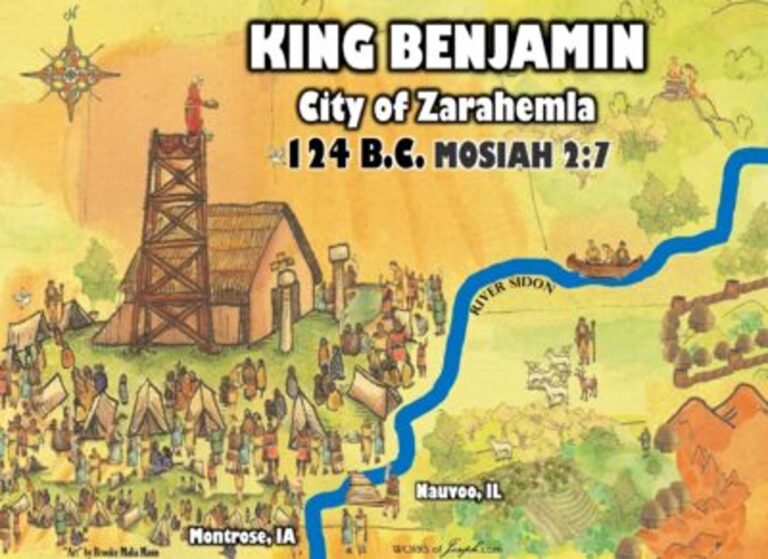
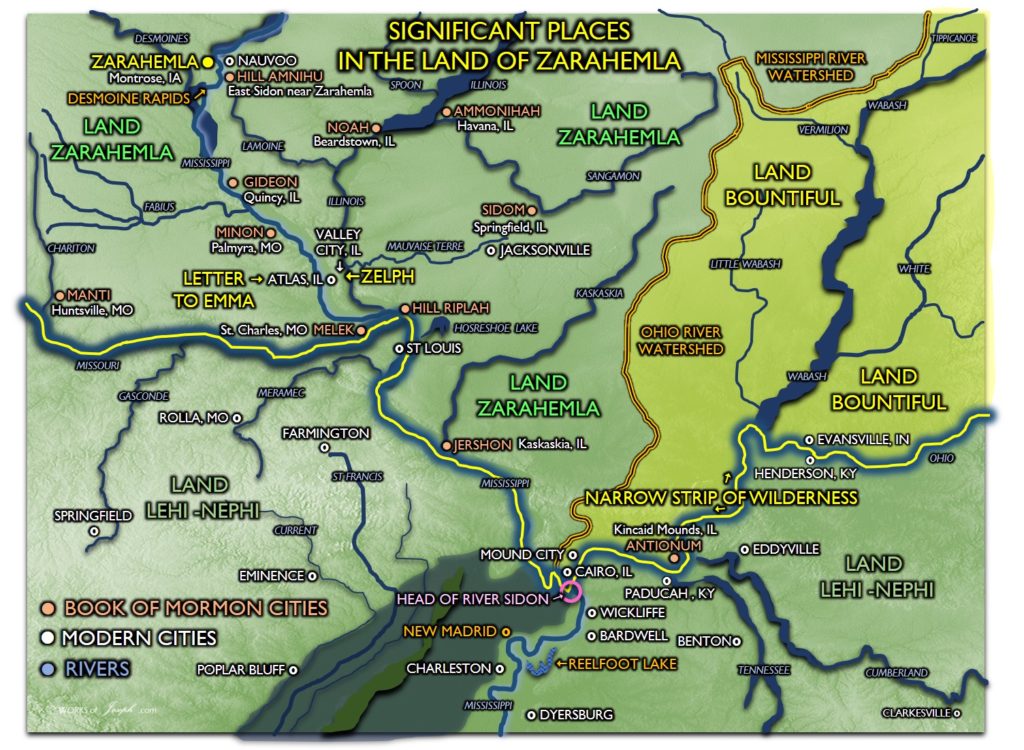




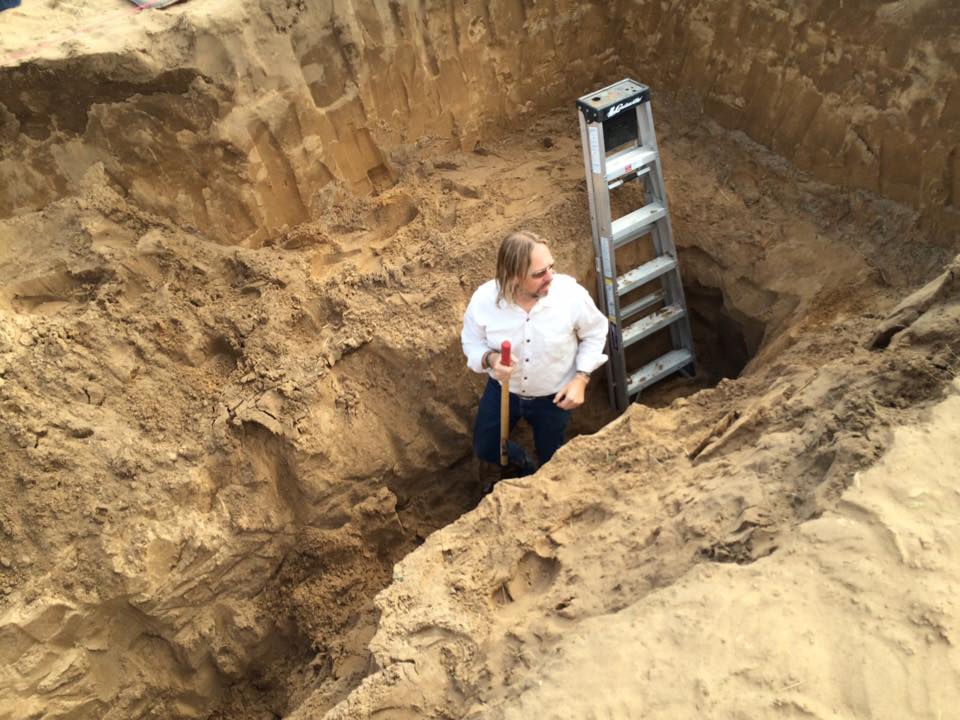





 M
M


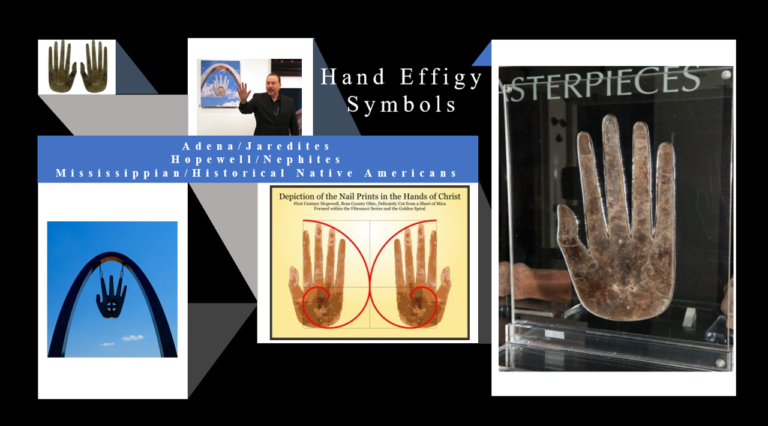
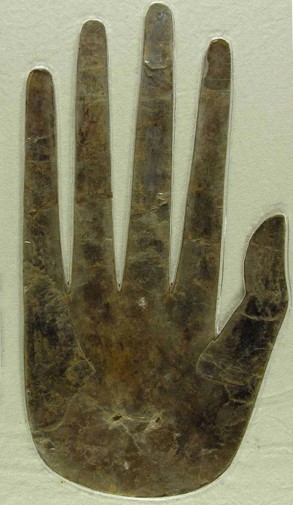


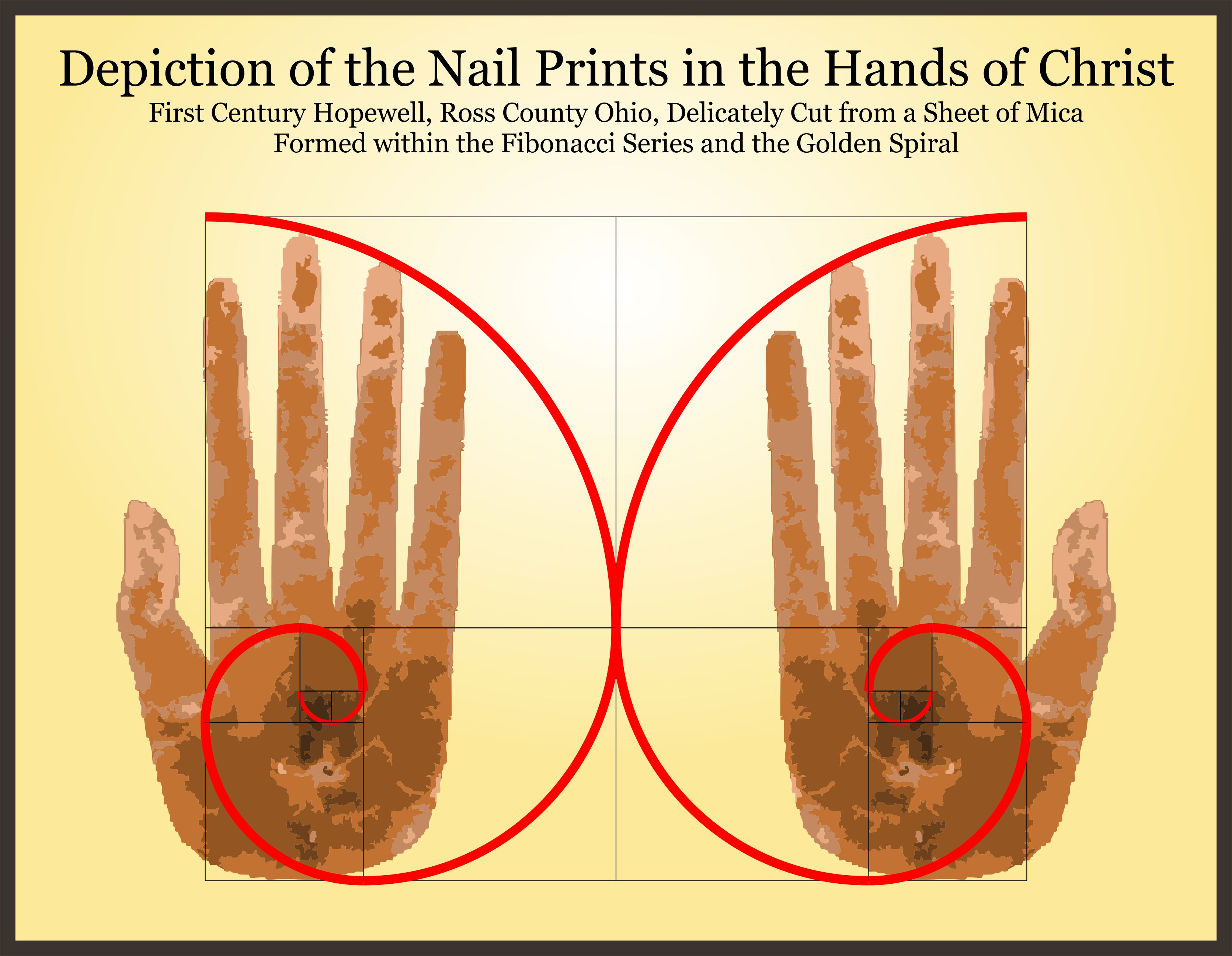





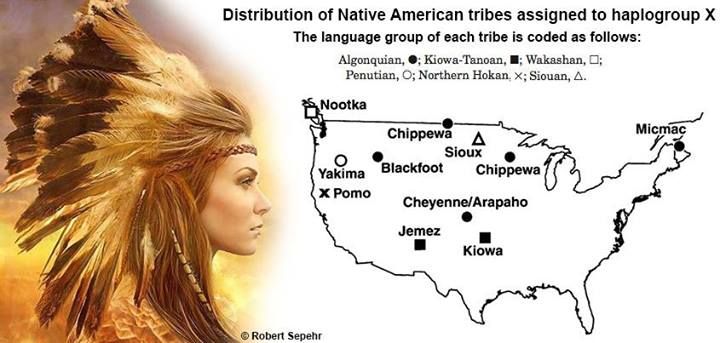


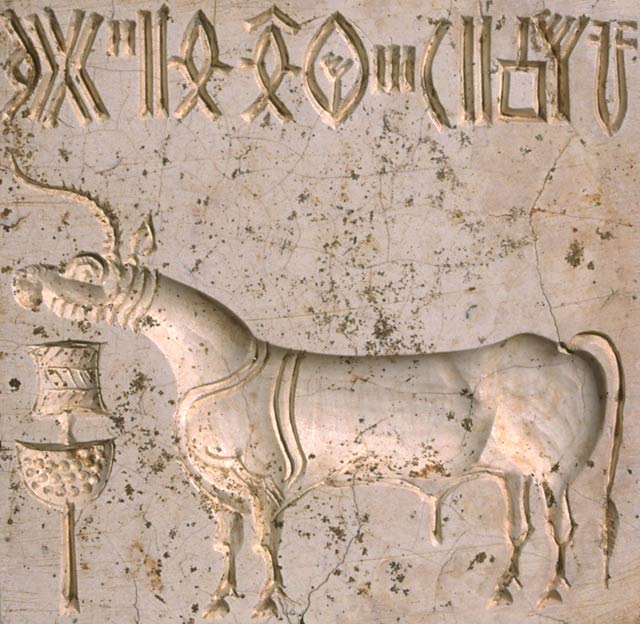
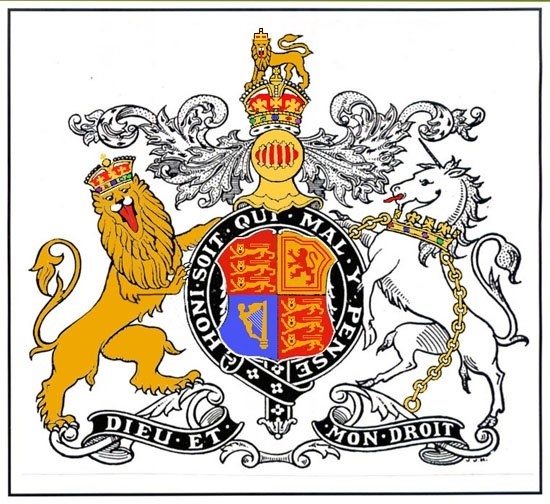
 extinction, a very sad story so that they could control the Indians. But before they did this unnatural waste, a Prophet of God by the name of Brigham Young, uses the skulls as His company journey westward as milepost markers directing the Saints to the great Salt Lake. This (picture right) is a skull I have on my office wall at home.

 In
In  The King James Bible translators used “unicorns,” (plural with an “s”) in this Deuteronomy passage where a marginal note appears. It reveals that in the Hebrew text, the word is actually a singular word, “unicorn.” However, while the word being translated “unicorn” is singular, the word being translated “horns” is a plural possessive. It’s saying that these plural horns are possessed by the singular unicorn, which would mean that in the Latin, it’s not actually an unicornis, but a rinocerotis. In the English, it’s not actually a unicorn (one animal with one horn), but a rhinoceros (one animal—Joseph, with two horns—two sons.)


 Unicorn Webster’s 1828 Dictionary


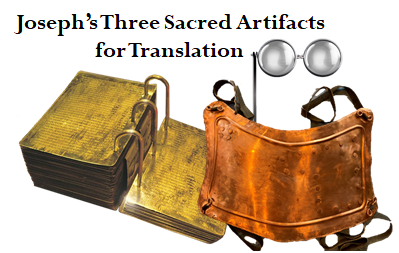
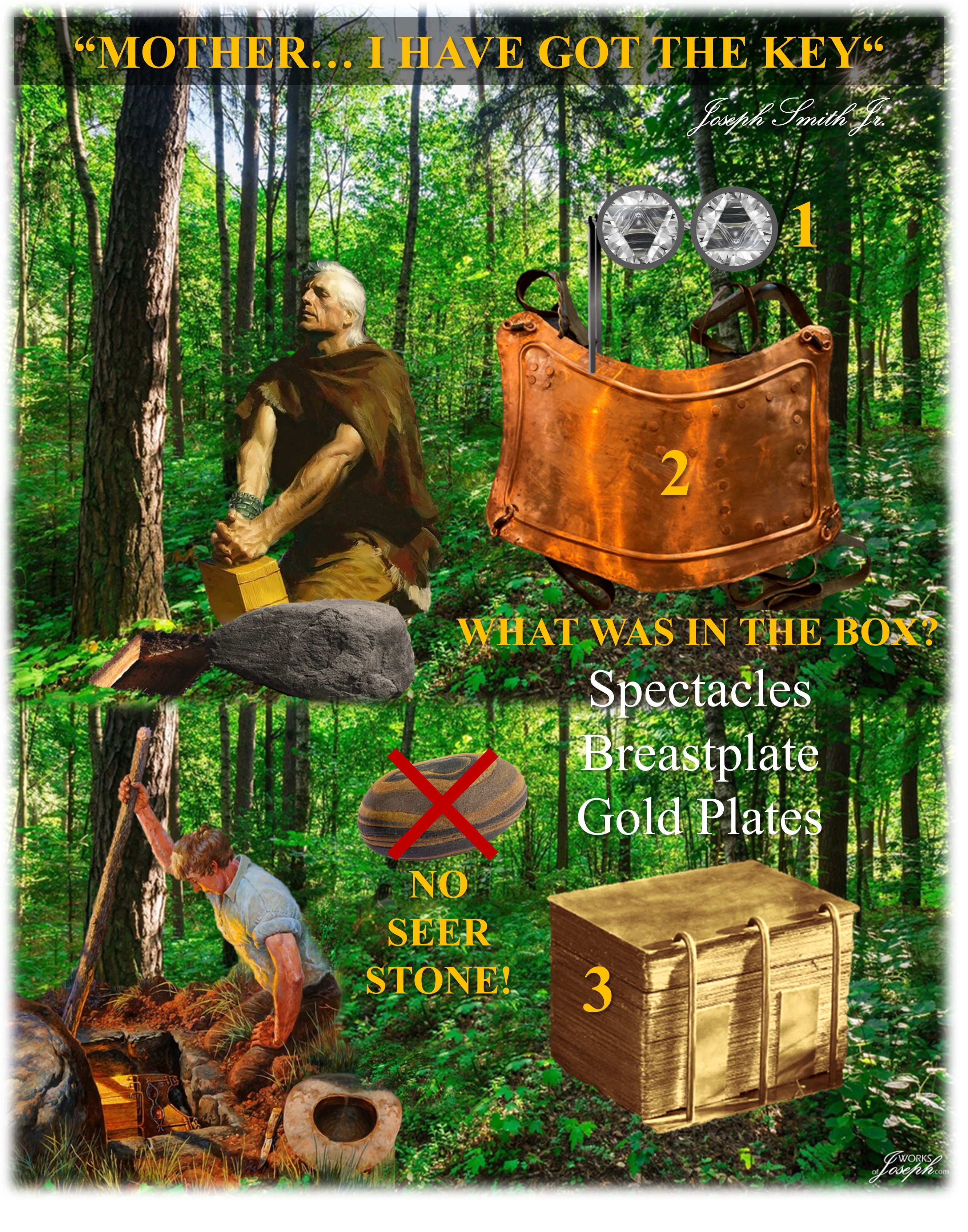







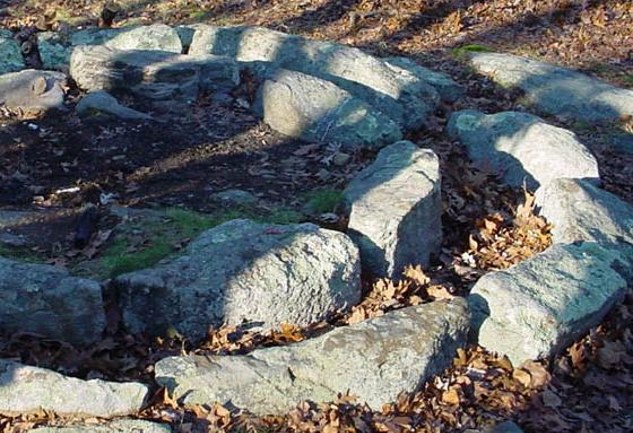


 It is as if a large circle is drawn around New England which represents a complete absence of pre- colonial construction. This is the conventional wisdom proposed by the Archaeological community, however the evidence does not seem to support this notion. Let us look at several enigmatic stone sites in New England and what they tell us about its mysterious past. America’s Stonehenge in Salem, New Hampshire is probably the most elaborate and controversial site in New England. It has been described by Dr. Edward J. Kealy, professor of History at Holy Cross University as “potentially the most important stone complex in the Northern Hemisphere”. Featured on the History Channel and other programs, this 30 acre complex is a mixture of stone chambers, stone solstice and equinox markers, cairns, chimneys, fireplaces and stone drains. The two largest stones here weigh 45 and 70 tons. The site has been carbon dated to at least 2000 B.C. by scientists at Geochron Labs of Cambridge, Mass after dating 13 different test pits. That dates it’s construction half a millenia before the final construction phase of Stonehenge, and like Stonehenge it possesses many precise astronomical alignments. Stone markers throughout the site provide over 200 alignments with the sun, moon and 45 different stars which have been verified by independent researchers. One alignment wall allows a person to observe the southern most standstill of the moon on its 18.61 year metonic cycle. A period of 18.61 is required to carry the moon to all of its possible positions in respect to the sun. This event is marked at Mystery Hill as the moon passes above the winter solstice stone and then aligns with the terminal of this wall.

 The stone chambers of New England like all the precolonial stonework are dry laid. When you examine any of these chambers you will see that they were not easy to construct, their design is quite complex.
 Let us now examine the stone walls of New England. Again conventional wisdom states that every stone wall you see was built sometime in the last 400 years. This seems like a reasonable claim at first glance, colonials definitely built walls for property boundaries and agricultural uses. Timber eventually became scarce in the colonies and fencing was needed as land was farmed and livestock raised. We are told that the majority of the walls were built in a 75 year window between the revolutionary and civil wars. How many walls did and does New England actually have? An 1872 U.S. Department of Agriculture report estimated there were over 240,000 miles of stone walls east of the Hudson river right after the civil war. This very conservative estimate was done using incomplete data and didn’t account for other areas in the northeast that possess large amounts of stone walls. The actual figure is well over 500,000 miles, many researchers estimate. That is a stone wall that circles the earth 20 times or all the way to the moon and back. Reflect on that staggering reality for a minute. Does it seem likely that a colonial population struggling for survival, involved in several all encompassing wars and working difficult and unforgiving land could have accomplished this feat? The average colonial home burned between 20 and 40 hand cut cords of wood yearly. Processing this amount of wood, among other overwhelming tasks, in a harsh environment with long and difficult winters left little time for activities like wall building which had very little utility. Take the town of Hawley, Mass., an isolated community in the rugged highlands of Western MA, which has an area of 30.9 square miles. First settled in 1770 it has over one thousand miles of stone walls. However, it’s population at the time in question was 539 in 1790, 1089 in 1820 and back down to 600 in 1879. Could this meager population be responsible for such an impressive feat? To build all the walls of New England would have been the most costly and labor intensive undertaking in colonial history. An enormous venture but with little mention in the historical texts other than the assumption that it was done. The total sheer tonnage of New England’s stone walls represents an amount greater than all the worlds pyramids, stone temples, stone complexes and ancient stone structures combined.


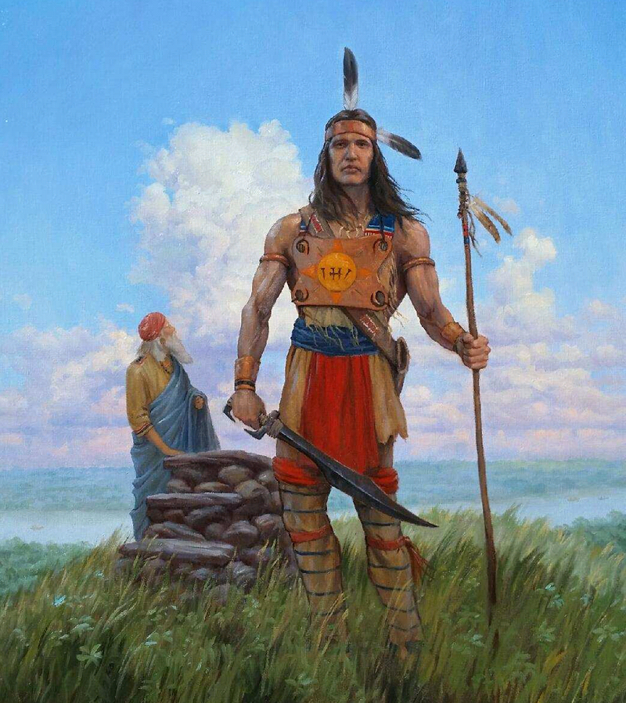

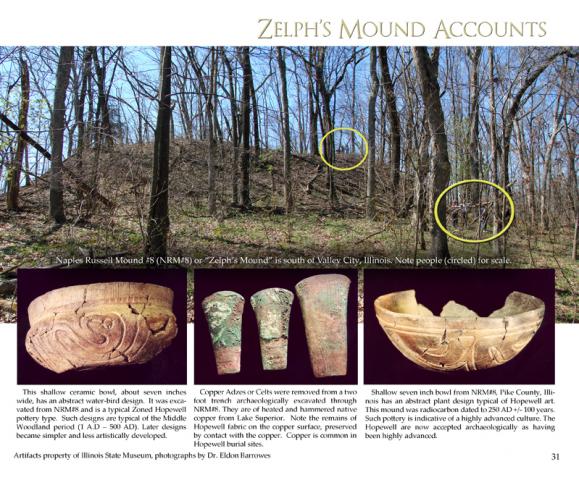
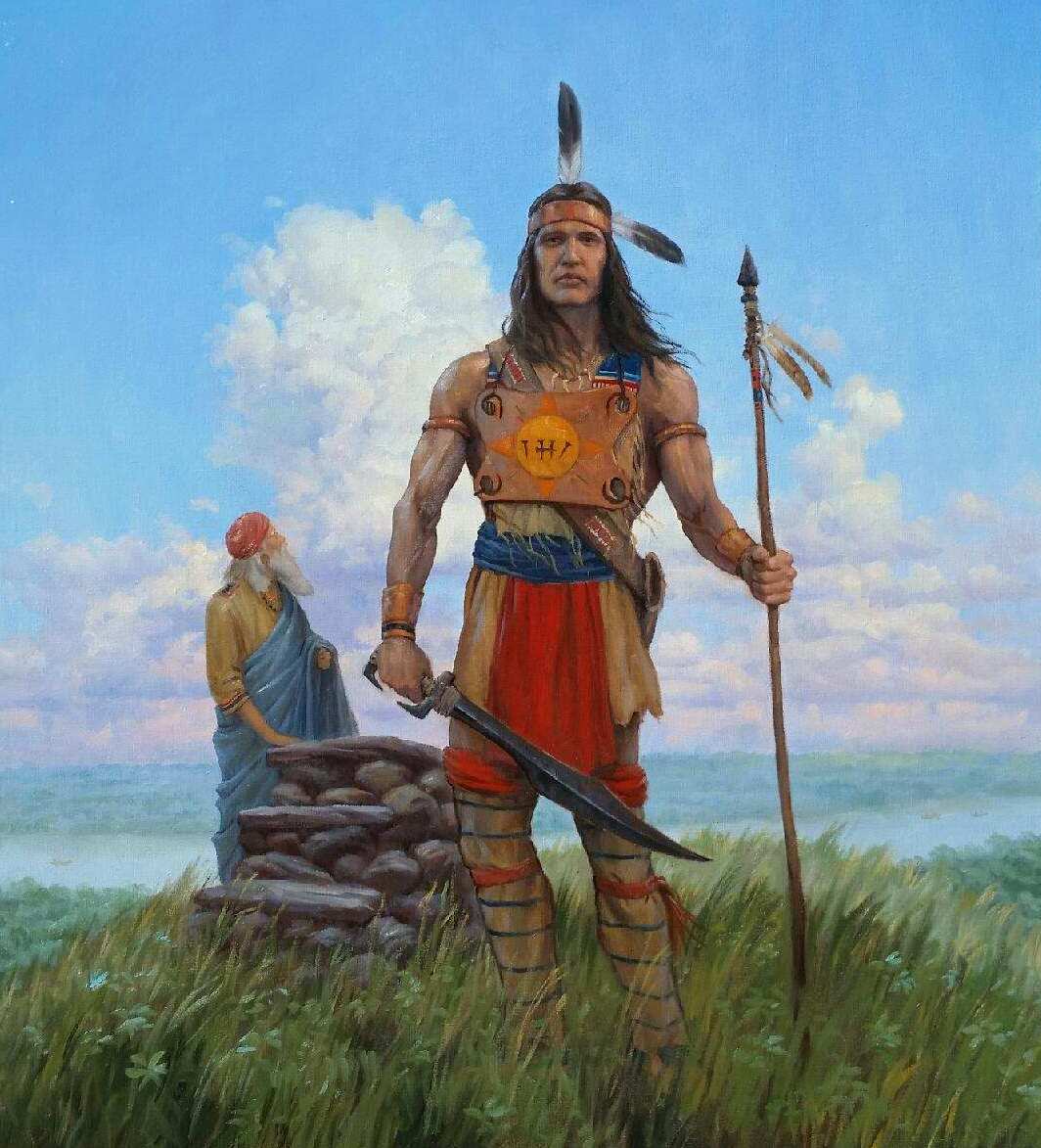




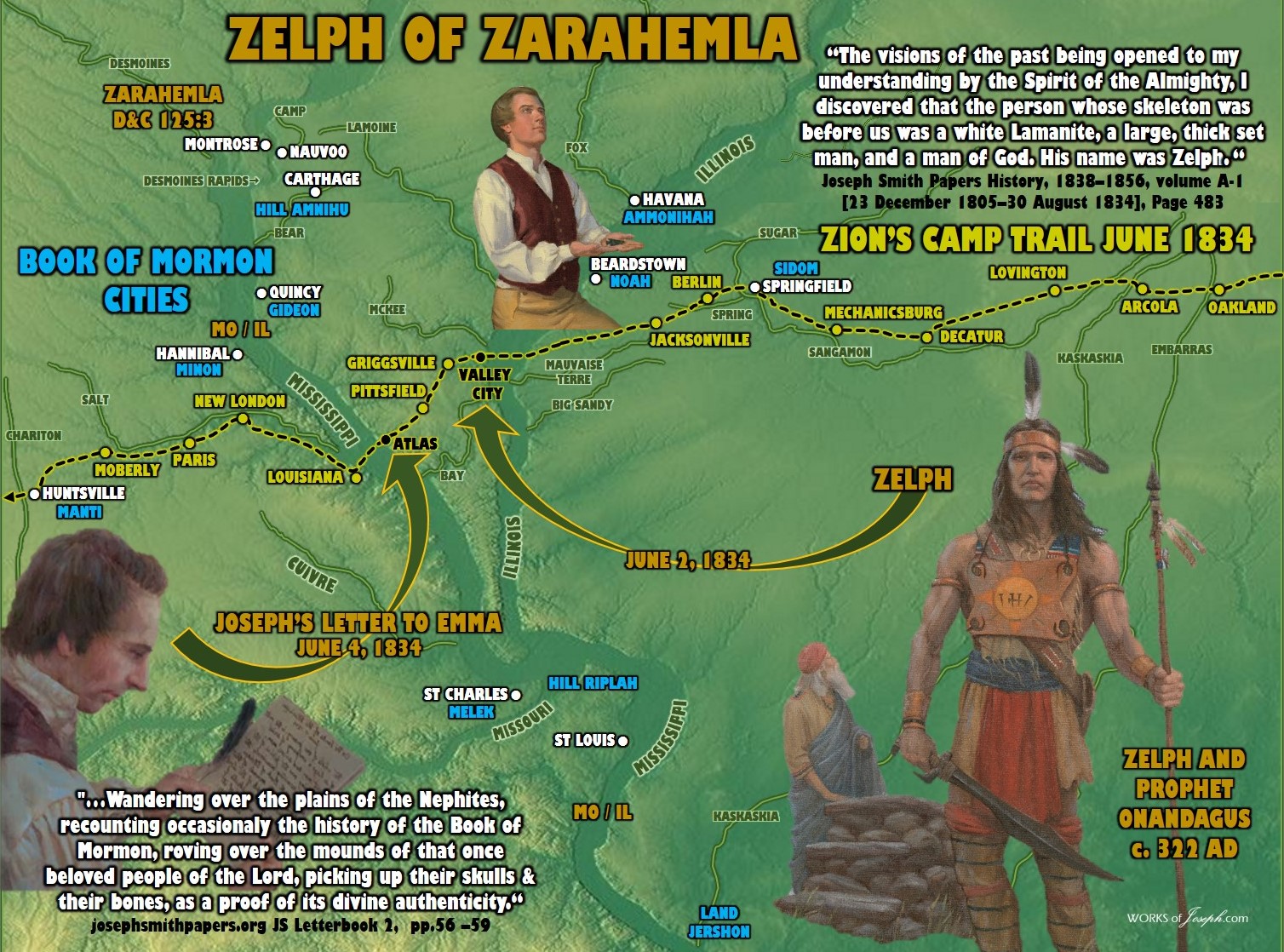

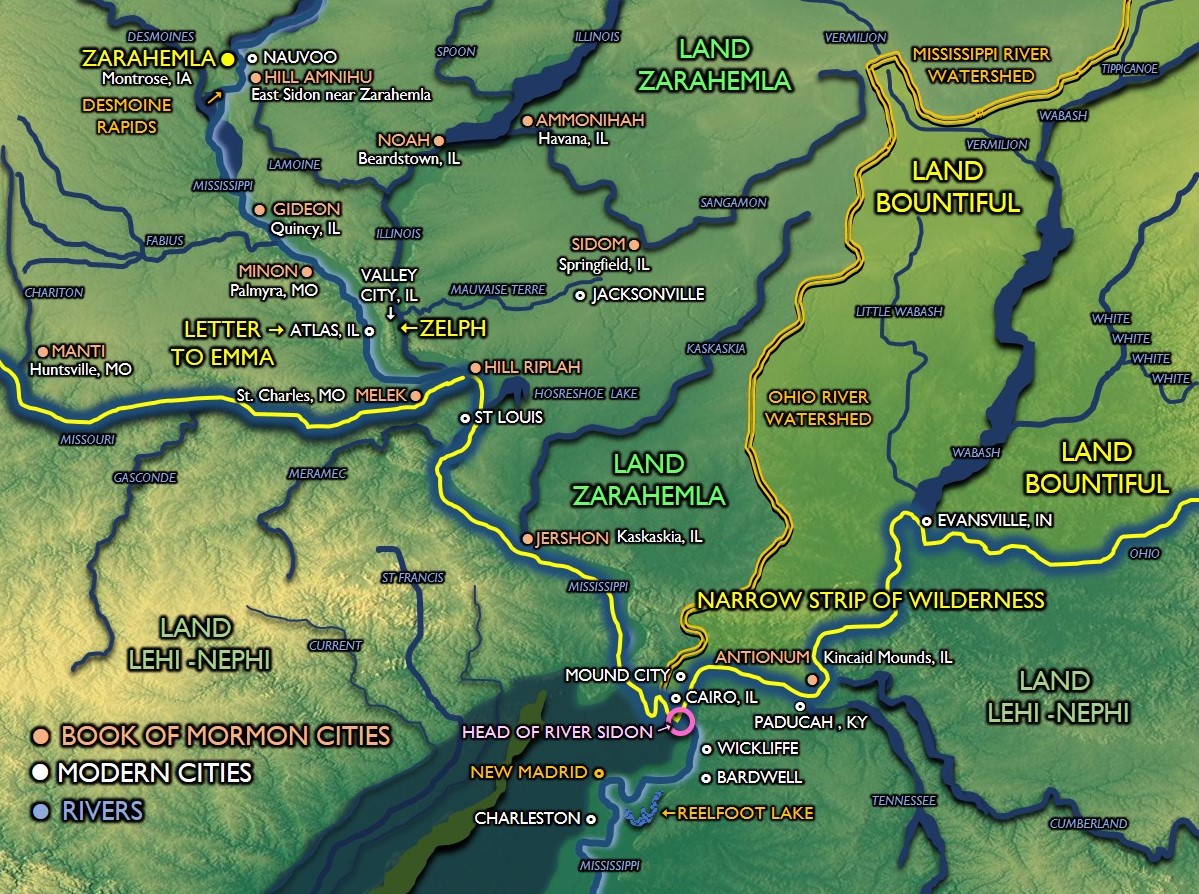
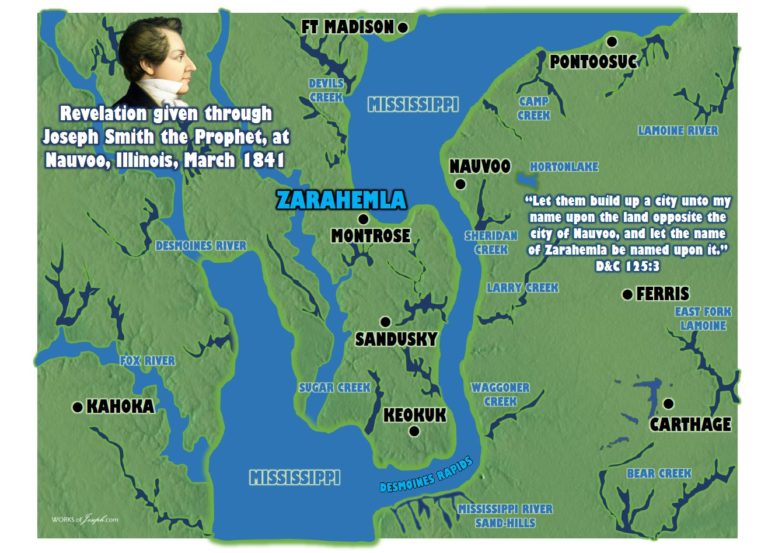
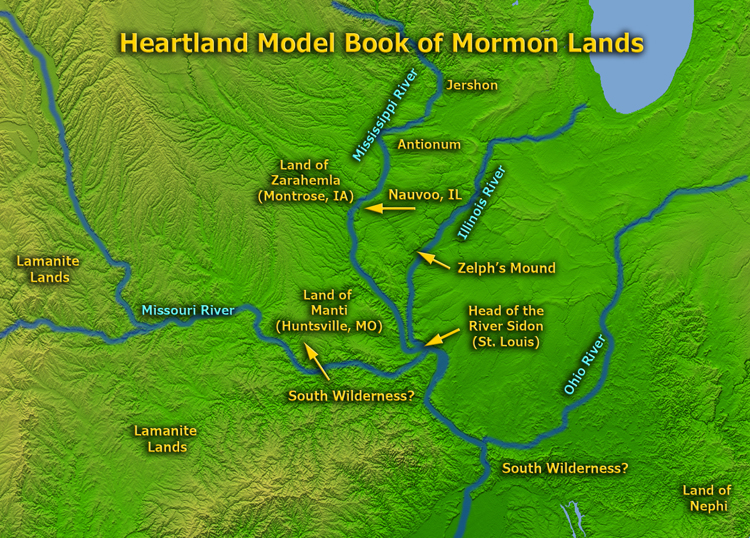
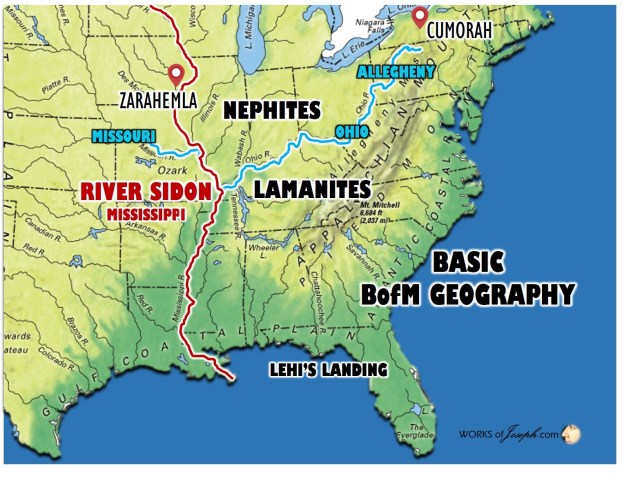
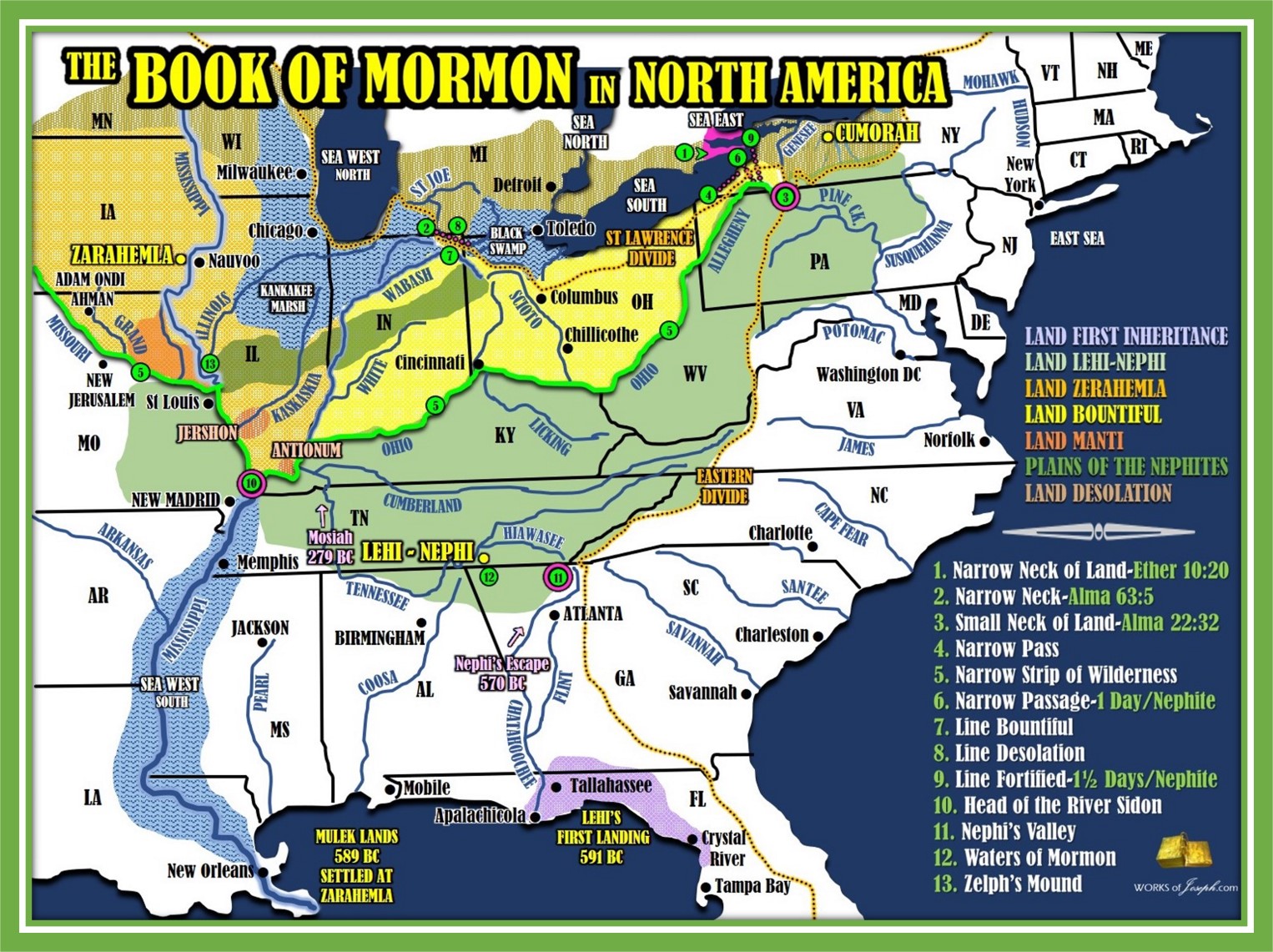
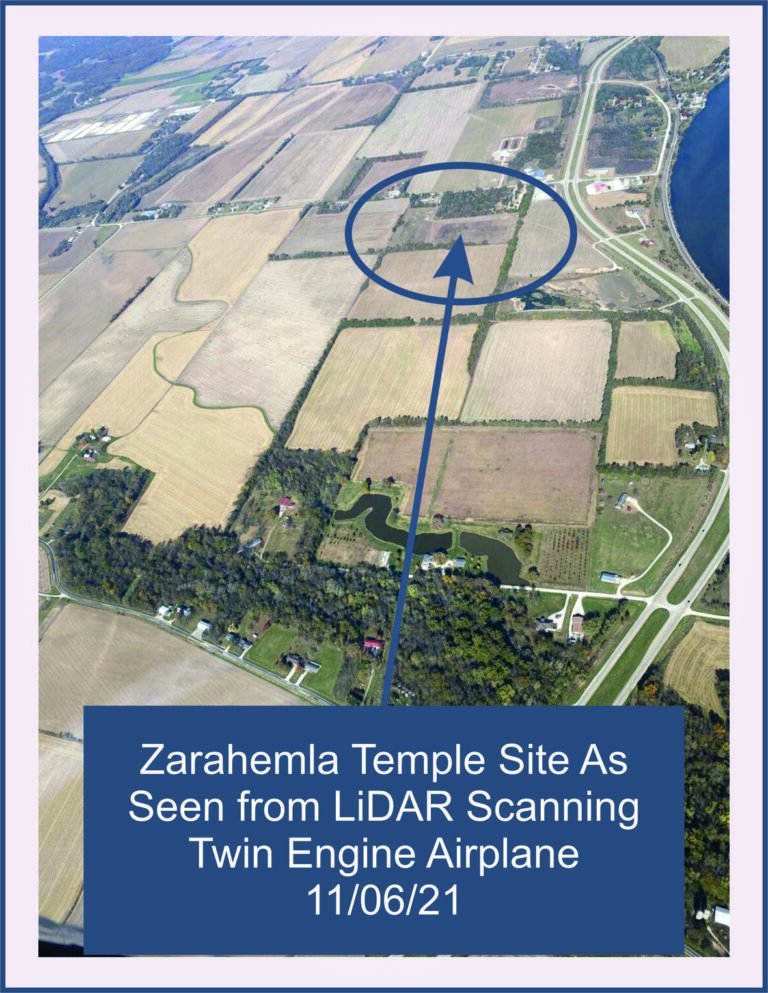


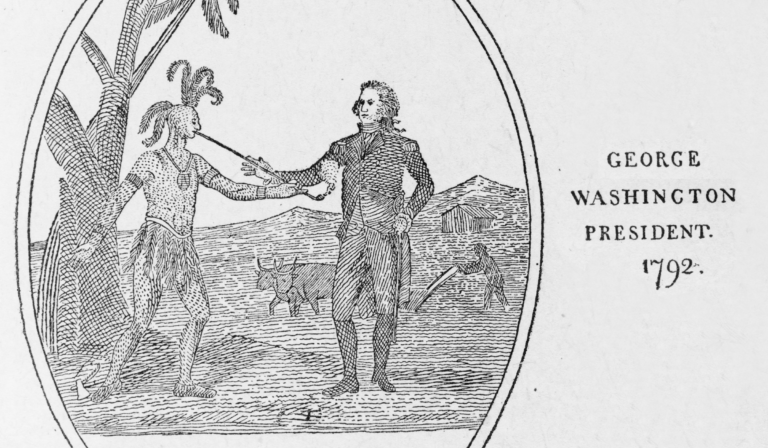
 The American Indian chief looked scornfully at the soldiers on the field before him. How foolish it was to fight as they did, forming their perfect battle lines out in the open, standing shoulder to shoulder in their bright red uniforms. The British soldiers—trained for European war—did not break rank, even when braves fired at them from under the safe cover of the forest. The slaughter continued for two hours. By then 1,000 of 1,459 British soldiers were killed or wounded, while only 30 of the French and Indian warriors firing at them were injured.Not only were the soldiers foolish, but their officers were just as bad. Riding on horseback, fully exposed above the men on the ground, they made perfect targets. One by one, the chief’s marksmen shot the mounted British officers until only one remained.
 Telling Washington’s story without erasing the people and lands that preoccupied him leads to important new questions; like, just how consequential for American history was the first president’s addiction to land speculation?
 Washington never moved west himself, but the West beckoned him and the nation he led. His long association with the region as surveyor, speculator, soldier, landowner, and politician shaped his career and his vision of America’s future tied to western development. As a young man, he pursued wealth in land and a military reputation in the West; in his later years, the West became a key to building national unity. By the end of his life, according to one of the editors of the monumental Papers of George Washington, he probably knew more than any other man in America about the frontier and its significance to the future of his country. He had also accumulated more than 45,000 acres of prime real estate in present-day Kentucky, Ohio, Pennsylvania, the Shenandoah Valley, and West Virginia. It was the West, says another of his editors, that “made the Virginia farmer lift his eyes to prospects beyond his own fields and his native Virginia”; the West that “stretched his mind” to embrace an expansive vision of a republican empire; the West that, more than anything else except the Revolutionary War, prepared him for his role as nation builder.

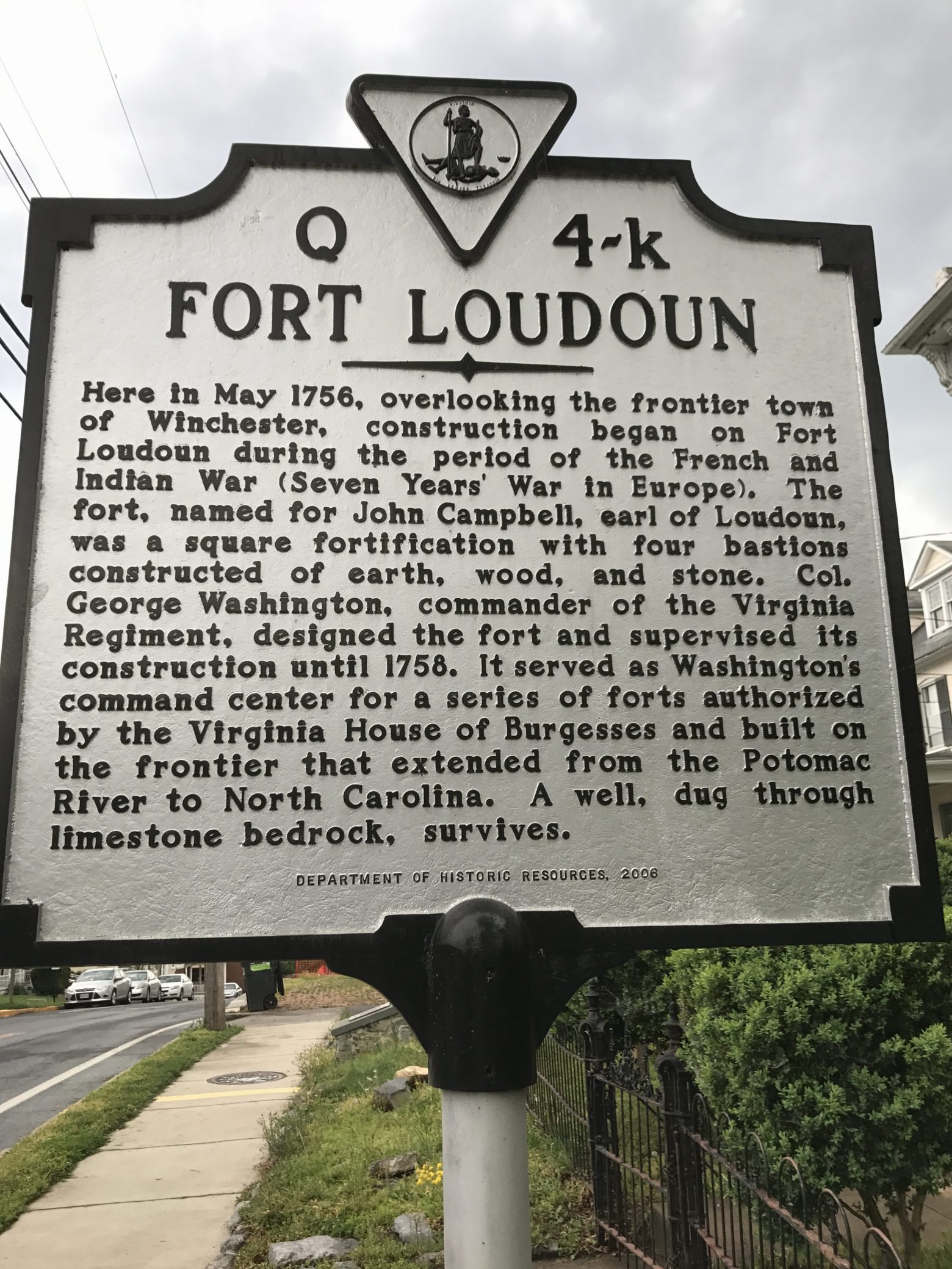 During the French and Indian War, Colonel George Washington designed and supervised the construction of a fort in Winchester, Virginia. Named Fort Loudoun, after John Campbell, the fourth Earl of Loudoun and Commander-in-Chief of British forces in North America, the fort was constructed to protect citizens from attack and served as a headquarters for Washington and his militia.
 A monument that mentions the Indian grave site is located in Virginia but the artifacts and skeletons have not been seen since.
 Extract from ‘Presidents and Giants‘ Chapter in Giants On Record: America’s Hidden History, Secrets in the Mounds and the Smithsonian Files by Jim Vieira and Hugh Newman. Available on Amazon: http://amzn.to/1MrVH5L (US), http://amzn.to/1OxghHM (UK). Facebook Page: www.facebook.com/giantsonrecord #giantsonrecord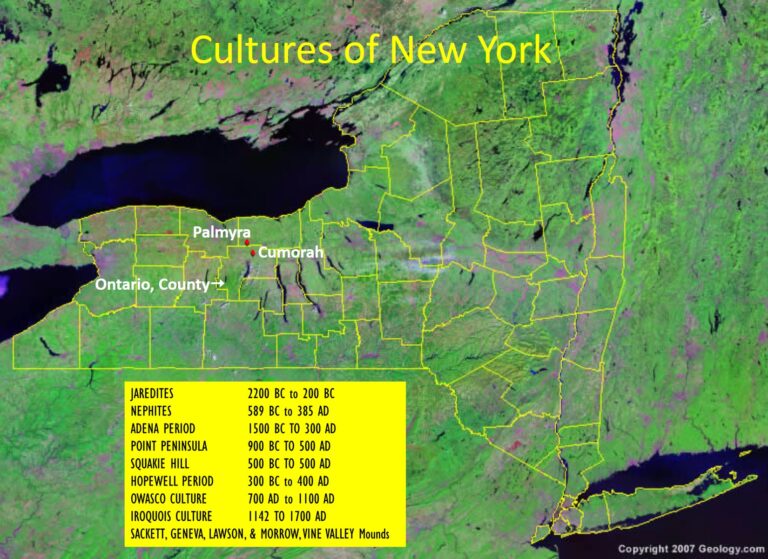

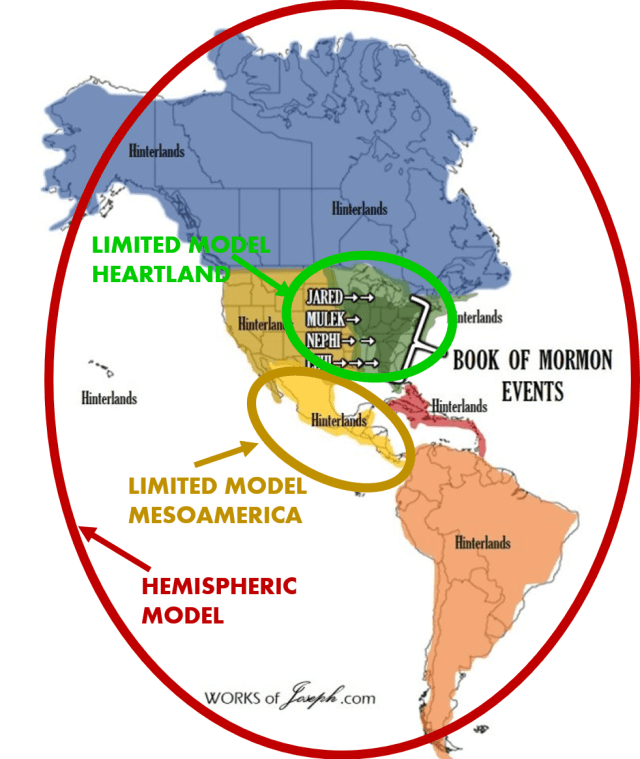
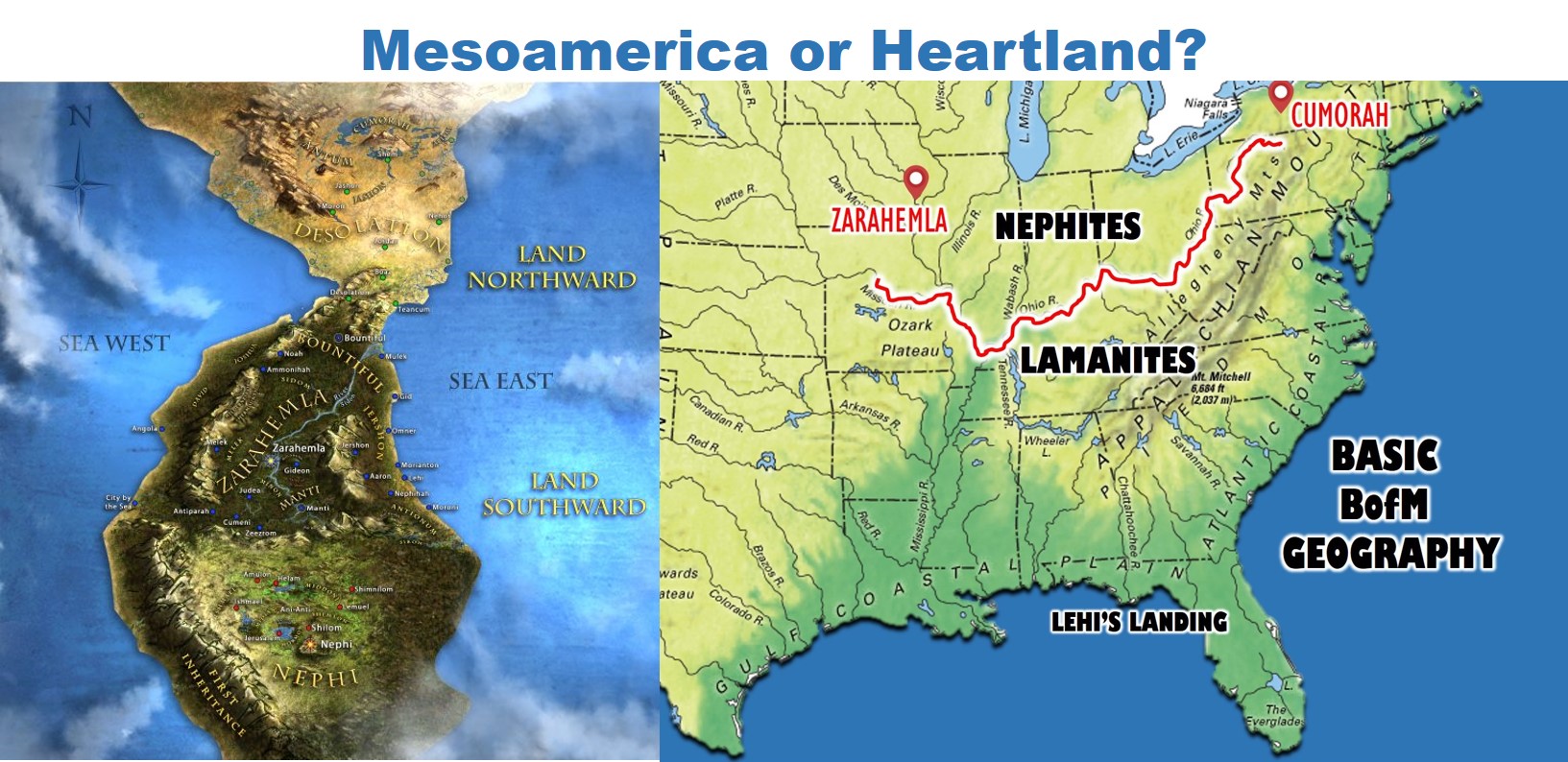
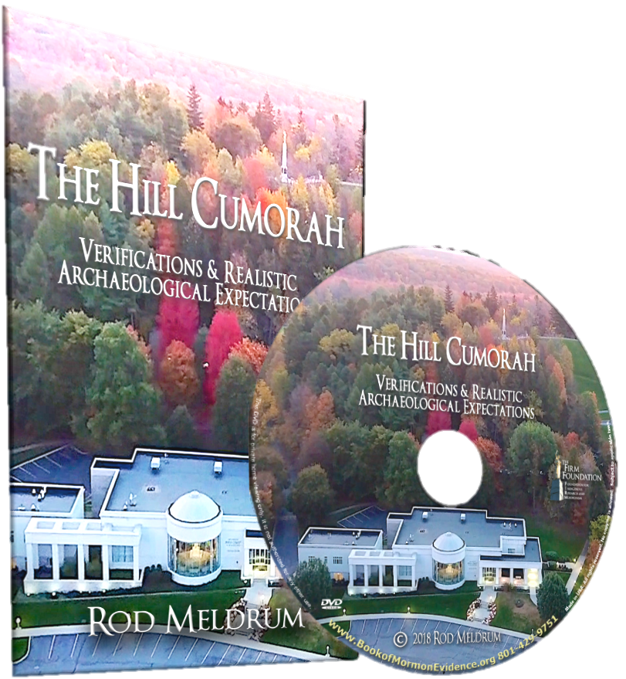
 The purpose of my information below is to share with you significant archaeological evidence for the ancient Hopewell and Adena Culture nearby the Hill Cumorah. There is evidence of fortifications, pottery, copper, weapons, palisades, forts, mass burials, mounds, tools and other artifacts all around this area. I believe the Hopewell culture matches up with the Nephite culture extraordinarily well. The Hopewell originated in 600 BC at the panhandle of Florida from Crystal River to Pensacola, Florida. History documents this. The Hopewell then traveled north into Georgia and Tennessee. There is evidence of a huge society of the Hopewell from Missouri to Illinois to Indiana and then to Ohio which was the dominant historical area of this people. History shows the end of the Hopewell civilization around the year 400 AD. Historians say the Hopewell just disappeared and historians have no idea what happened. I feel I have a good idea. The final battle at Cumorah was 385 AD. This is some of the best evidence of a possible link to the Hopewell and the Nephites.
 My friend who is a very loving Christian and Preacher named Richard D. Moats is an Avocational Archaeologist, who has lived in Ohio his entire life and jokes with me and says, “I know the people of Ohio as Hebrews and you know them as Nephites. We have found the same people.” Doesn’t it really make sense that there has to be traces of Hebrew where Lehi and Nephi lived? Search for yourself. Many signs show Hebrew influence in North America and especially in Ohio. It’s sad that many professionals say all the artifacts are a hoax. They have to say that for over 20 various items that have been discovered. See my blog


 32 Village site on Darwin McClure’s farm, lot 20, Hopewell, 3 miles southeast of Canandaigua, one-half of a mile north of the turnpike. A recent cemetery is not far away, and modern relics have been found. The site is probably that of one of the Onaghee villages.
 51 A trail from the southeast came to the center of the old Brother farm on which there was a village. It followed the highway north- westerly.


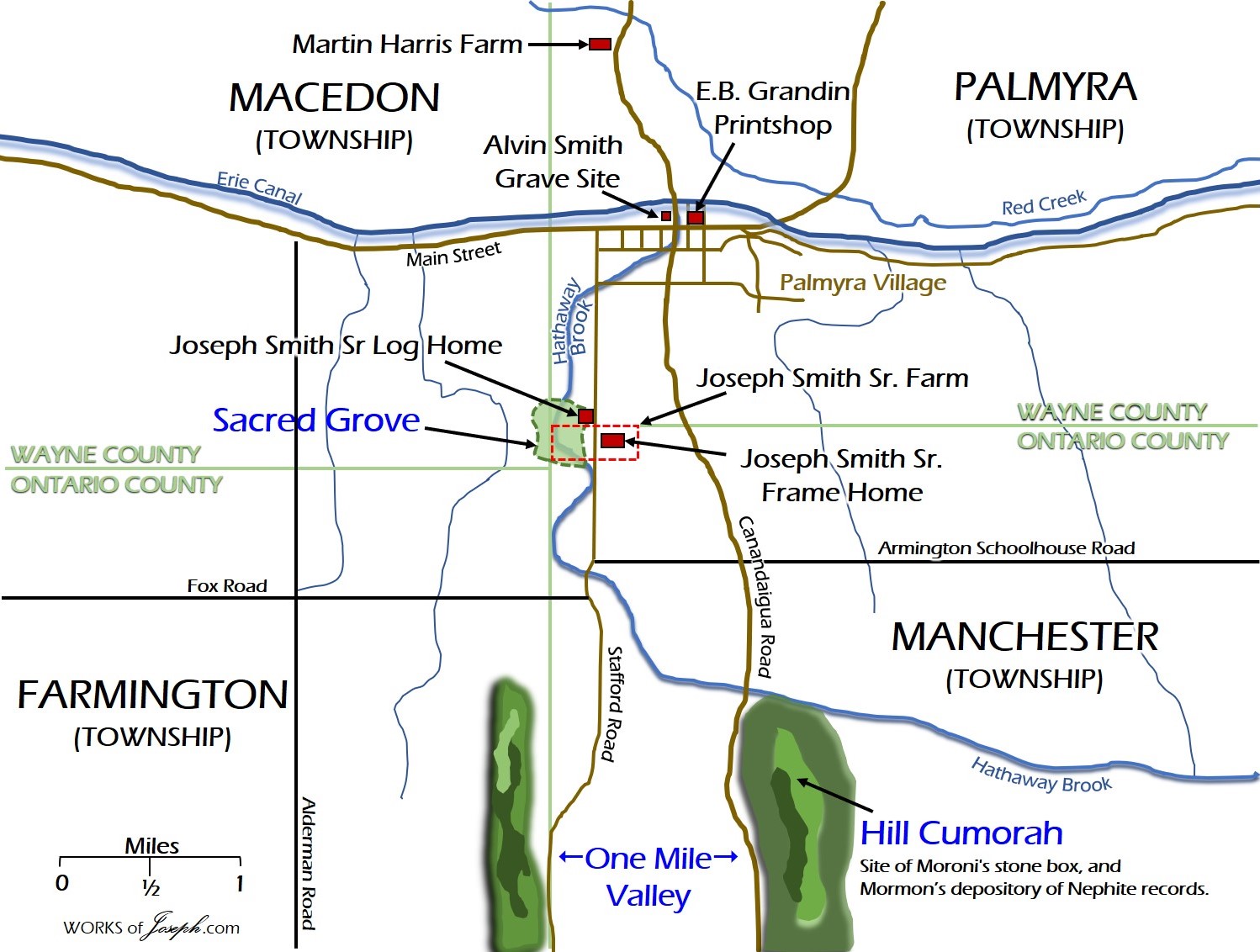




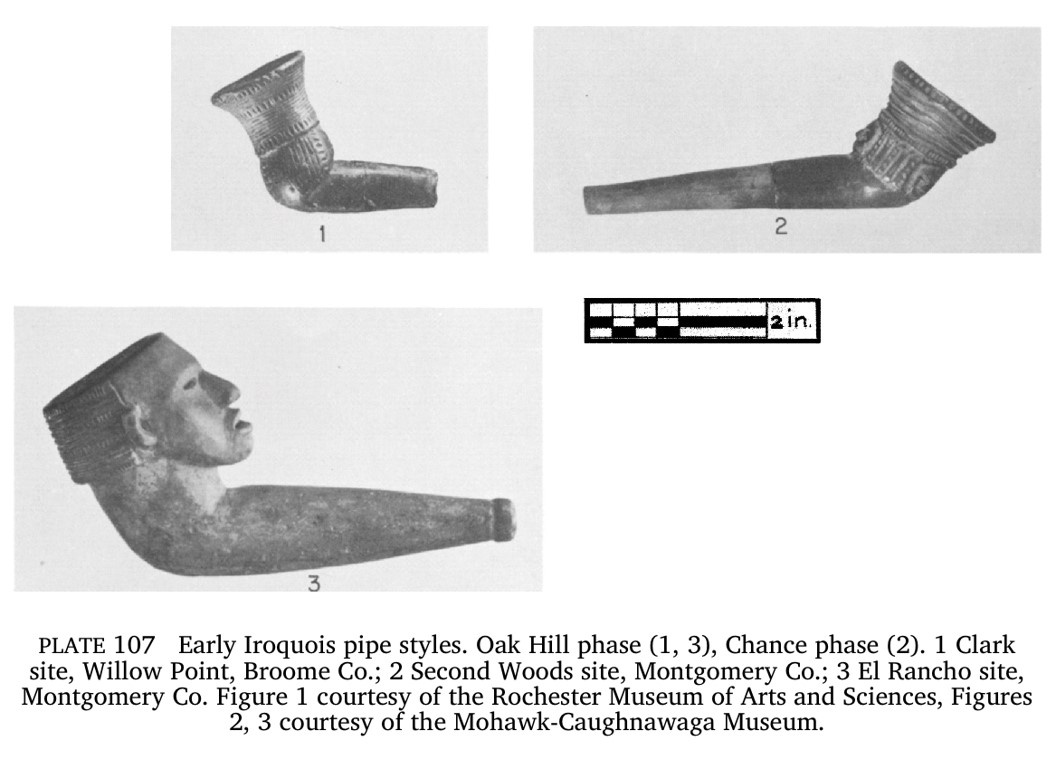


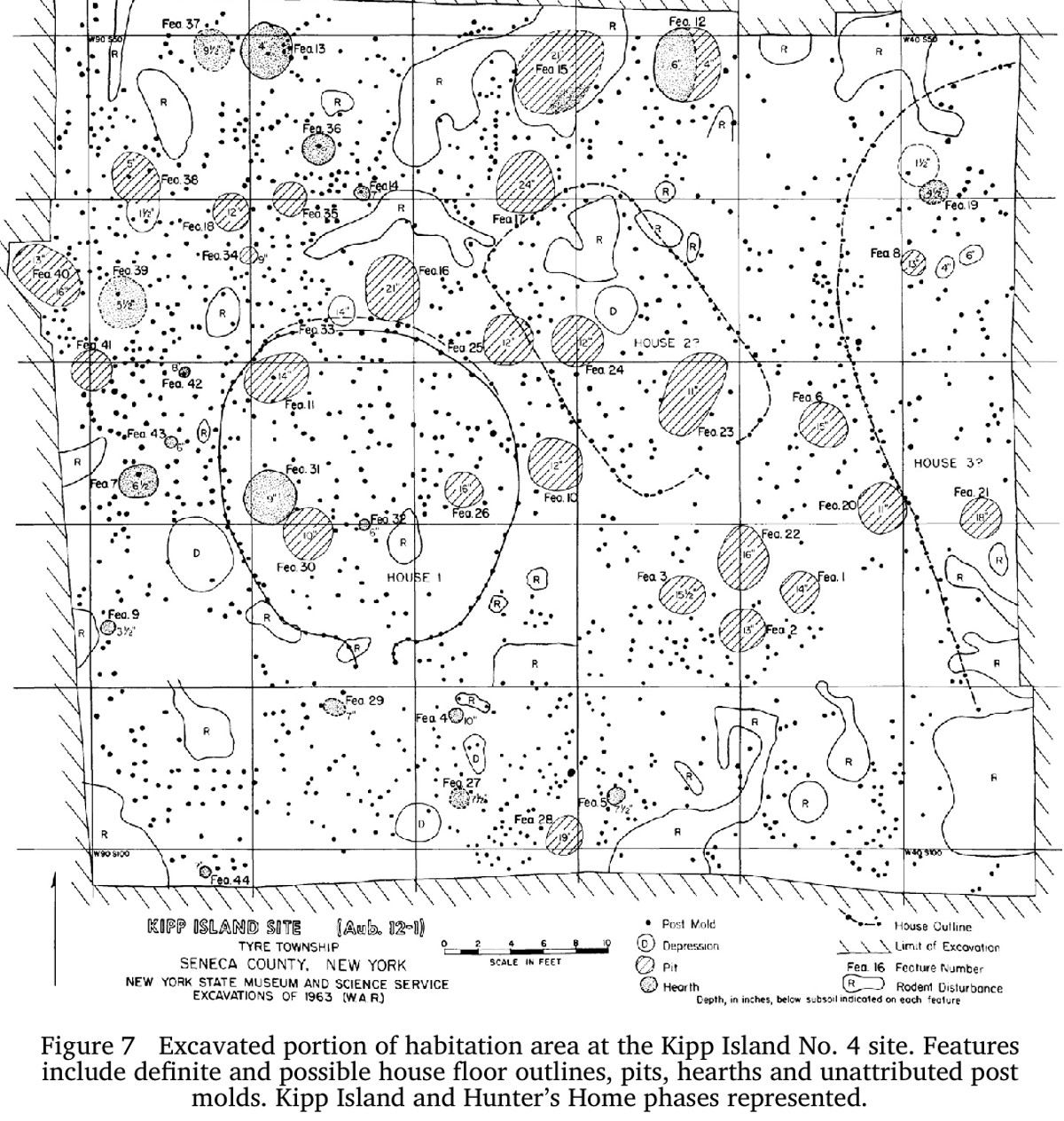
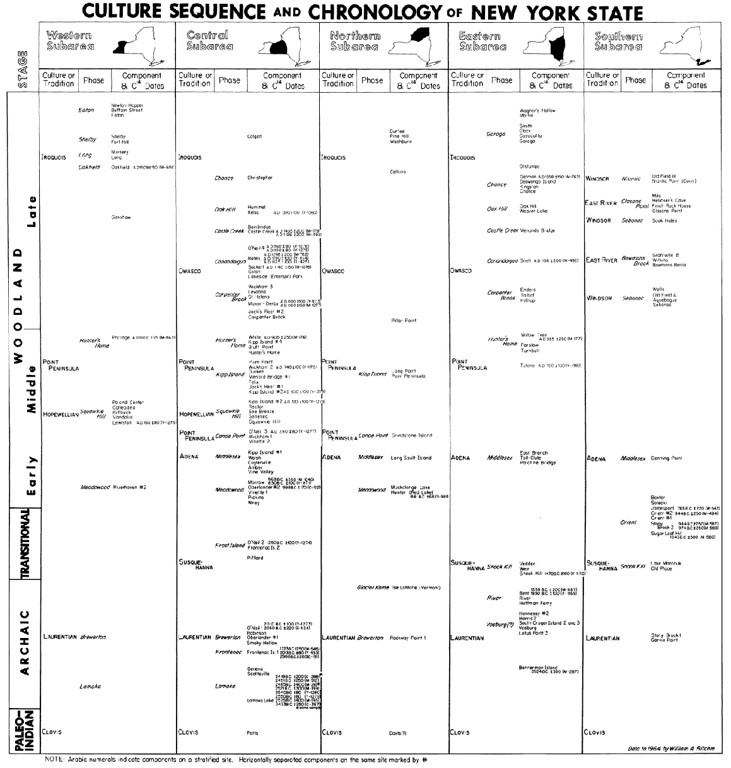







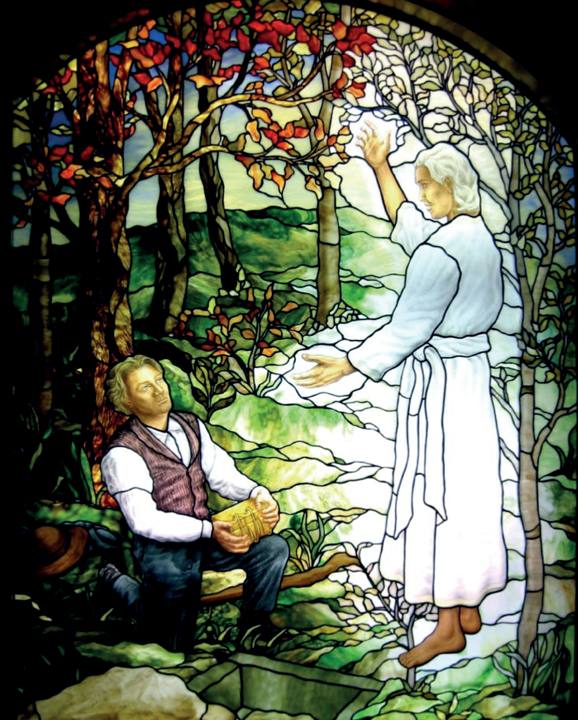
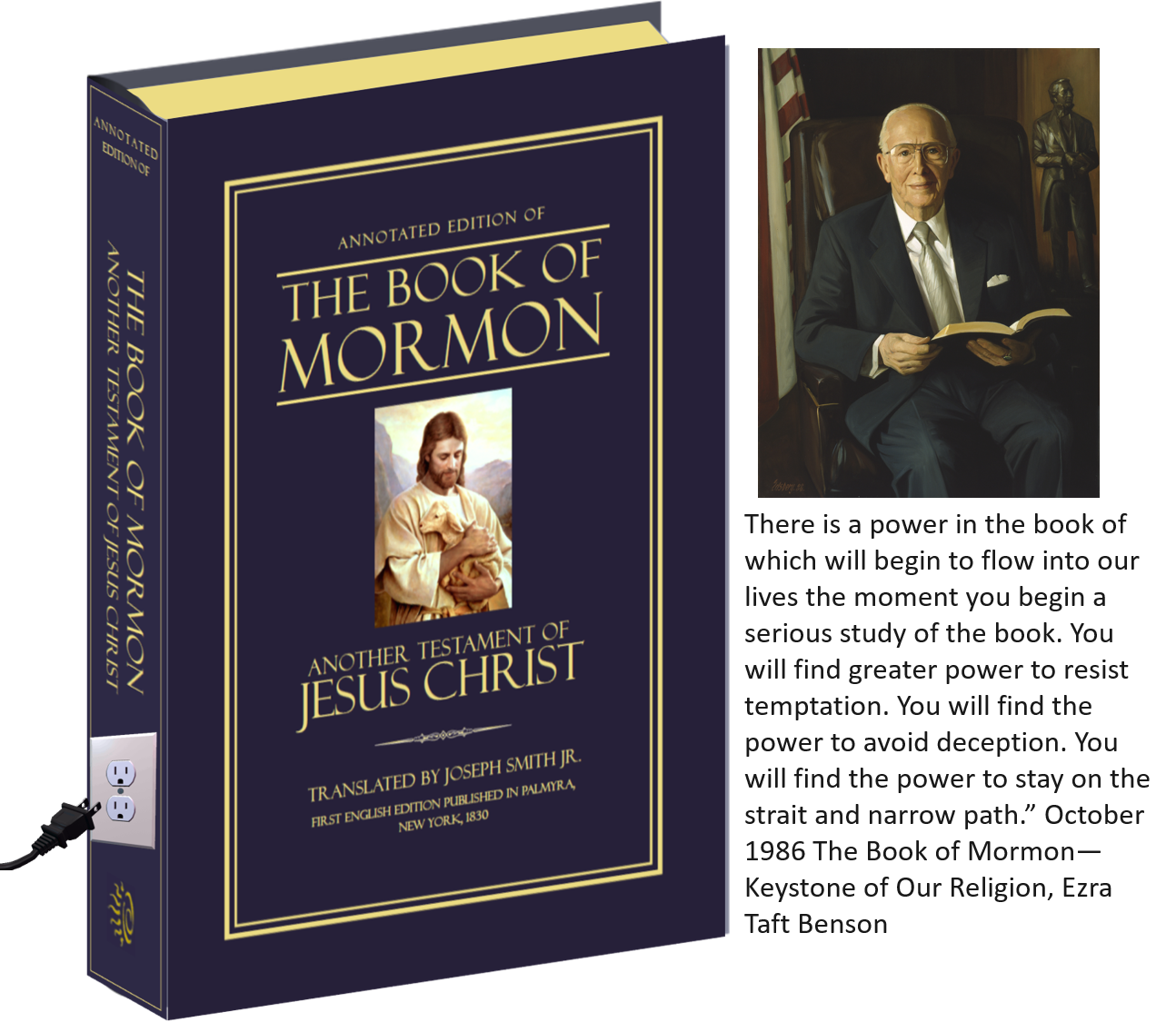
 “Now those men, or those women, who know no more about the power of God, and the influences of the Holy Spirit, than to be led entirely by another person, suspending their own understanding, and pinning their faith upon another’s sleeve, will never be capable of entering into the celestial glory, to be crowned as they anticipate; they will never be capable of becoming God”
  “Give your leaders a little leeway to make mistakes, as you hope your leaders will give you a little leeway to profit by your errors.”
  “Sometimes from behind the pulpit, in our classrooms, in our Council meetings and in our church publications we hear, read or witness things that do not square with the truth. . . . Now do not let this serve as an excuse for your own wrongdoing. The Lord is letting the wheat and the tares mature before he fully purges the Church.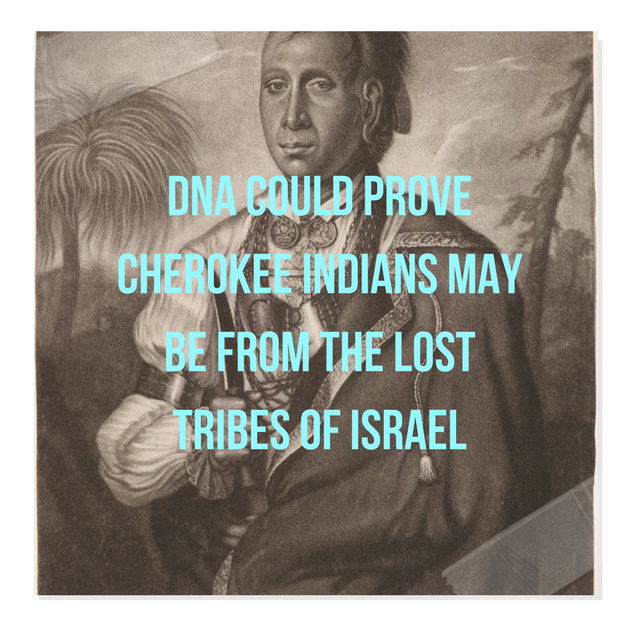


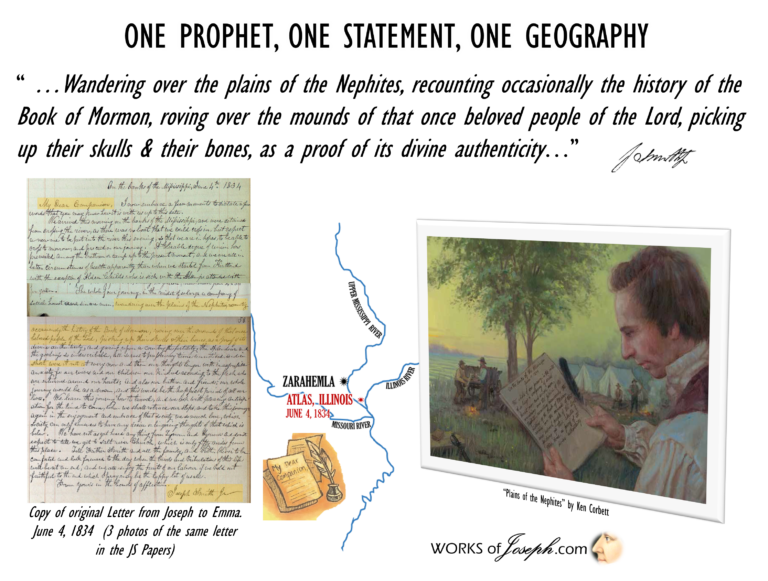
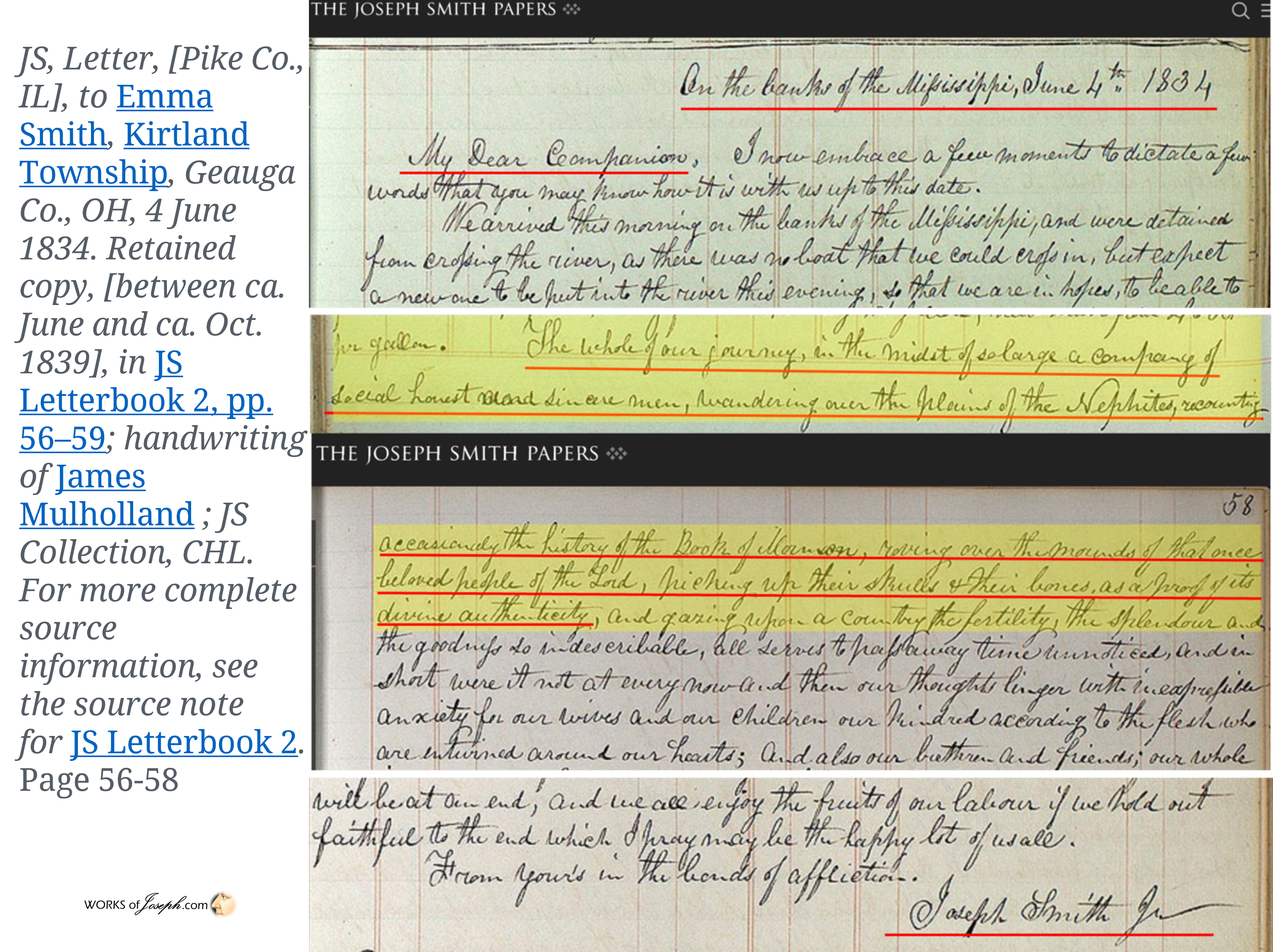
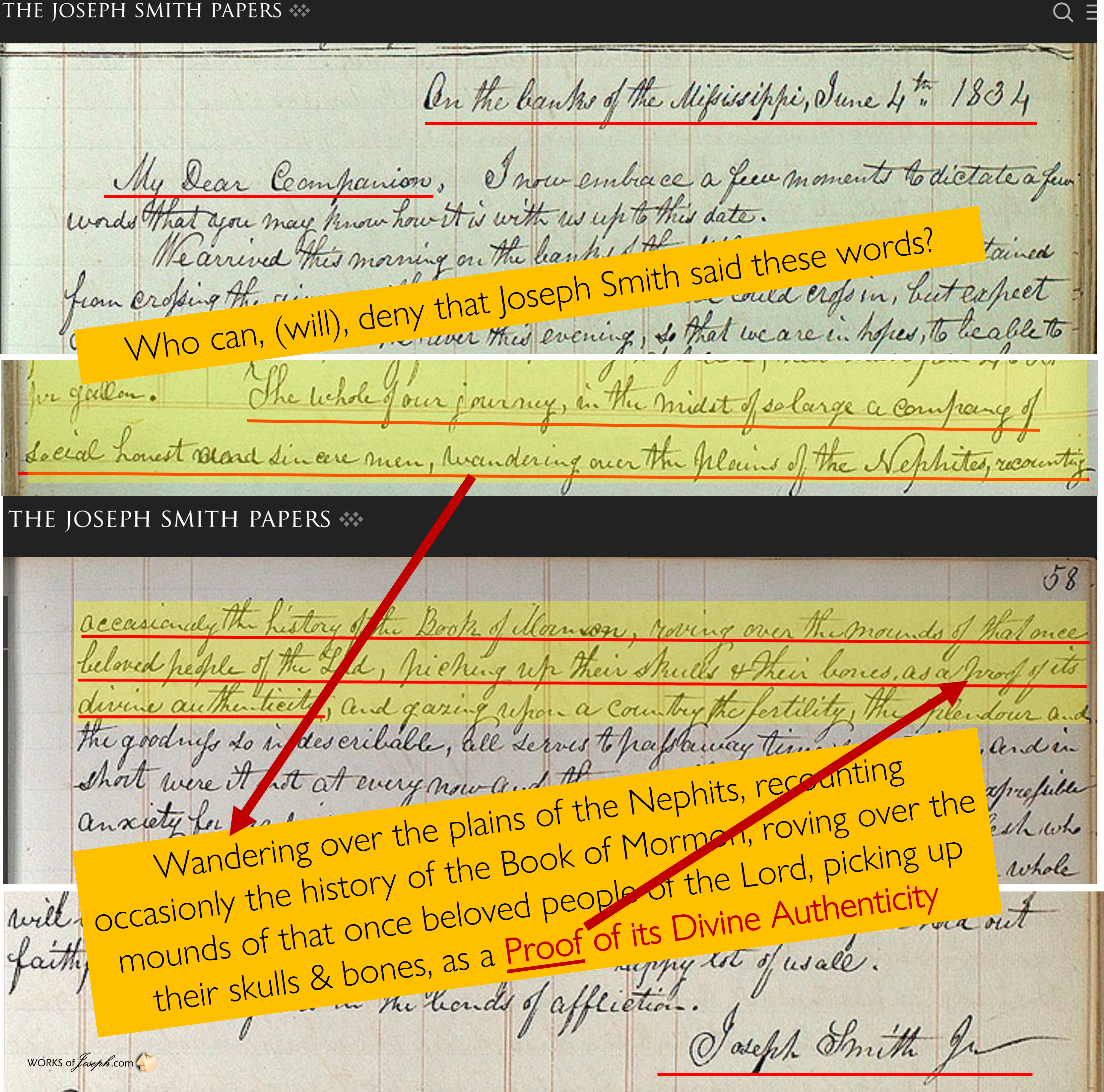
 Why are more and more people of the world claiming that Noah’s flood was fictional or just a good story? More people are saying that Adam wasn’t the first man on this earth. Why are more and more members of the Church of Jesus Christ of Latter-day Saints claiming that the Book of Mormon contains a lot of great parables that aren’t real stories, but just parables that can teach us good things? Is the Bible the Word of God? We answer yes as far as it is translated correctly. We do know however that the stories in the Bible are actual accounts of real people in real places, just as the Book of Mormon is.
 Why would we believe anything else? Because Satan’s plan is in full force. Remember this is Satan’s world right now. It won’t be Christ’s until the second coming. The craftiness of man is constantly being mixed with scripture and folklore. The “Great and Spacious building” is truly coming from the halls of academia. Many intellectuals continue pointing their fingers at humble followers of God from the heights of those house’s of cards. “Who’s on the Lord’s side who?” There are “save two churches”, one that speaks the truth of the Savior and all others who teach of man and his so-called wisdom.
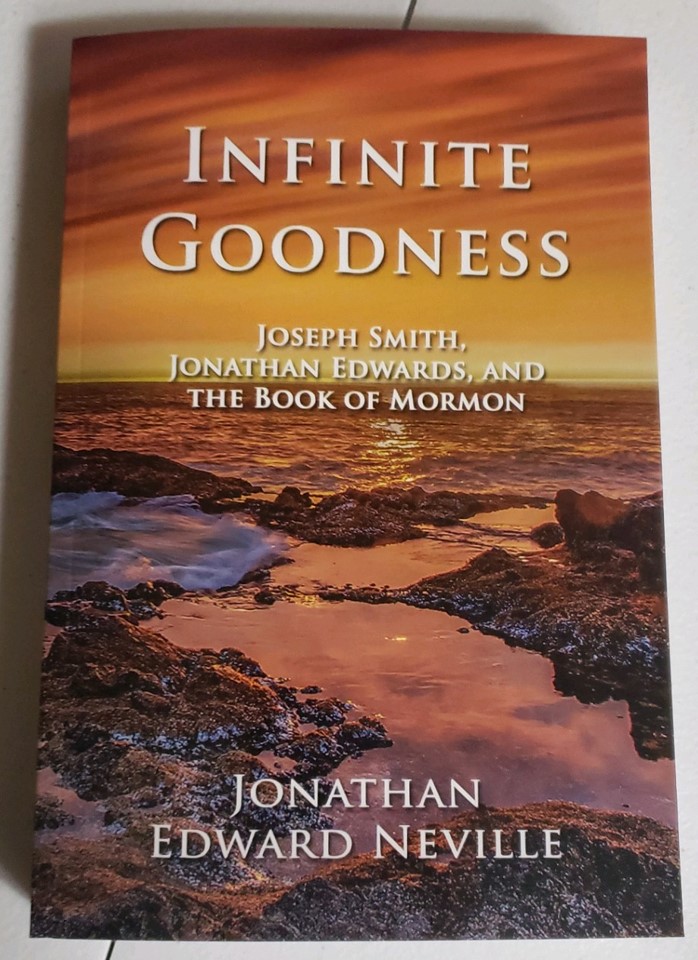

 The de-literalizing of the Book of Mormon became apparent to me when I took a closer look at the lesson manuals, the CES/BYU curriculum, the Saints book, the visitors centers, etc. These all repudiate the teachings of the prophets about the New York Cumorah. I attribute all of those to the M2C Church employees.