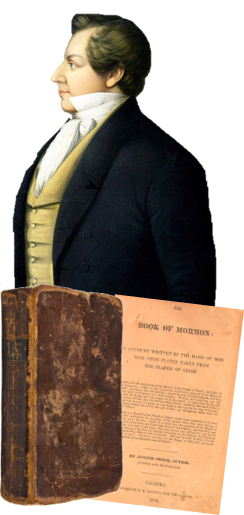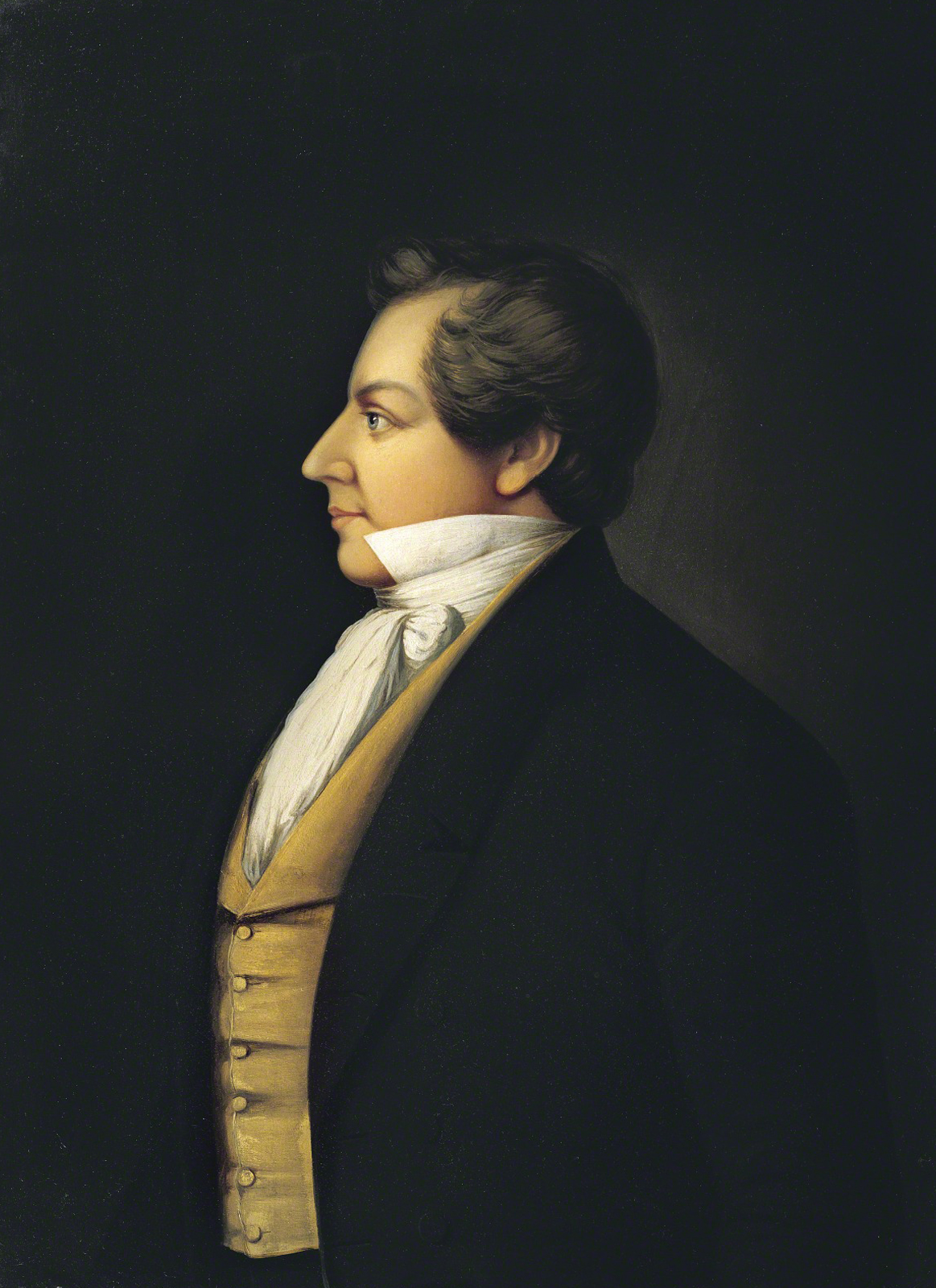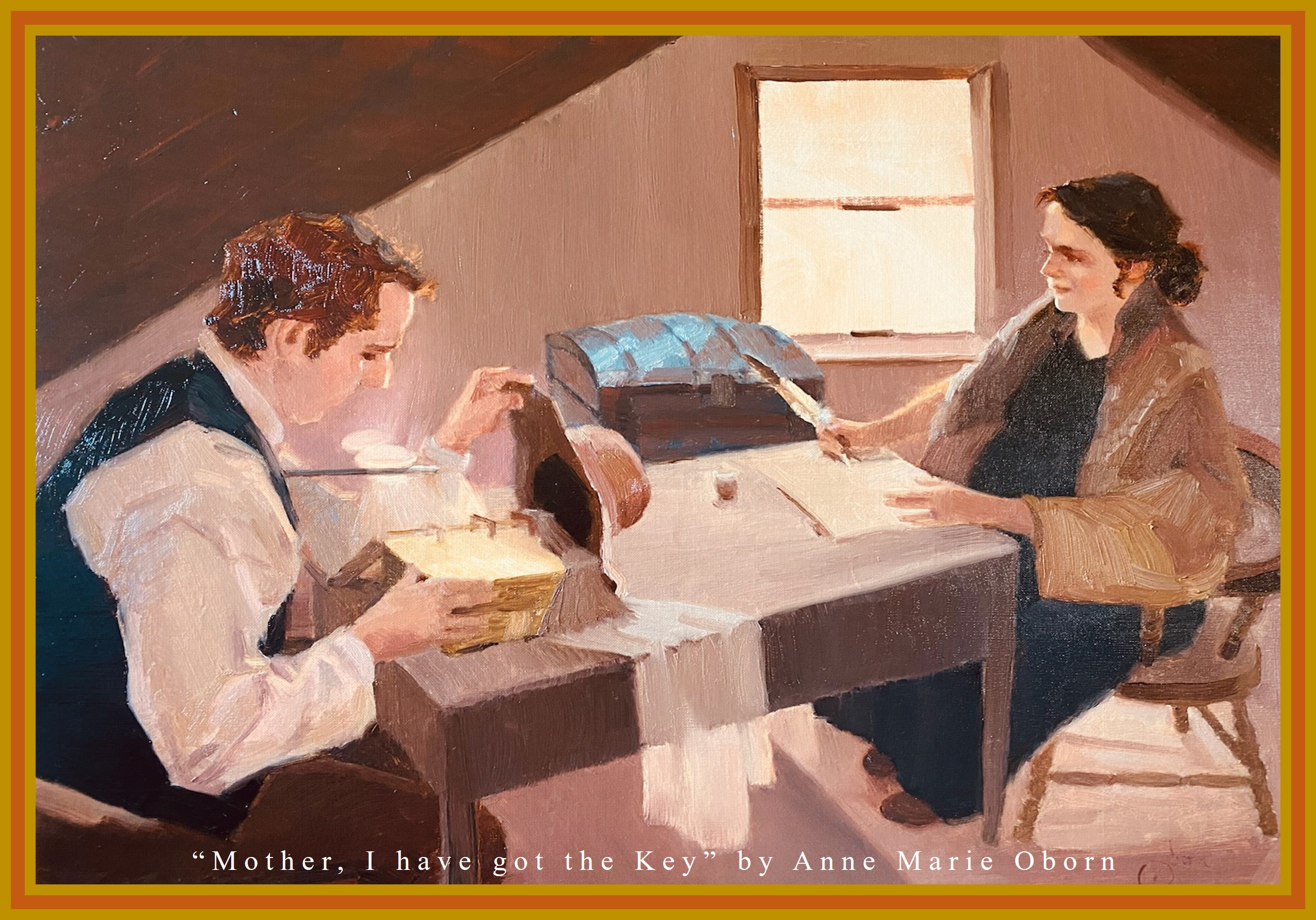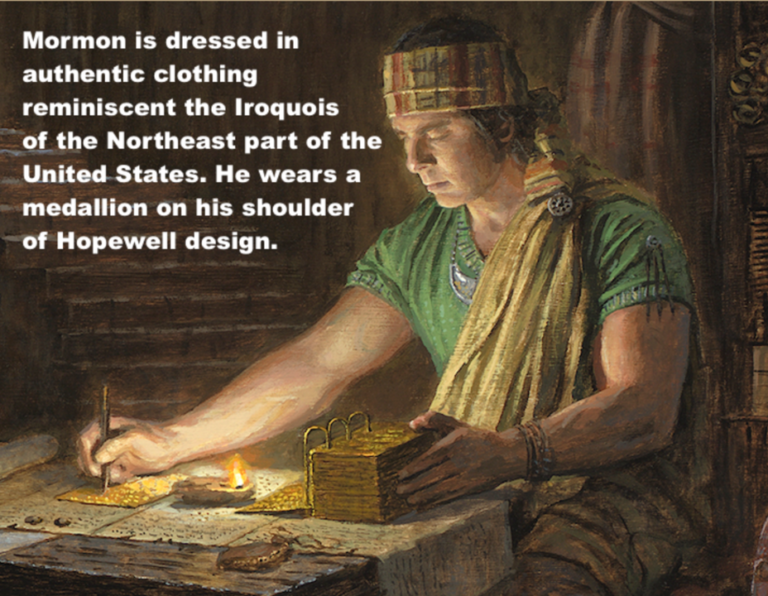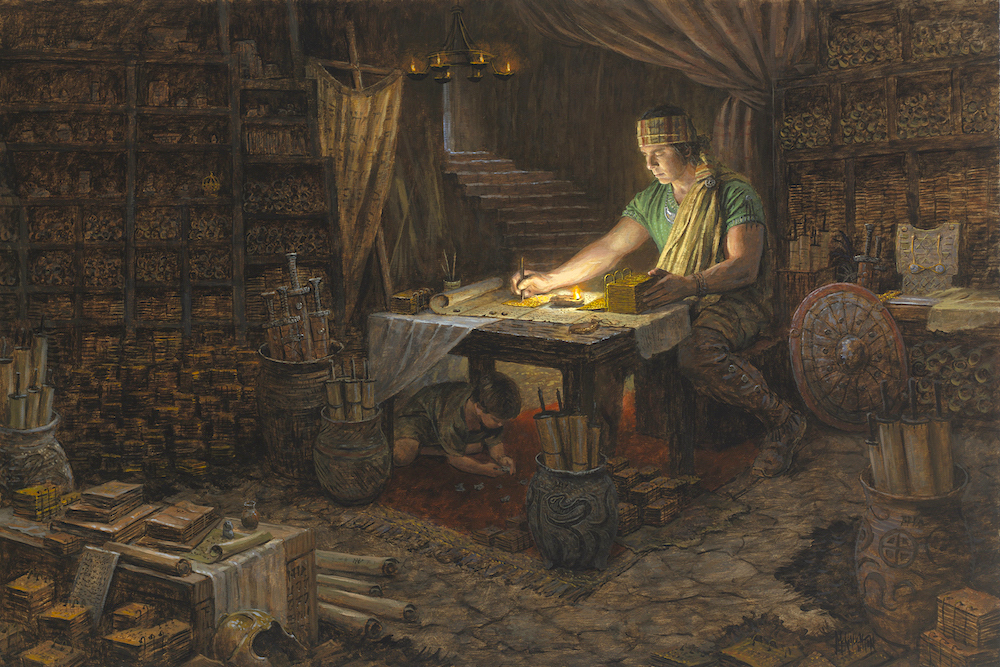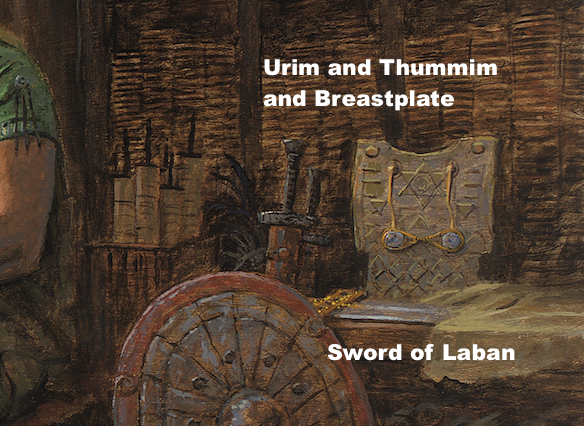
Happy Birthday to a wonderful man and our Prophet in this last Dispensation, Joseph Smith Jr.
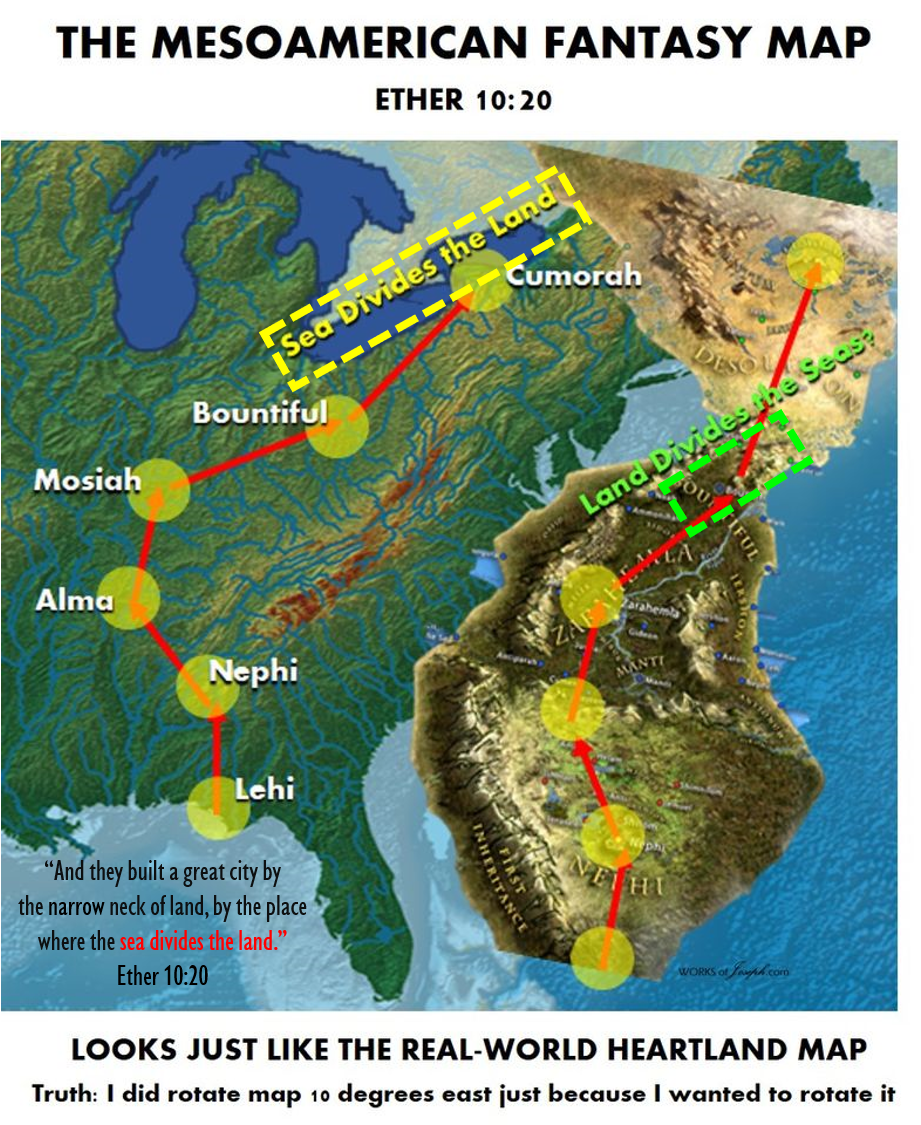
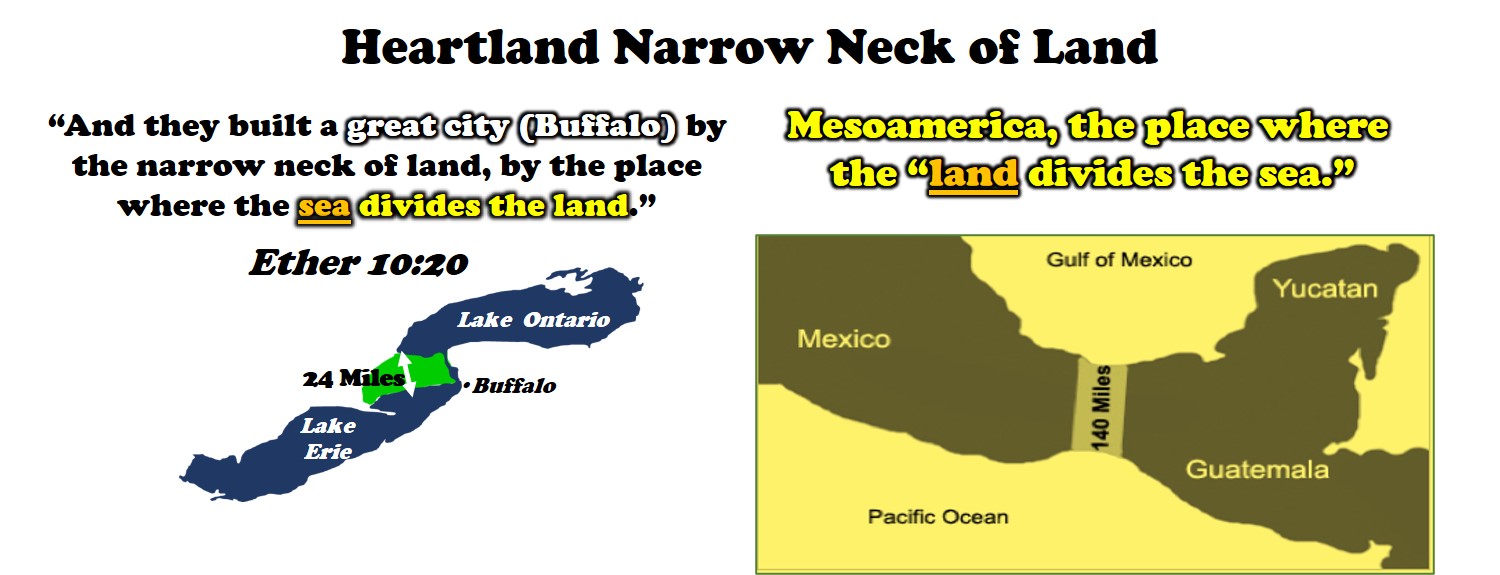
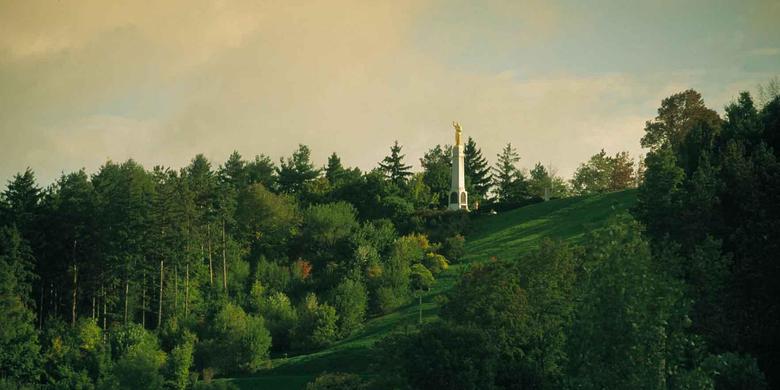
I believe the Prophet Joseph Smith actually knew a great deal about Book of Mormon geography. I believe if you study, read and pray about the Prophet Joseph’s writings, you will find his strong belief in the North American setting for the Book of Mormon. Read Letter VII, Wentworth Letter, Josephs letter to Emma, D&C 28, 30,125, 128 and many other sources that reflect this belief. I believe it is important to know more about where Lehi landed, and Nephi served, and where the final battles of the Nephites happened. It adds to my testimony just as knowing the Lord was born in Bethlehem. Cumorah in New York is the key. This is where the angel appeared to Joseph, where the plates were hidden and the very hill where the Jaredites and Nephites were destroyed.
Below is some great counsel from the LDS Newsroom about our witnesses about Church doctrine. I have felt a deep confirmation for example, that there is only ONE CUMORAH. This knowledge gives me a deeper understanding of the important role that Hill Cumorah played in the coming forth of the Book of Mormon.
“Individual members are encouraged to independently strive to receive their own spiritual confirmation of the truthfulness of Church doctrine. Moreover, the Church exhorts all people to approach the gospel not only intellectually but with the intellect and the spirit, a process in which reason and faith work together.” LDS Newsroom
There is also a fine line between good and evil, and may we find the truth that Joseph Smith was inspired to restore, and let the Spirit of the Holy Ghost guide you.
Good vs. Evil
“The power of seership is one of the greatest gifts ever given to man; and the time is not far distant when every man who bears the Priesthood will be a seer. But it can only be when men have proved themselves able to withstand all of the false deceptions of the devil. Today the powers of crystal ball gazers, astrologers, Ouija boards, etc., are abounding because men have forsaken or rejected the true seers of God. Thousands of people seek unto ‘wizards who peep and mutter’ etc., but they will not seek unto the living God. I can say to all the inhabitants of the earth that before what is called spiritualism was ever known in America, I told the people that if they would not believe the revelations that God had given, He would suffer the devil to give revelations that they–priests and people would follow after. . . I told the people that as true as God lived, if they would not have the truth they would have error sent to them, and they would believe it.” (Brigham Young, Deseret News, June 18, 1871, p. 308) (See Revelation 2:17 and D&C 130:11)
Ouija Board
“He that hath an ear, let him hear what the Spirit saith unto the churches; To him that overcometh will I give to eat of the hidden manna, and will give him a white stone, and in the stone a new name written, which no man knoweth saving he that receiveth it.” Revelation 2:17
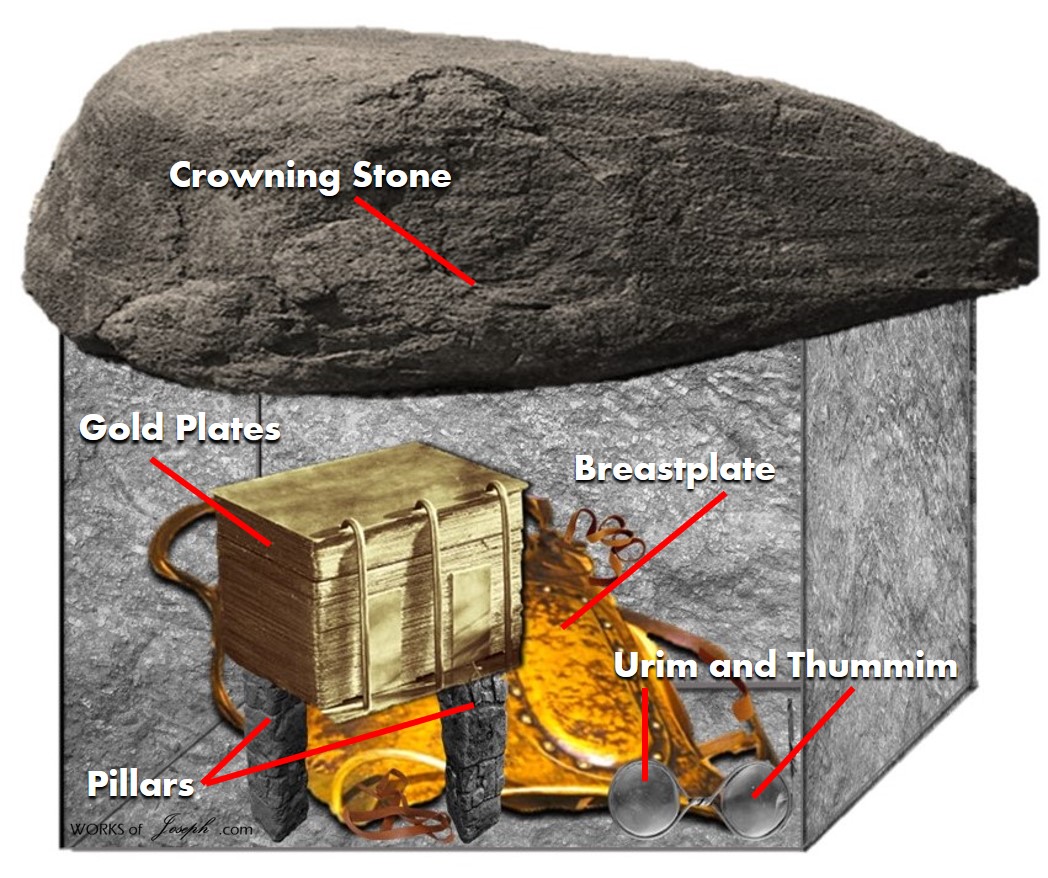
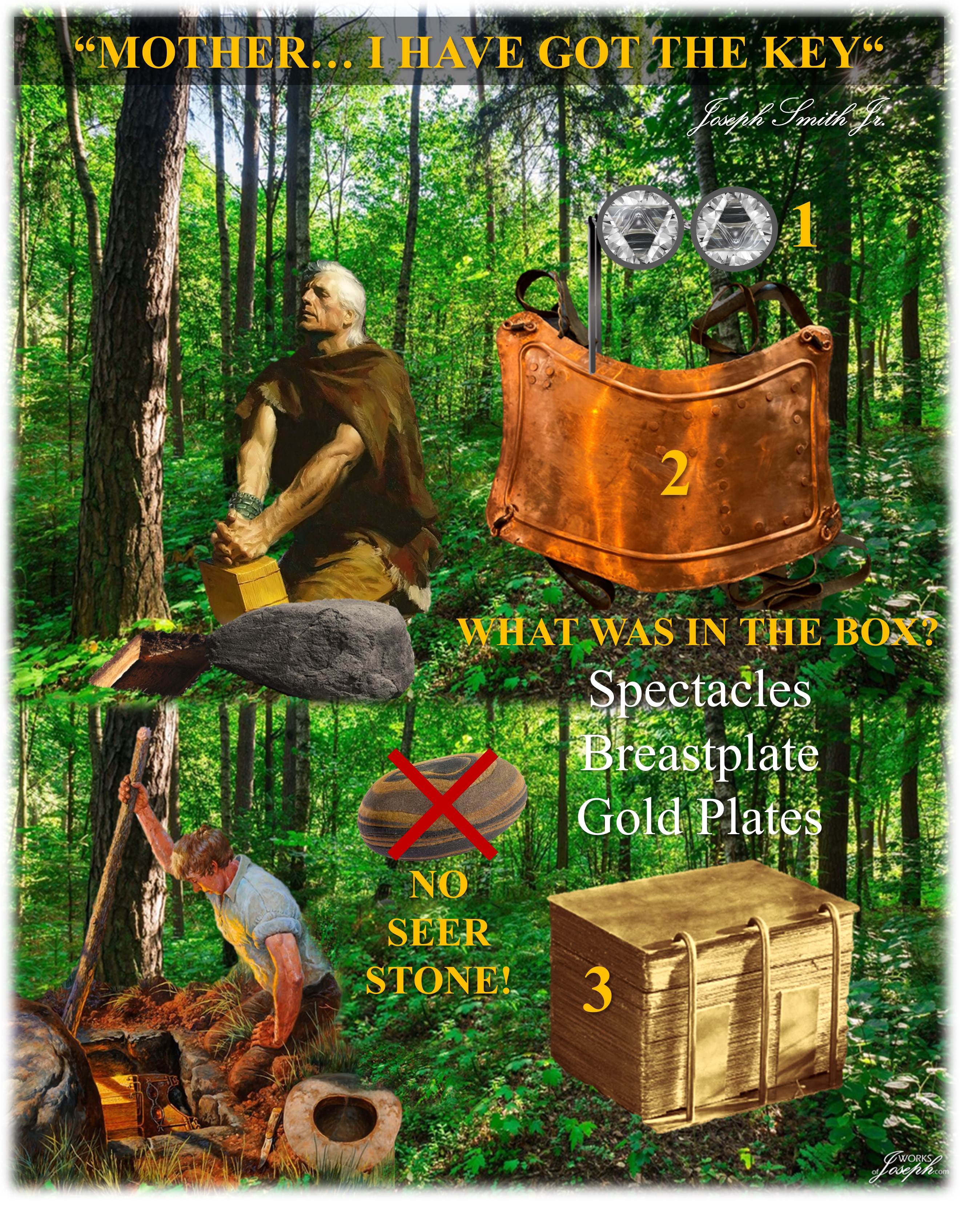
Could this white stone be a special tool the Lord blesses us with, as we are worthy? In a similar manner the Urim and Thummim may have been given to Joseph Smith to assist him in translation of the gold plates. What blessings we have in store as we choose true principles.
“I am angry with this people, and my fierce anger is kindled against them; for their hearts have waxed hard, and their ears are dull of hearing, and their eyes cannot see afar off; And for these many generations, ever since the day that I created them, have they gone astray, and have denied me, and have sought their own counsels in the dark; and in their own abominations have they devised murder, and have not kept the commandments, which I gave unto their father, Adam.” Moses 6 27-28
Crystal Ball
All good things of God are imitated by Satan. Why? Because they are good and Satan is the ultimate purveyor of evil. God has the “True Order of the Priesthood’ and there is also the false priesthood of Satan. We read, “Now, Pharaoh being of that lineage by which he could not have the right of Priesthood, notwithstanding the Pharaohs would fain claim it from Noah, through Ham, therefore my father was led away by their idolatry;” Abraham 1:26
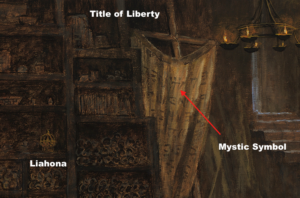
Liahona
For example we have the Liahona that lead Lehi to the Promised Land and there is a crystal ball that will lead anyone to Hell.
“Set your affection on things above, not on things on the earth.” Colossians 3:2. It is our choice. Today we have men becoming women and women becoming men as a direct attack on God’s greatest creation Men and Women. We are killing children before they have the opportunity to live on this wonderful earth. Good or Evil?
“For I remember the word of God which saith by their works ye shall know them; for if their works be good, then they are good also… “Wherefore, a man being evil cannot do that which is good; neither will he give a good gift.” Moroni 7: 5,10
Think of the joy we have in the computer, smart phones, airplanes, satellites and other modern conveniences. Each can be used for good or for evil. Which do we choose? Rated “R” movies, or “PG”? Good book or bad? Healthy food or not?
One of the great purposes in life is to figure out how to get our Spirit to become stronger on earth than our physical body. I believe the Prophet Joseph Smith learned while on this Earth how to control his body by being a spiritual giant. I think Joseph was ready to be resurrected when we learned this great truth. Joseph is with us today in our struggles just as past Prophets are, probably with resurrected bodies to assist us even more.
SUPERSTITIOUS PRACTICES by Joseph F. Smith
Urim and Thummim
“It was no uncommon thing for people of eastern nations, almost from time immemorial, to profess to hold communication with the spirit world through the medium of superstitious practices. There were magical formulae, lucky and unlucky days, incantations, horoscopes, and various other devices, and superstitious rites and practices through which magicians, astrologers, soothsayers, divines, wizards, witches, sorcerers, necromancers, conjurers, and enchanters, played upon the ignorance of their victims. It is, of course, impossible to tell what the secrets of their practices were, but it is safe to say that the power of a strong and cunning will over a weak one, was uppermost in their deceptions. The Children of Israel were forbidden to believe in these various classes of superstition, heathenism and idolatry, for they tended to draw men’s minds from God, the true source of knowledge and power. Says Isaiah: “And when they shall say unto you, Seek unto them that have familiar spirits, and unto wizards that peep, and that mutter: should not a people seek unto their God? for the living to the dead? To the law and to the testimony: if they speak not according to this word, it is because there is no light in them.” They were forbidden to seek wizards that “peep and mutter,” but were commanded to obey the law and the testimony of the prophets.
Peep Stones in a Hat
One would think that in the day in which we live the belief in witches and witchcraft no more exists, and that the counsel given to ancient Israel in this respect would be unnecessary to the Latter-day Saints, but apparently this is not the case. Word comes from a northern stake of Zion which indicates that in a certain settlement the belief in these things is fairly rampant, and a great deal of trouble and unnecessary annoyance have been given to the authorities of the stake and ward because of this absurd belief entertained by certain foolish old men and women of the ward.
Joseph F. Smith
It is needless to assert that to those who are intelligent, and not bound by old notions and superstitions, there is no truth in what people call witchcraft. Men and women who come under the influence of a belief therein are bewitched by their own foolishness, and are led astray by pretenders and mischief-makers who “peep and mutter.” It is really astonishing that there should be any to believe in these absurdities. No man or woman who enjoys the Spirit of God and the influence and power of the holy priesthood can believe in these superstitious notions; and those who do, will lose, indeed have lost, the influence of the Spirit of God and of the priesthood, and are become subject to the witchery of Satan, who is constantly striving to draw away the Saints from the true way, if not by the dissemination of such nonsense, then by other insidious methods.
One individual cannot place an affliction upon another in the way that these soothsayers would have the people believe. It is a trick of Satan to deceive men and women, and to draw them away from the Church and from the influence of the Spirit of God, and the power of his holy priesthood, that they may be destroyed. These peep-stone men and women are inspired by the devil, and are the real witches, if any such there be. Witchcraft, and all kindred evils, are solely the creations of the superstitious imaginations of men and women who are steeped in ignorance, and derive their power over people from the devil, and those who submit to this influence are deceived by him. Unless they repent, they will be destroyed. There is absolutely no possibility for a person who enjoys the Holy Spirit of God to even believe that such influences can have any effect upon him. The enjoyment of the Holy Spirit is absolute proof against all influences of evil; you never can obtain that Spirit by seeking diviners, and men and women who “peep and mutter.” That is obtained by imposition of hands by the servants of God, and retained by right living. If you have lost it, repent and return to God, and for your salvation’s sake and for the sake of your children, avoid the emissaries of Satan who “peep and mutter,” and who would lead you down to darkness and death.
It is impossible for anyone possessing the spirit of the gospel and having the power of the holy priesthood to believe in or be influenced by any power of necromancy.
My advice to the Saints is to so live that they may have the Spirit and influence of the Lord with them; for, having that influence, it is a wall of protection against all powers of evil that may seek an inroad into their hearts and thoughts. The possession of the Holy Spirit is a sure defense against evil thoughts, superstitions, ignorance, and the follies and machinations of evil-disposed men and women. Every Latter-day Saint should so conduct himself that he may enjoy this Spirit, and there will be no danger of his being led away by the foolish nonsense that ignorance and superstition seek to implant in the minds of people concerning the existence of witches and witchcraft.
Joseph F. Smith Mission in Hawaii
There is no danger to anyone in so-called witchcraft itself; the evil effect lies in the belief therein. The person who believes injures himself through fear and belief; no other person has power to injure him; it is himself who injures himself through the superstition of his own mind. In the Sandwich Islands this superstitious belief was very prevalent, years ago. They call it pule anaana, or the prayer of sorcery. It was not uncommon thing for a person who became beset with the thought that he was being “prayed to death” actually to wither away, and die. I knew a good woman, wife of a leading native Latter-day Saint whom I often visited, who one day became very ill. I asked what was the matter. She said she was being “prayed to death,” and she was actually seriously ill, and getting ready to die; so great was her fear and faith in what some evil-designing, but in himself impotent, person, had whispered about her. I told her it was all wrong, that she must not believe it; it was impossible; she must believe, on the contrary, that she would live, and be well. I labored with her in this way for some time, and she finally believed and was restored, and such nonsense never had power over her again. It was not so with a young native cook whom the missionaries employed. Some of the jealous natives, one day when we were off on a visit, brought him word that he was being “prayed to death,” and it so frightened him, and so great was his belief in this superstition, that he died within a week, and we were without a cook when we returned.
As Israel of old were enjoined to obey the law and the testimony given to them by Moses, so the Latter-day Saints are commanded to turn to the gospel law restored anew to them, and to live so that they may enjoy the Holy Spirit of promise. A sentiment against belief in the power of witchcraft, and all other evil things should be cherished among the Latter-day Saints, for persons who believe or express faith therein are in danger of losing the Spirit of God, and off lacing themselves under the influence of the adversary whose footsteps lead to death.”
Joseph F. Smith
IMPROVEMENT ERA Vol. V. The Glory of God is Intelligence. No. II. PUBLISHED BY THE GENERAL. BOARD. Joseph F. Smith, Heber J. Grant,
The truth found in the Scriptures (as it is translated correctly) and in our Temples, verify the Lord’s truth that we sometimes over look. We read a scripture and without spiritual confirmation we continue to read the next verse. This is a habit for most of us including myself. We want to read the scriptures as it makes us feel so good, but at times we read so quickly and without spiritual confirmation, we may not learn as much truth as we could. The same applies about our listening by the Spirit in our Temples.
Can we find truth about Dinosaurs, Evolution, and Geography? I think we can as we study and read and pray for personal revelation.
Arthur Lakes’s sketch of expedition members W.H. Reed (left) and Edward Kennedy in Como Bluff
About Modern Theories
“I attended sessions of meetings for the institute teachers, held in the assembly room on the fourth floor of the Church Office Building. I cannot say that I was very greatly edified. Too much philosophy of a worldly nature does not seem to mix well with the fundamentals of the gospel. In my opinion many of our teachers employed in the church school system have absorbed too much of the paganism of the world and have accepted too readily the views of uninspired educators without regard for the revealed word of the Lord. What to do about it I do not know. It is a problem for the Presidency to consider. It is a very apparent fact that we have traveled far and wide in the past 20 years [since his father’s death]. What the future will bring I do not know. But if we drift as far afield from fundamental things in the next 20 years, what will be left of the foundation laid by the Prophet Joseph Smith? It is easy for one who observes to see how the apostasy came about in the Primitive Church of Jesus Christ. Are we not traveling the same road?The more I see of educated men—I mean those who are trained in the doctrines and philosophies now taught in the world, the less regard I have for them. Modern theories which are so popular today just do not harmonize with the gospel as revealed to the prophets, and it would be amusing if it were not a tragedy to see how some of our educated brethren attempt to harmonize the theories of men with the revealed word of the Lord. Thank the Lord, there is still some faith left and some members who still cherish the word of the Lord and accept the prophets. Surely the world is ripening rapidly for the destruction, and Satan has power and dominion over his own. If any are saved surely the Lord must soon come and have power over his Saints and reign in their midst, and execute ‘judgment upon Idumea, or the world.” Joseph Fielding Smith The Life of Joseph Fielding Smith 212. Deseret Book Co., 1972.
I also believe the words in D&C 121 verse 33 says, “pouring down knowledge from heaven upon the heads of the Latter-day Saints.” This knowledge from many in our church is being shared to benefit the lives of many today.
“Therefore, the Lord will judge these so-called intellectuals to whether they want to follow and learn of the Truth (which is literally Christ) or not. The sad thing is that most do not realize following Christ means following and seeking out for the Truth.
This information goes a along with information about the Manti Temple that I have spoken of before about the Temple’s images of Native Americans, HERE. The Manti Temple continues to be one of my favorite temples as I learn a lot just with the paintings and artistry of the building.
Temple Teaching:
The few articles I found about the dinosaurs painted in the Manti Temple are very interesting and exciting to me. I am one who believes the dinosaurs existed during Adam’s day and are not millions of years old. I can’t even fathom how scientists could date dinosaurs as old as they suggest. I believe the simpler answer is that dinosaurs were destroyed during the great flood.
It is a fact from Scripture that animals were created before man and woman. If the Fall of Adam brought death into the world, how could dinosaurs or any other forms of life die before the great Fall? That also says there could be no so-called cave men on the earth before Adam either. Adam was the first to live on this earth and he nor anyone or anything else could have died before sin and death was brought into the world after the Fall. How can Professors or intellectuals teach anything else besides this truth and common sense?
Read the book “Universal Model” by Dean Sessions for a complete understanding of the geology and anthropology about dinosaurs and many other things. The New Millennial Science Book will amaze you.
“There are those who say that revealed religion and organic evolution can be harmonized. This is both false and devilish.” Bruce R. McConkie, June 1, 1980, BYU fireside address
Dinosaurs—Part of God’s Creation
“The Bible begins with a statement that is so simple a child can understand it, yet so inexhaustibly profound: In the beginning God created the heaven and the earth.” —Dr. Jeremy Lyon, “Genesis: Paradise Lost.”
It is the most dramatic and important opening of any chapter of any book. Given as a declaration of fact, the first verse of Genesis covers the creation of time, space, and matter in a single sentence; a solitary breath. Thus began the world and everything in it.
Genesis 1:24 “And God said, Let the earth bring forth the living creature after its kind, cattle, and creeping thing, and beast of the earth after his kind: And it was so.”
Today, we continue to discover physical evidence of many creatures that no longer exist, including reptiles known as dinosaurs. Their skeletal remains give us a glimpse into the structure and size of these remarkable animals. Yet the controversy rages: Did these creatures evolve into existence and eventually become extinct millions of years before humanity stepped onto the scene of world history? Or were humans and dinosaurs created by God; co-existing for centuries before saurian extinction?
Why Aren’t Dinosaurs Mentioned in the Bible?
If dinosaurs were part of the original creation and taken on board Noah’s ark with the rest of the land dwelling animals, why aren’t they mentioned in the Bible?
Since the word “dinosaur” wasn’t actually coined until 1841, the creatures we now refer to as dinosaurs were simply called dragons throughout most of history. Not only does the Bible use the word “dragon” repeatedly, 21 times in the Old Testament and 12 times in the Book of Revelations, the Book of Job describes creatures called Behemoth and Leviathan, which seem to indicate large, reptilian beasts, like dinosaurs. (See the Book of Job, chapters 40 and 41.)” By Eric Hovind
Things I Did Not Know: Dinosaurs in the Manti Temple
By Edje Jeter August 4, 2013
A few weeks ago, I worshipped in the Manti Utah Temple for the first time. My parents were endowed, married, and sealed there, so it is a special place to me. Amidst my devotions and pondering, I was somewhat taken aback to find paintings of Mesozoic reptiles on the wall of the Creation Room. [1]
In 1886-87, Carl Christian Anton Christensen (usually CCA Christensen, 1831-1912) painted a 4.9-meter-high mural stretching completely around the Creation Room of the Manti Temple. The mural shows elements of creation up to, but not including, humans. The sequence is clouds and a sphere; volcanoes and storms; sunrise, mountains, and rivers; plants; earliest animals; fowls; non-domestic animals; domestic animals; and water creatures. [2] The Earliest Animals, centered on the back wall, are what caught my attention (see image below). [3]
The animals in this image seem to be, respectively, (starting at top, moving clockwise) two pterosaurs, a plesiosaur, a mosasaur [ichthyosaur; see end of post], and a crocodylomorph. Note that these groups are only dinosaurs in the popular sense of extinct reptiles, so my post title is imprecise. [4]
I don’t have much to say about the mural itself beyond: My religion is so cool that we painted dinosaurs on the walls of one of our most holy buildings!
I’d like to make a few other points, though. First, Christensen was painting the mural right in the thick of the Bone Wars, 1877-1892, a personal conflict between two paleontologists that led to intense exploration for Mesozoic reptile fossils in the American West, with attendant publicity. One of the two scientists even searched for fossils in Utah in 1870.
Second, I don’t know anything about the mural other than its existence. That is, I don’t know about Christensen’s intentions, doctrinal interpretations, sources, consultations with church leaders, etc, nor about any reactions to the mural then or any time since. I am happy, however, to see the Mesozoic represented in the Creation Room and not in the Garden Room, and to have reptiles preceding birds. [5]
Third, Christensen wasn’t the only one. John Hanson Beadle’s anti-Mormon Polygamy: Or, The Mysteries and Crimes of Mormonism (1882) includes the image below. [6]
The caption says: The Salt Lake Basin, as Geologists Represent It Thousands of Years Ago. Present-day geologists would agree that much of present-day Utah was, in fact, at one point (actually, more than once) part of an inland sea though they would amend the thousands to hundreds of millions. Beadle’s comment was:
“—long a region of misconception and fable—then the chosen home of a strange religion, and but yesterday found to be of use and interest to the civilized world.” [7]
Some images of other Manti rooms are found here; a BYU Studies article, Minerva Teichert’s Manti Temple Murals? (Doris R Dant, 38.3 (1999): 6-44) has complete photos of the World Room and a discussion of its painting.
—— Edit, 2013 Aug 05 Mon 0030 CDT —— Mina pointed out in the comments that Christensen’s Mesozoic reptiles are pretty standard and, in fact, look like versions in Louis Figuier‘s La Terre avant le déluge (1863, French; English translation, The World before the Deluge, 1872, revised and translated by HW Bristow). Following Figuier, what I identified as a mosasaur above is probably intended as an ichthyosaur. Henry de la Beche’s Duria Antiquior (1830) shows a plesiosaur and ichthyosaur fighting, as do other nineteenth-century images. Of course, correlation is not, itself proof that Figuier was Christensen’s source, but the similarity of the anatomy and staging between the images are, let us say, pronounced.
Above is “Ideal Scene of the Lias Period with Ichthyosaurus and Plesiosaurus” (Plate XV, p 231 [English, continuous HTML or individual page PDFs] and 169 [French]).
Above is “Ideal Landscape of the Liassic Period” (Plate XVI, p 241 [English, continuous HTML or individual page PDFs] and 177 [French]). Not shown here is Plate XIII, p 192, which shows an animal (identified as a Nothosaurus) similar to the crocodyloform.—— End Edit ——
[1] The endowment includes representations of the Creation, the Garden of Eden, and the Fall. In most present-day temples, the settings and events are portrayed by a combination of video and murals in different rooms or exclusively by video. The Manti Temple has no video. Initiates start in the Creation Room and move, respectively, to Garden, World (or Telestial), Terrestrial, and Celestial rooms.
[2] The sphere/clouds are at front house-left and then proceeds house-right. The sequence is not rigid; there are some domestic and non-domestic animals mixed together. The sequence generally follows Genesis. I got a bit spatially disoriented by time I reached the Creation Room, but I think the congregation / company faces South, which puts the Mesozoic reptiles on the North wall. I am following Richard L Jensen and Richard G Oman’s naming of the Creation of the Plants, Earliest Animals, Creation of the Fowls, Creation of the Non-domestic Animals, Creation of the Domestic Animals, and Creation of Water Creatures. Richard L Jensen and Richard G Oman, C. C. A. Christensen, 1831-1912: Mormon Immigrant Artist, an exhibition at the Museum of Church History and Art (Salt Lake City: The Church of Jesus Christ of Latter-day Saints, 1984), 58-62.
[3] Jensen and Oman, Christensen, 60.
[4] The word? dinosaur? dates to 1841 and was invented specifically to distinguish?dinosaurs? from the animals represented here, which were among the earliest Mesozoic fossils recognized by modern science.? Mesozoic Reptiles in Manti? Just doesn’t roll off the tongue the way I’d like.
[5] Jensen and Oman also point out the preponderance of fern-like plants in the Mesozoic part of the mural.
[6] Bureau of Illustration Buffalo? The Salt Lake Basin, As Geologists Represent it Thousands of Years Ago? Illustration in Polygamy: Or, The Mysteries and Crimes of Mormonism by John Hanson Beadle and Ovando James Hollister (Philadelphia: National Publishing Co, 1882), 359. I haven’t done a careful comparison, but Polygamy seems to be an updated and expanded version of Beadle’s Life in Utah: The Mysteries and Crimes of Mormonism (Philadelphia: National Publishing Co, 1870). Life in Utah does not have the discussion of geology / paleontology.
Three years ago I wrote about prehistoric reptiles in a mural in the Manti Temple: Things I Did Not Know: Dinosaurs in the Manti Temple. This past summer I went back and, this time, noticed some prehistoric mammals.
I was not able to find images of the particular murals [1], so… with the usual caveats about memory and eye-witnesses of a mural I saw in from across the room in July while doing something else, the animals I saw were:
Deinotherium (looks like an elephant with downward curving tusks),
Megacerops (looks like a rhinoceros with forked horn),
Xiphodon (looks like a camel)
There was also a goat in the same panel, but I didn’t notice anything to distinguish it from a present-day male Alpine ibex (Capra ibex).
The murals in question were painted by Carl Christian Anton Christensen (1831-1912; usually CCA Christensen) in 1886-1887 and depict facets of creation up to, but not including, humans. Below I have included images from Louis Figuier?s La Terre avant le déluge (1863, French; 1872, English), which seems, upon casual inspection, to be a candidate for one of Christensen’s sources. [2]. (Hat-tip again to Mina for pointing out Figuier when I posted about Mesozoic Reptiles.)
The Deinotherium is related to modern elephants but, among other differences, were somewhat bigger and had downward-curving tusks. The name means terrible beast (deino is an alternate spelling of dino as in dinosaur (terrible lizard). They (including the known but not-yet-distinguished as different Prodeinotherium) lived in Eurasia and Africa from about 20 mya to about 1 mya (mya = million years ago).
The Megacerops big horn?) looks like a rhinoceros but is more closely related to the modern horse. I don’t know exactly which animal CCA intended, but if you’re Googling, some other useful names for this or similar creatures are Brontotherium thunder beast) and Titanotherium (Titan beast or—with 19th-century meaning of titan—very large beast). They were present in North America from about 38 mya to 34 mya. Figuier does not have an image of a Megacerops. Two Brontotheres appeared in Ice Age (Blue Sky Studios, 2002).
(Presumed brontotherium on the left, embolotherium on the right.)
The Xiphodon (sword toot?) looks like and is closely related to the present-day camel. Christensen put it in the background. It and close relations lasted from 40 mya to 34 mya.
[1] I started with Richard L Jensen and Richard G Oman, C. C. A. Christensen, 1831-1912: Mormon Immigrant Artist, an exhibition at the Museum of Church History and Art (Salt Lake City: The Church of Jesus Christ of Latter-day Saints, 1984). The blog, Historic LDS Architecture, has several of the Jensen/Oman images.
[2] The images included here are from the 4th edition (Paris: Librairie de L. Hachette et cie, 1864); the linked English translation is The World before the Deluge, revised and translated by HW Bristow (London: Cassell, Petter, and Galpin, 1872).
Merry Christmas! I share a few insights into a fantastic family, The Meldrum’s.
I know a beautiful soul named Shawna Meldrum Blaney. Her husband is Jake who helps Rod with his business a lot. Shawna is Rod and Tonya Meldrum’s beautiful daughter. She has been an inspiration in my life for many years. Since her two traumatic injuries, she has been up and down physically, mostly down. But she is always UP when it comes to Spirit, Drive, Love, and Tenacity. Her faith and courage continue to inspire me.
I wanted during this Christmas season to let you know about a hobby she has that has benefited many people including my own grand kids. Take a look at her products as much of the money goes to charity and gives her a small amount of spending money.
Shawna, Tonya, Cassie
I include in this short article my love and respect for Rod Meldrum who many of you already know. He is a wonderful Man of God and his family is a huge part of it. Here I share a picture of the Lady’s of Meldrum. He has two wonderful boys as well named Devin, who passed away several years ago, and Logan with his wife Sarah and they both live in Logan. They have a few cute dogs as well.
Rod’s wife Tonya is the love of his life. She keeps the business organized and supports Rod in so many areas. Daughter Cassie Meldrum Grover is a fun, talented and very cool mom of Matthew who is Rod’s only grandchild. Ashton Grover is Cassie’s amazing husband.
How Pegacorn Plush came to be: by Shawna Blaney
Five years ago I had three different traumatic brain injuries all compounded in a short amount of time. These head traumas left severe neurological, physiological, autonomic, physical, mental and emotional damage. In short I completely lost control of the right side of my body, most especially the use of my right arm and hand.
Though I endured Devastating loss, insurmountable obstacles, constant heart break and felt completely Shattered.. God never left my side. His miracles and tender mercies were all around me. And I learned to trust him in ways I had never imagined.
After an agonizing journey, thousands of prayers and the power of God, my right arm and hand have been restored to me. And my health is improving in miraculous ways. It is truly God who has healed me thus far.
With the lack of use over the years, the muscles in my arm and hand atrophied; leaving them very weak and unusable. We have found that sewing horses is bringing back the dexterity and functionality in my shoulder, arm and hand. Having loved creating and being artistic by nature it was a thrill to be able to make something beautiful again. And it’s brought me great joy to see the joy these ponies bring others!
What started off as gifts to friends and family members, became a large scale donation of ponies to Primary Children’s Hospital and to Operation Underground Railroad. Then through other’s desires to buy their children ponies as well, it has become a small scale business!
I know God lives. He loves each and every person so deeply. I know he hears and answers every prayer, the ones said and the ones unsaid. Miracles are real, they happen every day, in the most unimaginable ways. Priesthood power is restored to earth and I know by his hands we can have peace even in the midst of terrible affliction.
I hope my story might strengthen you in your loss- your trials. Don’t give up. We testify that no matter what happens or doesn’t happen in our lives- God is right there beside us. The darkest nights produce the brightest stars.. if this night is dark for you.. hold on…. Help will come. Sometimes it’s in the darkness where we learn who we truly are.. and who God truly is. Miracles come by pure unwavering faith- a faith that dispels ALL doubt and fear.. until you simply know, trust and believe 100% that God will provide the miracle you seek.
“I am worried that I am at risk of not surviving spiritually. President Nelson told me this in general conference on April 4, 2018, and in his prophetic way, he even set a time frame— “in coming days.” It has already been about 1,380 days between when he said it and today. You have heard his warning perhaps a hundred times, but here it is once more: “In coming days, it will not be possible to survive spiritually without the guiding, directing, comforting, and constant influence of the Holy Ghost”.
Yes, it is a warning but also a promise: “In coming days, it will be possible to survive spiritually with the guiding, directing, comforting, and constant influence of the Holy Ghost.” The critical part of the warning/promise is the “constant influence of the Holy Ghost.” Why? Because you can’t be guided, directed, or comforted unless you are connected. You all know what it is like when the Internet goes down or you drop a call. It is a million times worse if you get disconnected from the Holy Ghost by being too busy, too distracted, or too prideful, which are only examples of the too many ways to make Him uncomfortable, so He doesn’t want to be with us.” By Marilynne Todd Linford · October 10, 2021 Meridian Magazine
“There are no guarantees that earthly families will be ideal or even functional. But as President Henry B. Eyring taught, families ‘give God’s children the best chance to be welcomed to the world with the only love on earth that comes close to what we felt in heaven—parental love’ (“Gathering the Family of God,” Ensign or Liahona, May 2017, 20). (Come, Follow Me Manual, December 13–19).
“Individual progression is fostered in the family, which is “central to the Creator’s plan for the eternal destiny of His children.” The home is to be God’s laboratory of love and service. There a husband is to love his wife, a wife is to love her husband, and parents and children are to love one another. . . The Church is to assist and not to replace parents in their responsibilities to teach their children” (President Russell M. Nelson, “Salvation and Exaltation,” April 2008 General Conference)
Last Days
The time in which we now live. The days (or dispensation of time) just before the Second Coming of the Lord. LDS Study Helps
Signs of the Times
Events or experiences that God gives to people to show that something important in His work has happened or will soon happen. In the latter days, many signs for the Second Coming of the Savior have been prophesied. These signals allow faithful people to recognize God’s plan, be warned, and prepare. LDS Study Helps
Second Coming of Jesus Christ
At the beginning of the Millennial Era, Christ will return to the earth. This event will mark the end of the mortal probation of this earth. The wicked will be removed from the earth and the righteous will be caught up in a cloud while the earth is cleansed. While no man knows exactly when Christ will come for the second time, He has given us signs to watch for that indicate the time is drawing near (Matt. 24; JS—M 1). LDS Study Helps
Spiritual Condition of Man During End-Times
The spiritual condition of God’s end-time people is a catalyst for the upcoming events, and the tendency of many Saints is going to be to blame family, friend, or the brethren. Actually we are seeing this today more and more, and I have to say is a lack of understanding the scriptures.
This also going to reinforce the prophetic message of President Nelson of receiving the guidance of the Holy Ghost and personal revelation as a survival factor.
ALL IS NOT WELL IN ZION
It is absolutely clear that ‘ALL IS NOT WELL IN ZION” (2 Nephi 28:21), as it is very bad, BUT there is something good that is going to come up from all this.
Also Isaiah is an end-time event (Isaiah 30:8), and the time of the Gentiles refers to the “last days” (2 Nephi 27:1), which are going to be the events of the end-times (Revelation 10:6), which hasn’t happened yet. We need to be very careful WHEN we start attributing the words of Isaiah and to whom, because with the judgment we make on others will come back to judges us (Mathew 7:2).
Now, WHEN we start seeing the words of Isaiah fulfilled, we need to understand what is happening completely before we try and interpret. Let’s jump about discuss what Isaiah says about the “seers” and “WHY”, after we enter into Isaiah prophecy time.
Isaiah links to a type of the past to predict the future in everything he speaks (3 Nephi 23:1-3), when it comes to the prophets, priest and seers, Isaiah used the fact the prophets and seer of the past “stumble” or “reel” (Isaiah 28:7), to predict the fact that end-time seers “err” and “blunder”, because they won’t be able to see.
The question is why? Why the “seers” won’t be able to see?
Here is where many who point the finger of criticism need to slow down and understand what is going on.
Paul mentioned that the whole “church” is for the edifying of the body of Christ:
“And he gave some, apostles; and some, prophets; and some, evangelists; and some, pastors and teachers;
For the perfecting of the saints, for the work of the ministry, for the edifying of the body of Christ” (Ephesians 4:11-12)
“Now ye are the body of Christ, and members in particular”. (1 Cor 12:17)
The seers are an extension of the “eyes of the people”
Nephi understood this perfectly, and differently than Isaiah he gave us a plain prophecy based on Isaiah (2 Nephi 25-27).
Wherefore, hearken, O my people, which are of the house of Israel, and give ear unto my words; for because the words of Isaiah are not plain unto you, nevertheless they are plain unto all those that are filled with the spirit of prophecy. But I give unto you a prophecy, according to the spirit which is in me; wherefore I SHALL PROPHECY ACCORDING TO THE PLAINNESS which hath been with me from the time that I came out from Jerusalem with my father; for behold, my soul delighteth in plainness unto my people, that they may learn. (2 Nephi 25:4)
Nephi understood that because of THE PLAINNESS of his prophecy we can’t err:
“But behold, I proceed with mine own prophecy, according to my plainness; in the which I know that no man can err; nevertheless, in the days that the prophecies of Isaiah shall be fulfilled men shall know of a surety, at the times when they shall come to pass”. (2 Nephi 25:7)
There is also a clear indication that “WHEN” the prophecies of Isaiah shall be fulfilled then we will know for “surety”, which we cannot say that today.
The difference between Isaiah and Nephi’s prophecy is that Nephi didn’t use types of the past to predict the future, he was not tied to that, then he spoke in plainness.
This is what Nephi said about what seers won’t see:
“For behold, the Lord hath poured out upon you the spirit of deep sleep. For behold, ye have closed your eyes, and ye have rejected the prophets; and your rulers, and the seers hath he covered BECAUSE OF YOUR INIQUITY”. (2 Nephi 27:5).
When this is fulfilled, when the seers are going to be “covered”, is because of our iniquity.
Is this familiar? Absolutely, see another type in what interestingly is called “Liahona” which was also an extension of the faith and diligence of the people:
“And it came to pass that I, Nephi, beheld the pointers which were in the ball, that they did work according to the faith and diligence and heed which we did give unto them.
And there was also written upon them a new writing, which was plain to be read, which did give us understanding concerning the ways of the Lord; and it was written and changed from time to time, according to the faith and diligence WHICH WE GAVE UNTO IT”. (1 Nephi 16:28-29)
And we see that it was because of the iniquity of the “people” that the Liahona or “compass”, didn’t work (1 Nephi 18:12)
Going back to Nephi’s prophecy and 2 Nephi 27:5, the Lord covered the seers and part of this also is by design. Of course it is because the inequities of the people, but as well is part of the recreation motif in the end-time, which Isaiah also predicts.
This is linked to the fact that the Lord is going to pour out upon his people, the tabernacle of God, the spirit of “deep sleep”, as he poured upon Adam:
“And the Lord God caused A DEEP SLEEP to fall upon Adam, and he slept” (Genesis 2:21)
This is necessary for recreation, and then as most of us know, God tells Adam to “Awake and Arise”, that also that happens in the end-time:
“AWAKE, awake; put on thy strength, O Zion” (Isaiah 52:1)
“Shake thyself from the dust; ARISE, and sit down, O Jerusalem”: (Isaiah 52:2).
Also, Jehovah asked directly to Isaiah that he hath covered the eyes of the people in Isaiah 29 which is what Nephi is building upon.
“For the Lord hath poured out upon you the spirit of deep sleep, and hath closed your eyes: the prophets and your rulers, the seers hath he covered”. (Isaiah 29:10)
Nephi is the one who adds “BECAUSE OF YOUR INIQUITIES” (2 Nephi 27:5).
Also, we learned that the prophets, rulers and seers, all of them are a reflection of the people. Even “political rulers” are a reflection of the people.
Isaiah begins with the fact that in the end-time the whole body is sick:
“Why should ye be stricken any more? ye will revolt more and more: the whole head is sick, and the whole heart faint.
From the sole of the foot even unto the head there is no soundness in it; but wounds, and bruises, and putrefying sores: they have not been closed, neither bound up, neither mollified with ointment”. (Isaiah 1:5-6).
That is why the motif of healing is prominent in the book of Isaiah:
Make the heart of this people fat, and make their ears heavy, and SHUT THEIR EYES; lest they see with their eyes, and hear with their ears, and understand with their heart, and convert, and BE HEALED. (Isaiah 6:10)
That is why we see the “blind” also a type of people in the end-time, which he will see when God’s end-time servant comes into the scene:
“Then shall the eyes of the blind be opened and the ears of the deaf unstopped”. (Isaiah 35:5).
In Isaiah 28 is one of the most quoted chapters among critics to point against “the prophets”, however we need to read Isaiah 28 in the context of what is happening, which are an extension of the spiritual condition of the people.
If anything, Isaiah 28 reinforces the plea of President Nelson of receiving personal revelation. For example, in Isaiah 28 we see all of this coming together:
* Iniquity of God’s end-time people (Isaiah 28:1-5)
* They are going to be deliverer to the King of Assyria (Isaiah 28:2)
* Prophet, Priest and Seer blunder because they can’t see (Isaiah 28:7)
* Political leaders making a covenant with death (Isaiah 28:14-15)
And in the midst of all that, and before Isaiah introduces the covenant with death, what is the question Isaiah asked?:
Whom shall he give instruction?
Whom shall he enlighten with revelation?
Weanlings weaned from milk,
those just taken from the breast?
For it is but line upon line, line upon line,
precept upon precept, precept upon precept;
a trifle here, a trifle there.
“Therefore, by incomprehensible speech and a strange tongue must he speak to these people, to whom he said, This is rest; let the weary rest! This is a respite! But they would not listen. So to them the word of the Lord remained: Line upon line, line upon line, precept upon precept, precept upon precept; a trifle here, a trifle there, that, persisting, they might lapse into stumbling and break themselves, become ensnared and be taken captive.” (Isaiah 28:9-13)
Captivity comes to those who will not learn how to receive revelation. This is essential to divide the wheat from the tares, and to discern the wicked from the righteous (Malachi 3:18).
The heart of the matter is, instead of worrying about why others are doing wrong, and blaming others that are not seeing what they, according to our opinion, should see, we should worry about our own iniquities and our own capacity to receive revelation.
When Isaiah asked for how long the eyes of the people will be shut, this is the answer of the Lord:
“Then said I, Lord, how long? And he answered, Until the cities be wasted without inhabitant, and the houses without man, and the land be utterly desolate” (Isaiah 6:11).
We will have to go for a time when we will need to learn to walk on our own, and as Heber C. Kimball said, “The time will come when no man or woman will be able to endure on borrowed light” (Conference Report, October 1930, pp. 59-60). This light includes the light from the brethren that most are the primary source of light and instruction they received, and according Isaiah that light will be “shut”.
Then there has nothing been more prophetic than this invitation:
But in coming days, it will not be possible to survive spiritually without the guiding, directing, comforting, and constant influence of the Holy Ghost. (President Nelson, Revelation for the Church, Revelation for Our Lives, Conference April 2018).
Isaiah and Nephi make it very clear why we won’t see a General warning because it is part of revelation. It is going to be everybody’s responsibility to get the Holy Ghost as a guide, and learn how to receive personal revelation, to open our eyes and awake and arise.
To me people who criticize don’t have just the spirit of darkness among them (D&C 50:23), but lack understanding of the scriptures, especially the ones who quote Isaiah 28 to point fingers at others instead of ourselves. And as far as being worried about other things and not our own iniquities, the advice from Alma comes very timely. “And now, my son, I desire that ye should let these things trouble you no more, and only let your sins trouble you, with that trouble which shall bring you down unto repentance”. (Alma 42:29)
In my research I am learning the critical importance of names. The ultimate name is Jesus Christ as He is our salvation. It has become increasingly amazing to me of how His Name is so important in the world. As Latter-day Saints we are blessed to know so much more. For example, Jesus Christ as a pre-mortal was in the beginning with Adam and the Father. His gospel is eternal. Very few people in the world fully understand that. Christians believe the gospel of Jesus Christ only came in the Meridian of Time, Jews believe the Savior has not come yet, the Muslims believe only that Jesus was a good prophet. The Old Testament is full of Jesus as Jehovah, but very few understand this. What a blessing to know and love the Savior Jesus Christ as a Spirit and as one among us in the flesh, ressurrected and as the Savior of the World today the only one through which we can be saved.
New Name
Think of this scripture, “will give him a whitestone, and in the stone a new name written, which no man knoweth saving he that receiveth it.” Rev. 2:17. In D&C 130:11, the Lord explains that new name saying, “And a white stone is given to each of those who come into the celestial kingdom, whereon is a new name written, which no man knoweth save he that receiveth it. The new name is the key word.” What a promise, what insight to the importance of a name or a new name.
“I am THAT I am”
Think of the words “I Am” as you are reading this blog:
“And God said unto Moses, I Am That I Am: and he said, Thus shalt thou say unto the children of Israel, I Am hath sent me unto you.” Exodus 3:14
Let me explain a thought I have had. As Christ said, “I am THAT I am”, think of Him speaking to you those words and Him pointing to himself when he says, “I am” and as He continues the sentence He says (pointing to the sky) “THAT, I am.” (He is assuming you know which THAT he truly is). Meaning THAT Savior who was promised, or THAT person who IS, or THAT person who died for you, etc. (Him Pointing his finger somewhere else).
He is not simply saying what Popeye said, I am that I am, the Lord is saying, I AM, (referring to Himself) THAT (pointing to somewhere else and assuming you know what He means) I AM. This is hard to explain but call me if you want to understand better what I am trying to say about the significance to the name I AM and the Title I am that I am.
Jesus Commands that the Church be Called in His Name
In Christ’s own words we feel the magnitude of the sacred relationship that we share with Jehovah, the Great I Am, whose name is vital in our understanding of Him.
“And Jesus again showed himself unto them, for they were praying unto the Father in his name; and Jesus came and stood in the midst of them, and said unto them: What will ye that I shall give unto you?
And they said unto him: Lord, we will that thou wouldst tell us the name whereby we shall call this church; for there are disputations among the people concerning this matter.
And the Lord said unto them: Verily, verily, I say unto you, why is it that the people should murmur and dispute because of this thing?
Have they not read the scriptures, which say ye must take upon you the name of Christ, which is my name? For by this name shall ye be called at the last day;
And whoso taketh upon him my name, and endureth to the end, the same shall be saved at the last day.
Therefore, whatsoever ye shall do, ye shall do it in my name; therefore ye shall call the church in my name; and ye shall call upon the Father in my name that he will bless the church for my sake.” 3 Nephi 27:2-7
Elder Jeffrey R. Holland said,
“To the Lord’s covenant people, names—particularly proper names—have always been very important. Adam and Eve themselves bore names that suggested their roles here in mortality (see Moses 1:34; 4:26) and, when important covenants were made, men like Abram and Jacob took on new names that signaled a new life as well as a new identity. (See Gen. 17:5; 32:28). Because of this reverence for titles and the meanings they conveyed, the name Jehovah, sometimes transliterated as Yahweh, was virtually unspoken among that people. This was the unutterable name of Deity, that power by which oaths were sealed, battles won, miracles witnessed. Traditionally, he was identified only through a tetragrammaton, four Hebrew letters variously represented in our alphabet as IHVH, JHVH, JHWH, YHVH, YHWH…
Repentance and faith, service and compassion—now is always the right time for these. The past is to be learned from, not lived in, and the future is to be planned for, not paralyzed by. God has declared himself in the present tense. I am the Great I AM.
The prescribed method for coming to knowledge (and subsequent freedom) is to “give diligent heed to the words of eternal life” (D&C 84:43), yet many of us spend precious little time with those words.” Whom Say Ye That I Am? Jeffrey R. Holland Ensign Sept. 1974.
Ancient Script
Written in Paleo-Hebrew and used from 1000 BC – 400 AD, represents the name “Jehovah”, or the tetragrammaton. All throughout the Old Testament, the word ‘LORD’ (all small caps), replaced the sacred name “Yahweh” as described above. “I Am” in Hebrew is “Yahweh” and “Adonai” is the Hebrew word for LORD.
A Baptist Explanation
“Throughout the Old Testament, we often find the name of our God written in different forms. Sometimes He is referred to as LORD, expressed in all capital letters, and other times He is called Lord, with both upper and lower cases used.
This difference of form is common in most English translations of the Bible, and it originated as an attempt to identify between the different Hebrew words used when addressing God.
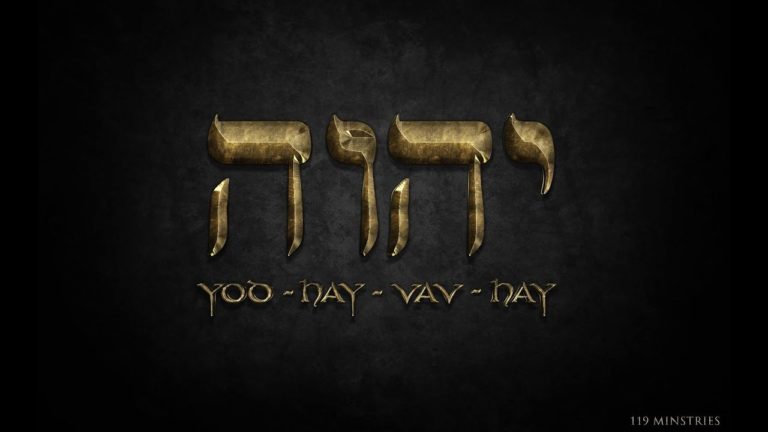
In Exodus 3:13-15, God reveals His covenant name as יהוה, the Hebrew verb for “to be,” expressing the absolute and ultimate nature of God. This word is transliterated into English characters as YHWH, which is the tetragrammaton, or combination of four letters without vowels used to represent the name of God.
YHWH is Yahweh
This name was written without vowels to avoid misusing God’s sacred name and to preserve its nature. In order for readers to phonetically interpret God’s Hebrew name, scribes took vowels from the word adonai, meaning “lord” or “master.” This transformed YHWH into Yahweh.
When we see LORD written in all caps, this a reference to Yahweh, the name for God’s true and complete “to be” nature, both sovereign and divine. This word expresses God in His fullness, Lord and Creator. This is the closest rendering to the original Hebrew Old Testament.
The term adonai continued to be used in an attempt to address God in relational terms, and this word evolved into Jehovah. Both names are used to express the lordship of God. This word literally means “my Lord,” and it represents God in His role as master in the context of His relationship to man. When you see Lord in lower case, it is referring to this name of God. It is a representation of an aspect of God, yet it is not a word representing the fullness and completion of God, or Yahweh. There are seven times where the King James Version uses Jehovah for Yahweh instead of LORD. Almost all essential literal translations have correctly abandoned the use of Jehovah.” LORD & Lord: What’s the Difference? By First Orlando Baptist Church
The Tetragrammaton
“The Tetragrammaton (/ˌtɛtrəˈɡræmətɒn/ or Tetragram, from Greek τετραγράμματον, meaning “[consisting of] four letters”), is the four-letter Hebrew word יהוה, the name of the biblical God of Israel. The four letters, read from right to left, are yodh, he, waw and he. While there is no consensus about the structure and etymology of the name, “the form Yahweh is now accepted almost universally”. Wikipedia
Cleon Skousen
“Here is an interesting note about the name Nephi. “Nephi; This is also an Egyptian name, usually given as Knephi, and transliterated into Hebrew as Nebi. It means “prophet” or one who speaks with God. The great Osiris, one of the Egyptian gods, was called Nephi or Knephi and the city in his honor was n-ph (vowels always had to be supplied). It is the city we know today as Memphis, located across the Nile from Cairo, but it is referred to by its original name of Noph (a variant of Nephi) in the writings of Hosea, Isaiah, and Jeremiah.” Treasures from the Book of Mormon by W. Cleon Skousen.
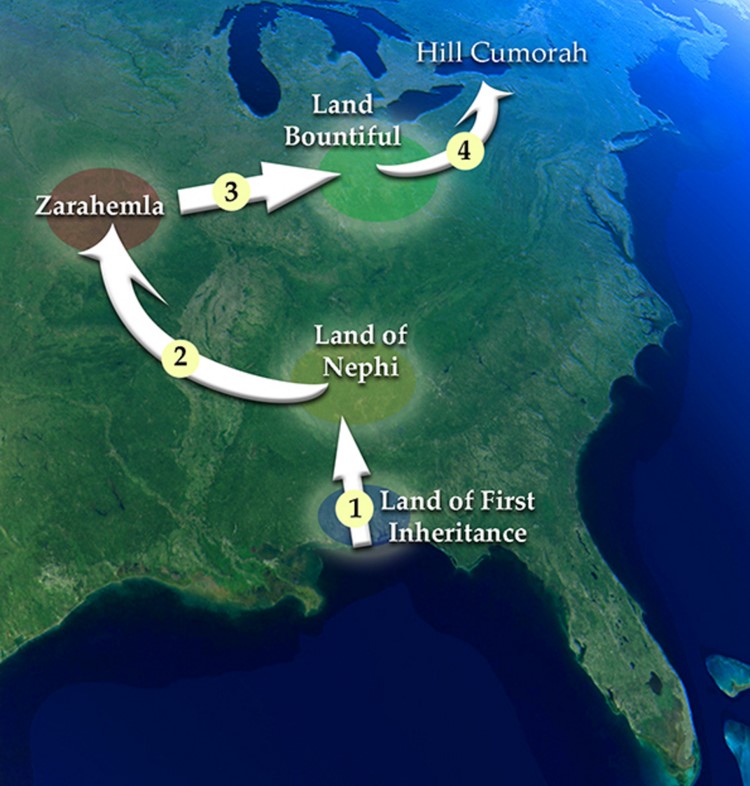
I think it is very interesting that one of the most important cities on the Mississippi is Memphis Tennessee where it is very possible Nephi and his family lived. In the Heartland theory we feel it is plausible that the first Nephite temple was built near Chattanooga, TN. (See blog here)
“The word Nephi may come from the Egyptian city of N-ph, transliterated into Hebrew as Noph, which appears in the Old Testament in several places, and translated into English as Memphis. Actually, Hebrew in Nephi’s day (600 BC) was written without vowels, so it would be nph in Egyptian letters transliterated into nph in Hebrew letters when the Egyptian city we now call Memphis was referred to in the Old Testament.” Smith’s Bible Dictionary
LEHI’S MANY HERITAGES
“The caravans of Egypt and Israel pass each other, guided through the sands by those men of the desert (Arabs) who were the immemorial go-between of the two civilizations.
ARAB: Arab designates a way of life, and was applied by the Jews to their own relatives who remained behind in the wilderness. , Manasseh lived furthest out of Jerusalem and had contact with Arabs the most.
ISRAELI: Of Manasseh through Joseph and the 12 tribes of Israel.
EGYPTIAN: Language of Lehi consists of learning of Jews and language of Egyptians: Heritage, culture. Ammon was Manasseh’s nearest neighbor and is an Egyptian name.
HEBREW: Lehi means Jaw Bone in Hebrew. From Eber, Jewish because they live near and around Jerusalem. Learning of the Jews.
CHRISTIAN: Through Christ, and lived the law of Moses
Arabic Names: LAMAN, LEMUEL Egyptian Names: NEPHI, SAM Israeli Names: JACOB, JOSEPH” Lehi in the Desert by Hugh Nibley Chapter 2 (numbering and organization added)
More Hugh Nibley
“The great frequency of the element Mor- in Book of Mormon proper names is in striking agreement with the fact that in the lists of Egyptian names compiled by Lieblein and Ranke the element Mr is, next to Nfr alone, by far the commonest.
In an article in The Improvement Era for April 1948, the author drew attention to the peculiar tendency of Book of Mormon names to concentrate in Upper Egypt, in and south of Thebes. At the time he was at a loss to explain such a strange phenomenon, but the answer is now clear. 7 When Jerusalem fell, most of Lehi’s contemporaries who escaped went to Egypt, where their principal settlement seems to have been at Elephantine or Yeb, south of Thebes. It would seem, in fact, that the main colonization of Elephantine was at that time, and from Jerusalem. 8 What then could be more natural than that the refugees who fled to Egypt from Lehi’s Jerusalem should have Book of Mormon names, since Lehi’s people took their names from the same source?
One serious objection to using Book of Mormon names as philological evidence must not be passed by without an answer. Upon seeing these strange words before him, how could the illiterate Joseph Smith have known how to pronounce them? And upon hearing them, how could his half-educated scribe have known how to write them down phonetically?
Remember, these names are not translations into English like the rest of the book but remain bits of the authentic Nephite language. Between them, the guesses of the prophet as to pronunciation and the guesses of Oliver Cowdery as to transcription would be bound to make complete havoc of the original titles. Only there was no guessing. According to David Whitmer and Emma Smith in interviews appearing in The Saints Herald and pointed out to the author by Preston Nibley, Joseph never pronounced the proper names he came upon in the plates during the translation but always spelled them out. Hence there can be no doubt that they are meant as they stand to be as accurate and authentic as it is possible to render them in our alphabet.” Lehi in the Desert 1 Wayne May
Click for Ancient American Magazine
“The evidences for Jesus Christ as the Pale Prophet” are to be found in many legends and traditions among the native races, throughout the Western Hemisphere.
Why were the apparent teachings of Christ already familiar to North American Aboriginals before their first contact with modern Europeans in the 16th Century? For Native Americans, their God of the four Winds may have been another name for Jesus Christ. He was also known as The Healer, East Star Man, The Dawn Star, The Pale One, Chee-zoos, Waicomah, Wakana Tanka, Yowa, Yod Hey Vah, Yahud, Ye-Sos, etc. Henceforth, the bearded white visitor could have been none other that Jesus Christ of the Christian books namely the Stick of Judah and the Stick of Joseph (Ezekiel 37:16).” Wayne May and Joshua M. Bennett in Ancient American Magazine issue #36 page no. 36
YAHWEH, YHWH, JEHOVAH, JESUS CHRIST, LORD Author: David R. SEELY
“The Godhead consists of three separate and distinct beings: the Father, Son, and Holy Ghost (D&C 130:22; A of F 1). While some Christians do not equate Jesus Christ and Jehovah in their theologies, biblical passages indicate that relationship, and latter-day scriptures often refer to Jesus Christ, the Son, as Jehovah (e.g., D&C 110:3-4; Moro. 10:34).
The name Jehovah is an anglicized rendering of the tetragrammaton YHWH, a proper noun in biblical Hebrew that identifies God. Following a Jewish tradition that avoided pronouncing God’s name, translators of the King James Version rendered almost all occurrences of YHWH as “Lord.” Latter-day Saints view many other occurrences of “Lord” as references to Jehovah, both in the New Testament and in LDS scripture.
Since his premortal life, Jesus Christ has functioned as the constant associate of the Father working under his direction. In 1916 the First Presidency and the Quorum of the Twelve Apostles issued a doctrinal statement on the relationship between the Father and the Son: “Jesus the Son has represented and yet represents Elohim His Father in power and authority. This is true of Christ in His preexistent, antemortal, or unembodied state, in the which He was known as Jehovah; also during His embodiment in the flesh; …and since that period in His resurrected state” (MFP 5:31-32). Throughout scripture, several roles of Jehovah-Jesus Christ are specifically identified.
CREATOR
Jehovah as Creator is attested throughout the Old Testament (e.g., Ps. 24:1-2). Speaking to Moses, God said, “Worlds without number have I created; …and by the Son I created them, which is mine Only Begotten” (Moses 1:33). John and others acknowledged Jesus as the Word, the Creator: “In the beginning was the Word; …all things were made by him; and without him was not any thing made” (John 1:1-3, 14; cf. Eph. 3:9; Col. 1:16). Similarly, the Book of Mormon teaches, “The Lord Omnipotent who reigneth, who was, and is from all eternity to all eternity, shall come down from heaven among the children of men…. And he shall be called Jesus Christ, the Son of God, the Father of heaven and earth, the Creator of all things from the beginning” (Mosiah 3:5-8;
LAWGIVER
To Moses, Jehovah identified himself by the title “I AM THAT I AM”-a variation on the verbal root of YHWH (Ex. 3:14). This title was claimed by Jesus in mortality: “Before Abraham was, I am” (John 8:58; cf. John 4:26). After his resurrection, Jesus told hearers in the Americas, “Behold, I am he that gave the law, and I am he who covenanted with my people Israel; therefore, the law in me is fulfilled, for I have come to fulfil the law” (3 Ne. 15:5; cf. Matt. 5:17).
REDEEMER, DELIVERER, AND ADVOCATE
Jehovah delivered the children of Israel from Egypt. Paul taught that this same being would redeem mankind from sin and death (cf. 1 Cor. 10:1-4). This point is made clear in the Book of Mormon: “The God of our fathers, who were led out of Egypt,…yea, the God of Abraham…yieldeth himself…as a man, into the hands of wicked men…to be crucified” (1 Ne. 19:10; cf.2 Ne. 9:1-26; Mosiah 13:33-35). When the Savior appeared to the Prophet Joseph Smith in the Kirtland Temple on April 3, 1836, “his voice was as the sound of the rushing of great waters, even the voice of Jehovah, saying: I am the first and the last; I am he who liveth, I am he who was slain; I am your advocate with the Father” (D&C 110:3-4).
JUDGE
The Book of Mormon prophet Moroni2 drew attention to “the great Jehovah, the Eternal Judge” (Moro. 10:34), reaffirming what the Psalmist and others had said (e.g., Ps. 9:7-8; Isa. 33:22). Jesus Christ proclaimed that he was the judge: “For the Father…hath committed all judgment unto the Son” (John 5:22, 27; cf. Acts 10:42).
Divine names and titles, especially in the Bible, are occasionally ambiguous. The distinction between the Father and the Son is sometimes unclear. For example, the Hebrew term elohim,-a title usually applied to the Father by Latter-day Saints-often refers to Jehovah in the Bible (e.g., Isa. 12:2). Furthermore, people prayed to Jehovah as if he were the Father. In some cases, ambiguity may be due to the transmission of the text; in others, it may be explained by divine investiture wherein Christ is given the authority of the Father: “Thus the Father placed His name upon the Son; and Jesus Christ spoke and ministered in and through the Father’s name; and so far as power, authority, and Godship are concerned His words and acts were and are those of the Father” (MFP 5:32). https://eom.byu.edu/index.php/Jehovah,_Jesus_ChristBibliography Talmage, James E. JC, pp. 32-41. DAVID R. SEELYEncyclopedia of Mormonism
Yahweh Is the Sweetest Name
Yahweh Is the Sweetest Name I God gave himself the name Yahweh. No man gave him this name. It is God’s chosen personal name. He loves to be known by this name. It is used over 5,000 times in the Old Testament. It is almost always translated by Lᴏʀᴅ (small caps). But it is not a title. It is a personal name, like James or Elizabeth.
You know the name Yahweh best from its shortened form Yah at the end of Hallelujah, which means “praise Yahweh.” I love to think about this when I sing. When I sing, “Hallelujah,” I love to really mean, “No! I don’t praise you Bel, orNebo, or Molech, or Rimmon, or Dagon, or Chemosh. I turn from you with disdain to Yah! I praise Yah. Hallelu Yah!”
God announced his name to Moses in Exodus 3:15. God said to Moses, “Say this to the people of Israel, ‘Yahweh, the God of your fathers. . . . This is my name forever.”
He preceded this announcement with two other statements so the meaning would be clear. He said, “I am who I am” (verse 14a). And he said, “Say to the people of Israel, ‘I am has sent me to you’” (verse 14b).
The Hebrew name Yahweh is connected to the Hebrew verb “I am.” So Yahweh is most fundamentally the One-Who-Is. “I am who I am” is the most foundational meaning of Yahweh. It means: My am-ness comes from my am-ness. My being from my being. My existence from my existence.
There are vast personal and covenantal implications of this. But this is foundational. No beginning. No ending. No dependence. He simply is, always was, and always will be. He communicates all of this with a personal name. To be sure, he has titles, and he has attributes. But this is a personal name. He packs the weightiest truth about himself into a personal name. Infinite greatness and personal knowability are in the name Yahweh.
Then in the fullness of time, Yahweh came into the world to seek and save the lost. The angel said to Joseph, “You shall call his name Jesus, for he will save his people from their sins” (Matthew 1:21). Jesus is an English transliteration of the Greek Iesoun. And this in turn is a Greek transliteration of the Hebrew Joshua. And Joshua is a combination of Yah and “salvation” or “save”. It means “Yahweh saves.”
So Jesus means “Yahweh saves.” Jesus is Yahweh with a human nature coming to save his people from sin.
Paul confirms this in Philippians 2:11. He says of the risen Jesus, “Every tongue will confess that Jesus Christ is Lord, to the glory of God the Father.” That is a quote from Isaiah 45:23 where Yahweh is the one to whom every knee shall bow and every tongue confess. Paul is saying that, in the end, the whole world will acknowledge that Jesus is in fact Yahweh incarnate.
So you don’t have to choose between singing, “Jesus is the sweetest name I know,” and, “Yahweh is the sweetest name I know.” Indeed you dare not choose.
John Piper is founder and teacher of desiringGod.org and chancellor of Bethlehem College & Seminary. For 33 years, he served as pastor of Bethlehem Baptist Church, Minneapolis, Minnesota. He is author of more than 50 books. https://www.desiringgod.org/articles/yahweh-is-the-sweetest-name-i-know
A Prophet Looks at Genesis
“Unfortunately, the King James Version leaves this very obscure because the translators rendered the Hebrew tetragrammaton (Jod He Vav He) representing Jehovah (Yahweh) to read LORD. Consequently, one can read Genesis without recognizing that references to Jehovah (Jesus Christ) are on almost every page.” By George A. Horton, Jr. Jan 1986 Ensign
In the Hebrew Bible, the name is written as יהוה (YHWH), as biblical Hebrew was written with consonants only. The original pronunciation of YHWH was lost many centuries ago, but the available evidence indicates that it was in all likelihood Yahweh, meaning approximately “he causes to be” or “he creates”.[7]
By early post-biblical times, the name Yahweh had ceased to be pronounced aloud, except once a year by the High Priest in the Holy of Holies; on all other occasions it was replaced by Adonai, meaning “my Lord”. [6]
YHWH-Yireh (Adonai-jireh) — “The LORD Will Provide” (Genesis 22:13–14)
YHWH-Rapha — “The LORD that Healeth” (Exodus 15:26)
YHWH-Niss”i (Adonai-Nissi) — “The LORD Our Banner” (Exodus 17:8–15)
YHWH-Shalom — “The LORD Our Peace” (Judges 6:24)
YHWH-Ro’i — “The LORD My Shepherd”
YHWH-Tsidkenu — “The LORD Our Righteousness”[29] (Jeremiah 23:6)
YHWH-Shammah (Adonai-shammah) — “The LORD Is Present” (Ezekiel 48:35)
The ‘Personal’ Name of the ‘God of Israel’ by which He anciently revealed Himself to Moses ( 6:2). ‘YAH’ is spelt in original Hebrew, with the 10th letter of the Hebrew alphabet – the ‘yood’, smallest letter in the alphabet, represented by the inverted comma ( ‘ ). YAHU also has the meaning of ‘He is YAH’
Obscure Preservation of the Sacred Name ‘YAHU’
Hebrew personal names have meanings, and many such personal names have throughout time, been linked to the Sacred Name YAHU. In this obscure way, the Sacred Name YAHU has been preserved for modern times, notwithstanding the fact that it has been almost totally removed from most Bible Translations.
This Name, through recent archeological discoveries in Israel, has been found to be part of more Hebrew words and names than were formerly known. There is an untold number of usages in the Tanach (‘Old Testament’) where this form of the Sacred Name is used as a conjunction in Biblical names. Some of the more common examples of these are:
EliYahu (‘Elijah’) YeremiYahu (‘Jeremiah’) YeshiYahu (‘Isaiah’) YahuShafat (‘Josephat’) NetanYahu (also the name of former Israeli Prime Minister) YahuNatan (‘Jonethan’) and of course, the Messianic Salvation Name YAHU’SHUAH (‘Yeshuah’)
In each of the examples above, the meanings of these names refer to the Name of the Most High, eg. YAHU is Strength, my God is YAHU, etc
Similarly, the Tribe of Judah, the progeny of which to this day, still represents the original Hebraic Faith instituted by Moses according to the Divine Mandate which was handed to him personally by YAHU, God of Israel, some 4000 years ago. All the disasters of Time failed to wipe out the Tribe of Judah, which today is known as ‘the Jews’ – in Hebrew: Yahudim. The Tribe of Judah, in Hebrew is’Yahuda’, a Jew is ‘Yahudi’. While no specific Hebrew meaning is attached to this term in the modern usage, we do find the following meanings as applied to obscure Bible characters with similar names:
Can it be that sinister powers have erased the linkage with the ‘guardians of His Oracles’ (the Jews) to the Name of YAHU? – Rom 3:2 – they, who have been His Testimony to the world all these centuries?
Strange also how, in the modern Hebrew dictionary, three words appear in successive order:
Yehudah – with its derivations referring to Jews YHVH – the Sacred Name, and Y’SHUAH (abbreviated form for YAHU’SHUAH) – the Messiah’s Name.
THE TETRAGRAMMATON
The Sacred Name appears in the Hebrew Scriptures as four Hebrew letters Yud, hey, vav, hey, which is closest represented by the letters YHVH. This format is known as the Tetragrammaton. According to Jewish tradition it is regarded as ‘not to be uttered’ in order never to profane it in any way. In Judaism it is therefore pronounced as ‘Adonai’, meaning ‘Lord’. Notwithstanding this prohibition, the Sacred Name is acknowledged in its usage as part of the names of many Biblical characters, as referred to above – and as any Bible concordance or reference book will provide.
Because of these prohibitions, translations of the original Hebrew scrolls have, throughout the ages, replaced the Tetragrammaton with ‘the LORD’ (in capital letters) and the Sacred Name, in so doing, became ‘lost’ for many centuries.
Since the sixties, there has been a movement in modern theology and especially amongst sincere Bible students throughout the world, to restore the newly ‘rediscovered’ Sacred Hebrew Name. Sacred Name publications which chose to restore the Sacred Name in the almost 7000 instances in the Bible, appeared one after the other and the ‘Sacred Name Movement’, towards the nineties and the turn of the millennium, became a flood which today literally engulfs the world…
Although there is no firm consensus on the actual pronouncement or spelling of the Tetragrammaton YHVH, there are several representations or transliterations in use by theologians and Bible students. Some of the more popular forms are YAHVEH, YAHWEH and Jehovah. A comprehensive list of the various usages that abound, are presented further down on this page.
For the purposes of this Web Site and out of respect for the Sacredness and sanctification of the Name, we will print the Tetragammaton form YHVH throughout the studies of this Web Site and leave the reader free to either substitute it or pronounce it in the way they find comfortable.
The mystery attached to the Name of the Almighty, is related to the verb ‘to be’ ( I am, I was, I will be) which is the Hebrew verb ‘Hoveh’ (the ‘v’ pronounced as in ‘victory’), meaning “to be”, in the present tense. YHVH therefore, means: “YAH Hoveh”, which means “YAH is …” (YAH being His abbreviated (actual ?) name as reflected in Psalm 68:4 in some translations.
It is therefore quite possible that the correct rendering of the SH’MAH (the Greatest Commandment – Deut 6:4) should therefore read:
SHMAA
YISRAEL
YAH
HOVEH
ELOHEINU
YAH
HOVEH
ECHAD
HEAR
ISRAEL
YAH
IS
OUR GOD
YAH
IS
ONE
This is how it appears in the Hebrew Scrolls:
Read from right to left (so also the following) Top line: YHVH Yisrael Shmaa <{——- Bottom line: echad YHVH Eloheinu <{——-
In modern Hebrew grammar this matter is so serious and important, that the verb ‘to be’ (‘I am’) is not used in the present tense at all! An Israeli will therefore state in Hebrew: “I teacher … I clever”, omitting the verb ‘to be’ (I am) in the present tense. Usage of the Hebrew verb ‘HOVEH’ (I am) would imply referring to oneself as being the Almighty! This gives reason for serious contemplation. The Almighty “is” everything good, without question. The human being, being exactly the opposite, is so easily inclined to self exaltation and self praise (often hidden under a false pretense of humility, love, care, etc.). The use of “I” and “I am” in the vocabulary of the proud and arrogant individual is a popular practice. The indwelling Spirit of the Almighty in the heart and soul of the believer, changes this selfish, haughty, deceiving attitude to an attitude of genuine humility, recreated in His Image, as the Almighty requires of us to possess. Volumes could be written on this subject. http://www.revelations.org.za/NotesS-Name.htm
The four letter tetragrammaton (Greek, ‘four letters’) is the ‘true’ name of the God of the Hebrew scriptures. It never appears complete in written form; only the four consonant letters, YHVH(Hebrew, Yod Heh Vau Heh, read right to left), or in the Latin version, IHVH.
Another intriguing example of chiasmus occurs in Helaman 6:10 [Hel. 6:10]. Here, the chiastic turning point rests on an equivalence between the word Lord and the royal name Zedekiah. But those words are only equivalent for readers who are aware that the term Lord probably stands (as it does in the King James Bible) for the divine name Jehovah or Yahweh, and that the -iah element in Zedekiah is the first portion of that same divine name. Also this chiasm works better in Hebrew than in English, which is an important and remarkable clue to the original language of the Book of Mormon.Mounting Evidence for the Book of Mormon By Daniel C. Peterson
I know I have given you a lot of information. I love to research and study on my own and one thing leads to another. I like sharing what I find with you. Although all links and ideas are not necessarily correct all I want you to rely only on is the scriptures of the Church of Jesus Christ of Latter-day Saints and on the Spirit which contains all truth. May the Lord bless you for reading and studying. As Moroni says, “you may know the truth of all things.”
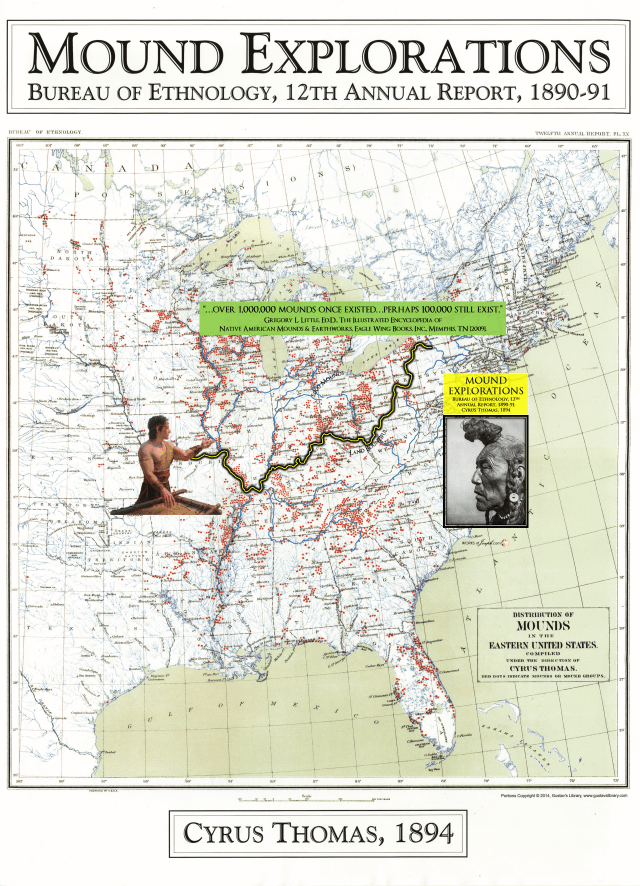
I will share some information about how the Nephite Culture of the Book of Mormon from 600 BC to 400 AD, has so many amazing similarities to the Hopewell Culture in the United States, that I believe they are one in the same cultures.
Many archaeologists, scientists and historians who aren’t members of the Church of Jesus Christ of Latter-day Saints, know and believe the history of the Hopewell Culture and verify the dating which parallels the Book of Mormon. I have a non-Mormon friend in Ohio who is an archaeologist who calls these people “Hebrews” and I call them Nephites.
Below I will also reference a discussion between Archaeologist of Ohio William Mills in 1917 with Elder James E. Talmadge. There are hundreds of similarities between the Hebrews of North America, the Hopewell Culture and the Nephites and Lamanites of the Book of Mormon. Let explore together.
This information in greater detail is also on my video titled “Hopewell/Nephites Parallel Histories” Visit HERE or the click on the picture below. You can subscribe to view over 600 additional videos from our past Conferences. We have over 75 new videos from this past September Conference available to watch 24/7 on any devise you choose.
The Hopewell & Nephites- Parallel Histories
“The Hopewell culture describes the common aspects of a segment of Native American culture that flourished along rivers in the northeastern and Midwestern United States from approximately 400 B.C. to 500 A.D., a time period that nearly matches the span of the developed Nephite societies. The Hopewell peoples were not a single culture or society, but a widely dispersed set of related populations as shown on the map on the left. They were connected by a common network of trade routes, in what is known as the “Hopewell exchange system.” The name ‘Hopewell’ was chosen by Warren K. Moorehead, known as the ‘Dean of American archaeology,’ after his explorations in 1891 and 1892 of a group of mounds in Ross County, Ohio. He named the mounds after Mordecai Hopewell, the owner of the land. Subsequently all mounds that have similar identifications are named as the Hopewell Mound Builders within an interaction sphere. Currently, the Hopewell interaction sphere has come to encompass regions from the Southeastern United States as far south as the Crystal River Indian Mounds in Florida up to the southeastern Canadian shores of Lake Ontario in the north. Within this geographic area, inter societal exchanges were common along major waterways. The Hopewell exchange system received materials from all over what is now the heartland of the United States. Many objects created by the Hopewell cultures have been excavated and show a remarkable degree of commonality to items described within the text from the Nephite and Lamanite civilizations. In 1848, Ephraim George Squier, A.M., and Edwin Hamilton Davis, M.D., published the book, Ancient Monuments of the Mississippi Valley: Comprising the Results of Extensive Original Surveys and Explorations. The work was a landmark in American scientific research and was the genesis of archaeology as a scientific discipline. More importantly, the book was the first volume of the Smithsonian Institution’s Contributions to Knowledge series and the Institution’s first publication. Among Squier and Davis’ most important achievements was their systematic approach to analyzing and documenting the sites they surveyed, including Seip Mound, southwest of Chillicothe, Ohio (survey Plate XXI, No. 2 shown below on the left), which they discovered in 1846, and the mapping of the Mound City Group, also in Chillicothe, Ohio, which has been restored using their data and is now part of Hopewell Culture National Historical Park. Squier and Davis collection of ancient Mound objects can now be seen at the British Museum in London, England. A few of their maps will be used in this edition as most of those mounds they identified have been destroyed by population growth that demanded land as the United States expanded westward. Their drawings are left to us to study of what was a highly educated, cultured and civilized society with roads, highways and cities rivaling the sizes of those in Europe.
Click to Enlarge
“Mound Builder’s”
The Annotated Edition of the Book of Mormon highlights various excavated artifacts throughout the text that come from the “Mound Builder’s” earth or “dust” (Isaiah 29:4), like those found at Zelph’s Mound, providing physical or “circumstantial evidences” (Teachings of the Prophet Joseph Smith, Section Five [1842-43], 267) showing those mound builders shared common associations with the Nephite cultures. Lehi’s party arrived in the Promised Land in roughly 590 B.C. as a small group. Within a few years, those who followed Nephi separated themselves from those who followed Laman and Lemuel. By 570 B.C. the two groups, the Nephites and the Lamanites, were then living in separate geographical regions with different lifestyles. The Nephites settled in a small region maintaining their flocks, herds and crops while the followers of Laman lived as wanderers feeding off of wild animals, “becoming wicked and wild and ferocious, yea, even becoming Lamanites” (Helaman 3:16). By 500 B.C., one hundred years after leaving Jerusalem, the populations were now well into the second and third generations and growing rapidly. In 279 B.C., king Mosiah leaves the land of their first inheritance, the land of Nephi, and finds the people of Zarahemla, who are more numerous than his group (Omni 1:17), and joins with them. After learning their language, he discovers that their history parallels their arriving in the land at about the same time period when both founding groups fled Jerusalem. It is quite reasonable then, that by 200 to 100 B.C., the best dating of the beginning of the Hopewell societies, that the population within the Hopewell interaction spheres parallels the history and culture within the pages of the Book of Mormon (see Appendix, pp. 538-539, for a list of 50 correlations). Moroni, the last Nephite prophet and historian to write on his metal plates, describes the destruction of his people in about 421 A.D. Remarkably, the culture of the Mound Builders suddenly collapses between 400-500 A.D. Those groups of “Mound Builders,” who exhibited similar characteristics of the Nephites, in the working in metals, in making fine jewelry and cloth, in implementing battle armaments such as head-plates, arm-shields, breastplates, etc., and engaging in similar military tactics of digging ditches around high banks of earth such as this recorded event: “Now behold, the Lamanites could not get into their forts of security by any other way save by the entrance because of the highness of the bank, which had been thrown up and the depth of the ditch, which had been dug round about, save it were by the entrance” (Alma 49:18), have all disappeared from history. The early European settlers of North America observed Native American Indians as just savages, yet in a revelation given through the prophet Joseph Smith to Parley P. Pratt, Oliver Cowdery and Ziba Peterson, in Manchester, NY, early October 1830 the Lord declared: “And now concerning My servant Parley P. Pratt, behold, I say unto him that as I live I will that he shall declare My gospel and learn of Me, and be meek and lowly of heart. And that which I have appointed unto him is that he shall go with My servants, Oliver Cowdery and Peter Whitmer, Jun., into the wilderness among the Lamanites. And Ziba Peterson also shall go with them; and I Myself will go with them and be in their midst; and I am their advocate with the Father, and nothing shall prevail against them” (Doctrine and Covenants Section 32:1-3: emphasis added). The Lord has declared where some of the surviving Lamanites were and are—and He will be a personal guide to the help His servants in teaching them their House of Israel heritage.” Annotated Book of Mormon by David Hocking and Rod Meldrum pages 536-537. Charts below are from page 538 and 539 of the same book. Purchase Here
Parallels of the Hopewell Culture
As described by William C. Mills, Chief Archaeologist of Ohio, with the Book of Mormon [May 20, 1917; Sunday] by James E Talmage
“Attended Sunday School and afternoon service in Hawthorne Hall, and was a speaker at each assembly. Evening meetings here, as also in Brooklyn, have been discontinued for the summer. The attendance both at Sunday School and afternoon meeting was surprisingly large in view of the fact that many of the Utah college students have left for the vacation period. This evening at the hotel I had a long and profitable consultation with Professor Wm. C. Mills, State Archaeologist of Ohio. He is continuing his splendid work of exploration in the Ohio mounds, and I went over with him again the remarkable agreement between his deductions and the Book of Mormon story. He has reached the following (10) conclusions: The area now included within the political boundaries defining the State of Ohio was once inhabited by two distinct peoples, representing two cultures, a higher and a lower.
These two classes were contemporaries; in other words, the higher and the lower culture represented distinct phases of development existing at one time and in contiguous sections, and furnish in no sense an instance of evolution by which the lower culture was developed into the higher.
These two cultural types or distinct peoples were generally in a state of hostility one toward the other, the lower culture being more commonly the aggressor and the higher the defender.
During limited periods, however, the two types, classes, or cultures, lived in a state of neutrality, amounting in fact to friendly intercourse.
The numerous exhumations of human bones demonstrate that the people of the lower type, if not indeed both cultures, were very generally affected by syphilis, indicating a prevalent condition of lasciviousness.
Their (are) two peoples or cultures…the lower culture was most commonly the assailing party, while the people of the higher type defended as best they could but in general fled.
As a further consequence of this belligerent status they buried their dead, with or without previous cremation, in such condition as to admit of expeditious covering up of the cemeteries by the heaping of earth over the sepulchers [sic], in which hurried work the least skilled laborers and even children could be employed.
From a careful collating of data it is demonstrated that the general course of migration through the area now defined as the State of Ohio was inward from the west and outward toward the east.
Professor Mills states that no definite data as to the age of these peoples have as yet been found, but that the mounds may date back a few hundred years or even fifteen hundred or more.
Several years ago I placed a Book of Mormon in the hands of Professor Mills and, while he is reticent as to the parallelism of his discoveries and the Book of Mormon account, he is impressed by the agreement.”
James E. Talmage 20 May 1917 See copies below from William Mills 1914 publication called Archaeological Atlas of Ohio
The above map shows Hopewell Mounds found in the State of Ohio only. Each red dot represents a mound complex. Within each mound complex there could be 50 to 100 individual mounds within that complex. Approximately 8,300 complexes shown in Ohio.
“The most common question that is asked about mounds is, “How many exist?” In the 1800’s the Smithsonian sponsored many expeditions to identify mound sites across America. A map (shown below) was produced by Cyrus Thomas in 1894 in a Bureau of Ethnology book. They found approximately 100,000 mound sites, many with complexes containing 2 to 100 mounds. The figure of 100,000 mounds once existing— based on Cyrus Thomas map (left) revealing 100,000 sites—is often cited by others, but that estimate is far, far too low. After visiting several thousand mounds and reviewing the literature, I am fairly certain that over 1,000,000 mounds once existed and that perhaps 100,000 still exist. Oddly, some new mound sites are discovered each year by archaeological surveys in remote areas. But in truth, a large majority of America’s mounds have been completely destroyed by farming, construction, looting, and deliberate total excavations” – Gregory L. Little, Ed.D., The Illustrated Encyclopedia of Native American Mounds & Earthworks, Eagle Wing Books, Inc., Memphis, TN [2009].
Chart above courtesy of Wayne May Ancient American Magazine here William Mills 1914 publication called Archaeological Atlas of Ohio. Entire book here:
DOES THE GEOGRAPHY OF THE BOOK OF MORMON MATTER?
When Christ appeared to the Nephites as the resurrected Savior, He blessed them, He taught them He prayed with them and for them. He also quoted to them the words of Isaiah. He reminded them that they had been given THIS LAND for their inheritance and were warned that they would not be allowed to remain on THIS LAND if they did not remain faithful. This emphasis shows the significance of THIS LAND to the Book of Mormon people, and the people who would be brought by the hand of God to THIS LAND and now occupy THIS LAND. With over 1400 references to “this land” in the Book of Mormon, I’m not sure how the Book of Mormon prophets could have made it clearer. THIS LAND matters. Geography matters. Those of us on THIS LAND the “promised land,” the Land of Liberty, the Land of the New Jerusalem need to know who we are. America is THIS LAND. America is a covenant land. I live on THIS LAND. Even the chapter heading of 3 Nephi also confirms this truth. The geography of the Book of Mormon matters to me.” Rod Meldrum FIRM Foundation President
Hopewell and Nephites-Same Travel PatternWhy Lehi Landed in Florida. (Apalachicola, FL Lehi’s City)Laman and Lemuel Chased the Nephites North to Unicoi Gap, GA (Nephi’s Valley)Mosiah Left the Land of Nephi by way of the Tennessee River To Zarahemla at Montrose Iowa.Mosiah meets the Mulekites in the Land Zarahemla byway of Mosiah’s River (Tennessee runs North)The first mission to the Lamanites was in NY, OH, and MO, October 1830 (D&C 28,30, and 32). The first missionaries of the LDS Church in Mexico came in 1874. The first missionaries arrived in Guatemala in 1947. The Lord said, ” I myself will go with them and be in their midst.” D&C32;3
Find More Information
Follow our complete Nephite Timeline blog here. In text and maps you will travel from Jerusalem to Cumorah as the Nephites did.
You can discover more information about the connection between the Hopewell, Nephites, and Hebrews in Ohio in the my book, Moroni’s America-Land Bountiful Edition seen below. This 60 Map Bountiful Edition is available in a great package below.
Heartland Map Package: Moroni’s America-Maps Edition 150 Pages, AND Moroni’s America-Land Bountiful Edition 60 additional different Maps. 210 Total Maps, PLUS receive the All-New 20″ x 30″ Folding Travel Map. Buy ALL THREE and Save 18% here.
Below is some information from the Bountiful Edition map book.
“There was a wall at the Great Circle at the Hopeton site. For those of you interested in dry archeological research, here is more about an interesting and recent discovery at the Hopeton Great Circle (adjacent to the Cedar Bank site near Chillicothe OH and also adjacent to the Chillicothe Ward building). Typically, I try to remain abreast with the research happening each year in Ohio and nearby. I spoke with an archaeologist last summer [2017] at the site, and learned of his confirmation of anomalies indicated by a an extensive magnetometry survey. The other day in conversation, we discussed more details regarding the findings. It appears the Great Circle has evidences of a wooden fence, where the at least 6 ft height 1050 ft diameter earthen wall (enclosing 20 acres) was located. Indications are a pattern of very large posts spaced every 6 meters. This excavation last season revealed a post mold to be 96cm (about 38 inches) in diameter and 1.13 meters deep. One can estimate the height from that data. Indications are that smaller posts existed between the larger ones. The Hopeton site is significant in its location in relation to Cedar Bank, Sugarloaf, Mound City, and Dunlap Works and likely others. The current Chillicothe Ward building aligns with the Cedar Bank site (specifically the platform mound) and is within sight of Sugarloaf and in association with other major earthworks, including Hopeton. I am pretty sure Church engineering had not considered the earthworks when the building was designed.” Anthony George Lifelong Resident of Chillicothe, Ohio and Archaeological Researcher as quoted in Moroni’s America Land Bountiful Edition by Rian Nelson and Jonathan Neville
Hebrew & Hopewell DNA “A lady by the name of Lisa Mills did her doctoral thesis on the Hopewell. She sampled 49 Hopewell burials from Mound City in Chillicothe, Ohio. They were originally excavated by Shetrone in the mid-20th century. Of the 49 she extracted Mt/DNA from 64% of them. What is significant is she found Haplogroup X in several remains. Haplogroup X is a marker that originated in Galilee. This in my opinion strongly suggests contact by the Hebrews with Hopewell. Richard D. Moats, Avocational Archaeologist, Archaeoastronomer
1950 Revised Edition of the Doctrine and Covenants Commentary, a most amazing book that speaks a lot about North American verification of Book of Mormon geography. Three First Presidencies and other General Authorities, share their witnesses!
The First Presidency in 1923 of Heber J Grant, Charles W. Penrose and Anthony W. Ivins and again in 1950 The Publication Committee of Joseph Fielding Smith, Harold B. Lee and Marion G. Romney, assigned by Pres George Albert Smith, approved some historical information from Church History that has much to do with Book of Mormon Geography. The last edition of the commentary was also published in 1978 by Deseret Book and approved by Pres Spencer W. Kimball, N. Eldon Tanner and Marion G. Romney. What great strength this gives us about the truth of the existence of this Cave at Cumorah and there being 2 sets of plates as the Doctrine and Covenants says in D&C 10.
Summary of what the First Presidency Approved in Commentary of the Doctrine and Covenants.
1- There existed two separate sets of plates that Joseph translated. The original plates found in the Stone Box at Cumorah which included the lost 116 pages and the Small Plates of Nephi that were in the Cave at Cumorah. D&C 10 says, “And now, verily I say unto you, that an account of those things that you have written, which have gone out of your hands, is engraven upon the plates of Nephi; Yea, and you remember it was said in those writings that a more particular account was given of these things upon the plates of Nephi. And now, because the account which is engraven upon the plates of Nephi is more particular concerning the things which, in my wisdom, I would bring to the knowledge of the people in this account—Therefore, you shall translate the engravings which are on the plates of Nephi, [2nd set of plates] down even till you come to the reign of king Benjamin, or until you come to that which you have translated, which you have retained; And behold, you shall publish it as the record of Nephi; and thus I will confound those who have altered my words.” D&C 10:38-42 2- There existed in Hill Cumorah a Cave in a separate place other than the stone box where Joseph found the plates. This cave was in the same Hill Cumorah and contained the Sword of Laban, Liahona, and wagon loads of plates from previous generations. [See quotes below] 3- A messenger named *Nephi, one of the 3 Nephites, took the plates from Joseph Smith in Harmony when he was finished with them. This same messenger refused a ride in David Whitmer’s wagon as Nephi was going to Cumorah, while Whitmer, Cowdery and Smith were going to Fayette. *“I have heard my grandmother (Mary Musselman Whitmer) say on several occasions that she was shown the plates of the Book of Mormon by a holy angel, whom she always called Brother Nephi.” John C. Whitmer’s 1878 account, as recorded by Andrew Jenson [Page 37] (see his Latter-Day Saint Biographical Encyclopedia 1:283, Salt Lake City, Utah: 1901): 4- This same messenger [Nephi] showed the second set of plates to Mary Whitmer, David’s mother in Fayette before Joseph began translating this second set of plates, which would become 1 Nephi to Mosiah in our current Book of Mormon. This replaced the Book of Lehi which was the Lost 116 pages. 5- You will see below that three different First Presidencies approved of the fact there was a Cave at Cumorah and that fact is found in Doctrine and Covenants Commentary 1923.
One quote below (In Green) is from Journal of Discourses by Brigham Young, about the Cave at Cumorah existing in upstate NY and wasn’t just a dream or vision somewhere in Mexico as some suggest. It was the place that all of the Nephite records and the Liahona, Sword of Laban and other artifacts were stored.
Here is what Orson Pratt taught about the two depositories in the Hill Cumorah. “These new plates were given to Moroni to finish the history. And all the ancient plates, Mormon deposited in Cumorah, about three hundred and eighty-four years after Christ. When Moroni, about thirty-six years after, made the deposit of the book entrusted to him, he was, without doubt, inspired to select a department of the hill separate from the great depository of the numerous volumes hid up by his father. The particular place in the hill where Moroni secreted the book, was revealed, by the angel, to the prophet Joseph Smith, to whom the volume was delivered in September, A.D. 1827. But the grand repository of all the numerous records of the ancient nations of the western continent, was located in another department of the hill, and it’s contents under the charge of holy angels, until the day should come for them to be transferred to the sacred temple of Zion.” 1866 Orson Pratt Millennial Star (28 (27): 417)
Two Sets of Plates by Jonathan Neville
A second bit of history (In Green Below)from David Whitmer about a messenger appearing to him and Oliver and Joseph on the way to Fayette who was carrying the plates Joseph just finished translating in Harmony. They were in a knapsack on his back. The messenger appeared to them riding in the wagon and was taking this first set of plates to the Cumorah Cave, where the messenger would deposit them. The messenger then retrieves the “Small Plates of Nephi” [D&C 10:38] from the Cave at Cumorah, and later shows this second set of plates to Mary Whitmer and then to Joseph to translate in Fayette. This set of plates replaced the Book of Lehi or the lost 116 pages which was part of the first set of plates.
Editor’s Note: It has also become a problem as some scholars insist the Gold Plates were simply a prop and Joseph Smith never translated from them. There is also a rumor many scholars insist that most of the Book of Mormon was transcribed by Joseph Smith looking into a hat with a seer stone and repeating the words on the stone he saw, to Oliver Cowdery. I hope you as a concerned member to the Church of Jesus Christ of Latter-day Saints will be aware of these possible misconceptions and stick with what the scriptures say and with what the Prophets teach. Although I believe Joseph had such seer stones, I don’t believe any of the Book of Mormon was translated using a seer stone in a hat, but was translated by the gift and Power of God, using the Urim and Thummim, or Interpreters as called in the Book of Mormon, which consisted of a large breastplate and two clear stones in the rims of a bow like a pair of spectacles. The breastplate was hidden under Joseph’s shirt and this farmers hat was used as a prop to block the sight of the spectacles from Emma Smith.See complete blog here:
Oliver Cowdery said, “I wrote, with my own pen, the entire Book of Mormon (save a few pages) as it fell from the lips of the Prophet Joseph, as he translated it by the gift and power of God, by the means of the Urim and Thummim, or as it is called by the book, Holy Interpreters. I beheld with my eyes, and handled with my hands, the gold plates from which it was transcribed. I also saw with my eyes and handled with my hands the Holy Interpreters.”
Presidencies Speak of True Geography
Doctrine and Covenants Commentary Revision 1950
Between 1913 and 1916 Hyrum Smith of the Quorum of the 12 Apostles along with Elder Janne M. Sjodahl articulated a commentary of the Doctrine of Covenants which was approved by these two Presidencies as accurate and approved history as contained in the D&C Commentary of 1923 and 1950.
[The Doctrine and the Covenants Commentary] “A doctrinal and exegetical commentary on the book of scripture, known as the “Doctrine and Covenants” (the “D&C”), sacred to the Church of Jesus Christ of Latter-day Saints” The Doctrine and the Covenants Commentary by Hyrum M. Smith (Picture left)
Exegetical Definition:
The message finds its sole source in Scripture. The message is extracted from Scripture through careful exegesis. The message preparation correctly interprets Scripture in its normal sense and its context. The message clearly explains the original God-intended meaning of Scripture. The message applies the Scriptural meaning for today.
The Doctrine and Covenants Containing Revelations Given To Joseph Smith, Jr., The Prophet, with an Introduction and Historical and Exegetical Notes By Hyrum M Smith, of the Council of the Twelve Apostles. And Janne M. Sjodahl.
“Commentaries on the Doctrine and Covenants follow the pattern of many biblical commentaries, supplying the historical context, that is, the time, circumstances, and situation of the revelations. In the most recent (1981) edition of the Doctrine and Covenants, headnotes for each section have been added or enlarged, with a brief synopsis of the historical setting. Additional notes and explanations are provided by the various separately published commentaries discussed here. Commentaries written by members of the Quorum of the Twelve Apostles are given special consideration. Others are recommended as helps to the membership of the Church to provide historical insight to their study of the scriptures.
An early (1916) and still useful one-volume commentary was written by Hyrum M. Smith, a member of the Quorum of the Twelve Apostles, and Janne M. Sjodahl. Doctrine and Covenants Commentary contains the text of the Doctrine and Covenants and gives historical background and commentary for each section. It is extensively footnoted with exegetical notes. The volume was later supplemented and expanded under the direction of Joseph Fielding Smith, Harold B. Lee, and Marion G. Romney of the Quorum of the Twelve in 1950.” Doctrine and Covenants Commentaries Author: Garrett, H. Dean
Preface To the Revised Edition of the Doctrine and Covenants Commentary
In the preface to the 1950 Revised Edition of the Doctrine and Covenants Commentary, we find the following:
“While laboring in the European Missions, Elder Hyrum M. Smith, of the Council of the Twelve Apostles, and Elder Janne M. Sjodahl, were impressed very fervently with the desire to prepare a commentary dealing with the revelations given by the Lord to the Prophet Joseph Smith. In their odd moments, when not otherwise engaged, during the years 1913-1916, these brethren carried on a careful research and study and prepared this volume which has met with popular favor.
For a number of years, the commentary has been out of circulation, and because of the increasing demand for it, the First Presidency instructed the Publication Committee to take the matter in hand and revise the volume ready for a re-printing. This the committee has done and after many months of labor has fulfilled the assignment given.
Since the time of the first publication many world-wide events of the greatest importance have occurred many of which have a bearing on the fulfillment of the prophecies found in the Doctrine and Covenants; these have been noted. The Doctrine and Covenants is a sacred volume of Scripture, and in the revision and preparation of the book, the members of the committee have felt their weakness in commenting on these sacred commandments and revelations coming from the Lord.”
THE PUBLICATION COMMITTEE 1950
(Note; Not the First Presidency) Joseph Fielding Smith
Harold B. Lee
Marion G. Romney
1950 First Presidency
(Who assigned Publication Committee)
George Albert Smith
J. Reuben Clark
David O McKay
Within this Commentary are two sections which contain comments pertinent to Book of Mormon geography.
1.The first has to do with Section 9. This section is a revelation given through Joseph Smith the Prophet, to Oliver Cowdery, at Harmony, Pennsylvania in April, 1829. Oliver had attempted to translate without success. Verse 1-2 are as follows:
“Behold, I say unto you, my son, that because you did not translate according to that which you desired of me, and did commence again to write for my servant, Joseph Smith, Jun., even so I would that ye should continue until you have finished this record, which I have entrusted unto him. And then, behold, other records have I, that I will give unto you power that you may assist to translate. . . .”
In a verse note on the bottom of page 45 we find the following:
Otherrecords] Other Nephite records. Oliver Cowdery, if he had remained faithful, would have had the privilege of assisting in their translation. He, however, was outside the Church, because of transgression, for eleven years, and although he was again received in full fellowship, some of the blessings he had lost could not be recovered.” 1950 Revised Edition of the Doctrine and Covenants Commentary page 45-46
Then in a related “General Notes” on a page which follows we find the following:
“Other records” are referred to in the 2nd paragraph of page 47 below. On that subject President Brigham Young makes the following statement: [The “Cave Story” is then recited as it appears in the 1877 notation– which is a discourse by Brigham Young delivered at a Special Conference held at Farmington, Utah on June 17,1877.]
Note*That such a story would be included in the 1923 edition is significant; that such a story would be upheld by Apostles in the publication committee of the Revised Edition is also significant.
2. The second has to do with Section 84, a revelation on Priesthood. Verse 42 reads: ” . . . and even I [the Lord] have given the heavenly hosts and mine angels charge concerning you.” In a comment on this verse we find the following:
“I have given * ** * charge concerning you] Note that the Lord in conferring the Priesthood upon the Elders present when this Revelation was given, assured them that angels had been appointed to guard them. The first Christians believed in guardian angels. . . .”
The following anecdote, which was told by David Whitmer to Elders Orson Pratt and Joseph F. Smith in 1878, may be retold here: [The David Whitmer story of meeting an angel “going to Cumorah” –see the 1878 notation– is then recited.]
Note*This story, like the Cave Story, reinforces the New York Hill Cumorah as a repository of the Nephite records. Since the last edition of the book would be published in 1978 by Deseret Book, these stories (reviewed by Apostles) would add authoritative weight to a New York Hill Cumorah viewpoint.
1978 First Presidency
Spencer W, Kimball
N. Eldon Tanner
Marion G. Romney
Brigham Young, Journal of Discourses, 17 June 1877 below:
“You hear a great deal said about finding money. There is no difficulty at all in finding money, but there are a great many people who do not know what to do with it when they do find it. This is the great defect with the human family. I could relate many very singular circumstances. I lived right in the country where the plates were found from which the Book of Mormon was translated, and I know a great many things pertaining to that country. I believe I will take the liberty to tell you of another circumstance that will be as marvelous as anything can be. This is an incident in the life of Oliver Cowdery, but he did not take the liberty of telling such things in meeting as I take. I tell these things to you, and I have a motive for doing so. I want to carry them to the ears of my brethren and sisters, and to the children also, that they may grow to an understanding of some things that seem to be entirely hidden from the human family. Oliver Cowdery went with the Prophet Joseph when he deposited these plates. Joseph did not translate all of the plates; there was a portion of them sealed, which you can learn from the Book of Doctrine and Covenants.
General Notes Page 47
“When Joseph got the plates, the angel instructed him to carry them back to the hill Cumorah, which he did. Oliver says that when Joseph and Oliver went there, the hill opened, and they walked into a cave, in which there was a large and spacious room. He says he did not think, at the time, whether they had the light of the sun or artificial light; but that it was just as light as day. They laid the plates on a table; it was a large table that stood in the room. Under this table there was a pile of plates as much as two feet high, and there were altogether in this room more plates than probably many wagon loads; they were piled up in the corners and along the walls. The first time they went there the sword of Laban hung upon the wall; but when they went again it had been taken down and laid upon the table across the gold plates; it was unsheathed, and on it was written these words: ‘This sword will never be sheathed again until the kingdoms of this world become the kingdom of our God and his Christ.’ I tell you this as coming not only from Oliver Cowdery, but others who were familiar with it, and who understood it just as well as we understand coming to this meeting, enjoying the day, and by and by we separate and go away, forgetting most of what is said, but remembering some things. So is it with other circumstances in life. I relate this to you, and I want you to understand it. I take this liberty of referring to those things so that they will not be forgotten and lost. Carlos Smith was a young man of as much veracity as any young man we had, and he was a witness to these things. Samuel Smith saw some things, Hyrum saw a good many things, but Joseph was the leader.
Now, you may think I am unwise in publicly telling these things, thinking perhaps I should preserve them in my own breast; but such is not my mind. I would like the people called Latter-day Saints to understand some little things with regard to the workings and dealings of the Lord with his people here upon the earth. I could relate to you a great many more, all of which are familiar to many of our brethren and sisters.” Brigham Young Journal of Discourses 1XIX., p. 38).”1950 Revised Edition of the Doctrine and Covenants Commentary page 47-48 The crossed out lines above are not seen in the Commentary, I included them so you could see what was left out.
“The following anecdote, which was told by David Whitmer to Elders Orson Pratt and Joseph F. Smith in 1878, may be retold here:
“When I was returning to Fayette, with Joseph and Oliver, all of us riding in the wagon. Oliver and I on an old- fashioned wooden spring seat and Joseph behind us — while traveling along in a clear open space, a very pleasant, nice-looking old man suddenly appeared by the side of the wagon and saluted us with, ‘Good morning, it is very warm,’ at the same time wiping his face or forehead with his hand. We returned the salutation, and, by a sign from Joseph, I invited him to ride if he was going our way; but he said very pleasantly, ‘No, I am going to Cumorah.’ This name was something new to me; I did not know what Cumorah meant. We all gazed at him and at each other, and as I looked around inquiringly of Joseph, the old man instantly disappeared, so that I did not see him again.” Whitmer described his appearance and added, it was the messenger who had the plates [of the Book of Mormon], who had taken them from Joseph just prior to our starting from Harmony”(Andrew Jensen, Historical Record, p. 209)”.1950 Revised Edition of the Doctrine and Covenants Commentary page 508
Quotes from D&C Commentary 1950
D&C Sec 3:19 Page 22 Commentary
The First Presidency in 1923 of Heber J Grant, Charles W. Penrose and Anthony W. Ivins and again in 1950 The Publication Committee of Joseph Fielding Smith, Harold B. Lee and Marion G. Romney, assigned by Pres George Albert Smith, approved some historical information from Church History that has much to do with Book of Mormon Geography. The last edition of the commentary was also published in 1978 by Deseret Book and approved by Pres Spencer W. Kimball, N. Eldon Tanner and Marion G. Romney.
Notice what D&C 3:19 says: “And for this very purpose are these plates preserved, which contain these records—that the promises of the Lord might be fulfilled, which he made to his people;”
Notice what the Commentary from these inspired Prophets says:
19. For this very purpose) The Book of Mormon plates were preserved and translated in order that all these should be brought to a knowledge of the Savior. It may be concluded, then, that among the American Indians and the Polynesians who are mostly the descendants of the Lamanites, is also a sprinkling of the descendants of the Nephites who may have escaped the general destruction. D&C Sec 3 page 22 Doctrine and Covenants Commentary by Sjodahl and Smith
D&C Sec 5 Page 30
31. Except Thou do this] Unless the Prophet followed the instructions here given, the plates and the sacred instrument would be taken from him.
This is a remarkable Revelation. It furnishes an irrefutable proof that the Prophet Joseph actually had the plates. He promised that Martin Harris, on certain conditions, which he could easily comply with, should obtain a view of them. Such a promise, if the records had not been in existence, would have been impossible to redeem. It would have been mere buffoonery. The fraud would have been detected at once. The promise was repeated a few months later (Sec 17) to two more witnesses. Joseph had the plates and the Urim and Thummim, and this Revelation proves the truth of that assertion.
D&C 6 Page 32
According to his own statement at Council Bluffs on October 21st, 1848, Oliver Cowdery wrote the entire Book (save a few pages) as the words fell from the lips of the Prophet, “as he translated it by the gift and power of God, by the means of the Urim and Thummim, or, as it is called by that Book, ’holy interpreters.’” So that the testimony of Oliver Cowdery was as firm in 1848, two years before his death as it was in 1829, when he first accepted the gospel, although he had been outside the Church for eleven years. When Joseph and Oliver had been engaged on the Book of Mormon a few days, this Revelation was received.
1923 First Presidency
Heber J Grant
Charles W. Penrose
Anthony W. Ivins
Source:MUCH OF THIS BLOG WAS USED FROM: A Chronology of LDS Thought on Book of Mormon Geography of the New World Statements by Church Authorities 1921 —–> 1980 Copyright 2003 by Alan C. Miner. All rights reserved
Janne M. Sjodahl Deseret News Press, 1923, 1932. Reprinted in 1950, 1951, 1960, 1961, 1962, 1971, 1978.
In the preface to the Original Edition, we find the following:
Before laying aside the pen, I may be permitted to express my grateful acknowledgment of the services rendered by Elder Orson F. Whitney and Elder Joseph Fielding Smith, of the Council of the Twelve, who, together with Elder Hyrum M. Smith, carefully read the manuscript of this Commentary before it was given to the printer; also to Elder George F. Richards, of the Council of the Twelve and President of the European mission, and to Elders John E. Cottam, George F. Richards, Jr., and Junius F. Wells, fellow-laborers int he British mission, for most valuable assistance.
Liverpool, May 1, 1919. J. M. Sjodahl.
Art by Val Chadwick Bagley showing these two historical narratives in pictures. Purchase his entire book here:
Those who believe in the Mesoamerican theory of the Book of Mormon don’t believe there was a Cave at Cumorah separate from the stone box at Cumorah where the plates were laid. They pretend the witness of Brigham Young about this large cave and others, was simply a dream of some cave in Mexico somewhere. After you read the following quotes, it will be mighty difficult to think the Cave at Cumorah was simply a dream somewhere in Mexico.
Did you know that the Jaredites hid up their records in this same hill, only they called it Ramah? Ether 15:11. The last battles were fought at Hill Ramah for the Jaredites and Hill Cumorah for the Nephites. Same Hill, same results, same Cave with an additional stone box at a different location.
Video: Mormon Abridging the Plates by Jon McNaughton
“Many have wondered what became of the golden plates following the translation and publication of the Book of Mormon. The plates were deposited in Cumorah’s Cave, Cameron J. Packer wrote in an article for Journal of Book of Mormon Studies. Packer’s article presents several accounts from church leaders and others about what happened to the plates. One account by Young in the Journal of Discourses, June 17, 1877, reports that Joseph Smith and Oliver Cowdrey walked into a cave at the hill and found themselves in a room full of other ancient records, “probably many wagon loads,” the account said.
They saw sacred objects like the Sword of Laban and “tons of choice treasures and records,” Wilford Wood wrote in his journal on Dec. 11, 1869. “By looking at all the accounts and context in which they were shared, one can see that regardless of the meta-physical nature of Cumorah’s cave, it has served to teach important gospel principles — principles such as God’s miraculous dealings with man, his dominion over all things, consecration, and continuing revelation,” Packer wrote.” Cameron J. Packer Journal of Book of Mormon Studies.
They also believe the Sword of Laban and the Liahona fit in the Stone box with the plates and the Urim and Thummim. They believe this long sword of Laban would have to fit in the Stone Box because there is no large Cave at Cumorah as they pretend. Nowhere in the History of the Church will you find someone suggesting the Liahona and Sword were with the Gold Plates in the stone box, but only in the Cave of Cumorah. My Understanding is there were two distinct locations in the Hill Cumorah, one for the Stone Box with the Plates, breastplate and spectacles, and another place for all the many records including the Liahona, Sword of Laban, and many other Jaredite and Nephite plates and parchments, is critical to your correct understanding of Church History.
Final Battles in Mexico?
Did you know that Mesoamerican theorist also believe the final battles of the Nephites and Lamanites happened somewhere in Mexico and not at the Hill Cumorah in New York? In my opinion it is simply silly, but they are allowed to share their opinion.
Orson Pratt said, “The Hill Cumorah, with the surrounding vicinity, is distinguished as thegreat battlefield on which, and near which, two powerful nations were concentrated with all their forces. Men, women and children fought till hundreds of thousands on both sides were hewn down, and left to molder upon the ground. . . .
These new plates were given to Moroni to finish the history. And all the ancient plates, Mormon deposited in Cumorah, about three hundred and eighty-four years after Christ. When Moroni, about thirty-six years after, made the deposit of the book entrusted to him, he was, without doubt, inspired to select a department of the hill separate from the great depository of the numerous volumes hid up by his father. The particular place in the hill where Moroni secreted the book, was revealed, by the angel, to the prophet Joseph Smith, to whom the volume was delivered in September, A.D. 1827. But the grand repository of all the numerous records of the ancient nations of the western continent, was located in another department of the hill, and it’s contents under the charge of holy angels, until the day should come for them to be transferred to the sacred temple of Zion.” 1866 Orson Pratt Millennial Star (28 (27): 417)
Understanding the 2 different Departments of the Hill Cumorah
1- The Cave at Cumorah The Great Depository of the Numerous Volumes The Grand Repository of All the Numerous Records Another Department of the Hill
The Large Cave (about 15 feet x 15 feet) that held Wagon Loads of Plates and the Liahona and the Sword of Laban (Left is an actual photograph of a hole found on Hill Cumorah by a good friend of mine. (Read the completer blog here)
“The final struggles between Nephites and Lamanites were waged in the vicinity of the Hill Cumorah, in what is now the State of New York, resulting in the destruction of the Nephites as a nation, about 400 A.D. The last Nephite representative was Moroni, who, wandering for safety from place to place, daily expecting death from the victorious Lamanites, wrote the concluding parts of the Book of Mormon, and hid the record in Cumorah. It was this same Moroni who, as a resurrected being, gave the records into the hands of Joseph Smith in the present dispensation.” James Talmage Articles of Faith
“For many decades the Nephites retreated before their aggressive foes, making their way north-eastward through what is now the United States. About 400 A.D. the last great battle was fought near the hill Cumorah; and the Nephite nation became extinct. The degenerate remnant of Lehi’s posterity, the Lamanites or American Indians, have continued until this day. Moroni, the last of the Nephite prophets, hid away the record of his people in the hill Cumorah, whence it has been brought forth by divine direction in the current dispensation. That record is now before the world translated through the gift and power of God, and published to the edification of all nations, as the BOOK OF MORMON.” Jesus the Christ, p. 743
“Joseph then went to the locality specified by the angel, on the side of a hill called in the record Cumorah, and immediately identified the spot that had been shown him in vision. By the aid of a lever he removed a large stone, which proved to be the cover of a stone box wherein lay the plates and other articles described by Moroni. The angel appeared at the place, and forbade Joseph to remove the contents of the box at that time. The young man replaced the massive stone lid and left the spot. Four years later, the plates, the Urim and Thummim, and the breastplate were delivered into Joseph’s keeping by the angel Moroni. This Moroni, who now came as a resurrected being, was the last survivor of the Nephite nation; he had completed the record, and then shortly before his death had hidden away the same in the hill Cumorah, whence it was brought forth through his instrumentality and delivered to the modern prophet and seer, Joseph Smith, September 22, 1827. That record, or, strictly speaking a part thereof, is now accessible to all; it has been translated through divine instrumentality and is now published in many languages as the Book of Mormon.” Jesus the Christ, p. 767
2-The Stone Box at Cumorah Hid the Record in Cumorah Hid away the record of his people in the hill Cumorah The spot that had been shown him in vision. A stone box wherein lay the plates, breastplate, and spectacles only described by Moroni and seen by Joseph Smith.
The Small Stone Box (aprox. 18 inches x 22 inches) Contained only the Original Set of Gold Plates including the Sealed Portion, the Breastplate and the Spectacles or also called Two Stones in Silver Bow. This Stone Box did not contain the Sword or the Liahona.
A Prophet at a General Conference shares his testimony that there is only one Hill Cumorah.
“Millennia ago he declared: “There shall none come into this land [he was speaking of America] save they shall be brought by the hand of the Lord… In the western part of the state of New York near Palmyra is a prominent hill known as the “hill Cumorah.” (Morm. 6:6.) On July twenty-fifth of this year, as I stood on the crest of that hill admiring with awe the breathtaking panorama which stretched out before me on every hand, my mind reverted to the events which occurred in that vicinity some twenty-five centuries ago—events which brought to an end the great Jaredite nation… Thus perished at the foot of Cumorah the remnant of the once mighty Jaredite nation, of whom the Lord had said, “There shall be none greater … upon all the face of the earth.” (Ether 1:43.)… This second civilization to which I refer, the Nephites, flourished in America between 600 B.C. and A.D. 400. Their civilization came to an end for the same reason, at the same place, and in the same manner as did the Jaredites…
The tragic fate of the Jaredite and the Nephite civilizations is proof positive that the Lord meant it when he said that this “is a land of promise; and whatsoever nation shall possess it shall serve God, or they shall be swept off when the fulness of his wrath shall come upon them. And the fulness of his wrath cometh upon them when they are ripened in iniquity.” (Ether 2:9.)
This information, wrote Moroni, addressing himself to us who today occupy this land, “cometh unto you, O ye Gentiles” (now, Gentiles is the term used by the Book of Mormon prophets to refer to the present inhabitants of America and to the peoples of the old world from which they came)…

Now my beloved brethren and sisters everywhere, both members of the Church and nonmembers, I bear you my personal witness that I know that the things I have presented to you today are true—both those pertaining to past events and those pertaining to events yet to come. The issue we face is clear and well defined. The choice is ours. The question is: Shall we of this dispensation repent and obey the laws of the God of the land, who is Jesus Christ, or shall we continue to defy them until we ripen in iniquity?
That we will repent and obey and thereby qualify to receive the blessings promised to the righteous in this land, I humbly pray in the name of Jesus Christ, our Redeemer. Amen.” America’s Destiny Marion G. Romney Oct 1975
Here is another witness of only one Hill Cumorah
See more art at worksofjoseph.com
“The hill Cumorah, with the surrounding vicinity, is distinguished as the great battlefield on which, and near which, two powerful nations were concentrated with all their forces. Men, women and children fought till hundreds of thousands on both sides were hewn down, and left to molder upon the ground… These new plates were given to Moroni to finish the history. And all the ancient plates, Mormon deposited in Cumorah, about three hundred and eighty-four years after Christ. When Moroni, about thirty-six years after, made the deposit of the book entrusted to him, he was, without doubt, inspired to select a department of the hill separate from the great depository of the numerous volumes hid up by his father. The particular place in the hill where Moroni secreted the book, was revealed, by the angel, to the prophet Joseph Smith, to whom the volume was delivered in September, A.D. 1827. But the grand repository of all the numerous records of the ancient nations of the western continent, was located in another department of the hill, and it’s contents under the charge of holy angels, until the day should come for them to be transferred to the sacred temple of Zion.” 1866 Orson Pratt Millennial Star (28 (27): 417) In relation to these records, Orson Pratt commented in 1873: “But will these things be brought to light? Yes. The records, now slumbering in the hill Cumorah, will be brought forth by the power of God, to fulfil the words of our text, that ‘the knowledge of God shall cover the earth, as the waters cover the deep.'” (Orson Pratt, May 18, 1873, in Journal of Discourses 16:57)
Hill Cumorah Cave
Click to enlarge.
There really was a “Cave of Records” in the Hill Cumorah in up state New York. Joseph Smith and many others visited it. It has been spoken of all throughout Church History. It was not somewhere in Mesoamerica, it was in the Hill Cumorah in Ontario County, New York. Below are quotes offering strong indication that the Hill where the Jaredites and the Nephites were destroyed is also the hill where Joseph found the plates and where a great depository of records of both races were held.
“Oliver Cowdery went with the Prophet Joseph when he deposited these plates. Joseph did not translate all of the plates; there was a portion of them sealed, which you can learn from the Book of Doctrine and Covenants. When Joseph got the plates, the angel instructed him to carry them back to the hill Cumorah, which he did. Oliver says that when Joseph and Oliver went there, the hill opened, and they walked into a cave, in which there was a large and spacious room. He says he did not think, at the time, whether they had the light of the sun or artificial light; but that it was just as light as day. They laid the plates on a table; it was a large table that stood in the room. Under this table there was a pile of plates as much as two feet high, and there were altogether in this room more plates than probably many wagon loads; they were piled up in the corners and along the walls. The first time they went there the sword of Laban hung upon the wall; but when they went again it had been taken down and laid upon the table across the gold plates; it was unsheathed, and on it was written these words: “This sword will never be sheathed again until the kingdoms of this world become the kingdom of our God and his Christ.” I tell you this as coming not only from Oliver Cowdery, but others who were familiar with it, and who understood it just as well as we understand coming to this meeting. . . . [Don] Carlos Smith was a young man of as much veracity as any young man we had, and he was a witness to these things. Samuel Smith saw some things, Hyrum saw a good many things, but Joseph was the leader.” Brigham Young, Journal of Discourses, 17 June 1877
“President [Heber C.] Kimball talked familiarly to the brethren about Father Smith, [Oliver] Cowdery, and others walking into the hill Cumorah and seeing records upon records piled upon table[s,] they walked from cell to cell and saw the records that were piled up. . . .” Manuscript History of Brigham Young, 5 May 1867
“In his journal, Wilford Woodruff recounted what he had heard Brigham Young say about the cave: President Young said in relation to Joseph Smith returning the Plates of the Book of Mormon that He did not return them to the box from wh[ence?] He had Received [them]. But He went [into] a Cave in the Hill Comoro with Oliver Cowdry & deposited those plates upon a table or shelf. In that room were deposited a large amount of gold plates Containing sacred records & when they first visited that Room the sword of Laban was Hanging upon the wall & when they last visited it the sword was drawn from the scabbard and [laid?] upon a table and a Messenger who was the keeper of the room informed them that that sword would never be returned to its scabbard until the Kingdom of God was Established upon the Earth & until it reigned triumphant over Every Enemy. Joseph Smith said that Cave Contained tons of Choice Treasures & records.” Wilford Woodruff Journal, 11 December 1869
“A southern Utah Saint, Jesse Nathaniel Smith, heard Brigham Young speak in Cedar City, Utah, and recorded: “I heard him [Brigham Young] at an evening meeting in Cedar City describe an apartment in the Hill Cumorah that some of the brethren had been permitted to enter. He said there was great wealth in the room in sacred implements, vestments, arms, precious metals and precious stones, more than a six-mule team could draw.” Jesse Nathaniel Smith Journal, February 1874
“In response to a Brother Mills statement about the handcart pioneers, Heber C. Kimball said: “How does it compare with the vision that Joseph and others had, when they went into a cave in the hill Cumorah, and saw more records than ten men could carry? There were books piled up on tables, book upon book. Those records this people will yet have, if they accept of the Book of Mormon and observe its precepts, and keep the commandments.” Heber C. Kimball, Journal of Discourses, 28 September 1856
Purchase over 150 maps of the Book of Mormon in North America
“But the grand repository of all the numerous records of the ancient nations of the western continent, was located in another department of the hill, and its contents put under the charge of holy angels, until the day should come for them to be transferred to the sacred temple of Zion.” Orson Pratt, The Contributor, September 1882
“Will these things be brought to light? Yes. The records, now slumbering in the hill Cumorah, will be brought forth by the power of God, to fulfill the words of our text, that ‘the knowledge of God shall cover the earth, as the waters cover the great deep.” Orson Pratt, in Journal of Discourses, 16:57
“In his book Reminiscences of Joseph, the Prophet, and the Coming Forth of the Book of Mormon, Edward Stevenson relates an interview with David Whitmer in 1877:
It was likewise stated to me by David Whitmer in the year 1877 that Oliver Cowdery told him that the Prophet Joseph and himself had seen this room and that it was filled with treasure, and on a table therein were the breastplate and the sword of Laban, as well as the portion of gold plates not yet translated, and that these plates were bound by three small gold rings, and would also be translated, as was the first portion in the days of Joseph. When they are translated much useful information will be brought to light. But till that day arrives, no Rochester adventurers shall ever see them or the treasures, although science and mineral rods testify that they are there.” Edward Stevenson, Reminiscences of Joseph, the Prophet, 1877
“In an interview with P. Wilhelm Poulson, David Whitmer gave another account of the cave:
[Poulson]: Where are the plates now?
[Whitmer]: In a cave, where the angel has hidden them up till the time arrives when the plates, which are sealed, shall be translated. God will yet raise up a mighty one, who shall do his work till it is finished and Jesus comes again.
[Poulson]: Where is that cave?
[Whitmer]: In the State of New York.
[Poulson]: In the Hill of Comorah?
[Whitmer]: No, but not far away from that place.”
William Horne Dame Diary, 14 January 1855
“Attended meeting a discourse from W. W. Phelps. He related a story told him by Hyrum Smith which was as follows: Joseph, Hyrum, Cowdery & Whitmere went to the hill Cormorah. As they were walking up the hill, a door opened and they walked into a room about 16 ft square. In that room was an angel and a trunk. On that trunk lay a book of Mormon & gold plates, Laban’s sword, Aaron’s breastplate.”
“Although not a member of the church, Elizabeth Kane lived in St. George, Utah, and entertained the company of Brigham Young. She recorded the following discussion:
I asked where the plates were now, and saw in a moment from the expression of the countenances around that I had blundered. But I was answered that they were in a cave; that Oliver Cowdery though now an apostate would not deny that he had seen them. He had been to the cave. . . . Brigham Young’s tone was so solemn that I listened bewildered like a child to the evening witch stories of its nurse. . . . Brigham Young said that when Oliver Cowdery and Joseph Smith were in the cave this third time, they could see its contents more distinctly than before. . . . It was about fifteen feet high and round its sides were ranged boxes of treasure. In the centre was a large stone table empty before, but now piled with similar gold plates, some of which lay scattered on the floor beneath. Formerly the sword of Laban hung on the walls sheathed, but it was now unsheathed and lying across the plates on the table; and One that was with them said it was never to be sheathed until the reign of Righteousness upon the earth.” Elizabeth Kane Journal, 15 January 1873 Spelling not corrected.
There was a cave of records in the New York Hill Cumorah where all the Nephite and Jaredite records were kept. The witnesses of Church History have spoken. May your heart be open to understanding the significance of the wonderful hill we call Cumorah, or Ramah!
Heartland Research Agreed to Purchase the Phoenicia for Display on the West Bank of the River Sidon at the Zarahemla Temple Site.
Yesterday a few inspired and special members of Heartland Research negotiated with the shipowner the terms for purchasing the Phoenicia, a faithful replica of a boat capable of bringing Mulek, the Prince of Judah, from Jerusalem to Zarahemla in the 6th Century Before Christ. They have done the world a service.
Yesterday we began the most critical project that Heartlanders can imagine. A project that will require the resources and energies of thousands of people.
We will build a beautiful facility to display the 40-ton handcrafted ship on the 9.3 acres of land that the Heartland Research Group owns in Iowa.
The replica of the ancient boat will be on the banks of the Mississippi River, looking east at the Nauvoo Temple. Faithful and curious people will come from around the world to see the replica of an ancient boat that has already crossed the Atlantic.
Please pay close attention to our efforts. We invite everyone to learn how the Prince of Judah, Mulek, came from Jerusalem and founded the Great City of Zarahemla in America.
Heartland Research Agreed to Purchase the Phoenicia for Display on the West Bank of the River Sidon at the Zarahemla Temple Site.
In the last 12 hours, there were thousands of people who saw reports on social media about Heartland Research’s purchase of the Phoenicia from Philip Beable. There is such a high level of interest.
We are grateful to Philip Beale for the time and money he put into the building of this ship. It is a faithful replica of a boat capable of bringing Mulek, the Prince of Judah, from Jerusalem to Zarahemla in the 6th Century Before Christ.
In the above video link, Philip Beale recently explained how he commissioned the building of a replica Phoenician ship on the ancient Phoenician island of Arwad in Syria in 2007. The vessel was designed from information derived from the Jules Verne 7 wreck, found near Marseille, France, in the 1990s. Then in 2019-20, Philip Beale sailed the “Phoenicia” from Carthage, Tunisia across the Atlantic to the Caribbean, illustrating the possibility of such voyages in the ancient period.
What is the significance of three altars mentioned by Heber C. Kimball during Zions Camp? Or, the three unique altars at the Kirtland Temple? or the three offices of the priesthood? Aren’t there only two Priesthoods, namely Levitical and Melchizedek? “There are, in the church, two priesthoods, namely, the Melchizedek and Aaronic, including the Levitical Priesthood.” D&C 107:1 This article will explain there are actually 3 Priesthoods including the Patriarchal Priesthood.
Heber C. Kimball- Three Grades of Priesthood Three Altars, The Ancient Order
“On Tuesday, the 3d, several of us went up with the Prophet to the top of a mound on the bank of the Illinois River, which was several hundred feet above the river, and from the summit we had a pleasant view of the surrounding country. We could overlook the tops of the trees and the meadow or prairie on each side the river as far as our eyes could extend, which was one of the most pleasant scenes I ever beheld. On the top of this mound there was the appearance of three altars,, which had been built of stone, one above the other, according to the ancient order; and the ground was strewn with human bones. This caused in us very peculiar feelins, to see the bones of our fellow creatures scattered in this manner, — fellow creatures who had been slain in ages past. We felt prompted to dig down into the mound, and sending for a shovel and hoe, we proceeded to move away the earth. At about one foot in depth we discovered the skeleton of a man, almost entire; and between two of his ribs we found an Indian arrow, which had evidently been the cause of his death. We took the legf and thio-h bones and carried them to Clay County. All four appeared sound. Brother Brigham Young has yet the arrow in his possession. It was a common thing to find bones thus bleaching upon the earth in that country. “The same day we pursued our journey. While on our way we felt anxious to know who the person was who had been killed by that arrow. It was made known to Joseph that he had been an officer who fell in battle, in the last destruction among the Lamanites, and his name was Zelph. This caused us to rejoice much, to think that God was so mindful of us as to show these things to His servant. Brother Joseph had enquired of the Lord and it was made known to him in a vision. P 62 LIFE OF HEBER C. KIMBALL
Zelph, a Man of God by Ken Corbett
The Prophet Joseph called upon Brother Brigham, myself and others, saying, “Brethren, come, go along with me, and I will show you something,” He led us a short distance to a place where were the ruins of three altars built of stone, one above the other, and one standing a little back of the other, like unto the pulpits in the Kirtland Temple, representing the order of three grades of Priesthood; “There,” said Joseph, “is the place where Adam offered up sacrifice after he was cast out of the garden.” The altar stood at the highest point of the bluff. I went and examined the place several times while I remained there. (Life of Heber C. Kimball , pp. 209-210)
Appendix: Kirtland Temple pulpits by Kip Sperry
BECAUSE OF GENERAL INTEREST REGARDING THE INITIALS on the pulpits in the Kirtland Temple, they will be explained in this section. There are two sets of elevated pulpits (altars) in the Kirtland Temple, known as the house of the Lord—one set is located in the lower auditorium and another set in the upper (second floor) auditorium. Pulpits in the upper court (second floor) of the temple are not as decorative and are less elevated. The lower auditorium also has a drop-leaf table in front of the Melchizedek pulpits for preparing the sacrament. The initials engraved in gold letters on the curved panels of the Melchizedek Priesthood pulpits (facing east) and the Aaronic Priesthood pulpits (facing west) designate various presiding officers in the Church. Initials on the pulpits are described below. [1] The lower court was designated by revelation to Joseph Smith for offering the sacrament, preaching, fasting, and praying, while the upper court was built as a school for the Latter-day Saint Apostles. [2]
WEST TIER, MELCHIZEDEK PRIESTHOOD PULPITS
M.P.C. Melchizedek Presiding Council (First Presidency of the Church or Stake) P.M.H. Presiding Melchizedek High Priesthood (Quorum of the Twelve Apostles, or Stake High Council) M.H.P. Melchizedek High Priesthood (High Priests Quorum) P.E.M. Presiding (Presidency) Elders Melchizedek (representing Elders Quorum)
Here is an interesting description of the two sets of pulpits from the autobiography of Heber C. Kimball–
In each of these rooms were built two pulpits, one in each end. Each pulpit consisted of four different apartments; the fourth standing on a platform raised a suitable height above the floor; the third stood directly behind and elevated a little above the fourth; the second in rear of and elevated above the third; and in like manner the first above the second. Each of these apartments was just large enough and rightly calculated to seat three persons, and the breastwork in front of each of these three last mentioned was constituted of three semi-circles joining each other, and finished in good style. The fourth or lower one, was straight in front, and had an elegant table leaf attached to it, that could be raised at pleasure for the convenience of administering the sacrament, etc. These pulpits were alike in each end of the house. One was for the use of the Melchizedek or High Priesthood, and the other for the Aaronic or lesser Priesthood. The first or highest apartment was occupied by the First Presidency over the whole Church; the second apartment by the Melchizedek High Priesthood; the third by the President of the High Priests’ Quorum; and the fourth by the President of the Elders and his two counselors. The highest apartment of the other pulpit was occupied by the Bishop of the Church and his two counselors; the next by the President of the Priests and his two counselors; the third by the President of the Teachers and his two counselors; and the fourth by the President of the Deacons and his two counselors. (Heber Kimball Autobiography, Journal excerpts, p.88 – p.89)
Joseph Smith August 27, 1843 The following are the various accounts of this very important sermon given by the Prophet Joseph Smith. History of the Church, (5:554-556) Version
Respecting the Melchizedek Priesthood, the sectarians never professed to have it; consequently they never could save any one, and would all be damned together. There was an Episcopal priest who said he had the priesthood of Aaron, but had not the priesthood of Melchizedek and I bear testimony that I never have found the man who claimed the Priesthood of Melchizedek. The power of the Melchizedek priesthood is to have the power of “endless lives;” for the everlasting covenant cannot be broken. The law was given under Aaron for the purpose of pouring out judgments and destructions.
Abraham
The sectarian world are going to hell by hundreds, by thousands and by millions.
There are three grand orders of priesthood referred to here.
1st. The King of Shiloam.
(Salem) had power and authority over that of Abraham, holding the key and the power of endless life. Angels desire to look into it, but they have set up too many stakes. God cursed the children of Israel because they would not receive the last law from Moses.
The sacrifice required of Abraham in the offering up of Isaac, shows that if a man would attain to the keys of the kingdom of an endless life; he must sacrifice all things. When God offers a blessing or knowledge to a man, and he refuses to receive it, he will be damned. The Israelites prayed that God would speak to Moses and not to them; in consequence of which he cursed them with a carnal law.
What was the power of Melchizedek? ‘Twas not the Priesthood of Aaron which administers in outward ordinances, and the offering of sacrifices. Those holding the fullness of the Melchizedek Priesthood are kings and priests of the Most High God, holding the keys of power and blessings. In fact, that priesthood is a perfect law of theocracy, and stands as God to give laws to the people, administering endless lives to the sons and daughters of Adam.
Abraham says to Melchizedek, I believe all that thou hast taught me concerning the priesthood and the coming of the Son of Man; so Melchizedek ordained Abraham and sent him away. Abraham rejoiced, saying, Now I have a priesthood. Salvation could not come to the world without the mediation of Jesus Christ.
How shall God come to the rescue of this generation? He will send Elijah the prophet. The law revealed to Moses in Horeb never was revealed to the children of Israel as a nation. Elijah shall reveal the covenants to seal the hearts of the fathers to the children, and the children to the fathers. The anointing and sealing is to be called, elected and made sure.
“Without father, without mother, without descent, having neither beginning of days nor end of life, but made like unto the Son of God, abideth a priest continually.” The Melchizedek Priesthood holds the right from the eternal God, and not by descent from father and mother; and that priesthood is as eternal as God Himself, having neither beginning of days nor end of life.
The 2nd Priesthood is Patriarchal authority. Go to and finish the temple, and God will fill it with power, and you will then receive more knowledge concerning this priesthood.
The 3rd is what is called the Levitical Priesthood, consisting of priests to administer in outward ordinance, made without an oath; but the Priesthood of Melchizedek is by an oath and covenant.
The Holy Ghost is God’s messenger to administer in all those priesthoods. Jesus Christ is the heir of this Kingdom–the only begotten of the Father according to the flesh, and holds the keys over all this world.
Men have to suffer that they may come upon Mount Zion and be exalted above the heavens. I know a man that has been caught up to the third heavens, and can say, with Paul, that we have seen and heard things that are not lawful to utter.
Franklin D. Richards’ Version
(Words of the Prophet Joseph Smith, p. 245; spelling is original) A sermon of Josephs Heb 7 chap Salem is Shiloam
Those who limit the designs of God as concerted by the grand council of H cannot obtain the Knowledge of God & I do not know but I may say they will drink in the Damnation of their souls–
I Prophecy that all the powers of Earth & Hell shall never be able to overthrow this Boy for I have obtained it by promise–
There are 3 grand principles or orders of Priesthood portrayed in this chapter
Onandagus at the Altar by Ken Corbett
1stLevitical which was never able to administer a Blessing but only to bind heavy burdens which neither they nor their father able to bear. 2 Abrahams Patriarchal power which is the greatest yet experienced in this church (21) 3d That of Melchisedec who had still greater power even power of an endless life of which was our Lord Jesus Christ which also Abraham obtained by the offering of his son Isaac which was not the power of a Prophet nor apostle nor Patriarch only but of King & Priest (22) to God to open the windows of Heaven and pour out the peace & Law of endless Life to man (23) & No man can attain to the Joint heirship (24) with Jesus Christ with out being administered to by one having the same power & Authority of Melchisedec (25) Joseph also said that the Holy Ghost (26) is now in a state of Probation which if he should perform in righteousness he may pass through the same or a similar course of things that the Son has. Source Notes: 21. The Prophet here teaches that though Abraham had not yet received the fulness of the priesthood, he had received from the Lord the promise of an innumerable posterity both for this world and in the world to come (D&C 132:28-31). Joseph Smith, however, clarifies that Abraham’s endowment (Abraham facsimile Number 2, figures 3 and 7) was greater than that which his descendants Aaron and Levi would be allowed; and thus “Abraham’s” Patriarchal Priesthood (the ordinances of the endowment and patriarchal marriage for time and eternity) comprehended the Aaronic portion of the endowment. Additionally, the Prophet here clarifies that the Patriarchal Priesthood was not the same as the crowning ordinances of the fulness of the Melchizedek Priesthood. Elias returned the authority of promising innumerable posterity, but Elijah restored the authority of the fulness of the priesthood (D&C 110:12-16).
Aside from this theological commentary, it is important to point out that the Prophet’s teachings fit perfectly within a historical context. Joseph Smith administered the first ordinances of the Patriarchal Priesthood on 4 May 1842 when he gave both the Aaronic and Melchizedek portions of the endowment to nine men in his store in Nauvoo (see History of the Church, 5:1-2, or Teachings, p. 137; and H. W. Mills, “De Tal Palo Tal Astilla,” Annual Publications-Historical Society of Southern California 10 [Los Angeles: McBride Printing Company, 1917]: 120-21). By a year later, most of the nine received the ordinances of marriage for time and eternity. In particular, the Prophet and his wife, Emma, and James and Harriet Adams were sealed on 28 May 1843 (Joseph Smith Diary, Church Archives). Similarly, Hyrum Smith and his wife, Mary Fielding, Brigham Young and his wife, Mary Ann, and Willard Richards and his wife, Jennetta, were all sealed the next day. But the higher ordinances that confer the fulness of the priesthood had not as yet been administered. However one month and a day after this 27 August 1843 discourse, Joseph and Emma received the anointing and ordination “of the highest and holiest order of the priesthood” (Joseph Smith Diary, 28 September 1843, Church Archives). Hence by 27 August 1843, “Abrahams patriarchal power [was] the greatest yet experienced in [the] church.” As abstract as this may seem, the Prophet was not the only one who understood the relationship between these three orders of priesthood blessings that he said were illustrated in Hebrews 7; they who received these ordinances also understood these relationships. For example, Brigham Young later discussed in public discourse the relationship between the Aaronic and Patriarchal orders of the endowment as follows:
When we give the brethren their endowments, we confer upon them the Melchizedek Priesthood; but I expect to see the day, when we shall say to a company of brethren, you can go and receive the [endowment] ordinances pertaining to the Aaronic order of Priesthood, and then you can go into the world and preach the Gospel, or do something that will prove whether you will honor that Priesthood before you receive more. Now we pass them through the [temple] ordinances of both Priesthoods in one day. (Journal of Discourses, 10:309, quoted in John A. Widstoe, Discourses of Brigham Young [Salt Lake City: Deseret Book Co., 1973], p. 396).
Perhaps more important than his later understanding of the relationship between the Aaronic and Melchizedek portions of the endowment is the fact that three weeks before this 27 August 1843 discourse, Brigham Young demonstrated that the Prophet made clear to those who had received the endowment and patriarchal marriage ordinances, that they had not as yet received the fulness of the priesthood. On 6 August 1843, Brigham Young said, “If any in the church [have] the fullness of the Melchizedek Priesthood [I do] not know it. For any person to have the fullness of that priesthood, he must be a king and priest.” Since he had received, with eight others, an anointing in 1842 promising him he would, if faithful, eventually receive another anointing actually ordaining him a king and a priest, Brigham Young therefore added, “A person may be anointed king and priest long before he receives his kingdom” (History of the Church, 5:527, which is quoted verbatim from the contemporary account kept by Wilford Woodruff). Based on his understanding from Joseph the Prophet, Brigham Young said of this third order of priesthood blessings, “Those who come in here [the Nauvoo Temple] and have received their washing & anointing will [later, if faithful], be ordained Kings & Priests, and will then have received the fullness of the Priesthood, all that can be given on earth. For Brother Joseph said he had given us all that could be given to man on the earth” (Heber C. Kimball Journal, kept by William Clayton, 26 December 1845, Church Archives, italics added). This is the theological and historical context for the Prophet’s comments on the three orders of temple blessings outlined in this extremely important discourse.
22. As high and important to the Church as the offices of prophet, apostle and patriarch are, nevertheless, these highest ecclesiastical ordinations do not confer the authority of Elijah, the sealing power of the priesthood, or the power of a king and priest. As President Joseph Fielding Smith expressed it best in our own century, I do not care what office you hold in the Church-you may be an apostle, you may be a patriarch, a high priest, or anything else-but you cannot receive the fullness of the priesthood and the fullness of eternal reward unless you receive the ordinances of the house of the Lord. Then [the door is] open so you can obtain all the blessings which any man can gain. You can have [“the fullness of the Lord’s blessings”] sealed upon you as an elder, if you are faithful; and when you receive them, and live faithfully and keep these covenants, you then have all that any man can get. There is no exaltation in the kingdom of God without the fullness of the priesthood” (Joseph Fielding Smith, first address to the Priesthood as President of the Church, 4 April 1970, The Improvement Era 73 [June 1970]: 65-66). Regarding Abraham’s receiving the “power of an endless life” after he offered his son Isaac, see note 29, this discourse. 23. Regarding the power “to open the windows of Heaven” (Malachi 3:10), see 5 October 1840, note 19, 32. 24. Romans 8:17 (14-17). 25. See note 38, this discourse. 26. George Laub’s report of the 16 June 1844 discourse includes the following similar statement: “But the Holy Ghost is yet a Spiritual body and waiting to take to himself a body, as the Savior did or as God did, or the gods before them took bodies.” Franklin D. Richards’s account is less vague and represents the clearest statement on the personal identity of the Holy Ghost. 38. This is the only known record of when, according to Joseph Smith, the Savior received the fulness of the priesthood. Wilford Woodruff’s report of the Prophet’s 11 June 1843 discourse recorded a significant comment by Joseph Smith regarding this subject: “If a man gets the fulness of God [“priesthood” as in the published version], he has to get [it] in the same way that Jesus Christ obtained it, by keeping all the ordinances of the house of the Lord” (see 11 June 1843, note 9). To Joseph Smith, however, it was not the Lord’s will that all have Elijah confer upon them the sealing power of the fulness of the priesthood, for as Franklin D. Richards expressed it, we receive the fulness by “being administered to by one having the same power and Authority of Melchizedek” (D&C 132:7). Joseph Smith distinguished between the ordination of the twelve disciples as apostles (in Matthew 10) and the bestowal of the sealing power of Elijah upon three of the twelve (in Matthew 17), for he himself received the authority of the apostleship in 1829 (Joseph Smith-History, 1:72; D&C 27:12), but did not receive the sealing power of the fulness of the priesthood until 3 April 1836 (D&C 110:13-16; also text at notes 13-20 & of the 10 March 1844 discourse). Source
James Burgess’ Version
(The Words of Joseph Smith, pp. 245-246; spelling is original)
Hebrewes 7 chap. Paul is here treating of three different preisthoods, namely the preisthood of Aron, Abraham, and Melchizedeck, Abraham’s preisthood was of greater power than Levi’s and Melchizedeck’s was of greater power than that of Abraham. The preisthood of Levi consisted of cursings and blessings carnal commandments and not of blessings and if the preisthood of this generation has no more power than that of Levi or Aron or of a bishhoprick it administers no blessings but cursings for it was an eye for an eye and a tooth for a tooth. I ask was there any sealing power attending this preisthood. Oh no that would admit a man into the presence of God. Oh no, but Abraham’s was a more exalted power or preisthood he could talk and walk with God and yet consider how great this man was when even this patriarch Abraham gave a tenth part of all his spoils and then received a blessing under the hands of Melchesideck even the last law or a fulness of the law or preisthood which constituted him a king and preist after the order of Melchesideck or an endless life Now if Abraham had been like the sectarian world and would not have received any more revelation, what would have been the consequence it would have damned him. Book of Covenants. The levitical preisthood was an appendage to the Melchesideck preisthood or the whole law of God when in full face or power in all its parts and bearings on the earth. It is understood by many by reading this chapter that Melchesedeck was king of some country or nation on the earth, but it was not so, In the original it reads king of Shaloam which signifies king of peace or righteousness and not of any country or nation.
Malachi says that the sons of Levi shall in the last days offer an offering in righteousness.
Men will set up stakes and say thus far will we go and no farther, did Abraham when called upon to offer his son, did the Saviour, no, view him fulfiling all rightousness again on the banks of jordon, also on the Mount transfigured before Peter and John there receiving the fulness of preisthood or the law of God, setting up no stake but coming right up to the mark in all things here him after he returned from the Mount, did ever language of such magnitude fall from the lips of any man, hearken him. All power is given is given unto me both in heaven and the earth. Offering’s sacrifice’s and carnal commandments, was added in consequence of transgression and they that did them should live by them. View him the Son of God at saying it behoveth me to fulfil all rightousness also in a garden saying if it be possible let this cup pass from me nevertheless thy will be done. What was the design of the Almighty in making man, it was to exalt him to be as God, the scripture says yet are Gods and it cannot be broken, heirs of God and joint heirs I with Jesus Christ equal with him possesing all power &c. The mystery power and glory of the preisthood is so great and glorious that the angels desired to understand it and cannot: why, because of the tradition of them and their fathers in setting up stakes and not coming up to the mark in their probationary state.
SPOTTED BEEBALM, IS IT THE MEDICINAL PLANT SPOKEN OF IN ALMA 46:40? By Dr. Kevin P. Price
Special Zoom Meeting Monday, December 13, 2021, 8:00 PM Central Time Zoom link to join the presentation (limited to 100 logins) https://us02web.zoom.us/j/2714958353
A Special Thanks To: Tina Koivu, Melissa Tillack, Dana Young and Paul DeBarthé (Forum Organizer)
This Monday night, December 13th at 8:00 pm Central Time, Dr. Kevin Price, Senior Geospatial and Plant Scientist will be presenting his findings on Monarda punctata var. villicaulis (Spotted Beebalm) that was found growing on the Zarahemla Temple Site across the Mississippi River from Nauvoo, Illinois (See D&C 125:3 if you want to know what the Lord named this area). The picture below shows the plant flourishing on the Zarahemla Temple Site across from the Nauvoo Temple.
The audience Dr. Price will be addressing is the Book of Mormon Perspectives Forum organized by Paul DeBarthé of Nauvoo. This group has a Mesoamerican Model following, but the group is diverse in its views concerning Book of Mormon geography. We want the Heartlanders to know about this presentation and hope as many as possible will join the meeting. They normally have about 40 people who log into the Zoom Conference. The forum can have up to 100 logins onto the conference at one time. The presentation will be recorded so if you cannot login, a recording will be available.
The talk by Kevin is for a general audience and will discuss the unique geographic and medicinal properties of the Spotted Beebalm. The plant’s natural geographic distribution is the Heartland of the US. It mostly follows the Mississippi River and its tributaries just as did the Hopewell. Preliminary findings show a linkage between the plant distribution and Hopewell communities throughout the Heartland. Many of those in the Heartland group believe the Hopewell people were those the Book of Mormon authors referred to as Nephites who were of Israelite decent. The talk will show a possible linkage of the Spotted Beebalm plant to an essential plant used by Israelites in their observance of the Law of Moses.
The medicinal values of the plant have long been recognized by Native Americans as outlined in a White Paper found at a link below. Results from gas chromatograph/mass spectrometry analyses show the plant has 56 compounds with several being used in today’s advanced medicines.
Published scientific articles in medical journals on some of the components and the whole essential oil of this plant show it to possess valuable antibiotic, antiviral, antifungal and antiphrastic properties. It is believed that this plant was used as a treatment for Malaria to cure this devastating Heartland seasonal disease that caused high fevers just as described in Alma 46:40. It has also been used as an anti-inflammatory and analgesic (pain killer).
Have you ever wondered how the Nephites and Lamanites might have treated their battle wounds? This plant would have been invaluable as a tea, tincture, essential oil or poultice. The picture below shows Spotted beebalm essential oil (rust colored oil in picture right). The essential oil is floating on the watery hydrosol created during the distillation process.
A scientific publication by a group of Chinese scientists shows the whole essential oil of Spotted beebalm was an effective treatment against Streptococcus pyogenes which is an antibiotic resistant flesh-eating bacterium (an example of this terrible infection is shown in the horrific picture below). It is interesting that the Chinese are studying this plant, that is found only growing naturally in the Heartland of the US and they are studying it as a cure to this deadly flesh-eating disease. Is the next plague being prepared? Zachariah 14:12 – And this shall be the plague with which the LORD will strike all the people who fought against Jerusalem [Israel]: Their flesh shall dissolve while they stand on their feet, their eyes shall dissolve in their sockets, And their tongues shall dissolve in their mouths.
Heartland supporters have been planting this plant in their herbal gardens all over the US and Canada. Many believe that access to important medicines will be denied or not possible in the coming years. In the past year over 550,000 seeds have been sent out to Heartlanders who heard about this plant at conference talks and videos. The seeds are very small as seen in the picture further down in this blog.
There are 9 varieties of this species growing in the US. The variety (Monarda punctata var. villicaulis) found growing on the Zarahemla Temple site has been found to be the most medicinally potent, but all varieties have medicinal values. It grows in full sun, hot, dry places. Some ask Dr. Price if it will grow in their rock garden. In response, they are shown the following picture of it growing between bricks in Dr. Price’s south-facing patio in Kansas. During the hot part of the summer in the middle of the day it is likely that these bricks heat to over 120o Fahrenheit. It is likely that an ant carried the seed from a few feet away and planted it in this location.
We have been sending packets of seeds to those requesting them. We have been asking for donations to cover our costs of hand-collecting and distributing the seeds. We have suggested a donation of $11 per packet of seeds which contains at least 25 seeds. The seeds are small as shown in the picture below left, of 100 seeds next to a ruler incremented in inches.
If you wish to receive a packet of seeds from the Spotted Beebalm grown on the Zarahemla Temple site, please call Wayne May’s office number and leave a return call number and he will call you back and get your information and Dr. Price will send you the seeds. Wayne’s office number is 715-962-1422 where you can leave a recorded message.
Since the medicinal values of the plant were brought to our attention, Dana Young, President of Be Young Total Health spent a year and 82 test trials to develop an essential oil blend he calls Zara thym. This blend magnifies the medicinal strength of the Spotted Beebalm essential oil by a factor of 3.
The goal is to make this essential oil blend available to as many as possible. Unfortunately, plants from the Zarahemla Temple site are limited and all the Zara thym essential oils made this year (over 700 bottles) were sold in a matter of hours, but there is a waiting list you can ask to be placed on so that you can get some as soon as it is available. The number to call to get on the waiting list is 1-435-580-4069. If you tell the office assistant that you wish to have a donation from your purchase given to the Heartland Research Group, a significant percentage of your purchase will be donated back to the Heartland Research Group. Please know that those involved in the Heartland Research Group volunteer all their time and considerable resources to this work, so your donations are not being used to enrich anyone in the group. They are used to cover costs.
Also know that Dana Young is a strong supporter of the Heartland Research Group and has said that he will donate between 15% and 28% (depending on the product) from the sale of any of his health products, (not just the Zara thym) to the Heartland Research Group. If you order online you can use the link below and the donations will be made to the Heartland Research Group.
Thank you for your support and we hope to hear from you. Dr. Price’s email address is [email protected]. Please feel free to contact him with any questions you might have.
Every Heartlander needs to get a copy of Lemurs, Chameleons and Golden Plates. Was $16.44Now Just $13.00
This is the first illustrated book designed for young and new Latter-day Saints that relates what the prophets have taught about the New York Cumorah. The book uses colorful, fun illustrations to explain the history of the Church, the origins and setting of the Book of Mormon, and the blessings of missionary and temple work.
The book also teaches about Latter-day Saints in Africa, the fastest-growing area of the Church, giving young people a sense of the worldwide presence of the Church. The book was illustrated by an African Latter-day Saint and written by Jonathan Neville, a well-known LDS author.
Sadly, very few Latter-day Saints even know what the prophets have taught about the New York Cumorah and related issues.
Lemurs, Chameleons and Golden Plates can fix that. The book includes references to original sources in the Joseph Smith Papers that enables parents (and grandparents) to learn more about actual Church history instead of the revisionist Church history that so many scholars today promote.
Brother Neville discussed the book at our September conference, here:
“I was just sent a fantastic email from one of our great supporters here at The Firm Foundation, Laura Cooke from Australia. She wrote me a very insightful and heartfelt email about her experience with the current Covid situation we are encountering throughout the world. I felt her Spirit as she has struggled with many decisions in the past few years, and she wants to share some things she knows could help others.
I begin by saying, I agree with her heartfelt thoughts and by sharing her words, I pray that someone else may be guided by the Spirit on the choices they make. I don’t judge anyone who has taken the shot as we all have free agency. I am sure there are many that decided taking the shot was the right thing for them to do. My wife and I have strongly decided it is not right for us to take the shot. I have 5 or 6 family members who decided differently than I did, and they are good honorable members of our Church, as I am. This story is about relying on personal revelation for the important choices we are being asked to make.
I believe in our decision making process we need to take all information and research it then pray carefully about our personal answer. I believe Pres Nelson who said, “It is now time that we each implement extraordinary measures — perhaps measures we have never taken before — to strengthen our personal spiritual foundations. Unprecedented times call for unprecedented measures.” Oct 3, 2021 President Russell M. Nelson
I also strongly believe what the Prophet Joseph Smith said, “We have heard men who hold the priesthood remark that they would do anything they were told to do by those who preside over them even if they knew it was wrong; but such obedience is worse than folly to us; it is slavery in the extreme; and the man who would thus willingly degrade himself, should not claim a rank among intelligent beings, until he turns from his folly. A man of God would despise the idea. Others, in the extreme exercise of their almighty authority have taught that such obedience was necessary, and that no matter what the saints were told to do by their presidents, they should do it without any questions. When Elders of Israel will so far indulge in these extreme notions of obedience as to teach them to the people, it is generally because they have it in their hearts to do wrong themselves.” Joseph Smith, (Jr. Joseph Smith, the Millennial Star, Vol 14, # 38, pages 593-595)
Now is a critical time to receive “Personal Revelation” about major decisions in our life. Satan has unleashed all his weapons, especially within our Church. He wants us to fail. Pres Nelson also said, “Does God really want to speak to you? Yes! “As well might man stretch forth his puny arm to stop the Missouri river in its decreed course … as to hinder the Almighty from pouring down knowledge from heaven upon the heads of the Latter-day Saints.” You don’t have to wonder about what is true. You do not have to wonder whom you can safely trust. Through personal revelation, you can receive your own witness that the Book of Mormon is the word of God, that Joseph Smith is a prophet, and that this is the Lord’s Church. Regardless of what others may say or do, no one can ever take away a witness borne to your heart and mind about what is true. I urge you to stretch beyond your current spiritual ability to receive personal revelation, for the Lord has promised that “if thou shalt [seek], thou shalt receive revelation upon revelation, knowledge upon knowledge, that thou mayest know the mysteries and peaceable things—that which bringeth joy, that which bringeth life eternal.” Revelation for the Church, Revelation for Our Lives by President Russell M. Nelson
Thank you Laura for your inspiring and timely words. Rian Nelson
Laura Cooke
“These are my thoughts on the First Presidency’s message in August and how we can see clearly what is happening.
The last 2 years have been a trial of faith for many. There are some members who are awake to the evil conspiracy that has been foisted on the world in the name of a “pandemic”. My family are some of those members. We see this fake pandemic and the tyrannical measures (which is why the “pandemic” was instigated) as the beginning of the end. What is about to happen to the world is the manipulation of all humans to take the mark of the beast. The vaccines forced on us by our governments have been the pre-cursor to this mark of the beast system – which is a slavery system set up in the name of Satan to make sure all humans worship him. The vaccine passports are the next step and soon there will be micro chips in right hands and foreheads.
Because of this knowledge that we have – from prayer, temple worship, studying scriptures, social trends, reading international white papers and the actual science – we made a decision at the beginning of last year when we knew there would be “vaccines” brought forward to be the ‘saviour’ of the world and that we would not partake of these ‘vaccines’.
Since mandates have been illegally imposed by our tyrannical governments and since the First Presidency sent their August message out, there has been a white elephant in the room (in some rooms there is outright conflict) in church families and church relationships. I don’t see the tension in our ward, but we have experienced it in our extended family and in other church forums. It is not a nice feeling to be accused by other church members and family members that we are not following the prophet, but we have stood our ground. I am assuming there may be others out there who need this information to stand their ground and not take these shots.
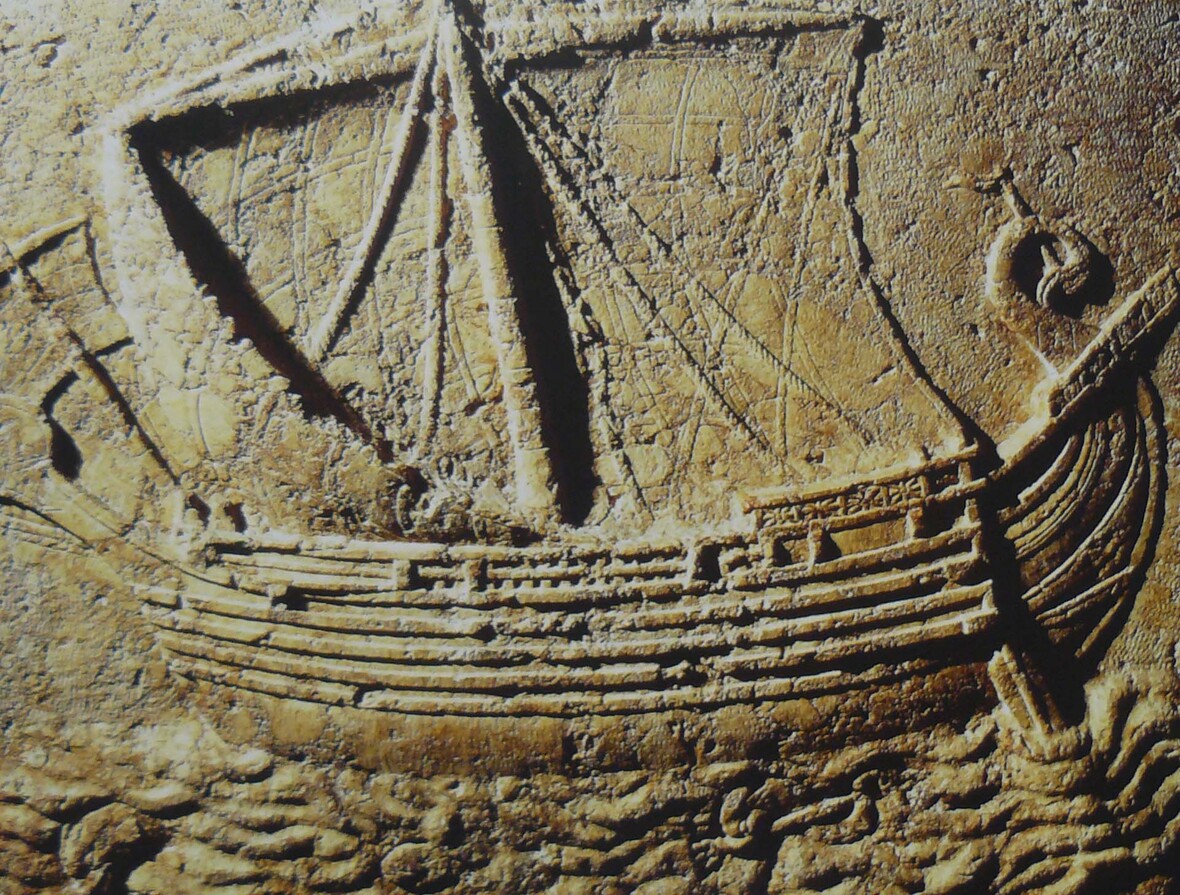
Here is what I have learned:
In August, when the first presidency sent their message publicly to church membership urging them to be personally protected by getting vaccinated, we knew as a family that there was more to the message. If a prophet speaks to the members and says exactly what the world says (on the surface) – there must be more to the message. So we held out and did not get vaccinated (and still am not for the following reasons.)
From study and personal revelation we know that these shots are poisonous with evidence of mass deaths, mass maiming, mind control components and also containing aborted baby tissue and these shots are the beginning of the mark of the beast (Rev:13:16).
If you log into your church account and go to ‘quick links’ and click on “letters and notices” – scroll down from most recent official messages from the brethren and look for the August message urging members to be vaccinated. You won’t find it. It was not an official letter. The message from the first Presidency was a public message. There can be many inferences as to why, buy I don’t want to publicly speculate.
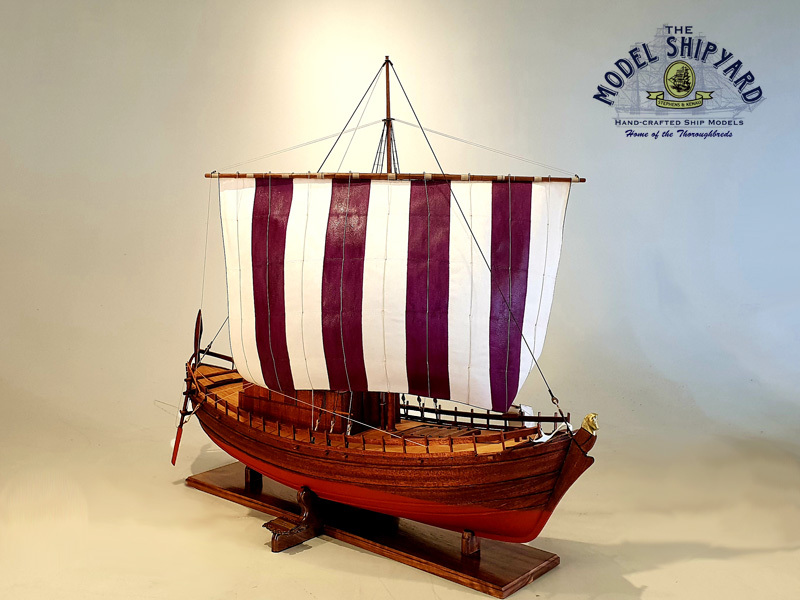
One must study messages from our prophets in their mind and in their heart. We knew there is no way the Lord would tell us to get these poisonous jabs that have killed and maimed so many already and that have all the hallmarks of the mark of the beast system. So we studied it out in our hearts and in our minds and found this interesting fact. The historical definition of vaccine centers is that vaccines are dead attenuated viruses/bacteria mixed with other ingredients. These vaccines would be administered to cause an immune response and thus preventing the person from getting the illness or getting symptoms. In 2021 the CDC under the direction of the WHO changed the definition of ‘vaccine’ and it’s related topics by necessity to include the scope of the toxic shots being offered to the world. The toxic shots by definition do not meet the historical vaccine definition because they are not dead attenuated viruses, they are MRNA gene therapies. So now, according to the CDC (who is advising all governments on covid and vaccine protocol) the definition of vaccine is this: Vaccine: A preparation that is used to stimulate the body’s immune response against diseases. Vaccines are usually administered through needle injections, but some can be administered by mouth or sprayed into the nose. So from this new definition we can ask some questions:
1. Can the shots that so many members are taking from their governments be classified as vaccines under the old definition? Ans: no
2. Can the shots that so many members are taking from their governments be classified as vaccines under the new definition? Ans: yes
3. Can other preparations that are not the shots being offered by the world government be classified as vaccines under the new definition? Ans: yes. Any preparation that stimulates a person’s immune system to prevent disease can now be classified as “vaccine” under the new definition. This means that members who do not want to take the poisonous shots from their governments can with a clear conscience take other vitamins, minerals, natural preparations and anything that will stimulate the immune system which are all considered ‘vaccines’ now. In this way – all those members can with clearly state that they are following the prophet perfectly.
Conclusion: Those members who choose not to take the poisonous shots forced by their tyrannical governments are following the Prophet by choosing to take different vaccines.
Learn of Me by Liz Lemon Swindle
I believe we will all be blessed as we follow the prophet in all that he has asked us to do and not focus on one hobby because we think we are perfect at it. I know the prophet has asked us to be kind, charitable, inclusive, be part of the Lord’s youth battalion, serve in the temple and make time for the Lord every day (to name a few invitations from his 31 general conference talks since being prophet). These are the things we are trying to do in our home because we know that theses are the things we need to be doing to accumulate oil for our lamps for when the Bridegroom returns soon.
I am hoping this information can be helpful to someone else, because coming to this knowledge has given us personal fortitude to withstand the persecution which continues because of our decisions. We know who we are, we know that we are following the prophet and the voice of the Lord and we have peace in these decisions.
I forgot to mention in my email another 2 points that could help those questioning the prophet’s calling.
1. From this info – we don’t know what “vaccine” the brethren took. The news article does not specify. This means they could have taken vitamin shots for all we know, so we can’t assume they took the poison shots. I know there are those out there saying the prophet is fallen because they believe the shots are the mark of the beast.
2. In the same thought – there are those who believe the prophet is fallen because he has urged the membership to take the poison mark of the beast shots leading them to their deaths and slavery to Satan, and hell.
So in our eyes – we never questioned him – President Nelson is the Lord’s prophet and if we follow the prophet we will be on the right hand of God.
We pray for you and the FIRM foundation and its work to increase peoples’ testimonies of Christ and his gospel. May the Lord’s blessings continue on your work.
About the Cooke Family
We are the Cooke family. Nathan and Laura and our children, Joseph, Reuben, Sarah and Henry. My parents were converts in the 70’s and Nathan’s family has a history of 4 generations of church members with his ancestors joining in 1920 in the north Brisbane Australia, City of Nambour. We have lived and loved the gospel our whole lives and planned from when we were married to be the best missionaries to our children as we possibly could. We have a firm foundation of studying scriptures and studying the words of modern and church history prophets. We had/have a firm testimony of the gospel and the Book of Mormon and nothing could have shaken that, but we realized that for our children, growing up in a different world to ours, we wanted to give them a solid foundation of testimony experiences that would carry them through their lives. Our lifestyle has been centered around temple worship, scriptures and prophets. Even when our children were young, we would take them to the temple just to visit regularly to help them know where they belong. Before they were baptized, we recommended they read the Book of Mormon and pray about it – which they all did, some of them had answers come when they were older. When we went on family holidays, we focused on visiting family (young and old and cemeteries) and gathering stories and having experiences together, having family reunions and visiting other temples. A few experiences during our early years of marriage helped us realize the tactics of the adversary in undermining testimonies. We recognized those tactics as:
The education system and the theory of evolution
The swamp that is media, and
The undermining of the truthfulness of the Book of Mormon and Joseph Smith the prophet of the restoration.
We chose to never have a TV in our house and never have pop music or magazines and our children could have devices when they could afford them. We controlled the media that came in our home and thus we could show our children what the Lord teaches, what the world teaches and how to defend their faith. After some time – Nathan set about setting up blogs and Facebook pages for our family members (including our children) to have quick access to answers needed to hold onto faith.
To date, we have:
A Book of Mormon Power FB page – with lots of article information from the FIRM foundation,
A Dragons and Dinosaurs page – with scripture, science and social information about the young age of the earth,
Our Cooke testimony building page – just sharing the trips we have had together to discover the Promised Land,
8 family history pages bringing together decedents of all of our great grandparents, and
Missionary blog pages for our sons, so we could share with family and friends their missionary journey and share the gospel at the same time.
Somewhere during that time (approx. 2015), we came across a YouTube video by Wayne May about Book of Mormon history. Before this time, I subconsciously assumed the Book of Mormon happened in Mesoamerica just because of church art – although my mind was always asking how Moroni moved all those plates to Cumorah. So when we watched that first 3 hr. video, we were just amazed and the reality of the Heartland model and all fell into place and our testimony was strengthened immediately. We immediately set about sharing all of this information with our family and friends. Our children put up with us reading scriptures and talking about these 3 topics above until they could bear no more. They understood. They believed. Then in 2017 Nathan was prompted to look at flights to the USA. We have never been wealthy, but we looked and found some cheap flights and decided to use our savings on a trip that we believed would cement our children’s testimony of all of these truths. We knew we couldn’t afford a Rod Meldrum tour, so we went about organizing our own. We packed in Church History and Book of Mormon History into 10 days – and were even blessed to change itinerary and attend a stake fireside with President Eyring and Elder Holland before the face to face they did at Palmyra. Every waking hour was spent visiting church history sites and sites that would strengthen our children’s testimony of the Book of Mormon and the science of Intelligent Design. We visited the Priesthood restoration site, all sites at Palmyra (including looking for mounds around the sacred grove and temple) and all sites at Kirtland and surroundings – realizing we were driving around many mounds in the area. On top of this, we fit in the great circle, Alligator Mound, Columbus Ohio Temple (which was the only temple open on our itinerary) and The Ark Encounter in Kentucky. The Ark Encounter is an amazing Ark museum built by Ken Ham who is an Australian. He may not be a church member, but I believe he definitely followed the spirit in the mission he is accomplishing which is to show what scripture says about the age of the earth and showing how science agrees with scripture, that the earth is very young. We had an amazing experience there and felt the spirit strongly. There were visitors from all over the world from all cultures and we all felt so united in that place knowing that we were all Christians (brothers and sisters) and that the scriptures are true and that we can trust the Lord in all he says. The only other places I have felt this feeling is attending general conference in person and in the temple.
So from that trip to the Promised Land – let me tell you the outcome. We had a family prayer of gratitude in the sacred grove together. We had a spiritual experience together that I cannot explain – it was like all of our hearts knew together without speaking that all of this is true, the church, the first vision, the Book of Mormon and our family relationships. We have never been the same since. We have 4 children. They all know without a doubt who they are, what their purpose is and what is right and wrong. Our 2 oldest sons have served missions and our youngest 2 are amazing temple and family history consultants in our ward. Without us stumbling onto Wayne May’s video that day, who knows how different our lives and our children’s lives would be. I am eternally grateful for you all; The FIRM Foundation team (And all associates – Joseph Smith Foundation, Isaiah Institute, Johnathan Neville, Darin Southam etc.) for your personal worthiness to be guided by the Holy Ghost to fulfill this personal mission and group mission which you have done. Although we have never met you in person, we feel like you are some of our best friends. We endeavor to share this with as many people as we can.
Thank you for all you do and may God bless your souls for your work and continue to reign his providence upon your personal and work lives to continue to help everyone in strengthening their testimonies of The Lord.
There are many differences in thought about where the Book of Mormon events happened. The Church of Jesus Christ of Latter-day Saints does not have a specific opinion. The main two ideas are, Mesoamerica and Heartland of the United States. There are over 100 other opinions that get a very small following such as Baja, South America and Peru.
The map below compares the two most followed theories and shows them side by side. You have all heard the main reason for even looking at Mesoamerica all these years most likely has to do with the Isthmus of Tehuantepec being misunderstood as the Narrow Neck of Land (Ether 10:20), which is where the “land divides the sea”, not the sea divides the land” as it says correctly in Ether. See blog here:
One Cumorah
“Because of this theory [Two Cumorah’s] some members of the Church have become confused and greatly disturbed in their faith in the Book of Mormon.”Doctrines of Salvation Vol. III by Joseph Fielding Smith (Author), Bruce R. McConkie (Editor)
This is a prophesy fulfilled in my opinion.
“I do not believe that there were two Hill Cumorah’s, one in Central America and the other one up in New York, for the convenience of the Prophet Joseph Smith, so that the poor boy would not have to walk clear to Central America to get the gold plates. I do not believe we can be good Latter-day Saints and question the integrity of Joseph Smith.” Mark E. Petersen LDS Conference Reports, Sunday afternoon, April 5, 1953
“I attended sessions of meetings for the institute teachers, held in the assembly room on the fourth floor of the Church Office Building. I cannot say that I was very greatly edified. Too much philosophy of a worldly nature does not seem to mix well with the fundamentals of the gospel. In my opinion many of our teachers employed in the church school system have absorbed too much of the paganism of the world and have accepted too readily the views of uninspired educators without regard for the revealed word of the Lord. What to do about it I do not know. It is a problem for the Presidency to consider. It is a very apparent fact that we have traveled far and wide in the past 20 years [since his father’s death]. What the future will bring I do not know. But if we drift as far afield from fundamental things in the next 20 years, what will be left of the foundation laid by the Prophet Joseph Smith? It is easy for one who observes to see how the apostasy came about in the Primitive Church of Jesus Christ. Are we not traveling the same road? The more I see of educated men—I mean those who are trained in the doctrines and philosophies now taught in the world, the less regard I have for them. Modern theories which are so popular today just do not harmonize with the gospel as revealed to the prophets, and it would be amusing if it were not a tragedy to see how some of our educated brethren attempt to harmonize the theories of men with the revealed word of the Lord. Thank the Lord, there is still some faith left and some members who still cherish the word of the Lord and accept the prophets. Surely the world is ripening rapidly for the destruction, and Satan has power and dominion over his own. If any are saved surely the Lord must soon come and have power over his Saints and reign in their midst, and execute ‘judgment upon Idumea, or the world.” Joseph Fielding Smith The Life of Joseph Fielding Smith 212. Deseret Book 1972
Final Battles
“…Here, between these hills, the entire power and national strength of both the Jaredites and Nephites were destroyed.” Oliver Cowdery’s Letter VIIJoseph Smith Papers “Letter VII,” LDS Messenger and Advocate, July 1835, 1:155–159
“Both the Nephite and Jaredite civilizations fought their final great wars of extinction at and near the Hill Cumorah (or Ramah as the Jaredites termed it), which hill is located between Palmyra and Manchester in the western part of the state of New York. It was here that Moroni hid up the gold plates from which the Book of Mormon was translated. (Morm. 6; Ether 15.) Joseph Smith, Oliver Cowdery, and many of the early brethren, who were familiar with all the circumstances attending the coming forth of the Book of Mormon in this dispensation, have left us pointed testimony as to the identity and location of Cumorah or Ramah.” (Doctrines of Salvation, vol. 3, pp. 232-241.) (Bruce R. McConkie, Mormon Doctrine “CUMORAH,” 1966, p. 175)
USA is the Promised Land of the Book of Mormon
“The whole of our journey, in the midst of so large a company of social honest and sincere men, wandering over the plains of the Nephites, recounting occasionally the history of the Book of Mormon, roving over the mounds of that once beloved people of the Lord, picking up their skulls & their bones, as a proof of its divine authenticity… During our travels we visited several of the mounds which had been thrown up by the ancient inhabitants of this country-Nephites, Lamanites, etc.” Joseph Smith Papers Letter to Emma Smith, 4 June 1834 Page 56
Joseph said that “the Book of Mormon is a record of the forefathers of our western tribes of Indians . . . By it we learn that our western tribes of Indians are descendants from that Joseph that was sold into Egypt, and that the land of America is a promised land unto them.” Joseph Smith’s Letter to The American Revivalist Feb 2, 1833 (Quoted in Dean C. Jessee, The Personal Writings of Joseph Smith (Salt Lake City: Deseret Book Co., 1984), p. 273)
Art by Val Chadwick Bagley
” You shall go unto the Lamanites and preach my gospel unto them;… and no man knoweth where the city Zion shall be built, but it shall be given hereafter. Behold, I say unto you that it shall be on the borders by the Lamanites. D&C 28:8-9
“Thus ended our first Indian mission, in which we had preached the Gospel in its fullness and distributed the record of their forefathers among three tribes… west of Missouri.” Autobiography of Parley P. Pratt, p 56-61
“On the top of the mound were stones which presented the appearance of three altars having been erected one above the other, according to the ancient order; and the remains of bones were strewn over the surface of the ground. The brethren procured a shovel and a hoe, and removing the earth to the depth of about one foot, discovered the skeleton of a man, almost entire, and between his ribs the stone point of a Lamanitish arrow, which evidently produced his death. Elder Burr Riggs retained the arrow. The contemplation of the scenery around us produced peculiar sensations in our bosoms; and subsequently the visions of the past being opened to my understanding by the Spirit of the Almighty, I discovered that the person whose skeleton was before us was a white Lamanite, a large, thick-set man, and a man of God. His name was Zelph. He was a warrior and chieftain under the great prophet Onandagus, who was known from the Hill Cumorah, or eastern sea to the Rocky mountains. The curse was taken from Zelph, or, at least, in part-one of his thigh bones was broken by a stone flung from a sling, while in battle, years before his death. He was killed in battle by the arrow found among his ribs, during the last great struggle of the Lamanites and Nephites.” Joseph Smith Papers History, 1838–1856, volume A-1 [23 December 1805–30 August 1834], Page 483
“The United States is the promised land foretold in the Book of Mormon—a place where divine guidance directed inspired men to create the conditions necessary for the Restoration of the gospel of Jesus Christ.” Elder L. Tom Perry Ensign Dec. 2012
This Chapter 12 below in Doctrines of Salvation is by far the best article that completely describes the Hill Cumorah in NY as the only Cumorah, the final place where the destruction of the Jaredites and the Nephites happened, and that the Unites States is indeed the Promised Land of the Book of Mormon. By reading this, there is no question that the heartland Model is the correct model of where the Book of Mormon occurred.
WHY PLATES WERE RETURNED TO MORONI. The question has been asked many times of our elders: Where are the plates? Does the Church have in its possession the plates from which the Book of Mormon was translated by Joseph Smith?
When the answer is given that the plates were received again by the Angel Moroni, who through the centuries since they were hid up unto the Lord has been their special guardian, the reply is generally made: What a wonderful aid it would be to your people in convincing the world of the truth of your story if you could show the plates to prove that Joseph Smith really had them.
Perhaps it is natural for a man who hears for the first time the story of Joseph Smith and the coming forth of the Book of Mormon to propound such a question and to think that the plates, if they had been placed in some museum where the public could examine them, would have added much to prove the authenticity of the Prophet’s story. With deeper reflection we discover that this would not have been the case, for it is not the way the Lord proves his truth, now or at any other time. However, in surprise, and in some cases with an incredulous smile, the propounder of this question turns away feeling that such an answer as he has received is an admission that Joseph Smith never had the plates and practiced a fraud upon the public.
EXISTENCE OF PLATES WOULD NOT PROVE DIVINITY OF BOOK. It is well in considering this matter to remember the words of the Lord to Isaiah: “For my thoughts are not your thoughts, neither are your ways my ways, saith the Lord. For as the heavens are higher than the earth, so are my ways higher than your ways, and my thoughts than your thoughts.” 228. 1
If the Lord had followed the thoughts of men and had commanded Joseph Smith to place the plates in some repository where they could have been inspected by the curious public, it would have led to endless disputations. Enemies of the Church would not have been convinced and would have contended most bitterly that the plates were spurious. No one could have read them for the characters engraved on them are unknown to the savants of the present age.
The Lord does not convince men of his truth by placing before their eyes and in their hands tangible evidence, as a lawyer may do before the court, marking it exhibit A and exhibit B, and then expect it to be accepted. The Lord expects the searcher after truth to approach him with a contrite spirit and with sincerity of purpose; if he will do this and keep the commandments of the Lord, he shall receive the witness through the Holy Spirit and shall know the truth. This testimony will come with such force and clearness that it cannot be denied. For this reason, the Lord said, “Whosoever speaketh a word against the Son of man, it shall be forgiven him: but whosoever speaketh against the Holy Ghost, it shall not be forgiven him, neither in this world, neither in the world to come.” 228. 2
WITNESSES OF BOOK OF MORMON TO BE RAISED UP. Nephi, one of the earliest prophets of the Israelitish colony, predicted nearly 600 years before the Christian era, that when the records containing the history of his people should be revealed from the dust, it would be in a day when the people would “deny the power of God, the Holy One of Israel,” and they would say: “Hearken unto us, and hear ye our precept; for behold there is no God today, for the Lord and the Redeemer hath done his work, and he hath given his power unto men.” 229. 3 Again, many among them would say when presented with a new volume of scripture containing the history of the people of this western world: “A Bible! A Bible! We have got a Bible, and there cannot be any more Bible.” 229. 4
Because of this attitude towards this new record the Lord promised to raise up “as many witnesses as seemeth him good,” to “establish his word; and wo be unto him that rejecteth the word of God.” In that day when these things should be accomplished the Lord would proceed to do a marvelous work and a wonder which would prove to be a testimony against those who “seek deep to hide their counsel from the Lord. “229. 5
Moreover, this new volume of scripture was to be a witness, not only for Christ and to contain the everlasting gospel but was also to be a witness for the Jewish scriptures, the Bible; and these two records — according to the prophesying of Nephi, his father, and also Joseph, son of Israel — were to grow together bearing testimony of the everlasting gospel. 229.6 As such a witness these records stand today testifying of the truth to the condemnation of all who reject their teachings. 229. 7
THE THREE WITNESSES. The three men called to serve as special witnesses of the coming forth of the Book of Mormon by the power of God are Oliver Cowdery, David Whitmer, and Martin Harris… They were associated with Joseph Smith in the establishing of this marvelous work in this dispensation. Later all three witnesses became estranged and left the Church. 229. 8 Oliver Cowdery and Martin Harris came back humbly seeking membership in the Church and both died in full fellowship. David Whitmer remained out of the Church; however, all three of these men remained faithful to the testimony they gave to the world which is found in each copy of the Book of Mormon.
Their testimony is that they received a visitation of an angel from the presence of the Lord, who laid before them the golden record from whence the Book of Mormon was translated, and who also instructed them. They beheld the engravings upon the plates as the leaves were turned one by one before them, and the voice of God was heard by them declaring from the heavens that the translation was by the gift and power of God and commanding them to bear record of it to all the world.230. 9 These three witnesses, through adversity, persecution, and all the vicissitudes of life, always remained true to their testimony that they beheld the plates in the presence of an angel and heard the voice of God speaking to them from the heavens.
TOTAL OF TWELVE WITNESSES. There were eight other witnesses who also beheld the plates, handled them, and examined carefully the engravings upon them as they were shown them by Joseph Smith. Their testimony is also given to the world and appears in each issue of the Book of Mormon. All of these eight men remained true to this testimony until death.
These twelve witnesses, four of whom beheld angels and had heavenly visions, and eight who beheld the record as it was shown to them by Joseph Smith, are all, it appears, that the Lord deemed necessary to establish the truth of the Book of Mormon, as he promised through Nephi that he would do. “And wo be unto him that rejecteth the word of God!” 230. 10 The testimonies of these men more than satisfy the law.230. 1 1
ALL MEN MAY BECOME BOOK OF MORMON WITNESSES. These are not all the witnesses who can speak of the divine mission of Joseph Smith, or of the truth of the Book of Mormon. The promise is made in the Book of Mormon that all who desire to know whether it is true and contains the word of the Lord may know that it is true if they will ask with a sincere heart, with real intent, having faith in Christ, for he will reveal it to them by the power of the Holy Ghost. 231. 12 There are hundreds of thousands who have put this promise to the test and can in all sincerity say that they have received that knowledge.231. 13
I am just as firmly convinced that this Book of Mormon is the word of God and was revealed, as Joseph Smith declared it was revealed, as I am that I stand here looking into your faces. Every soul on the face of the earth who has intelligence enough to understand may know that truth. How can he know it? All he has to do is to follow the formula that was given by the Lord himself when he declared to the Jews that they who would do the will of his Father should know of the doctrine, whether it was of God or whether he spoke of himself. 231. 14 My witness to all the world is that this book is true. I have read it many, many times. I have not read it enough. It still contains truths that I still may seek and find, for I have not mastered it, but I know it is true.
I know that the testimony of these witnesses recorded in each copy of the Book of Mormon is true, that they stood in the presence of an angel of God who declared unto them that the record as it was translated was correct, that their testimony that God spoke to them from the heavens calling upon them to bear witness of that fact is true, and there is not a soul who cannot receive that testimony if he desires to receive it. By reading this book prayerfully and faithfully, with a desire to know the truth as Moroni has declared by revelation, he shall know the truth regarding the restoration of this scripture given to the ancient inhabitants of this continent. 232. 15
WHERE IS THE HILL CUMORAH?
SPECULATION ABOUT BOOK OF MORMON GEOGRAPHY. Within recent years there has arisen among certain students of the Book of Mormon a theory to the effect that within the period covered by the Book of Mormon, the Nephites and Lamanites were confined almost entirely within the borders of the territory comprising Central America and the southern portion of Mexico — the isthmus of Tehauntepec probably being the “narrow neck” of land spoken of in the Book of Mormon rather than the isthmus of Panama.232. 16
This theory is founded upon the assumption that it was impossible for the colony of Lehi’s to multiply and fill the hemisphere within the limits of 1 ,000 years, or from the coming of Lehi from Jerusalem to the time of the destruction of the Nephites at the Hill Cumorah. Moreover, they claim that the story in the Book of Mormon of the migrations, building of cities, and the wars and contentions, preclude the possibility of the people spreading over great distances such as we find within the borders Of North and South America.
EARTH POPULATED RAPIDLY. If we are willing to accept the Bible record, which is confirmed by the Doctrine and Covenants, the entire civilization of the earth was destroyed in the flood except Noah and his family.232. 17 Moreover, this destruction took place less than 5,000 years ago, and today the population of the earth, notwithstanding wars and destructions, is estimated at over 2,000,000,000 souls.
The population of Europe, based upon the best records available, is vastly increased over that at the time of the discovery of America; yet upon this hemisphere are to be found hundreds of millions of people, descendants of European and Asiatic ancestors who knew nothing of this land before the discovery by Columbus. The rapid increase of posterity is known to every genealogist who has traced the record of the early settlers in this western country.
Hill Cumorah
LOCALE OF CUMORAH, RAMAH, AND RIPLIANCUM. This modernistic theory of necessity, in order to be consistent, must place the waters of Ripliancum and the Hill Cumorah some place within the restricted territory of Central America, notwithstanding the teachings of the Church to the contrary for upwards of 100 years. Because of this theory some members of the Church have become confused and greatly disturbed in their faith in the Book of Mormon. It is for this reason that evidence is here presented to show that it is not only possible that these places could be located as the Church has held during the past century, but that in very deed such is the case.
It is known that the Hill Cumorah where the Nephites were destroyed is the hill where the Jaredites were also destroyed. This hill was known to the Jaredites as Ramah. It was approximately near to the waters of Ripliancum, which the Book of Ether says, “by interpretation, is large, or to exceed all.”233. 18 Mormon adds: “And it came to pass that we did march forth to the land of Cumorah, and we did pitch our tents round about the hill Cumorah; and it was in a land of many waters, rivers, and fountains; and here we had hope to gain advantage over the Lamanites.” 233. 19
EARLY BRETHREN LOCATE CUMORAH IN WESTERN NEW YORK. It must be conceded that this description fits perfectly the land of Cumorah in New York, as it has been known since the visitation of Moroni to the Prophet Joseph Smith, for the hill is in the proximity of the Great Lakes and also in the land of many rivers and fountains. Moreover, the Prophet Joseph Smith himself is on record, definitely declaring the present hill called Cumorah to be the exact hill spoken of in the Book of Mormon. 234. 20
Further, the fact that all of his associates from the beginning down have spoken of it as the identical hill where Mormon and Moroni hid the records, must carry some weight. It is difficult for a reasonable person to believe that such men as Oliver Cowdery, Brigham Young, Parley P. Pratt, Orson Pratt, David Whitmer, and many others, could speak frequently of the Spot where the Prophet Joseph Smith obtained the plates as the Hill Cumorah, and not be corrected by the Prophet, if that were not the fact. That they did speak of this hill in the days of the Prophet in this definite manner is an established record of history.
OLIVER COWDERY PLACES CUMORAH IN WESTERN NEW YORK. The first reference of this kind is found in the Messenger and Advocate, a paper published by the Church in 1834-5. In a brief history of the rise of the Church prepared by Oliver Cowdery, he makes reference to this particular spot in the following words:
“By turning to the 529th and 530th pages of the Book of Mormon you will read Mormon’s account of the last great struggle as they were encamped round this hill Cumorah. 234. 21 In this valley fell the remaining strength and pride of a once powerful people, the Nephites — once so highly favored of the Lord, but at that time in darkness, doomed to suffer extermination by the hand of their barbarous and uncivilized brethren. From the top of this hill, Mormon, with a few others, after the battle, gazed with horror upon the mangled remains of those who, the day before, were filled with anxiety, hope, or doubt. A few had fled to the south, who were hunted down by the victorious party, and all who would not deny the Savior and his religion, were put to death. Mormon himself, according to the record of his son Moroni, was also slain.
“But a long time previous to this national disaster it appears, from his own account, he foresaw approaching destruction. In fact, if he perused the records of his fathers, which were in his possession, he could have learned that such would be the case. Alma, who lived before the coming of the Messiah, prophesied this. He, however, by divine appointment, abridged from those records, in his own style and language, a short account of the more important and prominent items, from the days of Lehi to his own time, after which he deposited, as he says, on the 529th page, 235. 22 all the records in this same hill, Cumorah, and after gave his small record to his son Moroni, who, as appears from the same, finished, after witnessing the extinction of his people as a nation. . . .
HILL RAMAH IN WESTERN NEW YORK. “This hill, by the Jaredites, was called Ramah; by it, or around it, pitched the famous army of Coriantumr their tents. Coriantumr was the last king of the Jaredites. The opposing army were to the west, and in this same valley, and nearby, from day to day, did that mighty race spill their blood, in wrath, contending, as it were brother against brother, and father against son. In this same spot, in full view from the top of this same hill, one may gaze with astonishment upon the ground which was twice covered with the dead and dying of our fellowmen. . . .
“In this vale lie commingled, in one mass of ruin, the ashes of thousands, and in this vale was destined to consume the fair forms and vigorous systems of tens of thousands of the human race — blood mixed with blood, flesh with flesh, bones with bones, and dust with dust.” 236. 23
PROPHET APPROVES OLIVER COWDERY’S VIEWS. The quibbler might say that this statement from Oliver Cowdery is merely the opinion of Oliver Cowdery and not the expression of the Prophet Joseph Smith. It should be remembered that these letters in which these statements are made were written at the Prophet’s request and under his personal supervision. Surely, under these circumstances, he would not have permitted an error of this kind to creep into the record without correction.
Geology
At the commencement of these historical letters is found the following: “That our narrative may be correct, and particularly the introduction, it is proper to inform our patrons, that our Brother J. Smith Jr., has offered to assist us. Indeed, there are many items connected with the fore part of this subject that render his labor indispensable. With his labor and with authentic documents now in our possession, we hope to render this a pleasing and agreeable narrative, well worth the examination and perusal of the saints. “236. 24
Later, during the Nauvoo period of the Church, and again under the direction of the Prophet Joseph Smith, these same letters by Oliver Cowdery, were published in the Times and Seasons, without any thought of correction had this description of the Hill Cumorah been an error. 236. 25
TESTIMONY OF DAVID WHITMER TO HILL CUMORAH. Another testimony of interest is that of David Whitmer given to Elders Orson Pratt and Joseph F. Smith in September 1878, when they paid him a visit at his home in Richmond. To these brethren he said: “When I was returning to Fayette, with Joseph and Oliver, all of us riding in the wagon. Oliver and I on an old- fashioned wooden spring seat and Joseph behind us — while traveling along in a clear open space, a very pleasant, nice-looking old man suddenly appeared by the side of our wagon and saluted us with, ‘Good morning, it is very warm,’ at the same time wiping his face or forehead with his hand. We returned the salutation, and, by a sign from Joseph, I invited him to ride if he was going our way; but he said very pleasantly, ‘No, I am going to Cumorah.’ This name was something new to me; I did not know what Cumorah meant. We all gazed at him and at each other, and as 1 looked around inquiringly of Joseph, the old man instantly disappeared, so that I did not see him again.”
This pile of bones comes from 200+ small Hopewell forts around Cumorah
Joseph F. Smith asked: “Did you notice his appearance?”
David Whitmer: “I should think I did. He was, I should think, about five feet eight or nine inches tall and heavy set. . . . His hair and beard were white, like Brother Pratt’s, but his beard was not so heavy. I also remember that he had on his back a sort of knapsack with something in, shaped like a book. “237. 26
“GLAD TIDINGS FROM CUMORAH.” Who can read the words of Joseph Smith as recorded in section 128 of the Doctrine and Covenants and not feel that he had reference to the Hill Cumorah in western New York?
“And again, what do we hear? Glad tidings from Cumorah! Moroni, an angel from heaven, declaring the fulfilment of the prophets — the book to be revealed. A voice of the Lord in the wilderness of Fayette, Seneca county, declaring the three witnesses to bear record of the book!” 237. 27
While in this statement it is not positively declared that the Hill Cumorah is the place where the plates were obtained, yet the implication that such is the case is overwhelming. Moroni declaring from Cumorah the book to be revealed!
JOSEPH SMITH LOCATES CUMORAH IN WESTERN NEW YORK. Perhaps this matter could rest at this point, but the question of the territory now embraced within the United States having been in possession of Nephites and Lamanites before the death of Mormon, carries some weight in the determining of this matter. In the tight of revelation, it is absurd for anyone to maintain that the Nephites and Lamanites did not possess this northern land. While Zion’s camp was marching on the way to Jackson County, near the bank of the Illinois River they came to a mound containing the skeleton of a man. The history of this incident is as follows:
“The brethren procured a shovel and a hoe and removing the earth to the depth of about one foot, discovered the skeleton of a man, almost entire, and between his ribs the stone point of a Lamanitish arrow, which evidently produced his death. Elder Burr Riggs retained the arrow. The contemplation of the scenery around us produced peculiar sensations in our bosoms; and subsequently the visions of the past being opened to my understanding by the Spirit of the Almighty, I discovered that the person whose skeleton was before us was a white Lamanite, a large, thickset man, and a man of God. His name was Zelph. He was a warrior and chieftain under the great prophet Onandagus, who was known from the Hill Cumorah, or eastern sea to the Rocky Mountains. The curse was taken from Zelph, or at least, in part — one of his thigh bones was broken by a stone flung from a sling, while in battle, years before his death. He was killed in battle by the arrow found among his ribs, during the last great struggle of the Lamanites and Nephites.” 238. 28
HEBER C. KIMBALL TELLS OL DEATH OE ZELPH. Elder Heber C. Kimball who was present recorded the following in his journal: “While on our way we felt anxious to know who the person was who had been killed by that arrow. It was made known to Joseph that he had been an officer who fell in battle, in the last destruction among the Lamanites, and his name was Zelph. This caused us to rejoice much, to think that God was so mindful of us as to show these things to his servant. Brother Joseph had inquired of the Lord, and it was made known in a vision.” 239. 29
ANCIENT CITY OF MANTI IN MISSOURI. The following is also taken from the history of the travels of the Kirtland Camp: “The camp passed through Huntsville, in Randolph County, which has been appointed as one of the stakes of Zion and is the ancient site of the City of Manti, and pitched tents at Dark Creek, Salt Licks, seventeen miles. It was reported to the camp that one hundred and ten men had volunteered from Randolph and gone to Far West to settle difficulties.” 239. 30
The following account of the same event is taken from the daily journal of the Kirtland Camp, and was written by Samuel D. Tyler: “September 25, 1838. We passed through Huntsville, Co. seat of Randolph Co, Pop. 450, and three miles further we bought 32 bu. of corn off one of the brethren who resides in this place. There are several of the brethren round about here and this is the ancient site of the City of Manti, which is spoken of in the Book of Mormon and this is appointed one of the Stakes of Zion, and it is in Randolph County, Missouri, three miles west of the county seat.” 239. 3 1
NEPHITE AND JAREDITE WARS IN WESTERN NEW YORK. In the face of this evidence coming from the Prophet Joseph Smith, Oliver Cowdery, and David Whitmer, we cannot say that the Nephites and Lamanites did not possess the territory of the United States and that the Hill Cumorah is in Central America. Neither can we say that the great struggle which resulted in the destruction of the Nephites took place in Central America. If Zelph, a righteous man, was fighting under a great prophet-general in the last battles between the Nephites and Lamanites; if that great prophet-general was known from the Rocky Mountains to “the Hill Cumorah or eastern sea,” then some of those battles, and evidently the final battles did take place within the borders of what is now the United States.
There were no righteous prophets, save the Three Nephites, after the death of Moroni, and we learn that Zelph was slain during one of these battles during the great last struggle between the Nephites and Lamanites and was buried near the Illinois River.
Cities of the BofM
In the Book of Mormon story the Lamanites were constantly crowding the Nephites back towards the north and east. If the battles in which Zelph took part were fought in the country traversed by the Zion’s Camp, then we have every reason to believe from what is written in the Book of Mormon, that the Nephites were forced farther and farther to the north and east until they found themselves in the land of Ripliancum, which both Ether and Mormon declare to us was the land of Ramah or Cumorah, a land of “many waters,” which “by interpretation, is large, or to exceed all. “240. 32
This being true, what would be more natural then that Moroni, like his father Mormon, would deposit the plates in the land where the battles came to an end and the Nephites were destroyed? This Moroni says he did, and from all the evidence in the Book of Mormon, augmented by the testimony of the Prophet Joseph Smith, these final battles took place in the territory known as the United States and in the neighborhood of the Great
Lakes and hills of Western New York. And here Moroni found the resting place for the sacred instruments which had been committed to his care. 241. 33
IMPRESSIONS AT CUMORAH
LORD LED PROPHET’S LAMILY TO CUMORAH-LAND. As I stood upon these sacred places I had peculiar feelings which I cannot describe. I always do have such feelings; I have visited the Hill Cumorah and the Sacred Grove on other occasions. As I stood at the Smith home, I thought of the early struggles of the family, and wondered what means the Lord might have used to get them to move from Vermont or New Hampshire, if they had not been forced from these states by poverty. Their poverty was not the result of indolence, as the wicked have proclaimed, but the poverty and reverses of Providence, sent to give experience and to lead the family to a better land where the Lord could perform his work through the youthful Seer, yet to be raised up.
When the Smith family arrived in Palmyra they immediately bargained for the purchase of 100 acres of land. This is known today as the Joseph Smith farm and is in the possession of the Church. In that day the land was covered with a heavy growth of timber. This had to be removed before the land could be planted and crops raised to pay for the farm. As I stood upon this ground, I thought of the struggles this entailed. My grandfather, Hyrum Smith, and his older brother, Alvin, were called upon to do much of this laborious task. The younger brother, Joseph, was too young at that time to give much help, being only about 10 years of age. Nevertheless, he was called to assist, and a few years later — at the time of the vision — was under the necessity of performing labor required of a man.
The house which stands upon the farm was built by these sons of Joseph Smith, Senior; but it is not the house, as many have been told, in which the Angel Moroni appeared to Joseph Smith. The older house has long since disappeared and stood several rods to the north of the present home. After the proclamation of the Angel’s visit persecution raged, and the family were not permitted long to enjoy the land which had cost them so much to prepare, because of others, who, through wickedness, for a season reaped the fruits thereof.
CUMORAH ONCE SITE OF CARNAGE AND DESTRUCTION. As I stood upon the summit of the Hill Cumorah, in the midst of a vast multitude, only a few of whom belonged to the Church, I tried to picture the scenes of former days. Here were assembled vast armies filled with bitterness and bent on destruction. I thought of the great promises the Lord had made through his prophets concerning those who should possess this choice land, and how those promises were not fulfilled because the people violated his commandments. Here a people perished because of their extreme wickedness.
There must be something in the destiny of things that would cause a repetition of this terrible scene on the same spot many centuries later. I reflected and wondered if this unhappy time would ever come when another still mightier people would incur the wrath of God because of wickedness and likewise perish. If so, would this same spot witness their destruction? I thought of the prophets, Ether, Mormon, Moroni, and tried to realize the sadness of their feelings as they witnessed the mad onrushing of their peoples to annihilation.
Moronis Battle
IMPORTANCE OF CUMORAH UNKNOWN TO WORLD. We sang the song, prepared for this celebration, 242 . 34 Zion-land, and I entered heartily, sincerely, into the spirit of the song:
God bless our Zion-land,
Firm may she ever stand,
Through storm and night;
When the wild tempests rave,
Ruler of wind and wave,
Do Thou Thy Zion save
By thy great might!
For her our prayers shall rise
To God above the skies,
With Him we stand;
Thou who art ever nigh,
Guarding with watchful eye,
To Thee aloud we cry,
God save Thy land.
Here it was that Moroni, commanded by the Lord, hid up the sacred records of his people. Here it was. 1,400 years later, that he, then a resurrected being, came to Joseph Smith and committed these same records to the young man’s care. At the time of the Prophet’s first visit to the hill, it was covered with trees; today (1923) it is stripped and bare, save for the grass which grows abundantly. This former scene of strife and bloodshed, where two nations perished, later the sacred repository of ancient records, today is the abode of peaceful cattle, reclining and chewing the cud. The many millions of inhabitants of the land, who, because they love darkness rather than light, will not believe, and although an angel has declared it unto them, they appear to have no more thought concerning the wonderful events that have taken place near and on the Hill Cumorah, than have these cattle.243. 35
FOOTNOTES 228-1 Isa. 55:8-9.
228- 2 Era, vol. 30. pp. 948-949; Matt. 12:32.
229- 3 2 Ne. 28:5.
229-4 2 Ne. 29:3.229-5 2 Ne. 27:14,26-27.
229-6 2 Ne. 3; 4; 25; 26; 27; 28; 29.
229-7 Era, vol. 26, pp. 958-959.
229- 8 It is well known that Oliver Cowdery and David Whitmer left the Church, but it has been generally supposed that Martin Harris was never excommunicated, he Journal History of the Church under date of Jan. 1, 1838. however, tells of his excommunication by the High Council in Kirtland in Dec. 1837. He was rebaptized Sept. 17, 1870. in Salt Lake City by Edward Stevenson and confirmed the same day by Orson Pratt. Journal History. Sept. 17,1870.
230- 9 History of the Church, vol. 1, pp. 52- 59.
230-10 2 Ne. 27:14.
230- 11 Deut. 17:6; 19:15; Matt. 18:15-16; 2 Cor. 13:1.
231- 12 Moro. 10:3-5.
231-13 Era, vol. 30. pp. 952-953.
231- 14 John 7:14-17.
232- 15 Conf. Rep., Oct., 1949. p. 89; Moro. 10:3-5.
232-16 Alma 50:34; 52:9; 63:5; Morm. 2:29; 3:5.
232- 17 Gen. 6; 7; 8; Moses 7:36-43, 51-52; 8:22-30; Alma 10:22; 3 Ne. 22:9; Ether 6:7.
233- 18 Ether 15:8-11.
233- 19 Morm. 6:4.
234- 20 History of the Church, 1948 ed., vol. 2, pp. 79-80.
234- 21 Morm. 5; 6.
235- 22 Morm. 6:6.
236- 23 Messenger and Advocate, July, 1835. pp. 158-159.
235- 24 Messenger and Advocate, Oct., 1834. p. 13.
236- 25 Times and Seasons, Apr. 15, 1841, vol. 2, p. 379.
237- 26 Millennial Star, vol. 40, p. 772.
237- 27 D. & C. 128:20.
238- 28 History of the Church, 1948 ed., vol. 2, pp. 79-80. Through error the part of this quotation naming the Hill Cumorah” and specifying that Zelph died in the last great struggle was omitted in editions prior to 1948. It was, however quoted correctly, as written by the Prophet and here given, in vol. 6 of the Times and Seasons of Jan. 1, 1846.
239- 29 Times and Seasons, vol. 6. p. 788.
239-30 Millennial Star. vol. 16. p. 296.
239- 31 Journal of Samuel D. Tyler, Sept. 25, 1838, filed in Church Historian’s Office.
240- 32 Ether 15:8-11.
241- 33 Church News, Sept. 10, 1938, pp. 1, 6; reprinted. Feb. 27, 1954, pp. 2-3.
242- 34 President Joseph Fielding Smith was attending the first general conference of the Eastern States Mission, convened at the Joseph Smith Farm near Palmyra, New York, on Sept. 21 to 23, 1923 — the one hundredth anniversary of the appearance of Moroni to Joseph Smith.
243- 35 Rel. Soc. Mag., vol. 10. pp. 586-587.
It can be shown that the Heartland of North America is the only location in the Western Hemisphere where all of the essential items necessary to practice the Law of Moses were found anciently, including; lambs, oxen, goats, rams, doves, barley, wheat, grapes, and altars made of stacked, unhewn stones. These aforementioned items have not been found in the archaeological record of the pre-Columbian peoples of Mesoamerica.
Common sense says, if the Lord directed Lehi to the Promised Land, that Land the Lord chose, would have the necessary items needed to practice the Law of Moses that the Lord asked the Lehites to practice. Correct? How can something this simple be confusing?. Those intellectuals who believe in Mesoamerica try and explain things by saying the Lord allowed the Lehites to use substitution for the Law of Moses. In other words, if you don’t have a lamb, use a llama, or if you don’t have doves, use turkey’s or substitute goats for agouti’s. It is an insane argument. This alone verifies North America in my opinion, to be where Lehi landed.
Art by Val Chadwick Bagley
Nearly all those familiar with the early statements by the Prophet Joseph Smith touching on potential Book of Mormon lands know that he clearly indicated them to be in North America. This is evident in the historically verified accounts wherein he declared revelation such as in the Wentworth Letter, the American Revivalist Account, the Zelph Accounts and Joseph’s handwritten letter to Emma while on Zion’s camp. In addition, the prophet revealed a Nephite altar at Adam-ondi-Ahman, mentioned the land of Manti was near Huntsville, Missouri, and revealed that this land was “the borders of the Lamanites” (see D&C 54:8). Furthermore he received revelation from the Lord for the location of Zarahemla (see D&C 125:3) and New Jerusalem (see D&C 84:1-6) which Christ Himself declared to be on Book of Mormon lands (3 Nephi 20:22), both of which are absolutely located in North America. These accounts and their indications are not speculation based, but historically documented fact.
John Sorenson the “Dean” so to say of Mesoamerican Geography says the following. “There remain Latter-day Saints who insist that the final destruction of the Nephites took place in New York, but any such idea is manifestly absurd. Hundreds of thousands of Nephites traipsing across the Mississippi Valley to New York, pursued (why?) by hundred of thousands of Lamanites, is a scenario worthy only of a witless sci-fi movie, not of history.” Mormon’s Codex, p. 688.
From Moroni’s America Chapter 28 by Jonathan Neville
For decades, LDS scholars have labored to establish and defend a Mesoamerican setting for the Book of Mormon because they believed they were vindicating what Joseph Smith wrote (or approved) in three articles published in the Times and Seasons on 15 September and 1 October 1842. The discovery that it was someone other than Joseph Smith, Wilford Woodruff, or John Taylor who wrote the articles,[i] led to the further discovery that Benjamin Winchester wrote the articles linking the Book of Mormon to Central America, and that William Smith edited and published them.[ii] These discoveries raise serious questions about the original premise for both hemispheric and Mesoamerican theories of Book of Mormon geography. Although now discredited, these Times and Seasons articles have influenced generations of Latter-day Saints—members, scholars, and leaders[iii]—and have been frequently cited by those who advocate a Mesoamerican setting.
In response to the Winchester saga, some proponents of the Mesoamerican setting now claim the Times and Seasons articles are ancillary, or even irrelevant, to Book of Mormon geography. This chapter accepts that premise for the sake of argument and examines Mesoamerican geography on the merits, without the implied imprimatur of Joseph Smith’s authorship—or editorial approval—of the Times and Seasons articles. As John Sorenson wrote, “If we are to progress in this task, we must chop away and burn the conceptual underbrush that has afflicted the effort in the past. We must stop asking, as so many do, what have the Brethren said about this in the past?”[iv]
[i] Matthew Roper, Paul J. Fields, Atul Nepal, “Joseph Smith, the Times and Seasons, and Central American Ruins,” Journal of the Book of Mormon and Other Restoration Scripture 22/2 (2013): 84-97. In that article, the authors present the results of a stylometric analysis that show none of the three candidates tested could have written the articles. The authors nevertheless conclude that “Joseph Smith is the most likely author of the composite text” because they erroneously assume that no one else was “said to be working in the printing office.” In fact, there were several employees, but most importantly, William Smith was publishing the Wasp from the same office and much—often most—of the content of the Times and Seasons consisted of articles mailed to Nauvoo or excerpted from other publications.
[ii] Jonathan Neville, The Lost City of Zarahemla (Legends Library, Rochester NY 2015).
[iii] For example, Joseph Fielding Smith included one of them in Teachings of the Prophet Joseph Smith, and they have been widely cited and quoted in books and articles about Book of Mormon geography, including Mormon’s Codex, cited below, and numerous articles published by FARMS and the Neal A. Maxwell Institute for Religious Studies, both affiliated with BYU.
[iv] John L. Sorenson, The Geography of Book of Mormon Events: A Source Book (FARMS 1990, 1992) p. 210.
Filters and Terms of Reference
Sorenson lists terms of references, or “filters,” that he believes must be applied to any real-world candidate for The Book of Mormon setting. This section examines his three “major filters,”[i] applies them to the text and evidence, and then performs the same assessment using three additional filters. The six filters are:
1. Scope of territory (Sorenson) 2. Destruction in 3 Nephi (Sorenson) 3. Sophisticated society (Sorenson) 4. Law of Moses(Discussed Below) 5. Promised land 6. Infrastructure (Ores, Towers, Fortresses, Buildings, Roads)
[i] Numbers 1-3 are copied verbatim from Mormon’s Codex, pp. 20-21.
Filter 4—Law of Moses. Criteria related to the law of Moses as described in the text must be accounted for in any acceptable theory. “Lehi and his people diligently kept the law of Moses. Nephi affirmed… that they did ‘keep the law of Moses, and look forward with steadfastness unto Christ, until the law shall be fulfilled’ (2 Nephi 25:24)…. The Nephites were to continue to keep the law of Moses until it was fulfilled.”[i]
The Book of Mormon people did not casually observe the Law of Moses. They “were strict in observing the ordinances of God, according to the law of Moses.” Alma 30:3. It was obedience to the law of Moses that Korihor criticized:
Lehi Offers Sacrifice
“Korihor said unto him: Because I do not teach the foolish traditions of your fathers, and because I do not teach this people to bind themselves down under the foolish ordinances and performances which are laid down by ancient priests, to usurp power and authority over them, to keep them in ignorance, that they may not lift up their heads, but be brought down according to thy words.” (Alma 30:23)
When groups failed to observe the law of Moses, they “had fallen into great errors.” Alma 31:9.
The law of Moses and its implications for Book of Mormon geography deserve an entire book, but this filter can serve its purpose with just a few of the key points.
Architecture
One major difference between the Mesoamerican and American settings is visible in architecture. Mayan architecture is typified by large stone temples, made of cut stones and featuring steps by which one ascends to altars or the tops of the temples. By contrast, Hopewell architecture relies on uncut stone and ramps to ascend. Altars and ramps of earth are also common.
According to the law of Moses, observers of the law must use ramps and uncut stones. “An altar of earth thou shalt make unto me, and shalt sacrifice thereon thy burnt offerings, . . . And if thou wilt make me an altar of stone, thou shalt not build it of hewn stone, for if thou lift up thy tool upon it, thou hast polluted it. Neither shalt thou go up by steps unto mine altar, that thy nakedness be not discovered thereon” (Exodus 20:24-26). Ramps were also important for leading animals to be sacrificed.
Altar of Stacked Stone.
“The altars of the temple were made of stacked stone, not hewn stone. “The word in Exodus 20:25 which is translated as ‘tool’ is the Hebrew חרב which most literally means ‘sword’. There explains that a sword is designed to shorten life, while an altar is designed to lengthen life by being used to achieve atonement. It makes sense, therefore, that one should not be used in the formation of the other.” Rashi, Medieval French Rabbi.
By Val Chadwick Bagley
Moroni’s America continued. “This distinction is apparent in Israel, where archaeologists can use the distinction between ramps and stairs to determine whether an ancient site was built according to the law of Moses. One archaeologist describing the discovery of Joshua’s Altar on Mt. Ebal, Israel, explains it this way:
Hebrew altars can be distinguished from pagan altars in 5 respects: 1. They are made of uncut natural stone. 2. Ramps, never stairs. 3. Hebrew altars are square. 4. Hebrew altars have their sides oriented to the 4 points of the compass (NSEW), as we see in the orientation of the tabernacle.[ii]
Altar at Copan
Nicknamed El Caracol (“the snail”) because of the stone spiral staircase inside
In Mesoamerican sites, there are no ramps; in the American setting, sites have no steps. In Mesoamerica, stones are carved; in the American setting, they are unhewn. Whoever created the Hopewell structures complied with this aspect of the Law of Moses, intentionally or not. Whoever created the Mesoamerican structures did not comply with the Law of Moses, even in the Nephite time period.”
Amberli Nelson Said,
3 Essential Truths about Nephite Observance of the Law of Moses
“WOLVES in SHEEP’S CLOTHING” is an hour and half video of Amberli Nelson taking a closer look at the animals in the Book of Mormon and what they reveal about its location.Purchase Today.
“First Truth: Not only did the Nephites “strictly” keep the law of Moses (as indicated in 37 verses in the Book of Mormon (see Alma 30:3, Mosiah 13:29-30, Jarom 1:5), but they did so with delight as it was seen by them as both a collection of types of Christ and a means of coming unto Him. Occasionally even the Lamanites were known to “strictly” observe the law (Hel. 13:1). Second: In “observing to keep the commandments of the Lord in all things, according to the Law of Moses” (2 Ne. 5:10), the Nephites would have necessarily observed all the feasts or “holy days” given to Moses by Jehovah. These are recorded in Exodus and Leviticus and are known as “holy convocations” or “rehearsals” and they typify the life and mission of Jesus Christ in profoundly beautiful ways. Third: It was absolutely essential for these Jewish Lehites to be brought to a land that would provide an abundance of all the plants and animals required to keep the Law of Moses, with its concomitant Holy Days or festivals. Based on the latest archaeological findings, it can now be irrefutably shown that the Heartland of North America is the only location in the Western Hemisphere where all ten of the essential items were found anciently including; lambs, oxen, goats, doves, barley, wheat, grapes, and altars made of stacked, unhewn stones. These aforementioned items have not been found in the archaeological record of the pre-Columbian peoples of Mesoamerica.” “An altar of earth thou shalt make unto me… in all places where I record my name I will come unto thee, and I will bless thee. And if thou wilt make me an altar of stone, thou shalt not build it of hewn stone: for if thou lift up thy tool upon it, thou hast polluted it. Neither shalt thou go up by steps unto mine altar…” Exodus 20:24 – 26Amberli Nelson MBA Hebrew/Jewish Symbology Expert
Calendar
Another aspect of the Law of Moses was determining the time for various religious events. The ancient Hebrews used a lunar calendar. Psalm 81:3-6 notes that the moon determined the time for feasts: “Blow up the trumpet in the new moon, in the time appointed, on our solemn feast day. For this was a statute for Israel, and a law of the God of Jacob.”
Jewish Calendar
Sorenson notes that “A lunar-based calendar was apparently basic to Nephite/Mulekite calendrical calculations (Omni 1:21). That being the case, a systematic record of moon phenomena would have been an element in their astronomy/calendar knowledge system… The moon-based calendar of the Jews of Jerusalem surely was carried forward by the Lehites and Mulekites when they emigrated from the near East to the New World.”[iii] He notes that some scholars believe the Mayans used lunar months at one time, but their primary calendar was solar. In fact, the Mayan lunar series was not incorporated until the 3rd Century AD.[iv] The best-known calendar, used by the lowland Maya, used 13 numbered days in connection with 20 named days, producing a 260-day cycle. Another version of Mayan calendars was based on the Haab’, a roughly solar calendar consisting of eighteen 20-day months plus five days at the end of the year. This resembled the Egyptian solar calendar.
Mesoamerican Calendar
Like the Hebrews (and presumably the Nephites), the Hopewell culture also used a lunar calendar to schedule feasts.[v] The largest geometric earthworks complex in the world is near Newark, Ohio, and is around 2,000 years old. The site’s “lunar alignments precisely encode the orb’s very complex cycle, with moonrises and moonsets rotating north and south over an 18.61-year cycle.”[vi]
To summarize, Mesoamerican culture was based primarily on a solar calendar, while the ancient American (Hopewell) culture, like the culture of ancient Israel, was based primarily on a lunar calendar.
Plants and Animals
Proof of the existence of species at the time and place mentioned in the Book of Mormon requires first, determining what species were mentioned, and second, where the species were encountered. Consideration of the Law of Moses is important because it filters out species that would not, and could not, be used as part of strict observance of the law. Specific species of plants and animals are essential for observing the law of Moses. Strict obedience to the law of Moses does not allow substitutions; for example, for a peace offering, the law specifies “a bullock, a sheep, or a goat,” (Leviticus 22:27). When he arrived in the land of promise, Nephi indicated that he found the animals they needed to observe the law of Moses. He wrote “we did find upon the land of promise… that there were beasts in the forests of every kind, both the cow and the ox, and the ass and the horse, and the goat and the wild goat.” 1 Nephi 18:25.
One unnamed animal pertains directly to the law of Moses. The Book of Mormon has sixty-six references to “flocks.” Mosiah 2:3 explains the significance: “And they also took of the firstlings of their flocks, that they might offer sacrifice and burnt offerings according to the law of Moses.” The flocks were so important that when Limhi prepared his people to escape from the Lamanites, he “caused that his people should gather their flocks together…the people of king Limhi did depart by night into the wilderness with their flocks and their herds.” Mosiah 22:10-11. When Alma led his people out of bondage, he “and his people in the night-time gathered their flocks together.” Mosiah 24:18. Presumably the reason they took their flocks when they escaped, despite the evident complications and the pursuit by the Lamanites, was because they needed them for their offerings and sacrifices.
The Hebrew term translated as “flock” ordinarily applies to sheep, but when used as the plural “flocks” it can include other kinds of domesticated animals. “Book of Mormon terminology fails to clarify what species composed Nephite ‘flocks’ and ‘herds,’” according to John Sorenson.[vii] However, Alma defines the term flock as meaning sheep. “For what shepherd is there among you having many sheep doth not watch over them, that the wolves enter not and devour his flock?” (Alma 5:59) Other uses of the term, such as “flocks of sheep” in 3 Nephi 20:16, could be interpreted as purely metaphorical, but if the people did not have sheep, what sense would the metaphor make? Christ is referred to as the Lamb of God throughout the text, from 1 Nephi through Ether.
Sheep, of course, are one of the animals required under the law of Moses, along with goats, bulls, and oxen. Enos reiterated that the people of Nephi did raise “flocks of herds, and flocks of all manner of cattle of every kind, and goats, and wild goats, and also many horses.” Enos 1:21. Mosiah emphasized that the people grew wheat and barley, both needed for the law of Moses. Mosiah 9:9. None of these species are found in Mesoamerica, which is why Mesoamerican advocates suggest the small Mexican brocket deer might be a goat and the tapir an ass.[viii] By contrast, there is evidence of each of these species in the American setting.
Barley
Pre-Columbian wheat and barley have both been documented in North America (but not in Mesoamerica). Wade E. Miller and Matthew Roper have noted, “beginning in the 1980s, discoveries of pre-Columbian barley started to be made, substantiating the Book of Mormon claim.”[ix] The Fort Ancient State Memorial Museum in Oregonia, Ohio, has this ancient barley on display. Miller and Roper also note that the Vikings claimed to find wheat in North America when they arrived in the year 1000 A.D. Despite this evidence in North America, because they are defending the Mesoamerican setting, Miller and Roper write, “while the Book of Mormon makes reference to wheat (e.g., Mosiah 9:9), it might have been another grain translated as ‘wheat.’”[x] Sorenson explains: “Exactly what species Nephite ‘wheat’ referred to is unclear, but it apparently was not the wheat familiar to us, which was unknown in Mesoamerica; presumably the name was applied to one of the aforementioned grains.”[xi] But if the Nephites were using a different grain, how did they comply strictly with the Law of Moses?
Animals that match the terms used in the Book of Mormon apparently existed in North America before Columbus. Nephi claimed he found “the goat and the wild goat.” (1 Nephi 18:25). These species were permitted as food under the Law of Moses (Deuteronomy 14:4-5). It’s interesting that Deuteronomy also specifies “the hart, and the roebuck, and the fallow deer… and the pygarg, and the wild ox, and the chamois,” but Nephi listed none of these. Early French explorers noted the presence of “wild goats” along the Mississippi River, in Indiana and Illinois, and in Florida.[xii] Miller and Roper suggest the “goat” may have been a species of domesticated deer that resembled a goat. They note that men accompanying De Soto observed “herds of tame deer”[xiii] in Ocale, a town in northern Florida. Another Spanish historian recorded a similar observation in Apalachicola[xiv]—right in the area where Lehi landed, according to the American model.
As evidence that ancient people in Ohio had goats, the Mound City Group Visitors Center, a Hopewell Culture National Historic Park near Chillicothe, Ohio, features a copper goat horn that dates to Book of Mormon times.
Sheep and lambs are mentioned 77 times in the Book of Mormon. Many references are figurative, but as Alma 5:59 indicates, the people were familiar with sheep and did tend to them. William Richie, an archaeologist, reported that he found remains of domestic sheep in western New York dating to 100 A.D., about 30 miles east of the Hill Cumorah.[xv] At least one Hopewell sculpture of an animal that looks like a sheep has been found.
Enos referred to “all manner of cattle of every kind,” a description similar to that of French explorers who described seeing “wild bulls, wild cows, wild cattle, and vaches sauvages” that are now considered to be terms used “as the designation of both the moose and the elk.”[xvi]Buffalo, or bison, were often described as cattle. There are several accounts from the 1500s of buffalo-like creatures in Florida, but it is not known what species the explorers were describing.[xvii]
Evidence of the specific animals required by the Book of Mormon is far more abundant in the American setting than it is in the Mesoamerican setting. Sorenson notes that there is evidence of other Book of Mormon animals from the right time period that fit the American model, such as the horse, mammoth and mastodon remains at St. Petersburg, Florida, that date around 100 B.C.[xviii]
Horses or Tapir’s?
Regarding Mesoamerica, Sorenson concludes that “there are plausible creatures to match each scriptural term.”[xix] He suggests that the deer or tapir may qualify as horse, ox, ass and goat, while the paca or agouti may qualify as sheep, his theory being that Joseph Smith didn’t know a more accurate term to translate the original word on the plates. But “deer” and “pygarg” (the term for antelope) were both terms used in Deuteronomy that presumably could have been used in the translation of the Book of Mormon and would have been better fits to the species in Mesoamerica. It is inconceivable that a paca or agouti, both of which are rodents and therefore unclean under the law of Moses, would have been considered “sheep” by the Nephites and used for their sacrifices.
At any rate, calendars, architecture, plants, and animals all tend to show that this important aspect of Nephite culture was feasible in America, but not in Mesoamerica.
Conclusion:
The American model passes filter #4 and Mesoamerica does not (unless one assumes the Book of Mormon was not translated accurately when it came to naming animal and plant species). Mormon’s America Chapter 28 by Jonathan Neville
[i] John W. Welch and Stephen D. Ricks, editors, King Benjamin’s Speech, (Foundation for Ancient Research and Mormon Studies, Provo, Utah 1998), pp. 150-151. [ii] Adam Zertal, Ph.D , Joshua’s Altar on Mt. Ebal, Israel, http://www.bible.ca/archeology/bible-archeology-altar-of-joshua.htm (accessed 29 April 2015). See another description of the altar at Mt. Ebal here: http://www.ucg.org/the-good-news/the-bible-and-archaeology-archaeology-and-the-book-of-joshua-the-conquest [iii] Mormon’s Codex, p. 432-435. [iv] See, e.g., http://mayan-calendar.com/ancient_supplementary.html [v] E.g., see Brad Lepper, Hopewell Astronomy, Ohio History Connection Archaeology Blog http://apps.ohiohistory.org/ohioarchaeology/hopewell-astronomy/ [vi] Stephanie Woodard, “Ohio’s Magnificent Earthworks, an Ancient Astronomical Wonder,” Indian Country Today, June 16, 2012, accessed April 29, 2015 at http://indiancountrytodaymedianetwork.com/2012/06/16/ohios-magnificent-earthworks-ancient-astronomical-wonder-118726 [vii] Mormon’s Codex, p. 313. [viii] Ibid. [ix] Wade E.Miller and Matthew Roper, “Animals in the Book of Mormon: Challenges and Perspectives,” Interpreter: A Journal of Mormon Scripture, (herein Animals), http://www.mormoninterpreter.com/animals-in-the-book-of-mormon-challenges-and-perspectives/, note 69, citing Daniel B. Adams, Last ditch archaeology. Science 83/4 (1983), 28-37; N. B. Asch and D. L. Asch, “Archaeobotany.” In C. R. McGimsey and M. D. Conner (eds.) Deer Track: A late Woodland Village in the Mississippi Valley (Kampsville, Illinois, Center for American Archaeology, 1985): 79-82. Note that this discovery was made in the Mississippi Valley. [x] Ibid. [xi] Mormon’s Codex, p. 306. [xii]Memoirs of the Museum of Comparative Zoology at Harvard College, Volume 4 (Harvard University, Museum of Comparative Zoology 1874) pp. 81, 88 and 133, available online on google books. (herein, Memoirs). [xiii]Animals, footnote 97, citing Hernando De Soto, Narratives of the Career of Hernando De Soto (New York: Allerton Book, 1922), 162. [xiv] Ibid. [xv] William Richie, The Archaeology of New York (The Natural History Press, Garden City, NY 1965), p. 242. [xvi] Memoirs, p. 87. [xvii] Memoirs, pp. 99-100. [xviii] John L. Sorenson, An Ancient American Setting for the Book of Mormon (Deseret Book Company, Salt Lake City, Utah, 1996), p. 298. [xix] Ibid, p. 299.
Heartland or Mesoamerican Animals?
Below is some information from the Book “New Approaches to the Book of Mormon”. They share how difficult it is to fit the animals of the Book of Mormon in Mesoamerican. Most animals of the Book of Mormon fit a North American geography and they are very difficult to place these animals into a Mesoamerican setting. Read below:
Like domesticated plants, domesticated animals form an important component of civilized life. The Book of Mormon mentions many different kinds of animals, for the most part those which would have been found in an Old World setting. Table 1 lists animals mentioned in the Book of Mormon and their possible Mesoamerican correlates as suggested by Sorenson (1985, 299). Animals such as the dog or honey bee, which present fewer problems for a Mesoamerican setting, are omitted.
Table 1. Book of Mormon Animals and Their Suggested Correlates19
Cattle, oxen, cows, calf
deer, bison, camelidae
sheep, lambs
sheep, camelidae, paca, or agouti
goats
brocket, deer
swine, sow
peccary (wild pig)
horses
horse, deer, tapir
asses
tapir, camelidae
elephants
mammoth, mastodon
curelom
sloth, bison, tapir, mammoth, mastodon
cumom
sloth, bison, tapir, mammoth, mastodon
Sorenson discusses the terminology used for animals in the Book of Mormon and notes that some labels are unclear. He mentions the frequent references to flocks and herds such as the following: “And they did raise many flocks and herds, yea, many fatlings” (Hel. 6:12). [p.303] He suggests that these flocks and herds could have included deer and pigs (peccary) and various fowls such as turkey, Muscovy duck, Tinamou duck,20 quail, pheasant, partridge, dove, currasow, cotinga, roseate spoonbill, macaw, chachalaca, and parrot (1985, 292-93). He also suggests that the term flocks could apply to hares, rabbits, pacas, agoutis, and even fattened dogs.
However, many of these animals may have been considered unclean for consumption by Nephites, who according to the Book of Mormon kept the Law of Moses (see, e.g., Jacob 4:5, Alma 30:3). We do not know if the Nephites kept the dietary laws but Nephi exhorted them to keep the performances and ordinances of the Law of Moses, inasmuch as it was expedient, until the law was fulfilled (2 Ne. 25:30). It is stated in 4 Ne. 1:12 that they “did not walk any more after the performances and ordinances of the law of Moses.” If they had been keeping the dietary laws, it is unclear whether they abandoned the laws at that point.
If the Nephites kept the dietary laws associated with the Law of Moses, their classification of animals could have been based on those laws. The dietary laws given in the Old Testament state that only animals which have split hooves and chew the cud may be eaten. Prominent among such animals are cattle, sheep, and deer. In the Old Testament, prohibited birds are listed and laws are given concerning fish and other categories of animals. For example, the hare is declared “unclean” because “he cheweth the cud, but divideth not the hoof” (Lev. 11:6). It is further noted: “Nevertheless these ye shall not eat of them that chew the cud, or of them that divide the cloven hoof; as the camel, and the hare, and the coney: for they chew the cud, but divide not the hoof; therefore they are unclean to you” (Deut. 14:7). A further clarification explains: “And whatsoever goeth upon his paws, among all manner of beasts that go on all four, those are unclean unto you: whoso toucheth their carcass shall be unclean until the even” (Lev. 11:27).
Such passages indicate that those who kept the Law of Moses and its dietary laws would not have kept flocks of either lagomorphs (hares and rabbits) or rodents (agoutis and pacas) because those animals would have been considered unclean. This also would suggest that the camelidae (llama and alpaca), even if they could be shown to have been present in Mesoamerica at the proper time and place, would not have been considered sheep-like. Their characteristics as measured by the dietary laws would likely have rendered them unclean for consumption. Chapter 8. Does the Shoe Fit? A Critique of the Limited Tehuantepec Geography Deanne G. Matheny
Below are some of my blogs about evidence of various animals and plants of the Book of Mormon fitting nicely in a North American setting.
How should we handle the laws of the land in our individual countries? Are they to be obeyed no matter what? That is a difficult question and the spirit of the law is as just as important as the letter of the law. Should we use a seat belt? Wear a mask? Drive over the speed limit? Have to pay taxes to causes that are against our right to free speech? What if we are demanded to take a vaccine? Do we need car insurance? A Drivers’ License? Pay taxes on money that supports abortion? Which do we obey, city, state or federal law if they are all different? Understand Obedience vs Sacrifice: 1 Samuel 15:22 Should we follow government if it is found to be evil? The key question is, what does the Lord expect of us?
Citizens of God’s Kingdom
“Citizens of many countries claim membership in the Church. Regardless of their flag or form of government, they find that allegiance to the Lord does not preclude their being loyal citizens of their nations. Fidelity to God enables one to develop a more profound patriotic allegiance and become a better citizen.
“In addition to their national citizenship, members of the Church are also citizens of God’s kingdom. (See Eph. 2:19.) Their commitment to it, however, may be variable. The great majority seek ‘first to build up the kingdom of God, and to establish his righteousness.’ (JST, Matt. 6:38.) Some allow their allegiance to God and His kingdom to slip below that of other interests in life. They have not yet determined which way they face. (See Joel 3:14.)” –Russell M. Nelson, “Thou Shalt Have No Other Gods,” General Conference April 1996 Click here to read or listen to the full talk
“Choice” can mean excellent or superior, but it can also mean carefully selected for a righteous people to dwell and prosper. The Book of Mormon uses it in the last connotation: ‘And the Lord would not suffer that they should stop beyond the sea in the wilderness, but he would that they should come forth even unto the land of promise, which was choice above all other lands, which the Lord God had preserved for a righteous people.’ (Ether 2:7; emphasis added.)
“This does not mean that the land of North America is ‘superior’ to all other lands. However, it was ‘carefully selected’ for a special purpose. For the Jaredites it was a land chosen for a‘righteous people.’ For the Nephites, it was ‘carefully selected’ as a land of promise and a covenant land for a remnant of the House of Israel.
“The covenant land can be a blessing and also a cursing in that, if the people don’t keep the covenant, they are worse off than had they never entered the covenant in the first place.In this sense, America has been carefully selected not only as a promised land for the Jaredite sand the Nephites, but as the central place for the Lord’s marvelous work and a wonder in our day. America has been chosen to host: a) the restoration of the Gospel, b) the translation and publication of the Book of Mormon, c) the establishment of the Church of Jesus Christ of Latter-day Saints; and d) the restoration of Priesthood authority and keys for the gathering of Israel and the salvation of the dead. These blessings come with great responsibilities. America is not “superior” to any other land created by God.
“This is consistent with the basic principle that God is no respecter of persons, that He speaks to all His children wherever they live: ‘Know ye not that there are more nations than one? Know ye not that I, the Lord your God, have created all men, and that I remember those who are upon the isles of the sea; and that I rule in the heavens above and in the earth beneath; and I bring forth My word unto the children of men, yea, even upon all the nations of the earth?’ (2 Nephi 29:7; emphasis added.)“
“In this sense, every land can be a promised land for the people who live there. We should appreciate all respective homelands for every nation or peoples in every continent. Understanding the history of Book of Mormon connections may help us recognize that all people can develop their own spiritual connections and traditions with their respective homeland” – Jonathan Neville.
“I should like to say a few words about America…No land is without its beauty, no people without their virtues, and I hope that you who come from elsewhere will pardon my saying a few words concerning my own native land, America… surely this is a good land, a choice land, a chosen land. To me it is a miracle, a creation of the Almighty” – Gordon B. Hinckley, “Let Not Your Heart Be Troubled,” BYU Speeches of the Year
“We believe in being subject to kings, presidents, rulers, and magistrates, in obeying, honoring, and sustaining the law” (Articles of Faith, 12)
Some Latter-day Saints take the 12th Article of Faith at face value without understanding the additional context provided in other scriptures and from statements of church leaders.
It’s not uncommon to hear this from a Latter-day Saint: “We are obeying _____ ordinance because it is the law and saints are required to sustain and uphold the law.”
It is important to consider a more complete context of LDS doctrine & teachings regarding obedience to law, lest we act in ignorance.
“And now, verily I say unto you concerning the laws of the land, it is my will that my people should observe to do all things whatsoever I command them. And that law of the land which is constitutional, supporting that principle of freedom in maintaining rights and privileges, belongs to all mankind, and is justifiable before me. Therefore, I, the Lord, justify you, and your brethren of my church, in befriending that law which is the constitutional law of the land; And as pertaining to law of man, whatsoever is more or less than this, cometh of evil.
“I, the Lord God, make you free, therefore ye are free indeed; and the law also maketh you free. Nevertheless, when the wicked rule the people mourn. Wherefore, honest men and wise men should be sought for diligently, and good men and wise men ye should observe to uphold; otherwise whatsoever is less than these cometh of evil. And I give unto you a commandment, that ye shall forsake all evil and cleave unto all good, that ye shall live by every word which proceedeth forth out of the mouth of God.” (D&C 98:4-11)
We are only required to obey that law which is constitutional and supports freedom. However, if we choose to disobey the dictates of evil men, we may also risk having to face the unjust punishment of man; nevertheless we would be justified before God in our actions.
“…it is my will that they should continue to importune for redress, and redemption, by the hands of those who are placed as rulers and are in authority over you — According to the laws and constitution of the people, which I have suffered to be established, and should be maintained for the rights and protection of all flesh, according to just and holy principles; That every man may act in doctrine and principle pertaining to futurity, according to the moral agency which I have given unto him, that every man may be accountable for his own sins in the day of judgment.
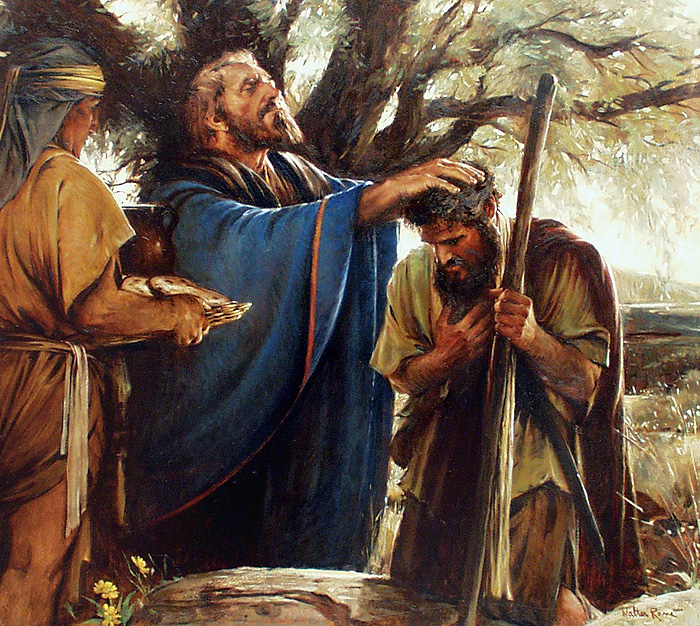
“Therefore, it is not right that any man should be in bondage one to another. And for this purpose have I established the Constitution of this land, by the hands of wise men whom I raised up unto this very purpose, and redeemed the land by the shedding of blood.” (D&C 101: 76-80)
Again we have more revelation from the Lord, to Joseph Smith, stating that though the wicked may rule it is our responsibility to stand up for our rights and for just and holy principles.
D&C 134
Consider these excerpts from Doctrine & Covenants section 134, which is a declaration of belief regarding governments and laws in general:
“We believe that governments were instituted of God for the benefit of man; and that he holds men accountable for their acts in relation to them…
“We believe that no government can exist in peace, except such laws are framed and held inviolate as will secure to each individual the free exercise of conscience, the right and control of property, and the protection of life.
“We believe that all men are bound to sustain and uphold the respective governments in which they reside, while protected in their inherent and inalienable rights by the laws of such governments; and that sedition and rebellion are unbecoming every citizen thus protected…”
Joseph Smith
Additionally, Joseph Smith made other statements regarding our duty to the law:
“The different states, and even Congress itself, have passed many laws diametrically contrary to the Constitution of the United States…
“Shall we be such fools as to be governed by its laws, which are unconstitutional? No! … The Constitution acknowledges that the people have all power not reserved to itself. … This is the doctrine of the Constitution, so help me God. The Constitution is not law to us, but it makes provision for us whereby we can make laws. Where it provides that no one shall be hindered from worshiping God according to his own conscience, is a law. No legislature can enact a law to prohibit it. The Constitution provides to regulate bodies of men and not individuals.” (Teachings of the Prophet Joseph Smith, 278)
It is quite clear that while we do believe in “obeying, honoring, and sustaining the law”, there is a requirement that those laws be just and do not infringe on the rights of the people. As Thomas Aquinas stated, “an unjust law is not really a law at all.”
The United States of America would not exist if the Founding Fathers believed, as many do today, in obeying the edicts of corrupt government officials.
Thomas Jefferson believed that “disobedience to tyrants is obedience to God” and he made it his personal seal. Virginia, home to a Bible believing society, with such men as George Washington and James Madison, had it as its official seal in 1776. Benjamin Franklin suggested it as the official motto of the United States.
“Whenever any Form of Government becomes destructive of these ends (defending the rights of the people), it is the Right of the People to alter or to abolish it, and to institute new Government.”
“…the proper function of government is limited only to those spheres of activity within which the individual citizen has the right to act. By deriving its just powers from the governed, government becomes primarily a mechanism for defense against bodily harm, theft and involuntary servitude. It cannot claim the power to redistribute the wealth or force reluctant citizens to perform acts of charity against their will. Government is created by man. No man possesses such power to delegate. The creature cannot exceed the creator.
“In general terms, therefore, the proper role of government includes such defensive activities, as maintaining national military and local police forces for protection against loss of life, loss of property, and loss of liberty at the hands of either foreign despots or domestic criminals.” (Ezra Taft Benson, The Proper Role of Government)
John Taylor
John Taylor explained our obligation to the laws of man, and of God, as he spoke of celestial and terrestrial laws:
“There are again celestial laws as before referred to, and terrestrial laws, and the question arises, what is the meaning of a celestial law; and what again is the meaning of a terrestrial law; a celestial law pertains to the law of heaven; and is a principle by which the intelligences in the celestial world are governed. The Gospel in its fulness places those who obey it, under its influences, while at the same time it does not relieve them from other obligations of a terrestrial nature.
“It is said in the Doctrine and Covenants, that he that keepeth the laws of God, hath no need to break the laws of the land. It is further explained in section 98, what is meant in relation to this. That all laws which are constitutional must be obeyed, as follows: ‘And now, verily I say unto you concerning the laws of the land, it is my will that my people should observe to do all things whatsoever I command them. And that the law of the land which is constitutional, supporting that principle of freedom in maintaining rights and privileges, belongs to all mankind, and is justifiable before me. Therefore, I, the Lord, justify you, and your brethren of the church, in befriending that law which is the constitutional law of the land; And as pertaining to law of man, whatsoever is more or less than this cometh of evil.’
“That is taking this nation as an example, all laws that are proper and correct, and all obligations entered into which are not violative of the constitution should be kept inviolate. But if they are violative of the constitution, then the compact between the rulers and the ruled is broken and the obligation ceases to be binding. Just as a person agreeing to purchase anything and to pay a certain amount for it, if he receives the article bargained for, and does not pay its price, he violates his contract; but if he does not receive the article he is not required to pay for it. Again we ask, what is this celestial law? The celestial law above referred to is absolute submission and obedience to the law of God. It is exemplified in the words of Jesus, who, when He came to introduce the Gospel said, ‘I came not to do my will but the will of the Father that sent me;’ and His mission was to do the will of the Father who sent him, or to fulfill a celestial law.”
(John Taylor, Remarks before the High Council of Salt Lake Stake of Zion, Feb 20, 1884. Journal of Discourse 26:350)
“In it is a declaration requiring obedience, loyalty to, and respect for duly constituted laws and the officials administering those laws. In justifying such loyal compliance, however, the Lord also promulgated certain safeguards and conditions which must be observed if freedom and liberty are to be preserved and enjoyed. These are emphasized primarily in the 98th and 134th sections of the Doctrine and Covenants. How I wish these fundamental concepts were emblazoned on the hearts of all our people!”
“We must be eternally vigilant as Latter-day Saints and inspire in the lives of our children a love for eternal principles and a desire to seek out honorable men—the best possible—to stand at the head of our political governments, local, state, and federal. Only in this way can we safeguard the liberties which have been vouchsafed to us as our inalienable rights. Unless we do so, we may very easily lose them because of our indifference, because of our failure to exercise our franchise, because we permit men who are unworthy to rise to positions of political power.”
All this being said, we live in a wicked world full of tyrants, corrupt politicians, and oppressive laws. In all that we do we must consider the risks and use the Holy Spirit as our guide.
Not Always Wise to Relate All the Truth
“Our lives have already become jeopardized by revealing the wicked and bloodthirsty purposes of our enemies; and for the future we must cease to do so. All we have said about them is truth, but it is not always wise to relate all the truth. Even Jesus, the Son of God, had to refrain from doing so, and had to restrain His feelings many times for the safety of Himself and His followers, and had to conceal the righteous purposes of His heart in relation to many things pertaining to His Father’s kingdom. When still a boy He had all the intelligence necessary to enable Him to rule and govern the kingdom of the Jews, and could reason with the wisest and most profound doctors of law and divinity, and make their theories and practice to appear like folly compared with the wisdom He possessed; but He was a boy only, and lacked physical strength even to defend His own person; and was subject to cold, to hunger and to death. So it is with the Church of Jesus Christ of Latter-day Saints; we have the revelation of Jesus, and the knowledge within us is sufficient to organize a righteous government upon the earth, and to give universal peace to all mankind, if they would receive it, but we lack the physical strength, as did our Savior when a child, to defend our principles, and we have a necessity to be afflicted, persecuted and smitten, and to bear it patientlyuntil Jacob is of age, then he will take care of himself.”
While there are some threats to liberty that we must bear patiently, we do have a responsibility to do something. Ezra Taft Benson spoke about our immediate responsibility, regarding freedom, stating:
“We have been warned again and again and again. The Lord’s spokesman has consistently raised his voice of warning about the loss of our freedom. Now he that has ears, let him hear, and ye who praise the Lord, learn to also follow His spokesman.
“‘No greater immediate responsibility rests upon the members of the church, upon all citizens of this republic and of neighboring republics than to protect the freedom vouchsafe by the Constitution of the United States.’
“In this mighty struggle each of you has a part. Be on the right side. Stand up and be counted.”
Sign up for our Book of Mormon Evidence Streaming Site. Watch over 700 videos from our previous FIRM Foundation Thought Leaders: Glenn Beck, Tim Ballard, Rod Meldrum, Burgess Owens, Wayne May, Alex Boye, Alan Osmond and many more!Subscribe Here
Ben McClintock – Defending UtahEducating Citizens on the Principles of Liberty
Also watch: “Secret Combinations and What YOU Can Do About It” Ben McClintock is co-founder of the leading local organization working to educate citizens on the principles of liberty and to expose those conspiring to take away your freedom. (They are also expanding into other states).
“Ben has been featured in USA Today, Fox News and many other regional news papers throughout the west. He is the co-founder, membership coordinator and investigative reporter for DefendingUtah.org. Ben is a popular guest and regularly appears on radio programs throughout the state of Utah due to over 15 years of experience in original research, writing, speaking and organizational leadership. Ben is also a regular host on the Defending Utah Radio show, as well as a regular guest host other radio shows throughout the state.”
Why does the geography of the Book of Mormon matter? Think of that question if we are speaking about Israel. Does it matter where the Savior was born, or where the Biblical events happened? Yes. At Mount Moriah where Abraham was to sacrifice Isaac, the Lord made a special covenant with Abraham. The land around Mt Moriah was a covenant land and God’s people were given that covenant land as long as they are righteous. However, if they disobey the commandments, God’s people will be swept off that sacred land. The Jews, Muslims, and Christians fight over control over this one piece of land, why? Because it is a beautiful piece of real estate? No, because it is a covenant land. All three religions say Mt Moriah is sacred to them and they are willing to die over it.
Because of unrighteousness God’s people were swept off the land Israel. Look at what happened to Lehi. They were righteous and told to leave for another promised land, the United States of America. Elder Perry said, “The United States is the promised land foretold in the Book of Mormon—a place where divine guidance directed inspired men to create the conditions necessary for the Restoration of the gospel of Jesus Christ.” Elder L. Tom Perry Ensign Dec. 2012
According to the Book of Mormon this Promised land must meet certain requirements to be the Promised Land. 1. No Kings upon the land 2. Land choice above all other lands 3. Land of Liberty 4. Land where sacred record is kept 5. Land kept from the knowledge of other nations. 6. Land of the New Jerusalem 7. Gentiles to scatter and afflict the Remnant. 8. The place where the “Marvelous Work and Wonder” happened. These are only 8 of 36 prophesies and promises in the Book of Mormon so it makes sense to me that the USA is the Promised Land. Not Canada, Mexico, England, or South America. See all 36 prophecies in the Annotated Book of Mormon page 510-511.
Just as Israel is a Promised Land forever, so the USA is a Promised Land forever and it does matter where this Promised Land is located. It is in the Heartland of North America. The Nephites practiced the Law of Moses. To do this they needed the following plants and animals to keep the Law. Sheep, Rams, Goats, Bullocks, Doves, Wheat, Barley, and Wine. None of these animals or items are found anywhere in Mesoamerica during the Nephites times, only in the USA. So, the specific land and where things happen is critical to us and especially to the Lord.
If we in the church cannot even decide among ourselves where the Book of Mormon happened, how confusing is that to our youth and adults? The Anti-Mormons love the idea that we don’t even know where our sacred scriptures happened. There are over 100 theories of where the Book of Mormon happened, including, Mesoamerica, Baja, Chile, Malaysia, Honduras, Peru, etc.
I know the Brethren of the Church take a neutral position on the geography of the Book of Mormon. There are many CES instructors and other BYU professors that teach the Two Cumorah theory or Mesoamerican theory, and they say a second Hill Cumorah exists somewhere in Mexico, but they aren’t sure where. I believe there is only one Hill Cumorah which is associated with the Heartland Model of the Book of Mormon. For you and I to take a neutral stand is not required. The Lord told us to read and study, and in the promise to Moroni, He said we may know the truth of ALL things, and that would include knowing the location of the Book of Mormon events. I believe knowledge of the Spirit and of the head, are both important in learning truth. I used to believe in the Mesoamerican theory, but after much research and prayer, I believe the Heartland Model just makes so much sense. Below is another witness of the Promised Land in Israel. Editor
Beit Lehi or House of Lehi near Jerusalem
“Beit Lehi is a buried city just a few miles southwest of Jerusalem, and is currently under excavation. It received its name from the Bedouin Arabs who reside in the area. There are some very interesting possible correlations with this site and the home of Lehi in the Book of Mormon.” Read more about the place called Biet Lehi which is where Samson killed 1,000 Philistines with the jawbone of a donkey, and likely it was the same location where Lehi and his family lived. This area is sacred to the Jews, Arabs, and Christians. [Editor’s note: Just as Mount Moriah is a sacred place where Isaac was offered as a sacrifice. Just as Adam-Ondi-Ahman and New Jerusalem in Missouri are sacred places. I find no sacred places like this in Mesoamerica or South America.]
Origins of the Name “Beit Lehi”
“Almost every town or city is named for something—a person, an event, or a nearby geographical wonder. Beit Lehi is no different. “Beit” in Hebrew means “house or dwelling of,” while “lehi” means “jawbone.” The name “Lehi” seems to have originated in biblical times, apparently referring to the traditional resting place of Samson after he slew one thousand Philistines with the jawbone of an ass. “But God clave an hollow place that was in the jaw, and there came water thereout; and when he had drunk, his spirit came again, and he revived: wherefore he called the name thereof En Hakkore, which is in Lehi unto this day” (Judges 15:19). Thus, Beit Lehi means “dwelling place of Lehi.
We suggest identifying the site of Beit Lehi with “Beit Tzedek”, or the “House of Righteousness” mentioned by the Jewish historian Josephus Flavius in the 1st century A.D. Josephus recounts how, during the time of the Great Revolt against Rome (66–70 AD), a group of Jewish rebels escaped to a village by this name.” beitlehi.org
LEHI MANY HERITAGES
“The stamp of Egypt on Lehi’s people may be clearly discerned in the names of those people and their descendants. Hebrew and Egyptian names together make up the overwhelming majority and occur in about equal strength, which is exactly what one would expect from Mormon’s claim that both languages were used among them (and which would certainly not be the case were Hebrew the only spoken language), but Hittite, Arabic, and Ionian elements are not missing…
Lehi Builds Altar by Clark Kelley Price
Now of all the tribes of Israel, Manasseh was the one which lived farthest out in the desert, came into most frequent contact with the Arabs, intermarried with them most frequently, and at the same time had the closest traditional bonds with Egypt. 38 And Lehi belonged to the tribe of Manasseh (Alma 10:3). The prominence of the name of Ammon in the Book of Mormon may have something to do with the fact that Ammon was Manasseh’s nearest neighbor and often fought her in the deserts east of Jordan; at the same time a prehistoric connection with the Ammon of Egypt is not at all out of the question. 39 The seminomadic nature of Manasseh might explain why Lehi seems out of touch with things in Jerusalem. For the first time he “did discover” (1 Nephi 5:16), from records kept in Laban’s house, that he was a direct descendant of Joseph. Why hadn’t he known that all along? Nephi always speaks of “the Jews who were at Jerusalem” (1 Nephi 2:13) with a curious detachment, and no one in First Nephi ever refers to them as “the people” or “our people” but always quite impersonally as “the Jews.” It is interesting in this connection that the Elephantine letters speak only of Jews and Aramaeans, never of Israelites…
The caravans of Egypt and Israel pass each other, guided through the sands by those men of the desert (Arabs) who were the immemorial go-between of the two civilizations.”Lehi in the Desert, I Hugh Nibley, Ph. D. Men of the East- Strange Names
The Man Lehi has ties with all 4 names below:
Arab: Arab designates a way of life, and was applied by the Jews to their own relatives who remained behind in the wilderness. , Manasseh lived furthest out of Jerusalem and had contact with Arabs the most.
Israeli: Of Manasseh through Joseph and the 12 tribes of Israel Egyptian: Language of Lehi consists of learning of Jews and language of Egyptians: Heritage, culture. Ammon was Manasseh’s nearest neighbor and is an Egyptian name. Hebrew: Lehi means Jaw Bone in Hebrew. From Eber, Jewish because they live near and around Jerusalem. Learning of the Jews. Christian: Through Christ, and lived the law of Moses
What names did Lehi and Sariah give to their children? Arabic Names: Laman, Lemuel Egyptian Names: Nephi, Sam Israeli Names: Jacob, Joseph
Biet Lehi Foundation Mission Statement:
“The Beit Lehi Foundation was organized to support the excavation of the Beit Lehi archaeological site, located 22 miles south of Jerusalem, for the benefit of the general public and to advance the understanding and awareness of the general public of ancient religious history associated with this site through scientific research and education. Additional objectives include protection and preservation of the archaeological site, education for visitors and to facilitate the opportunity for families and young people to work at the excavation site under the guidance of a qualified archaeologist and his staff.
In 1961 Israeli soldiers unearthed a cave that had inscriptions and drawings including the oldest known Hebrew writing of the word “Jerusalem” dated to approximately 600 B.C. by Dr. Frank Cross Moore, Jr. of Harvard University.
“I am Jehovah thy Lord. I will accept the cities of Judah and I will redeem Jerusalem”
“Absolve us oh merciful God. Absolve us oh Jehovah”
The drawings depicted men who appeared to be fleeing and two ships.
While investigating the cave, Dr. Joseph Ginat of The University of Haifa met a Bedouin who told him about the remains of an ancient oak tree about 1/4 of a mile away where, according to Bedouin legends and tradition, a prophet named Lehi blessed and judged the people of both Ishmael and Judah. The Bedouin told Dr. Ginat that Lehi had lived many years before Muhammad and that Arab people had built a wall of large rocks around the remains of the tree to protect it as a sacred spot, long known by arab inhabitants as “Beit Lehi”, meaning “Home of Lehi.”
Dr. Ginat shared this information with W. Cleon Skousen whom he had met while studying anthropology at University of Utah and teaching at Brigham Young University from 1970 through 1975.
In 1983 Dr. Skousen and Dr. Glenn Kimber worked with Dr. Ginat and Dr. Yoram Tsafrir of Hebrew University to secure permission and funding to excavate the site. The first excavations began in December 1983. By noon of the first day, archaeologists found an ancient village and well-preserved mosaic floor of a Byzantine era chapel. Since that time, “hewn subterranean installations, including columbaria, olive presses, water cisterns, quarries, a stable, and hideaways,” have been discovered along with pottery and other items suggesting that the area had been populated from 600 B.C. until the Mameluke period of 1500 A.D. The discovery has been featured in the book Ancient Churches Revealed, published in 1993 by the Israel Exploration Society.
After 1986 the site was covered to protect it until additional funds could be raised and conditions were right to continue future excavations.
In 1994 Dr. Kimber and about 40 others, including a number of students, joined Dr. Ginat and Dr. Tsafrir to re-open the site. Since 1994, many groups have visited the site and participated in the excavation.
Dr. Tsafrir, has since retired and according to Israeli law, passed responsibility for archaeological exploration to Dr. Oren Gutfeld of Hebrew University who continues to manage the excavation.
Name History
What’s in a name? Almost every town or city is named for something, a person, an event or a nearby geographical wonder. Beit Lehi is no different. Beit comes from the Arabic word meaning house or dwelling. Lehi means jawbone. Beit Lehi means the “house” or “dwelling” of the jawbone. An odd name without the rest of the story.
The story begins around 1160 B.C. As recorded in the Bible Judges chapters 13-15, Manoah and his wife have no children, but a man of Manoah’s means and stature in the community must have an heir. He and his wife traveled often to a holy place near their home to make sacrifice and pray for a child. That prayer is heard and answered when an angel appears to his wife and tells her that she will bare a son by God’s providence; that he should be a goodly child, of great strength; by whom the Israelites will be delivered from the hands of the Philistines. He was to be a Nazirite, one who takes a vow of dedication to God. At the time of Samson’s birth, the Israelites had been in bondage to the Philistines for more than 40 years.
Perhaps the strongest man in biblical history, Samson’s impetuous nature causes havoc among the Philistines. He ties torches to the tails of 300 foxes and releases them into the fields of the Philistines destroying all their crops. He kills 30 Philistines when they didn’t play fair in solving a riddle. The Philistines seek to remedy the situation by sending an army of one thousand men to capture Samson who is hiding in the cave of a rock at Etam. The army demands that 3,000 men of Judah capture Samson and deliver him into their hands. With Samson’s consent, the men of Judah bind him with rope and are about to hand him over to the Philistines when he breaks free. Using the jawbone of an donkey that lays at his feet, Samson slays 1,000 Philistines.
Exhausted and near death from thirst, Samson prays for water. Miraculously, a spring bursts forth from the ground to revive the champion. “And when he drunk, his spirit came again and he revived: wherefore he called the name thereof Enhakkore (meaning fountain of the crier), which is in Lehi unto this day.” (Judges 15:19). In writing “The Antiquities of the Jews”, the great Jewish historian Josephus (1st century A.D.) confirms the biblical account and notes that the spring remained vibrant in his day. Samson remained at Lehi for 20 years as a judge of the people of Israel.
More than 3100 years later, Jewish tradition suggests that the spring that gave life to Samson continues to this day near Beit Lehi.” bietlehifoundation.com
Samson’s Well
A deep stone-built well, long known as “Samson’s Well”, is located about a quarter of a mile east of the Jerusalem Cave. It apparently served as the primary source of water for the site throughout antiquity. Local tradition identifies the site with the spring mentioned in the Book of Judges that miraculously appeared to quench Samson’s thirst after he slew one thousand Philistines with the jawbone of an ass in the Valley of Lehi (Judges 15:14–19).
A Vandalized Tomb
This rock-hewn burial cave, which measures 7.5 × 10.5 feet, was discovered north of the Byzantine church. It contains three burial troughs and can be accessed by means of a stepped passageway. Four crosses are etched into the wall above the troughs. The cave’s dating was determined by its contents: 26 Early Islamic oil lamps, an intact glass bottle, and fragments of other glass vessels. Vandals apparently broke into the tomb sometime during the Mamluk period (13th–16th century A.D.), threw the contents of each burial trough into the center of the chamber, and left behind a typical juglet (container) of the time period.
Samson’s Well
Jesus is Here, in Hebrew
Lehi’s Tree at Samson’s Spring
Ritual Bath at Biet Lehi
In October 2005, at the beginning of the excavations in the site of Beit Lehi, one of the students from the Kimber Academy made a survey in the area and found a Hellenistic water cistern (Jesus is Here Cave) dating to the 3rd century BCE. When we entered this water system we couldn’t believe what we saw: a large ancient Greek inscription starting with a cross mentioning the name of Jesus “Yasoos Hodus” in ancient Greek, which means “Jesus is Here.” Below the inscription we found a graffiti of cross with the abbreviation of the two ancient Greek letters chi and rho for Cristos—Christ—and the above the inscription a graffiti of a boat with a person standing on the front of the boat holding the sail, probably Jesus, preaching in the Sea of Galilee. This was probably used as a hermit cell for one of the monks who lived in the site of Beit Lehi in the 5th century CE.
Book of Mormon Linked to Site in Yemen.
A group of Latter-day Saint researchers recently found evidence linking a site in Yemen, on the southwest corner of the Arabian peninsula, to a name associated with Lehi’s journey as recorded in the Book of Mormon. Aston, Lynn Hilton, and Gregory Witt located a stone altar that professional archaeologists dated to at least 700 B.C. This altar contains an inscription confirming “Nahom” as an actual place that existed in the peninsula before the time of Lehi. The Book of Mormon mentions that “Ishmael died, and was buried in the place which was called Nahom” (1 Ne. 16:34).This is the first archaeological find that supports a Book of Mormon place-name other than Jerusalem or the Red Sea, says Brother Witt.
The ancient Adena and Hopewell cultures created pipes in the images that they saw and experienced. Ancient cultures respected all that the Great Spirit created, animals, birds, people, and nature. The Adena culture represents the same time frame as the Jaredites (1500 BC – 200 AD) and the Hopewell culture (200 BC – 400 AD) parallels the time frame of the Nephites.
Annotated Book of Mormon page 166
You will read about all the various birds, animals and mammals that the Hopewell spoke about in their effigy design. The Hopewell would obviously create pipes about those things that lived around them including the horse, mammoth, elephant, bison, etc, Most all of these are animals found in North America and mentioned in the Book of Mormon. Another evidence of North America being the land of the Nephites.
Religious Pipes
“There is a bowl for the tobacco in their pipes in the top, and there is a small hole at one end to breathe in the smoke. The pipe was made by Native Americans living in what is today the US state of Ohio. These Native Americans were small-scale farmers who built large burial and ceremonial mounds. There were over 200 pipes buried in a collection of mounds known as the ‘Mound City Group’. The pipe was not simply smoked for pleasure but probably had a religious function. A shaman may have smoked it to evoke the otter as a representative of his clan, or as a spirit guide who would then accompany the shaman on a spiritual journey. Tobacco has been smoked in North America for at least 2300 years and pipe smoking still remains an integral part of modern Native American culture. Tobacco was first brought to Europe in the early 1500s, where it quickly spread across Europe, Africa and Asia.” A History of the World BBC
Henry C. Shetrone, archaeologist for the Ohio Archaeological and Historical Society (now the Ohio History Connection) uncovering effigy pipes during the excavation of Seip Mound in Ross County, Ohio, ca. 1925-1928
“On the authority of some older inhabitants of Onondaga, it is stated that on a ledge of rocks, about a mile south of Jamesville, (Near Syracuse and Oneida Castle) is a place which used to be pointed out by the Indians as a spot where the Great Spirit once came down and sat and gave good advice to the chiefs of Onondagas. That there are the prints of his hands and his feet, left in the rocks, still to be seen. In the former years the Onondagas used annually to offer, at this place, tobacco and pipes, and to burn tobacco and herbs as a sacrifice to the Great Spirit, to conciliate his favor and which was a means of preventing diseases.” Author L. Taylor Hansen He Walked the Americas
“Native accounts tell of his arrival [Christ] from the direction of the rising sun, after which he set up his priesthood among his followers known as the “Wau-pa-nu” (the spelling phonetic). They were said to have healed the sick and instituted new laws. Blood sacrifice was forbidden and replaced by the use of tobacco, today an important element in all traditional Native American ceremonies. Among many eastern tribes, East Star Man is regarded as the son of Great Spirit, the Creator.” Wayne May, Christ in North America.
Human effigy pipe also called the Adena Man or the Adena Pipe, from the Adena culture, Early Woodland period, 500 BC-1 AD. This photograph shows the pipe being excavated from Burial 21, Adena Mound, Ross County, in 1901
Woodland Animal Effigy Pipes
“During the Woodland period, artisans crafted many ceremonial pipes into the shapes of various animals and sometimes people. The remarkable animal effigy platform pipes of the Hopewell culture are among the most delicate and naturalistic of these sculpted effigies. Archaeologists have found them mainly in ceremonial deposits at two sites, Mound City and Tremper Mound.
The examples shown in the image include an owl, a toad, and a raccoon. The animals may represent the spirit guides of shamans who smoked the pipes to induce a trance state to assist with rituals of healing. Notice how the animal generally would be facing the shaman as he or she smoked the pipe.
It used to be thought that the Ohio effigy pipes had been made from Ohio pipestone, which occurs in Scioto County just across the river from Tremper Mound. Chemical studies of the Tremper Mound pipes, however, have shown that most of these are made from a pipestone found Illinois.” http://www.ohiohistorycentral.org/w/Woodland_Animal_Effigy_Pipes
Smoking Pipes and Tobacco
“The earliest archaeobotanical evidence of the use of tobacco in eastern North America comes from the central Mississippi Valley between AD 100 and 200 (uncalibrated RCYBP) (Asch 1991, 1994; Haberman 1984; Wagner 2000; Winter 2000), with dates for the rest of eastern North America falling several centuries later (Haberman 1984; Wagner 2000). These dates indicate that tobacco was a major intoxicant from the Early Woodland onward. However, ethnohistoric accounts indicate that a variety of plants were smoked in addition to tobacco, including Cornus sp. (Dogwood), Juniperus species (Juniper), Rhus glabra (Sumac), and Arctostaphylus uva-ursi (Bearberry) (Brown 1989; Hall 1977; Springer 1981; Yarnell 1964).
Although there remains much to be learned about the evolution of smoke plant use, what can be said is that smoking pipes were the primary means of intoxicant ingestion in prehistoric eastern North America…
Effigy of a dog
The Early Woodland Period and Adena (ca. 1000 BC–AD 200)
Tubular smoking pipes’ are widely known as characteristic Early Woodland period artifacts (Rafferty 2002, 2006, 2008; Rafferty et al. 2012; Salkin 1986). The typical morphology is that of a 1–2 cm wide cylinder with a wide hole at one end and a
narrower opening at the other. The narrow opening could be blocked with a pebble to prevent inhalation of tobacco (Gehlbach 1982; Meuser 1952; Stephens 1957) (Fig. 2.1). Earlier shapes of pipes are more conical in form. Alongside “plain” tubes, we also see during this early period tubes with beveled ends, compound forms with right angle bore extensions, as well as the early forms of platform and elbow pipes, though these are minority types. Pipes at this period are made from several different materials, including clay or soft stone, but iconic specimens are made of a soft limestone from the central Ohio River Valley (Stewart 1989; Thomas 1971, p. 77). These earliest pipes tend to be interred in burials, and often show signs of intentional destruction. Webb and Snow (1974, p. 86) suggested that not all “pipes” were used for smoking, and that some may have been sucking or pigment tubes for shamanic rituals (Frison and Van Norman 1993; Howes 1942). At least one researcher has even proposed that pipes may have served as primitive telescopes (Schoolcraft 1845), though this seems unlikely. I do not dispute the fact that some Early Woodland tubes may have had other uses besides smoking, but specimens in museum collections have sooting and sometimes carbonized residues, indicating a smoking function (Jordan 1959). As discussed in other published papers, there is chemical evidence that further supports a smoking function for early tube pipes (Rafferty 2002, 2006; Rafferty et al. 2012). Residues from five tubular pipes dating to between 500 and 300 BC have been analyzed by the author; three showed clear mass spectra for nicotine or related metabolites…
Three effigy pipes discovered in Mound 18 during the excavation of the Mound City Group of mounds in Ross County, Ohio, 1920
While early pipes have often been associated with Adena mound builder sites of the Ohio Valley and their local contemporaries (Bense 1994, p. 129), smoking pipes predate the Early Woodland (pre-ca. 1000 BC) and were more widely distributed geographically. Pipes have been recovered from Late Archaic Period (ca. 4000– 1000 BC) burials as well, indicating that smoking’s connection with burial rituals had an earlier origin than has been hypothesized for the entirety of Early Woodland mortuary practices (Concannon 1993, p. 74; Custer 1987, p. 42; Dragoo 1963, p. 241, 1976; Walthall 1980, p. 77). One of the earliest pipes documented in eastern North America was recovered from the Eva Site in Tennessee and dates to ca. 2000 BC (Lewis and Kneberg Lewis 1961, p. 66). Webb and Baby (1957, p. 22) reference tubular pipes from Late Archaic shell mounds in Alabama and Kentucky, which were also, at least in part, functioning as burial contexts (Claassen 1991, 1996). These early examples suggest that the ritualistic function of pipes has a long history in eastern North America…
I have attempted to briefly summarize the history of smoking pipes in the eastern half of North America from their earliest evidence to the eve of European contact. This is the merest scratch on a vast surface. Even so, several trends are clear. Smoking pipes were used quite early in the East, though not so early as in western regions of North America. As early as they were adopted, they became important artifacts for a range of significant social practices, including burial rituals and intersocietal trade and exchange. The earliest pipes were made of stone, and tended towards tubular or platform types, while late prehistory was dominated by numerous plain clay pipes with occasionally more elaborate, often effigy, specimens as well. Tobacco smoking likely began as a specialized practice associated with ritual practices, but over time became more ubiquitous and widespread. Smoking pipes remain socially significant artifacts to Native American traditional cultures to the present day. As always, more research is necessary into the earliest origins, chronological development, and cultural significance of smoking pipes from across the
Ohio History Central
Ohio History Central is an evolving, dynamic online encyclopedia that includes information about Ohio’s natural history, prehistory, and history. Ohio History Central is perfect for anyone wanting to learn more about Ohio! Ohio History Central was researched and written by staff at the Ohio History Connection. Pictures and descriptions below are from Ohio History Connection.
Effigy of a Dog
Description: Effigy of a dog with a long muzzle and pointed ears is depicted chewing on the remnant of human head, which he holds between his front paws. Paws are very blocky and stylized. Left front leg is broken, missing and restored. Part of right rear leg is broken and missing. Tail is tightly curved over the back and attached, forming a ring. Pipe bowl is a roughly rectangular projection in the middle of the dog’s back. Hole for pipe stem is in the dog’s posterior. Stylized human head is upside down. The nose is high relief. The lower jaw is missing. Dog is chewing on occipital region of the head. The artistic style is typical of the Copena Culture from Tennessee region. The effigy is made of dark grayish-brown steatite. Item was excavated from Seip Mound in Paxton Township, Ross County, Ohio.
Description: Large effigy pipe is in the shape of a male dog. It is made of steatite or granite that is mottled very dark grayish-brown and dark gray. The dog’s face has two deep eye sockets and a mouth with indication of teeth carved in the stone. There is a 7-mm hole drilled in the chin. Triangular ears fall forward. The tail curves up over the body and meets the pipe bowl. There is an oval-shaped space carved out between the tail and the body of the dog. The front legs are thinner (24 mm in diameter) than back legs (40.5 mm in diameter) and show distinctive joints. There are holes drilled from front to back in both front legs near the ends. Large chunks are missing from the back legs. There is a hole measuring 21.3 mm at the base of the tail that slopes upward toward the opening of the pipe bowl. Item was excavated from Seip Mound in Paxton Township, Ross County, Ohio.
Description: Front view of an effigy pipe in the form of a dog eating a human head that is grasped between its front paws. The pipe was created by the prehistoric Hopewell people during the Middle Woodland period. It was excavated from Seip Mound in Ross County, Ohio, and is part of the Archeology collections of the Ohio Historical Society.”
As we stated before, It seems the ancient Adena and Hopewell Cultures created pipes in the images in nature that they saw and experienced. Ancient cultures respected all that the Great Spirit created, animals, birds, people, and nature. In the Book of Mormon there are some amazing verses that indicate why the Native Americans may for example created pipes after the image of dogs eating humans.
Alma 16: 9-11 81-77 BC “And thus ended the eleventh year of the judges, the Lamanites having been driven out of the land, and the people of Ammonihah were destroyed; yea, every living soul of the Ammonihahites was destroyed, and also their great city, which they said God could not destroy, because of its greatness.But behold, in one day it was left desolate; and the carcasses were mangled by dogs and wild beasts of the wilderness. Nevertheless, after many days their dead bodies were heaped up upon the face of the earth, and they were covered with a shallow covering. And now so great was the scent thereof that the people did not go in to possess the land of Ammonihah for many years. And it was called Desolation of Nehors; for they were of the profession of Nehor, who were slain; and their lands remained desolate.”
Mosiah 12:1-3 148 BC “And it came to pass that after the space of two years that Abinadi came among them in disguise, that they knew him not, and began to prophesy among them, saying: Thus has the Lord commanded me, saying—Abinadi, go and prophesy unto this my people, for they have hardened their hearts against my words; they have repented not of their evil doings; therefore, I will visit them in my anger, yea, in my fierce anger will I visit them in their iniquities and abominations. Yea, wo be unto this generation! And the Lord said unto me: Stretch forth thy hand and prophesy, saying: Thus saith the Lord, it shall come to pass that this generation, because of their iniquities, shall be brought into bondage, and shall be smitten on the cheek; yea, and shall be driven by men, and shall be slain; and the vultures of the air, andthe dogs, yea, and the wild beasts, shall devour their flesh. And it shall come to pass that the life of king Noah shall be valued even as a garment in a hot furnace; for he shall know that I am the Lord.”
Description: This pipe in effigy (a likeness or representation) of a dog was excavated from Tremper Mound, a Hopewell culture site located five miles north of Portsmouth in Scioto County. The dog is seated with its head pointed upward and mouth partially open. A narrow section of bowl (from top edge nearly to the bottom of bowl just behind dog’s left shoulder) and the left forepaw have been restored. The effigy pipe measures approximately 1.5″ x 3.5″ x 1.25″ (3.81 x 8.89 x 3.18 cm). This pipe is part of a large collection of pipes found at Tremper Mound. The pipes were carved of Ohio pipestone, a silica-based material that can be easily carved when freshly quarried from the hills east of the Scioto River. The pipes represent a variety of animals significant to the Hopewell, including dogs, owls, wolves, deer and beaver. Skilled Hopewell craftsmen carved the pipes with flint knives and some are embellished with pearls or copper. (See map below on how the Hopewell had trade routes to bring mica, pearls, and volcanic rock into their area.) In Ohio, the Hopewell Indians (100 B.C.-A.D. 500) built burial mounds and large earthen enclosures in geometric shapes (circles, squares, and octagons) to mark the places where the people gathered periodically to participate in many social and ceremonial events. Some of these sites were quite large–the Newark Earthworks complex extends over a 4-square-mile area. The Hopewell people also maintained a large trade network extending as far as the Rocky Mountains of Wyoming, the Florida coast and Appalachians, and northern Lake Superior.
The Hopewell Interaction Sphere
Description: This is a plaster cast of an effigy pipe known as the Mound City Horned Head. There is a human face with ears on either side. A knob on the forehead and two knobs equidistant on the back of the head represent a headdress. The pipe base is slightly convex in shape. This piece is from Hopewell Culture. Skilled Hopewell craftsmen carved pipes with flint knives and some are embellished with pearls or copper. In Ohio, the Hopewell Indians (100 B.C.-A.D. 500) built burial mounds and large earthen enclosures in geometric shapes (circles, squares, and octagons) to mark the places where the people gathered periodically to participate in many social and ceremonial events. Some of these sites were quite large – the Newark Earthworks complex extends over a 4-square-mile area. The Hopewell people also maintained a large trade network extending as far as the Rocky Mountains of Wyoming, the Florida coast and Appalachians, and northern Lake Superior.
Description: This pipe in effigy (a likeness or representation) of a gray wolf was excavated from Tremper Mound, a Hopewell culture site located five miles north of Portsmouth in Scioto County. The animal is seated with all four legs incised in bas relief on bowl; only the front toes are indicated. Its facial features consist of an incised mouth and drilled eyes. The right eye is inset with copper. A section of the upper part of the bowl on the right side and small sections of anterior platform are restored. The effigy pipe measures approximately 1.5″ x 3.5″ x 1.25″ (3.81 x 8.89 x 3.18 cm). This pipe is part of a large collection of pipes found at Tremper Mound. The pipes were carved of Ohio pipestone, a silica-based material that can be easily carved when freshly quarried from the hills east of the Scioto River. The pipes represent a variety of animals significant to the Hopewell, including owls, wolves, deer and beaver. Skilled Hopewell craftsmen carved the pipes with flint knives and some are embellished with pearls or copper. In Ohio, the Hopewell Indians (100 B.C.-A.D. 500) built burial mounds and large earthen enclosures in geometric shapes (circles, squares, and octagons) to mark the places where the people gathered periodically to participate in many social and ceremonial events. Some of these sites were quite large–the Newark Earthworks complex extends over a 4-square-mile area. The Hopewell people also maintained a large trade network extending as far as the Rocky Mountains of Wyoming, the Florida coast and Appalachians, and northern Lake Superior
Description: This pipe in effigy (a likeness or representation) of a mink was excavated from Tremper Mound, a Hopewell culture site located five miles north of Portsmouth in Scioto County. The body of the mink winds around the top of the bowl with the animal’s head and tail facing the smoker. Parts of the platform have been restored. Made of dark olive gray stone, the pipe measures approximately .88″ x 1.67″ x 3.75″ (2.2 x 4.1 x 9.5 cm). This pipe is part of a large collection of pipes found at Tremper Mound. The pipes were carved of Ohio pipestone, a silica-based material that can be easily carved when freshly quarried from the hills east of the Scioto River. The pipes represent a variety of animals significant to the Hopewell, including owls, wolves, deer and beaver. Skilled Hopewell craftsmen carved the pipes with flint knives and some are embellished with pearls or copper. In Ohio, the Hopewell Indians (100 B.C.-A.D. 500) built burial mounds and large earthen enclosures in geometric shapes (circles, squares, and octagons) to mark the places where the people gathered periodically to participate in many social and ceremonial events. Some of these sites were quite large–the Newark Earthworks complex extends over a 4-square-mile area. The Hopewell people also maintained a large trade network extending as far as the Rocky Mountains of Wyoming, the Florida coast and Appalachians, and northern Lake Superior.
Description: This pipe in effigy (a likeness or representation) of an American crow was excavated from Tremper Mound, a Hopewell culture site located five miles north of Portsmouth in Scioto County. Effigy consists of the head and neck of the bird. Eyes are drilled. The pipe has been restored. Made of dark gray stone, the pipe measures approximately 1.5″ x 1.5″ x 3.4″ (3.6 x 3.6 x 8.7 cm). This pipe is part of a large collection of pipes found at Tremper Mound. The pipes were carved of Ohio pipestone, a silica-based material that can be easily carved when freshly quarried from the hills east of the Scioto River. The pipes represent a variety of animals significant to the Hopewell, including owls, wolves, deer and beaver. Skilled Hopewell craftsmen carved the pipes with flint knives and some are embellished with pearls or copper. In Ohio, the Hopewell Indians (100 B.C.-A.D. 500) built burial mounds and large earthen enclosures in geometric shapes (circles, squares, and octagons) to mark the places where the people gathered periodically to participate in many social and ceremonial events. Some of these sites were quite large–the Newark Earthworks complex extends over a 4-square-mile area. The Hopewell people also maintained a large trade network extending as far as the Rocky Mountains of Wyoming, the Florida coast and Appalachians, and northern Lake Superior.
Description: This pipe in effigy (a likeness or representation) of a raccoon, made of gray and brown mottled pipestone, was excavated from Tremper Mound, a Hopewell culture site located five miles north of Portsmouth in Scioto County. The animal is shown crouched on bowl of pipe with legs flexed, and its tail extends to the platform. The details of the face–“mask”, mouth, and nostrils–were carefully carved in low relief. The left front leg and adjoining section of bowl, right side of bowl, and right shoulder of effigy are restored, as is the section of the tail that is completely in the round and a small section of the platform. This pipe is part of a large collection of pipes found at Tremper Mound. The pipes were carved of Ohio pipestone, a silica-based material that can be easily carved when freshly quarried from the hills east of the Scioto River. The pipes represent a variety of animals significant to the Hopewell, including owls, wolves, deer and beaver. Skilled Hopewell craftsmen carved the pipes with flint knives and some are embellished with pearls or copper. In Ohio, the Hopewell Indians (100 BC-AD 500) built burial mounds and large earthen enclosures in geometric shapes (circles, squares, and octagons) to mark the places where the people gathered periodically to participate in many social and ceremonial events. Some of these sites were quite large–the Newark Earthworks complex extends over a 4-square-mile area. The Hopewell people also maintained a large trade network extending as far as the Rocky Mountains of Wyoming, the Florida coast and Appalachians, and northern Lake Superior.
Description: This pipe in effigy (a likeness or representation) of a porcupine was excavated from Tremper Mound, a Hopewell culture site located five miles north of Portsmouth in Scioto County. The animal stands with head extended forward and tail extending backward. Some restoration work has been done to the platform. The pipe measures approximately 1.25″ x 1.25″ x 3.75″ (3.1 x 3.1 x 9.5 cm). This pipe is part of a large collection of pipes found at Tremper Mound. The pipes were carved of Ohio pipestone, a silica-based material that can be easily carved when freshly quarried from the hills east of the Scioto River. The pipes represent a variety of animals significant to the Hopewell, including owls, wolves, deer and beaver. Skilled Hopewell craftsmen carved the pipes with flint knives and some are embellished with pearls or copper. In Ohio, the Hopewell Indians (100 B.C.-A.D. 500) built burial mounds and large earthen enclosures in geometric shapes (circles, squares, and octagons) to mark the places where the people gathered periodically to participate in many social and ceremonial events. Some of these sites were quite large–the Newark Earthworks complex extends over a 4-square-mile area. The Hopewell people also maintained a large trade network extending as far as the Rocky Mountains of Wyoming, the Florida coast and Appalachians, and northern Lake Superior.
Description: This pipe in effigy (a likeness or representation) of a saw-whet owl was excavated from Tremper Mound, a Hopewell culture site located five miles north of Portsmouth in Scioto County. The eyes of this owl are set are drilled and set with pearls. Some restoration work has been done to the pipe, which measures approximately 1.15″ x 2″ (2.8 x 4.9 x 7.2 cm). This pipe is part of a large collection of pipes found at Tremper Mound. The pipes were carved of Ohio pipestone, a silica-based material that can be easily carved when freshly quarried from the hills east of the Scioto River. The pipes represent a variety of animals significant to the Hopewell, including owls, wolves, deer and beaver. Skilled Hopewell craftsmen carved the pipes with flint knives and some are embellished with pearls or copper. In Ohio, the Hopewell Indians (100 B.C.-A.D. 500) built burial mounds and large earthen enclosures in geometric shapes (circles, squares, and octagons) to mark the places where the people gathered periodically to participate in many social and ceremonial events. Some of these sites were quite large–the Newark Earthworks complex extends over a 4-square-mile area. The Hopewell people also maintained a large trade network extending as far as the Rocky Mountains of Wyoming, the Florida coast and Appalachians, and northern Lake Superior.
Description: This pipe in effigy (a likeness or representation) of a duck was excavated from Tremper Mound, a Hopewell culture site located five miles north of Portsmouth in Scioto County. Archaeologist William C. Mills identified this as a Buffelhead duck. Made of mottled dark olive gray stone, the pipe measures approximately 1.75″ x 1.5″ x 3.25″ (4.2 x 3.6 x 8.25 cm). Some parts of the pipe have been restored. This pipe is part of a large collection of pipes found at Tremper Mound. The pipes were carved of Ohio pipestone, a silica-based material that can be easily carved when freshly quarried from the hills east of the Scioto River. The pipes represent a variety of animals significant to the Hopewell, including owls, wolves, deer and beaver. Skilled Hopewell craftsmen carved the pipes with flint knives and some are embellished with pearls or copper. In Ohio, the Hopewell Indians (100 B.C.-A.D. 500) built burial mounds and large earthen enclosures in geometric shapes (circles, squares, and octagons) to mark the places where the people gathered periodically to participate in many social and ceremonial events. Some of these sites were quite large–the Newark Earthworks complex extends over a 4-square-mile area. The Hopewell people also maintained a large trade network extending as far as the Rocky Mountains of Wyoming, the Florida coast and Appalachians, and northern Lake Superior.
Description: This pipe in effigy (a likeness or representation) of a mountain lion was excavated from Tremper Mound, a Hopewell culture site located five miles north of Portsmouth in Scioto County. Mountain lions are also known as pumas, cougars, catamounts, or panthers. The animal stands on platform with its tail extended onto the platform. Mouth is slightly open and ears extend from head. Parts of the pipe have been reconstructed. Made of mottled red and brownish-gray stone, the pipe measures approximately 1.34″ x 1.33″ x 3.6″ (3.3 x 3.25 x 9 cm). This pipe is part of a large collection of pipes found at Tremper Mound. The pipes were carved of Ohio pipestone, a silica-based material that can be easily carved when freshly quarried from the hills east of the Scioto River. The pipes represent a variety of animals significant to the Hopewell, including owls, wolves, deer and beaver. Skilled Hopewell craftsmen carved the pipes with flint knives and some are embellished with pearls or copper. In Ohio, the Hopewell Indians (100 B.C.-A.D. 500) built burial mounds and large earthen enclosures in geometric shapes (circles, squares, and octagons) to mark the places where the people gathered periodically to participate in many social and ceremonial events. Some of these sites were quite large–the Newark Earthworks complex extends over a 4-square-mile area. The Hopewell people also maintained a large trade network extending as far as the Rocky Mountains of Wyoming, the Florida coast and Appalachians, and northern Lake Superior.
Description: This pipe in effigy (a likeness or representation) of a black bear was excavated from Tremper Mound, a Hopewell culture site located five miles north of Portsmouth in Scioto County. Only the front quarters of the bear are represented. Eyes are drilled and inset with copper. Ears extend from head. Some parts of the pipe have been damaged and other parts have been restored. Made of light olive gray stone, the pipe measures approximately 1.87″ x 1.4″ x 3.33″ (4.8 x 3.6 x 8.5 cm). This pipe is part of a large collection of pipes found at Tremper Mound. The pipes were carved of Ohio pipestone, a silica-based material that can be easily carved when freshly quarried from the hills east of the Scioto River. The pipes represent a variety of animals significant to the Hopewell, including owls, wolves, deer and beaver. Skilled Hopewell craftsmen carved the pipes with flint knives and some are embellished with pearls or copper. In Ohio, the Hopewell Indians (100 B.C.-A.D. 500) built burial mounds and large earthen enclosures in geometric shapes (circles, squares, and octagons) to mark the places where the people gathered periodically to participate in many social and ceremonial events. Some of these sites were quite large–the Newark Earthworks complex extends over a 4-square-mile area. The Hopewell people also maintained a large trade network extending as far as the Rocky Mountains of Wyoming, the Florida coast and Appalachians, and northern Lake Superior.
Description: This composite photograph is a front, side and back view of the Adena Pipe. The Adena Pipe is carved out of Ohio pipestone into the likeness of an ancient American Indian man, and was discovered by William C. Mills in 1901 during an excavation of the Adena Mound in Chillicothe, Ohio. Tubular pipes such as this one were common in the Adena culture (800 B.C. – A.D. 1), although effigy pipes are unusual, rendering this particular pipe very unique. As of 2013, it is now recognized as the state artifact of Ohio.
Photograph by Rod Meldrum
Description: This pipe in effigy (a likeness or representation) of a deer(Or is it?) was excavated from Tremper Mound, a Hopewell culture site located five miles north of Portsmouth in Scioto County. Effigy consists of the upturned head of a deer resting on a platform. The bowl for tobacco is between the ears and eyes. Parts of the platform have been restored. Made of dark gray stone, the pipe measures approximately 1.25″ x 1.25″ x 3.33″ (3.2 x 3.3 x 8.5 cm). This pipe is part of a large collection of pipes found at Tremper Mound. The pipes were carved of Ohio pipestone, a silica-based material that can be easily carved when freshly quarried from the hills east of the Scioto River.
Overlaid photograph by Rod Meldrum
The pipes represent a variety of animals significant to the Hopewell, including owls, wolves, deer and beaver. Skilled Hopewell craftsmen carved the pipes with flint knives and some are embellished with pearls or copper. In Ohio, the Hopewell Indians (100 B.C.-A.D. 500) built burial mounds and large earthen enclosures in geometric shapes (circles, squares, and octagons) to mark the places where the people gathered periodically to participate in many social and ceremonial events. Some of these sites were quite large–the Newark Earthworks complex extends over a 4-square-mile area. The Hopewell people also maintained a large trade network extending as far as the Rocky Mountains of Wyoming, the Florida coast and Appalachians, and northern Lake Superior. View on Ohio Memory.
Is the above picture a Deer or a Horse? The Ohio History Connection lists this as a deer. I agree with Rod Meldrum and think it looks more like a horse.
“And it came to pass that we did find upon the land of promise, as we journeyed in the wilderness, that there were beasts in the forests of every kind, both the cow and the ox, and the ass and the horse, and the goat and the wild goat, and all manner of wild animals, which were for the use of men. And we did find all manner of bore, both of gold, and of silver, and of copper.” 1 Nephi 18:25
Tobacco has long played a significant role in the American Indian culture (Paper, 1988; Seig, 1971). Tobacco provides American Indian people a connection between their own culture and the spirit world (Flannery, Sisk-Franco, & Glover, 1995; Hirschfelder & Molin, 1992; Paper, 1988; Winter, 2000). Historically, tobacco was used in medicinal and healing rituals, in ceremonial or religious practices, and as an instructional or educational device. Sacred tobacco was seen as a gift of the earth. It was burned, and the rising smoke was used to cleanse and heal. Often, sacred tobacco was sprinkled around the bed of the ailing individual to protect and to act as a healing agent. Tobacco was also used for social and peaceful purposes to promote well-being and good thoughts (Linton, 1924). Prior to important meetings, sacred tobacco was smoked as a ritualistic exchange and was also used as a powerful teaching tool. Elders, healers, and tribal leaders used tobacco leaves in their storytelling. Symbolically, smoke from sacred tobacco was called “spirits paths” (Linton, 1924, p. 1). It served as a channel to the evil or bad spirits.
Specific rules are to be followed when smoking sacred tobacco, which are just as important as the act of smoking itself. Small puffs of smoke were taken and held in the mouth. Deep inhaling was not encouraged because the smoke was not to be enjoyed but was a symbolic gesture meant to cleanse the air, the heart, and the mind. It became a facilitator to the spirits so that peaceful exchange could be obtained and prayers could be heard (Hodge, 2001).
The Origin of Sacred Traditional Tobacco Kinnikinic
“The key informants on the three Ojibwe reservations talked about the origin of sacred traditional tobacco among their people. Tobacco was described as “one of the first things that the Creator [higher being] gave us to talk to him, was that spirit of tobacco.” All key informants could pinpoint the origin and the actual story of how tobacco came to Anishinabe (Ojibwe) people. However, due to oral tradition, the story or stories could not be told in an interview session like this one and could traditionally be articulated only during approved times of the year. All key informants agreed that a long time ago the original sacred tobacco the Anishinabe used was red willow (kinnikinic). One key informant shared the following:
I know a story that relates to Waynaboozhoo and when in the beginning the Creator told Waynaboozhoo that we wouldn’t be able to communicate directly with the Creator. And so he gave Waynaboozhoo a seed to plant the kinnikinic, which is the red willow. And he said to go and tell the Anishinabe people to plant the seed and that is where they would get the kinnikinic. Then that is the way we would talk to the Creator. That is the way we would communicate with him by smoking our pipes and whatever message we had to convey to the Creator, that the smoke would relay that message. And to put that tobacco, asemaa, on the ground also, near a tree, and this would serve the purpose also of communicating with our Creator.
Annotated Book of Mormon page 166 View pages here
Also, the Creator said that when we come into this world we have nothing. We come naked and we have nothing to offer. So that is why he gave Waynaboozhoo that seed to give to the Anishinabe people for that offering. Waynaboozhoo refers to the spirit of Anishinabe or original man (Benton-Benai, 1988). To obtain the original sacred tobacco, kinnikinic has to be gathered: “Get the bark off, then shave it down and dry it.” However, when commercial tobacco became available, because it was grown readily, it was easier for many Anishinabe people to just smoke it rather than gather and prepare the kinnikinic. “People just started using it [commercial tobacco] because it was a lot easier.” One key informant added that some quit gathering, preparing, and utilizing the traditional kinnikinic tobacco because “I think they eventually got addicted. So, the nicotine that is in here is the prime reason why they switched over. So that is what I feel like, that eventually this [commercial tobacco] just wiped out the original tobacco.”
Even though Winter (2000) speculated that tobacco may have been the first plant to be domesticated in the New World, one spiritual leader disagrees: I’ve been out in the woods for many years and I have never come across a tobacco plant other than red willow….I never heard my grandparents, they are the ones who raised all of us, ever talk about tobacco like that [commercial tobacco]. But they talked about kinnikinic. They taught us how to make it. I never heard them talk about tobacco or leaves. We never used it [commercial tobacco] or passed it on to the next generation. It is not our way. . . . I think the tobacco that we have nowadays, that started when they did the big tobacco farms. Another added that it seemed “if tobacco was natural, they would be perennials” that would not have to be “replanted every year, because our medicines and sacred plants grow in the bush [the woods] naturally.” There are a few Ojibwe who still harvest kinnikinic.
My husband will gather that kinnikinic for me again this summer. That is what we give to the ceremonies then, when we have ceremonies.” Another said that you will see right here on our reservation “that there is a lot of the elderly people that actually go out and make a daily offering of that original tobacco, kinnikinic. It is still used among the people.” Another key informant added that sacred tobacco “is pretty good tobacco, what the Indians make. They have varieties of tobaccos, too, that they made their own ways.” There are different mixes of sacred tobacco; one said dogwood may also be used. “I used to smoke pipe and my ma used to make a certain type of tobacco. That really smelled good and tasted good. I don’t remember what she used. It was some of the old stuff.” Irwin, Lee & Hirschfelder, Arlene & Molin, Paulette. (1993). The Encyclopedia of Native American Religions: An Introduction. The Western Historical Quarterly.
Natives only had One God
The Hopewell and Adena people had a strong religious affinity. The way they lived may seem unlike what we think of today, but in their own way they believed in “One God” or the “Great Spirit” and He was a central role in their lives. We know the Jaredites lived the gospel in righteousness for many years, as did the Nephites and Lamanites. In Ether 20 we read, “so great was his faith in God, that when God put forth his finger he could not hide it from the sight of the brother of Jared, because of his word which he had spoken unto him, which word he had obtained by faith.”
Ammon converted many of the Lamanites as we read in Alma 19:35-56, “And it came to pass that there were many that did believe in their words; and as many as did believe were baptized; and they became a righteous people, and they did establish a church among them. And thus the work of the Lord did commence among the Lamanites; thus the Lord did begin to pour out his Spirit upon them; and we see that his arm is extended to all people who will repent and believe on his name.”
The Ancient Hopewell and Adena utilized the pipe and tobacco as a way to worship the Great Spirit.
Native Traditions Today
Indian tribes have their own ceremonies. They have their own religions. This was particularly true before the advent of the so-called Christian churches among them. Even today the faithful still cling to their native tradition. Some of them profess Christianity and give token obedience to the so-called Christian churches, but deep in their hearts they still are waiting for the return of the Great White Spirit and the truth.
In many dances, which are largely prayers, significant handclasps are sometimes given. Connected with some of these kiva ceremonies is the wearing of certain types of clothing, and in these clothing are certain marks sacred to the people. I have been told that only the faithful may wear these marks in their clothing, and that only the very good and true may receive these ordinances.
Certain washings and anointing’s are common in many tribes. Usually these are done with water and corn pollen or corn meal, all of which are sacred to the Indian. If it were not for violating confidences I could take you among the Utes and Piutes, and tell of certain “ordinances for the dead.” Among many of the tribes there is a tradition that some day the people will lose their dark color and become white.
Some months ago I spent a few days in the hinterlands of the reservation. Among others that I visited was an old medicine man. His home was so remote that up to this time he had never heard the gospel. As we sat in his home, I began the story of the gospel, using his lovely daughter as an interpreter. As the story progressed, I could see his interest rising, and by the time our story reached the part of the visit of the Savior to this continent and his choosing of the Twelve, he could contain his eagerness no longer.
In his native tongue, for he could speak no English, he said, “I know of that,” and putting up his hands he named the Twelve disciples chosen by the Savior. He gave them all names and in order. As the story continued, more and more he entered into the discussion, supplying parts of it. He was so completely enthralled that he seemed not to notice that we were white people. He fitted in the stories of the people with the message of the restoration.
Later on in the day, as we sat in the shade visiting, I asked him if he would let me have and write the names of the Twelve as he had given them. He thought a while and then cautioned that should I write, I must never give them to the world. They were sacred, and not to be used lightly. But, since I was his friend and knew the story anyway, he would give them to me and I might write them if I would keep them to myself. He then named them one by one, each in its place; there could be no variation.
As we sat there visiting, I thought to try him on another point. “Which of these Twelve are the three that did not die?” I asked. His eyes flashed, he looked at me searchingly. I seemed to read the thoughts in his mind, which were something like this. “How could you white men know about such things?” I said further to him, “Yes, I know about it. It is here in your book, the Book of Mormon. It is no secret. Your forefathers wrote it, and we have it here. I just wanted to see if you could give me the names of the three.”
He sat for some time with his head bowed, and then finally looked up and said, “The names of the Twelve I have just given you, are not the Twelve that he chose on this continent, they are the Twelve that were with him across the waters before he came here. Their names are sacred and must not be used lightly.” After some little time I asked him if he would give me the names of the Twelve chosen here. He looked up at me with a twinkle in his eye and said, “My friend, you have had enough for one time. Come again some other time.” He got up from the log and hurried away and busied himself with some sheep that were in the pen. As I sat there pondering, his wife came over and warned me again of the sacredness of what I had learned and suggested that they should only be used on rare occasions.
On other occasions I have been told the story of the three who never died. Some of the old patriarchs claim that they have seen the three, that they have sat with them in conference and have discussed the program of the Navajo people. But, said one, “They are not just like us although they look like it. They are not dead, but something has happened to their bodies because they can sit with us in council and then, quick as a flash, they are clear across the reservation with another group of Navajos. I do not know how they do it, but I know them and have talked with them many times.” I have scarcely scratched the surface of even the few things that I know, and I am sure that there are countless items of interest and information that have not come to my attention.
It is interesting to note, in closing, that I know of no Indian language in which one can take the name of the Lord in vain. Indeed, I do not know of an Indian language in which they can even swear. They have to learn English or some white man’s language before they can defile the name of Deity.”LAMANITE TRADITION by Golden R. Buchanan PRESIDENT, SOUTHWEST INDIAN MISSION IMPROVEMENT ERA APRIL 1955 See Full Blog Here
In the Spirit of love and reconciliation I share this information with friends and fellow faithful Saints, who may believe the translation of the Book of Mormon was done using a stone in a hat, which is sometimes called by them, the Urim and Thummim. I hope and pray you may consider my opinion as the Prophet and Apostles have not yet received revelation about the method of translation.
I would like to share with you a feeling of joy and possibility. I know the Book of Mormon is the word of God by the Spirit of the Lord. That is a feeling every faithful member of The Church of Jesus Christ of Latter-day Saints has or could have in regard to the Gospel and the Book of Mormon.
It the past year or so, I have had a wonderful journey of reading and studying about what the phrase, “by the gift and power of God” means in relationship to Joseph’s translation of the plates.
The Lord’s Instrument
“We are awed by the perspicacity and discernment of the scientists, whose accumulated knowledge is great, but there is still greater knowledge; there are more perfect instruments; there is much more to learn. Most of us can but imagine how the great truths have been transmitted through the ages. Exactly how this precious instrument, the Urim and Thummim, operates we can only surmise, but it seems to be infinitely superior to any mechanism ever dreamed of yet by researchers. It would seem to be a receiving set, or instrument. For a set to receive pictures and programs, there must be a broadcasting set. The scripture above quoted indicates that the abode of God is a master Urim and Thummim, and the synchronization of transmitting and receiving apparatus of this kind can have no limitation.” (Spencer W. Kimball, Faith Precedes the Miracle, Pg.52 – Pg.53)
“In a short period man has so improved his communication techniques as to hear voices around the world. A few years ago, even with earphones, we could decode only part of the static over the newborn radio. Our first television pictures were very local and very amateurish. Today, we see in our homes a fight in Madison Square Garden, a football game in the Cotton Bowl, the Tabernacle Choir in Chicago, an astronaut on his way to the moon. Is it hard to believe that with such accomplishments by puny man Omnipotent God has precision instruments with which to enlarge the knowledge of those who have the skill to use them?Is it difficult to believe that the Urim and Thummim could be such a precision instrument to transmit messages from God to his supreme creation — man? Can God have limitations? Can atmosphere or distance or space hold back his pictures? Would it be so difficult for Moses or Enoch or Abraham or Joseph to see a colorful, accurate, moving picture of all things past and present, and even future? The Creator said to Moses, “ . . . look, and I will show thee the workmanship of mine hands; but not all, for my works are without end.” (Moses 1:4.) (Spencer W. Kimball, Faith Precedes the Miracle, Pg.53)
Complete Contents of the Stone Box in Hill Cumorah
Reading scriptures and other worthy books, such as the Elder’s Journal or History of Joseph Smith by His Mother, and others, has inspired me. “Thus, a close look at the Prophet’s comments is probably the most reliable method of understanding how he produced the Book of Mormon. As is generally known, Joseph Smith chose to speak in summary terms, though there are interesting reiterations in early but little-known sources. For instance, the Prophet gave a private account of his early visions in 1832, speaking of the Urim and Thummim in simple terms: “The Lord had prepared spectacles for to read the book; therefore, I commenced translating the characters…”
Joseph Smith used practically the same words in respond to a standard question on the ancient records in 1838: “I obtained them and the Urim and Thummim with them, by the means of which I translated the plates, and thus came the Book of Mormon.” Main source: Answers to Questions, Elders’ Journal of the Church of Jesus Christ of Latter-day Saints (July 1838): Secondary sources: Richard Lloyd Anderson By The Gift and Power of God
There is not even one place in the Scriptures that ever says Joseph used a stone in a hat to translate. Yet there are at least 8 references in the scriptures where Joseph used the Spectacles attached to the Breastplate for proper translation. Download PDF here to verify!
Joseph’s Key
Joseph’s Key, as spoken of by Lucy Mack Smith said, “Joseph termed a key, was indeed nothing more nor less than a Urim and Thummim” and in my opinion is certainly not a seer stone. It is the spectacles acting as a key to unlock the breastplate for an attached view of revealing “by the gift and power of God.”
We will call the Key with the Breastplate, “Interpreters” as Moroni first said, “I have sealed up the interpreters, according to the commandment of the Lord” (Ether 4:5).
As you read the Book of Mormon there is only one word that describes what to call the breastplate with the two stones in the rims of a bow.” INTERPRETERS. Nowhere in the entire Book of Mormon will you hear the term Urim and Thummim or seer stone or single stone in a hat. It also mentions Interpreters once in the PGP in JSH 1:75* That means whenever we say the word “Interpreters” we mean the breastplate with the spectacles attached.
There are millions of members of The Church of Jesus Christ of Latter-day Saints that believe the Interpreters are the instrument that Joseph Smith found with the gold plates buried in the hill Cumorah. These Interpreters began their journey near hill Ramah in upstate New York as the Lord touched these two stones and asked the Brother of Jared to seal these stones up with the interpreters to come forth at a later date to be translated, and as we know Joseph Smith was that person. Ether 3:22-24. We also know that Mosiah had these same Interpreters. Mosiah 8:13. Alma the Younger also had these identical Interpreters as they were probably handed down from prophet to prophet. Mosiah 28:20
Jonathan Neville’s View
My friend Jonathan Neville said, “We wonder, why do the revisionist Church historians prefer the stone-in-a-hat theory over the definitive, consistent explanations from Joseph and Oliver?
We can’t read minds, and so far, as I know the intellectuals have not articulated the rationale for their preference, but it is deliberate, as we’ve just seen from the selection of quotations in the Gospel Topics Essay on Book of Mormon Translation.
One possibility is that the revisionist historians think they have discovered something in Church history that was “covered up” for decades. In the interest of openness, they have brought forth the stone-in-a-hat theory.
That makes sense from an academic perspective. To get a PhD and have a career, historians have to contribute something new to their field, and because the prophets have consistently taught that Joseph translated with the Urim and Thummim, the idea that Joseph “really” used a seer stone instead would have appeal to an academic.
The problem, of course, is that the stone-in-a-hat theory is 185 years old. Those familiar with Church history have always known about Mormonism Unvailed.
Rather than contributing something new, these revisionist historians have resurrected an old, discredited claim made by critics to undermine faith in the accounts of Joseph and Oliver.” Jonathan Neville
I believe many historians and Intellectual men and women of the Church, who believe in a Mesoamerican geography and the use of a stone in the hat, have a strong testimony of the Book of Mormon, just as I do. I hold no ill will as I respect their opinions as I hope they respect mine. I have studied and prayed about the geography of the Book of Mormon in North America, and about the proper translation of the Book of Mormon using the Interpreters, and these feelings are part of my divine testimony of the truthfulness of the gospel. I also believe a feeling of truth with the New York Cumorah as the only Cumorah, and the place of the last battles of the Book of Mormon, along with a belief there was a great cave in a different part of hill Cumorah in New York in addition to the stone box, that Joseph Smith entered, which cave holds over 10 wagon loads of records as Brigham Young said, along with the Liahona and Sword of Laban which were not in the box with the gold plates. “Many have wondered what became of the golden plates following the translation and publication of the Book of Mormon. The plates were deposited in Cumorah’s cave, Cameron J. Packer wrote in an article for Journal of Book of Mormon Studies.
Packer’s article presents several accounts from church leaders and others about what happened to the plates. One account by Young in the Journal of Discourses, June 17, 1877, reports that Joseph Smith and Oliver Cowdrey walked into a cave at the hill and found themselves in a room full of other ancient records, “probably many wagon loads,” the account said.” May all pray about it and come to your own personal revelation.
This is for a 128-page PDF Download. After ordering you will be able to view it on your computer immediately. Feel free to copy and paste the pictures and information and share the entire file with family and friends. Purchase Now
No Curtain or Blanket (But some Prop or Item had to be used)
There has been a lot of information about whether Joseph had a curtain or blanket between him and the person who transcribed for him. I believe there may have been a curtain briefly during Martin’s translation of the Caractors, but not at any other time.
“With regard to the physical circumstances of the Prophet Joseph Smith and his scribe, Martin Harris was quoted as saying there was a blanket or curtain hung between himself and Joseph during the translation process. If Martin is accurately quoted, perhaps this occurred when the Prophet was copying characters directly from the plates in the sample to be taken to Professor Charles Anthon, since the dates mentioned are several months before Martin Harris’s brief scribal duties began. I say this because although David Whitmer mentions a blanket being used—it was only to partition off the living area in order to keep both the translator and scribe from the eyes of visitors (see David Whitmer Interviews: A Restoration Witness, ed. Lyndon W. Cook, [1991], 173).
In fact, Elizabeth Anne Whitmer Cowdery, Oliver’s wife, said, “Joseph never had a curtain drawn between him and his scribe” (quoted in John W. Welch and Tim Rathbone, “The Translation of the Book of Mormon: Basic Historical Information,” F.A.R.M.S. report WRR–86, p. 25). Emma likewise said of her days as scribe, early on, that Joseph dictated “hour after hour with nothing between us” (“Last Testimony of Sister Emma,” 289).” Truths Restored “By the Gift and Power of God” 1997 By Elder Neal A. Maxwell Of the Quorum of the Twelve Apostles
Harris declares, that when he acted as amanuensis, and wrote the translation, as Smith dictated, such was his fear of the Divine displeasure that a screen (sheet) was suspended between the prophet and himself. “Gold Bible, No. 6.” The Reflector (Palmyra, New York) 2, no. 16 (19 March 1831): 126–27. I believe Martin Harris was very superstitious and scared of the Lord. The way he acted would seem to me that he made Joseph put a curtain between them as Martin wanted no chance of himself accidently seeing the plates, breastplate, or spectacles, as he was afraid that he may meet his utter destruction as the Lord said to Joseph, if Joseph showed them to anyone.
Art by Anne Marie Oborn
I asked a wonderful artist named Anne Marie Oborn to paint a scene (Actor and Actress above) that showed on canvas, what my heart was feeling. When I visited her home and first saw her painting, I saw Joseph with the “Key” or the spectacles, and he looked perfect as he held his farmers hat between the spectacles and Emma’s view, so Emma couldn’t see them. The Lord had instructed Joseph that no one see the plates, the spectacles, or the breastplate, and all three of those issues were taken care of. I could see the spectacles were attached to a rod on Joseph’s right side and you could tell they were being held up with the breastplate that Joseph had “tightly on his person” and under his shirt. You can’t see the front of Joseph which is perfect as none of us know exactly what, “by the gift and power of God” means, but the one thing I do know through the spirit, is that the spectacles and the breastplate had to be attached as the scriptures say in order for Joseph to receive the proper translation of that most sacred record.
“With the records was found a curious instrument which the ancients called ‘Urim and Thummim,’ which consisted of two transparent stones set in the rim of a bow fastened to a breastplate. Through the medium of the Urim and Thummim I translated the record by the gift, and power of God.” Times and Seasons, 1 March 1842,” p. 707, The Joseph Smith Papers, accessed February 13, 2021, https://www.josephsmithpapers.org/paper-summary/times-and-seasons-1-march-1842/5
Elder Jeffrey Holland
Elder Holland has said, “Truly rock-ribbed faith and uncompromised conviction comes with its most complete power when it engages our head as well as our heart… “Two manifestations, two witnesses if you will—the force of fact as well as the force of feeling.” Jeffery R. Holland 2017. There was heart and head confirmation in this painting, you knew by both feelings that the breastplate and the spectacles represented this head and heart feeling, that the translation was indeed from the Lord. I know through the powerful words of my now favorite woman in the church, Lucy Mack Smith, that these, (meaning the spectacles and the breast plate) “remained constantly on his person.” as the quote in Lucy’s book says.”
Lucy Mack Smith
Lucy Mack Smith said, “I trembled so much with fear lest all might be lost again by some small failure in keeping the commandments, that I was under the necessity of leaving the room to conceal my feelings. Joseph saw this and followed me. “Mother,” said he. “Do not be uneasy. All is right. See here,” said he, “I have got the key.”
I knew not what he meant, but took the article in my hands and, examining it with no covering but a silk handkerchief, found that it consisted of two smooth three-cornered diamonds set in glass, and the glasses were set in silver bows connected with each other in much the same way that old-fashioned spectacles are made. He took them again and left me but did not tell me anything of the record…. (Picture left shows rough sketch of how Lucy described the spectacles).
That of which I spoke, which Joseph termed a key, was indeed nothing more nor less than a Urim and Thummim by which the angel manifested those things to him that were shown him in vision; by which also he could at any time ascertain the approach of danger, either to himself or the record, and for this cause he kept these things constantly about his person.” (History of Joseph Smith, Revised and Enhanced, p. 139, 145)
Joseph loved this “Key”, as through it he could see all things as prophets of old have as well. “After breakfast [on the day he received the plates and the Urim and Thummim] Joseph [Smith] called me into the other room and he set his foot on the bed and leaned his head on his hand and says,… “it is ten times better than I expected.” Then he went on to tell the length and width and thickness of the plates, and said he, “they appear to be gold.” But he seemed to think more of the glasses or the Urim and Thummim than he did of the plates, for, says he, “I can see anything; they are marvelous.” (Joseph Knight’s Recollection of Early Mormon History, BYU Studies, Vol. 17, No. 1; spelling modernized
Rod and Pocket on Back
Another account from William Smith: “Among other things we inquired minutely about the Urim and Thummim and the breastplate. We asked him what was meant by the expression “two rims of a bow,” which held the former. He said a double silver bow was twisted into the shape of the figure eight, and the two stones were placed literally between the two rims of a bow. At one end was attached a rod which was connected with the outer edge of the right shoulder of the breast-plate. By pressing the head a little forward, the rod held the Urim and Thummim before the eyes much like a pair of spectacles. A pocket was prepared in the breastplate on the left side, immediately over the heart. When not in use the Urim and Thummim was placed in this pocket, the rod being of just the right length to allow it to be so deposited. This instrument could, however, be detached from the breastplate and his brother said Joseph often wore it detached when away from home, but always used it in connection with the breastplate when receiving official communications, and usually so when translating as it permitted him to have both hands free to hold the plates.” (J. W. Peterson in The Rod of Iron I:3 (February 1924), 6—7.)
Spectacles Attached to the Breastplate
It makes sense to me, that a very big part of the phrase, “by the gift and power of God” means that Joseph used the spectacles attached to the breastplate to translate. That is why the Lord had told Moroni to bury the Interpreters in the same box with the gold plates. There is a large amount of scriptural confirmation that Joseph indeed used the Interpreters, and not a seer stone in a hat. Many can now say that the possible use of the farmer’s hat, not a stove pope hat, was no more than Joseph blocking the view of the transcriber. Since David Whitmer, Martin Harris, and Emma Smith never saw inside the hat, or for that matter ever saw what Joseph was hiding using the hat, the only guess the second-hand witnesses could share, is that the stone we know Joseph did find in a well many years earlier, remained in his pocket or hidden somewhere, and was never used as a translating instrument.
According to Oliver it seems he and Joseph are the only ones to see all three articles without a covering. When Cowdery returned to Church membership in 1848 he spoke to an Iowa conference. His words there were recorded by Reuben Miller: “I wrote with my own pen the entire Book of Mormon (save a few pages) as it fell from the lips of the Prophet as he translated it by the gift and power of God by means of the Urim and Thummim, or as it is called by that book, holy interpreters. I beheld with my eyes and handled with my hands the gold plates from which it was translated. I also beheld the Interpreters. That book is true. … I wrote it myself as it fell from the lips of the Prophet.” https://www.churchofjesuschrist.org/study/ensign/1977/09/by-the-gift-and-power-of-god?lang=eng If Oliver had the stone that Joseph gave him at the time of this conversation, wouldn’t he have held up that stone and told the audience that the stone he possessed is what Joseph used? You decide.
Elder Russell M. Nelson
Elder Russell M. Nelson has said, , “The details of this miraculous method of translation are still not fully known. Yet we do have a few precious insights. David Whitmer wrote…” After this quote, Elder Nelson quotes from David Whitmer and Emma Smith who are quoted as speaking about the stone in the hat. If Elder Nelson had a revelation or knew what David and Emma said was true, he wouldn’t have said, “The details of this miraculous method of translation are still not fully known. Yet we do have a few precious insights…” A Treasured Testament” by Russell M. Nelson 1992 This is a quote you can find in 1996 and 2002 as well as other times when Elder Nelson has shared “A Treasured Testament “
Conclusion
If the seer stone was used it would contradict all the scriptures, which we find that are the “true word of the Lord”, and that is what I rely upon when understanding the proper method of translation. This is the scripture that sums up the “Proper Translation” in my opinion. “He said there was a book deposited, written upon gold plates, giving an account of the former inhabitants of this continent, and the source from whence they sprang. He also said that the fulness of the everlasting Gospel was contained in it, as delivered by the Savior to the ancient inhabitants; Also, that there were two stones in silver bows—and these stones, fastened to a breastplate, constituted what is called the Urim and Thummim—deposited with the plates; and the possession and use of these stones were what constituted “seers” in ancient or former times; and that God had prepared them for the purpose of translating the book.” JSH 1:34-35. No Stone in a Hat is mentioned in Scripture!” Proper Translation of the Book of Mormon using the “Key” by Rian Nelson
In the Book of Mormon it says, “And it came to pass that I did slay wild beasts, insomuch that I did obtain food for our families.” I Nephi 16:31. In Ether 9:34 it says, “And it came to pass that the people did follow the course of the beasts, and did devour the carcasses.”
Bison vs. Jaguar?
The obvious question if you believe in the Mesoamerica theory would be, is that beast spoken of a Jaguar, a Monkey, or a Llama? If you believed in a Heartland setting for the Book of Mormon you would ask, is the beast an Elk, Deer, Bison, Moose, Rams, or Bear?
First you should determine which of the above mentioned beasts were migratory, as the scripture says, the people “did follow the course of the beast.” It would also have to be a very plentiful and large enough animal to feed hundreds or thousands of people.
There are two migratory animals in Mesoamerica, the Turkey and the Butterfly. In the Hartland the animal that makes most sense is the Bison, as we will discuss in this article.
Without knowing exactly which animal “beast” refers to in the Book of Mormon, let’s look at what today’s dictionaries say: Merriam-Webster defines a beast as, “a four-footed mammal as distinguished from a human being.” Oxford defines it as “an animal, especially a large or dangerous four-footed one.” Cambridge calls a beast, “an animal, especially a large or wild one.”
Webster’s 1828 dictionary which may have been used during the time of Joseph Smith’s translation, defines beast as follows: BEAST, noun [Latin bestia. See Boisterous.] 1. Any four footed animal, which may be used for labor, food or sport; distinguished from fowls, insects, fishes and man; as beasts of burden, beasts of the chase, beasts of the forest. It is usually applied to large animals.
The summary of the above dictionaries defining a “beast” as described in the Book of Mormon would be: Large 4-footed wild animal!
Let’s search google for some answers.
Google Search: What are some wild animals native to Central America? Answers below: PARROTS. COLORFUL MACAWS. DOLPHINS. MONKEYS. DRAGON-LOOKING LIZARDS. THE KINKAJOU. TOUCANS. HUMMINGBIRDS.
Google Search: What are some wild animals native to South America? Answer Below 15 Must See Unique Wild Animals of South America
Jaguar.
Sloth.
Guanaco. …
Capybara. …
Giant Anteater. …
Piraiba Catfish. …
Toco Toucan. …
Scarlet Macaw.
Google Search: What are some wild animals native to North America? Answer Below Top 15 Wild Animals of The United States of America
Bald Eagle.
Cougar.
American Alligator.
Grizzly Bear.
American Bison.
Moose.
Elk.
Wolverine.
As I evaluate the so called “Large 4-footed wild animal” from the above summary, it would seem that North America would have the best animals to eat for survival.
In Ether 9:34 it says, “And it came to pass that the people did follow the course of the beasts, and did devour the carcasses of them which fell by the way, until they had devoured them all.”
The above scripture would tell me that the Nephites and Jaredites would most likely survive by eating a large migrating animal which points to North America. Bison and Elk do migrate. I can’t think of any Large 4-Footed Wild Animal that migrates in South/Central America? Gorilla’s? Llama’s, Monkey’s? What large group of ancient people could survive on those types of animals? That doesn’t even include the many elephants, mammoths and mastodons found in ancient North America and not in Mesoamerica, that could be used for food and for work. Off on a small tangent, the Horse mentioned in the Book of Mormon was not found during Nephite times in Mesoamerica, but horses are found in North America during that time period. Blog Here:
Common Sense- Heartland
I will go out on a limb and conclude with some basic common sense, the Book of Mormon events happened in North America. Now let’s look at some archaeological evidence to show these animals existed during Jaredite and Nephite times.
“The first paleontological site in North America was probably at Big Bone Lick, which is now Big Bone Lick State Park near the Ohio River in Union, Kentucky. A French commander organized a dig there in 1739. Bone retrieved by him were sent to the Natural History Museum in Paris, France. In the 1960’s, the University of Nebraska conducted another dig and several mammal fossils were recovered including: possible wolf and black bear, modern bison, ancient bison, two types of musk ox, American moose, wapiti elk, common Virginia deer, extinct stag moose, caribou, flat-headed peccary, extinct North American horse, possible tapir, American mastodon,woolly mammoth, and two types of giant ground sloth. The most common fossil found at the Big Bone Lick dig was the modern bison.” https://parks.ky.gov/parks/historicsites/big-bone-lick/history.aspx Quoted from Annotated Book of Mormon by David Hocking and Rod Meldrum page 37
“The greater portion, both of the entire skeletons of extinct animals, and the separate bones, have been taken up from black mud [in Big Bone Lick, Kentucky], about twelve feet below the level of the creek. It is supposed that the bones of mastodons found here could not have belonged to less than one hundred distinct individuals, those of the fossil elephant (E.primigenius), to twenty, besides which, a few bones of a stag, horse, megalonyx, and bison, are stated to have been obtained….In regard to the horse, it may probably have differed from our Equus caballus as much as the zebra or wild ass, in the same manner as that found at Newberne [sic] in North Carolina appears to have done” – Sir Charles Lyell, Travels in North America in the Years 1841-1842, New York: Charles E. Merrill Co. [1909], 142. Quoted from Annotated Book of Mormon by David Hocking and Rod Meldrum page 37
Did Eat Nothing Save it was Raw Meat: One hundred and seventy-nine years after Lehi’s family left Jerusalem, the Lamanites were “feeding upon beasts of prey” and many were eating “nothing save it was raw meat.” This diet, consisting of meat only, would require a very large sustainable population of wild animals, or very large animals, or both. One 1,800 pound bison will feed a large number of people. It has been estimated that between 30-60 million bison once roamed the Great Plains of North America. Living in tents was a necessary part of the Indian culture of moving with bison herds and correlates well with Enos’ description of the Lamanite lifestyle. In an Ancient Archaeology article, Discovery Reveals Ancient Bison Hunting in Illinois, [2006] archaeologist Alan Harn found “bison remains with a spear point, indicating that humans hunted the animals as long as 2,300 years ago.” Enos 19-27 Quoted from Annotated Book of Mormon by David Hocking and Rod Meldrum page 121
Annotated Book of Mormon by David Hocking and Rod Meldrum page 246By Val Chadwick Bagley More Cartoons Here!
Shifting gears the chapter below will discuss the awful killing of millions of Bison in order to kill many Native Americans. Some of the smartest and intelligent American’s were horribly wrong about the Native American’s. They were not savages, but wonderful children of God who at one time in their lives were the brightest, most developed and spiritual culture ever living on the earth. We must help and love these Lamanites. We must share the Book of Mormon with them and help in any way we can.
Steve E. Smoot will also discuss the questions below.
How do we value children in today’s world? Do we value children as a blessing or as a burden on society? Or have we been so indoctrinated with the idea that the world is overcrowded and that there should be less carbon footprints to pollute mother earth, that we are now willing to sacrifice children, which have been the life-blood and the human capital necessary, for a country’s continued growth and economic prosperity?
CHAPTER 52 Lost American Antiquities by Steve E. Smoot
Population, Sustainability, Morgan, Malthus and the American Indian
On a quiet Saturday afternoon while traveling alone, I decided to take a scenic drive atop Bristol Mountain in the Finger Lake region of western New York. At the time, I was doing some research into the early years of Lewis Henry Morgan and John Wesley Powell, who both had been born and lived in that region of western New York. As I was driving up this quiet mountain road, I came upon a sign advertising a bookstore of old and rare books. I pulled into the driveway that led to the backside of an old farmhouse only to find an old turn-of-the-century barn, beautifully finished and temperature controlled, stocked with old and used books. One of the oldest books I found was dated 1888. It was the sixth printing of Thomas Malthus’ An Essay on the Principle of Population published in London in 1798. Malthus was a Cambridge political economist and history professor and his first essay on the principles of population was published as this book. In the preface to the second edition he states, “In the course of this inquiry, I found that much more had been done than I had been aware of when I first published the Essay. The poverty and misery arising from a too rapid increase of population had been distinctly seen, and the most violent remedies proposed, so long ago as Plato and Aristotle.” 412
Thomas Malthus was convinced there were too many people in the world and that further increases in population would lead to overcrowding, wars and mass starvation. “Malthus believed that, left unchecked, population growth would far outstrip increases infood production. This was in an age when the soil was tilled by horse or oxen-drawn plows.”413
While studying in England, Lewis Henry Morgan was heavily influenced by British evolutionary theorists of his day, who at that time would tout the intriguing works of Thomas Malthus. His ideas were growing in popularity and, even then, being proposed as a tool to perfect both man and society through population control measures. Malthus affirmed, “my object was to apply it, to try the truth of those speculations on the perfectibility of man and society, which at that time excited a considerable portion of the public attention.”414
The Bison and Indians Unique Relationship
One of his most daunting ideas found in Malthus’ 1798 book, Essay on thePrinciple of Population, in the forth chapter, titled The Check To Population Among the American Indian. In this chapter he would refer to the Indians as savages living in a barbaric country. He depicted the Indians as “tribes of hunters, like beasts of prey whom they resemble in their mode of subsistence, will consequently be thinly scattered over the surface of the earth… Under such circumstances, that America should be very thinly peopled in proportion to its extent of territory, is merely an exemplification of the obvious truth, that population cannot increase without the food to support it…I would wish particularly to draw attention of the reader, [to] the mode by which the population is kept down to the level of this scanty supply.”415
Over 30 to 60,000,000 Bison Killed!
Bison Skulls
One of the population controls measures in which Malthus would go on to suggest, “to keep populations in check” was that of controlling a population’s food supply. This practice was later used in America as massive herds of buffalo were killed in an attempt to drive the Indians to submit themselves to reservation life. Buffalo were the primary protein food source for the Indian populations of America’s heartland.
Destruction of the Bison
Malthus went on to make reference to the Indians as savages with barbaric instincts, a term that would also be used later over and over again by Morgan and Powell. He believed that what would govern their behavior in a time of scarcity would be the “great law of self-preservation.” The idea of keeping Indian populations in check as advised by Malthus, along with other social and political imperatives would help to influence the race legislation of the 1800s. These Malthusian ideas would be used to advance many population control measures, not only to curb populations of the Indians in the 1800s, but later these same ideas would be used to curb growth of populations around the world.
Thomas Malthus’ foundational theories on population, incorporating in it a scarcity mentality, that food production cannot keep pace with population growth. This later would be espoused, and readily embraced by key leaders of both the American and English scientific communities. Powell was left with an interesting dichotomy, for he and others were learning from western settlements that with new innovations and irrigation techniques, that in the near future there might not be any practical limits on how much food could be produced. With this divergent view to Malthus’s writings, Powell would be left to ponder how these Malthusian impressions as to the scarcity of resources might change society’s future perceptions.
Earlier in his career he had been a utopian, but one with his feet on the ground, his idealism tempered by science. Now he had given up expecting much from the West. The chance to plan a truly different society there had come and gone. He did not altogether give up on America or on the small farmer. If the public domain no longer offered much opportunity for agrarian democracy, the cities might. In an address to New York farmers, Powell predicted that the trend in agriculture was toward raising more food on smaller parcels of land. Farmers were intensifying their production, often in greenhouses, controlling the elements of nature to improve yields. So far this trend was limited to cultivating vegetables for local markets, but in the future farmers would grow even the cereal crops on very small plots, and under glass. Irrigation offered vital support to that trend all over the country, for it was capable of increasing every farmer’s output by five fold. The whole body of the ‘agricultural world will gather in the suburbs of the cities and towns,’ he declared, leaving the vast hinterland to livestock and forests. “There appears now to be no practical limit to the amount of food which can be produced by mankind.”416
Yet, even today with the advancements and new innovations in agricultural science, there still exists a scarcity mentality that society cannot sustain itself going forward. Don Feder, J.D. and former Boston Herald writer, in a speech on demographics pronounced the changes that are taking place around the world.
In a talk given at the 2011 Demographic Summit at the University of Moscow in Russia he stated:
The world now has seven times as many of us, as when Malthus made his apocalyptic forecast and [Paul] Ehrlich [author of the book, the Population Bomb] looked into his crystal ball and saw mass worldwide starvation. Neither of those failed predictions has deterred the population mystics, who continue to concoct end-of-the-world scenarios based on “overpopulation.” Over the past four decades (just as over the past 200 years), food production has far surpassed population growth. It always does.
Instead of starvation, it’s now an environmental cataclysm—mountains of trash, seas of pollution and an ever-widening hole in the ozone layer. Each person is said to have a “carbon footprint,” which leaves an indelible mark on the planet. And when the latest generation of population hysterics is proven wrong, once again, the next will come up with their own forecasts of gloom and doom. Thousands of years ago, when we were all living in caves or huts, the paleo Malthusians probably thought the world was overcrowded then and confidently predicted decimation of the herds of woolly mammoths if population growth continued unabated.
When Paul Ehrlich, a Stanford Professor and entomologist (someone who studies insects), published his book: The Population Bomb in 1968, he told his readers that there were far too many of us—a conclusion he reached on a trip to Calcutta. Unless population was drastically curtailed, Ehrlich predicted with total assurance: “In the 1970s and 1980s hundreds of millions of people will starve to death in spite of any crash programs.” If you missed hundreds of millions of people starving to death in the 1970s and 1980s, that’s because it never happened. The only starvation that occurred was due to civil war, collectivized agriculture or government mishandling of food supplies.417
Over 600 Video’s on our Subscription Site, including Steve Smoot. Visit Here:
To understand the sustainability dogma that exists in the world today, perspective is something that is important to comprehend. The following example helps to provide perspective as to whether there will be enough food and resources on this planet to sustain continued population growth going forward.
In this hypothetical example, one assumes that if you could take the entire world population, which is close to 6.8 billion, and give every man, women and child on earth a quarter of an acre of land, a family of four would have an entire acre of ground to live on and cultivate for food. This same calculation shows that the entire world population could be placed in just one of the eleven major countries of South America, Brazil, leaving the rest of South America uninhabited, while also leaving approximately a sixth of Brazil in open space. This would leave the rest of South America totally uninhabited along with all of Central and North America, Europe, Africa, India, China and all the other continents and islands of the sea totally without a inhabitant. 418
As a speaker and invited delegate at the World Congress of Families in countries as far away as Geneva Switzerland, Madrid Spain, Mexico City, Warsaw Poland, Amsterdam and Sydney Australia, I have been able to hear first-hand from many renowned scholars; economists, sociologists and demographers as they shared their research and findings on the serious social and economic consequences that were unfolding across the world.
These scholars pointed out the negative affects that the disintegration of the natural family and the population control measures would have on countries worldwide. Nearly all of these consequences stemming directly from government policy based upon a sentiment of unsustainability, and how society values children, marriage and family in today’s world.
Some of the questions that were continually being raised at these World Congresses were whether or not population growth is good for society. Can society continue to sustain the forecasted population growth? And if so, what conservation measures should be implemented to help to protect the environment? As a result of these concerns, there have been many population control measures implemented, which are now having a huge affect on many countries future growth. As the debate continues, many countries need to weigh the future impact that these conservation measures will have on the future development and economic prosperity of their country.
In attending many World Congress of Families and United Nation conferences, I have come to realize, that most Americans do not understand the implications of the philosophies and agendas that are being advanced at the United Nations. Nor do they realize that never before has there been more legal, historical, and scientific evidence demonstrating the crucial importance of reinforcing, supporting and stabilizing the natural family. At the same time, never before has the natural family, as well as public opinion regarding its meaning and importance, been more fragile.
The natural family, founded on an enduring marriage between a man and a woman that expands through the generations with children, grandchildren, uncles, aunts, cousins, and so on, is the cornerstone of a successful civilization. Without a concerted and effective effort, the world’s most essential social structures and ideas—marriage, family, parental responsibility, childhood innocence, respect for life and religious liberty, and constitutional freedoms—may erode beyond repair as many legal norms are being continually challenged.
As executive producer of three documentaries,Demographic Winter The Decline of the Human Family, Demographic Bomb, Demography is Destiny and The New Economic Reality, Demographic Winter(See Them Here), our production team endeavored to find and to interview the foremost demographers, economists and sociologists from around the world. In their collective research these scholars’ findings show the economic and social consequences that the disintegration of the natural family, below-replacement fertility rates will have on the future of society.
In the first of these documentaries Demographic Winter the decline of the human family, was the prediction, of the global economic decline that took place in 2009. We called this new season of economic and social decline, a “Demographic Winter.”
In a talk written for a World Congress of Families, given in Amsterdam in 2009, and in Madrid, Spain in 2012, I began by asking a number of questions: How do we value children in today’s world? Do we value children as a blessing or as a burden on society? Or have we been so indoctrinated with the idea that the world is overcrowded and that there should be less carbon footprints to pollute mother earth, that we are now willing to sacrifice children, which have been the life-blood and the human capital necessary, for a country’s continued growth and economic prosperity?
•Can this world sustain continued population growth?
•Is the world really overpopulated?
•If so, how overpopulated is it? And to what degree?
•Isn’t population growth essential for a country’s continued security, growth and economic prosperity?
•Why are there organizations intentionally working to reduce the number of children born into this world; children that may be considered as essential, for countries’ continued future growth and economic prosperity?
•How will population control policies and programs affect the fate and future of society?
After interviewing many scholars; demographers, economists and sociologists, our production team came to realize that the continued disintegration of the natural family and below replacement fertility would continue to lead the world towards a demographic tipping-point, that has and will continue to cause serious economic and social consequences.
Speaking at a European Parliament sponsored conference in Brussels, Belgium in October of 2012. I shared statistics showing that it takes a birth rate of 2.1 children per couple to replace the previous generation, and all of Europe, is estimated only at 1.36. Demographers who understand what is happening are predicting a worldwide birth dearth. In the world today there has been a 50% decline in birthrates over the last 50 years because approximately 90 countries from around the world are not producing enough children to replace the previous generation. Even the United Nations Population Division shows that there will be 248 million fewer children under the age of 5 in 2050 than there are today.
Over the last century the media, our public schools and universities, have consistently taught that the world is over populated and that more children and a growing population is bad for the environment and society, making it politically incorrect for politicians, teachers, and professors to talk about the need for population growth. For interwoven into the tapestry of human history is the thread of academic thought that warns that food supply cannot keep pace with world population growth.
Ancient American Forts
Social engineers, environmentalists, and politicians have referred to this as the “unsustainability problem.” This elite viewpoint, that the planet cannot sustain future population growth, is a claim that has been echoed around the world and throughout history. The first to make it famous was Thomas Malthus in the late 1700’s. Then in 1968 Paul Ehrlich, with his runaway bestseller book, The Population Bomb, made this idea famous once again, as he claimed that by the mid-1980’s hundreds of millions of people would starve to death due to overpopulation, resulting from his claim that there wasn’t enough resources to sustain future population growth. However, history has shown that with human ingenuity and new technology, food production can easily keep pace with population growth.
As Paul Ehrlich was making many absurd and unrealized prophecies of global starvation, Dr. Norman Borlaug, an American agricultural scientist, and a recipient of the Nobel Peace Prize and the Congressional Gold Medal for his work in developing a high yield disease-resistant wheat strains, helped farmers greatly increase the world’s wheat production. From 1965 through 1970, Dr. Borlaug introduced this seed to Pakistan and India, two of the most densely populated countries in the world. In Pakistan, wheat yields went from 4.6 million tons in 1965 to over 21 million tons by 2000. And in India wheat production grew from 12.3 million tons in 1965 to 76.4 million tons of wheat produced in 2000. This would greatly outpace the rate of population growth and making these countries not only self-sufficient but major exporters of wheat.
In our research and interviews with scholars we learned of the pronounced importance that children play as the lifeblood and the human capital needed for a country’s continued growth and economic prosperity. Statistical and technical analysis shows that consistent and sustained population growth fuels economic growth. So what will that mean to some 90 countries from around the world, which will not be able to replace their previous generation? Will there be enough young workers to pay the elderly pensions and medical care?
With most of Europe and Asia approaching a birthrate of one child per couple, the reality of this self-imposed one child policy leaves only one child to care for the needs of two retired parents and four elderly grandparents. This will leave an economic formula that will not work as one child will be left to pull the wagon while six are entering retirement and looking to ride. This is all happening in a time when the average age of nation’s populations are out of balance, with too few young to support the rapidly growing elderly population. At this time, the tax burden on the youth will be too great, to the point, that it will lead to serious and chilling economic consequences and social unrest.
Overpopulation is a myth and under-population could soon be a reality. When there aren’t enough of us to keep industries humming, to grow the food, develop the natural resources, manufacture the products and provide the services needed to keep society functioning —that’s under-population. More people equal a greater capacity for production, development of resources and innovation—which in turn leads to higher standards of living for all. As the late economist Julian Simon noted, people are the ultimate resource. Growing wealth is always accompanied by robust population growth. By the way, it’s no coincidence that the Industrial Revolution happened in Britain, which had the highest population density in Europe in the early 19th century.419
Graphic from the documentary, The New Economic Reality Demographic Winter, Designed by Director Rick Stout
_______________________
412 Thomas Malthus, The Principle of Population, London June 8, 1803, Preface to second addition: v, vi
413 Don Feder, excerpts from a talk given at Demographic Summit @ Moscow University, June 29, 2011
414 Malthus, The Principle of Population, London June 8, 1803, Preface
415 Malthus, The Principle of Population, London, Reeves and Turner, 1888 printing: 18
416 Donald Worster, A River Running West, the Life of John Wesley Powell: 532. (Referencing the Washington Post, May 25, 1902)
417 Feder, 2, 3
418 S. E. Smoot, Speech given at World Congress of Families, Madrid, Spain, 2012 (Population 6.8 Billion, Brazil 3,286,469 Sq. Miles = 2,103,340,160 Acres, Family of four would average 1.24 acres)