The poem was published on November 10, 1855, by Ticknor and Fields and was an immediate success. In 1857, Longfellow calculated that it had sold 50,000 copies.[6]
Longfellow chose to set The Song of Hiawatha at the Pictured Rocks, one of the locations along the south shore of Lake Superior favored by narrators of the Manabozho stories. The Song presents a legend of Hiawatha and his lover Minnehaha in 22 chapters (and an Introduction). Hiawatha is not introduced until Chapter III.
In Chapter I, Hiawatha’s arrival is prophesied by a “mighty” peace-bringing leader named Gitche Manito.
Chapter II tells a legend of how the warrior Mudjekeewis became Father of the Four Winds by slaying the Great Bear of the mountains, Mishe-Mokwa. His son Wabun, the East Wind, falls in love with a maiden whom he turns into the Morning Star, Wabun-Annung. Wabun’s brother, Kabibonokka, the North Wind, bringer of autumn and winter, attacks Shingebis, “the diver”. Shingebis repels him by burning firewood, and then in a wrestling match. A third brother, Shawondasee, the South Wind, falls in love with a dandelion, mistaking it for a golden-haired maiden.
In Chapter III, in “unremembered ages”, a woman named Nokomis falls from the Moon. Nokomis gives birth to Wenonah, who grows to be a beautiful young woman. Nokomis warns her not to be seduced by the West Wind (Mudjekeewis) but she does not heed her mother, becomes pregnant and bears Hiawatha.
In the ensuing chapters, Hiawatha has childhood adventures, falls in love with Minnehaha, slays the evil magician Pearl-Feather, invents written language, discovers corn and other episodes. Minnehaha dies in a severe winter.
The poem closes with the approach of a birch canoe to Hiawatha’s village, containing “the Priest of Prayer, the Pale-face.” Hiawatha welcomes him joyously; and the “Black-Robe chief” brings word of Jesus Christ. Hiawatha and the chiefs accept the Christian message. Hiawatha bids farewell to Nokomis, the warriors, and the young men, giving them this charge: “But my guests I leave behind me/ Listen to their words of wisdom,/ Listen to the truth they tell you.” Having endorsed the Christian missionaries, he launches his canoe for the last time westward toward the sunset and departs forever.
Book of Mormon as compared with Longfellow’s “Song of Hiawatha”
Thanks to my good friend Jayne Corbett for sharing this article with me.
This particular article is a reprint from an early Foundation for Research on Ancient America newsletter no. 36 dated January 14, 1981 pg. 4 written by Gordon W. Harrison, of Sharon, Pennsylvania:
There is an incident told in Alma 14, of the people of Anti-Nephi-Lehi taking their swords and all their weapons which were used for the shedding of man’s blood and burying them deep in the earth. They made a covenant with God that they would never again shed the blood of man.
It is an unlikely story, isn’t it? So unlikely, in fact, that I would be willing almost to wager that there is only one other place in all this world that such a story as that can be found. That is in Longfellow’s “Song of Hiawatha.”
I had a little of “Hiawatha” in high school. About all I could remember of it was their God Gitche Manito, Nokomis and the shores of Gitche Gumee, Hiawatha’s birch bark canoe and Minnehaha. I had never read all of the poem but I liked what I read so well that I could not forget it. Many years later, after I had become a member of the Reorgnized Church of Jesus Christ of Latter Day Saints, and had become familiar with the Book of Mormon, thoughts of Hiawatha came back to me and I inquired about it at the library. I took home a book of Longfellow’s poems with “The Song of Hiawatha” in it.
I began reading, without the slightest idea of what I was going to find. I had not read very far before I discovered that I was receiving one of the greatest surprises of my life, for I was actually reading a short version of much of the Book of Mormon. With poetic license, Longfellow tells what the Indians believed in the way of legends and traditions as they were handed down through the ages, and of the things that had happened in the lives of their forefathers in the long ago.
They believed in God who was their Creator and Master of Life. It was he who gave them everything. Hiawatha was their prophet and teacher and deliverer. He had a wondrous birth and being, much different from anyone else’s. In the first chapter God calls all the Indian tribes together and reprimands them for their fighting. He commands them to be at peace with one another and to live toghther as brothers, and counsels them in these words:
“I will send a Prophet to you, a Deliverer of the nations, who shall guide you and shall teach you, who shall toil and suffer with you. If you listen to his counsels, you will multiply and prosper; if his warnings pass unheeded, you will fade away and perish!”
He commanded them to bathe in the stream before them and wash themselves clean, which they did. This referred, no doubt, to their baptism, as it was remembered. God commanded them at the same time to bury their war-clubs and weapons (so like the people of Anti-Nephi-Lehi):
“Then upon the ground the warriors threw their cloaks and shirts of deer-skin, threw their weapons and their war-gear, leaped into the rushing river, washed the war-paint from their faces. Clear above them flowed the water, clear and limpid from the footprints of the Master of Life descending; dark below them flowed the water, soiled and stained with streaks of crimson, as if blood were mingled with it!” If we could see the water after our baptism, as God sees it, maybe it would look that way, too.
“From the river came the warriors, clean and washed from all their war-paint; on the banks their clubs they buried, buried all their warlike weapons. Gitche Manito, the mighty, the Great Spirit, the creator, smiled upon his helpless children!” Where else can you read a story like that except in the Book of Mormon? And about the same people!
I suggest that you read “The Song of Hiawatha” studiously. You will find many things in it similar to the Book of Mormon. Longfellow said he got these legends and traditions from the Indians and he published his poem in 1855. Joseph Smith got his record from God and published it in 1830.
Longfellow’s poem, Chapter 5, tells about Hiawatha’s prayer and fasting. Chapter 6 tells about the singer, singing of death, and life undying, in the land of the Hereafter. So the Indians knew about that. Chapter 13 says, “Buried was the bloody hatchet,” and “the dreadful war-club,” and all the “war-like weapons.” The warcry was forgotten and there was peace among the nations. They went about their hunting and their possessions were unmolested. Was this the “Golden Age” of the Nephites?
“The Hopewell Culture was contemporaneous with the end of the Adena culture, but the Adena people tended to be considerably larger than the Hopewell. Remains of men seven feet tall were common among the Adena, while Hopewell were robust, their males averaged closer to six feet in height. There are four types of earthworks that were constructed by the ancient Hopewell civilization.
Defensive Enclosure Mounds
Burial Mounds
Effigy (Shaped) Mounds
Ceremonial and Temple Mounds
“Mounds were used chiefly as burial places but also as elevated foundations for special structures such as temples (Marietta, OH), hill top enclosures (Fort Ancient, OH), as totemic representations (Serpent Mound in Ohio), and ceremonial space and structures, (The great Circle/Octagon complex, Newark, OH). In size they vary from less than one acre in area to more than 100 acres. Over 200,000 earthworks dotted America’s Heartland.” The Book of Mormon in America’s Heartland page 102 by Rodney Meldrum
5 Important Similarities
The Hopewell Culture describes the common aspects of the Native American culture that flourished along rivers in the northeastern and midwestern United States from 300 BC to 400 AD, in the Middle Woodland period. The Hopewell tradition was not a single culture or society, but a widely dispersed set of related populations. They were connected by a network of trade routes, known as the Hopewell Exchange System. Serpent Mound, Ohio
At its greatest extent, the Hopewell Exchange System ran from the Southeastern United States as far south as the Crystal River Indian Mounds into the southeastern Canadian shores of Lake Ontario up north. Within this area societies participated in a high degree of exchange with the highest amount of activity along waterways. The Hopewell Exchange System included copper from the Great Lakes, mica from the Carolinas, obsidian from the Rocky Mountains, and shells from the Gulf Coast. These people then converted the materials into products and exported them through local and regional exchange networks. Although the origins of the Hopewell are still under discussion, the Hopewell culture can also be considered a cultural climax, ending suddenly in about 400 AD.
Hopewell populations originated in western New York and moved south into Ohio where they built on top of the local Adena mortuary tradition. Hopewell was also said to have originated in western Illinois and spread by diffusion … to southern Ohio. Similarly, the Havana Hopewell tradition was thought to have spread up the Illinois River and into southwestern Michigan, spawning Goodall Hopewell.
The name “Hopewell” was applied by Warren K. Moorehead after his explorations of the Hopewell Mound Group in Ross County, Ohio in 1891 and 1892. The mound group itself was named for the family that owned the earthworks at the time. Purchase Here:
The Hopewell location in the Mississippi Valley, plains of Illinois, and Indiana and locations in Ohio match up with the location of the Nephites in the Book of Mormon. The time period also shows a great correlation, especially as both the Hopewell and Nephite civilization abruptly ended in about 400 AD. Rod Meldrum Exploring the Book of Mormon in America’s Heartland.
A list of earthworks was compiled to aid in the construction of archaeological maps for the general report and was then published in 1891 as Bulletin 12 of the Bureau of American Ethnology, “Catalogue of Prehistoric Works East of the Rocky Mountains” by Cyrus Thomas. This list, along with information from additional fieldwork, formed the basis for the construction of this map.
Thousands of United States Ancient Earthworks
Click to enlarge
(Picture Right) A list of earthworks was compiled to aid in the construction of archaeological maps for the general report and was then published in 1891 as Bulletin 12 of the Bureau of American Ethnology, “Catalogue of Prehistoric Works East of the Rocky Mountains” by Cyrus Thomas. This list, along with information from additional fieldwork, formed the basis for the construction of this map.
There is a temple mound situated above the Ohio River near Cincinnati. “Fragments of burnt limestone may still be seen on the top. The mound is a rectangle two hundred and twenty-five feet long by one hundred and twenty feet broad, and seven feet high.” In contrast to the hewn stone buildings and altars of Mexico, the Ohio mound has the right dimensions to have accommodated a timber and burnt lime plaster (“cement”) building of the size and proportions of Solomon’s Temple.” J. P. Maclean, The Mound Builders – Archaeology of Butler County, Ohio, 1904, pp. 222-223. “Few realize that some of the oldest, largest and most complex structures of ancient archaeology were built of earth, clay, and stone right here in America, in the Ohio and Mississippi valleys. From 6,000 years ago until quite recently, North America was home to some of the most highly advanced and well organized civilizations in the world – complete with cities, roads, and commerce.” Dr. Roger Kennedy, former director of the Smithsonian’s American History Museum.
“The painting (Left) book [Page 129 in Annotated book of Mormon], by Kendra Burton titled, “Christ Visits the Nephites in America’s Heartland”, shows Christ descending in a shaft of light to visit multitudes of Nephites who are streaming up a ramped earthen platform mound reminiscent of other earthen monuments made by the civilization now known as the Hopewell Mound Builders. The background is a vast plain with interspersed massive grass-covered mounds, wooden homes with thatched roofs and hardwood forests, while the foreground shows a large wooden temple atop a monumental ramped earth structure. The scene is one that is true to the Book of Mormon record, without stone pyramids or thick jungle vegetation since nowhere in the text is there any mention of stone buildings, palm trees, monkeys or a tropical climate.” Rodney Meldrum
(Picture Right) Hopewell timber house at Angel Mounds State Historic Site, located on the Ohio River in Vanderburgh and Warrick counties in the southwestern corner of the U.S. state of Indiana.
The Heartland geography research has overwhelmingly demonstrated through Book of Mormon prophesies, Joseph Smith’s writings, DNA, archaeological, linguistic and cultural evidences that the most likely location for the setting of the Book of Mormon was in America’s Heartland. This painting is consistent with Joseph Smith’s known and historically documented statements and actions in such accounts as the those found in D&C 28, 30, and 32, the Wentworth Letter, the American Revivalist account, the Zelph accounts, Joseph’s hand-written letter to his wife while on Zion’s camp, and many additional sources.” Rod Meldrum, Author “Exploring the Book of Mormon in America’s Heartland” Contrasting the works of the mound builders with Mesoamerica stone ruins, Hugh Nibley observes: “A closer approximation to the Book of Mormon picture of Nephite culture is seen in the earth and palisade structures of the Hopewell and Adena culture areas than in the later stately piles of stone in Mesoamerica… Though such piles as the great pyramid-temple of Chichen Itza are surpassed by few buildings in the world in beauty of proportion and grandeur of conception, there is something disturbing about most of these overpowering ruins… The great monuments do not represent what the Nephites stood for; rather they stand for what their descendants, mixed with the blood of their brethren, descended to…” Hugh Nibley, The Prophetic Book of Mormon, pp. 272-273
THE HOPEWELL CIVILIZATION:50 CORRELATIONS WITH THE BOOK OF MORMON 1. Both were from Semitic (Caucasian/Jewish) lineages evidenced in the Hopewell by Haplogroup X DNA 2. Both were in the same archaeological time-frame (500 B.C. to 400 A.D.) 3. Both were highly advanced civilizations, indicated by size, scope, language, archaeological remains and artifacts 4. Both the Hopewell and Nephites were in the same areas indicated by Joseph Smith’s revelations, writings, statements, and actions such as: ▪ The visitation by Moroni testified of in the Wentworth Letter (pp. 550-553) ▪ The vision Joseph Smith had in Illinois regarding Zelph while on Zion’s Camp (pp. 321, 524) ▪ The three revelations sending missionaries to the “Lamanites” (D&C 28, 30, 32; p. 116) ▪ The revelations revealing the location of the New Jerusalem in Missouri, USA (D&C 42, 45, 84; p. 485) ▪ The revelation claiming Missouri to be “the land of promise” (D&C 57:1-2; pp. xii, xiii and 414) ▪ Scriptural linking of Book of Mormon lands with the lands of the New Jerusalem (3 Nephi 20:22; 21:22-23; Ether 13:2-6; pp. 485, 506, 524) ▪ The revelation about the city of Zarahemla in Iowa (D&C 125:3; p. 127, 528-529) ▪ Joseph’s Letter to Emma saying that he was “wandering over the plains of the Nephites” while “roving over the mounds of that once beloved people” (p. 320, 524) ▪ Joseph Smith speaking of a Nephite altar at Adam-ondi-Ahman in Missouri (p. 486) ▪ Joseph’s claim of the ancient City of Manti near Huntsville, Missouri (p. 329 footnote; p. 524) 5. Both built defensive cities, “places of retreat” and fortifications (Alma 49:11-12) 6. Both built cities with ditch’s, earth banks, pickets of timbers and towers (Alma 50:2-4; Alma 53:4, Mosiah 11:12-13; pp. 303, 307, 311)
Replica of Mound City Group, Ohio
7. Both built cities with engineered ‘places of entrance’ (Alma 49:4, 20-21; p. 307) 8. Both built protective walls of stone, but no cities were built using stone (Alma 48:8; pp. 287, 303) 9. Both were in the boundaries of the Promised Land that the 36 prophecies and promises in the Book of Mormon identify as the latter day nation known as the United States of America (pp. 510-511) 10. Both had a major or primary river system within their lands (River Sidon; Mississippi River; pp. 202-203) 11. Both lived in a region where earthquakes occur rarely as recorded only twice in the Book of Mormon’s 1,000 year history (1 Nephi 12:4; Mormon 8:30; p. 396) 12. Both lived in an area where earthquakes would cause massive destruction that matches every description in the Book of Mormon record (3 Nephi 8-11; p. 395) 13. Both had people who were “large in stature” as in 1 Nephi 2:16; 4:31; Alma 1:2; 46:3, Helaman 1:15; Mormon 2:1; Ether 1:34; 14:10 and 15:26 (pp. 116, 309, 344, 362) 14. Both used metal breastplates and headplates (Alma 46:13; Alma 43:38,44; Helaman 1:14) 15. Both possessed a written Hebrew or Egyptian language, evidenced by engraved stones and metal plates 16. Both used lunar time reckoning as indicated by archaeology (p. 130) and Omni 1:21, which was also the timing system used by the Jews (3 Nephi 2:8) 17. Both used wood and dirt as their primary building materials (Mosiah 11:8-10, Jarom 1:8; 2 Nephi 5:15) 18. Both used “cement” such as “Hopewell cement” found at Mound City and Fort Ancient, Ohio (Helaman 3:7, 9; pp. 349, 383) 19. Both performed “digging up heaps of earth round about all the cities” (Alma 50:1) 20. Both utilized metals such as copper, iron and silver (1 Ne. 18:25; Mosiah 11:3, 8, 10; 8:10; Ether 10:23) 21. Both knew metallurgy and practiced smelting of metals as evidenced by smelting furnaces (p. 124) 22. Both had iron or steel swords (2 Nephi 5:15, Jarom 1:8, Ether 7:9; p. 162) 23. Both were in the same lands indicated by the Lord in D&C 54:8 near Missouri (p. 485) 24. The Hill Cumorah in New York, USA matches the descriptions in the Book of Mormon (p. 441) 25. Both were in New York, USA area where the gold plates were actually recovered (pp. 116, 547) 26. Both built ceremonial temples and they were devoid of burial crypts (pp. 63-64) 27. Both knew “seasons” because it was “the nature of the climate” (Mosiah 18:4; Alma 46:40) 28. Both lived in an area where “whirlwinds” and “tempests” or tornados and hurricanes occur (p. 353) 29. Both civilizations deforested their lands (Helaman 3:5-7, 9-10) 30. Both civilizations were agricultural and “tilled the ground” (Mosiah 23:5, 31; 10:4, 21; Alma 62:29) 31. Both civilizations utilized corn, barley and wheat (Mosiah 7:22; 9:9, 14) 32. Both had broad trading networks and commerce (Mosiah 24:7) 33. Both made colorized textiles for clothing (1 Nephi 13:7-8; Mosiah 10:5; Ether 10:24) 34. Both had “heavy clothing” and “loincloths” (Enos 1:20; Alma 43:19; 49:6; 3 Nephi 4:7) 35. Both had goats or herds as indicated by copper goat horns of the Hopewell (1 Nephi 18:25; Enos 1:21) 36. Both had mass burials resulting from wars of extermination (Mosiah 9:19, Alma 30:1-2; Ether 14:22) 37. Distances and rate of travel indications correlate with Book of Mormon journeys (Zion’s Camp, p. 526) 38. Both had high concentrations of war implements to defend themselves (Enos 1:20; Alma 24: 17-19) 39. Ancient horse bones and pictograph found in North America (1 Ne. 18:25; Enos 1:21; Alma 18: 9; p. 37) 40. Both built a city in a “particular manner” that was different than all their other cities (Alma 50:15; p. 558) 41. Both built roads between primary cities (i.e. Great Hopewell Road p. 389) 42. Both had and used pearls and other ornamental items in their dress (4 Nephi 1:24, pp. 429-430) 43. Both had access to migratory beasts, i.e. Buffalo, Elk (Alma 22:31; p. 246; Ether 9:34–Jaredites) 44. Both indicate a knowledge of elephants (Ether 9:19; pp. 473-474; (Adena) Jaredites) 45. Both were familiar with vultures as indicated by Hopewell effigies (Mosiah 12:2, Alma 2:38; p. 166) 46. Both had an understanding of the “Plan of Salvation” of the gospel (Jarom 1: 2; Alma 24:14; p. 250) 47. Both utilized Hebrew above-ground burial practices (Hebrew Sepulchre’s and Hopewell burial mounds. See https://en.wikipedia.org/wiki/Mount_of_Olives_Jewish_Cemetery) 48. Both had clothing that included fringes, as directed by the Lord (Numbers 15:38; p. 146) 49. Both knew about the Ten Commandments of Moses (2 Nephi 5:10; Decalogue Stone, p. 545) 50. Both had dogs and wild beasts (wolves) that devoured the flesh (Mosiah 12:2; Alma 5: 59; Alma 16:10; Helaman 7:19; p. 166
50 Correlations with the Book of Mormon Page 539 Annotated Book of Mormon by David Hocking and Rod Meldrum. Purchase here
(Picture Right) The Mound City Group is a large Hopewell culture ceremonial center located along the Scioto River in Ross County, Ohio. This culture has been dated from~100 B.C. to 500 A.D.
As you read the Book of Mormon, do you ever wonder what the landscapes traveled by Nephi, Mormon and Moroni might have looked like? Wouldn’t it be amazing if you could follow the entire history of the Nephite saga, it’s chronology, from Lehi’s arrival on the shores of the Promised Land to Nephi’s journey up into the wilderness to lead his people in righteousness? Or from Alma’s departure out of the Land of Nephi to the land of Helam and onward to the great city of Zarahemla? Or traverse the ‘plains of the Nephites’ between Zarahemla and the Land Bountiful to visit the sacred temple where the Savior appeared two thousand years ago to the righteous Nephites? What if you could stand atop the actual hill Cumorah from which Mormon and Moroni witnessed hordes of Lamanite warriors as they brought about the final destruction of their people? Join Book of Mormon scholar and best-selling author Rod Meldrum for the adventure of a lifetime as he takes you on an inspirational visual journey of discovery following the course of the Nephite nation from their humble beginnings in the Land of First Inheritance, to the rise of Zarahemla in their Heartland, and on to their prideful destruction at Cumorah. Using the latest research and aerial video drone technologies, you’ll be able to visualize, like never before, the sacred lands of the Book of Mormon, as well as what happened to the Lamanites following the Nephite extermination. You’ll have, for the first time ever, an eagle’s eye view of the Mississippian ceremonial complexes of Georgia, the enigmatic Serpent Mound in Ohio, visually stunning photographs and video of sacred temples and Church History sites as you discover the hidden beauty of this sacred Promised Land of America – the stunningly beautiful lands of the Book of Mormon!
Genome Analysis Links Kennewick Man to Native Americans
Ancient DNA sequenced from the skeleton adds to the controversy over the individual’s ancestry
For about 9,000 years, his bones lay entombed in earth, an unknown record of early life in the Americas. But since a chance find in the 1990s, the remains have been at the nexus of a scientific and political firestorm over the ancestry of this ancient individual. Now, the first genome analysis of Kennewick Man, or “the wise one”, is adding fresh fuel to the flame.
Contrary to previous results based on the size and shape of the skeleton, the DNA analysis, published today in Nature, suggests that Kennewick Man is more closely related to modern Native Americans than any other population of modern humans. While the researchers were not able to link the skeleton to a specific contemporary Native American group, the study could have implications for the fierce debate over who should be its modern caretakers.
“We will never be able to say what population, what individual in the Americas, is most closely related to [Kennewick Man] simply because most Native Americans haven’t been sequenced,” says Eske Willerslev, a geneticist at the University of Copenhagen and a co-author on the study. “What we can say is that Kennewick Man is more closely related to some Native American groups than others.”
The modern saga of Kennewick Man began in 1996, when college students stumbled upon some bones along the Columbia River in Kennewick, Washington, and called the police. Radiocarbon dating put the skeleton at about 9,000 years old. The remains consist of roughly 300 bone fragments, making it one of the most complete ancient skeletons unearthed in the Americas.
Because the bones were discovered on federal land, they fell into the hands of the U.S. Army Corps of Engineers. When five tribes from the area claimed Kennewick Man as their ancestor and called for his return and reburial under the Native American Graves Protection and Repatriation Act (NAGPRA), the corps was inclined to grant their request. Once reburied, the skeleton would no longer be available for scientific study.
However, early analysis suggested that the bones might be anatomically different from those of modern Native Americans, in which case NAGPRA might not apply. The results sparked an eight-year-long legal conflict between a group of scientists who wanted to study Kennewick Man, the tribes and the corps. In 2004, a court ruled in favor of the scientists.
Previous analysis of the Kennewick Man’s skull suggested that he might be closely related to Asian populations and Polynesians. But new genetic analysis indicates his ancestral roots are in the Americas. (Chip Clark/Smithsonian Institution)
“Such questions have been asked as “How much did the prophet Joseph Smith actually know about Book of Mormon geography?” and “How much of what he knew did he feel at liberty to reveal to his followers?” Joseph Smith was first shown the plates of the Book of Mormon on September 22, 1823, but it was not until the fourth anniversary of that date, i.e., in 1827, that they actually came into his possession. What was he doing during those four years, and why that long wait before he could get on with his important assignment of translating them into English? A recent study documents no fewer than 22 visitations of the angel Moroni to Joseph, as well as appearances of Nephi, Alma, Mormon, and other Book of Mormon notables [Robert J. Woodford, “Book of Mormon Personalities Known by Joseph Smith” The Ensign, Vol. 8, No. 8, August 1978, pp. 12-15; also “The Story of the Doctrine and Covenants,” i.b.i.d., Vol. 14, No. 12, December 1984, pp. 32-39].
Most of these visits were made, no doubt, during this four-year period, and many of them were reported by Lucy Mack Smith, mother of the Prophet, who in her old age dictated a biography of her controversial son. (Smith, 1979) Chapter 18 (pp. 79-85) of Mother Smith’s biography is of particular interest. It starts with the date September 22, 1823, when young Joseph told his father of the visits of Moroni through the previous night. Then, that evening and the next, his whole family gathered about to listen to him. From this time forth, Joseph continued to receive instructions from the Lord, and we continued to get the children together every evening for the purpose of listening while he gave us a relation of the same. I presume our family presented an aspect as singular as any that ever lived upon the face of the earth–all seated in a circle, father, mother, sons and daughters, and giving the most profound attention to a boy, eighteen years of age, who had never read the Bible through in his life: he seemed much less inclined to the perusal of books than any of the rest of our children, but far more given to meditation and deep study. ‘During our evening conversations, Joseph would occasionally give us some of the most amusing recitals that could be imagined. He would describe the ancient inhabitants of this continent, their dress, mode of traveling, and the animals upon which they rode; their cities, their buildings, with every particular; their mode of warfare; and also their religious worship. This he would do with as much ease, seemingly, as if he had spent his whole life among them.’ (Smith, pp. 82-83) . . . In any case, the Prophet seems to have known a good deal about ancient Nephite civilization. Why, then did he not tell his followers more about such matters as Book of Mormon geography? Because they were not yet ready for it, and because that was not what the Church was to become involved in at that stage of development. It would seem, however, that he at least left a few clues behind, perhaps to stimulate us of the present generation to further inquiry. (Incidentally, I am not one to accept everything Joseph Smith ever said or wrote as automatically binding; he was a human being like the rest of us. But I do believe he had special insights, and whatever he may have had to say–even on a subject like Book of Mormon geography–is worthy of careful consideration.)”Ross T. Christensen at the Thirty-third Annual Symposium on the Archaeology of the Scriptures, held at BYU on September 28 and 29, 1984.
See art in the new Annotated Book of Mormon. Review book here.
I believe the Prophet Joseph Smith actually knew a great deal about Book of Mormon geography. I believe if you study, read and pray about the Prophet Joseph’s writings, you will find his strong belief in the North American setting for the Book of Mormon. Read Letter VII, Wentworth Letter, Josephs letter to Emma, D&C 28, 30,125, 128 and many other sources that reflect this belief. I believe it is important to know more about where Lehi landed, and Nephi served, and where the final battles of the Nephites happened. It adds to my testimony just as knowing the Lord was born in Bethlehem. Cumorah in New York is the key. This is where the angel appeared to Joseph, where the plates were hidden and the very hill where the Jaredites and Nephites were destroyed.
Below is some great counsel from the LDS Newsroom about our witnesses about Church doctrine. I have felt a wonderful feeling for example, that there is only ONE CUMORAH. This feeling gives me a deeper understanding of the important role that Hill Cumorah played in the coming forth of the Book of Mormon.
“Individual members are encouraged to independently strive to receive their own spiritual confirmation of the truthfulness of Church doctrine. Moreover, the Church exhorts all people to approach the gospel not only intellectually but with the intellect and the spirit, a process in which reason and faith work together.” LDS Newsroom
Visit Website
JOSEPH , “SEALED HIS MISSION AND HIS WORKS“
My Works of Joseph website was started in 2011 as a way to honor the Prophet Joseph Smith. Everything he has done, will do, and continues to do, has been and always will be focused on testifying of the Lord Jesus Christ.
As the scripture says in D&C 135: 3, “Joseph Smith, the Prophet and Seer of the Lord, has done more, save Jesus only, for the salvation of men in this world, than any other man that ever lived in it. In the short space of twenty years, he has brought forth the Book of Mormon, which he translated by the gift and power of God, and has been the means of publishing it on two continents; has sent the fullness of the everlasting gospel, which it contained, to the four quarters of the earth; has brought forth the revelations and commandments which compose this book of Doctrine and Covenants, and many other wise documents and instructions for the benefit of the children of men; gathered many thousands of the Latter-day Saints, founded a great city, and left a fame and name that cannot be slain. He lived great, and he died great in the eyes of God and his people; and like most of the Lord’s anointed in ancient times, has sealed his mission and his works with his own blood; and so has his brother Hyrum. In life they were not divided, and in death they were not separated!”
Whatever Joseph Smith possessed, spoke of, acted out, preached, served, translated, worshiped, revealed, and testified of; witnesses as a testimony of the Lord Jesus Christ. He is the Prophet of this Last Dispensation and holds the keys in these last days. It will be well with us to learn about him and speak of him as he will lead us to the Savior.
Along with Moroni holding the keys of the Stick of Ephraim (D&C 27:5), Joseph Smith and Hyrum I believe, will lead us during the millennium. May the Lord help each of us to become more familiar with these amazing prophets and strive to follow the Lord Jesus Christ in all we do.
Art by Andrew Knaupp. Click for videos.
Mother Lucy Smith’s Statement The day after Joseph and Hyrum were martyred, their bodies were taken back to Nauvoo on horse-drawn wagons. Their mother, Lucy Smith, described the events which followed:
After the corpses were washed and dressed in their burial clothes, we were allowed to see them. I had for a long time braced every nerve, roused every energy of my soul, and called upon God to strengthen me; but when I entered the room, and saw my murdered sons extended both at once before my eyes, and heard the sobs and groans of my family, and the cries of “Father! Husband! Brothers!” from the lips of their wives, children, brothers, and sisters, it was too much. I sank back, crying to the Lord, in the agony of my soul, “My God, my God, why hast thou forsaken this family!”
A voice replied, “I have taken them to myself, that they might have rest!”
Emma was carried back to her room almost in a state of insensibility.
Her oldest son approached the corpse, and dropped upon his knees, and laying his cheek against his father’s, and kissing him, exclaimed, “Oh, my father, my father!”
As for myself, I was swallowed up in the depths of my afflictions; and, though my soul was filled with horror past imagination, yet I was dumb, until I arose again to contemplate the spectacle before me. Oh! at that moment how my mind flew through every scene of sorrow and distress which we had passed together, in which they had shown the innocence and sympathy which filled their guileless hearts!
As I looked upon their peaceful, smiling countenances, I seemed almost to hear them say, “Mother, weep not for us, we have overcome the world by love; we carried to them the gospel, that their souls might be saved; they slew us for our testimony, and thus placed us beyond their power; their ascendancy is for a moment, ours is an eternal triumph.” (Lucy Smith, Joseph Smith the Prophet and His Progenitors, 354-355) Source https://restorationbookstore.org
“Who can say aught against Joseph Smith? I do not think that a man lives on the earth that knew him any better than I did, and I am bold to say that, Jesus Christ excepted, no better man ever lived or does live upon this earth. I feel like shouting Hallelujah all the time, when I think that I ever knew Joseph Smith, the Prophet.” Millennial Star, XXI (July 11, 1863)
When we understand the character of God, and know how to come to Him, he begins to unfold the heavens to us, and to tell us all about it. When we are ready to come to him, he is ready to come to us. History of the Church, 6:308.
Seek to know God in your closets, call upon him in the fields. Follow the directions of the Book of Mormon, and pray over, and for your families, your cattle, your flocks, your herds, your corn, and all things that you possess; ask the blessing of God upon all your labors, and everything that you engage in. History of the Church, 5:31.
The fundamental principles of our religion are the testimony of the Apostles and Prophets, concerning Jesus Christ, that He died, was buried, and rose again the third day, and ascended into heaven; and all other things which pertain to our religion are only appendages to it. History of the Church, 3:30.
It is left for us to see, participate in and help to roll forward the Latter-day glory, “the dispensation of the fullness of times, when God will gather together all things that are in heaven, and all things that are upon the earth, even in one,” . . . The blessings of the Most High will rest upon our tabernacles, and our name will be handed down to future ages; our children will rise up and call us blessed; and generations yet unborn will dwell with peculiar delight upon the scenes that we have passed through, the privations that we have endured; the untiring zeal that we have manifested; the all but insurmountable difficulties that we have overcome in laying the foundation of a work that brought about the glory and blessing which they will realize; a work that God and angels have contemplated with delight for generations past; that fired the souls of the ancient patriarchs and prophets; a work that is destined to bring about the destruction of the powers of darkness, the renovation of the earth, the glory of God, and the salvation of the human family. History of the Church, 4:609–10.
When I contemplate the rapidity with which the great and glorious day of the coming of the Son of Man advances, when He shall come to receive His Saints unto Himself, where they shall dwell in His presence, and be crowned with glory and immortality; when I consider that soon the heavens are to be shaken, and the earth tremble and reel to and fro; and that the heavens are to be unfolded as a scroll when it is rolled up; and that every mountain and island are to flee away, I cry out in my heart, What manner of persons ought we to be in all holy conversation and godliness! History of the Church, 1:442.
Joseph Smith is and was a Prophet of God. I love him! Rian Nelson
“One of the old Indian Trails which became the route of the first road of the white man in this area, from Canandaigua Lake, two miles south of the Hill to Lake Ontario twenty-two miles north passing the “nose” of the Hill Cumorah. The finding of Indian arrow and spearheads in great quantities on the slopes of the Hill and in the fields surrounding it indicates that long after the great battle in which the Nephites were annihilated Hill Cumorah has been an important battle ground. Willard Bean’s experience coincides with Giles’ conclusion as he found many arrowheads and artifacts as he visited and worked on the Hill Cumorah in the early 1900’s.” A STUDY OF THE HILL CUMORAH: A SIGNIFICANT LATTER-DAY SAINT LANDMARK IN WESTERN NEW YORK Cameron J. Packer Religious Education Master of Arts
The purpose of this blog is to share with you significant archaeological evidence for the ancient Hopewell and Adena Culture nearby the Hill Cumorah. There is evidence of fortifications, pottery, copper, weapons, palisades, forts, mass burials, mounds, tools and other artifacts all around this area. I believe the Hopewell culture matches up with the Nephite culture extraordinarily well. The Hopewell originated in 600 BC at the panhandle of Florida from Crystal River to Pensacola, Florida. History documents this. The Hopewell then traveled north into Georgia and Tennessee. There is evidence of a huge society of the Hopewell from Missouri to Illinois to Indiana and then to Ohio which was the dominant historical area of this people. History shows the end of the Hopewell civilization around the year 400 AD. Historians say the Hopewell just disappeared and historians have no idea what happened. I feel I have a good idea. The final battle at Cumorah was 385 AD. This is some of the best evidence of a possible link to the Hopewell and the Nephites.
My friend who is a very loving Christian and Preacher named Richard D. Moats is an Avocational Archaeologist, who has lived in Ohio his entire life and jokes with me and says, “I know the people of Ohio as Hebrews and you know them as Nephites. We have found the same people.” Doesn’t it really make sense that there has to be traces of Hebrew where Lehi and Nephi lived? Search for yourself. Many signs show Hebrew influence in North America and especially in Ohio. It’s sad that many professionals say all the artifacts are a hoax. They have to say that for over 20 various items that have been discovered. See my blog here and here:
After reading the material from only these two sources, you will come away with amazing enthusiasm that ancient people lived in North America during the same time period as the Nephites and the Jaredites. Those that lived from about 1,500 BC to 200 BC were historically called the Adena culture. See my blog here.
William Augustus Ritchie, American Museum of Natural History American Museum of Natural History, 1965 – Indians of North America – 357 pages. The most complete account of ancient man in the New York area, this book traces a rich, 8000-year story of human prehistory.
RESOURCE #1
THE ARCHEOLOGICAL HISTORY OF NEW YORK BY ARTHUR C. PARKER, ARCHEOLOGIST
New York State Museum JOHN M. CLARKE, Director
List of Sites Page 654 Ontario County, NY (Time Period 100 BC to 1700 AD)
1 Village and palisaded hilltop stronghold on Boughton hill 1 1/ 4 miles south of the village of Victor. This famous site is on the farms of M. E. McMahon, W. B. Moore and W. J. Greene. It occupies the top of Boughton hill and lies along the 800 feet contour line, which is 250 feet above the village of Victor. The hill points northward and is bounded on the eastern, western and northern sides by precipitous slopes that drop to the valleys of two brooks, both of which flow into the Mud creek. The westmost brook is known as White brook and takes its beginning in a spring on the side of a hill. This site is that of the Gandagora which was destroyed by DeNonville in 1687. It was visited by Greenhalgh in 1677 who said it resembled Onondaga. Before its destruction the Jesuits had established in this village, a mission which they called St Jacques, so that there are fairly adequate contemporaneous accounts of the village and its occupants. The site was excavated by Frederick Houghton for the Buffalo Society of Natural Sciences. His excavations are described in volume 10, number 2, of the bulletin of the society.
2 Fort and stronghold site known as Fort hill 11/2 miles west of Boughton hill in an air line. This corresponds with DeNonville’s account of the ” picket fort at the top of a little mountain, scarped on all sides.” Some fifty years ago traces of the earthwork or palisaded bases were to be seen, but this wall has now been destroyed by cultivation.
Fig. 84 Pottery vessel found in a grave on the site of Gandougarae, East Bloomfiel
3 Burial place I mile from Boughton hill on the John Bunce farm ‘his is directly south and on the east side of the Bloomfield road near the county line. This site was excavated by Frederick Houghton who found more than fifty pits containing human remains and many objects of European manufacture intermixed with articles of native lake.
4 Village site on the farms of Jesse and George Marsh, and a burial site on Ira DeLong and David Thompson’s farms. This site is near the northeast corner of East Bloomfield and on lot 13. It is about one-fourth of a mile east of Mud creek and on the eastern slope of brook running into it. Without doubt it is the site of the Jesuit mission of St Michel, which was occupied mostly by the captive Neuter and Huron converts after the destruction of their nations, in historical accounts the site is known as Gandougarae.
5 Burial place near this village on the farm of Ira DeLong, excavated by Frederick Houghton.
6 Burial place also connected with the Gandougarae site on le farm of George Marsh, which has been excavated by Heman Coates, Fred Hamlin, William L. Bryant and Frederick Houghton. Mr. Houghton has described the site on page 42 of his monograph in the ” Seneca nation, from 1655 to 1687.”
7 Village and burial site on lot 35, East Bloomfield, on the Henry Fox farm. It is on the bank of Mud creek and most of the graves are found in the heavy red clay.
8 Village site on the Appleton farm on the eastern bank of Fish creek, at the forks of the road 2 miles northeast of Holcomb station. The village tract covers a considerable area of land and European objects have been found.
9 Village and burial site on the Beale farm, lot 7, East Bloomfield. This is on the south side of Cherry street one-half of a mile west of the road from Victor to Holcomb and just south of the Victor Township line. It is 1 1/ 2 miles south of Boughton hill and occupies an irregular knoll surrounded on three sides by small streams. Mr Houghton estimates the area as 15 acres. The usual material found on sites of the early historic period are present. Burials were located by Houghton on a knoll on the western edge of the village. They were- deep in the clay and sand and sometimes as many as six bodies were found in the burial pits. Houghton records thirty-four graves and describes the site on page 239 of the ” Seneca Bulletin.”
Sketch map of the Marsh site, East Bloomfield (after Follett) (Site 4} The Factory Hollow Site
10 Extensive village site on the Augusta Warren farm, lot 75, West Bloomfield, near the railroad station. The site occupies the rolling land along the eastern site of Honeoye creek. Between the site which lies on the hill some 50 feet above the creek and the stream itself are wide flats some 200 to 300 feet from the base of the hill. The site seems to have been occupied for an extended period and has two cemeteries. More than twenty entire pottery vessels were found in the burials, together with many articles of shell, bone, stone and wood.
11 Village and burial site at Factory Hollow on lot 64, West Bloomfield. The site occupies the abrupt terrace above the Honeoye outlet and above the eastern slope. The hill is very steep ; a village i burial site lay upon its top 100 feet above the valley. The burials were found along the western edge of the hill a little distance from the main village site. Here more than one hundred graves have been opened but very few objects of European occupation have been found except brass kettles. The village site proper occupied the wider portion of the hill at the southern end and all along the edge of the numerous refuse deposits that contained many bone implements, notched and serrated potsherds, and other discarded and broken material. Locally the place is known as the ” Shattock site ” and the hill as ” Fort hill.” The period is the beginning of European contact.
12 On his map of the Seneca country, Gen. J. S. Clark placed an Indian village almost in the center of the town of East Bloomfield. Mr Hildburgh reported a cemetery there.
13 Village site reported by Fred H. Hamlin on lot 16, East Bloomfield, on the Nead farm.
14 Village site on the Andrews farm at the north angle of the road northwest of Bristol.
15 Just southeast of this in the upper portion of the valley of Mud creek is a river site on the Sears farm.
16 Site on the Jackson farm in the northeast corner of Bristol township, just south of the Richmond Mills road and southwest of Bristol hill.
17 Village and hilltop stronghold on the George Reed farm near the western boundary of Richmond township and on the southeast side of the Hemlock lake outlet. This site is on a sand hill that lies between two small streams running into the outlet; on the north side is a high slate bank running down into the brook. A pathway down the upper slope of this bank leads to a fine spring which probably supplied water for the village. The opposite ravine is less deep but separates the tract of land from the gradual sloping hillside beyond. Throughout the site, especially the lower portion facing the valley, many pits have been found from which excavators have taken numerous objects of flint and bone. The hillside refuse deposit are especially rich, but no object of European origin has yet been discovered. The site seems in every way a precolonial Seneca village; the type of the potsherds discovered are similar to those found on the sites of the colonial period throughout the region. The State Museum has a collection of some one thousand specimens taken from the site by Alva H. Reed. For detailed description
18 Burial site on lot 25 on the John C. Briggs farm west of the site of Honeoye, in the town of Richmond. About twenty skeletons have been found in a gravel pit. A small village site is just to the northeast.
19 Burial site on lot 23 in Richmond, on the Blackner farm, reported by Albert Van Buren.
20 Honeoye, at the foot of Honeoye lake one-half of a mile east of the outlet and south of Mill creek, was burned in 1779 (Sullivan, p. 130). There were recent articles on Phelp’s flat near the old Indian castle at the foot of the lake (Turner, P. & G., p. 199, 203). Clark placed the village on his map west of the outlet, but there are two older sites there, one village and one cemetery.
21 A small cemetery was 3 miles south of Canandaigua, west of the lake.
22 Randall reported a small cemetery 3 miles west of Canandaigua on a flattened ridge.
23 A mile east of Canandaigua was an oval work on a hillside overlooking the lake, with one gateway and half the wall remaining. The turnpike road from Canandaigua to Geneva passed through it. An early cemetery also (Squier, p. 55, pi. 6, no. 2). This appears in figure 66. Schoolcraft placed it on Fort Hill a mile north of Canandaigua and 1000 feet around (Schoolcraft, Report, p. 109).
24 Mr Hildburgh located a village and cemetery on Arsenal hill one-half of a mile west of Canandaigua, lot 32.
25 Village or camp at the north end of the lake near the outlet and camps along that stream.
26 There was an early site on the east side of the lake a little south of this.
27 On the west shore, just south of Canandaigua, was another early site with caches. A small burial site (21) is nearby (Clark).
28 Graves have been found near the courthouse and a cemetery just west of the village.
29 Ossuary containing eighteen skeletons was found in the park at the outlet. Mrs F. F. Thompson has erected a marker to these ” unknown graves. “
30 Relics have been reported from Squaw island, at the foot of Canandaigua lake.
31 A grave of burned clay was opened on the east side of Canandaigua lake in July 1893. It was 4 miles south of Canandaigua and one-half of a mile east of Gage’s landing. ” Many early relics were found in the vicinity.”
32 Village site on Darwin McClure’s farm, lot 20, Hopewell, 3 miles southeast of Canandaigua, one-half of a mile north of the turnpike. A recent cemetery is not far away, and modern relics have been found. The site is probably that of one of the Onaghee villages.
33 Burial site on the Albert Rose farm I mile north of Machester. Several graves have been opened and relics believed by Mr Follett to be of ” mound-builder origin ” have been found. Mr Follett describes a native copper axe from this site and says it is of an unusual type.
34 A small village was west of Manchester Center, on the south bank of Canandaigua outlet, nearly 21/2 miles northwest of the village west of Clifton. Earthenware and articles of stone occur. It was probably a fishing camp.
35 A large fortified town was in the town of Phelps, on the south side of the bluff facing Canandaigua outlet. A wall has been described there. No recent articles have been found; all are of stone or clay. The .site is northwest of the village of Phelps.
36 Five miles northwest of Geneva, in Phelps, was a stockade on Fort hill. This was not far from a hill on which was an earthwork. It was a long parallelogram through which the road ran, on one side of which the post holes remained. There were caches and early relics (Squier, p. 87, 88, pi. 13, no. 2).
37 Large village site just northeast of Naples, and lying between Naples and Old creek. The occupation is Algonkian. No bone articles are found. D. D. Luther has collected a large number of implements from this and adjacent sites.
38 Burial site in Naples village. Iroquoian. Pipes have been found.
39 Small village site with burials on the west side of Honeoye lake on the California ranch. Four skeletons were exhumed here during highway excavations.
40 Earthwork 3 1/2 miles northwest of Geneva, east of the Castle road. It was 800 feet long and an early site on high ground (Squier, p. 55, pi. 7, no. 1). There are graves in the southern part.
41 Among the pine barrens on Mr Swift’s farm 3 miles north of Geneva is a small site, with early relics, reported by Dr W. G. Hinsdale.,
42 In Geneva, on the old DeZeng place, west of Main street, were many early relics and also camps near the south end of Main street on the south side of Glass Factory bay.
43 Kashong, on Kashong creek, 7 miles south of Geneva, was burned in 1779, but the recent site is hardly well defined. A recent cemetery was opened near the lake in 1889.
44 Village and burial site on Wilson creek, lot 32, Seneca.
45 A small cemetery was opened near Melvin hill in 1896. The heads of skeletons were to the west.
46 There is a scattered site with early relics on the farm of John Laws on the county line north of the Waterloo road.
47 George S. Conover reported a group of recent sites on Burrell creek, which are here placed under one number. The creek is very crooked and the lots are not in regular order.
48 There was an orchard and a small cemetery on lot 36, Seneca, east of the creek on the Rupert farm. Fireplaces have been found.
49 A mile east of this and south of the creek was a recent village and cemetery on the old Wheadon farm, on lot 12.
50 A recent cemetery without relics and with longitudinal burial was on the Rippey farm, lot 9, south of the creek.
51 A trail from the southeast came to the center of the old Brother farm on which there was a village. It followed the highway north- westerly.
52 Site west of Flint on Flint creek. Stone age material. Reported by H. C. Follett.
53 Canaenda was removed to lot 32 on Burrell creek where there, was a large cemetery mostly on N. A. Read’s farm about 25 rods southwest of the creek. On that farm and east of the creek was one of the principal sites of the town.
54 On lot 31, west of the creek, was another recent cemetery.
55 Lodge sites and a cemetery were on the Hazlet farm, lot west of Burrell creek.
56 Burial mound, recent, at Clifton Springs ; explored by J. Sanborn.
57 Early village site just south of Clifton Springs, nearly a mil south of the Canandaigua outlet. It occupied a little over 2 acres. Explorations by J. W. Sanborn in 1889 revealed fireplaces very numerous and close together. It seems to have been long inhabited and was of early date. There are fragments of decorated pottery fine celts and arrowheads. Articles of bone have been found, none of shell. Reported by Irving W. Coates.
58 Early village, reported by Mr Coates, is 1 l / 2 miles west of one at Clifton Springs. The relics are similar to those found the site above mentioned excepting that no bone articles have been found. It was a small village, but the few fireplaces are large and deep. The site is a mile south of the Canandaigua outlet one-fourth of a mile west of Fall brook.
59 Skeletons have been exhumed and relics found at Littleville, a hamlet on the creek south of Shortsville. Some of the latter indicate early visitors, and several trails converged at the ford there.
60 Three-fourths of a mile south of Chapinville, near the creek, was a workshop. Flint chips, unfinished weapons and fine stone articles were once frequent there. Some other reputed Indian sites which he had not personally examined, Mr Coates did not describe.
61 Small village site reported by J. H. V. Clarke.
62 Village of Kanadesaga, situated just west of the city of Geneva. This was one of the important Seneca towns burned by General Sullivan in the punitive raid of 1779. Squier, who visited the site in 1840, said that the palisade traces were distinct, due to the fact that the Indians in ceding the lands stipulated that this, their famous town site, should not be used for cultivated ground. Their plea was, ” Here sleep our fathers, and they can not rest well if they hear the plow of the white man above them.” When Sullivan destroyed the village it consisted of fifty houses with adjacent fields of corn and large orchards. The raiders destroyed the corn, hay and other stored food and cut down the orchards. In robbing the houses they found many trinkets, pelts and other things of value. Near the village was a mound in which the body of a giant Seneca was reputed by tradition to be buried. In the center of the village was a stockade built by Sir William Johnson. Morgan and Squier have written in an interesting manner concerning Ga-nunda-sa-ga and the records of Sullivan’s expedition give a contemporary description of it. The Rev. Samuel Kirkland spent some time here and had an interesting adventure. It was here that the great Gaiyengwahtoh or Disappearing Smoke lived.
63 Village site and stockade site 2 miles southwest of Geneva.
64 Small village site a mile east of Littleville, and southwest of Manchester, on the southern portion of lot 25. Here have been found many beautiful specimens of chalcedony points. Mr Follett says that here in a lump of hard clay found 3 feet below the surface were found five ancient looking and crude chert points.
65 Camp site, evidently an extensive and permanent one, is situated just one-fourth of a mile north of
64. There is a fine spring here known as ” The Indian spring.” Relics of many sorts are found in the adjacent fields, but mostly on the Follett farm. There are places where the arrow and spear points are crude and primitive; other places where there is plain evidence of European contact, as Mr Follett points out in the instance of the finding of a copper spoon with a bullet hole through the bowl.
66 Village and camp sites at the head of Honeoye lake on the farm of Delevan Alger. Bolo stones or grooved weights have been found here, according to Mr Follett, who also reports several perforated disks of sandstone. Mr Dewey has two specimens of these from this site.
67 Village and camp sites on the east side of Honeoye lake, where hammer stones and notched points have been found.
This is the end of information about Ontario County, in THE ARCHEOLOGICAL HISTORY OF NEW YORK BY ARTHUR C. PARKER. There are hundreds of other pages of additional counties in New York as well. It’s amazing information.
RESOURCE #2
THE ARCHAEOLOGY OF NEW YORK STATE BY WILLIAM A. RITCHIE
E-G-Squire Antiquities of New York In earlier articles we have discussed the skillful and precise construction of great cities, large temple mounds and military defenses. The information in these articles has come from a variety of sources, including personal visits to the sites. Some of the best information on the ancient civilizations of North America has been provided by Ephraim George Squier (1821 – 1888). Along with his research and publishing partner Edwin Hamilton Davis (1811 – 1888), he unknowingly provided us with great insight into the lives, religions, cities and social networks of the people of the Book of Mormon.
In his book, Antiquities of the State of New York, Squier chronicles something much different than is found in his previous publications, Ancient Monuments of the Mississippi Valley and Aboriginal Monuments of the State of New York. Instead of descriptions of beautifully aligned cities, or carefully laid out military forts, he reports of works “constructed in haste for temporary purposes”. He details evidence of “indiscriminate massacres” and “bone-pits”.
Connections to the Book of Mormon Joseph Knew Mormon Media Network Final Battle near Buffalo NYIn the Book of Mormon, in the 6th chapter of Mormon, the Nephites gather to the land Cumorah for the final battles with the Lamanites. If, as we have proposed in a previous article, the land Cumorah was in upstate New York near the Hill Cumorah, Rochester, and Buffalo, then the following passage from Squier’s chapter Ancient Work near Buffalo takes on significant meaning.
“Tradition fixes upon this spot as the scene of the final and most bloody conflict between the Iroquois and the ‘Gah-kwas’ or Erie — a tradition which has been supposed to derive some sanction from the number of fragments of decayed human bones which are scattered over the area.” (Antiquities of the State of New York, E. G. Squire, M. A., 1851, page 74)
Tens of Thousands Killed “And Lamah had fallen with his ten thousand; and Gilgal had fallen with his ten thousand; and Limhah had fallen with his ten thousand; and Jeneum had fallen with his ten thousand; and Cumenihah, and Moronihah, and Antionum, and Shiblom, and Shem, and Josh, had fallen with their ten thousand each.” (Mormon 6:14)
The number of people slaughtered at Cumorah seems incomprehensible. Many non-believers cite these passages as evidence of Joseph Smith’s great imagination. Surely there would be evidence today of such large numbers of dead people. While excavating along the banks of the Erie Canal the following was recorded:
“In excavating the canal through the bank bordering the flats, perhaps thirty rods south of the fort, another burial-place was disclosed, evidently more ancient, for the bones crumbled to pieces almost immediately upon exposure to the air, and the deposits were far more numerous than in that near the river. The number of skeletons are represented to have been countless, and the dead had been buried in a sitting posture.” (Antiquities of the State of New York, E. G. Squier, M. A., 1851, page 144)
“One of these pits discovered some years ago, in the town of Cambria, Niagara County, was estimated to contain the bones of several thousand individuals.” (Ibid, page 99)
Squier uncovered evidence of savage warfare, which left “bone-heaps” and “bone-pits” throughout the Finger Lakes region of New York (Cumorahland).
“Besides the various earth-works, there are a number of other interesting objects of antiquarian interest in this county. Among them may be mentioned the ‘bone-pits’ or deposits of human bones. One is found near the village of Brownsville, on Black River. It is described as a pit, ten or twelve feet square, by perhaps four feet deep, in which are promiscuously heaped together a large number of human skeletons.” (Ibid, page 29 – italics in the original)
“Near the town of Fulton, on the west side of Oswego River, is an eminence called ‘Bone Hill’ in which have been found great numbers of human bones promiscuously heaped together. They are much decayed. Intermixed with them were discovered a number of flint arrow-heads.” (Ibid, page 31 – italics in the original)
In Genesee County the ruins of a large enclosure were discovered.
“It was called the ‘Bone Fort’ from the circumstance that the early settlers found within it a mound, six feet in height by thirty at the base, which was entirely made up of human bones slightly covered with earth. A few fragments of these bones, scattered over the surface, alone mark the site of the aboriginal sepulcher. The popular opinion concerning this accumulation is, that it contained the bones of the slain, thus heaped together after some severe battle.”
“There have also been discovered some heaps of small stones; which have been supposed to be the missiles of the ancient occupants of the hill, thus got together to be used in case of attack.” (Ibid, pages 66 and 69)
VIctor-New-York The “bone-pits” found in New York differ in one important way from burial grounds in the Mississippi Valley. Unlike those in Mississippi, the Cumorahland pits and mounds appear to be created in great haste. A mound near Greene Township, NY, near the Chenango River was discovered and excavated.
“Great numbers of human bones were found ; and beneath them, at a greater depth, others were found which had evidently been burned. No conjecture could be formed of the number of bodies deposited here. The skeletons were found lying without order, and so much decayed as to crumble on exposure. At one point in the mound a large number, perhaps two hundred, arrowheads were discovered, collected in a heap. They were of the usual form, and of yellow or black flint.” (ibid, pages 47 and 48)
The End of Two Great Nations The Book of Mormon tells of two great battles of genocide that took place in Cumorahland, the Jaredites and centuries later the Nephites. Could the two layers of burials described above be evidence of the end of these great civilizations?
In a previous article, we discussed the bones, arrowheads, and weapons that continue to be found in the Finger Lakes region of New York. There are many contemporary firsthand accounts of massive graves throughout the area known as Cumorahland. Students of the Book of Mormon looking for evidence of the great battles of the Jaredites and the Nephites can look in the Land of Many Waters in Upstate New York.
Where are the bones and steel? “In short, a bone is a living, self-maintaining, self-repairing organ—not an inert, cement-like substance that would tend to passively disintegrate with the passage of time.bone is quite resistant to degradation but will eventually be broken down by physical breaking, decalcification, and dissolution. The rate at which bone is degraded, however, is highly dependent on its surrounding environment. When soil is present, its destruction is influenced by both abiotic (water, temperature, soil type, and pH) and biotic (fauna and flora) agents.” Ken Saladin, Textbook author, human anatomy and physiology.
How long for a sword to decompose: “It mostly depends on where it’s been stored. Wood, leather and iron materials don’t do well with moisture. If left in the rain or in a moist humid place, after a few months The sword will be completely worthless. Is long as it’s kept in a dry relatively clean location away from scavengers, years. Most iron swords are found under the dirt or mud where they fell during battle, and are completely useless by the time they are found. The metal would survive intact the longest, and if the location is wet it’s best for to be either underground or underwater completely. Trust is a byproduct of oxidation, and water speeds up the process. Underwater the oxygen available is limited to whatever is suspended in water, so counterintuitively it’s better to be at the bottom of the lake then laying in a puddle.” Greg Pavelka, Biomedical Technician
Bone Heaps on the Genesee River
“My flats were cleared before I saw them; and it was the opinion of the oldest Indians that were at Genishau, at the time that I first went there, that all the flats on the Genesee river were improved before any of the Indian tribes ever saw them. I well remember that soon after I went to Little Beard’s Town, the banks of Fall-Brook were washed off, which left a large number of human bones uncovered. The Indians then said that those were not the bones of Indians, because they had never heard of any of their dead being buried there; but that they were the bones of a race of men who a great many moons before, cleared that land and lived on the flats”. A Narrative of the Life of Mrs. Mary Jemison Author: James E. Seaver 1823 Chapter VII page 61
“About three hundred acres of my land, when I first saw it, was open flats, lying on the Genesee River, which it is supposed was cleared by a race of inhabitants who preceded the first Indian settlements in this part of the country. The Indians are confident that many parts of this country were settled and for a number of years occupied by people of whom their fathers never had any tradition, as they never had seen them. Whence those people originated, and whither they went, I have never heard one of our oldest and wisest Indians pretend to guess. When I first came to Genishau, the bank of Fall Brook had just slid off and exposed a large number of human bones, which the Indians said were buried there long before their fathers ever saw the place; and that they did not know what kind of people they were. It however was and is believed by our people, that they were not Indians.” A Narrative of the Life of Mrs. Mary Jemison Author: James E. Seaver 1823 Chapter IX
See Mary Jameson (Gardeau) on the Genesee River below.
To satisfy the critic who believes the archaeological record of Western New York is complete, with no anomalies, we offer the fact that large bones, i.e. GIANTS were discovered there, which leaves a gapping hole in the status quo:
Some skeletons, almost entire have been exhumed, many of giant size, not less than seven to eight feet in length. (O. Turner, Pioneer History of the Holland Purchase of Western New York, p. 35)
Human bones of gigantic proportions were discovered in such a state of preservation as to be accurately described and measured. The cavities of the skulls were large enough in their dimensions to receive the entire head of a man of modern times, and could be put on one’s head with as much ease as a hat or cap. (Harvery Rice, Pioneers of the Western Reserve, p. 303)
Erie County has yielded a vast store of ancient monuments, including many giant skeletons, spear points, war hatchets, and other weapons that seem too large for an average sized man to wield. Bones of “giant size” have been uncovered. (C. H. Johnson, History of Erie County, p. 124)
In 1922 “on the Rose farm, one half mile from Mormon Hill” a number of large skeletons, stone implements, copper ornaments, a copper axe of unusual type, and other articles were found. At this historic spot were found “many of unusual physique, tall, long-limbed, finely formed skulls, teeth finely shaped.” (Fred Haughton, Seneca Nation, p. 48)
Brine lists “large skulls” among the skeletons he examined. (Lindsay Brine, American Indians, – Their Ancient Earthworks, p. 97)
In the position of the skeletons, there was none of the signs of ordinary Indian burial; but evidences that the bodies were thrown in promiscuously, and at the same time. The conjecture might well be indulged that it had been the theatre of a sanguinary battle, terminating in favor of the assailants, and a general massacre, A thigh bone of unusual length, was preserved for a considerable period by a physician of Lockport, and excited much curiosity. (Turner, p. 27)
Were there giants in the Book of Mormon, if so, where?
Jaredites in the Land Northward:
And the brother of Jared being a LARGE and mighty man…(Ether 1:34)
And they were LARGE and mighty men as to the strength of men. (Ether 15:26)
Zarahemlaites in the Land Southward:
And they came down again that they might pitch battle against the Nephites. And they were led by a man whose name was Coriantumr; and he was a descendant of Zarahemla; and he was a dissenter from among the Nephites; and he was a LARGE and a mighty man. (Helaman 1:15)
Below are two articles from 1822 and 1818 from Local Palmyra area papers.
In my five posts here at BOFM.BLOG, I realize I have provided a lot of detailed information about this RLDS origin of the Two Cumorah Mesoamerica geography theory for The Book of Mormon.
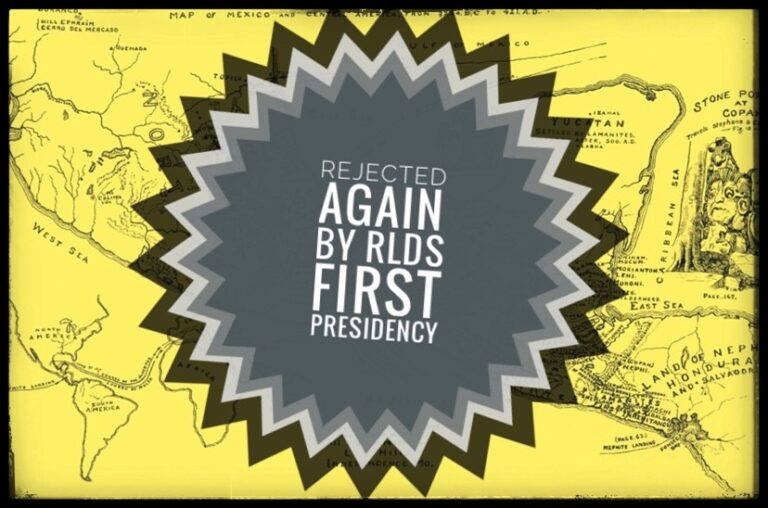
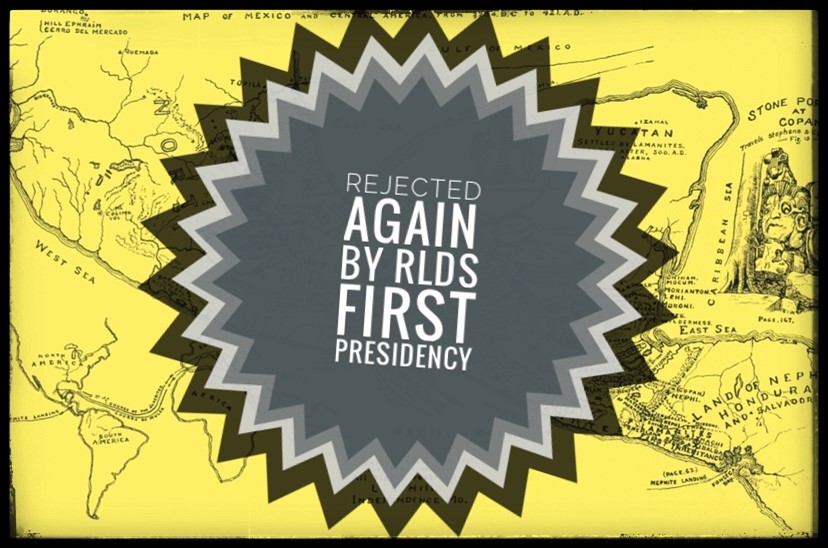
Blog 1 July 22THE ORIGIN OF THE TWO CUMORAH MESOAMERICA GEOGRAPHY THEORY FOR THE BOOK OF MORMON Blog 2 Aug 11 THE REJECTION OF THE TWO CUMORAH MESOAMERICA GEOGRAPHY THEORY FOR THE BOOK OF MORMON Blog 3 Aug 20 REJECTED TWICE BY THE RLDS FIRST PRESIDENCY Blog 4 Aug 30 THE RLDS BOOK OF MORMON MAP DEBATE OF 1924 Blog 5 Sept 2HOW M2C WAS CREATED FROM AN ATLAS
I also realize very few will take the time or have the patience to study and understand all of it.
But please understand, that The Prophet Joseph Smith had nothing to do with this silly geography theory created in 1917 now being promoted by our leading LDS scholars.
This short nine-year history from 1917 to 1925, with the death of Louis E. Hills, as clearly reported in The Saints’ Herald, explains its origin and history. Anyone who claims it’s the Truth, are actually perpetuating a lie.
Anyone who claims Joseph Smith was its author, is bearing false witness against the Prophet. Those who promote this theory, are “loving and making a lie.” (D&C 63:17; 76:103)
On page 31, Sorenson wrote of L.E. Hills and even enumerated Hills’ accomplishments:
“Hills, an RLDS student of the Book of Mormon, seems to deserve credit for many innovations:
(1) the first regionally limited model,
(2) that the lands where Book of Mormon events took place comprised exclusively Mesoamerica,
(3) that the Isthmus of Tehuantepec was the narrow neck,
(4) that the Usumacinta was the Sidon, and
(5) the first comprehensive attempt to utilize secular scholarly literature (on the native chronicles or traditions) to settle Book of Mormon questions.
The first point involves both the landing of Lehi’s party in Central America and the presence of the hill Cumorah of the final Nephite battles in Mexico; actually, then, the concept of “two Cumorahs” goes back at least 75 years.” (Published in 1990)
Sorenson here admits The Prophet Joseph Smith had nothing to do with a “two Cumorahs” concept for the geography of The Book of Mormon.
The following four-page document (bottom, below), written by Louis E. Hills, describes how he created his Two Cumorah Mesoamerica geography theory for The Book of Mormon.
This document was obtained from the Community of Christ Library and Archives. It is undated, but was written during this 1917- 1925 timeframe, as L.E. Hills had mentioned during this period in his lectures or before the Committee, about using his Atlas, as noted in The Saints’ Herald, August 23, 1921, quoting Daniel MacGregor:
These three items or “secular scholarly literature” mentioned by Dr. John L Sorenson in his “Source Book,” were used by L.E. Hills. I have provided links to them online, sans the map:
Bulletin 28, Bureau of American Ethnology pages 327-330 (Dated 1904)
These are screen shots from his document I consider shows the lack of logic, by L.E. Hills:
This is the logic behind the so-called Two Cumorah Mesoamerica geography theory for The Book of Mormon – the use of Maps from an Atlas and reports from the Smithsonian Institution.
There is no citing the Prophet Joseph Smith, his revelations, nor the scriptures. This is simply a fantasy of the mind using private interpretations of the scriptures and the teachings of men.
This is what has afflicted and confused members of The Church of Jesus Christ of Latter-day Saints since at least 1979 when F.A.R.M.S. was created, by its owners, employees, volunteers, and donors, and its spinoffs, today called “Book of Mormon Central” and “Interpreter Foundation” and their business affiliates. They promote L.E. Hills’ geography theory.
Follows, is the four-page document written by Louis E. Hills, explaining how he came up with his now so-called Two Cumorah Mesoamerica geography theory, restricting the geography of The Book of Mormon to Central America.
Stephen Reed
Mesa, Arizona
This image is from the Smithsonian report that LE Hills wrote that he used to come up with his geography theory.
“President [Russell M.] Ballard said he sees the hand of the Lord in John Howland’s life. He recalled viewing earlier this year John Howland’s headstone in Plymouth.
John Howland’s headstone memorializes him as a “godly man” and “ancient professor in the ways of Christ.”
But President Ballard saw something much greater in the life of John Howland. It is something we can all see in our own lives as well.
“Brothers and sisters, please look for the Lord’s hand in your lives and in the lives of your family, as I do in the lives of my ancestors and family,” said President Ballard. “Expect it. Do not dismiss it.” Source Here
I have listened to one of the Come Follow Me podcasts where Rod Meldrum was interviewing Tim Ballard. If you haven’t seen it, you can at the end of this blog below. It is podcast 6.1. Tim Ballard also spoke at our FIRM Foundation Conference on Fri April 10th, 2020.
While listening to Tim, he told of a story I couldn’t ever remember hearing before then, about a Pilgrim named John Howland, who landed at Plymouth Rock as a young unmarried man. His story is fascinating and it affects every member of The Church of Jesus Christ of Latter-day Saints. The Lord is definitely involved in our lives, each and every one of us individually. What a blessing.
During that historic voyage, the crew and passengers of the Mayflower encountered many turbulent storms, which kept the passengers below deck. In the middle of one storm, John emerged and was swept overboard.
William Bradford, also a passenger on the Mayflower, reported:
“In these storms the winds were so fierce and the seas so high the Pilgrims were forced to remain below deck. And one of them John Howland came above and, with a roll of the ship, he was thrown into the sea;but it pleased God that he caught hold of a rope that was trailing in the water and held on though he was several fathoms under water till he was hauled up by the same rope to the brim of the water, and then with a boat-hook and other means got him into the ship again and his life was saved; and though he was something ill with it, yet he lived many years after, and became a profitable member both in church and commonwealth.”
“When the Mayflower finally arrived in the New World, they discovered they were more than 250 miles north of their intended location. Because of the lateness of the season and lack of supplies, they decided to stay there.
“When they explored their new home, they found land already cleared, corn supplies and an abandoned village whose inhabitants had died in the disease epidemic of 1616 to 1618.
“Later, a leader of one of the villages arrived in the struggling settlement to help the Pilgrims. They formed an alliance, and during the second fall after their arrival in the New World, 52 colonists and some 90 natives celebrated Plymouth’s first successful harvest — the first Thanksgiving in Plymouth.
“At the time, John Howland was not as famous as fellow passengers William Bradford, John Carver and Myles Standish. However, standing where we now stand, with nearly 400 years between us and these courageous Pilgrims, he may have had a greater impact on the history of the United States than any of them.”
President Ballard explained that four years after arriving in the New World, John married fellow Mayflower passenger Elizabeth Tilley. From that union came 10 children and nearly 90 grandchildren.
Today, an estimated 5 million Americans trace their roots to John and Elizabeth, according to President Ballard.
Their descendants include three U.S. presidents — Franklin D. Roosevelt, George H.W. Bush, and George W. Bush; American poets Ralph Waldo Emerson and Henry Wadsworth Longfellow; and two influential 19th-century American religious leaders — the Prophet Joseph and his brother Hyrum Smith, explained President Ballard.Here I share more history about John Howland on my blog.
Protestant Reformation- John Howland, Brownists, or Separatist Puritan Who was John Howland?
The son of Margaret and Henry Howland, John Howland was born in Fenstanton, a parish and village located on the Cambridgeshire border, sometime in the 1590s.
He had two brothers, Henry and Arthur, who later emigrated from England to Marshfield, Massachusetts.
Although his brothers were both Quakers, John himself held to the original faith of the Separatist Pilgrims.
Howland boarded the Mayflower in Plymouth in September 1620 as a manservant of Governor John Carver. In later years, he also acted as Carver’s executive assistant and personal secretary.
Time in Plymouth Colony
John Howland was one of the 41 “true” Pilgrims who signed the Mayflower Compact, and in 1624 he married fellow Mayflower passenger Elizabeth Tilley – daughter of John and Joan Tilley.
The couple had 10 children who all survived until adulthood. They were named Desire, John, Hope, Elizabeth, Lydia, Hannah, Joseph, Jabez, Ruth, and Isaac.
The Pilgrims were the English settlers who came to North America on the Mayflower and established the Plymouth Colony in what is today Plymouth, Massachusetts, named after the final departure port of Plymouth, Devon. Their leadership came from the religious congregations of Brownists, or Separatist Puritans, who had fled religious persecution in England for the tolerance of 17th-century Holland in the Netherlands.
They held many of the same Puritan Calvinist religious beliefs but, unlike most other Puritans, they maintained that their congregations should separate from the English state church, which led to them being labeled Separatists. After several years living in exile in Holland, they eventually determined to establish a new settlement in the New World and arranged with investors to fund them. They established Plymouth Colony in 1620, where they erected Congregationalist churches. The Pilgrims’ story became a central theme in the history and culture of the United States.” Wikipedia Plymouth Colony
Why were the Protestants unhappy with the Catholic Church?
Protestants and Catholics They felt that the church was corrupt. They also attacked the ‘cult of saints’ – they argued that relics were fakes which could not cure illness or perform miracles. They believed that the Catholic Church simply used them to make money.
Why did Martin Luther split from the Catholic Church?
It was the year 1517 when the German monk Martin Luther pinned his 95 Theses to the door of his Catholic church , denouncing the Catholic sale of indulgences — pardons for sins — and questioning papal authority. That led to his excommunication and the start of the Protestant Reformation.
Which came first Protestant or Catholic?
Protestants arose about 500 years ago as a protest against the Catholic church. The Catholic and Orthodox churches were part of the original apostolic Christian church that date back to the founding of Christianity.
Why do Protestants not believe in purgatory?
The classic Protestant argument against Purgatory , aside from the lack of biblical support, is that Jesus’ death eliminated the need for any afterlife redress of sin. Catholics reply that divine mercy doesn’t exonerate a person from the need to be transformed.
Does the Catholic Church still believe in purgatory?
The Catholic Church holds that “all who die in God’s grace and friendship but still imperfectly purified” undergo the process of purification which the Church calls purgatory , “so as to achieve the holiness necessary to enter the joy of heaven”.You might be interested: Catholic view on cremation
Was England ever a Catholic country?
The Roman Catholic Church remained the dominant form of Western Christianity in Britain throughout the Middle Ages, but the (Anglican) Church of England became the independent established church in England and Wales in 1534 as a result of the English Reformation.
What churches broke away from the Catholic Church?
Another split from the Roman Catholic Church happened in England. King Henry VIII, in 1528, declared himself head of the Church of England in order to secure an annulment of his marriage to Catherine of Aragon. In time the Anglican Church spread to many countries.
What percentage of England is Catholic?
9.6 percent
What did Luther not like about the Catholic Church?
Luther didn’t like the fact people could buy indulgences — or reduced punishment after death. Luther had a problem with the fact the Catholic Church of his day was essentially selling indulgences — indeed, according to Professor MacCulloch, they helped pay for the rebuilding of Saint Peter’s Basilica in Rome.
What did the 95 theses say?
Martin Luther posts 95 theses In his theses , Luther condemned the excesses and corruption of the Roman Catholic Church, especially the papal practice of asking payment—called “indulgences”—for the forgiveness of sins.
Does the Catholic Church still believe in limbo?
VATICAN CITY (Reuters) – The Roman Catholic Church has effectively buried the concept of limbo , the place where centuries of tradition and teaching held that babies who die without baptism went. The verdict that limbo could now rest in peace had been expected for years. You might be interested: Catholic mass on television
Do Protestants believe in Mary?
The Roman Catholic Church reveres Mary , the mother of Jesus, as “Queen of Heaven.” However, there are few biblical references to support the Catholic Marian dogmas — which include the Immaculate Conception, her perpetual virginity and her Assumption into heaven. This is why they are rejected by Protestants .
What is the first Protestant religion?
Protestantism began in Germany in 1517, when Martin Luther published his Ninety-five Theses as a reaction against abuses in the sale of indulgences by the Catholic Church , which purported to offer the remission of the temporal punishment of sins to their purchasers.
Do Protestants believe in saints?
In many Protestant churches, the word “saint” is used more generally to refer to anyone who is a Christian. Many Protestants consider intercessory prayers to the saints to be idolatry, since an application of divine worship that should be given only to God himself is being given to other believers, dead or alive. https://www.elrenosacredheart.com/interesting/when-did-protestants-separate-from-the-catholic-church.html
Puritanism, a religious reform movement in the late 16th and 17th centuries that sought to “purify” the Church of England of remnants of the Roman Catholic “popery” that the Puritans claimed had been retained after the religious settlement reached early in the reign of Queen Elizabeth I. Puritans became noted in the 17th century for a spirit of moral and religious earnestness that informed their whole way of life, and they sought through church reform to make their lifestyle the pattern for the whole nation. Their efforts to transform the nation contributed both to civil war in England and to the founding of colonies in America as working models of the Puritan way of life. https://www.britannica.com/topic/Puritanism
Theology
Puritanism may be defined primarily by the intensity of the religious experience that it fostered. Puritans believed that it was necessary to be in a covenant relationship with God in order to be redeemed from one’s sinful condition, that God had chosen to reveal salvation through preaching, and that the Holy Spirit was the energizing instrument of salvation. Calvinist theology and polity proved to be major influences in the formation of Puritan teachings. This naturally led to the rejection of much that was characteristic of Anglican ritual at the time, these being viewed as “popish idolatry.” In its place the Puritans emphasized preaching that drew on images from scripture and from everyday experience. Still, because of the importance of preaching, the Puritans placed a premium on a learned ministry. The moral and religious earnestness that was characteristic of Puritans was combined with the doctrine of predestination inherited from Calvinism to produce a “covenant theology,” a sense of themselves as the elect chosen by God to live godly lives both as individuals and as a community.
Biography of Thomas Cartwright:
Thomas Cartwright (1535–1603), English Puritan divine, was born in Hertfordshire. He studied divinity at St John’s College, Cambridge, but on Mary’s accession had to leave the university, and found occupation as clerk to a counsellor-at-law. On the accession of Elizabeth, he resumed his theological studies, and was soon afterwards elected fellow of St John’s and later of Trinity College. In 1564 he opposed John Preston in a theological disputation held on the occasion of Elizabeth’s state visit, and in the following year helped to bring to a head the Puritan attitude on church ceremonial and organization. He was popular in Ireland as chaplain to the archbishop of Armagh (1565–1567), and in 1569 he was appointed Lady Margaret professor of divinity at Cambridge; but John Whitgift, on becoming vice-chancellor, deprived him of the post in December 1570, and—as master of Trinity—of his fellowship in September 1571. This was a natural consequence of the use which he made of his position; he inveighed bitterly against the hierarchy and constitution of the Anglican Church, which he compared unfavourably with the primitive Christian organization. So keen was the struggle between him and Whitgift that the chancellor, William Cecil, had to intervene. After his deprivation by Whitgift, Cartwright visited Beza at Geneva. He returned to England in 1572, and might have become professor of Hebrew at Cambridge but for his expressed sympathy with the notorious
“Admonition to the Parliament” by John Field and Thomas Wilcox. To escape arrest he again went abroad, and officiated as clergyman to the English residents at Antwerp and then at Middelburg. In 1576 he visited and organized the Huguenot churches of the Channel Islands, and after revising the Rhenish version of the New Testament, again settled as pastor at Antwerp, declining the offer of a chair at St Andrews. In 1585 he returned without permission to London, was imprisoned for a short time, and became master of the earl of Leicester’s hospital at Warwick. In 1590 he was summoned before the court of high commission and imprisoned, and in 1591 he was once more committed to the Fleet. But he was not treated harshly, and powerful influence soon secured his liberation. He visited Guernsey (1595–1598), and spent his closing years in honour and prosperity at Warwick, where he died on the 27th of December 1603. Cartwright was a man of much culture and originality, but exceedingly impulsive. His views were distinctly Presbyterian, and he stoutly opposed the Brownists or Independents. He never conceived of a separation between church and state, and would probably have refused to tolerate any Nonconformity with his reformed national Presbyterian church. To him, however, the Puritanism of his day owed its systematization and much of its force. https://www.apuritansmind.com/puritan-favorites/thomas-cartwright-1535-1603/
Admonition to Parliament, Puritan manifesto, published in 1572 and written by the London clergymen John Field and Thomas Wilcox, that demanded that Queen Elizabeth I restore the “purity” of New Testament worship in the Church of England and eliminate the remaining Roman Catholic elements and practices from the Church of England. Reflecting wide Presbyterian influence among Puritans, the admonition advocated greater direct reliance on the authority of the Scriptures and also church government by ministers and elders rather than by a higher order of clergy (bishops). The Queen, however, resisted this document. The authors were imprisoned and the leader of the Presbyterians, Thomas Cartwright, was forced to flee England after publishing “A Second Admonition to Parliament” in support of the first. The clergy who refused to conform to the compulsory form of worship that had been promulgated by Elizabeth in 1559 (as the Act of Uniformity) lost their pulpits or were imprisoned. https://www.britannica.com/topic/Admonition-to-Parliament
The Brownists were a group of English Dissenters or early Separatists from the Church of England. They were named after Robert Browne, who was born at Tolethorpe Hall in Rutland, England, in the 1550s. A majority of the Separatists aboard the Mayflower in 1620 were Brownists, and indeed the Pilgrims were known into the 20th century as the Brownist Emigration.
Tim Ballard Abolitionist, Saver of Souls, Fellow Latter-day Saint
In Tim Ballard’s own words, hear about his newest book titled, “Pilgrim Hypothesis Purchase here .Watch Podcast #6.1 as Rod Meldrum interviews Tim Ballard. Tim speaks about John Howland about 75% into the video.
As you can see by the Pedigree chart below, Joseph Smith is a direct descendant of John and Elizabeth Howland through their oldest son named John. Emma Smith is a direct Descendant of John and Elizabeth Howland through their 2nd oldest daughter, Hope.
I just found out May 29th, 2020 that John Howland and Elizabeth Tilley are my 10th great grand parents through their oldest daughter Desire. That is unbelievable. I am so humbled to know who my ancestors are. This gives me a greater desire in this life to share the gospel with others. I was led to this information from a good friend named Vicki Darais who has a mother with the name Nelson. She gave me the information and I had my Sister Lori Nelson Merritt look up our genealogy. It is amazing what she found. What is interesting is that I am the 10th great grand son of John Howland through my Tueller and Dustin line, not through my Nelson line.
On Aug. 16, 2021 I was in the home of my dear friend Allen C. Christensen of American Fork, Utah. He was the author of “Joseph’s Remnant, Lamanites of the Latter Days”Purchase here. I was visiting with my good friend Paul Whippy from Fiji an Area Authority Seventy who I baptized 46 years ago. Paul had worked with Allen in Fiji on finding the first Temple site for the saints of Fiji, and I was reacquainting them. Allen had spent that week studying Paul Whippy’s Family History and Allen discovered that Paul Whippy’s father David Whippy was from Massachusetts and was a descendant of John Howland from his oldest daughter Desire, just as I was. Amazing. Even more incredible was that Allen Christensen found out he was also a direct descendant of John Howland’s second daughter Hope, who Emma Smith was also a direct relative of. We also know that the Prophet Joseph Smith was a direct descendant of John Howland’s oldest son named John Howland. What a beautiful reunion Paul and Allen and I had, knowing we are all direct descendants. What a beautiful world this is.
Elizabeth Tilley came on the Mayflower at age 7 with her parents John Tilley and Joan Hurst. John and Joan Tilley died shortly after arriving in America. Elizabeth was the only one of their 5 children to come with them on the Mayflower. At age 16 Elizabeth Tilley married John Howland who had been saved at sea. Their first daughter Desire Howland (1625-1683) married Captain John Gorham Sr. (1619-1676) who was later killed during King Philip’s War, which was also the First Indian War. They are my 9th great grand parents.
Editor’s Note: The following article from this remarkable man, Mike Downs from Idaho, is a spirit filled witness of the calling of Joseph Smith and how the plates were translated. Mike’s use of scripture and his own intelligent reasoning are so rare in our youth of today. He is definitely part of the “Woke Up” club, and his testimony is solid. We appreciate Mike’s father Jeff, who has been a supporter of Firm Foundation for many years and has been a great friend and role model for many.
The Case for the Urim and Thummimby Mike Downs
Introduction:
“The Book of Mormon is a wonderful book of scripture that truly testifies that Jesus is the Christ. Its teachings are rich with doctrines and principles that come from a loving Heavenly Father and his Son, Jesus Christ. Some believe this book is fictitious and simply a parable of something that might have happened. I bear witness that this book is 100% real. The people, the stories, and the doctrine are not constructed to trick people into believing in something fake. However, the purpose of this document is not to prove the historicity of the Book of Mormon (though plenty of internal evidence can certainly prove things found in the Book of Mormon make it very authentic). The purpose is to prove that Joseph did not use a seer stone to translate the Book of Mormon.
Why is it Important:
I had a friend ask me why it is important with how the Book of Mormon was translated. The Holy Ghost can still bear witness to the truthfulness of the book. This is true, but the adversary will take any bit of doubt and amplify it to the point that one may lose sight of the truth. In a sense, it is as if the devil is laying a land mine that is waiting to detonate your faith at a moment of weakness. To think that this idea is farfetched is wrong because some people have heard about the Seer Stone and lost their faith or have it damaged. At BYU-I, I had a religion professor promote the idea of a seer stone so hard, I felt that something was off. I could not explain then why I felt against it, but after sincere study, I can say what I was feeling was a warning that it was false, at least in the sense that the stone was used in the translation process.
My goal here is not to incite any contention or start an argument. Doing so would be of the devil and not of Christ.[1] I leave it to the reader to decide what is true and what is not. I firmly believe that the scriptures can speak for themselves, especially the Book of Mormon. If the reader truly has an open mind to what is about to be shared, I know it can help him or she have a deeper testimony of the Book of Mormon and the Prophet Joseph Smith. I have thought about adding long explanations on why David Whitmer’s, Emma Smith’s, and Martin Harris’s accounts are false, but have felt that appealing to the scriptures would destroy their false or questionable statements and show believing their words about the seer stone is ridiculous.
One important thing to remember is that the Holy Ghost can teach us all things and that the things of the Spirit can only be learned by the Spirit.[2] So when scholars slander any scripture from the standard works, they should be looked at like fools because they put their wisdom over revelation given through the Lord’s prophets.[3] With that being said, is the Book of Mormon translation something to be learned of with the Spirit? I think it can be, mainly on the fact that revelation was a strong part of the process[4]. The Lord will probably not reveal unto us exactly how the translation process worked at this time (so those who say they know either guess or in some cases lie), but he can confirm unto us if what Joseph and others said were true. A good question to ask ourselves on this topic is this: Why would the scriptures refer to the Urim and Thummim so much if it was not an important detail to know?
If Mormon saw our day and had limited space to use in the gold plates, why include details about the Urim and Thummim? I suggest that it was because of dishonest and misguided men who would try to discredit Joseph Smith and the Book of Mormon.
Now to answer the question of my friend, “Why is it (The Book of Mormon Translation) important?” I submit that understanding what instruments were used by Joseph are important for several reasons:
1) The adversary will use this confusion to jeopardize people’s faith in the Savior by making them doubt what is real.
2) This misinformation would make Joseph look like a liar and a dishonest person.
3) We would lose sight of what it truly means when scriptures say that this work is a “marvelous work and a wonder”[5].
Global Variables:
“There Indeed” by Clark Kelley Price
When I was putting this paper together, I was reminded of a principle I learned from one of my computer programming courses. The principle was on global variables. In programming, global variables are used to set certain values that can be used throughout the program. If needed, these variables can change, but in certain cases the variable can be made private and unchangeable. When it comes to the Book of Mormon translation, certain facts cannot change because they are God’s word. So, if we were to set some “global variables” for the Book of Mormon translation process that are unchangeable, what would we choose? May I suggest these three points:
Joseph was commanded not to show the plates or the Urim and Thummim (Interpreters) to anyone unless commanded[6]
Joseph translated it “by the gift and power of God”[7]
“It was not intended to tell the world all the particulars of the coming forth of the book of Mormon.”[8]
Two Camps:
With our global variables in place, let us now make clear the two camps we see when individuals try to explain how the Book of Mormon was translated. The 1st Camp is that the Book of Mormon was translated by Joseph Smith using the Urim and Thummim (the Nephite interpreters) that were found with the plates. Joseph used the plates through the translating process. The 2nd camp is that the Urim and Thummim may have been used for a little bit, but a seer stone and a hat were used for much of the translation because of convenience. The plates were hardly used or looked at.
As stated above, I will not bother at this time explaining in detail why Martin Harris, David Whitmer, and Emma Smith’s statements were false. They believed that a seer stone was used in the translation process. Other notable men and women have explained it better than I could so I will not spend a lot of time debunking their statements. I would just simply say look at the evidence and draw your own conclusions!
The evidence is easy to find and is not in some obscure statement or book. Down below are two tables. Table 1 examines evidence that Joseph did use the Urim and Thummim (Nephite Interpreters) during the translation process. Table 2 examines the evidence of where the Urim and Thummim came from that Joseph used. Table 3 describes the Urim and Thummim. Note some references may be repeated for emphasis.
The Evidence:
Table 1:
Table 2:
Table 3:
Tables Explanation
Table 1 gives a brief overview of four scriptures that has the Lord, Joseph Smith, and Oliver Cowdrey implying that the Book of Mormon was translated through the means of the Urim and Thummim. If I was a lawyer in a court case, these three witnesses would be damming evidence against the opposing side. Three of these statements come from the Lord and the Prophet Joseph and easily bear considerable weight and authority. Oliver Cowdrey simply solidifies what is being said by Joseph and the Lord.
Mosiah Interprets the Jaredite Stone by Minerva
.
Table 2 outlines where the Urim and Thummim came from and their purpose. If these interpreters were prepared for the purpose of translating the book as ancient prophets have written, then why would Joseph go against God’s wisdom and rely on a stone he found at a well? It does not make sense for the Lord’s Prophet to go against the Lord’s plan and do his own will because some other way might be easier. Now Joseph made mistakes, but Joseph and the Lord made no mention of a seer stone being used during the translation process. We can also see that the Urim and Thummim have been passed down through many prophets from the time of the Brother of Jared to King Mosiah to Joseph Smith.
Table 3 debunks the claim that that the Urim and Thummim is an interchangeable term and could easily be the seer stone or the Nephite interpreters.[9] If we examine the statements found in Table 3, we will see that Joseph and ancient prophets described the Urim and Thummim as two transparent stones set in a silver bow and that he received them with the gold plates in the Hill Cumorah. This same Urim and Thummim was the one used by Book of Mormon prophets from the time of the Brother of Jared to Moroni which was then buried until the time of Joseph Smith. To say the Urim and Thummim was an interchangeable term is illogical because it contradicts how the item is described in scripture.
Who to Believe?
Now some may be inclined to say that both the seer stone and Urim and Thummim were used. Part of the reason is that Emma Smith, Martin Harris, and David Whitmer couldn’t possibly be wrong. Emma was the prophet’s wife, and David Whitmer and Martin Harris were a part of the three witnesses. I do think these three are honorable to a degree, but we should be careful to trust their statements, especially when the statements they gave were given long after they left the Church. Some of these statements, in their full context (something few take the time to research) were blatantly against the Church.
Let us look at a generally accepted idea of Joseph’s scribes recorded during the translation process:
Martin Harris and Emma Smith helped translate what is known as the lost 116 pages or the Book of Lehi. Oliver Cowdrey translated most, if not all, of the Book of Mormon that we have today.[10] Now Martin Harris, Emma Smith, and David Whitmer claim Joseph used a seer stone to translate the Book of Mormon. How do their claims add up to the claims from the Lord, Joseph, and Oliver? They don’t add up at all. If Martin Harris claims a seer stone was used during his period as a scribe, would that make the Lord’s comments about Joseph using the Urim and Thummim in D&C 10 a lie? No, it would make Martin the liar because the Lord cannot lie.[11] So if that’s the case, the Urim and Thummim must have been used for the 116 pages. It then must be assumed that when the Lord told Joseph to continue translating as he did before, that he would keep using the Urim and Thummim, not a seer stone because that was not what Joseph was using to begin with.[12]
So, what about David Whitmer and Emma Smith’s accounts of the use of a seer stone? Their accounts falter because according to Oliver, he testifies that Joseph used the Urim and Thummim for the remainder of the translation of the Book of Mormon (1 Nephi through Moroni). One may claim that Oliver’s account holds the same weight as David and Emma (though David Whitmer’s accounts flip flop between Joseph using a seer stone or the interpreters). If this is the case, let us refer to our global variables. Joseph was commanded not to show the plates or the Urim and Thummim to anyone.[13] So that means only Joseph and the Lord can truly say what happened in the translation process. So, what did the Lord’s servant say? We do know that the world is not supposed to know the particulars of the coming forth of the Book of Mormon. BYU scholars and others seem to make this point very clear and then proceed to say what Joseph said or did through sources that on the surface seem official, but down below are dishonest and false.
The Sword of Laban and the Liahona were in the Cave at Cumorah, not in the Stone Box.
To all those who believe Joseph was a true prophet of God, I submit you listen to the man himself that was called to do a work that was prophesied by prophets thousands of years before. Here is how he described the gold plates and how he translated the Book of Mormon. Joseph Smith said this:
“These records were engraven on plates which had the appearance of gold, each plate was six inches wide and eight inches long and not quite so thick as common tin. They were filled with engravings, in Egyptian characters and bound together in a volume, as the leaves of a book with three rings running through the whole. The volume was something near six inches in thickness, a part of which was sealed. The characters on the unsealed part were small, and beautifully engraved. The whole book exhibited many marks of antiquity in its construction and much skill in the art of engraving. With the records was found a curious instrument which the ancients called ‘Urim and Thummim,’ which consisted of two transparent stones set in the rim of a bow fastened to a breastplate. Through the medium of the Urim and Thummim I translated the record by the gift, and power of God. .”[14]
If the global variable is true, then we must take Joseph’s word for it because he is the only confirmed person on earth that saw the translation process. If we cherry-pick and say Joseph lied here or did not tell the truth there, what kind of prophet would he be? He would be a false prophet and one that cannot be trusted. Though historians or people in the church may claim this idea, I testify that Joseph is a prophet of the Lord and that those who fight against this truth will find great shame on Judgment Day.
Final Conclusions and Thoughts
In conclusion, I submit to you that a seer stone could not have been possibly used due to evidence presented by the Lord, Joseph Smith, Oliver Cowdrey, and ancient scripture. Unlike some of the historians and scholars that just appeal to facts, I appeal to the Holy Ghost to give people guidance on this matter. I firmly believe that the Lord is a perfect being that cannot lie. I strongly testify Joseph Smith was a true prophet of the Lord and that those who say otherwise will experience bitter sorrow for fighting against the Lord’s anointed. Furthermore, I will always stand by Joseph and what he said instead of the possible half-truths or lies spread by those who seek to remove Joseph from his prophetic pedestal.
To those who have doubts about Joseph because of the seer stone, treasure digging, or any other slander against the prophet, I urge you to follow the Lord’s counsel in seeking to study out of the best books (in full context) with wisdom and faith.[15] Joseph has truly done more than any man for the salvation of the human family save Jesus only.[16] If historians are confusing you on who Joseph was, may I invite you to read Joseph Smith history, ancient prophecies about him, and the Book of Mormon. If one truly wants to know Joseph, the scriptures, or even the Savior Jesus Christ, they must be willing to put forth the work in study and prayer to truly know them.
The Sacred Grove
When I first heard about the seer stone idea, I read about it briefly from the Gospel topics section on the Gospel Library app from the church. I thought nothing of it. It wasn’t until a professor’s class that something did not feel right to me. If I learned anything from my time as a missionary for the church, it is how to recognize certain promptings of the Holy Ghost. It may be bold to some to say that through the Holy Ghost I received confirmation that the Urim and Thummim was used, and that the seer stone was not in the Book of Mormon translation. After seeing the damage and confusion this idea was causing, I wondered why such an idea would cause members to fall away. I found answers in the scriptures above but knew that some would still not accept them because of a lack of faith and confidence in ancient prophets. When I found the statements on Joseph commenting directly on what the Urim and Thummim was and how he used it to translate the Book of Mormon, I instantly threw out the claims of the seer stone because I knew Joseph is a prophet of God and that all claims for the seer stone being used in the actual translation were false. It was not until later I discovered that the seer stone theory originated from anti-Mormon literature produced in Joseph Smith’s time called Mormonism Unveiled[17].
I would urge every reader to prove to themselves what is true and what is not. I trust the prophet and the scriptures over pathetic slander and stories. The seer stone accounts came from members after they left the church and fought against Joseph. I came to this conclusion through study, prayer, and faith. After reading this paper, I hope you can draw your own conclusions. I hope that in some way your testimony or faith in the Lord and his prophet Joseph were strengthened. Finally, I hope that you have the knowledge and understanding from the Holy Ghost on this matter to destroy the attacks from Satan on this matter for yourself and possible loved ones who may have questions on this issue. May Heavenly Father strengthen those who have questions or who are seeking answers.” Mike Downs
Editor’s Note: Scriptures and statements that validate the translation with the spectacles and breastplate, also known as the Urim and Thummim and Interpreters.PDF Here There is no seer stone or single stone mentioned in the scriptures, used to translate the plates.
Author Notes:
“A Note About the Times and Seasons: (To Show Joseph said and edited the words found in table 1 and 3 above, the paragraphs below describe the newspaper. The Paragraphs are from the Encyclopedia of Latter-Day Saint History which was printed in the year 2000)
Times and Seasons, a major source of information on early Latter-Day Saint thought, was published at Nauvoo 1840-1846. During the spring of 1839, Elias Smith and Hiram Clark retrieved from a muddy grave in far West, Missouri, the press and type that had been used in the publication of the elders Journal. (The equipment had been buried there for safety when the Saints were driven out. ) Various editors then use the machinery to publish times and seasons, which became the churches journalistic voice during the Nauvoo, Illinois, era. The periodical was first issued as a “monthly religious paper in pamphlet form” (Smith, 4:23) in November 1839 by Don Carlos Smith and Ebenezer Robinson. Following its first year, times and seasons became a semi-monthly publication.
In December 1840, the firm Robinson and Smith, publishers, was dissolved, and Don Carlos Smith became the editor, taking on Robert B Thompson as a partner during the spring of 1841. Following the death of Smith on 7 August and of Thompson on 27 August 1841, Ebenezer Robinson once again became the editor and this time the sole manager as well. When the core of the 12 apostles determined either to take over the periodical or start a competing paper at the end of 1841, Robinson reluctantly sold the periodical to the church (Smith, 4:463)
Thereafter it was edited by the Prophet Joseph Smith (volume 3, from the 8th number on) and then by John Taylor (volumes 4 – 6). Altogether, 131 issues of the times and seasons were produced. “Each number of the paper consisted of 16 large octavo pages, the printing matter on each page measuring four and 1/4 by 8 inches “ (Jenson, 875). The final edition came off the press on 15 February 1846, a few days after the exodus from Nauvoo had begun.
[4] D&C 8 is a great example of how to receive and seek revelation. The Lord teaches Oliver Cowdrey personally and helps him learn from his failed attempt to translate.
[8] Minutes, Church conference, Orange, OH, Oct. 25–26, 1831, in Minute Book 2, Church History Library, Salt Lake City, available at josephsmithpapers.org; Welch, “Miraculous Translation,” 121–9.
[9] For example, when Joseph Smith showed a seer stone to Wilford Woodruff in late 1841, Woodruff recorded in his journal: “I had the privilege of seeing for the first time in my day the URIM & THUMMIM” . Wilford Woodruff journal, Dec. 27, 1841, Church History Library, Salt Lake City. Even though the seer stone might be a Urim and Thummim it is hearsay to guess that it was used during the B.O.M translation process when Joseph and the Lord clearly stated otherwise to the fact.
[10] Note that this is a very simplified version and that two of David Whitmer’s brothers, Emma Smith, and Joseph Smith himself may have been a scribe for tiny portions during Oliver’s time as a scribe.
[11] Lord cannot lie. See Ether 3:12, Numbers 23:19, and Hebrews 6:18
[14] Times and Seasons, 1 March 1842,” p. 707, The Joseph Smith Papers, accessed February 13, 2021, https://www.josephsmithpapers.org/paper-summary/times-and-seasons-1-march-1842/5
[17] Mormonism Unveiled was written by a man named Doctor Philastus Hurlburt, but published y E.D Howe. Hulburt was an apostate from the church along with several other Christian churches. He threatened Joseph Smith on many occasions, gathered false stories about the prophet, and possibly murdered an individual. Some BYU scholars or historians sometimes reference the book secretly to push false narratives like the seer stone or treasure digging to fit their beliefs.” Mike Downs
Mike Downs Bio:
My name is Mike Downs. Currently I am attending BYU-I and am majoring in Software Engineering. I currently work for a company that helps individuals with disabilities find employment. I served a 2 year mission for the Church in Tacoma Washington from 2017-2019. [email protected]
The so-called Two Cumorah Mesoamerica geography theory for The Book of Mormon was created in 1917 by a member of The Reorganized Church of Jesus Christ of Latter-day Saints (The RLDS Church) named Louis E. Hills.
He “prepared a copyrighted Book of Mormon map and … offered them to the (RLDS) Church.” They were rejected. All his books and maps were copyrighted in his name. The copyrights have expired, his works are in the Public Domain, anyone can now resell his maps and ideas.
The map and the idea of geographically restricting The Book of Mormon to Mesoamerica (a word never used by L.E. Hills, but a modern-day usage for “Central America,” “Meso” meaning “Middle” as in Mesopotamia) were later rejected by The RLDS First Presidency in 1921 and 1923. This history is clearly laid out in The Saints’ Herald as noted in my previous three posts here at BOFM.BLOG.
Yet this fantasy map is being promoted today by a cult of its promoters who are members of The Church of Jesus Christ of Latter-day Saints as well as members of The RLDS Church, now called Community of Christ and Restoration Branch.
Despite L.E. Hills’ ideas being rejected by the RLDS Leadership and by a RLDS Church-appointed committee created specifically to review his ideas, Louis E. Hills continued to promote and lecture on his creation from 1917 to 1923 and until his death in 1925.
Notice how L.E. Hills spent 18 hours and one evening presenting evidence before the Committee. Then 15 hours by a member named F.F. Wipper, representing the former official RLDS Church-approved Archaeological Committee, which had its own hemispheric maps. These two men were later involved AGAIN in a PUBLIC debate over the two maps, in 1924.
But let’s first look at the entries in The Saint’s Herald about L.E. Hills, that preceded the 1924 debate.
Notice that despite the rejection by The Committee and The RLDS First Presidency, L.E. Hills continued to spend his time and use the resources of his Church to promote his ideas throughout the rest of 1923.
I find this absolutely astounding, that a member of The RLDS Church, and a member of its First Quorum of Seventy, would use his Church-appointed position to continue to promote and lecture on his personally-owned private ideas, using the resources of his Church for his own benefit in attempt to convince members of his Church, despite their President having rejected his ideas just months earlier. The Stone Church mentioned, is directly across the street from the New Jerusalem Temple Lot, ironically, a geographical marker for The Book of Mormon.
In my opinion, this is being mirrored today in The Church of Jesus Christ of Latter-day Saints as recently as BYU Education Week and in Church Book of Mormon videos due to the influence of so-called LDS Mesoamerica Book of Mormon “scholars,” who appear to be ignorant of the origin of this geography theory. Laughably, many have wasted time acquiring advanced university degrees on Mesoamerica studies to promote themselves as credentialed experts, all based on a rejected-fantasy from some 100 years earlier.
Then in October 1923, L.E. Hills and 19 other men, were released from the First and Second Quorums of Seventy, “with no reflection whatever upon their character or moral standing.”
In 1924, The Saints’ Herald continues to report on the known activities of L.E. Hills, promoting his Two Cumorah Mesoamerica or Central America geography theory.
Then in May 1924, The Saints’ Herald announces the public debate of the two maps.
1924
Note here, the use of the idea of “THE INTERNAL EVIDENCES of The Book of Mormon,” used by L.E. Hills, a phrase used liberally by today’s so-called LDS Mesoamerica Book of Mormon scholars, to promote L.E. Hills’ now expired copyrighted Book of Mormon geography theory.
Notice how the debate, coined “Friendly Discussion,” was initially planned for the nearby Campus of Graceland College then moved to The Stone Church, for eight sessions of two hours each, beginning April 19, 1924, the location again, is located directly across the street north of The New Jerusalem Temple Lot, a geographical marker for The Book of Mormon.
This debate obviously vaulted L.E. Hills’ ideas into the minds of the membership of The RLDS Church, an astute but deceptive move on his part, in my opinion. This foreshadowed the same idea by those who published this geography theory in the Ensign Magazine in the 1980s and is now being promoted, debated and argued among members of The Church of Jesus Christ of Latter-day Saints.
The following document was obtained from the Community of Christ Library and Archives. This document or program, is 33 pages in length. Many of its pages are blank which were to be used for writing notes by those in attendance. The debate, as you can see, ran from May 20 to May 30, 1924. Amazing.
Proposition One, for the debate, has F.F. Wipper defending the hemispheric maps and published report of the RLDS Committee on American Archaeology. You can see those reports and its six maps, on my blog here. I’ve included Map No. 5, below.
(Page 4)
Follows are blank pages titled “REMARKS” with dates of each debate referring back to page 4, allowing those in attendance to take notes on these blank pages, two for each day, as they listened to the “Friendly Discussion.”
Pages 5-11, blank except for headings:
Proposition Two, was printed on page 12. Then the following blank seven pages, the same pattern above with the dates through to May 30.
This is that 1923 copyrighted map mentioned on page 12 of the Program, which L.E. Hills created.
Pages 13 – 19, blank except for some headings
Page 20 notes the “Participants.” The reference to F.F. Wipper of the “L.D.S.” Church is a reference to the RLDS Church, since Wipper was mentioned in The Saints’ Herald as presenting evidence to the aforementioned Book of Mormon Committee in 1923.
Page 21 notes that collections were taken by those in attendance to defray the costs of the meeting.
The remaining pages of the program, not included here, contained the lyrics to hymns, apparently sung during the Friendly Discussion, to help avoid the spirit of contention.
The Saint’s Herald for the remaining year of 1924 has these entries for L.E. Hills who continued his lectures and promotion of his ideas.
1924 continued
This wedding announcement of L.E. Hills’ daughter, her second as she was a widow at the time, notes the home address of L.E. Hills. (The death of Louise Hill’s first husband is mentioned earlier in The Saints’ Herald.)
Thus, you now know the location and address where the so-called Two-Cumorah Mesoamerica geography theory was created and the date it was introduced to a RLDS Priesthood meeting:
201 South Willis Avenue, Independence, Missouri Thursday, April 12, 1917, 10:45 a.m.
These are the next entries in The Saints’ Herald to the end of 1924. Notice that L.E. Hills placed an advertisement in the Herald for his third book, “New Light on American Archaeology,” in the last edition of December 1924 and in the first January 1925 edition of the Herald.
“New Light” is Hills’ Two-Cumorah Mesoamerica idea and a reference to the past official RLDS Committee on American Archaeology which produced a report and the (also false) hemispheric maps for The Book of Mormon as far back as the 1900s, mentioned in my first blog entry here at BofM.BLOG.
1925
Note that his third book, “New Light on American Archaeology” consists of thirteen lectures by L.E. Hills. Price, $1.00. There is nothing complicated, sophisticated or academic about these books. L.E. Hills was employed as a Railroad Conductor, the likely reason why our modern-day LDS Mesoamerica “so-called” Scholars, have been hiding the source. They’re likely embarrassed by it.
For example, L.E. Hills in his 1924 book of lectures, referenced the Giant Ground Sloth of South America in connection to the Isthmus of Panama, as evidence for the location of Book of Mormon geography. Our ridiculous LDS Book of Mormon so-called “Meso-scholars” today, or whatever they marked their foreheads as, seem intent on embarrassing The Church of Jesus Christ of Latter-day Saints, for their own aggrandizement and personal gain without knowing the source of what they promote.
I can only imagine them standing at the pulpit of their Chapels blubbering and blabbering on about their testimonies of the truthfulness of this geography fantasy-land, revealed to them by The Holy Spirit, after receiving accolades, payments and donations via PayPal buttons on their websites, from their lectures, articles and books about it. What a bunch of silly sods.
This book can be found, scanned on line by Google, at HathiTrust, along with L.E. Hills’ older books. I recently purchased through Amazon and have in my possession, a physical copy of “New Light on American Archaeology.” It’s approximately 7.5 x 5.5 inches and about one-half inch thick. It stinks of paper mold or mildew, due to age.
1918: A SHORT WORK ON THE POPOL VUH AND THE TRADITIONAL HISTORY OF THE ANCIENT AMERICANS BY IXT-LIL-XOCHITL 1919: HISTORICAL DATA FROM Ancient Records and Ruins OF Mexico AND Central America
1924: NEW LIGHT ON AMERICAN ARCHAEOLOGY
There are a few more entries in the 1925 Saints’ Herald, then the announcement of the death of L.E. Hills.
Then these announcements of the death of L.E. Hills on June 19, 1925.
The automobile skidded on a wet street, meaning there were witnesses to this tragic event. A typical automobile, in 1925:
Then this last entry in 1925, where on the same page, the RLDS Herald reported other snippets from scientific and nature magazines that showed evidence for The Book of Mormon, including those which support a Heartland Geography Theory.
The image of the very next paragraph in The Saints’ Herald, referring to the Mound Builders in the State of Ohio. Page 1337 of The December 16. 1925, Saints’ Herald:
This is the history of L.E. Hills and of his, today so-called, Two Cumorah Mesoamerica geography theory, which restricts The Book of Mormon to Central America, found in The Saints’ Herald.
It’s a complete fantasy. It’s not true.
It was rejected by the RLDS Church Leadership in 1921 and in 1923, after being reviewed privately by a RLDS Church Committee specifically appointed by RLDS Leadership to discuss it, as well as debated publicly among members of The RLDS Church in 1924 in their primary meeting location, The Stone Church, across the street from a geographical marker for The Book of Mormon, in Independence, Missouri, The New Jerusalem Temple Lot. I can’t repeat that enough times. See the Tenth Article of Faith, written by The Prophet Joseph Smith who translated The Book of Mormon by the gift and power of God, through the means of the Urim and Thummim specifically provided for the translation of the keystone of our religion, the last leaf of the plates being the Title Page of The Book of Mormon.
The only thing that stopped L.E. Hills was his death. He was hit by an automobile, which is ironic, since at the age of 15, he was a bugler for General George Armstrong Custer in the 1873 expedition to the Yellowstone to protect a survey party for a route for the now Northern Transcontinental Railroad and during so, was involved in an Indian battle led by Chief Sitting Bull, per his own autobiography, which can be found here on my blog.
NEXT: How M2C was created from an Atlas. I will share with you a document written by L.E. Hills in his own words, explaining how he created his Book of Mormon geography theory, restricting The Book of Mormon, including the “original” Hill Cumorah, to Mesoamerica.
“I believe it is important to understand the other most prevalent geography theory of the Book of Mormon, the Mesoamerican Theory. As one who believes that the Book of Mormon events happened in North America, for over 40 years I believed (or was taught by Sunday school, seminary, and church literature), all about Mesoamerica, and nothing about the Heartland. Only after much prayer and search did I find the Heartland Model, and was blessed to meet Rod Meldrum. Heartland Model is the most accurate theory of all. In fact, knowing that Hill Cumorah in NY is the only hill where the Nephites and Jaredites had their last battles, I listened and read and prayed about this one aspect, and it has become an important part of my testimony.
Why I love the Book of Mormon
“I was first taught and inspired about the North American Model by Rod Meldrum. The WorksofJoseph.com (My Website), maps included in our Annotated Edition of the Book of Mormon were created after being inspired while reading the book Moroni’s America by Jonathan Neville. However, I want others to know that the spiritual messages of the Book of Mormon are more important than the geography. But I also believe the historical accuracy is critical to my full comprehension of the ‘most correct book’ (Joseph Smith Jr.) on the earth. I believe most Latter-day Saints agree that the Garden of Eden, Adam-ondi-Ahman, and Cumorah are located in North America, and most know that the New Jerusalem will be built upon the American Continent or in Missouri.(Articles of Faith #10, Doctrine and Covenants 84:1-4). It just makes sense to me that the Book of Mormon history also occurred in the United States of America, as other sacred events did.
My ideas have been shaped based on Joseph Smith’s writings that the Hill Cumorah is in Manchester, New York (Letter VII), that Joseph did have a vision of Zelph who was a Book of Mormon Chieftain in Illinois (Joseph Smith Papers), and Joseph did write a letter to Emma June 4, 1834 telling her that he was ‘wandering over the plains of the Nephites,’ in Illinois, Indiana and Ohio. (Joseph Smith Papers). I also believe the Promised Land spoken of in the Book of Mormon is indeed the choice land of the United States. I desire that this blog of Book of Mormon events will inspire you and teach you more about the spiritual message of The Book of Mormon, Another Testament of Jesus Christ.” Rian Nelson The Annotated Book of Mormon by David Hocking and Rod Meldrum page 522
Below is Book of Mormon Centrals Opinion of their claim the Book of Mormon took place in Mesoamerica from their website.
Below the BOMC words in Black and my opinions in red.
Published on Book of Mormon Archaeological Forum (http://www.bmaf.org)Home > which is owned by Book of Mormon Central
Why Mesoamerica?
Criteria for Book of Mormon Lands and People There are several theories held among Latter-day Saints for the location of Book of Mormon lands. Some place the geography of the book in upstate New York or near the Great Lakes. Others look to Peru and South America, or to the Baja Peninsula, or Texas, and some even propose the Malaysian Peninsula. BMAF supports a Mesoamerican context for the major Book of Mormon sites. Other locations may meet some of the following criteria, but only Mesoamerica meets all these elements required by the book itself. This list of criteria is not a cafeteria list. Any Book of Mormon lands proposal must be able to demonstrate all.
It must demonstrate all below in the opinion of BOMC, not in my opinion. This statement also shows that BMAF is not neutral as they claim but they are one-sided in their view of where the Book of Mormon took place. But on their BOMC website they claim neutrality so they are in line with the Church of Jesus Christ of Latter-day Saints who keep a neutral position which is fine with us. We, Book of Mormon Evidence.org is not neutral. We believe the Book of Mormon events happened in North America and the Lamanites spread to all parts of the hemisphere after the final battles in New York.
A Narrow Neck of land and 4 seas (east, west, north, and south) Niagara Peninsula, Ontario, Erie, Michigan, Huron
A major river running south to north from a narrow strip of wilderness. Why south? The Index to the Triple Combination doesn’t have this requirement. See Here:
A high civilization with cities, kings, artisans, military, and priests There are over 1,000,000 mound and settlements in North America See Proof Here:
An agricultural base large enough to support several millions of people Are you kidding. Is there anything larger than the Mississippi agricultural base? See Chart and map below. “The table above examines the land and water systems required to support large armies found in pre-modern history. The table shows that before the modern era a population of at least 30,000,000 living in a land area of 1,000,000 square miles where rivers discharge at least 1,000,000 cubic feet of water per second could support military forces of 500,000 men. The table shows that these conditions for supporting 500,000 armed forces were satisfied for (1) the Persian Armies in Eurasia in 500 BC, (2) for the Mauryan Empire in India in 300 BC, (3) for the Han Dynasty in China in AD 1, (4) for the Nephite-Lamanite Nations in North America in AD 385, (5) for the Gupta Dynasty in India in AD 375, and (6) for the Roman Empire in Eurasia of AD 420. All these cases there were pre-industrial societies. In all these cases there were armies of about 500,000 men.” John Lefgren
A highly literate (written language) society with scribes as important officers Yes the Nephites would have scribes and records that’s why they buried them to protect them from Lamanites.
Functional calendar and dating systems Nephites had the moon and stars. Mayan’s had the sun and stars. He Hebrews used the moon as a calendar just like the North American Natives. “Coriantumr was discovered by the people of Zarahemla; and he dwelt with them for the space of nine moons.” Omni 1:21
A merchant class using weights and measures Native Americans used Wampum as legal tender.
Engineers to build houses, temples, towers, and highways using cement Page 207, 303 Annotated Book of Mormon
Highly skilled craftsmen working with precious metals and stonework Annotated Book of Mormon pg. 207, 303
A warrior society involved in large battles using trained soldiers and sophisticated fortifications There are breastplates, arrowheads, pottery, proof of fires, roads, and buildings of earth and wood all over North America.Alma 49:11-12
Legends of a white, bearded God Native Americans have Legends of the Great Spirit. (One god)
These Criteria must be in the Western Hemisphere but where Joseph Smith could not have known about them in 1829.
For more information click here [1] and browse through the articles in section 2 “The Mesoamerica Model.” WHY THE GREAT LAKES/HEARTLAND MODEL DOES NOT QUALIFY(1) No major river running South to North, Mississippi River flows North to South The Tennessee river the New River, the Genesee Rivers all run south to north, but that is not something that is even mentioned in the Book of Mormon, only that Zarahemla is on the west of River Sidon, which Montrose, Iowa is west of the Mississippi River, which we believe is the River Sidon. See my Blog Here
(2) No mountainous strip of wilderness that can hide Gadianton robbers, defend against Lamanites and serve as military dividing line for Captain Moroni(Alma 22:33-34,50:11) Silly argument, have you seen all the caves, wilderness, strips, etc in North America? Of course.
(3) Very little gold and silver east of the Mississippi Are you kidding me? The world’s richest supply of copper in Isle Royal in Michigan. Gold, Silver and Copper all of the mountains of eastern Tennessee.
(4) No evidence of cement buildings anywhere in eastern U.S. or Canada, archaeologists have determined that the vast majority of discovered archaeological sites dating to the time period of the Book of Mormon are located in Mesoamerica The Nephites built with earth and wood 90% of the time, not stone and mortar. See blog here
(5) No evidence that Adena and Hopewell co-existed for 250 years Well they just aren’t looking. Ohio archeologists, (not Mormon archaeologists) find the opposite. Look at this map just from Wikipedia and check the resources.Source of the map below is Here
(6) Adena and Hopewell were not true civilizations, but were small, loosely knit, family related units with no evidence of a written language. The area in and around the Isthmus of Tehuantepec constituted the embryo for both the calendar system and the written language of the Americas. This fact alone virtually eliminates any other geographical area from being considered as “lands of the Book of Mormon” Meso believers may be from the great and spacious building. Just research Adena or Hopewell and see this quote. “The most common question that is asked about mounds is, “How many exist?” In the 1800’s the Smithsonian sponsored many expeditions to identify mound sites across America. A map (shown below) was produced by Cyrus Thomas in 1894 in a Bureau of Ethnology book. They found approximately 100,000 mound sites, many with complexes containing 2 to 100 mounds. The figure of 100,000 mounds once existing— based on Cyrus Thomas map revealing 100,000 sites—is often cited by others, but that estimate is far, far too low. After visiting several thousand mounds and reviewing the literature, I am fairly certain that over 1,000,000 mounds once existed and that perhaps 100,000 still exist. Oddly, some new mound sites are discovered each year by archaeological surveys in remote areas. But in truth, a large majority of America’s mounds have been completely destroyed by farming, construction, looting, and deliberate total excavations” – Gregory L. Little, Ed.D., The Illustrated Encyclopedia of Native American Mounds & Earthworks, Eagle Wing Books, Inc., Memphis, TN [2009].
(7) So-called DNA “Proofs” use unsubstantiated theories. Joseph Smith did not receive revelation where Book of Mormon lands were located, but his last statements about Book of Mormon geography point us to Mesoamerica (click here [2] to see what Joseph Smith said about Mesoamerica) They want to show you a biased FAIRMormon video for proof? Look at this article from National Geographic and this blog
(9) Columbus was directed to “the promised land,” yet he never visited North America. So San Salvador and the Bahamas was part of South America? Read my blog here and one here
For more information click here [1] and browse through the articles in the section “The Heartland Model.”(Click their link if you want more bias about the Heartland model) Yes I have a bias also, but all I want you, the reader to do is compare the two, pray about them and make what ever decision you would like. I choose the Heartland Model.
The narrow neck mentioned in the Book of Mormon is one of the most well-known parts of the geography. But, how many narrow necks are there in the world? There are some major criteria needed for a world location to fit the Book of Mormon geography: There must be no cold or snow. There is only one reference to snow (I Nephi 3:46 [11:8], “…and the whiteness thereof did exceed the whiteness of the driven snow.”) This statement was made by Nephi in the Valley of Lemuel (in the Old World). So, the people in the Book of Mormon knew snow, yet there are no references to cold or snow mentioned in the Promised Land. See my blog about snow here
There must be an east wind of destruction. As for wind, there are several different kinds of references used. The use of “wind” is very distinct and purposeful. The descriptions range from mild wind to winds of destruction (“whirlwinds” and “east wind”). A key description for locating the lands of the Book of Mormon is that is has to be someplace where a wind from the east is strong enough to cause immediate destruction and occurs often enough to be useful as an analogy. In Mosiah 5:50 [7:31], “…they shall reap the east wind, which bringeth immediate destruction.
”There is criteria for the narrow neck. A key description is in Alma 13:76 [22:32]: And now it was only the distance of a day and a half’s journey for a Nephite, on the line Bountiful, and the land Desolation, from the east to the west sea. Many people interpret this to describe the west sea to the east sea, but it just describes a point to the east. It is important to note that this description does NOT describe going all the way to the sea east, just to a point on the east. A similar construction is seen in Alma 22:8 [50:8]: And the land of Nephi did run in a straight course from the east sea to the west. Again, both seas are not mentioned, just a point (to the west). So, how many miles can a person travel in 1.5 days? It is very easy for a fit person to travel 40 miles in a day over unimproved trails (60 miles in a day and a half). American Indian runners have been known to run 75 to 100 miles per day.
Travel through jungle where no trails exist can be as low as 10 to 15 miles per day (the lower limit).The world record for a 48-hour run is 428,890 meters (266 miles), or 200 miles in a day and a half on a perfectly flat track (the upper limit). Canoe travel on flat, smooth, fast-flowing rivers can be up to 326 miles in 24 hours, but only one river meets this criteria (Yukon). Otherwise, believe it or not, travel is the same, or less, than foot travel.
As a best estimate, the width of the narrow neck should be between 15 and 200 miles.
There must be a north-flowing river south of the narrow neck. The river Sidon headwaters are in the South Wilderness which are south of the narrow neck.
There must be elevated areas on the west and south parts of the land. There is a south wilderness and the Hermounts were on the west. See my complete Blog here about geography
There must be an elevated area on the east that borders an east sea. The east wilderness bordered the east sea.
There must be at least two large bodies of water north of the narrow neck.Helaman 2:3-4 [3:3] …there were an exceeding great many who departed out of the land of Zarahemla, and went forth unto the land northward, to inherit the land; And they did travel to an exceeding great distance, insomuch that they came to large bodies of water, and many rivers.
There needs to be significant geological forces (earthquakes, volcanism, and tsunamis) that can explain the destructions described in III Nephi. Earthquakes alone will do it. There are the least earthquakes in the world that occur in Mesoamerica and the greatest number in the USA at tornado alley. No volcanoes in the Book of Mormon, but whirlwinds are far more frequent in North America. See my blog here.
Different locations that have narrow necks are listed below. Each has an assessment of these major criteira. https://sites.google.com/site/bomgeography/narrow-necks
The Book of Mormon teaches against the notions of ‘Mormonism’
The Book of Mormon does Not Teach Mormonism
Not all people who believe the Book of Mormon are ‘Mormons.’Many have found the words to be true and everything it claims to be: an inspired record of Israelites with a profound and relevant testimony of Jesus Christ. These people have found the record to be true, yet have no association with the strange theologies many have come to know as ‘Mormonism.’ But because many have formed biases against the Book of Mormon before ever opening its cover, assurances are required, chiefly: The Book of Mormon is Not Mormonism.
Mormonism is associated with strange practices—strange to the Christian walk—like polygamy, celestial marriage, plurality of Gods, etc.But the Book of Mormon teaches none of these doctrines, and many who believe The Book of Mormon’s authenticity have no association with these practices. It simply does not teach them.
Assuming that all Book of Mormon believers espouse strange doctrines (polygamy, etc.) or that the Book of Mormon teaches these ideas is like assuming that historically all Americans were slave holders and advocated slavery because the constitution encouraged it. Slavery was not practiced by all Americans; some espoused it, most despised it, yet the constitution taught none of it. In the American civil war, some fought for slavery, and many fought against slavery, yet both would go home and read the same bible at night. Yet the U.S. constitution never advocated slavery. Slavery was a historical practice adopted by some outside the country’s written constitution. Similarly, practices of ‘Mormonism’ have no association with the Book of Mormon.
To assume anyone who believes the Book of Mormon must advocate ‘Mormonism’ is akin to assuming any American citizen must have advocated slavery in its day, or abortion in our day, just because they are US citizens. Because some practiced these crimes, does not mean every citizen advocated, and more importantly the crimes were not advocated by the original ‘doctrine.’
Such is also true of the Book of Mormon. Strange doctrines of polygamy, celestial marriage, plurality of Gods, temple ordinances—none of these ideas come from the Book of Mormon. They were all ideas instituted and practiced by men separate from the Book of Mormon’s teachings.
This is a very disturbing article above by BOMC. To say, “strange to the Christian walk—like polygamy, celestial marriage, plurality of Gods, etc. But the Book of Mormon teaches none of these doctrines”, BOMC is refuting polygamy and celestial marriage and plurality of Gods? Mormonism is what others call us not what we believe. To try and separate Mormonism from our eternal doctrine is weird and dangerous.
From this point below it is all information from our Heartland Theory.
Below are two Headland maps which represent the many changes over the years to the BOMC maps. They started with the 1917 LE Hills RLDS map they adopted, then to the east west directional typical Mesoamerican map, and now they have rotated it 45 degrees as a fantasy map which now aligns north to south as the Book of Mormon discusses. Our North American Heartland map has always aligned north to south as you see in the second map below.
The Most Misunderstood Quote by Mesoamerican Theorists is Below.
“You know there has been great discussion in relation to Zion–where it is, and where the gathering of the dispensation is, and which I am now going to tell you. The prophets have spoken and written upon it; but I will make a proclamation that will cover a broader ground. The whole of America is Zion itself from north to south.” President Joseph Smith’s Remarks–The Whole of America Zion–April Conference, 1844 Section Six 1843-44, p.362
Join us at our 28th Book of Mormon Evidence Conference. We will have 5 rooms for speakers on Thursday and Friday Sept 23-24, including the Main Stage. On Saturday Sept 25, we will only have the Main Stage with speakers as the breakout rooms were not available. We will have over 100 informative presentations live and each will be recorded for you to view on our streaming site here, within a few weeks after our conference.
Each day at Noon and 4:30 pm on Thurs. and Fri., we will hear a brief Demonstration or Presentation on the main stage from several of our larger sponsors. (Prize giveaways) Please join us on Saturday from 3:30 to 5 pm for a huge Native American Panel and Dancing Celebration organized by Mike “Painted Pony” and Betty “Red Ant” LaFontaine. It is called,
“We Shall Remain” A Native American Celebration
As you can see by the schedule here, I am still waiting for topics of some of our speakers presentations. This list of speakers and times will change. If you need to change your time, please contact Rian @ [email protected]
Within a month or so after the Live Expo Sept 23-25, we will make available all presenters who speak in video format and recorded, and you will have an opportunity to view the recorded videos later at your leisure.
There is a concessions stand at the event that will be available. Please don’t bring any outside food into the Expo Center. More details visit here https://bookofmormonevidence.org/events/
Just Added to our Conference Lineup Key-Note Speaker Greg Hughes Friday September 24, 2021 8:15 to 9:00 pm
Introducing: Greg HughesUtah House of Representatives Majority Whip, Speaker of the House, KNRS Radio Host, Co-Host of Take Two on Utah’s CBS Affiliate KUTV
In 2002 he was elected to the Utah House of Representatives where he served as the Chairman of the House Education Committee, House Majority Whip, and was twice elected by colleagues be the Speaker of the House. He retired from the Legislature at the end his term in 2018.
During his time in the Legislature, he was champion of fiscally conservative policies, government reform, and protecting our veterans. Greg worked extensively on issues that created an environment for businesses to thrive and jobs to be created. As Speaker, he led the charge to increase education funding to historic levels while also cutting taxes.
Named the 2015 “Utahn of the Year” by the Salt Lake Tribune, Hughes is best known for his determination to get things done and his ability to bring opposing sides together solve controversial issues such as medical cannabis, moving the state prison, justice reform, developing the inland port, and protecting religious freedom while opposing discrimination.
Recently, Greg finished third place out of eight candidates competing for the Republican nomination for governor. Currently he manages a public policy and government relations consulting firm and has weekly media appearances on KNRS radio and as a co-host of Take Two on Utah’s CBS affiliate KUTV.
Below is a brief highlight of a few of over 75 speakers. You know our wonderful regular speakers, Rod Meldrum, Dean Sessions, Russ Barlow, Amberli Nelson, David Doane, Steve Smoot, and Wayne May who will all be presenting at the conference as well. Below are a few more familiar faces and some you may not of heard about.
L. Hannah Stoddard Director – For Our Day Film Series Website: josephsmithfoundation.org Presentations: 1- Joseph Smith’s Plural Wives—The Real Story 2-Ancient Legends & Last Days Prophecy Testify of Joseph 3-You Are Likely a Nephite & Why It Matters
L. Hannah Stoddard is the co-author of Seer Stone v. Urim & Thummim: Book of Mormon Translation on Trial. She is the founder of Joseph Smith’s Legacy and the producer or director of six documentary films.
Listen to an amazing talk by Hannah’s father, James Stoddard here:Sadly this may be one of the last talks he gives. We love the Stoddard family.
Kimberly Smith- Writer, Researcher at the Joseph Smith Foundation Presentation: How I resolved my questions regarding Joseph Smith’s Polygamy-Faith Crisis Solutions!
Kimberly Smith is a writer and researcher of church history. She is the Research Director for the Joseph Smith Foundation and author of several articles on the web including the article: “Answering the Claim: Did Joseph Smith Fight Plural Marriage”.
David Read Patent Attorney, JD Presentations: 1- Updated DNA. Evidence for the Book of Mormon 2- Four Ancient Cities in North America: Do they Relate to the Book of Mormon?
Despite popular belief, the currently available DNA evidence supports the Book of Mormon. Critics who attempt to rely on DNA evidence to attack the truth of the Book of Mormon misinterpret or misconstrue what the DNA evidence actually shows. In this presentation, Mr. Read will present more DNA evidence that has recently come to light supporting Book of Mormon claims.
James T. Prout Author: The “Last Days” Timeline Presentations: Does Biden appear in Ezra’s Eagle? How does Donald Trump return?
James T. Prout is the author the book: The “Last Days” Timeline and is an expert on the specific last-days events. James is the founder of www.LastDaysTimeline.com
Pamela Romney OpenshawAuthor of Promises of the Constitution Website: promisesoftheconstitution.com Presentation America’s Founding Mothers; Women of Freedom
Pamela Romney Openshaw found her passion for the Constitution and yearning for the politics of good, moral government while serving as an elected delegate from Nebraska to President Carter’s 1980 White House Conference on Families.
Jaren O’Driscoll-Husband Father, Patriot, Mormon Traditionalist Podcaster Join Jaren at his vendor table and listen as he records podcast with many of the Conference Speakers.
“In relation to the Kingdom of God-the devil always sets up his kingdom at the very same time in opposition to God…” Joseph Smith Jr. Satan wasted no time in setting up his kingdom of lies and deception as God began to establish His. His Current Podcast is here:
Jonathan Neville Author, JD, Lawyer, Educator lettervii.com – moronisamerica.com – bookofmormonwars.com Presentations: 1- Heartland in Africa 2- New Evidence of the Translation
Lemurs, Chameleons and Golden Plates: An African Perspective of the Restoration of the Gospel Written by Jonathan Neville & Illustrated by William Rasoanaivo Available at the Conference Sept 23-25.
Description The Gospel of Jesus Christ is for everyone in the world. It teaches people of all cultures how to love one another, serve one another, and help one another become better, happier, people. This book helps young readers understand the Gospel from an African perspective.
Internationally recognized artist William Rasoanaivo of Madagascar applies his talents to relate the story of the Restoration from an African perspective.
Readers of Neville’s books and blogs know that important historical facts have been [reinterpreted] over the years, leading to confusion and even disaffection among some members of the Church. This new book relates historically accurate and faithful facts about the Restoration of the Gospel, the coming forth of the Book of Mormon, its preservation, discovery, and translation, all of which corroborate what Joseph Smith and Oliver Cowdery taught all along.
This little book with its well-illustrated stories will go far in helping you teach correct historical facts and principles to yourself and your youngsters (children or grandchildren).
ERIC MOUTSOS, Former Policeman, Father, Author, Activist Presentation: Conscience or Conformity?
Eric is a husband, father, author, former police officer, small business owner, and founder of the Utah Business Revival. He organized several events this last year to promote freedom and Liberty. He also helped produce Non-Essential, a documentary focused on educating the public about our God given rights.
Watch Eric’s 1 hour video below called, Non-Essential
Tristan Mourier BusinessManagement, Speaker, French
“Tristan Mourier is a recent graduate from the Marriott Business School at Brigham Young University, his parents were early converts of the Church in Southern France and have been pioneers of the growth of the Kingdom there. See a recent interview here:
He first got publicly involved in the fight against secularism at BYU during the Honor Code protests of March 2020 and has since appeared on the FairMormon FairVoices Podcast and Defending Utah.
Jeff Midgley Emergency Medical Expert, Owner of TNT First-Aid Inc. Presentation: Preparing your Family for medical emergencies
Jeff Midgley has over 24 years in Emergency Management and Emergency Medical Services. He has worked in Hospital Emergency rooms, ambulance, motorsports safety and Fire Department. Jeff is an American Heart Association Training Center faculty member and instructor for basic life support. Jeff is one of 8 national SFI incident response instructors. He has had training articles published on spinal immobilization in the field and head trauma in the field. Jeff teaches all aspects of emergency medical preparedness including Mass Casualty disaster training and triage. He has also served as a city wide emergency preparedness coordinator. He loves teaching and helping families and businesses prepare for when disaster strikes.
Ben McClintock – Defending Utah Educating Citizens on the Principles of Liberty
Presentation: “Secret Combinations and What YOU Can Do About It”
Ben McClintock is co-founder of the leading local organization working to educate citizens on the principles of liberty and to expose those conspiring to take away your freedom. (They are also expanding into other states).
Dale Lewis President Fortress Clothing Presentations: Don’t Freeze and Die- Be Prepared with Fortress.
“WINTER SURVIVAL for your Lifetime Supply of HEAT STORAGE” “Renewable, Clean, Disguised, Low Cost Heat Storage”
Business Experience: Manufacturers Rep within the Grocery Channel, Nabisco, Frito-Lay. Founded WRLD Alliance, a telecommunications enterprise in 1997 and exited that business in 2007.
Betty “Red Ant” LaFontaine Navajo Educator, Speaker and Teacher Special Presentation: “We Shall Remain” Native American Panel Discussion, Dance, Video and Testimony Sat. Sept 25, 2021 3:30 to 5 pm
Betty “Red Ant” LaFontaine is a full blooded Diné (Navajo) born of the Red Clay Bottom Clan, for the Salt Clan. Raised on the Navajo Reservation, she lived most of her youth in New Mexico in the traditional ways of the Diné.
Andrea Hales Tribe of Testimonies Podcaster Presentation: “Tribe of Testimonies: Aligning Personal Traditional Beliefs with the Gospel of Jesus Christ.”
In late fall 2020, I started working on a podcast to unite my fellow Native American and First Nations brothers and sisters with the Gospel of Jesus Christ. The purpose is not a social-movement platform, not a political platform, and not a place to air grievances. The purpose is solely to strengthen testimonies and share the Light of Jesus Christ. It is my hope to help align personal traditional beliefs, customs, and cultures with the Gospel of Jesus Christ one interview at a time.
Franklin Keel Foreign Officer, Lawyer, Native American Activist, Dir. of the Eastern Region, Bureau of Indian Affairs. He will be a part of the Native Celebration called, “We Shall Remain” on Sat Sept 25, 3:30 to 5 pm
Mr. Keel was inducted into the Alumni Hall of Fame of the University of Science and Arts of Oklahoma in 2018 for his “meritorious contributions to society which reflect an innate personal affinity for superior endeavor.”
In 2017, he was inducted into the Chickasaw Nation Hall of Fame. In 2018, he was listed as one of “100 Alumni You Should Know” by the University of Science and Arts of Oklahoma.
Kyung-Ran Koh CMHC, EMDR Licensed Clinical Therapist Presentation: ‘Scrupulosity: Religious or Moral OCD (Obsessive Compulsive Disorder) and the Grace of God’
A South Korean descent and convert to the LDS church, Kyung-Ran Koh has lived in the US since 1995. She has earned a ME.d in Counseling Psychology from the University of Utah in 2007.
Dr. Patrick Jones Veterinarian, Clinical Herbalist, Author and Lecturer Presentations: 1- Joseph, Brigham & Herbal Medicine 2- Ten Plants That Can Change Your Life
Clinical herbalist, practicing veterinarian and traditional naturopath Dr. Patrick Jones discusses the experiences and views of the Prophets Joseph Smith and Brigham Young on the subject of herbal medicine. Learn how these great men felt about medicinal plants and how to identify and use some of their favorite herbs. Learn what herb Brigham said we’d be blessed to know in the Last Days!
Kevin HumphreyIndependent brand partner with NuLife Ventures, LLC. Marketing the AVACEN.
Kevin has a B.S.E.E. B.Y.U. 1976, M.B.A. B.Y.U.1978, M.A. Clinical Psychology / Marriage & Family Therapy A.P.U. 2000. He has worked in the health and wellness field for the last 20 years. His company is Repower Your Star, LLC dba Microcirculation For Life.
Presentation Optimize Health, Vitality and Youthfulness – A Wellness Treatment from the Inside Out! Microcirculation is the Vehicle that improves Nutrient absorption and removes Toxins 66% more efficiently, thus increasing oxygen in the blood! AVACEN Medical is a 14 year old company from Carlsbad, CA. The AVACEN 100 has over 12 million safe treatments with zero adverse events.
Jacob Householder Financial Economics Student, Advocate of Free Markets & Conservative Politics Presentation: “Freedom Isn’t Good Enough”
Jacob is a public speaker, researcher, and writer who believes America can be healed by making the Founding Fathers’ principles of successful government popular again through a grassroots educational movement. He is an advocate of liberty and has dedicated his life to restoring the Constitution. Additionally, he believes America can be healed through civil public discourse and proper education. Jacob seeks to unify America by promoting and highlighting bipartisan solutions instead of partisan problems.
Philip Gleason – Founder & Director of the non-profit Academy of Self-Reliance; CEO of the Utah OSR Land Cooperative. Chief Consultant at OSR Green, LLC.
On a bitter cold night, as a young father, Philip found himself unable to keep his 3 baby girls warm, give them a meal, or even a drink of water. This experience set him on a course to understand and determine what it meant to “prepare every needful thing”.
Helping families transition from a lifestyle of dependency on cities for food, water, and power to a country culture of self-reliance is his passion. This is accomplished by providing a pathway to a homestead on 2-acres and more, with a passive solar home, a barn, a greenhouse, a garden/orchard, water and approved sanitation, while not being connected to any public utilities, surrounded by like-minded neighbors, and remaining debt free.
His decades as a building contractor and land developer with a passion for greenhouses and sustainable food production has led him to the creation of “Operation Self-Reliance”, a 4-step pathway to preparing every needful thing.
Identifying like-minded people and essential resources and networking them
Making available the knowledge & skills needed to be self-reliant
Qualifying plans to make the transition to self-reliance and establishing agricultural cooperatives
Providing opportunities to help and support OSR (Operations Self-Reliance)
Lonnie Crockett PhD Tax Law, Speaker, Author Presentation: Is the Sun Setting on our Constitution?
Lonnie Crockett was raised in the great state of Alaska for the first 30 years of his life. As a boy, he hunted, fished, played baseball and was very active in Boy Scouting, earning his Eagle and Silver Palm awards. He even delivered news papers by dog team.
Angie Christensen Holistic Nutrition, Herbs, Homeopathy, Biomedical Interventions Presentation| The Do’s and Don’ts of Healthy Food Storage
Learn how to store food that will build your health and immunity when facing times of crisis. This class is packed with life-saving details to help you learn:
How to Avoid the “Bermuda Triangle” of Food Storage What foods can make you disease resistant during an emergency Which forms of food preservation retain the most nutrition
Daniel Burdett UM Instructor Presentation: Geological Time vs Revelatory Time Using the UM
UM—The Science Supporting Joseph Fielding Smith’s Man, His Origin and Destiny Daniel Burdett is a 3rd generation dentist from Ogden, Utah.
Events considered significant: Married Jennifer Lindsay in the Salt Lake City Temple 1995, Father of four: Devin(22), Lindsay(20), Mikelle(17) and Nathan(15).
Secular Education: DDS—Creighton University 2005, LCSW—1999-2001, MSW—University of Utah 1997,BA—Weber State University 1995 , Ogden High School 1989
Scott N. Bradley Founder, The Constitutional Commemoration Foundation Presentations: 1- “A Land Choice Above All Other Lands” 2- “The Book of Mormon and Recalibrating the Saints.” Scott will also be a part of the Native American Celebration called “”We Shall Remain” on Sat Sept 25, 3:30 to 5 pm
President Ezra Taft Benson taught: “The Book of Mormon was written for our day,” and he also taught that within the Book of Mormon we discover not only the blessings associated with this Promised Land, but also the cursings we face if we diverge from the covenants associated with this uniquely blessed Promised Land. We are warned that if we fail to abide by the counsel of the God of the Land, Jesus Christ, and to worship and serve Him, we will reap dire consequences in the latter days. The Book of Mormon presents powerful warnings against the soul-destroying philosophies and precepts that are so highly organized, cleverly disguised, and powerfully promoted in modern America. This presentation will introduce and discuss some of these threats that are destroying our faith and our nation.
David W. Allan Ambassador for God’s LIGHT and TRUTH Presentation: The Three Gospels and Preparations for the Lord’s Coming
David W. Allan has spent 61 years researching time and related topics. He helped develop the nation’s official atomic-clock timing system during his 32 years in Boulder, CO, at the National Bureau of Standards (now National Institute of Standards and Technology). For 25 of those years, his research group was responsible for generating official time for the United States and helping with official time for the world. He wrote the algorithm for optimally combining the readings of an ensemble of atomic clocks, and with improvements by colleagues it is still being used to generate time for the United States. During that time, he spent several man years helping in the development of GPS. Atomic clocks are the heart of GPS, and the folks developing GPS came to Boulder to learn how to best use them being taught by Allan and his colleagues at NBS.
Note From FIRM Foundation: Just an FYI for all those of you who follow us and attend our events. We are no longer affiliated with or employing Latter-day-Media (aka Mike and Nancy James, Latter-day-Network, Color My Media, Comefollowme2021, Hope to Heaven,Latterdaynetwork.tv, or Motivational Mentoring YouTube ), to film or manage our events or content. We have had a parting of ways . If anyone is contacted by them, pretending to represent us, know it isn’t true. Firm Foundation, Book of Mormon Evidence, Legacy Research
Wayne May and his forefathers have lived in the same area of northern Wisconsin for five generations. He has spent more than 60 years of his life in the Heartland of America, traveling more than 1,000,000 miles, visiting more than 1,000 sites, and talking with hundreds of thousands of people in thousands of gatherings. He has edited and printed more than 100 issues of his Ancient American Magazine. No other American has more experience looking for the artifacts of the native people who lived and died in Ancient America.
In a crystal clear stream in the northern woods of Manitowish, Wisconsin, Wayne found alloy castings of arrowheads. The metalworking and aerodynamic knowledge of the ancient people are clearly represented in these artifacts. Wayne found the arrowheads in the northern lands where natural copper is found and where the Nephites of the 4th Century gathered before their last stand at Cumorah.
Last week Wayne received the results from a modern metals testing laboratory for one of the alloy arrowheads. We can now say with confidence much more about the level of knowledge that the ancient people had when they made this arrowhead. The results from these tests are attached.
Donate to Wayne and Heartland Research tax free here: Zarahemla.site Backside of arrowhead – Burnt mark from spectral analysis and proof of alloy’s crystal structure from casting. Arrow and spear points found in same clear waters of Manitowish, Wisconsin.
Technical Features of Artifact Confirm High Level of Metalworking Knowledge
1. This artifact is ancient, and it is from northern Wisconsin.
2. The hardness of the metal alloy is twice as much as that of natural copper. The analysis shows that the metal’s hardness comes from the intentional addition of one pound of tin for every 100 pounds of copper. The tin content is only 1/10th as much as in the bronze alloys of Europe, Africa, and Asia. The low content of tin certainly reflects the fact that there are limited sources of tin ores in North America. Nevertheless, the tin was deliberately in the alloy, and as such, the hardness of the metal in the arrowhead doubled, and the alloy’s castability greatly improved.
3. There is clear evidence from the surface and internal crystal structure of the metal in the arrowhead is a casting. The technology of casting gave the metalworkers the benefits of large-scale production. The arrowhead indicates that the ancient people cast tens of thousands of pieces where each piece has exact aerodynamic properties and improved metal hardness. There was no way that the production of a handworked piece of copper would have been able to compete with the casting of many pieces from the copper alloy. The arrowhead is associated with a level of production that was intended for large armies.
Native copper nugget from glacial drift, Ontonagon County, Michigan. An example of the raw material worked by the people of the Old Copper Complex. (Rob Lavinsky, iRocks.com/ CC BY-SA 3.0 )
Nephite Ore in East Tennessee
Scroll of Copper
“I did teach my people to build buildings, and to work in all manner of wood, and of iron, and of copper, and of brass, and of steel, and of gold, and of silver, and of precious ores, which were in great abundance.” 2 Nephi 5:15
Shortly after the Nephites separated themselves from the Lamanites (establishing the land of Nephi), Nephi states that he “did take the sword of Laban, and after the manner of it did make many swords, lest by any means the people who were now called Lamanites should come upon us and destroy us.”
Lehi after landing in Florida and prospering there, Nephi and his people fled from Laman and Lemuel. Most likely they traveled north up the Flint river of the Chattahoochee River. We know they traveled “many days”. Travel time by boat up the river to a place near Helen, Georgia would take 7-9 days which would qualify for “many days” as spoken in the Book of Mormon. Once reaching the head of the Chattahoochee River the Nephites could have easily taken the Hiawassee River at its head, north to the Tennessee River right into Chattanooga Tennessee. This is where I propose the City Nephi was located. See (Complete Route of the Nephites and Timeline Here)
The necessary ores for Nephites are found in abundance in East Tennessee in the area near Ducktown. The mine there has extracted over 15 million tons of copper ore in modern times. The French Huguenots enjoyed friendly relations with the Mountain Apalachee Indians, who were mining gold, copper and silver near their villages. The gold came from what is now Georgia; the silver from western North Carolina; and the copper from southeast Tennessee. To honor his friendship with these Native Americans, De Laudonniere named the region, “Les Montes Apalachiens.” Moroni’s America page 351In 1799, gold was discovered in Cabarrus County, North Carolina, when Conrad Reed found a 17-pound “glittering stone” in Little Meadow Creek. In 1828 Dahlonega, GA was the site of the first major gold rush in the United States. Ducktown TN was the center of a major copper-mining district from 1847 until 1987. The district also produced iron, sulfur and zinc as by products.
COPPER HISTORY LAKE SUPERIOR
Published April 1863, 30 page reprint from the Smithsonian Institution; this booklet one of the best early sources for the ancient copper mining activities of Upper Michigan. Booklet is fully illustrated with examples of miners copper, stone and wood tools plus map of the Keweenaw Peninsula showing ancient mine locations.
Without Ancient American Magazine (AAM) by Wayne May, true science has no viable voice or outlet; it is excluded by academia cartel’s atheistic, anti-science-allegiance to “Manifestly Manipulated Destiny” – Columbus First.
BRONZE AGE IN AMERICA w. MINOANS & MYCENAEANS , by Colette Smith
(This is a MAJOR EDUCATION in not only Mediterranean history, but world history. NEVER did any level of public school or university EDU teach us accurate history of the origin & timing of the BRONZE AGE, its development and critical role in both oceanic trade & pre-Columbian American history, plus the historically-pertinent, global effects of its cataclysmic, volcanic end! WOW !! Human history is correlated with the ice ages like nowhere else
The author did a masterful job of presenting true history, its causes and effects. Thank you Colette, and thank you Ancient American Magazine.)
America’s history was influenced heavily by seafaring trade efforts all over ancient Europe. England started the “Bronze Age” (BA) about 4000 BCE by smelting local copper with tin or zinc into alloys called bronze and brass. A search was soon on for additional copper. Somehow, someone discovered the world’s richest and largest deposits of nearly pure copper on the northern shores Lake Superior in the new world’s “Great lakes” area. It is no pun to say that new world truly had “Superior Copper.” The European side of the story makes it appear that they did the mining and shipping, with their own imported settlements of thousands of miners.
(Note: An untold American story is that a population of immigrants (Jaredites) from Babylon had settled in the Great Lakes about the time of the Babylonian confusion of tongues and separation of continents, and were mining and trading this copper in the “new world,” virtually from their own back yard. That connection has not yet been made, historically, only that their burial artifacts contain that unique blend of copper ore. To what degree, if any, the Jaredites participated in or even controlled the copper mining and international shipping is not known.)
Meanwhile, many nations around the world were actively sailing the oceans seeking commercial trade. The ancients were master navigators, and understood both the ocean currents and the stars. English and Scandinavians sailed to Iceland and Greenland. Chinese, Indians, and Indonesians were sailing to America’s western coasts, while Minoans of Crete dominated the Mediterranean Sea zone. Arabians explored Africa’s east coast and trade routes to India and China. Wherever sailors landed, they impacted any local cultures with their own. For example, the ancient Far East Hindu influence in Meso-American culture is obvious.
Militant competition ruled the seas; they had the ships and the seamanship to enforce it. Soon Minoan shipping became a primary commercial force in the rich, “new world” copper trade, servicing all ports in Europe and the Mediterranean. The BA hit full stride in its 2000-year roll.
A Minoan competitor group from the Island of Knossos, near Cyprus – descendants from Japheth – muscled the Minoans into a subservient role in the giant Copper Trade, about 1500 BCE.
It is of prime importance to know thatthe earth’s climate was much warmer during the BA.There was no arctic ice. The Arctic Circle was open east to west across both segments of the recently-separated Pangea. Northern Scandinavia and Russia were not frozen. The Great Lakes were deeper and wider, rivers and water tables were all higher.
From this AA issue and others, we learn that primary shipping routes TO the Superior copper mines were via Hudson Bay, canoeing rivers south into Lake Superior, then OUT with fleets of small boat loads of ore, via either Lake Huron to the St Laurence, or Lake Michigan to Chicago River and the Mississippi. Small river boats of ore would then load onto ocean ships at Hudson Bay, St. Lawrence Seaway or New Orleans. New Orleans even had smelting sites to reduce the ore volume to pure, flat ingots. St Lawrence routes served N. Europe best, whereas New Orleans ships could service the Caribbean, or African routes to the Far East. By this vigorous trade over BA’s 2000-yr. life, Superior copper products have been identified all over the world.
But nature suddenly ended the BA about 1400 BCE. Minoan’s home base Island of Santorini exploded inthe world’s most violent volcanic eruption ever known before or since. Minoa Island nearly disappeared, Crete, Cyprus and Knossus were wiped out in the first hour, along with catastrophic destruction throughout the Caribbean shorelines. A 75-ft Tsunami blasted all shores within 500 miles. Horrific air pollution shaded the earth’s sun for over a year, causing draughts, climate changes, diseases and starvation conditions for decades globally. Returning sailors sailed through Mediterranean debris to discover their home world had disappeared. Superior copper trade suddenly ended also, with workers walking away from their tools.
Surviving Phoenicians were quick to fill the gap in shipping trade to the Mediterranean, Atlantic and Far East. Their Phoenician “Golden Age “ lasted from 1400 – 580 BCE, followed by Carthaginians; Greeks 150 BC, and the Romans 65 BC. About 1100 AD began a cooling trend; by 1100 AD the Arctic circle began to freeze into an Ice Age.
None of this coordinated science data has been taught in America’s education system. True history from many places has been consciously suppressed or rewritten, and evidences hidden from view or publication by those in political and academic power, in order to promote their favorite myth of “Columbus First – Manifest Destiny,” In America, the Smithsonian Institute has earned its reputation as the “mother of harlots” in all science and history records.
THE MINERS OF MICHIGAN COPPER 2450 B.C. -1200 B.C. ETHER 10:23
“It is estimated that half a billion pounds of copper were mined in tens of thousands of pits on Isle Royale and the Keweenaw Peninsula of Michigan by ancient miners over a period of a thousand years. Carbon dating of wood timbers in the pits has dated the mining to start about 2450 BC and end abruptly at 1200 BC. Officially, no one knows where the Michigan copper went. All the ‘ancient copper culture’ tools that have been found could have been manufactured from just one of the large boulders…
“Indian legends tell the mining was done by fair-haired ‘marine men’. Along with wooden tools, and stone hammers, a walrus-skin bag has been found. A huge copper boulder was found in the bottom of a deep pit raised up on solid oak timbers, still preserved in the anaerobic conditions for more than 3,000 years It is thought that most of the miners retired to Aztalan and other locations to the south at the onset of the hard winters on Lake Superior. The mining appears to have ended overnight…
Mass of copper weighing 11,588 pound.
“In the old works on the ‘Minnesotah’ location near the forks of the Ontonagon River, there was found, at a depth of 18 feet, a mass of copper weighing 11,588 pounds which had been taken out of the vein by the ancients. It had been raised a few feet along the slope of the vein by means of wedges and cobwork made of logs… showing distinctly the marks of a narrow axe, 1 3/4 inches wide, and very sharp … Although the timber… was very soft and tender, by reason of its age, it had not rotted from exposure to the atmosphere, having been always covered by water.”Jay Stuart Wakefield, American biologist/writer, and Seinoud M. DeJonge Dutch physical chemist/mathematician
Ancient American LDS Special Edition IV: Earth, Wood, and Copper, Trademarks of the Promise Land. The Ancient America LDS Special Editions covers a wide variety of topics from Native American Traditions, Archeological evidence of the Book of Mormon in North America, and writings from Joseph Smith and the Book of Mormon leaving no doubt that America is the The Promise Land of the scriptures. Magazine format, illustrated, 39pp.
A Metal of Power and Prestige: The Ancient Copper Industry of North America
There are several criteria archaeologists look for in the quest to determine the level of cultural advancement of ancient peoples. Obviously, one of these criteria is technological advancement, considered by some to truly get underway with the introduction of metallurgy.
For some time it was believed that the people who exploited the massive copper supplies from the North American Great Lakes region were members of a single cultural entity, once referred to as the Old Copper Culture. A far more interesting picture has emerged in recent decades, as archaeologists have gradually realized that Great Lakes copper was at the center of an industry for thousands of years, utilized by many different cultures. Furthermore, various dating techniques are constantly pushing the fabrication of advanced copper tools further back into America’s ancient past.
Diorama of Anishinaabe people mining copper near Lake Superior (Ellenm1/ CC BY-SA 3.0 )
‘Evidence exists of copper trading routes throughout North America among native peoples, proven by isotopic analysis.’ Native copper from Ray mine, Arizona (Rob Lavinsky, iRocks.com/ CC BY-SA 3.0 )
Advanced Copper Tools
Accelerator Mass Spectrometry (AMS) allows for the dating of copper artifacts by showing the age of textiles or wooden fragments adhering to (and partially preserved by) the artifacts. This method has recently dated two copper conical points from Vilas County, Wisconsin to 5740 +/- 40 BC and 5355 +/- 60 BC. Copper points featuring toothed or notched bases for hafting attachments have been found in Wisconsin and elsewhere, usually termed “saw tooth” or “serrate tang” points, and can be seen in photographs from numerous collections. Recently, one such point featuring four teeth on one side and three on the other was found at the Sandy Lake Dam site in Aitkin County, Minnesota, with eight other copper tools and 24 pieces of scrap metal. Bone was used to date the contexts of this find to between 5,000 and 4,000 BC.
Copper knife, spear points, awls, and spade, from the Late Archaic period, Wisconsin, 3000 BC-1000 BC.
The early manufacture of advanced copper tools sets North America apart from most of the ancient world. Throughout most of the Old World, the rise of copper metallurgy almost universally occurs in the same pattern, with ancient groups beginning to work the metal in order to fabricate ornaments. This is true for finds from the eighth to seventh millennium BC, including a copper pendant from Shanidar cave in Iraq, copper beads from Cayonu Tepsi in Turkey, a rolled copper bead from Ali Kosh in Iran, and artifacts from Tell Halula in Syria. In Asia, the earliest metal artifacts are pins, bracelets, beads, pendants, and mirrors, dating to 5,000-4,000 BC. In Britain, the earliest metal objects were ornamental beads, as are the first copper objects from France, where they are found in collective burials dating to 3500-3000 BC in the Paris basin and Vignely. Heavy copper beads are known from Southern France and the west bank of the Rhone, and the earliest metal objects from the Languedoc consist of copper and lead beads of the third millennium BC Fontbouisse culture.
Copper: Function Before Fashion
The persistence of this pattern of ornamental metallic objects has led to the theory that metallurgy was universally born out of aesthetic desires, with weaponries and tools always arriving later in the cultural sequence. This persistent pattern, however, is broken in North America, where copper tools were contemporary with or earlier than the ornaments. Eventually it may be proven that advanced metal tools were made in North America earlier than anywhere else on earth.
Jason Jarrell and Sarah Farmer are investigative historians and avocational archaeologists. They study many subjects including depth psychology, Biblical mysteries, political science, and comparative mythology. They’re also authors of an upcoming book Ages of the Giants, detailing the cultures and giants of North America, set to be released in 2017. Learn more at their website: ParadigmCollision.com
Over the past several months, we have received many questions regarding what it means to sustain Church leaders. Sadly, current events have spawned much animosity, ill-feeling, and accusations of ‘apostasy’ among members—with some being raised up with Pharisaical superiority and others feeling alienated. All of this is not only inappropriate and unfortunate, but nearly all of it is caused by misunderstanding of the revelations of God. Here are some of the questions we have received:
– Should we follow the counsel of church leaders if we believe their counsel may be in error? – When do church leaders speak for God, and how can you know? – How should I sustain my ecclesiastical leaders if I believe they are in error? – Is it possible for church leaders to make serious mistakes? – Should we treat the teachings of church leaders differently according to their position and station? – Are the teachings and directions of the President of the Church infallible? – Can a President of the Church fall and become wicked? Should he ever be removed from office?
This article answers most of these questions using the revelations of God!
10 Largely Forgotten, but Timeless Principles, in Sustaining Leaders
James F. Stoddard IIIL. Hannah Stoddard The Prophet Joseph Smith taught that there is no error in the revelations1 that he received as they were revealed. Therefore, in our day, when it seems that nearly every man or woman has a different understanding of good leadership and how leaders should be sustained, we believe it is imperative to look back to the revelations to clarify these sensitive but unavoidable questions and opinions. Here are some of the questions that float around the Internet:
Should we follow the counsel of church leaders if we believe their counsel may be in error?
When do church leaders speak for God, and how can you know?
How should I sustain my ecclesiastical leaders if I believe they are in error?
Is it possible for church leaders to make serious mistakes?
Should we treat the teachings of church leaders differently according to their position and station?
Are the teachings and directions of the President of the Church infallible?
Can a President of the Church fall and become wicked? Should he ever be removed from office?
The following are ten timeless principles that answer many of the current questions brooding in the minds of many members of the Church of Jesus Christ of Latter-day Saints. We believe that the Lord has answered these questions with unmistakable clarity in the revelations and teachings of the Prophet Joseph Smith.
1. Any person who blindly follows his or her leaders is not capable of acquiring the Celestial Kingdom.
The Prophet Joseph Smith was very concerned, in Nauvoo, that some members of the Church were blindly following church leaders including his own words rather than learning to think for themselves.
President Joseph Smith read the 14th Chapter of Ezekiel—said the Lord had declared by the prophet that the people should each one stand for himself, and depend on no man or men in that state of corruption of the Jewish Church—that righteous persons could only deliver their own souls—applied it to the present state of the Church of Jesus Christ Latter Day Saints—said if the people departed from the Lord they must fall—that they were depending on the prophet, hence were darkened in their minds, in consequence of neglecting the duties devolving upon themselves . . . Joseph Smith, History, 1838–1856, volume C-1 Addenda, p. 71-72, The Joseph Smith Papers.
The Prophet Joseph Smith also taught that true, inspired leaders teach correct principles and let the people govern themselves.
Some years ago, in Nauvoo, a gentleman in my hearing, a member of the Legislature, asked Joseph Smith how it was that he was enabled to govern so many people, and to preserve such perfect order; remarking at the same time that it was impossible for them to do it anywhere else. Mr. Smith remarked that it was very easy to do that. “How?” responded the gentleman; “to us it is very difficult.” Mr. Smith replied, “I teach them correct principles, and they govern themselves.” John Taylor, “The Organization of the Church,” The Latter-day Saints Millennial Star, vol. 13, no. 22, November 15, 1851, 339.
President Brigham Young taught that no man is capable of entering the Celestial Kingdom who follows his leaders blindly.
Who has influence over any one of you, to cause you to miss salvation in the celestial kingdom of God? I will answer these questions for myself. If brother Brigham and I shall take a wrong track, and be shut out of the kingdom of heaven, no person will be to blame but brother Brigham and I. I am the only being in heaven, earth, or hell, that can be blamed. This will equally apply to every Latter-day Saint. Salvation is an individual operation. I am the only person that can possibly save myself. When salvation is sent to me, I can reject or receive it. In receiving it, I yield implicit obedience and submission to its great Author throughout my life, and to those whom He shall appoint to instruct me; in rejecting it, I follow the dictates of my own will in preference to the will of my Creator. There are those among this people who are influenced, controlled, and biased in their thoughts, actions, and feelings by some other individual or family, on whom they place their dependence for spiritual and temporal instruction, and for salvation in the end. These persons do not depend upon themselves for salvation, but upon another of their poor, weak, fellow mortals. “I do not depend upon any inherent goodness of my own,” say they, “to introduce me into the kingdom of glory, but I depend upon you, brother Joseph, upon you, brother Brigham, upon you, brother Heber, or upon you, brother James; I believe your judgment is superior to mine, and consequently I let you judge for me; your spirit is better than mine, therefore you can do good for me; I will submit myself wholly to you, and place in you all my confidence for life and salvation; where you go I will go, and where you tarry there I will stay; expecting that you will introduce me through the gates into the heavenly Jerusalem. I wish to notice this. We read in the Bible, that there is one glory of the sun, another glory of the moon, and another glory of the stars. In the Book of Doctrine and Covenants, these glories are called telestial, terrestrial, and celestial, which is the highest. These are worlds, different departments, or mansions, in our Father’s house. Now those men, or those women, who know no more about the power of God, and the influences of the Holy Spirit, than to be led entirely by another person, suspending their own understanding, and pinning their faith upon another’s sleeve, will never be capable of entering into the celestial glory, to be crowned as they anticipate; they will never be capable of becoming Gods. They cannot rule themselves, to say nothing of ruling others, but they must be dictated to in every trifle, like a child. They cannot control themselves in the least, but James, Peter, or somebody else must control them. They never can become Gods, nor be crowned as rulers with glory, immortality, and eternal lives. They never can hold scepters of glory, majesty, and power in the celestial kingdom. Who will? Those who are valiant and inspired with the true independence of heaven, who will go forth boldly in the service of their God, leaving others to do as they please, determined to do right, though all mankind besides should take the opposite course. Will this apply to any of you? Your own hearts can answer. Do you know what is right and just, as well as I do? In some things you do, and in some things you may not know as well; but I will explain what I mean, in the following words—I will do all the good I can, and all I know how to do, and I will shun every evil that I know to be an evil. You can all do that much. I will apply my heart to wisdom, and ask the Lord to impart it to me; and if I know but little, I will improve upon it, that tomorrow I may have more, and thus grow from day to day, in the knowledge of the truth, as Jesus Christ grew in stature and knowledge from a babe to manhood; and if I am not now capable of judging for myself, perhaps I shall be in another year. We are organized to progress in the scale of intelligence, and the least Saint by adhering strictly to the order of God, may attain to a full and complete salvation through the grace of God, by his own faithfulness. Brigham Young, “The Privileges and Blessings of the Gospel,” in Journal of Discourses, vol. 1 (London: Latter-day Saints Book Depot, 1854), 312. Discourse given on February 20, 1853.
President Joseph F. Smith echoed the Prophet Joseph and Brigham Young on blind obedience:
Concerning the question of blind obedience. Not a man in this Church, since the Prophet Joseph Smith down to the present day, has ever asked any man to do as he was told blindly. No Prophet of God, no Apostle, no President of a Stake, no Bishop, who has had the spirit of his office and calling resting upon him, has ever asked a soul to do anything that they might not know was right and the proper thing to do. We do not ask you to do anything that you may not know it is your duty to do, or that you may not know will be a blessing for you to do. If we give you counsel, we do not ask you to obey that counsel without you know that it is right to do so. But how shall we know that it is right? By getting the Spirit of God in our hearts, by which our minds may be opened and enlightened, that we may know the doctrine for ourselves, and be able to divide truth from error, light from darkness and good from evil. Joseph F. Smith, “Blind Obedience and Tithing,” The Latter-day Saints Millennial Star, vol. 55, no. 5, January 30, 1893, 79-80.
Hear Elder Holland in an EPIC speech from BYU Aug. 23,2021-Click Below
Joseph Smith Foundation article continues below:
2. No leader is infallible and therefore should not be followed blindly
We have often read or heard repeated Christ’s instruction to the Twelve: “If thy hand offend thee, cut it off: it is better for thee to enter into life maimed, than having two hands to go into hell.” Have you ever wondered what the Lord was teaching in these verses? What specifically was the Son of God, while dwelling in mortality, trying to convey? We have participated in many Gospel Doctrine lessons where well-meaning members shared speculation and possible interpretations.
In truth, the clear meaning of the passage was lost because of corruption until the Prophet Joseph Smith was inspired to restore a certain portion. Turning to the Joseph Smith Translation of Mark, Chapter 9, we discover an inspired commentary that differs from the traditional King James version.
Therefore, if thy hand offend thee, cut it off; or if thy brother offend thee and confess not and forsake not, he shall be cut off. It is better for thee to enter into life maimed, than having two hands, to go into hell. For it is better for thee to enter into life without thy brother, than for thee and thy brother to be cast into hell; into the fire that never shall be quenched, where their worm dieth not, and the fire is not quenched. Mark 9:40-41, JST
So far, nothing too controversial here! If a neighbor, co-member, or friend falls away or abandons the truth, we must not endanger our own salvation by allowing ourselves to be led by them. We should exercise caution and prudence to ensure that we are not deceived. It would be better to “cut them off” than to become corrupted. This is not a revolutionary concept; we have heard this often. However, there is more to consider, such as, what is the context of these verses? The Savior continues by warning against transgression by individuals in positions of authority—leaders we do not generally suspect.
And again, if thy foot offend thee, cut it off; for he that is thy standard, by whom thou walkest, if he become a transgressor, he shall be cut off. It is better for thee, to enter halt into life, than having two feet to be cast into hell; into the fire that never shall be quenched. Mark 9:42-43, JST
It is in this scripture that Mark Chapter 9 becomes a bit more controversial. We are warned that if the one who is “thy standard . . . become a transgressor, he shall be cut off.” Who might be this religious “standard”? Whose “walk” do you follow? Who is it that generally shows forth the religious path?
In the context of scripture, our “walk” is synonymous with our obedience to the commandments (Mosiah 4:15, D&C 25:2, 95:12, 2 John 1:6) and our righteous participation in the ordinances (D&C 136:4). When speaking of men “by whom thou walkest,” the Son of God issued an unambiguous warning against appointed exemplars and teachers who are liable to fall. Is it possible that a religious leader for whom we feel admiration and confidence “become a transgressor”? Realizing how easily we can be deceived if we are not protectively on guard, the Savior cautions us not to follow such transgressors “into hell.”
You may also be interested in the article retelling the story of the Mountain Meadows Massacre & freedom fighter Helmuth Hubener, “If Thine Eye Offend Thee” (Part 1 – Blind Obedience? – To Question or Not to Question? That is the Question!) “The Lord in JST Mark 9 was clear, ‘Therefore, let every man stand or fall, by himself, and not for another; or not trusting another.’ (JST Mark 9:44) These principles are crucial for our day and time. The victims of the Mountain Meadows Massacre cry from the ground, ‘Let every man stand or fall, by himself, and not for another!’ The story of Helmuth Hubener pleads ‘We ought to obey God rather than men.’ The implications of truly understanding this fundamental doctrine may alter our eternal destinies as individuals and as a people.” (Read more)
3. Sustaining church leaders when they stumble or are in error
Because no leader is infallible, following any man or group of men (or women) blindly is unwise and may even be dangerous. How does one sustain a leader who is out of the way or in error? The first step is to avoid inappropriate behaviour, such as backbiting, evil speaking, or being critical. Instead, we should be respectful, beseeching heaven in mighty prayer on behalf of the person or group.
The young David who would later become King, and at that time was a man after the Lord’s own heart, provides an ideal example. Picking up the story in 1 Samuel, Chapter 24, King Saul, a man who had initially been chosen by God, and who was at this time still “the Lord’s anointed,” had become a wicked man. He was actively and provocatively seeking the young David’s life. Saul had been pursuing David, but had paused to camp in a cave. The story continues:
Then Saul took three thousand chosen men out of all Israel, and went to seek David and his men upon the rocks of the wild goats. And he came to the sheepcotes by the way, where was a cave; and Saul went in to cover his feet: and David and his men remained in the sides of the cave. And the men of David said unto him, Behold the day of which the Lord said unto thee, Behold, I will deliver thine enemy into thine hand, that thou mayest do to him as it shall seem good unto thee. Then David arose, and cut off the skirt of Saul’s robe privily. And it came to pass afterward, that David’s heart smote him, because he had cut off Saul’s skirt. And he said unto his men, The Lord forbid that I should do this thing unto my master, the Lord’s anointed, to stretch forth mine hand against him, seeing he is the anointed of the Lord. So David stayed his servants with these words, and suffered them not to rise against Saul. But Saul rose up out of the cave, and went on his way. David also arose afterward, and went out of the cave, and cried after Saul, saying, My lord the king. And when Saul looked behind him, David stooped with his face to the earth, and bowed himself. And David said to Saul, Wherefore hearest thou men’s words, saying, Behold, David seeketh thy hurt? Behold, this day thine eyes have seen how that the Lord had delivered thee to day into mine hand in the cave: and some bade me kill thee: but mine eye aspared thee; and I said, I will not put forth mine hand against my lord; for he is the Lord’s anointed. Moreover, my father, see, yea, see the skirt of thy robe in my hand: for in that I cut off the skirt of thy robe, and killed thee not, know thou and see that there is neither evil nor transgression in mine hand, and I have not sinned against thee; yet thou huntest my soul to take it. The Lord judge between me and thee, and the Lord avenge me of thee: but mine hand shall not be upon thee. 1 Samuel 24:2-12
Sustaining leaders when they are acting inappropriately requires prayer, inspiration and great wisdom.
4. All church leaders are accountable to the members, including the President
The Prophet Joseph Smith stands as the greatest prototype of a righteous leader, excepting the Son of God. Throughout his life, the Prophet abhorred priestcraft and the dangerous practice of leader worship.
On April 6, 1843, at a special conference organized in commemoration of the anniversary of the organization of the Church, the Prophet declared:
It is my object to ascertain the [standing] of the first presidency. (as I have been instructed) I present myself for trial, I shall next present my councillors for trial. . . . Are you satisfied with the first presedincy [sic], so far as I am concerned, or will you choose another? If I have done any thing [sic] to injure my character in the sight of men & angels— or men & women. come forward [and] tell of it. & if not ever after hold your peace. Joseph Smith, Journal, December 1842–June 1844; Book 2, 10 March 1843–14 July 1843, p. 50-51, The Joseph Smith Papers.
The Prophet Joseph Smith was not afraid to acknowledge shortcomings and mistakes in ecclesiastical leadership, humbly announcing before the assembly of Saints,
If I have done any thing [sic] to injure my character in the sight of men & angels—or men & women, come forward [and] tell of it. Joseph Smith, Journal, December 1842–June 1844; Book 2, 10 March 1843–14 July 1843, p. 50-51, The Joseph Smith Papers.
Joseph Smith, the prophet of the Restoration and head of the present dispensation—President of Church of Jesus Christ of Latter-day Saints, and a man who has the distinction of being the greatest prophet ever to live, excepting the Son,2 had a better right than any man to frown on criticism. However, even he did not consider himself above the law.
“Joseph returned his thanks — to the assembly. & said he would serve them according to the best of his ability.”
After requesting the Latter-day Saints to present any complaints or concerns, Brigham Young “arose & nominated Joseph Smith to continue as the President of the Church.” President Young demonstrated an unyielding loyalty to Joseph Smith, a theme he continued to exhibit throughout his life, even until his last breath.
Orson Hyde seconded President Young’s motion and then it was put to a vote. For the first time in the history of the Church, the vote was unanimous!
Such a show of hands was never seen before in the church. Joseph retur[ne]d his thanks—to the assembly. & said he would serve them according to the best of his ability. Joseph Smith, Journal, December 1842–June 1844; Book 2, 10 March 1843–14 July 1843, p. 55, The Joseph Smith Papers.
Sidney Rigdon (First Counselor) was then presented “for trial” and sustained.
William Law (Second Counselor) was then presented “for trial” and sustained.
Patriarch Hyrum Smith was then presented and the congregation voted in favor of Hyrum retaining his office.
At the conclusion of these actions, the Prophet Joseph Smith duly proclaimed,
I do not know any thing agai[n]st the twelve, if I did I would pres[e]nt them for trial. Joseph Smith, Journal, December 1842–June 1844; Book 2, 10 March 1843–14 July 1843, p. 55, The Joseph Smith Papers.
The Prophet Joseph understood that he and his fellow leaders were not “above the law.” To Joseph Smith, ‘defending the Church’ did not mean defending his first counselor, his second counselor, or even himself as President.
Defending the Church meant defending the Gospel of Jesus Christ, and pointing the Latter-day Saints to the Father and the Son. It was in this that the Prophet begged his people to place their trust.
Defending the Church meant defending the Gospel of Jesus Christ and pointing the Latter-day Saints to the Father and the Son.
If the members knew of anything he had done wrong, he asked them to “come forward [and] tell of it” that he might rectify the issue. Joseph Smith understood that holding leaders accountable would not threaten the Church, for the foundation he built was founded on God, and not man.
JOSEPH SMITH BUILT HIS FOUNDATION ON GOD, NOT MAN.
The Lord has made it unmistakably clear in the revelations that any leader, high or low, can fail in his station. The Lord has even made provision to try leaders, including presidents of the Church.
And inasmuch as a President of the High Priesthood shall transgress, he shall be had in remembrance before the common council of the church, who shall be assisted by twelve counselors of the High Priesthood; And their decision upon his head shall be an end of controversy concerning him. Thus, none shall be exempted from the justice and the laws of God, that all things may be done in order and in solemnity before him, according to truth and righteousness. D&C 107:82-84
Why did the Lord call Judas Iscariot as one of his Twelve Apostles?
Too often, many members imagine that the Church of Jesus Christ of Latter-day Saints operates by some form of “magic,” and that somehow, every leader is perfect, every calling inspired, and every man fulfills his duty. In this imaginary scenario, no agency is exercised and no freedom of choice is allowed. In contrast, the evidence from history testifies that many are called, but many do not live up to their calling.
Would the Lord truly call a man who, in the end, failed his calling?
Why did the Lord call Judas Iscariot as one of his Twelve Apostles?
Was the Son of God deceived by Judas’ true character? Or was He instead reinforcing: “Cursed is he that putteth his trust in man, or maketh flesh his arm . . .”? (2 Nephi 28:31) The Lord knew at the time of the calling that Judas was a devil, or would become so. (John 6:70)
Some of our leaders are placed there to lead us and others of our leaders are placed there to test us.
Sometimes we as members forget that the Church of Jesus Christ of Latter-day Saints is just as much our church as it is the church of any leader.
Sometimes we as members forget that the Church of Jesus Christ of Latter-day Saints is just as much our church as it is the church of any leader. Stated another way, we are just as valuable in and accountable for the Church’s progress as the current sitting president is. We may not hold keys to alter or make great changes where they may be needed but we can fulfill our sacred roles in defending the Gospel of Jesus Christ.
5. Church leaders do not hold stewardship in the family, only in the Church as a whole
It is inappropriate and can even be detrimental, sometimes dangerous, for church leaders in any position, including the President of the Church, to dictate to a family those decisions that rest in the stewardship and authority of the father and mother. Just as a father should not presume to dictate to the President of the Church general church business, likewise, no church leader should attempt to dictate decisions that should be made in the family. Unfortunately, this is becoming more common because principles of stewardship have been forgotten.
President Joseph F. Smith taught that family decisions should remain with the family while church-wide decisions are appropriately made by general church leadership. Likewise, stake decisions are made by stake leadership, and ward decisions are made by ward leadership.
In the home the presiding authority is always vested in the father, and in all home affairs and family matters there is no other authority paramount. To illustrate this principle, a single incident will perhaps suffice. It sometimes happens that the elders are called in to administer to the members of a family. Among these elders there may be presidents of stakes, apostles, or even members of the first presidency of the Church. It is not proper under these circumstances for the father to stand back and expect the elders to direct the administration of this important ordinance. The father is there. It is his right and it is his duty to preside. He should select the one who is to administer the oil, and the one who is to be mouth in prayer, and he should not feel that because there are present presiding authorities in the Church that he is therefore divested of his rights to direct the administration of that blessing of the gospel in his home. (If the father be absent, the mother should request the presiding authority present to take charge.) The father presides at the table, at prayer, and gives general directions relating to his family life whoever may be present.” Joseph F. Smith, Gospel Doctrine (Deseret Book Company, 1968), 287.
President Joseph F. Smith also insisted that family leadership (including the Celestial principles of patriarchal order) represent eternal and unchanging principles of the Gospel. These principles have been maintained throughout all other dispensations.
There is no higher authority in matters relating to the family organization, and especially when that organization is presided over by one holding the higher Priesthood, than that of the father. The authority is time honored, and among the people of God in all dispensations it has been highly respected and often emphasized by the teachings of the prophets who were inspired of God. The patriarchal order is of divine origin and will continue throughout time and eternity. There is, then, a particular reason why men, women and children should understand this order and this authority in the households of the people of God, and seek to make it what God intended it to be, a qualification and preparation for the highest exaltation of his children. In the home the presiding authority is always vested in the father, and in all home affairs and family matters there is no other authority paramount.” Joseph F. Smith, Gospel Doctrine (Deseret Book Company, 1968), 2.
The principles of the Patriarchal Order are carefully spelled out in the most correct book, the Book of Mormon. These same principles are taught and emphasized in the Doctrine and Covenants, the Pearl of Great Price, and throughout the Bible, in both the Old and New Testaments. While modern culture devalues family order—in preference to social institutions including government, schools, and churches with neverending and unnumbered experts—the word of the Lord on the matter is unchanging.
6. ALL church leaders and members are imperfect and NO ONE speaks for God unless moved upon by the Holy Ghost
It is easy to point fingers or to complain regarding the actions of this member or that leader, but one cannot hide behind the skirts of other individuals. Each of us individually bears the burden of discerning truth from error.3 President J. Reuben Clark Jr. emphasized the responsibility this places on the shoulders of every member, when he taught on how to properly judge:
When are the writings and sermons of church leaders entitled to the claim of being scripture? I assume the scripture behind this question is the declaration of the Lord in a revelation given through Joseph . . . And whatsoever they shall speak when moved upon by the Holy Ghost shall be scripture, shall be the will of the Lord, shall be the mind of the Lord, shall be the word of the Lord, shall be the voice of the Lord, and the power of God unto salvation. The very words of the revelation recognize that the Brethren may speak when they are not “moved upon by the Holy Ghost,” yet only when they do so speak, as so “moved upon,” is what they say Scripture. No exceptions are given to this rule or principle. It is universal in its application. The question is, how shall we know when the things they have spoken were said as they were “moved upon by the Holy Ghost?” I have given some thought to this question, and the answer thereto so far as I can determine, is: We can tell when the speakers are “moved upon by the Holy Ghost” only when we, ourselves, are “moved upon by the Holy Ghost.” In a way, this completely shifts the responsibility from them to us to determine when they so speak. J. Reuben Clark, “When Are the Writings and Sermons of Church Leaders Entitled to the Claim of Being Scripture?” Deseret News, July 31, 1954, sec. Church News, 11.
In a revelation given to the Prophet Joseph Smith on September 11, 1831, the Lord charged every member of the Church of Jesus Christ of Latter-day Saints with the duty to judge and to purge iniquity from the Church:
Behold, I, the Lord, have made my church in these last days like unto a judge sitting on a hill, or in a high place, to judge the nations. For it shall come to pass that the inhabitants of Zion shall judge all things pertaining to Zion. And liars and hypocrites shall be proved by them . . . Doctrine and Covenants 64:37-39
Each of us must evaluate, and from time to time re-evaluate, what we are doing personally to help build the Kingdom of God, in the manner the Lord desires.
Joseph Fielding Smith, who would later become 10th President of the Church and be considered the greatest gospel scholar in the 20th century, took the responsibility of helping the Church to remain pure very seriously. After attending a general church leadership meeting, he privately confided his very real and serious concerns to his journal:
I attended sessions of meetings for the institute teachers, held in the assembly room on the fourth floor of the Church Office Building. I cannot say that I was very greatly edified. Too much philosophy of a wordly nature does not seem to mix well with the fundamentals of the gospel. In my opinion many of our teachers employed in the church school system have absorbed too much of the paganism of the world, and have accepted too readily the views of uninspired educators without regard for the revealed word of the Lord. What to do about it I do not know. It is a problem for the Presidency to consider. It is a very apparent fact that we have traveled far and wide in the past 20 years [since his father’s death]. What the future will bring I do not know. But if we drift as far afield from fundamental things in the next 20 years, what will be left of the foundation laid by the Prophet Joseph Smith? It is easy for one who observes to see how the apostasy came about in the Primitive Church of Jesus Christ. Are we not traveling the same road? The more I see of educated men—I mean those who are trained in the doctrines and philosophies now taught in the world, the less regard I have for them. Modern theories which are so popular today just do not harmonize with the gospel as revealed to the prophets, and it would be amusing if it were not a tragedy to see how some of our educated brethren attempt to harmonize the theories of men with the revealed word of the Lord. Thank the Lord, there is still some faith left and some members who still cherish the word of the Lord and accept the prophets. Surely the world is ripening rapidly for the destruction, and Satan has power and dominion over his own. If any are saved surely the Lord must soon come and have power over his Saints and reign in their midst, and execute “judgment upon Idumea, or the world.” Joseph Fielding Smith, Jr., and John J. Stewart, The Life of Joseph Fielding Smith [Salt Lake City: Deseret Book Co., 1972], 210 – 211.
7. This dispensation is to receive the word of God ONLY through Joseph Smith
On the day the Church was organized, the Lord gave a revelation to stand as the charter of the Church, commanding the members and leaders—both present and future—to “give heed unto all his [Joseph Smith’s] words and commandments which he shall give unto you,” promising that if the counsel was followed, “the gates of hell shall not prevail against you; yea, and the Lord God will disperse the powers of darkness from before you, and cause the heavens to shake for your good, and his name’s glory.”4
The institution Joseph Smith restored, using the keys and authority given to him by God, was both true and living. While no leader or member of the Church is perfect or inerrant, to the degree the teachings and revelations of Joseph Smith are followed, we have the divine promise that we will continue to experience success in our efforts.5
Elder Bruce R. McConkie explained that while we have successive presidents of the Church and other apostles, the Prophet Joseph Smith’s words stand preeminent, and that we should regard every other leader as a mere echo of Joseph Smith.
Every dispensation head is a revealer of Christ for his day . . . and every other prophet or apostle who comes is a reflection and an echo and an exponent of the dispensation head. All such come to echo to the world and to expound and unfold what God has revealed through the man who was appointed to give his eternal word to the world for that era. Such is the dispensation concept. Bruce R. McConkie, “‘This Generation Shall Have My Word through You,’” General Conference (June 1980).
Elder McConkie also taught that the great revelations and important doctrines intended for this dispensation have come through the Prophet, Joseph Smith, and that there will be no great revelations extending beyond the foundation laid by the Prophet Joseph.
There are added revelations we could receive, and I hope will receive as we manage to get in tune with the Spirit. But the great reservoir of revelation for our dispensation—meaning the things that we need to know to govern our conduct in order to gain an eternal life—these things have already been given. And there will not be great added reservoirs of substantive revelation that will come before the Second Coming because of the wickedness of the world. Some of that wickedness spills over and prevails among the Latter-day Saints. Ibid.
In section 5 of the Doctrine and Covenants, the Lord explained that His word for our day will only come through Joseph Smith.
“This generation shall have my word through you” (D&C 5:10). Joseph Smith has given the word, and we echo the message . . . Ibid.
In an interview with David Ransom on November 9, 1997, President Gordon B. Hinckley explained,
“. . . we have a great body of revelation, the vast majority of which came from the prophet Joseph Smith. We don’t need much revelation. We need to pay more attention to the revelation we’ve already received. Now, if a problem should arise on which we don’t have an answer, we pray about it, we may fast about it, and it comes . . . we don’t need a lot of continuing revelation. We have a great, basic reservoir of revelation.” Gordon B. Hinckley, “Sunday Interview — Musings of the Main Mormon,” interview by Don Lattin, SFGATE, April 13, 1997, accessed December 2018, https://www.sfgate.com/news/article/SUNDAY-INTERVIEW-Musings-of-the-Main-Mormon-2846138.php.
During a Christmas devotional on December 7, 2003, he again reiterated,
“I look to [Joseph Smith]. I love him. I seek to follow him. I read his words, and they become the standards to be observed in guiding this great Church as it moves forward in fulfilling its eternal destiny.” Gordon B. Hinckley, First Presidency Christmas Devotional, 7 December 2003, The Church of Jesus Christ of Latter-day Saints. 6
8. There is a difference between power and authority in the Priesthood
Handbook 2: Administering the Church
Another important key is the difference between Priesthood power and authority.
For example, note the instruction given in the official handbook of the Church that brethren are to perform ordinances and pronounce blessings “by the authority of the priesthood.” Notice that there is no mention of “by the power of the priesthood.”
A leader may hold a certain position—he may be given authority—but whether or not he executes that duty with power depends on one thing: personal righteousness. This is true for fathers, bishops, stake presidents, members of the seventy, the Quorum of the Twelve, and even the presidents of the Church. It is the duty of all priesthood bearers to live worthy of their calling but the sad truth is that many do not.
The oft-repeated verses from section 121 of the Doctrine and Covenants remind us:
Behold, there are many called, but few are chosen. And why are they not chosen? Because their hearts are set so much upon the things of this world, and aspire to the honors of men, that they do not learn this one lesson— That the rights of the priesthood are inseparably connected with the powers of heaven, and that the powers of heaven cannot be controlled nor handled only upon the principles of righteousness. D&C 121:34–36
Is the Son of God warning that many leaders are “called” to positions of leadership, but few live worthy of these callings?
9. Church leaders are only to promote their own teachings or doctrine through persuasion
The worst possible kind of force for which a man or woman can be found guilty is the attempt to induce or require blind obedience or mind control under the color of ecclesiastical authority.
The revelation contained in section 121 of the Doctrine and Covenants explains this concept:
No power or influence can or ought to be maintained by virtue of the priesthood, only by persuasion, by long-suffering, by gentleness and meekness, and by love unfeigned; By kindness, and pure knowledge, which shall greatly enlarge the soul without hypocrisy, and without guile— Doctrine and Covenants 121:40-41
There is, perhaps, nothing more Hitler-esque or unrighteous than to forcefully require another individual to turn off his or her brain, and to submit blindly to authority, expecting the individual to do what he or she is told, rather than to think for themselves. Any individual guilty of teaching or requiring the blind obedience of another individual will stand accountable before God, according to His revelations.
Doctrine and Covenants section 134 also echoes the words of the Lord in section 121 by affirming that, “We believe that no government [and especially no church government] can exist in peace, except such laws are framed and held inviolate as will secure to each individual the free exercise of conscience . . .”
10. In this dispensation, we have not been commanded to follow any man except the Prophet Joseph Smith.
As we have mentioned above, on the day the Church was organized, the Lord gave a revelation He intended to have stand as the charter for the Church, commanding the members and leaders—both present and future—to “give heed unto all his [Joseph Smith’s] words and commandments which he shall give unto you . . .” Despite many others’ claims, the revelation is clear that this commandment applies to no leader other than Joseph Smith. Furthermore, there is no place in revelation where the members of the Church are commanded to follow the teachings of any other man, including any other president of the Church.
President Joseph Fielding Smith, 10th president of the Church of Jesus Christ of Latter-day Saints, taught this principle on many occasions including the following:
It makes no difference what is written or what anyone has said, if what has been said is in conflict with what the Lord has revealed, we can set it aside. My words, and the teaching of any other member of the Church, high or low, if they do not square with the revelations, we need not accept them. Let us have this matter clear. We have accepted the four standard works as the measuring yardsticks, or balances, by which we measure every man’s doctrine. You cannot accept the books written by the authorities of the Church as standards in doctrine, only in so far as they accord with the revealed word in the standard works. If Joseph Fielding Smith writes something which is out of harmony with the revelations, then every member of the Church is duty bound to reject it. If he writes that which is in perfect harmony with the revealed word of the Lord, then it should be accepted. Joseph Fielding Smith, Doctrines of Salvation, vol. 3 (Salt Lake City, Utah: Bookcraft, 1956), 203-204.
Joseph Smith, History, 1838–1856, volume F-1 [1 May 1844–8 August 1844], p. 21, The Joseph Smith Papers.
President John Taylor taught, “I believe it is good to investigate and prove all principles that come before me. Prove all things, hold fast that which is good, and reject that which is evil, no matter what guise it may come in. I think if we, as ‘Mormons,’ hold principles that cannot be sustained by the Scriptures and by good sound reason and philosophy, the quicker we part with them the better, no matter who believes in them or who does not. In every principle presented to us, our first inquiry should be, ‘Is it true?’ ‘Does it emanate from God?’ If He is its Author it can be sustained just as much as any other truth in natural philosophy; if false it should be opposed and exposed just as much as any other error. Hence upon all such matters we wish to go back to first principles.” John Taylor, “Religious Confliction in the World—The Gospel of Jesus Christ,” in Journal of Discourses, vol. 13 (London: Latter-day Saints’ Book Depot, 1871), 15. Discourse given on March 14, 1869.
Brigham Young likewise commented, “A person was mentioned to-day who did not believe that Brigham Young was a Prophet, Seer, and Revelator. I wish to ask every member of this whole community, if they ever heard him profess to be a Prophet, Seer, and Revelator, as Joseph Smith was? He [Brigham Young] professed to be an Apostle of Jesus Christ, called and sent of God to save Israel.” Brigham Young, “The Lord at the Head of His Kingdom,” in Journal of Discourses, vol. 6 (London, 1859), 319. Referring to President Young’s statement, John Taylor remarked, “Brigham Young in saying that He did not profess to be a prophet seer & Revelator as Joseph Smith was, was speaking of men being born Natural Prophets & seers.” Diary of Wilford Woodruff, Feb 11, 1861.
My intent is not to pit the USA vs Guatemala, when it comes to which is or is not a Promised Land, but contrast them in the Lord’s eyes and why He chose the United States and not Guatemala, or Baja, or Chile or any other place. I ask those of other theories to come to the table and realize that a second hill in Cumorah makes no sense and there is no scriptural reason for it.
I think the following quote from Orson F. Whitney give great commentary about why the Lord chose the USA as a Chosen Land. “…in culmination of the grand scheme of schemes, this great nation, the Republic of the United States, might be established upon this land as an asylum for the oppressed; a resting place, it might be said, for the Ark of the covenant, where the temple of our God might be built; where the plan of salvation might be introduced and practiced in freedom, and not a dog would wag his tongue in opposition to the purposes of the Almighty. We believe that this was His object in creating the Republic of the United States; the only land where his work could be commenced or the feet of his people find rest. No other land had such liberal institutions, had adopted so broad a platform upon which all men might stand. We give glory to those patriots for the noble work they did; but we give the first glory to God, our Father and their Father, who inspired them. We take them by the hand as brothers. We believe they did nobly their work, even as we would fain do ours, faithfully and well, that we might not be recreant in the eyes of God, for failing to perform the mission to which He has appointed us.” Bishop Orson F. Whitney, delivered in the Tabernacle, Salt Lake City, Sunday Afternoon, April 19, 1885. Reported by John Irvine. Journal Discourses Volume 26 Page 201
Click Picture right for Expo Tickets:
And Mark E. Petersen said, “You from other lands don’t need to become jealous of America. Who is jealous of Palestine, where Jesus was born? We are not jealous of the country; we merely recognize the hand of God in sending him there. We must also recognize the hand of God in sending the gospel to this land. We learn to love America because it is God’s land!”
Now, I think The Church of Jesus Christ of Latter-day Saints is the true church on the earth and I love the Church with all my heart. I also know people in the Church are not perfect and make mistakes, but our Historians, Intellectuals, and Publishers have made some real silly and reckless mistakes. Take for example the Book of Mormon that was published during my mission to the great people of Fiji, and our area included the Kiribati Islands and many more. While on my mission in 1975 we of course had those light blue copies of the Book of Mormon, (picture above left) with the large Angel Moroni on the cover. (Similar to the one in this article but this one in the article was the larger edition and the 1957 version which meant I was 1 year old when printed. My Father-in-law Robert Mehl, today 90 years old gave me this 1957 version.) I do remember my 1975 edition had many of the same pictures you will see in this 1957 edition which was printed in 1976.
1957 Version of the Book of Mormon printed in 1976
Why is the House of the Magician Uxmal, Yucatan, Mexico-Temple Crowned Pyramid, pictured in color in our Church published 1957 copy of the Book of Mormon? (Picture Below)
You can see some of the art above and also inside was art of Arnold Friberg’s famous paintings, mostly in the setting of Central America. The Church had pictures in our copies of the Book of Mormon of Chechen Itza and gold plates found in Mexico and pearls and trinkets from Central America which all indicated a belief, that our Church thought the events of the Book of Mormon happened in Mesoamerica. It seemed to me the Church was not neutral but actually presenting a Mesoamerican probability for the events of the Nephites and Lamanites.
Why were the Arnold Friberg Paintings (which by the way I love and they are beautiful), show a Central American location for the Book of Mormon, printed in our church published 1957 Book of Mormon? (Pictured Below)
During my time after a mission I would look everywhere to find the connection of the Book of Mormon with Central America, and I finally gave trying as to where the Book of Mormon events happened and I turned to ignoring the entire situation for over 20 years. In about 2011 I met Rod Meldrum and him just mentioning in passing about an ancient mound site in North America that ties to Book of Mormon time frames, is all I needed to begin this wonderful discovery that I now believe deeply. The events of the Book of Mormon happened in the United States, that Joseph Smith did indeed tell his wife while in Illinois during Zion’s Camp in 1834 that he was on the Plains of the Nephites, and in D&C 125 the Lord in a Revelation to Joseph told him that Montrose, Iowa was indeed Zarahemla and the inspiration of Joseph telling us about Zelph in Illinois as a great warrior who fought in one of the last great battles of the Book of Mormon, and hundreds of Prophets and Apostles witnessing and revealing (Quotes Here) that the Hill Cumorah of NY is the only place the final battles of the Nephites and Jaredites happened. My common sense and spirit say all of this is true, and Mesoamerica is simply a man made idea that makes no sense anymore.
Joseph Fielding Smith said it best, “…This modernistic theory of necessity, in order to be consistent, must place the waters of Ripliancum and the Hill Cumorah some place within the restricted territory of Central America, notwithstanding the teachings of the Church to the contrary for upwards of 100 years. Because of this theory some members of the Church have become confused and greatly disturbed in their faith in the Book of Mormon. It is for this reason that evidence is here presented to show that it is not only possible that these places could be located as the Church has held during the past century, but that in very deed such is the case… It is known that the Hill Cumorah where the Nephites were destroyed is the hill where the Jaredites were also destroyed. This hill was known to the Jaredites as Ramah. It was approximately near to the waters of Ripliancum, which the Book of Ether says, “by interpretation, is large, or to exceed all…
It must be conceded that this description fits perfectly the land of Cumorah in New York, as it has been known since the visitation of Moroni to the Prophet Joseph Smith, for the hill is in the proximity of the Great Lakes and also in the land of many rivers and fountains. Moreover, the Prophet Joseph Smith himself is on record, definitely declaring the present hill called Cumorah to be the exact hill (See Letter VII Here) spoken of in the Book of Mormon. Further, the fact that all of his associates from the beginning down have spoken of it as the identical hill where Mormon and Moroni hid the records, must carry some weight. It is difficult for a reasonable person to believe that such men as Oliver Cowdery. Brigham Young, Parley P. Pratt, Orson Pratt, David Whitmer, and many others, could speak frequently of the Spot where the Prophet Joseph Smith obtained the plates as the Hill Cumorah, and not be corrected by the Prophet, if that were not the fact. That they did speak of this hill in the days of the Prophet in this definite manner is an established record of history.” Doctrines of Salvation Joseph Fielding Smith Chapter 12
Why is a Gold Breastplate and Jewelry from the Guatemala National Museum pictured in our 1957 Book of Mormon? And, why do we also see pictured Gold Objects taken from Ancient Peruvian Tombs from The National Museum of Lima, Peru? (Below)
Yes I agree with Joseph Fielding Smith which says, “It is difficult for a reasonable person to believe… that they (Church Leaders) did speak of this hill in the days of the Prophet in this definite manner is an established record of history.” This Meso theory has been perpetuated by the maps of LE Hills of the RLDS Church since 1917, by a statement of Orson Pratt or others about landing in Chile at 30 degrees, by Benjamin Winchester who put articles in the Times and Seasons about how the new book from Stephens and Catherwood said they found ancient pyramids in Central America so they MUST be related to our Book of Mormon. Winchester simply wanted hard proof and evidence that he could tie some real pyramids to our book even though those pyramids dated at 800 AD long after the Nephites were destroyed.
How did this picture of an “Elephant or Mammoth Skeleton from the Denver Museum” (Picture below bottom left) get in the Book of Mormon? It isn’t from Mesoamerica. Did our church editors get it correct when including the North American Animal? We know there were no elephants, in Mesoamerica as there were no animals to practice the “Law of Moses” either. There were no sheep, goats, rams, bullocks, doves, wheat, barley or wine in Mesoamerica during the times of the Nephites. We know the Nephites practiced the Law of Moses but they didn’t have the necessary animals, plants or wine to perform their rituals. There were no horses or elephants or mastodons or mammoths in Mesoamerica. Isn’t that a witness of it’s own that the Book of Mormon events had to happen in North America where all of these animals were available? Of course!
The entire early church and historians figured in a “Hemispheric Model” for the Book of Mormon originally, in thinking all of North and South America were Nephite lands. They reasoned that all of South America was the home of the Lamanites and all of North America was the land of the Nephites and Panama was the narrow neck of land. (almost all church members Meso and Heartlanders, began believing this ridiculous idea without facts, just speculation, including me). That speculation was around for years until both of those on the side of Mesoamerica and those on the side of the Heartland, both agreed that the Hemispheric model just doesn’t work because of the vast distances of travel. In about 1978 John Sorensen in his book “An Ancient American Setting for the Book of Mormon” began saying the Hemispheric Model didn’t work any more. Heartlanders as well believed in a “Limited Geography Theory” Between Iowa and New York down to Florida. This is also called The Hinterlands idea. We believe the area of the Nephites is pictured in the map below in green:
Defining Hinterlands
“Hinterlands is defined here as meaning the unknown area of North and South America that are not within the scope of the writings of the Book of Mormon. In other words, since we believe main events of the Book of Mormon happened in a limited area of North America around the Great Lakes in the east, and Ohio, Indiana, Iowa and Missouri to the west, and south in Tennessee, West Virginia, Georgia, and Florida, all other areas will be discussed as “The Hinterlands”. We propose that Mesoamerica is the Hinterlands along with many other areas of the continent. As Mormon has said, “…I shall take from the plates of Nephi; and I cannot write the hundredth part of the things of my people (Words of Mormon 1:5). There are many people in South and Central America that are Lamanites and part of the Hinterlands.” Jonathan Neville
The Meso groups say today all events began in Mesoamerica somewhere, probably Guatemala and those Natives of North America were simply offshoots or remnants of the original Nephites in Guatemala. On the other side, those of us in the Heartland movement conclude that the events of the Book of Mormon began in Florida and Tennessee then to Missouri, and Indiana, and to Ohio and finally to Cumorah in NY. (The same trail as the Hopewell Culture) and some Nephites in South America have migrated there or through marriage and curiosity went other places to establish. Isn’t is amazing that Archaeologists and Historians all over the world and not of our faith know as a fact that the Hopewell Culture abruptly ended near the Great Lakes in about 400 to 500 AD. Coincidence? No. What does common sense say?
Below is their fantasy map and the old 1917 LE Hills map of the RLDS that Mesoamericans have used. Below it also shows how the Meso map had continued to rotate so the new fantasy map shows a direct N to S configuration like the Book of Mormon talks about. Their old Meso map is configured E to W and never fit the dialogue in the Book of Mormon, which is why they rotated it 45 degrees.
THE HOPEWELL CULTURE (100 BC TO AD 400)
“Great new inspirations marked the coming of Ancient Ohio’s “Golden Age.” People began to assemble over many generations, creating complex earthworks, enormous in scale, precise in geometry, and often aligned with celestial events. And beneath carefully mounded layers of earth they left elaborate burials and beautifully crafted objects, evidence of their artistic skill and the great reach of their trade networks. This culture is called “Hopewell” because its richest ceremonial site was part of Mordecai Hopewell’s farm, just west of Chillicothe, at the end of the 19th century. From its southern Ohio heartland, Hopewell practices and interactions spread across much of North America. By about AD 400, forests were reclaiming the geometric earthworks, and the communities’ focus shifted from these vast ceremonial centers to growing villages, and new ways of life.” Ohio Earthworks Timeline.
Here is the bottom line. Believe what you would like. The Church is neutral which is just fine. They are also neutral on Evolution and Adam-God Theory, and DNA, and dates of dinosaurs, which is just fine. Knowing the answer to many of these so-called controversies will not determine whether I receive exaltation, but they will tell me more “truth of all things”, that Moroni promised me from the Lord. Today, you know where the Savior grew up, and where Abraham was told to sacrifice Isaac, and I now feel strongly I know where Nephi grew up and where Moroni fought and it was not in Mexico, it was in the Heartland and near Hill Cumorah the place Joseph said it was, and the place Prophets and Apostles have testified of, over and over again.
I love and respect those good members of the church who believe differently than I do about the location of the Book of Mormon. Until the next life or unless the Brethren receive geographical revelation, I know there is only one Hill Cumorah and that is just how it is. The silliness of two Cumorah’s is like the great cartoon of my dear friend Val Chadwick Bagley below. One Cumorah just makes sense!
President Russell M. Nelson
“Does God really want to speak to you? Yes! “As well might man stretch forth his puny arm to stop the Missouri river in its decreed course … as to hinder the Almighty from pouring down knowledge from heaven upon the heads of the Latter-day Saints.”
You don’t have to wonder about what is true. You do not have to wonder whom you can safely trust. Through personal revelation, you can receive your own witness that the Book of Mormon is the word of God, that Joseph Smith is a prophet, and that this is the Lord’s Church. Regardless of what others may say or do, no one can ever take away a witness borne to your heart and mind about what is true.
I urge you to stretch beyond your current spiritual ability to receive personal revelation, for the Lord has promised that “if thou shalt [seek], thou shalt receive revelation upon revelation, knowledge upon knowledge, that thou mayest know the mysteries and peaceable things—that which bringeth joy, that which bringeth life eternal.” Revelation for the Church, Revelation for Our Lives by President Russell M. Nelson (Bold and italic added)
Prophets Quotes
“I do not believe that the classrooms or the pulpits of our Church are for laboratory purposes in which to experiment with new doctrines and speculative notions. They are exclusively for the use of those who are willing to convert men and women and boys and girls to the truth. . . . I do not believe we should give credence to the highly speculative theories about Book of Mormon geography. I do not believe that there were two Hill Cumorahs, one in Central America and the other one up in New York, for the convenience of the Prophet Joseph Smith, so that the poor boy would not have to walk clear to Central America to get the gold plates. I do not believe we can be good Latter-day Saints and question the integrity of Joseph Smith. I do not believe we can be good Latter-day Saints and question the testimony of the eleven witnesses of the Book of Mormon. I do not believe you have a testimony of the truth if you question the accuracy of the translation of the Book of Mormon.”Mark E. Petersen LDS Conference Reports, Sunday afternoon, April 5, 1953 (Color and italics added)
“I will give you a lesson today that the Lord has taken great pains to bring to us… In the western part of the state of New York near Palmyra is a prominent hill known as the “hill Cumorah” (Mormon. 6:6). [There] perished at the foot of Cumorah the remnant of the once mighty Jaredite nation, of whom the Lord had said, ‘There shall be none greater… upon all the face of the earth’ (Ether 1:43, p. 461). “As I contemplated this tragic scene from the crest of Cumorah and viewed the beautiful land of the Restoration as it appears today, I cried in my soul, how could it have happened?… This second civilization to which I refer, the Nephites, flourished in America between 600 B.C. and A.D. 400. Their civilization came to an end for the same reason, at the same place, and in the same manner as did the Jaredites…I bear you my personal witness that I know that the things I have presented to you today are true—both those pertaining to past events and those pertaining to events yet to come.” (President Marion G. Romney of the First Presidency 145th Semiannual Conference, Saturday Morning Session, October 4, 1975; emphasis added.)
“The Lord gave a divine promise to the ancient inhabitants of this favored country (the United States): ‘Behold, this is a choice land, and whatsoever nation shall possess it shall be free from bondage, and from captivity, and from all other nations under heaven, if they will but serve the God of the land, who is Jesus Christ” (Ether 2:12). “Our Heavenly Father inspired the leaders of…the United States of America, that they might together, under His direction, having been raised up by God for the purpose, establish the Constitution of this country and…Bill of Rights, that by the year of our Lord 1805 [there would be] a climate where our Heavenly Father could send into this period of mortality a choice spirit who would be known as Joseph Smith, Jr.” Monson, Thomas S., Teachings of Thomas S. Monson, 2011, pp. 14-15, 157-158
I Believe Joseph Smith and the Prophets and Apostles, not Historians and Intellectuals!
As you read this interesting article below about Guatamala, think to your self, does this sound like the Nephite people and does it look and sound like places and cities and buildings of the Nephites?
Hugh Nibley said, “The Book of Mormon is a history of a related primitive church, and one may well ask what kind of remains the Nephites would leave us from their more virtuous days. A closer approximation to the Book of Mormon picture of Nephite culture is seen in the earth and palisade structures of the Hopewell and Adena culture areas than in the later stately piles of stone in Mesoamerica…
Though such piles as the great pyramid-temple of Chichén Itzá yield to few buildings in the world in beauty of proportion and grandeur of conception, there is something disturbing about most of these overpowering ruins. Writers describing them through the years have ever confessed to feelings of sadness and oppression as they contemplate the moldy magnificence—the futility of it all: “They have all gone away from the house on the hill,” and today we don’t even know who they were
The great monuments do not represent what the Nephites stood for; rather, they stand for what their descendants, “mixed with the blood of their brethren,” descended to. But seen in the newer and wider perspective of comparative religious studies, they suggest to us not only the vanity of mankind and the futility of man’s unaided efforts, but also something nobler; the constant search of men to recapture a time when the powers of heaven were truly at the disposal of a righteous people.” Ancient Temples: What Do They Signify? By Hugh Nibley September 1972
The Colonization of Guatemala by Christopher Minster
Christopher Minster
Updated June 08, 2019
The lands of present-day Guatemala were a special case for the Spanish who conquered and colonized them. Although there was no powerful central culture to contend with, such as the Incas in Peru or the Aztecs in Mexico, Guatemala was still home to the remnants of the Maya, a mighty civilization that had risen and fallen centuries before. These remnants fought hard to preserve their culture, forcing the Spanish to come up with new techniques of pacification and control.
Guatemala Before the Conquest
The Maya Civilization peaked around 800 and fell into decline shortly thereafter. It was a collection of powerful city-states who warred and traded with one another, and it stretched from Southern Mexico to Belize and Honduras. The Maya were builders, astronomers, and philosophers with a rich culture. By the time the Spanish arrived, however, the Maya had degenerated into a number of small fortified kingdoms, the strongest of which were the K’iche and Kaqchikel in Central Guatemala.
Editor’s Note: The DNA of those in Central and south America and even those of the Western United States is Asian, not Hebrew as you would expect a Nephite of Lehite to be. DNA of Native Americans has been found to match West Eurasian’s. See blog here, and I believe the Mayans are from India. See my blog here:
The Conquest of the Maya
The conquest of the Maya was led by Pedro de Alvarado, one of the top lieutenants of Hernán Cortés, and a veteran of the conquest of Mexico. Alvarado led fewer than 500 Spanish and a number of native Mexican allies into the region. He made an ally of the Kaqchikel and warred upon the K’iche, whom he defeated in 1524. His abuses of the Kaqchikel caused them to turn on him, and he spent until 1527 stamping out various rebellions. With the two strongest kingdoms out of the way, the other, smaller ones were isolated and destroyed as well.
The Verapaz Experiment
One region still held out: the cloudy, misty, north-central highlands of modern-day Guatemala. In the early 1530s, Fray Bartolomé de Las Casas, a Dominican friar, proposed an experiment: he would pacify the natives with Christianity, not violence. Along with two other friars, Las Casas set off and did, in fact, manage to bring Christianity to the region. The place became known as Verapaz, or “true peace,” a name it carries to this day. Unfortunately, once the region was brought under Spanish control, unscrupulous colonists raided it for enslaved people and land, undoing just about everything Las Casas had accomplished.
The Viceroyalty Period
Guatemala had bad luck with provincial capitals. The first, founded in the ruined city of Iximche, had to be abandoned due to persistent native uprisings, and the second, Santiago de los Caballeros, was destroyed by a mudslide. The present-day city of Antigua was then founded, but even it suffered major earthquakes late in the colonial period. The region of Guatemala was a large and important state under the control of the Viceroy of New Spain (Mexico) until the time of independence.
Encomiendas
Conquistadores and governmental officials and bureaucrats were often awarded encomiendas, large tracts of land complete with native towns and villages. The Spaniards theoretically were responsible for the religious education of the natives, who in return would work the land. In reality, the encomienda system became little more than an excuse for legalized enslavement, as the natives were expected to work with little reward for their efforts. By the 17th century, the encomienda system was gone, but much damage had already been done.
Native Culture
After the conquest, the natives were expected to give up their culture to embrace Spanish rule and Christianity. Although the Inquisition was forbidden to burn native heretics at the stake, punishments could still be very severe. In Guatemala, however, many aspects of native religion survived by going underground, and today some natives practice an odd mishmash of Catholic and traditional faith. A good example is Maximón, a native spirit that was sort of Christianized and is still around today.
Editor’s Note: The Native Americans of North America are very religious and only believe in one God, The Great Spirit. They have been compared to the Lost 10 Tribes and the Jews. Those of South America just don’t fit this mold. See my blog here It is about my belief that the Native Americans are descendants of the Jews.
The Colonial World Today
If you’re interested in the colonization of Guatemala, there are several places you might want to visit. The Mayan ruins of Iximché and Zaculeu are also sites of major sieges and battles during the conquest. The city of Antigua is steeped in history, and there are many cathedrals, convents and other buildings that have survived since colonial times. The towns of Todos Santos Cuchumatán and Chichicastenango are known for their blending of Christian and native religions in their churches. You can even visit Maximón in various towns, mostly in the Lake Atitlán region. It is said that he looks with favor on offerings of cigars and alcohol!
Preserving the Western Hemisphere by Mark E. Petersen
There was no religious freedom for many years, and God knew that. But he knew also that this restoration of the gospel was to come, and he prepared for it by reserving the Western Hemisphere as a place where he would work out the conditions under which the gospel could be restored. He did not allow any colonization of the Western Hemisphere until he was ready for it.
We know that various explorers discovered America anciently, well before Christopher Columbus. The Norsemen came over to what they called Vinland, as you remember, and there were others. It is interesting to read about them, but, mark you, not one of them established permanent colonies. God would not allow them here. Colonization was reserved for the people whom the Lord himself would bring to this country. Even though there were earlier discoveries of America, none of them counted so far as God was concerned because he had his eye upon Columbus.
I hope that when you read the Book of Mormon you will read carefully the last chapter of first Nephi, which refers to the day in which we are living. In this chapter Nephi talked about this land and the gentiles who in latter days would be brought here. Then he said:
And it meaneth that the time cometh that after all the house of Israel have been scattered and confounded [the scattering of the ten tribes and the Jews to all parts of the world], that the Lord God will raise up a mighty nation among the Gentiles, yea, even upon the face of this land [the United States]; and by them shall our seed be scattered. [Through the Indian wars the Indians were scattered by the early Americans.]
And after our seed is scattered the Lord God will proceed to do a marvelous work among the Gentiles, which shall be of great worth unto our seed; wherefore, it is likened unto their being nourished by the Gentiles and being carried in their arms and upon their shoulders.
And it shall also be of worth unto the Gentiles; and not only unto the Gentiles but unto all the house of Israel, unto the making known of the covenants of the Father of heaven unto Abraham, saying: In thy seed shall all the kindreds of the earth be blessed. [1 Nephi 22:7–9]
What does that language mean? It means that in the latter days upon this Western Hemisphere a great nation of the gentiles would be established and that from this nation of the gentiles the true restored gospel would be taken to all the house of Israel all over the world. The Savior said essentially the same thing, and I would like to read just one verse that he said in regard to this subject. He also was talking about the gentiles who would occupy this land in these latter days:
For it is wisdom in the Father that they [the gentiles] should be established in this land, and be set up as a free people by the power of the Father, that these things [the gospel] might come forth from them unto a remnant of your seed, that the covenant of the Father may be fulfilled which he hath covenanted with his people, O house of Israel. [3 Nephi 21:4]
Here is the Savior of the world talking to these Nephites in America after his resurrection, telling them that in the latter days many gentiles would come to this land and that the Lord God would establish a mighty nation among them here in this land for one purpose: that these gentiles to whom the gospel would be restored would take it to the rest of the world. Isn’t this significant scripture? The Great Prologue by Mark E. Petersen.
E. Cecil McGavin and Willard W. Bean
E. Cecil McGavin and Willard W. Bean argue that the Hill Cumorah and the Hill Ramah as geographical locations in the Book of Mormon were located in upstate New York. It therefore challenges the theory that the Hill Cumorah was located somewhere in Latin America. In the preface we find the following: “In recent years there has been a tendency among certain students of the Book of Mormon to orientate Book of Mormon cultures far to the south. Many students of the subject are convinced that the three colonies that came to America had their existence in Central America and Mexico. They are thought to have lived within a radius of a few hundred miles of Zarahemla, never pushing northward many miles, certainly not thrusting out their branches as far north as the Great Lakes along our Canadian border. . . .
Most students who accept this theory do not consider the Hill Cumorah in western New York as the hill where the gold plates were originally deposited, nor the area immediately south of the Great Lakes as the site of the Jaredite and Nephite battlefields. This theory leads to the assumption that Moroni buried the gold pates in a hill in Middle America known as Cumorah. After Joseph Smith’s family moved to Palmyra, New York, it is thought that the Angel Moroni took the plates from the Hill Cumorah in Central America and deposited them in the largest hill near the Smith homestead in western New York. .
The following pages are a plea in defense of the old theory–the interpretation of Joseph Smith, Oliver Cowdery, Orson Pratt, and a countless number of the Authorities of the Church. It is our humble opinion that there is no occasion to fling aside the old interpretation and accept the new, thus restricting the Book of Mormon races to the restricted confines of Central America.
We are indebted to Elder Mark E. Petersen, of the Quorum of the Twelve, for reading the manuscript and encouraging us to hasten its publication. He wrote these lines after reading it:” “I greatly enjoyed my perusal of your manuscript, and was very much impressed with the array of information you have gathered together from archaeological and other sources to prove your points. I recall that many of our people who have made studies in the region of the Hill Cumorah in western New York are convinced that the Nephites and Lamanites fought their last battles there because of the discovery of so many evidences of an ancient battle in that region. I am glad for anything that strengthens the faith of our people, and I believe that this new book will do that, particularly with respect to their attitude toward the Book of Mormon. I hope many people will read it and enjoy it as I did.” E. Cecil McGavin and Willard W. Bean
As our colleague Wayne May says often, “We report, you decide”. USA or Mesoamerica, or somewhere else? Review, Study and Pray.
If you were choosing a land for every person to live in, how would you do it? If you were trying to decide which mother would go with each father on this earth how would you decide? Let’s say you as the person in charge had to pick ten of the thousand’s of people in front of you to do an errand for you, how would you decide who to send?
Have you ever been the captain of one of two teams and you had to choose who was on your team or not? How did you decide to pick the first, the third and the forth person, since your opponent could pick the second, the fourth and the sixth person? Who determines who plays on what team?
If you are a teacher and need an assistant for the day to read papers and organize, who do you choose? You only need one person how would you choose from among your 30 students? Would you close your eyes and pick, or look down your list of students and randomly pick one?
What is fair in choosing? What seems the most correct way in deciding who does what or who goes where or who gets the raise, or who deserves the desk by the window, or who do you have confidence in to do a favor for you?
Is your choice fair? How do you know? Would it make more sense to set up a set of rules that are agreed upon by the entire group ahead of time and then execute those rules as you agreed upon over the months and years?
Let’s say you were in the pre-existence and the Lord had to choose what family you would go to or what city you would be born, or even what part of the world you would be born in? What is fair? Who is it up to?
The United States of America was chosen and carefully selected for a righteous people to dwell and prosper. The Book of Mormon uses it in the last connotation: “And the Lord would not suffer that they should stop beyond the sea in the wilderness, but he would that they should come forth even unto the land of promise, which was choice above all other lands, which the Lord God had preserved for a righteous people.” (Ether 2:7)
This does not mean that the land of North America is ‘superior’ to all other lands. However, it was ‘carefully selected’ for a special purpose. For the Jaredites it was a land chosen for a ‘righteous people.’ For the Nephites, it was ‘carefully selected’ as a land of promise and a covenant land for a remnant of the House of Israel.“
How is it possible to read the Book of Mormon and read the promises about a Promised Land, and not know these prophets are speaking about the United States of America? There are many choice lands in the Americas, but not like the USA with its Constitution, liberty and missionary work. We truly are blessed to be in this chosen land of America. With this blessing, we are under covenant to share the gospel to the rest of the world and if we don’t we shall be swept off this chosen Land. President Dyer shares in plain language as an ambassador of the Lord, this same sentiment. See full blog here titled (Choice) Carefully Selected Land
America is Zion
“America as Zion will not fail, not simply because it is, the land of our illustrious independence and constitutional fathers, but because it is the land of Joseph, the son of Jacob, and has been so established by God’s covenant. It is the land for the gathering of Israel in the culminating period of the last dispensation, which God has established through the Prophet Joseph Smith.
To accomplish his purposes in the destiny of America as Zion, we have these words from the Lord concerning his people:
“But first let my army become very great, and let it be sanctified before me, that it may become fair as the sun, and clear as the moon, and that her banners may be terrible unto all nations” (D&C 105:31).
I bear testimony of the fulfillment and the destiny of the land of America as Zion, and I do it in the name of Jesus Christ. Amen.” (The Destiny of AmericabyPresident Alvin R. Dyer Color and highlights added)
We aren’t better, just Chosen!
“I should like to say a few words about America… No land is without its beauty, no people without their virtues, and I hope that you who come from elsewhere will pardon my saying a few words concerning my own native land, America…surely this is a good land, a choice land, a chosen land. To me it is a miracle, a creation of the Almighty.” Gordon B. Hinckley Let Not Your Heart Be Troubled”, BYU Speeches of the Year, October 29, 1974, pp. 267-68 )
Only in the United States. Not Canada and Not South America. The United States is the Promised Land of the Book of Mormon. We aren’t better, just Chosen! May we live up to those expectations.
“The United States is the promised land foretold in the Book of Mormon—a place where divine guidance directed inspired men to create the conditions necessary for the Restoration of the gospel of Jesus Christ.”Elder L. Tom Perry Ensign Dec. 2012
No Other Land had such Liberal Institutions
“…in culmination of the grand scheme of schemes, this great nation, the Republic of the United States, might be established upon this land as an asylum for the oppressed; a resting place, it might be said, for the Ark of the covenant, where the temple of our God might be built; where the plan of salvation might be introduced and practiced in freedom, and not a dog would wag his tongue in opposition to the purposes of the Almighty. We believe that this was His object in creating the Republic of the United States; the only land where his work could be commenced or the feet of his people find rest. No other land had such liberal institutions, had adopted so broad a platform upon which all men might stand. We give glory to those patriots for the noble work they did; but we give the first glory to God, our Father and their Father, who inspired them. We take them by the hand as brothers. We believe they did nobly their work, even as we would fain do ours, faithfully and well, that we might not be recreant in the eyes of God, for failing to perform the mission to which He has appointed us.” Bishop Orson F. Whitney, delivered in the Tabernacle, Salt Lake City, Sunday Afternoon, April 19, 1885. Reported by John Irvine. Journal Discourses Volume 26 Page 201
“This is the land that was given to Joseph—the son so well beloved by his father Jacob; and no king will ever reign upon it but the King, the Lord. Could that book [the Book of Mormon] have been brought forth and published to the world under any other government but the Government of the United States? No. He has governed and controlled the settling of this continent.
He led our fathers from Europe to this land, and prepared the way to break the yoke that bound them, and inspired the guaranteed freedom in our Government, though that guarantee is too often disregarded. He could bring forth his work, and has prepared a people to receive and commence his kingdom. Could this be done anywhere else? No. He has known, from the beginning of creation, that this is the land whereon to build this Zion.
He knows how to commence his work and how to finish it, and he will finish it where he commenced it. How our faith would stretch out and grasp the heavenly land where our father Adam dwelt in his paradisiacal state! That land is on this continent. Here is where Adam lived. Do you not think the Lord has had his eye upon it? Yes.” Brigham Young, June 3, 1860, JD 8:67
I am thankful for the privilege of standing before you, and feel desirous to enjoy the Spirit of intelligence, that when I speak to the Saints I may be a comfort to them, and strengthen them, and so dictate and guide their minds that they may receive strength and consolation in the faith of the Gospel, and in the hope of eternal life.
One reason why I have not of late addressed you oftener is because I wish other brethren to have an equal opportunity to speak to the people. I often regret when we call upon the Elders to speak in this Tabernacle, to hear them say that they have been in the Church ten, fifteen, twenty, twenty-five, or more years, and have not before had the privilege of speaking to the Saints in their large assemblies, apparently casting a reflection upon me or upon my brethren because we have not invited them to preach. We would be glad to have all such persons preach. Let us know who you are, for it creates a feeling of regret for any of the brethren to intimate that they have been neglected.
Some who have lost the confidence and influence of the Saints, may expect that confidence and influence to be restored to them by me and my brethren. I have always told the brethren, in our private conversations, that that is impossible: it is a work we cannot accomplish. I might call upon a person who had stolen your cattle or your horses, and taken them to the camp and sold them, or who had stolen your fencing or other property, to address you from this stand; but would that restore confidence? No. We might call a man into this stand who has been in the habit of getting drunk and appearing intoxicated in the streets; but would that cause the people to have confidence in him? No. If I and my Counselors should strive with our might to support and recommend him, that would not give him the influence he wishes, but would disgrace the man of God who undertook it.
CONFIDENCE AND INFLUENCE OF THE SAINTS
If the Elders wish to exhibit their talents before the Saints and the world, let them make themselves acquainted with all the principles they desire to represent in speaking and administering to the Saints. And if those who have lost their influence, through disreputable proceedings, wish to regain it, instead of expecting to regain it at once by being called into this stand, go to the private prayer meeting and there humbly pray God to bless you and your brethren. When you imagine that you are neglected and do not have the privilege of exhibiting your talent—I speak of these who have been in the habit of doing wrong, and thereby have lost confidence—pursue a course that will convince your brethren that you have reformed. Go to your neighbors’ houses and tell them you have appointed a meeting in your house. Call the brethren together, and pray with them and for them; and let them see, by the power of the spirit of the holy Gospel, that you have repented of all your evils—that you will refrain from sinning—that you will not again be caught, as heretofore, transgressing the law of God, the grace of God assisting you.
If you can make as good a beginning as did an old lady, you will do well. She went to a schoolhouse, and, on her return, called at a neighbor’s, who inquired where she had been. She replied, “I have been to meeting.” “Has there been a meeting?” “Oh, yes, and a glorious one, too.” “Dear me, we did not hear of it. Were there many there?” “No, there were not many.” “Who was there?” “Why, the Lord was there, and I was there, and had a blessed good meeting.” If you cannot get any person to meet with you, be sure and have the Lord meet with you, and you will soon gain confidence in yourselves and have influence with your brethren.
No man can gain influence in this kingdom, and maintain himself in it, or magnify his calling, without the power of God being with him. Persons must so live that they can enjoy the light of the Holy Spirit, or they will have no confidence in themselves, in their religion, or in their God, and will sooner or later turn from the faith. They are in sorrow, and leave in search of something that will satisfy their minds. Hundreds have been to Camp Floyd, to the States, and to their native foreign lands, to find that comfort and consolation they have lost. They need not go out of their own houses to accomplish this, for the Lord is near them—the Gospel is at their doors—life and salvation are with them, if they will only repent of their sins, return to the Lord with all their hearts, and humble themselves until they get the Spirit: they will then learn that they have the treasure hunted for in California, in Carson Valley, and the world over—the riches of eternal life.
You who feel that you are in the least slighted, begin to have your meetings; and if there is no person to pray with you in your own houses, pray by yourselves until the Lord meets with you and you enjoy the light of the Holy Spirit. Then, if you wish to, call in your neighbors and pray with them and for them. There is no law against doing good. You have all the privilege you can ask for, to perform all the good you have any talent to perform. When a man complains that his talent is not appreciated by his brethren, he is lacking one important piece of information more important to him than to any other—a knowledge of himself. This would do him more good than all his great talents without it. When he knows his own ability—can understand himself, he can properly employ every talent he has. Without that, he cannot do so.
Those who seek for wisdom, for knowledge, and eternal life, understand the exhortation just delivered by brother George Halliday. So far as I heard, it was very sweet—very good. Without the light of the Spirit of Christ, no person can truly enjoy life. I thought brother Halliday very correctly portrayed the feelings of some, when alluding to certain wives becoming as skillful and noted, and a little more so in their own estimation, than were their husbands. I am not in the least fearful that anyone will gain too much knowledge of God, and through that knowledge undertake to dictate me. If you know the Spirit of God, have the power of revelation, and know the mind of the Lord from day to day, I am not afraid of your disagreeing with me. Do not have any fears of knowing too much, lest you should feel to rise up and dictate me, as wives, in many cases, do their husbands.
Don’t Steady the Ark
You may examine from the beginning to this day, and continue to watch in the future, and where you find a man who wishes to steady the ark of God, without being called to do so, you will find a dark spot in him. The man full of light and intelligence discerns that God steadies his own ark, dictates his own affairs, guides his people, controls his kingdom, governs nations, and holds the hearts of all living in his hands, and turns them hither and thither at his pleasure, not infringing upon their agency. There is not the least danger of disagreeing with persons enjoying the Holy Spirit.
With regard to those who leave us, brother Kimball’s comparing it to removing disease from the body is true. Every individual, every family, and every portion of the community that desire to leave this kingdom, the quicker they go the better for us. The sooner such branches are severed, the healthier will be the tree; its roots and stock will become more powerful, and it will spread its branches to the nethermost parts of the earth. Dead branches tend to make the tree sickly, if they are permitted to remain. Let them be cut off, that the healthy branches may drink more strength and vigor from the roots of the tree, and the foliage of the whole tree be beautiful.
Do not have the least fears in regard to this Church and kingdom. Some Elders, and perhaps some presiding Elders, entertain a fearful looking for the time when they shall be driven again. Brother Kimball has told you that we shall not be. We shall not, unless we are disposed to. The Lord has led this people from the beginning. From the day that Joseph obtained the plates, and previous to that time, the Lord dictated him. He directed him day by day and hour by hour. He led this people in different parts of the United States, and the finger of scorn has been pointed at them. Officers of the Government of the United States have lifted their heel against them, and this people have been driven from town to town, from county to county, and from State to State. The Lord has his design in this. You may ask what his design is. You all know that the Saints must be made pure, to enter into the celestial kingdom. It is recorded that Jesus was made perfect through suffering. If he was made perfect through suffering, why should we imagine for one moment that we can be prepared to enter into the kingdom of rest with him and the Father, without passing through similar ordeals?
We Don’t Own Our Own Bodies
The iniquity of the evildoer must be made manifest, and those who hate the kingdom of God on the earth must have the privilege of filling up the cup of their iniquity. The Lord has led the people through scenes of sorrow and affliction; but what have we passed through here during the two last years? Nothing, comparatively speaking. I can say that I do not consider that I have ever suffered anything for this kingdom—nothing in the least. I have never sacrificed anything, without it be the evil propensities that are sown in our nature, springing from the seed that was sown at the fall. May that be termed a sacrifice? I will not call it so. What do we possess on this earth? Do we even own our bodies? Had we the power to produce them? Is the intelligence in these bodies our own? Did we organize and implant it? No human being has had power to organize his own existence. Then there is a greater than we. Are we our own in our bodies? Are we our own in our spirits? We are not our own. We belong to our progenitors—to our Father and our God.
We say that we have lost an ox, a cow, or a horse; or, “I left my farm, my house, and have sacrificed a great deal for this work.” This is a mistake. You had nothing to lose. Not one particle of all that comprises this vast creation of God is our own. Everything we have has been bestowed upon us for our action, to see what we would do with it—whether we would use it for eternal life and exaltation or for eternal death and degradation, until we cease operating in this existence. We have nothing to sacrifice: then let us not talk about sacrificing.
God Chose these United States. This is the Land that was Given to Joseph
The Lord has led the people carefully along, and dictated according to his pleasure. Brother Heber says we have been going from place to place, until, finally, we have come into these valleys in the mountains. Why? Because we were obliged to. The Lord has had his eye on this spot from the beginning—upon this part of the land of Joseph. Read the history contained in the Book of Mormon, and ask yourselveswhether God has ever suffered a king to reign on this land. Will he ever? No. This is the land that was given to Joseph—the son so well beloved by his father Jacob; and no king will ever reign upon it but the King, the Lord. Could that book have been brought forth and published to the world under any other government but the Government of the United States? No. He has governed and controlled the settling of this continent. He led our fathers from Europe to this land, and prepared the way to break the yoke that bound them, and inspired the guaranteed freedom in our Government, though that guarantee is too often disregarded. He could bring forth his work, and has prepared a people to receive and commence his kingdom. Could this be done anywhere else? No. He has known, from the beginning of creation, that this is the land whereon to build this Zion. He knows how to commence his work and how to finish it, and he will finish it where he commenced it.
How our faith would stretch out and grasp the heavenly land where our father Adam dwelt in his paradisiacal state! That land is on this continent. Here is where Adam lived. Do you not think the Lord has had his eye upon it? Yes. He is the King of all the earth, and has reigned supreme according to his own goodwill and pleasure, and makes the wrath of man praise him. He has had his eye upon his work, and has led this people from place to place, until he has led them into the chambers of the mountains—into the holy hill of God; and they will reign upon Mount Zion.
Many have looked upon our trip south as a great stumbling block, because we left our houses and possessions. I am willing to see my houses in ashes, and be stripped of every description of property, if it is necessary to the advancement of the kingdom of God. That move was made for an express purpose: it had and will have the desired effect, and will accomplish all the Lord designed. We have prayed that the wicked may be confused, broken, and scattered. Are they not broken and scattered? And are we not here? We are, and we will stay until we go away. And should the Lord require it, we will make this region as clean and desolate as it was when we found it. Do not murmur or complain about this, that, or the other.
I now wish to ask the strong-minded men—the talented men (we say nothing about strong-minded women), How many of you have had wisdom enough to procure and lay up for yourselves produce enough to last until harvest? You may call this a small matter. How many of you have wheat or flour to last you a year? If you are without bread, how much wisdom can you boast, and of what real utility are your talents, if you cannot procure for yourselves and save against a day of scarcity those substances designed to sustain your natural lives? You wish to come here and preach to the people, when you have not knowledge to sustain yourselves temporally, to say nothing of a spiritual salvation. You cannot save yourselves, a wife, and a child from starvation, unless someone takes you by the hand and leads you; and yet you want to make us believe that you are almighty big men. I exhort the brethren to seek unto the Lord for wisdom. If you cannot provide for your natural lives, how can you expect to have wisdom to obtain eternal lives? God has given you your existence—your body and spirit, and has blest you with ability, and thereby laid the foundation of all knowledge, wisdom, and understanding, and all glory and eternal lives. If you have not attained ability to provide for your natural wants, and for a wife and a few children, what have you to do with heavenly things?
You know how to raise wheat and corn, how to build a house or a barn, how to raise a horse, a cow, or a sheep, and how to manufacture wool, because you have had practice in those labors from your youth up; but you do not all know how to preserve such things to yourselves and make yourselves comfortable. Instead of trying to find out how God is made, or how angels are made, I wish you would try to learn how to sustain yourselves in your present existence, and at the same time learn the things of God—the things that await you, that you may begin to prepare to dwell to all eternity—not merely to dwell today, tomorrow, this week, next week, and next year, but how to secure salvation in your present organization. If you cannot do this, you must be perfectly submissive in the hands of the Lord, and learn wisdom. This is the first thing for you to learn.
Brother Brigham is Brother Joseph’s Legal Successor
We are to build up and establish Zion, gather the house of Israel, and redeem the nations of the earth. This people have this work to do, whether we live to see it or not. This is all in our hands. I hope to live to see Zion redeemed and built up. I desire to see the time when Jerusalem shall be established, and the Jews gathered—when the law shall go forth from Zion to govern the people, that all may rejoice in the truth—that the poor may rejoice in the Holy One of Israel. If we do not know how to preserve ourselves in our present organization and existence, how can we prepare for an eternity? We must learn this first: it is an everyday experience. Ye men of Israel, go to with all your might, and seek to know how to sustain yourselves, that you may live long on the earth, to glorify our Father in heaven, and build up his kingdom on the earth.
We are legal heirs to all the kingdoms there are in the heavens for the faithful, if we but prove ourselves faithful. We are all the elect, if we will only keep the commandments of God and work righteousness. If we turn away from the holy commandments of the Lord, we shall be accounted as reprobates. What of Joseph Smith’s family? What of his boys? I have prayed from the beginning for sister Emma and for the whole family. There is not a man in this Church that has entertained better feelings towards them. Joseph said to me, “God will take care of my children when I am taken.” They are in the hands of God, and when they make their appearance before this people, full of his power, there are none but what will say—“Amen! We are ready to receive you.”
The brethren testify that brother Brigham is brother Joseph’s legal successor. You never heard me say so. I say that I am a good hand to keep the dogs and wolves out of the flock. I do not care a groat who rises up. I do not think anything about being Joseph’s successor. That is nothing that concerns me. I never asked yet, or had a feeling as to what kind of a great man, O Lord, are you going to make me? But, Father, what do you require of me, and what can I do to promote your kingdom on the earth, and save myself and brethren? I do not trouble myself as to whose successor I am. I do not know but that I am one of those great men that brother Parley preached about in Nauvoo, after Sidney Rigdon preached his great sermon in which he strove to make it appear that he was one of those great men of whom the Prophet wrote. Parley rose up and said, “I am one of those great men the Apostles never wrote about.”
I may be one of those men the Prophets never knew or wrote about—one that is hardly worthy the notice of the Lord. He has placed intelligence within us, and it is for us to know what we can do to promote righteousness and peace on the earth, and establish his kingdom. If I can have the privilege to gain faith and grace, and secure to myself an eternal existence in the kingdom of God, I am not concerned but that I shall be as great as I ought to be, and have all I ought to have.
The Faith of the Saints Bound the Enemy
All is right. God can carry on his own work. This kingdom will stand forever. You have heard brother Kimball testify that this kingdom will stand forever. It will begin to roll on to and mash the toes of the great image, and then the feet, the legs, and the body; and by-and-by it will fill the whole earth, and no power of earth or hell can hinder it. The Lord Almighty will reign until he puts all enemies under his feet. That is the promise—that is the decree of the Father, that Jesus shall begin to reign on this earth in the latter days; and his kingdom will increase upon the right and upon the left, until, by-and-by, it becomes a great kingdom and fills the whole earth, when he will begin to reign King of nations, as he now reigns King of Saints. It is and has been a warfare with Satan, and the war will continue until Jesus puts all enemies under his feet, disposing of death and him who has the power of it, who is the Devil. I hope and pray to be always ready to do anything the Lord wishes to be done. We are the men who will strive to live by every word that proceeds from his mouth.
I feel perfectly satisfied. I am rejoiced. My soul magnifies the name of God that there is a people on the earth as good as we are, and yet there is room for us to be better. This people are improving; they are growing in grace. If it had not been for the mighty power of faith here, and the many righteous ones, you would not have had the privilege of living here. The faith of the Saints bound the enemy and sustained our feet on this ground; and my prayer is for the Lord to make fast our feet in the mountains, until we go forth to redeem the Center Stake of Zion. What do you say? [“Amen! Amen!”] God bless you! Amen.” Brigham Young
The promise was clear. When we gathered together in Jesus’ name, His Spirit would be with us.
In the last presentation of last week’s Seminar, it became clear that our collaborative efforts were much more than the sum of our individual efforts. We witnessed how the language of the Egyptians, as found from the “Caractors” Document of Church history, connected directly to specific verses in the English translation of the Book of Mormon.
In recent years the best historians of the Church wrote on the internet at the Joseph Smith Papers “Caractors”. “Although John Whitmer likely created the document just before he left New York for Ohio, no evidence exists to date this text definitively, and it is possible the creation date was earlier or later. The earliest John Whitmer could have produced this document was after he first met Joseph Smith in June 1829, when his brother David helped Joseph Smith move into the home of their father, Peter Whitmer Sr., in Fayette, New York. It was there that John Whitmer briefly assisted Joseph Smith as a scribe in the translation of the Book of Mormon. Whitmer also may have created the document after he relocated to Missouri in 1831, or sometime during 1835 or 1836 when he returned for a time to Ohio. During that later time, members of the church had renewed interest in ancient records and in the characters. Between 1836, when Whitmer returned to Missouri, and his ex-communication less than two years later, it is unlikely that he had access to copies of characters from which he could have created this document
“Eighty years ago, Ariel L. Crowley clearly identified the characters in the transcripts as Egyptian. To be specific, the scripts are Demotic Egyptian, a shorthand form for rapid writing that came into popular use about a hundred years before Lehi’s family left Jerusalem. Here are three photos that show the results of Crowley’s research.
The English translation of the “Caractors” is a significant development. The details of the linguistic connection to specific verses will soon be ready for the world to examine. We offer this as a testament to how God’s grace is sufficient for us in our weakness when we gather together in His name. Stand by, and we will all see how God’s hand is in this work. Ariel L. Crowley, “The Identification of Characters as Egyptian“, The Improvement Era, February, 1942. Ariel L. Crowley, “The Identification of Characters as Egyptian”, The Improvement Era, February, 1942. Ariel L. Crowley, “The Identification of Characters as Egyptian”, The Improvement Era, February, 1942.
Jerry D. Grover Jr. proposes a translation for the “Caractors” document. Though tinged with Mesoamerica ideology (as evidenced by his inclusion of place names in brackets), his research and work are impressive. His book can be viewed for free:
His book was reviewed by an expert with advanced qualifications in the ancient Egyptian language and script and the following comment was provided:
“I found the Egyptian identified was hieratic with a small amount of Demotic. The meanings associated with the glyphs are correct in the sense that the glyph meanings are all found in standard acceptable academic Egyptian sources.”
Note the following that I have included in my own notes as well:
The characters copied on paper were Hieratic and Demotic Egyptian Hieroglyphics expressing Hebrew thought (1 Nephi 1:2). It is one thing to copy Hieroglyphics, it is quite another to then have them express Hebrew thought, poetry, and wording unique to Hebrew (found throughout the Book of Mormon). Hieroglyphs were highly artistic—picture writing—with a 1,000-glyph alphabet. The Hieratic Egyptian alphabet was made up of 45 simplified characters (3,100 BC to 300 AD). Demotic Egyptian (the people’s alphabet) was the common means by which the people communicated. It was more simplified alphabet used for social/business purposes (650 to 400 BC). Demotic means “popular”. It was a “reformed” Hieratic Egyptian. 1 Nephi 3:19 makes it clear that the Brass Plates were obtained to “preserve unto our children the language of our fathers.” That language would have been Egyptian (The Brass Plates belonged to the House of Joseph who lived in Egypt). The descendants of Lehi were proud their fathers knew their native tongue (Hebrew) but also had the capacity to read and write Hieratic and Demotic Egyptian (common among wealthy trading classes of which Lehi was a member). The reformed Egyptian was used to conserve space (Mormon 9: 33).
The first section is a preface to the Book of Mosiah. The second section is a prophetic calendar running from five years prior to Christ (perhaps the reason the characters appear smaller). After an exhausted explanation on how the translation was done, Jerry presents the following:
For those of you “oldies but goodies” in the church, you will remember back when our dear leader President of the first Quorum of the Twelve, Howard W. Hunter was speaking at a fireside in 1993 and a bomber approached him and threatened his life. The bomber, Cody Judy handed President Hunter a note to read that called for the release of the First Presidency and the Council of the Twelve, and stated the man was to be the new prophet of the Church.
For those of you who were too young to remember, it was a very startling event in the Church. I want you to imagine that you were there at the fireside and you saw a “nut case” approach our leader, what would you do? Most people cowered in fear and didn’t know what to do. President Hunter’s guards hid him and protected him, but what happened to the bomber? Did anyone intervene?
Greg Hughes
I often think of what makes a hero? Who are our heroes? A Father, World War Veteran, someone who saves your life or other’s lives, or how about a child who with courage overcomes a deadly disease? These are all heroes and everyone loves them. It’s not hard to spot a hero. They are always charging toward danger and forgetting themselves and focus on others. They are selfish and brave and courageous without even thinking about it. The unsung hero, the George Washington’s, and Abraham Lincoln’s, and Joseph Smith’s and other prophets of the Lord. My hero is my dad who lovingly showed me right from wrong, was active in the church his entire life, who loved me and cared for me and taught me how to be a man. My Father had an equal eternal partner, my dear mother named. I have been blessed.
A new friend named David Crandall emailed me saying, “I read your blog and love it! I have been having discussions with Greg Hughes about the challenges facing the church and how I’m seeing these being addressed in a faithful way at the Book of Mormon Evidence conferences. Speaker Hughes has brought up the cultural climate and the attacks coming and that are yet to come in regards to Gospel principles. We are working on a group to help address those challenges and next steps. The model that the Firm Foundation and the Joseph Smith Foundation have followed are examples of how to defend the faith in a faithful way from narratives coming from both inside and outside the membership of the church. I was wondering if we could get your input as we work to create this group.”
We have a real hero who just let me know he would be speaking at our Conference on Firday Sep 24, at 8:15 pm. His name is Greg Hughes. This new friend named David Crandall, texted me a few weeks ago. He mentioned he was a big Heartlander fan and loved Rod Meldrum and Wayne May. He said he had been following our websites for years and felt we could help him and his friend in a new project called the “Porter Rockwell Project.”
I have spoken with David several times and his friend Greg Hughes has agreed to come and speak with our group in September. We are very excited.
Who is Greg Hughes?
“Greg Hughes grew up in a rough blue-collar neighborhood in Pittsburgh, Pennsylvania. Raised by a single mother, with the help of aunts and his grandmother, Greg was taught lessons of faith, hard work and strength of will.
After serving a mission for his church, Greg moved to Utah to work on a political campaign and ended up staying, attending Utah Valley State College and BYU.
In his early 20’s, Greg started what has become a successful small business doing real estate development and property management. He and his business partner still operate this business today.
In 2002, he was elected to the Utah House of Representatives. In 2010 and 2012 he was elected as the House Majority Whip and in 2014 and 2016 his colleagues elected him as the Speaker of the House. He also served as Chairman of the House Education Committee and he founded the Conservative Caucus.
During his time in the Legislature, Greg passed legislation to implement state spending limitations, reformed Utah’s liquor laws, created a public private partnership early childhood education program that has become a model across the country, has been a leader in education reform, and supported truth in bonding and other spending reform legislation. Hughes was a key figure in passing comprehensive tax reform that lead to a flatter state income tax and $400 million in tax cuts.
He is known as a champion for our veterans running bills and supporting legislation that reflect the gratitude and respect that we all feel for our military men and women. He created the Utah Department of Veterans and Military Affairs, passed a tuition waiver for Purple Heart recipients, passed the Scott B. Lundell Tuition Waiver that provides free college tuition to surviving dependents of National Guard members killed on active duty, passed a property tax exemption for disabled veterans, increased the pay for members of the National Guard, and he negotiated the development of three new veterans nursing homes
As Speaker, Greg worked extensively on issues that would help attract business and increase job availability for the citizens of Utah and he led the effort to relocate the state prison. Despite unprecedented political pressure, Greg stood strong to defeat multiple attempts to expand Obamacare in Utah. He fought to increase education funding at historic levels ($1.7 billion) while cutting taxes. He led the effort to reform Utah’s homeless services delivery model, and he launched Operation Rio Grande to combat the lawlessness that had grown out of control in Salt Lake City. He also led the effort to go after the manufacturers of opioids and increase drug treatment options for those struggling with addiction.
Greg is known for his ability to get things done by bringing opposing sides together to develop unique Utah-solutions to controversial issues such as medical cannabis, justice reform, developing the inland port, and protecting religious freedom while opposing discrimination.
Hughes founded Red Meat Radio in 2008 and co-hosted the Saturday morning show for six years, until 2014. He was also a co-host of KCPW’s “Both Sides of the Aisle” which received a UBEE award from the Utah Broadcasters Association for Best Personalities in 2014.
Outside of his legislative and business experience, Hughes is active in the community. He has coached little league football and he served in many board positions including Chairman of UTA, Summit Academy Charter School, the United Way of Salt Lake, the Pioneer Park Coalition and the Lone Peak Hospital.
Greg has been married to his wife Krista for 25 years. Together they have three children (Sophie, Holden and Reagan) and reside in Draper, Utah.” https://greghughes.com/
Greg Hughes is a Hero
After I spent the past few weeks speaking with David he mentioned something that solidified my desire to have Greg speak to our Heartland Group. David told me that as a young man in 1993, Greg Hughes was attending a fireside at BYU to hear Elder Howard W. Hunter. Greg saw a stranger approach the podium where Elder Hunter stood, carrying a briefcase and a toy cellular phone wrapped in black tape. The stranger approached President Hunter and told others sitting on the stand to clear the area, saying he had a bomb and detonator.
Greg Hughes a young spectator as I understand, leaps on the stranger and subdued him in some manner. Greg mentioned, he wanted to emphasize that he wasn’t alone in rushing the assailant. Greg also has a metal plate in his hand to this day from an injury he sustained in the event.
That’s all I have heard so far from David and I am excited to hear from Greg Hughes exactly what happened. Greg sounds like a huge hero to me. That’s why I voted for him this past Governor’s election, not because I knew anything about his subduing a bomber, but because I heard and saw in him the qualities of a leader. I am honored to know Greg has agreed to come and speak to all of us on Fri Sept 24, at 8:15 pm. Please put him on your calendar and visit the schedule of the other speakers here. This will be a wonderful event which will build our faith in the Lord and help us love and share the Book of Mormon more in this troubled world.
Bomb Threat at BYU Fireside (Howard W. Hunter presides)
Fireside disrupted with threat of bomb
Published in the Church News – February 13, 1993 By Sheridan R. Sheffield, Church News staff writer
A BYU 19-stake fireside address by President Howard W. Hunter of the Council of the Twelve came to an abrupt halt for about 10 minutes Feb. 7 when a man walked up to the podium threatening to detonate a bomb.
President Hunter was just beginning his address on adversity to 17,000 people in the Marriott Center when the 27-year-old man came out of the audience and walked onto the stand, carrying a briefcase and a toy cellular phone wrapped in black tape. He approached President Hunter and told others sitting on the stand to clear the area, saying he had a bomb and detonator. Everyone moved off the stand, except for two Church security officers who refused to leave President Hunter’s side. President Hunter appeared calm and never responded to the man. When the incident was over, President Hunter continued his address without appearing shaken.
The man handed a letter to President Hunter to read, but he refused to read it, said Margaret Smoot, director of BYU Public Communications. She said the letter reportedly called for the release of the First Presidency and the Council of the Twelve, and stated the man was to be the prophet of the Church.
About the same time, the congregation began to sing “We Thank Thee, O God, for a Prophet,” which seemed to distract the man, BYU officials said.
In a quick turn of events, an older man from the audience tried to distract the assailant but was shoved down. A student from the front row then sprayed the intruder with mace.
The two security officers were able to apprehend the assailant and pull him off the stage. About 40 to 50 students then converged on the man. He was handcuffed by university police and arrested.
President Hunter was brought to the floor by security guards, but was not injured.
Police opened the briefcase only to find books and a radio. As a precaution, a police bomb squad blew up the briefcase.
Cody Judy of Bakersfield, Calif., appeared in 4th Circuit Court Feb. 9 on charges of kidnapping, a second degree felony; aggravated assault, a third degree felony; and assault, a Class B misdemeanor. Prosecutors also requested a 30-day psychiatric evaluation. Bail was set at $100,000.
Police said the man was the same person who a week earlier had left guns and ammunition inside Temple Square late at night as a “gift” to the prophet.
The fireside was being broadcast to college institutes throughout North America over the Church’s satellite network but was stopped during the incident.
Following the arrest, President Hunter continued his talk, telling the audience, “I want to tell you how good your voices sound.”
He was speaking on campus as part of the BYU Book of Mormon Symposium, which concluded Feb. 7 with his address.
Suspect in Fireside Bomb Threat Says He Was Fulfilling Prophecies
Published in the Deseret News – February 9, 1993 By Laura Andersen Callister and Jim Rayburn, Staff Writers
A man who was arrested in the bomb threat at Brigham Young University during an LDS fireside Sunday said he was only fulfilling prophecies he had received from visions and visitations.
“I meant no harm to anyone. I am just doing exactly what the Lord has commanded me,” Cody Robert Judy, 27, told the Deseret News in an interview from his jail cell Monday.Utah County prosecutors Tuesday charged Judy with kidnapping, a second-degree felony; aggravated assault, a third-degree felony; and assault, a class B misdemeanor.
Judy, with a large bruise below his right eye, made a first court appearance Tuesday morning before 4th Circuit Judge E. Patrick McGuire. More than 10 security guards were posted throughout the courtroom during the hearing, and everyone entering the courtroom was searched with a metal detector. McGuire read the charges against Judy and set his bail at $100,000 cash bond or property.
Deputy Utah County Attorney Mary Ann Baldwin informed McGuire that she filed a petition in 4th District Court for Judy to undergo a mental competency evaluation. Judge Guy R. Burningham signed the petition, and McGuire ordered that Judy be transferred from the Utah County Jail to the Utah State Hospital.
Judy will return to 4th District Court in about 45 days for a hearing to determine if he is competent to proceed with a trial. If he is found competent, a preliminary hearing will be held to determine if there is probable cause to bind the case over to 4th District Court. If he is found incompetent, he will remain at the Utah State Hospital until he becomes competent.
Judy, a resident of Bakersfield, Calif., told the Deseret News he came to Salt Lake City three weeks ago to take over the LDS Church and bring its members to repentance.
“The members of the LDS Church are under condemnation because they have the most truth and are not living it,” Judy said.
Judy said his motive Sunday night was to have Howard W. Hunter, president of the Council of the Twelve of The Church of Jesus Christ of Latter-day Saints, read a three-page letter that released the Twelve Apostles and the First Presidency of the church and confirmed Judy as president of the church.
Brother Joseph by David Lindsley
“I have seen the resurrected Joseph Smith, Jesus Christ and ancient apostles. They have told me this is what I have to do,” Judy said.
Judy was apprehended Sunday after he held what he said was a bomb detonator next to President Hunter’s head and threatened to blow up an audience of 17,000 at BYU’s Marriott Center.
“I had no ill intent. The only dynamite I had was the scriptures. The so-called detonator was only a toy. I had my arm around President Hunter telling him everything would be OK,” Judy said.
Police found books in the briefcase Judy said was dynamite.
Judy said his “visions and visitations” began after his wife left him two years ago. He said he hasn’t seen his three children in almost two years.
Judy said the frightened audience at BYU should not have been afraid.
“If they would have faith they would not have feared, it was a warning to the saints for their own good,” Judy said.
But Ron Rodda, President Hunter’s niece’s husband, who was on the stand with the general authority and who grabbed the letter and put it in his pocket, said it instructed President Hunter in effect to “not goof this up or there will be a lot of people killed.” He did not quote directly from the note because, he said, it contained many profanities.
When the audience started singing the LDS hymn, “We Thank Thee, O God, for a Prophet,” Judy thought they were singing to him.
While the Obots.org web site seems pretty much out of business, I really enjoyed reading one of it’s articles on Donald Trump’s “presidential timber.” When it comes to selecting the person who sits next to the suitcase with the atomic bomb launch codes, I want someone who doesn’t easily lose their temper or do irrational things.
There is another story about a suitcase and a bomb, and it involves 2012 Democratic presidential candidate and Georgia birther ballot challenger Cody Judy. Back in 1993 Judy charged onto the stage in front of 15,000 Mormons gathered to hear Mormon President Howard W. Hunter. He threatened Hunter with a “detonator” and suitcase that he said contained a bomb, demanding that Hunter read a document describing how God planned for Judy to lead the church. Hunter refused and Judy was subdued. He served 8 years in jail.
I’m a Christian who believes in redemption, and I’m a liberal who believes in second chances. But I do not think it would be a good idea for Cody Judy to be President of the United States. It’s just this thing about suitcases and bombs that bothers me. Cody Judy
Two Cumorah Mesoamerica Geography Theory forThe Book of Mormon
As noted previously (Previous Blog here), the so-called Two Cumorah Mesoamerica Geography Theory for The Book of Mormon was created by a member of The Reorganized Church of Jesus Christ of Latter-day Saints (The RLDS Church). His name is Louis E. Hills, or commonly noted as L.E. Hills. He copyrighted his books and maps in his name, his copyrights have expired and his books and maps are now in the Public Domain, allowing anyone to resell them. [Similar to the novels of Peter Pan and Gulliver’s Travels.]
This is his portrait from his 1918 book (scanned by Google):
A SHORT WORK ON THE POPOL VUH AND THE TRADITIONAL HISTORYOF THE ANCIENT AMERICANS BY IXT-LIL-XOCHITL
To recap this history from my previous posts, of the creation of the so-called Two Cumorah Mesoamerica geography theory for The Book of Mormon, L.E. Hills offered two copies of his copyrighted map to the leadership of The RLDS Church on Thursday April 12, 1917 at 10:45 a.m.
Despite his map and ideas under review by a church committee, Hills went about promoting them in the course of his usual Church assignments while visiting different congregations or Branches of the RLDS Church.
This confused members of The RLDS Church, who then contacted the office of The First Presidency. “Numerous reports and inquiries have reached this office touching the recent activities of Elder L.E. Hills…”stated the Notice dated November 15, 1921. “He’s carrying on his work…on his own initiative.”
Sorry, this yellow map is not approved by the leadership of The Church. [It’s all make-believe. A fantasy. Like Scottish novelist Sir James Matthew Barrie’s creation of the fictional character, Peter Pan or the Travels of Lemuel Gulliver and his encounter with the Lilliputians, created by the Anglo-Irish satirist, Jonathan Swift.]
1921
Daniel MacGregor, a member of the Second Quorum of The Seventy of The RLDS Church and who wrote a book called “A Marvelous Work and A Wonder” first published, I believe in 1911, with several republications and “An Investigation of Presbyterianism and Why I l Left It,” was hopeful, as published in The Saints’ Herald on August 23, 1921:
While the appointed committee was reviewing L.E. Hills’ maps and ideas, Hills published two books, apparently, to help convince his fellow members and the members of the Committee.
“In contrast to the Utah LDS membership, who tend to stress unquestioning conformity to the directives of church leadership, some RLDS laity and clergy held that even after adoption of a policy, members might continue to debate or even ignore its provisions if they felt it to be wrong. More authoritarian and blunt-spoken than his father, Joseph Smith III, Frederick Smith accepted the right of members to debate church policy prior to its formulation, but not afterwards.”
The two books published by L.E. Hills, during the review by the Committee, are found on line:
1918
1918 Book by L.E. Hills at HahtiTrust.org: 1918 A SHORT WORK ON THE POPOL VUH AND THE TRADITIONAL HISTORY OF THE ANCIENT AMERICANS BY IXT-LIL-XOCHITL
Thursday February 14, 1923, The Saints’ Herald published the conclusions of said Committee, five years later, with its findings addressed “To the Presidency” of The RLDS Church. The RLDS Church President accepted the conclusions of the Committee, then dissolved the Committee.
The Committee “felt it unwise, at the present time, to give indorsement to any map of the Book of Mormon geography.”
The report states that L.E. Hills addressed the members of the Committee for 18 hours up to March 3, 1919.
Note the name of Elder F.F. Wipper, who spent 15 hours representing the position of the former Archaeological Committee, which created the Hemispheric Maps, mentioned in my first post.
Remember that name F.F. Wipper. He and L.E. Hills would later be involved in a public debate about these Book of Mormon maps. I’ll mention this along with documents about it currently in my possession.
But the Committee did recommend that someone travel to Central and South America on one of the many current public expeditions, on behalf of “archaeological interests” of the RLDS Church. But this was turned down by The President of The RLDS Church, Frederick M. Smith, who instead recommended someone do so at their and not church expense.
Now TWICE, L.E. Hills maps and ideas were rejected by The Leadership of The RLDS Church and by a committee appointed from among his peers.
In 1921 and in 1923.
In the remainder of this history, you’ll see this still did not deter L.E. Hills from promoting his maps, books and geography ideas and using the time and resources of his Church, to do so.
He was only stopped by his death.
NEXT: L.E. Hills continues to promote his map. Then a Public Debate in 1924 over the original Hemispheric Maps created by the RLDS Archaeological Committee and Hills’ newer map, which restricted the geography of The Book of Mormon and the “original” Hill Cumorah to the confines of Mesoamerica – a fantasy, ignorantly believed, adopted and promoted today by members of The Church of Jesus Christ of Latter-day Saints. This history can be read by any LDS Mesoamerica Scholar in “The Saints’ Herald.”
“Report of Archaeological Committee – Committee feels it is unwise to indorse any Book of Mormon map at the present time.” The report references the creation of the committee on November 1918, five years earlier and shortly after L.E. Hills offered his copyrighted map to The RLDS Church in April 1917.
[Note the appointment of a member of the Temple Lot Branch to that committee. The Temple Lot for the future New Jerusalem is a geographical marker for The Book of Mormon.]
“Emotional Motivation must be reduced to a minimum.” [Fantasies]
Dateline. Zarahemla Temple Site (Montrose, Iowa) August 15th, 2021.
The first report from resistivity scanning points to the outlines of the Zarahemla Temple Foundation made of white sand. The report from the Russian scientist is attached. We plan to scan the whole 14-acre lot during the week before Thanksgiving in November. Before Christmas, we intend to have a 3-model of the Temple’s foundation. We believe that we are moving in the right direction. We welcome any serious review of the technology and our search. Would you please prepare any comment or critique with the sure knowledge that few companies in the world can match the talents and skills of Landviser and associated scientists? We will go back to Zarahemla with these world-class scientists to find the truth as it springs out of the ground. Stand by for more details.
Watch our 2020 Come Follow Me, Book of Mormon Podcasts Here
Fort Madison, Iowa – August 9th – 13th
2 Nephi 26:16 “For those who shall be destroyed shall speak unto them out of the ground, and their speech shall be low out of the dust, and their voice shall be as one that hath a familiar spirit;”
Michigan Tablets
In the Seminar, there was an examination of the ancient inscriptions character by character. The Seminar participants constitute a group of people with more than 300 years of professional experience in history, science, languages, and data processing.
The artifacts are found mostly in Michigan. This collection has coherent writing systems that use a mix of an alphabet with pictographic symbols. Some symbols are from ancient Egypt. There is a Ten Commandments artifact that will be used as a Rosetta Stone. There are biblical stories from the Old Testament included in the artifacts. Brian Nettles has made much progress with his character set; however, we are only taking the first steps in this research.
Illinois and Iowa are places where other ancient writings are found. These writings have crossovers to the artifacts in Michigan. Many of the artifacts from Illinois are heavily influenced by Celtic Iberian. Michel Boutet is part of our team, and he is using his knowledge of Celtic Iberian to do translations.
The attached YouTube video is a free-flowing presentation and is now available for the world to see. As you like, please make your comments to the Heartland Research Group. The presentation was fantastic.
Click the button to view the video.
Zarahemla, Capital City of a Land that is Choice Above All Other
“You have to look for it before you can find it. We believe that there are good reasons to look on the west bank of the Mississippi in Lee County, Iowa. The reasons come from a reading of the Book of Mormon as it relates to the movements of those ancient people as well as from the surface. We already know that there is ancient human habitation in the area as evidenced by existing earth mounds.” Heartland Research
DIG DEEPER: HOW DO ARCHAEOLOGISTS KNOW WHERE TO DIG?
Dig Deeper is a monthly blog focusing on the basics of archaeology by taking a closer look at the exhibition Archaeology 101, which is currently featured at the Center.
Introduction
To determine where a site might be, archaeologists conduct a survey, which can include walking through a site and digging holes of similar depths at an equal distance apart from each other, known as shovel test pits, as well as GPS, resistivity meters, and ground penetrating radars. These methods allow archaeologists to determine where to dig without substantial impact or damage to the site itself.
Cultural Resource Management of Land Development
Most of the collections that come in to the San Diego Archaeological Center are excavated from land that is to be developed. By law, developers are required to hire a Cultural Resource Management (CRM) firm that will provide archaeologists (and other specialists like geologists and paleontologists) that are on site during the development process so that if any artifacts or ecofacts are found, they can be uncovered and studied. But what about sites that have nothing to do with a development?
Other Ways to Locate Sites
Archaeologists have many different ways that they locate sites. Researching historic records pertaining to a specific area is a great place to start. By knowing where previous human activity was, archaeologists can observe patterns. Many sites are visited more than once, so finding past record of any previous excavation or history, could also help archaeologists know where to continue their exploration.
Surveying
Before any sort of excavation is done at a site, the site is first surveyed visually. This is accomplished by establishing a grid system and then using that system to walk around scanning the ground for artifacts, such as ground stone, historic glass, or midden soil (or garbage dump). If midden is found, archaeologists know that the site was inhabited by humans at some point. Soil becomes darker and almost oily from organic materials that humans discarded in the past, making the soil easier to spot.
Tools Used for Surveying and Mapping Sites
Geophysical tools can be incredibly useful for archaeologists to use while looking for site features, like foundations, floors, or walls. A resistivity meter locates sites by measuring electrical resistivity of the soil and any features or artifacts that might by underground. A wall that is buried underground will produce more resistivity than the soil that is around it. Magnetometers and ground penetrating radar (GPR) work similar to resistivity meters. They show the presence of artifacts and features by highlighting the differences in the soil. A tool you may already recognize, global positioning systems (or more commonly known as, GPS) or the total station that was introduced last month, give highly accurate data about the location and position of sites in the surrounding area.
By Jessica McPheters, Collections Manager
Archaeology: 101 How do archaeologists know where to dig?
Electrical resistivity imaging in Archaeology and restoration
Archaeologists have several ways of locating buried sites. Historical records are consulted to ascertain if the area was inhabited in the past. Historical photos, property documents and old maps can indicate where human activity took place in the past. Before an excavation begins, the site is visually surveyed. Walking in grids, archaeologists scan the ground for artifacts, such as debitage (stone flakes), glass or midden soil. Midden soil indi-cates previous human occupation. Over time, the soil becomes darker and some-what greasy from organic substances, ash and moisture that humans left behind. Geophysical equipment (resistivity meters, magnetometers and ground penetrating radar) may be used to look for features, such as foundations or walls. Archaeology: 101 How do archaeologists know where to dig? Resistivity meters can help to locate a site by measuring the electrical resistivity of the soil and any features or artifacts that might be underground. For example, a buried stone wall would show more resistivity than the soil around it. Magnetometers and ground penetrating radar (GPR) work in a similar way. These tools print out a view of the differences measured, indicating the presence or absence of artifacts and features. Global Positioning Systems (GPS) and surveying equipment, such as a total station, can provide highly accurate data about the location and position of archaeological sites in the surrounding topography. Archaeologists using ground penetrating Radar (GPR), to look for hidden features. GPR Image of buried features at a site
The geoelectric resistivity technique is a well-known geophysical method, generally used in geology, for the non-invasive investigation of the subsurface. Recent advances in hardware and software allowed for the development of the technique known as Electrical Resistivity Tomography (ERT). This method allows for obtaining detailed images about lateral as well as vertical distribution of the electrical resistivity within that portion of the subsurface being investigated, employing advanced, efficient and reliable inversion 2D and 3D algorithms. The optimum ERT survey design parameters are discussed, which are required to obtain a reasonable image about the subsurface of sites of archaeological interest or about the internal structural of monuments or buildings that need restoration. To this end, two case studies are presented. The first concerns the application of the ERT to evaluate the original conditions of a portion of the historical walls in Venice, Italy, and afterwards to verify the consolidation outcome. In the second, 2D and 3D ERT investigation of the subsurface of the important Palaeolithic site “Isernia La Pineta” sited in Isernia, South Italy, shall be treated.
I am happy to share with you today, a wonderful article by our great friend David W. Allan. He is one of our Key-Note Speakers at our FIRM Foundation Conference on Sept 23-25. We encourage all to see him live on Sat. Sept 25 from 6 pm to 6:45 and his topic will be, “The Three Gospels and Preparations for the Lord’s Coming.” For Information and tickets just click the proper link below the logo.
LDS Church suggest Vaccination for All Regarding Pandemic
“A dear friend of mine sent me the following quote:
“If you want to find the culprit, follow the money. If you want to find the truth, follow the silenced.”
The Savior gives us the great promise, “Ye shall know the truth, and the truth shall make you free. (John 8:32) How can we know the TRUTH for sure? We will address this very important question in regard to the pandemic.
The Seriousness of Silenced Truths
The globalists are trying to control the internet and take down what does not align with their agenda. Driven by Satan, their goals are wealth transfer, control, and depopulation – taking away our God-given sovereignty. Many truths have been “silenced,” especially regarding COVID, as they have used fear to purposely drive the pandemic and to take away our freedoms.
LDS First Presidency Message
Last Thursday (12 August 2021), the First Presidency of the Church of Jesus Christ of Latter-day Saints announced regarding the pandemic: “To limit exposure to these viruses, we urge the use of face masks in public meetings wherever social distancing is not possible. To provide personal protection from such severe infections, we urge individuals to be vaccinated. Available vaccines have proven to be both safe and effective.”
General Counsel
The Lord has blessed me with a testimony that this is His Church designed to bring people to Him. Satan knows that and attacks it anyway he can. He uses the imperfections of its membership and leadership to impede the Church’s designed goal. As a bishop and as a stake president back in 1966-1987 in Boulder, Colorado, it was my privilege to work with several of the leaders of the Church. I have not known a wiser group of leaders over the course of my life. Recently, another dear friend of mine called the Church Headquarters and asked if this letter from the First Presidency was general counsel or was it “Thus saith the Lord,” direct revelation. She was told that it was general counsel.
Conflicting Counsel
Since this counsel didn’t line up with my database, I then in prayer asked the Lord how I can know. In my search for truth, I have three items that I consider. 1) I can only know something is true if God tells me. 2) A theory cannot be proven true; we don’t know enough. Only God knows enough. If we see something that lines up with what we may believe, there is a common mistake to assume validation. Correlation does not provide validation. And 3), which is a very powerful scientific tool, you can prove a theory false if you have valid falsification data.
From my research using some of the best experts on the planet, I have determined that the theory that the only solution for the pandemic is a vaccination to be false. I have several blog articles discussing that; here is one: https://itsabouttimebook.com/covid-19-facts-and-cures/.
Awareness Foundation
Just recently, the Awareness Foundation pulled together a panel of fourteen of some of the best experts from around the world: Professor Delores Cahill, Dr. Ryan Cole, Dr. Richard M. Flemming, Dr. Dmitry Kata, Dr. Tess Lawrie, Dr. Li-Ming Yan (China), Dr. Robert Malone, Professor Peter McCullough, Dr. Joseph Mercola, Dr. Lee Merritt, Dr. Sherri Tenpenny, Dr. Richard Urso, Dr. Sam White, and Dr. Vladimir Zelenko. As wise as our church leadership may be, I believe this group has more wisdom, knowledge, and data regarding the pandemic. Their two-hour panel discussion was most enlightening; you can hear it here: Awareness Foundation COVID-19 Roundtable.
As examples of their knowledge, Dr. McCullough has published more on COVID than any other person. Early on, Dr. Zelenko became world-famous, as I have a report that of his first 3,000 COVID patients, his naturopathic treatment program was 100% effective – disproving the above theory that the only cure for the pandemic is vaccination.
The Awareness Foundation plans to pull together a document to share with governments, medical establishments the consensus of this outstanding group of scientists and doctors, and to help inform the public of what they believe is the truth regarding the pandemic and the associated vaccination program. Here, I only summarize the salient consensus points of their discussion:
Allowing doctors to practice and do no harm.
The importance of informed consent; no establishment government, religious or otherwise should force vaccinations.
All COVID vaccinations should be stopped for military age, college-age, and all who are younger.
There is a question of whether they are needed for any age, and are they causing more harm than good. More data are needed as this is the first time the human family has been universally experimented on.
More data are needed to know if shedding is a problem. There are indications that may be the case.
It is clear that having a strong immunity is extremely important. Apparently, both the Chinese and Russian military are working to that end – rather than vaccinate. This important message of having a strong immunity system is being missed by the masses and suppressed and “silenced” by the globalists. Out of fear the masses line up to get vaccinated.
Going back to my main point of how to know if something is true is only if God tells you. It is critical for each of us to hearken to the voice of our Savior. We have the sure scriptural promise that as we treasure up His word, we shall not be deceived. Having our own personal revelation on this critical matter is critical at this time, trusting in the Lord and not the arm of flesh.
Eric Moutsos Keynote Speaker- FIRM Foundation Conference Mountain America Expo Center 9575 S. State Sandy, UT 84070(Over 60 Speakers) Fri 24th, 2021 8:15 to 9 pm Tickets Here See Eric’s Bio and other Speakers Here
“I LOVE TO WATCH PEOPLE LIGHT UP BY FEELING THE SPIRIT OF FREEDOM THROUGH MY WRITINGS AND EVENTS. GOD WANTS US TO BE FREE. HE ESTABLISHED AMERICA FOR JUST THAT. AND IF WE DON’T CONTINUE TO GATHER AND PROMOTE THESE UNIVERSAL PRINCIPLES, WE WILL LOSE IT ALL OVER AGAIN. MY GOAL IS TO NOT LET THAT HAPPEN.” – ERIC MOUTSOS
When 2020 hit and the world was faced with unprecedented challenges and political agendas, Eric formed the Utah Business Revival. He did revivals and rallies all over the state of Utah to help “Non-Essential” businesses recover from the unconstitutional mandates unfairly leveraged against them. Advocating for constitutional liberty, Eric rallied Utahns together, finding hope amidst their mutual frustration. Event after event, the Utah Business Revival was fighting for the people of Utah and our small businesses. In May, amid much controversy and political double-standards, the UBR threw the very first concert in America since the Covid-19 Pandemic with none other than Collin Raye.
Since then, Eric has been traveling and speaking helping other cities across the country with their own business revival groups. His latest project, the documentary “Non-Essential” details the hypocrisy found within government and political agendas and exposes how easily tyranny can penetrate society if we don’t get comfortable having uncomfortable conversations and speaking out against injustice.
Eric Moutsos
“Has anyone else noticed who the dark and fierce cultural “leaders” are turning into the enemies? Who are now the “bad guys” in the world’s eyes?
We are one of the only dispensations that have most, if not ALL of the written records relating to how civilizations were ultimately destroyed because of wickedness and corruption. God let us know most everything. Literally handed it all to us. This is not to mention any and all sources of information in the palm of our hands (phones), and we still don’t seem to get it; even with all the combined scriptures possible.
I’m not just talking about scriptures about love and heaven, but unfortunately about the pain it takes to arrive in a heavenly state; things like overcoming sin, continual repentance, heartache, forgiveness, and the Eternal hell some will remain in, if they don’t choose to move forward toward the light. Being “Damned” simply means being stopped in progression.
Further, these scriptures include wars that must be fought, spiritually and physically; These scriptures talk about the fight for freedom and liberty, corrupt as hell governments, “secret combinations”, death, control, fear, evil, and how the father of lies is behind it all.
Even further, these scriptures (along with living prophets) show and tell we are near the final battles between good and evil, right before the Lord returns to GATHER everyone together; and when the devils (and their followers) will be DIVIDED and SCATTERED, into the darkness for 1000 years. The devil will always divide and God will always gather. Always.
How can we as Christians (whether LDS or another denomination) fully read scripture patterns of corruption and warning voices, written for our current day, knowing Christ is about to come, AND ALSO somehow believe the current government, politicians, “scientists”, and mainstream media have our best interests in mind?
In other words, if the corrupt government and deep-state media AREN’T the enemy for the final days against the church before Christ comes, who then is the enemy?
If Hollywood, most giant corporations, many professional athletes, colleges, who are all calling for “unity”, but in reality preaching true discrimination and segregation, especially towards believers, again who then is the enemy in the last days?
Is it the Christian’s who are standing up to the ways of the world? Is it Christian who chooses to finally say “I’ve had enough!” .. “I’m going to speak out for my country!” Is that the people the scriptures warned everyone about that would attack the Latter Day Saints? The “fringe” patriots? The “crazy conspiracy theorists” who actually believe the scriptures? The loons who claim they can see spiritually what’s happening?
The ONLY ones willing to fight for freedoms, while the very loud mouths who mock, and don’t understand they are using that God given right that will soon be ripped away by an agenda who doesn’t want anyone to speak in the end, except for the devil himself?
Is it the people who are putting their lives and jobs on hold, yelling at the tops of our lungs, being cancelled out-of-society for DEFENDING the Constitution? Are they the enemy? Because it seems so. Those who believe in the Constitution and Bill of Rights?
The people who express openly the crazy idea that a marriage between a man and a woman is sacred and holy, and no other pattern can operate in the highest part of heaven? Are they the enemy?
The radical idea that killing a baby in the most sacred and holy place on earth, the mother’s womb, may just be an evil thing for everyone involved, dead or alive? Are those the dark enemies the scriptures talk about? The ones standing on the walls taking arrows trying to protect life?
Because clearly groups like the Democratic Party aren’t dangerous at all. The party who will clearly do ANYTHING to take the power.
The party who uses the BLM “movement” to hijack over 95% of all the funds coming to the organization, ironically ran by very rich white politicians who need to keep minorities down, by preaching how being a victim is the only way to survive. They can’t be the enemy! They are just helping.
The party who kills millions of babies in the womb; the party that pushes socialism, the party that divides people into classes, shames anyone who disagrees with them, destroys families by government incentives to stay single, cancels real women, destroys bold conservative truthful women, confuses our God given identity into a smoorgasbord of 65 genders, uses women and minorities as pawns to appear diverse, when in reality they are the true racists and sexists and bigots.
No, this group sounds like ticket that will get us straight into the kingdom of God, right? Oh wait, they also cancelled God over the years. There’s no way they are the enemy. Not possible.
The bottom line is we are being deceived by satan on every level in society. Including by church owned media sources like the Deseret News, who use the church’s good name for their dark political agenda, whoever is behind the scenes. It’s sick.
We truly do live in the last days where “good will be evil and evil good.” So who is it? Who’s the reason why God’s anger is kindled for in the last days?
The honest and scared man and woman standing up and speaking right now, even if they get fired or shamed by family and friends, OR the very corrupt world government “leaders” (and their wicked civilian mob armies, along with the wicked MSM) who, at every chance they can, will grab for more control and money? Who is the enemy?
The ones scrambling backwards on defense trying to protect their jobs and homes and children, OR could it just be the perpetrators pushing forward with lie after lie after lie in every possible way to take our freedoms and Liberties?
Who is the enemy?
The good news is God isn’t the enemy, and He wins in the end. I testify if we just keep trying to listen to the light inside of our souls (our conscience) it will lead us directly back to Him.” Eric Moutsos
Eric is a former police officer, Eric travels the country sharing about God, family & country mobilizing communities to protect our constitutional freedoms. See his hour long video about helping small business maintain their freedoms against this outrages closure scenario. He fights for our rights;
A good friend named Jeff Downs said recently, “For the first time in my life I am uncomfortable going to Church”
That is a sad commentary isn’t it? In a blog I originally posted on March 26, 2020, titled “IS COVID-19 ANOTHER 9-11?”, I have been consistent on my feelings about this Covid issue. I said, “The answer to the titles question is, “yes”. I believe our government with it’s deep state cabal is trying to scare us and force us to follow them. This blog was originally posted on April 6, 2020. Today is March 26, 2021. I have not added any updates here but I give a link at the bottom where you can find new information from me. I personally won’t take this vaccine and I believe masks do not help. This is only the opinion of Rian Nelson and not of the FIRM Foundation and not of The Church of Jesus Christ of Latter-day Saints. May the Lord wake us up! Please follow the direction of the Lord and His Prophets. Our leaders have urged us to wear masks and take a vaccine, but they haven’t mandated or said we must do it. For me personally and through prayer is how I came to my decision. Pray for our Country.”
After sharing a blog on Aug 14, 2021, titled, “Opinions-Update on Covid” my good friend Jeff Downs sent this reply to me. I partially answered him and it also motivated me to add additional information.
Jeff Downs
“I just wanted to write and thank you for sharing your blog this morning regarding various opinions concerning masks and the vaccine. This is definitely a trying time for many. I am particularly frustrated because, weather it was meant or not, one’s political views are now on full display when you enter a church building and decide whether or not to wear a mask as advised by your stake president. It’s distressing.
To be honest, I was hoping for a stronger stance similar to what Elder Bednar gave not too long ago in his “never again” speech. My mind goes back to Joseph Smith’s oft quoted statement about teaching correct principles and letting members govern themselves.
I hate to say it, but for the first time in my life I am uncomfortable going to Church. I truly feel as though the moment I walk through that door, mask, or no mask; my political point of view will now be on full display.
Maybe I shouldn’t shy away from that viewpoint, but it is not one I ever thought I would have to make on the Sabbath day (a day of rest from the “world”).
Perhaps, in the last days, there can be no such distinctions. Again, thank you for your timely post.” Jeff Downs
A Reply to Jeff by Rian Nelson
“I have no problem with President Nelson and other Apostles who had the “shot” or Experimental Gene Therapy Under Emergency Use Authorization (Title from FDA), even though through much prayer and study I have decided against a “shot” for myself. I have chosen to take daily Zinc, Vitamin D and C and if that isn’t adequate, I will take Hydrochloriquine or Ivermectin which are proven therapeutics you can get over the counter.
I was greatly impressed to write more of my feelings about this current Covid discussion. I think we are at an important period in the Last Days, to determine if we are really on the Lord’s side. To some this Covid so-called “Pandemic” is a very silly or stupid argument, to others they are terrified, to many they think it is very serious, but to most I believe, they feel like I do that it is an attempt by our governments around the world and for Big Bankers and Moguls to take power and control over the sheep they think we are.
Jeff Downs shares a very interesting perspective and very timely. I have not been back to my church building since they were first closed down over a year ago. My wife has been several times as she is the Stake Primary President. Just two days ago Aug. 10, 2021, and after receiving the Church email of Aug 12, I wrote down my response (Blog Link above), and then I decided to return to church with my wife today. We had both agreed to going to church without a mask. That was on Friday. On Saturday morning I received an email from my Stake Presidency that said,
“This past Thursday August 12th, the First Presidency sent an email to members around the world urging us to wear face coverings in public meetings whenever social distancing is not possible. Accordingly, we encourage all to return to wearing face coverings while attending indoor public meetings such as Sacrament meeting and second-hour Sunday meetings. The First Presidency’s letter also urges vaccination against COVID-19. Transmission of COVID-19 is again in the “High” range for Davis County, largely due to the increased transmissibility of the Delta variant and the vast majority of cases causing significant disease are in unvaccinated individuals. Our ICUs and hospitals are again full. If you feel sick or have symptoms, please stay home, and participate via the online streaming. We love you, we pray for you, and are grateful for each of you.”
I asked my wife to read it and she did, and I then asked her if she had changed plans for church? She hesitated a little and said, “well I don’t mind wearing a mask”. I said that is fine, but I want you to know that if I go to church, I won’t be wearing a mask. I told her if she wanted to go with me and she wore a mask that is fine, but I don’t feel comfortable wearing one. She wanted to wait until this morning (Sunday) to decide what she would do. When she arose from bed this morning and began getting ready, I noticed she wasn’t getting ready for church. At 11 am I turned on our zoom meeting for Sacrament and we watched together from home our Sacrament meeting and enjoyed it together.
I truly think this is a critical part of the last days. The Lord is literally separating the wheat from the tares. And I definitely don’t mean that about my dear sweet wife. She is the epitome of righteousness and love. She is a wonderful eternal companion. I guess what I mean is, like the Lord said to his Apostles when he said in Matthew; “Think not that I am come to send peace on earth: I came not to send peace, but a sword. For I am come to set a man at variance against his father, and the daughter against her mother, and the daughter in law against her mother-in-law. And a man’s foes shall be they of his own household.” Matthew 10:34-36. The Lord wants us each individually to choose to follow Him, regardless of what others do, including even our family members. Choosing Christ is required by Him for our ultimate joy.
Satan is using the Lord’s very words to separate families and friends. We are fighting amongst ourselves in the Church. Not that it is a mean fight, but it is political fighting of who is wrong and who is right. With the mask everyone knows each person’s position and they treat them accordingly. The Evil side wants every man and woman to be marked, with a mask or a chip or a jab. The Lord wants us to choose and forgive and love and not allow force to be part of our lives. You may not personally feel the mask is a mark as I do, and I understand your right to feel that way and I respect your opinion
Recently, the Merriam-Webster dictionary decided to broaden the scope of how to define the word “anti-vaxxer.” Merriam-Webster’s website now defines “anti-vaxxer” as “a person who opposes vaccination or laws that mandate vaccination.” In other words, any person who does not believe in forcing a needle down the arms of others now falls under this term, regardless of their personal views on vaccines. That is ridiculous. I have taken many vaccines in my life, but I believe this shot is experimental gene therapy as the FDA calls it.
In my opinion not that many people are paying much attention to the Center for Disease Control’s pronouncements anymore and Dr. Fauci in particular because they have been wrong on so many issues; but I think they are now saying that those that have been vaccinated for Covid do not need to wear masks anymore inside or outside before saying a day earlier that everybody had to continue wearing masks for the rest of our lives. Some big box stores and other businesses have announced no more masks. Honestly, the public is so confused by both the CDC and the Biden Administration that nobody really knows what to do.
Like so many things in this Covid fiasco for the last year or more and government dictums, we have reached a crazy point. A few months ago, the CDC said there was no problem with kids going back to school, since they are not transmitters of the disease after putting parents and our country through the grinder for the last year closing all schools. Tell that to the teacher’s unions that have refused to go back to work on site at school.
Millions of people in the United States have been vaccinated. Maybe we should have a tattoo on our forehead proving it. Those that have not been vaccinated are still supposed to wear masks. But who would know the difference? I don’t think they have invented a screening machine yet to determine who has or has not been vaccinated. In any case, I guess we are good to go unless of course some silly boss in a store, local or state government decides to ignore the CDC science and guidelines. It is already happening.
The CDC and the White House can issue all the mask guidelines they want, but these are merely guidelines. Neither has the power to enforce them on anyone outside the Federal government. Our Constitution guarantees the right of free speck and exercise of religion. If government mandates, it is violating our constitution about which the Lord said, “Therefore, it is not right that any man should be in bondage one to another. And for this purpose, have I established the Constitution of this land, by the hands of wise men whom I raised up unto this very purpose, and redeemed the land by the shedding of blood.” D&C 101:79-80
Florida Governor Ron DeSantis, who has resisted mask mandates and lockdowns for months, is adamant that Florida will return to neither. His press secretary, Christina Pushaw told Fox News, ‘There is no indication that areas with mask mandates have performed any better than areas without mask mandates. In fact, this policy could actually backfire.’ Texas Governor Greg Abbot tweeted, ‘In May, I signed an executive order prohibiting mask mandates by gov’t entities. Every Texan has the right to choose whether they will wear a mask or have their children wear masks.’ This is freedom of choice and we should still honor it.
I understand if your boss makes you wear a mask to keep your job. (You have a decision to make) And I understand if you need to wear a mask in order to enter a bank, the post office, a grocery store, or to ride a city bus or subway. (You have a choice whether to use that service or not). If you visit a rest home or hospital, it may be respectful to wear your mask to benefit another person you care about. Those are all acceptable decisions. But beyond those, there are not many other reasons you should be wearing a mask. But of course it is up to you.
I believe this whole thing is a hoax. The Covid 19 is a man-made virus, and it was patented. That means it is not a virus from nature, but one that came from people who allowed it into our society to either create fear, or death or to just gain control of the populace. I believe we are being played like a fiddle and made to look foolish by wearing a useless mask and cowering in fear if we get caught without one. Satan wants power and control. The Lord wants freedom and faith. I believe Covid is no more or less than influenza A or B and as you look at the statistics less than .0007% die. Those that do die usually have a preexisting condition and hospitals and others just declare many deaths are Covid deaths when they aren’t. If fact many hospitals and doctors were paid to call every death a Covid death.
Regardless of what I believe you must search it out on your own. It doesn’t matter to me what you choose as long as it is a personal choice backed by study and prayer. As for me and my house, we will not cower to mindless pressure. I will follow the Spirit.” Rian Nelson
Never again can we allow government officials to treat the exercise of religion as simply nonessential, by Lindsey Williams Jun. 17, 2020
Where has our freedom of religion gone?
“Our world has seemingly been filled recently with strong wake-up calls,” Elder Bednar said. “From natural disasters to a deadly pandemic sweeping the globe to a most pernicious social plague of racism, we are daily reminded that we need to awaken to the perilous times that surround us, come to ourselves, and arise and turn to our Divine Father, who desires to instruct and edify us through our trials.”
Elder Bednar noted that just as the famine acted as a wake-up call for the prodigal son, COVID-19 can help us realize what we have not fully realized before…
Elder Bednar explained “constraints and limitations can be remarkable blessings, if we have eyes to see and ears to hear” and shared some of the things we “may now see and hear more distinctly because of the demands and constraints imposed upon us by COVID-19,” like the limitations of the supply chain process, the deficiencies in our national and local healthcare systems, and the many attacks on the freedoms of religion, speech, and assembly.
“And the list goes on,” Elder Bednar said. “The buzzer on the COVID-19 alarm clock just continues to ring and ring and ring.”
Elder Bednar said that the Annual Review is a time to reflect on religious freedom and “doing so in the midst of COVID-19 sharpens our focus.”
“This present crisis may well be a moment when we too ‘come to ourselves’ and realize, perhaps as never before, just how precious and fragile religious freedom is,” Elder Bednar said…
Elder Bednar continued, “I believe it is vital for us to recognize that the sweeping governmental restrictions that were placed on religious gatherings at the outset of the COVID-19 crisis truly were extraordinary. In what seemed like an instant, most Western governments and many others simply banned communal worship. These restrictions eliminated public celebrations of Easter, Passover, Ramadan, and other holy days around the world. No other event in our lifetime—and perhaps no other event since the founding of this nation—has caused quite this kind of widespread disruption of religious gatherings and worship.”
Elder Bednar noted that governments have an affirmative duty to protect public health and safety and said that he believes public officials have most often sought to do the right things to protect the public from the virus.
“Drawing proper lines to protect both public health and religious exercise in a pandemic is very challenging. But we cannot deny and we should not forget the speed and intensity with which government power was used to shut down fundamental aspects of religious exercise,” Elder Bednar said. “These decisions and regulations were unprecedented. For nearly two months, Americans and many others throughout the free world learned firsthand what it means for government to directly prohibit the free exercise of religion.”
Elder Bednar’s Personal Reflections on Religious Freedom
Relating the experience of the prodigal son who “came to himself” in the midst of crisis, Elder Bednar shared, “Our own time of being ‘in want’ invites us to carefully reflect on fundamental principles that perhaps we have long taken for granted.” He then shared a few of his own reflections.
Conclusion
Elder Bednar said the COVID-19 crisis has given us a “unique opportunity to reaffirm and shore up religious freedom.”
“We have witnessed the government’s swift, well-intentioned, but often dangerous breaching of the boundaries that protect the free exercise of religion,” Elder Bednar said. “Do we hear the buzzer on the alarm clock? This is a wake-up call for all of us. Those fundamental boundaries and protections must be healed, renewed, and fortified. While believers and their religious organizations must be good citizens in a time of crisis, never again can we allow government officials to treat the exercise of religion as simply nonessential. Never again must the fundamental right to worship God be trivialized below the ability to buy gasoline.”LDS Living
A mask is an object normally worn on the face, typically for protection, disguise, robbing a bank, performance, or entertainment. Why is it now a political statement?
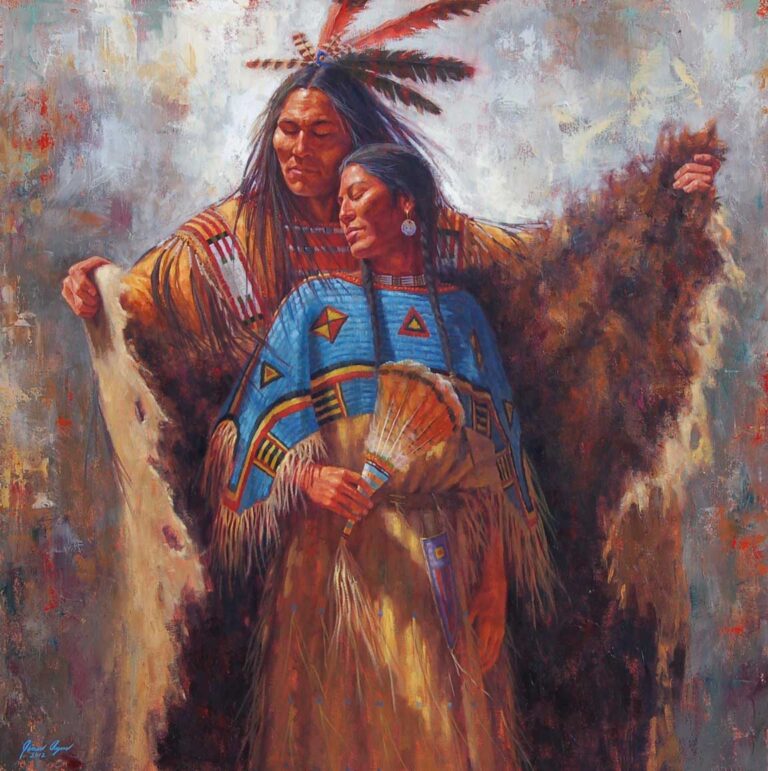
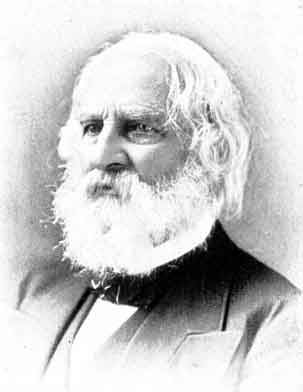

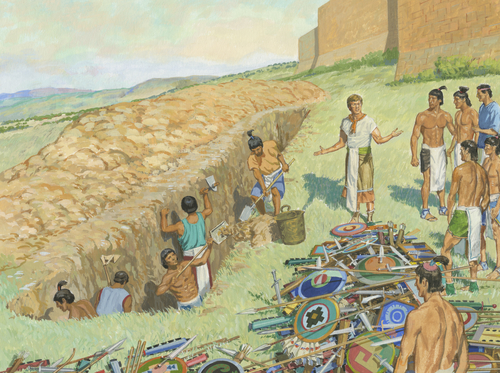
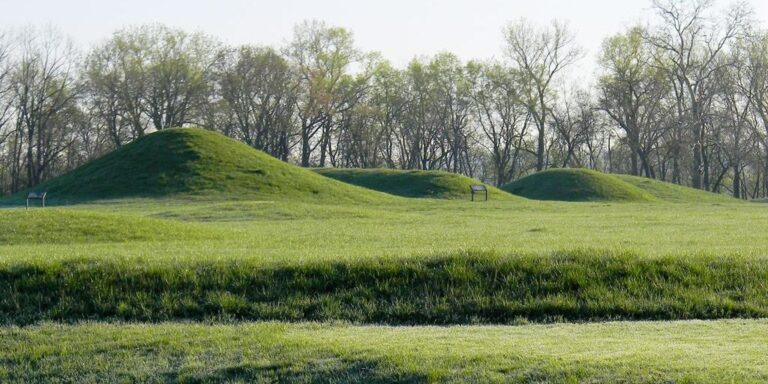


 “The painting (Left) book [Page 129 in Annotated book of Mormon], by Kendra Burton titled, “Christ Visits the Nephites in America’s Heartland”, shows Christ descending in a shaft of light to visit multitudes of Nephites who are streaming up a ramped earthen platform mound reminiscent of other earthen monuments made by the civilization now known as the Hopewell Mound Builders. The background is a vast plain with interspersed massive grass-covered mounds, wooden homes with thatched roofs and hardwood forests, while the foreground shows a large wooden temple atop a monumental ramped earth structure. The scene is one that is true to the Book of Mormon record, without stone pyramids or thick jungle vegetation since nowhere in the text is there any mention of stone buildings, palm trees, monkeys or a tropical climate.” Rodney Meldrum
  (Picture Right) Hopewell timber house at Angel Mounds State Historic Site, located on the Ohio River in Vanderburgh and Warrick counties in the southwestern corner of the U.S. state of Indiana.
 30. Both civilizations were agricultural and “tilled the ground” (Mosiah 23:5, 31; 10:4, 21; Alma 62:29)
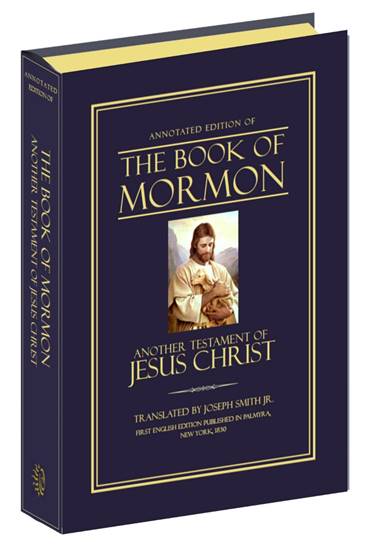 50 Correlations with the Book of Mormon Page 539 Annotated Book of Mormon by David Hocking and Rod Meldrum.


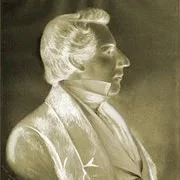
 “Such questions have been asked as “How much did the prophet Joseph Smith actually know about Book of Mormon geography?” and “How much of what he knew did he feel at liberty to reveal to his followers?” Joseph Smith was first shown the plates of the Book of Mormon on September 22, 1823, but it was not until the fourth anniversary of that date, i.e., in 1827, that they actually came into his possession. What was he doing during those four years, and why that long wait before he could get on with his important assignment of translating them into English? A recent study documents no fewer than 22 visitations of the angel Moroni to Joseph, as well as appearances of Nephi, Alma, Mormon, and other Book of Mormon notables [Robert J. Woodford, “Book of Mormon Personalities Known by Joseph Smith” The Ensign, Vol. 8, No. 8, August 1978, pp. 12-15; also “The Story of the Doctrine and Covenants,” i.b.i.d., Vol. 14, No. 12, December 1984, pp. 32-39].
 ‘During our evening conversations, Joseph would occasionally give us some of the most amusing recitals that could be imagined. He would describe the ancient inhabitants of this continent, their dress, mode of traveling, and the animals upon which they rode; their cities, their buildings, with every particular; their mode of warfare; and also their religious worship. This he would do with as much ease, seemingly, as if he had spent his whole life among them.’ (Smith, pp. 82-83) . . . In any case, the Prophet seems to have known a good deal about ancient Nephite civilization. Why, then did he not tell his followers more about such matters as Book of Mormon geography? Because they were not yet ready for it, and because that was not what the Church was to become involved in at that stage of development. It would seem, however, that he at least left a few clues behind, perhaps to stimulate us of the present generation to further inquiry. (Incidentally, I am not one to accept everything Joseph Smith ever said or wrote as automatically binding; he was a human being like the rest of us. But I do believe he had special insights, and whatever he may have had to say–even on a subject like Book of Mormon geography–is worthy of careful consideration.)” Ross T. Christensen at the Thirty-third Annual Symposium on the Archaeology of the Scriptures, held at BYU on September 28 and 29, 1984.


 As for myself, I was swallowed up in the depths of my afflictions; and, though my soul was filled with horror past imagination, yet I was dumb, until I arose again to contemplate the spectacle before me. Oh! at that moment how my mind flew through every scene of sorrow and distress which we had passed together, in which they had shown the innocence and sympathy which filled their guileless hearts!
 “Who can say aught against Joseph Smith? I do not think that a man lives on the earth that knew him any better than I did, and I am bold to say that, Jesus Christ excepted, no better man ever lived or does live upon this earth. I feel like shouting Hallelujah all the time, when I think that I ever knew Joseph Smith, the Prophet.” Millennial Star, XXI (July 11, 1863)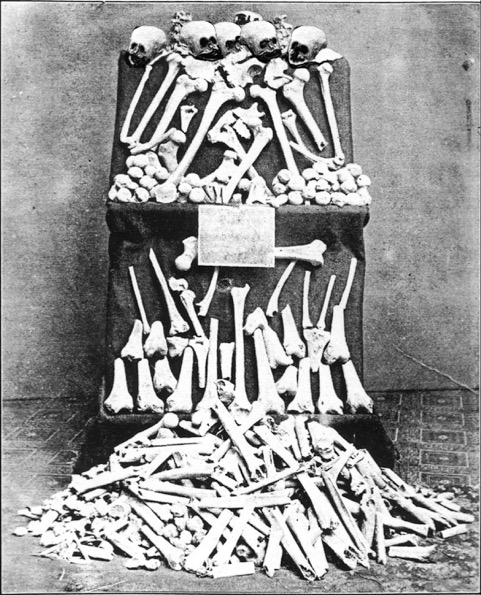
 The purpose of this blog is to share with you significant archaeological evidence for the ancient Hopewell and Adena Culture nearby the Hill Cumorah. There is evidence of fortifications, pottery, copper, weapons, palisades, forts, mass burials, mounds, tools and other artifacts all around this area. I believe the Hopewell culture matches up with the Nephite culture extraordinarily well. The Hopewell originated in 600 BC at the panhandle of Florida from Crystal River to Pensacola, Florida. History documents this. The Hopewell then traveled north into Georgia and Tennessee. There is evidence of a huge society of the Hopewell from Missouri to Illinois to Indiana and then to Ohio which was the dominant historical area of this people. History shows the end of the Hopewell civilization around the year 400 AD. Historians say the Hopewell just disappeared and historians have no idea what happened. I feel I have a good idea. The final battle at Cumorah was 385 AD. This is some of the best evidence of a possible link to the Hopewell and the Nephites.
 My friend who is a very loving Christian and Preacher named Richard D. Moats is an Avocational Archaeologist, who has lived in Ohio his entire life and jokes with me and says, “I know the people of Ohio as Hebrews and you know them as Nephites. We have found the same people.” Doesn’t it really make sense that there has to be traces of Hebrew where Lehi and Nephi lived? Search for yourself. Many signs show Hebrew influence in North America and especially in Ohio. It’s sad that many professionals say all the artifacts are a hoax. They have to say that for over 20 various items that have been discovered. See my blog


 32 Village site on Darwin McClure’s farm, lot 20, Hopewell, 3 miles southeast of Canandaigua, one-half of a mile north of the turnpike. A recent cemetery is not far away, and modern relics have been found. The site is probably that of one of the Onaghee villages.
 51 A trail from the southeast came to the center of the old Brother farm on which there was a village. It followed the highway north- westerly.


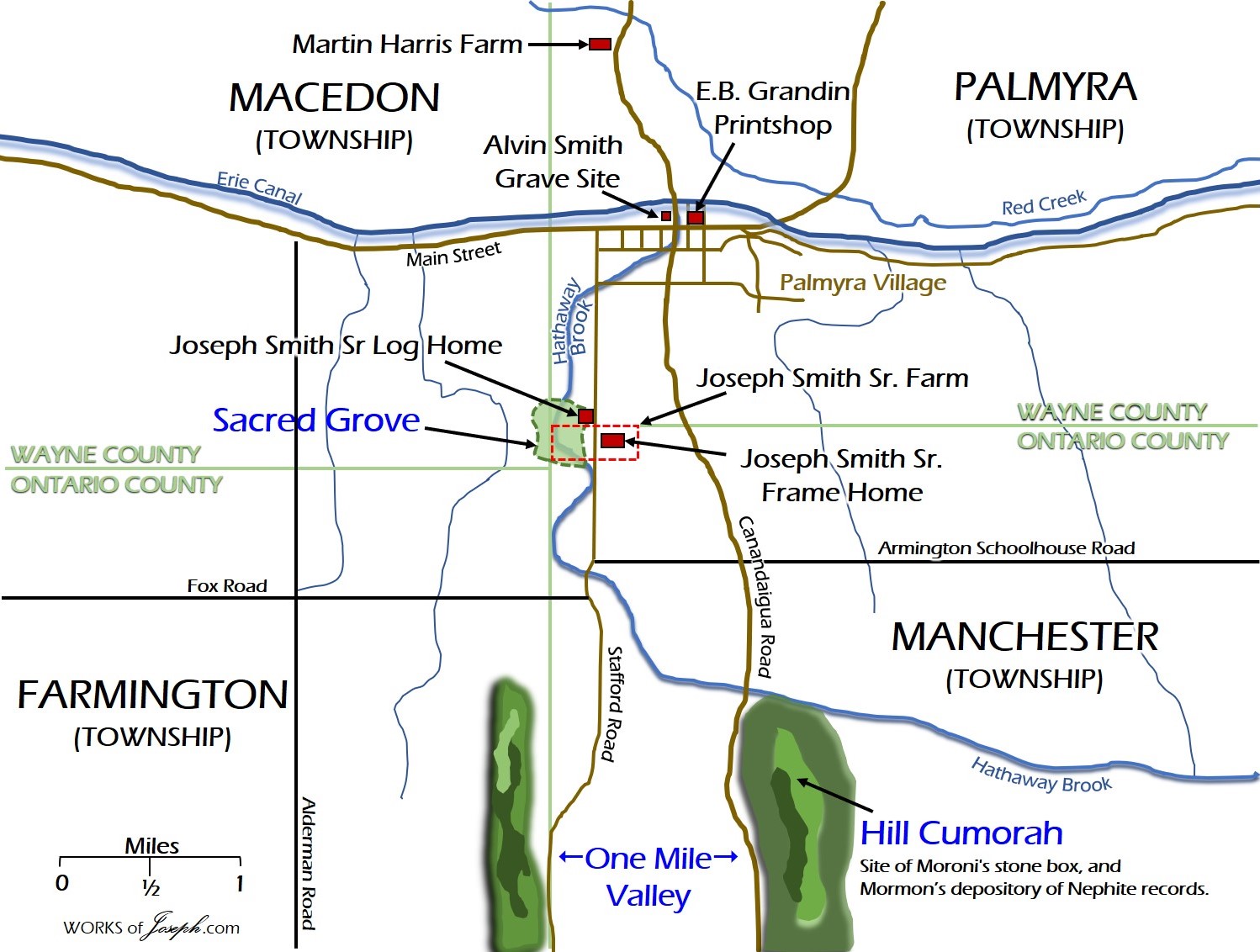


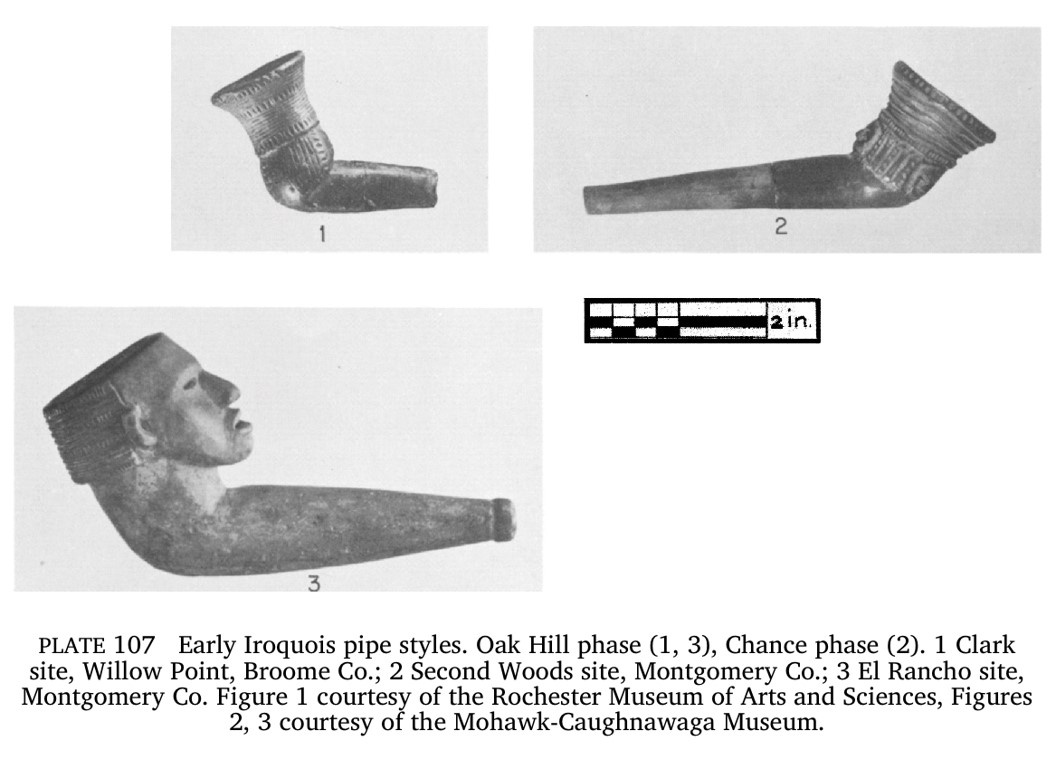


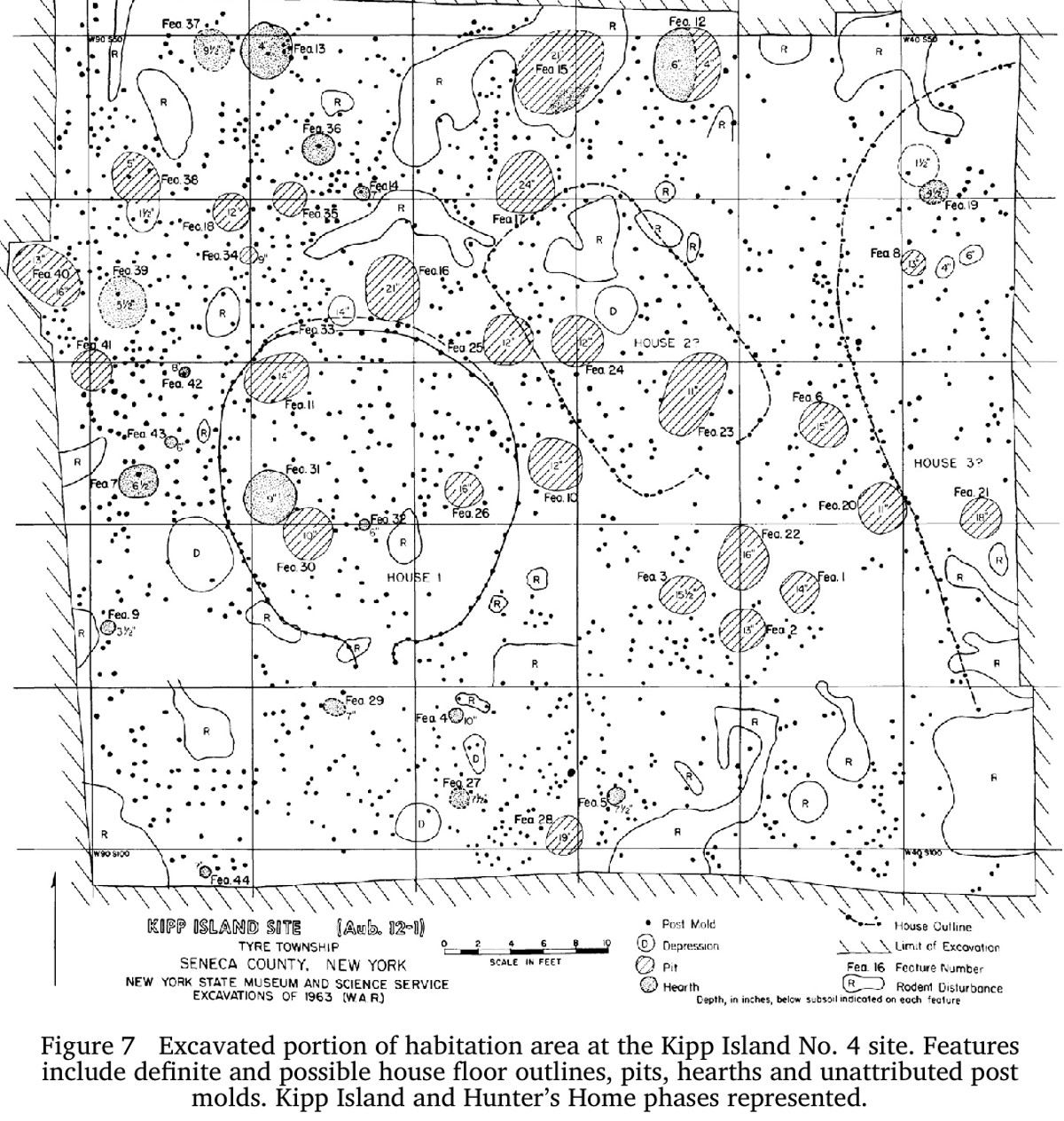
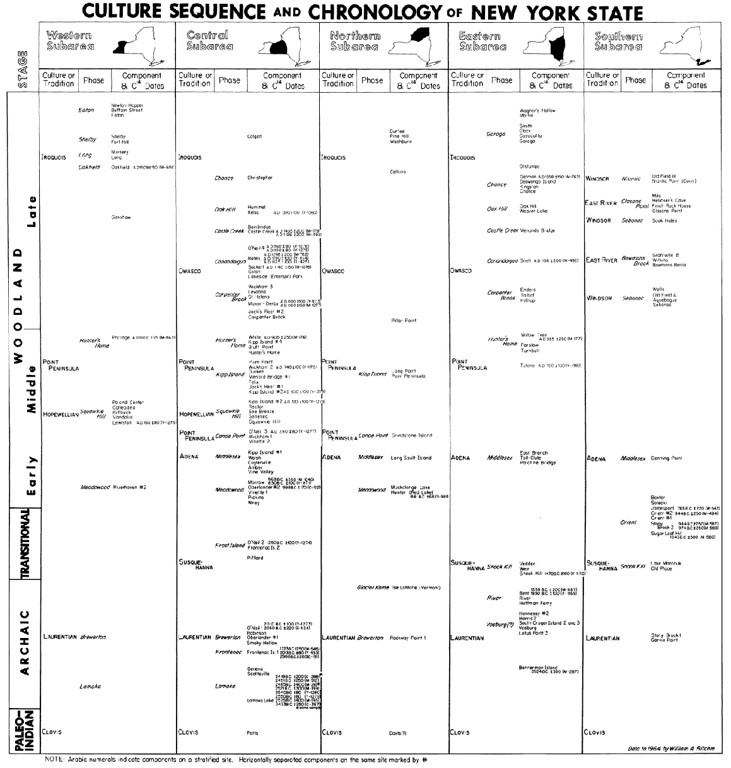


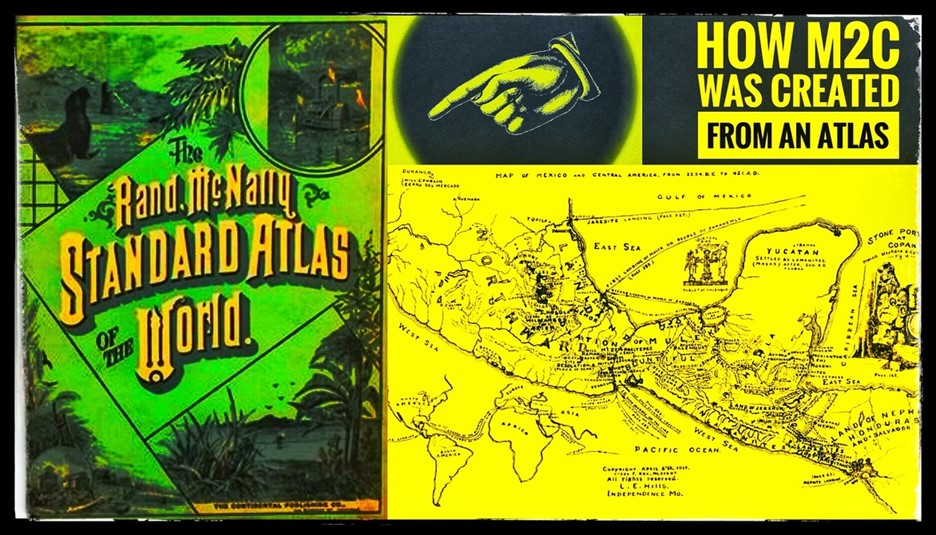


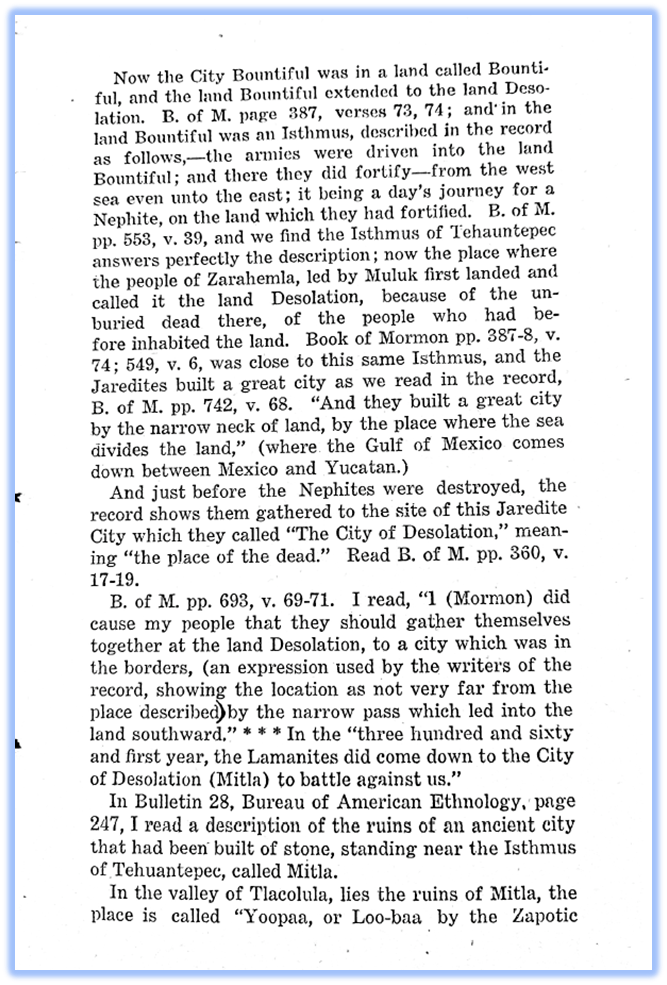

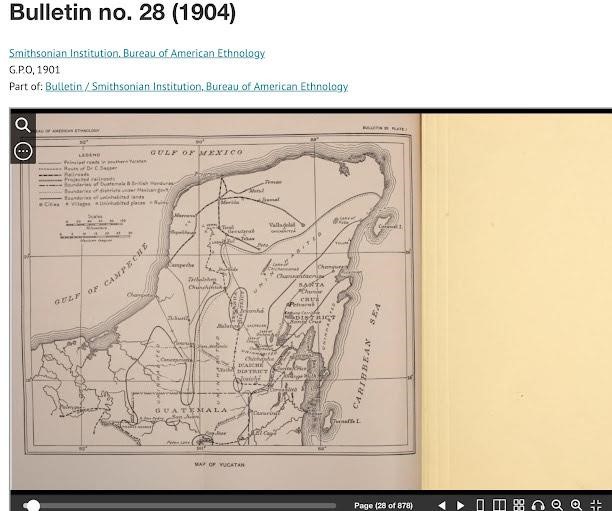
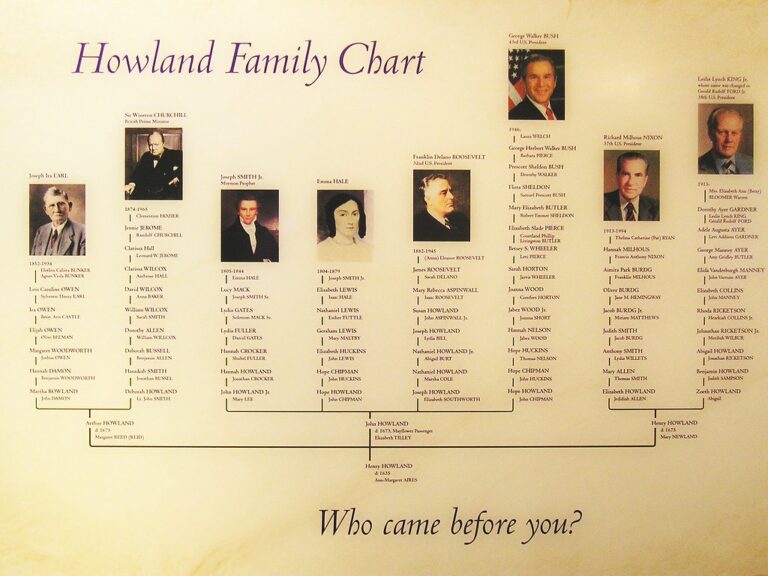


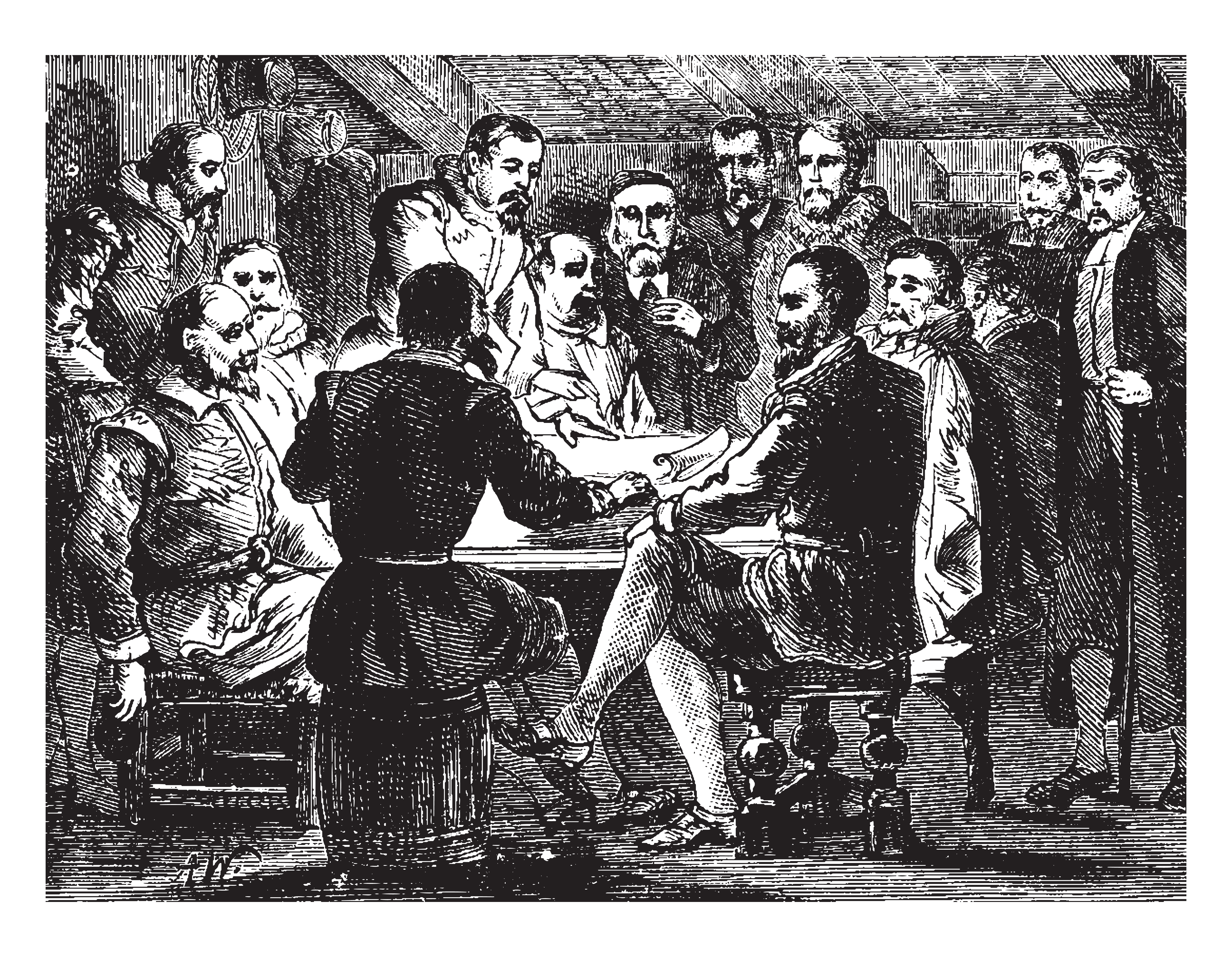



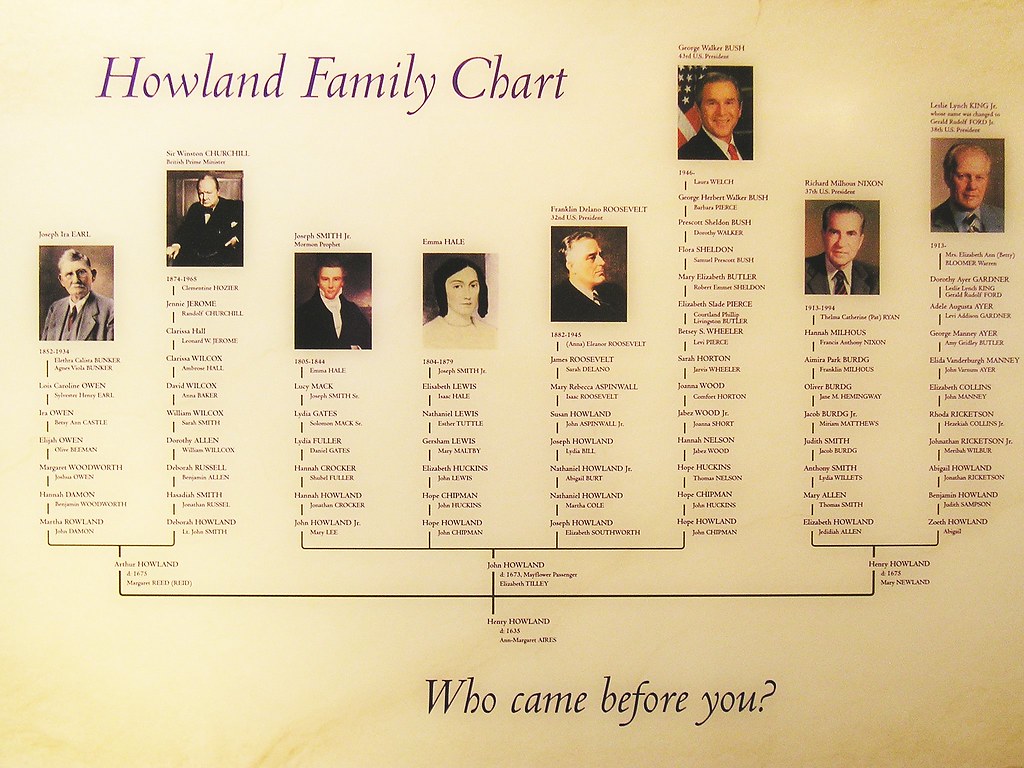


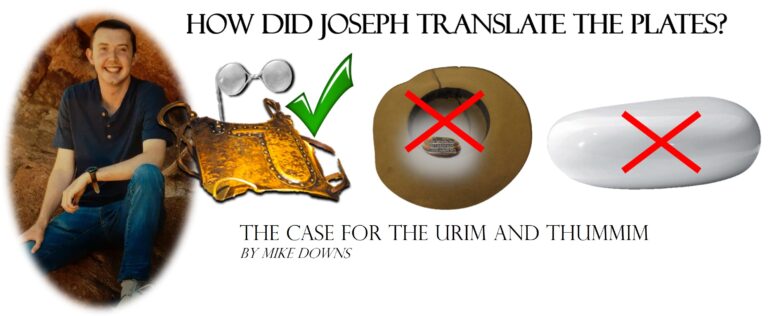
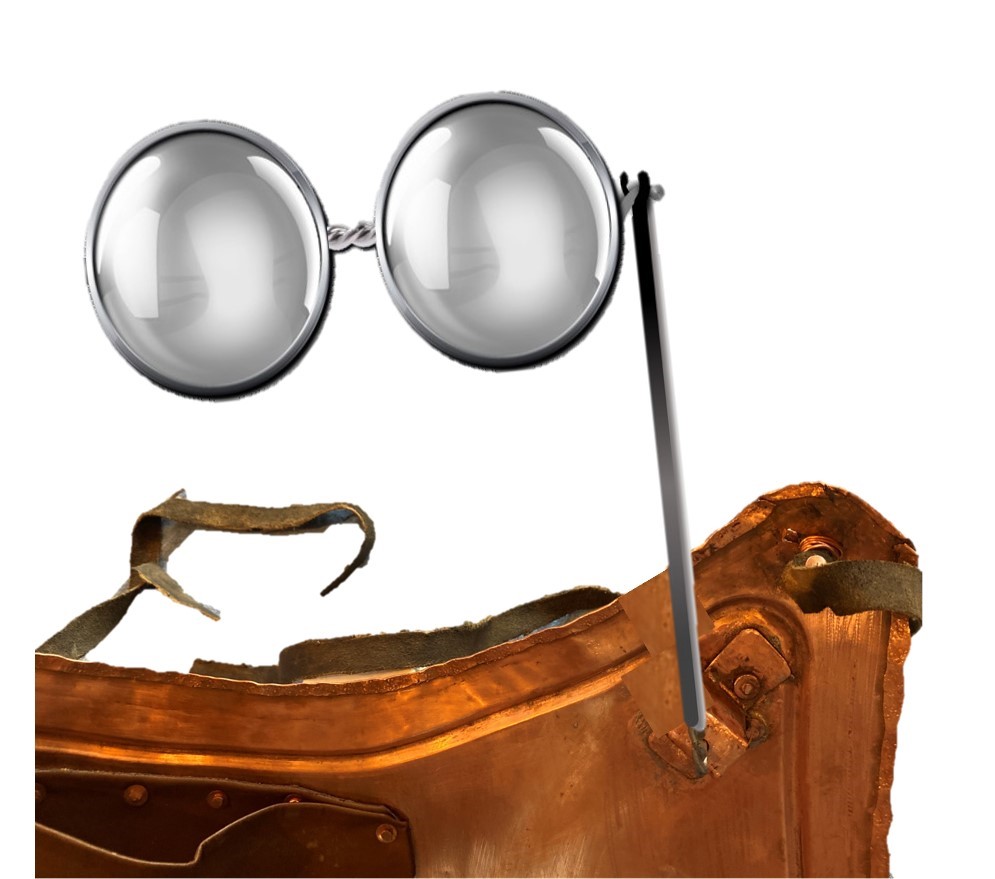
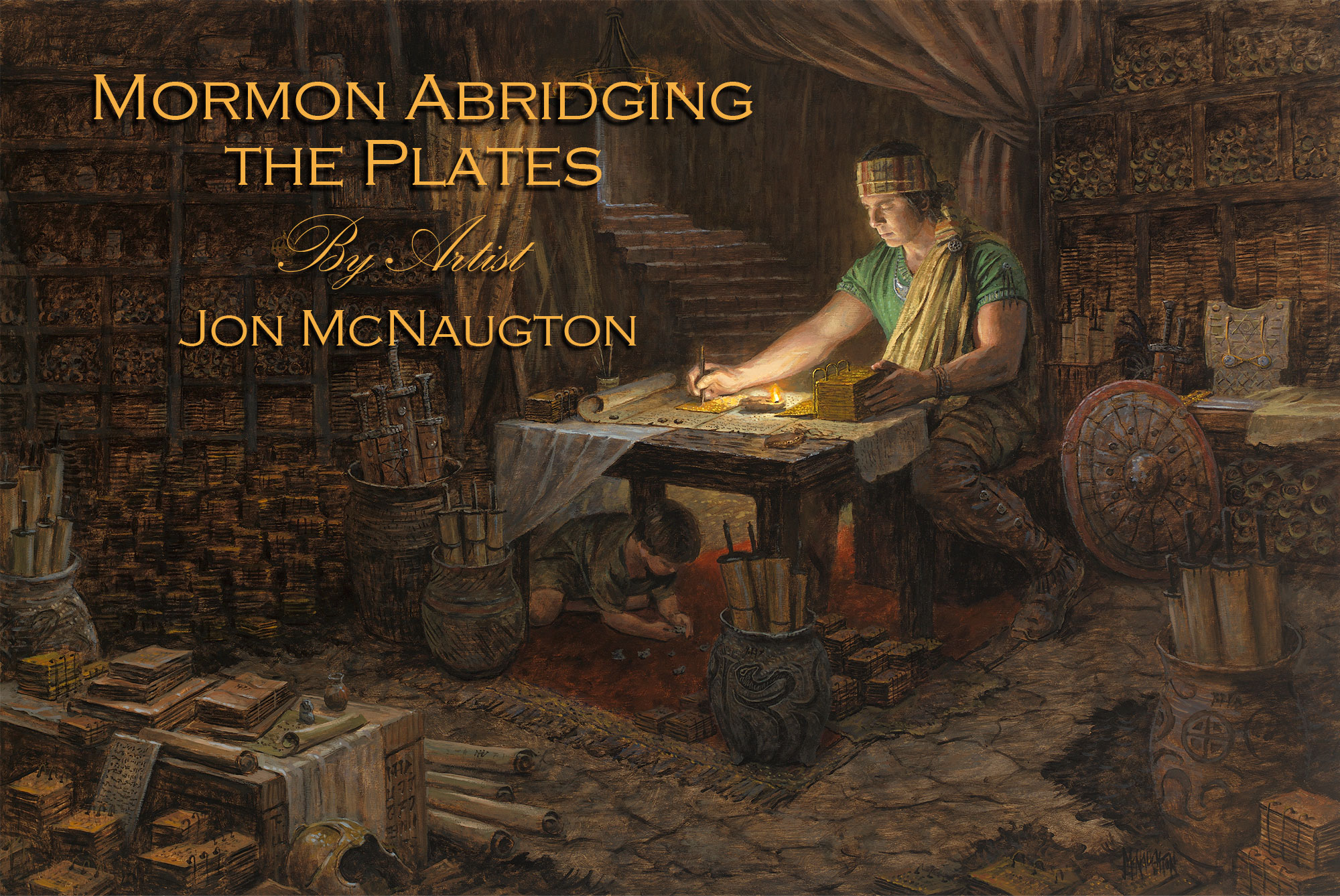
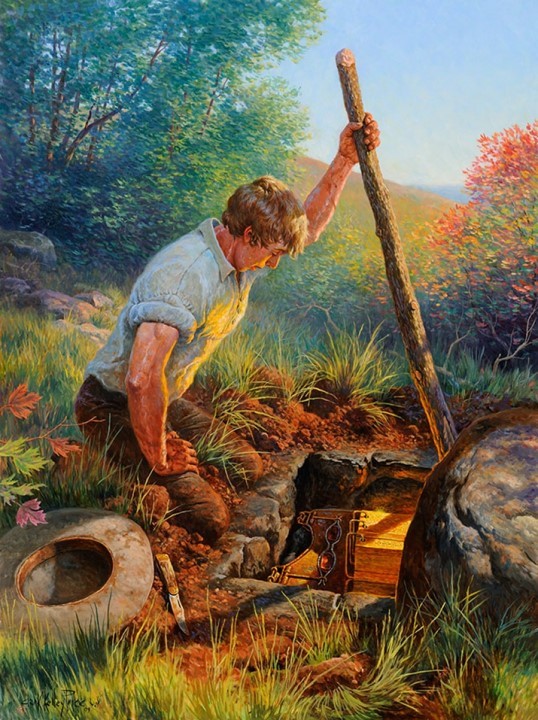
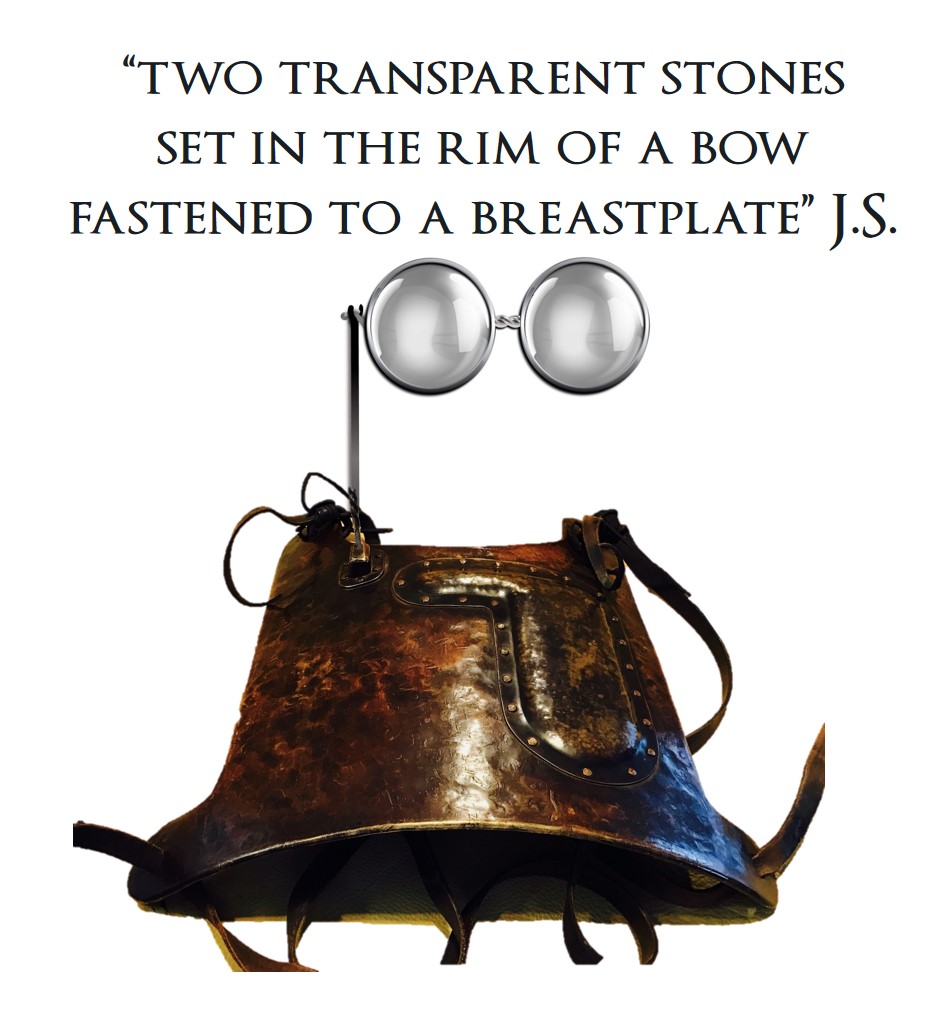
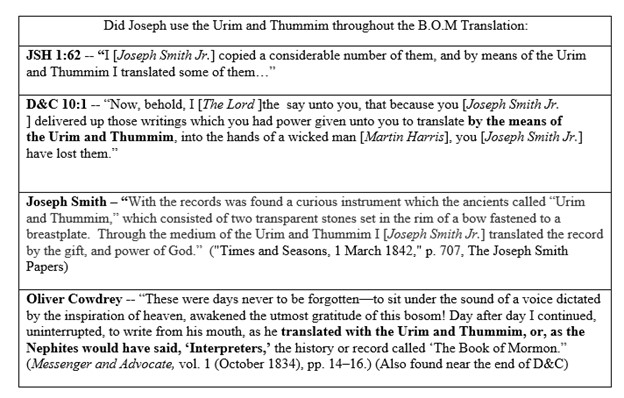

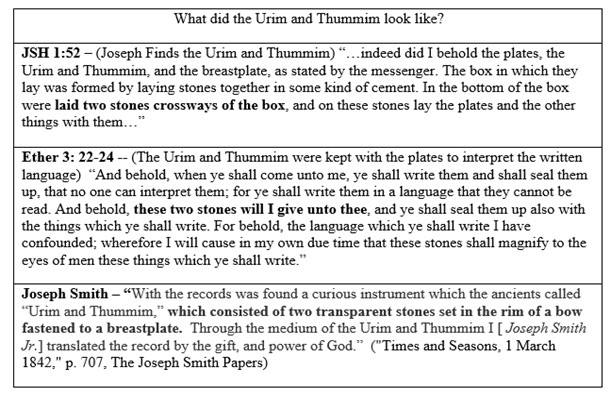
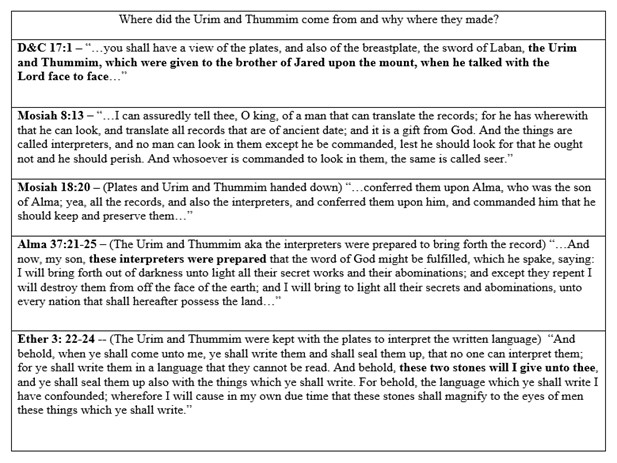
 Tables Explanation
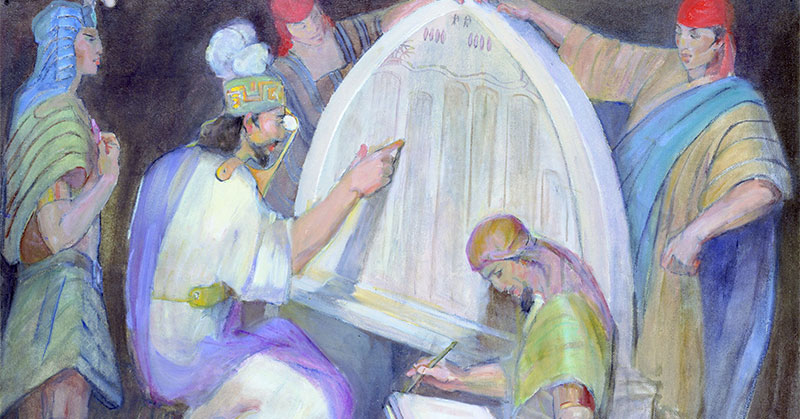
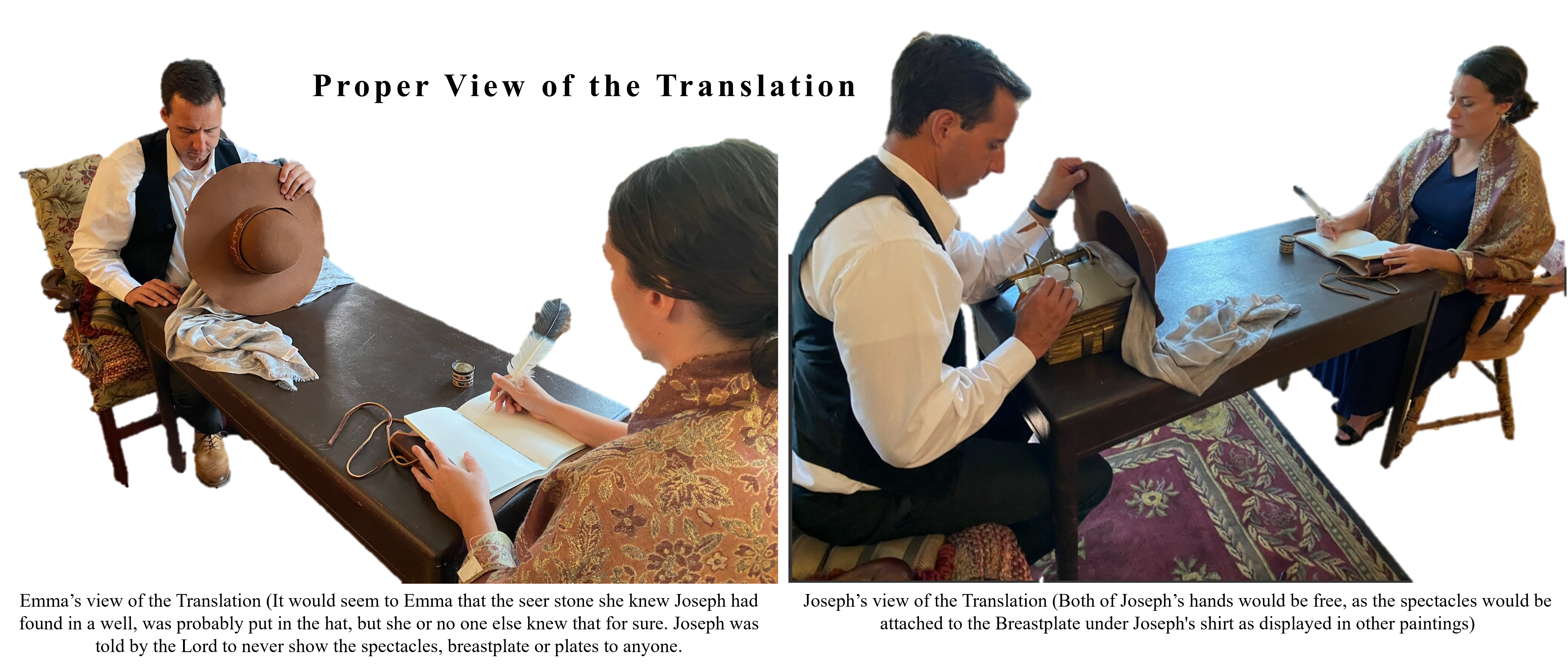

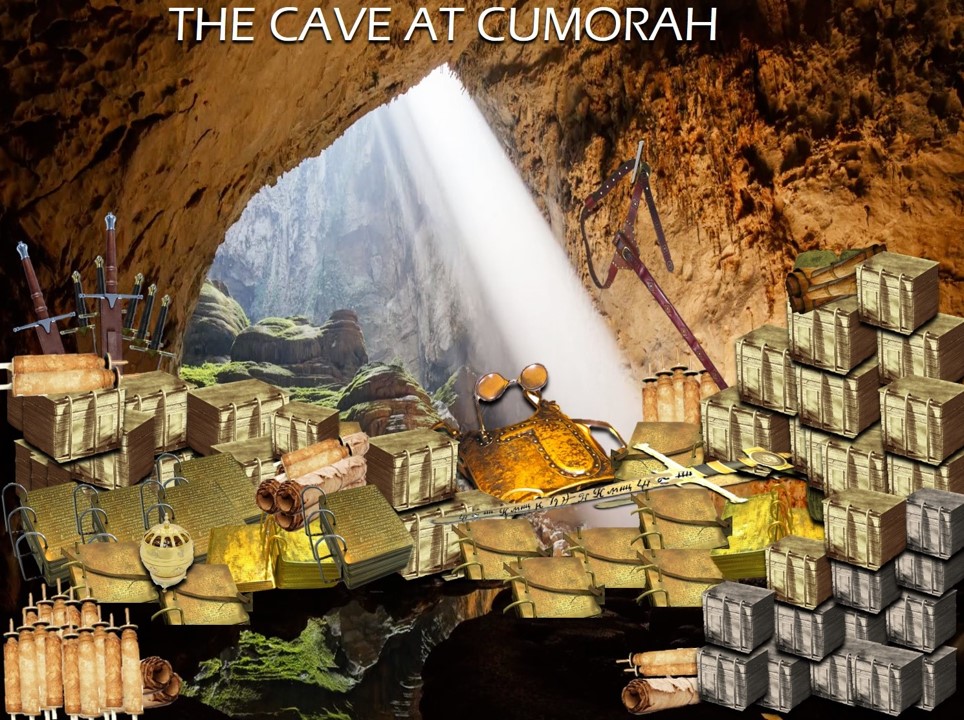
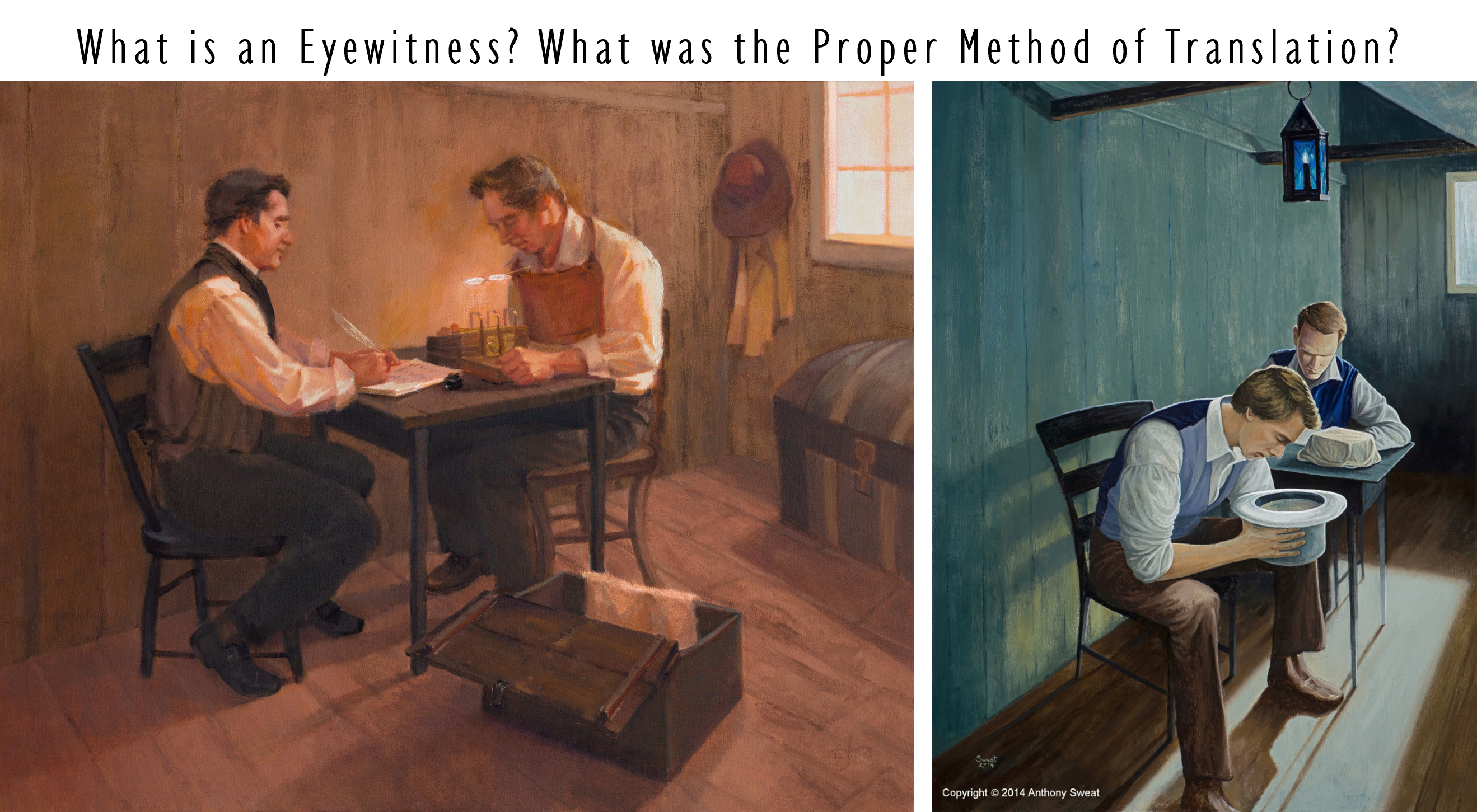
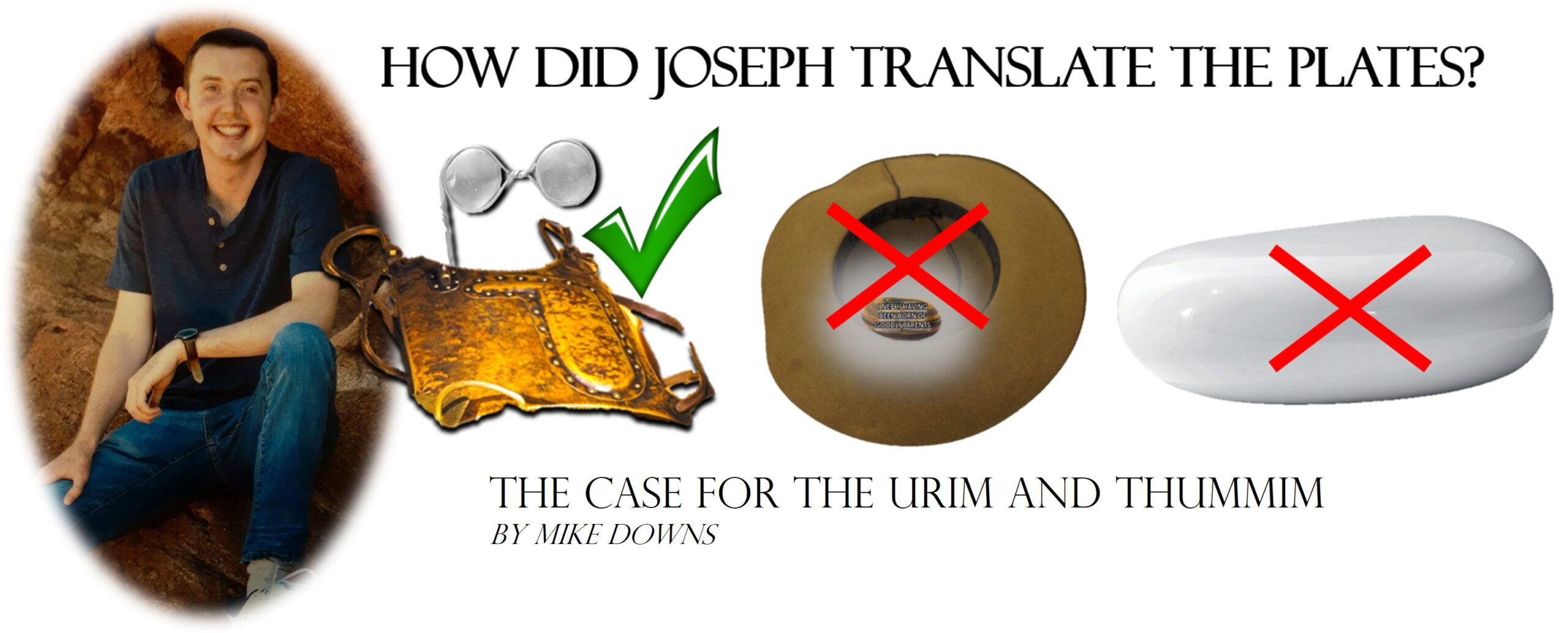
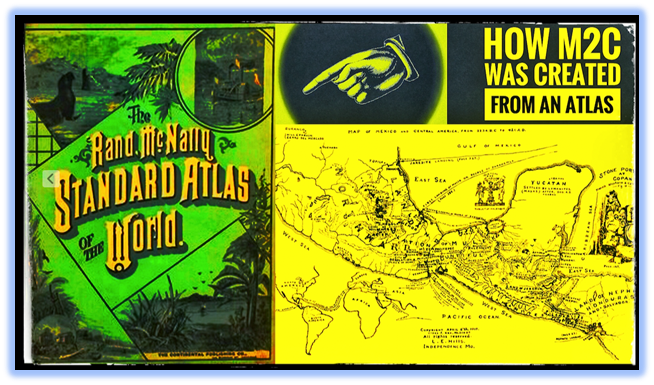


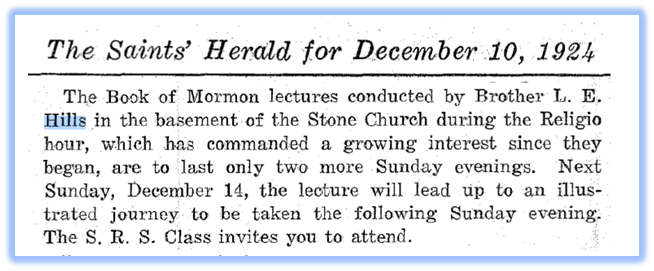









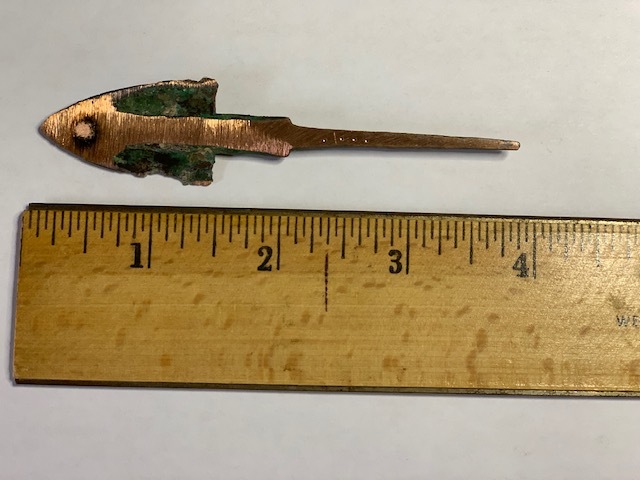
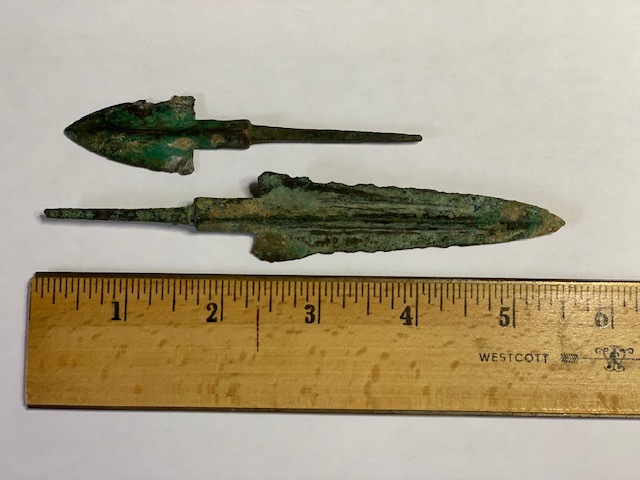
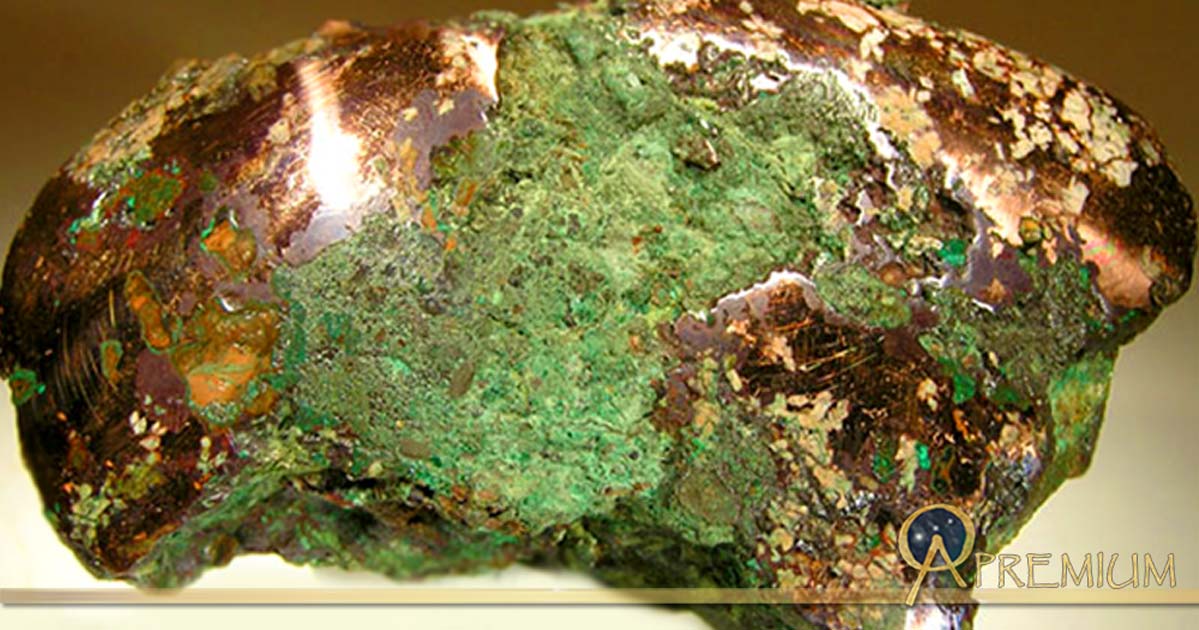

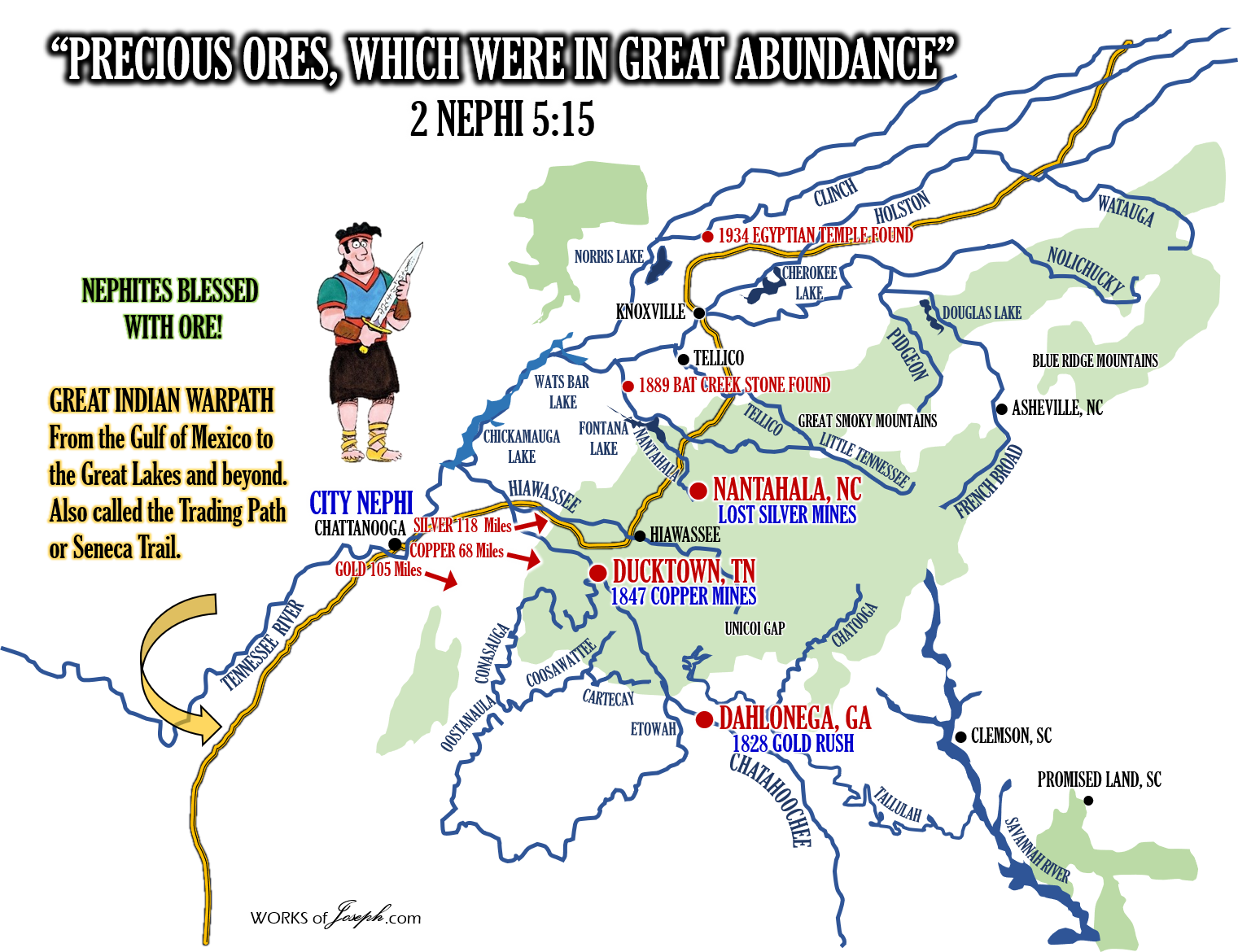 In 1799, gold was discovered in Cabarrus County, North Carolina, when Conrad Reed found a 17-pound “glittering stone” in Little Meadow Creek. In 1828 Dahlonega, GA was the site of the first major gold rush in the United States. Ducktown TN was the center of a major copper-mining district from 1847 until 1987. The district also produced iron, sulfur and zinc as by products.


 THE MINERS OF MICHIGAN COPPER 2450 B.C. -1200 B.C. ETHER 10:23


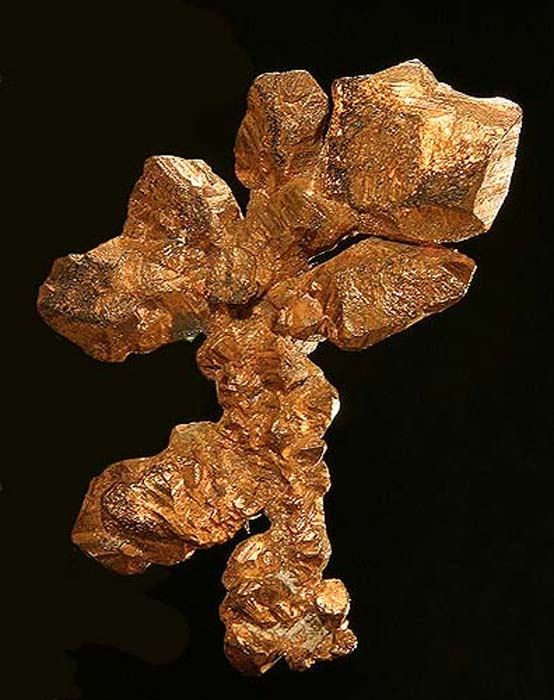
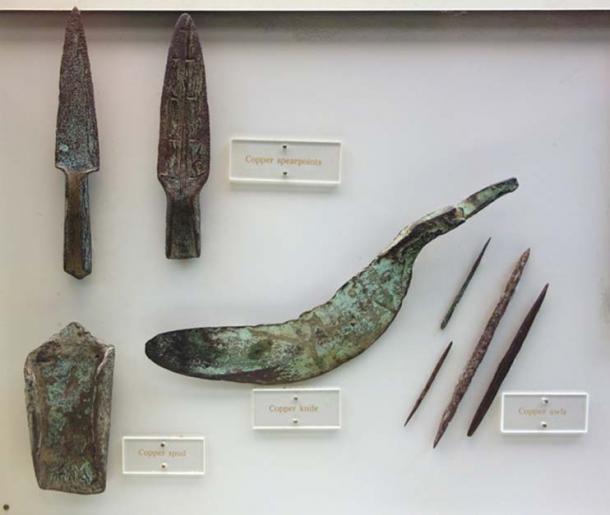
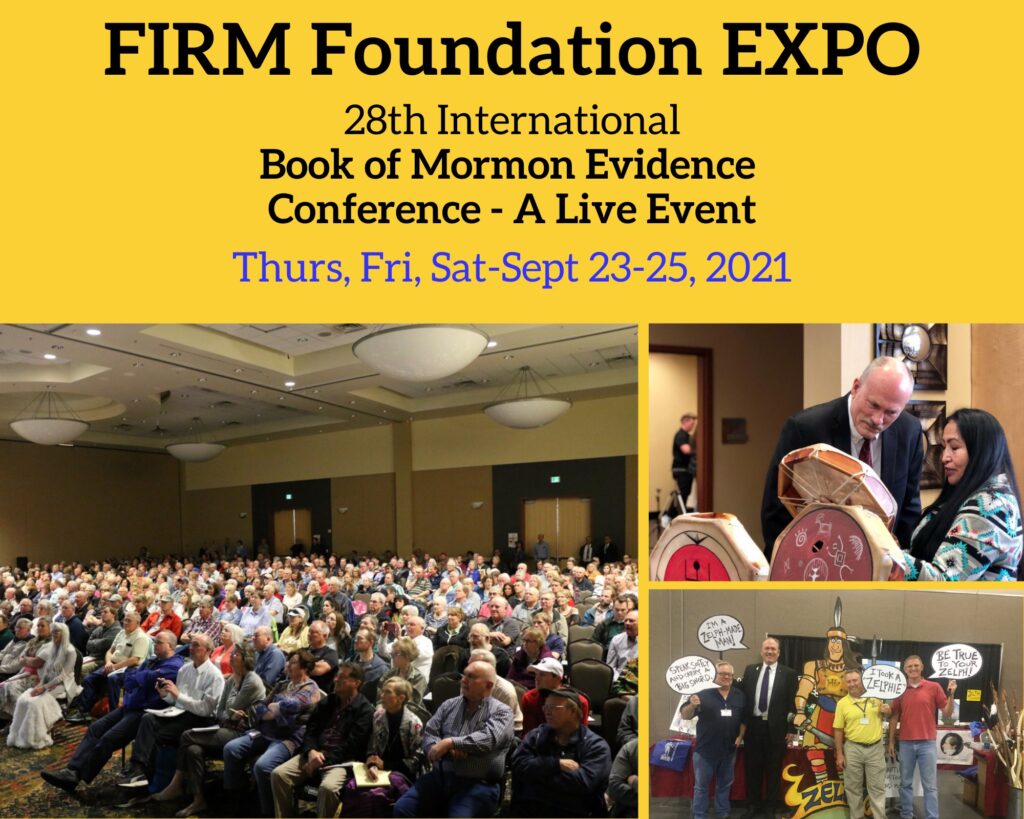

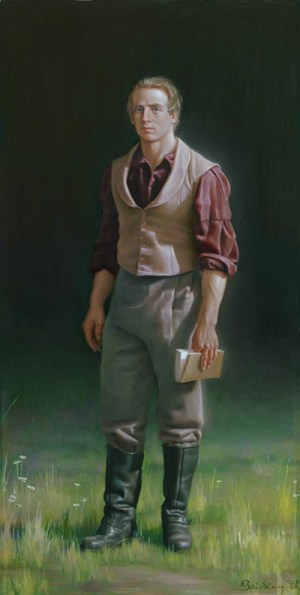
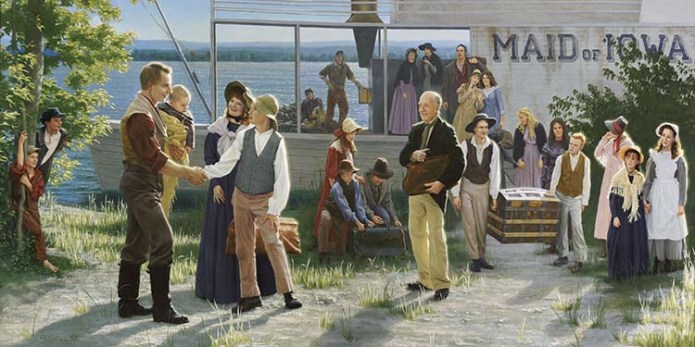
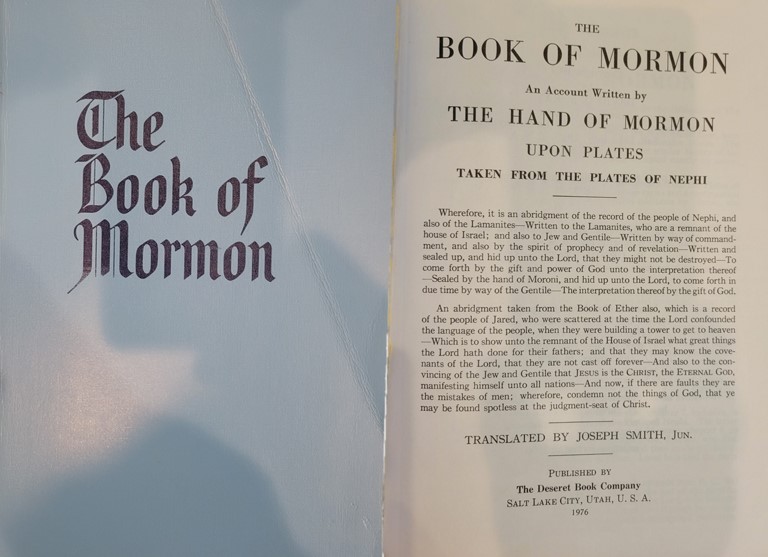

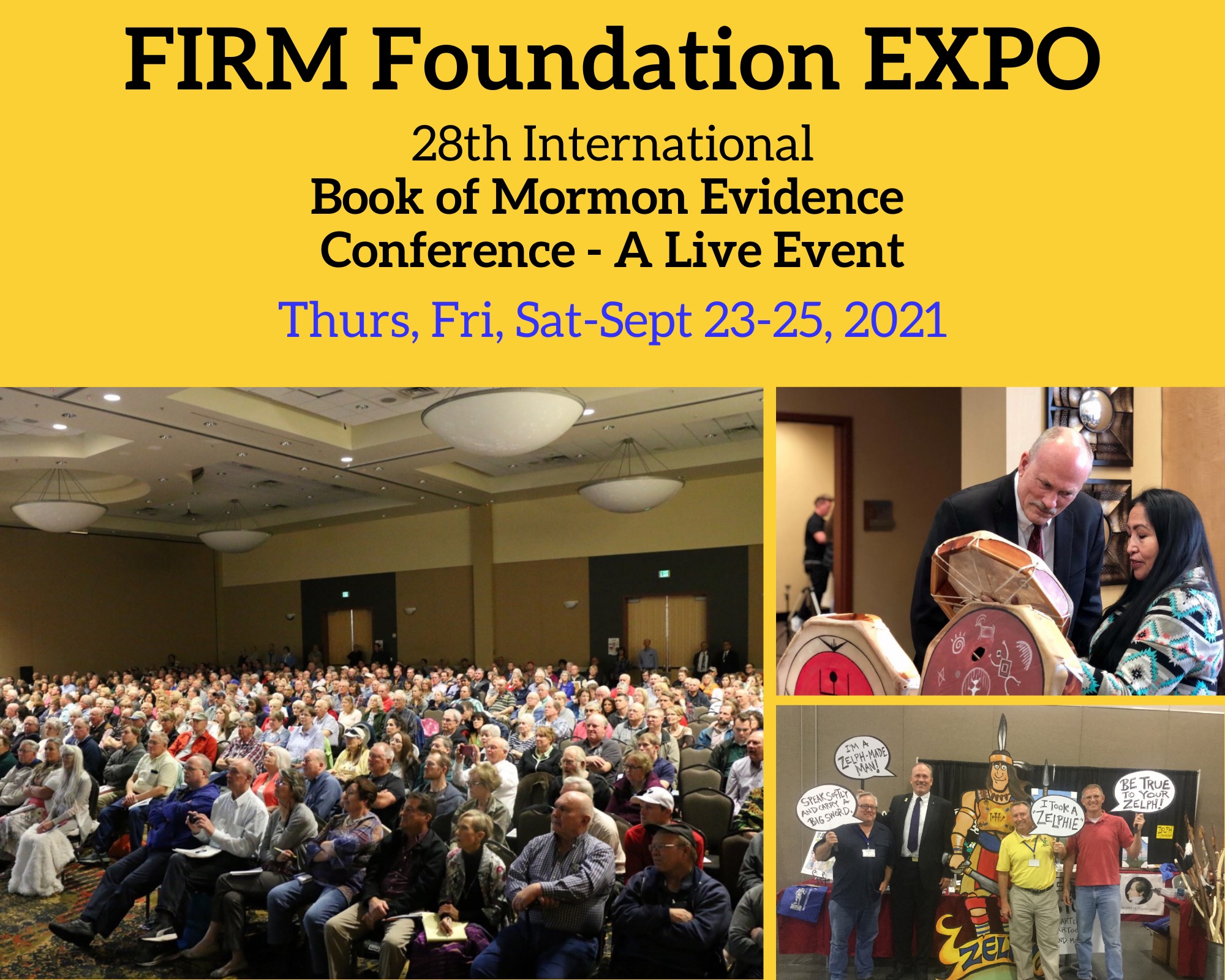


:max_bytes(150000):strip_icc():format(webp)/guateconvent-56c339225f9b5829f86b44f5-6f5a78a81a2f41139425607ea5342faf.jpeg)