Home Blog Page 55

Carbon-14 Dating in Montrose, IA

0

Greetings From John Lefgren PhD and Wayne May of Ancient American Magazine: Heartland Research Group

I propose the following as a protocol for sampling charcoal from fire pits next week Dec 8-10, 2020 in Montrose, Iowa.

1. Our scanning in November clearly confirms that there were ancient populations that lived in Montrose before the arrival of the Europeans. The fire pits are very dense suggesting that there were tens of thousands of people living on those lands. We scanned 220 acres and the ancient living area around Montrose was march larger than 1,000 acres. I think that with our existing data we can easily confirm that many more people lived in the area in ancient times as compared to modern times. This fact is significant.
2. The question before us is clearly a matter of discovering the dates for fire pits. We need to place them on the timeline of history. We will do this through the science of Carbon-14 dating.
3. I propose that next week we concentrate on three areas: (a) The cluster of fire pits that are located near the Montrose City Cemetery; (b) The cluster of fire pits that are on the north side of the same lot; (c) Two or three firepits that are located on Wayne May’s Zarahemla Temple Lot.
(4) We would get 4 or 5 charcoal samples from (a), (b), and (c).
(5) After preparing the samples, we would send them to Vilnius Radiocarbon for testing.

 VilniusRadiocarbon-dating-laboratory-4
Vilnius Radiocarbon is part of the largest research organization in Lithuania – Center for Physical Sciences and Technology (FTMC). The organization has made over 15,000 Carbon-14 tests for hundreds of companies from around the world. Their laboratory results have been used for reports that are printed in the best scientific journals.Today the organization agreed to open its laboratory to the Heartland Research Group to determine the timeline from the radiocarbon evidence found from charcoal of ancient fires in the ground of Montrose, Iowa.radiocarbon-c14-laboratory
This is a picture of the Radiocarbon Dating Laboratory at the Center for Physical Sciences and Technology in Vilnius, Lithuania. This facility provides radiocarbon C14 dating of samples with most accurate method using Accelerated mass spectrometer manufactured by National Electrostatics Corporation (USA). The laboratory will scientifically determine from our archaeological samples specific dates that are accurate to 30 years.
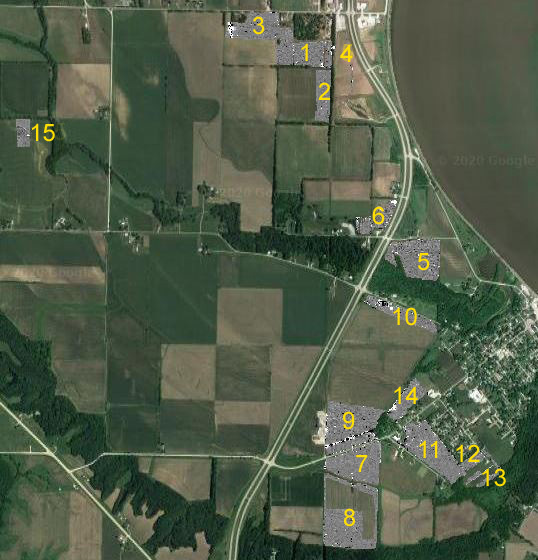
Field Numbers
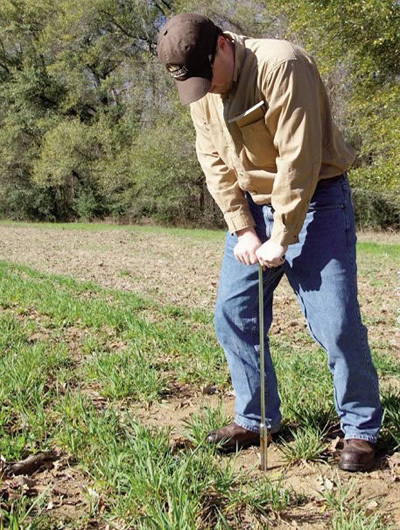
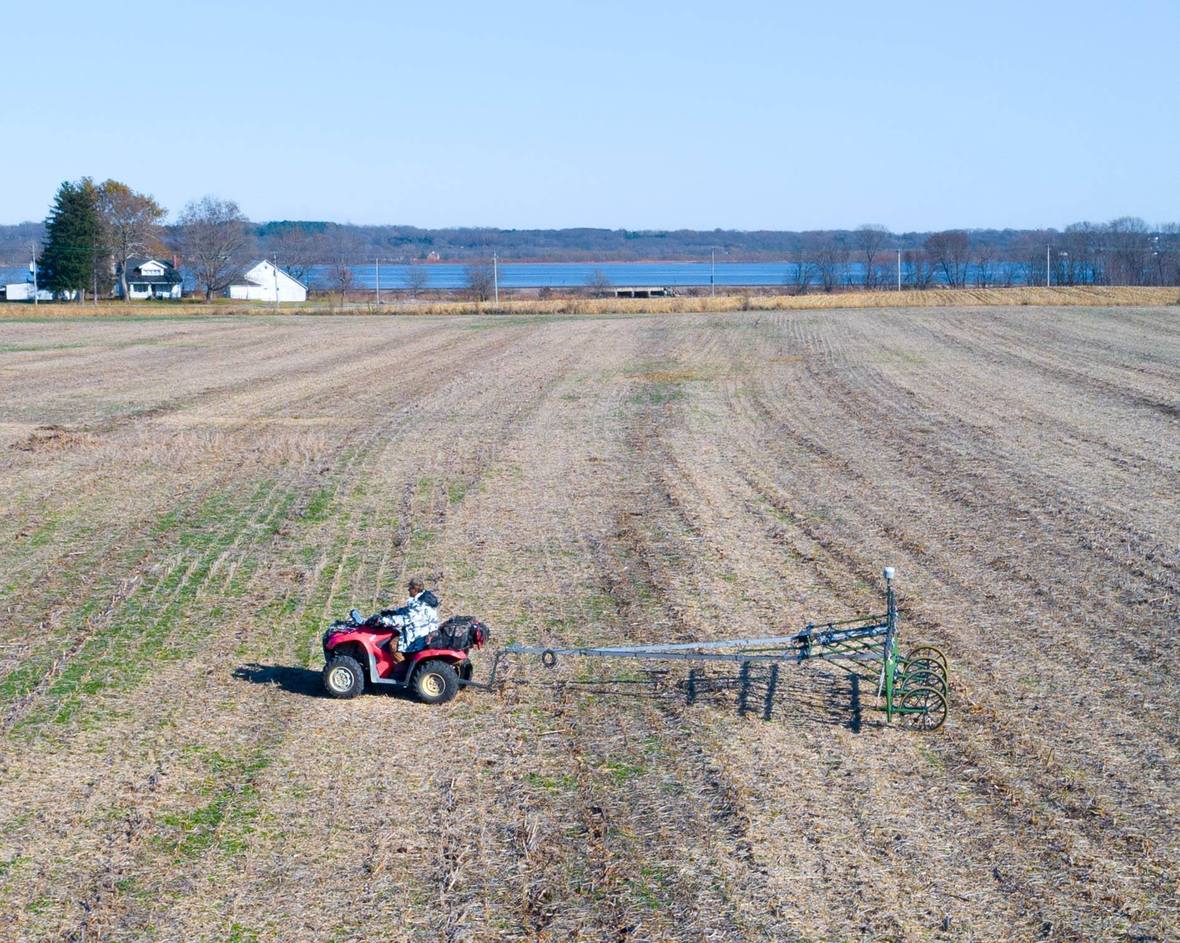
Scanned Sites in Montrose Area – More than 220 Acres. We have used the SENSYS MV X3 equipment to scan more than 220 acres in Montrose, Iowa. The subtle magnetic anomalies measured in nano-Teslas came passively out of the ground and logged on to digital maps that are available for our viewing and analysis. We made these scans only two weeks ago. The scans are now some of the most extensive landscapes with digital accuracy in North America.We now have thousands of specific points where we can collect black charcoal from ancient fires. Carbon-14 testing of the small amounts of charcoal from these ancient fire pits in Montrose will be crucial for funding the phase of our research. Our sponsors want to know more about the dates and time frame of what we see on the digital maps. Next week we will take core samples that are from three to five feet underground. We have located the places of the ancient fires on grids within GPS coordinates that are accurate to +/-0.25″.Chatfield 1a
Next week, before seasonal temperatures fall to freezing, we will be in Montrose to take core samples from fire pits found on the digital maps created from the SENSYS data.We have made arrangements with one of the landowners to go on to his property. We will start on a site that is about the size of a football field. We can identify more than a hundred black spots that represent locations for ancient fires. The dating of these fires is significant for the next stage of our research.

Zarahemla Site
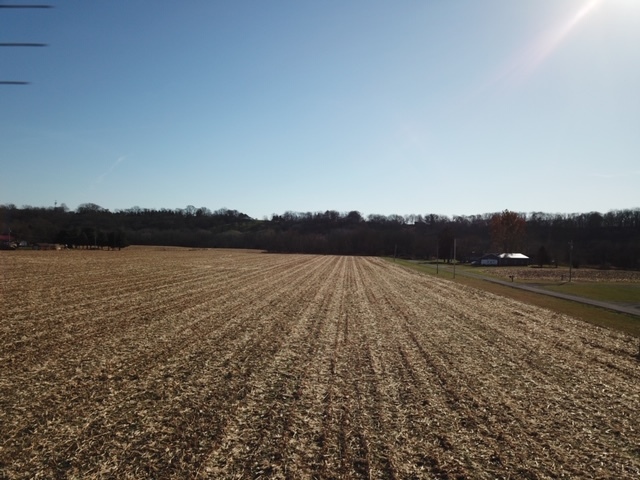
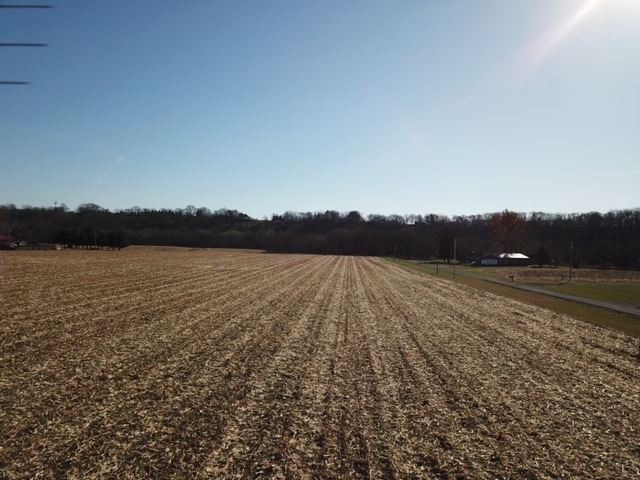
The above picture is from the surface of land that we scanned on November 18th, 2020, from a cornfield within the city limits of the City of Montrose, Iowa. This field has been under cultivation for more than 150 years. European settlers have not made any major disturbances on this land.Our magnetic scans showed fire pits and lightning strikes from ancient times. Almost 200 years of farming provided the necessary revenue to protect farmland from development. The cultivation of corn for six generations gave a protective cover for the evidence in the ground. Because of corn, we got the magnetic scans that made it possible to create digital maps that show traces of habitation for an ancient city. 
©2020 Zarahemla | 2681 Milan Street Easton, PA 18045 US
Donate Here

The Heartland Research Group includes an amazing team. Led by John Lefgren, Phd, Wayne May, Astronomer, Author, Publisher, Kevin Price PhD, Richard Moats, Archaeoastronomer, and Calvin Hamilton, Scientist, along with staff, Scott Willis, Jeff Green, Mike and Betty LaFontaine, Ryan Sorensen, and Mike Baker

Below you will find a wonderful video with Richard Moats speaking about the many earthworks in Ohio. He is the leading Archaeologist with the reading and deciphering of the scans done in Iowa by the Heartland Research Group. Below is his bio:

Richard D. Moats, Avocational Archaeologist, Archaeoastronomer

Richard D. Moats is a twenty-four-year veteran of the United States Air Force. In his career he received the Joint Service Commendation Medal, Two Meritorious Service Medals, and the Defense Meritorious Medal. His skill sets include aircraft accident, criminal, and forensic investigations, remote sensing imagery analysis, and instructor. With these skills, as applied to Native American Archaeology, Rich has investigated many Native American sites in Ohio. He has discovered a site unknown to Archaeology and another site which added significant understanding into the Archaeoastronomy and Religion of a people living 2000 years ago. He has authored many archaeology papers and articles published in the Ohio Archaeologist and Ancient American magazines. He is a member of the Midwestern Epigraphic Society, and the Archaeology Society of Ohio where he was the 2015 Converse Award winner for outstanding contributions to Ohio Archaeology. Rev. Richard D. Moats is an Ordained Evangelist in the Church of Jesus Christ International.

Understanding Hopewell & Adena Earthworks in Ohio

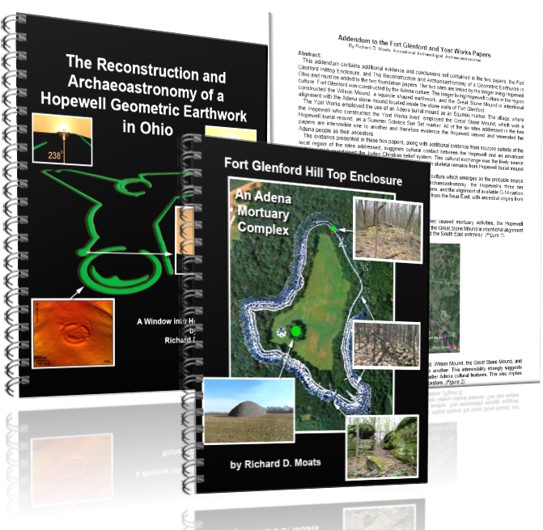
2- Full Reports Yost Works 18-Page Report The Reconstruction & Archeoastronomy of a Hopewell Geometric Earthwork in Ohio -A Window into Hopewell Religion Fort Glenford 17-Page Report Fort Glenford Hill Top Enclosure -An Adena Mortuary Complex Author:Rev. Richard D. Moats Over 35 Pages of Archaeology in words and color photographs.    

Ancient American Magazine by Wayne May – 1 Year Subscription (4 issues) $32.95

The Ancient American Magazine Lot #1-104 | ancient america
You can also print Back Issues Here

The purpose of Ancient American magazine is to describe the prehistory of the American Continent, regardless of presently fashionable beliefs— to provide a public forum for certified experts and nonprofessionals alike to freely express their views without fear nor favor.  Now in its 13th year, the magazines readership continues to expand and readers worldwide anticipate it’s arrival every quarter.  It is filled with information on all ancient cultures of the Americas.

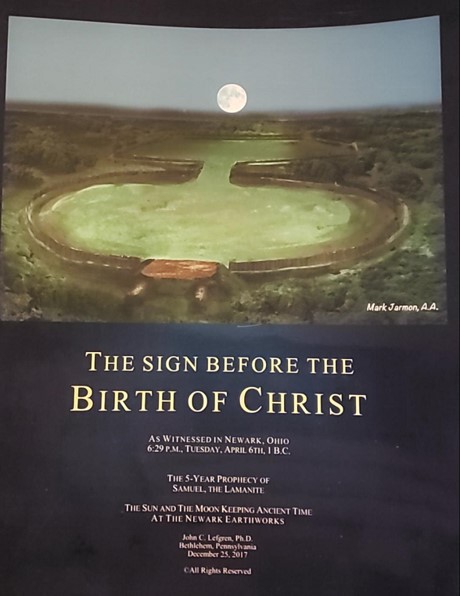
The sign before the Birth of Christ- As Witnessed at the Newark Earthworks in Ohio by Dr. John C. Lefgren -PDF 44-Pages

$14.95 $9.95

The Newark Earthworks are the largest set of geometric earthen enclosures in the world.   Because of their sheer size the descendants of Europeans over two centuries have not been able to destroy these ancient artifacts.  Certainly, over the years farms, railroads, militia encampments, golf courses and houses have had their impact.  Nevertheless, main features of the monuments remain as a witness to a people who lived there more than 2,000 years ago. AVAILABLE AS A PRINTABLE PDF ONLY.

Details about the Book

Every historic account has a timeline and every time line fixes the interrelation of events.  Once a historical account is fixed in time it has a context which is the subject of rigorous numerical analysis.  The analysis of this study is to concentrate on the counting of days which are connected to the birth of Christ and to the visit of Christ at the Temple in the Land of Bountiful.  The harmony for the events of more than 2,000 years ago rely on 8 primary sources: (1) the movements of the earth around its axis; (2) the movements of the earth around the sun; (3) the movements of the moon around the earth; (4) the physical presence and alignment of the world’s largest geometric earthen complex; (5) the 5-year prophecy of Samuel, the Lamanite, concerning the sign of the birth of Christ; (6) the eyewitness testimony of the fulfillment of that prophecy as seen by Nephi, the Son of Nephi; (7) the details which Mormon wrote concerning the day when the resurrected Christ appeared to the Nephites at the Temple in the Land of Bountiful, and (8) the archaeological search for the remains of seismic activity from the first century in or around the area of the Newark Earthworks in Central Ohio.

TWO IMPORTANT DATES IN BOOK OF MORMON HISTORY

1- Birth date of the Savior in Bethlehem based on the Newark Earthworks.
In early spring 1 BC Nephi, the Son of Nephi recorded the very events of Christ’s birth as he witnessed them in Ohio. In his account the conflict between the unbelievers and the believers over the exact day for the fulfillment of Samuel’s prophecy was a matter of life and death. Nothing could have been more serious. The conflict underscored how important the people considered the keeping of time. This conflict in the first century validated the fact why the people in Ohio were willing to expend so much time and material for the construction and maintenance of the Newark Earthworks. The measurement of time was an important part of their religion and of their social structure.

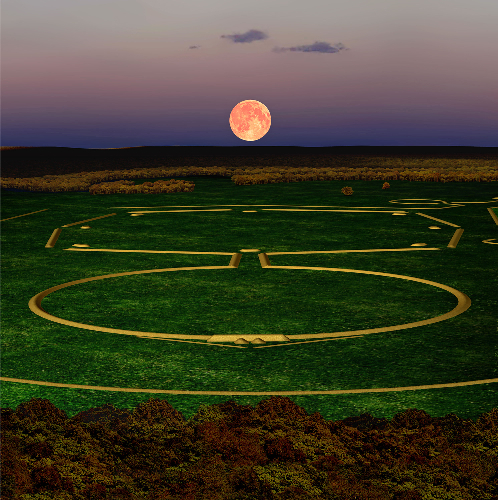
The accounts of the Book of Mormon allow us to reconstruct from the astronomical cycles of the moon and of the sun those events which occurred when the sign of the birth of Christ was given in the sky above the Earthworks. At 6:29 p.m., Tuesday, April 4th, 1 BC (Gregorian Calendar) the full moon was rising on the horizon in the east and the sun was setting on the horizon in the west. There was a perfect balance in nature. Just before that moment, Christ had told Nephi that “on the morrow come I into the world”. After that moment, after the setting of the sun, Samuel’s prophecy was fulfilled. Lights appeared in the sky saving the believers from certain death and “the people began to be astonished because there was no darkness when the night came”. On the morrow (Ohio time zone) Christ was born in Bethlehem during the night (Judea time zone) of April 5th/6th, 1 BC (Gregorian Calendar).

2- Date of the appearance of the Savior to the Nephites in Ohio, based on the Newark Earthworks.
The world’s largest earthwork works are located in Newark, Ohio. The central axis of these monuments are fixed at 58.1 degrees east of true north which is the azimuth for the maximum northern moonrise. This event occurs only once every 18.6 years and is the result of a slight tilt of the moon’s axis with respect to the earth. The tilt moderates the effect of the moon’s gravitational pull on the earth creating a necessary prerequisite for life. The moonrise for Saturday, October 3rd, AD 33 was in alignment the central line of the Newark Earthworks. At this time the Calendar of Moses required the Children of Israel to gather at the temple. On the rising of the sun of the next morning the Nephites were gathered at the temple in Bountiful to observe the 7th day of the Feasts of Tabernacles. On this day Christ came to the Nephites in His resurrected glory.

The first month, Nisan, of the Hebrew Calendar is fixed so that the first full moon of the year will be after the spring equinox. Six months later during harvest time the Law of Moses in Exodus 23:16 states that “the feast of harvest, the first fruits of thy labours, which thou hast sown in the field: and the feast of ingathering, which is in the end of the year.” So, when Mormon wrote that in the ending of the 34th year Christ came to America, he was using the language of Moses to describe that it is was at the time of the feast of ingathering or tabernacles. (See 3 Nephi 10:18-19)

By Dr John C. Lefgren Ph.D. Economic History

Phoebe Woodruff Miraculously called Back from the Dead

0

“I have found him [Wilford Woodruff] a worthy man, with scarcely his equal on earth. He has built up a branch wherever he has labored. He has been faithful to God and his family every day of his life. My respect for him has increased with our years, and my desire for an eternal union with him will be the last wish of my mortal life.” Phoebe Woodruff Jan 1870 

LDS Living by Katie Lambert

When Wilford Woodruff Called His Wife Back from the Dead + What She Saw

While traveling from Maine to Illinois in 1838, President Wilford Woodruff experienced many hardships, including the death of his wife. 

Though it appeared his wife had died from an unknown illness after weeks of sickness, President Woodruff listened to a powerful spiritual prompting and brought his wife back from the dead in the most remarkable way.  

The following is an excerpt from President Wilford’s book Wilford Woodruff: Leaves from My Journal which details the experience, along with what his wife saw after passing into the spirit world. 


On the 23rd of November my wife, Phoebe, was attacked with a severe headache, which terminated in brain fever. She grew more and more distressed daily as we continued our journey. It was a terrible ordeal for a woman to travel in a wagon over rough roads, afflicted as she was. At the same time our child was also very sick.

The 1st of December was a trying day to my soul. My wife continued to fail, and in the afternoon, about 4 o’clock, she appeared to be struck with death. I stopped my team, and it seemed as though she would breathe her last lying in the wagon. Two of the sisters sat beside her, to see if they could do anything for her in her last moments.

Wilford Woodruff

I stood upon the ground, in deep affliction, and meditated. I cried unto the Lord, and prayed that she might live and not be taken from me. I claimed the promises the Lord had made unto me through the prophets and patriarchs, and soon her spirit revived, and I drove a short distance to a tavern, and got her into a room and worked over her and her babe all night, and prayed to the Lord to preserve her life.

In the morning the circumstances were such that I was under the necessity of removing my wife from the inn, as there was so much noise and confusion at the place that she could not endure it. I carried her out to her bed in the wagon and drove two miles, when I alighted at a house and carried my wife and her bed into it, with a determination to tarry there until she either recovered her health or passed away. This was on Sunday morning, December 2nd.

After getting my wife and things into the house and wood provided to keep up a fire, I employed my time in taking care of her. It looked as though she had but a short time to live.

She called me to her bedside in the evening and said she felt as though a few moments more would end her existence in this life. She manifested great confidence in the cause she had embraced, and exhorted me to have confidence in God and to keep His commandments.

To all appearances, she was dying. I laid hands upon her and prayed for her, and she soon revived and slept some during the night.

December 3rd found my wife very low. I spent the day in taking care of her, and the following day I returned to Eaton to get some things for her. She seemed to be gradually sinking and in the evening her spirit apparently left her body, and she was dead.

The sisters gathered around her body, weeping, while I stood looking at her in sorrow. The spirit and power of God began to rest upon me until, for the first time during her sickness, faith filled my soul, although she lay before me as one dead.

I had some oil that was consecrated for my anointing while in Kirtland. I took it and consecrated it again before the Lord for anointing the sick. I then bowed down before the Lord and prayed for the life of my companion, and I anointed her body with the oil in the name of the Lord. I laid my hands upon her, and in the name of Jesus Christ I rebuked the power of death and the destroyer, and commanded the same to depart from her, and the spirit of life to enter her body.

Her spirit returned to her body, and from that hour she was made whole; and we all felt to praise the name of God, and to trust in Him and to keep His commandments.

What Phoebe Saw

While this operation was going on with me (as my wife related afterwards) her spirit left her body, and she saw it lying upon the bed, and the sisters weeping. She looked at them and at me, and upon her babe, and, while gazing upon this scene, two personages came into the room carrying a coffin and told her they had come for her body. One of these messengers informed her that she could have her choice: she might go to rest in the spirit world, or, on one condition she could have the privilege of returning to her tabernacle and continuing her labors upon the earth. The condition was, if she felt that she could stand by her husband, and with him pass through all the cares, trials, tribulation and afflictions of life which he would be called to pass through for the gospel’s sake unto the end. When she looked at the situation of her husband and child she said: “Yes, I will do it!”

At the moment that decision was made the power of faith rested upon me, and when I administered unto her, her spirit entered her tabernacle, and she saw the messengers carry the coffin out at the door.

On the morning of the 6th of December, the Spirit said to me: “Arise, and continue thy journey!” and through the mercy of God my wife was enabled to arise and dress herself and walked to the wagon, and we went on our way rejoicing (“Leaves from My Journal,” Salt Lake City, 2nd Edition, 1882). 


One of Wilford Woodruff’s greatest contributions to the LDS Church is his meticulous collection of journals. For more than half a century, President Woodruff kept a daily record of his amazing adventures and spiritual experiences, marking this modern prophet as one of the Church’s most successful missionaries.

https://www.ldsliving.com/The-Remarkable-Way-Wilford-Woodruff-Called-His-Wife-Back-from-the-Dead-What-She-Saw/s/85675

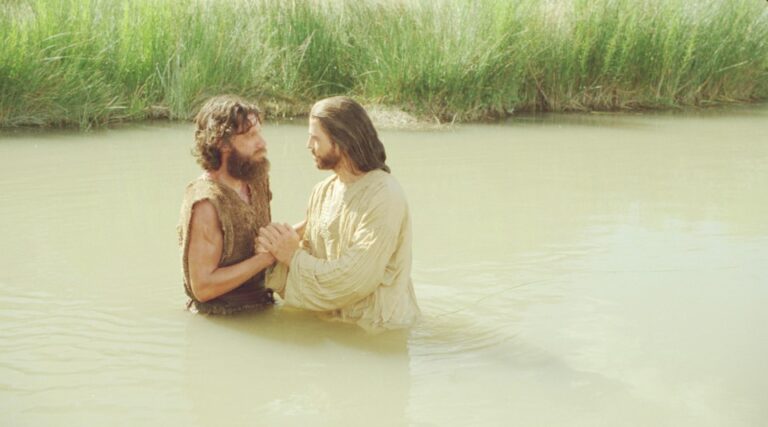
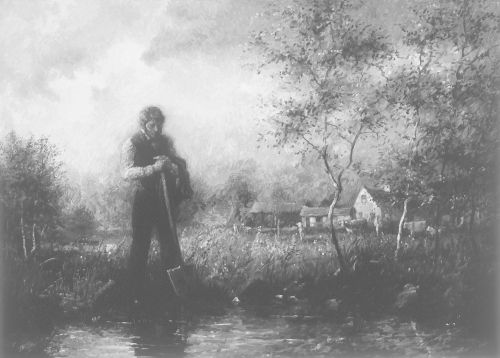
Wilford Woodruff preparing for baptisms at pond on John Benbow’s farm

Nathan Osmond and Rod Meldrum

0

This Facebook Fireside titled “Evidences of the Book of Mormon” was held Sunday Nov 29, 2020. The complete recorded event is below. Nathan sings several of his own beautiful songs. Rod shares with us many physical evidences that validate the truthfulness of the Book of Mormon.

Listen to one of Nathans beautiful new songs below.

Rod quotes Elder Jeffrey R. Holland who said, “…Truly rock-ribbed faith and uncompromised conviction comes with its most complete power when it engages our head as well as our heart… Truth borne by the Holy Spirit comes with, in effect, two manifestations, two witnesses if you will—the force of fact as well as the force of feeling… I believe God intends us to find and use the evidence He has given—reasons, if you will—which affirm the truthfulness of His work… Evidence is still evidence even if it is not immediately observable…” Jeffrey R Holland full talk here:

More videos Below


It Just Makes Sense

0

The Heartland “Feels” Right!

Common sense and the voice of the Spirit have a lot of similarity. These things are also understood with our conscious or a “gut” feeling or intuition.

We all lack knowledge in many things, and only after a lot of study and prayer do we gain a correct knowledge of some things. In those things we just don’t understand, we learn to say, “just makes sense” are ofttimes that answer was what we were looking for.

My great friend and cartoonist Val Chadwick Bagley keeps reminding me of this. Val has done cartoons for over 40 years for the Church Magazines and continues today. He received the 1,000,000 sale mark with Covenant Publishing which has only been reached by one other person ever!

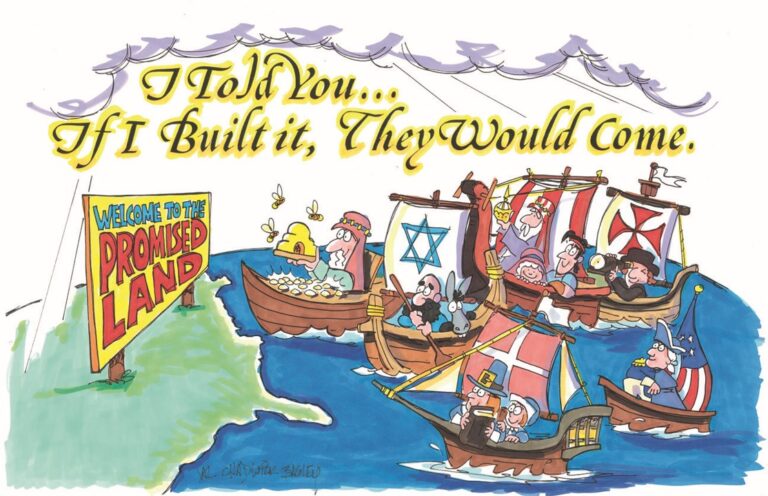
After meeting Val 6 years ago I have been hiring him to do all kinds of cartoons for me. He has done over 100 wonderful and funny pieces for me to enjoy and share with others. I came up with an idea on how to spoof the Meso boys and he would create art to represent it. (See Below) After creating about 10 pieces for me, he became confused. He wasn’t sure why I thought some of these were funny. You see he was Mesoamerican Cartoonist and knew nothing about the heartland. I told him that doesn’t matter, you keep doing these for me as I have over 20,000 people that think these are truly funny and they are purchasing copies from me. He shrugged his shoulders and said, “ok” as he was also making money.

Then It finally made sense to Val after I asked him to do the following cartoon.

Val called me and said, “wow, I finally get it”. There is no way Moroni could have carried all those plates from Mesoamerica to New York. The Book of Mormon has to have happened in the United States. Then he went on to make the point I have never forgotten. He said, “It Just Makes Sense”, and then he sent me this cartoon:

The Book of Mormon happened in the Heartland of the United States. Sure there are many Lamanites in South and Central America, but that is from intermarriage and migration. Remember Moroni said : “the hundredth part I have not written” Ether 15:33. The events happened between about Nauvoo, IL, to Hill Cumorah and from the Great Lakes to the Gulf of Mexico. The rest of the United States and the Americas would be called the Hinterlands which means Lamanites living outside of the main area of Book of Mormon events.

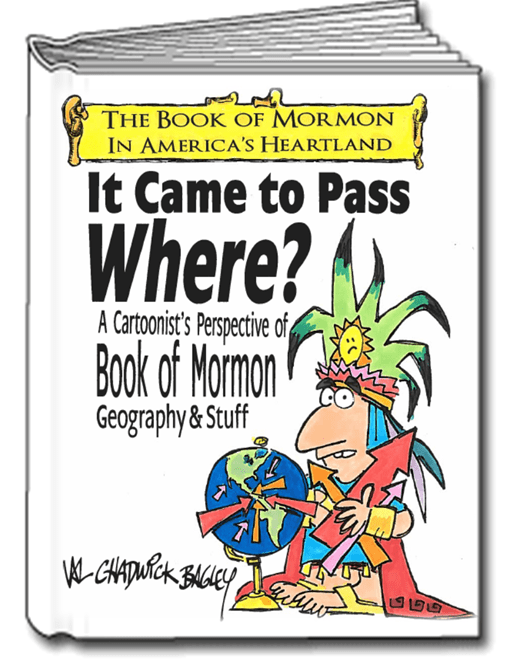
It Came to Pass WHERE? By Val Chadwick Bagley 96-Pages Full-color. Val says, “It’s the Best Book I have ever done” Save 25%

See Inside the Book (93 More Pages)

To see more of Val’s cartoons and to purchase, visit here:


Moroni’s America by Jonathan Neville Chapter 23 – Evidence, Proof, and Historicity

People often ask me, “How much evidence does it take to prove something?” My answe”r: “It depends on the individual and what he or she wants to believe.”

When I was a prosecutor, preparing a case for trial involved assembling and presenting evidence to prove elements of a crime beyond a reasonable doubt. In civil cases, the burden of proof is a preponderance of the evidence, meaning more likely than not. There are statutes and rules and court decisions about the fine points of these formal standards of proof.

But no such rules apply to our individual lives.

A person who wants to believe something will be convinced by little, or no, evidence. A person who doesn’t want to believe something may not be convinced by any amount of evidence. But most people, in most aspects of their lives, do tend to want to know the truth, even if it is “hard” because it contradicts what they’ve been taught or what they’ve believed before.

Lehi’s Family by Arnold Friberg

I wrote this book to offer evidence about the historical authenticity—the historicity—of the Book of Mormon. 

In my view, the Mesoamerican theory has eroded faith in the Book of Mormon among those who look objectively at the evidence and arguments. The “evidence” usually cited to support Mesoamerica as the setting for the Book of Mormon narrative is illusory. Proponents find similarities between Mesoamerican culture and the culture described in the text of the Book of Mormon, but such similarities occur in many human cultures. Worse, they contradict the plain meaning of the text, which describes a Hebrew culture, not a Mayan one.

These similarities or “correspondences” are often dressed up in sophisticated rhetoric, but they boil down to this:

1. Nephi planted seeds and harvested them.

2. The Mayans planted seeds and harvested them.

Therefore, Nephi was a Mayan.

I realize no Mesoamerican proponents have made that specific argument, but the correspondences you read about—John Sorenson alone had 140 such correspondences in his book, Mormon’s Codex—follow that logic.

Meanwhile, the Mesoamerican proponents distort the text so it will fit their theory. Mormon’s Codex and many other publications and web pages that support the Mesoamerican theory claim the textual term “north” doesn’t really mean north. They substitute Mayan animals and plants for those mentioned in the text. They also insist Joseph Smith was merely speculating about where the Book of Mormon took place.

If you’re wondering where the Mesoamerican theory originated, Chapter 29 addresses that.

BYU Fantasy Map

Any standard of proof is subjective. Proof is whatever is sufficient to satisfy an individual about the truth or falsity of a given proposition. Because of different backgrounds, priorities, and values, some people require more proof of a given proposition than others. This subjectivity explains why we use juries in courts of law and peer reviews in science. In both cases, we assume that if evidence persuades a group, it is more likely to be accurate. Convince enough people—members of a jury, qualified scientists—and the law and public opinion will generally go along with the conclusion.

Yet human judgments are fallible. History is replete with examples of a “consensus” being wrong. Einstein famously challenged the consensus of his day with his own theory of relativity. The germ theory revolutionized medicine. Technology in all its forms has challenged prior consensus and dramatically changed the way people live and think.

Along the way, every challenge to the consensus faced opposition. Individuals with strong convictions used evidence and rational arguments to persuade others, but it is almost always a gradual process. What may be considered as “fact” in one time and place may be shown to be error in another time and place. New knowledge supersedes old, but old knowledge may be sustained when seen from a different perspective. Even where people agree on a set of facts (which itself can be a challenge), they differ regarding the interpretation and importance of those facts.

Religious leaders face similar obstacles. Moses presented a tremendous challenge, not only to the Egyptians but to the Israelite slaves who had grown accustomed to their status. Many prophets and religious leaders have been killed for what they preached. Jesus was crucified. Stephen was stoned. Many of the original apostles were killed.

When it comes to personal convictions, the views of a majority are irrelevant. Belief in God is an individual choice, not the product of a vote. In the same way, one’s acceptance or rejection of the Book of Mormon is highly personal, and may be the product of objective reasoning based on facts, spiritual insights based on personal experience, or a combination of the two.

In my view, even spiritual choices are improved with consideration of the best available evidence.

Full Book $22.95 Pocket Edition $9.95

This book—Moroni’s America: The North American Setting for the Book of Mormon—is part of a series that examines the setting for the Book of Mormon in detail.

The Lost City of Zarahemla: from Iowa to Guatemala and Back Again focuses on the origins of the Mesoamerican theory of Book of Mormon geography. It proposes that theory originated not with Joseph Smith but with a well-meaning, zealous missionary named Benjamin Winchester, a man whom the Prophet eventually described as having a “rotten heart.” Joseph prophesied that the man would “injure the Church as much as he could.” The evidence of the fulfillment of that prophecy may be found in the premises of the Mesoamerican theory; i.e., the proposition that some terms in the Book of Mormon were not properly translated and the assertion by Mesoamerican advocates that Joseph Smith didn’t know much about the Book of Mormon and merely speculated about the geography, culture, and legacy of its peoples.

Brought to Light covers 1842 Nauvoo and the Times and Seasons in even more detail, showing Joseph Smith could not have written many of the editorials long attributed to him and that Winchester and W.W. Phelps had more influence than has previously recognized.

Another in the series, Mormon’s History: Back to the Beginning, examines the historical context of the Book of Mormon. Early claims that Joseph Smith copied from another source are refuted, but more importantly, the unique and prescient elements of the Book of Mormon are placed in their historical context.

NEW!

This series of books responds to the modern demand for facts and evidence. As an empiricist myself, I seek physical confirmation of historical and scientific claims. In my opinion, Joseph Smith himself was an empiricist. He described Moroni’s visits with specific details about his appearance and apparel. He dug the plates out of the hill Cumorah, lugged them around, and protected them. But, as near as we can tell from the historical record, he did not use them for the actual translation.

Told he would be an instrument in the hands of God, Joseph knew he was responsible to translate the plates. First, he copied some of the figures and sent Martin Harris to find someone who could translate them. Only after Harris returned, unsuccessful, did Joseph realize he—Joseph—would have to translate them himself.

He had no way to learn the language written on the plates. However, his tutor, Moroni, had provided him the necessary context. He had informed Joseph about Lehi and his descendants, showing him their origin, progress, civilization, laws, governments, and their history of righteousness and iniquity. But in the economy of heaven, would it make sense for Moroni to teach Joseph a complex language he would use only once in his lifetime? How accurate a translation could Joseph have made even with such training? Translation is subjective; even professional, experienced translators never produce identical versions of a given text.

No, the only practical means for accurately translating an ancient religious text written in an unknown language was through the gift of tongues. As an empiricist, Joseph would understand this. The only solution was to use a seer stone, blocking out ambient light with a hat so he could see the words that appeared on the stone. Then why the plates?

I think he needed them as physical, tangible proof that the ancient record he was “translating” actually existed. It was one thing to have Moroni—a long-deceased ancient inhabitant of the land where Joseph lived—appear to him. It was one thing for a voice to speak to his mind or even for words to appear on a stone. But it was something else entirely to pry open an ancient stone box and find gold (or tumbaga) plates, a breastplate, a sword, and other artifacts. That the plates contained writing no one could read—a proposition confirmed by Dr. Charles Anthon—was confirmation, too, of their authenticity. Had they been written in legible Hebrew, they could have been dismissed like the many other artifacts containing forms of Hebrew found in North America.

Anything short of such tangible, physical evidence could have left Joseph with an excuse to walk away from the project when opposition grew. He had plenty of reasons to rationalize it away, to succumb to the wishes of his peers and agree that the whole project was, in fact, a hallucination.

But the plates prevented that.

Joseph knew the plates were real. There was no denying that. The three witnesses, the eight witnesses, and the many other people who saw the plates confirmed what Joseph knew: he had an actual, ancient record.

In fact, the importance of physical evidence was emphasized by King Benjamin in the very first chapter Joseph translated after Martin Harris lost the original manuscript:

O my sons, I would that ye should remember that these sayings are true, and also that these records are true. And behold, also the plates of Nephi, which contain the records and the sayings of our fathers from the time they left Jerusalem until now, and they are true; and we can know of their surety because we have them before our eyes. (Mosiah 1:6) (emphasis added)

And now, in 2016, we have the same kind of physical evidence.

Physical evidence is no substitute for spiritual connection and knowledge. As an empiricist, I recognize that a spiritual witness far exceeds any material witness in terms of impact on one’s mind and soul. Who would deny that the feeling of love is more powerful than a textbook knowledge of biochemistry? Another way to express this is that the things of God are made known by the Spirit of God.

And yet, physical evidence is an important component of any spiritual conviction. At the most fundamental level, no one could believe in the Bible if the Bible didn’t exist. Of course, the fact someone believes something does not make it real (let alone true), but the existence of the Bible—something one can touch and feel and read—provides the necessary premise for belief. Jesus performed miracles to give the people something physical to believe while they developed their spirituality. He knew most people cannot accept mere words; there must be evidence. Indeed, isn’t that why Christ became mortal in the first place?

No oyster can produce a pearl unless there is a grain of sand to build upon. So, too, faith builds upon some initial physical reality, whether that’s a book, an experience, a physical sensation—or a set of metal plates.

Since 1830, the existence of the Book of Mormon itself was sufficient for millions of people to accept it as a revelation from God. There were no viable explanations for its existence other than pure serendipity (itself a miracle) and Joseph Smith’s own explanation. Claims that Joseph copied it, collaborated with others, or even wrote it himself have all been advanced and exposed as highly implausible, at best. And yet, for most people, any shred of possibility that Joseph Smith composed the book is sufficient to reject it. Such rejection is far more palatable than the alternative of acceptance and all that entails. Accepting the divine authenticity of the Book of Mormon requires first, acceptance of metaphysical reality—that God exists and intervenes in human affairs—and second, acceptance that whatever one had believed that contradicted Joseph’s explanation was incorrect.

Moroni’s America-Heartland 210 Map Package-
BOTH MAP Book’s + TRAVEL MAP Save 18%

Those are difficult propositions, no doubt, in any age of the world.

But now, in 2015, the mere existence of the Book of Mormon is hardly persuasive. There are over 150 million copies of the book in existence but only around 7.5 million people who actually believe its claims (assuming an activity rate of 50% among nominal Mormons, which might be high). Pure faith has become less and less prevalent in light of scientific advances that have explained so many things that were once the province of faith alone.

Which is what makes the Book of Mormon all the more convincing.

Critics have long focused on the inconsistency between the geography descriptions in the Book of Mormon itself verses the Mesoamerican setting that has long prevailed in the Church. Those critics have made some good points. I propose that the Book of Mormon events did not occur in Mesoamerica (or anywhere south of Texas). My conclusion that the Mesoamerican theory was initiated by an overzealous Mormon missionary whose efforts succeeded for over 170 years may reflect on the work of LDS scholars (who, by and large, sought to vindicate what they thought were Joseph Smith’s teachings), but can have no bearing on the Book of Mormon itself.

Only now, in 2015, can we see the Book of Mormon for what it has always been: a complex history of the Native American Indians who inhabited what was, in 1830-1842, the United States of America. Only now, with the benefit of modern archaeology, geology, and other tools can we understand what the Book of Mormon was saying about its time, place, and people.

The timing could not have been better. As I write, we live in a society and world that largely rejects any claims that are not supported by solid evidence. Rightly so. Science has exposed hundreds of false ideas and beliefs. But it has verified others. That science would establish the historicity of the Book of Mormon is an outcome that would have been unimaginable only a few years ago. But now that it has happened, detractors are put to the test.

I’ll repeat the question I posed at the beginning: “How much evidence does it take to prove something?”

Only time will tell, and each individual must decide for herself or himself.

Moroni’s America by Jonathan Neville Chapter 23

Zarahemla- Proof from the Earth

0

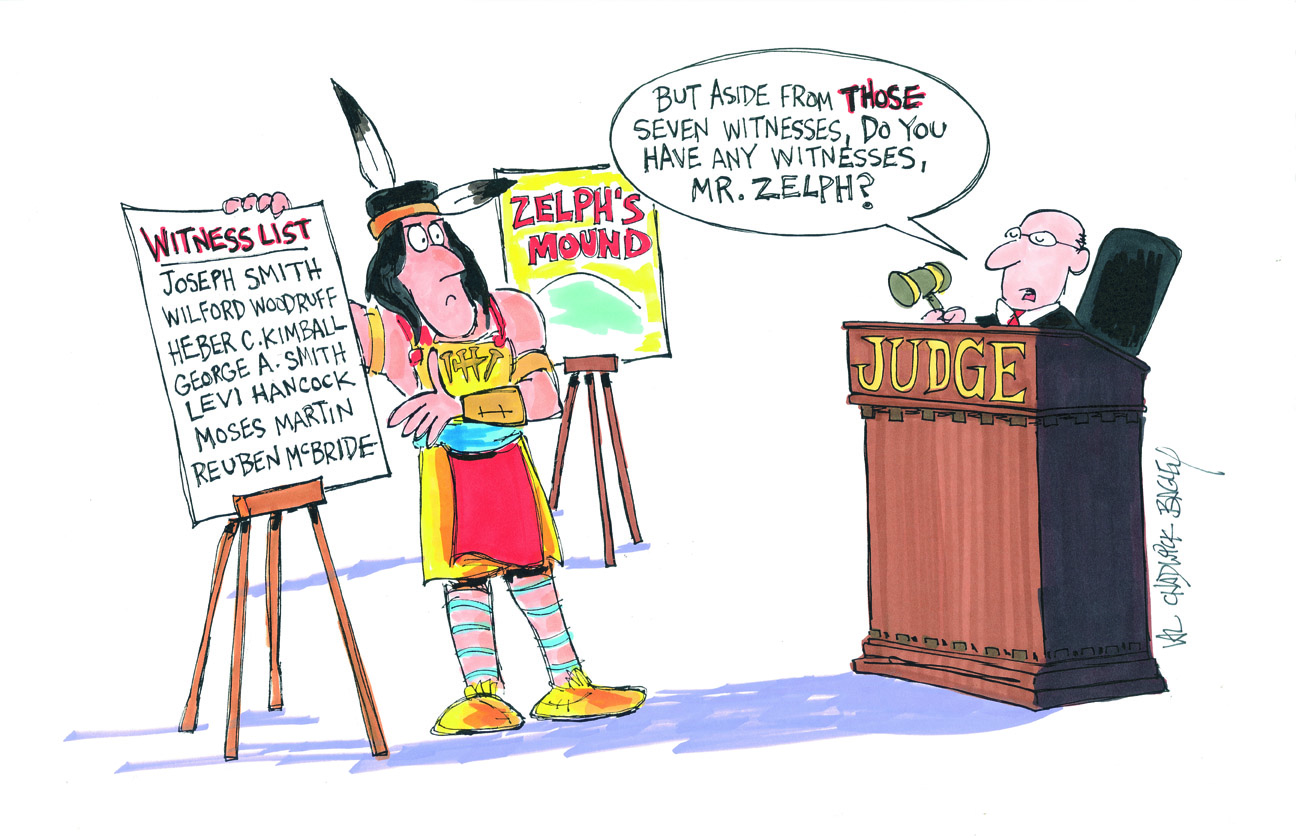
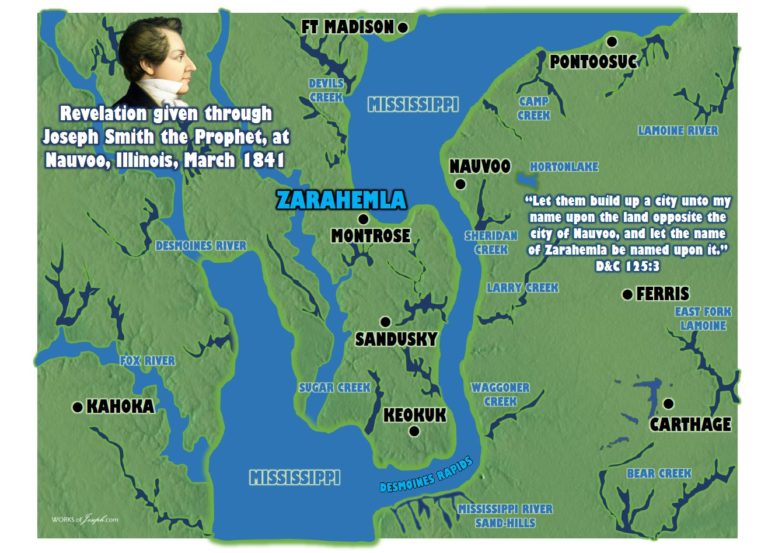
“Nearly all those familiar with the early statements by the Prophet Joseph Smith touching on potential Book of Mormon lands know that he clearly indicated them to be in North America. This is evident in the historically verified accounts wherein he declared revelation such as in the Wentworth Letter, the American Revivalist Account, the Zelph Accounts and Joseph’s handwritten letter to Emma while on Zion’s camp. In addition, the prophet revealed a Nephite altar at Adam-ondi-Ahman, mentioned the land of Manti was near Huntsville, Missouri, and revealed that this land was “the borders of the Lamanites” (see D&C 54:8). Furthermore he received revelation from the Lord for the location of Zarahemla (see D&C 125:3) and New Jerusalem (see D&C 84:1-6) which Christ Himself declared to be on Book of Mormon lands (3 Nephi 20:22), both of which are absolutely located in North America. These accounts and their indications are not speculation based, but historically documented fact.

Mesoamerican theorists are thereby forced to claim that the Prophet Joseph Smith reneged on these early revelations after being introduced to a New York Times best-selling travel book by John Lloyd Stevens called “Incidents of Travels in Central America, Chiapas and Yucatan.” They feel that Joseph learned more about Book of Mormon geography from this travelogue than from his angelic visitations by Moroni, other ancient prophets, or his translation of the sacred text itself. We believe based on D&C 125:3 that the Prophet Joseph Smith received this revelation, that the Zarahemla of the Book of Mormon is across the river from Nauvoo, in the Montrose, Iowa area.” Rod Meldrum Firm Foundation President

Read the complete blog here titled Zarahemla in Iowa

FIRESIDE TONIGHT 7 PM HERE!
 The above map was drawn by Robert E. Lee in 1834 when he came as a young Army officer to deal with the geology of the Keokuk Gorge that stopped riverboats on the Mississippi. Lee came with a company of soldiers. He wanted to determine if it would be possible to create a channel for riverboats to go through the Des Moines Rapids.

From 1834 to 1837, Robert E. Lee and his men built an outpost known as Fort Des Moines No. 1. In 1837 the U.S. Army abandoned the outpost. From 1839 to 1846, Montrose became a landing place for many Mormons who were refugees from Missouri and immigrants from Europe. At first, the Saints lived in Lee’s abandoned barracks. The town soon became known as Montrose. Among the town’s residents were Brigham Young, Wilford Woodruff, and Erastus Snow. Indeed, Nauvoo’s streets aligned to the streets of Lee’s map for Fort Des Moines. For eight years, there were thousands of more Mormons living in Montrose than the town’s current population of 898. Montrose then as well as now had a town area of one square mile or 640 acres. In our research for the Fires of Zarahemla, we scanned the cropland of 21 acres inside the square mile of the city’s limits. Charcoal samples from the ground of this land will be the basis for determining the Carbon-14 dates of the fires.

It seems strange that we have started our detailed search for the City of Zarahemla on a site that Mormons farmed many years before they went to the Salt Lake Valley. It also seems strange that when we look at old maps, we find that the Mormons in the mid-nineteenth century named the very road next to this site as “Zarahemla Road.”

We will take core samples from the ground that the first generations of Mormons farmed more than 150 years ago when they associated the land with the City of Zarahemla. This result was certainly not our intention. We went to the site because it had a cornfield that is well suited for the SENSYS MX V3 scan. Nevertheless, we are grateful that we can start on a site that was part of the Saints’ early history. We take comfort in the fact that we are so close to the faith of the first believers in this Last Dispensation.Ancient Fire Pits 1Fires of Zarahemla 2Fires of Zarahemla 1

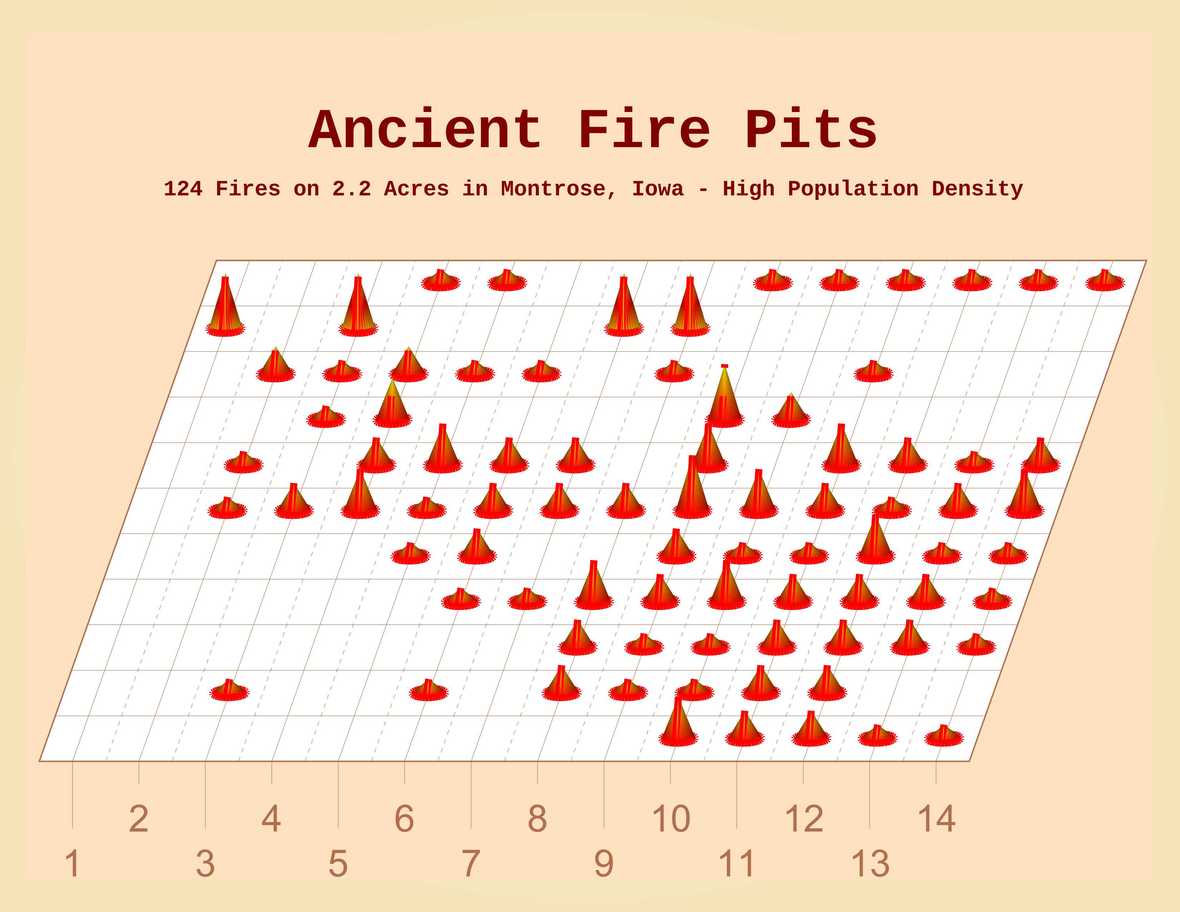
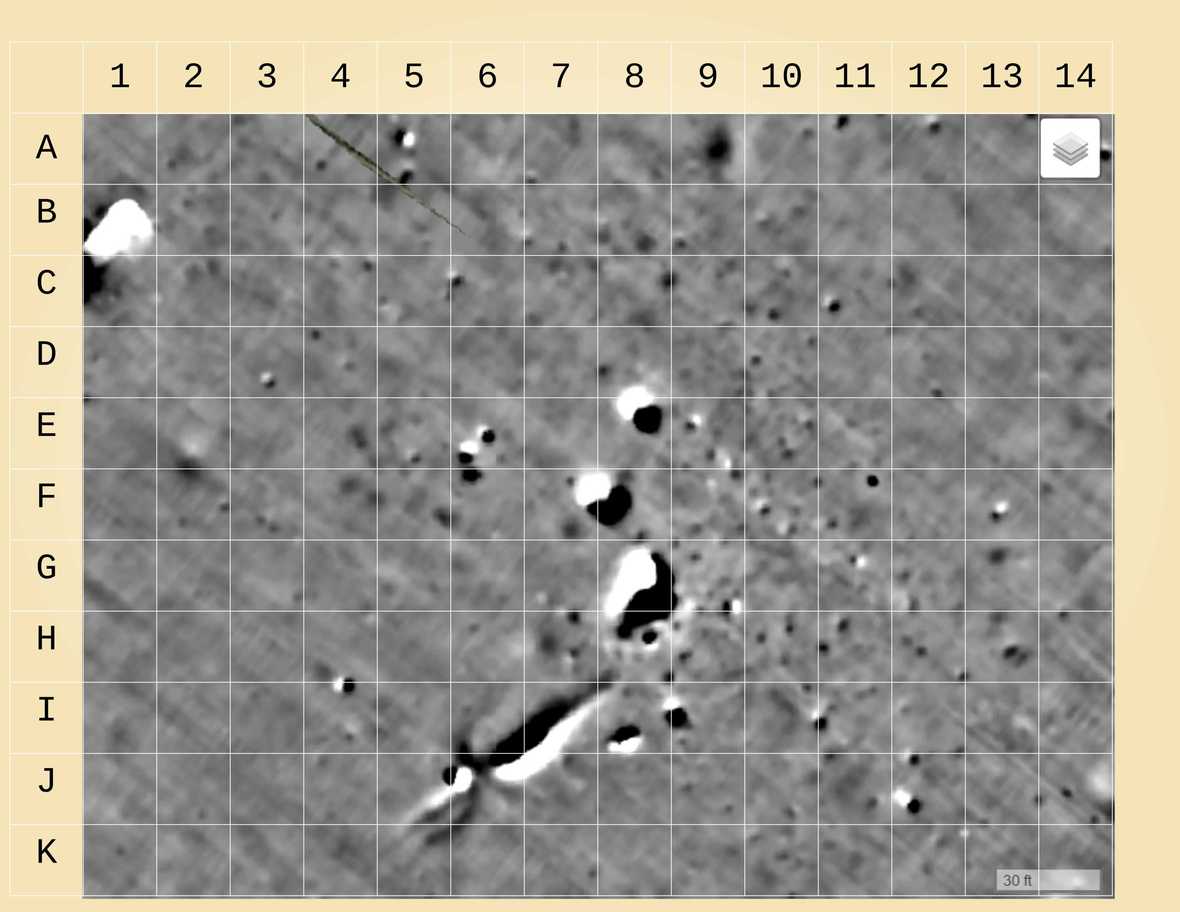
The full grid represents an area of about 2.2 acres. Preliminary calculations indicate that there are as many as 124 ancient fires in the ground of this area. Core soil samples will provide pieces of charcoal from the fire pits for which Carbon-14 dating will determine the distribution of the fire pits over a timeline before the arrival of the Europeans to Iowa. The high density of fire pits correlates with a high density of ancient populations.

The assumption is that each fire pit would have represented three people and that one acre of fire pits as found on the grid would have meant a density of populations for hundreds of people per acre over many generations. This result certainly supports the idea that this scanned land was a small part of the Lost City of Zarahemla.Zarahemla Site

The above picture is from the surface of land that we scanned on November 18th, 2020, from a cornfield within the city limits of the City of Montrose, Iowa. This field has been under cultivation for more than 150 years. European settlers have not made any major disturbances on this land.Our magnetic scan showed fire pits and lightning strikes from ancient times. Almost 200 years of farming provided the necessary revenue to protect farmland from development.

The cultivation of corn for six generations gave a protective cover for the evidence in the ground. Because of corn, we got the magnetic scans that made it possible to create digital maps that show traces of habitation for an ancient city.

Donate at www.zarahemla.site
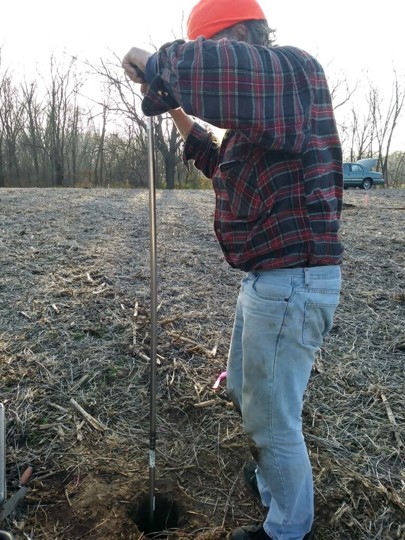
soil-probeBean Field Drone PhotoPhil Schmitz 1Interpretation 
©2020 Zarahemla | 2681 Milan Street Easton, PA 18045 US

Iroquois Origins (500 BC) Same Place as Prophet Mormons Burial 385 AD

0

Pipes Formed like all that the Great Spirit Creates

The ancient Adena and Hopewell cultures created pipes in the images that they saw and experienced. Ancient cultures respected all that the Great Spirit created, animals, birds, people, and nature. The Adena culture represents the same time frame as the Jaredites (1500 BC – 200 AD) and the Hopewell culture (200 BC – 400 AD) parallels the time frame of the Nephites.

“There is a bowl for the tobacco in their pipes in the top, and there is a small hole at one end to breathe in the smoke. The pipe was made by Native Americans living in what is today the US state of Ohio. These Native Americans were small-scale farmers who built large burial and ceremonial mounds. There were over 200 pipes buried in a collection of mounds known as the ‘Mound City Group’. The pipe was not simply smoked for pleasure but probably had a religious function. A shaman may have smoked it to evoke the otter as a representative of his clan, or as a spirit guide who would then accompany the shaman on a spiritual journey. Tobacco has been smoked in North America for at least 2300 years and pipe smoking still remains an integral part of modern Native American culture. Tobacco was first brought to Europe in the early 1500s, where it quickly spread across Europe, Africa and Asia.” A History of the World BBC

Read more about the reason for the various shapes of the pipes and how they were used. Why were these pipes so important to the Native Americans?

Henry C. Shetrone, archaeologist for the Ohio Archaeological and Historical Society (now the Ohio History Connection) uncovering effigy pipes during the excavation of Seip Mound in Ross County, Ohio, ca. 1925-1928

Great Spirit Appears to the Onondagas

“On the authority of some older inhabitants of Onondaga, New York, it is stated that on a ledge of rocks, about a mile south of Jamesville, (Near Syracuse and Oneida Castle) is a place which used to be pointed out by the Indians as a spot where the Great Spirit once came down and sat and gave good advice to the chiefs of Onondagas. That there are the prints of his hands and his feet, left in the rocks, still to be seen. In the former years the Onondagas used annually to offer, at this place, tobacco and pipes, and to burn tobacco and herbs as a sacrifice to the Great Spirit, to conciliate his favor and which was a means of preventing diseases.” Author L. Taylor Hansen He Walked the Americas 

“Native accounts tell of his arrival [Christ] from the direction of the rising sun, after which he set up his priesthood among his followers known as the “Wau-pa-nu” (the spelling phonetic). They were said to have healed the sick and instituted new laws. Blood sacrifice was forbidden and replaced by the use of tobacco, today an important element in all traditional Native American ceremonies. Among many eastern tribes, East Star Man is regarded as the son of Great Spirit, the Creator.” Wayne May, Christ in North America.

The Name of Nephi

“JOSEPHUS SAYS the Egyptian called their Creator ‘Kneph,’ ‘Noub,’ or ‘Nour.’ Reynolds points out that ancient variants of the name of Nephi include Knephi, Kneph, Noub, Nouv, Knouphis, Nebo, Naba, Nechi, Necho and others. These variants are found in many of the American Indian languages.George Reynolds, Commentary on the Book of Mormon

“NEPHI: This is also an Egyptian name, usually given as Knephi, and transliterated into Hebrew as Nebi. It means ‘prophet’ or one who speaks with God. The great Osiris, one of the Egyptian gods, was called Nephi or Knephi and the city in his honor was n-ph (vowels always had to be supplied). It is the city we know today as Memphis, located across the Nile from Cairo, but it is referred to by its original name of Noph (a variant of Nephi) in the writings of Hosea, Isaiah, and Jeremiah.” Treasures from the Book of Mormon, Volume One By W. Cleon Skousen

The Seat of the Iroquois

“Onondaga was, from the remotest times, the seat of the Iroquois government. Granting credence to the account of their own origin, on the high grounds or falls of the Oswego, (East of Fulton NY See map below) they had not proceeded far up the course of the widely gathered waters of this stream, when a portion of them planted their wigwams in this fertile region. Whatever was the cause of their migrating from their primary council fire, nothing was more natural than that, by pursuing this stream upward, they should separate into independent tribes, and by further tracing out its far spread forks, gradually expand themselves, as they were found by the discoverers and first settlers, over the entire area of western New-York. On reaching the grand junction of Three River Point (Phoenix, NY), a part went up the Seneca river, who subsequently dividing, formed the Senecas and Cayugas. The bands who took the eastern fork, or Oneida river, pushed forward over the Deowainsta, or Rome summit, into the first large stream, flowing east, and became the Mohawks. The central or Onondaga fork was chosen by the portion who, from the hill country (Onondaga) they first located in, took this name; and from them, the Oneidas, pursuing in fact the track of the Mohawks, were an off-shoot…”

Atotarho or Tah-totah or Chief or Sachem or King

“…The idea of a confederation was, it is believed, an old one with this people, for the very oldest traditions speak of something of this kind, among the lake and St. Lawrence tribes of older days. When the present league was formed, on the banks of the Onondaga lake, this central tribe had manifestly greatly increased in strength, and distinguished itself in arms, and feats of hunting and daring against giants and monsters… Most distinguished, however, above all others, east or west, was a leader of great courage, wisdom and address, called Atotarho…”

“A singular tradition may be here added. It is said that the XIIIth Atotarho reigned at Onondaga when America was discovered” (1414 AD) Aboriginal History, Antiquities and General Ethnology of Western New-York by Henry R. Schoolcraft

In speaking about the 13th Atotarho (or Sachem or Chief ) in the Iroquois tradition, we read also in the Book of Mormon. “And whoso should reign in [Nephi’s] stead were called by the people, ‘Second Nephi,’ ‘Third Nephi,’ and so forth…” (Jacob 1:11)

Tadodaho was said to be a warrior and primary chief of the Onondaga people. Depending on the speaker’s dialect and the writer’s orthography, other versions of the name include Adodarhoh, Atartaho, Atotarho, Tatotarho, Thatotarho, and Watatohtahro. In the 1883 work The Iroquois Book of Rites, edited by Horatio Hale, the term Atartaho is said to signify “entangled”. Wikepedia

“The temple registry page shown below is remarkable in that an Onondaga
Nation king was named King Tah-totah, then others that followed: King Tah to-tah 2, King Tah-to-tah 3…then on the next page, King Tah-to-tah 7 through …15, etc. This tradition of naming kings in respect and remembrance of a prior king follows the pattern of the early Nephite colony.” Annotated Book of Mormon David Hocking and Rod Meldrum page 101

Just like Tah-to-tah means Chief or Prophet to the Iroquois,
Nephi meant Chief or Prophet to the Nephites.

On August 29, 1877, 85 American Indian chieftains had temple work performed for them in the St. George Temple, St. George, Utah (see Appendix, p. 554, for the full list). This picture above is from page 101 of the Annotated Book of Mormon

See my blog here titled, 85 NATIVE AMERICAN CHIEFS-BAPTIZED AT THE ST GEORGE TEMPLE

I personally believe there is great evidence pointing to the fact that the Iroquois or more specifically the Onondaga Tribe are the closest people to having Nephite and or Lamanite blood in them. Remember also the Cherokee are another good possibility who originally lived near Chattanooga, Tennessee. The Cherokee are also from the Iroquois Culture.

See my blog here: THE ONANDAGA-JOSEPH SMITH’S INDIANS

Burial of Mormon

“When serving as Mission President to the Seminole Indians in Central Florida, Murray J. Rawson was teaching a group of the tribe about the Book of Mormon when he was interrupted by their Chief, saying: “We had a war long ago with a light skinned people around the Great Lakes. We conquered them but we had so much respect for their warrior chief that we buried him at the mouth of the Oswego River that is in New York State. We don’t discuss this very much because it is an embarrassment to us. President Rawson then asked why this is an embarrassment, and the Chief replied, “ Our history is written on metal plates and buried in a hill in New York, but we don’t know which hill!” (Talk given to missionaries in training at the MTC, Provo, Utah 1979, by President Murray J. Rawson). This talk has a poor audio but you can find it here: (See Map Above for Mormon’s burial place)

Dating and Purpose of the Ancient Pipes

“In the first few years following the creation of the [Smithsonian] Bureau, the debate began to escalate regarding the interpretation of the many bird and animal carvings that were coming out of the mounds. Many artifacts being recovered from the Hopewell and Adena mounds appeared to be birds and mammals that only exist in the southern tropical regions of the world. M. C. Read in Archaeology of Ohio, pointed out: “Of the animal that is supposed to represent the seacow, seven carvings have been found. This inhabitant of tropical waters is not met in the higher latitudes of North America.”162 Many carvings of birds, and animals from tropical climates such as the manatee, large seal-like animals, elephants and tropical birds like the big-beaked toucan and parrot-like carvings were found, all of which were raising questions as to a possible connections with peoples from these tropical regions.

This image has an empty alt attribute; its file name is image093.jpg

Ancient Monuments Figure 178

This image has an empty alt attribute; its file name is image094.jpg
This image has an empty alt attribute; its file name is image095.jpg

A sampling of tropical birds and mammal carvings found in the mounds

The Third Annual Report of the Bureau of Ethnology, published in 1884, included for the first time a brief section entitled, Explorations in Mounds. It discusses work done in West Virginia, Ohio, Tennessee, Arkansas, and Florida, …by 1883, Cyrus Thomas’s Division of Mound Explorations included three full-time assistants and five temporary helpers, and work was under way in Tennessee, Arkansas, Illinois, Iowa, Georgia, Alabama, North Carolina, and Missouri. Some 4,100 artifacts had been collected for the National Museum in Washington. They included elegant pipes and pendants of polished stones and such humbler things as hoes, scrapers, diggers, axes, and hammers. Some of the mounds had yielded clear evidence of contact with European civilizations: bits of hammered iron in North Carolina; silver bracelets, brooches, and crosses in Wisconsin, and fragments of copper plate bearing the marks of machinery in Illinois. All this served to back Powell’s original belief that “a few, at least, of the important mounds of the valley of the Mississippi had been constructed and used subsequent to the occupation of the continent by Europeans, and that some at least, of the mound builders were therefore none other than known Indian tribes.163

Purchase Today

In the early annual reports of the Bureau of Ethnology public documents, one finds that it is not what they included in their reports, but what they have obviously excluded. The discussions and findings that were explored and addressed in the Bureau’s publications followed a prescribed agenda, pointing out that Indian populations and America’s ancient cultures were never highly advanced, with little to no discussions as to their cultural achievements. Lost from these studies were acknowledgements that the Indians were at one time more advanced than first perceived. As evidence in the construction of their communities, fortifications, smelting of metals and their construction of watercrafts capable of navigating the many rivers and lakes of the northeast. Also distinctively missing were the findings that show that these ancient mound-building cultures possessed knowledge of mathematics, astronomy, written language and engineering, as shown in the building of earthwork structures, which were comparable to any achievements of any ancient culture in the world of their day.

So where did the Mound Builders’ knowledge of these skills come from and why was so much of this knowledge not celebrated or passed on to our day and to their descendants?

“The fourth Annual Report contains an essay by Garrick Mallery on the picture-writing of the Indians, in which he discusses the various inscribed tablets found in mounds. Most of these he dismisses as frauds.” Such was the case of the Holy Stones found by David Wyrick of Newark, Ohio,) “…discovered in 1860 a tablet bearing on one side a truculent likeness of Moses with his name in Hebrew.”164 [Editors note: These so-called hoaxes are also pushed by the Scholars and Intellects that believe in the Mesoamerican setting for the Book of Mormon]. It is interesting to note that these early men of the Bureau of Ethnology described and defined these artifacts as picture-writings of the Indians or frauds without giving any real consideration to the potential of other visitor, to the America’s prior to Columbus.” Lost Civilizations of North America Steve Smoot Chapter 18, Learning from America’s Antiquities

_______________________

162 Read, 48.

163 Silverberg, The Mound Builders, 136-137.

164 Silverberg, 137-138.

Are We Losing Our Rights?

0

I want to talk about the values and virtues we may lose as individuals and as a Country. It is more up to us than what we may think. We are Americans, and we are Citizens of the greatest country on Earth. It is “We the People” who are in charge of our own freedom. As the inspired Constitution written by the Lord Himself says, we are endowed with unalienable rights, life liberty and the pursuit of happiness. These rights don’t come from man, for any of these rights that man can create, man can also take away. These rights come from God.

Our rights and values have attempted to be stolen by evil men and women. Our election is what I call a fraud. With prayer and the hard work of many good American lawyers and judges we may be vindicated. I pray with all my heart that Pres. Trump gets four more years. I do however say, after all I can do, I give the rest to the Lord and will abide by the law if we lose. That’s what an American does.

I remind you of what we may be in for again. A Democrat backed government that just really doesn’t get it. Most Democrats and many Republican’s just don’t love and respect our Country nor God. I just can’t imagine a third Obama term. Let me remind you of a few reasons why.

Remember whet Pres Obama said at the Prayer breakfast of 2015. “Humanity has been grappling with these questions throughout human history.  And lest we get on our high horse and think this is unique to some other place, remember that during the Crusades and the Inquisition, people committed terrible deeds in the name of Christ.  In our home country, slavery and Jim Crow all too often was justified in the name of Christ.”  National Prayer Breakfast 2015 Barak Obama

Issue Position: America – A Christian Nation

By: Stan Cooke

President Barack Obama stated at a press conference in Turkey in April of 2009 that we Americans “do not consider ourselves a Christian nation, or a Muslim nation, but rather, a nation of citizens who are, uh, bound by a set of values.”

Obama has made similar statements in the past. In June 2007, he told CBS, “Whatever we once were, we are no longer a Christian nation — at least, not just. We are also a Jewish nation, a Muslim nation, a Buddhist nation, and a Hindu nation, and a nation of nonbelievers.” Note the progression. In 2007, he said we are no longer “just” a Christian nation. Now, in 2009, he says we “do not consider ourselves a Christian nation” at all.

“The National Day of Prayer has a storied history. In 1952, President Harry Truman signed into law a declaration that every president must proclaim a National Day of Prayer on the day of his choosing. In 1988, President Ronald Reagan codified the first Thursday of May as the official National Day of Prayer. Since then, Presidents Reagan, George H.W. Bush and George W. Bush have marked this day with a White House observance. All presidents have issued commemorative proclamations. For many years, a special prayer service has been held in the East Room.

Of course, now we are in a era of “change,” the “Age of Obama.” As this day approached, many pondered what, if anything, new or otherwise, the president might do. After all, he did state that America is “no longer a Christian nation” and his recent address at Georgetown University came with the insistence that it cover Jesus’ name.  

It turns out that President Obama, in lockstep with his previous hostile decisions, decided not to schedule a public ceremony in the White House, and may not send a representative to the National Day of Prayer Task Force event on Capitol Hill. Instead, he opted for a private proclamation signing. All are actions that indicate a desire to squelch the public expression of faith.” The Family Foundation

I am still praying hard for Pres Trump. He has done so much good for our country. We need to individually pray for this Country. Whether you like Pres Trump or Biden, you must pray for the success of our Nation. don’t give up, the odds were also great against George Washington that Dec 26, 1776. God saved us then and He can again. Here is the brief story.

George Washington wins first major U.S. victory at Trenton

“At approximately 8 a.m. on the morning of December 26, 1776, General George Washington’s Continental Army reaches the outskirts of Trenton, New Jersey, and descends upon the unsuspecting Hessian force guarding the city. Trenton’s 1,400 Hessian defenders were still groggy from the previous evening’s Christmas festivities and had underestimated the Patriot threat after months of decisive British victories throughout New York. The troops of the Continental Army quickly overwhelmed the German defenses, and by 9:30 a.m. Trenton was completely surrounded.

Although several hundred Hessians escaped, nearly 1,000 were captured at the cost of only four American lives. However, because most of Washington’s army had failed to cross the Delaware the previous day, he was without adequate artillery or men and was forced to withdraw from the town.

Although the victory was minor from a strategic perspective, it bore tremendous significance for the future of the Continental Army. Washington needed a success before his solders’ enlistments expired on December 31; without a dramatic upswing in morale, he was likely to lose the soldiers under his command and be unable to recruit new men to replace them. The victories at Trenton and a few days later at Princeton proved to the American public that their army was indeed capable of victory and worthy of support.

The image of ragged farm-boy Patriots defeating drunken foreign mercenaries has become ingrained in the American imagination. Then as now, Washington’s crossing and the Battle of Trenton were emblematic of the American Patriots’ surprising ability to overcome the tremendous odds they faced in challenging the wealthy and powerful British empire.

It wasn’t the “surprising ability to overcome the tremendous odds“, it was the blessing of god that saved us then and I pray he saves us now. Source

Below are several examples of Pres Trump acknowledging Christ. I believe we are a Judeo/Christian nation and our government speaking about that is important.

Trump Speaks of Christ

“In 1923, President Calvin Coolidge lit the first National Christmas Tree.
Later that night, African American community centers held an outdoor worship service on these grounds.  And during that service, the Washington Monument was illuminated with a beautiful cross, a powerful reminder of the meaning of Christmas.

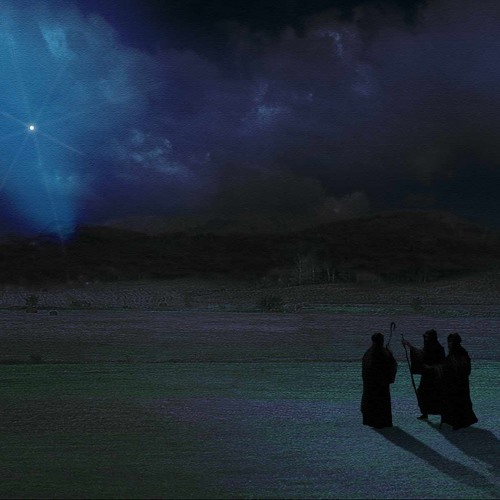
More than 2,000 years ago, a brilliant star shone in the East.  Wise men traveled far, far afield.  I mean, they were a long distance away.  And they came and they stood with us under the star, where they found the Holy Family in Bethlehem.  As the Bible tells us, when the Wise Men “had come into the house, they saw the young child with Mary, his mother, and fell down and worshipped him.”

Christians give thanks that the Son of God came into the world to save humanity.  Jesus Christ inspires us to love one another with hearts full of generosity and grace.” Remarks by President Trump at the National Christmas Tree Lighting Ceremony Issued on: December 5, 2019

Presidential Message on Christmas

I hope we all remember this wonderful message last Christmas as Pres Trump so boldly shared the name of Christ who we worship.

Presidential Message on Christmas Issued on: December 25, 2019

“Melania and I send our warmest greetings to those celebrating Christmas in the United States and around the world.  During this joyous time of year, we join a grateful Nation in thanking God for His abundant blessings and boundless love.

As families, friends, and communities come together to rejoice in the birth of Christ, we are reminded of the divine message from the first Christmas:  “Glory to God in the highest, and on earth peace, good will toward men.”  While the challenges that face our country are great, the bonds that unite us as Americans are much stronger.  Together, we must strive to foster a culture of deeper understanding and respect—traits that exemplify the teachings of Christ.

As we celebrate Christmas, we remember the precious religious liberties our forefathers so righteously fought to secure.  We also pause to pay tribute to those courageous men and women of our Armed Forces who continue to fight for our cherished freedoms.  As Commander in Chief, I salute them for their service and thank their family members for their shared sacrifice in this noble mission, especially during the holiday season.

We hope your heart is filled with the love and joy of your faith, family, and friends this Christmas. We send our best wishes for a merry Christmas and a happy and prosperous New Year.” Donald J. Trump

I am Grateful for Our Prophet

Now that Thanskgiving Day is over, may we in our hearts remember what yesterday brought and what Pres Nelson said last Friday. “Be Grateful” I am grateful for a living Prophet who has taught me to be a better person. He has taught me to turn the other cheek and pray for victory and freedom. We will learn in these trying times. If we don’t prevail in this election, I will have learned much more in humility than ever. What a sadness if we get closer to losing our beloved Nation.

Remember again Pres Trumps address from yesterday. May we all thank God to live in this wonderful Country.

Proclamation on Thanksgiving Day, 2020

Issued on: November 25, 2020

“On Thanksgiving Day, we thank God for the abundant blessings in our lives.  As we gather with family and friends to celebrate this season of generosity, hope, and gratitude, we commemorate America’s founding traditions of faith, family, and friendship, and give thanks for the principles of freedom, liberty, and democracy that make our country exceptional in the history of the world.

This November marks 400 years since the Mayflower and its passengers faced the unknown and set sail across the Atlantic Ocean.  Propelled by hope for a brighter future, these intrepid men and women endured two long months at sea, tired and hungry, to arrive in a new world full of potential.  In the winter weather that greeted their arrival, they lost nearly half of their fellow travelers to exposure, disease, and starvation.  Despite unimaginable hardships, these first Americans nevertheless remained firm in their faith and unwavering in their commitment to their dreams.  They forged friendships with the Wampanoag Tribe, fostered a spirit of common purpose among themselves, and trusted in God to provide for them.  The following year, they celebrated a successful harvest alongside their Native American neighbors — the first Thanksgiving.  This seminal event in the history of our Nation is a continual reminder of the power of faith, love, perseverance, prayer, and fellowship.

The Mayflower’s arrival to the New World in 1620 also marks the arrival of the first seeds of democracy to our land.  Absent the rule of a monarch in an uncharted wilderness, these early settlers resolved to create their own government through what is known as the Mayflower Compact.  Defined by majority rule through elected leaders responsible for creating “just and equal laws,” the Mayflower Compact represents the first chapter in the long tradition of self-determination and rule of law in America.  One hundred and fifty-six years later, our Nation’s Founding Fathers resolved to break free from England, building upon the Mayflower Compact to establish an enduring government whose authority came solely “from the consent of the governed.”

This year, as our Nation continues to combat the coronavirus pandemic, we have once again joined together to overcome the challenges facing us.  In the midst of suffering and loss, we are witnessing the remarkable courage and boundless generosity of the American people as they come to the aid of those in need, reflecting the spirit of those first settlers who worked together to meet the needs of their community.  First responders, medical professionals, essential workers, neighbors, and countless other patriots have served and sacrificed for their fellow Americans, and the prayers of our people have once again lifted up our Nation, providing comfort, healing, and strength during times of uncertainty.  Despite unprecedented challenges, we have not faltered in the face of adversity.  To the contrary, we have leveraged our strengths to make significant breakthroughs that will end this crisis, rebuilding our stockpiles, revamping our manufacturing capabilities, and developing groundbreaking therapeutics and life-saving vaccines on record-shattering timeframes.

During this season of gratitude, we also acknowledge those who cannot be with their families.  This includes the brave American patriots of our Armed Forces who selflessly defend our sacred liberty at home and abroad.  And we pause to remember the sacrifices of our law enforcement personnel and first responders.  We are deeply grateful for all those who remain on watch over the holidays and keep us safe as we celebrate and give thanks for the blessings in our lives.

This Thanksgiving, we reaffirm our everlasting gratitude for all that we enjoy, and we commemorate the legacy of generosity bestowed upon us by our forbearers.  Although challenges remain, we will never yield in our quest to live up to the promise of our heritage.  As we gather with our loved ones, we resolve with abiding faith and patriotism to celebrate the joys of freedom and cherish the hope and peace of a brighter future ahead.

NOW, THEREFORE, I, DONALD J. TRUMP, President of the United States of America, by virtue of the authority vested in me by the Constitution and the laws of the United States, do hereby proclaim Thursday, November 26, 2020, as a National Day of Thanksgiving.  I encourage all Americans to gather, in homes and places of worship, to offer a prayer of thanks to God for our many blessings.

IN WITNESS WHEREOF, I have hereunto set my hand this twenty-fifth day of November, in the year of our Lord two thousand twenty, and of the Independence of the United States of America the two hundred and forty-fifth.” DONALD J. TRUMP WhiteHouse.gov

Is Thanksgiving Rooted in a Biblical Festival?

Is Thanksgiving Rooted in a Biblical Festival?

Antique photograph of North American Indians from Southwest of United States during 19th century: an Indian family is posing in front of the camera, a man and a woman that bears a baby in a wrap at her back (all of them in traditional, period costume). With them a horse with his carry. Behind them their conical tent (tipi) and far way other tents of their village

Posted on Nov 12, 2010 by Mario Seiglie
Listen here to audio:

“It is no accident that the early settlers called their Plymouth Colony “Little Israel,” and they even compared Governor Bradford to Moses. They felt that they had fled lands of oppression and had found a new home, just as the Israelites had once fled Egyptian slavery and settled in the Holy Land.” 

Historians and Jewish sources point out that America’s Thanksgiving holiday may not have been a totally new celebration—but that its roots may go back thousands of years to the biblical Feast of Tabernacles.

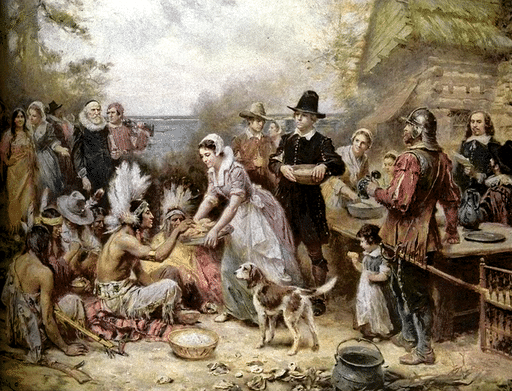
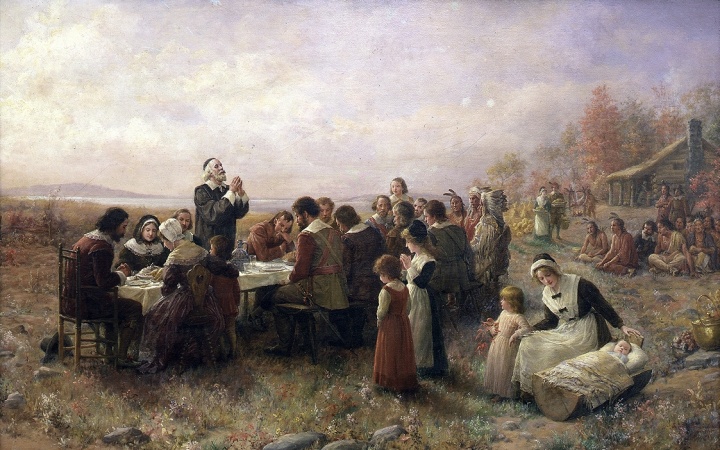
Painting of pilgims giving thanks during a meal.
Where did the Pilgrims get their inspiration for Thanksgiving? Could it have a biblical foundation?

Did you know that the first Thanksgiving in the United States has some strong similarities to the biblical Feast of Tabernacles? Although the pilgrims did not consciously observe this biblical feast, it is interesting to study the parallels between these two celebrations that share the common spirit of thanksgiving to God.

Both were celebrated in the autumn in the northern hemisphere, and both were a time for giving thanks to God for the blessings of the harvest season. Although forgotten by many, the American Pilgrims were a deeply religious people whose heritage was strictly founded on the Bible, both Old and New Testament.

Why did the Pilgrims have this strong attraction to the Hebrew Scriptures? Is it a coincidence that the Pilgrims were the first successful colony in New England and were able to set their stamp on American culture and religion? Let’s explore these questions and see what history reveals.

Few realize how solemnly and literally the Pilgrims took the Bible. Jewish sources in particular continue to note, although recognizing there is not a direct link between the two, the striking resemblance of the Thanksgiving celebration to the Feast of Tabernacles, which Scripture also calls the Feast of Ingathering.

Here is one typical opinion: “Sukkot, the Jewish Feast of Tabernacles, celebrates the autumn harvest; a similarity to the Thanksgiving holiday observed in the United States which is not coincidental. Prior to making their way to the New World, the Pilgrims, themselves the victims of religious persecution, spent several years among Sephardic Jews in Holland. When they later celebrated the legendary first Thanksgiving, their conscious frame of reference was Sukkot” (“Sukkot,”Cyber-Kitchen.com).

English Harvest Home festival

Now it’s true that the Harvest Home festival was celebrated in England at that time, but among the Pilgrims there was a general rejection of observing these English fall celebrations tainted by pagan traditions.

“The Harvest Home was a holiday,” notes historian Diana Karter Appelbaum, “on which the villagers joined together to bring the last loads of grain from the field and share a merry feast when the work was done…There was sufficient taint of idol worship and evidence of licentious behavior in the old English Harvest Home for Puritans to reject the custom summarily. They recoiled from these remnants of the pagan customs that predated Christianity in England, but memories of the harvest feast lingered all the same.

“The Puritans’ shunning of the ancient Harvest Home left a void in the New England year that might not have been problematic had a similar attitude not been extended to other holidays. But the Puritans had disapproved of so many causes for celebration that a holiday vacuum existed in the young colonies. ‘All Saint’s Day’ had been swept off the calendar along with Christmas and Easter, on the grounds that these mixed ‘popish’ ritual with pagan custom.

“Sunday, the occasion in Europe for afternoon ball games, cockfights, plays, gambling, fishing trips and dances, became the Puritan Sabbath, a day passed in prayer, church attendance and devotional reading…Remaining to New Englanders were three holidays—Muster Day, Election Day and the day of the Harvard Commencement” (Thanksgiving: An American Holiday, an American History, 1984, p. 20).

Biblical connection of Thanksgiving

So it seems the Pilgrims didn’t base their Thanksgiving celebration on English feasts, which when linked with pagan customs were generally shunned by them. Where then did they get their inspiration for Thanksgiving? Could it have a biblical foundation?

Notice what David Stern says about the Feast of Tabernacles in The Jewish New Testament Commentary: “Families build booths of palm branches, partly open to the sky, to recall God’s providence toward Israel during the forty years of wandering in the desert and living in tents.

“The festival also celebrates the harvest, coming, as it does, at summer’s end, so that it is a time of thanksgiving. (The Puritans, who took the Old Testament more seriously than most Christians, modeled the American holiday of Thanksgiving after Sukkot [the Hebrew name for the Feast of Tabernacles])” (1996, comment on John 7:2).

This connection is not well known among most secular U.S. historians, but the Jews, who also arrived very early at the New England colonies, have kept track of this historical parallel.

“As Leviticus 23 teaches,” explains Barney Kasdan, “Sukkot was to be a time of bringing in the latter harvest. It is, in other words, the Jewish ‘Thanksgiving.’ In fact, it is widely believed that the Puritan settlers, who were great students of the Hebrew Scriptures, based the first American Thanksgiving on Sukkot” (God’s Appointed Times, 1993, p. 92).

William Bradford, who became the first Pilgrim governor and proclaimed the first Thanksgiving celebration, used the Scriptures—both Old and New Testaments—for guidance in governing the colony.

“Though it’s a uniquely American tradition,” adds a Jewish Web site, “the roots of Thanksgiving go back to ancient Israel. In a real sense, the Jews invented Thanksgiving. I count 28 references to the word thanksgiving in the King James Bible—all but six in the Old Testament. For the ancient children of Israel, thanksgiving was a time of feasting and fasting, of praising God, of singing songs. It was a rich celebration—and still is for observant Jews today.

“Bradford himself studied the Hebrew scriptures. The Pilgrims took them very seriously. The idea of giving thanks to God with a feast was inspired by that knowledge of the Bible. In a very real way, the Pilgrims saw themselves, too, as chosen people of God being led to a Promised Land…

“In addition to proclaiming a day of thanksgiving, like the ancient Hebrews did before them, Bradford and his flock also praised God’s loving kindness, the famous refrain of Psalms 106 and 107 and Jewish liturgy (‘Give thanks to the Lord for He is good, for His kindness endures forever’)” (“Thanksgiving, The Puritans and Prayer,” shalomjerusalem.com/heritage).

Brief history of the Pilgrims’ journey

It’s fascinating to review the Pilgrim’s history and their roots in America.

Attempting to reform the Church of England, the Puritans wanted to base their religion purely on biblical teaching—both from the Old and New Testaments. In England, they pressured the government so much to establish its laws on biblical principles that they provoked the ire of King James I of England. “King James vowed to make these deviants conform or he would ‘harry [harass] them out of the land or else do worse'” (Martin Marty, Pilgrims in Their Own Land, 1984p. 59).

So a group of Puritans fled from England and sailed to Holland. There they enjoyed more religious tolerance, but eventually became disillusioned with the Dutch way of life, believing it was ungodly and that it had a corrupting effect on their children.

A number of these Puritans, seeking a better place to practice their religion, began to set their sights on America. They finally negotiated with a London stock company to finance a journey to the New World.

They sailed from Holland to Plymouth, England, and from there to the new Plymouth they would reach after more than two months at sea. They dropped anchor at Cape Cod in November of 1620. Only about half of the original colonists were true Pilgrims. The rest, whom the Pilgrims called “strangers,” were hired to protect the company’s interests.

The Pilgrims finally disembarked at Plymouth Rock on Dec. 11, 1620. Their first winter was devastating. At the beginning of the following autumn, they had lost 46 of the original 102 who sailed on the Mayflower. But the harvest of 1621 was bountiful and the Pilgrims decided to celebrate with a feast—inviting Native American Indians who had helped them survive their first year. Historians believe that the Pilgrims would not have made it through the year without the help of the natives. The feast lasted three days.

The fledgling Plymouth colony of Puritans would not be the exception to the rule. Over the next 20 years, 16,000 Puritans would migrate from England to the Massachusetts Bay Colony, and many more settled in Connecticut and Rhode Island—thus establishing a lasting influence on American culture and character.

See my blog about the Pilgrims, John Howland and the Mayflower here:


The Pilgrims’ view of themselves

How did the Pilgrims view themselves?

“The Puritans in England,” writes Jewish historian Max Dimont, “regarded themselves as Hebraists. They took the Old Testament as their model of government and tried to reshape the Magna Carta in its image…The British rulers rightly regarded them as Jewish fellow-travelers, and when they departed for the Colonies, the British ruling class wrote them off as good riddance.

“In America, the Puritans modeled their new homeland upon Old Testament principles. When Harvard University was founded in 1636, Hebrew along with Latin was taught as one of the two main languages. Governor Cotton wanted to make the Mosaic Code the law of Massachusetts, and Hebrew at one point almost became the official language of the state” (The Indestructible Jews, 1971, p. 346).

In the preface to his History of Plymouth Plantation, Governor Bradford wrote of his strong desire to learn Hebrew: “Though I am grown aged, yet I have had a longing desire to see with my own eyes something of that most ancient language and holy tongue, in which the Law and the oracles of God were written and in which God and angels spoke to the holy patriarchs of old time . . . My aim and desire is to see holy text, and to discern somewhat of the same, for my own content” (p. xxviii, edited by Samuel Eliot Morison, 1989).

These remarks were followed by some 25 biblical passages in the original Hebrew and their English translation.

It is no accident that the early settlers called their Plymouth Colony “Little Israel,” and they even compared Governor Bradford to Moses. They felt that they had fled lands of oppression and had found a new home, just as the Israelites had once fled Egyptian slavery and settled in the Holy Land. 

It is, then, understandable from the association the Pilgrims had with the Bible and the traditions of Israel, that their Thanksgiving festival would be patterned after the biblical festivals of thanksgiving for abundance and harvest as found in the Bible—in particular, during the fall, the Feast of Tabernacles.

Again, this is not saying there is an explicit link here, just a biblical framework for the Thanksgiving celebration to arise.

Similarities of the Massachusetts Bay Colony

Just north of the Pilgrims’ colony of Plymouth, where the Massachusetts Bay Colony was founded in 1629 mostly by Puritans, we see a similar pattern.

“No Christian community in history,” says Gabriel Sivan, “identified more with the People of the Book than did the early settlers of the Massachusetts Bay Colony, who believed their own lives to be a literal reenactment of the biblical drama of the Hebrew nation.

“They themselves were the children of Israel; America was their Promised Land; the Atlantic Ocean their Red Sea; the Kings of England were the Egyptian pharaohs; the American Indians the Canaanites (or the Lost Ten Tribes of Israel); the pact of the Plymouth Rock was God’s holy Covenant; and the ordinances by which they lived were the Divine Law. . .

“[They] saw themselves as instruments of Divine Providence, a people chosen to build their new commonwealth on the Covenant entered into at Mount Sinai” (The Bible and Civilization, 1973, p. 236).

Puritan laws in America

What kind of laws was the United States founded on?

“In England,” writes Abraham Katsch, “the Puritan identification with the Bible was so strong that some Puritan extremists sought to replace English common law with biblical laws of the Old Testament, but were prevented from doing so. In America, however, there was far more freedom to experiment with the use of biblical law in the legal codes of the colonies, and this was exactly what these early colonist set out to do.

“The earliest legislation of the colonies of New England was all determined by Scripture. At the first assembly of New Haven in 1639, John Davenport clearly stated the primacy of the Bible as the legal and moral foundation of the colony.

“‘Scriptures do hold forth a perfect rule for the direction and government of all men…The Word of God shall be the only rule to be attended unto in organizing the affairs of government in this plantation'” (The Biblical Heritage of American Democracy, 1977, p. 97).

Notice how influential were the Old Testament principles in their civil government.

“Subsequently,” adds Rabbi Ken Spiro, “the New Haven legislators adopted a legal code—the Code of 1655—which contained some 79 statutes, half of which contained biblical references, virtually all from the Hebrew Bible. The Plymouth Colony had a similar law code as did the Massachusetts assembly, which, in 1641—after an exhortation by Reverend John Cotton who presented the legislators with a copy of Moses, His Judicials—adopted the so-called ‘Capitall Lawes of New England’ based almost entirely on Mosaic law” (WorldPerfect: The Jewish Impact on Civilization, 2002, p. 248).

President Nelson’s Video called #givethanks

Much to be thankful for

So we should not forget that Thanksgiving is a feast of giving thanks, not only for receiving God’s blessings today, but also for how He founded America mostly on His biblical laws. He also poured Abraham’s blessings on it, intervening time and time again from its very beginnings to turn it into a rich and powerful nation to help lift up the rest of mankind. The nation has not had a perfect record, of course, but it is still trying to defend the weak from oppressors and to provide a home for those being persecuted.

I know—for I am one of those who was persecuted and was received in the United States with open arms—a gesture for which I will be forever grateful.

Also, we should consider that the biblical Feast of Tabernacles is an annual reminder of how we should thank God for all He has done for us. Indeed, Jesus Christ and His disciples celebrated this festival—and I hope one day you will join us in observing it.  GN United Church of God

Hebrew Feasts – Yuchi North American Indians

0

There are many connections between the ancient People of Judah and the Native Americans of North America. DNA has been found that matches the Jews of Israel with the DNA of Great Lake Tribes east of the Mississippi. The Yuchi Tribe is one of those.

The Yuchi Indians find the area around Chattanooga, Tennessee to be their homeland. The Heartland Model suggest the same area is where the Nephites lived after being chased from Florida by Laman and Lemuel. The Cherokee lived in that same area and were at war with the Yuchi. Some of the descendants of the Nephites could very well be the Yuchi or the Cherokee.

Old World Roots of the Cherokee by Donald Yates (Book)

One of the most important non-LDS books which supports the Heartland Book of Mormon geography!  Old World Roots of the Cherokee: How DNA, Ancient Alphabets and Religion Explain the Origins of America’s Largest Indian Nation, by Dr. Donald N. Yates provides the most stunning new research validating the Heartland Model. The Cherokee share DNA and cultural similarities with ancient Jewish populations. This blockbuster book is critical for the true “remnant” of the Book of Mormon

“Great Surprise”—Native Americans Have West Eurasian Origins. Oldest human genome reveals less of an East Asian ancestry than thought. National Geographic

We need to look no further than the scriptures to know the Lamanites ARE DESCENDANTS of the JEWS.

11 “And again, I command thee that thou shalt not covet thine own property, but impart it freely to the printing of the Book of Mormon, which contains the truth and the word of God—Which is my word to the Gentile, that soon it may go to the Jew, of whom the Lamanites are a remnant, that they may believe the gospel, and look not for a Messiah to come who has already come.” D&C 29:26-27

Uchee Chief

12 “Which is my word to the Gentile, that soon it may go to the Jew, of whom the Lamanites are a remnant, that they may believe the gospel, and look not for a Messiah to come who has already come.” D&C 19:27

13 “And then shall the remnant of our seed know concerning us, how that we came out from Jerusalem, and that they are descendants of the Jews.”
2 Nephi 30:4

“As I read the Book of Mormon, it seemed to me that it was about my American Indian ancestors. It tells the story of a people, a part of which were later described as “Lamanites,” who migrated from Jerusalem to a “land of promise” (1 Nephi 2:20) about 600 B.C.” Larry Echo Hawk, “Come Unto Me, O Ye House of Israel,” Ensign, [Nov. 2012].

Book of Mormon Cities and Places in Green above.

Yuchi Tribe

The Yuchi Indians are a North American Indian tribe belonging to the Southeastern Indian cultural group. Ethnohistorians indicate that during the historic period there were three principal bands of Yuchi: one on the Tennessee River, one in west Florida, and one on the Savannah River. The last of these relocated to the Chattahoochee River around 1715 and became part of the Creek Confederacy. The combined populations of all three groups probably never exceeded 3,000-5,000 persons. Unfortunately, frequent changes in location and confusion over the names applied to the tribe limits information regarding their inhabitancy of Tennessee.

The most outstanding hallmark of the Yuchis is their language, Uchean, which is distinct from all other Native American languages. While a linguistic isolate, Uchean does bear some structural resemblances to the Muskhogean and Siouan linguistic families and has occasionally been misclassified as Algonquian. Because Uchean was a difficult language to speak, most early historical sources refer to the Yuchis using a variety of non-Uchean names, including Hogologue, Tahogale, Chiska, Westo, Rickohockan, and Tamahaita.

The Yuchis referred to themselves as Tsoyahá, meaning “children of the sun.” The term Yuchi probably derives from a reply yú tcí, meaning “at a distance / sitting down,” to a standard southeastern Indian salutation: “Where do you come from?”…

In general, the social customs and lifeways of the Yuchi are similar to other southeastern Indians. They relied on intensive hoe agriculture of corn, beans, and squash, and hunting of white-tailed deer, bear, and elk. Before 1715 the Yuchis lived in permanent towns which were considered either red (war) or white (peace). Each town typically contained a square ground, a hot house, and a ball field, as well as one-room domestic structures. The square ground was the focus of male daily life, and it surrounded the sacred fire. The Busk, or Green Corn Ceremony, was the ceremonial focus of the year….

The Yuchis likely moved up the Tennessee River in the first decade of the eighteenth century, and by 1712 the South Carolina board of Indian trade affairs noted the presence of “Uche or Round Town people” among the Cherokees. Their town was known as Chestua and was probably located near the mouth of the Hiwassee River. The Cherokees referred to this Yuchi town as Tsistu’yi, or “Rabbit place.”… Tennessee Encyclopedia

Yuchi Towns

“Euchee Town” (also called Uche Town), a large settlement on the Chattahoochee River, was documented from the middle to late 18th century. It was located near Euchee (or Uche) Creek, about ten miles downriver from the Muscogee Creek settlement of Coweta Old Town. The naturalist William Bartram visited Euchee Town in 1778. In his letters he ranked it as the largest and most compact Indian town he had ever encountered, with large, well-built houses. US Indian agent Benjamin Hawkins also visited the town and described the Yuchi as “more orderly and industrious” than the other tribes of the Creek Confederacy. The Yuchi began to move on, some into the Florida panhandle

Unexpected Connection: Leviticus, O.T.

“A harvest festival comparison tradition with the Old Testament has revealed remarkable similarity. Native festivals such as their harvest celebration gave cause for early colonials to suspect a tie to the lost tribes of Israel. The connection to the lost tribes is unlikely yet a Hebrew presence within North America is very favorable. Old Testament Leviticus is compared to Yuchi tradition.”

Yuchi Harvest Festival: A Comparison

Jewish Festival of the Booths

“It is their [the Yuchis’] agricultural festival that is so amazing, for it is described in detail in the Bible — in the 23rd chapter of Leviticus. [Dr. Joe] Mahan points out that there are far too many resemblances for this to be accident or shear coincidence.

This is the Feast of Booths (Tabernacles or Succoth), which includes
(1) an eight-day festival
(2) that starts on the 15th day or full moon of the holy harvest month,
(3) living in ‘booths’ throughout the festival
(4) at the religious center of the tribe, and
(5) maintaining a sacred fire.

The first three of these same observances are carried on by some Jews to this very day. The Yuchis make a pilgrimage to their religious center on the 15th day of their harvest month. During the 8-day festival, they live in ‘booths’ that have open spaces in the roofs, and are covered with foliage and tree branches. There is a sacred area in which a fire is kept burning, and they celebrate by walking around the fire in a circle. Two, large, decorated branches are carried by two men during the circling walk, and other men during other parts of the observance shake similar branches. During identical time periods, Jews today who celebrate this festival dwell in booths open to the sky, but covered with fruits, vegetables and foliage. They take circular walks or ‘circumambulations’, and plants tied together into a staff are used for ceremonial shaking. Although the Jewish celebration of Tabernacles no longer has the sacred fire, it is referred to in Leviticus.” Vincent H. Gaddis, “Native American Myths and Mysteries”, CA: Borderland Sciences, 1991, pages 73, 74 Ancient American Magazine

Yuchi Settlements and Tribe Names

Leviticus 23

34 Speak unto the children of Israel, saying, The fifteenth day of this seventh month shall be the feast of tabernacles for seven days unto the Lord.

35 On the first day shall be an holy convocation: ye shall do no servile work therein.

36 Seven days ye shall offer an offering made by fire unto the Lord: on the eighth day shall be an holy convocation unto you; and ye shall offer an offering made by fire unto the Lord: it is a solemn assembly; and ye shall do no servile work therein.

37 These are the feasts of the Lord, which ye shall proclaim to be holy convocations, to offer an offering made by fire unto the Lord, a burnt offering, and a meat offering, a sacrifice, and drink offerings, every thing upon his day:

38 Beside the sabbaths of the Lord, and beside your gifts, and beside all your vows, and beside all your freewill offerings, which ye give unto the Lord.

39 Also in the fifteenth day of the seventh month, when ye have gathered in the fruit of the land, ye shall keep a feast unto the Lord seven days: on the first day shall be a sabbath, and on the eighth day shall be a sabbath.

40 And ye shall take you on the first day the boughs of goodly trees, branches of palm trees, and the boughs of thick trees, and willows of the brook; and ye shall rejoice before the Lord your God seven days.

41 And ye shall keep it a feast unto the Lord seven days in the year. It shall be a statute for ever in your generations: ye shall celebrate it in the seventh month.

42 Ye shall dwell in booths seven days; all that are Israelites born shall dwell in booths:

43 That your generations may know that I made the children of Israel to dwell in booths, when I brought them out of the land of Egypt: I am the Lord your God.

44 And Moses declared unto the children of Israel the feasts of the Lord.

Yuchi Ceremonies

There is a great significance of community ceremonies for the Yuchis today. For many Yuchis, traditional rituals remain important to their identity, and they feel an obligation to perform and renew them each year at one of three ceremonial grounds, called “Big Houses.” The Big House acts as a periodic gathering place for the Yuchis, their Creator, and their ancestors. There most important rituals are the Stomp Dance, the Green Corn Ceremony, and the Soup Dance.

Green Corn Dance

The Green Corn Festival (also called Green Corn Dance or Ceremony) is a Native American celebration and religious ceremony. The dance is held by the Creek, Cherokee, Seminole, Yuchi, and Iroquois Indians as well as other Native American tribes. The festival typically lasts for three days for all tribes and includes numerous different activities that vary from tribe to tribe. For example, the Yuchi tribe celebration begins in late April and early May and last until about the third week of July. The opening day of the ceremony varies across tribes depending when the corn is ripe. This can be any time from May to October and is determined by the “Keepers of the Faith.” Corn is not to be eaten until the Great Spirit has been given his proper thanks.

During the festival, members of the tribe give thanks for the corn, rain, sun, and a good harvest. The thanksgiving is sacred to the Indians. Folk tales are popular telling what happens when thanks is not given. Some tribes even believe that they were made from corn by the Great Spirits. 

The Green Corn Festival is also a religious renewal . Members of the tribe join at a religious gathering and stand with heads bent to show reverence. (Indians never kneel.) After a minute a prayer is said (see Appendix A for a copy of the prayer). In between the thanksgivings is the Great Feather Dance. Depending on the tribe women, may or may not be included in this dance.

Although it is not part of the ceremonial purpose of the Green Corn Dance, council meetings are also seen during the dance and festival. With the exceptions of murder and infractions of marriage rules, the old year’s minor problems are forgiven at the council meetings. Youth who have come of age and babies are given their names. This is a distinct part of Indian life.

The ball game is included in the festival. It is played at different times and the rules vary depending on the tribe. The Yuchi tribe plays a tournament in the early spring (see Appendix B for the Yuchi Tribe’s annual calendar). The Iroquois tribes throw a ball at a pole to see who can throw it the highest. The Yuchi tribes have teams (boys against girls) that try to get the ball into baskets at opposite ends of a field. The Yuchi tribe has four tournament games beginning in April and lasting for four weekends. In the Yuchi tribe the boys throw and catch the ball but may not run with the ball. The girls may run with the ball as well as catch and throw the ball in order to get it into the basket.

Another part of the religious ceremony is the busk. The word busk comes from the word boskita and means to fast. The Creek New Year is marked with this part of the ceremony. At this time, members of the tribe clean out homes, throw out ashes, and buy or make new clothes. All the “filth” and broken items from the tribe are put into one common heap and burned. It is an outward sign of the inward renewal to their religion.

The “Black Drink” is also a way the Indians cleanse themselves and is another sign of renewal. The drink causes vomiting. It purifies participants from minor sins and leaves them in a state of perfect innocence. It also give them courage to be daring during war and strength to keep friendships.

At the end of every day, the people feast. Everyone can participate and enjoy the food and good harvest. Slabs of beef, corn soup, beans, squash are eaten. The tribes celebrate a good harvest and eat many different meals made from corn: tortillas, corn meal, corn bread, corn soup, and others as well.

The Green Corn Festival varies across tribes. This makes it difficult to give you all the information you will need to teach a well thought out unit. However, as I read the overriding theme of diversity and respect was evident. Although the Natives Americans traditions varied they still had respect and gratitude for what they had been blessed with in their lives.

Stomp Dancing

Stomp dancing is an important aspect of Yuchi culture. Historically, stomp dancing has its roots in the Green Corn Ceremony, springtime celebrating harvest, redemption and forgiveness. Men sing stomp dance songs in a call-and-answer format, following a male song leader, who often sets the dance rhythm using a handheld turtle shell rattle.

Women enhance the rhythms with shakers made from box turtle shells worn on their legs. The use of turtle shells is intended to show respect and gratitude to the animal world for providing so many good things for the people.

Yuchi’s believe that the fire at the center of the dance circle is the embodiment of Aba’ Binni’li’ (the Creator) on earth and that the smoke carries our prayers to the Creator. Stomp dancers move counterclockwise around the fire, so their hearts are closest to the fire, and the smoke lifts their prayers to Aba’ Binni’li’.

Soup Dance

Yuchi ceremonial life that are unique. He thus argues for their recognition as a group that is distinct from the Creek, with whom they have been identified for over two hundred years. What is unique for them often is not any substantive differences in content or meaning from that of Creek, Shawnee, or other Woodlands cultures, but in how ceremonial life is “configured” there. For example, the Yuchi Soup Dance, Iroquois Dead Feast, and Shawnee Ghost Feast all share several overarching themes, including the assemblage of ancestors, divisions between male and female roles, and a mood of “dignified gaiety” (p. 258). However, these rites are performed in substantively different configurations. These configurations should not be dismissed as irrelevant, and Jackson provides ample evidence that they result in shifts of primary significance for ritual performance. In the example above, the focus for the Yuchi rests on the communally shared responsibility of the living for maintaining connection with the dead; other tribes’ rites may focus on familial rather than communally shared responsibilities, or they may even shift focus more dramatically to the gendered exchange of food.


Stone Walls of Southern Illinois

0

In year 16-18 AD, Lachoneus gathered all the people to the center of the land. 3 Nep 3:21-24. We believe the center of the land to be at the southern tip of Illinois. There is perfect protection with the Mississippi River on the west and the Ohio River or the Wabash River on the East. In the tip of Illinois is an escarpment and remains of old fortifications and walls all the way across. The article below talks all about those stone walls and fortifications of southern Illinois.

It’s an interesting observation that the designated land went “to the line which was between the land Bountiful and the land Desolation.” It makes sense for Lachoneus to use this as a border; he wouldn’t want to be subject to attack from the north, and that land (Desolation) was considered cursed. Moroni’s America page 221 9

“But Gidgiddoni saith unto them: The Lord forbid; for if we should go up against them the Lord would deliver us into their hands; therefore we will prepare ourselves in the center of our lands, and we will gather all our armies together, and we will not go against them, but we will wait till they shall come against us; therefore as the Lord liveth, if we do this he will deliver them into our hands.”

And it came to pass in the seventeenth year, in the latter end of the year, the proclamation of Lachoneus had gone forth throughout all the face of the land, and they had taken their horses, and their chariots, and their cattle, and all their flocks, and their herds, and their grain, and all their substance, and did march forth by thousands and by tens of thousands, until they had all gone forth to the place which had been appointed that they should gather themselves together, to defend themselves against their enemies.

And the land which was appointed was the land of Zarahemla, and the land which was between the land Zarahemla and the land Bountiful, yea, to the line which was between the land Bountiful and the land Desolation. 3 Nephi 3:21-23

Ancient American • Issue Number 50; Article below is by Wayne May

In southern Illinois, down at the tip, there is archaeological evidence revealing a fortification project of massive undertaking. Ancient people of times gone by, constructed fortified hilltops of earth, stone and wood. These stretch from the Ohio River on the east to the Mississippi River on the west. Every hilltop could have possibly seen one fort/wall to the left and one fort/wall to the right. Signals could be passed along the fortified hilltops very fast in the event of an approaching enemy or just to announce some event. The overall distance for this line of defense is approximately 100 miles in length as a crow flies.

George Jackson, retired Department of Natural Resources employee for State of Illinois, claims that there could be over 40 such structures crossing east to west.

At least 14 pre-Columbian stone structures are known to exist in the hills of southern Illinois. There may be others… walls of which most have been taken down to ground level. In fact, the latest find was made when the foundation courses were accidentally observed, two miles east of Makanda, IL.

These walled structures, forming a rough alignment across the southern tip of Illinois between the Mississippi and Ohio rivers have one striking feature in common. Each is located on top of a high bluff that projects outward. From the rear, they can be approached easily over gently sloping ground; and it is across this approach that the walls are built. On every other side, the structures border on sheer cliffs. This would suggest that their primary purpose was defensive. However, only one (near Stonefort in southern Saline County) has a water supply within it. Stone cairns and stone-lined pits are found beside the entrance gateways of many of the enclosures. They are constructed of drystone masonry, using loose stones of moderate size, mainly from the beds of the brooks flowing along the cliff bottoms. Early records, and the recollections of very old people, indicate that the walls were originally six to ten feet high and about as wide.

Locations of 9 stone wall forts as illustrated in Ancient Man: A Handbook of
Puzzling Artifacts, page 59, published by the Source Book Project, William Corliss

They are now greatly diminished, due to farmers hauling away stones from them. Some, such as the one near Stonefort already referred to, were over 600 feet in length. The amount of labor necessary to build such walls, of stones that had to be carried up from the brook beds 200 feet below, is staggering.

The wall at the Stonefort structure forms half of an accurate ellipse with axis of 450 and 190 feet. It is not easy to see how it could have been so accurately laid out, if the area were as heavily forested at the time as it is now.

The stone walls stretch from the Mississippi River to the Ohio River, as though forming a broken, staggered line south of Carbondale, Marion, and Harrisburg, the three cities of the region, and separating off the southern tip of Illinois. The locations of nine of the walls have been positively identified, and doubtless more were destroyed to make way for modern development or are yet to be uncovered in the thickly overgrown areas of the Shawnee National Forest. One of the more recent examples was found in 1970, in Giant City State Park near Makanda, IL.

The Lewis Wall, at Makanda, is virtually identical to its counterparts. Mr. Allen, a local historian points out, “an inspection of this structure gives a clear idea of the general plan followed for all of them.” The Lewis Wall bisects the top of a steep cliff, running on a linear east-west axis for 285 feet. Six feet high at its highest point, with an average thickness of five feet, the structure is a dry-stone rampart containing an estimated forty thousand stones, all of them apparently conveyed by hand up the sheer incline from the dry streambed two hundred feet below. Stone cairns, or ceremonial rock piles, and pits appear at the rear entrance. The structure was raised ingeniously by fitting together mostly flat stones chosen for moderate size and a rough although uniform fit, the same technique used in building the other walls. “They were not insignificant structures,” Allen insists, “and the amount of manual labor required was great. The many thousands of trips necessary to be made from the brook bed to the top of the bluff, often two hundred feet or more above the creek level, represent a stupendous effort for primitive people, the more so when it is considered that some of these walls were six hundred feet long.”

Archaeologists are unable to confidently associate the Lewis Wall with the Indians, who never engaged in large-scale stonework. Nor do any Native American tribes claim it was the labor of their ancestors. Yet the dating of some of the structures has placed it in the middle to late Hopewell time line. Thanks to the availability of organic material embedded in the structure the wall has been radio carbon-dated to 50 AD, the same time period in which the fortifications of the Hopewell culture took place in the Ohio River Valley. Additional dating has taken place more recently and dates of 400 and 900 AD have been confirmed at the Lewis Wall site.

That this monumental partition has stood fundamentally intact for the last twenty centuries in this major earthquake zone is testimony to its skillful construction. In 1812 the region suffered the most powerful earthquake in U.S. history, when the New Madrid Fault generated enough seismic violence to change the course of the Mississippi River and ring church bells in faraway Virginia. The Ohio and the Mississippi rivers flowed north for 3 days according to pioneer journals of the time. Sadly, farmers have pillaged the stones for building materials since the early nineteenth century, rendering a true conception of its original condition difficult to determine. Other examples, like the wall near Stonefort (a town obviously named after the structure), were more than twice as long, stretching more than 650 feet.

Regional author Judy Magee suggests that the structures may have been originally much larger: “These walls, extending east and west from the gateway, were really one wall almost a quarter of a mile in length. Some believed that this wall and the one around Old Stone Fort on the same mountain were originally eight feet high, while, others believed they were as much as ten or even twelve feet high, especially near the gateways and at the ends.”

Writing of this particular wall, investigator Loren Coleman marveled at its formation of an accurate ellipse with axis of 450 and 190 feet. “It is not easy to see how it could have been so accurately laid out,” he writes, “if the area were as heavily forested at the time as it is now.” Clearly, the organized labor and surveying techniques necessary to construct so many massive ramparts belonged to few if any Native American cultures in the area, but certainly typical of the engineering abilities of Roman-era builders.

The line of stone walls all stand on top of finger like high bluffs thrusting southward, from which they are unassailable. Sheer cliffs fall away on either side, but each structure is easily reached from the north over gently sloping ground.

Allen points out that “a man could scale those cliffs only by careful and strenuous effort. They thus have many of the characteristics that would make them into desirable forts.” Their positions appear to have been not only chosen for specific environmental qualities, but also somewhat modified to meet certain military requirements. The erection of this first-century Maginot Line might well have been aimed at keeping away hostile parties. Any attackers would naturally want to strike up the Mississippi and Ohio, but their passing would have been effectively blocked at these easily defended rivers. But what of the stone cairns at the wall entrances? Could they be collapsed towers?

Beyond these wall fragments, the rest of the fortifications must have disintegrated long ago. The abundant forest timber of southern Illinois and scarcity of buildingstone quarries could well have compelled the people of the time to construct their homes, temples, and palaces of wood. Then, as now, builders made their structures from the local material at hand. In the event of a lost war or lethal epidemic, either of which could have forced abandonment of the site and dispersal of the inhabitants, the buildings-reduced to ashes or left to the natural processes of neglect and decay for tens of centuries- – simply would have dissolved without a trace. Of course, if this was the gathering place of a forgotten people they may have only been in the area for a short time. Could this southern tip of Illinois have been a fortified sanctuary in time of trouble, a place of resort to face some invading foe? We will probably never know for sure. But, with the Ohio River on the east flank and the Mississippi on the west flank and the stone walls meandering across the state from the east to the west, forming an inverted pyramid, it would be a great place for a long defensive siege.” Wayne May Ancient American Magazine Volume 50

“Be not deceived, even Satan can appear as an angel of light”

0

“The Book of Mormon is truly unique. To illustrate, I quote from Elder Jeffrey R. Holland and his wife, Pat. She reported that many years ago while Jeff was working on his PhD at Yale University, he got to know one of the senior reference librarians who provided him valuable help in researching his dissertation.

One day, Jeff said, “Ilene, I need to know how many books we have in either the Sterling Memorial or Beinecke Rare Book Libraries that claim to have been delivered by an angel.” The librarian gave him a peculiar look and said, “I don’t know of any books that have been delivered by angels.” Brother Holland replied, “Well, just run a check for me, would you? It may take a little doing, but I really would like to know. It would help me with some religious writing I am doing.” (In recounting this experience, Sister Holland noted that Yale University at that time had the fourth-largest library in the nation, with nearly 9 million volumes in its collection.)

Ultimately, Ilene fulfilled this request. She reported to Brother Holland, “I have a book for you. I found one book which, it is claimed, was delivered by an angel.” She held up a paperback copy of the Book of Mormon. “I’m told you can get them for a dollar. “My word,” she continued. “An angel’s book for a dollar. You would think angels would charge more, but then again, where would they spend it?”

An angel did deliver a written text to the Prophet Joseph Smith. The angel Moroni told Joseph that “there was a book deposited, written upon gold plates, giving an account of the former inhabitants of [the American] continent, and the source from whence they sprang. He also said that the fulness of the everlasting Gospel was contained in it, as delivered by the Savior to the ancient inhabitants;” The Book of Mormon: A Miraculous Miracle President Russell M. Nelson President of the Quorum of the Twelve Apostles June 23, 2016 (“the American” was in the original quote. I believe American is the USA, not Central or South America)

Be Grateful

In this time of challenging and rapid change in the world, we must remain valiant to our Savior and His Church leaders. Follow President Nelson and the 14 in all they say. “Stay on the Covenant Path”, as our Prophet says.

Just this past Friday our Prophet asked us to be grateful. He also said, “We are grateful for all those who are striving to combat the covid pandemic, please bless them with protection and inspiration. Wilt Thou help us end this virus which has plagued so many of Thy children.” President Russell M. Nelson Nov 20, 2020 #givethanks #bookofmormonevidence

The quote that hit home to me this past Friday was simple but powerful. Pres Nelson said, “Relieve us of political strife” Russell M Nelson Nov 20, 2020 #givethanks

Below is the Prophets council if you haven’t heard it. 

An Angel of Light

I truly believe our country is close to the end. I have no idea if that is a few months a few years or 10 years or more, but we are close to losing the blessings of this great country. Why? Because I feel there is so much wickedness and desire for money and power now in our world than ever before. 

I believe Satan is appearing as that angel of light to deceive us. Our constitutional rights are being ripped from us. This was a fraudulent election and I strongly feel Pres Trump won this election. I pray the Lord will spare us a little longer. At the core of most Democrats are evil ideas of abortion, no freedom of speech nor worship, no right to bear arms, and socialism. I believe the Republican Party is almost as corrupt, but I believe in the honorable results I have seen with President Trump. I believe he loves America and we as a people. I pray the Lord will help our courts of law come to the correct and proper decisions.

Complaining or kicking against the pricks is wrong and will lead you nowhere but the bottom. Remember the quote, “Obedience is greater than Sacrifice?” (see 1 Samuel 15:22). With our leaders it is  better to simply be obedient than worry about why they are asking you to do something. “Just Do It”. Not blind obedience, but faithful obedience. If the Book of Mormon is the truth (and it is), then obey it. If Joseph Smith is and was a Prophet (which he is and was), just obey him. Stop trying to find fault with Brother Joseph. I know the Church of Jesus Christ of Latter-day Saints is true and I continue to strive to be obedient to our leaders teachings. The difference between a righteous and a wicked person is simply this. The righteous are continually being obedient and repenting. The evil don’t have a desire to obey anything and they are never repenting. 

Revelation in a Changing World
Boyd K. Packer of the Quorum of the Twelve Apostles Oct 1989

All inspiration does not come from God. (See D&C 46:7.) The evil one has the power to tap into those channels of revelation and send conflicting signals which can mislead and confuse us. There are promptings from evil sources which are so carefully counterfeited as to deceive even the very elect. (See Matt. 24:24.)

Nevertheless, we can learn to discern these spirits. Even with every member having the right to revelation, the Church can be maintained as a house of order.

Revelation comes in an orderly way in the Church. We are entitled to personal revelation. However, unless we are set apart to some presiding office, we will not receive revelations concerning what others should do…

An unusual spiritual experience should not be regarded as a personal call to direct others. It is my conviction that experiences of a special, sacred nature are individual and should be kept to oneself.

Few things disturb the channels of revelation quite so effectively as those people who are misled and think themselves to be chosen to instruct others when they are not chosen.

Others, fearing they also might go astray, then hold back and do not seek the source of divine revelation. Obedience to constituted priesthood authority will protect us from going astray.

There are those within the Church who are disturbed when changes are made with which they disagree or when changes they propose are not made. They point to these as evidence that the leaders are not inspired.

They write and speak to convince others that the doctrines and decisions of the Brethren are not given through inspiration.

Two things characterize them: they are always irritated by the word obedience, and always they question revelation. It has always been so. Helaman described those who “began to disbelieve in the spirit of prophecy and in the spirit of revelation; and the judgments of God did stare them in the face.” (Hel. 4:23.) “They were left in their own strength” (Hel. 4:13), and “the Spirit of the Lord did no more preserve them; yea, it had withdrawn from them” (Hel. 4:24).

Changes in organization or procedures are a testimony that revelation is ongoing. While doctrines remain fixed, the methods or procedures do not.”
https://www.lds.org/general-conference/1989/10/revelation-in-a-changing-world?lang=eng


3 Grand Keys

Instructions given by Joseph Smith the Prophet, at Nauvoo, Illinois, February 9, 1843, making known three grand keys by which the correct nature of ministering angels and spirits may be distinguished.

D&C 129:1 There are two kinds of beings in heaven, namely: Angels, who are resurrected personages, having bodies of flesh and bones—

2 For instance, Jesus said: Handle me and see, for a spirit hath not flesh and bones, as ye see me have.

3 Secondly: the spirits of just men made perfect, they who are not resurrected, but inherit the same glory.

4 When a messenger comes saying he has a message from God, offer him your hand and request him to shake hands with you.

5 If he be an angel he will do so, and you will feel his hand.

6 If he be the spirit of a just man made perfect he will come in his glory; for that is the only way he can appear—

7 Ask him to shake hands with you, but he will not move, because it is contrary to the order of heaven for a just man to deceive; but he will still deliver his message.

8 If it be the devil as an angel of light, when you ask him to shake hands he will offer you his hand, and you will not feel anything; you may therefore detect him.

9 These are three grand keys whereby you may know whether any administration is from God.

Be not deceived, even Satan can appear as an angel of light. See 2 Corinthians 11:14

American’s Please Repent

When the lord says below “at that day” he is speaking of we in the USA today. We are the ones sinning against His gospel, so now that day of the Gentile is leaving us. Look at our world of riots, looting, dishonesty, immoral behavior, corruption in Government, abortion, etc. That’s why the Lord says below that He will bring “the fulness of my gospel from among them.”

 “And thus commandeth the Father that I should say unto you: At that day when the Gentiles shall sin against my gospel, and shall reject the fulness of my gospel, and shall be lifted up in the pride of their hearts above all nations, and above all the people of the whole earth, and shall be filled with all manner of lyings, and of deceits, and of mischiefs, and all manner of hypocrisy, and murders, and priestcrafts, and whoredoms, and of secret abominations; and if they shall do all those things, and shall reject the fulness of my gospel, behold, saith the Father, I will bring the fulness of my gospel from among them.” 3 Nephi 16:10

The Lord is speaking to us! To whom? Citizens of the United Stated of America. I must repent and I urge us all to do the same, for repentance is the only way this country can continue to exist. We are ripe to be swept off this Choice Land.

Nephite Geology- Swamps, Marshes, Escarpments, Lakes & Rivers

0

In the Heartland of the United States you will find many interesting geological features that help you create a map about ancient dwellings of the Book of Mormon People.

Each map I share with you will teach you incredible information of the travel and routes of the Nephites and Lamanites. Where they could have traveled and where there was an impossible obstacle that could not be overcome. All of these things effect the time and mode and way of travel.

Where would they have lived and why and what archaeology may validate it? What would be the best places of defense or where to build a fort. How important to have high places where you could see your enemy? What method of transportation would be best, walking or canoe? Where to build a city and live for long periods because of the nearby farm land or type of soil?

Considering the Heartland of the United States has changed over the years, how would those changes effect the Nephites. In other words what terrain or lake is not present today that could have been there many years ago? How could those changes effect where the Nephites lived or fought?

My purpose in this blog is to let you know about ancient lakes, rivers, terrain, artifacts, swamps, fortifications, marshes, and climate that would have a major impact on where the Nephites lived and defended their territory. What geological features are not present today in the Heartland that were very important to the survival of the Hopewell Culture or as we would call it the Nephite Culture?

Below is the overall main map of the entire Nephite territory!

Great Black Swamp 

“It is hard to believe that there once lay a terrible swamp beginning in the vicinity of South Boundary Street and running as far south as Findlay, Ohio, and east and west from the city of Sandusky nearly to Fort Wayne, Indiana…40 miles wide and 120 miles long. It was the Great Black Swamp, an oozing mass of water, mud, snakes, wolves, wildcats, biting flies, and clouds of gnats and mosquitoes. It was nearly big enough to cover the entire state of Connecticut. 

Water, often up to the belly of a horse, stood on the surface until it evaporated in the hot summer months. When it rained, or thawed in the winter, it was water and muck. Much of the swamp was covered with an almost impenetrable forest of giant oak, sycamore, hickory, walnut, ash, elm, maple and cottonwood trees, except in a few prairie areas where limestone just under the surface would not support timber growth. 

Not even native Indians went into the swamp except to hunt, and unless you could follow a blazed trail, it was easy to become hopelessly lost since you could only see but a few yards ahead. 

The enormous weight of the mile-thick ice pack pressed down and scooped out the earth beneath it to create a depression about 10 feet lower south of where Perrysburg sits on the river bluff. Thereafter, until it was drained, water stood in the silted wetland and clay in the ground prevented it from soaking in. When water was standing and flooding conditions occurred, large fish from the Maumee River and other streams could swim all over areas now covered by corn and soybean fields. One man in Perrysburg told of ice skating all the way to what is now Weston, Ohio, nearly 17 miles southwest of Perrysburg. 

There was no end to the variety of sicknesses and maladies spawned from the mosquito-infested swamp. There was cholera, typhoid and milk sickness, but chief among them were malarial fevers generally known as “ague” for which people kept quinine powder on the table, along with salt and pepper, to sprinkle on their food. 

The fevers caused people to have chills, or the shakes, and according to a doctor of the time it took them from three to five years to get over it. The shakes occurred from about the first of July until the first frost. They took hold of people and literally shook them up. The doctor wrote that so violent were the chills and shaking that when they came on, the very bed and floor would rattle. 

The Black Swamp was Ohio’s last frontier, and beginning in the 1840s, it took several generations of determined farmers to drain it and make it the rich, flat farmland of today. What started it all was pretty much the idea of the medical profession which believed that it was bad swamp air that caused the fevers. 

They were ignorant of the fact that it was blood-sucking mosquitoes that transmitted the disease, but at least they were on the right track. Along with this, when canals and railroads came through here they created markets for the vast timber resources, most of it in the swamp. And still another good reason for beginning the tremendous job of draining the swamp was the realization that it could be done. People learned from trying to build roads that they could dig ditches and the water would flow toward the nearest stream of river. 

Until then, early farmers tilled just the highest ground, with some effort to build shallow, open ditches around a plot or field, or one leading to the nearest creek if available. As more settlers came, farmers would sometime cooperate in extending their adjoining ditches. 

Finally, in 1850, the Ohio legislature passed the first law regarding government support for drainage systems resulting in people throughout Northwest Ohio cooperating in wide-area drainage, with ditches deep enough to drain the swamp water into Lake Erie via the Maumee and Portage Rivers. 

Individual farmers continued to dry out their fields by plowing trenches across them, using wooden troughs laid underground, and eventually with clay tiles and pipe introduced by European farmers. 

It took back-breaking labor and construction of one of the greatest underground drainage systems in the history of the world to create the productive farmland we now drive by and take for granted just outside of Perrysburg.” Historic Perrysburg Inc 2006-2012 

Great Black Swamp Book of Mormon Features-
Narrow Neck
Line Bountiful/Desolation

Great Kankakee Marsh Book of Mormon Features-
Narrow Neck
Line Bountiful/Desolation
Hagoth’s Launch

Grand Kankakee Marsh 

”Located along the historic Kankakee River, the park is dynamically affected by seasonal flooding. This, along with different natural communities, provides ideal feeding in the fields for a variety of wildlife. Densely wooded areas and the remnants of old river channels provide excellent habitat for a large deer herd, many species of ducks, and other wildlife. Preservation of these natural habitats is one of the primary goals of the Lake County Parks and Recreation Department. 

Hunting, wildlife and bird viewing, biking, hayride tours and canoe workshops make up the majority of recreation opportunities at the Marsh. The levees are also heavily used as bridle trails. GKM, along with Stoney Run and Deep River, are the Lake County Parks where the public may ride their horses. For the past 19 years, the park has been the site of the annual Voyageur Rendezvous, a living history reenactment of the early French fur trade era that presents educational information in a colorful re-creation. 

 GKM was acquired in 1977 with assistance from the Nature Conservancy. Through the years the marsh has been developed and managed for wildlife as well as public use. The careful management and regulation of hunting seasons has helped to make this property a noteworthy hunting area. 

The majority of the park land was acquired through grants. In 1977 $425,000 was provided by the Land and Water Conservation Fund for the purchase of 872 acres. Since then many other grants, donations, and purchases have been combined to increase the park site to 2,069 acres. 

In 1991, the park department received an Indiana Waters Grant of $250,000 (Dingle/Johnson Funds) to construct public access site on Kankakee River at Grand Kankakee Marsh. Special design included floating finger pier that “rides” with the 12′ high and low levels of the river. Parking for ten cars with trailers adjoins handicapped accessible ramp. 

Summary 

The Grand Kankakee Marsh that bordered the Kankakee River once consisted of between 500,000 and 600,000 acres of marsh land in Indiana. 

It was from two to fifteen miles wide for the length of the river in Indiana and was the largest contiguous marsh in Indiana and one of the largest on the continent. 
 

To understand how such a magnificent Marsh could be obliterated, one must consider the prevailing sentiment in the country at the time. The push was one to settle the area and then stake claim to the land further West. Settlement, at the time, meant agriculture. 

Portions of the Kankakee Marsh soil were a black, sandy loam, three to six feet deep. This was potential prime farm land, all that needed to be done was to remove the water. Once the actual draining process began and well connected land speculators became involved, the drainage project became unstoppable. The voices of those who objected to the project could not be heard over the din of the activities of the steam shovels.” Lake County Parks and Recreation Department Corporate Office 

Lake Tight 

A GREAT LOST RIVER GETS ITS DUE By WALTER SULLIVAN 
NY Times Published: November 29, 1983 

GEOLOGISTS now believe that one of the great master rivers of world history once flowed west from the eastern portion of the United States and was responsible for much of the land and stream formation as far west as the Mississippi valley. 

Its deep gorges and broad valleys, as well as remnants of its many tributaries, now lie hidden under glacial deposits covering the region south of the Great Lakes. 

Not until recently has the existence of such a river – probably formed more than two million years ago and almost certainly never seen by human eyes – finally become accepted. 

Yet early explorers of the Ohio River drainage basin did begin to note early on that there was something very mysterious about its topography. 

In 1838 a Dr. P. Hildreth wrote, in the first annual report of the Geological Survey of Ohio, ”Great changes have evidently been made in the direction of all our watercourses before they found their present levels.” 

Typical of the evidence for such changes was the observation by Gerard Fowke in 1886 that the deep gorge west of Chillicothe, Ohio, could not have been formed by the trickles of Paint Creek, its present occupant. It must, he said, have been cut by a mighty river. His proposition, however, was met with great disdain by the conventional geologists of the time. 

In 1903 William G. Tight of Denison University in Granville, Ohio, made a similar observation in West Virginia: The deep valley running westward from Charleston to the Ohio River, he said, carries no significant flow of water beyond St. Albans, where the Kanawha River suddenly turns north. Professor Tight sought in vain to persuade the geological community that this valley once carried a mighty river that continued across Ohio, Indiana and Illinois through a valley now deeply buried under glacial deposits. He called it the Teays (pronounced taze) River, for a village in West Virginia. 

Mahomet Valley

After its discovery by coal explorers, the hidden river valley across Illinois was called the Mahomet Valley, for a town where the river is most deeply buried. But geologists did not then regard it as a continuation of the Teays, as most of them now do. 

Some rivers, such as the Scioto in Ohio, have completely reversed their ancient direction of flow. The Scioto now flows south over a deep bed of glacial material, past Columbus and Chillicothe, to the Ohio River at Portsmouth. The bedrock beneath it, however, shows that it once formed a section of the Teays where it flowed north. 

A key factor in changing direction was the formation of a ”forebulge’‘ in front of the advancing ice, produced in much the same way as marshy ground bulges forward when one walks across it. 

Earlier this year a conference was held at the Newark campus of Ohio State University to discuss the role of the Teays River valley in providing migration paths for southern plant life into Ohio. Isolated groves of magnolias grow wild along the old riverbed, as do some species of azalea and rhododendron. 

A related mystery of long standing is the presence of enormous boulders of alien origin in parts of Kentucky, far south of the known limits of ice advance. 

The boulders seem more typical of rocks from the Adirondacks or the region between Ottawa and Quebec. The Epworth Boulder in Lewis County, Ky., weighs 16 tons. 

It seems clear that they must have been carried south by ice, yet there are no other glacial deposits in the area. One possibility is that they were left by a very early glaciation. 

Teays River or Ohio River

Still the notion of such a river remained unpopular, but over the years it has been slowly rolling along toward acceptability. Now, as was manifest at last month’s meeting of the Geological Society of America in Indianapolis, scientists believe the evidence is overwhelming. One entire session of the conference was devoted to tracing the course and complex history of this ”new” American river – the Teays. 

The buried river and its surrounding landscape have now been charted by recording the depths to bedrock of tens of thousands of water, oil and gas wells. This procedure has revealed the location of most of the main stream and its tributaries, but there are still gaps. 

Near Springfield, Ohio, for example, one of the buried tributaries seems to stop at a wall of stone. No route around the wall has yet been found. Various improbable explanations have been advanced, Dr. Richard P. Goldthwait of Ohio State University points out, such as, for example, a passage through extensive underground caverns. 

An early clue to the Teays’s route across Illinois was uncovered in the 1880’s, when a coal company sank an exploratory shaft on the edge of Urbana. At a depth of 125 feet, water began pouring into the excavation at such a stupendous rate that the company soon renamed itself the Union Water Supply Company. 

What finally killed the Teays River and gave birth to the Ohio River were the repeated southward advances of mile-thick ice sheets. For a time the ice dammed the Teays, forming what geologists now call Lake Tight, whose silty deposits cover much of Ohio. 

After the ice reached its southern limit and began retreating, it unloaded its burden of rock, gravel, sand, clay and silt, leaving the landscape, including the Teays valley, buried under hundreds of feet of glacial ”drift.” 

Torrents of water from the melting ice formed the Ohio River along what had been the ice’s farthest southward advance. 

Today, wells in that area provide two dozen public and industrial water systems with 50 million gallons of water daily, and the Indianapolis conference was told there is no evidence of severe depletion. In a sense the river is still there, though it no longer flows in one long continuous stream. It is believed that much of the water in the ancient bed of the Teays comes from regional rainfall that drains down into the aquifer, rather than from its original tributaries to the east. The wells penetrate as much as 300 feet of glacial drift that fills the valleys where the buried river joined an earlier course of the Mississippi. 

Teays River 

Abstract 

The Teays River was a preglacial river which drained a large portion of the east-central United States. The river met its end when Pre-Illinoisan (Early Pleistocene) ice sheets dammed the region, causing the formation of a large glacial lake, resulting in breached drainage divides and the formation of new drainage channels. These changes would eventually result in the creation of the modern Ohio River drainage system. 

Geographic Setting 

The Teays River was a preglacial river, comparable in size to its eventual successor, the Ohio River. The Teays River drained a large portion of the east-central U.S., including almost two thirds of Ohio (Hansen, 1995). The River’s headwaters were located near Blowing Rock, North Carolina and subsequently flowed through Virginia, West Virginia, Ohio, Indiana and Illinois. (Hansen, 1995). 

http://academic.emporia.edu/aberjame/student/smith5/figure1.jpg

Figure 1. Teays River Valley (From Teller, 1991) 

Old Kentucky River

The largest tributary to the Teays River was the Old Kentucky River (Teller 1991), which extended from southern Kentucky through Frankfort (where I currently reside), and subsequently flowed northeast, meeting other tributaries and eventually joining the Teays. 

In Virginia and West Virginia, the Teays River flowed in the valleys of the modern New River and Kanawha River (Hansen, 1995). The river then flowed west to Scioto County, Ohio and to Ross County, Ohio near Chillicothe. The valley then disappears under glacial sediments but can be tracked using water well yields and other means (Hansen, 1995). A total of seven tills have been identified within the Teays River Valley (Andrews, 2004). In portions of Ohio, the buried valley is up to 2 miles wide and lies beneath 500 FT of glacial sediments (Hansen, 1995). 

Figure 2. Google Earth image showing remnant of Teays River Valley in Southern Ohio (N-S oriented river is the present day Scioto River). 

Teays River Origins 

The origin of the Teays River is up for debate. Some believe that the Teays formed during the Tertiary (Hansen, 1995). This scenario dates the formation of the Teays to approximately five million years ago, when water flowing from the Appalachian Mountain region carved channels while flowing to lower elevations (Ohio Department of Natural Resources). Another possibility is that the westward flowing Teays was a result of even earlier Pleistocene glaciations (Figure 3), which rerouted an earlier drainage system flowing to the Great Lakes region (Gray, 1991; Andrews 2004; Dutch 1999). 

http://academic.emporia.edu/aberjame/student/smith5/figure3.jpg

Figure 3. Possible Pre-Teays Drainage (From Dutch, 1999) 

Glaciation and the Teays River 

Pre-Illinoisan (Early Pleistocene) glaciations brought an end to the Teays River (Hansen, 1987), although specific dates were poorly constrained prior to recent cosmogenic isotope dating of fluvial deposits (Andrews, 2004). Dating of sediments suggests that the glacial advance which blocked the Teays did so sometime between 1.3 and .78 million years ago (Andrews, 2004). 

The advance of ice sheets eventually dammed the Teays resulting in the formation of glacial Lake Tight, which is named after William George Tight, professor of geology and botany at Denison University. Tight published an article entitled “Drainage modifications in south-eastern Ohio and adjacent parts of West Virginia and Kentucky” in 1903 (Hansen, 1987). The article gave evidence for the existence of a preglacial river that had origins in the Appalachians (Tight, 1903). 

http://academic.emporia.edu/aberjame/student/smith5/figure4.jpg

Figure 4. Glacial Lake Tight (From Hansen, 1987) 

Lake Tight rose to an elevation of nearly 900 feet and created a number of lakes in tributary valleys (Hansen, 1995). The lake extended into portions of Ohio, West Virginia, and Kentucky and covered approximately 7000 square miles. Dating of the seasonal changes in preserved lake bottom sediments (known as the Minford Clay) indicate the lake was present for greater than 6500 years (Hansen 1995). These clays were analyzed by Bonnett et al and determined to have reversed polarity, indicating that if they were deposited in the Pleistocene, they were deposited during the Matuyama reversed polarity chron (Bonnett, 1991). This data suggests a glaciation and Lake Tight formation date between 0.79 and 1.6 million years ago (Bonnet, 1991). 

The waters of Lake tight created new drainage as it breached drainage divides and created new drainage channels which were lower in elevation than the Teays (Hansen, 1995). This new drainage system named Deep stage would mark the beginning of the Ohio River system, although subsequent glaciations would be needed to carve the modern Ohio River (Hansen, 1995). 

The Teays River gradually changed its course as glaciations dammed and filled trunk valleys several times, forcing rivers beyond the glacial margin to establish new channels (Teller, 1991). This likely happened in a step process as continental ice sheets invaded the Teays River watershed (Teller, 1991). The largest tributary – the Old Kentucky River – was diverted resulting in flow of these waters west to the Old Ohio River (see figure 1 for river locations) (Teller, 1991). 

http://academic.emporia.edu/aberjame/student/smith5/figure5.jpg

Figure 5. Modern Ohio, Kentucky and Licking Rivers near northern Kentucky (Musser, 2007). 

Modern Remnants 

Although the Teays River no longer exists it has resulted in many lasting impacts. Many people live atop the ancient Teays River Valley which is filled with glacial sediments. These sand and gravel sediments create a productive aquifer for municipal water supplies (Ohio Department of Natural Resources). In addition to providing a groundwater resource, the river also has an impact on the biology of the region. Shawnee State Forest contains isolated patches of several Appalachian plants far to the north of their native ranges. Their origins are believed to be from deposition as seeds were carried downstream from their original habitat prior to the glaciations (Ohio Department of Natural Resources). The river is also credited for isolating endangered species of cave beetles in Ohio, where they are the only known specimens north of the Ohio River. The beetles were likely stranded as the Teays river changed course (Ohio Department of Natural Resources). In addition, the Minford clay is mined in some areas as a raw material for making brick and ceramic products (Hansen, 1995). 

References 

Andrews, William M. Jr., 2004, Geologic Controls on Plio-Pleistocene Drainage Evolution of the Kentucky River in Central Kentucky, PhD Dissertation, University of Kentucky. 

Bonnett, R.B., Noltimier, H.C., and Sanderson, D.D., 1991, Apaleomagnetic study of the early Pleistocene Minford Silt Member, Teays Formation, West Virginia, in Melhorn, W.N., and Kempton, K.P., eds., Geology and hydrogeology of the Teays-Mahoment Bedrock Valley System: Boulder, Colorado, Geological Society of America Special Paper 258. 

Dutch, Steven, 1999, Pleistocene Glaciers and Geography, Accessed Online http://www.uwgb.edu/dutchs/earthsc202notes/glacgeog.htm.See glaciers

Gray, H.H., 1991 Origin and history of the Teays drainage system: The view from midstream, in Melhorn, W.N., and Kempton, K.P., eds., Geology and hydrogeology of the Teays-Mahoment Bedrock Valley System: Boulder, Colorado, Geological Society of America Special Paper 258. 

Hansen, Michael C., 1987, The Teays River, Ohio Geology Newsletter Summer 1987, Ohio Department of Natural Resources, Division of Geological Survey. 

Hansen, Michael C., 1995, The Teays River, GeoFacts No. 10, Ohio Department of Natural Resources, Division of Geological Survey. 

Musser, Karl, 2007, Ohio River Map, Accessed Online http://commons.wikimedia.org/wiki/File:Ohiorivermap.png.See ohio

Ohio Department of Natural Resources: Ohio’s Ancient Nile-The Teays River, Accessed Online http://www.dnr.state.oh.us/parks/magazinehome/magazine/sprsum04/teaysriver/tabid/364/Default.aspx.See ohio

Teller, J.T., and Goldthwait, R.P., 1991, The Old Kentucky River; A major tributary to the Teays River, in Melhorn, W.N., and Kempton, K.P., eds., Geology and hydrogeology of the Teays-Mahoment Bedrock Valley System: Boulder, Colorado, Geological Society of America Special Paper 258. 

Tight, W.G., 1903, Drainage modifications in southeastern Ohio and adjacent parts of West Virginia and Kentucky: U.S. Geological Survey Professional Paper 13. 

River Watersheds

Watershed’s or ridges of land that separate waters flowing to different rivers, basins, or seas, would be significant in Nephite geography. Continental divides and the flow of significant rivers, would also be key geological features in Nephite history. Rivers would have been the highways of the Nephites.

Erigan River

Glaciers Shaped the Ohio River

Weak Ice Ages began occurring as early as 5 million years ago.  Gradually, they became more severe.  1.4 million years ago, for the first time, glaciers advanced through valleys incised by the Erigan River drainage.  This river system flowed through the present day sites of the Great Lakes which didn’t exist yet.  The Laurentide ice sheet obliterated the Erigan River system and advanced beyond another major, now extinct, river–the Teays.  The Teays River began in the North Carolina mountains and flowed in a northwesterly direction through what today is Virginia, West Virginia, Ohio, Indiana, and Illinois before emptying into the Mississippi River.  Glaciers formed a dam, blocking the northwesterly flow of the Teays River and creating the massive Lake Tight, a 7000 square mile body of water as deep as 800 feet in some spots.   Lake Tight must have been quite a sight–gray gravel and ice on the northwestern side and green boreal forests of spruce, pine, and northern hardwoods on the southeastern shore.  Many species of fish lived in the water, attracting great flocks of gulls; and it was a summer destination for duck, goose, and swan.  The churning waters spawned big waves like those of an ocean rather than a lake.  Overflow from the lake was captured by a minor tributary of the Cumberland River.  The ice forced the water to erode backward into bedrock, lengthening this tributary. This large creek/small river became the mighty Ohio river.  When the glacier retreated, the ice dam melted, releasing an incredible quantity of water into the Ohio river and incising a deeper valley toward its outlet, the Mississippi River. 

https://i0.wp.com/academic.emporia.edu/aberjame/student/salley3/teays.jpg

The ancient Teays River was  a major regional drainage system during the Pliocene and early Pleistocene.  The advance of glaciers during Pleistocene Ice Ages dammed this river, allowing a minor tributary of the Cumberland River to capture the stream flow.  This small river became the mighty Ohio. 

https://i2.wp.com/www.ohio.edu/orbcre/basin/index_files/image001.gif

Map of Ohio River drainage. Glaciers pushed the water content of the Teays River south, creating the Ohio River instead.  Formerly, it was a small tributary. 

The Orange or Reddish outline above is the Ohio Water Basin. Technically you could walk this entire water shed as this is the dry land where the rivers begin and all rivers flow into Ohio River in dark blue.

Subsequent glacial advances during Ice Ages over the past 1.4 million years have had a major influence on the shape of the Ohio River.  The southern lobe of the Laurentide ice sheet frequently advanced far enough south to push sediment into the northern part of the Ohio River, damming tributaries and creating an extensive network of lakes.  During glacial maximums there were always a chain of lakes along the Ohio border with West Virginia and Kentucky.  The Illinois Ice Age was 1 of the most severe.  It lasted from ~240,000 BP-~135,000 BP.  The Laurentide ice sheet advanced as far south as northern Kentucky–its greatest extent ever.  This backed up lakes from the present day site of Louisville to the Pennsylvania border, forcing water into the Ohio River headwaters and incising 45 feet of bedrock. 

Though the Wisconsin Ice Age (~114,000 BP-~11,000 BP) was not as severe as the previous glacial advance, the Ohio River valley was frequently incised by pulses of glacial meltwater.  A recent study of river sediment found that changes in the Ohio River were closely correlated with global climate change.  Warmer climate phases within the Ice Age were associated with greater incising and erosion, resulting from melting ice and large water discharge.  Colder climate phases and lower water discharge caused greater sediment build-up, known as aggradation. 

Today, the Teays River valley is mostly hidden by sediment, but its descendent is clearly visible on maps.  Government officials used the Ohio River as a convenient demarcation to draw up borders between states.  Imagine how different a modern day map of the United States would look, if there had been no Ice Ages, and accordingly, no Ohio River worth noting. 

Reference: 

Counts, Ronald; et. al. 

“Late Quaternary Chronostratigraphic Framework of Terraces and Alluvium along the lower Ohio River, Southwestern Indiana, and Western Kentucky” 

Quaternary Science Reviews February 2015 

Mississippi Embayment 

The Mississippi Embayment of North America, a northward extension of the Gulf of Mexico coastal plain, is a southwestward-plunging trough containing ∼1.5 km of Cretaceous and Cenozoic sediments. The Embayment is underlain by the early Paleozoic Mississippi Valley graben basement fault complex. Previous authors have attributed Embayment subsidence to the opening of the Gulf of Mexico. However, the Embayment subsided 60 million years after cessation of the sea-floor spreading in the Gulf. We have previously argued that the Mississippi Embayment formed as a result of the westward passage of faulted crust (Mississippi Valley graben) over the Bermuda hotspot in mid-Cretaceous. More recently published age data clarify age progressive (northwest-to-southeast) mid-Cretaceous volcanism that crosses the Mississippi Embayment, beginning ∼115 Ma in eastern Kansas and ending ∼65 Ma in central Mississippi. This line of volcanism coincides with the predicted Bermuda hotspot path and has isotopic signatures consistent with a mantle hotspot source. We propose that during mid-Cretaceous, the weak crust of the Mississippi Valley graben complex was uplifted 1–3 km as it passed over the Bermuda plume, and this upland was eroded. As the Mississippi Valley graben complex moved west of the hotspot, it subsided, and the eroded region became a topographic low that filled with fluvio-marine sediments, the Mississippi Embayment. Supporting evidence for mid-Cretaceous uplift and erosion of the Embayment region includes: (1) an angular unconformity on pre-Late Cretaceous rocks with ∼2 km eroded at mid-Cretaceous along the hotspot path; (2) a broad anticline in the Embayment at mid-Cretaceous (revealed by unfolding the down-warped basal Late Cretaceous unconformity); (3) exhumation and weathering of mid-Cretaceous plutons before burial by Late Cretaceous sediments; and (4) a mid-Cretaceous change in the northern part of the Gulf of Mexico sedimentation from a continuous carbonate platform to a large influx of deltaic clastics.

We now suggest that magmatic activity and pronounced uplift in the Mississippi Valley graben region may have been a result of increased hotspot flux of the typically weak Bermuda hotspot during the Cretaceous superplume mantle event (∼120–80 Ma). 

https://onedrive.live.com/?cid=51F31659E520C18F&id=51F31659E520C18F%2123293&parId=51F31659E520C18F%2117956&o=OneUp

Lake Tonawanda

“Lake Tonawanda was a prehistoric lake that existed approximately 10,000 years ago at the end of the last ice age, in Western New York, United States.

The lake existed on the southern (upper) side of the Niagara Escarpment east of the present course of the Niagara River between Early Lake Erie to the south and Glacial Lake Iroquois (the ancestor of Lake Ontario) to the north. During the retreat of the glaciers, the water levels of the Great Lakes were higher. Lake Tonawanda was created and fed by the elevated waters of Lake Erie. Lake Tonawanda itself was drained into Lake Ontario by a series of falls over the escarpment, including one at present day Lockport, New York.

The lake evaporated when the waters of Lake Erie dropped below the level of the feeder streams to the lake. Subsequently Lake Erie drained over the escarpment entirely through Niagara Falls, which marks roughly the western terminus of the former lake bed.

The remains of the previous falls, which rivaled Niagara Falls in grandeur, can be seen along the escarpment. The sinking of homes in the lakebed has been an ongoing problem in communities such as Amherst, New York.” Source:

Lake Wainfleet

Once covered by a shallow, warm sea 300-450 million years ago, what is now the Wainfleet Wetlands Conservation Area was the site of a clay and limestone quarry from the late 19th century until the 1960s. Fossils of the plants and animals that lived in the Paleozoic sea can be seen in the exposed limestone of the Onondaga Formation, in the quarry walls and on rock tableland.

Purchased by the NPCA in 1978, today the quarries and clay pits have naturalized and are home for fish, birds, waterfowl, turtles, snakes and plants. Unique alvar communities of rock-loving plants also thrive in the shallow soils.

This Conservation Area is a natural area and helps fulfill the NPCA’s objective to further the conservation, restoration, development and management of natural resources, as it is managed to provide habitat for fish and wildlife and to preserve the geological significance of the site, while providing passive recreational and educational opportunities.

The site contains the best exposed fossil and viewing area of geological formation and fossils (ancient marine lifeforms) in the Niagara Peninsula, highlighting species that lived 380- 450 million years ago in the shallow warm saltwater sea of the Michigan Basin that covered the site. Tilobites, crinoids shellfish and corrals can be seen.

This important property is home to a variety of unique and significant habitats including: alvars, prairie, cliffs, provincially significant wetlands, upland forest, low shrub areas and open water and streams. It contains terrestrial and aquatic habitat, supporting waterfowl staging areas, and is home to a number of birds (passerine, raptors waterfowl), mammals, fish, turtles, snakes, frogs, toads, and salamanders. 

This wetland is unique as it attracts a large variety of bird species, with over 50 different confirmed sightings. Yellow Warblers are the most common, and wading and shorebirds are plentiful as are Great Blue Herons, Egrets, Gulls, Terns, and Sandpipers. Guests may also encounter Bald Eagles, Northern Pintails, Northern Shoveleers, Mallards, and more. 

Wainfleet Wetlands is a Bronze Plaque Award winner for quarry rehabilitation work with the Management of Abandoned Aggregate Properties Program, awarded for efforts to increase wetland development and habitat cover for improved diversity and function in the landscape. Source

Narrow Neck of Land (Enlarged)

Montezuma Marsh

Montezuma Marsh is a marsh at the northern end of Cayuga Lake in the Finger Lakes region of New York. Much of the marsh is part of the Montezuma National Wildlife Refuge, which is a major point on the route of many migratory birds, such as Canada geese and mallard ducks.

The Cayuga valley is an old preglacial valley, which once drained northward into the Ontario Valley. Cayuga Lake and Montezuma Marsh were partially created by the damming effect of huge quantities of glacial drift brought from the Laurentian Shield of Canada and the deepened Ontario valley. (Cayuga Lake was also deepened southward of the area of the marsh.) The valley is completely buried by a drumlin field between the marsh and Lake Ontario.

The marsh was a barrier to westward travel in colonial times as roads could not be built across it, with the technology of the time. The first major passageway was the Erie Canal, which was completed in 1825 but the digging of the section that crossed the marsh was one of the most difficult, with great loss of life due to mosquito borne fevers (possibly malaria). The cut was finally finished by digging it in the winter (also with great suffering, due to frostbite) when mosquitoes were dormant.

Montezuma Marsh 20 miles from Cumorah

Early Lake Erie

Early Lake Erie was a prehistoric proglacial lake that existed at the end of the last ice age approximately 13,000 years ago. The early Erie fed waters to Glacial Lake Iroquois.

The ancient lake was similar in size to the current lake during glacial retreat, but for some period the eastern half of the lake was covered with ice.

Early-period Lake Erie was made up of smaller lakes (Lakes Warren, Wayne, Maumee and Lundy) with lower depths. Much of the ancient lake bed is now northern Ohio.

12,000 years before present (YBP) the Laurentian ice sheet had melted to the east, creating an outlet for the Lake Erie basin at the Niagara Escarpment. Simultaneously, the ice sheet had opened a drainage between Lake Algonquin and Lake Ontario thorough the Kirkfield Outlet. This ended the outflow from Lake Algonquin into the Lake Erie Basin. Holocene history of Lake Erie began with a flood of water over the Niagara Escarpment. The flood created a channel in the moraines and bedrock lower water level in the Erie basin.[2] The Niagara River Outlet, was over 50 metres (160 ft) lower than the present level of Lake Erie[3] creating a non-glacial lake, called Early Lake Erie. At this stage water elevation was 120 metres (390 ft) above sea level. The lake consisted of two lobes, one in the eastern basin and a smaller lake in the central basin.[4]

Discharge from Lake Algonquin

Early or Low-Level Stage of Early Lake Erie. Herdendorf, 2013. Gray is deep water basin, blue is Early Lake Erie.
About 10,400 YBP the ice sheet advanced southward, blocking the Kirkfield Outlet. Once again, the Lake Erie basin received water from Lake Algonquin, through the Port Huron Outlet and the new St. Clair River-Lake St. Clair-Detroit River system.[5] The additional water created a marshy swamp in the western basin, then it created a river system through the Pelee Passage.[6] The shallow central basin overflowed the Norfolk Moraine creating the Pennsylvania Channel into the eastern basin. The deeper eastern basin overflowed Niagara Escarpment by the Niagara River[7] for a brief time. There is still a division of ideas about whether Early Lake Erie overflowed the Niagara River at this time or remained without an overflow.[4][8] Source

Laurentide Ice Sheet

The Laurentide Ice Sheet was a massive sheet of ice thousands of years ago that covered millions of square miles, including most of Canada and a large portion of the northern United States

Lake Erie Table Lands
“The country here exhibits two different tables or sections of bottom, intervale or alluvial land; the one nearest the lake being the lower, and if I may so denominate it, the secondary table land; the primary or more elevated table land is bounded on the south by hills and valleys where Nature exhibits her usual aspects. The primary alluvial land was formed from the first retreat or recession of the lake, and then, it is supposed, the most southern line of fortifications was erected. In process of time the lake receded further to the north, leaving another section of table land, one which the other tier of works was made. The soil on the two flats is very different: the inferior being adapted for grass, and the superior for grain ; and the timber varies in a correspondent (sic) manner. On the south side of Lake Ontario there are also two alluvial formations; the most recent is north of the ridge road; no forts have been discovered on it.” Memoir on the antiquities of the western parts of the state of New-York BY De Witt Clinton

Niagara Escarpment

The Niagara Escarpment is a long escarpment, or cuesta, in the United States and Canada that runs predominantly east–west from New York, through Ontario, Michigan, Wisconsin, and Illinois. The escarpment is most famous as the cliff over which the Niagara River plunges at Niagara Falls, for which it is named.

The Escarpment is a UNESCO World Biosphere Reserve. It has the oldest forest ecosystem and trees in eastern North America.[1]

The Escarpment is composed of an outcrop belt of the Lockport Formation of Silurian age, and is similar to the Onondaga Formation, which runs in a parallel outcrop belt just to the south, through western New York and southern Ontario. The Escarpment is the most prominent of several escarpments formed in the bedrock of the Great Lakes Basin. From its easternmost point near Watertown, New York,[2] the escarpment shapes in part the individual basins and landforms of Lakes Ontario, Huron, and Michigan.

In Rochester, New York, three waterfalls over the escarpment are where the Genesee River flows through the city. The escarpment thence runs westward to the Niagara River, forming a deep gorge north of Niagara Falls, which itself cascades over the escarpment. In southern Ontario, it spans the Niagara Peninsula, closely following the Lake Ontario shore through the cities of St. Catharines, Hamilton, and Dundas, where it takes a sharp turn north in the town of Milton toward Georgian Bay. It then follows the Georgian Bay shore northwestwards to form the spine of the Bruce Peninsula and Manitoulin Island, as well as several smaller islands in northern Lake Huron, where it turns westwards into the Upper Peninsula of northern Michigan, south of Sault Ste. Marie. It then extends southwards into Wisconsin[3] following the Door Peninsula through the Bayshore Blufflands and then more inland from the western coast of Lake Michigan and Milwaukee, ending northwest of Chicago near the Wisconsin–Illinois border. https://en.wikipedia.org/wiki/Niagara_Escarpment

Onondaga Formation

The Onondaga formation in Pennsylvania includes all strata between the overlying Marcellus black shale and the underlying Oriskany sandstone. It consists of four members, lithologically distinct, but intergradational with one another and faunally indistinguishable. In the east a cherty limestone member overlies the Esopus shale member; in central Pennsylvania, a non-cherty limestone member succeeds a limy shale member. Local variations in lithology and thickness and minor disconformities are known. The upper contact of the formation, however, is usually transitional; and the lower contact is everywhere a disconformity. Because of its close faunal and strati-graphic affiliation with the overlying beds, the Onondaga formation in Pennsylvania is now assigned to the position of lowest formation of the Hamilton group of the Middle Devonian. https://www.journals.uchicago.edu/doi/abs/10.1086/624456?journalCode=jg

The Onondaga Limestone is a group of hard limestones and dolomites of Devonian age that form an important geographic feature in some areas in which it outcrops; in others, especially its Southern Ontario portion, the formation can be less prominent as a local surface feature.[citation needed]

In upstate New York and southern Ontario the sedimentary rocks tend to slope slightly southward, and the Onondaga outcrops in a line that usually forms an escarpment (the steep face of a cuesta), because of its resistance to erosion. The outcrop can be traced from the Hudson River valley westward along the southern rim of the Mohawk River valley, passing just south of Syracuse, and along the northern heads of the major Finger Lakes to Buffalo, New York. From Fort Erie, Ontario it runs to Windsor just north of the Lake Erie shoreline, becoming less prominent as one travels westward. It is not distinct west of Windsor, but begins to become noticeable as a steep hill just northwest of Leamington, as it forms a low ridge/escarpment along much of the Lake Erie shoreline.

Chittenango Falls
In several spots it is breached by geologically young streams and spectacular waterfalls are formed, such as at Chittenango Falls just east of Syracuse, Buttermilk Falls at Le Roy, New York and Indian Falls west of Batavia.

A few other breaches occur in older valleys, which likely once had waterfalls, but erosion eventually obliterated them. Such breaches occur at the Tully valley, the Genesee River valley near Avon, New York, and at Port Colborne, Ontario, where the old valley forms a harbor on Lake Erie.

The formation is broken by the only major fault line in western New York, the Linden Fault just east of Batavia, where the eastern side of the fault has dropped down and the ledge moved southward relative to the western side. On the western side of the fault in Genesee County the escarpment achieves its greatest prominence. The New York State Thruway has a rock cut at Batavia which clearly shows the fault and is a popular point for geology class field trips.[1] The fault, which runs from Attica, New York northward to Lake Ontario, is still active and periodically causes minor earthquakes in the area.

The Onondaga Limestone also can be found in other areas where rocks of the same age outcrop, such as in western Pennsylvania and Michigan but they do not form prominent geographic features.

A similar and more prominent outcrop known as the Niagara Escarpment runs parallel and about 25 miles (40 kilometers) to the north through upstate New York, but curves northwestward in southern Ontario toward Lake Huron and eventually into Michigan’s Upper Peninsula and Wisconsin’s Door Peninsula.

Another smaller outcrop known as the Portage Escarpment lies about 35 miles (56 km) to the south, running along the southern ends of the Finger Lakes and forming Cascadilla, Ithaca and Buttermilk Falls in Ithaca.

The Onondaga Escarpment contains significant outcrops of flint (a type of chert) which bears the escarpment’s name. This variety of chert was of great importance to First Nations peoples throughout Southern Ontario, who used it to make stone tools (lithics) such as projectile points and hide scrapers. This variety of chert, which is of reasonably high-quality and which was highly valued by First Nations peoples, is often a common variety of chert recovered archaeologically from sites relatively adjacent to outcrops; for example, Onondaga-variety chert comprises 95% of all of the flint material from some sites in Milton, Ontario. The material has also been found as well at some distance from its original source; Onondaga chert has been recovered at the late archaic Duck Lake archaeological site in northern Michigan,[2] circa 400 kilometers from the nearest outcropping of the material. This wide distribution implies either a very large seasonal migration of ancient peoples or long-distance trade routes, with both likely being the case at different times throughout the prehistory of the Great Lakes region.[3] https://en.wikipedia.org/wiki/Onondaga_Limestone

The Scioto River Valley: “Keeping Promises in the Promised Land

We here in Scioto County live in the Scioto River Valley. It is a locale rich in natural resources and rich in American history. From the dramatic river confluence of the Scioto and the Ohio rivers in Portsmouth to the wide bottoms north of town, the valley – framed by lush native hills – offers a gorgeous landscape that should never be taken for granted.

A pertinent question for locals is “How much do you know about your homeland?” According to historian Andrew Lee Feight, the need to know is extremely important. He recounts a famous song that echoed that very notion:

“’Come all ye likely lads that have a mind for to range, Into some foreign country, your fortunes for to change; In seeking some new pleasures we will all together go, An’ we’ll settle on the banks of the pleasant Ohio.’ So went the old song, which James Keyes used in 1880 as a preface to his collection of sketches detailing the lives of pioneer settlers near the mouth of the Scioto River.

“For many, the Scioto Valley was an American Promised Land and it filled rapidly with men, women, and children, a seemingly restless people who were chasing their fortunes in the newly opened lands of the Trans-Appalachian West.”

Allow me to shed a little light on the valley we call home. It is my hope that this exposition may reward you with a new understanding of our land and our forefathers.

The Scioto River Valley

The geologic history of the Scioto River is tied to the destruction of the Teays River network during the Ice Ages and consequent creation of the Ohio River. As the Ice Age began to cool the earth, and large glaciers began to creep south from modern-day Canada, many landforms and features were changed or destroyed. The Teays River’s path once traveled through modern-day West Virginia, Kentucky, Ohio, Indiana, and Illinois, finally emptying into the Gulf of Mexico, which at the time extended to southern Illinois.

The north flowing Teays River was dammed by glaciers, and damming of other rivers led to a series of floods as lakes overflowed into adjacent valleys. These Pre-Illinoisan (Early Pleistocene) glaciations brought an end to the Teays River.

The advance of ice sheets eventually dammed the Teays resulting in the formation of glacial Lake Tight. Glacial Lake Tight is estimated to have been two-thirds the size of modern Lake Erie. The lake extended into portions of Ohio, West Virginia, and Kentucky and covered approximately 7000 square miles. Valleys beyond the reach of glaciers were reorganized to create the Ohio River, and the Scioto River replaced the Teays River. The Scioto River flows through segments of the Teays River valley but opposite the direction the Teays River flowed.

The Scioto River then ran in a channel about 100 feet below its present bed. All its tributaries near their months were 100 feet lower than now. This made their flow much more rapid, and the growing process was very active. Every flood carried out of the tributary valleys an immense amount of eroded debris. Thus was the valley formed and fashioned into its present size and shape.

Had it not been for the upheaval there could have been no erosion; and without erosion the geological and stratigraphical formation of the valley would not have occurred. This glaciers gave birth to the valley, with all its living organisms.

Human Habitation

The Scioto River is fully 231 miles in length. Humans have inhabited the region for thousands of years. The river valley was home to many Native American cultures. The best known group was the Mound Builders of the Hopewell tradition. Of course, water is essential for life, but the Scioto also offered fertile land for homesteading pioneers – both Indian and white.

Here is a poetic view of the Scioto in the History of Lower Scioto Valley, 1884 …

“Drainage is not the entire object of our river systems. Irrigation and exposure of deep and otherwise hidden treasures are evidently had in view by the Author of Nature with all is elementary combinations. He that makes eyeless fishes where no light can every penetrate would not upheave and plow down the earth’s crust without having in view some special object. Scioto Valley is not, by any means, destitute of the foot-prints of the Deity, but is proof of his handiwork …

“But, aside from the ancient denizens of the Scioto Valley, let us view the inhabitants of the valley when first seen by the Caucasian. Not a tree had yet fallen before the ax of the white man. Among the waving branches of the heavy timbered bottoms, and on the stately oaks of the hills, were heard the notes and cries of birds of various plumage, new and strange. The Indian whoop, the panther’s cry, the hoarse growl of the bear, the howl of the wolf, mingled with thousands of notes of animated beings of a new world. Is he dreaming? Or, does he behold the animated beings of a literal country, like the ones left behind him?”

Yet, why, as a rule, did most early inhabitants of the Scioto Valley settle in the hills, some distances from the river instead of in the rich bottoms?

Despite the resources offered by the valley, both natives and whites had to deal with one persistent threat in the idyllic setting – flooding. Floods posed problems for habitation. Some were particularly devastating. For example, in 1753, a massive flood overflowed both the Scioto and Ohio River banks and completely destroyed the native village of Lower Shawneetown.

Andrew Feight wrote this about the event …

“Having themselves only recently returned to the region, at least three generations since their ancestors had been expelled, the Shawnee were apparently unfamiliar with the occasional massive floods that can make the annual, predictable floods, which inundate the area’s bottom lands, seem unremarkable. The Flood of 1753 would undoubtedly compare with the devastating flood of 1937, which swallowed much of Portsmouth and many other towns along the Ohio River.”

Not only did the river valley present threats of flooding waters, but also it harbored other serious health hazards.

According to James Emmitt, one of Waverly’s prominent fathers …

“Vegetation in the bottoms, in those days, was absolutely rank. Sycamore, black walnut and hackberry trees grew abundantly and to splendid proportions, and the vines of the wild grape clambered up in a dense and tangled mass to their very tops, interlacing their branches, and often uniting many trees in a common bond of clinging vines.

“The growth of weeds and underbrush was wonderfully dense, and when the floods would come and cover the bottoms, several inches of water would remain in those brakes of weeds for months after it had receded from less densely overgrown ground.

“As a matter of fact, the water would stand almost the year around, in lagoons, over a large portion of the bottoms, converting them into huge marshes, and causing them to closely resemble much of the swamp land now so abundant in the South.”

The bottom lands were called “immense tracts of poison-breeding land, marshy in nature, and wholly unfit for the agreeable habitation of man.” The lowlands were “reeking with malaria” and “ague” that was described as “almost as malignant as yellow fever.” Reports say “when a man was seized with the shaking ague, as it manifested itself in 1818-20, he imagined that a score of fiends were indulging in a fierce warfare over the dismemberment of his poor person.”

Emmitt wrote:

“Oh, what torture it was! After the terrible quaking ceased then came the racking, burning fever, that scorched the blood, parched the flesh, and made one pray for death. Torture more absolute and prostrating could not well be conceived of. And when it is remembered that no one who dared brave the dangers of the bottoms was exempt from ague, in some one of its many distressing forms, during the entire spring and summer seasons, and often year in and out, it is not surprising that the early settlers shunned what was to them a plague-stricken district.”

Thus, the hill country bordering the bottoms was first settled by whites. Then the bottoms were “gradually conquered” as residents worked from their outer boundaries clearing away timber, vines, and underbrush. Once the land was cleared, the sun converted it into “workable condition.” And, fever and ague grew less prevalent as the land was cleared up.

The pioneers turned up rich bottom lands since the debris – once an impediment that had kept floods from receding quickly – also produced a positive consequence. At every rise in the river, the water was held on the bottoms until “they had become enriched by a heavy deposit of the soil carried down from the hilltops.” However, once cleared, the bottom lands suffered more soil loss from the currents of flood waters. It seems nature provides and also takes away.

The Scioto River Valley remains one of the most fertile and beautiful areas of the country. Often people overlook the bountiful nature of their own environment, preferring to revel in memories and images of faraway places. The gem we in Scioto are intrusted to protect rivals any other natural wonder. Perhaps we should do much more to enjoy this gift and to enhance its being. These are promises that would benefit all who here dwell.

Sources:
James Emmitt. Chillicothe Leader. 1886. Found at “Pike County” on rootsweb.ancestry.com.
Andrew Lee Feight Ph.D. “Lower Shawnee Town and the Flood of 1753. Lower Scioto Blog. December 24, 2007.
Andrew Lee Feight, Ph.D. “Settling the Scioto Valley.” Tour curated by: Andrew Lee Feight, Ph.D. sciotohistorical.org.
R.P. Goldthwaite. “The Teays Valley Problem, a Historical Perspective”, pp. 3-8 in Wilton N. Melhorn, 1991, Geology and Hydrogeology of the Teays-Mahomet Bedrock Valley Systems, Geological Society of America Special Paper
Kay L. Mason. History of Lower Scioto Valley Ohiousgwarchives.net.
Ohio Statewide Files – History: Chapter 4, History of Lower Scioto Valley. Chicago. 1884. Source

To see a complete Nephite travel route from Florida to New York Visit Here

Finding Zarahemla- Fires Pits & Round Houses

0

Once again our Friends Wayne May, Mike and Betty LaFontaine, John Lefgren, Richard Moats, Mike Baker, Jeff Green, Ryan Sorensen, Kevin Price and more are in Montrose Iowa for the past few weeks searching for signs of ancient civilization that dates to the Book of Mormon times. This is their second report after they found many Ancient Round Houses and ancient fire pits on Nov 17-18, 2020.

More details will be coming as the team evaluates these scans completely. The Heartland Group is also planning to do some core sample testing of the fire pits and round houses in the next few months or so. You can help them by donating here: https://zarahemla.site/donation

Interpretation
Dateline — November 19th, 2020, Montrose, Iowa.

Today we finished the last day of our two-week expedition in our search for ancient habitation on the west bank of the Upper Mississippi at Montrose, Iowa. During the last 14 days we have scanned more than 500 acres. The Heartland Research team has been on a score of sites. The local landowners have been very cooperative as we have moved across the surface of their fields with the SENSYS MV X3.

We now have billions of data values that identify the impact of ancient civilizations on the magnetic signatures of soils and rocks. We know for certain that Native People thousands of years ago cooked food, brought light to their rooms and warmth to their homes with the keeping of fires. The heat from these ancient fires changed the magnetic properties of the soils and rocks. The changes in the magnetic signatures are measured from the ground. The SENSYS scanning produced gray-scale magnetic images that are comparable in their details to MRI scans of the human body. The German equipment measured fine magnetic forces at an extremely fast rate.

The Heartland Research Group is a serious scientific project involving the talents of 15 people who have more than 400 years of professional experience. The group of talented people came to make magnetic scans of the land in and near Montrose, Iowa. We succeeded in that effort. The scans recovered 16 unique data values in a space that was one-quarter of an inch by one-quarter of an inch. A data set included the fine measurement of magnetic force (nano-Telsa) with two GPS coordinates for each point of observation.

The research’s primary focus was to identify variations in the gradients of the nano-Tesla levels to locate fire pits, post holes, roads, and other changes that native people made in the soil as they lived their lives more than a thousand years ago.

The Research Group has confirmed that the river’s west bank in the area of the Des Moines Rapids had an ancient population that was greater than today’s population. In some areas from the scanning, we can say that the densities of ancient populations were more than 300 people per acre.

The world’s best sensing technology recorded differences in magnetic forces that were about three feet under the ground data that outlined the pre-European settlements of fields in the area of Montrose. The German Company SENSYS demonstrated the capability of its technology in Iowa just as it has at several sites in Europe and Africa. The results are of great interest and will only add to the legacy of the lands. The research was entirely non-invasive. The technology did not turn a shovelful of dirt. There was no more effect on the ground than if a Boy Scout had used a compass to orient his map. The success of the search depended entirely upon the science that produces exact measurements.

The SENSYS fluxgate tube measured one-billionth of a Tesla (one nano-Tesla). The earth’s magnetic force is 50,000 nano-Teslas. So, the SENSYS machine is about 1/50,000th as sensitive as that force that moves a compass needle. This fineness of measurement made it possible to locate the activities of people who lived thousands of years ago. These measurements are beyond the understanding of any scientist or engineer from a past generation. We have only begun the analysis of hundreds of scans. It became clear that the greatest density of populations was highest in Montrose, near the west bank of the Mississippi River. Stand by as we prepare our analytical reports.

N end interpretation
Bean Field Drone Photo20201107 153223promotion image20200914-64477-11vpae0 
©2020 Zarahemla | 2681 Milan Street Easton, PA 18045 US

ANCIENT ROUNDHOUSES IN IOWA
See previous blog here about this same testing in Iowa:

Richard Moats Artifact Collection from all over the Heartland of the USA.

Understanding Hopewell & Adena Earthworks in Ohio

September 27, 2018
2– Full Reports
Yost Works 18-Page Report 
The Reconstruction & Archeoastronomy of a Hopewell Geometric Earthwork in Ohio -A Window into Hopewell Religion 
Just $19.95

Fort Glenford 17-Page Report Fort Glenford Hill Top Enclosure -An Adena Mortuary Complex in Ohio. 

 Author: Rev. Richard D. Moats Over 40 Pages of Archaeology in words and color photographs.

The Indians’ Lost Book of God

Joseph Smith’s Response to Skepticism
Robert N. Hullinger
“One of the most charitable studies of Joseph Smith ever written by a non-Mormon” — Dialogue: A Journal of Mormon Thought Notes in yellow boxes and yellow text below have been added by the editor.

Chapter 5.
The Indians’ Lost Book of God

“They [the American Indians] have two flat sticks about one foot long, tied together, on which are several characters, which they say, the Great Father gave to their prophet, and mean as much as a large book.”
—W. W. Phelps,1 an early Mormon apologist

“In 1805, twenty-five years before the founding of the Mormon church, an anglo missionary asked permission of the Six Nations to work among the native Americans in the region. The chiefs meeting in council asked Seneca Chief Red Jacket to speak for them. “You have got our country, but are not satisfied; you want to force your religion upon us,” he told the missionary. “We understand that your religion is written in a book. If it was intended for us, as well as you, why has not the Great Spirit given to us … and to our forefathers the knowledge of that Book, with the means of understanding it rightly? If there is but one religion, why do you white people differ so much about it?”2

Thomas Paine had asked similar questions in his critique of Christianity. The Book of Mormon offered answers to such questions in trying to convince the Indians that “Jesus is the CHRIST, the ETERNAL GOD.” Why does Mormon scripture cast the ancestors of the Indians in the principal roles? How could they be used to defend God against popular deism? Why were they used to [p.50] project a new theology?

The growth of America has always involved the fate of the original inhabitants, making the Indians of international importance. They wiped out a white force of 1,400 men at a battle on the Wabash River in the Northwest Territory in 1791, exposing the Canadian border. In 1811 the Indian leader Tecumseh led his forces to defeat at the Battle of Tippecanoe. When Tecumseh sought refuge with the British in Canada, many American politicians blamed the British for the uprising. This became one of the factors leading to war with Britain in 1812.

Once a region became U.S. territory, a period of upheaval and relocation set in. Land agents bought land from Indian tribes. Reservations were established for those Indians who wished to remain within U.S. boundaries. White settlements sprang up around the Indians, and cultural contact brought pressure on the Indian way of life. Eventually, if not as soon as the transition began, the majority of tribes moved west of the U.S. borders.

In western New York in the 1820s the process of relocation had almost been completed. Immediately after the Revolutionary War the Phelps and Gorham Purchase carved out the future home of the Joseph Smith, Sr., family.3 The land abounded in relics. This was the country of the Six Nation Federation of the Iroquois tribes: Mohawks, Oneidas, Onondagas, Cayugas, Senecas, and the Tuscaroras further south. Centuries before, following a series of battles which failed to determine supremacy, the tribes united to end an almost constant state of warfare. They left in their wake palisaded forts—one chain extended to Pennsylvania fifty miles away. (See forts below from Irving NY to Salamanca, NY)

The Palmyra region also had Indian mounds. Throughout the 1820s such Indian sites were featured in Palmyra newspapers. For example, the papers described the excavation of burial mounds near Cuyahoga River in Ohio, another in Virginia, and still others in Fredonia, New York, and Worthington, Ohio; rock inscriptions found in or near Dighton, Massachusetts, Pompey, New York, and Washington County, Missouri; a tomb in Tennessee and an excavation near Schenectady, New York. Such discoveries provided both concrete knowledge of Indians and room for speculation.4 (See proof of many of these mounds and fortifications in the map below)

From the mounds came skeletal remains of a man judged to be seven feet, four inches tall, an embalmed corpse with auburn hair and facial contours which were neither Indian nor Spanish, as well as artifacts which were both Indian and European. Rock inscriptions [p.51] revealed a public edict of Pope Leo X dated in 1520 inscribed in Latin with strange symbols, hieroglyphics, and art work in Missouri which little resembled “the rude sketches made by the Indians of the present day.”5

In 1810 a Mr. Miller opened the mound at Worthington, Ohio. Indians living nearby told Miller that the mounds had been there longer than anyone could remember. The writer of the newspaper article conjectured that the human remains “found in these mounds must have been … of human beings inhabiting the country, of whom the Indians had no knowledge.6 (Nephites and Jaredites? See editors note below)

Editors Note: Chief Joseph’s Cuneiform Tablet

“The most famous piece of evidence passed down among the Nez Perce tribe of Montana was a strange cuneiform tablet known to us as the Chief Joseph Tablet. Housed in the museum at West Point, this tablet was photographed by Warren C. Dexter in 1991, the tablet was taken from—some say gifted by—Chief Joseph when he was captured in 1877.

Chief Joseph, best known for his statement, “I will fight no more forever,” claimed he inherited it from his white ancestors and that it had been in his family for generations. He carried the inch square baked tablet in a medicine pouch with the Star of Ashur, an Assyrian symbol, on it….

And we must remember Chief Joseph claimed his “white ancestors” passed the stone down through the generations. Is it possible that Assyrians and/or Sumerians came to this country to escape Sargon of Akkad and his conquering armies? If so, this would not be the last time the Americas became a haven for those escaping harsh conditions in their motherlands….” In Plain Sight: Old world records in ancient America. Muskogee, OK: Hoffman Printing Company (pp. 150-155). (There is a picture of the Shawnee Creek stone translation on p. 153.) Moer information on my blog here:


Robert N. Hullinger continues, “The reporter who wrote of Pope Leo’s edict speculated about the first settlers of North America. They were probably Asiatics, descendants of Shem, Noah’s son, who crossed the Pacific to settle in North America. The descendants of Japeth, Shem’s brother, settled in Europe and then crossed the Atlantic, driving the Shemites into South America. (I don’t agree. See editors note below) He supported this theory with the observation that the language, manners, and customs of the South American Indians resembled those of Europeans: “What wonderful catastrophe destroyed at once the first inhabitants, with the species of the mammoth, is beyond the researches of the best scholar and greatest antiquarian.”7

Editors Note: Below is a map of where Noah’s three sons migrated to. Shem was the chosen lineage with the Priesthood. From Eber to Abraham, Isaac, Jacob and the West Eurasians who also have DNA of the Native Americans from the Great Lakes of the USA. See article here. /https://www.nationalgeographic.com/news/2013/11/131120-science-native-american-people-migration-siberia-genetics/

Another reporter concluded from the Latin inscription and other discoveries “that this country was once inhabited by a race of people, at least, partially civilized, & that this race has been exterminated by the forefathers of the present and late tribes of Indians in this country.” (True probably the Hopewell or Nephites, and the Adena or Jaredites.) 8 Dr. Edmund James of the U.S. Army, who reported the inscribed rocks in Missouri, wrote of the “departure of that forgotten race of men who left their emblematic inscriptions to commemorate some event in their history; perhaps, ‘Their own heroic deeds, and hapless fall,’ and the commencement of the flight to the west before the barbarians who have exterminated their arts and remembrance.”9 The life of current tribes did not match what the mounds, tombs, and inscriptions seemed to reveal.

Timothy Dwight’s description of the Iroquois in his four-volume Travels in New England and New York was congruent with this view. According to the information he gleaned, the Mohicans considered themselves the original inhabitants and the Iroquois interlopers. The Iroquois admitted as much, “asserting that they had fought their way to their present possessions, and acquired their county by conquering all who had resisted them.”10 According to Dwight, their [p.52] savage spirit was enough for them to conquer any tribe. This fall to the Iroquois was celebrated by James Fenimore Cooper’s 1826 The Last of the Mohicans, which was available in the Wayne Sentinel bookstore in Palmyra.11 ( I believe the Ojibwa part of the Algonquins, and the Onondaga part of the Iroquois are the two main possible descendants of the Lamanites and the Nephites). It was their DNA that matches Jewish DNA and these two races of people are represented in the 85 Indian Chiefs baptized for the dead in the past few years in the St George Temple by Delores Kahoken and Rod Meldrum. See my blog here.).


Robert N. Hullinger continues,” As they watched the remnants of once powerful tribes limp westward to relocation areas, the anglo immigrants in western New York compared their pitiful condition to what they assumed the status of the former inhabitants had once been. The Wayne Sentinel reprinted an article from the Batavia Peoples‘ Press which summed up the speculation. It seemed that the former civilization was nearly as developed as that of the colonists. It was pictured as a powerful, civilized, politically advanced nation which God or disease had decimated for some heinous, national sins. But who really knew? “There appears to be a gap in the history of the world, as far as relates to them, which can never be closed up,” opined the paper.12

Thomas Jefferson conjectured that the corpse from the Tennessee tomb was “a relic of a civilized people who formerly inhabited this country—but who, ages since ceased to be. Who they were from whence they sprung—and what was their destiny—remains locked up in the womb of the past, one of those inscrutable events which defy human ken or human examination; which loom up on the far-off ocean of by-gone years, with enough of reality about them to convince us that they are no fiction, but yet clothed with an indistinctiveness which defies investigation. The origin, the history, the destiny of that people, together with the cause of their extinction,” was, Jefferson believed, “‘consigned to the receptacle of things forever lost upon earth.’”13

Civilized Indians had been destroyed by barbarians who remained, and Indians-as-hostile-savages was a familiar motif in the Palmyra press during the period: Indians massacring anglos (Palmyra Register, 3 May 1820); white women falling captive to Indian savages (Wayne Sentinel, 17 Aug. 1824); children captured and raised by Indians (Palmyra Register, 3 July 1822); Indians fighting with each other (Palmyra Register, 19 July 1820). Even the Cherokees, (Iroquois) who had long been regarded as one of the most Christianized Indian nations, threatened to kill their own delegates to a peace conference upon their return from Washington because the tribe did not like the treaty the delegates had signed (Wayne Sentinel, 15 Aug. 1828).

Colonial attitudes toward Indians survived into the nineteenth century. There was the desire to get their lands, to kill or drive them [p.53] away. But there coexisted a guilty awareness that this was wrong and with this guilt a sense of obligation: convert and civilize them, or at least civilize them.14

Editors Note:
Read D&C 28, 30, and 32. Joseph Smith sent the first missionaries to the Lamanites (Native Americans of North America), who were the Cattaraugus (Iroquois) in Buffalo NY, the Wyandot, (Iroquois) in Ohio, and the Shawnee and Delaware (Algonquin) in Missouri. The Book of Mormon was to be shared with the Lamanites as it was written for them.

Robert N. Hullinger continues, “In the early nineteenth century the government tried first to civilize Indians through Christian missions. In 1820 John C. Calhoun, Secretary of War, held up to Congress the Cherokees, Choctaws, Wyandots, Senecas, and Shawnees as prime examples of what civilization could do. In 1820-21 Congress granted over $16,000 to establish mission schools in several states and carried that policy through the twenties. By 1824 twenty-one schools were supported in this manner and by 1826 there were thirty-eight.15

The readers of the Palmyra papers could follow the progress of the civilizing process. In 1821 a report from the Brainard mission among the Cherokees concluded: “It no longer remains a doubt whether the Indians of America can be civilized—the Cherokees have gone too far in the pleasant path of civilization to return to the rough and unbeaten track of savage life.”16 Another report from the same tribe urged Christians to “pursue the labour of love which we have commended.… and the Indian will become temperate and industrious.17 As proof of the gospel’s power to civilize, an article reported that the Oneidas had formed an agricultural society.18 A notice that copies of the Bible were being printed in an Indian language and that they were bringing Indians to Christianity was therefore printed with a note of approval.19

The missionary effort was on one level a reparation for the way colonists had mistreated the Indians.20 Another motive prominent in the nineteenth century was that Jesus Christ had ushered in the “millennial morn”: “Why are kings become nursing fathers and queens nursing mothers,—why are the nations flinging away their gods and asking for the True God and the Bible, and why are all civilized nations aroused to relieve the miseries of the heathen, if the set time to favour Zion is not come?”21

Success was at best mixed. Red Jacket opposed missionaries among his people, but others invited them in. He wrote his assessment of the results in a letter in 1821. The introduction of preachers “has created great confusion among us, and is making us a quarrelsome and divided people.” Whenever the Black Coats secured consent to come in, he wrote, “confusion and disorder are sure to follow; & the encroachments of the whites upon our lands, are the invariable consequences.” The preachers “were the forerunners of [p.54] their dispersion.” Indians quarreling, whites plundering, Indian population decreasing—all this happened in “proportion to the number of preachers that came among them.” Red Jacket feared “that these preachers, by, and by, will become poor, and force us to pay them for living among us, and disturbing us.”22

Contact with Indian tribes and antiquities led some to conclude that no one would ever discover the origin of the Indians and the lost race. In fact, many were using the mystery of Indian origins to demonstrate the incompleteness of the Bible. For example, Jedidiah Morse, one of the leading ministers of New England, wrote of the controversy in 1793: “Those who call in question the authority of the sacred writings say, the American [Indians] are not descendants from Adam, that he was the father of the Asiatics only, and that God created other men to be the patriarchs of the Europeans, Africans and Americans. But this is one among the many weak hypotheses of unbelievers, and is wholly unsupported by history.”23

Editors’ Note:
Of course I believe the Native Americans are fully children of God and children of Israel. I believe the Jews and the Native Americans are indeed of the same family and both will accept the gospel as is prophesized. “Which is my word to the Gentile, that soon it may go to the Jew, of whom the Lamanites are a remnant, that they may believe the gospel, and look not for a Messiah to come who has already come.” D&C 19:27   “And then shall the remnant of our seed know concerning us, how that we came out from Jerusalem, and that they are descendants of the Jews.” 2 Nephi 30:4

Robert N. Hullinger continues, “The discovery of Indians in the New World raised a serious theological issue: If the Flood had left only Noah and his family in the Old World, where did the Indians come from? Unbelievers argued that the Indians were racially unrelated to Old World people [Shem through Lehi] and could not possibly have migrated to the New World thousands of years before nagivation.

Against these theological attacks, believers began proposing theories connecting Indians with the Old World. Some identified the Indians with the legend of the lost ten tribes.24 [Not Lost Tribes, but the Tribe of Judah]. Catholic priests had made this connection in the sixteenth century, partly as a response to pre-Adamite [No Pre-Adamites] theories of Indian origins. Rabbi Manasseh ben Israel in the mid-seventeenth century published a book-length treatise on the subject in London.25 James Adair’s 1775 History of the American Indians, which was specifically designed to combat the pre-Adamite theory and defend the Bible, brought ben Israel’s theory to English-speaking readers.26 The Indian-Israelite connection was accepted by some Puritans and prominent American clergy, set forth in a series of books in the early 1800s,27 and debated by members of the New York Historical Society.28

In September 1825 Mordecai M. Noah, prominent in publishing and political circles in New York, dedicated the City of Ararat as a refuge for world Jewry. He issued a proclamation to that effect and delivered a speech setting forth the rationale of his enterprise. He had an explanation for the origin of the Indians and their [p.55] predecessors. Given their manners, customs, and “admitted Asiatic origin,” [There is DNA proof that the Indians of Central and South American are Asian, so they could not be the people of the Book of Mormon, who would be of Israel, which our research has found.] he proclaimed that the Indians were “in all probability the descendants of the lost tribes of Israel.” He added, “Measures will be adopted to make them sensible of their origin, to cultivate their minds, soften their condition and finally re-unite them with their brethren the chosen people.”29 His speech was printed in the two following issues of the Wayne Sentinel along with further comment: “The discovery of the lost tribes of Israel, has never ceased to be a subject of deep interest to the Jews. That divine protection which has been bestowed upon the chosen people … has, without doubt, been equally extended to the missing tribes, and if, as I have reason to believe, our lost brethren were the ancestors of the Indians of the American Continent, the inscrutable decrees of the Almighty have been fulfilled in spreading unity and omnipotence in every quarter of the globe.… It is … probable that from the previous sufferings of the tribes in Egyptian bondage, that they bent their course in a northwest direction, which brought them within a few leagues of the American continent, and which they finally reached. Those who are most conversant with the public and private economy of the Indians, are strongly of opinion that they are the lineal descendants of the Israelites, and my own researches go far to confirm me in the same belief.”

Noah listed similarities between Indians and Jews which he felt supported the identification. He concluded: “Should we be right in our conjecture, what new scenes are opened to the nation—the first of people in the old world, and the rightful inheritors of the new? Spread from the confines of the northwest coast of Cape Horn, and from the Atlantic to the Pacific. If the tribes could be brought together, could be made sensible of their origin, could be civilized, and restored to their long lost brethren, what joy to our people, what glory to our God, how clearly have the prophecies been fulfilled, how certain our dispersion, how miraculous our preservation, how providential our deliverance.”30

The Indian-Israelite connection was almost always tied to some aspect of belief in the Millennium. Ethan Smith’s ministerial career from the late 1700s to the early 1800s was engaged in the struggle against Thomas Paine’s brand of popular deism. View of the Hebrews,31 his major contribution to the defense of biblical revelation, appeared first in 1823 and then, revised and enlarged, in two printings in 1825. It was widely available in New England and New [p.56] York. The book presented the millennial hope that the conversion of the Indians would help usher in the thousand year reign of Jesus. A literalistic approach to the restoration passages of the Old Testament, particularly those of Isaiah and Jeremiah, led Smith to look for their fulfillment just before the impending Millennium. Ethan Smith thought he had discovered the fate of Israel’s lost tribes, where they were, and what had befallen them. By distinguishing between the Jews as dispersed and the ten tribes as outcast, God “surely must have provided a place for their safe keeping as a distinct people, in some part of the world, during that long period.”32

But where were they? Smith found many clues as to their present location in the Old Testament and Apocrypha. Jeremiah 30-31 speaks of Ephraim (the ten tribes) as scattered to the “coasts of the earth” in the “north country.” Ephraim was in the “isles afar off,” which signifies any land over “great waters.” 2 Esdras 13 declares that the ten tribes went north from Palestine past Armenia, bound for a land where no one had dwelt since the Flood. Amos 8:11-12 speaks of the tribes’ wandering from the north to the east, from sea to sea.33 These sounded like descriptions of America.

Smith concluded that the more civilized Israelite tribes separated from those who depended on hunting. Hunters gradually forgot about their common ancestry and waged frightful wars upon the others. After many centuries, civilized tribes were finally overcome and destroyed. This destruction explained the forts, mounds, and vast enclosures which predated Columbus’s discovery—ruins which had no connection with the current Indian population. In this way Smith accounted for abandoned Indian cities along the Ohio to the Mississippi, estimated by Caleb Atwater to be almost 5,000 in number. The ruins and artifacts were eloquent witnesses to the accomplishments of these early inhabitants. “And nothing appears more probable,” Smith wrote, “than that they were the better part of the Israelites who came to the continent … while the greater part of their brethren became savage and wild. No other hypothesis occurs to mind, which appears by any means so probable.”34

Editors Note:
I believe these historians Ethan Smith, Noah, Adair, Schoolcraft and more, knew the Indians were very much like the Jews in belief, custom and dress, so they thought they were part of the lost 10 Tribes. I however believe the Native Americans are part of the scattered people of Jerusalem from the House of Lehi.

Robert N. Hullinger continues, “Convinced then of the literal expulsion of the lost tribes, Ethan Smith also argued for their literal restoration. Zechariah 8:7 speaks of the Lord saving his people from the east country and west country. Since no one from a west country was restored to the land of Israel during the return from Babylon, Smith deduced that the west country referred to must be America. In other words, the return [p.57] from Babylon was not the only one referred to by scriptures. Smith awaited a restoration for the lost tribes of Israel—the Indians—which was both “distinct from and future of that event.”35

One of the most important traditions used to prove this theory was that of a lost book. According to Smith, the Indians told of “a book which God gave, was once theirs; and then things went well with them. But other people got it from them, and then they fell under the displeasure of the Great Spirit; but that they shall at some time regain it.”36 He quoted Elias Boudinot, who supposedly followed Indian authority in explaining “that the book which the white people have was once theirs.”37

According to Smith, Indian tradition held that once they lived “away in another country, had the old divine speech, the book of God; they shall at some time have it again, and shall then be happy.” He passed along the report of a conversation between a missionary and the elderly wife of a Cherokee chief, who told him “that when she was a small child, the old people used to say that good people would come to instruct the Cherokees at some future period; and that perhaps she and others of her age would live to see the day. And now she thought that, perhaps, we and the other missionaries had come to give them that instruction.”38

The Pittsfield parchment story was the most important evidence Ethan Smith produced to support the stories of the Indians’ lost book.39 Joseph Merrick of Pittsfield, Massachusetts, owned land on “Indian Hill,” where he allegedly discovered a black leather strap, sewn with sinews and containing dark yellow leaves of an old parchment. In 1815 he brought them to the Rev. Mr. Sylvester Larned of Pittsfield.40 Larned discovered the standard texts of a Jewish phylactery on the leaves. He wrote Merrick a letter with his translation of the Hebrew script and then took the leaves to Cambridge for further examination.41 There he left them with a Dr. Eliot, who died soon after. Smith later tried unsuccessfully to locate the parchment leaves, although he continued to believe in their existence.

My blog tells more about this Jewish phylactery here:

A second report of a lost book surfaced soon after the Pittsfield parchment story. An old Indian told the Rev. Mr. Stockbridge “that his fathers in this country had not long since had a book which they had for a long time preserved. But having lost the knowledge of reading it … they buried it with an Indian chief.”42

Smith combined the two accounts of the Pittsfield parchment [p.58] and the Stockbridge book buried with the chief. He concluded that this was the kind of evidence one might expect to connect the Indians with Israel. The parchment leaves seemed obviously Indian, for Jews buried their old or illegible phylacteries and Bible pages in a sheet of paper. They would never have used animal sinews for thread· The whole episode, concluded Smith, “might have been thus safely brought down to a period near to the time when the natives last occupied Indian Hill, in Pittsfield; perhaps in the early part of the last century.”43

Editors note:
Within the traditions of the Native Americans of North America (Lamanites) you will find hundreds of stories about a “sacred book”, or “a book”, or ” a record”, or “a history of our forefathers”, or “a book of plates”, or “a history of our people”, and many times these Natives talk about it being buried in a hill or the ground. There is such a connection between these Native American Lamanties and the Book of Mormon which was written by their forefathers. My blog about many lost books of the Indians is here.

Robert N. Hullinger continues, “The possibility of Israelite identity for American Indians offered America a profound opportunity.· According to Ethan Smith’s view of Isaiah 18, Isaiah was appealing to the future European Christian stock in America to restore the gospel to the outcast Israelite-Indian tribes.44 After such restoration, which included the return of the Bible to the Indians, American Christians would be able to christianize them. Smith had God say through Isaiah: “[W]ere not your fathers sent into that far distant world, not only to be (in their posterity) built up a great protecting nation; but also to be the instruments of gathering, or recovering the miserable remnant of my outcasts there, in the last days?”45 By converting the Indians, Christians could help inaugurate the Millennium.

Smith spelled out the theory’s value in the on going debate with skeptics: “New evidence is hence furnished of the divinity of our holy scriptures … striking characteristics are found of the truth of ancient revelations.”46 Smith had met the infidel on what he considered fair ground and challenged him to explain the phenomena: “Whence their ideas that their ancestors once had the book of God; and then were happy; but that they lost it; and then became miserable; but that they will have this book again at some time?”47

The restoration of the ten tribes would confound infidelity, wrote Ethan Smith. Indian traditions were beginning to exhibit the new evidence, “a powerful evidence of the truth of revelation.” The preservation of the Jews was a “kind of standing miracle in support of the truth of revelation.… But the arguments furnished from the preservation and traditions of the tribes, in the wilds of America from a much longer period, must be viewed as furnishing, if possible, a more commanding testimony.”48 The Indian-Israelite identification confounded popular deism, vindicated God, and proved the Bible true.

The Pittsfield parchment story seemed to prove that the Indians [p.59] had once possessed the Old Testament, and the story may have circulated in the Palmyra region years before Ethan Smith’s second edition of 1825. Sylvester Larned and Elias Boudinot were two men responsible for the story’s getting to Ethan Smith. Larned, a young, well-known preacher in the Congregational church, preached in the Canandaigua Congregational church in 1817 and 1818. Boudinot, long active in Indian affairs before he came to head the American Bible Society in 1816, used the Indian-Israelite identification in his Star in the West to combat deism, and was certainly influential in western New York.

Joseph Smith in his teens was, according to his mother, a thoughtful youth inclined to ponder life’s issues. He could take current topics of interest and entertain others with them. He recited stories about Indians, their fortifications, customs, and life as if he had lived among them.49 Years later Smith would see the Book of Mormon as a morality play with the ancestors of the American Indians cast in the leading roles. This is particularly evident in the book of Alma. The name of God given there is the Great Spirit, who is identified with the God of the Bible, the world’s creator. There we read of Indians waging endless tribal warfare. They had tremendous battles in which tens of thousands were slain and built fortification mounds topped with palisades and towers with moats in front.

Religious and moral issues were at stake in Book of Mormon warfare, as well as European anxiety. Once a Book of Mormon tribe was converted to Jesus, it had to decide whether to continue fighting or to throw down its arms and risk being slaughtered: “They became a righteous people; they did lay down the weapons of their rebellion, that they did not fight against God any more, neither against any of their brethren” (Alma 23:6). “They began to be a very industrious people; yea, and they were friendly” (vv. 17-18). “Now there was not one soul among all the people who had been converted unto the Lord that would take up arms against their brethren; nay, they would not even make any preparations for war; yea, and also their king commanded them that they should not” (24:6). They repented of their past murderous ways and refused to wage war even in self-defense (w. 7-16).

The Book of Mormon people of Anti-Nephi-Lehi carried out this “no fight” policy when they were attacked by the Lamanites. One thousand of them offered themselves as sacrificial lambs in a passive resistance movement and shamed the slaughtering Lamanites. Repenting [p.60] Lamanites “threw down their weapons of war, and they would not take them again, for they were stung for the murders which they had committed” (Alma 24:25). More than one thousand were brought to the Christian faith as a result of this supreme act of love on the part of those who were willing to die to show that war was not the way. Preaching to the Indians led them “to disbelieve the traditions of their fathers, and to believe in the Lord” (25:6). “They were perfectly honest and upright in all things; and they were firm in the faith of Christ, even to the end” (27:27).

What Book of Mormon Lamanites were to play out was the fulfillment of the government’s dream for an ideal Indian policy. Christian mission efforts among native Americans had had some results, but these were few and slow. The Book of Mormon gave American natives a past and an identity as the people of God and reason to make peace with each other and anglos and to become exemplary Christians.

The Book of Mormon echoed what had appeared in contemporary books and newspapers, and the apologetic value for countering deists and rationalists which Ethan Smith saw in the Indian-Israelite theory was realized in the Book of Mormon as well.50 According to its title page, the Book of Mormon was “to shew unto the remnant of the House of Israel how great things the LORD hath done for their fathers; and that they may know the covenants of the LORD, that they are not cast off forever.” It was this book, not the Bible, which Joseph Smith wanted the Indians to accept as their long lost book of God.

Notes:

1. W. W. Phelps, “Israel Will be Gathered,” The Evening and the Morning Star, June 1833, 101.

2. Lewis Copeland, ed., The World’s Great Speeches (New York: Garden City Publishing Co., 1941), 266-68.

3. The development of the region is described in Orsamus Turner’s History of the Pioneer Settlement of Phelps and Gorham’s Purchase (Rochester: Wm. Alling, 1851).

4. Palmyra Register, 26 May 1819; Western Farmer, 18 Sept. 1821; Palmyra Herald, 14 Nov. 1822, 24 July 1822, 30 Oct. 1822; Wayne Sentinel, 3 Nov. 1824, 24 July 1829. See also Dan Vogel, Indian Origins and the Book of Mormon: Religious Solutions from Columbus to Joseph Smith (Salt Lake City: Signature Books, 1986), 26-27.

[p.61]5. Palmyra Herald, 30 Oct. 1822; Wayne Sentinel, 24July 1829; Western Farmer, 18 Sept. 1821; Palmyra Herald 19 Feb. 1823; Palmyra Register, 2 June 1819; Wayne Sentinel, 3 Nov. 1824.

6. Palmyra Herald, 30 Oct. 1822.

7. Ibid., 19 Feb. 1823.

8. Palmyra Register, 26 May 1819.

9. Wayne Sentinel, 3 Nov. 1824.

10. Timothy Dwight, Travels; in New-England and New York, 4 vols. (New Haven: S. Converse, Printer, 1821-22), 4:131.

11. Wayne Sentinel, 3 Mar. 1826. “It is exclusively an American work—descriptive of American scenery, and American aboriginal character.” Cooper pictured one of the Indian villains as a deist.

12. Ibid., 24 July 1829. American identification with the vanquished Mound Builder race included other assigned traits such as white skin, agricultural civilization, and Christian religion. See Vogel, 53-69.

13. Ibid.

14. This ambivalence is traced by R. Pierce Beaver, Church, State, and the American Indians (St. Louis: Concordia Publishing House, 1966), 7-52. Colonial and early American justification for taking Indian lands is discussed in Vogel, 53-56.

15. Ibid., 73, 76.

16. Western Farmer, 4 Apr. 1821.

17. Palmyra Herald, 30 Oct. 1822.

18. Palmyra Register, 7 July 1818.

19. Ibid., 4 Oct. 1820.

20. Ibid., 25 Aug. 1818.

21. Palmyra Herald, 30 Oct. 1822.

22. Western Farmer, 4 Apr. 1821.

23. Jedidiah Morse, The American Universal Geography, 2 vols. (Boston, 1793), 1:75. Morris’s book was on sale at Pomeroy Tucker’s bookstore in Palmyra, New York. See Wayne Sentinel, 5 May-7 July 1824. For a discussion and other sources dealing with the pre-Adamite theory of Indian origins and its use by unbelievers, see Vogel, 35-39.

24. While the Indian-Israelite theory was one among many, it nevertheless had a significant following. See Vogel, 35-69, for a detailed discussion, and 103-44, for an extensive annotated bibliography of numerous pre-1830 sources. Lynn Glaser, Indians or Jews? An Introduction to a Reprint of Manasseh ben Israel’s The Hope of Israel (Gilroy, CA: Roy V. Boswell, 1973), surveys the changing shape of that belief over the centuries. Robert Wauchope, “Lost Tribes and the Mormons,” in Lost Tribes & Sunken Continents: Myth and Method in the Study of American Indians (Chicago: University of Chicago Press, 1962), 50-68, gives a broader and more scholarly survey. Robert Silverberg presents the archaeological evidence and evaluates the Indian-[p.62]Israelite theory within developing archaeological understanding from the sixteenth through the twentieth centuries in Mound Builders of Ancient America: The Archaeology of a Myth (Greenwich, CT: New York Graphic Society, 1968).

25. See Manasseh ben Israel’s The Hope of Israel.

26. James Adair, The History of the American Indians (London, 1775), 3, 11; see Vogel, 41-42.

27. Ethan Smith’s View of the Hebrews; or the Ten Tribes of Israel in America, 2d ed. (Poultney, VT: Smith & Shute, 1825), was only one of many.

28. Elias Boudinot, A Star in the West; or A Humble Attempt to Discover the Long Lost Ten Tribes of Israel Preparatory to the Return to their Beloved City, Jerusalem (Trenton, NJ: Fenton, S. Hutchinson, and J. Dunham, 1816) made the identification. Samuel Latham Mitchill spoke for an Asiatic origin in his “The Original Inhabitants of America Shown to Be of the Same Family with Those of Asia,” American Antiquarian Society Transactions, 1 (1820).

Samuel Farmer Jarvis challenged James Adair and Elias Boudinot in “A Discourse on the Relations of the Indian Tribes of North America: Delivered Before the New-York Historical Society, December 20, 1819,” in Collections of the New York Historical Society, for the Year 1821 (New York: Bliss & White, 1821), 183. After citing Boudinot’s book and judging James Adair’s The History of the American Indians (London: Edward and Charles Dilly, 1775) of “little use,” Jarvis acknowledged Boudinot’s advocacy, saying that his “exalted character renders every opinion he may defend a subject of respectful attention.” Boudinot, Mitchill, M. M. Noah, and Jarvis are listed as historical society members in the Collections (pp. 11, 17).

29. Wayne Sentinel, 27 Sept. 1825.

30. Ibid.

31. His 1811 book on millennialism also spoke against deism.

32. E. Smith, 70-71, 78. This distinction is found throughout the work. He cites Isaiah 49:18-22; 56:8; 63:1-6 as proof passages.

33. E. Smith, 230-31, 74-75, 81. 2 Esdras 13:40-42 reads: ”Those are the ten tribes, which were carried away prisoners out of their own land in the time of Osea the king, whom Salmanesar the king of Assyria led captive, and he carried them over the waters, and so came they into another land. But they took this counsel among themselves, that they would leave the multitude of the heathen, and go forth into a further country, where never mankind dwelt. That they might there keep their statutes, which they never kept in their own land.” Joseph Smith used the Book of Mormon passage in Ether 2:4: “the Lord commanded them that they should go forth into the wilderness, yea, into that quarter where there never had man been.”

34. E. Smith, 198-99, 173. Vogel has pointed out that most other versions of the Mound Builder myth postulated the migration of two separate groups and that Ethan Smith was perhaps original in suggesting [p.63]that a single migratory group divided into two distinct groups. See Vogel, 98-99.

35. E. Smith, 234. In support of his notion that the restoration would be a literal one (just as the expulsion had been), he cites Isa. 14; 18; 49:18-23; 60; 65; 66:20; Jer. 16:14-15; 23:6, 8; 30:3; Deut. 30; Hos. 2-3; Zeph. 3:10.

36. E. Smith, 77.

37. Ibid., 115.

38. Ibid., 130, 131.

39. The Pittsfield Parchment story is found in E. Smith (pp. 217-25) in the 1825 edition. That year Josiah Priest, The Wonders of Nature and Providence (Albany, 1825), 290, began a chapter “extracted from the Rev. E. Smith’s View of the Hebrews, with some additional remarks.” In 1837 Parley P. Pratt cited parts of the story in A Voice of Warning and Instruction to All People (Independence, MO: Zion’s Printing and Publishing Co., 1943), 79. Mormon historian B. H. Roberts pointed to the Pittsfield Parchment story as proof for the Book of Mormon in New Witnesses for God, 3 vols. (Salt Lake City: Deseret Book Co., 1926), 2:49-50.

40. Larned had just finished Andover and was preparing to enter Cambridge. By the time he preached in Canandaigua in 1817 and 1818, he had known the story for several years. See William Sprague, Annals of the Congregational Pulpit, Vol. 2, Annals of the American Pulpit (New York: Robert Carter & Brothers, 1869), 556-71.

41. The letter in E. Smith (p. 220) reads as follows: “Sir, I have examined the parchment manuscripts which you had the goodness to give me. After some time and with much difficulty and assistance I have ascertained their meaning, which is as follows; (I have numbered the manuscripts.) No. I is translated by Deut. vi. 4-9 inclusive. No. 2, by Deut xi. 13-21 verses inclusive. No 3, Exod. xiii, 11-16 verses inclusive. I am &c. SYLVESTER LARNED”

42. E. Smith, 223.

43. Ibid., 224. For evidence that the Pittsfield phylacteries probably came from contemporary Jews, see Lee M. Friedman, ”The Phylacteries Found at Pittsfield, Mass.,” Publications of the American Jewish Historical Society, No. 25 (1917): 81-85, and I. Herold Sharfman, Jews on the Frontier (Chicago: Henry Regnery Co., 1977), 210-11, in Vogel, 92n88.

44. Ibid., 229-30, 127. Boudinot in A Star in the West wrote in the same vein: “Who knows but God has raised up these United States in these latter days, for the very purpose of accomplishing his will in bringing his beloved people [the Israelites] to their own land” (p. 297). Boudinot (1740-1820) was an attorney active in the Revolutionary War. He served in Congress from 1777-84 and was a strong Federalist supporter of Washington. His three books before A Star in the West involved the deistic controversy.

45. E. Smith, 246-55.

46. Ibid., 253. Boudinot (pp. 279-80) appreciated this earlier than Ethan [p.64]Smith. He wrote: “What could possibly bring greater declarative glory to God, or tend more essentially to affect and rouse the nations of earth, with a deeper sense of the certainty of the prophetic declarations of the holy scriptures, and thus call their attention to the truth of divine revelation, than a full discovery, that, these wandering nations of Indians are the long lost tribes of Israel …?”

47. E. Smith, 264.

48. Ibid., 266-67.

49. Lucy Mack Smith, Biographical Sketches of Joseph Smith, the Prophet, and His Progenitors for Many Generations (Liverpool: S. W. Richards, 1853), 84, 90.

50. See Fawn M. Brodie, No Man Knows My History: The Life of Joseph Smith, 2d ed. (New York: Alfred Knopf, 1971), 44-49, and Vogel, for the way Indian lore is woven into the Book of Mormon. David Marks, The Life of David Marks to the 26th Year of His Age (Limerick, ME: Office of the Morning Star, 1831), demonstrated that the impression created by the Book of Mormon on those who had heard it seemed to offer insights into Indian antiquities. “When I was in Ohio, I had quite a curiosity to know the origin of the numerous mounds and remains of ancient fortifications that abound in that section of the country; but could not find that any thing satisfactory was known on the subject. Having been told, that the ‘Book of Mormon’ gave a history of them, and of their authors, some desire was created in my mind to see the book, that I might learn the above particulars” (p. 341). See David Marks, The Life of David Marks to the 26th Year of His Age (Limerick, ME: Office of the Morning Star, 1831), chap. 1, n12, who thought that the Book of Mormon might offer insight into Indian mounds and fortifications.

Joseph Smith’s Response to Skepticism – 06

 A list of earthworks above was compiled to aid in the construction of archaeological maps for the general report and was then published in 1891 as Bulletin 12 of the Bureau of American Ethnology, “Catalogue of Prehistoric Works East of the Rocky Mountains” by Cyrus Thomas. This list, along with  information from additional fieldwork,  formed the basis for the construction of this map.    

     There is a temple mound situated above the Ohio River near Cincinnati. “Fragments of burnt limestone may still be seen on the top. The mound is a rectangle two hundred and twenty-five feet long by one hundred and twenty feet broad, and seven feet high.” In contrast to the hewn stone buildings and altars of Mexico, the Ohio mound has the right dimensions to have accommodated a timber and burnt lime plaster (“cement”) building of the size and proportions of Solomon’s Temple.” J. P.  Maclean, The Mound Builders – Archaeology of Butler County, Ohio, 1904, pp. 222-223.

      “Few realize that some of the oldest, largest and most complex structures of ancient archaeology were built of earth, clay, and stone right here in America, in the Ohio and Mississippi valleys. From 6,000 years ago until quite recently, North America was home to some of the most highly advanced and well-organized civilizations in the world – complete with cities, roads, and commerce.” Dr. Roger Kennedy, former director of the Smithsonian’s American History Museum.

  “The painting in this book [Page 129] by Kendra Burton titled, “Christ Visits the Nephites in America’s Heartland”, shows Christ descending in a shaft of light to visit multitudes of Nephites who are streaming up a ramped earthen platform mound reminiscent of other earthen monuments made by the civilization now known as the Hopewell Mound Builders. The background is a vast plain with interspersed massive grass-covered mounds, wooden homes with thatched roofs and hardwood forests, while the foreground shows a large wooden temple atop a monumental ramped earth structure.  The scene is one that is true to the Book of Mormon record, without stone pyramids or thick jungle vegetation since nowhere in the text is there any mention of stone buildings, palm trees, monkeys or a tropical climate. 

     The Heartland geography research has overwhelmingly demonstrated through Book of Mormon prophecies, Joseph Smith’s writings, DNA, archaeological, linguistic and cultural evidences that the most likely location for the setting of the Book of Mormon was in America’s Heartland. This painting is consistent with Joseph Smith’s known and historically documented statements and actions in such accounts as the those found in D&C 28, 30, and 32, the Wentworth Letter, the American Revivalist account, the Zelph accounts, Joseph’s hand-written letter to his wife while on Zion’s camp, and many additional sources.” Rod Meldrum, Author “Exploring the Book of Mormon in America’s Heartland”

     Contrasting the works of the mound builders with Mesoamerica stone ruins, Hugh Nibley observes: “A closer approximation to the Book of Mormon picture of Nephite culture is seen in the earth and palisade structures of the Hopewell and Adena culture areas than in the later stately piles of stone in Mesoamerica… Though such piles as the great pyramid-temple of Chichen Itza are surpassed by few buildings in the world in beauty of proportion and grandeur of conception, there is something disturbing about most of these overpowering ruins… The great monuments do not represent what the Nephites stood for; rather they stand for what their descendants, mixed with the blood of their brethren, descended to…” Hugh Nibley, The Prophetic Book of Mormon, pp. 272-273   

Chief Cornstalk & West Virginia

0
Skeletal remains and recreation of a prehistoric timber circle
Skeletal remains and recreation of a prehistoric timber circle Rog Frost

Burned Bones, Mysterious Timber Circles & the Rites of the Ancients – Adena Culture in Mason County, WV

Mason County, West Virginia is a place rich in history. Founded in 1804, the county is named after George Mason, who was a delegate at the American Constitutional Convention of 1787. In October of 1774, Colonel Andrew Lewis successfully lead the Virginia militia against a confederation of Algonquian Shawnee and Mingo forces led by Chief Cornstalk in the “Battle of Point Pleasant”. Lewis’ camp was named “camp Point Pleasant”, which became a permanent settlement and gradually grew into the modern town and County Seat of Mason County.

Illustration of Battle of Point Pleasant. 1854

Illustration of Battle of Point Pleasant. 1854

Following the Battle of Point Pleasant, Chief Cornstalk ( Hokoleskwa or Kokolesqua in Shawnee) became a diplomat and peace advocate who secured working relations between his Shawnee kinsmen and Revolutionary Americans.

Illustration; one of the earliest depictions of Chief Cornstalk. From Frost's pictorial history of Indian wars and captivities from the earliest record of American history to the present time. 1872.

Illustration; one of the earliest depictions of Chief Cornstalk. (1720-1777) From Frost’s pictorial history of Indian wars and captivities from the earliest record of American history to the present time. 1872.

Handsome Lake

“How America Was Discovered is a story told by Handsome Lake (Seneca Prophet and contemporary of Cornstalk), and documented by Arthur C. Parker, about a young minister who meets the one he perceives to be the Lord, who then asks him to go to a new land and bring with him cards, money, a fiddle, whiskey, and blood corruption. In return the young minister will become rich. The young minister sought out Christopher Columbus, and with the help of his crew, traveled to the Americas. They turned back to report what they had seen, which caused an immigration of people from Europe to the Americas. Along with the people came the five things that aided in destroying the natives. The end reveals that the “Lord” in the gold castle was actually the devil, and that even he knew what he had caused was wrong.” Rudes, B. Tuscarora English Dictionary Toronto

Ganargua Creek (Mud Creek) was a primary stopover point for the Iroquois on their trade routes.  Joseph Smith also had an interest in the creek after hearing a speech from Seneca Indian Chief Red Jacket at Palmyra in 1822. The Buffalo of Yesteryear: Red Jacket’s speech on religious freedom (left)

Disturbing Death and Injustice

In the fall of 1777, Cornstalk and his son, Elinipsico, were wrongly detained at Fort Randolph while attempting to engage in peaceful relations with the Virginia militia, and both were murdered on November 10th.  By the time of his death, Chief Cornstalk had become a renowned figure throughout the American colonies, and there was outrage over his wrongful end.

Replica of Fort Randolph, where Cornstalk was murdered.
Replica of Fort Randolph, where Cornstalk was murdered. (Kevin Myers

None other than Patrick Henry (governor of Virginia at the time) attempted to bring justice upon Cornstalk’s killers, but the militiamen refused to testify against one another, and the murderers walked free.

While these historical events may be interesting enough in their own right, there are far older things buried in the ancient soil of Mason County. For over 2,000 years ago, this region of West Virginia hosted several ritual centers of the Adena Culture.

History Hidden in the Soil

The first to build burial mounds and earthworks in the Ohio River Valley, the chronology of the Adena Culture spans 1000 BC and to around 200 AD. A major Adena center (consisting of 10 earthen enclosures and between 40 and 50 burial mounds), was once located along the Kanawha River at the present-day location of Charleston, West Virginia in Kanawha County.

Another major conglomerate of Adena mounds once existed at Grave Creek Flats in Marshall County, consisting of several enclosures and around 47 mounds, including the famous Grave Creek Mound, which was originally between 60 and 65 feet in height. While these two locales have received the lion’s share of attention by historians and archaeologists in West Virginia, the lesser-known Adena sites in Mason County are extraordinary in their own right and provide a unique glimpse into Adena ritualism and burial practices.

MORMON, “CARRIED BY MY FATHER… TO THE LAND OF ZARAHEMLA.” MORMON 1:6; Grave Creek Mound by Ken Corbett
Grave Creek Mound, Moundsville, West Virginia, USA

Grave Creek Mound, Moundsville, West Virginia, USA (Tim Kiser

Ritual Circles

The Neibert Site was located along the Ohio River south of Point Pleasant, near the Gallipolis Locks and Dam. Excavations at Neibert ahead of a locks replacement project in the 1980s revealed the former existence of four or five timber circles located on a high terrace above the Ohio River.

Aerial shot of Adena ceremonial circle at the Neibert Mound site, 1992.

Four of the circles were constructed in paired-post fashion, and all five were situated in a linear pattern variously 10-50 meters (32.8-164 feet) distant from one another.

Jason Jarrell and Sarah Farmer  are investigative historians and avocational archaeologists. They study many subjects including depth psychology, Biblical mysteries, political science, and comparative mythology. They’re also authors of the book, Ages of the Giants: A Cultural History of the Tall Ones in Prehistoric America (2017).

Heartland Research with Wayne May and John Lefgren have been doing magnetometry research in Iowa near Nauvoo, Illinois for signs of ancient civilizations in the Heartland during Book of Mormon Times. They have found Adena Roundhouses like the one above. Visit my blog here to read more about it.

Ancient Roundhouses in Iowa

Our Friends Wayne May, Mike and Betty LaFontaine, John Lefgren, Richard Moats, Mike Baker, Jeff Green, Ryan Sorensen, Kevin Price and more are in Montrose Iowa for the past few weeks searching for signs of ancient civilization that dates to the Book of Mormon times.

On the west side of the Mississippi just 1/4 mile south of the possible Zarahemla Temple Site in Montrose, Iowa, the Heartland Research Team have scanned hundreds of acres of farm land with Magnetometry and hope to find significant numbers of ancient Roundhouses, Fire Pits and Post Holes below the surface of the earth.

image517

Dateline — Montrose, Iowa, November 13, 2020.

This morning the Fort Madison Democrat had on its front page a report on the German technology coming to Iowa.

Science students from Central Lee Community School came to Jim’s Greenhouse in Montrose to learn about the application of a technology that comes from Germany. The technology is designed for discovering evidence of ancient habitation in the fields of Lee County.

The Heartland Research Group, in cooperation with SENSYS engineers, demonstrated the world-class equipment to science students on a local farmland. Last week the SENSYS MV X3 came by air and land from Berlin to Montrose. Europeans have used this same equipment to enlarge the world’s understanding of Stonehenge in England, the discovery of Roman cities in Spain, the campgrounds of Legionnaires in the Danube River valley, and the unearthing of Viking ships in Norway.

Yesterday the German technology located evidence of human habitation in Montrose that is more than one thousand years old. This was the first application of modern technology for discovering roundhouses and firepits of ancient people who lived on the western banks of the Mississippi.

How is the technology able to locate the exact positions of ancient human activities in the ground? We know for certain that Native People thousands of years ago cooked food, brought light to their rooms and warmth to their homes with the keeping of fires. The heat from these ancient fires changed the magnetic signature of the soils and rocks. The changes in these magnetic signatures are still in the ground. The SENSYS scanning produces gray-scale magnetic images that are comparable in its details to MRI scans of the human body.

The German equipment measures fine magnetic forces at an extremely fast rate. The science students saw the collection of data from a field that has evidence of ancient habitation and activities under the ground’s surface that is three miles from the Central Lee Community School District. The Research Group has organized its efforts as a serious scientific project involving the talents of 15 people who have more than 400 years of professional experience.

The group of talented people has come together to make magnetic scans of lands. The scans have 16 unique data values in a space that is one-quarter of an inch by one-quarter of an inch. A data set includes the fine measurement of magnetic force (nano-Telsa) with two GPS coordinates for each point of observation. Within a two week timeframe, it is possible to collect, store, and digitally plot about 100,000,000,000 points.

The research’s primary focus is to identify variations in the gradients of the nano-Tesla levels to locate fire pits, post holes, roads, and other changes that native people made in the soil as they lived their lives more than a thousand years ago. The Research Group believes that the river’s west bank in the area of the Des Moines Rapids had an ancient population that could have been greater than today’s population.

The world’s best sensing technology records from about three feet under the ground data that outlines the pre-European history of our local area. The German Company SENSYS has demonstrated the capability of its technology at several sites in Europe and Africa. The Research Group is pleased to sponsor the application of this technology in community. The results will be of great interest and that they will only add to the legacy of the lands.

The research is entirely non-invasive. The technology does not turn a shovelful of dirt. There is no more effect on the ground than if a Boy Scout had used a compass to orient his map.

The success of the search depends entirely upon the science that produces exact measurements. The SENSYS fluxgate tube can measure one-billionth of a Tesla (one nano-Tesla). The earth’s magnetic force is 50,000 nano-Teslas. So, the SENSYS machine is about 1/50,000th as sensitive as that force that moves a compass needle. This fineness of measurement makes it possible to locate the activities of people who lived thousands of years ago. These measurements are beyond the understanding of any scientist or engineer from a past generation. That is how far modern science has taken us. The technology will add to the history of the lands in Lee County.

Dateline — Montrose, Iowa, November 14, 2020.

Today clear evidence of significant features sprang out of cornfields that are in Montrose, Iowa. The SENSYS MV X3 unveiled from the ground earthworks that date to the timeline of the Book of Mormon. Fourteen people from the Heartland Research Group are involved in this search. Together they have 400 years of professional experience in science, history, digital imaging, and other disciplines.

The new evidence is ancient and significant. The area of interest is more than 200 acres. On Monday the scanning team will continue to make more digital images that will come out of the earth. Serious students of the Book of Mormon may mark this day as an time when physical truth began to come out of the earth to confirm the existence of the Great City of Zarahemla. Doubters may replace doubts with faith. 2,000-year-old, 64-ft Diameter, Round House.  Post holes and fire pits
Above, 2,000-year-old, 64-ft Diameter, Round House. Post holes and fire pits. Found by Heartland Research Group 2018 Glenford, Ohio. Similar scans found in Iowa Nov 14, 2020 (Same scan as the one below)
This image has an empty alt attribute; its file name is wayne-444.jpg

 Ancient replica Adena Roundhouses.


Above Aerial shot of Adena ceremonial circle at the Neibert Mound site, 1992. USACE/ Mason County, West Virginia

Mockers will have a hard time to explain what until now was unseen in the ground for thousands of years. The Heartland Research Group is more than pleased with the results of today’s scans. We have spent years looking for such results. We have traveled the world looking for the right combination of technology and place.

Today they came together. Tomorrow the truth will spring out of the earth in greater abundance. Praise God from Whom all blessings flow.


More Information at https://zarahemla.site/


Does BYU Teach Truth or Theory? Both!

0

BYU’s 2017 Department of Geological Sciences Hates New Science!* (See Below)

When I was a college student there were many discussions on the question of organic evolution. I took classes in geology and biology and heard the whole story of Darwinism as it was then taught. I wondered about it. I thought much about it. But I did not let it sway me, for I read what the scriptures said about our origins and our relationship to God.” (Gordon B. Hinckley, Faith: The Essence of True Religion, p. 18.)

Our Church is Neutral on Evolution

The Church has no official position on the theory of evolution. Organic evolution, or changes to species’ inherited traits over time, is a matter for scientific study. Nothing has been revealed concerning evolution. Though the details of what happened on earth before Adam and Eve, including how their bodies were created, have not been revealed, our teachings regarding man’s origin are clear and come from revelation.” https://www.churchofjesuschrist.org/study/new-era/2016/10/to-the-point/what-does-the-church-believe-about-evolution.html?lang=eng

Why? Editors Opinion

Many intellectuals and scientists love sharing the quote above which says, “The Church has no official position on the theory of evolution.” The Church has also said they are neutral on the Geography of the Book of Mormon. These statements by the Church however don’t say that we have to be neutral about these things. I believe the Church is telling us to search and pray for ourselves. The Church can’t teach us everything as we are accountable for our own spiritual growth as we learn in this life. We should read, study and search for evidences about all things, and by the Spirit we may know ALL THINGS! Moroni 10:5

Supposedly those writers at FAIR Mormon use Elder Holland’s statement below as he says, “I do not know the details of what happened on this planet before that”, to feel they can tell us all about evolution as they are smarter than the Prophets. This secular society needs to have the faith of the Brethren and end this tremendous amount of time spent in promoting evolution of ape to man and from nothing comes something.

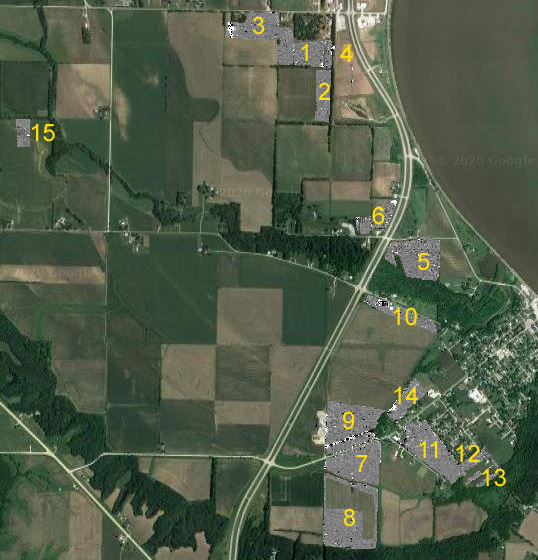
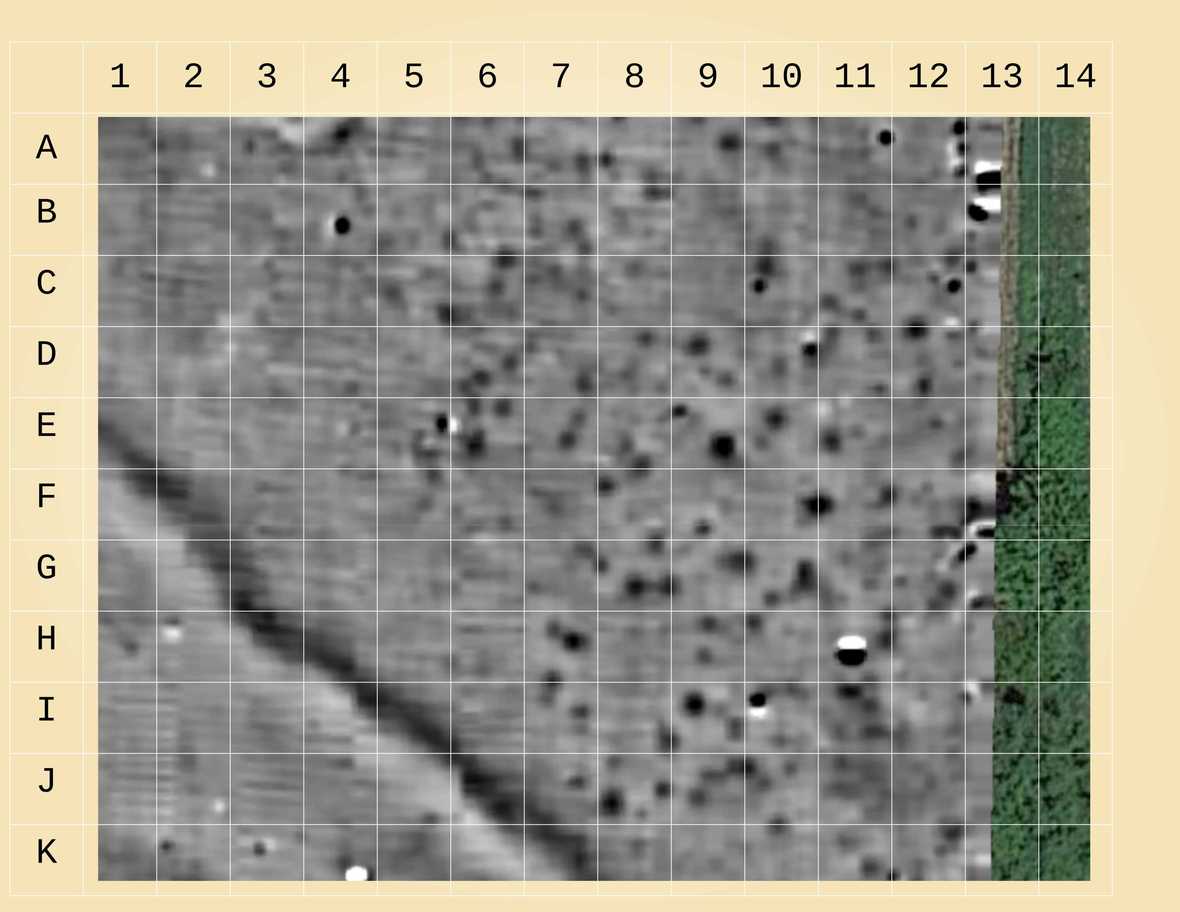
Why is it no surprise that a vast number of those who believe in the Mesoamerican Theory of the Book of Mormon also believe man came from nothing, Noah’s flood is a myth, the Earth is billions of years in creation, and believe in Pre-Adamites?

WE DID NOT COME FROM AN APE OF THIS I AM MOST CERTAIN! MAN DID NOT EVOLVE FROM NOTHING! ADAM WAS PLACED ON THE EARTH IN ABOUT 4,000 BC! THE MATERIALS OF THE EARTH ARE BILLIONS (innumerable) OF YEARS OLD, BUT THE CREATION IS THOUSANDS OF YEARS OLD, NOAH’S FLOOD IS REAL, and if there is ever a difference between Scripture and Science, always choose Scripture!

“One need not look far into science to discover it consists too generally of a maze of facts and theory so closely interwoven that even the most learned and honorable scientist (to say nothing of the intellectually dishonest one or the novice) may have difficulty in distinguishing readily between truth and theory.” — Joseph Fielding Smith Man, His Origin and Destiny

See my blog titled EVOLUTION AT BYU here:


Purchase Now!
Purchase Now!

DNA & Dating Dinosaurs DVD

Could a Single Experiment Change Much of Science? Could Modern Science Have Some Things Wrong? Are All the Creation Accounts Actual or Myths? Is Evolution Being Taught as Fact at BYU? Can We Trust the Scriptures & Prophets? Are Our Youth Being Taught the Truth? Was There a Real World-Wide Flood? Did Adam and Eve Really Exist?

Join scientific researcher, author and international lecturer Rod Meldrum as he introduces a paradigm-altering experiment that may forever change the very foundations of science as we know it. Learn about a new millennial science, called the Universal Model, that provides the hard scientific evidences of the processes by which:

1- This magnificent Earth may have actually formed out of water.
2. How, and how long it took, for dinosaurs and trees to fossilize.
3. How a world-wide catastrophic flood at the time of Biblical Noah happened.
4. How mankind’s place in the Universe came through Adam and Eve.

Yes, We Really Can Trust the Scriptures and Prophets!

For 7 years Rod Meldrum was the head scientific researcher for Dean Sessions, author of The Universal Model. Rod gives many presentations about how science and the scriptures go hand in hand including the one above called, DNA and Dating Dinosaurs.

What Is The Universal Model?
“The purpose of science is to describe and explain Nature so that we can understand and comprehend it, but where do we learn these things simply, in a way that makes sense? For many decades, a number of incorrect theories and misleading philosophies have formed the foundation of ‘modern’ science. Now, newly discovered scientific truths in the Universal Model have revealed long-hidden natural laws that explain Nature’s workings in an easily comprehensible format. We invite all to explore and experience the adventure of learning by investigating new discoveries about the Earth and our Universe found in the UM. These scientific truths establish a New Millennial Science destined to take us through the current millennium to heights of knowledge and discovery never before imagined.” The Universal Model Home Page

“We must keep in mind that He [Christ] is allowing the wheat and tares to grow up together for a season, and by and by the tares will be gathered together and be burned up. Before the burning though, there will be a judgement, and the Lord is allowing us each right now to work out our salvation or damnation. Those that have the facts before them and reject them (see below) will pay the ultimate price, but there also must be a Great Divide that is taking place right now (talked about in the BoM and in the last chapter of Vol II of UM [Universal Model] – the Human Model) to clearly mark each of us to which side we are on.

Joseph Fielding Smith wrote:

“One need not look far into science to discover it consists too generally of a maze of facts and theory so closely interwoven that even the most learned and honorable scientist (to say nothing of the intellectually dishonest one or the novice) may have difficulty in distinguishing readily between truth and theory.” — Man, His Origin and Destiny

This is the purpose of the UM, to take this maze (the modern science puzzle that makes no sense – everything from nothing) and replace it with Nature’s Puzzle – they way things really are.

Melvin A. Cook in the Intro of:  Man, His Origin and Destiny also said:
“Unfortunately, owing to the strong desire of scientists to display their brilliance and ingenuity, there is a tendency for theory to become the objective instead of a means to the end. Theory then not only loses its real value, but actually becomes a stumbling block to progress. Its inventor and disciples become so engrossed in the theory that they lose sight of its fundamental purpose, the quest for truth. This condition was shockingly illustrated in my presence at a meeting of scientists when one of great renown met a factual objection with the statement, “I am more concerned with the elegance of the theory than the truth of it.” — Man, His Origin and Destiny

Therefore, the Lord will judge these so-called intellectuals to whether they want to follow and learn of the Truth (which is literally Christ) or not. The sad thing is that most do not realize following Christ means following and seeking out for the Truth.
 
The UM has already produced experiments for the first time that are “more than words” (for example it has created sandstone and petrified wood which are identical to how Nature produced it in only a few days). The UM does not just have “alternative explanations” to how things are done in Nature, it has the ONLY explanation in hundreds of instances where modern science admits their theories cannot explain such and such natural phenomena. So ‘producing’ more ‘things’ is not the solution. Science is about demonstrating the true nature of Nature, it is not technology, which is only a tool that helps us understand it better.

Therefore, we cannot expect the leaders of science today to ever change their religion of atheism and accept the truth. It’s just not going to happen. For the UM to gain a much wider acceptance, it will have to be promoted full time to a much greater degree and I will personally have to be involved with this with others. This means I will be involved in debates and interviews and making many more recordings for the Web with influencers.

Although each Volume of the UM stands alone and has more new natural law than produced by modern science over the last century, Vol III does have double the amount of natural law as the other two volumes and many more experiments seen for the first time. Being able to demonstrate the true models of both matter and energy is more than any physicist or chemist or cosmologist has ever dreamed of, as this alone changes all their fields of study – and the UM does this. It also shows the errors in the physics of the Big Bang and proves the Universe is not expanding, but rotating in a Revolutionary Universe. It really is beyond what any scientist could dream about – yet it is all real and empirically demonstrated.” Dean Sessions-Founder and Author of the “Universal Model, A New Millennial Science

None of us . . . knows enough. The learning process is an endless process. We must read, we must observe, we must assimilate, and we must ponder that to which we expose our minds. I believe in evolution, not organic evolution, as it is called, but in the evolution of the mind, the heart, and the soul of man. I believe in improvement. I believe in growth.‖ (Gordon B. Hinckley, Teachings of Gordon B. Hinckley, p. 298.)

For a free PDF of quotes from Prophets about Creation and Evolution, click the link below: Creation and Evolution A witness of Prophets


Chauncey Riddle

The UM Is For All Lovers Of Truth by Chauncey Riddle

I have just completed reading the first two of the three systems of the new UM project of Dean Sessions. I am greatly impressed and delighted by what I found. It was like seeing an exciting, powerful new movie that deals with some of my favorite topics and concerns. To specifics:

  1. Sessions is right on in pointing out that much of present day science is theory oriented rather than being fact oriented as it should be. For many scientists, theory is more important than law. Scientific laws are demonstrated by facts, but theories cannot be demonstrated by facts. There are always an infinite number of possible theoretical explanations for any finite set of facts. Theories can be eliminated by facts, but only if the persons involved in evaluating them will make the correct application: face the facts. When a theory is an article of faith, many people refuse to apply the pertinent facts which should cause them to abandon a particular theory. Sessions has called attention to specific facts and laws which should cause any honest person to reject the theories of organic evolution, the great age of fossils, the magma theory of the history of the earth, etc. How refreshing to see such candor in scientific thinking!
  2. Sessions is also correct in showing that technology is as important as scientific theorizing. Technology enabled the work of Galileo to establish the helio-centric theory of the solar system, much to the consternation of the self-appointed scientists of his day. Sessions has shown by technology how granite rock is actually formed, as well as other minerals. He has shown how fossils are formed, such as petrified wood. Diamonds are now produced by technology. All of these technical achievements create facts and laws which every honest scientist must recognize and apply to theories affected by them. Technology trumps scientific theory because technology demonstrates what is (facts), whereas scientific theory only muses on what might be. Theory in science is actually metaphysics, not physics. Only when substantiated by facts and laws do theories become acceptable, and are always subject to elimination if new facts and laws come forth to negate them. Sessions has done an admirable job of showing how some present theoretical darlings of some scientists must be rejected.
  3. Session’s discussions of hydrofountains, hypretherms, the Universal Flood, organic evolution, fossils, climate, history, anthropology, etc., are all refreshing and challenging. Reading this book is having one’s imagination stretched at every turn. Every serious reader who has an interest in knowing the truth will be delighted with the challenging ideas found here.

Will there be criticisms of this work? Most certainly. What form will they take?

  1. One will be ignoring this work and discouraging others from reading it. Just as the politicians in charge try to marginalize everyone who is not “politically correct,” so will influential members of the science community try to ignore and belittle this work. But every honest seeker after truth will relish the opportunity to think freshly about important scientific matters, in a refined paradigm of science, and with new facts and laws to ponder.
  2. Some critics will say that this work should be ignored or discounted because the author, Dean Sessions, is not a professional scientist and does not have the “necessary” academic background to propound such a work. This attitude is rubbish, of course. That is like saying someone cannot run fast because they are not part of an official Olympic Team. The proof of science is not in who says it but in the physical evidence brought to bear in evaluating our ideas about this physical world we live in. Sessions is right in pointing out that theory (which cannot be proved, but can be falsified) has become more important to many current scientists than are facts. The great example of this is the theory of organic evolution which is the darling of much of academia right now and which is completely unsupported by the facts, specifically the fact that there is no observable speciation in nature. That plus the inability to prove the immense time frame necessary for the theory spell the death-knell for the theory of organic evolution for every honest person. But evolution is a religion, a matter of faith for many persons, and they would rather give up their honesty than give up their favorite irrational article of faith.
  3. Some will say that Sessions has picked and chosen very carefully the quotations of other writers which he cites to support his case. But that is not a fault. Every person picks and chooses among potential citations, a necessity in the flood of writings about every topic. What is most remarkable and commendable is the breadth and depth of the scholarship which Sessions exhibits in his writing. He has searched the literature of many fields of endeavor with exciting and telling results. Most people know the literature only in their own field. Sessions has no primary field and delves into what others have said from all the fields he deals with to help his readers realize what is being said and not said in the areas of his interest. Be grateful he has been selective and brings to you a summary of what others are saying.
  4. Sessions will possibly be proved wrong about some assertions he has made in his work. This is almost inevitable for anyone doing serious thinking and writing. But the finding of such errors will not be an embarrassment for Sessions. He will laud such finding, because that will mean that the cause of truth will be advanced. His purpose is to bring truth and light to important matters, and if his work stimulates others to produce more truth and light, even unto showing his work needs to be amended, he will be grateful. He will be grateful because he writes not to give the final word but to further the ongoing human inquiry into the powerful ideas about the true nature of the universe that give us all more understanding and power.

I commend this work for all serious thinkers and lovers of truth. You will be challenged in reading the material. It is not “light” reading. But any effort will be well worth it.

Chauncey C. Riddle, Professor Emeritus of Philosophy, Brigham Young University, USA 10/22/2016


*A Sad Commentary about the Universal Model

Daily Universe Readers Forum April 4-10, 2017 http://newsnet.byu.edu/pdf/du20170404.pdf

BYU’s student newspaper, The Universe, printed a full-page advertisement on behalf of the “Firm Foundation Expo,” a 3-day expo that bills itself as “faithfully exploring LDS topics of our time.” In the advertisement, all of the 70+ speakers are portrayed as distinguished and as experts in some area or another.

One of those speakers is Dean W. Sessions, the author of the “Universal Model.” Mr. Sessions claims to have disproved several straightforward tenets of modern science, including the basic interior structure of the Earth (which he argues has a core of ice and liquid water) and the mass of the Earth (which he recalculates at about a third of what is known in order to fit this model). He will be speaking about his model on each day of the event.

We, members of BYU’s Department of Geological Sciences, cannot accept Mr. Sessions “Universal Model” as it runs contrary to multiple lines of empirical evidence and generations of scientific query. It would not pass expert peer review.

Students and the BYU community are reminded that organic evolution, anthropogenic climate change, radiometric dating and a 4.56 billion-year-old age of the Earth are all seriously taught on campus by professors, who are in good standing with the church, in fields directly relating to these subjects. Students may learn more about these subjects through a variety of courses offered by the Department of Geological Sciences as well as from other departments.

We, the undersigned, support the honest development of knowledge by way of the scientific method and as vetted through expert peer review. We are concerned that the presence of the aforementioned advertisement in The Universe may legitimize Dean Sessions’ “Universal Model” in the eyes of some within the community.

—Bart Kowallis, PhD, Associate Dean of CPMS; Ron Harris, PhD; Jeffrey Keith, PhD;Jani Radebaugh, PhD; Eric Christiansen, PhD; Carl Hoiland, PhD; Thomas Morris, PhD; Sam Hudson, PhD; Stephen Nelson, PhD; Geology master’s degree students:Kimberly Sowards, Colin Hale, Michael Jensen, William Meservy, TJ Slezak, Collin Jensen, Matthew Randall, Aaron Holmes, Braxton Spilker, Danielle Spencer, Rebecca Esplin, Hannah Checketts, Brian Packer, David Tomlinson, Kevin Stuart, Hanif Sulaeman, Han Deng, Joel Barker; Geology bachelor’s degree students: Torri Duncan, Jason Klimek, Brett Young, Austin Eells, Hanna Howell, Chelsea Samuelson”

It’s sad how many scholars feel they know more than most of us who are uneducated people. I feel the great and spacious building is having fun right now at our expense. May the Lord help them become humble and at least consider some of this incredible research.

The Ezra Taft Benson talk from 25 Oct 1966 at a BYU Devotional is a sobering reminder of evil people in the church with an agenda (revising church history by quoting the intellectuals and apostates and ignoring the prophets). Ezra Taft Benson said to avoid being deceived, look to the Prophet. Listen to his entire talk at https://speeches.byu.edu/talks/ezra-taft-benson/immediate-responsibility/

At the 32:07-33:02 mark, just before the above quote, President Ezra Taft Benson states the following.

“We all have stewardships for which we must account to the Lord. Unfortunately, some men who do not honor their stewardships may have an adverse effect on many people. Often the greater the man’s responsibility, the more good or evil he can accomplish. The Lord usually gives a man a long enough rope and sufficient time to determine whether that man wants to pull himself into the presence of God or drop off somewhere below. There are some regrettable things being said and done by some people in the church today. As President Clark so well warned, the ravening wolves are amongst us. From our own membership and they more than any others are clothed in sheep’s clothing because they wear the habiliments of the priesthood. We should be careful of them.”

Other, Other Sheep, and Two Promised Lands

Explaining the title of this blog, this is what I mean. The Lord loves all people of this world perfectly and completely as His children. Christ speaks of two Promised Lands in 3 Nephi. These Lands were set apart by Christ himself so he could accomplish His great work of sharing the Gospel to all Nations. Christ had to chose a land where he could share with a people who would help Him accomplish His goal of loving and teaching the entire world.

He chose Judea and America. Because Christ loves us all equally, no people or land was better than another but utilized for his purposes. Elder Whitney said, “We believe that this was His object in creating the Republic of the United States; the only land where his work could be commenced or the feet of his people find rest. No other land had such liberal institutions, had adopted so broad a platform upon which all men might stand.” Bishop Orson F. Whitney, delivered in the Tabernacle, Salt Lake City, Sunday Afternoon, April 19, 1885.

From the Bible we learn,

“And other sheep I have, which are not of this fold: them also I must bring, and they shall hear my voice; and there shall be one fold, and one shepherd.” John 10:16. In the Book of Mormon we hear,

“19 But, verily, I say unto you that the Father hath commanded me, and I tell it unto you, that ye were separated from among them because of their iniquity; therefore it is because of their iniquity that they know not of you.

20 And verily, I say unto you again that the other tribes hath the Father separated from them; and it is because of their iniquity that they know not of them.

21 And verily I say unto you, that ye are they of whom I said: Other sheep I have which are not of this fold; them also I must bring, and they shall hear my voice; and there shall be one fold, and one shepherd.

By David Lindsley

22 And they understood me not, for they supposed it had been the Gentiles; for they understood not that the Gentiles should be converted through their preaching.” 3 Nephi 15:19-22

And from the Book of Mormon we also hear,

“1 And verily, verily, I say unto you that I have other sheep, which are not of this land, neither of the land of Jerusalem, neither in any parts of that land round about whither I have been to minister.

For they of whom I speak are they who have not as yet heard my voice; neither have I at any time manifested myself unto them.” 3 Nephi 16:1-2

That means He loves us ALL! The entire world and every person. Some have heard his word and others have not, but before judgement, all will have an equal opportunity to hear the gospel whether in this life, or in the life to come. What a beautiful blessing.

President Hinckley said, “I should like to say a few words about America…No land is without its beauty, no people without their virtues, and I hope that you who come from elsewhere will pardon my saying a few words concerning my own native land, America…surely this is a good land, a choice land, a chosen land. To me it is a miracle, a creation of the Almighty.” Gordon B. Hinckley Let Not Your Heart Be Troubled

Elder McConkie said, “The ‘other sheep’ here referred to constituted the separated flock or remnant of the house of Joseph, who, six centuries prior to the birth of Christ, had been miraculously detached from the Jewish fold in Palestine, and had been taken beyond the great deep to the American continent” (Jesus the Christ, p. 419).

“In the quote above it mentions Palestine. I believe it is referring to a great area of the world that has been known by many names over the years. Today in 2022 we call it Israel like the rest of the world does. Understand however that this is the Land of Judea where Christ is from. Christ is through Adam to Eber (Hebrew) to Abraham to Israel and through the Tribe of Judah through David. Christ in not a “Jew” unless you define Jesus as coming from the royal Lineage above.

What was Israel called before it’s Historical Creation in 1948?

Judea province in the 1st Century CE

“On May 14, 1948, David Ben-Gurion, the head of the Jewish Agency, proclaimed the establishment of the State of Israel. U.S. President Harry S. Truman recognized the new nation on the same day. Through the centuries, the territory was known by a variety of other names, including Canaan, Djahy, Samaria, Judea, Yehud, Iudaea, Syria Palaestina and Southern Syria.” Source

“I truly believe that the Book of Mormon is the word of God by personal revelation. I also believe one of the greatest resources that has helped me understand the secondary evidences of that wonderful Book, is the “Annotated Book of Mormon.” by David Hocking and Rod Meldrum. Never before have I heard about and understood in my mind, the correct geography as researched about the two Promised Lands, as I have personally learned from the Annotated Book of Mormon.” Rian Nelson


Only Two Promised Covenant Lands by Rod Meldrum

“There are only two “Promised Lands” mentioned by Christ in the Book of Mormon; Jerusalem of the Old World (3 Nephi 20:29) and New Jerusalem of the New World (3 Nephi 20:22).  Both of these covenant lands of promise were given by the Lord to the house of Israel for their latter day gathering place. The New World Promised Land would be the location of the gathering place for the House of Israel in the America’s.  Where is this gathering place?  It will be at the New Jerusalem.  And where is the New Jerusalem going to be located?  We know through revelation that the New Jerusalem will be built in Jackson County Missouri, in the Heartland of North America (D&C 84:1-4).  Did the Book of Mormon history take place on the same land as the New Jerusalem?  Multiple passages establish that Lehi’s family was lead to and remained on this Promised Land throughout their entire history (1 Nephi 13:3022:72 Nephi 1:53 Nephi 20:2221:2-4,21:22-23Ether 13:2-6).  Therefore the land the Nephites, Jaredites, Mulekites and Lamanites lived upon was their “covenanted” land of promise and must – by covenant – include the Heartland of North America because it is the revealed location of the New Jerusalem by the Lord Himself.” Rod Meldrum. Read the entire article by Rod Meldrum called, The Scriptural Basis for Book of Mormon Geography

FOR CHRISTMAS!
THE ANNOTATED EDITION OFTHE BOOK OF MORMON

THE OLD TESTAMENT:
“I will gather the remnant of My flock out of all countries whither I have driven them.”(Jeremiah 23:3)

THE NEW TESTAMENT:
“I am the Good Shepherd, and know My sheep, and am known of Mine. As the Father knoweth Me, even so know I the Father, and I lay down My life for the sheep. And other sheep I have, which are not of this fold: them also I must bring, and they shall hear My voice; and there shall be one fold, and one Shepherd.”(John 10:14-16)

THE BOOK OF MORMON:
“And verily I say unto you, that ye are they of whom I said: ‘Other sheep I have which are not of this fold; them also I must bring, and they shall hear My voice; and there shall be one fold, and one Shepherd.’”(3 Nephi 15:21)“…for behold, I know My sheep and they are numbered.” (3 Nephi 18:31) (Note: words spoken by Jesus Christ are in red lettering.)


“Other Sheep”
Prophecies and Promises by Bruce H. Porter and Rod Meldrum 

“The Savior declared that He must visit others unknown to “this people” and unknown to those at Jerusalem, emphasizing that he must manifest Himself to them and that they must hear His voice. Read closely the few verses below as they indicate those to whom Christ had appeared to.

And verily, verily, I say unto you that I have other sheep, which are not of this land, neither of the land of Jerusalem, neither in any parts of that land round about whither I have been to minister.

For they of whom I speak are they who have not as yet heard my voice; neither have I at any time manifested myself unto them.

But I have received a commandment of the Father that I shall go unto them, and that they shall hear my voice, and shall be numbered among my sheep, that there may be one fold and one shepherd; therefore I go to show myself unto them. 3 Nephi 16:1-3

These statements made by the Savior should be emphasized inasmuch that they indicate that the story is not over or limited to one group of people. They also indicate that the story did not begin with the visit of Christ after his resurrection, in Jerusalem and then in Bountiful. Christ teaches that “I have other sheep, which are not of this land, neither of the land of Jerusalem, neither in any parts of that land round about whither I have been to minister.”

The scriptures teach that there may be many nations that He visited who no doubt have kept records of His appearance and teachings. The fact that Christ has visited other sheep and nations does not necessarily mean that all of them must be located outside of the western hemisphere. These nations may be in the proverbial “backyard” of the Promised Land as well as any other continents in the same hemisphere, or even different peoples and cultures within a continent. There are no stated limitations. Some have addressed this thought and possibility as recorded in scripture about the visitation of Christ to other nations.

From the vantage point of the scriptures, the Lord could have made a visit to the inhabitants of the Japanese islands, and for that matter, to other peoples of Asia as well. During his earthly ministry Jesus frequently reassured the Jews that he was the Good Shepherd, always mindful of his sheep, and known of them. He explained that he had other sheep not of their fold whom he would visit (see John 10:14-16). This promise was fulfilled when the resurrected Messiah appeared on the American continent as recorded in the Book of Mormon (see 3 Nephi 15:21). But while still among the Nephites, Jesus made a further promise that he would also visit other tribes of the house of Israel, neither of the land of Jerusalem nor of the land of the Nephites, whom the Father had led away. He had been commanded of the Father to administer to the needs of these sheep, and they would hear his voice.

Cartoon by Val Chadwick Bagley

“There is little doubt that other peoples came to the western hemisphere as the DNA evidence has shown. Likewise, there is evidence that Christ did visit many nations as the sacred text reveals. Many traditions around the world indicate or imply that one like Christ did indeed visit many lands, including Central America. However, the Book of Mormon by textual evidence and coupled with the prophetic statements of Joseph Smith, is unquestionably about a people on the Promised Land and speaks specifically about the nation established by Gentiles who came out of captivity. This is the same nation and Promised Land where the New Jerusalem will be built. This latter-day nation is the United States of America.

The Savior states in 3 Nephi that there were others that He must visit besides those to whom He was speaking. These other people are unknown to those in this land of promise and the land of Jerusalem. But, verily, I say unto you that the Father hath commanded me, and I tell it unto you, that ye were separated from among them because of their iniquity; therefore it is because of their iniquity that they know not of you. And verily, I say unto you again that the other tribes hath the Father separated from them; and it is because of their iniquity that they know not of them. And verily I say unto you, that ye are they of whom I said: Other sheep I have which are not of this fold; them also I must bring, and they shall hear my voice; and there shall be one fold, and one shepherd. 3 Nephi 15:19-21

The Lord declares that others were separated, and that there have been many migrations of people that were led by the hand of the Lord to different lands, continents, and isles of the sea. The movement of families for the preservation of life and religion is a motif seen throughout the scriptures. The separation of the righteous from the wicked is evident in all of our standard works.

The City of Enoch, Abraham’s departure from Ur, the Rechabites in Jeremiah at the same time Lehi leaves Jerusalem, and then Nephi going into the wilderness leaving behind the land of their first inheritance are examples. Even the saints in this dispensation were led by the Lord from place to place seeking safety from persecution and religious freedom until they settled in the Salt Lake Valley. The Lord has led many families and groups into the “nethermost parts of the vineyard” explained in Jacob 5.

The Allegory of the Olive Tree

Jacob, the brother of Nephi, also gives clues to some migrations led by the hand of the Lord in the “Allegory of the Olive Tree” in Jacob 5. Zenos prophesied that the “natural branches” will be taken off the “mother” tree and planted in the “nethermost parts of the vineyard” (Jacob 5:13). This allegory teaches that one branch, planted in a “good spot of ground”, brought forth both good and bad fruit:

And he said unto the servant: Look hither and behold the last. Behold, this have I planted in a good spot of ground; and I have nourished it this long time, and only a part of the tree hath brought forth tame fruit, and the other part of the tree hath brought forth wild fruit; behold, I have nourished this tree like unto the others.

In this “good spot of ground” there is a division of the “tame fruit” and “wild fruit” in the branch planted there. In verses 43-45 the wild fruit eventually overcame the good and tame fruit that was planted in a “good spot of ground”—a place that was “choice unto me above all other parts of the land of my vineyard.” Verse 44 speaks of the Jaredites being in the same “spot of ground” that was cut down to plant the branch which brought forth the two kinds of fruit.

And behold this last, whose branch hath withered away, I did plant in a good spot of ground; yea, even that which was choice unto me above all other parts of the land of my vineyard. And thou beheldest that I also cut down that which cumbered this spot of ground, that I might plant this tree in the stead thereof. And thou beheldest that a part thereof brought forth good fruit, and a part thereof brought forth wild fruit; and because I plucked not the branches thereof and cast them into the fire, behold, they have overcome the good branch that it hath withered away. Jacob 5:43-45

The commentaries that exist on these verses are unanimous in their interpretation of this “good spot of ground” as the Promised Land obtained by Lehi, one that is “choice unto me above all other parts of the land of my vineyard.” This same part of the vineyard was given to Lehi, the descendants of Mulek and to the Jaredites that once “cumbered” this good spot of ground. The “good fruit” being overcome by the “wild fruit” is always viewed as the eventual wickedness and destruction of the Nephites by the Lamanites.

This “good spot of ground” is described as the spot where those described in the Book of Mormon as “this people” were led to “this land.” The Book of Mormon is not only a history of the people led to “this land” but it also becomes a historical record and prophetic text about the “Promised Land” and those who shall inherit it.

The other people led away and “planted in the nethermost part of the vineyard” could be those in any part of the world.146 This “nethermost part” could be in Japan, China, and India, parts of Russia, Scandinavia, Greenland, Australia, or New Zealand. Any of the “isles of the sea” could be included. The “nethermost part” could even be the peoples and cultures that might be living and keeping records near the Promised Land and be found in Central or South America.

There are “myths” and stories of one like Christ appearing in many places and cultures around the world and teaching “Christian-like” concepts. The important lesson learned from the Book of Mormon is that there are other nations and groups of people that kept their own records of His teachings and His appearances to them. It would be folly to decide or interpret that the visit of Christ was limited to a single geographical setting. The fact that Christ appeared to the people on “this continent,” according to Moroni, and Joseph Smith, does not negate a possible visit to many other cultures in this hemisphere as well as those in the Promised Land as recorded in 3 Nephi, nor does it mean that all those who were visited by Christ were of necessity “Nephites.”

Two Promised Lands

Christ Speaks to All Nations

An important question asked by the Lord in scripture and about scripture is “Know ye not that there are more nations than one?” There is no limit to the Lord’s love and concern for the nations, kindreds, and tongues of the world. Having reviewed a few scriptures about “other sheep” that are usually associated with the House of Israel, a review of passages about other nations might be helpful. These nations are discussed in scripture, beyond the scope of the historical setting and people of the Book of Mormon. However, the Lord has seen a need for the scriptural text of the Nephites to include information about these nations, lands, and records that lie beyond the borders of the particular Land of Promise. The paraphrased passages below give insight beyond “this land” into other peoples and other lands.

Know ye not that there are more nations than one?…and that I remember those who are upon the isles of the sea; and I bring forth my word unto the children of men, yea, even upon all the nations of the earth? …that I remember one nation like unto another? Wherefore, I speak the same words unto one nation like unto another. …that I speak forth my words according to mine own pleasure. And because that I have spoken one word ye need not suppose that I cannot speak another… Wherefore, because that ye have a Bible ye need not suppose that it contains all my words; neither need ye suppose that I have not caused more to be written.

For I command all men, both in the east and in the west, and in the north, and in the south, and in the islands of the sea, that they shall write the words which I speak unto them… For behold, I shall speak unto the Jews and they shall write it; and I shall also speak unto the Nephites and they shall write it; and I shall also speak unto the other tribes of the house of Israel, which I have led away, and they shall write it; and I shall also speak unto all nations of the earth and they shall write it. 2 Nephi 29:7-12

Could these other “nations” in the verses (especially verse 12) above, include the highly advanced civilizations of Asia, and the Far East, perhaps the nations of northern Europe? Could these passages even include the peoples and cultures of Central and South America that might not be recorded in the Book of Mormon?

The last verse above speaks of the Jews, and then the Nephites and all the “other tribes of the house of Israel” and then includes the statement, that he “shall also speak unto all nations of the earth and they shall write it.”

The fact that the Book of Mormon is a record of the Promised Land does not mean that the entire hemisphere was that land. There can be no limitations on the Lord and the work He might do as He questions and declares: “Know ye not that there are more nations than one?…I shall also speak unto all nations of the earth and they shall write it.”

Other Records, Other People, Other Lands

Teachers of the Book of Mormon often remind their students that this sacred text is a record of “three migrations” and no more. Therefore, this written history is not the record of every migration to this continent or hemisphere. The claim of the book itself, and that of the translator, is that it consists of a record of only those who came to the “Promised Land.” It is a history of Lehi and his family, Mulek and those who came with him, and the earlier migration and history of the Jaredites.

All of these groups were led to the very same “Promised Land” as is evident in the scriptures. The fact that the record does not represent all cultures of the Western Hemisphere does not necessarily indicate that all lands within the hemisphere should be represented and included as the “Promised Land” within the Book of Mormon text.

There are only three groups of people that make up the known populations in the text of the Book of Mormon. Therefore, the land within the scriptural text should only include the land that those three groups inhabit. The prophecies and promises about the people and the land are to be fulfilled within the same land which they inhabit.

Based on the limited number of cultures that the Book of Mormon embraces and the information presented above, let us hypothesize for the moment that the text is just as limited in its geography. Suppose it is the record of those groups only, that were “planted in the good spot of ground” that is the “Promised Land.” Nephi explains that the record he is making “should be kept for the instruction of my people, who should possess the land” (1 Nephi 19:3) — then and now.” Prophecies and Promises by Bruce H. Porter and Rod Meldrum Chapter 14


I Will Graft Them:

“In the process of grafting, healthy, living branches are cut from a tree and inserted into the trunk of another tree to grow. The “branches” in this allegory of the Tame Olive Tree represent different groups of people whom the Lord takes from one place and then plants in another place to keep the “tree” from dying. Ultimately, the regrafting in of those of the House of Israel will include their coming to “the knowledge of the true Messiah”(1 Nephi 10:14).” Annotated Book of Mormon by David Hocking and Rod Meldrum page 107

14 Olive Tree Grafting Stock Photos, Pictures & Royalty-Free Images - iStock
Olive Tree Grafting

The Lord’s promises are extended to all of God’s people, world-wide. He loves us all and His goal is , “to bring to pass the immortality and eternal life of man.” Moses 1:39

Covenant of Abraham

“Abraham first received the gospel by baptism (which is the covenant of salvation). Then he had conferred upon him the higher priesthood, and he entered into celestial marriage (which is the covenant of exaltation), gaining assurance thereby that he would have eternal increase. Finally he received a promise that all of these blessings would be offered to all of his mortal posterity (D&C 132:29–50Abr. 2:6–11). Included in the divine promises to Abraham were the assurances that (1) Christ would come through his lineage, and that (2) Abraham’s posterity would receive certain lands as an eternal inheritance (Gen. 1722:15–18Gal. 3Abr. 2). These promises taken together are called the “Abrahamic covenant.” It was renewed with Isaac (Gen. 26:1–4, 24) and again with Jacob (Gen. 2835:9–1348:3–4).

The portions of the covenant that pertain to personal salvation and eternal increase are renewed with each individual who receives the ordinance of celestial marriage (see D&C 132:29–33). Those of non-Israelite lineage, commonly known as Gentiles, are adopted into the house of Israel and become heirs of the covenant and the seed of Abraham through the ordinances of the gospel (Gal. 3:26–29).

Being an heir to the Abrahamic covenant does not make one a “chosen person” per se but does signify that such are chosen to responsibly carry the gospel to all the peoples of the earth. Abraham’s seed have carried out the missionary activity in all the nations since Abraham’s day. (Matt. 3:9Abr. 2:9–11.)

To fulfill the covenant God made with Abraham—having particular reference to the fact that the literal seed of his body would be entitled to all of the blessings of the gospel (Abr. 2:10–11)—a number of specific and particular things must take place in the last days. The gospel must be restored, the priesthood must be conferred again upon man, the keys of the sealing power must be given again to mortals, Israel must be gathered, and the Holy Ghost must be poured out upon the Gentiles. All this has already taken place or is in process of fulfillment. See also AdoptionGentile.” LDS Bible Dictionary


Face of a Nephite?

0

The reconstruction of Kennewick Man’s face in the image below was done for the Smithsonian. See Bruwelheide, “Identity Through Science and Art,” Kennewick Man: The Scientific Investigation of an Ancient American Skeleton, Chapter 28, at 526, 531 (2014).

NEW Purchase Now!

Kennewick Man is Haplogroup X: What Does it Mean?

By Guest Blogger, David Read 

“Kennewick Man is perhaps the most famous and well-preserved ancient Native American skeleton found in North America. Recent DNA testing of Kennewick Man’s bones shows that his mitochondrial DNA is haplogroup X.  Does this mean anything for the Book of Mormon?

Since Kennewick Man boasts haplogroup X2a DNA, his skeleton presents a unique opportunity to learn more regarding the ancient people who came from this haplogroup X ancestry. Interestingly, his physical features support the Book of Mormon account of a potential Middle Eastern ancestry. 

Kennewick Man’s bones. Photograph by Chip Clark, Smithsonian Institution. 

Dr. James Chatters, the forensic anthropologist who was the first to study Kennewick Man, initially assumed that Kennewick Man was neither Native American nor ancient, due to notable typical Caucasian features such as a square, prominent bilateral chin, Caucasian-type jaw and cheekbones, and eye orbital measurements.  He said, “My first thought was that this skull belonged to someone of European descent. … [T]he characteristics were consistent with … a white person, a Caucasian.” Chatters, Ancient Encounters: Kennewick Man and the First Americans, at 20 (2001).  Chatters stated that Kennewick Man “differed in almost every respect” from typical Native American peoples, and that he had never seen a Native American skull with so many “Caucasoid” features. Chatters, “The Recovery and First Analysis of an Early Holocene Human Skeleton from Kennewick, Washington,” American Antiquity, 65(2), at 305-306 (2000).  Likewise, a second forensic anthropologist who viewed the skull also confidently concluded “Male Caucasian … Easy call … White guy.” See Chatters, Ancient Encounters: Kennewick Man and the First Americans, Touchstone, 38 (2001).  This changed when the skeleton’s carbon dating occurred and subsequent testing (including DNA testing) proved Kennewick Man to be an ancient Native American

David Read’s Video, “Nephites in North America: New DNA Evidence” is included.
Purchase Membership to View Over 700 Videos here! Cancel anytime.

Chatters has since pointed out that Kennewick Man isn’t the only ancient Native American skeleton with Caucasian-like features, listing several other ancient skulls such as Spirit Cave Man, Stick Man, and skulls from the Marmes Rockshelter site and from the Horn Shelter site as additional examples of ancient Native American skulls with Caucasian-like features found in North America. Chatters, Ancient Encounters: Kennewick Man and the First Americans, at 20-21, 165, 182, 195-96 (2001).  It should be noted that Dr. Chatters is not a member of the Church and believes that Kennewick Man lived 9,000 years ago, prior to Book of Mormon timeframes.  There is conflicting carbon dating evidence, however, indicating that Kennewick Man instead lived only a little over 2,000 years ago.  This evidence is explained in my recent book Face of a Nephite: DNA Studies and the Book of Mormon. https://www.digitalegend.com/catalog/product_info.php?products_id=357

The place Kennewick Man had been buried in Eastern Washington. Photograph by Thomas W. Stafford with Skeleton Illustration from Douglas Owsley. Image from Preston, “The Kennewick Man Finally Freed to Share His Secrets,” Smithsonian magazine (September 2014). 

Subsequent analyses of Kennewick Man by other experts have also concluded that Kennewick Man has clear Caucasian physiological features.  This would fit a Middle Eastern ancestry as described in the Book of Mormon.  These experts have proposed similarities between Kennewick Man’s skull and bone structures to Europeans.  See Gill, “15 East Polynesian and Paleoindian Parallels and Contrasts in Skeletal Morphology,” Skeletal Biology of the Ancient Rapanui, at 275 and 281-283 (2016).  As noted by one scientist who studied Kennewick Man’s features in relation to historic population groups, “The lack of similarity of Kennewick Man to … [current typical] American Indians is striking,” finding that the features noted from his skull were much closer to those found among Caucasian peoples.  Gill, “Morphological Features that Reflect Population Affinities,” Kennewick Man, Chapter 27, at 515 (2014).  Other researchers agree, indicating that Kennewick Man’s physical features fall closer to Caucasian-type groups than to any typical Native American group.  See, e.g., Jantz, “Cranial Morphometric Evidence for Early Holocene Relationships and Population Structure,” Kennewick Man: The Scientific Investigation of an Ancient American Skeleton, Chapter 25, at 476, 479 (2014) (“Kennewick Man’s morphology is slightly more similar to Europeans than it is to Native Americans … he would be an extremely atypical member of any [current known] Native American group.”).  

Artistic recreations of Kennewick Man’s appearance, based on the skull, are reproduced below.

Figure 14. Artistic facial reconstructions of Kennewick Man. James Chatters and Tom McClelland made the clay reconstruction in the first two figures above, reproduced in “Kennewick Man Realized,” Science, Vol. 279 (February 20, 1998). The reconstruction in the latter two images was made for the Smithsonian by Bruwelheide, “Identity Through Science and Art,” Kennewick Man: The Scientific Investigation of an Ancient American Skeleton, Chapter 28, at 526, 531 (2014).

Kennewick Man’s Caucasian features, together with his mtDNA haplogroup X DNA, lend support to the idea that the ancient Native American population with haplogroup X DNA may have had more Caucasian features, similar to Kennewick Man. This fits a Middle Eastern ancestry such as described in the Book of Mormon and conflicts with the common assumption in the science of an East Asian ancestry for all Native Americans via the Bering Strait.  This constitutes a surprising finding regarding Native American origins which fits with, and lends support to, the authenticity of the Book of Mormon.

Even though Kennewick Man provides evidence associating haplogroup X with a Non-Asian, Caucasian look in the Americas before Columbus, until more discoveries emerge confirming a connection between haplogroup X and a Caucasian-like appearance in the Americas before European admixture, mainstream scientists will likely continue to refuse to accept the correlation.

NEW Purchase Now!


David Read Patent Attorney, JD

See David’s video Presentation called,
“Nephites in North America: New DNA Evidence”
Sign up for our Video Streaming Here! Watch over 700 Videos for 3 months. Just $45. Cancel anytime.
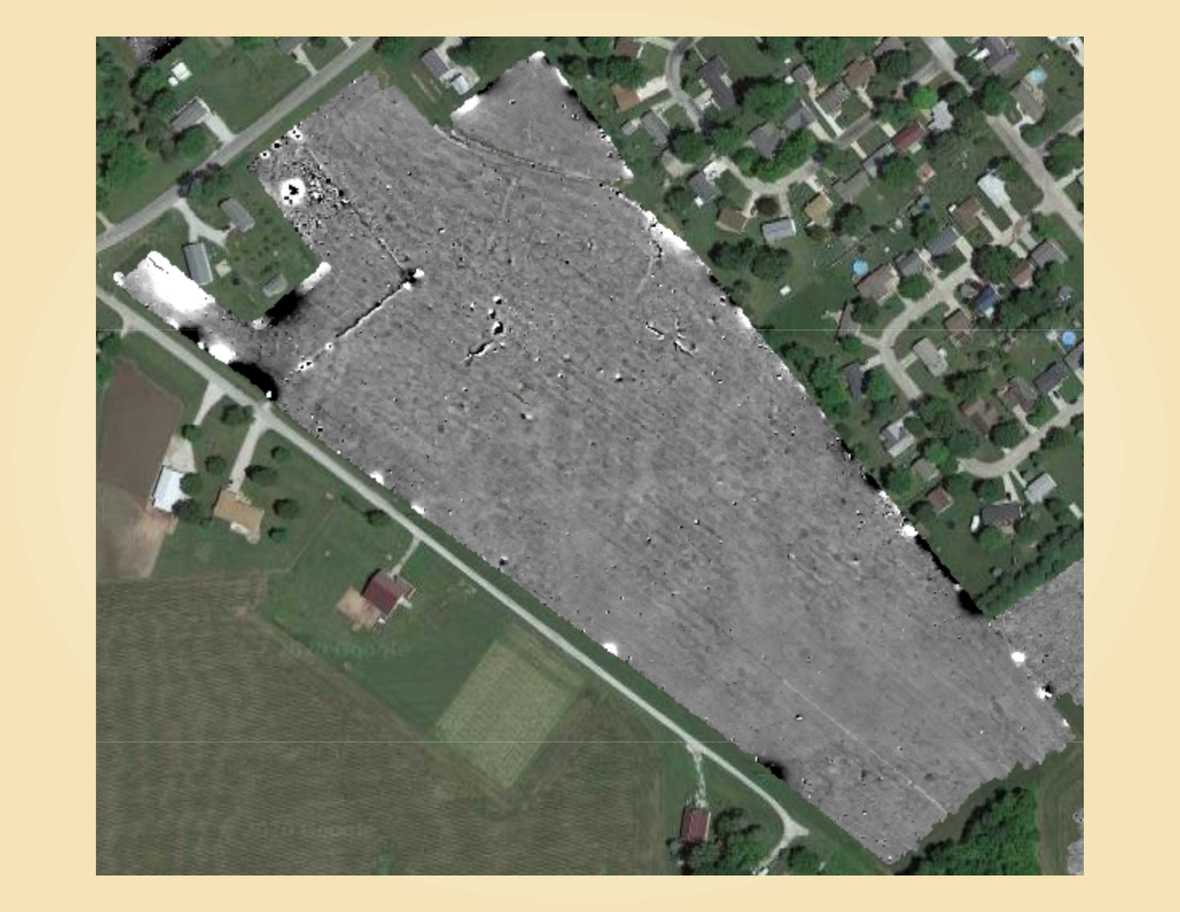
Despite popular belief, the currently available DNA evidence supports the Book of Mormon. Critics who attempt to rely on DNA evidence to attack the truth of the Book of Mormon misinterpret or misconstrue what the DNA evidence actually shows. In this presentation, Mr. Read will present more DNA evidence that has recently come to light supporting Book of Mormon claims. As one example, Mr. Read will discuss further scientific studies which again confirm that mitochondrial DNA haplogroup X (previously publicized by Rod Meldrum) is found among Native Americans and originated in the Middle East.
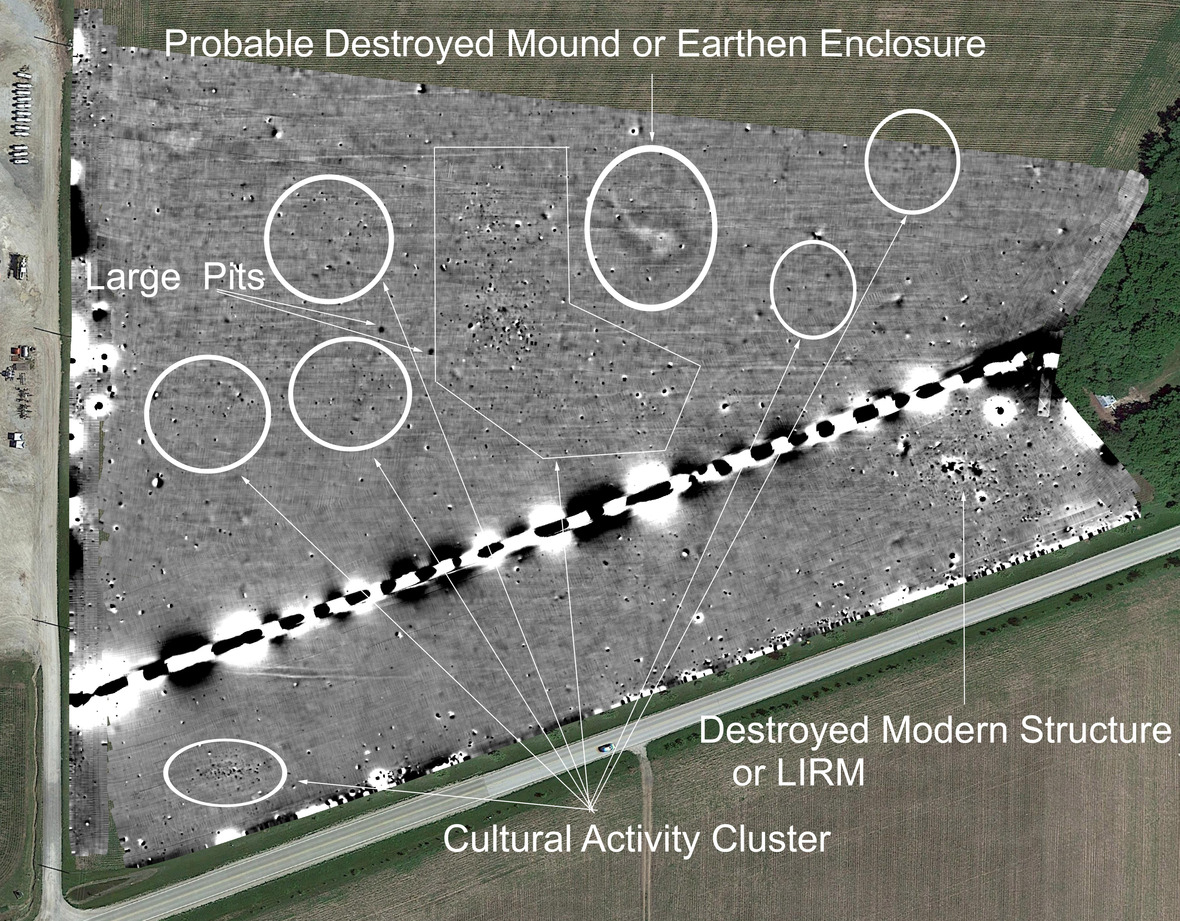
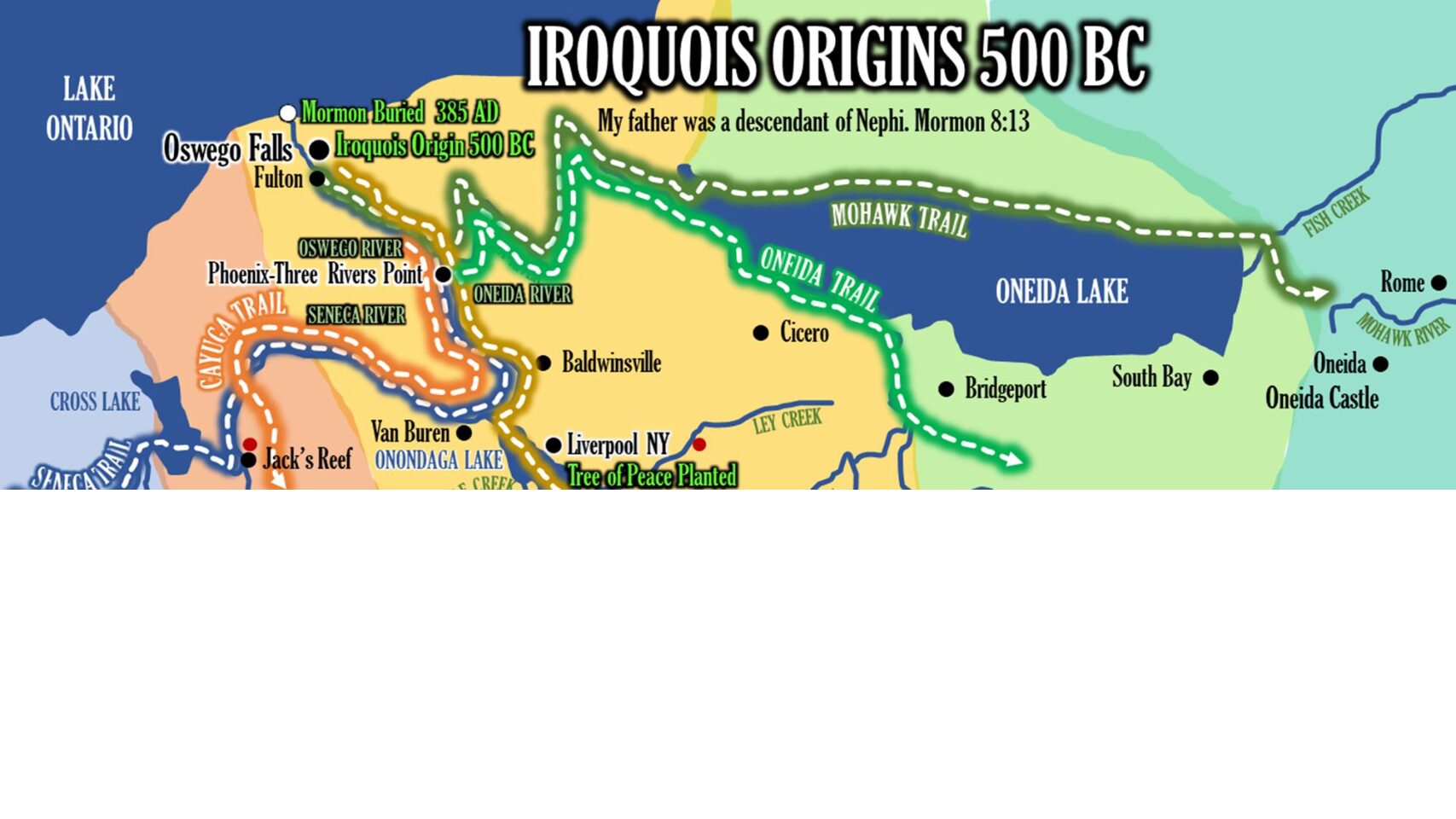
Indeed, one recent study found a variety of haplogroup X in Egypt that is just four mutations away from the type found in Native Americans, which undermines the critics’ previous claims that Native American haplotype X2a has “too many mutations” from the haplogroup X haplotypes found in the Middle East to fit a Book of Mormon timeframe for a migration from the Middle East to the Americas. Mr. Read will also present new DNA evidence regarding Y DNA haplogroup R, which is a second non-Asian DNA type found in large numbers among some Native American groups. Mr. Read will present evidence showing that this non-Asian DNA type also predates Columbus and has a distribution pattern in common with haplogroup X. This means that there is now a second and separate line of DNA evidence that corroborates the haplogroup X information and is again consistent with the Book of Mormon. Finally, Mr. Read will explain the significance of recent findings about an ancient Native American skeleton known as Kennewick Man, whose DNA is haplogroup X, but whose carbon dating has been commonly reported as being over 8,000 years old. Because of the reported carbon dating, Kennewick Man is now often used by critics to argue that haplogroup X in the Americas predates Book of Mormon timeframes. However, this again misconstrues the evidence. Mr. Read will demonstrate that a more complete analysis of the carbon dating for Kennewick Man shows that his correct age is within Book of Mormon timeframes and once again supports the DNA evidence in favor of the Book of Mormon. David possesses many intellectual interests. Before finishing his juris doctorate in law and becoming a patent attorney and later a judge, he earned undergraduate degrees in chemistry and philosophy. Over the past 10 years, he has completed a considerable amount of research into the historical authenticity of the Book of Mormon with a particular emphasis on DNA evidence related to the Book of Mormon. Through this research, he has recently uncovered additional DNA evidence that corroborates and supports the historical authenticity of the Book of Mormon.

David is an accomplished researcher. Over his career as a patent attorney, he has collaborated with inventors in numerous scientific fields. These include pharmaceuticals, medical devices, firearms, computer software, hybrid vehicles, battery technologies, pollution control technologies, textile manufacturing equipment, diesel and gasoline engines, chemical testing equipment, agricultural chemicals, turbocharging systems, fuels, coal gasification, and power plant technologies.

In each of these areas, he researched and came up to speed on the state-of-the-art knowledge in the field to thoroughly understand the new invention and the scientific consensus, interacted with experts in that field, and assessed and argued whether an invention was new or would be obvious to other experts in that scientific field. His work required him to reliably evaluate the state of established scientific knowledge in various scientific fields. He has taken that experience and applied it here to the DNA evidence related to Native Americans.

David lives in Michigan. He and his wife Barbara have five children: Amy, Charlotte, Sarah, Seth, and Matthew. David currently serves as the Sunday School President in his ward.

“Whiggery, Democratism, Socialism, which, in short, may all be summed up under the term, Devilism.”

0

It is very appropriate to speak about the Gospel of Jesus Christ while also speaking about our blessed Constitution that the Lord Himself wrote. He said, “And for this purpose have I established the Constitution of this land, by the hands of wise men whom I raised up unto this very purpose, and redeemed the land by the shedding of blood. D&C 101:80

Today after a very contentious voting process our citizenry seems very split on what form of government the people want. We are a divided nation. We have been divided for a long time. Think back to the time of Joseph Smith. The saints thought that in about June of 1834, Zion’s Camp was going to establish the New Jerusalem in Missouri and yet the Lord said, “now is not the time” to redeem my people. That was 186 years ago! That means the 2nd Coming has to be even closer than we may realize.

Joseph Smith Quote

“There will be two great political parties in this country. One will be called the Republican, and the other the Democrat party. These two parties will go to war and out of these two parties will spring another party which will be the Independent American [sic] Party. The United States will spend her strength and means warring in foreign lands until other nations will say, “Let’s divide up the lands of the United States,” then the people of the U.S. will unite and swear by the blood of their fore-fathers that the land shall not be divided. Then the country will go to war, and they will fight until one half of the U.S. Army will give up, and the rest will continue to struggle. They will keep on until they are very ragged and discouraged, and almost ready to give up – when the boys from the mountains will rush forth in time to save the American Army from defeat and ruin. And they will say, “Brethren, we are glad you have come; give us men, henceforth, who can talk with God.” Then you will have friends, but you will save the country when it’s [sic] liberty hangs by a hair, as it were.” – Prophet and presidential candidate Joseph Smith, 19 June 1844, as recorded in the autobiography of Mosiah Lyman Hancock. See Duane S. Crowther, Prophecy – Key to the Future, p. 10.

Constitutional Values

Today in Utah we have a party called, the Independent American Party which as part of its mission is, “to uphold and revere our Constitution in the tradition of our Founding Fathers as the only and supreme law of this land.” It was founded on many of the principles set forth by Ezra Taft Benson. I am not affiliated with this party, but I support many of its principles. You can also see a video that the Firm Foundation recorded of Greg Duerden & Wayne Hill – Utah Gubernatorial Candidates Website Here:

“If you vote for the lesser of two evils, you are still voting for evil… Always vote for the best possible candidate, whether they have a chance of winning or not. Then, even if the worst possible candidate wins, the Lord will bless our nation more because more people were willing to stand up for what is right.” Ezra Taft Benson

“Those who would give up essential liberty to purchase a little temporary safety, deserve neither liberty nor safety.” (Benjamin Franklin, Historical Review of Pennsylvania, 1759)

“The sign [above] that once labeled Joseph Smith’s office in Nauvoo’s Red Brick Store draws attention to his position as prophet, yet it hung in a place where he filled many additional roles. Like Joseph himself, the Red Brick Store fulfilled both Church and state purposes. In Joseph’s office, he received and dictated revelations. In the store’s upper assembly room, he organized the Relief Society and introduced temple ceremonies. The assembly room also housed Nauvoo’s municipal court and provided space for the political convention that nominated Joseph Smith as a presidential candidate.1 Joseph didn’t draw a stark line between his civic and religious roles, like we might today, and his political involvement was extremely important to the Church.

In 1839, Joseph Smith and other Church leaders visited the president of the United States, Martin Van Buren, because the Saints had endured so many losses in Missouri without any redress at the local or state level. President Van Buren heard Joseph’s complaints and famously responded, “Gentlemen, your cause is just, but I can do nothing for you. . . . If I take up for you, I shall lose the Vote of Missouri.”2 Recognizing that the government would not protect his people, Joseph determined to do what he could to ensure the Saints’ rights were safeguarded.3

In June 1840, Joseph Smith was considering different ways to organize a government for the Saints’ new settlement along the banks of the Mississippi River when John C. Bennett arrived. Bennett was popular with political leaders in the Illinois state capital, having been appointed quartermaster general over the state militia. He was sympathetic to the Saints’ cause and helped Joseph plan a city government with more legal protections than the Saints had enjoyed in the past.The Nauvoo Charter guaranteed the local government’s rights to pass laws, form a city militia, and issue writs of habeas corpus, meaning the right to appeal arrest or imprisonment. Bennett became a Church member and returned to Springfield to shepherd the Nauvoo Charter through the Illinois legislature. The charter gained approval in December 1840. Bennett became the city’s first elected mayor in February 1841, and Joseph Smith served on the city council and as the lieutenant general of the newly formed Nauvoo Legion.5

Joseph actively participated on the city council and introduced all 11 of the ordinances passed during the council’s first five meetings. One ordinance addressed temperance.6 Another demonstrated his commitment to religious freedom: “Be it ordained . . . That the Catholics, Presbyterians, Methodists, Baptists, Latter Day Saints, Quakers, Episcopalians, Universalists, Unitarians, Mohammedans, and all other Religious Sects and denominations whatever, shall have free toleration, and equal privileges, in this City.”7 Source

Notes for above.

  1. See “ Store (JS’s red brick store), Nauvoo, Illinois ,” josephsmithpapers.org.
  2.  Joseph Smith, “ History, 1838–1856, volume C-1 [2 November 1838–31 July 1842] ,” 1016, josephsmithpapers.org.
  3. See Arnold K. Garr, “Joseph Smith: Mayor of Nauvoo,”  Mormon Historical Studies,  vol. 3, no. 1 (Spring 2002), 29.
  4. See  Church History in the Fulness of Times Student Manual,  2nd ed. (Church Educational System manual, 2003), 222–24.
  5. See Garr, “Joseph Smith: Mayor of Nauvoo,” 30–31.
  6. See  Church History in the Fulness of Times Student Manual,  222–24.
  7.  Joseph Smith, “ History, 1838–1856, volume C-1 [2 November 1838–31 July 1842] ,” 1169.

Union of the Saints, A Discourse
by President Heber C. Kimball

“The preaching we have had by brother Joseph Young, is the kind I love. It is very unlike the mixed up preaching of the world; but it is music to my ears; there are no jars nor discord when we hear the sounds of the glorious Gospel of the Son of God. It matters not to me what kind of an instrument it is played on, it is music to me and to you; but if you will tear in pieces the best and most perfect thing on the earth, it will not look well in that condition.

The Gospel and plan of salvation that I have embraced, is music to me; it is sweet to my body, and congenial to my spirit; and it is more lovely than anything else I have ever seen since I have been in the world. I love it, and that is why I love this people better than any other people on God’s earth, because there was never a better people, that is, I am speaking of the majority of them; but if you take them as a whole, I do not know that you can find any worse—that is, there are some that will compare with the worst in the world for sin and wickedness.

As brother Joseph said, so say I—Do not fear anything this side of hell, or that is in the east, west, north or south. I do not fear it any more than I do that the sun will fall from its position in the heavens, if this people will do just precisely as they are told. You know I preach upon this a great deal. The world considers it to be quite ridiculous for us to be of one heart, and of one mind. It is this union among those who are faithful “Mormons” that makes the world afraid of us; they fear us because we differ from the world. In the United States and in the old countries, they are divided into six or seven hundred different religious denominations, all disagreeing with each other; besides political and a thousand other kinds of divisions and differences, such as whiggery, democratism, socialism, which, in short, may all be summed up under the term, Devilism. This is not the policy of the Latter-day Saints. Jesus says, if you are not one, you are not mine. Let the Christian world who profess to believe in Jesus Christ, and in his Father, and in this book, the Bible, note that passage, “Except ye are one, ye are not mine.”

Editors note:

Does that mean only one political party is good and the other is of the devil? I don’t think so. There were 75 million that voted for Joe Biden and 72 million that voted for Trump. I think there are some great people who voted from both parties. I also think many in the Democratic Party did some voter fraud from what I have read and seen. I do believe if you take the very best people from each party and determine the intent of their hearts to be good, that is the majority party and I call it the Gathered of Israel as President Nelson speaks of so often. Only God can judge this fairly. I still hope and pray Pres. Trump will win, but if he doesn’t we need to support the office of President of the United States.

There is more oneness in this people, than in any people that ever lived upon the earth. There was not that oneness in the days of Jesus, that there is now, and I suppose there never has been since the days of Enoch. Because there was such a oneness among the people of Enoch, and they could not continue to be one, and live with the people in the same world, God took them and their city with a part of the earth to Himself, and they sailed away like one ship at sea separating from another.

Jesus says, “Except ye are one, ye are not mine.” And yet the Christian world take a course to justify themselves in division, in strife, in animosity, in quarreling, in envy, in jealousy, in war and bloodshed. And yet they say they are one: I say THEY LIE. A man that says it, lies to me, and he lies to God. I say this to all the world, and to those who are passing through the city as emigrants; if you profess to be disciples of Christ, and have hatred to us in your hearts, I say you lie; in the name of the Lord God Almighty I say it. Do you not think He will sustain me in it? Yes, and all His faithful followers will too; and those who desire to be the disciples of Christ and to be one, will gather together.

I referred to the days of Jesus; was there that union then, that might have been? Jesus said to the disciples, when the people turned away from him, “Will ye also go?” This he said to the Twelve. Many of the disciples forsook him. Even Peter, the chief Apostle, turned away from him when he was in the greatest trouble, and denied him with cursing and swearing.

In this day and age of the world, we profess to be one. Jesus said then, how often would I have gathered you together as a hen gathereth her chickens under her wings, but ye would not. He will do so now if you will let him; he will gather us together from the four quarters of the earth—I mean the Saints, the honest in heart, the elect of God; that they may become one, and lay aside their selfishness, their bickering, their murmuring and complaining, and everything of this nature.

If a man wants my ox, let him come and tell me so, and he shall have it; he need not quarrel with me about it; and if he robs me of it, I want him to enjoy the stolen property, if he can; for I will not quarrel about the foolish things of this world, for they will soon decay, and return to their mother earth, as you and I will.

Now, brethren and sisters, I will say to the emigrants who are passing through this city, and to the world at large, that it is our intention to become perfectly one in heart and mind. Have those who have separated themselves from this people prospered? They may have prospered for a season; but by and by they become like a limb that is severed from the tree; they wither and vanish away; and all such will continue to do so from this time henceforth and forever. It is just as much impossible for a people to exist that withdraw from this Church of Jesus Christ of Latter-day Saints, as it is for a limb of a tree to live when it is severed from the body of the tree. Of this I am positive, because I know it. So I will say concerning the world and all the sects and denominations and kingdoms of the world, that oppose this work and people of God, they will wither in due time likewise, and they cannot help themselves.

Editors Note:

I believe this righteousness to be true of many of the noble and great ones in the Church and many in this world that may not be members, but only those who love and follow God and Christ are part of this gathering.

When brother Joseph Smith lived, he was our Prophet, our Seer, and Revelator; he was our dictator in the things of God, and it was for us to listen to him, and do just as he told us. Now that appears very absurd in the eyes of the world; but they all say, if they had lived in the days of Peter, Moses, or Jesus, they would not have done as the people in those days did to them; but at the same time they would take their lives if they could, and do just like them. We are the servants of God; we have been called of God through the ministry of that holy Prophet Joseph Smith, who received his authority through the ministry of holy angels. Now he was just as true a Prophet as Moses was, or as any Prophet that has ever been upon the earth; and we are just as much the authorized servants of God, as the Apostles and disciples in the days of Jesus Christ were, and I know it. And I bear testimony of it to the United States, and to the nations of the world. They say they do not believe it. What do I care whether they do or not? I know it, and God requires me to bear testimony of it, to be valiant in testimony to the truth of this work, and to preach the Gospel, and to lay before my brethren their duty.

Brother Joseph is gone, and now brother Brigham Young, the Governor of the Territory of Utah, is our Prophet, our leader, our Revelator; and it is for me and you to listen to him with all diligence, the same as we would listen to Joseph were he alive. Brother Brigham is his successor; his word is sacred; and if you do not observe it, it will not be well, and there is where I fear for you, brethren. I do not fear so much for myself as I do for you, because it will go hard with you, if you disobey his advice. There will many of you turn from the faith; you will turn your backs to us, and some will be guilty of shedding innocent blood, if you are not aware. This will be the result of apostasy. When that spirit attacks you, you will be led to do as other apostates have, who have turned from the Church of Christ.

Judas, when he lost the faith, received the power of the devil, and betrayed the Son of God into the hands of murderers. Joseph Smith in like manner was betrayed into the hands of wicked men, who took his life. He was betrayed by apostates, by men whom he once loved when they were in our midst, and had the Spirit of the Lord. We also would have been slain, if they could have got hold of us; but they were afraid to touch us; they knew it would be certain death to the man who lifted his heel against us. Just so now. I have got my old Gospel preparation laid up drying, preparing himself for action. Do I fear? No. I do not fear anything that lives on the earth, or that is in hell; Indians or anything else never will disturb us, the Saints, from this time to all eternity, if we will do precisely as we are told.

I do not speak of these things to establish myself as a Prophet, but I know what I say; I know you will prosper, and live in peace in the mountains of the Great Salt Lake, and be perfectly independent. You will have food and raiment, houses and lands, flocks and herds, and everything your hearts can desire, that there is in heaven and on earth, if you but do as you are told. If you will do this, you will think my words are very profitable to you, whether I am a Prophet or not. I am not saying anything but what my President has said time and time again. You will live in peace, and God will be your defense; and you will increase in knowledge, in power, in grace, and in every good thing that you can think of, or mention. I have said often, you may go and write blessings for yourselves, and insert every good thing you can think of, that is in heaven or on the earth, and it will all come to pass on your heads, if you do right.

What do I care for what the world says? I care no more about it than I do for the squawking of a goose. It is none of their business if I have a mind to be a Saint, and keep the commandments of God; and as you have heard it said, so say I—the time will come in which you will dwell in peace and safety; and when the time comes that you will go back to Jackson County, you will be independent, and live without any opposition at all. Can the Lord do it? Yes. All the people are in His hands, and He can turn the nations as I can an obedient horse. They are governed and controlled by the Almighty as much as we are. What can they do against us? Why nothing whatever, but if we do not do right they will be a scourge in the hands of God to scourge us, just as the Indians are at this time. There never would have been a disturbance if this people had done as they were told.

I am not speaking of the people in this city any more than of the people of other settlements. To my certain knowledge there is not a settlement in these mountains but were instructed by brother Brigham to build good forts and live in them; and on these conditions alone were volunteers permitted to go out and make new settlements.

Have any of them built forts? Tell of one settlement, if you please, excepting they commenced one in Iron County which remains unfinished yet. The Indians are now upon us, and our brethren are scattered off, three, four, and five families in a place, away off in this and in that direction, exposed to the Lamanites. They have been called into the city that they might be safe, and they are now teasing us, and wanting to go back again, and live in those exposed locations without a fort.

The Lord has made the Lamanites—the Indians, a scourge; but if this people will turn to and do just as they have been told, their wrath will be turned away in a short time, but not until the Lord God sees that this people are determined to do right. Upon the same principle that my wrath would be turned away from a child that repented under the rod of correction, so will the Lord’s wrath be turned away from His children when they repent, and go and do what they are told. A spirit of compassion seizes me the moment I see a repenting child; so it is with our heavenly Father. But the most of parents, when they tell their children to do a thing, and happen to give them a little slap on the ear for disobedience, the next moment they are saying, “O my dear child, I am sorry, let me give you a piece of bread and butter.” Our Father in heaven does not do so, until he sees contrition of heart in His children, for their wrongs.

Editors Note:

The evil “Deep State” that lies at the very core of our government will not go away and is as vexing to we as Christians and Latter-day Saints in these days, and is equal to the Gadianton Robbers of the Book of Mormon who continually raided and killed both Lamanites and Nephites. The Lord is trying us and saying to we as a Country, “Repent, Repent!” The Lord is not speaking to the evil ones, but to we of Israel who are not being obedient to Him.

We live in the days of Prophets, Apostles, High Priests, and servants of God who have the Priesthood upon them, and I know it. Gentlemen, I have been a member of this Church near 23 years, and passed through the whole of the difficulties in Kirtland, Ohio, and Missouri. When brother Brigham and myself and others, with our families, left Kirtland to go to Missouri with Joseph Smith, we had to lie with our firelocks by our side. When we arrived in Missouri, the devil contrived to raise the armies of the wicked against us there; and all the Elders and male members that could be counted from the western boundaries of Missouri to Nova Scotia, were not more than 205 men. We went up to Missouri to reinstate our brethren who had been driven out of Jackson County. We went up near 1,000 miles with our firelocks in our hands. Was there any fear in us? No. It never entered into our hearts, from the day we started to the time we returned again. I never saw the time but I could whip out twenty of the best men on earth.

I had a spirit on me as much superior to this earth, as the earth is superior to the degraded spirits of the wicked that dwell on its face. It was the Spirit of the Lord that stood by me, and diffused strength into my body, and into my limbs, until the very hair of my head felt all alive. Did they fear us in that upper country? Yes, they ran as though they were never going to stop in the world. We felt perfectly able to clear out that country to Nova Scotia, and we could have done it with 205 men, if the Lord God had commanded us, as the Gideonites did in days of old. Yes; 205 men, with the Spirit and power of God upon them, and their faces shining like the sun, it cannot be told what they could accomplish; neither can we form any conception of it.

Editors Note:

Just as those of Zion’s Camp could do it with 205, don’t you think 50-70 million righteous voters can do it now? Or can a very righteous 20 million overtake Satan, or 20,000 or 2,000 or 200, even as Zion’s Camp could? Yes! Why should we fear any of the evil Republicans, Democrats or Independents at all? We shouldn’t fear but pray, not sin but repent, not get mad but get humble, and fight this as a righteous battle against the Deep State who I am certain Satan himself is at the head.

Let us be as one person from this time henceforth, and do not let us suffer ourselves to become cold and stupid, but be Saints all the day long; and we shall build up the kingdom of God, and be prospered in all things we set our hands to do.

These are a few things I wanted to say; still there are many more things of great importance to us if we will only listen to them. One is, take care of your grain; for it is of more worth to you than gold and silver. I know you will see harder times before another harvest, than you have seen this season. Do you believe it? Did they believe it last year, when there were 15,000 bushels of wheat in the Tithing Office? No. When brother Brigham said the same thing last spring, to stir up the people to be careful of their grain, they said, “O no, brother Brigham, we cannot surely come to such scarcity as you foretell; look at the storehouse, it is full.” How much was there in the storehouse this harvest? There is not one bushel of grain of any kind, and I do not know that there will be.

There has been a great quantity thrashed out this harvest, but little of it has come into the public store, and the hands on the public works are obliged to live. If you go into the joiner’s shop, it is almost left desolate. If you go into the machine shops, and into the mason’s shop, they are the same; and yet there are thousands of bushels being thrashed out and ground into flour, and sold for from seven to ten dollars per hundred weight to the world—the emigrants who are passing through here yet—and at the same time the business on the public works stopped for want of it.

Brethren and sisters, please to look at this; you know I am telling you the truth, which is every day exhibited before your eyes.

The public ground here has to be enclosed before we can put forth a hand to build a Temple to the name of our God; and you are ready to feed everybody else under the heavens but the workmen. Have you turned from the Lord your God, and forgot His purposes? Think of it, you farmers!

Editors note:

Just as Heber C Kimball is chastising the Saints about grain, how are we doing with food storage? As he is upset at the Saints for not building forts, are we fortifying our homes and cities and states with proper righteousness and teachings? What can we learn from this sermon?

I do not know but I am wearying the brethren, but these things were on my mind, and I have got a back load of them yet; I see them, and reflect upon them in my heart. O Lord God, what will become of us? Have the people forgotten thee and thy purposes, with the Holy Priesthood upon them—with the sacred ordinances of God’s house upon them? Now think of it, brethren and sisters. There is enough, and we need never want bread; but if we do not take the right course, we are sure to see sorrow, and the greatest you have ever seen. Some of you never saw any in your lives. Those who were never without bread, and clothing, and good houses to dwell in, murmur the worst; and those who never had any troubles and trials since they have been in this Church, or since they have been on the earth, are the most ready to complain. This may appear strange doctrine to you, but you know it is true.

Editors Note:

Have we been in the fight for our Republic for many years? Have we only voted recently? Have we only today decided to do something. Have we taken our Government for granted with this wonderful Land of Liberty? Have we never had many trials or felt much in tribulation as Citizens of this great United States of America? Are those of us with the least amount invested in the Country, complaining the most? Let us repent if it is the case.

As to getting rich, why bless your souls, is not the earth the Lord’s and the fulness thereof? Are not the gold and precious metals in the mountains, in the dells, and in the cliffs of the earth, all the Lord’s? He created all; and the human family, with all the treasures of earth, are in His hand. They all belong to the Lord our God, and we are His people if we do His will. Are we not heirs to all these riches? Certainly we are; every son and daughter of Adam, who loves the great Father of our spirits and His Son Jesus Christ, and obeys the Gospel, and listens to him whom God has delegated as an Apostle and Prophet to counsel His people, I tell you that all this treasure is theirs, and the devils cannot help themselves. I am just as sure of it as I am that the sun will rise and set tomorrow. Do you believe it, brethren and sisters? Do you know it? Yes, you know it. Now if you ever expect to enjoy it, you have got to live for it, as individuals, independent of any other man or woman. You have got to live as independent Saints, and obey the will of God independently as it is taught, and laid before you from time to time. All that wish to be delivered from the scourge, and from afflictions, will have to rise up and do right to their God, and to each other, not as a Conference merely, but as a people, as the Saints of the Church of Jesus Christ of Latter-day Saints. I am not going to command you to do it; but my advice is for you to do it. Rise up now, and do just as you are told, and you will see happy times.

I know there is a greater desire in this people for things that perish, for theatrical performances and dancings, than there is for the public interests of the Kingdom of God. Well, let us be Saints indeed, and show to the world that we are for God and for none else.

Among some people in the world it is popular to be a Christian; and among another class it is not popular; but it is popular with me to be a member of the Church of Jesus Christ of Latter-day Saints; and then it is popular for me to do the will of the Holy Spirit.

Editors Note

Do we love our homes and cars and smart phones more than God? Do we strive to be part of this world so the popular person will praise us? It is not popular in our current world of progressives to love Donald Trump’s agenda as he loves America, just as it is not popular to be a good Christian or a good Muslim or Jew. What do the evil who point their finger at us from that great and spacious building say about us? Do they believe in equal rights and in free speech, or the right to bear arms, or that abortion is killing? No they trample under foot the saying’s of God. May we not be as them and may we Repent. We don’t ask others to repent but we, the Children of Israel are willing to do it. The only difference between a righteous and an evil person is; the righteous are always repenting. How are we doing?

A single man can accomplish more with the power of the Spirit of God, than this whole people can, if they will not do right. Do I fear anything? No; but if I have to bow down to the chastening rod, as I have already done many times in this Church, I will do it like a man of God. I have been driven five or six times, and yonder are my habitations, and they may rot there. And so have some of you been driven in like manner; and some of you never had one thing to trouble you in your lives. I am now well off; but if I have got to come to it again as I have in former times, I will round up my back to the burden, and make it as tough as a piece of sole leather, to bear what shall be laid upon me manfully, or else I will die. I have no fears upon that ground at all; but my prayers are, by night or by day, for the Lord to take me from the earth, rather than I should sin against Him, or against my brethren, or against our President Brigham Young. I have known him 30 years, and he and brother Joseph Smith have been comrades together; and better men never lived on the earth than they are; and you may tell the kings and rulers of the earth this, and the nations over which they preside, if you please. The reason why we would rather have him to be our Governor than any other man, is because he is the best man we are acquainted with.

I have lived in the State of New York, town of Bloomfield, Monroe County, right in the heart of the country where the ancient Lamanites, and other veterans, destroyed each other, root and branch; where the Book of Mormon was discovered in the hill of Cumorah. From among those rich hills the people are flocking to these mountains. Why? Because this is the richest place in the world.

Editors Note

It seems Heber C. Kimball is speaking here about his familiarity of the area known as Cumorah. He indicates this country was where Lamanites and veterans were destroyed, validating the information Heartlanders believe that the final battles took place near Cumorah, not in Mexico somewhere.

The country adjacent to the Sweet Waters has actually become a rich gold mine. Talk about gold! The Lord can change any of the elements into gold as easy as He could change the water into wine.

I suppose I had better bring my disjointed remarks to a close. I feel first-rate; I feel like a soldier of Christ, like a man of God. I feel sometimes that I could take one of those mountains, and handle it as I could a football. Bless your souls! If you will only do as the Lord tells you through His delegated agent, who gives you the voice of God and the wisdom of God, I am not troubled at all. The question is asked many times, “Has brother Brigham got the Urim and Thummim?” Yes, he has got everything; everything that is necessary for him to receive the will and mind of God to this people. Do I know it? Yes, I know all about it; and what more do you want? That is true, gentlemen; I am one of his witnesses in the last days, and to bear testimony of the truth of “Mormonism.”

Editors Note

Like Heber C. Kimball, I believe there is a sacred importance of having the original Urim and Thummim in possession of the Church. It is a reminder of the importance of having the revealed word of God as the Book of Mormon and the Priesthood with it. This type of heavenly instrument may be available to us all as an instrument for us to translate, interpret, understand, and see Heavenly things of God in the life to come. (See my last Editors Note below)

I say to the Saints, do not look upon us as perfect beings; notwithstanding, if you are perfect yourselves, then look for it in us, and not until then. If any of you are perfect, we want you to come here that we may see such beings, and know how to model ourselves after you; just as I take a piece of clay and shape it after another model more beautiful still.

Some of you think you have passed through awful tribulations in leaving your mothers and friends. I was glad when I got away from mine, because they persecuted me, and lied about me, and persecuted my brethren; so I was glad to get away from them. But they will see the day when they will be glad to come to brother Heber, and say, “Let me black your boots, clean your horse, or drive your carriage,” &c.

You talk about carriages; good heavens! I am just as sure of enjoying these blessings as I am of enjoying anything on this earth. If you do not believe it, read that book (the Bible), which speaks about the armies of heaven, and about horsemen and chariots, and men armed with swords, and all kinds of instruments of music; it is all spoken of in this book, and we will enjoy it, while those who seek our destruction, and all sinners, will go to hell.

All this enjoyment of the good things of heaven and earth will come by a separation of the righteous and the wicked. There was a time when an eruption took place in heaven, and Michael and his armies arose, and cast out the rebellious portion of the angels from heaven. Don’t you think they got tired of contention, and broils, and tumults? Yes, so they universally agreed to cast it out. We will get tired of it too, in these last days, and we will make a separation between Saint and Sinner. The Sectarian priests have written and preached about forty years ago, and have proved to their readers, and to their hearers, that there would be a separation, and the sheep would be placed on the right hand and the goats on the left; I suppose the goats mean those that are not good for much, they bear no wool.

I guess I had better stop speaking. May the Lord God bless you forever; and may union, peace, righteousness, and salvation be with you forever and ever. Amen.” Union of the Saints, Etc A Discourse by President Heber C. Kimball, Delivered at the Special Conference in the Tabernacle, Great Salt Lake City, August 13, 1853

Final Editors Note

As I was reading D&C 130 9-11 tonight I had an interesting thought. It seems this section is speaking of a possible 3 different Urim and Thummim’s.
1- Verse 9, the earth will become like crystal and a be a Urim and Thummim.
2- Verse 10, “the” white stone mentioned in Rev 2:17 will be a Urim and Thummim given to each to use in the various levels of the Celestial Kingdom, on this earth. This becomes the first of two white stones we receive.
3- Verse 11, “a” white stone with a new name for those in the highest order of the Celestial Kingdom. The new name is the key word as this is the second white stone we possess.

In other words those who reach exaltation have their own (two-stone) Urim and Thummim, while those who receive one of the various degrees of glory within the celestial kingdom receive just a one stone Urim and Thummim which could be called a “seer stone” by itself to be used as another type of Urim and Thummim.

(Food for thought, not for a controversy)

D&C 130:9 
This aearth, in its bsanctified and cimmortal state, will be made like unto dcrystal and will be a Urim and Thummim to the inhabitants who dwell thereon, whereby all things pertaining to an inferior kingdom, or all kingdoms of a lower order, will be manifest to those who dwell on it; and this earth will be eChrist’s.10 Then the white astone mentioned in Revelation 2:17, will become a Urim and Thummim to each individual who receives one, whereby things pertaining to a bhigher order of kingdoms will be made known;11 And a awhite stone is given to each of those who come into the celestial kingdom, whereon is a new bname written, which no man knoweth save he that receiveth it. The new name is the key word.Rev 2:17 He that hath an ear, let him hear what the Spirit saith unto the churches; To him that aovercometh will I give to eat of the hidden bmanna, and will give him a cwhitedstone, and in the stone a new ename written, which no man knoweth saving he that receiveth it.

I would appreciate any feedback
[email protected]