In year 16-18 AD, Lachoneus gathered all the people to the center of the land. 3 Nep 3:21-24. We believe the center of the land to be at the southern tip of Illinois. There is perfect protection with the Mississippi River on the west and the Ohio River or the Wabash River on the East. In the tip of Illinois is an escarpment and remains of old fortifications and walls all the way across. The article below talks all about those stone walls and fortifications of southern Illinois.
It’s an interesting observation that the designated land went “to the line which was between the land Bountiful and the land Desolation.” It makes sense for Lachoneus to use this as a border; he wouldn’t want to be subject to attack from the north, and that land (Desolation) was considered cursed. Moroni’s America page 221 9
“But Gidgiddoni saith unto them: The Lord forbid; for if we should go up against them the Lord would deliver us into their hands; therefore we will prepare ourselves in the center of our lands, and we will gather all our armies together, and we will not go against them, but we will wait till they shall come against us; therefore as the Lord liveth, if we do this he will deliver them into our hands.”
And it came to pass in the seventeenth year, in the latter end of the year, the proclamation of Lachoneus had gone forth throughout all the face of the land, and they had taken their horses, and their chariots, and their cattle, and all their flocks, and their herds, and their grain, and all their substance, and did march forth by thousands and by tens of thousands, until they had all gone forth to the place which had been appointed that they should gather themselves together, to defend themselves against their enemies.
And the land which was appointed was the land of Zarahemla, and the land which was between the land Zarahemla and the land Bountiful, yea, to the line which was between the land Bountiful and the land Desolation. 3 Nephi 3:21-23
Ancient American • Issue Number 50; Article below is by Wayne May
In southern Illinois, down at the tip, there is archaeological evidence revealing a fortification project of massive undertaking. Ancient people of times gone by, constructed fortified hilltops of earth, stone and wood. These stretch from the Ohio River on the east to the Mississippi River on the west. Every hilltop could have possibly seen one fort/wall to the left and one fort/wall to the right. Signals could be passed along the fortified hilltops very fast in the event of an approaching enemy or just to announce some event. The overall distance for this line of defense is approximately 100 miles in length as a crow flies.
George Jackson, retired Department of Natural Resources employee for State of Illinois, claims that there could be over 40 such structures crossing east to west.
At least 14 pre-Columbian stone structures are known to exist in the hills of southern Illinois. There may be others… walls of which most have been taken down to ground level. In fact, the latest find was made when the foundation courses were accidentally observed, two miles east of Makanda, IL.
These walled structures, forming a rough alignment across the southern tip of Illinois between the Mississippi and Ohio rivers have one striking feature in common. Each is located on top of a high bluff that projects outward. From the rear, they can be approached easily over gently sloping ground; and it is across this approach that the walls are built. On every other side, the structures border on sheer cliffs. This would suggest that their primary purpose was defensive. However, only one (near Stonefort in southern Saline County) has a water supply within it. Stone cairns and stone-lined pits are found beside the entrance gateways of many of the enclosures. They are constructed of drystone masonry, using loose stones of moderate size, mainly from the beds of the brooks flowing along the cliff bottoms. Early records, and the recollections of very old people, indicate that the walls were originally six to ten feet high and about as wide.
Locations of 9 stone wall forts as illustrated in Ancient Man: A Handbook of Puzzling Artifacts, page 59, published by the Source Book Project, William Corliss
They are now greatly diminished, due to farmers hauling away stones from them. Some, such as the one near Stonefort already referred to, were over 600 feet in length. The amount of labor necessary to build such walls, of stones that had to be carried up from the brook beds 200 feet below, is staggering.
The wall at the Stonefort structure forms half of an accurate ellipse with axis of 450 and 190 feet. It is not easy to see how it could have been so accurately laid out, if the area were as heavily forested at the time as it is now.
The stone walls stretch from the Mississippi River to the Ohio River, as though forming a broken, staggered line south of Carbondale, Marion, and Harrisburg, the three cities of the region, and separating off the southern tip of Illinois. The locations of nine of the walls have been positively identified, and doubtless more were destroyed to make way for modern development or are yet to be uncovered in the thickly overgrown areas of the Shawnee National Forest. One of the more recent examples was found in 1970, in Giant City State Park near Makanda, IL.
The Lewis Wall, at Makanda, is virtually identical to its counterparts. Mr. Allen, a local historian points out, “an inspection of this structure gives a clear idea of the general plan followed for all of them.” The Lewis Wall bisects the top of a steep cliff, running on a linear east-west axis for 285 feet. Six feet high at its highest point, with an average thickness of five feet, the structure is a dry-stone rampart containing an estimated forty thousand stones, all of them apparently conveyed by hand up the sheer incline from the dry streambed two hundred feet below. Stone cairns, or ceremonial rock piles, and pits appear at the rear entrance. The structure was raised ingeniously by fitting together mostly flat stones chosen for moderate size and a rough although uniform fit, the same technique used in building the other walls. “They were not insignificant structures,” Allen insists, “and the amount of manual labor required was great. The many thousands of trips necessary to be made from the brook bed to the top of the bluff, often two hundred feet or more above the creek level, represent a stupendous effort for primitive people, the more so when it is considered that some of these walls were six hundred feet long.”
Archaeologists are unable to confidently associate the Lewis Wall with the Indians, who never engaged in large-scale stonework. Nor do any Native American tribes claim it was the labor of their ancestors. Yet the dating of some of the structures has placed it in the middle to late Hopewell time line. Thanks to the availability of organic material embedded in the structure the wall has been radio carbon-dated to 50 AD, the same time period in which the fortifications of the Hopewell culture took place in the Ohio River Valley. Additional dating has taken place more recently and dates of 400 and 900 AD have been confirmed at the Lewis Wall site.
That this monumental partition has stood fundamentally intact for the last twenty centuries in this major earthquake zone is testimony to its skillful construction. In 1812 the region suffered the most powerful earthquake in U.S. history, when the New Madrid Fault generated enough seismic violence to change the course of the Mississippi River and ring church bells in faraway Virginia. The Ohio and the Mississippi rivers flowed north for 3 days according to pioneer journals of the time. Sadly, farmers have pillaged the stones for building materials since the early nineteenth century, rendering a true conception of its original condition difficult to determine. Other examples, like the wall near Stonefort (a town obviously named after the structure), were more than twice as long, stretching more than 650 feet.
Regional author Judy Magee suggests that the structures may have been originally much larger: “These walls, extending east and west from the gateway, were really one wall almost a quarter of a mile in length. Some believed that this wall and the one around Old Stone Fort on the same mountain were originally eight feet high, while, others believed they were as much as ten or even twelve feet high, especially near the gateways and at the ends.”
Writing of this particular wall, investigator Loren Coleman marveled at its formation of an accurate ellipse with axis of 450 and 190 feet. “It is not easy to see how it could have been so accurately laid out,” he writes, “if the area were as heavily forested at the time as it is now.” Clearly, the organized labor and surveying techniques necessary to construct so many massive ramparts belonged to few if any Native American cultures in the area, but certainly typical of the engineering abilities of Roman-era builders.
The line of stone walls all stand on top of finger like high bluffs thrusting southward, from which they are unassailable. Sheer cliffs fall away on either side, but each structure is easily reached from the north over gently sloping ground.
Allen points out that “a man could scale those cliffs only by careful and strenuous effort. They thus have many of the characteristics that would make them into desirable forts.” Their positions appear to have been not only chosen for specific environmental qualities, but also somewhat modified to meet certain military requirements. The erection of this first-century Maginot Line might well have been aimed at keeping away hostile parties. Any attackers would naturally want to strike up the Mississippi and Ohio, but their passing would have been effectively blocked at these easily defended rivers. But what of the stone cairns at the wall entrances? Could they be collapsed towers?
Beyond these wall fragments, the rest of the fortifications must have disintegrated long ago. The abundant forest timber of southern Illinois and scarcity of buildingstone quarries could well have compelled the people of the time to construct their homes, temples, and palaces of wood. Then, as now, builders made their structures from the local material at hand. In the event of a lost war or lethal epidemic, either of which could have forced abandonment of the site and dispersal of the inhabitants, the buildings-reduced to ashes or left to the natural processes of neglect and decay for tens of centuries- – simply would have dissolved without a trace. Of course, if this was the gathering place of a forgotten people they may have only been in the area for a short time. Could this southern tip of Illinois have been a fortified sanctuary in time of trouble, a place of resort to face some invading foe? We will probably never know for sure. But, with the Ohio River on the east flank and the Mississippi on the west flank and the stone walls meandering across the state from the east to the west, forming an inverted pyramid, it would be a great place for a long defensive siege.” Wayne May Ancient American Magazine Volume 50
“The Book of Mormon is truly unique. To illustrate, I quote from Elder Jeffrey R. Holland and his wife, Pat. She reported that many years ago while Jeff was working on his PhD at Yale University, he got to know one of the senior reference librarians who provided him valuable help in researching his dissertation.
One day, Jeff said, “Ilene, I need to know how many books we have in either the Sterling Memorial or Beinecke Rare Book Libraries that claim to have been delivered by an angel.” The librarian gave him a peculiar look and said, “I don’t know of any books that have been delivered by angels.” Brother Holland replied, “Well, just run a check for me, would you? It may take a little doing, but I really would like to know. It would help me with some religious writing I am doing.” (In recounting this experience, Sister Holland noted that Yale University at that time had the fourth-largest library in the nation, with nearly 9 million volumes in its collection.)
Ultimately, Ilene fulfilled this request. She reported to Brother Holland, “I have a book for you. I found one book which, it is claimed, was delivered by an angel.” She held up a paperback copy of the Book of Mormon. “I’m told you can get them for a dollar. “My word,” she continued. “An angel’s book for a dollar. You would think angels would charge more, but then again, where would they spend it?”
An angel did deliver a written text to the Prophet Joseph Smith. The angel Moroni told Joseph that “there was a book deposited, written upon gold plates, giving an account of the former inhabitants of [the American] continent, and the source from whence they sprang. He also said that the fulness of the everlasting Gospel was contained in it, as delivered by the Savior to the ancient inhabitants;” The Book of Mormon: A Miraculous Miracle President Russell M. Nelson President of the Quorum of the Twelve Apostles June 23, 2016(“the American” was in the original quote. I believe American is the USA, not Central or South America)
Be Grateful
In this time of challenging and rapid change in the world, we must remain valiant to our Savior and His Church leaders. Follow President Nelson and the 14 in all they say. “Stay on the Covenant Path”, as our Prophet says.
Just this past Friday our Prophet asked us to be grateful. He also said, “We are grateful for all those who are striving to combat the covid pandemic, please bless them with protection and inspiration. Wilt Thou help us end this virus which has plagued so many of Thy children.” President Russell M. Nelson Nov 20, 2020 #givethanks#bookofmormonevidence
The quote that hit home to me this past Friday was simple but powerful. Pres Nelson said, “Relieve us of political strife” Russell M Nelson Nov 20, 2020 #givethanks
Below is the Prophets council if you haven’t heard it.
An Angel of Light
I truly believe our country is close to the end. I have no idea if that is a few months a few years or 10 years or more, but we are close to losing the blessings of this great country. Why? Because I feel there is so much wickedness and desire for money and power now in our world than ever before.
I believe Satan is appearing as that angel of light to deceive us. Our constitutional rights are being ripped from us. This was a fraudulent election and I strongly feel Pres Trump won this election. I pray the Lord will spare us a little longer. At the core of most Democrats are evil ideas of abortion, no freedom of speech nor worship, no right to bear arms, and socialism. I believe the Republican Party is almost as corrupt, but I believe in the honorable results I have seen with President Trump. I believe he loves America and we as a people. I pray the Lord will help our courts of law come to the correct and proper decisions.
Complaining or kicking against the pricks is wrong and will lead you nowhere but the bottom. Remember the quote, “Obedience is greater than Sacrifice?” (see 1 Samuel 15:22). With our leaders it is better to simply be obedient than worry about why they are asking you to do something. “Just Do It”. Not blind obedience, but faithful obedience. If the Book of Mormon is the truth (and it is), then obey it. If Joseph Smith is and was a Prophet (which he is and was), just obey him. Stop trying to find fault with Brother Joseph. I know the Church of Jesus Christ of Latter-day Saints is true and I continue to strive to be obedient to our leaders teachings. The difference between a righteous and a wicked person is simply this. The righteous are continually being obedient and repenting. The evil don’t have a desire to obey anything and they are never repenting.
Revelation in a Changing World Boyd K. Packer of the Quorum of the Twelve Apostles Oct 1989
“All inspiration does not come from God. (See D&C 46:7.) The evil one has the power to tap into those channels of revelation and send conflicting signals which can mislead and confuse us. There are promptings from evil sources which are so carefully counterfeited as to deceive even the very elect. (See Matt. 24:24.)
Nevertheless, we can learn to discern these spirits. Even with every member having the right to revelation, the Church can be maintained as a house of order.
Revelation comes in an orderly way in the Church. We are entitled to personal revelation. However, unless we are set apart to some presiding office, we will not receive revelations concerning what others should do…
An unusual spiritual experience should not be regarded as a personal call to direct others. It is my conviction that experiences of a special, sacred nature are individual and should be kept to oneself.
Few things disturb the channels of revelation quite so effectively as those people who are misled and think themselves to be chosen to instruct others when they are not chosen.
Others, fearing they also might go astray, then hold back and do not seek the source of divine revelation. Obedience to constituted priesthood authority will protect us from going astray.
There are those within the Church who are disturbed when changes are made with which they disagree or when changes they propose are not made. They point to these as evidence that the leaders are not inspired.
They write and speak to convince others that the doctrines and decisions of the Brethren are not given through inspiration.
Two things characterize them: they are always irritated by the word obedience, and always they question revelation. It has always been so. Helaman described those who “began to disbelieve in the spirit of prophecy and in the spirit of revelation; and the judgments of God did stare them in the face.” (Hel. 4:23.) “They were left in their own strength” (Hel. 4:13), and “the Spirit of the Lord did no more preserve them; yea, it had withdrawn from them” (Hel. 4:24).
Instructions given by Joseph Smith the Prophet, at Nauvoo, Illinois, February 9, 1843, making known three grand keys by which the correct nature of ministering angels and spirits may be distinguished.
D&C 129:1 There are two kinds of beings in heaven, namely: Angels, who are resurrected personages, having bodies of flesh and bones—
2 For instance, Jesus said: Handle me and see, for a spirit hath not flesh and bones, as ye see me have.
3 Secondly: the spirits of just men made perfect, they who are not resurrected, but inherit the same glory.
4 When a messenger comes saying he has a message from God, offer him your hand and request him to shake hands with you.
5 If he be an angel he will do so, and you will feel his hand.
6 If he be the spirit of a just man made perfect he will come in his glory; for that is the only way he can appear—
7 Ask him to shake hands with you, but he will not move, because it is contrary to the order of heaven for a just man to deceive; but he will still deliver his message.
8 If it be the devil as an angel of light, when you ask him to shake hands he will offer you his hand, and you will not feel anything; you may therefore detect him.
9 These are three grand keys whereby you may know whether any administration is from God.
Be not deceived, even Satan can appear as an angel of light. See 2 Corinthians 11:14
American’s Please Repent
When the lord says below “at that day” he is speaking of we in the USA today. We are the ones sinning against His gospel, so now that day of the Gentile is leaving us. Look at our world of riots, looting, dishonesty, immoral behavior, corruption in Government, abortion, etc. That’s why the Lord says below that He will bring “the fulness of my gospel from among them.”
“And thus commandeth the Father that I should say unto you: At that day when the Gentiles shall sin against my gospel, and shall reject the fulness of my gospel, and shall be lifted up in the pride of their hearts above all nations, and above all the people of the whole earth, and shall be filled with all manner of lyings, and of deceits, and of mischiefs, and all manner of hypocrisy, and murders, and priestcrafts, and whoredoms, and of secret abominations; and if they shall do all those things, and shall reject the fulness of my gospel, behold, saith the Father, I will bring the fulness of my gospel from among them.”3 Nephi 16:10
The Lord is speaking to us! To whom? Citizens of the United Stated of America. I must repent and I urge us all to do the same, for repentance is the only way this country can continue to exist. We are ripe to be swept off this Choice Land.
In the Heartland of the United States you will find many interesting geological features that help you create a map about ancient dwellings of the Book of Mormon People.
Each map I share with you will teach you incredible information of the travel and routes of the Nephites and Lamanites. Where they could have traveled and where there was an impossible obstacle that could not be overcome. All of these things effect the time and mode and way of travel.
Where would they have lived and why and what archaeology may validate it? What would be the best places of defense or where to build a fort. How important to have high places where you could see your enemy? What method of transportation would be best, walking or canoe? Where to build a city and live for long periods because of the nearby farm land or type of soil?
Considering the Heartland of the United States has changed over the years, how would those changes effect the Nephites. In other words what terrain or lake is not present today that could have been there many years ago? How could those changes effect where the Nephites lived or fought?
My purpose in this blog is to let you know about ancient lakes, rivers, terrain, artifacts, swamps, fortifications, marshes, and climate that would have a major impact on where the Nephites lived and defended their territory. What geological features are not present today in the Heartland that were very important to the survival of the Hopewell Culture or as we would call it the Nephite Culture?
Below is the overall main map of the entire Nephite territory!
Great Black Swamp
“It is hard to believe that there once lay a terrible swamp beginning in the vicinity of South Boundary Street and running as far south as Findlay, Ohio, and east and west from the city of Sandusky nearly to Fort Wayne, Indiana…40 miles wide and 120 miles long. It was the Great Black Swamp, an oozing mass of water, mud, snakes, wolves, wildcats, biting flies, and clouds of gnats and mosquitoes. It was nearly big enough to cover the entire state of Connecticut.
Water, often up to the belly of a horse, stood on the surface until it evaporated in the hot summer months. When it rained, or thawed in the winter, it was water and muck. Much of the swamp was covered with an almost impenetrable forest of giant oak, sycamore, hickory, walnut, ash, elm, maple and cottonwood trees, except in a few prairie areas where limestone just under the surface would not support timber growth.
Not even native Indians went into the swamp except to hunt, and unless you could follow a blazed trail, it was easy to become hopelessly lost since you could only see but a few yards ahead.
The enormous weight of the mile-thick ice pack pressed down and scooped out the earth beneath it to create a depression about 10 feet lower south of where Perrysburg sits on the river bluff. Thereafter, until it was drained, water stood in the silted wetland and clay in the ground prevented it from soaking in. When water was standing and flooding conditions occurred, large fish from the Maumee River and other streams could swim all over areas now covered by corn and soybean fields. One man in Perrysburg told of ice skating all the way to what is now Weston, Ohio, nearly 17 miles southwest of Perrysburg.
There was no end to the variety of sicknesses and maladies spawned from the mosquito-infested swamp. There was cholera, typhoid and milk sickness, but chief among them were malarial fevers generally known as “ague” for which people kept quinine powder on the table, along with salt and pepper, to sprinkle on their food.
The fevers caused people to have chills, or the shakes, and according to a doctor of the time it took them from three to five years to get over it. The shakes occurred from about the first of July until the first frost. They took hold of people and literally shook them up. The doctor wrote that so violent were the chills and shaking that when they came on, the very bed and floor would rattle.
The Black Swamp was Ohio’s last frontier, and beginning in the 1840s, it took several generations of determined farmers to drain it and make it the rich, flat farmland of today. What started it all was pretty much the idea of the medical profession which believed that it was bad swamp air that caused the fevers.
They were ignorant of the fact that it was blood-sucking mosquitoes that transmitted the disease, but at least they were on the right track. Along with this, when canals and railroads came through here they created markets for the vast timber resources, most of it in the swamp. And still another good reason for beginning the tremendous job of draining the swamp was the realization that it could be done. People learned from trying to build roads that they could dig ditches and the water would flow toward the nearest stream of river.
Until then, early farmers tilled just the highest ground, with some effort to build shallow, open ditches around a plot or field, or one leading to the nearest creek if available. As more settlers came, farmers would sometime cooperate in extending their adjoining ditches.
Finally, in 1850, the Ohio legislature passed the first law regarding government support for drainage systems resulting in people throughout Northwest Ohio cooperating in wide-area drainage, with ditches deep enough to drain the swamp water into Lake Erie via the Maumee and Portage Rivers.
Individual farmers continued to dry out their fields by plowing trenches across them, using wooden troughs laid underground, and eventually with clay tiles and pipe introduced by European farmers.
It took back-breaking labor and construction of one of the greatest underground drainage systems in the history of the world to create the productive farmland we now drive by and take for granted just outside of Perrysburg.” Historic Perrysburg Inc 2006-2012
Great Black Swamp Book of Mormon Features- Narrow Neck Line Bountiful/Desolation
Great Kankakee Marsh Book of Mormon Features- Narrow Neck Line Bountiful/Desolation Hagoth’s Launch
Grand Kankakee Marsh
”Located along the historic Kankakee River, the park is dynamically affected by seasonal flooding. This, along with different natural communities, provides ideal feeding in the fields for a variety of wildlife. Densely wooded areas and the remnants of old river channels provide excellent habitat for a large deer herd, many species of ducks, and other wildlife. Preservation of these natural habitats is one of the primary goals of the Lake County Parks and Recreation Department.
Hunting, wildlife and bird viewing, biking, hayride tours and canoe workshops make up the majority of recreation opportunities at the Marsh. The levees are also heavily used as bridle trails. GKM, along with Stoney Run and Deep River, are the Lake County Parks where the public may ride their horses. For the past 19 years, the park has been the site of the annual Voyageur Rendezvous, a living history reenactment of the early French fur trade era that presents educational information in a colorful re-creation.
GKM was acquired in 1977 with assistance from the Nature Conservancy. Through the years the marsh has been developed and managed for wildlife as well as public use. The careful management and regulation of hunting seasons has helped to make this property a noteworthy hunting area.
The majority of the park land was acquired through grants. In 1977 $425,000 was provided by the Land and Water Conservation Fund for the purchase of 872 acres. Since then many other grants, donations, and purchases have been combined to increase the park site to 2,069 acres.
In 1991, the park department received an Indiana Waters Grant of $250,000 (Dingle/Johnson Funds) to construct public access site on Kankakee River at Grand Kankakee Marsh. Special design included floating finger pier that “rides” with the 12′ high and low levels of the river. Parking for ten cars with trailers adjoins handicapped accessible ramp.
Summary
The Grand Kankakee Marsh that bordered the Kankakee River once consisted of between 500,000 and 600,000 acres of marsh land in Indiana.
It was from two to fifteen miles wide for the length of the river in Indiana and was the largest contiguous marsh in Indiana and one of the largest on the continent.
To understand how such a magnificent Marsh could be obliterated, one must consider the prevailing sentiment in the country at the time. The push was one to settle the area and then stake claim to the land further West. Settlement, at the time, meant agriculture.
Portions of the Kankakee Marsh soil were a black, sandy loam, three to six feet deep. This was potential prime farm land, all that needed to be done was to remove the water. Once the actual draining process began and well connected land speculators became involved, the drainage project became unstoppable. The voices of those who objected to the project could not be heard over the din of the activities of the steam shovels.” Lake County Parks and Recreation Department Corporate Office
Lake Tight
A GREAT LOST RIVER GETS ITS DUE By WALTER SULLIVAN NY Times Published: November 29, 1983
GEOLOGISTS now believe that one of the great master rivers of world history once flowed west from the eastern portion of the United States and was responsible for much of the land and stream formation as far west as the Mississippi valley.
Its deep gorges and broad valleys, as well as remnants of its many tributaries, now lie hidden under glacial deposits covering the region south of the Great Lakes.
Not until recently has the existence of such a river – probably formed more than two million years ago and almost certainly never seen by human eyes – finally become accepted.
Yet early explorers of the Ohio River drainage basin did begin to note early on that there was something very mysterious about its topography.
In 1838 a Dr. P. Hildreth wrote, in the first annual report of the Geological Survey of Ohio, ”Great changes have evidently been made in the direction of all our watercourses before they found their present levels.”
Typical of the evidence for such changes was the observation by Gerard Fowke in 1886 that the deep gorge west of Chillicothe, Ohio, could not have been formed by the trickles of Paint Creek, its present occupant. It must, he said, have been cut by a mighty river. His proposition, however, was met with great disdain by the conventional geologists of the time.
In 1903 William G. Tight of Denison University in Granville, Ohio, made a similar observation in West Virginia: The deep valley running westward from Charleston to the Ohio River, he said, carries no significant flow of water beyond St. Albans, where the Kanawha River suddenly turns north. Professor Tight sought in vain to persuade the geological community that this valley once carried a mighty river that continued across Ohio, Indiana and Illinois through a valley now deeply buried under glacial deposits. He called it the Teays (pronounced taze) River, for a village in West Virginia.
Mahomet Valley
After its discovery by coal explorers, the hidden river valley across Illinois was called the Mahomet Valley, for a town where the river is most deeply buried. But geologists did not then regard it as a continuation of the Teays, as most of them now do.
Some rivers, such as the Scioto in Ohio, have completely reversed their ancient direction of flow. The Scioto now flows south over a deep bed of glacial material, past Columbus and Chillicothe, to the Ohio River at Portsmouth. The bedrock beneath it, however, shows that it once formed a section of the Teays where it flowed north.
A key factor in changing direction was the formation of a ”forebulge’‘ in front of the advancing ice, produced in much the same way as marshy ground bulges forward when one walks across it.
Earlier this year a conference was held at the Newark campus of Ohio State University to discuss the role of the Teays River valley in providing migration paths for southern plant life into Ohio. Isolated groves of magnolias grow wild along the old riverbed, as do some species of azalea and rhododendron.
A related mystery of long standing is the presence of enormous boulders of alien origin in parts of Kentucky, far south of the known limits of ice advance.
The boulders seem more typical of rocks from the Adirondacks or the region between Ottawa and Quebec. The Epworth Boulder in Lewis County, Ky., weighs 16 tons.
It seems clear that they must have been carried south by ice, yet there are no other glacial deposits in the area. One possibility is that they were left by a very early glaciation.
Teays River or Ohio River
Still the notion of such a river remained unpopular, but over the years it has been slowly rolling along toward acceptability. Now, as was manifest at last month’s meeting of the Geological Society of America in Indianapolis, scientists believe the evidence is overwhelming. One entire session of the conference was devoted to tracing the course and complex history of this ”new” American river – the Teays.
The buried river and its surrounding landscape have now been charted by recording the depths to bedrock of tens of thousands of water, oil and gas wells. This procedure has revealed the location of most of the main stream and its tributaries, but there are still gaps.
Near Springfield, Ohio, for example, one of the buried tributaries seems to stop at a wall of stone. No route around the wall has yet been found. Various improbable explanations have been advanced, Dr. Richard P. Goldthwait of Ohio State University points out, such as, for example, a passage through extensive underground caverns.
An early clue to the Teays’s route across Illinois was uncovered in the 1880’s, when a coal company sank an exploratory shaft on the edge of Urbana. At a depth of 125 feet, water began pouring into the excavation at such a stupendous rate that the company soon renamed itself the Union Water Supply Company.
What finally killed the Teays River and gave birth to the Ohio River were the repeated southward advances of mile-thick ice sheets. For a time the ice dammed the Teays, forming what geologists now call Lake Tight, whose silty deposits cover much of Ohio.
After the ice reached its southern limit and began retreating, it unloaded its burden of rock, gravel, sand, clay and silt, leaving the landscape, including the Teays valley, buried under hundreds of feet of glacial ”drift.”
Torrents of water from the melting ice formed the Ohio River along what had been the ice’s farthest southward advance.
Today, wells in that area provide two dozen public and industrial water systems with 50 million gallons of water daily, and the Indianapolis conference was told there is no evidence of severe depletion. In a sense the river is still there, though it no longer flows in one long continuous stream. It is believed that much of the water in the ancient bed of the Teays comes from regional rainfall that drains down into the aquifer, rather than from its original tributaries to the east. The wells penetrate as much as 300 feet of glacial drift that fills the valleys where the buried river joined an earlier course of the Mississippi.
Teays River
Abstract
The Teays River was a preglacial river which drained a large portion of the east-central United States. The river met its end when Pre-Illinoisan (Early Pleistocene) ice sheets dammed the region, causing the formation of a large glacial lake, resulting in breached drainage divides and the formation of new drainage channels. These changes would eventually result in the creation of the modern Ohio River drainage system.
Geographic Setting
The Teays River was a preglacial river, comparable in size to its eventual successor, the Ohio River. The Teays River drained a large portion of the east-central U.S., including almost two thirds of Ohio (Hansen, 1995). The River’s headwaters were located near Blowing Rock, North Carolina and subsequently flowed through Virginia, West Virginia, Ohio, Indiana and Illinois. (Hansen, 1995).
Figure 1. Teays River Valley (From Teller, 1991)
Old Kentucky River
The largest tributary to the Teays River was the Old Kentucky River (Teller 1991), which extended from southern Kentucky through Frankfort (where I currently reside), and subsequently flowed northeast, meeting other tributaries and eventually joining the Teays.
In Virginia and West Virginia, the Teays River flowed in the valleys of the modern New River and Kanawha River (Hansen, 1995). The river then flowed west to Scioto County, Ohio and to Ross County, Ohio near Chillicothe. The valley then disappears under glacial sediments but can be tracked using water well yields and other means (Hansen, 1995). A total of seven tills have been identified within the Teays River Valley (Andrews, 2004). In portions of Ohio, the buried valley is up to 2 miles wide and lies beneath 500 FT of glacial sediments (Hansen, 1995).
Figure 2. Google Earth image showing remnant of Teays River Valley in Southern Ohio (N-S oriented river is the present day Scioto River).
Teays River Origins
The origin of the Teays River is up for debate. Some believe that the Teays formed during the Tertiary (Hansen, 1995). This scenario dates the formation of the Teays to approximately five million years ago, when water flowing from the Appalachian Mountain region carved channels while flowing to lower elevations (Ohio Department of Natural Resources). Another possibility is that the westward flowing Teays was a result of even earlier Pleistocene glaciations (Figure 3), which rerouted an earlier drainage system flowing to the Great Lakes region (Gray, 1991; Andrews 2004; Dutch 1999).
Figure 3. Possible Pre-Teays Drainage (From Dutch, 1999)
Glaciation and the Teays River
Pre-Illinoisan (Early Pleistocene) glaciations brought an end to the Teays River (Hansen, 1987), although specific dates were poorly constrained prior to recent cosmogenic isotope dating of fluvial deposits (Andrews, 2004). Dating of sediments suggests that the glacial advance which blocked the Teays did so sometime between 1.3 and .78 million years ago (Andrews, 2004).
The advance of ice sheets eventually dammed the Teays resulting in the formation of glacial Lake Tight, which is named after William George Tight, professor of geology and botany at Denison University. Tight published an article entitled “Drainage modifications in south-eastern Ohio and adjacent parts of West Virginia and Kentucky” in 1903 (Hansen, 1987). The article gave evidence for the existence of a preglacial river that had origins in the Appalachians (Tight, 1903).
Figure 4. Glacial Lake Tight (From Hansen, 1987)
Lake Tight rose to an elevation of nearly 900 feet and created a number of lakes in tributary valleys (Hansen, 1995). The lake extended into portions of Ohio, West Virginia, and Kentucky and covered approximately 7000 square miles. Dating of the seasonal changes in preserved lake bottom sediments (known as the Minford Clay) indicate the lake was present for greater than 6500 years (Hansen 1995). These clays were analyzed by Bonnett et al and determined to have reversed polarity, indicating that if they were deposited in the Pleistocene, they were deposited during the Matuyama reversed polarity chron (Bonnett, 1991). This data suggests a glaciation and Lake Tight formation date between 0.79 and 1.6 million years ago (Bonnet, 1991).
The waters of Lake tight created new drainage as it breached drainage divides and created new drainage channels which were lower in elevation than the Teays (Hansen, 1995). This new drainage system named Deep stage would mark the beginning of the Ohio River system, although subsequent glaciations would be needed to carve the modern Ohio River (Hansen, 1995).
The Teays River gradually changed its course as glaciations dammed and filled trunk valleys several times, forcing rivers beyond the glacial margin to establish new channels (Teller, 1991). This likely happened in a step process as continental ice sheets invaded the Teays River watershed (Teller, 1991). The largest tributary – the Old Kentucky River – was diverted resulting in flow of these waters west to the Old Ohio River (see figure 1 for river locations) (Teller, 1991).
Figure 5. Modern Ohio, Kentucky and Licking Rivers near northern Kentucky (Musser, 2007).
Modern Remnants
Although the Teays River no longer exists it has resulted in many lasting impacts. Many people live atop the ancient Teays River Valley which is filled with glacial sediments. These sand and gravel sediments create a productive aquifer for municipal water supplies (Ohio Department of Natural Resources). In addition to providing a groundwater resource, the river also has an impact on the biology of the region. Shawnee State Forest contains isolated patches of several Appalachian plants far to the north of their native ranges. Their origins are believed to be from deposition as seeds were carried downstream from their original habitat prior to the glaciations (Ohio Department of Natural Resources). The river is also credited for isolating endangered species of cave beetles in Ohio, where they are the only known specimens north of the Ohio River. The beetles were likely stranded as the Teays river changed course (Ohio Department of Natural Resources). In addition, the Minford clay is mined in some areas as a raw material for making brick and ceramic products (Hansen, 1995).
References
Andrews, William M. Jr., 2004, Geologic Controls on Plio-Pleistocene Drainage Evolution of the Kentucky River in Central Kentucky, PhD Dissertation, University of Kentucky.
Bonnett, R.B., Noltimier, H.C., and Sanderson, D.D., 1991, Apaleomagnetic study of the early Pleistocene Minford Silt Member, Teays Formation, West Virginia, in Melhorn, W.N., and Kempton, K.P., eds., Geology and hydrogeology of the Teays-Mahoment Bedrock Valley System: Boulder, Colorado, Geological Society of America Special Paper 258.
Gray, H.H., 1991 Origin and history of the Teays drainage system: The view from midstream, in Melhorn, W.N., and Kempton, K.P., eds., Geology and hydrogeology of the Teays-Mahoment Bedrock Valley System: Boulder, Colorado, Geological Society of America Special Paper 258.
Hansen, Michael C., 1987, The Teays River, Ohio Geology Newsletter Summer 1987, Ohio Department of Natural Resources, Division of Geological Survey.
Hansen, Michael C., 1995, The Teays River, GeoFacts No. 10, Ohio Department of Natural Resources, Division of Geological Survey.
Musser, Karl, 2007, Ohio River Map, Accessed Online http://commons.wikimedia.org/wiki/File:Ohiorivermap.png.See ohio.
Ohio Department of Natural Resources: Ohio’s Ancient Nile-The Teays River, Accessed Online http://www.dnr.state.oh.us/parks/magazinehome/magazine/sprsum04/teaysriver/tabid/364/Default.aspx.See ohio.
Teller, J.T., and Goldthwait, R.P., 1991, The Old Kentucky River; A major tributary to the Teays River, in Melhorn, W.N., and Kempton, K.P., eds., Geology and hydrogeology of the Teays-Mahoment Bedrock Valley System: Boulder, Colorado, Geological Society of America Special Paper 258.
Tight, W.G., 1903, Drainage modifications in southeastern Ohio and adjacent parts of West Virginia and Kentucky: U.S. Geological Survey Professional Paper 13.
River Watersheds
Watershed’s or ridges of land that separate waters flowing to different rivers, basins, or seas, would be significant in Nephite geography. Continental divides and the flow of significant rivers, would also be key geological features in Nephite history. Rivers would have been the highways of the Nephites.
Weak Ice Ages began occurring as early as 5 million years ago. Gradually, they became more severe. 1.4 million years ago, for the first time, glaciers advanced through valleys incised by the Erigan River drainage. This river system flowed through the present day sites of the Great Lakes which didn’t exist yet. The Laurentide ice sheet obliterated the Erigan River system and advanced beyond another major, now extinct, river–the Teays. The Teays River began in the North Carolina mountains and flowed in a northwesterly direction through what today is Virginia, West Virginia, Ohio, Indiana, and Illinois before emptying into the Mississippi River. Glaciers formed a dam, blocking the northwesterly flow of the Teays River and creating the massive Lake Tight, a 7000 square mile body of water as deep as 800 feet in some spots. Lake Tight must have been quite a sight–gray gravel and ice on the northwestern side and green boreal forests of spruce, pine, and northern hardwoods on the southeastern shore. Many species of fish lived in the water, attracting great flocks of gulls; and it was a summer destination for duck, goose, and swan. The churning waters spawned big waves like those of an ocean rather than a lake. Overflow from the lake was captured by a minor tributary of the Cumberland River. The ice forced the water to erode backward into bedrock, lengthening this tributary. This large creek/small river became the mighty Ohio river. When the glacier retreated, the ice dam melted, releasing an incredible quantity of water into the Ohio river and incising a deeper valley toward its outlet, the Mississippi River.
The ancient Teays River was a major regional drainage system during the Pliocene and early Pleistocene. The advance of glaciers during Pleistocene Ice Ages dammed this river, allowing a minor tributary of the Cumberland River to capture the stream flow. This small river became the mighty Ohio.
Map of Ohio River drainage. Glaciers pushed the water content of the Teays River south, creating the Ohio River instead. Formerly, it was a small tributary.
The Orange or Reddish outline above is the Ohio Water Basin. Technically you could walk this entire water shed as this is the dry land where the rivers begin and all rivers flow into Ohio River in dark blue.
Subsequent glacial advances during Ice Ages over the past 1.4 million years have had a major influence on the shape of the Ohio River. The southern lobe of the Laurentide ice sheet frequently advanced far enough south to push sediment into the northern part of the Ohio River, damming tributaries and creating an extensive network of lakes. During glacial maximums there were always a chain of lakes along the Ohio border with West Virginia and Kentucky. The Illinois Ice Age was 1 of the most severe. It lasted from ~240,000 BP-~135,000 BP. The Laurentide ice sheet advanced as far south as northern Kentucky–its greatest extent ever. This backed up lakes from the present day site of Louisville to the Pennsylvania border, forcing water into the Ohio River headwaters and incising 45 feet of bedrock.
Though the Wisconsin Ice Age (~114,000 BP-~11,000 BP) was not as severe as the previous glacial advance, the Ohio River valley was frequently incised by pulses of glacial meltwater. A recent study of river sediment found that changes in the Ohio River were closely correlated with global climate change. Warmer climate phases within the Ice Age were associated with greater incising and erosion, resulting from melting ice and large water discharge. Colder climate phases and lower water discharge caused greater sediment build-up, known as aggradation.
Today, the Teays River valley is mostly hidden by sediment, but its descendent is clearly visible on maps. Government officials used the Ohio River as a convenient demarcation to draw up borders between states. Imagine how different a modern day map of the United States would look, if there had been no Ice Ages, and accordingly, no Ohio River worth noting.
Reference:
Counts, Ronald; et. al.
“Late Quaternary Chronostratigraphic Framework of Terraces and Alluvium along the lower Ohio River, Southwestern Indiana, and Western Kentucky”
Quaternary Science Reviews February 2015
Mississippi Embayment
The Mississippi Embayment of North America, a northward extension of the Gulf of Mexico coastal plain, is a southwestward-plunging trough containing ∼1.5 km of Cretaceous and Cenozoic sediments. The Embayment is underlain by the early Paleozoic Mississippi Valley graben basement fault complex. Previous authors have attributed Embayment subsidence to the opening of the Gulf of Mexico. However, the Embayment subsided 60 million years after cessation of the sea-floor spreading in the Gulf. We have previously argued that the Mississippi Embayment formed as a result of the westward passage of faulted crust (Mississippi Valley graben) over the Bermuda hotspot in mid-Cretaceous. More recently published age data clarify age progressive (northwest-to-southeast) mid-Cretaceous volcanism that crosses the Mississippi Embayment, beginning ∼115 Ma in eastern Kansas and ending ∼65 Ma in central Mississippi. This line of volcanism coincides with the predicted Bermuda hotspot path and has isotopic signatures consistent with a mantle hotspot source. We propose that during mid-Cretaceous, the weak crust of the Mississippi Valley graben complex was uplifted 1–3 km as it passed over the Bermuda plume, and this upland was eroded. As the Mississippi Valley graben complex moved west of the hotspot, it subsided, and the eroded region became a topographic low that filled with fluvio-marine sediments, the Mississippi Embayment. Supporting evidence for mid-Cretaceous uplift and erosion of the Embayment region includes: (1) an angular unconformity on pre-Late Cretaceous rocks with ∼2 km eroded at mid-Cretaceous along the hotspot path; (2) a broad anticline in the Embayment at mid-Cretaceous (revealed by unfolding the down-warped basal Late Cretaceous unconformity); (3) exhumation and weathering of mid-Cretaceous plutons before burial by Late Cretaceous sediments; and (4) a mid-Cretaceous change in the northern part of the Gulf of Mexico sedimentation from a continuous carbonate platform to a large influx of deltaic clastics.
We now suggest that magmatic activity and pronounced uplift in the Mississippi Valley graben region may have been a result of increased hotspot flux of the typically weak Bermuda hotspot during the Cretaceous superplume mantle event (∼120–80 Ma).
“Lake Tonawanda was a prehistoric lake that existed approximately 10,000 years ago at the end of the last ice age, in Western New York, United States.
The lake existed on the southern (upper) side of the Niagara Escarpment east of the present course of the Niagara River between Early Lake Erie to the south and Glacial Lake Iroquois (the ancestor of Lake Ontario) to the north. During the retreat of the glaciers, the water levels of the Great Lakes were higher. Lake Tonawanda was created and fed by the elevated waters of Lake Erie. Lake Tonawanda itself was drained into Lake Ontario by a series of falls over the escarpment, including one at present day Lockport, New York.
The lake evaporated when the waters of Lake Erie dropped below the level of the feeder streams to the lake. Subsequently Lake Erie drained over the escarpment entirely through Niagara Falls, which marks roughly the western terminus of the former lake bed.
The remains of the previous falls, which rivaled Niagara Falls in grandeur, can be seen along the escarpment. The sinking of homes in the lakebed has been an ongoing problem in communities such as Amherst, New York.” Source:
Lake Wainfleet
Once covered by a shallow, warm sea 300-450 million years ago, what is now the Wainfleet Wetlands Conservation Area was the site of a clay and limestone quarry from the late 19th century until the 1960s. Fossils of the plants and animals that lived in the Paleozoic sea can be seen in the exposed limestone of the Onondaga Formation, in the quarry walls and on rock tableland.
Purchased by the NPCA in 1978, today the quarries and clay pits have naturalized and are home for fish, birds, waterfowl, turtles, snakes and plants. Unique alvar communities of rock-loving plants also thrive in the shallow soils.
This Conservation Area is a natural area and helps fulfill the NPCA’s objective to further the conservation, restoration, development and management of natural resources, as it is managed to provide habitat for fish and wildlife and to preserve the geological significance of the site, while providing passive recreational and educational opportunities.
The site contains the best exposed fossil and viewing area of geological formation and fossils (ancient marine lifeforms) in the Niagara Peninsula, highlighting species that lived 380- 450 million years ago in the shallow warm saltwater sea of the Michigan Basin that covered the site. Tilobites, crinoids shellfish and corrals can be seen.
This important property is home to a variety of unique and significant habitats including: alvars, prairie, cliffs, provincially significant wetlands, upland forest, low shrub areas and open water and streams. It contains terrestrial and aquatic habitat, supporting waterfowl staging areas, and is home to a number of birds (passerine, raptors waterfowl), mammals, fish, turtles, snakes, frogs, toads, and salamanders.
This wetland is unique as it attracts a large variety of bird species, with over 50 different confirmed sightings. Yellow Warblers are the most common, and wading and shorebirds are plentiful as are Great Blue Herons, Egrets, Gulls, Terns, and Sandpipers. Guests may also encounter Bald Eagles, Northern Pintails, Northern Shoveleers, Mallards, and more.
Wainfleet Wetlands is a Bronze Plaque Award winner for quarry rehabilitation work with the Management of Abandoned Aggregate Properties Program, awarded for efforts to increase wetland development and habitat cover for improved diversity and function in the landscape. Source
Narrow Neck of Land (Enlarged)
Montezuma Marsh
Montezuma Marsh is a marsh at the northern end of Cayuga Lake in the Finger Lakes region of New York. Much of the marsh is part of the Montezuma National Wildlife Refuge, which is a major point on the route of many migratory birds, such as Canada geese and mallard ducks.
The Cayuga valley is an old preglacial valley, which once drained northward into the Ontario Valley. Cayuga Lake and Montezuma Marsh were partially created by the damming effect of huge quantities of glacial drift brought from the Laurentian Shield of Canada and the deepened Ontario valley. (Cayuga Lake was also deepened southward of the area of the marsh.) The valley is completely buried by a drumlin field between the marsh and Lake Ontario.
The marsh was a barrier to westward travel in colonial times as roads could not be built across it, with the technology of the time. The first major passageway was the Erie Canal, which was completed in 1825 but the digging of the section that crossed the marsh was one of the most difficult, with great loss of life due to mosquito borne fevers (possibly malaria). The cut was finally finished by digging it in the winter (also with great suffering, due to frostbite) when mosquitoes were dormant.
Montezuma Marsh 20 miles from Cumorah
Early Lake Erie
Early Lake Erie was a prehistoric proglacial lake that existed at the end of the last ice age approximately 13,000 years ago. The early Erie fed waters to Glacial Lake Iroquois.
The ancient lake was similar in size to the current lake during glacial retreat, but for some period the eastern half of the lake was covered with ice.
Early-period Lake Erie was made up of smaller lakes (Lakes Warren, Wayne, Maumee and Lundy) with lower depths. Much of the ancient lake bed is now northern Ohio.
12,000 years before present (YBP) the Laurentian ice sheet had melted to the east, creating an outlet for the Lake Erie basin at the Niagara Escarpment. Simultaneously, the ice sheet had opened a drainage between Lake Algonquin and Lake Ontario thorough the Kirkfield Outlet. This ended the outflow from Lake Algonquin into the Lake Erie Basin. Holocene history of Lake Erie began with a flood of water over the Niagara Escarpment. The flood created a channel in the moraines and bedrock lower water level in the Erie basin.[2] The Niagara River Outlet, was over 50 metres (160 ft) lower than the present level of Lake Erie[3] creating a non-glacial lake, called Early Lake Erie. At this stage water elevation was 120 metres (390 ft) above sea level. The lake consisted of two lobes, one in the eastern basin and a smaller lake in the central basin.[4]
Discharge from Lake Algonquin
Early or Low-Level Stage of Early Lake Erie. Herdendorf, 2013. Gray is deep water basin, blue is Early Lake Erie. About 10,400 YBP the ice sheet advanced southward, blocking the Kirkfield Outlet. Once again, the Lake Erie basin received water from Lake Algonquin, through the Port Huron Outlet and the new St. Clair River-Lake St. Clair-Detroit River system.[5] The additional water created a marshy swamp in the western basin, then it created a river system through the Pelee Passage.[6] The shallow central basin overflowed the Norfolk Moraine creating the Pennsylvania Channel into the eastern basin. The deeper eastern basin overflowed Niagara Escarpment by the Niagara River[7] for a brief time. There is still a division of ideas about whether Early Lake Erie overflowed the Niagara River at this time or remained without an overflow.[4][8] Source
Laurentide Ice Sheet
The Laurentide Ice Sheet was a massive sheet of ice thousands of years ago that covered millions of square miles, including most of Canada and a large portion of the northern United States
Lake Erie Table Lands “The country here exhibits two different tables or sections of bottom, intervale or alluvial land; the one nearest the lake being the lower, and if I may so denominate it, the secondary table land; the primary or more elevated table land is bounded on the south by hills and valleys where Nature exhibits her usual aspects. The primary alluvial land was formed from the first retreat or recession of the lake, and then, it is supposed, the most southern line of fortifications was erected. In process of time the lake receded further to the north, leaving another section of table land, one which the other tier of works was made. The soil on the two flats is very different: the inferior being adapted for grass, and the superior for grain ; and the timber varies in a correspondent (sic) manner. On the south side of Lake Ontario there are also two alluvial formations; the most recent is north of the ridge road; no forts have been discovered on it.” Memoir on the antiquities of the western parts of the state of New-York BY De Witt Clinton
Niagara Escarpment
The Niagara Escarpment is a long escarpment, or cuesta, in the United States and Canada that runs predominantly east–west from New York, through Ontario, Michigan, Wisconsin, and Illinois. The escarpment is most famous as the cliff over which the Niagara River plunges at Niagara Falls, for which it is named.
The Escarpment is a UNESCO World Biosphere Reserve. It has the oldest forest ecosystem and trees in eastern North America.[1]
The Escarpment is composed of an outcrop belt of the Lockport Formation of Silurian age, and is similar to the Onondaga Formation, which runs in a parallel outcrop belt just to the south, through western New York and southern Ontario. The Escarpment is the most prominent of several escarpments formed in the bedrock of the Great Lakes Basin. From its easternmost point near Watertown, New York,[2] the escarpment shapes in part the individual basins and landforms of Lakes Ontario, Huron, and Michigan.
In Rochester, New York, three waterfalls over the escarpment are where the Genesee River flows through the city. The escarpment thence runs westward to the Niagara River, forming a deep gorge north of Niagara Falls, which itself cascades over the escarpment. In southern Ontario, it spans the Niagara Peninsula, closely following the Lake Ontario shore through the cities of St. Catharines, Hamilton, and Dundas, where it takes a sharp turn north in the town of Milton toward Georgian Bay. It then follows the Georgian Bay shore northwestwards to form the spine of the Bruce Peninsula and Manitoulin Island, as well as several smaller islands in northern Lake Huron, where it turns westwards into the Upper Peninsula of northern Michigan, south of Sault Ste. Marie. It then extends southwards into Wisconsin[3] following the Door Peninsula through the Bayshore Blufflands and then more inland from the western coast of Lake Michigan and Milwaukee, ending northwest of Chicago near the Wisconsin–Illinois border. https://en.wikipedia.org/wiki/Niagara_Escarpment
Onondaga Formation
The Onondaga formation in Pennsylvania includes all strata between the overlying Marcellus black shale and the underlying Oriskany sandstone. It consists of four members, lithologically distinct, but intergradational with one another and faunally indistinguishable. In the east a cherty limestone member overlies the Esopus shale member; in central Pennsylvania, a non-cherty limestone member succeeds a limy shale member. Local variations in lithology and thickness and minor disconformities are known. The upper contact of the formation, however, is usually transitional; and the lower contact is everywhere a disconformity. Because of its close faunal and strati-graphic affiliation with the overlying beds, the Onondaga formation in Pennsylvania is now assigned to the position of lowest formation of the Hamilton group of the Middle Devonian. https://www.journals.uchicago.edu/doi/abs/10.1086/624456?journalCode=jg
The Onondaga Limestone is a group of hard limestones and dolomites of Devonian age that form an important geographic feature in some areas in which it outcrops; in others, especially its Southern Ontario portion, the formation can be less prominent as a local surface feature.[citation needed]
In upstate New York and southern Ontario the sedimentary rocks tend to slope slightly southward, and the Onondaga outcrops in a line that usually forms an escarpment (the steep face of a cuesta), because of its resistance to erosion. The outcrop can be traced from the Hudson River valley westward along the southern rim of the Mohawk River valley, passing just south of Syracuse, and along the northern heads of the major Finger Lakes to Buffalo, New York. From Fort Erie, Ontario it runs to Windsor just north of the Lake Erie shoreline, becoming less prominent as one travels westward. It is not distinct west of Windsor, but begins to become noticeable as a steep hill just northwest of Leamington, as it forms a low ridge/escarpment along much of the Lake Erie shoreline.
Chittenango Falls In several spots it is breached by geologically young streams and spectacular waterfalls are formed, such as at Chittenango Falls just east of Syracuse, Buttermilk Falls at Le Roy, New York and Indian Falls west of Batavia.
A few other breaches occur in older valleys, which likely once had waterfalls, but erosion eventually obliterated them. Such breaches occur at the Tully valley, the Genesee River valley near Avon, New York, and at Port Colborne, Ontario, where the old valley forms a harbor on Lake Erie.
The formation is broken by the only major fault line in western New York, the Linden Fault just east of Batavia, where the eastern side of the fault has dropped down and the ledge moved southward relative to the western side. On the western side of the fault in Genesee County the escarpment achieves its greatest prominence. The New York State Thruway has a rock cut at Batavia which clearly shows the fault and is a popular point for geology class field trips.[1] The fault, which runs from Attica, New York northward to Lake Ontario, is still active and periodically causes minor earthquakes in the area.
The Onondaga Limestone also can be found in other areas where rocks of the same age outcrop, such as in western Pennsylvania and Michigan but they do not form prominent geographic features.
A similar and more prominent outcrop known as the Niagara Escarpment runs parallel and about 25 miles (40 kilometers) to the north through upstate New York, but curves northwestward in southern Ontario toward Lake Huron and eventually into Michigan’s Upper Peninsula and Wisconsin’s Door Peninsula.
Another smaller outcrop known as the Portage Escarpment lies about 35 miles (56 km) to the south, running along the southern ends of the Finger Lakes and forming Cascadilla, Ithaca and Buttermilk Falls in Ithaca.
The Onondaga Escarpment contains significant outcrops of flint (a type of chert) which bears the escarpment’s name. This variety of chert was of great importance to First Nations peoples throughout Southern Ontario, who used it to make stone tools (lithics) such as projectile points and hide scrapers. This variety of chert, which is of reasonably high-quality and which was highly valued by First Nations peoples, is often a common variety of chert recovered archaeologically from sites relatively adjacent to outcrops; for example, Onondaga-variety chert comprises 95% of all of the flint material from some sites in Milton, Ontario. The material has also been found as well at some distance from its original source; Onondaga chert has been recovered at the late archaic Duck Lake archaeological site in northern Michigan,[2] circa 400 kilometers from the nearest outcropping of the material. This wide distribution implies either a very large seasonal migration of ancient peoples or long-distance trade routes, with both likely being the case at different times throughout the prehistory of the Great Lakes region.[3] https://en.wikipedia.org/wiki/Onondaga_Limestone
The Scioto River Valley: “Keeping Promises in the Promised Land
We here in Scioto County live in the Scioto River Valley. It is a locale rich in natural resources and rich in American history. From the dramatic river confluence of the Scioto and the Ohio rivers in Portsmouth to the wide bottoms north of town, the valley – framed by lush native hills – offers a gorgeous landscape that should never be taken for granted.
A pertinent question for locals is “How much do you know about your homeland?” According to historian Andrew Lee Feight, the need to know is extremely important. He recounts a famous song that echoed that very notion:
“’Come all ye likely lads that have a mind for to range, Into some foreign country, your fortunes for to change; In seeking some new pleasures we will all together go, An’ we’ll settle on the banks of the pleasant Ohio.’ So went the old song, which James Keyes used in 1880 as a preface to his collection of sketches detailing the lives of pioneer settlers near the mouth of the Scioto River.
“For many, the Scioto Valley was an American Promised Land and it filled rapidly with men, women, and children, a seemingly restless people who were chasing their fortunes in the newly opened lands of the Trans-Appalachian West.” Allow me to shed a little light on the valley we call home. It is my hope that this exposition may reward you with a new understanding of our land and our forefathers.
The Scioto River Valley
The geologic history of the Scioto River is tied to the destruction of the Teays River network during the Ice Ages and consequent creation of the Ohio River. As the Ice Age began to cool the earth, and large glaciers began to creep south from modern-day Canada, many landforms and features were changed or destroyed. The Teays River’s path once traveled through modern-day West Virginia, Kentucky, Ohio, Indiana, and Illinois, finally emptying into the Gulf of Mexico, which at the time extended to southern Illinois.
The north flowing Teays River was dammed by glaciers, and damming of other rivers led to a series of floods as lakes overflowed into adjacent valleys. These Pre-Illinoisan (Early Pleistocene) glaciations brought an end to the Teays River.
The advance of ice sheets eventually dammed the Teays resulting in the formation of glacial Lake Tight. Glacial Lake Tight is estimated to have been two-thirds the size of modern Lake Erie. The lake extended into portions of Ohio, West Virginia, and Kentucky and covered approximately 7000 square miles. Valleys beyond the reach of glaciers were reorganized to create the Ohio River, and the Scioto River replaced the Teays River. The Scioto River flows through segments of the Teays River valley but opposite the direction the Teays River flowed.
The Scioto River then ran in a channel about 100 feet below its present bed. All its tributaries near their months were 100 feet lower than now. This made their flow much more rapid, and the growing process was very active. Every flood carried out of the tributary valleys an immense amount of eroded debris. Thus was the valley formed and fashioned into its present size and shape.
Had it not been for the upheaval there could have been no erosion; and without erosion the geological and stratigraphical formation of the valley would not have occurred. This glaciers gave birth to the valley, with all its living organisms.
Human Habitation
The Scioto River is fully 231 miles in length. Humans have inhabited the region for thousands of years. The river valley was home to many Native American cultures. The best known group was the Mound Builders of the Hopewell tradition. Of course, water is essential for life, but the Scioto also offered fertile land for homesteading pioneers – both Indian and white.
Here is a poetic view of the Scioto in the History of Lower Scioto Valley, 1884 …
“Drainage is not the entire object of our river systems. Irrigation and exposure of deep and otherwise hidden treasures are evidently had in view by the Author of Nature with all is elementary combinations. He that makes eyeless fishes where no light can every penetrate would not upheave and plow down the earth’s crust without having in view some special object. Scioto Valley is not, by any means, destitute of the foot-prints of the Deity, but is proof of his handiwork …
“But, aside from the ancient denizens of the Scioto Valley, let us view the inhabitants of the valley when first seen by the Caucasian. Not a tree had yet fallen before the ax of the white man. Among the waving branches of the heavy timbered bottoms, and on the stately oaks of the hills, were heard the notes and cries of birds of various plumage, new and strange. The Indian whoop, the panther’s cry, the hoarse growl of the bear, the howl of the wolf, mingled with thousands of notes of animated beings of a new world. Is he dreaming? Or, does he behold the animated beings of a literal country, like the ones left behind him?”
Yet, why, as a rule, did most early inhabitants of the Scioto Valley settle in the hills, some distances from the river instead of in the rich bottoms?
Despite the resources offered by the valley, both natives and whites had to deal with one persistent threat in the idyllic setting – flooding. Floods posed problems for habitation. Some were particularly devastating. For example, in 1753, a massive flood overflowed both the Scioto and Ohio River banks and completely destroyed the native village of Lower Shawneetown.
Andrew Feight wrote this about the event …
“Having themselves only recently returned to the region, at least three generations since their ancestors had been expelled, the Shawnee were apparently unfamiliar with the occasional massive floods that can make the annual, predictable floods, which inundate the area’s bottom lands, seem unremarkable. The Flood of 1753 would undoubtedly compare with the devastating flood of 1937, which swallowed much of Portsmouth and many other towns along the Ohio River.”
Not only did the river valley present threats of flooding waters, but also it harbored other serious health hazards.
According to James Emmitt, one of Waverly’s prominent fathers …
“Vegetation in the bottoms, in those days, was absolutely rank. Sycamore, black walnut and hackberry trees grew abundantly and to splendid proportions, and the vines of the wild grape clambered up in a dense and tangled mass to their very tops, interlacing their branches, and often uniting many trees in a common bond of clinging vines.
“The growth of weeds and underbrush was wonderfully dense, and when the floods would come and cover the bottoms, several inches of water would remain in those brakes of weeds for months after it had receded from less densely overgrown ground.
“As a matter of fact, the water would stand almost the year around, in lagoons, over a large portion of the bottoms, converting them into huge marshes, and causing them to closely resemble much of the swamp land now so abundant in the South.”
The bottom lands were called “immense tracts of poison-breeding land, marshy in nature, and wholly unfit for the agreeable habitation of man.” The lowlands were “reeking with malaria” and “ague” that was described as “almost as malignant as yellow fever.” Reports say “when a man was seized with the shaking ague, as it manifested itself in 1818-20, he imagined that a score of fiends were indulging in a fierce warfare over the dismemberment of his poor person.”
Emmitt wrote:
“Oh, what torture it was! After the terrible quaking ceased then came the racking, burning fever, that scorched the blood, parched the flesh, and made one pray for death. Torture more absolute and prostrating could not well be conceived of. And when it is remembered that no one who dared brave the dangers of the bottoms was exempt from ague, in some one of its many distressing forms, during the entire spring and summer seasons, and often year in and out, it is not surprising that the early settlers shunned what was to them a plague-stricken district.”
Thus, the hill country bordering the bottoms was first settled by whites. Then the bottoms were “gradually conquered” as residents worked from their outer boundaries clearing away timber, vines, and underbrush. Once the land was cleared, the sun converted it into “workable condition.” And, fever and ague grew less prevalent as the land was cleared up.
The pioneers turned up rich bottom lands since the debris – once an impediment that had kept floods from receding quickly – also produced a positive consequence. At every rise in the river, the water was held on the bottoms until “they had become enriched by a heavy deposit of the soil carried down from the hilltops.” However, once cleared, the bottom lands suffered more soil loss from the currents of flood waters. It seems nature provides and also takes away.
The Scioto River Valley remains one of the most fertile and beautiful areas of the country. Often people overlook the bountiful nature of their own environment, preferring to revel in memories and images of faraway places. The gem we in Scioto are intrusted to protect rivals any other natural wonder. Perhaps we should do much more to enjoy this gift and to enhance its being. These are promises that would benefit all who here dwell.
Sources: James Emmitt. Chillicothe Leader. 1886. Found at “Pike County” on rootsweb.ancestry.com. Andrew Lee Feight Ph.D. “Lower Shawnee Town and the Flood of 1753. Lower Scioto Blog. December 24, 2007. Andrew Lee Feight, Ph.D. “Settling the Scioto Valley.” Tour curated by: Andrew Lee Feight, Ph.D. sciotohistorical.org. R.P. Goldthwaite. “The Teays Valley Problem, a Historical Perspective”, pp. 3-8 in Wilton N. Melhorn, 1991, Geology and Hydrogeology of the Teays-Mahomet Bedrock Valley Systems, Geological Society of America Special Paper Kay L. Mason. History of Lower Scioto Valley Ohio. usgwarchives.net. Ohio Statewide Files – History: Chapter 4, History of Lower Scioto Valley. Chicago. 1884.Source
To see a complete Nephite travel route from Florida to New York Visit Here
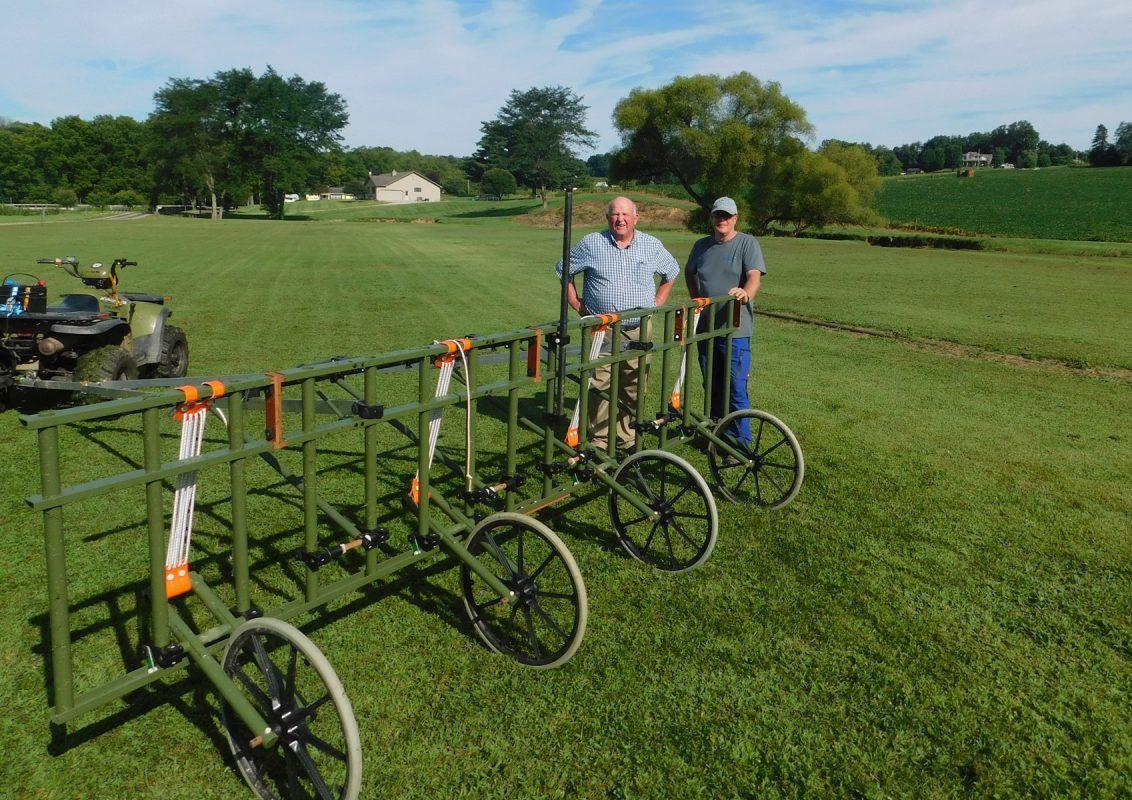
Once again our Friends Wayne May, Mike and Betty LaFontaine, John Lefgren, Richard Moats, Mike Baker, Jeff Green, Ryan Sorensen, Kevin Price and more are in Montrose Iowa for the past few weeks searching for signs of ancient civilization that dates to the Book of Mormon times. This is their second report after they found many Ancient Round Houses and ancient fire pits on Nov 17-18, 2020.
More details will be coming as the team evaluates these scans completely. The Heartland Group is also planning to do some core sample testing of the fire pits and round houses in the next few months or so. You can help them by donating here: https://zarahemla.site/donation
Dateline — November 19th, 2020, Montrose, Iowa.
Today we finished the last day of our two-week expedition in our search for ancient habitation on the west bank of the Upper Mississippi at Montrose, Iowa. During the last 14 days we have scanned more than 500 acres. The Heartland Research team has been on a score of sites. The local landowners have been very cooperative as we have moved across the surface of their fields with the SENSYS MV X3.
We now have billions of data values that identify the impact of ancient civilizations on the magnetic signatures of soils and rocks. We know for certain that Native People thousands of years ago cooked food, brought light to their rooms and warmth to their homes with the keeping of fires. The heat from these ancient fires changed the magnetic properties of the soils and rocks. The changes in the magnetic signatures are measured from the ground. The SENSYS scanning produced gray-scale magnetic images that are comparable in their details to MRI scans of the human body. The German equipment measured fine magnetic forces at an extremely fast rate.
The Heartland Research Group is a serious scientific project involving the talents of 15 people who have more than 400 years of professional experience. The group of talented people came to make magnetic scans of the land in and near Montrose, Iowa. We succeeded in that effort. The scans recovered 16 unique data values in a space that was one-quarter of an inch by one-quarter of an inch. A data set included the fine measurement of magnetic force (nano-Telsa) with two GPS coordinates for each point of observation.
The research’s primary focus was to identify variations in the gradients of the nano-Tesla levels to locate fire pits, post holes, roads, and other changes that native people made in the soil as they lived their lives more than a thousand years ago.
The Research Group has confirmed that the river’s west bank in the area of the Des Moines Rapids had an ancient population that was greater than today’s population. In some areas from the scanning, we can say that the densities of ancient populations were more than 300 people per acre.
The world’s best sensing technology recorded differences in magnetic forces that were about three feet under the ground data that outlined the pre-European settlements of fields in the area of Montrose. The German Company SENSYS demonstrated the capability of its technology in Iowa just as it has at several sites in Europe and Africa. The results are of great interest and will only add to the legacy of the lands. The research was entirely non-invasive. The technology did not turn a shovelful of dirt. There was no more effect on the ground than if a Boy Scout had used a compass to orient his map. The success of the search depended entirely upon the science that produces exact measurements.
The SENSYS fluxgate tube measured one-billionth of a Tesla (one nano-Tesla). The earth’s magnetic force is 50,000 nano-Teslas. So, the SENSYS machine is about 1/50,000th as sensitive as that force that moves a compass needle. This fineness of measurement made it possible to locate the activities of people who lived thousands of years ago. These measurements are beyond the understanding of any scientist or engineer from a past generation. We have only begun the analysis of hundreds of scans. It became clear that the greatest density of populations was highest in Montrose, near the west bank of the Mississippi River. Stand by as we prepare our analytical reports.
September 27, 2018 2– Full Reports Yost Works 18-Page Report The Reconstruction & Archeoastronomy of a Hopewell Geometric Earthwork in Ohio -A Window into Hopewell Religion Just $19.95
Fort Glenford 17-Page Report Fort Glenford Hill Top Enclosure -An Adena Mortuary Complex in Ohio.
Author: Rev. Richard D. Moats Over 40 Pages of Archaeology in words and color photographs.
Joseph Smith’s Response to Skepticism Robert N. Hullinger “One of the most charitable studies of Joseph Smith ever written by a non-Mormon” — Dialogue: A Journal of Mormon ThoughtNotes in yellow boxes and yellow text below have been added by the editor.
Chapter 5. The Indians’ Lost Book of God
“They [the American Indians] have two flat sticks about one foot long, tied together, on which are several characters, which they say, the Great Father gave to their prophet, and mean as much as a large book.” —W. W. Phelps,1 an early Mormon apologist
“In 1805, twenty-five years before the founding of the Mormon church, an anglo missionary asked permission of the Six Nations to work among the native Americans in the region. The chiefs meeting in council asked Seneca Chief Red Jacket to speak for them. “You have got our country, but are not satisfied; you want to force your religion upon us,” he told the missionary. “We understand that your religion is written in a book. If it was intended for us, as well as you, why has not the Great Spirit given to us … and to our forefathers the knowledge of that Book, with the means of understanding it rightly? If there is but one religion, why do you white people differ so much about it?”2
Thomas Paine had asked similar questions in his critique of Christianity. The Book of Mormon offered answers to such questions in trying to convince the Indians that “Jesus is the CHRIST, the ETERNAL GOD.” Why does Mormon scripture cast the ancestors of the Indians in the principal roles? How could they be used to defend God against popular deism? Why were they used to [p.50] project a new theology?
The growth of America has always involved the fate of the original inhabitants, making the Indians of international importance. They wiped out a white force of 1,400 men at a battle on the Wabash River in the Northwest Territory in 1791, exposing the Canadian border. In 1811 the Indian leader Tecumseh led his forces to defeat at the Battle of Tippecanoe. When Tecumseh sought refuge with the British in Canada, many American politicians blamed the British for the uprising. This became one of the factors leading to war with Britain in 1812.
Once a region became U.S. territory, a period of upheaval and relocation set in. Land agents bought land from Indian tribes. Reservations were established for those Indians who wished to remain within U.S. boundaries. White settlements sprang up around the Indians, and cultural contact brought pressure on the Indian way of life. Eventually, if not as soon as the transition began, the majority of tribes moved west of the U.S. borders.
In western New York in the 1820s the process of relocation had almost been completed. Immediately after the Revolutionary War the Phelps and Gorham Purchase carved out the future home of the Joseph Smith, Sr., family.3 The land abounded in relics. This was the country of the Six Nation Federation of the Iroquois tribes: Mohawks, Oneidas, Onondagas, Cayugas, Senecas, and the Tuscaroras further south. Centuries before, following a series of battles which failed to determine supremacy, the tribes united to end an almost constant state of warfare. They left in their wake palisaded forts—one chain extended to Pennsylvania fifty miles away.(See forts below from Irving NY to Salamanca, NY)
The Palmyra region also had Indian mounds. Throughout the 1820s such Indian sites were featured in Palmyra newspapers. For example, the papers described the excavation of burial mounds near Cuyahoga River in Ohio, another in Virginia, and still others in Fredonia, New York, and Worthington, Ohio; rock inscriptions found in or near Dighton, Massachusetts, Pompey, New York, and Washington County, Missouri; a tomb in Tennessee and an excavation near Schenectady, New York. Such discoveries provided both concrete knowledge of Indians and room for speculation.4 (See proof of many of these mounds and fortifications in the map below)
From the mounds came skeletal remains of a man judged to be seven feet, four inches tall, an embalmed corpse with auburn hair and facial contours which were neither Indian nor Spanish, as well as artifacts which were both Indian and European. Rock inscriptions [p.51] revealed a public edict of Pope Leo X dated in 1520 inscribed in Latin with strange symbols, hieroglyphics, and art work in Missouri which little resembled “the rude sketches made by the Indians of the present day.”5
In 1810 a Mr. Miller opened the mound at Worthington, Ohio. Indians living nearby told Miller that the mounds had been there longer than anyone could remember. The writer of the newspaper article conjectured that the human remains “found in these mounds must have been … of human beings inhabiting the country, of whom the Indians had no knowledge.”6(Nephites and Jaredites? See editors note below)
Editors Note: Chief Joseph’s Cuneiform Tablet
“The most famous piece of evidence passed down among the Nez Perce tribe of Montana was a strange cuneiform tablet known to us as the Chief Joseph Tablet. Housed in the museum at West Point, this tablet was photographed by Warren C. Dexter in 1991, the tablet was taken from—some say gifted by—Chief Joseph when he was captured in 1877.
Chief Joseph, best known for his statement, “I will fight no more forever,” claimed he inherited it from his white ancestors and that it had been in his family for generations. He carried the inch square baked tablet in a medicine pouch with the Star of Ashur, an Assyrian symbol, on it….
And we must remember Chief Joseph claimed his “white ancestors” passed the stone down through the generations. Is it possible that Assyrians and/or Sumerians came to this country to escape Sargon of Akkad and his conquering armies? If so, this would not be the last time the Americas became a haven for those escaping harsh conditions in their motherlands….” In Plain Sight: Old world records in ancient America. Muskogee, OK: Hoffman Printing Company (pp. 150-155). (There is a picture of the Shawnee Creek stone translation on p. 153.) Moer information on my blog here:
Robert N. Hullinger continues, “The reporter who wrote of Pope Leo’s edict speculatedabout the first settlers of North America. They were probably Asiatics, descendants of Shem, Noah’s son, who crossed the Pacific to settle in North America. The descendants of Japeth, Shem’s brother, settled in Europe and then crossed the Atlantic, driving the Shemites into South America. (I don’t agree. See editors note below) He supported this theory with the observation that the language, manners, and customs of the South American Indians resembled those of Europeans: “What wonderful catastrophe destroyed at once the first inhabitants, with the species of the mammoth, is beyond the researches of the best scholar and greatest antiquarian.”7
Another reporter concluded from the Latin inscription and other discoveries “that this country was once inhabited by a race of people, at least, partially civilized, & that this race has been exterminated by the forefathers of the present and late tribes of Indians in this country.” (True probably the Hopewell or Nephites, and the Adena or Jaredites.)8 Dr. Edmund James of the U.S. Army, who reported the inscribed rocks in Missouri, wrote of the “departure of that forgotten race of men who left their emblematic inscriptions to commemorate some event in their history; perhaps, ‘Their own heroic deeds, and hapless fall,’ and the commencement of the flight to the west before the barbarians who have exterminated their arts and remembrance.”9 The life of current tribes did not match what the mounds, tombs, and inscriptions seemed to reveal.
Timothy Dwight’s description of the Iroquois in his four-volume Travels in New England and New York was congruent with this view. According to the information he gleaned, the Mohicans considered themselves the original inhabitants and the Iroquois interlopers. The Iroquois admitted as much, “asserting that they had fought their way to their present possessions, and acquired their county by conquering all who had resisted them.”10 According to Dwight, their [p.52] savage spirit was enough for them to conquer any tribe. This fall to the Iroquois was celebrated by James Fenimore Cooper’s 1826 The Last of the Mohicans, which was available in the Wayne Sentinel bookstore in Palmyra.11( I believe the Ojibwapart of the Algonquins, and the Onondaga part of the Iroquois are the two main possible descendants of the Lamanites and the Nephites).It was their DNA that matches Jewish DNA and these two races of people are represented in the 85 Indian Chiefs baptized for the dead in the past few years in the St George Temple by Delores Kahoken and Rod Meldrum. See my blog here.).
Robert N. Hullinger continues,” As they watched the remnants of once powerful tribes limp westward to relocation areas, the anglo immigrants in western New York compared their pitiful condition to what they assumed the status of the former inhabitants had once been. The Wayne Sentinel reprinted an article from the Batavia Peoples‘ Press which summed up the speculation. It seemed that the former civilization was nearly as developed as that of the colonists. It was pictured as a powerful, civilized, politically advanced nation which God or disease had decimated for some heinous, national sins. But who really knew? “There appears to be a gap in the history of the world, as far as relates to them, which can never be closed up,” opined the paper.12
Thomas Jefferson conjectured that the corpse from the Tennessee tomb was “a relic of a civilized people who formerly inhabited this country—but who, ages since ceased to be. Who they were from whence they sprung—and what was their destiny—remains locked up in the womb of the past, one of those inscrutable events which defy human ken or human examination; which loom up on the far-off ocean of by-gone years, with enough of reality about them to convince us that they are no fiction, but yet clothed with an indistinctiveness which defies investigation. The origin, the history, the destiny of that people, together with the cause of their extinction,” was, Jefferson believed, “‘consigned to the receptacle of things forever lost upon earth.’”13
Civilized Indians had been destroyed by barbarians who remained, and Indians-as-hostile-savages was a familiar motif in the Palmyra press during the period: Indians massacring anglos (Palmyra Register, 3 May 1820); white women falling captive to Indian savages (Wayne Sentinel, 17 Aug. 1824); children captured and raised by Indians (Palmyra Register, 3 July 1822); Indians fighting with each other (Palmyra Register, 19 July 1820). Even the Cherokees, (Iroquois) who had long been regarded as one of the most Christianized Indian nations, threatened to kill their own delegates to a peace conference upon their return from Washington because the tribe did not like the treaty the delegates had signed (Wayne Sentinel, 15 Aug. 1828).
Colonial attitudes toward Indians survived into the nineteenth century. There was the desire to get their lands, to kill or drive them [p.53] away. But there coexisted a guilty awareness that this was wrong and with this guilt a sense of obligation: convert and civilize them, or at least civilize them.14
Editors Note: Read D&C 28, 30, and 32. Joseph Smith sent the first missionaries to the Lamanites (Native Americans of North America), who were the Cattaraugus (Iroquois) in Buffalo NY, the Wyandot, (Iroquois) in Ohio, and the Shawnee and Delaware (Algonquin) in Missouri. The Book of Mormon was to be shared with the Lamanites as it was written for them.
Robert N. Hullinger continues, “In the early nineteenth century the government tried first to civilize Indians through Christian missions. In 1820 John C. Calhoun, Secretary of War, held up to Congress the Cherokees, Choctaws, Wyandots, Senecas, and Shawnees as prime examples of what civilization could do. In 1820-21 Congress granted over $16,000 to establish mission schools in several states and carried that policy through the twenties. By 1824 twenty-one schools were supported in this manner and by 1826 there were thirty-eight.15
The readers of the Palmyra papers could follow the progress of the civilizing process. In 1821 a report from the Brainard mission among the Cherokees concluded: “It no longer remains a doubt whether the Indians of America can be civilized—the Cherokees have gone too far in the pleasant path of civilization to return to the rough and unbeaten track of savage life.”16 Another report from the same tribe urged Christians to “pursue the labour of love which we have commended.… and the Indian will become temperate and industrious.”17 As proof of the gospel’s power to civilize, an article reported that the Oneidas had formed an agricultural society.18 A notice that copies of the Bible were being printed in an Indian language and that they were bringing Indians to Christianity was therefore printed with a note of approval.19
The missionary effort was on one level a reparation for the way colonists had mistreated the Indians.20 Another motive prominent in the nineteenth century was that Jesus Christ had ushered in the “millennial morn”: “Why are kings become nursing fathers and queens nursing mothers,—why are the nations flinging away their gods and asking for the True God and the Bible, and why are all civilized nations aroused to relieve the miseries of the heathen, if the set time to favour Zion is not come?”21
Success was at best mixed. Red Jacket opposed missionaries among his people, but others invited them in. He wrote his assessment of the results in a letter in 1821. The introduction of preachers “has created great confusion among us, and is making us a quarrelsome and divided people.” Whenever the Black Coats secured consent to come in, he wrote, “confusion and disorder are sure to follow; & the encroachments of the whites upon our lands, are the invariable consequences.” The preachers “were the forerunners of [p.54] their dispersion.” Indians quarreling, whites plundering, Indian population decreasing—all this happened in “proportion to the number of preachers that came among them.” Red Jacket feared “that these preachers, by, and by, will become poor, and force us to pay them for living among us, and disturbing us.”22
Contact with Indian tribes and antiquities led some to conclude that no one would ever discover the origin of the Indians and the lost race. In fact, many were using the mystery of Indian origins to demonstrate the incompleteness of the Bible. For example, Jedidiah Morse, one of the leading ministers of New England, wrote of the controversy in 1793: “Those who call in question the authority of the sacred writings say, the American [Indians] are not descendants from Adam, that he was the father of the Asiatics only, and that God created other men to be the patriarchs of the Europeans, Africans and Americans. But this is one among the many weak hypotheses of unbelievers, and is wholly unsupported by history.”23
Editors’ Note: Of course I believe the Native Americans are fully children of God and children of Israel. I believe the Jews and the Native Americans are indeed of the same family and both will accept the gospel as is prophesized. “Which is my word to the Gentile, that soon it may go to the Jew, of whom the Lamanites are a remnant, that they may believe the gospel, and look not for a Messiah to come who has already come.” D&C 19:27 “And then shall the remnant of our seed know concerning us, how that we came out from Jerusalem, and that they are descendants of the Jews.” 2 Nephi 30:4
Robert N. Hullinger continues, “The discovery of Indians in the New World raised a serious theological issue: If the Flood had left only Noah and his family in the Old World, where did the Indians come from? Unbelievers argued that the Indians were racially unrelated to Old World people [Shem through Lehi] and could not possibly have migrated to the New World thousands of years before nagivation.
Against these theological attacks, believers began proposing theories connecting Indians with the Old World. Some identified the Indians with the legend of the lost ten tribes.24[Not Lost Tribes, but the Tribe of Judah]. Catholic priests had made this connection in the sixteenth century, partly as a response to pre-Adamite [No Pre-Adamites] theories of Indian origins. Rabbi Manasseh ben Israel in the mid-seventeenth century published a book-length treatise on the subject in London.25 James Adair’s 1775 History of the American Indians, which was specifically designed to combat the pre-Adamite theory and defend the Bible, brought ben Israel’s theory to English-speaking readers.26 The Indian-Israelite connection was accepted by some Puritans and prominent American clergy, set forth in a series of books in the early 1800s,27 and debated by members of the New York Historical Society.28
In September 1825 Mordecai M. Noah, prominent in publishing and political circles in New York, dedicated the City of Ararat as a refuge for world Jewry. He issued a proclamation to that effect and delivered a speech setting forth the rationale of his enterprise. He had an explanation for the origin of the Indians and their [p.55] predecessors. Given their manners, customs, and “admitted Asiatic origin,” [There is DNA proof that the Indians of Central and South American are Asian, so they could not be the people of the Book of Mormon, who would be of Israel, which our research has found.] he proclaimed that the Indians were “in all probability the descendants of the lost tribes of Israel.” He added, “Measures will be adopted to make them sensible of their origin, to cultivate their minds, soften their condition and finally re-unite them with their brethren the chosen people.”29 His speech was printed in the two following issues of the Wayne Sentinel along with further comment: “The discovery of the lost tribes of Israel, has never ceased to be a subject of deep interest to the Jews. That divine protection which has been bestowed upon the chosen people … has, without doubt, been equally extended to the missing tribes, and if, as I have reason to believe, our lost brethren were the ancestors of the Indians of the American Continent, the inscrutable decrees of the Almighty have been fulfilled in spreading unity and omnipotence in every quarter of the globe.… It is … probable that from the previous sufferings of the tribes in Egyptian bondage, that they bent their course in a northwest direction, which brought them within a few leagues of the American continent, and which they finally reached. Those who are most conversant with the public and private economy of the Indians, are strongly of opinion that they are the lineal descendants of the Israelites, and my own researches go far to confirm me in the same belief.”
Noah listed similarities between Indians and Jews which he felt supported the identification. He concluded: “Should we be right in our conjecture, what new scenes are opened to the nation—the first of people in the old world, and the rightful inheritors of the new? Spread from the confines of the northwest coast of Cape Horn, and from the Atlantic to the Pacific. If the tribes could be brought together, could be made sensible of their origin, could be civilized, and restored to their long lost brethren, what joy to our people, what glory to our God, how clearly have the prophecies been fulfilled, how certain our dispersion, how miraculous our preservation, how providential our deliverance.”30
The Indian-Israelite connection was almost always tied to some aspect of belief in the Millennium. Ethan Smith’s ministerial career from the late 1700s to the early 1800s was engaged in the struggle against Thomas Paine’s brand of popular deism. View of the Hebrews,31 his major contribution to the defense of biblical revelation, appeared first in 1823 and then, revised and enlarged, in two printings in 1825. It was widely available in New England and New [p.56] York. The book presented the millennial hope that the conversion of the Indians would help usher in the thousand year reign of Jesus. A literalistic approach to the restoration passages of the Old Testament, particularly those of Isaiah and Jeremiah, led Smith to look for their fulfillment just before the impending Millennium. Ethan Smith thought he had discovered the fate of Israel’s lost tribes, where they were, and what had befallen them. By distinguishing between the Jews as dispersed and the ten tribes as outcast, God “surely must have provided a place for their safe keeping as a distinct people, in some part of the world, during that long period.”32
But where were they? Smith found many clues as to their present location in the Old Testament and Apocrypha. Jeremiah 30-31 speaks of Ephraim (the ten tribes) as scattered to the “coasts of the earth” in the “north country.” Ephraim was in the “isles afar off,” which signifies any land over “great waters.” 2 Esdras 13 declares that the ten tribes went north from Palestine past Armenia, bound for a land where no one had dwelt since the Flood. Amos 8:11-12 speaks of the tribes’ wandering from the north to the east, from sea to sea.33 These sounded like descriptions of America.
Smith concluded that the more civilized Israelite tribes separated from those who depended on hunting. Hunters gradually forgot about their common ancestry and waged frightful wars upon the others. After many centuries, civilized tribes were finally overcome and destroyed. This destruction explained the forts, mounds, and vast enclosures which predated Columbus’s discovery—ruins which had no connection with the current Indian population. In this way Smith accounted for abandoned Indian cities along the Ohio to the Mississippi, estimated by Caleb Atwater to be almost 5,000 in number. The ruins and artifacts were eloquent witnesses to the accomplishments of these early inhabitants. “And nothing appears more probable,” Smith wrote, “than that they were the better part of the Israelites who came to the continent … while the greater part of their brethren became savage and wild. No other hypothesis occurs to mind, which appears by any means so probable.”34
Editors Note: I believe these historians Ethan Smith, Noah, Adair, Schoolcraft and more, knew the Indians were very much like the Jews in belief, custom and dress, so they thought they were part of the lost 10 Tribes. I however believe the Native Americans are part of the scattered people of Jerusalem from the House of Lehi.
Robert N. Hullinger continues, “Convinced then of the literal expulsion of the lost tribes, Ethan Smith also argued for their literal restoration. Zechariah 8:7 speaks of the Lord saving his people from the east country and west country. Since no one from a west country was restored to the land of Israel during the return from Babylon, Smith deduced that the west country referred to must be America. In other words, the return [p.57] from Babylon was not the only one referred to by scriptures. Smith awaited a restoration for the lost tribes of Israel—the Indians—which was both “distinct from and future of that event.”35
One of the most important traditions used to prove this theory was that of a lost book. According to Smith, the Indians told of “a book which God gave, was once theirs; and then things went well with them. But other people got it from them, and then they fell under the displeasure of the Great Spirit; but that they shall at some time regain it.”36 He quoted Elias Boudinot, who supposedly followed Indian authority in explaining “that the book which the white people have was once theirs.”37
According to Smith, Indian tradition held that once they lived “away in another country, had the old divine speech, the book of God; they shall at some time have it again, and shall then be happy.” He passed along the report of a conversation between a missionary and the elderly wife of a Cherokee chief, who told him “that when she was a small child, the old people used to say that good people would come to instruct the Cherokees at some future period; and that perhaps she and others of her age would live to see the day. And now she thought that, perhaps, we and the other missionaries had come to give them that instruction.”38
The Pittsfield parchment story was the most important evidence Ethan Smith produced to support the stories of the Indians’ lost book.39 Joseph Merrick of Pittsfield, Massachusetts, owned land on “Indian Hill,” where he allegedly discovered a black leather strap, sewn with sinews and containing dark yellow leaves of an old parchment. In 1815 he brought them to the Rev. Mr. Sylvester Larned of Pittsfield.40 Larned discovered the standard texts of a Jewish phylactery on the leaves. He wrote Merrick a letter with his translation of the Hebrew script and then took the leaves to Cambridge for further examination.41 There he left them with a Dr. Eliot, who died soon after. Smith later tried unsuccessfully to locate the parchment leaves, although he continued to believe in their existence.
A second report of a lost book surfaced soon after the Pittsfield parchment story. An old Indian told the Rev. Mr. Stockbridge “that his fathers in this country had not long since had a book which they had for a long time preserved. But having lost the knowledge of reading it … they buried it with an Indian chief.”42
Smith combined the two accounts of the Pittsfield parchment [p.58] and the Stockbridge book buried with the chief. He concluded that this was the kind of evidence one might expect to connect the Indians with Israel. The parchment leaves seemed obviously Indian, for Jews buried their old or illegible phylacteries and Bible pages in a sheet of paper. They would never have used animal sinews for thread· The whole episode, concluded Smith, “might have been thus safely brought down to a period near to the time when the natives last occupied Indian Hill, in Pittsfield; perhaps in the early part of the last century.”43
Editors note: Within the traditions of the Native Americans of North America (Lamanites) you will find hundreds of stories about a “sacred book”, or “a book”, or ” a record”, or “a history of our forefathers”, or “a book of plates”, or “a history of our people”, and many times these Natives talk about it being buried in a hill or the ground. There is such a connection between these Native American Lamanties and the Book of Mormon which was written by their forefathers. My blog about many lost books of the Indians is here.
Robert N. Hullinger continues, “The possibility of Israelite identity for American Indians offered America a profound opportunity.· According to Ethan Smith’s view of Isaiah 18, Isaiah was appealing to the future European Christian stock in America to restore the gospel to the outcast Israelite-Indian tribes.44After such restoration, which included the return of the Bible to the Indians, American Christians would be able to christianize them. Smith had God say through Isaiah: “[W]ere not your fathers sent into that far distant world, not only to be (in their posterity) built up a great protecting nation; but also to be the instruments of gathering, or recovering the miserable remnant of my outcasts there, in the last days?”45By converting the Indians, Christians could help inaugurate the Millennium.
Smith spelled out the theory’s value in the on going debate with skeptics: “New evidence is hence furnished of the divinity of our holy scriptures … striking characteristics are found of the truth of ancient revelations.”46 Smith had met the infidel on what he considered fair ground and challenged him to explain the phenomena: “Whence their ideas that their ancestors once had the book of God; and then were happy; but that they lost it; and then became miserable; but that they will have this book again at some time?”47
The restoration of the ten tribes would confound infidelity, wrote Ethan Smith. Indian traditions were beginning to exhibit the new evidence, “a powerful evidence of the truth of revelation.” The preservation of the Jews was a “kind of standing miracle in support of the truth of revelation.… But the arguments furnished from the preservation and traditions of the tribes, in the wilds of America from a much longer period, must be viewed as furnishing, if possible, a more commanding testimony.”48The Indian-Israelite identification confounded popular deism, vindicated God, and proved the Bible true.
The Pittsfield parchment story seemed to prove that the Indians [p.59] had once possessed the Old Testament, and the story may have circulated in the Palmyra region years before Ethan Smith’s second edition of 1825. Sylvester Larned and Elias Boudinot were two men responsible for the story’s getting to Ethan Smith. Larned, a young, well-known preacher in the Congregational church, preached in the Canandaigua Congregational church in 1817 and 1818. Boudinot, long active in Indian affairs before he came to head the American Bible Society in 1816, used the Indian-Israelite identification in his Star in the West to combat deism, and was certainly influential in western New York.
Joseph Smith in his teens was, according to his mother, a thoughtful youth inclined to ponder life’s issues. He could take current topics of interest and entertain others with them. He recited stories about Indians, their fortifications, customs, and life as if he had lived among them.49 Years later Smith would see the Book of Mormon as a morality play with the ancestors of the American Indians cast in the leading roles. This is particularly evident in the book of Alma. The name of God given there is the Great Spirit, who is identified with the God of the Bible, the world’s creator. There we read of Indians waging endless tribal warfare. They had tremendous battles in which tens of thousands were slain and built fortification mounds topped with palisades and towers with moats in front.
Religious and moral issues were at stake in Book of Mormon warfare, as well as European anxiety. Once a Book of Mormon tribe was converted to Jesus, it had to decide whether to continue fighting or to throw down its arms and risk being slaughtered: “They became a righteous people; they did lay down the weapons of their rebellion, that they did not fight against God any more, neither against any of their brethren” (Alma 23:6). “They began to be a very industrious people; yea, and they were friendly” (vv. 17-18). “Now there was not one soul among all the people who had been converted unto the Lord that would take up arms against their brethren; nay, they would not even make any preparations for war; yea, and also their king commanded them that they should not” (24:6). They repented of their past murderous ways and refused to wage war even in self-defense (w. 7-16).
The Book of Mormon people of Anti-Nephi-Lehi carried out this “no fight” policy when they were attacked by the Lamanites. One thousand of them offered themselves as sacrificial lambs in a passive resistance movement and shamed the slaughtering Lamanites. Repenting [p.60] Lamanites “threw down their weapons of war, and they would not take them again, for they were stung for the murders which they had committed” (Alma 24:25). More than one thousand were brought to the Christian faith as a result of this supreme act of love on the part of those who were willing to die to show that war was not the way. Preaching to the Indians led them “to disbelieve the traditions of their fathers, and to believe in the Lord” (25:6). “They were perfectly honest and upright in all things; and they were firm in the faith of Christ, even to the end” (27:27).
What Book of Mormon Lamanites were to play out was the fulfillment of the government’s dream for an ideal Indian policy. Christian mission efforts among native Americans had had some results, but these were few and slow. The Book of Mormon gave American natives a past and an identity as the people of God and reason to make peace with each other and anglos and to become exemplary Christians.
The Book of Mormon echoed what had appeared in contemporary books and newspapers, and the apologetic value for countering deists and rationalists which Ethan Smith saw in the Indian-Israelite theory was realized in the Book of Mormon as well.50According to its title page, the Book of Mormon was “to shew unto the remnant of the House of Israel how great things the LORD hath done for their fathers; and that they may know the covenants of the LORD, that they are not cast off forever.” It was this book, not the Bible, which Joseph Smith wanted the Indians to accept as their long lost book of God.
Notes:
1. W. W. Phelps, “Israel Will be Gathered,” The Evening and the Morning Star, June 1833, 101.
2. Lewis Copeland, ed., The World’s Great Speeches (New York: Garden City Publishing Co., 1941), 266-68.
3. The development of the region is described in Orsamus Turner’s History of the Pioneer Settlement of Phelps and Gorham’s Purchase (Rochester: Wm. Alling, 1851).
[p.61]5. Palmyra Herald, 30 Oct. 1822; Wayne Sentinel, 24July 1829; Western Farmer, 18 Sept. 1821; Palmyra Herald 19 Feb. 1823; Palmyra Register, 2 June 1819; Wayne Sentinel, 3 Nov. 1824.
6. Palmyra Herald, 30 Oct. 1822.
7. Ibid., 19 Feb. 1823.
8. Palmyra Register, 26 May 1819.
9. Wayne Sentinel, 3 Nov. 1824.
10. Timothy Dwight, Travels; in New-England and New York, 4 vols. (New Haven: S. Converse, Printer, 1821-22), 4:131.
11. Wayne Sentinel, 3 Mar. 1826. “It is exclusively an American work—descriptive of American scenery, and American aboriginal character.” Cooper pictured one of the Indian villains as a deist.
12. Ibid., 24 July 1829. American identification with the vanquished Mound Builder race included other assigned traits such as white skin, agricultural civilization, and Christian religion. See Vogel, 53-69.
13. Ibid.
14. This ambivalence is traced by R. Pierce Beaver, Church, State, and the American Indians (St. Louis: Concordia Publishing House, 1966), 7-52. Colonial and early American justification for taking Indian lands is discussed in Vogel, 53-56.
15. Ibid., 73, 76.
16. Western Farmer, 4 Apr. 1821.
17. Palmyra Herald, 30 Oct. 1822.
18. Palmyra Register, 7 July 1818.
19. Ibid., 4 Oct. 1820.
20. Ibid., 25 Aug. 1818.
21. Palmyra Herald, 30 Oct. 1822.
22. Western Farmer, 4 Apr. 1821.
23. Jedidiah Morse, The American Universal Geography, 2 vols. (Boston, 1793), 1:75. Morris’s book was on sale at Pomeroy Tucker’s bookstore in Palmyra, New York. See Wayne Sentinel, 5 May-7 July 1824. For a discussion and other sources dealing with the pre-Adamite theory of Indian origins and its use by unbelievers, see Vogel, 35-39.
24. While the Indian-Israelite theory was one among many, it nevertheless had a significant following. See Vogel, 35-69, for a detailed discussion, and 103-44, for an extensive annotated bibliography of numerous pre-1830 sources. Lynn Glaser, Indians or Jews?An Introduction to a Reprint of Manasseh ben Israel’s The Hope of Israel (Gilroy, CA: Roy V. Boswell, 1973), surveys the changing shape of that belief over the centuries. Robert Wauchope, “Lost Tribes and the Mormons,” in Lost Tribes & Sunken Continents: Myth and Method in the Study of American Indians (Chicago: University of Chicago Press, 1962), 50-68, gives a broader and more scholarly survey. Robert Silverberg presents the archaeological evidence and evaluates the Indian-[p.62]Israelite theory within developing archaeological understanding from the sixteenth through the twentieth centuries in Mound Builders of Ancient America: The Archaeology of a Myth (Greenwich, CT: New York Graphic Society, 1968).
25. See Manasseh ben Israel’s The Hope of Israel.
26. James Adair, The History of the American Indians (London, 1775), 3, 11; see Vogel, 41-42.
27. Ethan Smith’s View of the Hebrews; or the Ten Tribes of Israel in America, 2d ed. (Poultney, VT: Smith & Shute, 1825), was only one of many.
28. Elias Boudinot, A Star in the West; or A Humble Attempt to Discover the Long Lost Ten Tribes of Israel Preparatory to the Return to their Beloved City, Jerusalem (Trenton, NJ: Fenton, S. Hutchinson, and J. Dunham, 1816) made the identification. Samuel Latham Mitchill spoke for an Asiatic origin in his “The Original Inhabitants of America Shown to Be of the Same Family with Those of Asia,” American Antiquarian Society Transactions, 1 (1820).
Samuel Farmer Jarvis challenged James Adair and Elias Boudinot in “A Discourse on the Relations of the Indian Tribes of North America: Delivered Before the New-York Historical Society, December 20, 1819,” in Collections of the New York Historical Society, for the Year 1821 (New York: Bliss & White, 1821), 183. After citing Boudinot’s book and judging James Adair’s The History of the American Indians (London: Edward and Charles Dilly, 1775) of “little use,” Jarvis acknowledged Boudinot’s advocacy, saying that his “exalted character renders every opinion he may defend a subject of respectful attention.” Boudinot, Mitchill, M. M. Noah, and Jarvis are listed as historical society members in the Collections (pp. 11, 17).
29. Wayne Sentinel, 27 Sept. 1825.
30. Ibid.
31. His 1811 book on millennialism also spoke against deism.
32. E. Smith, 70-71, 78. This distinction is found throughout the work. He cites Isaiah 49:18-22; 56:8; 63:1-6 as proof passages.
33. E. Smith, 230-31, 74-75, 81. 2 Esdras 13:40-42 reads: ”Those are the ten tribes, which were carried away prisoners out of their own land in the time of Osea the king, whom Salmanesar the king of Assyria led captive, and he carried them over the waters, and so came they into another land. But they took this counsel among themselves, that they would leave the multitude of the heathen, and go forth into a further country, where never mankind dwelt. That they might there keep their statutes, which they never kept in their own land.” Joseph Smith used the Book of Mormon passage in Ether 2:4: “the Lord commanded them that they should go forth into the wilderness, yea, into that quarter where there never had man been.”
34. E. Smith, 198-99, 173. Vogel has pointed out that most other versions of the Mound Builder myth postulated the migration of two separate groups and that Ethan Smith was perhaps original in suggesting [p.63]that a single migratory group divided into two distinct groups. See Vogel, 98-99.
35. E. Smith, 234. In support of his notion that the restoration would be a literal one (just as the expulsion had been), he cites Isa. 14; 18; 49:18-23; 60; 65; 66:20; Jer. 16:14-15; 23:6, 8; 30:3; Deut. 30; Hos. 2-3; Zeph. 3:10.
36. E. Smith, 77.
37. Ibid., 115.
38. Ibid., 130, 131.
39. The Pittsfield Parchment story is found in E. Smith (pp. 217-25) in the 1825 edition. That year Josiah Priest, The Wonders of Nature and Providence (Albany, 1825), 290, began a chapter “extracted from the Rev. E. Smith’s View of the Hebrews, with some additional remarks.” In 1837 Parley P. Pratt cited parts of the story in A Voice of Warning and Instruction to All People (Independence, MO: Zion’s Printing and Publishing Co., 1943), 79. Mormon historian B. H. Roberts pointed to the Pittsfield Parchment story as proof for the Book of Mormon in New Witnesses for God, 3 vols. (Salt Lake City: Deseret Book Co., 1926), 2:49-50.
40. Larned had just finished Andover and was preparing to enter Cambridge. By the time he preached in Canandaigua in 1817 and 1818, he had known the story for several years. See William Sprague, Annals of the Congregational Pulpit, Vol. 2, Annals of the American Pulpit (New York: Robert Carter & Brothers, 1869), 556-71.
41. The letter in E. Smith (p. 220) reads as follows: “Sir, I have examined the parchment manuscripts which you had the goodness to give me. After some time and with much difficulty and assistance I have ascertained their meaning, which is as follows; (I have numbered the manuscripts.) No. I is translated by Deut. vi. 4-9 inclusive. No. 2, by Deut xi. 13-21 verses inclusive. No 3, Exod. xiii, 11-16 verses inclusive. I am &c. SYLVESTER LARNED”
42. E. Smith, 223.
43. Ibid., 224. For evidence that the Pittsfield phylacteries probably came from contemporary Jews, see Lee M. Friedman, ”The Phylacteries Found at Pittsfield, Mass.,” Publications of the American Jewish Historical Society, No. 25 (1917): 81-85, and I. Herold Sharfman, Jews on the Frontier (Chicago: Henry Regnery Co., 1977), 210-11, in Vogel, 92n88.
44. Ibid., 229-30, 127. Boudinot in A Star in the West wrote in the same vein: “Who knows but God has raised up these United States in these latter days, for the very purpose of accomplishing his will in bringing his beloved people [the Israelites] to their own land” (p. 297). Boudinot (1740-1820) was an attorney active in the Revolutionary War. He served in Congress from 1777-84 and was a strong Federalist supporter of Washington. His three books before A Star in the West involved the deistic controversy.
45. E. Smith, 246-55.
46. Ibid., 253. Boudinot (pp. 279-80) appreciated this earlier than Ethan [p.64]Smith. He wrote: “What could possibly bring greater declarative glory to God, or tend more essentially to affect and rouse the nations of earth, with a deeper sense of the certainty of the prophetic declarations of the holy scriptures, and thus call their attention to the truth of divine revelation, than a full discovery, that, these wandering nations of Indians are the long lost tribes of Israel …?”
47. E. Smith, 264.
48. Ibid., 266-67.
49. Lucy Mack Smith, Biographical Sketches of Joseph Smith, the Prophet, and His Progenitors for Many Generations (Liverpool: S. W. Richards, 1853), 84, 90.
50. See Fawn M. Brodie, No Man Knows My History: The Life of Joseph Smith, 2d ed. (New York: Alfred Knopf, 1971), 44-49, and Vogel, for the way Indian lore is woven into the Book of Mormon. David Marks, The Life of David Marks to the 26th Year of His Age (Limerick, ME: Office of the Morning Star, 1831), demonstrated that the impression created by the Book of Mormon on those who had heard it seemed to offer insights into Indian antiquities. “When I was in Ohio, I had quite a curiosity to know the origin of the numerous mounds and remains of ancient fortifications that abound in that section of the country; but could not find that any thing satisfactory was known on the subject. Having been told, that the ‘Book of Mormon’ gave a history of them, and of their authors, some desire was created in my mind to see the book, that I might learn the above particulars” (p. 341). See David Marks, The Life of David Marks to the 26th Year of His Age (Limerick, ME: Office of the Morning Star, 1831), chap. 1, n12, who thought that the Book of Mormon might offer insight into Indian mounds and fortifications.
A list of earthworks above was compiled to aid in the construction of archaeological maps for the general report and was then published in 1891 as Bulletin 12 of the Bureau of American Ethnology, “Catalogue of Prehistoric Works East of the Rocky Mountains” by Cyrus Thomas. This list, along with information from additional fieldwork, formed the basis for the construction of this map.
There is a temple mound situated above the Ohio River near Cincinnati. “Fragments of burnt limestone may still be seen on the top. The mound is a rectangle two hundred and twenty-five feet long by one hundred and twenty feet broad, and seven feet high.” In contrast to the hewn stone buildings and altars of Mexico, the Ohio mound has the right dimensions to have accommodated a timber and burnt lime plaster (“cement”) building of the size and proportions of Solomon’s Temple.” J. P. Maclean, The Mound Builders – Archaeology of Butler County, Ohio, 1904, pp. 222-223.
“Few realize that some of the oldest, largest and most complex structures of ancient archaeology were built of earth, clay, and stone right here in America, in the Ohio and Mississippi valleys. From 6,000 years ago until quite recently, North America was home to some of the most highly advanced and well-organized civilizations in the world – complete with cities, roads, and commerce.” Dr. Roger Kennedy, former director of the Smithsonian’s American History Museum.
“The painting in this book [Page 129] by Kendra Burton titled, “Christ Visits the Nephites in America’s Heartland”, shows Christ descending in a shaft of light to visit multitudes of Nephites who are streaming up a ramped earthen platform mound reminiscent of other earthen monuments made by the civilization now known as the Hopewell Mound Builders. The background is a vast plain with interspersed massive grass-covered mounds, wooden homes with thatched roofs and hardwood forests, while the foreground shows a large wooden temple atop a monumental ramped earth structure. The scene is one that is true to the Book of Mormon record, without stone pyramids or thick jungle vegetation since nowhere in the text is there any mention of stone buildings, palm trees, monkeys or a tropical climate.
The Heartland geography research has overwhelmingly demonstrated through Book of Mormon prophecies, Joseph Smith’s writings, DNA, archaeological, linguistic and cultural evidences that the most likely location for the setting of the Book of Mormon was in America’s Heartland. This painting is consistent with Joseph Smith’s known and historically documented statements and actions in such accounts as the those found in D&C 28, 30, and 32, the Wentworth Letter, the American Revivalist account, the Zelph accounts, Joseph’s hand-written letter to his wife while on Zion’s camp, and many additional sources.” Rod Meldrum, Author “Exploring the Book of Mormon in America’s Heartland”
Contrasting the works of the mound builders with Mesoamerica stone ruins, Hugh Nibley observes: “A closer approximation to the Book of Mormon picture of Nephite culture is seen in the earth and palisade structures of the Hopewell and Adena culture areas than in the later stately piles of stone in Mesoamerica… Though such piles as the great pyramid-temple of Chichen Itza are surpassed by few buildings in the world in beauty of proportion and grandeur of conception, there is something disturbing about most of these overpowering ruins… The great monuments do not represent what the Nephites stood for; rather they stand for what their descendants, mixed with the blood of their brethren, descended to…” Hugh Nibley, The Prophetic Book of Mormon, pp. 272-273
Skeletal remains and recreation of a prehistoric timber circle Rog Frost
Burned Bones, Mysterious Timber Circles & the Rites of the Ancients – Adena Culture in Mason County, WV
Mason County, West Virginia is a place rich in history. Founded in 1804, the county is named after George Mason, who was a delegate at the American Constitutional Convention of 1787. In October of 1774, Colonel Andrew Lewis successfully lead the Virginia militia against a confederation of Algonquian Shawnee and Mingo forces led by Chief Cornstalk in the “Battle of Point Pleasant”. Lewis’ camp was named “camp Point Pleasant”, which became a permanent settlement and gradually grew into the modern town and County Seat of Mason County.
Illustration of Battle of Point Pleasant. 1854
Following the Battle of Point Pleasant, Chief Cornstalk ( Hokoleskwa or Kokolesqua in Shawnee) became a diplomat and peace advocate who secured working relations between his Shawnee kinsmen and Revolutionary Americans.
Illustration; one of the earliest depictions of Chief Cornstalk. (1720-1777) From Frost’s pictorial history of Indian wars and captivities from the earliest record of American history to the present time. 1872.
Handsome Lake
“How America Was Discovered is a story told by Handsome Lake (Seneca Prophet and contemporary of Cornstalk), and documented by Arthur C. Parker, about a young minister who meets the one he perceives to be the Lord, who then asks him to go to a new land and bring with him cards, money, a fiddle, whiskey, and blood corruption. In return the young minister will become rich. The young minister sought out Christopher Columbus, and with the help of his crew, traveled to the Americas. They turned back to report what they had seen, which caused an immigration of people from Europe to the Americas. Along with the people came the five things that aided in destroying the natives. The end reveals that the “Lord” in the gold castle was actually the devil, and that even he knew what he had caused was wrong.” Rudes, B. Tuscarora English Dictionary Toronto
Ganargua Creek (Mud Creek) was a primary stopover point for the Iroquois on their trade routes. Joseph Smith also had an interest in the creek after hearing a speech from Seneca Indian Chief Red Jacket at Palmyra in 1822.The Buffalo of Yesteryear: Red Jacket’s speech on religious freedom (left)
Disturbing Death and Injustice
In the fall of 1777, Cornstalk and his son, Elinipsico, were wrongly detained at Fort Randolph while attempting to engage in peaceful relations with the Virginia militia, and both were murdered on November 10th. By the time of his death, Chief Cornstalk had become a renowned figure throughout the American colonies, and there was outrage over his wrongful end.
Replica of Fort Randolph, where Cornstalk was murdered. (Kevin Myers
None other than Patrick Henry (governor of Virginia at the time) attempted to bring justice upon Cornstalk’s killers, but the militiamen refused to testify against one another, and the murderers walked free.
While these historical events may be interesting enough in their own right, there are far older things buried in the ancient soil of Mason County. For over 2,000 years ago, this region of West Virginia hosted several ritual centers of the Adena Culture.
History Hidden in the Soil
The first to build burial mounds and earthworks in the Ohio River Valley, the chronology of the Adena Culture spans 1000 BC and to around 200 AD. A major Adena center (consisting of 10 earthen enclosures and between 40 and 50 burial mounds), was once located along the Kanawha River at the present-day location of Charleston, West Virginia in Kanawha County.
Another major conglomerate of Adena mounds once existed at Grave Creek Flats in Marshall County, consisting of several enclosures and around 47 mounds, including the famous Grave Creek Mound, which was originally between 60 and 65 feet in height. While these two locales have received the lion’s share of attention by historians and archaeologists in West Virginia, the lesser-known Adena sites in Mason County are extraordinary in their own right and provide a unique glimpse into Adena ritualism and burial practices.
MORMON, “CARRIED BY MY FATHER… TO THE LAND OF ZARAHEMLA.” MORMON 1:6; Grave Creek Mound by Ken Corbett
Grave Creek Mound, Moundsville, West Virginia, USA (Tim Kiser
Ritual Circles
The Neibert Site was located along the Ohio River south of Point Pleasant, near the Gallipolis Locks and Dam. Excavations at Neibert ahead of a locks replacement project in the 1980s revealed the former existence of four or five timber circles located on a high terrace above the Ohio River.
Aerial shot of Adena ceremonial circle at the Neibert Mound site, 1992.
Four of the circles were constructed in paired-post fashion, and all five were situated in a linear pattern variously 10-50 meters (32.8-164 feet) distant from one another.
Jason Jarrell and Sarah Farmer are investigative historians and avocational archaeologists. They study many subjects including depth psychology, Biblical mysteries, political science, and comparative mythology. They’re also authors of the book, Ages of the Giants: A Cultural History of the Tall Ones in Prehistoric America (2017).
Heartland Research with Wayne May and John Lefgren have been doing magnetometry research in Iowa near Nauvoo, Illinois for signs of ancient civilizations in the Heartland during Book of Mormon Times. They have found Adena Roundhouses like the one above. Visit my blog hereto read more about it.
Our Friends Wayne May, Mike and Betty LaFontaine, John Lefgren, Richard Moats, Mike Baker, Jeff Green, Ryan Sorensen, Kevin Price and more are in Montrose Iowa for the past few weeks searching for signs of ancient civilization that dates to the Book of Mormon times.
On the west side of the Mississippi just 1/4 mile south of the possible Zarahemla Temple Site in Montrose, Iowa, the Heartland Research Team have scanned hundreds of acres of farm land with Magnetometry and hope to find significant numbers of ancient Roundhouses, Fire Pits and Post Holes below the surface of the earth.
Dateline — Montrose, Iowa, November 13, 2020.
This morning the Fort Madison Democrat had on its front page a report on the German technology coming to Iowa.
Science students from Central Lee Community School came to Jim’s Greenhouse in Montrose to learn about the application of a technology that comes from Germany. The technology is designed for discovering evidence of ancient habitation in the fields of Lee County.
The Heartland Research Group, in cooperation with SENSYS engineers, demonstrated the world-class equipment to science students on a local farmland. Last week the SENSYS MV X3 came by air and land from Berlin to Montrose. Europeans have used this same equipment to enlarge the world’s understanding of Stonehenge in England, the discovery of Roman cities in Spain, the campgrounds of Legionnaires in the Danube River valley, and the unearthing of Viking ships in Norway.
Yesterday the German technology located evidence of human habitation in Montrose that is more than one thousand years old. This was the first application of modern technology for discovering roundhouses and firepits of ancient people who lived on the western banks of the Mississippi.
How is the technology able to locate the exact positions of ancient human activities in the ground? We know for certain that Native People thousands of years ago cooked food, brought light to their rooms and warmth to their homes with the keeping of fires. The heat from these ancient fires changed the magnetic signature of the soils and rocks. The changes in these magnetic signatures are still in the ground. The SENSYS scanning produces gray-scale magnetic images that are comparable in its details to MRI scans of the human body.
The German equipment measures fine magnetic forces at an extremely fast rate. The science students saw the collection of data from a field that has evidence of ancient habitation and activities under the ground’s surface that is three miles from the Central Lee Community School District. The Research Group has organized its efforts as a serious scientific project involving the talents of 15 people who have more than 400 years of professional experience.
The group of talented people has come together to make magnetic scans of lands. The scans have 16 unique data values in a space that is one-quarter of an inch by one-quarter of an inch. A data set includes the fine measurement of magnetic force (nano-Telsa) with two GPS coordinates for each point of observation. Within a two week timeframe, it is possible to collect, store, and digitally plot about 100,000,000,000 points.
The research’s primary focus is to identify variations in the gradients of the nano-Tesla levels to locate fire pits, post holes, roads, and other changes that native people made in the soil as they lived their lives more than a thousand years ago. The Research Group believes that the river’s west bank in the area of the Des Moines Rapids had an ancient population that could have been greater than today’s population.
The world’s best sensing technology records from about three feet under the ground data that outlines the pre-European history of our local area. The German Company SENSYS has demonstrated the capability of its technology at several sites in Europe and Africa. The Research Group is pleased to sponsor the application of this technology in community. The results will be of great interest and that they will only add to the legacy of the lands.
The research is entirely non-invasive. The technology does not turn a shovelful of dirt. There is no more effect on the ground than if a Boy Scout had used a compass to orient his map.
The success of the search depends entirely upon the science that produces exact measurements. The SENSYS fluxgate tube can measure one-billionth of a Tesla (one nano-Tesla). The earth’s magnetic force is 50,000 nano-Teslas. So, the SENSYS machine is about 1/50,000th as sensitive as that force that moves a compass needle. This fineness of measurement makes it possible to locate the activities of people who lived thousands of years ago. These measurements are beyond the understanding of any scientist or engineer from a past generation. That is how far modern science has taken us. The technology will add to the history of the lands in Lee County.
Dateline — Montrose, Iowa, November 14, 2020.
Today clear evidence of significant features sprang out of cornfields that are in Montrose, Iowa. The SENSYS MV X3 unveiled from the ground earthworks that date to the timeline of the Book of Mormon. Fourteen people from the Heartland Research Group are involved in this search. Together they have 400 years of professional experience in science, history, digital imaging, and other disciplines.
The new evidence is ancient and significant. The area of interest is more than 200 acres. On Monday the scanning team will continue to make more digital images that will come out of the earth. Serious students of the Book of Mormon may mark this day as an time when physical truth began to come out of the earth to confirm the existence of the Great City of Zarahemla. Doubters may replace doubts with faith. Above, 2,000-year-old, 64-ft Diameter, Round House. Post holes and fire pits. Found by Heartland Research Group 2018 Glenford, Ohio.Similar scans found in Iowa Nov 14, 2020 (Same scan as the one below)
Ancient replica Adena Roundhouses.
Above Aerial shot of Adena ceremonial circle at the Neibert Mound site, 1992. USACE/ Mason County, West Virginia
Mockers will have a hard time to explain what until now was unseen in the ground for thousands of years. The Heartland Research Group is more than pleased with the results of today’s scans. We have spent years looking for such results. We have traveled the world looking for the right combination of technology and place.
Today they came together. Tomorrow the truth will spring out of the earth in greater abundance. Praise God from Whom all blessings flow.
BYU’s 2017Department of Geological Sciences Hates New Science!*(See Below)
When I was a college student there were many discussions on the question of organic evolution. I took classes in geology and biology and heard the whole story of Darwinism as it was then taught. I wondered about it. I thought much about it. But I did not let it sway me, for I read what the scriptures said about our origins and our relationship to God.” (Gordon B. Hinckley, Faith: The Essence of True Religion, p. 18.)
Our Church is Neutral on Evolution
“The Church has no official position on the theory of evolution. Organic evolution, or changes to species’ inherited traits over time, is a matter for scientific study. Nothing has been revealed concerning evolution. Though the details of what happened on earth before Adam and Eve, including how their bodies were created, have not been revealed, our teachings regarding man’s origin are clear and come from revelation.” https://www.churchofjesuschrist.org/study/new-era/2016/10/to-the-point/what-does-the-church-believe-about-evolution.html?lang=eng
Why? Editors Opinion
Many intellectuals and scientists love sharing the quote above which says, “The Church has no official position on the theory of evolution.” The Church has also said they are neutral on the Geography of the Book of Mormon. These statements by the Church however don’t say that we have to be neutral about these things. I believe the Church is telling us to search and pray for ourselves. The Church can’t teach us everything as we are accountable for our own spiritual growth as we learn in this life. We should read, study and search for evidences about all things, and by the Spirit we may know ALL THINGS!Moroni 10:5
Supposedly those writers at FAIR Mormon use Elder Holland’s statement below as he says, “I do not know the details of what happened on this planet before that”, to feel they can tell us all about evolution as they are smarter than the Prophets. This secular society needs to have the faith of the Brethren and end this tremendous amount of time spent in promoting evolution of ape to man and from nothing comes something.
Why is it no surprise that a vast number of those who believe in the Mesoamerican Theory of the Book of Mormon also believe man came from nothing, Noah’s flood is a myth, the Earth is billions of years in creation, and believe in Pre-Adamites?
WE DID NOT COME FROM AN APE OF THIS I AM MOST CERTAIN! MAN DID NOT EVOLVE FROM NOTHING! ADAM WAS PLACED ON THE EARTH IN ABOUT 4,000 BC! THE MATERIALS OF THE EARTH ARE BILLIONS (innumerable) OF YEARS OLD, BUT THE CREATION IS THOUSANDS OF YEARS OLD, NOAH’S FLOOD IS REAL, and if there is ever a difference between Scripture and Science, always choose Scripture!
“One need not look far into science to discover it consists too generally of a maze of facts and theory so closely interwoven that even the most learned and honorable scientist (to say nothing of the intellectually dishonest one or the novice) may have difficulty in distinguishing readily between truth and theory.” — Joseph Fielding Smith Man, His Origin and Destiny
Could a Single Experiment Change Much of Science? Could Modern Science Have Some Things Wrong? Are All the Creation Accounts Actual or Myths? Is Evolution Being Taught as Fact at BYU? Can We Trust the Scriptures & Prophets? Are Our Youth Being Taught the Truth? Was There a Real World-Wide Flood? Did Adam and Eve Really Exist?
Join scientific researcher, author and international lecturer Rod Meldrum as he introduces a paradigm-altering experiment that may forever change the very foundations of science as we know it. Learn about a new millennial science, called the Universal Model, that provides the hard scientific evidences of the processes by which:
1- This magnificent Earth may have actually formed out of water. 2. How, and how long it took, for dinosaurs and trees to fossilize. 3. How a world-wide catastrophic flood at the time of Biblical Noah happened. 4. How mankind’s place in the Universe came through Adam and Eve.
Yes, We Really Can Trust the Scriptures and Prophets!
For 7 years Rod Meldrum was the head scientific researcher for Dean Sessions, author of The Universal Model. Rod gives many presentations about how science and the scriptures go hand in hand including the one above called, DNA and Dating Dinosaurs.
What Is The Universal Model? “The purpose of science is to describe and explain Nature so that we can understand and comprehend it, but where do we learn these things simply, in a way that makes sense? For many decades, a number of incorrect theories and misleading philosophies have formed the foundation of ‘modern’ science. Now, newly discovered scientific truths in the Universal Model have revealed long-hidden natural laws that explain Nature’s workings in an easily comprehensible format. We invite all to explore and experience the adventure of learning by investigating new discoveries about the Earth and our Universe found in the UM. These scientific truths establish a New Millennial Science destined to take us through the current millennium to heights of knowledge and discovery never before imagined.” The Universal Model Home Page
“We must keep in mind that He [Christ] is allowing the wheat and tares to grow up together for a season, and by and by the tares will be gathered together and be burned up. Before the burning though, there will be a judgement, and the Lord is allowing us each right now to work out our salvation or damnation. Those that have the facts before them and reject them (see below) will pay the ultimate price, but there also must be a Great Divide that is taking place right now (talked about in the BoM and in the last chapter of Vol II of UM [Universal Model] – the Human Model) to clearly mark each of us to which side we are on. Joseph Fielding Smith wrote: “One need not look far into science to discover it consists too generally of a maze of facts and theory so closely interwoven that even the most learned and honorable scientist (to say nothing of the intellectually dishonest one or the novice) may have difficulty in distinguishing readily between truth and theory.” — Man, His Origin and Destiny
This is the purpose of the UM, to take this maze (the modern science puzzle that makes no sense – everything from nothing) and replace it with Nature’s Puzzle – they way things really are.
Melvin A. Cook in the Intro of: Man, His Origin and Destiny also said: “Unfortunately, owing to the strong desire of scientists to display their brilliance and ingenuity, there is a tendency for theory to become the objective instead of a means to the end. Theory then not only loses its real value, but actually becomes a stumbling block to progress. Its inventor and disciples become so engrossed in the theory that they lose sight of its fundamental purpose, the quest for truth. This condition was shockingly illustrated in my presence at a meeting of scientists when one of great renown met a factual objection with the statement, “I am more concerned with the elegance of the theory than the truth of it.” — Man, His Origin and Destiny
Therefore, the Lord will judge these so-called intellectuals to whether they want to follow and learn of the Truth (which is literally Christ) or not. The sad thing is that most do not realize following Christ means following and seeking out for the Truth.
The UM has already produced experiments for the first time that are “more than words” (for example it has created sandstone and petrified wood which are identical to how Nature produced it in only a few days). The UM does not just have “alternative explanations” to how things are done in Nature, it has the ONLY explanation in hundreds of instances where modern science admits their theories cannot explain such and such natural phenomena. So ‘producing’ more ‘things’ is not the solution. Science is about demonstrating the true nature of Nature, it is not technology, which is only a tool that helps us understand it better.
Therefore, we cannot expect the leaders of science today to ever change their religion of atheism and accept the truth. It’s just not going to happen. For the UM to gain a much wider acceptance, it will have to be promoted full time to a much greater degree and I will personally have to be involved with this with others. This means I will be involved in debates and interviews and making many more recordings for the Web with influencers.
Although each Volume of the UM stands alone and has more new natural law than produced by modern science over the last century, Vol III does have double the amount of natural law as the other two volumes and many more experiments seen for the first time. Being able to demonstrate the true models of both matter and energy is more than any physicist or chemist or cosmologist has ever dreamed of, as this alone changes all their fields of study – and the UM does this. It also shows the errors in the physics of the Big Bang and proves the Universe is not expanding, but rotating in a Revolutionary Universe. It really is beyond what any scientist could dream about – yet it is all real and empirically demonstrated.” Dean Sessions-Founder and Author of the “Universal Model, A New Millennial Science“
None of us . . . knows enough. The learning process is an endless process. We must read, we must observe, we must assimilate, and we must ponder that to which we expose our minds. I believe in evolution, not organic evolution, as it is called, but in the evolution of the mind, the heart, and the soul of man. I believe in improvement. I believe in growth.‖ (Gordon B. Hinckley, Teachings of Gordon B. Hinckley, p. 298.)
The UM Is For All Lovers Of Truthby Chauncey Riddle
I have just completed reading the first two of the three systems of the new UM project of Dean Sessions. I am greatly impressed and delighted by what I found. It was like seeing an exciting, powerful new movie that deals with some of my favorite topics and concerns. To specifics:
Sessions is right on in pointing out that much of present day science is theory oriented rather than being fact oriented as it should be. For many scientists, theory is more important than law. Scientific laws are demonstrated by facts, but theories cannot be demonstrated by facts. There are always an infinite number of possible theoretical explanations for any finite set of facts. Theories can be eliminated by facts, but only if the persons involved in evaluating them will make the correct application: face the facts. When a theory is an article of faith, many people refuse to apply the pertinent facts which should cause them to abandon a particular theory. Sessions has called attention to specific facts and laws which should cause any honest person to reject the theories of organic evolution, the great age of fossils, the magma theory of the history of the earth, etc. How refreshing to see such candor in scientific thinking!
Sessions is also correct in showing that technology is as important as scientific theorizing. Technology enabled the work of Galileo to establish the helio-centric theory of the solar system, much to the consternation of the self-appointed scientists of his day. Sessions has shown by technology how granite rock is actually formed, as well as other minerals. He has shown how fossils are formed, such as petrified wood. Diamonds are now produced by technology. All of these technical achievements create facts and laws which every honest scientist must recognize and apply to theories affected by them. Technology trumps scientific theory because technology demonstrates what is (facts), whereas scientific theory only muses on what might be. Theory in science is actually metaphysics, not physics. Only when substantiated by facts and laws do theories become acceptable, and are always subject to elimination if new facts and laws come forth to negate them. Sessions has done an admirable job of showing how some present theoretical darlings of some scientists must be rejected.
Session’s discussions of hydrofountains, hypretherms, the Universal Flood, organic evolution, fossils, climate, history, anthropology, etc., are all refreshing and challenging. Reading this book is having one’s imagination stretched at every turn. Every serious reader who has an interest in knowing the truth will be delighted with the challenging ideas found here.
Will there be criticisms of this work? Most certainly. What form will they take?
One will be ignoring this work and discouraging others from reading it. Just as the politicians in charge try to marginalize everyone who is not “politically correct,” so will influential members of the science community try to ignore and belittle this work. But every honest seeker after truth will relish the opportunity to think freshly about important scientific matters, in a refined paradigm of science, and with new facts and laws to ponder.
Some critics will say that this work should be ignored or discounted because the author, Dean Sessions, is not a professional scientist and does not have the “necessary” academic background to propound such a work. This attitude is rubbish, of course. That is like saying someone cannot run fast because they are not part of an official Olympic Team. The proof of science is not in who says it but in the physical evidence brought to bear in evaluating our ideas about this physical world we live in. Sessions is right in pointing out that theory (which cannot be proved, but can be falsified) has become more important to many current scientists than are facts. The great example of this is the theory of organic evolution which is the darling of much of academia right now and which is completely unsupported by the facts, specifically the fact that there is no observable speciation in nature. That plus the inability to prove the immense time frame necessary for the theory spell the death-knell for the theory of organic evolution for every honest person. But evolution is a religion, a matter of faith for many persons, and they would rather give up their honesty than give up their favorite irrational article of faith.
Some will say that Sessions has picked and chosen very carefully the quotations of other writers which he cites to support his case. But that is not a fault. Every person picks and chooses among potential citations, a necessity in the flood of writings about every topic. What is most remarkable and commendable is the breadth and depth of the scholarship which Sessions exhibits in his writing. He has searched the literature of many fields of endeavor with exciting and telling results. Most people know the literature only in their own field. Sessions has no primary field and delves into what others have said from all the fields he deals with to help his readers realize what is being said and not said in the areas of his interest. Be grateful he has been selective and brings to you a summary of what others are saying.
Sessions will possibly be proved wrong about some assertions he has made in his work. This is almost inevitable for anyone doing serious thinking and writing. But the finding of such errors will not be an embarrassment for Sessions. He will laud such finding, because that will mean that the cause of truth will be advanced. His purpose is to bring truth and light to important matters, and if his work stimulates others to produce more truth and light, even unto showing his work needs to be amended, he will be grateful. He will be grateful because he writes not to give the final word but to further the ongoing human inquiry into the powerful ideas about the true nature of the universe that give us all more understanding and power.
I commend this work for all serious thinkers and lovers of truth. You will be challenged in reading the material. It is not “light” reading. But any effort will be well worth it.
Chauncey C. Riddle, Professor Emeritus of Philosophy, Brigham Young University, USA 10/22/2016
BYU’s student newspaper, The Universe, printed a full-page advertisement on behalf of the “Firm Foundation Expo,” a 3-day expo that bills itself as “faithfully exploring LDS topics of our time.” In the advertisement, all of the 70+ speakers are portrayed as distinguished and as experts in some area or another.
One of those speakers is Dean W. Sessions, the author of the “Universal Model.” Mr. Sessions claims to have disproved several straightforward tenets of modern science, including the basic interior structure of the Earth (which he argues has a core of ice and liquid water) and the mass of the Earth (which he recalculates at about a third of what is known in order to fit this model). He will be speaking about his model on each day of the event.
We, members of BYU’s Department of Geological Sciences, cannot accept Mr. Sessions “Universal Model” as it runs contrary to multiple lines of empirical evidence and generations of scientific query. It would not pass expert peer review.
Students and the BYU community are reminded that organic evolution, anthropogenic climate change, radiometric dating and a 4.56 billion-year-old age of the Earth are all seriously taught on campus by professors, who are in good standing with the church, in fields directly relating to these subjects. Students may learn more about these subjects through a variety of courses offered by the Department of Geological Sciences as well as from other departments.
We, the undersigned, support the honest development of knowledge by way of the scientific method and as vetted through expert peer review. We are concerned that the presence of the aforementioned advertisement in The Universe may legitimize Dean Sessions’ “Universal Model” in the eyes of some within the community.
—Bart Kowallis, PhD, Associate Dean of CPMS; Ron Harris, PhD; Jeffrey Keith, PhD;Jani Radebaugh, PhD; Eric Christiansen, PhD; Carl Hoiland, PhD; Thomas Morris, PhD; Sam Hudson, PhD; Stephen Nelson, PhD; Geology master’s degree students:Kimberly Sowards, Colin Hale, Michael Jensen, William Meservy, TJ Slezak, Collin Jensen, Matthew Randall, Aaron Holmes, Braxton Spilker, Danielle Spencer, Rebecca Esplin, Hannah Checketts, Brian Packer, David Tomlinson, Kevin Stuart, Hanif Sulaeman, Han Deng, Joel Barker; Geology bachelor’s degree students: Torri Duncan, Jason Klimek, Brett Young, Austin Eells, Hanna Howell, Chelsea Samuelson”
It’s sad how many scholars feel they know more than most of us who are uneducated people. I feel the great and spacious building is having fun right now at our expense. May the Lord help them become humble and at least consider some of this incredible research.
The Ezra Taft Benson talk from 25 Oct 1966 at a BYU Devotional is a sobering reminder of evil people in the church with an agenda (revising church history by quoting the intellectuals and apostates and ignoring the prophets). Ezra Taft Benson said to avoid being deceived, look to the Prophet. Listen to his entire talk at https://speeches.byu.edu/talks/ezra-taft-benson/immediate-responsibility/
At the 32:07-33:02 mark, just before the above quote, President Ezra Taft Benson states the following.
“We all have stewardships for which we must account to the Lord. Unfortunately, some men who do not honor their stewardships may have an adverse effect on many people. Often the greater the man’s responsibility, the more good or evil he can accomplish. The Lord usually gives a man a long enough rope and sufficient time to determine whether that man wants to pull himself into the presence of God or drop off somewhere below. There are some regrettable things being said and done by some people in the church today. As President Clark so well warned, the ravening wolves are amongst us. From our own membership and they more than any others are clothed in sheep’s clothing because they wear the habiliments of the priesthood. We should be careful of them.”
Explaining the title of this blog, this is what I mean. The Lord loves all people of this world perfectly and completely as His children. Christ speaks of two Promised Lands in 3 Nephi. These Lands were set apart by Christ himself so he could accomplish His great work of sharing the Gospel to all Nations. Christ had to chose a land where he could share with a people who would help Him accomplish His goal of loving and teaching the entire world.
He chose Judea and America. Because Christ loves us all equally, no people or land was better than another but utilized for his purposes. Elder Whitney said, “We believe that this was His object in creating the Republic of the United States; the only land where his work could be commenced or the feet of his people find rest. No other land had such liberal institutions, had adopted so broad a platform upon which all men might stand.” Bishop Orson F. Whitney, delivered in the Tabernacle, Salt Lake City, Sunday Afternoon, April 19, 1885.
From the Bible we learn,
“And othersheep I have, which are not of this fold: them also I must bring, and they shall hear my voice; and there shall be one fold, and one shepherd.” John 10:16. In the Book of Mormon we hear,
“19 But, verily, I say unto you that the Father hath commanded me, and I tell it unto you, that ye were separated from among them because of their iniquity; therefore it is because of their iniquity that they know not of you.
20 And verily, I say unto you again that the other tribes hath the Father separated from them; and it is because of their iniquity that they know not of them.
21 And verily I say unto you, that ye are they of whom I said: Other sheep I have which are not of this fold; them also I must bring, and they shall hear my voice; and there shall be one fold, and one shepherd.
By David Lindsley
22 And they understood me not, for they supposed it had been the Gentiles; for they understood not that the Gentiles should be converted through their preaching.” 3 Nephi 15:19-22
And from the Book of Mormon we also hear,
“1 And verily, verily, I say unto you that I have other sheep, which are not of this land, neither of the land of Jerusalem, neither in any parts of that land round about whither I have been to minister.
2 For they of whom I speak are they who have not as yet heard my voice; neither have I at any time manifested myself unto them.” 3 Nephi 16:1-2
That means He loves us ALL! The entire world and every person. Some have heard his word and others have not, but before judgement, all will have an equal opportunity to hear the gospel whether in this life, or in the life to come. What a beautiful blessing.
President Hinckley said, “I should like to say a few words about America…No land is without its beauty, no people without their virtues, and I hope that you who come from elsewhere will pardon my saying a few words concerning my own native land, America…surely this is a good land, a choice land, a chosen land. To me it is a miracle, a creation of the Almighty.” Gordon B. Hinckley Let Not Your Heart Be Troubled
Elder McConkie said, “The ‘other sheep’ here referred to constituted the separated flock or remnant of the house of Joseph, who, six centuries prior to the birth of Christ, had been miraculously detached from the Jewish fold in Palestine, and had been taken beyond the great deep to the American continent” (Jesus the Christ, p. 419).
“In the quote above it mentions Palestine. I believe it is referring to a great area of the world that has been known by many names over the years. Today in 2022 we call it Israel like the rest of the world does. Understand however that this is the Land of Judea where Christ is from. Christ is through Adam to Eber (Hebrew) to Abraham to Israel and through the Tribe of Judah through David. Christ in not a “Jew” unless you define Jesus as coming from the royal Lineage above.
What was Israel called before it’s Historical Creation in 1948?
Judea province in the 1st Century CE
“On May 14, 1948, David Ben-Gurion, the head of the Jewish Agency, proclaimed the establishment of the State of Israel. U.S. President Harry S. Truman recognized the new nation on the same day. Through the centuries, the territory was known by a variety of other names, including Canaan, Djahy, Samaria, Judea, Yehud, Iudaea, Syria Palaestina and Southern Syria.” Source
“I truly believe that the Book of Mormon is the word of God by personal revelation. I also believe one of the greatest resources that has helped me understand the secondary evidences of that wonderful Book, is the “Annotated Book of Mormon.” by David Hocking and Rod Meldrum. Never before have I heard about and understood in my mind, the correct geography as researched about the two Promised Lands, as I have personally learned from the Annotated Book of Mormon.” Rian Nelson
Only Two Promised Covenant Lands by Rod Meldrum
“There are only two “Promised Lands” mentioned by Christ in the Book of Mormon; Jerusalem of the Old World (3 Nephi 20:29) and New Jerusalem of the New World (3 Nephi 20:22). Both of these covenant lands of promise were given by the Lord to the house of Israel for their latter day gathering place. The New World Promised Land would be the location of the gathering place for the House of Israel in the America’s. Where is this gathering place? It will be at the New Jerusalem. And where is the New Jerusalem going to be located? We know through revelation that the New Jerusalem will be built in Jackson County Missouri, in the Heartland of North America (D&C 84:1-4). Did the Book of Mormon history take place on the same land as the New Jerusalem? Multiple passages establish that Lehi’s family was lead to and remained on this Promised Land throughout their entire history (1 Nephi 13:30, 22:7, 2 Nephi 1:5, 3 Nephi 20:22, 21:2-4,21:22-23, Ether 13:2-6). Therefore the land the Nephites, Jaredites, Mulekites and Lamanites lived upon was their “covenanted” land of promise and must – by covenant – include the Heartland of North America because it is the revealed location of the New Jerusalem by the Lord Himself.” Rod Meldrum. Read the entire article by Rod Meldrum called, The Scriptural Basis for Book of Mormon Geography
FOR CHRISTMAS! THE ANNOTATED EDITION OFTHE BOOK OF MORMON
THE OLD TESTAMENT: “I will gather the remnant of My flock out of all countries whither I have driven them.”(Jeremiah 23:3)
THE NEW TESTAMENT: “I am the Good Shepherd, and know My sheep, and am known of Mine. As the Father knoweth Me, even so know I the Father, and I lay down My life for the sheep. And other sheep I have, which are not of this fold: them also I must bring, and they shall hear My voice; and there shall be one fold, and one Shepherd.”(John 10:14-16)
THE BOOK OF MORMON: “And verily I say unto you, that ye are they of whom I said: ‘Other sheep I have which are not of this fold; them also I must bring, and they shall hear My voice; and there shall be one fold, and one Shepherd.’”(3 Nephi 15:21)“…for behold, I know My sheep and they are numbered.” (3 Nephi 18:31) (Note: words spoken by Jesus Christ are in red lettering.)
“Other Sheep” Prophecies and Promises by Bruce H. Porter and Rod Meldrum
“The Savior declared that He must visit others unknown to “this people” and unknown to those at Jerusalem, emphasizing that he must manifest Himself to them and that they must hear His voice. Read closely the few verses below as they indicate those to whom Christ had appeared to.
And verily, verily, I say unto you that I have other sheep, which are not of this land, neither of the land of Jerusalem, neither in any parts of that land round about whither I have been to minister.
For they of whom I speak are they who have not as yet heard my voice; neither have I at any time manifested myself unto them.
But I have received a commandment of the Father that I shall go unto them, and that they shall hear my voice, and shall be numbered among my sheep, that there may be one fold and one shepherd; therefore I go to show myself unto them. 3 Nephi 16:1-3
These statements made by the Savior should be emphasized inasmuch that they indicate that the story is not over or limited to one group of people. They also indicate that the story did not begin with the visit of Christ after his resurrection, in Jerusalem and then in Bountiful. Christ teaches that “I have other sheep, which are not of this land, neither of the land of Jerusalem, neither in any parts of that land round about whither I have been to minister.”
The scriptures teach that there may be many nations that He visited who no doubt have kept records of His appearance and teachings. The fact that Christ has visited other sheep and nations does not necessarily mean that all of them must be located outside of the western hemisphere. These nations may be in the proverbial “backyard” of the Promised Land as well as any other continents in the same hemisphere, or even different peoples and cultures within a continent. There are no stated limitations. Some have addressed this thought and possibility as recorded in scripture about the visitation of Christ to other nations.
From the vantage point of the scriptures, the Lord could have made a visit to the inhabitants of the Japanese islands, and for that matter, to other peoples of Asia as well. During his earthly ministry Jesus frequently reassured the Jews that he was the Good Shepherd, always mindful of his sheep, and known of them. He explained that he had other sheep not of their fold whom he would visit (see John 10:14-16). This promise was fulfilled when the resurrected Messiah appeared on the American continent as recorded in the Book of Mormon (see 3 Nephi 15:21). But while still among the Nephites, Jesus made a further promise that he would also visit other tribes of the house of Israel, neither of the land of Jerusalem nor of the land of the Nephites, whom the Father had led away. He had been commanded of the Father to administer to the needs of these sheep, and they would hear his voice.
Cartoon by Val Chadwick Bagley
“There is little doubt that other peoples came to the western hemisphere as the DNA evidence has shown. Likewise, there is evidence that Christ did visit many nations as the sacred text reveals. Many traditions around the world indicate or imply that one like Christ did indeed visit many lands, including Central America. However, the Book of Mormon by textual evidence and coupled with the prophetic statements of Joseph Smith, is unquestionably about a people on the Promised Land and speaks specifically about the nation established by Gentiles who came out of captivity. This is the same nation and Promised Land where the New Jerusalem will be built. This latter-day nation is the United States of America.
The Savior states in 3 Nephi that there were others that He must visit besides those to whom He was speaking. These other people are unknown to those in this land of promise and the land of Jerusalem. But, verily, I say unto you that the Father hath commanded me, and I tell it unto you, that ye were separated from among them because of their iniquity; therefore it is because of their iniquity that they know not of you. And verily, I say unto you again that the other tribes hath the Father separated from them; and it is because of their iniquity that they know not of them. And verily I say unto you, that ye are they of whom I said: Other sheep I have which are not of this fold; them also I must bring, and they shall hear my voice; and there shall be one fold, and one shepherd. 3 Nephi 15:19-21
The Lord declares that others were separated, and that there have been many migrations of people that were led by the hand of the Lord to different lands, continents, and isles of the sea. The movement of families for the preservation of life and religion is a motif seen throughout the scriptures. The separation of the righteous from the wicked is evident in all of our standard works.
The City of Enoch, Abraham’s departure from Ur, the Rechabites in Jeremiah at the same time Lehi leaves Jerusalem, and then Nephi going into the wilderness leaving behind the land of their first inheritance are examples. Even the saints in this dispensation were led by the Lord from place to place seeking safety from persecution and religious freedom until they settled in the Salt Lake Valley. The Lord has led many families and groups into the “nethermost parts of the vineyard” explained in Jacob 5.
The Allegory of the Olive Tree
Jacob, the brother of Nephi, also gives clues to some migrations led by the hand of the Lord in the “Allegory of the Olive Tree” in Jacob 5. Zenos prophesied that the “natural branches” will be taken off the “mother” tree and planted in the “nethermost parts of the vineyard” (Jacob 5:13). This allegory teaches that one branch, planted in a “good spot of ground”, brought forth both good and bad fruit:
And he said unto the servant: Look hither and behold the last. Behold, this have I planted in a good spot of ground; and I have nourished it this long time, and only a part of the tree hath brought forth tame fruit, and the other part of the tree hath brought forth wild fruit; behold, I have nourished this tree like unto the others.
In this “good spot of ground” there is a division of the “tame fruit” and “wild fruit” in the branch planted there. In verses 43-45 the wild fruit eventually overcame the good and tame fruit that was planted in a “good spot of ground”—a place that was “choice unto me above all other parts of the land of my vineyard.” Verse 44 speaks of the Jaredites being in the same “spot of ground” that was cut down to plant the branch which brought forth the two kinds of fruit.
And behold this last, whose branch hath withered away, I did plant in a good spot of ground; yea, even that which was choice unto me above all other parts of the land of my vineyard. And thou beheldest that I also cut down that which cumbered this spot of ground, that I might plant this tree in the stead thereof. And thou beheldest that a part thereof brought forth good fruit, and a part thereof brought forth wild fruit; and because I plucked not the branches thereof and cast them into the fire, behold, they have overcome the good branch that it hath withered away. Jacob 5:43-45
The commentaries that exist on these verses are unanimous in their interpretation of this “good spot of ground” as the Promised Land obtained by Lehi, one that is “choice unto me above all other parts of the land of my vineyard.” This same part of the vineyard was given to Lehi, the descendants of Mulek and to the Jaredites that once “cumbered” this good spot of ground. The “good fruit” being overcome by the “wild fruit” is always viewed as the eventual wickedness and destruction of the Nephites by the Lamanites.
This “good spot of ground” is described as the spot where those described in the Book of Mormon as “this people” were led to “this land.” The Book of Mormon is not only a history of the people led to “this land” but it also becomes a historical record and prophetic text about the “Promised Land” and those who shall inherit it.
The other people led away and “planted in the nethermost part of the vineyard” could be those in any part of the world.146 This “nethermost part” could be in Japan, China, and India, parts of Russia, Scandinavia, Greenland, Australia, or New Zealand. Any of the “isles of the sea” could be included. The “nethermost part” could even be the peoples and cultures that might be living and keeping records near the Promised Land and be found in Central or South America.
There are “myths” and stories of one like Christ appearing in many places and cultures around the world and teaching “Christian-like” concepts. The important lesson learned from the Book of Mormon is that there are other nations and groups of people that kept their own records of His teachings and His appearances to them. It would be folly to decide or interpret that the visit of Christ was limited to a single geographical setting. The fact that Christ appeared to the people on “this continent,” according to Moroni, and Joseph Smith, does not negate a possible visit to many other cultures in this hemisphere as well as those in the Promised Land as recorded in 3 Nephi, nor does it mean that all those who were visited by Christ were of necessity “Nephites.”
Two Promised Lands
Christ Speaks to All Nations
An important question asked by the Lord in scripture and about scripture is “Know ye not that there are more nations than one?” There is no limit to the Lord’s love and concern for the nations, kindreds, and tongues of the world. Having reviewed a few scriptures about “other sheep” that are usually associated with the House of Israel, a review of passages about other nations might be helpful. These nations are discussed in scripture, beyond the scope of the historical setting and people of the Book of Mormon. However, the Lord has seen a need for the scriptural text of the Nephites to include information about these nations, lands, and records that lie beyond the borders of the particular Land of Promise. The paraphrased passages below give insight beyond “this land” into other peoples and other lands.
Know ye not that there are more nations than one?…and that I remember those who are upon the isles of the sea; and I bring forth my word unto the children of men, yea, even upon all the nations of the earth? …that I remember one nation like unto another? Wherefore, I speak the same words unto one nation like unto another. …that I speak forth my words according to mine own pleasure. And because that I have spoken one word ye need not suppose that I cannot speak another… Wherefore, because that ye have a Bible ye need not suppose that it contains all my words; neither need ye suppose that I have not caused more to be written.
For I command all men, both in the east and in the west, and in the north, and in the south, and in the islands of the sea, that they shall write the words which I speak unto them… For behold, I shall speak unto the Jews and they shall write it; and I shall also speak unto the Nephites and they shall write it; and I shall also speak unto the other tribes of the house of Israel, which I have led away, and they shall write it; and I shall also speak unto all nations of the earth and they shall write it. 2 Nephi 29:7-12
Could these other “nations” in the verses (especially verse 12) above, include the highly advanced civilizations of Asia, and the Far East, perhaps the nations of northern Europe? Could these passages even include the peoples and cultures of Central and South America that might not be recorded in the Book of Mormon?
The last verse above speaks of the Jews, and then the Nephites and all the “other tribes of the house of Israel” and then includes the statement, that he “shall also speak unto all nations of the earth and they shall write it.”
The fact that the Book of Mormon is a record of the Promised Land does not mean that the entire hemisphere was that land. There can be no limitations on the Lord and the work He might do as He questions and declares: “Know ye not that there are more nations than one?…I shall also speak unto all nations of the earth and they shall write it.”
Other Records, Other People, Other Lands
Teachers of the Book of Mormon often remind their students that this sacred text is a record of “three migrations” and no more. Therefore, this written history is not the record of every migration to this continent or hemisphere. The claim of the book itself, and that of the translator, is that it consists of a record of only those who came to the “Promised Land.” It is a history of Lehi and his family, Mulek and those who came with him, and the earlier migration and history of the Jaredites.
All of these groups were led to the very same “Promised Land” as is evident in the scriptures. The fact that the record does not represent all cultures of the Western Hemisphere does not necessarily indicate that all lands within the hemisphere should be represented and included as the “Promised Land” within the Book of Mormon text.
There are only three groups of people that make up the known populations in the text of the Book of Mormon. Therefore, the land within the scriptural text should only include the land that those three groups inhabit. The prophecies and promises about the people and the land are to be fulfilled within the same land which they inhabit.
Based on the limited number of cultures that the Book of Mormon embraces and the information presented above, let us hypothesize for the moment that the text is just as limited in its geography. Suppose it is the record of those groups only, that were “planted in the good spot of ground” that is the “Promised Land.” Nephi explains that the record he is making “should be kept for the instruction of my people, who should possess the land” (1 Nephi 19:3) — then and now.” Prophecies and Promises by Bruce H. Porter and Rod Meldrum Chapter 14
I Will Graft Them:
“In the process of grafting, healthy, living branches are cut from a tree and inserted into the trunk of another tree to grow. The “branches” in this allegory of the Tame Olive Tree represent different groups of people whom the Lord takes from one place and then plants in another place to keep the “tree” from dying. Ultimately, the regrafting in of those of the House of Israel will include their coming to “the knowledge of the true Messiah”(1 Nephi 10:14).” Annotated Book of Mormon by David Hocking and Rod Meldrum page 107
Olive Tree Grafting
The Lord’s promises are extended to all of God’s people, world-wide. He loves us all and His goal is , “to bring to pass the immortality and eternallife of man.” Moses 1:39
Covenant of Abraham
“Abraham first received the gospel by baptism (which is the covenant of salvation). Then he had conferred upon him the higher priesthood, and he entered into celestial marriage (which is the covenant of exaltation), gaining assurance thereby that he would have eternal increase. Finally he received a promise that all of these blessings would be offered to all of his mortal posterity (D&C 132:29–50; Abr. 2:6–11). Included in the divine promises to Abraham were the assurances that (1) Christ would come through his lineage, and that (2) Abraham’s posterity would receive certain lands as an eternal inheritance (Gen. 17; 22:15–18; Gal. 3; Abr. 2). These promises taken together are called the “Abrahamic covenant.” It was renewed with Isaac (Gen. 26:1–4, 24) and again with Jacob (Gen. 28; 35:9–13; 48:3–4).
The portions of the covenant that pertain to personal salvation and eternal increase are renewed with each individual who receives the ordinance of celestial marriage (see D&C 132:29–33). Those of non-Israelite lineage, commonly known as Gentiles, are adopted into the house of Israel and become heirs of the covenant and the seed of Abraham through the ordinances of the gospel (Gal. 3:26–29).
Being an heir to the Abrahamic covenant does not make one a “chosen person” per se but does signify that such are chosen to responsibly carry the gospel to all the peoples of the earth. Abraham’s seed have carried out the missionary activity in all the nations since Abraham’s day. (Matt. 3:9; Abr. 2:9–11.)
To fulfill the covenant God made with Abraham—having particular reference to the fact that the literal seed of his body would be entitled to all of the blessings of the gospel (Abr. 2:10–11)—a number of specific and particular things must take place in the last days. The gospel must be restored, the priesthood must be conferred again upon man, the keys of the sealing power must be given again to mortals, Israel must be gathered, and the Holy Ghost must be poured out upon the Gentiles. All this has already taken place or is in process of fulfillment. See also Adoption; Gentile.” LDS Bible Dictionary
The reconstruction of Kennewick Man’s face in the image below was done for the Smithsonian. See Bruwelheide, “Identity Through Science and Art,” Kennewick Man: The Scientific Investigation of an Ancient American Skeleton, Chapter 28, at 526, 531 (2014).
“Kennewick Man is perhaps the most famous and well-preserved ancient Native American skeleton found in North America. Recent DNA testing of Kennewick Man’s bones shows that his mitochondrial DNA is haplogroup X. Does this mean anything for the Book of Mormon?
Since Kennewick Man boasts haplogroup X2a DNA, his skeleton presents a unique opportunity to learn more regarding the ancient people who came from this haplogroup X ancestry. Interestingly, his physical features support the Book of Mormon account of a potential Middle Eastern ancestry.
Kennewick Man’s bones. Photograph by Chip Clark, Smithsonian Institution.
Dr. James Chatters, the forensic anthropologist who was the first to study Kennewick Man, initially assumed that Kennewick Man was neither Native American nor ancient, due to notable typical Caucasian features such as a square, prominent bilateral chin, Caucasian-type jaw and cheekbones, and eye orbital measurements. He said, “My first thought was that this skull belonged to someone of European descent. … [T]he characteristics were consistent with … a white person, a Caucasian.” Chatters, Ancient Encounters: Kennewick Man and the First Americans, at 20 (2001). Chatters stated that Kennewick Man “differed in almost every respect” from typical Native American peoples, and that he had never seen a Native American skull with so many “Caucasoid” features. Chatters, “The Recovery and First Analysis of an Early Holocene Human Skeleton from Kennewick, Washington,” American Antiquity, 65(2), at 305-306 (2000). Likewise, a second forensic anthropologist who viewed the skull also confidently concluded “Male Caucasian … Easy call … White guy.” See Chatters, Ancient Encounters: Kennewick Man and the First Americans, Touchstone, 38 (2001). This changed when the skeleton’s carbon dating occurred and subsequent testing (including DNA testing) proved Kennewick Man to be an ancient Native American.
Chatters has since pointed out that Kennewick Man isn’t the only ancient Native American skeleton with Caucasian-like features, listing several other ancient skulls such as Spirit Cave Man, Stick Man, and skulls from the Marmes Rockshelter site and from the Horn Shelter site as additional examples of ancient Native American skulls with Caucasian-like features found in North America. Chatters, Ancient Encounters: Kennewick Man and the First Americans, at 20-21, 165, 182, 195-96 (2001). It should be noted that Dr. Chatters is not a member of the Church and believes that Kennewick Man lived 9,000 years ago, prior to Book of Mormon timeframes. There is conflicting carbon dating evidence, however, indicating that Kennewick Man instead lived only a little over 2,000 years ago. This evidence is explained in my recent book Face of a Nephite: DNA Studies and the Book of Mormon. https://www.digitalegend.com/catalog/product_info.php?products_id=357
The place Kennewick Man had been buried in Eastern Washington. Photograph by Thomas W. Stafford with Skeleton Illustration from Douglas Owsley. Image from Preston, “The Kennewick Man Finally Freed to Share His Secrets,” Smithsonian magazine (September 2014).
Subsequent analyses of Kennewick Man by other experts have also concluded that Kennewick Man has clear Caucasian physiological features. This would fit a Middle Eastern ancestry as described in the Book of Mormon. These experts have proposed similarities between Kennewick Man’s skull and bone structures to Europeans. See Gill, “15 East Polynesian and Paleoindian Parallels and Contrasts in Skeletal Morphology,” Skeletal Biology of the Ancient Rapanui, at 275 and 281-283 (2016). As noted by one scientist who studied Kennewick Man’s features in relation to historic population groups, “The lack of similarity of Kennewick Man to … [current typical] American Indians is striking,” finding that the features noted from his skull were much closer to those found among Caucasian peoples. Gill, “Morphological Features that Reflect Population Affinities,” Kennewick Man, Chapter 27, at 515 (2014). Other researchers agree, indicating that Kennewick Man’s physical features fall closer to Caucasian-type groups than to any typical Native American group. See, e.g., Jantz, “Cranial Morphometric Evidence for Early Holocene Relationships and Population Structure,” Kennewick Man: The Scientific Investigation of an Ancient American Skeleton, Chapter 25, at 476, 479 (2014) (“Kennewick Man’s morphology is slightly more similar to Europeans than it is to Native Americans … he would be an extremely atypical member of any [current known] Native American group.”).
Artistic recreations of Kennewick Man’s appearance, based on the skull, are reproduced below.
Figure 14. Artistic facial reconstructions of Kennewick Man. James Chatters and Tom McClelland made the clay reconstruction in the first two figures above, reproduced in “Kennewick Man Realized,” Science, Vol. 279 (February 20, 1998). The reconstruction in the latter two images was made for the Smithsonian by Bruwelheide, “Identity Through Science and Art,” Kennewick Man: The Scientific Investigation of an Ancient American Skeleton, Chapter 28, at 526, 531 (2014).
Kennewick Man’s Caucasian features, together with his mtDNA haplogroup X DNA, lend support to the idea that the ancient Native American population with haplogroup X DNA may have had more Caucasian features, similar to Kennewick Man. This fits a Middle Eastern ancestry such as described in the Book of Mormon and conflicts with the common assumption in the science of an East Asian ancestry for all Native Americans via the Bering Strait. This constitutes a surprising finding regarding Native American origins which fits with, and lends support to, the authenticity of the Book of Mormon.
Even though Kennewick Man provides evidence associating haplogroup X with a Non-Asian, Caucasian look in the Americas before Columbus, until more discoveries emerge confirming a connection between haplogroup X and a Caucasian-like appearance in the Americas before European admixture, mainstream scientists will likely continue to refuse to accept the correlation.
See David’s video Presentation called, “Nephites in North America: New DNA Evidence” Sign up for our Video Streaming Here!Watch over 700 Videos for 3 months. Just $45. Cancel anytime.
Despite popular belief, the currently available DNA evidence supports the Book of Mormon. Critics who attempt to rely on DNA evidence to attack the truth of the Book of Mormon misinterpret or misconstrue what the DNA evidence actually shows. In this presentation, Mr. Read will present more DNA evidence that has recently come to light supporting Book of Mormon claims. As one example, Mr. Read will discuss further scientific studies which again confirm that mitochondrial DNA haplogroup X (previously publicized by Rod Meldrum) is found among Native Americans and originated in the Middle East.
Indeed, one recent study found a variety of haplogroup X in Egypt that is just four mutations away from the type found in Native Americans, which undermines the critics’ previous claims that Native American haplotype X2a has “too many mutations” from the haplogroup X haplotypes found in the Middle East to fit a Book of Mormon timeframe for a migration from the Middle East to the Americas. Mr. Read will also present new DNA evidence regarding Y DNA haplogroup R, which is a second non-Asian DNA type found in large numbers among some Native American groups. Mr. Read will present evidence showing that this non-Asian DNA type also predates Columbus and has a distribution pattern in common with haplogroup X. This means that there is now a second and separate line of DNA evidence that corroborates the haplogroup X information and is again consistent with the Book of Mormon. Finally, Mr. Read will explain the significance of recent findings about an ancient Native American skeleton known as Kennewick Man, whose DNA is haplogroup X, but whose carbon dating has been commonly reported as being over 8,000 years old. Because of the reported carbon dating, Kennewick Man is now often used by critics to argue that haplogroup X in the Americas predates Book of Mormon timeframes. However, this again misconstrues the evidence. Mr. Read will demonstrate that a more complete analysis of the carbon dating for Kennewick Man shows that his correct age is within Book of Mormon timeframes and once again supports the DNA evidence in favor of the Book of Mormon. David possesses many intellectual interests. Before finishing his juris doctorate in law and becoming a patent attorney and later a judge, he earned undergraduate degrees in chemistry and philosophy. Over the past 10 years, he has completed a considerable amount of research into the historical authenticity of the Book of Mormon with a particular emphasis on DNA evidence related to the Book of Mormon. Through this research, he has recently uncovered additional DNA evidence that corroborates and supports the historical authenticity of the Book of Mormon.
David is an accomplished researcher. Over his career as a patent attorney, he has collaborated with inventors in numerous scientific fields. These include pharmaceuticals, medical devices, firearms, computer software, hybrid vehicles, battery technologies, pollution control technologies, textile manufacturing equipment, diesel and gasoline engines, chemical testing equipment, agricultural chemicals, turbocharging systems, fuels, coal gasification, and power plant technologies.
In each of these areas, he researched and came up to speed on the state-of-the-art knowledge in the field to thoroughly understand the new invention and the scientific consensus, interacted with experts in that field, and assessed and argued whether an invention was new or would be obvious to other experts in that scientific field. His work required him to reliably evaluate the state of established scientific knowledge in various scientific fields. He has taken that experience and applied it here to the DNA evidence related to Native Americans.
David lives in Michigan. He and his wife Barbara have five children: Amy, Charlotte, Sarah, Seth, and Matthew. David currently serves as the Sunday School President in his ward.
It is very appropriate to speak about the Gospel of Jesus Christ while also speaking about our blessed Constitution that the Lord Himself wrote. He said, “And for this purpose have I established the Constitution of this land, by the hands of wise men whom I raised up unto this very purpose, and redeemed the land by the shedding of blood. D&C 101:80
Today after a very contentious voting process our citizenry seems very split on what form of government the people want. We are a divided nation. We have been divided for a long time. Think back to the time of Joseph Smith. The saints thought that in about June of 1834, Zion’s Camp was going to establish the New Jerusalem in Missouri and yet the Lord said, “now is not the time” to redeem my people. That was 186 years ago! That means the 2nd Coming has to be even closer than we may realize.
Joseph Smith Quote
“There will be two great political parties in this country. One will be called the Republican, and the other the Democrat party. These two parties will go to war and out of these two parties will spring another party which will be the Independent American [sic] Party. The United States will spend her strength and means warring in foreign lands until other nations will say, “Let’s divide up the lands of the United States,” then the people of the U.S. will unite and swear by the blood of their fore-fathers that the land shall not be divided. Then the country will go to war, and they will fight until one half of the U.S. Army will give up, and the rest will continue to struggle. They will keep on until they are very ragged and discouraged, and almost ready to give up – when the boys from the mountains will rush forth in time to save the American Army from defeat and ruin. And they will say, “Brethren, we are glad you have come; give us men, henceforth, who can talk with God.” Then you will have friends, but you will save the country when it’s [sic] liberty hangs by a hair, as it were.” – Prophet and presidential candidate Joseph Smith, 19 June 1844, as recorded in the autobiography of Mosiah Lyman Hancock. See Duane S. Crowther, Prophecy – Key to the Future, p. 10.
Constitutional Values
Today in Utah we have a party called, the Independent American Party which as part of its mission is, “to uphold and revere our Constitution in the tradition of our Founding Fathers as the only and supreme law of this land.” It was founded on many of the principles set forth by Ezra Taft Benson. I am not affiliated with this party, but I support many of its principles. You can also see a video that the Firm Foundation recorded of Greg Duerden & Wayne Hill – Utah Gubernatorial Candidates Website Here:
“If you vote for the lesser of two evils, you are still voting for evil… Always vote for the best possible candidate, whether they have a chance of winning or not. Then, even if the worst possible candidate wins, the Lord will bless our nation more because more people were willing to stand up for what is right.” Ezra Taft Benson
“Those who would give up essential liberty to purchase a little temporary safety, deserve neither liberty nor safety.” (Benjamin Franklin, Historical Review of Pennsylvania, 1759)
“The sign [above] that once labeled Joseph Smith’s office in Nauvoo’s Red Brick Store draws attention to his position as prophet, yet it hung in a place where he filled many additional roles. Like Joseph himself, the Red Brick Store fulfilled both Church and state purposes. In Joseph’s office, he received and dictated revelations. In the store’s upper assembly room, he organized the Relief Society and introduced temple ceremonies. The assembly room also housed Nauvoo’s municipal court and provided space for the political convention that nominated Joseph Smith as a presidential candidate.1 Joseph didn’t draw a stark line between his civic and religious roles, like we might today, and his political involvement was extremely important to the Church.
In 1839, Joseph Smith and other Church leaders visited the president of the United States, Martin Van Buren, because the Saints had endured so many losses in Missouri without any redress at the local or state level. President Van Buren heard Joseph’s complaints and famously responded, “Gentlemen, your cause is just, but I can do nothing for you. . . . If I take up for you, I shall lose the Vote of Missouri.”2 Recognizing that the government would not protect his people, Joseph determined to do what he could to ensure the Saints’ rights were safeguarded.3
In June 1840, Joseph Smith was considering different ways to organize a government for the Saints’ new settlement along the banks of the Mississippi River when John C. Bennett arrived. Bennett was popular with political leaders in the Illinois state capital, having been appointed quartermaster general over the state militia. He was sympathetic to the Saints’ cause and helped Joseph plan a city government with more legal protections than the Saints had enjoyed in the past.4 The Nauvoo Charter guaranteed the local government’s rights to pass laws, form a city militia, and issue writs of habeas corpus, meaning the right to appeal arrest or imprisonment. Bennett became a Church member and returned to Springfield to shepherd the Nauvoo Charter through the Illinois legislature. The charter gained approval in December 1840. Bennett became the city’s first elected mayor in February 1841, and Joseph Smith served on the city council and as the lieutenant general of the newly formed Nauvoo Legion.5
Joseph actively participated on the city council and introduced all 11 of the ordinances passed during the council’s first five meetings. One ordinance addressed temperance.6 Another demonstrated his commitment to religious freedom: “Be it ordained . . . That the Catholics, Presbyterians, Methodists, Baptists, Latter Day Saints, Quakers, Episcopalians, Universalists, Unitarians, Mohammedans, and all other Religious Sects and denominations whatever, shall have free toleration, and equal privileges, in this City.”7Source
Union of the Saints, A Discourse by President Heber C. Kimball
“The preaching we have had by brother Joseph Young, is the kind I love. It is very unlike the mixed up preaching of the world; but it is music to my ears; there are no jars nor discord when we hear the sounds of the glorious Gospel of the Son of God. It matters not to me what kind of an instrument it is played on, it is music to me and to you; but if you will tear in pieces the best and most perfect thing on the earth, it will not look well in that condition.
The Gospel and plan of salvation that I have embraced, is music to me; it is sweet to my body, and congenial to my spirit; and it is more lovely than anything else I have ever seen since I have been in the world. I love it, and that is why I love this people better than any other people on God’s earth, because there was never a better people, that is, I am speaking of the majority of them; but if you take them as a whole, I do not know that you can find any worse—that is, there are some that will compare with the worst in the world for sin and wickedness.
As brother Joseph said, so say I—Do not fear anything this side of hell, or that is in the east, west, north or south. I do not fear it any more than I do that the sun will fall from its position in the heavens, if this people will do just precisely as they are told. You know I preach upon this a great deal. The world considers it to be quite ridiculous for us to be of one heart, and of one mind. It is this union among those who are faithful “Mormons” that makes the world afraid of us; they fear us because we differ from the world. In the United States and in the old countries, they are divided into six or seven hundred different religious denominations, all disagreeing with each other; besides political and a thousand other kinds of divisions and differences, such as whiggery, democratism, socialism, which, in short, may all be summed up under the term, Devilism.This is not the policy of the Latter-day Saints. Jesus says, if you are not one, you are not mine. Let the Christian world who profess to believe in Jesus Christ, and in his Father, and in this book, the Bible, note that passage, “Except ye are one, ye are not mine.”
Editors note:
Does that mean only one political party is good and the other is of the devil? I don’t think so. There were 75 million that voted for Joe Biden and 72 million that voted for Trump. I think there are some great people who voted from both parties. I also think many in the Democratic Party did some voter fraud from what I have read and seen. I do believe if you take the very best people from each party and determine the intent of their hearts to be good, that is the majority party and I call it the Gathered of Israel as President Nelson speaks of so often. Only God can judge this fairly. I still hope and pray Pres. Trump will win, but if he doesn’t we need to support the office of President of the United States.
There is more oneness in this people, than in any people that ever lived upon the earth. There was not that oneness in the days of Jesus, that there is now, and I suppose there never has been since the days of Enoch. Because there was such a oneness among the people of Enoch, and they could not continue to be one, and live with the people in the same world, God took them and their city with a part of the earth to Himself, and they sailed away like one ship at sea separating from another.
Jesus says, “Except ye are one, ye are not mine.” And yet the Christian world take a course to justify themselves in division, in strife, in animosity, in quarreling, in envy, in jealousy, in war and bloodshed. And yet they say they are one: I say THEY LIE. A man that says it, lies to me, and he lies to God. I say this to all the world, and to those who are passing through the city as emigrants; if you profess to be disciples of Christ, and have hatred to us in your hearts, I say you lie; in the name of the Lord God Almighty I say it.Do you not think He will sustain me in it? Yes, and all His faithful followers will too; and those who desire to be the disciples of Christ and to be one, will gather together.
I referred to the days of Jesus; was there that union then, that might have been? Jesus said to the disciples, when the people turned away from him, “Will ye also go?” This he said to the Twelve. Many of the disciples forsook him. Even Peter, the chief Apostle, turned away from him when he was in the greatest trouble, and denied him with cursing and swearing.
In this day and age of the world, we profess to be one. Jesus said then, how often would I have gathered you together as a hen gathereth her chickens under her wings, but ye would not. He will do so now if you will let him; he will gather us together from the four quarters of the earth—I mean the Saints, the honest in heart, the elect of God; that they may become one, and lay aside their selfishness, their bickering, their murmuring and complaining, and everything of this nature.
If a man wants my ox, let him come and tell me so, and he shall have it; he need not quarrel with me about it; and if he robs me of it, I want him to enjoy the stolen property, if he can; for I will not quarrel about the foolish things of this world, for they will soon decay, and return to their mother earth, as you and I will.
Now, brethren and sisters, I will say to the emigrants who are passing through this city, and to the world at large, that it is our intention to become perfectly one in heart and mind. Have those who have separated themselves from this people prospered? They may have prospered for a season; but by and by they become like a limb that is severed from the tree; they wither and vanish away; and all such will continue to do so from this time henceforth and forever. It is just as much impossible for a people to exist that withdraw from this Church of Jesus Christ of Latter-day Saints, as it is for a limb of a tree to live when it is severed from the body of the tree. Of this I am positive, because I know it. So I will say concerning the world and all the sects and denominations and kingdoms of the world, that oppose this work and people of God, they will wither in due time likewise, and they cannot help themselves.
Editors Note:
I believe this righteousness to be true of many of the noble and great ones in the Church and many in this world that may not be members, but only those who love and follow God and Christ are part of this gathering.
When brother Joseph Smith lived, he was our Prophet, our Seer, and Revelator; he was our dictator in the things of God, and it was for us to listen to him, and do just as he told us. Now that appears very absurd in the eyes of the world; but they all say, if they had lived in the days of Peter, Moses, or Jesus, they would not have done as the people in those days did to them; but at the same time they would take their lives if they could, and do just like them. We are the servants of God; we have been called of God through the ministry of that holy Prophet Joseph Smith, who received his authority through the ministry of holy angels. Now he was just as true a Prophet as Moses was, or as any Prophet that has ever been upon the earth; and we are just as much the authorized servants of God, as the Apostles and disciples in the days of Jesus Christ were, and I know it. And I bear testimony of it to the United States, and to the nations of the world. They say they do not believe it. What do I care whether they do or not? I know it, and God requires me to bear testimony of it, to be valiant in testimony to the truth of this work, and to preach the Gospel, and to lay before my brethren their duty.
Brother Joseph is gone, and now brother Brigham Young, the Governor of the Territory of Utah, is our Prophet, our leader, our Revelator; and it is for me and you to listen to him with all diligence, the same as we would listen to Joseph were he alive. Brother Brigham is his successor; his word is sacred; and if you do not observe it, it will not be well, and there is where I fear for you, brethren. I do not fear so much for myself as I do for you, because it will go hard with you, if you disobey his advice. There will many of you turn from the faith; you will turn your backs to us, and some will be guilty of shedding innocent blood, if you are not aware. This will be the result of apostasy. When that spirit attacks you, you will be led to do as other apostates have, who have turned from the Church of Christ.
Judas, when he lost the faith, received the power of the devil, and betrayed the Son of God into the hands of murderers. Joseph Smith in like manner was betrayed into the hands of wicked men, who took his life. He was betrayed by apostates, by men whom he once loved when they were in our midst, and had the Spirit of the Lord. We also would have been slain, if they could have got hold of us; but they were afraid to touch us; they knew it would be certain death to the man who lifted his heel against us. Just so now. I have got my old Gospel preparation laid up drying, preparing himself for action. Do I fear? No. I do not fear anything that lives on the earth, or that is in hell; Indians or anything else never will disturb us, the Saints, from this time to all eternity, if we will do precisely as we are told.
I do not speak of these things to establish myself as a Prophet, but I know what I say; I know you will prosper, and live in peace in the mountains of the Great Salt Lake, and be perfectly independent. You will have food and raiment, houses and lands, flocks and herds, and everything your hearts can desire, that there is in heaven and on earth, if you but do as you are told. If you will do this, you will think my words are very profitable to you, whether I am a Prophet or not. I am not saying anything but what my President has said time and time again. You will live in peace, and God will be your defense; and you will increase in knowledge, in power, in grace, and in every good thing that you can think of, or mention. I have said often, you may go and write blessings for yourselves, and insert every good thing you can think of, that is in heaven or on the earth, and it will all come to pass on your heads, if you do right.
What do I care for what the world says? I care no more about it than I do for the squawking of a goose. It is none of their business if I have a mind to be a Saint, and keep the commandments of God; and as you have heard it said, so say I—the time will come in which you will dwell in peace and safety; and when the time comes that you will go back to Jackson County, you will be independent, and live without any opposition at all. Can the Lord do it? Yes. All the people are in His hands, and He can turn the nations as I can an obedient horse. They are governed and controlled by the Almighty as much as we are. What can they do against us? Why nothing whatever, but if we do not do right they will be a scourge in the hands of God to scourge us, just as the Indians are at this time. There never would have been a disturbance if this people had done as they were told.
I am not speaking of the people in this city any more than of the people of other settlements. To my certain knowledge there is not a settlement in these mountains but were instructed by brother Brigham to build good forts and live in them; and on these conditions alone were volunteers permitted to go out and make new settlements.
Have any of them built forts? Tell of one settlement, if you please, excepting they commenced one in Iron County which remains unfinished yet. The Indians are now upon us, and our brethren are scattered off, three, four, and five families in a place, away off in this and in that direction, exposed to the Lamanites. They have been called into the city that they might be safe, and they are now teasing us, and wanting to go back again, and live in those exposed locations without a fort.
The Lord has made the Lamanites—the Indians, a scourge; but if this people will turn to and do just as they have been told, their wrath will be turned away in a short time, but not until the Lord God sees that this people are determined to do right.Upon the same principle that my wrath would be turned away from a child that repented under the rod of correction, so will the Lord’s wrath be turned away from His children when they repent, and go and do what they are told. A spirit of compassion seizes me the moment I see a repenting child; so it is with our heavenly Father. But the most of parents, when they tell their children to do a thing, and happen to give them a little slap on the ear for disobedience, the next moment they are saying, “O my dear child, I am sorry, let me give you a piece of bread and butter.” Our Father in heaven does not do so, until he sees contrition of heart in His children, for their wrongs.
Editors Note:
The evil “Deep State” that lies at the very core of our government will not go away and is as vexing to we as Christians and Latter-day Saints in these days, and is equal to the Gadianton Robbers of the Book of Mormon who continually raided and killed both Lamanites and Nephites. The Lord is trying us and saying to we as a Country, “Repent, Repent!” The Lord is not speaking to the evil ones, but to we of Israel who are not being obedient to Him.
We live in the days of Prophets, Apostles, High Priests, and servants of God who have the Priesthood upon them, and I know it. Gentlemen, I have been a member of this Church near 23 years, and passed through the whole of the difficulties in Kirtland, Ohio, and Missouri. When brother Brigham and myself and others, with our families, left Kirtland to go to Missouri with Joseph Smith, we had to lie with our firelocks by our side. When we arrived in Missouri, the devil contrived to raise the armies of the wicked against us there; and all the Elders and male members that could be counted from the western boundaries of Missouri to Nova Scotia, were not more than 205 men. We went up to Missouri to reinstate our brethren who had been driven out of Jackson County. We went up near 1,000 miles with our firelocks in our hands. Was there any fear in us? No. It never entered into our hearts, from the day we started to the time we returned again. I never saw the time but I could whip out twenty of the best men on earth.
I had a spirit on me as much superior to this earth, as the earth is superior to the degraded spirits of the wicked that dwell on its face. It was the Spirit of the Lord that stood by me, and diffused strength into my body, and into my limbs, until the very hair of my head felt all alive. Did they fear us in that upper country? Yes, they ran as though they were never going to stop in the world. We felt perfectly able to clear out that country to Nova Scotia, and we could have done it with 205 men, if the Lord God had commanded us, as the Gideonites did in days of old. Yes; 205 men, with the Spirit and power of God upon them, and their faces shining like the sun, it cannot be told what they could accomplish; neither can we form any conception of it.
Editors Note:
Just as those of Zion’s Camp could do it with 205, don’t you think 50-70 million righteous voters can do it now? Or can a very righteous 20 million overtake Satan, or 20,000 or 2,000 or 200, even as Zion’s Camp could? Yes! Why should we fear any of the evil Republicans, Democrats or Independents at all? We shouldn’t fear but pray, not sin but repent, not get mad but get humble, and fight this as a righteous battle against the Deep State who I am certain Satan himself is at the head.
Let us be as one person from this time henceforth, and do not let us suffer ourselves to become cold and stupid, but be Saints all the day long; and we shall build up the kingdom of God, and be prospered in all things we set our hands to do.
These are a few things I wanted to say; still there are many more things of great importance to us if we will only listen to them. One is, take care of your grain; for it is of more worth to you than gold and silver. I know you will see harder times before another harvest, than you have seen this season. Do you believe it? Did they believe it last year, when there were 15,000 bushels of wheat in the Tithing Office? No. When brother Brigham said the same thing last spring, to stir up the people to be careful of their grain, they said, “O no, brother Brigham, we cannot surely come to such scarcity as you foretell; look at the storehouse, it is full.” How much was there in the storehouse this harvest? There is not one bushel of grain of any kind, and I do not know that there will be.
There has been a great quantity thrashed out this harvest, but little of it has come into the public store, and the hands on the public works are obliged to live. If you go into the joiner’s shop, it is almost left desolate. If you go into the machine shops, and into the mason’s shop, they are the same; and yet there are thousands of bushels being thrashed out and ground into flour, and sold for from seven to ten dollars per hundred weight to the world—the emigrants who are passing through here yet—and at the same time the business on the public works stopped for want of it.
Brethren and sisters, please to look at this; you know I am telling you the truth, which is every day exhibited before your eyes.
The public ground here has to be enclosed before we can put forth a hand to build a Temple to the name of our God; and you are ready to feed everybody else under the heavens but the workmen. Have you turned from the Lord your God, and forgot His purposes? Think of it, you farmers!
Editors note:
Just as Heber C Kimball is chastising the Saints about grain, how are we doing with food storage? As he is upset at the Saints for not building forts, are we fortifying our homes and cities and states with proper righteousness and teachings? What can we learn from this sermon?
I do not know but I am wearying the brethren, but these things were on my mind, and I have got a back load of them yet; I see them, and reflect upon them in my heart. O Lord God, what will become of us? Have the people forgotten thee and thy purposes, with the Holy Priesthood upon them—with the sacred ordinances of God’s house upon them? Now think of it, brethren and sisters. There is enough, and we need never want bread; but if we do not take the right course, we are sure to see sorrow, and the greatest you have ever seen. Some of you never saw any in your lives. Those who were never without bread, and clothing, and good houses to dwell in, murmur the worst; and those who never had any troubles and trials since they have been in this Church, or since they have been on the earth, are the most ready to complain. This may appear strange doctrine to you, but you know it is true.
Editors Note:
Have we been in the fight for our Republic for many years? Have we only voted recently? Have we only today decided to do something. Have we taken our Government for granted with this wonderful Land of Liberty? Have we never had many trials or felt much in tribulation as Citizens of this great United States of America? Are those of us with the least amount invested in the Country, complaining the most? Let us repent if it is the case.
As to getting rich, why bless your souls, is not the earth the Lord’s and the fulness thereof?Are not the gold and precious metals in the mountains, in the dells, and in the cliffs of the earth, all the Lord’s? He created all; and the human family, with all the treasures of earth, are in His hand. They all belong to the Lord our God, and we are His people if we do His will. Are we not heirs to all these riches? Certainly we are; every son and daughter of Adam, who loves the great Father of our spirits and His Son Jesus Christ, and obeys the Gospel, and listens to him whom God has delegated as an Apostle and Prophet to counsel His people, I tell you that all this treasure is theirs, and the devils cannot help themselves. I am just as sure of it as I am that the sun will rise and set tomorrow. Do you believe it, brethren and sisters? Do you know it? Yes, you know it. Now if you ever expect to enjoy it, you have got to live for it, as individuals, independent of any other man or woman. You have got to live as independent Saints, and obey the will of God independently as it is taught, and laid before you from time to time.All that wish to be delivered from the scourge, and from afflictions, will have to rise up and do right to their God, and to each other, not as a Conference merely, but as a people, as the Saints of the Church of Jesus Christ of Latter-day Saints. I am not going to command you to do it; but my advice is for you to do it. Rise up now, and do just as you are told, and you will see happy times.
I know there is a greater desire in this people for things that perish, for theatrical performances and dancings, than there is for the public interests of the Kingdom of God. Well, let us be Saints indeed, and show to the world that we are for God and for none else.
Among some people in the world it is popular to be a Christian; and among another class it is not popular; but it is popular with me to be a member of the Church of Jesus Christ of Latter-day Saints; and then it is popular for me to do the will of the Holy Spirit.
Editors Note
Do we love our homes and cars and smart phones more than God? Do we strive to be part of this world so the popular person will praise us? It is not popular in our current world of progressives to love Donald Trump’s agenda as he loves America, just as it is not popular to be a good Christian or a good Muslim or Jew. What do the evil who point their finger at us from that great and spacious building say about us? Do they believe in equal rights and in free speech, or the right to bear arms, or that abortion is killing? No they trample under foot the saying’s of God. May we not be as them and may we Repent. We don’t ask others to repent but we, the Children of Israel are willing to do it. The only difference between a righteous and an evil person is; the righteous are always repenting. How are we doing?
A single man can accomplish more with the power of the Spirit of God, than this whole people can, if they will not do right. Do I fear anything? No;but if I have to bow down to the chastening rod, as I have already done many times in this Church, I will do it like a man of God. I have been driven five or six times, and yonder are my habitations, and they may rot there. And so have some of you been driven in like manner; and some of you never had one thing to trouble you in your lives. I am now well off; but if I have got to come to it again as I have in former times, I will round up my back to the burden, and make it as tough as a piece of sole leather, to bear what shall be laid upon me manfully, or else I will die. I have no fears upon that ground at all; but my prayers are, by night or by day, for the Lord to take me from the earth, rather than I should sin against Him, or against my brethren, or against our President Brigham Young. I have known him 30 years, and he and brother Joseph Smith have been comrades together; and better men never lived on the earth than they are; and you may tell the kings and rulers of the earth this, and the nations over which they preside, if you please. The reason why we would rather have him to be our Governor than any other man, is because he is the best man we are acquainted with.
I have lived in the State of New York, town of Bloomfield, Monroe County, right in the heart of the country where the ancient Lamanites, and other veterans, destroyed each other, root and branch; where the Book of Mormon was discovered in the hill of Cumorah. From among those rich hills the people are flocking to these mountains. Why? Because this is the richest place in the world.
Editors Note
It seems Heber C. Kimball is speaking here about his familiarity of the area known as Cumorah. He indicates this country was where Lamanites and veterans were destroyed, validating the information Heartlanders believe that the final battles took place near Cumorah, not in Mexico somewhere.
The country adjacent to the Sweet Waters has actually become a rich gold mine. Talk about gold! The Lord can change any of the elements into gold as easy as He could change the water into wine.
I suppose I had better bring my disjointed remarks to a close. I feel first-rate; I feel like a soldier of Christ, like a man of God. I feel sometimes that I could take one of those mountains, and handle it as I could a football. Bless your souls! If you will only do as the Lord tells you through His delegated agent, who gives you the voice of God and the wisdom of God, I am not troubled at all. The question is asked many times, “Has brother Brigham got the Urim and Thummim?” Yes, he has got everything; everything that is necessary for him to receive the will and mind of God to this people. Do I know it? Yes, I know all about it; and what more do you want? That is true, gentlemen; I am one of his witnesses in the last days, and to bear testimony of the truth of “Mormonism.”
Editors Note
Like Heber C. Kimball, I believe there is a sacred importance of having the original Urim and Thummim in possession of the Church. It is a reminder of the importance of having the revealed word of God as the Book of Mormon and the Priesthood with it. This type of heavenly instrument may be available to us all as an instrument for us to translate, interpret, understand, and see Heavenly things of God in the life to come. (See my last Editors Note below)
I say to the Saints, do not look upon us as perfect beings; notwithstanding, if you are perfect yourselves, then look for it in us, and not until then. If any of you are perfect, we want you to come here that we may see such beings, and know how to model ourselves after you; just as I take a piece of clay and shape it after another model more beautiful still.
Some of you think you have passed through awful tribulations in leaving your mothers and friends. I was glad when I got away from mine, because they persecuted me, and lied about me, and persecuted my brethren; so I was glad to get away from them. But they will see the day when they will be glad to come to brother Heber, and say, “Let me black your boots, clean your horse, or drive your carriage,” &c.
You talk about carriages; good heavens! I am just as sure of enjoying these blessings as I am of enjoying anything on this earth. If you do not believe it, read that book (the Bible), which speaks about the armies of heaven, and about horsemen and chariots, and men armed with swords, and all kinds of instruments of music; it is all spoken of in this book, and we will enjoy it, while those who seek our destruction, and all sinners, will go to hell.
All this enjoyment of the good things of heaven and earth will come by a separation of the righteous and the wicked. There was a time when an eruption took place in heaven, and Michael and his armies arose, and cast out the rebellious portion of the angels from heaven. Don’t you think they got tired of contention, and broils, and tumults? Yes, so they universally agreed to cast it out. We will get tired of it too, in these last days, and we will make a separation between Saint and Sinner. The Sectarian priests have written and preached about forty years ago, and have proved to their readers, and to their hearers, that there would be a separation, and the sheep would be placed on the right hand and the goats on the left; I suppose the goats mean those that are not good for much, they bear no wool.
I guess I had better stop speaking. May the Lord God bless you forever; and may union, peace, righteousness, and salvation be with you forever and ever. Amen.” Union of the Saints, Etc A Discourse by President Heber C. Kimball, Delivered at the Special Conference in the Tabernacle, Great Salt Lake City, August 13, 1853
Final Editors Note
As I was reading D&C 130 9-11 tonight I had an interesting thought. It seems this section is speaking of a possible 3 different Urim and Thummim’s. 1- Verse 9, the earth will become like crystal and a be a Urim and Thummim. 2- Verse 10, “the” white stone mentioned in Rev 2:17 will be a Urim and Thummim given to each to use in the various levels of the Celestial Kingdom, on this earth. This becomes the first of two white stones we receive. 3- Verse 11, “a” white stone with a new name for those in the highest order of the Celestial Kingdom. The new name is the key word as this is the second white stone we possess.
In other words those who reach exaltation have their own (two-stone) Urim and Thummim, while those who receive one of the various degrees of glory within the celestial kingdom receive just a one stone Urim and Thummim which could be called a “seer stone” by itself to be used as another type of Urim and Thummim.
(Food for thought, not for a controversy) D&C 130:9 This aearth, in its bsanctified and cimmortal state, will be made like unto dcrystal and will be a Urim and Thummim to the inhabitants who dwell thereon, whereby all things pertaining to an inferior kingdom, or all kingdoms of a lower order, will be manifest to those who dwell on it; and this earth will be eChrist’s.10 Then the white astone mentioned in Revelation 2:17, will become a Urim and Thummim to each individual who receives one, whereby things pertaining to a bhigher order of kingdoms will be made known;11 And a awhite stone is given to each of those who come into the celestial kingdom, whereon is a new bname written, which no man knoweth save he that receiveth it. The new name is the key word.Rev 2:17 He that hath an ear, let him hear what the Spirit saith unto the churches; To him that aovercometh will I give to eat of the hidden bmanna, and will give him a cwhitedstone, and in the stone a new ename written, which no man knoweth saving he that receiveth it.
Yesterday I spoke about how difficult it is to be humble. Today I share with you how to become humble. I am mostly writing this blog for me, as the challenge we are going through in our Nation is paramount on my mind. How can I know the Lord is behind our government? Who can I trust, and how can I help this wonderful USA remain as a blessed Constitution.
I ask you the following question that President Nelson asked us, “How can we find answers to questions that perplex us?…”
Below are other worthy thoughts from the same talk, Revelation for the Church, Revelation for Our Lives that President Nelson spoke of. Prayer is the most simple and powerful tool we have been given to answer our questions and to help us stay humble.
“Pray in the name of Jesus Christ about your concerns, your fears, your weaknesses—yes, the very longings of your heart. And then listen!…”
“Does God really want to speak to you? Yes!…”
“You don’t have to wonder about what is true. You do not have to wonder whom you can safely trust….”
“Regardless of what others may say or do, no one can ever take away a witness borne to your heart and mind about what is true….”
“I urge you to stretch beyond your current spiritual ability to receive personal revelation, for the Lord has promised that “if thou shalt [seek], thou shalt receive revelation upon revelation… “
“I am optimistic about the future. It will be filled with opportunities for each of us to progress, contribute, and take the gospel to every corner of the earth. But I am also not naive about the days ahead. We live in a world that is complex and increasingly contentious. The constant availability of social media and a 24-hour news cycle bombard us with relentless messages. If we are to have any hope of sifting through the myriad of voices and the philosophies of men that attack truth, we must learn to receive revelation.
Our Savior and Redeemer, Jesus Christ, will perform some of His mightiest works between now and when He comes again. We will see miraculous indications that God the Father and His Son, Jesus Christ, preside over this Church in majesty and glory. But in coming days, it will not be possible to survive spiritually without the guiding, directing, comforting, and constant influence of the Holy Ghost.”
All quotes above from, “Revelation for the Church, Revelation for Our Lives” By President Russell M. Nelson
President Ballard pleads with Latter-day Saints to ‘pray for this country’ as United States is at ‘another crossroad’
President M. Russell Ballard, acting president of the Quorum of the Twelve Apostles of The Church of Jesus Christ of Latter-day Saints, arrives at a devotional in Worcester, Massachusetts, on Sunday, Oct. 20, 2019. Credit: Jeffrey D. Allred, Deseret News
By Sarah Jane Weaver Updated 21 OCT 2019 11:25 AM MST
WORCESTER, Mass. — Concluding a busy, three-day visit to New England — an area rich in Church and U.S. history — President M. Russell Ballard pled with local Latter-day Saints to “join a new movement” by inviting their neighbors, colleagues and friends to pray for the United States, its leaders and its families.
“Our nation was founded on prayer, it was preserved by prayer, and we need prayer again,” said the acting president of the Quorum of the Twelve Apostles. “I plead with you this evening to pray for this country, for our leaders, for our people, and for the families that live in this great nation founded by God.”
Speaking to an estimated 12,000 people gathered in the DCU Center near Boston, President Ballard reminded the congregation that “this country was established and preserved by our founding fathers and mothers who repeatedly acknowledged the hand of God through prayer.”
New England, he continued, was the seedbed of so very much that led to the founding of this nation.
Attendees listen to President M. Russell Ballard, acting president of the Quorum of the Twelve Apostles of The Church of Jesus Christ of Latter-day Saints, during a devotional in Worcester, Massachusetts, on Sunday, Oct. 20, 2019. Credit: Jeffrey D. Allred, Deseret News
“We must stand boldly for righteousness and truth, and must defend the cause of honor, decency, and personal freedom espoused by Washington, Madison, Adams, Lincoln, and other leaders who acknowledged and loved God.”
President Ballard arrived in New England on Friday, Oct. 18, accompanied by Elder D. Todd Christofferson of the Quorum of the Twelve Apostles and his wife, Sister Kathy Christofferson; and Elder Randall K. Bennett, a General Authority Seventy, and his wife, Sister Shelley Bennett. The leaders participated in a member devotional at the site of the Joseph Smith Birthplace in Sharon, Vermont; spoke to missionaries in the area; met with Massachusetts Gov. Charlie Baker and other local VIPs; attended sacrament meeting and addressed millennials living in and around Boston.
President Ballard said as he prepared to address Latter-day Saints, he realized that looking for the Lord’s hand in the early history of the United States “might help us recognize His hand in our own lives.”
“Please look for the Lord’s hand in your lives and in the lives of your family, as I do in the lives of my ancestors and family,” he said. “Expect it. Do not dismiss it. Do not relegate the experiences in your lives to coincidences.”
From the signing of the Declaration of Independence in July 1776 through the signing of the U.S. Constitution in September 1787, the “wise men” whom the Lord “raised up unto this very purpose” relied upon divine providence, said President Ballard.
“As an apostle of the Lord Jesus Christ, I have a solemn duty to face the Lord and deliver His message,” said President Ballard. “His words often include words of encouragement and expressions of love. They also include words of warning.”
President M. Russell Ballard, acting president of the Quorum of the Twelve Apostles of The Church of Jesus Christ of Latter-day Saints, waves to attendees after a devotional in Worcester, Massachusetts, on Sunday, Oct. 20, 2019. Credit: Jeffrey D. Allred, Deseret News
America and the nations of the earth, as in times past, “are at another crossroad,” he said.
“Let it begin today that we take leadership and reach out in our own prayers and encourage our neighbors, our friends, our families … to pray for this country that we all love much.”Read the rest of the article here
America is the Promised Land
Knowing this Promised Land of the United States of America is indeed the land promised, helps each of us understand the Covenant we have made with the Lord. We are a blessed people, all who live on this Covenant land. We have an obligation to pray for its success, to live righteously, to utilize this land for the prosperity needed to share the Gospel with other wonderful lands. If we know not the land that the Book of Mormon speaks of, how could we know who these covenants are made with? The greater stewardship that we Americans have will be our grater downfall if we fail to utilize this land the Lord has given us.
Why is Elder Ballard in his talk above pleading for each of us to pray for the United States? If we fail, the world fails. If we are unrighteous how can we bless the lives of the world in need? Are we more blessed than other lands or people” No! We have been given a different stewardship and I am afraid if we fail, our punishment will be greater than those who are not blessed with this land. The Lord loves us all equally and He is a righteous judge.
Marion G. Romney in 1975 said, “I bear you my personal witness that I know that the things I have presented to you today are true.” Now read what he said below and you will know that indeed the United States of America is the Promised Land of the Lord.
America’s Destiny
“Millennia ago he declared: “There shall none come into this land [he was speaking of America] save they shall be brought by the hand of the Lord… In the western part of the state of New York near Palmyra is a prominent hill known as the “hill Cumorah.” (Morm. 6:6.) On July twenty-fifth of this year, as I stood on the crest of that hill admiring with awe the breathtaking panorama which stretched out before me on every hand, my mind reverted to the events which occurred in that vicinity some twenty-five centuries ago—events which brought to an end the great Jaredite nation… Thus perished at the foot of Cumorah the remnant of the once mighty Jaredite nation, of whom the Lord had said, “There shall be none greater … upon all the face of the earth.” (Ether 1:43.)… This second civilization to which I refer, the Nephites, flourished in America between 600 B.C. and A.D. 400. Their civilization came to an end for the same reason, at the same place, and in the same manner as did the Jaredites…
The tragic fate of the Jaredite and the Nephite civilizations is proof positive that the Lord meant it when he said that this “is a land of promise; and whatsoever nation shall possess it shall serve God, or they shall be swept off when the fulness of his wrath shall come upon them. And the fulness of his wrath cometh upon them when they are ripened in iniquity.” (Ether 2:9.)
This information, wrote Moroni, addressing himself to us who today occupy this land, “cometh unto you, O ye Gentiles” (now, Gentiles is the term used by the Book of Mormon prophets to refer to the present inhabitants of America and to the peoples of the old world from which they came)…
Now my beloved brethren and sisters everywhere, both members of the Church and nonmembers, I bear you my personal witness that I know that the things I have presented to you today are true—both those pertaining to past events and those pertaining to events yet to come. The issue we face is clear and well defined. The choice is ours. The question is: Shall we of this dispensation repent and obey the laws of the God of the land, who is Jesus Christ, or shall we continue to defy them until we ripen in iniquity?
That we will repent and obey and thereby qualify to receive the blessings promised to the righteous in this land, I humbly pray in the name of Jesus Christ, our Redeemer. Amen.” America’s Destiny Marion G. Romney Oct 1975
Another Plea from Elder Romney
“I will give you a lesson today that the Lord has taken great pains to bring to us… In the western part of the state of New York near Palmyra is a prominent hill known as the “hill Cumorah” (Mormon. 6:6). [There] perished at the foot of Cumorah the remnant of the once mighty Jaredite nation, of whom the Lord had said, ‘There shall be none greater… upon all the face of the earth’ (Ether 1:43, p. 461). “As I contemplated this tragic scene from the crest of Cumorah and viewed the beautiful land of the Restoration as it appears today, I cried in my soul, how could it have happened?… This second civilization to which I refer, the Nephites, flourished in America between 600 B.C. and A.D. 400. Their civilization came to an end for the same reason, at the same place, and in the same manner as did the Jaredites…I bear you my personal witness that I know that the things I have presented to you today are true—both those pertaining to past events and those pertaining to events yet to come.” (President Marion G. Romney of the First Presidency 145th Semiannual Conference, Saturday Morning Session, October 4, 1975; emphasis added.)
Are We Listening to our Leaders, Past and Present?
Below is a copy of Rod Meldrum’s 36 Prophesies and Promises that show the Book of Mormon references that indicate the United States of America as the Promised Land of the Nephites.
“For I say unto you that whatsoever is good cometh from God, and whatsoever is evil cometh from the devil.” Alma 5:40
My Opinion-
“We are still in the middle of a very vital and contentious voting process. For the past few months we Americans who love our country have all been sitting on pins and needles. This has been difficult for us all. I believe there are some who want more Liberty and Freedom, and there are those who want more Tyranny and Freedom. By Liberty I mean our rights come from God, and Tyranny means our rights come from man.
We have seen very close elections before. In 1960 Kennedy beat Nixon in a very close and still a controversial election. Nixon conceded, trying to save our country from a constitutional crisis. In 2000 Bush beat Gore in an even closer election which was also a controversial outcome. Our Supreme Court had to sort this one out and because of the rule of law, Bush remained the president.
Now we just finished another controversial election between Biden and Trump. No matter what side of the aisle you are on, you are either very happy or very sad, and depending on the final outcome that could change our mood for the good or bad. I admit as of right now I am concerned whether or not the outcome will be seen as legitimate or not. I am a Trump fan and I still feel he may have won. I have not given up prayer and hope. I believe with all my heart, Trump is the one who can help our country and promote Christian values best. My hope is that our Country stay clam as we decide this outcome.
I have seen so much success that President Trump has accomplished for our Country, and I don’t see anything Biden has done for us that surpasses Trumps achievements. On top of my list for supporting Trump is:
I oppose abortion, believe in my right to bear arms, freedom of religious speech and conservative judges. Trump has established peace in the Middle East, cut taxes, made our immigration system more fair, and he doesn’t take money from special interest groups. Biden does not believe in these core values. I also believe there is a possibility that the Biden family may be corrupt. I will wait and see what’s found on Hunter’s hard drive before I make a final judgement.
In this current 2020 vote, I see some legal errors made and some very sketchy voting procedures from the Democrat’s. Until that is looked into and proven, I can’t support Mr. Biden. The only correct thing to do is believe in and follow the Constitution. I will be prayerful and turn this over the the lawyers and judges. Whether Trump wins or looses, I will have to accept the decision. I will do it with love and try my best to respect the office of President. That is how we all should try and act. Humble ourselves, fight a legal and righteous battle and then accept the outcome. I pray I can stay humble if the voting doesn’t go as I hope it does.”
Victim and Survivor
In this world of right and left, good and evil, hero and villain, and victim and survivor, it is a good idea to remember our purpose in life. All the Lord wants from us is to be humble and loving. If we focus more on the Lord and less on ourselves, the happier we will be.
When someone is wronged there are two things we can do. Lash out and blame others, or look deep within and see what lesson may be learned. When a tragedy happens we can blame the Lord or love the Lord. When a friend offends us we can become defensive, or humble yourself and try and understand what just happened.
When we are politically correct in this life that is the easy thing to be. To act as the Savior would have us be, is the hard thing and takes a tremendous amount of patience. To be tolerant is a wonderful quality, but not at the expense of tolerating sin or evil.
If we think of the victim as being the subject of trauma or violent crime, the opposite is the perpetrator; although, from what we know in today’s world the victim can turn into the perpetrator.
Victim mentality is an acquired personality trait in which a person tends to recognize themselves as a victim of the negative actions of others, and to behave as if this were the case in the face of contrary evidence of such circumstances. Victim mentality depends on clear thought processes and attribution. It is so much easier to turn to the Lord than staying as a victim.
The influence of Satan is becoming more acceptable. When tragedy happens we always ask, “Why did he do it”, or “What made her act that way”. Remember what the Lord said, “For I say unto you that whatsoever is good cometh from God, and whatsoever is evil cometh from the devil.” Alma 5:40
Beware of Political Correctness
“Sadly enough, my young friends, it is a characteristic of our age that if people want any gods at all, they want them to be gods who do not demand much, comfortable gods, smooth gods who not only don’t rock the boat but don’t even row it, gods who pat us on the head, make us giggle, then tell us to run along and pick marigolds.11
Talk about man creating God in his own image! Sometimes—and this seems the greatest irony of all—these folks invoke the name of Jesus as one who was this kind of “comfortable” God. Really? He who said not only should we not break commandments, but we should not even think about breaking them. And if we do think about breaking them, we have already broken them in our heart. Does that sound like “comfortable” doctrine, easy on the ear and popular down at the village love-in?
And what of those who just want to look at sin or touch it from a distance? Jesus said with a flash, if your eye offends you, pluck it out. If your hand offends you, cut it off.12 “I came not to [bring] peace, but a sword,”13 He warned those who thought He spoke only soothing platitudes. No wonder that, sermon after sermon, the local communities “pray[ed] him to depart out of their coasts.”14 No wonder, miracle after miracle, His power was attributed not to God but to the devil.15 It is obvious that the bumper sticker question “What would Jesus do?” will not always bring a popular response.” Holland, Jeffery R. “The Cost—and Blessings—of Discipleship.” Conference, April 2014.
The fact is that in our world, we are encouraged to worship the God of Political Correctness who has become so large that he entirely eclipses the place of righteous indignation and/or a bold stand for truth. If our world wants a soft god, wouldn’t it make sense that we would also tend to criticize those from the scriptures who are examples of God’s pro-active righteousness and justice?”
Beware of Moral Relativism
“It is well to worry about our moral foundation. We live in a world where more and more persons of influence are teaching and acting out a belief that there is no absolute right and wrong, that all authority and all rules of behavior are man-made choices that can prevail over the commandments of God. Many even question whether there is a God.
The philosophy of moral relativism, which holds that each person is free to choose for himself what is right and wrong, is becoming the unofficial creed for many in America and other Western nations. At the extreme level, evil acts that used to be localized and covered up like a boil are now legalized and paraded like a banner. Persuaded by this philosophy, many of the rising generation—youth and young adults—are caught up in self-serving pleasures, pagan painting and piercing of body parts, foul language, revealing attire, pornography, dishonesty, and degrading sexual indulgence” Truth and Tolerance Elder Dallin H. Oaks September 11, 2011
What does it mean that The Church of Jesus Christ of Latter-day Saints is the only true Church?
“Our first responsibility and purpose is to testify of Jesus Christ to a world that suffers to know of His divine mission. As my response to that great responsibility, I will speak about The Church of Jesus Christ of Latter-day Saints as the only true and living Church. In doing so I know I speak against the powerful tide of what is called “political correctness.”
The fashionable opinion of this age is that all churches are true. In truth, the idea that all churches are the same is the doctrine of the anti-Christ, illustrated by the Book of Mormon account of Korihor (see Alma 30). That account was given to teach us a vital lesson in our day.
A revelation given to the Prophet Joseph Smith in 1831, soon after the organization of The Church of Jesus Christ of Latter-day Saints, spoke of those who had been given “power to lay the foundation of this church.” The Lord then referred to the Church as “the only true and living church upon the face of the whole earth, with which I, the Lord, am well pleased” (D&C 1:30).
Because of this declaration of the Lord, we refer to this, His Church—our Church—as the “only true Church.” Sometimes we do this in a way that gives great offense to people who belong to other churches or who subscribe to other philosophies. But God has not taught us anything that should cause us to feel superior to other people. Certainly all churches and philosophies have elements of truth in them, some more than others. Certainly God loves all of His children. And certainly His gospel plan is for all of His children, all according to His own timetable.
So what does it mean that The Church of Jesus Christ of Latter-day Saints is the only true Church?
Three features—(1) fulness of doctrine, (2) power of the priesthood, and (3) testimony of Jesus Christ—explain why God has declared and why we as His servants maintain that this is the only true and living Church upon the face of the whole earth.” The Only True and Living Church elder Dallin H. Oaks of the Quorum of the Twelve Apostles June 25, 2010Complete Article Here
Political Correctness Isn’t Correct, LDS Official Says By Jeff Vice, Staff Writer Deseret News Published: November 16, 1994
In all the furor over social and political correctness, people may be losing sight of values and what is truly good, Elder James E. Faust said at a devotional at Brigham Young University on Tuesday.
“Your generation lives in a day when many things are measured against the standard of social and political correctness,” warned Elder Faust, a member of the Council of the Twelve of The Church of Jesus Christ of Latter-day Saints. “I challenge that false doctrine of human behavior. The influence of Satan is becoming more acceptable.”Speaking on “Trying to Serve the Lord Without Offending the Devil,” Elder Faust said that he and other LDS leaders hope young people, “unfamiliar with the sophistries of the world, can keep themselves free of Satan’s enticements and evil ways.”
New York Yankees great Yogi Berra reportedly once said, “If you come to a fork in the road, take it.” However, “It doesn’t work that way,” said Elder Faust during the morning devotional, which was simulcast on both KBYU-FM and KBYU-TV.
By embracing political correctness, unknowing people have been led to accept several actions that could be interpreted as being offenses against God – such as abortion, homosexuality and the so-called “zero population” movement, Elder Faust said.
“Any alternatives to the legal and loving marriage between a man and woman are helping to unravel the fabric of human society,” Elder Faust said. “These so-called alternative lifestyles must not be accepted as right because they frustrate God’s commandments for a life-giving union of male and female within a legal marriage as stated in (The Old Testament). If practiced by all adults, these lifestyles would mean the end of the human family.”
In other cases, the devil “takes some delight every time a home is broken up, even when there is no parent to blame,” Elder Faust said. “This is especially so where there are children involved. The physical and spiritual neglect of children is one of the spawning grounds for so many of the social ills of the world.”
Also, Elder Faust said that many “broad-minded” people are ignoring God’s commandments by taking the guise of “not imposing religious belief” – such as those who are challenging the “sin laws” on gambling, alcohol and drug consumption.
They are ignoring “the health and social costs to society of the vices,” Elder Faust said.
Teach Us Tolerance and Love Russell M. Nelson Of the Quorum of the Twelve Apostles April 1994
“I have been impressed to speak on the subject of tolerance—a virtue much needed in our turbulent world. But in discussing this topic, we must recognize at the outset that there is a difference between tolerance and tolerate. Your gracious tolerance for an individual does not grant him or her license to do wrong, nor does your tolerance obligate you to tolerate his or her misdeed. That distinction is fundamental to an understanding of this vital virtue.
I attended a “laboratory of tolerance” some months ago when I had the privilege of participating in the Parliament of the World’s Religions. There I conversed with good men and women representing many religious groups. Again I sensed the advantages of ethnic and cultural diversity and reflected once more on the importance of religious freedom and tolerance.
I marvel at the inspiration of the Prophet Joseph Smith when he penned the eleventh article of faith: “We claim the privilege of worshiping Almighty God according to the dictates of our own conscience, and allow all men the same privilege, let them worship how, where, or what they may.” [A of F 1:11]
That noble expression of religious tolerance is particularly poignant in light of the Prophet’s personal persecution. On one occasion he wrote, “I am at this time persecuted the worst of any man on the earth, as well as this people, … all our sacred rights are trampled under the feet of the mob.”
Joseph Smith endured incessant persecution and finally heartless martyrdom—at the hands of the intolerant. His brutal fate stands as a stark reminder that we must never be guilty of any sin sown by the seed of intolerance.” Continued Here.
“Wherefore, the remnant of the house of Joseph shall be built upon this land; and it shall be a land of their inheritance; and they shall build up a holy city unto the Lord, like unto the Jerusalem of old; and they shall no more be confounded, until the end come when the earth shall pass away.” Ether 13:8
The Land of Joseph is the United States of America where the Native American Indians, or Hopewell or Nephites and Lamanites lived.
“Joseph’s inheritance was to be a land choice above all others”-Pres. Russell M. Nelson
Historians and archaeologists all over the world have known for years about the existence and cultures of Native Americans in North America. See the chart below:
The Hopewell Culture describes the common aspects of the Native American culture that began in the Florida panhandle in 600 – 500 BC that flourished along rivers in the northeastern and Midwestern United States from 300 BC to 400 AD, in the Middle Woodland period.
WE KNOW IT!
William Armitage (1857–1940), Joseph Smith Preaching to the Indians, c. 1870.
“Let the Government of the United States also continue to gather together, and to colonize the tribes and remnants of Israel (the Indians), and also to feed, clothe, succor, and protect them, and endeavor to civilize and unite; and also to bring them to the knowledge of their Israelitish origin, and of the fulness of the gospel which was revealed to, and written by, their forefathers on this land;… He has revealed the origin and the Records of the aboriginal tribes of America, and their future destiny. —And we know it. He has revealed the fulness of the gospel, with its gifts, blessings, and ordinances. —And we know it. He has commanded us to bear witness of it, first to the Gentiles and then to the remnants of Israel and the Jews. —And we know it. He has commanded us to gather together his Saints on this Continent, and build up holy cities and sanctuaries. —And we know it.” PROCLAMATION of the Twelve Apostles of the Church of Jesus Christ of Latter-day Saints. New York April 6, 1845. James R. Clark, comp., Messages of the First Presidency of The Church of Jesus Christ of Latter-day Saints, 6 vols. (Salt Lake City: Bookcraft, 1965-75), 1:, p.252-266
ANCIENT RECORDS
“Circumstances are daily transpiring which give additional testimony to the authenticity of the Book of Mormon. . . . it was [once considered] improbable, nay, almost impossible—notwithstanding the testimony of history to the contrary, that anything like plates could have been used anciently; particularly among this people. The following letter and certificate, will, perhaps have a tendency to convince the skeptical, that such things have been used, and that even the obnoxious Book of Mormon, may be true; and as the people in Columbus’ day were obliged to believe that there was such a place as America; so will the people in this day be obliged to believe, however reluctantly, that there may have been such plates as those from which the Book of Mormon was translated.” John Taylor [Times and Seasons 4 (May 1, 1843), pp. 185-6]
THIS LAND “The Angel also informed him that America had once been people by a remnant of the seed of Israel of the tribe of Joseph who became two great Nations upon this Land one of those Nations were the present Natives of America or the Indians the other Nation was distroid [sic] about four hundred years after Christ.” Pratt, Parley Parker 1807-1857. An epistle written by an elder of the Church,
Hopewell/Nephite Village by Kendra Burton
“I am asked to occupy the few minutes yet remaining: If the Spirit gives me liberty I will pursue the train of thought that has passed through my mind while Brother Richards has been speaking upon the spirit that has gone abroad upon the remnants of the house of Israel who occupy this land, the American Indians whom we understand to be the descendants of the Nephites, the Lamanites, the Lemuelites and the Ishmaelites who formerly possessed this land, whose fathers we have an account of in the Book of Mormon.” The Indians—The Influence of the Elders Among Them in the Interest of Peace, Etc. Discourse by Elder Erastus Snow, delivered at Logan, Sunday Afternoon, February 5th, 1882
THE HISTORY OF HIS FOREFATHERS Mormon lived in that age of the world, and was a Nephite, and a Prophet of the Lord. He, by the commandment of the Lord, made an abridgment of the sacred records, which contained the history of his forefathers, and the Prophecies and Gospel which had been revealed among them; to which he added a sketch of the history of his own time, and the destruction of his nation. Previous to his death, the abridged records fell into the hands of his son Moroni, who continued them down to A. D. 420; at which time he deposited them carefully in the earth, on a hill which was then called Cumorah, but is situated in Ontario County, township of Manchester, and State of New York, North America. This he did in order to preserve them from the Lamanites, who overran the country, and sought to destroy them and all the records pertaining to the Nephites. This record lay concealed, or sealed up, from A. D. 420 to September 22, 1827, at which time it was found by Mr. Joseph Smith, jun., he being directed thither by an angel of the Lord.” A Voice of Warning, page 96 Parley P. Pratt
CUMORAH/RAMAH “Moroni told Joseph that he had hidden up the records four centuries after the birth of Jesus, while he was living on the earth. He said that the Nephites, the people to which he belonged, called the hill where they stood Cumorah, and that a still earlier people, the Jaredites, called it Ramah. This was a very important hill in the history of both these peoples.” The Latter-day Prophet. History of Joseph Smith Written for Young People by George Q. Cannon 1900
THE LORD WILLED IT!
Joseph Fielding Smith said the following in the April 1966 General Conference, “America was discovered because the Lord willed it. The gospel was restored in America, rather than in some other land because the Lord willed it. This is the land “shadowing with wings” spoken of by Isaiah that today is sending ambassadors by the sea to a nation scattered and peeled, which at one time was terrible in the beginning (Isaiah 18:1-2). Now that nation is being gathered, and once again they shall be in favor with the Lord.” (Joseph Fielding Smith, Conference Report, April 1966, pp. 12-15).
HERE IN AMERICA “Moroni’s father was commander of the armies of this ancient people, known as Nephites. His name was Mormon. The war of which we speak took place here in America some four hundred years after Christ. As the fighting neared its end, Mormon gathered the remnant of his forces about a hill which they called Cumorah, located in what is now the western part of the state of New York… When finished with his record, Moroni was to hide it up in that same Hill Cumorah which was their battlefield. It would come forth in modern times as the Book of Mormon, named after Moroni’s father, the historian who compiled it.” (“The Last Words of Moroni,” Conference Reports, October 1978) Mark E. Petersen
CURRENT AS THE MORNING NEWSPAPER
“It’s narrative is a chronicle of nations long since gone. But in its descriptions of the problems of today’s society, it is as current as the morning newspaper and much more definitive, inspired, and inspiring concerning the solutions to those problems… If the Book of Mormon is true, then America is a choice land, but if it is to remain such the inhabitants of the land must worship the God of the land, the Lord Jesus Christ. The histories of two great nations, told with warning in this sacred volume, indicate that while we must have science, while we must have education, while we must have arms, we also must have righteousness if we are to merit the protection of God.” Gordon B. Hinckley The Power of the Book of Mormon Ensign June 1988
A MIGHTY LAND This has always been a mighty land in God’s plan. It was in the valley of Adam-ondi-Ahman prior to his death, called the great high priests together and there bestowed upon them his last blessing. The Lord appearing there proclaimed Adam to be Michael, the Prince, the Archangel. (D&C 107:53-54) It is to that same spot that Adam, as the Ancient of Days, shall come to visit his people (D&C 116), where judgement shall be set and the books opened. (Daniel 7:9 ff; Revelation 20:4) It is here on this land that the New Jerusalem shall be built “unto the remnant of the seed of Joseph” — ourselves and those others the literal descendants of Lehi. (Ether 13:5 ff; 1 Nephi 14:1-2, 2 Nephi 10:18) And finally, it is here on this hemisphere that Zion shall be built. (Tenth Article of Faith.) It is this fact and this purpose, the building of Zion on this hemisphere, which is Zion, which seems to be the dominant elements in all of God’s dealings with them who possess this land, for Isaiah, speaking more than twenty-five hundred years ago, declared that “out of the Lord from Jerusalem” (Isaiah 2:3.) President J. Reuben Clark, Jr The Glorious Purpose page 103
CHOICE ABOVE ALL OTHER LANDS “Because of his faithfulness and integrity, Joseph received greater blessings than the progenitors of Jacob, and was rewarded with the land of Zion. His brothers, with malicious intent, separated him and cast him out from among them. The Lord, in rewarding him, separated him from his brothers — the other tribes of Israel — and gave him an inheritance in a land that is choice above all other lands, which, we have learned from the Book of Mormon and modern revelation, is America… We are informed in the revelations given to Joseph Smith the Prophet, that the city of Zion and the New Jerusalem is one and the same. In a number of revelations the Lord speaks of the New Jerusalem which is to be built…” Zion and Jerusalem by Joseph Fielding Smith, Improvement Era Vol. 22 JULY 1919
ONLY TWO PROMISED LANDS
Tools of Faith by Ken Corbett
3 Nephi 20:22: “And behold, this people will I establish in this land, unto the fulfilling of the covenant which I made with your father Jacob; and it shall be a New Jerusalem. And the powers of heaven shall be in the midst of this people; yea, even I will be in the midst of you.
23 Behold, I am he of whom Moses spake, saying: A prophet shall the Lord your God raise up unto you of your brethren, like unto me; him shall ye hear in all things whatsoever he shall say unto you. And it shall come to pass that every soul who will not hear that prophet shall be cut off from among the people.
24 Verily I say unto you, yea, and all the prophets from Samuel and those that follow after, as many as have spoken, have testified of me.
25 And behold, ye are the children of the prophets; and ye are of the house of Israel; and ye are of the covenant which the Father made with your fathers, saying unto Abraham: And in thy seed shall all the kindreds of the earth be blessed.
26 The Father having raised me up unto you first, and sent me to bless you in turning away every one of you from his iniquities; and this because ye are the children of the covenant—
27 And after that ye were blessed then fulfilleth the Father the covenant which he made with Abraham, saying: In thy seed shall all the kindreds of the earth be blessed—unto the pouring out of the Holy Ghost through me upon the Gentiles, which blessing upon the Gentiles shall make them mighty above all, unto the scattering of my people, O house of Israel.”
28 And they shall be a scourge unto the people of this land. Nevertheless, when they shall have received the fulness of my gospel, then if they shall harden their hearts against me I will return their iniquities upon their own heads, saith the Father.
29 And I will remember the covenant which I have made with my people; and I have covenanted with them that I would gather them together in mine own due time, that I would give unto them again the land of their fathers for their inheritance, which is the land of Jerusalem, which is the promised land unto them forever, saith the Father.” 3 Nephi 20:22-29
AMERICA’S PAST UNCOVERED “Remarkable discoveries of evidences of America’s prehistoric civilizations in various parts of the country are frequently being reported in public prints…
On Sept. 10, what are believed to be bodies of a royal family of the ancient mound builders were unearthed in a group of mounds near Bainbridge, Ohio. With these remains were found strands of pearls, some of extraordinary size and perfection; also ornaments of silver and copper and some sculptured objects of exquisite workmanship.
This is a highly interesting find. It shows that these mound builders in the Mississippi valley were wealthy and civilized, and that they must have had commercial connections with distant places where pearl oysters were procured.
Scientists know nothing certain about the time when the mound builders lived, whence they came and what became of them.
However, when Zion’s Camp, in the year 1834, was temporarily located on the western bank of the Illinois river, the Prophet Joseph and others ascended a high mound, on the top of which three altars had once stood. On removing some soil, they uncovered a skeleton, between the ribs of which there was an arrowhead. To the Prophet it was later made known that this was the remains of a Lamanite warrior, by the name of Zelph, who served the great Onandagus, a prophet known from the Hill Cumorah to the Rocky Mountains. Zelph was slain during the last struggle between the Lamanites and Nephites. May not this furnish a key to the mystery of the mound builders in the Mississippi valley? Besides this, at various points, from Maine to California, we find evidences of a race, or perhaps more than one race, that, like the Jaredites, who from their point of departure, carried with them “the fish of the waters,” depended largely upon sea food for their sustenance. The evidence of this they have left in numerous shell mounds, which consist almost entirely of oyster shells, some of gigantic size.
Some tell us American archaeology does not corroborate the Book of Mormon. As I see it, American Archaeologists will never unravel the mysteries of this country without the Book of Mormon.” THE JUVENILE INSTRUCTOR, Vol. 60, No. 10 October 1925 Janne M. Sjodahl
INTEREST IN HISTORY AND IN GEOGRAPHY
“We have a great message to tell the world. We have to live it, and then we have to tell it, too. If you’re interest in history and in geography, just think what you can get out of the Book of Mormon! The Book of Mormon is the most tangible evidence that we have the truth, for no man could have written it at the time that it was written—except the story of the Prophet Joseph be a true story. Just imagine what that book has to tell us about America. Go back to the promises of Jacob and Moses and Joseph, who was sold into Egypt and who was promised a new land in the utmost bounds of the everlasting hills. Nobody in this world, outside of this Church, can tell you where that new land is, and yet Moses, in describing that land, used the word precious five times in just four short verses in the bible (see Deuteronomy 33:13–16). He called it a precious land, and we read the history of how Lehi and his people came here and how they were told that it was a land choice above all other lands. This fact is repeated over and over again in the scriptures.
From a historical standpoint, it ought to be worth something to people to know about this land of America or when Columbus discovered it. The knowledge that we get through the Book of Mormon is a knowledge that we can’t get any other way in all this world. It not only tells us of the great destiny of this land of America, but it also gives the promises of the Lord through his prophets that it would be a land choice above all other lands and that it would be the land upon which God would build his New Jerusalem in the latter days. It was hidden away from the eyes of the world that it might not be overrun, and the Spirit of the Lord moved upon a man across the great waters to come here. We understand and know that man was Columbus. You see what a marvelous thing it is to have understanding.” LeGrande Richards, “You’re Fringe Benefits” 1975 Devotional
Next find real artifacts that exist today that are dated during those time frames of 200 BC to 400 AD. Look at their travel patterns and hunter gatherer societies and compare it with the location you have found.
Finally, does the land and these people you are looking for, match these 17 promises and prophecies below as recorded in the Book of Mormon? (I can give you 19 more if you need them). If not, don’t be alarmed. The answer is: “The events of the Book of Mormon happened in the Heartland of the United States of America.” Item 8 below is a {REVELATION}. It shouldn’t be disputed. The way the Meso boys get around this, is they say the entire continent includes the New Jerusalem not just the USA. (So the Promised land could be Greenland, or Nova Scotia, or Venezuela, or Montreal? I guess it could be, but I don’t think it is. The place of the Constitution written by the Lord Himself and the place where the Garden of Eden is located is the Promised Land. What else is an important location of a promised land? Hill Cumorah, Palmyra, Susquehanna, Colesville, Kirtland, Nauvoo, Independence, MO, Salt Lake City? There is overwhelming evidence that as Elder L Tom Perry said, “The United States is the promised land foretold in the Book of Mormon—a palace where divine guidance directed inspired men to create the conditions necessary for the Restoration of the gospel of Jesus Christ.” Elder L. Tom Perry Ensign Dec. 2012.
Stop looking. The Hopewell Mound builders are the society that match the criteria of what you are looking for.
Historic Hopewell Mounds
These historic mounds were the ceremonial center of the Hopewell culture from 200 BC – 500 AD. A stretch of land along the North Fork of Paint Creek contains the most striking total set of Hopewell culture remains in Ohio. This enormous legacy of geometric landmarks was created by unknown inhabitants prior to the time of the American Indians living on this land. Their name actually comes from Confederate General Mordecai Hopewell, who owned the land when the mounds were first discovered back in 1840. No one actually knows what name those original builders called themselves.
Interesting similarities, shared by the five mound groups in the Hopewell Culture, make them part of a larger picture. Each field usually has a small circle, a larger circle and a square. Each square is 27 acres and the larger circle would fit perfectly within the square. The large circles all have the same diameter and encompass 20 acres. Many of these appear to have been laid out for their astrological significance.
The main section is often called the “Great Enclosure”, a six foot high, rough, rectangular, earthen enclosure measuring approximately 2800′ X 1800′. Mound 25 is located within this area and was the site of early excavations in the 1800’s. This treasure trove contained shells from the Gulf Coast, copper from Lake Superior region, and obsidian from Wyoming. It appears that when the ceremonial life of a site was finished, they built a mound much like we would put up a headstone or monument”. Source
Why Did the Hopewell People Build Enormous Mounds?
The Hopewell culture (or Hopewellian culture) of the United States refers to a prehistoric society of Middle Woodland (c. 100 BC-AD 500) horticulturalists and hunter-gatherers. They were responsible for building some of the largest indigenous earthworks in the country, and for obtaining imported, long distance source materials from Yellowstone Park to the Gulf coast of Florida.
Geographically, Hopewell residential and ceremonial sites are located in the American eastern woodlands, concentrated along the river valleys within the Mississippi watershed including parts of the Missouri, Illinois and Ohio Rivers. Hopewell sites are most common in Ohio (called the Scioto tradition), Illinois (Havana tradition) and Indiana (Adena), but they can also be found in parts of Wisconsin, Michigan, Iowa, Missouri, Kentucky, West Virginia, Arkansas, Tennessee, Louisiana, North and South Carolina, Mississippi, Alabama, Georgia and Florida. The largest cluster of earthworks are found in the Scioto River Valley of southeastern Ohio, an area which is considered by scholars the Hopewell “core”.
Settlement Patterns
The Hopewell built some truly spectacular ritual mound complexes out of sod blocks–the best known is the Newark mound group in Ohio. Some Hopewell mounds were conical, some were geometric or effigies of animals or birds. Some of the groups were enclosed by rectangular or circular sod walls; some may have had a cosmological significance.
Generally, the earthworks were solely ritual architecture, where nobody lived full time but ritual activity included the manufacture of exotic goods for burials, as well as feasting and burial ceremonies. The people are thought to have lived in small local communities of between 2-4 families, dispersed along the fringes of rivers and connected to one or more mound centers by shared material cultural and ritual practices.
View of Mound City at the Hopewell Culture National Historic Park, near what is today the town of Chillicothe Ohio. Marilyn Angel Wynn /
Rockshelters, if available, were often used as hunting campsites, where meat and seeds may have been processed before returning to base camps.
Hopewell Economy
At one time, archaeologists thought that anyone who built such mounds must have been farmers: but archaeological exploration has clearly identified the builders of the mounds as horticulturalists, who built earthworks, participated in long-distance exchange networks, and only periodically traveled to earthworks for social/ceremonial gatherings.
Much of the diet of the Hopewell people was based on hunting white-tailed deer and freshwater fish, nuts and seeds, supplemented by the tending and shifting slash and burn methods of growing local seed-bearing plants such as maygrass, knotweed, sunflowers, chenopodium and tobacco.
Zelph Mound Valley City Illinois
This defines the Hopewell semi-sedentary horticulturalists, who exercised a varying degree of seasonal mobility, following the various plants and animals as the weather changed throughout the year.
Artifacts and Exchange Networks
It is really unknown how much of the exotic materials found in the mounds and residential areas got there as a result of long-distance trade or as a result of seasonal migrations or long distance travels. But, quite nonlocal artifacts are found in many Hopewell sites, and were manufactured into a variety of ritual objects and tools.
Appalachian mountains: black bear teeth, mica, steatite
Upper Mississippi valley: galena and pipestone
Yellowstone: obsidian and bighorn sheep horns
Great Lakes: copper and silver
Missouri River: Knife River Flint
Gulf and Atlantic coast: marine shell and shark’s teeth
Craft specialists made pottery, lithic tools, and textiles, in addition to exotic ritual artifacts.
Status and Class
It seems inescapable: there is evidence for the presence of an elite class, in the form of non-utilitarian grave goods from imported and local materials, complex burial mounds, and elaborate mortuary processing facilities, all used for a segment of the society. Selected deceased individuals were processed in ritual center charnel houses and then buried in mounds with exotic funerary offerings.
Angel Mounds; Wood covered with Limestone Cement
What additional control those individuals had while living, apart from earthbound construction, is difficult to establish. It may have been kin-based councils or non-kin sodalities; it may have been some hereditary elite group who arranged for the feasting and earthwork construction and maintenance.
Archaeologists have used stylistic variations and geographic localities to identify tentative peer polities, small collections of groups that were centered around in one or more mound centers, particularly in Ohio. Relations between the groups were typically nonviolent among different polities based on the relative lack of traumatic injuries on Hopewell skeletons.
The Rise and Fall of the Hopewell
The reason why hunter-gatherer/horticulturalists built big earthworks is a puzzle–but one shared by the earlier American Archaic tradition. It is possible that the florescence of mound construction occurred because of the uncertainty of the small communities, created by greater sedentism, territoriality, population aggregation along the waterways. If so, then economic relationships might have been established and maintained through public ritual, or mark territory or corporate identity. Some evidence exists suggesting at least some of the leaders were shamans, religious leaders.
Grave Creek Mound, WV – c.325 AD by Ken Corbett
Little is known about why Hopewell mound-building ended, either about AD 200 in the lower Illinois Valley and about AD 350-400 in the Scioto river valley. There is no evidence of failure, no evidence of widespread diseases or heightened death rates: basically, the smaller Hopewell sites simply aggregated into larger communities, located away from the Hopewell heartland, and the valleys were largely abandoned.
Hopewell Archaeology
Hopewell archaeology began in the early 20th century with the discovery of spectacular artifacts of stone, shell, and copper from mounds in a complex on Mordecai Hopewell’s farm on a tributary stream of the Scioto River in southcentral Ohio.
A few more sites:
Ohio: Mound City, Tremper mounds, Fort Ancient, Newark Earthworks, Hopewell site
Illinois: Pete Klunk, Ogden Fettie,
Georgia: Kolomoki
Enon Mound
Sources
https://www.thoughtco.com/hopewell-culture-north-americas-mound-building-170013brams EM. 2009. Hopewell Archaeology: A View from the Northern Woodlands. Journal of Archaeological Research 17(2):169–204.
Emerson T, Farnsworth K, Wisseman S, and Hughes R. 2013. The Allure of the Exotic: Reexamining the Use of Local and Distant Pipestone Quarries in Ohio Hopewell Pipe Caches. American Antiquity 78(1):48-67.
Giles B. 2013. A Contextual and Iconographic Reassessment of the Headdress on Burial 11 From Hopewell Mound 25. American Antiquity 78(3):502-519.
Miller GL. 2015. Ritual economy and craft production in small-scale societies: Evidence from microwear analysis of Hopewell bladelets. Journal of Anthropological Archaeology39:124-138.
Wright AP, and Loveland E. 2015. Ritualised craft production at the Hopewell periphery: new evidence from the Appalachian Summit. Antiquity 89(343):137-153.
The purpose of this discussion is a follows. The Runestone found in Minnesota shows another possible sign of people living in North America previous to Columbus. Were they previous Jaredites, or Nephites? Or descendants of the Vikings or the Mississippian Culture? It shows a Nordic language these people spoke who wrote on the rock. The text translates to: “Eight Geats and twenty-two Norwegians on an exploration journey from Vinland to the west. We had camp by two skerries one day’s journey north from this stone. As with any information on artifacts we need to learn and study and then use our knowledge both head and spirit to determine truth on our own. North American is so full of amazing and interesting artifacts.
The Kensington Runestone is a 202-pound (92 kg) slab of greywacke covered in runes on its face and side. A Swedish immigrant, Olof Öhman, reported that he discovered it in 1898 in the largely rural township of Solem, Douglas County, Minnesota, and named it after the nearest settlement, Kensington.
The inscription purports to be a record left behind by Scandinavian explorers in the 14th century (internally dated to the year 1362). There has been a drawn-out debate on the stone’s authenticity, but the scholarly consensus has classified it as a 19th-century hoax since the time it was first examined in 1910, with some critics directly charging the purported discoverer Öhman with fabricating the inscription. Nevertheless there remains a community convinced of the stone’s authenticity…
Winchell estimated that the inscription was roughly 500 years old, by comparing its weathering with the weathering on the backside, which he assumed was glacial and 8000 years old. He also stated that the chisel marks were fresh.[16] More recently geologist Harold Edwards has also noted that “”The inscription is about as sharp as the day it was carved… The letters are smooth showing virtually no weathering.” Winchell also mentions in the same report that Prof. W. O. Hotchkiss, state geologist of Wisconsin, estimated that the runes were “at least 50 to 100 years.” Meanwhile, Flom found a strong apparent divergence between the runes used in the Kensington inscription and those in use during the 14th century. Similarly, the language of the inscription was modern compared to the Nordic languages of the 14th century.
The Kensington Runestone is on display at the Runestone Museum in Alexandria, Minnesota. Wikipedia
The Kensington Rune Stone: Compelling New Evidence
by Alice Beck Kehoe
Richard Nielsen and Scott Wolter are hard scientists. They understand the methodology of science, and Inference, from data, to the Best Explanation — IBE, philosophers of science call it. Both scientists are experienced serving as expert witnesses in court cases. Nielsen, with his doctorate in materials science, realized that the question of the Kensington Runestone’s authenticity likely could be answered with petrographic data. He engaged Wolter to examine the Runestone using current high-tech microscopy. The result was clear: the rune incisions are too weathered to have been carved as recently as the nineteenth century. QED, inference from the petrographic data leads to the carved date of A.D. 1362 as the best explanation for its origin.
Hoax or Truth?
“There has been a lot of talk from some intellectuals about various hoaxes purported to be associated with ancient Hebrew stones or pre-Columbian relics and script found in North America. It makes sense that when Lehi landed in North America he and his culture would have left behind evidence of his Hebrew and Israelite heritage. Since nothing has been found in South and Central America, these intellectuals want to condemn anything that may have been found in North America. Of the many evidences found in North America related to Hebrew, the scholars refute ALL OF THEM as hoaxes!. That seems way to easy to just out of hand condemn any evidence. That’s what people do when they can’t explain things. Much of today’s science is not engaged in finding new truths, but in finding new pet theories. Since no new “Scientific Law” has been discovered and proven in over 100 years, the scientists are now propping up their new “theories” as if they are true. Take for example the theory of evolution. Last time I heard it is still a theory and has never been proven to be a law. What about the theory of magma in the center of the earth? It has been shown in Dean Sessions book that it is more likely that water is at the center of the earth? I’m not a scientist but just an ordinary man who likes to have science and history just “make sense”. What about the intellectuals (some at BYU) that say Noah’s flood was not universal and was probably a myth? What about those who say Adam was not the first man created on this earth? I would rather ask the simple question of, “does it make common sense” rather than listen to many intellectuals who claim to know the unknown or have a good theory for it. For example see what a leading BYU Professor says in Newsweek Magazine in 2018 titled, “Is Evolution Real? Christians Should Embrace Darwin’s Theories, Mormon College Professor Says”
I don’t know the unknown either, but I study and pray about all things and it has to make sense as well. For example, something cannot be created out of nothing. We know this by the scriptures (D&C 93:29) and yet the vast majority of these intellectuals don’t believe in scripture either.
I offer this information below as wonderful information to take to heart. Learn and listen, search and pray and things will make sense to you. By all means I don’t want you to believe me as I like you am only one who loves the Lord and tries daily to learn His truths that He is sharing with us. Stay close to The Church of Jesus Christ of Latter-day Saints and follow the Prophet and Apostles in all you do. I have a witness that the Book of Mormon is the word of God and I also know as Moroni promised that I. “may know the truth of all things.” Rian Nelson
Evidence of Authenticity?
Since the coming forth of the Book of Mormon there has never been more profound evidence of its authenticity than today. Arguably among the two greatest linguistic discoveries relating to the authenticity of the Book of Mormon are two ancient stones bearing Hebrew inscriptions that can now finally take their rightful place in the history of the world! Many, if not hundreds of stones inscribed with ancient characters and symbols have been summarily dismissed as fakes and forgeries because it was against the official policy of the scientific community under the Smithsonian Institution, and because linguistic evidence cannot be supported by one or two random artifacts. Recent scientific verifications of several sites and artifacts – numbering eight as of this writing – now establish that people with a knowledge of ancient Hebrew written language and culture were in America during Book of Mormon time frames! Read on for the entire history making story…the case for Book of Mormon written language in America’s Heartland!
Dr. Huston McCullough of Ohio State University has an article all about the authenticity of these many Hebrew artifacts found in North America, and some information on other artifacts including the Runestone. Article Here.
Heartland Research Group of Pennsylvania headed by John Lefgren and Wayne May has been looking in Ohio and Iowa for lost earthworks, Hebrew artifacts, ancient roads, buildings and firepits using the most modern form of magnetometry today from Germany.
Last December Heartland Research Group and other scientists, archaeologists and supporters gathered in Ohio to do magnetometry research attempting to locate ancient evidence of human activity in Ohio over 2,000 years ago. The company SENSYS, from Germany was hired to utilize their state of the art equipment. Heading this research was John Lefgren PhD and longtime scientist. He said the following:
John Lefgren
“On Friday evening, December 14th, at the Frisch’s Big Boy Family Restaurant near the AmeriStay Motel in Batavia, Ohio I was eating a buffet and sitting with Richard Moats, Kirk Magleby, Hu McCullough, and Jeffery Wilson. It was a pleasant evening. There were other people at the table. In our table conversation, I turned to the aforementioned people and I said that I wanted each one of them to answer a plain and simple question. Were there ancient Hebrews in Ohio? Richard Moats said absolutely yes. Hu McCullough said yes. Jeffery Wilson said yes. Kirk Magleby said no.
How about that?”
John Lefgren PhD, President Heartland Research Group
Who said yes and who said no to the question, “Hebrews in Prehistoric America?”
“Absolutely”, says Richard Moats Ordained Evangelist in the Church of Jesus Christ International. and Avocational Archaeologist, Archaeoastronomer who has lived in Ohio all his life.
“Yes”, says J. Huston McCulloch Professor of Economics and Finance The Ohio State University and Ohio Avocational Archaeologist for 40 years.
“Yes”, says Jeffery Wilson the director/manager of the Serpent Mound in Ohio. Friends of Serpent Mound, or FOSM for short, is made up of individuals, organizations, and businesses that care about and see the value in preserving the Great Serpent Mound Park. He knows Ohio Archaeology very well.
“No”, said Mesoamerican advocate and Executive Director of Book of Mormon Central Kirk Magleby.
Below is a little more information about our friend Dr. McCulloch and his research on the Runestone.
J. Huston McCulloch Professor Emeritus, Economics The Ohio State University
J. Huston McCulloch Professor Emeritus, Economics The Ohio State University
PRIMARY TEACHING AND RESEARCH FIELDS
Money and Banking, Macroeconomics, Econometrics, Finance DOCTORAL STUDIES
Ph.D., University of Chicago Department of Economics, June 1973
Dissertation Title: “An Estimate of the Term Premium”
Committee: Lester Telser (Chair), Reuben A. Kessel, Merton H. Miller
Field Examinations: Industrial Organization, Labor
Academic Honors: Earhart Fellowship, NSF Traineeship PRE-DOCTORAL STUDIES
California Institute of Technology
B.S. in Economics with Honors, June 1967 POSITIONS
Professor Emeritus, The Ohio State University, Jan. 2013 – present.
Professor, The Ohio State University, Economics Department, July 1983 – Dec. 2012, with joint appointment in Faculty of Finance.
Associate Professor, The Ohio State University, Economics Department, September 1979 – June 1983.
Assistant Professor, Economics Department, Boston College, September 1973 – August 1979.
Contractor, Office of Tax Analysis, U.S. Treasury Department, June 1973 – September 1973.
First Lieutenant, U.S. Army Signal Corps, January 1970 – September 1971.
Economist, Center for Naval Analyses, Arlington, VA, June 1969 – December 1969.
Computer Programmer, C-E-I-R, Inc., June – September 1966.
The same symbol (represented here by “(l)”) appears in the KRS word sk(l)ar, shown above. The runic scholars who originally examined the KRS were unfamiliar with this uncommon symbol. The context called for some kind of landmark. Early on, someone suggested that it represented a Germanic j-sound (English consonantal y) so that the word could be read skjar, “skerries” or “rocky islets,” and this became the generally accepted interpretation of the KRS letter.
In 1951, Erik Moltke, the official Runologist of the Danish National Museum, cited this “invented” letter as the conclusive proof of the KRS’s inauthenticity: “The patient reader interested in the Kensington Stone will have already noticed that it is now in rather a precarious position. But it has not received the coup de grace. Here it comes. In his eagerness to have as complete an alphabet as possible the engraver has invented a j-rune. He ought not to have gone as far as that. The fact is that the letter ‘j’ is a development within the Latin alphabet (like v). Both these letters were invented by the French philosopher Petrus Ramus in the 16th century.” (Antiquity, 1951, p. 91)
In 1987, however, Richard Nielsen, writing in vol. 16 of Epigraphic Society Occasional Papers, pointed out no less than 8 uses of this admittedly rare symbol in the Codex Runicus, counting the two specimens in the above song. It was therefore, unbeknownst to Moltke, an authentic 14th century nordic rune, and not a newly invented J-rune at all.
Nielsen’s discovery is enough to put the KRS back in the running — how could the minimally educated Minnesota farmer who is generally believed to have forged it have known more about 14th century runes than someone with Moltke’s credentials? Moltke’s “coup de grace” thus backfired, and this KRS symbol, far from being “imaginary,” in fact provides a strong indication of authenticity.
The stone on display in the Alexandria Chamber of Commerce and Runestone Museum
Apparently this symbol represents a soft (one might even say silky) L-sound, and not a Germanic J-sound (English Y-sound), as had been assumed by Moltke and most prior writers. According to Einar Haugen (The Scandinavian Languages, Harvard 1976, section 10.3.1), it was also used in medieval inscriptions on the Baltic island of Gotland, to mark an L with “a special dental quality.” Nielsen suggests that this word should be read skylar, or “shelters,” rather than “skerries.”
Report on petrographic examination of the KRS by Scott Wolter and Sherry Veglahn of American Engineering Testing, Inc., a geotechnical consulting firm with offices in Minnesota, Wisconsin, and South Dakota. They found that
While the back is naturally glaciated, other surfaces were clearly “dressed” to provide the present shape.
Some of the man-made surfaces clearly show weathering, but not as much as the glacial surfaces.
Several of the inscribed grooves contain significant iron-oxide deposits, a byproduct of the decomposition of pyrite within the stone. However, roughly 90% of the runeforms were recently carved or recarved, removing any such deposits that may have originally been present.
The back side of the stone has two undulating discolorations, “believed to be chemical bleaching of minerals in the stone from prolonged contact with tree roots.” (The KRS was allegedly found entangled in the roots of a tree, although some skeptics have discounted this claim.)
A freshly fractured surface of a core sample obtained from the KRS shows well-defined, sharp mica crystals in a Scanning Electron Microscope (SEM) image displayed in the report. Another image shows that the mica crystals on a carved surface have completely weathered way, indicating that the runeforms “spent a long time in the ground.” The report calls for further comparison testing of gravestones, etc., to determine the rate of mica decomposition.
“Response to Dr. James Knirk’s Essay on the Kensington Runestone” by Richard Nielsen, Scandinavian Studies, vol. 72 no. 1, Spring 2001, online electronic supplement.
Bergen runes. Many of these inscriptions, discovered in 1955-79 and so not available to early discussion of the stone, are roughly contemporary with the 1362 date on the KRS. The searchable Bergen Database shows that 11 of the 670 items contain the phrase Ave Maria, generally assumed to be the meaning of the KRS Latin letter phrase AVM. Only two of the 670 contain the word virgo, and neither of these is in the phrase Ave Virgo Maria that has also been advocated. For further considerations in favor of Ave Maria, see the forthcoming article in Epigraphic Society Occasional Papers byKeith Massey and Kevin Massey-Gillespie. Please note that an earlier version of this page erroneously attributed the reading Ave Virgo Maria to the Massey brothers — corrected 4/25/01.
Computus Runicus: The Runic Calendar from Gotland from 1328, with commentary written in 1626 by Ole Worm. More cool runes roughly contemporary with KRS.
Samnordisk Runtextdatabas. Data base of over 6000 Scandinavian runic inscriptions, sponsored by Uppsala U. It’s all in Swedish, so you’re on your own.
Session of the Joint Midwest Archaeological and Plains Anthropological Conference on “The Kensington Runestone Reexamined,” St. Paul, MN, 11/10/00. Summary by Michael Zalar, from his website. News article from the Minneapolis Star Tribune, on the NEARA website.
Dalarna runes from the 18th century, including some of the peculiar KRS runes. In particular, an X-like A-rune (!), not only the well known O-form Dalecarlian O-rune, but an umlauted O-form O-rune for o-umlaut (!), an umlauted two-stroke symbol for y (!), an umlauted A-rune (in an inverted V-form rather than the X-form) for A-umlaut, and a K-form K-rune. Unfortunately, the specimen of 16th century Dalarna runes on the same site does not include these features, except for an incipient X-form for the A-rune, and an incipient O-form for the O-rune. The site unfortunately gives no references to original sources.
Norwegian and Swedish runes, with additional photos.
Statement by Olaf Ohman’s great grandson, dated 8/24/2000, on scifi.com message board.
Runestone Museum, “right off exit 103 on I-94,” with 28 foot tall statue of “Big Ole.”
AVM Stone a hoax. In May of 2001, a boulder resting about 1/4 mile from the findsite of the Kensington runestone was noticed to bear the Latin letters AVM, presumably for Ave Maria as on the KRS, the year 1363 (1 year after the KRS) in KRS-like pentadic numerals, and three additional symbols, apparently ASU in Danish-type runes unlike the KRS runes. The new find was announced in August of 2001 on the AVM Stone webpage of the Runestone Museum. Three months later, Prof. Kari Ellen Gade, chairwoman of Germanic Studies at Indiana University, and Prof. Jana K. Schulman, associate professor of English at Southeastern Louisiana University, admitted that they had carved the stone as graduate students back in 1985, along with three other members of a University of Minnesota seminar on runic inscriptions taught by Prof. Anatoly Liberman. According to an interview with USA Today, their motive was to cast doubt on the validity of the original KRS. In a letter to the Runestone Museum, Gade and Schulman explained that the third line was intended to read “ALU” (a pagan invocation comparable to Ave Maria), in the Older Futhark, but that the chisel slipped on the “L”. I would have expected something like UMN in KRS-style letters instead. The Echo Press of Alexandria Minn. reported that Janey Westin, the finder of the stone who had spent weeks and hundreds of dollars investigating and transporting the 2200-pound stone to safe storage, was not amused by the prank.
The Vinland Map.
Strand of Ancient Yarn Suggests Early European Presence in Canada, New York Times, May 8, 2001. Archaeologist Patricia Sutherland announces that a 10-foot strand of yarn in a collection of Dorset artifacts from Northern Baffin Island “is directly comparable to textiles from the Farm Beneath the Sand [in Greenland],” and that the yarn implies contact with the Norse. The brief article concludes, “Now, as she studies Canadian collections of native artifacts, she says, ‘I am finding new Norse materials every couple of weeks. It suggests there was a significant European presence in Eastern Canada in the centuries around 1000 A.D.'” Sutherland is a curator at the Canadian Museum of Civilization in Hull, Quebec. (Link to full article now requires free registration with the New York Times Online, and cookies enabled.)
Wikipedia article on KRS, with remarkable 1885 rune chart by Edward Larsson from the collection of the Institute for Dialectology, Onomastics and Folklore Research in Umea [Sweden]. The chart contains the exact form of the controversial Kensington A-umlaut rune, i.e. an “X” with a hook and two dots. The Dalarna rune site cited above contains the X-form, but not the hook or the dots. It also contains an O-form O-umlaut rune, with two dots as on KRS. The only difference is that whereas the KRS rune contains a miniature e-rune inside the “O”, the Larsson form has a vertical stroke that extends outside the “O” both above and below. The Larsson chart also contains the unusual (if less controversial) KRS Y-rune, as “u”, complete with its two dots, though without its crossbar. Furthermore, Larsson lists the pentadic numerals from 1 to 9 plus 0, and dates his chart 1885 using these numerals in Arabic placement, just as on the KRS. Richard Nielsen has abundantly documented the use of these pentadic numerals plus knowledge of Arabic placement in Scandinavia in the 14th century, but this is the first example that I am aware of (outside of KRS) of actually using pentadic numerals in Arabic placement. The symbol Larsson identifies as 0 is used twice on the KRS as 10, without Arabic placment.Larsson’s chart demonstrates that most, if not all, of the controversial letters and numbers on the KRS are authentic runic conventions. The only issue is how far back before 1885, if at all, these conventions go. Larsson indicates that the runerow containing the contested KRS letters is more recent than a shorter FUTHORK he also gives, but he doesn’t say how recent it is, or where he got it.The Wikipedia article indicates that knowledge of these runes was widespread among late 19th century guilds, with the tacit implication that the KRS forger must have shared this knowledge, but does not indicate how this knowledge eluded the many runic scholars who have criticized the KRS for using these symbols. Even without the unusual symbols, the article concludes that the inscription is a hoax on linguistic grounds, in particular because “It also contains the word ‘ded,’ which is actually the English word “dead,” and not Scandinavian at all.” As Hjalmar Holland pointed out long ago, this word was in fact used in a 14th century letter by the famous Queen Margarete, who ruled Sweden, Norway and Denmark, and therefore is at least as Scandinavian as she was.
In a new book coming out in November of 2005, The Kensington Runestone: Compelling New Evidence, Richard Nielsen and Scott F. Wolter present new evidence in favor of the authenticity of the KRS runes, including a discussion of the Larsson letters and Wolter’s petrographic analysis. The Foreword by Alice B. Kehoe, author of Land of Prehistory: A Critical History of American Archaeology (Routledge, 1998), concludes, “The notion that the Kensington Runestone is a late nineteenth-century hoax is not supported by contemporary data.”
“While the statement has been made by some writers that the Prophet Joseph Smith used a seer stone part of the time in his translating of the record, and information points to the fact that he did have in his possession such a stone, yet there is no authentic statement in the history of the Church which states that the use of such a stone was made in that translation. The information is all hearsay, and personally, I do not believe that this stone was used for this purpose. The reason I give for this conclusion is found in the statement of the Lord to the Brother of Jared as recorded in Ether 3:22–24. These stones, the Urim and Thummim which were given to the Brother of Jared, were preserved for this very purpose of translating the record, both of the Jaredites and the Nephites. Then again the Prophet was impressed by Moroni with the fact that these stones were given for that very purpose. It hardly seems reasonable to suppose that the Prophet would substitute something evidently inferior under these circumstances. It may have been so, but it is so easy for a story of this kind to be circulated due to the fact that the Prophet did possess a seer stone, which he may have used for some other purposes” (Joseph Fielding Smith, “Doctrines of Salvation,” Vol. 3, 225-26).
“I attended sessions of meetings for the institute teachers, held in the assembly room on the fourth floor of the Church Office Building. I cannot say that I was very greatly edified. Too much philosophy of a worldly nature does not seem to mix well with the fundamentals of the gospel. In my opinion many of our teachers employed in the church school system have absorbed too much of the paganism of the world and have accepted too readily the views of uninspired educators without regard for the revealed word of the Lord. What to do about it I do not know. It is a problem for the Presidency to consider. It is a very apparent fact that we have traveled far and wide in the past 20 years [since his father’s death]. What the future will bring I do not know. But if we drift as far afield from fundamental things in the next 20 years, what will be left of the foundation laid by the Prophet Joseph Smith? It is easy for one who observes to see how the apostasy came about in the Primitive Church of Jesus Christ. Are we not traveling the same road? The more I see of educated men—I mean those who are trained in the doctrines and philosophies now taught in the world, the less regard I have for them. Modern theories which are so popular today just do not harmonize with the gospel as revealed to the prophets, and it would be amusing if it were not a tragedy to see how some of our educated brethren attempt to harmonize the theories of men with the revealed word of the Lord. Thank the Lord, there is still some faith left and some members who still cherish the word of the Lord and accept the prophets. Surely the world is ripening rapidly for the destruction, and Satan has power and dominion over his own. If any are saved surely the Lord must soon come and have power over his Saints and reign in their midst, and execute ‘judgment upon Idumea, or the world.” Joseph Fielding Smith The Life of Joseph Fielding Smith 212. Deseret Book Co., 1972
“It makes no difference what is written or what anyone has said, if what has been said is in conflict with what the Lord has revealed, we can set it aside. My words, and the teaching of any other member of the Church, high or low, if they do not square with the revelations, we need not accept them. Let us have this matter clear. We have accepted the four standard works as the measuring yardsticks, or balances, by which we measure every man’s doctrine. You cannot accept the books written by the authorities of the Church as standards in doctrine, only in so far as they accord with the revealed word in the standard works. If Joseph Fielding Smith writes something which is out of harmony with the revelations, then every member of the Church is duty bound to reject it. If he writes that which is in perfect harmony with the revealed word of the Lord, then it should be accepted.” (Joseph Fielding Smith, Doctrines of Salvation, 3 vols., edited by Bruce R. McConkie [Salt Lake City: Bookcraft, 1954-1956], 3: 203.)
As most of you know Benjamin Winchester was the culprit of making up the stories that the pyramids in Central America proved that the Book of Mormon happened in that area. He wanted to show his rival preachers that the Book of Mormon had proofs of the existence of a people just like the Bible had proof that it happened in the Old World in Jerusalem. Now Winchester could compete against these ministers and PROVE the Book of Mormon to be a true history of a true people. It was good that Winchester was trying to prove the Book of Mormon but he was doing it in Central America where the pyramids were dated long after the Nephites were destroyed. (See the Smoking Gun Article Here.)
I’m sitting in my home office, watching the waves of the Pacific Ocean crash, thinking about how intellectual fads come and go until they crash into oblivion on the shore. In recent years, influential LDS scholars have claimed the critics were right after all. According to them, Joseph produced the Book of Mormon by reading words off a seer stone. He didn’t really translate anything. We “need to change the definition of the term translate.” He didn’t use the Urim and Thummim. He didn’t even use the plates! Despite what the scholars say, many active LDS still believe what Joseph and Oliver taught. We’re fine with the scholars saying whatever they want. We’re fine with people following them. We just think some of their conclusions are not credible and contradict what the prophets have taught. The evolution of the seer stone narrative parallels the evolution of M2C. The historical record shows that Joseph and Oliver taught that Cumorah was in New York. Scholars dispute that record–Church historians even changed Church history to censor Cumorah in the Saints book–but the record persists and those interested can read it for themselves. We think extrinsic evidence supports the teachings of the prophets. We think M2C persists because of confirmation bias, but we don’t insist others agree with us. We oppose the efforts of the M2C citation cartel to censor and suppress alternative faithful perspectives. It’s the same thing with the seer stone narrative. The historical record shows that Joseph and Oliver taught that Joseph translated the plates with the Urim and Thummim that came with the plates. From as early as 1834, when Mormonism Unvailed set forth the seer stone (“peep” stone) narrative as an alternative to the Urim and Thummim narrative, critics pushed the seer stone while Joseph and Oliver reiterated the Urim and Thummim narrative throughout their lives. The other day our friends at Book of Mormon Central posted an article about seer stones that articulated the latest LDS scholarly fad. It included this comment: Joseph using peep stones to produce the Book of Mormon, Joseph Smith used both the Nephite Interpreters and his individual seer stone in the translation of the Book of Mormon. The practice of using stones or glass to receive divine revelation is found in many cultures, including among the ancient Israelites and Maya. Though we may ultimately never fully understand the nature of the Book of Mormon’s translation, Joseph repeatedly testified that he translated the plates by the gift and power of God. https://bookofmormoncentral.org/blog/4-fascinating-insights-about-seers-seer-stones-and-interpreters Notice how they threw in the “Maya” reference. That’s the confirmation bias we see in everything produced by the M2C citation cartel. Notice also that last clause in bold. It’s a classic example of diversion because it’s a half-truth. Joseph did say he translated the plates by the gift and power of God. But he also said he did so by the means of the Urim and Thummim he obtained with the plates. E.g., in the Wentworth letter, Joseph wrote: With the records was found a curious instrument which the ancients called “Urim and Thummim,” which consisted of two transparent stones set in the rim of a bow fastened to a breastplate. Through the medium of the Urim and Thummim I translated the record by the gift, and power of God. https://www.josephsmithpapers.org/paper-summary/church-history-1-march-1842/2
Today I’ll refer to Benjamin Winchester to illustrate the evolution of the seer stone narrative. Our M2C scholars followed Benjamin Winchester’s lead by focusing on Central America. (Winchester wrote the anonymous 1842 Times and Seasons articles that remains the basic rationale for M2C. We discussed that yesterday here.)Now scholars are following Winchester’s lead on the seer stones vs Urim and Thummim. In 1841, Benjamin Winchester published a newspaper in Philadelphia. At the time, he was a zealous missionary, a close friend of Joseph and Hyrum Smith, etc. In the March 15 issue, he wrote: Moroni was then commanded to deposit this record in the earth, together with the Urim and Thummim, or as the Nephites would have said, Interpreters, which were instruments to assist in the work of the translation, with a promise from the Lord that it should be brought to light by means of a Gentile Nation that should possess the land; and be published to the world, and go forth to the Lamanites, and be one of the instruments in the hands of God for their conversion. A few pages later, with Joseph Smith’s express permission, Winchester republished Oliver Cowdery’s eight essays on Church history (the original Gospel Topics essays). These include the passage now found in the Pearl of Great Price: Day after day I continued, uninterrupted, to write from his mouth, as he translated, with the Urim and Thummim, or, as the Nephites would have said, “ Interpreters,” the history, or record, called “ The Book of Mormon.” Also this passage: “[Moroni] said this history was and deposited not far from that place, and that it was our brother’s privilege, if obedient to the commandments of the Lord, to obtain, and translate the same by the means of the Urim and Thummim, which were deposited for that purpose with the record. “Winchester was on solid ground. Not only did Joseph give him permission to republish Oliver’s essays, but he gave them to his brother Don Carlos to publish in the Times and Seasons. He had his scribes copy them into his own journal as part of his life history. His brother William republished them again in 1844 in New York City. Winchester continued to publish books and articles defending the Church. He refuted the Solomon Spaulding theory. He went on a mission to promote Joseph Smith’s candidacy for U.S. President. But then he became disgruntled, partly over polygamy and partly over disputes with his old friend William Smith (Joseph’s brother). He was excommunicated. Later in life, he changed his version of his experiences with Joseph Smith and Oliver Cowdery. Here’s what he wrote about the peep stones and the Urim and Thummim. This article was published in the Salt Lake Tribune on Sunday, September 22, 1889. In regard to Joseph’s literary work — his “translations” — I well remember some of it at Kirtland. They had there in the temple some Egyptian mummies, four of them I am positive. From one of them Joseph had taken a scroll lettered over with what purported to be Egyptian characters. It was kept on exhibition in a glass case. To this scroll Joseph applied his peep-stone or “Urim-Thummim” and made out a translation purporting to be a vision of Abraham in which the modern theory that the world is round and that it revolves was sustained against the ancient theory prior to the time of Galileo. Just like some of our LDS scholars today, Winchester put quotation marks around “translation” and equated the seer stone with the Urim and Thummim. In 1900, Winchester dictated a final testimony. [Joseph] carried what he called a ‘Peep stone’ through which he claimed to see hidden treasure & etc. This is what he afterwards called his ‘Urim and Thummim.’ Finally he took the notion to get up a book. Then he claimed to have made the discovery of the plates. Then he got Cowdery, Harris and Whitmer into it.”
“Cowdery was his scribe, or the writer of the book, as Smith dictated it. It was done this way…. Smith was behind the blankets in the dark with this ‘peep stone’ in his hat and then his face in the hat. As he looked into the hat there would come sentence after sentence upon the stone, and he would dictate it to Cowdery, and Cowdery would write it down. Benjamin Winchester’s claim is exactly what some scholars today say we’re supposed to believe. It’s in Saints, it’s in the Ensign, and it’s in Book of Mormon Central. Back in 1889, just two weeks after Winchester’s article came out in the Salt Lake Tribune, President Wilford Woodruff stood up in General Conference and delivered this re-affirmation of what Joseph and Oliver always taught. And, as has been stated during this Conference, he brought forth the Book of Mormon-the stick of Joseph in the hands of Ephraim-in fulfillment of the testimony of Isaiah, translating that record through the Urim and Thummim, thereby revealing to us the history of the early inhabitants of this Continent. (1889, October, 6th Session, President Wilford Woodruff)President Woodruff could have said, “Well, Benjamin Winchester was correct. Joseph didn’t really translate the Book of Mormon. He merely read words that appeared on a seer stone.”There is a long history of Church leaders defending and reiterating what Joseph and Oliver claimed. Here’s one of over 100 examples from General Conference addresses: “This book, that has been so despised by the world, was testified to by the Prophet Joseph when asked: “How and when did you obtain the Book of Mormon? Answer. Moroni, the person who deposited the plates, from which the Book of Mormon was translated, in a hill in Manchester, Ontario County, New York, being dead, and raised again therefrom, appeared unto me, and told me where they were; and gave me directions how to obtain them. I obtained them, and the Urim and Thummim with them, by the means of which I translated the plates, and thus came the Book of Mormon.”(1896, October, 4th Session, Elder Franklin D. Richards)There are many sources in Church history that support what Joseph and Oliver said about the translation. There are also sources, such as Benjamin Winchester’s final testimonies, that contradict what Joseph and Oliver said. We can all choose what we want to believe. For now, let’s just consider a final passage. 34 He said there was a book deposited, written upon gold plates, giving an account of the former inhabitants of this continent, and the source from whence they sprang. He also said that the fulness of the everlasting Gospel was contained in it, as delivered by the Savior to the ancient inhabitants; 35 Also, that there were two stones in silver bows—and these stones, fastened to a breastplate, constituted what is called the Urim and Thummim—deposited with the plates; and the possession and use of these stones were what constituted “seers” in ancient or former times; and that God had prepared them for the purpose of translating the book. (Joseph Smith—History 1:34–35)Source: About Central America Jonathan Neville | May 8, 2020 at 6:47 pm
Just this past September, Firm Foundation was honored to have Glenn Beck’s support and endorsement. He made a special video for our group and he did a voice recording for a radio ad that promoted our conference. He has asked Rod what more can he do for us, as that will be a blessing for us in promoting the Book of Mormon. Glenn is also very concerned about our Native American Brothers and Sisters and is constantly praying on how to help them.
Picture from facebook that Betty LaFontaine sent me that Glenn Beck had posted. See his front room with his personal scriptures and our Annotated Book of Mormon as Well!.
Back in about Aug. 2010 while Glenn was still on Fox News, was given Steve Smoot’s wonderful book and documentaries. Below you will see what was aired live on Fox News. Because of Glenn’s brazenness to share things that the intellectuals say are hoaxes, he was fired from Fox News but continues to do very well on blaze.tv and on his daily radio program. Below you will see part one and part two of these videos and then we have shared with you Steve Smoot’s Chapter 49 from his wonderful book, Lost Civilizations of North America where Steve shares his feelings about the Family and how we are created. We are also offering his book and documentary from 35-50% off below.
Part 1 Lost Civilizations of North America;
Part 2 Lost Civilizations of North America;
CHAPTER 49
Lost Civilizations on North America; Creation by Chance or Design—Hosting the Foreign Press Corps by Steven E. Smoot
In August of 1993, our family was asked to host a delegation of seven foreign journalists from Belgium, Holland, Germany, France and England, who were headquartered in Washington D.C. and were coming west to cover the visit of Pope John Paul II to Colorado. In a conversation with their director, he indicated that he wanted his coworkers to experience a little bit of small town USA. He mentioned, how over time, many of these reporters had become very cynical in their views of American society. This was the result of their continual exposure to the day-to-day crime and corruption of big cities and the politics of Washington. They had become very much disillusioned with the American way of life, having only lived in major cities. Their director wanted them to see and to understand that there was another side to American culture, which could only be understood by visiting and experiencing family life in small towns across America.
After a nice dinner prepared by my wife, we had planned a little family night program, starting with a short lesson and some fun Bluegrass and Country music, shared by our family Bluegrass band. In starting the lesson I picked up and placed my beautiful little daughter on my lap. As she looked up to me with her adoring big brown eyes, I expressed my love for her and my reverence for her life. I then pointed out to the group, her little hands in mine, showing how her perfect little fingernails, where placed on the end of her fingers in such a way as to protect her sensitive touch. Then I asked them to observe her adoring eyes that were looking up to me, watching my every move. I pointed out to them that her little eyebrows and eyelashes and eyelids, were placed to protect herself lovely brown eyes. Then we observed her cute little ears on the side of her head, placed, shaped and formed so perfectly to capture sound, enabling her to hear.
I then pointed to her perfectly designed nose, which enabled her to breathe throughout the night. Then we looked at the first of her little teeth, wondering if they would all come in straight. I then emphasized the wonder of this beautiful creation and how her intuitive spirit and brain enabled her to think, reason, walk, run, talk and play, and in so doing, allowed her to utter some of her first words, one of which was “daddy.” I told them that I marveled at how well her little complex digestive, nervous and circulatory systems function in order to properly sustain her. I also realized that this miracle of life would someday in the future, through her own reproductive organs be able to reproduce another beautiful child like unto herself. Today she has a little daughter who calls me “gumpa.”
An engaging and thought provoking film, The Lost Civilizations of North America reveals why we haven’t heard about the great civilizations that once existed on the North American continent and why evidences of their origins and connections to living Native Americans have passed out of place and time. Full DVD Purchase Here:Save 50 %
As we continued the visit, we discussed the important role that strong families play in the future of society. A couple of weeks after this ‘family night’ was over, we received two unusual letters from two of the reporters. Both letters mentioned that on their final day of travel, as they were all together, one of the reporters had taken a vote on what was the most memorable experience of their trip to the West. They both mentioned that the vote taken was unanimous, that the night the reporters had spent in a simple family home evening was their most memorable of their trip. The reporter from Holland, in a letter sent a few weeks later, had included his article; in it he gave us some insights into their comments. Pointing out that as our appreciation for a child grows so does our appreciation for family. His article on the importance of children and family life was published in a number of newspapers in Holland and Denmark.
In conceptualizing and developing a number of real estate projects, office buildings, shopping centers, a hotel and golf course community, I have come to appreciate the complexity of thought, organization and design that goes into just one of these multifaceted projects. It has given me a greater appreciation for the complexity and the organization that is found in nature.
The traditional sources and insights into the origin of man and the creation of a world emanates primarily from ancient scripture. Conversely, the evolutionary dogma holds that Darwinism is a more comprehensive and reasonable hypothesis in explaining the origin of man and the organization that is found in nature. Yet, even today, it is difficult to find a scientist on the planet that can give a coherent explanation of how natural selection really works and how the meticulous organization of nature occurred.
Evolutionary science is based on the inference that you can get life from something that has no life. And that life came from some mutation of a coincidental combination of elements. All speculation as to how life started is an educated assumption. There is nothing inherently wrong with educated assumptions, since that is where all research begins. The problem, however, arises as researchers become so vested in their own theories that they start to view their theories as fact. This not only happens in religious circles, but in science circles as well. That is why, it is difficult to get to the truth, and why all avenues of meaningful research should be encouraged.
When one considers the intricacy and complexity of the creation of a human life, it is unfathomable to consider a world without some measure of design. Simply stated, I have never found that a building could simply erect itself. Within the framework of the building industry, even if one were to gather all the raw materials needed for the construction of a hotel and all material needed were delivered to the building job site, how many millennia would you have to wait before these raw materials would assemble themselves into a functioning and working building? The answer is intuitive because most people have observed that the tendency in this natural world is that everything tends towards disorder, not towards order, when left to itself, which is in essence, a restatement of the 2nd Law of Thermodynamics. Another way of stating this law is that entropy tends to increase, where entropy is a measure of the system order.395
S. Edgar Smoot, Executive Producer of documentary, The Lost Civilizations of North America, comes revealing new research into Americas ancient civilizations and how history has been handed down to our day. Learn how early men of science, John Wesley Powell and Lewis Henry Morgan changed nearly every aspect of modern society; and why their philosophies matter today. With hundreds of referenced works and thousands of quotes this masterpiece of thought will inspire. 360 page hardcover Sale $14.95SAVE 34%
Darwin’s vague concepts of Natural Selection though complex for his day, were given at a time when science knew little about the complexity of even a single living cell. Since the 1950s, powerful microscopes have been employed to do cell research. They have observed that life gets much more complex instead of simpler at the cell level, an idea that would have been foreign to scientists of the 1800s. Complex structures have been observed that cannot be explained by Darwin’s process of natural selection, and even Darwin himself acknowledged that in stating: “If it could be demonstrated that any complex organism existed which could not possibly have been formed by numerous, successive slight modifications, my theory would absolutely breakdown.” 396
Thus, this invokes the question as to which would take the greatest amount of faith? The idea that this earth and mankind came about by happen-chance and by way of natural selection or by acknowledging the idea that there could have been an intelligent designer or designers that helped to bring organization to the elements found in nature? Within the sciences there are still many questions that have no factual answers, such as where did life first begin? Or how can one get life from that which has no life?
These questions are so complex that they have plagued the scholarly mind, since the beginning of recorded time. This has also caused some within the sciences to believe that there are questions, which shouldn’t be asked or explored, if one wants to advance in the sciences, receive government grants or have their printed works published. This is especially seen in today’s academic and politically correct scientific community, where most archeologists and anthropologists rely almost solely on the government for support. Those who question the “established” traditional science learn quickly that a discussion or exploration into Creation-related questions, and into the origins of man or the merits of intelligent design is considered strictly taboo.
In her book, Native Americans Before 1492, Looking into the Origin of the Ancient Mound Builders, Lynda Norene Shaffer acknowledged that it was “a journey into the unknown and full of surprises.” She went on to say in the preface of her book, that “there are many controversies in North American archaeology,” stating: “I was taken back by the nature of some of the disputes in North American archaeology and by the ways in which they are pursued by some of the experts…Long before I finished this study, it became clear to me that such controversies would make it exceedingly difficult to write a book about the mound building region that would please all the archaeologists…Though I have often felt that I was making my way through a field of mines, I was never tempted to turn back [for what] I was finding was altogether too interesting.”397
395 Charles Kittel, Thermal Physics, John Wiley & Sons, Inc., New York, 1969, 61
396 Ibid, Where Does the Evidence Lead?
397 Lynda Norene Shaffer, Native Americans Before 1492, Looking into the Origin of the Ancient Mound Builders, Preface
Let’s discuss Indian tribe names which will help us as we discuss each of them. This is just a general review and it is just a matter of my opinion as I have researched this for years.
There are two Large Tribes that were always at war with each other, the Algonquian and the Iroquois. The names on the list below (Map 1, 2) each are various sub-tribes under that group of people. Sometimes in history the writer will use various names for the same group of people.
“There can be no reasonable doubt that the Alleghewi or Tallegwi, who have given their name to the Alleghany River and Mountains, were the mound-builders. The destiny which ultimately befell the Mound-builders can be inferred from what was known of the fate of the Huron themselves in their final was with the Iroquois. The greater portion of the Huron people were exterminated, and their towns reduced to ashes. Of the survivors many were received and adopted among the conquerors. A few fled to the east and sought protection from the France.” Archaeological History of Ohio: The Mound builders and Later Indians pg 438
“It may be considered as beyond dispute that the Cherokees are a branch or off-shoot of the Huron-Iroquois family. Their language proves it. “The striking fact has become evident that the course of the migration of the Huron-Iroquois family has been from eastern Canada, on the Lower St. Lawrence, to the mountains of northern Alabama.” Archaeological history of Ohio : The Mound builders and later Indians / by Gerard Fowke.
I believe the Cherokee are most likely to be descendants of the Lamanite/Nephite mixture that survived the last battle at Cumorah.
One of the most important non-LDS books which supports the Heartland Book of Mormon geography! Old World Roots of the Cherokee: How DNA, Ancient Alphabets and Religion Explain the Origins of America’s Largest Indian Nation, by Dr. Donald N. Yates provides the most stunning new research validating the Heartland Model. The Cherokee share DNA and cultural similarities with ancient Jewish populations. This blockbuster book is critical for the true “remnant” of the Book of Mormon
THE CITIES, FORTIFICATIONS AND EARTHWORKS OF THE TALLIGEWI
Heckewelder wrote about the Talligewi earthworks found in the area of Lake Erie where he believed the Talligewi went after being defeated by the Delaware and Iroquois. (See map 3 below) He further stated that he was shown earthen mounds near Sandusky, Ohio, where there were found hundreds of slain Talligewi warriors buried.
The Talligewi were said to have regularly built earthen fortifications, that were so strong that the Talligewi defended and protected themselves that the Delaware had to seek assistance from the Iroquois.
The fortifications and the power of the Talligewi were so strong that it took the war through many years, The Talligewi were finally defeated and the Talligewi survivors fled.
For many years the Talligewi the were at the Great Lakes began migrating south through what was believed is now Indiana. The Talligewi set up settlements east of the Fish River which Heckewelder thought was the Mississippi River.
Some information that Mooney wrote in his book stated that the river was called the Big Fish River and the river ran north to south.
Some say that if in Indiana and the river ran south, and included lakes and marsh lands, the river may have been the Old Kankakee River, which ran through Indiana. If in fact the river was the Kankakee the Kankakee marsh lands and lakes would have been in St. Joseph County, Indiana.
Archaeologists have discovered several ancient burial mounds and ceremonial mounds in Ohio, Indiana, Illinois, Virginia, Kentucky, and Tennessee which seem to prove, that this country was formerly inhabited by a nation farther advanced than other Indians that were migrating south.
R.S. Cotterill, in writing his “History of Pioneer Kentucky” (which, of necessity included Southern Indiana in the area of the falls of the Ohio), remarked on pre-Columbian Kentucky: “There are many traditions to indicate, and a few shreds of evidence to prove, that in the far past that Indiana and Kentucky supported an advanced and extensive civilization. Here they built huge mounds for fortifications, for burial places and for temples
Map 3
THE PROBLEM OF THE OHIO MOUNDS.
BY CYRUS THOMAS.
Washington Government Printing Office 1889
INTRODUCTION.
No other ancient works of the United States have become so widely known or have excited so much interest as those of Ohio. This is due in part to their remarkable character but in a much greater degree to the “Ancient Monuments of the Mississippi Valley,” by Messrs. Squier and Davis, in which these monuments are described and figured.
The constantly recurring question, “Who constructed these works?” has brought before the public a number of widely different theories, though the one which has been most generally accepted is that they originated with a people long since extinct or driven from the country, who had attained a culture status much in advance of that reached by the aborigines inhabiting the country at the time of its discovery by Europeans.
The opinion advanced in this paper, in support of which evidence will be presented, is that the ancient works of the State are due to Indians of several different tribes, and that some at least of the typical works, were built by the ancestors of the modern Cherokees. The discussion will be limited chiefly to the latter proposition, as the limits of the paper will not permit a full presentation of all the data which might be brought forward in support of the theory, and the line of argument will be substantially as follows:
First. A brief statement of the reasons for believing that the Indians were the authors of all the ancient monuments of the Mississippi Valley and Gulf States; consequently the Ohio mounds must have been built by Indians.
Second. Evidence that the Cherokees were mound builders after reaching their historic seats in East Tennessee and western North Carolina. This and the preceding positions are strengthened by the introduction of evidence showing that the Shawnees were the authors of a certain type of stone graves, and of mounds and other works connected therewith.
Third. A tracing of the Cherokees, by the mound testimony and by tradition, back to Ohio
Fourth. Reasons for believing that the Cherokees were the Tallegwi of tradition and the authors of some of the typical works of Ohio.
CHAPTER V.
THE CHEROKEES AND THE TALLEGWI.
The ancient works of Ohio, with their “altar mounds,” “sacred enclosures,” and “mathematically accurate” but mysterious circles and squares, are still pointed to as impregnable to the attacks of this Indian theory. That the rays of light falling upon their origin are few and dim, is admitted; still, we are not left wholly in the dark.
If the proof be satisfactory that the mounds of the southern half of the United States and a portion of those of the Upper Mississippi Valley are of Indian origin, there should be very strong evidence in the opposite direction in regard to those of Ohio to lead to the belief that they are of a different race. Even should the evidence fail to indicate the tribe or tribes by whom they were built, this will not justify the assertion that they are not of Indian origin.
If the evidence relating to these works has nothing decidedly opposed to the theory in it, then the presumption must be in favor of the view that the authors were Indians, for the reasons heretofore given. The burden of proof is on those who deny this, and not on those who assert it.
It is legitimate, therefore, to assume, until evidence to the contrary is produced, that the Ohio works were made by Indians.
The geographical position of the defensive works connected with these remains indicates, as has been often remarked by writers on this subject, a pressure from northern hordes which finally resulted in driving the inhabitants of the fertile valleys of the Miami, Scioto, and Muskingum, southward, possibly into the Gulf States, where they became incorporated with the tribes of that section. [Footnote: Force: “To what race did the mound—builders belong?” p. 74, etc.] If this is assumed as correct it only tends to confirm the theory of an Indian origin.
But the decision is not left to mere assumption and the indications mentioned, as there are other and more direct evidences bearing upon this point to be found in the works of art and modes of burial in this region. That the mound—builders of Ohio made and used the pipe is proven by the large number of pipes found in the mounds, and that they cultivated tobacco may reasonably be inferred from this fact.
The general use of the pipe among the mound—builders is another evidence of their relation to the Indians; while, on the other hand, this fact and the forms of the pipes indicate that they were not connected with the Nahua, Maya, or Pueblo tribes.
Although varied indefinitely by the addition of animal and other figures, the typical or simple form of the pipe of the Ohio mound— builders appears to have been that represented by Squier and Davis [Footnote: Ancient Monuments of the Mississippi Valley, 1847, p. 179.] in their Fig. 68; and by Rau in Smithsonian Contributions to Knowledge, No. 287. [Footnote: 1876, p. 47, Fig. 177.] The peculiar feature is the broad, flat, and slightly—curved base or stem, which projects beyond the bowl to an extent usually equal to the perforated end. Reference has already been made to the statement by Adair that the Cherokees were accustomed to carve, from the soft stone found in the country, “pipes, full a span long, with the fore part commonly running out with a short peak two or three fingers broad and a quarter of an inch thick.” But he adds further, as if intending to describe the typical form of the Ohio pipe, “on both sides of the bowl lengthwise.” This addition is important, as it has been asserted [Footnote: Young Mineralogist and Antiquarian, 1885, No. 10. p. 79.] that no mention can be found of the manufacture or use of pipes of this form by the Indians, or that they had any knowledge of this form.
E. A. Barber says: [Footnote: Am. Nat., vol. 16, 1882, pp. 265, 266]
The earliest stone pipes from the mounds were always carved from a single piece, and consist of a flat curved base, of variable length and width, with the bowl rising from the center of the convex side (Anc. Mon., p. 227).
The typical mound pipe is the Monitor form, as it may be termed, possessing a short, cylindrical urn, or spool—shaped bowl, rising from the center of a flat and slightly—curved base. [Footnote: For examples of this form see Rau: Smithsonian Contributions to Knowledge, No. 287, p. 47, Fig. 177.]
This 36 page softcover book, RED MAN’S ORIGIN, provides the earliest and most complete account of the story of the origins and migrations of the Cherokee people, as first told by Native Cherokee George Sahkyah Sanders; translated and recorded by Cornsilk (William Eubanks – a Cherokee) from the recitation in Cherokee in the 1890s in Indian Territory. This faithful reproduction by Cherokee Native Donald Panther Yates provides unique insights into Cherokee origin lore and history.
Accepting this statement as proof that the “Monitor” pipe is generally understood to be the oldest type of the mound—builders’ pipe, it is easy to trace the modifications which brought into use the simple form of the modern Indian pipe. For example, there is one of the form shown in Fig. 5, from Hamilton County, Ohio; another from a large mound in Kanawha Valley, West Virginia; [Footnote: Science. 1884, vol. 3, p. 619.] several taken from Indian graves in Essex County, Mass.; [Footnote: Abbott, Prim. Industry, 1881, Fig. 313, p. 319; Bull. Essex Inst., vol. 3, 1872, p. 123.] another found in the grave of a Seneca Indian in the valley of the Genesee; [Footnote: Morgan, League of the Iroquois, p. 356.] and others found by the representatives of the Bureau of Ethnology in the mounds of western North Carolina. Fig. 5. Pipe from Hamilton County, Ohio.
So far, the modification consists in simply shortening the forward projection of the stem or base, the bowl remaining perpendicular. The next modification is shown in Fig. 6, which represents a type less common than the preceding, but found in several localites, as, for example, in Hamilton County, Ohio; mounds in Sullivan County, east Tennessee (by the Bureau); and in Virginia. [Footnote: Rau: Smithsonian Contributions to Knowledge, No. 287, p. 50, Fig. 190.] In these, although retaining the broad or winged stem, we see the bowl assuming the forward slope and in some instances (as some of those found in the mounds in Sullivan County, Tenn.) the projection of the stem is reduced to a simple rim or is entirely wanting. Fig. 6. Pipe from Hamilton County, Ohio. Fig. 7. Pipe from Sullivan County, Tennessee.
The next step brings us to what may be considered the typical form of the modern pipe, shown in Fig. 8. This pattern, according to Dr. Abbott, [Footnote: Prim. Industry, 1861, p. 329.] is seldom found in New England or the Middle States, “except of a much smaller size and made of clay.” He figures one from Isle of Wight County, Va., “made of compact steatite.” A large number of this form were found in the North Carolina mounds, some with stems almost or quite a foot in length. Fig. 8. Pipe from Caldwell County, North Carolina.
It is hardly necessary to add that among the specimens obtained from various localities can be found every possible gradation, from the ancient Ohio type to the modern form last mentioned. There is, therefore, in this peculiar line of art and custom an unbroken chain connecting the mound—builders of Ohio with the Indians of historic times, and in the same facts is evidence, which strengthens the argument, disconnecting the makers from the Mexican and Central American artisans.
As this evidence appears to point to the Cherokees as the authors of some of the typical mounds of Ohio, it may be as well to introduce here a summary of the data which bear upon this question.
Reasons which are thought well—nigh conclusive have already been presented for believing that the people of this tribe were mound— builders, and that they had migrated in pre—Columbian times from some point north of the locality in which they were encountered by Europeans. Taking up the thread of their history where it was dropped, the following reasons are offered as a basis for the conclusion that their home was for a time on the Ohio, and that this was the region from which they migrated to their historic locality.
As already shown, their general movement in historic times, though limited, has been southward. Their traditions also claim that their migrations previous to the advent of the whites had been in the same direction from some point northward, not indicated in that given by Lederer, but in that recorded by Haywood, from the valley of the Ohio. But it is proper to bear in mind that the tradition given by Lederer expressly distinguishes them from the Virginia tribes, which necessitates looking more to the west for their former home. Haywood connects them, without any authority, with the Virginia tribes, but the tradition he gives contradicts this and places them on the Ohio.
The chief hostile pressure against them of which we have any knowledge was from the Iroquois of the north. This testimony is further strengthened by the linguistic evidence, as it has been ascertained that the language of this tribe belongs to the Iroquoian stock. Mr. Horatio Hale, a competent authority on this subject, in an article on Indian migrations published in the American Antiquarian, [Footnote: Am. Antiquarian, vol. 5, 1883, p. 26] remarks as follows:
Following the same course of migration from the northeast to the southwest, which leads us from the Hurons of eastern Canada to the Tuscaroras of central North Carolina, we come to the Cherokees of northern Alabama and Georgia. A connection between their language and that of the Iroquois has long been suspected. Gallatin, in his “Synopsis of Indian Languages,” remarks on this subject: “Dr. Barton thought that the Cherokee language belonged to the Iroquois family, and on this point I am inclined to be of the same opinion. The affinities are few and remote, but there is a similarity in the general termination of the syllables, in the pronunciation and accent, which has struck some of the native Cherokees.”
The difficulty arising from this lack of knowledge is now removed, and with it all uncertainty disappears. The similarity of the two tongues, apparent enough in many of their words, is most strikingly shown, as might be expected, in their grammatical structure, and especially in the affixed pronouns, which in both languages play so important a part.
More complete vocabularies of the Cherokee language than have hitherto been accessible have recently come into possession of the Bureau of Ethnology, and their study serves to confirm the above conclusion that the Cherokees are an offshoot of Iroquoian stock.
On the other hand, the testimony of the mounds all taken together or considered generally (if the conclusion that the Cherokees were the authors of the North Carolina and East Tennessee mounds be accepted) seems to isolate them from all other mound—building people of that portion of the United States east of the Rocky Mountains. Nevertheless there are certain remains of art which indicate an intimate relation with the authors of the stone graves, as the engraved shells, while there are others which lead to the opinion that there was a more intimate relation with the mound—builders of Ohio, especially of the Scioto Valley. One of these is furnished by the stone pipes so common in the Ohio mounds, the manufacture of which appears also to have been a favorite pursuit of the Cherokees in both ancient and modern times. (Map 4)
Map 4
In order to make the force of this argument clear it is necessary to enter somewhat further into details. In the first place, nearly all of the pipes of this type so far discovered have been found in a belt commencing with eastern Iowa, thence running eastward through northern Illinois, through Indiana, and embracing the southern half of Ohio; thence, bending southward, including the valley of the Great Kanawha, eastern Tennessee, and western North Carolina, to the northern boundary of Georgia. It is not known that this type in any of its modifications prevailed or was even in use at any point south of this belt. Pipes in the form of birds and other animals are not uncommon, as may be seen by reference to Pl. XXIII of Jones’s Antiquities of the Southern Indians, but the platform is a feature wholly unknown there, as are also the derivatives from it. This is so literally true as to render it strange, even on the supposition here advanced; only a single one (near Nashville, Tenn.), so far as known, having been found in the entire South outside of the Cherokee country.
This fact, as is readily seen, stands in direct opposition to the idea advanced by some that the mound—builders of Ohio when driven from their homes moved southward, and became incorporated with the tribes of the Gulf States, as it is scarcely possible such sturdy smokers as they must have been would all at once have abandoned their favorite pipe.
Some specimens have been found north and east of this belt, chiefly in New York and Massachusetts, but they are too few to induce the belief that the tribes occupying the sections where they were found were in the habit of manufacturing them or accustomed to their use; possibly the region of Essex, Mass., may prove to be an isolated and singular exception.
How can we account for the fact that they were confined to this belt except upon the theory that they were made and used by a single tribe, or at most by two or three cognate tribes? If this be admitted it gives as a result the line of migration of the tribe, or tribes, by whom they were made; and the gradual modification of the form indicates the direction of the movement.
In the region of eastern Iowa and northern Illinois, as will be seen by reference to the Proceedings of the Davenport Academy of Natural Sciences [Footnote: Vol. 1, 1876, Pl. IV.] and the Smithsonian Report for 1882, [Footnote: Smithsonian Report for 1882 (1884), Figs. 4—8, pp. 689—692] the original slightly—carved platform base appears to be the only form found.
Moving eastward from that section, a break occurs, and none of the type are found until the western border of Ohio is reached, indicating a migration by the tribe to a great distance. From this point eastward and over a large portion of the State, to the western part of West Virginia, the works of the tribe are found in numerous localities, showing this to have long been their home.
In this region the modifications begin, as heretofore shown, and continue along the belt mentioned through West Virginia, culminating in the modern form in western North Carolina and East Tennessee.
As pipes of this form have never been found in connection with the stone graves, there are just grounds for eliminating the Shawnees from the supposed authors of the Ohio works. On the other hand, the engraved shells are limited almost exclusively to the works of the Shawnees and Cherokees (taking for granted that the former were the authors of the box—shaped stone graves south of the Ohio and the latter of the works in western North Carolina and East Tennessee), but are wanting in the Ohio mounds. It follows, therefore, if the theory here advanced (that the Cherokees constructed some of the typical works of Ohio) be sustained, that these specimens of art are of Southern origin, as the figures indicate, and that the Cherokees began using them only after they had reached their historical locality.
Other reasons for eliminating the Shawnees and other Southern tribes from the supposed authors of the typical Ohio works are furnished by the character, form, and ornamentation of the pottery of the two sections, which are readily distinguished from each other.
That the Cherokees and Shawnees were distinct tribes, and that the few similarities in customs and art between them were due to vicinage and intercourse are well—known historical facts. But there is nothing of this kind to forbid the supposition that the former were the authors of some of the Ohio works. Moreover, the evidence that they came from a more northern locality, added to that furnished by the pipes, seems to connect them with the Ohio mound—builders. In addition to this there is the tradition of the Delawares, given by Heckewelder, which appears to relate to no known tribe unless it be the Cherokees. Although this tradition has often been mentioned in works relating to Indians and kindred subjects, it is repeated here that the reader may judge for himself as to its bearing on the subject now under consideration:
The Lenni Lenape (according to the tradition handed down to them by their ancestors) resided many hundred years ago in a very distant country in the western part of the American continent. For some reason which I do not find accounted for, they determined on migrating to the eastward, and accordingly set out together in a body. After a very long journey and many nights’ encampments [Footnote: “Many Nights’ encampment” is a halt of one year at a place.] by the way, they at length arrived on the Namaesi—Sipu, [Footnote: The Mississippi or The River of Fish; Namaes, a fish, and Sipu a river.] where they fell in with the Mengwe, [Footnote: The Iroquois, or Five Nations.] who had likewise emigrated from a distant country, and had struck upon this river somewhat higher up. Their object was the same with that of the Delawares; they were proceeding on to the eastward, until they should find a country that pleased them. The spies which the Lenape had sent forward for the purpose of reconnoitring, had long before their arrival discovered that the country east of the Mississippi was inhabited by a very powerful nation who had many large towns built on the great rivers flowing through their land. Those people (as I was told) called themselves Talligew or Tallgewi. Many wonderful things are told of this famous people. They are said to have been remarkably tall and stout, and there is a tradition that there were giants among them, people of a much larger size than the tallest of the Lenape. It is related that they had built to themselves regular fortifications or intrenchments, from whence they would sally out, but were generally repulsed. I have seen many of the fortifications said to have been built by them, two of which, in particular, were remarkable. One of them was near the mouth of the river Huron, which empties itself into the Lake St. Clair, on the north side of that lake, at the distance of about 20 miles northeast of Detroit. This spot of ground was, in the year 1776, owned and occupied by a Mr. Tucker. The other works, properly intrenchments, being walls or banks of earth regularly thrown up, with a deep ditch on the outside, were on the Huron River, east of the Sandusky, about six or eight miles from Lake Erie. Outside of the gateway of each of these two intrenchments, which lay within a mile of each other, were a number of large flat mounds in which, the Indian pilot said, were buried hundreds of the slain Talligewi, whom I shall hereafter, with Colonel Gibson, call Alligewi. Of these intrenchments Mr. Abraham Steiner, who was with me at the time when I saw them, gave a very accurate description, which was published at Philadelphia in 1789 or 1790, in some periodical work the name of which I can not at present remember.
When the Lenape arrived on the banks of the Mississippi they sent a message to the Alligewi to request permission to settle themselves in their neighborhood. This was refused them, but they obtained leave to pass through the country and seek a settlement farther to the eastward. They accordingly began to cross the Namaesi—Sipu, when the Alligewi, seeing that their numbers were so very great, and in fact they consisted of many thousands, made a furious attack upon those who had crossed, threatening them all with destruction, if they dared to persist in coming over to their side of the river. Fired at the treachery of these people, and the great loss of men they had sustained, and besides, not being prepared for a conflict, the Lenapi consulted on what was to be done; whether to retreat in the best manner they could, or to try their strength, and let the enemy see that they were not cowards, but men, and too high—minded to suffer themselves to be driven off before they had made a trial of their strength and were convinced that the enemy was too powerful for them. The Mengwe, who had hitherto been satisfied with being spectators from a distance, offered to join them, on condition that, after conquering the country, they should be entitled to share it with them; their proposal was accepted, and the resolution was taken by the two nations, to conquer or die.
Having thus united their forces the Lenape and Mengwe declared war against the Alligewi, and great battles were fought in which many warriors fell on both sides. The enemy fortified their large towns and erected fortifications, especially on large rivers and near lakes, where they were successfully attacked and sometimes stormed by the allies. An engagement took place in which hundreds fell, who were afterwards [pg 45]buried in holes or laid together in heaps and covered over with earth. No quarter was given, so that the Alligewi at last, finding that their destruction was inevitable if they persisted in their obstinacy, abandoned the country to the conquerors and fled down the Mississippi River, from whence they never returned.
The war which was carried on with this nation lasted many years, during which the Lenape lost a great number of their warriors, while the Mengwe would always hang back in the rear leaving them to face the enemy. In the end the conquerors divided the country between themselves. The Mengwe made choice of the lands in the vicinity of the great lakes and on their tributary streams, and the Lenape took possession of the country to the south. For a long period of time, some say many hundred years, the two nations resided peacefully in this country and increased very fast. Some of their most enterprising huntsmen and warriors crossed the great swamps, and falling on streams running to the eastward followed them down to the great bay river (meaning the Susquehanna, which they call the great bay river from where the west branch falls into the main stream), thence into the bay itself, which we call Chesapeake. As they pursued their travels, partly by land and partly by water, sometimes near and at other times on the great salt—water lake, as they call the sea, they discovered the great river which we call the Delaware.
This quotation, although not the entire tradition as given by Heckewelder, will suffice for the present purpose.
The traces of the name of these mound—builders, which are still preserved in the name “Allegheny,” applied to a river and the mountains of Pennsylvania, and the fact that the Delawares down to the time Heckewelder composed his work called the Allegheny River “Allegewi Sipu,” or river of the Allegewi, furnish evidence that there is at least a vein of truth in this tradition. If it has any foundation in fact there must have been a people to whom the name “Tallegwi” [Footnote: There appears to be no real foundation for the name Allegewi, this form being a mere supposition of Colonel Gibson, suggested by the name the Lenape applied to the Allegheny River and Mountains.] was applied, for on this the whole tradition hangs. Who were they? In what tribe and by what name shall we identify them? That they were mound—builders is positively asserted, and the writer explains what he means by referring to certain mounds and inclosures, which are well known at the present day, which he says the Indians informed him were built by this people.
It is all—important to bear in mind the fact that when this tradition was first made known, and the mounds mentioned were attributed to this people, these ancient works were almost unknown to the investigating minds of the country. This forbids the supposition that the tradition was warped or shaped to fit a theory in regard to the origin of these antiquities.
Following the tradition it is fair to conclude, notwithstanding the fact that Heckewelder interpreted “Namaesi Sipu” by Mississippi, that the principal seats of this tribe or nation were in the region of the Ohio and the western slope of the Allegheny Mountains, and hence it is not wholly a gratuitous supposition to believe they were the authors of some of the principal ancient works of eastern Ohio (including those of the Scioto Valley) and the western part of West Virginia. Moreover, there is the statement by Haywood, already referred to, that the Cherokees had a tradition that in former times they dwelt on the Ohio and built mounds.
These data, though slender, when combined with the apparent similarity between the name Tallegwi and Cherokee or Chellakee, and the character of the works and traditions of the latter, furnish some ground for assuming that the two were one and the same people. But this assumption necessitates the further inference that the pressure which drove them southward is to be attributed to some other people than the Iroquois as known to history, as this movement must have taken place previous to the time the latter attained their ascendancy. It is probable that Mr. Hale is correct in deciding that the “Namaesi Sipu” of the tradition was not the Mississippi. [Footnote: Am. Antiquarian, vol. 5, 1883, p. 117.] His suggestion that it was that portion of the great river of the North (the St. Lawrence) which connects Lake Huron with Lake Erie, seems also to be more in conformity with the tradition and other data than any other which has been offered. If this supposition is accepted it would lead to the inference that the Talamatau, the people who joined the Delawares in their war on the Tallegwi, were Hurons or Huron—Iroquois previous to separation. That the reader may have the benefit of Mr. Hale’s views on this question, the following quotation from the article mentioned is given:
The country from which the Lenape migrated was Shinaki, the “land of fir trees,” not in the West but in the far North, evidently the woody region north of Lake Superior. The people who joined them in the war against the Allighewi (or Tallegwi, as they are called in this record), were the Talamatan, a name meaning “not of themselves,” whom Mr. Squier identities with the Hurons, and no doubt correctly, if we understand by this name the Huron—Iroquois people, as they existed before their separation. The river which they crossed was the Messusipu, the Great River, beyond which the Tallegwi were found “possessing the East.” That this river was not our Mississippi is evident from the fact that the works of the mound—builders extended far to the westward of the latter river, and would have been encountered by the invading nations, if they had approached it from the west, long before they arrived at its banks. The “Great River” was apparently the upper St. Lawrence, and most probably that portion of it which flows from Lake Huron to Lake Erie, and which is commonly known as the Detroit River. Near this river, according to Heckewelder, at a point west of Lake St. Clair, and also at another place just south of Lake Erie, some desperate conflicts took place. Hundreds of the slain Tallegwi, as he was told, were buried under mounds in that vicinity. This precisely accords with Cusick’s statement that the people of the great southern empire had “almost penetrated to Lake Erie” at the time when the war began. Of course in coming to the Detroit River from the region north of Lake Superior, the Algonquins would be advancing from the west to the east. It is quite conceivable that, after many generations and many wanderings, they may themselves have forgotten which was the true Messusipu, or Great River, of their traditionary tales.
The passage already quoted from Cusick’s narrative informs us that the contest lasted “perhaps one hundred years.” In close agreement with this statement the Delaware record makes it endure during the terms of four head—chiefs, who in succession presided in the Lenape councils. From what we know historically of Indian customs the average terms of such chiefs may be computed at about twenty—five years. The following extract from the record [Footnote: The Bark Record of the Leni Lenape.] gives their names and probably the fullest account of the conflict which we shall ever possess:
“Some went to the East, and the Tallegwi killed a portion.
“Then all of one mind exclaimed, War! War!
“The Talamatan (not—of—themselves) and the Nitilowan [allied north—people] go united (to the war).
“Kinnepehend (Sharp—Looking) was the leader, and they went over the river. And they took all that was there and despoiled and slew the Tallegwi.
“Pimokhasuwi (Stirring—about) was next chief, and then the Tallegwi were much too strong.
“Tenchekensit (Open—path) followed, and many towns were given up to him.
“Paganchihiella was chief, and the Tallegwi all went southward.
“South of the Lakes they (the Lenape) settled their council—fire, and north of the Lakes were their friends the Talamatan (Hurons!).”
There can he no reasonable doubt that the Alleghewi or Tallegwi, who have given their name to the Allegheny River and Mountains, were the mound—builders.
This supposition brings the pressing hordes to the northwest of the Ohio mound—builders, which is the direction, Colonel Force concludes, from the geographical position of the defensive works, they must have come.
The number of defensive works erected during the contest shows it must have been long and obstinate, and that the nation which could thus resist the attack of the northern hordes must have been strong in numbers and fertile in resources. But resistance proved in vain; they were compelled at last, according to the tradition, to leave the graves of their ancestors and flee southward in search of a place of safety.
Here the Delaware tradition drops them, but the echo comes up from the hills of East Tennessee and North Carolina in the form of the Cherokee tradition already mentioned, telling us where they found a resting place, and the mound testimony furnishes the intermediate link.
If they stopped for a time on New River and the head of the Holston, as Haywood conjectures, [Footnote: Nat. and Aborig. Hist. Tenn., p. 223.—See Thomas, “Cherokees probably mound—builders,” Magazine Am. Hist., May. 1884, p. 398.] their line of retreat was in all likelihood up the valley of the Great Kanawha. This supposition agrees also with the fact that no traces of them are found in the ancient works of Kentucky or middle Tennessee. In truth, the works along the Ohio River from Portsmouth to Cincinnati and throughout northern Kentucky pertain to entirely different types from those of Ohio, most of them to a type found in no other section.
On the contrary, it happens precisely in accordance with the theory advanced and the Cherokeee traditions, that we find in the Kanawha Valley, near the city of Charleston, a very extensive group of ancient works stretching along the banks of the stream for more than two miles, consisting of quite large as well as small mounds, of circular and rectangular inclosures, etc. A careful survey of this group has been made and a number of the tumuli, including the larger ones, have been explored by the representatives of the Bureau.
The result of these explorations has been to bring to light some very important data bearing upon the question now under consideration. In fact we find here what seems to be beyond all reasonable doubt the connecting link between the typical works of Ohio and those of East Tennessee and North Carolina ascribed to the Cherokees.
The little stone vaults in the shape of bee—hives noticed and figured in the articles in Science and the American Naturalist, before referred to, discovered by the Bureau assistants in Caldwell County, N. C., and Sullivan County, Tenn., are so unusual as to justify the belief that they are the work of a particular tribe, or at least pertain to an ethnic type. Yet under one of the large mounds at Charleston, on the bottom of a pit dug in the original soil, a number of vaults of precisely the same form were found, placed, like those of the Sullivan County mound, in a circle. But, though covering human remains moldered back to dust, they were of hardened clay instead of stone. Nevertheless, the similarity in form, size, use, and conditions under which they were found is remarkable, and, as they have been found only at the points mentioned, the probability is suggested that the builders in the two sections were related.
There is another link equally strong. In a number of the larger mounds on the sites of the “over—hill towns,” in Blount and Loudon Counties, Tenn., saucer—shaped beds of burnt clay, one above another, alternating with layers of coals and ashes, were found. Similar beds were also found in the mounds at Charleston. These are also unusual, and, so far as I am aware, have been found only in these two localities. Possibly they are outgrowths of the clay altars of the Ohio mounds, and, if so, reveal to us the probable use of these strange structures. They were places where captives were tortured and burned, the most common sacrifices the Indians were accustomed to make. Be this supposition worthy of consideration or not, it is a fact worthy of notice in this connection that in one of the large mounds in this Kanawha group one of the so—called “clay altars” was found at the bottom of precisely the same pattern as those found by Squier and Davis in the mounds of Ohio.
In these mounds were also found wooden vaults, constructed In exactly the same manner as that in the lower part of the Grave Creek mound; also others of the pattern of those found in the Ohio mounds, in which bark wrappings were used to enshroud the dead. Hammered copper bracelets, hematite celts and hemispheres, and mica plates, so characteristic of the Ohio tumuli, were also discovered here; and, as in East Tennessee and Ohio, we find at the bottom of mounds in this locality the post—holes or little pits which have recently excited considerable attention. We see another connecting link in the circular and rectangular inclosures, not combined as in Ohio, but analogous, and, considering the restricted area of the narrow valley, bearing as strong resemblance as might be expected if the builders of the two localities were one people.
It would be unreasonable to assume that all these similarities in customs, most of which are abnormal, are but accidental coincidences due to necessity and environment. On the contrary it will probably be conceded that the testimony adduced and the reasons presented justify the conclusion that the ancestors of the Cherokees were the builders of some at least of the typical works of Ohio; or, at any rate, that they entitle this conclusion to favorable consideration. Few, if any, will longer doubt that the Cherokees were mound builders in their historic seats in North Carolina and Tennessee. Starting with this basis, and taking the mound testimony, of which not even a tithe has been presented, the tradition of the Cherokees, the statement of Haywood, the Delaware tradition as given by Heckewelder, the Bark Record as published by Brinton and interpreted by Hale, and the close resemblance between the names Tallegwi and Chellakee, it would seem that there can remain little doubt that the two peoples were identical.
It is at least apparent that the ancient works of the Kanawha Valley and other parts of West Virginia are more nearly related to those of Ohio than to those of any other region, and hence they may justly be attributed to the same or cognate tribes. The general movement, therefore, must have been southward as indicated, and the exit of the Ohio mound—builders was, in all probability, up the Kanawha Valley on the same line that the Cherokees appear to have followed in reaching their historical locality. It is a singular fact and worthy of being mentioned here, that among the Cherokee names signed to the treaty made between the United States and this tribe at Tellico, in 1798, are the following: [Footnote: Treaties between the United States of America and the several Indian tribes (1837), p. 182.] Tallotuskee, Chellokee, Yonaheguah, Keenakunnah, and Teekakatoheeunah, which strongly suggest relationship to names found in the Allegheny region, although the latter come to us through the Delaware tongue.
If the hypothesis here advanced be correct, it is apparent that the Cherokees entered the immediate valley of the Mississippi from the northwest, striking it in the region of Iowa. This supposition is strengthened not only by the similarity in the forms of the pipes found in the two sections, but also in the structure and contents of many of the mounds found along the Mississippi in the region of western Illinois. So striking is this that it has been remarked by explorers whose opinions could not have been biased by this theory.
Mr. William McAdams, in an address to the American Association for the Advancement of Science, remarks: “Mounds, such as are here described, in the American Bottom and low—lands of Illinois are seldom, if ever, found on the bluffs. On the rich bottom lands of the Illinois River, within 50 miles of its mouth, I have seen great numbers of them and examined several. The people who built them are probably connected with the Ohio mound—builders, although in this vicinity they seem not to have made many earthen embankments, or walls inclosing areas of land, as is common in Ohio. Their manner of burial was similar to the Ohio mound— builders, however, and in this particular they had customs similar to the mound—builders of Europe.” [Footnote: Proc. Am. Assoc. Adv. Sci., 29th (Boston) meeting, 1880 (1881), p. 715.] One which he opened in Calhoun County, presented the regular form of the Ohio “altar.”
A mound in Franklin County, Ind., described and figured by Dr. G. W. Homsher, [Footnote: Smithsonian Report for 1882 (1884), p. 722.] presents some features strongly resembling those of the North Carolina mounds.
The works of Cuyahoga County and other sections of northern Ohio bordering the lake, and consisting chiefly of inclosures and defensive walls, are of the same type as those of New York, and may be attributed to people of the Iroquoian stock. Possibly they may be the works of the Eries who, we are informed, built inclosures. If such conclusion be accepted it serves to strengthen the opinion that this lost tribe was related to the Iroquois. The works of this type are also found along the eastern portion of Michigan as far north as Ogemaw County.
The box shaped stone graves of the State are due to the Delawares and Shawnees, chiefly the former, who continued to bury in sepulchers of this type after their return from the East. Those in Ashland and some other counties, as is well known, mark the location of villages of this tribe. Those along the Ohio, which are chiefly sporadic, are probably Shawnee burial places, and older than those of the Delawares. The bands of the Shawnees which settled in the Scioto Valley appear to have abandoned this method of burial.
There are certain mounds consisting entirely or in part of stone, and also stone graves or vaults of a peculiar type, found in the extreme southern portions of the State and in the northern part of Kentucky, which can not be connected with any other works, and probably owe their origin to a people who either became extinct or merged into some other tribe so far back that no tradition of them now remains.
Recently a resurvey of the remaining circular, square, and octagonal works of Ohio has been made by the Bureau agents. The result will be given in a future bulletin.
North America Inhabited by a White People before the Ancients (Jaredites)
By D. C. Miller. Batavia, N. Y., October 18, 1822. Vol. 11, No. 553.
AMERICAN ANTIQUITIES.
To the editors of the Louisiana Republican.
Gentlemen: — In the course of my observation & travels through several parts of the United States, I have kept minutes of the most remarkable events which have occurred under my own observation, extracts from which I design, occasionally, to submit to you, and if you think them worthy of insertion in your useful paper, you are at liberty to use them accordingly.
Indian Burial Mound – Cooperstown, New York – New World
All accounts extant, relative to the size of the ancient settlers of our country, agree that this race of beings must have been larger than the present; but none that I have seen give any evidence of this fact. From my own observation, I have evidence at least of one person of gigantic stature.
In the year 1810, I opened, with several other persons who accompanied me for the purpose, one of the flat mounds common in the western country. It was built of regular layers of flat stones, and covered lightly with earth. This was 4 miles west of the town of Worthington, in Ohio, and within a few rods of the banks of the river Scioto. — In this mound we found the skeletons of a number of bodies, some of a very large size, they were deposited directly due east and west, the heads to the west; precisely as is the practice in Christian burials.
After several hours fatigue in opening & examining this mound, we retired to a house of a Mr. Miller, about 200 yards from the spot, who informed us that he had taken a skeleton from the mound adjoining the one we had examined, which was supposed to be, when living, a man of at least 7 feet 4 inches. He stated that such was the opinion of all who had seen the bones in his possession — that the bone of the leg, which had lost a little at each end, was then longer than the bone of the tallest man in the settlement, measuring from the heel to the cap of the knee.
Mr. Miller stated that he had also in his possession, the jaw bone of this skeleton, which he said, would cover loosely the face of any of his neighbors; and that, when he found the skeleton, he picked from one of the joints of the neck bone, (which was also much larger than any he had seen before,) a stone arrow point; from which circumstances, it was thought his death had been occasioned. I made many inquiries of Mr. Miller, who seemed to be a very intelligent man. He informed me that he had been living at his residence on the Scioto, for many years; — that when he first settled there, he was told by all the old Indians that these mounds existed at a period beyond the recollection of the oldest of them, and that the tribe of Indians before them could give no account of the mounds, other than that they were burying places before they inhabited the country.
From these circumstances, together with some others, which have come under my observation, I have been of opinion, that the bones frequently found in these mounds, must have been the skeletons of a race of beings inhabiting the country, of whom the Indians had no knowledge. The most remarkable circumstance stated by Mr. Miller was, that when ploughing his field, he traced plainly the remains of an ancient building in the form of a house, as there was a manifest difference in the appearance of the earth; and pointing at the same time to the hearth stone in his fire-place, he observed “the hearth-stone which you see there, I took myself from the place where I suppose the fire-place was in the ancient building of which I speak.” The Indians, he added, gave him the same account of the appearance of this old building as they had of the mounds; that it existed before their time. During the war, and while on my way to Detroit, I intended calling on Mr. Miller, for more particular information, but upon my arrival at Worthington, I learned that he was dead.
Every information tending to prove the existence of a vast ancient population of any part of our country, ought to be preserved— but few persons can or will afford to spend time and money to the attainment of such an object. I have occasionally noted what had passed under my observation since the year 1807 in the western country; and, as I find leisure, will transmit them to you to be filed away through the medium of your paper, till better proof can be obtained of the existence of a vast ancient population of our country.
One of the great myths that is promoted by those who believe the Mesoamerican setting for the Book of Mormon, is that there in a lack of evidence of any large battle at Hill Cumorah. They always speak of no arrowheads being found on or around the Hill Cumorah thus this proves the final battles were on some other hill in Mexico. They choose Mexico because that is where the many monuments and pyramids were found in about 1842. Another problem with these pyramids is they are dated from 700 to 1000 AD, long after the Nephites would have lived there.
Part 1 Below is from Ted Dee Stoddard who is a huge Mesoamerican supporter. Part 2 are evidences from many Heartlanders finding all types of arrowheads on and around Hill Cumorah and the mid-west of North America.
Mesoamerican Theorists also ask, “where are all the large cities in North America?” We can show thousands of cities in Mesoamerica. In North America we can find millions of Mounds and Cultural Centers especially all over the Eastern part of North America. See maps below.
Part1 Mesoamerican Theory
EVIDENCES THAT THE BOOK OF MORMON TOOK PLACE IN MESOAMERICA
Why Mesoamerica?
Criteria for Book of Mormon Lands and People There are several theories held among Latter-day Saints for the location of Book of Mormon lands. Some place the geography of the book in upstate New York or near the Great Lakes. Others look to Peru and South America, or to the Baja Peninsula, or Texas, and some even propose the Malaysian Peninsula. BMAF supports a Mesoamerican context for the major Book of Mormon sites. Other locations may meet some of the following criteria, but only Mesoamerica meets all these elements required by the book itself. This list of criteria is not a cafeteria list. Any Book of Mormon lands proposal must be able to demonstrate all.
A Narrow Neck of land and 4 seas (east, west, north, and south)
A major river running south to north from a narrow strip of wilderness
A high civilization with cities, kings, artisans, military, and priests
An agricultural base large enough to support several millions of people
A highly literate (written language) society with scribes as important officers
Functional calendar and dating systems
A merchant class using weights and measures
Engineers to build houses, temples, towers, and highways using cement
Highly skilled craftsmen working with precious metals and stonework
A warrior society involved in large battles using trained soldiers and sophisticated fortifications
The Demise of One “Mormon Myth” about the Hill Cumorah
by Ted Dee Stoddard, Phd BMAF Board of Advisers
In recent Book of Mormon Archaeological Forum email circles, we’ve been discussing the need for conducting soil samples around the Hill Cumorah in upstate New York to verify whether hundreds of thousands of Jaredite, Nephite, and Lamanite soldiers indeed lost their lives around the hill. If they did, soil samples would confirm the presence of higher-than-normal levels of calcium and phosphate from the skeletal remains of the deceased soldiers. I personally think the Hill Cumorah soil-sample “evidence” that some Book of Mormon readers “teach” is nothing more than a “Mormon myth,” but I’m willing to bide my time until my thinking is confirmed or until I have to “eat crow” as a result of my thinking.
I’m guilty—and I admit it—of promoting several Mormon myths while I was a missionary for The Church of Jesus Christ of Latter-day Saints in the 1950s. One particular myth I “taught” dealt with warfare artifacts, especially arrowheads, which presumably had been found around the Hill Cumorah in upstate New York. During each fourth discussion, the Book of Mormon lesson, I routinely said something like the following: “Proof that tremendous ancient battles took place around the Hill Ramah/Cumorah comes from the arrowheads that have been found around the hill where the last great battles of the Jaredites and Nephites-Lamanites took place. Archaeologists and others have picked up bushel basket after bushel basket of arrowheads around the hill.”
I now know that such comments represent the epitome of what I fondly refer to as a “Mormon myth.” I didn’t teach the Cumorah arrowhead myth because I was deceitful. I firmly believed the account that had been passed on to me by other senior missionaries who helped prepare me for missionary work. In connection with the Cumorah arrowhead myth, the excerpts from the letter that follows were written by Langdon Smith, a member of the Church who, upon hisretirement, did archaeological investigations around the Hill Cumorah area in upstate New York. The letter as given below is taken from the second edition of Exploring the Lands of the Book of Mormon by Joseph Lovell Allen and Blake Joseph Allen, pages 702–3. At the time he wrote the letter, Langdon had not been exposed to the thinking that the “real” hill Cumorah of the Book of Mormon was located in Mesoamerica.
To: Book of Mormon Archaeological Digest From: Langdon Smith, New Haven, Vermont, 2001
Working with the state archaeologists I get to see things the average person does not see. Awhile ago I saw the state site map for the state of New York. With my interest in history and pre-historic times, I looked around Palmyra. South of Syracuse on the east below this area there are several campsite areas as well as below Rochester to the west, but up around the Palmyra area it is several miles to the closest listed sites. Wherever there are early American sites, collectors will find them. Plowed fields are the best places to look and there are plowed fields in the Palmyra area. . . .
On my own or as I work with professionals I find early sites. At this time I have found 298 new early American campsites. I have reported these and obtained site numbers from the state historic preservation office. . . . So I do have experience in searching out and finding sites. . . .
I have read the stories written by Mr. Bean and also Mrs. Samson as they lived in the Hill Cumorah area. Stories which state how they, when plowing in the area, would pick up arrowheads by the basketful and then sell them to the tourists. . . .
Having this interest in artifacts, out I drove to the Cumorah area. . . .
I searched the field on the east, then went to the farm north of the Hill and asked to look through their fields. They stated that I was the first one that they knew of to go out looking for arrowheads there. . . .
I did not find one single piece of evidence of any kind. There were not any arrowheads, nor were there any pieces of broken flints that would have been left over from the making [of arrowheads]. . . .
Chips are always left. Why pick them up? They are waste. There are about 75–85% waste in making artifacts. Langdon Smith
In the full text of his letter, Langdon refers to a man who lived in the Palmyra region who was a collector of artifacts. The man was not a member of the Church, but he had read the Book of Mormon. According to Smith, the elderly man, whose name is J. Golden Fisher, stated, “There just aren’t any artifacts of the kind spoken of in the [Book of Mormon] around that hill.” Langdon concludes by expressing his faith that the Church is true and that the Book of Mormon is a second witness of Christ. He then says, “But the battle, well, it must have been fought at some other hill.”
Langdon’s comments add to my chagrin for teaching the “arrowhead Mormon myth” about Cumorah while I was a missionary. Such outcomes naturally make me interested in having answers to the following questions: Are Mormon missionaries today still teaching the Cumorah arrowhead myth? Are they also teaching what will likely turn out to be a Mormon myth about purported soil samples associated with Cumorah?
“One of the old Indian Trails which became the route of the first road of the white man in this area, from Canandaigua Lake, two miles south of the Hill to Lake Ontario twenty-two miles north passing the “nose” of the Hill Cumorah. The finding of Indian arrow and spearheads in great quantities on the slopes of the Hill and in the fields surrounding it indicates that long after the great battle in which the Nephites were annihilated Hill Cumorah has been an important battle ground. Willard Bean’s experience coincides with Giles’ conclusion as he found many arrowheads and artifacts as he visited and worked on the Hill Cumorah in the early 1900’s.” A STUDY OF THE HILL CUMORAH: A SIGNIFICANT LATTER-DAY SAINT LANDMARK IN WESTERN NEW YORK Cameron J. Packer Religious Education Master of Arts
“We visited the Hill Cumorah and were accorded the courtesy of going thereon by the wife of Mr. George Sampson, a brother of Admiral Wm. Sampson, who before his death owned the property. When we went up there and looked around, we felt that we were standing on holy ground. The brethren located, as near as they thought was possible, the place from which the plates of the Book of Mormon were taken by the Prophet. We were delighted to be there. Looking over the surrounding country we remembered that two great races of people had wound up their existence in the vicinity, had fought their last fight, and that hundreds of thousands had been slain within sight of that hill. Evidence of the great battles that have been fought there in days gone by are manifest in the numerous spear and arrow-heads that have been found by farmers while plowing in that neighborhood. We were fortunate enough to obtain a few of the arrowheads.” (George Albert Smith, Conference Report, April 1906, Third Day—Morning Session p. 56)
In New York State Bulletin #2 it is documented that several miles south of “Mormon Hill,” as it was then called, a site was found where flint arrowheads and spear points and many unfinished weapons were found in great abundance. All of the above sources are cited in Brenton G. Yorgason, Little Known Evidences of the Book of Mormon, 1989, p. 10.
Artifacts near Montrose Iowa
Jerry Sloat/ June 28, 2000, Daily Democrat, Fort Madison, Iowa.
The wooded hills and ravines along the rivers in this area were popular Indian hunting and camping grounds for hundreds of years before the appearance of white settlers. So the archeological survey to be conducted prior to construction work in Happy Hollow this year should result in some interesting finds.
Although the climate of the Midwest is not conductive to the preservation of wood, leather or bone, an abundance of stone remnants of past Indian cultures, arrowheads, axe heads, knives, pestles, and other stone implements — were once easily found in the smaller streams and freshly plowed fields along the Mississippi, Skunk and Des Moines river valleys.
Three or four generations ago nearly every young boy owned a cigar box full of such treasures. Many were broken pieces or arrowheads, shards of pottery, spear points and effigy good luck stones. Perfect, unbroken pieces were true collectors items, and many a boy or young man who was an avid artifact hunter, and perhaps bit of a shrewd trader to boot, built impressive collections of Indian implements.
There are still many such collectors around. But with the passing years actually finding an artifact is becoming harder and harder. Many collectors now depend upon trading or buying the choice specimens needed to complete a display.
Perhaps one of the most plentiful sources of Indian artifacts in this area has been the area around Montrose. Because of its location along the rapids of the Mississippi, and the excellent fishing there, it is believed that Indian villages of one sort or another have been there for a thousand years. When the white settlers first appeared here it was the location of a Sac and Fox encampment called “Cut Nose Village.” Until they were driven out by the Sac and Fox, it was thought to be the location of an Illini Indian village. Before that it was probably once occupied by the Iowa tribe, and even earlier, by the prehistoric Woodland Indian civilizations who disappeared so mysteriously.
In the late 19th century nearly everyone in Montrose had a collection or Indian artifacts. Fred Green found a 15 pound stone axe head in such perfect condition that it is now in a British museum.
J.B. Kiel collected dozens of stone axe heads, and more than a thousand arrowheads, spear points, knives and grinding stones. He sold and gave hundreds of them to the Smithsonian Institute and the Davenport Academy of Science.
Manessa Reeves was digging a trench in front of his store at Montrose and unearthed a war axe weighing over seven pounds but it was an imperfect specimen because a sizable chunk had been broken off. Ray Rigby found a four pound stone pestle that had probably been used to grind hominy, a favorite Indian food.
Among the more unusual finds was one by Fred Barker. His was a large double-edged axe with a hole drilled through it for a handle. Most stone axes were grooved on either side so that the split end of a handle could be tied to it.
On his farm just below Montrose, Jerry Anderson collected 20 hatchets, axes and mortars as well as a large number of stone knives, spear points and arrowheads. They were found in such a small area that Anderson believed it must have been either a manufacturing location or a storage place.
The Montrose area was so rich in Indian artifacts that they can still be found in numbers there. When Paul Hellige built a new house in the Schlotter addition near Montrose a couple of dozen years ago, he found many arrowheads while digging the basement.
It is unlikely that Happy Hollow was ever as popular an Indian location as Montrose. But when the Sac and Fox Indians laid seige to the original Fort Madison during the War of 1812, they had to have a sizable camp nearby. What would have been a better location — close by, but still out of sight and sound of the fort — than Happy Hollow! By John Lefgren
Support for Arrowheads, Artifacts, and Mounds, near Zarahemla.
John Lefgren and Wayne May are ready to do some scanning in Montrose, Iowa. They will be looking for evidence of ancient people living in that area during the time of the Nephites. The Germans with their world famous SENSYS Magnetometry equipment will be flying into Iowa to do the scanning. Below is a brief description of what they will be doing from Nov 9-12, 2020.
The preparations for the November Expedition are underway. The German engineers are getting the SENSYS MX V3 equipment with all its associated parts ready. Here is a video link that shows the packaging of the equipment. The freight is moving as air and surface cargo from Berlin, Germany, to Montrose, Iowa. We are making an allowance in the shipping time for a few days to clear U.S. Customs. We have already rented space near the site for assembly and storage of the equipment. he success of our search depends entirely upon the science that produces exact measurements. Of all the sub-terrain archaeological artifacts that SENSYS can quickly identify, fire pits are among the easiest. The heat of ancient fires altered the magnetic properties of soils and rocks. The SENSYS fluxgate tube can measure one-billionth of a Tesla (one nano-Tesla). The earth’s magnetic field that moves the needle of a Boy Scout’s compass is 50,000 nano-Teslas. So, the SENSYS machine is about 1/50,000th as sensitive as a compass needle. This fineness of measurement makes it possible to locate an ancient fire pit or post hole. There are 16 data readings per square inch. Figure it out. How many square inches in a hundred acres? Each magnetic data reading is significant. Each point has GPS coordinates that are +/- 0.25″ accurate. These measurements are beyond the understanding of any scientist or engineer from a past generation. That is how far modern science has taken us. During the last week, we have put our attention on community relations. There can be no discovery unless we can gain access to farmland. Now that the harvest is over, several owners have permitted us to scan their lands. Over ten days, we plan to survey 1,000 acres. We will have a reception for landowners to come to the site to see the scanning for themselves. We want to show them the exciting digital maps that will have evidence of ancient human activities from the ground. Science teachers from the local high school have expressed their interest in bringing busloads of students to the site. We are pleased to arrange a schedule to accommodate their requests. On the third day of the Expedition, we will have new and exciting images that will show what is buried underground. So, high school students will have a chance to see the equipment in operation on the farmlands of Lee County. From Ohio, Richard Moats, an archeologist, will also give students the benefit of his more than 30 years of experience in this field of study. We are sure that this will be an exciting project. We are arranging for representatives of the local press to come to the project so they can report on the local students’ interest in discovering pre-Eutotation habitation from the very lands they walk. We are ready to give to students, landowners, and local government officials a fascinating demonstration of how modern science makes it possible to see something that was last seen 2,000 years. We are happy to report that yesterday a former President of the Iowa Academy of Science agreed to help us with our community outreach. The Academy started in 1875 and has promoted the understanding of science in Iowa for one and a half centuries. The data flow from our search is enormous. Yesterday we retained the services of two computer scientists who have 70 years of computer programming. They have already begun to organize the systems required to handle such a volume of data. The German engineers and scientists will ensure that American computer experts can create essential images on digital maps. We are grateful for these developments. SENSYS Scanning
SENSYS MX V3 Scanning Equipment Ready to Scan for Zarahemla
Support for Arrowheads, Artifacts, Pottery, Head and Breastplates near Cumorah.
Who’s Who in Indian Relics Volumes 1-16 acres not like any other Who’s Who book. It is entirely a book of photographed artifacts, showing thousands and thousands of pictures of authentic prehistoric artifacts. There are 16 volumes and about 400 pages in each all in full color. It chronicles present day collectors and their collections. Artifact identification. Published by The Messenger Printing Co., Kirkwood., 1988
Over 1,000,000 Mounds
“The most common question that is asked about mounds is, “How many exist?” In the 1800’s the Smithsonian sponsored many expeditions to identify mound sites across America. A map (shown below) was produced by Cyrus Thomas in 1894 in a Bureau of Ethnology book. They found approximately 100,000 mound sites, many with complexes containing 2 to 100 mounds. The figure of 100,000 mounds once existing— based on Cyrus Thomas map revealing 100,000 sites—is often cited by others, but that estimate is far, far too low. After visiting several thousand mounds and reviewing the literature, I am fairly certain that over 1,000,000 mounds once existed and that perhaps 100,000 still exist. Oddly, some new mound sites are discovered each year by archaeological surveys in remote areas. But in truth, a large majority of America’s mounds have been completely destroyed by farming, construction, looting, and deliberate total excavations” – Gregory L. Little, Ed.D., The Illustrated Encyclopedia of Native American Mounds & Earthworks, Eagle Wing Books, Inc., Memphis, TN [2013].
State of Ohio over 8,500 Culture sites of 50 to 100 mounds each.
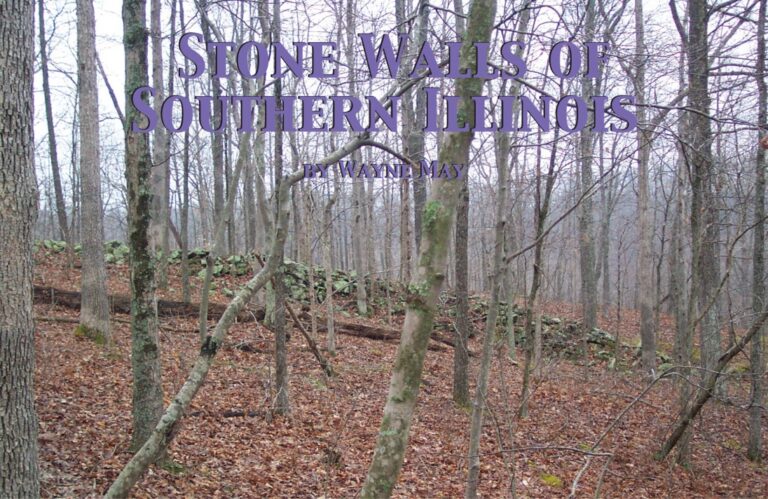
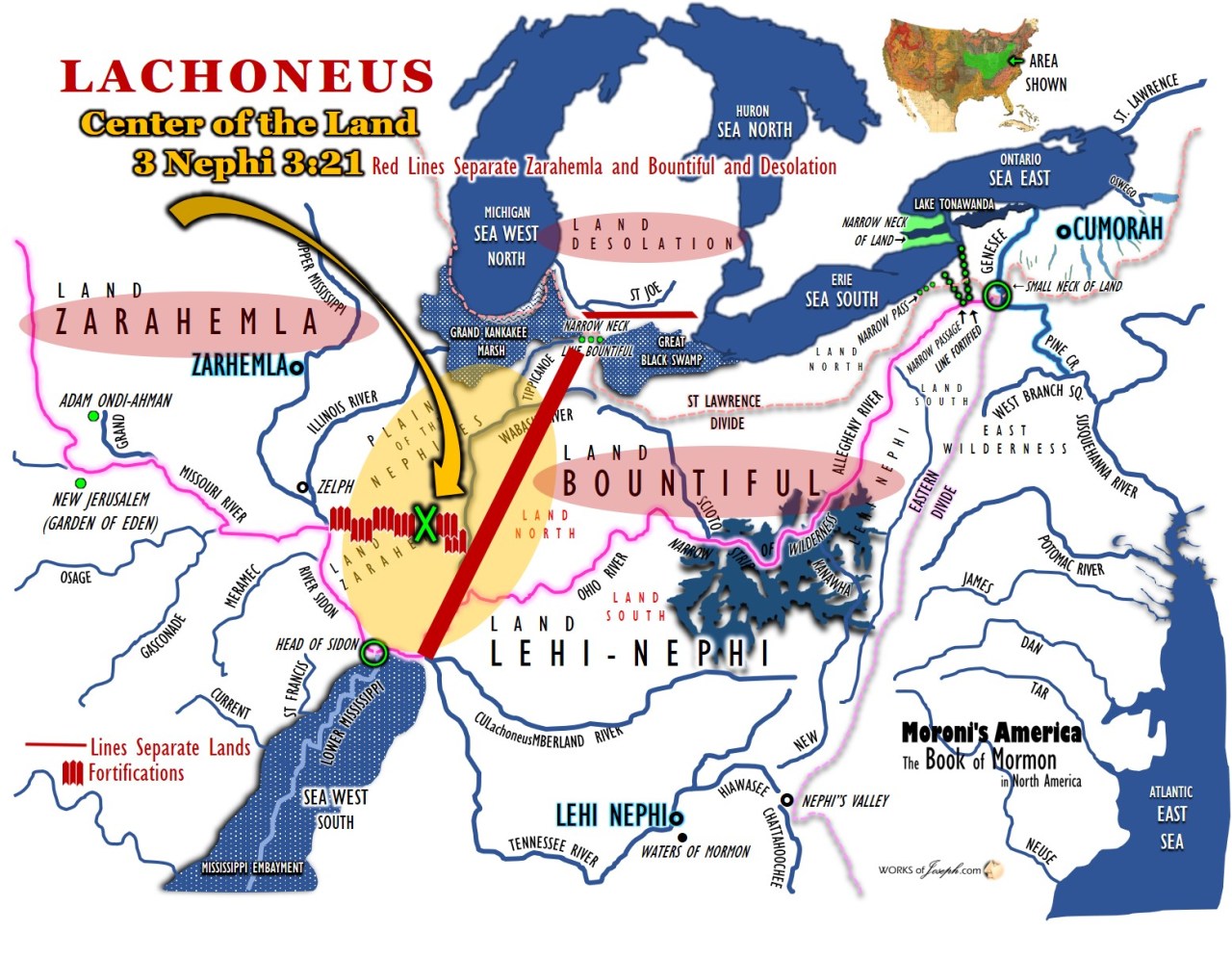 It’s an interesting observation that the designated land went “to the line which was between the land Bountiful and the land Desolation.” It makes sense for Lachoneus to use this as a border; he wouldn’t want to be subject to attack from the north, and that land (Desolation) was considered cursed. Moroni’s America page 221 9


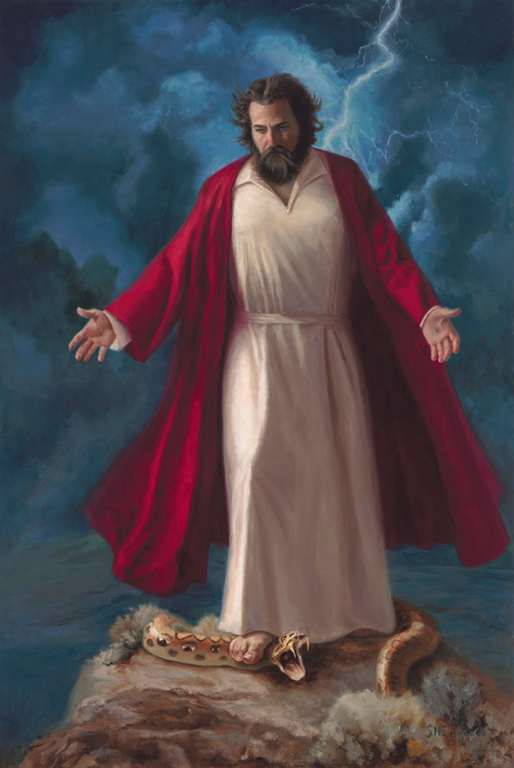
 “All inspiration does not come from God. (See D&C 46:7.) The evil one has the power to tap into those channels of revelation and send conflicting signals which can mislead and confuse us. There are promptings from evil sources which are so carefully counterfeited as to deceive even the very elect. (See Matt. 24:24.)

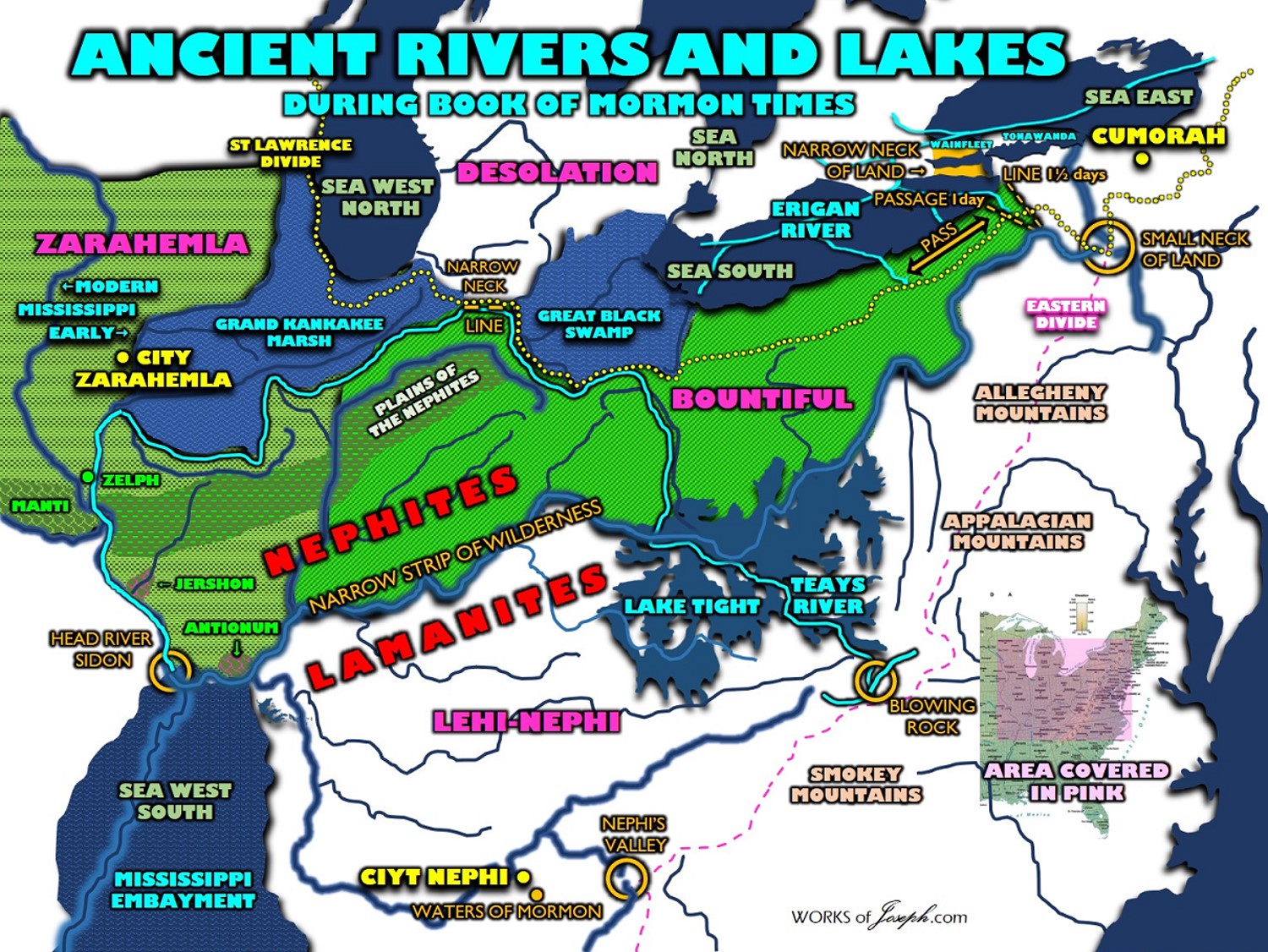


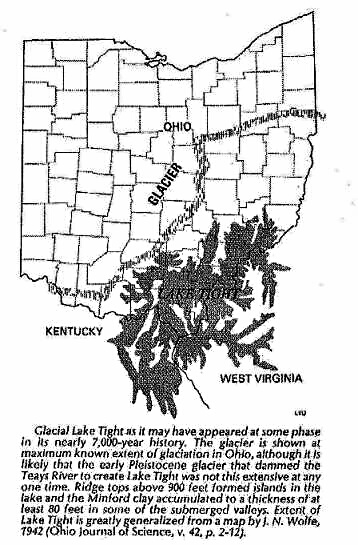


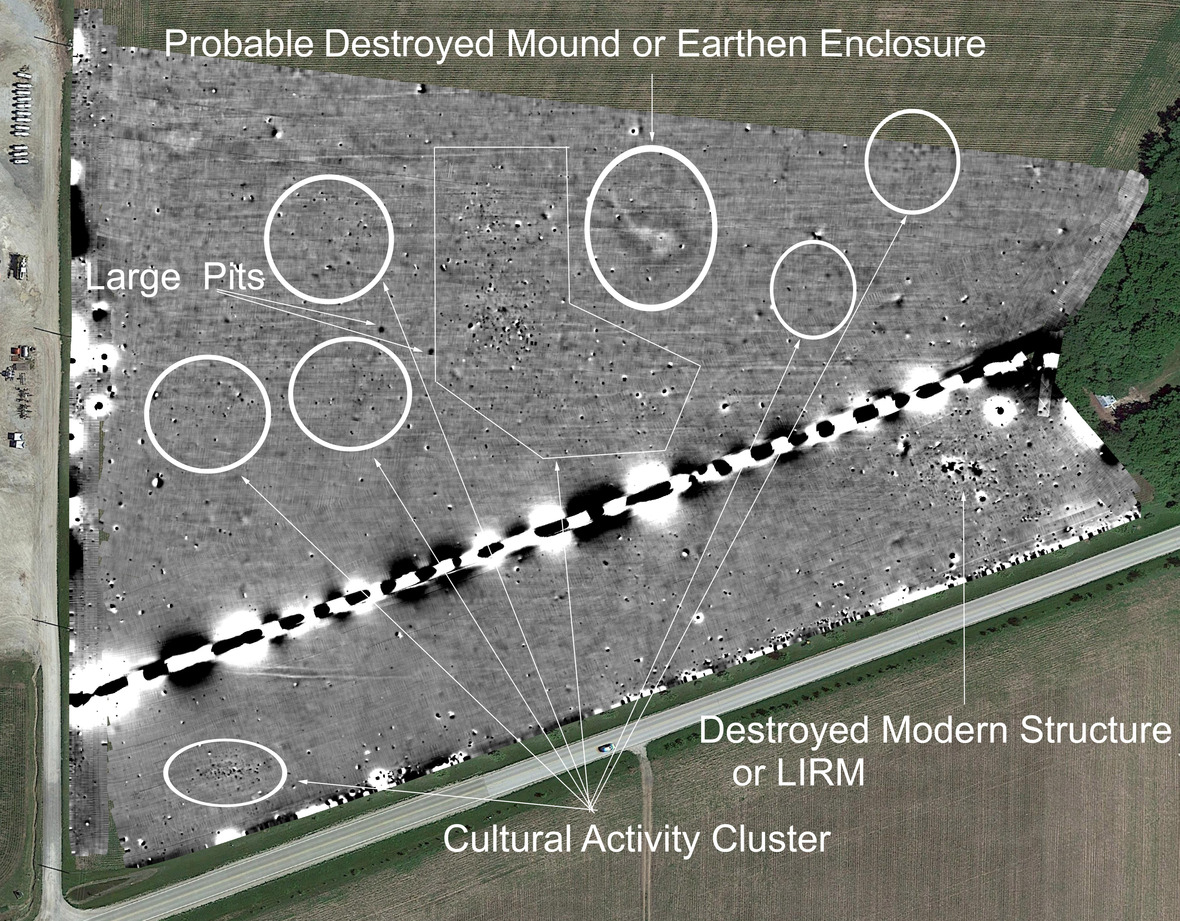
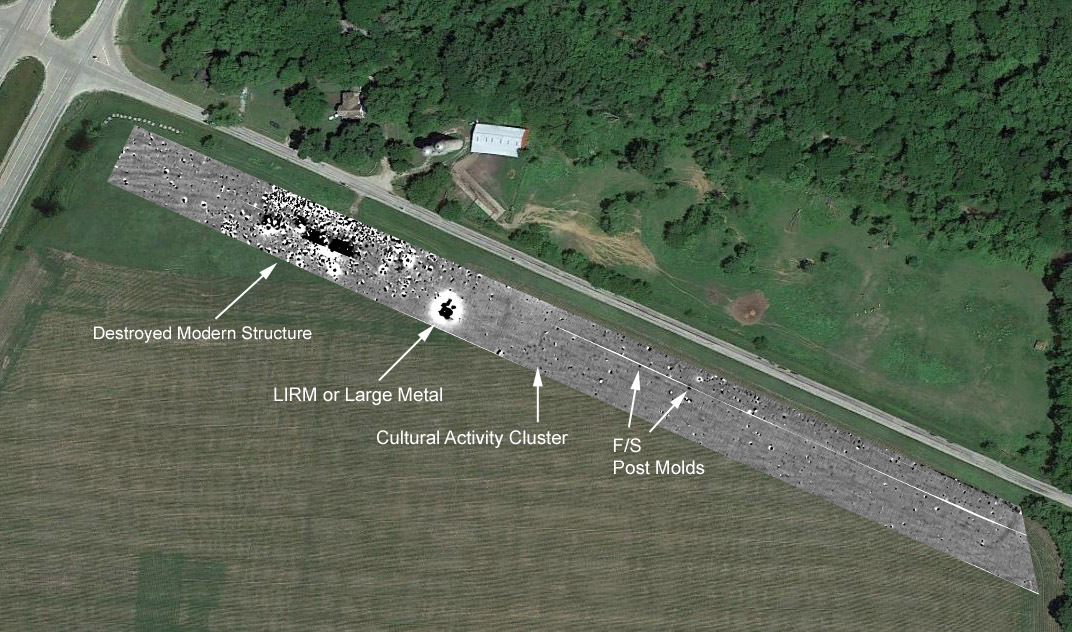
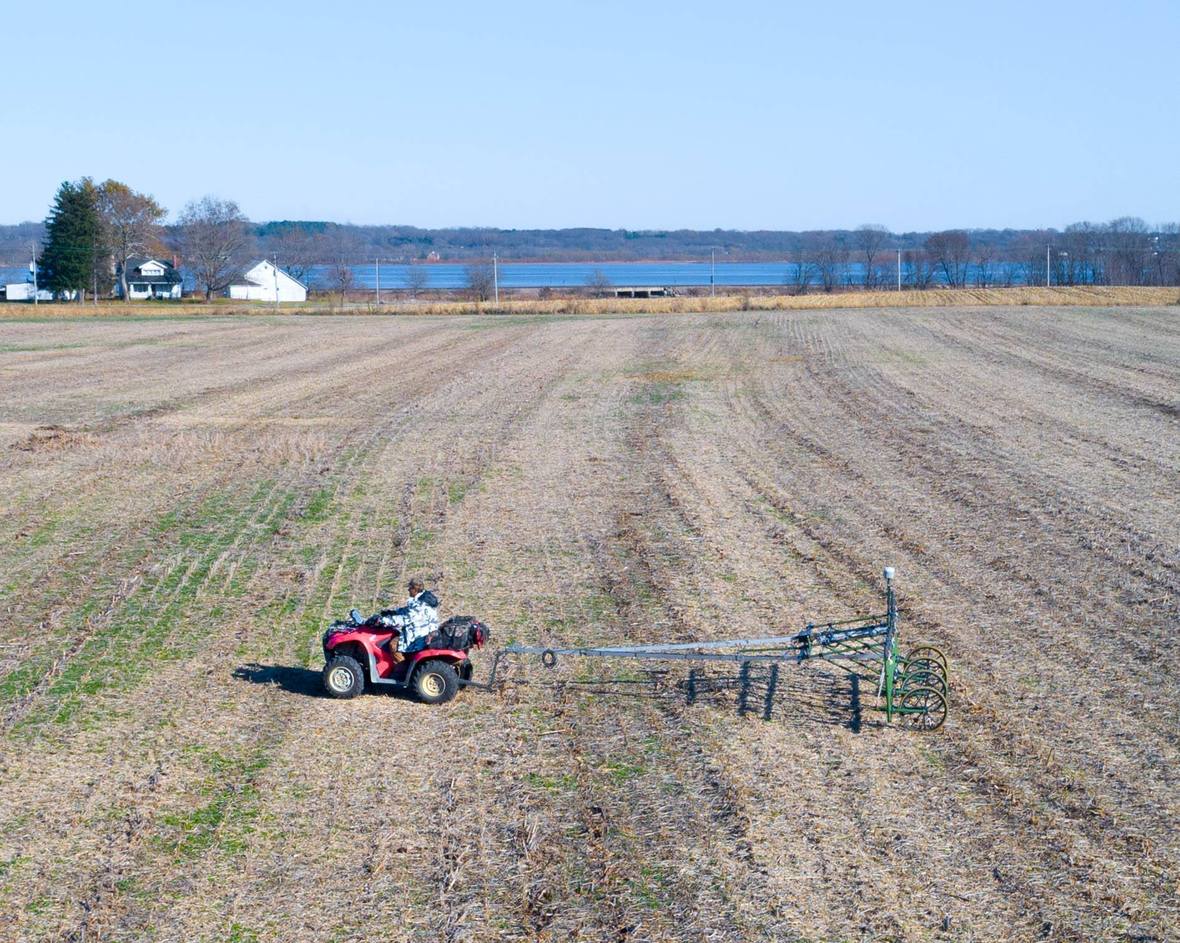



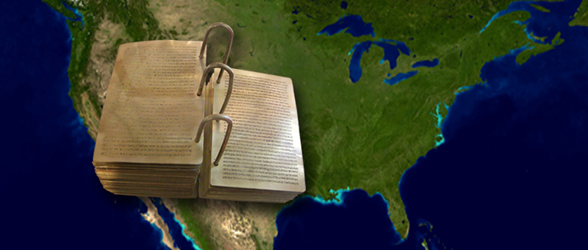


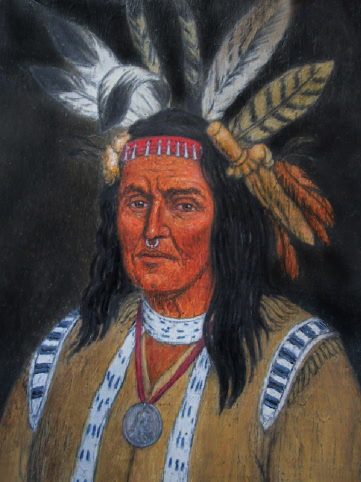

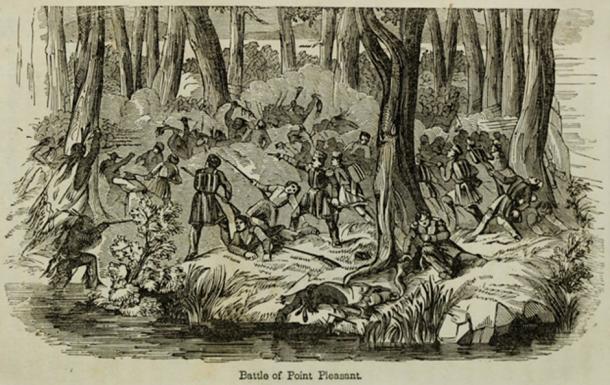


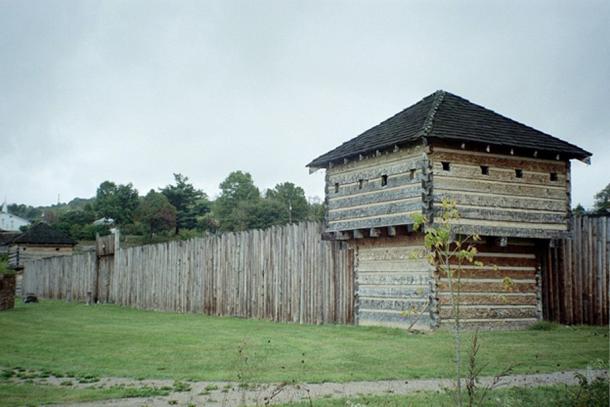

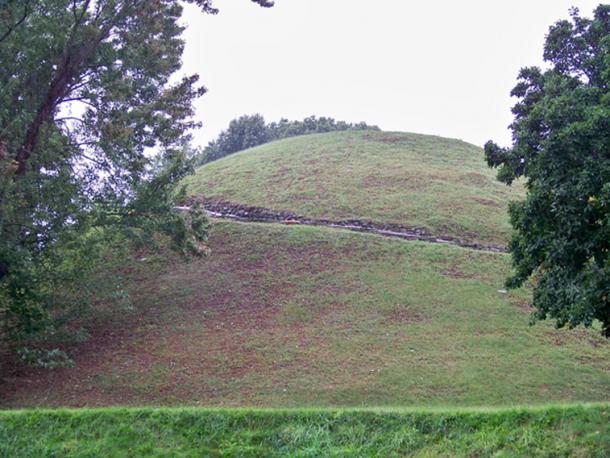
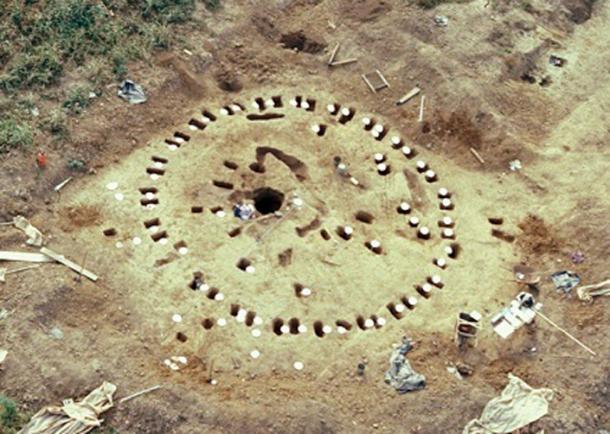
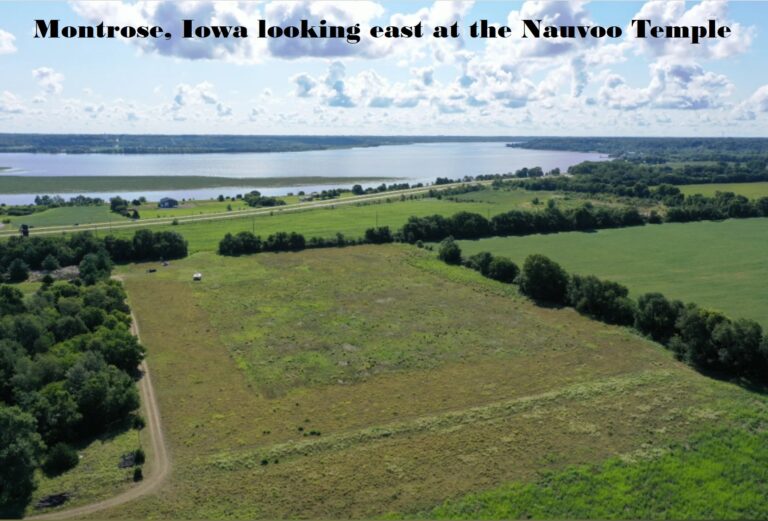

.png/:/rs=h:650,cg:true,m)

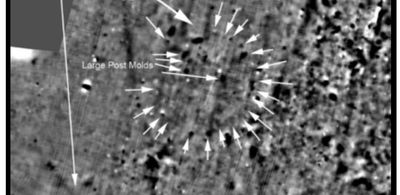

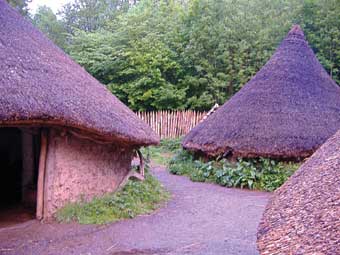 Ancient replica Adena Roundhouses.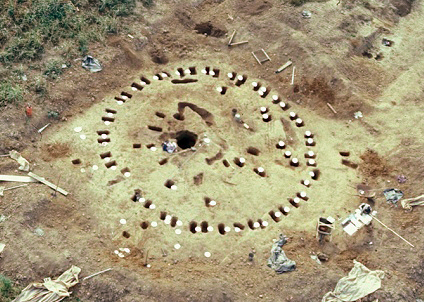




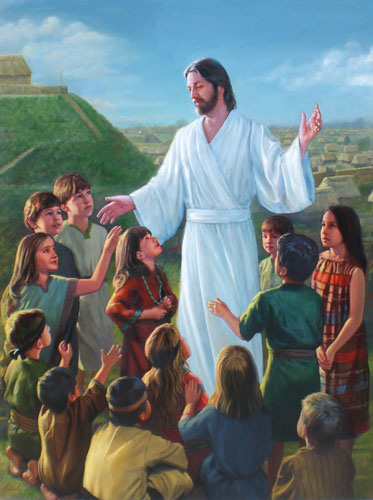
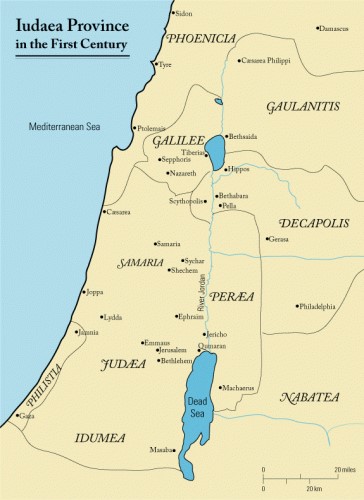

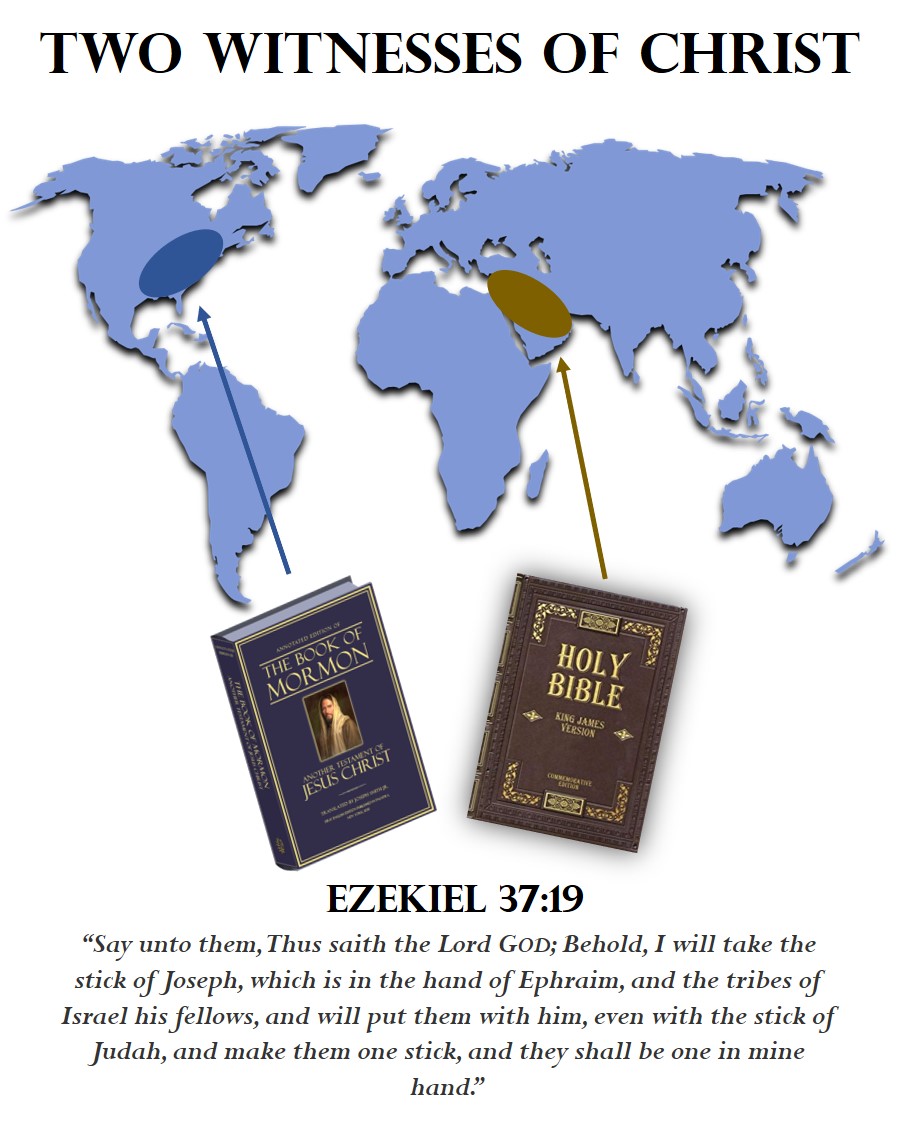

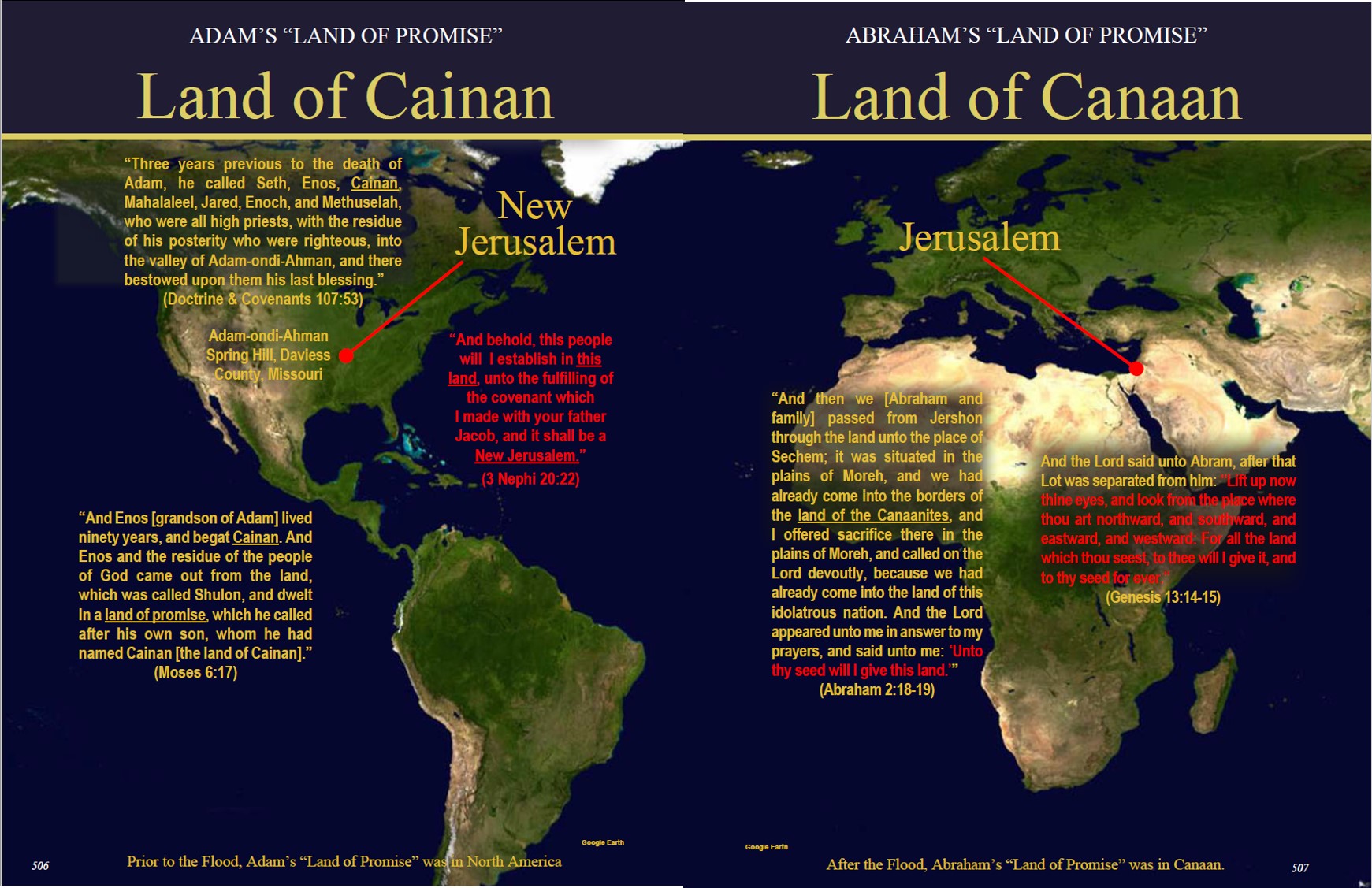

















 “Our first responsibility and purpose is to testify of Jesus Christ to a world that suffers to know of His divine mission. As my response to that great responsibility, I will speak about The Church of Jesus Christ of Latter-day Saints as the only true and living Church. In doing so I know I speak against the powerful tide of what is called “political correctness.”
 In all the furor over social and political correctness, people may be losing sight of values and what is truly good, Elder James E. Faust said at a devotional at Brigham Young University on Tuesday.
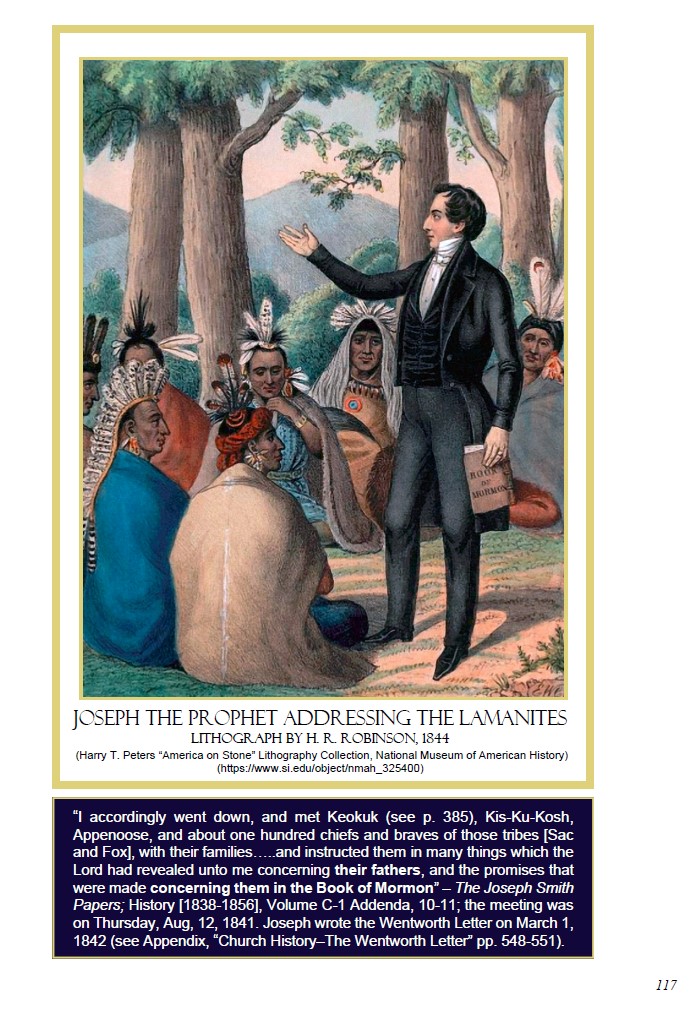


 “Moroni’s father was commander of the armies of this ancient people, known as Nephites. His name was Mormon. The war of which we speak took place here in America some four hundred years after Christ. As the fighting neared its end, Mormon gathered the remnant of his forces about a hill which they called Cumorah, located in what is now the western part of the state of New York… When finished with his record, Moroni was to hide it up in that same Hill Cumorah which was their battlefield. It would come forth in modern times as the Book of Mormon, named after Moroni’s father, the historian who compiled it.”

 “Remarkable discoveries of evidences of America’s prehistoric civilizations in various parts of the country are frequently being reported in public prints…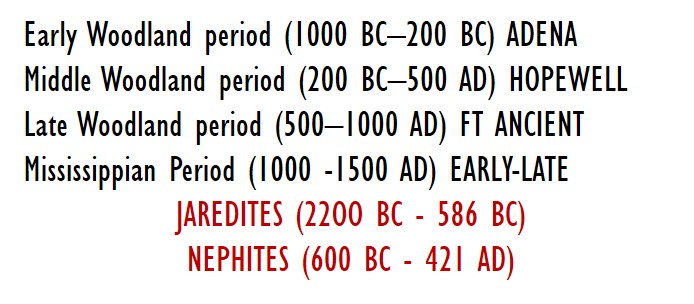


:max_bytes(150000):strip_icc():format(webp)/Hopewell_Mica_Claw-56911c573df78cafda8188c8.jpg) Mica Raptor Talon Effigy, Hopewell Culture, Ohio, North America. John Weinstein © The Field Museum
Mica Raptor Talon Effigy, Hopewell Culture, Ohio, North America. John Weinstein © The Field Museum
:max_bytes(150000):strip_icc():format(webp)/Hopewell_Culture_National_Historic_Park-8cb6d5088aba48a4992b076ec9d7e9e8.jpg)

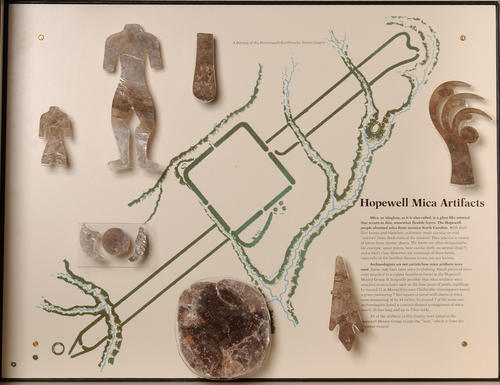


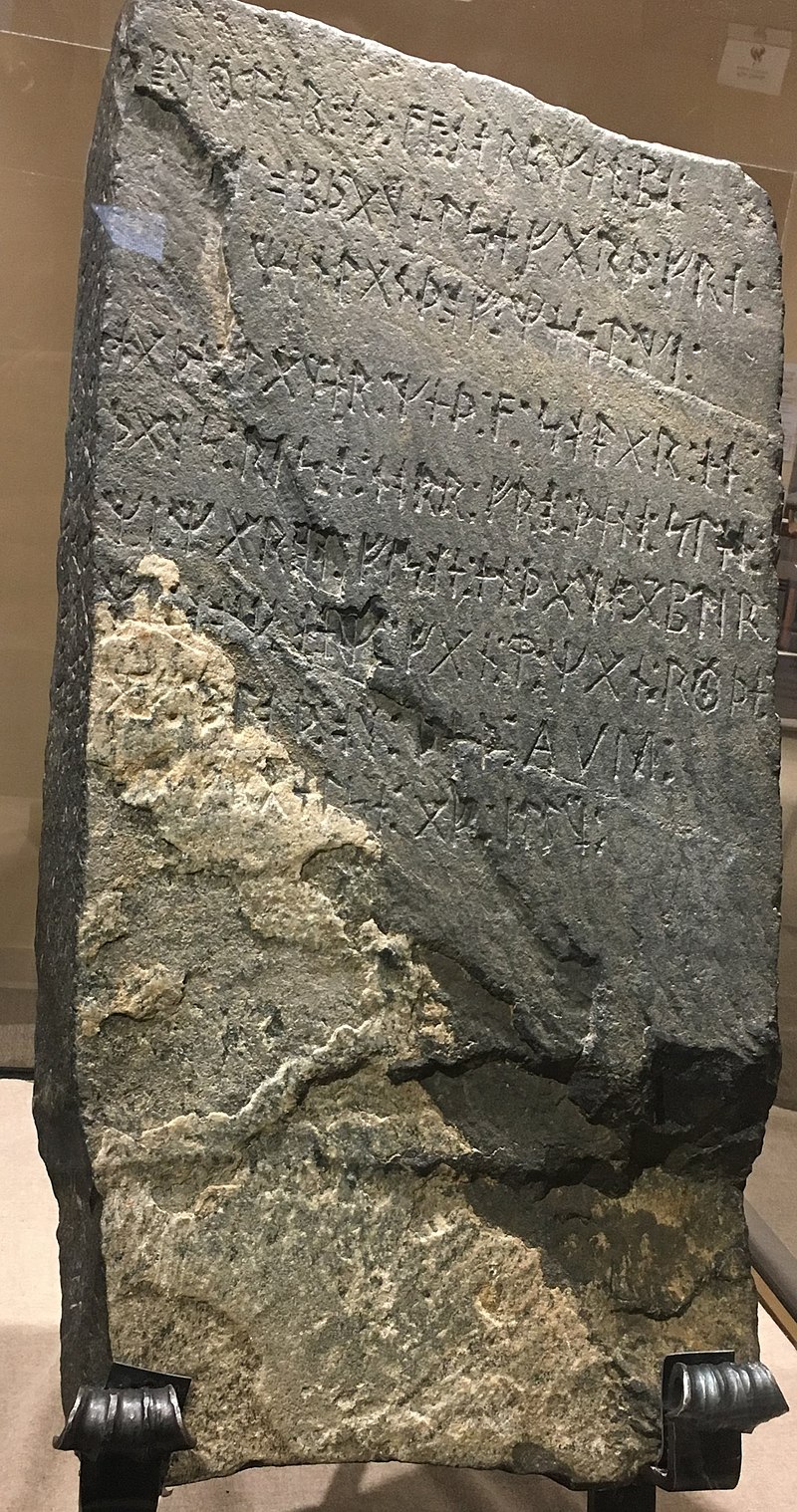

 Richard Nielsen and Scott Wolter are hard scientists. They understand the methodology of science, and Inference, from data, to the Best Explanation — IBE, philosophers of science call it. Both scientists are experienced serving as expert witnesses in court cases. Nielsen, with his doctorate in materials science, realized that the question of the Kensington Runestone’s authenticity likely could be answered with petrographic data. He engaged Wolter to examine the Runestone using current high-tech microscopy. The result was clear: the rune incisions are too weathered to have been carved as recently as the nineteenth century. QED, inference from the petrographic data leads to the carved
 Heartland Research Group of Pennsylvania headed by John Lefgren and Wayne May has been looking in Ohio and Iowa for lost earthworks, Hebrew artifacts, ancient roads, buildings and firepits using the most modern form of magnetometry today from Germany.
 sk(l)ar




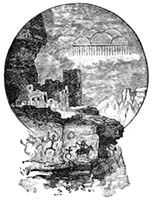

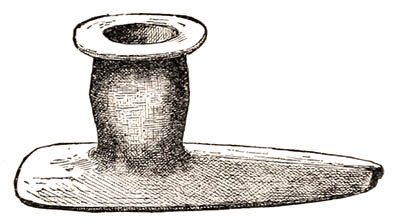
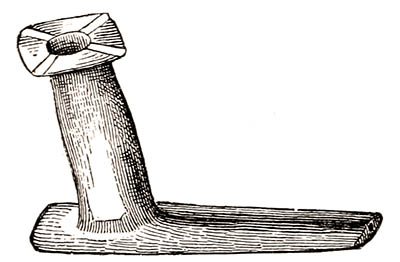
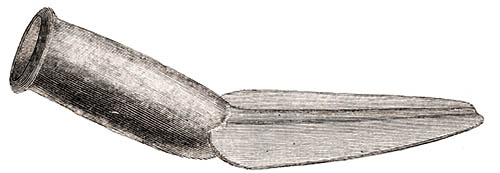
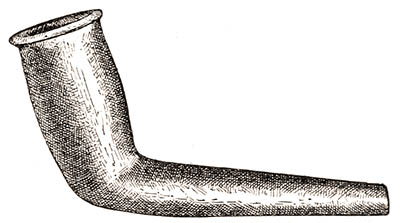

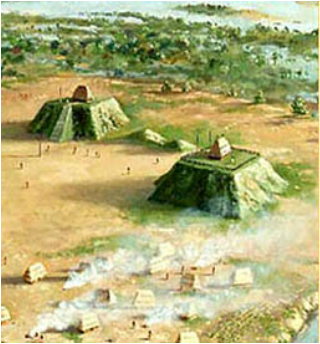
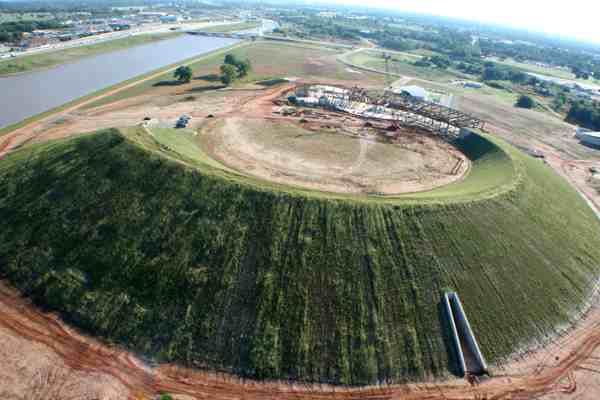
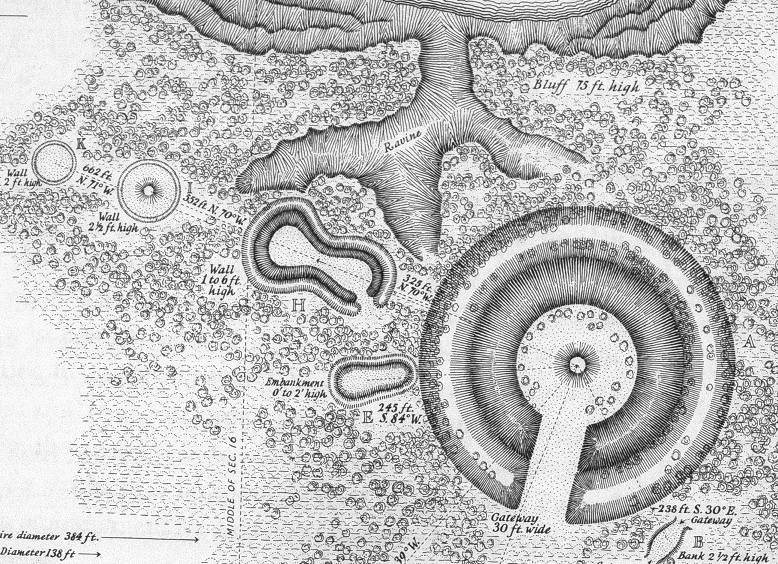

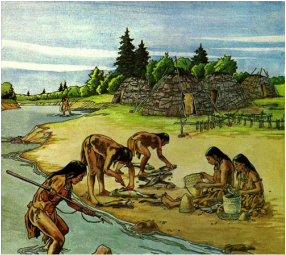
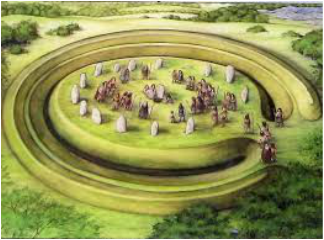


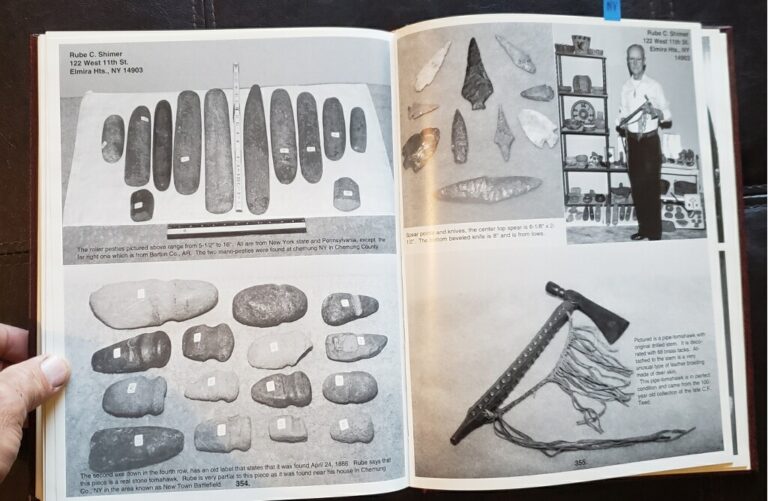


 The preparations for the November Expedition are underway. The German engineers are getting the SENSYS MX V3 equipment with all its associated parts ready. Here is a